

Running News Daily
Running News Daily is edited by Bob Anderson and team. Send your news items to bob@mybestruns.com Advertising opportunities available.
Index to Daily Posts · Sign Up For Updates · Run The World Feed
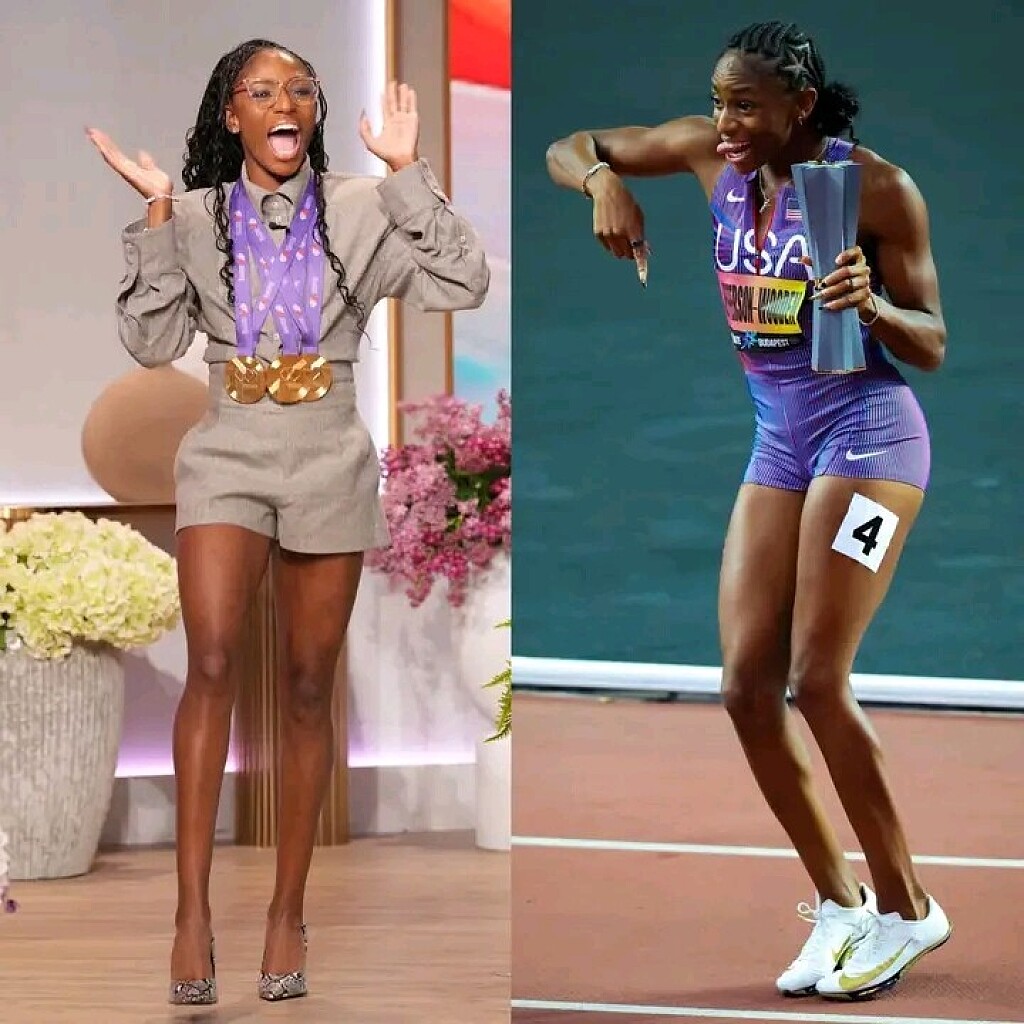


Melissa Jefferson-Wooden’s Rise to Sprinting Greatness: Five World Titles and a Place Among the Fastest Women Ever
American sprint sensation Melissa Jefferson-Wooden has established herself as one of the most exciting names in women’s athletics, combining explosive speed with the ability to deliver on the sport’s biggest stages. Her remarkable championship performances have strengthened her reputation as a formidable force in the 100m and 200m, while placing her among the leading figures of a new generation of American sprinters.
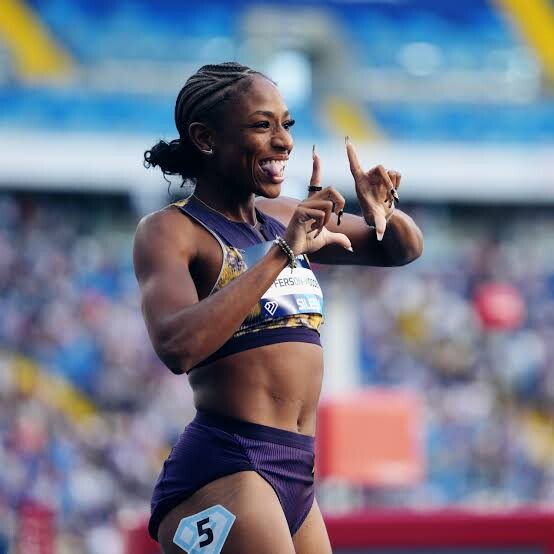
Her achievements reflect a combination of consistency, technical excellence and the ability to produce exceptional performances when the pressure is at its highest. From sprinting supremacy over 100 metres to challenging the limits of the 200m, Jefferson-Wooden’s rise has captured the attention of athletics fans around the world.
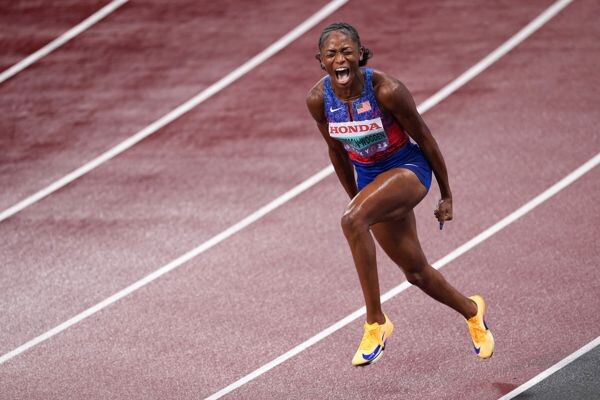
At the 2025 World Athletics Championships in Tokyo, she delivered an extraordinary series of performances, winning three gold medals in the women’s 100m, 200m and 4x100m relay. The treble represented a major milestone in her career and demonstrated her ability to excel across individual sprint events and team competition.
Jefferson-Wooden won the 100m in 10.61 seconds, setting a championship record and improving her personal best. The performance underlined her acceleration and top-end speed, securing her place among the fastest women in the history of the event.
She continued her winning run in the 200m, taking gold in 21.68 seconds. Her performance demonstrated that her abilities extended well beyond the shorter sprint, as she combined speed with the strength and composure required to maintain her pace around the bend and through the home straight.
The American then helped complete the golden sweep in the 4x100m relay, anchoring the United States team to victory in 41.75 seconds. Three gold medals at one championships represented a defining achievement, placing her in the company of the sport’s most versatile female sprinters.
Rather than allowing that success to become the high point of her career, Jefferson-Wooden continued to pursue excellence, with her performances in the 100m and 200m further highlighting her potential to leave a lasting mark on the sport.
by Erick Cheruiyot for My Best Runs.
Login to leave a comment
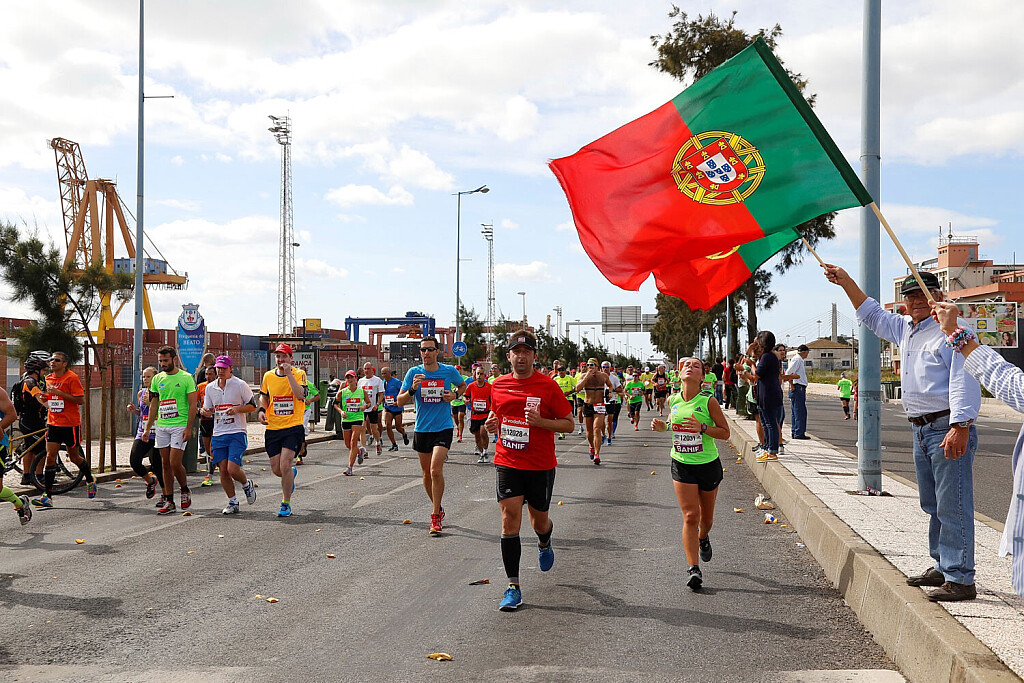
Kenyan Stars Lead Strong Elite Fields for the 2026 Lisbon Marathon
The 2026 Lisbon Marathon is set to feature a competitive international field, with Kenyan distance runners leading the men's elite entries and a strong Ethiopian contingent adding depth to the women's race.
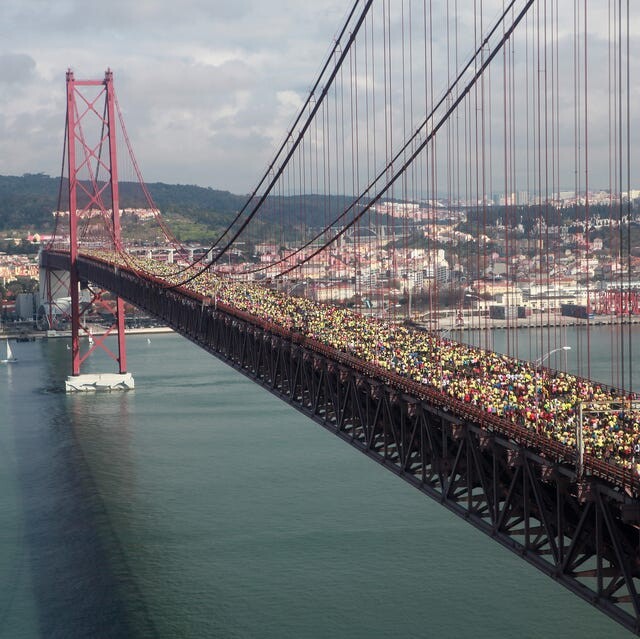
Scheduled for October 10 in Lisbon, Portugal, the race will bring together athletes with impressive personal bests, setting the stage for an exciting contest over the classic 42.195-kilometer distance.
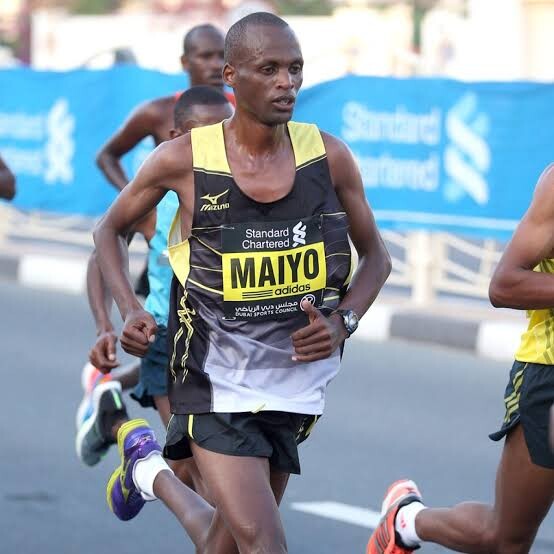
Kenya's Jonathan Kiplimo Maiyo headlines the selected men's elite field with a personal best of 2:04:56, placing him among the leading names to watch. He will be joined by compatriot Timothy Kibet Misoi, who has a best of 2:06:07, as Kenya looks to make a strong impression on the Portuguese course.
John Langat and Zablon Chumba complete the selected Kenyan men's lineup, both carrying personal bests of 2:07:11. Their presence adds further strength to a team with considerable experience and proven marathon ability.
The women's race also promises an intriguing battle, with Kenya and Ethiopia represented by four athletes each in the selected elite field.
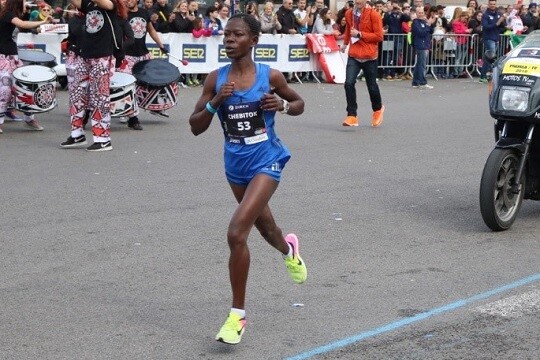
Kenya's Ruth Chebitok leads the women's entries with a personal best of 2:21:03. She faces a strong Ethiopian challenge led by Sintayehu Tilahun Getahun, whose best stands at 2:22:19.
Ethiopia's Abebech Afework Bekele, with a personal best of 2:23:33, and Worknesh Alemu, who has run 2:24:42, complete the selected women's field. Their presence sets up a potentially compelling contest between two of East Africa's leading distance-running nations.
With established marathon performers on both sides, the Lisbon Marathon offers an opportunity for the elite athletes to test themselves against high-level opposition and pursue strong performances on race day.
While personal bests provide a useful indication of each runner's credentials, the final outcome will depend on race-day conditions, pacing and execution over the demanding marathon distance.
With the selected elite fields featuring a strong Kenyan presence and determined Ethiopian challengers, attention will turn to Lisbon on October 10 as the athletes prepare for one of Portugal's major road-running events.
by Erick Cheruiyot for My Best Runs.
Login to leave a comment

EDP Lisbon Marathon
The EDP Lisbon Marathon is already considered as one of the most beautiful races in the world and acclaimed by international media such as the Forbes Magazine, the Huffington Post and American Express. Starting in Cascais and finishing at Praça do Comércio, the EDP Marathon course is 100% sea and river side, providing to the runners an unique view along...
more...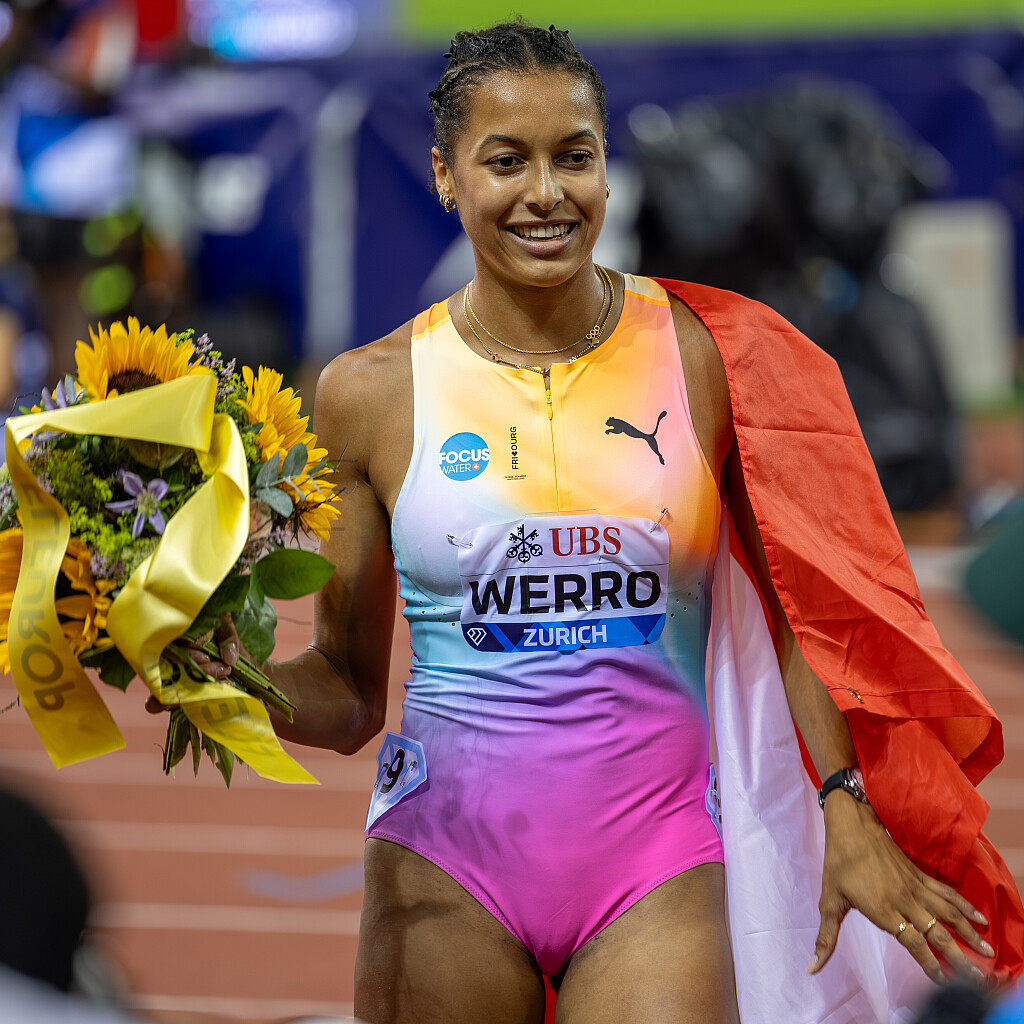
Audrey Werro Earns Double Athlete of the Year Nominations After Record-Breaking 2026 Season
Swiss middle-distance star Audrey Werro has strengthened her reputation as one of the world’s leading 800m runners after earning nominations for both the World Athletics Athlete of the Year and European Athletics Athlete of the Year awards following an outstanding 2026 campaign.
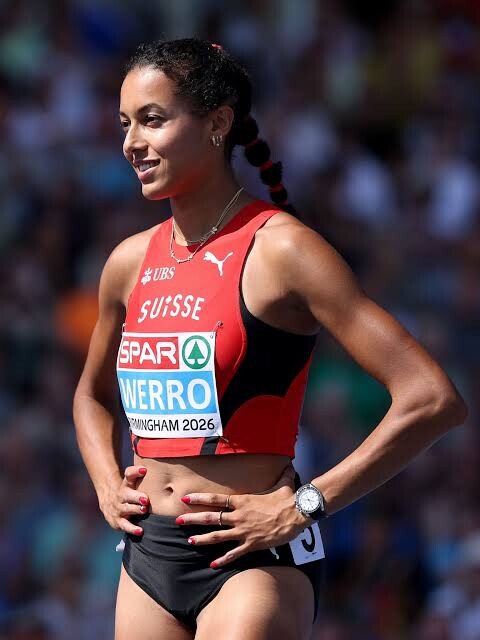
The 22-year-old has enjoyed a remarkable season, combining major championship victories with exceptional performances that have elevated her standing among the sport’s elite. Her achievements have made her a strong contender for international recognition as she continues to establish herself on the global stage.
Werro’s 2026 campaign has been defined by three major victories: the European Athletics Championships 800m title, the Diamond League Final crown and the inaugural World Athletics Ultimate Championship 800m title. Winning across these prestigious competitions has underlined her ability to deliver when the stakes are highest.
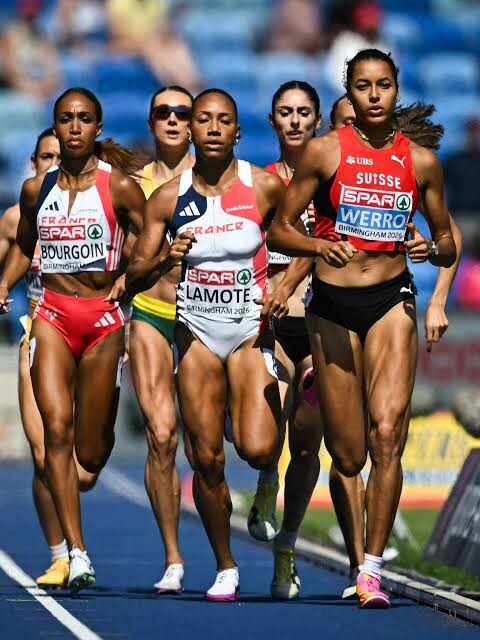
Her performances have been particularly impressive over two laps, where she has demonstrated a powerful combination of speed, endurance and tactical maturity. Against some of the strongest competitors in the world, the Swiss star has repeatedly shown that she belongs among the leading figures in women’s middle-distance running.
One of the defining moments of her season came in Zürich, where Werro thrilled the home crowd with an extraordinary 1:53.70 performance in the 800m. The time was reported as the fastest women’s 800m performance in 43 years and the third-fastest in the event’s history, placing her among a select group of athletes to have reached such an exceptional level.
Werro’s season has also been notable for her sustained assault on the record books. She reportedly broke the Diamond League record three times during the campaign and produced three of the five fastest women’s 800m performances ever recorded, highlighting the remarkable consistency behind her breakthrough year.
Rather than relying on a single standout result, Werro has built her case for the sport’s highest individual honours through a series of performances at the highest level. Her success across European and international competitions has demonstrated both her competitive versatility and her capacity to thrive under pressure.
The dual nominations now offer recognition of a season in which Werro has moved beyond emerging-talent status to become one of the most compelling names in women’s athletics. A victory in either award would represent another major milestone in a career that continues to gather momentum.
With three major titles, a historic performance on home soil and a series of record-breaking displays, Werro has given herself a compelling case for year-end honours. Whether she ultimately claims the title of the world’s best female athlete remains to be seen, but her 2026 season has already established her as one of the outstanding performers of the year.
by Erick Cheruiyot for My Best Runs.
Login to leave a comment
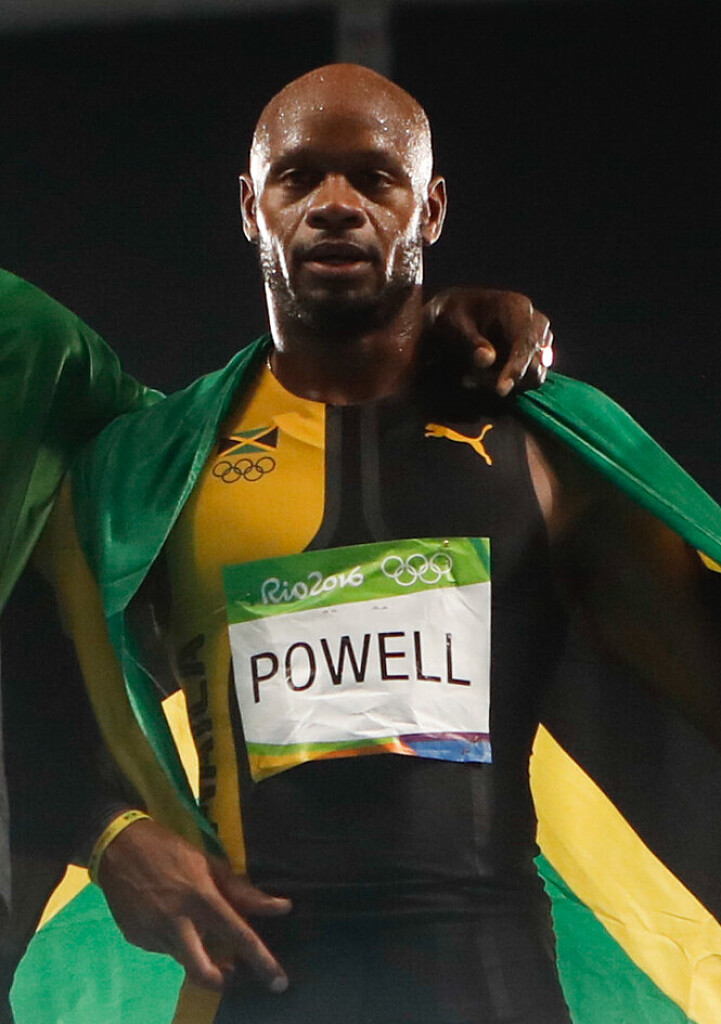
Asafa Powell Begins a New Chapter, Bringing World-Class Sprinting Experience to the Next Generation
Former 100-metre world record holder Asafa Powell is preparing to channel his experience from the highest level of international athletics into coaching and high-performance consultancy, with the aim of helping the next generation of sprinters reach their full potential.
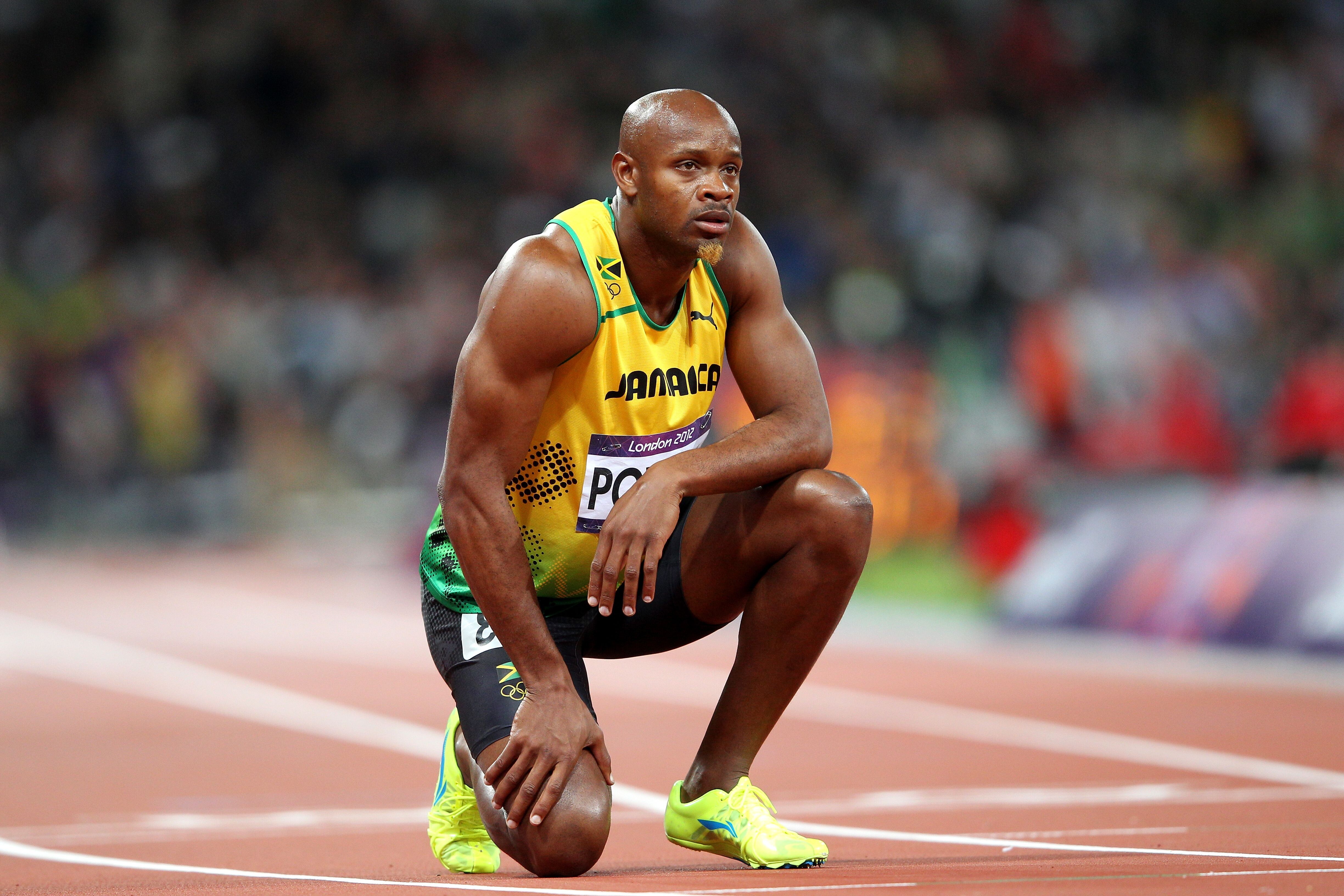
The Jamaican sprint legend, who spent more than two decades competing against the world's fastest athletes, is now looking to share the knowledge, discipline and technical understanding he developed throughout his distinguished career. His move into mentorship offers an opportunity to pass on lessons learned through years of competing on the biggest stages in track and field.
Powell's reputation was built on extraordinary speed and consistency. He set the men's 100m world record of 9.77 seconds in Athens in June 2005 before lowering it to 9.74 seconds in Rieti, Italy, in September 2007. He subsequently recorded a personal best of 9.72 seconds at the Lausanne Athletissima meeting in 2008, establishing himself among the fastest men in athletics history.
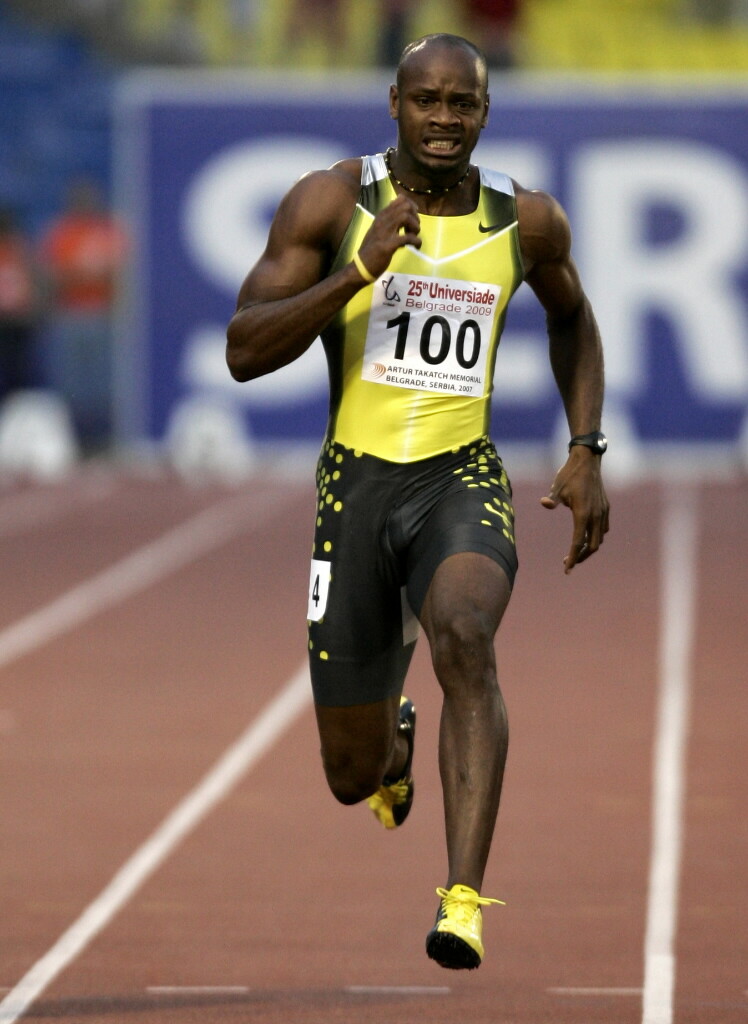
Beyond his personal best, Powell became renowned for his remarkable ability to run under 10 seconds. He recorded more than 90 sub-10-second performances during his career, a testament to his consistency and longevity in an event where the smallest technical details can determine the outcome.
Although Powell never won an Olympic individual 100m medal, he achieved significant success on the international stage, including winning gold with Jamaica's 4x100m relay team at the 2008 Beijing Olympics and the 2016 Rio Olympics. His experience also spans multiple World Championships and years of competing against sprinting greats, giving him valuable insight into the demands of elite performance.
Transitioning into coaching and high-performance consultancy provides Powell with a new platform to influence the sport beyond his own competitive achievements. His experience could help emerging sprinters understand the importance of starting technique, acceleration, maximum-velocity mechanics, race preparation, recovery and the mental demands of performing under pressure.
For young athletes hoping to establish themselves internationally, learning from someone who has experienced the challenges of elite sprinting firsthand could prove invaluable. Powell's journey demonstrates that success at the highest level requires more than natural speed; it also demands consistency, patience and the ability to perform when the stakes are highest.
As Jamaican sprinting continues to inspire athletes across the globe, Powell's next chapter could see his influence extend from the track to the training ground, where he can help shape future competitors.
The man who once held the world record is now looking toward a different kind of legacy: helping others discover how fast they can run.
by Erick Cheruiyot for My Best Runs.
Login to leave a comment
Getting Into a World Marathon Major May Be Harder Than Running One
For many marathoners, crossing the finish line of a World Marathon Major is the ultimate dream. But before you can worry about surviving 42.195 kilometres, there is another challenge: actually getting onto the starting line.
The six Abbott World Marathon Majors — Boston, London, Berlin, Chicago, New York and Tokyo — do not use the same entry system, and some are considerably more difficult to access than others.
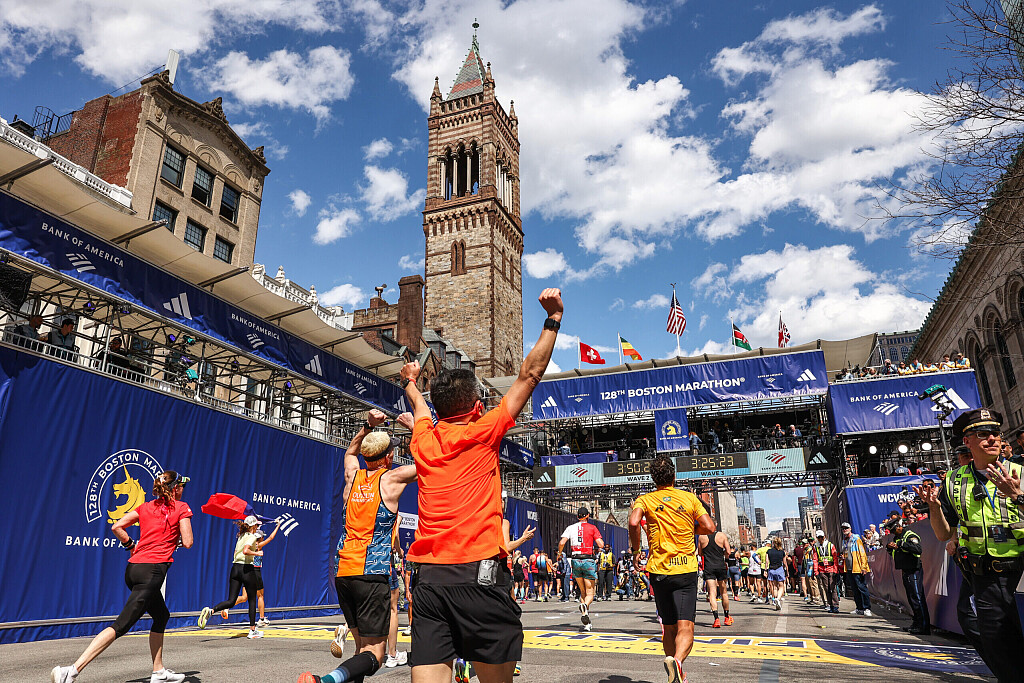
Boston is arguably the clearest example of how running fast does not always guarantee a place. Unlike the other majors, the Boston Marathon is built around qualifying standards. However, meeting the published standard only gives a runner the opportunity to apply. Because demand is so high, the fastest qualifiers are accepted first. This means a runner can achieve the official qualifying time and still miss out when the cut-off moves faster than expected.
London presents a completely different challenge. Its famous ballot is a random draw, making luck a major part of the process. However, runners have other avenues, including Good for Age, charity places and international tour operators. Even the Good for Age route can be highly competitive, with places allocated according to performance when demand exceeds the number of available spots.
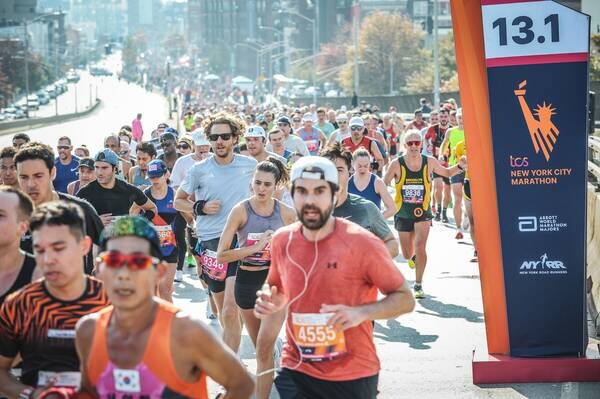
New York City is another race where demand is enormous. The TCS New York City Marathon offers a general drawing alongside several guaranteed-entry routes, including qualifying times, charity places, international tour operators and other eligibility programmes. For serious runners, achieving the appropriate qualifying standard can be one of the most dependable ways to secure a place.
Chicago gives runners several ways to avoid relying entirely on the lottery. The Bank of America Chicago Marathon has a non-guaranteed drawing, but runners can also gain guaranteed entry through qualifying times, charity, tour operators and other eligible routes. For fast runners, meeting the published standard can provide a much more certain path to the start line.
Berlin is also heavily sought after. The BMW Berlin Marathon uses a lottery for the majority of runners, while qualifying performances can provide another route into the race. With its fast course and reputation for producing world-class times, demand remains enormous every year.
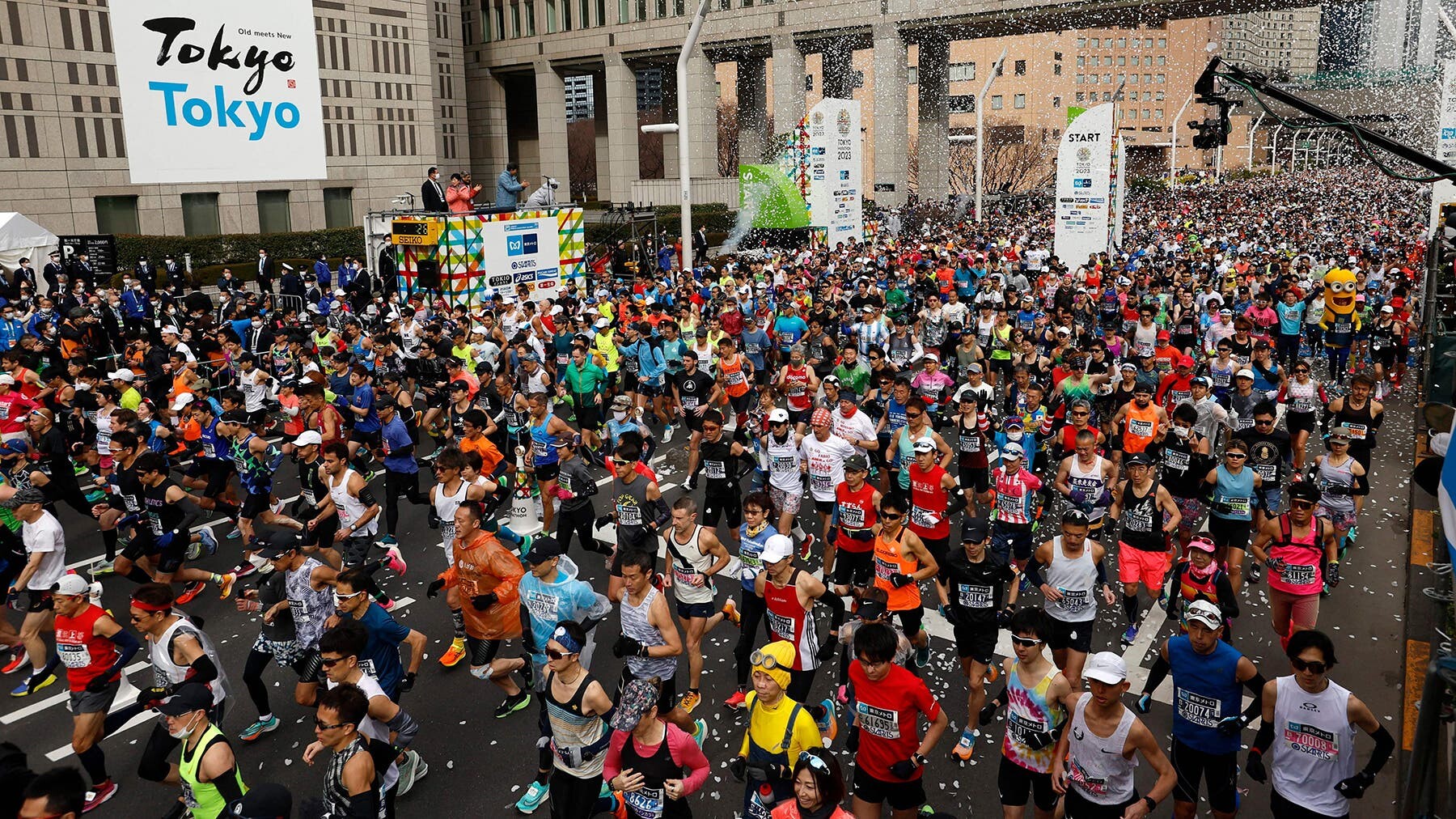
Tokyo adds another layer of difficulty, particularly for international runners. The race has a lottery as well as several other entry routes, including charity and performance-based options. International runners can also use official tour operators, although these packages generally cost more because they are tied to travel arrangements.
For runners chasing the Six Star Medal, the biggest lesson is simple: do not depend on the lottery alone.
Look closely at every possible route. Good-for-age standards, qualifying performances, charity programmes and official tour operators can all provide alternatives when the ballot does not go your way.
And then there is the reality every marathoner eventually discovers: sometimes getting rejected from a major marathon hurts almost as much as the race itself.
When that rejection email arrives, remember that parkrun is still free, happens every Saturday and does not require a lottery.
So, which World Marathon Major have you already completed — and which one is still at the top of your bucket list?
by Erick Cheruiyot for My Best Runs.
Login to leave a comment
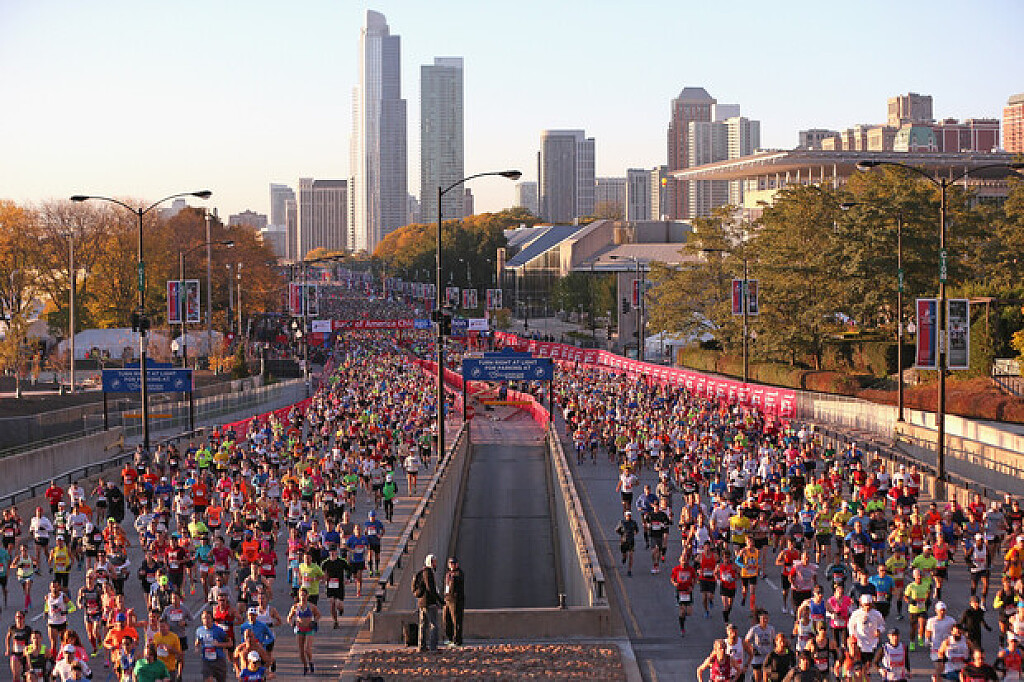
Chicago Marathon 2026: Emma Grace Hurley Makes Her Debut as Clayton Young Battles Injury Concerns
The 2026 Chicago Marathon will provide an important stage for two American distance runners approaching the race from very different circumstances. Emma Grace Hurley is preparing to make her debut over the classic 42.195-kilometre distance after establishing herself among the country’s leading half-marathon runners, while Clayton Young faces a race against time to overcome a hamstring injury that threatens to derail his ambitions.
Both athletes have compelling stories heading into Chicago, but their immediate objectives differ. Hurley is looking to gain valuable experience as she begins her marathon journey, whereas Young must contend with significant uncertainty surrounding his fitness and the potential consequences of racing while injured.

Emma Grace Hurley: A Promising Talent Ready for Her Marathon Debut
Hurley arrives in Chicago following an outstanding performance at the World Athletics Road Running Championships in Copenhagen, Denmark, where she clocked 1:06:23 to finish fifth in the women’s half marathon. Her performance established a women-only American record and contributed to the United States securing the team silver medal.
The result has generated considerable interest in what she might accomplish over the full marathon distance. However, despite the growing expectations, Hurley and her coach, Andrew Begley, have maintained a measured approach, understanding that the transition from half marathon to marathon requires more than simply extending the distance.
Her recent training has offered encouraging indications of her preparation. A demanding workout observed in Indiana, together with training activity shared on Strava, has provided further insight into the work she has undertaken ahead of her Chicago debut.
Nevertheless, the marathon presents a different set of challenges. Athletes must balance pace, endurance, nutrition and energy conservation while preparing for the demanding final kilometres, when even well-conditioned runners can experience unexpected difficulties.
For Hurley, Chicago represents an opportunity to learn those lessons firsthand rather than place unnecessary pressure on herself to produce an immediate breakthrough. Her long-term plan includes two marathons before the 2028 United States Olympic Marathon Trials, making this first appearance an important stage in her development.
Her approach is captured in a straightforward statement: “This one is for learning and the next is for nailing it.”
That philosophy reflects an understanding that building a successful marathon career takes patience, experience and careful progression. While her half-marathon record demonstrates considerable potential, Chicago will offer the first real test of how effectively she can translate that ability to the longer distance.
A strong debut would provide a valuable foundation for her future ambitions, but the experience itself will be equally important as she prepares for the next chapter of her marathon career.
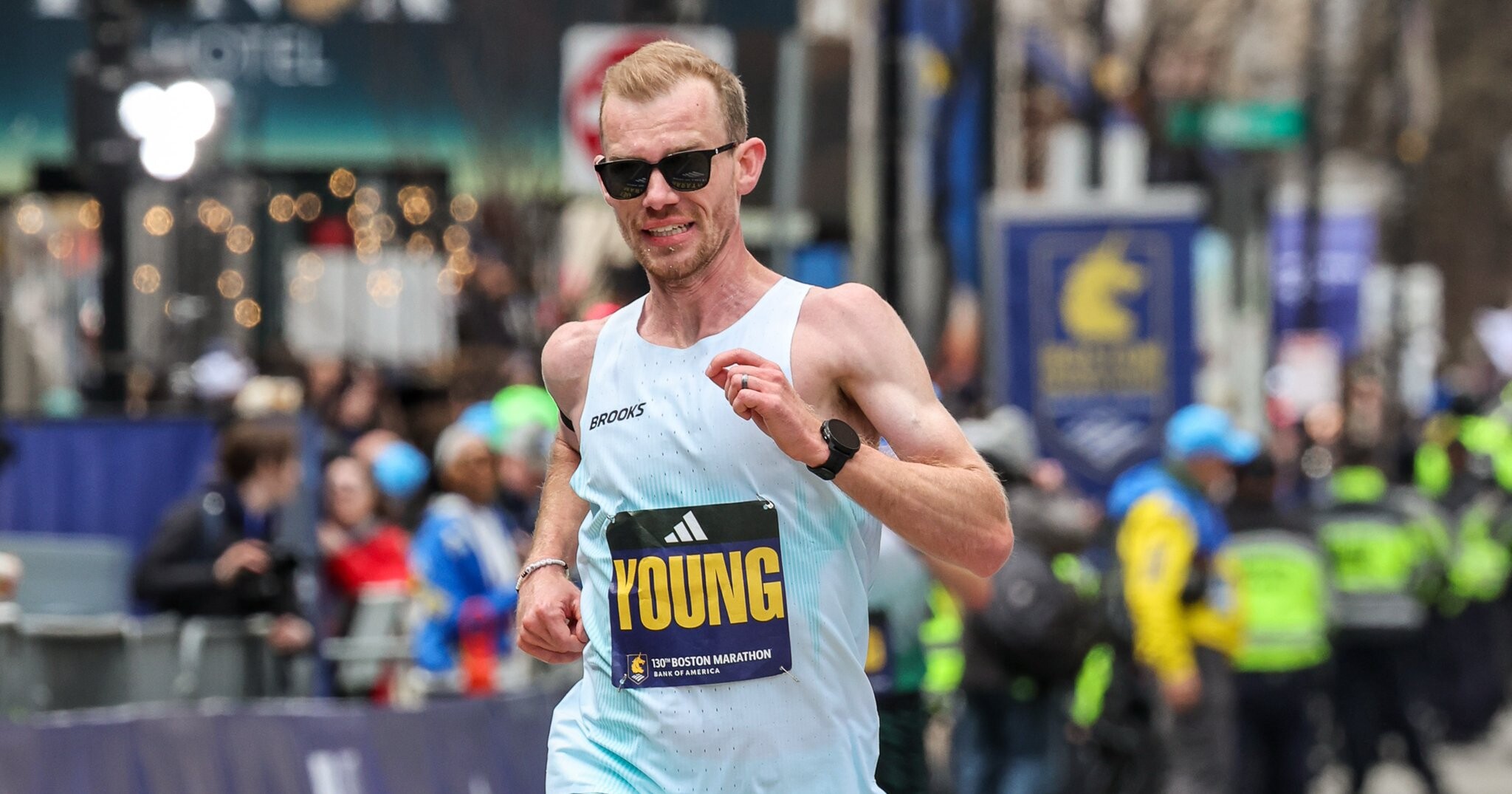
Clayton Young: Hamstring Injury Casts Doubt Over Chicago Ambitions
Young, meanwhile, heads into the Chicago Marathon facing a far more complicated challenge after sustaining a significant hamstring injury during the final stages of the Great North Run.
The American revealed that he suffered a 12-centimetre split tear in his semitendinosus, one of the muscles that make up the hamstring group, during the final 250 metres of the race. The timing of the injury could hardly have been more unfortunate, arriving with the Chicago Marathon approaching and his competitive ambitions still firmly in focus.
Medical advice reportedly differed on how he should manage the injury. One doctor recommended taking four weeks off running, a period of rest that would have ruled him out of Chicago. Another advised a more cautious, day-by-day approach, which Young has chosen to follow.
His recent training activity on Strava and videos shared on YouTube suggest that he has continued to complete substantial workouts. However, evidence of training does not necessarily establish that a serious muscle tear has healed sufficiently to withstand the demands of a marathon.
The injury has placed considerable doubt over his hopes of challenging the American marathon record. More importantly, it has raised questions about whether attempting to race could aggravate the damage and compromise his preparations for the 2027 season and the build-up to the 2028 U.S. Olympic Marathon Trials.
For an athlete with significant long-term ambitions, the decision carries consequences beyond a single race. A successful appearance in Chicago could represent another major achievement, but worsening the injury could potentially cost him valuable training time during a crucial period in his career.
Young is known for his ability to deliver under pressure, making his situation particularly intriguing as race day approaches. However, competing through a hamstring tear of this nature would present an unfamiliar challenge, even for an athlete accustomed to producing strong performances when it matters most.
For now, he remains entered in the race, but his participation and ability to compete effectively remain important questions. His recent workouts may offer encouragement, yet the true condition of the injured muscle and its response to marathon demands will be central to determining what is realistically possible.
Two Americans, Two Very Different Challenges
Hurley and Young illustrate the contrasting realities that elite runners can face ahead of a major marathon. One is entering the distance with momentum, enthusiasm and an opportunity to discover her potential. The other is attempting to navigate an injury that could influence not only his immediate performance but also his longer-term development.
For Hurley, Chicago is the beginning of a new chapter. Her record-setting half-marathon performance has created anticipation, but her emphasis remains on learning, gaining experience and building towards future goals.
For Young, the race presents a more difficult calculation. His competitive instincts and reputation for performing under pressure must be weighed against the risks of pushing through an injury that could have lasting consequences for his season.
Their respective stories will add another dimension to the American contingent at the 2026 Chicago Marathon. While Hurley seeks to establish herself over 42.195 kilometres, Young faces the challenge of determining whether his body is ready to meet the demands of one of the world's premier road races.
As race day approaches, the central questions remain clear: How will Hurley handle her first marathon, and will Young be able to compete without jeopardising his recovery and future ambitions?
The answers will emerge on the streets of Chicago, where preparation, patience and sound decision-making could prove just as important as raw talent and competitive determination.
by Erick Cheruiyot for My Best Runs.
Login to leave a comment

Bank of America Chicago
Running the Bank of America Chicago Marathon is the pinnacle of achievement for elite athletes and everyday runners alike. On race day, runners from all 50 states and more than 100 countries will set out to accomplish a personal dream by reaching the finish line in Grant Park. The Bank of America Chicago Marathon is known for its flat and...
more...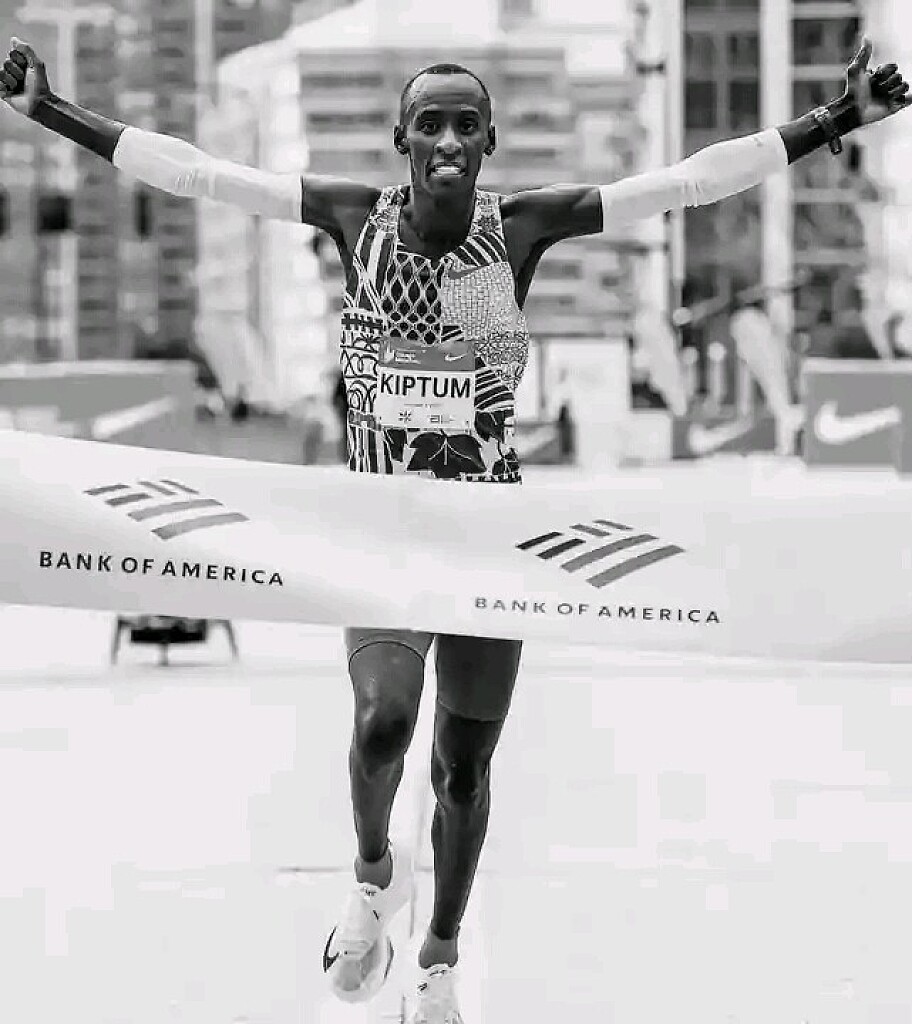
Three Years On, Kelvin Kiptum’s Historic Chicago Masterpiece Still Echoes
Three years ago today, Kelvin Kiptum delivered a marathon performance that changed the sport forever.
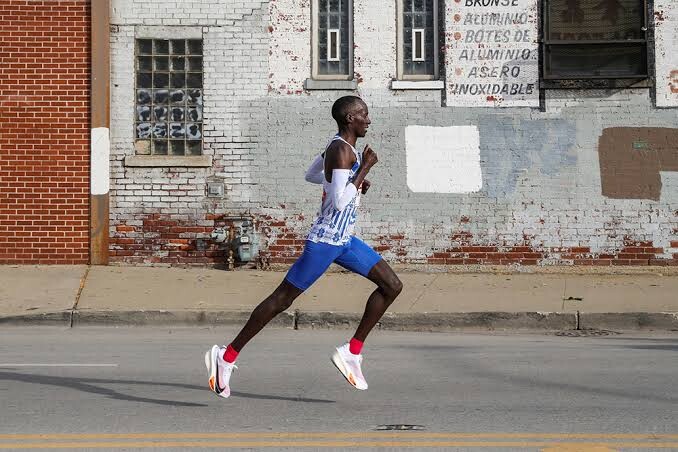
On October 8, 2023, the 23-year-old Kenyan arrived at the Bank of America Chicago Marathon as one of the most exciting young talents in distance running. By the finish, he had rewritten the history books with a breathtaking world record of 2:00:35.
Kiptum improved Eliud Kipchoge’s previous world record by 34 seconds, becoming the first athlete in history to officially break the 2:01 barrier in a record-eligible marathon.
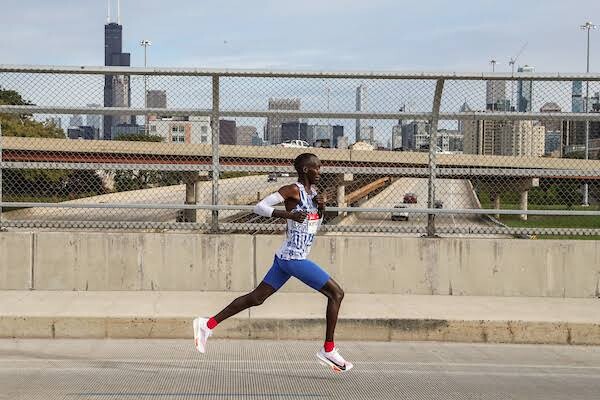
But the most remarkable aspect of the performance was not simply the finishing time. It was the way Kiptum produced it.
He reached halfway in 1:00:48, before covering the second half in an astonishing 59:47. Rather than struggling as the race entered its final stages, Kiptum accelerated, producing a negative split at a pace that seemed almost impossible to sustain.
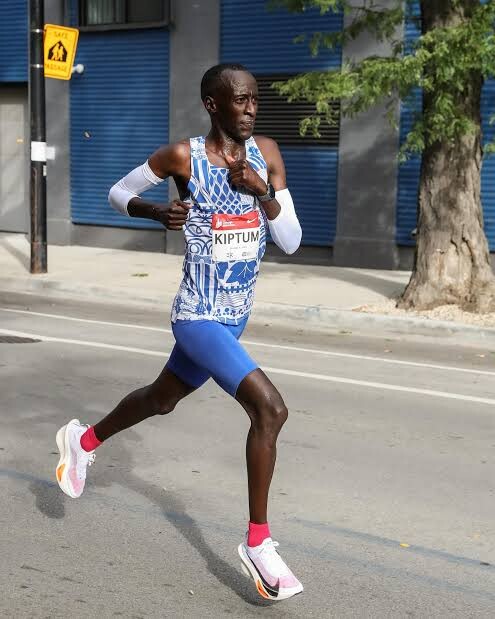
His final kilometres became a masterclass in marathon racing. With every stride, the young Kenyan moved further away from the field and closer to sporting immortality.
And remarkably, Chicago was only his third marathon.
Kiptum had announced himself on the global stage by winning the 2022 Valencia Marathon in 2:01:53, before lowering the course record at the 2023 London Marathon with 2:01:25. Seven months later, he produced something even more extraordinary in Chicago.
At just 23, Kiptum had already established himself among the very best marathoners in the world.
His Chicago triumph was more than another victory. It was a glimpse of what appeared to be an extraordinary future — a future in which Kiptum seemed destined to push the limits of the marathon even further.
Tragically, that future would never unfold.
On February 11, 2024, just four months after his historic Chicago victory, Kiptum died in a road accident in Kenya alongside his Rwandan coach, Gervais Hakizimana. He was only 24 years old.
The loss sent shockwaves through the athletics world.
Today, three years after that unforgettable October morning in Chicago, 2:00:35 remains far more than a number on a record list.
It represents the extraordinary talent of a young athlete who appeared to be only at the beginning of his journey. It represents courage, ambition and a fearless approach to the marathon. And, perhaps most poignantly, it represents a chapter of greatness that ended far too soon.
Kelvin Kiptum gave the world one of the greatest marathon performances ever witnessed.
Three years later, the memory of that incredible morning remains alive.
Gone far too soon, but never forgotten.
by Erick Cheruiyot for My Best Runs.
Login to leave a comment
LA28 Set To Rewrite The Olympic 100m Script With Three Rounds In One Day
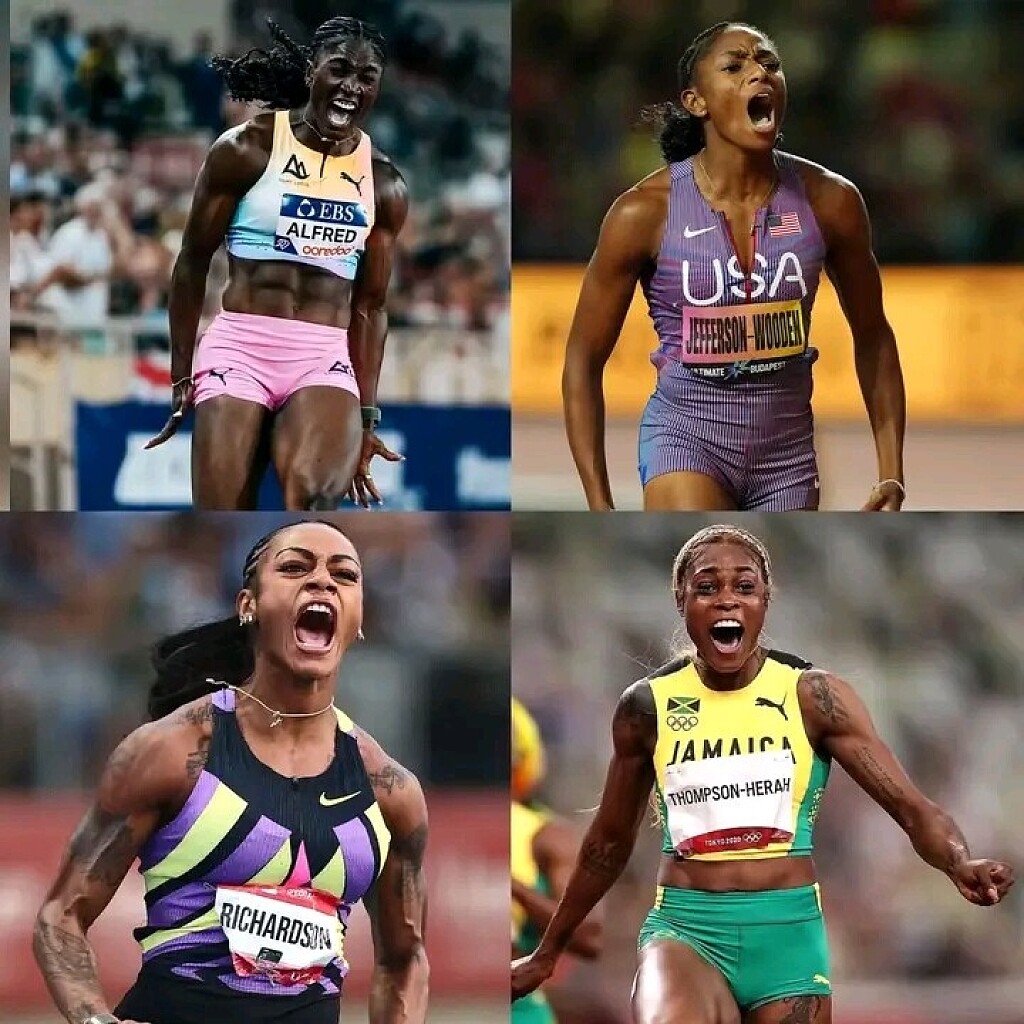
The Olympic 100m could look very different at Los Angeles 2028, with the women’s event set to deliver an extraordinary test of speed, recovery and composure — all within a single day.

According to the current LA28 competition schedule, the women’s 100m will take centre stage on Saturday, July 15, 2028, the opening day of athletics at the Olympic Games. The preliminary and first-round races are scheduled for the morning, before the semifinals and final take place during the evening session at the iconic LA Memorial Coliseum.
That means athletes who survive the earlier rounds will have to return to the track later the same day for two more high-pressure races, with an Olympic gold medal waiting at the end of the journey.

It is a major departure from the traditional rhythm of the Olympic 100m, where sprinters have generally had more time between rounds to recover, reset and prepare for the final.
At LA28, however, the world’s fastest women will face a compressed schedule that could place an even greater premium on preparation, tactical discipline and the ability to recover quickly between races.
The evening session will also feature the women’s shot put final and men’s 10,000m final, making the opening day of athletics a spectacular showcase of speed, strength and endurance.
And the sprint drama will continue the following day.
On Sunday, July 16, the men’s 100m semifinals and final are scheduled at the Coliseum, giving the blue-riband Olympic event a back-to-back presence across the first two days of athletics.
The scheduling change is part of a much broader transformation for LA28. Athletics has been moved to the beginning of the Games, with competition starting on July 15 and ultimately stretching across the Olympic period until July 30. Track and field will occupy the LA Memorial Coliseum for the first 10 days before the road events take over later in the Games.
For the women’s 100m, though, the biggest question will be whether the demanding one-day format changes the nature of the Olympic final itself.
Will the athlete with the greatest raw speed prevail?
Or will the schedule reward the sprinter who can combine explosive power with efficient racing, recovery and the ability to handle the pressure of three rounds in one day?
There is also an intriguing possibility: a runner who arrives in Los Angeles capable of producing a historic performance may have to do so after already racing twice earlier that day.
That could make the 2028 women’s 100m final unlike any Olympic sprint final before it.
The LA28 schedule is still subject to change, but for now, one thing is clear: the road to Olympic gold in the women’s 100m is set to become a race against both the clock and the clock between rounds.
Los Angeles may be preparing to find out who is the fastest woman in the world — but on July 15, 2028, it could also reveal who is the best at surviving an extraordinary day of Olympic sprinting.
by Erick Cheruiyot for My Best Runs.
Login to leave a comment
Running Community Mourns Two Runners After Separate Half Marathon Tragedies
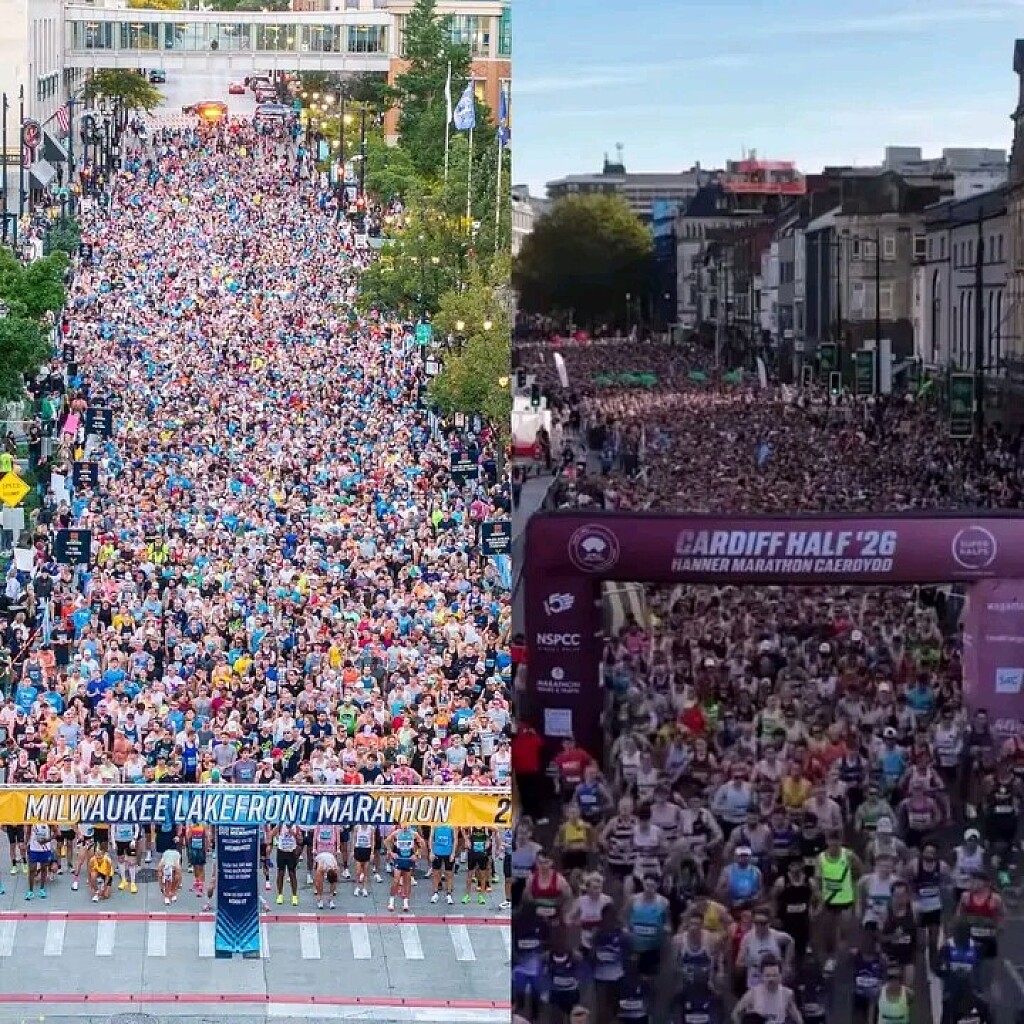
The global running community is mourning the heartbreaking deaths of two runners who suffered medical emergencies during separate half marathons on Sunday, October 4, 2026.
The two incidents occurred thousands of miles apart, in Wisconsin in the United States and Cardiff in Wales, casting a sombre shadow over what should have been a day of celebration, competition and personal achievement.

Milwaukee Lakefront Half Marathon Tragedy
At the Milwaukee Lakefront Marathon in Wisconsin, a 36-year-old father of four from Waukesha tragically collapsed near the 13-mile mark while running across the Hoan Bridge, just approximately 600 feet from the finish line.
Witnesses and medical personnel responded immediately, beginning CPR and using a defibrillator in an attempt to save his life. He was subsequently transported to Froedtert Hospital, where he was pronounced dead.
According to his family, the runner had no known previous medical history. The race was reportedly his first half marathon.
Race organisers confirmed that the tragedy marked the first fatality in the event's 44-year history, leaving the local running community deeply saddened.
A separate tragedy unfolded at the Cardiff Half Marathon in Wales, where another runner suffered a medical emergency after completing the 13.1-mile race.
Medical teams stationed at the finish area and throughout the event immediately provided treatment before the runner was taken to the University Hospital of Wales. Despite the efforts of the medical teams, the runner later died.
Event organiser Run 4 Wales expressed its deep sorrow over the loss and praised the medical personnel at both the race and hospital for their swift response.
The two incidents serve as a painful reminder that, while distance running brings together millions of people through a shared passion for sport, medical emergencies can occur unexpectedly even among apparently healthy participants.
The running community now stands together in grief, extending its deepest condolences to the families, friends, fellow runners and all those affected by these devastating losses.
by Erick Cheruiyot for My Best Runs.
Login to leave a comment
2027 USATF Marathon Championships Headed To Chicago Marathon
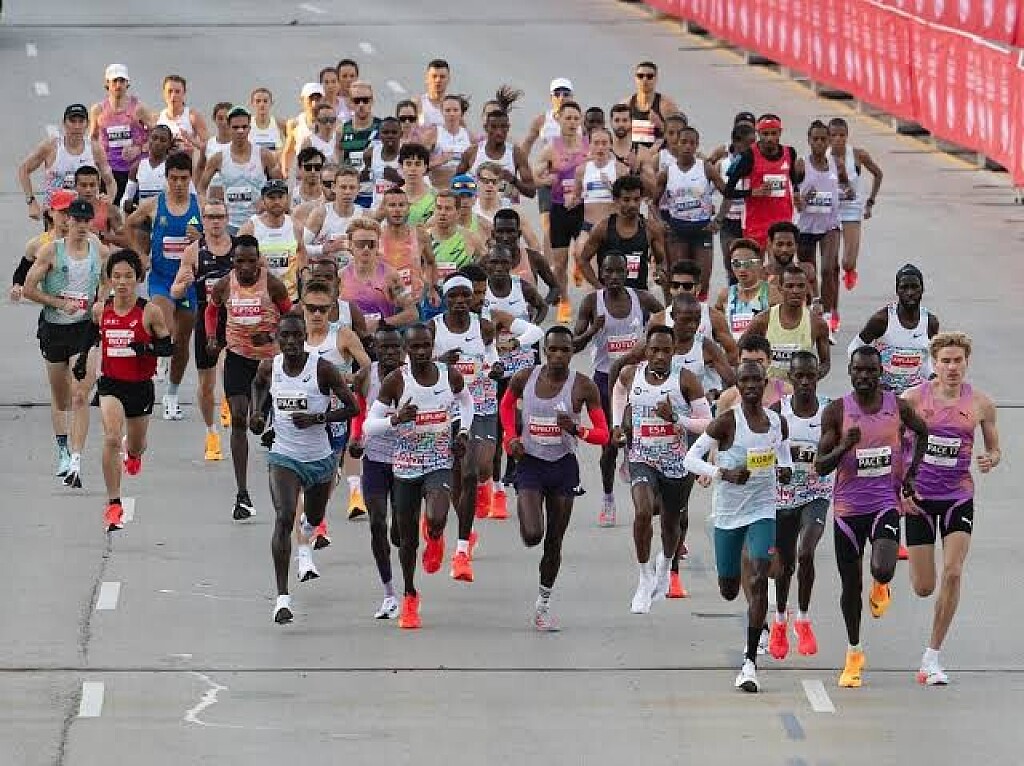
The 2027 Bank of America Chicago Marathon is set to become an even bigger stage for American distance running, with the race selected to host the 2027 USATF Marathon Championships on October 10, 2027.
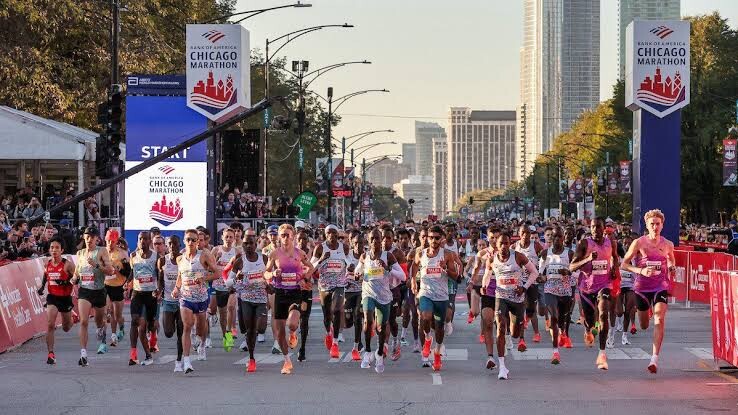
The national championships will be contested directly within the Abbott World Marathon Major, giving American athletes the opportunity to fight for national titles while competing alongside one of the deepest international fields in marathon racing.
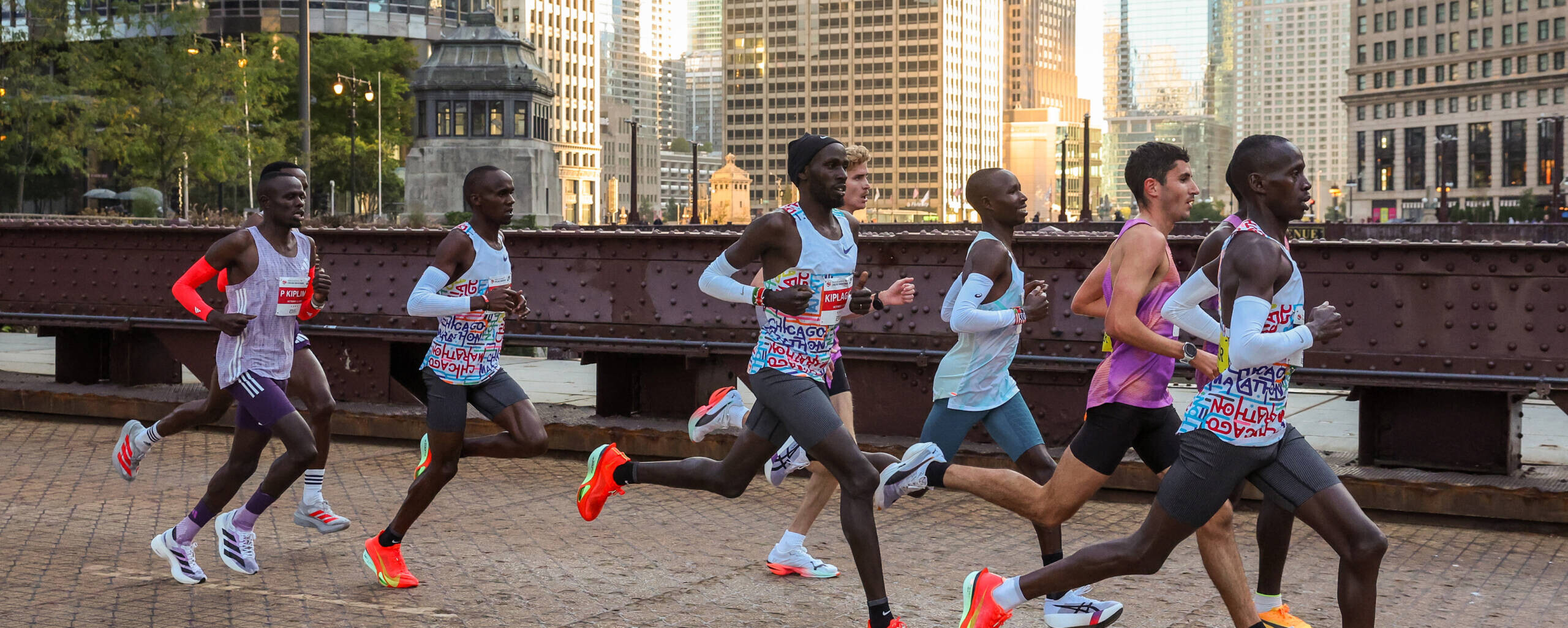
A dedicated championship field will feature 20 American men and 20 American women, creating two highly competitive national title races on the streets of Chicago. Chicago Event Management will serve as the local organizing committee, while USATF will announce the selection criteria and championship entry procedures at a later date.
The decision adds another major layer to what is already one of the world's most prestigious marathons.

More Spotlight For American Marathoners
One of the most significant elements of the announcement is the planned television coverage.

The Chicago Marathon will provide dedicated coverage of the USATF Championship races within the main broadcast, including additional cameras focused on the American men and women. This should give U.S. athletes considerably more visibility throughout the race, particularly when the international leaders begin to separate from the field.
The broadcast will be available on NBC in Chicago and Peacock nationally, bringing the championship battle to a much wider audience.
The national championship will also carry a prize purse of nearly $110,000, with prize money extending through 10th place in both the men's and women's competitions.
Chicago Expands High Performance Program
The 2027 event will also see Chicago expand its High Performance Program to 300 athletes, creating more opportunities for elite and sub-elite American marathoners to compete in a world-class environment while pursuing qualifying performances for the 2028 U.S. Olympic Team Trials – Marathon.
For the wider marathon community, applications for the 2027 Chicago Marathon open at 8:00 a.m. Central Time on Thursday, October 8, 2026, and close at 2:00 p.m. Central Time on Thursday, October 29, 2026.
With a World Marathon Major, a national championship, a substantial prize purse and a growing pathway toward the 2028 Olympic Trials all converging on the same 26.2-mile course, Chicago 2027 is shaping up to be a major date on the American marathon calendar.
by Erick Cheruiyot for My Best Runs.
Login to leave a comment
Bank of America Chicago
Running the Bank of America Chicago Marathon is the pinnacle of achievement for elite athletes and everyday runners alike. On race day, runners from all 50 states and more than 100 countries will set out to accomplish a personal dream by reaching the finish line in Grant Park. The Bank of America Chicago Marathon is known for its flat and...
more...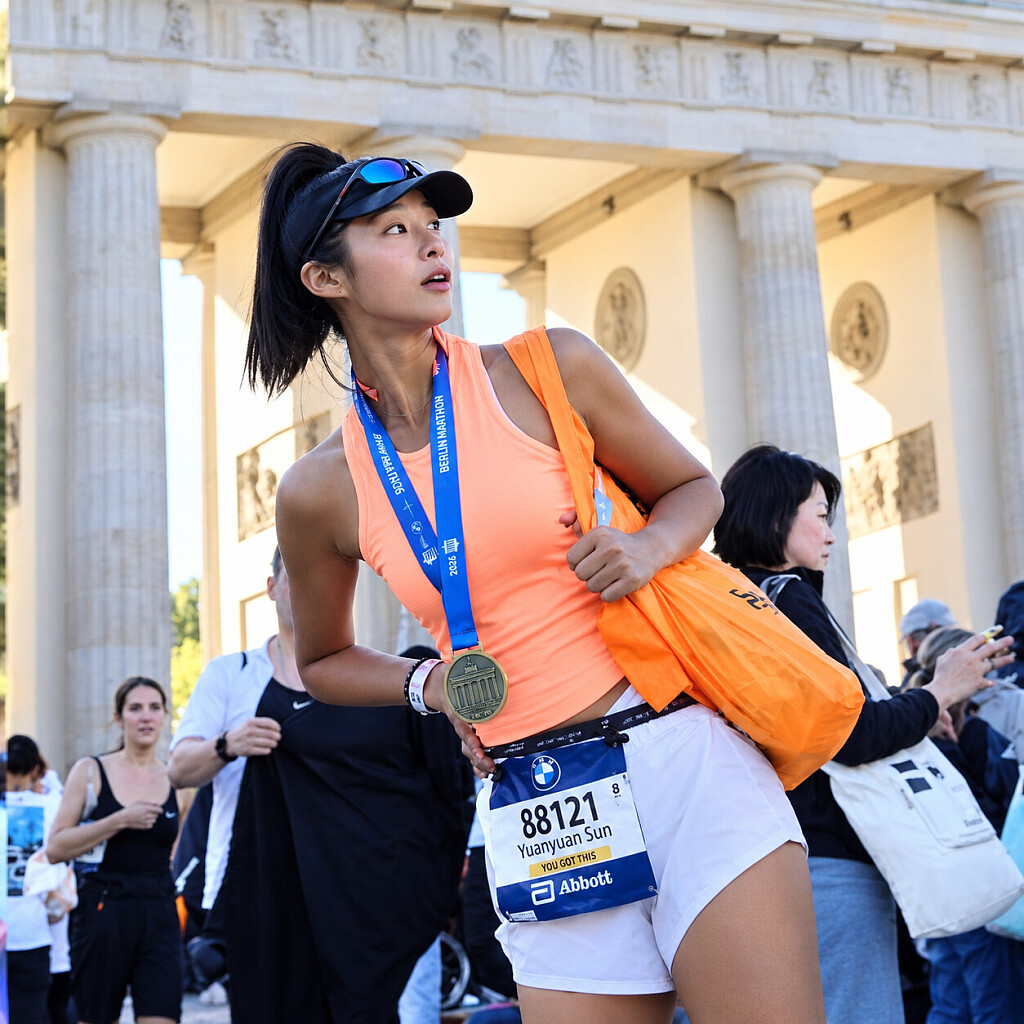
Berlin Marathon Controversy Erupts After Chinese Influencer Admits Bicycle Ride
A controversy has emerged from the 2026 Berlin Marathon after Chinese fitness influencer Yuanyuan Sun, better known online as Abeeeer, admitted that she rode on the back of a bicycle during the closing stages of the race.
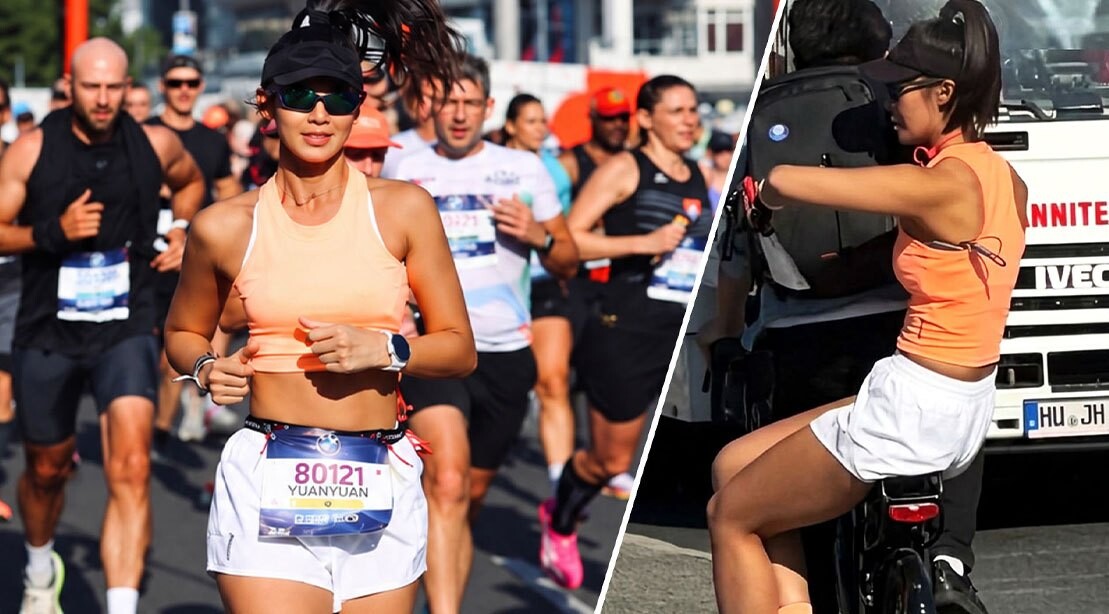
The 30-year-old initially crossed the finish line in 4:53:46, presenting the performance as a personal best. However, questions were later raised about her split times, particularly a significant improvement in her pace between the 35km and 40km marks.
According to the split data that circulated online, Sun’s final kilometres appeared considerably faster than the preceding section, prompting scrutiny from fellow runners and followers.
Sun subsequently acknowledged that she had accepted a ride on a bicycle during the race. She admitted that doing so was against the marathon’s rules and apologised for failing to disclose what had happened when she shared photographs following the event.
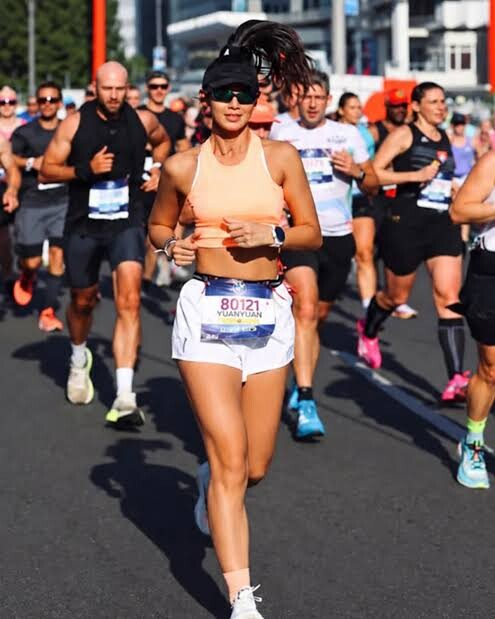
In her apology, Sun said she should not have used feeling unwell as a justification for breaking the rules. She also acknowledged that concealing the incident after the race was wrong.
The controversy quickly moved beyond social media, with Brooks China ending its relationship with Sun following the incident. The brand said the decision reflected its commitment to integrity, fairness and the spirit of running.
The episode has reignited a familiar debate within distance running: where should the line be drawn between simply finishing a race and genuinely completing it according to the rules?
For thousands of marathoners, the attraction of the sport is not only the number displayed on the finishing clock. It is the countless kilometres of training, the physical and mental struggle during the race, and the knowledge that every step toward the finish line was earned.
A marathon medal carries significance because of that journey.
Sun’s case is therefore likely to remain a talking point among runners, particularly because the controversy did not centre on an elite athlete chasing a world-class time, but on the importance of honesty and fair competition at every level of the sport.
Ultimately, a marathon is more than simply reaching the finish line. It is about earning your way there.
by Erick Cheruiyot for My Best Runs.
Login to leave a comment

BMW Berlin Marathon
The story of the BERLIN-MARATHON is a story of the development of road running. When the first BERLIN-MARATHON was started on 13th October 1974 on a minor road next to the stadium of the organisers‘ club SC Charlottenburg Berlin 286 athletes had entered. The first winners were runners from Berlin: Günter Hallas (2:44:53), who still runs the BERLIN-MARATHON today, and...
more...
New York City Marathon Unveils Special 50th-Anniversary Finisher Medal
The TCS New York City Marathon is preparing to mark a major milestone in its history, and runners crossing the finish line on November 1 will take home a medal designed to celebrate five decades of the iconic five-borough course.
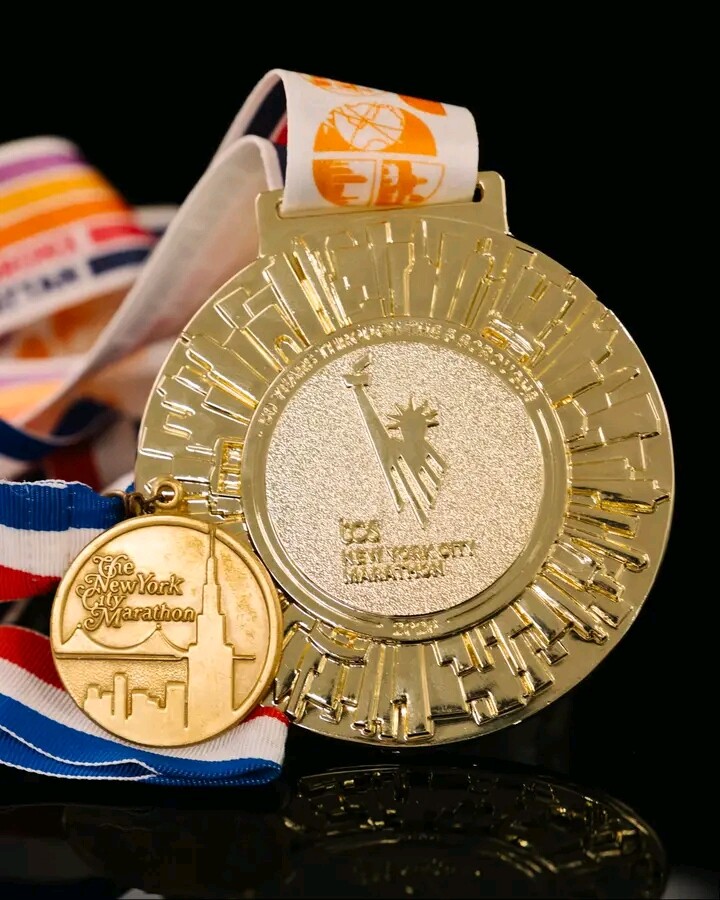
New York Road Runners (NYRR) has unveiled the official 2026 finisher medal, commemorating the 50th anniversary of the course that transformed the race after it moved beyond Central Park in 1976. The anniversary also marks 50 years since NYRR first introduced a finisher medal for the event.
The new medal combines elements of New York City and the marathon into a distinctive sculptural design. An abstract skyline spreads outward in a sunburst pattern, while the five bridges encountered along the marathon route are incorporated into the design, creating a visual connection between the race and the city through which it travels.

At the heart of the concept is an unbroken circular skyline, symbolising the five boroughs coming together as one. It reflects one of the defining characteristics of the New York City Marathon: a single 26.2-mile journey that connects Staten Island, Brooklyn, Queens, the Bronx and Manhattan.
The 2026 medal will be produced in zinc with an electroplated gold finish and measures 3.5 inches across, making it slightly larger than the standard medal in recognition of the anniversary. Despite the larger overall size, the central medallion remains 2.12 inches, the same measurement used for the 2025 edition.
The ribbon also pays tribute to the race's history, drawing inspiration from the visual style of the 1970s. It features the marathon logo, the 50th-anniversary emblem and references to all five boroughs, completing a design that blends the event's past with its present.
For thousands of runners, the medal will represent far more than simply a race souvenir. It will be a lasting reminder of the miles covered through one of the world's most recognisable cities and of the personal achievement of reaching the finish line in Central Park.
NYRR chief marketing and digital officer Juliette Morris said the design was created to capture the unique character of the marathon, from the atmosphere of New York City to the shared experience that brings runners and spectators together every year.
As the 2026 edition approaches, the special medal adds another layer of significance to a race already steeped in history. For those who complete the journey on November 1, it will serve as a tangible symbol of both their individual achievement and the 50-year legacy of the modern New York City Marathon.
by Erick Cheruiyot for My Best Runs.
Login to leave a comment
TCS New York City Marathon
The first New York City Marathon, organized in 1970 by Fred Lebow and Vince Chiappetta, was held entirely in Central Park. Of 127 entrants, only 55 men finished; the sole female entrant dropped out due to illness. Winners were given inexpensive wristwatches and recycled baseball and bowling trophies. The entry fee was $1 and the total event budget...
more...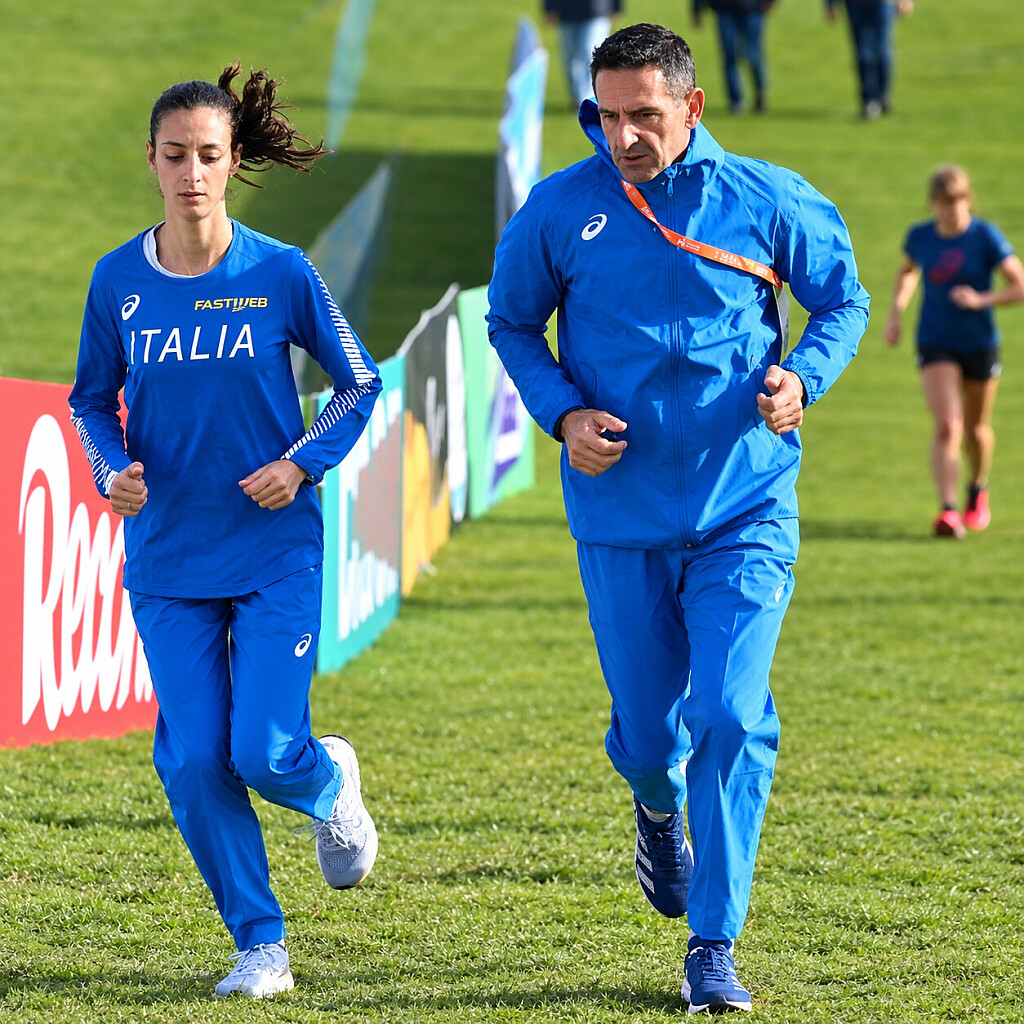
When Your Coach Is Your Dad: The Extraordinary Partnership Behind Nadia Battocletti’s Rise
For most athletes, a coach is someone they meet along the way. For Italian distance-running star Nadia Battocletti, that role has always belonged to someone who has been there from the very beginning — her father, Giuliano Battocletti.
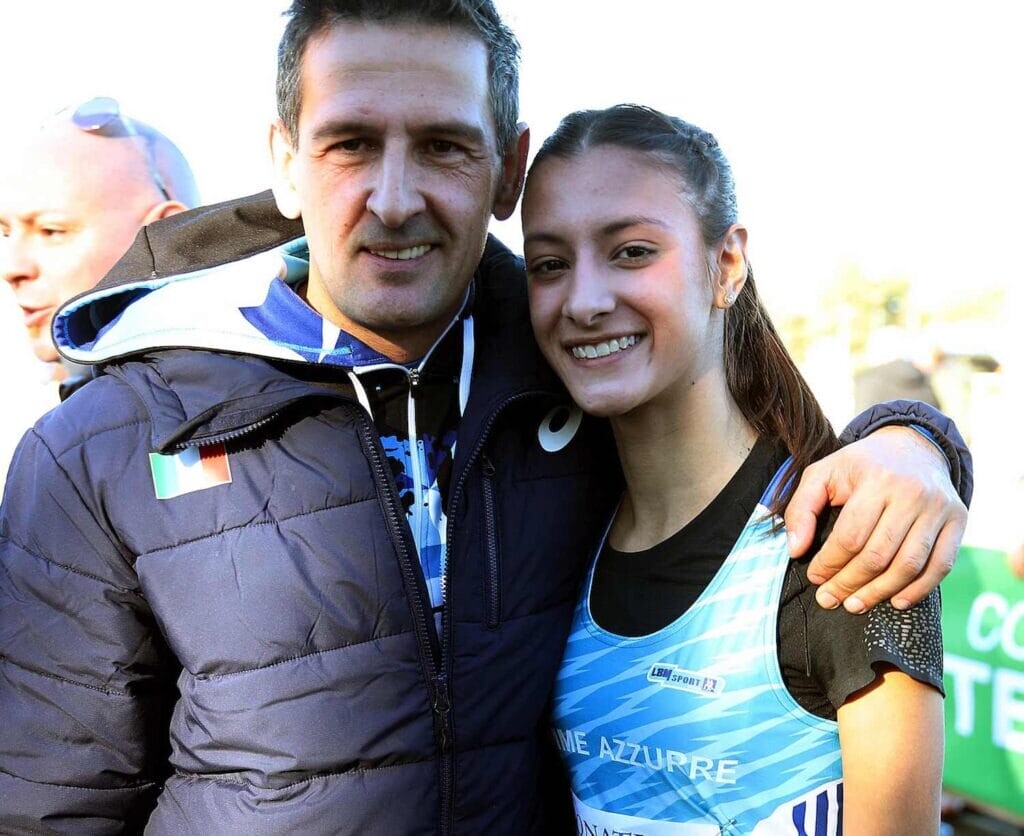
The relationship between the two goes far beyond the traditional athlete-coach partnership. Giuliano, a former Italian middle- and long-distance runner, has guided his daughter throughout her career, helping her develop from a promising young talent into one of the leading figures in international distance running.
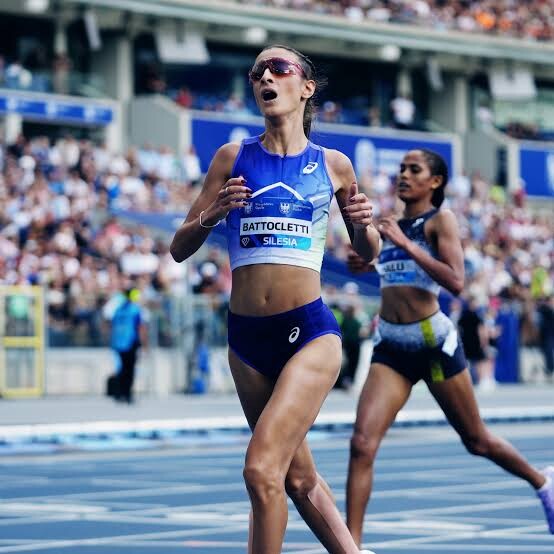
Under his guidance, Nadia has risen to the biggest stages in the sport, becoming an Olympic and World Championships silver medallist while establishing herself as a formidable presence over both track and road distances.
What makes their partnership particularly special is the understanding that comes from spending a lifetime together. Giuliano knows his daughter not simply as an athlete chasing faster times and bigger victories, but as a person — understanding her character, emotions and the demands that come with competing at the highest level.
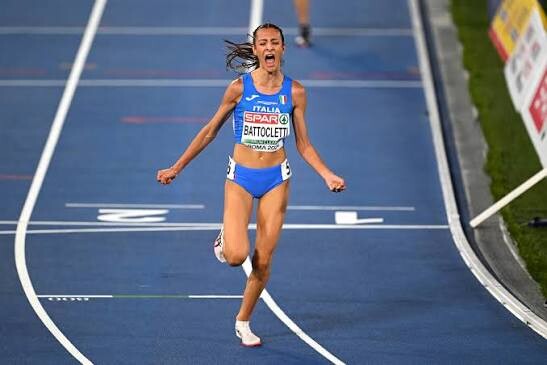
Nadia has previously made it clear that she cannot imagine her career without her father in the coaching role.
“Dad has been my coach all the way. I don't know what it would be like to have another coach, and I wouldn't see another figure in his place.”
That connection is visible in the everyday details of her training. Giuliano remains closely involved in her preparation, often riding a bicycle alongside Nadia during demanding sessions and sharing the long, difficult kilometres that form the foundation of her success.
Their story is also deeply rooted in a family sporting tradition. Nadia's mother, Jawhara Saddougui, was an accomplished middle-distance runner who represented Morocco in the 800 metres. Running, therefore, was not simply introduced into Nadia's life as a career choice — it was part of the environment in which she grew up.
But the success Nadia enjoys today has been built through years of patience, sacrifice and trust. Long before the Olympic stadiums and World Championships, there were ordinary training days, difficult workouts and countless kilometres shared between a father and his daughter.
That makes their partnership one of the more compelling stories in modern athletics. The same person who helped Nadia take her first steps in the sport has remained beside her as she has progressed onto the world's biggest stages.
In elite sport, where athletes often change coaches as their careers evolve, the Battocletti partnership stands apart. It is built on something that cannot easily be replicated: decades of knowing, understanding and believing in one another.
For Nadia Battocletti, the journey to the top has never been a solo effort. Through every demanding session, breakthrough performance and major championship, her father has been there — not only as her coach, but as the person who has known her longer than anyone else.
Sometimes, the most important person in an athlete's corner is also the one who has been there since the beginning.
by Erick Cheruiyot for My Best Runs.
Login to leave a comment
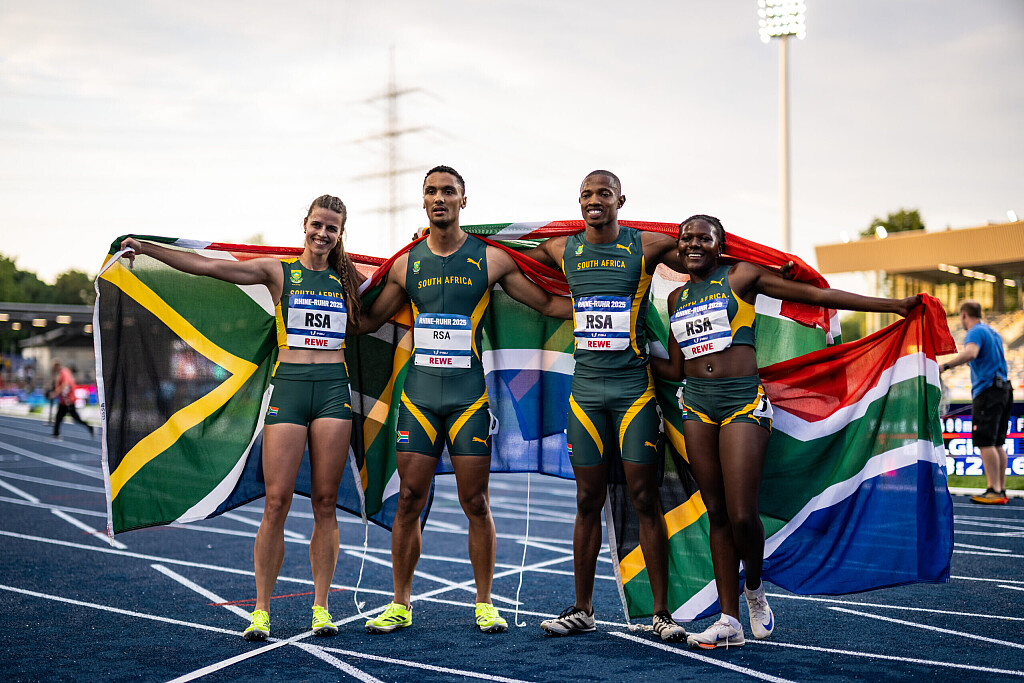
South Africa Enters Race To Bring The Olympics To Africa For The First Time
South Africa has taken a major step towards potentially bringing the Olympic Games to Africa for the first time after formally entering the International Olympic Committee’s process as an interested party for the 2036 Summer Olympics and Paralympics.

The development could mark a historic moment for the continent, which has never hosted an edition of the Olympic Games despite its long and distinguished sporting tradition. South Africa’s interest now places the country among the potential candidates seeking to convince the IOC that Africa is ready to stage the world’s biggest multi-sport event.
A successful bid would represent a significant expansion of South Africa’s sporting legacy. The country has already demonstrated its ability to host major international competitions, most notably the 2010 FIFA World Cup, which brought football’s biggest tournament to Africa for the first time and showcased South Africa’s stadiums, infrastructure and capacity to welcome visitors from around the world.
The 2036 ambition also arrives at a time when Africa is gaining greater recognition as a destination for major global sporting events.

Kenya has already secured the right to host the 2029 World Athletics Championships in Nairobi, marking the first time the senior global championships will be staged on African soil. The breakthrough followed a competitive bidding process and represents another important milestone for the continent’s athletics movement.
South Africa’s Olympic interest therefore comes against a backdrop of growing confidence in Africa’s ability to organise and deliver events at the highest international level.
For South Africa, however, winning the right to host the Olympics would be a considerably larger undertaking. The Games require extensive sporting venues, accommodation, transportation networks, security arrangements and long-term financial planning, while the host must also present a compelling vision for the event’s wider legacy.
The country’s experience with the 2010 World Cup provides an important foundation, but an Olympic bid would require an even broader national strategy involving multiple sports and venues.
The IOC is expected to make its decision on the host of the 2036 Olympics later in the decade, with several countries expressing interest in entering the race. The process will ultimately determine whether Africa can finally break one of the biggest remaining barriers in the history of the Olympic movement.
For a continent that has produced generations of Olympic champions across athletics, swimming, boxing, cycling and numerous other sports, hosting the Games would carry significance far beyond the competition itself.
South Africa is now putting itself forward for that opportunity.
If the bid eventually succeeds, the 2036 Olympic Games could become a landmark moment — not only for South Africa, but for an entire continent that has waited more than a century to welcome the Olympic movement onto its soil.
by Erick Cheruiyot for My Best Runs.
Login to leave a comment
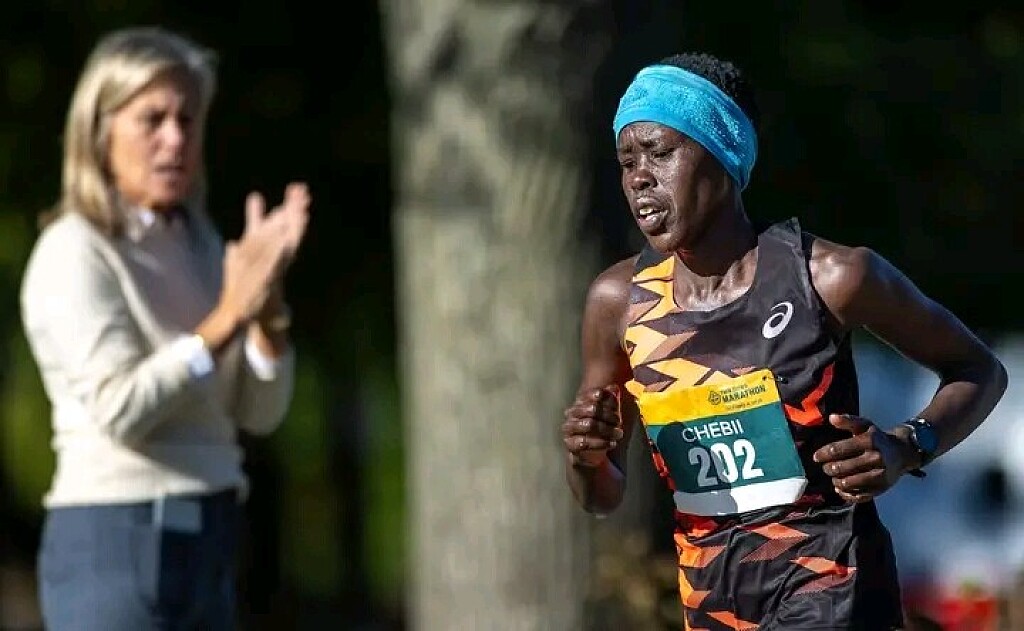
Twin Cities Marathon Turns the Page as Iconic Race Moves to Mid-October in 2027
The Twin Cities Marathon has closed the chapter on one of the longest-running traditions in American marathon racing, with the event set to leave its familiar early-October slot and move to mid-October beginning in 2027.

The 2026 edition marked the final time the race would be held in its traditional early-October window, bringing an end to a calendar tradition that has defined the event for more than four decades.
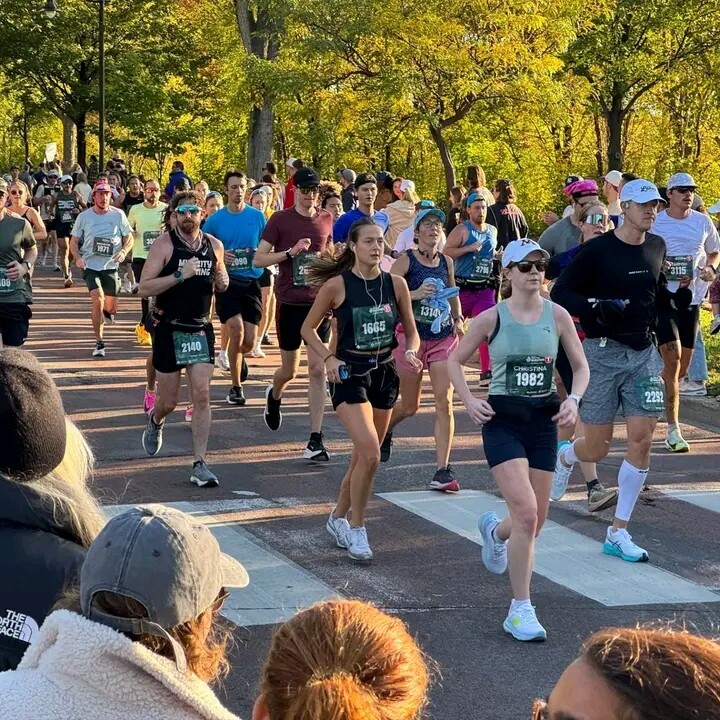
Beginning in 2027, Twin Cities Marathon Weekend will move to a mid-October date. The decision follows growing concerns over warmer and increasingly unpredictable conditions during the race's traditional weekend, with organisers seeking a better environment for runners, spectators and volunteers.
The change is more than a simple adjustment to the racing calendar. Early October, once synonymous with crisp autumn temperatures in Minnesota, has increasingly brought challenging heat. In recent years, organisers have had to contend with conditions that can place additional stress on marathon runners and increase demands on medical and public-safety teams.
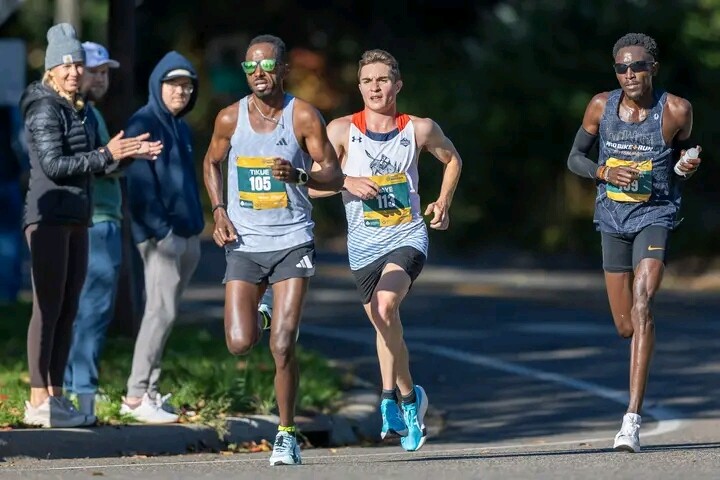
The inaugural Twin Cities Marathon was held on October 3, 1982, attracting 4,563 entrants. What began as a relatively young marathon has since developed into one of the most recognisable road races in the United States, growing alongside the running communities of Minneapolis and St. Paul.
The course itself has long been one of the event's defining features. Runners travel through Minneapolis, pass the city's famous chain of lakes and follow a scenic route toward St. Paul before finishing near the Minnesota State Capitol. The combination of major urban landmarks, parkways, waterways and autumn scenery has helped give the race its distinctive identity.
The 2026 edition continued that long tradition, with roughly 30,000 runners taking part across the various events of Marathon Weekend. The marathon also featured defending champions Will Norris and Jane Bareikis, while favourable temperatures provided runners with much more comfortable conditions than some of the warmer editions in recent years.
Yet even with favourable weather this year, the decision to move the race reflects a longer-term concern. Organisers are looking beyond a single race morning and considering how changing weather patterns could affect the event in the years ahead.
For runners, the move could eventually become one of the most important changes in the marathon's modern history. A later October date offers the possibility of cooler racing conditions while preserving the course, the atmosphere and the traditions that have made Twin Cities Marathon a fixture on the American running calendar.
For more than four decades, the first Sunday of October provided a familiar date for thousands of runners preparing to take on the Twin Cities course.
That tradition has now reached its final chapter.
From 2027, the Twin Cities Marathon will arrive later in the fall — opening a new era for a race whose history remains firmly connected to the streets of Minneapolis and St. Paul.
by Erick Cheruiyot for My Best Runs.
Login to leave a comment

Mariko Yugeta’s 43-Year Marathon Journey Ends With a Historic Sub-Three-Hour Run
For Mariko Yugeta, breaking three hours in the marathon was never simply a time goal. It was a dream that survived more than four decades of life’s responsibilities, setbacks and changing priorities before finally becoming reality.
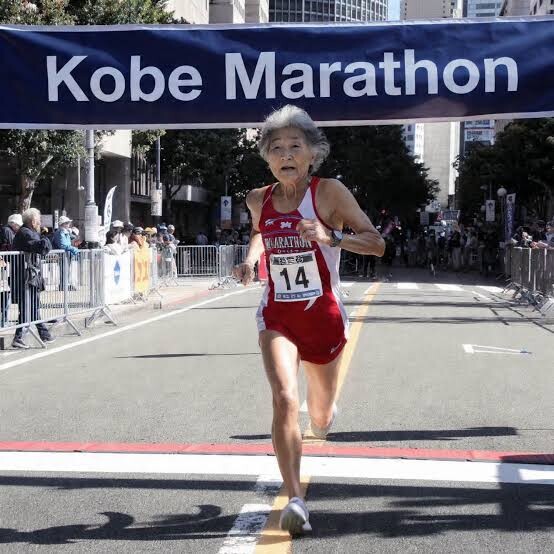
Yugeta first stepped into marathon racing in 1982 at the age of 24, completing her debut in an impressive 3:09:21. At the time, she could hardly have imagined that her pursuit of the elusive three-hour barrier would stretch across generations.
Life soon took her in a different direction. Yugeta became a high school physical education teacher and devoted much of her time to raising her four children, leaving serious marathon training behind. The demands of family and work meant that the dream had to wait, but it never disappeared.
In her 50s, Yugeta returned to dedicated marathon training, reigniting a goal she had carried with her for decades. Her comeback eventually produced the breakthrough she had been chasing since her twenties, as she became a sub-three-hour marathoner at the age of 58.
But Yugeta was far from finished.
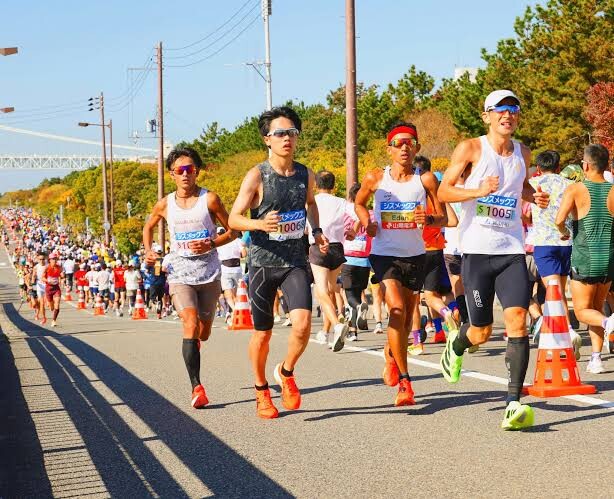
At 67, she produced perhaps the most remarkable chapter of her extraordinary running journey at the Kobe Marathon. She crossed the finish line in 2:58:59, with a net time of 2:59:02, becoming the first woman aged over 65 to complete a marathon in under three hours.
The performance was remarkable not only because of the time on the clock, but because of the journey behind it. More than 40 years separated her first marathon from this historic achievement, demonstrating an extraordinary level of patience, consistency and determination.
Even in her late 60s, Yugeta continues to train at a level that would challenge many much younger runners. She reportedly covers around 100 kilometres each week and remains active in masters marathon competition, continuing to push the boundaries of what is possible with age.
Her story is a powerful reminder that athletic dreams do not always have to follow a conventional timeline. Some ambitions are achieved quickly, while others require years of persistence and the willingness to begin again after life forces you to step away.
For Yugeta, the finish line simply took longer to reach.
Forty-three years after running her first marathon, she finally turned a lifelong ambition into a piece of running history — proving that sometimes the most extraordinary victories are the ones that take the longest to arrive.
by Erick Cheruiyot for My Best Runs.
Login to leave a comment

7 Packing Tips for Your First Time Traveling For a Race
Traveling for a race is the perfect excuse to turn a running weekend into an adventure. Perhaps you’re heading to the Tokyo Marathon and already thinking about the sushi and ramen you’ll enjoy afterward. Or maybe your next finish line is beside the beach.
Between training, booking a hotel and planning what to explore, packing can become an afterthought. Then race morning arrives, and your favorite socks are still at home, your race information is buried in your suitcase and your water bottle is nowhere to be found.
A little organization before departure can make the entire trip smoother. These seven packing tips will help you arrive ready to run and enjoy the weekend.
1. Pack Your Race-Day Outfit in Your Carry-On
Keep your race-day clothing and essentials in your carry-on. Pack your running top, shorts or tights, socks, sports bra if needed, and the small items you depend on during a race. If your checked luggage is delayed, your key gear will still be with you.

Fold your race outfit together or place it in a packing pouch so everything is easy to find. A smaller zip pouch can hold accessories. Knowing exactly where your race kit is means one less thing to worry about when you arrive.
2. Wear Your Running Shoes on the Plane
Your running shoes deserve the same attention as your race outfit. Wearing them on the plane keeps them out of checked luggage and leaves more room in your suitcase.
Choose a familiar pair you have already used in training. Race weekend is not the time to discover that new shoes rub or fit differently than expected. If you prefer to travel in another pair, keep your race shoes in your carry-on.

3. Bring a Spacious Bag for Your Gear
A race trip often requires more than running clothes. Add a jacket, recovery clothes, snacks and accessories, and your packing list grows quickly. A spacious duffel with sturdy handles and useful pockets can keep those extras organized and serve as a day bag at your destination.
Think about what you’ll do beyond race day. A hike may call for trail shoes and a light layer. If pickleball is part of your plans, you may want a paddle and extra clothes.
The same thinking applies when choosing your bag. If you’re planning a few games on the court during the trip, consider pickleball tour and duffel bags. A backpack may be more practical for hiking or exploring on foot. Choose a bag that suits your itinerary, and check your airline’s size and weight limits before packing.
4. Organize Your Bib and Race Documents
Keep your identification, registration confirmation and race instructions together. A slim document pouch works well for paper copies, while a dedicated folder on your phone can keep digital information easy to access.
Download important details before leaving home, including the race map, confirmation email and packet pickup instructions. Save copies you can open without an internet connection.
If you already have your bib, keep it flat and protected. Otherwise, check where and when you need to collect it and what identification the organizer requires. Handling these details in advance helps keep the pre-race scramble to a minimum.
5. Take Familiar Snacks with You
Race travel can disrupt your usual eating routine. Your preferred breakfast may be unavailable, and the hotel buffet may not offer what you normally eat before a run.
Bring the bars, gels and electrolyte products you have already used in training. Your runner’s diet shouldn’t become a vacation guessing game.
Count what you’ll need for travel and race day, then pack a little extra. Keep some familiar snacks in your carry-on and bring enough race fuel for your planned strategy. Check destination rules before carrying food across international borders.
6. Always Have a Water Bottle
Busy travel days can make it easy to forget your usual drinking habits. A reusable water bottle is a simple item that deserves a place on your packing list.
Carry it empty through airport security, then fill it where drinking water is available. Keep it handy during your journey and when heading out for packet pickup or other race activities.
Staying hydrated is also part of caring for your body while traveling. If an electrolyte mix is already part of your routine, pack your usual product. Having familiar supplies nearby makes it easier to maintain your normal habits while traveling.
7. Pack Layers for Changing Weather
A mild forecast doesn’t always reflect how it will feel while waiting at the starting line early in the morning. Pack a lightweight layer you have already worn while running.
A zip jacket or long-sleeve top can help you stay comfortable before the start. Decide in advance whether you’ll carry it during the race or leave it at an official bag check, following the organizer’s instructions.
For colder conditions, familiar gloves and other tested gear can help. Review this guide to running in cold weather, then check the forecast again before departure and once more before race morning so you can make any final adjustments.
Thoughtful packing helps you get more out of a destination race. Keep essential gear close, choose a bag that works for your plans and organize your documents before you leave. With those details handled, you can spend less time searching through your suitcase and more time enjoying the run—and everything that comes afterward.
Login to leave a comment
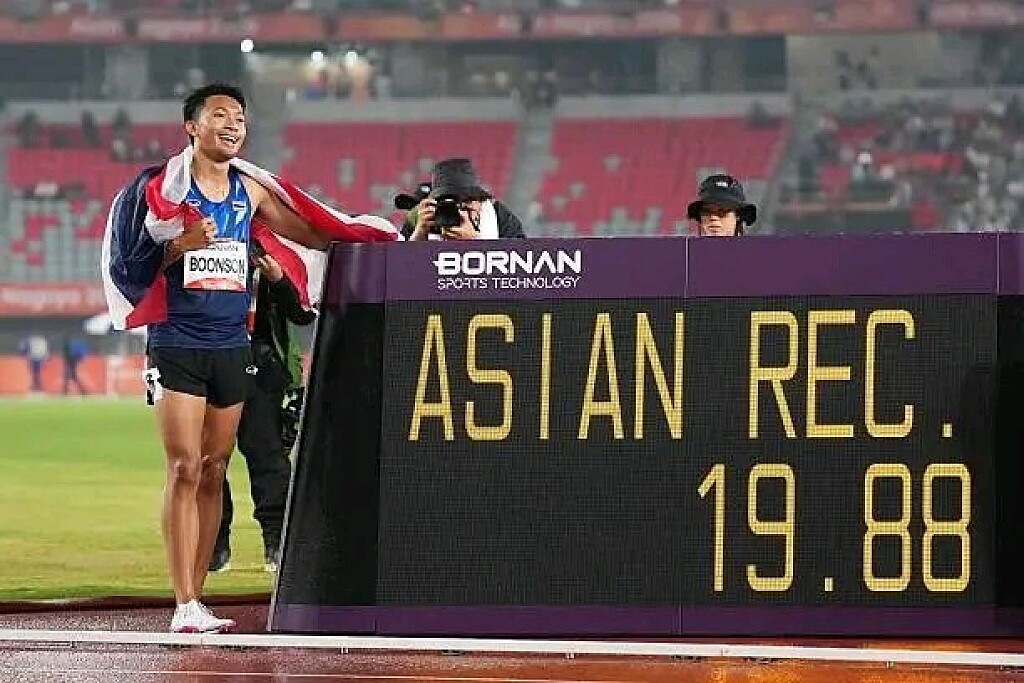
Puripol Boonson Crowned Men’s MVP After Sensational Sprint Double at Asian Games
Thailand’s Puripol Boonson has been named the Men’s Most Valuable Player of the Aichi-Nagoya 2026 Asian Games after producing a remarkable sprint double that further underlined his emergence as one of Asia’s brightest young track stars.
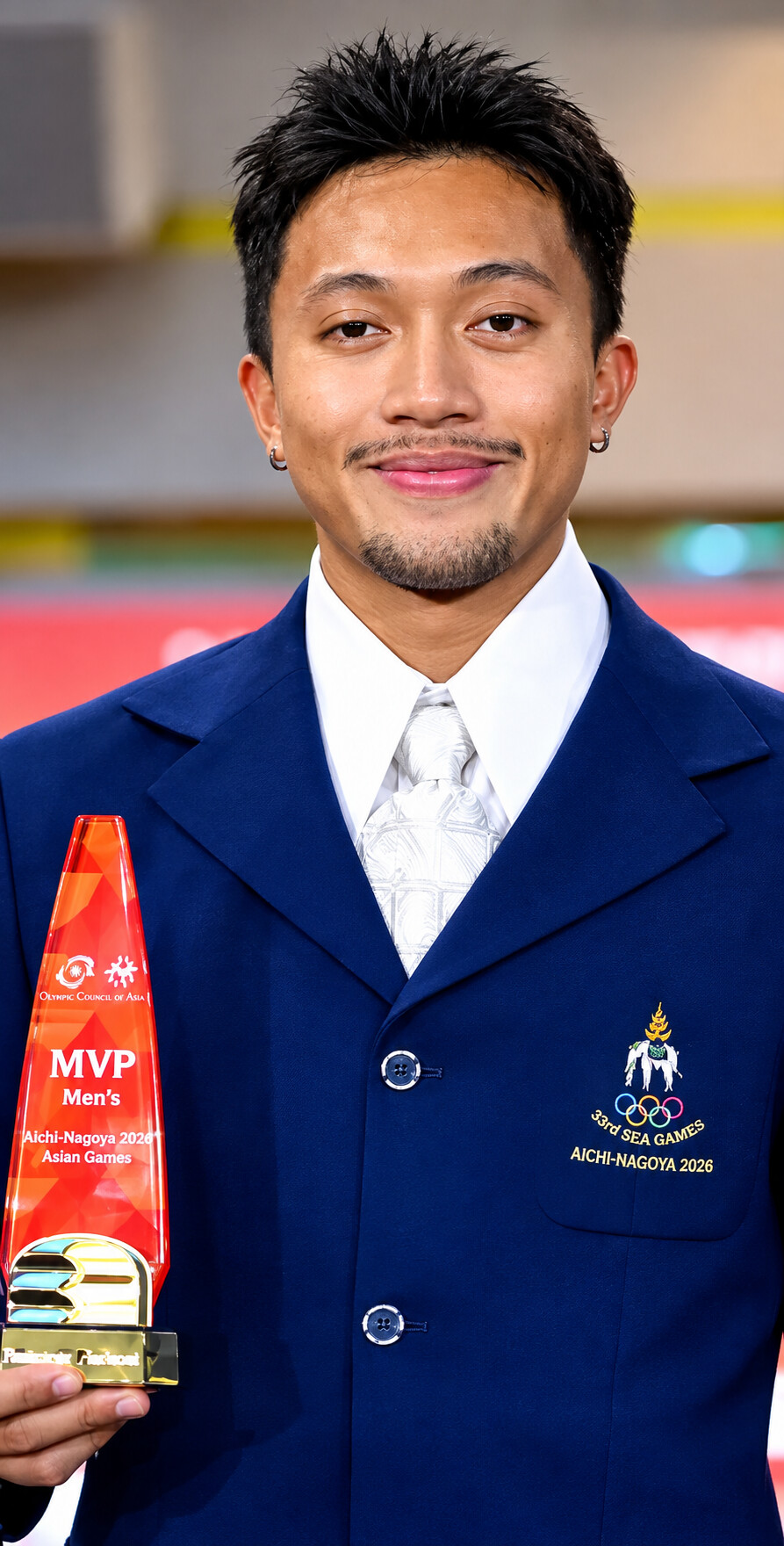
The 20-year-old sprinter delivered two outstanding performances to claim gold in both the men’s 100m and 200m, establishing himself as the dominant individual sprinter of the Games and earning the biggest individual accolade awarded by the Olympic Council of Asia.
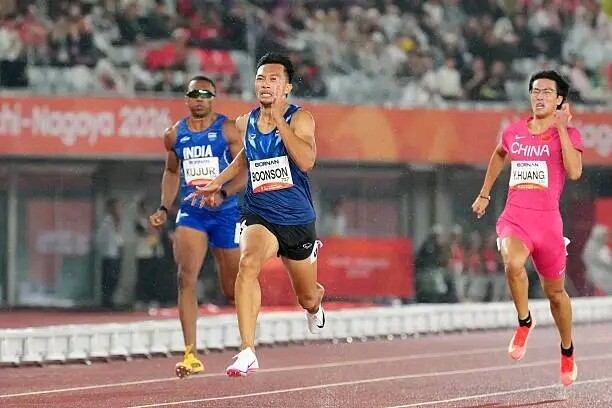
Boonson opened his campaign in spectacular fashion in the 100m, storming to victory in 9.90 seconds. The performance confirmed his exceptional speed and placed him firmly among the continent’s leading sprinters.
He then returned to the track for the 200m and produced another statement performance, crossing the finish line in 19.88 seconds to secure his second gold medal. His time matched the Asian record, adding another significant milestone to an already remarkable Games.
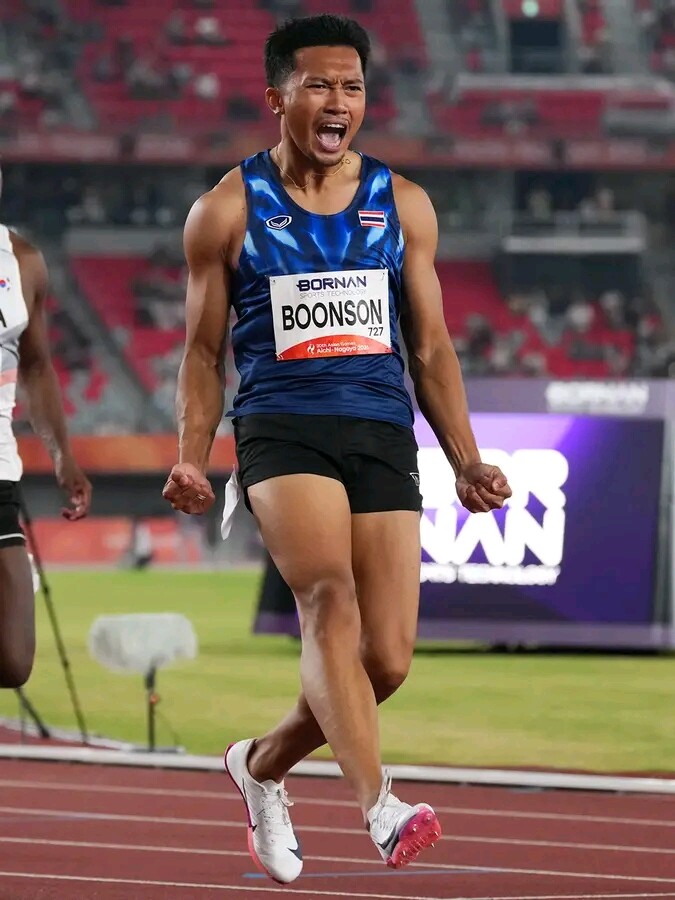
The sprint double is particularly impressive given the depth of talent competing at the continental level, with Boonson managing to combine explosive acceleration in the 100m with the speed endurance required to excel over 200m.
His performances have also strengthened his reputation as one of the most exciting young sprinters in Asia. At only 20, Boonson is already competing at a level that places him alongside some of the continent’s most accomplished sprinting names, while his progression suggests there could be even greater performances ahead.
For Thailand, his success represents a significant moment for the nation’s athletics programme. Boonson has become a leading figure in a new generation of Asian sprinters, and his performances on the biggest continental stage have brought renewed attention to Thailand’s sprinting ambitions.
Winning two individual sprint titles and being selected as the Men’s MVP makes Boonson one of the defining athletes of the Aichi-Nagoya Games. More importantly, his performances have provided a glimpse of what could become a long and highly successful career on the international stage.
With a 9.90-second 100m and a 19.88-second 200m already on his record, Puripol Boonson has made one thing clear: Asia’s sprinting landscape has a new force to watch.
by Erick Cheruiyot for My Best Runs.
Login to leave a comment
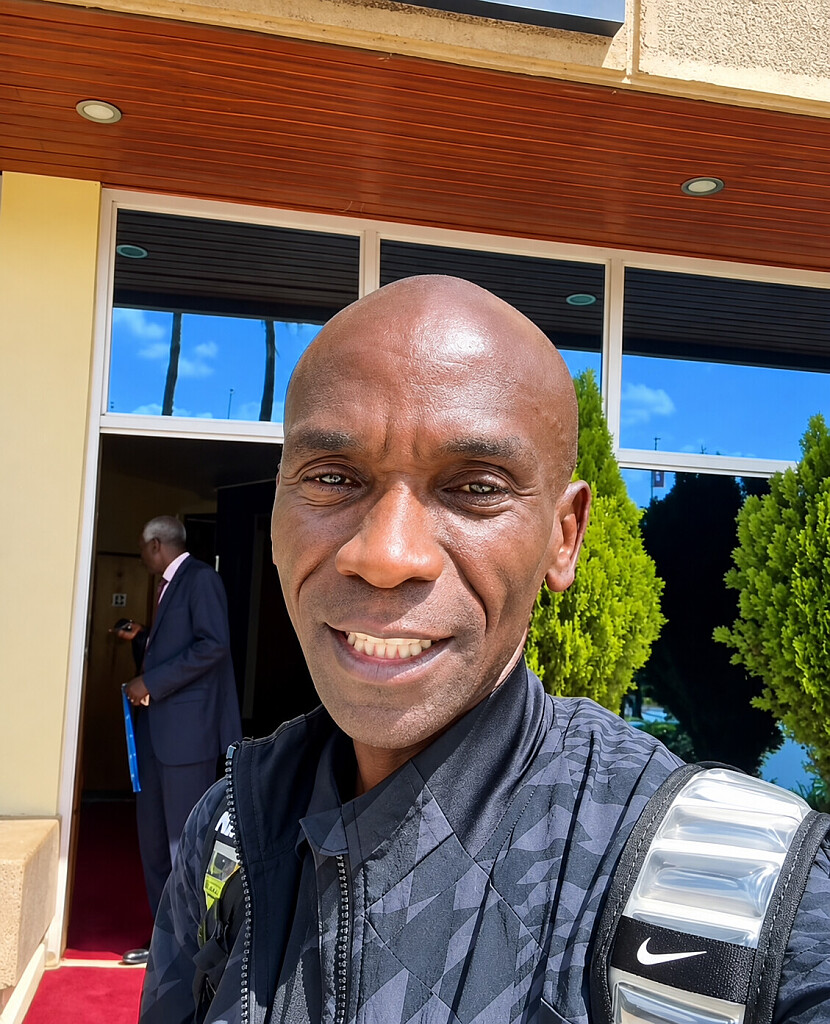
Eliud Kipchoge Brings His Seven-Continent Journey To Melbourne
MELBOURNE, AUSTRALIA — The countdown is almost over. On Sunday, October 11, Eliud Kipchoge will return to marathon racing in Australia as the legendary Kenyan takes the next step in his extraordinary seven-continent world tour.

The two-time Olympic marathon champion will headline the 2026 Nike Melbourne Marathon, marking the third stop of his global journey after opening the project in Cape Town in May before travelling to Porto Alegre, Brazil, in July. Melbourne now becomes the next chapter in a remarkable mission designed to take one of the greatest marathoners in history across all seven continents.
And for Kipchoge, the Melbourne visit carries a message that reaches beyond the marathon itself.
Reflecting on the history of the Olympic city, Kipchoge drew inspiration from an extraordinary moment in 1956, when a 17-year-old boy named Ian (John Wing) encouraged Melbourne to come together and walk during the Olympic Games.
“In 1956, a 17-year-old kid called Ian (John Wing) told Melbourne to walk together during the Olympic Games. Seventy years down the line, I am going to tell the people of Melbourne, let us run together,” Kipchoge said.
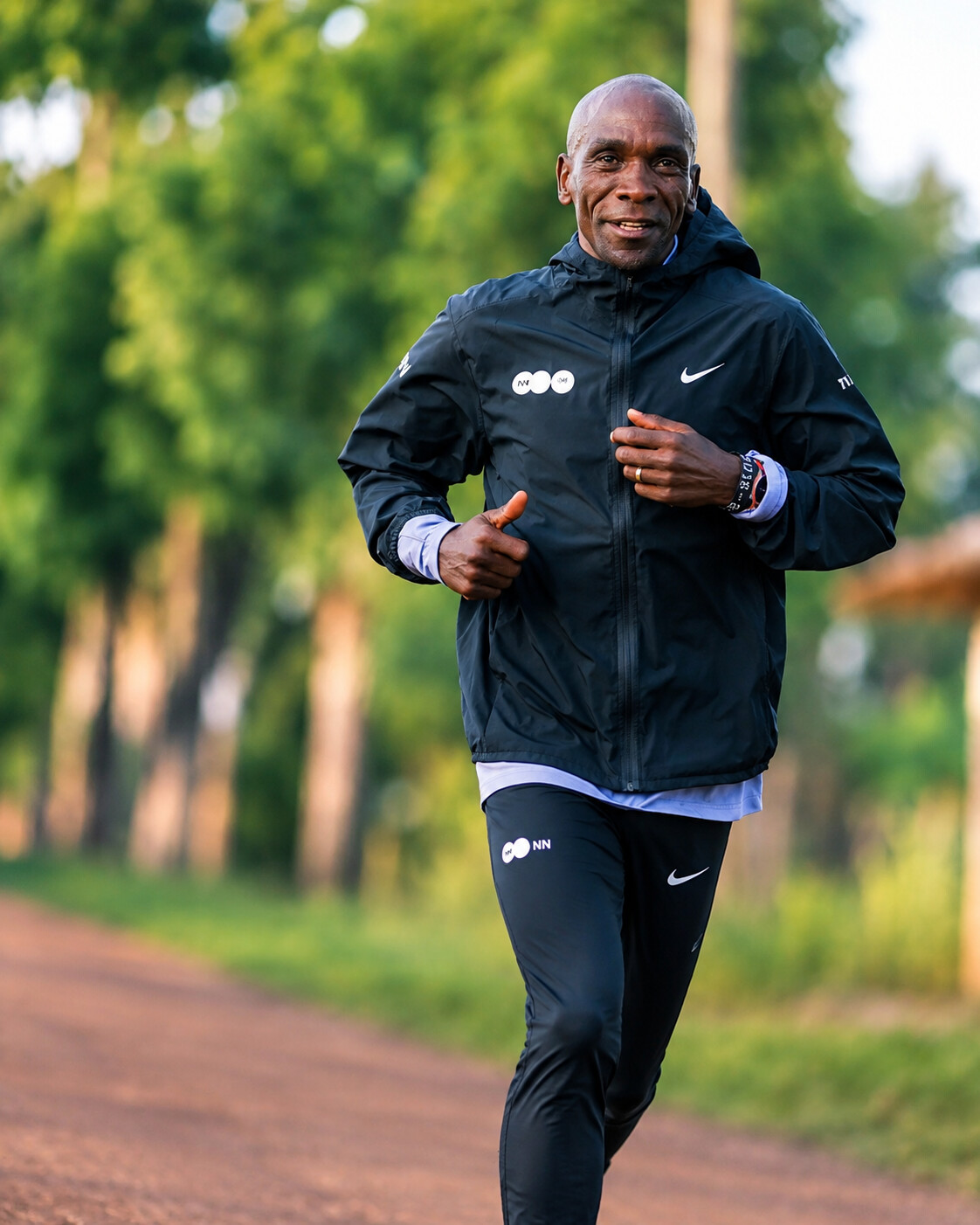
The message perfectly captures the spirit behind his latest global adventure — using running not simply as competition, but as a way of bringing people together, inspiring communities and connecting different parts of the world through the sport he has devoted his life to.
And Melbourne has prepared for the occasion.
The 2026 Nike Melbourne Marathon has undergone one of the most significant course transformations in its history. Organisers have created a faster and flatter route, reducing elevation gain by up to 20 per cent and cutting the number of turns by around 30 per cent. The demanding climb between Birdwood Avenue and Domain Road has also been removed, while the race will once again culminate with the iconic finish inside the Melbourne Cricket Ground.
For Kipchoge, however, this journey is about far more than chasing another fast marathon time.
At 41, the Kenyan legend is at a different stage of his career. The days of relentlessly pursuing world records may be behind him, but his ambition remains unmistakable. This time, the challenge is to take his message of running, unity and inspiration to every corner of the world while sharing the road with runners and communities across seven continents.
The Melbourne appearance also carries a special significance. Kipchoge has never previously raced the Nike Melbourne Marathon, and his arrival has added another layer of excitement to an event already entering a new era. More than 60,000 participants are expected across the festival, while the marathon itself has a capacity of 20,000 runners.
The race will begin at 6:15 a.m. local time on Sunday, with runners setting off from Batman Avenue before making their way through some of Melbourne's most recognisable landmarks. The finish inside the MCG promises to provide a spectacular backdrop for what could become one of the most memorable moments of Kipchoge's global tour.
Kipchoge arrives in Melbourne with a formidable legacy that few athletes in any sport can match. He is a two-time Olympic champion, a former marathon world-record holder and the first man to run a marathon under two hours in a controlled, non-record-eligible event.
Yet his latest challenge is not about adding another number to an already extraordinary list of achievements.
It is about the journey.
From Africa to South America and now Oceania, Kipchoge's seven-continent adventure is allowing fans around the world to see the marathon icon in places where he has never raced before. Each race represents another opportunity to connect with runners, inspire younger generations and celebrate the power of the sport that has defined his life.
And in Melbourne, his message is simple: let us run together.
On Sunday morning, the streets will fill with thousands of runners, spectators will line the course, and one of the most celebrated athletes in the history of distance running will once again stand on a marathon start line.
Seventy years after a teenager encouraged Melbourne to walk together during the 1956 Olympic Games, Kipchoge will return to the city with a new invitation — to run together.
Eliud Kipchoge is coming to Melbourne, and the world will be watching.
by Erick Cheruiyot for My Best Runs.
Login to leave a comment

Melbourne Marathon
Be a part of Australia’s largest marathon and race alongside marathon legends. Circle around Albert Park Lake, Flinders Street Station, pass the St Kilda beach foreshore and cross the finish line at the MCG to cheers from supporters, family and friends. The Nike Melbourne Marathon is a competitive, adrenaline-filled race for those experienced in marathon running who want to set...
more...
Sharon Lokedi Heads Strong Kenyan Charge Into Chicago Marathon Debut
Two-time Boston Marathon champion Sharon Lokedi is entering the final phase of her preparations for what promises to be a highly anticipated Chicago Marathon debut on Sunday, October 11.
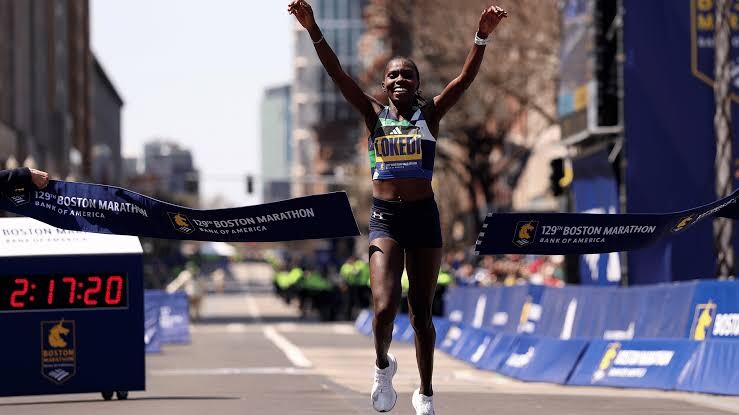
The Kenyan star has completed her demanding training blocks and has now turned her attention to tapering, allowing her body to recover and sharpen ahead of one of the biggest marathon showdowns of the year.
Lokedi will lead an impressive Kenyan women’s contingent in Chicago, bringing together a mixture of proven champions and elite marathon talent. Among those joining her are former world-record holder Brigid Kosgei, Brillian Kipkoech and Loice Chemnung, the runner-up at the 2026 Boston Marathon.
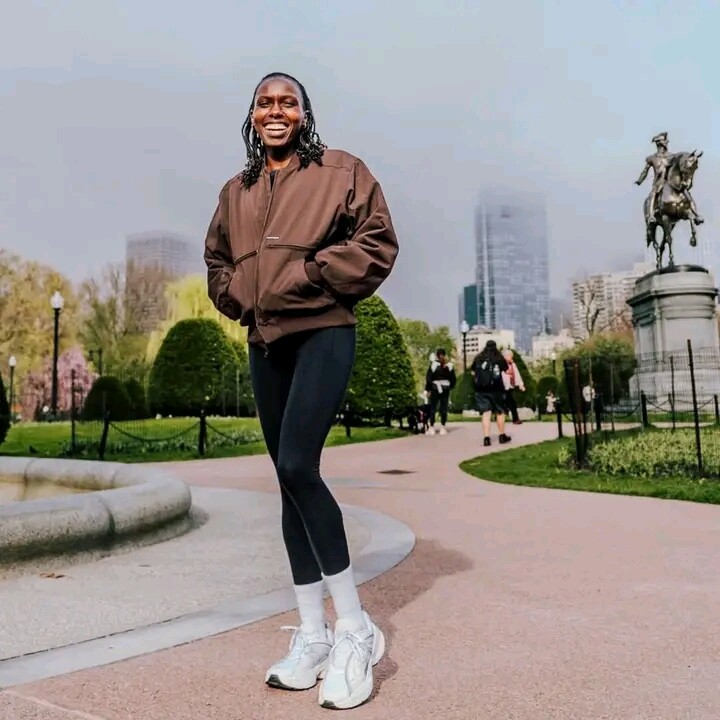
For Lokedi, Chicago represents another major opportunity to strengthen her reputation on the world marathon stage. After establishing herself as a two-time Boston champion, the Kenyan will now take on the famously fast streets of Chicago, where a deep international field is expected to produce an exceptionally competitive race.
However, the Kenyan challenge will face formidable opposition from Ethiopia, led by defending champion Hawi Feysa. The Ethiopian contingent arrives with considerable depth, setting the stage for another compelling Kenya-versus-Ethiopia battle over 42.195 kilometres.
The quality of the field is underlined by the presence of 12 women with personal bests faster than 2:20, highlighting just how fiercely contested the race is expected to be.
With Chicago’s flat course renowned for producing fast times, the conditions could provide the perfect setting for the leading contenders to test their limits. Every tactical decision, surge and late-race move could prove decisive as the elite women battle for victory.
All eyes will now turn to Chicago as Lokedi begins the final countdown to her debut. With her hard work already completed, the Kenyan star will be hoping that a successful taper translates into another memorable performance on one of the world’s fastest marathon stages.
by Erick Cheruiyot for My Best Runs.
Login to leave a comment
Bank of America Chicago
Running the Bank of America Chicago Marathon is the pinnacle of achievement for elite athletes and everyday runners alike. On race day, runners from all 50 states and more than 100 countries will set out to accomplish a personal dream by reaching the finish line in Grant Park. The Bank of America Chicago Marathon is known for its flat and...
more...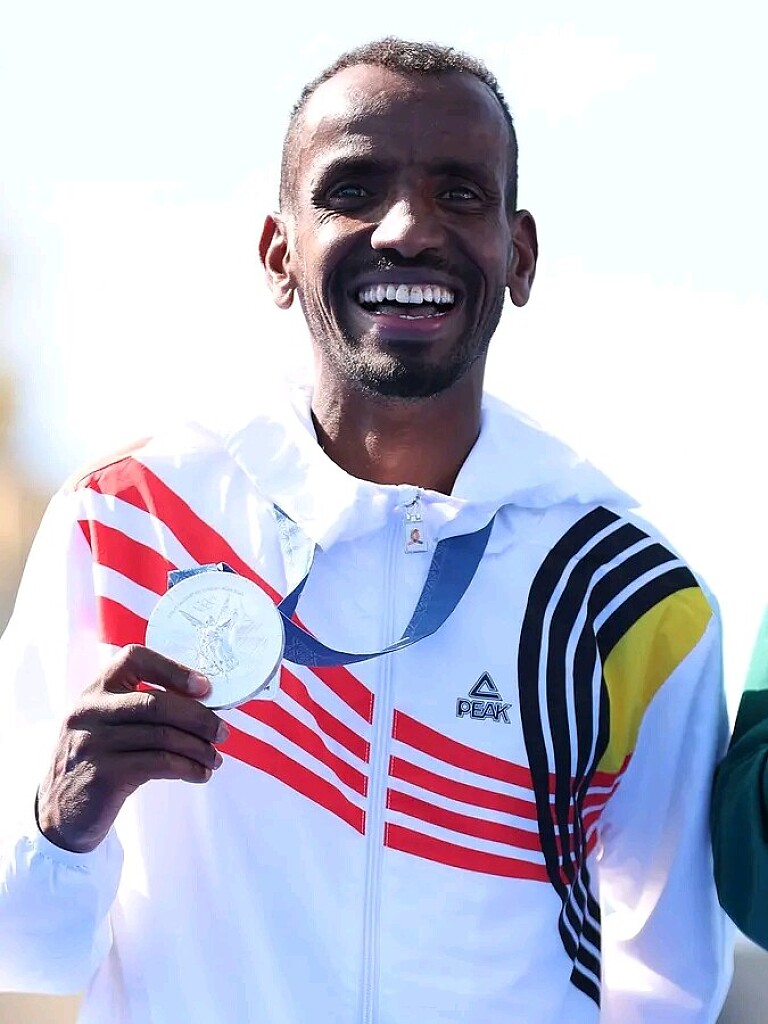
Bashir Abdi Withdraws From Chicago Marathon After Calf Injury
Belgian marathon star Bashir Abdi has been forced to withdraw from the 2026 Chicago Marathon after suffering a calf injury during his final training session in Flagstaff, Arizona.

The two-time Olympic marathon medallist confirmed on Monday that a small tear in his calf has ruled him out of Sunday’s race, bringing an untimely end to months of preparation for one of the biggest marathons of the year.
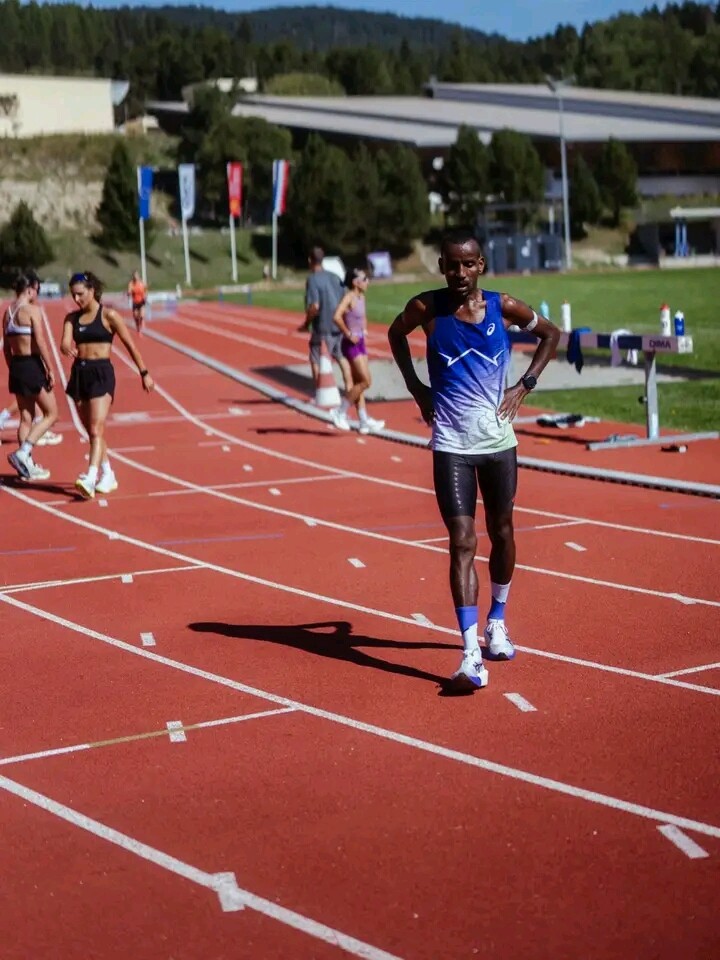
“Unfortunately, I will not be participating in the Chicago Marathon this weekend,” Abdi announced. “During my last training session in Flagstaff, I suffered a small tear in my calf.”
The 37-year-old stressed that the injury is not considered serious, but explained that it is significant enough to prevent him from safely taking his place on the start line. After consulting with his coach and medical team, the decision was made to avoid taking unnecessary risks.
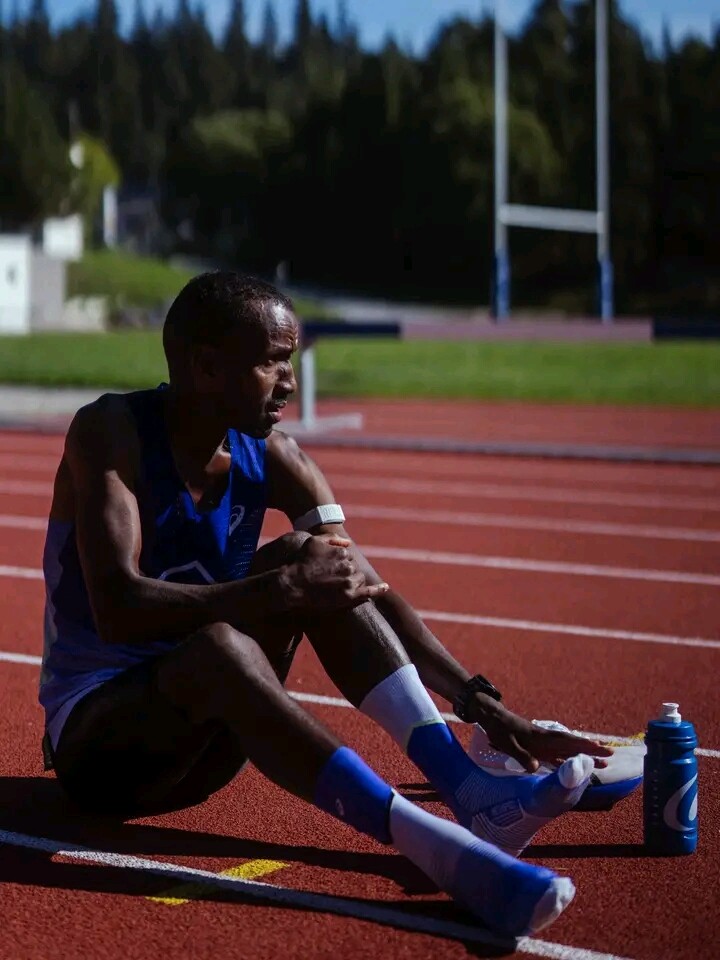
“It’s not a major injury, but enough to keep me from the start line. After consulting with my coach and medical team, we decided not to take any risks,” Abdi said.
The withdrawal is a major disappointment for Abdi, who had been listed among the elite contenders for the 48th edition of the Bank of America Chicago Marathon. The race is scheduled for October 11 and is expected to feature more than 55,000 finishers.
Abdi arrived at the Chicago buildup with an impressive marathon résumé. He won Olympic silver in Paris in 2024 after previously taking bronze at the Tokyo Olympics in 2021, establishing himself as one of the most accomplished marathoners of his generation.
He is also the European marathon record-holder, having clocked 2:03:36 in Rotterdam in 2021 to become the first European athlete to break the 2:04 barrier.
His 2026 season had shown that he remained capable of competing at the highest level. In April, Abdi finished third at the Rotterdam Marathon in 2:04:19, behind Ethiopia’s Guye Adola and Tesfaye Deriba.
For Abdi, the immediate priority is now recovery rather than forcing a return before he is ready. Missing Chicago will undoubtedly be frustrating after months of preparation, but protecting his long-term career is the more important decision.
The Belgian remains determined to move forward, with his focus now shifting toward rehabilitation and preparing for his next opportunity to race.
For one of Europe’s greatest marathoners, Chicago may be off the calendar—but the pursuit of more history continues.
by Erick Cheruiyot for My Best Runs.
Login to leave a comment
Ethiopian Double As Khairi Bejiga And Asefu Abreha Triumph At Fast-Paced Brasov 10K
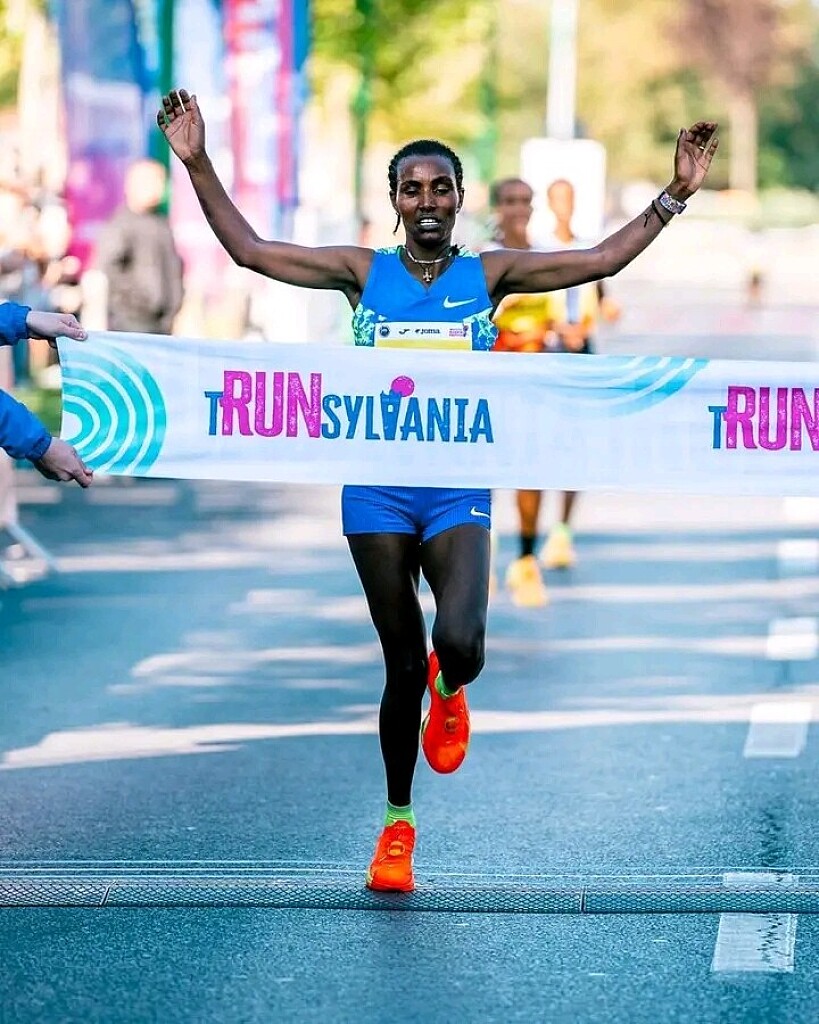
Ethiopia dominated the 2026 Brasov Running Festival in Romania, with Khairi Bejiga and Asefu Abreha claiming impressive victories in two fiercely contested elite 10km races.
Bejiga, still only 20, successfully defended his title in the men’s race, becoming the first athlete — male or female — to win the Brasov 10K in consecutive editions across the event’s six-year history.
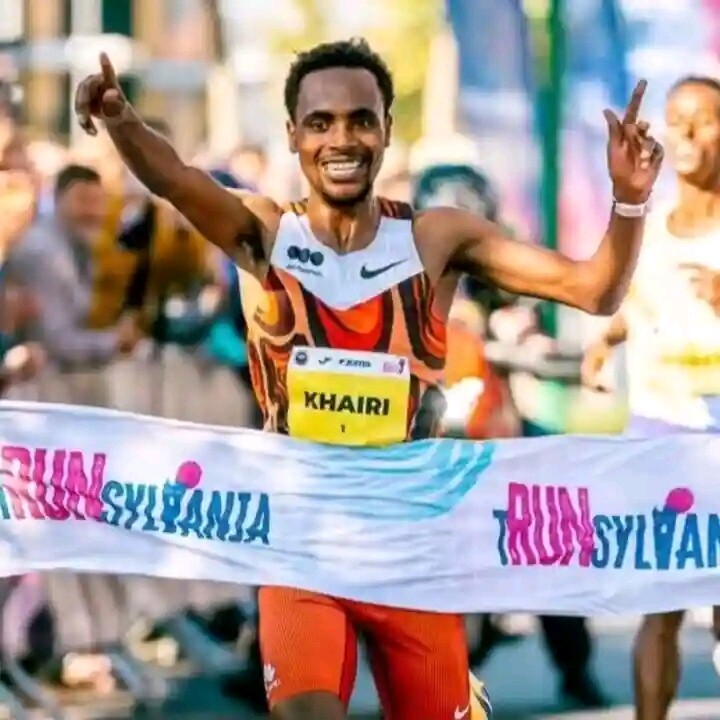
The Ethiopian produced a dramatic finish to retain his crown, edging training partner Nibret Kinde by just one second. Bejiga stopped the clock at 27:01, while Kinde followed in 27:02. Ayele Tadesse completed an Ethiopian sweep of the men’s podium in 27:09.
The depth of the field was underlined by the performances behind the leading trio, with Kenyan Amos Kipkemoi Bett finishing fourth in 27:13, followed by Djibouti’s Hani Idriss Hersi in 27:16.
Kenya also placed three more athletes inside the top 10, with Laban Kosgei sixth in 27:21, Victor Okoth Otieno seventh in 27:22, Kevin Chesang ninth in 27:29 and Silas Senchura 10th in 27:32. Uganda’s Samuel Simba Cherop completed the top eight in 27:25.
Brasov Running Festival 2026 — Men’s Top 10
1. Khairi Bejiga — Ethiopia — 27:01
2. Nibret Kinde — Ethiopia — 27:02
3. Ayele Tadesse — Ethiopia — 27:09
4. Amos Kipkemoi Bett — Kenya — 27:13
5. Hani Idriss Hersi — Djibouti — 27:16
6. Laban Kosgei — Kenya — 27:21
7. Victor Okoth Otieno — Kenya — 27:22
8. Samuel Simba Cherop — Uganda — 27:25
9. Kevin Chesang — Kenya — 27:29
10. Silas Senchura — Kenya — 27:32
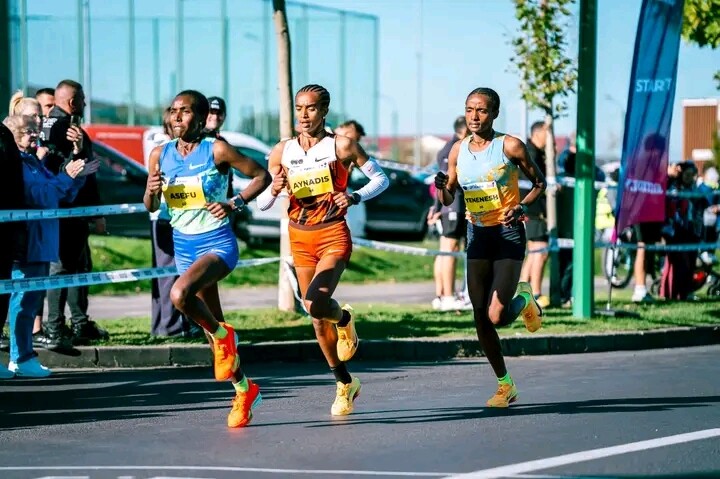
The women’s race delivered another Ethiopian victory as Asefu Abreha produced a major personal best to take the title in 30:16.
Abreha, also 20, surprised a strong field with a breakthrough performance, finishing three seconds ahead of compatriot Aynadis Mebratu, who crossed the line in 30:19.
Ethiopia completed the women’s podium through Yenenesh Shimket Ademas, whose 30:21 was a world under-20 best for the 10km distance, adding another significant achievement to an extraordinary Ethiopian showing in Brasov.
Djibouti’s Samiya Hassan Nour finished fourth in 30:37, while South Africa’s Tayla Kavanagh was fifth in 30:50. Kenya’s Nelvin Jepkemboi placed sixth in 30:57.
The remaining places in the women’s top 10 were filled by Ethiopia’s Mastewal Mehabaw in 30:59, Axumawit Embaye in 31:05 and Tibeb Eneyew in 31:29, with Romania’s Joan Chelimo Melly rounding out the top 10 in 31:46.
Brasov Running Festival 2026 — Women’s Top 10
1. Asefu Abreha — Ethiopia — 30:16
2. Aynadis Mebratu — Ethiopia — 30:19
3. Yenenesh Shimket Ademas — Ethiopia — 30:21
4. Samiya Hassan Nour — Djibouti — 30:37
5. Tayla Kavanagh — South Africa — 30:50
6. Nelvin Jepkemboi — Kenya — 30:57
7. Mastewal Mehabaw — Ethiopia — 30:59
8. Axumawit Embaye — Ethiopia — 31:05
9. Tibeb Eneyew — Ethiopia — 31:29
10. Joan Chelimo Melly — Romania — 31:46
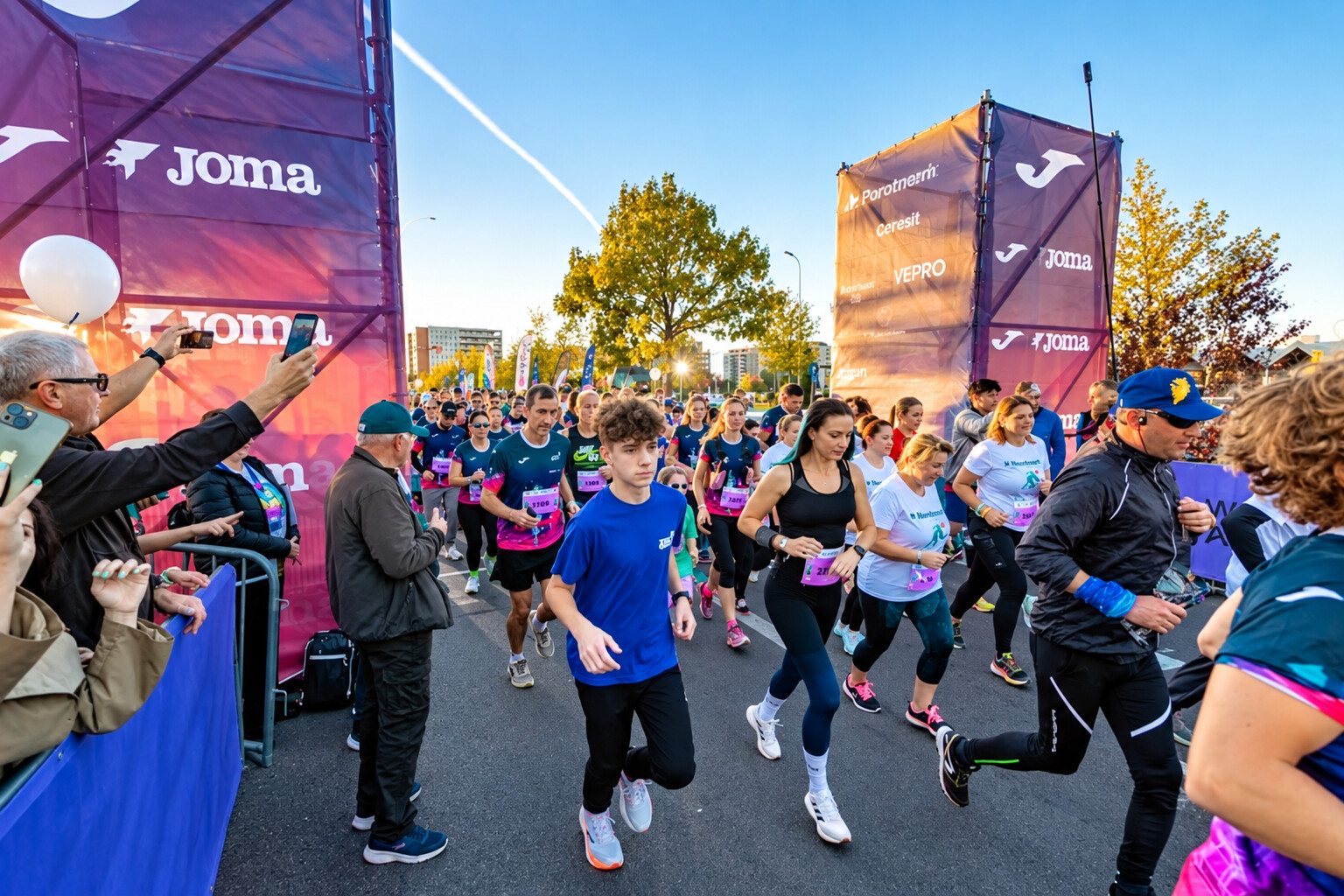
The Brasov Running Festival has established itself as one of the fastest and most competitive 10km road races in Europe, attracting an increasingly deep international field capable of producing world-class performances.
The 2026 edition further strengthened that reputation, with national records for Djibouti and South Africa and a European under-18 best also among the notable achievements of the event.
For Ethiopia, however, the spotlight belonged to Bejiga and Abreha. Their victories gave the nation a memorable double in Brasov, with 27:01 and 30:16 respectively highlighting another spectacular day of elite road racing in Romania.
by Erick Cheruiyot for My Best Runs.
Login to leave a comment

Brasov Running Festival 10K
"Brasov Running Festival” is set to become the iconic running event of Romania, with elite, popular and children races, concerts, conferences and other running related activities. The elite 10K race, Trunsylvania International 10K is expected to enjoy an impressive participation of world class runners on a very fast course. -The only World Athletics Elite Label 10K in South-East Europe -The...
more...
From Bolt To Seville: Jamaica’s Sprinting Torch Enters A New Era
For more than a decade, Usain Bolt defined Jamaican sprinting on the world stage. Now, a new generation is beginning to write its own chapter — and at the centre of that transition stands Oblique Seville, a sprinter whose journey is closely connected to the very people who shaped Bolt’s legendary career.
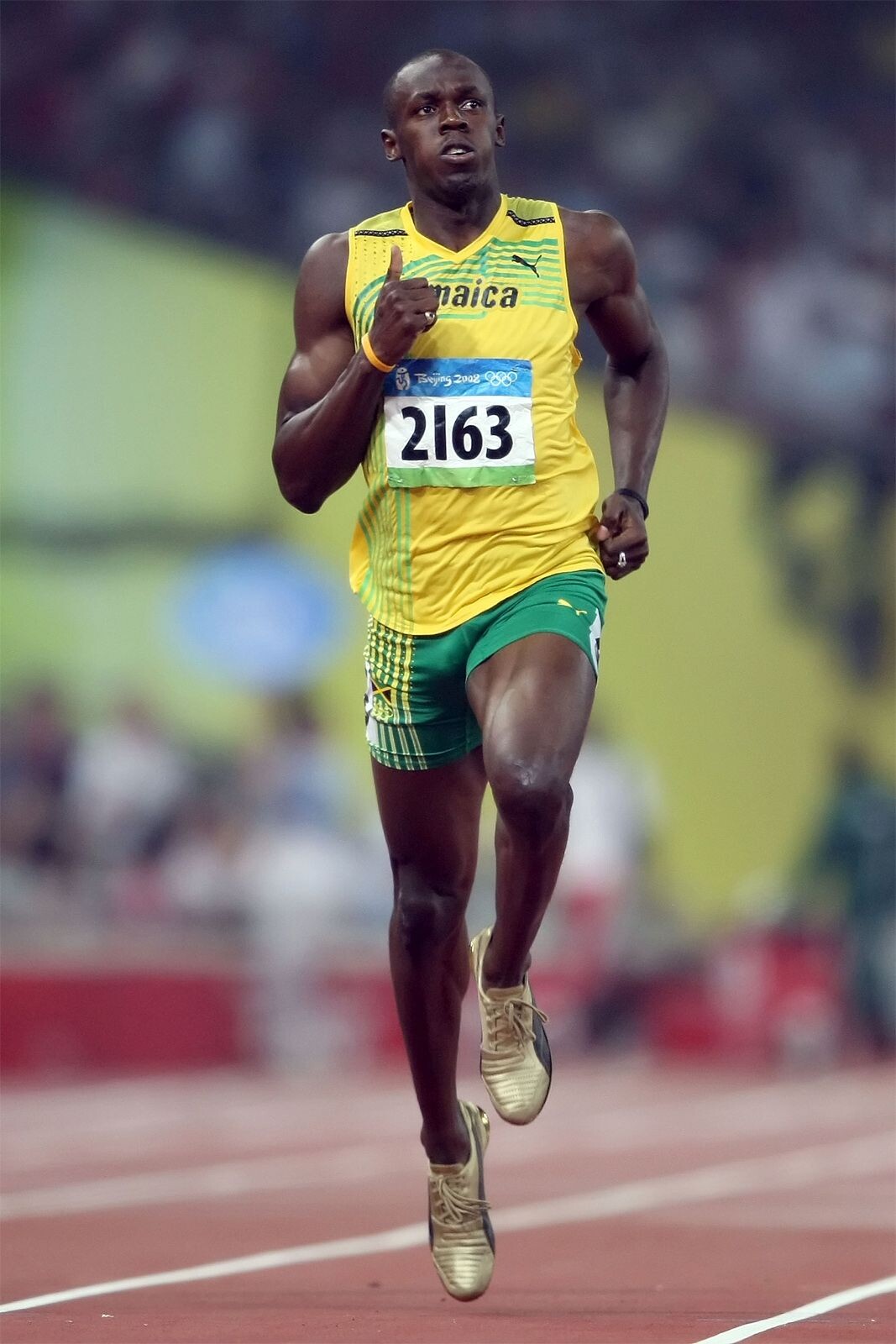
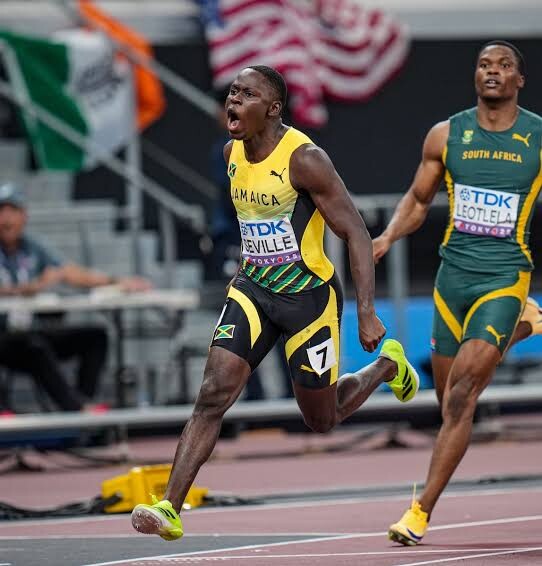
Seville announced himself as Jamaica’s new 100m champion in spectacular fashion at the 2025 World Athletics Championships in Tokyo. Running a lifetime best of 9.77 seconds, he captured the world title ahead of compatriot Kishane Thompson, who clocked 9.82, giving Jamaica a memorable one-two finish.
The significance of the victory was enormous. Seville became the first Jamaican man since Bolt to win the World Athletics Championships 100m title. And watching from the stands was Bolt himself, who celebrated enthusiastically as his compatriot delivered one of the biggest victories of his career.
But the connection between the two generations goes far beyond that unforgettable night in Tokyo.
A Dream That Began At 10
Long before Seville became a world champion, he already knew exactly who he wanted to coach him.
When he was around 10 years old, Seville reportedly told his mother that he wanted to train under Glen Mills — the renowned Jamaican coach who guided Bolt during the most dominant period of his career.
That childhood ambition eventually became reality. Seville joined the Racers Track Club and came under the guidance of Mills, establishing a relationship that has played a major role in his development as an elite sprinter.
Mills had already helped shape one of the greatest sprinters in history. Now, years later, he was helping another Jamaican talent reach the summit of the 100 metres.
Bolt Became More Than An Inspiration
Seville has also spoken about the influence Bolt has had on his life away from the track.
Following the death of his father, Gerald Seville, Bolt became an important source of encouragement and motivation for the young sprinter. Seville has described Bolt as a major motivator, adding another deeply personal dimension to a relationship that began with admiration from afar.
That makes the scene in Tokyo even more powerful: the athlete Seville grew up watching was there as he achieved the breakthrough that could define his own generation.
Bolt's presence was not simply symbolic. Before the final, he had spoken about Seville and Thompson as athletes capable of challenging for the gold medal. Seville ultimately delivered when the pressure was greatest.
From 9.77 To A New Challenge
Seville's Tokyo triumph was not the end of the story.
In 2026, he continued to establish himself among the world's leading sprinters, eventually claiming the men's 100m Diamond League title at the series final in Brussels. He also produced a season-best 9.82 in Kingston and recorded several victories during the Diamond League campaign.
The progression is significant. From an ambitious youngster dreaming of being coached by Glen Mills, to a World Championships gold medallist, and now a Diamond League champion, Seville is steadily building a career that belongs to him.
Yet he remains deeply respectful of the athlete whose footsteps he is following.
Seville has repeatedly acknowledged Bolt's greatness, while also believing that the next generation of Jamaican sprinters can push the event to another level. The ambition is clear: the future may eventually demand performances in the 9.6-second range.
For now, however, Seville's focus is not on becoming another Usain Bolt.
It is on becoming the best version of Oblique Seville.
The Torch Has Been Passed — But The Story Is Still Being Written
Jamaica's sprinting tradition has produced some of the most extraordinary athletes the sport has ever seen. Bolt took that tradition to an unprecedented level. Seville now represents a new generation determined to keep it alive.
The symbolism is difficult to miss.
The coach who helped guide Bolt is now guiding Seville. The champion who once inspired Seville as a young boy was there to watch him become a world champion. And the young Jamaican who once dreamed of joining Glen Mills is now collecting major titles of his own.
Seville has already secured a World Championships 100m title, a 9.77 personal best and a Diamond League crown.
The next chapter of Jamaican sprinting is no longer waiting to begin.
It is already underway.
And with Glen Mills in his corner and Usain Bolt among those who have helped inspire him, Oblique Seville is carrying the Jamaican sprinting tradition forward — while creating a legacy of his own.
by Erick Cheruiyot for My Best Runs.
Login to leave a comment
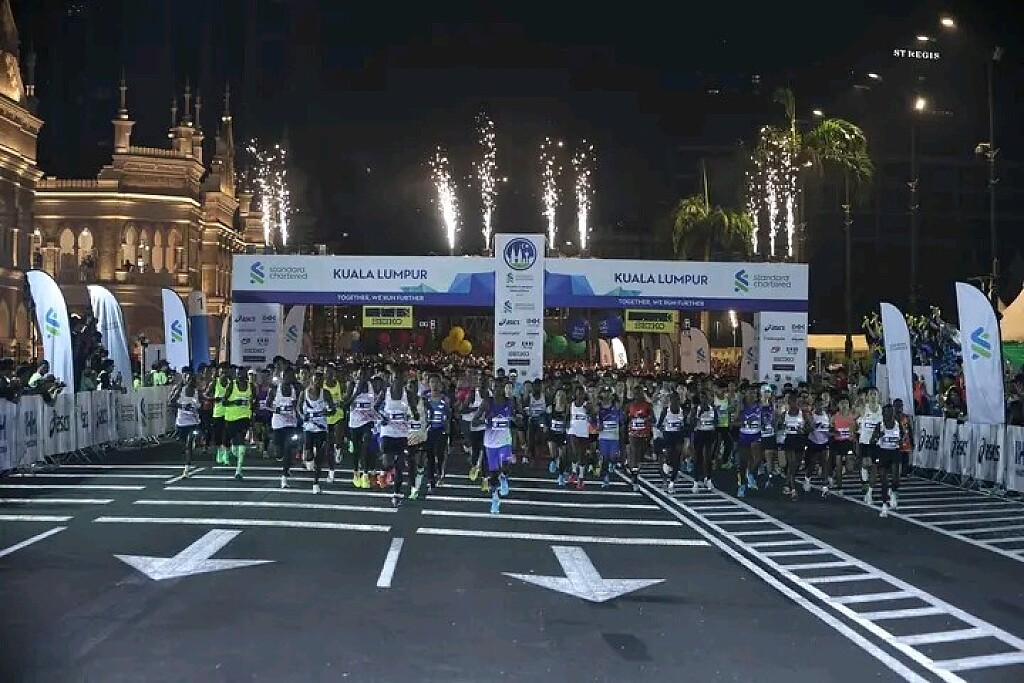
Drunk Motorcyclist Crashes Into Two Runners On Closed Kuala Lumpur Marathon 10K Course
A morning of racing at the 2026 Kuala Lumpur Standard Chartered Marathon turned into a frightening scene on Saturday after a motorcycle entered a section of the course that had been closed to traffic and collided with two runners.
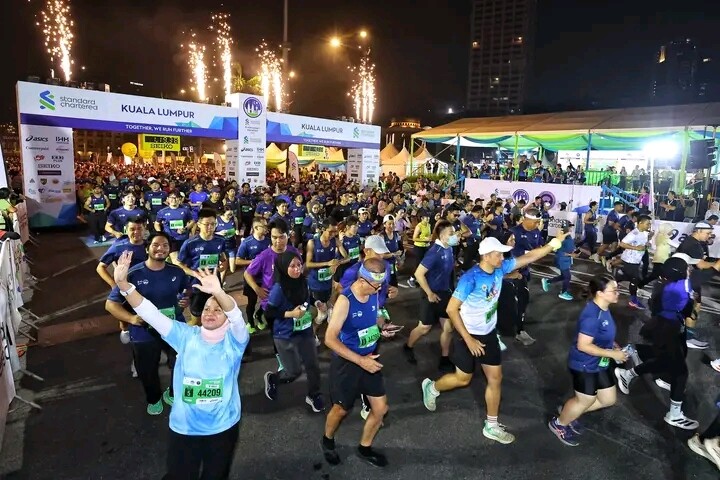
The incident happened at about 6:15 a.m. on October 3 along Jalan Munshi Abdullah, where the 10K race was taking place. Police said the 21-year-old motorcyclist, who was carrying a 19-year-old male pillion passenger, had passed through a section blocked off with traffic cones.
According to police, an officer manning the road closure ordered the rider to stop, but he allegedly continued riding and then travelled against the flow of traffic before crashing into two marathon participants.
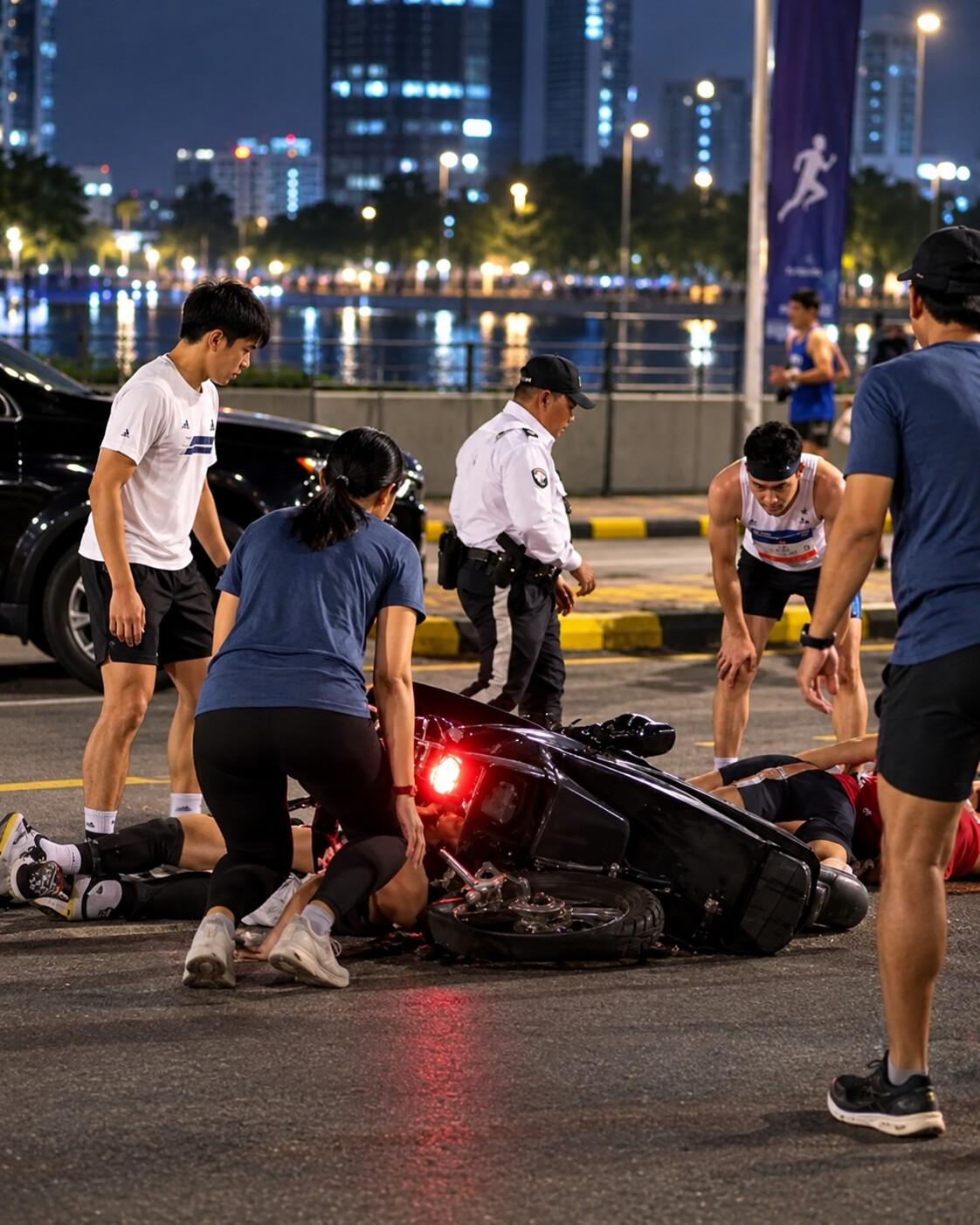
The two injured runners were a 50-year-old woman and a 41-year-old man. The woman suffered neck injuries and was taken to Prince Court, while the man sustained injuries to his right knee and hand. Both received medical attention, with reports indicating that their injuries were not life-threatening.
The incident became even more serious when an initial alcohol screening of the rider returned a positive result. Police said an evidential breath test recorded 164mg of alcohol per 100ml, after which the rider and his passenger were taken to Hospital Kuala Lumpur for blood and urine samples as part of the investigation.
The motorcyclist was subsequently remanded while police investigated the circumstances surrounding the crash. The case was initially investigated under Section 44(1A)(b) of Malaysia's Road Transport Act 1987, as well as Section 186 of the Penal Code.
On Monday, October 5, the 21-year-old was charged in Kuala Lumpur Traffic Court with two counts of driving under the influence. The court granted bail of RM5,000 for each charge, although reports said he was unable to raise the bail and was ordered to be sent to prison pending the next court mention on January 7, 2027.
The crash has highlighted the crucial role of road closures, traffic police and race marshals in protecting runners during major road races. The Kuala Lumpur Marathon's 10K event is a designated race category, with the course reserved for participants during the event.
For the thousands of runners who took part, what should have been a celebration of running instead became a stark reminder that even with extensive race-day safety measures in place, one vehicle entering a closed course can create a potentially devastating situation.
The Kuala Lumpur Standard Chartered Marathon organisers have confirmed the incident and are cooperating with authorities as the police investigation continues.
by Erick Cheruiyot for My Best Runs.
Login to leave a comment
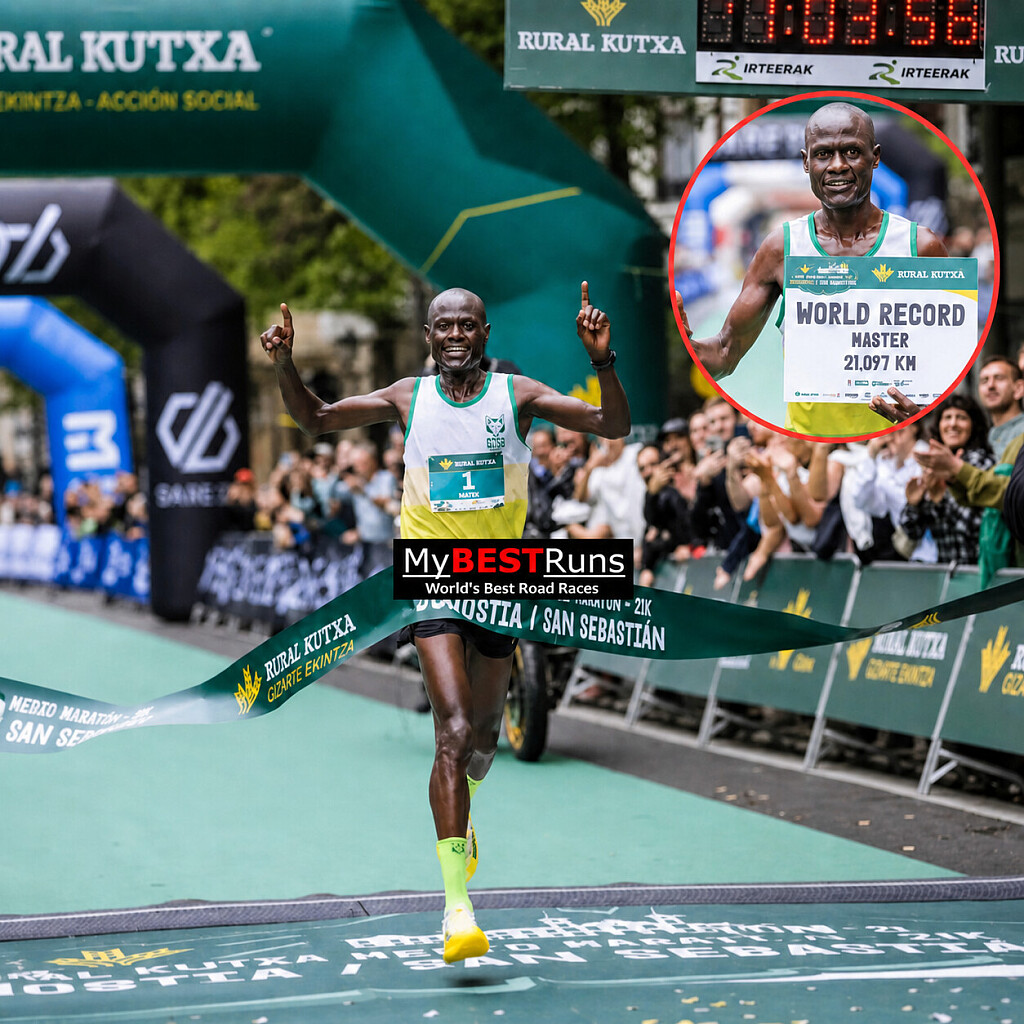
Mark Kiptoo, 50, Shatters M50 World Half-Marathon Record In San Sebastián
Kenyan distance-running veteran Mark Kosgei Kiptoo has added another extraordinary achievement to his remarkable career, setting a new M50 world record in the half marathon at the 2026 San Sebastián Rural Kutxa Half Marathon in Spain.
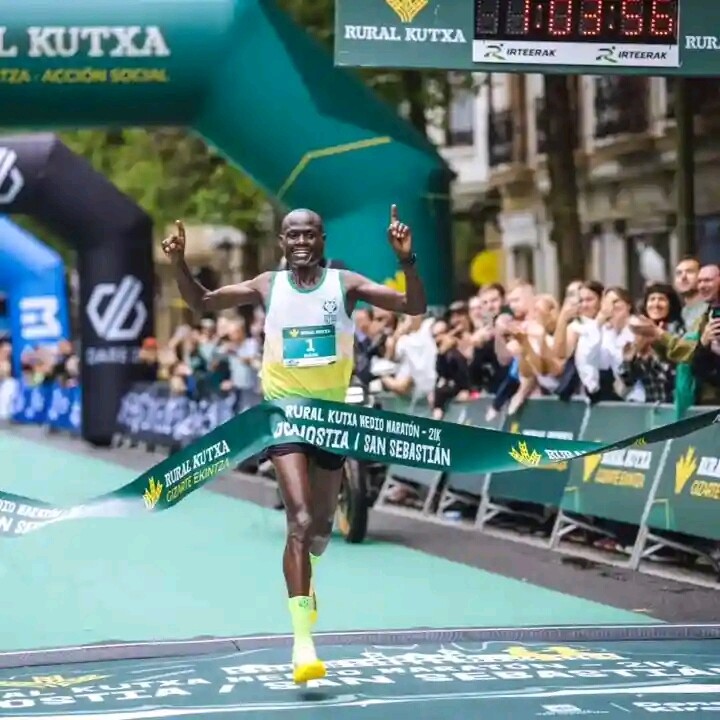
At 50, Kiptoo produced a stunning 1:03:57 over the 21.097-kilometre distance, winning the race outright while rewriting the masters record books.
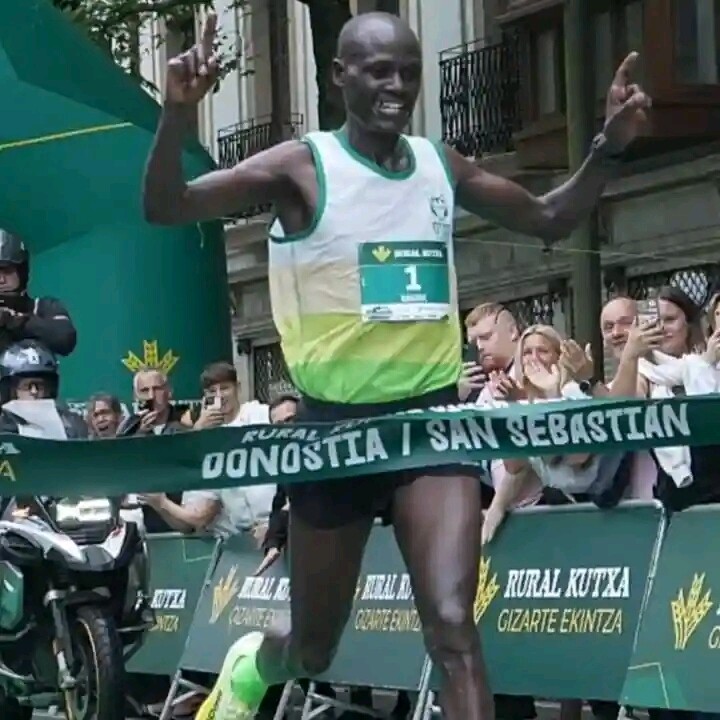
His performance demolished the previous M50 world record of 1:06:23, set by South Africa’s Titus Mamabolo, by 2 minutes and 26 seconds. The scale of the improvement makes Kiptoo’s performance one of the most remarkable masters distance-running achievements of the year.
The Kenyan arrived in San Sebastián in impressive form after already showing that age had done little to diminish his speed. At 49, Kiptoo won the Azkoitia-Azpeitia Half Marathon in March in 1:03:17, a performance that underlined his extraordinary endurance and ability to maintain world-class pace well into his late 40s.
Kiptoo’s latest achievement is another milestone in a career that has already delivered success across track, cross country and road running. Now competing in the masters ranks, the Kenyan continues to demonstrate the exceptional endurance and speed that made him one of the most respected distance runners of his generation.
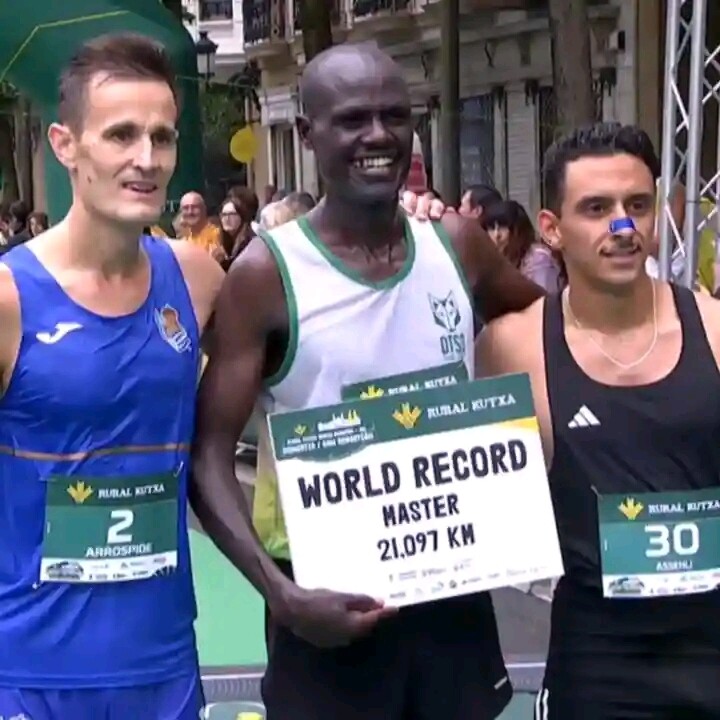
Born on June 21, 1976, Kiptoo has spent decades competing at the highest level of international athletics. His career includes major performances on the track and road, and his transition into the masters category has done little to slow his remarkable competitive drive.
Kiptoo’s transition to marathon running produced another extraordinary achievement. At the 2018 Frankfurt Marathon, he clocked 2:07:50 to establish what was then a world record for the Masters 40-and-over age group, further highlighting his ability to remain competitive well beyond the traditional peak years of an elite distance runner.
That performance offered an early indication of the extraordinary longevity that would later define his masters career. With the M50 half-marathon world record standing at 1:06:23, Kiptoo arrived in San Sebastián with history within reach—and he did far more than simply break the mark.
He obliterated it.
Kiptoo’s 1:03:57 was also fast enough to secure the overall victory, putting the 50-year-old Kenyan ahead of considerably younger competitors. Spain’s Iraitz Arrospide was the leading Spanish finisher, taking second in 1:04:48, while Youness Assehli completed the podium in 1:07:16.
Kiptoo’s record run was also notable for the consistency of his pace throughout the race. He passed 5 kilometres in 15:22 before reaching 10 kilometres in 30:21, with his second 5-kilometre segment covered in a remarkable 14:59. He continued to maintain the demanding tempo, reaching 20 kilometres in 1:00:40 before completing the final 1.097 kilometres to stop the clock at 1:03:57.
Those splits underline just how controlled and aggressive Kiptoo’s performance was. Rather than relying on a late surge, the Kenyan built his record through sustained world-class pace from the opening kilometres to the finish, averaging roughly 3:02 per kilometre across the entire half marathon. The performance not only shattered the longstanding M50 record but also demonstrated that Kiptoo’s extraordinary speed remains intact at an age when most elite athletes have long since stepped away from the highest level of competition.
In San Sebastián, Kiptoo’s experience came together in one extraordinary performance. He not only won the race outright but also lowered the M50 world record from 1:06:23 to 1:03:57, an improvement of 2 minutes and 26 seconds. At 50, he continues to show that world-class determination and years of experience can still translate into astonishing performances over 21.1 kilometres.
Kiptoo’s credentials were established long before his entry into the masters ranks. A former African champion over 5,000 metres and a winner on the Diamond League circuit, he competed successfully against the world’s best during the peak of his track career.
His track personal bests include 12:53.46 for 5,000 metres and 26:54.64 for 10,000 metres, evidence of the elite speed and endurance that have remained the foundation of his longevity in the sport.
The latest record is therefore more than another entry on a masters list. It is a reflection of a career built on consistency, discipline and an extraordinary ability to remain competitive across different generations of distance runners.
At 50 years old, Mark Kiptoo is still running at a level that commands attention.
A 1:03:57 half marathon, an outright race victory and a world record—another remarkable chapter in the career of one of Kenya’s enduring distance-running stars.
by Erick Cheruiyot for My Best Runs.
Login to leave a comment
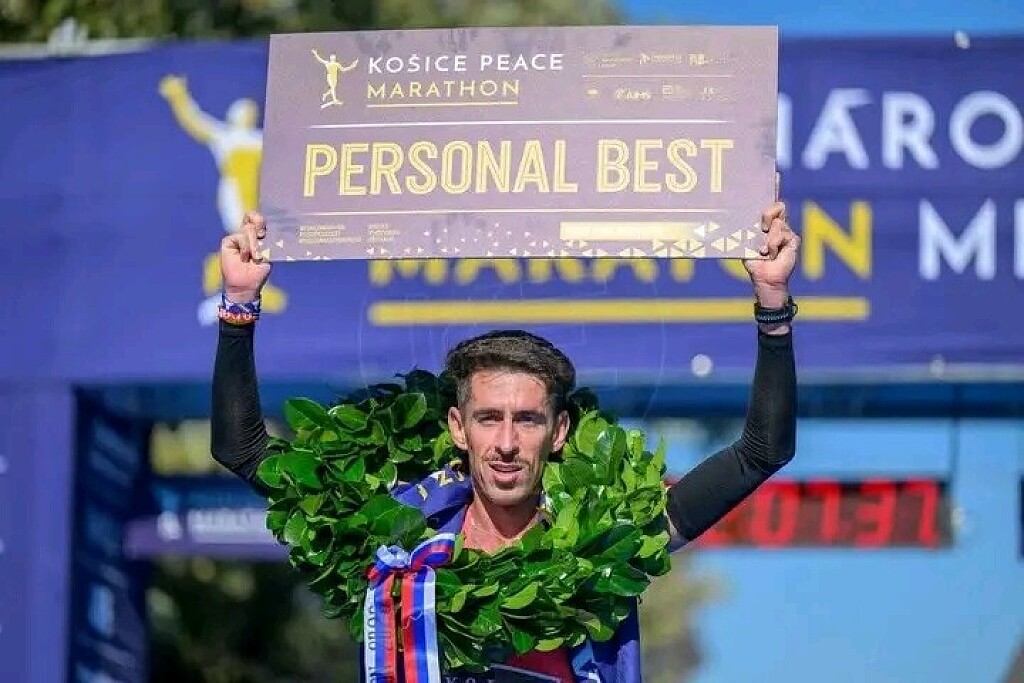
Košice Marathon 2026: Lipschitz and Fayesa Robi Lead a Fast International Day in Slovakia
The 2026 Košice Marathon delivered a strong display of international marathon talent, with South Africa’s Adam Lipschitz and Ethiopia’s Aberash Fayesa Robi claiming victories in contrasting but equally impressive performances on the streets of Košice, Slovakia.
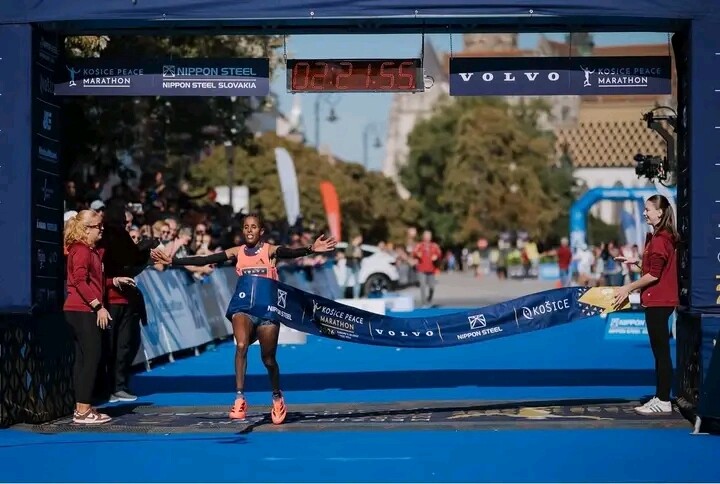
In the women’s race, Fayesa Robi produced the standout performance, crossing the finish line in 2:21:54 to secure a commanding victory and improve her personal best. The Ethiopian maintained a strong rhythm throughout the race before finishing well clear of the rest of the field.
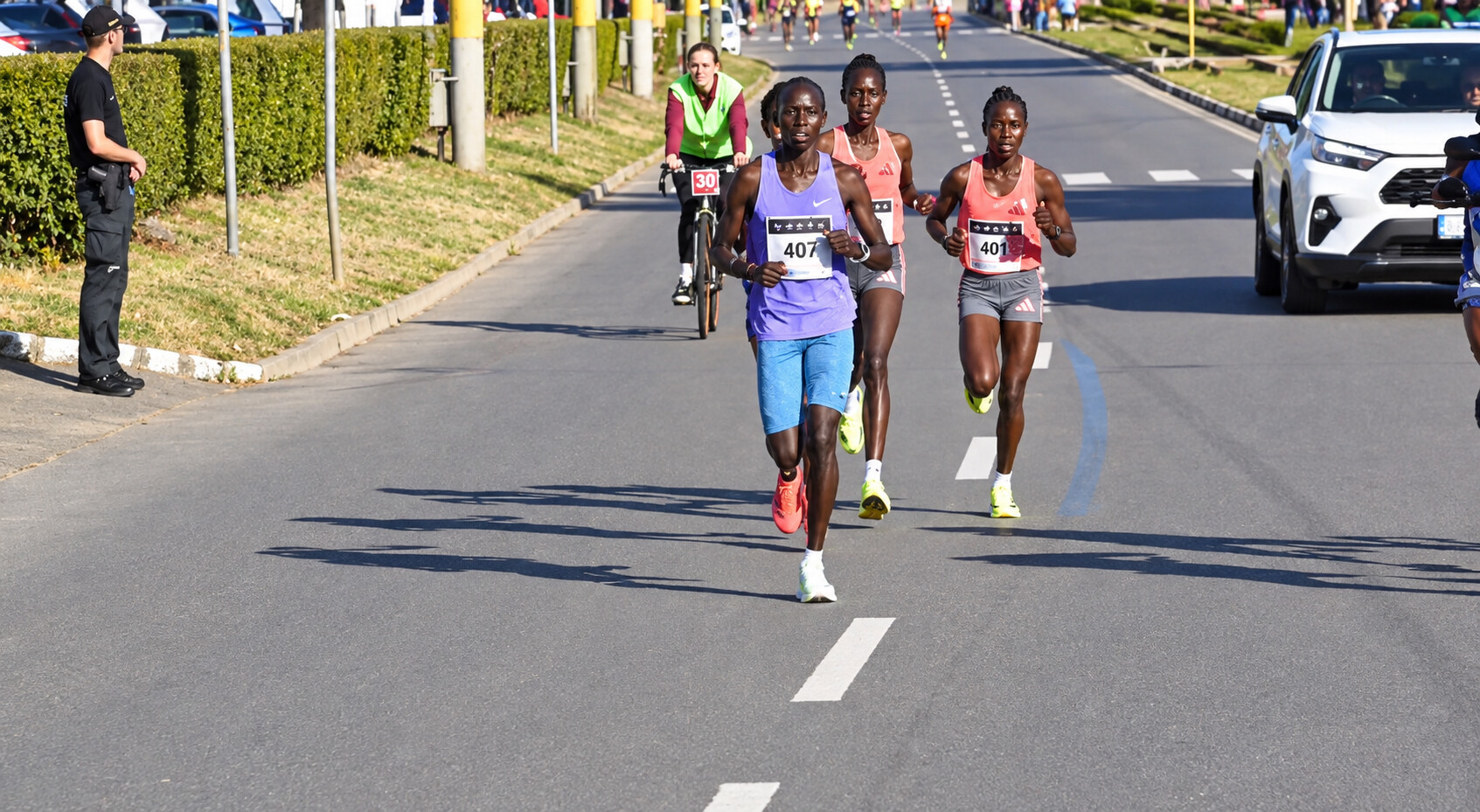
Her compatriot Nurit Ahmed Samiro added another impressive chapter to Ethiopia’s day, placing second in 2:25:03 on her marathon debut. Racing over the full 42.195-kilometre distance for the first time, Samiro delivered a remarkably mature performance to immediately establish herself among the leading names in the field.
Kenya’s Tecla Jelimo Kibet completed the women’s international podium, finishing third in 2:29:56. Her performance secured a place among a highly competitive leading group as the Ethiopian pair dominated the top two positions.
The men’s contest was even tighter at the front, with Adam Lipschitz producing a breakthrough performance to win in 2:07:21. The South African not only claimed the prestigious Košice Marathon title but also lowered his personal best, underlining the quality of his performance on the day.
Kenya’s Abednego Cheruiyot pushed Lipschitz all the way and finished second in 2:07:53, also recording a new personal best. The Kenyan remained firmly in contention deep into the race before crossing the line just 32 seconds behind the winner.
Another Kenyan, Moses Kipngetich Kemei, secured third place in 2:08:04, giving Kenya two athletes inside 2:09 and completing a highly competitive podium.
Turkey’s Kaan Kigen Özbilen followed in fourth with 2:08:22, narrowly missing the podium after remaining within striking distance of the leading trio.
The performances in Košice highlighted the depth of the international field, with the men’s race producing three athletes under 2:09 and the women’s contest featuring a commanding winning performance alongside an impressive marathon debut.
The results once again underlined the historic Košice Marathon’s ability to attract high-level athletes from across the world and provide a competitive stage for both established marathoners and emerging talent.
by Erick Cheruiyot for My Best Runs.
Login to leave a comment

kosice Peace Marathon
The Kosice Peace Marathon is the oldest European marathon.This year for the organizers of Kosice Peace Marathon is also about memories and flashbacks. One of the fastest marathon courses has been created in Košice 20 years ago on that occasion it was the 1997 IAAF World Half Marathon Champioships. Tegla Loroupe and Shem Kororia were awarded from the hands of...
more...
Paris Marathon Enters a New Era as Record 166,000 Runners Enter First-Ever Lottery
The Paris Marathon has entered a new era, adopting a lottery system for the first time as demand for one of the world’s most iconic road races continues to surge.

A staggering 166,000 runners from 165 countries registered for the inaugural lottery for the 2027 ASICS Marathon de Paris, giving the race a level of demand far beyond the number of places available. The 2027 edition, scheduled for April 4, will also mark the marathon’s 50th edition.
The scale of the interest is striking. The 2026 Paris Marathon attracted 58,853 participants, meaning the number of lottery applicants for next year’s race is almost three times the size of last year’s starting field. With the event traditionally welcoming around 50,000 to 60,000 runners, securing a place has suddenly become a matter of chance rather than simply being quick enough to register.
The move represents a significant departure from the marathon’s long-standing first-come, first-served registration model. In previous years, runners had to be ready when entries opened, with places capable of disappearing rapidly as demand continued to grow. For 2027, however, every eligible application entered the same draw, removing the race against the clock that once determined who secured a bib.
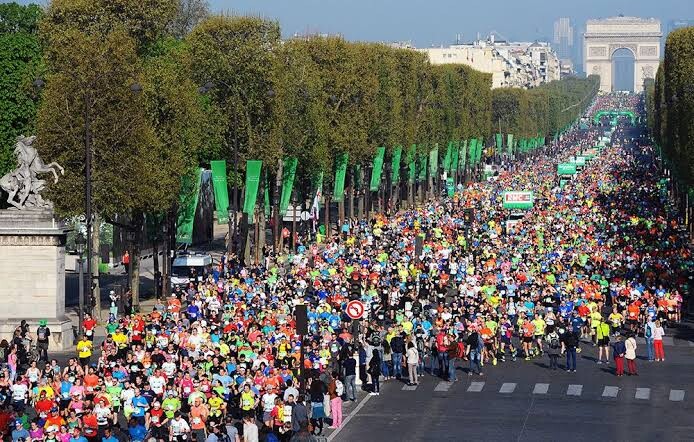
The extraordinary response also underlines the growing international appeal of the Paris Marathon. Applicants for the 2027 race came from 165 countries, reflecting the global attraction of a course that takes runners through some of the French capital’s most recognisable landmarks, including the Champs-Élysées, the Seine, Notre-Dame and the Eiffel Tower.
The lottery has also changed the experience for runners before race day. Results began being communicated from October 1, with successful applicants given 72 hours to confirm their places and complete payment. Any places that are not confirmed are expected to be offered again through subsequent lottery rounds.
The demand is not limited to the marathon. The 2027 HOKA Semi de Paris also attracted nearly 110,000 lottery applicants, meaning the two major Parisian road races generated close to 280,000 applications combined.
Paris has therefore reached a point where obtaining a race bib can be almost as challenging as preparing to run the 42.195-kilometre course itself. Although the Paris Marathon is not an Abbott World Marathon Major, the introduction of a lottery highlights just how dramatically demand for major international road races has grown.
For the runners who secure one of the coveted places, the next challenge will be preparation for April 4, 2027. For those left out of the draw, the message from this year’s numbers is clear: competition for a place on the streets of Paris is becoming increasingly intense.
by Erick Cheruiyot for My Best Runs.
Login to leave a comment

Schneider Electric Paris Marathon
The Schneider Electric Marathon de Paris offers a unique opportunity to make the city yours by participating in one of the most prestigious races over the legendary 42.195 km distance. The Schneider Electric Marathon de Paris is now one of the biggest marathons in the world, as much for the size of its field as the performances of its runners....
more...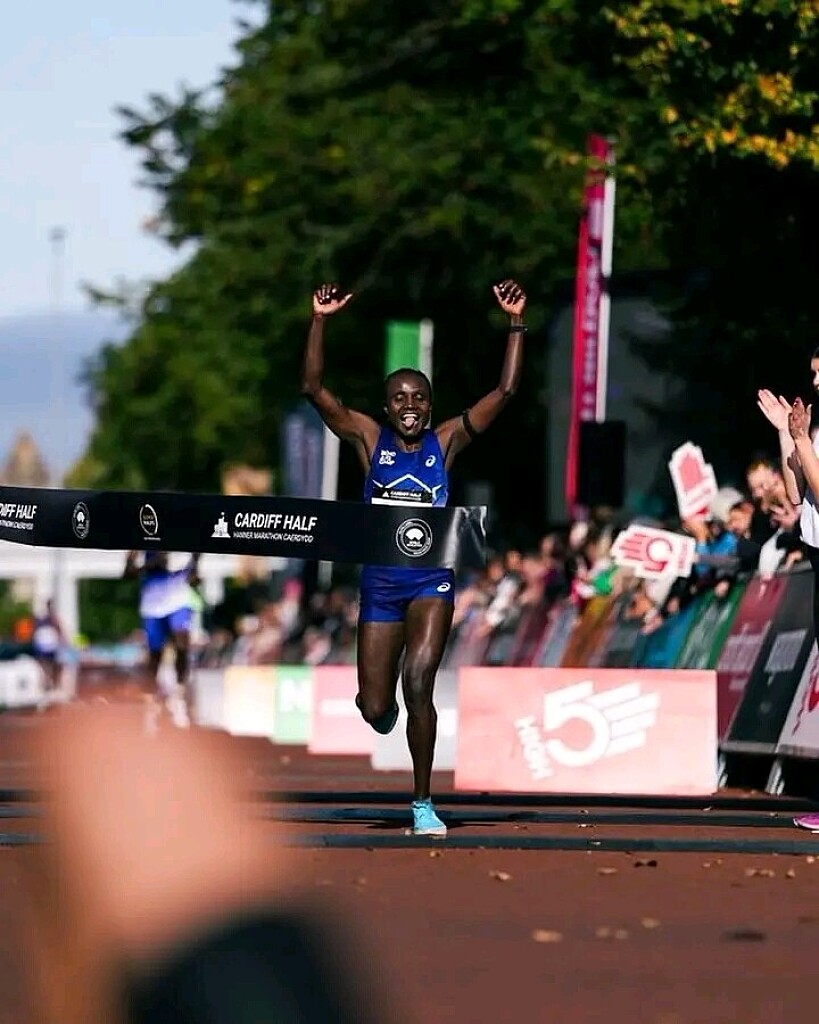
Joyciline Jepkosgei Shatters Cardiff Half Marathon Course Record
Kenyan distance-running star Joyciline Jepkosgei delivered a commanding performance at the 2026 Cardiff Half Marathon, storming to victory in 1:05:40 and rewriting the women’s course record in impressive fashion.
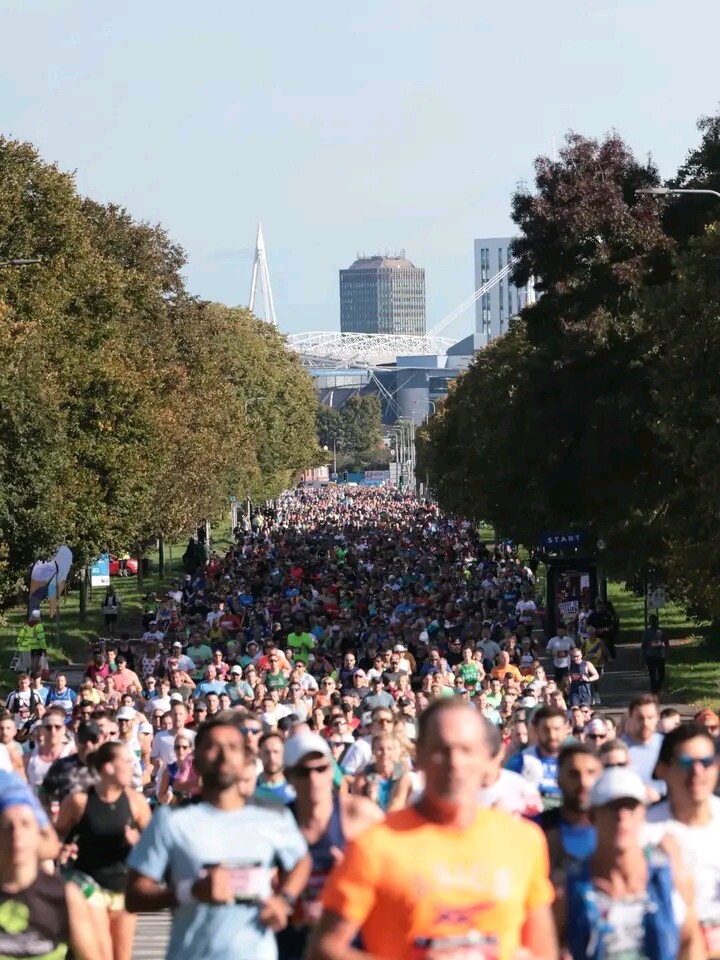
Jepkosgei produced a composed and powerful run at the front of the race, eventually pulling clear of a strong Ethiopian challenge to secure the title. Her winning time gave her a 14-second advantage over Ethiopia’s Wede Kefale, adding another prestigious road-racing victory to her accomplished career.
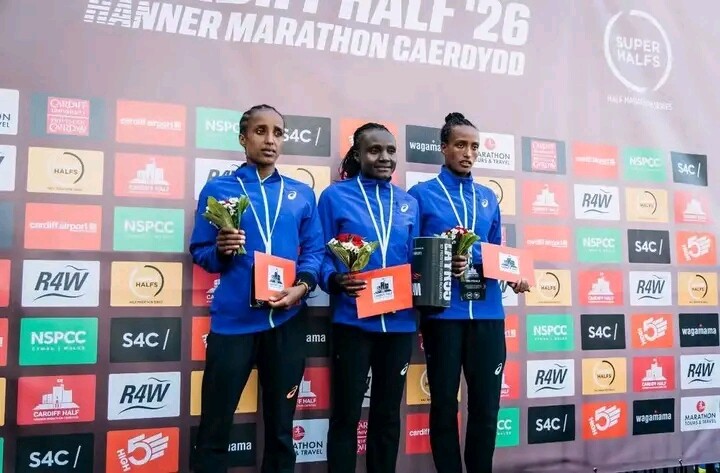
Kefale mounted the strongest challenge to the Kenyan, crossing the finish line in 1:05:54. She remained firmly in contention throughout the race, but Jepkosgei found the decisive strength when it mattered most to claim both victory and the course record.
The final podium position went to another Ethiopian, with Tigist Tesema making an impressive half-marathon debut in 1:07:23. Her performance completed a podium dominated by Kenya and Ethiopia and underlined the depth of talent competing at the front of the race.
For Jepkosgei, the Cardiff triumph adds another significant achievement to a career that has already produced major victories and world-class performances over the half-marathon distance. Her experience, controlled pacing and ability to deliver under pressure once again proved decisive on race day.
The 2026 Cardiff Half Marathon provided far more than a thrilling elite women’s contest. Gideon Kiprotich secured the men’s title stopping the clock at 59:34 giving Kenya a memorable double victory in the Welsh capital, while the elite wheelchair races and Welsh Championship events added further excitement to an action-packed programme.
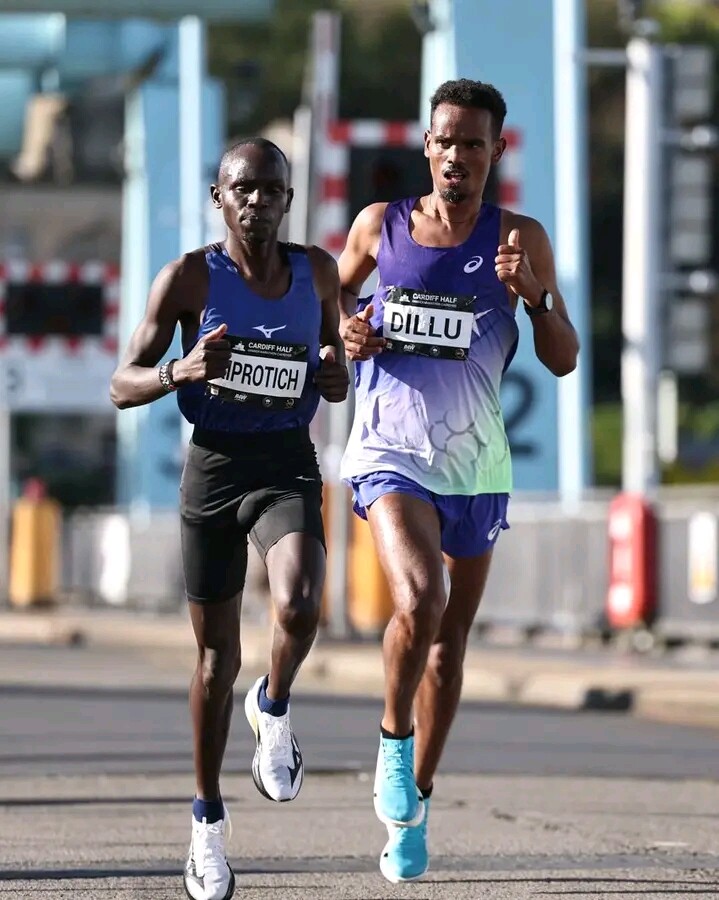
The event also provided a platform for some of Wales’ leading athletes to compete on home soil, while runners across the field contributed to the atmosphere of a race that brought together elite competitors and thousands of participants.
From the sharp end of the elite races to the final finishers crossing the line, Cardiff produced another memorable celebration of road running. For Jepkosgei, however, the headline belonged to her: a commanding victory, a new course record and another impressive mark on her distinguished career.
Jepkosgei’s performance was ultimately a statement of class and consistency, as the experienced Kenyan turned a fiercely contested international field into another memorable triumph. With a new course record now attached to her name in Cardiff, she once again demonstrated the speed, resilience and tactical intelligence that have made her one of the most respected figures in modern women’s road racing.
by Erick Cheruiyot for My Best Runs.
Login to leave a comment

Wizz Cardiff Half Marathon
The Cardiff University/Cardiff Half Marathon has grown into one of the largest road races in the United Kingdom. The first event took place back in 2003. The event is not only the UK’s second largest half marathon, it is Wales’ largest road race and Wales’ largest multi-charity fund raising event. The race is sponsored by Cardiff University and supported by...
more...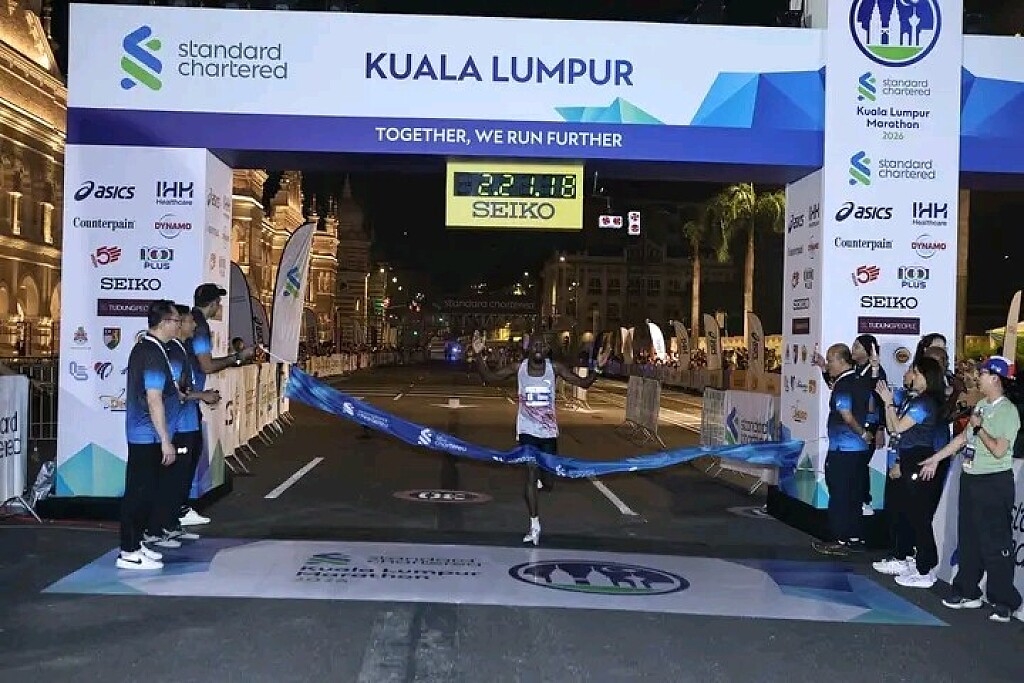
Ezekiel Kemboi Omullo Leads Kenyan Dominance At Kuala Lumpur Marathon
Kuala Lumpur, Malaysia — Ezekiel Kemboi Omullo emerged victorious at the 2026 Kuala Lumpur Marathon, leading an impressive Kenyan performance as athletes from the East African nation claimed nine of the top 10 positions in the men’s race.
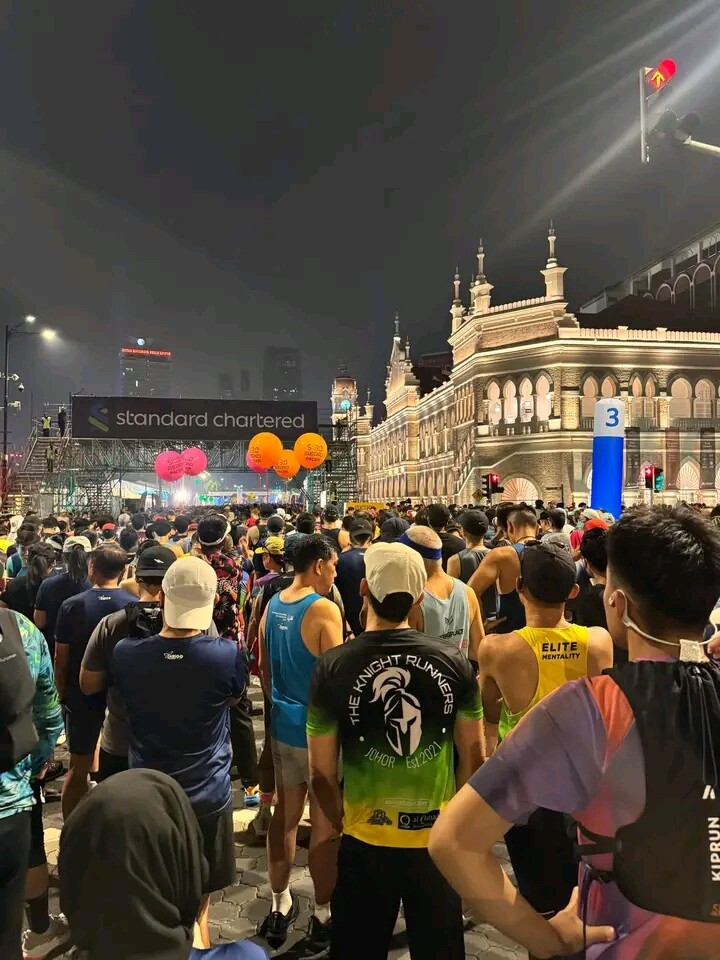
Omullo produced a winning performance of 2:21:15, edging compatriot John Nzau Mwangangi, who finished second in 2:21:23. Moses Kibet Kipsang completed the podium in 2:21:34, giving Kenya a clean sweep of the first three places.
The contest at the front was remarkably close, with the leading Kenyan athletes separated by only seconds. Samuel Kalalei matched Kipsang’s time of 2:21:34 to finish fourth, while James Tallam followed closely in fifth with 2:21:40.

Kenya’s strong showing continued with Julius Kipkorir Tuwei, who crossed the line sixth in 2:22:10. Ethiopia’s Asmera Tamiru Beshir was the only athlete from outside Kenya among the first seven, finishing seventh in 2:22:28.
The Kenyan dominance resumed behind Beshir, with Vincent Kipsang Mutai taking eighth in 2:23:08. Edwin Cheruiyot Soi finished ninth in 2:23:53, while Felix Kipsang Mutai completed the top 10 in 2:25:24.
The narrow margins among the front-runners made the men’s race particularly competitive. Omullo’s eight-second advantage over Mwangangi was the largest gap separating the top two, while Kipsang and Kalalei could not be separated on the clock after both recorded 2:21:34.
For Kenya, the result underlined the depth of its marathon talent. Nine of the 10 leading finishers came from Kenya, with the country occupying every position from first through sixth before Beshir interrupted the sequence in seventh.
Omullo ultimately took the headline victory, but the wider performance from the Kenyan contingent was equally striking. From the opening positions through the closing places of the top 10, Kenya maintained a commanding presence on the Kuala Lumpur results sheet.
2026 Kuala Lumpur Marathon — Men’s Top 10
1. Ezekiel Kemboi Omullo — Kenya — 2:21:15
2. John Nzau Mwangangi — Kenya — 2:21:23
3. Moses Kibet Kipsang — Kenya — 2:21:34
4. Samuel Kalalei — Kenya — 2:21:34
5. James Tallam — Kenya — 2:21:40
6. Julius Kipkorir Tuwei — Kenya — 2:22:10
7. Asmera Tamiru Beshir — Ethiopia — 2:22:28
8. Vincent Kipsang Mutai — Kenya — 2:23:08
9. Edwin Cheruiyot Soi — Kenya — 2:23:53
10. Felix Kipsang Mutai — Kenya — 2:25:24
Omullo’s triumph therefore came alongside a powerful collective showing from Kenya, with the 2026 Kuala Lumpur Marathon providing another showcase of the country’s remarkable depth in long-distance road racing.
by Erick Cheruiyot for My Best Runs.
Login to leave a comment

Kuala Lumpur Marathon
Standard Chartered Bank has been the title sponsor of the KL marathon since its inception in 2009 and we are honoured that our partnership will continue and as always, our aim is to make the Marathon bigger and better", said Rainer Biemans, Director of Dirigo Events and Project Director of the Standard Chartered KL Marathon 2018. The Standard Chartered KL...
more...
The Magic Of Onitsuka: How A Simple Idea Changed Marathon Shoes Forever
Long before modern running shoes were filled with advanced foams, carbon plates and sophisticated ventilation systems, innovation often began with something much simpler—a close look at the problems faced by athletes.

In 1960, Japanese shoemaker Onitsuka noticed a common struggle among long-distance runners: painful blisters caused by heat, moisture and poor ventilation inside the shoe. Instead of accepting the problem as part of distance running, the company began searching for a practical solution.
The answer was remarkably simple yet innovative for its time. Onitsuka developed a ventilation system by incorporating small openings around the toe box, heel and sides of the shoe, allowing air to circulate more freely and helping reduce the build-up of heat and moisture during long races.
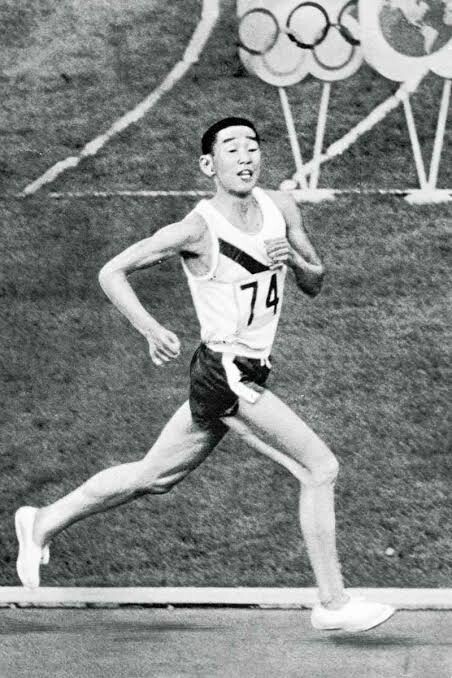
The result was the Onitsuka Tiger “Magic Runner,” a shoe that became part of the evolution of Japanese running footwear and reflected the company's growing focus on solving real problems faced by athletes.
Its reputation received a major boost at the 1968 Mexico City Olympic Games, when Japanese marathoner Kenji Kimihara captured the silver medal in the men's marathon while wearing Onitsuka's Magic Runner shoes.
Kimihara's Olympic performance helped turn the shoe into more than just an interesting piece of footwear technology. It became a symbol of how observation, experimentation and attention to an athlete's needs can produce meaningful innovation.
Today, running shoes have become highly engineered pieces of technology, but the story of the Magic Runner reminds us that innovation does not always begin with complicated machinery. Sometimes, it starts with simply asking one question:
How can we make the runner's journey more comfortable?
That simple question in 1960 helped Onitsuka take another step forward—and decades later, its influence can still be seen in the relentless pursuit of better running shoes.
by Erick Cheruiyot for My Best Runs.
Login to leave a comment
At 84, Paul Watson Defies Two Hip Replacements To Complete Another London Marathon
At 84 years old, Paul Watson has proved that some of the greatest victories in distance running have little to do with the clock and everything to do with courage, persistence and the determination to keep moving forward.
Watson completed the 2026 London Marathon in 5:32:24, achieving a remarkable return to one of the world's most famous marathon courses just 22 months after undergoing a left hip replacement through the NHS.
His relationship with the London Marathon stretches back more than four decades. He first tackled the race in 1984, when he produced a remarkable 2:58 finish. After returning to London in 2007, persistent hip problems eventually forced him to undergo his first hip replacement on the right side in 2010.
Years later, another major challenge emerged.
In June 2024, Watson underwent a left hip replacement after severe pain began affecting his leg. At that point, there was genuine uncertainty over whether he would ever be able to return to marathon running.
Rather than accept that his running journey was over, however, Watson began the long process of rebuilding.
With rehabilitation, careful training and encouragement from his surgeon, he was back to structured running just four months after the operation. He trained three times a week, using a combination of outdoor roads and a treadmill at his retirement village while carefully managing his recovery and avoiding unnecessary injury risks.
His return to London also carried a purpose beyond personal achievement.
Watson ran the 2026 marathon in support of RNID, a charity particularly close to his heart because his wife uses a cochlear implant. His determination inspired others as he raised £2,500 for the organisation.
The marathon itself was far from straightforward.
A mishap with his stopwatch at the beginning of the race caused Watson to misjudge his early pace. By around mile 15, the effort had caught up with him and he admitted that he had "hit the wall."
But even then, he refused to give in.
Watson dug deep during the closing stages, found another burst of energy and remarkably finished the marathon with a sprint towards the line.
After everything his body had been through, crossing that finish line represented far more than a finishing time.
It was the culmination of more than 40 years of running, two hip replacements, countless training sessions and an unwavering belief that age does not necessarily have to dictate what is possible.
Watson's message to anyone wondering whether they should attempt another marathon is beautifully simple:
“If you really want to run another marathon, go for it.”
At 84, with two artificial hips and more than four decades of running behind him, Paul Watson is still chasing finish lines — and reminding the running world that sometimes the most inspiring performances are not the fastest ones.
They are the ones that simply refuse to stop.
by Erick Cheruiyot for My Best Runs.
Login to leave a comment
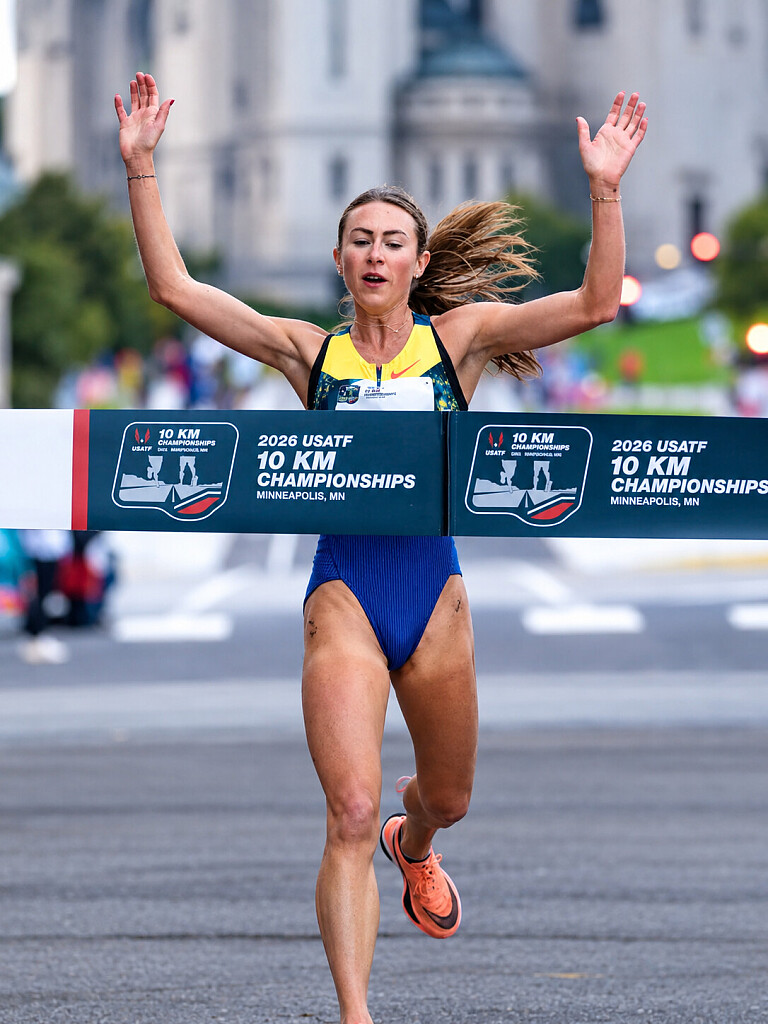
Emily Venters Dominates USATF 10K Championships With Record-Breaking 31:09
Emily Venters delivered a commanding performance at the 2026 USATF 10K Championships in Minneapolis, Minnesota, powering to the national title in 31:09 and rewriting the championship record in spectacular fashion.
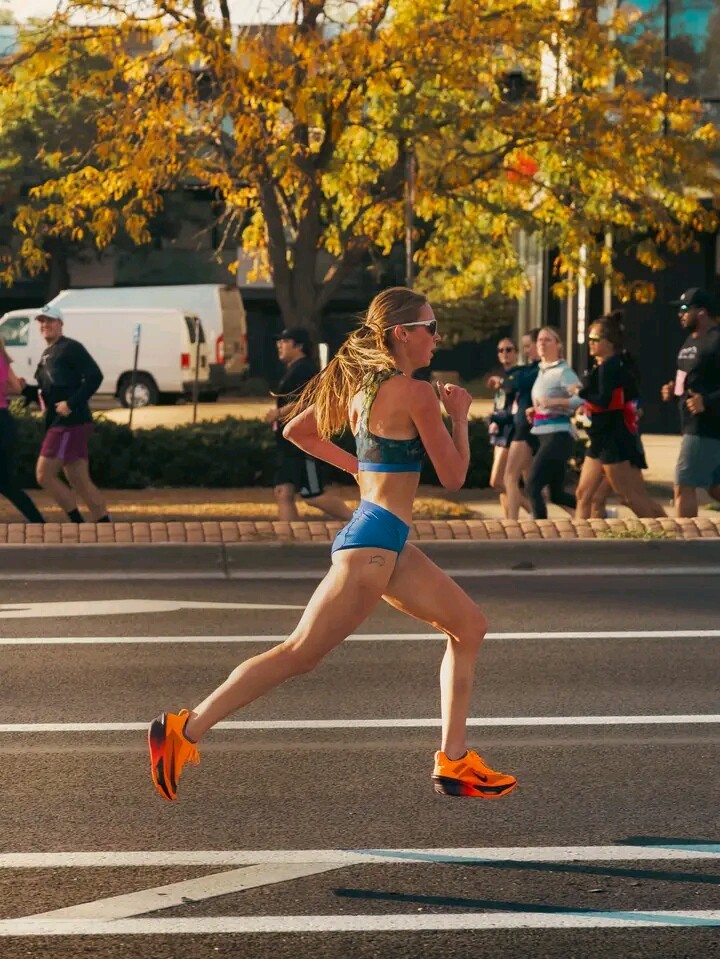
Venters controlled the women’s race from the opening stages, maintaining a relentless rhythm all the way to the finish. Her performance was enough to break the previous USATF 10K Championship record of 31:40, set by Jess McClain in 2024.
The Salt Lake City-based runner also created a huge gap over the rest of the field, crossing the finish line 48 seconds ahead of runner-up Kasandra Parker. Parker produced an impressive run of her own, clocking 31:57 to secure the silver medal, while Allie Ostrander completed the national podium with 32:02 for bronze.

Venters’ victory added another national championship title to her résumé, but the manner of the triumph made the achievement even more significant. Her 31:09 placed her firmly at the centre of the day’s headlines, with the championship record providing the perfect reward for a dominant display.
The women’s race also produced an exceptionally strong leading group, with the top eight all finishing inside 32:37. Amanda Vestri took fourth in 32:16, followed by Amy Davis-Green in 32:20 and Cailie Logue Hughes in 32:30.
Olivia Borowiak finished seventh in 32:33, while Jessie Cardin rounded out the top eight in 32:36, highlighting the depth of the field at this year’s national championships.
The Minneapolis championships proved to be a memorable weekend for USATF road running, with both the men’s and women’s winners establishing new championship records. Aidan Troutner also made history in the men’s race by breaking a championship mark that had stood for four decades.
2026 USATF 10K Championships — Women’s Top 8
1. Emily Venters — 31:09 — National Champion, Championship Record
2. Kasandra Parker — 31:57
3. Allie Ostrander — 32:02
4. Amanda Vestri — 32:16
5. Amy Davis-Green — 32:20
6. Cailie Logue Hughes — 32:30
7. Olivia Borowiak — 32:33
8. Jessie Cardin — 32:36
Venters’ 31:09 will now stand as the mark to beat at the USATF 10K Championships, capping a memorable morning in Minneapolis with a national title and a new championship record.
With the championship record now in her name, Venters has added another standout chapter to an already impressive season. Her 31:09 not only delivered gold on the national stage but also underlined her ability to produce a breakthrough performance when the biggest opportunities arrive. For the USATF 10K Championships, it was a performance that will be remembered long after the medals were handed out.
by Erick Cheruiyot for My Best Runs.
Login to leave a comment
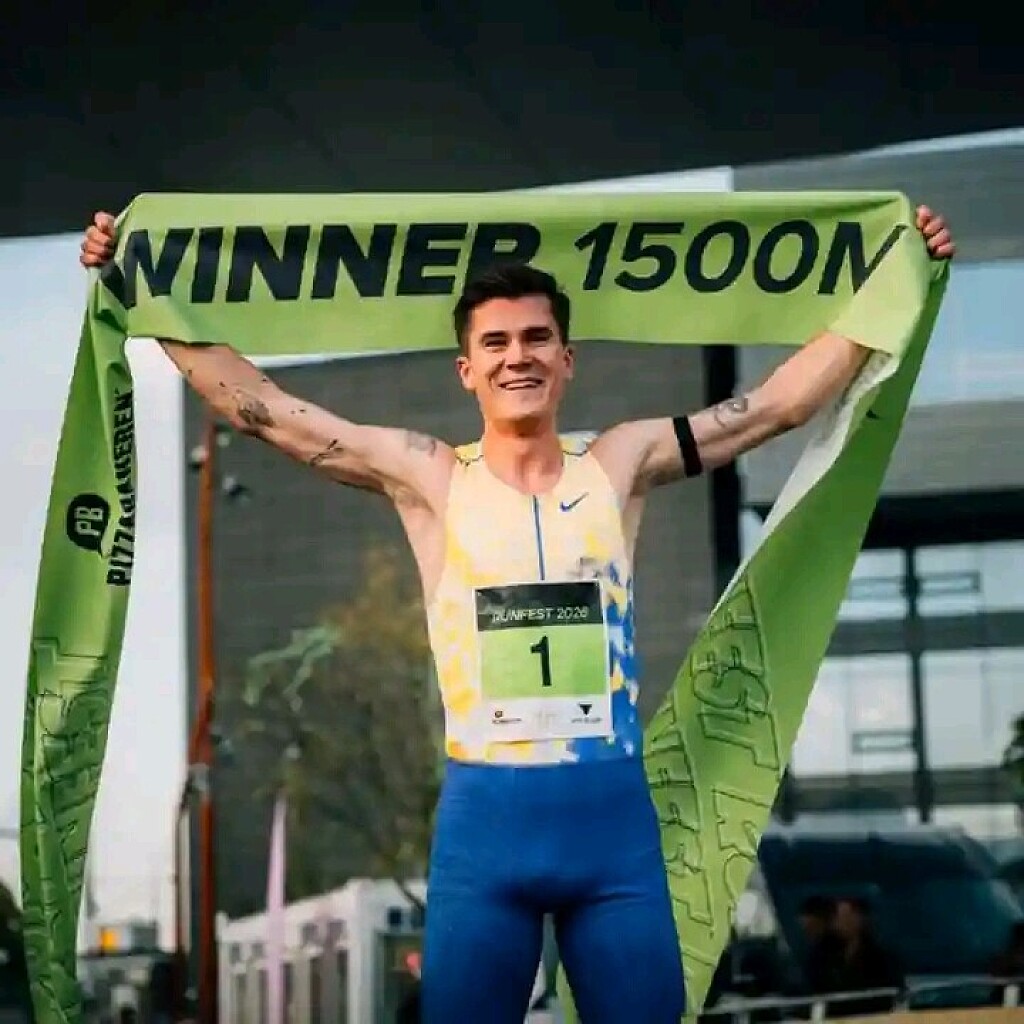
Jakob Ingebrigtsen Caps Comeback Season With Hometown Victory in Sandnes
Jakob Ingebrigtsen brought his remarkable 2026 season to a fitting close on home soil, winning the men’s street 1500m at the inaugural Runfest Norway in Sandnes on Friday.
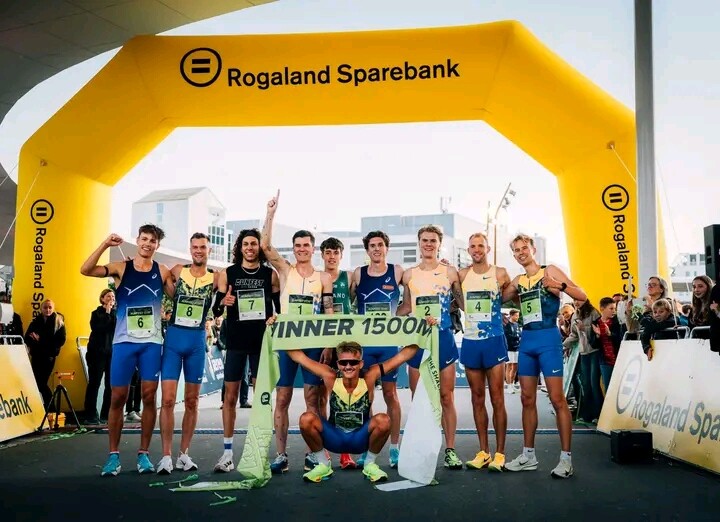
Competing in front of an enthusiastic hometown crowd, the Olympic and world champion took control of the race from the early stages and maintained his authority through the finish, stopping the clock at 3:40.7.
Andreas Fjeld Halvorsen followed in second in 3:43.3, while Sigurd Tveit completed the podium in 3:47.8.
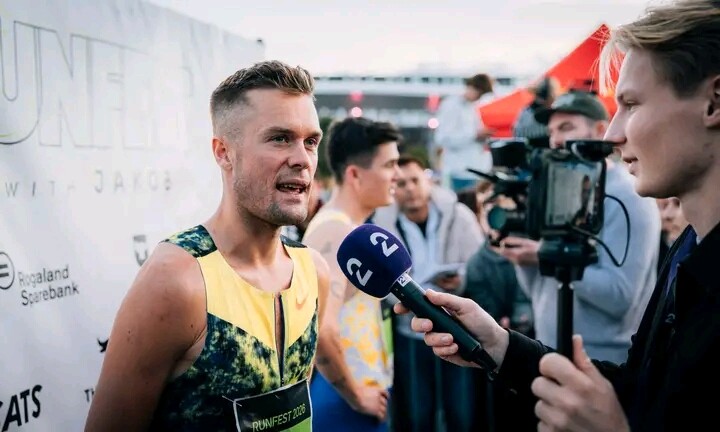
The unusual street race added another dimension to the occasion, with 273 runners taking part on the same road and sharing the course with one of Norway’s most accomplished distance runners. For the recreational participants, it offered a rare opportunity to compete alongside Ingebrigtsen in an event that brought elite athletics and mass participation together.
The victory also provided a fitting final chapter to a season that began with significant uncertainty for Ingebrigtsen. After undergoing major Achilles surgery in February, the Norwegian was forced to miss a substantial portion of the summer campaign as he worked his way back to full fitness.
His return, however, quickly developed into another championship-winning chapter. In Birmingham, Ingebrigtsen captured European 5,000m gold before adding another major title at the inaugural World Athletics Ultimate Championship in Budapest, where he won the 5,000m.
Those performances transformed what could have been a disrupted season into another year defined by championship success and a determined return to the highest level.
Now, with the Sandnes victory added to his 2026 record, Ingebrigtsen closes the year exactly where it began in spirit — overcoming adversity, rebuilding his form and once again competing at the front.
From Achilles surgery in February to major championship victories and finally a 1500m win before his hometown crowd, the Norwegian has given his 2026 season a memorable final scene.
by Erick Cheruiyot for My Best Runs.
Login to leave a comment

Masai Russell Announces Engagement to Longtime Partner Robbie Springfield
Olympic 100m hurdles champion Masai Russell has announced her engagement to longtime partner Robert “Robbie” Springfield, adding a major personal milestone to the remarkable journey of one of America’s leading track and field stars.
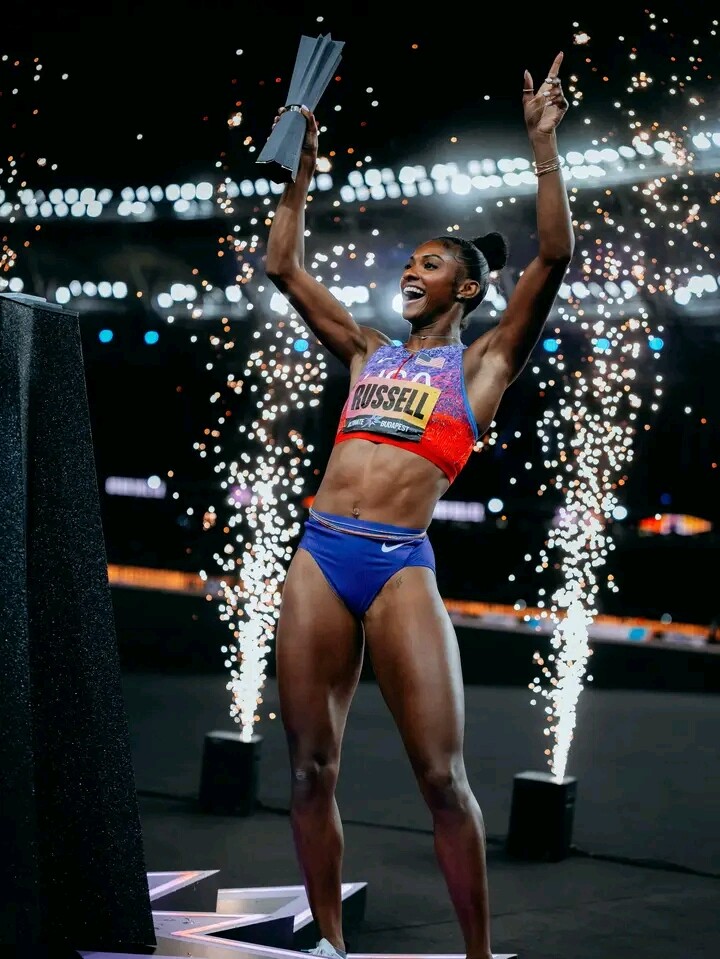
Russell shared the news with her followers, revealing that Springfield had proposed and that she had accepted. Reflecting on their relationship, the Olympic champion described him as her best friend and expressed her excitement about spending the rest of her life with him.
The couple’s relationship dates back to their college years at the University of Kentucky, where both were student-athletes and competed in track and field. Russell established herself as a standout hurdler, while Springfield competed in the long jump, giving them a shared understanding of the demands, sacrifices and pressures that come with pursuing success in athletics.
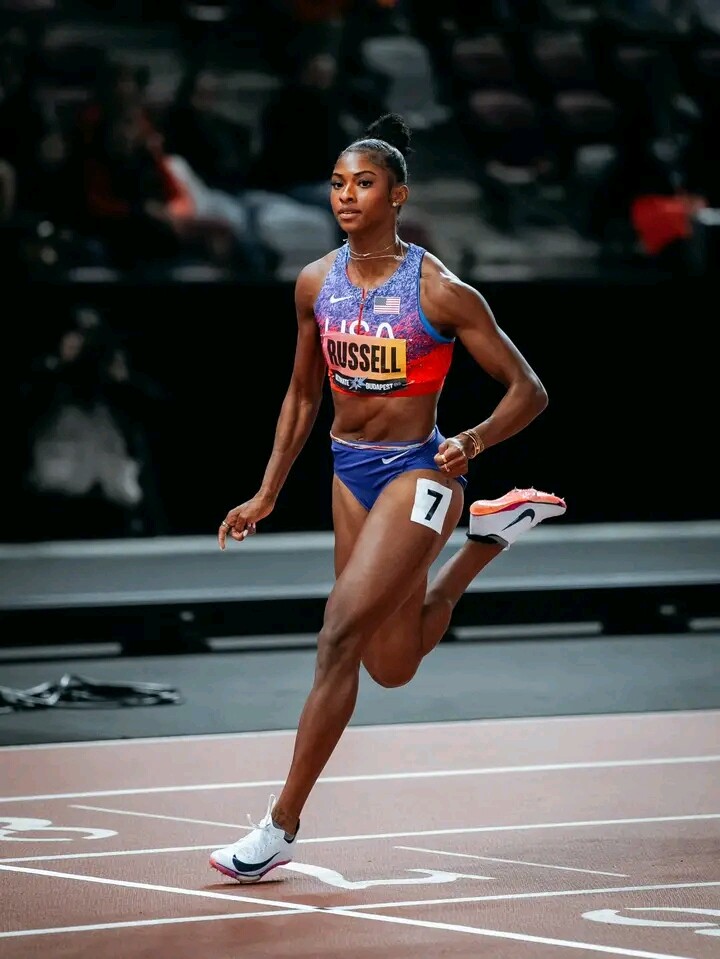
Springfield has since transitioned from competition into coaching. A former collegiate long jumper, he is now part of the coaching staff at Morehead State University, where he works with the programme’s sprinters and jumpers.
Their relationship has developed alongside Russell’s rise to the top of the sport. The defining moment of her career came at the Paris 2024 Olympic Games, where she captured gold in the women’s 100m hurdles, securing her place among the sport’s Olympic champions.
Away from competition, Springfield has remained a familiar part of Russell’s journey, sharing in the demanding periods of training and competition that accompanied her pursuit of Olympic success. Their connection has consequently grown from a college athletics relationship into a long-term partnership.
The engagement now marks another significant chapter for Russell, this time away from the track. After reaching the pinnacle of her sporting career in Paris, the 100m hurdles champion is beginning a new phase of her personal life alongside a partner who has been part of her journey since their university days.
From competing on the same collegiate stage to building a future together, Russell and Springfield’s story has evolved alongside two careers shaped by track and field. The Olympic champion will now balance this new personal chapter with her continuing ambitions in athletics
by Erick Cheruiyot for My Best Runs.
Login to leave a comment
Amsterdam Marathon Women’s Field Set for High-Class Showdown as Four Ethiopians Target 2:20 Barrier
The women’s race at the 2026 TCS Amsterdam Marathon is shaping up to be one of the most competitive editions in recent years, with a deep international field set to take on the fast Dutch course on Sunday, October 18.
At the centre of the contest will be four Ethiopian athletes who have already broken the 2:20 barrier, creating the prospect of a fascinating battle for victory and a possible assault on the course record of 2:16:52.
Defending champion Aynalem Desta will return to Amsterdam looking to retain her title after producing the biggest performance of her career at last year’s 50th edition. Desta won in a personal best of 2:17:37, establishing herself among the leading marathoners in the field and setting the benchmark for this year’s contenders.
Standing in her way will be fellow Ethiopian Meseret Belete Tola, a former Amsterdam champion who knows exactly what it takes to succeed on the course. Belete Tola captured the 2023 edition in 2:18:21, and her return adds another layer of experience and proven quality to an already formidable lineup.
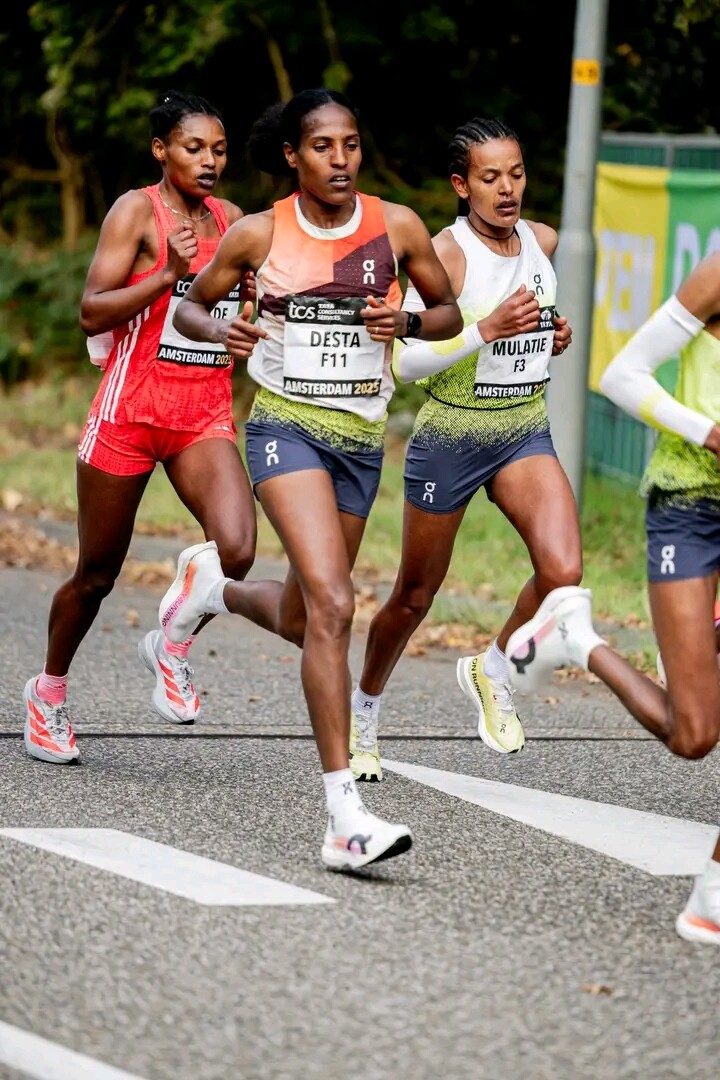
The field also includes Mestawut Fikir Truneh, who arrives with an impressive marathon pedigree. Truneh finished runner-up at the 2024 Berlin Marathon in 2:18:48, demonstrating her ability to compete at the highest level on one of the world's major marathon stages.
Completing the quartet of sub-2:20 Ethiopians is Buze Diriba, whose personal best of 2:19:34 places her firmly among the leading contenders. With four athletes possessing credentials below 2:20, the race is likely to develop into a tightly contested battle from the opening kilometres.
The depth extends well beyond the leading quartet. Desi Jisa Mokonin, representing Bahrain, Yeshi Kalayu Chekole of Ethiopia and Nazret Weldu Gebrehiwet of Eritrea have all established themselves as serious marathon competitors with performances approaching the 2:20 mark.
Another major name to watch is Abeba Aregawi, the former 1500m world champion representing Sweden. Aregawi has successfully transferred her talents to the marathon and made headlines earlier this year by setting a Swedish national record of 2:23:12 on her debut. Her presence adds another intriguing dimension to an already high-quality field.
Amsterdam’s marathon course has consistently provided an opportunity for elite athletes to produce fast times, and this year’s women’s lineup has the depth to turn the race into a genuine test of both championship racing and outright speed.
With four athletes already inside 2:20, two former Amsterdam champions returning to the start line and several other accomplished marathoners ready to challenge them, the battle is expected to remain open deep into the race.
The ultimate target will be the Amsterdam women’s course record of 2:16:52. Whether the leading contenders can threaten that mark remains to be seen, but the quality assembled for October 18 ensures that the record will be firmly in the spotlight when the race reaches its spectacular finish inside the Olympic Stadium.
by Erick Cheruiyot for My Best Runs.
Login to leave a comment
TCS Amsterdam Marathon
Do you want to enjoy Amsterdam in October and all that the city has to offer you? Want to feel a real athlete and start and finish in the historic Olympic stadium? Or run across the widely discussed passage under the beautiful National Museum? Then come to Amsterdam for the annual TCS Amsterdam Marathon in October! The TCS Amsterdam Marathon...
more...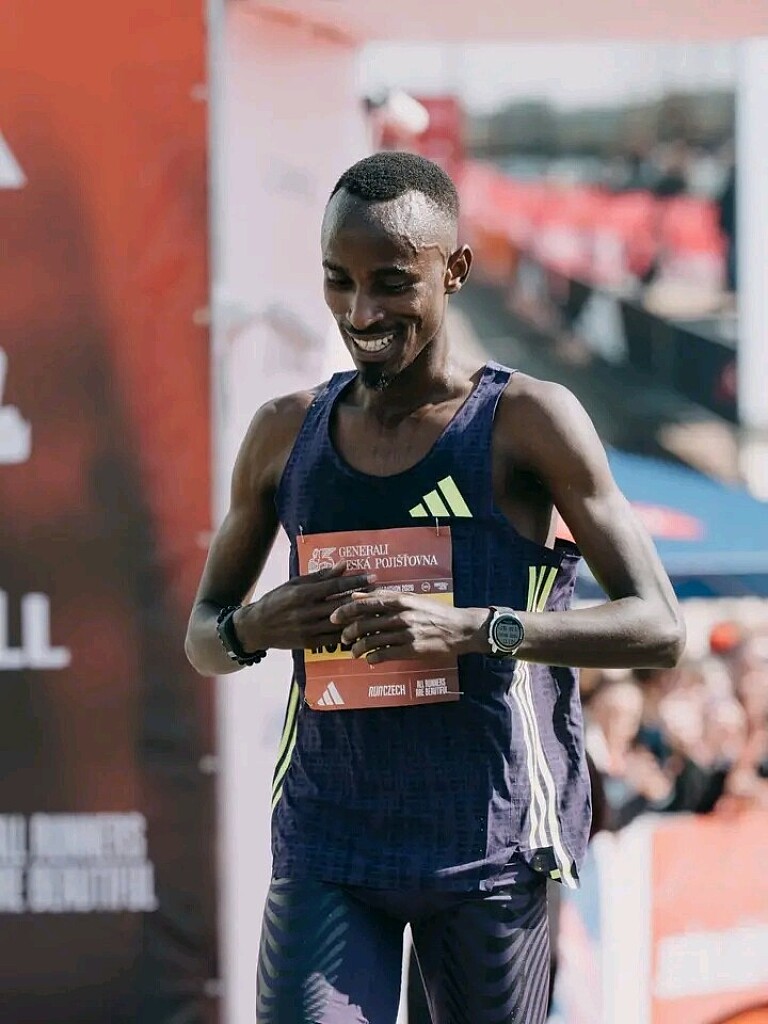
Rodrigue Kwizera Leads Stellar Valencia Half Marathon Field as Ebenyo, Yimer and Matata Prepare for a Fierce Battle
The 2026 Valencia Half Marathon is shaping up to be a thrilling contest of speed, endurance and tactical brilliance, with some of the world’s finest road runners set to converge in Spain on October 25.
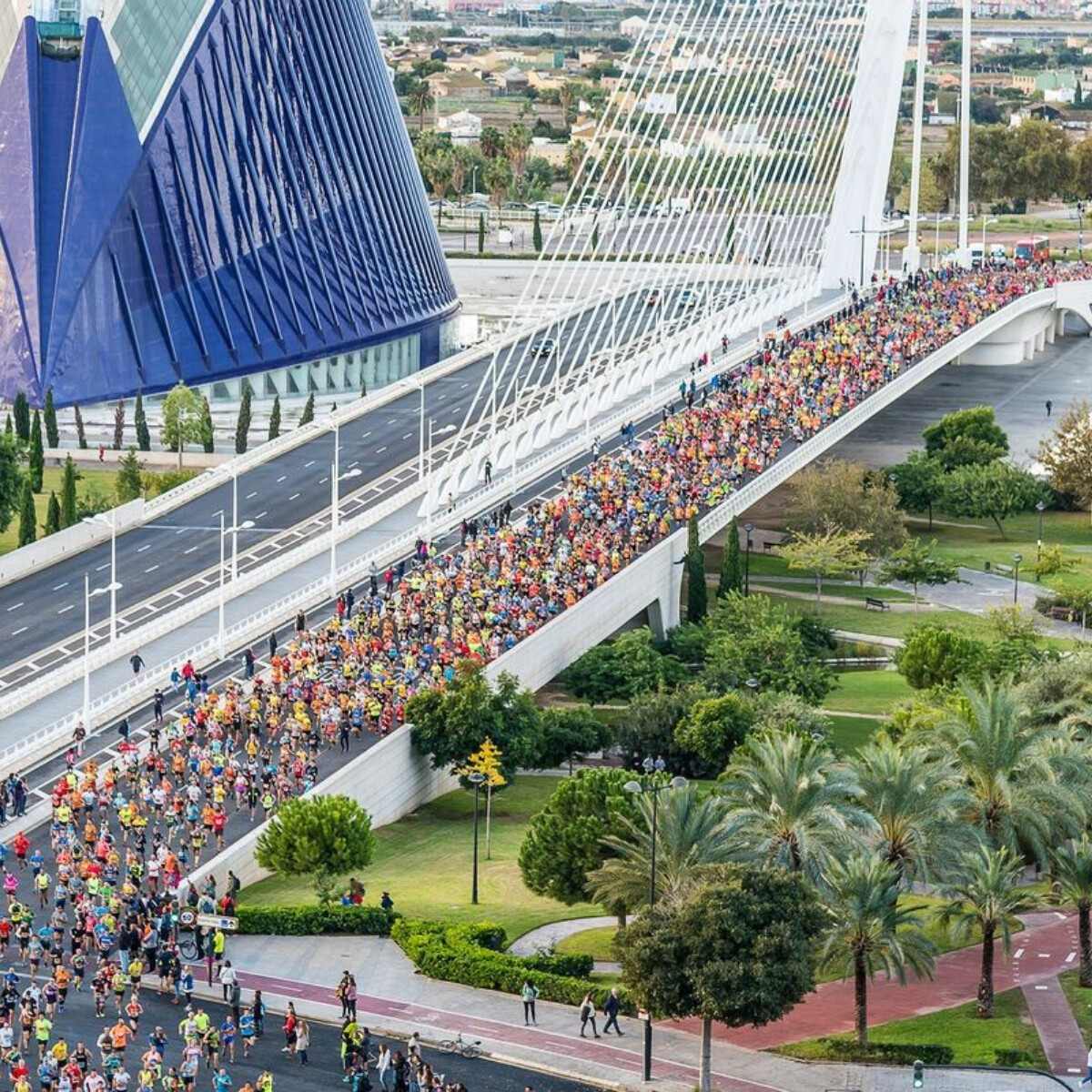
Kenya’s Daniel Ebenyo and Alex Matata will be among the leading contenders, facing a formidable Ethiopian challenge spearheaded by Jemal Yimer and Tadese Worku. The field also features Rodrigue Kwizera, who boasts the fastest personal best among the leading entrants at 58:16.
Ebenyo arrives with a personal best of 59:04, placing him firmly among the athletes capable of sustaining a demanding pace over the 21.1-kilometre distance. Matata, who owns a 59:11 best, adds further Kenyan strength, while Andrea Kiptoo brings another sub-60-minute credential to the race.
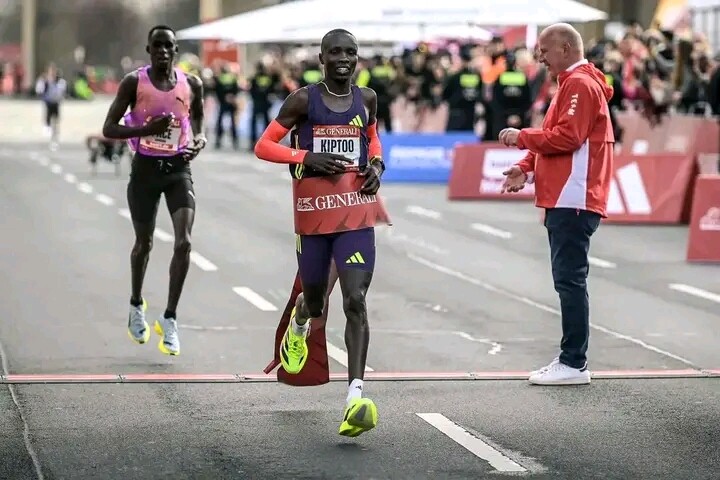
Yimer has already established himself as one of the fastest athletes in the field with a 58:33 personal best, while Worku has clocked 58:35. Kenya’s Owen Korir, with a best of 58:58, further underlines the remarkable depth of the men's lineup.
Valencia Half Marathon 2026 Entries
1. Rodrigue Kwizera (Spain) — 58:16
2. Jemal Yimer (Ethiopia) — 58:33
3. Tadese Worku (Ethiopia) — 58:35
4. Owen Korir (Kenya) — 58:58
5. Daniel Ebenyo (Kenya) — 59:04
6. Alex Matata (Kenya) — 59:11
7. Andrea Kiptoo (Kenya) — 59:11
8. Thierry Ndikumwenayo (Spain) — 59:42
9. Said Mechaal (Spain) — 1:00:24
10. Adel Mechaal (Spain) — 1:02:30
Kwizera, who finished second in Valencia last year, leads the field on paper and will be seeking another standout performance on the famously fast Valencia course. With several athletes carrying sub-60-minute credentials, the race has the ingredients for an aggressive battle from the opening kilometres.
Beyond the headline names, the men’s field is deep and highly competitive, bringing together a strong collection of experienced international athletes with proven ability over the half-marathon distance. With so much quality packed into the lineup, the race promises an intriguing battle in which tactics, endurance, positioning and finishing speed could all play a crucial role in determining the eventual champion.
Yet personal bests will count for little once the gun goes off. The title could ultimately be decided by patience, positioning and the ability to respond when the pace begins to rise in the closing stages. Every surge, every tactical move and every second saved could prove decisive on the road to the finish.
With Kenya, Ethiopia and Spain represented by athletes of exceptional quality, Valencia promises a high-octane men's showdown in which the leaders are likely to be separated by only a handful of seconds. The final kilometres could provide the defining moments of a race packed with speed, ambition and anticipation.
On October 25, the question will be simple: who has the strength to command the streets of Valencia and claim the coveted half-marathon crown?
by Erick Cheruiyot for My Best Runs.
Login to leave a comment

Valencia Half Marathon
The Trinidad Alfonso Valencia Half Marathon has become one of the top running events in the world. Valencia is one of the fastest half marathon in the world. The race, organized by SD Correcaminos Athletics Club, celebrated its silver anniversary in style with record participation, record crowd numbers, Silver label IAAF accreditation and an atmosphere that you will not find...
more...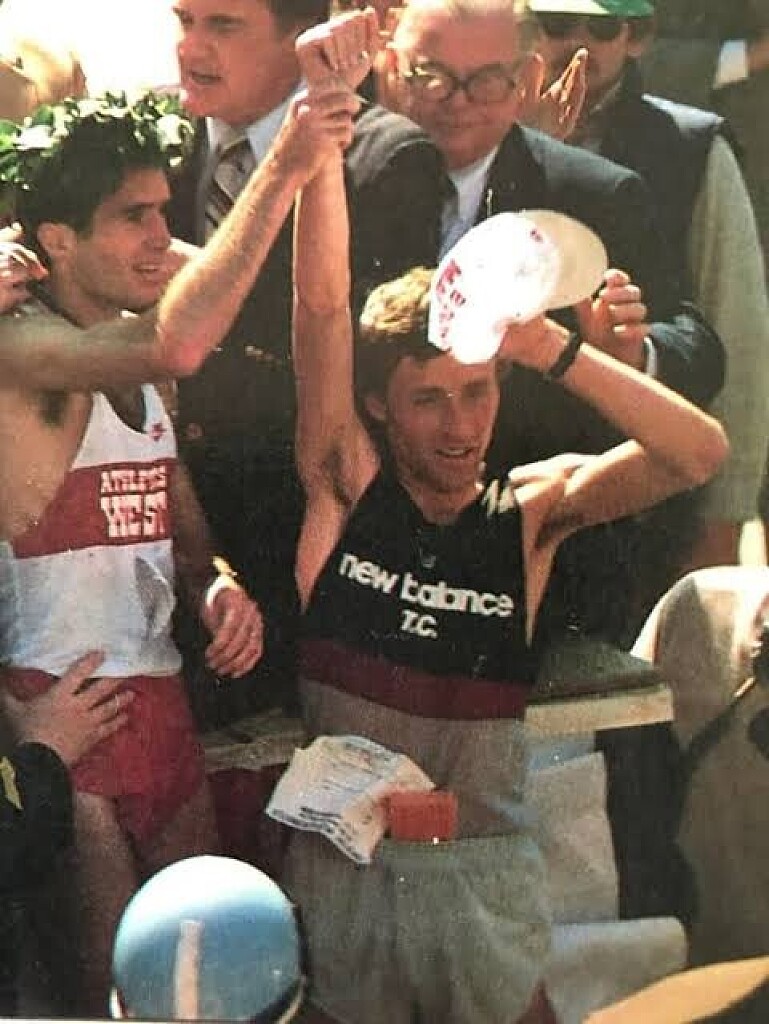
The Duel In The Sun: When Salazar Beat Beardsley By Two Seconds At Boston
April 19, 1982. The Boston Marathon unfolded under unusually warm, sunny conditions, and by the closing stages, the race had become a private battle between two very different American runners: Alberto Salazar, already one of the biggest names in distance running, and Dick Beardsley, the Minnesota runner who had emerged as a serious marathon contender.
For roughly nine miles, from the Newton Hills toward the finish, Beardsley did much of the leading, with Salazar tucked close behind. Neither man could shake the other. They ran deep into Boston locked together, trading surges and refusing to surrender an inch as the crowds along the course grew louder.
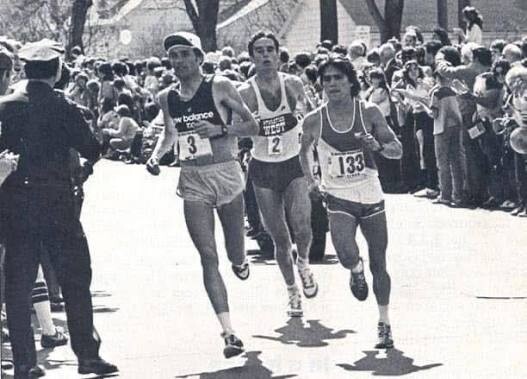
Salazar finally made his decisive move with less than a mile remaining. He opened a small gap, but Beardsley refused to disappear. The Minnesota runner chased him through the final streets, closing again as they approached the finish.
Then came the final sprint.
Salazar held his form and reached the finish first in 2:08:52, with Beardsley only two seconds behind in 2:08:54. It was an extraordinary result: both men broke 2:09 in the same Boston Marathon, and both shattered the previous course record.
The race became known as the “Duel in the Sun,” and it remains one of the most celebrated head-to-head battles in Boston Marathon history. Beardsley had not won, but his performance established him as one of America's elite marathoners.
For Salazar, however, victory came at an enormous physical cost. Immediately after crossing the finish line, he collapsed and required emergency treatment, including several litres of intravenous saline. The combination of heat, dehydration and an all-out effort had pushed his body to the limit.
Salazar's marathon career would never again produce quite the same kind of performance. His celebrated 1981 New York City Marathon victory had produced what was initially considered a world record, although the course was later found to be short. His Boston triumph therefore became one of the defining victories of his career.
Beardsley's story would take an even more difficult turn. Injuries disrupted his career, and after returning to the highest level, he suffered a devastating farm accident in 1989. Further accidents, surgeries and severe physical pain followed, eventually leading to a long battle with painkiller addiction.
He eventually overcame that struggle and transformed the darkest chapters of his life into a story of recovery, resilience and redemption.
That is what makes the 1982 Boston Marathon more than a two-second victory.
For one extraordinary afternoon, Salazar and Beardsley produced a marathon duel in which neither man was willing to give way. One crossed the finish line first. The other finished only two seconds behind him.
Two seconds separated them at Boston. Decades later, their legendary duel remains one of the greatest chapters in marathon history.
by Erick Cheruiyot for My Best Runs.
Login to leave a comment
Jon Brown’s Olympic Marathon Heartbreak: Two Fourth-Place Finishes Four Years Apart
Twenty-six years ago yesterday, Jon Brown produced one of the most memorable Olympic marathon performances of his career, narrowly missing out on a medal for Great Britain at the Sydney 2000 Games.
Brown delivered a determined run through the streets of Sydney, crossing the finish line in 2:11:17 to secure fourth place in a fiercely contested Olympic marathon.
The British distance runner came agonisingly close to the podium, finishing just seven seconds behind Ethiopia’s Tesfaye Tola, who claimed the bronze medal in 2:11:10.
For Brown, Sydney was a painful near-miss, but it would also mark the beginning of an extraordinary chapter in his Olympic career.
Four years later, at the Athens 2004 Olympic Games, Brown once again found himself within touching distance of an Olympic medal. He completed the marathon in 2:12:26, once again finishing fourth.
His performance in Sydney was particularly impressive given the unique demands of an Olympic marathon. Unlike major city marathons where athletes often have the clock and course records as primary targets, the Olympic race is shaped by tactics, national pride and the pressure of competing on the world's biggest sporting stage.
Brown remained firmly among the leading contenders in Sydney and was ultimately separated from a bronze medal by just seven seconds — a tiny margin after 42.195 kilometres of racing.
His return to the Olympic stage in Athens four years later added another remarkable dimension to his story. To reproduce a fourth-place finish at consecutive Olympic Games required extraordinary consistency, resilience and the ability to perform under immense pressure.
Although the medals continued to elude him, Brown's back-to-back fourth-place finishes established him as one of the most consistent marathoners of his generation. Few athletes experience the heartbreak of finishing just outside the medals once at an Olympics, let alone doing so again four years later.
Two Olympic marathons, two fourth-place finishes and two agonisingly close encounters with the podium — Brown's Olympic record may not include a medal, but it remains a remarkable testament to his longevity and competitiveness at the highest level of distance running.
His story is also a reminder of the brutal margins that define elite sport. After more than two hours of racing, the difference between Olympic glory and fourth place in Sydney came down to just seven seconds.
For Jon Brown, those seven seconds became part of Olympic history — while his performances in Sydney and Athens ensured that his name would remain firmly etched among Britain's outstanding marathoners.
by Erick Cheruiyot for My Best Runs.
Login to leave a comment
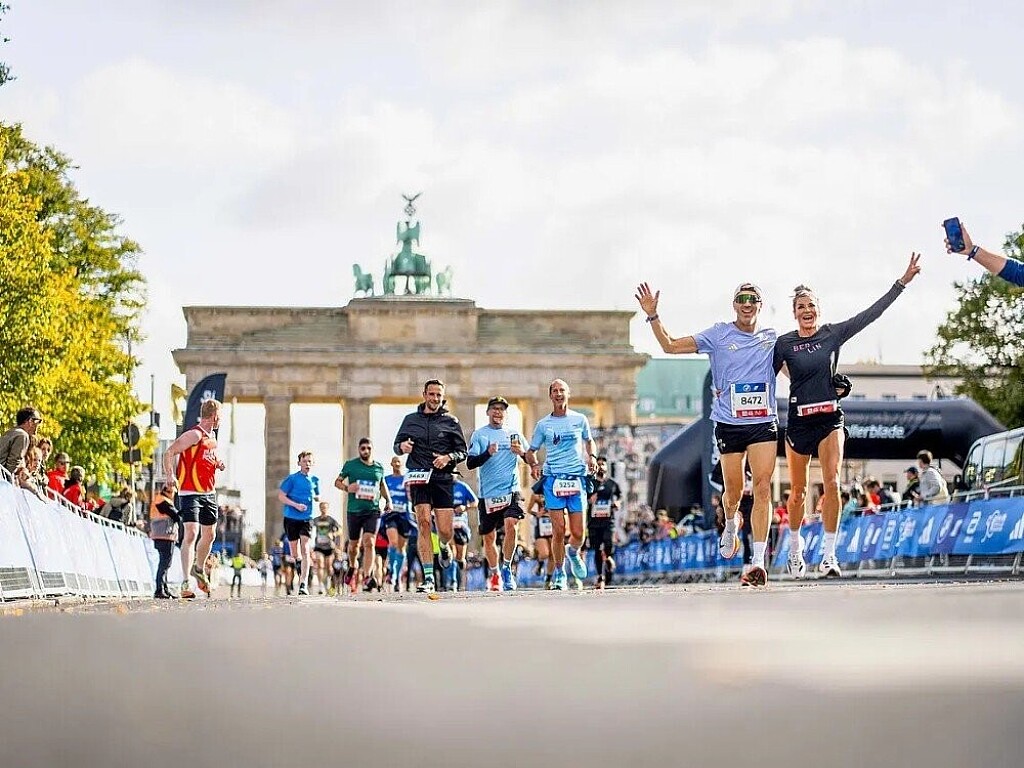
Berlin Marathon 2027 Lottery Is Officially Open As Runners Race For A Place On The World’s Fastest Stage
The wait is over for thousands of marathon hopefuls dreaming of running through the streets of Berlin next year, with registration for the 2027 Berlin Marathon officially opening on Thursday, October 1.
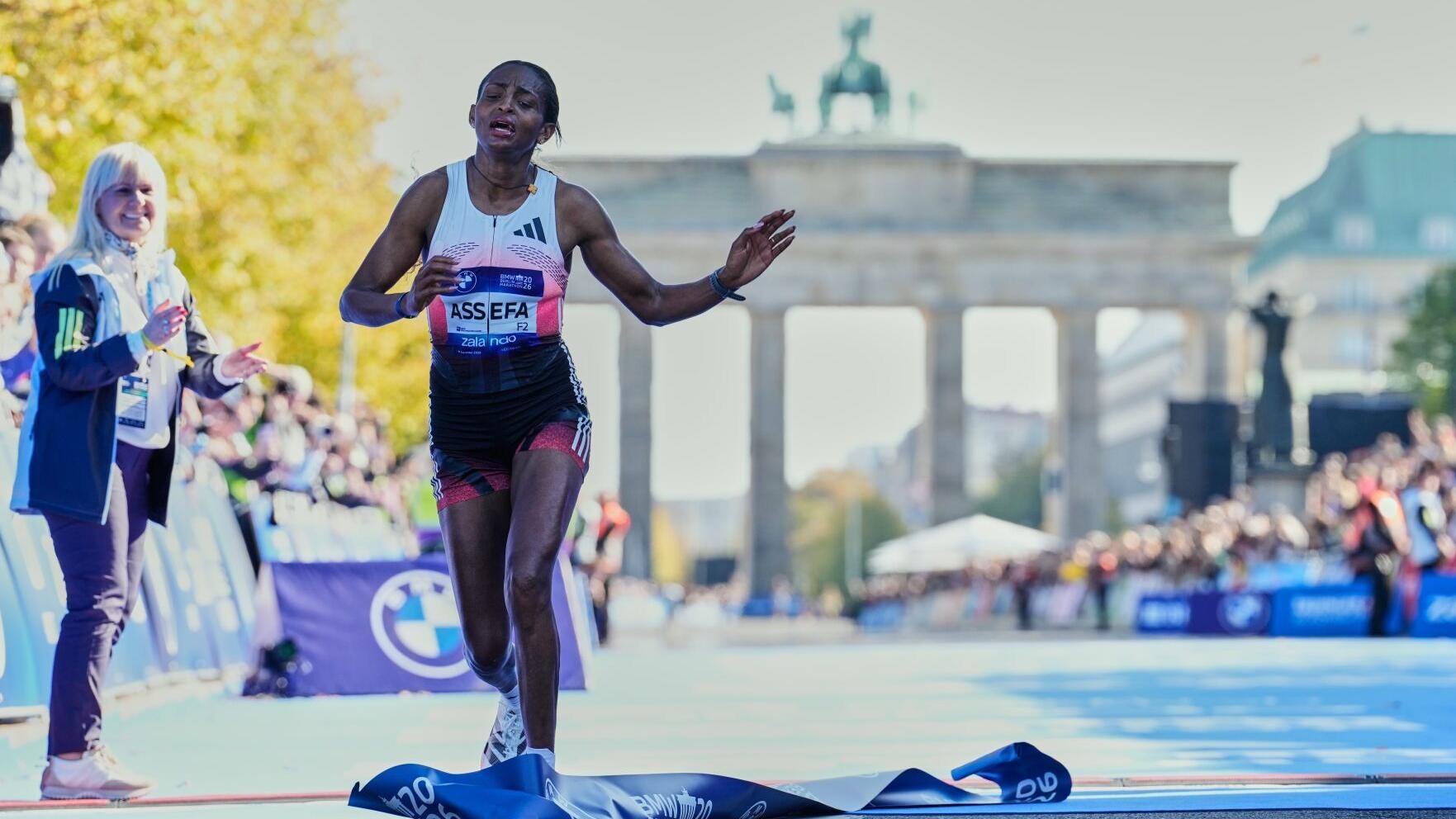
Runners now have until November 12, 2026, to enter the lottery, with the results scheduled to be sent by email on December 3. The entry fee of €215, around $244, will only be charged to athletes who successfully secure a starting place.
The 2027 race is scheduled for Sunday, September 26, once again bringing thousands of runners onto one of the most famous and fastest marathon courses in the world. Berlin has become synonymous with record-breaking performances, with 13 world records having been set on the course over the years.
That remarkable history continues to give the Berlin Marathon a unique place on the international marathon calendar. From elite athletes chasing world records to recreational runners attempting their first major marathon, the race attracts competitors from across the globe, all sharing the same iconic finish beneath the Brandenburg Gate.
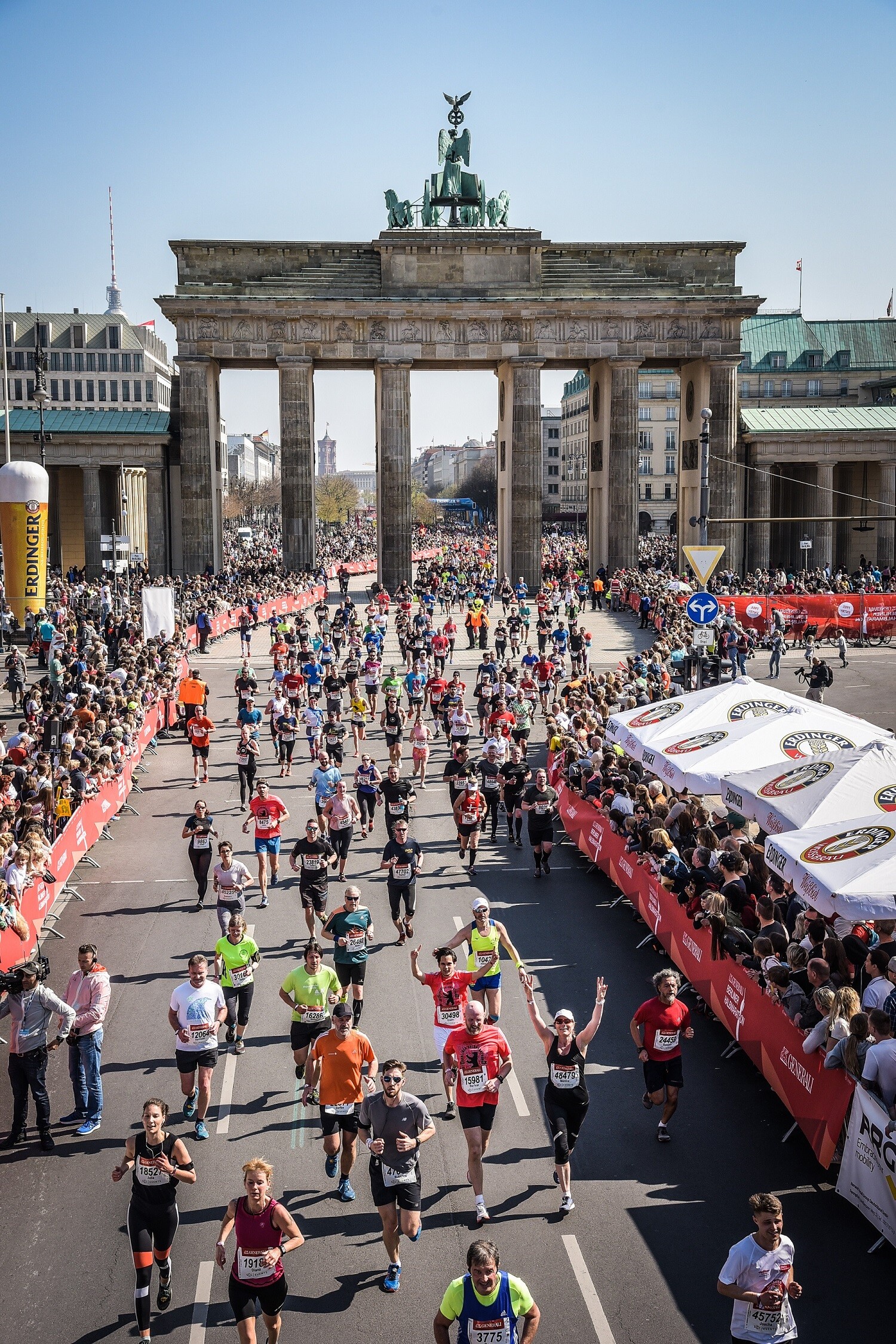
For runners who have already built a special relationship with the event, however, there are ways to bypass the public lottery. Members of the Jubilee Club, which is open to runners who have completed the Berlin Marathon 10 or more times, receive a guaranteed starting place.
There is also a special route for runners who were unable to compete in the 2026 edition after accepting the organisers’ goodwill offer. Those athletes will receive a registration code for the 2027 race by email, with the code required to be redeemed before the ballot closes on November 12.
Runners do not necessarily have to enter alone, either. Groups of two or three athletes can apply together as a team. One runner registers the group and receives a team code, which is then shared with the other members. Each athlete completes their own registration using that code, and if the team is selected, everyone in the group receives a place together.
The lottery system means that demand will once again be high, with aspiring Berlin Marathon runners now facing a nervous wait after submitting their applications. For many, the December 3 email will determine whether their plans for one of the world's most prestigious marathons can become reality.
For those dreaming of lining up in Berlin, the important dates are clear: registration opened on October 1, the ballot closes on November 12, results will be announced on December 3, and the 2027 Berlin Marathon will be held on September 26.
The road to Berlin 2027 has officially begun — and for thousands of runners, the countdown to finding out whether they have secured their place is now underway.
by Erick Cheruiyot for My Best Runs.
Login to leave a comment
BMW Berlin Marathon
The story of the BERLIN-MARATHON is a story of the development of road running. When the first BERLIN-MARATHON was started on 13th October 1974 on a minor road next to the stadium of the organisers‘ club SC Charlottenburg Berlin 286 athletes had entered. The first winners were runners from Berlin: Günter Hallas (2:44:53), who still runs the BERLIN-MARATHON today, and...
more...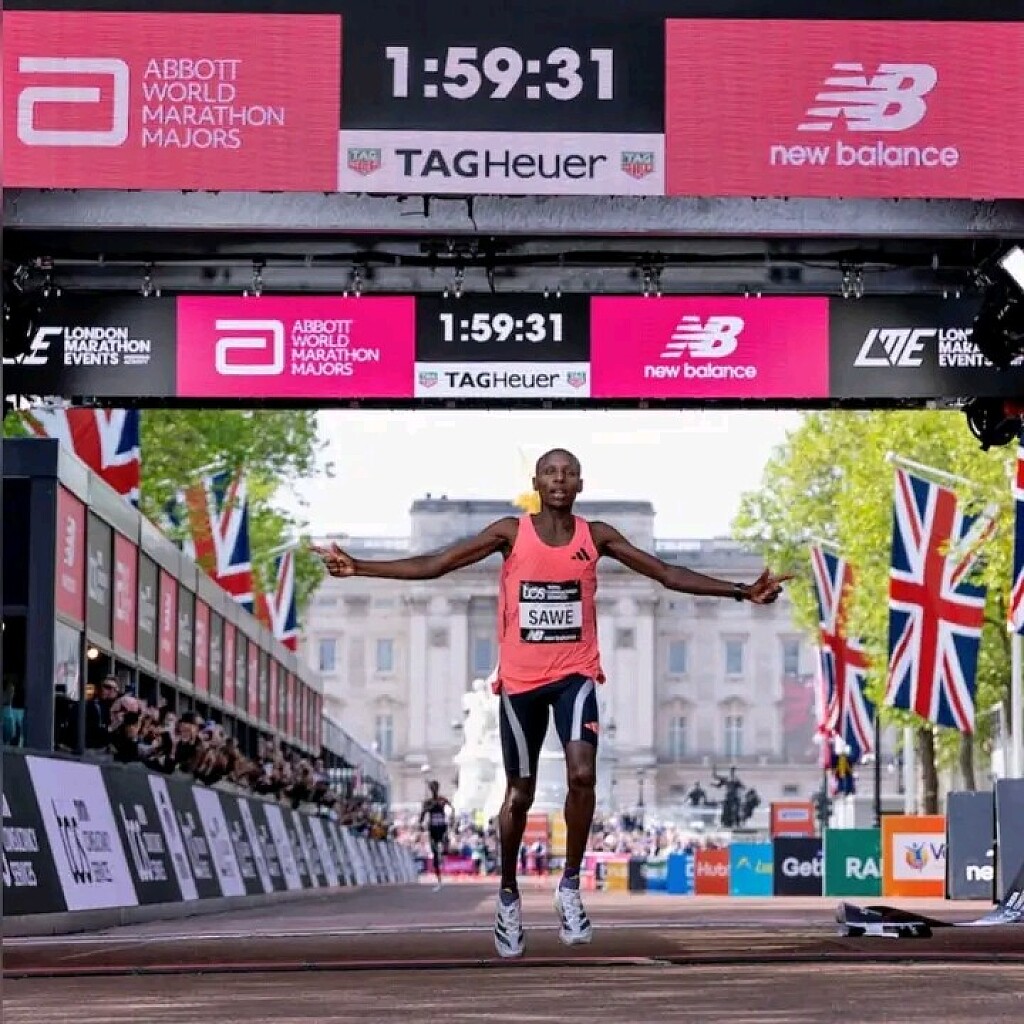
Sabastian Sawe Set For London Marathon Title Defence After Historic Sub-Two Triumph
Kenyan marathon star Sabastian Sawe is set to return to the streets of London in 2027 to defend the title he claimed in unprecedented fashion a year earlier.
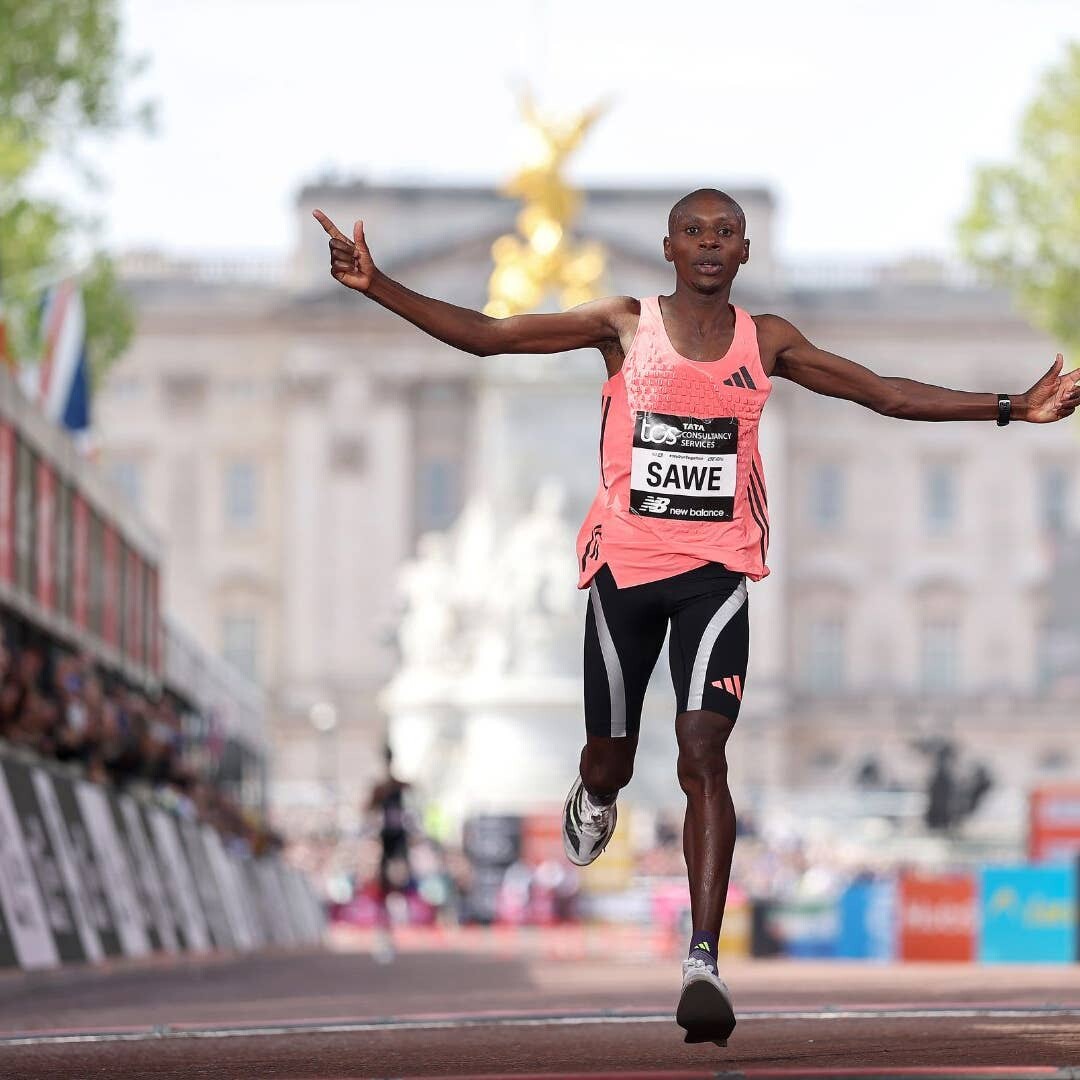
The reigning TCS London Marathon champion and marathon world-record holder has been confirmed for the 2027 TCS London Marathon, scheduled to take place on Saturday, April 24, and Sunday, April 25.
Sawe made history in the British capital in April 2026 when he clocked an astonishing 1:59:30, becoming the first man to break the two-hour barrier in a record-eligible marathon. His extraordinary performance also saw him improve the previous world record by 65 seconds.
Now, the Kenyan superstar will return to the scene of his greatest marathon achievement with the chance to defend his London crown and add another memorable chapter to his remarkable career.
However, the 2027 edition will be unlike any London Marathon that has come before it.
For the first time, the iconic event will be held across a two-day marathon weekend, with a huge field of 100,000 participants expected to take part. The historic format will see the elite and mass-participation races distributed across Saturday and Sunday.
Remarkably, the decision over which elite athletes would compete on each day was settled in one of the most unusual ways imaginable — through a game of rock, paper, scissors.
Sawe faced Catherine Debrunner, the women's wheelchair world-record holder, in a contest to determine who would claim the traditional Sunday slot.
Debrunner won the showdown, meaning Sawe and the elite men's field will headline the action on Saturday, April 24, while the elite women's and women's wheelchair races will take centre stage on Sunday, April 25.
Saturday's programme will feature the Elite Men's Open, Men's Wheelchair and Men's Good for Age races, while Sunday's schedule will include the Elite Women's Open, Women's Wheelchair and Women's Championship races.
For Sawe, though, the novelty surrounding the 2027 event will eventually give way to the familiar challenge of covering 26.2 miles through the streets of London.
He will arrive as the defending champion and marathon world-record holder, carrying the weight of history after delivering one of the most extraordinary performances ever seen over the marathon distance.
On April 24, 2027, the spotlight will once again fall on the Kenyan superstar as Sawe begins his bid to retain his London Marathon crown and create another unforgettable moment on one of the world's most famous marathon courses.
by Erick Cheruiyot for My Best Runs.
Login to leave a comment
TCS London Marathon
Since its inaugural edition on March 29, 1981, the TCS London Marathon has grown into one of the world's most prestigious road races, blending elite competition with an extraordinary charitable legacy. Founded by former Olympic champion and journalist Chris Brasher alongside Welsh athlete John Disley, the event has been staged every year and has been held in the spring annually...
more...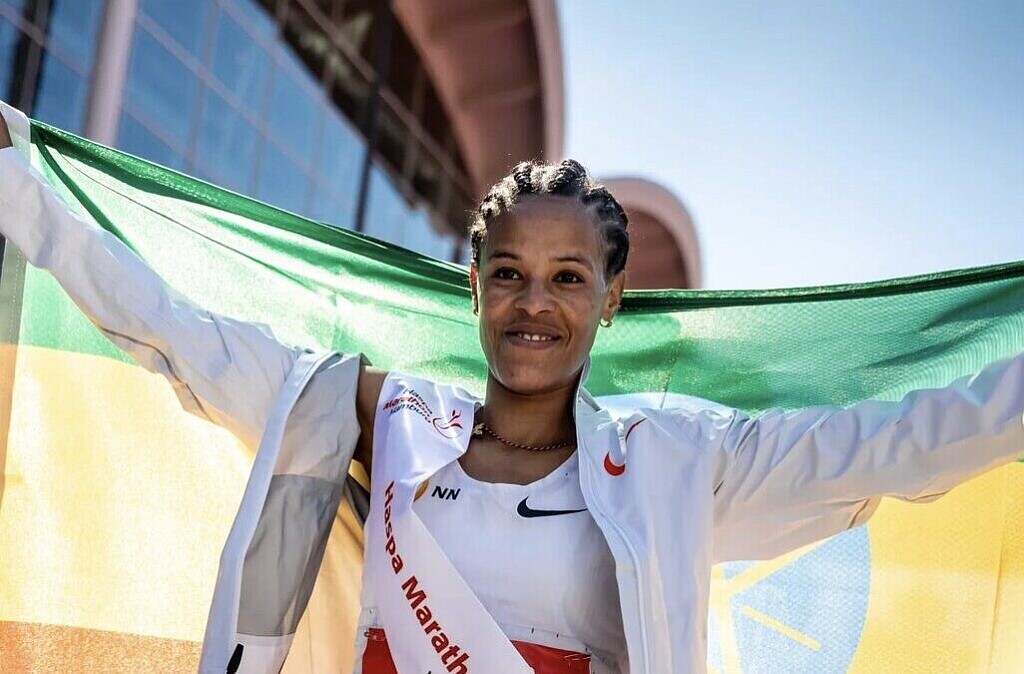
Valencia Half Marathon 2026 Set for Star-Studded Women’s Battle as Yehualaw, Gebreselama and Gitonga Head Elite Field
The Valencia Half Marathon 2026 is shaping up to be one of the most anticipated women’s road races of the season, with a deep international field set to assemble in Valencia, Spain, on Sunday, October 25.
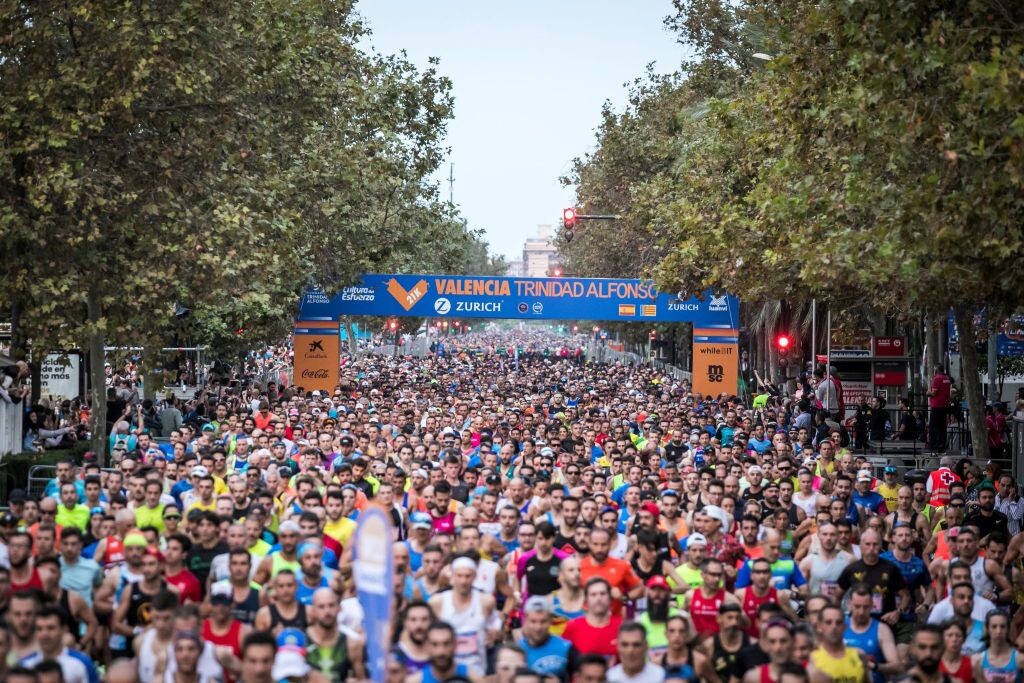
Leading the announced line-up are Ethiopia’s Yalemzerf Yehualaw, Tsigie Gebreselama and Kenya’s Caroline Gitonga, with a strong group of athletes from Kenya, Ethiopia, Germany and Spain adding considerable depth to the race.
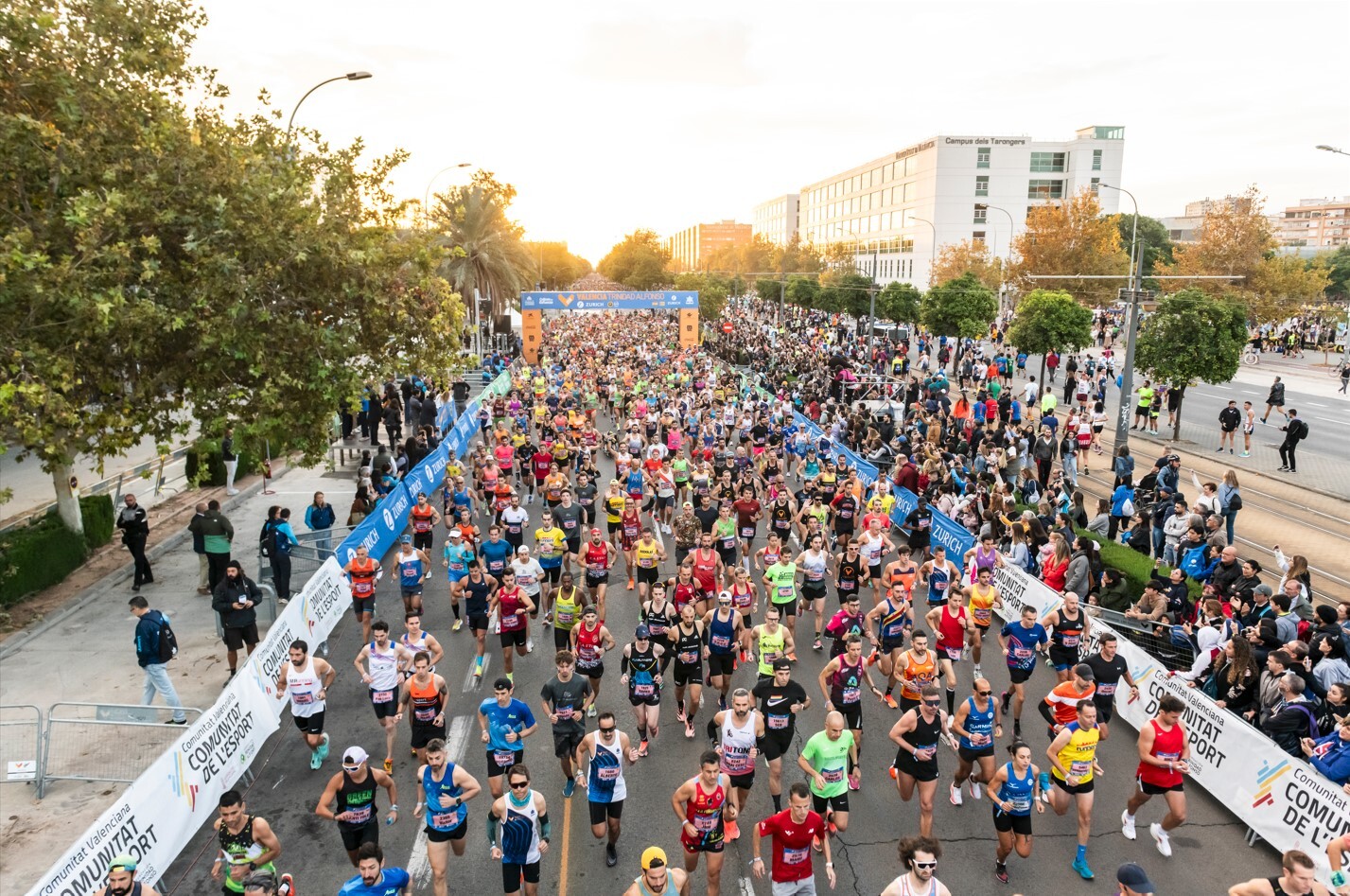
Yehualaw arrives with a listed personal best of 1:03:51, placing her among the fastest athletes in the field. The Ethiopian has considerable experience in Valencia, having finished second in the 2021 edition in 1:03:51 when compatriot Letesenbet Gidey set the then-world record of 1:02:52.
Gebreselama is also listed at 1:04:21, while Ethiopia’s Ftaw Zerai enters with 1:05:12. Their presence gives Ethiopia a formidable challenge at the front of the women’s race and sets the stage for a potentially fast contest from the opening kilometres.
Kenya will be strongly represented as well. Daisilah Jerono has a listed best of 1:05:21, followed by Veronica Loleo at 1:05:35 and Caroline Gitonga at 1:06:16. Loleo is particularly familiar with Valencia, having finished third in the 2025 race in 1:05:46.
Germany’s Konstanze Klosterhalfen, listed at 1:05:41, adds another major international name to the field. Meanwhile, Spain’s hopes will be carried by Carla Gallardo, Laura Luengo and Irene Sánchez-Escribano, who are listed at 1:08:30, 1:08:50 and 1:09:10 respectively.
Valencia Half Marathon 2026 — Women’s Elite Field
1. Yalemzerf Yehualaw (Ethiopia) — 1:03:51
2. Tsigie Gebreselama (Ethiopia) — 1:04:21
3. Ftaw Zerai (Ethiopia) — 1:05:12
4. Daisilah Jerono (Kenya) — 1:05:21
5. Veronica Loleo (Kenya) — 1:05:35
6. Mizam Alem (Ethiopia) — 1:05:38
7. Konstanze Klosterhalfen (Germany) — 1:05:41
8. Caroline Gitonga (Kenya) — 1:06:16
9. Carla Gallardo (Spain) — 1:08:30
10. Laura Luengo (Spain) — 1:08:50
11. Irene Sánchez-Escribano (Spain) — 1:09:10
The quality of the field is particularly significant given Valencia’s reputation as one of the fastest half-marathon venues in the world. The race has produced both the women’s and men’s world records, with Gidey running 1:02:52 in 2021 and Yomif Kejelcha clocking 57:30 in 2024.
With several athletes already possessing credentials around or below the 1:06 mark, the women’s race could develop into a high-quality battle over the 21.0975-kilometre distance. The depth behind the leading trio also means the outcome could depend on pacing, positioning and how the contenders respond when the race reaches its decisive stages.
For the Spanish athletes, racing on home roads provides an opportunity to challenge a powerful African contingent, while the Kenyan and Ethiopian runners will arrive with ambitions of competing for the leading positions.
The Valencia Half Marathon 2026 will take place on October 25, bringing together an international elite field alongside thousands of mass-participation runners on the fast streets of Valencia.
by Erick Cheruiyot for My Best Runs.
Login to leave a comment
Valencia Half Marathon
The Trinidad Alfonso Valencia Half Marathon has become one of the top running events in the world. Valencia is one of the fastest half marathon in the world. The race, organized by SD Correcaminos Athletics Club, celebrated its silver anniversary in style with record participation, record crowd numbers, Silver label IAAF accreditation and an atmosphere that you will not find...
more...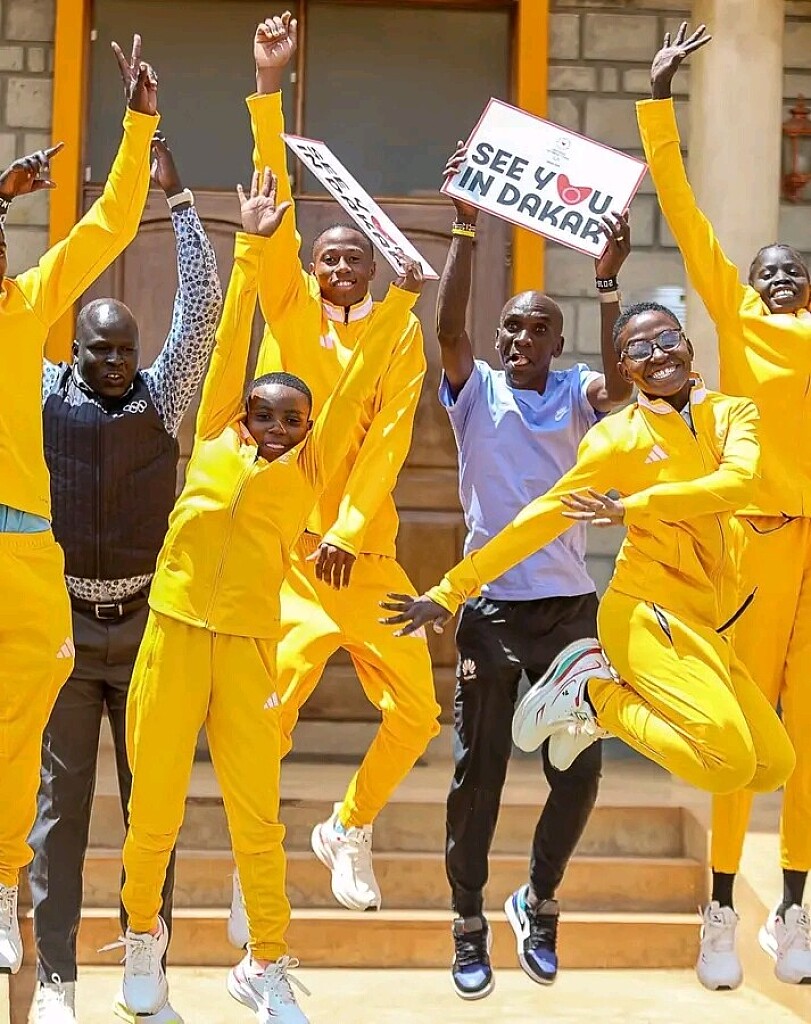
From Olympic Glory To Guiding The Next Generation: Eliud Kipchoge Takes On A New Mission In Dakar
Eliud Kipchoge has spent more than two decades chasing greatness on the world’s biggest stages. Now, the Kenyan marathon legend is taking on a different kind of challenge — helping shape the athletes who could one day follow in his footsteps.
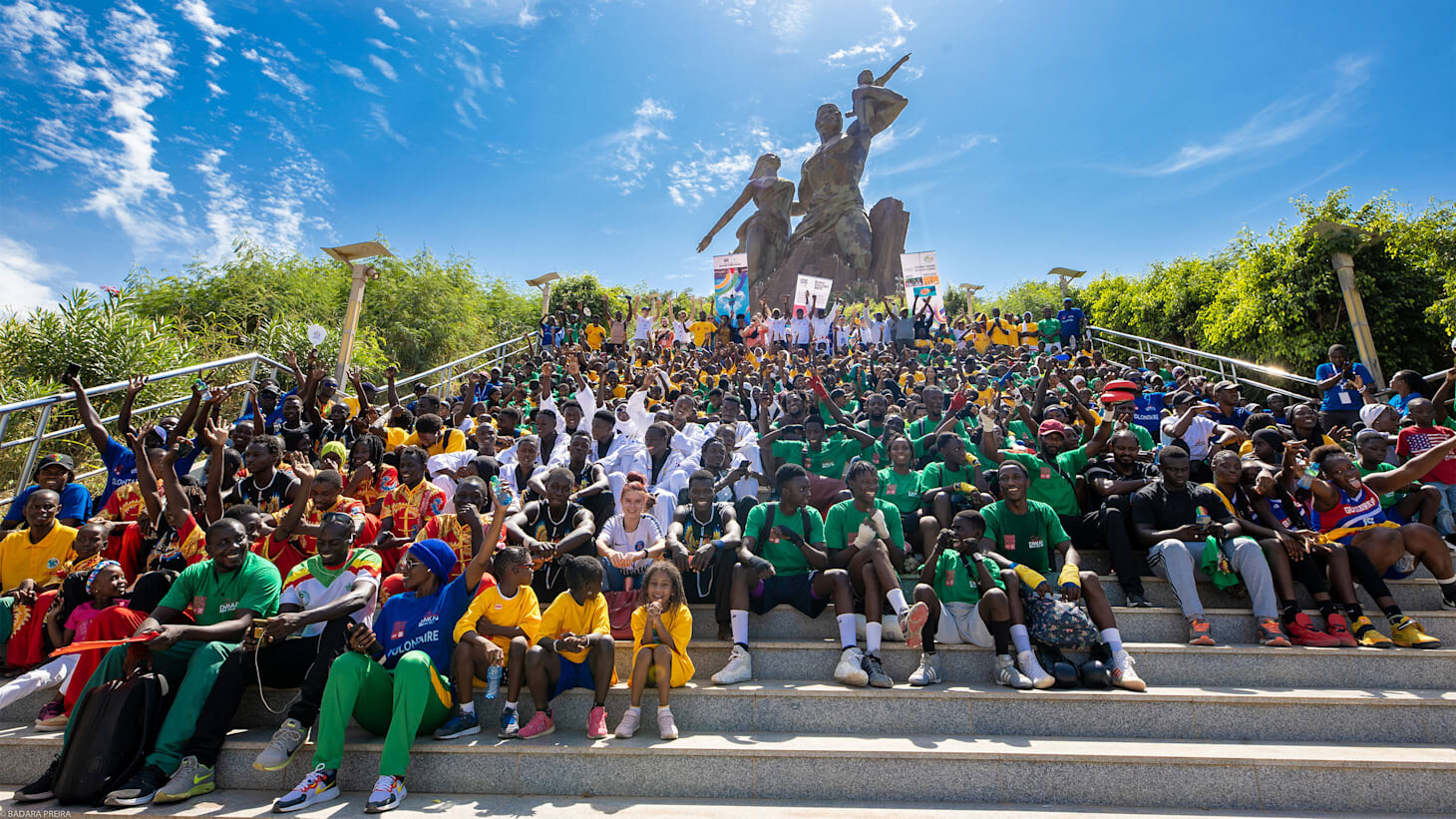
The two-time Olympic marathon champion has been appointed a Global Ambassador for the Dakar 2026 Youth Olympic Games, where he will use his experience at the highest level of sport to connect with and mentor young athletes from around the world.
Kipchoge will share the ambassadorial role with Brazilian skateboarding star Rayssa Leal, while also taking on a special mentoring role with the Refugee Olympic Team, which will make its first appearance at a Youth Olympic Games in Dakar.
For Kipchoge, the appointment represents a shift from competing for medals to investing in the future of sport.
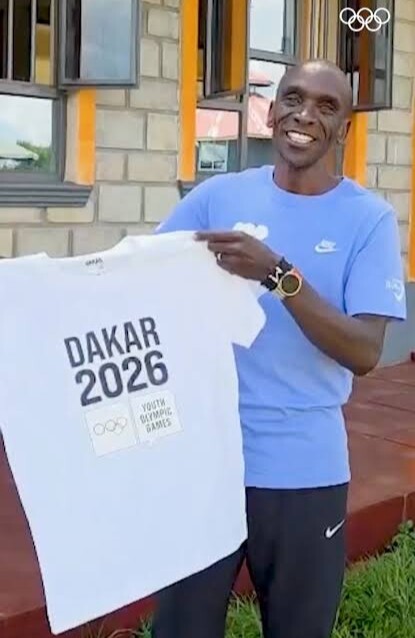
“I’ve been in the sport for 24 years; it’s my time to give back to the next generation,” Kipchoge said.
The 41-year-old has already begun that work, meeting members of the Refugee Olympic Team at their training camp in Kaptagat, Kenya. His message has extended beyond running and competition, focusing on discipline, education, personal values and what success means both in sport and in life.
“When I go to Dakar, I’ll make sure I meet young athletes from across the world — meet them, have an honest talk, mentor them, and look at what the future of sport, and the world, looks like,” Kipchoge said.
The assignment carries enormous significance for Africa. Dakar 2026 will be the first Olympic sporting event ever staged on African soil, with the Youth Olympic Games bringing together approximately 2,700 young athletes across Dakar, Diamniadio and Saly.
It will also mark a historic moment for young refugee athletes, with the Refugee Olympic Team making its Youth Olympic Games debut. World Athletics has confirmed that young athletes hosted by the National Olympic Committees of Kenya and Uganda will form part of the team competing in Senegal.
For Kipchoge, Dakar is therefore about much more than ceremonies, appearances and titles. It is an opportunity to share the lessons accumulated through an extraordinary career and encourage a new generation to believe in its own potential.
“Dakar 2026 is a huge event on our young continent — something we’ve long waited for here,” Kipchoge said. He added that being part of the first Olympic sporting event in Africa would leave a lasting impression on young people across the continent.
From Athens 2004, where he won his first Olympic medal, to his marathon triumphs at Rio 2016 and Tokyo 2020, Kipchoge has experienced virtually every level of Olympic competition. His next contribution will not be measured in seconds, medals or records.
This time, his impact will be measured by the young athletes he inspires.
The man who spent years showing the world how far a human being can push the limits is now preparing to help the next generation discover how far they can go.
Kipchoge is no longer simply chasing history. In Dakar, he will be helping the next generation write its own.
by Erick Cheruiyot for My Best Runs.
Login to leave a comment
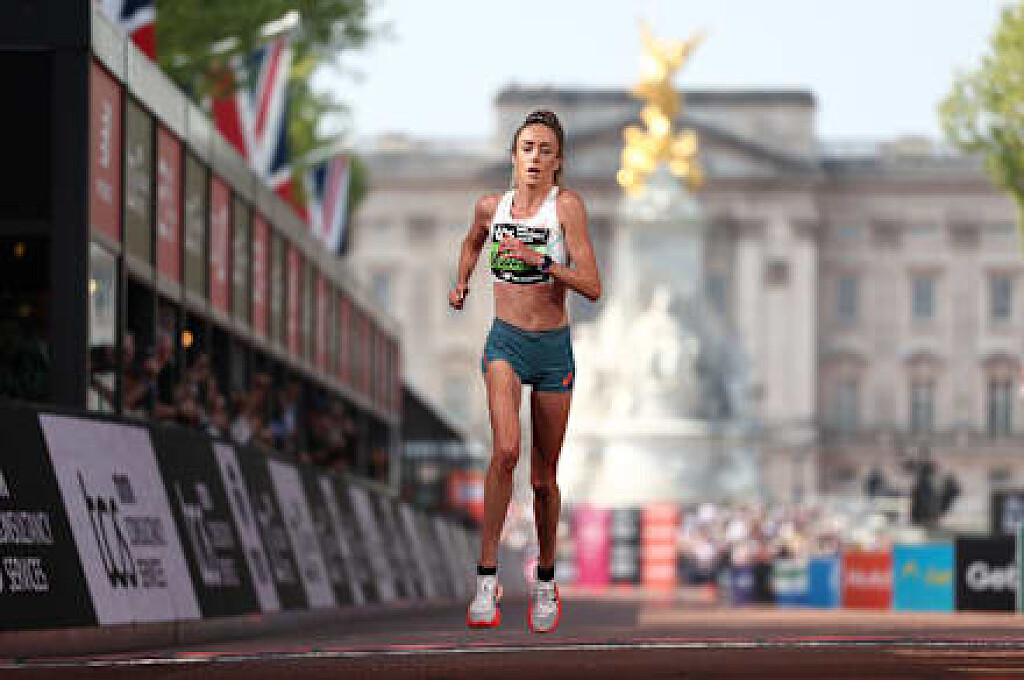
London Marathon 2027 Set To Shape Britain’s Road To Beijing And LA Olympics
The 2027 London Marathon is set to take on huge significance for British marathon runners, serving as the trial race for both the 2027 World Athletics Championships in Beijing and the LA 2028 Olympic Games.
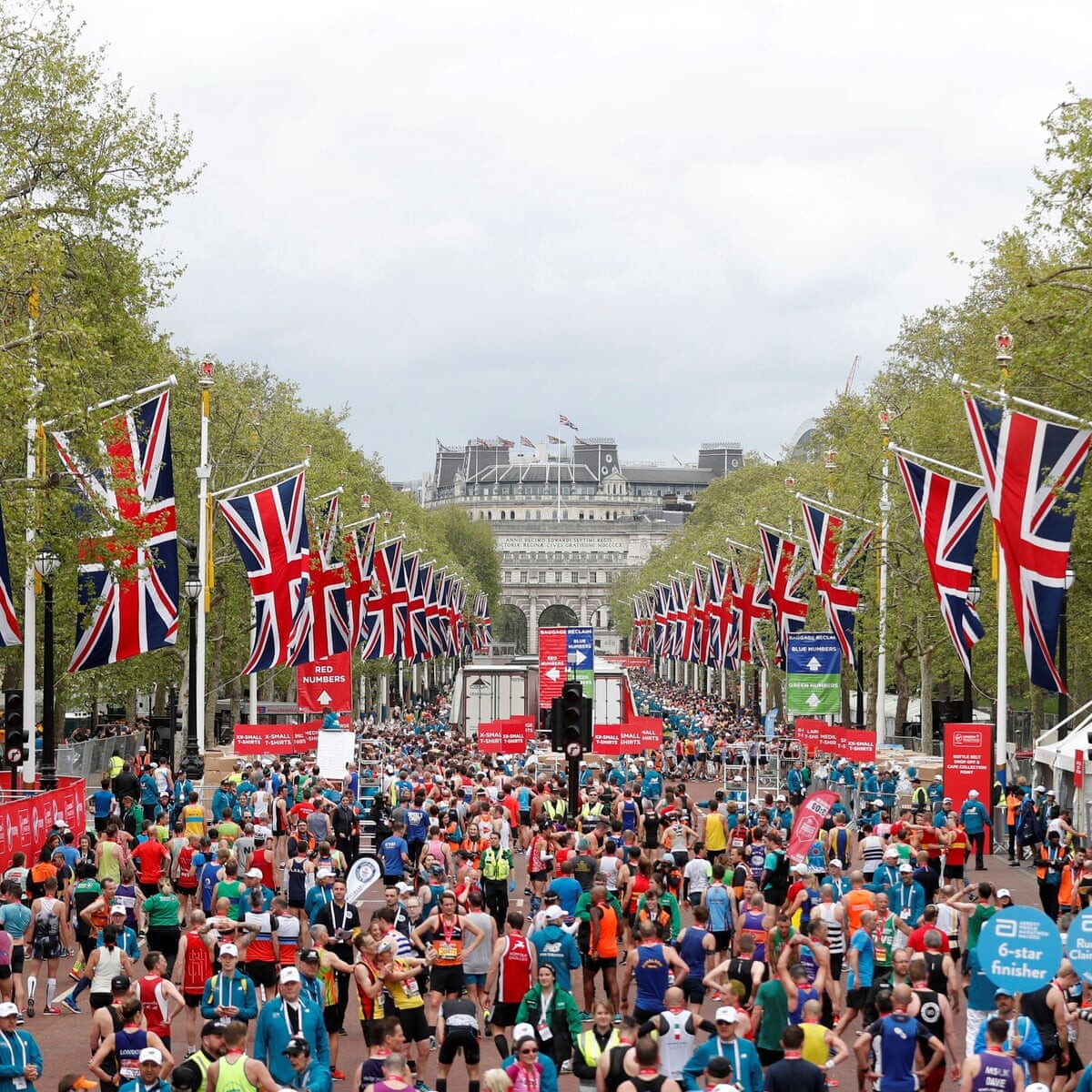
For the Beijing 2027 World Championships, the first two British finishers in both the elite men’s and women’s races will be eligible for selection, provided they have achieved the required World Athletics qualifying standard either before or on the day of the London Marathon.
The qualifying marks are 2:06:00 for men and 2:23:20 for women.
That puts a premium on both position and performance in London, with athletes knowing that a strong finish could potentially secure them a place on Britain’s team for the global championships in Beijing later in 2027.
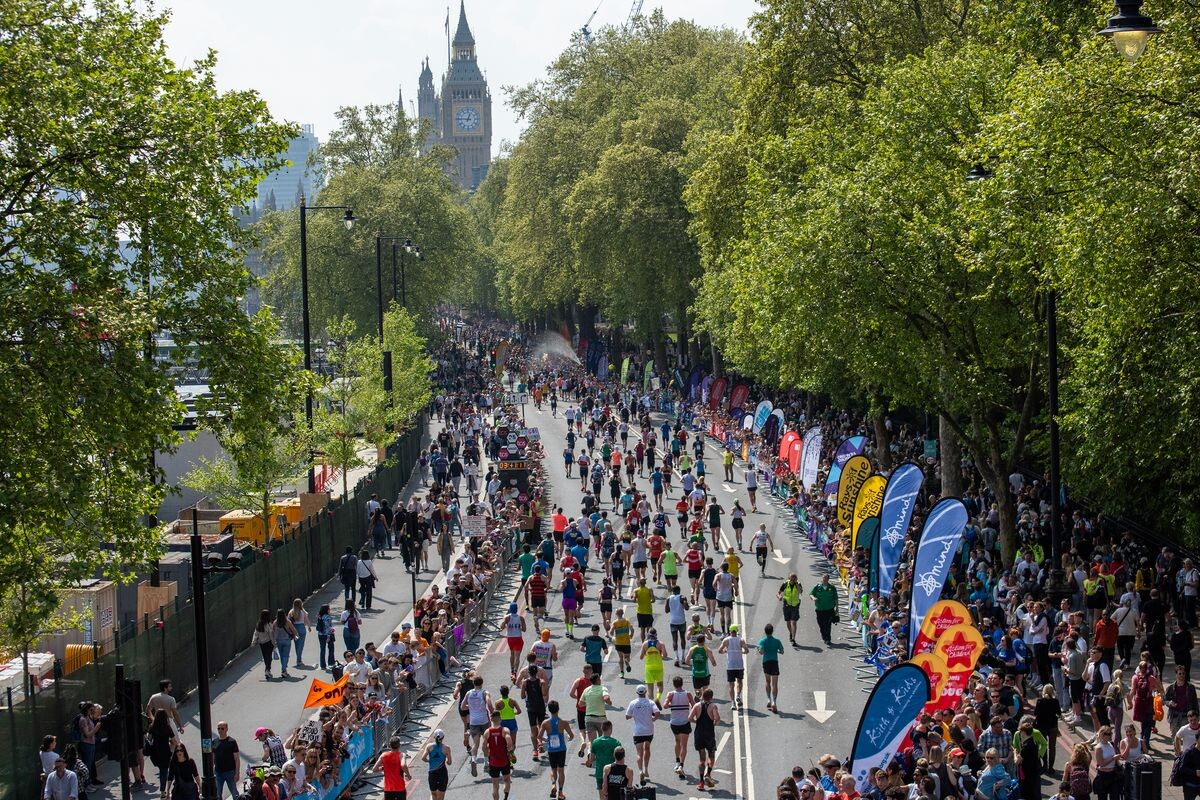
The stakes will be even higher for those targeting the LA 2028 Olympics.
The first British man and first British woman across the London Marathon finish line will be pre-selected for the 2028 Olympic marathon team, provided they achieve the Olympic qualifying standards, which are expected to be confirmed by the end of 2026.
However, pre-selection will not be the final step. Those athletes will still need to demonstrate their form through performances over different distances during the 2028 season before their Olympic places can ultimately be confirmed.
With London already one of the most prestigious marathons in the world, the 2027 edition now carries an added layer of national importance.
British marathoners will have more than a coveted London Marathon result on the line. For the leading athletes, the race could become the first major step towards Beijing 2027, while simultaneously opening the door to a potential Olympic journey ending in Los Angeles in 2028.
London 2027 is shaping up to be a defining race for Britain’s marathon ambitions — with Beijing and LA firmly on the horizon.
by Erick Cheruiyot for My Best Runs.
Login to leave a comment
TCS London Marathon
Since its inaugural edition on March 29, 1981, the TCS London Marathon has grown into one of the world's most prestigious road races, blending elite competition with an extraordinary charitable legacy. Founded by former Olympic champion and journalist Chris Brasher alongside Welsh athlete John Disley, the event has been staged every year and has been held in the spring annually...
more...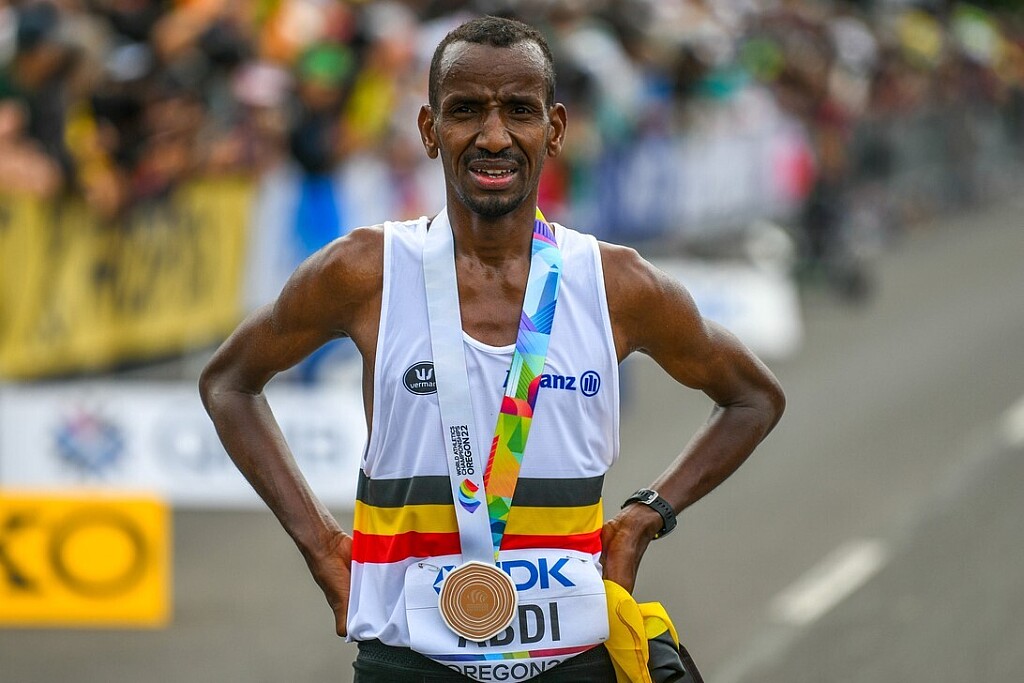
Bashir Abdi Joins Chicago Marathon Field As Alex Masai Withdraws 19 Days Before The Race
The Bank of America Chicago Marathon has delivered another major shake-up to its elite field, with European marathon record-holder Bashir Abdi joining the lineup just 19 days before race day, while Kenya’s Alex Masai has withdrawn from the October 11 showdown.
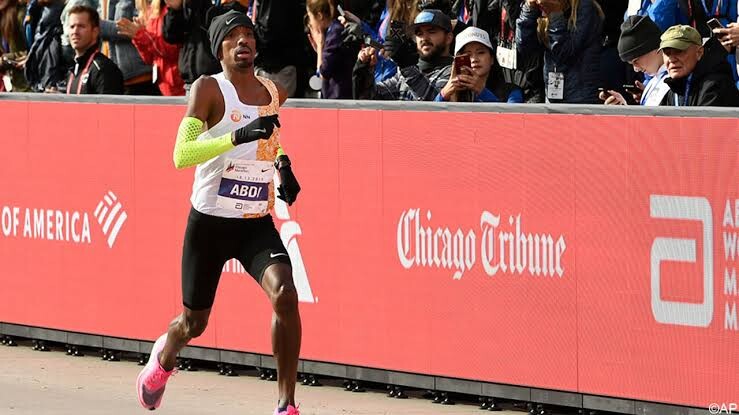
The latest update saw 16 athletes added and six withdrawn from the men’s and women’s elite fields, but Abdi’s arrival is undoubtedly the headline development.
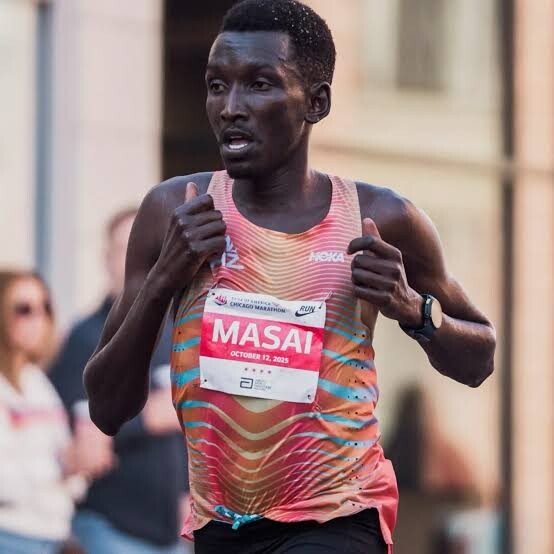
The 37-year-old Belgian owns the European marathon record of 2:03:36, set at the Rotterdam Marathon in 2021, and the mark still stands as the continental record.
Abdi also brings an impressive championship pedigree to Chicago. He won Olympic bronze at the Tokyo 2020 Games before upgrading to silver at the Paris 2024 Olympics, cementing his status as one of Europe’s leading marathoners of his generation.
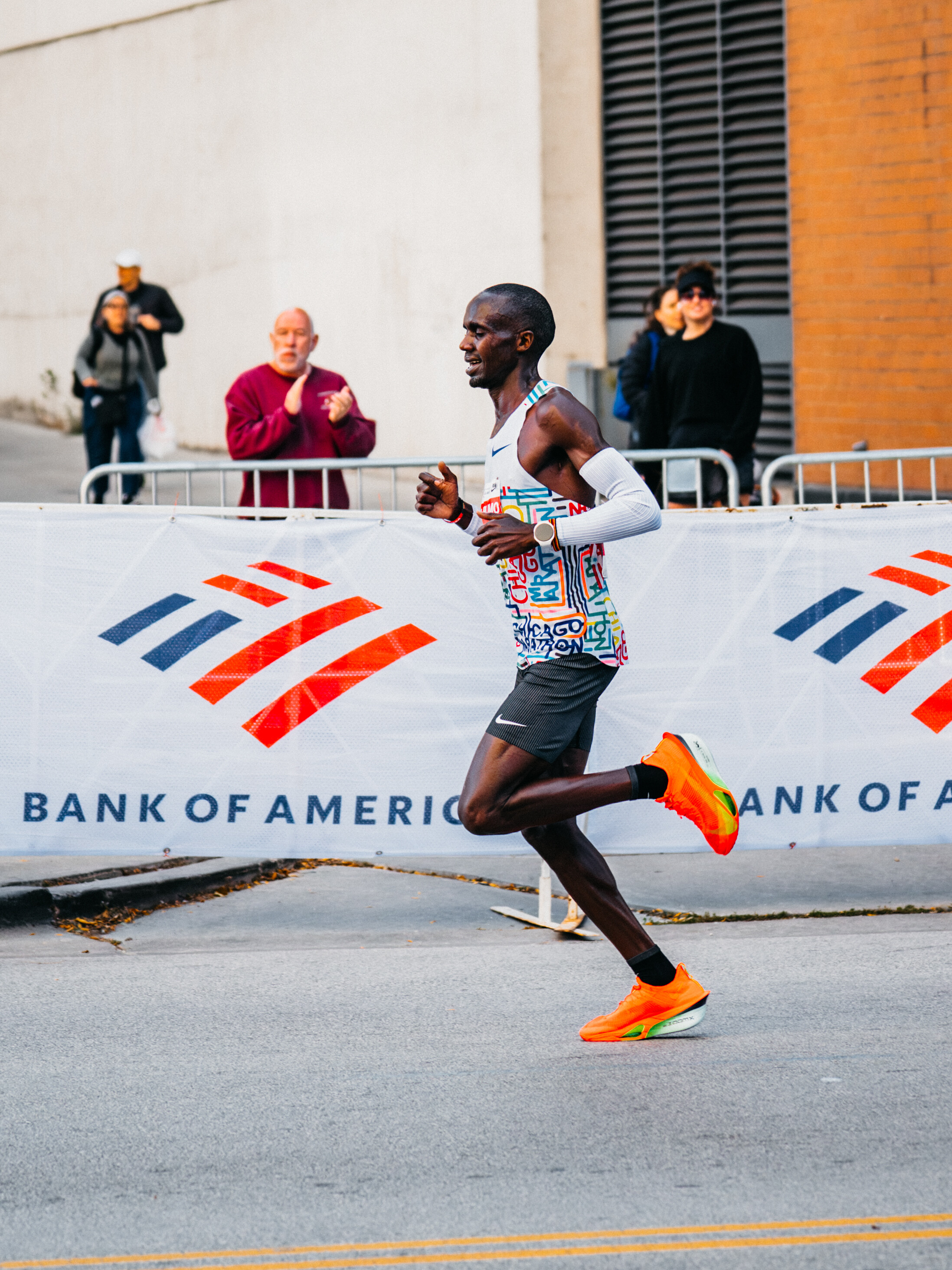
The Belgian is also familiar with the streets of Chicago. He finished 10th in last year’s race in 2:07:08, in a marathon won by Uganda’s Jacob Kiplimo in a spectacular 2:02:23.
Kiplimo returns this year to defend his Chicago title, adding another fascinating dimension to an already stacked men's field.
Masai’s withdrawal, meanwhile, removes one of last year’s podium finishers. The Kenyan finished third in 2:04:37 in 2025, behind Kiplimo and Amos Kipruto, and his absence changes the complexion of a race that had been expected to feature a number of familiar contenders from last year.
Chicago has been billing its 2026 elite lineup as one of the deepest in the race’s 48-year history, and the addition of a European record-holder this close to race day only strengthens that narrative.
Kiplimo remains the defending champion, but he will face a formidable group of challengers, with six men in the field having already broken 2:04.
Abdi’s late arrival adds another proven championship performer and record-holder to the mix, while Masai’s withdrawal removes a major Kenyan contender from the equation.
The latest changes also highlight how fluid elite marathon fields have become. Unlike in the past, when major-race lineups were largely settled months before the starting gun, today's biggest marathons can continue to evolve right up until race week.
And Chicago has certainly done so.
With just 19 days remaining, the defending champion is back, a European record-holder has entered the battle, and one of last year’s podium finishers is gone. The stage is set for another fascinating chapter on the streets of Chicago.
by Erick Cheruiyot for My Best Runs.
Login to leave a comment
Bank of America Chicago
Running the Bank of America Chicago Marathon is the pinnacle of achievement for elite athletes and everyday runners alike. On race day, runners from all 50 states and more than 100 countries will set out to accomplish a personal dream by reaching the finish line in Grant Park. The Bank of America Chicago Marathon is known for its flat and...
more...
London Marathon’s 2027 Elite Schedule Decided By Rock, Paper, Scissors
The 2027 TCS London Marathon has found a remarkably unconventional way to settle one of its biggest questions — with a game of rock, paper, scissors.
Kenyan marathon star Sabastian Sawe and Swiss wheelchair champion Catherine Debrunner, the reigning London Marathon champions in their respective races, went head-to-head in a contest overseen by an official Guinness World Records adjudicator.
Debrunner emerged victorious, securing Sunday, April 25, 2027, for the elite women’s and women’s wheelchair races. As a result, the elite men’s and men’s wheelchair races will open the historic weekend on Saturday, April 24.
The unusual showdown has also earned its place in the record books, with Guinness World Records recognising it as the first elite marathon race start ever decided by a game of rock, paper, scissors.
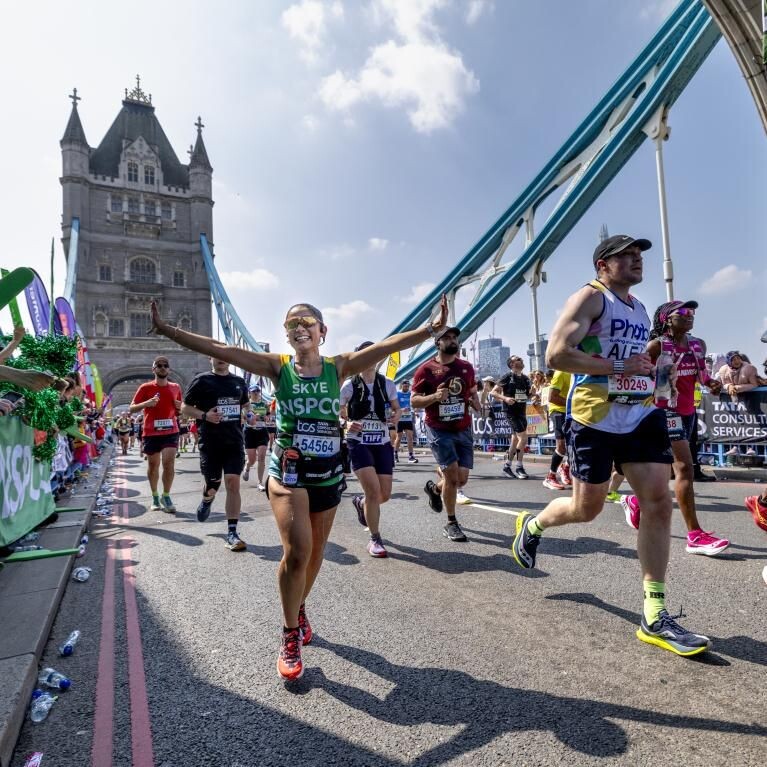
The decision adds another memorable chapter to what will already be an extraordinary edition of the London Marathon. For 2027 only, the race will be staged across two days, creating the Double TCS London Marathon, with around 100,000 participants expected to take part across the weekend.
Sawe enters the story as one of the defining figures of the 2026 London Marathon. The Kenyan made history by clocking 1:59:30, becoming the first athlete to run a sub-two-hour marathon in a record-eligible competitive race.
Debrunner, meanwhile, is a four-time London Marathon wheelchair champion, making her one of the most successful athletes in the event’s history. Her victory over Sawe means the women’s elite and women’s wheelchair races will retain the traditional Sunday spotlight.
The 2026 London Marathon also produced another landmark performance on the same course, with Ethiopia’s Tigst Assefa setting a women’s-only marathon world record.
The unprecedented two-day format was introduced following extraordinary demand for places. A record 1.33 million people applied for the 2027 London Marathon ballot, surpassing the previous record for any marathon.
With approximately 100,000 runners expected to finish on The Mall over the weekend — close to twice the size of the 2026 field — London is preparing for one of the biggest marathon weekends ever staged.
London Marathon Events chief executive Hugh Brasher added a playful warning after the rock-paper-scissors showdown, suggesting that while Sawe and Debrunner could settle the schedule with a game, the atmosphere would be considerably more competitive once the racing begins.
And so, before the first elite athlete has even reached the start line, the 2027 London Marathon has already made history — with its schedule decided not by the clock, but by rock, paper, scissors.
by Erick Cheruiyot for My Best Runs.
Login to leave a comment
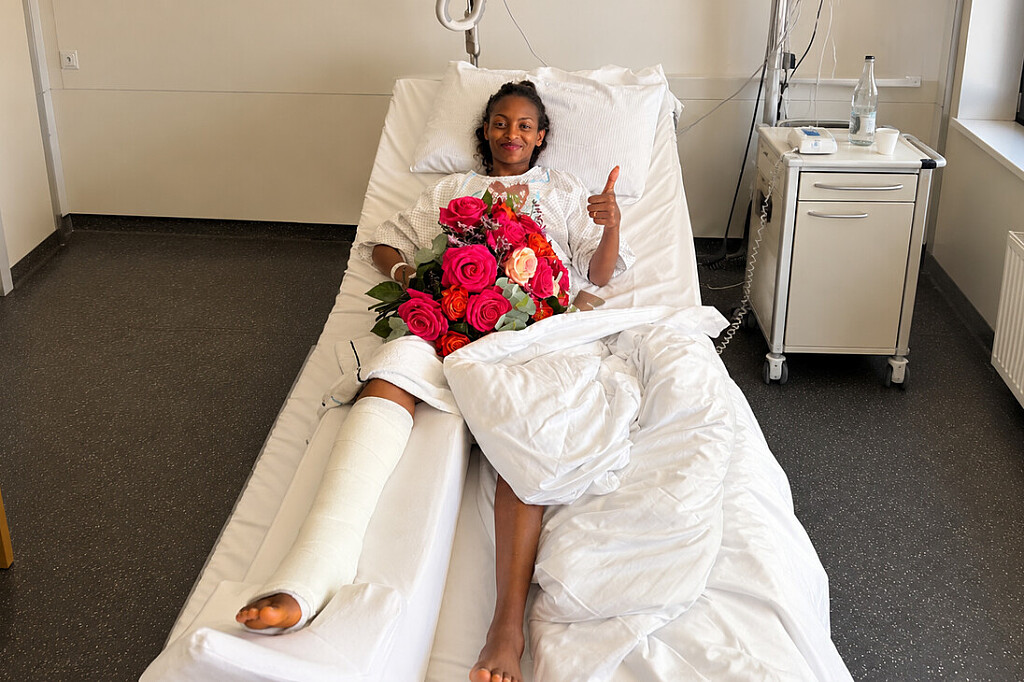
Tigst Assefa Vows To Return To Berlin And Chase The Marathon World Record After Achilles Surgery
Ethiopian marathon star Tigst Assefa has delivered a powerful message from her hospital bed after undergoing successful surgery on a completely ruptured right Achilles tendon suffered during her extraordinary victory at the 2026 BMW Berlin Marathon.
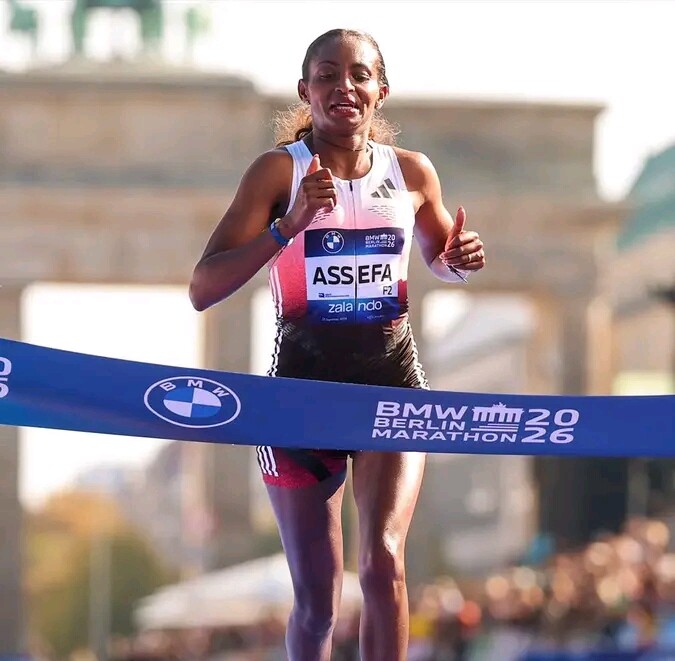
The 29-year-old produced one of the most remarkable performances of her career, winning the women’s race in 2:11:04 and setting a new Berlin Marathon course record. Her performance became even more extraordinary after it emerged that she suffered the serious injury during the closing stages of the race.
At around the 40-kilometre mark, Assefa developed a problem with her right leg, with her stride visibly affected as she approached the finish. Despite the severe discomfort, the Ethiopian refused to abandon the race.
She fought through the final kilometres and crossed the finish line to secure another memorable Berlin victory, before receiving immediate medical attention. Medical examinations later confirmed a complete rupture of her right Achilles tendon.
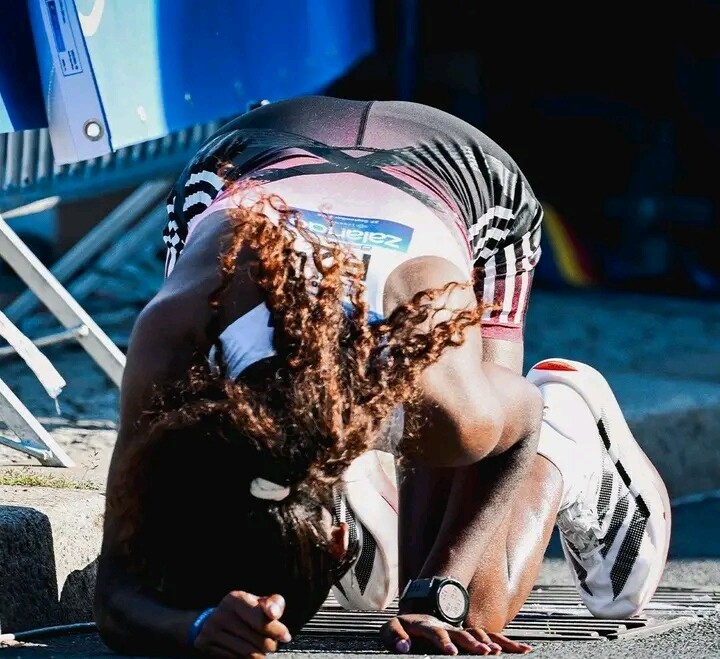
Assefa was subsequently taken for treatment in Germany and underwent successful surgery at a hospital south of Munich. She now faces the challenging rehabilitation process required to return to elite competition.
In her first message since the operation, Assefa expressed her heartfelt gratitude to supporters around the world who have sent messages of encouragement and concern.
She thanked the global running community for standing beside her during the difficult period, saying she was deeply moved by the tremendous support she had received.
But the most striking part of her message was her determination to look beyond the injury and towards the future.
“I will definitely return to Berlin, and then I will break the world record,” Assefa said.
The declaration underlines the extraordinary ambition that has defined her marathon career. Berlin has played a particularly important role in her rise to the top of the sport.
Assefa first won the Berlin Marathon in 2022 before producing a historic performance the following year, when she ran 2:11:53 to establish a then-world record.
Although the women's marathon world record has since been lowered to 2:09:56, Assefa remains one of the most formidable marathoners in history. Her latest 2:11:04 victory also stands as the fastest women's performance ever recorded on the Berlin Marathon course.
Her latest triumph therefore carries a remarkable mixture of achievement and adversity. She not only secured the victory and course record but did so while suffering an injury that ultimately required surgery.
Now, a different race begins for the Ethiopian superstar — one that will demand patience, rehabilitation and resilience rather than simply speed and endurance.
Whether she can return to her best remains a question for the future, but Assefa's message has already made her intentions unmistakably clear.
Berlin may have witnessed her latest triumph, but Tigst Assefa believes her unfinished business with the German capital has only just begun.
by Erick Cheruiyot for My Best Runs.
Login to leave a comment
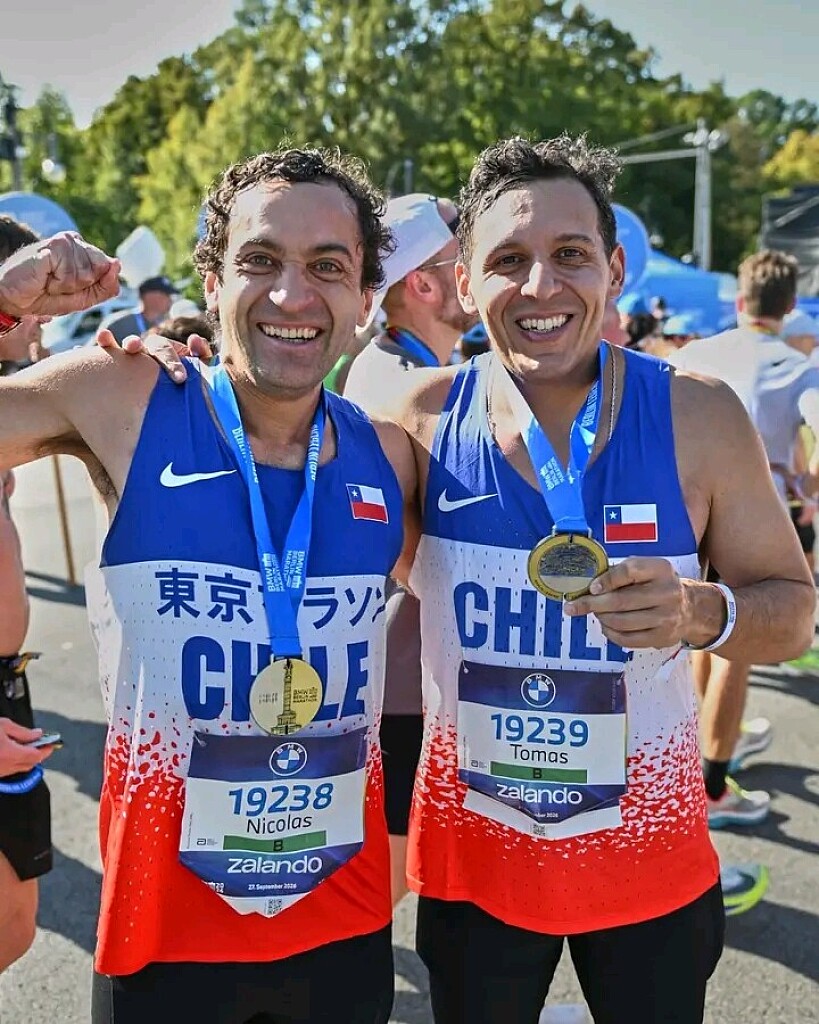
Chilean Duo Chase History With Ambitious Abbott World Marathon Majors Slam
Two Chilean athletes, Tomás and Nicolás, are chasing a remarkable piece of marathon history as they attempt to complete all seven Abbott World Marathon Majors races in a single calendar year.
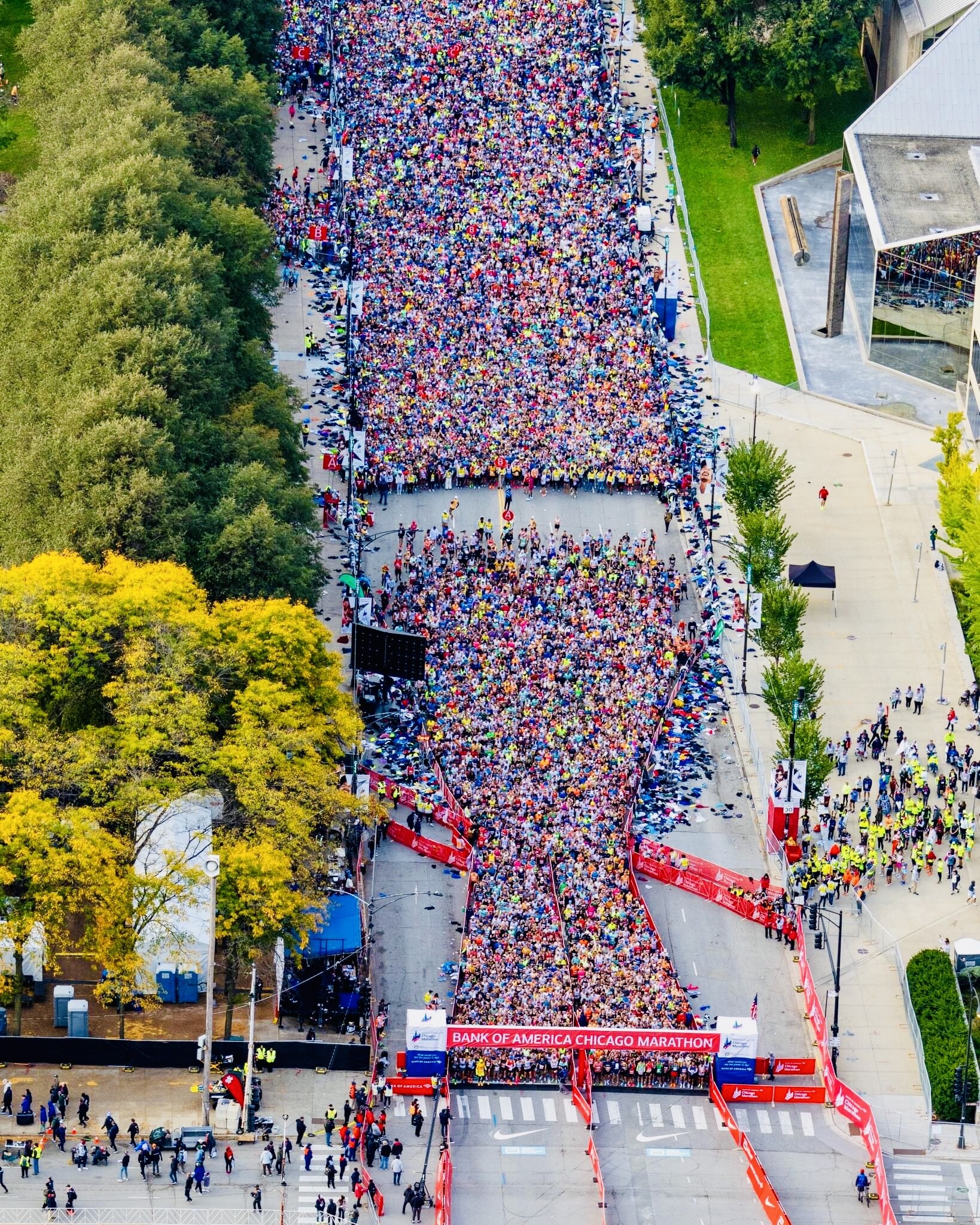
Their ambitious journey began with a clear objective: to race the world’s biggest marathon stages throughout 2026 and become the first athletes from Chile to complete an Abbott World Marathon Majors Slam.
Their challenge has taken them across continents, following the prestigious Major circuit from one iconic city to another. Each race has brought a different course, atmosphere and test of endurance, but the ultimate goal has remained unchanged — reaching the finish line of every Major in the same year.
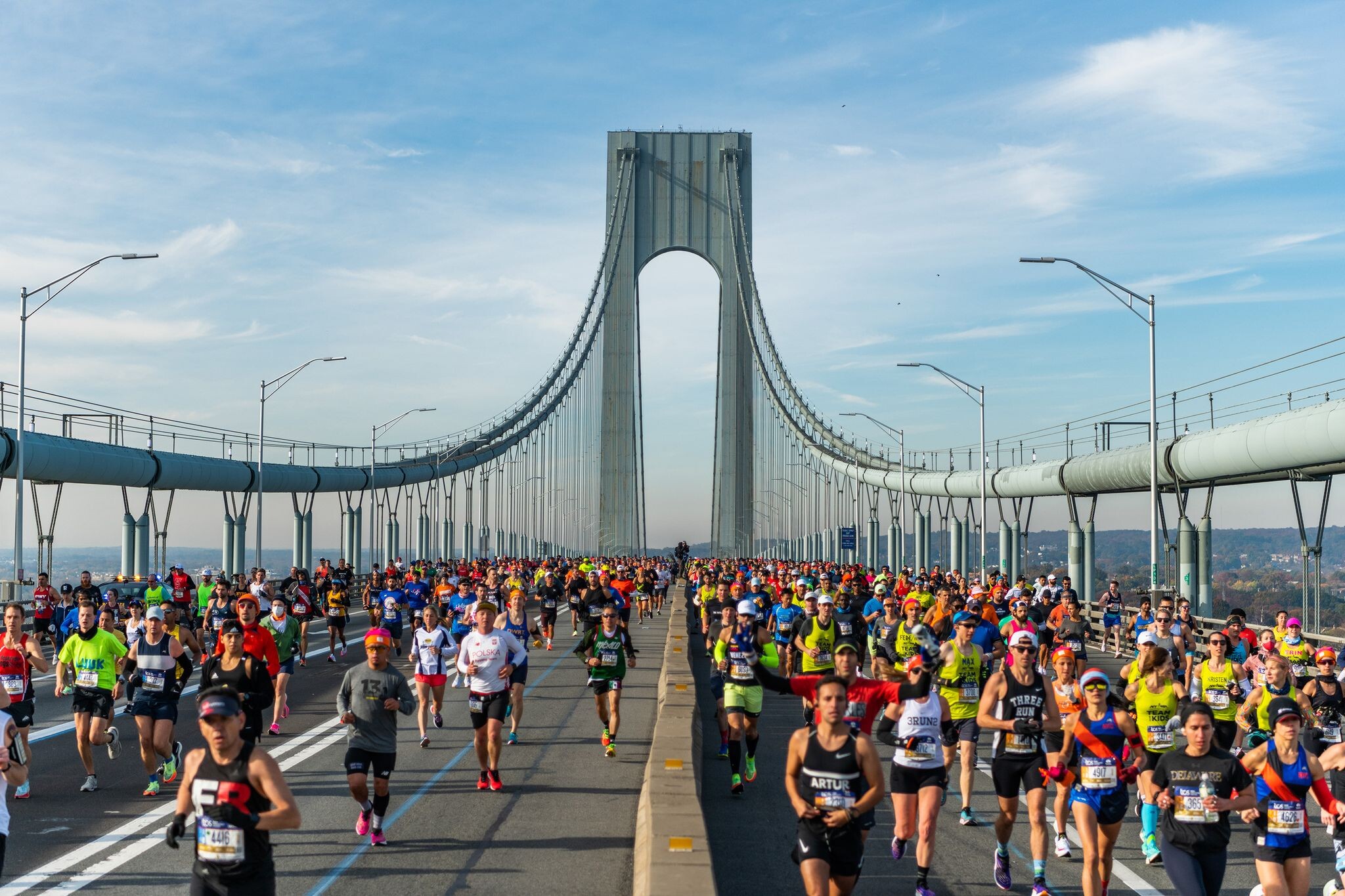
The journey is demanding not only because of the physical challenge of racing seven world-class marathons, but also because of the travel, recovery and preparation required between events. Moving from one international marathon to another leaves little room for error, making consistency and resilience just as important as speed.
For Tomás and Nicolás, every starting line represents another step towards a milestone that would carry special significance for Chilean distance running. Their campaign has turned the marathon calendar into a year-long adventure, with each race adding another chapter to a story that could ultimately end in the heart of New York City.
With the series now approaching its final stages, Tomás and Nicolás are closing in on a destination that could complete their extraordinary journey: Central Park in New York City, where the 2026 New York City Marathon will be held on November 2.
They are not alone in the pursuit. Fifty-three athletes are currently on course for an Abbott Slam in 2026, creating an intriguing race against time as the remaining Majors determine who will ultimately complete the demanding seven-race challenge.
Before New York, however, the athletes still have another major chapter to write in Chicago, where the Bank of America Chicago Marathon will provide the next opportunity to keep their dreams alive.
For Tomás and Nicolás, this is about more than collecting marathon medals. It is a journey representing Chile on some of the most prestigious stages in global distance running — with the possibility of ending the year as the first Chileans to accomplish something truly historic.
Chicago is next. New York awaits. And the dream of a Chilean Abbott Slam is getting closer to reality.
by Erick Cheruiyot for My Best Runs.
Login to leave a comment
Bank of America Chicago
Running the Bank of America Chicago Marathon is the pinnacle of achievement for elite athletes and everyday runners alike. On race day, runners from all 50 states and more than 100 countries will set out to accomplish a personal dream by reaching the finish line in Grant Park. The Bank of America Chicago Marathon is known for its flat and...
more...
LA28 Olympic Flame To Make History With First-Ever Journey Through All 50 U.S. States
The Olympic flame is preparing for a journey unlike any it has made before.
For the first time in Olympic history, the flame heading to the Los Angeles 2028 Olympic Games will travel through all 50 U.S. states, bringing one of the Games’ most enduring traditions directly into communities across the country.
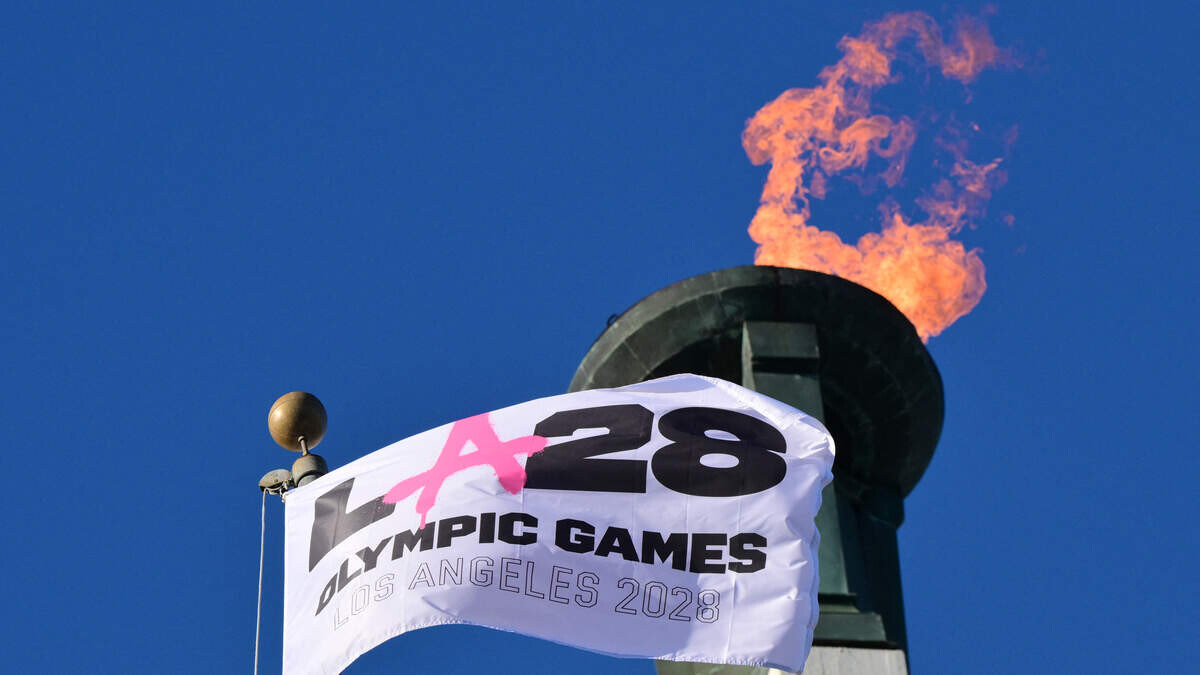
The historic American chapter will begin in Atlanta, Georgia, the host city of the 1996 Olympic Games and the last U.S. city to stage a Summer Olympics. Thirty-two years after the Atlanta flame was extinguished, the Olympic flame will return to the city to begin its extraordinary journey toward Los Angeles.
Before reaching American soil, the flame will be ceremonially lit in Olympia, Greece, the birthplace of the ancient Olympic Games. From there, it will make its way to the United States before beginning a nationwide relay in spring 2028. The complete route is expected to be announced in 2027.
50 STATES. ONE FLAME. ONE JOURNEY.

From Hawaii to North Dakota and from South Dakota to California, the relay is being designed to showcase communities, landmarks, cultural celebrations and major events across the United States.
LA28 says the relay will be one of the largest in Olympic history, with the flame passing through iconic locations and bringing celebrations to selected cities along the way. The journey is intended to give people across the country an opportunity to experience the Olympic spirit before the Games officially begin in Los Angeles.
The public will also have an opportunity to become part of the history. LA28 has confirmed that members of the general public will be eligible to be nominated as torchbearers, although further details about the nomination process will be announced later.
The full route remains under development, meaning the landmarks, cities and communities that will welcome the flame are still to be revealed. What is already certain, however, is the scale of the journey: every U.S. state will have a place in the Olympic Torch Relay for the first time.
THE OLYMPIC STORY WILL CONTINUE
The flame's journey will not be the only torch relay connected with LA28.
Following the conclusion of the Olympic Games, the Paralympic Torch Relay will begin in August 2028. Its flame will originate in Stoke Mandeville, United Kingdom, the birthplace of the Paralympic Movement, before continuing its own journey toward Los Angeles. The starting point of the U.S. portion of that relay will be announced at a later date.
The LA28 Paralympic Games are scheduled for 15–27 August 2028, marking Los Angeles' first time hosting the Paralympic Games.
For LA28, the Olympic flame will therefore become more than a symbol carried toward an opening ceremony. It will become a moving connection between communities separated by thousands of miles, linking America's Olympic past in Atlanta with its Olympic future in Los Angeles.
One flame. Fifty states. Millions of people. One extraordinary road to LA28.
by Erick Cheruiyot for My Best Runs.
Login to leave a comment
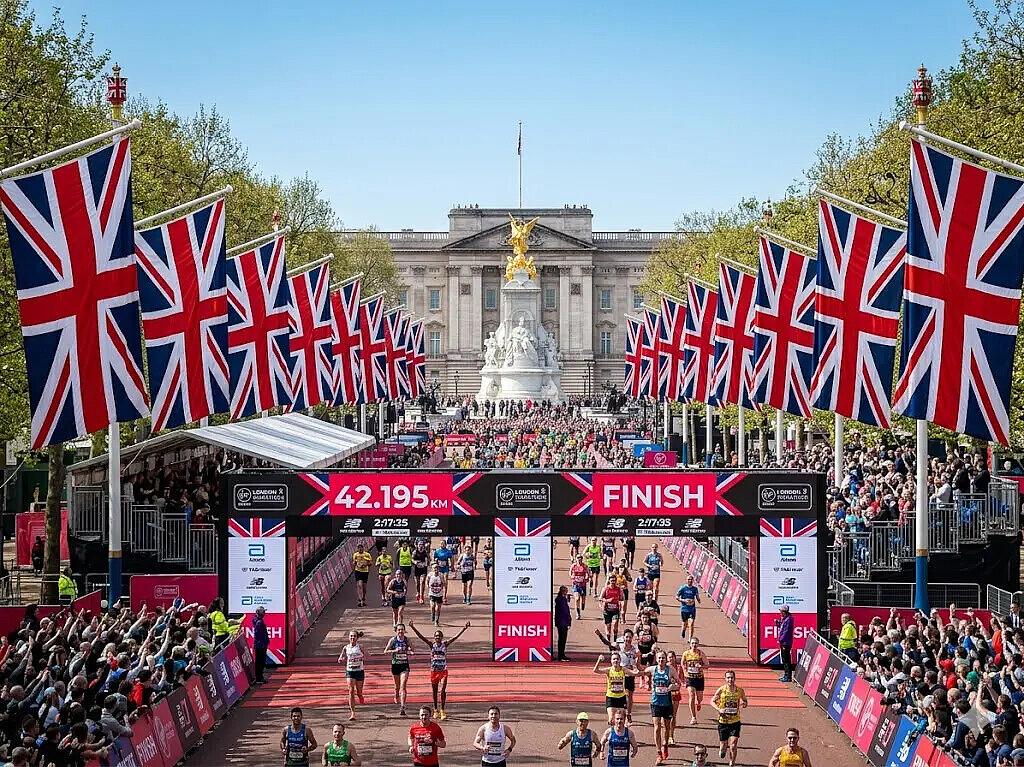
London Marathon Makes History With 100,000 Runners Across Two Days In 2027
The TCS London Marathon is preparing to make history in 2027, with the world-famous race set to become a two-day event for the first time.
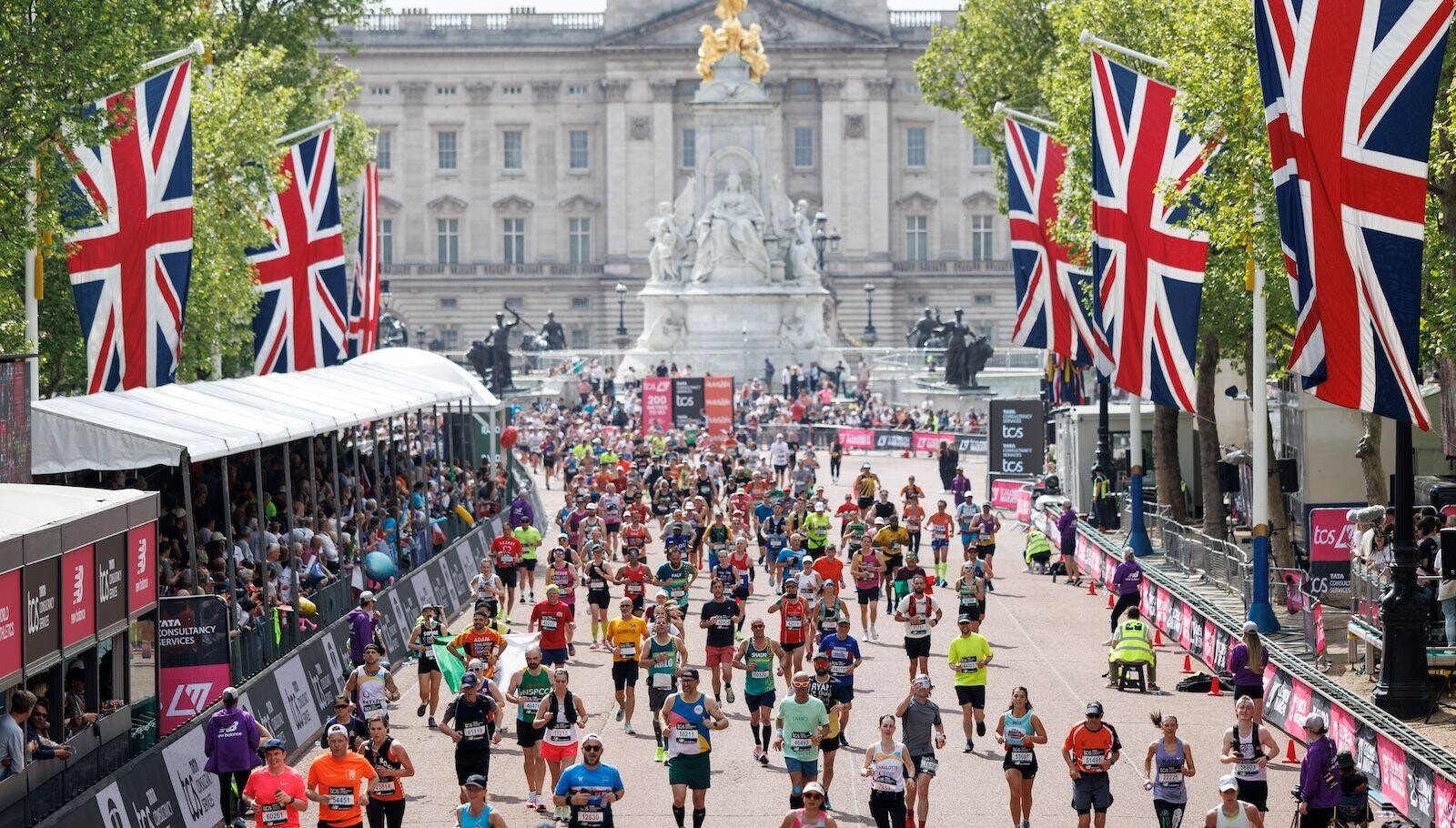
The landmark edition will take place on Saturday, April 24, and Sunday, April 25, 2027, bringing together an unprecedented 100,000 participants across the weekend in a one-off expansion of one of the world's most prestigious marathons.
Known as the 2027 Double TCS London Marathon, the historic weekend will give thousands more runners the opportunity to experience the legendary course from Greenwich to Westminster, while elite athletes and mass participants share the spotlight across two days.
The decision to introduce the two-day format follows extraordinary demand for places. More than 1.33 million people entered the ballot for the 2027 marathon, underlining the enormous global appeal of the London Marathon.
DOUBLE BILL!
For the first time in the event's history, the elite programme will be spread across two days, creating a unique weekend of world-class marathon racing.
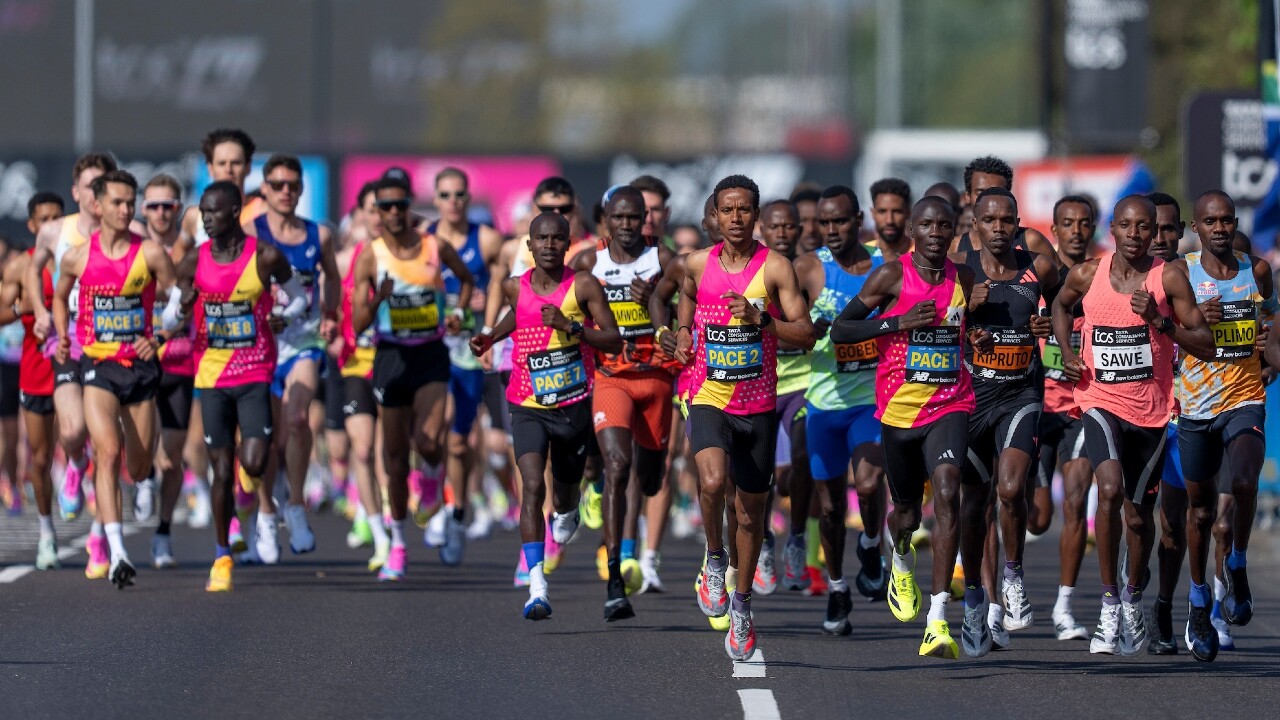
SATURDAY, APRIL 24
1. Elite Men's Wheelchair
2. Elite Men
3. Men's Championships and Good For Age
Saturday will put the spotlight on the men's competition, with the elite men's wheelchair race and elite men's marathon forming the centrepiece of the opening day. Men's Championship and Good For Age runners will also take to the iconic London course.
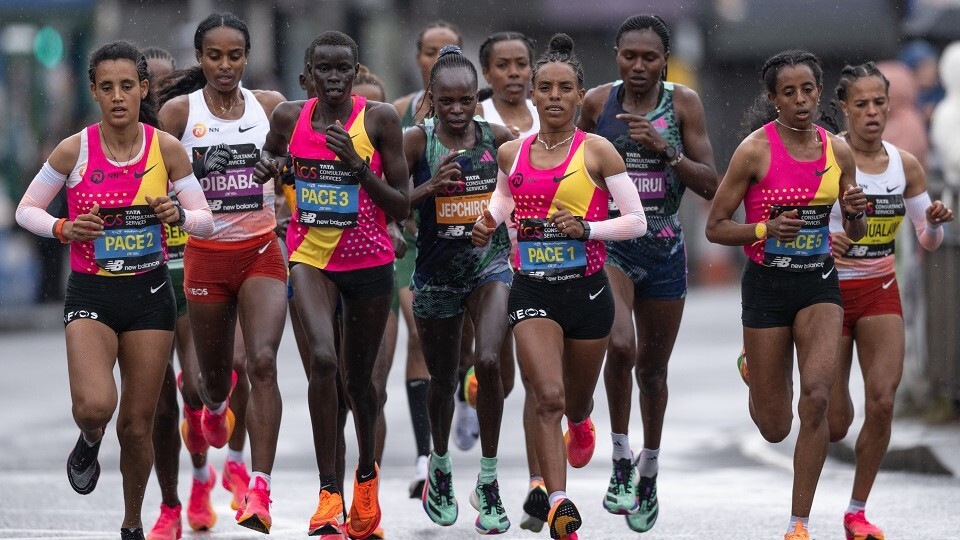
SUNDAY, APRIL 25
1. Elite Women's Wheelchair
2. Elite Women
3. Women's Championships and Good For Age
Sunday will then belong to the women's field, with the elite women's wheelchair and elite women's marathon races followed by the Women's Championships and Good For Age categories.
The two-day arrangement will create a completely different atmosphere around the London Marathon, allowing the world's leading athletes and thousands of amateur runners to share the spotlight across an extraordinary weekend.
A Marathon Weekend Like No Other
Despite the expanded format, the event will retain the character that has made the London Marathon one of the world's most recognisable road races.
Runners will once again take on the iconic route through the streets of the British capital, beginning in the Greenwich area before making their way towards the famous finish in central London.
The 2027 edition will also provide an enormous platform for spectators, charities, volunteers and running communities from across the globe to become part of a historic occasion.
More Than Just A Race
The 2027 Double is expected to become much more than a marathon. It will be a huge celebration of running, charity and London communities, bringing together recreational runners, elite athletes, volunteers, spectators and supporters from around the world.
The London Marathon has long been recognised as one of the world's major fundraising events, and the expanded 2027 edition is expected to create even greater opportunities for charities and community organisations to raise money.
Organisers have projected that the 2027 Double could generate more than £150 million for good causes, while also delivering a significant economic and social contribution to the United Kingdom.
The wider celebrations will also include the TCS Mini London Marathon, ensuring that young runners have their own opportunity to be part of this historic weekend.
One Historic Weekend, One Iconic Race
Although the 2027 edition will look very different from previous London Marathons, the two-day format is planned as a one-off change for 2027.
With 100,000 participants, two days of elite competition and a mass field representing runners from around the world, the 2027 TCS London Marathon is set to become one of the most extraordinary editions in the event's history.
From world-class wheelchair athletes and elite marathoners to Championship competitors, Good For Age runners and thousands of recreational participants, London will become the centre of the global running world for one unforgettable weekend.
by Erick Cheruiyot for My Best Runs.
Login to leave a comment
TCS London Marathon
Since its inaugural edition on March 29, 1981, the TCS London Marathon has grown into one of the world's most prestigious road races, blending elite competition with an extraordinary charitable legacy. Founded by former Olympic champion and journalist Chris Brasher alongside Welsh athlete John Disley, the event has been staged every year and has been held in the spring annually...
more...
Elizabeth Laseter Makes Beer Mile History With Fourth Straight World Title In Cologne
Elizabeth Laseter has once again conquered the beer mile, capturing her fourth consecutive Beer Mile World Classic title in a breathtaking women’s final in Cologne, Germany.
The American food writer clocked 5:56.1 at the 12th Beer Mile World Classic on September 18, holding off world-record holder Shelby Houlihan by just 0.8 seconds in the closest women’s finish in championship history.
The final brought together three of the biggest names in women’s beer-mile racing for the first time: Houlihan, the world-record holder; Laseter, the three-time defending champion; and Melanie Pozdol, renowned as the sport’s fastest chugger.
What followed was a race for the ages.
Laseter had built a small advantage alongside Pozdol by the third beer, widely regarded as one of the most difficult stages of the beer mile. But Houlihan refused to let the race slip away.
The world-record holder produced a ferocious closing lap, running the final circuit in around 59 seconds, and suddenly all three women were level heading into the final bend.
From there, it became a three-way sprint for the world title.
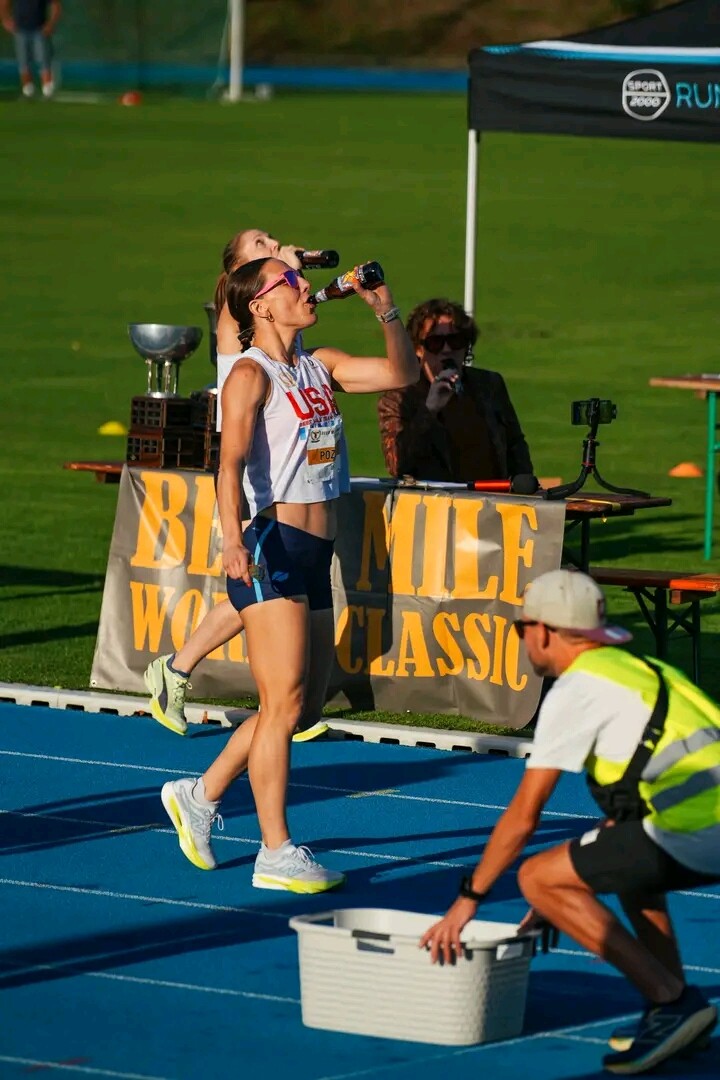
Laseter found the extra strength when it mattered most, crossing the line first in 5:56.1 to secure her fourth straight championship. Houlihan followed in 5:56.9, while Pozdol completed the podium in 5:57.9, setting a personal best and moving to third on the all-time list.
The margin between the three was just 1.8 seconds.
It was a landmark moment for the discipline. Before Cologne, only two women had ever broken the six-minute barrier in the beer mile. Now, three have done it — in the same race.
Laseter’s victory also saw her lower her own Beer Mile World Classic championship record, adding another achievement to an already remarkable run of dominance.
Houlihan, however, remains the outright women’s beer mile world-record holder with her spectacular 5:43.81 run in Berlin in 2023.
And Laseter’s celebration provided the perfect ending to an unforgettable night. At the finish line, she marked her fourth world title with a shoey, pouring beer into her running shoe and drinking from it as the celebrations began.
The men’s race produced another remarkable achievement, with Corey Bellemore extending his dominance by winning his sixth consecutive Beer Mile World Classic title.
But Cologne belonged to Laseter and a women’s final that pushed the boundaries of the discipline.
Three women under six minutes. Just 1.8 seconds separating them. A championship record. A fourth consecutive world title. And a finish that came down to the final few metres.
Elizabeth Laseter did not simply defend her crown — she turned the 2026 Beer Mile World Classic into another chapter of her own remarkable story, proving once again that when the race reaches its most unforgiving moment, she knows exactly how to find that final ounce of strength. Four beers, four laps, four straight world titles — and a shoe full of beer to celebrate it all.
by Erick Cheruiyot for My Best Runs.
Login to leave a comment
