

Running News Daily
Running News Daily is edited by Bob Anderson and team. Send your news items to bob@mybestruns.com Advertising opportunities available.
Index to Daily Posts · Sign Up For Updates · Run The World Feed
Articles tagged #Italy
Today's Running News
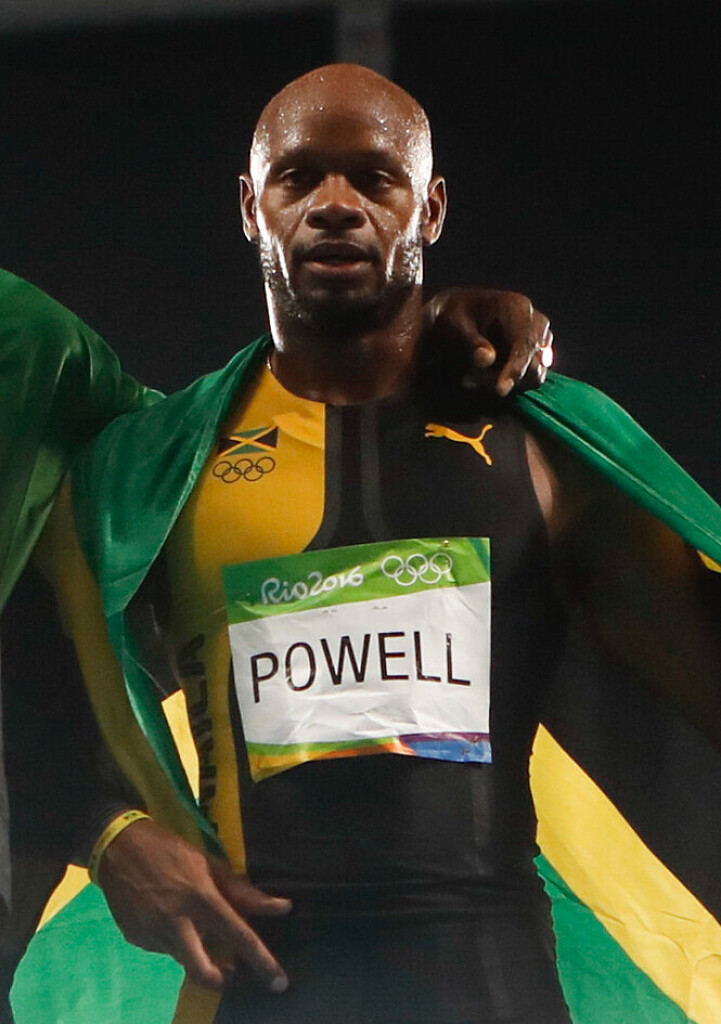


Asafa Powell Begins a New Chapter, Bringing World-Class Sprinting Experience to the Next Generation
Former 100-metre world record holder Asafa Powell is preparing to channel his experience from the highest level of international athletics into coaching and high-performance consultancy, with the aim of helping the next generation of sprinters reach their full potential.
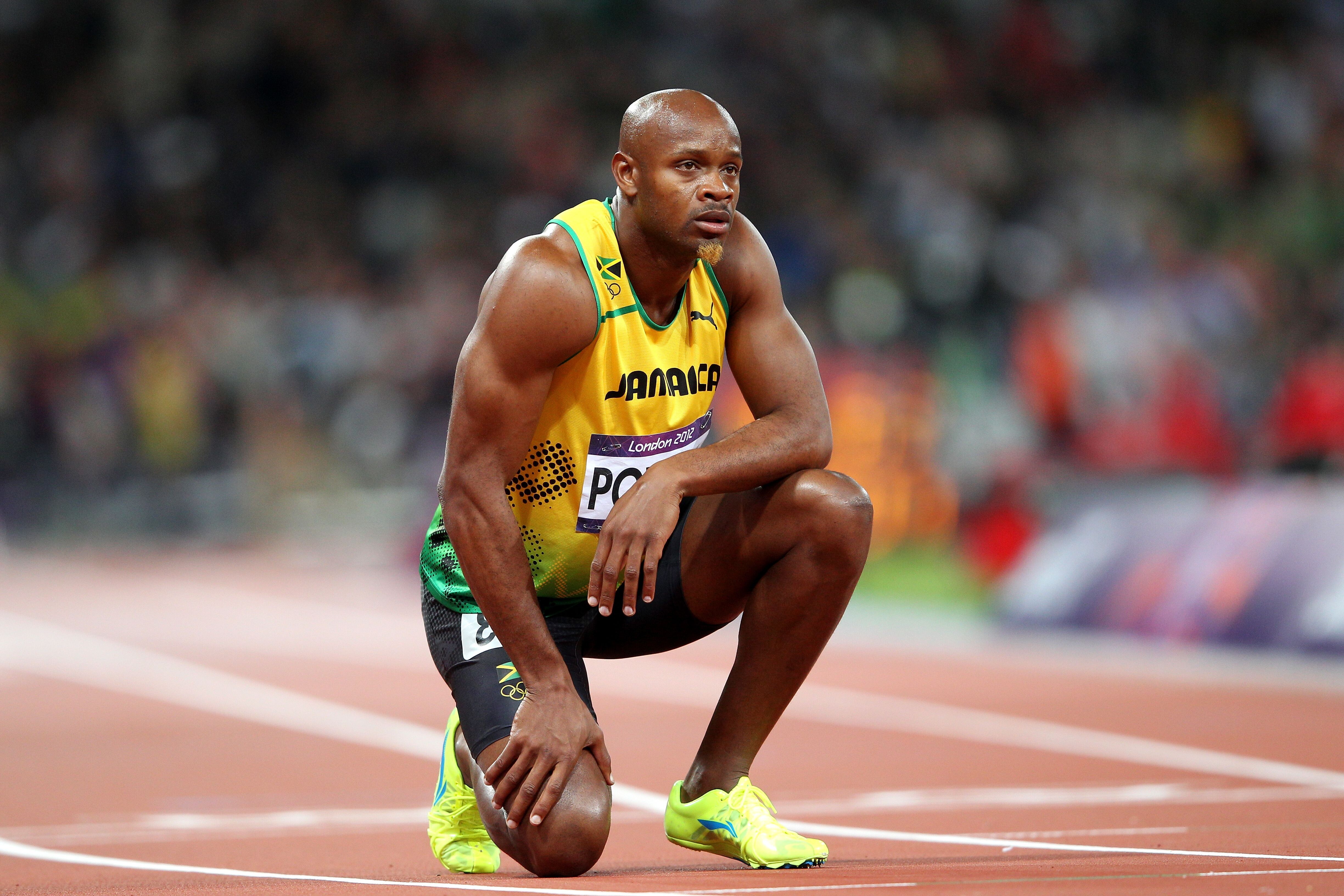
The Jamaican sprint legend, who spent more than two decades competing against the world's fastest athletes, is now looking to share the knowledge, discipline and technical understanding he developed throughout his distinguished career. His move into mentorship offers an opportunity to pass on lessons learned through years of competing on the biggest stages in track and field.
Powell's reputation was built on extraordinary speed and consistency. He set the men's 100m world record of 9.77 seconds in Athens in June 2005 before lowering it to 9.74 seconds in Rieti, Italy, in September 2007. He subsequently recorded a personal best of 9.72 seconds at the Lausanne Athletissima meeting in 2008, establishing himself among the fastest men in athletics history.
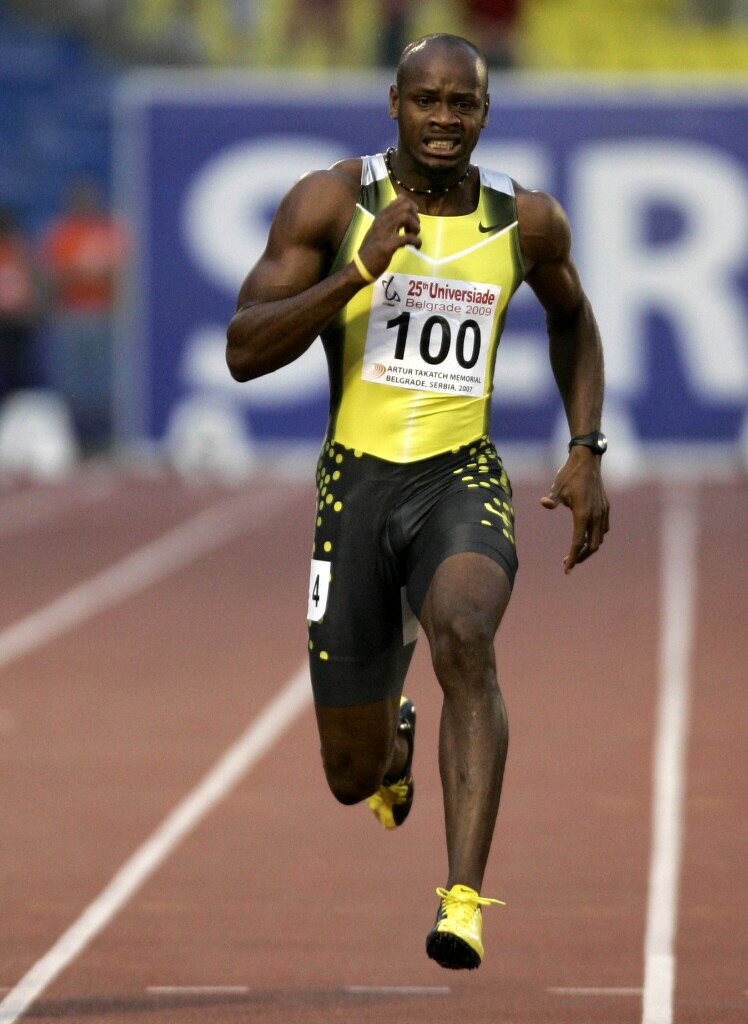
Beyond his personal best, Powell became renowned for his remarkable ability to run under 10 seconds. He recorded more than 90 sub-10-second performances during his career, a testament to his consistency and longevity in an event where the smallest technical details can determine the outcome.
Although Powell never won an Olympic individual 100m medal, he achieved significant success on the international stage, including winning gold with Jamaica's 4x100m relay team at the 2008 Beijing Olympics and the 2016 Rio Olympics. His experience also spans multiple World Championships and years of competing against sprinting greats, giving him valuable insight into the demands of elite performance.
Transitioning into coaching and high-performance consultancy provides Powell with a new platform to influence the sport beyond his own competitive achievements. His experience could help emerging sprinters understand the importance of starting technique, acceleration, maximum-velocity mechanics, race preparation, recovery and the mental demands of performing under pressure.
For young athletes hoping to establish themselves internationally, learning from someone who has experienced the challenges of elite sprinting firsthand could prove invaluable. Powell's journey demonstrates that success at the highest level requires more than natural speed; it also demands consistency, patience and the ability to perform when the stakes are highest.
As Jamaican sprinting continues to inspire athletes across the globe, Powell's next chapter could see his influence extend from the track to the training ground, where he can help shape future competitors.
The man who once held the world record is now looking toward a different kind of legacy: helping others discover how fast they can run.
by Erick Cheruiyot for My Best Runs.
Login to leave a comment
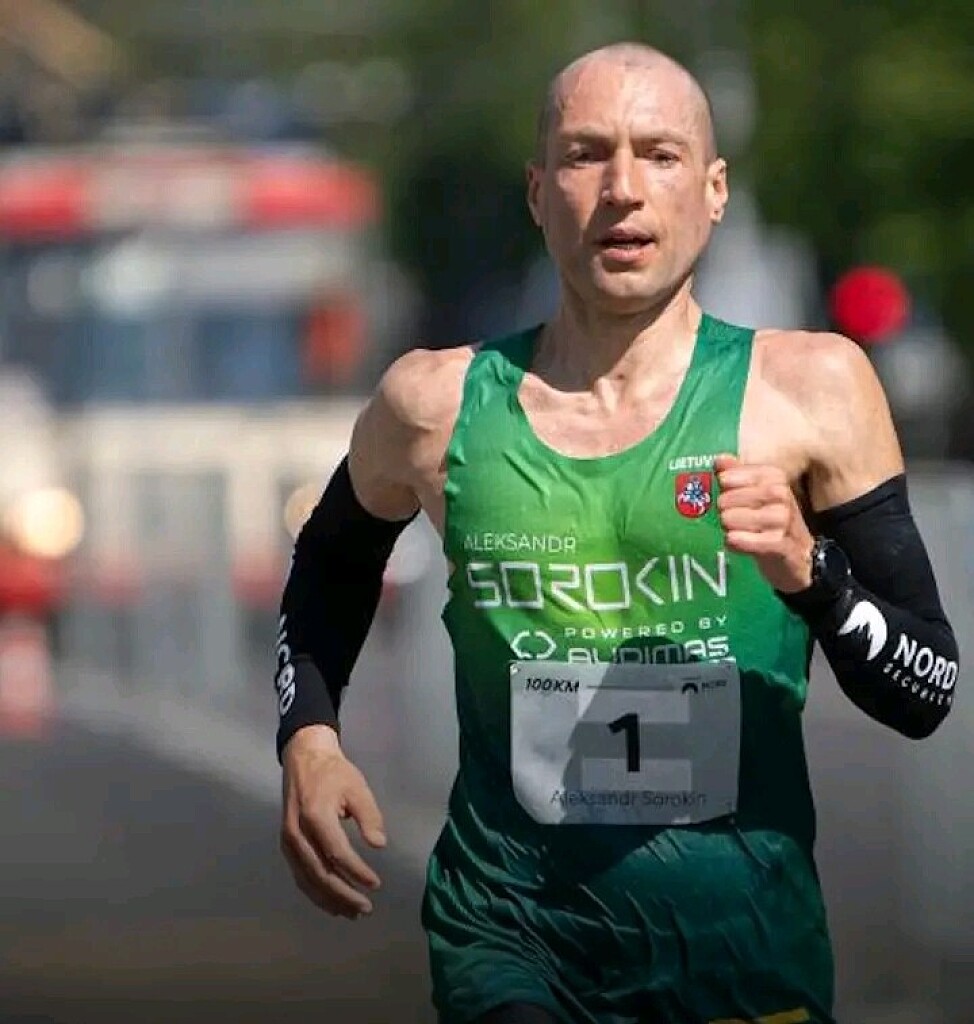
Aleksandr Sorokin’s Five Ultra-Running World Records Show Just How Far Human Endurance Can Be Pushed
Ultra-running is a sport where the finish line keeps moving farther away. While most runners measure their limits in kilometres and hours, the world’s greatest ultrarunners are competing on an entirely different scale—pushing their bodies across distances and durations that are difficult to comprehend.
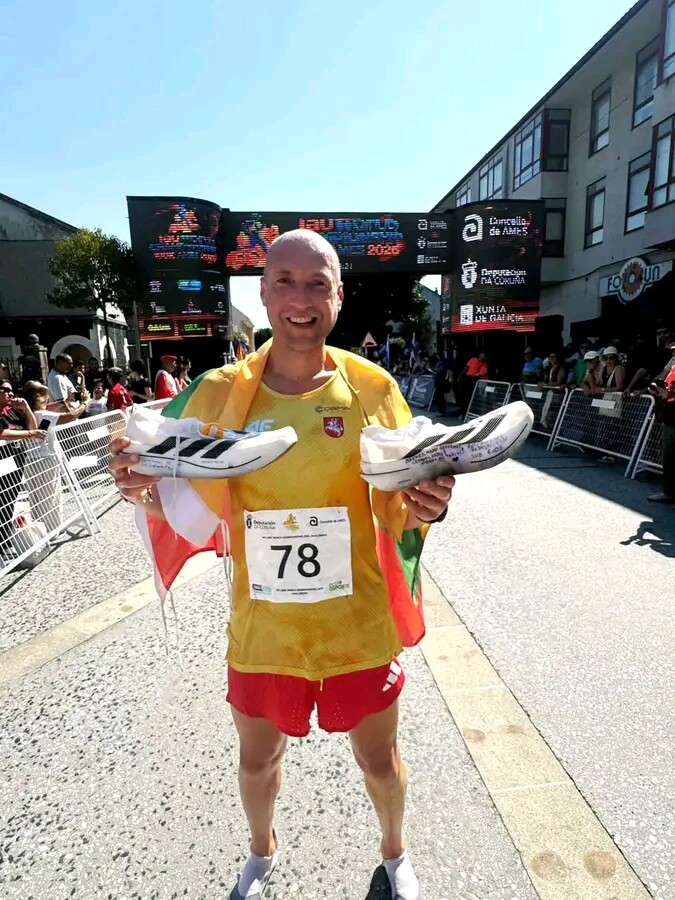
At the centre of that extraordinary world is Lithuania’s Aleksandr Sorokin, who holds five of the records featured in the graphic: the 100km, 100-mile, six-hour, 12-hour and 24-hour world records.
His 100km world record of 6:05:35, set in Vilnius in May 2023, is perhaps the easiest place to appreciate the magnitude of his achievement. Sorokin averaged roughly 3:39 per kilometre for more than six hours, covering the marathon distance in approximately 2:32:30 before maintaining his remarkable rhythm deep into the race. The performance was later ratified as the official world record.
Then comes the 100-mile world record of 10:51:39, making Sorokin the first man to break the 11-hour barrier over the distance. He also holds the six-hour record with 98.496 kilometres and the 12-hour record with 177.410 kilometres.
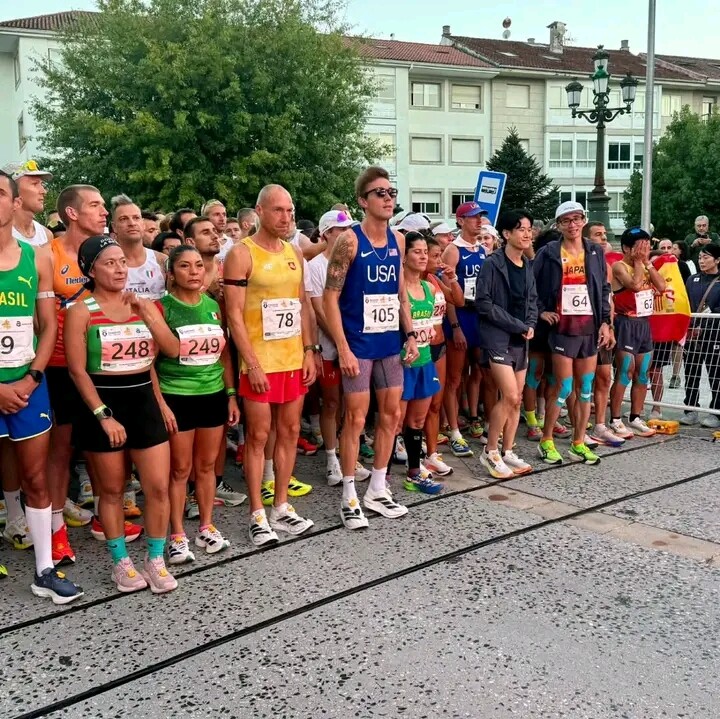
His 24-hour record takes the numbers into another dimension. In Verona, Italy, in 2022, Sorokin covered 319.614 kilometres in 24 hours—an average pace of approximately 4:30 per kilometre. That is equivalent to more than 15 marathons in a single day, a distance that illustrates the extraordinary combination of speed, endurance, nutrition, pacing and resilience required at the highest level of ultrarunning.
But Sorokin is not alone in rewriting the boundaries of endurance. Belgium’s Matthieu Bonne covered 1,045.519 kilometres in six days in Balatonfüred, Hungary, in September 2024. His performance surpassed Yiannis Kouros’ long-standing mark of 1,036.800 kilometres, with Bonne averaging more than 174 kilometres per day across the six-day event.
The challenge becomes even more unusual in the backyard ultra, where runners complete a 6.706-kilometre loop every hour, with a new loop beginning at the start of each hour. Australia’s Phil Gore has pushed that format to an extraordinary level, reaching 119 loops, equivalent to roughly 798 kilometres, at Dead Cow Gully in Queensland in 2025.
These performances reveal a side of running that exists far beyond the traditional marathon. The marathon may represent the ultimate endurance challenge for many athletes, but ultrarunning asks a different question: how long can the human body continue moving when the distance, fatigue and time seem to have no obvious end?
From Sorokin’s six-hour rhythm to Bonne’s six-day battle and Gore’s relentless backyard loops, these athletes continue to redefine the boundaries of distance running—and turn numbers that seem impossible on paper into world records on the road, track and trail.
by Erick Cheruiyot for My Best Runs.
Login to leave a comment

Femke Bol and Ben Broeders Celebrate Their Love in Dream Sardinia Wedding Weekend
After another memorable chapter in her athletics career, Dutch star Femke Bol has found another beautiful reason to celebrate away from the track.

Bol and Belgian pole vaulter Ben Broeders have marked their marriage with a spectacular wedding celebration in Sardinia, Italy, surrounded by family, friends and fellow athletes.
The couple had already exchanged vows earlier this year, tying the knot in a private civil ceremony in Amersfoort on February 21, 2026. The intimate occasion was kept largely away from the spotlight before the couple later shared their happiness with the public.
Months later, they gathered their closest loved ones for a larger celebration on the Italian island, turning the occasion into a memorable wedding weekend filled with sunshine, elegant white outfits, laughter and unforgettable moments.
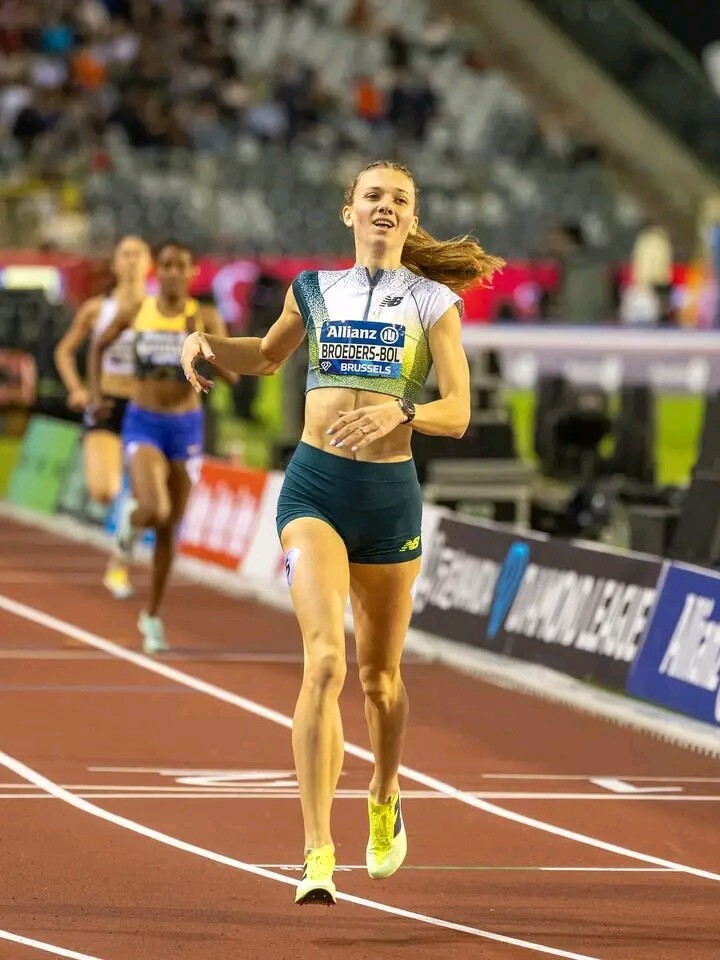
The celebrations took place at the historic Tenuta Sella & Mosca near Alghero, offering a stunning setting for the newlyweds and their guests. Surrounded by the beauty of Sardinia, Bol and Broeders were able to enjoy a more relaxed celebration after years of life shaped by demanding training schedules and international competition.
Bol shared a series of photographs from the special weekend, offering fans a glimpse into the celebrations and the moments she shared with Broeders, their families and friends. Reflecting on the occasion, she described it simply as “the best weekend of our lives.”
The wedding brought together several familiar faces from the athletics community, reflecting the strong connection the couple share with the sport. Broeders has built a respected career as a Belgian pole vaulter, while Bol has become one of the most recognisable stars in international athletics.
Their relationship has developed alongside their sporting careers, with the couple becoming romantically involved around 2021. They announced their engagement in 2025 before taking the next step in their relationship with their civil wedding earlier this year.
For Bol, the celebrations provide a deeply personal highlight to a year that has already brought significant moments in her remarkable career. Away from the pressure of major championships, packed stadiums and the pursuit of medals, Sardinia offered the athlete an opportunity to pause and celebrate something much closer to home.
For Broeders, the occasion was equally special, marking the beginning of a new chapter with his partner while surrounded by the people who have supported them throughout their journey. Their wedding weekend brought together the sporting and personal worlds that have shaped their lives over the years.
From competing under the brightest stadium lights to celebrating beneath the Sardinian sun, Bol and Broeders have now opened a new chapter together — one that extends far beyond athletics.
After years of chasing performances, medals and personal ambitions, the couple now have another journey to share, this time side by side as husband and wife.
From the track to forever, Femke Bol and Ben Broeders have given themselves a beautiful reason to celebrate.
by Erick Cheruiyot for My Best Runs.
Login to leave a comment
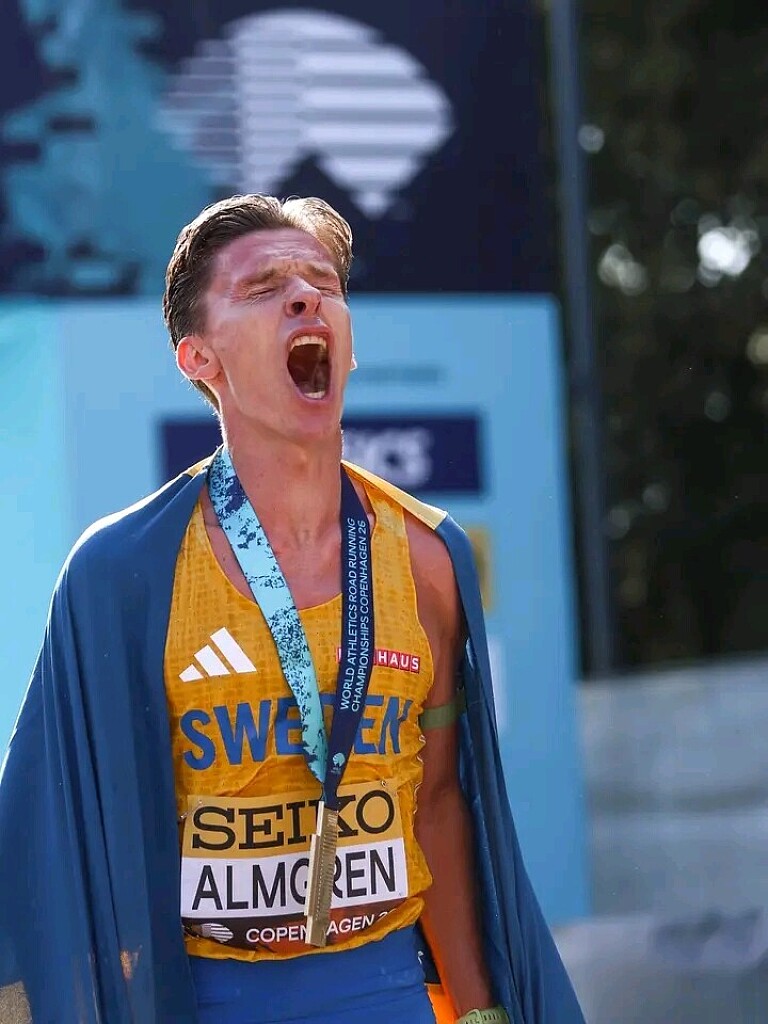
Andreas Almgren Times His Move To Perfection For World Half Marathon Gold In Copenhagen
Sweden’s Andreas Almgren produced a breathtaking finish on the streets of Copenhagen, unleashing a perfectly timed late surge to win the men’s half marathon title at the 2026 World Athletics Road Running Championships in 58:06.
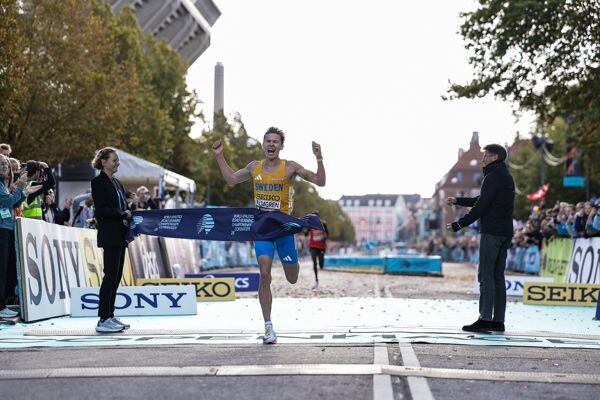
The Swedish star waited patiently through the decisive stages of the race before making his move with roughly 200 metres remaining, accelerating away from the field and producing a devastating sprint down the final straight.
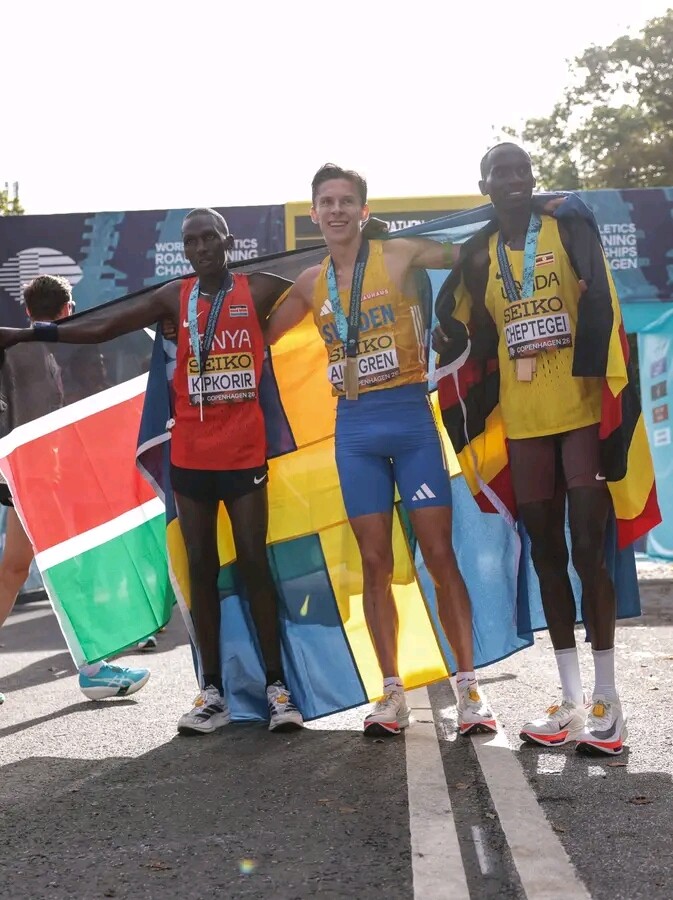
Nicholas Kipkorir had controlled much of the race, dictating the pace and keeping the leading contenders under pressure. Almgren, however, remained close throughout, carefully conserving enough energy for the moment that would ultimately decide the world title.
When the race entered its final stretch, Almgren made his move. The Swede surged hard over the final 200 metres and then outsprinted Kipkorir over the last 100 metres, powering clear to cross the line first in 58:06.
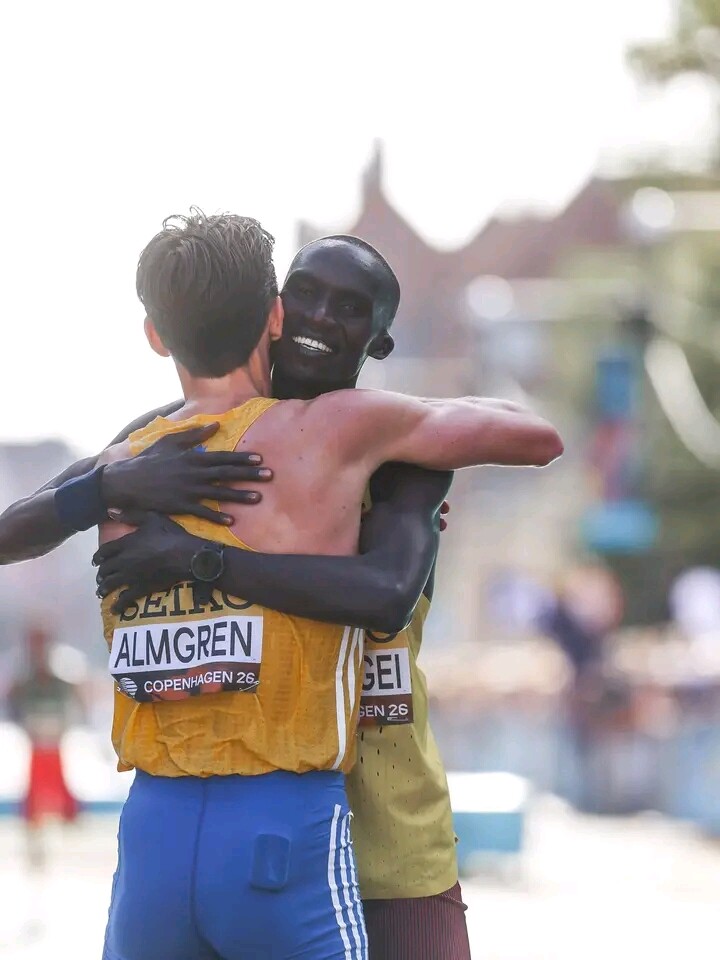
The performance was not only enough to secure the gold medal but also delivered an Area Record, adding another extraordinary achievement to Almgren’s rapidly growing list of accomplishments.
His winning time makes the victory even more significant in the history of the championships. Almgren becomes the first non-African world half marathon champion since Italy’s Stefano Baldini in 1996, ending a remarkable 30-year period in which athletes from Africa had dominated the global title.
For much of the race, Kipkorir appeared to have control, but Almgren refused to be separated from the Kenyan. His patience proved decisive as the race entered its final kilometres, allowing him to remain within striking distance before producing the acceleration that ultimately settled the contest.
Behind the leading pair, Uganda’s Joshua Cheptegei endured a gruelling battle to hold on to third position. The Olympic and world champion was pushed relentlessly in the closing stages and had to dig extremely deep to preserve his place on the podium. Despite the intense pressure from the athletes behind him, Cheptegei held firm to secure the bronze medal in a personal best of 58:26.
Ethiopia’s Tadese Worku also produced a personal best of 58:35 to finish fourth, while Kenya’s Gideon Kipkertich Rono followed in fifth in 58:57. The depth of the field was reflected by the fact that six athletes broke the 59-minute barrier, underlining the exceptional quality of the championship race.
Top 10 Men’s Half Marathon Results
1. Andreas Almgren (Sweden) — 58:06 — AR
2. Nicholas Kipkorir (Kenya) — 58:11
3. Joshua Cheptegei (Uganda) — 58:26 — PB
4. Tadese Worku (Ethiopia) — 58:35 — PB
5. Gideon Kipkertich Rono (Kenya) — 58:57
6. Hani Idriss Hersi (Djibouti) — 59:09 — NR
7. Yemaneberhan Crippa (Italy) — 59:18
8. Alex Nzioka Matata (Kenya) — 59:22
9. Daniel Simtu Ebenyo (Kenya) — 59:42 — SB
10. Othmane El Goumri (Morocco) — 59:53 — PB
The victory further strengthens Almgren’s remarkable 2026 campaign. The 58:06 performance gave the Swede an Area Record as he added the World Athletics Road Running Championships half marathon crown to his résumé, following his 10,000m triumph at the European Athletics Championships. His ability to combine sustained endurance with a devastating finishing kick once again proved decisive on the biggest stage.
For Almgren, the Copenhagen triumph also provides an intriguing glimpse ahead to his next challenge. With his New York City Marathon debut now on the horizon, the world half marathon title represents an important statement as he prepares to make the transition to the marathon. After demonstrating that he can handle the demands of championship racing over 21.1 kilometres while still possessing the speed to produce a decisive late surge, Almgren now turns his attention toward an entirely new distance.
The victory marks Almgren’s first global title, completing a remarkable transformation from European record-holder and leading continental distance runner into a world champion.
It also adds another spectacular chapter to an already outstanding 2026 season. Almgren has consistently demonstrated an exceptional combination of endurance, speed and tactical intelligence, and Copenhagen provided the perfect stage for all three qualities to come together.
With the clock showing 58:06, Almgren not only conquered the world championship field but also rewrote the European record books. His perfectly timed attack in the final 200 metres delivered Sweden a historic world road-running title and created one of the most dramatic finishes of the Copenhagen championships.
by Erick Cheruiyot for My Best Runs.
Login to leave a comment

World Athletics Road Running Championships
Six world champions and 65,000 runners just behind them. In September 2026, the heart of Copenhagen is expected to be the stage for Denmark’s largest-ever participant event. The World Athletics Road Running Championships Copenhagen 26 will take place on September 19-20, 2026. A total of 65,000 participants will join the running festivities behind the world’s fastest female and male athletes...
more...
Nicholas Kipkorir Leads Star-Studded Men’s Half Marathon Field At World Road Running Championships
The stage is set for a spectacular men’s half marathon at the World Athletics Road Running Championships Copenhagen 26, with some of the world’s leading distance runners preparing to battle for global honours on Sunday, September 20.
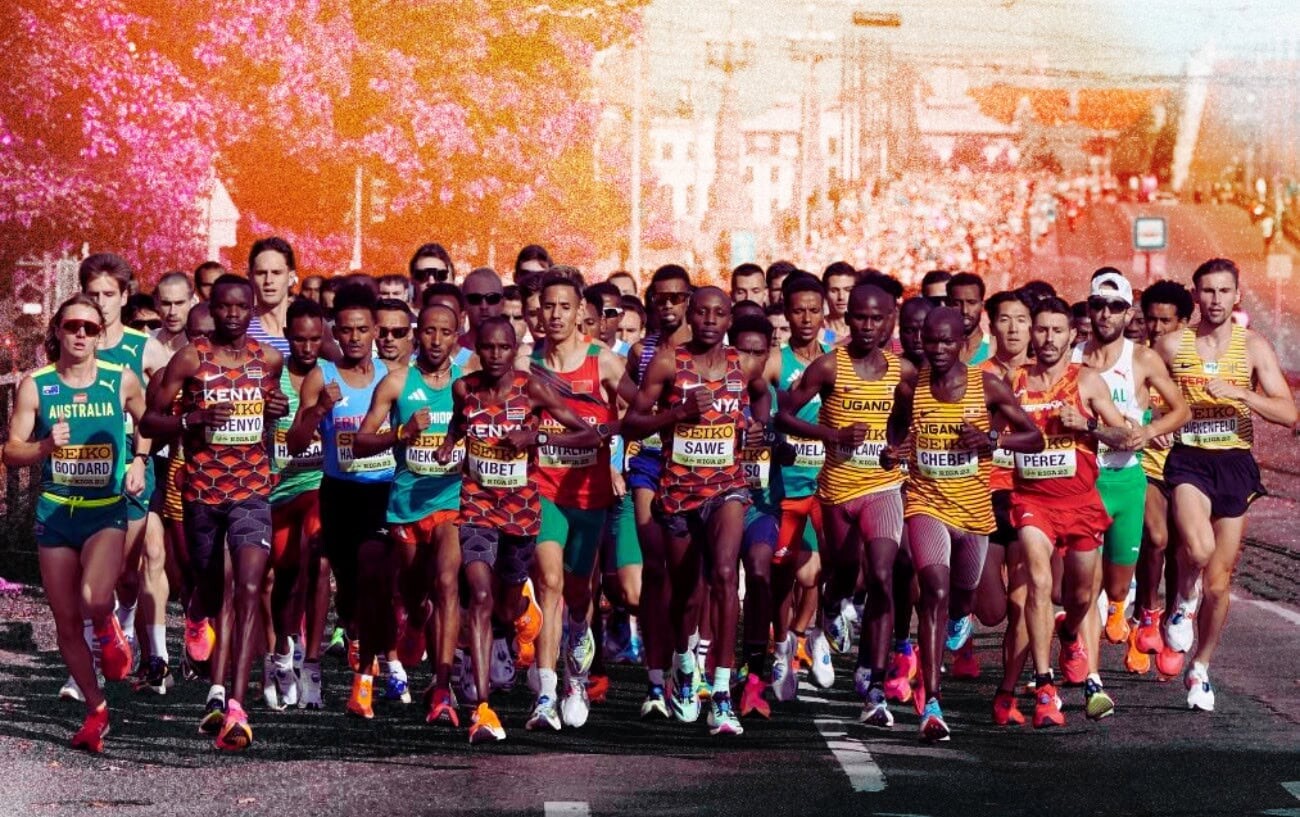
Kenya’s Nicholas Kipkorir headlines the field with a remarkable personal best of 58:08, the fastest mark among the athletes entered.
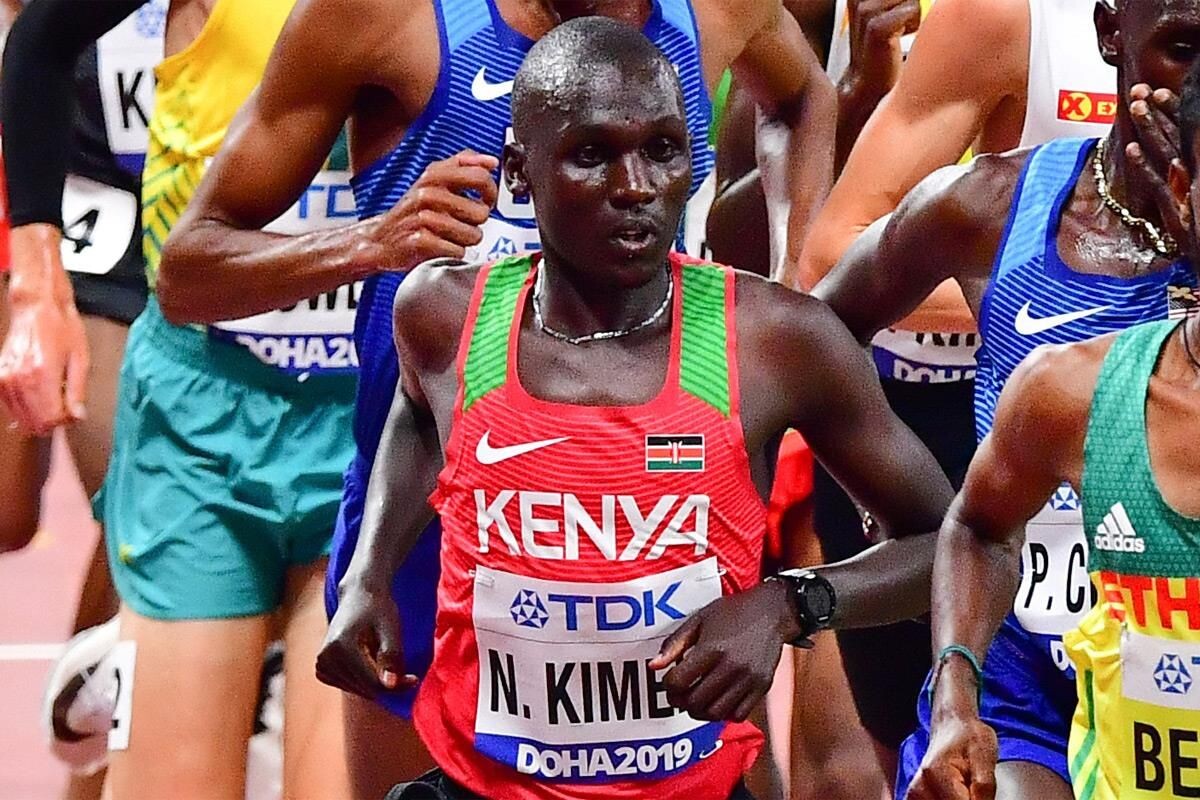
Kipkorir will face a formidable challenge from compatriot Gideon Kipkertich Rono, who owns a 58:38 personal best. Sweden’s Andreas Almgren also brings an exceptional 58:41 to the start line, while Ethiopia’s Tadese Worku has a 58:59 personal best.
Italy’s Yemaneberhan Crippa adds another major name to the field with a national record of 59:01, while Kenya’s Daniel Simiu Ebenyo enters with a 59:04 personal best and valuable championship experience.
Ebenyo won silver at the 2023 World Road Running Championships in Riga and will be looking to challenge for another medal in Copenhagen.
Uganda’s Joshua Cheptegei will bring enormous championship pedigree to the race. The Olympic and multiple world champion has a half marathon best of 59:21, making him another athlete capable of featuring prominently in the battle for the medals.
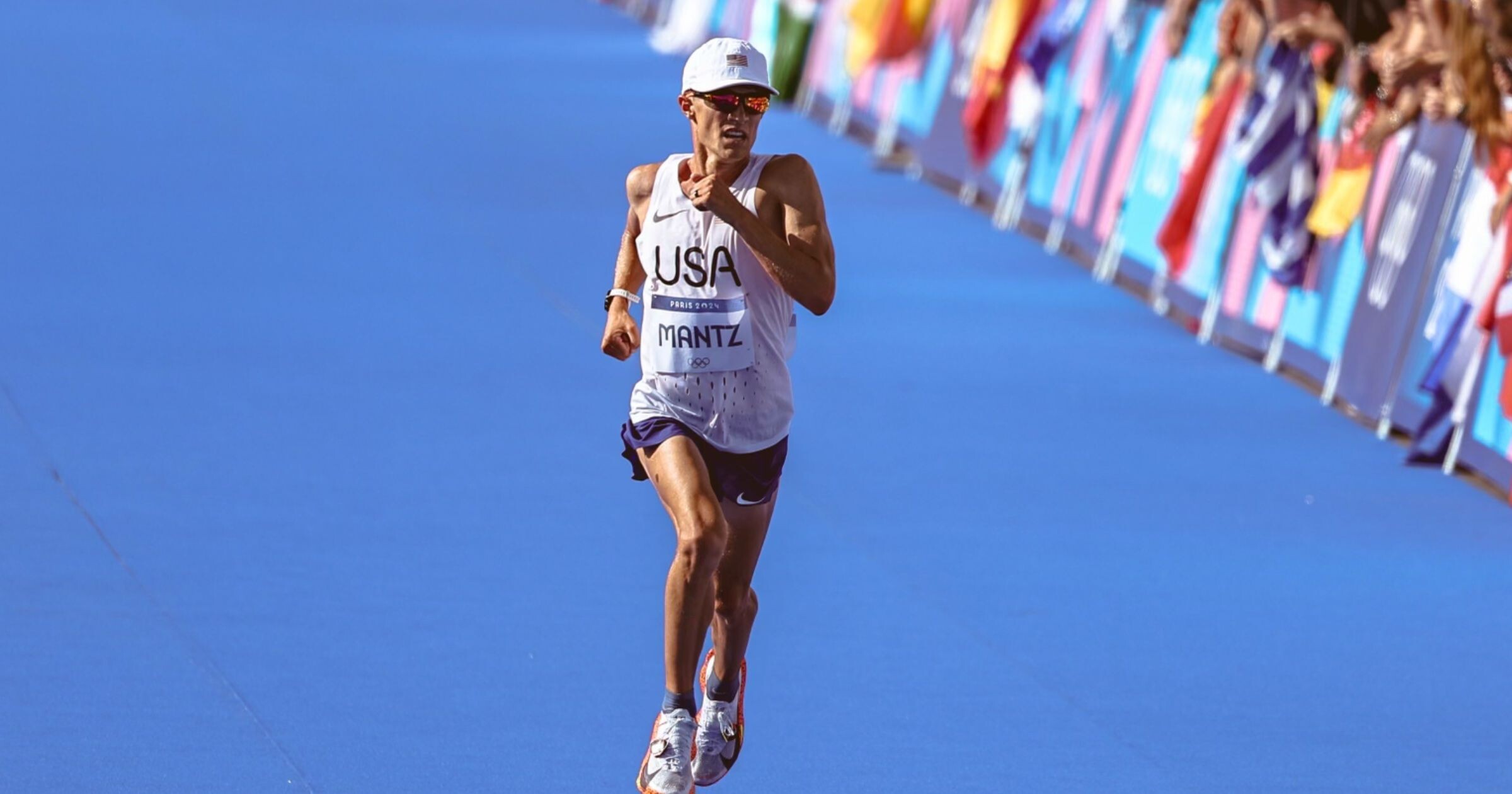
The American challenge will be led by Conner Mantz, who owns a 59:15 personal best. France’s Etienne Daguinos, Portugal’s Samuel Barata, Ethiopia’s Bereket Nega, France’s Jimmy Gressier, Canada’s Rory Linkletter, Australia’s Jack Rayner and Morocco’s Mohamed Reda El Aaraby further strengthen an already formidable international field.
Kenya will have particular interest in the championship, with several of its leading road runners lining up against some of the best athletes from Europe, Africa, North America, Asia and Oceania.
The race will be contested over the traditional 21.0975-kilometre distance, with the elite men scheduled to start at 9:45 a.m. local time on Sunday, September 20.
Leading Athletes And Personal Bests
1. Nicholas Kipkorir (Kenya) — 58:08
2. Gideon Kipkertich Rono (Kenya) — 58:38
3. Andreas Almgren (Sweden) — 58:41
4. Tadese Worku (Ethiopia) — 58:59
5. Yemaneberhan Crippa (Italy) — 59:01
6. Daniel Simiu Ebenyo (Kenya) — 59:04
7. Alex Nzioka Matata (Kenya) — 59:11
8. Conner Mantz (USA) — 59:15
9. Joshua Cheptegei (Uganda) — 59:21
10. Etienne Daguinos (France) — 59:27
11. Samuel Barata (Portugal) — 59:40
12. Bereket Nega (Ethiopia) — 59:43
13. Jimmy Gressier (France) — 59:45
14. Rory Linkletter (Canada) — 59:49
15. Peter Lynch (Ireland) — 59:52
16. Jack Rayner (Australia) — 59:53
17. Mohamed Reda El Aaraby (Morocco) — 59:54
18. Hillary Bor (USA) — 59:55
19. Zerei Kbrom Mezngi (Norway) — 1:00:01
20. Bastien Augusto (France) — 1:00:09
21. Mande Bushendich (Uganda) — 1:00:14
22. Jack Rowe (Great Britain) — 1:00:17
23. Cameron Levins (Canada) — 1:00:18
24. Ogikubo Tomoya (Japan) — 1:00:22
25. Bayelign Teshager (Ethiopia) — 1:00:22
26. Elroy Gelant (South Africa) — 1:00:22
27. Célestin Ndikumana (Burundi) — 1:00:23
28. Said Mechaal (Spain) — 1:00:24
29. Nishizawa Yuma (Japan) — 1:00:26
30. Namiki Neo (Japan) — 1:00:29
31. Othmane El Goumri (Morocco) — 1:00:30
32. Inyasi Nicodemus Sulley (Tanzania) — 1:00:31
33. Wesley Kiptoo (USA) — 1:00:34
34. Haftu Strintzos (Australia) — 1:00:36
35. Filmon Tesfu (Netherlands) — 1:00:38
36. Mustapha Akkaoui (Morocco) — 1:00:38
With such remarkable depth, the championship could remain finely poised until the closing stages. The presence of multiple sub-59-minute runners, experienced championship performers and strong finishers sets the scene for a race in which positioning, tactics and the ability to respond to late surges could prove decisive.
For Kipkorir, Ebenyo and their Kenyan teammates, Copenhagen provides an opportunity to turn impressive personal credentials into championship medals. But with a world-class field assembled behind them, the final outcome will only be determined when the leading runners reach the finish line.
by Erick Cheruiyot for My Best Runs.
Login to leave a comment
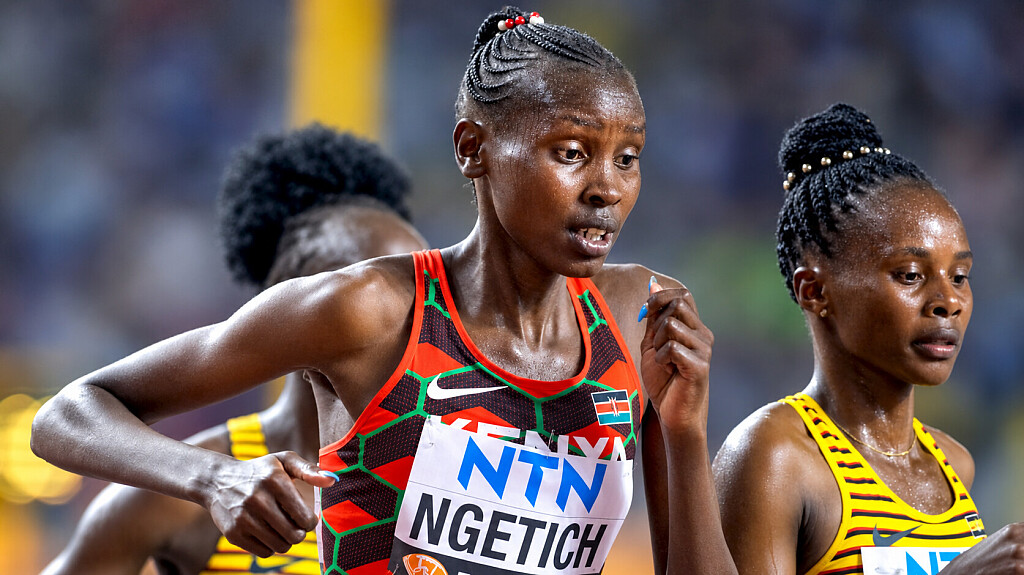
Agnes Ngetich Leads Star-Studded Women’s Half Marathon Field At World Road Running Championships
The stage is set for a spectacular women’s half marathon at the 2026 World Athletics Road Running Championships in Copenhagen, Denmark, with a deep international field ready to battle for the world title on Sunday, September 20.
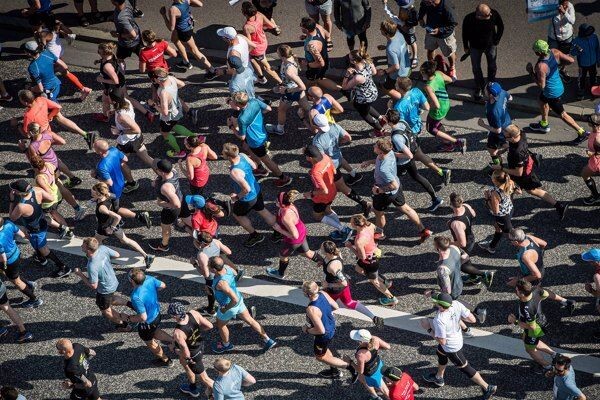
The elite women’s race will begin at 9:10 a.m. local time, with the 21.0975-kilometre championship race taking runners through the streets of Copenhagen before the finish on Øster Allé.
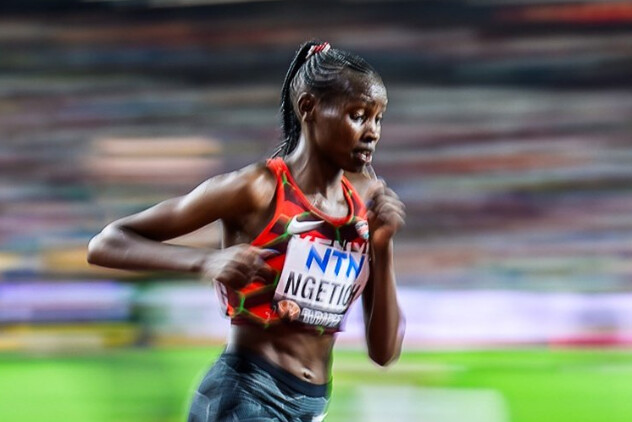
At the head of the entry list is Kenya’s Agnes Jebet Ngetich, who brings a sensational 1:03:04 personal best into the championship. She will lead a powerful Kenyan contingent that also includes Lilian Kasait Rengeruk, whose 1:03:32 is among the fastest times ever recorded over the distance.
Ngetich has established herself as one of the leading distance runners in the world, and her combination of speed and endurance makes her one of the major names to watch when the championship race gets underway.
Rengeruk provides another formidable Kenyan threat, while Daisilah Jerono, with a 1:05:21 personal best, and Veronica Loleo, with 1:05:35, add further depth to the Kenyan line-up.
Ethiopia will also arrive with serious firepower. Tsigie Gebreselama owns a remarkable 1:04:21 personal best, while Ftaw Zeray comes into Copenhagen with a 1:05:12 lifetime best.
The battle will not be restricted to the leading African nations, however. Weini Kelati Frezghi heads the American challenge with a 1:06:04 personal best, while Esther Chebet of Uganda has run 1:06:33.
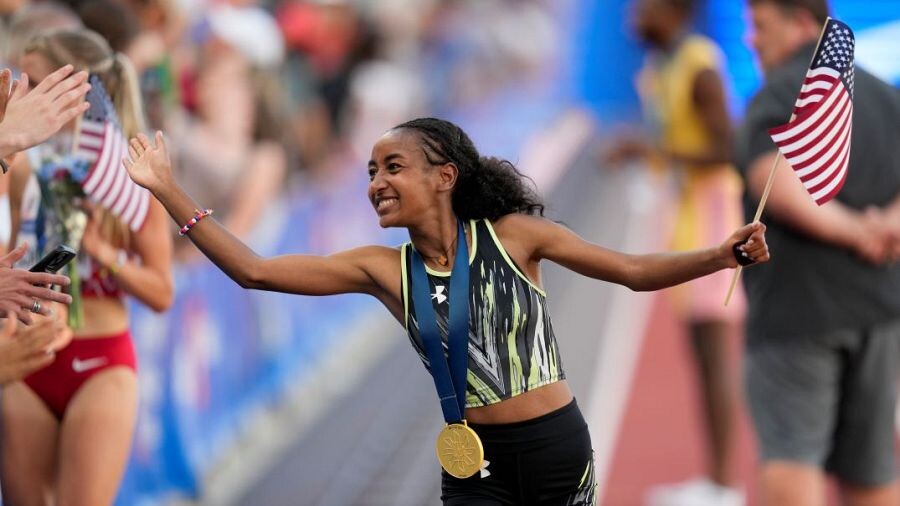
Europe will be represented by several accomplished athletes, including Slovenia’s Klara Lukan, who owns a 1:06:43 personal best, and Norway’s experienced Karoline Bjerkeli Grøvdal, whose best stands at 1:06:55.
South Africa’s Glenrose Xaba is another prominent name on the list with a 1:07:03 personal best, while Great Britain’s Samantha Harrison enters with 1:07:10.
Uganda has further depth through Rebecca Chelangat at 1:07:18, Annet Chemengich Chelangat at 1:08:12 and Rispa Cherop at 1:08:53.
The international field also includes Ethiopia’s Melat Siyoum and Baraky Redae, Rwanda’s Florence Niyonkuru and Emeline Imanizabayo, Mexico’s Laura Galván, Belgium’s Chloé Herbiet and Lisa Rooms, the United States’ Emma Grace Hurley, Ednah Kurgat, Carrie Ellwood and Jessica McClain, France’s Mekdes Woldu, Alessia Zarbo and Mélody Julien, Italy’s Sofia Yaremchuk and Elvanie Nimbona, China’s He Wuga and Liang Tiantian, and New Zealand’s Georgie Grgec.
Women’s Half Marathon Entry List
1. Agnes Jebet Ngetich — Kenya — 1:03:04
2. Lilian Kasait Rengeruk — Kenya — 1:03:32
3. Tsigie Gebreselama — Ethiopia — 1:04:21
4. Ftaw Zeray — Ethiopia — 1:05:12
5. Daisilah Jerono — Kenya — 1:05:21
6. Veronica Loleo — Kenya — 1:05:35
7. Weini Kelati Frezghi — United States — 1:06:04
8. Esther Chebet — Uganda — 1:06:33
9. Klara Lukan — Slovenia — 1:06:43
10. Karoline Bjerkeli Grøvdal — Norway — 1:06:55
11. Glenrose Xaba — South Africa — 1:07:03
12. Samantha Harrison — Great Britain — 1:07:10
13. Rebecca Chelangat — Uganda — 1:07:18
14. Melat Siyoum — Ethiopia — 1:07:21
15. Florence Niyonkuru — Rwanda — 1:07:22
16. Baraky Redae — Ethiopia — 1:07:31
17. Laura Galván — Mexico — 1:07:31
18. Chloé Herbiet — Belgium — 1:07:32
19. Emeline Imanizabayo — Rwanda — 1:07:35
20. Emma Grace Hurley — United States — 1:07:35
21. Annet Chemengich Chelangat — Uganda — 1:08:12
22. Mekdes Woldu — France — 1:08:20
23. Alessia Zarbo — France — 1:08:20
24. Ednah Kurgat — United States — 1:08:25
25. Sofia Yaremchuk — Italy — 1:08:27
26. He Wuga — China — 1:08:31
27. Liang Tiantian — China — 1:08:33
28. Carrie Ellwood — United States — 1:08:34
29. Jessica McClain — United States — 1:08:37
30. Elvanie Nimbona — Italy — 1:08:38
31. Lisa Rooms — Belgium — 1:08:40
32. Rispa Cherop — Uganda — 1:08:53
33. Georgie Grgec — New Zealand — 1:09:13
34. Mélody Julien — France — 1:09:15
With so many athletes separated by relatively small margins on paper, the championship race could develop into a fascinating tactical contest. Personal bests provide an indication of speed, but championship racing often comes down to positioning, patience and the ability to respond when the decisive moves arrive.
For Ngetich, Rengeruk, Gebreselama, Zeray and the rest of the field, the opportunity is clear: 21.0975 kilometres through Copenhagen with a world championship title waiting at the finish.
The World Athletics Road Running Championships Copenhagen 26 take place on September 19–20, with the women’s elite half marathon taking centre stage on Sunday, September 20, at 9:10 a.m.
Copenhagen is ready for a major championship showdown — and the women’s half marathon promises to be one of the highlights of the weekend.
by Erick Cheruiyot for My Best Runs.
Login to leave a comment
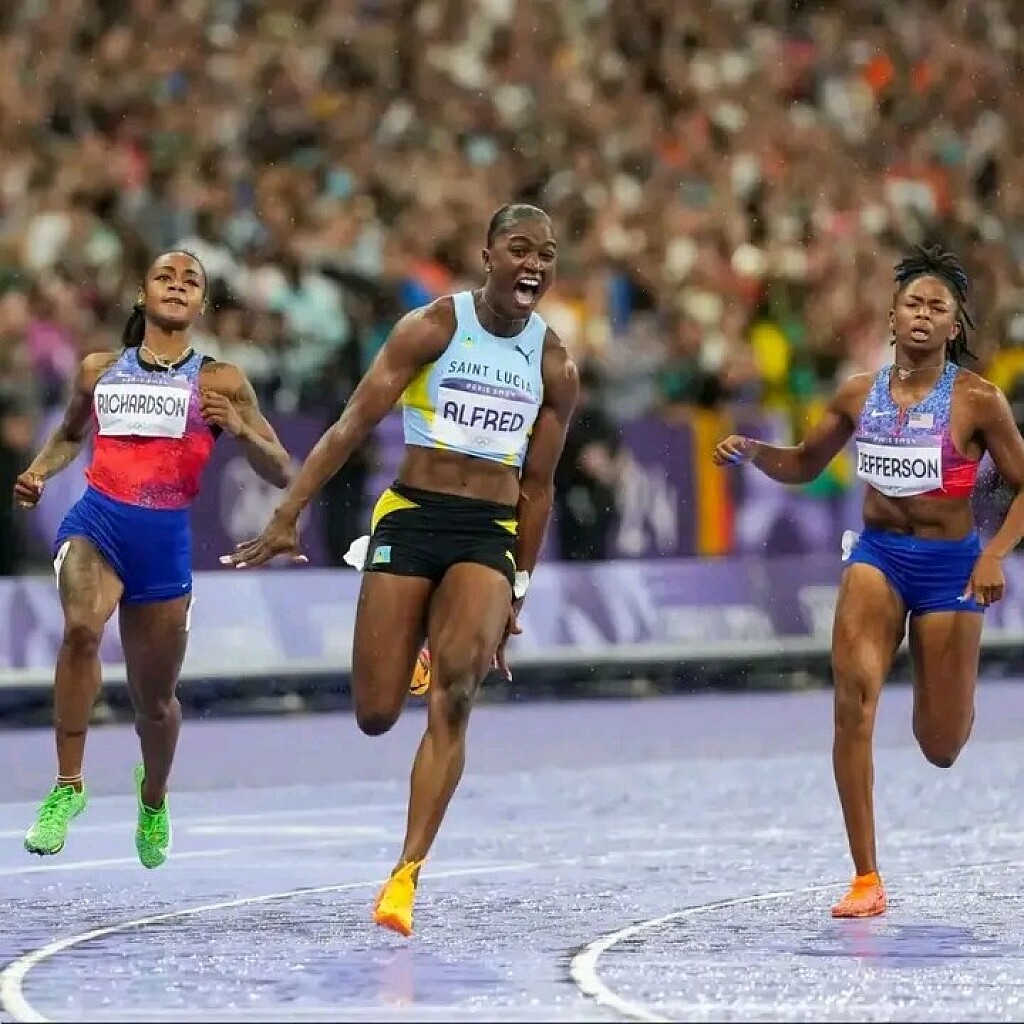
Three Champions, One Crown: Budapest Braces For A Women’s 100m Battle For Supremacy
The women’s 100m at the World Athletics Ultimate Championship in Budapest is shaping up to be one of the most compelling sprint showdowns of the season, with three of the world’s biggest names set to collide in a race where reputation, speed and championship pedigree will all be put to the ultimate test.
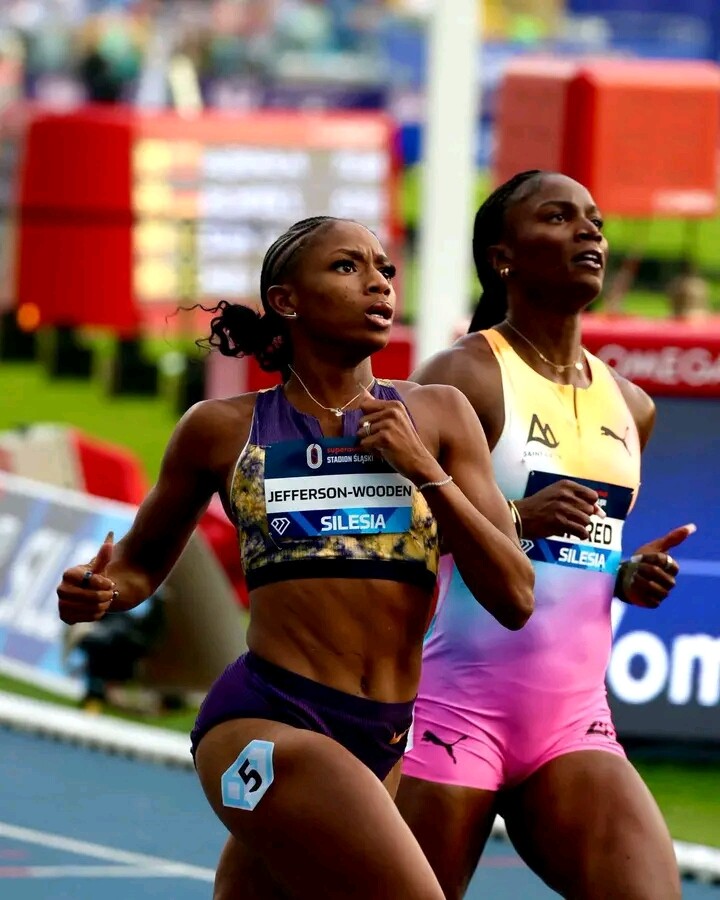
Leading the charge is Saint Lucia’s Julien Alfred, the reigning Olympic champion who established herself as the fastest woman on the biggest stage at the Paris 2024 Games. Alfred’s rise to the summit of global sprinting has been remarkable, and she arrives in Budapest carrying the confidence and prestige that come with an Olympic title.
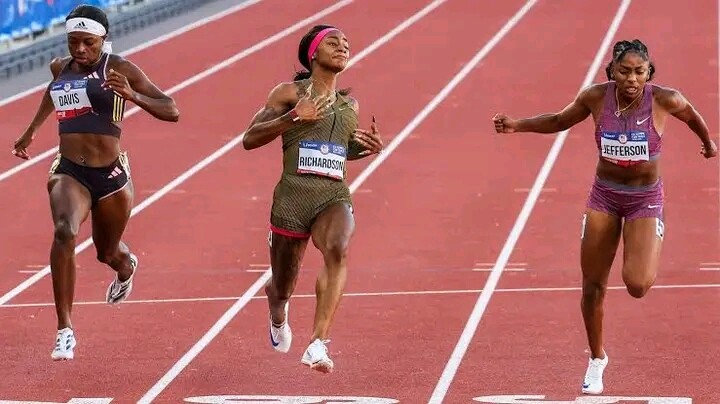
Standing alongside her will be American sprint star Melissa Jefferson-Wooden, the reigning world champion and one of the most formidable forces in the modern 100m. Her championship credentials have already placed her among the elite, and Budapest presents another opportunity to underline her status against the very best in the world.
Then there is Sha’Carri Richardson, another American powerhouse whose explosive speed and major-championship experience make her impossible to overlook. A former world champion, Richardson has repeatedly demonstrated her ability to thrive under the brightest lights, bringing both raw pace and an unmistakable competitive edge to the starting line.
The presence of three champions transforms the Budapest contest into far more than another 100m race. It is a meeting of athletes who have already conquered the highest levels of the sport and now have another prize to chase: the title of Ultimate champion.
Women’s 100m — Start List
1. Melissa Jefferson-Wooden — United States — 10.70
2. Julien Alfred — Saint Lucia — 10.70
3. Sha’Carri Richardson — United States — 10.77
4. Tina Clayton — Jamaica — 10.85
5. Sade McCreath — Canada — 10.86
6. Jonielle Smith — Jamaica — 10.89
7. Lavanya Williams — Jamaica — 10.90
8. Cambrea Sturgis — United States — 10.92
9. Zoe Hobbs — New Zealand — 10.93
10. Brianna Lyston — Jamaica — 10.94
11. Audrey Leduc — Canada — 10.97
12. Amy Hunt — Great Britain — 10.97
13. Jodean Williams — Jamaica — 10.97
14. Tamari Davis — United States — 10.99
15. Patrizia Van Der Weken — Luxembourg — 11.05
16. Zaynab Dosso — Italy — 11.07
17. Boglárka Takács — Hungary — 11.13
With the world’s attention fixed on the start line, every fraction of a second could prove decisive. Alfred will seek to reaffirm her Olympic supremacy, Jefferson-Wooden will look to demonstrate that her world title was no coincidence, while Richardson will be determined to remind the field of the speed that has made her one of the most recognizable names in global sprinting.
For the spectators, the attraction is obvious. Three champions, three different journeys to the top and just 100 metres separating glory from disappointment.
Budapest is therefore set for a sprinting spectacle in which there will be no room for hesitation. When the gun fires, Olympic glory, world championship pedigree and personal ambition will converge on one track — and only one woman will leave as the Ultimate champion.
by Erick Cheruiyot for My Best Runs.
Login to leave a comment
Keely Hodgkinson Strikes First In Budapest As Olympic Champion Leads 800m Finalists
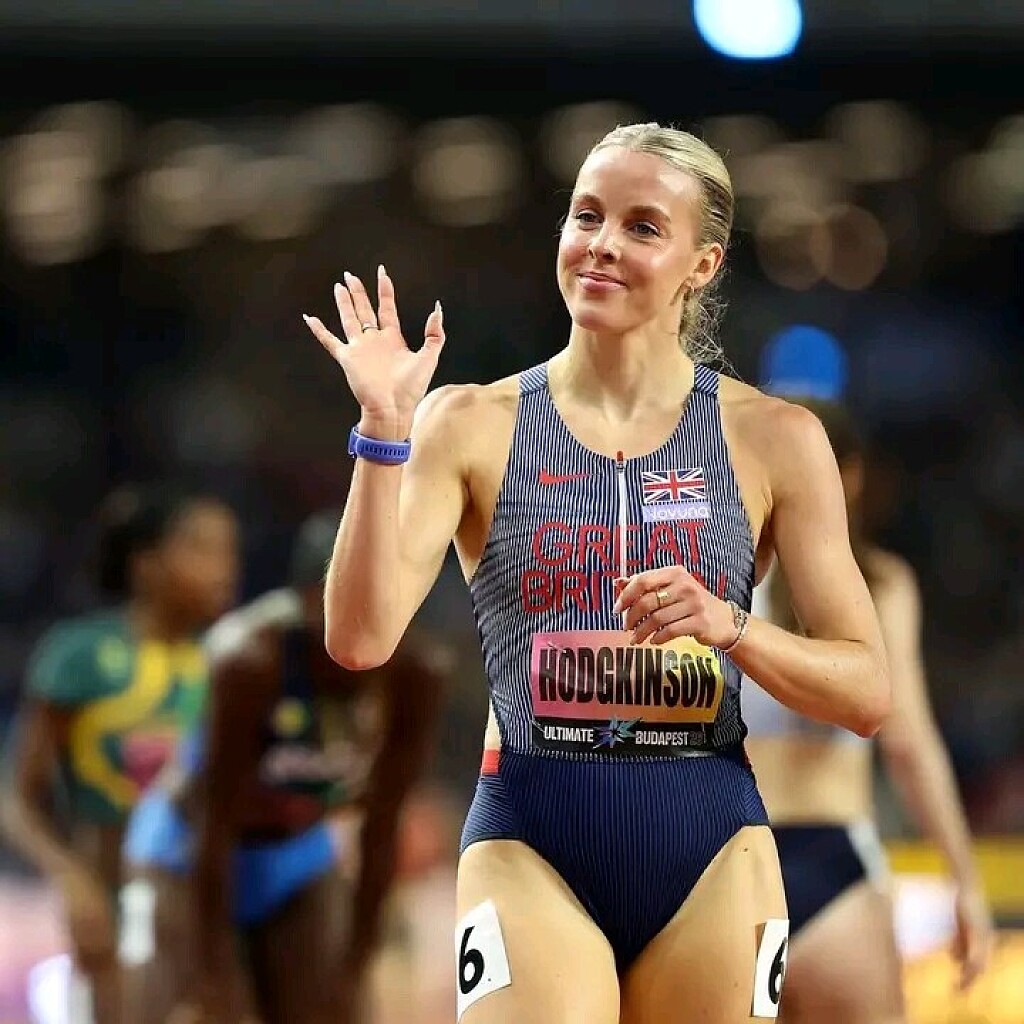
Keely Hodgkinson made a powerful return to the track at the World Athletics Ultimate Championship in Budapest on September 11, storming to victory in the opening women’s 800m semifinal in 1:57.57 to record the fastest time across both semifinals and immediately establish herself as the athlete to beat in the final.
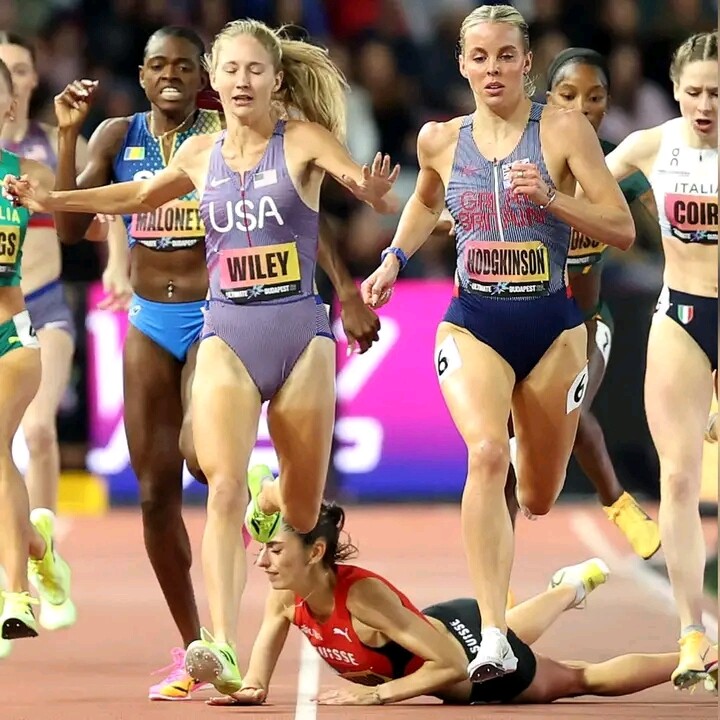
The British Olympic champion looked composed from the opening metres, taking control of the race before gradually increasing the pressure as the finish approached. Hodgkinson produced a decisive surge over the final 200 metres, pulling clear of her rivals and crossing the line comfortably in 1:57.57.
Addison Wiley of the United States followed in 1:58.14, while Australia’s Sarah Billings secured third in 1:58.37. Italy’s Eloisa Coiro also produced a strong performance to finish fourth in 1:58.48, ensuring that the opening semifinal was packed with sub-two-minute performances.
For Hodgkinson, the performance was particularly significant given the circumstances surrounding her return. She had not raced since winning silver at last month’s European Championships and subsequently missed the closing Diamond League meetings, including the Brussels Final, because of hamstring discomfort.
There was little evidence of any lingering problem in Budapest. Hodgkinson appeared relaxed and confident throughout the race, before shifting gears when it mattered most and delivering a performance that immediately put the rest of the field on notice.
The race also contained a dramatic twist in the closing stages when Switzerland’s Veronica Vancardo suffered a heavy fall following contact with Coiro. Despite the setback, Vancardo recovered and eventually crossed the finish line in 2:16.75.
Officials subsequently reviewed the incident and advanced Vancardo to the final, giving her a place in the championship race despite finishing well outside the automatic qualifying positions. Her advancement added another layer of drama to an already eventful night in Budapest.
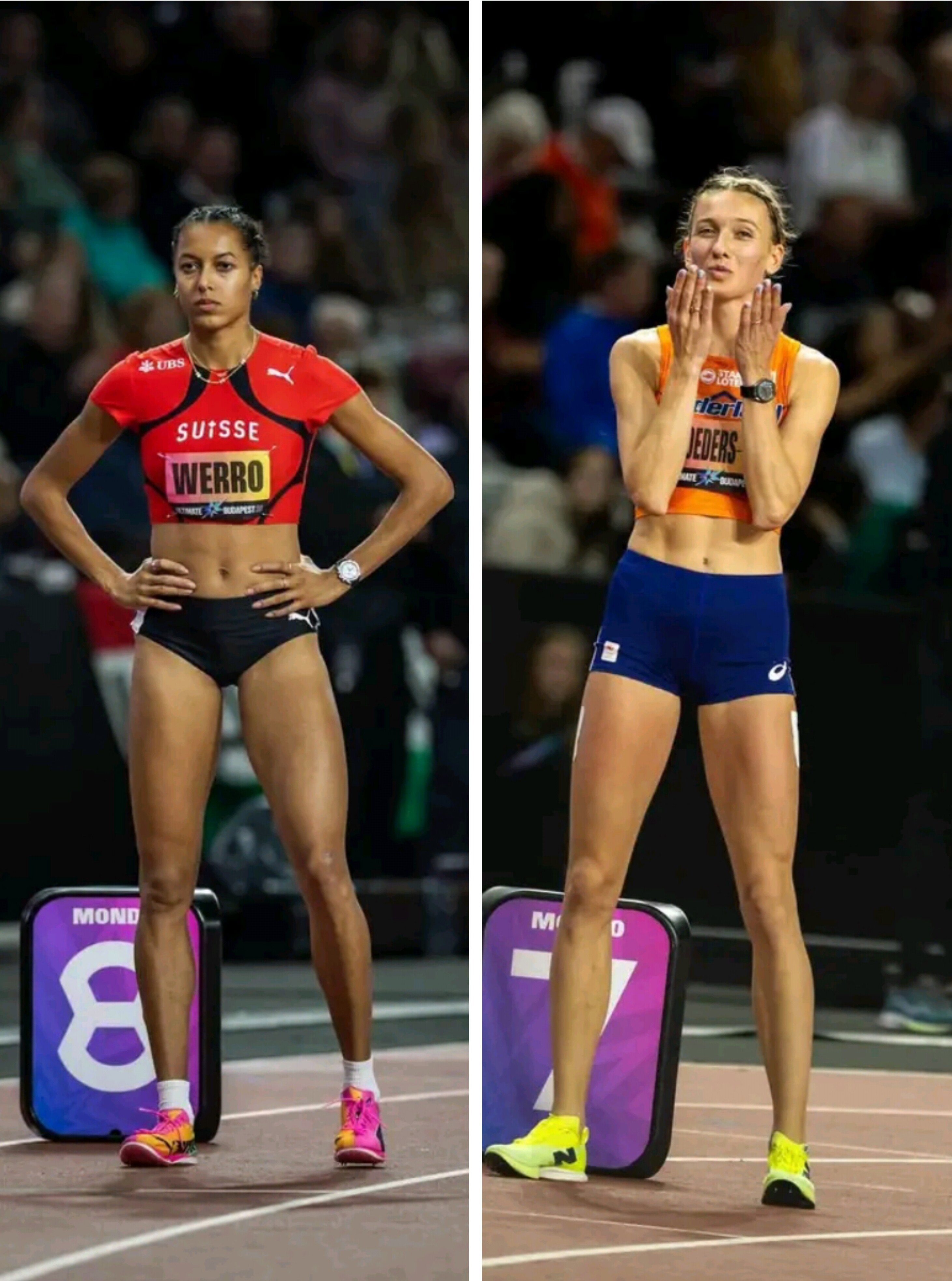
The second semifinal produced another impressive performance as Switzerland’s Audrey Werro controlled the race and delivered a strong finish to win in 1:59.05. Femke Broeders-Bol of the Netherlands followed closely in 1:59.19 after leading much of the contest.
The qualification picture then became clear, with nine athletes securing places in the women’s 800m final. Hodgkinson leads the field with 1:57.57, followed by Wiley at 1:58.14 and Billings at 1:58.37.
Coiro qualified in 1:58.48, while Werro and Broeders-Bol advanced with 1:59.05 and 1:59.19 respectively. Ethiopia’s Nigist Getachew clocked 1:59.69, Switzerland’s Valentina Rosamilia ran 1:59.78, and Vancardo completed the finalists after her advancement in 2:16.75.
Wiley’s qualification is also notable because she is the only American to advance to the Budapest final, adding further significance to her impressive 1:58.14 performance.
With Hodgkinson producing the fastest semifinal time, Werro looking increasingly dangerous and Broeders-Bol once again proving her ability to remain in contention, the final is shaping up to be one of the most anticipated 800m races of the championship.
Hodgkinson has already struck the first blow in Budapest. But with the medals now at stake, Werro, Broeders-Bol and the rest of the finalists will have the opportunity to turn the tables when it matters most.
The Olympic champion has made her intentions clear: she is back, she is healthy enough to race at championship pace, and she wants the Budapest crown.
The stage is now set for a thrilling women’s 800m final, where Hodgkinson will attempt to turn her semifinal dominance into gold. Who will be crown the Ultimate Champion in Budapest — Hodgkinson, Werro or Broeders-Bol? Or the table will turn?
by Erick Cheruiyot for My Best Runs.
Login to leave a comment

Daniel Komen and Cameron Myers: Two Generations, One Extraordinary Gift for Speed
Athletics has a remarkable way of connecting generations.
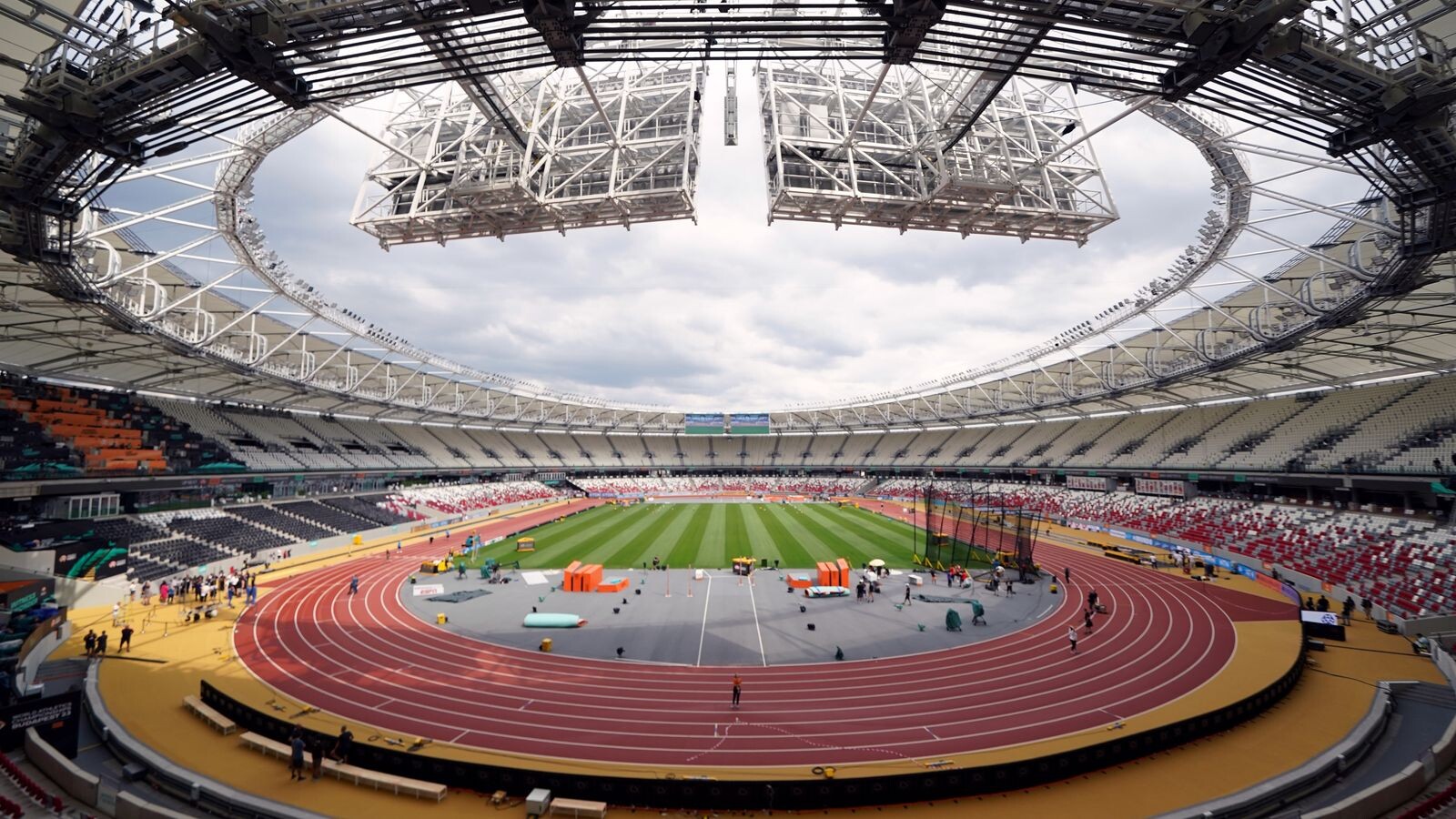
Sometimes, decades apart, two athletes emerge with a rare combination of speed, endurance and fearlessness that makes the extraordinary appear almost effortless. Kenya’s Daniel Komen and Australia’s Cameron Myers are separated by an era and a continent, but their careers share one fascinating thread — an exceptional ability to run incredibly fast over middle and long distances.
Daniel Komen — the Kenyan phenomenon
During the 1990s, Daniel Komen was one of the most feared distance runners on the planet.
At just 20 years old, Komen produced a performance that would become one of the defining moments of his career, running 7:20.67 for 3000m in Rieti, Italy, in 1996. The world record remained untouched for nearly 28 years before Jakob Ingebrigtsen finally broke it in 2024.
Komen followed that achievement with another performance that remains etched in distance-running history. In 1997, he ran 7:58.61 for two miles in Hengelo, becoming the first man to break the eight-minute barrier over the distance.
His brilliance was not limited to one event.
Komen possessed an extraordinary range, becoming only the second man after Algeria’s Saïd Aouita to break 3:30 for 1500m, 7:30 for 3000m and 13 minutes for 5000m.
Those performances established Komen as one of the most versatile and naturally gifted distance runners of his generation.
Cameron Myers — Australia's rising star
Almost three decades later, another young runner is beginning to capture the imagination of the athletics world.
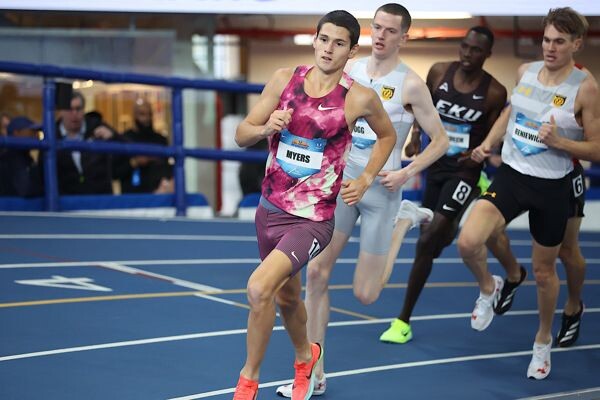
Cameron Myers first made headlines as a teenager when, at 16, he ran 3:55.44 for the mile. The performance made him the second-youngest athlete ever to break four minutes for the distance and confirmed that Australia had a remarkable middle-distance talent on its hands.
But Myers has not allowed the hype surrounding his teenage achievements to define him.
Now 20, he is increasingly proving himself against the world's best senior athletes.
His breakthrough continued in 2026 when he produced a spectacular 3:28.00 personal best for 1500m in Paris, firmly establishing himself among the world's elite over the distance.
Then came Brussels.
At the Diamond League Final on September 4, Myers delivered perhaps the biggest statement of his young career, winning the 1500m in 3:30.14 against a world-class field. The victory came in a race featuring some of the biggest names in the event, including Jakob Ingebrigtsen and Olympic champion Cole Hocker.
For Myers, it was another important step from promising prodigy to established senior star.
He is no longer simply the talented teenager everyone was waiting to see develop.
Cameron Myers has arrived.
Different eras, remarkable similarities
Comparing athletes from different generations is always difficult. The competition, training methods, technology and circumstances change, and every great athlete deserves to be judged within the context of their own era.
But the similarities between Komen and Myers are still fascinating.
Komen showed the world in the 1990s that extraordinary speed could be combined with exceptional endurance. Myers is now demonstrating that same fearless approach as he takes on the strongest 1500m fields in the world.
Komen has already secured his place in athletics history.
Myers is only beginning to write his.
The Australian still has many years ahead of him, and whether he can eventually build a legacy comparable to Komen's remains impossible to predict. What is certain, however, is that his progression has already been remarkable.
From a teenager breaking four minutes for the mile to a 20-year-old running 3:28.00 and winning a Diamond League Final, Myers has moved through the ranks at extraordinary speed.
Daniel Komen was one of the athletes who made the impossible look normal. Cameron Myers now has an opportunity to create his own version of that magic.
Different generations. Different countries. Different journeys.
But one extraordinary gift — the ability to run very, very fast.
by Erick Cheruiyot for My Best Runs.
Login to leave a comment
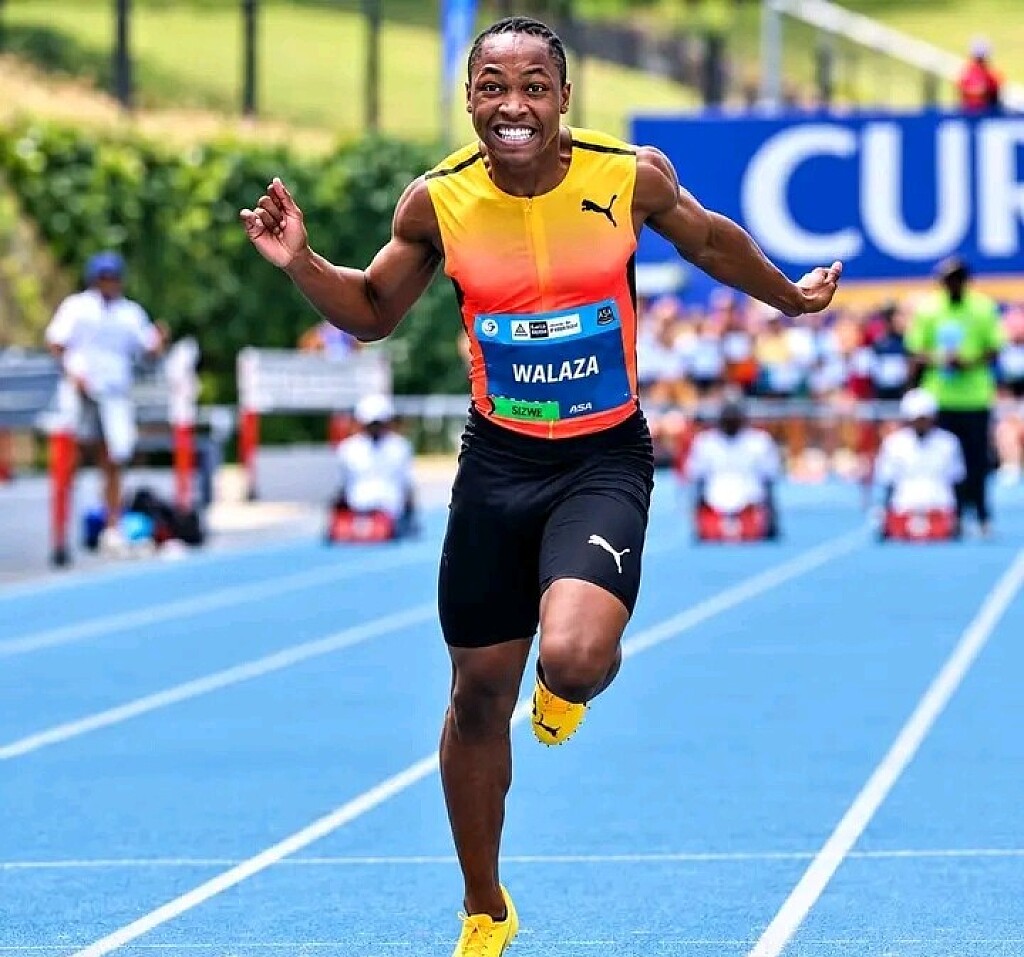
Bayanda Walaza Blazes to 9.91 in Rovereto, Smashing Meeting Record
South Africa’s Bayanda Walaza delivered another electrifying performance on the European circuit, storming to victory in the men’s 100m at the 62nd Palio Città della Quercia in Rovereto, Italy.
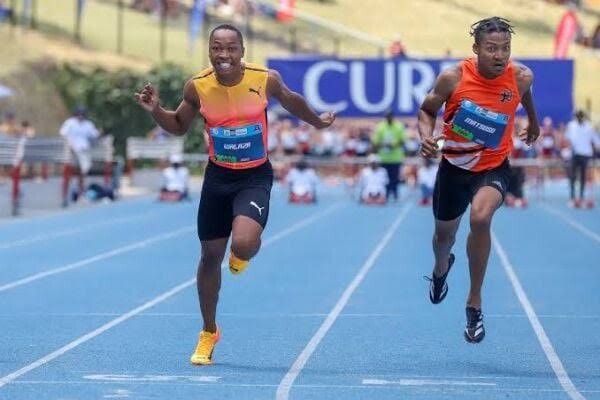
Walaza stopped the clock at a blistering 9.91 seconds, with a legal +0.5 m/s tailwind, to not only secure the win but also shatter the meeting record. His performance erased the previous mark of 9.98 seconds.
The 20-year-old South African produced a commanding run against a strong international field, holding off Ghana’s Abdul-Rasheed Saminu, who finished second in 10.01, while Canada’s Eliezer Adjibi completed the podium in 10.09.
For Walaza, the 9.91 adds another sub-10-second performance to an increasingly impressive season. His personal best remains 9.89 seconds, a mark that underlines just how close he is to another major breakthrough.
Walaza has already established himself as one of South Africa’s most exciting young sprinters. He was a double gold medallist in the 100m and 200m at the 2024 World Athletics U20 Championships in Lima before helping South Africa win Olympic silver in the 4x100m relay at Paris 2024.
Now making his mark against senior competition, Walaza is showing increasing consistency at the highest level.
A 9.91 meeting record in Rovereto is another powerful statement from the young South African — and with his speed continuing to develop, Walaza’s ceiling looks remarkably high.
by Erick Cheruiyot for My Best Runs.
Login to leave a comment
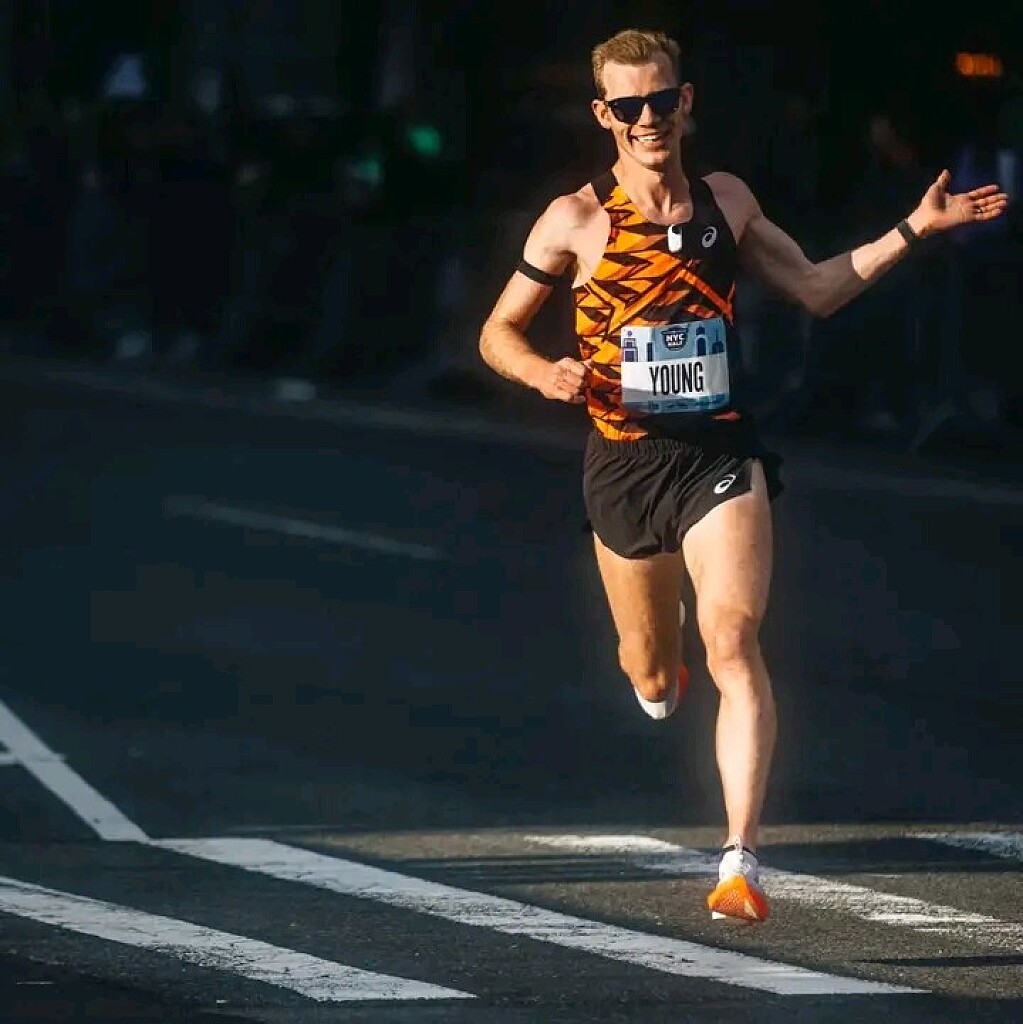
A Sneaky Road Race to Watch This Weekend: Great North Run Set for a Star-Studded Showdown
The road racing spotlight will turn to Newcastle this Sunday as the 2026 AJ Bell Great North Run brings together an impressive international men's field featuring several of America's leading distance runners alongside proven global stars.
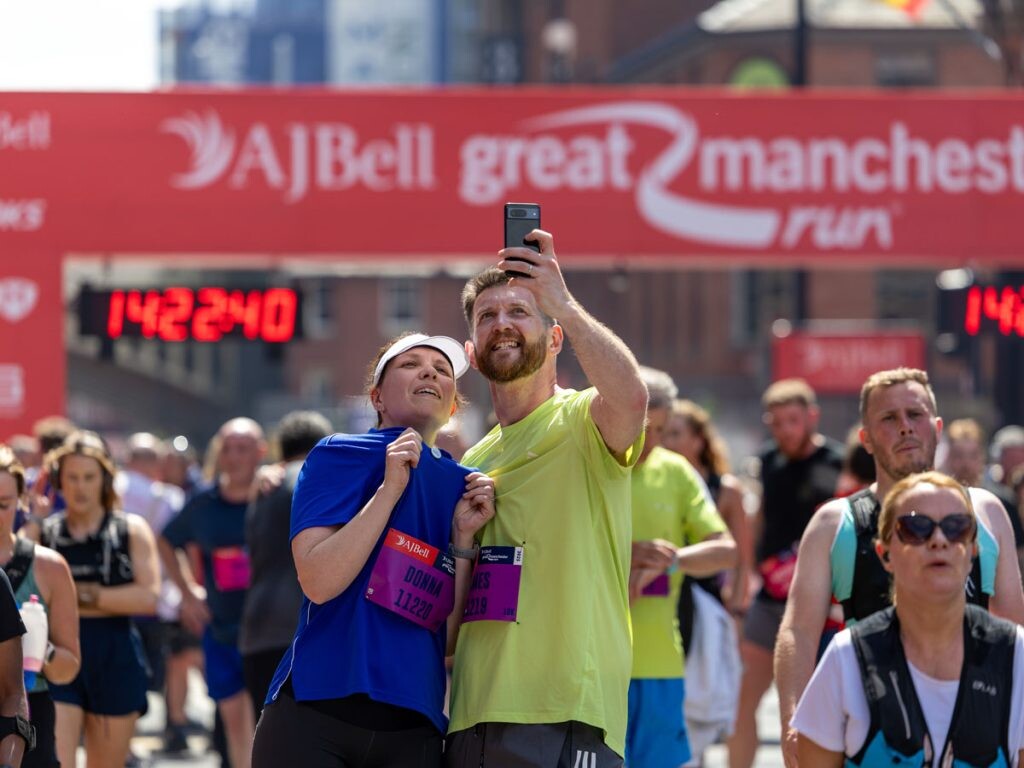
The iconic half marathon from Newcastle upon Tyne to South Shields is once again shaping up to be one of the most intriguing road races of the weekend, with a deep field capable of producing a highly competitive battle over 13.1 miles.
Leading the American challenge is Clayton Young, who heads into the race with an important autumn marathon campaign already on his mind. Young recently announced plans to make an attempt at the American marathon record at the Chicago Marathon later this fall, making Sunday's race an interesting opportunity to gauge his fitness ahead of that major target.
However, Young will face plenty of quality opposition.
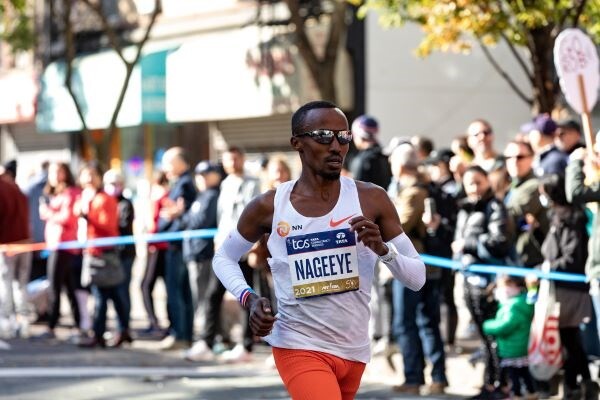
The American contingent also includes Zouhair Talbi, Casey Clinger, Woody Kincaid, Jared Ward and Jake Barraclough, giving the United States considerable depth in the men's field.
Kincaid is particularly intriguing. The USATF 10K champion has already established himself as one of America's most accomplished distance runners and will be looking to continue building his reputation on the roads against an international field.
The global challenge is equally strong.
Alex Mutiso of Kenya, Abdi Nageeye of the Netherlands, Ethiopia's Deresa Geleta, Italy's Iliass Aouani, Britain's Ben Connor and Andy Butchart, as well as a strong contingent from Japan, add plenty of experience and firepower to the race.
With athletes arriving at different stages of their seasons and several already looking toward major autumn targets, the Great North Run could produce a fascinating tactical battle before the final miles decide who has the strength to take control.
Selected Men's Elite Entries
1. Clayton Young — United States
2. Casey Clinger — United States
3. Zouhair Talbi — United States
4. Woody Kincaid — United States
5. Jared Ward — United States
6. Jake Barraclough — United States
7. Alex Mutiso — Kenya
8. Abdi Nageeye — The Netherlands
9. Deresa Geleta — Ethiopia
10. Ben Connor — Great Britain
11. Taiga Hirayama — Japan
12. Ayumu Kobayashi — Japan
13. Tatsuya Maruyama — Japan
14. Kosei Matsunami — Japan
15. Yohei Ikeda — Japan
16. Shoya Yonei — Japan
17. Iliass Aouani — Italy
18. Andy Butchart — Great Britain
19. Alfie Manthorpe — Great Britain
20. Calum Johnson — Great Britain
The 2026 AJ Bell Great North Run will take place on Sunday, September 13, with the elite men's race scheduled to get underway in Newcastle.
It may be a half marathon, but this is certainly not a race to overlook. With Young preparing for Chicago, Kincaid continuing to make his mark on the roads and an international field packed with talent, the Great North Run could quietly become one of the most entertaining races of the weekend.
by Erick Cheruiyot for My Best Runs.
Login to leave a comment

Great North Run
Great North Run founder Brendan Foster believes Britain is ready to welcome the world with open arms after the launch of the event's most ambitious plan to date. The Great World Run campaign seeks to recruit one runner from every country in the United Nations – 193 in total – to take part in the iconic half marathon in...
more...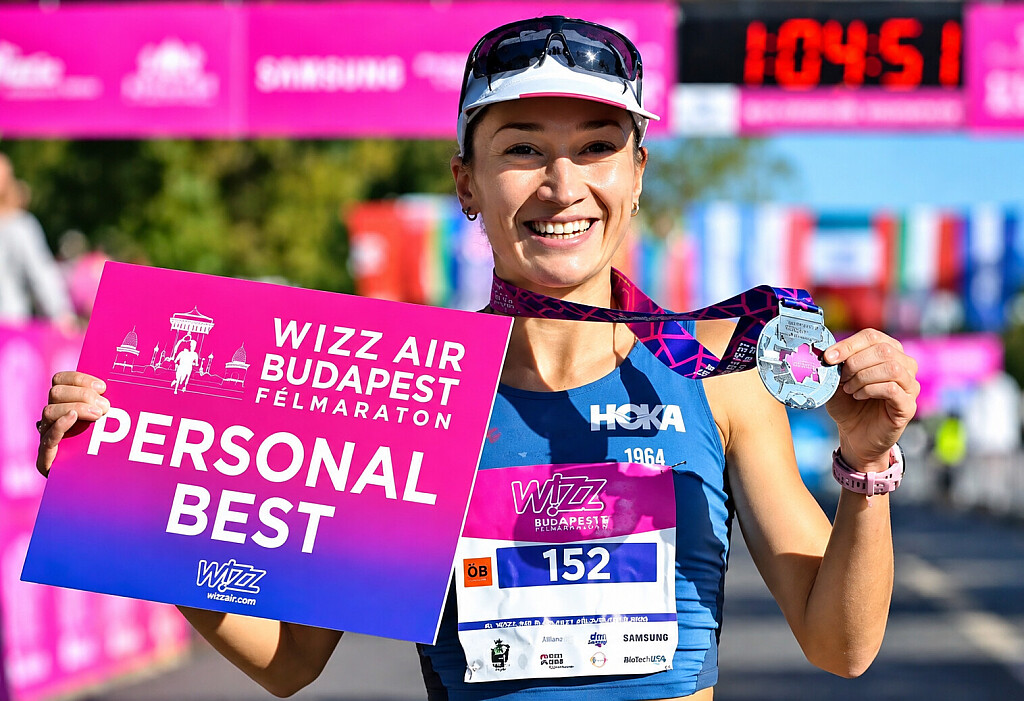
Budapest Half Marathon 2026: Vindics-Tóth Lili Anna Shines With PB As Karsai Gábor Takes Men’s Crown
The 2026 Budapest Half Marathon delivered an impressive display of road racing in the Hungarian capital, with home athletes dominating both podiums. Vindics-Tóth Lili Anna produced the headline performance in the women’s race, while Karsai Gábor led the men’s field to victory.
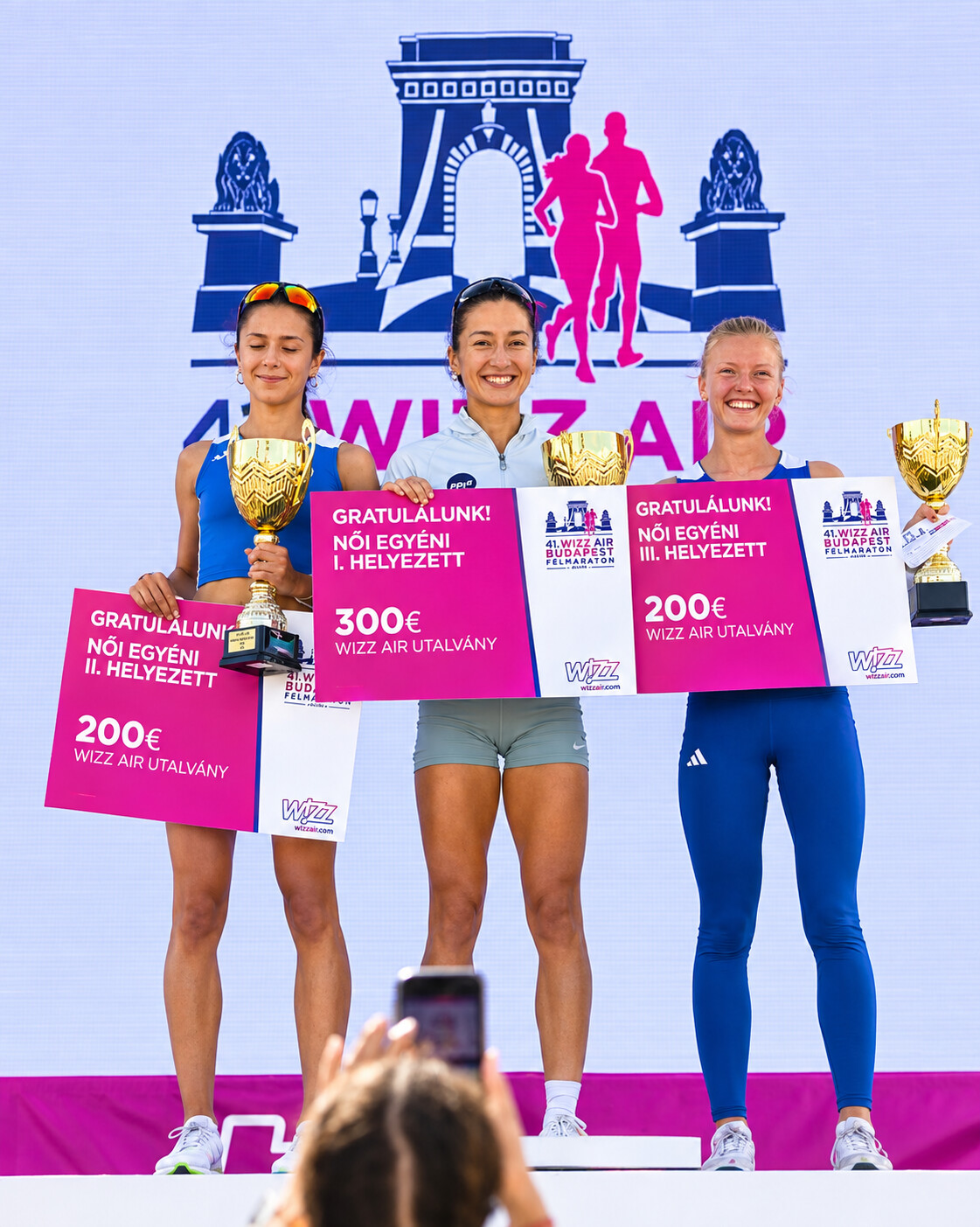
Vindics-Tóth was in outstanding form, crossing the finish line in 1:09:20 to secure the women’s title and, importantly, improve her personal best. Her performance was comfortably clear of the chasing pack and underlined her strength over the 21.1-kilometre distance.
Behind her, Niesz Viktória claimed second place in 1:18:43, while Nagy Nóra completed the women’s podium in 1:19:35. The result gave Hungary a clean sweep of the top three positions in the women’s competition.
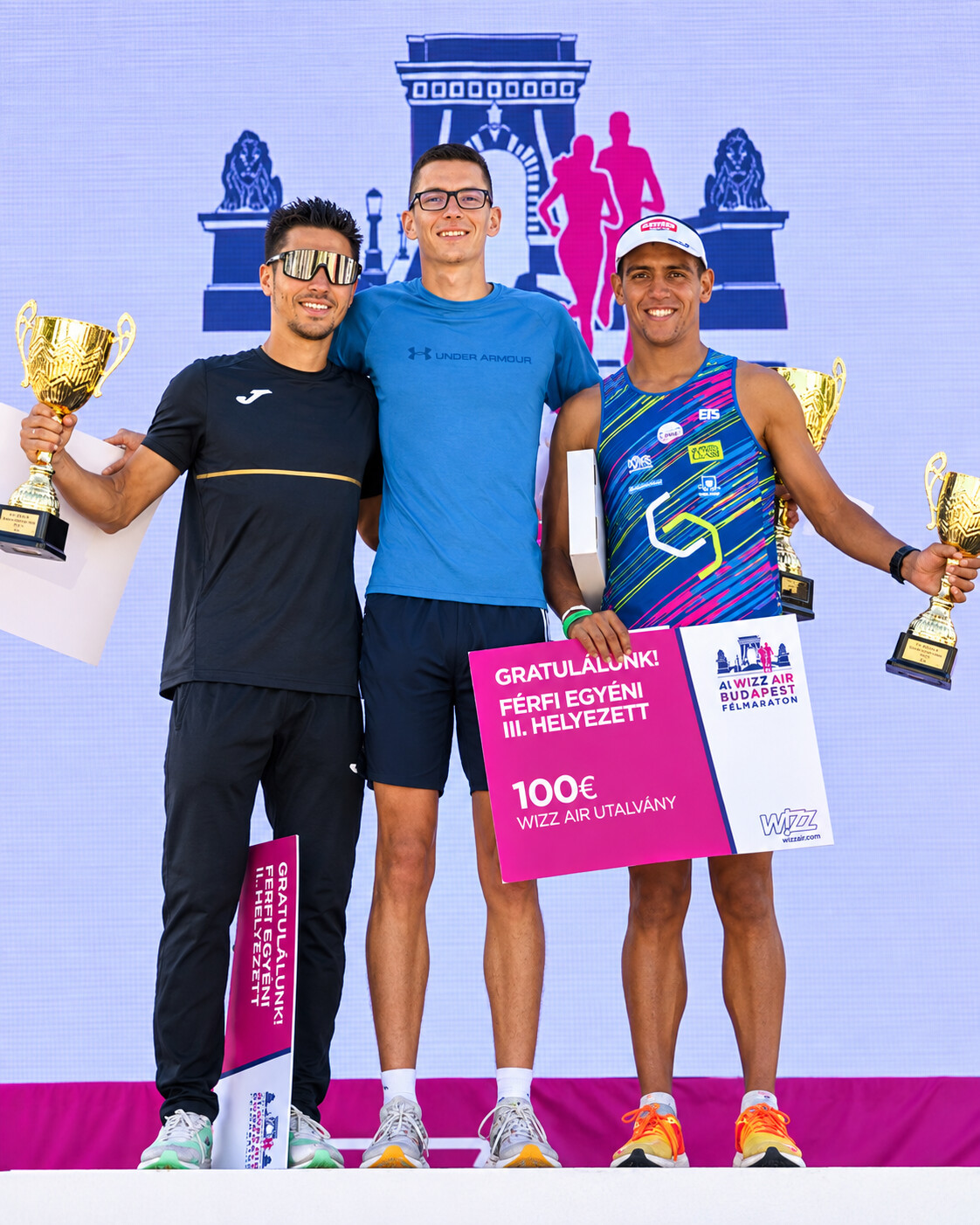
The men’s race also produced a Hungarian victory, with Karsai Gábor taking the title in 1:04:18. Karsai delivered the fastest performance of the men’s field and secured the win ahead of a competitive battle for the remaining podium places.
Italy’s Riccardo Mugnosso provided the international challenge at the front, finishing second in 1:05:20. He was followed by Hungary’s Vásárhelyi Máté Dávid, who completed the men’s podium in 1:07:27.
The women’s race was particularly notable for the margin between Vindics-Tóth and the rest of the podium. Her 1:09:20 personal best represented the defining performance of the women’s competition, while Niesz and Nagy battled for the remaining top-three positions.
In the men’s contest, Karsai’s winning time of 1:04:18 put him more than a minute clear of Mugnosso, while Vásárhelyi finished a further two minutes behind the Italian. The spread across the podium highlighted the different levels of the race as the athletes completed the demanding half-marathon distance.
Overall, the 2026 Budapest Half Marathon proved a successful outing for Hungarian distance running, with Hungarian athletes taking five of the six available podium places across the men’s and women’s races. Vindics-Tóth’s personal-best victory provided the standout individual achievement, while Karsai added another home triumph in the men’s competition.
With strong performances across both fields and a PB at the top of the women’s results, the Budapest Half Marathon once again provided a compelling stage for road-running talent, as athletes battled over 21.1 kilometres through Hungary’s capital.
by Erick Cheruiyot for My Best Runs.
Login to leave a comment
Budapest Half Marathon
Participating in the half marathon is essentially a running sightseeing tour of the beautiful Budapest. The course leads through the center of the city, down the famous Andrassy Boulevard and across the Chain Bridge. Admire the view of the Buda Castle from the Danubebanks and marvel in the panorama of Pest as well as Europe´s third largest Parliament building! There...
more...
Lost on the Matterhorn: Search Continues for Canadian Trail Runner Kalie McCrystal
The dedicated helicopter search for 38-year-old Canadian mountain runner and lawyer Kalie McCrystal has been suspended after an intensive operation failed to find any trace of her on the Matterhorn in Italy.
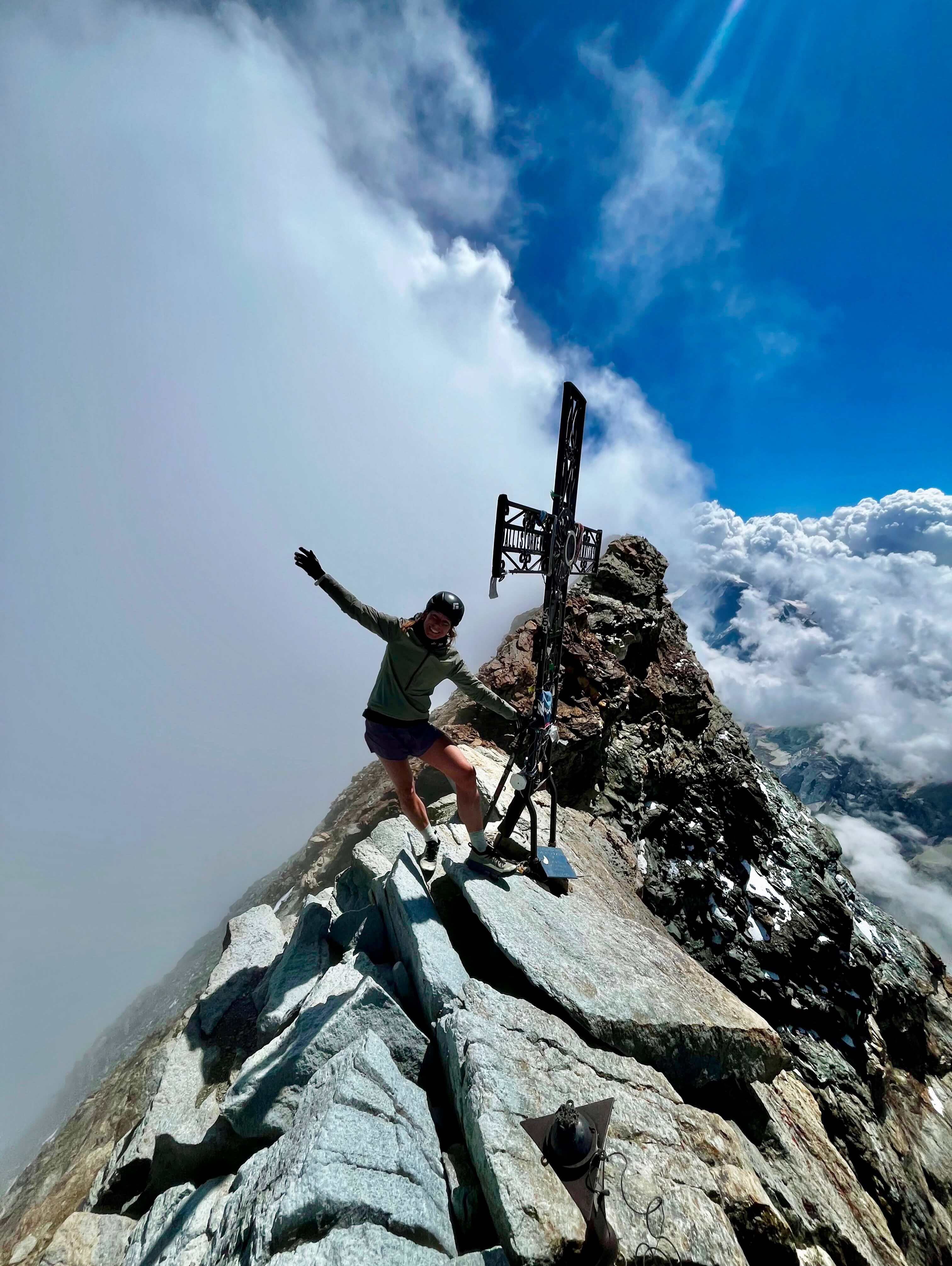
McCrystal, from Squamish, British Columbia, was last seen on Tuesday, September 1, at around 3,830 metres above the Jean-Antoine Carrel Hut on the Italian side of the Matterhorn. A mountain guide reportedly saw her continuing towards the summit at a fast pace, with McCrystal telling the guide that she was training for an attempt to break the mountain's ascent-and-descent record.
The disappearance has triggered a major search operation across one of the Alps' most challenging environments. Rescue teams conducted repeated helicopter sweeps of the Matterhorn, examining steep cliffs, narrow gullies and other difficult sections of the route on both the Italian and Swiss sides.
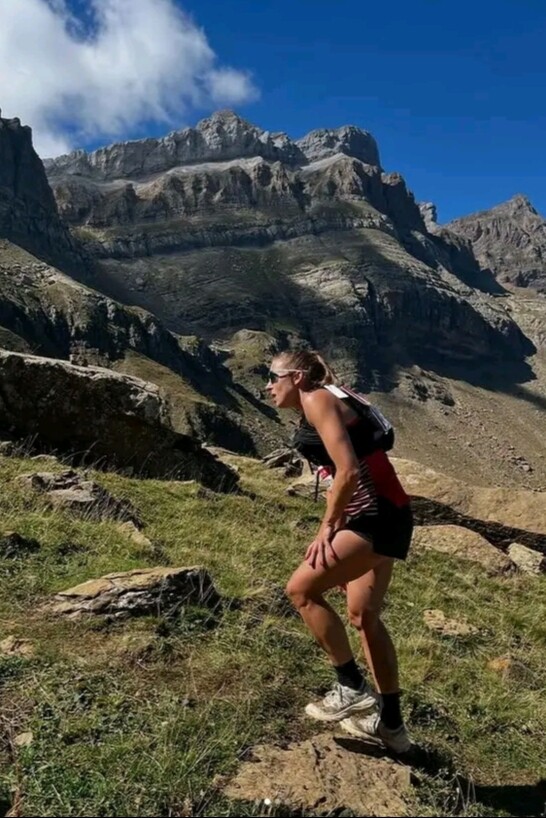
A large air ambulance was initially deployed before rescuers switched to a smaller helicopter that could operate closer to the mountain's hazardous rock faces and couloirs. Despite the closer and repeated searches, however, no sign of McCrystal was found.
Authorities also deployed a helicopter-mounted RECCO detector, a technology designed to locate compatible rescue reflectors that can sometimes be incorporated into outdoor clothing or equipment. No signal was detected. Attempts to locate McCrystal through her cellphone also failed to produce a result.

McCrystal had been staying near Cervinia, Italy, as she prepared for a record attempt via the Lion Ridge, the principal Italian route up the Matterhorn. Rising to 4,478 metres, the iconic peak straddles the border between Switzerland and Italy and is renowned for its steep, exposed and technically demanding terrain.
For McCrystal, the planned challenge represented another ambitious chapter in an already impressive mountain-running career. An experienced skyrunner and mountaineer, she has built a reputation for tackling some of the world's most demanding mountain races and routes.
Earlier this year, she won Argentina's 4 Refugios Non-Stop, covering approximately 40 kilometres with 3,350 metres of elevation gain.
Her preparation for the Matterhorn had also included a remarkable solo effort. Just weeks before her disappearance, McCrystal completed a solo ascent and descent of the Matterhorn from Zermatt via Switzerland's Hörnli Ridge in 6:47:33, according to the Fastest Known Time database. Only 10 days later, she competed in Italy's demanding Trofeo Kima skyrunning race.
Her previous experience on the Matterhorn highlights how familiar she was with high-altitude alpine terrain. Athletics Canada describes McCrystal as an experienced skyrunner and mountaineer with extensive knowledge of technical and high-altitude mountain environments. Her planned record attempt was therefore the latest in a series of demanding challenges undertaken at the highest level of mountain running.
Although the dedicated helicopter operation has now been suspended, the search for McCrystal has not completely ended. Mountain guides who regularly climb the Matterhorn are continuing to remain alert for any possible signs, while rescuers are awaiting additional information from police that could potentially lead to a new, more targeted search.
Athletics Canada has also appealed to the media to help raise awareness of McCrystal's disappearance and support the ongoing efforts to locate her.
The news has left the Canadian mountain-running community, as well as many international athletes and supporters who have followed McCrystal's achievements, deeply concerned. Her family is working directly with mountain-rescue services as efforts to determine her whereabouts continue.
At this difficult time, thoughts remain with Kalie McCrystal's family, friends, teammates and everyone involved in the search, with the mountain-running community continuing to hope for answers and her safe return.
by Erick Cheruiyot for My Best Runs.
Login to leave a comment

Brussels 100m Crown Blown Wide Open As Alfred And Jefferson-Wooden Step Aside
The women’s 100m at the 2026 Wanda Diamond League Final in Brussels has been thrown wide open after two of the season’s biggest sprinting stars opted out of the event, dramatically reshaping what had promised to be a blockbuster showdown at King Baudouin Stadium.
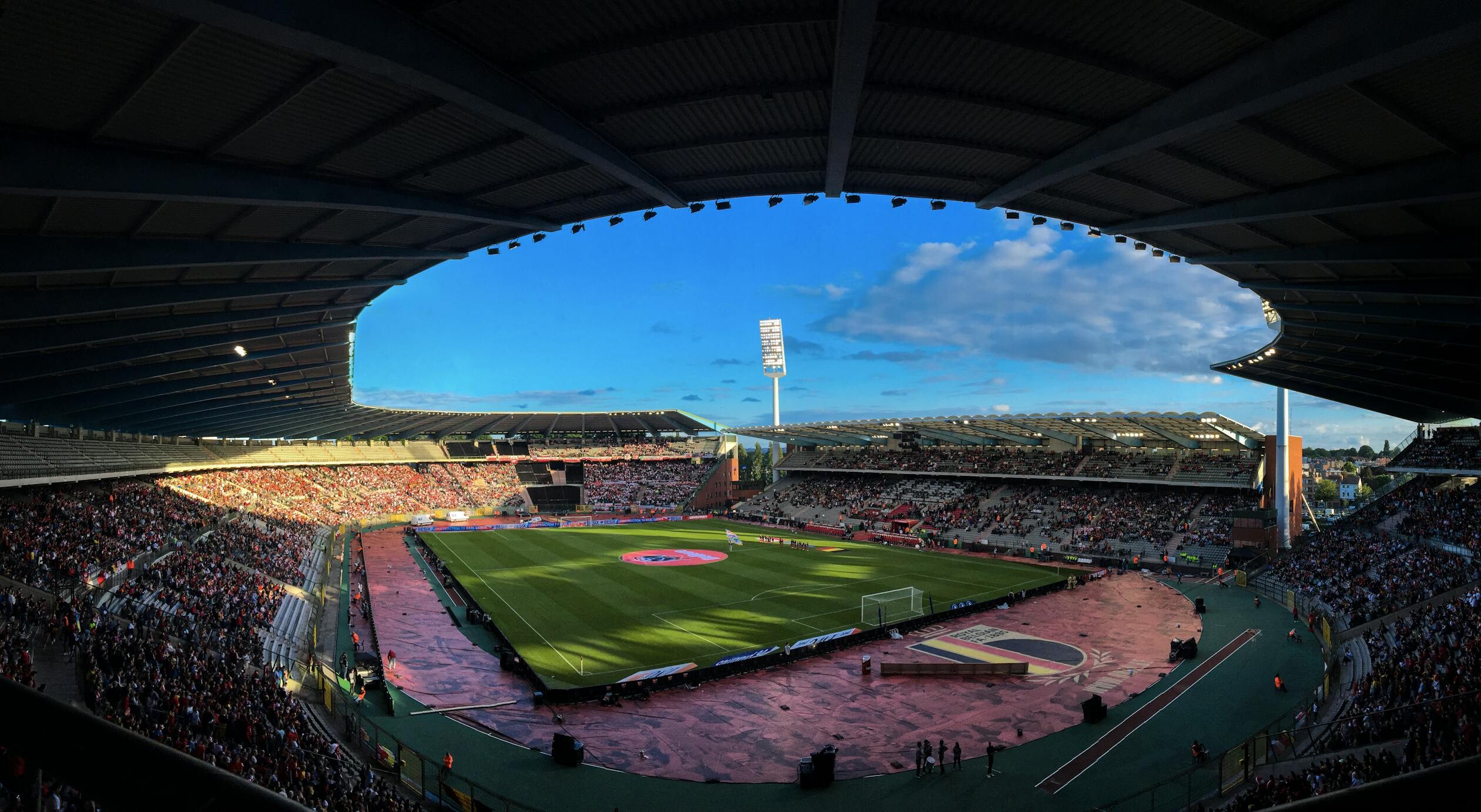
American star Melissa Jefferson-Wooden will not contest the 100m in Brussels, while Olympic champion Julien Alfred of Saint Lucia has chosen to line up in the 200m instead of defending the Diamond League 100m title she won last season.
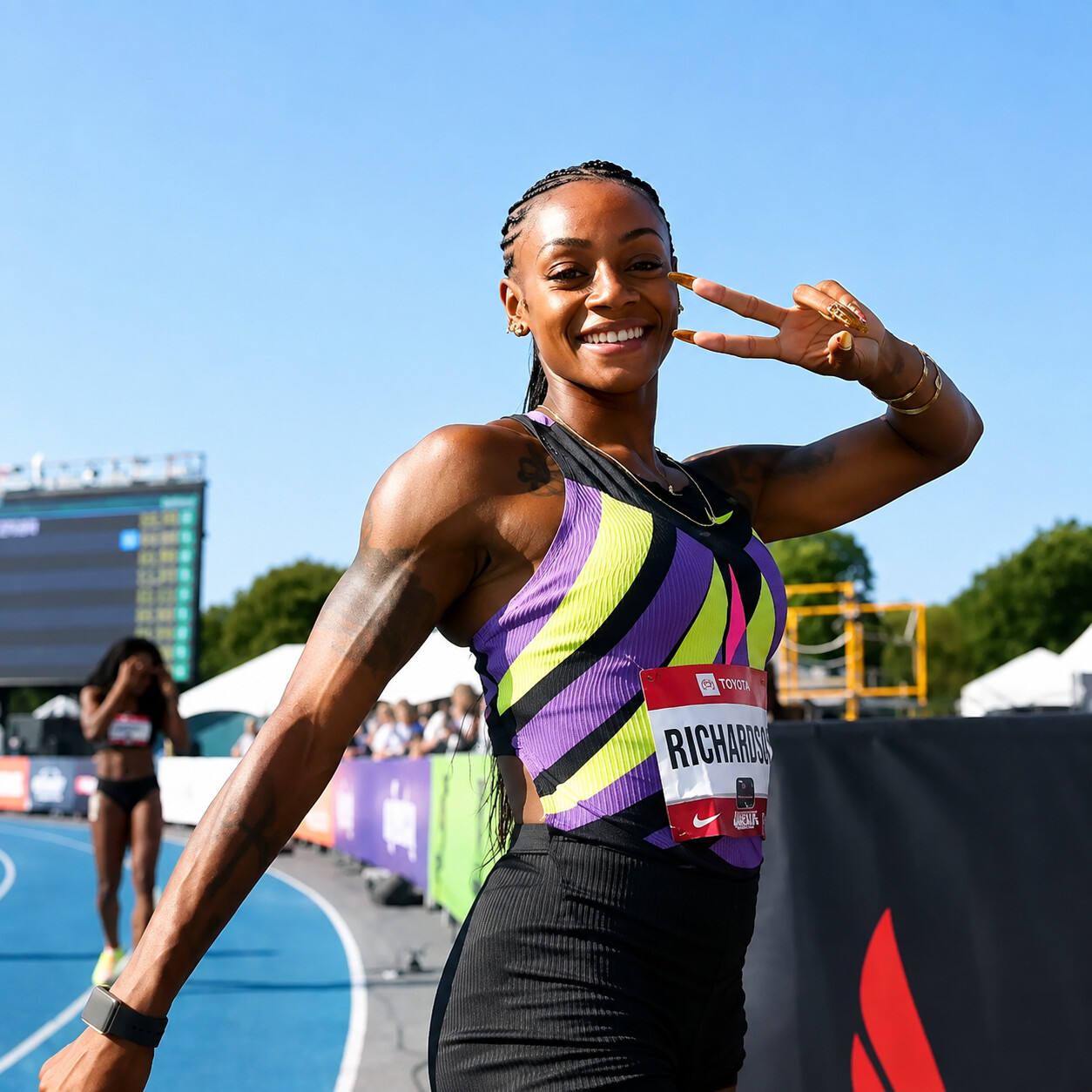
Their absence leaves Sha’Carri Richardson as one of the headline names in a field that suddenly carries an entirely different complexion. The American will arrive in Brussels with a major opportunity to claim the Diamond League trophy, but the battle for victory is far from straightforward.
The timing of Alfred and Jefferson-Wooden’s decisions makes the situation even more intriguing. Only days ago in Zürich, the two produced one of the closest 100m finishes of the season, with Alfred narrowly edging Jefferson-Wooden in a dramatic photo finish. Both were officially credited with 10.70 seconds, while the photo-finish technology separated them by just five thousandths of a second.
Richardson crossed the line third in that fiercely contested race, setting the stage for another potentially fascinating encounter in Brussels. Instead, the withdrawals have removed two of her biggest rivals from the equation and opened the door for a new challenger to emerge.
Richardson now carries considerable attention into the Belgian capital. The former world champion possesses the pedigree and championship experience to seize the moment, but she will need to be at her sharpest against a field containing several athletes capable of producing a major upset.
Jamaica’s Tina Clayton brings considerable international experience and raw speed, while Jonielle Smith gives the Jamaican contingent another dangerous option. Britain’s Amy Hunt will also be looking to make her mark on one of the biggest stages of the Diamond League season.
Italy’s Zaynab Dosso, New Zealand’s Zoe Hobbs and Luxembourg’s Patrizia van der Weken add further depth to the field, while Belgium’s Delphine Nkansa will have the advantage of competing on home soil. Hungary’s Boglárka Takács completes a lineup in which virtually every athlete will see an opportunity to rise to the occasion.
With Alfred moving to the 200m and Jefferson-Wooden absent from the 100m, the Brussels race has lost two of its most anticipated names—but gained something equally compelling: uncertainty.
Richardson may now be the biggest name in the field, yet the Diamond League final has a habit of producing unexpected heroes. One explosive start, one perfectly executed drive phase and one decisive finish could completely change the picture.
The question is no longer simply whether Richardson can win the Diamond League crown. It is whether one of the challengers can seize this unexpected opening and produce the performance of her season.
In Brussels, the 100m crown is there for the taking—and the sprinting world will be watching to see who grabs it.
by Erick Cheruiyot for My Best Runs.
Login to leave a comment
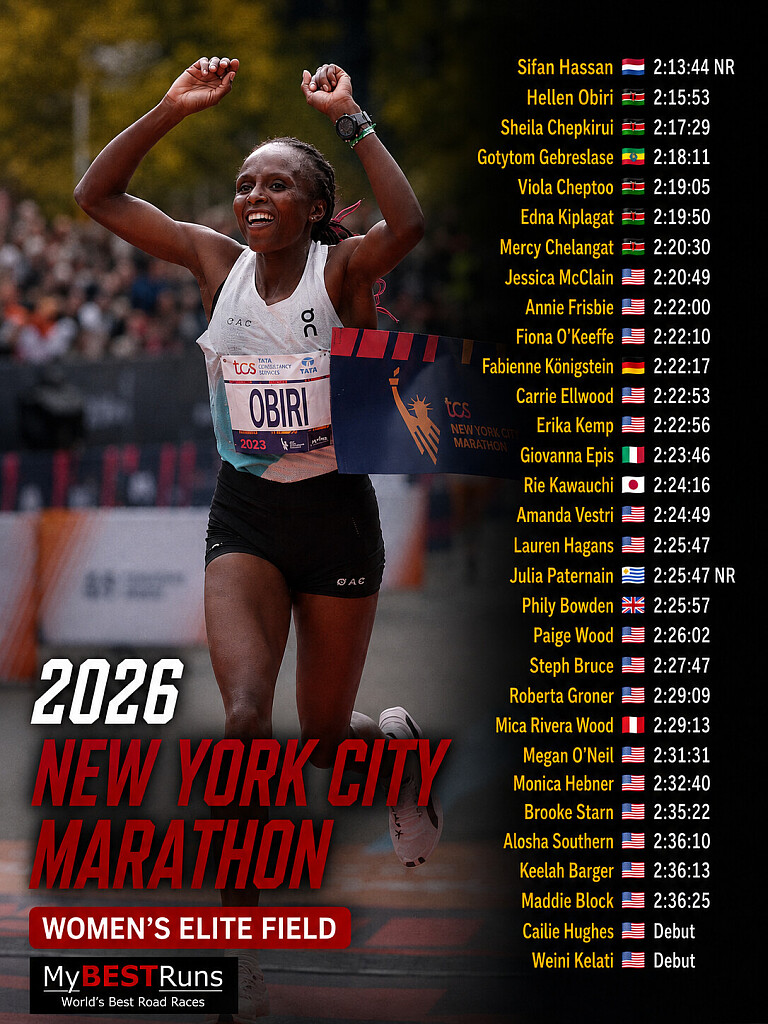
Sifan Hassan and Hellen Obiri Headline Star-Studded 2026 New York City Marathon Field
The 2026 TCS New York City Marathon is shaping up to be one of the most anticipated women’s marathon showdowns of the year, with Olympic champion Sifan Hassan of the Netherlands (2:13:44 NR) and defending champion Hellen Obiri of Kenya (2:15:53) leading a sensational field for November 1.
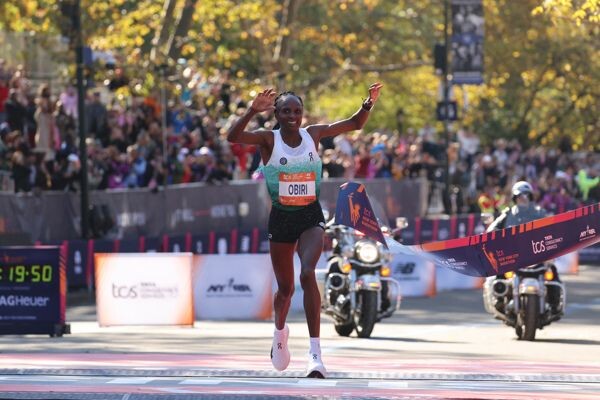
The pair headline a world-class lineup featuring Olympic and world champions, major-marathon winners, national record holders and some of the most exciting marathoners from around the globe.
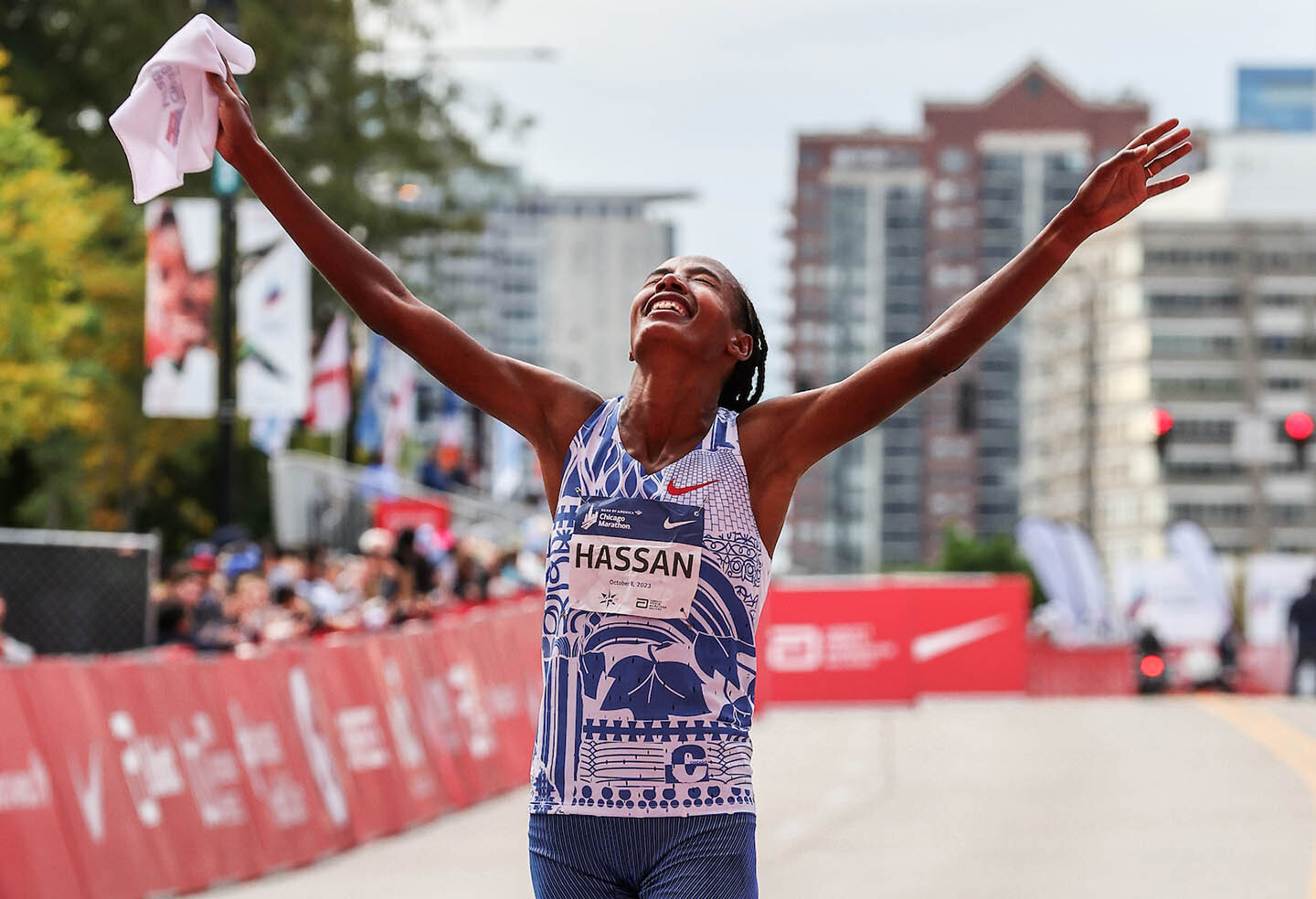
Hassan arrives with the fastest personal best in the field, while Obiri will return to New York seeking to defend the title she won last year in 2:19:51. The Kenyan star has established herself as one of the defining figures of the modern marathon, and another victory in New York would further strengthen her remarkable record over the distance.
“New York always brings out the best in me and I’m excited to return and feel the energy of each borough during such a historic year,” Obiri said.
She will face a formidable Kenyan challenge led by Sheila Chepkirui (2:17:29), Viola Cheptoo (2:19:05), Edna Kiplagat (2:19:50) and Mercy Chelangat (2:20:30). Ethiopia will be represented by former world champion Gotytom Gebreslase (2:18:11), adding even more championship pedigree and experience to an already formidable front pack.
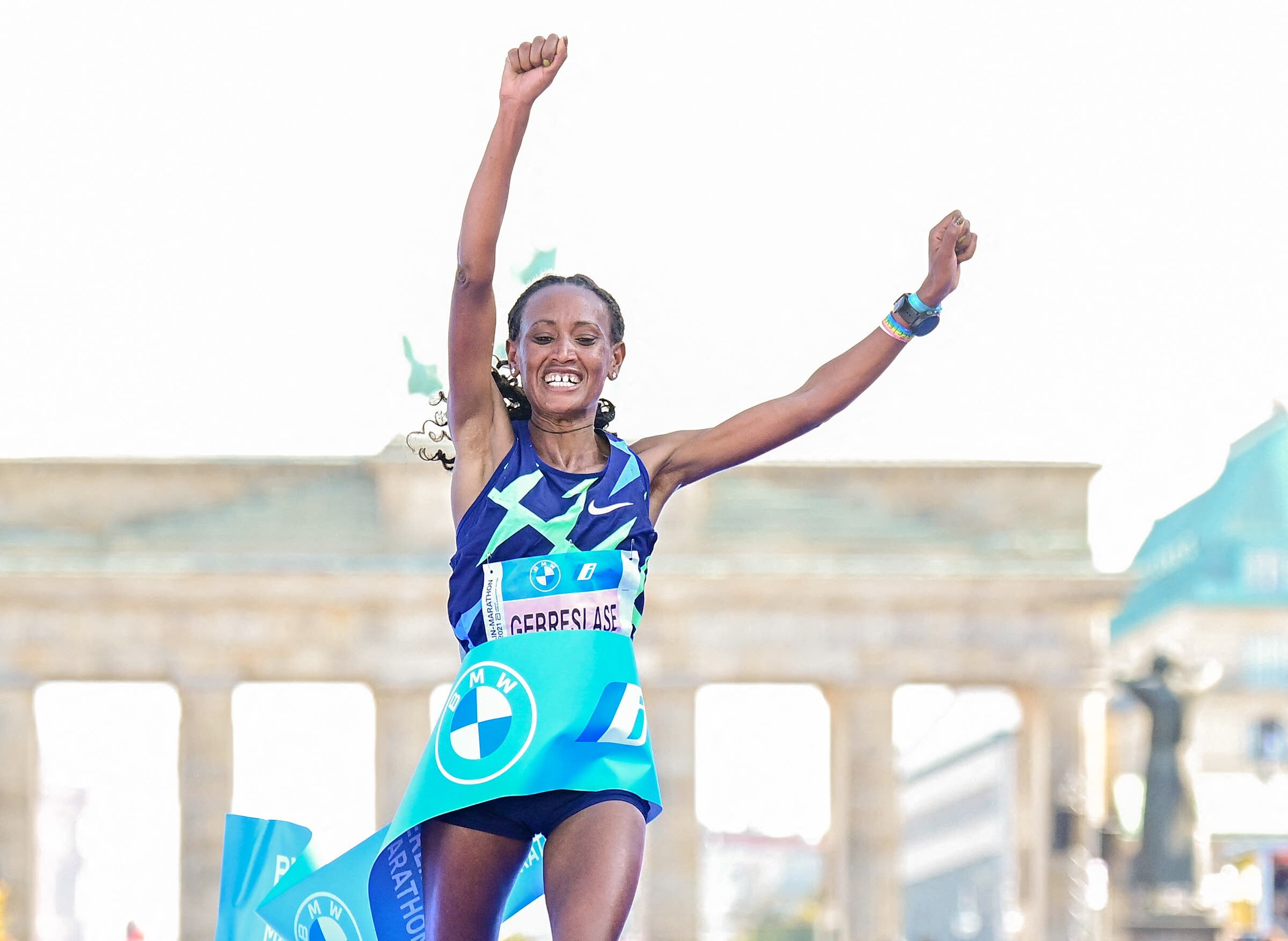
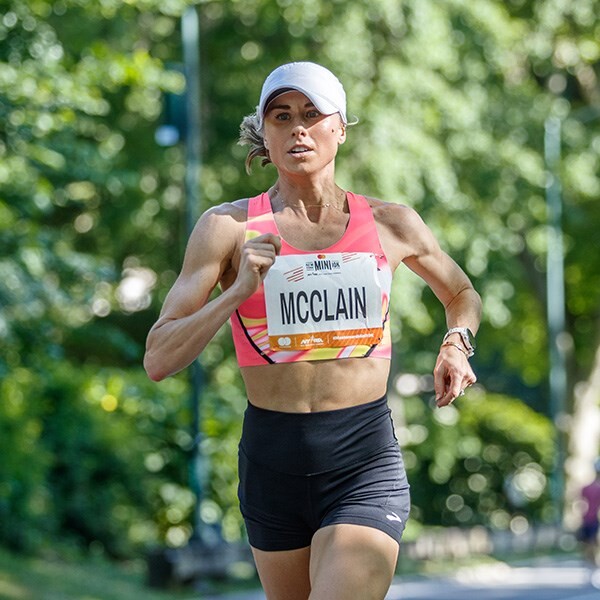
The strength of the field continues with Jessica McClain of the United States (2:20:49), Annie Frisbie of the United States (2:22:00), Fiona O’Keeffe of the United States (2:22:10) and Fabienne Königstein of Germany (2:22:17). They will be joined by fellow American contenders Carrie Ellwood (2:22:53), Erika Kemp (2:22:56), Amanda Vestri (2:24:49) and Lauren Hagans (2:25:47), while Giovanna Epis of Italy (2:23:46) and Rie Kawauchi of Japan (2:24:16) add further international quality.
The lineup also features Julia Paternain of Uruguay (2:25:47 NR), Phily Bowden of Great Britain (2:25:57), Paige Wood of the United States (2:26:02) and Steph Bruce of the United States (2:27:47). The experience continues with Roberta Groner of the United States (2:29:09) and Mica Rivera Wood of Peru (2:29:13), while Megan O’Neil (2:31:31), Monica Hebner (2:32:40), Brooke Starn (2:35:22), Alosha Southern (2:36:10), Keetah Barger (2:36:13) and Maddie Block (2:36:25) add considerable depth to the American contingent.
Two particularly intriguing names will also be making their marathon debuts: Cailie Hughes and Weini Kelati of the United States. Kelati enters the new chapter of her career after lowering the American half-marathon record to 1:06:04 in February, giving her a strong foundation as she steps up to the classic 26.2-mile distance for the first time.
Her marathon debut adds another layer of intrigue to an already star-studded race. Kelati’s speed and endurance could make her a dangerous contender if she adapts quickly to the demands of the marathon, while Hughes will also bring the unpredictability that comes with tackling the distance for the first time.
With athletes representing the Netherlands, Kenya, Ethiopia, the United States, Germany, Italy, Japan, Uruguay, Great Britain and Peru, the 2026 women’s field boasts remarkable international depth. The leading contenders bring contrasting strengths, experiences and racing backgrounds, setting the stage for a fascinating battle across New York’s five boroughs before the famous finish in Central Park.
For Hassan, the race represents another opportunity to showcase her extraordinary range and marathon pedigree. For Obiri, it is a chance to defend her New York crown against one of the deepest fields assembled for the race. Behind them, Chepkirui, Gebreslase, Cheptoo, Kiplagat and a host of talented contenders will be waiting to challenge for the podium.
With Olympic pedigree, world championship experience, major-marathon success and two highly anticipated marathon debuts all converging on New York, the stage is set for a compelling battle on November 1.
The question is no longer whether the 2026 TCS New York City Marathon will deliver drama, but who will emerge victorious when the battle reaches Central Park.
Who is your favorite to take the crown in New York?
by Erick Cheruiyot for My Best Runs.
Login to leave a comment

TCS New York City Marathon
The first New York City Marathon, organized in 1970 by Fred Lebow and Vince Chiappetta, was held entirely in Central Park. Of 127 entrants, only 55 men finished; the sole female entrant dropped out due to illness. Winners were given inexpensive wristwatches and recycled baseball and bowling trophies. The entry fee was $1 and the total event budget...
more...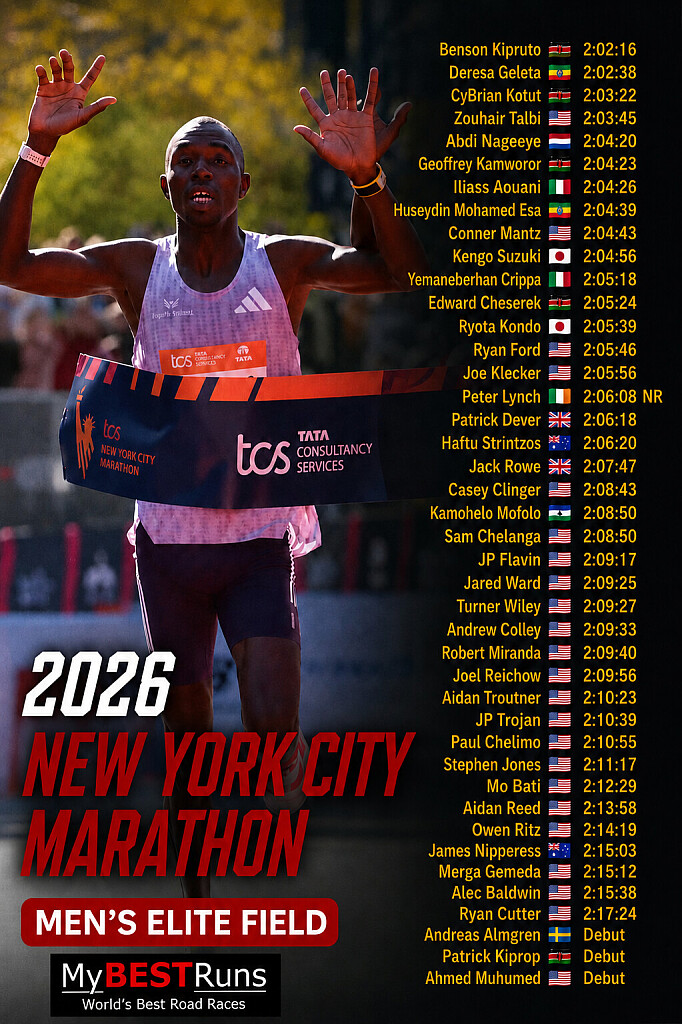
New York Marathon Set For Blockbuster Showdown As America’s Two Fastest Men Collide
The 2026 TCS New York City Marathon is shaping up to be one of the most anticipated editions in recent history, with New York Road Runners unveiling a remarkable men’s professional field that brings together the two fastest American marathoners ever on the same starting line.
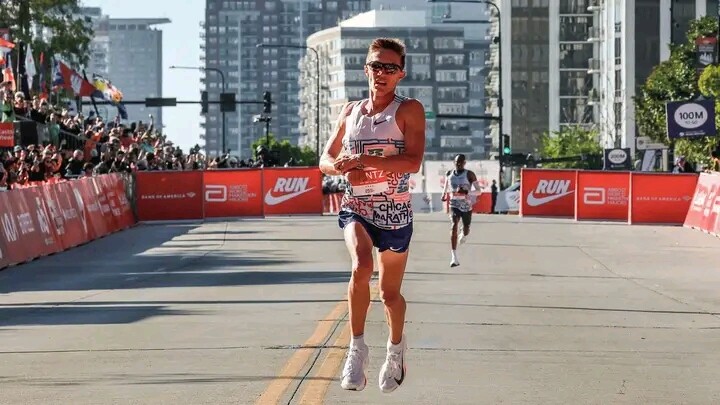
The race, scheduled for November 1, will feature American record-holder Conner Mantz (2:04:43) and Zouhair Talbi (2:03:45), whose performance at the 2026 Boston Marathon is the fastest marathon ever run by an American by clock time. However, because Boston is not a record-eligible course, Talbi’s mark does not replace Mantz’s official American record.
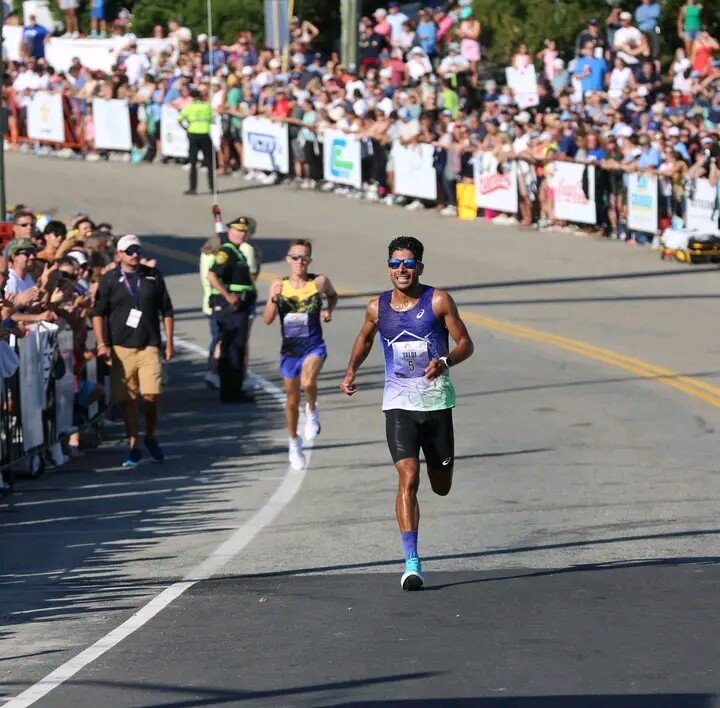
Mantz established the American record with his 2:04:43 fourth-place finish at the 2025 Chicago Marathon, breaking a national record that had stood since 2002. Talbi went even faster in Boston in April, crossing the line fifth in 2:03:45 and adding another extraordinary chapter to the rapid evolution of American marathon running.
That makes New York particularly intriguing. For the first time, the two men who occupy the top two positions on the all-time American marathon performance list will have the opportunity to race each other over a record-eligible course, with the streets of New York providing the stage.
And the American showdown will be only one part of a much bigger battle.
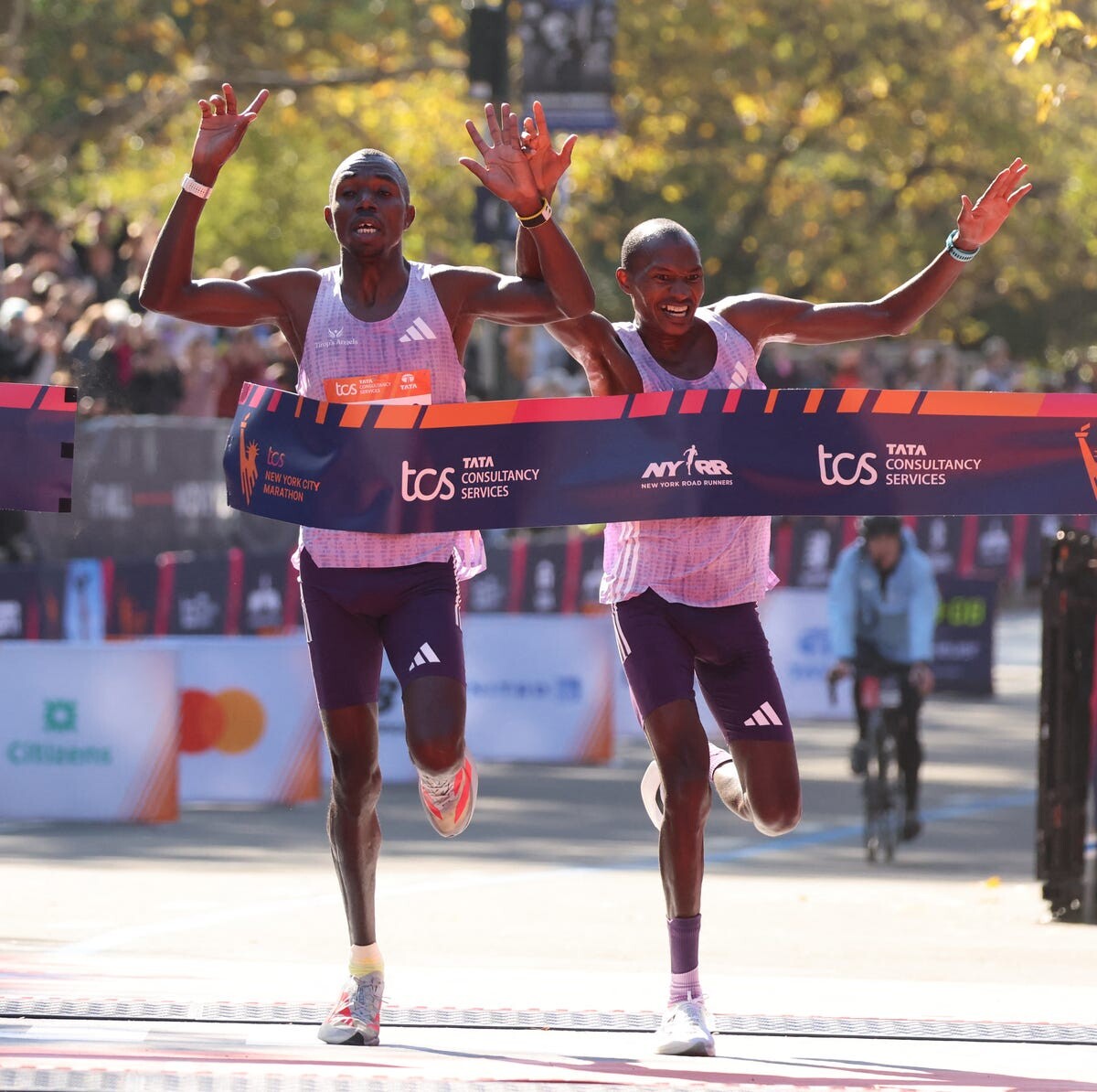
The international challenge is formidable. Defending champion Benson Kipruto (2:02:16) leads the field, followed by Ethiopia’s Deresa Geleta (2:02:38) and Kenya’s CyBrian Kotut (2:03:22). The lineup also includes the Netherlands’ Abdi Nageeye (2:04:20), Kenya’s Geoffrey Kamworor (2:04:23), Italy’s Iliass Aouani (2:04:26) and Ethiopia’s Huseydin Mohamed Esa (2:04:39).
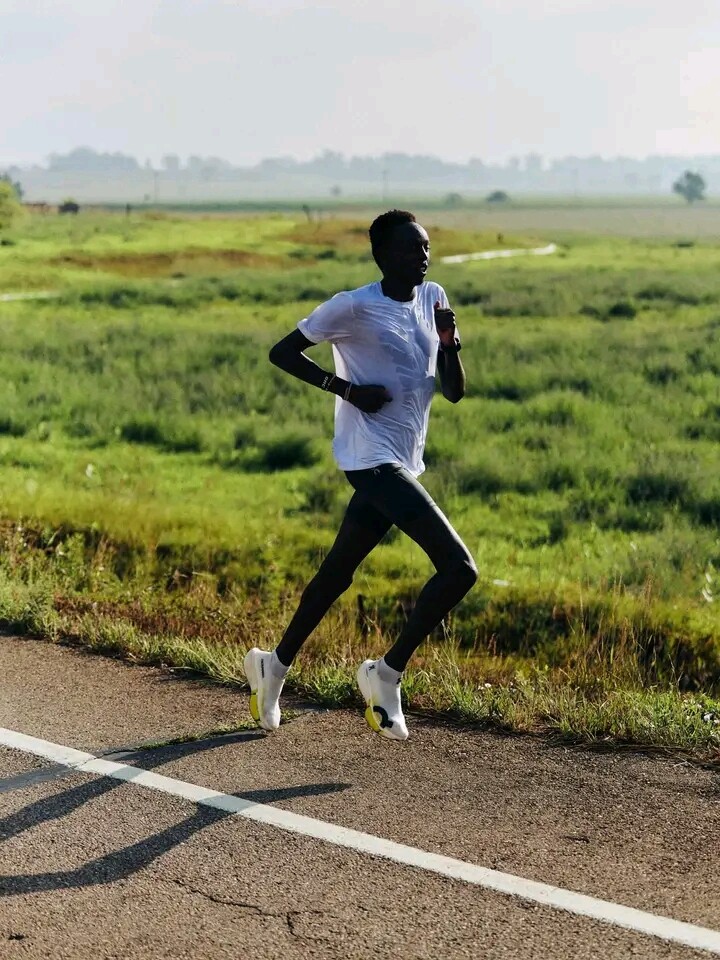
Just behind that group is Japan’s Kengo Suzuki (2:04:56), Italy’s Yemaneberhan Crippa (2:05:18), Kenya’s Edward Cheserek (2:05:24) and Japan’s Ryota Kondo (2:05:39). Ireland’s Peter Lynch (2:06:08), Great Britain’s Patrick Dever (2:06:18), Australia’s Haftu Strintzos (2:06:20) and Britain’s Jack Rowe (2:07:47) further strengthen a field that possesses extraordinary depth.
The American contingent is just as fascinating. Alongside Mantz and Talbi are Ryan Ford (2:05:46), Joe Klecker (2:05:56), Casey Clinger (2:08:43), Sam Chelanga (2:08:50), JP Flavin (2:09:17), Jared Ward (2:09:25), Turner Wiley (2:09:27), Andrew Colley (2:09:33), Robert Miranda (2:09:40) and Joel Reichow (2:09:56).
The depth continues with Aidan Troutner (2:10:23), JP Trojan (2:10:39), Paul Chelimo (2:10:55), Stephen Jones (2:11:17), Mo Bati (2:12:29), Aidan Reed (2:13:58), Owen Ritz (2:14:19), Merga Gemeda (2:15:12), Alec Baldwin (2:15:38) and Ryan Cutter (2:17:24). Australia’s James Nipperess (2:15:03) and Lesotho’s Kamohelo Mofolo (2:08:50) are also on the start list.
Three athletes will make their marathon debuts in New York: Sweden’s Andreas Almgren, Kenya’s Patrick Kiprop and American Ahmed Muhumed. Almgren, in particular, brings tremendous track credentials into his first attempt at 26.2 miles after winning the European 10,000m title in Birmingham in a championship-record 27:23.44.
The numbers tell the story of just how deep this field is. Ten men have personal bests faster than the existing New York City Marathon course record of 2:04:58, set by Tamirat Tola in 2023. Remarkably, Tola himself is not entered, nor is Alexander Mutiso, who finished runner-up to Kipruto in last year’s dramatic race.
For Mantz and Talbi, however, the stakes extend beyond the American record books. No American man has won the New York City Marathon since Meb Keflezighi in 2009, meaning the American contingent will arrive carrying a 17-year wait for another homegrown champion. Mantz and Talbi will have to overcome a formidable international field if either is to end that drought.
New York’s course will add another layer of difficulty. The bridges, sharp turns, rolling sections and notoriously demanding final miles toward Central Park have humbled some of the world’s fastest marathoners. Raw personal-best times will matter, but so will patience, positioning, tactical intelligence and the ability to produce a decisive move when the race reaches its most unforgiving stages.
With the official American record-holder, the fastest American by clock time, a defending champion, multiple 2:04 marathoners and a host of world-class contenders all converging on the Big Apple, the 2026 New York City Marathon has the ingredients of a classic.
On November 1, the streets of New York could become the setting for another extraordinary chapter in marathon history.
by Erick Cheruiyot for My Best Runs.
Login to leave a comment
TCS New York City Marathon
The first New York City Marathon, organized in 1970 by Fred Lebow and Vince Chiappetta, was held entirely in Central Park. Of 127 entrants, only 55 men finished; the sole female entrant dropped out due to illness. Winners were given inexpensive wristwatches and recycled baseball and bowling trophies. The entry fee was $1 and the total event budget...
more...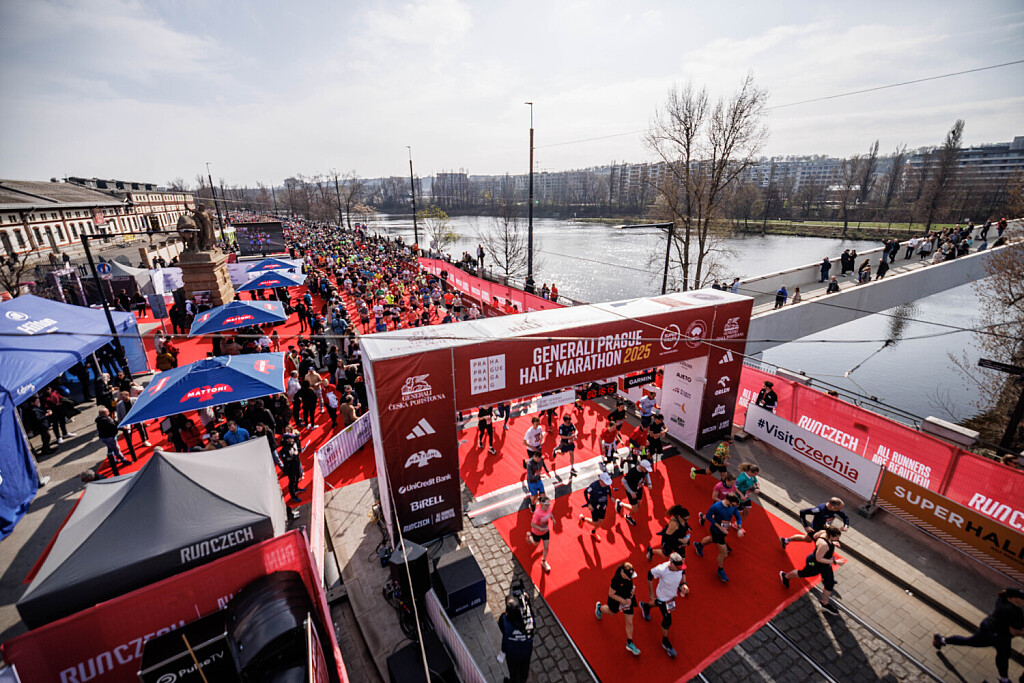
Prague Half Marathon’s First Ballot Draws More Than 70,000 Applications
The Generali Prague Half Marathon has entered a new era of unprecedented demand, with more than 70,000 runners reportedly applying for places in the race’s first-ever ballot for the 2027 edition.
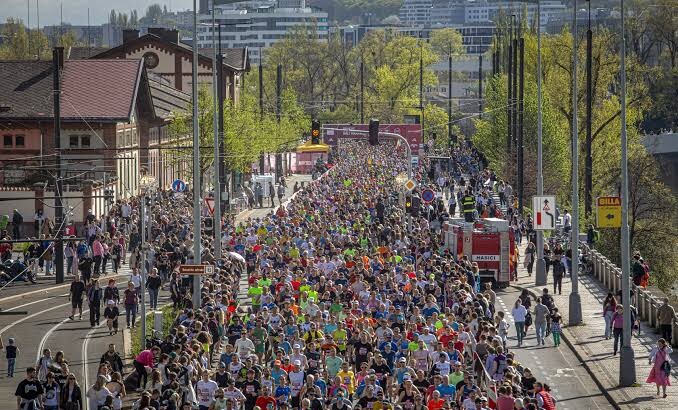
The remarkable response underlines the extraordinary international appeal of one of Europe’s most celebrated half marathons. With the race limited to 17,000 participants, the number of applications means demand exceeded available places by more than four times. RunCzech confirmed that the ballot attracted more than six times the race capacity in applications.
The move to a random draw marks a significant change from the previous registration system. In 2026, the 17,000-place field disappeared within just 2 hours and 23 minutes of registration opening, demonstrating how fiercely contested entry had become. Rather than rewarding those who happened to be quickest online, the new system gives applicants an equal opportunity through a random selection process.
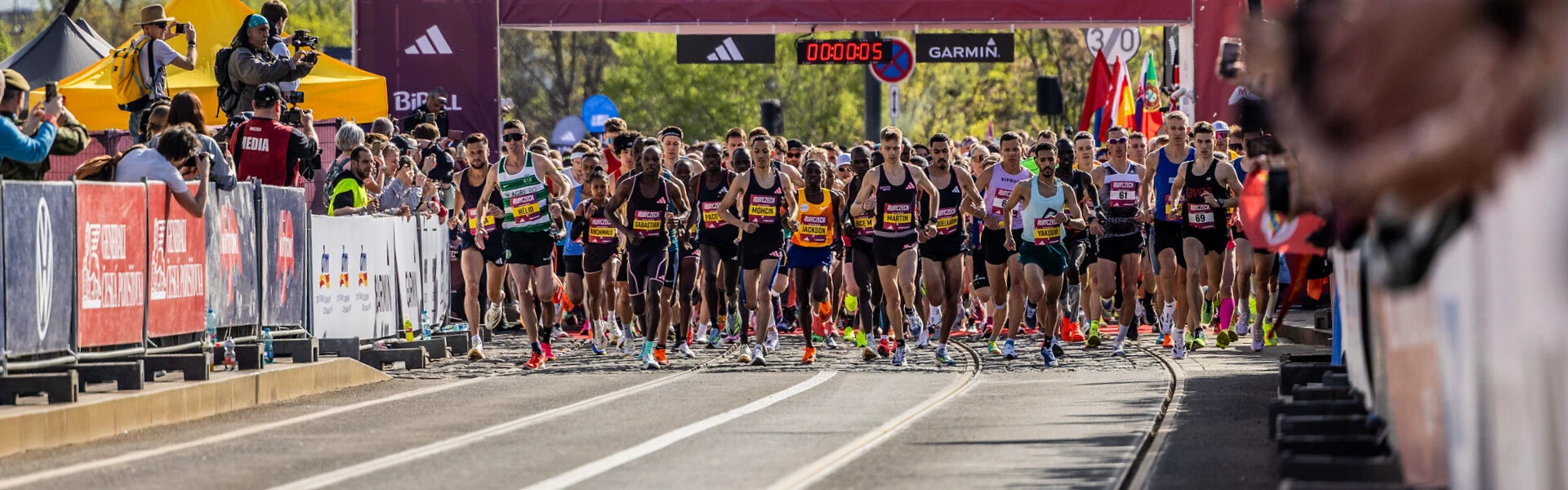
Applications opened on July 21 and closed at midnight heading into August 12, bringing three weeks of intense anticipation to an end. The draw is scheduled to take place this week, with every applicant due to receive the outcome by email no later than August 21. Those fortunate enough to secure a place will then have seven days to complete their registration before any unclaimed entries are returned to the pool.
The scale of the international interest is particularly striking. Applicants came from 161 countries, with 77 per cent of all applications submitted from outside the Czech Republic. The United Kingdom and Germany provided the largest overseas applicant groups, while Spain, Poland, Portugal, Italy and France were also strongly represented. Almost 1,300 applications came from Brazil and more than 700 from the United States.
For runners chasing the prestigious SuperHalfs series, Prague carries even greater significance. The race is one of the six founding members of the European half-marathon series, alongside Berlin, Copenhagen, Lisbon, Valencia and Cardiff, making a place on the start line highly coveted among runners pursuing the full collection. Around 45 per cent of ballot applicants already hold a SuperHalfs passport.
The 27th Generali Prague Half Marathon will take place on Saturday, April 3, 2027, taking runners through the historic heart of the Czech capital. The event also holds World Athletics Elite Label status, reinforcing its reputation not only as a mass-participation spectacular but also as a race capable of attracting world-class athletes and producing elite performances.
The huge ballot has transformed the meaning of simply getting to the start line in Prague. For thousands of runners, preparation has already begun, but their next step is not a training session or a race-plan decision—it is an email. This time, the fastest internet connection cannot guarantee a place; chance will decide who gets to experience the roar of the crowds, the historic streets and the unmistakable atmosphere of Prague at 21.1 kilometres.
The first ballot has therefore delivered a message that is impossible to ignore: Prague is no longer merely a race runners want to run—it is a race runners are competing to enter. With more than 70,000 applications chasing 17,000 places, the 2027 edition is already shaping up to be one of the most sought-after starts on the European road-racing calendar.
by Erick Cheruiyot for My Best Runs.
Login to leave a comment

Prague Half Marathon
Start the RunCzech season with one of the biggest running events in the Central Europe! Every year the Sportisimo Prague Half Marathon excites spectators with performances of elite athletes breaking records. Enjoy a course with incomparable scenery in the heart of historic Prague that follows along the Vltava river and crisscrosses five beautiful bridges. Take in majestic views of the...
more...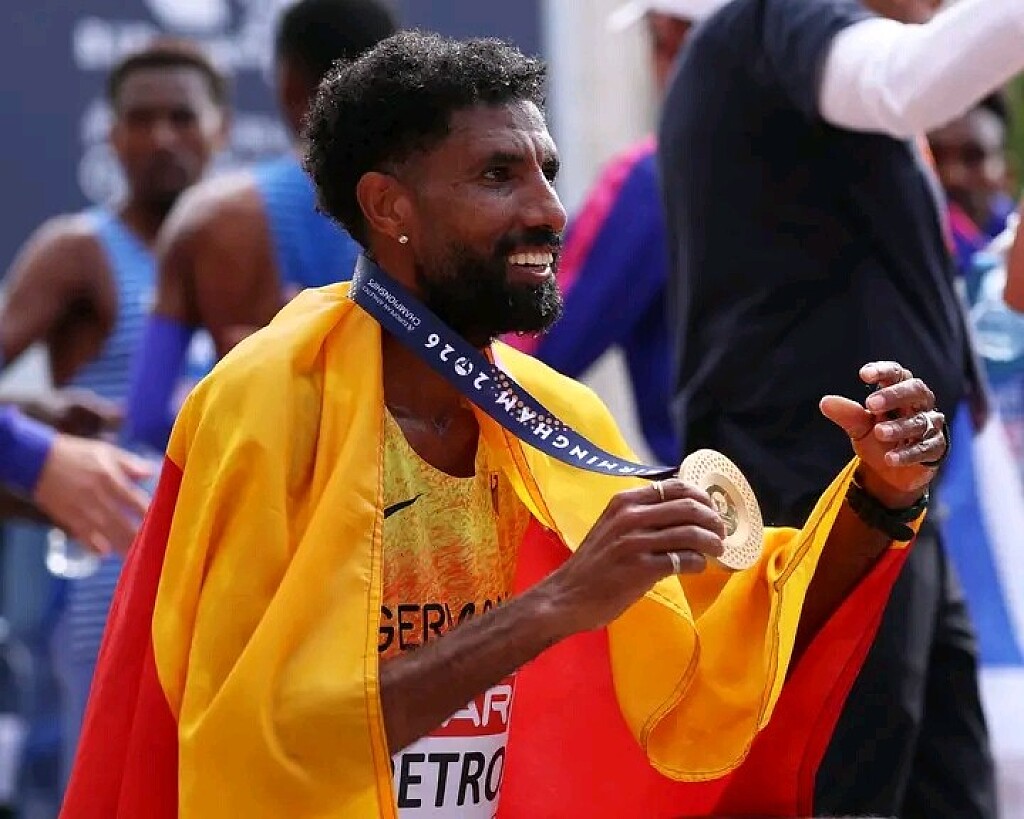
Amanal Petros Strikes Gold in Birmingham with Championship Record
Germany’s Amanal Petros has crowned a remarkable rise to the European marathon summit, winning the men’s marathon title at the European Athletics Championships in Birmingham in a championship-record 2:09:11.
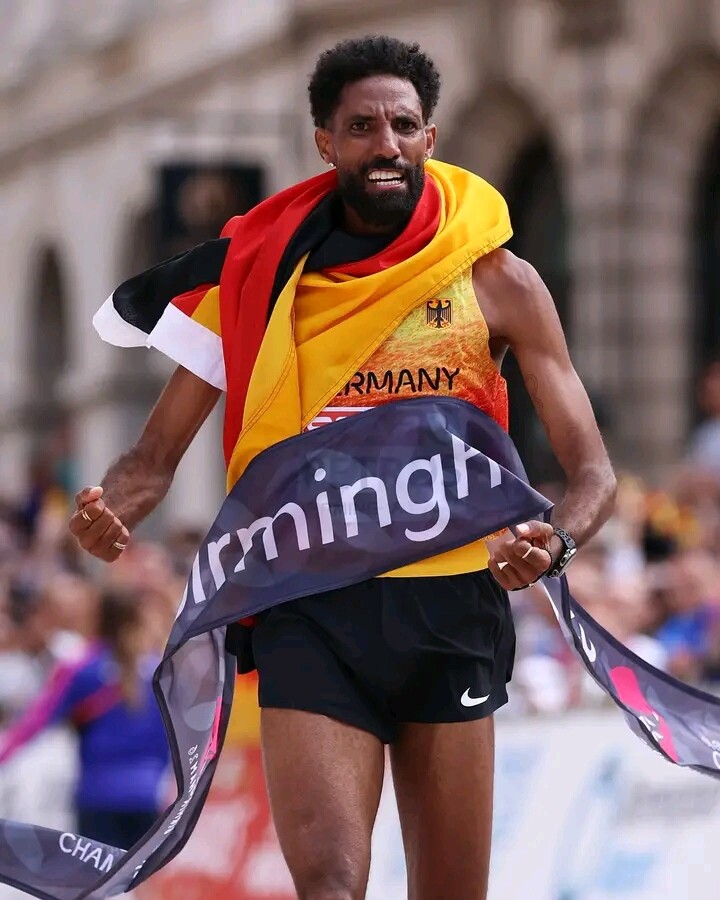
Petros arrived in Birmingham with a major championship medal already secured at global level. After taking silver in the marathon at last year’s World Athletics Championships in Tokyo, the German moved one step higher on the podium this time, converting his international consistency into European gold.
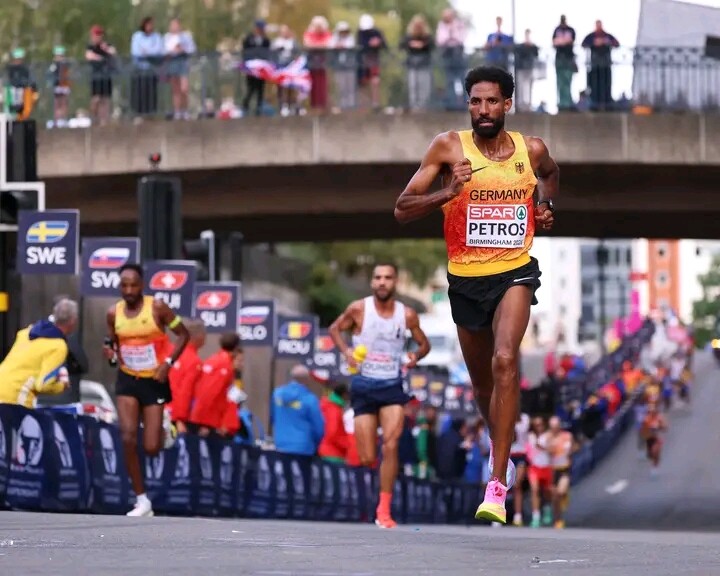
The victory adds another significant achievement to a season that has already included a strong performance at the London Marathon in April, where Petros finished 15th. Four months later, he produced a much stronger showing on the championship stage, delivering when the European title was at stake.
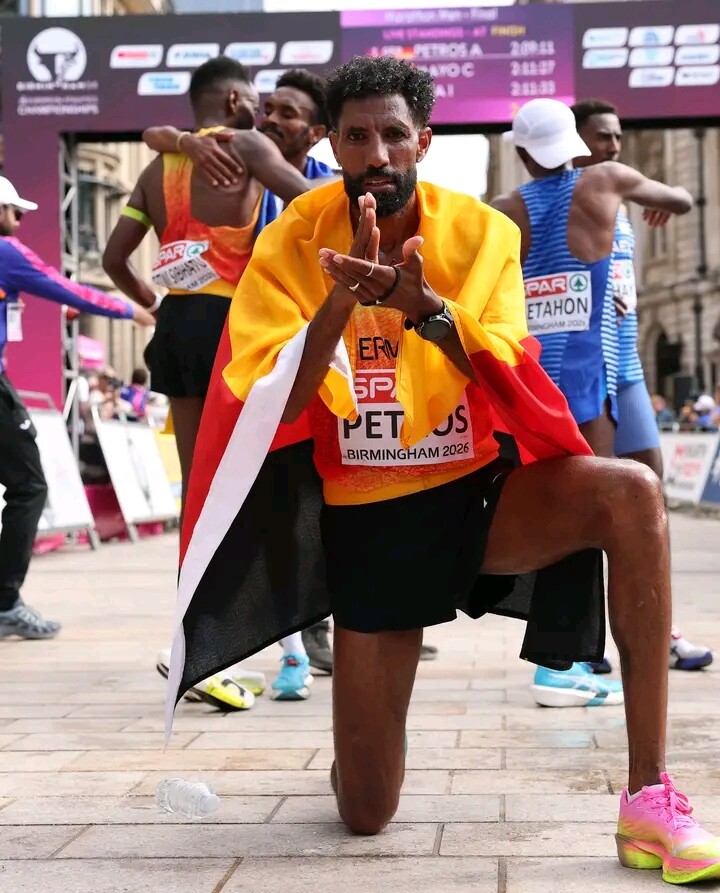
His 2:09:11 was enough not only to secure the gold medal but also to set a new European Athletics Championships record for the men’s marathon. Petros held off a tightly contested battle for the podium, with Italy’s Pietro Riva taking silver in 2:09:18 and Israel’s Gashau Ayale completing the podium with 2:09:21.
The three medalists were separated by just 10 seconds, highlighting the intensity of the Birmingham race. Riva came within seven seconds of Petros, while Ayale was a further three seconds behind, ensuring a thrilling finish to the championship marathon.
The victory also gives Petros another milestone in a career that continues to gather momentum. From his world silver medal to his latest European triumph, the German has steadily established himself as a formidable championship performer, and Birmingham has now provided the biggest title of his career so far.
For Petros, Birmingham provided the perfect opportunity to turn his recent championship success into the ultimate European prize. After his world silver medal in Tokyo, he can now add a European title and a championship record to his growing collection of major international honours.
The German’s latest triumph represents another important chapter in his career and confirms his status among Europe’s leading marathon runners.
by Erick Cheruiyot for My Best Runs.
Login to leave a comment

European Athletics Champioships
The27thEuropean Athletics Championshipswill be held from 10 to 16 August 2026 at theAlexander StadiuminBirmingham, United Kingdom.[1] This is the first time that a British city will have staged the European Athletics Championships although Birmingham has hosted many high-profile events, including the2007 European Athletics Indoor Championships, the2003and2018 IAAF World Indoor Championshipsand the2022 Commonwealth Games. Alexander Stadium was renovated between 2019 and...
more...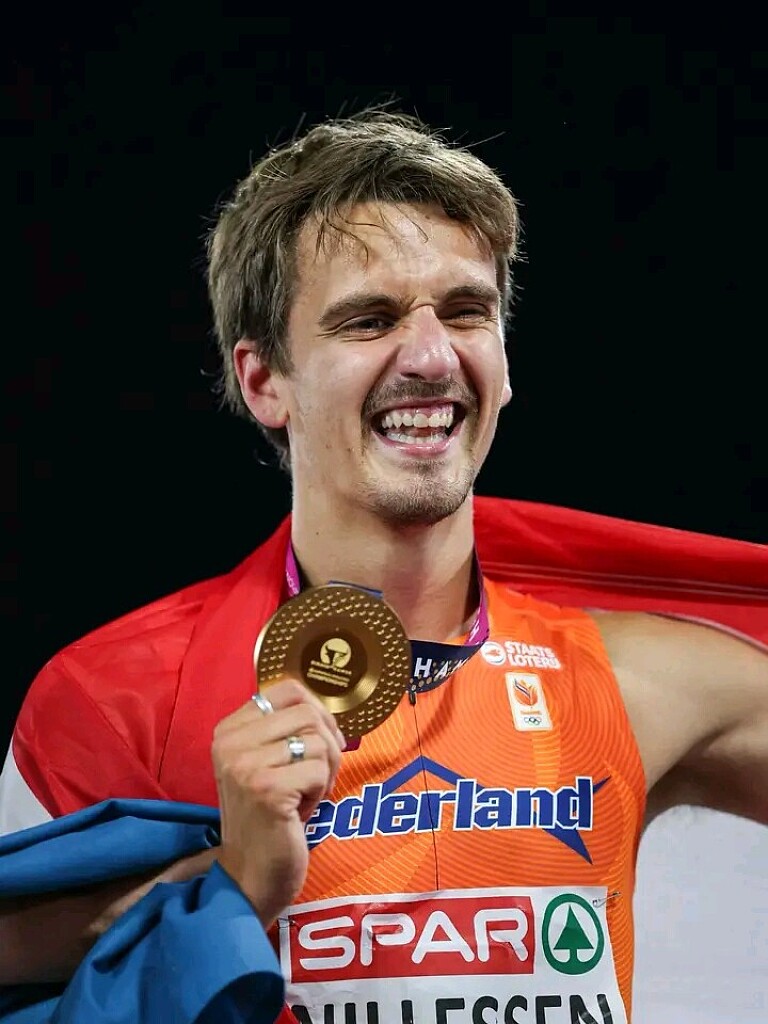
Stefan Nillessen Produces Blistering Finish to Win European 1500m Gold in Birmingham
Stefan Nillessen has been crowned European champion in the men’s 1500m after producing a sensational finishing burst to win a thrilling final at the 2026 European Athletics Championships in Birmingham.
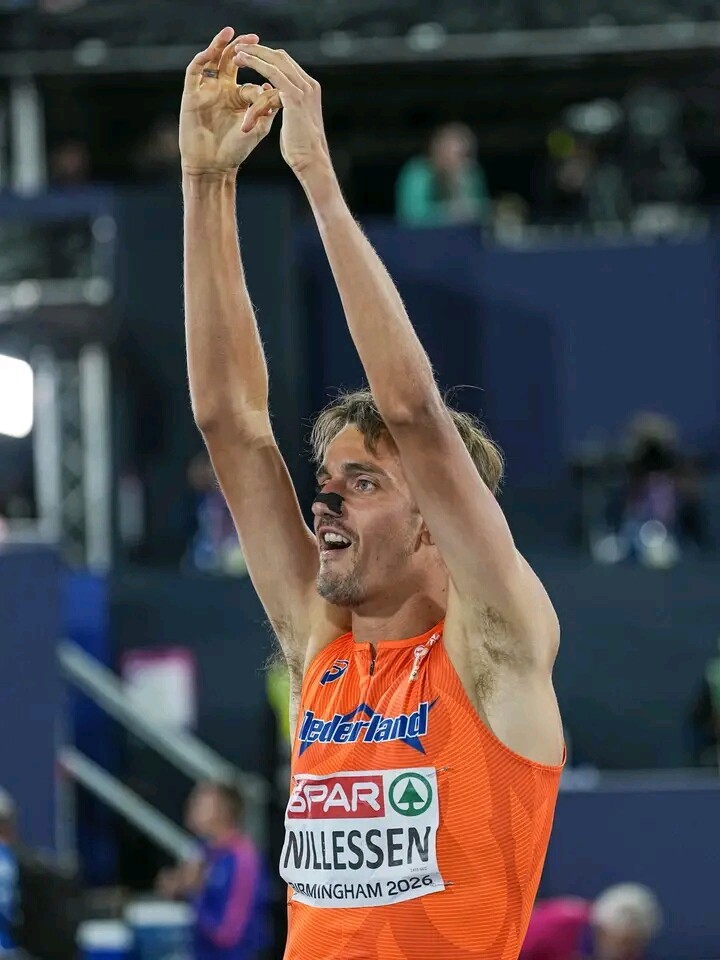
The Dutchman timed his decisive move to perfection, unleashing a blistering final 100 metres in approximately 12.6 seconds to stop the clock at 3:35.70 and claim the European title in spectacular fashion.
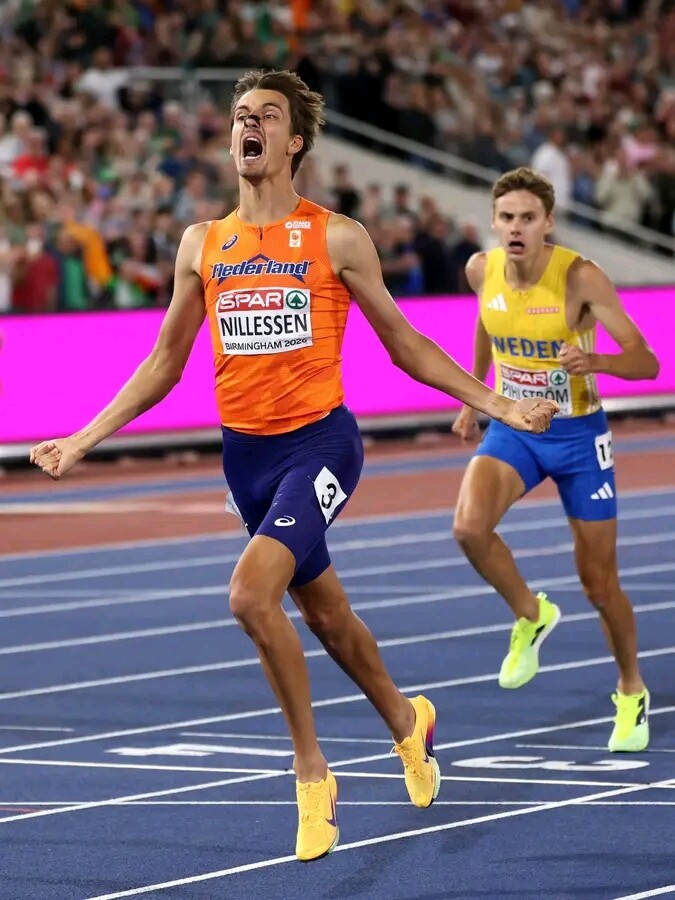
The race appeared to be leaning towards the home favourites as Jake Heyward and Jake Wightman led the field into the final 200 metres. But as the pace intensified and the medals came into view, Nillessen produced a devastating change of speed that carried him past the leading contenders and into gold-medal position.
Nillessen’s finishing kick proved too strong for the chasing pack. He powered down the home straight and opened enough of a gap to secure his first European 1500m title, turning what had been a closely packed tactical contest into a memorable individual triumph.
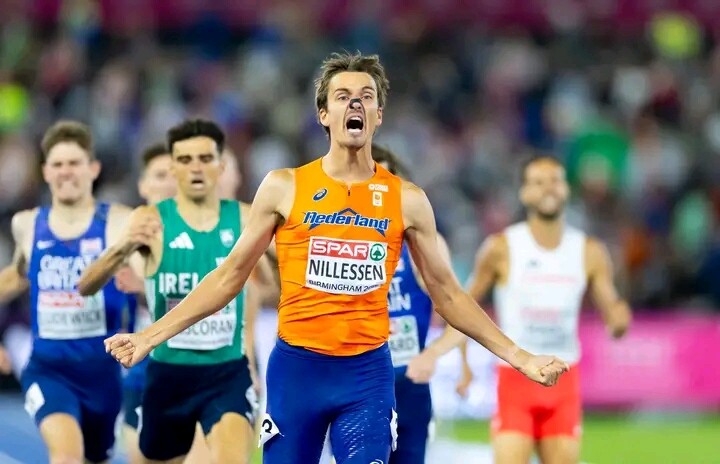
Behind him, Samuel Pihlström of Sweden produced a strong final sprint of his own to take the silver medal in 3:36.16, while Ireland’s Andrew Coscoran held on for bronze in 3:36.24. Just 0.08 seconds separated the two athletes, highlighting the extraordinary closeness of the battle for the remaining podium places.
Heyward, who had helped shape the race at the front in the closing stages, ultimately finished fourth in 3:36.40, with fellow Briton Arlo Ludewick fifth in 3:36.65. Wightman, another of the athletes at the sharp end with 200 metres remaining, crossed the line sixth in 3:37.18.
Norway’s Narve Gilje Nordås finished seventh in 3:37.31, followed by France’s Romain Mornet in 3:37.37 and Germany’s Robert Farken in 3:37.49. France’s Azeddine Habz was 10th in 3:37.61, while Italy’s Pietro Arese finished 11th in 3:38.15.
The biggest disappointment of the final was reigning world champion Isaac Nader of Portugal. One of the leading names in the field before the race, Nader struggled to respond to the repeated tactical changes and eventually finished 12th in 3:39.69.
For Nillessen, however, Birmingham delivered a defining championship moment. With the race still wide open entering the final 200 metres, he remained composed before unleashing the fastest closing burst of the field. His 12.6-second final 100m was the difference between a podium finish and European gold.
Men’s 1500m Final — Results
1. Stefan Nillessen (NED) — 3:35.70
2. Samuel Pihlström (SWE) — 3:36.16
3. Andrew Coscoran (IRL) — 3:36.24
4. Jake Heyward (GBR) — 3:36.40
5. Arlo Ludewick (GBR) — 3:36.65
6. Jake Wightman (GBR) — 3:37.18
7. Narve Gilje Nordås (NOR) — 3:37.31
8. Romain Mornet (FRA) — 3:37.37
9. Robert Farken (GER) — 3:37.49
10. Azeddine Habz (FRA) — 3:37.61
11. Pietro Arese (ITA) — 3:38.15
12. Isaac Nader (POR) — 3:39.69
The final showcased everything that makes championship 1500m racing so compelling: tactical positioning, changing momentum, a dramatic final lap and a decisive sprint for the medals. In the end, it was Nillessen’s extraordinary finishing speed that settled the contest and placed the Netherlands at the top of the European 1500m podium.
by Erick Cheruiyot for My Best Runs.
Login to leave a comment
European Athletics Champioships
The27thEuropean Athletics Championshipswill be held from 10 to 16 August 2026 at theAlexander StadiuminBirmingham, United Kingdom.[1] This is the first time that a British city will have staged the European Athletics Championships although Birmingham has hosted many high-profile events, including the2007 European Athletics Indoor Championships, the2003and2018 IAAF World Indoor Championshipsand the2022 Commonwealth Games. Alexander Stadium was renovated between 2019 and...
more...
Andreas Almgren Dominates European 10,000m Final with Championship Record
Sweden’s Andreas Almgren produced a breathtaking performance in the European 10,000m final, powering to the continental title in a championship-record 27:23.44.
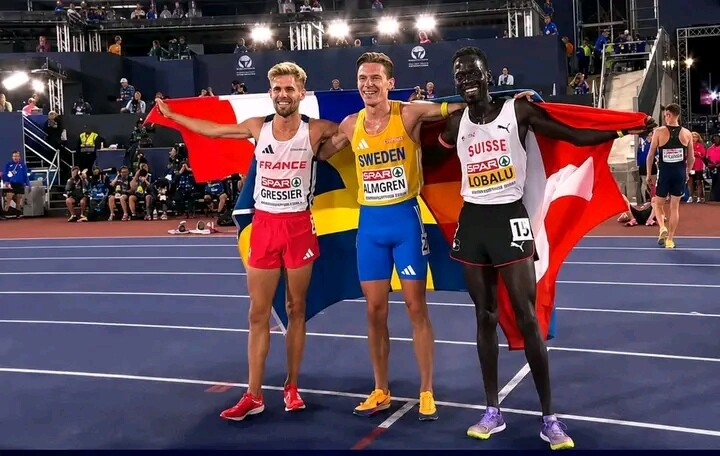
After making a strong impression on the roads earlier this season, Almgren transferred that form to the track with a display of sustained speed, patience and control. The Swede gradually established a decisive advantage before breaking clear in the closing stages, turning the race into a one-sided contest.
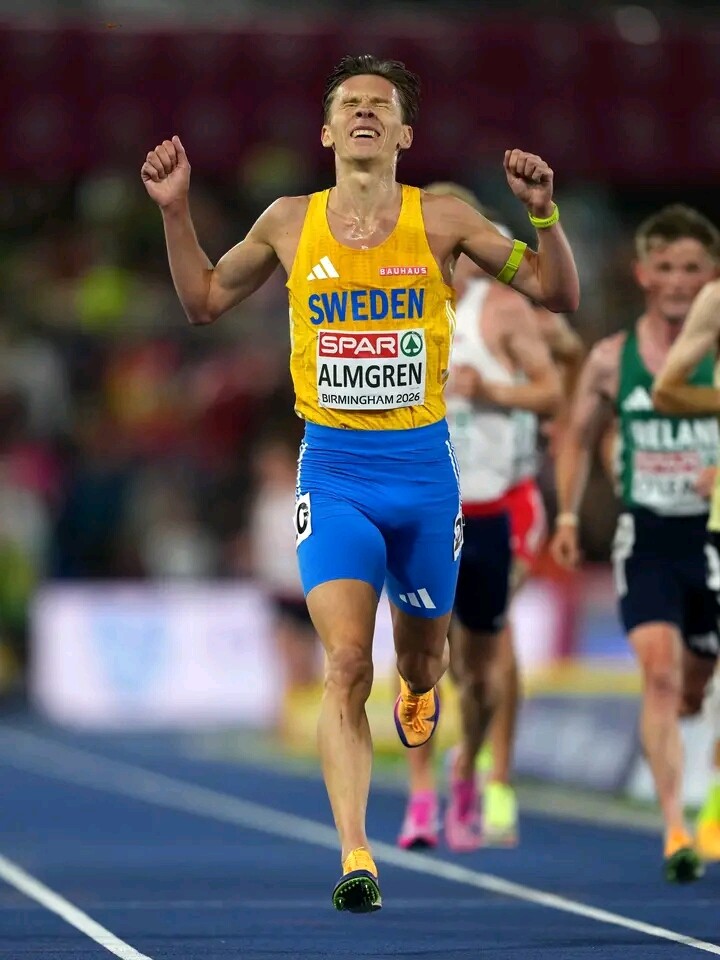
Almgren crossed the finish line almost 20 seconds ahead of his nearest challenger, underlining the scale of his superiority. His winning time of 27:23.44 also erased the oldest championship record in the event, surpassing the mark that had stood since 1978.
The victory carried additional historical significance for Swedish athletics. It was Almgren’s first European Championship title and made him the first Swedish athlete to win the European 10,000m crown.
Dominic Lokinyomo Lobalu produced a strong performance to secure the silver medal in 27:42.67, finishing well clear of the rest of the field as Almgren raced alone at the front.
Jimmy Gressier also secured a place on the European 10,000m podium after a hard-fought battle with Italy’s Yemaneberhan Crippa. The French world champion maintained his composure through the closing stages to claim bronze in 28:07.90, adding another major championship medal to his growing collection. His determined performance ensured France had a presence on the podium as Almgren and Lobalu dominated the race for gold and silver.
For Almgren, the triumph represents another major milestone in an increasingly impressive season. Having already demonstrated his ability over longer distances on the roads, he has now confirmed that his strength and endurance translate just as effectively to championship racing on the track.
His 27:23.44 will now stand as one of the defining performances of the Birmingham championships, combining a historic championship record with a landmark first European title for both Almgren and Sweden.
by Erick Cheruiyot for My Best Runs.
Login to leave a comment
European Athletics Champioships
The27thEuropean Athletics Championshipswill be held from 10 to 16 August 2026 at theAlexander StadiuminBirmingham, United Kingdom.[1] This is the first time that a British city will have staged the European Athletics Championships although Birmingham has hosted many high-profile events, including the2007 European Athletics Indoor Championships, the2003and2018 IAAF World Indoor Championshipsand the2022 Commonwealth Games. Alexander Stadium was renovated between 2019 and...
more...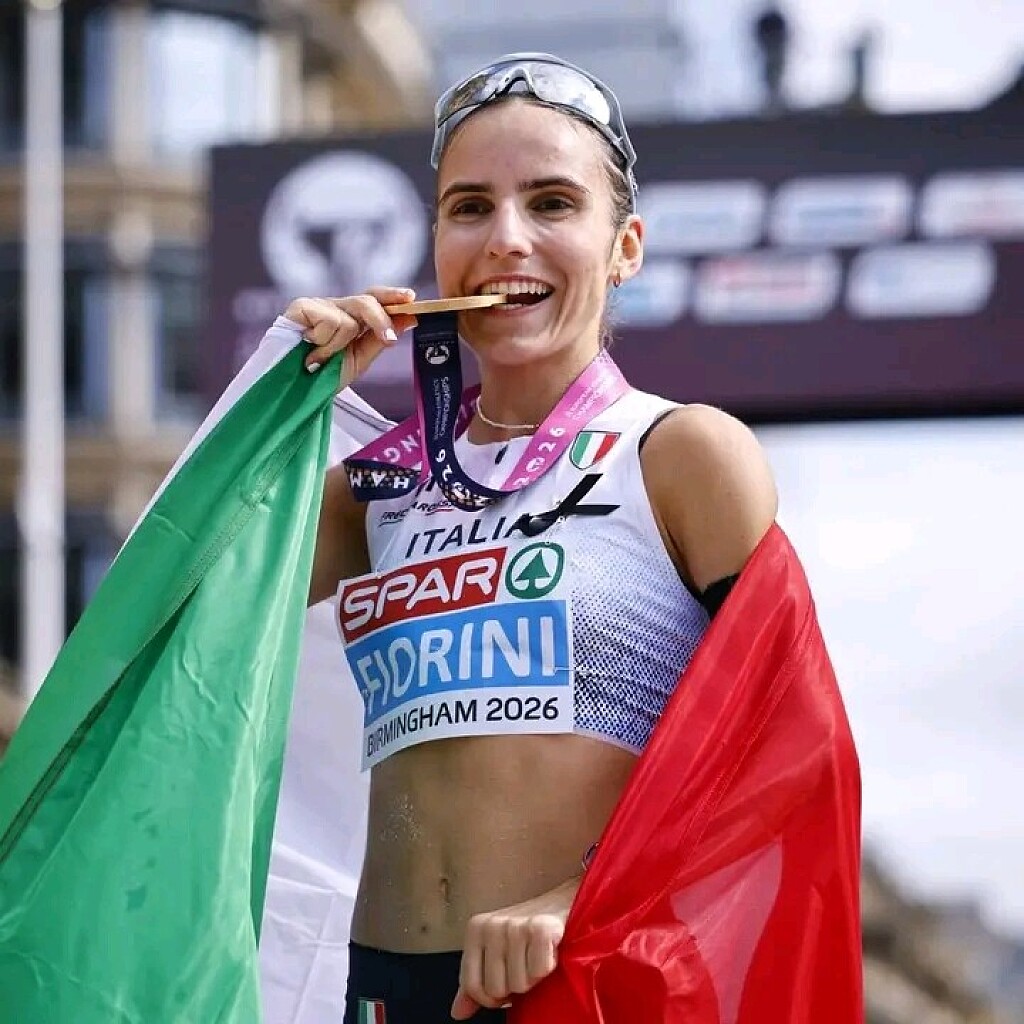
Sofia Fiorini Storms to World Record and European Gold in Birmingham
Italy’s Sofia Fiorini produced a stunning performance in Birmingham on Saturday, rewriting the women’s marathon race walk world record while cruising to European Championships gold in emphatic fashion.
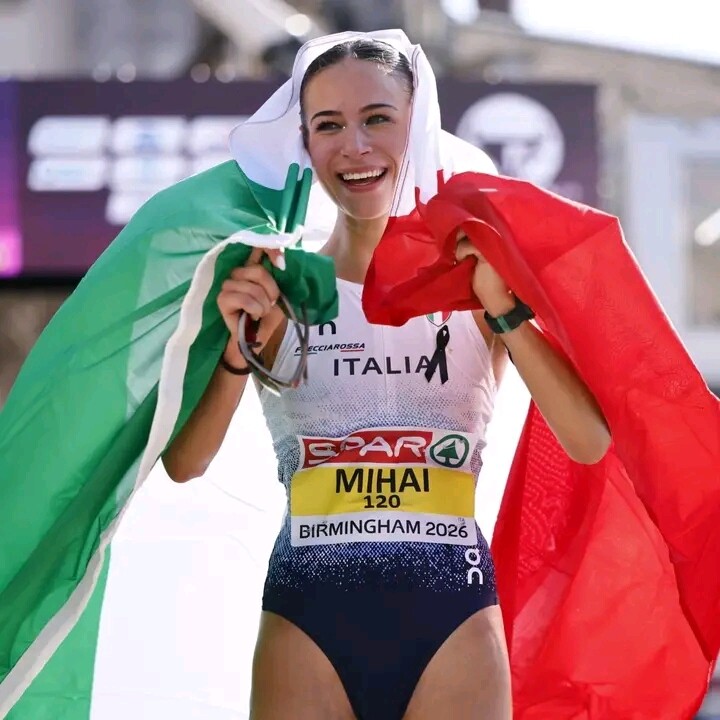
Fiorini crossed the finish line in 3:15:11, smashing the existing world-record benchmark of 3:17:00 and delivering the defining performance of her young career. The mark remains subject to the usual ratification procedures.
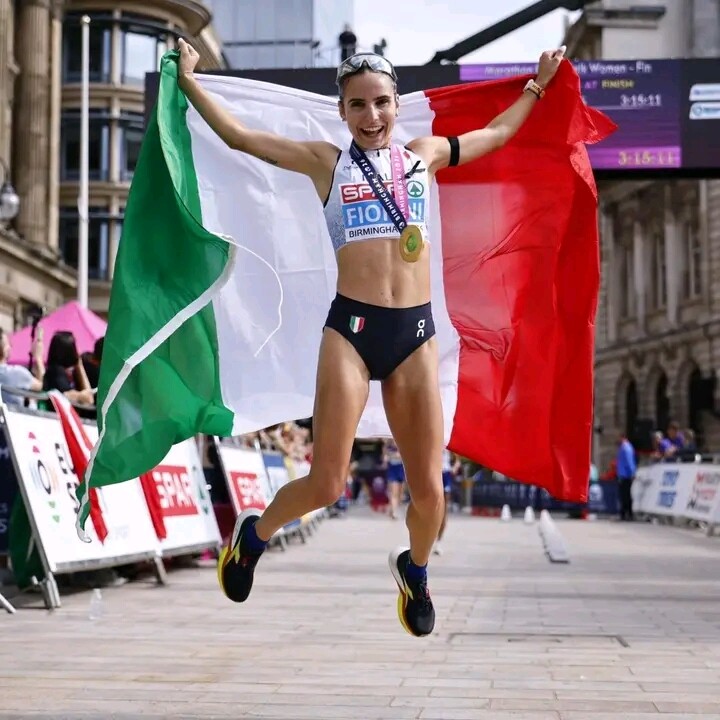
The 21-year-old Italian controlled the race with remarkable authority before making a decisive move inside the final 10 kilometres. From there, she opened an unbridgeable gap and powered away from the chasing pack to secure the European title in spectacular style.
Her winning margin was more than four and a half minutes, underlining just how dominant Fiorini was over the marathon distance. Poland’s Katarzyna Zdzieblo took silver, while Spain’s Raquel González completed the podium with bronze in 3:20:49.
Fiorini’s breakthrough comes just four months after she claimed silver at the World Athletics Race Walking Team Championships in Brasília. There, she set a European U23 record of 3:25:42, finishing behind Ecuador’s Paula Milena Torres.
That performance had already established Fiorini as one of the emerging forces in the new marathon race walk discipline. In Birmingham, however, she took another extraordinary leap forward, improving her personal best by more than 10 minutes and moving herself into the history books with a world-record performance.
For Italy, it was a remarkable statement of strength on the European stage. For Fiorini, it was the perfect combination of endurance, confidence and tactical precision — a commanding victory that transformed her from a rising talent into a world-record holder.
Sofia Fiorini: European champion, world-record holder and the undisputed queen of the Birmingham marathon race walk.
by Erick Cheruiyot for My Best Runs.
Login to leave a comment
European Athletics Champioships
The27thEuropean Athletics Championshipswill be held from 10 to 16 August 2026 at theAlexander StadiuminBirmingham, United Kingdom.[1] This is the first time that a British city will have staged the European Athletics Championships although Birmingham has hosted many high-profile events, including the2007 European Athletics Indoor Championships, the2003and2018 IAAF World Indoor Championshipsand the2022 Commonwealth Games. Alexander Stadium was renovated between 2019 and...
more...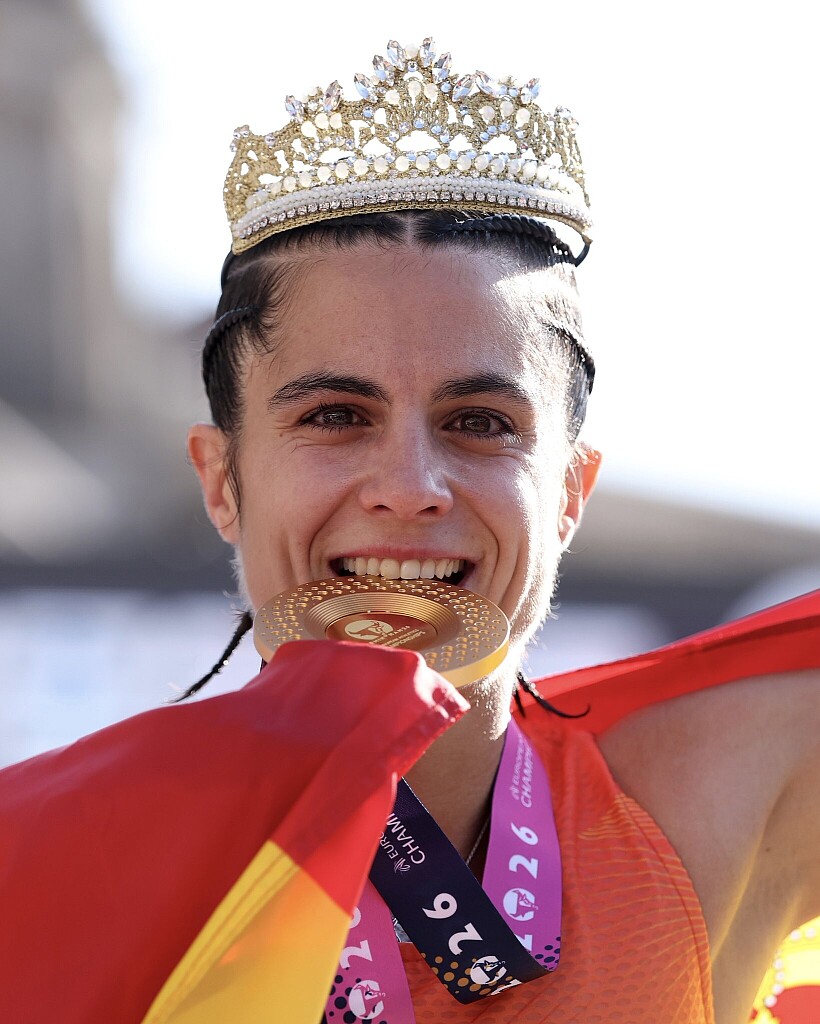
María Pérez Makes History with World Record and Inaugural European Half-Marathon Race Walk Gold
Spain’s María Pérez produced a breathtaking performance in Birmingham, storming to the inaugural European Athletics Championships women’s half-marathon race walk title in a stunning world record of 1:30:06*.
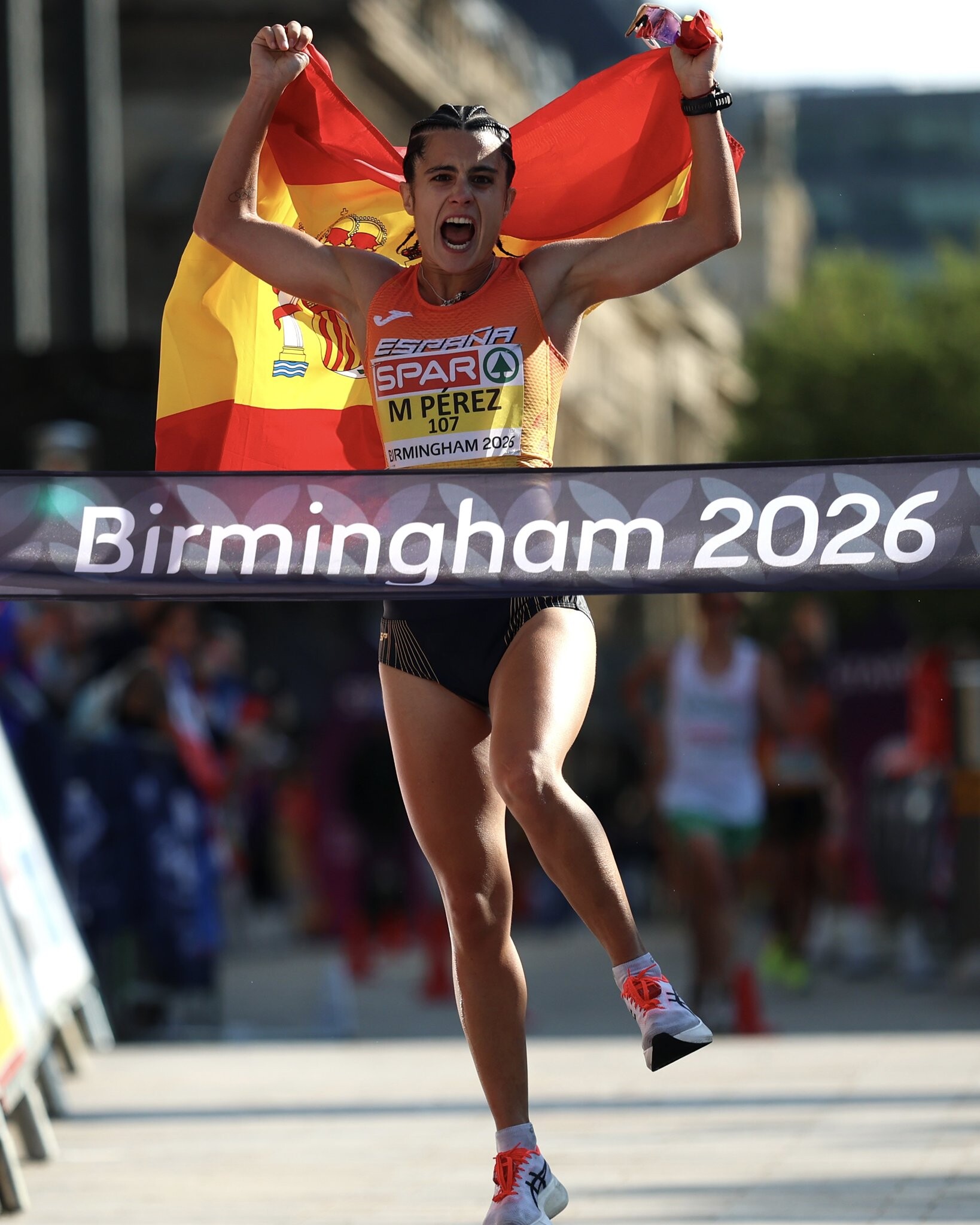
The 30-year-old Spaniard delivered a commanding display on the streets of Birmingham, pulling away from the field in the closing stages to win the gold medal by almost a minute. Her performance established the first championship benchmark for the new European half-marathon race walk event and placed Pérez firmly at the centre of another historic moment in race walking.
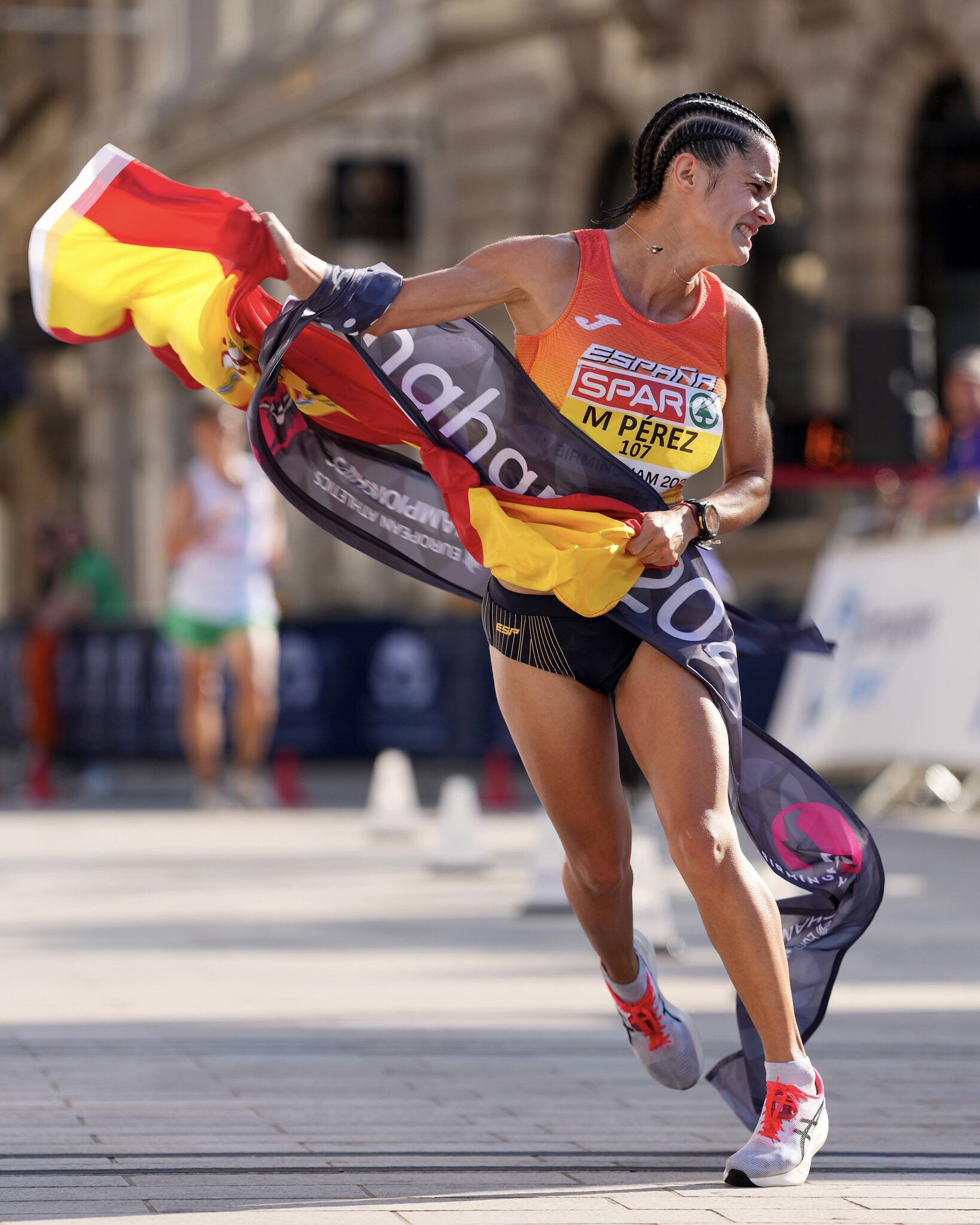
Pérez’s winning time smashed the previous world-best mark of 1:31:39, producing a remarkable improvement of 1 minute and 33 seconds. Italy’s Alexandrina Mihai followed in second in 1:31:04, while Ukraine’s Lyudmyla Olyanovska secured bronze in 1:31:07. France’s Pauline Stey was fourth in 1:31:12, meaning the top four all finished inside the previous world-record mark.
The victory adds another prestigious chapter to Pérez’s already remarkable career. Already the world-record holder over 35km, the Spanish star now has a second European title to her name, eight years after she captured the 20km race walk gold at the 2018 European Championships in Berlin.
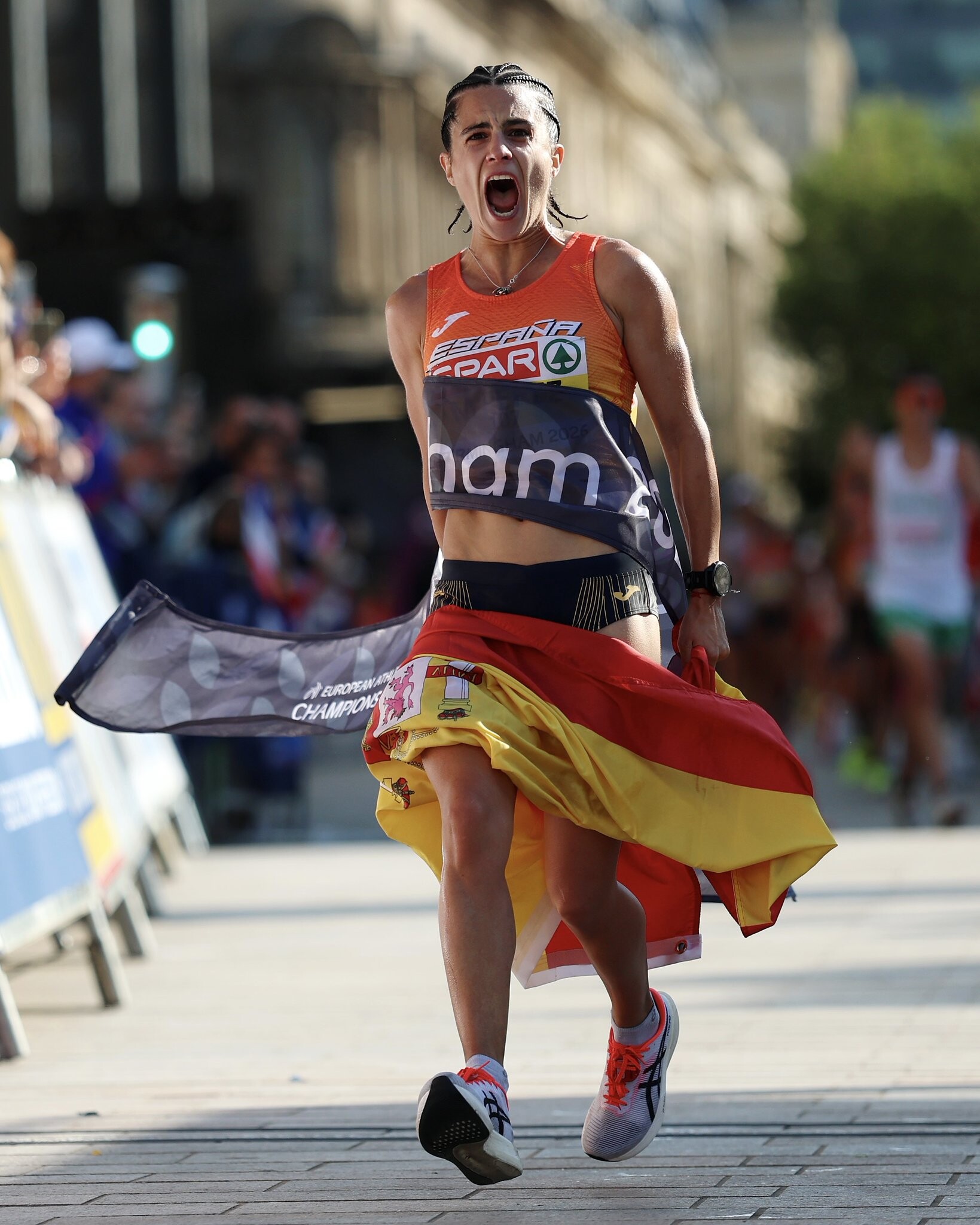
Pérez has also established herself as one of the dominant figures of modern race walking, having won world titles over both 20km and 35km. Her latest triumph demonstrates once again her ability to rise to the biggest occasions and set new standards while doing so.
The Birmingham race was therefore more than a European title. It was a landmark performance that gave the newly introduced half-marathon race walk its first championship champion and a world-record benchmark to chase.
María Pérez has done it again — another European crown, another record and another unforgettable chapter in her extraordinary career.
World record pending the usual ratification procedure.
by Erick Cheruiyot for My Best Runs.
Login to leave a comment
European Athletics Champioships
The27thEuropean Athletics Championshipswill be held from 10 to 16 August 2026 at theAlexander StadiuminBirmingham, United Kingdom.[1] This is the first time that a British city will have staged the European Athletics Championships although Birmingham has hosted many high-profile events, including the2007 European Athletics Indoor Championships, the2003and2018 IAAF World Indoor Championshipsand the2022 Commonwealth Games. Alexander Stadium was renovated between 2019 and...
more...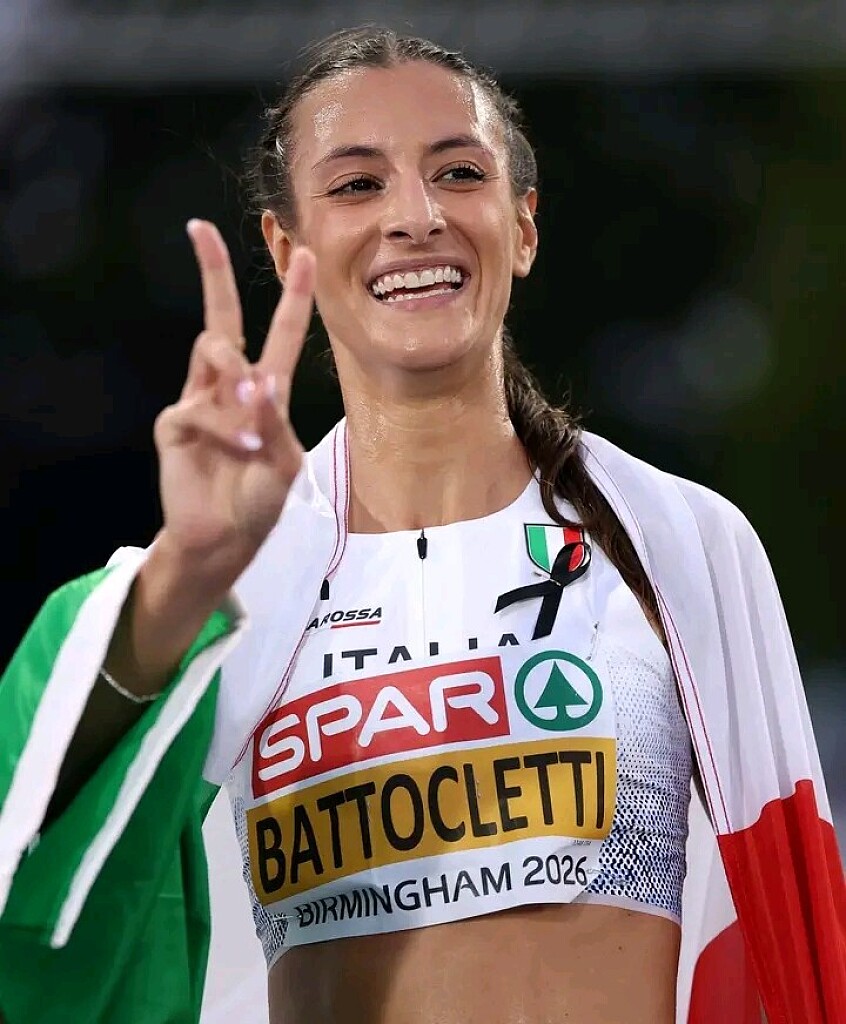
Nadia Battocletti Completes Golden Double to Reign Supreme in European Distance Running
Nadia Battocletti has once again stamped her authority on European distance running, producing a composed and decisive performance to win the women’s 10,000m at the 2026 European Athletics Championships in Birmingham.
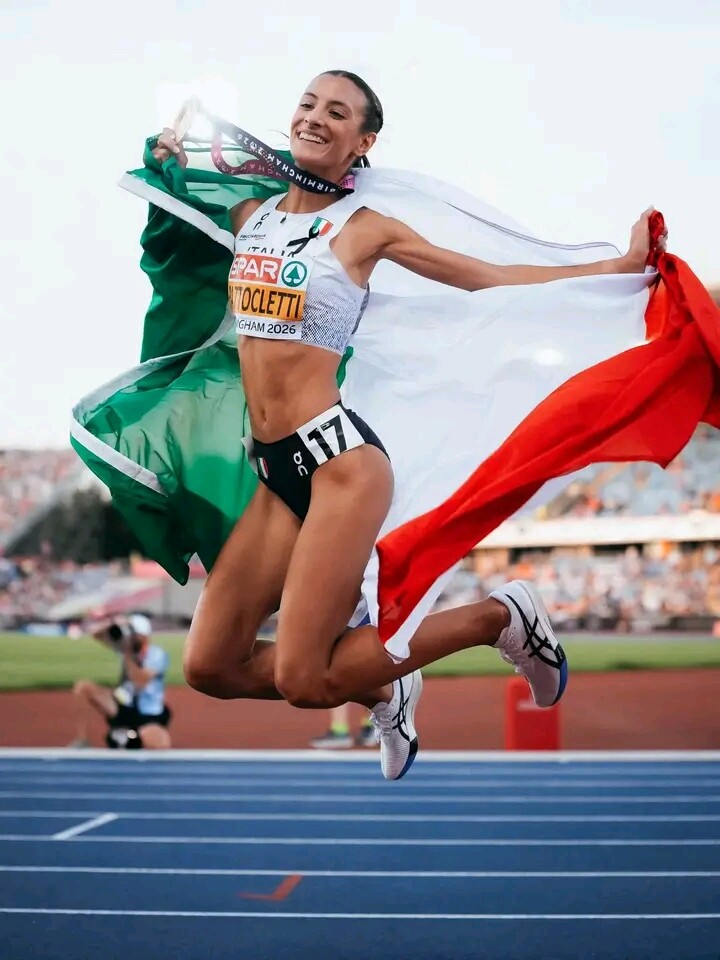
The Italian crossed the line in 31:41.17 to successfully defend her European 10,000m title and complete a remarkable 5000m–10,000m golden double at the championships. Her latest triumph further underlines her status as one of the continent’s outstanding long-distance runners.
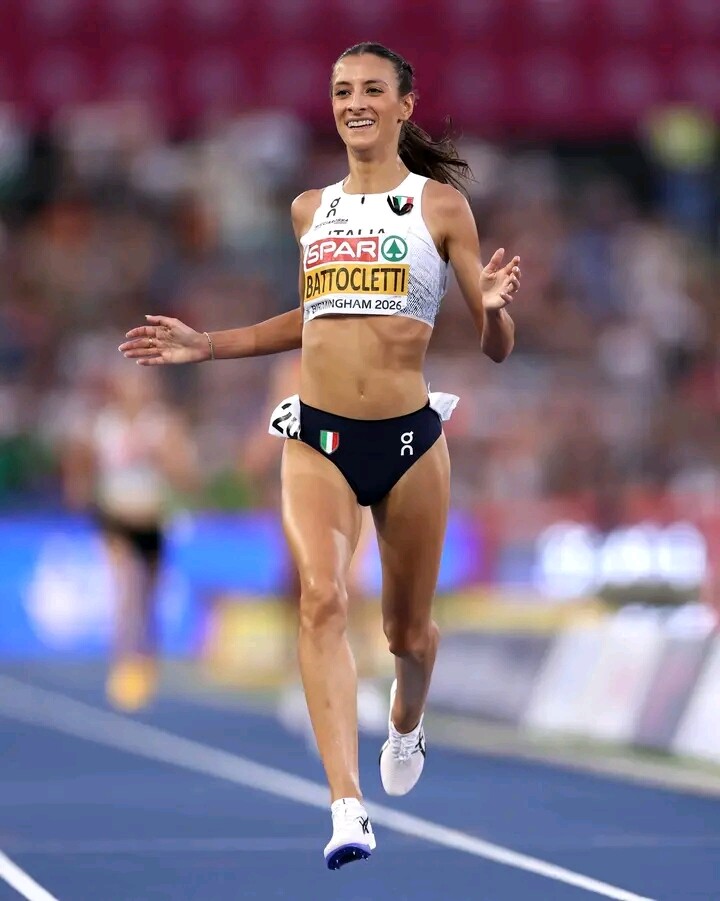
Battocletti had already demonstrated her exceptional class earlier in the championships by retaining the women’s 5000m title. She returned to the Alexander Stadium with another major challenge ahead, but once again displayed the tactical intelligence, patience and finishing strength that have become hallmarks of her racing.
The 10,000m final developed into a fiercely contested battle, with Battocletti having to withstand strong challenges from Maureen Koster of the Netherlands and Belgium’s Jana van Lent. In the decisive stages, however, the Italian found the extra gear required to break clear and secure another European crown.
Koster produced an outstanding performance to take silver in 31:45.76, while Van Lent completed the podium with bronze in 31:47.81.
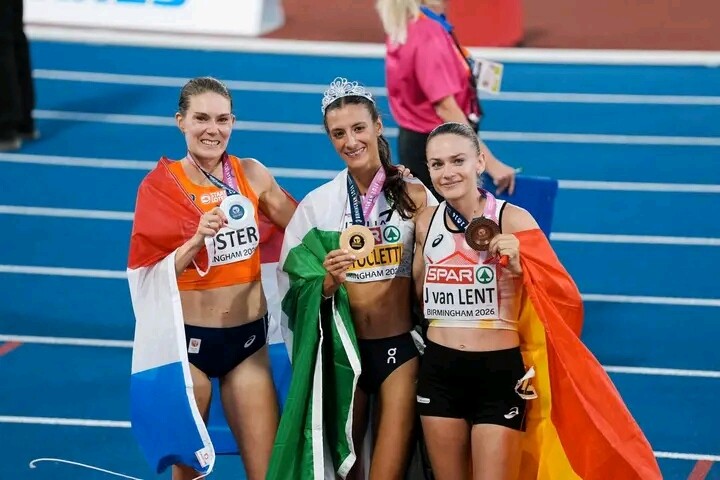
Spain’s Idaira Prieto was fourth in an impressive 31:59.84, setting a personal best, while Italy enjoyed further success as Elisa Palmero and Federica del Buono finished fifth and sixth respectively in 32:00.06 and 32:01.42. The result gave Italy an impressive three athletes inside the top six.
Maruša Mišmaš Zrimšek of Slovenia finished seventh in 32:02.57, followed by Great Britain’s Megan Keith in 32:04.81, a season best. Germany’s Lisa Merkel was ninth in 32:09.07, while Belgium’s Lisa Rooms completed the top 10 with a personal-best 32:10.22.
The depth of the final was reflected throughout the field, with Chloé Herbiet of Belgium recording a season best of 32:11.71, Slovenia’s Klara Lukan running a season-best 32:18.16, and several other athletes producing performances around the 32-minute barrier.
For Battocletti, though, the night belonged entirely to her.
Winning one European title is a remarkable achievement. Winning two individual distance titles at the same championships is a statement of extraordinary consistency, endurance and competitive maturity. By completing the 5000m and 10,000m double, Battocletti has reinforced her position at the summit of European distance running and added another defining chapter to her rapidly growing legacy.
Her Birmingham campaign has therefore become more than a collection of medals. It has been a demonstration of control, versatility and championship excellence from an athlete who continues to thrive when the stakes are highest.
Women’s 10,000m final — Birmingham 2026
1. Nadia Battocletti (Italy) — 31:41.17
2. Maureen Koster (Netherlands) — 31:45.76
3. Jana van Lent (Belgium) — 31:47.81
4. Idaira Prieto (Spain) — 31:59.84 PB
5. Elisa Palmero (Italy) — 32:00.06
6. Federica del Buono (Italy) — 32:01.42
7. Maruša Mišmaš Zrimšek (Slovenia) — 32:02.57
8. Megan Keith (Great Britain) — 32:04.81 SB
9. Lisa Merkel (Germany) — 32:09.07
10. Lisa Rooms (Belgium) — 32:10.22 PB
11. Chloé Herbiet (Belgium) — 32:11.71 SB
12. Elzbieta Glinka (Poland) — 32:16.65
13. Klara Lukan (Slovenia) — 32:18.16 SB
14. Mariana Machado (Portugal) — 32:27.09
15. Hanne Mjøen Maridal (Norway) — 32:32.12
16. Izzy Fry (Great Britain) — 32:37.22
17. Anna Marie Nordengen Sirevåg (Norway) — 32:41.21
18. Jennifer Gulikers (Netherlands) — 32:48.71
19. Carla Gallardo (Spain) — 33:02.58
20. Fiona Everard (Ireland) — 33:08.60
21. Alessia Zarbo (France) — 33:13.10
22. Eva Dieterich (Germany) — 33:32.38
23. Poppy Tank (Great Britain) — 34:03.99
Did not finish: Niamh Allen (Ireland), Diane van Es (Netherlands)
Did not start: Ilona Mononen (Finland)
Battocletti’s double is now one of the defining performances of Birmingham 2026 — a golden statement from Italy’s distance-running queen.
by Erick Cheruiyot for My Best Runs.
Login to leave a comment
European Athletics Champioships
The27thEuropean Athletics Championshipswill be held from 10 to 16 August 2026 at theAlexander StadiuminBirmingham, United Kingdom.[1] This is the first time that a British city will have staged the European Athletics Championships although Birmingham has hosted many high-profile events, including the2007 European Athletics Indoor Championships, the2003and2018 IAAF World Indoor Championshipsand the2022 Commonwealth Games. Alexander Stadium was renovated between 2019 and...
more...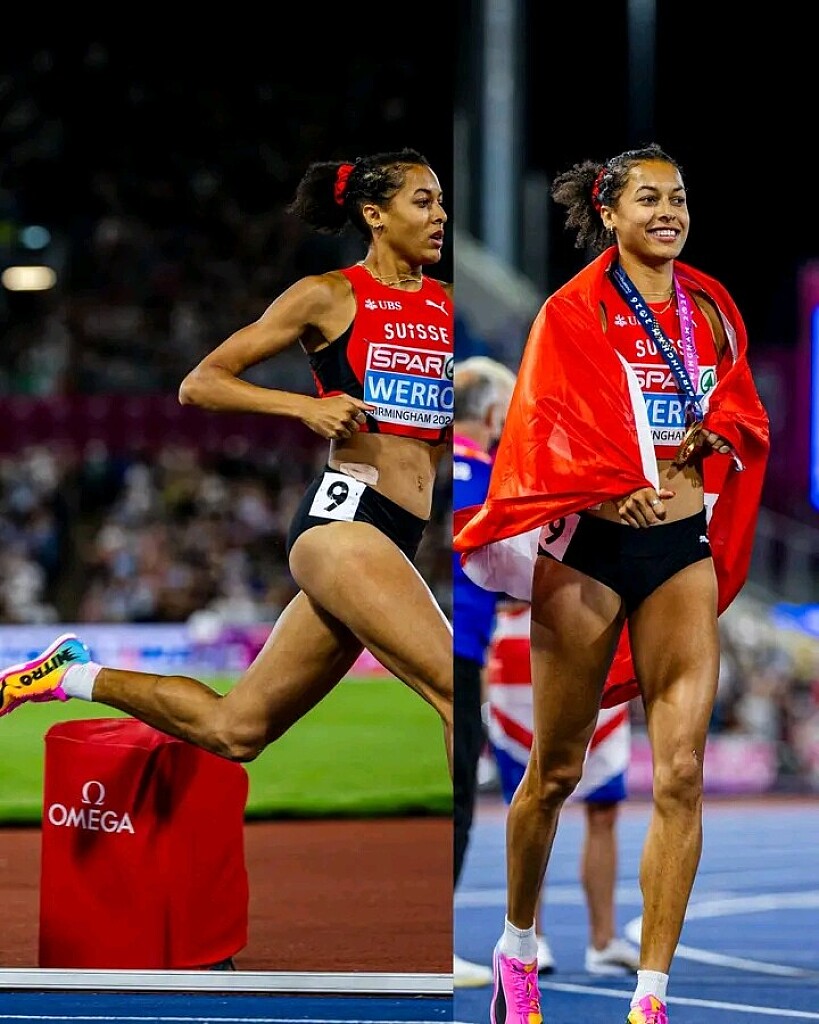
Audrey Werro Rules the European 800m as the Big Three Deliver a Birmingham Classic
Audrey Werro has firmly established herself among the world's leading 800m runners after producing a breathtaking performance to claim European Championship gold in Birmingham, winning one of the most eagerly anticipated finals in recent middle-distance history.
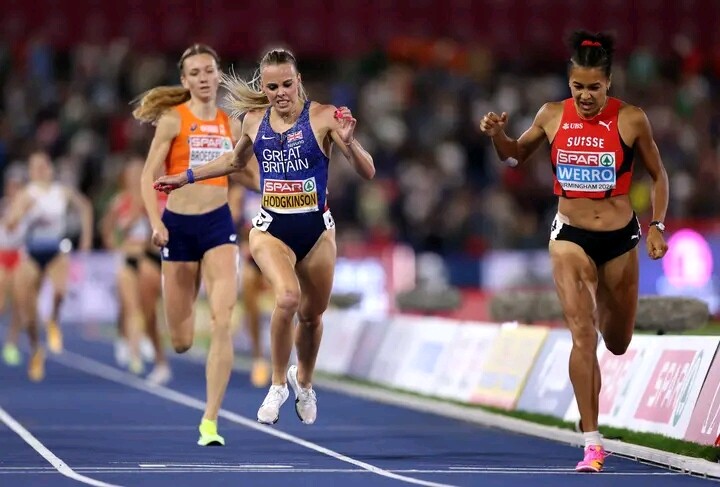
The Swiss star delivered when it mattered most, stopping the clock at a sensational 1:54.81 to set a new European Championships record and hold off Britain's Olympic champion and defending European champion, Keely Hodgkinson, who took silver in 1:55.01.
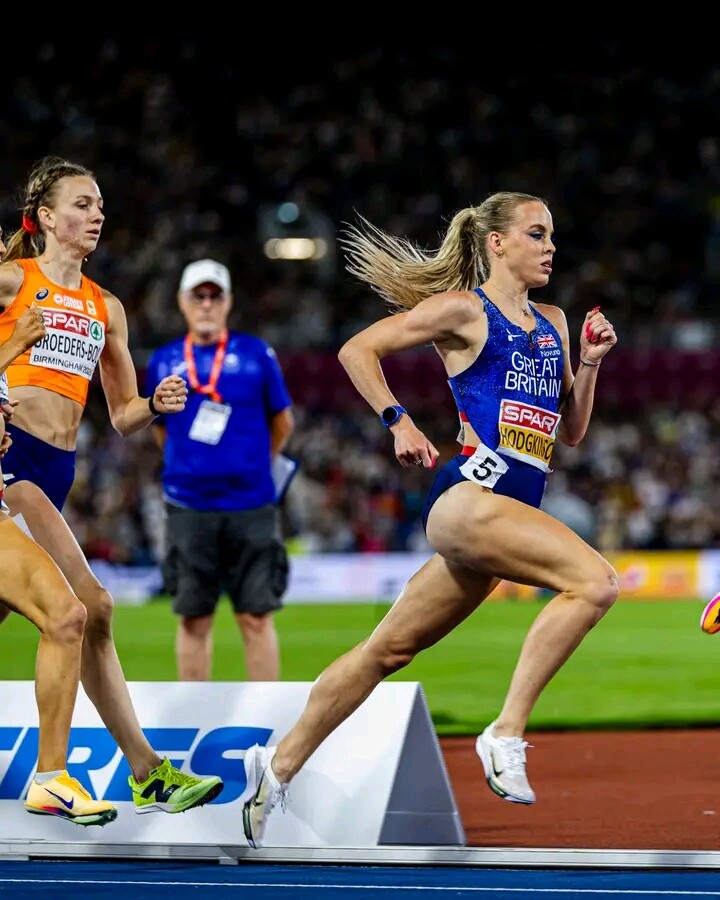
The Netherlands' Femke Broeders-Bol completed an extraordinary podium, charging home to secure bronze in 1:55.54, a time that equalled the Dutch national record.
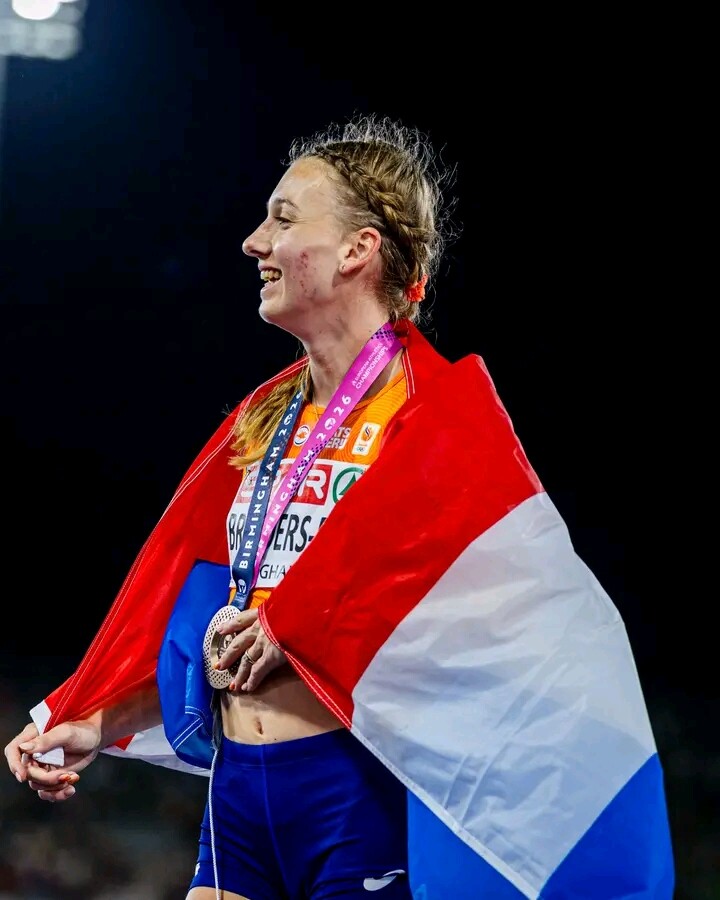
It was everything the build-up had promised.
For months, anticipation had surrounded the possibility of seeing Werro, Hodgkinson and Broeders-Bol finally line up together in the same major championship final. In Birmingham, the "Big Three" finally came together—and the track wrote its own remarkable story.
Werro won gold. Hodgkinson held onto silver. Broeders-Bol brought home bronze.
The quality of the performances was extraordinary. Werro seized control of the race and displayed remarkable strength and composure through the closing stages. Hodgkinson, propelled by the energy of her home crowd, refused to surrender and fought desperately down the finishing straight, but the Swiss athlete had just enough in reserve to stay clear.
The margin was only 0.20 seconds, underlining just how fiercely contested the final was.
Behind the leading pair, Broeders-Bol produced another outstanding performance to cross the line in 1:55.54, matching the Dutch national record and becoming part of an exceptional three-way battle at the front.
The top three were in a different class from the rest of the field, with all three breaking the 1:56 barrier and finishing almost four seconds ahead of the remainder of the finalists.
For Werro, the victory represents far more than another medal. It is a statement of intent.
The Swiss athlete arrived in Birmingham as one of the fastest 800m runners in the world and leaves the championships as European champion and championship-record holder.
Her triumph is even more remarkable considering the drama that preceded the final. Werro fell during her semi-final after contact with France's Anaïs Bourgoin and initially failed to qualify, before a successful Swiss appeal reinstated her in the final.
Less than 24 hours later, she transformed that setback into one of the defining performances of the championships.
Werro's season has already been extraordinary. She had previously run 1:53.80 in Paris, placing her among the fastest women ever over 800m. Now she has added a European title and championship record to her growing résumé.
For Hodgkinson, the result was undoubtedly a disappointment after arriving in Birmingham with hopes of completing a hat-trick of consecutive European 800m titles. The British star had won European gold in Munich in 2022 and Rome in 2024, but her quest for a third successive title ended with silver on home soil.
Nevertheless, Hodgkinson's 1:55.01 was itself a world-class performance, and she pushed Werro all the way to the line in a race that demanded extraordinary speed, strength and composure.
While the spotlight naturally fell on Werro and Hodgkinson, Broeders-Bol produced a performance worthy of its own headline. Her 1:55.54 secured the bronze medal while simultaneously equalling the Dutch national record, adding another remarkable dimension to an already historic final.
The official results placed Gabija Galvydytė fourth in 1:59.12, followed by Britain's Jemma Reekie in 1:59.15 and Italy's Eloisa Coiro in 1:59.35. Switzerland's Valentina Rosamilia finished seventh in 1:59.42, with compatriot Veronica Vancardo eighth in 2:00.17. France's Anaïs Bourgoin was ninth in 2:00.65, while Clara Liberman completed the field in 2:01.84.
But the night belonged overwhelmingly to the three women at the front.
Three athletes under 1:56. A championship record. A national record. A reigning champion forced to settle for silver. And a new European champion standing proudly at the top of the podium.
The Big Three finally came together in the final, and the story was written—Werro wins gold, Hodgkinson holds onto silver and Broeders-Bol brings it home in bronze.
Who needs fairytales when the track is writing stories like this?
The women's 800m final at the Birmingham 2026 European Championships delivered everything a championship race should: drama, speed, history, heartbreak and a thrilling battle between three exceptional athletes.
And when the story was finally written, Audrey Werro was the woman wearing the crown.
Gold for Werro. Silver for Hodgkinson. Bronze for Broeders-Bol.
A spectacular night for the 800m—and potentially the beginning of one of the most compelling rivalries in women's middle-distance running.
by Erick Cheruiyot for My Best Runs.
Login to leave a comment
European Athletics Champioships
The27thEuropean Athletics Championshipswill be held from 10 to 16 August 2026 at theAlexander StadiuminBirmingham, United Kingdom.[1] This is the first time that a British city will have staged the European Athletics Championships although Birmingham has hosted many high-profile events, including the2007 European Athletics Indoor Championships, the2003and2018 IAAF World Indoor Championshipsand the2022 Commonwealth Games. Alexander Stadium was renovated between 2019 and...
more...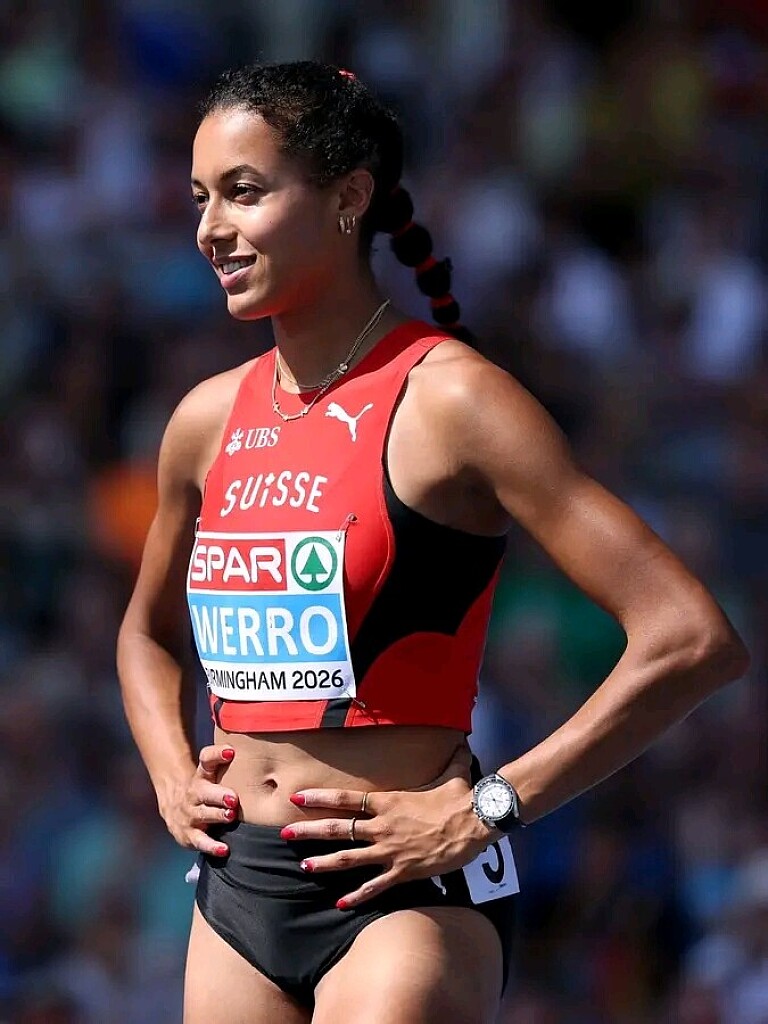
Dramatic Fall, Dramatic Reprieve: Werro Advances to 800m Final as Hodgkinson Leads the Way
The women’s 800m semifinals at the 2026 European Athletics Championships in Birmingham produced a dramatic sequence of events, with Keely Hodgkinson strengthening her title credentials and Audrey Werro receiving a remarkable reprieve after a late-race fall.
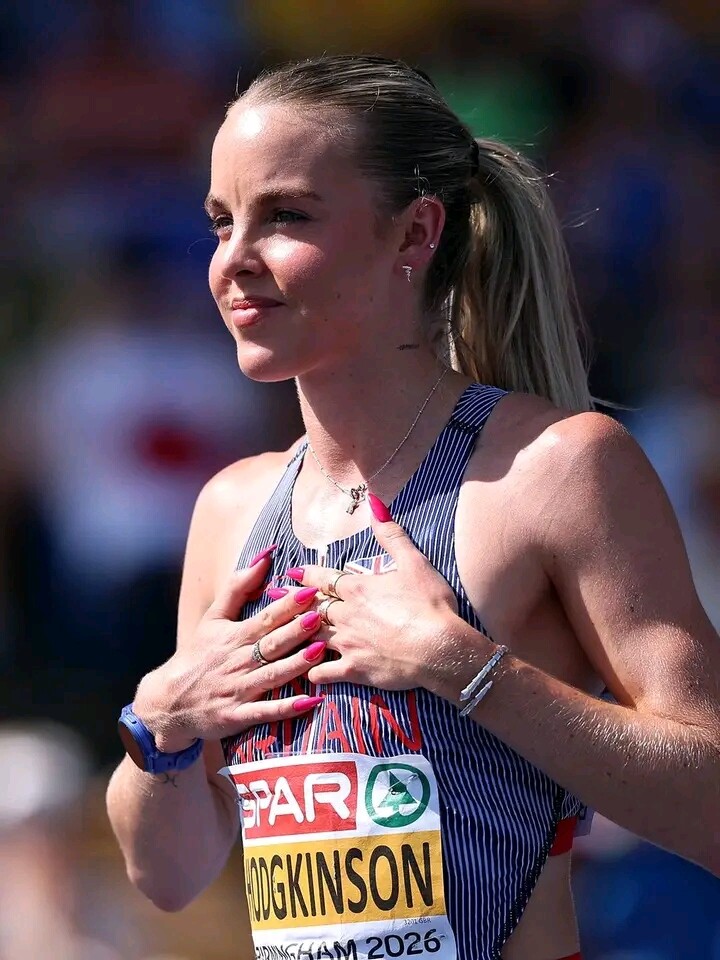
Hodgkinson delivered a composed and powerful performance in the second semifinal, winning in 1:57.38 to book her place in the final. The British favorite was pushed hard by the Netherlands’ Femke Broeders-Bol, who finished just 0.08 seconds behind in 1:57.46.
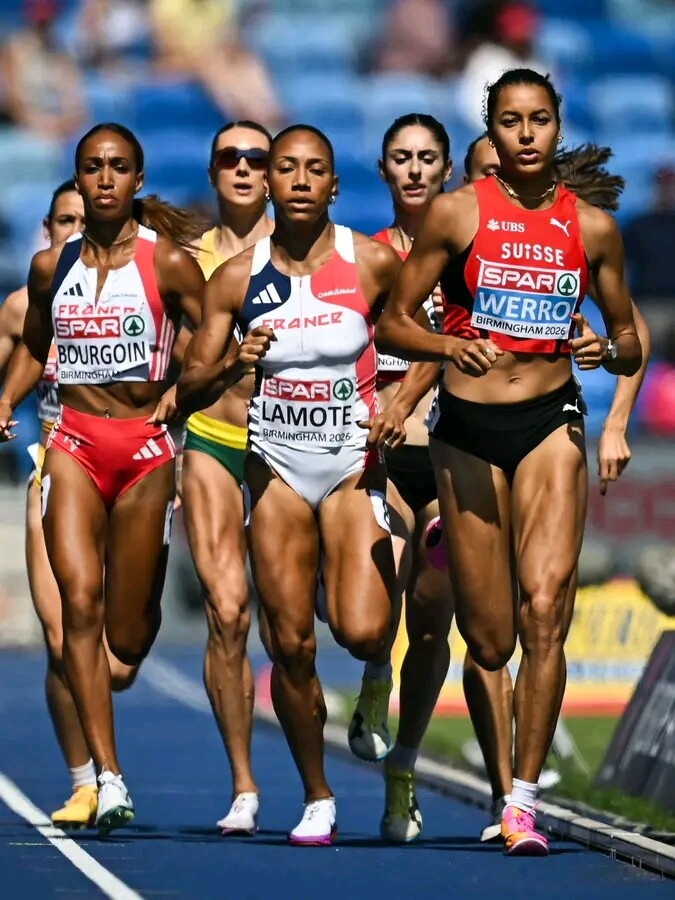
Italy’s Eloisa Coiro followed in 1:57.74, while Switzerland’s Valentina Rosamilia and France’s Clara Liberman advanced as time qualifiers after clocking 1:58.16 and 1:58.19, respectively.
Jemma Reekie also looked strong, securing automatic qualification in 1:58.61, with France’s Anaïs Bourgoin and Switzerland’s Veronica Vancardo joining her after finishing in 1:58.84 and 1:59.14.
But it was the opening semifinal that produced the most extraordinary moment of the night.
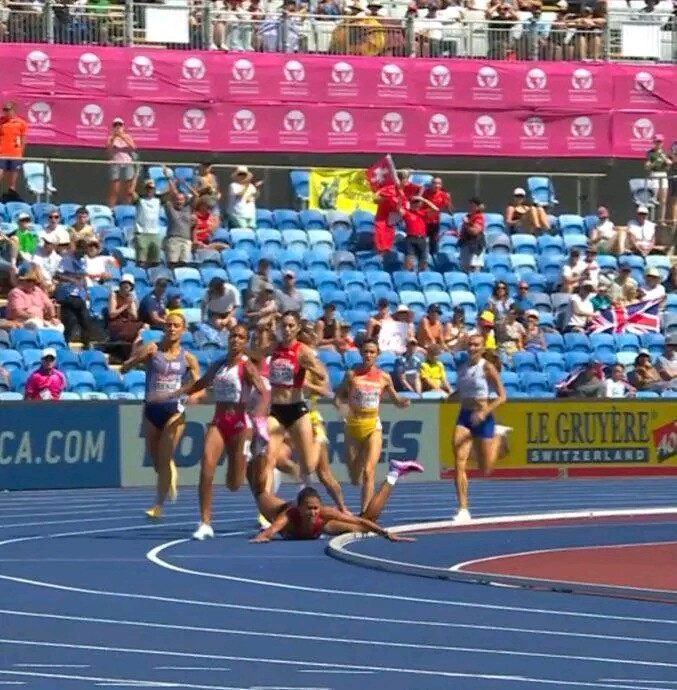
With just 150 metres remaining, Switzerland’s Audrey Werro was suddenly involved in a dramatic incident that appeared to end her race and potentially her championship.
As the runners entered the closing stages, Werro’s right foot made contact with the left hand of France’s Anaïs Bourgoin. The contact disrupted Werro’s stride at a crucial moment, causing the Swiss athlete to lose her balance and tumble heavily.
For several tense moments, it appeared that Werro’s hopes of reaching the final had disappeared. She eventually crossed the finish line in 2:35.35, far outside the qualifying times, after the fall had cost her significant ground.
But the drama did not end at the finish line.
Following a review of the incident, the referees determined that Werro had been impeded and advanced her to the women’s 800m final.
The decision gives the Swiss star a remarkable second chance. What initially looked like a devastating end to her semifinal has instead turned into one of the most dramatic qualification stories of the championships.
Lithuania’s Gabija Galvydyte was also advanced by referee decision after finishing in 2:03.59, meaning the final will feature an unusual 10-athlete field.
Women’s 800m Final Qualifiers
1. Keely Hodgkinson (Great Britain) — 1:57.38 Q
2. Femke Broeders-Bol (Netherlands) — 1:57.46 Q
3. Eloisa Coiro (Italy) — 1:57.74 Q
4. Valentina Rosamilia (Switzerland) — 1:58.16 q
5. Clara Liberman (France) — 1:58.19 q
6. Jemma Reekie (Great Britain) — 1:58.61 Q
7. Anaïs Bourgoin (France) — 1:58.84 Q
8. Veronica Vancardo (Switzerland) — 1:59.14 Q
9. Gabija Galvydyte (Lithuania) — 2:03.59 qR
10. Audrey Werro (Switzerland) — 2:35.35 qR
Q = qualified automatically
q = qualified by time
qR= advanced by referee decision
Werro’s reinstatement has completely changed the complexion of the final. Instead of watching the championship from the sidelines after a heartbreaking fall, the Swiss athlete will return to the track with another opportunity to fight for a place on the podium.
Hodgkinson, meanwhile, heads into the final with the fastest semifinal time and renewed confidence. But with Broeders-Bol, Reekie, Coiro and the rest of the field ready to challenge, the European 800m title is still firmly up for grabs.
After one of the most dramatic semifinals of the championships, 10 athletes will now line up for the final — and Werro will be among them.
by Erick Cheruiyot for My Best Runs.
Login to leave a comment
European Athletics Champioships
The27thEuropean Athletics Championshipswill be held from 10 to 16 August 2026 at theAlexander StadiuminBirmingham, United Kingdom.[1] This is the first time that a British city will have staged the European Athletics Championships although Birmingham has hosted many high-profile events, including the2007 European Athletics Indoor Championships, the2003and2018 IAAF World Indoor Championshipsand the2022 Commonwealth Games. Alexander Stadium was renovated between 2019 and...
more...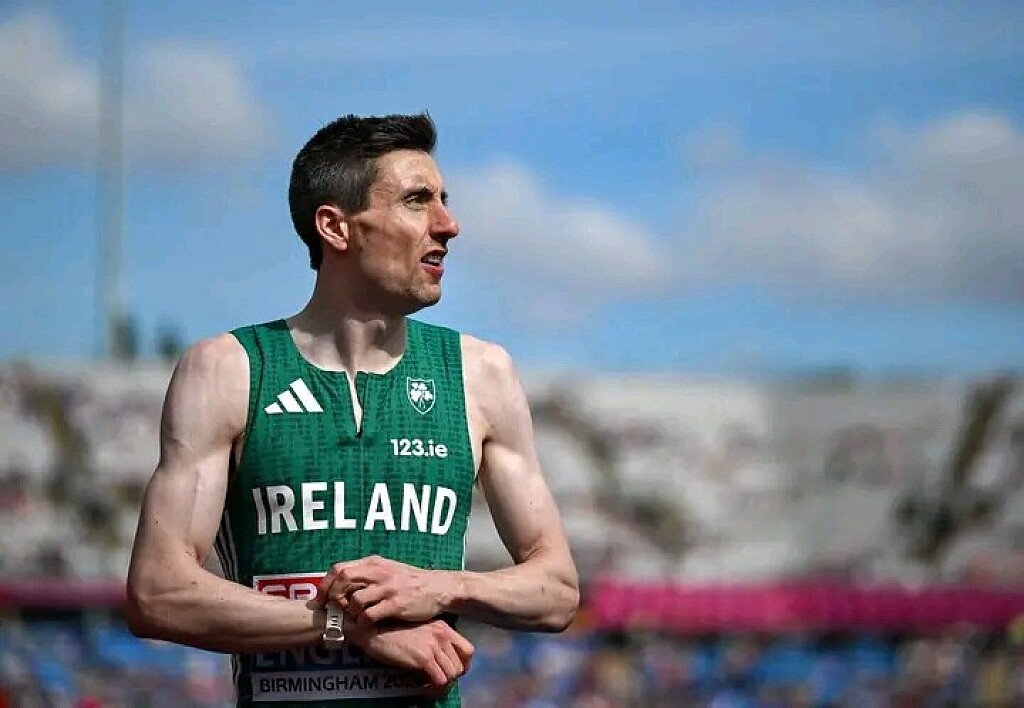
Mark English Shatters 48-Year-Old Championship Record as Birmingham 800m Final Promises Fireworks
Ireland’s Mark English produced one of the defining performances of the 2026 European Athletics Championships in Birmingham, storming to a breathtaking 1:43.49 to win his men’s 800m semi-final and rewrite the championship record books.
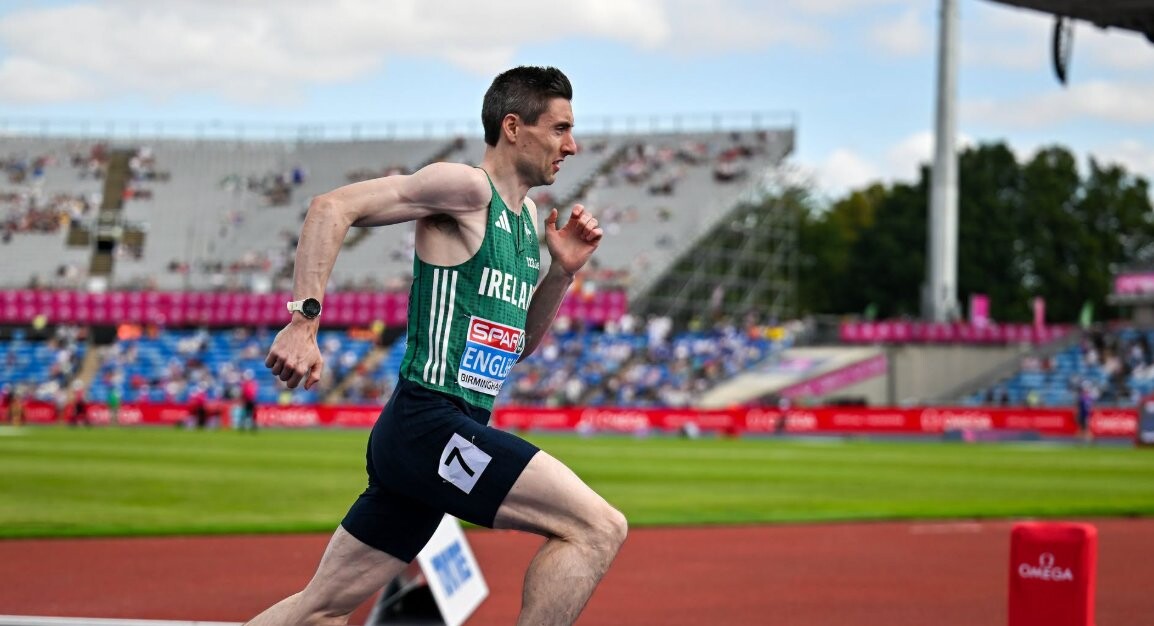
The 33-year-old Donegal native delivered a perfectly judged display of speed, strength and composure, attacking the race with confidence before unleashing a powerful finish that carried him through the line in a sensational time.
English passed the bell in 51.36 before maintaining his relentless rhythm over the second lap. As the race entered its decisive stages, he found another gear and powered away from his challengers, stopping the clock at 1:43.49 to become the fastest qualifier for the final.
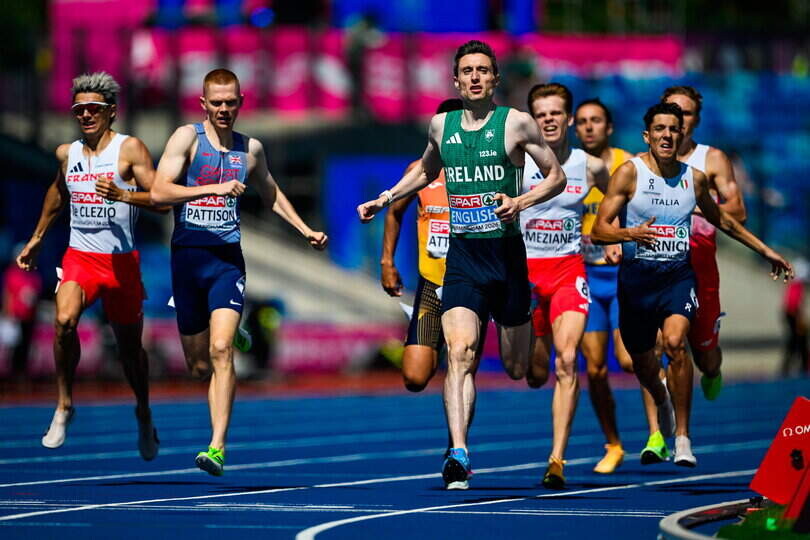
More significantly, his performance erased a record that had stood for nearly half a century. English lowered Olaf Beyer’s 1:43.84 championship record by 0.35 seconds, bringing an extraordinary 48-year chapter of European 800m history to a close.
The performance also underlined just how fiercely competitive the Birmingham final will be. Five athletes broke the 1:44 barrier in the semi-finals, setting the stage for what promises to be one of the most explosive 800m finals of the championships.
Great Britain’s Ben Pattison emerged as the second-fastest finalist in 1:43.72, while France’s Corentin Le Clezio ran a personal best of 1:43.80 to secure the third-fastest qualifying time. Spain’s Mohamed Attaoui followed with a season’s best of 1:43.82, while Italy’s Francesco Pernici completed the group of athletes under 1:44 with 1:43.84.
Great Britain’s Max Burgin advanced in 1:44.73, Croatia’s Marino Bloudek clocked 1:44.96, and Spain’s David Barroso also stopped the clock at 1:44.96 to complete the eight-man final field.
But all eyes will inevitably turn to English.
Having already dismantled a record that survived generations of European 800m runners, the Irishman now enters the final as the man everyone will be chasing. His 1:43.49 has not only established him as the championship’s fastest qualifier but has also raised the tantalising question of how much faster he can go when the medals are on the line.
With five finalists already under 1:44, Birmingham is ready for another spectacular battle.
And after making history in the semi-final, Mark English has given himself the perfect opportunity to write an even bigger chapter in the final.
by Erick Cheruiyot for My Best Runs.
Login to leave a comment
European Athletics Champioships
The27thEuropean Athletics Championshipswill be held from 10 to 16 August 2026 at theAlexander StadiuminBirmingham, United Kingdom.[1] This is the first time that a British city will have staged the European Athletics Championships although Birmingham has hosted many high-profile events, including the2007 European Athletics Indoor Championships, the2003and2018 IAAF World Indoor Championshipsand the2022 Commonwealth Games. Alexander Stadium was renovated between 2019 and...
more...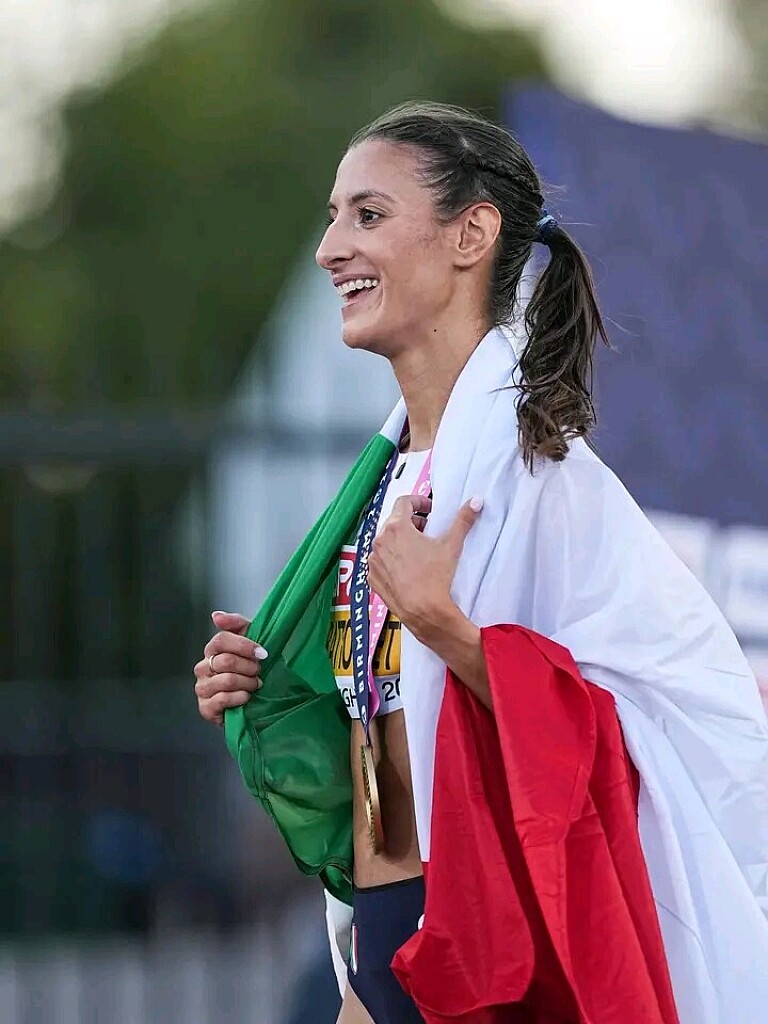
Battocletti’s Blistering Finish Delivers Back-to-Back European 5000m Gold in Birmingham
Nadia Battocletti produced a superb championship performance in Birmingham to retain her European 5000m title for the second consecutive time, powering to gold in 15:37.84 after unleashing a devastating late kick that left her rivals scrambling for the remaining medals.
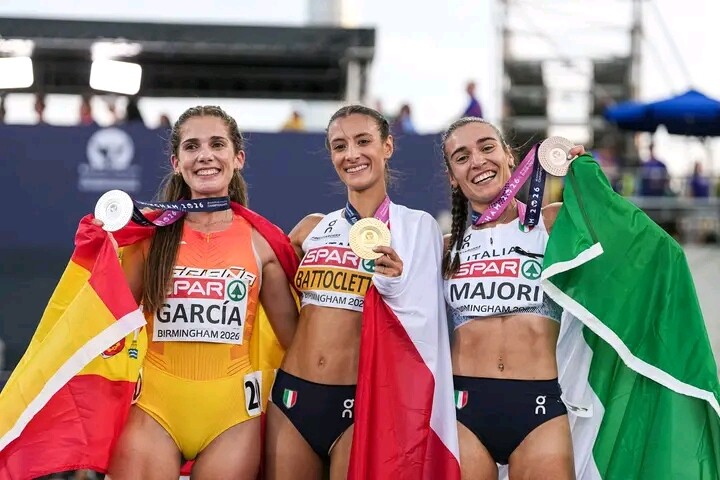
The Italian distance-running star remained composed through the race before turning on the speed when it mattered most. With the field tightly packed heading into the closing stages, Battocletti launched a breathtaking attack over the final 200 metres, producing a surge of exceptional quality that ultimately decided the championship.
The decisive moment came in the final 200 metres, when Battocletti unleashed a ferocious finishing kick that dramatically changed the complexion of the race. With the medals still within reach for several athletes, the Italian surged through the final bend with tremendous purpose, her acceleration proving simply too tough to match. She drove relentlessly down the home straight, opening the crucial gap and powering away from her closest challengers to seal a richly deserved European title.
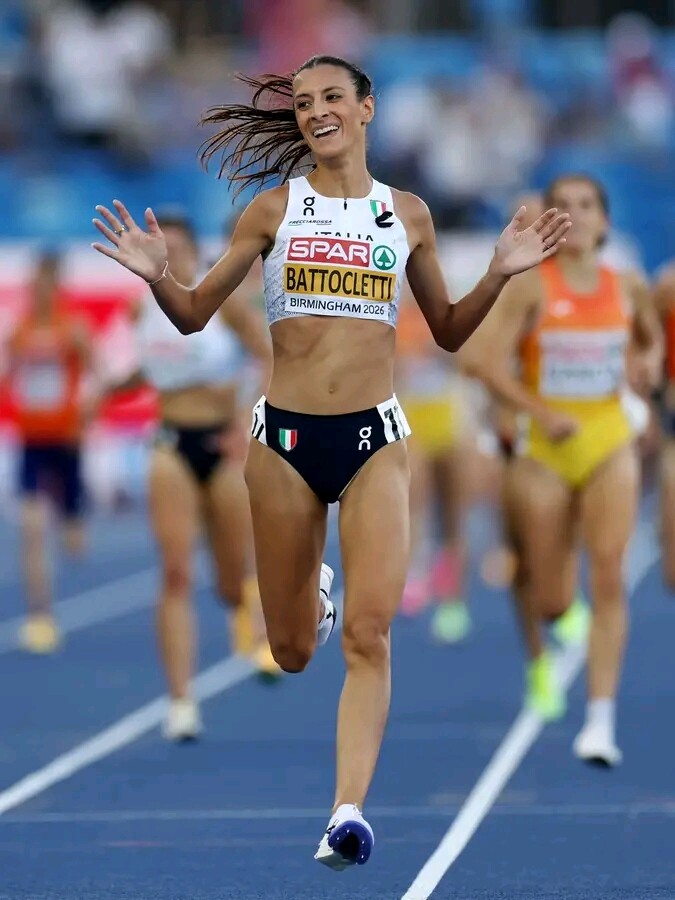
Her closing speed was extraordinary. Battocletti covered the final 400m in 59.2 seconds, including a remarkable 28.2-second final 200m, as she accelerated away from her challengers and powered down the home straight. It was a superb display of strength, speed and championship composure, earning her another European crown in emphatic fashion.
Behind her, Spain’s Marta García fought brilliantly to claim silver in a season’s best of 15:39.98, while Italy’s Micol Majori completed an Italian 1-3 with bronze in 15:40.65.
For Majori, the bronze medal represented a particularly special milestone as she celebrated her first international senior medal on a major championship stage. Her breakthrough performance added another layer to an unforgettable night for Italy.
Ireland’s Sarah Healy narrowly missed the podium, finishing fourth in 15:40.95, just 0.30 seconds behind Majori. Great Britain’s Hannah Nuttall was fifth in 15:41.27, followed by the Netherlands’ Maureen Koster in 15:41.51.
Amina Maatoug of the Netherlands finished seventh in 15:44.03, while Spain’s María Forero completed the top eight in 15:44.25.
Battocletti’s Birmingham triumph now sets up another title defence. The Italian will return to the track on Friday for the women’s 10,000m, where she will once again look to extend her European dominance.
For now, though, the spotlight belongs to Battocletti and that extraordinary finish — a 28.2-second final 200m that transformed a tightly contested 5000m final into another golden chapter in her championship career.
by Erick Cheruiyot for My Best Runs.
Login to leave a comment
European Athletics Champioships
The27thEuropean Athletics Championshipswill be held from 10 to 16 August 2026 at theAlexander StadiuminBirmingham, United Kingdom.[1] This is the first time that a British city will have staged the European Athletics Championships although Birmingham has hosted many high-profile events, including the2007 European Athletics Indoor Championships, the2003and2018 IAAF World Indoor Championshipsand the2022 Commonwealth Games. Alexander Stadium was renovated between 2019 and...
more...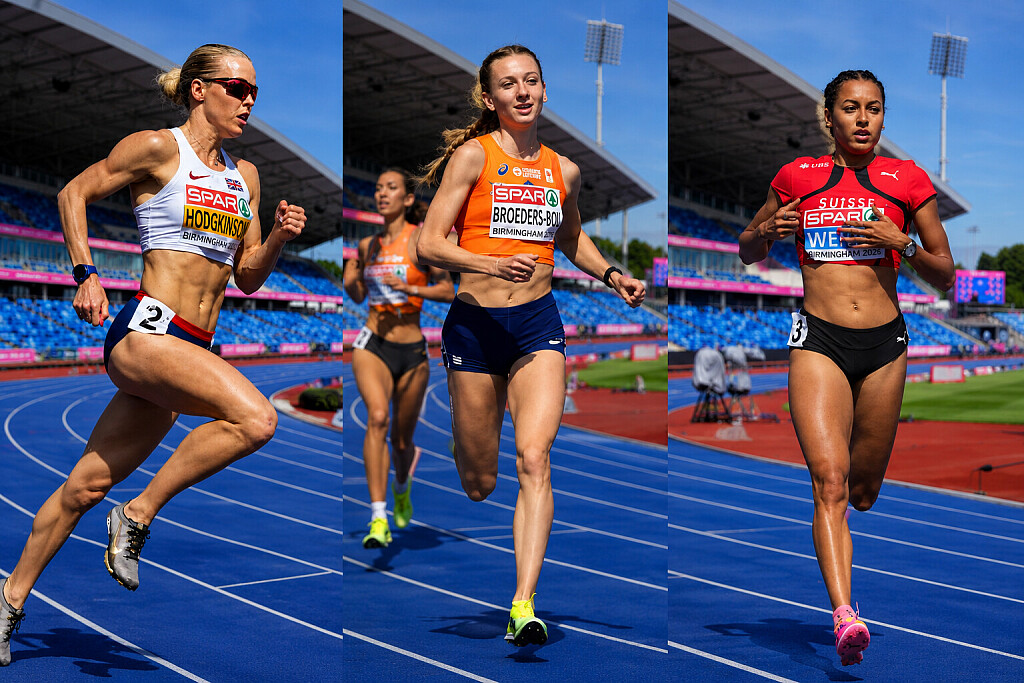
Hodgkinson Leads European 800m Charge as Coiro Smashes Italian Record in Birmingham
Keely Hodgkinson made an emphatic start to her European Athletics Championships campaign in Birmingham, delivering the fastest performance of the women’s 800m opening rounds as the defending champion immediately underlined her ambitions for another continental title.
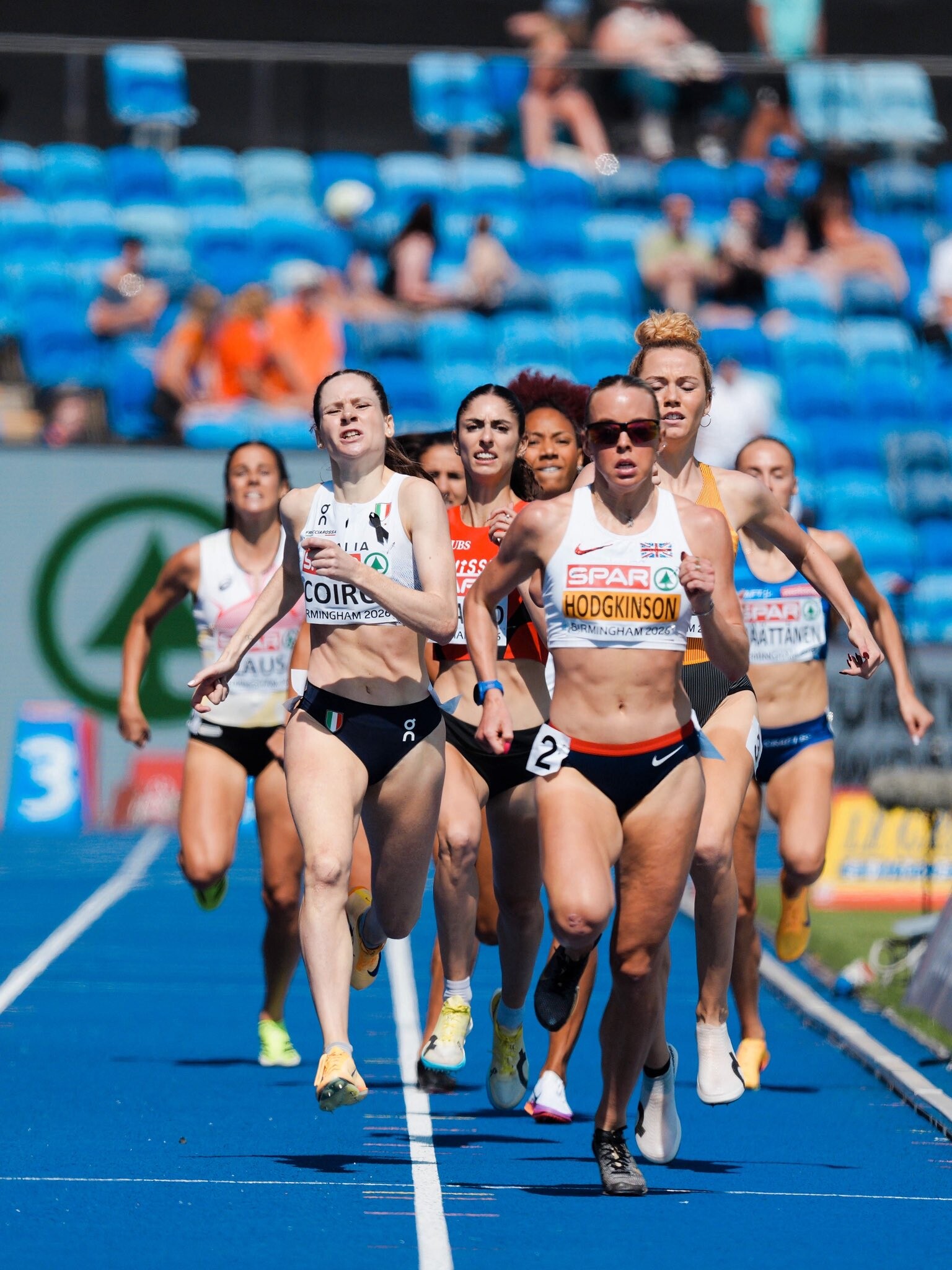
The British star looked relaxed yet authoritative throughout her heat, producing a controlled 1:57.28 to qualify fastest for the semifinals. Hodgkinson, who has established herself as one of Europe’s leading middle-distance athletes, never appeared troubled as she secured her progression with plenty of confidence.
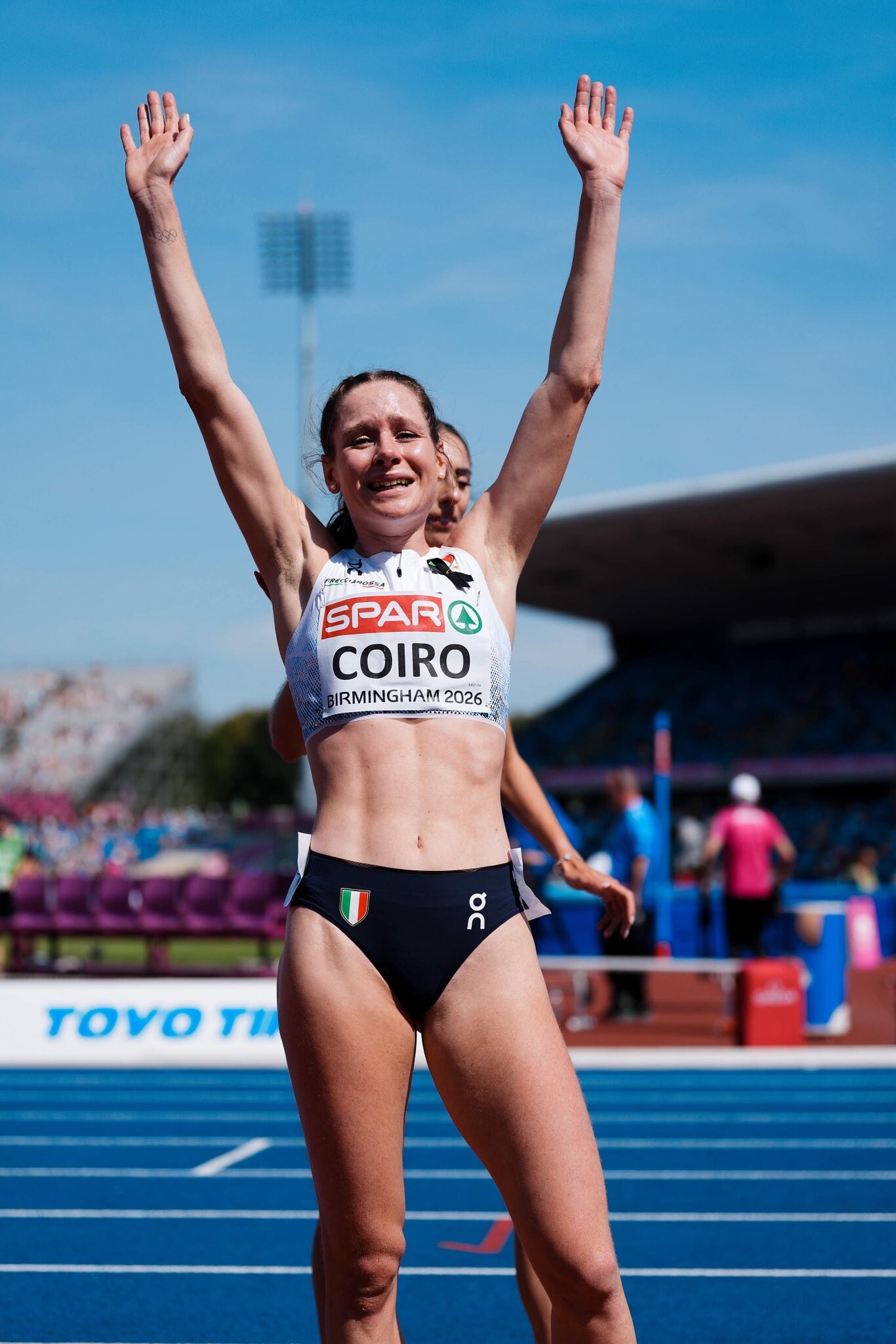
Behind her, Italy’s Eloisa Coiro produced one of the standout performances of the opening round. The Italian clocked 1:57.56, setting a new national record and advancing with a performance that immediately placed her among the leading contenders for the medals.
Germany’s Majtie Kolberg also impressed with 1:57.80, while Switzerland’s Audrey Werro followed closely in 1:57.83. Both athletes advanced automatically, adding further depth to an already formidable semifinal field.
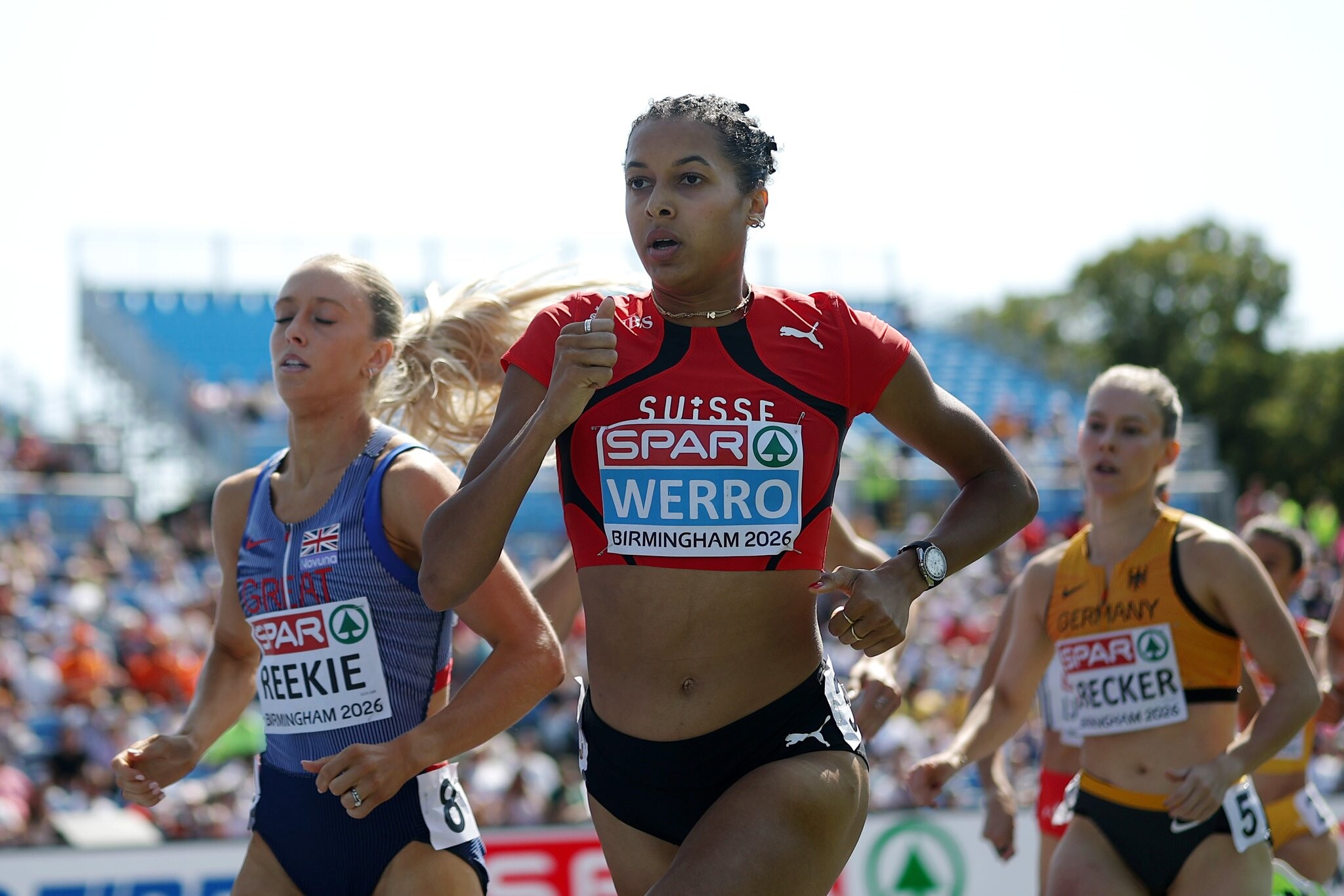
The battle for the remaining places was equally competitive. Italy’s Elena Bellò Vancardo ran 1:58.20, while France’s Clara Liberman stopped the clock at 1:58.23. Croatia’s Elena Vuković followed in 1:58.38, with Britain’s Jemma Reekie qualifying in 1:58.45.
Spain’s Lorea Mitjans and France’s Anaïs Lamotte also broke 1:59, recording 1:58.52 and 1:58.65 respectively. Lithuania’s Gabrielė Galvydytė, Switzerland’s Valentina Rosamilia and France’s Anaïs Bourgoin all advanced after running under 2:00.
The Netherlands’ Femke Broeders-Bol completed her heat in 1:59.96, while Slovakia’s Gabriela Gajanová and Spain’s Lorena Martín Royo secured the final automatic qualification places in 2:00.27 and 2:00.62.
With Hodgkinson, Werro, Reekie and Broeders-Bol safely through, and Coiro arriving in the semifinals with a new Italian record, the women’s 800m is already shaping up as one of the most fiercely contested events of the Birmingham championships.
Hodgkinson has made her intentions clear: the European crown remains hers to defend. But with Coiro producing a national-record performance and several of Europe’s strongest 800m runners advancing in impressive fashion, the road to another title is unlikely to be straightforward.
The semifinals now await — and the real fight for European supremacy is only beginning.
by Erick Cheruiyot for My Best Runs.
Login to leave a comment
European Athletics Champioships
The27thEuropean Athletics Championshipswill be held from 10 to 16 August 2026 at theAlexander StadiuminBirmingham, United Kingdom.[1] This is the first time that a British city will have staged the European Athletics Championships although Birmingham has hosted many high-profile events, including the2007 European Athletics Indoor Championships, the2003and2018 IAAF World Indoor Championshipsand the2022 Commonwealth Games. Alexander Stadium was renovated between 2019 and...
more...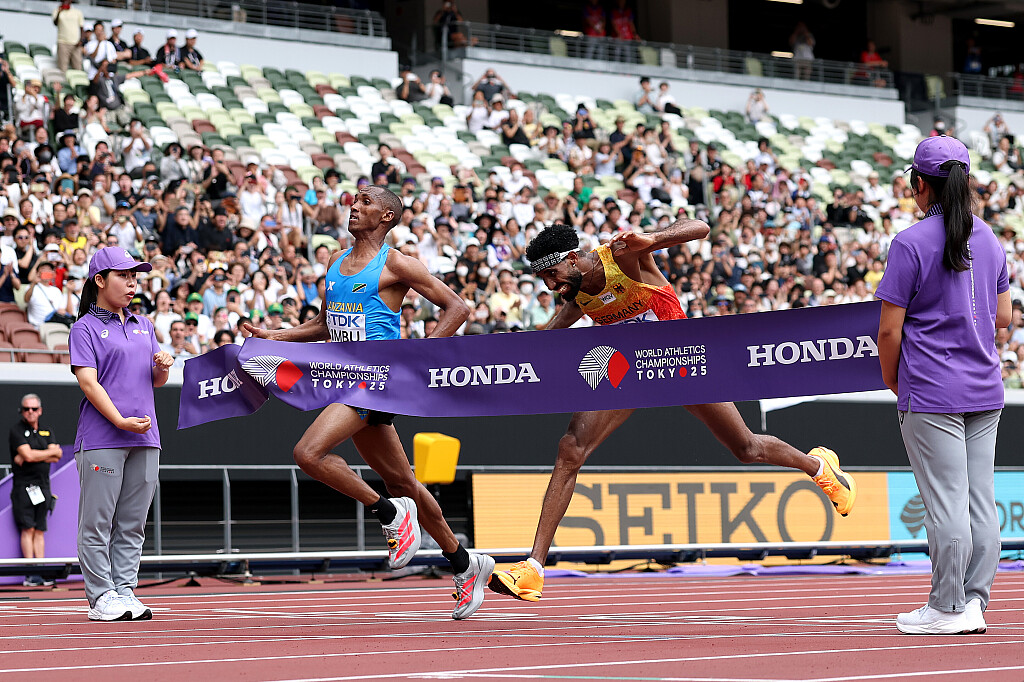
Can Amanal Petros Finally Turn Heartbreak into European Gold in Birmingham?
All eyes will be on Amanal Petros when the men’s marathon takes centre stage at the 2026 European Athletics Championships in Birmingham, with the German star chasing the major championship title that has repeatedly slipped through his fingers.
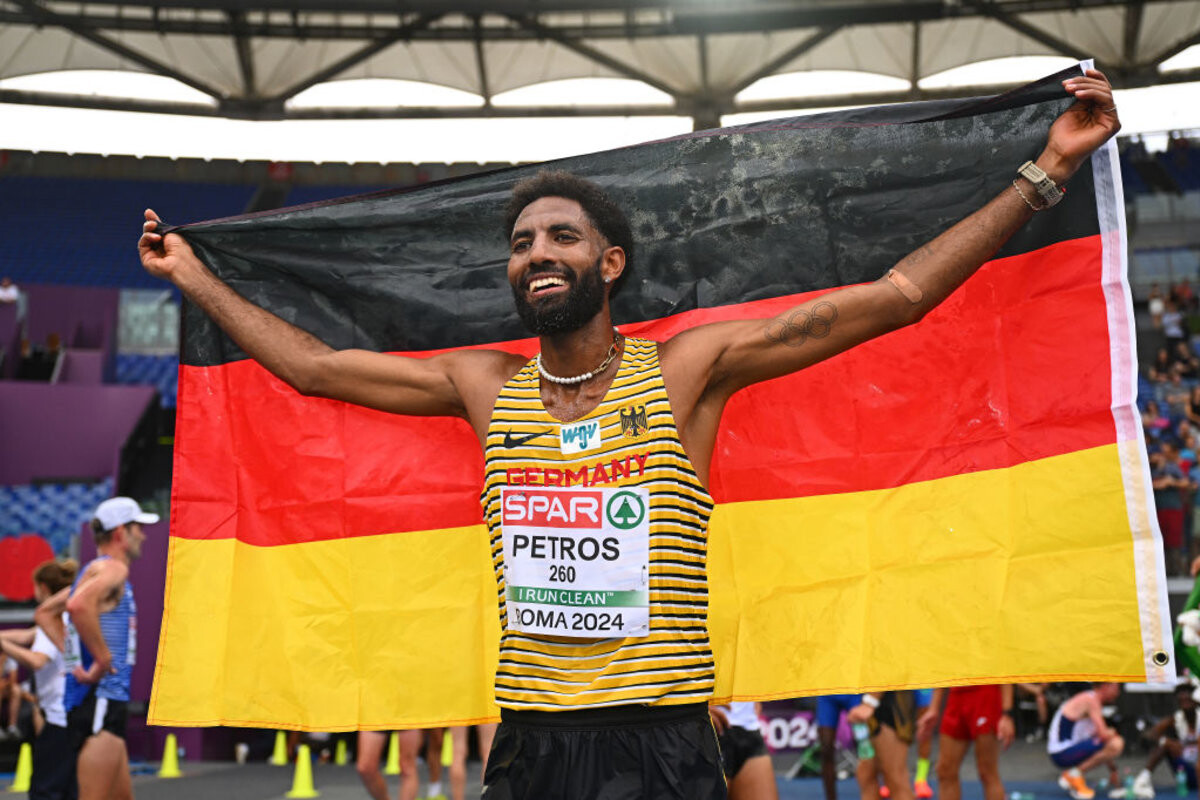
Petros arrives with one of the strongest résumés in the field and the credentials to challenge for gold. At 2:04:03, he is the third-fastest European marathoner of all time, behind Belgium’s Bashir Abdi (2:03:36) and France’s Morhad Amdouni (2:03:47). That level of performance underlines Petros’ ability to compete with the very best, although his career has also been marked by agonisingly narrow defeats on the biggest stages.
His most recent heartbreak came at the 2025 World Athletics Championships in Tokyo, where Tanzania’s Alphonce Simbu edged him out by just 0.03 seconds in one of the closest finishes in championship history. That defeat underlined both Petros’ quality and the fine margins that have prevented him from claiming an individual global title.
The European Championships have also brought frustration. At the 2024 European Athletics Championships, Petros took bronze in the half marathon after being beaten in a three-way finish by Italy’s Yemaneberhan Crippa. Two years earlier in Munich, he was unable to stay with the medal contenders during the decisive stages of the marathon.
Now Birmingham presents another opportunity—and Petros has every reason to believe this could finally be his moment.
His season-best of 2:08:31 does not tell the full story. At the London Marathon, Petros passed halfway in a blistering 61:16, initially targeting Bashir Abdi’s European record of 2:03:36, before easing during the latter stages. His 2:04:03 runner-up performance at the Valencia Marathon last December is arguably a much better indication of his true potential.
Standing in his way will be a strong German contingent, led alongside Petros by defending European champion Richard Ringer. Ringer produced one of the most memorable performances of the 2022 championships in Munich, unleashing a dramatic late surge during the final kilometre to overtake three athletes—including Petros—and snatch a remarkable victory.
At 37, Ringer continues to compete at an exceptional level. He produced the fastest marathon of his career in April, running 2:04:47 at the Boston Marathon to finish eighth overall while recording the fastest European time in the race.
Germany’s strength does not end there. Samuel Fitwi has been even faster in 2026, recording a personal best of 2:04:45 when finishing second at the Hamburg Marathon. That performance makes him the fastest athlete on the Birmingham entry list based on season’s bests.
With Petros, Ringer and Fitwi forming a formidable German trio, the team will have serious ambitions of collecting individual medals while also challenging for the team title. Their depth could prove particularly valuable in a championship marathon, where tactical racing and team strength can be just as important as raw personal-best times.
France’s Emmanuel Roudolff is among the principal threats to the German challenge. He established a personal best of 2:05:58 when finishing sixth at the Paris Marathon and has the speed to remain in contention if the race develops into a fast affair.
Veteran Kaan Kigen Özbilen will also bring considerable experience to the starting line. The Kenyan-born Turkish athlete, who once held the European record with 2:04:16, remains capable of competing at the highest level. He ran 2:05:59 for fifth in Barcelona earlier this year.
Israel will also arrive with a strong team, having won the marathon team title in Munich four years ago. Maru Teferi and Gashau Ayale, who claimed silver and bronze respectively in Munich, return with valuable championship experience and will hope to challenge for more medals in Birmingham.
Italy’s hopes will centre on Pietro Riva. With Crippa focusing on the 10,000m and Iliass Aouani sidelined by shin problems, Riva becomes Italy’s leading marathon contender. He finished second behind Crippa and ahead of Petros in the half marathon at the 2024 European Championships, giving him another opportunity to challenge the German favourite on the European stage.
For the home crowd, one of the most intriguing stories will be Mahamed Mahamed, who could give Britain a realistic shot at its first men’s European marathon medal in decades.
Great Britain has not won a men’s marathon medal at these championships since Ian Thompson claimed gold in Rome in 1974. Mahamed has emerged as a genuine contender after producing a lifetime best of 2:06:14 at the London Marathon in April. That performance made him the second-fastest British marathoner in history behind Mo Farah, while also placing him fourth among the Birmingham entrants based on 2026 season’s bests.
With a home crowd behind him and confidence gained from his breakthrough performance in London, Mahamed could become one of the most dangerous outsiders in the field.
Birmingham therefore promises a fascinating battle between proven championship performers, emerging German strength and a collection of experienced international challengers. Petros, however, remains the man at the centre of the story.
He has already come agonisingly close to major championship glory. He possesses the speed, experience and proven ability to run under 2:05. What remains is to produce the decisive performance when the medals are on the line.
After years of near misses, Birmingham could finally be the stage where Amanal Petros turns silver and heartbreak into European gold.
by Erick Cheruiyot for My Best Runs.
Login to leave a comment
European Athletics Champioships
The27thEuropean Athletics Championshipswill be held from 10 to 16 August 2026 at theAlexander StadiuminBirmingham, United Kingdom.[1] This is the first time that a British city will have staged the European Athletics Championships although Birmingham has hosted many high-profile events, including the2007 European Athletics Indoor Championships, the2003and2018 IAAF World Indoor Championshipsand the2022 Commonwealth Games. Alexander Stadium was renovated between 2019 and...
more...
David Rudisha’s 1:40.91: Fourteen Years Later, The 800m Still Has A Mountain To Climb
Fourteen years ago this weekend, David Rudisha delivered one of the most extraordinary performances ever witnessed on an athletics track — and remarkably, his world record still stands.
On August 9, 2012, the Kenyan lined up for the Olympic 800m final at London’s Olympic Stadium alongside seven of the world’s finest half-milers. What followed was a race that would forever redefine the limits of the event.
Rudisha did not wait for the final straight. From the gun, he went straight to the front and imposed a relentless pace on the field. He reached the 400m mark in a blistering 49.28 seconds, but instead of paying the price for such an aggressive opening lap, he continued to drive forward.
He passed 600m in 1:14.30 before producing a remarkable final 200 metres to cross the finish line in 1:40.91.
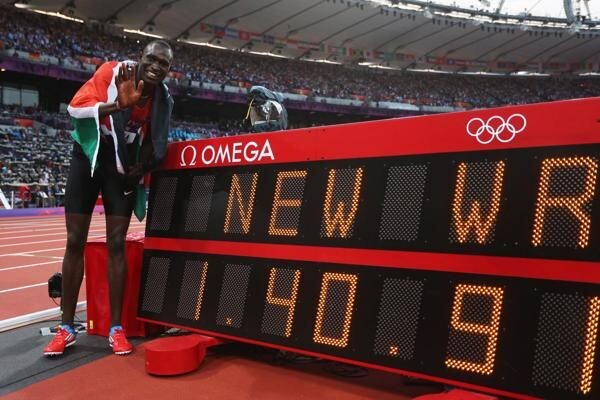
The stadium erupted.
Rudisha had broken his own world record and, for the first time in history, an athlete had broken the 1:41 barrier in the 800 metres. Even more remarkably, he had done it in an Olympic final, without a pacemaker and under the immense pressure of competing for the sport’s ultimate prize.
The runners behind him were dragged into history by his pace.
Botswana’s Nijel Amos finished second in 1:41.73, a world junior record at the time. Kenya’s 17-year-old Timothy Kitum produced a stunning 1:42.53 to take bronze, while American Duane Solomon ran 1:42.82 and Nick Symmonds clocked 1:42.95, both personal bests.
Ethiopia’s Mohammed Aman ran 1:43.20 for a national record, Abubaker Kaki finished in 1:43.32, and Great Britain’s Andrew Osagie completed the field in 1:43.77, also a personal best.
It was an extraordinary final in which all eight athletes finished inside 1:44, a testament to the astonishing pace set by the Kenyan.
Yet Rudisha was operating on another level.
His London performance was not a sudden flash of brilliance. It was the culmination of an era in which he had transformed the 800m through his fearless front-running style. Two years earlier, he had lowered the world record to 1:41.01 in Rieti, Italy. In London, he found another tenth of a second when the pressure was at its greatest.
That is what has made the record so difficult to approach.
For fourteen years, some of the greatest 800m runners of their generations have come and gone, but none has managed to take the final steps toward Rudisha’s mark. Nijel Amos remains the closest, his 1:41.73 from that same Olympic final leaving him 0.82 seconds short.
Then came Emmanuel Wanyonyi.
The young Kenyan has emerged as one of the most exciting 800m runners of his generation. In Lausanne in 2024, Wanyonyi produced a stunning 1:41.11, moving level with Wilson Kipketer as the second-fastest man in history and coming within just 0.20 seconds of Rudisha’s world record.
Twenty hundredths of a second may look insignificant on paper, but at the very top of the 800m, they represent a formidable barrier.
Wanyonyi has shown that Rudisha’s record is not beyond imagination. But reaching it requires something extraordinary — the perfect combination of speed, endurance, courage and execution over two unforgiving laps.
And perhaps that is what makes Rudisha’s achievement so enduring.
There was no pacemaker guiding him through the race. There was no carefully constructed invitational designed solely around producing a fast time. There was simply an Olympic final, eight athletes, two laps and a Kenyan determined to run faster than anyone had ever run before.
Rudisha went from the gun, controlled the race from the front and somehow maintained the speed required to produce a time that has remained beyond the reach of every challenger for fourteen years.
The next generation is getting closer, and Wanyonyi has shown that the record can at least be approached.
But 1:40.91 remains David Rudisha’s masterpiece — a world record forged under the brightest lights and on the biggest stage, and one that continues to define greatness in the 800 metres.
Fourteen years later, the challengers are getting closer, but Rudisha’s 1:40.91 remains the mountain every 800m runner dreams of climbing.
by Erick Cheruiyot for My Best Runs.
Login to leave a comment
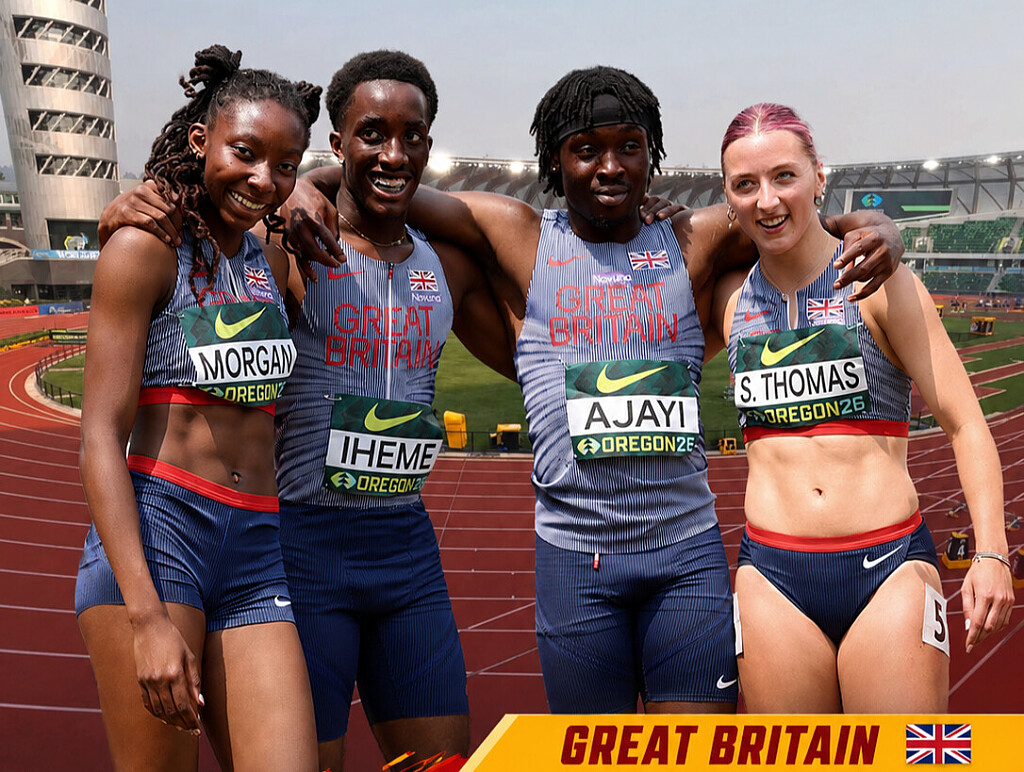
World U20 Relay History Rewritten As Great Britain Breaks Fresh Record After Australia's Brief Reign
Records were rewritten twice within the space of a few unforgettable minutes as the inaugural World Athletics U20 Mixed 4x100m relay produced one of the most dramatic sessions of the World Athletics U20 Championships in Eugene, Oregon.
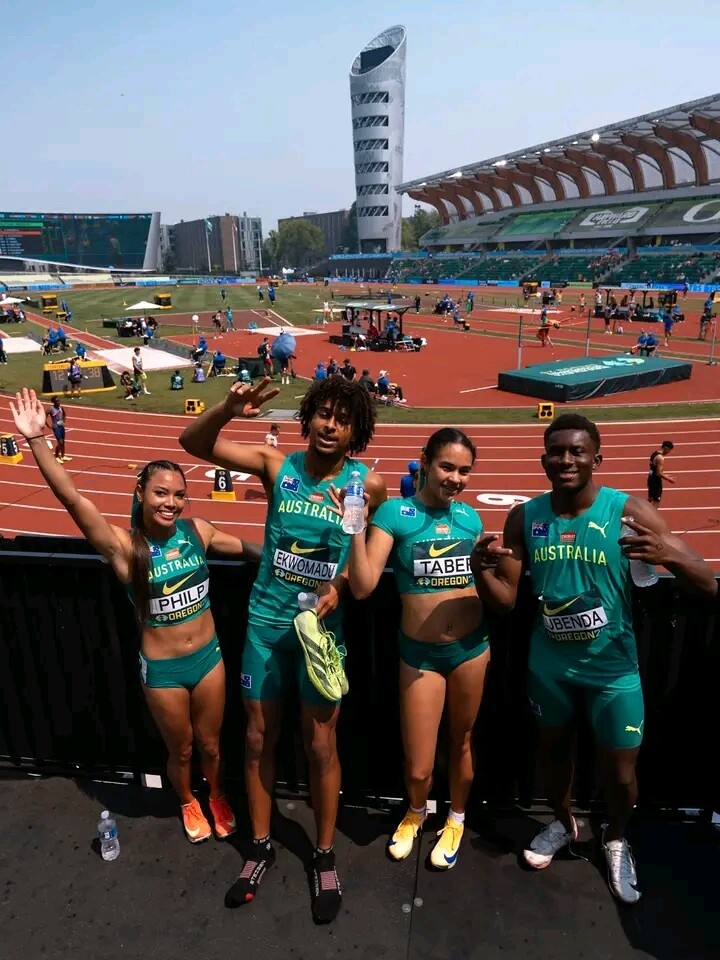
Australia ignited the excitement in the opening heat by storming to a world U20 record of 41.64 seconds, becoming the first team ever to reach that mark and briefly claiming a place in history. For five memorable minutes, the Australian quartet of Uwezo Lebenda, Maya Taber, Kelechi Ekwomadu and Thewbelle Philp stood as world record holders after a sensational performance that also secured their place in Saturday's final.
Their celebration, however, proved to be short-lived.
Moments later, Great Britain delivered an even more electrifying display in the second heat, clocking 41.60 to erase Australia's newly established mark and set a fresh World U20 record. It was a masterclass in speed, precision and flawless baton exchanges that propelled the British team into the history books.
The record-breaking quartet of Divine Iheme, Savannah McKenzie Morgan, Mathew Ajayi and Sophie Thomas combined brilliantly from start to finish to produce the fastest mixed U20 4x100m relay ever recorded. Sophie Thomas, who is set to compete for the University of Connecticut (UConn) this year, produced a composed anchor leg to seal the landmark performance.
The extraordinary back-to-back world records underlined the remarkable depth of sprint talent on display, with several other nations also producing outstanding performances to qualify for the final.
Italy impressed with a personal best of 41.74, while the United States advanced comfortably in 41.82. Nigeria also produced a personal best of 41.91 to secure qualification.
Jamaica (42.08 PB), Germany (42.12 PB), France (42.16 PB) and Poland (42.18 PB) completed the eight-team final after delivering strong performances in one of the fastest mixed relay qualifying rounds ever witnessed at the U20 Championships.
With two world records already falling in rapid succession, anticipation is now soaring ahead of Saturday's final. If the qualifying heats are any indication, the newly established global mark of 41.60 may once again come under serious threat as the world's best young sprinters chase another piece of athletics history.
by Erick Cheruiyot for My Best Runs.
Login to leave a comment

Taylor and Maxwell Deliver Golden U.S. Sprint Sweep at World U20 Championships
The United States produced a memorable night of sprinting at the World Athletics U20 Championships in Eugene, Oregon, as Tate Taylor and Mia Maxwell captured the men's and women's 100 metres titles to complete a remarkable American clean sweep in one of track and field's most prestigious junior competitions.
Taylor announced himself among the world's brightest young sprinters with a breathtaking performance in the men's final, powering away over the closing metres to clock a wind-legal personal best of 9.94 seconds. The outstanding run made him the only athlete in the field to break the 10-second barrier and confirmed his status as one of the fastest teenagers in history.
Jamaica's Gary Card claimed the silver medal in 10.05 seconds after a strong race, while South Africa's Marko Ferreira secured bronze in 10.16, completing a highly competitive podium. Despite a closely contested opening half of the race, Taylor's explosive finishing speed proved decisive as he surged clear to take the world junior crown in emphatic fashion.
The women's final delivered another thrilling contest, with Mia Maxwell holding her composure under immense pressure to secure the title in 11.14 seconds. Jamaica's Shanoya Douglas mounted a determined late challenge but settled for silver in 11.17, while Italy's Kelly Ann Doualla Edimo earned bronze after crossing the line in 11.27.
The victory capped an unforgettable championship for the Maxwell family. After progressing impressively through the rounds, Mia delivered when it mattered most, while her twin sister, Mariah Maxwell, also reached the final and finished fifth, underlining the family's exceptional sprinting talent on the global stage.
The double triumph marked a dominant evening for Team USA, which swept both 100m gold medals before a home crowd in Eugene. With Taylor producing a historic sub-10-second breakthrough and Maxwell demonstrating remarkable composure in a world-class women's final, the pair provided another glimpse of the exciting future of American sprinting.
by Erick Cheruiyot for My Best Runs.
Login to leave a comment
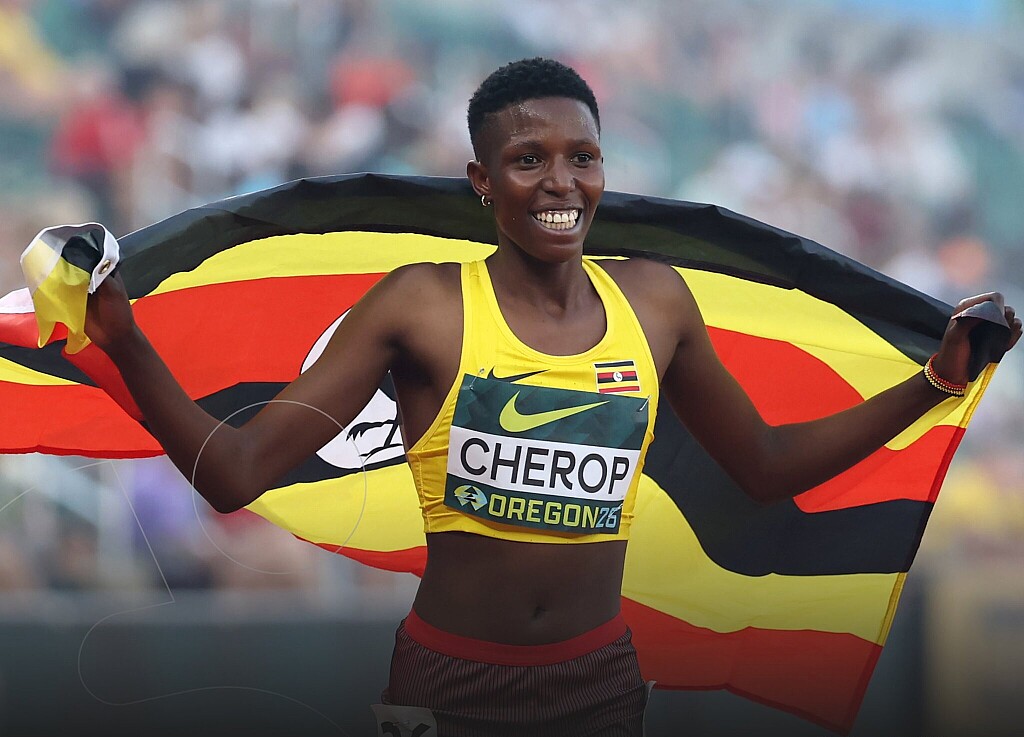
From Silver to Gold: Charity Cherop Storms to World U20 5000m Crown with Tactical Masterclass
Uganda's 19-year-old long-distance sensation Charity Cherop delivered the performance of her young career, producing a championship masterclass to capture the women's 5000m title at the 2026 World Athletics U20 Championships at Hayward Field in Eugene, Oregon.
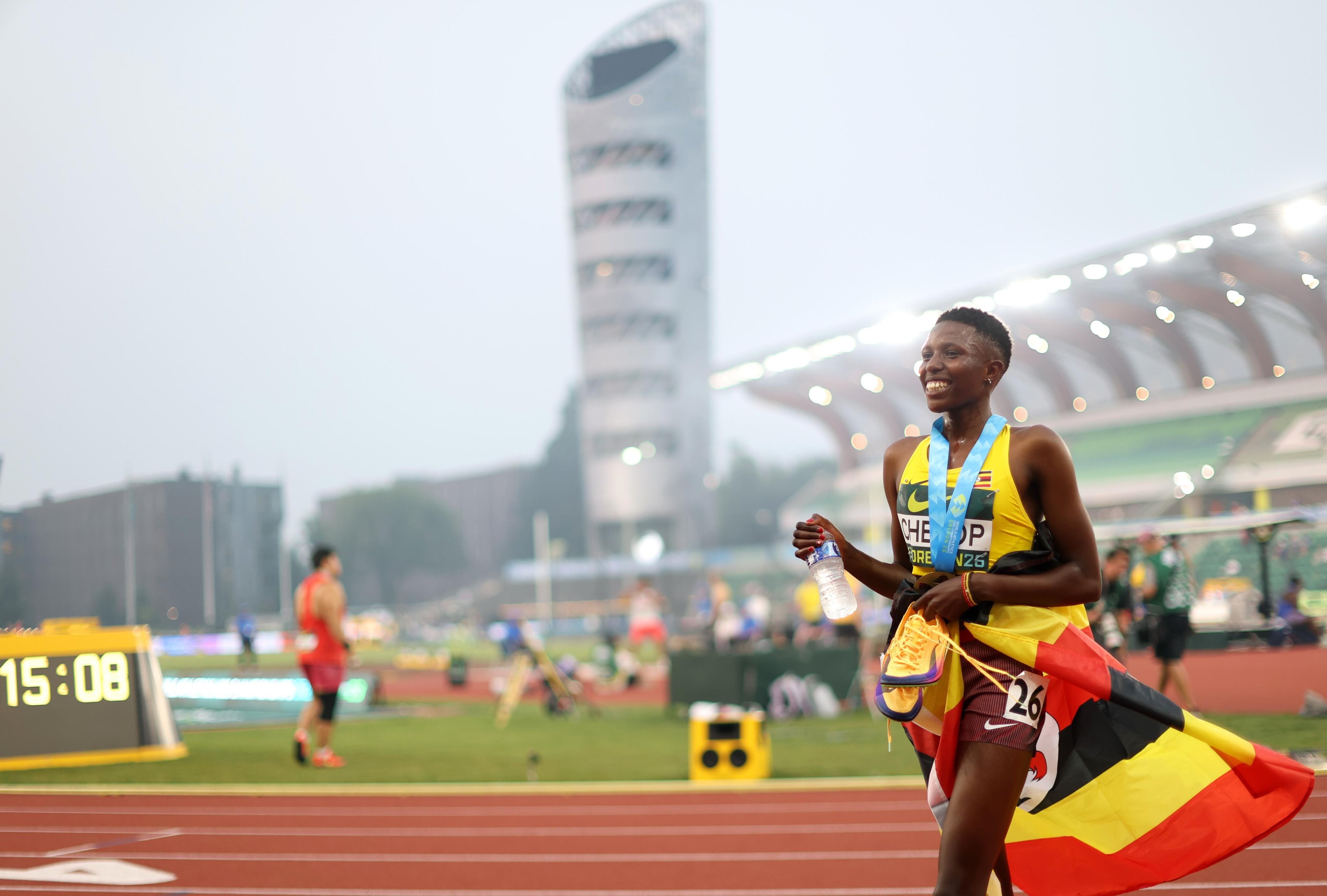
Born on July 4, 2007, Cherop executed a tactically brilliant race, remaining patient throughout the early stages before unleashing a devastating surge over the final kilometre. Her perfectly timed move proved decisive as she crossed the finish line in 15:03.88, becoming the new World U20 champion.
The victory was more than just a world title—it completed a remarkable journey from silver to gold. After finishing runner-up at the previous World Athletics U20 Championships in Lima, Cherop returned to the global stage stronger and more determined, upgrading her silver medal to gold and confirming herself as one of the brightest young stars in international distance running.
Behind the Ugandan star, Ethiopia's Shito Gumi fought bravely to secure the silver medal in 15:07.91, while Kenya's Joyline Chepkemoi delivered an outstanding performance to claim bronze in 15:09.08, setting a new personal best in the process. The battle for the podium remained fiercely contested until the closing stages, with every medal decided through courage, tactical awareness, and a powerful finishing kick.
Kenya narrowly missed placing two athletes on the podium as Cynthia Chepkirui finished a strong fourth in 15:14.86, while Sweden's Carmen Cernjul rounded out the top five in 15:22.18.
Ethiopia's Emebet Tilahun placed sixth in 15:32.51, followed by Japan's Yui Onotora in seventh with 15:37.33. Uganda celebrated another top-10 finish through Bentalin Yeko, who finished eighth in 15:48.35, underlining the nation's impressive depth in women's distance running.
Germany's Julia Ehrle claimed ninth in 16:09.53, with France's Lamia Mourabit completing the top ten in 16:10.80.
Further down the field, Portugal's Carolina Correia impressed with an 11th-place finish in a personal best 16:11.47, while Norway's Venus Teffera also celebrated a lifetime best of 16:12.07 in 12th. Germany's Gloria Herold added another personal best, clocking 16:13.75 for 15th place.
France's Laly Porentru, Japan's Ayami Yoshida, the Netherlands' Rosalie Ten Bruggencate, Italy's Sofia Ferrari and Mimosa Miari Fulcis, Spain's Fatima Hernandez, Switzerland's Anina Hirzel, Great Britain's Eliza Nicholson, Canada's Airlie Downie-Back and Athena Andrecyk, Mexico's Kenya Cuahutle, and Australia's Libby Mantay and Imogen Baker all battled courageously to the finish, highlighting the exceptional depth and global talent assembled for the championship final.
The only athlete unable to start the race was the United States' Emily Wisniewski, who was listed as DNS.
The women's 5000m final showcased the very best of championship distance running—patience, tactical intelligence, and a thrilling finish. On the biggest stage of her junior career, Charity Cherop produced a race worthy of a world champion, transforming silver in Lima into gold in Eugene and writing another unforgettable chapter in Uganda's rich distance-running legacy.
by Erick Cheruiyot for My Best Runs.
Login to leave a comment

Maxwell Twins Storm into World U20 100m Final with Dominant Sprint Performances
The Maxwell twins, Mariah and Mia, continued their outstanding run at the World Athletics U20 Championships in Oregon by powering into the women's 100 metres final after commanding displays in both the heats and semi-finals.
Mariah opened her campaign with an impressive victory in her opening heat, clocking 11.33 seconds to advance comfortably. Moments later, Mia matched her sister's performance by winning Heat 6 in 11.37 seconds, ensuring both Americans progressed safely to the semi-finals while looking well within themselves.
If their opening-round performances were convincing, the semi-finals were even more emphatic.
Mia Maxwell stamped her authority on the event by producing the fastest semi-final performance of the day, surging to victory in Heat 2 in a superb 11.13 seconds. Her sister, Mariah, also delivered when it mattered most, winning her place in the final with a composed run of 11.25 seconds in Heat 3.
The Maxwell sisters' remarkable performances ensured they both booked places in the championship final, strengthening their status as leading contenders for the world junior title. Their ability to deliver under pressure has made them one of the biggest stories of the championships, with the twins now just one race away from global glory.
Elsewhere in the semi-finals, Italy's Kelly Ann Maevane Doualla Edimo claimed victory in the opening semi-final, while Jamaica's Shanoya Mikalia Douglas emerged victorious in the third semi-final to complete an impressive lineup for the title showdown.
The women's 100m final will feature an exceptional field comprising Mia Maxwell (United States), Theianna-Lee Terrelonge (Jamaica), Shanoya Mikalia Douglas (Jamaica), Xenia Buri (Switzerland), Mariah Maxwell (United States), Kelly Ann Maevane Doualla Edimo (Italy), Emma Goretzka (Germany), Jady Emmanuel (Saint Lucia), and Lena Anochili (Germany).
With both Maxwell sisters in scintillating form and carrying the fastest performances into the final, anticipation is building for what promises to be one of the most exciting sprint races of the World Athletics U20 Championships.
by Erick Cheruiyot for My Best Runs.
Login to leave a comment

Sophie Woods Rewrites the Record Books With Historic Fastest Crossing of the Alps
New Zealand ultra-endurance runner Sophie Woods has etched her name into mountain running history after completing the entire length of the Alps in the fastest time ever recorded, becoming the first person to conquer the legendary route in under 30 days.
The 42-year-old reached the Mediterranean coastline in Monaco on Saturday night, bringing to an end an extraordinary 2,000-kilometre journey along the iconic Via Alpina. Her remarkable crossing took just 29 days, shattering both the overall and women's fastest known times on one of Europe's most demanding long-distance routes.

Woods began her challenge in Trieste, Italy, on July 4 before traversing seven countries—Italy, Slovenia, Austria, Germany, Liechtenstein, Switzerland and France—across some of the continent's most rugged and unforgiving mountain terrain.
The scale of the achievement is almost difficult to comprehend. Over the course of the expedition, Woods climbed a cumulative elevation equivalent to ascending Mount Everest 12 times, while covering relentless daily distances through alpine passes, remote trails and rapidly changing weather conditions.

Her record-breaking performance eclipsed the previous overall fastest known time, established by British ultra-runner Jake Catterall in 2024, by an astonishing six days. She also lowered the women's benchmark, previously held by Dutch endurance athlete Tessa Caspers, by nine days, setting a new standard that will be difficult to match.
The journey, however, was far from straightforward. Woods endured a brutal European heatwave, battled powerful mountain storms, navigated around wildfires that forced a five-kilometre detour, and pushed through relentless swarms of horseflies. As the finish drew closer, she made perhaps her greatest sacrifice—cutting her sleep to as little as 90 minutes to two-and-a-half hours per night to ensure the record remained within reach.
Despite the physical exhaustion, the New Zealander refused to let adversity slow her pursuit of history. Her resilience, meticulous planning and unwavering determination carried her across one of the world's toughest mountain traverses at a pace never before achieved.
Moments after reaching Monaco, the magnitude of the accomplishment began to sink in.
"I can't believe I did it. I am ecstatic but knackered."
With her unforgettable 29-day crossing, Sophie Woods has not only rewritten the record books but also delivered one of the most remarkable endurance performances the ultra-running world has witnessed, raising the bar for future athletes dreaming of conquering the Alps.
by Erick Cheruiyot for My Best Runs.
Login to leave a comment
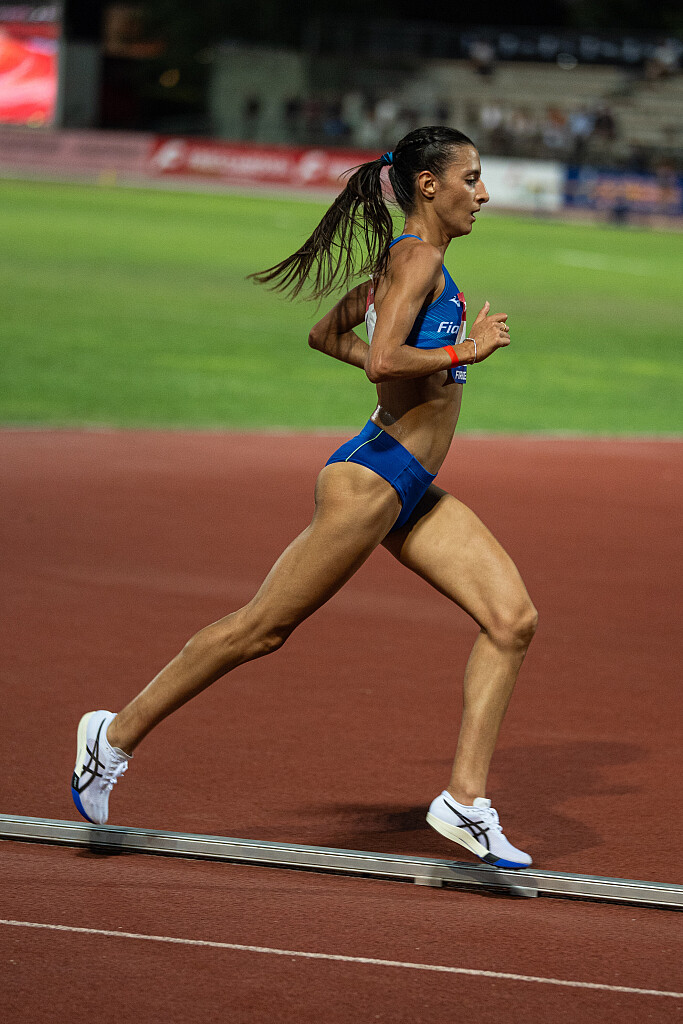
Nadia Battocletti Completes Another Italian Championship Double to Extend Her Domestic Reign
Italy's distance-running queen, Nadia Battocletti, once again proved why she remains the country's dominant force after producing another remarkable championship double at the Italian National Championships.
The Olympic silver medalist successfully defended both her 1,500m and 5,000m national titles, showcasing her impressive range from the middle distances to the longer events. Battocletti first secured victory in the 1,500m, crossing the finish line in 4:17.29, before returning to the track to claim the 5,000m crown in 15:12.65.
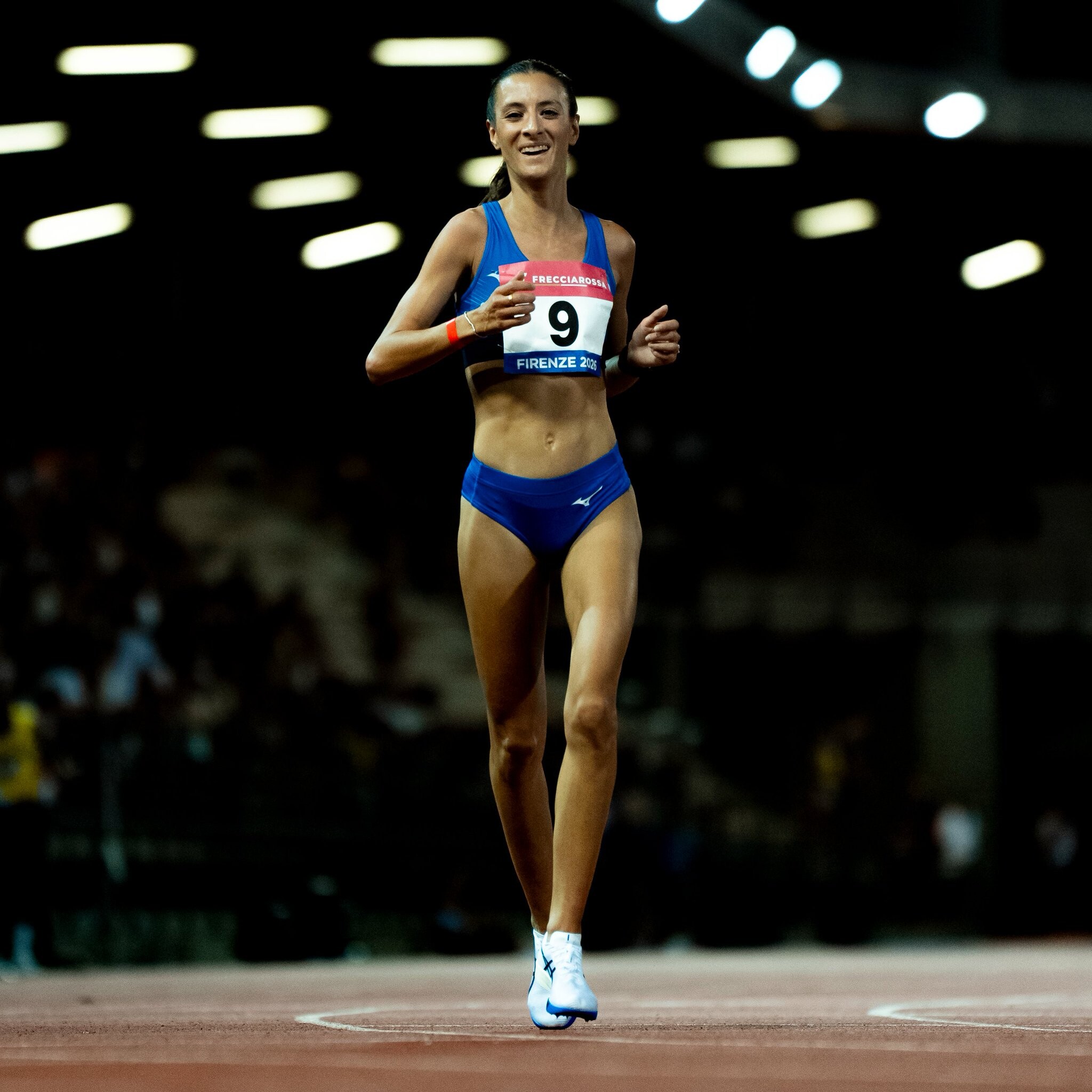
Her latest triumph carries even greater significance in the longer race. By winning the 5,000m title once again, Battocletti completed a hat-trick of consecutive Italian championships over the distance, further cementing her place among the country's finest distance runners. The achievement highlights not only her consistency but also her ability to remain at the top despite the increasing level of competition.
The double victory is another statement of intent as Battocletti continues to build momentum during a crucial stage of the season. Her ability to excel in both events demonstrates the endurance, speed, and tactical awareness that have made her one of Europe's most respected distance athletes.
With another pair of national titles added to her growing collection, Battocletti leaves the championships with renewed confidence and reinforces her status as Italy's leading distance star. Her commanding performances serve as another reminder that she will be one of the athletes to watch on the international stage as the season continues.
by Erick Cheruiyot for My Best Runs.
Login to leave a comment
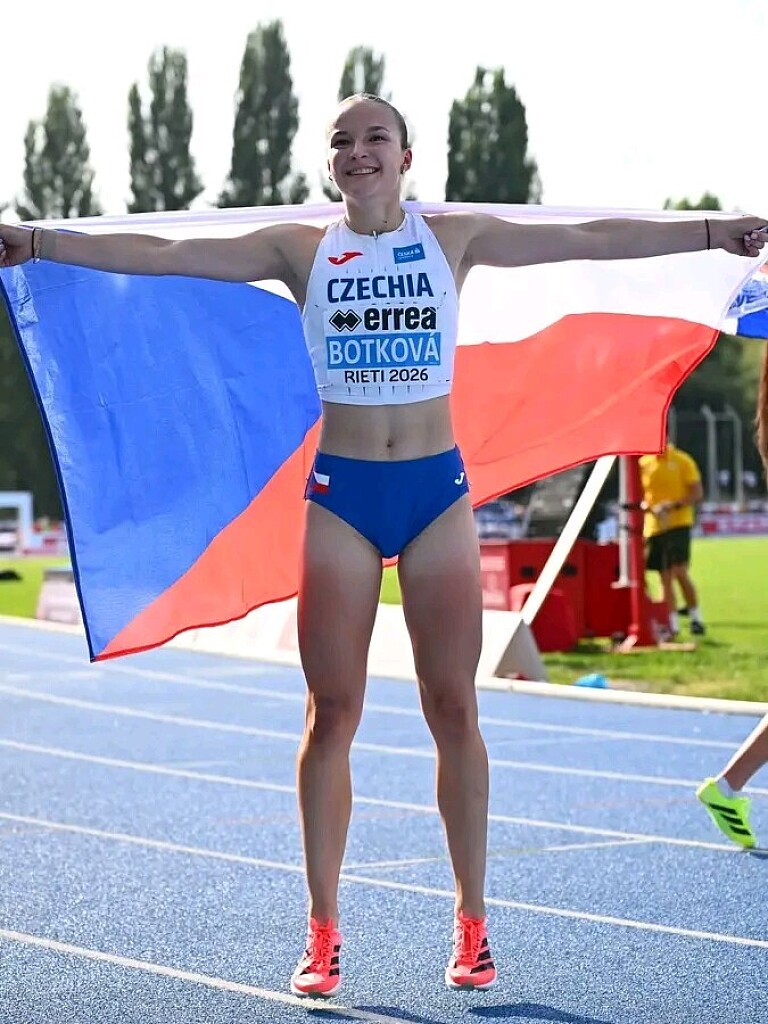
Linda Botková Rewrites History: The 16-Year-Old Who Produced One Of The Greatest Junior Hurdle Performances Ever
Track and field has witnessed the emergence of another extraordinary teenage phenomenon.
At just 16 years old, Czech sensation Linda Botková produced one of the greatest under-18 performances in the history of the women's 400m hurdles, storming to the European Athletics U18 Championship title in Rieti, Italy, with a breathtaking 55.19 seconds. It was far more than a gold-medal-winning run—it was a performance that rewrote the record books and firmly established her as one of the brightest young stars in global athletics.
From the gun, Botková displayed remarkable maturity, attacking each hurdle with confidence, precision, and outstanding rhythm. She controlled the race from start to finish before unleashing a powerful sprint over the closing metres to cross the line in a stunning new personal best.
The significance of her performance extends well beyond the championship. Her sensational 55.19 not only earned her the European U18 crown but also produced an astonishing collection of milestones. She shattered the European Under-20 record, set a new European Under-18 best, established a new championship record, and remarkably lowered that championship record in all three rounds of the competition. The time also became the world Under-18 leading performance of the season, a new Czech Under-18 national record, and the second-fastest performance ever recorded by an Under-18 athlete.
Only world record holder and Olympic champion Sydney McLaughlin-Levrone has ever run faster at the same age—a remarkable statistic that underscores just how exceptional Botková's achievement truly is.
Producing such a performance at only 16 years old, while still developing physically and technically, speaks volumes about her immense talent, discipline, and competitive maturity. It is a race that has instantly elevated her from a promising prospect to one of the most exciting young athletes in world track and field.
For Czech athletics, Botková's triumph represents the arrival of a potential global superstar. For the rest of the athletics world, it is a powerful reminder that a new generation is already pushing the boundaries of what seemed possible.
Winning European Under-18 gold was a remarkable achievement. Doing so in 55.19 seconds, while rewriting multiple records and becoming the second-fastest Under-18 400m hurdler in history, transformed the race into one of the greatest junior performances the event has ever witnessed.
by Erick Cheruiyot for My Best Runs.
Login to leave a comment
Anna Polinari Delivers Italy's Fastest Women's 400m Performance in 17 Years
Anna Polinari produced the race of her career at the Meeting Madrid, storming to a sensational personal best of 50.36 seconds to claim victory in a thrilling women's 400m contest and register the fastest time by an Italian woman in 17 years.
The Italian star held her composure under immense pressure, edging Bahrain's Kemi Adekoya by the slimmest of margins. Adekoya crossed the line just 0.01 seconds behind in 50.37, capping off one of the closest one-lap battles of the season.
Polinari's breakthrough performance places her among the finest Italian quarter-milers in history. Her 50.36 is the quickest time by an Italian woman since Libania Grenot set the national record of 50.30 in 2009, underlining the significance of the milestone and marking a new chapter for Italian women's sprinting.
The race remained fiercely competitive from start to finish. Chile's Martina Weil secured third place in 50.43, while Ireland's Sharlene Mawdsley finished fourth in the identical time, separated only by the photo finish.
Beyond the victory, Polinari's performance sends a powerful message ahead of the major championships. Producing a personal best in such a high-quality field demonstrates not only her growing confidence but also her ability to thrive under pressure against world-class opposition. With her form peaking at the right time, she has emerged as a serious contender on the international stage.
For Italian athletics, the result is a landmark moment. Breaking a 17-year barrier is no small feat, and Polinari's remarkable run highlights the resurgence of Italy's women's sprint program. If she continues on this trajectory, the national record of 50.30 now appears well within reach, setting the stage for an exciting remainder of the season.
by Erick Cheruiyot for My Best Runs.
Login to leave a comment
Two World Records. One Legendary Track. Another Epic Battle in Monaco
The Stade Louis II in Monaco has become a place where middle-distance history is made. On Friday evening, two women who have each rewritten the record books on this famous track will return—this time to face each other over 3,000 meters in one of the most compelling races of the Diamond League season.
Faith Kipyegon of Kenya and Jessica Hull of Australia have already left unforgettable marks on Monaco, but at different distances. Now, their paths converge once again in a race that promises world-class quality from start to finish.
Kipyegon's connection with Monaco is legendary. In 2023, the Kenyan superstar produced one of the greatest performances in athletics history, clocking a breathtaking 4:07.64 to shatter the women's mile world record. It was another masterpiece from an athlete who has built a career on redefining what is possible in middle-distance running.
Since then, her résumé has only grown stronger. Kipyegon is a three-time Olympic 1500m champion, a five-time world champion, and remains the fastest woman ever over the mile. She arrives in Monaco after racing the women's mile at last weekend's Prefontaine Classic, making this a quick but intriguing turnaround as she steps up to 3,000 meters.
Hull, meanwhile, has her own unforgettable Monaco memories. The Australian star lit up the same track in 2024 when she stormed to a world record of 5:19.70 in the 2,000 meters, proving she belongs among the greatest middle-distance runners of her generation. Her fearless front-running style and remarkable endurance transformed that race into a historic performance.
The Olympic silver medallist over 1500 meters also holds the Australian record for 3,000 meters, making Friday's event an ideal opportunity to test herself once again against the very best.
Although much of the spotlight will understandably fall on Kipyegon and Hull, the race is far from a two-woman contest.
Italy's Nadia Battocletti continues to establish herself among Europe's finest distance runners and will be eager to challenge the established stars. Ethiopia's Freweyni Hailu also enters the race in outstanding form as the 2026 world leader over 3,000 meters, adding another serious contender to an already exceptional field.
Monaco has long been regarded as one of the fastest tracks in the world, producing countless records thanks to ideal conditions and elite competition. For Kipyegon, it has been the stage for career-defining brilliance. For Hull, it became the venue where she announced herself as a world-record holder.
Now, those two stories intersect once again.
Different world records. Different distances. The same fierce rivalry.
With championship pedigree, record-breaking speed and a stacked field assembled under the lights at Stade Louis II, Friday's women's 3,000 meters has all the ingredients to become another unforgettable chapter in Monaco's rich athletics history. Fans can expect nothing less than a race worthy of the track where both Kipyegon and Hull have already made history.
by Erick Cheruiyot for My Best Runs.
Login to leave a comment
Faith Kipyegon Returns to Monaco Seeking Redemption in a Star-Studded 3,000m Showdown
Few venues have witnessed more memorable performances from Faith Kipyegon than Monaco's iconic Stade Louis II, and on Friday night the Kenyan superstar returns to the track where she has repeatedly produced athletics history. This time, however, the challenge is different. Instead of chasing another mile masterpiece, the reigning world record holder will test herself over 3,000 metres at the Herculis EBS Diamond League in one of the most anticipated races of the season.
Kipyegon's return comes just weeks after suffering a rare defeat at the Prefontaine Classic, a result that only adds intrigue to an event featuring some of the strongest distance runners in the world. The three-time Olympic champion has built her career on responding to adversity with exceptional performances, making Monaco the perfect stage for another statement run.
The women's 3,000m field promises to deliver one of the finest contests of the Diamond League campaign. Australia's Jessica Hull, Italy's Nadia Battocletti, and Ethiopia's Freweyni Hailu all arrive with the credentials to challenge for victory, ensuring that every lap will demand tactical precision and relentless pace from the gun.
Adding further depth to the race is Kenyan standout Agnes Ngetich, whose remarkable rise over the past year has established her among the world's elite distance runners. With multiple global contenders lining up together, the event has all the ingredients of a championship-calibre battle rather than a typical circuit race.
Monaco has long been regarded as one of athletics' fastest venues, where ideal conditions and world-class competition regularly produce unforgettable performances. It was here that Kipyegon rewrote the history books with her breathtaking mile world record three years ago, cementing the principality's reputation as one of her happiest hunting grounds.
Whether Friday's race delivers another record or simply a thrilling victory, expectations are exceptionally high. With redemption, prestige and momentum all on the line, the women's 3,000m is shaping up to be one of the defining moments of the Monaco Diamond League, as the world's greatest middle- and long-distance stars battle under the lights in pursuit of another unforgettable chapter in athletics history
by Elam wangwero for My Best Runs.
Login to leave a comment
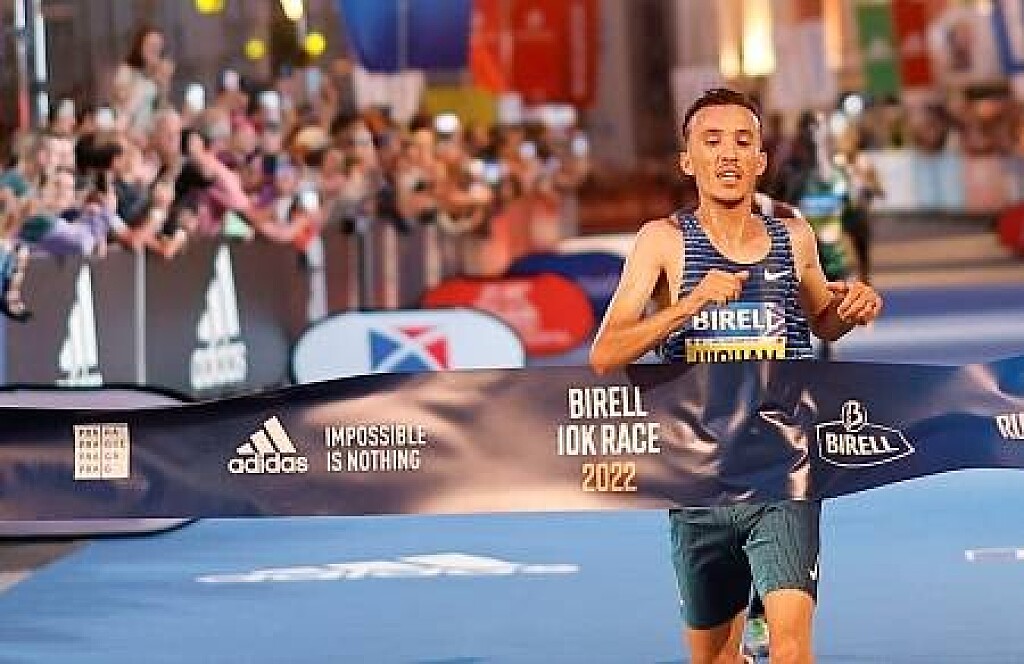
Top European and African Stars Headline tRUNsylvania International 10K Cluj
One of Eastern Europe’s strongest road races takes center stage this Sunday (June 28) as the tRUNsylvania International 10K Cluj, powered by Joma, brings together an exceptional field of elite athletes from Europe and Africa in Cluj-Napoca, Romania.
Run on a fast four-lap circuit through the city’s vibrant center, with the start and finish inside Cluj Arena, the race features numerous athletes capable of producing world-class performances.
Morocco’s Hicham Amghar leads the men’s field with a personal best of 27:09, set when he won the tRUNsylvania 10K in Brașov two years ago. He will face a deep international lineup that includes Norway’s European 10,000-meter silver medalist Zerei Kbrom Mezngi (27:39), France’s Mehdi Frere (27:44), Dutch marathon standout Filmon Tesfu (27:45), Spain’s Juan Antonio Perez (27:45), Kenya’s Moses Cheruiyot (27:51), Italy’s former national marathon record holder Eyob Faniel (28:10), Algeria’s Abderrazak Charik (28:12), Eritrea’s Seare Weldezghi (28:14), the Netherlands’ Noah Schutte (28:19), Spain’s Yago Rojo (28:21), and Australia’s James Whelan (28:26).
Several of Europe’s top runners will also be chasing qualifying standards for the 2026 European Athletics Championships, adding even more significance to the competition.
The women’s race is equally impressive and may prove to be the highlight of the day.
Uganda’s Joy Cheptoyek, the World Cross Country Championships silver medalist, headlines the field with an outstanding personal best of 30:03. Kenya’s Jackline Chepkoech, the 2021 World Under-20 3,000-meter steeplechase champion, will make her highly anticipated 10K road debut after recording an impressive 8:57.35 on the track.
Belgium’s reigning national 10K champion Julie Voet enters with a 31:54 best, while Ireland’s Fiona Everard follows closely at 31:58. The international field also includes France’s Ines Hamoudi (32:20), Ethiopia’s Meselech Alemayehu (32:20), Spain’s Beatriz Alvarez (32:21 on the track), Ireland’s Niamh Allen (32:25), Israel’s Maor Tiyouri (32:29), Türkiye’s Nursena Ceto (32:34), Hungary’s Lilla Bohm (32:41), and Spain’s Cristina Espejo (32:52).
With championship qualifying marks on the line, a fast course, and one of the deepest international fields ever assembled for a road race in Romania, the tRUNsylvania International 10K Cluj is set to deliver exciting competition and fast times from start to finish.
by Boris Baron
Login to leave a comment
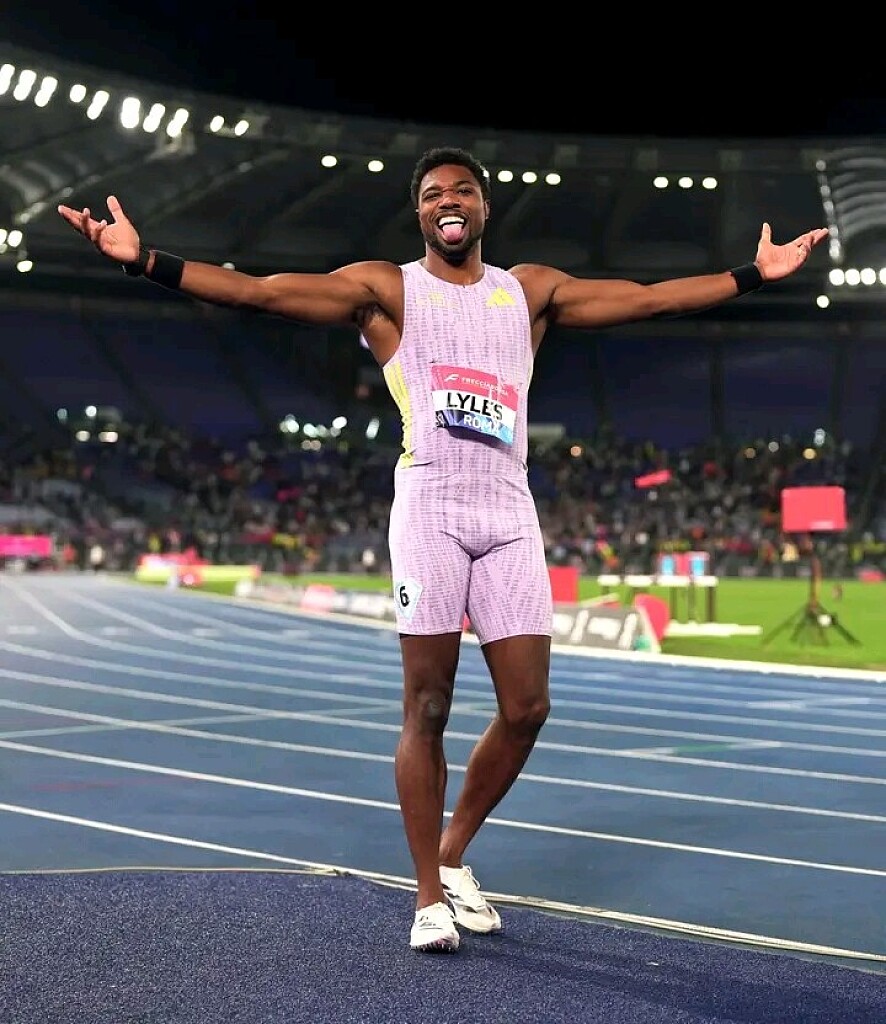
Sprint Titans Set for Paris Showdown as Noah Lyles Returns to Familiar Ground
Just one week after rewriting history with a sensational world-record performance over 150 metres, Noah Lyles is set to return to Paris, the city where some of his most memorable career moments were forged. The American sprint superstar will headline a blockbuster men's 100m field at the Paris Diamond League on June 28, promising one of the most captivating races of the season.
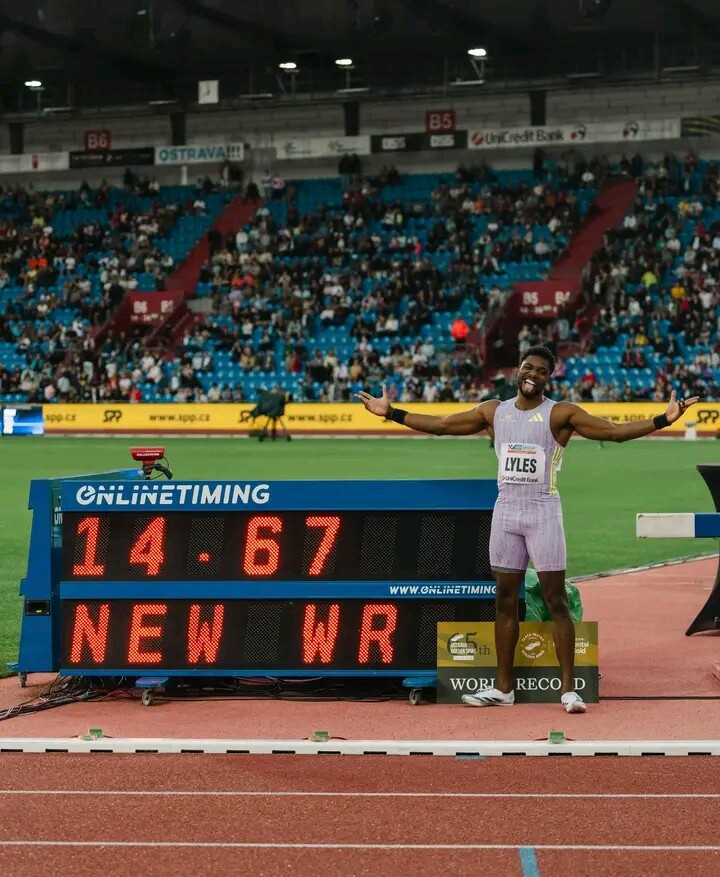
Paris has earned a reputation as one of the fastest tracks in world athletics, and Lyles will be hoping the magic returns once again as he steps back onto the same stage that witnessed his Olympic triumphs. Carrying the momentum of his recent world-record achievement, the reigning global sprint king arrives as the man everyone will be chasing.
Yet victory will be far from guaranteed.
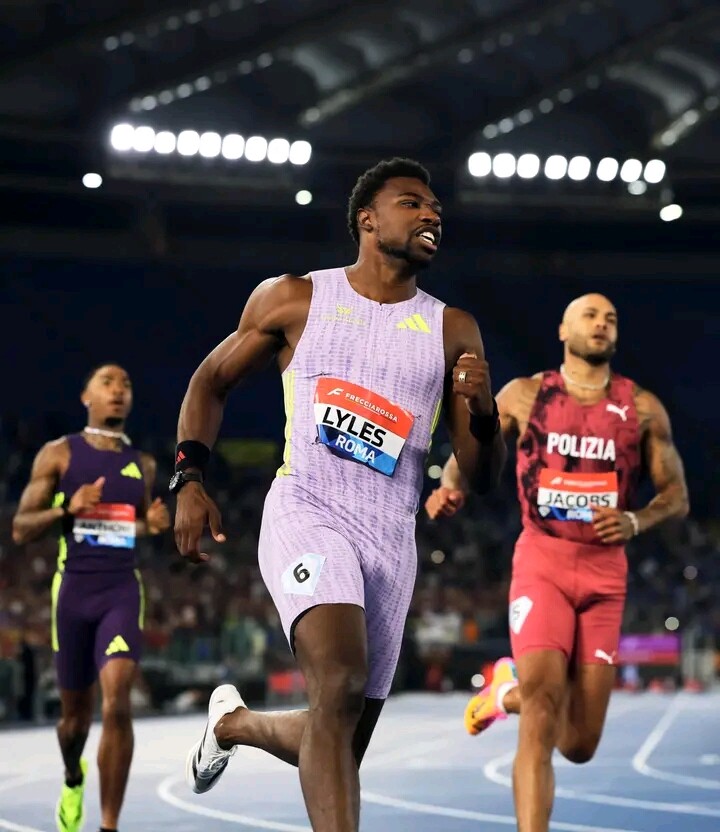
The men's 100m field is loaded with world-class talent, bringing together Olympic champions, Diamond League winners, continental record holders and emerging stars in what promises to be a battle from the gun to the finish line.
Kenya's Ferdinand Omanyala, Africa's fastest man, will be eager to use his trademark explosive start to challenge the favourite. South Africa's Akani Simbine, one of the most consistent performers on the international circuit, arrives in exceptional form and remains a serious contender for victory. Italy's Olympic champion Lamont Marcell Jacobs adds further championship pedigree, while American speedsters Trayvon Bromell and rising star Jordan Anthony strengthen an already formidable field.
Great Britain's Jeremiah Azu and Cameroon's Emmanuel Eseme complete a lineup capable of producing fireworks on one of athletics' quickest stages.
Official Men's 100m Start List – Paris Diamond League
1. Noah Lyles (United States)
2. Jordan Anthony (United States)
3. Emmanuel Eseme (Cameroon)
4. Trayvon Bromell (United States)
5. Akani Simbine (South Africa)
6. Lamont Marcell Jacobs (Italy)
7. Ferdinand Omanyala (Kenya)
8. Jeremiah Azu (Great Britain)
With the World Championships drawing closer, every race carries added significance. Paris offers athletes a chance not only to collect valuable Diamond League points but also to send a statement to their rivals ahead of the season's biggest tests.
For fans, the ingredients could hardly be better: a world-record holder at the peak of his powers, a lightning-fast track, and a field packed with elite sprinters capable of producing something special. The result is a race that has all the makings of one of the standout moments of the Diamond League campaign.
On June 28, the spotlight will once again shine on Noah Lyles. But against a field this strong, the road to victory will demand nothing less than brilliance.
by Erick Cheruiyot for My Best Runs.
Login to leave a comment
Paul Tergat: The Kenyan Legend Who Redefined Distance Running
On June 17, the athletics world celebrated the birthday of one of the greatest distance runners ever to grace the sport—Kenya’s Paul Kibii Tergat. Born in Baringo County, Kenya, on June 17, 1969, Tergat built a career that transcended generations, leaving an enduring legacy on the track, the roads, and the cross-country circuit.
Few athletes in history have demonstrated such remarkable versatility and consistency across multiple disciplines. Whether battling through muddy cross-country courses, chasing medals on the track, or rewriting records on the marathon stage, Tergat established himself as one of the most complete distance runners the world has ever seen.
His dominance in cross-country remains one of the sport’s most extraordinary achievements. Between 1995 and 1999, Tergat captured an unprecedented five consecutive World Cross Country Championship titles, a feat that showcased not only his endurance but also his unmatched competitive spirit. From Durham to Cape Town, Turin, Marrakech, and Belfast, he conquered every challenge placed before him, cementing his status as the undisputed king of cross-country running.
Tergat’s brilliance extended to the half marathon, where he claimed back-to-back World Half Marathon Championship titles in Palermo, Italy, in 1999 and Veracruz, Mexico, in 2000. His ability to excel over varying distances highlighted the exceptional range that made him a global icon.
On the track, Tergat was a fierce competitor who regularly challenged the greatest runners of his era. He earned Olympic silver medals in the 10,000 meters at the Atlanta 1996 and Sydney 2000 Games, narrowly missing gold on both occasions. He also collected three World Championship medals over 10,000 meters, proving his consistency at the highest level of international competition.
Yet perhaps Tergat’s most historic contribution came on the roads. In 2003, at the Berlin Marathon, he became the first man in history to run the marathon in under 2 hours and 5 minutes, clocking a groundbreaking world record of 2:04:55. The performance marked a defining moment in distance running and opened a new chapter in the pursuit of marathon excellence.
His personal bests remain a testament to his extraordinary talent:
• 3,000m – 7:28.70
• 5,000m – 12:49.87
• 10,000m – 26:27.85
• Half Marathon – 59:17
• Marathon – 2:04:55
Beyond the medals and records, Tergat inspired a generation of athletes across Kenya and the world. His relentless determination, humility, and commitment to excellence transformed him into far more than a champion runner—he became a symbol of what is possible through hard work and perseverance.
Today, Paul Tergat’s name remains woven into the fabric of athletics history. From his reign as the king of cross-country to his revolutionary marathon achievements, his legacy continues to inspire runners pursuing greatness on every surface and over every distance.
by Erick Cheruiyot for My Best Runs.
Login to leave a comment

Rome Belongs to Lyles: American Star Dominates Elite 100m Field
The men's 100m at the Rome Diamond League delivered exactly the spectacle fans had anticipated, with American sprint king Noah Lyles producing a commanding performance to secure victory in a season-best 9.88 seconds on Thursday night.
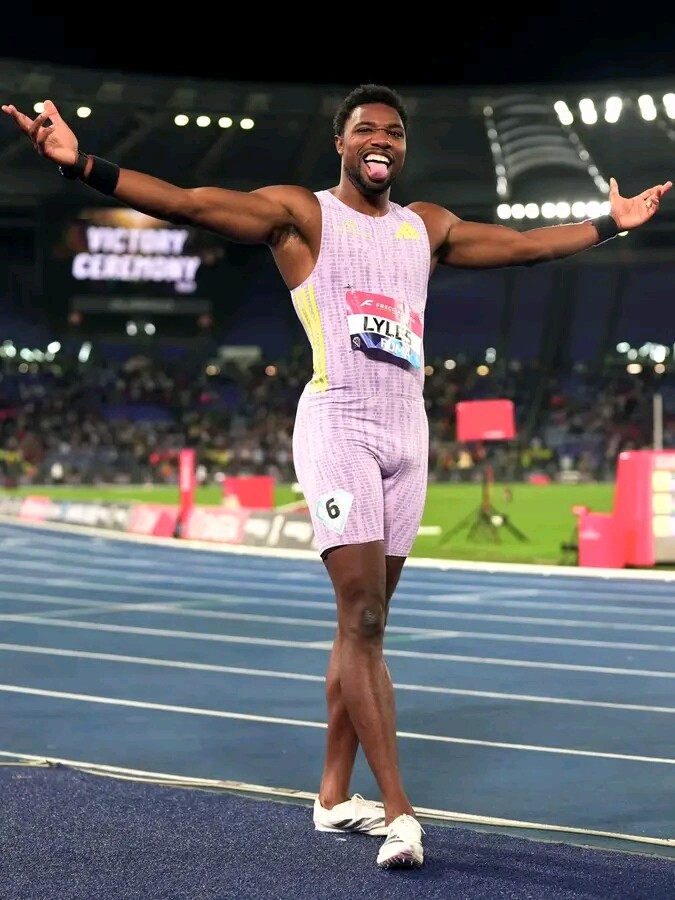
Lyles, the reigning global sprint superstar, showcased his trademark finishing power to pull away from a world-class field and claim his first Diamond League 100m win of the season. His 9.88 clocking underlined his growing form as he continues to build momentum toward the major championships later this year.
Behind him, Cameroon’s Emmanuel Eseme impressed with a strong run of 9.94 seconds to finish second, while Botswana’s Olympic champion Letsile Tebogo crossed the line third in 9.95 seconds after another consistent performance on the international circuit.
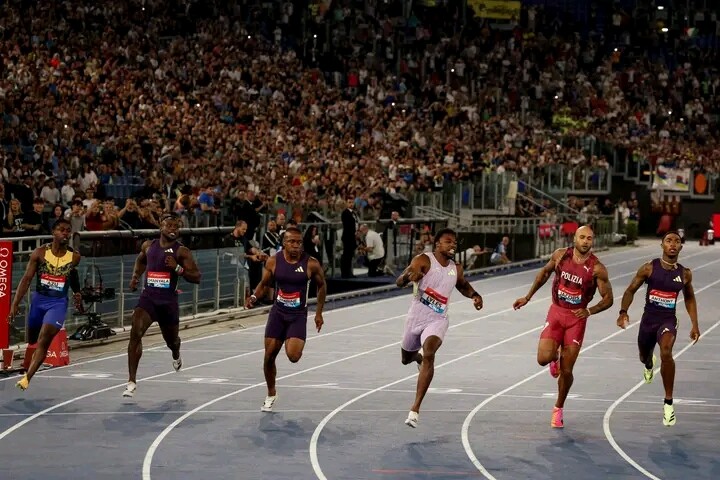
American rising star Jordan Anthony continued his remarkable breakthrough season by finishing fourth in 9.96 seconds, narrowly missing a place on the podium. Home favourite Lamont Marcell Jacobs delighted the Italian crowd with a sub-10-second run of 9.99 seconds to place fifth.
For Kenya's Ferdinand Omanyala, however, it proved to be a frustrating evening. After confidently promising fireworks ahead of the meeting and targeting consistent sub-10-second performances throughout the Diamond League season, Africa's fastest man struggled to find his rhythm. Omanyala finished eighth in 10.11 seconds, well below the standard he had hoped to produce.
South Africa's Akani Simbine took sixth in 10.03 seconds, while Jamaica's Ackeem Blake placed seventh in 10.06 seconds. Great Britain's Jeremiah Azu completed the field in ninth position with a time of 10.12 seconds.
Rome Diamond League 100m Results
1. Noah Lyles (USA) – 9.88 SB
2. Emmanuel Eseme (Cameroon) – 9.94
3. Letsile Tebogo (Botswana) – 9.95
4. Jordan Anthony (USA) – 9.96
5. Lamont Marcell Jacobs (Italy) – 9.99
6. Akani Simbine (South Africa) – 10.03
7. Ackeem Blake (Jamaica) – 10.06
8. Ferdinand Omanyala (Kenya) – 10.11
9. Jeremiah Azu (Great Britain) – 10.12
The result further strengthens Lyles' status as one of the leading contenders in global sprinting this season. With a season-best performance against a high-calibre field, the American sent a powerful statement that he is rounding into peak form at exactly the right time.
by Erick Cheruiyot for My Best Runs.
Login to leave a comment
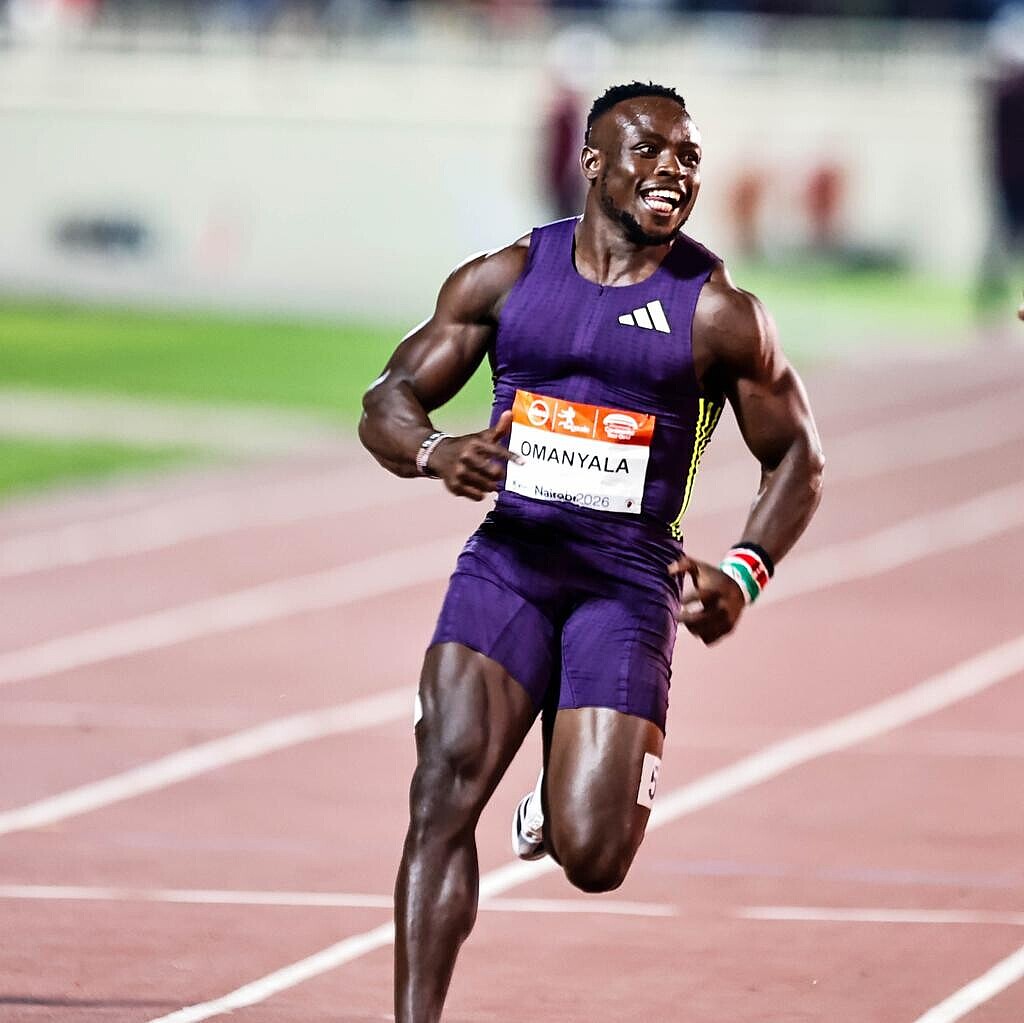
Rome Diamond League Set for a Sprint Showdown as Omanyala, Lyles, Tebogo and Jacobs Collide
The men's 100 metres at the 2026 Rome Diamond League is shaping up to be one of the most anticipated sprint races of the season, with an exceptional field featuring some of the fastest men in the world.
Scheduled for Thursday, June 4, at the iconic Stadio Olimpico in Rome, the race will bring together reigning stars, established champions and emerging talents in a contest that promises fireworks from the moment the gun goes off.
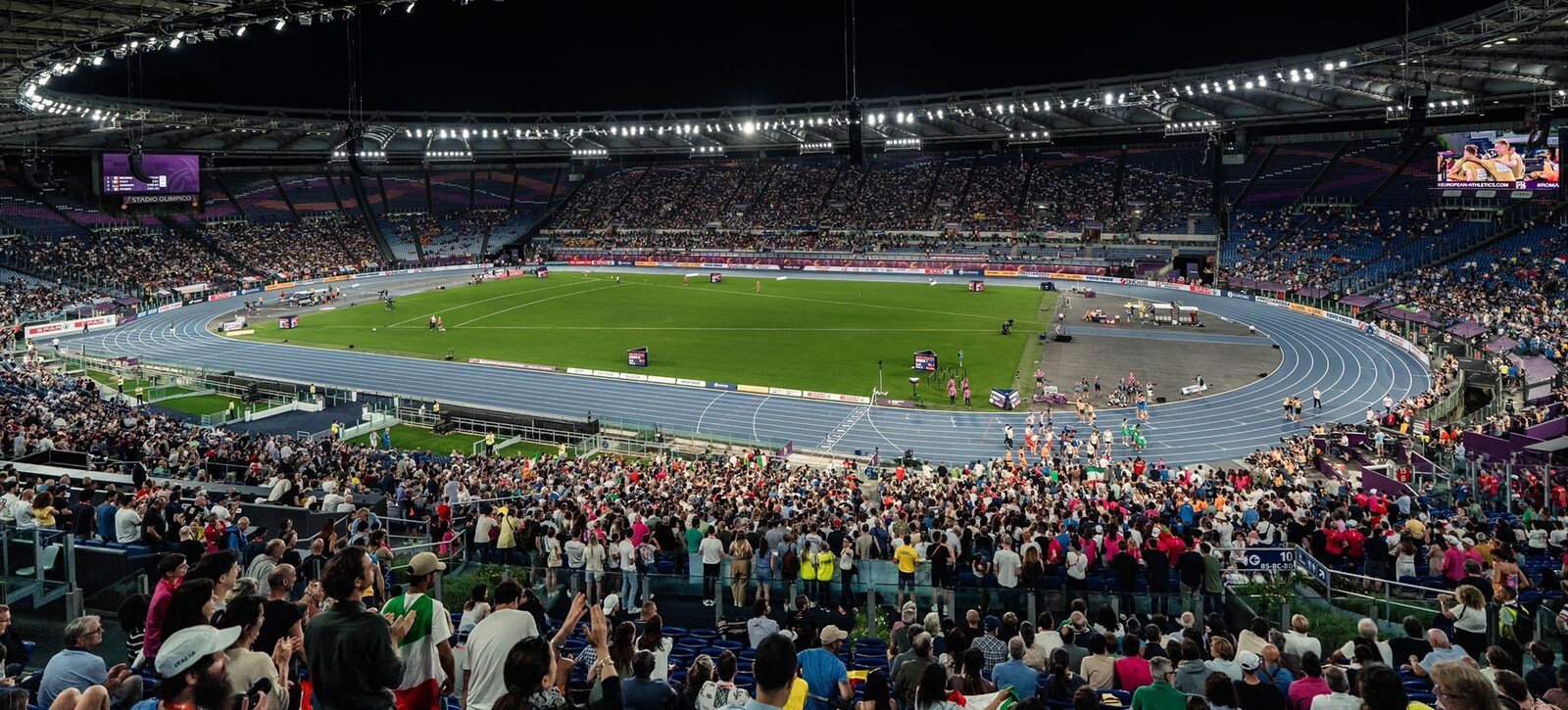
Kenya's Ferdinand Omanyala headlines a world-class lineup that includes American sprint sensation Noah Lyles, Botswana's Olympic champion Letsile Tebogo, Jamaica's explosive Ackeem Blake, South Africa's ever-consistent Akani Simbine and Italy's hometown hero Lamont Marcell Jacobs. With personal bests ranging from 9.77 to 9.97 seconds, the field is packed with athletes capable of producing something special on the Diamond League stage.
Omanyala, the African record holder with a blistering personal best of 9.77 seconds, arrives in Rome eager to continue his strong early-season form and prove he can challenge the very best on the global circuit. The Kenyan star has built a reputation as one of the fastest starters in world sprinting and will be looking to make a statement against an elite field.
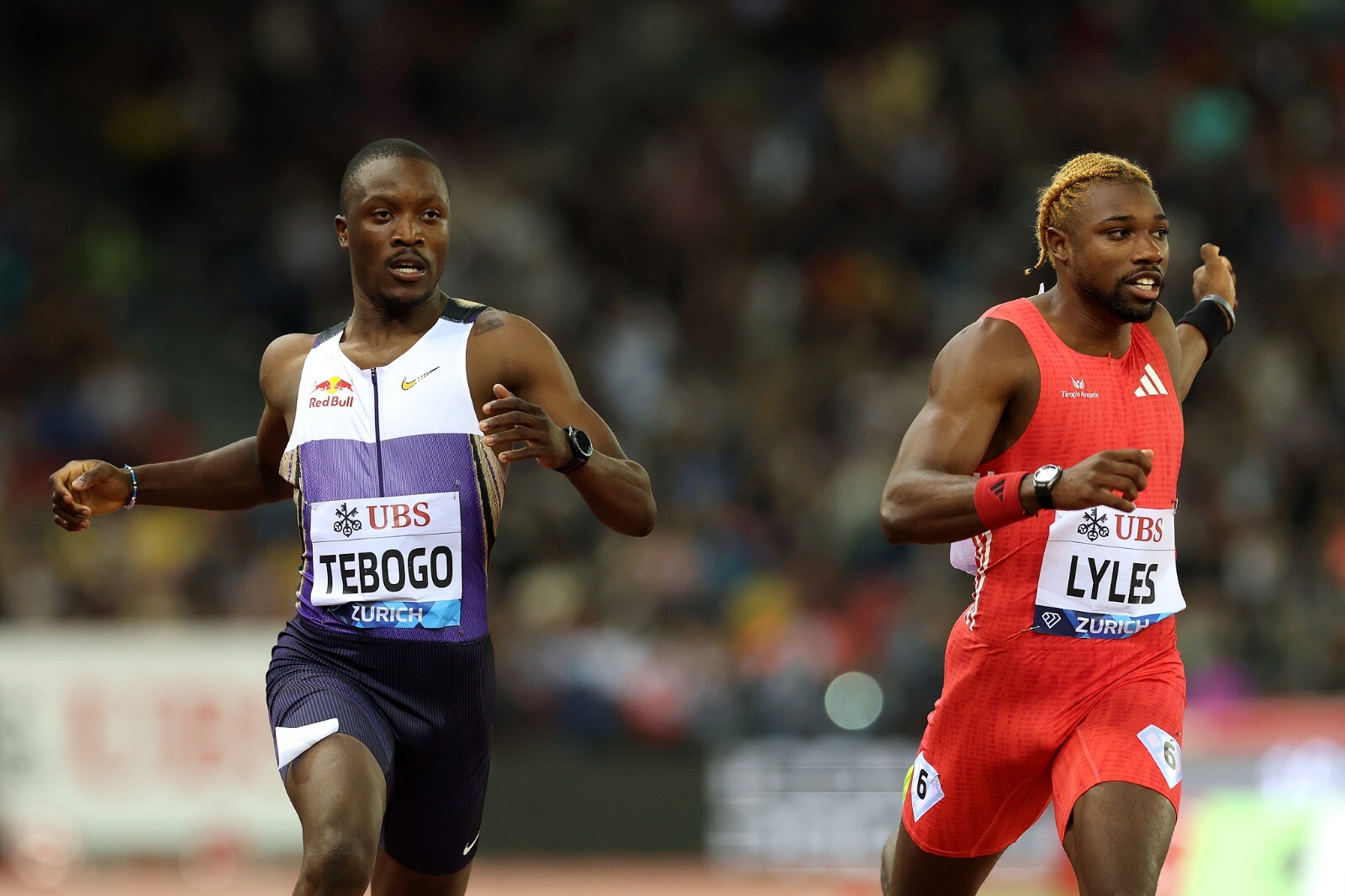
Standing in his way is world champion Noah Lyles, whose personal best of 9.79 seconds places him among the fastest athletes in history. The American remains one of the sport's biggest attractions and will be determined to add another Diamond League victory to his impressive résumé.
The race also marks a major test for Olympic champion Letsile Tebogo. The Botswanan star has rapidly become one of athletics' most exciting talents, while Ackeem Blake continues to establish himself as a serious contender on the international sprint scene.
Adding further intrigue is the presence of Italy's Lamont Marcell Jacobs. Competing on home soil, the Tokyo Olympic champion will enjoy passionate local support as he seeks to deliver a memorable performance in front of the Roman crowd.
South Africa's Akani Simbine, Cameroon's Emmanuel Eseme, Great Britain's Jeremiah Azu and rising American talent Jordan Anthony complete a field that boasts remarkable depth and quality.
Men's 100m Entry List – Rome Diamond League 2026
Ferdinand Omanyala (Kenya) – PB: 9.77
Noah Lyles (USA) – PB: 9.79
Lamont Marcell Jacobs (Italy) – PB: 9.80
Akani Simbine (South Africa) – PB: 9.82
Letsile Tebogo (Botswana) – PB: 9.86
Ackeem Blake (Jamaica) – PB: 9.88
Jordan Anthony (USA) – PB: 9.91
Emmanuel Eseme (Cameroon) – PB: 9.96
Jeremiah Azu (Great Britain) – PB: 9.97
With multiple national record holders, global champions and Olympic medal contenders sharing the same start line, the Rome Diamond League men's 100m could deliver one of the fastest races of the year. For sprint fans around the world, all eyes will be on Rome as a stellar cast battles for supremacy over athletics' blue-riband distance.
by Erick Cheruiyot for My Best Runs.
Login to leave a comment
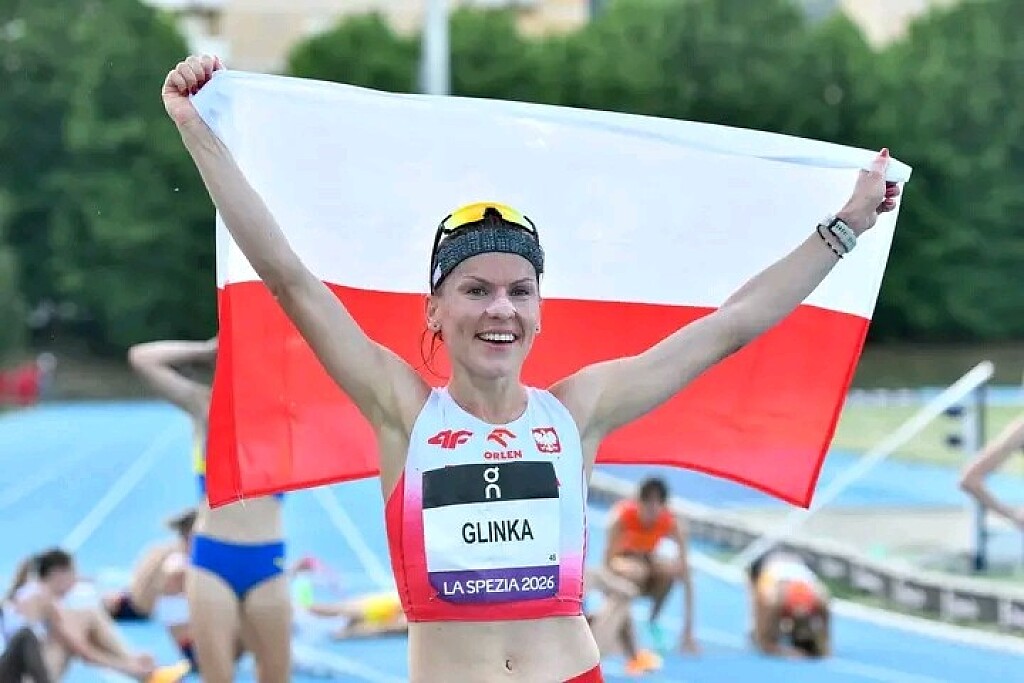
Ela Glinka Strikes Gold in Spezia as Years of Perseverance Deliver a Historic Triumph for Poland
Polish distance runner Ela Glinka produced the performance of her career at the European 10,000m Cup in Spezia, Italy, capturing a historic gold medal while smashing her personal best in a remarkable display of determination and resilience.
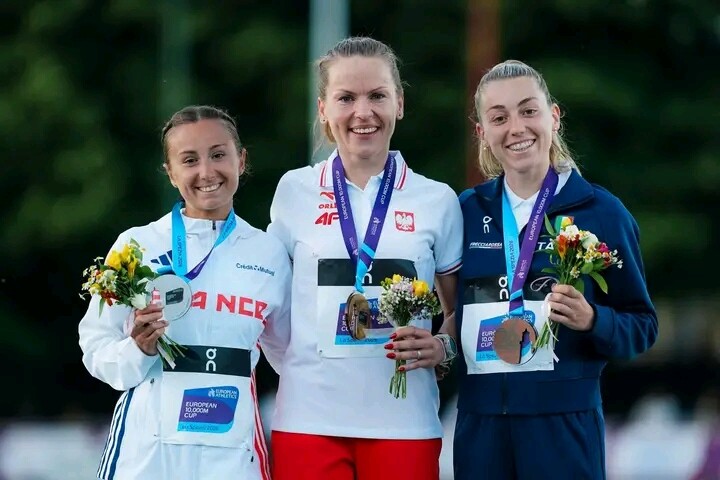
Glinka crossed the finish line in an outstanding 31:45.37, a time that not only marked a significant personal breakthrough but also secured the qualifying standard for the upcoming European Championships in Birmingham. Her victory added another memorable chapter to Polish athletics, earning the nation a prestigious gold medal on one of Europe's biggest distance-running stages.
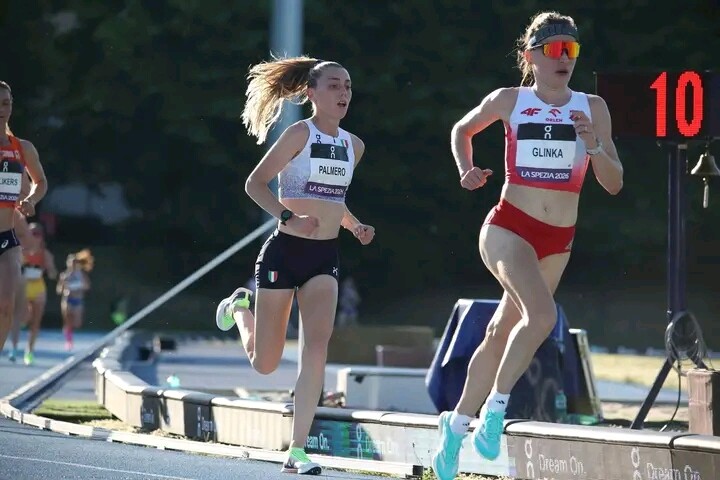
The achievement carried far greater significance than the medal itself. As the Polish national anthem echoed across the podium during the medal ceremony, it symbolized the culmination of years of relentless effort, sacrifice, and unwavering belief. Behind the golden moment stood countless training sessions, difficult setbacks, periods of self-doubt, and the courage to continually search for solutions when progress seemed elusive.
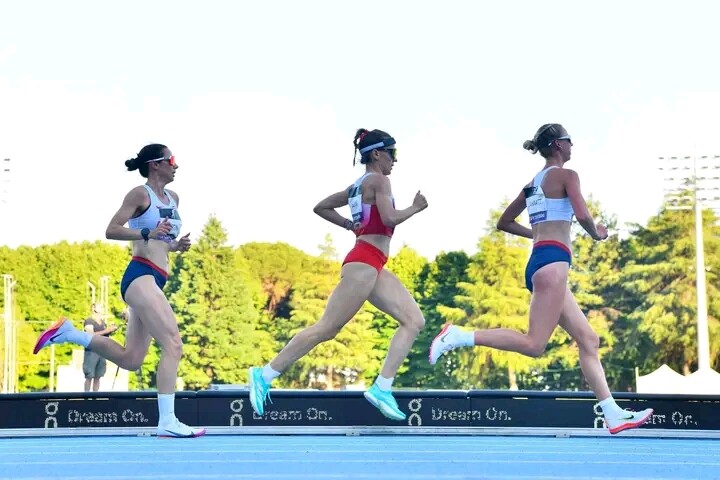
For Glinka, the road to Spezia was far from straightforward. Like many elite athletes, she faced moments when success appeared distant, requiring her to take risks, invest in her development, and push through barriers that might have discouraged others. Yet those challenges ultimately became the foundation of her breakthrough performance.
Her victory in Italy now stands as one of the most significant achievements of her career and a proud milestone for Polish athletics. More importantly, it serves as proof that persistence can transform years of hard work into unforgettable success.
With her European Championship qualification secured and confidence at an all-time high, Glinka's historic triumph in Spezia may prove to be only the beginning of an even greater chapter. The gold medal is a reward for everything she has overcome—but it is also a powerful source of motivation for what lies ahead.
by Erick Cheruiyot for My Best Runs.
Login to leave a comment
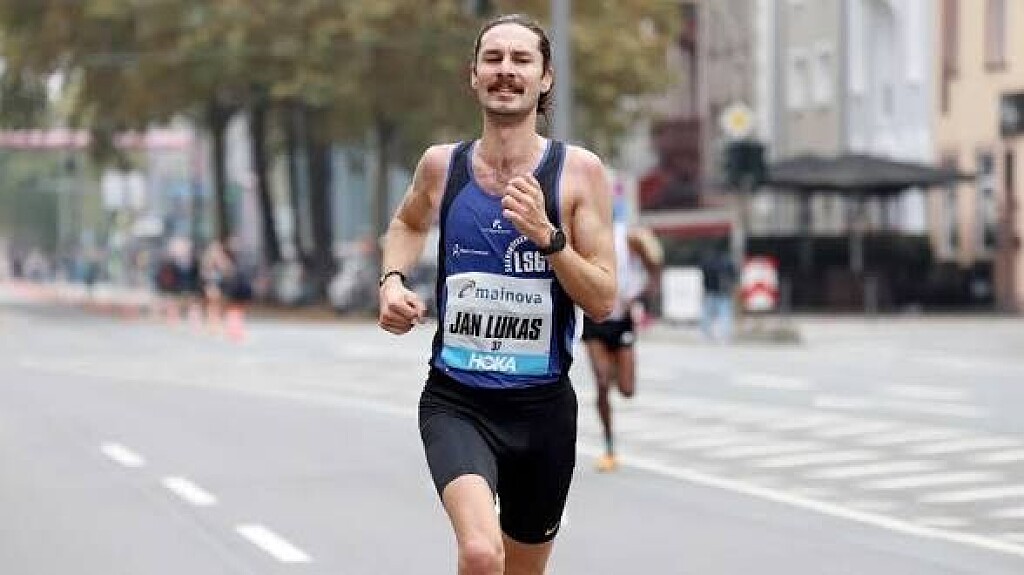
Europe’s Finest Set for Fast Battle at Karlovy Vary Half Marathon
The picturesque streets of Karlovy Vary are ready to welcome another thrilling chapter of the EuroHeroes series as a powerful field of European distance runners prepares for the 2026 Karlovy Vary Half Marathon. With established stars, rising talents, and national record contenders lining up, the Czech race promises a captivating blend of speed, tactics, and continental pride.
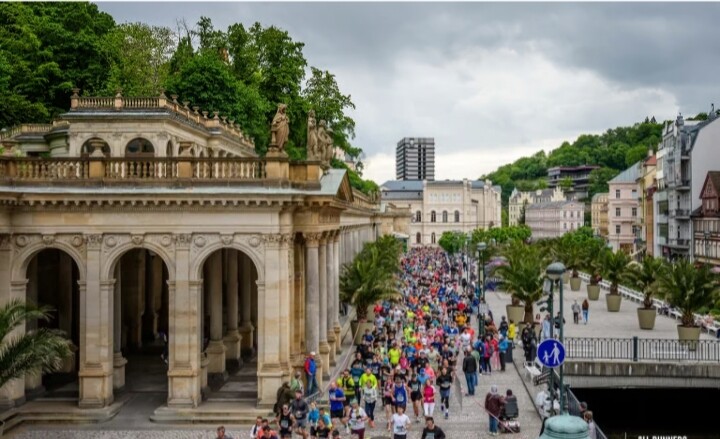
Leading the men’s field is Germany’s Jan Lukas Becker, whose personal best of 1:01:20 makes him one of the fastest athletes on the start list. Becker arrives with the credentials of a proven front-runner and will undoubtedly be targeting both victory and a strong time on the fast Karlovy Vary course.
Italy’s Nikolas Loss also enters the race carrying impressive momentum. With a personal best of 1:02:28, the Italian has steadily developed into one of Europe’s most reliable road racers and is expected to challenge aggressively from the early stages.
Home fans will place their hopes on Czech standout Damián Vích, whose 1:02:52 lifetime best positions him firmly among the contenders. Competing on familiar roads, Vích could draw extra energy from the local support as he seeks a memorable performance in front of the home crowd.
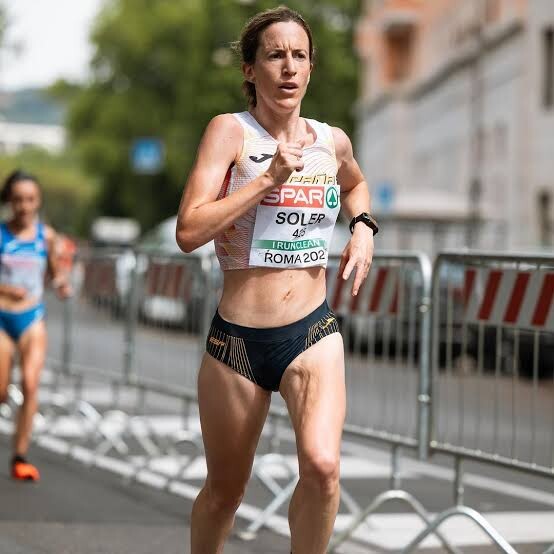
The women’s race appears equally compelling, headlined by Spain’s Meritxell Soler. Owning a personal best of 1:09:30, Soler enters as one of the favourites and brings valuable experience from major international competitions.
Fellow Spaniard Carolina Robles is expected to provide a serious challenge after clocking 1:09:38 in her career. Known for her strength and consistency, Robles has the tools to turn the women’s contest into a fiercely competitive duel.
Representing the host nation, veteran athlete Eva Vrabcová Nývltová adds further intrigue to the race. Her personal best of 1:11:01, combined with years of championship experience, makes her one of the key names to watch as the Czech fans rally behind one of their most accomplished distance runners.
Set against the elegant spa-town scenery of Karlovy Vary, the race continues to strengthen its reputation as one of Europe’s premier road running events. With elite European talent assembled across both fields, spectators can expect an afternoon filled with aggressive racing, tactical battles, and potentially outstanding times on Czech soil.
by Erick Cheruiyot for My Best Runs.
Login to leave a comment

Mattoni Karlovy Vary Half Marathon
The Mattoni Karlovy Vary Running Festival is an annual event that seamlessly blends the exhilaration of running with the exploration of Karlovy Vary, the Czech Republic's largest spa town. Scheduled for May 17, 2025, the festival offers a variety of races to...
more...
Through Fire and Silence: Kiriago and Gitonga Conquer the Brutal Beauty of Transvulcania
Beneath the lonely lighthouse of Faro de Fuencaliente, where volcanic earth meets the vast Atlantic Ocean, the Transvulcania Half Marathon once again delivered one of the most unforgettable spectacles in mountain running. Part of the 2026 WMRA Mountain Running World Cup, the race carried athletes across the raw and untamed landscapes of La Palma, demanding more than 2,000 metres of vertical gain before the punishing climb finally ended at Refugio El Pilar.
But Transvulcania is far more than a race against distance and elevation. It is a journey through silence, fire and wilderness — a brutal passage across seven volcanoes where black ash trails disappear into the clouds and mist-covered pine forests swallow every sound except breathing, footsteps and wind. Every kilometre tests physical strength, mental resilience and the ability to endure isolation in one of the wildest environments in global mountain running.
In the men’s race, Kenya’s Philemon Ombogo Kiriago mastered the volcanic terrain with remarkable authority to secure victory after a relentless battle through the steep ascents and technical ridges. France’s Anthony Felber produced a strong performance to claim second place, while fellow Kenyan Richard Omaya Atuya completed the podium in third. Sweden’s Linus Hultegard finished fourth ahead of Spain’s Guillermo Ramos Muñoz in fifth position.


Spain’s Daniel Osanz Laborda crossed the line in sixth place, followed by Sweden’s Martin Nilsson in seventh. The home nation continued its strong presence through Álvaro Escuela Perdomo in eighth, Joel Santamaria Peraita in ninth and Sergio Álvarez Febles completing the men’s top ten.

The women’s race produced another commanding display from Kenya as Ruth Gitonga surged to victory across the volcanic ridgelines, showcasing both endurance and composure on the unforgiving course. Her compatriot Joyce Muthoni Njeru secured second place to complete a Kenyan one-two finish, while Great Britain’s Kirsty Skye Dickson claimed third after a determined performance through the high-altitude climbs.
Spain’s Moana Lilly Kehres Kehres finished fourth ahead of Italy’s Benedetta Broggi in fifth. Britain’s Sara Ann Willhoit took sixth position, while Australia’s Lara Hamilton crossed in seventh. Italy’s Camilla Magliano secured eighth place ahead of Canada’s Gabrielle Pilote Fortin in ninth, with Britain’s Natalie Beadle rounding out the women’s top ten.
On La Palma, success is measured by far more than the clock alone. While finishing times remain important, the Transvulcania Half Marathon demands something deeper from every athlete — resilience against brutal climbs, composure on technical volcanic ridges and the mental strength to endure long stretches of isolation high above the clouds. It is a race where endurance meets wilderness, and where every step across fire-shaped landscapes becomes part of an unforgettable journey through one of mountain running’s most extraordinary arenas.
by Erick Cheruiyot for My Best Runs.
Login to leave a comment
Breaking2: The Day Nike and Eliud Kipchoge Changed Marathon History Forever
On May 6, 2017, the world witnessed one of the boldest and most revolutionary experiments ever attempted in distance running. Under the ambitious Nike Breaking2 project, three elite athletes lined up with a single mission that many believed was impossible — to run a marathon in under two hours.

At the time, the official marathon world record stood at 2:02:57, and shaving nearly three minutes from that mark seemed beyond human limits. But Nike was not simply organizing a race. Breaking2 was designed as a complete scientific and athletic operation, bringing together advanced sports technology, physiology, pacing strategy, nutrition, and environmental optimization in pursuit of history.
The challenge took place at the Monza Formula One circuit in Italy, where conditions were carefully selected to maximize speed. Rotating pacemakers shielded the runners from wind resistance, hydration was delivered while moving, and every detail — from temperature and race rhythm to training models and recovery — was analyzed with precision.
Although the event was not recognized as an official world record attempt because of the rotating pacemakers and mobile aid delivery, it became one of the defining moments in modern athletics.
At the center of it all stood Eliud Kipchoge.
The Kenyan superstar produced a performance that stunned the sporting world, crossing the line in an astonishing 2:00:25 — just 25 seconds short of the mythical barrier. Remarkably, he missed the target by roughly one second per mile, proving just how close humanity had come to redefining endurance sport forever.
What made Kipchoge’s run even more extraordinary was the calmness and control he displayed throughout the attempt. While the pace demanded near perfection for two straight hours, he maintained remarkable composure, turning the final laps into an unforgettable moment of belief and resilience.
Years later, Kipchoge would finally complete the mission by running under two hours at the INEOS 1:59 Challenge in Vienna, cementing his legacy as the greatest marathon runner of all time. But Breaking2 was the foundation. It was the experiment that shifted human imagination.
The other two athletes in the challenge — Zersenay Tadese and Lelisa Desisa — also delivered courageous performances, though both finished outside the sub-two-hour mark despite all the optimizations provided.
Final Results
1. Eliud Kipchoge — 2:00:25
2. Zersenay Tadese — 2:06:51
3. Lelisa Desisa — 2:14:10
Beyond the stopwatch, Breaking2 transformed the entire sport. The project introduced the revolutionary Nike Zoom Vaporfly Elite, featuring a curved carbon-fiber plate combined with highly responsive Pebax foam cushioning. That innovation sparked the modern “super shoe” era that has since reshaped road racing and distance running worldwide.
For decades, marathon racing shoes were designed to be thin and lightweight with minimal cushioning. Breaking2 changed that philosophy completely. Suddenly, athletes could run with greater energy return, more protection, and increased efficiency without sacrificing speed. The impact has been so profound that marathon performances across the globe have entered an entirely new era.
More importantly, Breaking2 proved something deeper about sport itself: even with cutting-edge technology, ideal pacing, scientific preparation, and world-class talent, running a marathon at such extraordinary speeds remains one of the greatest physical achievements on Earth.
Nine years later, the images from Monza still feel iconic — the clock ticking toward two hours, the pacemakers rotating in formation, and Kipchoge surging toward the finish line with a smile that symbolized possibility itself.
Breaking2 was more than an event. It was the moment marathon running stepped into the future.
by Erick Cheruiyot for My Best Runs.
Login to leave a comment
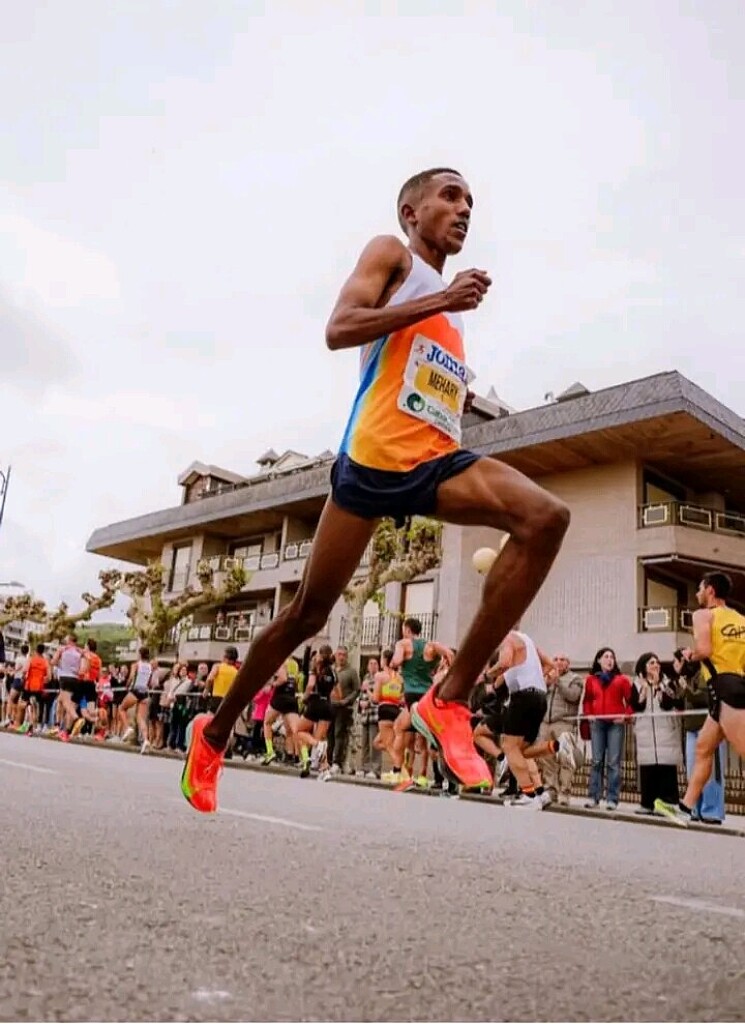
Mehary Shines in Laredo as Lukan Smashes European 10K Barrier
The 2026 edition of the 10K Villa de Laredo unfolded as a celebration of elite road running, blending dominant victories with record-breaking brilliance on the streets of Laredo.
In the men’s race, Ethiopia’s Biniam Mehary Abay delivered a performance of remarkable authority, storming to victory in 26:54. His run was anything but straightforward. After losing his pacemaker before the 3km mark, Mehary was forced to navigate the remainder of the race alone—yet what followed was a display of composure and relentless drive.
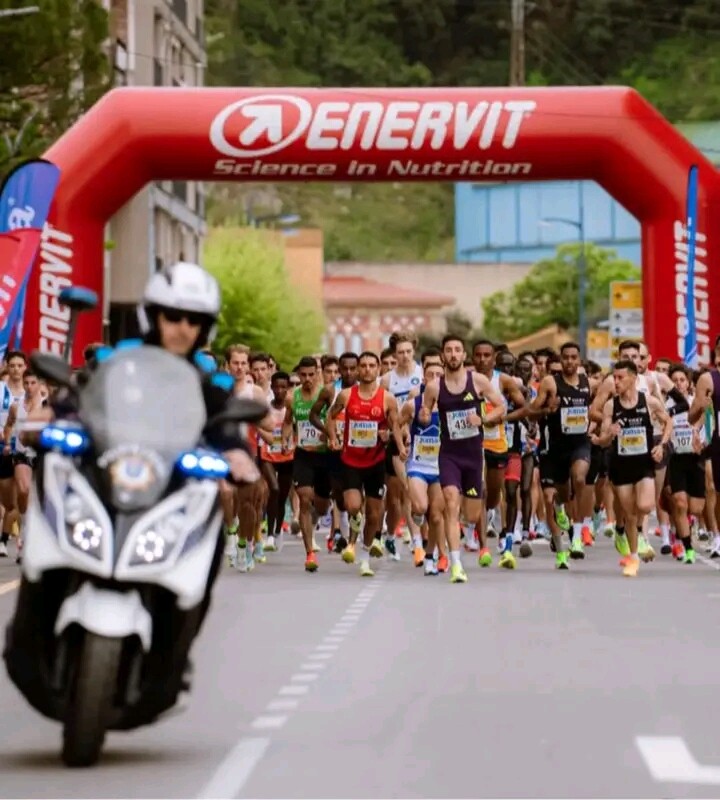
Undeterred, he pressed on at an unforgiving pace, even flirting with the long-standing world record of 26:24 set by Kenya’s Rhonex Kipruto in Valencia. Though the mark ultimately remained out of reach, Mehary’s solo charge elevated the race into a compelling exhibition of courage and rising dominance on the global stage.
Behind him, Hagos Eyob Gared secured second place in 27:54, while Britain’s Rory Leonard followed closely in 27:56. Spain’s Miguel Ángel Martínez thrilled the home supporters with a strong fourth-place finish in 28:00, and Italy’s Pasquale Selvarolo completed the top five in 28:02.
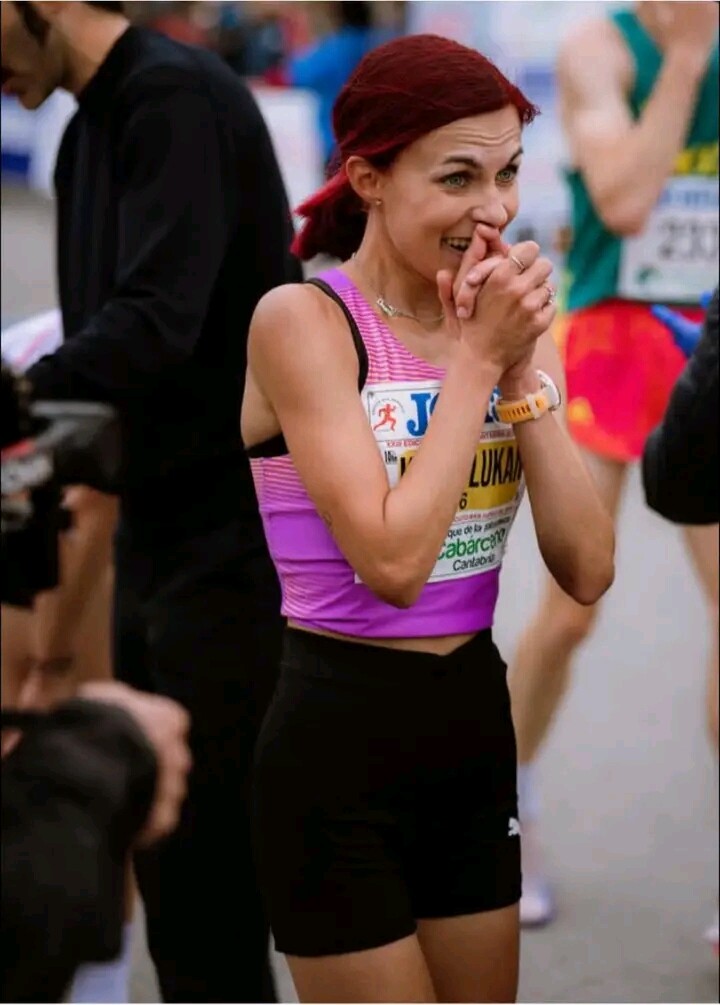
Yet, if Mehary commanded the men’s race, the women’s event delivered a moment of historic significance. Slovenia’s Klara Lukan etched her name into the record books with a sensational 29:50 performance, breaking the European record and becoming the first European woman ever to run under the 30-minute barrier on the roads.
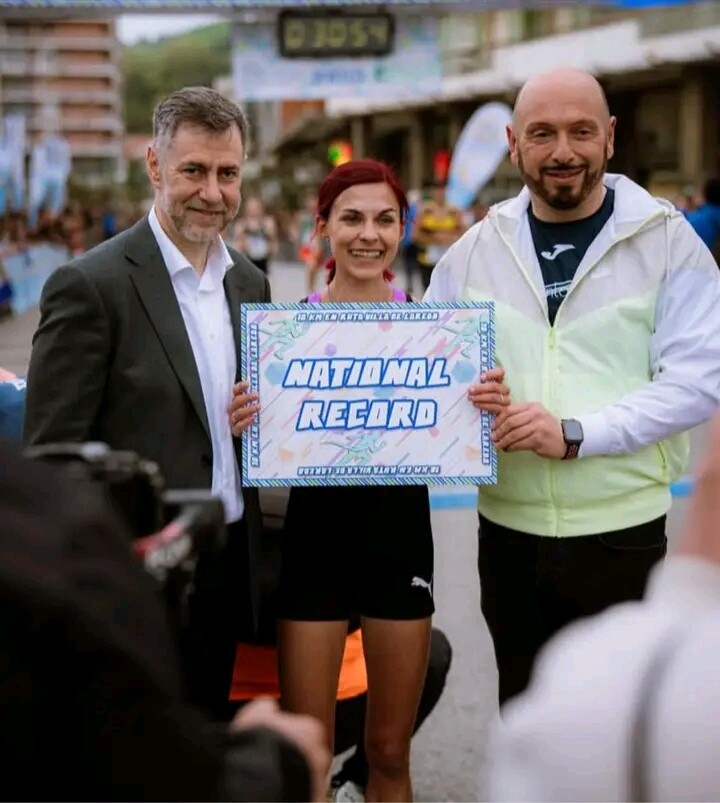
Lukan’s landmark run not only redefined continental standards but also underscored the growing depth and quality of women’s distance running in Europe. Her performance, executed with precision and fearless pacing, added a layer of prestige to an already electrifying night.
Together, the races in Laredo painted a vivid picture of modern road running at its finest—where ambition meets execution, and where history is never far from being rewritten.
by Erick Cheruiyot for My Best Runs.
Login to leave a comment

Laredo 10 km
One of the most anticipated races. The organization ensures that the circuit is possibly the fastest in the world. And it's not a bravado. The marks and comments of those who have run the prestigious 10k race in Ruta Villa de Laredo confirm it. But the organizers want to go further and not give rise to doubts....
more...