

Running News Daily
Running News Daily is edited by Bob Anderson and team. Send your news items to bob@mybestruns.com Advertising opportunities available.
Index to Daily Posts · Sign Up For Updates · Run The World Feed
Articles tagged #1982
Today's Running News
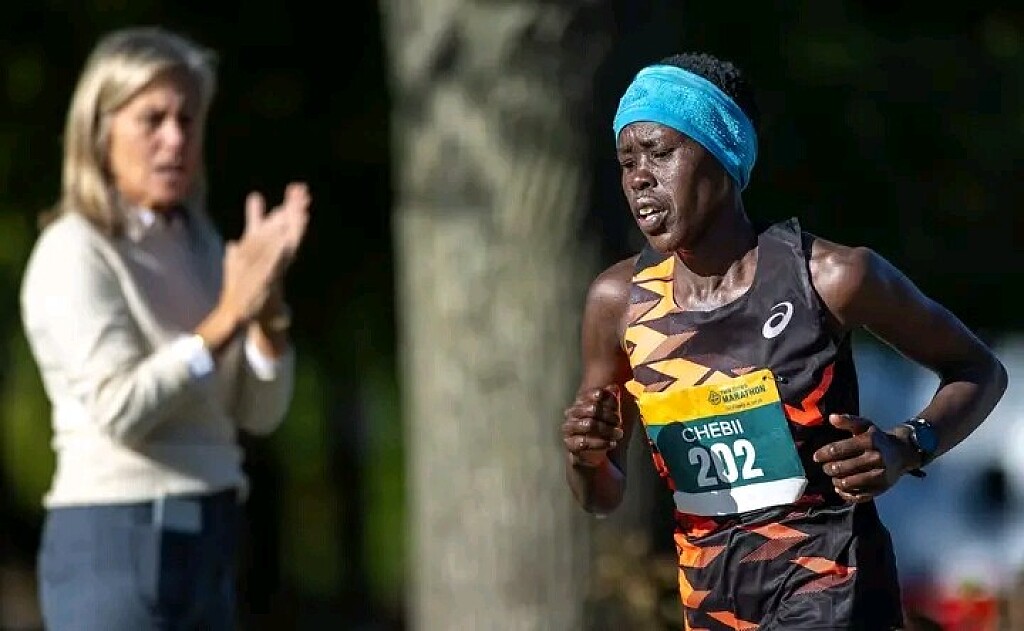


Twin Cities Marathon Turns the Page as Iconic Race Moves to Mid-October in 2027
The Twin Cities Marathon has closed the chapter on one of the longest-running traditions in American marathon racing, with the event set to leave its familiar early-October slot and move to mid-October beginning in 2027.

The 2026 edition marked the final time the race would be held in its traditional early-October window, bringing an end to a calendar tradition that has defined the event for more than four decades.
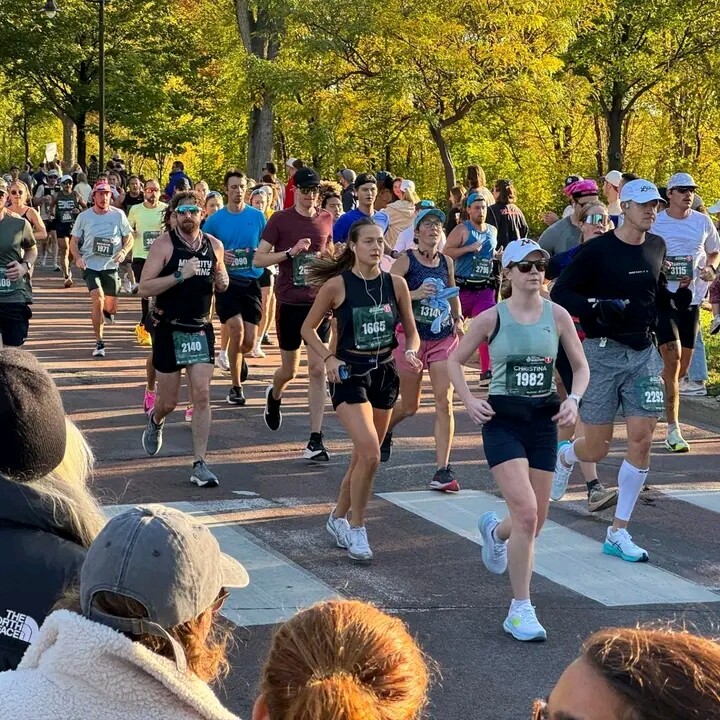
Beginning in 2027, Twin Cities Marathon Weekend will move to a mid-October date. The decision follows growing concerns over warmer and increasingly unpredictable conditions during the race's traditional weekend, with organisers seeking a better environment for runners, spectators and volunteers.
The change is more than a simple adjustment to the racing calendar. Early October, once synonymous with crisp autumn temperatures in Minnesota, has increasingly brought challenging heat. In recent years, organisers have had to contend with conditions that can place additional stress on marathon runners and increase demands on medical and public-safety teams.
The inaugural Twin Cities Marathon was held on October 3, 1982, attracting 4,563 entrants. What began as a relatively young marathon has since developed into one of the most recognisable road races in the United States, growing alongside the running communities of Minneapolis and St. Paul.
The course itself has long been one of the event's defining features. Runners travel through Minneapolis, pass the city's famous chain of lakes and follow a scenic route toward St. Paul before finishing near the Minnesota State Capitol. The combination of major urban landmarks, parkways, waterways and autumn scenery has helped give the race its distinctive identity.
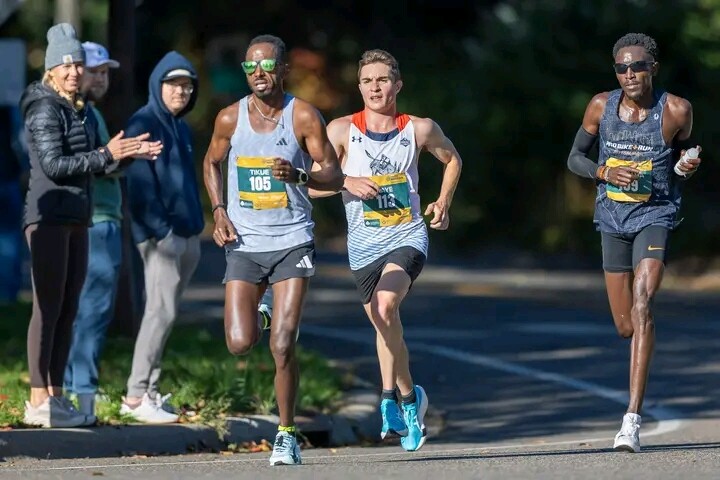
The 2026 edition continued that long tradition, with roughly 30,000 runners taking part across the various events of Marathon Weekend. The marathon also featured defending champions Will Norris and Jane Bareikis, while favourable temperatures provided runners with much more comfortable conditions than some of the warmer editions in recent years.
Yet even with favourable weather this year, the decision to move the race reflects a longer-term concern. Organisers are looking beyond a single race morning and considering how changing weather patterns could affect the event in the years ahead.
For runners, the move could eventually become one of the most important changes in the marathon's modern history. A later October date offers the possibility of cooler racing conditions while preserving the course, the atmosphere and the traditions that have made Twin Cities Marathon a fixture on the American running calendar.
For more than four decades, the first Sunday of October provided a familiar date for thousands of runners preparing to take on the Twin Cities course.
That tradition has now reached its final chapter.
From 2027, the Twin Cities Marathon will arrive later in the fall — opening a new era for a race whose history remains firmly connected to the streets of Minneapolis and St. Paul.
by Erick Cheruiyot for My Best Runs.
Login to leave a comment
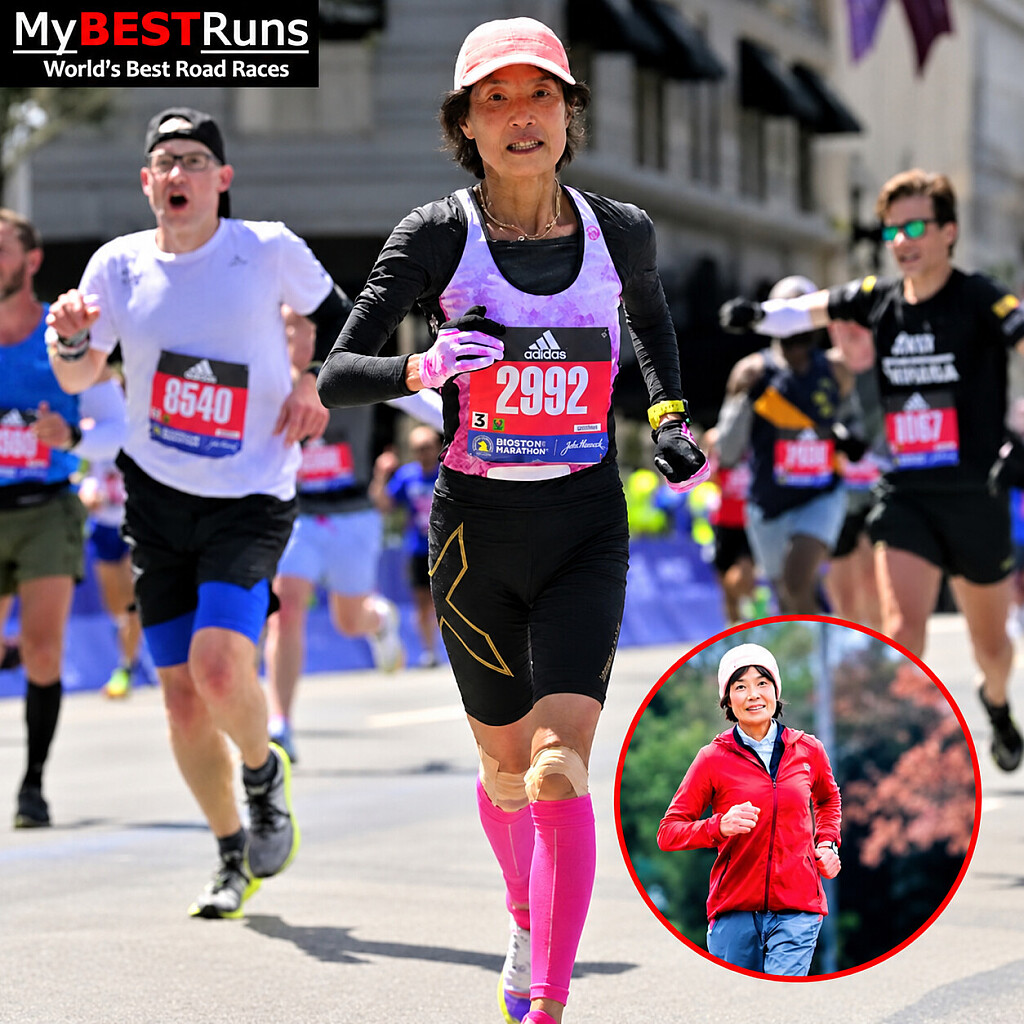
Mariko Yugeta’s 43-Year Marathon Journey Ends With a Historic Sub-Three-Hour Run
For Mariko Yugeta, breaking three hours in the marathon was never simply a time goal. It was a dream that survived more than four decades of life’s responsibilities, setbacks and changing priorities before finally becoming reality.
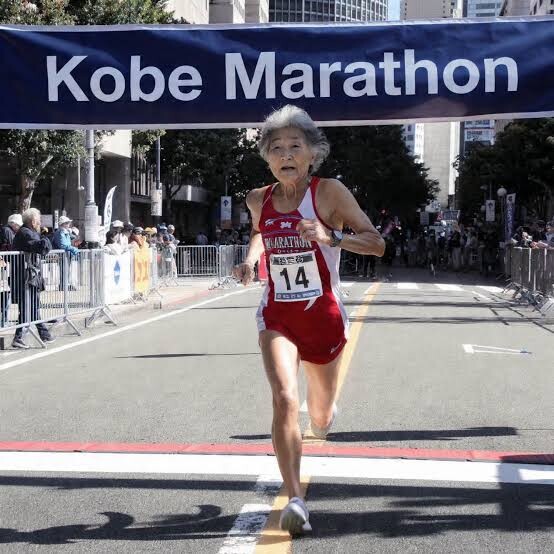
Yugeta first stepped into marathon racing in 1982 at the age of 24, completing her debut in an impressive 3:09:21. At the time, she could hardly have imagined that her pursuit of the elusive three-hour barrier would stretch across generations.
Life soon took her in a different direction. Yugeta became a high school physical education teacher and devoted much of her time to raising her four children, leaving serious marathon training behind. The demands of family and work meant that the dream had to wait, but it never disappeared.
In her 50s, Yugeta returned to dedicated marathon training, reigniting a goal she had carried with her for decades. Her comeback eventually produced the breakthrough she had been chasing since her twenties, as she became a sub-three-hour marathoner at the age of 58.
But Yugeta was far from finished.
At 67, she produced perhaps the most remarkable chapter of her extraordinary running journey at the Kobe Marathon. She crossed the finish line in 2:58:59, with a net time of 2:59:02, becoming the first woman aged over 65 to complete a marathon in under three hours.
The performance was remarkable not only because of the time on the clock, but because of the journey behind it. More than 40 years separated her first marathon from this historic achievement, demonstrating an extraordinary level of patience, consistency and determination.
Even in her late 60s, Yugeta continues to train at a level that would challenge many much younger runners. She reportedly covers around 100 kilometres each week and remains active in masters marathon competition, continuing to push the boundaries of what is possible with age.
Her story is a powerful reminder that athletic dreams do not always have to follow a conventional timeline. Some ambitions are achieved quickly, while others require years of persistence and the willingness to begin again after life forces you to step away.
For Yugeta, the finish line simply took longer to reach.
Forty-three years after running her first marathon, she finally turned a lifelong ambition into a piece of running history — proving that sometimes the most extraordinary victories are the ones that take the longest to arrive.
by Erick Cheruiyot for My Best Runs.
Login to leave a comment
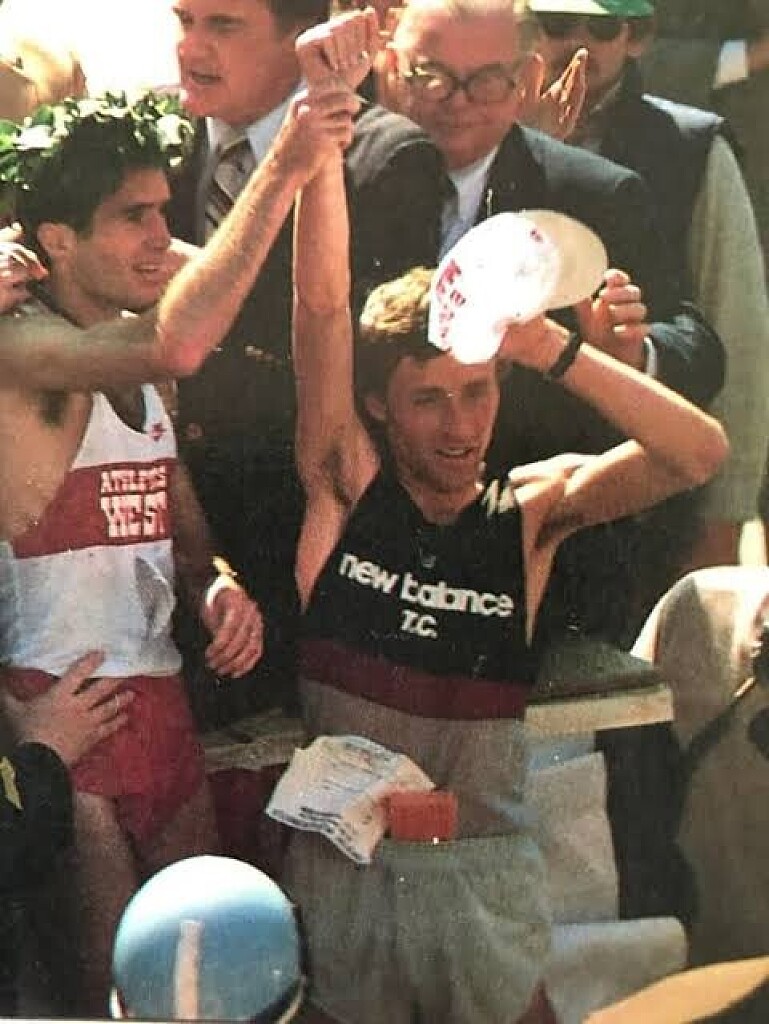
The Duel In The Sun: When Salazar Beat Beardsley By Two Seconds At Boston
April 19, 1982. The Boston Marathon unfolded under unusually warm, sunny conditions, and by the closing stages, the race had become a private battle between two very different American runners: Alberto Salazar, already one of the biggest names in distance running, and Dick Beardsley, the Minnesota runner who had emerged as a serious marathon contender.
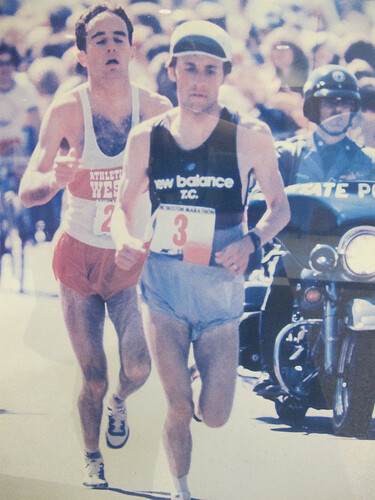
For roughly nine miles, from the Newton Hills toward the finish, Beardsley did much of the leading, with Salazar tucked close behind. Neither man could shake the other. They ran deep into Boston locked together, trading surges and refusing to surrender an inch as the crowds along the course grew louder.
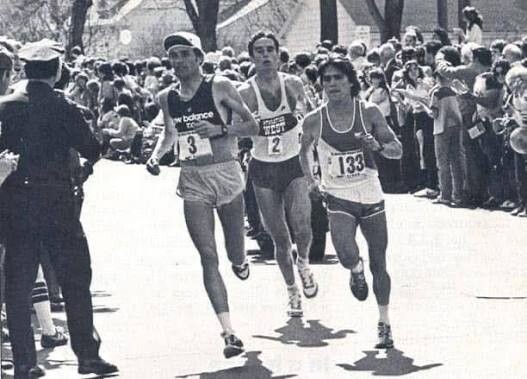
Salazar finally made his decisive move with less than a mile remaining. He opened a small gap, but Beardsley refused to disappear. The Minnesota runner chased him through the final streets, closing again as they approached the finish.
Then came the final sprint.
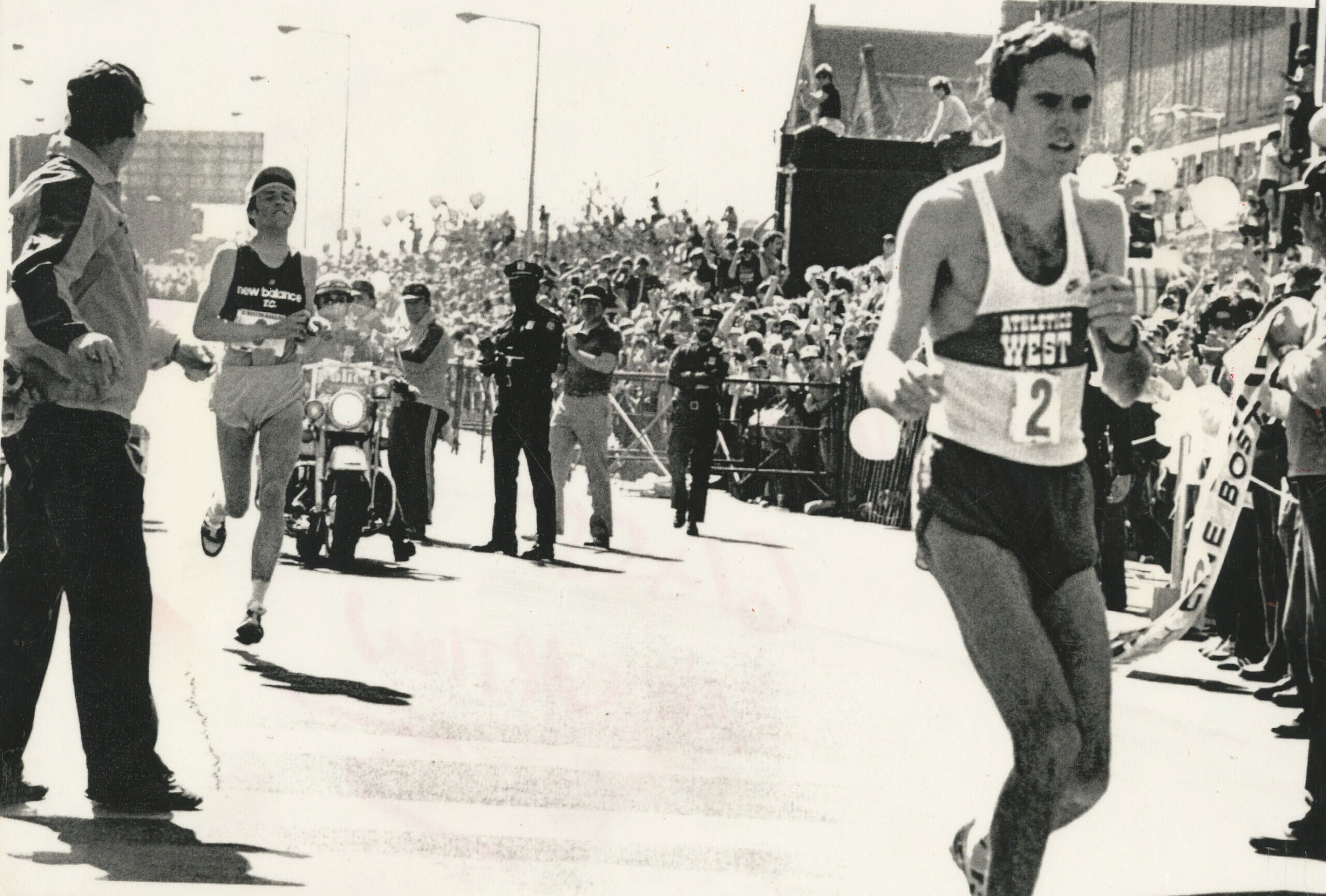
Salazar held his form and reached the finish first in 2:08:52, with Beardsley only two seconds behind in 2:08:54. It was an extraordinary result: both men broke 2:09 in the same Boston Marathon, and both shattered the previous course record.
The race became known as the “Duel in the Sun,” and it remains one of the most celebrated head-to-head battles in Boston Marathon history. Beardsley had not won, but his performance established him as one of America's elite marathoners.
For Salazar, however, victory came at an enormous physical cost. Immediately after crossing the finish line, he collapsed and required emergency treatment, including several litres of intravenous saline. The combination of heat, dehydration and an all-out effort had pushed his body to the limit.
Salazar's marathon career would never again produce quite the same kind of performance. His celebrated 1981 New York City Marathon victory had produced what was initially considered a world record, although the course was later found to be short. His Boston triumph therefore became one of the defining victories of his career.
Beardsley's story would take an even more difficult turn. Injuries disrupted his career, and after returning to the highest level, he suffered a devastating farm accident in 1989. Further accidents, surgeries and severe physical pain followed, eventually leading to a long battle with painkiller addiction.
He eventually overcame that struggle and transformed the darkest chapters of his life into a story of recovery, resilience and redemption.
That is what makes the 1982 Boston Marathon more than a two-second victory.
For one extraordinary afternoon, Salazar and Beardsley produced a marathon duel in which neither man was willing to give way. One crossed the finish line first. The other finished only two seconds behind him.
Two seconds separated them at Boston. Decades later, their legendary duel remains one of the greatest chapters in marathon history.
by Erick Cheruiyot for My Best Runs.
Login to leave a comment
Europe's Elite Women Marathoners Ready for Thrilling Championship Battle in Birmingham
The women's marathon at the 2026 European Athletics Championships is set to be one of the most eagerly anticipated races of the championships, bringing together an exceptional field of experienced championship performers, rising stars, and defending medalists in what promises to be a fascinating battle for European glory.
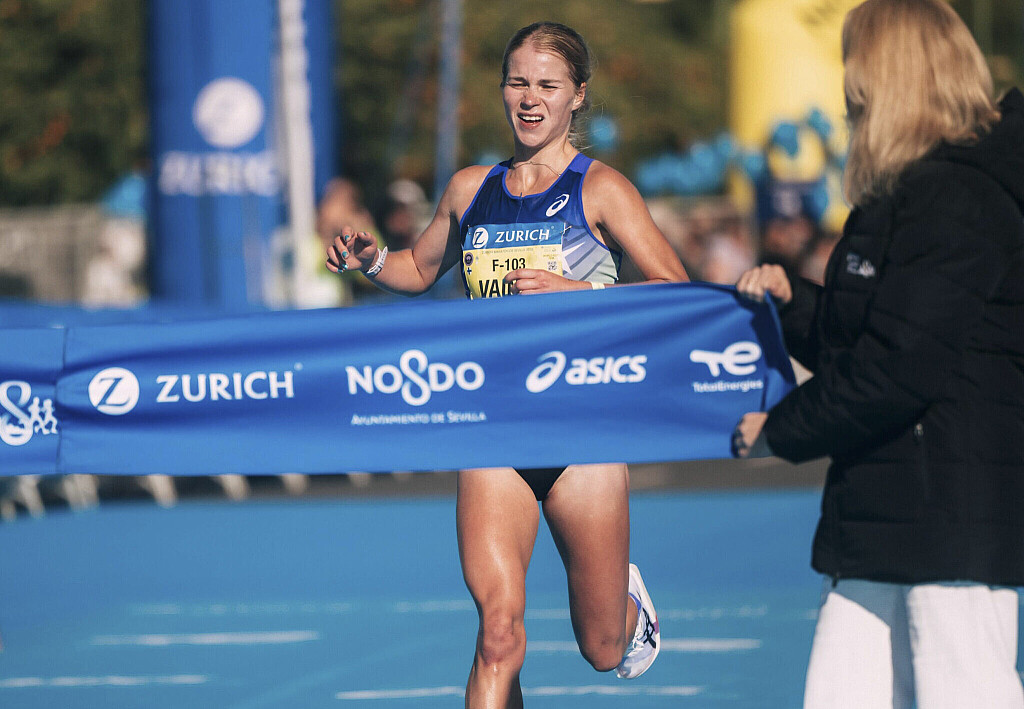
While Finland's Alisa Vainio enters Birmingham as the fastest European woman this season after clocking a brilliant 2:20:39 at the Seville Marathon, she faces stiff competition from some of the continent's strongest marathon nations, including Germany, Spain, Poland, Ireland, and host nation Great Britain.
Vainio's journey to the top has been years in the making. Widely regarded as one of Europe's brightest teenage distance-running prospects, she qualified for the marathon for the Rio 2016 Olympic Games at just 18 years old but was unable to compete because she did not meet the minimum age requirement. Instead of fading from the spotlight, she steadily rebuilt her career and has now matured into one of Europe's premier marathon runners.
Her breakthrough came at the 2025 World Athletics Championships in Tokyo, where she produced a composed and intelligent race in oppressive heat and humidity to finish fifth overall as the first European athlete across the finish line. Just three weeks later, she shattered the Finnish marathon record with a solo 2:23:06 performance at the national championships in Vantaa.
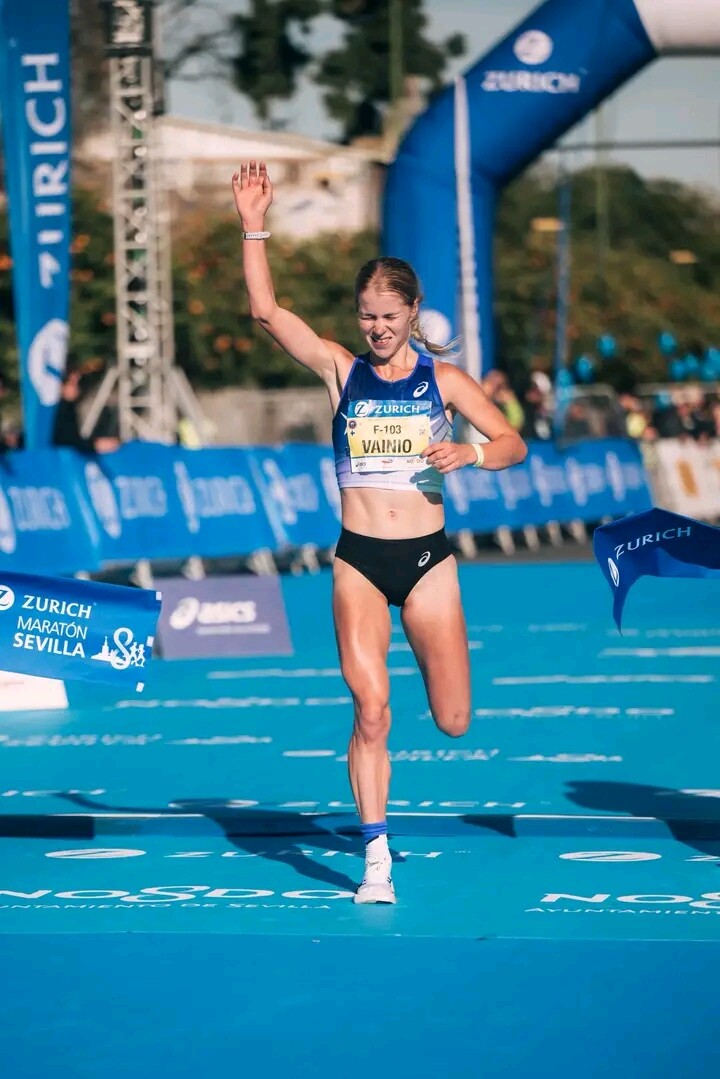
Vainio has continued her remarkable momentum ever since. She completed three additional marathons, highlighted by a commanding victory at the Seville Marathon, where she lowered the Finnish record once again while setting the European-leading mark of 2:20:39, establishing herself as the athlete to beat heading into Birmingham.
Germany arrives with one of the deepest squads in the championship and will be aiming to defend the women's team title won in Munich four years ago. Fabienne Königstein leads the German challenge after setting a personal best of 2:22:17 with a sixth-place finish at the Berlin Marathon. She is joined by the versatile Laura Hottenrott, who added another major achievement to her career earlier this year by winning silver in the uphill race at the European Athletics Off-Road Running Championships.
Spain also boasts an exceptionally strong lineup and is expected to challenge for both the individual and team honors. Fatima Azzahraa Ouhaddou Nafie demonstrated her championship resilience by recovering from a mid-race fall to win the marathon at the 2025 European Running Championships. Laura Luengo brings a personal best of 2:22:31, while Meritxell Soler, Ester Navarrete, and Carolina Robles complete a formidable squad. Impressively, every Spanish athlete in the team owns a lifetime best under 2:25, highlighting the country's remarkable marathon depth.
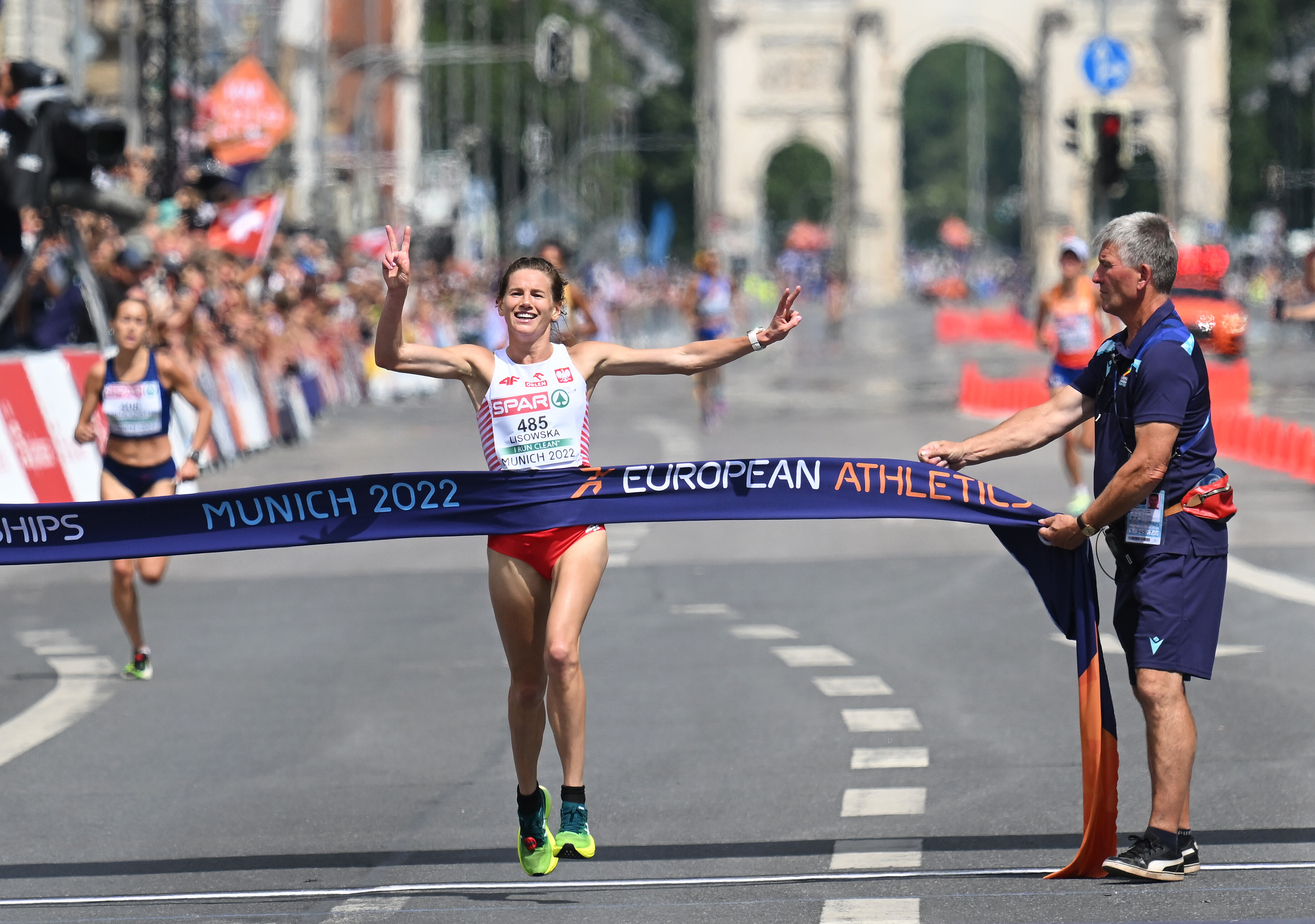
Defending champion Aleksandra Lisowska of Poland cannot be overlooked despite not being among the pre-race favorites. Her surprise victory in Munich four years ago proved that championship marathons often reward tactical brilliance, patience, and resilience rather than raw speed alone. Having already demonstrated her ability to thrive under championship pressure, the Polish star remains a genuine threat in Birmingham.
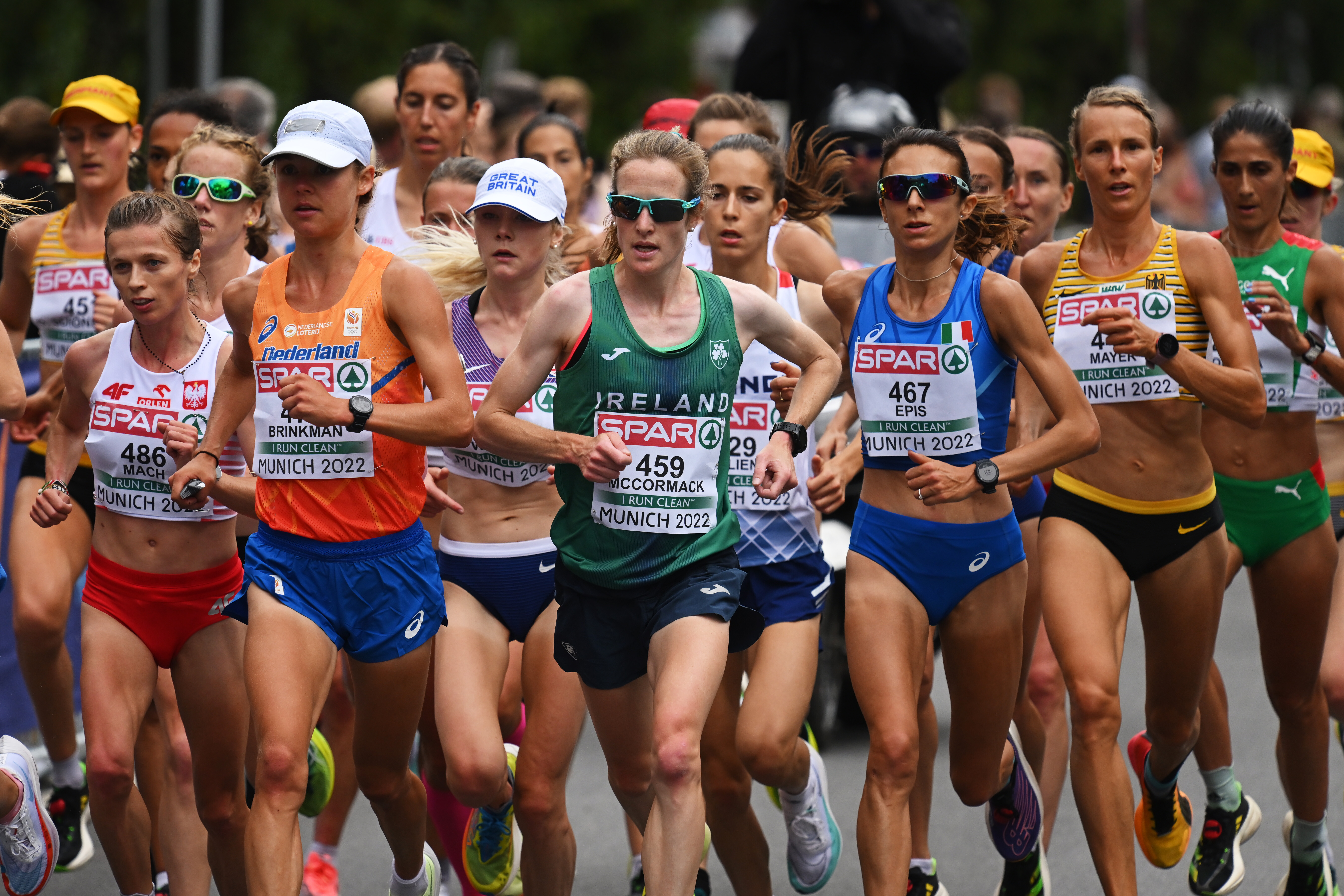
Ireland's Fionnuala McCormack will also be one of the most compelling athletes to watch. Just weeks before her 42nd birthday, the experienced marathoner continues her pursuit of a first European Championships medal after several near misses during her distinguished career. She finished fourth twice in the 10,000m at previous championships and was seventh in the marathon in Munich before producing another impressive performance with ninth place at the 2025 World Athletics Championships, finishing second among the European athletes behind Vainio.
Host nation Great Britain will be eager to make history on home roads. British women have never won an individual medal in the European Athletics Championships marathon since the event was introduced in 1982. Their hopes rest with Paris Olympians Rose Harvey and Clara Evans, alongside 2023 European cross-country bronze medallist Abbie Donnelly, who made an impressive marathon debut with a time of 2:24:11 in Frankfurt last year.
With proven champions, emerging contenders, experienced veterans, and deep national teams all chasing medals, the women's marathon is expected to deliver one of the most competitive races of the championships. Whether the title is decided by relentless pace, tactical patience, or a decisive late surge, Birmingham is set to provide a memorable contest worthy of the European crown.
by Erick Cheruiyot for My Best Runs.
Login to leave a comment

European Athletics Champioships
The27thEuropean Athletics Championshipswill be held from 10 to 16 August 2026 at theAlexander StadiuminBirmingham, United Kingdom.[1] This is the first time that a British city will have staged the European Athletics Championships although Birmingham has hosted many high-profile events, including the2007 European Athletics Indoor Championships, the2003and2018 IAAF World Indoor Championshipsand the2022 Commonwealth Games. Alexander Stadium was renovated between 2019 and...
more...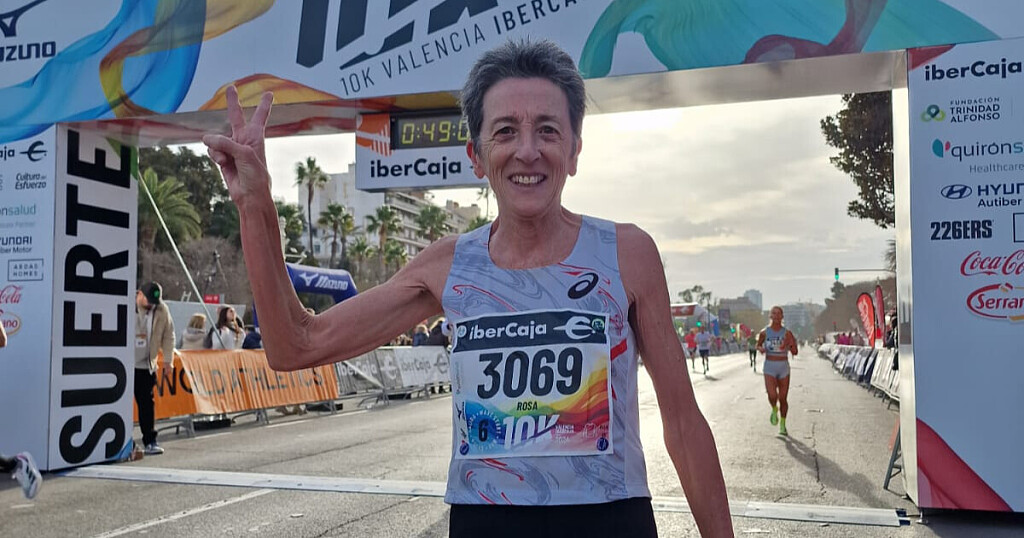
Rosa Mota: The Woman Who Refused to Accept Limits and Redefined Marathon Greatness
Long before women's distance running received the recognition it deserved, a young girl from the historic streets of Porto was quietly preparing to change the sport forever.
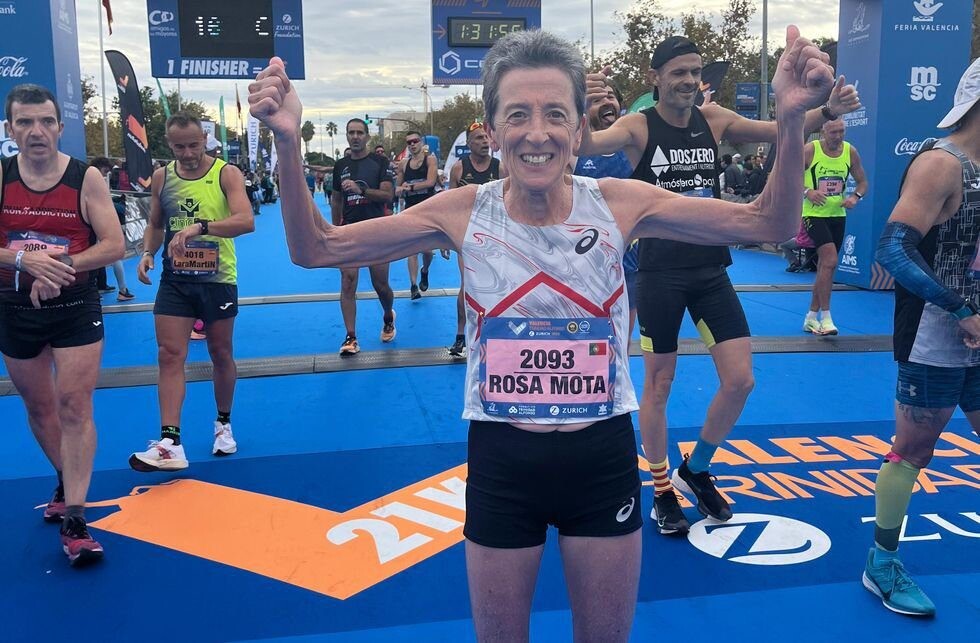
Born in the Foz Velha district of Portugal's second-largest city, Rosa Mota grew up battling asthma and sciatica—two conditions that might have convinced many that elite athletics was an impossible dream. In an era when opportunities for female athletes were scarce and expectations even lower, she was often reminded of her supposed limitations.
Rosa chose not to listen.
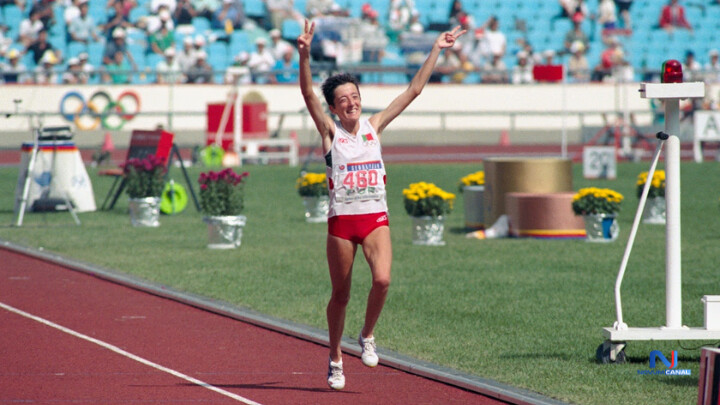
Instead, she ran.
She ran beyond the boundaries others placed around her. She ran beyond pain. She ran beyond doubt. And in doing so, she became one of the greatest marathon runners the world has ever known.
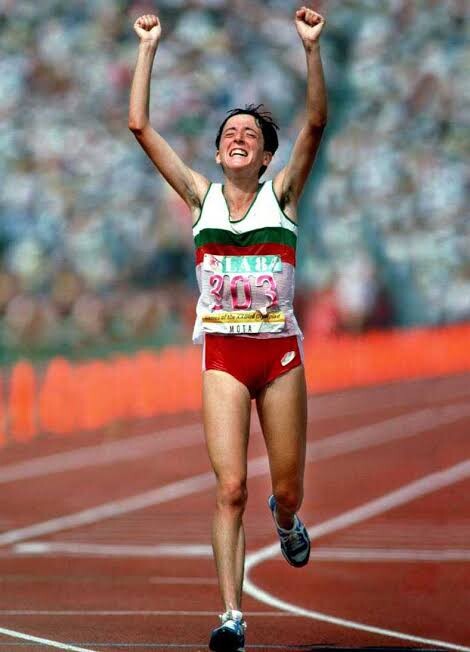
When the inaugural women's marathon was introduced at the 1982 European Championships in Athens, few outside Portugal expected Rosa Mota to be a contender. The race featured some of the finest distance runners of the era, including Norway's legendary Ingrid Kristiansen.
By the end of the race, expectations had been shattered.
Mota stormed to victory, announcing herself on the international stage and beginning a reign that would redefine women's marathon running. It was not merely a breakthrough win—it was the arrival of a champion whose influence would extend far beyond medals and records.
What made Rosa extraordinary was not overwhelming physical dominance. Her greatness stemmed from something deeper: an unbreakable resilience, remarkable tactical intelligence, and an ability to perform under the highest pressure. She carried herself with calm confidence, but beneath that calm was an iron determination that competitors found impossible to match.
Over the next decade, Mota assembled one of the most remarkable résumés in athletics history.
She became European champion, World champion, and Olympic champion—a combination no other woman has ever held simultaneously in the marathon. Her crowning achievement arrived at the 1988 Olympic Games in Seoul, where she produced a masterclass in championship racing.
With just two kilometres remaining, Mota launched a perfectly timed surge that left her rivals with no answer. She crossed the finish line 13 seconds clear of the field, securing Olympic gold and becoming the first Portuguese woman in history to win an Olympic title.
The victory elevated her from national hero to global icon.
Her success did not stop there.
In 1990, she captured her third Boston Marathon title, further cementing her status among the sport's elite. Later that same year, she defended her European Championship crown in Split in dramatic fashion. After building a commanding lead, she was gradually reeled in by Soviet athlete Valentina Yegorova. Yet when the race entered its decisive moments, Mota found another gear and held on to win by five seconds.
The triumph made history.
No athlete—male or female—had ever won three European marathon titles. Rosa Mota became the first.
Numbers alone illustrate the scale of her dominance. During a remarkable ten-year period, she contested 21 marathons and won 14 of them. Consistency at such a level is almost unheard of, particularly in an event as demanding as the marathon.
The sport itself eventually delivered its verdict.
The Association of International Marathons and Distance Races honoured Mota as the greatest female marathon runner of all time, a distinction reflecting not only her achievements but also the profound impact she had on the development of women's distance running worldwide.
Yet despite her accomplishments, her name is not always mentioned as frequently as some of her male contemporaries. It is one of the lingering injustices of sporting history: many pioneering women achieved greatness equal to any champion, yet their stories often received far less attention.
Rosa Mota deserves to be remembered among the sport's immortals.
Even after retiring from elite competition, she never drifted far from running. She carried the Olympic flame through Athens in 2004, received the prestigious Abebe Bikila Award for her contributions to long-distance running, and continued competing well into her sixties.
Remarkably, age did little to slow her down.
She won the Macau Mini Marathon multiple times and later set a world record for the women's 65–69 age category over 10,000 metres, proving that the spirit which drove her to Olympic glory never faded.
Today, a sports pavilion in Porto proudly bears her name—a fitting tribute to a woman whose achievements transcended generations.
Rosa Mota's story is not simply about medals, records, or championships. It is a story of perseverance. A story of breaking barriers when few believed they should be broken. A story of showing up, year after year, race after race, regardless of the obstacles.
Some champions are remembered because they were loud.
Others are remembered because they changed history.
Rosa Mota did both through the power of her performances alone.
She was a pioneer. She was a trailblazer. She was an Olympic champion.
And for many, she remains the greatest female marathon runner the sport has ever seen.
by Erick Cheruiyot for My Best Runs.
Login to leave a comment
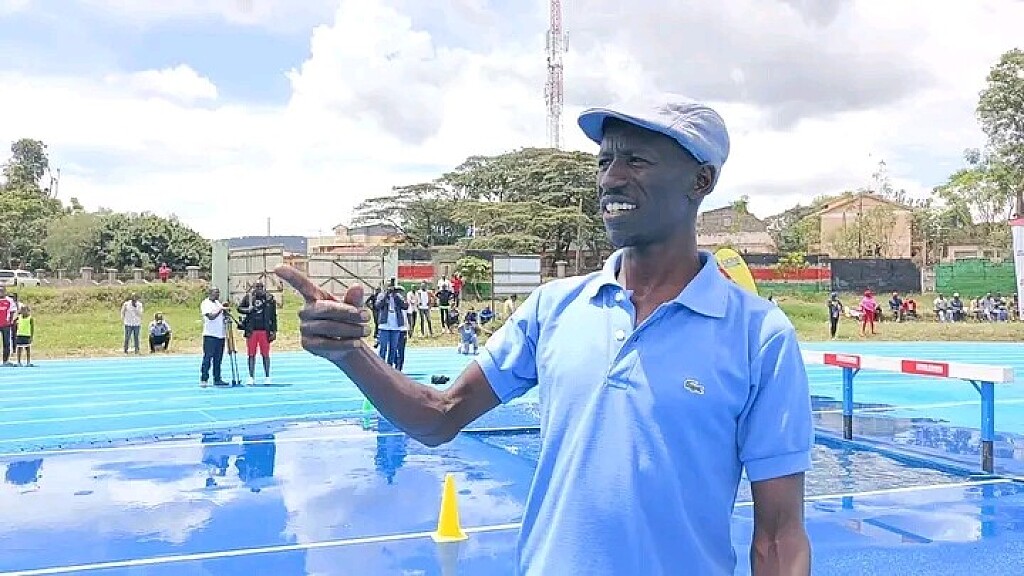
Ezekiel Kemboi at 44: The Enduring Legacy of a Steeplechase Legend
Few athletes have ever dominated the 3000m steeplechase with the brilliance, charisma and longevity of Ezekiel Kemboi. Born on May 25, 1982, in Matira, Kenya, Kemboi grew into one of the most iconic figures the event has ever produced, turning the steeplechase into both a spectacle and an art form.
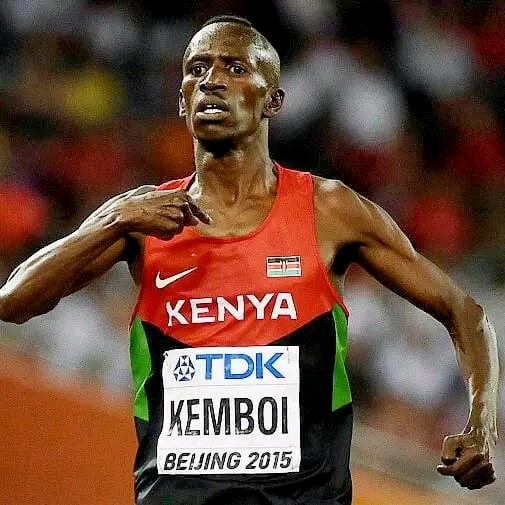
Inspired by legendary Kenyan steeplechaser Moses Kiptanui and later mentored by Paul Ereng, the 1988 Olympic 800m champion, Kemboi developed the confidence and competitive mentality that would define his extraordinary career.
From the moment he emerged on the international stage, Kemboi brought a fearless approach to the barriers and water jumps. He raced with unmatched courage, often controlling championship finals with tactical intelligence and explosive finishing speed. His style made him one of the most difficult athletes to defeat under pressure.
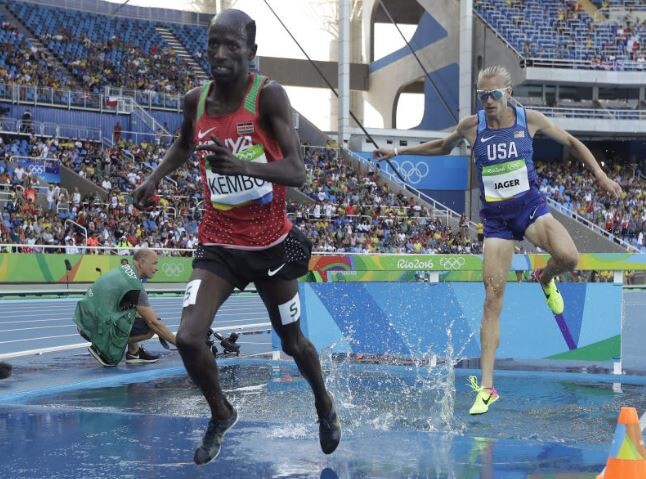
Kemboi became a two-time Olympic champion in the 3000m steeplechase, winning gold in Athens in 2004 before reclaiming the Olympic crown in London in 2012. His ability to remain at the top for nearly a decade separated him from many great champions before him.
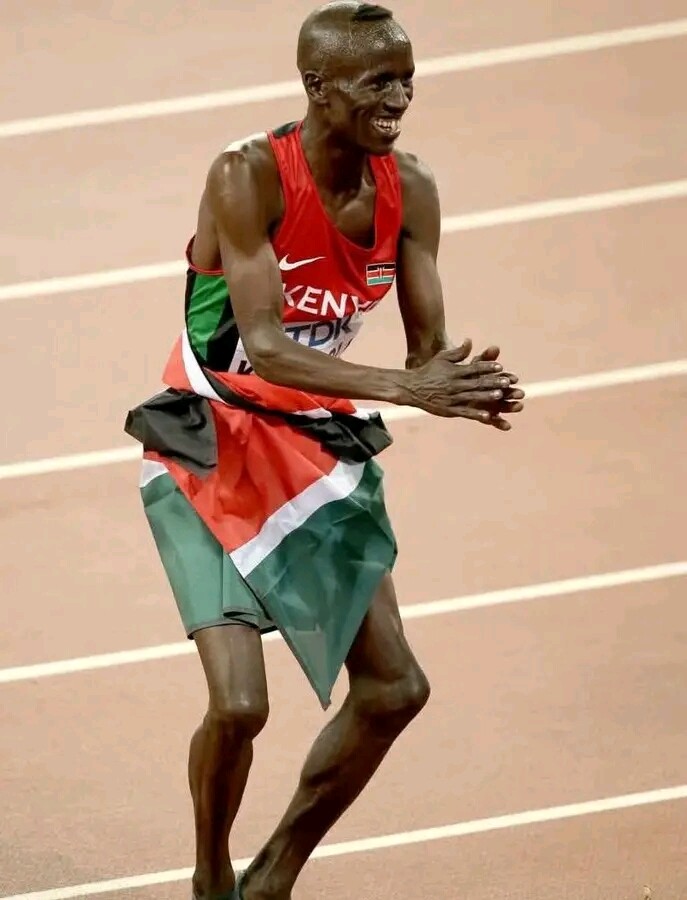
Even more impressive was his dominance at the World Championships, where he won four consecutive world titles in 2009, 2011, 2013 and 2015 — one of the greatest championship streaks in steeplechase history.
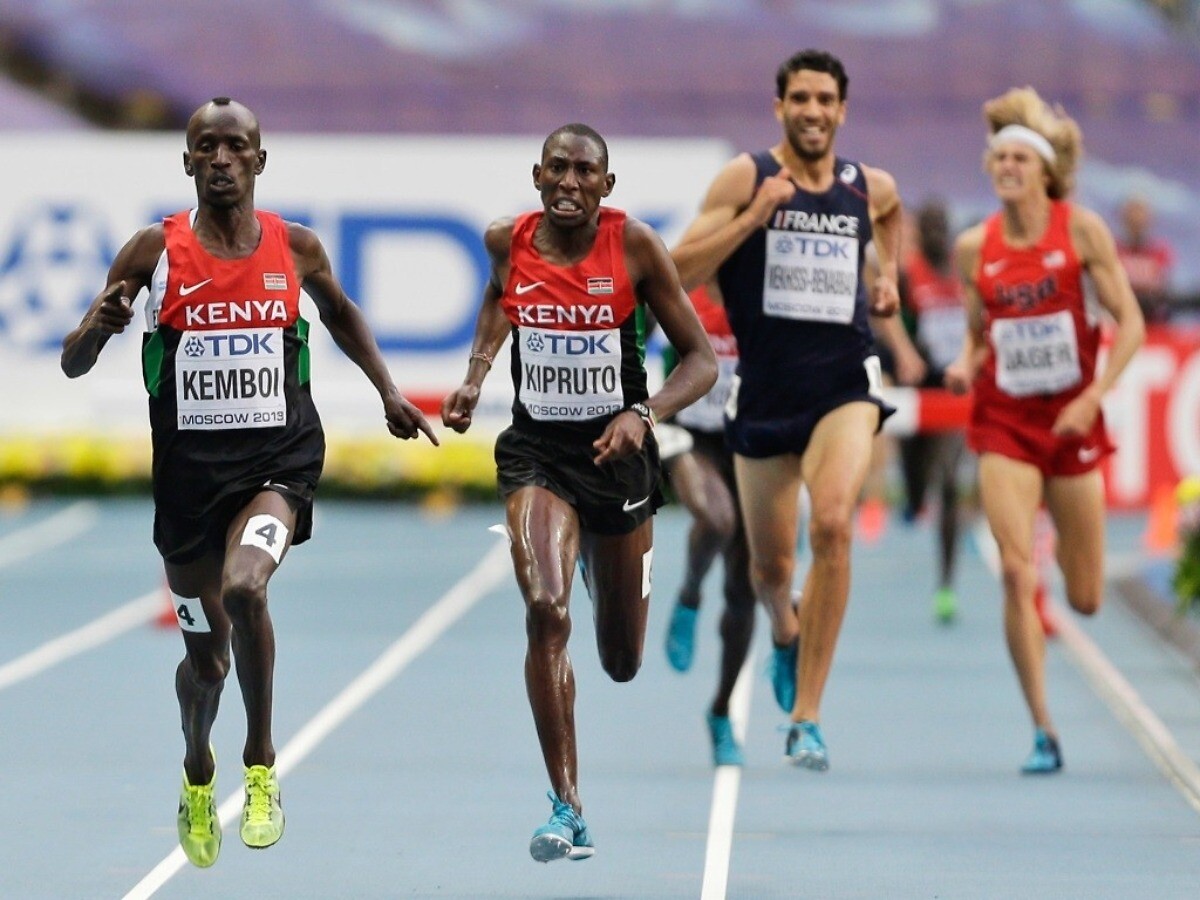
Throughout his remarkable journey, Kemboi collected an astonishing 15 major championship medals:
7 gold medals
6 silver medals
2 bronze medals
He collected those medals across the Olympic Games, World Championships, African Championships and Commonwealth Games, consistently proving himself against the very best athletes in the world. His ability to deliver year after year at the highest level highlighted not only his remarkable talent, but also his resilience, longevity and championship mentality.
Beyond the medals, Kemboi became famous for bringing excitement and personality to the event. His unforgettable finish-line dances became iconic moments in athletics, turning victories into celebrations that fans across the world eagerly anticipated. He showed that a champion could dominate fiercely while still expressing joy and individuality.
Kemboi’s brilliance was also reflected in his incredible speed. His personal best of 7:55.76, set in Monaco in 2011, places him among the fastest steeplechasers in history and remains one of the standout performances ever recorded in the event.
For many young athletes, especially in Kenya, Ezekiel Kemboi’s story continues to serve as a powerful source of inspiration. From a small village in Kenya to Olympic and world glory, he proved that discipline, belief and fearlessness can elevate an athlete to legendary status.
Today, his legacy stands far beyond medals and records. Ezekiel Kemboi transformed steeplechase into a global spectacle and inspired an entire generation to dream bigger every time they approach the barriers.
by Erick Cheruiyot for My Best Runs.
Login to leave a comment
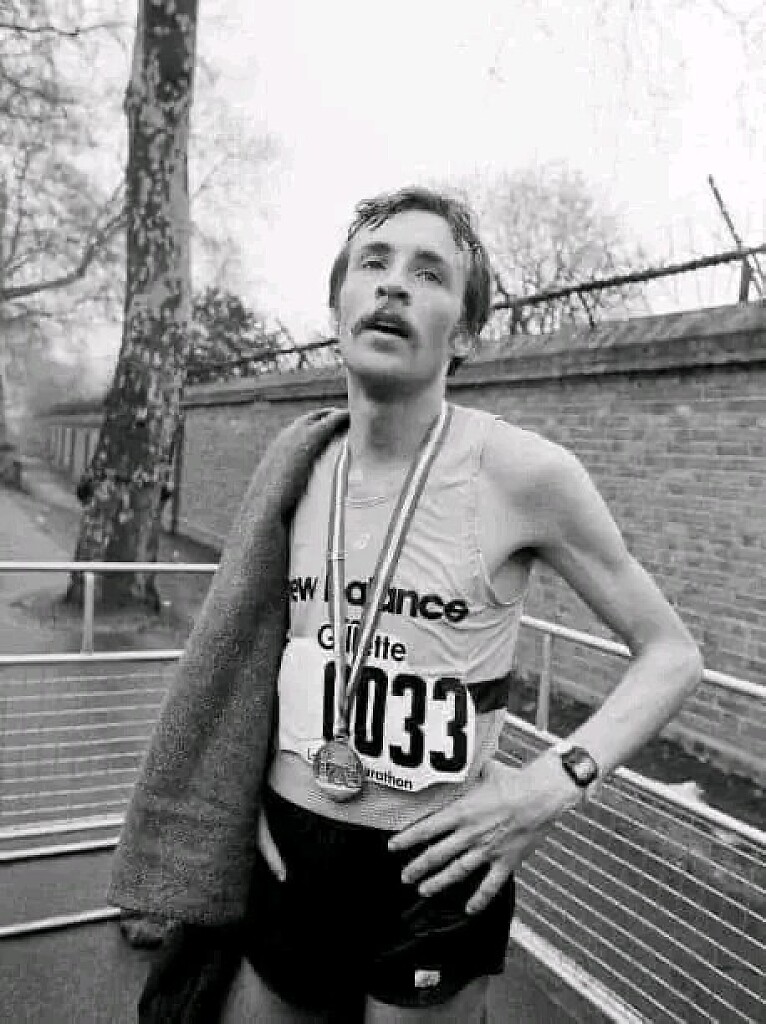
Dick Beardsley: The Relentless Dreamer Who Redefined Marathon Greatness
Born on March 21, 1956, Dick Beardsley carved his name into the golden pages of marathon history through grit, heart, and an unbreakable competitive spirit. His journey from humble beginnings to global recognition is not just a tale of speed, but one of perseverance, passion, and unforgettable moments that still echo across the sport today.
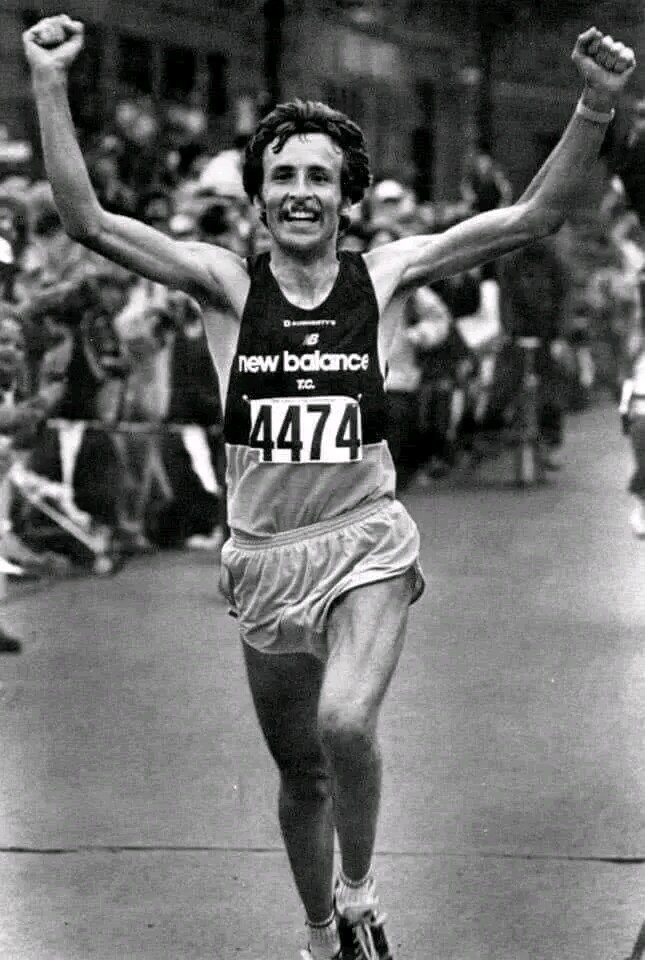
Beardsley’s marathon story began modestly in 1977 at the Paavo Nurmi Marathon, where he clocked 2:47:14. Yet, what followed was nothing short of extraordinary. With each race, he chipped away at his times—2:33:22, 2:33:06, and 2:31:50—demonstrating a rare consistency and hunger for improvement. In fact, Beardsley achieved an astonishing 13 consecutive personal bests in the marathon, a feat so remarkable that it earned him a place in the Guinness World Records.
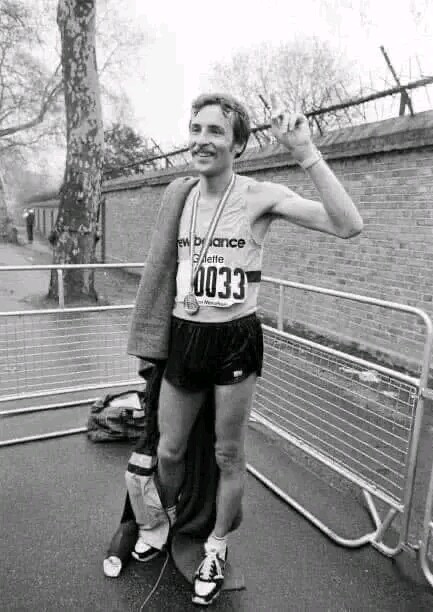
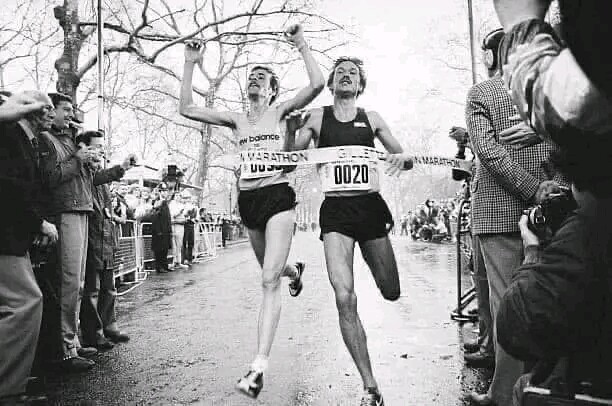
But it was 1981 that truly defined his legacy. At the inaugural London Marathon, Beardsley and Norway’s Inge Simonsen produced one of the most iconic finishes in marathon history. In a rare act of sportsmanship, the two runners crossed the finish line hand in hand, sharing victory in 2:11:48. It was a moment that transcended competition—symbolizing unity, respect, and the pure joy of running. As Beardsley later reflected, it meant everything, as neither had ever won a marathon before.
That same year, Beardsley delivered another masterclass at the Grandma's Marathon, storming to victory in 2:09:37—a course record that astonishingly stood for 33 years until finally broken in 2014. It was a performance that cemented his reputation among the world’s elite.

Yet, perhaps his most legendary race came in 1982 at the Boston Marathon. In what is often described as one of the greatest duels in marathon history, Beardsley went stride for stride with Alberto Salazar in a breathtaking battle to the finish. Though he placed second in 2:08:53, Beardsley’s performance shattered both the course record and the American record at the time. It was not defeat—it was a defining moment of courage and excellence.
His achievements in those golden years speak volumes:
1981
Won London Marathon – 2:11:48
Won Grandma’s Marathon – 2:09:37
1982
Won Grandma’s Marathon – 2:14:50
Position two Boston Marathon – 2:08:53
Beyond competition, Beardsley’s love for the sport evolved into mentorship. In 2003, he founded the Dick Beardsley Marathon Running Camp in Minnesota, creating a space where runners of all levels could connect, learn, and be inspired by his journey. What began at Rainbow Resort now continues near Lake Bemidji, carrying forward his legacy of passion and community.
Dick Beardsley’s story is more than a list of times and titles—it is a testament to the beauty of persistence and the human spirit. In every stride he took, he reminded the world that greatness is not only measured in victories, but in the courage to chase them relentlessly.
by Erick Cheruiyot for My Best Runs.
Login to leave a comment
Joe Wigfield Edges Thrilling British Duel as Alex Bell Shines in Women’s Race at the 2026 Bath Half
The 2026 edition of the Bath Half Marathon delivered a memorable day of racing as elite British athletes produced thrilling contests in both the men’s and women’s events through the picturesque streets of Bath.
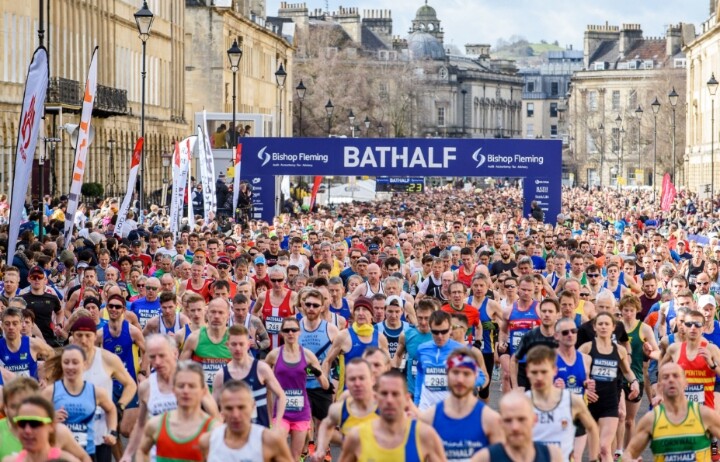
First staged in 1982, the Bath Half has grown into one of the United Kingdom’s most established road races. Held each March, the event regularly attracts strong domestic fields and serves as a key early-season test for athletes preparing for major spring marathons. This year’s race continued that tradition, featuring dramatic finishes and standout performances across both elite races.
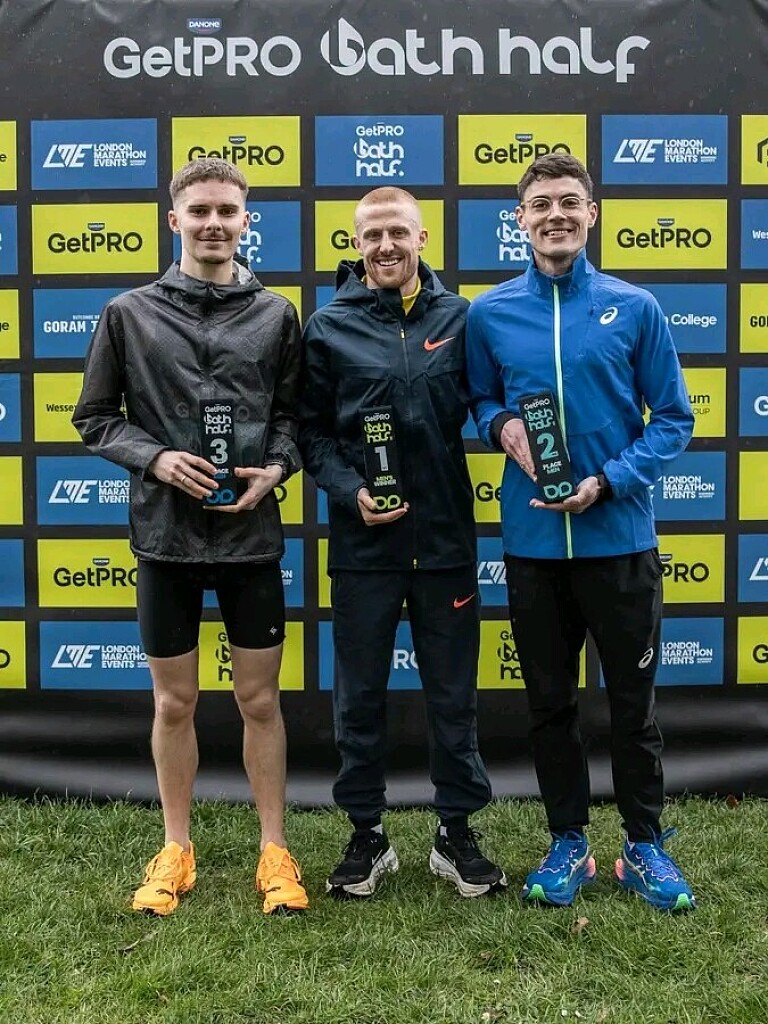
In the men’s race, Joe Wigfield emerged victorious after a tense battle that remained undecided until the closing moments. Wigfield surged ahead in the final stretch to cross the line in 1:02:07, securing the win after a fiercely competitive contest.
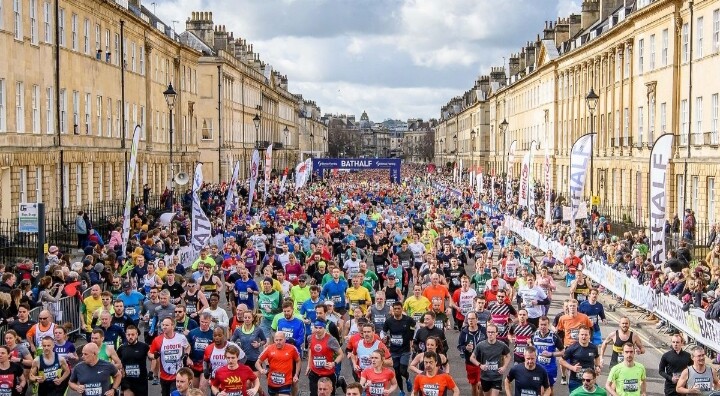
Close behind was Phil Sesemann, who fought all the way to the finish but ultimately took second place in 1:02:13, just six seconds adrift of the winner. The battle for the podium remained razor-thin, with Alfie Manthorpe finishing third in 1:02:14, only a single second behind Sesemann after an intense sprint to the line.
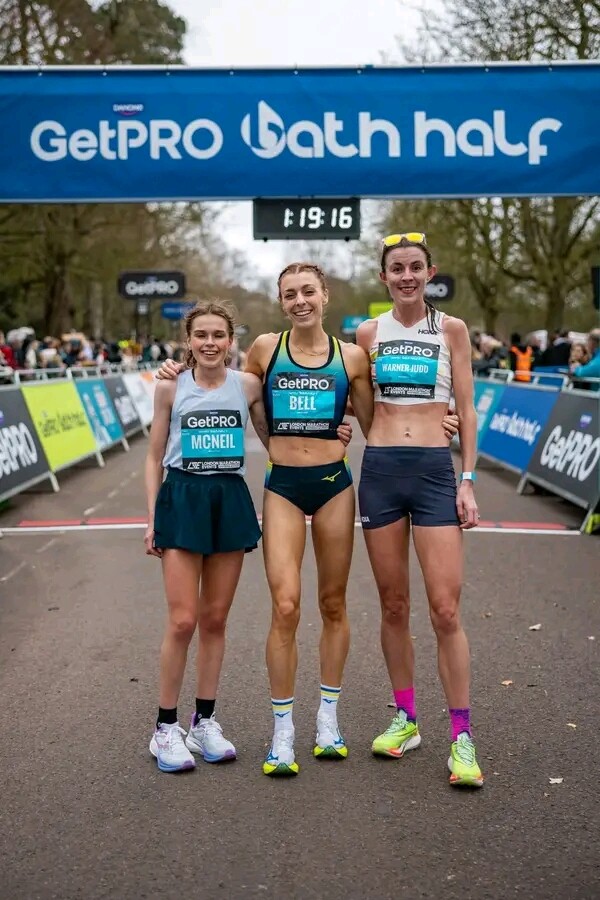
While the men’s race delivered high drama, the women’s event belonged to Alex Bell, who produced a brilliant performance to capture victory and set a new personal best. Bell ran with confidence and strength throughout the race, ultimately breaking the tape in 1:09:15, a performance that crowned her the standout star of the women’s field.
She was followed by Jess Warner-Judd, who secured second place with a determined effort, while Lauren McNeil completed the podium in third after a strong showing of her own.
With thrilling finishes, personal milestones, and tightly contested podium battles, the 2026 Bath Half once again proved why it remains one of Britain’s most cherished road races—combining competitive depth with the electric atmosphere of one of the country’s most scenic running routes.
by Erick Cheruiyot for My Best Runs.
Login to leave a comment
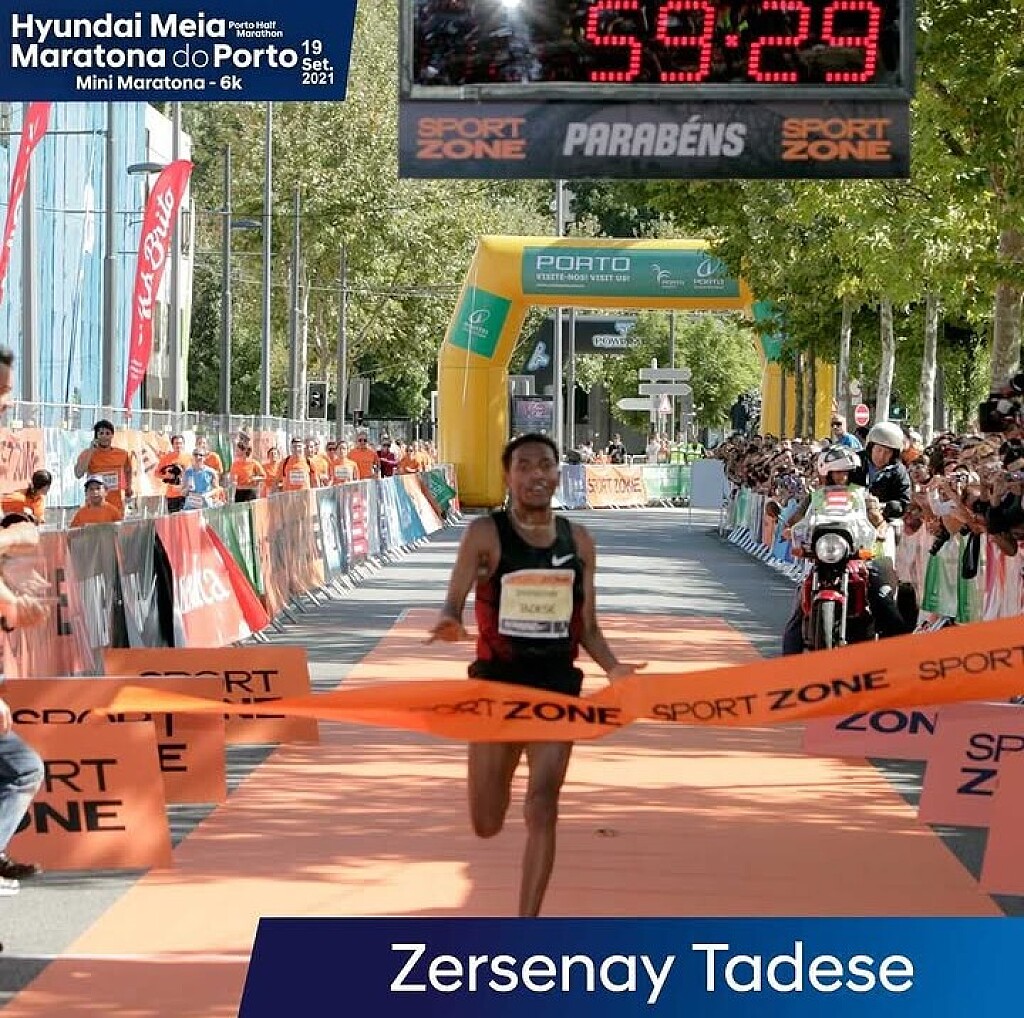
Zersenay Tadesse: The Trailblazer Who Put Eritrea on the World Distance Map
Born on 8 February 1982 in Adi Bana, Eritrea, Zersenay Tadesse rose from humble beginnings to become one of the most accomplished long-distance runners of his generation. Through consistency, resilience, and historic performances, he not only dominated the global stage but also reshaped Eritrea’s place in world athletics.
A specialist in long-distance track and road events, Tadesse built an extraordinary career highlighted by his four world titles in the half marathon, a level of dominance rarely seen in the discipline. His name entered the history books on 21 March 2010, when he produced a landmark performance at the Lisbon Half Marathon in Portugal, clocking 58:23 to break the world record by ten seconds and redefine the limits of human endurance over the distance.
Tadesse’s impact extended far beyond records. At the Athens 2004 Olympic Games in Greece, he made history by becoming the first Eritrean athlete to win an Olympic medal, earning bronze in the 10,000 metres behind Ethiopian greats Kenenisa Bekele and Sileshi Sihine. Two years later, in 2006, he achieved another national first by claiming the World Half Marathon Championship title in Hungary, securing Eritrea’s first-ever individual world championship gold.
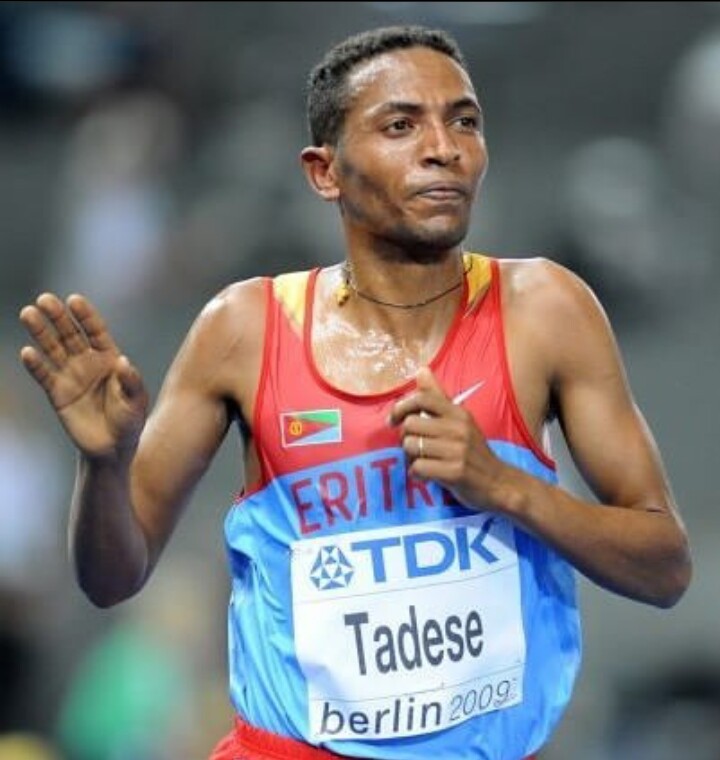
The year 2006 marked a defining chapter in his career. In April, Tadesse finished fourth at the World Cross Country Championships, playing a crucial role in Eritrea’s team silver medal alongside Yonas Kifle, Ali Abdallah, and Tesfayohannes Mesfen, narrowly beaten by Kenya. Later that year, in September, he captured gold at the inaugural IAAF World Road Running Championships over 20 kilometres, further cementing his versatility across surfaces.
December 2006 brought another iconic moment. Racing through the streets of Madrid, Spain, at the San Silvestre Vallecana, Tadesse shattered the 10-kilometre world record, stopping the clock at 26:54 and surpassing the previous mark held by Ethiopian legend Haile Gebrselassie. In 2010, he returned to the same event and claimed victory once again after a late navigation error by race leader Ayad Lamdassem of Spain, showcasing his experience and composure under pressure.
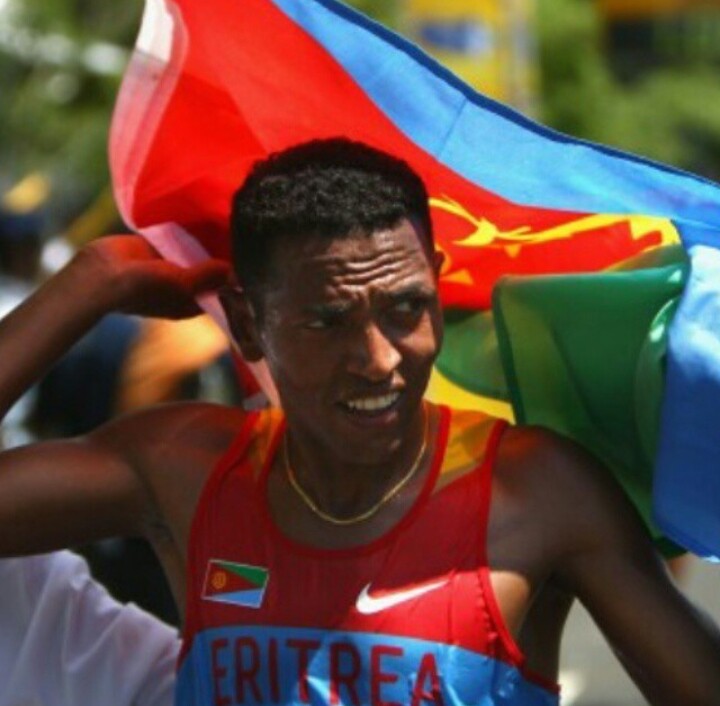
One of the crowning achievements of his career came in March 2007, when Tadesse conquered the World Cross Country Championships in Mombasa, Kenya, defeating Kenyan stars Moses Mosop and Bernard Kipyego on their home terrain in a powerful display of strength and tactical intelligence.
His medal collection reflects years of excellence at the highest level:
Olympic Games: Bronze
World Championships: Silver
World Cross Country Championships: Gold, two silvers, and four bronzes
World Half Marathon Championships: Four golds and one silver
Tadesse’s personal bests underline his remarkable range, from track to road:
3000 m – 7:39.93 | 5000 m – 12:59.27 | 10,000 m – 26:37.25 (Eritrean record) | 10 km road – 26:54 | 15 km – 42:17 | 20 km – 55:21 | Half marathon – 58:23 (world record) | Marathon – 2:08:46.
More than a champion, Zersenay Tadesse is a pioneer. He opened doors for Eritrean athletics, inspired generations, and proved that greatness can emerge from any corner of the world. His legacy is written not only in medals and records, but in the history he made for his nation.
by Erick Cheruiyot for My Best Runs.
Login to leave a comment
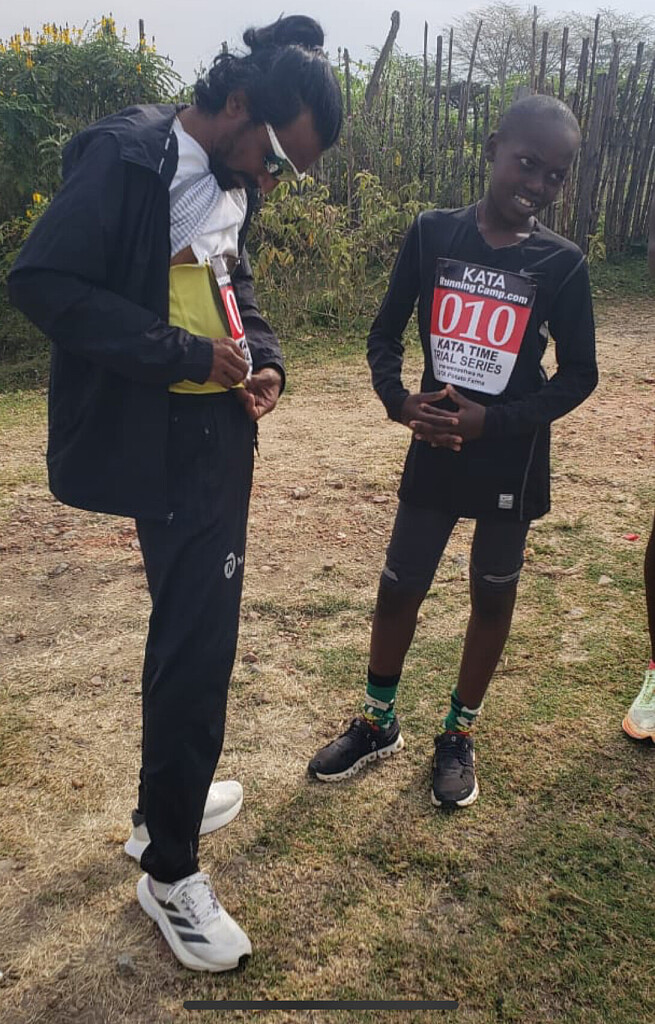
Back-to-Back Time Trials Highlight Depth at KATA Camps 11 & 06
Coach: Paul Kipsiele Koech Dates: 7th & 8th August 2025
Coach Paul Kipsiele Koech’s athletes at KATA Running Camp 11 (Njerian) and KATA Running Camp 06 (Sotik) produced two days of thrilling 10km and category races, showing both raw talent and seasoned experience.
KATA 11 – Njerian Athletics Camp (7th August 2025)
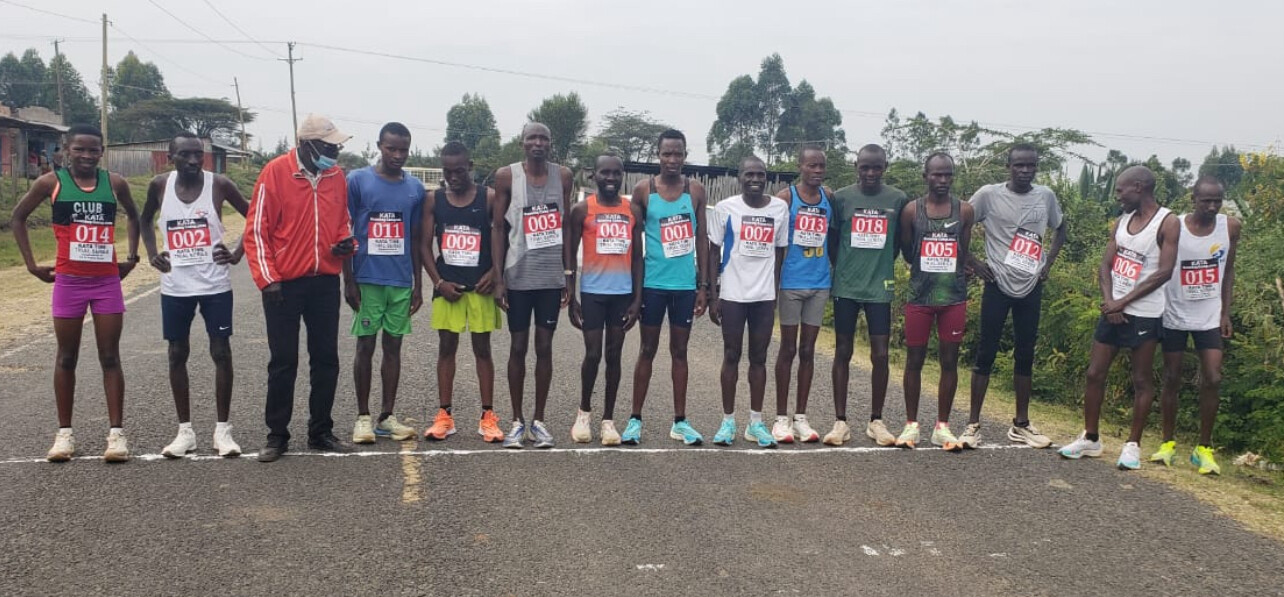
Senior Men – 10km
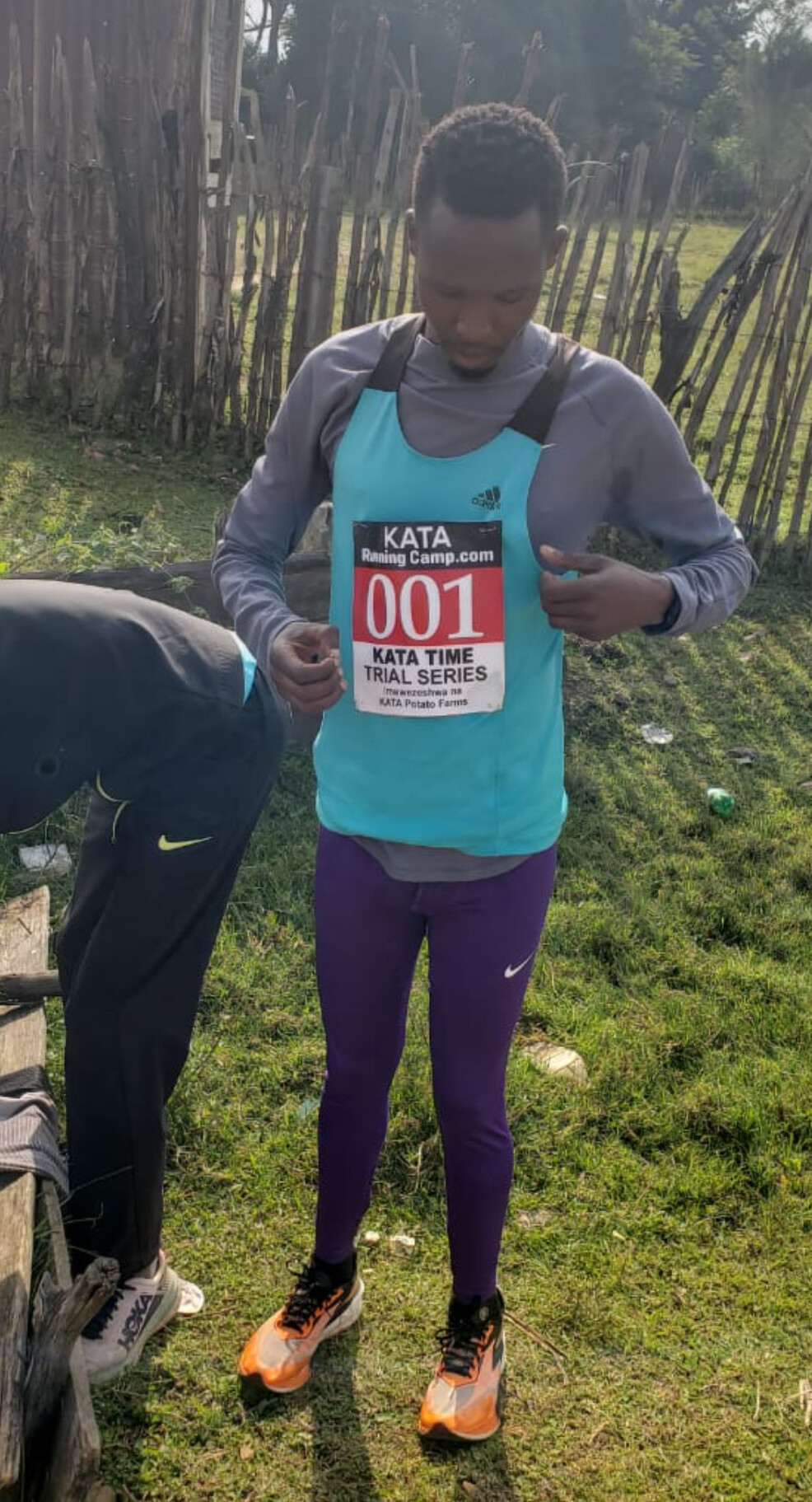
1. 041 – Brian Kipyegon – 29:09.55
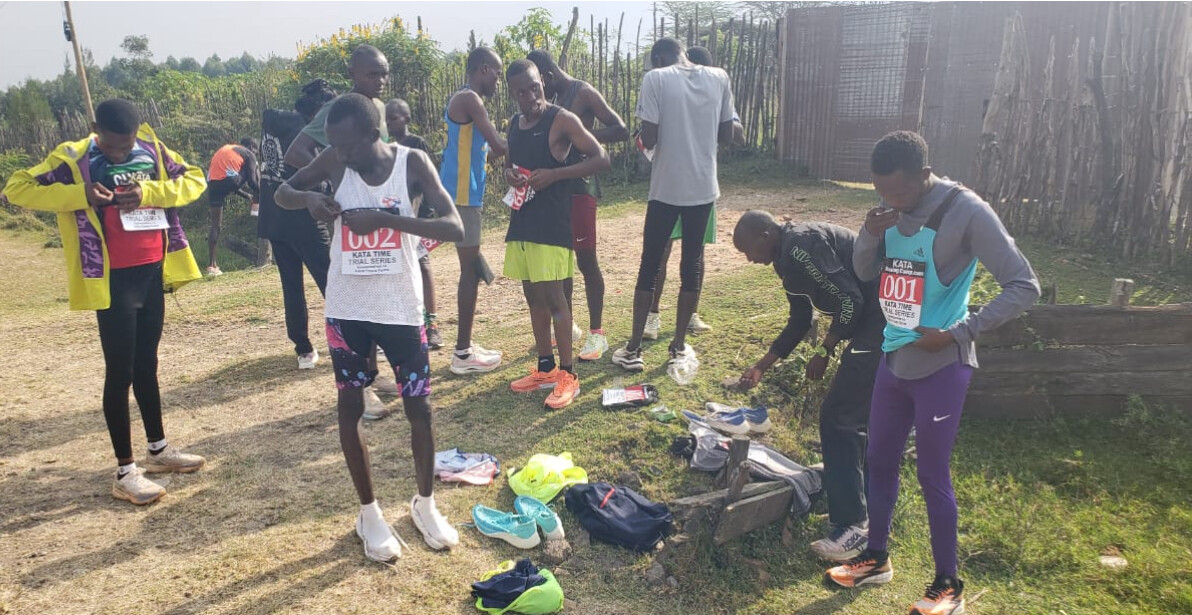
2. 015 – Hillary Kibet – 29:19.81
3. 017 – Charles Rono – 29:22.42
4. 037 – Cosmas Kemboi – 29:32.54
5. 023 – Nathan Koech – 29:35.76
6. 019 – Benard Sigilai – 30:30.98
7. 016 – Gilbert Sang – 30:53.54
8. 034 – Nathan Ngeno – 30:56.33
9. 017 – Emmanuel Kiplangat – 31:11.24
10. 014 – Abraham Saningo – 31:13.44
11. 026 – Denis Cheruiyot – 32:01.17
12. 012 – Stenly Kirui – 32:11.21
13. 020 – Amoi Kipkemoi – 32:13.29
14. 028 – Gideon Kiprotich – 32:38.24
15. 010 – Dominic Sang – 32:53.25
16. 029 – Kevin Kiplangat – 32:58.35
17. 040 – Elijah Selel – 32:59.75
18. 027 – Emmanuel Rono – 33:20.82
19. 018 – Evans Yegon – 33:37.69
20. 020 – Vincent Mutai – 33:40.58
21. 022 – Linox Koech – 33:58.12
22. 035 – Duncan Cheruiyot – 34:21.91
KATA 06 – Sotik Time Trials (8th August 2025)
Men – 10km
1. Benard Ngeno – 30:58
2. Kelvin Kemboi – 31:11
3. Gilbert Korir – 31:31
Masters Men – 10km
1. 013 – Jacob Mutai – 30:12.46 – Year 1986
2. 002 – Daniel Ngeno – 30:24.89 – Year 1981
3. 039 – Benard Korir – 30:32.37 – Year 1987
4. 001 – Peter Bii – 30:38.87 – Year 1973
5. 007 – Philip Kirui – 30:43.47 – Year 1987
6. 004 – Joseah Kosgei – 32:12.76 – Year 1982
7. Daniel Businnenei – 32:53.12 – Year 1981
8. 003 – Christopher – 34:32.44 – Year 1983
9. 006 – Robert Kimutai Koech – 37:32.99 – Year 1962
10. 008 – Simion Towet – 39:52.75 – Year 1971
Masters Women – 10km
1. 005 – Zeddy Chepkoech – 39:59.06 – Year 1978
Senior Women – 10km
1. 021 – Zeddy Chelangat – 32:11.17
2. 023 – Faith Chelangat – 32:44.96
3. 038 – Daisy Chemutai – 33:58.01
4. 033 – Fancy Chepkoech – 34:07.26
5. 010 – Stella Cheruiyot – 34:55.05
6. 030 – Mercy Cherono – 35:18.42
7. 036 – Dorcas Chepkorir – 35:32.87
8. 031 – Salome Chebet – 40:52.65
Coach’s Note:
“Both camps showed remarkable form. The back-to-back format gave me a rare opportunity to compare performance levels across Njerian and Sotik, and both are right on track for the competitive season ahead.” – Paul Kipsiele Koech
by Boris Baron
Login to leave a comment
The Evolution of the Half Marathon From Breaking One Hour to a New Era
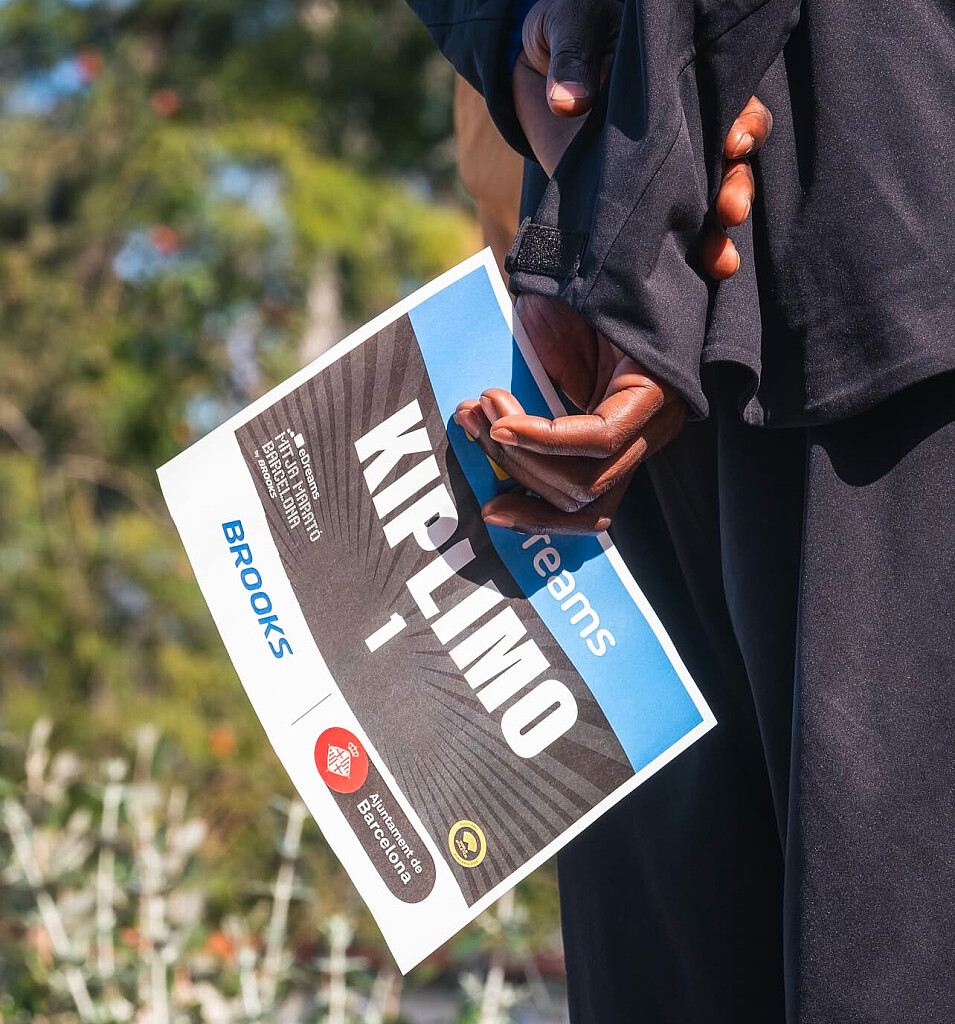
“It was not that many years ago that breaking an hour for the half marathon was an amazing feat,” says My Best Runs editor Bob Anderson. “And today, we saw that record dip under 57 minutes. That’s running 4:19 mile pace for 13.1 miles. Wow!”
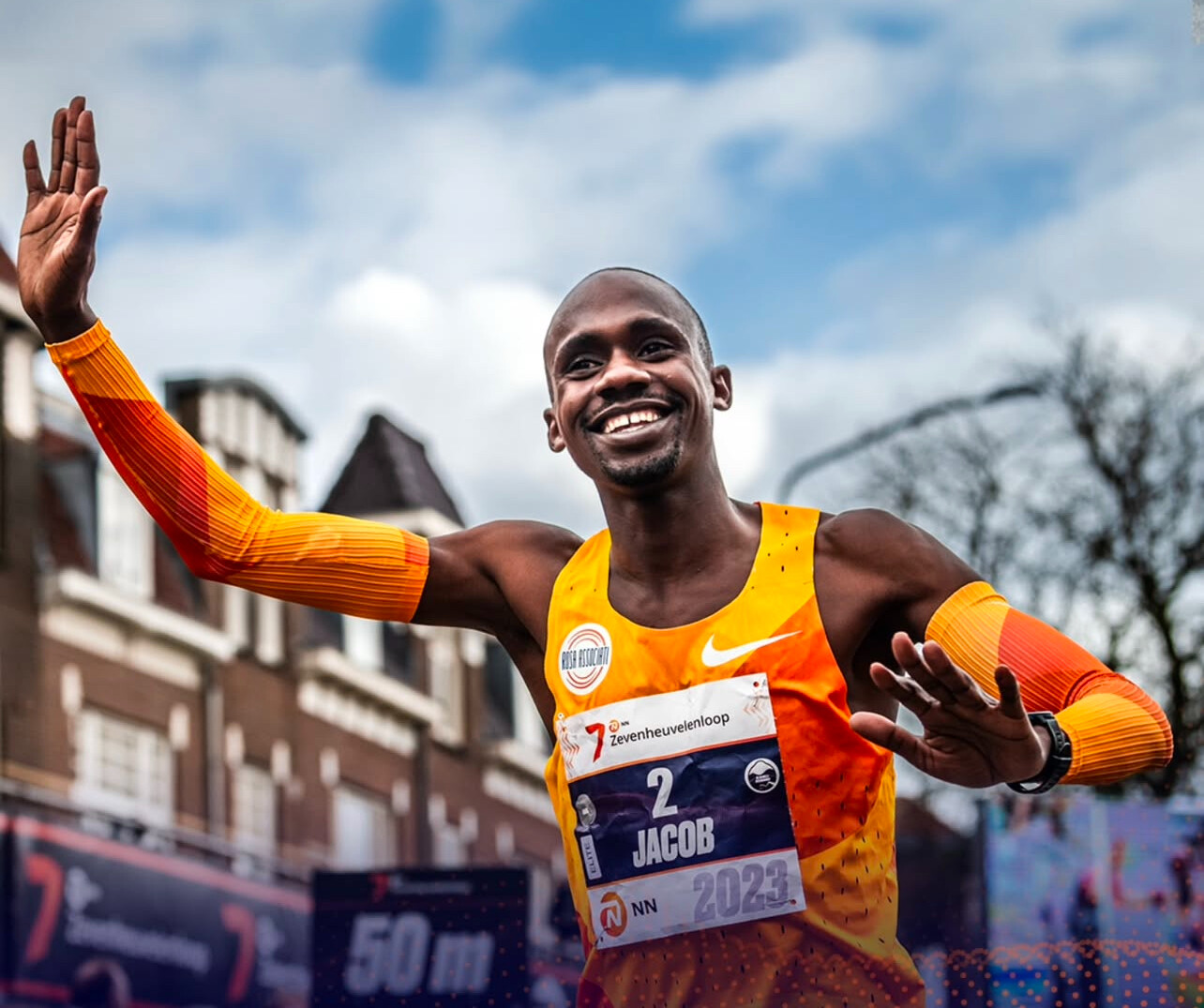
The half marathon, a 21.0975-kilometer (13.1-mile) race, has long been a benchmark of endurance and speed. For decades, breaking one hour in the event was considered an extraordinary achievement. But as training, technology, and competition have advanced, so have the records. On February 16, 2025, Uganda’s Jacob Kiplimo took the event into a new era, becoming the first person to break 57 minutes with a stunning world record of 56:42 at the eDreams Mitja Marató de Barcelona.
The history of the half marathon
The half marathon has been a competitive event since at least the early 20th century, though it did not gain widespread popularity until later. It emerged as a race distance that was more accessible than the full marathon but still required a balance of endurance and speed. Unlike the marathon, which has been an Olympic event since 1896, the half marathon has never been included in the Games, but it has had its own World Championships since 1992.
With the rise of professional distance running and major city half marathons, the event has grown into one of the most participated-in races worldwide. Many view it as a stepping stone to the full marathon, while others appreciate it as a challenging yet more manageable race.
Breaking one hour The milestones
The quest to run a half marathon in under one hour became a defining goal for elite male distance runners. While marathon times had been steadily improving throughout the 20th century, the half marathon saw a more gradual progression.
1960: Australian runner Dave Power ran an unofficial best of 1:01:44.
1974: Ron Hill of Great Britain set a recognized world best of 1:02:22.
1978: Italy’s Marcello Fiasconaro improved the mark to 1:01:49.
1985: Steve Jones of Great Britain ran 1:01:14, bringing the record closer to the one-hour barrier.
1993: Moses Tanui of Kenya became the first man to break one hour, running 59:47.
Once Tanui shattered the one-hour barrier, improvements became more frequent, with Kenyan and Ethiopian athletes dominating the event.
1997: Paul Tergat (Kenya) ran 59:17.
2005: Samuel Wanjiru (Kenya) ran 59:16, then 58:33 in 2007.
2010: Zersenay Tadese (Eritrea) set a long-standing record of 58:23.
2020: Kibiwott Kandie (Kenya) became the first to break 58 minutes, running 57:32.
2021: Jacob Kiplimo (Uganda) set a new record at 57:31.
2024: Yomif Kejelcha (Ethiopia) improved it to 57:30.
2025: Jacob Kiplimo rewrote history with 56:42.
The women's half marathon world record
On the women’s side, the world record has seen significant improvements as well. Ethiopia’s Letesenbet Gidey currently holds the record, running 1:02:52 on October 24, 2021, at the Valencia Half Marathon. This was a massive leap forward, making her the first woman to break 64 minutes.
Previous records include:
1982: Joan Benoit Samuelson (USA) ran 1:08:34.
2001: Elana Meyer (South Africa) became the first woman to break 67 minutes, running 1:06:44.
2007: Lornah Kiplagat (Netherlands) set a world record of 1:06:25.
2017: Joyciline Jepkosgei (Kenya) became the first woman under 65 minutes, running 1:04:52.
2021: Letesenbet Gidey shattered expectations with 1:02:52.
A new era for the half marathon
With Kiplimo’s record-breaking 56:41, the half marathon has entered uncharted territory. His ability to maintain a 4:19 per mile pace for 13.1 miles is a testament to the evolution of the sport. Advances in training methods, course selection, pacing strategies, and shoe technology have all contributed to these record-breaking performances.
The question now is what comes next. Will someone push the limits even further and run under 56 minutes? Will Kiplimo’s record stand for years, or will it spark another round of breakthroughs?
For now, all eyes turn to Kiplimo’s next challenge: his marathon debut at the London Marathon on April 27, 2025. If his half marathon success is any indication, the world may soon see him make history over 26.2 miles as well.
One thing is certain—the evolution of the half marathon is far from over, and the best may still be yet to come.
by Boris Baron
Login to leave a comment
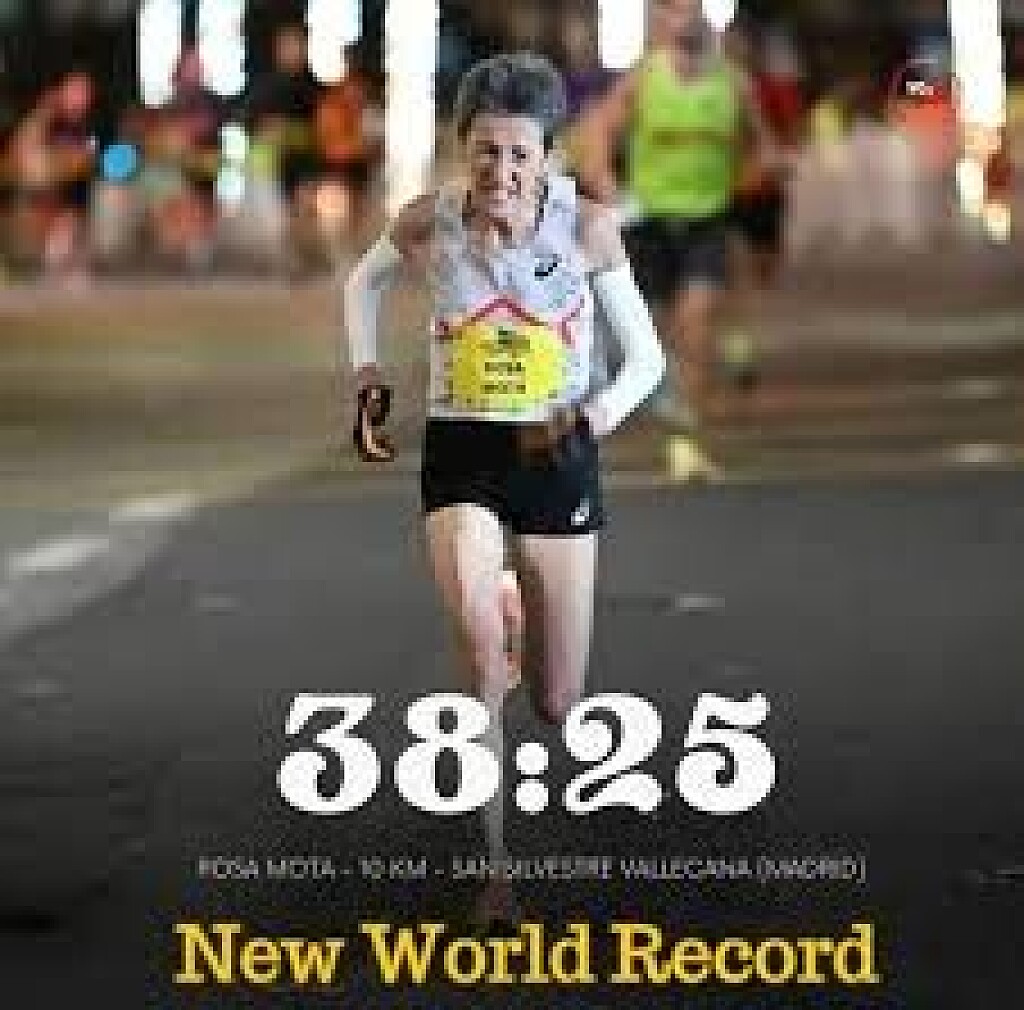
Rosa Mota: Defying Age with a 38-Minute 10K World Record at 66
At 66 years old, Rosa Mota, Portugal’s marathon icon and former Olympic champion, continues to prove that greatness knows no age. Most recently, she stunned the world by setting a new age-group world record for the 10K, finishing in an astonishing time of 38:25.This achievement not only cements her status as a legendary athlete but also highlights her remarkable longevity in a sport dominated by younger competitors.
The record-breaking performance occurred during the San Silvestre Vallecana 10K race, where Mota finished with a time of 38:25, significantly improving her previous W65 world record of 38:45, set in Valencia almost a year prior.
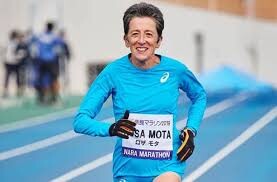
Rosa Mota rose to international fame in the 1980s, dominating the marathon scene and becoming one of the greatest long-distance runners in history. Born in Porto in 1958, she grew up with a love for running and quickly emerged as a standout athlete.
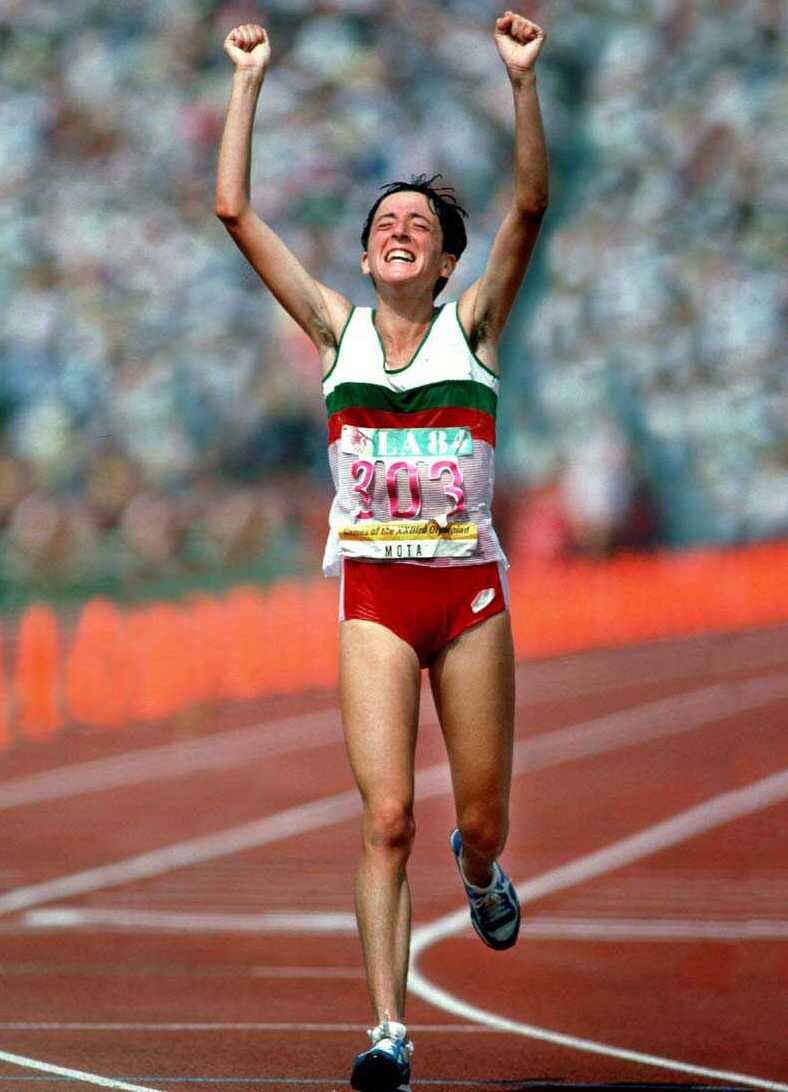
Her career highlights include winning the marathon gold medal at the 1988 Seoul Olympics and bronze at the 1984 Los Angeles Olympics. She also won the inaugural women’s marathon at the European Championships in 1982, setting the tone for her incredible career. Rosa claimed victories in major marathons worldwide, including Boston, Chicago, and London, and her legacy includes a World Championship title in 1987.
Pushing the Limits at 66:
Rosa’s most recent feat is part of a series of record-breaking performances that have reignited her fame in the running world. Earlier this year, she set a W65 world record in the half marathon with a time of 1:25:52, followed by her stunning 10K record of 38:25. These times are exceptional not just for her age group but for athletes of any age, underscoring Rosa’s incredible dedication and talent.
Rosa attributes her success to a lifelong passion for running and disciplined training. “I never stopped loving this sport,” she said after her race. “I still wake up every day excited to run, to challenge myself, and to show others that age is not a limit—it’s an opportunity.”
The Secret Behind Rosa’s Success:
Rosa’s training has evolved over the years, focusing on smart, consistent workouts that prioritize recovery. She combines speedwork, long runs, and cross-training with strength exercises and yoga to maintain her agility and endurance. A balanced Mediterranean diet, rich in fruits, vegetables, and lean proteins, also contributes to her vitality.
“I listen to my body more now than I did in my younger days,” she explains. “Rest and recovery are just as important as the training itself.”
A Beacon of Inspiration:
Beyond her athletic achievements, Rosa Mota is a symbol of resilience and empowerment. She remains an active figure in the running community, advocating for health, fitness, and women’s participation in sports. Through her recent performances, she has inspired not only her peers but also younger generations of runners.
“I want people to know it’s never too late to dream big,” Rosa says. “Set goals, stay consistent, and believe in yourself. That’s how records are broken—on and off the track.”
Legacy of Greatness:
Rosa Mota’s 38-minute 10K record is more than just a number—it’s a testament to the power of determination, discipline, and a lifelong love for running. As she continues to push boundaries, she reminds us all that the human spirit can triumph over any obstacle, including the passage of time.
by Boris Baron
Login to leave a comment
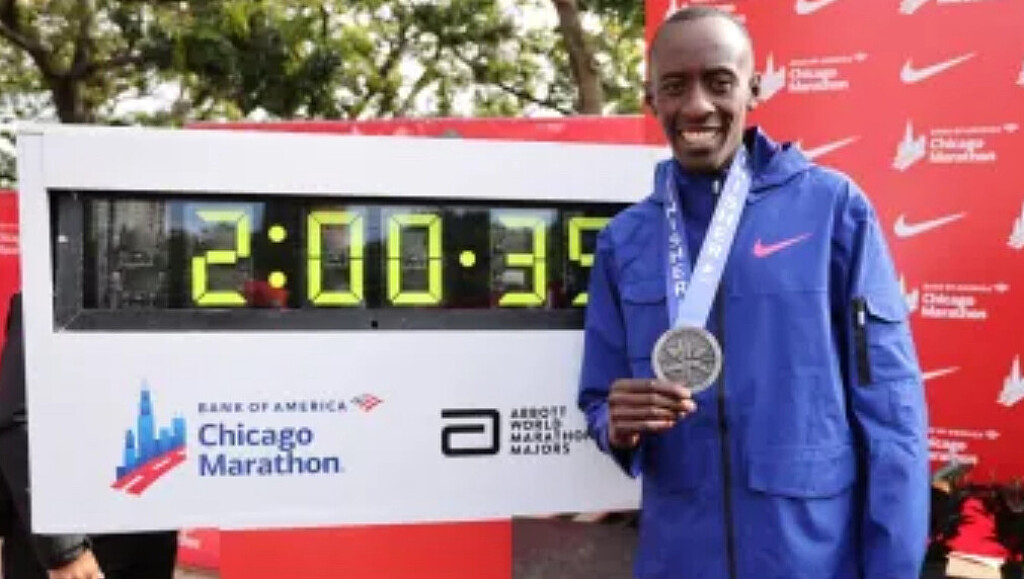
The Chicago Marathon has a strong history
First run in 1977, this Sunday, Chicago hosts its 46th marathon (it lost 2020 to the Covid-19 pandemic; 1987 to sponsorship issues). One of the six Abbott World Marathon Majors, the history of the BofA Chicago Marathon has been one of rising, falling, and rising again.
In 2023, it witnessed its third men’s marathon world record, 2:00:35, gloriously produced by the late Kenyan star, Kelvin Kiptum, who tragically died in a car accident on February 11, 2024 (age 24 years), in Kaptagat, Kenya.
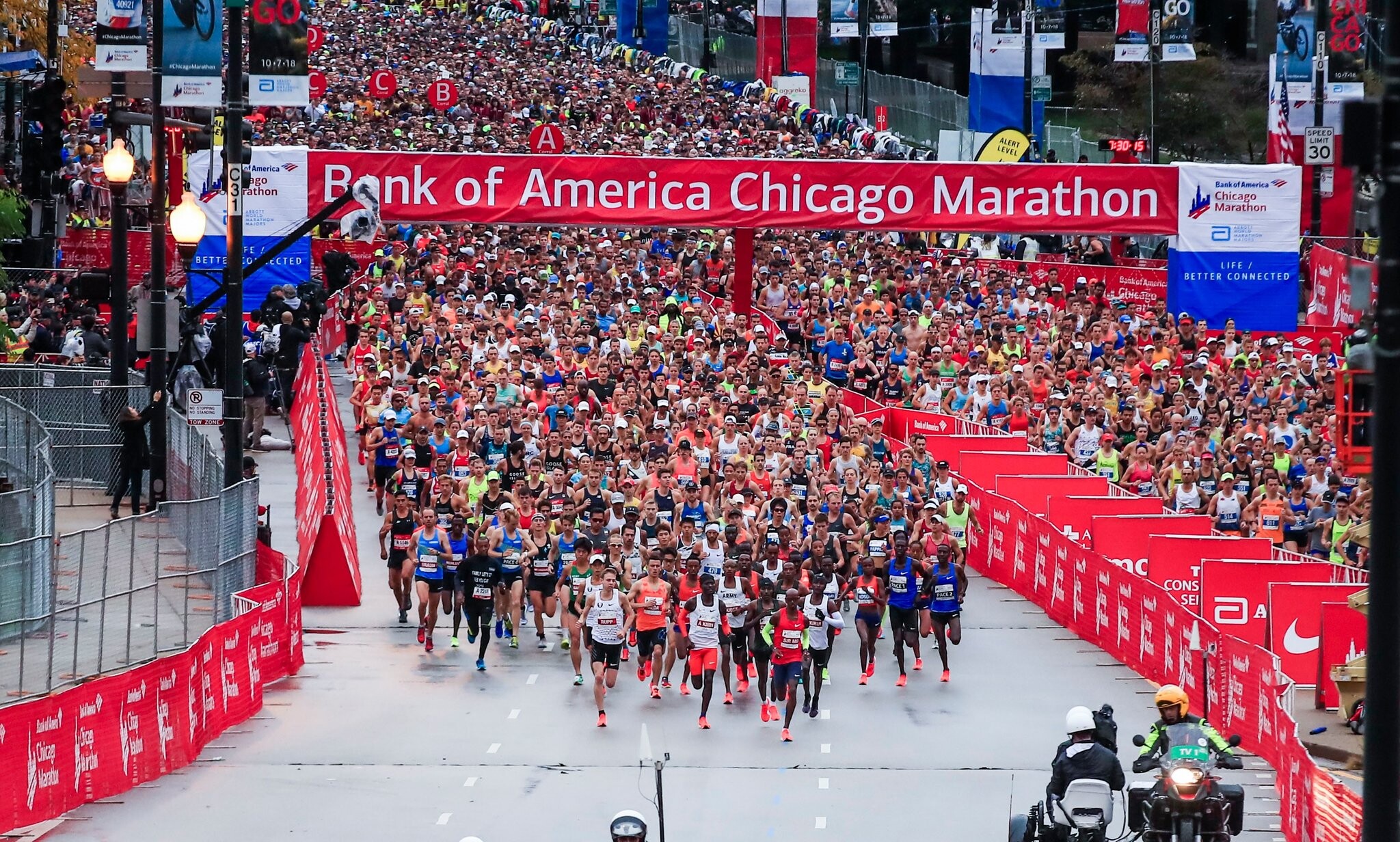
But the roots of the modern Bank of America Chicago Marathon traces back to 1982 when, in its sixth year, known as America’s Marathon/Chicago, the event rebooted, much as New York City 1976 was a reordering for the Big Apple 26-miler.
In America’s bicentennial year, the New York Road Runners expanded their event from four laps of Central Park to all five boroughs. It was a gamble. But in one fell swoop, the event grabbed the public’s attention, took on international importance, and ushered in a new era of urban marathons, even though they had run six previous marathons under the same banner.
In 1982, Chicago’s move from a regional marathon to the big time came about because of two things: one, the $600,000 budget put up by race sponsor, Beatrice Foods, and the hiring of one Robert Bright III of Far Hills, New Jersey to serve as athlete recruiter.
Bob Bright (left) at the Litchfield Hills Road Race in Connecticut with Nike east coast promo man, Todd Miller.
Recommended to the event by Olympians Frank Shorter and Garry Bjorlund, Bright had successfully elevated a modest 15K road race in Far Hills, New Jersey, called the Midland Run, to international prominence in 1980. So loaded was the Midland Run elite field, Sports Illustrated sent a reporter and photographer to cover the event.
What Bright brought to Chicago was zeal and a vision. Before Bright, there had been very little orchestration of competitive marathon racing. The Bright idea was simple: actively recruit a field of international athletes who came ready to run, so elite competition would become the hallmark of the event.
First, a brief history. For many decades, Boston dominated the marathon scene as essentially the only game in town. Yes, there was the Yonkers Marathonin New York, first contested in 1907; the Polytechnic Harriers’ Marathon for the Sporting Life trophy in England, which began in 1909. The Košice Peace Marathon in Slovakia joined the club in October 1924; Enschede and Fukuoka in 1947; Beppu in ’52.
But the Boston Athlettic Association’s attitude from its marathon’s inception in 1897 up to the mid-1980s remained, “We’re running our race on Patriots’ Day starting in Hopkinton, Massachusetts at noon. It will cost you three bucks to enter. See you at the bus line for the ride out to the start.” No bells, no whistles, no invitations.
When New York City debuted in 1970, it spun four laps of Central Park to total its 26.2 miles. But in 1976, with the city in a major financial difficulty amidst America’s Bicentennial, the New York Road Runners boldly took its marathon from the confines of Central Park and expanded it through all five boroughs hoping to attract more tourists.
Race Director Fred Lebow recruited a few big guns upfront to entice press coverage, Olympic gold and silver medalist Frank Shorter along with Shorter’s rival, American record holder from Boston 1975, fellow Olympian, Bill Rodgers. Everyone else filled in from behind, with the City of New York being the true star attraction.
First considered a onetime gimmick, the five-borough experience proved so successful, the NYRRs embraced it as the path forward. Still, the actual races in NYC were never very competitive. Rodgers won by three minutes over Shorter in ‘76, 2:10:10 to 2:13:12. Then dominated for the next three years, as well.
Chicago 1982 would be the first, full–blown, orchestrated marathon race, as Bright had a specific recruitment strategy.
“We wanted six guys who thought coming in that they had a chance to win,” said Bright. “Then we wanted six more behind them who figured they had a shot at the top 10. So, right away we didn’t go after a guy like Alberto Salazar (who was ranked number one in the world after wins in New York City in 1980, a short-course world record in ‘81, and a Boston title in 1982.)
“And if you figure that a top race has a main pack of 10 to 15 athletes, you’re going to double that number in invitations. That guarantees that even if two of every five don’t run well for one reason or another, you still have a big group ready to race.”
Redundancy was the key, the money, the magnet. The total amount taken home by runners from Chicago in 1982 was $130,000.
This was when Boston was still embracing its amateur roots, stiff-arming the new breed of runners looking to get paid for their craft. In New York, Lebow had to keep his payments under the table in order to avoid being billed for city services on race day.
Chicago put up $48,000 in prize money for the men in 1982, with $12,000 going to the winner, 600 for 15th place. The women’s split was $30,000, with $10,000 awarded for the win through $500 for 10th. The remaining $52,000 represented the grease in upfront, under-the-table appearance fees.
“We wanted the money to be respectable, but not overwhelming the first year,“ explained Bright, whose history as a dog sled racer and thoroughbred horse trainer made him one of the best judges of the running animal. “We didn’t want it to appear like the race was store-bought, like the Atlantic City pro race a few years ago, where the money was good, but no one took the race seriously.
“So, we put up $78,000 in prize money, which, to the public, doesn’t sound like all that much. But when you added on the appearance money, it represented as much as any other race handed out.“
For the money on offer, and the prestige of doing well against a field of that caliber – as good as the group assembled at the 1980 Moscow Olympics, according to Sweden’s Kjell Eric Stahl – what came down in Chicago 1982 was a new course record by University of Michigan grad Greg Meyer (2:10:59), along with 22 more sub -2:220s, and nine personal bests out of the first 11 finishers.
The top five women followed suit, led by Northampton, Massachusetts’s Nancy Conz, whose 2:33:33 also represented a new course record for Chicago, some 12 minutes faster than the old mark.
The event treated the athletes well; offered a new opportunity in the fall, competing with New York City; Chicago witnessed its first truly world-class marathon; the sponsor, Beatrice Foods, received enormous visibility for its dollars; and a new professionalism attended the art of marathon orchestration. Chicago was now the new kid on the block, with toys to match anyone’s.
But now the pressure was on, not just to maintain its pace, but to top itself in 1983. The story continues.
by Toni Reavis
Login to leave a comment
Bank of America Chicago
Running the Bank of America Chicago Marathon is the pinnacle of achievement for elite athletes and everyday runners alike. On race day, runners from all 50 states and more than 100 countries will set out to accomplish a personal dream by reaching the finish line in Grant Park. The Bank of America Chicago Marathon is known for its flat and...
more...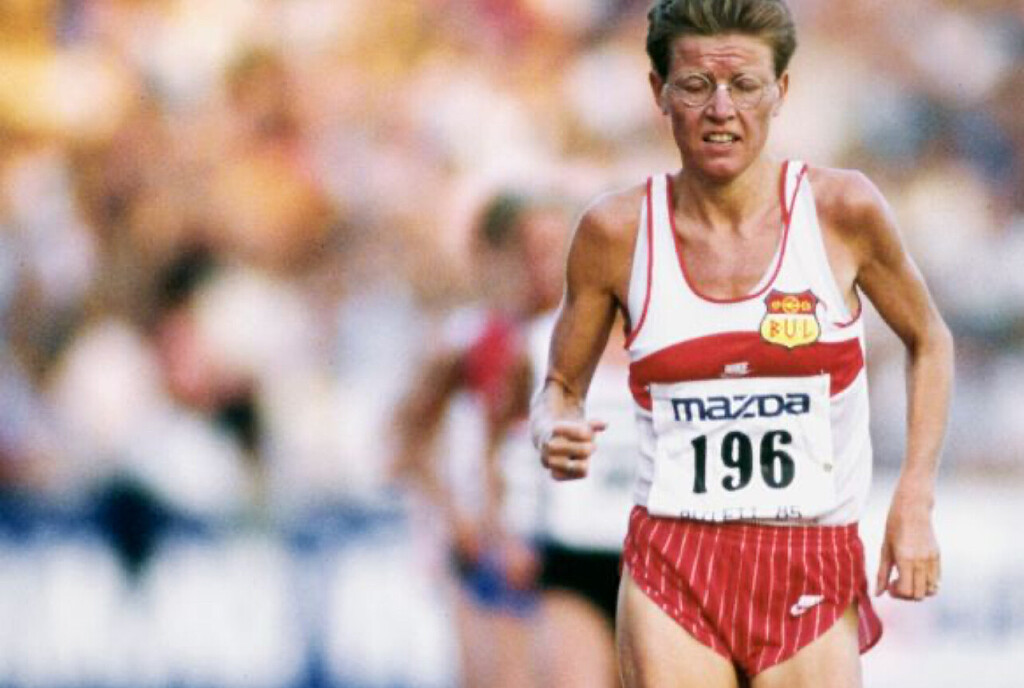
Remembering Kristiansen’s barrier-breaking sub-15-minute 5000m
When Ingrid Kristiansen lined up for the 5000m at the 1984 Bislett Games, she was known as the former international cross country skier who had just become Europe’s fastest ever woman in the marathon.
It was only six weeks previously that the 28-year-old mother from the Viking stronghold of Trondheim had made her major breakthrough in athletics, storming through halfway in the London Marathon in a blistering 1:10:52 en route to a winning time of 2:24:26.
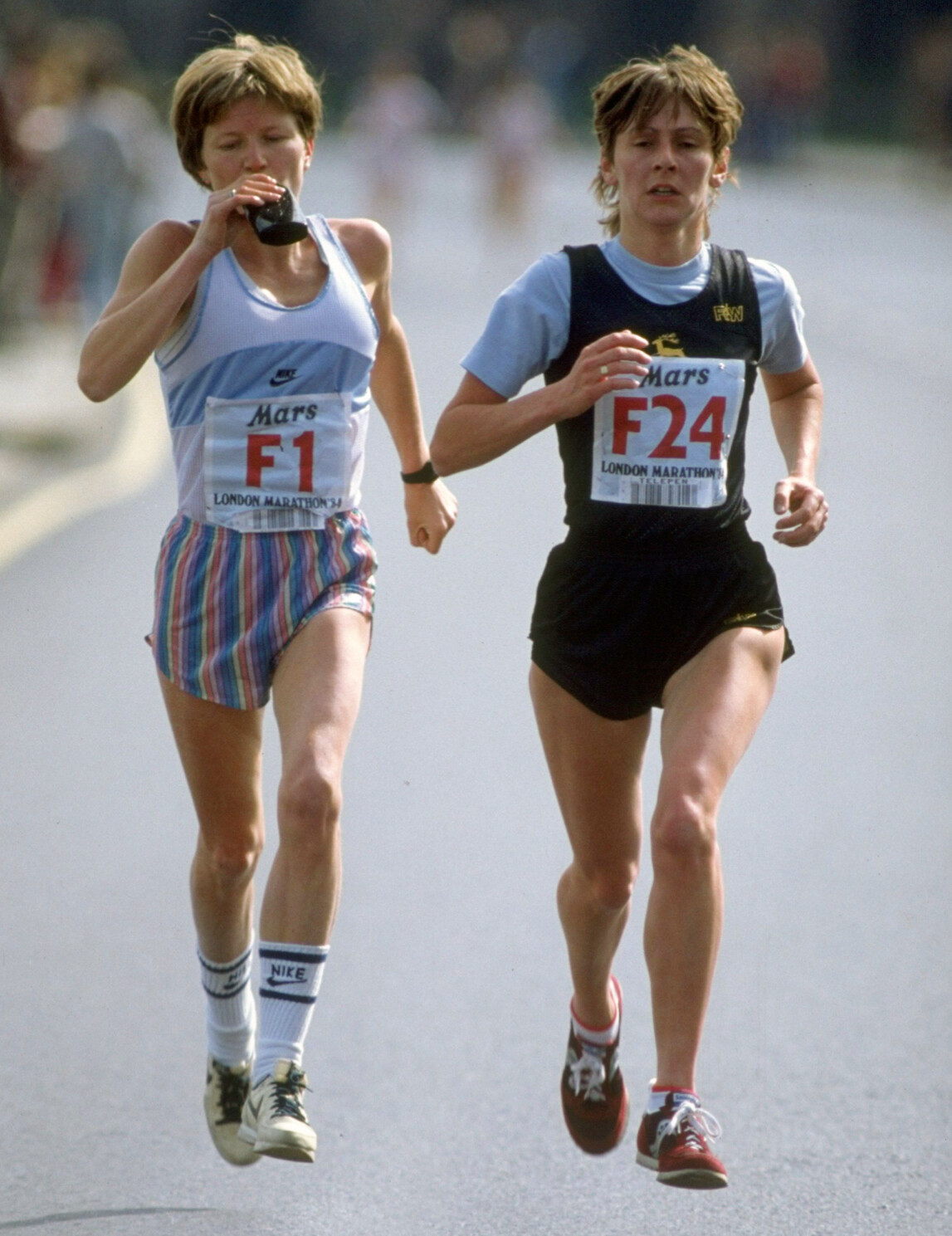
In the process, Kristiansen first peeped out of the considerable shadow of the great Grete Waitz as another formidable Norse to be reckoned with on the global running stage.
The London run elevated her to second spot on the world all-time list, behind the 2:22:43 recorded by Joan Benoit of the US in Boston the previous year, but ahead of Waitz’s Norwegian and European record of 2:25:28.7.
It was only fitting that the burgeoning Kristiansen should claim her first world mark on home ground, in the heart of Norway’s capital city on the hallowed Bislett Stadium track.
That was 40 years ago, on the evening of 28 June 1984.
‘Dead tired… pushed on by the cheers of the crowd’
The official world record for the women’s 5000m stood at 15:08.26 – to Mary Decker, or Mary Tabb as she had been when she set the figures on home ground at the 1982 edition of the Pre Classic.
In Apartheid South Africa on 5 January 1984 – and therefore ineligible for recognition – the barefoot Springbok wunderkind Zola Budd had run 15:01.83 in Stellenbosch. By June of the same year, Budd had already become a British citizen and was on her way to being rubber-stamped in the British team for the Los Angeles Olympics.
That night in Oslo, though, Kristiansen’s only rival was the Bislett Stadium clock.
After following Maggie Keyes of the USA through 1000m in 3:02.0, Kristiansen surged clear of the field, reeling off laps of 70-72 seconds.
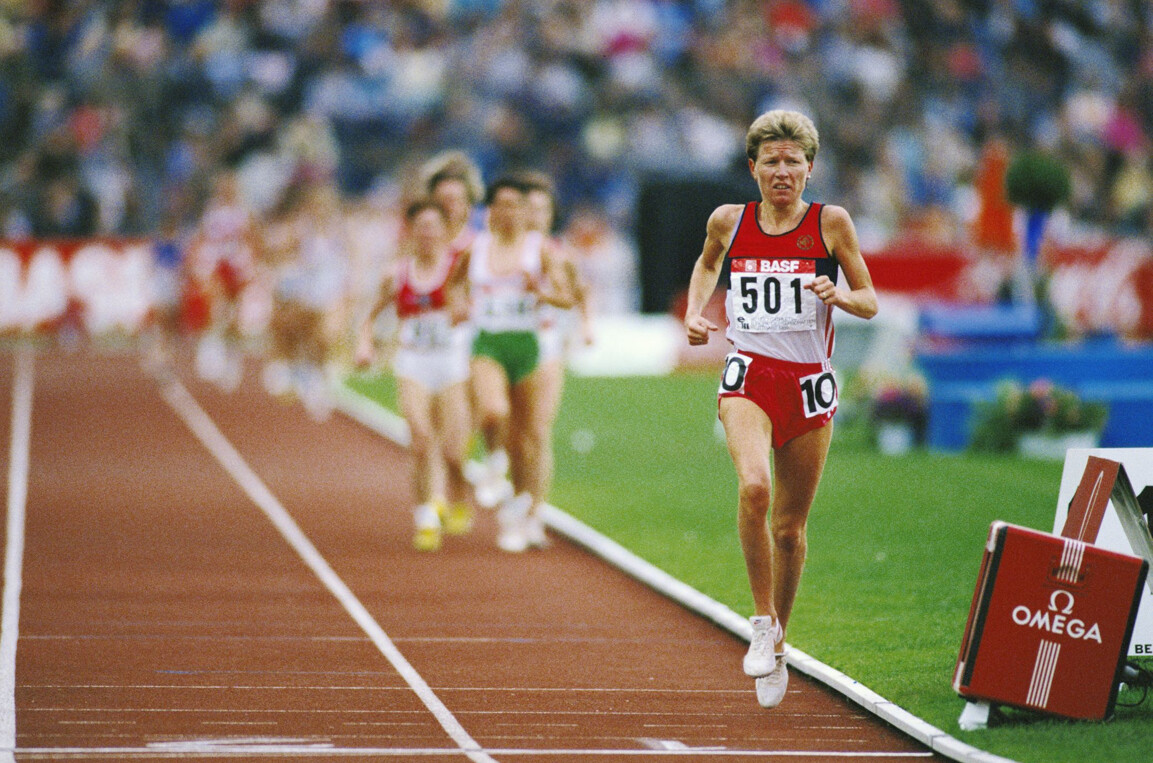
Passing 3000m in 8:59.8, Kristiansen finished with the flourish of a 68.4 final lap before crossing the line in 14:58.89.
Off marathon training of 170-180km a week, she had become the first woman in history to beat 15 minutes for 5000m.
“I was dead tired during the last two laps but I was pushed on by the cheers of the crowd,” she confessed.
Aurora Cunha, the future three-time world road race champion from Portugal, finished a distant runner up in 15:09.07, followed by Briton Angela Tooby (15:22.50).
Back in sixth was Portugal’s European marathon champion Rosa Mota (15:30.63) – followed by Tooby’s twin sister, Susan (15:44.58), future mother of 2022 world 1500m champion Jake Wightman.
Holding a distance world record triple
Kristiansen was to go quicker over 12.5 laps. At London’s Crystal Palace in 1985, she clocked 14:57.43 but lost the world record to Budd, a clear winner in 14:48.07.
In Stockholm in 1986, however, Kristiansen reclaimed the record with a stunning 14:37.33.
That year she was at her zenith on the track, improving her own 10,000m world record by almost 46 seconds with a 30:13:74 run at Bislett.
Kristiansen was the first runner in history to simultaneously hold world records for 5000m, 10,000m and the marathon.
Returning to the London Marathon in 1985, she brought the women’s 2:20 barrier into sight with a 2:21:06 triumph that stood as a world record for 13 years.
Kristiansen also became the first athlete to claim world titles on the track, on the road and over cross country. Twice a winner of the 15km world road race championship, she won the world 10,000m title on the track in Rome in 1987 and the world cross country crown in Auckland in 1988.
Big heart and big lungs
Many attributed Kristiansen’s phenomenal success to the physiological benefits she had gained from giving birth to her first son, Gaute, in 1983. She felt it was more the edge she had gained from years of competitive cross-country skiing.
“I think it came from my cross-country skiing career,” she asserted. “It gave me a big heart and big lungs, and when I got my legs trained for running I was maybe a little bit ahead of the other runners at the time.”
As a cross-country skiing prodigy, Kristiansen won the European junior title in 1974, was selected as a reserve for the Winter Olympics in Innsbruck in 1976, and finished 15th in the World Championships 20km race in 1978.
She decided to concentrate on competitive skiing for several years after making the Norwegian team for the 1971 European Athletics Championships as a 15-year-old 1500m runner, Ingrid Christensen. But she got bumped off the track in her heat in Helsinki and failed to finish the race.
Her roommate in the Finnish capital was a 17-year-old called Grete Andersen, who finished eighth in the other 1500m heat, missing the cut for the final.
She also made a name for herself in future years: as Grete Waitz, the first of Norway’s barrier-breaking distance-running duo.
by World Athletics
Login to leave a comment
TWENTY-ONE YEARS AGO, HE WAS INCARCERATED FOR LIFE. LAST YEAR, HE RAN THE NYC MARATHON A RADICALLY CHANGED MAN.
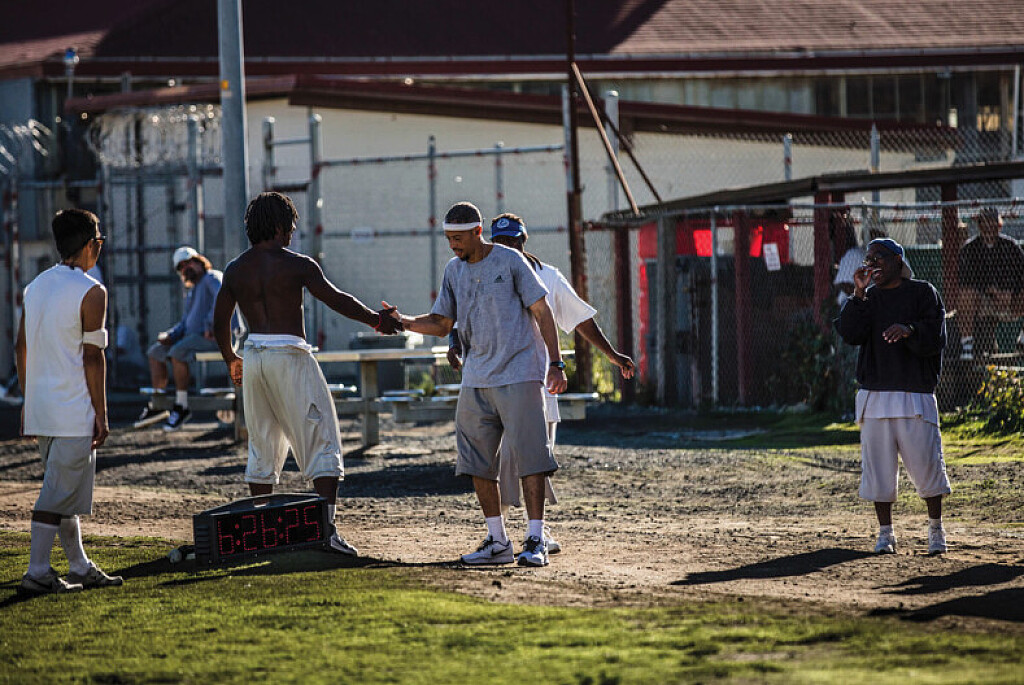
RAHSAAN ROUNDED THOMAS A CORNER. Gravel underfoot gave way to pavement, then dirt. Another left turn, and then another. In the distance, beyond the 30-foot wall and barbed wire separating him from the world outside, he could see the 2,500-foot peak of Mount Tamalpais. He completed the 400-meter loop another 11 times for an easy three miles.
Rahsaan wasn’t the only runner circling the Yard that evening in the fall of 2017. Some 30 people had joined San Quentin State Prison’s 1,000 Mile Club by the time Rahsaan arrived at the prison four years prior, and the group had only grown since. Starting in January each year, the club held weekly workouts and monthly races in the Yard, culminating with the San Quentin Marathon—105 laps—in November. The 2017 running would be Rahsaan’s first go at the 26.2 distance.
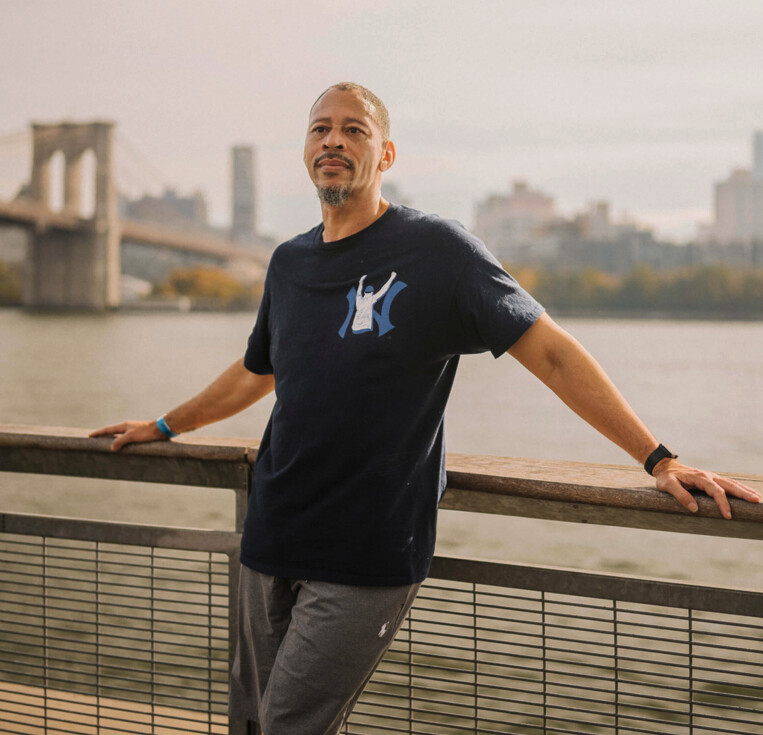
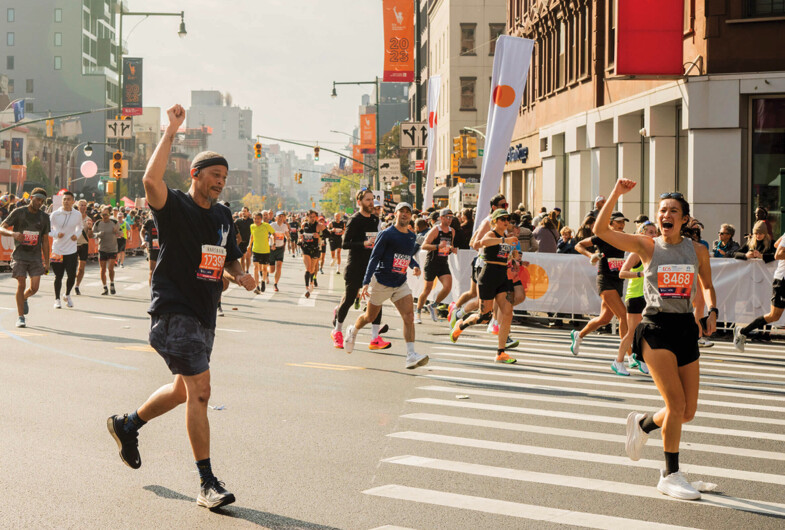
For Rahsaan and the other San Quentin runners, Mount Tam, as it’s known, had become a beacon of hope. It’s the site of the legendary Dipsea, a 7.4-mile technical trail from Mill Valley to Stinson Beach. After the 1,000 Mile Club was founded in 2005, it became tradition for club members who got released to run that trail; their stories soon became lore among the runners still inside. “I’ve been hearing about the Dipsea for the longest,” Rahsaan says.
Given his sentence, he never expected to run it. Rahsaan was serving 55 years to life for second-degree murder. Life outside, let alone running over Mount Tam all the way to the Pacific, felt like a million miles away. But Rahsaan loved to run—it gave him a sense of freedom within the prison walls, and more than that, it connected him to the community of the 1,000 Mile Club. So if the volunteer coaches and other runners wanted to talk about the Dipsea, he was happy to listen.
We’ll get to the details of Rahsaan’s crime later, but it’s useful to lead with some enduring truths: People can grow in even the harshest environments, and running, whether around a lake or a prison yard, has the power to change lives. In fact, Rahsaan made a lot of changes after he went to prison: He became a mentor to at-risk youth, began facing the reality of his violence, and discovered the power of education and his own pen. Along the way, Rahsaan also prayed for clemency. The odds were never in his favor.
To be clear, this is not a story about a wrongful conviction. Rahsaan took the life of another human being, and he’s spent more than two decades reckoning with that fact. He doesn’t expect forgiveness. Rather, it’s a story about a man who you could argue was set up to fail, and for more than 30 years that’s exactly what he did. But it’s also a story of navigating the delta between memory and fact and finding peace in the idea that sometimes the most formative things in our lives may not be exactly as they seem. And mostly, it’s a story of transformation—of learning to do good in a world that too often encourages the opposite.
RAHSAAN “NEW YORK” THOMAS GREW UP IN BROWNSVILLE, A ONE-SQUARE-MILE SECTION OF EASTERN Brooklyn wedged between Crown Heights and East New York. As a kid he’d spend hours on his Commodore 64 computer trying to code his own games. He loved riding his skateboard down the slope of his building’s courtyard. On weekends, he and his friends liked to play roller hockey there, using tree branches for sticks and a crushed soda can for a puck.
Once a working-class Jewish enclave, Brownsville started to change in the 1960s, when many white families relocated to the suburbs, Black families moved in, and city agencies began denying residents basic services like trash pickup and streetlight repairs. John Lindsay, New York’s mayor at the time, once referred to the area as “Bombsville” on account of all the burned-out buildings and rubble-filled empty lots. By 1971, the year after Rahsaan was born, four out of five families in Brownsville were on government assistance. More than 50 years later, Brownsville still has a poverty rate close to 30 percent. The neighborhood’s credo, “Never ran, never will,” is typically interpreted as a vow of resilience in the face of adversity. For some, like Rahsaan, it has always meant something else: Don’t back down.
The first time Rahsaan didn’t run, he was 5 or 6 years old. He had just moved into Atlantic Towers, a pair of 24-story buildings beset with rotting walls and exposed sewer pipes that housed more than 700 families. Three older kids welcomed him with their fists. Even if Rahsaan had tried to run, he wouldn’t have gotten far. At that age, Rahsaan was skinny, slow, and uncoordinated. He got picked on a lot. Worse, he was light-skinned and frequently taunted as “white boy.” The insult didn’t even make sense to Rahsaan, whose mother is Black and whose father was Puerto Rican. “I feel Black,” he says. “I don’t feel [like] anything else. I feel like myself.”
Rahsaan hated being called white. It was the mid-1970s; Roots had just aired on ABC, and Rahsaan associated being white with putting people in chains. Five-Percent Nation, a Black nationalist movement founded in Harlem, had risen to prominence and ascribed godlike status to Black men. Plus, all the best athletes were Black: Muhammad Ali. Reggie Jackson. Kareem Abdul-Jabbar. In Rahsaan’s world, somebody white was considered physically inferior.
Raised by his mother, Jacqueline, Rahsaan never really knew his father, Carlos, who spent much of Rahsaan’s childhood in prison. In 1974, Jacqueline had another son, Aikeem, with a different man, and raised her two boys as a single mom. Carlos also had another son, Carl, whom Rahsaan met only once, when Carl was a baby. Still, Rahsaan believed “the myth,” as he puts it now, that one day Carlos would return and relieve him, his mom, and Aikeem of the life they were living. Jacqueline had a bachelor’s degree in sociology and worked three jobs to keep her sons clothed and fed. She nurtured Rahsaan’s interest in computers and sent him to a parochial school that had a gifted program. Rahsaan describes his family as “upper-class poor.” They had more than a lot of families, but never enough to get out of Brownsville, away from the drugs and the violence.
Some traumas are small but are compounded by frequency and volume; others are isolated occurrences but so significant that they define a person for a lifetime. Rahsaan remembers his grandmother telling him that his father had been found dead in an alley, throat slashed, wallet missing. Rahsaan was 12 at the time, and he understood it to mean his father had been murdered for whatever cash he had on him—maybe $200, not even. Now he would never come home.
Rahsaan felt like something he didn’t even have had been taken from him. “It just made me different, like, angry,” he says. By the time he got to high school, Rahsaan resolved to never let anyone take anything from him or his family again. “I started feeling like, next time somebody tryin’ to rob me, I’m gonna stab him,” he says. He started carrying a knife, a razor, rug cutters—“all kinds of sharp stuff.” Rahsaan never instigated a fight, but he refused to back down when threatened or attacked. It was a matter of survival.
The first time Rahsaan picked up a gun, it was to avenge his brother. Aikeem, who was 14 at the time, had been shot in the leg by a guy in the neighborhood who was trying to rob him and Rahsaan. A few months later, Rahsaan saw the shooter on the street, ran to the apartment of a drug dealer he knew, and demanded a gun. Rahsaan, then 18, went back outside and fired three shots at the guy. Rahsaan was arrested and sent to Rikers Island, then released after three days: The guy he’d shot was wanted for several crimes and refused to testify against Rahsaan.
By day, Rahsaan tried to lead a straight life. He graduated from high school in 1988 and got a job taking reservations for Pan Am Airways. He lost the job after Flight 103 exploded in a terrorist bombing over Scotland that December, and the company downsized. Rahsaan got a new job in the mailroom at Debevoise & Plimpton, a white-shoe law firm in midtown Manhattan. He could type 70 words a minute and hoped to become a paralegal one day.
Rahsaan carried a gun to work because he’d been conditioned to expect the worst when he returned to Brownsville at night. “If you constantly being traumatized, you constantly feeling unsafe, it’s really hard to be in a good mind space and be a good person,” he says. “I mean, you have to be extraordinary.”
After high school, some of Rahsaan’s friends went to Old Westbury, a state university on Long Island with a rolling green campus. He would sometimes visit them, and at a Halloween party one night, he got into a scrape with some other guys and fired his gun. Rahsaan spent the next year awaiting trial in county jail, the following year at Cayuga State Prison in upstate New York, and another 22 months after that on work release, living in a halfway house in Queens. He got a job working the merch table for the Blue Man Group at Astor Place Theater, but the pay wasn’t enough to support the two kids he’d had not long after getting out of Cayuga.
He started selling a little crack around 1994, when he was 24. By 27 he was dealing full-time. He didn’t want to be a drug dealer, though. “I just felt desperate,” he says. Rahsaan had learned to cut hair in Cayuga, and he hoped to save enough money to open a barbershop.
He never got that opportunity. By the summer of 1999, things in New York had gotten too hot for Rahsaan and he fled to California. For the first time in his 28 years, Rahsaan Thomas was on the run.
EVERY RUNNER HAS AN ORIGIN STORY. SOME START IN SCHOOL, OTHERS TAKE UP RUNNING TO IMPROVE their health or beat addiction. Many stories share common themes, if not exact details. And some, like Rahsaan’s, are absolutely singular.
Rahsaan drove west with ambitions to break into the music business. He wanted to be a manager, maybe start his own label. His new girlfriend would join him a week later in La Jolla, where they’d found an apartment, so Rahsaan went first to Big Bear, a small town deep in the San Bernardino Mountains 100 miles east of Los Angeles. It’s where Ryan Hall grew up, and where he discovered running at age 13 by circling Big Bear Lake—15 miles—one afternoon on a whim. Hall has recounted that story so many times that it’s likely even better known than the American records he would go on to set in the half and full marathons.
Rahsaan didn’t know anything about Ryan Hall, who at the time was just about to start his junior year at Big Bear High School and begin a two-year reign as the California state cross-country champion. He didn’t even know there was a lake in Big Bear. Rahsaan went to Big Bear to box with a friend, Shannon Briggs, a two-time World Boxing Organization heavyweight champion.
Briggs and Rahsaan had grown up together in Atlantic Towers. As kids they liked to ride bikes in the courtyard, and later they went to the same high school in Fort Greene. But Briggs’s mom had become addicted to drugs by his sophomore year, and they were evicted from the Towers. Briggs and Rahsaan lost touch. Briggs began spending time at a boxing gym in East New York; often he’d sleep there. He had talent in the ring. People thought he might even be the next Mike Tyson, another native of Brownsville who was himself a world heavyweight champ from 1986 to 1989.
Briggs went pro in 1991, and by the end of that decade he was earning seven figures fighting guys like George Foreman and Lennox Lewis. Rahsaan was at those fights. The two had reconnected in 1996, when Rahsaan was trying to rebuild his life after prison and Briggs’s boxing career was on the rise. In August 1999, Briggs was gearing up to fight Francois Botha, a South African known as the White Buffalo, and had decamped to Big Bear to train. “He was like, ‘Yo, come live with me, bro,’” Rahsaan recalls.
Briggs was running three miles a day to increase his stamina. His route was a simple out-and-back on a wooded trail, and on one of Rahsaan’s first days there, he decided to join him. Rahsaan hadn’t done so much as a push-up since getting out of prison, but he wanted to hang with his friend. Briggs and his training partners set off at their usual clip; within a few minutes they’d disappeared from Rahsaan’s view. By the time they were doubling back, he’d barely made it a half mile.
Rahsaan never liked feeling physically inferior. So back in La Jolla, he started running a few times a week, going to the gym, whatever it took. Before long he was up to five miles. And the next time he ran with Briggs, he could keep up. After that, he says, “Running just became my thing.”
FOR YEARS, RAHSAAN HAD BUCKED AT TAKING RESPONSIBILITY for the murder that sent him to prison. The other guys had guns, too, he insisted. If he hadn’t shot them, they’d have shot him. It was self-defense.
In the moment, he had no reason to think otherwise. It was April 2000. A friend had arranged to sell $50,000 worth of weed, and Rahsaan went along to help. They met in the parking lot of a strip mall in L.A., broad daylight. The buyers brought guns instead of cash, things went sideways, and, in a flash of adrenaline, Rahsaan used the 9mm he’d packed for protection, killing one man and putting the other in critical condition. He was 29 and had been in California eight months.
After awaiting trial for three years in the L.A. County jails, Rahsaan was sentenced to 55 years to life. But for the crushing finality of it, the grim interminability, the prospect of never seeing the outside world again, he was on familiar ground. Even Brownsville had been a kind of prison—one defined, as Rahsaan puts it now, by division and neglect, a world unto itself that societal forces made nearly impossible to escape. He was used to life inside.
Rahsaan spent the next 10 years shuttling between maximum security facilities, the bulk of those years at Calipatria State Prison, 30 miles from the Mexican border. By the time he got to San Quentin, he was 42.
As part of the prison’s restorative justice program, Rahsaan met a mother of two young men who’d been shot, one killed and the other critically injured. Her pain, her dignity, her ability to forgive her sons’ shooters prompted Rahsann to reflect on his own crime. “It made me feel like, damn, I did this to his mother,” he says. “I did this to my mother. You don’t do that to Black mothers. They go through so much.”
ABOUT 2 MILLION PEOPLE ARE INCARCERATED IN THE UNITED States today, roughly eight times as many as in the early 1970s. Nearly half of them are Black, despite Black Americans representing only 13 percent of the U.S. population.
This disparity reflects what the legal scholar and author Michelle Alexander calls “the new Jim Crow,” an invisible system of oppression that has impeded Black men in particular since the days of slavery. In her book of the same title, Alexander unpacks 400 years of policies and social attitudes that have created a society in which one in three Black males will be incarcerated at some point in their lives, and where even those who have been paroled often face a lifetime of discrimination and disenfranchisement, like losing the right to vote. If you hit a wall every time you try to do something, are you really free? More than half of the people released from U.S. jails and prisons return within three years.
After Rahsaan got out of Cayuga back in 1992, with a felony on his permanent record, he’d had trouble doing just about anything legit: renting an apartment, finding a decent job, securing a loan. Though he’d paid for the Mercedes SUV he drove to California, the lease was in his girlfriend’s name. Selling crack had provided financial solvency, and his success in New York made him feel invincible. One weed deal in California seemed easy enough. But he wasn’t naive. Rahsaan packed a gun, and if he felt he had to use it, he would.
Today Rahsaan feels deep remorse for what transpired from there. But back then he saw no other way. “When we have a grievance, we hold court in the street,” he says of growing up in the Brownsville projects. “There’s no court of law, there’s no lawsuits.” Even while incarcerated, Rahsaan continued to meet threats with violence. But he also found that in prison, as in Brownsville, respect was temporary. “If you stab somebody, people leave you alone,” he says. “But you gotta keep doing it.”
Not long after Rahsaan got to Calipatria, around 2003 or 2004, an older man named Samir pulled him aside. “Youngster, there’s nobody that you can beat up that’s gonna get you out of prison,” Rahsaan remembers Samir saying. “In fact, that’s gonna make it worse.” Rahsaan thought about Muhammad Ali, how he would get his opponents angry on purpose so they’d swing until they wore themselves out. He realized that when you’re angry, you’re not thinking clearly or moving effectively. You’re not responding; you’re reacting.
The next time Rahsaan saw Samir was in the yard at Calipatria. They were both doing laps, and the two men started to run together. Rahsaan told Samir about the impact his words had on him, how they helped him see he’d always let “somebody else’s hangup become my hangup, somebody else’s trauma become my trauma.” Each time that happened, he realized, he slid backward.
Rahsaan began exploring various religions. He liked how the men in the Muslim prayer group at Calipatria encouraged him to think about his past, and the way they talked about God’s plan. He thought back to that day in April 2000 and came to believe that God would have gotten him out of that situation without a gun. “If I was meant to die, I was meant to die,” he says. “If I’m not, I’m not.” He started to see confrontations as tests. “I stopped feeding into the negativity and started passing the test, and I’ve been passing it consistently since,” he says.
CLAIRE GELBART PLACED HER BELONGINGS IN A PLASTIC TRAY AND WALKED THROUGH THE METAL detectors at the visitors’ entrance at San Quentin. She crossed the Yard to the prison’s newsroom. It was late fall of 2017, and Gelbart had started volunteering with the San Quentin Journalism Guild, an initiative to teach incarcerated people the fundamentals of newswriting and interviewing techniques.
Historically infamous for housing people like Charles Manson and Sirhan Sirhan, the man convicted of killing Robert Kennedy, and for having the only death row for men in California, San Quentin has in recent years instituted reforms. By the time Rahsaan arrived, the facility was offering dozens of programs, had an onsite college, and granted some of the individuals housed there considerable freedom of movement. Hundreds of volunteers pass through its gates every year.
Rahsaan was in the newsroom working on a story for the San Quentin News, where he was a staff writer. Gelbart and Rahsaan started to chat, and within minutes they were bonding over running. They talked about the San Quentin Marathon—in which Rahsaan was proud to have placed 13th out of 13 finishers in 6 hours, 12 minutes, and 23 seconds—and Gelbart’s plans to run her first half marathon that spring. “It was like I lost all sense of place and time,” Gelbart says, “like I could have been in a coffee shop in San Francisco talking to someone.”
In weekly visits over the next year, Gelbart and Rahsaan talked about their families, their hopes for the future. Gelbart had just graduated from Tufts University with dreams of being a writer. Rahsaan was working toward a college degree, writing for numerous outlets like the Marshall Project and Vice, and learning about podcasting and documentary filmmaking. In 2019, when Gelbart was offered a job in New York, she told Rahsaan she felt torn about leaving—they’d become close friends. They made a pact that if Rahsaan ever got out of prison, they would run the New York City Marathon together. “We couldn’t think of a better thing to celebrate him coming home,” Gelbart says.
When Rahsaan was sentenced, he still had hope for a successful appeal. But when his appeal was denied in 2011, he realized he was never going home. His parole date was set for 2085.
At the time, though, the political appetite for mass incarceration was starting to shift. Gray Davis, who was governor of California from 1999 to 2003, had never granted a single pardon; and his successor, Arnold Schwarzenegger, granted only 15. Then, between 2011 and 2019, Governor Jerry Brown pardoned or commuted the sentences of more than 1,300 people. Studies show that the recidivism rate among those who had been serving life sentences is less than 5 percent in a number of states, including California. And according to the U.S. Bureau of Justice, 98 percent of people convicted of homicide who are released from prison do not commit another murder.
In the fall of 2018, Governor Brown approved Rahsaan for commutation, but it was now up to his successor, Gavin Newsom, to follow through. And until a release date was set, there were no guarantees.
Back at San Quentin, Rahsaan was busier than ever. He was working on his fourth film, Friendly Signs, a documentary funded by the Marshall Project and the Sundance Institute; it was about fellow 1,000 Mile Club member Tommy Lee Wickerd’s efforts to start an ASL program to aid a group of deaf and hard-of-hearing newcomers to the prison. He had recently been named chair of the San Quentin satellite chapter of the Society of Professional Journalists and became a cohost and coproducer of Ear Hustle, a popular podcast about life in San Quentin that in 2020 was a finalist for a Pulitzer Prize. He was also sketching out plans for a nonprofit, Empowerment Ave, to build connections to the outside world for other incarcerated writers and artists and to advocate for fair compensation. And after five years, he was just one history class away from getting his associate’s degree from Mount Tamalpais College.
In January 2020, Rahsaan began his final semester, eager to don his cap and gown that June. MTC always organized a festive graduation ceremony in the prison’s visiting room, inviting families, friends, students, and staff. Then COVID-19 hit. Lockdown. All classes canceled until further notice. The 1,000 Mile Club suspended workouts and races as well, its 70-plus members scattering throughout the prison, not sure when or if they’d ever get together again. Covid would officially kill 28 people at San Quentin and make many more very ill. College graduation, let alone races in the Yard and parole hearings, would have to wait.
For the first time since arriving at San Quentin, Rahsaan felt claustrophobic in his 4-by-10-foot cell. He couldn’t work on his films or go to the newsroom. All he could do was read and write, alone. After George Floyd was murdered that May, Rahsaan fell into a depression. He remembered something Chadwick Boseman had said in a 2018 commencement speech at Howard University: “Remember, the struggles along the way shape you for your purpose.”
Rahsaan decided his purpose was to write. Outside journalists couldn’t enter the prison during the pandemic, but their publications were thirsty for prison Covid stories. Rahsaan saw an opportunity. Between June 2020 and February 2023, he published 42 articles, and thanks to Empowerment Ave, he knew what those articles were worth. As a writer for the San Quentin News, Rahsaan earned $36 a month; those 42 articles for external publications netted him $30,000.
DOZENS OF PEOPLE GATHERED OUTSIDE SAN QUENTIN’S GATES. IT WAS A FRIGID MORNING IN EARLY February 2023; the sun hadn’t yet risen. Among those assembled were two cofounders of Ear Hustle, Earlonne Woods and Nigel Poor, along with executive producer Bruce Wallace, recording equipment in hand. A procession of white vans, each carrying one or two men, arrived one by one. After three or four hours, the air had warmed to a balmy 60 degrees. Another van pulled up, Rahsaan got out, and the crowd erupted. Nearly 23 years after he’d been sentenced to 55 years to life, Rahsaan Thomas had been released.
Rahsaan got into a Hyundai sedan and was soon headed away from San Quentin. Wallace sat in the back, recording Rahsaan seeing water, mountains, and a highway from the front seat of a car for the first time in decades. “I feel like I’m escaping,” he joked. “Is anybody chasing us? This is amazing. This is crazy.”
Rahsaan called his mom, who wasn’t able to make it to California for his release.
“Hey, Ma, it’s really real,” he said, breathless with joy. “I’m free. No more handcuffs.”
Jacqueline’s exuberance can be heard in her laughter, her curiosity about what his first meal would be (steak and French toast), and her motherly rebuke of his plan to buy a Tesla.
“You ain’t been drivin’ in a while and I know you ain’t the best driver in the world,” she teased.
Rahsaan moved into a transitional house in Oakland and wasted no time adjusting to life in the 21st century. He got an iPhone, and a friend gave him a crash course in protecting himself from cyberattacks. He’s almost fallen for a few. “There’s some rough hoods on the internet,” he jokes. Earlonne Woods, who was paroled in 2018, and others taught Rahsaan how to use social media. He opened Instagram and Facebook accounts and worked on his own website, rahsaannewyorkthomas.com, which a friend had built for him while he was in San Quentin to promote his creative projects, Empowerment Ave, and even a line of merch.
Despite all the excitement and chaos, Rahsaan never forgot about the pact he’d made with Claire Gelbart. He found her on Facebook and sent a simple, two-line message: “Start training. We have a marathon to run.”
IN LATE MARCH, SIX WEEKS AFTER HIS RELEASE, RAHSAAN FLEW TO NEW YORK CITY. IT WAS THE FIRST time he’d been home in nearly a quarter century, and he hadn’t flown since before 9/11. The security protocols at SFO reminded him more of prison than of the last time he’d been in an airport. Actually, “it was worse than prison,” he jokes. They confiscated his jar of honey.
The changes to his home borough were no less surprising. He’d come to New York to take work meetings, see family, and catch a Nets game at Barclays Center in downtown Brooklyn. Rahsaan barely recognized Barclays; it had been a U-Haul lot the last time he was there, and skyscrapers now towered over Fulton Mall, where he used to buy Starter jackets at Dr. Jay’s and Big Daddy Kane tapes at the Wiz.
He met up with Gelbart on Flatbush Avenue, where come November they’d be just hitting mile 8 of the New York City Marathon. They hadn’t been allowed to touch at San Quentin and weren’t sure how to greet each other on the outside. “It was weird at first, because I was like, do we hug?” Gelbart recalls. But the awkwardness faded fast, and as they walked, Gelbart saw a different side of Rahsaan. “He seemed so much more relaxed,” she says. “Much happier, much lighter.”
Back in 1985, just a few blocks from where Rahsaan and Gelbart walked now, Rahsaan, his brother Aikeem, and his friend Troy had been on their way home from the Fulton Mall when out of nowhere, about a dozen guys rolled up on them. They started beating on Troy and, for a minute, left Rahsaan and Aikeem alone. Images of his father, throat slashed, flashed through Rahsaan’s mind. He pulled a rug cutter out of his pocket, ran to the smallest guy in the group, and jabbed it into the back of his head. “They looked at me like they were gonna kill me,” Rahsaan says. He threw the blade to the ground, slid his hand inside his coat, and held it there. “Y’all wanna play? We gonna play,” he said. The bluff worked; the guys ran. It was the first time Rahsaan had ever stabbed someone.
Change sometimes occurs gradually, and then all at once. That was a different Brooklyn, a different Rahsaan. He began to confront his own violence when he had met Samir some 20 years before, and continued to do so through his studies, his faith, his work in restorative justice, and his own writing. But the origin of his tendency toward violence, the death of his father, remained firmly rooted in his psyche. Then, in 2017, Rahsaan spoke for the first time with his estranged half-brother, Carl.
Carl had read Rahsaan’s work, and asked why he always said their father had been murdered.
“That’s what grandma told me,” Rahsaan said.
“But he wasn’t murdered,” Carl told him. “He killed himself.”
And it wasn’t in 1982, as Rahsaan remembered, but in 1985—the same year Rahsaan started carrying blades.
Rahsaan didn’t believe it until Carl sent him a copy of the suicide note. Even then he remained in shock. “To think I justified violence, treating robbery like a life-or-death situation, over a lie,” he says. Jacqueline was as surprised as Rahsaan to learn the truth of Carlos’s death. He never seemed troubled or depressed to her when they were together, but, “You can’t really read people,” she says. “You don’t know.”
Rahsaan still can’t account for why his grandmother told him what she did, nor for the discrepancy between his memory and the facts. Regardless, after more than 30 years, Rahsaan was finally able to let go of the one trauma that had calcified into an instinct to kill or be killed. And he has no intention of dredging it back up.
THE FASTEST RUNNER IN THE 1,000 MILE CLUB’S HISTORY IS MARKELLE “THE GAZELLE” TAYLOR, WHO was paroled in 2019 and went on to run 2:52 in the 2022 Boston Marathon. Rahsaan is the slowest. At San Quentin, he was often the last one to finish a race, but that wasn’t the point—he liked being out in the Yard with the guys. It gave him a sense of belonging, and not just to the 1,000 Mile Club, but to the running community beyond.
Like every other 1,000 Miler who gets released from San Quentin, Rahsaan had a rite of passage to conquer. On Sunday morning, May 7, 2023, he met a handful of other runners from the club and a few volunteer coaches in Mill Valley. After a decade of gazing up at Mount Tam from the Yard as he completed one 400-meter loop after another, Rahsaan was finally about to run over the mountain all the way to the Pacific.
The runners did a few final stretches, wished one another luck, and started to run. Almost immediately they had to climb some 700 stairs, many made of stone, and the course only got more treacherous from there. Uneven footing, singletrack paths, and 2,000-plus feet of elevation all conspire to make the Dipsea notoriously difficult. The giant redwoods and Douglas firs along the course were lost on Rahsaan; he never took his eyes off the ground.
One of the coaches, Jim Maloney, stayed with Rahsaan as his guide, and to help him if he slipped or fell. Markelle Taylor came too, but said he’d meet them in Stinson Beach. He knew how dangerous the trail was, Rahsaan says, and had vowed to never run it again. After his own initiation, Rahsaan decided that he, too, would never do it again. “I’ve been shot at,” he says. “I’ve been in physical danger. I don’t want to revisit danger.”
Rahsaan now logs most of his miles on a treadmill because of knee issues, but on occasion he ventures out to do the 3.4-mile loop around Lake Merritt, a lagoon in the heart of Oakland. He decided to use the New York City Marathon to raise money for Empowerment Ave, and to accept donations until he crossed the finish line in Central Park. Gelbart wrote a training plan for him and got him a new pair of shoes. In prison, Rahsaan had run in the same pair of Adidas for three years, and he was excited to learn about the maximalist shoe movement. Gelbart tried to interest him in Hokas, but Rahsaan thought they were ugly. He wanted Nikes.
In June, Gelbart went to the Bay Area to visit family and met Rahsaan for a six-mile run around Lake Merritt. As they looped the lake at a conversational 11:30 pace, they talked about work, relationships, and, of course, the New York City Marathon. Rahsaan was disappointed to learn that he would probably not be the last person to finish. (He still holds the record for the slowest San Quentin Marathon in its 15-year history, and he hopes no one ever beats it.) Besides, the more time he spent on the course in New York, he figured, the longer people would have to donate to Empowerment Ave.
On Sunday, November 5, Gelbart and Rahsaan made their way to Staten Island. Waiting at the base of the Verrazzano Bridge, Gelbart recorded Rahsaan singing along to Frank Sinatra’s “New York, New York” for Instagram, and captioned the video “back where he belongs.” They documented much of their race as they floated through Brooklyn, Queens, Manhattan, and the Bronx: greeting friends along the course, enjoying a lollipop on the Queensboro Bridge, beaming even as their pace slowed from 11:45 per mile for the first 5K to 16:30 for the last. Rahsaan finished in six hours, 26 minutes, and 21 seconds, placing 48,221 out of 51,290 runners. The next day, he sent me a text: “The marathon was pure love.” What’s more, he received more than $15,000 in donations for Empowerment Ave, enough to start a writing program at a women’s prison in Texas.
Every runner has an origin story. Every runner finds a reason to keep going. At Calipatria, Rahsaan liked to joke that he ran because if an earthquake ever came along and brought down the prison’s walls, he needed to be in shape so he could escape and run to Mexico. In San Quentin, he ran for the community. Today he has a new reason. “I heard that running extends your life by 10 years,” he says, “and I gave away 22.” Now that he’s out, his motivation has never been higher. He has so much to do.
Login to leave a comment
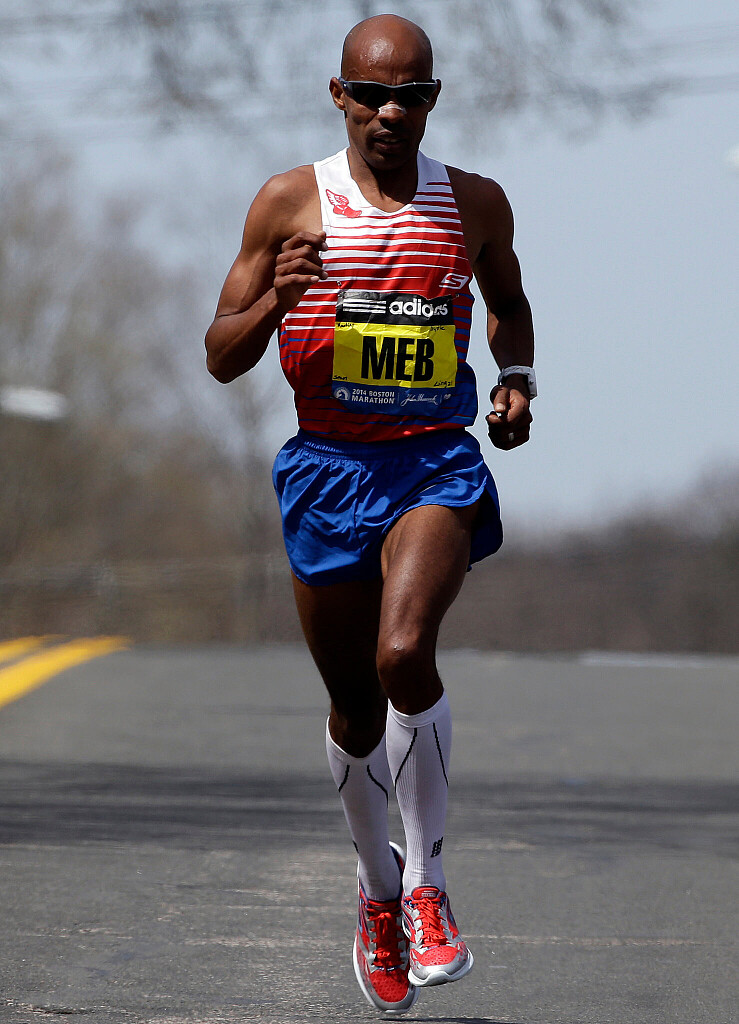
Mumbai Marathon 2024: Olympic medalist Meb Keflezighi named brand ambassador
Celebrated long distance runner Meb Keflezighi, who won a silver medal in the 2004 Athens Olympics, has been named brand ambassador of the 19th Tata Mumbai Marathon scheduled to be held on Sunday.
The race is a World Athletics Gold Label event and Procam International is the promoter of the event.
Celebrated long distance runner Meb Keflezighi, who won a silver medal in the 2004 Athens Olympics, has been named brand ambassador of the 19th Tata Mumbai Marathon scheduled to be held on Sunday.
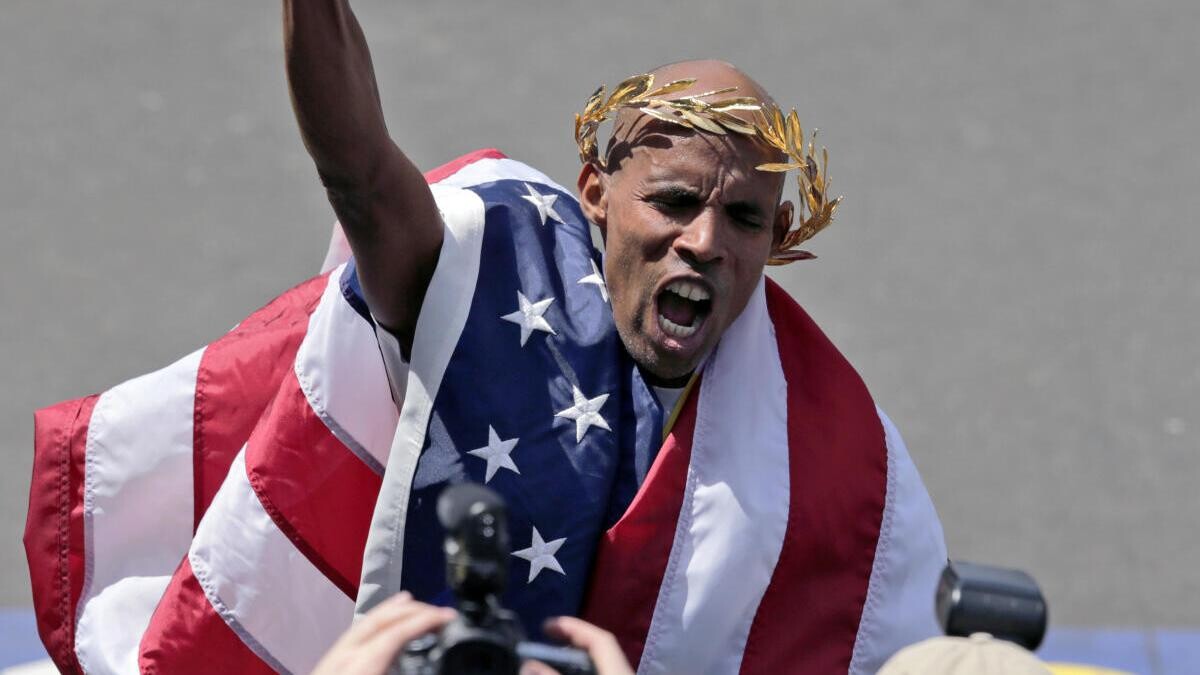
The race is a World Athletics Gold Label event and Procam International is the promoter of the event.
“The Tata Mumbai Marathon has been on my bucket list for the longest time, and finally being able to witness Mumbai’s indomitable spirit, is indeed exciting,” Keflezighi, an Eritrea-born American, was quoted as saying in a press release.
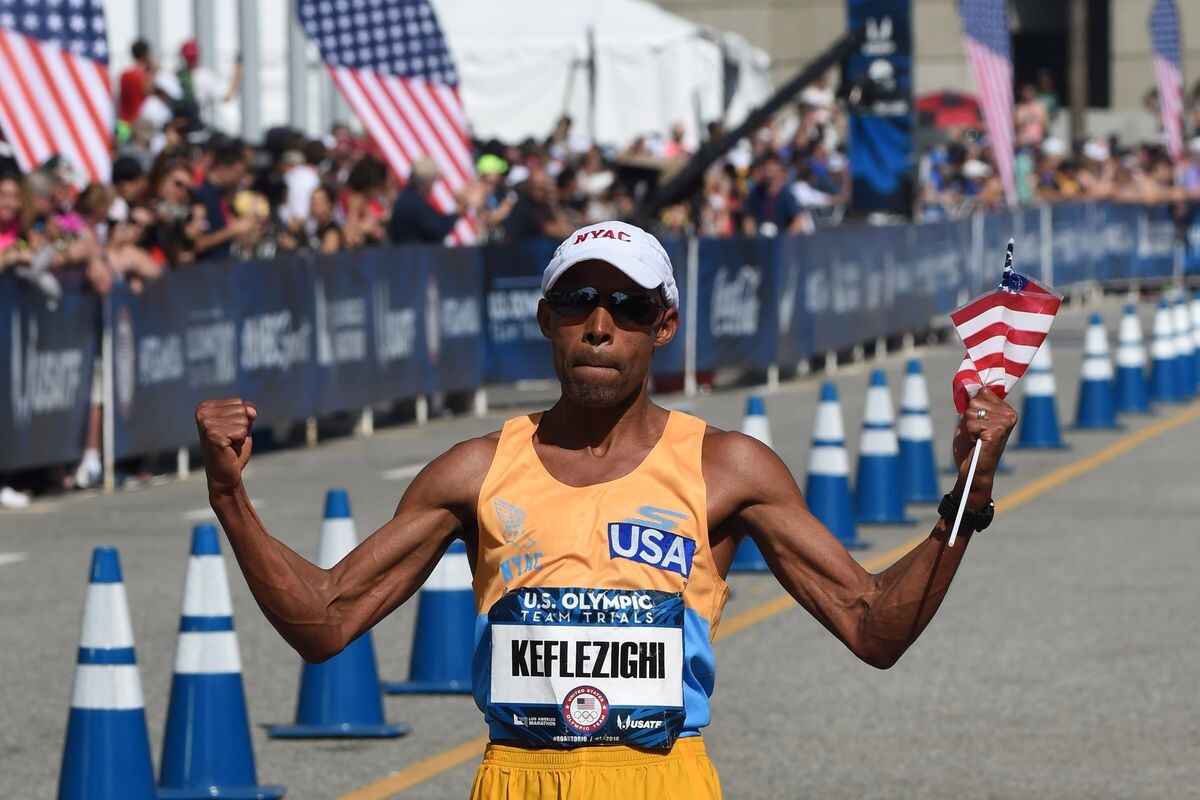
“This event inspired a country to run and changed mindsets, that is the true legacy of a sporting event. Mumbai’s incredible energy and enthusiasm, combined with the dedication of its runners, embodies the universal language of endurance. I will only say this… remember to run with purpose, embrace the journey, and move ahead together. In every stride, find the strength to go the distance and make a difference to what you believe in.”
Keflezighi has several record-breaking accolades in his career.
He scripted history when he became the only runner to win an Olympic medal (2004), the New York City Marathon (2009) and the Boston Marathon (2014).
In 2009, Keflezighi became the first American since 1982 to win the New York City Marathon. He has achieved the feat of being in the top 10 in the New York Marathon for a total of eight times in his career.
In 2015, he set a TCS New York City Marathon masters event record with a timing of 2:13:32sec.
In 2014 he won the Boston Marathon (2:08:37), the first American male to do so since 1983, and the first American since 1985.
Since 1930, Keflezighi has held the record for being the oldest winner of the Boston Marathon as he triumphed there when he was 39 years old.
He is also a former USA National 10,000m track record holder.
The Tata Mumbai Marathon will flag off from the iconic Chhatrapati Shivaji Maharaj Terminus on Sunday.
Login to leave a comment

Tata Mumbai Marathon
Distance running epitomizes the power of one’s dreams and the awareness of one’s abilities to realize those dreams. Unlike other competitive sports, it is an intensely personal experience. The Tata Mumbai Marathon is One of the World's Leading Marathons. The event boasts of fundraising platform which is managed by United Way Mumbai, the official philanthropy partner of the event. Over...
more...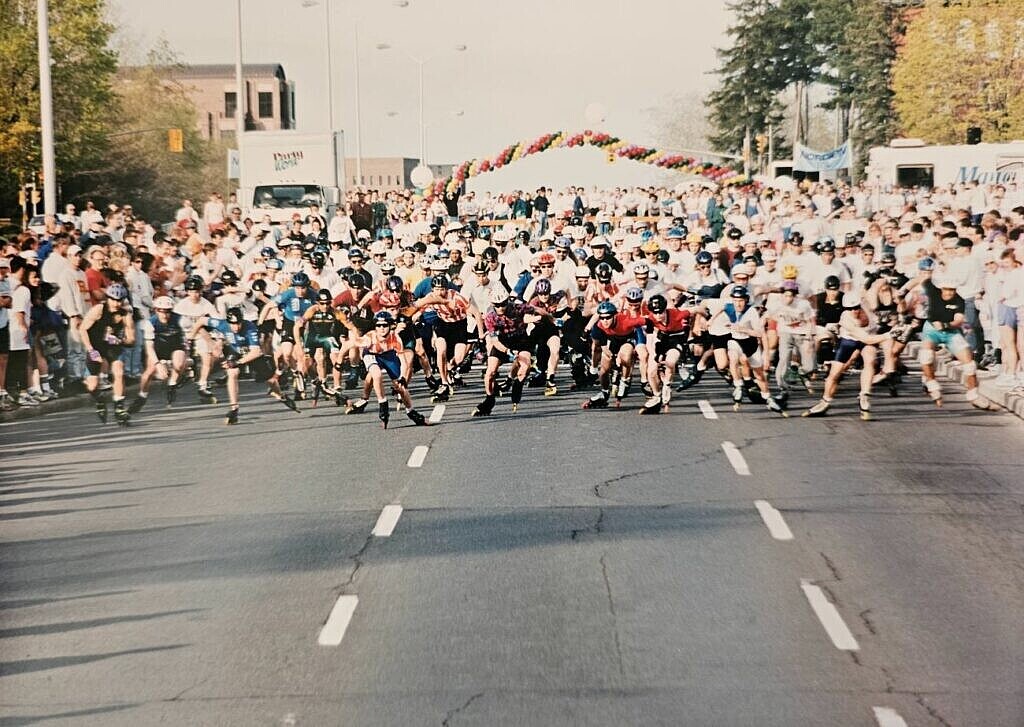
Things you didn’t know about the Ottawa International Marathon
The Ottawa Marathon turns 50 in 2024, and there’s no better way to celebrate than to be a part of Canada’s largest and most historic spring marathon, which will take place on May 26. Through the years, the marathon has seen everything from warm temperatures to course records and Olympic dreams, not to mention all the Boston qualifiers. But there’s a lot you might not know about Canada’s capital city marathon.
1975: Only 3 women ran the first Ottawa Marathon
Ottawa has always been one of Canada’s premier running cities, and on May 25, 1975, a 42.2 km route was designed, starting and finishing at Carleton University. The race’s beginnings were modest, with only 146 runners finishing the inaugural marathon. Compared to recent registration numbers (30,000 plus), it’s next to nothing, but in 1975, it was already Canada’s biggest marathon.
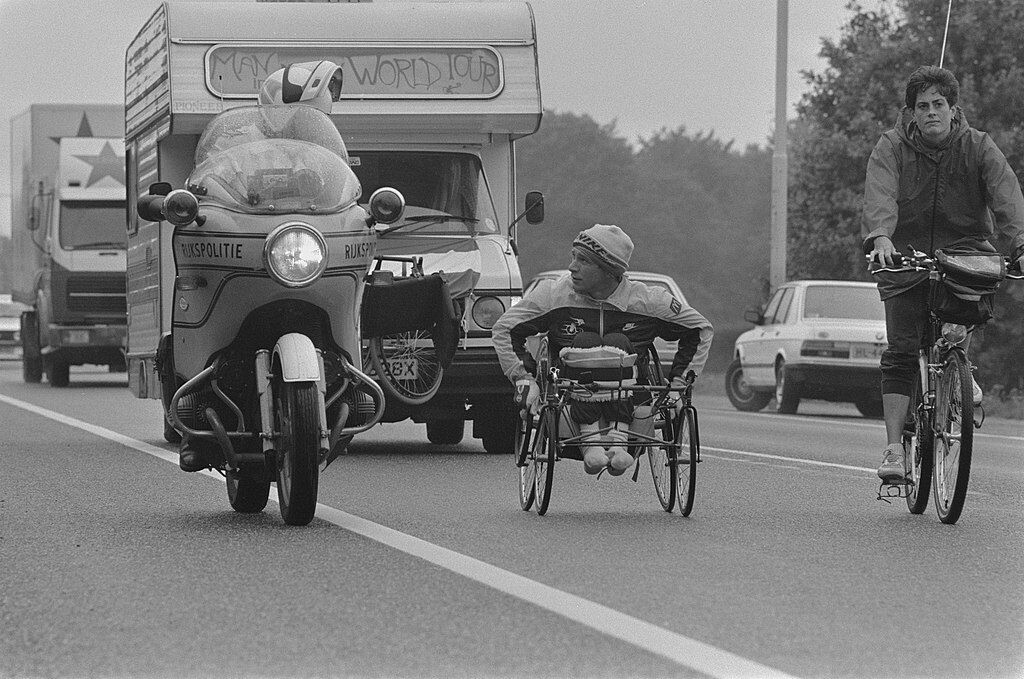
The race was called the National Capital Marathon and was won “by accident” by Quebec middle-distance runner Mehdi Jaouhar, who entered the race with his roommate. Only three of the 146 finishers were women.
1976: The Ottawa Marathon champion had lunch with the Queen
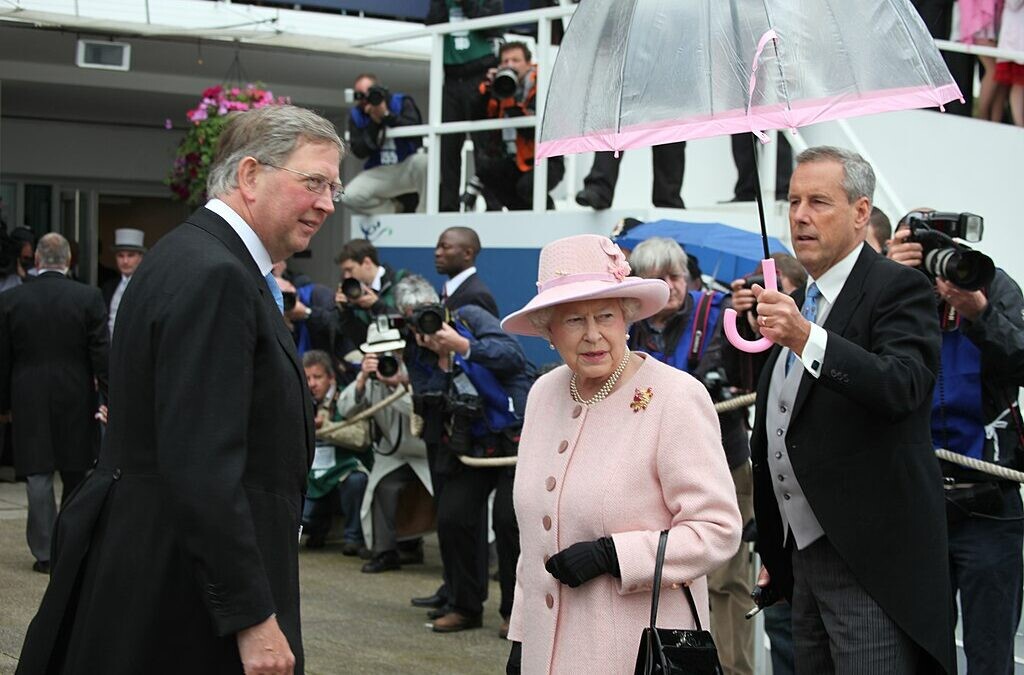
This year was a special one for athletics in Canada, as the country hosted the 1976 Summer Olympics (still the only Summer Olympics our nation has hosted to date). The marathon quadrupled in size from the previous year, and the stakes and competition rose accordingly. The race was selected as the location for the 1976 Olympic Trials for the Canadian marathon team, attracting some of Canada’s top marathoners.
Toronto’s Wayne Yetman set a new course record of 2:16:32, earning a spot on the Canadian Olympic team for Montreal. Also included in his Olympic moment was lunch with Queen Elizabeth. Eleanor Thomas won the women’s marathon for the second year in a row, yet she didn’t take in any water or electrolytes on the course. Thomas was a smoker at the time, and famously said “quitting smoking was harder than running a marathon.”
1983: Man in Motion Rick Hansen raced the Ottawa Marathon
In preparation for his famous Man in Motion World Tour, Rick Hansen won the inaugural wheelchair division at the Ottawa Marathon in 1983. Previously, wheelchair athletes competed in the open field. Hansen was the pioneer of the wheelchair division in Canada after winning gold, silver and bronze medals at the 1980 Paralympic Games. He became the first Canadian Para athlete to win the wheelchair division at the 1982 Boston Marathon.
Between 1985 and 1987, Hansen wheeled more than 40,000 kilometers around the world through 34 countries to raise awareness about people with disabilities. The world tour started and ended on the Port Mann Bridge in Vancouver.
1986: The marathon almost ended
After a major decline in numbers in 1984 and 1985, race organizers and the board of directors voted to cancel the event. The marathon faced new competition with the Montreal Marathon earlier in the spring, and Ottawa was having trouble attracting sponsors. However, after the cancellation announcement new sponsors emerged and organizers were able to move forward and add a 10K race.
The first Ottawa 10K attracted just fewer than 1,000 participants, but by 1988, that number doubled and continues to grow today as the premier event on Saturday of Ottawa Race Weekend.
4: Montreal’s Jean Lagarde won 4 straight marathons between 1993 and 1996
Lagarde had come to Ottawa to cheer on his friend in the marathon, but when he got there, the friend persuaded him to sign up. Lagarde thought, “Why not?” By eight kilometres, Lagarde was out front and on his own, and he held on to win his first of four straight Ottawa Marathons. Lagarde trained for the marathon by running 35 km every Sunday.
Lagarde’s best time in Ottawa was in 1994, when he ran 2:19:00. He also holds another impressive record, winning both the warmest and the coldest Ottawa Marathon to date (25 C and 1 C). Keep in mind that the date of the marathon at the time was the second week of May. He is still the only man to win four consecutive Ottawa Marathons.
Russian-Canadian runner Lioudmila Kortchaguina has also won the marathon four times, holding the record for the most women’s titles. She has raced the Ottawa Marathon more than 20 times, and she was the last Canadian woman to win (in 2007) until Kinsey Middleton won in 2022.
1995: The race weekend had an inline skating race
To boost registration numbers and add a Canadian twist to Ottawa Race Weekend, organizers held the inaugural inline skating 8K at the 1995 Ottawa Marathon. Hundreds of participants signed up with their skates, gloves and helmets to skate a timed portion of the course.
The inline 8K race didn’t last long; it was canceled the next year due to frosty conditions.
1998: Ottawa was the first Canadian marathon to have pace bunnies
Where did pace bunnies come from? Well, the Chicago Marathon was the first race to implement pace bunnies in North America. After Hilda Beauregard of Ottawa participated in the 1997 Chicago Marathon, she noticed that the race had provided pace bunnies in the mass field to help runners achieve their goal times. The runner brought the idea back to Ottawa, and the 1998 Ottawa Marathon became the first Canadian marathon to use pace bunnies.
Every year since, pace bunnies have been a regular component of the marathon, wearing caps with rabbit ears while holding marked signs with the projected finishing time, helping runners hit their goals.
1996: There was a blizzard during the marathon
Though temperatures are typically warm for the Ottawa Marathon, which is in late May, there was snow for the 1996 race. Four thousand runners experienced below-zero temperatures and 35 km/h winds, with snow squalls. The 1996 race still stands as the coldest marathon in the event’s history.
2010: Paralympian Rick Ball achieved a single-leg amputee marathon world record in Ottawa
At the 2010 Ottawa Marathon, Rick Ball of Orillia, Ont., became the first single-leg amputee athlete to run a sub-three-hour marathon. Ball clocked 2:57:48 to break the world record. He held onto that record for seven years, until it was broken in 2017 by Lebanon’s Eitan Hermon at the 2017 Vienna Marathon, who finished in 2:56.53.
49 years of Ottawa Marathons
Ottawa’s Howard Cohen has completed his local race every year since the inaugural marathon in 1975. The retired physician has never missed a race, overcoming various challenges such as the 30 C heat threat that almost canceled the marathon in 2016, enduring a snowstorm in 1996, and even completing the 42.2K race with canes due to a torn hamstring injury.
Cohen has consistently found a way to make it to the start line and cross the finish. At 73, he has participated in the event virtually for the past four years, with his last in-person race dating back to 2019. Cohen was the first runner to register for the 2024 Tartan Ottawa International Marathon virtually, which will mark his remarkable 50th race.
by Marley Dickinson
Login to leave a comment
Ottawa Marathon
As one of two IAAF Gold Label marathon events in Canada, the race attracts Canada’s largest marathon field (7,000 participants) as well as a world-class contingent of elite athletes every year. Featuring the beautiful scenery of Canada’s capital, the top-notch organization of an IAAF event, the atmosphere of hundreds of thousands of spectators, and a fast course perfect both...
more...
America’s Oldest Continuously-Held Ultramarathon Is Only Looking Forward
After 60 years, the JFK 50 Mile Race is sticking to its community-centered approach, and people keep showing up
Mike Spinnler cries nearly every time he recounts memories as a runner and long-time race director of the JFK 50, the oldest continuously run ultra in the country.
Such memories include the time he first ran the iconic Maryland race when he was 12 years old, or the year he cheered on his 60-year-old wife as she crossed the finish, or memories of watching his two sons racing. For him, this race is a member of the family.
In 1993, five years after his tenth JFK finish, Spinnler became the race’s second race director, where he’s been ever since. By then, he’d set the course record (5:53:05) in 1982, and added another win in 1983, for a total of five top-five and six top-ten finishes.
Thirty years later, it’s still his pride and joy. He’ll immerse in the magic of the event again on Saturday, November 18, as more than 1,000 runners take the journey through the historic route that’s so dear to his heart.
“It just keeps growing in its prestige,” he says.
The JFK 50 started in 1963, the same year President John F. Kennedy was assassinated. The president had instituted a public health program to improve the nation’s fitness, supporting the launch of a series of 50-mile races around the country. But as years went on, the only one that stuck around was the JFK 50.
“Kennedy’s mission was this: Improve your physical fitness, improve your lifestyle, improve your country,” says Spinnler. “We heeded his call and have been doing it for 60-plus years.”
The JFK 50 course is located about an hour northwest of Washington D.C., covering traditional lands of the Indigenous Massawomek and Shawandassee Tule (Shawanaki/Shawnee). One of the race’s primary appeals is that it’s a horseshoe-shaped, point-to-point course with three distinct sections: The Appalachian Trail (miles 0-15), the Canal/Tow Path (miles 15-42), and the rolling finish (miles 42-50).
The race starts in Boonsboro, Maryland, follows a few miles of paved roads before connecting with the Appalachian Trail (AT), where the course climbs more than 1,000 vertical feet in five miles, crests to the high point, and follows rocky singletrack before dropping 1,000 vertical feet halfway into the race (mile 14.5), to connect with a flat marathon distance along the C&O Canal Tow Path. The last several miles are rolling country roads, where it finishes at Springfield Middle School in Williamsport.
In 2019, Seth Ruhling, an unsponsored athlete, showed up to the JFK 50, slept in his car the night before, and won the race in a blistering 5:38:11, his debut 50-miler. Within hours of winning, he sealed a sponsorship with The North Face.
Ruhling, 29, now lives and trains in Boulder, Colorado, and he’ll be returning for his second JFK 50. Since Ruhling’s 2019 win, he has made a name for himself with a sixth place finish at the Pikes Peak Marathon in 2021, second place at Montana’s Rut 50K, first place at the Broken Arrow Skyrace 46K, and most recently, sixth at CCC 100K during the week of UTMB in Chamonix, France.
In 2020, JFK 50 was one of the only races in the country that didn’t shut down with the pandemic. Ruhling had planned on racing, but got injured. “I always wanted to go back,” he says.
Ruhling was particularly drawn into this year’s race because of its deep field of registered elites, which had at one point included 2023 Western States winner Tom Evans, Matt Daniels, Adam Merry, and Sean Van Horn—all of whom have since dropped.
His strategy for the mixed course, which requires technical trail chops as well as fast road turnover, is to attack every single section. He says that, while the JFK 50 is known more as a “track race,” it’s a mistake to discount the early trail miles. “The record is going to happen on the towpath, sure, but only if it’s set up with efficient running on the AT section,” he says.
by Outside Online
Login to leave a comment
It’s Official! 92-Year-Old’s Marathon World Record Finally Approved
Mathea Allansmith now holds the Guinness World Record as the oldest woman to have completed a marathon.
In December 2022, 92-year-old Mathea Allansmith crossed the Honolulu Marathon finish line, becoming the oldest woman to have ever completed a 26.2-mile race. She surpassed the former record holder, Harriette Thompson, by over three months. Half a year later, after a thorough ratification process, Guinness World Records has given their nod of approval, making the record official.
Rain or shine, Allansmith, now 93, runs six days per week all throughout the year, maintaining a training volume of about 36 weekly miles, even on vacation, and steadily increasing her mileage about 18 weeks prior to a marathon.
The retired doctor lives in Koloa, Hawaii, and didn’t start her running journey until she was 46 years old, after a colleague suggested running two miles per day. “I took up running in 1977 and fell in love with the feeling of exercising outside,” she told GuinnessWorldRecords.com. She credits her healthy running lifestyle with her high quality of life, and while her stamina has decreased over time, she’s making the most of what she’s got at any given moment. “I see the direct connection between moving and health,” she said.
The 1982 Boston Marathon was her first experience racing 26.2 miles, but the Honolulu Marathon is her favorite, partly because the race organizers don’t have a time cutoff, so even slower runners have an opportunity to complete the course.
“It’s one of the best-executed races,” she said to Guinness. “Fantastic registration, set up and management makes it a joy to participate in.”
On the day of her world record, Allansmith’s six children surprised her by wearing matching T-shirts denoting their mother’s achievement. “I felt an enormous sense of accomplishment and joy,” she told Guinness.
Allansmith plans to continue running marathons for as long as possible, and hopes to nab some other world records along the way, for other distances like the 10K and half marathon.
by Runner’s World
Login to leave a comment
How the Bolder Boulder 10K Became One of the World’s Most Cherished Road Races
5,000 runners are expected to run this year’s Memorial Day 10K on May 29
At bedtime last week, legendary American distance runner Melody Fairchild regaled her 7-year-old son Dakota with tales of the Bolder Boulder 10K he plans to run this year.
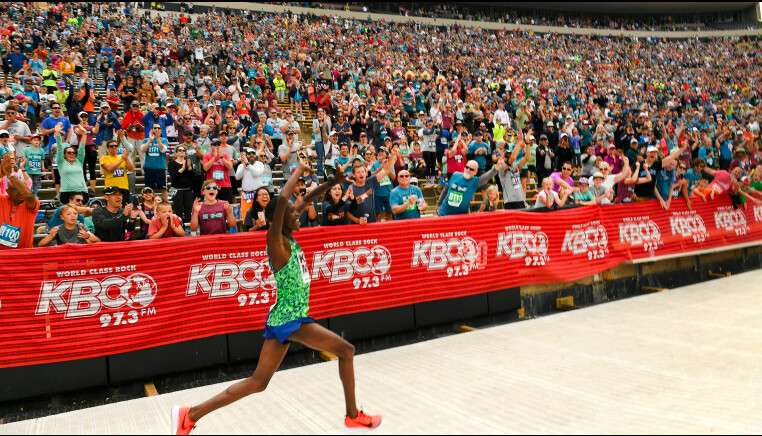
One of the biggest road races in the world for the past several decades, the race sends 40,000 runners through the streets of Boulder, Colorado, on a point-to-point race that ends at the University of Colorado (CU) football stadium, full of cheering spectators and fellow runners.
“I told him it’s an amazing feeling to run into that stadium,” Fairchild says. “When you hit the field, the whole crowd is cheering for everybody. You feel like they’re cheering for you. He had this huge smile on his face.”
And if 50,000 people cheering isn’t enough, there’s also the famous slip-n-slide, numerous bands playing on the course, runners and spectators wearing outrageous costumes, and the military jet flyover by the Colorado Air National Guard you can feel in your bones. Named America’s All-Time Best 10K, it’s likely to be one of the biggest parties you’ll ever attend.
Fairchild recounted for Dakota her experience as the U.S. captain for the Bolder Boulder’s first International Team Challenge professional race in 1998.
“I remember looking out the window and seeing the stadium full. I was so nervous, I thought I was gonna vomit all over the floor,” she says. “When I walked out and they introduced me as the local hometown girl, the whole crowd roared.”
Fairchild ran her first Bolder Boulder at age eight. She went on to win the citizens’ race three times (1989, 1990, 1991) when she was a record-setting high schooler, became an All-American and NCAA champion at the University of Oregon, and then qualified for the U.S. Olympic Trials in the 10,000-meter run and marathon as a professional runner. But the Bolder Boulder has always held a special place in her heart, which is why she has continued to run it through the years and why she’s so eager to introduce Dakota to it.
The idea for the Bolder Boulder germinated in the mind of a father watching his five children participate in all-day track meets. It was the summer of 1978 at the upswing of the original American running boom, and runner and local businessman Steve Bosley had grown frustrated with the disorganized events and parents berating their children for not running fast enough.
Bosley, then 37, reached out to his friend, Boulder resident and international running icon Frank Shorter, a two-time Olympic medalist in the marathon, for help designing a race that would serve their community and promote the sport of running. The race would not only become a Colorado icon, it set a gold standard for road races around the world and helped elevate women’s running in unprecedented ways.
During the spring of 1979, Cliff Bosley, the current race director, went door to door with his Boy Scout troop, passing out posters to encourage neighbors to run his dad’s inaugural race. The poster announced a 4,000-participant cap and enticed Boulderites to “Run with Frank Shorter and Ric Rojas!” for a mere $6.50 entry fee. (Rojas was another local elite athlete who would go on to win the inaugural race in 1979. His daughter, Nell Rojas, a current professional runner, won the women’s citizen’s race 40 years later in 2019.)
Bosley recalls giving a man in his front yard a poster who threw it back in his face in disbelief. “‘Yeah right, 4,000!’ the man scoffed. “I was just a 12-year-old kid. You believe everything your parents tell you. I thought, ‘Dad says it could happen—why won’t it?!’”
The inaugural race saw 2,700 registrations. The next year, it doubled in size and live entertainment was added to the celebration. Participation continued to soar in the ensuing years and decades, eventually reaching 50,421 in 2010. With an average of 45,000 finishers over the past 10 years, it’s now the seventh-largest road race in the nation and the largest Memorial Day celebration in the U.S.
From its inception, the Bolder Boulder 10K offered equal prize money for the female and male winners. In 1984, it created a separate elite race from the citizens’ race. There was also a deliberate split in the women’s and men’s elite race so that both races could be showcased equally and covered live on the local TV broadcast. Today, it offers one of the largest non-marathon prize purses in the U.S., but this did not come without a lot of work.
Initially road races were precluded from paying prize money to athletes because it changed their amateur athlete status, preventing them from competing in the Olympics. In the early 1980s, Steve Bosley, then the president of the Bank of Boulder, worked with two local attorneys, Frank Shorter, and TAC (The Athletics Congress which was then the name of the national governing body for the sport; now it’s known as USATF), to create a mechanism using trust accounts for athletes to earn prize money. It was then paid into athletes’ individual trust accounts so they could draw living and training expenses. At the time these accounts were called TACTRUST Accounts, and the Bank of Boulder was the steward of 95 percent of all of these accounts on behalf of both American and international athletes from around the world.
One of the most circulated photos of the Bolder Boulder 10K is that of Shorter, the 1972 Olympic marathon champion, winning the 1981 race— the first time the race finished in the University of Colorado’s Folsom Stadium. But that same year, Ellen Hart, then 23, won the women’s race—although she says there was no finish line tape for the female winner.
“It was the most exciting thing I had ever seen,” she recalls. “Since I was a little girl, I had wanted to go to the Olympics. I thought, Oh my god. This is like the Olympics! I traveled to races all over the world and the BB was my favorite race.”
Hart would move to Boulder in 1982, and then win the race again in 1983 before the four-year reign of Portugal Olympian Rosa Mota. In many ways, Hart says, her success in the Bolder Boulder launched her career as a professional athlete.
She went on to place 11th at the inaugural women’s U.S. Olympic Trials Marathon in 1984, set an American record in the 30K, and won 18 world championship titles in triathlon and duathlon racing. “In terms of women’s sports, the Bolder Boulder was certainly more forward-thinking than any other race I ever attended,” Hart says.
The race organization was also ahead of its time when it began the Women’s High Altitude Training Camp, something it did not offer for men, in 1989. The 100-day program was designed to bring five talented post-collegiate female runners to Boulder to train prior to racing Bolder Boulder. Runners were placed in volunteer host families, provided an elite coordinator and a trail guide, and given access to a local gym and the university’s track to train.
New Jersey runner Inge Schuurmans McClory was a member of the 1990 team.
“I really didn’t feel worthy of national attention, but I applied for the program not even thinking I was going to get in,” she says. She was not only accepted, but she fell in love with Boulder and stayed.
“I went to graduate school here. I met my husband here. I coached cross country and track at CU. It sort of was the launching pad for the rest of my life, and I owe it to the Bolder Boulder and that high-altitude training camp,” says McClory, now a physician’s assistant who has trained cardiac patients—the Brave Hearts—for the Bolder Boulder since 2000.
Since 1996, there have consistently been more women (average 53-54 percent) than men completing the race. Cliff Bosley attributes this to his mom creating a walking division in 1984 so that her father, diagnosed with prostate cancer, could participate.
“We kind of look at it as a placeholder,” says Bosley, “You come in as a walker and now you’re on the continuum. Let’s help you become a jogger. Let’s help you become a racer.” This exemplifies the Bolder Boulder’s rallying cry, “Oh Yes You Can!” that it established in 1979.
The Bolder Boulder has always been defined by its strong community involvement, which includes an eager network of volunteers, aid stations staffed by local running groups, and the thousands of spectators who line the streets and fill the stadium. Historically, the race donates more than $100,000 to local nonprofits and community groups that volunteer. Even during the pandemic, the race still found a way to contribute.
“Knowing we could not stage the Bolder Boulder in-person, we created a virtual event called the VirtuALL 10K and offered it at no cost,” Bosley says. Thousands of T-shirts, designed for the 2020 race that went unused, were donated to shelters.
Another Bolder Boulder program that supports the community is the BB Racers Club. Created in 1996, the program prepares children for the race, so their experience is a positive one. Initially started as a middle school program, this club now includes elementary schools. Children who are signed up are given a special training program, coach, and starting wave. Fairchild’s Boulder Mountain Warriors club, of which her son Dakota is a participant, is training a large number of BB Racers this year.
Bosley is prepared for up to 45,000 participants at this year’s race on May 29. And just as they did 44 years ago, race organizers will serve participants a sack lunch and send them a postcard in the mail with their finishing place, pace, time, and ranking in their age group.
“I can still remember checking the mailbox every single day until it came,” says Fairchild. “It makes me emotional just thinking about how much attention to detail they’ve always given hundreds of thousands of people. They care so much. It’s not an accident that they are the best 10K in the world.”
by Outside
Login to leave a comment
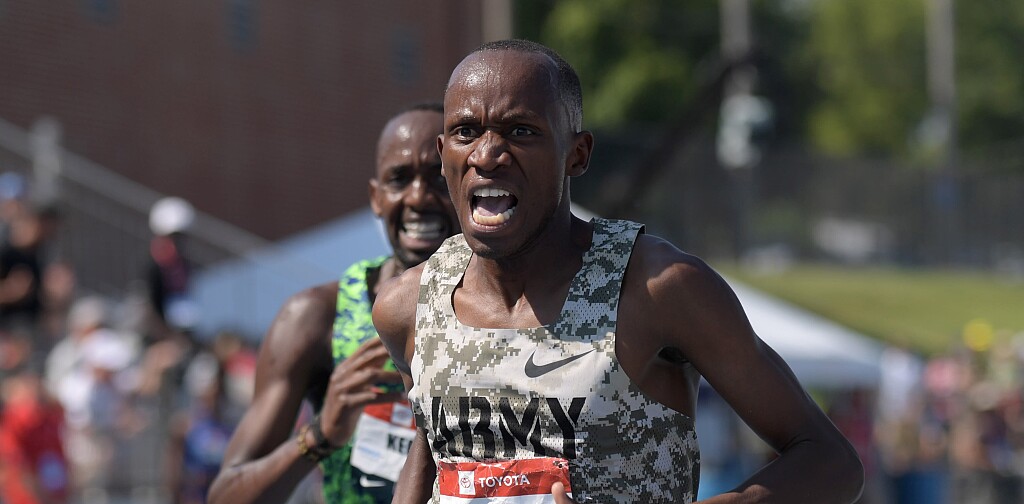
USA Record For Hillary Bor Yields $59,000 Payday At Cherry Blossom 10 Mile
The 50th edition of the Credit Union Cherry Blossom 10 Mile here this morning ended with a bang when Olympic steeplechaser Hillary Bor not only won the men’s division of the USATF 10 Mile Championships, but also claimed a $50,000 bonus for breaking Greg Meyer’s 40-year-old national record by just two seconds.
Bor, 33, who represents Hoka One One and wore bib 13, clocked 46:11, three seconds behind overall race champion Tsegay Kidanu of Ethiopia. Including his prize money, Bor collected a total of $59,000.
“I came here to break the record and the weather wasn’t going to stop me,” Bor told Race Results Weekly, referring to the unusually cold temperatures and strong winds. “It’s something I’ve been working for since October last year.”
Last October Bor won the USATF 10 Mile Championships in St. Paul, Minn. He ran 46:06 in that race, a championships and course record, but that course was 31 meters downhill and not eligible for record setting. However, Bor and coach Scott Simmons realized that breaking Meyer’s mark was within his capabilities, especially because a faster time run by two-time Olympic medalist, Galen Rupp, was never ratified by USATF. Rupp ran a 10 mile split of 45:54 at the Row River Half-Marathon in Dorena, Ore., in October, 2020, but the paperwork for verifying that record was never completed or approved.
“My coach knew I was in really good shape to run 45 (minutes),” Bor said. “But, the weather’s not good today. The last two miles was just the wind on our face the whole time.”
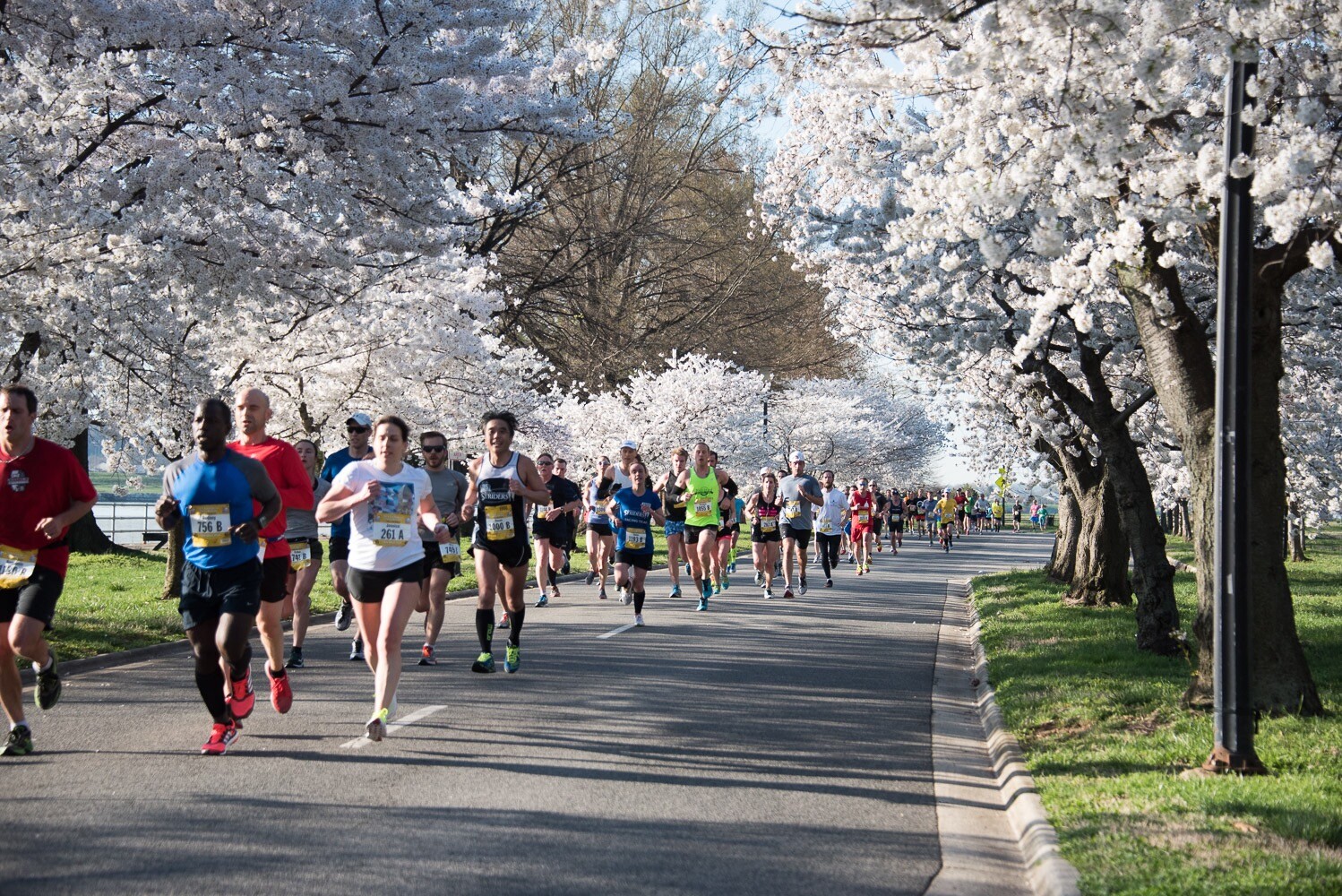
Indeed, it was in those last two miles that Bor and Kidanu did their best to push each other. Kidanu, who represents Asics, was just trying to keep up the pressure on Bor.
“The wind was very strong and it made it very tough,” Kidanu told Race Results Weekly through a translator. He continued: “At the beginning there were a lot of us, but later only a few of us. But the wind made it very difficult. Two of us were able to prevail and we battled one another. In the end, I was able to win.”
In the final sprint to the line, Bor wasn’t really sure where he stood against the clock. The wind was so strong that the 9-mile marker blew down, despite being weighted with sandbags. Also, Bor started the race without his watch.
“Today, I didn’t have my watch so that was not really good because I didn’t know the splits,” Bor said, looking slightly embarrassed. “When I saw the split at 8 miles I knew I needed to run 4:45, but the wind was too much. I just put my head down and just grind, and grind, and grind.”
Biya Simbassa (Under Armour) finished a distant third in 47:09 and finished second in the national championships division. Kenya’s Charles Langat (Asics) was fourth in 47:25, and Jacob Thomson (Under Armour) took fifth –and third in the national championships– in 47:27.
Bor, who will return to the steeplechase during the track season, said that today’s race was all about self-belief.
“It shows if you put something in your head you can accomplish it,” he said.
The women’s competition was a tale of two races.
In the overall competition, Uganda’s Sarah Chelangat (Nike) surged away from the field just before the five mile mark. Her six-mile split was a snappy 4:56, and that put her 22 seconds ahead at that point. Despite running directly into the wind (and alone) in the final miles, she was able to extend her lead to 30 seconds by the ninth mile, and 33 seconds by the finish. Her winning time of 52:04 was excellent given the conditions, but she fell well short of the 51:23 world best for an all-women’s race which would have given her a share of the race’s $50,000 bonus pool.
Behind Chelangat, there was a heated battle for both second place overall and the USATF title. In the ninth mile, Emma Grace Hurley (Atlanta Track Club Elite), Sara Hall (Asics), Nell Rojas (Nike), and Molly Grabill (Unattached) separated themselves from the rest of the pack, all of them trying for the national title. As they crested the final hill before the course turns slightly downhill to the finish line, Hall and Rojas were locked in a sprint for the win. Hall, who is running the Boston Marathon in 15 days, got the best of Rojas, 52:37 to 52:38.
Hall, who turns 40 on April 15, almost skipped today’s race. She just returned from a family trip to Ethiopia where her training didn’t go well because she got sick.
“Honestly, I feel so thankful for today because four days ago I wasn’t going to race,” Hall told Race Results Weekly. “I had COVID last week and training was just so rough. I had a fever. I had two different viruses back to back.”
But like Bor, Hall had the power of self-belief working for her today.
“I think my whole career I’ve just chosen to show up,” Hall said, wrapped in an American flag. “So, just today I decided to show up and I’m really glad I did, especially with Asics sponsoring this event.”
While the wind –which Rojas called “nasty”– was a challenge, Hall saw it as an opportunity to prepare mentally for Boston where conditions can be difficult, too. She thought about the 2018 race where temperatures were just above freezing and athletes had to run through a driving rain storm.
“I was thinking about Boston because, you know, 2018 with that headwind and the storm,” Hall said. “I have Boston in two weeks, so this is just a good time to practice.
Like Bor, Hall had thought about trying for a share in the record bonus pool, but discarded that idea when she felt the power of the wind.
“Normally, I would have wanted to go for the record out here, but with the significant wind I didn’t know if that was going to be in the cards, so I just chose to compete,” she said. “I think this was a great opportunity to do that with Boston coming up.”
With her win here today, Hall has won a total of 12 national titles, four at 10 miles (2017, 2018, 2019, and 2023).
Hurley finished fourth (third American) in 52:41, and Grabill got fifth (fourth American) in 52:42. Defending champion Susanna Sullivan, who led most of the first half of the race, finished seventh (sixth American) in 53:25. She’s running the TCS London Marathon in three weeks and has been doing heavy mileage.
“I’m ready to run a marathon,” she said, smiling, as she changed into warm clothes in the athlete recovery area.
Some 16,000 runners competed today after about 6,000 ran the companion 5-K yesterday (which took place in the rain). Several former race champions were on hand to celebrate the 50th edition, including Kathrine Switzer (1973), Greg Meyer (1983), Eleanor Simonsick (1982 and 1983), and Bill Rodgers (1978 through 1981). Race director Phil Stewart reflected on how the race had endured for so many years and through so many cultural and political changes.
“Through Watergate, gas crises, the fall of the Berlin Wall, the invention of the internet, the first and second Iraq Wars, the 2008 financial crisis, America’s first Black President, two impeachments, an insurrection and the War in Ukraine, runners have returned each spring for what is known as the ‘Runners Rite of Spring,'” Stewart said at last night’s pre-race dinner.
by David Monti
Login to leave a comment

Cherry Blossom Ten Mile Run
The Credit Union Cherry Blossom is known as "The Runner's Rite of Spring" in the Nation's Capital. The staging area for the event is on the Washington Monument Grounds, and the course passes in sight of all of the major Washington, DC Memorials. The event serves as a fundraiser for the Children's Miracle Network Hospitals, a consortium of 170 premier...
more...
Defending Champions Return to Run 50th Anniversary Credit Union Cherry Blossom 10 Mile
Organizers of the 50th annual Credit Union Cherry Blossom 10 Mile (CUCB) announced today the first of two rounds of news about this year’s invited field; look for the second announcement to come out on Wednesday, March 29. Today’s announcement features past champions and top-5 finishers expected to toe the respective men’s and women’s starting lines on Sunday, April 2. (The elite women will start first, at 7:18 a.m., followed by the men and the masses at 7:30 a.m.)
Three past champions are part of the women’s elite field: Susanna Sullivan, last year’s women’s champion from Reston, VA; 2021 champion Nell Rojas from Boulder, CO; and 2013 champion Caroline Rotich, a Kenyan who lives in Colorado Springs, CO. As part of the 50th celebration two additional former champions are entered: Colleen De Reuck from Boulder, CO, who won the race in 1998 and still holds the women’s course record of 51:16; and 1973 winner Kathrine Switzer.
Other top women finishers from past 10 Miles include: Carrie Verdon from Boulder, CO, who placed second last year; Paige (Stoner) Wood, last year’s third place finisher from Flagstaff, AZ; Sara Hall, also from Flagstaff, who placed fourth in 2014; and Flagstaff’s Diane Nukuri, who was fifth in 2018.
In the men’s race, the top-three finishers from 2022 return. All hailing from Kenya, they include champion Nicholas Kosimbei, second-place runner Wilfred Kimitei, and third-place finisher Shadrack Kimining. They’ll be joined on the starting line by second-place finisher in 2021 Abbabiya Simbassa from Flagstaff, AZ. Returning for the 50th running and starting a little bit farther back in the pack will be Bill Rodgers, from Boxborough, MA, who won the race four consecutive times between 1978 and 1981; placed second in 1982 and third in 1983; and has run CUCB a total of 22 times. Greg Meyer, whose American record of 46:13 still stands 40 years later, will be present for the 50th celebration, and will be holding the tape for the first American male finisher, who will be in hot pursuit of Greg’s mark — there’s a $50,000 shared bonus on the line for any American Records or World Bests set at the event.*
“It’s always a vote of confidence in the reputation of the event to see a large number of top finishers from previous years coming back. I am excited about this year’s set of repeaters, both past and present. This is another factor that will make our 50th anniversary special,” said Event Director Phil Stewart.
This year, international elite runners will be competing for $40,000 in prize money. The prize purse for Americans totals $25,000, and American runners placing in the top-10 overall are eligible to receive both open and American-only prize money. There is an additional $6,000 in RRCA RunPro Alumni Development Awards — runners eligible for the RRCA awards can also collect top-10 open and/or top-10 American payouts.
There is also a time-based set of bonus payments on offer for fast times:
• $50,000 to be shared by any runners setting a World Best or American Record*• Time incentives of $1,000 for the 1st male to run sub-46 minutes and 1st female to run sub-52 minutes, with an additional $750 on offer should a second male and/or female achieve those same sub-46 and sub-52 minute milestones.
The 10 Mile will serve as the USATF 10 Mile Championships, the RRCA National 10 Mile Championships, and the 2022-2023 Professional Road Racing Organization (PRRO) Circuit Championship.
Winners of the individual 2022-2023 PRRO Circuit events will be eligible for the $10,000 PRRO Super Bonus by winning the PRRO Championship (the bonus is split if an eligible male and female win the Championship). Susanna Sullivan and Nicholas Kosimbei are eligible for the PRRO Super Bonus. Any non-eligible winner of the PRRO Championship Super Bonus will earn $2500.
* If World Best times and American Records for men and women are set by the winners at the event (e.g. four records set), the $50,000 record bonus would be split into four $12,500 shares. If only one World or American record is set for either men or women, the athlete setting the record would get the full $50,000. If an American sets an American record and no other World or American records are set, he or she would receive the entire $50,000 as well. Currently, the times to beat are as follows:• Haile Gebreselassie’s (ETH) World Athletics Best of 44:24, run at the Tilburg 10 Mile in Tilburg, Netherlands, September 4, 2005;• Keira D’Amato’s World Athletics Best in a women’s only race of 51:23, run at the UpDawg 10 Mile in Washington, DC, November 24, 2020;• Greg Meyer’s American Record of 46:13, run at the Cherry Blossom 10 Mile in Washington, DC, March 27, 1983; and• Keira D’Amato’s previously mentioned World Best 51:23, which is also the American Record for a women’s only race.
For reference, the fastest CUCB time among the men’s field announced today is Kosimbei’s 45:15, which tied the event record set by Kenya’s Allan Kiprono in 2012. Among the elite women, Nell Rojas’s 52:13 from 2021 is the best CUCB finish time among this year’s elite entrants. Abbabiya Simbassa’s 46:18 from 2021 is the best CUCB mark among the American men, while Nell’s 52:13 is, of course, the leading mark among the American women.
The inaugural Cherry Blossom Ten Mile in 1973 was won by Sam Bair, in a time of 51:22; the women’s winner was Kathrine Switzer, in a time of 1:11:19; 127 men and 12 women ran that first race. Bill Rodgers holds the honor of most victories, with four consecutive wins between 1978 and 1981. Three women have each won the race three times: Julie Shea (1975-77), Lisa Weidenbach (1985, '89 and '90) and Lineth Chepkurui (2008-10). Ben Beach leads all Cherry Blossom finishers with an active streak of 49 years. A comprehensive media guide detailing a wide variety of statistics from the first 49 CUCB races is available here.
Thanks to Credit Union Miracle Day’s title sponsorship since 2002, the Credit Union Cherry Blossom Run has raised over $10.2 million for the Children’s Miracle Network Hospitals, including $323,000 in 2022.
About the Credit Union Cherry Blossom 10 Mile:
The Credit Union Cherry Blossom races, organized by Cherry Blossom, Inc., a 501c(3) chapter of the Road Runners Club of America, are known as “The Runner’s Rite of Spring®” in the Nation’s Capital. The staging area for Sunday’s 10 Mile is on the Washington Monument Grounds, and the course passes in sight of all of the major Washington, DC Memorials. In 2023, the reimagined Saturday 5K will stage on Freedom Plaza and traverse the route of Presidential Inaugurations down Pennsylvania Avenue before crossing the National Mall in the shadow of the Capitol Building and returning by the same route. The Kids Run is staged on the grounds of the National Building Museum. All events serve as a fundraiser for the Children’s Miracle Network Hospitals, a consortium of 170 premier children’s hospitals across North America. About one-third of the funds raised support Washington, DC’s own Children’s National (“Children’s Hospital”). The event also funds the Road Runners Club of America’s “Roads Scholar” program designed to support up-and-coming U.S. distance running talent.
Credit Union Miracle Day, Inc., a consortium of credit unions and credit union suppliers, is the title sponsor of the Credit Union Cherry Blossom 10 Mile, 5K, Kids Run and Virtual Run. Current presenting sponsors include ASICS, REI Co-op and Wegmans; supporting sponsors include CACI, Co-op Solutions, CUNA Mutual Group, FinisherPix, Gatorade Endurance, Guayaki, MedStar Health, PSCU, Potomac River Running, Suburban Solutions, The MO Apartments and UPS.
The 10 Mile is a proud member of the PRRO Circuit (PRRO.org), a series of this country’s classic non- marathon prize money road races with circuit stops in Washington, DC; Spokane, WA; and Utica, NY. The 2023 10 Mile will serve as the 2022-2023 PRRO Championship.
In addition to being sanctioned by USA Track & Field and the Road Runners Club of America, the Credit Union Cherry Blossom races have earned Gold Level Inspire Certification from the Council for Responsible Sport in recognition of its legacy of commitment to sustainability and thoughtful resource management.
To learn more, visit CherryBlossom.org and follow the event on social media @CUCB and #CUCB2023.
by David Monti
Login to leave a comment
Cherry Blossom Ten Mile Run
The Credit Union Cherry Blossom is known as "The Runner's Rite of Spring" in the Nation's Capital. The staging area for the event is on the Washington Monument Grounds, and the course passes in sight of all of the major Washington, DC Memorials. The event serves as a fundraiser for the Children's Miracle Network Hospitals, a consortium of 170 premier...
more...
Kara Goucher accuses Alberto Salazar of sexual assault in new memoir
Two-time U.S. Olympian and 2007 world championship silver medallist Kara Goucher alleges in her new book The Longest Race, published Tuesday, that she is the woman behind the sexual assault allegations against Alberto Salazar that resulted in his lifetime coaching ban by the U.S. Center for SafeSport in 2021.
In 2004, Goucher became the first woman to join the Nike-sponsored Oregon Project, led by Salazar, after a storied collegiate career at the University of Colorado, which saw her win three individual NCAA championships (two in track and once in cross country). In her book, she says she wanted to go to the Olympics, and that Salazar said he would help her get there.
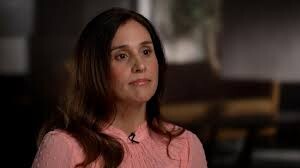
Salazar was one of the best marathoners in the world in the early 1980s, winning the New York City Marathon three times and Boston once. He also set the American record over the 5,000m and 10,000m on the track in 1982.
Goucher reveals that she was impressed by how personable he was, and his knowledge of the sport. “Salazar went above and beyond for his athletes,” Goucher told ABC News in an interview. “He was giving personal massages to his athletes, something I’ve never seen before […] I just thought it was normal.”
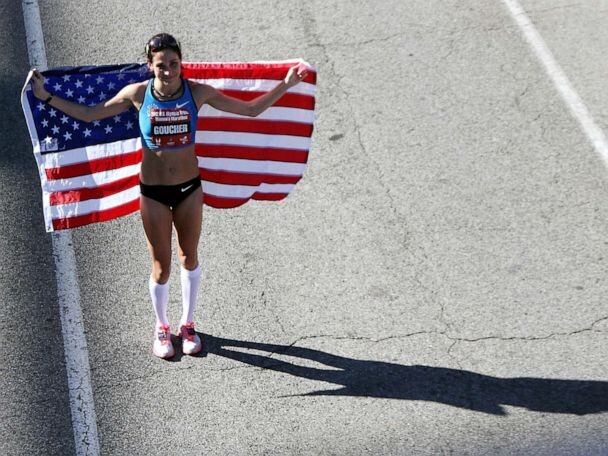
The 44-year-old retired runner, who was in her late 20s at the time, recalls Salazar touching her inappropriately during a massage at a hotel in Rieti, Italy. “It felt wrong,” Goucher expressed. “I didn’t tell anyone at the time.”
Goucher claims the same scenario happened again while the two were in Lisbon, competing at the 2009 Lisbon Half Marathon.
She ended up leaving the NOP in 2011 and did not talk about the alleged assault until she was questioned by lawyers on doping allegations against Salazar as part of a U.S. Anti-Doping Agency (USADA) probe in 2017.
In 2019, Salazar was suspended for four years by USADA for doping violations. And in 2021, the famed coach was banned for life by U.S. SafeSport for sexual misconduct. The U.S. Center for SafeSport is an independent not-for-profit that reviews allegations of sexual misconduct and can impose sanctions.
In the book, Goucher says she testified about the alleged touching in front of a U.S. Safe Sport panel and confirmed that her allegations were used as the basis for Salazar’s lifetime ban.
Salazar told ABC News in a statement that any claim made against him for sexual assault is categorically untrue. “I have never sexually assaulted Mrs. Goucher and never would have done so. The accusation is deeply hurtful, abhorrent and contrary to my fundamental beliefs as a husband, father and Catholic.”
Goucher said she is appreciative of Salazar’s guidance, but at the end of the day, “he should not be coaching.”
Her book The Longest Race was released on March 14.
by Marley Dickinson
Login to leave a comment
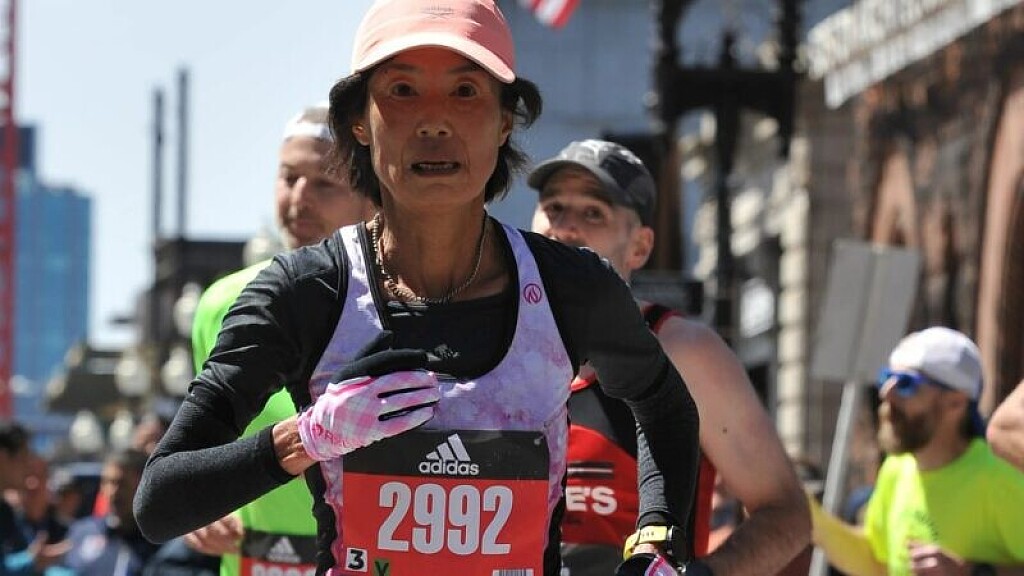
Japanese woman, 64, runs three sub 3:05 marathons in two weeks
Sixty-four-year-old marathoner Mariko Yugeta is already a huge celebrity in the Japanese running community, and she continues to prove that age is just a number. On Sunday at the Nagoya Women’s Marathon in Nagoya, Japan, Yugeta accomplished another memorable feat, running three sub-3:05 marathons at three different races in a span of 14 days.
On Feb. 26, Yugeta kicked things off at the Himeji Castle Marathon, where she ran 3:04:57 (winning her 60-64 age category). The following week, Yugeta won her age category for the fourth consecutive year at the 2023 Tokyo Marathon, posting a time of 3:04:18. Seven days later in Nagoya on March 12, she posted another sub-3:05 time, in 3:04:30, winning her age category once again.
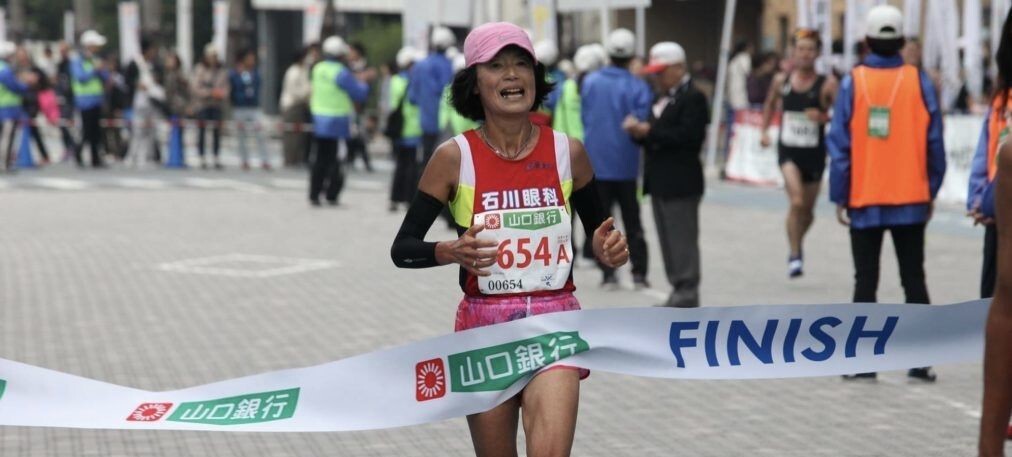
Yugeta is the first 60+ woman to break three hours for a marathon, holding the women’s 60-64 world record of 2:52:13 from the 2021 Osaka Marathon. Since her world record run, she has dipped under the three-hour mark four times.
Last year, Yugeta ran both Tokyo and Nagoya within seven days (both under 3:05) in preparation for the Boston Marathon, where she hoped to lower her world-record time; she fell short, but still won her 60-64 age category in 3:06:27.

Yugeta got into running by watching the finishers at the 1979 Tokyo International Women’s Marathon, when she was 21. She spent the next three years training, making her marathon debut in 1982 in Tokyo, where she ran 3:09:21, which was good for 34th place in the Tokyo International Women’s Marathon.
Forty years later, Yugeta is still getting faster. On May 13, she’ll turn 65 and enter the W65-69 age bracket, where she will challenge the 3:07:51 world record of her Japanese compatriot, Kimi Ushiroda.
In a 2021 interview with the nutrition brand Maurten, Yugeta said she doesn’t think about her age when she runs.
When Yugeta isn’t running, she is a mother to four children and teaches high school phys-ed, training alongside her 16- and 17-year-old high school students.
by Marley Dickinson
Login to leave a comment

Nagoya Women's Marathon
The Nagoya Women's Marathon named Nagoya International Women's Marathon until the 2010 race, is an annual marathon race for female runners over the classic distance of 42 km and 195 metres, held in Nagoya, Japan in early March every year. It holds IAAF Gold Label road race status. It began in 1980 as an annual 20-kilometre road race held in...
more...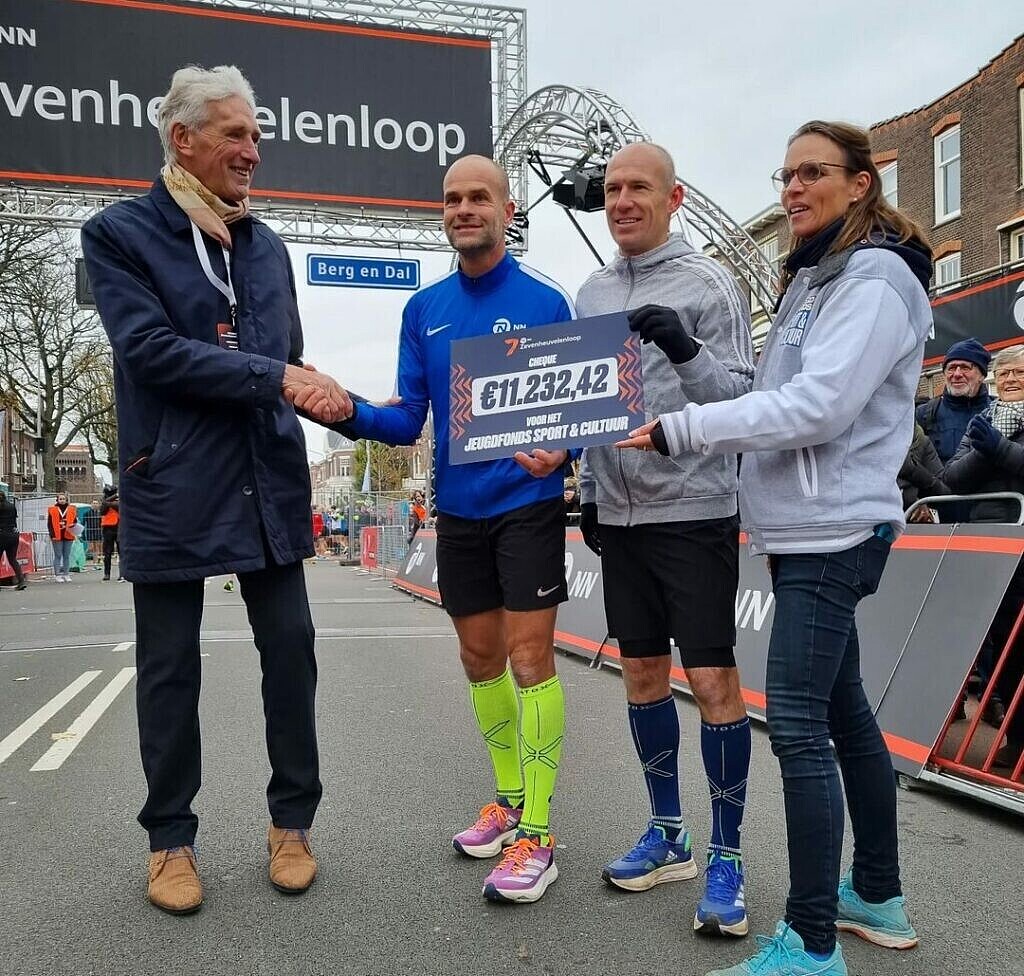
Five times non-running sports stars smashed foot races
Have you ever wondered if your favorite athletes in other sports could make it as elite runners? They’re at the top of their own sports and they’re clearly athletically gifted, so it wouldn’t be the biggest surprise if they could transition into running. Well, we can’t say for sure which athletes could have had success on the track or road if they’d dedicated their careers to running, but thanks to a few races over the years, we’ve been able to see a few sports stars in action.
Here are the top five times athletes from other sports crushed it in running races.
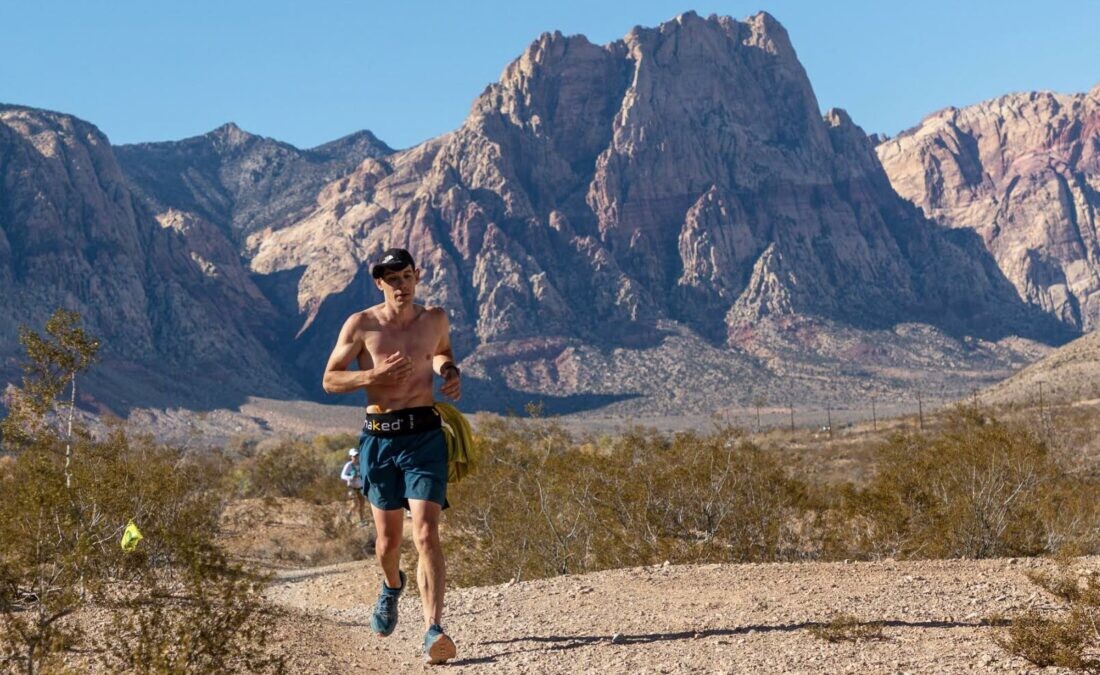
Arjen Robben
In November, former Dutch soccer star Arjen Robben ran the Zevenheuvelenloop, a popular 15K race in Nijmegen, Netherlands. Robben played for some of the top clubs in Europe, including Real Madrid and Bayern Munich, and he made it to the World Cup Final in 2010 with the Dutch national team. In Nijmegen, he ran the 15K course in 55:01, a time that works out to a pace of 3:40 per kilometer. As a player, Robben was known for his speed on the pitch (in 2014, he reached a top speed of 37 kilometers per hour during a World Cup match), but few people knew he could lay down such an impressive result on the roads.
Wayne Gretzky
In 1982, Wayne Gretzky (you might also know him as the best hockey player of all time) ran an exhibition race in Sweden alongside Pelé, Sugar Ray Leonard and Björn Borg—some of his fellow sports stars of the day. The race was 60m, and right from the gun, there was no doubt that it was Gretzky’s to win. He blasted off of the starting blocks and flew away from his competitors, eventually crossing the line in 7.24 seconds. (Granted, he was considerably youner than his competiors at the time.)
Alex Honnold
Alex Honnold is one of the world’s most famous climbers, thanks mainly to his 2017 free solo (meaning he climbed without ropes) ascent of Yosemite’s El Capitan and the subsequent Oscar-winning film, Free Solo, which documented his climb. It turns out that Honnold is not just a rockstar climber, as he proved he can run pretty quickly (and far) when he wants to. In November, he ran the Red Rock Canyon 50K Ultra near Las Vegas, racing to a sixth-place result in five hours and 23 minutes.
Therese Johaug
Norwegian cross-country skier Therese Johaug has the most impressive transition to running on this list, thanks to a couple of 10,000m races she ran in 2019 and 2021. Johaug is a six-time Olympic medalist (four of them gold) and a 19-time world championship medalist (with a whopping 14 gold). She entered the 2019 Norwegian 10,000m championship on a whim (after the race, she told reporters she hadn’t run on a track in 11 years) and ended up winning the title in a championship record of 32:20.86. That time was the fifth-fastest result in Norwegian history, but Johaug didn’t stop there. She ran another 10,000m in 2021 and improved her PB to 31:32.88, which is the fourth-best on Norway’s all-time list.
Chris Froome
British cycling champion Chris Froome may not have run an actual race, but in the 2016 Tour de France, he did resort to running the course for a stretch following a crash. Froome had a kilometer to go in that day’s stage when he collided with a motorcycle. His bike was wrecked and couldn’t have gotten him to the finish, so he turned and ran uphill until his team caught up and gave him a new ride. Froome lost the stage that day, but he won the Tour de France overall, thanks in part to his on-the-spot decision to run.
by Ben Snider-McGrath
Login to leave a comment
How Young Is Too Young to Lace Up for a Marathon?
A new paper looks at the available research and makes recommendations.
The world—running and not—had its eyes on the Flying Pig Marathon this past May after a 6-year-old boy completed the race with his family in 8 hours and 35 minutes.

It wasn’t the finish itself that caused an outcry, but a subsequent social media post by the boy’s mother that references his distress during the later miles of the race.
The photo showed the boy holding a box of Pringles potato chips with the caption, “On the marathon course, Rainier knew they usually hand out Pringles around mile 20. He was struggling physically and wanted to take a break and sit every three minutes. After 7 hours, we finally got to mile 20 and only to find an abandoned table and empty boxes. He was crying and we were moving slow so I told him I’d buy him two sleeves if he kept moving. I had to promise him another sleeve to get him in the family pic at the finish line. Today I paid him off.”
Sports medicine experts and pediatricians got wind of the boy’s marathon finish, and its unique circumstances, and published a paper in JAMA Pediatrics in October, titled “Kids on the Run—Is Marathon Running Safe for Children?”
The answer is: We’re not totally sure.
“Youth running is becoming more popular, particularly at longer distances, and the trend is ahead of the research,” says Emily Kraus, M.D., a clinical assistant professor at Stanford University, a sports medicine physician at Stanford Children’s Hospital, and the director of the the Female Athlete Science and Translational Research Program.
Kraus, a runner, was not an author on the JAMA Pediatrics paper but coauthored the 2021 youth running consensus statement published in the British Journal of Sports Medicine.
“We can’t conclude that there’s no risk or minimal risk, or a greater risk [to young children running long distances],” she tells Runner’s World.
The paper looks back at the running boom of the 1970s when several young children completed marathons; children as young as 8 years old covered the distance in 3 hours and 31 seconds. The authors note that although there were no reports of injuries or adverse events, physicians and race directors started to worry about the potential dangers of youth participation. In 1981 the New York City Marathon, then in its 11th year, instituted a minimum age requirement of 16 years old. Other races followed suit.
A 2010 paper published in the Clinical Journal of Sports Medicine looked at data from the Twin Cities Marathon from 1982 to 2007, which included 310 children aged 7 to 17 years old. The researchers found that the risk of a medical incident was about 50 percent lower in children than adults but not statistically significant. In other words: We can’t say for sure if they’re at lower risk for injury or medical problem.
“Some of the early research shows that the overall risk of competing in races is quite minimal or lower when compared to the adult running population,” Kraus says. “But the question becomes is that because the number [of children finishers] is so much smaller?”
Kraus, who treats primarily middle-school age athletes whose growth plates are still open, expresses concerns that we don’t know if marathoning at a young age will affect long-term growth and development.
“Young kids haven’t even started to initiate [certain developmental] milestones,” she says. “Athletes who are younger than 10 or 11 years old are true children. We don’t know enough to give the okay, in my opinion.”
Kraus advises against the repetitiveness of a single activity over time, like running. Instead, she encourages young athletes to try different physical activities that lend themselves to multidirectional movement, like soccer, tennis, and old-fashioned tag.
When asked to give guidance on a distance for young kids, Kraus says anything up to a 10K is “probably okay.” Ideally, she says, we would measure how far a young kid runs on any given day during free play or team sports to help guide that recommendation.
“[For children], free play at that stage of their development is more valuable in developing motor skills, agility, and hand-eye coordination,” she says.
Plus, although research is clear that healthy behaviors developed during youth sports can promote long-term physical activity and reduce the risks of diseases like diabetes, cardiovascular disease, and cancer, “sport specialization during childhood does not provide competitive advantages and is not a requirement for elite status,” the authors wrote in the JAMA Pediatrics paper.
What’s more is that youth marathon or ultramarathon running may not lead to lifelong participation in running events or long-term health benefits. The authors wrote: “Among children who participated in ultramarathons [longer than a marathon], less than 25 percent continued to do so as adults, and less than 10 percent were still running ultramarathons 30 years later.”
Most youth ultrarunners, the researchers wrote, are between 16 and 18 years old, but there are runners younger than 10 years old who have completed an ultra event.
Experts are unsure if this drop off in participation is because of overuse injury and burnout, or changes in interests. The authors go on to say that potential health benefits and risks of youth marathon running have not been compared similarly to shorter distance running or other sports.
But pediatric specialists like Kraus and the authors point out that the bigger question and concern when it comes to youth marathoning, particularly in children under 10 years old, is the intrinsic motivation of a young runner.
“Why is this child racing? Is it because they have a family of runners and they don’t want to feel left out? Is it something they deeply want to do?” Kraus asks, noting that young children likely don’t fully understand what training for and running a marathon really entails.
“If I were working with a 6-year-old, my conversation would be, ‘Do you know what [a marathon] is? Do you know what it feels like to run one mile? Or other shorter distances?’” Kraus says.
She’d then also work with families to understand why they were having a young child participate in such an extreme distance at this particular time, suggesting, instead, to use a marathon as a goal for years down the road.
Based on the available evidence, the authors developed a list of points families should consider before a young child runs a marathon or ultramarathon, in addition to assessing the physical health of the child, including:
Potential risks and benefits, reiterating there is limited available research
Determine the motivation for marathon running, with an emphasis on voluntary participation
Inform children that they have a right to stop at any point and will not be punished or experience negative consequences if they decide to stop
Discuss ways children can communicate their choice to parents and guardians
Monitor physical, psychological, social, and academic well-being, as well as continued commitment to marathon running during training
“For a 6- or 7-year-old who hasn’t fully captured goal-setting and follow-through, a marathon is a different type of challenge that goes beyond what they’re capable of handling,” Kraus says.
by Runner’s World
Login to leave a comment
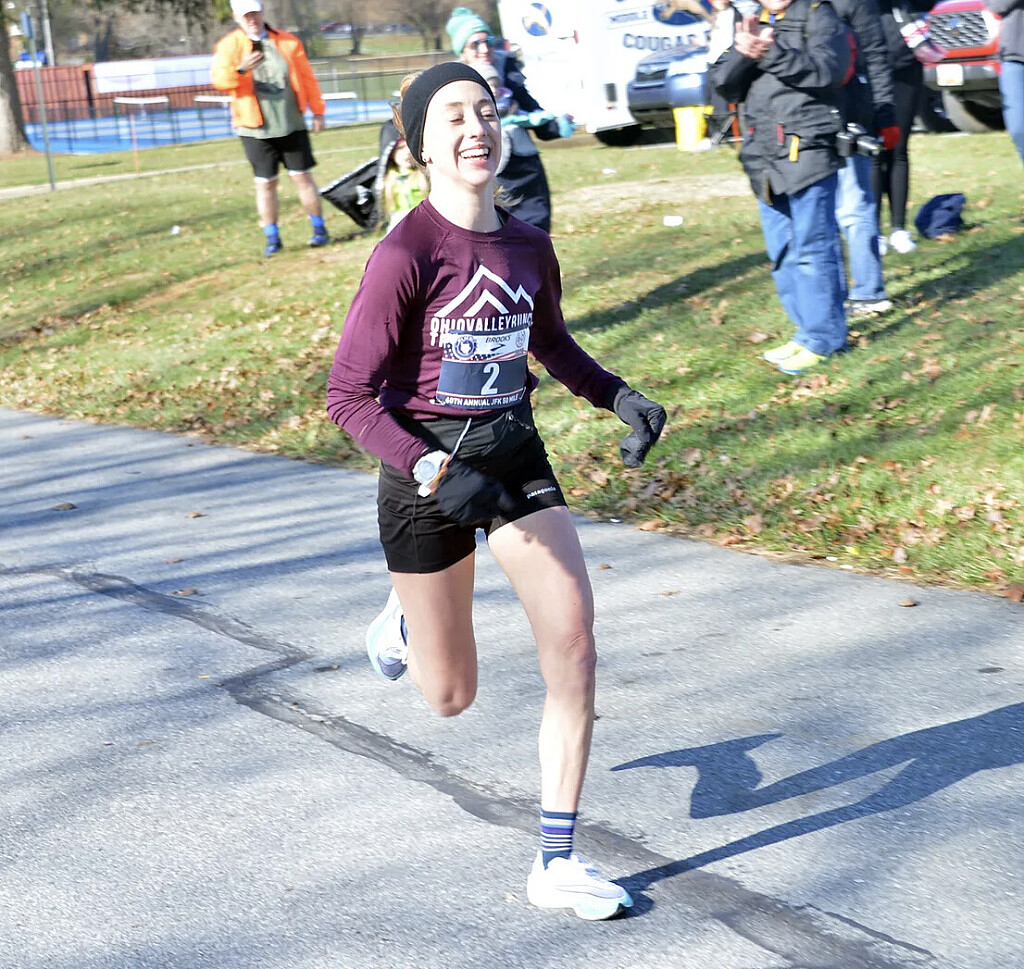
Sarah Biehl delivers historic performance at 60th annual JFK 50
The 60th annual edition of America’s oldest ultramarathon deserved a special performance, and Sarah Biehl (first photo) more than delivered Saturday Nov 19 at the JFK 50 Mile.
Biehl, 28, of Columbus, Ohio, smashed the women’s race, running away with the victory in a course-record time of 6:05:42 while finishing 11th overall. The previous mark of 6:12:00 was set by ultrarunning legend Ellie Greenwood in 2012.
“Oh my gosh, she was a mile ahead of the record Ellie Greenwood set 10 years ago that nobody had come within five minutes of,” JFK 50 Mile director Mike Spinnler said. “You know, and I hate to do this, gender vs. gender, but it may be the greatest performance in JFK history.
“Ellie Greenwood was the world champion, Ellie Greenwood won Comrades, Ellie Greenwood won Western States, and she beat Ellie Greenwood’s record by a mile. And we know how hard Ellie had to run that day to win because she was chased. It’s just remarkable and inspiring. She just missed the top 10 overall, and it was the best men’s field ever. Amazing.”
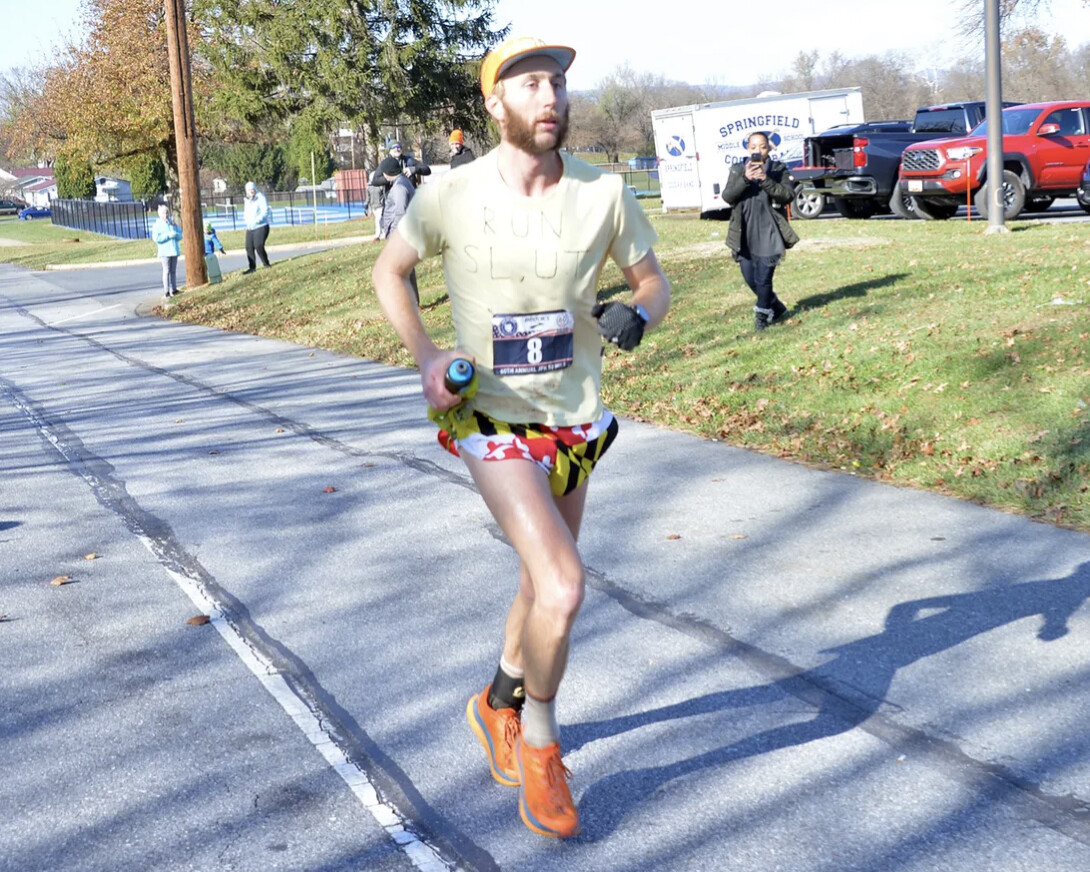
In his JFK debut, Garrett Corcoran, 26, of Salt Lake City, Utah, won the men’s title in 5:29:47 — the No. 5 performance in race history.
Overall, 966 runners reached the finish line within the 13-hour time limit.
For Biehl, this was her third straight JFK. She was the women’s runner-up last year in 6:22:03 after placing fifth in 2020 in 7:22:32 in her ultramarathon debut.
“At the end of the day, I wanted to win,” Biehl said. “Coming here last year and getting second, that was awesome. But after getting second, you have the goal of winning, so that was my main priority. But I also had the course record in mind, too, and the splits and where I needed to be.”
By the time she came off the rocky Appalachian Trail at 15.5 miles, her lead over second place was over 13 minutes. Over the next 26.3 miles on the C&O Canal towpath, the margin increased to more than 19 minutes, and she only continued to add to it over the final 8.4 miles of paved roads to Springfield Middle School.
“I’m ecstatic right now,” Biehl said. “I’m a little in shock, to be honest.”
Caitriona Jennings (third photo), 42, of Ireland, finished second in 6:28:53 — the JFK’s No. 8 all-time women’s performance and a masters (40-and-over) record.
Jennings competed in the marathon at the 2012 London Olympics and was fresh off two big-time ultramarathon efforts, placing first in the European 50K championships last month after taking third at the 100K World Championships in August.
She went into her JFK debut Saturday with the same goal as Biehl’s — a course-record victory.
“I struggled from the start, pretty much. It just wasn’t my day,” Jennings said. “But fair play to Sarah, she had an absolute stormer. Wow, so impressive, amazing.
“It’s a lovely course. I was hoping I’d enjoy it more,” she added. “For some reason, I just couldn’t settle. It was a harder race than I expected. I’ve had two tough races in the last (few months), but I’m not making excuses. I was beaten fair and square. Maybe I expected too much of myself today. But you win some, you lose some. That’s what sport is. It just makes the good days all the better.”
Shea Aquilano, 21, of Carmel, Ind., placed third in 6:40:40.
Sub-4:00 miler wins men’s title (second photo).
Corcoran, who used to live in Baltimore, retuned to his former home state with some flair — including running shorts with the Maryland flag design.
“Dude, I’m out here, I’ve got the shorts, I’ve got to rep, right?” he said. “I know where I’m at, and I know I’ll get a lot of love for this.”
Corcoran, who ran a 3:59 mile in college, showed that speed kills at any distance.
“It feels like another life when I ran sub-4:00. I was 19 years old,” he said. “It’s been a fun journey. When I graduated from college, I just about hung up the running shoes, and didn’t really know what I was going to do.
“I moved to Baltimore for work, and kind of realized it was the best way to have a good social life, at least for me, so I joined a running club, the Falls Road Running Club, and I made a lot of good friends. And once the pandemic hit, all the races got canceled, and I started dragging a friend of mine in Baltimore on these really long runs. I had so much fun and really got into the ultra distance.
“The JFK was a good excuse to come back and see some friends.”
Corcoran took the lead on the towpath around Mile 31 and never relinquished it.
“There was an aid station at 30.5, and (Matthew Seidel), who ended up getting fourth, he was just ahead of me,” Corcoran said. “He turned around and saw me not far behind him and walked for a little bit and then started running with me. He was like, ‘Hey, let’s run together, man. Let’s work together.’ And then, like a quarter-mile later, I just kind of floated away from him. I was like, ‘I guess it’s me by myself now. Hope nobody catches me.’”
Makai Clemons, 26, of San Diego, closed hard to take second in 5:32:19, finishing less than 3 minutes behind Corcoran after trailing him by more than 9 minutes at the end of the towpath section at 41.8 miles.
“I’ve been watching his training on Strava, and he’s been throwing down some filthy workouts,” Corcoran said of Clemons. “I was telling him after the race that he was one of the guys that was on my radar.”
Preston Cates, 25, of Flagstaff, Ariz., placed third in 5:33.23. Overall, eight men finished under 6 hours, a JFK record.
“Back in my generation, we always wondered what would happen if a 28-minute 10,000-meter runner or a sub-4-minute miler started doing the trails,” said Spinnler, a two-time JFK champ who lowered the course record to 5:53:05 in 1982.
"And now they’re doing it. The prize money, the national teams, the international competitions, it’s all there — all the incentive that wasn’t there a generation ago is there. All of the sudden, the sub-4-minute milers are coming to the sport. We had two of them in the race today, and we also had two Olymians. It’s so exciting for the future of the sport.”
Canadian Reid Coolsaet, a two-time Olympic marathoner, ran near the front before dropping out on the towpath.
by Andy Mason
Login to leave a comment
The original editor of Runner's World magazine has had a rough couple of years
"I have been trying to get ahold of Joe Henderson for a couple of years," says MBR publisher Bob Anderson. "Joe was my first Runner's World editor many years ago. We worked together for years before I sold RW to Rodale Press in 1984. Joe has broken his silence and I wanted to share the message he posted on FB this last weekend. My heart goes out to Joe. We have missed you..."
A message from Joe Hendeson:
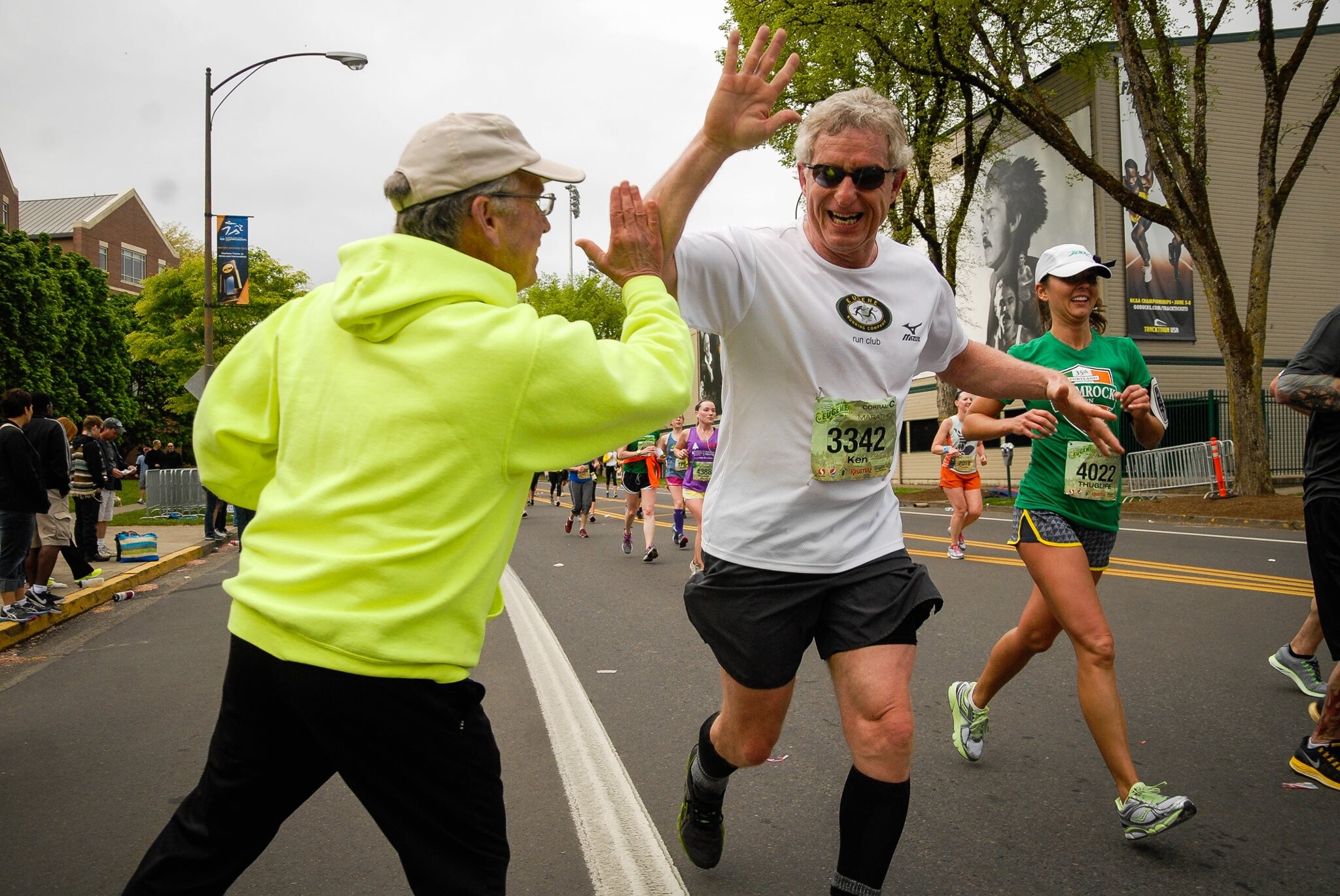
"You might have noticed. Running Commentary had an unbroken streak from 1982. Then it suddenly stopped coming to you about three years ago.
Writing for public consumption stopped then. Running ceased too, possibly forever.
At the least, I owe you an explanation.
In November 2019, I suffered a stroke. Much of the year 2020 does not exist for me, so far out of everything was I then.
I don’t remember at all the first two places I lived after having the stroke. The third is a partial memory,
I don’t remember falling out of bed and hitting a low-slung bookcase, only waking up on the floor — missing two front teeth, with a broken nose, broken right hand and left eye that pointed the wrong way.
Worst, my wife Barbara died in early 2020. I wondered for months afterward why she quit coming to see me.
It turned out that the hard fall was the beginning of a wake-up call. It was a slow but steady return to a new normal.
The physical therapist dismissed me after a year — with the warning to always carry a phone in case of a fall. One eye doctor said I was stuck with the odd eye condition.
He did perform successful cataract surgery on both eyes. Another doc later told me that the left eye was moving toward its proper position, though ever so slowly.
The right leg remained affected, but much less so than at first. I was told that it as 95-percent impaired when first tested. It is now five percent off — but still requires a walker. Running is impossible, in the third year post-stroke (or fall).
I now live at a senior center called Shalom House. I don’t try to run, and use a walker for daily walks of 30 minutes or more (which sounds better than saying a mile or so).
My running is no longer personal, but my interest in the sport remains strong. I attended a small part of the Olympic Trials last year, and more of the Pre meet, NCAA and Worlds in 2022. I still hope to get back to coaching, if the runners will have an ex-runner whose running days are increasingly ancient,
Best of all, my mind is almost fully awake again. I realize that my wife is no longer with us. I returned to published writing with this brief tribute on the second anniversary of her passing:
Barbara Hazen Shaw — July 27, 1944, to January 19, 2020.
My dear Barbara. I treasure our time together — though that time was too short at more than 30 years, and it ended too soon, several months before the actual ending.
A stroke incapacitated me at first. But I’ve made up for it by thinking of you every day since that fog has cleared.
In your 75 years, you lived a life to be admired — if not imitated. On your deathbed, you promised to keep “exploring the universe” in your own ways.
This you will do, I am sure. We should all be so lucky.
So what does this have to do with Running Commentary? Perhaps nothing if you never subscribed, and maybe just this if you did.
I’ve felt lately that I have taken advantage of you while giving nothing in return. So between now and early next year, I’ll send you chapters from a yet-unpublished book, Miles to Go."
by Joe Henderson
Login to leave a comment
Gina Little age 77 is going to be running the London Marathon for the 38th time
A runner who has taken part in more London Marathons than any other woman plans to complete her 600th marathon later this year. Gina Little, 77, who lives in Greenwich, has run the London event 37 times since she was inspired after watching the second race pass her road in 1982.
She has chosen to mark her 600th marathon at Richmond Runfest on September 11 as a celebration with her club, Plumstead Runners, all dressed in special T-shirts. “I wanted my running club to be part of it. We have got a coach going up,” she told the PA news agency.
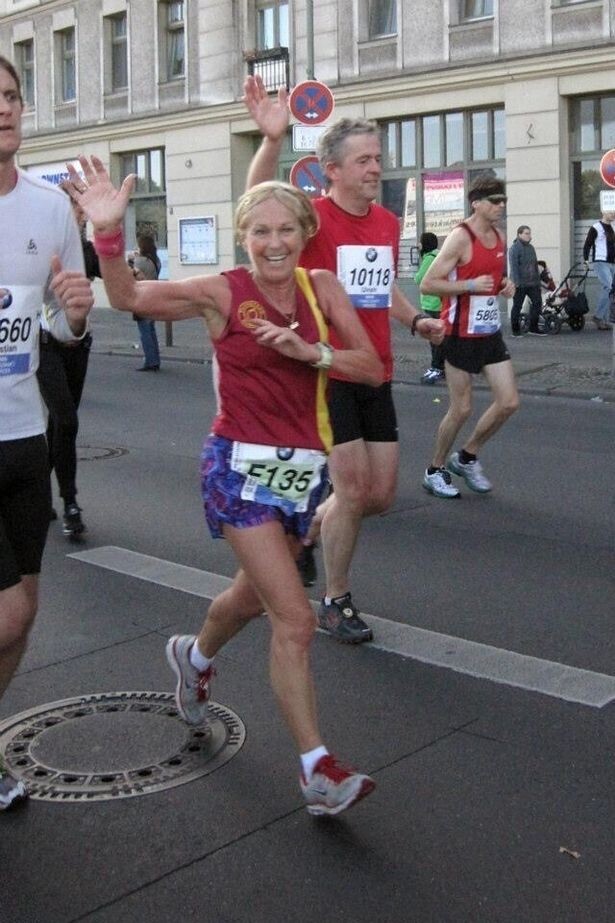
Gina has always been active and was inspired to try a marathon after seeing the London runners go past. “I didn’t know anything about the first one. I only saw the second one as it goes past the top of my road,” she said.
“I saw the French guy with a tray and a bottle of wine and a glass, and thought ‘how can he do that?'”
Gina said she was very nervous before her first London Marathon: “I ran with my friend all the way. We just enjoyed the crowds, took our time, went in pubs to use the loos. No Portaloos back then.
“We were only going to do one. Then I got the bug, I suppose.”
She recorded a personal best of three hours and 26 minutes in 1993 and now usually finishes in four hours and 30-40 minutes. Her achievement was recently rewarded with a Spirit of the London Marathon award and Mrs Little said she was “gobsmacked” to get the accolade, adding: “I have been quite lucky as I have got in as good for my age.”
While many hope for an elusive ballot place for the heavily over-subscribed London Marathon or run for charity, faster runners in each age category can apply for a good for age place. She added: “I have always been involved in it.
“When I didn’t run I have helped at a drinks station. One time I helped at the elite station.” She has also run the Berlin Marathon more than 30 times but it has fallen close to the London race since the latter was moved to October due to the Covid-19 pandemic.
“Last year I had to do Berlin one week and London the next week,” she said, "I have also got Chicago the following week. Chicago is always October. Chicago is my sixth major, so I obviously want to do that.”
There is a special medal for those who complete all six of the Abbott World Marathon Majors – Tokyo, Boston, London, Berlin, Chicago and New York. The married mother of two and grandmother of five also belongs to the 100 marathon worldwide club who meet at races and wear special vests.
Mrs Little said she has met interesting people through running, adding: “I never go to a race where I don’t know someone, which is really nice.” Running marathons and ultramarathons has taken her to 46 countries and 22 islands, including places like Hawaii and New Zealand.
“I’ve seen the world and seen the country,” she said, “When I got to 500 I thought that would be it. I don’t think there’ll be a 700th.”
Login to leave a comment
TCS London Marathon
Since its inaugural edition on March 29, 1981, the TCS London Marathon has grown into one of the world's most prestigious road races, blending elite competition with an extraordinary charitable legacy. Founded by former Olympic champion and journalist Chris Brasher alongside Welsh athlete John Disley, the event has been staged every year and has been held in the spring annually...
more...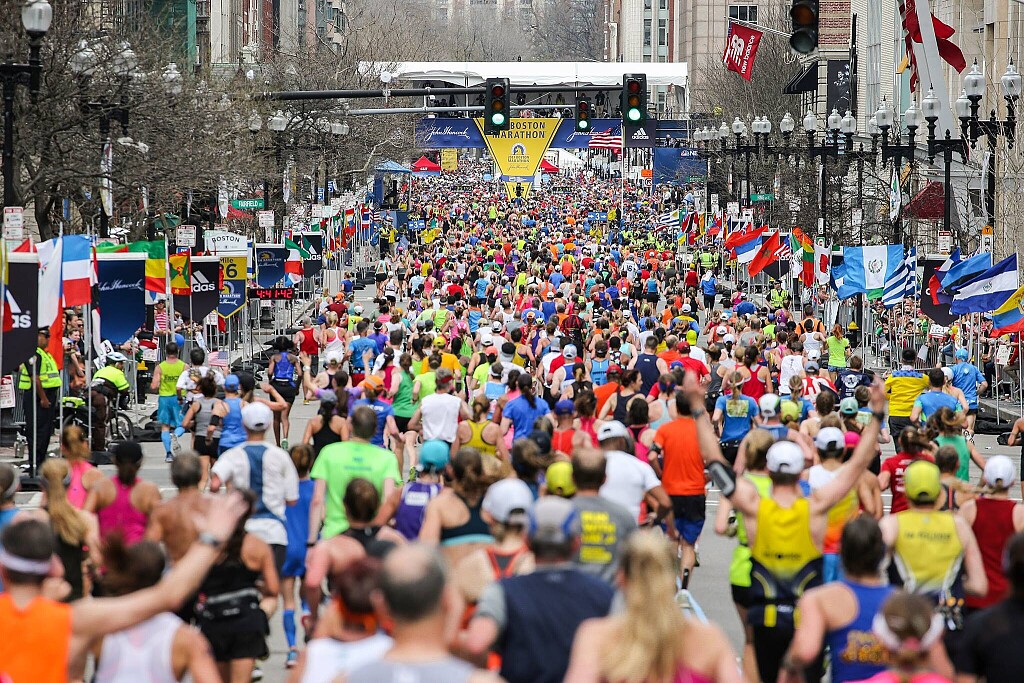
ESPN and WCVB has signed a deal with the Boston Athletics Association to provide exclusive year-round coverage for all their events including the Marathon
The Boston Athletic Association (B.A.A.) announced today that ESPN and WCVB Channel 5 will serve as the exclusive national and local broadcast partners, respectively, for the Boston Marathon beginning in 2023. WCVB will also provide exclusive year-round coverage for all B.A.A. events including the B.A.A. 5K, B.A.A. 10K, and B.A.A. Half Marathon.
“We’re honored to partner with ESPN and WCVB Channel 5, respected market leaders who bring a spirit of innovation and thoughtful storytelling that will propel the mission of the B.A.A. and legacy of the world’s oldest annual marathon forward,” said Jack Fleming, acting Chief Executive Officer of the B.A.A. “Both have established a tradition of broadcasting world-class athletic events, and we are excited to build on this tradition together into the future.”
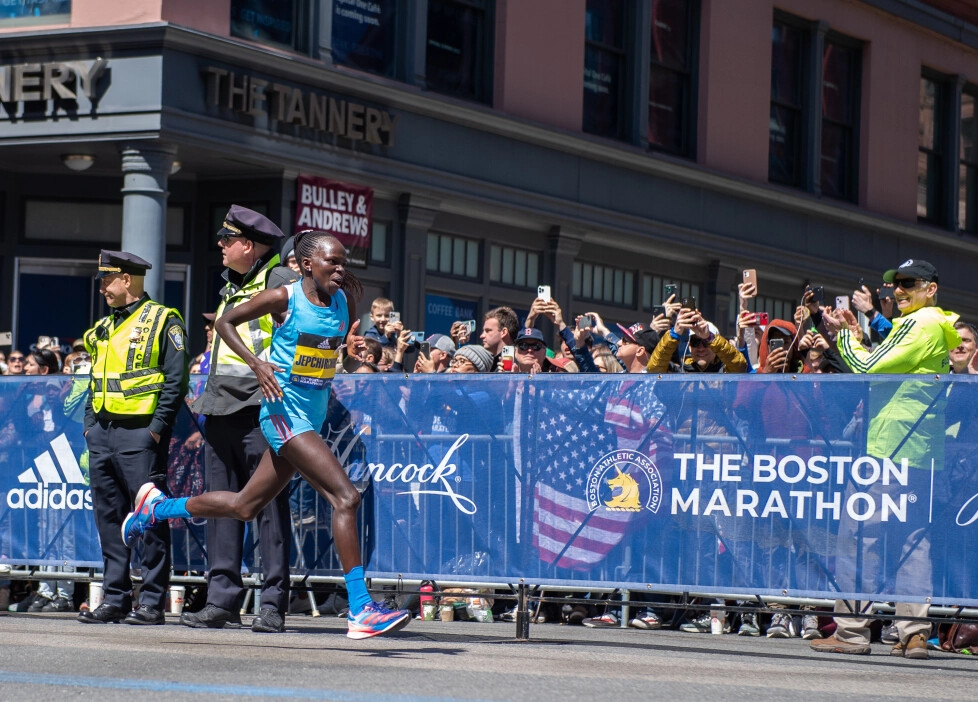
“The Boston Marathon is one of the world’s most recognizable and best-known sporting events and we’re proud to be able to bring it to ESPN viewers for years to come,” said Burke Magnus, President, Programming and Original Content, for ESPN. “We look forward to working with the B.A.A. and WCVB to present the stories and athletic achievements of this classic race.”
“The B.A.A. and the Boston Marathon are esteemed around the world and beloved by our community, and to be launching this exclusive partnership as WCVB marks 50 years in broadcasting and service to the community is especially fitting,” said Kyle I. Grimes, WCVB Channel 5 President and General Manager. “WCVB has a proud history of covering the market’s marquee events, and the Boston Marathon is the perfect addition to Channel 5’s signature, local programming. We also look forward to working with the B.A.A. year-round to highlight their many other athletic events as well as the great work they do in the community.”
ESPN will broadcast the 127th Boston Marathon, scheduled to take place on Monday, April 17, 2023, on its flagship channel from 8:30 a.m. ET until 1:00 p.m. ET. In addition, ESPN will also have coverage of the race within SportsCenter before the live coverage and later in the day, as well as coverage appearing on other ESPN shows and platforms.
Live coverage of the Boston Marathon will air on WCVB beginning at 4:00 a.m. ET through 8:00 p.m. ET. The race will be exclusively simulcast regionally on WCVB Channel 5’s Hearst Television owned sister-stations WMUR (Manchester, NH), WMTW (Portland/Auburn, ME), and WPTZ (Burlington, VT/Plattsburgh, NY). WCVB and all of its television partners will provide coverage of the marathon on their digital platforms and mobile apps. The Boston Marathon will also be live streamed on Very Local Boston, and the streaming platform will host year-round content featuring the B.A.A. WCVB will also serve as the first-ever exclusive broadcast partner for the B.A.A.’s Distance Medley races and will provide year-round coverage of the B.A.A. and its races, with a focus on the Boston Marathon.
The partnership marks the return of the Boston Marathon to both ESPN and WCVB, with ESPN having aired the world’s most prestigious road race in the early 1980’s and then from 1997-2004. WCVB provided wire-to-wire coverage of the marathon from 1982 through 2006, including the largest Boston Marathon in history—the centennial Boston Marathon in 1996 featured 35,868 finishers.
Login to leave a comment
Boston Marathon
Among the nation’s oldest athletic clubs, the B.A.A. was established in 1887, and, in 1896, more than half of the U.S. Olympic Team at the first modern games was composed of B.A.A. club members. The Olympic Games provided the inspiration for the first Boston Marathon, which culminated the B.A.A. Games on April 19, 1897. John J. McDermott emerged from a...
more...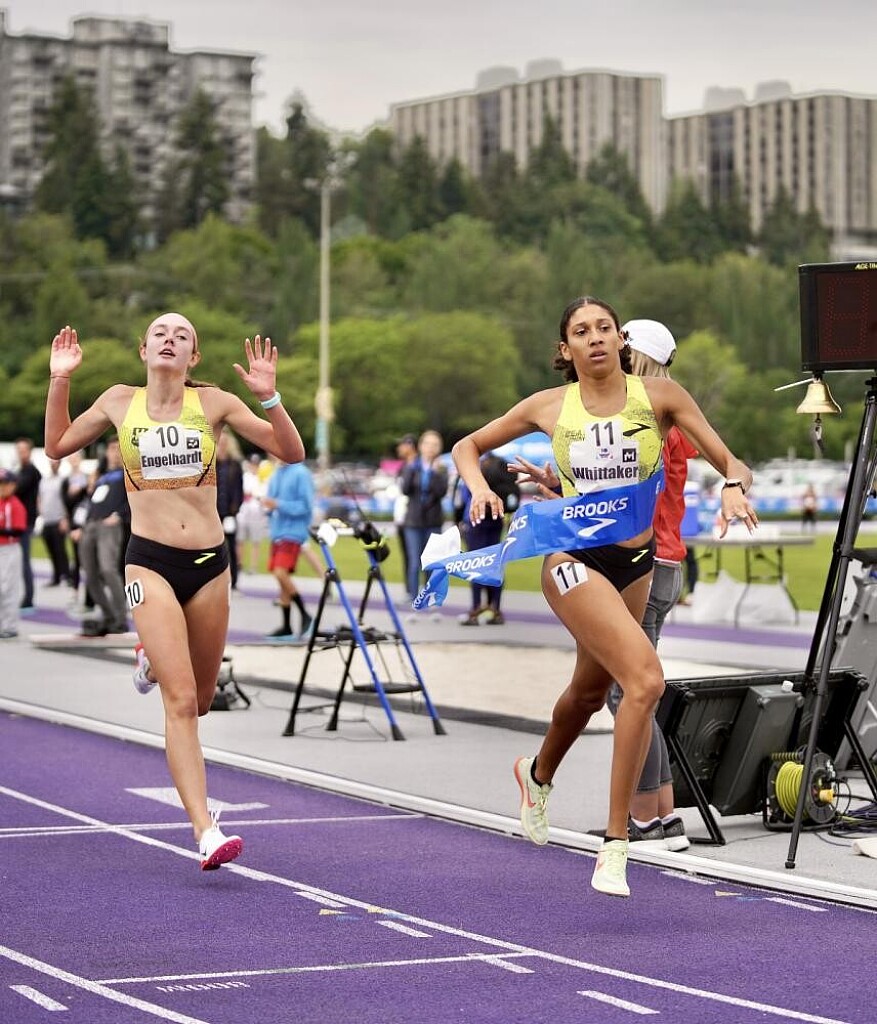
Whittaker repeats as mile champion in Seattle by edging Engelhardt and elevates to No. 7 all-time outdoor performer with 4:36.23 effort in first girls high school race with seven athletes running under 4:40
Julia Flynn called it.
“I knew it. I knew today was going to be a crazy race,” said Flynn, a recent graduate of Traverse City Central High in Michigan.

That it was. On a cloudy Wednesday afternoon at the University of Washington’s Husky Stadium in Seattle, Flynn was part of the fastest Brooks PR Invitational mile in meet history.
Defending champion Juliette Whittaker of Mount de Sales in Maryland led the charge with a final surge down the straightaway to win in 4 minutes, 36.23 seconds, lowering her own meet record of 4:38.65 from last year.
Six girls quickly followed, all crossing the finish line under 4:40 to make it the deepest girls mile race in U.S. prep history. The boys mile also didn’t disappoint to cap the meet by having junior Simeon Birnbaum of Rapid City Stevens High in South Dakota eclipse the 4-minute barrier and five athletes run sub-4:02 for the first time in a single high school race.
“I predicted Juliette was going to win, but I was like, ‘You know what? Regardless of the winner, we’re all going to get really big PRs,’” Flynn said. “That’s why it’s Brooks PR, it lives up to the name.”
With the girls and boys miles scheduled annually as the last races of the meet, fans at Husky Stadium lined the outskirts of the track down the straightaway, creating an intimate and electric environment for the 12 female runners all capable of winning the event.
“I knew it was going to be a fast race and I knew it was going to be competitive,” Whittaker said. “Just the fact that we came around with a lap to go and all of us were still in the race, was insane, it was really just a kick to the finish.”
With a slight separation from the pack, Whittaker and freshman Sadie Engelhardt of Ventura High in California – who set an age 15 world mile record April 9 by running 4:35.16 at the Arcadia Invitational – came sprinting down the last 100 meters.
Similar to how the New Balance Indoor National mile championship race played out March 13 between the two athletes, Whittaker had a little more left in her to pull ahead of Engelhardt for the victory. Whittaker prevailed by a 4:37.23 to 4:37.40 margin at The Armory in New York.
Engelhardt finished runner-up Wednesday in 4:36.50, while Flynn ran 4:37.73 to set a Michigan state record by eclipsing the 2013 standard of 4:40.48 produced by Hannah Meier of Grosse Pointe South.
Riley Stewart of Cherry Creek High was fourth in 4:38.21, lowering her own Colorado state record of 4:40.66 from last year, when she placed second behind Whittaker.
“I’m feeling amazing,” Stewart said. “I’ve been 4:40 three times now, so to finally get it (under 4:40) and to run with all these amazing girls, I have to say that was probably one of the best miles we’ve ever seen come through here, so just to be part of it is just amazing.”
Samantha McDonnell of Newbury Park High in California placed fifth in 4:38.44, Isabel Conde de Frankenberg of Cedar Park High was sixth in a Texas state record 4:38.55, and Mia Cochran from Moon Area in Pennsylvania secured seventh in 4:39.23. Conde de Frankenberg eclipsed the 2009 standard of 4:40.24 established by Chelsey Sveinsson of Greenhill High.
Every performance achieved from Engelhardt to Cochran was the fastest all-time mark by place in any high school girls mile competition.
Just missing going under 4:40 was Taylor Rohatinsky of Lone Peak High in Utah, clocking 4:41.83 to also produce the fastest eighth-place performance in any outdoor prep mile race.
Whittaker’s winning effort made her the No. 7 outdoor competitor in U.S. prep history, with three of the marks achieved this year, the other two coming from Dalia Frias of Mira Costa High in California (4:35.06) – who also ran the national high school outdoor 2-mile record 9:50.70 to open Wednesday’s meet – and Engelhardt’s victory at Arcadia.
Whittaker, along with Flynn, Stewart, 10th-place finisher Ava Parekh (4:52.09) of Latin School in Chicago and Roisin Willis from Stevens Point in Wisconsin – second place Wednesday in the 400 in 53.23 – are all part of Stanford’s 2022 recruiting class.
Despite having an unusual high school career due to the pandemic, Whittaker said the surge of quicker times and a more competitive environment may be due to the circumstances the pandemic created with more time for training.
“I feel like ever since COVID, honestly we have just surpassed any goals that we used to always set,” Whittaker said. “(Running) 4:40 used to be a barrier that like many people wanted to break, if so, maybe one, but the fact that seven girls (did) in the same race. I’m excited for years to come to keep watching. Sadie, obviously only being a freshman, and like other girls, I’m excited to see what times they are going to run.”
Here is the list of high school girls who have broken 4:40 before this race:
High School Girls Who Have Run Sub-4:40 Miles
Mary Cain — 4:28.25i (2013)
Alexa Efraimson — 4:32.15i (2014)
Katelyn Tuohy — 4:33.87 (2018)
Dalia Frias — 4:35.06 (2022)
Sadie Engelhardt — 4:35.16 (2022)
Polly Plumer — 4:35.24 (1982)
Katie Rainsberger — 4:36.61i (2016)
Kim Gallagher — 4:36.94 (1982)
Sarah Bowman — 4:36.95 (2005)
Arianna Lambie — 4:37.23 (2003)
Juliette Whittaker — 4:37.23i (2022)
Marlee Starliper — 4:37.76i (2020)
Christina Aragon —4:37.91 (2015)
Addy Wiley — 4:38.14 (2021)
Victoria Starcher — 4:38.19 (2020)
Caitlin Collier — 4:38.48 (2018)
Debbie Heald — 4:38.5i (1972)
Ryen Frazier — 4:38.59 (2015)
Taryn Parks — 4:39.05i (2019)
Wesley Frazier — 4:39.17 (2013)
Sarah Feeny — 4:39.23 (2014)
Danielle Toro — 4:39.25 (2007)
Mia Barnett — 4:39.41 (2021)
Katelynne Hart — 4:39.57 (2020)
Cami Chapus — 4:39.64 (2012)
Brie Felnagle — 4:39.71 (2005)
Dani Jones — 4:39.88 (2015)
Angel Piccirillo — 4:39.94 (2012)
Allison Cash — 4:39.98 (2013)
by Mary Albl of DyeStat
Login to leave a comment
Richard Quigley sets course record at Bolder Boulder for 86 year olds
After two missed years due to the COVID-19 pandemic, the famous Bolder Boulder 10K Memorial Day race made its triumphant return to town on Monday.
This year’s event was no doubt a welcome return to normalcy for many of the event’s 40,000 participants. But Monday’s race marked a particularly special occasion for Richard Quigley of Longmont (photo back middle with family)
Eight-six-year-old Quigley — a longtime runner and athlete known as “Grampa Dude” by his family — set a record course time for his age group while running this year’s 10K alongside his son, Todd, daughter-in-law, Jenn, and three grandkids, Tanner, Finn and Grace. He finished the race in one hour, 17 minutes and 41 seconds.
“It’s been a life dream of his” to break his age-group record, according to his older son, Brian Quigley. “He loves the Bolder Boulder. It’s been a big tradition in our family — he’s already thinking about the next one.”
Richard Quigley has lost count of the number of Bolder Boulder races he’s run over the years since the inaugural event in 1979, but he recalls running some of the early races with Brian and Todd. In 1982, he said he and his sons, who were 10 and 7 years old at the time, ran the race together as a team.
“Todd would start off and run half a mile, and then I would pick him up in full stride, put him up on my shoulders, and we would do the next half a mile,” said Quigley. “We would switch that way — half a mile of him running, half a mile on my shoulders, When we got to the stadium, he finished [the race] himself.”
The family relocated to Santa Barbara, Calif. for over two decades before moving back to Boulder in 2005. But after the Quigleys returned to Boulder, Richard Quigley started running the Bolder Boulder regularly again.
In addition to the Bolder Boulder, Quigley has run marathons — most recently, he ran the Malibu Marathon in 2012, at age 76 — as well as competing in triathlons and long bike rides throughout his life. He said the key to staying in good enough health to run races at his age is daily exercise.
“I keep a log of my daily exercising — I’ve probably got the last 20 years. I’m a weird old aerospace engineer,” he explained. “If you keep a record, you can see what you did, and you don’t miss a day. Missing one day a month is fine, but more than that and I kind of get after myself.”
This race proved a more daunting task for Quigley than others he had done in the past. Todd Quigley said that COVID-19 lockdowns and health challenges had made it difficult for his father to get out and run as frequently as he would have liked, but that he and his son, Tanner, were there to support Richard Quigley in his goals.
“This was a big challenge, and a big concern (was) whether he was gonna be able to keep upright and finish it,” Todd Quigley said. “Tanner and I both were there by his side to where if he needed a hand for stabilization, or his feet couldn’t keep him up, we’d be there to get him across.”
Richard Quigley was grateful to have the support of his family and to do the race with them this year.
“I really appreciated my son and grandson prodding me along,” Quigley said. “Just getting out there and doing that stuff is neat — better than sitting at home on your butt all the time.”
by Amber Carlson
Login to leave a comment

BOLDER BOULDER
In 1979 we dreamt of attracting a few hundred of our friends to race though the streets of Boulder, Colorado to celebrate Memorial Day with our families. Fast forward almost 40 years and the Bolder BOULDER has grown to become one of the largest and most highly acclaimed 10K’s in the world. Almost 1.2 million runners, joggers, walkers and spectators...
more...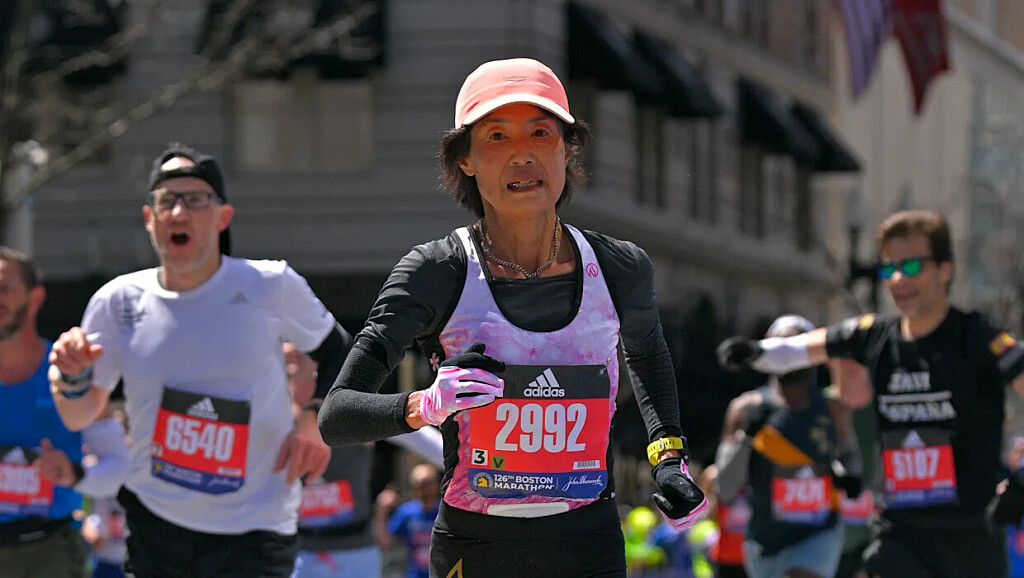
At 64, marathon age group world record-holder Yugeta Mariko still has a dream
The only woman over 60 to complete a marathon in less than three hours, the Japanese runner is defying age in her lifelong pursuit of becoming even faster.
Most people in their mid-60s are thinking of words like retirement, pension, grandkids.
Not Yugeta Mariko. She thinks about breaking world records.
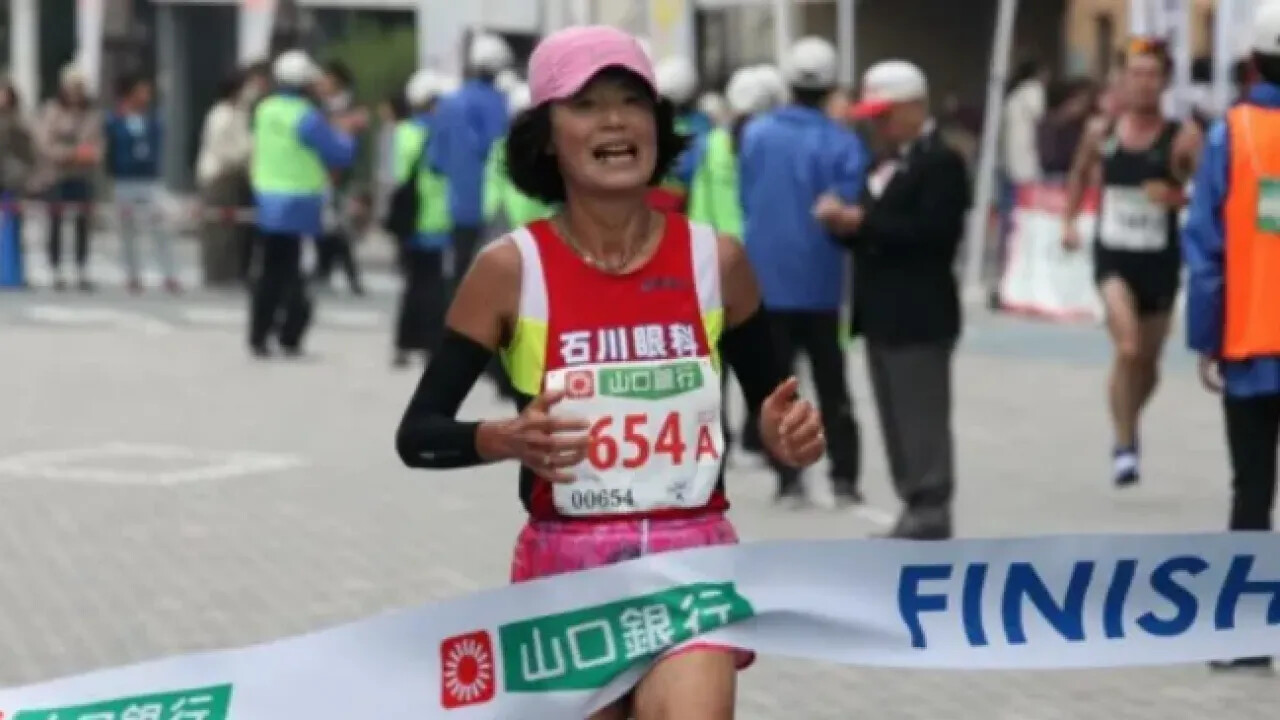
In the marathon.
Yugeta celebrated her 64th birthday on 13 May. It was only three years ago that the Japanese runner became the first - and only - woman in the world over 60 to run a marathon in under three hours. She competed the 42.2km (26.2 miles) distance in 2 hours, 59 minutes and 15 seconds in the Shimonoseki Kaikyo Marathon.
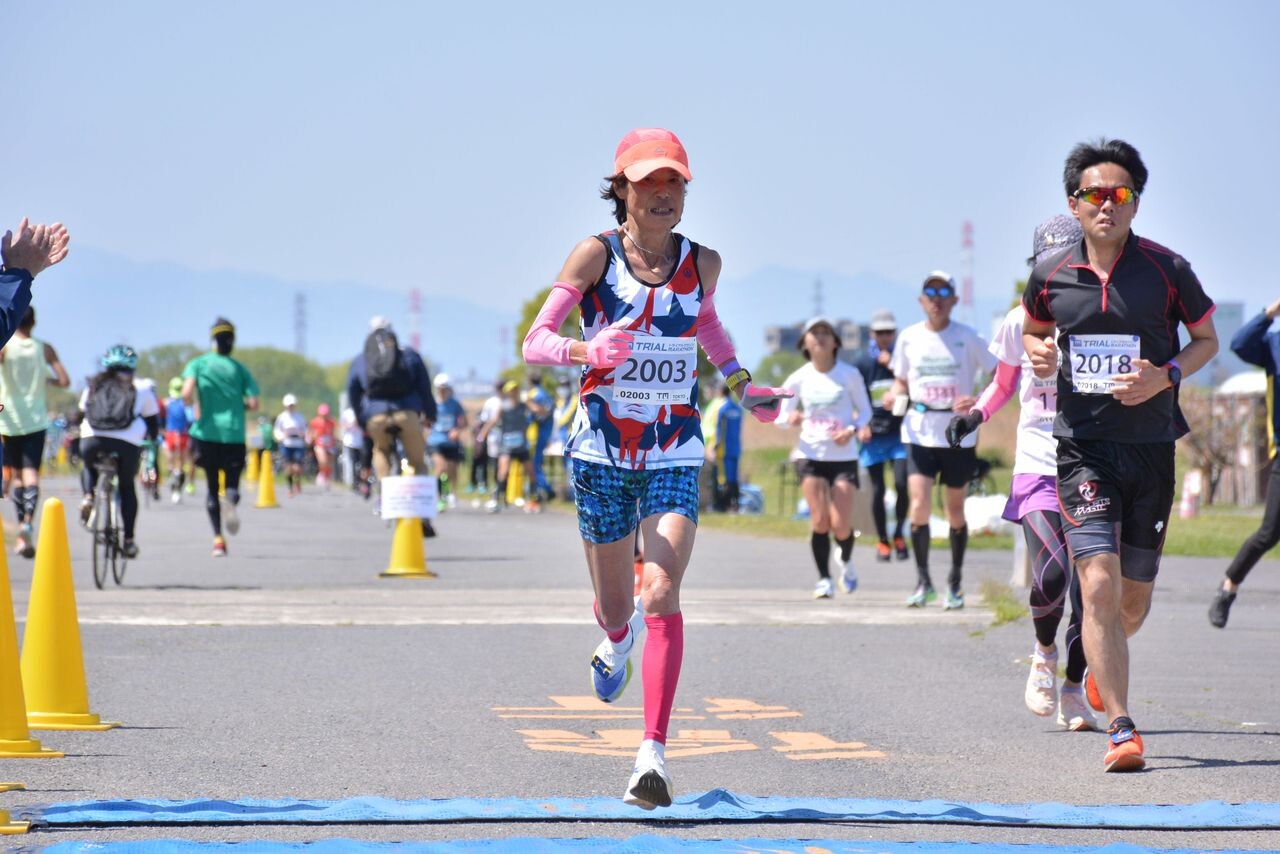
And just last year, Yugeta blew away that time in the Osaka Women’s Marathon, running a 2:52:13.
She was 24 when she ran her first marathon in 3:09:21, good for 34th place in the Tokyo International Women’s Marathon. At the time, a sub-three race seemed beyond reach. But 40 years later, she's getting faster.
There’s never giving up, then there’s Yugeta.
“After my first marathon, my goal was to run a sub-three some day,” Yugeta said in an interview with the Mainichi Shimbun.
“And it took me 34 years to achieve it. Being a teacher, the job took up a lot of my time and I couldn’t train the way I wanted to. My times stalled.
“Then I got married at 25. Had my eldest daughter at 26 and I was blessed to have two girls and two boys in all. But trying to raise them, I had to take a step away from marathons at one point.”
The awakening for Yugeta Mariko
The dream for Yugeta began back in 1979.
“I was on the track and field team from junior high to university. In my third year of university, I went to watch the very first Tokyo International Women’s Marathon.
“I watched the runners cross the finish line in the soaking rain and they were drenched. But they were glowing as well - absolutely shining. It was a sight I simply could not forget.”
The mother of four had to take a long timeout from running but started hitting the pavement again as she approached 40.
Yugeta, a PE teacher from Saitama Prefecture, found inspiration from British long-distance runner Joyce Smith, the winner of the inaugural Tokyo International Women’s Marathon (as well as the second) that Yugeta watched as a college girl.
Smith had sustained success beyond 40, winning the London Marathon twice. Her second win (1982) came at 44 years, 195 days - an age record that stands to this day.
She was ninth in the marathon of the inaugural 1983 World Athletics Championships. And at the time of the Los Angeles 1984 Games, Smith was the oldest female Olympian ever at 46, finishing 11th.
But even though Yugeta ramped up the work, she was far from breaking three hours.
The turning point arrived when Yugeta turned 50. That’s five-oh.
“When I became 50, my youngest son started high school which freed up a lot of my time,” she recalled.
“I joined a running club in Tokyo to train more seriously. I was a little worried at first because of my age but my teammates were telling me I still had plenty left in my 50s and urged me to keep going. So I did.
“The training paid off and when I was 58, I ran my first sub-three. Then at 60, I set a world record of 2:59:15 in the Shimonoseki Kaikyo Marathon.
“I’ve run 114 marathons. I’m past 60 but I’m still improving my time.”
Marathon No. 115 for Yugeta was this year's Boston Marathon on 18 April. Yugeta clocked a 3:06:27, relatively pedestrian by her standards, but enjoyed a tearful moment meeting the race’s two-time winner Joan Benoit Samuelson - who also happens to be the first female Olympic champion in the marathon.
These days, Yugeta’s goal is to break the 2:50 mark, more than two minutes off her personal best.
It would smash her own world record for her age category.
But don’t bother telling Yugeta she can’t because she believes, she does, and she wills.
Asked what has driven her for four decades, Yugeta said, “I think the most important thing is to find something you can be passionate about.
“You can’t give up. Don’t use age as an excuse. The secret is to believe in yourself, that you can do it.
“I first dreamed of a sub-three when I was 24. It took me 34 years, but I made it happen and after that, I set a world record.
“I want to keep dreaming - no matter how old I am.”
by Shintaro Kano
Login to leave a comment
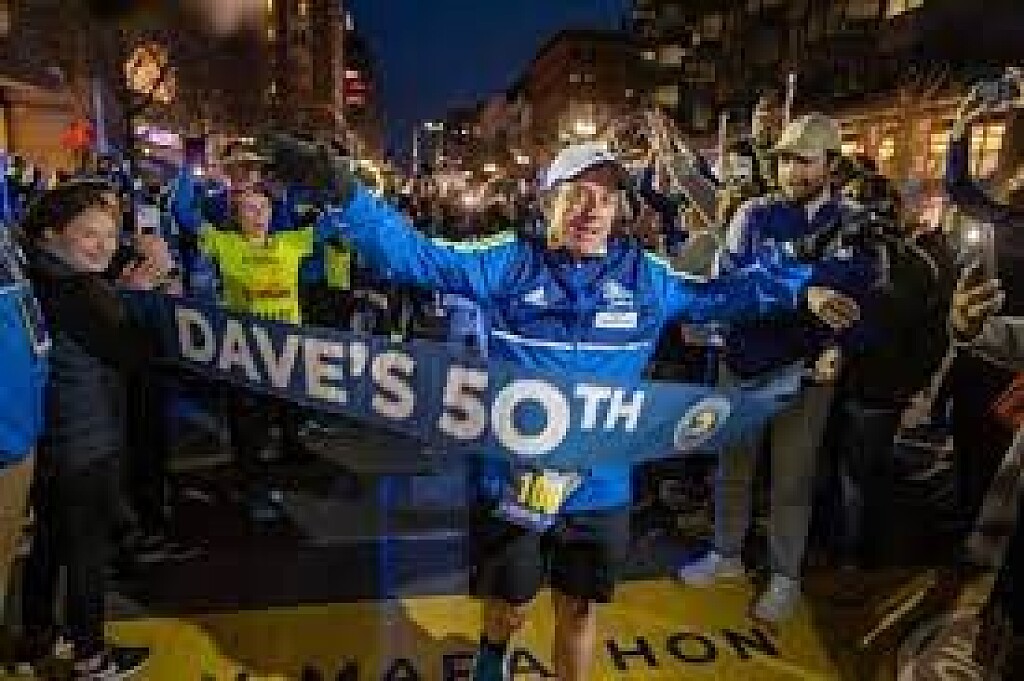
Boston Marathon race director Dave McGillivray completes his 50th Boston Marathon
On Monday afternoon, long after Lawrence Chebet and Peres Jepchirchir stormed to victory through the streets of Boston, race director Dave McGillivray crossed the finish line of the Boston Marathon for the 50th time.
McGillivray has been an avid runner for most of his life. He’s organized and completed multiple massive charity runs (including an 80-day, 3,452-mile run from Oregon to Massachusetts), competed in nine Ironman triathlons and ran, cycled and swam for a total of 1,522 miles through the six New England states.
The first time McGillivray ran the Boston Marathon was in 1973 when he was 19 years old. He ran it with all the other runners for the next 16 years (including in 1982, when he ran 3:14 while blindfolded and escorted by two guides to raise more than $10,000 for the Carroll Center for the Blind in Newton, Massachusetts).
In 1988, McGillivray became the technical director for the race, so he began to run the course after the race was finished. He continued doing this every year, even when he became the official race director in 2000.
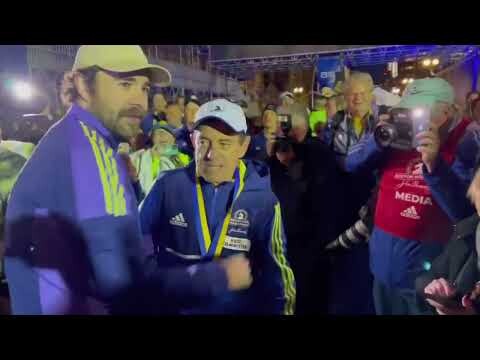
“Hard to put into words, 50 years have gone by so fast,” McGillivray told CBS Boston at the finish line. “But I have been blessed with being able to do a lot of this for charity, give back to a lot of different causes, and that’s what I hope my legacy is someday. Being able to help those in need.”
by Brittany Hambleton
Login to leave a comment
Boston Marathon
Among the nation’s oldest athletic clubs, the B.A.A. was established in 1887, and, in 1896, more than half of the U.S. Olympic Team at the first modern games was composed of B.A.A. club members. The Olympic Games provided the inspiration for the first Boston Marathon, which culminated the B.A.A. Games on April 19, 1897. John J. McDermott emerged from a...
more...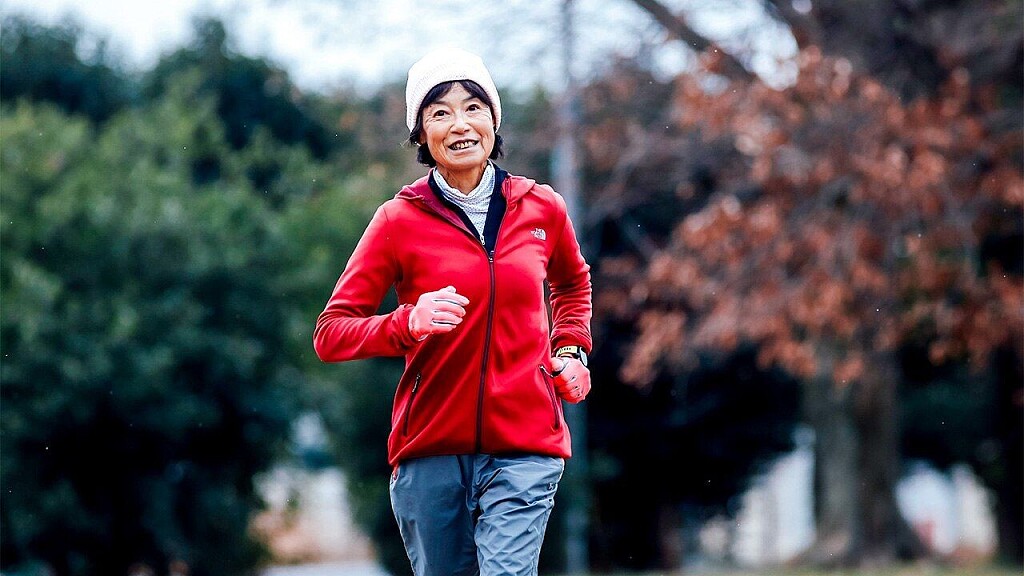
Japan’s Mariko Yugeta, 63, runs two sub-3:05 marathons in seven days, after running 3:04 in Tokyo, she followed it up with a 2:58 in Nagoya
The first 60+ woman to ever break three hours for a marathon, Japan’s Mariko Yugeta, added a new feat to her previous world record. A week ago, Yugeta won in the 60+ category at the Tokyo Marathon with a 3:04:16, and a week after that, she bettered her time by almost six minutes, running a 2:58:40 at the Nagoya Women’s Marathon.
Yugeta, 63, ran Tokyo and Nagoya as a fitness test for April’s Boston Marathon, where she hopes to lower her world record time of 2:52:13. Through 2021, she ran into some injury problems, which kept her out of the Osaka International Women’s Marathon in January.
The force that has driven her motivation for over 40 years is regret. When Yugeta was 21, she was mesmerized by the finishers at the 1979 Tokyo International Women’s Marathon. She spent the next three years training, making her marathon debut in 1982 in Tokyo, where she finished nine minutes over her goal of sub-3:00.
Since then, Yugeta has had unfinished business. A sub-3 marathon became her lifelong goal, and she finally achieved it at the Tokyo Marathon in 2017 (2:58:17), when she was 59.
When you put her personal best time into an age grade calculator, it comes out to 2:14:03, one second faster than the current women’s marathon world record held by Kenya’s Brigid Kosgei.
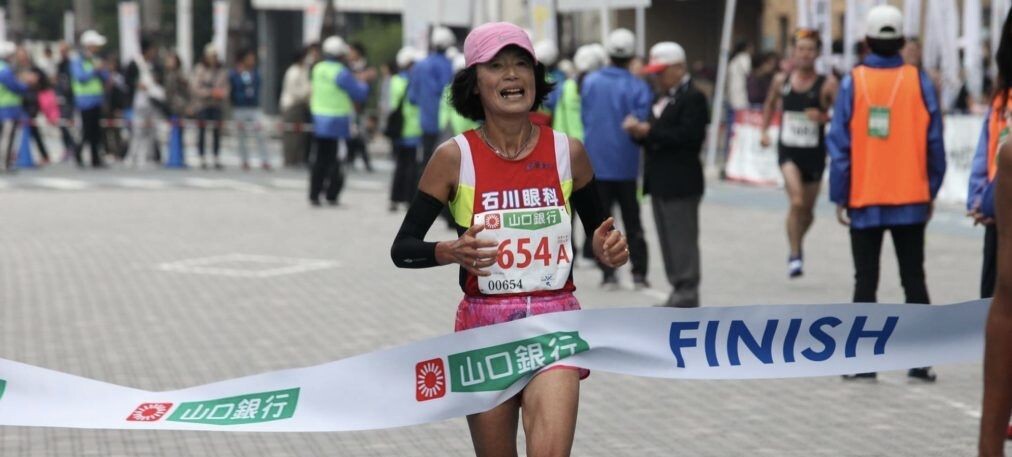
Yugeta’s achievements bring to mind the 1984 U.S. Olympic gold-medal-winning marathoner Joan Benoit-Samuelson, who is the only woman ever to run a sub-three marathon in five consecutive decades. (Benoit has not yet run one in the 2020s.)
In a 2021 interview with Maurten, Yugeta said she doesn’t really think about her age when she runs. She aspires to run sub-4:00/km this April in Boston, to become the first woman 60+ to run a marathon under 2:50. She currently teaches high school phys-ed and trains alongside her 16- and 17-year-old high school students.
by Marley Dickinson
Login to leave a comment
The Man Who's Finished 761 Ultras
Rob Apple ran three ultras in 2020. With only four slated for 2021, he's in trouble. Well, kind of.
Since 1990, Apple, now 59, of Murfreesboro, Tennessee, has averaged 24 ultras a year. If that number seems absurd, well, meet Rob Apple. Sucking on a peppermint candy as he bounces along a greenway near Stones River Battlefield, he's the jolliest runner you're likely to meet. With his headlamp on and his buds blaring AC/DC, you'd never imagine this guy was the most prolific ultrarunner in history.
For starters, he laughs a lot. No, really a lot! "If we knew you did all these ultra runs," his boss once told him, "we would have drug tested you." Apple lets out a chuckling, jocular laugh. It starts deep in his gut and builds up through the chest and echoes out from his wide smile like a megaphone.
He looks more like a hairband rocker from the '80s than a grizzled, sinewy athlete. His bright, glowing eyes and massive head of hair offset an enormous, gleaming smile. Many approach him and ask if his teeth are real. "Never even had braces," he says. "My mom gave me these."
If running ultras is any measure, it's easy to see why Apple is so happy: he has completed a whopping 761 of them. 761! That's over 23,560 miles from trail to road to timed track events lasting days. Add up the totals for Yiannis Kouros, Camille Heron, Courtney Dauwalter and Scott Jurek and you still wouldn't reach half the ultra miles Apple's run. And he's competed in the biggest: Leadville, Western States, Wasatch, Massanutten, Vermont, Catalina and UTMB, most multiple times. He's even run the Boston Marathon. "Yes, I've actually done regular marathons, too," he says, laughing.
Since 1976, Apple has completed a total of 903 races, including 69 marathons. His seven Western States completions are impressive, but his other race repeats are downright nuts: 18 Mountain Mist 50Ks, 21 Strolling Jims and 28 Howl at the Moon 8-hours. He has run an ultra each year since 1982 and has logged a grand total of 185,310 lifetime miles. Each race and training run is meticulously detailed in a journal he's kept since he was 16. He includes his time, the weather, what he wore and who he talked to. On top of that he loads the data into spreadsheets! An accountant by day, Apple is a numbers freak.
His biggest enemy now that he's 59, he says, is time. He admits he's getting slower, and DNFs due to missing time cutoffs in longer races have forced him to focus on 50Ks and European events where cutoffs are more manageable. At this point he doesn't care about improving his pace; he just wants to be out there as long as possible.
"It's not about how fast you go; it's how many pictures you take along the way," he says. But don't think he's lost his ambition. Quite the contrary. He sees himself as an astronaut on the fringe of running. His goal? To become the first in history to reach 1,000 ultra finishes.Known as the Main Street of America, Route 40 stretches from Delaware to Utah and becomes Cumberland Avenue in the tiny village of Lewisburg, Ohio. Rob Apple grew up in a small u-shaped cul-de-sac on its southern side. For him, the great highway was like the mighty Mississippi; it made him dream of taking it as far as it would go.
Something was always off about Lewisburg. A Children of the Corn kind of atmosphere. The local barber that cut his hair also burned crosses in his yard on Friday nights.
"I always knew I was going to get out of there, somehow, someway," he says.
Ironically, there was little laughter in the Apple home, and affection was rare-no hugging, no kissing. Being an only child in a poor neighborhood, he learned quickly to find his own fun. His earliest adventures were roaming around his mother's flower garden. Intoxicated by the smells and colors, he memorized their names and wrote them down, a habit he continues to this day. (He has spreadsheets for those, too.)
His mother, Ruth Ann, loved seeing people travel through. She often left food out for hoboes. As a result, they marked the telephone pole in front of her house to signal to others that they could get food there. When the famous breatharian, Barbara Moore, walked across the United States in 1960, she followed the marks and wound up at the Apple home. She left behind a food wrapper, which made its way into the family scrapbook along with a picture of Moore walking in her work boots. Ruth Ann idolized women like Moore and Grandma Gateway. She was a homebody but dreamed of someday getting out and exploring the world. According to Apple, it just wasn't in the cards. So, he wanted to do it for her.
By 13 he was the hippie kid with long hair, looking for a way out. His uncle owned a motorbike shop and turned him onto motocross, and perhaps his ticket to a large world.
"The bikers were a lot like ultrarunners," he says. "They were openminded, free, carried no judgement."
When a bad spill upended his Honda XR75, his racing career came to an abrupt halt. The gangly teen was distraught and became a roaming figure around the track. He'd show up to watch, desperate to be around it. But it wasn't the same; he needed more.
Of all the places a running career can start, the local library is an odd one. The year was 1976, and two things captured the young Apple's imagination: the Guinness Book of World Records and a black-and-white copy of a popular running magazine. It was the nation's bicentennial, and the magazine was promoting an unusual campaign. If you ran 285 miles in a year and documented it, you got a certificate. So, Apple set up a three-tenths-of-a-mile circuit around Crescent Drive and did just that. By the time the certificate arrived in the mail, he was hooked.
He ran track his freshman and sophomore years but wasn't good. His PR in the mile was a meager 5:30. He opted for trade school his junior and senior years, where he learned to draw. After graduation, Apple took a job designing school buses during the day and went to Wright State at night, where he studied accounting. Money was tight. It had always been tight. In the 10 years it took him to graduate, he'd get married, divorced and discover the one thing in life he wanted to do more than anything else: run ultras.
In another two years, he got his masters in sports physiology. A better paying job in accounting would follow, and weekends became an obsession to travel and race. Though he swore he'd never marry again, he would, and again he'd get divorced, but running would eventually take him, not only out of Lewisburg, but all over the world. In the 1980s, Apple was known as "the heartthrob of ultrarunning," says Gary Cantrell, aka Lazarus Lake. The former Trans-Am race director Jesse Riley likened him to a Greek statue. "He was just so damned good-looking, like he was carved out of marble."
He was a real chatterbox and a fun guy. Back then, he and Lake enjoyed tapping kegs post-race and watching people go to church. Lake has enough anecdotes about Apple to fill a healthy-sized book. One involves the Oak Mountain 50K, a dodgy motel with one bed, beer, weed and waking up to find trees snapped and patio furniture tossed in every direction. The two had slept through a tornado.
Lake later introduced Apple to who would become his second wife, Pam Jordan. At "Strolling Jim," she asked, "Who was that man that passed me?" Lake answered before she even finished her sentence: Rob Apple. Running finally took him from Lewisburg to Tennessee where Jordan lived.
Back then, the slim, six-foot two runner was not only handsome, but he was also fast.
"Oh, he could move," Lake says, citing a 1989 performance. At Lake's 41.2-mile Strolling Jim race in Wartrace, Tennessee, Todd White was crewing top competitor Dink Taylor when around mile 30 he looked back. "Dink, I don't know who's coming, but he's coming hard," he said. Taylor turned around just in time to see Apple fly past on his way to finishing in 4 hours 58 minutes, making the top 10. In the '80s, Apple recorded a 34-minute 30-second 10K, a 6-hour 26-minute 50-miler and logged 122 miles in 24 hours. In Richmond, Ohio, he got revenge on his high-school nemesis, the mile. In the costume themed race, he ran a 5:06 dressed as Don Johnson from Miami Vice: linen suit, teal tee underneath.
The ultrarunner and professor Dr. Thomas Mueller says Apple's attitude is everything, "He never met a person that wasn't his friend." After qualifying for Boston with a 3:06, in the race, he stopped at mile 23 to drink a cold one with a talkative spectator. He finished in 4:09. For someone dedicated to numbers, Apple is surprisingly more about the journey. He has developed a simple philosophy toward running long term: speed kills.
"If you want to be in it for 40 years, you gotta let that go," he says. The realization was sudden. Not like the inevitable giving up the ghost many experience when the body starts rebelling with age, Apple's breakthrough actually came when he was running his fastest times.
It was fall of 1990 and the 100K World Championship was coming to the Edmond Fitzgerald road race in Michigan. Apple was hyped. Just a few years before, he'd run an 8:28 and was hoping to place in the top 20. At that time, Apple was still an undergrad, and when a midterm was suddenly moved, it prevented him from participating.
Dejected, he found a closer race on the same Saturday, Virginia's Mountain Masochist 50-miler. Still, Apple couldn't get motivated, couldn't get his mind right but managed to finish feeling OK. So, for the next day, he found another race near Columbus, the Wolfpack 50K. Apple finished again, and fell in love with "weekend doubles." That weekend was a Eureka moment.
Trail running was just starting to boom, and there were now more racing opportunities than ever. And Apple started ripping them off. The Texas Trail 50K-17 finishes. The Ice Age 50K-17 finishes. The JFK 50-miler-15 finishes. The Rattlesnake 50K-15 finishes. The Vermont 100-seven finishes. Five Massanutten 100s and two Leadville 100s. And the list goes on and on and on. In 2002 alone, he ran a total of 44 ultras.
Usually a fixture at the back of races, Apple has managed a podium finish. In 2000 he was running Illinois' Howl at the Moon's half-trail/half-road ultra for the eighth time. He didn't feel particularly good starting out and didn't know what to expect. Around the halfway point, things turned around. He was feeling better and surprised that he was only down six minutes to the leader. Apple remembers thinking, "Hey, I've got a shot at this." He made a move, felt more and more energized as his pace increased. Then, he was suddenly in the lead. "I was just hoping to hang on," he says. Nervous at his prospects, he kept repeating to himself, "I want it to be over now!"That was over 20 years ago. Now, his lack of speed is his biggest impediment in reaching 1,000 finishes. In 2013, he had five DNFs, and in 2014 couldn't finish the Mountain Mist 50K, a race he's run 18 times. Apple combats the hard cutoffs of longer races by focusing on 50Ks and trail runs in Europe. While they may be technical and more difficult, the cutoff times tend to be more generous. But it's a gamble.
In 2018, he made two long trips to Europe, but weather and tough conditions resulted in two DNFs and four non-starts. His yearly output slipped to seven races, and his pocketbook took a big hit. Apple funds these adventures on his own dime. He's never had a sponsor but says he regrets nothing.
"No car or house could replace what I've spent on running," he says, a solemn tone to his voice.
Last December, Apple was looking forward to completing ultra #760 at the Bloodrock 50K outside of Birmingham, Alabama. The website describes the UTMB qualifier as "likely the hardest 50K you have ever run." With over 18,400 feet of elevation change, it is renowned as both technical and treacherous. Parts are so steep, they have ropes.
Apple had a rough go.
"I did the first loop and got back to the aid station and was going to have to do the next one backwards, which meant I would have to go down those ropes in the dark," he says. "I wasn't going to die out there, so I decided to go back to my hotel."
But yet another DNF hasn't gotten him down. Apple is so positive you expect rainbows to shoot from his eyes. He says even if time does eventually catch up with him, he's found a lot more to running trails than just the finish. In the past few years, the most important factor for him in choosing a race is location. His motto: "Never waste good meniscus on a bad view."However, when his runs began taking him to England, France, Switzerland, Scotland, Ireland and New Zealand, his second marriage also succumbed to his dedication to racing. And he's not bitter about it. Single and in great shape, he is not currently dating. He says he can't afford it, and it's too much hassle.
Apple rarely looks back. Of the 903 races he's completed, he doesn't have a single medal on his wall. Instead, he leaves them on his mother's tombstone back in Ohio. When her son would toss his medals into a corner or dump them in the closet, she would take them out and mount them on the wall. "I usually go up there every few years with about 10 pounds of medals," he says. His thick laugh trails off a little quicker. The small cemetery doesn't have anyone to clean off the stones, so Apple's medals form a sizable memorial to his biggest inspiration-the mother that taught him to dream big.
On the cusp of 60, Apple still has a lot to do. He won't say where he's planning his 800thrun, but he doesn't deny it's in Patagonia. At heart, he's an adventurer, in it for the people, the journey and the laughs. But don't tell him the finish line doesn't matter, because everyone knows he's counting.
"You don't wanna be that guy that dies at 799," he says with a wild howl. "I have fun running ultras, and it's up to me to make the party happen."
by Trail Runner Magazine
Login to leave a comment
British runner Russell Bentley breaks winter Paddy Buckley Round fastest known time
American ultrarunner John Kelly and British ultrarunner Russell Bentley set out to complete midwinter Paddy Buckley Rounds, starting out in the same place and running opposite directions to meet each other back at the finish. Bentley had a fantastic day, and ended up setting a new FKT (fastest known time) on the 100K route, finishing in 20:15:49.
The Paddy Buckley Round is an extremely challenging course in Wales that takes runners over 47 summits throughout the 100K route for a total of 28,000 feet of elevation gain. According to fastestknowntime.com, it was first completed in 1982 by Wendy Dobbs. The winter FKT on the course was previously held by British runner Damian Hall, who completed the loop on January 29, 2020, in 21:30:06.
Bentley’s time smashed Hall’s record by nearly one hour and fifteen minutes, and Hall himself made a point of congratulating Bentley on his accomplishment.
Bentley ran the course unsupported, counter-clockwise, while Kelly ran the route clockwise. Unfortunately, Kelly made it as far as the Llanberis checkpoint in 14:49:29 before throwing in the towel. This was Bentley’s second attempt at the winter Paddy Buckley Round after his first try in December 2020, which he completed in 22:45.
Bentley is a UK Athletics-qualified coach and is sponsored Noble Pro VJ Sport Vroom Nutrition. He has a marathon personal best of 2:20:20 from the Berlin Marathon, and has only begun tackling longer runs since the COVID-19 pandemic began.
by Brittany Hambleton
Login to leave a comment
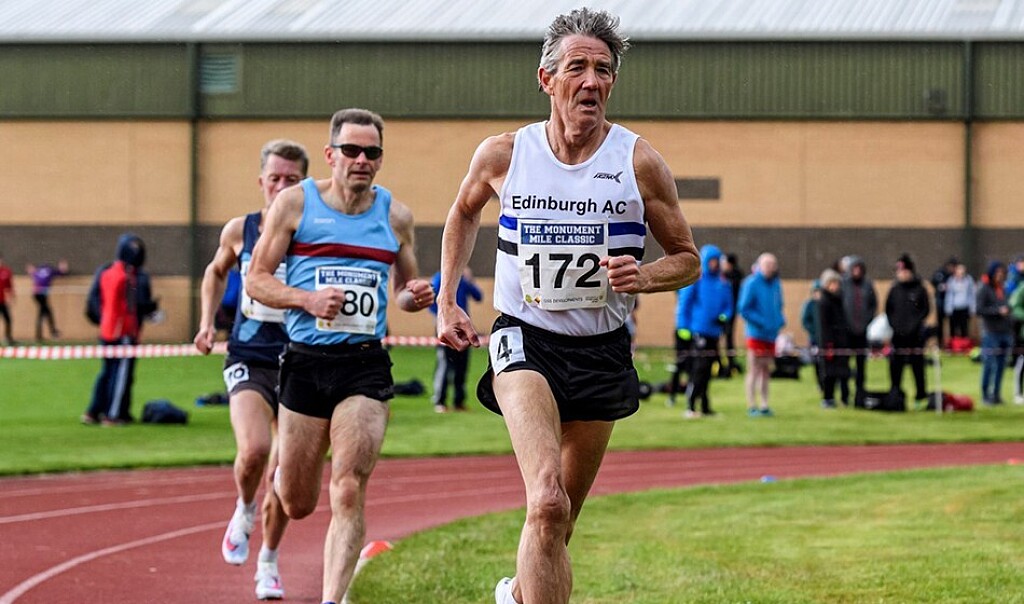
Scottish veteran Paul Forbes smashes 800m world masters record
Scottish veteran and three-time Commonwealth Games competitor smashes M65 indoor mark with 2:15.30.
Glasgow 12’s Fun Day & Glasgow AA Yuletide Open Graded Meeting, December 18 Almost 40 years since he reached the 1982 Commonwealth Games 800m final (a feat he repeated in 1986), Paul Forbes broke the world M65 indoor 800m record with a 2:15.30 clocking.
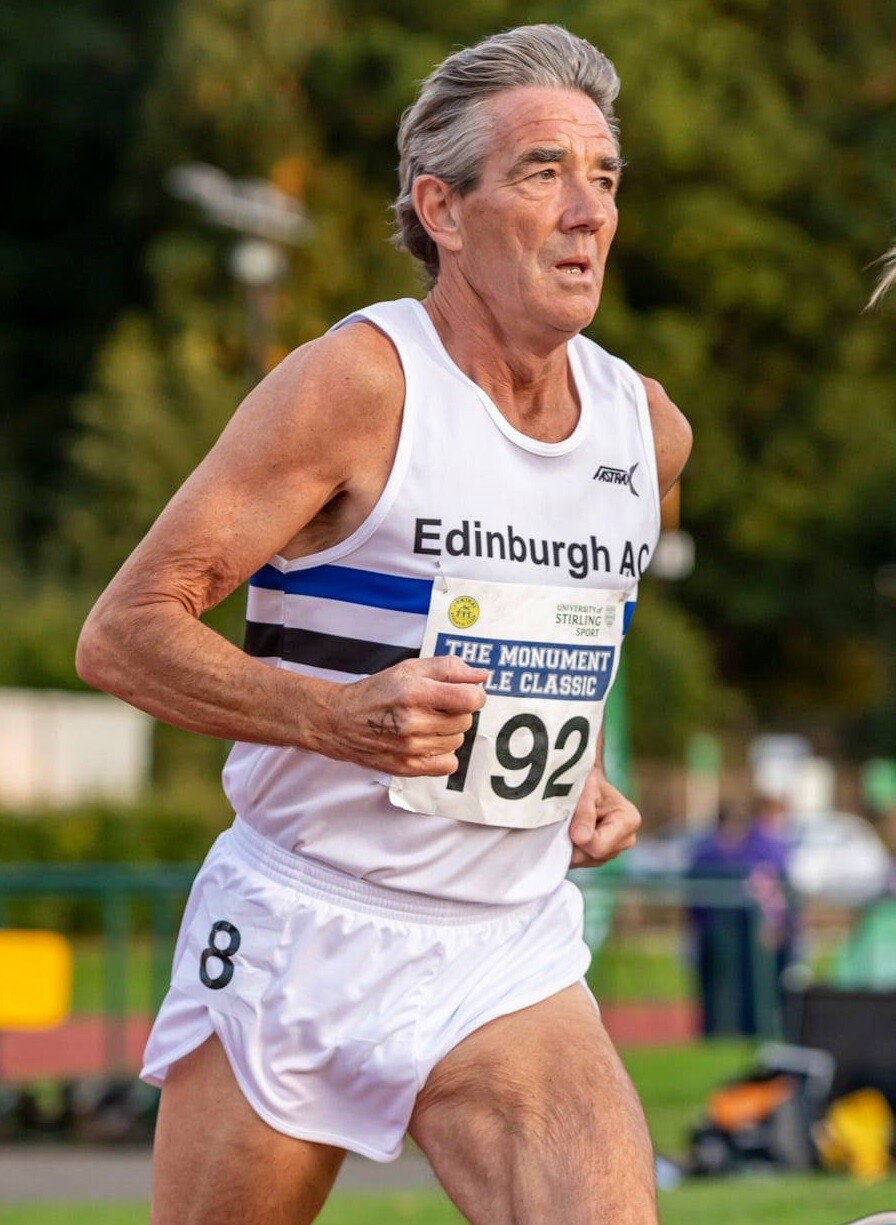
The time is half a minute outside his lifetime best – 1:45.66 set in Florence in 1983 behind world silver medalist Rob Druppers’ 1:45.12.
Forbes finished third in his heat behind Cumbernauld’s Dylan Drummond, who is 45 years his junior and who won in 2:01.49, plus Scottish M40 Stephen Brown (2:09.25).
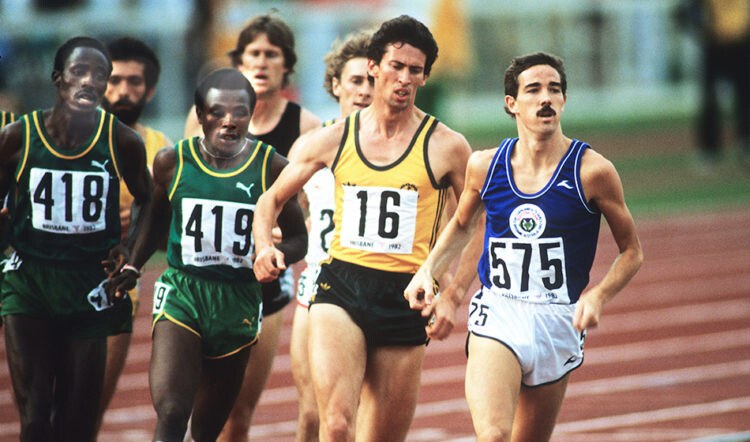
Showing the great range of ages in the race (a 51-year age gap), behind Forbes came 14-year-old Lydia Simon in sixth and first woman in 2:20.75.
Forbes began as a cross-country runner and won the Scottish East District Junior Boys Championships in 1969 and he was sixth that season in the Scottish Championships. In 1973 he won the Scottish Schools 1000m steeplechase title and then won over two laps in 1974 in 1:58.0.
In the Scottish Under-20 Championships he was second in 1:56.5 but ahead of future Commonwealth Games 1500m medalist John Robson and in 1975 he won the AAA Junior title in 1:50.1 and made the European Junior final that year in Athens where he placed eighth.
Forbes won the UK title in 1982 in a championship best 1:46.53 narrowly ahead of Steve Caldwell (1:46.65) and Peter Elliott (1:47.76) and he also ran for Scotland in the 1978 Commonwealth Games where he was a semi finalist.
After his successful senior career – spanning three Commonwealth Games – he had a complete break in his 30s before later returning as a master and he was involved in a stunning battle with Alastair Dunlop in the Scottish Championships in his first major race as a vet with Dunlop edging home in 2:00.60 to Forbes’ 2:00.61.
After that 1997 race Forbes said he felt he was capable of a world masters record if he could train seriously but the world record ultimately took nearly another 25 years with injury regularly scuppering his ambitions.
He competed in the European masters 10km as an M45 in 2005 and ran a few other masters road championships before eventually re-focusing again on the track.
He made another comeback as a M60 – finishing sixth in the World Masters 800m at Toruń in 2019 and winning the Scottish and British masters indoor titles in 2021 at the age of 64 – but it was turning 65 in November that gave him the opportunity to make a real mark in the masters.
The previous best was held by Ireland’s multiple world age-group champion Joe Gough with 2:16.65 in Dublin in 2018.
Forbes’ 2:15.30 is his fastest in recent years, equaling his outdoor best of 2021 and is even faster than the outdoor UK M65 best.
The Scot’s run took an astonishing nine seconds off of Pete Molloy’s UK indoor best of 2:24.48 set in 2014 and is even fractionally quicker than Dave Wilcock’s M60 UK indoor record of 2:15.60.
by Steve Smythe
Login to leave a comment
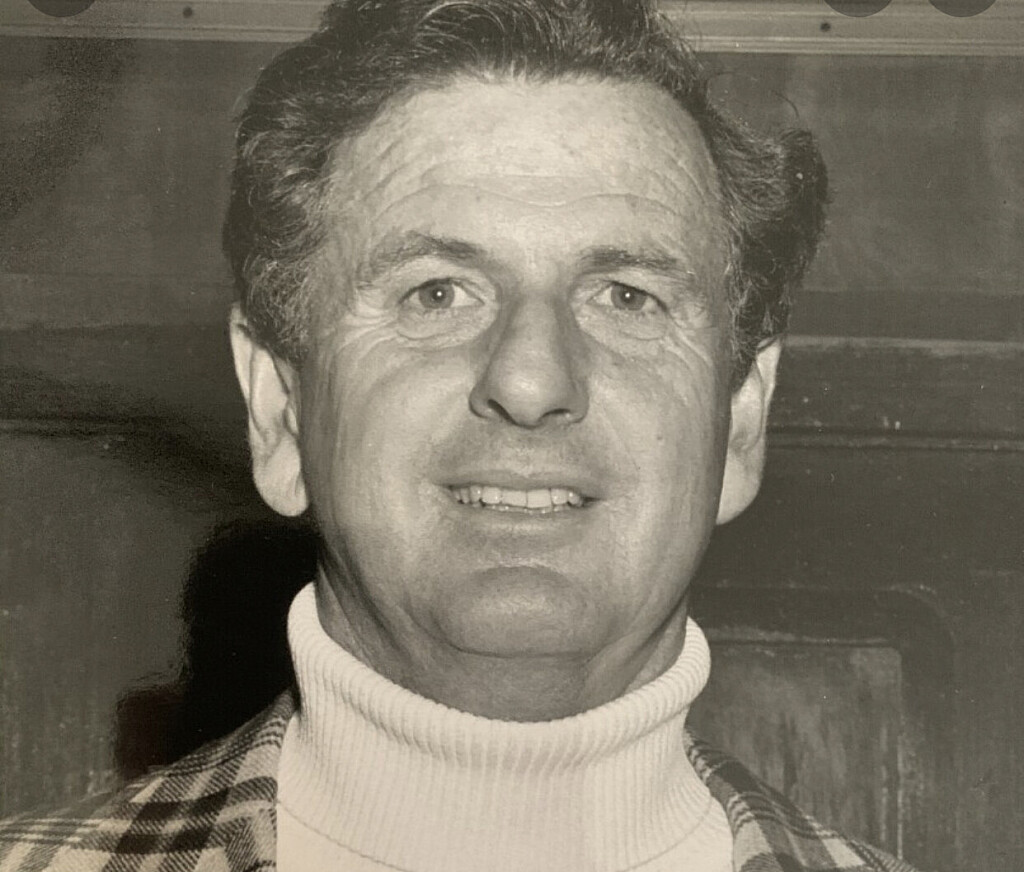
Al Franken, West Coast sports promoter, dies at 96
Al Franken, who promoted track and field, golf and tennis on the West Coast during a long career in sports, died Wednesday. He was 96.
He died at his home in the Westwood section of Los Angeles from acute myeloid leukemia that was discovered recently, according to his son Don.
Franken co-founded the Los Angeles Invitational track and field meet held at the old Los Angeles Sports Arena in 1960. It was held indoors in February and televised nationally, serving as an elite-level stop between the Millrose Games in New York and the U.S. indoor national championships. It was known as the Sunkist Invitational until 1995 because of its sponsor Sunkist Growers. It continued until 2003, when it was canceled for lack of sponsorship.
Franken hustled to recruit stars and sponsors. He stirred up interest by offering $500,000 to any athlete who broke a world record.
The meet also featured top high school runners. More than 100 Olympic gold medalists competed during its existence.
Franken also coordinated indoor meets in San Francisco and San Diego. He helped develop the Kinney High School Cross Country Championships into a major event
He was the Los Angeles Lakers’ first public relations director when the team moved west from Minneapolis.
Franken handled PR for the Los Angeles Open golf tournament for 22 years, as well as assignments for the men’s and women’s pro tennis tours.
He founded Franken Enterprises in 1952 and World Class Sports in 1982 to promote and market track and field.
Franken graduated from UCLA, where he was sports editor of the Daily Bruin newspaper. He later worked as a sports writer at the Los Angeles Mirror.
Besides his son, he is survived by daughter Jill Franken. He is not related to the former U.S. senator from Minnesota who shares his name.
Login to leave a comment
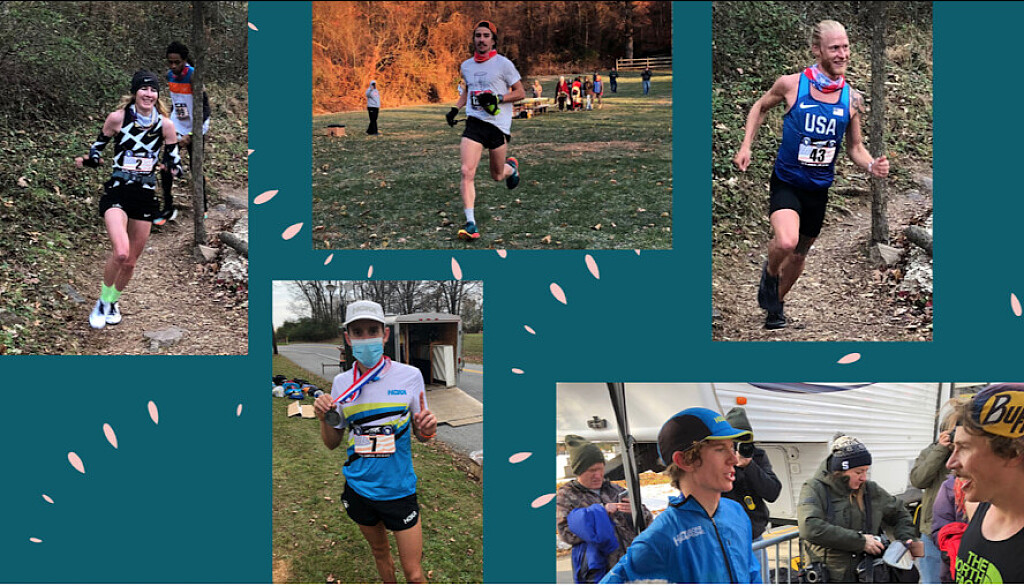
New and familiar faces vie for JFK 50-Mile Titles This Weekend
This weekend's JFK 50-Mile in Hagerstown, Maryland, will see Thanksgiving-like temperatures between the 20s and 40s, in keeping with many past editions of the race. But that's where the similarities between the 2021 JFK and previous races end.
Over 1,000 athletes will descend upon Hagerstown on Saturday with every possibility that a new champion will be crowned in both the men's and women's races.
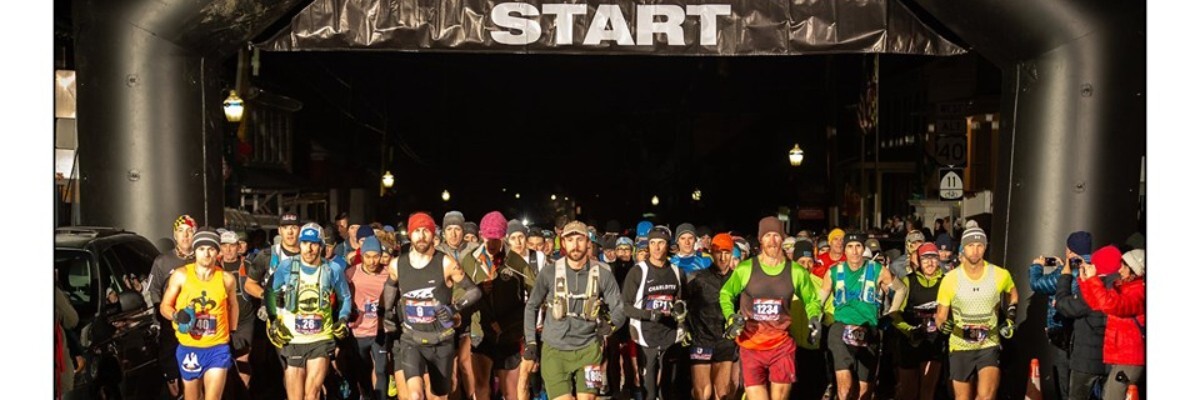
On the men's side, the most recent champion to return to JFK is David Riddle, who won in 2011. It might be 10 years since his victory, but he's fresh off a win at the Super Bull Trail Championships 50K in Wooster, Ohio and has won Alabama's Mountain Mist 50K a whopping nine times, most recently this January.
JFK has a brand-new course record set last year by Hayden Hawks (a blistering 5:18:40), and a stacked field of lesser-known names will see how close they can come. Ultra newcomer Adam Peterman, who was second at this year's Pike's Peak Marathon and won the Speedgoat 50K in July, will look to make his mark on the men's field. The top returner is Anthony Kunkel, who was fourth last year. Other names to watch include Ben Quatromoni, who won the Kilkenny Ridge 50-miler in September and the Algonquin 50K in February; Jared Bassett, who won the Rogue Gorge 50K in October; and Sean Van Horn, fresh off a second-place finish at the Grand Traverse 40-miler and third at the 2020 Javelina Jundred 100-mile.
But it's on the women's side where things get really interesting. Like the men, the women have only one of the past two decades' champions returning in the form of Devon Yanko, who claimed the crown in 2009. Yanko is also one of nine women in the field to have raced in the U.S. Olympic Marathon Trials back in February 2020. Others from that road marathon include Sarah Cummings, Anna Kacius, Sarah Biehl, Starla Garcia, Jeanne Mack, Rachel Viger, Karen Dunn and Caitlyn Tateishi.
nna Mae Flynn will make her JFK debut this year. The 2019 champ at both the Speedgoat 50K and the Lake Sonoma 50-Mile will be one of a slew of athletes chasing Ellie Greenwood's course record from 2012 of 6:12:00. Also watch for Kimber Mattox and Kristina Randrup. Mattox won the 15-mile Smith Rock Ascent in Oregon in May (where she was 5th outright) as well as the 2020 Way Too Cool 50K. Randrup won the American River 50 Mile in California in May by nearly an hour, and was third at the Lake Sonoma 50 Mile in September.
And the stories at JFK won't end with those vying for the win. Watch for Carolyn Showalter, who will be looking to extend her record of 34 JFK finishes. The 67-year-old also holds two other JFK records: she's tied for most wins by a woman with six AND most consecutive finishes with 22, a streak she held from 1982-2003.
No matter what, one thing is for sure: this year's JFK will be one of a kind.
Login to leave a comment
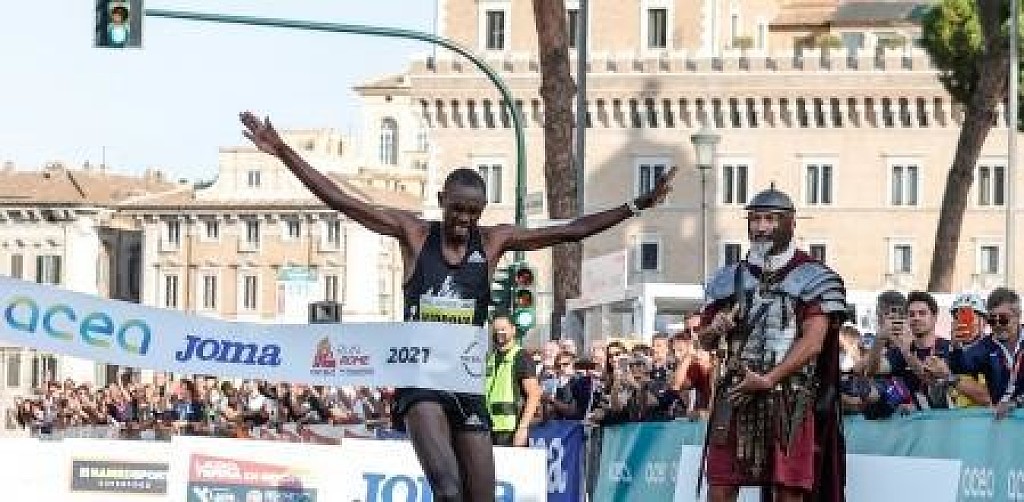
Kenyans Langat Clement Kiprono and Peris Cherono Lagat won the men's and women's Rome Marathon, respectively, on Sunday
A one-year pause due to the coronavirus pandemic didn't have a big impact on the victory stands at the Rome Marathon, with African runners continuing their long dominance of the race on Sunday, which was first run in 1982.
Kenyan Clement Langat Kiprono took the overall championship for the 42.2-kilometer (26.2-mile) race in 2 hours 8 minutes and 23 seconds. Kiprono came in five seconds ahead of Tanzanian Emmanuel Naibei, who finished in 2:08:28, followed by Ethiopian Ulfata Deresa Guleta, who took third in 2:08:42.
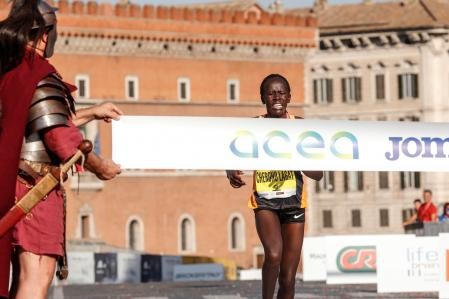
Kiprono's compatriot Peris Lagat Cherono won her race by a more comfortable margin, finishing in 2:29:29, well ahead of Judith Jurubet, also from Kenya, who crossed the finish line in 2:30:50, and Jifar Fantu Zewunde of Ethiopia, who finished in 2:32:02.
All told, more than 7,500 runners were on the early-morning starting line in the shadow of Rome's Colosseum. The city's mayor, Virginia Raggi, was the race's ceremonial starter.
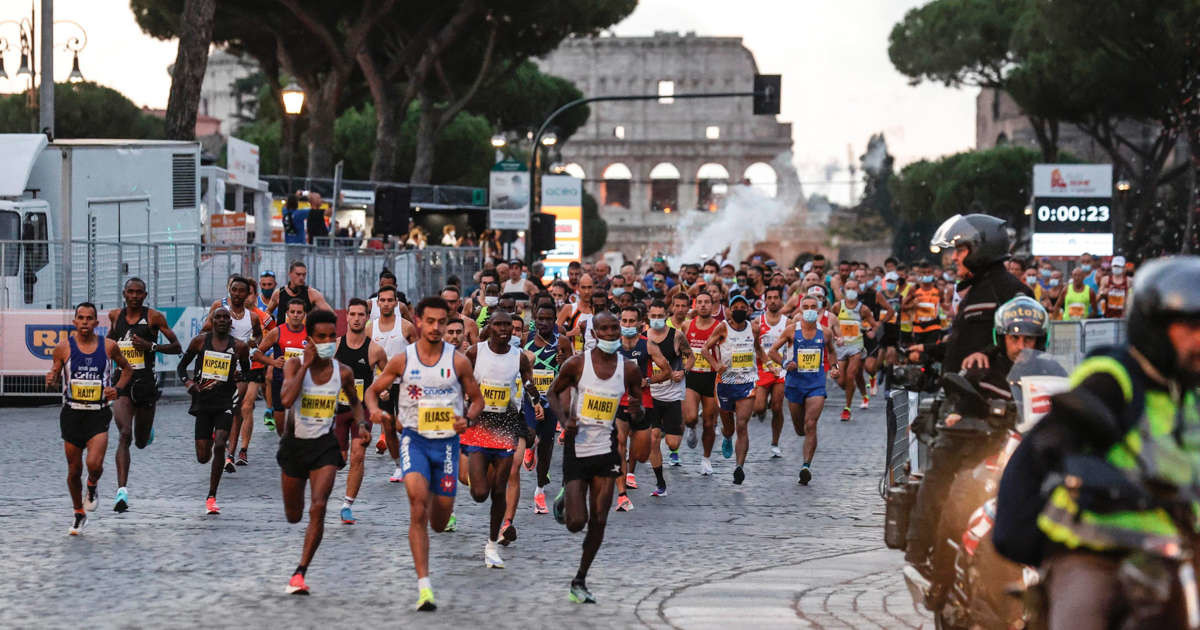
Last year's race was canceled due to the coronavirus pandemic, and this year's edition was pushed back from April, its normal spot on the calendar, for the same reason.
Runners who registered for the 2020 race were automatically entered in this year's edition, and race finishers were awarded two medals: one for 2020 and one for 2021.
Kiprono was the fifth consecutive Rome Marathon champion to run under 2 hours and 9 minutes in his victory, but he was still short of the course record of 2:07:17 set by countryman Benjamin Kiptoo in 2009. Cherono was also slower than the course record of 2:22:52 run by Ethiopian Alemu Megertu in 2019, the previous edition of the race.
African runners have won the men's title in 15 consecutive races, starting after Italian Alberico Di Cecco won in 2005, and they have won 12 straight races in the women's division, following the victory of Russian Galina Bogomolova in 2008. Cherono's win broke a six-race streak of victories by Ethiopian runners in the women's division.
by Xinhua News
Login to leave a comment

Run Rome The Marathon
When you run our race you will have the feeling of going back to the past for two thousand years. Back in the history of Rome Caput Mundi, its empire and greatness. Run Rome The Marathon is a journey in the eternal city that will make you fall in love with running and the marathon, forever. The rhythm of your...
more...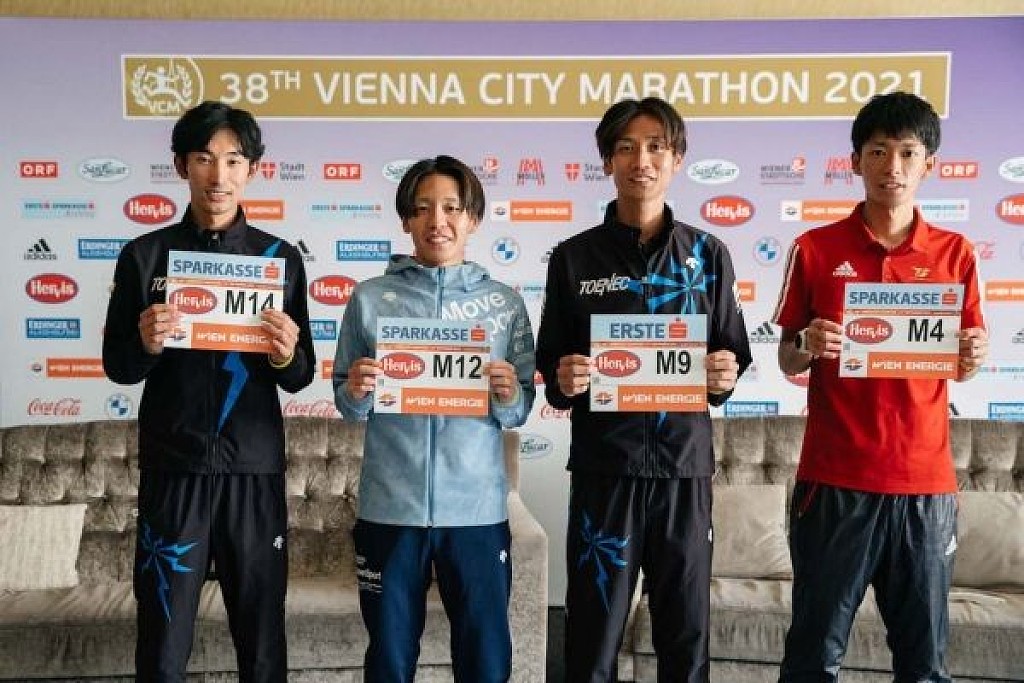
A Strong Japanese Quartet Of Elite Runners In Vienna’s Comeback Marathon
With a strong quartet of Japanese elite runners headed by Kento Kikutani the Vienna City Marathon will go ahead for the first time since April 2019 on Sunday. Austria’s major road race event sees its 38th edition and organizers have registered around 26,000 entries. This includes races at shorter distances. Around 6,000 marathon runners will compete in Vienna on Sunday. The Vienna City Marathon will be the first major marathon worldwide with a strong international elite field and a mass race since the start of the Corona pandemic. It is a World Athletics Label Road Race. The marathon will be streamed live from 8.30 am on Sunday at: Vienna-Marathon.com.
It is the first time in the history of the Vienna City Marathon that a Japanese male elite team will be on the start line. And partly this development has to do with Eliud Kipchoge. When the Kenyan Olympic Champion broke the two hour barrier in the Austrian capital two years ago the world took notice of a unique running spectacle co-organized by the Vienna City Marathon. Back in Japan Kento Kikutani, Yuta Koyama, Koki Yoshioka and Daji Kawai all watched Kipchoge’s race through Vienna’s Prater Park, which is also part of the marathon course.
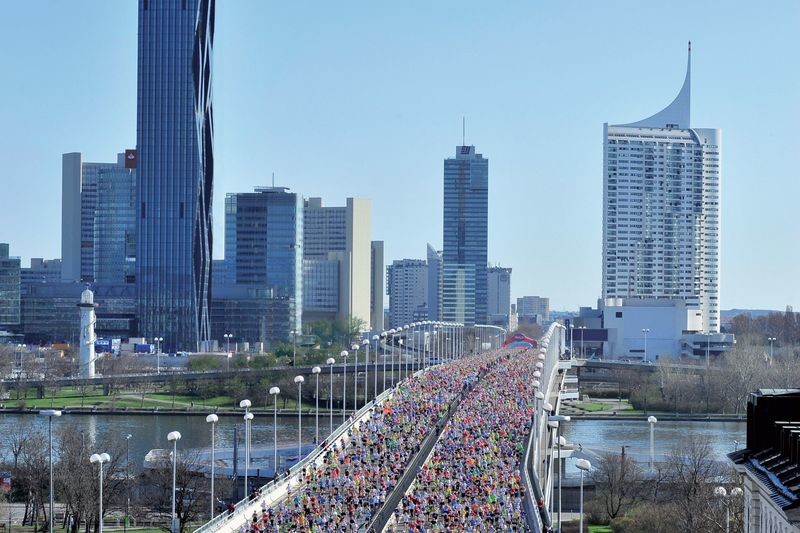
“I was watching the live stream. This was a huge effort by Kipchoge. I think that good weather conditions in Vienna had a big influence on the result,“ said Kento Kikutani, who has a personal best of 2:07:26 from Lake Biwa this year. He is the fastest of the Japanese quartet and wants to improve his personal best on Sunday: „I will follow to pacers and then I want to go for the win after the 30k point“, said the 27 year-old, who then hold up his watch during the press conference: “At least I already have the same watch Kipchoge used in Vienna!“
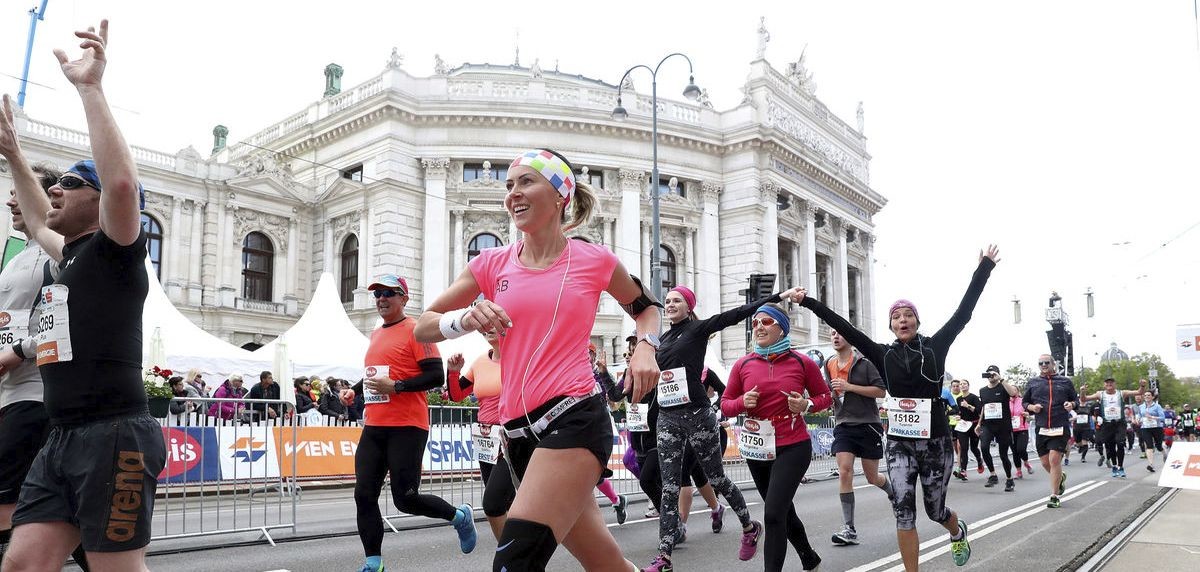
Yuta Koyama has a personal best of 2:08:46 and is the second fastest of the four Japanese. He is also ready for a fast race and possibly a personal best. „My plan is to go with the leading group,“ said Koyama, who also clocked his PB in Lake Biwa this year. „Vienna is a good opportunity for me to race despite the corona pandemic.“
Koki Yoshioka and Daji Kawai feature personal records of 2:10:13 ans 2:10:50 respectively. Both target their personal bests on Sunday. “I really appreciate that I am able to run here during the pandemic. My goal is to go under 2:10,“ said Yoshioka while Kawai stated: “Vienna is a traditional race and I am happy to run here. As there are pacers, I think the race will have a good pace. I want to stay calm and will then decide how to react.“
“This will be the most important Vienna City Marathon since the first edition back in 1984,“ said Race Director Wolfgang Konrad. “On Sunday we will send a strong message as the first major international marathon worldwide since the start of the pandemic.“ He compares the situation to when he was an elite runner back in the 80ies. “After a fine Olympic season I was injured in a car crash in 1980. When I could finally start running again I had to stop after two kilometers. Four months later I ran a PB,“ recalled the former steeplechaser, who achieved a fine PB of 8:17.22 in 1982. “Back then it was just about me, now it is about everyone. We were desperate to bring the race back on as early as possible. It was a disaster for us when we had to cancel on short notice in 2020. But we continued to work hard to make the race possible again.“
“We want to stage a great race that stands for joy and motivation. With this event we also want to say thank you to all those who have supported us during this very difficult time," said Kathrin Widu, one of the Managing Directors of the Vienna City Marathon. She explained that runners from 126 nations entered the race. “Most of the foreigners are obviously from EU countries.“ While over 90 % of all runners are vaccinated organizers have implemented strict hygiene rules. Everyone needs to provide a negative Corona test to receive the bib number.
Fellow Managing Director Gerhard Wehr said: “We have never been out of touch regarding organizing races. Under most difficult situations we did stage a number of smaller races whenever possible,“ said Gerhard Wehr. “We are now experiencing a very strong togetherness from all those involved. Everyone wants the Vienna City Marathon to come back.“
More information is available at: Vienna-Marathon.com.
Login to leave a comment

Vienna City Marathon
More than 41,000 runners from over 110 nations take part in the Vienna City Marathon, cheered on by hundreds of thousands of spectators. From the start at UN City to the magnificent finish on the Heldenplatz, the excitement will never miss a beat. In recent years the Vienna City Marathon has succeeded in creating a unique position as a marathon...
more...
Alberto Salazar gets lifetime ban for sexual, emotional misconduct
Alberto Salazar, the 1982 Boston Marathon champion from Wayland and once a prominent Nike coach of some of the world’s top distance runners, was permanently barred from participating in track and field Monday by the US Center for SafeSport, which cited Salazar for sexual and emotional misconduct.
Salazar, 62, has 10 business days to request an appeal through arbitration of the ruling made by SafeSport, a nonprofit founded in 2017 to protect athletes from sexual, physical and emotional abuse.
The decision Monday was the latest stage of a humiliating fall for Salazar, who was suspended for four years in September 2019 by the United States Anti-Doping Agency for violating rules governing banned substances. He is appealing that suspension to the Court of Arbitration for Sport, the Swiss-based equivalent of a Supreme Court for international sports.
The SafeSport charges were not detailed Monday. In January 2020, the organization temporarily barred Salazar from participating in track and field after elite female runners who formerly trained under him, including Mary Cain, Amy Yoder Begley and Kara Goucher, described what they said were years of psychological and verbal abuse by the coach.
Neither Salazar nor his lawyer immediately responded to requests for comment Monday. Salazar has previously denied all accusations of misconduct.
In a 2019 video produced by the Opinion department of The New York Times, Cain, a former high school phenom from New York who is now 25, accused Salazar of shaming her in front of others on the Nike Oregon Project team — which has since been disbanded — when she did not reach weight targets. She said that her low weight caused her to miss her period for three years, leading to lower levels of estrogen and five broken bones.
Cain also said that she had suicidal thoughts and had cut herself, but that no one at Nike “really did anything or said anything.”
Yoder Begley, a 2008 Olympian, tweeted in 2019 that she was removed from the Oregon Project after a disappointing showing in the 10,000 meters at the 2011 United States track and field championships.
“I was told I was too fat and ‘had the biggest butt on the starting line,’ " Yoder Begley wrote.
Goucher, another American Olympian who once trained with the Nike Oregon Project, told The Times that after being cooked meager meals by an assistant coach, she often ate more in the privacy of her room, nervous that she would be heard opening the wrappers of energy bars she furtively consumed.
Salazar replied to Cain’s 2019 video in a statement to The Oregonian newspaper: “Neither of her parents nor Mary raised any of the issues that she now suggests occurred while I was coaching her. To be clear, I never encouraged her, or worse yet, shamed her, to maintain an unhealthy weight.”
Cain acknowledged at the time that she had sought to train again with Salazar, seeking an apology, closure and his approval. But she described their relationship as poisonous, saying, “I was the victim of an abusive system, an abusive man.”
Salazar told Sports Illustrated in 2019 that his “foremost goal” was to promote athletic performance in line with the good health and well-being of his athletes, but he acknowledged, “On occasion, I may have made comments that were callous or insensitive.”
by Jere Longman
Login to leave a comment
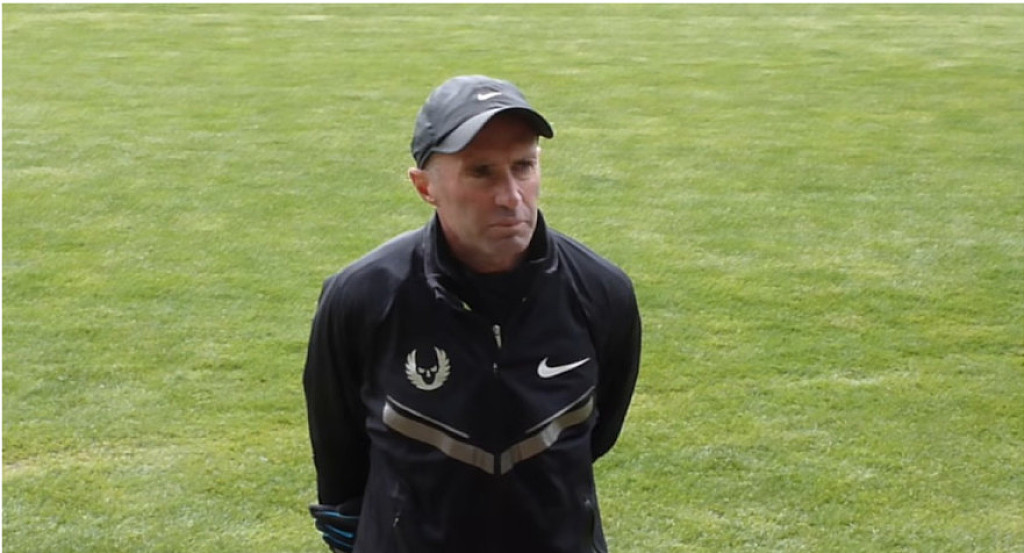
New Salazar documentary questions reasons for his 2019 suspension
Nike’s Big Bet, the new documentary about former Nike Oregon Project head coach Alberto Salazar by Canadian filmmaker Paul Kemp, seeks to shed light on the practices that resulted in Salazar’s shocking ban from coaching in the middle of the 2019 IAAF World Championships. Many athletes, scientists and journalists appear in the film, including Canadian Running columnist Alex Hutchinson and writer Malcolm Gladwell, distance running’s most famous superfan.
Most of them defend Salazar as someone who used extreme technology like underwater treadmills, altitude houses and cryotherapy to get the best possible results from his athletes, and who may inadvertently have crossed the line occasionally, but who should not be regarded as a cheater. (Neither Salazar nor any Nike spokesperson participated in the film. Salazar’s case is currently under appeal at the Court of Arbitration for Sport.)
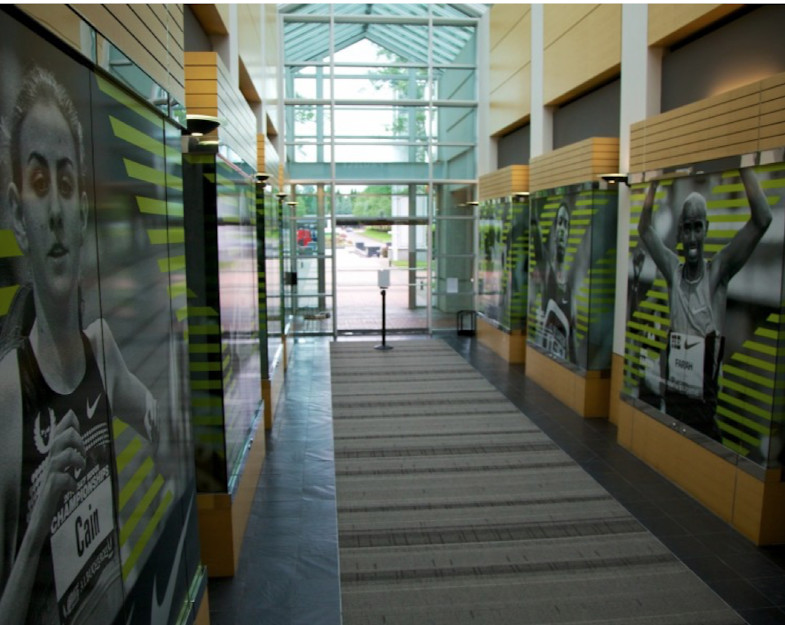
Salazar became synonymous with Nike’s reputation for an uncompromising commitment to winning. He won three consecutive New York City Marathons in the early 1980s, as well as the 1982 Boston Marathon, and set several American records on the track during his running career.
He famously pushed his body to extremes, even avoiding drinking water during marathons to avoid gaining any extra weight, and was administered last rites after collapsing at the finish line of the 1987 Falmouth Road Race.
Salazar was hired to head the Nike Oregon Project in 2001, the goal of the NOP being to reinstate American athletes as the best in the world after the influx of Kenyans and Ethiopians who dominated international distance running in the 1990s. It took a few years, but eventually Salazar became the most powerful coach in running, with an athlete list that included some of the world’s most successful runners: Mo Farah, Galen Rupp, Matt Centrowitz, Dathan Ritzenhein, Kara Goucher, Jordan Hasay, Cam Levins, Shannon Rowbury, Mary Cain, Donovan Brazier, Sifan Hassan and Konstanze Klosterhalfen.
Goucher left the NOP in 2011, disillusioned by what she saw as unethical practices involving unnecessary prescriptions and experimentation on athletes, and went to USADA in 2012. An investigation by the U.S. Anti-Doping Agency followed on the heels of a damning BBC Panorama special in 2015, and picked up steam in 2017.
When Salazar’s suspension was announced during the World Championships in 2019, he had been found guilty of multiple illegal doping practices, including injecting athletes with more than the legal limit of L-carnitine (a naturally-occurring amino acid believed to enhance performance) and trafficking in testosterone – but none of his athletes were implicated. (Salazar admitted to experimenting with testosterone cream to find out how much would trigger a positive test, but claimed he was trying to avoid sabotage by competitors.)
That Salazar pushed his athletes as hard in training as he had once pushed himself is not disputed; neither is the fact that no Salazar athlete has ever failed a drug test. Gladwell, in particular, insists that Salazar’s methods are not those of someone who is trying to take shortcuts to victory – that people who use performance-enhancing drugs are looking for ways to avoid extremes in training.
That assertion doesn’t necessarily hold water when you consider that drugs like EPO (which, it should be noted, Salazar was never suspected of using with his athletes) allow for faster recovery, which lets athletes train harder – or that the most famous cheater of all, Lance Armstrong, trained as hard as anyone. (Armstrong, too, avoided testing positive for many years, and also continued to enjoy Nike’s support after his fall from grace.)
Goucher, Ritzenhein, Levins and original NOP member Ben Andrews are the only former Salazar athletes who appear on camera, and Goucher’s is the only female voice in the entire film. It was her testimony, along with that of former Nike athlete and NOP coach Steve Magness, that led to the lengthy USADA investigation and ban.
Among other things, she claims she was pressured to take a thyroid medication she didn’t need, to help her lose weight. (The film reports that these medications were prescribed by team doctor Jeffrey Brown, but barely mentions that Brown, too, was implicated in the investigation and received the same four-year suspension as Salazar.) Ritzenhein initially declines to comment on the L-carnitine infusions, considering Salazar’s appeal is ongoing, but then states he thinks the sanctions are appropriate. Farah, as we know, vehemently denied ever having used it, then reversed himself.
It’s unfortunate that neither Cain, who had once been the U.S.’s most promising young athlete, nor Magness appear on camera. A few weeks after the suspension, Cain, who had left the NOP under mysterious circumstances in 2015, opened up about her experience with Salazar, whom she said had publicly shamed her for being too heavy, and dismissed her concerns when she told him she was depressed and harming herself. Cain’s experience is acknowledged in the film, and there’s some criticism of Salazar’s approach, but Gladwell chalks it up to a poor fit, rather than holding him accountable.
Cain’s story was part of an ongoing reckoning with the kind of borderline-abusive practices that were once common in elite sport, but that are now recognized as harmful, and from which athletes should be protected.
Gladwell asserts that coaches like Salazar have always pushed the boundaries of what’s considered acceptable or legal in the quest to be the best, and that the alternative is, essentially, to abandon elite sport. It’s an unfortunate conclusion, and one that will no doubt be challenged by many advocates of clean sport.
by Running Magazine
Login to leave a comment
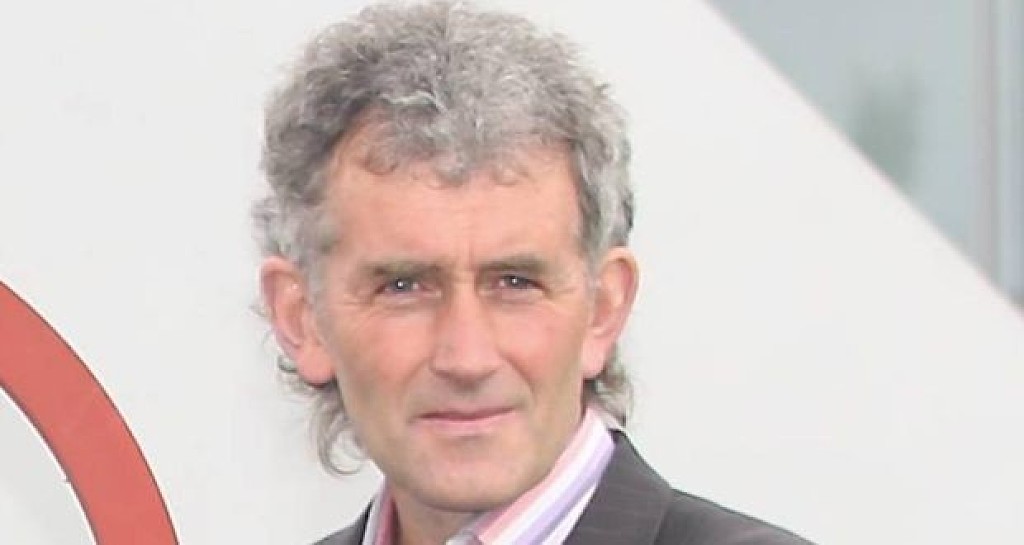
Irish Olympic marathon runner Jerry Kiernan passed away at the age of 67
Irish athletics and the wider sporting community has been deeply saddened by the death of Jerry Kiernan, the 1984 Olympian and two-time winner of the Dublin marathon, who also coached several Irish champions in more recent years.
Kiernan was aged 67 and had been unwell in recent months. A native of Listowel in Kerry, he lived most of his adult life in Dublin, where he died on Wednesday night.
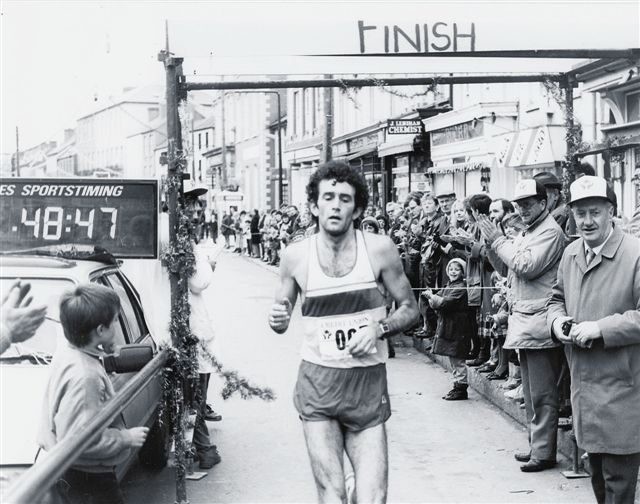
Among his many lasting achievements in athletics was winning the Dublin marathon, first in 1982, which the curly-haired Kiernan completed near solo in a cracking 2:13.45 and which for years after stood as the course record, and winning again 10 years later in 1992.
He also finished ninth in the 1984 Olympic marathon in Los Angeles, considered one of the best marathon fields ever assembled, the spotlight on that fine achievement naturally taken away by John Treacy’s silver medal-winning run. Kiernan ran his lifetime marathon best of 2:12.20 in early 1984.
A former Irish record holder over 3,000 metres on the track and 10 miles on the road, Kiernan also became the 10th Irish athlete to run a sub-four minute mile when he ran 3:59.12 in June of 1976.
A lifelong member of Clonliffe Harriers AC, and a retired national school teacher, in recent years he coached the likes of Joe Sweeney, Maria McCambridge, Ciara Mageean and John Travers to national titles on the track and in cross-country, staging regular training groups around the UCD campus. He was also a straight-talking panel member of RTÉ’s athletics television coverage.
In all, Kiernan represented Ireland 17 times between 1975 and 1993, including seven times in world cross-country championships, and won five Irish titles, from the 1,500m to the marathon, and also national inter-club and inter-county cross-country titles.
by Ian O'Riordan
Login to leave a comment
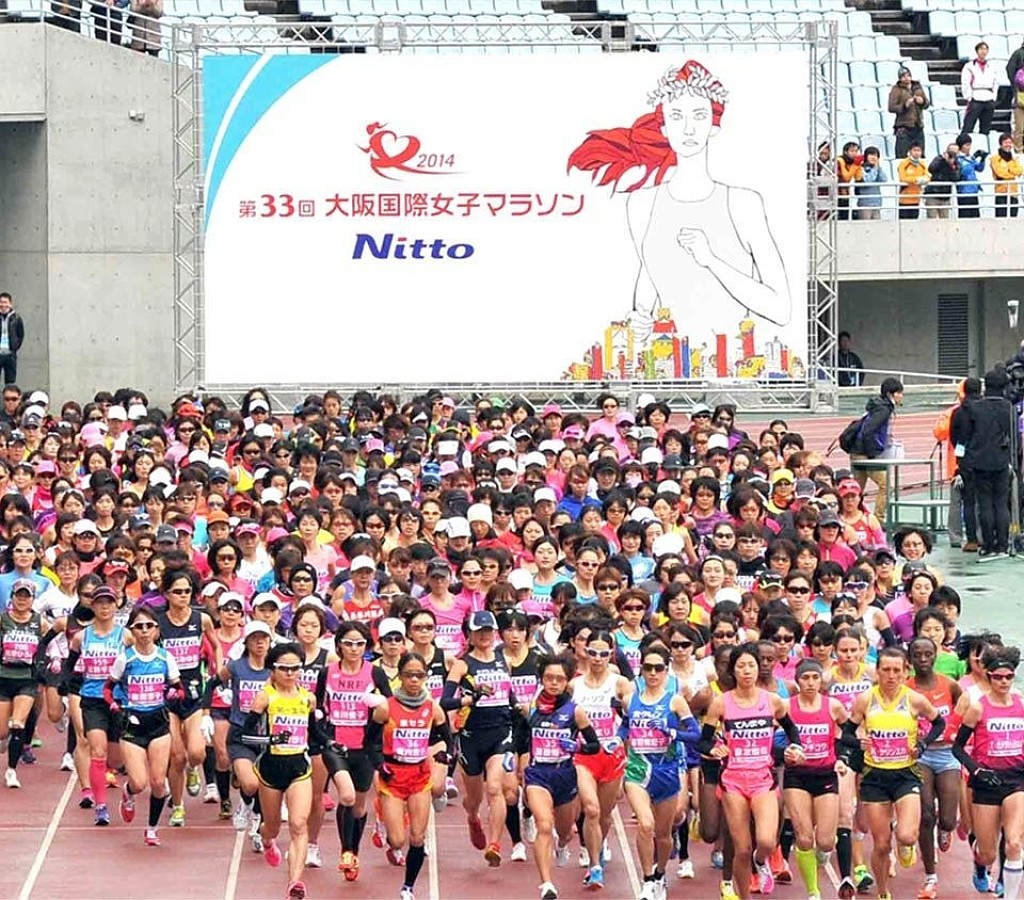
Osaka Women's Marathon will be Run on 2.8 km Loop Inside Nagai Park
On Jan. 17 it was learned that the Jan. 31 Osaka International Women's Marathon will be run on a multi-lap loop course inside Nagai Park. Some of the athletes scheduled to run were notified last week of the likelihood of the change from Osaka's traditional road course, a change made as a result of the continued spread of the coronavirus.
It is the first time the race will be run on a circuit course in the years since its first running in 1982.
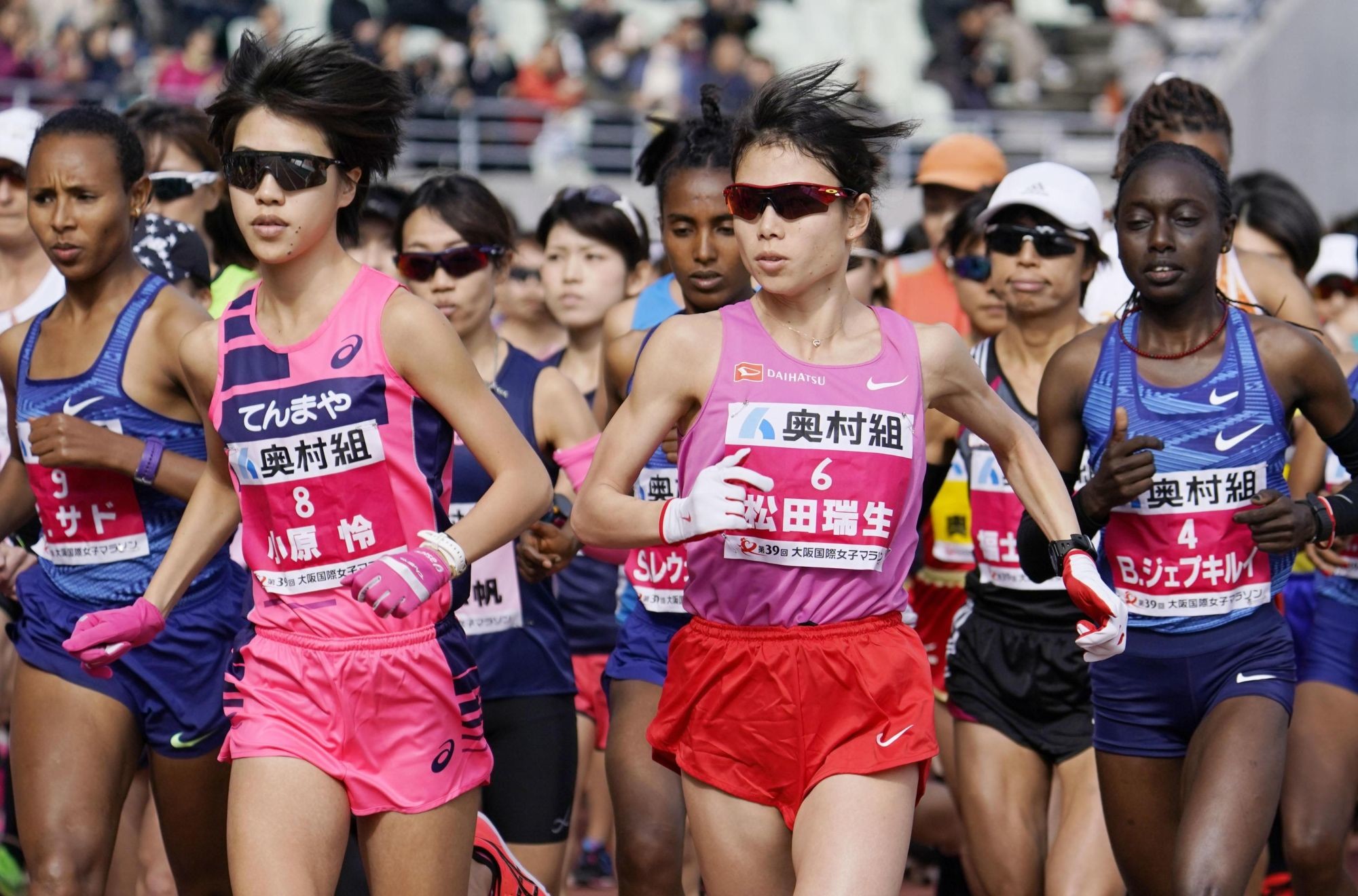
Tokyo Olympics women's marathon team members Mao Ichiyama (23, Wacoal) and Honami Maeda (24, Tenmaya) had planned to try to break the 2:19:12 national record in Osaka, but the impact of the change on times run there remains unclear at this point.
Osaka organizers have recruited male pacers, a first for a domestic women's marathon, to help chase the record, but with the government's declaration of a state of emergency last week they had no choice but to make the last-minute course change.
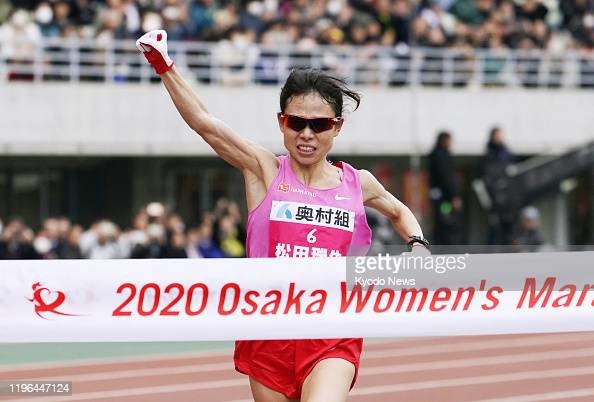
Most road races over the last year have been canceled or postponed. In the midst of those circumstances it was all but impossible for Osaka organizers to go ahead with their race as usual, and the field was cut back to just 99 athletes, about a fifth the usual number.
Despite calls for the public to stay home and watch the race on TV, it was inevitable that some fans would turn up along the course, and the logistics of the race's usual format meant the need for a large number of operations personnel for duties like traffic control and drink stations. Many of those tend to be elderly people.
The change to a circuit course helped to significantly reduce the number of people needed, mitigating the risk of spreading the virus.
Over the last few months a number of other races have been held inside parks instead of on public roads. October's Hakone Ekiden Yosenkai half marathon was held on an officially-certified 2.6 km circuit course around the runway at Tokyo's Tachikawa SDF Airbase, with 46 university teams taking part. November's East Japan Corporate Men's Ekiden likewise took place inside a park in Kumagaya, Saitama, with 24 teams covering a total of 76.4 km on a 4.2 km loop.
Amateur races have been held using loop courses along riverbanks. Overseas, October's London Marathon was held on a 2.15 km loop.
Osaka's traditional course was certified by both the JAAF and World Athletics, but it remains to be seen what the status of the new course will be. Consisting of 15 laps of a flat 2.8 km loop followed by a track finish inside Yanmar Stadium Nagai, the possibility of running a fast time looks considerable, but first the new course must be officially certified. With just half a year left until the Tokyo Olympics this will all but definitely by the last pre-Olympic marathon for both Ichiyama and Maeda, but it's hard to see this as a good simulation of racing in Sapporo.
Following the forced relocation of the Olympic marathon from Tokyo to Sapporo and the postponement of the Olympics, Osaka's course change is the latest hurdle for both women to clear in their quest to compete with the best in the world.
by Brett Larner
Login to leave a comment

Osaka International Womens Marathon
The Osaka International Ladies Marathon is an annual marathon road race for women over the classic distance of 42.195 kilometres which is held on the 4th or 5th Sunday of January in the city of Osaka, Japan, and hosted by Japan Association of Athletics Federations, Kansai Telecasting Corporation, the Sankei Shimbun, Sankei Sports, Radio Osaka and Osaka City. The first...
more...
According to Spotify, this is the most popular song on running playlists
Spotify has revealed that Eye of the Tiger, the theme song from Rocky III, is the most popular song included on running playlists in the UK.
The massive 1982 hit will feature on Spotify's UK Running playlist, to which the streaming service has added five hours of tracks for this weekend's virtual London Marathon. The UK's most popular running playlist is now eight hours long, ideal for 'back of the pack' runners needing a boost. More than 45,000 runners will take part in the event this Sunday.

Spotify has also announced it has had more than 25,000 streams of London Marathon-inspired playlists in the past month among UK listeners, almost all of whom, it has to be assumed, were preparing for Sunday’s event. The streaming platform reported a 36 per cent rise in streams on April 26, when the 40th race was originally set to take place.
If you’re planning to put together your own playlist on Sunday, the five most popular songs included in running playlists in the UK on Spotify are:
“Survivor” by Eye of the Tiger
“Titanium” by David Guetta featuring Sia
“Can't Hold Us” by Macklemore featuring Ryan Lewis
“Lose Yourself” by Eminem
“Wake Me Up” by Avicii
Five most popular artists included in running playlists in the UK on Spotify:
Calvin Harris
David Guetta
Kanye West
Eminem
Avicii
by Runner’s World
Login to leave a comment
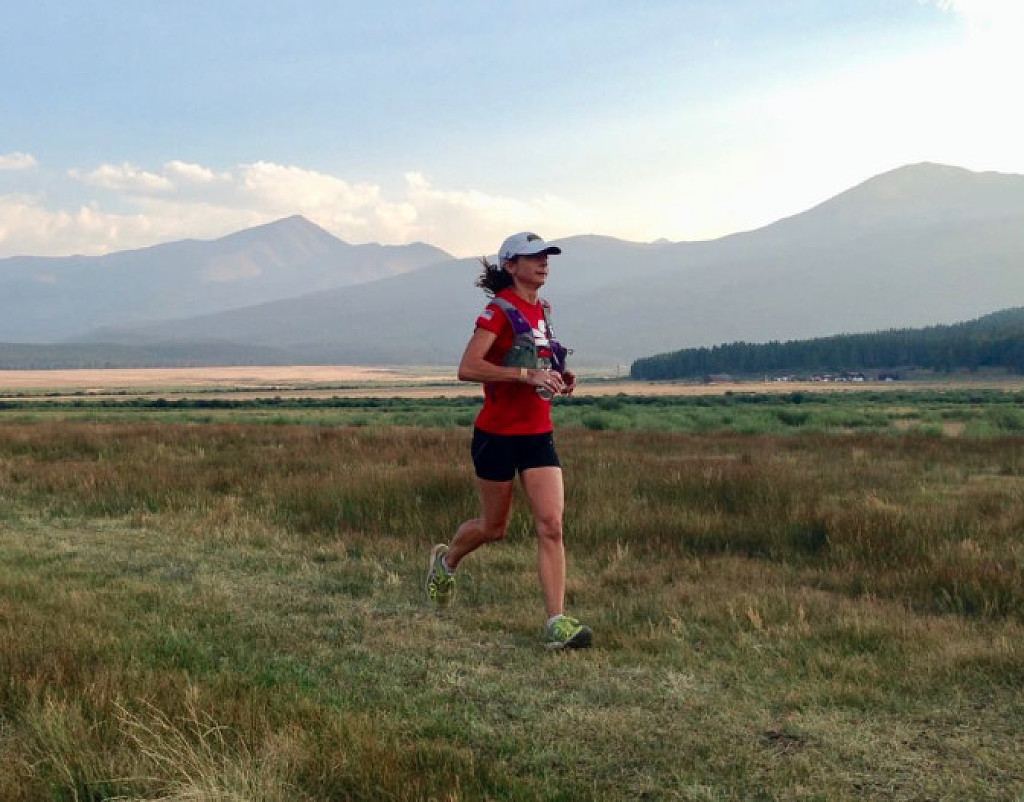
Exercise and the Immune System
There seem to be two groups of people, those who “never get sick” and those who are chronically under the weather. Over the years, I have been a member of both camps. While I have previously suffered from overtraining syndrome and had what felt like chronic upper respiratory infections–which I wrote about in this RunFar article–I have more recently (and despite teaching high-school kids) avoided colds, flus, and other bugs. I’m sure writing that sentence will cause me to soon fall ill, though!
Why do we seem to get sick more often sometimes, and less sick in others? How does our immune system work to protect us from illness? And in what ways does exercise impact our immune system’s function? These are important questions for a community that enjoys pushing our bodies, sometimes in fairly extreme ways.


The Basics of the Immune System
I’ve mentioned this before and I think it’s worth mentioning again now: the human body is an incredibly clever system that works surprisingly well most of the time! One particularly clever element is our immune system. The immune system’s job is to protect you from outside intruders such as antigens (any toxin or foreign substance), including pathogens (bacterium, virus, or microorganism that can cause disease). Your immune system is broken into two main responses: innate immunity which is often referred to as non-specific immunity and adaptive immunity which is known as specific immunity
graphic showing how the immune system is broken down into two major response types, innate and adaptive immunity, and what those responses involve. Image: Hackney, A. C. (2013). Clinical management of immuno-suppression in athletes associated with exercise training: Sports medicine considerations. Acta Medica Iranica, 51(11), 751–756.
The innate immune system is referred to as non-specific because it mounts the same response each time no matter the type of intruder. The innate immune response includes what are known as your first and second lines of defense. The first line of defense includes not only physical barriers like your skin, but also chemical defenses like sweat, stomach acid, tears, mucus linings, and saliva. The second line of defense can be considered a chemical defense, in this case involving a variety of white blood cells. The white blood cells primarily responsible in the innate system are called neutrophils and macrophages. Both of these cell types are phagocytes, which means their job is to protect us via the process of phagocytosis (engulfing and digesting things that do not belong).ow a macrophage (the biggest of the phagocytes) identifies an intruder, engulfs it, and then uses enzymes in its lysosome to “digest” the invader. The macrophage then releases “signals” (in the form of cytokines) to sound the alarm to other cells. Image: Letstalkscience.ca/educational-resources/stem-in-context/immune-response
The adaptive immune response, called the specific response and the third line of defense, is a more complex chemical response because of how it learns to identify different antigens and is acquired over our lifetime starting from the moment we make our entrance into this world. Like the innate immune response, the adaptive response utilizes white blood cells to identify and destroy intruders, this time relying on a type of white blood cell called a lymphocyte. Lymphocytes are special in the sense that they develop memory when exposed to antigens, so that when you are exposed to them again your body is better prepared to fight them off. We develop our adaptive immunity from both natural exposures to antigens over the course of our lifetime and via other exposures like vaccines.
Moderate Aerobic Exercise is Good for the Immune System
Despite the field of exercise immunology being a relatively new area of scientific study with 90% of papers published after 1990, original studies date back over a century (4). Early research focused specifically on exercise-induced changes in cell counts (how many white blood cells were present before and after exercise of different intensities). From this vast body of scientific literature, we know that daily moderate exercise (up to 60 minutes of easy aerobic exercise) provides an overall “boost” to our immune system’s function, increasing our resistance to mild infections like the common cold (8). This is due to the enhanced recirculation of immunoglobulins (proteins that help recognize specific antigens), anti-inflammatory cytokines (molecules that help regulate inflammatory response), neutrophils (part of our innate immune response), and lymphocytes (part of our adaptive immune response) (4).
Can Exercise Be Bad for the Immune System?
If 60 minutes of aerobic exercise is good for our immune system, then is more better? It’s quite possible that you’ve become sick shortly after a big effort or goal race, and that’s exactly what researchers have found in widely published studies in the 1980s continuing through the present. These studies illustrate that infectious episodes (reported upper respiratory infection [URI] symptoms) increased after taking part in large endurance events. This includes a study from the 1982 Two Oceans Marathon–actually a 56-kilometer ultramarathon–where one third of the participants self-reported URI symptoms within two weeks of the race (4, 5). This and many other studies (generally conducted on major road marathon participants) helped to form the idea behind an exercise immunology theory known as the open window theory (5, 6).
The open window theory is the idea that after an intensive exercise session (either a long or hard effort) there is a period of time, generally three to 72 hours, where you have an increased susceptibility to illness. This was supported by what appeared to be a dramatic falloff of circulating lymphocytes (in particular natural killer cells, a subset of lymphocytes called T cells) post-exercise (1, 2). These values were shown to be as much as 40% below baseline cell counts (2). This was concerning because the initial studies reporting this rapid lymphocyte reduction also reported large rates of cell death (2).
That sounds bad. Well, those initial cell-death values were never substantiated–phew!–but where are the lymphocytes going if they are not dying? It turns out that lymphocytes are believed to shift to more peripheral locations in the body where they are more likely to encounter an antigen, such as in the lungs or gut (2). Think of this as white blood cell redeployment in which there is enhanced immune surveillance following strenuous exercise.
What Should Athletes Do to Decrease Illness Risk?
If we know that multiple factors influence our immune systems, what can each of us do to make sure our immune system functions properly? Address those factors!
Monitor your exercise workload. Adequate stress plus adequate rest equals optimal physiological improvement. But when this is thrown out of alignment and physical stress accumulates without appropriate rest, impairments in your immune system function may occur and result in an increased risk of getting sick (8). Regular exercise is good for your immune system, but a training load that is too high for too long can take its toll. Be sure to read our article on overtraining syndrome to learn more about the stress-rest balance.
Consider fueling strategies during exercise and avoid overall nutritional deficiency and caloric restriction. The scientific literature suggests that ingesting carbohydrates during prolonged or intense activity is associated with reduced stress hormones and reductions in inflammation. Additionally, maintaining a balanced and diverse diet that meets your needs and energy demands to match your training, including proper hydration, is important (2).
Practice good hygiene. Avoid close contact with individuals who are or have been sick recently, frequently wash your hands throughout the day, and avoid touching your face (nose, mouth, and eyes).
Practice stress management. Although short-term stress (like exercise) might have a positive effect on your immune system, chronic stress does not. Chronic stress can suppress your immune responses by decreasing the numbers and functionality of lymphocytes, and dysregulating your innate and adaptive immune responses (7).
Get adequate sleep. Sleep disturbances can depress your immune system, increase inflammation, and promote other poor health outcomes. Aim for seven to nine hours of sleep a night. Learn more about how sleep and your immune system interact in our in-depth sleep article.
Evaluate your touchpoints with others. Be considerate of how you interact with the world around you, including at running events and races. Consider fist bumps over high fives, be considerate of how you interact with race volunteers, and minimize what you touch at aid stations. (I have a habit of touching everything.) Be cognizant of not only your own health, but also the health of others. Practicing good hygiene isn’t limited to only when it’s convenient.
by I Run Far
Login to leave a comment
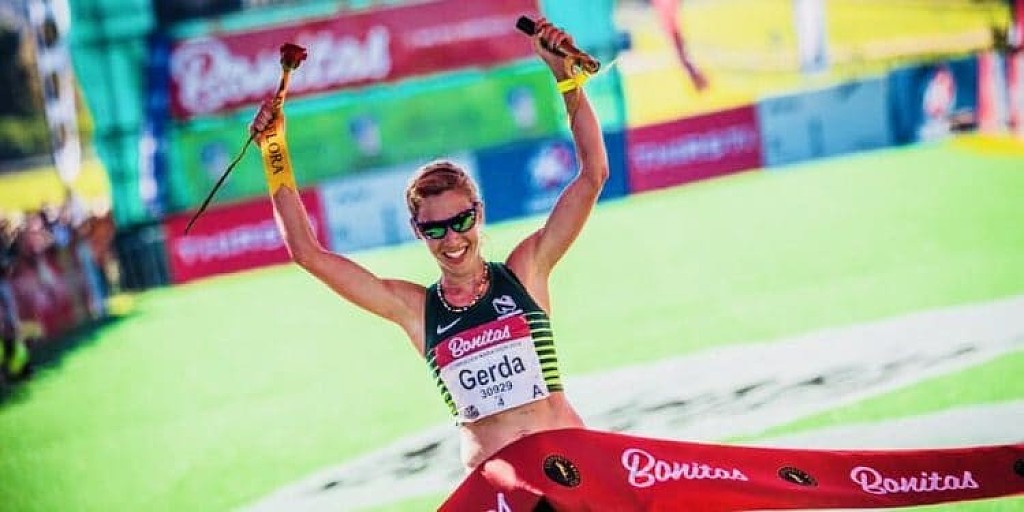
Two-time defending women's Two Oceans Marathon ultra-marathon champion, Gerda Steyn, confirms bid for Two Oceans hat-trick in 2021
Two-time defending women's Two Oceans Marathon ultra-marathon champion, Gerda Steyn, has confirmed her return to the race in 2021.
According to the official Two Oceans Marathon website, this will be no ordinary return as the current Two Oceans Marathon queen has left it in no doubt that her intention is to "defend her title".
In other words, one of the finest - male or female - long-distance athletes South Africa has produced is setting her sights on a hat-trick of Two Oceans Marathon wins come Easter Saturday, 3 April, 2021.
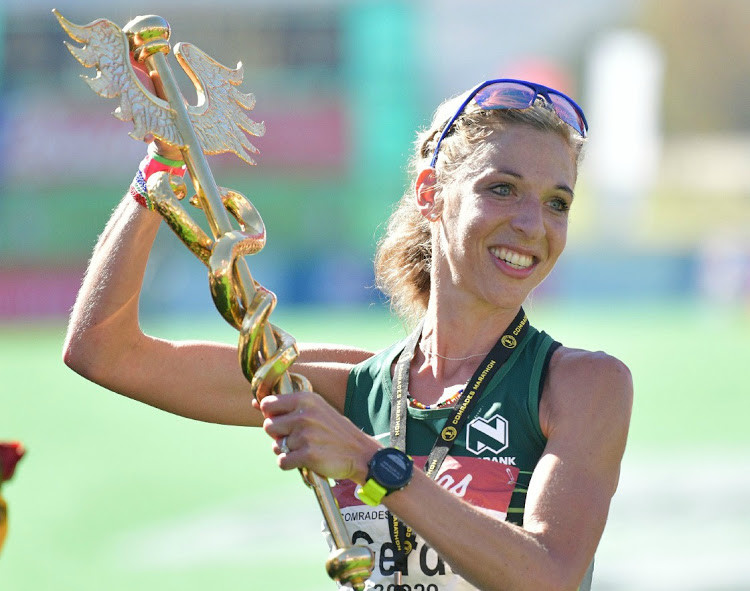
Steyn was of course gunning for a Two Oceans Marathon treble at what would have been the 51st edition of the race on 11 April, 2020.
Like so many sporting events scheduled to take place, the 2020 edition of the race had to be cancelled due to the ongoing coronavirus pandemic sweeping the globe.
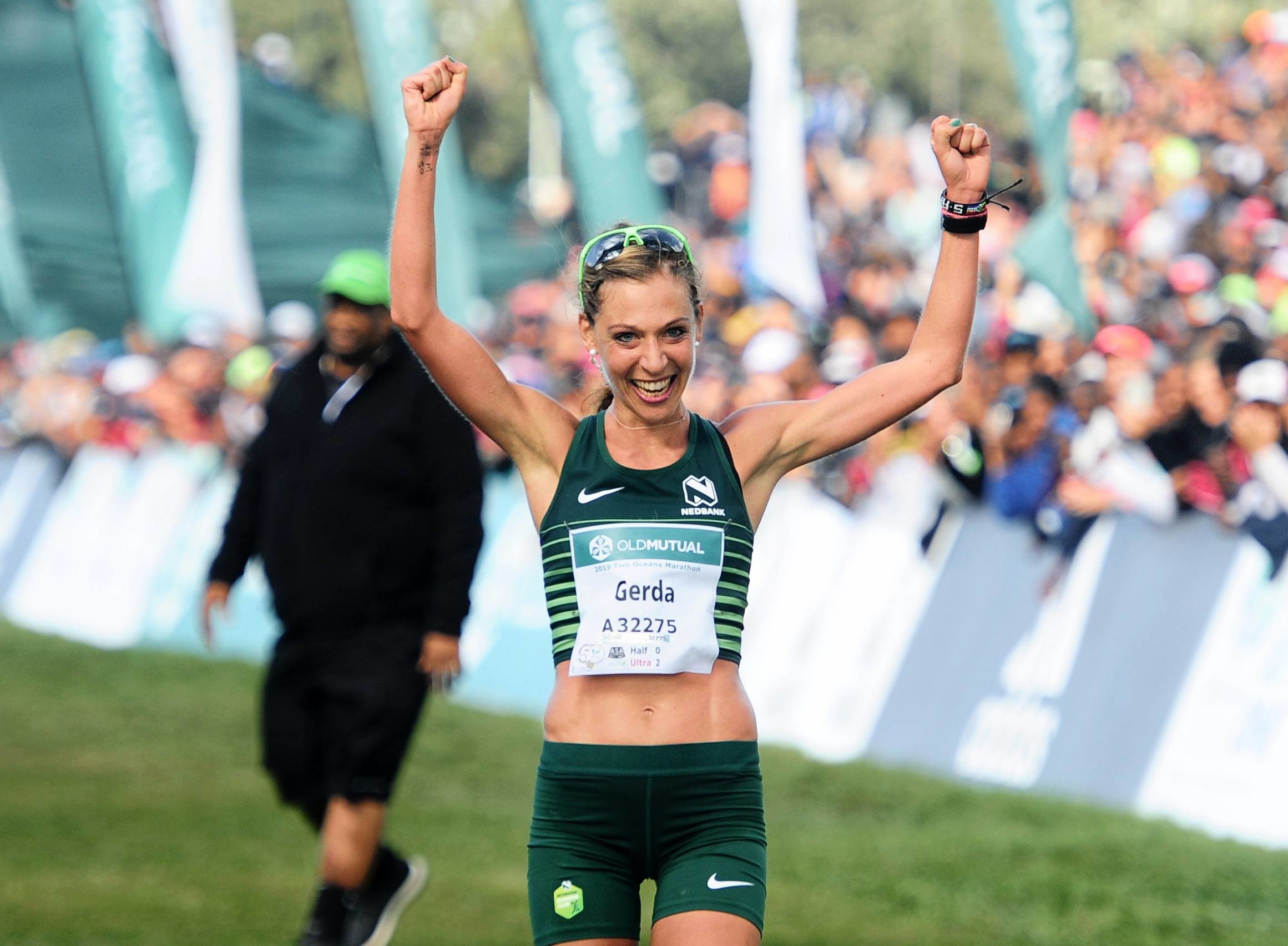
Steyn potentially joins a super-elite list of runners.
Should Steyn be victorious once again in 2021, she’ll become the first athlete to win three titles in a row since Lesotho's Angelina Sephooa did so between 1997-1999.
Steyn would also join a small group who have won the Two Oceans Marathon three times or more.
First to win three titles was Beverley Malan in 1982, 1983 and 1985
Monica Drogemuller claimed the title in 1990, 1991 and 1992
Angelina Sephooa won in 1997, 1998 and 1999
The Nurgalieva twins, Olesya and Elena, claimed victory in 2008, 2010, and 2011; and 2004, 2005, 2009 and 2012, respectively
“I simply love this race,” said Steyn.
“I have to come back and try and make it number three in a row.”
Steyn almost causes women's Two Oceans Marathon ultra record to tumble in 2019.
Steyn won her first Two Oceans title in 2018 when she defeated Dominika Stelmach by just over two-and-a-half minutes.
Twelve months ago Steyn clinched victory by an astounding 10 minutes ahead of runner-up, Irvette van Zyl.
Her victory in 2019 was decidedly more emphatic.
by Manfred Seidler
Login to leave a comment
Two Oceans Marathon
Cape Town’s most prestigious race, the 56km Old Mutual Two Oceans Ultra Marathon, takes athletes on a spectacular course around the Cape Peninsula. It is often voted the most breathtaking course in the world. The event is run under the auspices of the IAAF, Athletics South Africa (ASA) and Western Province Athletics (WPA). ...
more...
Three indoor American records were set Saturday at the 113th NYRR Millrose Games in front of a sold out crowd
American records fell in three events as athletes entertained a sell-out crowd at the Armory and the113th NYRR Millrose Games Saturday afternoon in Washington Heights.
Elle Purrier raised the bar in the NYRR women’s Wannamaker mile smashing the American Record in 4:16.85. At the bell, Purrier powered ahead to outpace Germany’s Konstanze Klosterhalfen at the wire and break one of the oldest American records in the books, a 4:20.5 by Mary Slaney in 1982. Her en route time at 1,500m was 4:00.23, the second-fastest time in U.S. indoor history
In the New York Presbyterian men’s 800 meters, Donavan Brazier added another record to his resume, crossing the line in 1:44.22 to break his own mark of 1:44.41 set here last year in finishing second. Brazier holds both the indoor and outdoor U.S. records. Ajeé Wilson put on a show in the women’s 800 meters, biding her time through 600 meters when she surged to go ahead of Jamaica’s Natoya Goule to cross the line in 1:58.29, bettering the AR of 1:58.60 she set in 2019 to win the Millrose title.
USATF CEO Max Siegel and USATF COO Renee Washington presented the World Athletics Heritage Plaque to the Armory to honor the NYRR Millrose Games’ Wanamaker Mile.
In a showdown between the reigning Olympic and World champions in the men’s shot put, Rio gold medalist Ryan Crouser blasted the sixth-best throw in American indoor history, a 22.19m/72-9.75 in round five, that gave him an almost three-foot margin of victory over Doha winner Joe Kovacs, who threw 21.34m/70-0.25.
Another world-leading performance came in the women’s pole vault, where Sandi Morris scaled 4.91m/16-1.25, a height only she and Jenn Suhr have ever bettered on the U.S. indoor all-time list.
Keni Harrison, the world record holder in the women’s 100m hurdles, won the 60m version of her specialty in 7.90, with Daniel Robertstaking the men’s race in 7.64. Coming through 200m in 20.61, 400m hurdles World Championships silver medalist
Rai Benjamin won the Jane & David Monti 300m in 32.35, making him the No. 8 all-time U.S. indoor performer. 2018 World Indoor bronze medalist Ronnie Baker won the men’s 60m in 6.54, and ‘18 USATF Indoor women’s 60m champ Javianne Olivertook the women’s dash in 7.13.
World Championships fourth-placer Wadeline Jonathan powered away from the field in the Cheryl Toussaint women’s 400m to win by more than a second in 51.93, while Team USATF steeplechaser Allie Ostranderunleashed an unbeatable kick over the final 100m of the Mike Frankfurt women’s 3,000m to win in 8:48.94.
Login to leave a comment


NYRR Millrose Games
The Pinnacle of Indoor Track & Field The NYRR Millrose Games, first held in 1908, remains the premier indoor track and field competition in the United States. The 2025 edition will once again bring the world’s top professional, collegiate, and high school athletes to New York City for a day of thrilling competition. Hosted at the New Balance Track &...
more...