

Running News Daily
Running News Daily is edited by Bob Anderson and team. Send your news items to bob@mybestruns.com Advertising opportunities available.
Index to Daily Posts · Sign Up For Updates · Run The World Feed
Articles tagged #Bolder Boulder 10K
Today's Running News


Three Rising Distance Stars Ready to Make Their Marathon Debuts at the 2026 New York City Marathon
The next generation of marathon talent will take centre stage on the streets of New York this November, with Weini Kelati of the United States, Andreas Almgren of Sweden and Kenya’s Patrick Kiprop all set to make their marathon debuts at the 2026 TCS New York City Marathon on November 1.
All three arrive in New York with impressive credentials built across track, cross country and shorter road races, creating one of the most intriguing groups of marathon debutants in this year’s field.
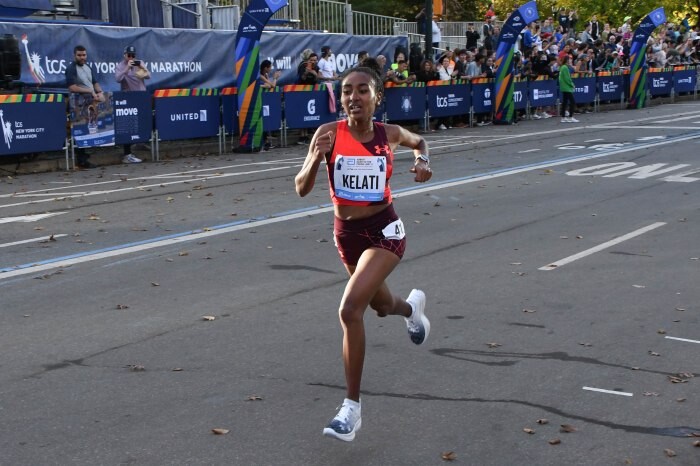
Kelati will enter the 26.2-mile challenge after establishing herself as one of America’s leading distance runners. The U.S. Olympian owns a 1:06:04 half-marathon personal best, an American record, and has already demonstrated the combination of endurance and speed required to compete at the highest level. Her transition to the marathon will be closely watched as she begins a new chapter in her career on one of the sport’s biggest stages.
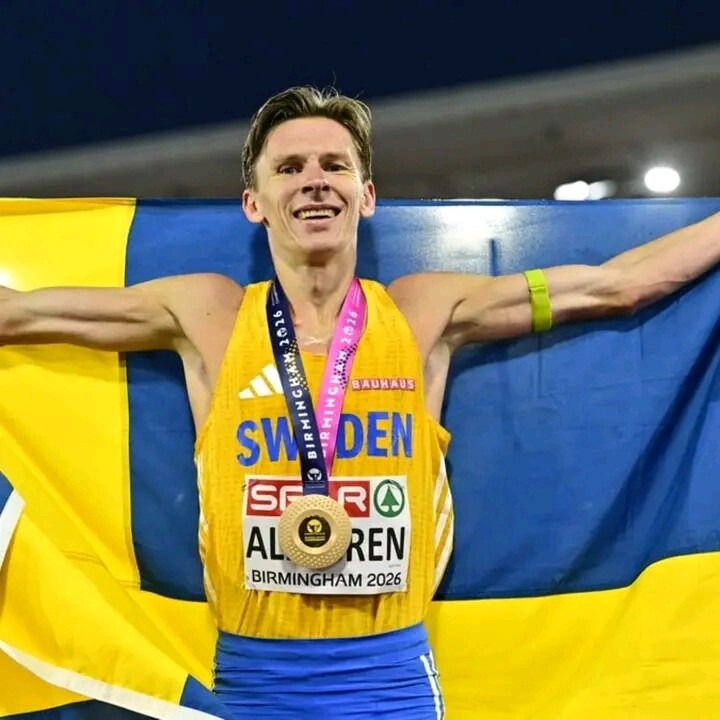
Almgren brings perhaps even more explosive speed to his first marathon. The Swedish star owns a remarkable 58:41 half-marathon personal best, a national and European record at the time it was achieved, while his track résumé includes world-class performances over 3,000m and 5,000m. His ability to sustain that extraordinary speed over 42.195 kilometres will be one of the central questions surrounding his New York debut.
Then there is Patrick Kiprop, who will carry Kenya’s hopes into his first marathon after building an impressive reputation during a decorated collegiate career in the United States.
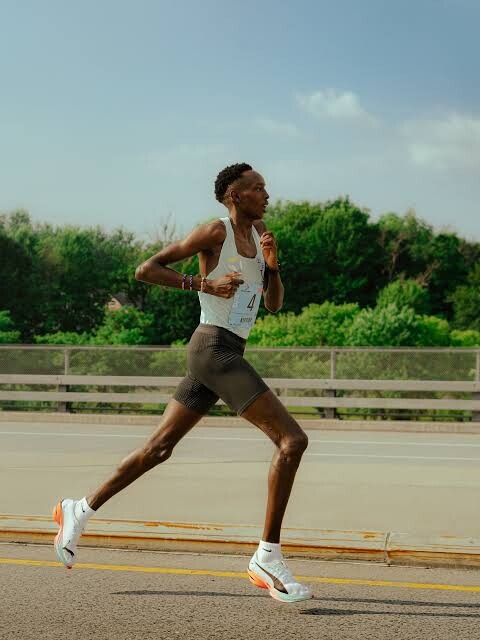
Kiprop enjoyed a standout spell with the Arkansas Razorbacks, collecting five First-Team NCAA All-America honours across cross country, indoor and outdoor track. He became a two-time NCAA South Central Region Cross Country champion in 2022 and 2023 before adding an SEC Outdoor 5,000m title in 2024 and a silver medal in the 10,000m.
He also etched his name into Arkansas history by breaking the university’s 5,000m school record. His American collegiate journey began at Fresno Pacific University, where he was named the Sunbird Male Newcomer of the Year in 2021 before transferring to Arkansas.
Following his collegiate success, Kiprop made the transition to professional running and joined the On Athletics Club Global, placing himself within one of the sport’s leading international training environments. His attention has increasingly shifted toward road racing, with the half marathon becoming an important bridge toward the marathon.
Kiprop has already shown that his speed can translate successfully to the roads, winning the professional division at the prestigious Bolder Boulder 10K. Now, New York presents a considerably bigger challenge and an opportunity to discover how his considerable distance-running ability translates to the full marathon.
For Kelati, Almgren and Kiprop, November 1 will represent more than simply another race. It will be the beginning of their marathon careers.
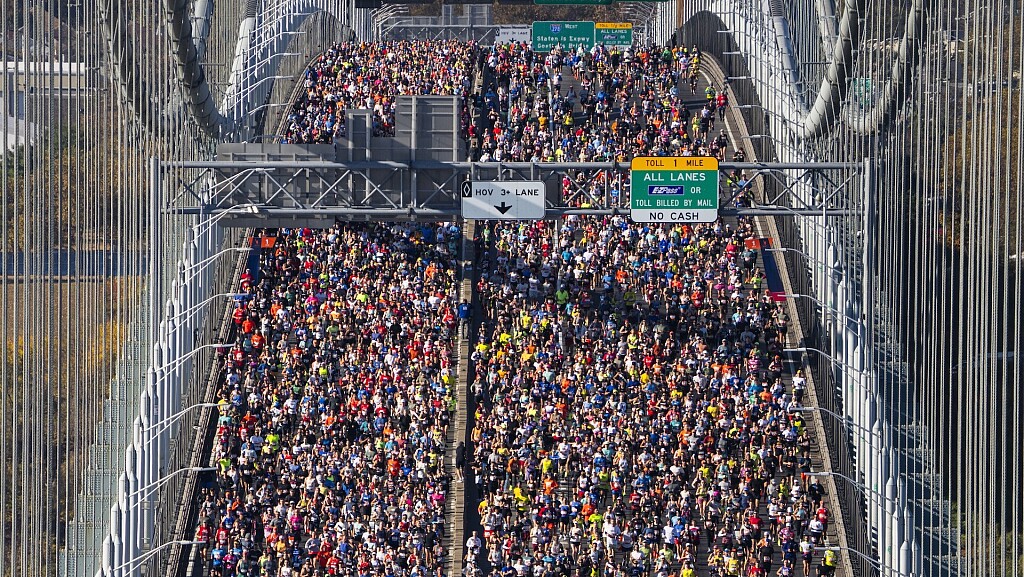
The New York City Marathon is notoriously demanding, combining multiple bridges, relentless changes in rhythm and a difficult closing stretch through Manhattan. Add enormous crowds and the pressure of a global audience, and the course provides an unforgiving introduction to 42.195 kilometres.
Yet that is precisely what makes these three debuts so fascinating.
Kelati arrives with American-record speed. Almgren brings European-record-level half-marathon credentials and extraordinary track ability. Kiprop brings a decorated NCAA background, Kenyan distance-running pedigree and growing experience on the roads.
None of them needs to prove that they possess speed. New York will determine whether they can transform that speed into marathon strength.
With an already star-studded 2026 field, the arrival of these three rising stars adds another compelling storyline to race day.
The future of marathon running is coming to New York—and on November 1, Kelati, Almgren and Kiprop will discover what they can do over 26.2 miles.
by Erick Cheruiyot for My Best Runs.
Login to leave a comment
TCS New York City Marathon
The first New York City Marathon, organized in 1970 by Fred Lebow and Vince Chiappetta, was held entirely in Central Park. Of 127 entrants, only 55 men finished; the sole female entrant dropped out due to illness. Winners were given inexpensive wristwatches and recycled baseball and bowling trophies. The entry fee was $1 and the total event budget...
more...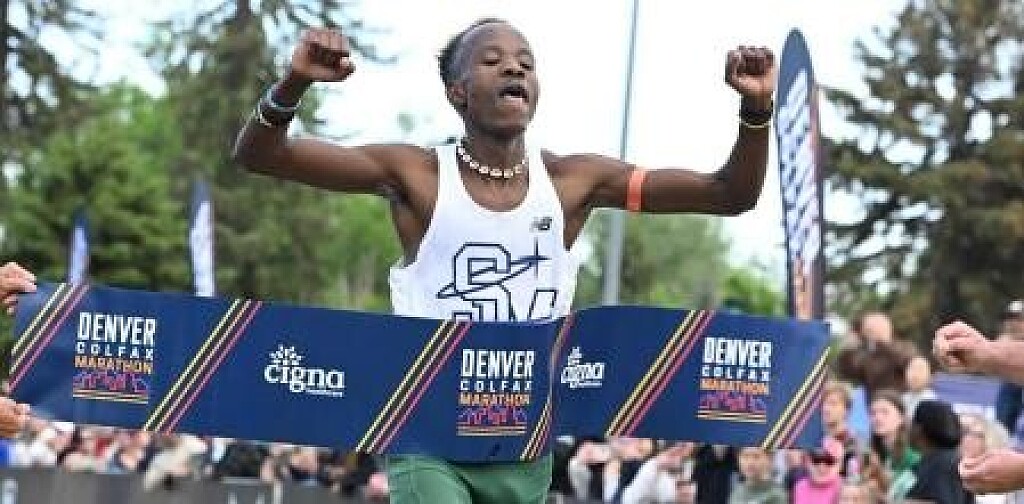
From Victory to Disqualification: The Bolder Boulder Controversy That Sparked a Running Debate
What should have been the defining moment of Emad Bashir-Mohammed's young running career instead turned into one of the most talked-about controversies in American road racing this year.
The 23-year-old crossed the finish line first in the men's citizen's race at the prestigious Bolder Boulder 10K on Memorial Day in Colorado, stopping the clock at an impressive 29:50. His performance was not only a commanding victory but also one of the fastest winning times ever recorded in the event's long and celebrated history. Bashir-Mohammed finished eight seconds clear of his nearest challenger and appeared to have secured a breakthrough triumph.
For nearly two hours, he was the undisputed winner.
Then everything changed.
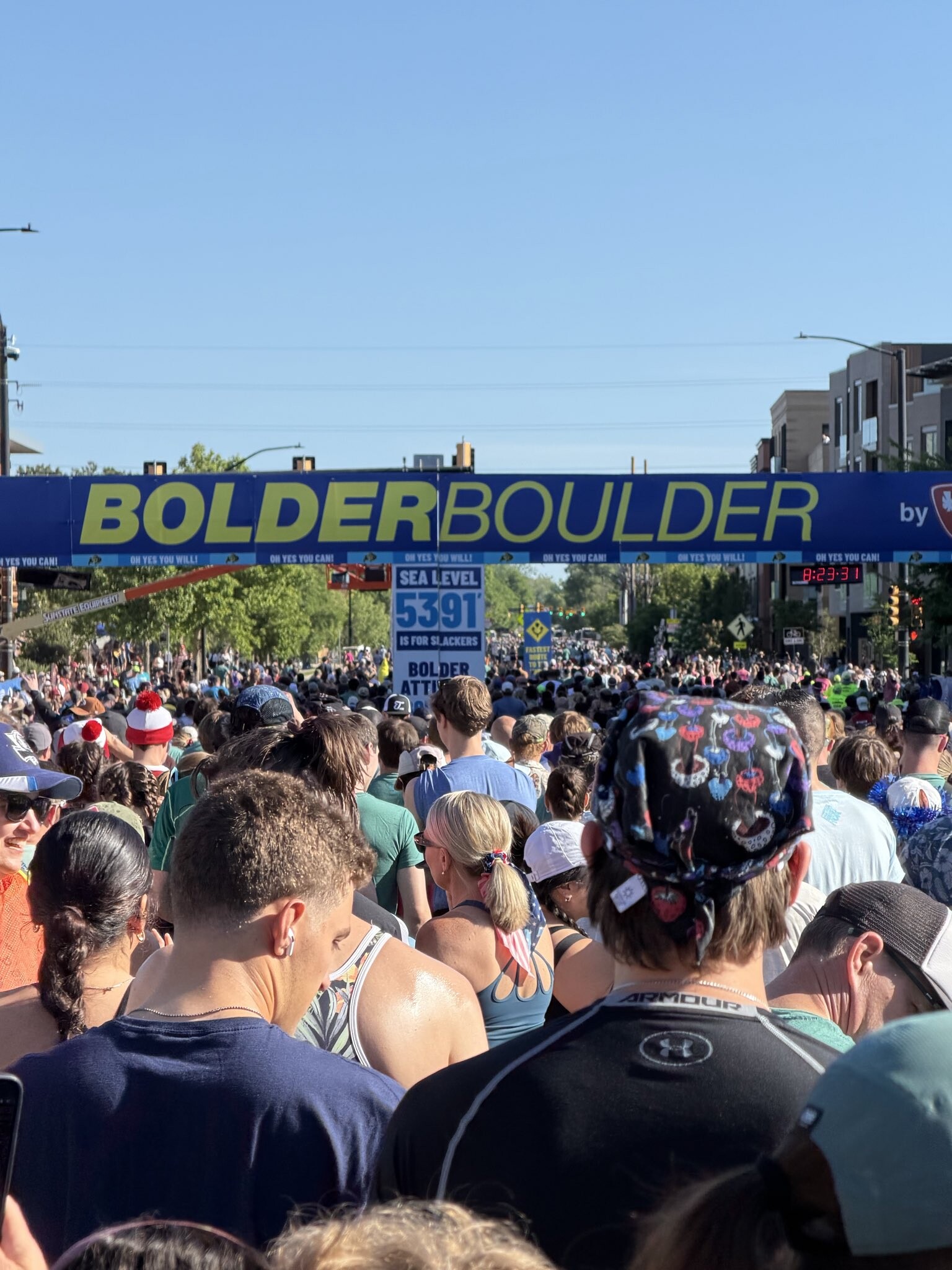
Race officials announced that Bashir-Mohammed had been disqualified after determining that he had started in the wrong wave. According to Bolder Boulder regulations, he had been assigned to the AA wave but lined up with the faster A wave, which began earlier. Event rules allow runners to move backward into a slower wave, but prohibit athletes from advancing into a faster one.
As a result, Bashir-Mohammed's victory was erased from the record books.
The citizen's title was subsequently awarded to Nickolas Scudder, who crossed the line second in 29:58. The promotion handed Scudder back-to-back citizen's race victories, while Bashir-Mohammed was left to grapple with the disappointment of losing a win he believed he had earned on the road.
The disqualification has since ignited widespread debate across the running community.
Bashir-Mohammed maintains that he did not intentionally violate the rules. He claims that after collecting his AA bib, he spoke with race personnel and was permitted to start with the A wave after presenting evidence of his recent performances. In a statement shared after the race, he expressed frustration over the decision, arguing that his goal was simply to compete against the strongest field available and produce the fastest time possible.
Race organizers, however, stood firmly behind their ruling. Officials stated that wave-assignment regulations are clearly communicated in pre-race information and reiterated during packet collection. They also noted that hundreds of participants are disqualified each year for moving into faster start groups, emphasizing that consistent enforcement is necessary to maintain fairness for all competitors.
The incident has divided opinion among runners and fans alike. Some believe the rules must be applied equally regardless of an athlete's finishing position, arguing that wave assignments are a fundamental part of race organization. Others feel the punishment is harsh, particularly if Bashir-Mohammed genuinely received approval to move up before the start.
What remains undisputed is the quality of his performance. On the roads of Boulder, Bashir-Mohammed demonstrated the fitness and speed required to outrun the field by a significant margin. Yet in road racing, crossing the finish line first is only part of the equation. Compliance with race regulations carries equal weight.
For Bashir-Mohammed, the day will be remembered as a painful lesson in the fine margins that can define elite competition. A remarkable run delivered a memorable victory, but a dispute over wave placement ultimately overshadowed the achievement, leaving behind a controversy that continues to fuel discussion throughout the running world.
A fast race, a costly administrative error, and a debate that may linger long after the finish-line tape has been packed away.
by Erick Cheruiyot for My Best Runs.
Login to leave a comment
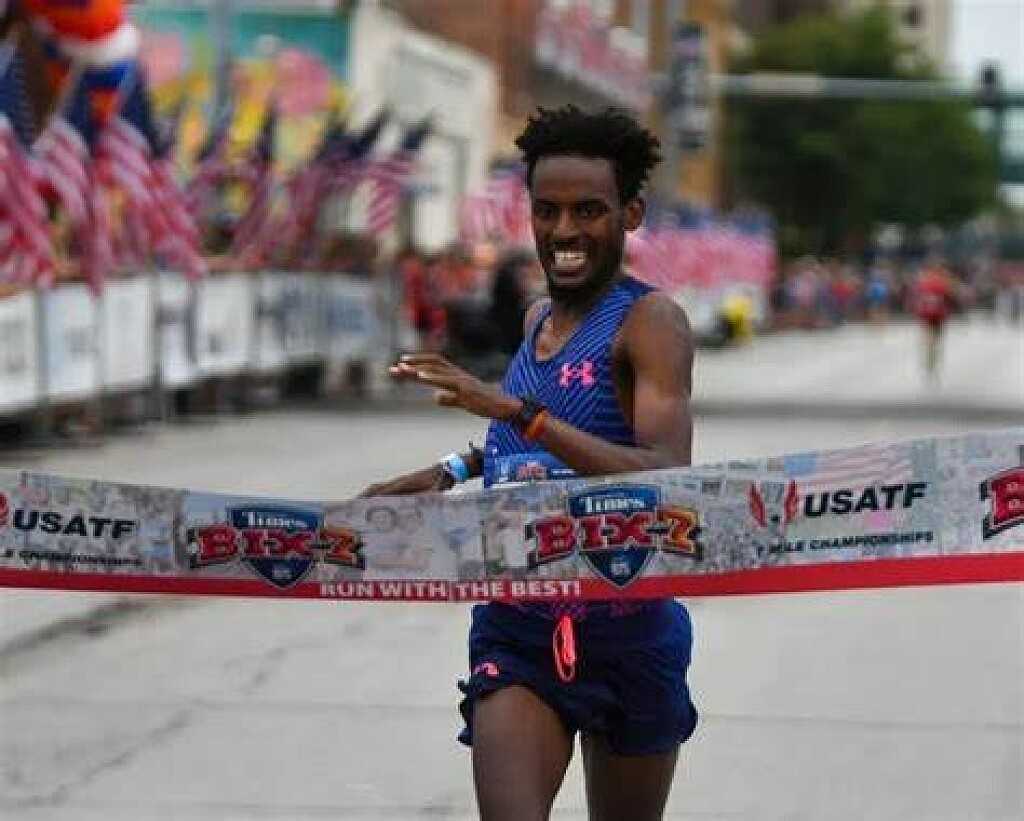
Defending champions return to Bix
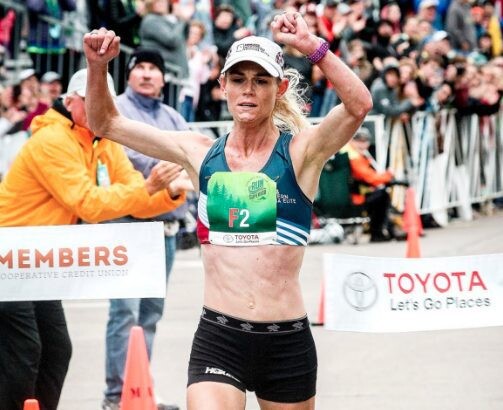
Kellyn Taylor and Biya Simbassa each ran the Quad-City Times Bix 7 for the first time last year.
They clearly loved the course, the atmosphere and just about everything about the annual race through the streets of Davenport.
Both Taylor and Simbassa held off late challenges from other runners, both ran the sixth best Bix 7 times ever by a U.S. athlete of their gender and both plan to return to defend their championships when the race is held for the 50th time on July 27.
It marks the first time in 12 years that both the men’s and women’s champions are returning to defend their Bix titles.
Simbassa admitted he wasn’t really sure how he felt about the Bix 7 course last year when he first saw the endless array of ups and downs in the course. But after holding off Olympian Clayton Young to win, he liked it.
“I mean, now I do,’’ he said after his victory. “It’s a course that’s all about strength and I train for this."
Taylor went through a similar transformation.
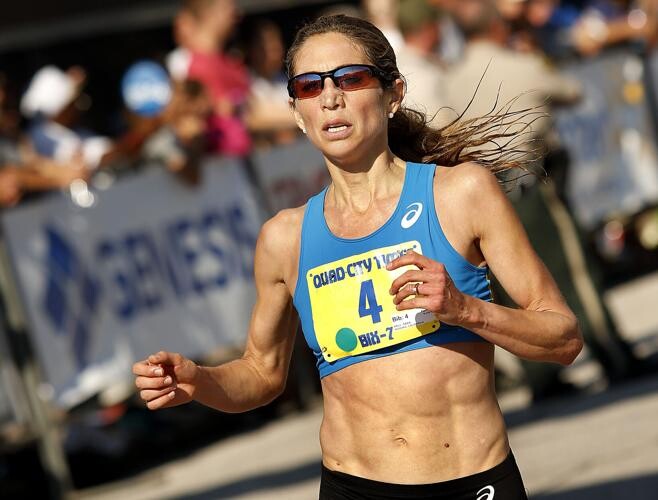
“When I saw the course, I was like, ‘Oh, no. What did I get myself into?’ ” she said. “That’s a super substantial hill right at the beginning and then it rolls all the way through. It’s certainly not easy by any means. I think that works to my favor since I’m more of a strength runner.”
Taylor appreciated more than just the hills.
“The crowds were amazing,” she said. “It’s not what I expected at all — the streets were completely lined, and a race that isn’t a huge marathon, I don’t feel like you see that that often. The crowds were incredible.”
Taylor and Simbassa will be bidding to repeat as Bix 7 champions, something that has been done only seven times in the race’s history, four times by men, three times by women.
Both runners failed to land berths on the U.S. Olympic team, which would have precluded a return to Bix, but they’ve still used their 2023 victories as a springboard to additional success.
Taylor briefly led the New York City Marathon last November before placing eighth, making her the top American finisher in the race. It was the third time she has been in the top eight at New York.
The Wisconsin native, who will turn 38 a few days before the Bix 7, then focused her attention on making the U.S. Olympic team and made a respectable showing in the trials in the marathon, finishing 15th, and the 10,000 meters, placing sixth.
Simbassa, a 31-year-old native of Ethiopia who now lives in Flagstaff, Arizona, attempted to earn an Olympic spot in the marathon but placed 11th in the trials.
However, he has followed that with an ambitious schedule on the U.S. road racing circuit, recording top-five finishes in the Bolder Boulder 10k (5th), Cherry Blossom 10-miler (5th), Gate River 15k (4th), Amway River Bank 25k (3rd) and Houston Half-marathon (4th).
Also included in the field are four former Olympians and nine other runners who have placed in the top 10 at the Bix 7 in the past. Elite athlete coordinator John Tope said even more top runners could be added between now and race day.
Among the top men’s entries are two former Iowa State University standouts.
Wesley Kiptoo of Kenya was the 2021 NCAA indoor 5,000-meter champion and a seven-time All-American for the Cyclones. He was seventh in the Bix 7 two years ago and won the Cherry Blossom 10-miler earlier this year.
Hillary Bor, a Kenya native who is now an American citizen, also attended Iowa State before representing the U.S. in the 3,000-meter steeplechase at the Olympics in both 2016 and 2021. He also is the U.S. record-holder in the 10-mile run.
Other former Olympians in the field are Morocco’s Mohamed El Aaraby and Americans Jake Riley and Shadrack Kipchirchir. Riley and Araby both competed in the marathon in Tokyo in 2021 and Kipchirchir ran the 10,000 meters in 2016.
Riley also is a Bix 7 veteran along with Kenya’s Reuben Mosip and Americans Frank Lara, Andrew Colley and Isai Rodriguez. Lara was second in the Bix 7 in 2021 and eighth a year ago.
Rounding out the men’s field are Raymond Magut of Kenya; Tsegay Tuemay and Tesfu Tewelde of Eritrea; and Americans Nathan Martin, Ryan Ford, JP Trojan, Merga Gemeda and Titus Winders.
The most recognizable name in the women’s field is 41-year-old Sara Hall, the wife of two-time Olympian, U.S. half-marathon record-holder and 2010 Bix champion Ryan Hall. Sara Hall was fifth in the U.S. Olympic marathon trials earlier this year and has two strong Bix 7 efforts on her resume, placing second in 2014 and third in 2017.
She and Taylor will be challenged by three up-and-coming runners from Kenya — Emmaculate Anyango Achol, Grace Loibach Nawowuna and Sarah Naibei. Achol has run the second fastest women’s 10k ever (28:57) and Naibei won the Lilac Bloomsday 12k in May.
Also in the field are Bix 7 veterans Kassie Parker, Jessa Hanson, Carrie Verdon and Tristin Van Ord along with Americans Annmarie Tuxbury and Stephanie Sherman, Ethiopia’s Mahlet Mulugeta and Kenya's Veronicah Wanjiru.
The elite field also includes four legendary runners who have helped build the Bix 7 into the international event that it is. Two-time champion Bill Rodgers, who has run the Bix 7 43 times, will be joined by four-time women’s champion and 1984 Olympic gold medalist Joan Samuelson, two-time Olympic medalist Frank Shorter and Meb Keflezighi, who has two Bix titles and an Olympic silver medal on his resume.
by Don Doxsie
Login to leave a comment

Bix 7 miler
This race attracts the greatest long distance runners in the world competing to win thousands of dollars in prize money. It is said to be the highest purse of any non-marathon race. Tremendous spectator support, entertainment and post party. Come and try to conquer this challenging course along with over 15,000 other participants, as you "Run With The Best." In...
more...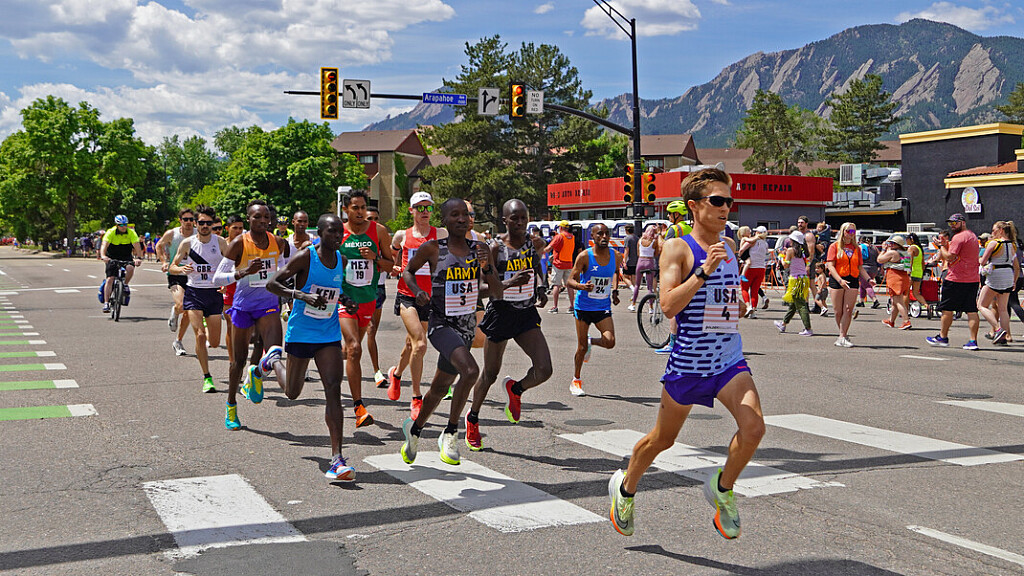
U.S. Olympic Marathoners Will Race the Bolder Boulder 10K as a Pre-Paris Tune-Up
Conner Mantz, Clayton Young, and Leonard Korir will run in the International Pro Team Challenge on May 27.
Memorial Day is always an exceptional celebration for runners in Boulder, Colorado, but this year, it will have some extra special Olympic flair.
On Monday, May 27, more than 40,000 runners will run through the city that’s known for the iconic Flatirons rock formations, the Pearl Street pedestrian mall, and an exceptionally active population in the annual Bolder Boulder 10K. Now in its 44th year, it’s been one of the top road running races in the U.S. since its inception, and this year will serve as one of the final tune-ups for the men’s U.S. Olympic marathon squad before racing in the Paris Olympics later this summer.
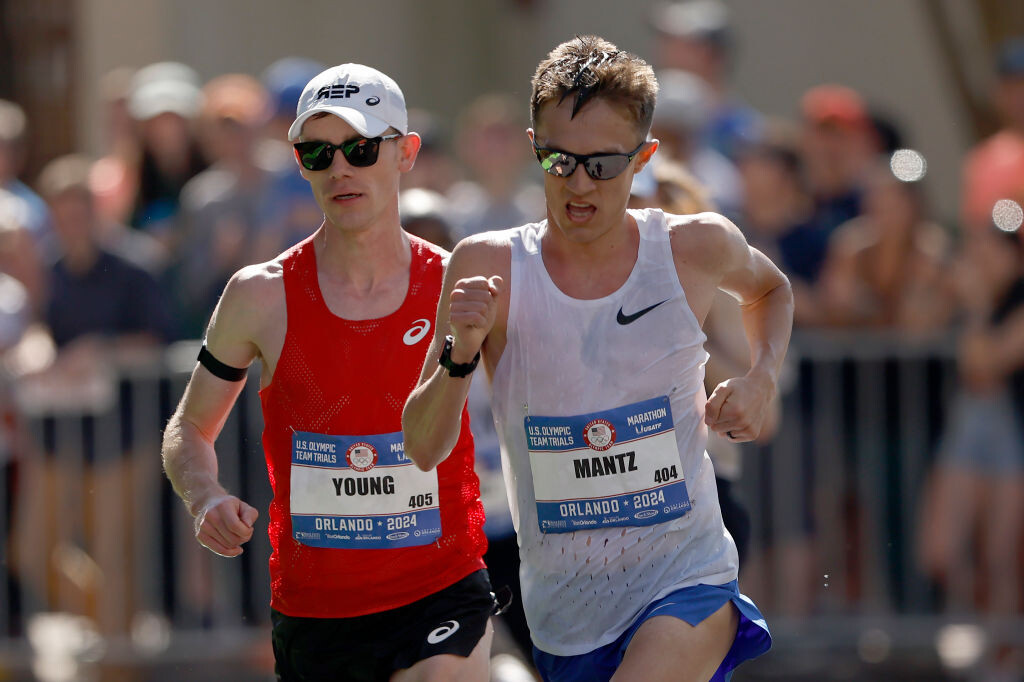
Conner Mantz, Clayton Young, and Leonard Korir, the top three finishers in the 2024 U.S. Olympic Trials who will be racing the marathon in the Paris Olympics on August 10, will be competing as Team USA Red in the Bolder Boulder’s International Pro Team Challenge that follows the citizen’s races. (Korir is expected to officially be named to the U.S. team in early May based on final pre-Olympic international rankings.)
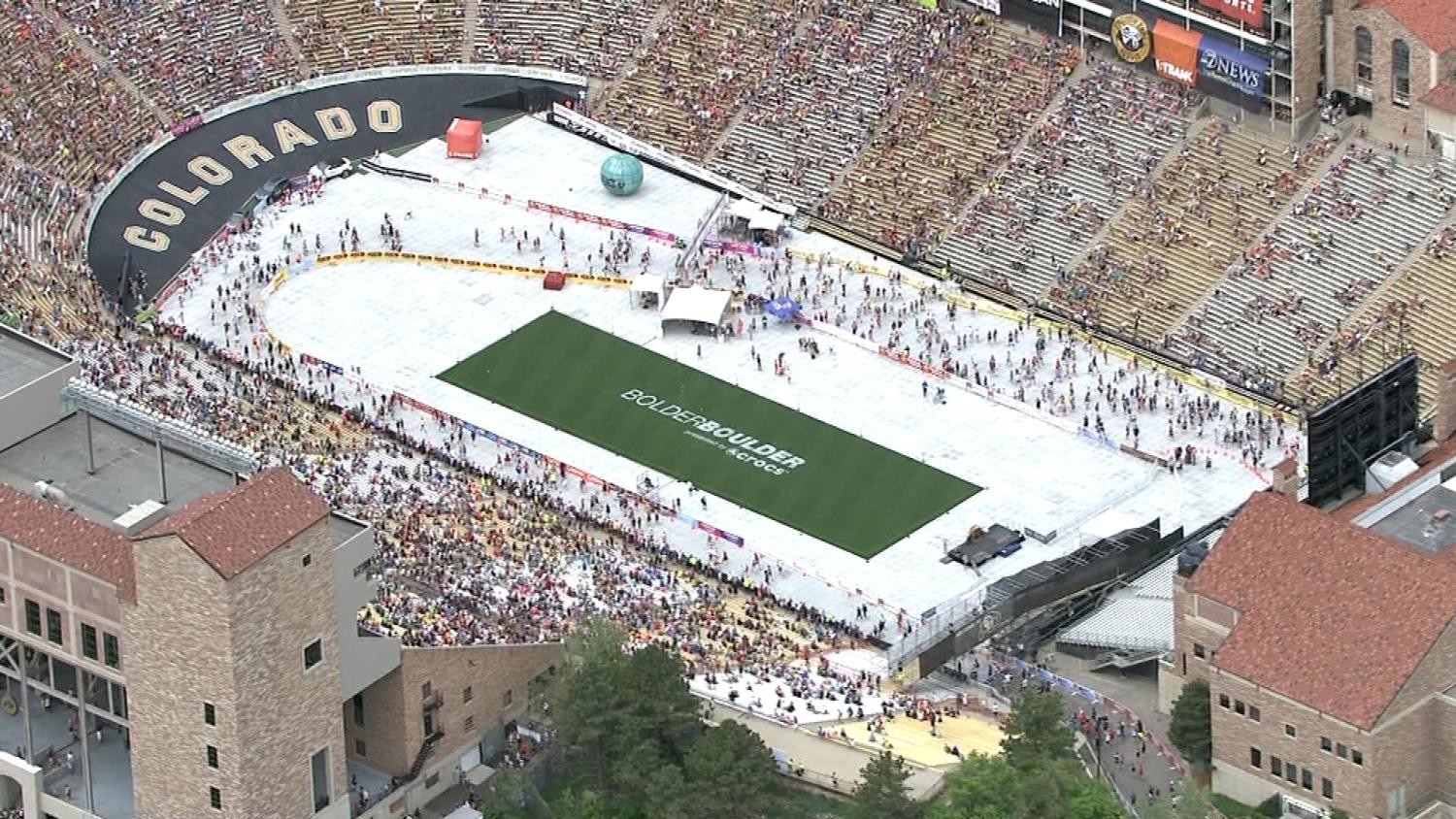
The pro race, which has a prize purse of $83,700 before potential bonuses, is one of the things that makes the Bolder Boulder so unique. After all the runners in 98 citizen waves have completed the race, professional men’s and women’s international teams from more than a dozen countries compete on the same course for team and individual titles. The races feature a staggered start, with women beginning 15 minutes before the men so the winners of each race will finish about 10 minutes apart inside the University of Colorado’s Folsom Field football stadium.
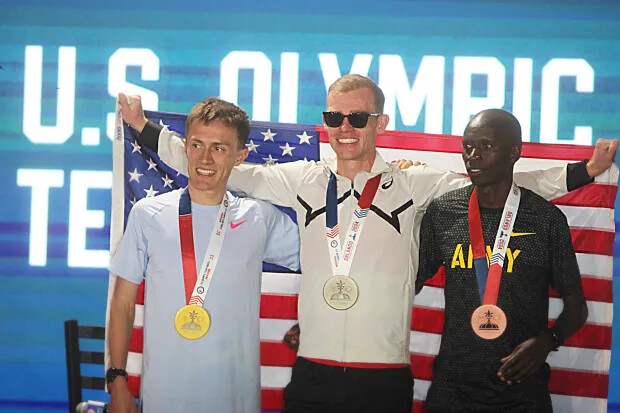
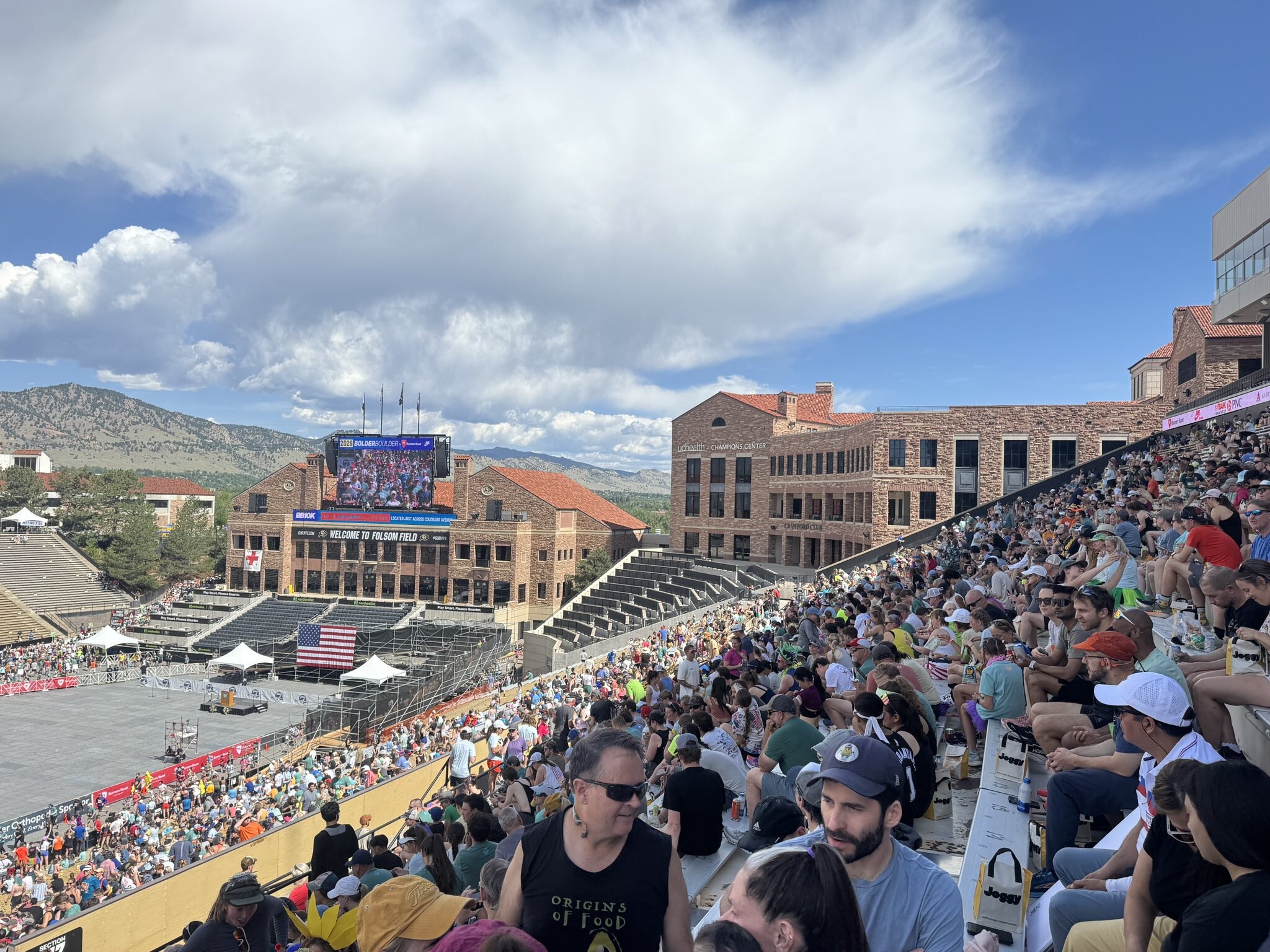
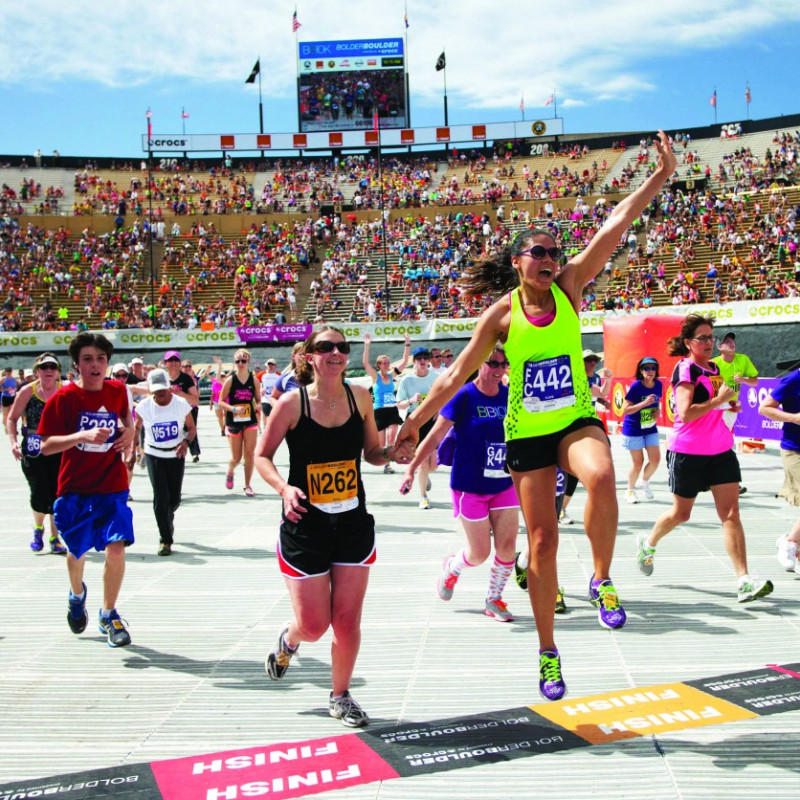
The finishing moments are among the thrilling spectacles in American running. By that point, the stadium is filled with a near-capacity crowd of roaring runners, family, and friends who have been watching the action play out on the massive video screens.
“The finish in the full stadium is like nothing else in the sport,” says Mantz, 27, who won the men’s race last year in 29:08 with a thrilling late-race surge to pass Kenya’s Alex Masai in the final 200 meters before the finish. “It was pretty electric. It took away all the pain you’re feeling mid-race. I was like, ‘Just race as hard as you can.’”
Team USA Red will have plenty of competition, from Team USA White, the secondary American team of Jared Ward, Futsum Zienasellassie, and Sam Chelanga, as well as teams from Kenya, Ethiopia, Mexico, and Rwanda. Teams are scored like a cross country race, with points awarded on the basis of finishing place, which means the team with the lowest combined score for all three runners is the winner. Ties are decided by the positions of the third-place finishers.
The women’s Team USA Red team will be led by defending champion Emily Durgin, along with Sara Hall and Boulder native Nell Rojas. Durgin finished ninth at the U.S. Olympic Trials in February and won the USATF 10 Mile Championships on April 7 in Washington D.C. At last year’s Bolder Boulder, she stormed to victory in 33:24, winning by 24 seconds over Kenya’s Daisy Kimeli.
Hall placed fifth in the U.S. Olympic Trials Marathon on February 3 in a U.S. master’s record (2:26:06) and 15th in the Boston Marathon on April 15. The women’s Team USA White roster will be composed of an all-University of Colorado alumnae squad—Makena Morley, Sara Vaughn, and Carrie Verdon.
“I can’t wait to be back in Boulder for the best day of the year,” says Durgin, 29, who will compete in the U.S. Olympic Trials 10,000 meters on the track in late June with the hopes of making the U.S. Olympic team. “Competing with Nell and Sara will make the experience even better.”
The women’s U.S. Olympic marathon team of Fionna O’Keefe, Emily Sisson, and Dakotah Lindwurm were invited to race in the Bolder Boulder but each runner declined, citing scheduling timing conflicts or a disinterest in racing at Boulder’s lofty altitude (5,430 feet). All of the runners who are racing for the U.S. teams in Boulder live at 4,500 feet or higher.
An Olympic Legacy
Boulder is known as one of the top running meccas in the U.S., in part because elite-level American and international runners have made it their training base since Olympic gold medalist Frank Shorter arrived in the early 1970s. Emma Coburn, Jenny Simpson, Yared Nuguse, Joe Klecker, Jake Riley, Hellen Obiri, and Edna Kiplagat are among the many top-level runners who are currently training in Boulder. Shorter, the 1972 marathon gold medalist, was a co-founder of Bolder Boulder 10K in 1979, and helped it grow into one of the country’s largest races.
Since then, numerous U.S. Olympians have raced in the Bolder Boulder, including Deena Kastor (a three-time women’s champion), Aliphine Tuliamuk (the 2022 women’s winner), Alan Culpepper, Elva Dyer, Ryan Hall, Abdi Abdirahman, Jorge Torres, Shalane Flanagan, Amy Cragg, Magdalena Boulet, and Libby Hickman, as well as Korir (who won it in 2022), and Ward (who was fourth in 2022).
Thanks to Boulder’s robust running community and the prestige of the race, the Bolder Boulder has also always featured fast sub-elite runners competing in the early citizen waves. Yet, the race has also celebrated dedicated middle-of-the-pack runners, as well as the first-time runners and walkers in the later waves. It was one of the first races to have bands playing along the course (as well as belly dancers and other entertainers), runners dressed up in costumes, elite wheelchair races, and in recent years, it has been known for a mid-race slip-and-slide and unofficial bacon aid station.
For the past 25 years, the Bolder Boulder has organized a special Memorial Day tribute—one of the largest in the country—that honors military veterans and new cadets.
The U.S. men’s Olympic marathon team competing in this year’s Bolder Boulder will be a legacy moment for the race, says Bolder Boulder race director Cliff Bosley.
“Having the three men that will represent our country in the marathon at this summer’s Paris Olympic Games is something we are extremely proud of,” Bosley says. “All three ran here last year, and to have them back is just incredible for the race, the city of Boulder, and the sport of running.”
by Brian Metzler
Login to leave a comment
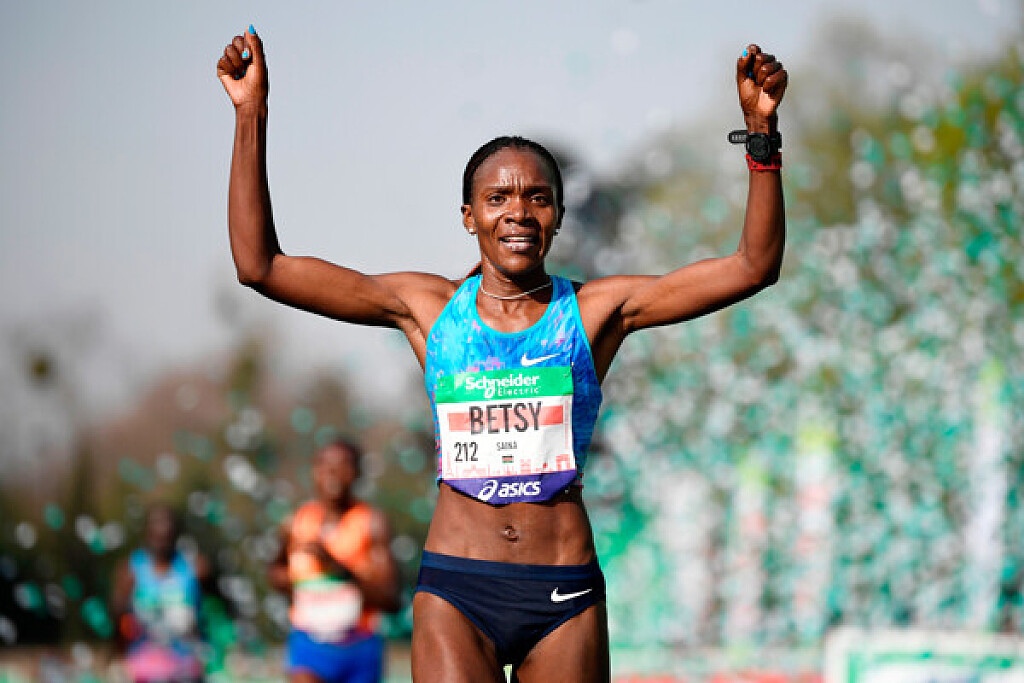
For Betsy Saina, the U.S. Olympic Trials Marathon Presents a Chance to Represent Her Son
For much of last year, Betsy Saina had a plan. She would race the Chicago Marathon in October, eager to run alongside Emma Bates (who placed fifth at last year’s Boston Marathon in a new personal best of 2:22:10) in pursuit of breaking Emily Sisson’s American record of 2:18:29, set the previous year at that same race.
Saina, 35, a naturalized U.S. citizen who represented Kenya in the 2016 Olympics in Rio de Janeiro—she placed fifth in the 10,000 meters 30:07.78—had reason to be confident. Last spring, she set a new personal best of 2:21:40 with her fifth-place finish at the Tokyo Marathon, which wound up being the fastest marathon by an American woman in 2023 and made her the eighth-fastest U.S. female marathoner of all-time, solidifying her position as a top U.S. Olympic marathon team contender.
The Chicago Marathon had assured Saina’s agent, Tom Broadbent, that she was in for the race. But when the elite field was announced in August, Saina learned she had not been accepted, which not only threw a wrench in her fall training plans, but made for a lot of stress as she was planning her U.S. Olympic Marathon Team Trials buildup.
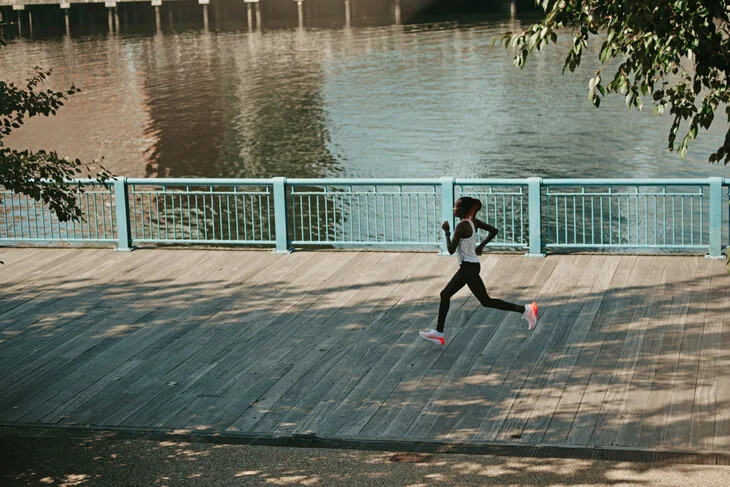
“I was shocked and spent three days looking at myself and trying to find any mistakes I made to not make the field, especially after running 2:21 in Tokyo,” Saina says. “I had never been rejected from a race before, and never got a response or an explanation as to why I didn’t make it. Being denied to run in Chicago honestly was one of the most disappointing things I’ve experienced in my career.”
Saina looked into entering the Berlin Marathon the following month, but had no such luck getting in with it being so late in the game. She was ultimately accepted into the Sydney Marathon (which shares its sponsor, ASICS, with Saina) on September 16. Unlike Chicago—with its fast, flat course that ended up having ideal racing conditions with temperatures in the 40s—Sydney has a hilly course and race-day weather was on the hotter side, with a starting temperature of 68 degrees.
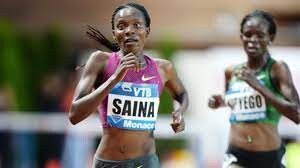
Despite the conditions, Saina proved herself once again, winning the race in 2:26:47. This sealed her confidence as she began to look ahead to the Olympic Trials in Orlando on February 3. If she’s one of the top three finishers in the women’s race in Florida, she’ll earn a spot on the U.S. team that will compete in the marathon at the Paris Olympics on August 11.
“Challenges make people strong, and running a good marathon on a harder course made me come back feeling motivated,” she says. “[Even though it wasn’t the faster time I originally wanted], it didn’t stop me from being a better version of myself.”
Transcendent Transplant
Despite her impressive performances in 2023, Saina has remained largely under the radar in terms of media coverage and fan predictions leading up to the Trials in Orlando, similarly to what fellow Kenyan-born marathoners Aliphine Tuliamuk and Sally Kipyego (both of whom made the last Olympic marathon team) experienced in 2020. The lack of attention relative to her competitors hasn’t fazed Saina, however.
“I know how to deal with pressure, having been in the sport since 2013, so as long as my training is going well, I don’t pay too much attention to what people say,” Saina says. “I’m just more excited to see many of the U.S. women [who are also] my friends, like Emily Sisson, Sara Hall, and Keira D’Amato, and to be racing so many amazing U.S. athletes for the first time.”
Saina’s result in Tokyo was only about a minute faster than her debut at the distance at the 2018 Paris Marathon, which she won in 2:22:56 (after dropping out of the 2017 Tokyo and New York City Marathons). It was also a confidence boost for Saina because it was also her first marathon since giving birth to her son, Kalya, now two, in December 2021, after previously running 2:22:43 and 2:31:51 at the 2019 Toronto Waterfront and Honolulu Marathons, respectively.
Saina—who originally came to the U.S. to attend Iowa State University where she trained alongside Tuliamuk and was a three-time individual NCAA champion and 11-time NCAA All-American—has remained in her hometown of Iten, Kenya, for the majority of the time since having her son, as her husband, Meshack Korir, is a doctor completing his postgraduate education there.
Although Saina became a U.S. citizen in late 2020 and has a home base in Colorado Springs, she made the decision to return to Kenya to have additional family support and childcare as she worked to come back from pregnancy and childbirth to prepare for the Olympic Trials, which she’ll return for just a few days before the race. Saina also keeps busy managing a couple of guesthouses, which she regularly rents out to visiting athletes and tourists. She also works with Cross World Africa, a nonprofit that sponsors underprivileged children in pursuing secondary and higher education.
“Before I came from Kenya, my family was struggling and we had to fundraise for my flight ticket to come to the U.S. Being here has changed my family in a different way—I have two sisters who are now nurses in the U.S., and my parents can now more easily fly to visit us, and while it is not where I began running, the U.S. where I began competing at such a high level,” she says. “My son also gives me so much motivation and is my inspiration. When I see him, I see beauty in myself and see myself getting better when I’m running. So I am excited both to compete and represent my son, and to hopefully wear the U.S. uniform because it has so much meaning for me.”
Back in Iten, Saina has been training in a group with personal pacemakers alongside 2019 New York City Marathon champion Joyciline Jepkosgei, which she describes as game-changing for her progress in the marathon. Both Saina and Jepkosgei, who is also the former world-record holder in the half marathon and Saina’s best friend from high school, are coached by Jepkosgei’s husband, Nicholas Koech.
“Sometimes you will train with people who don’t want to help someone else get better, but [Jepkosgei], who has run 1:04 [in the half marathon] and 2:17 [in the marathon] is unique in that she has sacrificed a lot, which I don’t think a lot of women will ever do for each other, and I don’t think I would either,” Saina says. “But she has been pushing me a lot since the first day I joined her, and I think that’s the reason I came back and I’ve had better races. I have someone to chase and it’s like competition in training, but in a good way.”
American Original
Saina returned to the U.S. twice last year, to race the USATF 25K Championships in Grand Rapids, Michigan, (where she took the win in 1:24:32 for her first U.S. title, narrowly beating D’Amato) and to be inducted into Iowa State’s Athletics Hall of Fame in September. Saina had planned to do some shorter U.S. races, including the Bolder Boulder 10K in May and the NYRR Mini 10K in June, following her national championship title in the 25K. However, she ultimately decided she couldn’t bear to be away from her son any longer.
“As a mom, when you’re away, you are so worried because you’re like, ‘How is he doing right now? How can I handle the pressure, being away from him?’” Saina says. “This year, it’s really different for me because the only race I want to travel to without Kalya is the Olympic Trials. He is growing now and getting better, so I want to travel with him afterward to compete in the USATF circuit. That’s the biggest goal for 2024, to travel with my son.”
Later this year, Saina hopes to also run the April 7 Cherry Blossom 10-Miler in Washington, D.C., the Mini 10K on June 8 in New York City, and a fast spring half marathon to pursue the current American record (which was broken yet again by Weini Kelati on January 14 in Houston), before running another marathon in the fall. In the meantime, she noted that she is especially eager to compete in one of the deepest fields ever assembled for the Trials.
Although Bates withdrew from the Trials, Saina figures to be one of the favorites in Orlando along with Sisson, Hall, Tuliamuk, D’Amato, and Seidel. However, Lindsay Flanagan (ninth in last summer’s world championships), Sara Vaughn, Susanna Sullivan, Gabriella Rooker, Dakotah Lindwurm, and Nell Rojas are all sub-2:25 marathoners, and thus top contenders, too.
“The U.S. is no longer small and non-competitive. Look at Molly Seidel. She got bronze at the Tokyo Olympics, and I remember when Amy [Cragg] was a bronze medalist at the 2017 World Championships. If you put that in perspective, it has changed even more right now compared to that time,” she says. “The competition [to make the U.S. team] is no longer as easy as the way some people [thought], and I’m super excited to be competing with a lot of solid women. There is no difference between the U.S. and other countries right now—it’s not just to go compete at the Olympics; they’re going to compete for the medals, just like other countries.”
by Emilia Benton
Login to leave a comment

2028 US Olympic Trials Marathon
Most countries around the world use a selection committee to choose their Olympic Team Members, but not the USA. Prior to 1968, a series of races were used to select the USA Olympic Marathon team, but beginning in 1968 the format was changed to a single race on a single day with the top three finishers selected to be part...
more...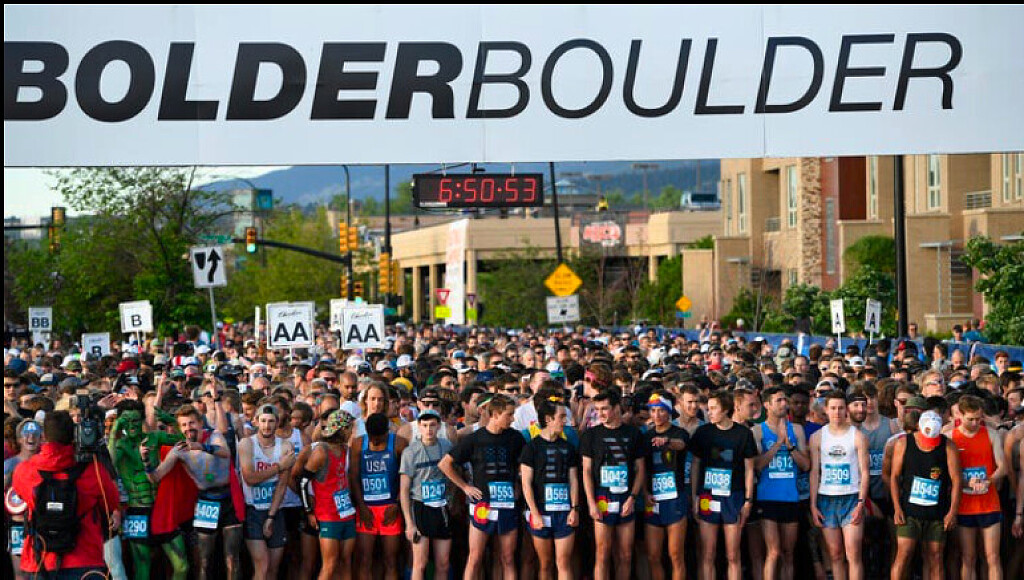
How the Bolder Boulder 10K Became One of the World’s Most Cherished Road Races
5,000 runners are expected to run this year’s Memorial Day 10K on May 29
At bedtime last week, legendary American distance runner Melody Fairchild regaled her 7-year-old son Dakota with tales of the Bolder Boulder 10K he plans to run this year.
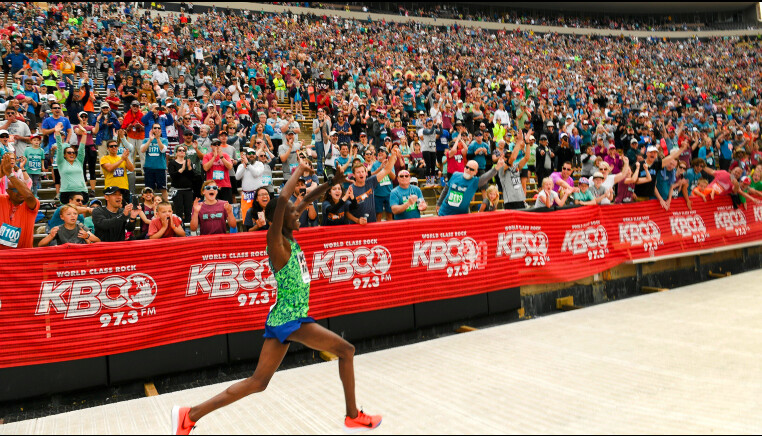
One of the biggest road races in the world for the past several decades, the race sends 40,000 runners through the streets of Boulder, Colorado, on a point-to-point race that ends at the University of Colorado (CU) football stadium, full of cheering spectators and fellow runners.
“I told him it’s an amazing feeling to run into that stadium,” Fairchild says. “When you hit the field, the whole crowd is cheering for everybody. You feel like they’re cheering for you. He had this huge smile on his face.”
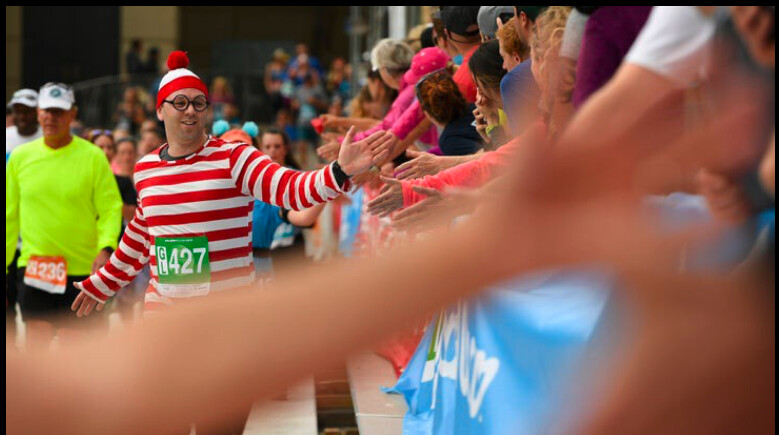
And if 50,000 people cheering isn’t enough, there’s also the famous slip-n-slide, numerous bands playing on the course, runners and spectators wearing outrageous costumes, and the military jet flyover by the Colorado Air National Guard you can feel in your bones. Named America’s All-Time Best 10K, it’s likely to be one of the biggest parties you’ll ever attend.
Fairchild recounted for Dakota her experience as the U.S. captain for the Bolder Boulder’s first International Team Challenge professional race in 1998.
“I remember looking out the window and seeing the stadium full. I was so nervous, I thought I was gonna vomit all over the floor,” she says. “When I walked out and they introduced me as the local hometown girl, the whole crowd roared.”
Fairchild ran her first Bolder Boulder at age eight. She went on to win the citizens’ race three times (1989, 1990, 1991) when she was a record-setting high schooler, became an All-American and NCAA champion at the University of Oregon, and then qualified for the U.S. Olympic Trials in the 10,000-meter run and marathon as a professional runner. But the Bolder Boulder has always held a special place in her heart, which is why she has continued to run it through the years and why she’s so eager to introduce Dakota to it.
The idea for the Bolder Boulder germinated in the mind of a father watching his five children participate in all-day track meets. It was the summer of 1978 at the upswing of the original American running boom, and runner and local businessman Steve Bosley had grown frustrated with the disorganized events and parents berating their children for not running fast enough.
Bosley, then 37, reached out to his friend, Boulder resident and international running icon Frank Shorter, a two-time Olympic medalist in the marathon, for help designing a race that would serve their community and promote the sport of running. The race would not only become a Colorado icon, it set a gold standard for road races around the world and helped elevate women’s running in unprecedented ways.
During the spring of 1979, Cliff Bosley, the current race director, went door to door with his Boy Scout troop, passing out posters to encourage neighbors to run his dad’s inaugural race. The poster announced a 4,000-participant cap and enticed Boulderites to “Run with Frank Shorter and Ric Rojas!” for a mere $6.50 entry fee. (Rojas was another local elite athlete who would go on to win the inaugural race in 1979. His daughter, Nell Rojas, a current professional runner, won the women’s citizen’s race 40 years later in 2019.)
Bosley recalls giving a man in his front yard a poster who threw it back in his face in disbelief. “‘Yeah right, 4,000!’ the man scoffed. “I was just a 12-year-old kid. You believe everything your parents tell you. I thought, ‘Dad says it could happen—why won’t it?!’”
The inaugural race saw 2,700 registrations. The next year, it doubled in size and live entertainment was added to the celebration. Participation continued to soar in the ensuing years and decades, eventually reaching 50,421 in 2010. With an average of 45,000 finishers over the past 10 years, it’s now the seventh-largest road race in the nation and the largest Memorial Day celebration in the U.S.
From its inception, the Bolder Boulder 10K offered equal prize money for the female and male winners. In 1984, it created a separate elite race from the citizens’ race. There was also a deliberate split in the women’s and men’s elite race so that both races could be showcased equally and covered live on the local TV broadcast. Today, it offers one of the largest non-marathon prize purses in the U.S., but this did not come without a lot of work.
Initially road races were precluded from paying prize money to athletes because it changed their amateur athlete status, preventing them from competing in the Olympics. In the early 1980s, Steve Bosley, then the president of the Bank of Boulder, worked with two local attorneys, Frank Shorter, and TAC (The Athletics Congress which was then the name of the national governing body for the sport; now it’s known as USATF), to create a mechanism using trust accounts for athletes to earn prize money. It was then paid into athletes’ individual trust accounts so they could draw living and training expenses. At the time these accounts were called TACTRUST Accounts, and the Bank of Boulder was the steward of 95 percent of all of these accounts on behalf of both American and international athletes from around the world.
One of the most circulated photos of the Bolder Boulder 10K is that of Shorter, the 1972 Olympic marathon champion, winning the 1981 race— the first time the race finished in the University of Colorado’s Folsom Stadium. But that same year, Ellen Hart, then 23, won the women’s race—although she says there was no finish line tape for the female winner.
“It was the most exciting thing I had ever seen,” she recalls. “Since I was a little girl, I had wanted to go to the Olympics. I thought, Oh my god. This is like the Olympics! I traveled to races all over the world and the BB was my favorite race.”
Hart would move to Boulder in 1982, and then win the race again in 1983 before the four-year reign of Portugal Olympian Rosa Mota. In many ways, Hart says, her success in the Bolder Boulder launched her career as a professional athlete.
She went on to place 11th at the inaugural women’s U.S. Olympic Trials Marathon in 1984, set an American record in the 30K, and won 18 world championship titles in triathlon and duathlon racing. “In terms of women’s sports, the Bolder Boulder was certainly more forward-thinking than any other race I ever attended,” Hart says.
The race organization was also ahead of its time when it began the Women’s High Altitude Training Camp, something it did not offer for men, in 1989. The 100-day program was designed to bring five talented post-collegiate female runners to Boulder to train prior to racing Bolder Boulder. Runners were placed in volunteer host families, provided an elite coordinator and a trail guide, and given access to a local gym and the university’s track to train.
New Jersey runner Inge Schuurmans McClory was a member of the 1990 team.
“I really didn’t feel worthy of national attention, but I applied for the program not even thinking I was going to get in,” she says. She was not only accepted, but she fell in love with Boulder and stayed.
“I went to graduate school here. I met my husband here. I coached cross country and track at CU. It sort of was the launching pad for the rest of my life, and I owe it to the Bolder Boulder and that high-altitude training camp,” says McClory, now a physician’s assistant who has trained cardiac patients—the Brave Hearts—for the Bolder Boulder since 2000.
Since 1996, there have consistently been more women (average 53-54 percent) than men completing the race. Cliff Bosley attributes this to his mom creating a walking division in 1984 so that her father, diagnosed with prostate cancer, could participate.
“We kind of look at it as a placeholder,” says Bosley, “You come in as a walker and now you’re on the continuum. Let’s help you become a jogger. Let’s help you become a racer.” This exemplifies the Bolder Boulder’s rallying cry, “Oh Yes You Can!” that it established in 1979.
The Bolder Boulder has always been defined by its strong community involvement, which includes an eager network of volunteers, aid stations staffed by local running groups, and the thousands of spectators who line the streets and fill the stadium. Historically, the race donates more than $100,000 to local nonprofits and community groups that volunteer. Even during the pandemic, the race still found a way to contribute.
“Knowing we could not stage the Bolder Boulder in-person, we created a virtual event called the VirtuALL 10K and offered it at no cost,” Bosley says. Thousands of T-shirts, designed for the 2020 race that went unused, were donated to shelters.
Another Bolder Boulder program that supports the community is the BB Racers Club. Created in 1996, the program prepares children for the race, so their experience is a positive one. Initially started as a middle school program, this club now includes elementary schools. Children who are signed up are given a special training program, coach, and starting wave. Fairchild’s Boulder Mountain Warriors club, of which her son Dakota is a participant, is training a large number of BB Racers this year.
Bosley is prepared for up to 45,000 participants at this year’s race on May 29. And just as they did 44 years ago, race organizers will serve participants a sack lunch and send them a postcard in the mail with their finishing place, pace, time, and ranking in their age group.
“I can still remember checking the mailbox every single day until it came,” says Fairchild. “It makes me emotional just thinking about how much attention to detail they’ve always given hundreds of thousands of people. They care so much. It’s not an accident that they are the best 10K in the world.”
by Outside
Login to leave a comment
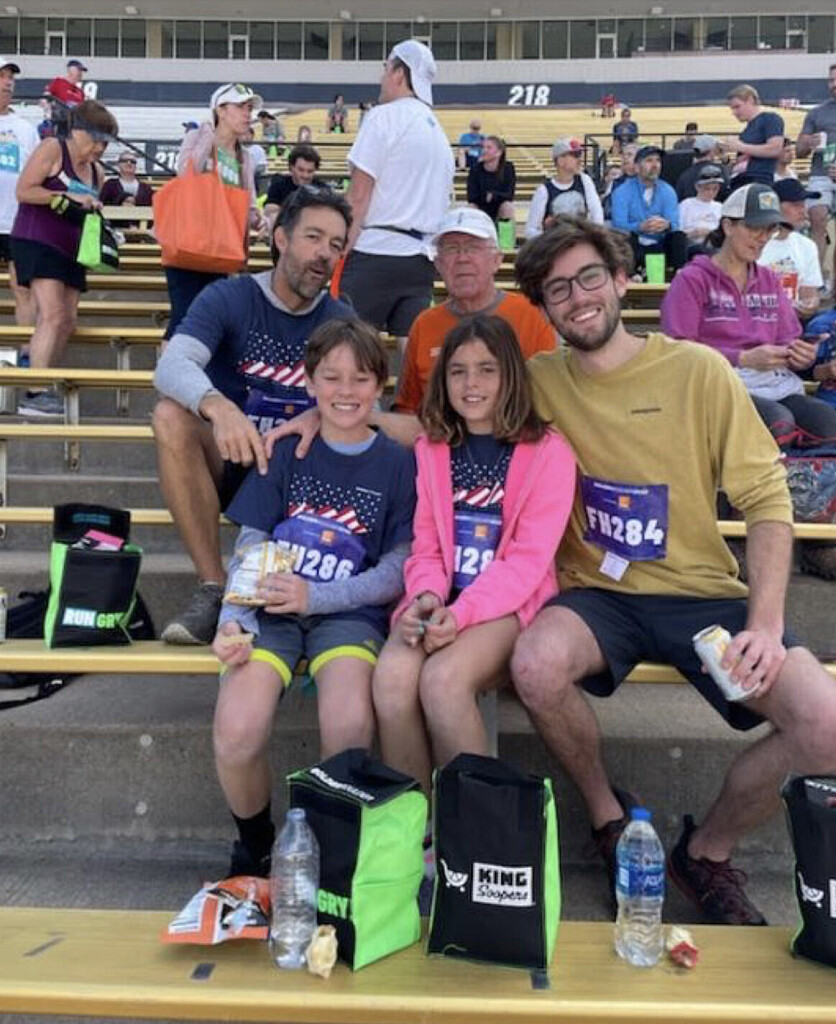
Richard Quigley sets course record at Bolder Boulder for 86 year olds
After two missed years due to the COVID-19 pandemic, the famous Bolder Boulder 10K Memorial Day race made its triumphant return to town on Monday.
This year’s event was no doubt a welcome return to normalcy for many of the event’s 40,000 participants. But Monday’s race marked a particularly special occasion for Richard Quigley of Longmont (photo back middle with family)
Eight-six-year-old Quigley — a longtime runner and athlete known as “Grampa Dude” by his family — set a record course time for his age group while running this year’s 10K alongside his son, Todd, daughter-in-law, Jenn, and three grandkids, Tanner, Finn and Grace. He finished the race in one hour, 17 minutes and 41 seconds.
“It’s been a life dream of his” to break his age-group record, according to his older son, Brian Quigley. “He loves the Bolder Boulder. It’s been a big tradition in our family — he’s already thinking about the next one.”
Richard Quigley has lost count of the number of Bolder Boulder races he’s run over the years since the inaugural event in 1979, but he recalls running some of the early races with Brian and Todd. In 1982, he said he and his sons, who were 10 and 7 years old at the time, ran the race together as a team.
“Todd would start off and run half a mile, and then I would pick him up in full stride, put him up on my shoulders, and we would do the next half a mile,” said Quigley. “We would switch that way — half a mile of him running, half a mile on my shoulders, When we got to the stadium, he finished [the race] himself.”
The family relocated to Santa Barbara, Calif. for over two decades before moving back to Boulder in 2005. But after the Quigleys returned to Boulder, Richard Quigley started running the Bolder Boulder regularly again.
In addition to the Bolder Boulder, Quigley has run marathons — most recently, he ran the Malibu Marathon in 2012, at age 76 — as well as competing in triathlons and long bike rides throughout his life. He said the key to staying in good enough health to run races at his age is daily exercise.
“I keep a log of my daily exercising — I’ve probably got the last 20 years. I’m a weird old aerospace engineer,” he explained. “If you keep a record, you can see what you did, and you don’t miss a day. Missing one day a month is fine, but more than that and I kind of get after myself.”
This race proved a more daunting task for Quigley than others he had done in the past. Todd Quigley said that COVID-19 lockdowns and health challenges had made it difficult for his father to get out and run as frequently as he would have liked, but that he and his son, Tanner, were there to support Richard Quigley in his goals.
“This was a big challenge, and a big concern (was) whether he was gonna be able to keep upright and finish it,” Todd Quigley said. “Tanner and I both were there by his side to where if he needed a hand for stabilization, or his feet couldn’t keep him up, we’d be there to get him across.”
Richard Quigley was grateful to have the support of his family and to do the race with them this year.
“I really appreciated my son and grandson prodding me along,” Quigley said. “Just getting out there and doing that stuff is neat — better than sitting at home on your butt all the time.”
by Amber Carlson
Login to leave a comment

BOLDER BOULDER
In 1979 we dreamt of attracting a few hundred of our friends to race though the streets of Boulder, Colorado to celebrate Memorial Day with our families. Fast forward almost 40 years and the Bolder BOULDER has grown to become one of the largest and most highly acclaimed 10K’s in the world. Almost 1.2 million runners, joggers, walkers and spectators...
more...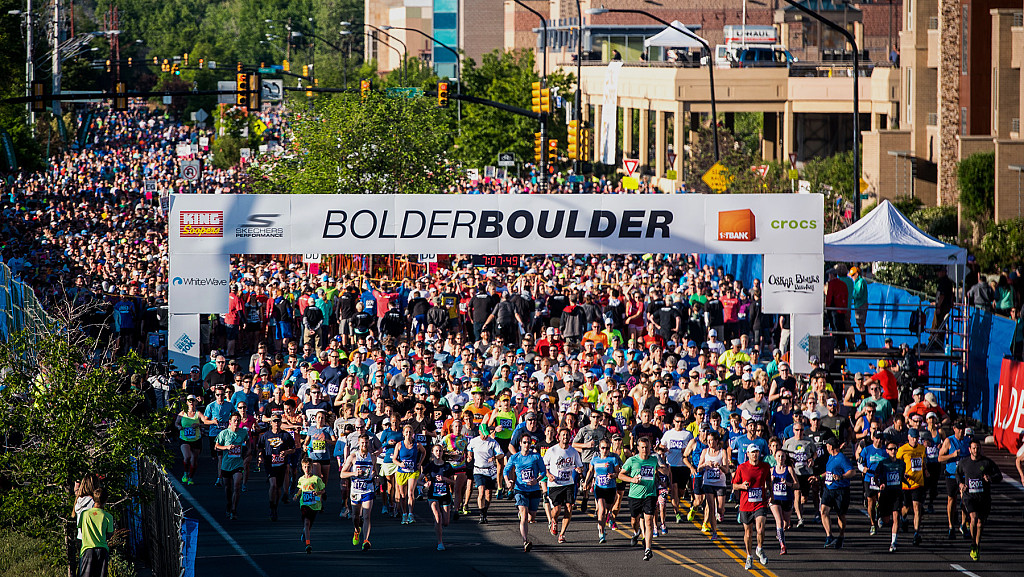
2021 Bolder Boulder Cancelled Again
The organizers of the Bolder Boulder 10K road race say that COVID-19 restrictions prevent them from running the event in 2021. It’s the second year in a row that the coronavirus pandemic has led to the cancellation of the event which had taken place in Boulder on Memorial Day since the 1970s.
“The bottom line after talking daily with public health officials, the city of Boulder and the University of Colorado is that safety restrictions and our timeline prevent us from holding the traditional BOLDERBoulder,” the race organizers wrote on the Bolder Boulder website.
As an alternative to the timed race of 50,000 or so participants, organizers have announced plans to allow for runners and walkers to experience alternative timed 10K options over the Memorial Day weekend.
They’re calling it Bolder on The Run 10K.
Racers will be given the opportunity to line up during various time slots at five different locations across Colorado’s Front Range, and there will be a cap on the number of participants allowed.
According to the website, “All courses will be marked, measured and timed using RFID tags on the bibs.” The five different courses are as follows:
– Mary Carter Greenway Trail, Littleton/Denver– Firestone Trail, Firestone– Interlocken, Broomfield– The Ranch, Loveland– Coal Creek Trail, Erie.
by Colorado Runner
Login to leave a comment
BOLDER BOULDER
In 1979 we dreamt of attracting a few hundred of our friends to race though the streets of Boulder, Colorado to celebrate Memorial Day with our families. Fast forward almost 40 years and the Bolder BOULDER has grown to become one of the largest and most highly acclaimed 10K’s in the world. Almost 1.2 million runners, joggers, walkers and spectators...
more...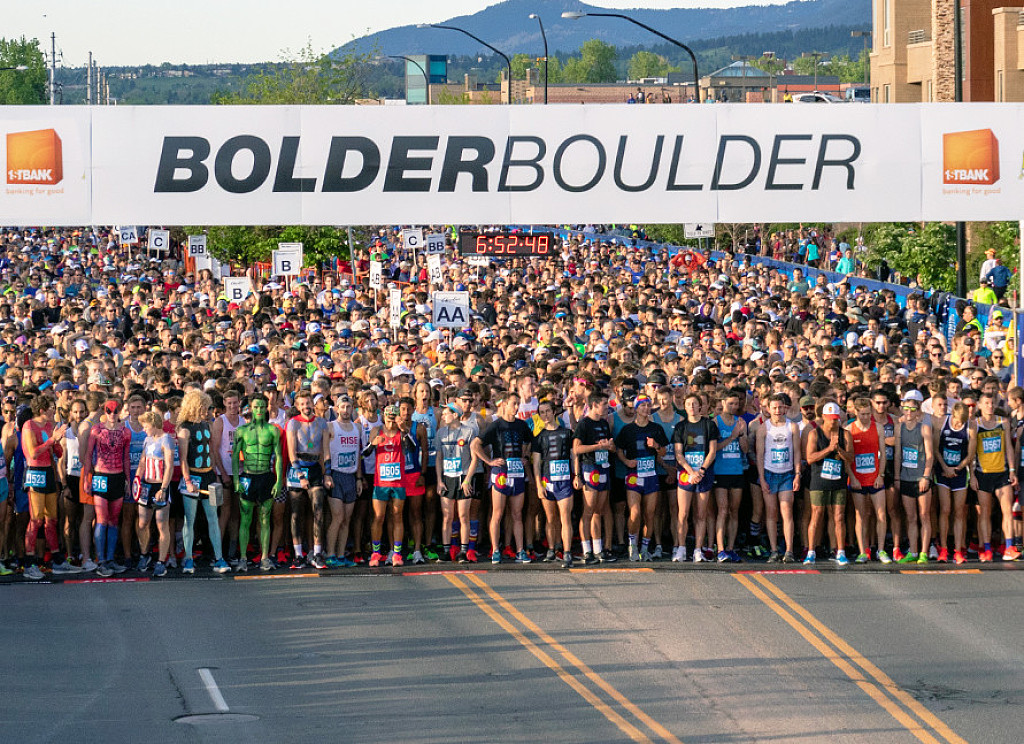
The Bolder Boulder 10K race is offering a free virtual event
While you can’t run the BOLDERBoulder 10K in person this year, the race is offering a free virtual event. Anyone can run, jog, or walk a 10K from any location for a VirtuALL event on Memorial Day May 25, 2020.
The race is a Memorial Day tradition that typically attracts around 47,000 in person finishers. Because of the coronavirus outbreak this year, the race postponed the in person event until Labor Day in September.
But to keep the Memorial Day tradition alive, the race is offering a fun, free event that offers:
A VirtuALL Memorial Day 10K Bib to download and personalize any way you like.
Option to purchase a limited edition t-shirt or hat for $25 per item. Remember the days we OverCome and your accomplishments.
We give $5 of your purchase to the Colorado COVID relief fund.
Submit your time for a customized Participant’s Certificate.
To learn more go to https://bb10k.bolderboulder.com/
Login to leave a comment
BOLDER BOULDER
In 1979 we dreamt of attracting a few hundred of our friends to race though the streets of Boulder, Colorado to celebrate Memorial Day with our families. Fast forward almost 40 years and the Bolder BOULDER has grown to become one of the largest and most highly acclaimed 10K’s in the world. Almost 1.2 million runners, joggers, walkers and spectators...
more...
Bolder Boulder 10k has been moved from Memorial Day to Labor Day
Organizers of the Bolder Boulder 10k in Boulder, Colorado has announced that the hugely popular annual road race will take place on Labor Day weekend in 2020 instead of Memorial Day weekend. They also said that their parallel race that’s normally held on Labor Day weekend in Fort Collins — the FORTitude 10K — will be folded into the Bolder Boulder and will return to its normal setup next year.
Earlier this week it was announced that due to the coronavirus pandemic there would be a postponement of the Boulder race which runs through the Colorado city’s streets and ends at Folsom Field on the University of Colorado campus.
“There continues to be increasing and substantial challenges for our communities including Boulder and Fort Collins, as well as for (Colorado State University) and CU. Two great communities and two great universities are coming together, reflecting the spirit that is our culture in Colorado,” race director Cliff Bosley said in a prepared statement of the effort to merge the two 10Ks.
The Bolder Boulder is in its 42nd year and the FORTitude 10K was first run in 2017.
“Whether you’re running the BOLDERBoulder on Labor Day or running the FORTitude on Labor Day, we’re running together. Everyone we met with to arrive at this decision recognizes that while Boulder and Fort Collins as well as CU and CSU compete in many areas, this is another example of coming together to collaborate,” Bosley said.
Login to leave a comment
BOLDER BOULDER
In 1979 we dreamt of attracting a few hundred of our friends to race though the streets of Boulder, Colorado to celebrate Memorial Day with our families. Fast forward almost 40 years and the Bolder BOULDER has grown to become one of the largest and most highly acclaimed 10K’s in the world. Almost 1.2 million runners, joggers, walkers and spectators...
more...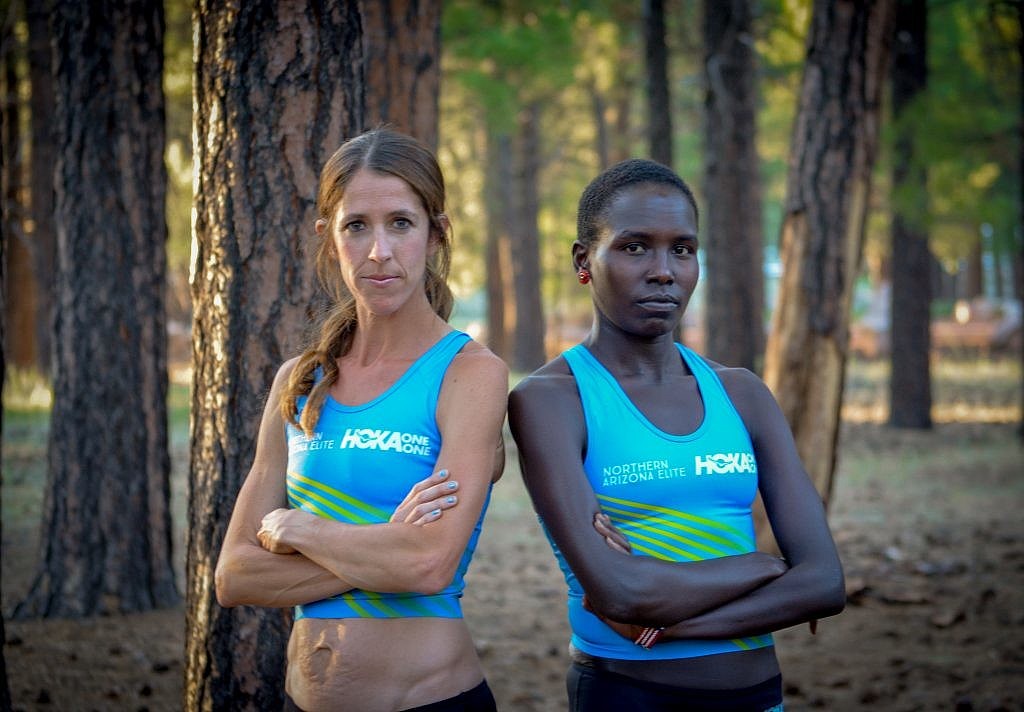
Aliphine Tuliamuk and Stephanie Bruce are set to run the BOLDER Boulder 10K event on Monday
Aliphine Tuliamuk and Stephanie Bruce have a neatly entangled relationship as NAZ Elite teammates.
It's the kind of relationship that's somewhat elusive to the sport of running, and it's been working for the two veterans.
“They are good friends, they respect one another, they have a lot of admiration for one another, and yet on race day they try to beat one another," NAZ Elite head coach Ben Rosario said Wednesday, "and then afterward they are friends still. It’s a pretty cool situation because they are raising the bar for one another it seems like constantly.”
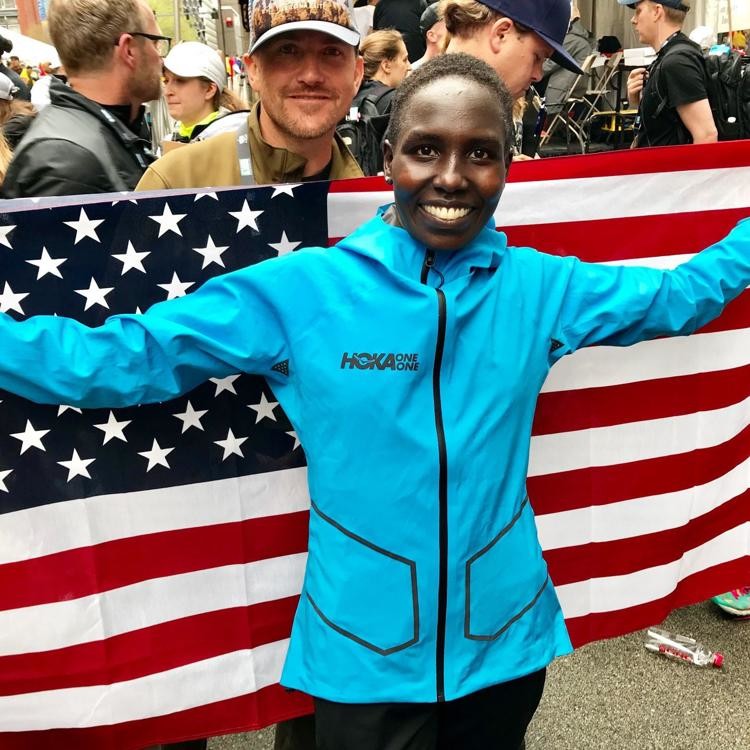
Tuliamuk and Bruce are set to run the BOLDER Boulder 10K on Memorial Day, and then compete again on Saturday, June 8, when they take on the New York Mini 10K, which serves as this year's USATF national championship at the distance. Both toe the lines of the next couple races on a level of performance that's been demanding attention, with fans and opponents waiting to see what the two will do next.
They have each other to thank for the attention they deserve, whether it be on the big stage such as a championship race in New York City, or a race that's part of their buildup for more major events.
When Tuliamuk joined NAZ Elite in January of 2018, she brought plenty of past success along with her aggressor mentality that surfaces, according to Rosario, on race day and during practices. Meanwhile, Bruce makes sure she and others are hitting their paces while training, bringing a practical approach to training and racing.
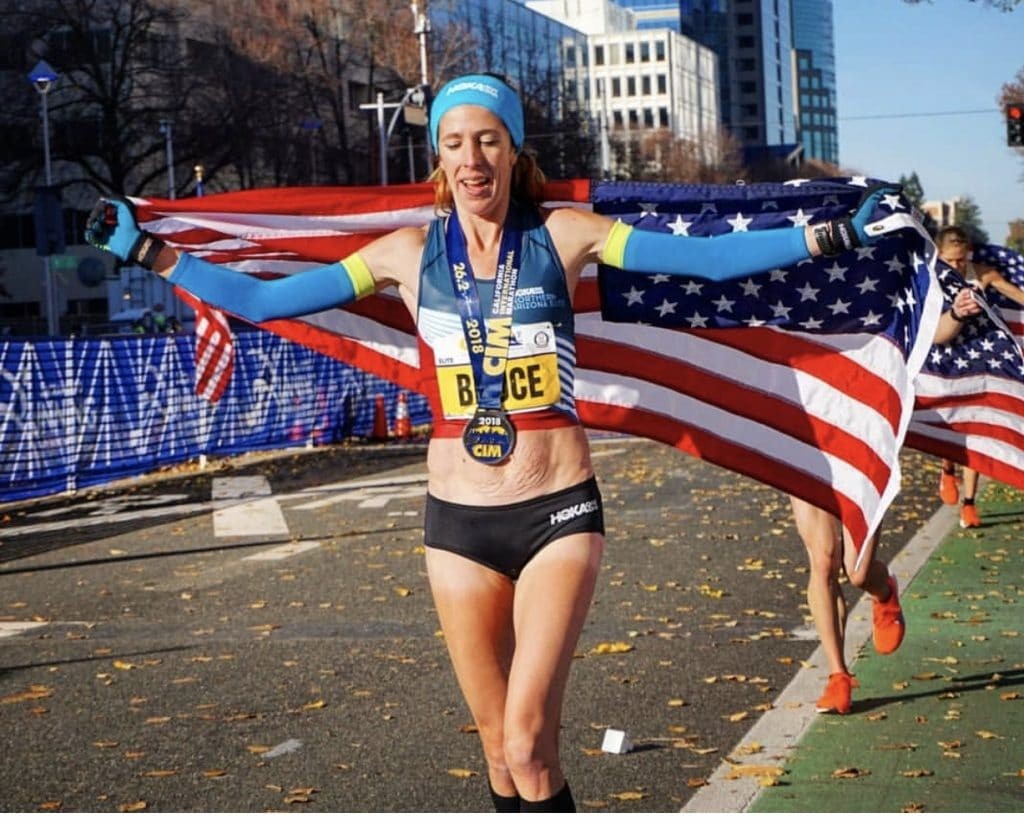
Together, they create a balance and a drive to get better.
Bruce enters BOLDER Boulder and the Mini 10K riding arguably the best run of success of her career. She's also arguably in the best shape of her life.
The last time Bruce ran BOLDER Boulder was in 2017 and she took eighth place in 34:35. Tuliamuk took second place last year at the event with a time of 32:48 while not far removed from her back-to-back national titles.
Login to leave a comment
BOLDER BOULDER
In 1979 we dreamt of attracting a few hundred of our friends to race though the streets of Boulder, Colorado to celebrate Memorial Day with our families. Fast forward almost 40 years and the Bolder BOULDER has grown to become one of the largest and most highly acclaimed 10K’s in the world. Almost 1.2 million runners, joggers, walkers and spectators...
more...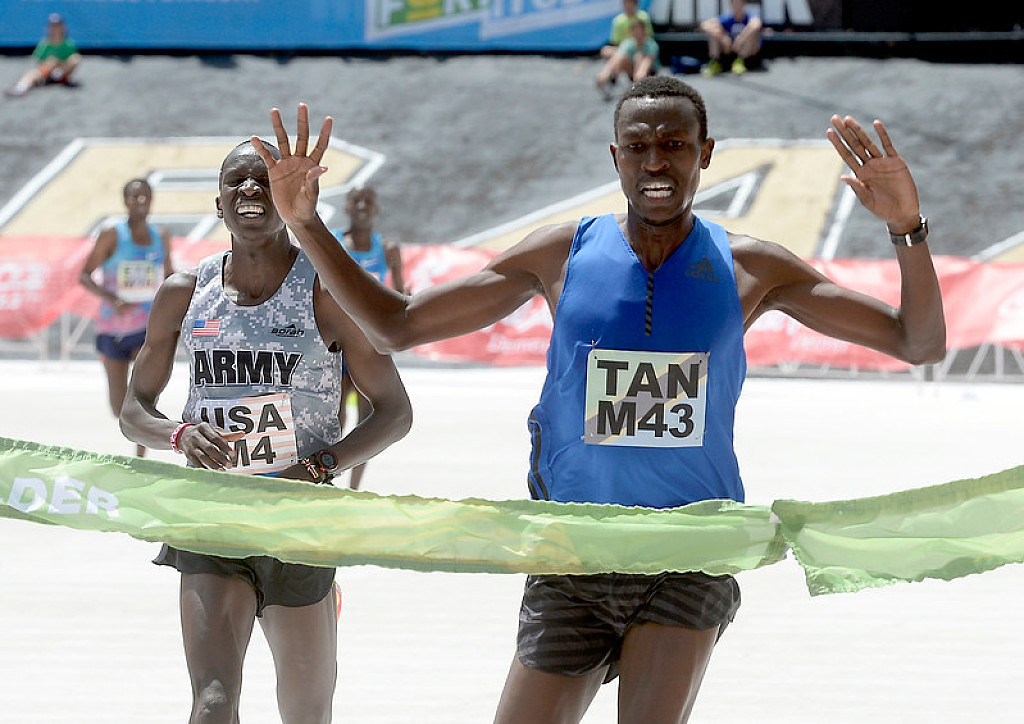
Gabriel Geay is the hottest road racer in the US right now will be racing Crazy 8s Saturday
Login to leave a comment
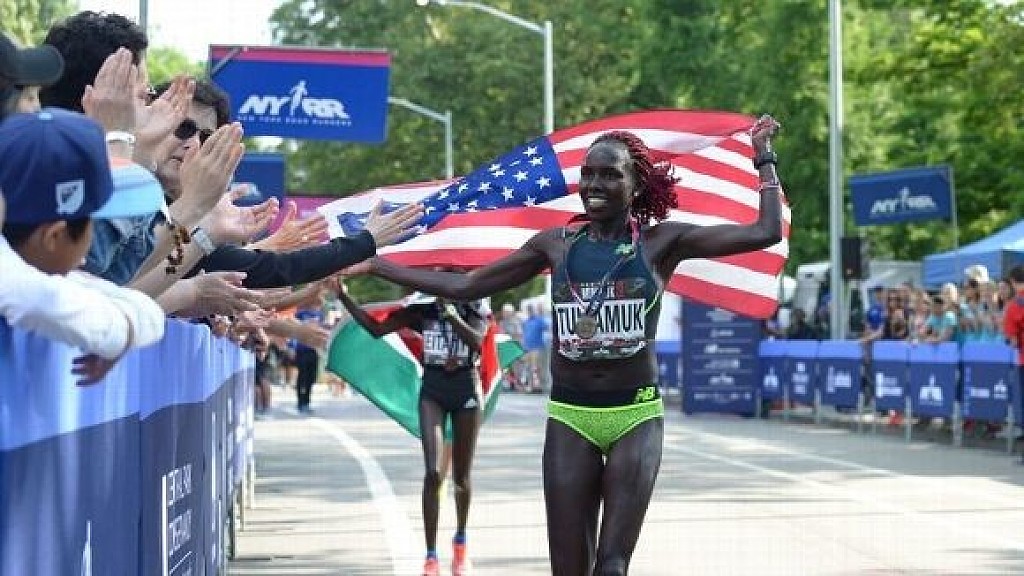
Aliphine Tuliamuk will return to defend her title at Peachtree Road Race July 4
Login to leave a comment
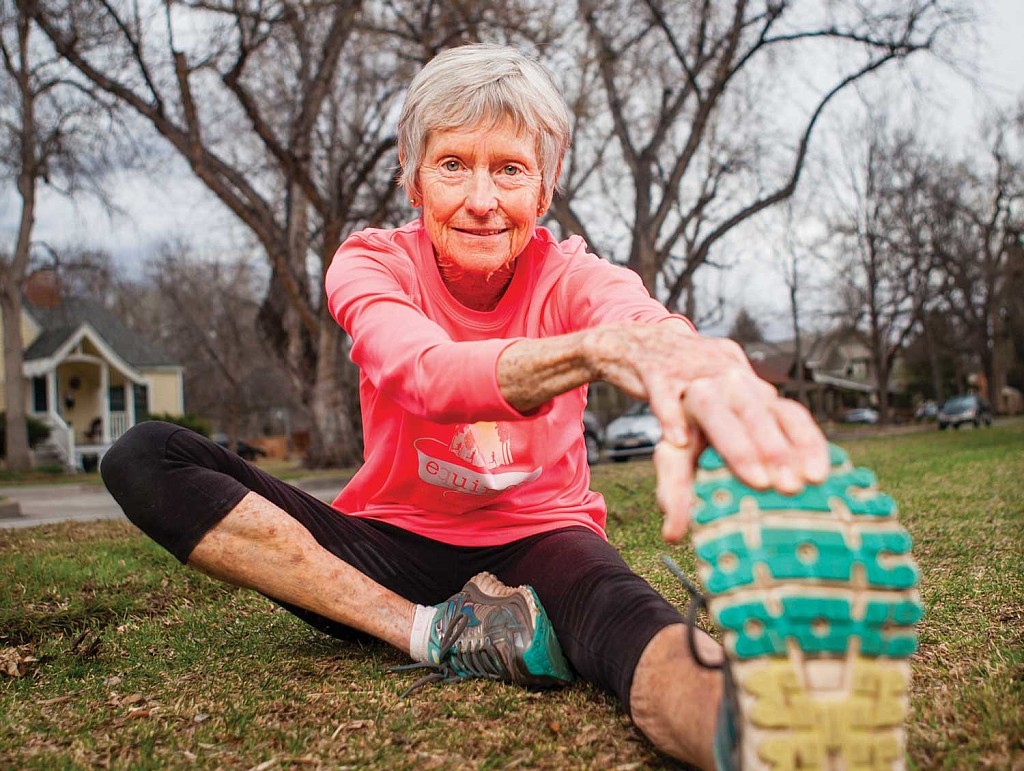
Global Run Challenge Profile: Libby James is the fastest 80 plus woman in the world
by Bob Anderson
Login to leave a comment
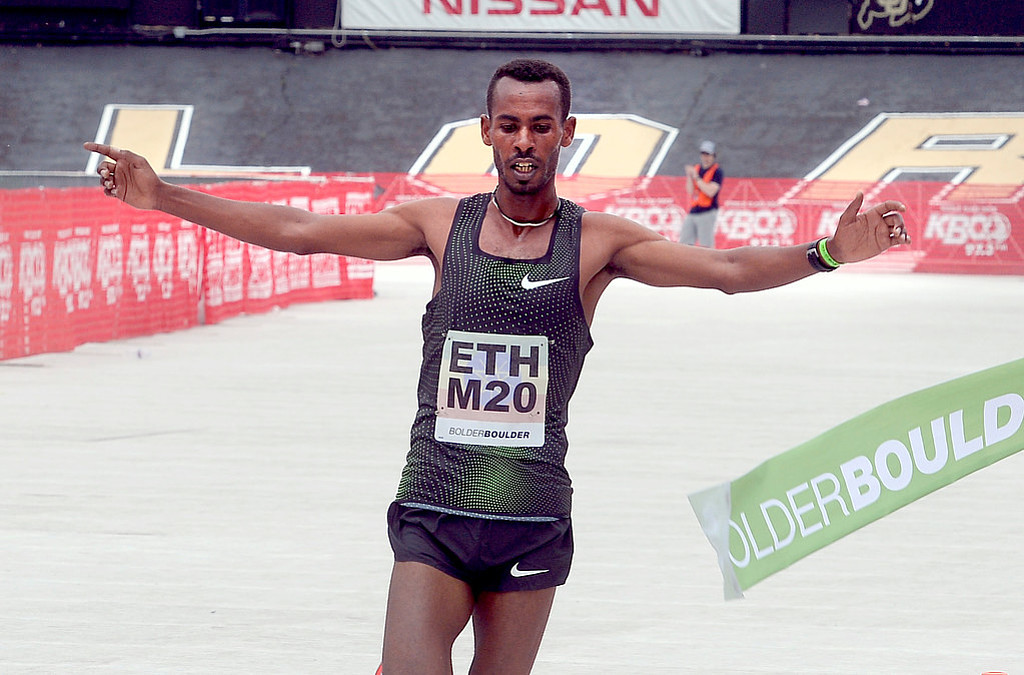
Ethiopia's Getaneh Tamire wins the men's pro race by wide margin at the 40th annual Bolder Boulder 10K
Login to leave a comment
