

Running News Daily
Running News Daily is edited by Bob Anderson and team. Send your news items to bob@mybestruns.com Advertising opportunities available.
Index to Daily Posts · Sign Up For Updates · Run The World Feed
Articles tagged #World Athletics Championships
Today's Running News
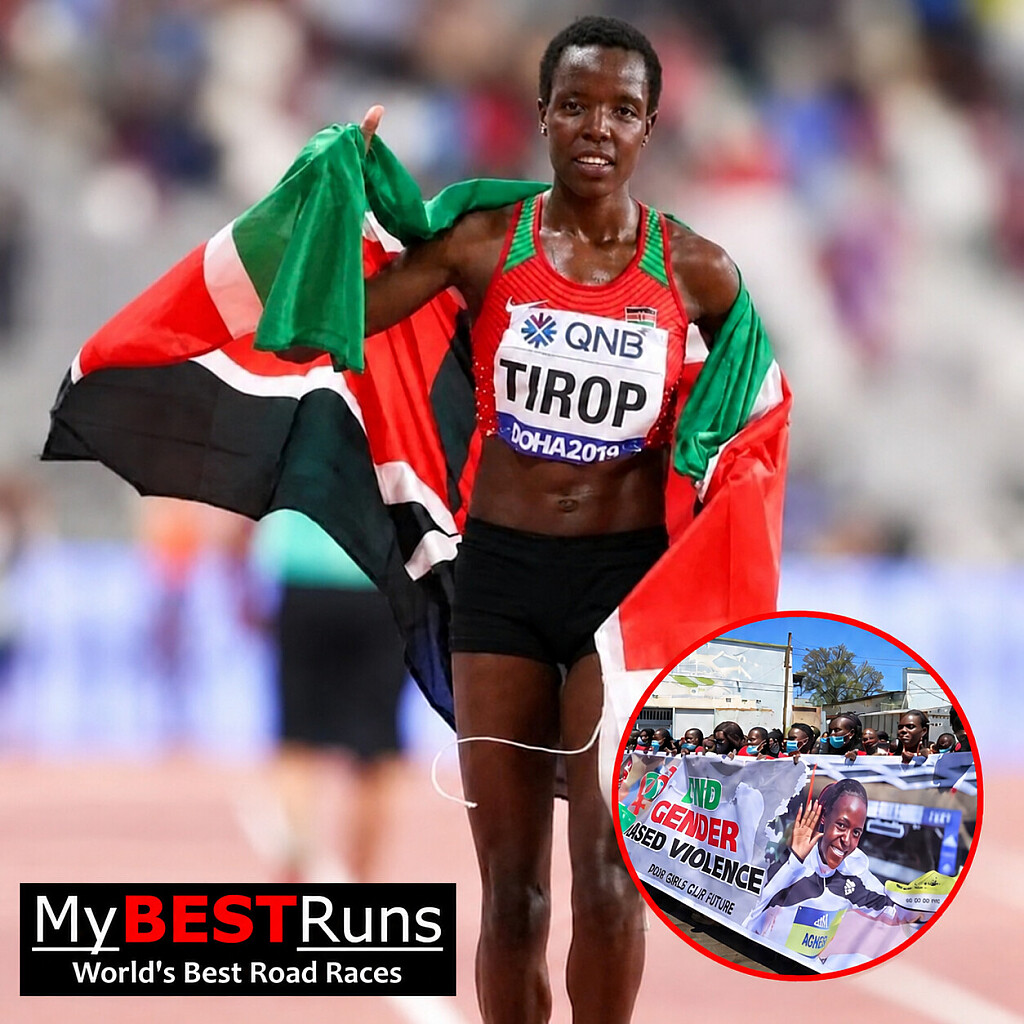


Five Years On, Agnes Tirop’s Light Still Shines in the World of Athletics
Five years after the tragic death of Agnes Jebet Tirop, the Kenyan distance-running star remains a powerful symbol of sporting excellence, unfulfilled potential and the urgent fight against gender-based violence.
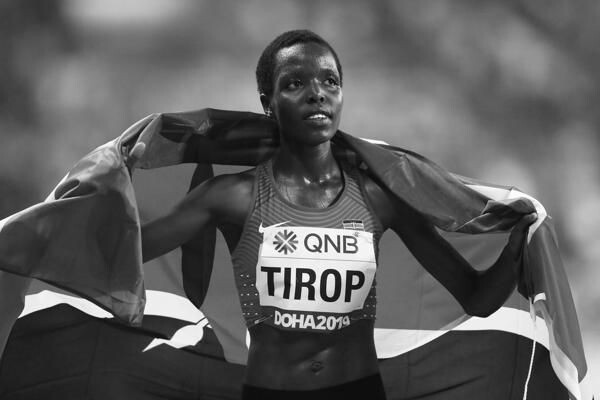
On October 13, 2021, the athletics world was plunged into mourning following the death of Tirop, who was found at her home in Iten, Kenya, at just 25 years old. Her life was cut short at a time when her career was flourishing, leaving behind a legacy that continues to resonate with athletes, fans and the wider community.
For Kenya, a country whose identity is deeply intertwined with distance-running success, Tirop represented a remarkable generation of female athletes taking the sport to new heights. Her achievements on the track, across country and on the roads had already secured her place among the country's outstanding distance runners.
Five years later, the sadness of her loss remains inseparable from the extraordinary story of what she accomplished in her short but memorable career.
A Champion Who Rose to the Top at 19
Tirop announced herself on the global stage in spectacular fashion at the 2015 World Athletics Cross Country Championships in Guiyang, China. At only 19, she won the senior women's race, becoming the youngest champion in the event since Zola Budd in 1985.
Her victory demonstrated not only her natural ability but also the composure and determination that would become defining features of her running career.
She subsequently established herself among the world's leading track athletes, winning bronze medals in the women's 10,000 metres at the 2017 World Athletics Championships in London and the 2019 edition in Doha.
Those back-to-back podium finishes confirmed her consistency at the highest level and underlined her ability to compete against the strongest distance runners in the world.
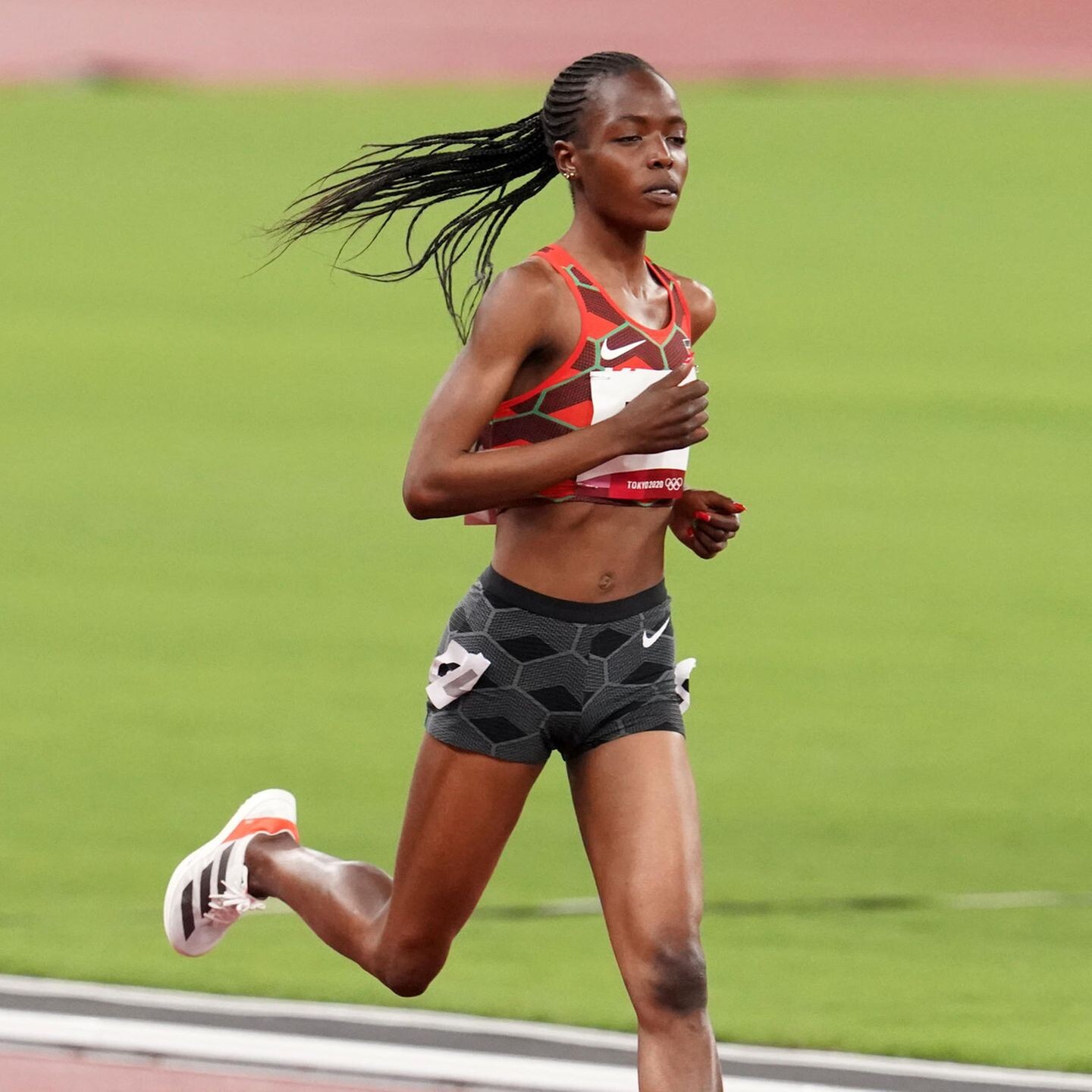
Tirop also demonstrated considerable versatility at the Tokyo 2020 Olympic Games, held in 2021, where she finished fourth in the women's 5,000 metres. Although she narrowly missed the podium, her performance reinforced her reputation as one of Kenya's most accomplished emerging distance-running talents.
A World Record That Made History
Just weeks before her death, Tirop delivered one of the defining performances of her career.
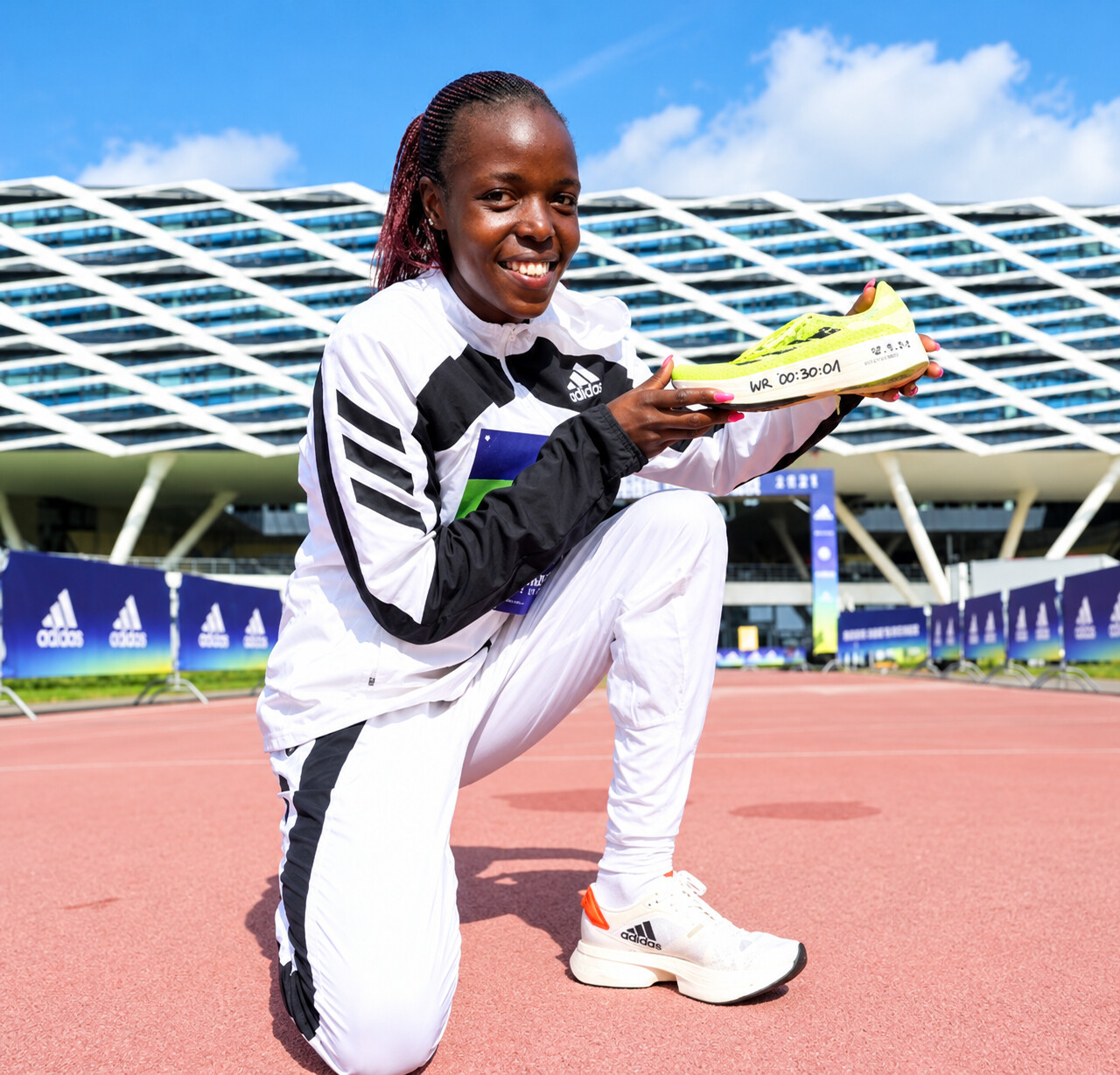
On September 12, 2021, she clocked an astonishing 30:01 to win the women's 10km road race at the adizero Road to Records event in Herzogenaurach, Germany.
Her performance broke the then women's-only world record by 28 seconds, establishing a new benchmark for the distance. The record was subsequently ratified by World Athletics. It was aremarkable achievement that placed her name among the legends of distance running. Although her record has since been broken, the greatness of her achievement remains untouched, and no change in the record books can diminish the extraordinary talent, courage and determination she displayed that day. Time may bring new champions and faster performances, but it can never erase the mark she left on athletics.
In a race that demanded patience, tactical awareness and an exceptional finishing effort, Tirop broke away from compatriot Sheila Chepkirui during the closing stages and powered towards the finish line.
The performance was a remarkable demonstration of her endurance and competitive instinct. It also offered a glimpse of what might have followed had she been given more years to develop her career.
Her final competitive appearance came on October 3, 2021, when she finished second in a 10km race in Geneva, Switzerland. Ten days later, the world learned of her death.
The timing made the tragedy particularly difficult to comprehend: an athlete who had just rewritten the record books and was still competing at the highest level was suddenly gone.
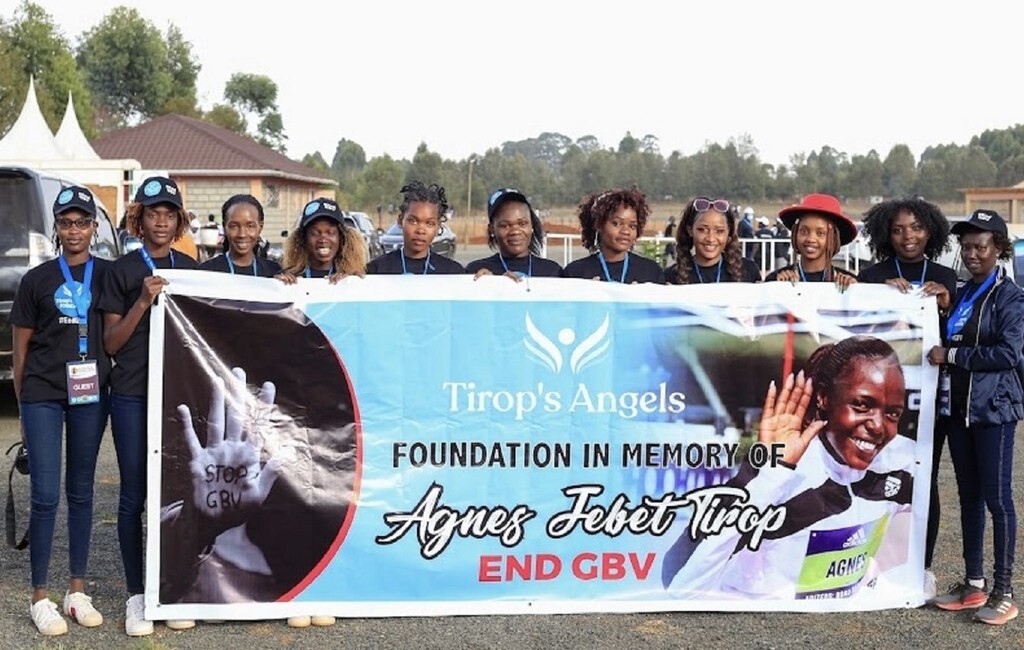
A Tragedy That Reached Far Beyond Sport
Tirop's death was not simply the loss of an elite athlete. It also brought renewed international attention to violence against women and the need to create safer environments in which women and girls can live, train and pursue their ambitions.
Her story became a painful reminder that medals, records and international recognition cannot shield someone from violence in their private life.
In the years since her death, her name has continued to feature in efforts to promote women's empowerment, athlete welfare and the prevention of gender-based violence. Initiatives associated with her legacy, including Agnes Tirop Angels, reflect the continuing determination to transform grief into meaningful action.
Her story remains especially significant within athletics, where the pursuit of excellence must go hand in hand with respect for athletes' safety, dignity and wellbeing.
Five Years Later, Her Legacy Endures
For young runners who dream of representing Kenya on the international stage, Tirop's career remains an example of what dedication, talent and courage can achieve.
She rose from a promising young athlete to a world champion, a two-time World Championships medallist and a world-record holder. She excelled across different distances and surfaces, leaving an impressive body of achievements before reaching her 26th birthday.
Yet her legacy cannot be measured by statistics alone. It also lies in the conversations her death continues to inspire, the women whose safety must be protected and the determination to ensure that sporting success is never separated from human dignity.
Five years on, Agnes Tirop is remembered not only for the records she set or the medals she won, but also for the future that was taken from her.
Her achievements remain part of Kenya's rich athletics history, while her story continues to call for a world in which women can pursue their dreams without fear of violence.
Agnes Tirop's life was tragically short, but her impact reaches far beyond the finish line. Her achievements will remain in the record books, her memory will endure in the hearts of athletics fans, and her legacy will continue to inspire generations to come.
by Erick Cheruiyot for My Best Runs.
Login to leave a comment
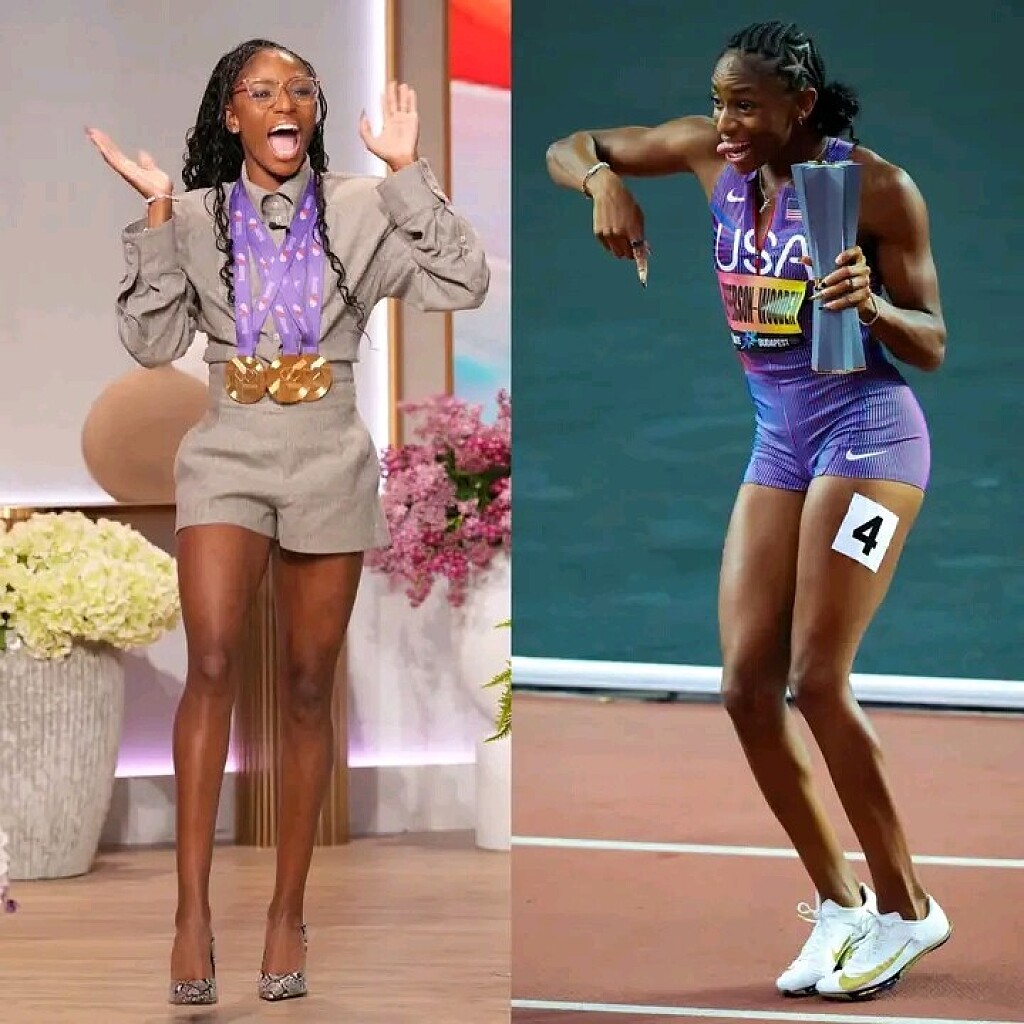
Melissa Jefferson-Wooden’s Rise to Sprinting Greatness: Five World Titles and a Place Among the Fastest Women Ever
American sprint sensation Melissa Jefferson-Wooden has established herself as one of the most exciting names in women’s athletics, combining explosive speed with the ability to deliver on the sport’s biggest stages. Her remarkable championship performances have strengthened her reputation as a formidable force in the 100m and 200m, while placing her among the leading figures of a new generation of American sprinters.
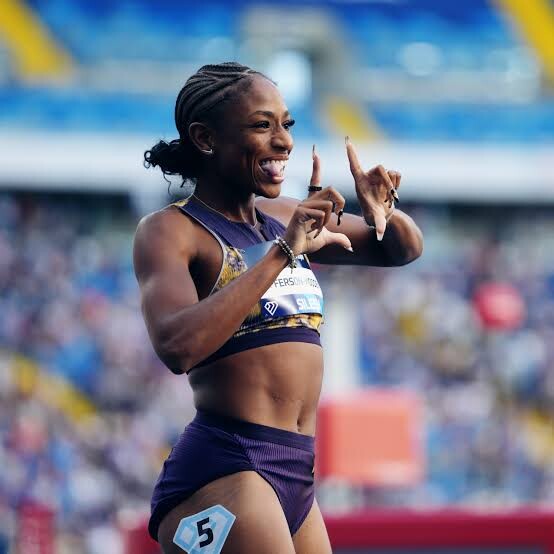
Her achievements reflect a combination of consistency, technical excellence and the ability to produce exceptional performances when the pressure is at its highest. From sprinting supremacy over 100 metres to challenging the limits of the 200m, Jefferson-Wooden’s rise has captured the attention of athletics fans around the world.
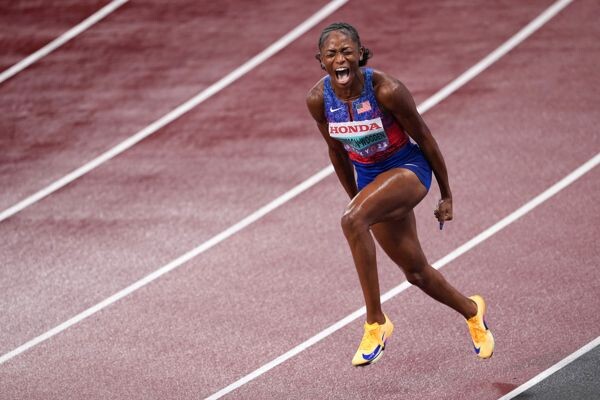
At the 2025 World Athletics Championships in Tokyo, she delivered an extraordinary series of performances, winning three gold medals in the women’s 100m, 200m and 4x100m relay. The treble represented a major milestone in her career and demonstrated her ability to excel across individual sprint events and team competition.
Jefferson-Wooden won the 100m in 10.61 seconds, setting a championship record and improving her personal best. The performance underlined her acceleration and top-end speed, securing her place among the fastest women in the history of the event.
She continued her winning run in the 200m, taking gold in 21.68 seconds. Her performance demonstrated that her abilities extended well beyond the shorter sprint, as she combined speed with the strength and composure required to maintain her pace around the bend and through the home straight.
The American then helped complete the golden sweep in the 4x100m relay, anchoring the United States team to victory in 41.75 seconds. Three gold medals at one championships represented a defining achievement, placing her in the company of the sport’s most versatile female sprinters.
Rather than allowing that success to become the high point of her career, Jefferson-Wooden continued to pursue excellence, with her performances in the 100m and 200m further highlighting her potential to leave a lasting mark on the sport.
by Erick Cheruiyot for My Best Runs.
Login to leave a comment
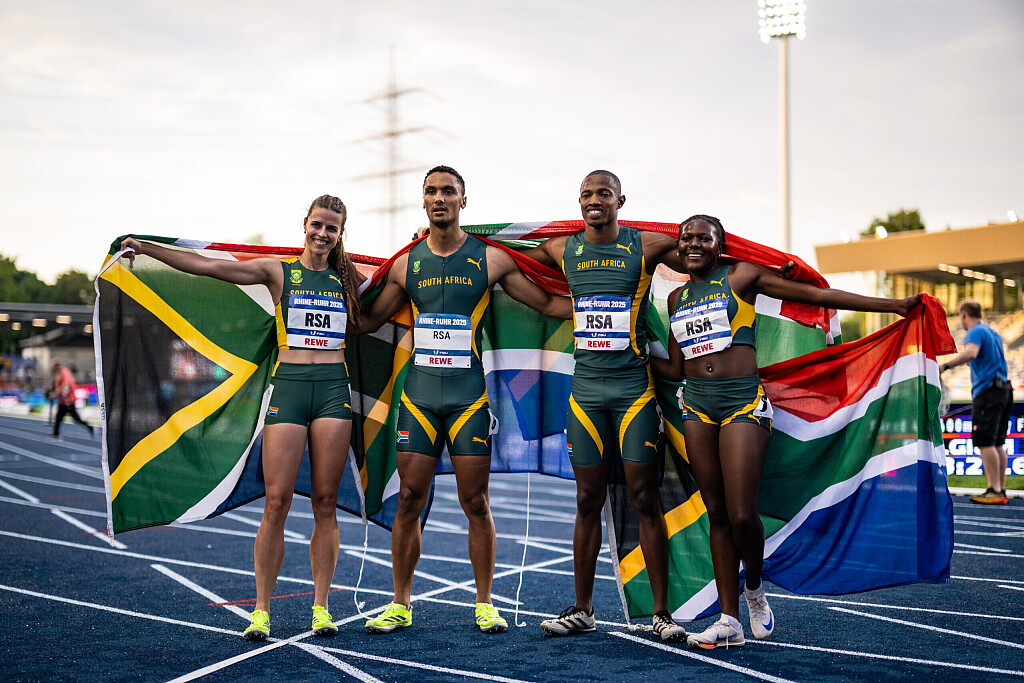
South Africa Enters Race To Bring The Olympics To Africa For The First Time
South Africa has taken a major step towards potentially bringing the Olympic Games to Africa for the first time after formally entering the International Olympic Committee’s process as an interested party for the 2036 Summer Olympics and Paralympics.
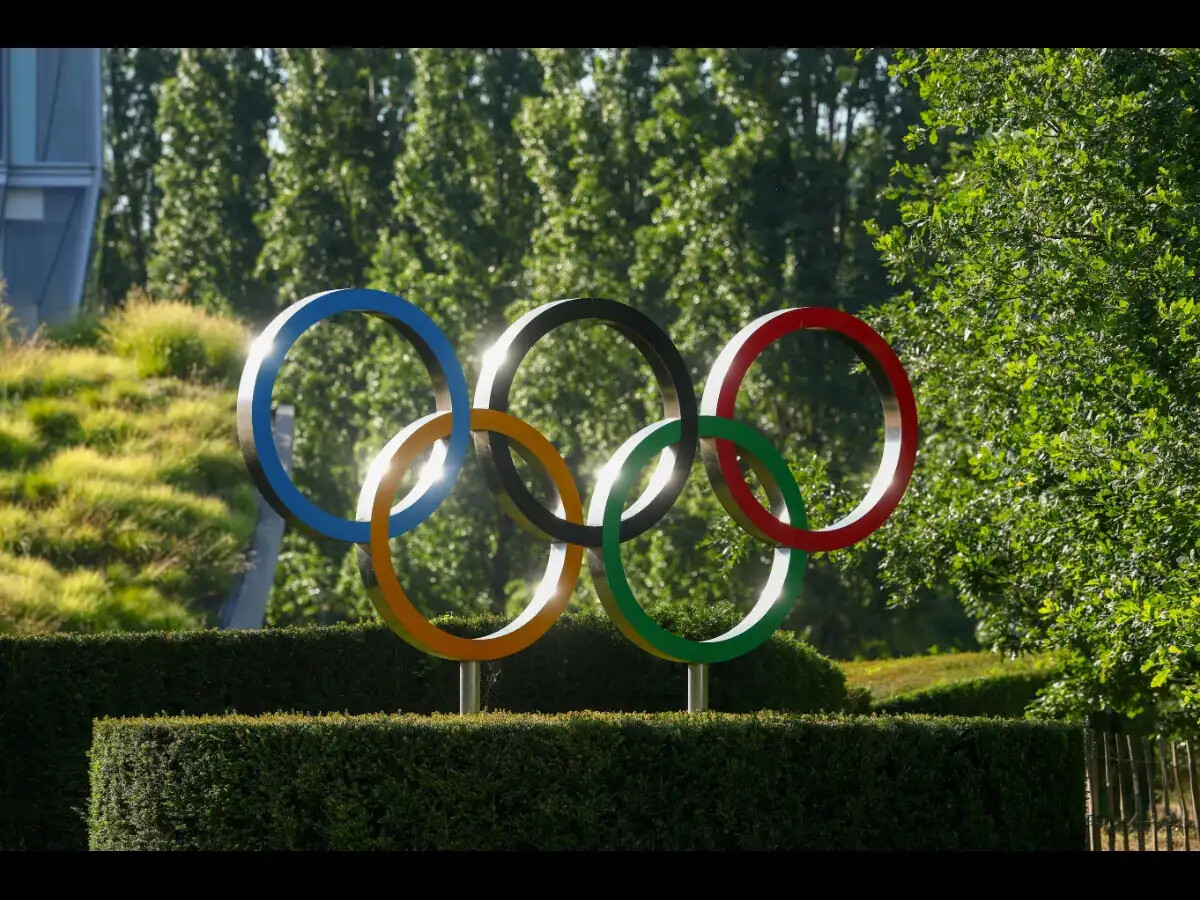
The development could mark a historic moment for the continent, which has never hosted an edition of the Olympic Games despite its long and distinguished sporting tradition. South Africa’s interest now places the country among the potential candidates seeking to convince the IOC that Africa is ready to stage the world’s biggest multi-sport event.
A successful bid would represent a significant expansion of South Africa’s sporting legacy. The country has already demonstrated its ability to host major international competitions, most notably the 2010 FIFA World Cup, which brought football’s biggest tournament to Africa for the first time and showcased South Africa’s stadiums, infrastructure and capacity to welcome visitors from around the world.
The 2036 ambition also arrives at a time when Africa is gaining greater recognition as a destination for major global sporting events.

Kenya has already secured the right to host the 2029 World Athletics Championships in Nairobi, marking the first time the senior global championships will be staged on African soil. The breakthrough followed a competitive bidding process and represents another important milestone for the continent’s athletics movement.
South Africa’s Olympic interest therefore comes against a backdrop of growing confidence in Africa’s ability to organise and deliver events at the highest international level.
For South Africa, however, winning the right to host the Olympics would be a considerably larger undertaking. The Games require extensive sporting venues, accommodation, transportation networks, security arrangements and long-term financial planning, while the host must also present a compelling vision for the event’s wider legacy.
The country’s experience with the 2010 World Cup provides an important foundation, but an Olympic bid would require an even broader national strategy involving multiple sports and venues.
The IOC is expected to make its decision on the host of the 2036 Olympics later in the decade, with several countries expressing interest in entering the race. The process will ultimately determine whether Africa can finally break one of the biggest remaining barriers in the history of the Olympic movement.
For a continent that has produced generations of Olympic champions across athletics, swimming, boxing, cycling and numerous other sports, hosting the Games would carry significance far beyond the competition itself.
South Africa is now putting itself forward for that opportunity.
If the bid eventually succeeds, the 2036 Olympic Games could become a landmark moment — not only for South Africa, but for an entire continent that has waited more than a century to welcome the Olympic movement onto its soil.
by Erick Cheruiyot for My Best Runs.
Login to leave a comment

From Bolt To Seville: Jamaica’s Sprinting Torch Enters A New Era
For more than a decade, Usain Bolt defined Jamaican sprinting on the world stage. Now, a new generation is beginning to write its own chapter — and at the centre of that transition stands Oblique Seville, a sprinter whose journey is closely connected to the very people who shaped Bolt’s legendary career.
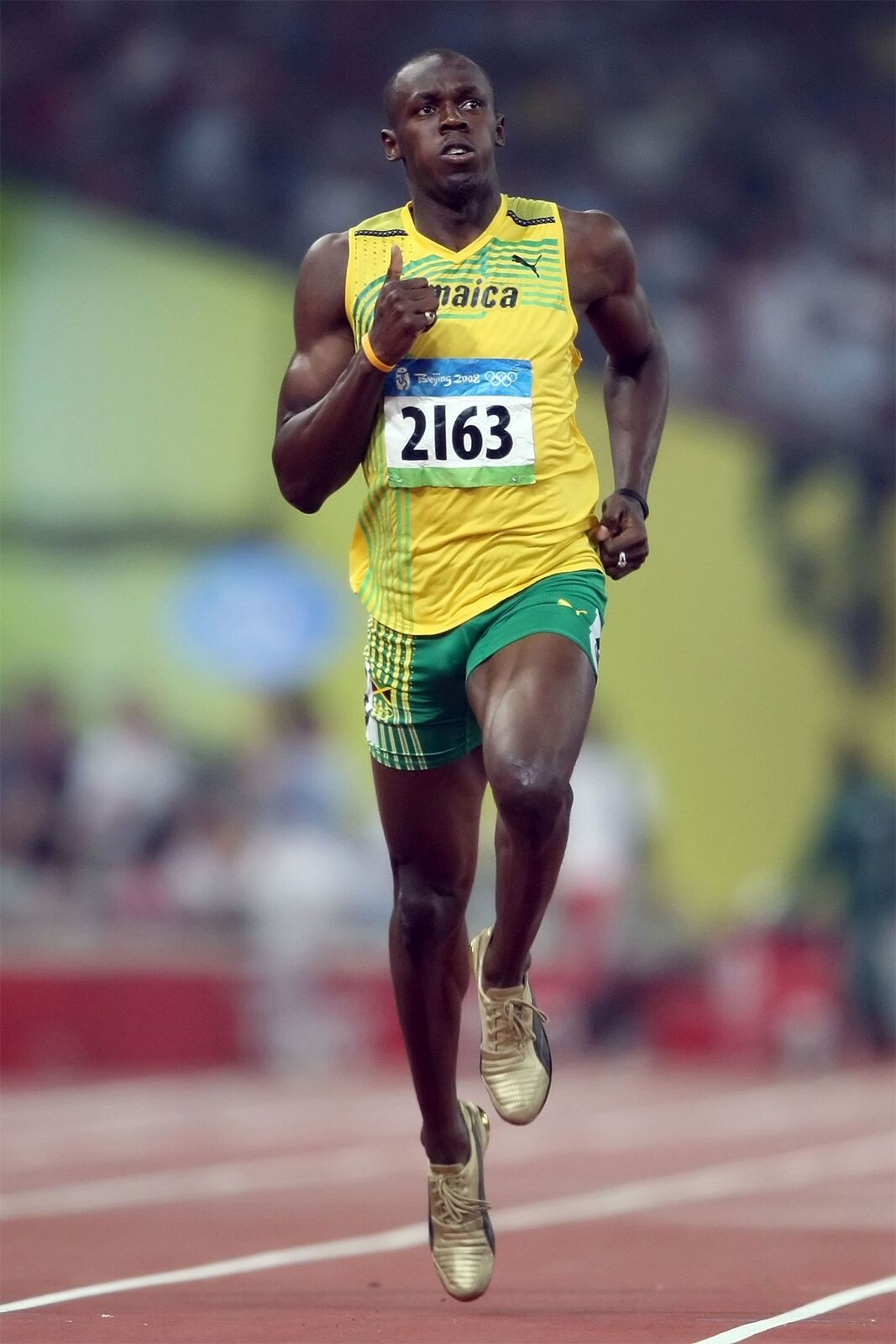
Seville announced himself as Jamaica’s new 100m champion in spectacular fashion at the 2025 World Athletics Championships in Tokyo. Running a lifetime best of 9.77 seconds, he captured the world title ahead of compatriot Kishane Thompson, who clocked 9.82, giving Jamaica a memorable one-two finish.
The significance of the victory was enormous. Seville became the first Jamaican man since Bolt to win the World Athletics Championships 100m title. And watching from the stands was Bolt himself, who celebrated enthusiastically as his compatriot delivered one of the biggest victories of his career.
But the connection between the two generations goes far beyond that unforgettable night in Tokyo.
A Dream That Began At 10
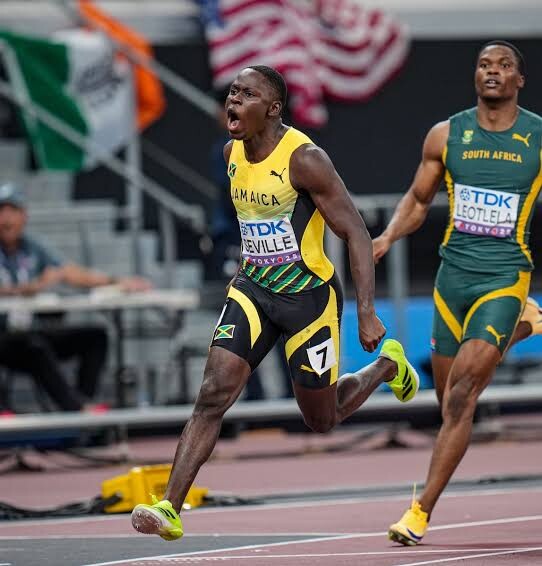
Long before Seville became a world champion, he already knew exactly who he wanted to coach him.
When he was around 10 years old, Seville reportedly told his mother that he wanted to train under Glen Mills — the renowned Jamaican coach who guided Bolt during the most dominant period of his career.
That childhood ambition eventually became reality. Seville joined the Racers Track Club and came under the guidance of Mills, establishing a relationship that has played a major role in his development as an elite sprinter.
Mills had already helped shape one of the greatest sprinters in history. Now, years later, he was helping another Jamaican talent reach the summit of the 100 metres.
Bolt Became More Than An Inspiration
Seville has also spoken about the influence Bolt has had on his life away from the track.
Following the death of his father, Gerald Seville, Bolt became an important source of encouragement and motivation for the young sprinter. Seville has described Bolt as a major motivator, adding another deeply personal dimension to a relationship that began with admiration from afar.
That makes the scene in Tokyo even more powerful: the athlete Seville grew up watching was there as he achieved the breakthrough that could define his own generation.
Bolt's presence was not simply symbolic. Before the final, he had spoken about Seville and Thompson as athletes capable of challenging for the gold medal. Seville ultimately delivered when the pressure was greatest.
From 9.77 To A New Challenge
Seville's Tokyo triumph was not the end of the story.
In 2026, he continued to establish himself among the world's leading sprinters, eventually claiming the men's 100m Diamond League title at the series final in Brussels. He also produced a season-best 9.82 in Kingston and recorded several victories during the Diamond League campaign.
The progression is significant. From an ambitious youngster dreaming of being coached by Glen Mills, to a World Championships gold medallist, and now a Diamond League champion, Seville is steadily building a career that belongs to him.
Yet he remains deeply respectful of the athlete whose footsteps he is following.
Seville has repeatedly acknowledged Bolt's greatness, while also believing that the next generation of Jamaican sprinters can push the event to another level. The ambition is clear: the future may eventually demand performances in the 9.6-second range.
For now, however, Seville's focus is not on becoming another Usain Bolt.
It is on becoming the best version of Oblique Seville.
The Torch Has Been Passed — But The Story Is Still Being Written
Jamaica's sprinting tradition has produced some of the most extraordinary athletes the sport has ever seen. Bolt took that tradition to an unprecedented level. Seville now represents a new generation determined to keep it alive.
The symbolism is difficult to miss.
The coach who helped guide Bolt is now guiding Seville. The champion who once inspired Seville as a young boy was there to watch him become a world champion. And the young Jamaican who once dreamed of joining Glen Mills is now collecting major titles of his own.
Seville has already secured a World Championships 100m title, a 9.77 personal best and a Diamond League crown.
The next chapter of Jamaican sprinting is no longer waiting to begin.
It is already underway.
And with Glen Mills in his corner and Usain Bolt among those who have helped inspire him, Oblique Seville is carrying the Jamaican sprinting tradition forward — while creating a legacy of his own.
by Erick Cheruiyot for My Best Runs.
Login to leave a comment
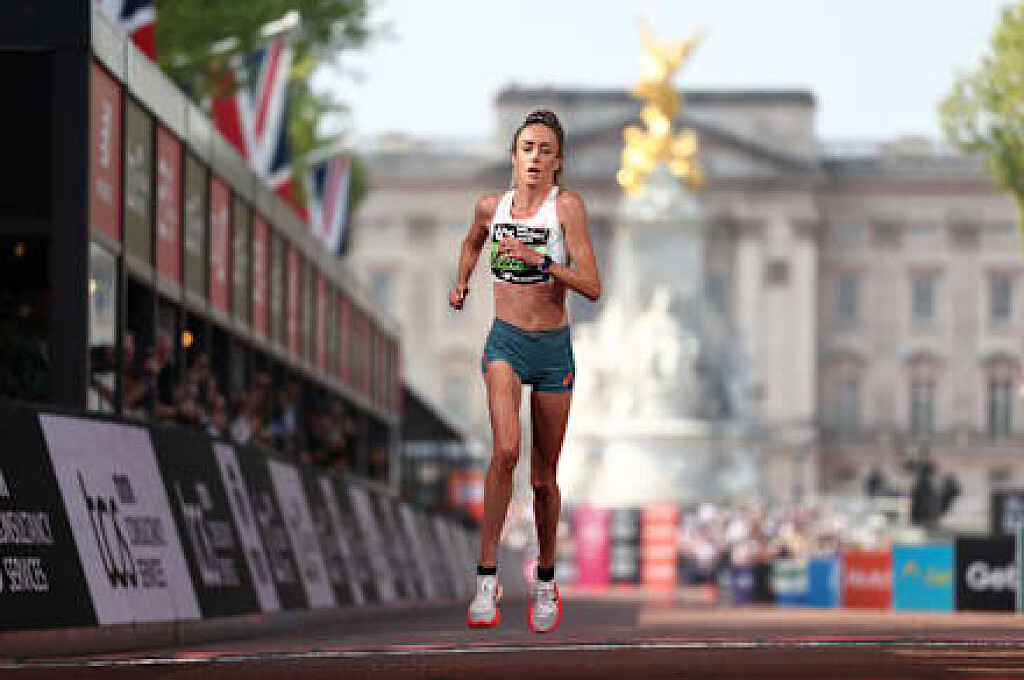
London Marathon 2027 Set To Shape Britain’s Road To Beijing And LA Olympics
The 2027 London Marathon is set to take on huge significance for British marathon runners, serving as the trial race for both the 2027 World Athletics Championships in Beijing and the LA 2028 Olympic Games.
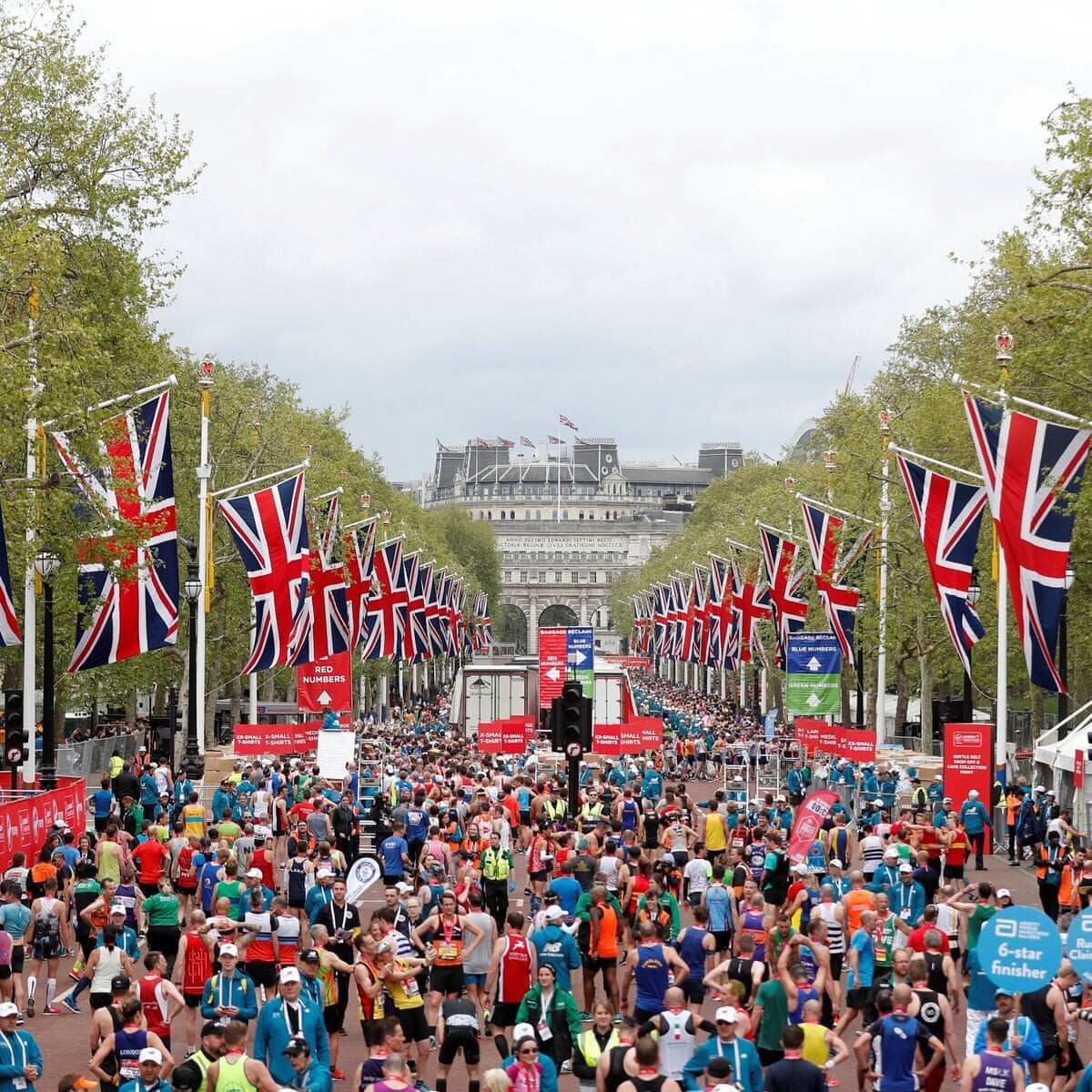
For the Beijing 2027 World Championships, the first two British finishers in both the elite men’s and women’s races will be eligible for selection, provided they have achieved the required World Athletics qualifying standard either before or on the day of the London Marathon.
The qualifying marks are 2:06:00 for men and 2:23:20 for women.
That puts a premium on both position and performance in London, with athletes knowing that a strong finish could potentially secure them a place on Britain’s team for the global championships in Beijing later in 2027.
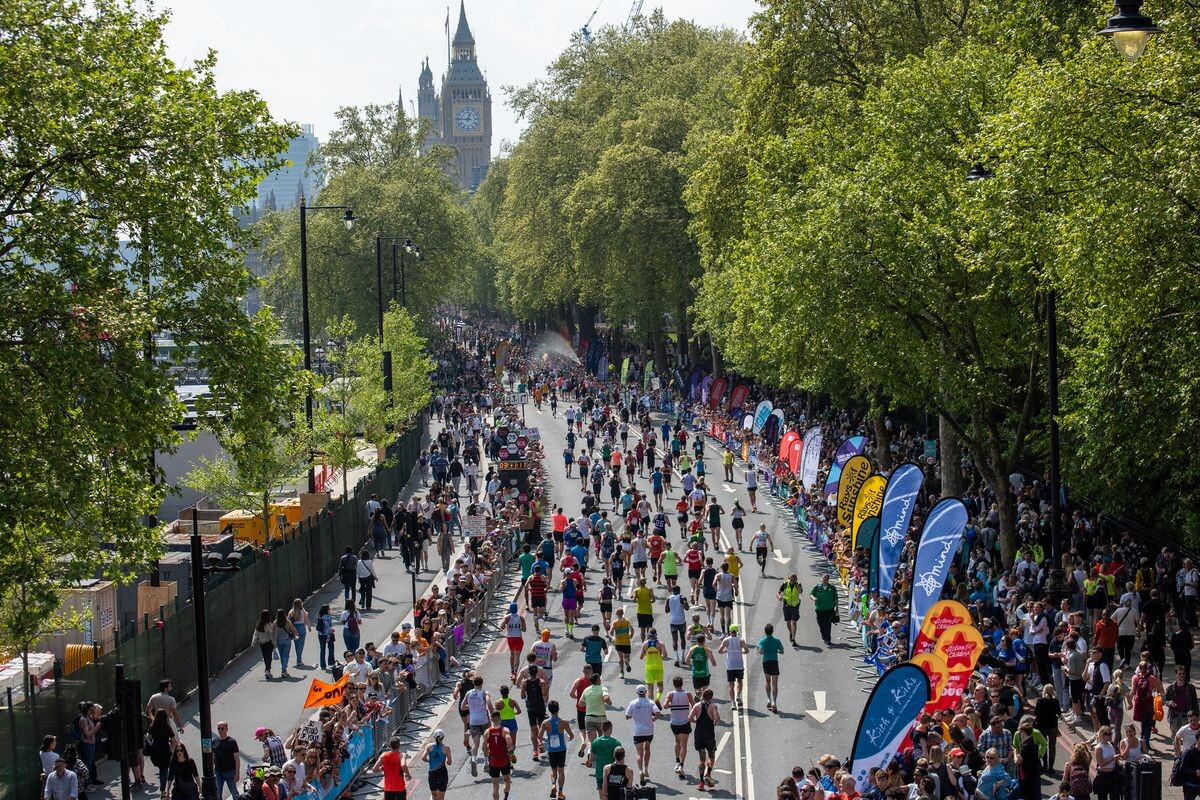
The stakes will be even higher for those targeting the LA 2028 Olympics.
The first British man and first British woman across the London Marathon finish line will be pre-selected for the 2028 Olympic marathon team, provided they achieve the Olympic qualifying standards, which are expected to be confirmed by the end of 2026.
However, pre-selection will not be the final step. Those athletes will still need to demonstrate their form through performances over different distances during the 2028 season before their Olympic places can ultimately be confirmed.
With London already one of the most prestigious marathons in the world, the 2027 edition now carries an added layer of national importance.
British marathoners will have more than a coveted London Marathon result on the line. For the leading athletes, the race could become the first major step towards Beijing 2027, while simultaneously opening the door to a potential Olympic journey ending in Los Angeles in 2028.
London 2027 is shaping up to be a defining race for Britain’s marathon ambitions — with Beijing and LA firmly on the horizon.
by Erick Cheruiyot for My Best Runs.
Login to leave a comment
TCS London Marathon
Since its inaugural edition on March 29, 1981, the TCS London Marathon has grown into one of the world's most prestigious road races, blending elite competition with an extraordinary charitable legacy. Founded by former Olympic champion and journalist Chris Brasher alongside Welsh athlete John Disley, the event has been staged every year and has been held in the spring annually...
more...
Nairobi 2029: Kenya Wins Historic Bid to Bring World Athletics Championships to Africa
Africa finally has its moment. Kenya has won the race to host the 2029 World Athletics Championships, turning years of ambition into a landmark reality for the continent.
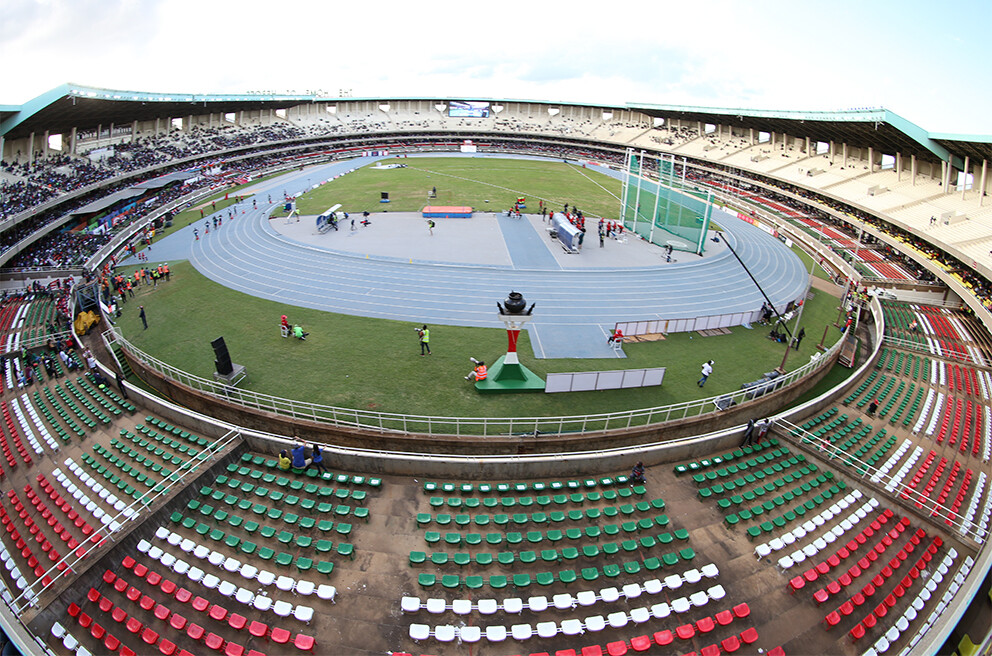
In a historic decision announced in Budapest, Nairobi has been selected to host the 2029 World Athletics Championships, making Kenya the first African nation to stage the senior global track and field championships.
World Athletics confirmed that Nairobi and Munich have been selected to host the 2029 and 2031 World Athletics Championships respectively, following what the governing body described as one of the strongest bidding processes in the history of its flagship event.
For Kenya, the announcement represents far more than a successful hosting bid. It is the latest chapter in a remarkable athletics story built over generations.
The Kenyan capital overcame strong competition from London, Rome and Munich to secure the 2029 edition, bringing the world's biggest senior athletics championship to African soil for the first time.

The championship will be staged at the Moi International Sports Centre, Kasarani, in Nairobi, giving Kenya the opportunity to welcome the world's greatest athletes to a country that has produced countless champions of its own.
For generations, Kenya has established itself as one of the most influential nations in global athletics.
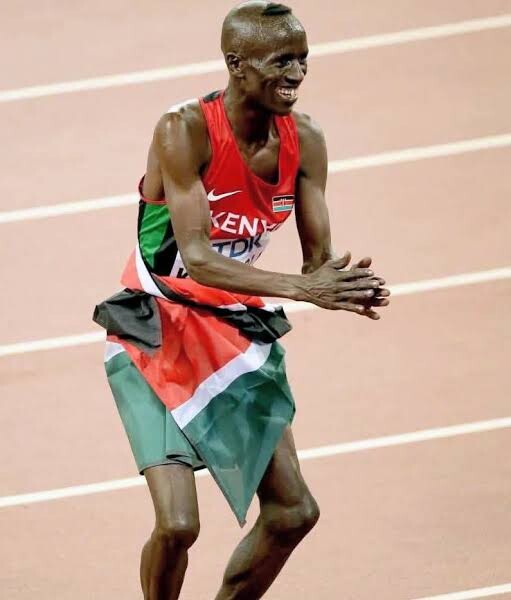
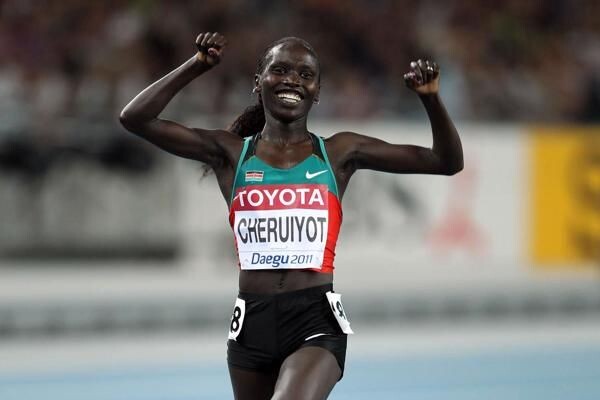
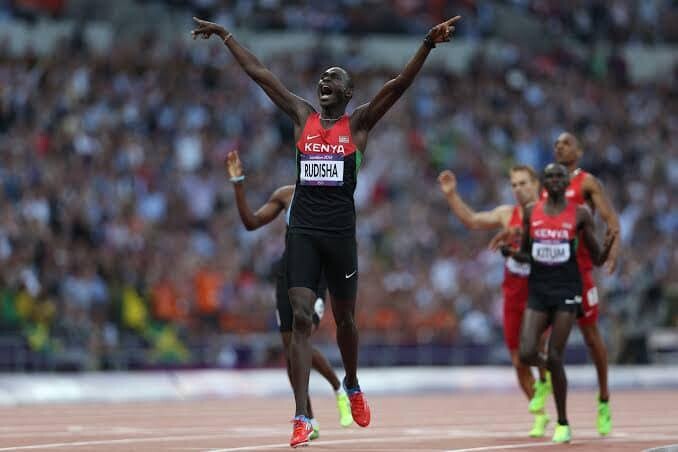
From pioneering Olympic champion Kipchoge Keino and distance-running legend Tegla Loroupe among others to modern icons such as Eliud Kipchoge, Faith Kipyegon, David Rudisha, Faith Cherotich, Vivian Cheruiyot and Ezekiel Kemboi among others. Kenyan athletes have repeatedly conquered the world's biggest stages.
Their Olympic victories, world titles, records and unforgettable performances have made Kenya one of the most recognizable names in track and field.
But Kenya's athletics identity extends far beyond medals.
Running is deeply rooted in communities across the country, while the high-altitude training regions of the Rift Valley have become synonymous with the development of world-class distance runners. Behind the champions are coaches, families, training partners and communities that have helped create an athletics culture admired around the world.
Now, for the first time, that culture will become the backdrop for the sport's biggest senior global championship.
Nairobi 2029 will be historic before the first race even begins.
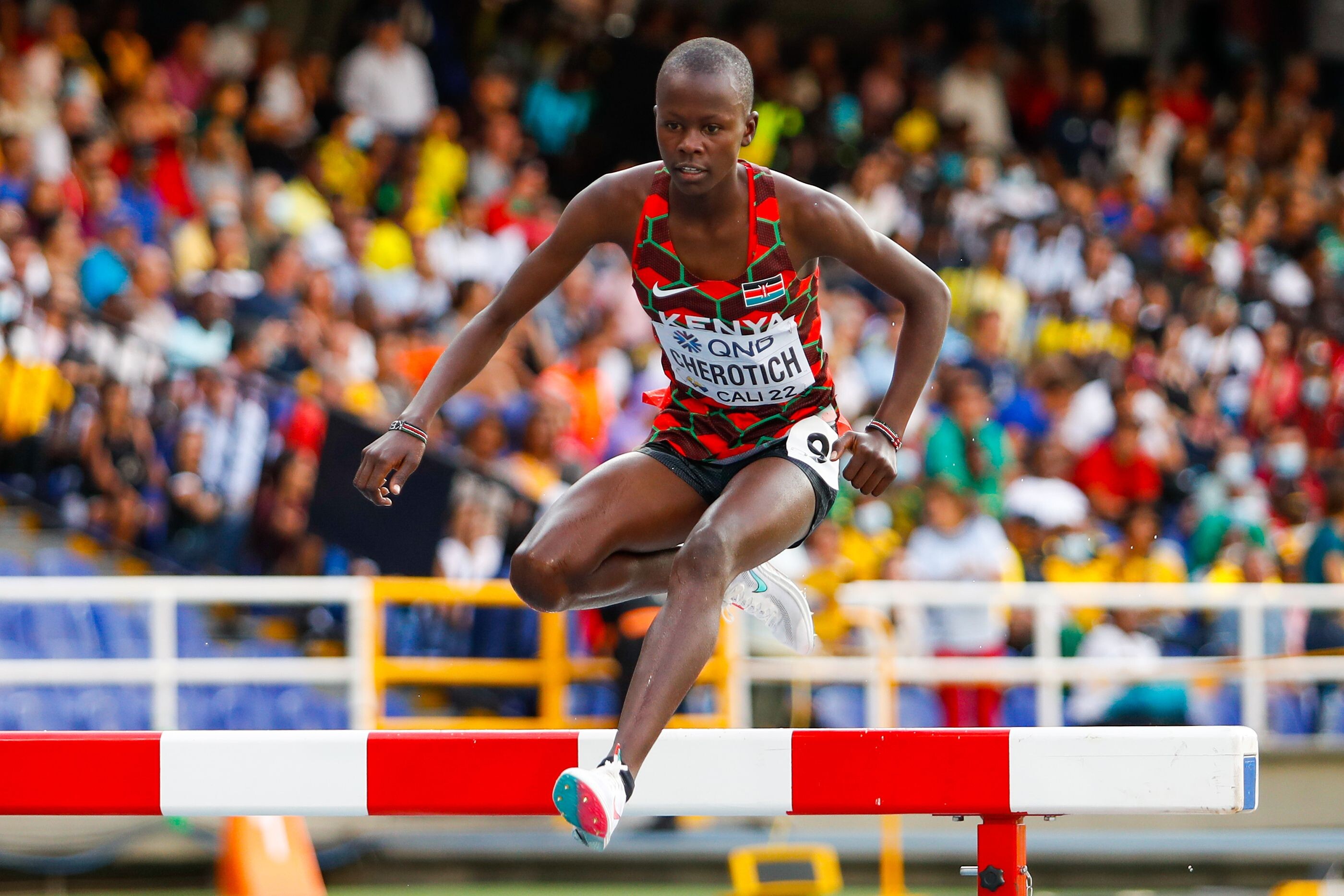
Kasarani, already an important venue in Kenya's sporting history, will take center stage as athletes from across the globe descend on Nairobi in pursuit of world titles.
For Kenyan fans, the opportunity to watch the world's greatest sprinters, middle-distance runners, distance stars, hurdlers, field-event athletes and relay teams compete on home soil will be extraordinary.
For the country's next generation of athletes, the impact could be even greater.
Young runners who have grown up watching Kenyan champions compete around the world will now have the chance to experience a World Championships in their own country. The sight of the world's best athletes competing at Kasarani could inspire a new generation to believe that they, too, can reach the highest levels of the sport.
The significance, however, stretches well beyond Kenya's borders.
Africa has produced generation after generation of Olympic champions, world champions and global athletics icons. From Kenya and Ethiopia to Uganda, Morocco, South Africa and numerous other nations, African athletes have played a central role in shaping the history of track and field.
Yet the continent had never hosted the senior World Athletics Championships.
Nairobi 2029 changes that forever.
The successful Kenyan bid therefore represents a major breakthrough for African athletics and a powerful recognition of the continent's contribution to the sport.
World Athletics' decision also secures the future of the championships beyond Nairobi. Munich will host the 2031 World Athletics Championships, creating a two-edition sequence that will see the global showpiece move from Africa to Germany.
But the spotlight now belongs to Nairobi.
The announcement in Budapest has transformed what was once an ambitious bid into a confirmed date with history.
In 2029, Kenya will not simply send athletes to compete for world titles.
Kenya will welcome the world.
It will be a celebration of the pioneers who laid the foundation, the champions who carried the country's name across the globe and the young athletes who represent the future of African athletics.
After decades of producing champions for the world, Kenya will finally have the opportunity to bring the world's greatest athletics stars into its own backyard.
For Africa, this is more than a hosting victory.
It is a breakthrough. It is recognition. It is a new chapter.
And when the athletes walk into Kasarani for the 2029 World Athletics Championships, they will be stepping into a moment that will belong not only to Kenya, but to an entire continent.
NAIROBI 2029 — THE WORLD IS COMING TO AFRICA.
by Erick Cheruiyot for My Best Runs.
Login to leave a comment

Nairobi 2029: Could Kenya Finally Bring the World Athletics Championships to Africa?
Tomorrow could be a defining day for Kenyan athletics — and potentially for the entire African continent.

The World Athletics Council is expected to announce the host of the 2029 World Athletics Championships, with Nairobi's bid carrying the hopes of a continent that has produced generations of extraordinary athletes but has never staged the senior global championships.
For Kenya, the moment could represent the culmination of decades of dominance, sacrifice and achievement on the international athletics stage.
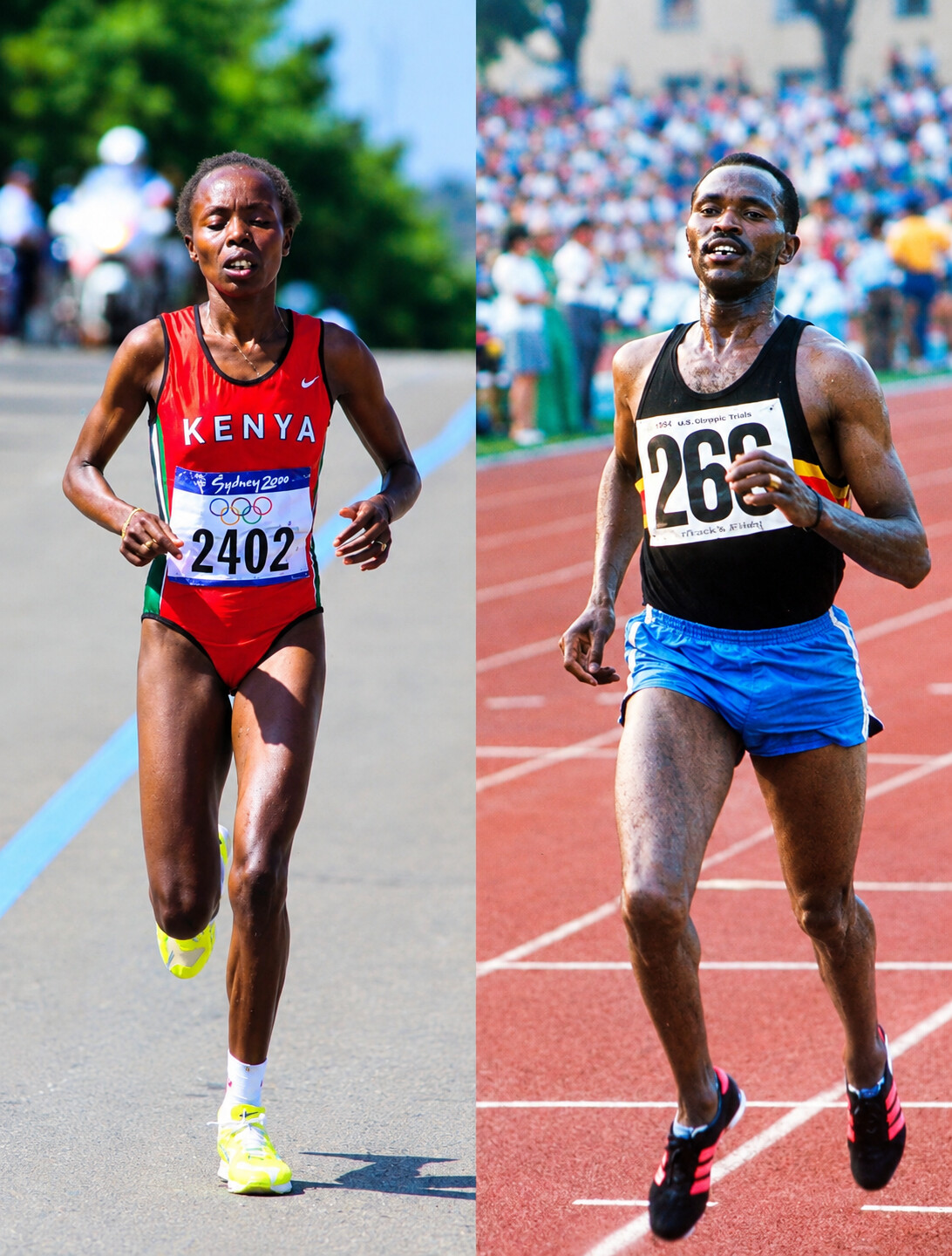
For generations, Kenya has built one of the most remarkable traditions in track and field. From pioneering legends such as Kipchoge Keino and Tegla Loroupe to modern icons including Eliud Kipchoge, Faith Kipyegon, David Rudisha, Sebastian Sawe, Beatrice Chebet and Ezekiel Kemboi among others. Kenyan athletes have repeatedly stood on the biggest stages in world sport.
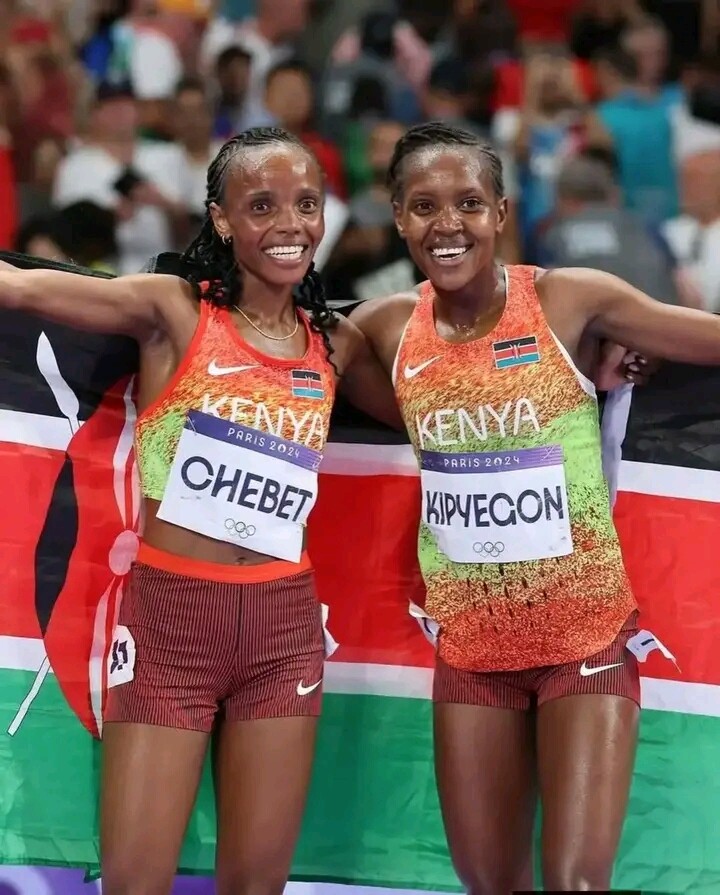
Their achievements have helped make Kenya one of the most respected names in global athletics. Olympic triumphs, world titles, records and unforgettable performances have carried the country's name across every corner of the sporting world.
But Kenya's relationship with athletics extends far beyond its medal collection.
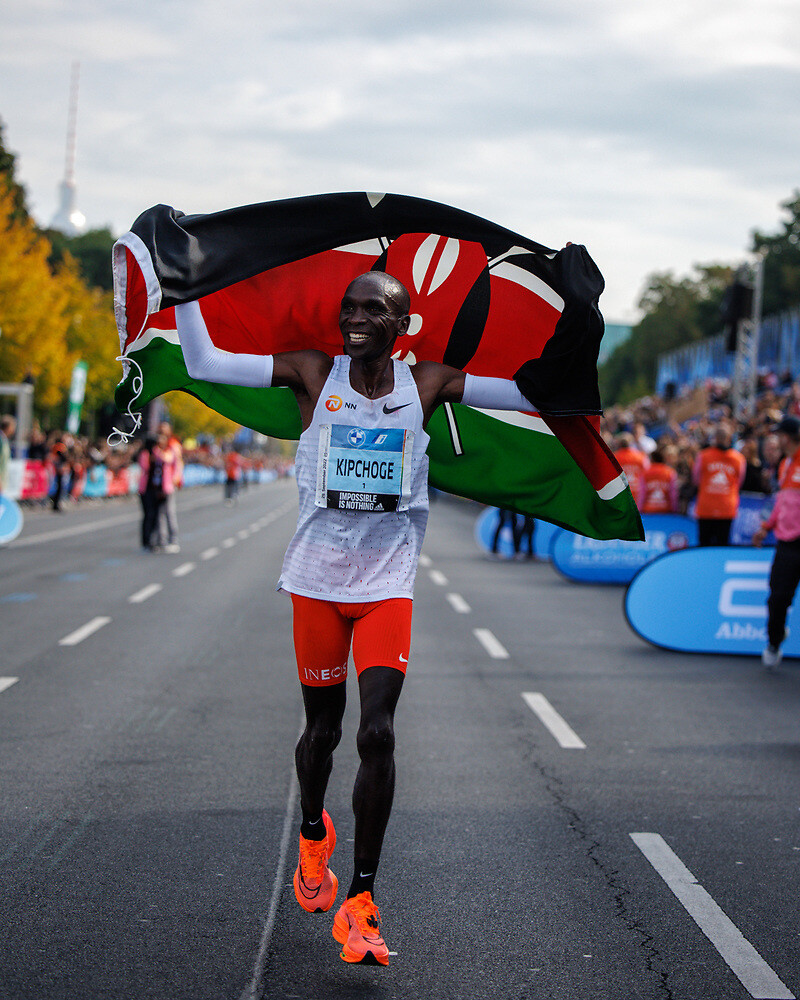
Running is deeply rooted in communities throughout the country, while the high-altitude training environments of the Rift Valley have become famous worldwide for producing elite distance runners. Behind every champion is a network of coaches, families, training partners and communities that have helped sustain Kenya's extraordinary athletics culture.
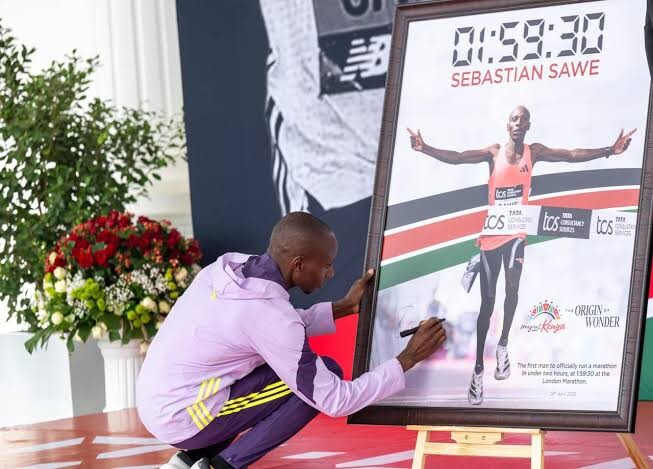
Now Nairobi is seeking to bring the world's biggest track and field championship to the country where so many champions have been produced.
The proposed centerpiece of Kenya's bid is Moi International Sports Centre, Kasarani, a venue already deeply connected to Kenyan athletics. If the bid succeeds, Kasarani could become the stage where the world's finest athletes gather in 2029 to compete for global titles.
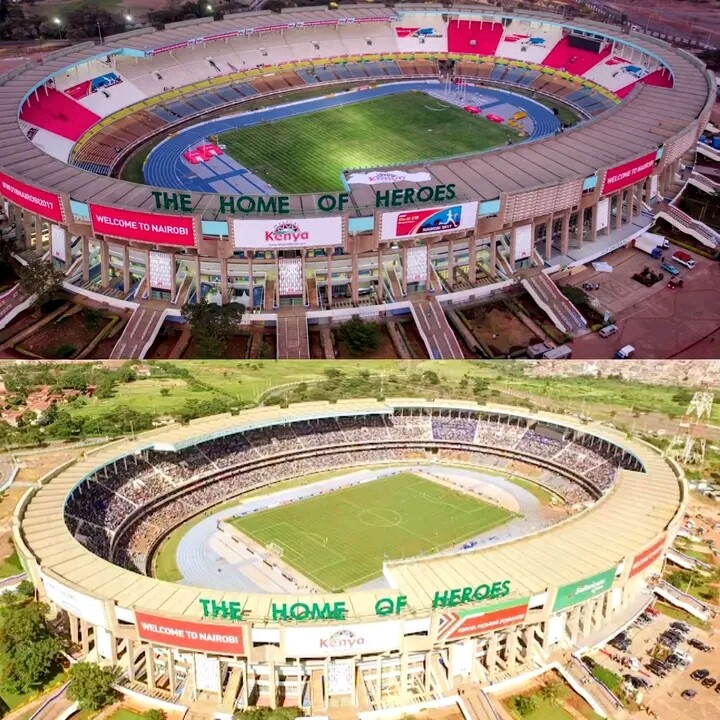
And the significance would extend far beyond Kenya.
Africa has produced some of the greatest athletes in athletics history, yet the continent has never hosted the World Athletics Championships. Nairobi's bid could change that.
Kenya's proposal is therefore not simply about staging another major sporting competition. It represents an opportunity to bring the championships to African soil for the first time and introduce millions of international fans to the continent's remarkable athletics culture.
However, Nairobi is facing formidable competition.
Kenya's bid is competing against proposals from London, Rome and Munich, three European cities with established sporting traditions and significant experience hosting major international competitions.
That sets up a fascinating choice for World Athletics.
Will the organization take the championships to a continent that has never hosted the event, creating a historic first for Africa? Or will the competition return to one of Europe's traditional athletics powerhouses?
For Nairobi, the stakes could hardly be higher.
A successful bid would give Kenyan athletes the opportunity to compete at a World Championships in front of their home supporters. It would give young runners across the country the chance to watch the world's best athletes compete in their own backyard. And it would place Kenya's extraordinary athletics heritage at the center of global attention.
It could also provide an opportunity to celebrate the champions who came before — athletes whose achievements helped establish Kenya as an athletics superpower — while inspiring the generation that will carry that legacy forward.
Imagine Kasarani filled with thousands of passionate supporters, the world's best athletes arriving in Nairobi, and Kenyan stars stepping onto the track knowing that the biggest championship in their sport is being staged on home soil.
For a country whose identity is so closely intertwined with running, it would be a remarkable sight.
And for Africa, it could be a moment of enormous symbolic importance.
Tomorrow, Kenya — and Africa — could hear its name called.
One decision. One host. One opportunity to make history.
If Nairobi is chosen, the story would not simply be about Kenya winning a bid. It would be about Africa finally welcoming the World Athletics Championships to its own soil.
It would be a celebration of the pioneers, the champions, the coaches, the communities and the generations of athletes who have helped make African athletics a global force.
And perhaps the headline of 2029 would already be waiting:
Kenya, the home of champions, has finally brought the world to its own backyard.
Nairobi 2029 — could this finally be Africa's moment?
by Erick Cheruiyot for My Best Runs.
Login to leave a comment

Melissa Jefferson-Wooden Chases Another Historic Sprint Double in Budapest
Melissa Jefferson-Wooden is ready to take on one of the biggest challenges of the inaugural World Athletics Ultimate Championships: conquering both the 100 metres and 200 metres against two of the strongest sprint fields in the world.
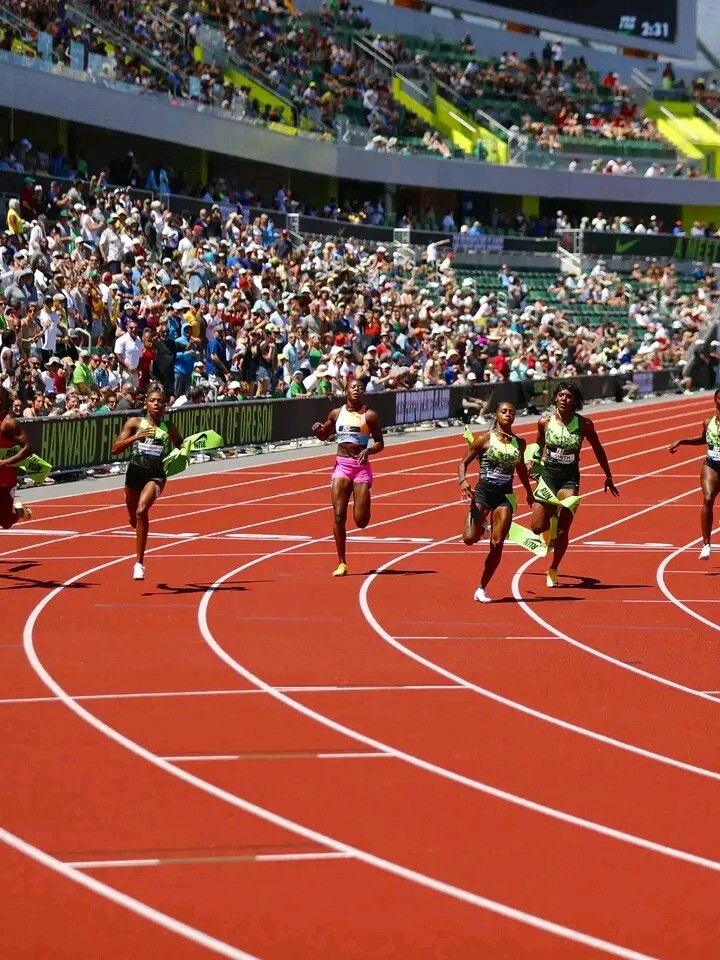
The American sprint star has officially entered both events for the three-day championship in Budapest, Hungary, taking place from September 11 to 13. After producing one of the most remarkable performances of the 2025 World Athletics Championships in Tokyo, Jefferson-Wooden now arrives in Budapest with another opportunity to prove that she is the dominant force in women's sprinting.
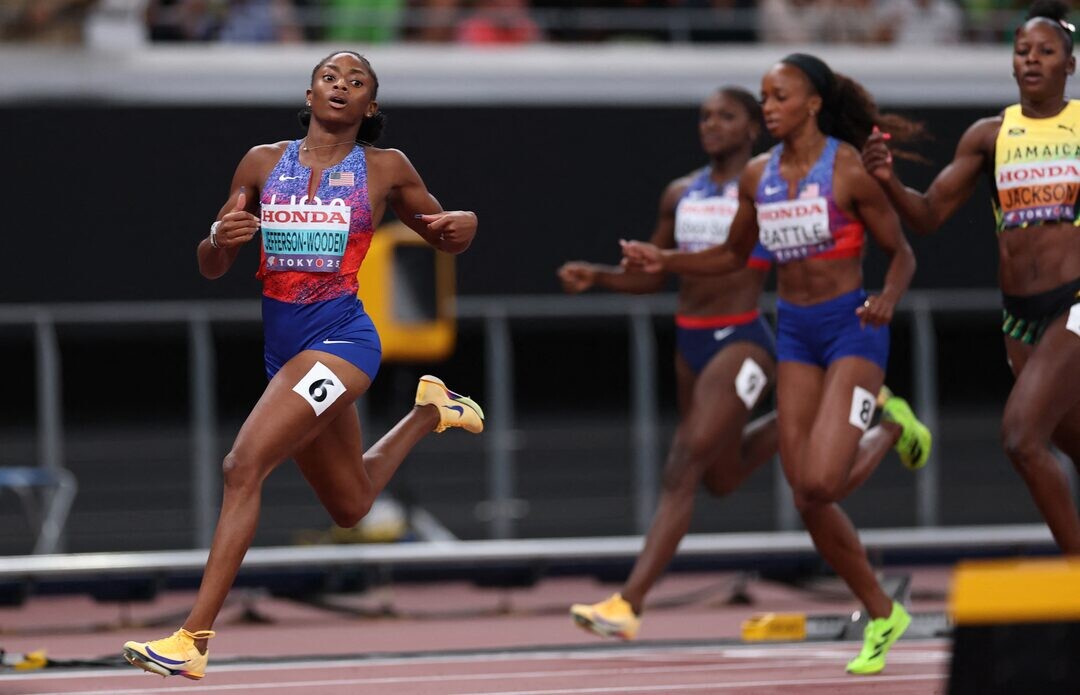
Her first major test will come in the women's 100m, where she will renew her rivalry with Saint Lucia's Olympic champion Julien Alfred. The two women currently share the 2026 world lead at 10.70 seconds following their thrilling clash in Zurich, setting the stage for what could be one of the most anticipated races of the entire Ultimate Championships.
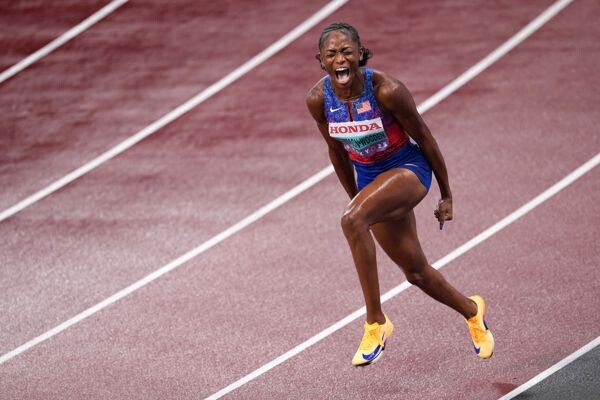
The women's 100m final is scheduled for Saturday, September 12, and Jefferson-Wooden will enter with the confidence of a reigning world champion. But Alfred's presence ensures that there will be no room for error when the world's fastest women line up in Budapest.
Then comes the second challenge.
Just 24 hours later, Jefferson-Wooden will turn her attention to the 200m, where she will face another formidable opponent in Olympic champion Gabby Thomas. Jefferson-Wooden is the reigning U.S. champion over the distance and has produced a season-best of 21.69 seconds, while her outstanding form has placed her among the world's elite in the event.
The 200m represents the second half of a demanding double, and the women's final will take place on Sunday, September 13. The championship format means the world's best sprinters will have little opportunity to ease into the competition, making the physical and mental demands of contesting both events even more significant.
Jefferson-Wooden, however, has already demonstrated that she can handle history-making pressure.
At the 2025 World Athletics Championships in Tokyo, she completed a spectacular sprint treble, winning the 100m, 200m and 4x100m relay. Her 100m victory came in a championship record of 10.61 seconds, underlining the extraordinary level she reached during that unforgettable championship campaign.
Now Budapest offers the American another chance to build on that legacy.
The 100m will bring the explosive showdown with Julien Alfred. The 200m will present a different challenge against Olympic champion Gabby Thomas and another world-class field. Winning either event would be a major achievement. Winning both would further strengthen Jefferson-Wooden's growing claim as one of the defining sprinters of her generation.
She has already swept the global stage once.
Now, at the inaugural World Athletics Ultimate Championships, Melissa Jefferson-Wooden is going for another double.
Can the American sprint queen conquer both Budapest showdowns and add another unforgettable chapter to her remarkable career?
by Erick Cheruiyot for My Best Runs.
Login to leave a comment
Femke Bol Returns To Budapest: From One Of Her Darkest Moments To A New 800m Challenge
For Femke Bol, Budapest is more than just another stop on the athletics calendar. It is a place where heartbreak once threatened to define her championship campaign — only for the Dutch star to respond with one of the most memorable comebacks of her career.
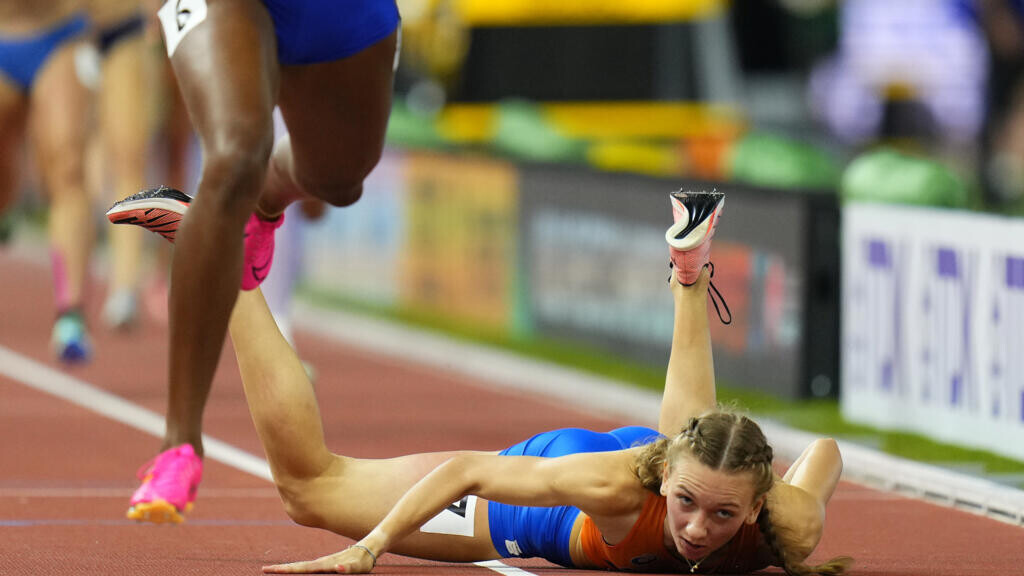
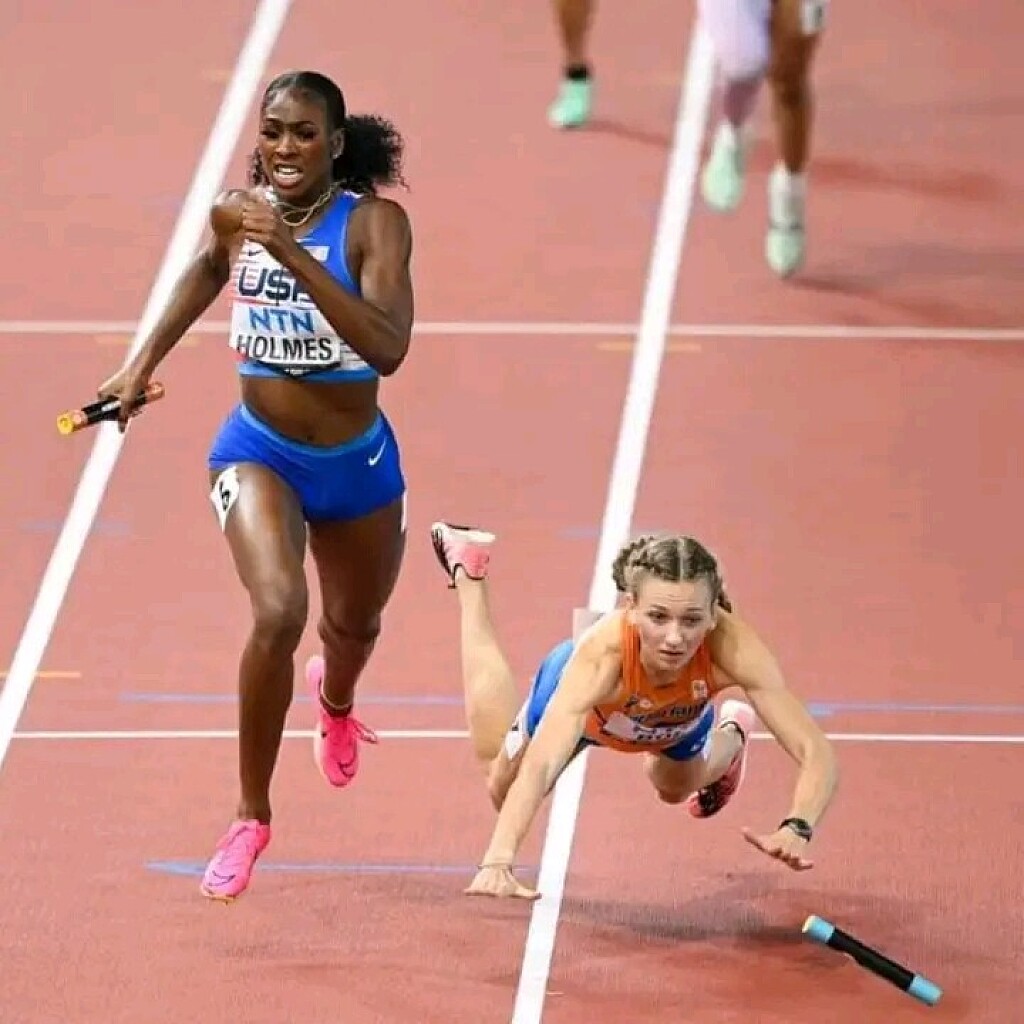
Three years ago, at the 2023 World Athletics Championships, Bol arrived in Budapest as one of the biggest names in the 400m hurdles. Yet her championships began with a painful collapse.
Anchoring the Netherlands in the mixed 4x400m relay on the opening night, Bol was within sight of victory when she fell just metres before the finish line. The Netherlands were disqualified, and what had looked like a near-certain gold medal disappeared in one devastating moment.
But Bol did not allow the disappointment to consume her.
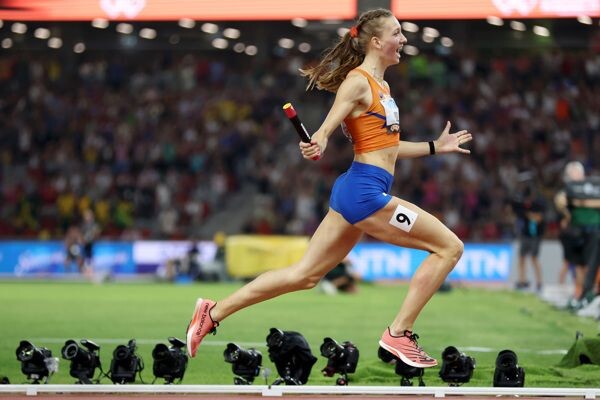
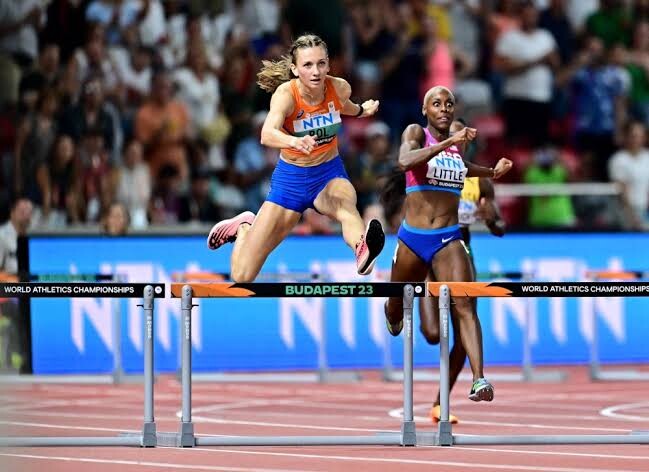
Six days later, she returned to the track for the 400m hurdles final and delivered an emphatic response. Running with remarkable composure, she stormed to victory in 51.70 seconds, finishing more than a second clear of American Shamier Little to claim her first individual global title.
Then came the final track race of those championships — and another extraordinary chapter.
In the women’s 4x400m relay, Bol received the baton for the Netherlands with the Jamaican and British teams ahead. The deficit grew to roughly 10 metres down the back straight, but instead of surrendering, she began to hunt.
By the home straight, Bol had transformed the race.
She swept past Great Britain and then Jamaica to bring the Netherlands home in 3:20.72, securing a second world title in Budapest and completing one of the most remarkable redemption stories of the championships.
Now, Bol is heading back to the same city — but this time, her challenge is completely different.
There will be no hurdles standing in her way.
Instead, she will line up for the women’s 800m at the inaugural World Athletics Ultimate Championship in Budapest, where she will face two of the strongest middle-distance runners in the world: Olympic champion Keely Hodgkinson of Great Britain and Swiss sensation Audrey Werro. The three are among the headline names in a formidable 800m field for the September 11–13 championship.
And this is no longer the same Bol who first experimented with the event.
The Dutch star has made a significant transition to the 800m this season, steadily improving as she has gained experience over the two-lap distance. Her 2026 best stands at 1:55.41, placing her among the leading contenders heading into Budapest.
Yet the challenge could hardly be tougher.
Werro has been the revelation of the 2026 season. The Swiss star leads the world with 1:53.80, a mark that ranks among the fastest performances ever recorded. She also defeated Hodgkinson and Bol at the European Championships in Birmingham, winning in 1:54.81 as Hodgkinson took silver in 1:55.01 and Bol finished third in 1:55.54.
Hodgkinson, meanwhile, remains one of the defining figures of the event. The Paris Olympic champion has already run 1:54.33 this season and will arrive in Budapest determined to reclaim the winning momentum against a rival who has repeatedly pushed her to the limit.
The latest meeting between Werro and Bol only adds more intrigue. At the Diamond League Final in Brussels, Werro prevailed in 1:54.75, but Bol pushed her all the way to the line, finishing just 0.06 seconds behind in 1:54.81.
That makes Budapest particularly fascinating.
Bol is no longer returning simply as the hurdler who once conquered the Hungarian capital. She is coming back as an ambitious 800m runner, testing herself against an Olympic champion and the world leader in an event that demands speed, tactical intelligence and endurance in equal measure.
For Bol, Budapest carries memories of a fall, a first global individual title and an unforgettable relay victory.
Now she has the opportunity to create another memory.
This time, there are no barriers to clear and no baton to chase.
There is only 800 metres — two laps in which Bol will have to match the pace, strength and finishing speed of Werro and Hodgkinson.
She has already shown what she can do when Budapest gives her a second chance.
The question now is whether she can turn that history into another triumph.
by Erick Cheruiyot for My Best Runs.
Login to leave a comment

One Year Since The Pocket Rocket’s Final Race: Shelly-Ann Fraser-Pryce’s Legacy Still Burns Bright
One year ago, the world watched the final race of one of the greatest sprinters in athletics history.
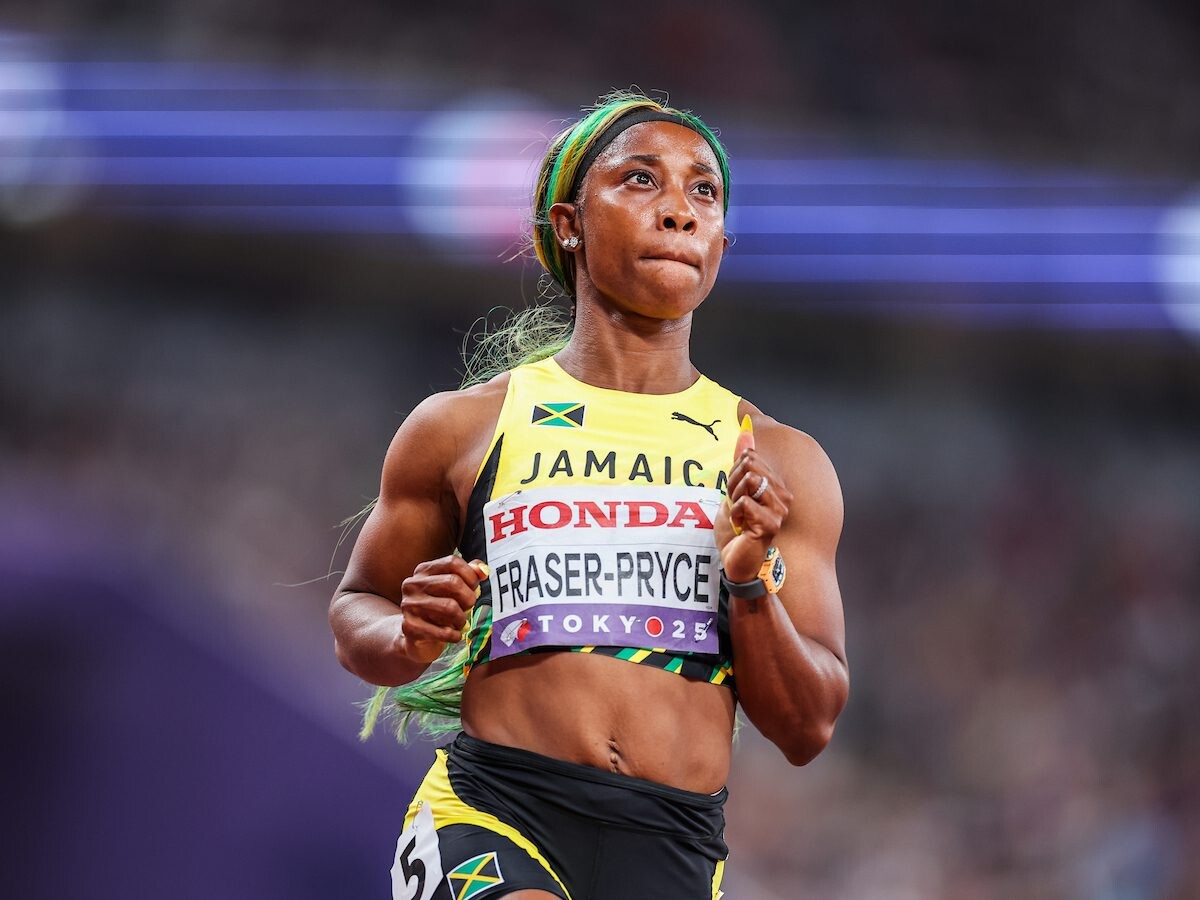
On September 21, 2025, Shelly-Ann Fraser-Pryce stepped onto the track for the final time as a professional athlete. At 38, after an extraordinary 18-year career defined by Olympic triumphs, world titles, remarkable comebacks and unmatched longevity, the Jamaican sprinting icon brought her competitive journey to a close at the World Athletics Championships in Tokyo.
Her final appearance came in the women’s 4x100m relay. Running the opening leg for Jamaica, Fraser-Pryce helped her team secure a silver medal in 41.79 seconds behind the United States. It was a fitting conclusion to a career that had produced an extraordinary collection of global medals and established her among the most decorated sprinters of all time.
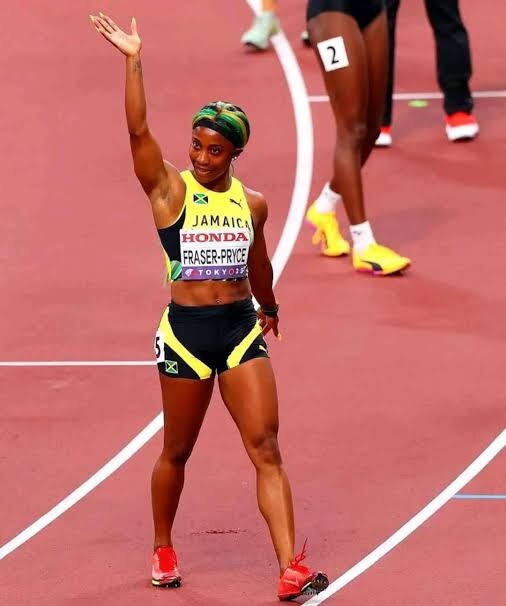
Her final individual race had come earlier in the championships, when she finished sixth in the 100m final in 11.03 seconds. Although she was unable to add another individual world title to her remarkable record, simply reaching another global final at the age of 38 was another demonstration of the extraordinary longevity that had defined her career.
A few weeks later, on October 7, Fraser-Pryce officially announced her retirement from professional track and field, closing the book on an era that had stretched across nearly two decades.
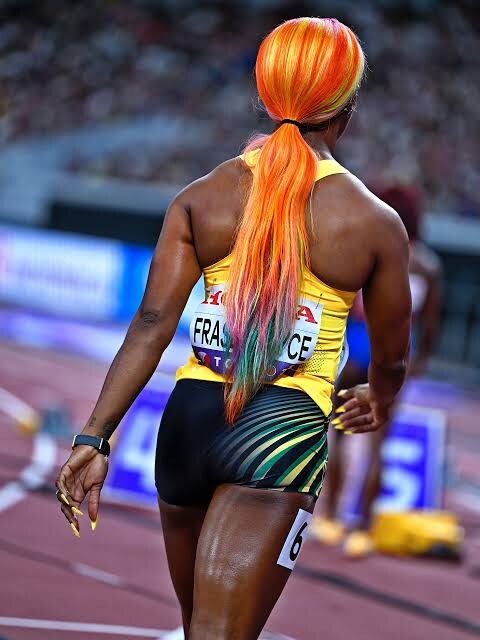
Her journey had begun with Olympic gold in the 100m at Beijing 2008, where she announced herself as one of the world's most explosive sprinters. Four years later in London, she successfully defended her Olympic 100m title, becoming only the third woman in history to accomplish that feat.
But Fraser-Pryce's greatness was never defined by one race or one championship.
She went on to win three Olympic gold medals and eight Olympic medals overall, while collecting 10 World Championships titles. She became the first woman to win five individual world 100m titles, a record that perfectly illustrates her remarkable consistency at the highest level.
Her career also became a story of resilience. After becoming a mother, Fraser-Pryce returned to elite competition and continued challenging the world's best sprinters, proving that motherhood and sporting excellence could exist side by side at the highest level.
Yet statistics only tell part of the Shelly-Ann Fraser-Pryce story.
There was the explosive start from the blocks, the fierce determination through every metre of a race and the unmistakable confidence that made her presence instantly recognisable. There was also the smile that often followed her performances and the pride with which she represented Jamaica on the biggest stages in world athletics.
Beyond the track, she built an influence that extended far beyond her medals and records. Through the Pocket Rocket Foundation, she has supported young Jamaican student-athletes by helping provide opportunities in education and sport.
Retirement, therefore, has not meant walking away from athletics.
In 2026, Fraser-Pryce took on a new role as a Global Ambassador for Laureus, continuing to use her experience, platform and voice to inspire young people and contribute to positive change through sport.
The starting line may no longer be part of her daily life, but her influence remains firmly embedded in the sport she helped shape.
A year after that final evening in Tokyo, women's sprinting has entered a new chapter. New athletes are carrying the sport forward, new rivalries are emerging and new records are waiting to be written.
But the standard Shelly-Ann Fraser-Pryce established will remain.
The Pocket Rocket has left competitive track and field, but the legacy she built over 18 remarkable years is still very much alive.
A year after her final race, which part of Shelly-Ann Fraser-Pryce do you miss the most?
Was it her explosive reaction from the blocks, her relentless competitive spirit, that unmistakable smile after a race, or the pride and passion with which she represented Jamaica?
Or perhaps it is simply the sight of Shelly-Ann Fraser-Pryce standing in the starting blocks, ready to give everything one more time.
One final race. One final medal. Eighteen extraordinary years.
The Pocket Rocket may have left the track, but her legacy will continue to inspire generations to come.
by Erick Cheruiyot for My Best Runs.
Login to leave a comment

Athletics Must Remain Number One” — Coe’s Final Challenge As The Race For His Successor Heats Up
The battle for the future of world athletics is already taking shape, but outgoing World Athletics President Sebastian Coe has made one message unmistakably clear: athletics must remain at the heart of the Olympic Games.
Speaking ahead of the Diamond League meeting in Zurich, Coe said he remains highly optimistic about the sport’s future and insisted that athletics must protect its position as the leading sport of the Olympic movement.

“There are only two truly global sports, one is football and one is athletics. We must maintain our position as the number one Olympic sport,” Coe said.
The 69-year-old Briton is approaching the final year of his presidency after first taking charge of the global governing body in 2015. He was re-elected for a third term in 2023, which, under World Athletics’ term limits, is his final mandate.
Coe will leave office in 2027, when the next World Athletics president is elected at the Elective Congress in Beijing, immediately before the 2027 World Athletics Championships. The new president will serve a four-year term covering 2027–2031.

And the succession battle is already gathering momentum.
Among the candidates declared eligible so far are prominent figures from within the sport’s leadership, including World Athletics Vice-Presidents Adille Sumariwalla of India, Raul Chapado of Spain and Ximena Restrepo of Colombia. The current list also includes Yuko Arimori of Japan, Hatem Fouda of Egypt, Ivan Garcia of Uruguay, Jean Gracia of France and Kenya’s Jackson Tuwei.
Restrepo brings a particularly distinguished competitive background to the contest. The Colombian won Olympic bronze in the women’s 400 metres at Barcelona 1992 and became the first woman elected as a World Athletics Vice-President in 2019.
For Coe, however, the final chapter of his presidency is not simply about preparing for his departure. He says his priority over the next year is to continue strengthening the sport so that his successor inherits an organisation capable of growing even further.
“I've never been more optimistic about the future of the sport,” Coe said, adding that whoever succeeds him will inherit “a very much stronger sport” than the one he took over in 2015.
His presidency has coincided with significant changes across the sport, including governance reforms, commercial development and efforts to make athletics more innovative and globally engaging. The launch of the new World Athletics Ultimate Championship in Budapest this September is another example of the organisation’s attempt to create a shorter, high-stakes competition featuring many of the world’s leading athletes.
But the next president will inherit an enormous responsibility.
Athletics is the foundation of the Olympic Games, producing some of the most iconic moments in Olympic history and bringing together athletes from virtually every corner of the world. The challenge for Coe’s successor will be to preserve that unique position while making the sport more commercially powerful, more accessible to younger audiences and even more compelling in an increasingly competitive global sporting landscape.
Coe believes the opportunity is there.
As he prepares to hand over the presidency in 2027, his challenge to the next generation of World Athletics leadership is clear: protect the sport’s Olympic identity, keep pushing its boundaries and make sure athletics remains the heartbeat of the Games.
The question now is not whether Coe will leave a significant mark on athletics, but who will have the vision, influence and leadership required to carry the sport into its next era.
Who do you think should lead World Athletics after Sebastian Coe?
by Erick Cheruiyot for My Best Runs.
Login to leave a comment

Sydney Marathon 2026: World Champions, Record Hunters And A Star-Studded Showdown
SYDNEY, AUSTRALIA — August 30, 2026
Sydney is preparing for a spectacular morning of marathon racing as reigning world champions Peres Jepchirchir of Kenya and Alphonce Simbu of Tanzania headline a world-class elite field at the TCS Sydney Marathon on Sunday, August 30.
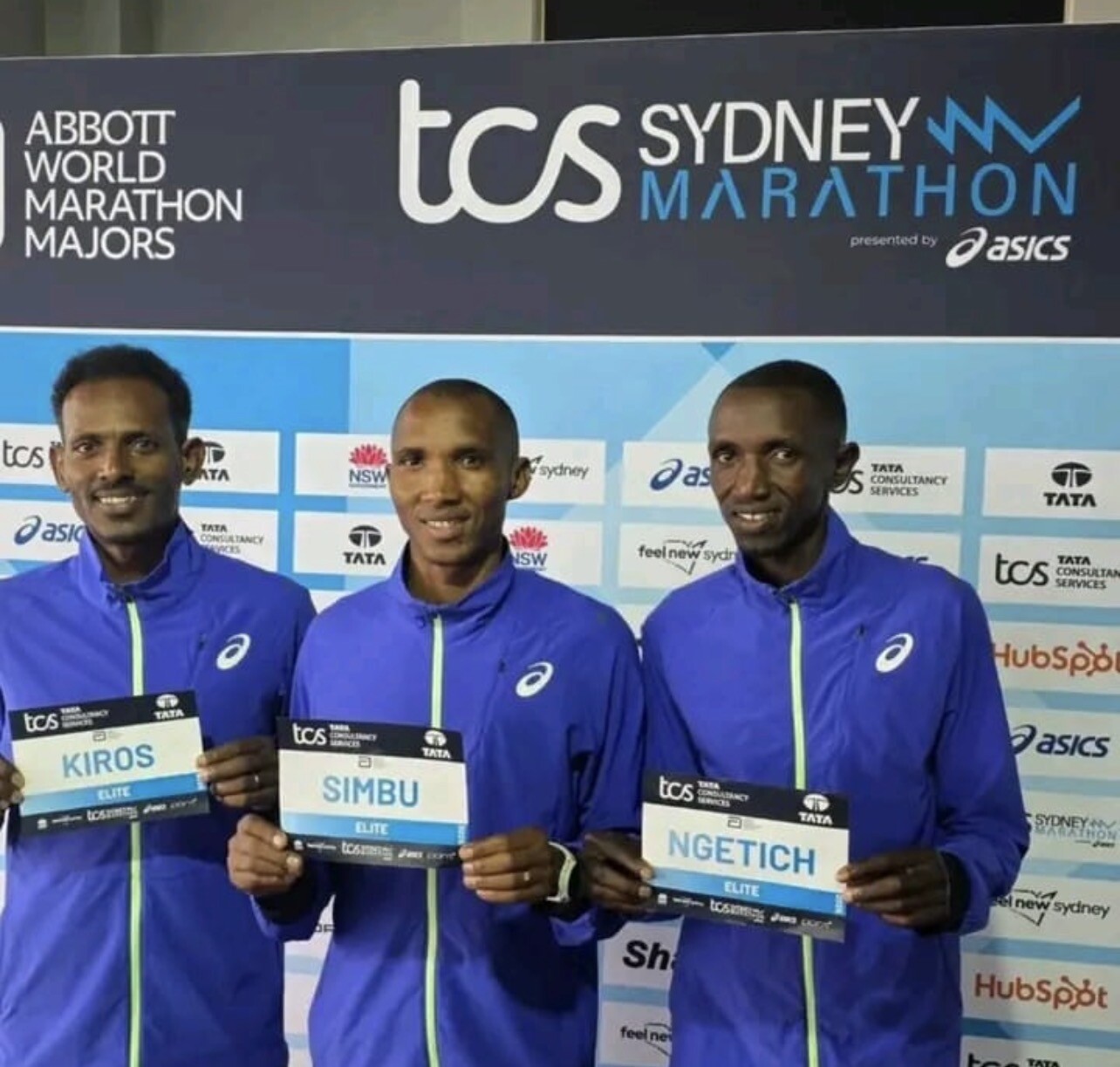
The race is set to provide another defining moment for Australian distance running, with more than 40,000 participants expected to take on the streets of Sydney and a remarkable collection of elite athletes competing for victory on one of the world's newest Abbott World Marathon Majors.
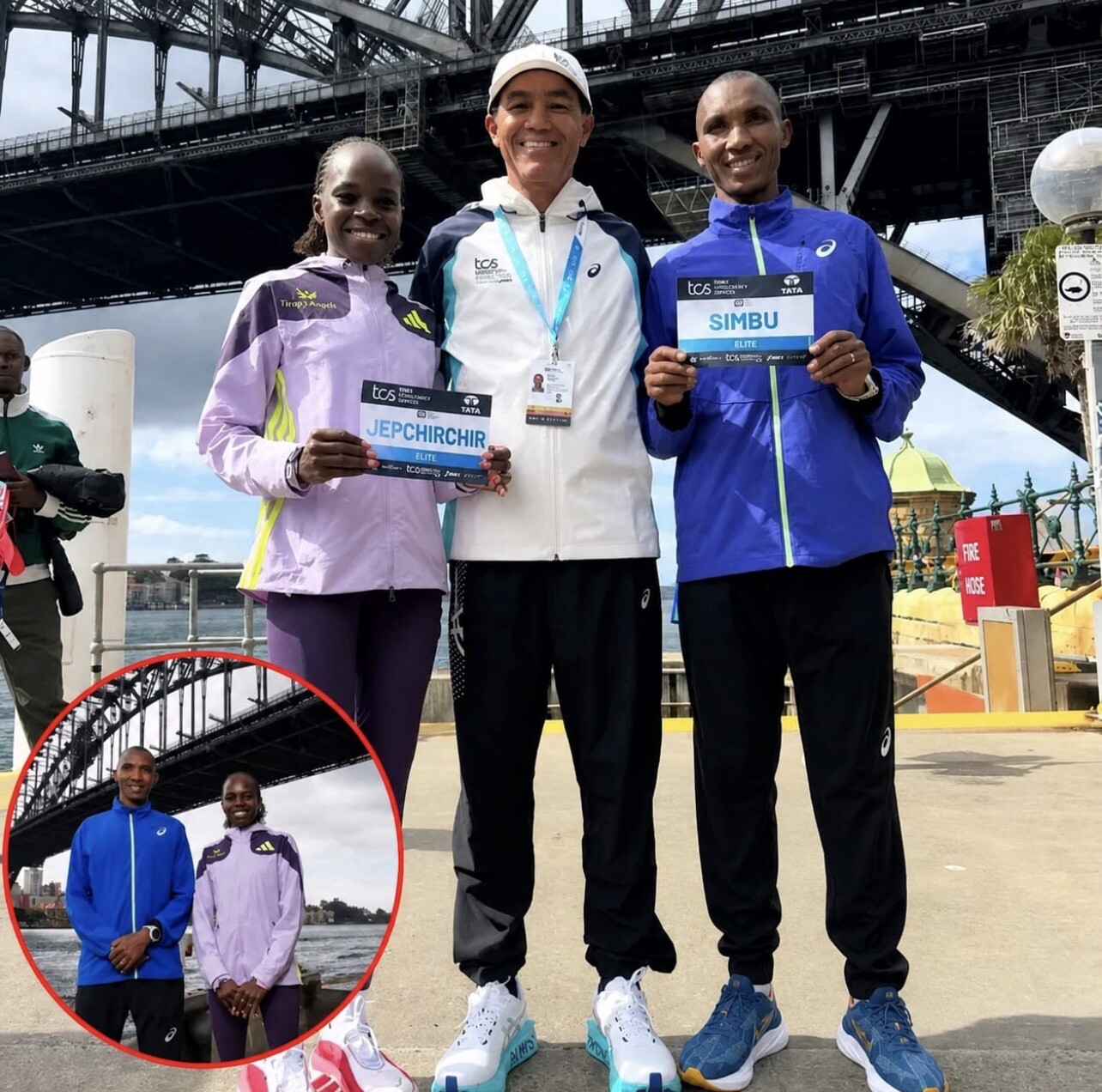
Jepchirchir and Simbu will bring an added layer of prestige to the occasion as the reigning women's and men's world marathon champions. Their presence ensures that the spotlight will be firmly fixed on Sydney as some of the world's finest distance runners battle for one of the most coveted titles on the international marathon calendar.

There will also be records in the crosshairs. The men's course record stands at 2:06:06, while the women's benchmark is 2:18:22, meaning the quality of the field has created genuine anticipation that both marks could come under threat.
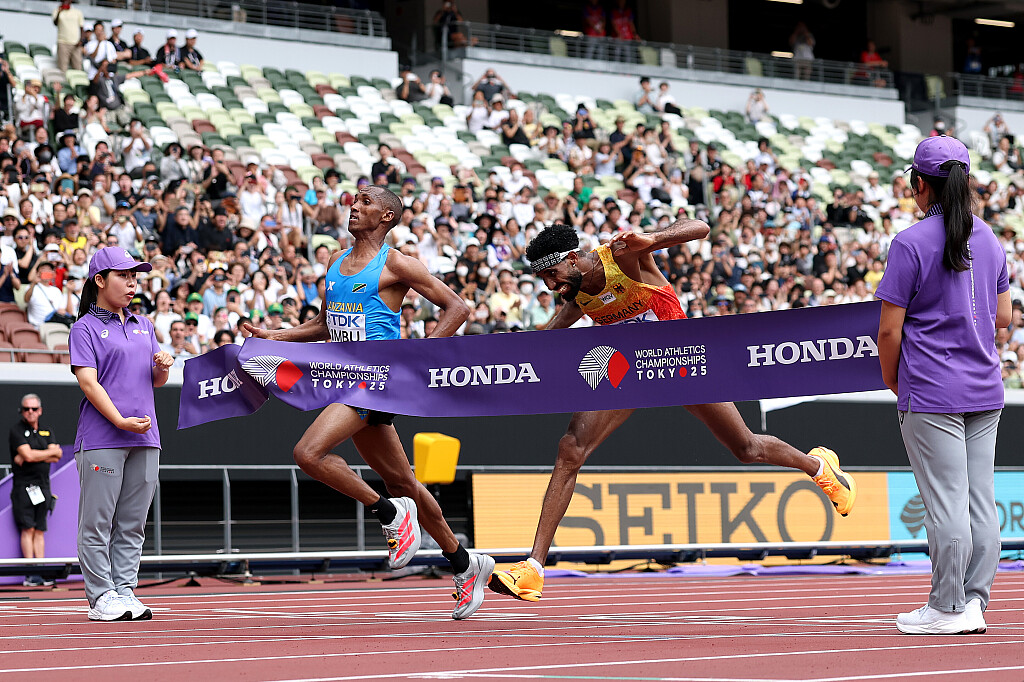
In the men's race, Simbu arrives with considerable confidence and an ambitious target. The Tanzanian produced one of the most dramatic finishes of the 2025 World Athletics Championships in Tokyo, holding off Germany's Amanal Petros to claim the world title. With a personal best of 2:02:47, Simbu has the speed, championship experience and belief to challenge the very best, and he has made no secret of his desire to attack Sydney's course record.
However, standing in his way is an elite group led by Ethiopia's Sisay Lemma, whose outstanding 2:01:48 personal best makes him the fastest entrant in the field. A former London and Boston Marathon champion, Lemma brings a wealth of experience at the highest level and will be one of the principal threats to Simbu's ambitions.
Kenya will also have a strong presence, with Timothy Kiplagat and Vincent Ngetich adding further firepower to an already formidable men's lineup.
Perhaps the most intriguing storyline, however, belongs to Ethiopian track star Hagos Gebrhiwet, who is set to make his highly anticipated marathon debut. A former Olympic 5,000m medallist and one of the world's fastest track distance runners, Gebrhiwet has already shown extraordinary endurance over shorter distances, including a 57:41 half-marathon personal best. His transition to the marathon will be closely watched, with fans eager to discover whether his world-class track speed can be converted into success over 42.195 kilometres.
The depth of the men's field is remarkable. No fewer than 25 athletes have broken 2:10, while 19 have already recorded times faster than Sydney's existing course record, setting the stage for a race that could develop into a battle of extraordinary pace and tactics.
The women's contest promises just as much drama, with Jepchirchir leading the way. The Kenyan superstar arrives in Sydney as the reigning world champion and Olympic champion, carrying a 2:14:43 personal best, the fastest among the women entered.
Yet victory will not come easily. Jepchirchir faces a powerful Kenyan challenge from Irine Cheptai, who owns a 2:17:51 personal best and has already established herself as a major force on the international marathon circuit.
Tanzania's Magdalena Shauri, the country's national record holder with a personal best of 2:18:03, will provide another serious threat, while the experienced Vivian Cheruiyot of Kenya adds further championship pedigree to an already impressive women's field.
Ethiopian stars Shure Demise and Haven Hailu, alongside Uganda's Stella Chesang, will also be looking to make their mark as the race unfolds through Sydney's iconic streets.
The setting could hardly be more spectacular. Starting in North Sydney, the marathon takes runners across the famous Sydney Harbour Bridge before heading towards the unforgettable finish at the Sydney Opera House. With the city providing a breathtaking backdrop, the race has all the ingredients for another historic chapter in its rapid rise on the global marathon scene.
For the elite athletes, however, the beauty of Sydney will quickly become secondary once the gun goes off.
The champions will be chasing victory. The record hunters will be chasing history. And for Gebrhiwet, an entirely new chapter of his career will begin.
Two reigning world champions. Multiple sub-2:05 contenders. A world-class women's field. A highly anticipated marathon debut. And course records that could be under serious threat.
Everything is in place for an unforgettable Sunday in Sydney.
Will Alphonce Simbu turn his ambition into a new course record?
Can Sisay Lemma's 2:01:48 experience carry him to victory?
Will Hagos Gebrhiwet announce himself as a future marathon superstar?
And can Peres Jepchirchir add the Sydney Marathon crown to her already extraordinary list of achievements?
Sydney is ready.
The champions have arrived. The records are waiting. The stage is set for a spectacular showdown.
by Erick Cheruiyot for My Best Runs
Login to leave a comment

Sydney Marathon
The Sydney Marathon is a marathon held annually in Sydney, Australia. The event was first held in 2001 as a legacy of the 2000 Summer Olympics, which were held in Sydney. In addition to the marathon, a half marathon, 9 kilometres (5.6 mi) "Bridge Run", and a 3.5 kilometres (2.2 mi) "Family Fun Run" are also held under the banner...
more...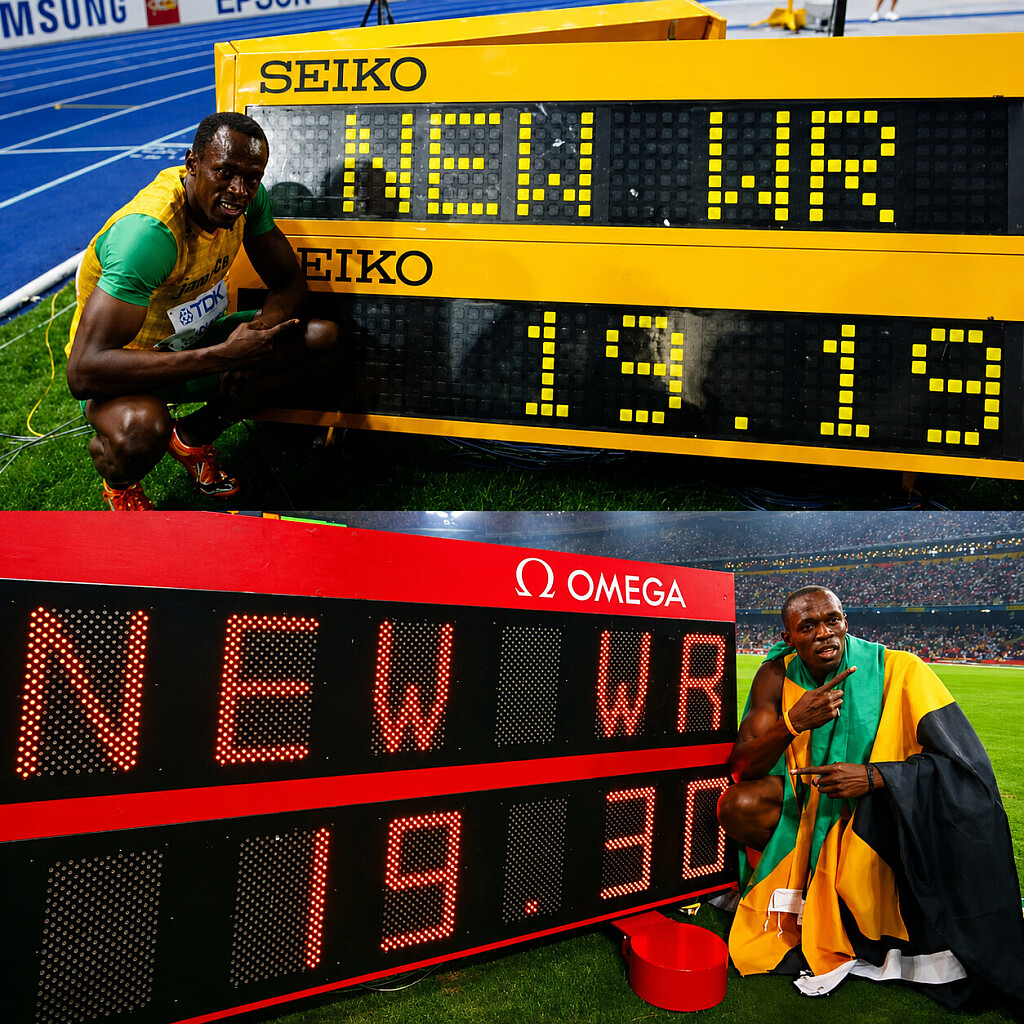
August 20: The Day Usain Bolt Rewrote the 200m Record Book—Twice
Some dates become part of sporting history. August 20 belongs to Usain Bolt.
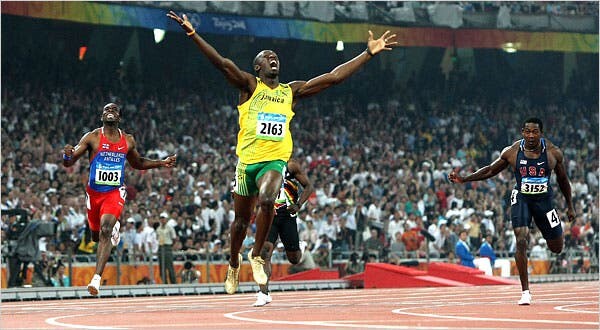
On two consecutive years, the Jamaican sprinting phenomenon transformed the men’s 200 metres, producing performances that seemed almost impossible even by his extraordinary standards.
On August 20, 2008, inside Beijing’s Bird’s Nest, Bolt lined up for the Olympic 200m final carrying enormous expectations. Four days earlier, he had stunned the world by winning the 100m in a then-world-record 9.69 seconds. Yet the 200m was about to become another chapter in his growing legend.
Bolt exploded around the bend before powering down the home straight, crossing the finish line in 19.30 seconds to win Olympic gold and shatter Michael Johnson’s long-standing world record of 19.32, set in Atlanta in 1996. The improvement was only two hundredths of a second, but the significance was enormous: Johnson’s seemingly formidable record had survived for 12 years before Bolt finally brought it down.
And there was another remarkable detail. Bolt’s Beijing record came with a 0.9 m/s headwind, making the performance even more extraordinary.
But Bolt was not finished.
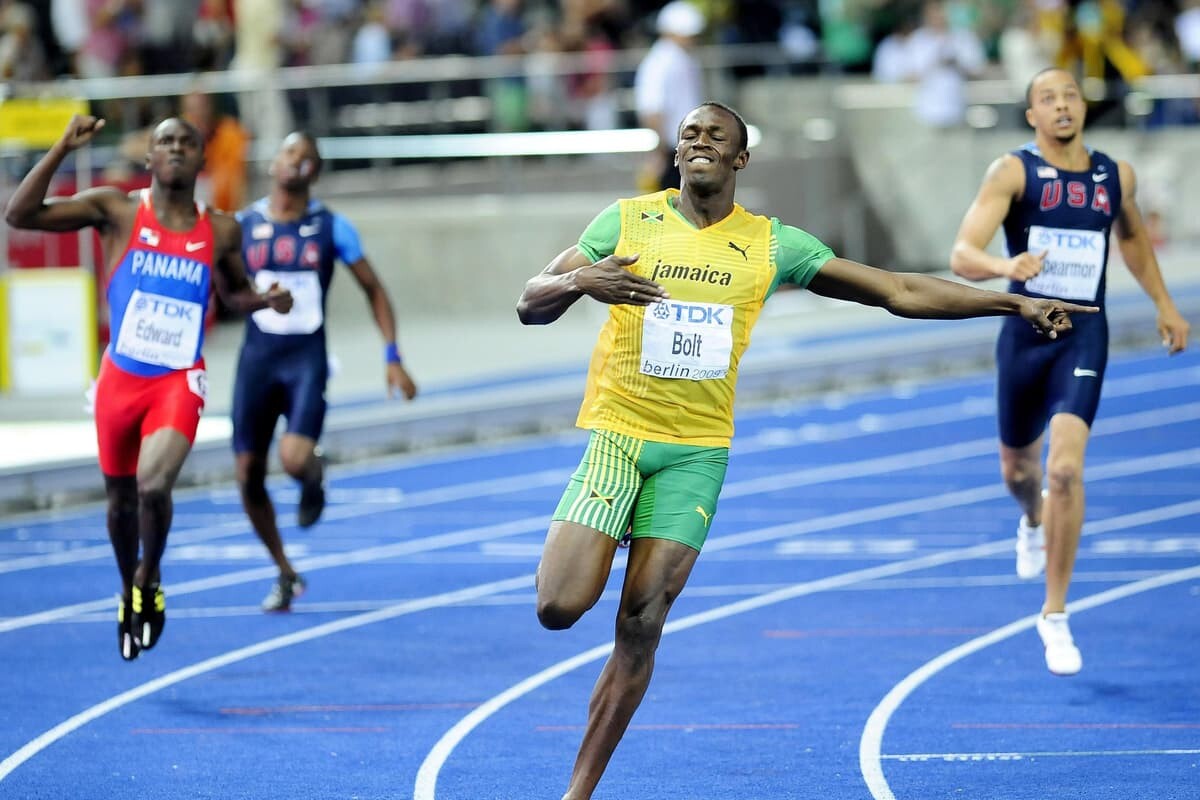
Exactly one year later, on August 20, 2009, he returned to the same event at the World Athletics Championships in Berlin with another opportunity to redefine the limits of speed.
Four days earlier, he had already demolished his own 100m world record, running 9.58 seconds. Now the 200m world record was in his sights.
What followed was extraordinary.
Bolt stormed to 19.19 seconds, taking 11 hundredths off the world record he had established in Beijing. The performance came with a 0.3 m/s headwind, yet he still produced a time that would immediately become one of the most iconic performances in athletics history.
The progression was staggering:
19.30 in Beijing.
19.19 in Berlin.
Michael Johnson’s record had become Bolt’s record—and then, just 12 months later, Bolt destroyed his own mark.
His Berlin victory was also emphatic. Bolt finished more than half a second ahead of Panama’s Alonso Edward, who ran 19.81, while Wallace Spearmon took bronze in 19.85.
What made the achievement even more remarkable was the consistency of Bolt’s record-breaking brilliance. Across the Beijing Olympics and Berlin World Championships, he produced a succession of world records in the 100m and 200m, repeatedly turning major championship finals into historic moments. World Athletics noted after Berlin that Bolt had become the first man to break both the 100m and 200m world records more than once.
And now, 17 years after that unforgettable Berlin night, the 19.19-second world record still stands.
The mark has survived generations of exceptional sprinters, including athletes who have come remarkably close to the 19-second barrier. Yet Bolt’s time remains untouched at the summit of the all-time list.
That is why August 20 is more than a date on the athletics calendar.
It is the anniversary of the day Usain Bolt first broke Michael Johnson’s seemingly untouchable standard—and then returned exactly one year later to make his own record look vulnerable.
Beijing gave the world 19.30.
Berlin gave it 19.19.
Two August 20s. Two world records. One extraordinary sprinter.
Usain Bolt was not simply winning races. He was changing the definition of human speed.
And the question that remains for the next generation is perhaps the most intriguing of all:
Will we ever see another sprinter capable of breaking the 19-second barrier and finally taking down the 19.19 mark that Bolt left behind?
by Erick Cheruiyot for My Best Runs.
Login to leave a comment

Jakob Ingebrigtsen Returns To Silesia: Can The Norwegian Reclaim The 1500m Throne?
Silesia has become a special chapter in Jakob Ingebrigtsen’s remarkable career, and on August 23, the Norwegian middle-distance superstar will return to the Diamond League with a question hanging over his comeback: can he return to the top of the 1500m?
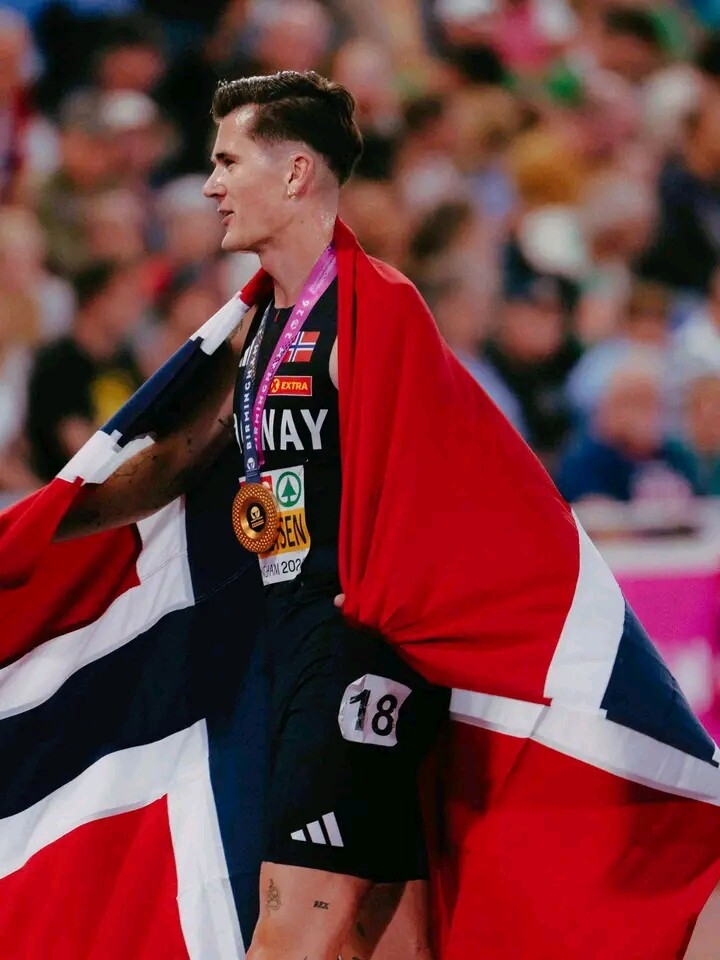
Ingebrigtsen is set to race his first 1500m since the 2025 World Athletics Championships, making his appearance at the Silesia Diamond League one of the most anticipated moments of the meeting.
The Norwegian’s return comes after a fascinating two-year stretch filled with major victories, record-breaking performances and unexpected setbacks.

Since the 2024 Paris Olympics, Ingebrigtsen has experienced almost every side of elite middle-distance running. At the Paris Games, he finished fourth in the 1500m, narrowly missing the podium before quickly responding with a victory in the Diamond League Final later that year.
He then began 2025 in spectacular fashion, breaking the indoor mile world record before going on to claim the world indoor title in the 3000m.
However, his outdoor campaign brought a different challenge. At the 2025 World Championships, Ingebrigtsen failed to advance from the 1500m heats, bringing an unexpected early end to his campaign in the event.
Now, nearly a year later, the 25-year-old is ready to return to the distance that has defined so much of his career.
And Silesia could hardly be a more fitting place for his comeback.
The last time Ingebrigtsen raced at the Polish venue, he produced a performance for the history books. He stormed to 7:17.55 in the 3000m, destroying the 28-year-old world record and once again demonstrating his extraordinary ability to combine speed with endurance.
This time, however, the focus shifts back to the 1500m.
The race will offer Ingebrigtsen an opportunity to measure himself against the world’s best after an extended absence from the event. His tactical instincts, finishing speed and ability to handle a fast pace will all come under the spotlight.
For a runner who has spent years setting the standard in the 1500m, this is more than simply another Diamond League appearance. It is a chance to begin writing the next chapter.
Can Jakob Ingebrigtsen return to the top?
Silesia will provide the stage. August 23 will provide the answer.
by Erick Cheruiyot for My Best Runs.
Login to leave a comment
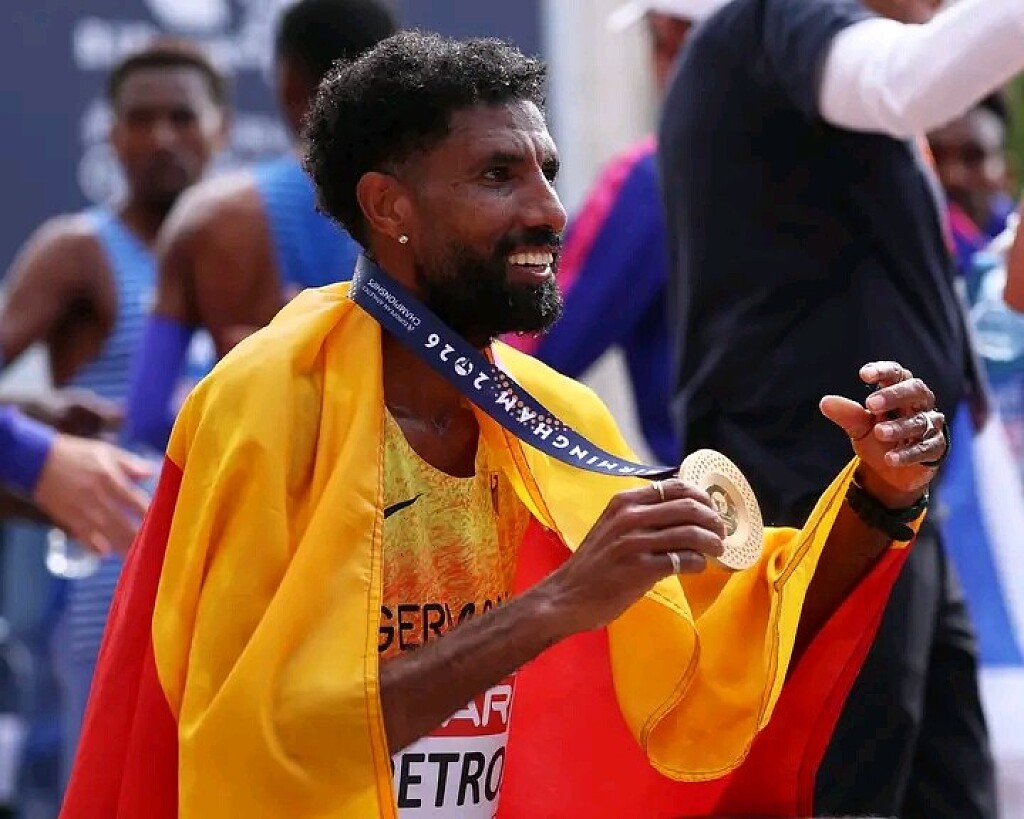
Amanal Petros Strikes Gold in Birmingham with Championship Record
Germany’s Amanal Petros has crowned a remarkable rise to the European marathon summit, winning the men’s marathon title at the European Athletics Championships in Birmingham in a championship-record 2:09:11.
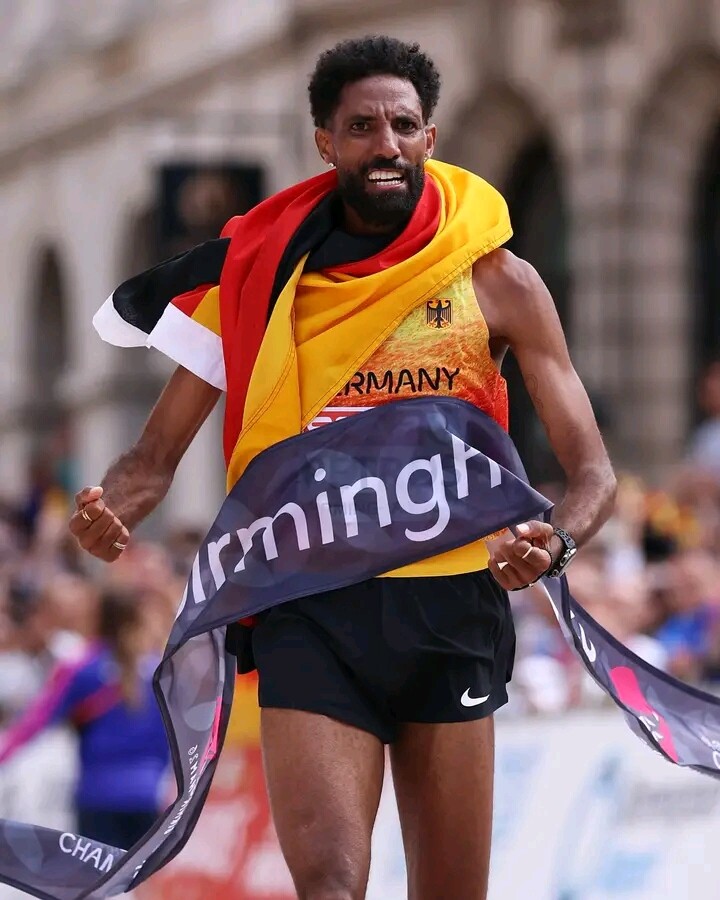
Petros arrived in Birmingham with a major championship medal already secured at global level. After taking silver in the marathon at last year’s World Athletics Championships in Tokyo, the German moved one step higher on the podium this time, converting his international consistency into European gold.
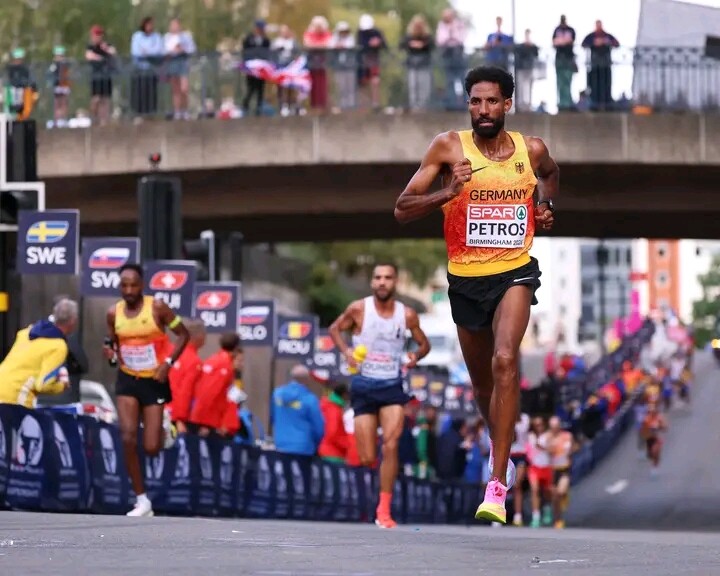
The victory adds another significant achievement to a season that has already included a strong performance at the London Marathon in April, where Petros finished 15th. Four months later, he produced a much stronger showing on the championship stage, delivering when the European title was at stake.
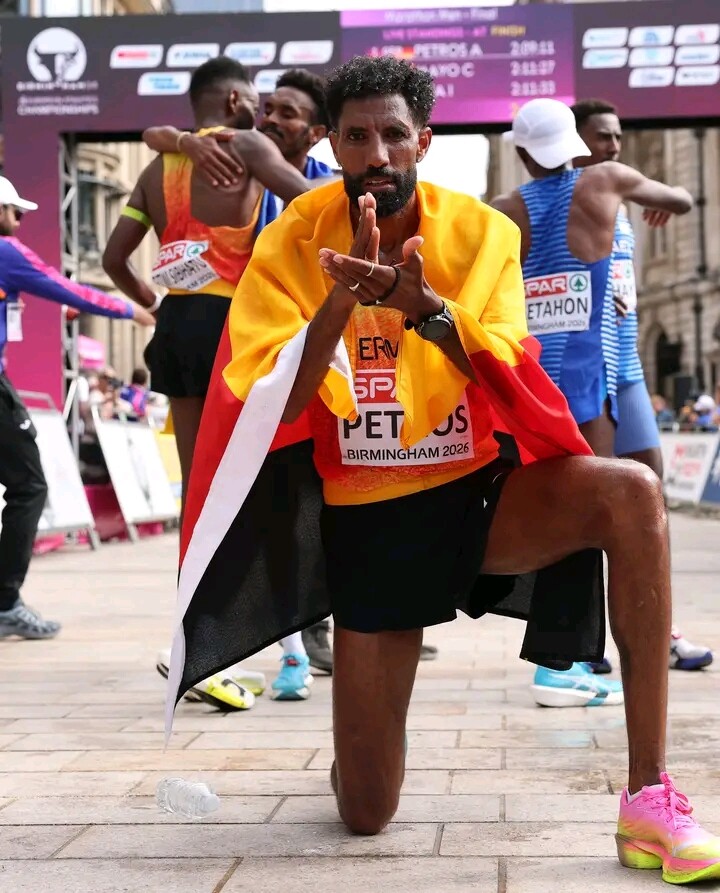
His 2:09:11 was enough not only to secure the gold medal but also to set a new European Athletics Championships record for the men’s marathon. Petros held off a tightly contested battle for the podium, with Italy’s Pietro Riva taking silver in 2:09:18 and Israel’s Gashau Ayale completing the podium with 2:09:21.
The three medalists were separated by just 10 seconds, highlighting the intensity of the Birmingham race. Riva came within seven seconds of Petros, while Ayale was a further three seconds behind, ensuring a thrilling finish to the championship marathon.
The victory also gives Petros another milestone in a career that continues to gather momentum. From his world silver medal to his latest European triumph, the German has steadily established himself as a formidable championship performer, and Birmingham has now provided the biggest title of his career so far.
For Petros, Birmingham provided the perfect opportunity to turn his recent championship success into the ultimate European prize. After his world silver medal in Tokyo, he can now add a European title and a championship record to his growing collection of major international honours.
The German’s latest triumph represents another important chapter in his career and confirms his status among Europe’s leading marathon runners.
by Erick Cheruiyot for My Best Runs.
Login to leave a comment

European Athletics Champioships
The27thEuropean Athletics Championshipswill be held from 10 to 16 August 2026 at theAlexander StadiuminBirmingham, United Kingdom.[1] This is the first time that a British city will have staged the European Athletics Championships although Birmingham has hosted many high-profile events, including the2007 European Athletics Indoor Championships, the2003and2018 IAAF World Indoor Championshipsand the2022 Commonwealth Games. Alexander Stadium was renovated between 2019 and...
more...
Nairobi Makes History the Prize as Kenya Bids to Bring 2029 World Athletics Championships to Africa
Nairobi has formally entered the race to host the 2029 World Athletics Championships, placing Kenya at the centre of a historic contest that could bring the sport’s premier global track and field event to African soil for the first time.
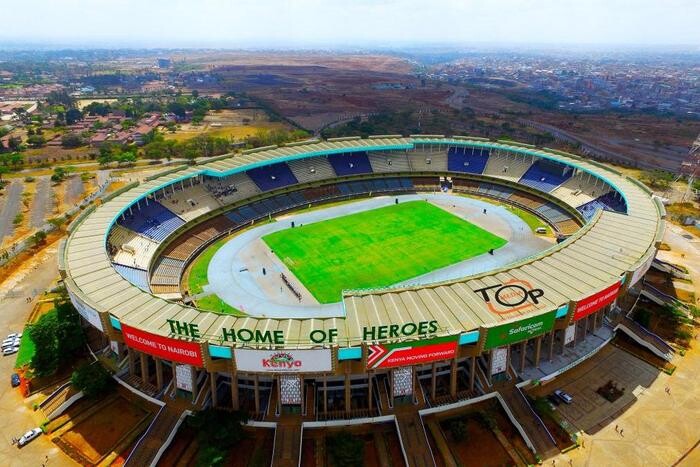
Nairobi has formally submitted its bid to host the 2029 World Athletics Championships, with the Kenyan capital facing competition from London, Rome and Munich. Four cities are now in contention for one historic decision, with World Athletics expected to announce the successful host after the inaugural World Athletics Ultimate Championships conclude in Budapest next month.
For Nairobi, however, this is about far more than securing another major sporting event. A successful bid would break a decades-long geographical barrier: despite Africa’s enormous influence on global athletics, the World Athletics Championships have never been staged on the continent.

A Nairobi victory would bring the World Athletics Championships to Africa for the first time in the event’s 50-year history and stage the global showpiece at an altitude of approximately 1,800 metres. The proposed venue is Moi International Sports Center Kasarani Stadium, which has a capacity of 48,063, while the Kenyan government has committed full backing for infrastructure, security and event delivery. Kenya’s athletics credentials are equally compelling, with 17 current world records and 72 World Championships gold medals, making it the second-most successful nation in championship history.
The significance of Nairobi’s bid is amplified by Kenya’s extraordinary place in the history of the sport. The country has produced generations of world-class distance runners and currently holds 17 recognised world records across middle- and long-distance events.

Kenya is also the second-most successful nation in World Athletics Championships history by gold medals, with 72 titles after the 2025 edition. At the Tokyo 2025 championships, Kenya claimed five gold medals, including victories by Beatrice Chebet in the 5,000m and 10,000m.
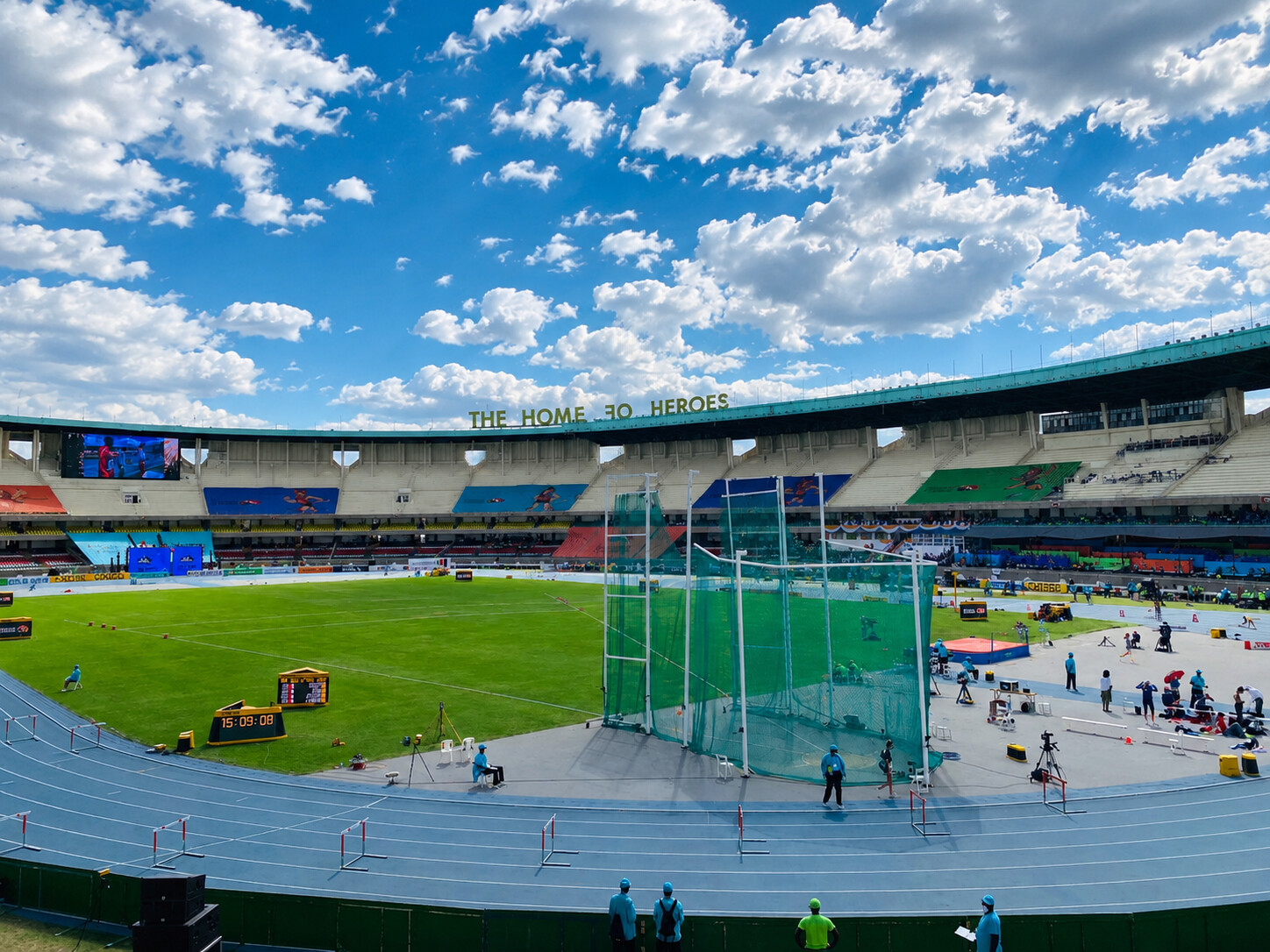
The country also has recent experience staging major international athletics competitions. Nairobi hosted the 2017 World U18 Championships and the 2021 World U20 Championships, while Kenya previously staged the 2007 World Cross Country Championships in Mombasa and the 2010 African Athletics Championships in Nairobi.
A Nairobi victory would therefore carry a powerful symbolism: the athletes who have helped define modern distance running on African soil could finally compete for world titles at home, in front of a Kenyan crowd.
The competition, however, will be formidable. London is seeking a return to the city that hosted the highly successful 2017 World Championships, while Rome and Munich bring their own strong European sporting traditions and established event infrastructure.
Yet Nairobi offers something none of its rivals can match — the opportunity to open an entirely new chapter in the history of the championships.
The World Athletics Championships have travelled across Europe, Asia, North America and the Middle East, but Africa has remained the missing continent on the event’s hosting map. Kenya’s bid seeks to change that.
With the formal bid now submitted and the final presentation and defence completed, Nairobi’s campaign enters its decisive phase. September will determine whether the championships finally make their long-awaited debut on African soil.
Four cities. One host. One potentially historic decision.
In September, World Athletics will decide whether the world’s greatest track and field athletes will converge on Nairobi in 2029 — and whether Africa will finally get its moment on the biggest stage of all.
by Erick Cheruiyot for My Best Runs.
Login to leave a comment

From Fourth to Bronze: Hobbs Kessler Elevated After Koech’s Disqualification
Hobbs Kessler has been officially elevated to third place in the men’s 1,500m from the 2025 U.S. Outdoor Championships, nearly a year after finishing fourth in the original final.
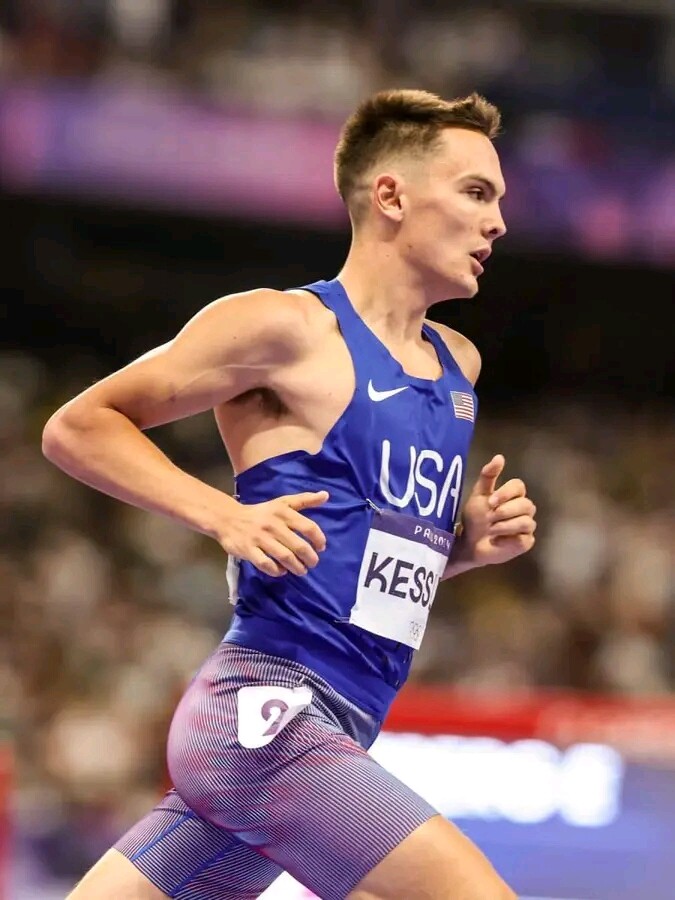
Kessler crossed the line fourth in a tightly contested race won by Jonah Koech. Ethan Strand finished second and Cole Hocker third, with the top three earning places on the U.S. team for the 2025 World Athletics Championships in Tokyo.
The standings have now been revised following USADA’s three-year sanction against Koech. His Athlete Biological Passport showed abnormalities consistent with blood doping, and his results from the specified period were disqualified. Koech did not challenge the case.
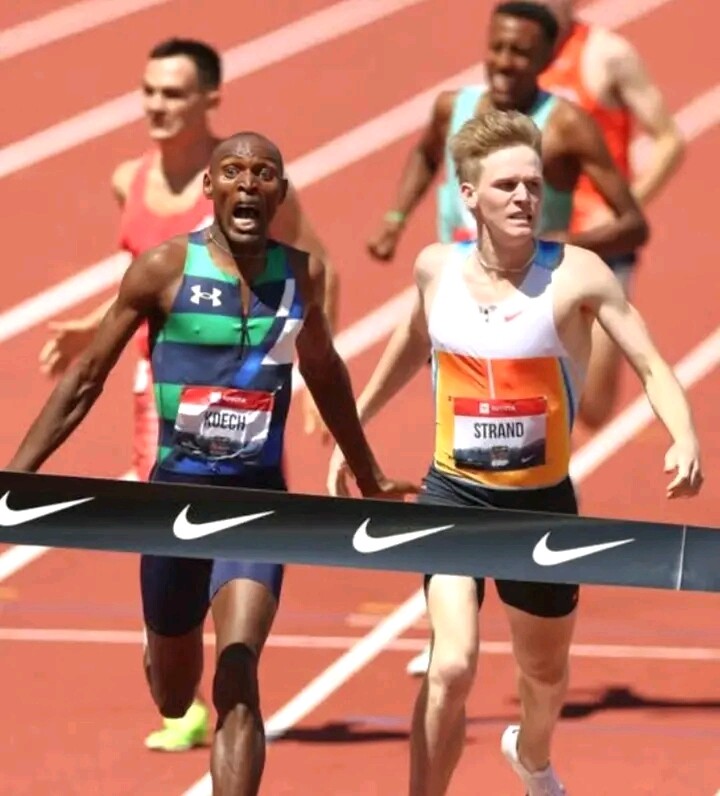
With Koech’s result removed, Strand moves into first place, Hocker rises to second and Kessler is promoted to third.
For Kessler, the revised classification brings an official U.S. championship bronze medal almost eleven months after the race.
However, the change comes long after the 2025 World Championships had already taken place. Kessler was not part of the three-athlete U.S. 1,500m team in Tokyo, and the later adjustment to the results cannot recreate that competition or the circumstances surrounding it.
That is one of the complexities of anti-doping enforcement: results can be corrected and championship records updated after a sanction, but those changes occur after the original competition has passed.
Kessler’s record now reflects a third-place finish, while Koech’s disqualification reshapes the final standings of one of the most closely contested races at the 2025 U.S. Championships.
Koech’s three-year period of ineligibility runs until July 2029.
Nearly a year later, the results have changed — and Hobbs Kessler officially moves from fourth to bronze.
by Erick Cheruiyot for My Best Runs.
Login to leave a comment
Can Amanal Petros Finally Turn Heartbreak into European Gold in Birmingham?
All eyes will be on Amanal Petros when the men’s marathon takes centre stage at the 2026 European Athletics Championships in Birmingham, with the German star chasing the major championship title that has repeatedly slipped through his fingers.
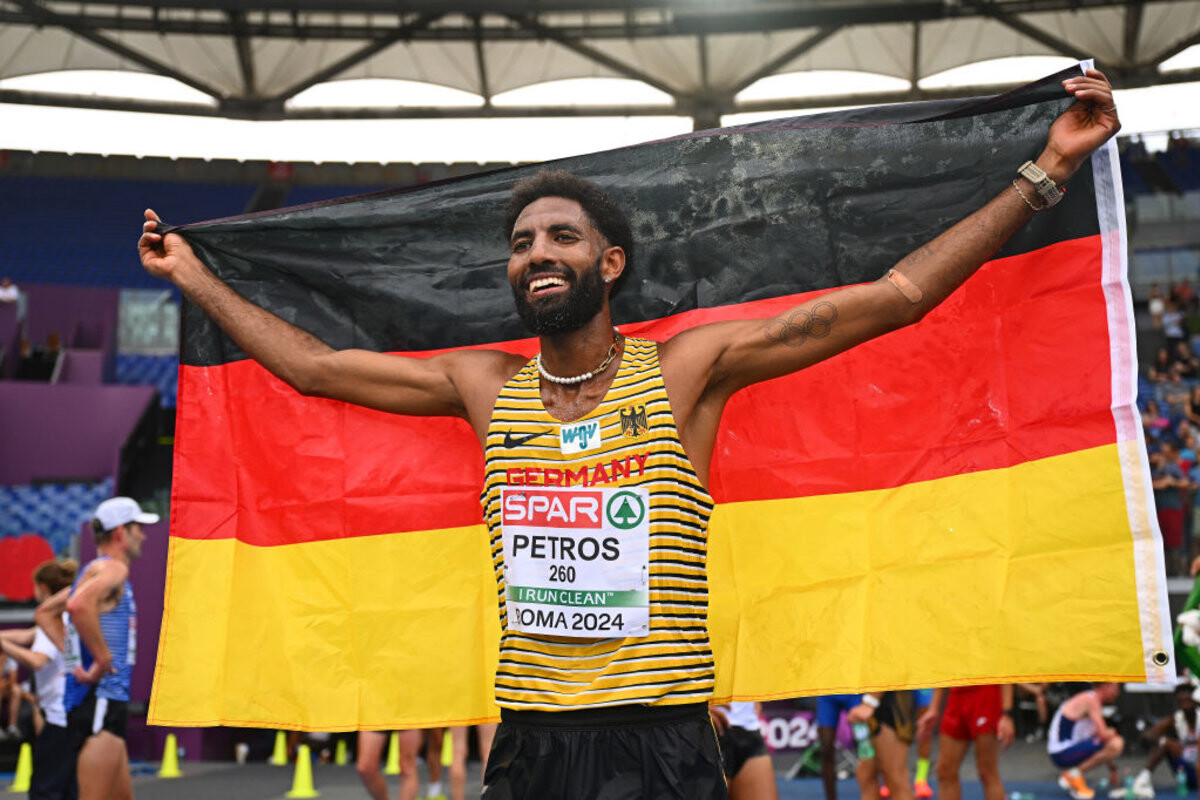
Petros arrives with one of the strongest résumés in the field and the credentials to challenge for gold. At 2:04:03, he is the third-fastest European marathoner of all time, behind Belgium’s Bashir Abdi (2:03:36) and France’s Morhad Amdouni (2:03:47). That level of performance underlines Petros’ ability to compete with the very best, although his career has also been marked by agonisingly narrow defeats on the biggest stages.
His most recent heartbreak came at the 2025 World Athletics Championships in Tokyo, where Tanzania’s Alphonce Simbu edged him out by just 0.03 seconds in one of the closest finishes in championship history. That defeat underlined both Petros’ quality and the fine margins that have prevented him from claiming an individual global title.
The European Championships have also brought frustration. At the 2024 European Athletics Championships, Petros took bronze in the half marathon after being beaten in a three-way finish by Italy’s Yemaneberhan Crippa. Two years earlier in Munich, he was unable to stay with the medal contenders during the decisive stages of the marathon.
Now Birmingham presents another opportunity—and Petros has every reason to believe this could finally be his moment.
His season-best of 2:08:31 does not tell the full story. At the London Marathon, Petros passed halfway in a blistering 61:16, initially targeting Bashir Abdi’s European record of 2:03:36, before easing during the latter stages. His 2:04:03 runner-up performance at the Valencia Marathon last December is arguably a much better indication of his true potential.
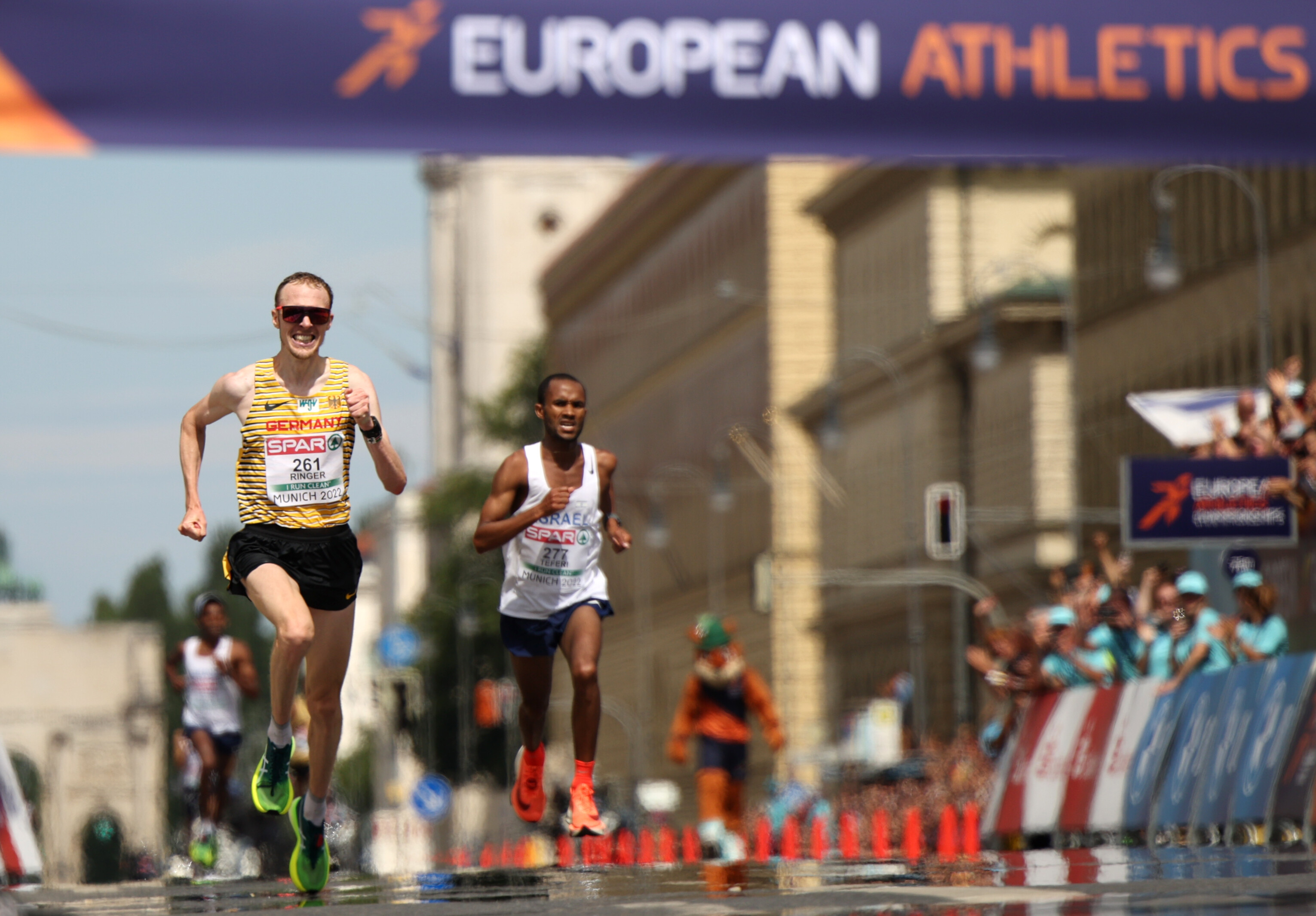
Standing in his way will be a strong German contingent, led alongside Petros by defending European champion Richard Ringer. Ringer produced one of the most memorable performances of the 2022 championships in Munich, unleashing a dramatic late surge during the final kilometre to overtake three athletes—including Petros—and snatch a remarkable victory.
At 37, Ringer continues to compete at an exceptional level. He produced the fastest marathon of his career in April, running 2:04:47 at the Boston Marathon to finish eighth overall while recording the fastest European time in the race.
Germany’s strength does not end there. Samuel Fitwi has been even faster in 2026, recording a personal best of 2:04:45 when finishing second at the Hamburg Marathon. That performance makes him the fastest athlete on the Birmingham entry list based on season’s bests.
With Petros, Ringer and Fitwi forming a formidable German trio, the team will have serious ambitions of collecting individual medals while also challenging for the team title. Their depth could prove particularly valuable in a championship marathon, where tactical racing and team strength can be just as important as raw personal-best times.
France’s Emmanuel Roudolff is among the principal threats to the German challenge. He established a personal best of 2:05:58 when finishing sixth at the Paris Marathon and has the speed to remain in contention if the race develops into a fast affair.
Veteran Kaan Kigen Özbilen will also bring considerable experience to the starting line. The Kenyan-born Turkish athlete, who once held the European record with 2:04:16, remains capable of competing at the highest level. He ran 2:05:59 for fifth in Barcelona earlier this year.
Israel will also arrive with a strong team, having won the marathon team title in Munich four years ago. Maru Teferi and Gashau Ayale, who claimed silver and bronze respectively in Munich, return with valuable championship experience and will hope to challenge for more medals in Birmingham.
Italy’s hopes will centre on Pietro Riva. With Crippa focusing on the 10,000m and Iliass Aouani sidelined by shin problems, Riva becomes Italy’s leading marathon contender. He finished second behind Crippa and ahead of Petros in the half marathon at the 2024 European Championships, giving him another opportunity to challenge the German favourite on the European stage.
For the home crowd, one of the most intriguing stories will be Mahamed Mahamed, who could give Britain a realistic shot at its first men’s European marathon medal in decades.
Great Britain has not won a men’s marathon medal at these championships since Ian Thompson claimed gold in Rome in 1974. Mahamed has emerged as a genuine contender after producing a lifetime best of 2:06:14 at the London Marathon in April. That performance made him the second-fastest British marathoner in history behind Mo Farah, while also placing him fourth among the Birmingham entrants based on 2026 season’s bests.
With a home crowd behind him and confidence gained from his breakthrough performance in London, Mahamed could become one of the most dangerous outsiders in the field.
Birmingham therefore promises a fascinating battle between proven championship performers, emerging German strength and a collection of experienced international challengers. Petros, however, remains the man at the centre of the story.
He has already come agonisingly close to major championship glory. He possesses the speed, experience and proven ability to run under 2:05. What remains is to produce the decisive performance when the medals are on the line.
After years of near misses, Birmingham could finally be the stage where Amanal Petros turns silver and heartbreak into European gold.
by Erick Cheruiyot for My Best Runs.
Login to leave a comment
European Athletics Champioships
The27thEuropean Athletics Championshipswill be held from 10 to 16 August 2026 at theAlexander StadiuminBirmingham, United Kingdom.[1] This is the first time that a British city will have staged the European Athletics Championships although Birmingham has hosted many high-profile events, including the2007 European Athletics Indoor Championships, the2003and2018 IAAF World Indoor Championshipsand the2022 Commonwealth Games. Alexander Stadium was renovated between 2019 and...
more...
London Takes a Giant Leap Toward Hosting the 2029 World Athletics Championships
London has taken a major step toward welcoming the world's best athletes once again after Athletic Ventures officially submitted its final bid to host the 2029 World Athletics Championships.
The bid, finalized on August 6, 2026, represents the culmination of months of planning by Athletic Ventures—a partnership between UK Athletics, London Marathon Events, and the Great Run Company. Together, the organizations are seeking to bring the world's premier athletics event back to the British capital and its iconic London Stadium.
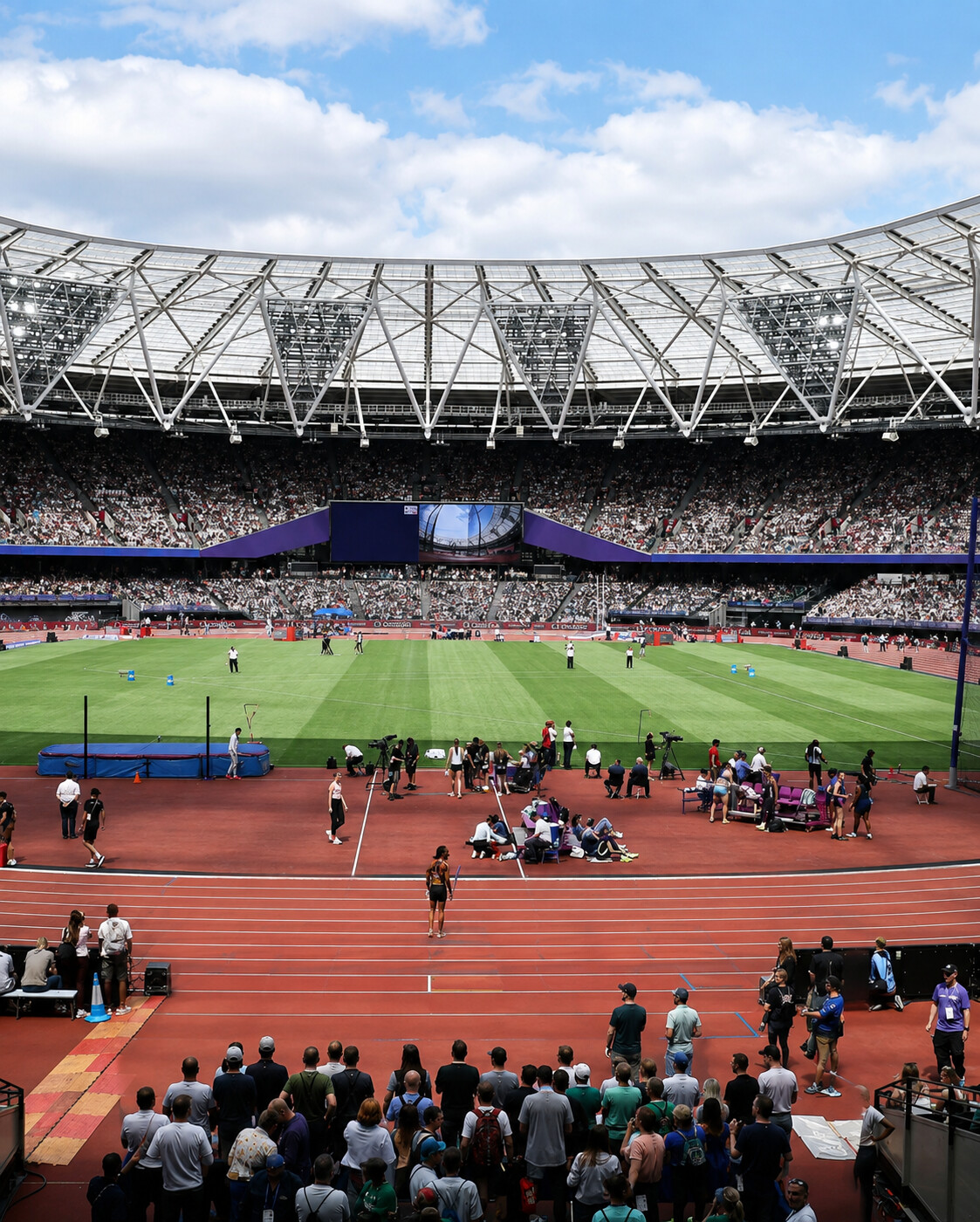
The campaign gathered significant momentum after UK Athletics and its partners secured a landmark agreement with West Ham United and London Stadium LLP, resolving earlier scheduling concerns and officially confirming London Stadium as the proposed championship venue. The agreement removes one of the biggest obstacles facing the bid and reinforces London's readiness to stage another world-class event.
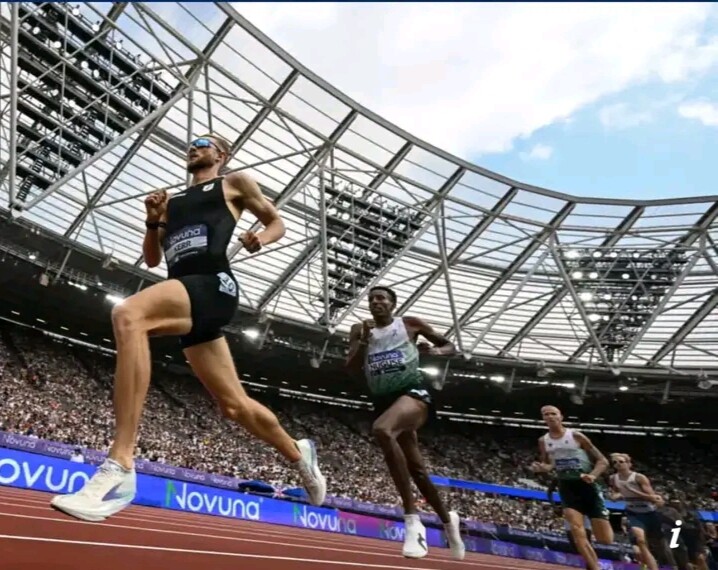
London Stadium remains one of athletics' most celebrated arenas. Originally built as the centerpiece of the 2012 Olympic Games, the venue successfully hosted the 2017 World Athletics Championships, producing packed crowds, unforgettable performances, and one of the most vibrant atmospheres the sport has witnessed. That proven legacy has become a cornerstone of London's latest campaign.
The bid has also received strong financial backing, with £45 million (approximately $61 million) in public funding committed by the UK Government and the Mayor of London. Organizers believe the investment will help deliver a championship capable of setting new standards both on and off the track.
Beyond elite competition, the proposed championships are expected to leave a lasting legacy. Bid organizers estimate the event could generate more than £400 million in economic and social benefits through tourism, job creation, business opportunities, and community engagement. Plans also include major mass-participation running events designed to inspire people of all ages to embrace athletics and healthy lifestyles.
For British athletics, hosting the championships would provide a powerful platform to inspire the next generation of athletes while reaffirming London's status as one of the world's leading destinations for global sporting events. With world-class infrastructure, experienced organizers, and passionate fans, the city believes it has all the ingredients to deliver another memorable edition of the championships.
Attention now turns to the final decision. World Athletics is expected to announce the successful host city in September 2026, with London facing strong competition from Rome, Munich, and Nairobi in the race to stage the 2029 championships.
As anticipation builds, athletics fans around the world will soon discover which city will earn the privilege of hosting the sport's biggest global gathering. If successful, London would once again become the heartbeat of world athletics, offering another spectacular stage where history can be written.
Who do you think deserves to host the 2029 World Athletics Championships—London, Rome, Munich, or Nairobi?
by Erick Cheruiyot for My Best Runs.
Login to leave a comment

Josh Kerr Sets His Sights on History: World Record Glory and Olympic Gold Drive Britain's Middle-Distance Star
Fresh from a thrilling victory in the mile at the Glasgow 2026 Commonwealth Games, Josh Kerr has made one thing abundantly clear—his greatest achievements may still lie ahead.
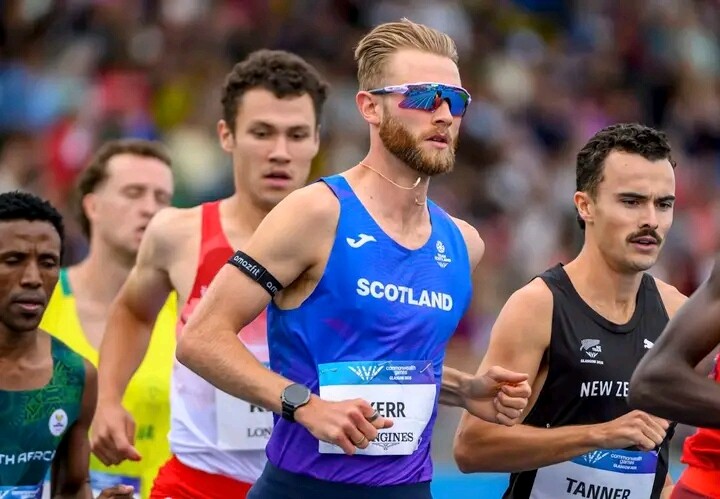
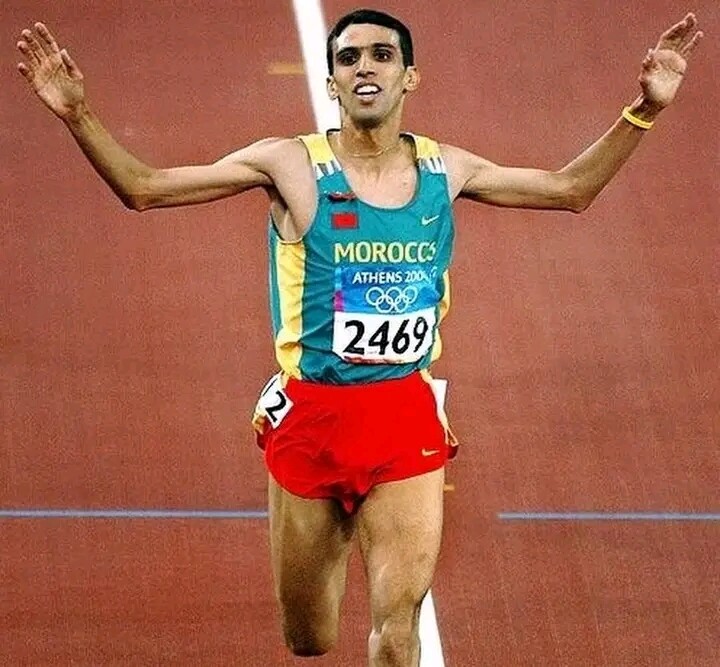
The British middle-distance star has unveiled an ambitious roadmap that could redefine his legacy, with two towering objectives at the heart of his journey: breaking Hicham El Guerrouj's legendary 1500m world record of 3:26.00, set on July 14, 1998, in Rome, and capturing the Olympic 1500m title at the Los Angeles 2028 Olympic Games.
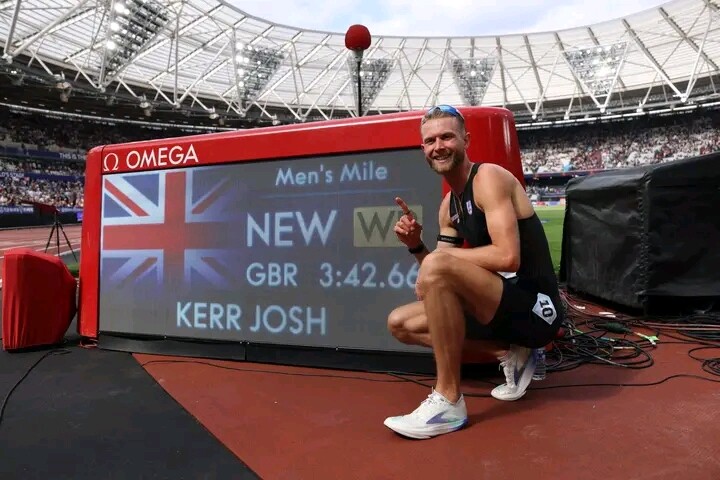
Kerr enters this new chapter with confidence soaring after producing one of the most remarkable performances in middle-distance history. His sensational 3:42.66 during the groundbreaking Project 222 campaign shattered the men's mile world record, ending a 27-year reign and proving he possesses the speed, endurance, and tactical brilliance required to challenge the sport's greatest barriers.
That achievement has strengthened Kerr's belief that the oldest and most revered record in men's middle-distance running is now within reach. For more than 28 years, Hicham El Guerrouj's 3:26.00, set in Rome on July 14, 1998, has stood as the benchmark of excellence in the 1500m, surviving generations of world-class challengers and earning a reputation as one of athletics' most untouchable performances.
Rather than rushing the attempt, Kerr has laid out a carefully calculated plan designed to maximize his chances of success. His immediate priority is the 2027 World Athletics Championships in Beijing, where he hopes to reclaim the world 1500m title and reaffirm his position among the sport's elite.
Only after that championship campaign will his focus shift toward an assault on El Guerrouj's historic mark. A dedicated world-record attempt is expected later in 2027, built around months of meticulous preparation, altitude training, world-class pacing, ideal racing conditions, and flawless execution—the same ingredients that powered his record-breaking mile performance.
For Kerr, world records are not won by chance. They are earned through relentless preparation, perfect timing, and the courage to attack history when every detail aligns.
Beyond the pursuit of history lies one final prize that continues to fuel his ambition: Olympic gold.
Having earned bronze at the Tokyo 2020 Olympics and silver at the Paris 2024 Games, Kerr now has just one medal missing from an already glittering collection. His ultimate objective is to stand atop the Olympic podium in Los Angeles in 2028, completing a remarkable progression from bronze to silver and finally to gold.
If successful, Kerr would not only cement his place among Britain's greatest middle-distance runners but also become the first athlete to erase Hicham El Guerrouj's iconic 3:26.00 world record since it was established in Rome on July 14, 1998, before completing his Olympic medal collection with the sport's ultimate prize.
The stage is set, the blueprint is in place, and the countdown has begun. The question now is whether Josh Kerr can accomplish what generations of elite milers have failed to do—rewrite one of athletics' most enduring records and crown his career with Olympic gold in Los Angeles.
by Erick Cheruiyot for My Best Runs.
Login to leave a comment

Noah Lyles: A Decade of Sprinting Greatness from World U20 Star to Global Icon
Ten years ago, a fearless teenager stepped onto the track at the World U20 Championships in Bydgoszcz, Poland, and introduced himself to the athletics world with a performance that hinted at an extraordinary future. On that memorable stage, Noah Lyles captured the men's 100m title in 10.17 seconds before anchoring the United States to victory in the 4×100m relay, marking the beginning of one of the most remarkable sprinting careers of the modern era.
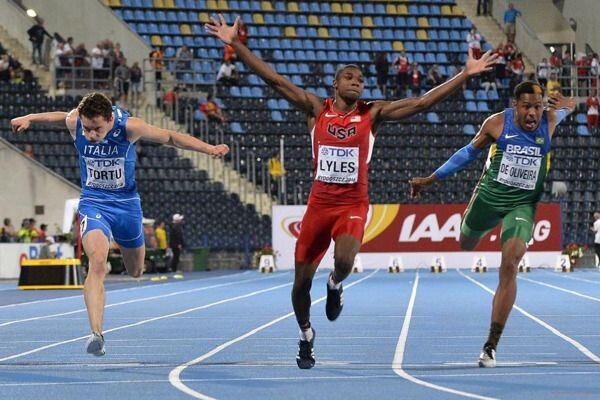
A decade later, that promising young talent has evolved into one of the greatest sprinters of his generation, building a legacy defined by championship success, consistency, and breathtaking speed.
Lyles has rewritten the American record books with a sensational 19.31 seconds over 200 metres, surpassing Michael Johnson's long-standing U.S. record and producing one of the fastest performances in history. The run firmly established him among the all-time greats in the event.
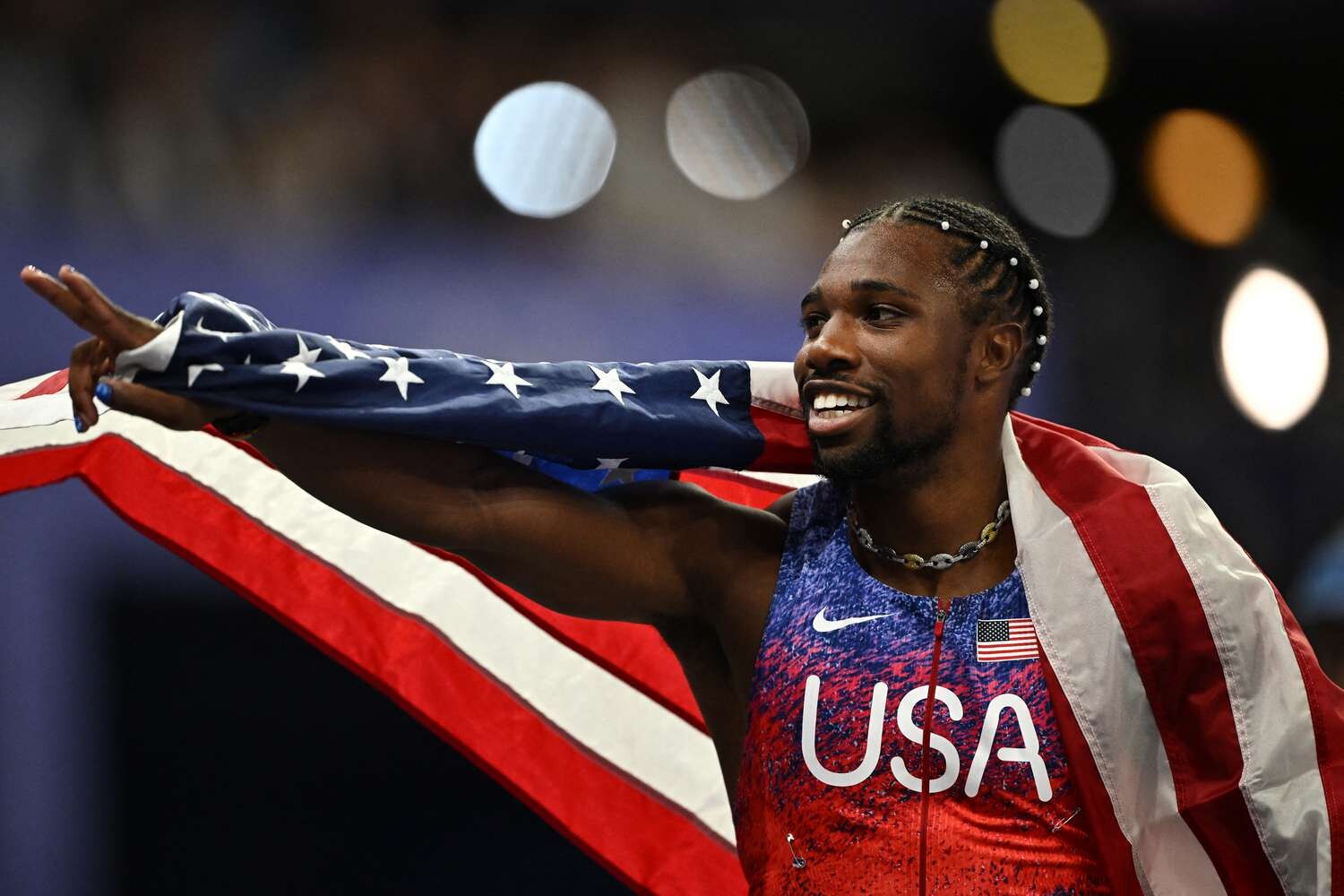
His greatest Olympic triumph came at the Paris 2024 Olympic Games, where he claimed the men's 100m gold medal in one of the closest finishes ever witnessed. Lyles crossed the line just 0.005 seconds ahead of the field, delivering one of the most dramatic victories in Olympic sprint history and cementing his place as the world's fastest man.
His dominance has extended across multiple World Athletics Championships, where he has amassed eight gold medals in the 100m, 200m, and 4×100m relay. Among those achievements, his remarkable streak of four consecutive world titles in the 200m stands as a testament to his sustained excellence and unrivalled consistency at the highest level.
Even after a decade at the top, Lyles continues to prove he remains the benchmark in global sprinting. Most recently, he successfully defended his U.S. men's 100m title, matching his lifetime best of 9.79 seconds to reaffirm that he is still one of the sport's most formidable competitors.
From a confident teenager announcing his arrival on the international stage in Poland to an Olympic champion, American record holder, and multiple-time world champion, Noah Lyles has transformed talent into an enduring legacy. His journey over the past ten years has inspired a new generation of athletes while redefining excellence in sprinting.
Ten years have passed since his breakthrough in Bydgoszcz, but for Noah Lyles, the pursuit of greatness is far from over. If anything, the next chapter promises to be just as compelling as the first.
by Erick Cheruiyot for My Best Runs.
Login to leave a comment
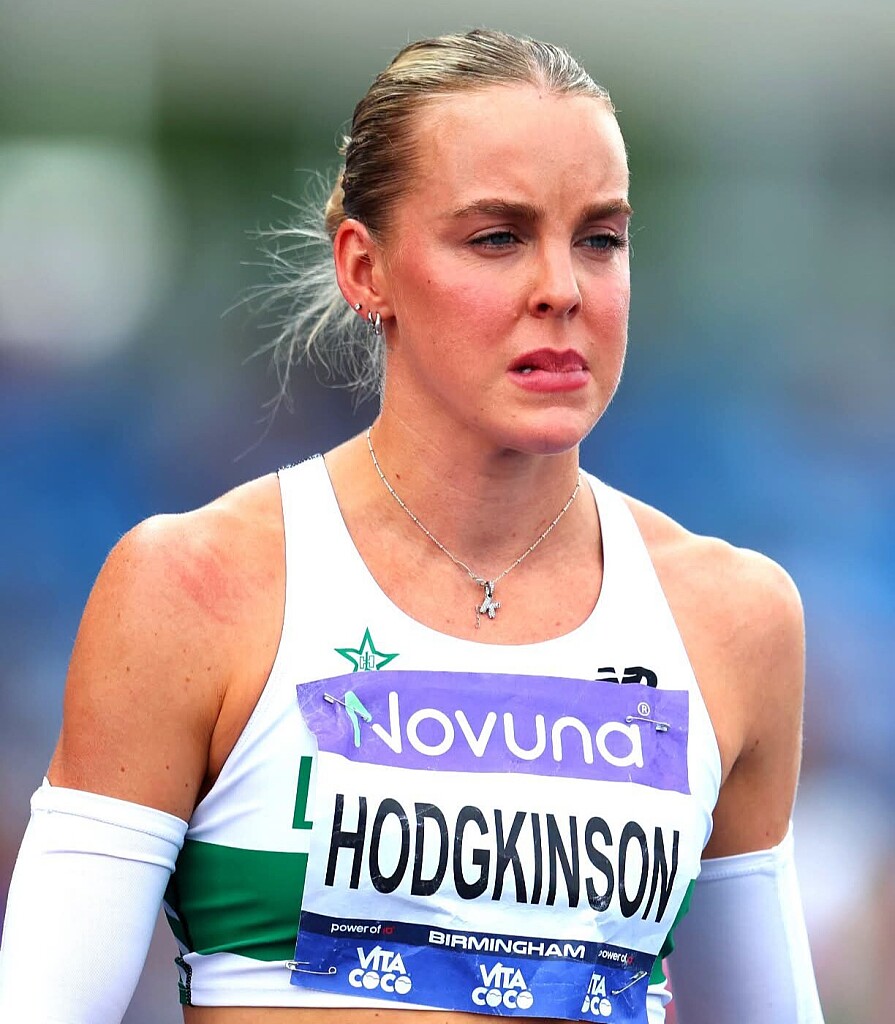
Keely Hodgkinson Maps Out Defining Three-Race Campaign as European Title Defence Takes Center Stage
Olympic champion Keely Hodgkinson is preparing for the most important phase of her 2026 season, with the British middle-distance star targeting success across three of the year's biggest competitions in what promises to be a defining championship campaign.
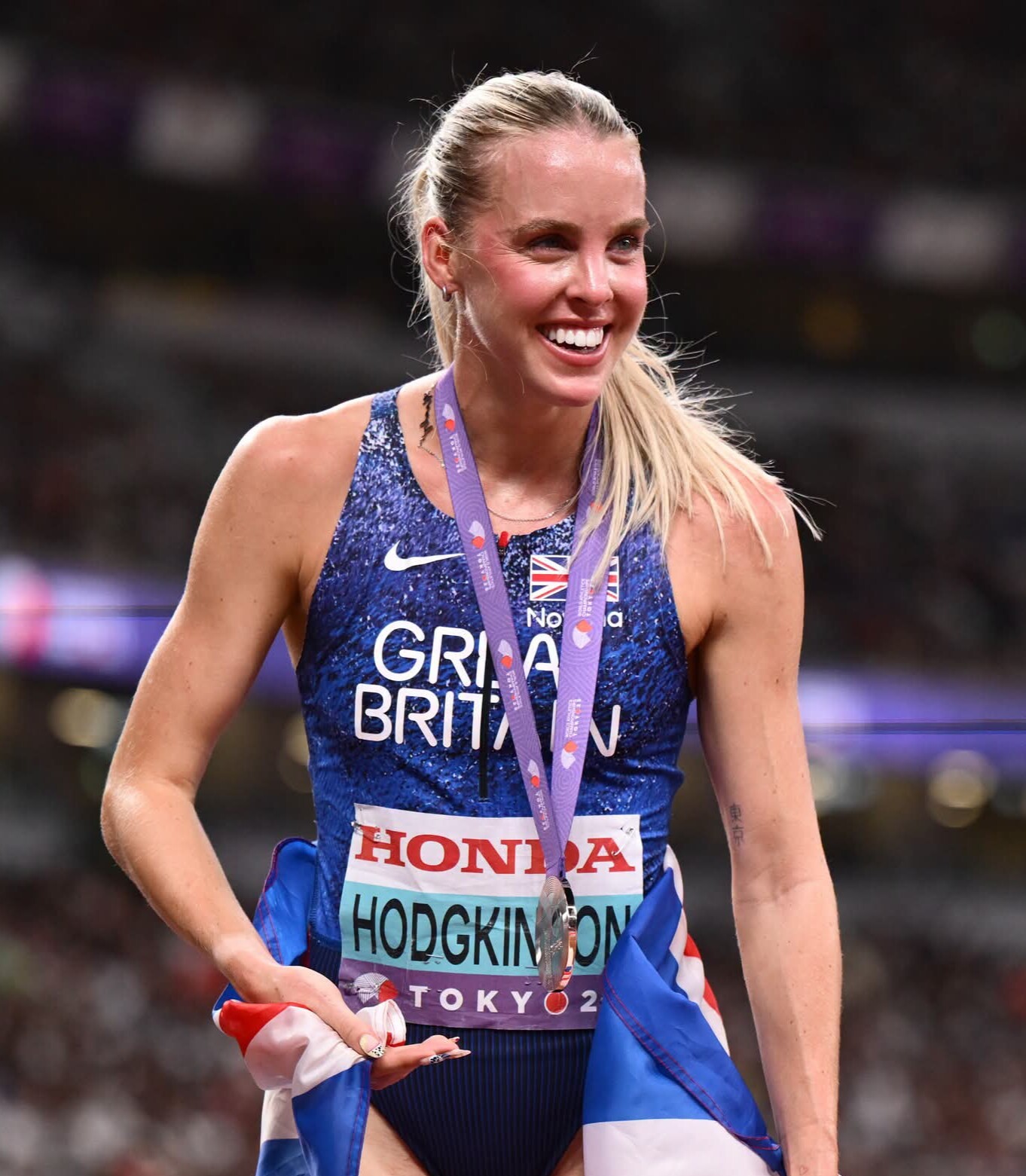
After making the strategic decision to skip the Glasgow 2026 Commonwealth Games, Hodgkinson has prioritized recovery and careful preparation to ensure she reaches peak form for the major championships that lie ahead. The move underlines her long-term ambition of adding more international titles to an already remarkable career.
Her first objective is the European Athletics Championships, which will be held from August 10–16 at Birmingham's Alexander Stadium. Competing in front of a home crowd, Hodgkinson will aim to successfully defend her women's 800 metres crown against one of the strongest fields assembled this season.
Among the leading challengers expected to contest the title are Switzerland's rising star Audrey Werro and Dutch world-class athlete Femke Bol, setting the stage for what could become one of the championship's most anticipated middle-distance races. With several of the world's elite lining up, the battle for European gold is expected to deliver a thrilling spectacle.
The focus will then shift to the Ultimate World Athletics Championships in Budapest, Hungary, from September 11–13. There, Hodgkinson will once again face the world's finest 800m specialists as she pursues another major international triumph on one of athletics' biggest stages. The championship represents another opportunity for the Olympic champion to reinforce her status as one of the dominant forces in women's middle-distance running.
Her season will conclude just days later at ATHLOS London on September 18, where she is set to headline the inaugural ATHLOS event outside the United States. The competition will bring together many of the world's top female athletes, with a lucrative $65,000 winner's prize adding further significance to an already prestigious meeting.
For Hodgkinson, the closing weeks of the season represent far more than a series of races. They are an opportunity to defend her European title, challenge for global glory in Budapest, and cap off an outstanding campaign with another memorable performance on home soil in London.
With three major events in little more than a month, all eyes will be on the British star as she embarks on a championship journey that could define her 2026 season and further cement her legacy among the world's greatest 800m runners.
by Erick Cheruiyot for My Best Runs.
Login to leave a comment
European Athletics Champioships
The27thEuropean Athletics Championshipswill be held from 10 to 16 August 2026 at theAlexander StadiuminBirmingham, United Kingdom.[1] This is the first time that a British city will have staged the European Athletics Championships although Birmingham has hosted many high-profile events, including the2007 European Athletics Indoor Championships, the2003and2018 IAAF World Indoor Championshipsand the2022 Commonwealth Games. Alexander Stadium was renovated between 2019 and...
more...
Europe's Elite Women Marathoners Ready for Thrilling Championship Battle in Birmingham
The women's marathon at the 2026 European Athletics Championships is set to be one of the most eagerly anticipated races of the championships, bringing together an exceptional field of experienced championship performers, rising stars, and defending medalists in what promises to be a fascinating battle for European glory.
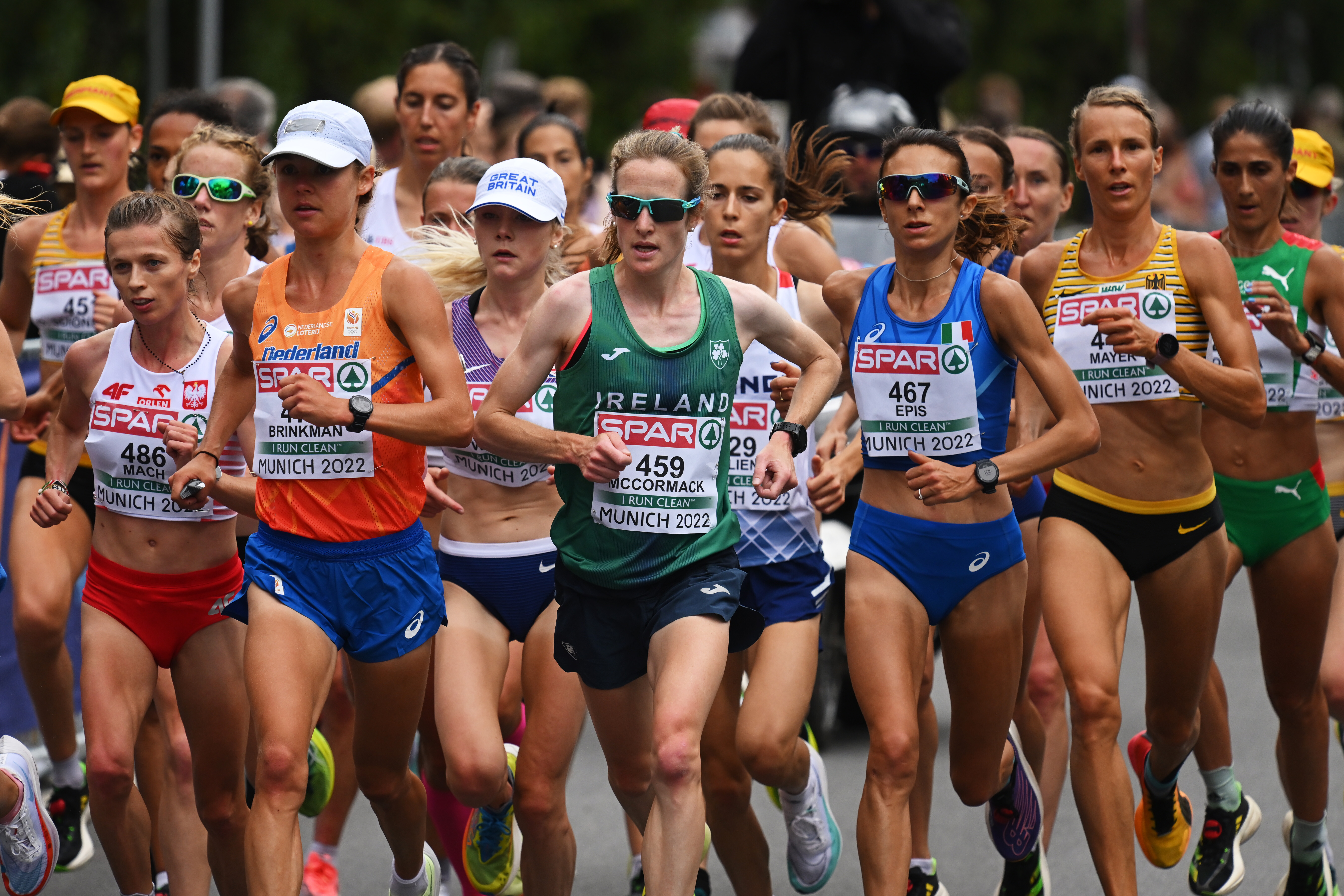
While Finland's Alisa Vainio enters Birmingham as the fastest European woman this season after clocking a brilliant 2:20:39 at the Seville Marathon, she faces stiff competition from some of the continent's strongest marathon nations, including Germany, Spain, Poland, Ireland, and host nation Great Britain.
Vainio's journey to the top has been years in the making. Widely regarded as one of Europe's brightest teenage distance-running prospects, she qualified for the marathon for the Rio 2016 Olympic Games at just 18 years old but was unable to compete because she did not meet the minimum age requirement. Instead of fading from the spotlight, she steadily rebuilt her career and has now matured into one of Europe's premier marathon runners.
Her breakthrough came at the 2025 World Athletics Championships in Tokyo, where she produced a composed and intelligent race in oppressive heat and humidity to finish fifth overall as the first European athlete across the finish line. Just three weeks later, she shattered the Finnish marathon record with a solo 2:23:06 performance at the national championships in Vantaa.
Vainio has continued her remarkable momentum ever since. She completed three additional marathons, highlighted by a commanding victory at the Seville Marathon, where she lowered the Finnish record once again while setting the European-leading mark of 2:20:39, establishing herself as the athlete to beat heading into Birmingham.
Germany arrives with one of the deepest squads in the championship and will be aiming to defend the women's team title won in Munich four years ago. Fabienne Königstein leads the German challenge after setting a personal best of 2:22:17 with a sixth-place finish at the Berlin Marathon. She is joined by the versatile Laura Hottenrott, who added another major achievement to her career earlier this year by winning silver in the uphill race at the European Athletics Off-Road Running Championships.
Spain also boasts an exceptionally strong lineup and is expected to challenge for both the individual and team honors. Fatima Azzahraa Ouhaddou Nafie demonstrated her championship resilience by recovering from a mid-race fall to win the marathon at the 2025 European Running Championships. Laura Luengo brings a personal best of 2:22:31, while Meritxell Soler, Ester Navarrete, and Carolina Robles complete a formidable squad. Impressively, every Spanish athlete in the team owns a lifetime best under 2:25, highlighting the country's remarkable marathon depth.
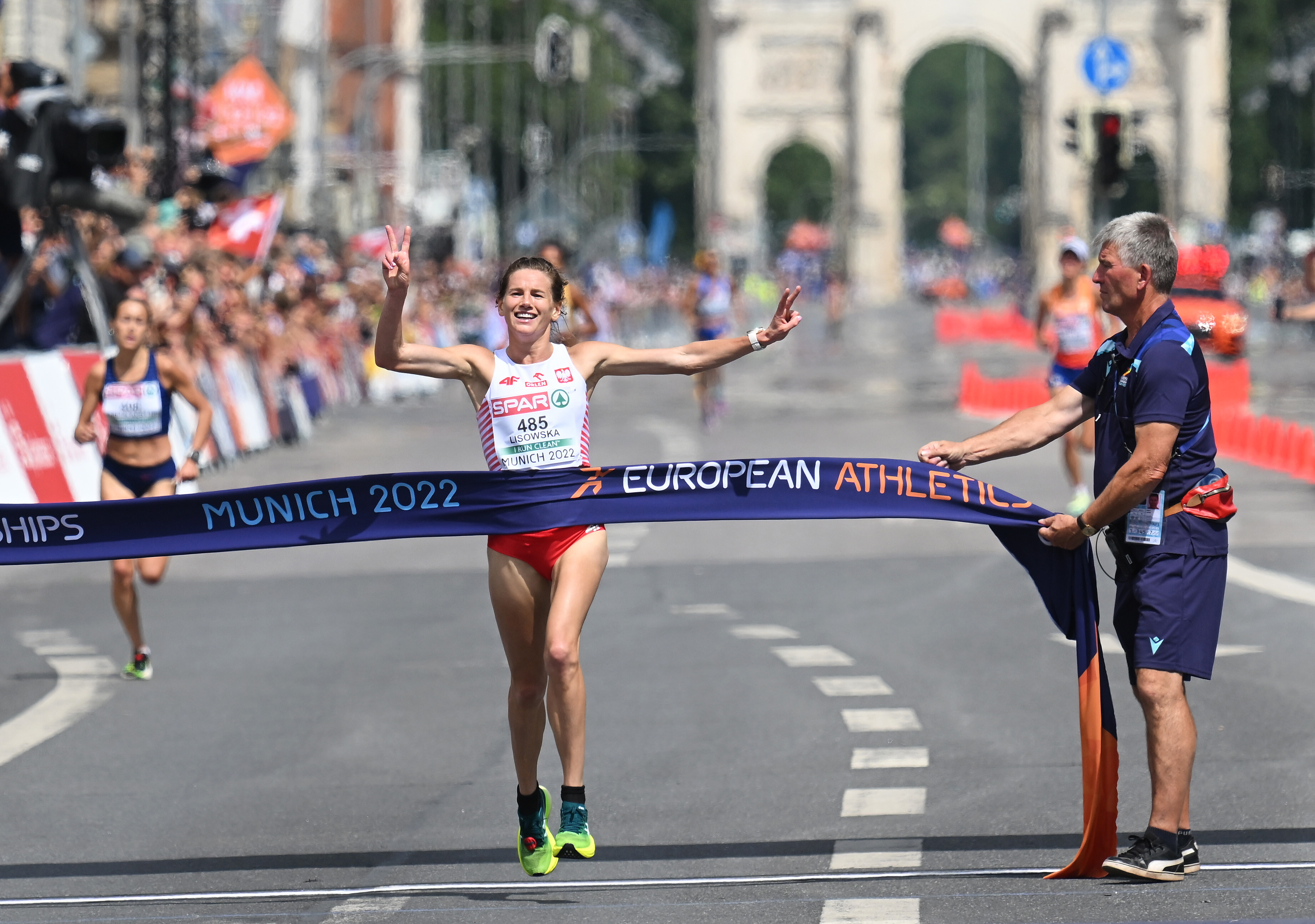
Defending champion Aleksandra Lisowska of Poland cannot be overlooked despite not being among the pre-race favorites. Her surprise victory in Munich four years ago proved that championship marathons often reward tactical brilliance, patience, and resilience rather than raw speed alone. Having already demonstrated her ability to thrive under championship pressure, the Polish star remains a genuine threat in Birmingham.
Ireland's Fionnuala McCormack will also be one of the most compelling athletes to watch. Just weeks before her 42nd birthday, the experienced marathoner continues her pursuit of a first European Championships medal after several near misses during her distinguished career. She finished fourth twice in the 10,000m at previous championships and was seventh in the marathon in Munich before producing another impressive performance with ninth place at the 2025 World Athletics Championships, finishing second among the European athletes behind Vainio.
Host nation Great Britain will be eager to make history on home roads. British women have never won an individual medal in the European Athletics Championships marathon since the event was introduced in 1982. Their hopes rest with Paris Olympians Rose Harvey and Clara Evans, alongside 2023 European cross-country bronze medallist Abbie Donnelly, who made an impressive marathon debut with a time of 2:24:11 in Frankfurt last year.
With proven champions, emerging contenders, experienced veterans, and deep national teams all chasing medals, the women's marathon is expected to deliver one of the most competitive races of the championships. Whether the title is decided by relentless pace, tactical patience, or a decisive late surge, Birmingham is set to provide a memorable contest worthy of the European crown.
by Erick Cheruiyot for My Best Runs.
Login to leave a comment
European Athletics Champioships
The27thEuropean Athletics Championshipswill be held from 10 to 16 August 2026 at theAlexander StadiuminBirmingham, United Kingdom.[1] This is the first time that a British city will have staged the European Athletics Championships although Birmingham has hosted many high-profile events, including the2007 European Athletics Indoor Championships, the2003and2018 IAAF World Indoor Championshipsand the2022 Commonwealth Games. Alexander Stadium was renovated between 2019 and...
more...
Georgia Hunter Bell Sets Up Blockbuster Commonwealth 800m Final Rematch with Lilian Odira
Georgia Hunter Bell produced another composed and commanding performance to book her place in the women's 800m final at the 2026 Commonwealth Games, setting the stage for what promises to be one of the most captivating races of the championships.
Representing England, Hunter Bell controlled her semi-final with confidence before crossing the line in a superb 1:59.88, comfortably securing automatic qualification for Friday night's title race in Glasgow. Her performance underlined both her consistency and championship experience, sending a clear message to the rest of the field that she is ready to challenge for Commonwealth gold.
The excitement surrounding the final intensified even further after reigning world champion Lilian Odira of Kenya also produced a masterclass in her semi-final. Running with complete confidence and remarkable composure, Odira cruised to victory in 1:59.39, ensuring that the two biggest stars of the event will once again share the starting line in what is shaping up to be a blockbuster rematch.
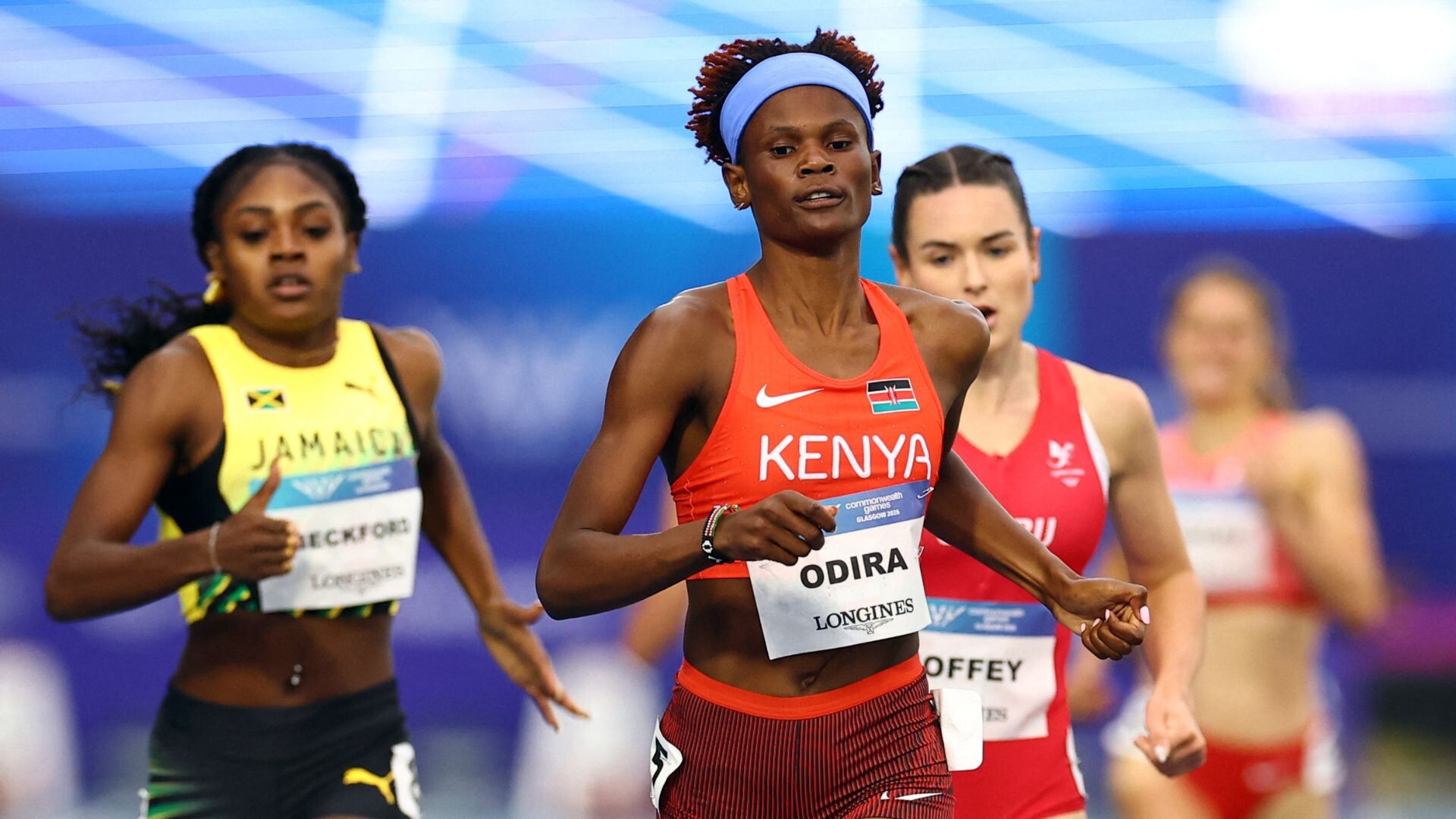
Their latest meeting rekindles one of the most compelling rivalries in women's middle-distance running. The pair last met on the sport's biggest stage at the 2025 World Athletics Championships in Tokyo, where Odira held off a relentless challenge from Hunter Bell to win the world title in a championship-record 1:54.62, while the English star claimed the silver medal after an unforgettable race that had fans around the world on the edge of their seats.
Now, with Commonwealth glory at stake, another fascinating chapter is about to be written. Odira will be aiming to reinforce her status as the world's premier 800m runner, while Hunter Bell will be determined to reverse the result and capture one of the biggest titles of her career. Their contrasting styles—Odira's fearless front-running strength against Hunter Bell's tactical brilliance and devastating finishing kick—could produce yet another modern classic.
Athletics fans can expect an electric atmosphere inside the Glasgow stadium as two of the world's finest 800m athletes battle for gold. With the field packed with quality and the leading contenders separated by only fractions of a second, the final has all the ingredients of a championship masterpiece that could be remembered for years to come.
The women's 800m final is scheduled for Friday night, July 31, with thousands expected inside the Glasgow stadium and millions more around the world eagerly awaiting what promises to be one of the most thrilling races of the 2026 Commonwealth Games.
Women's 800m Final Start List
1. Rachel Klopfenstein (Canada)
2. Kelly-Ann Beckford (Jamaica)
3. Shafiqua Maloney (Saint Vincent and the Grenadines)
4. Sarah Billings (Australia)
5. Georgia Hunter Bell (England)
6. Oratile Nowe (Botswana)
7. Lilian Odira (Kenya)
8. Isabelle Boffey (England)
With both Odira and Hunter Bell arriving in the final after emphatic semi-final victories, anticipation has reached fever pitch. The reigning world champion will look to extend her dominance, while the world silver medallist has the perfect opportunity to rewrite the script and claim Commonwealth glory. If their previous encounters are any indication, Glasgow is about to witness a spectacular race filled with tactical brilliance, relentless determination and a breathtaking finish that could become one of the defining moments of these Commonwealth Games.
by Erick Cheruiyot for My Best Runs.
Login to leave a comment
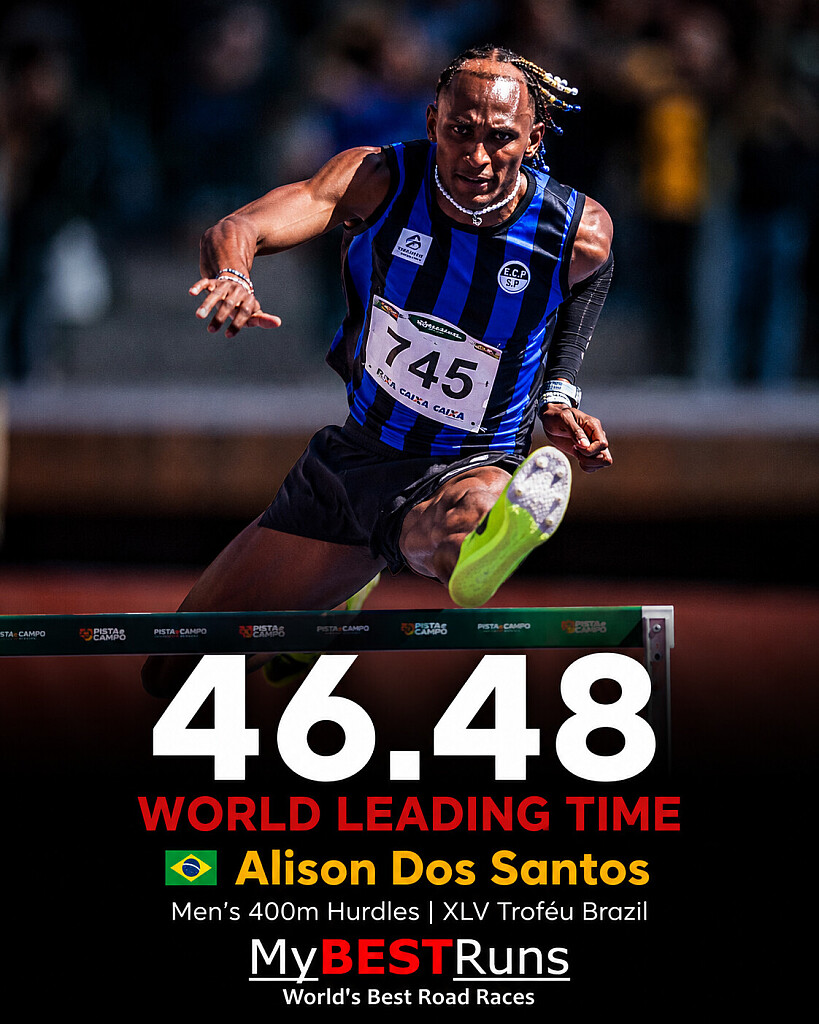
Alison Dos Santos Roars Back to the Top with World-Leading 46.48 at Troféu Brasil
Brazilian 400m hurdles star Alison Dos Santos has delivered a powerful statement ahead of the major championships, producing a sensational world-leading 46.48 seconds to win at the XLV Troféu Brasil in front of an ecstatic home crowd.
The breathtaking performance marked Dos Santos' fastest race since his unforgettable triumph at the 2022 World Athletics Championships, where he claimed global gold in dominant fashion. After battling injuries and setbacks over the past few seasons, the Brazilian has once again reminded the athletics world why he remains one of the event's greatest talents.
Clocking 46.48, Dos Santos surged to the top of the 2026 world rankings with a display of speed, rhythm, and flawless hurdling that left no doubt about his return to peak form. Every stride reflected the confidence and explosiveness that made him a world champion, sending a clear warning to his rivals that he is ready to challenge for more international titles.
The performance is more than just a fast time—it is a powerful comeback story. Returning to his very best after years of determination and resilience, Dos Santos has reignited excitement in one of track and field's most competitive events. His run not only thrilled the home fans but also reshaped the global picture in the men's 400m hurdles.
With the championship season gathering momentum, Alison Dos Santos has placed himself firmly back among the favourites. If this remarkable run is any indication, the Brazilian superstar is once again ready to chase gold on the world's biggest stages, proving that champions always find a way back to the top.
by Erick Cheruiyot for My Best Runs.
Login to leave a comment

WORLD CHAMPION BEATRICE CHEBET CELEBRATES HER GREATEST VICTORY YET — MOTHERHOOD
Kenyan athletics superstar and world champion Beatrice Chebet has officially entered a beautiful new chapter in her life after welcoming a baby boy.

The 26-year-old track sensation, born on 5 March 2000, has built a remarkable legacy as one of the greatest distance runners of her generation. Chebet is a world record holder in the 5000m, 10,000m and road 5km, with a career decorated by historic victories on the biggest stages.
She made history at the 2024 Summer Olympics by winning gold medals in both the 5000m and 10,000m, before achieving the same remarkable double at the 2025 World Athletics Championships. Her medal collection also includes a 5000m silver medal at the 2022 World Athletics Championships and bronze at the 2023 World Athletics Championships.
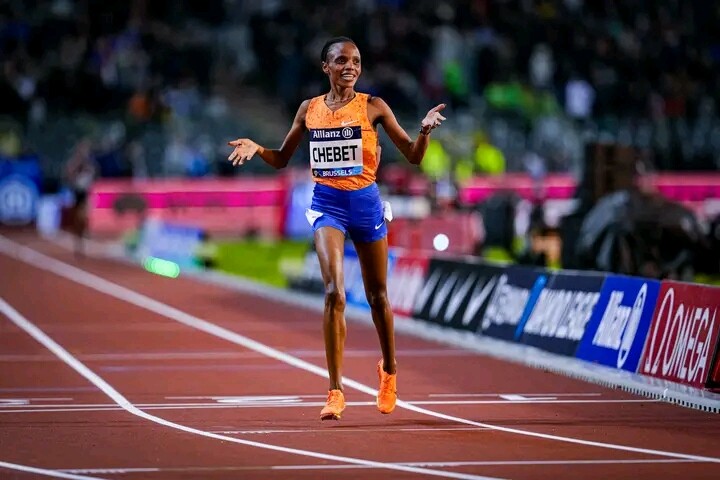
Beyond the track, Chebet has also dominated cross country, becoming a three-time world champion after winning the junior title in 2019 and senior titles in 2023 and 2024. She has also claimed major 5000m victories at the 2018 World U20 Championships, 2022 Commonwealth Games and the 2022 African Championships in Athletics.
Now, the Kenyan star is celebrating a different kind of milestone — becoming a mother.
Sharing the joyful news, Chebet introduced her newborn son with a heartfelt message filled with love and excitement:
“Tiny hands, tiny feet, and a love so big! A beautiful new chapter begins. Welcome to our world our sweet little baby boy!”
The arrival of her son marks a special moment away from competition, as the world champion embraces motherhood while carrying the pride of a nation that has watched her achieve greatness.
Messages of congratulations have poured in from fans and the athletics community, celebrating the new chapter for one of Kenya’s most successful athletes.
As Beatrice Chebet adds motherhood to her list of remarkable achievements, the champion now begins a new journey filled with love, joy, and unforgettable moments with her baby boy.
by Erick Cheruiyot for My Best Runs.
Login to leave a comment
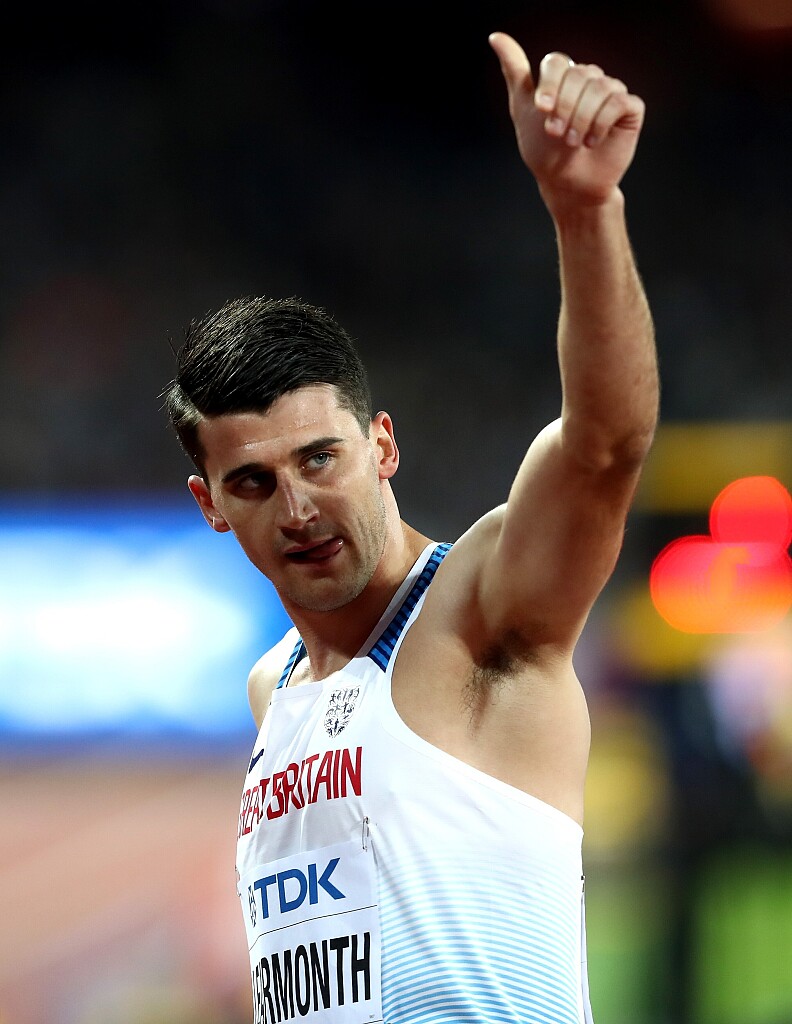
British 800m Stalwart Guy Learmonth Announces Retirement After Distinguished Career
British middle-distance running will bid farewell to one of its most recognizable competitors at the end of this season, as Guy Learmonth has confirmed that he will retire from athletics after a career that spanned more than a decade at the highest level of the sport.
The four-time British indoor 800m champion revealed that 2026 will be his final campaign on the track, bringing the curtain down on a journey marked by consistency, resilience, and international success.
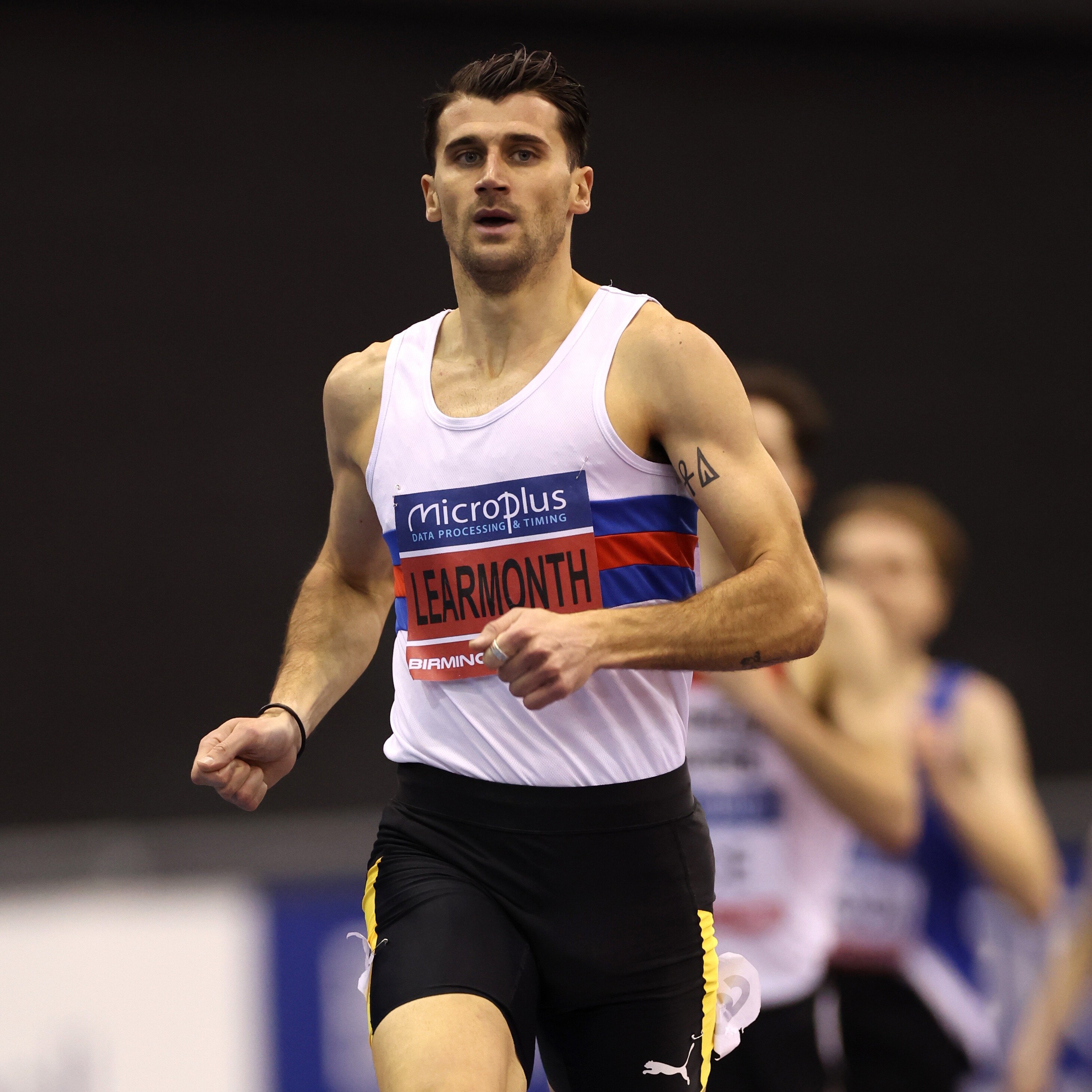
Learmonth established himself as one of Great Britain's leading 800m runners, earning selection for multiple global championships and representing his country on some of athletics' biggest stages. His personal best of 1:44.73 placed him among Britain's elite middle-distance athletes, while his aggressive racing style made him a familiar figure in major finals across Europe and the Commonwealth.
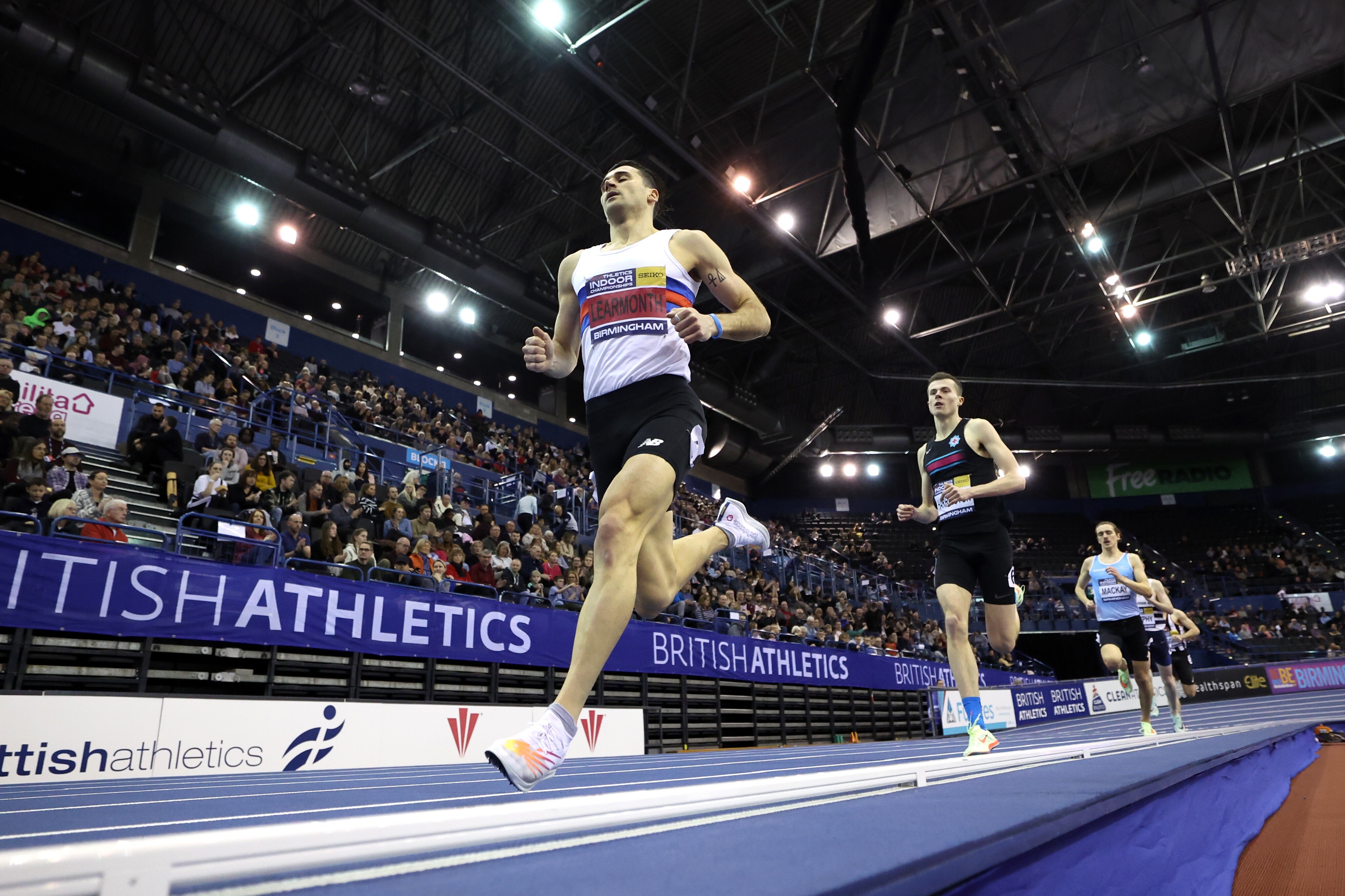
Among the highlights of his career were sixth-place finishes at two Commonwealth Games and two European Indoor Championships, performances that underlined his ability to compete against world-class opposition. He also reached the semi-finals of the men's 800m at the 2017 World Athletics Championships in London, a memorable achievement in front of a home crowd.
Throughout his career, Learmonth became known not only for his competitive spirit but also for his longevity in one of track and field's most demanding events. Year after year, he remained a prominent force in British middle-distance running, collecting national titles and proudly wearing the Great Britain vest on the international stage.
As he prepares for the final races of his career, Learmonth leaves behind a legacy built on dedication, perseverance, and a relentless commitment to excellence. His departure marks the end of an era for British 800m running, but his contributions to the sport will continue to be remembered long after he hangs up his spikes.
With one last season still to run, fans will have the opportunity to celebrate a competitor who gave everything to the sport and represented Great Britain with distinction throughout an outstanding career.
by Erick Cheruiyot for My Best Runs.
Login to leave a comment
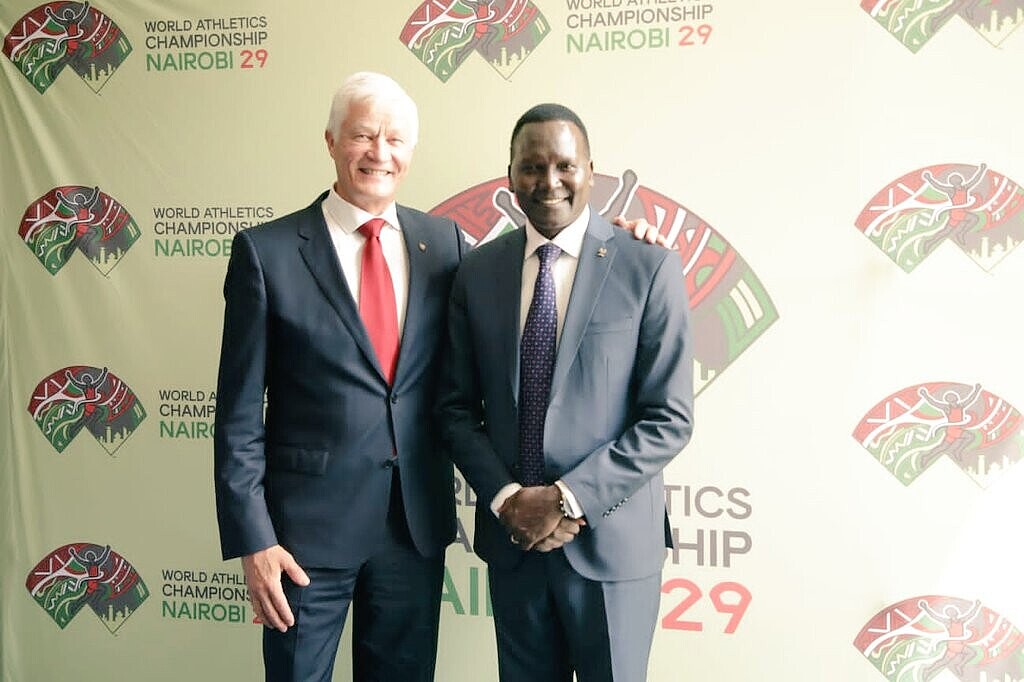
Paul Tergat Backs Kenya’s Ambitious Bid to Host World Athletics Championships
Kenyan athletics icon Paul Tergat has thrown his weight behind Kenya’s ambitious campaign to host the World Athletics Championships in 2029 describing the nation as the true heartbeat of global distance running.
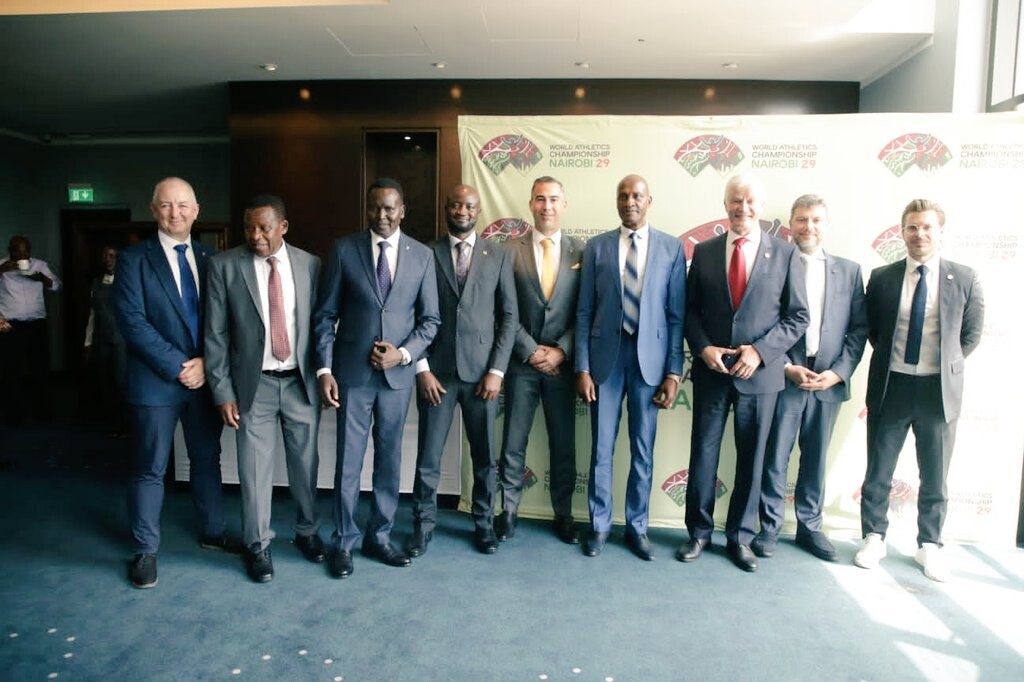
In a passionate message shared on X Space, the former marathon world record holder called on the international athletics community to experience the culture, heritage, and unmatched talent that have made Kenya one of the most dominant forces in the history of the sport.
“Kenya is inviting the world to experience running at its source,” Tergat said. “From the soil that produces legends, from communities where athletics is lived, breathed, and passed through generations.”
His remarks arrive at a time when Kenya is intensifying efforts to secure hosting rights for one of athletics’ most prestigious global events — a move that would mark a historic milestone for both the country and the African continent.
Few figures embody Kenya’s running excellence more than Tergat himself. The legendary distance runner became the first Kenyan man to set a marathon world record after producing a groundbreaking performance of 2:04:55 at the Berlin Marathon 2003. His record stood until 2007 and cemented his place among the greatest marathoners in history.
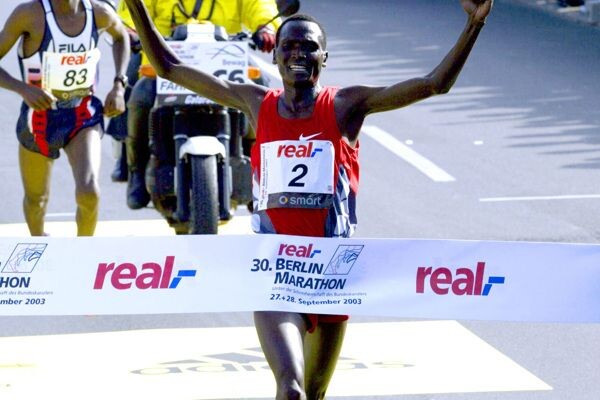
Before conquering the roads, Tergat had already established an extraordinary legacy in cross country running. Between 1995 and 1999, he achieved one of the sport’s rarest feats by winning five consecutive World Cross Country long-race titles, dominating an era filled with elite competition.
On the track, Tergat was renowned for his unforgettable rivalry with Ethiopian great Haile Gebrselassie. The Kenyan star captured Olympic silver medals in the 10,000m at both the 1996 Atlanta Games and the 2000 Sydney Olympics, while also earning silver medals at the 1997 and 1999 World Championships. Many of those races were decided in dramatic final laps, with Tergat and Gebrselassie pushing each other to historic performances.
His success extended beyond the track and marathon scene. Tergat claimed back-to-back IAAF World Half Marathon titles in 1999 and 2000 before later winning the prestigious 2005 New York City Marathon, further solidifying his reputation as one of the most versatile distance runners of his generation.
Away from competition, Tergat has remained deeply influential in Kenyan sport and athletics administration. He previously served as President of the National Olympic Committee of Kenya (NOC-K) and founded the Sports Personality of the Year Awards (SOYA), an initiative that continues to celebrate and recognize sporting excellence across the country.
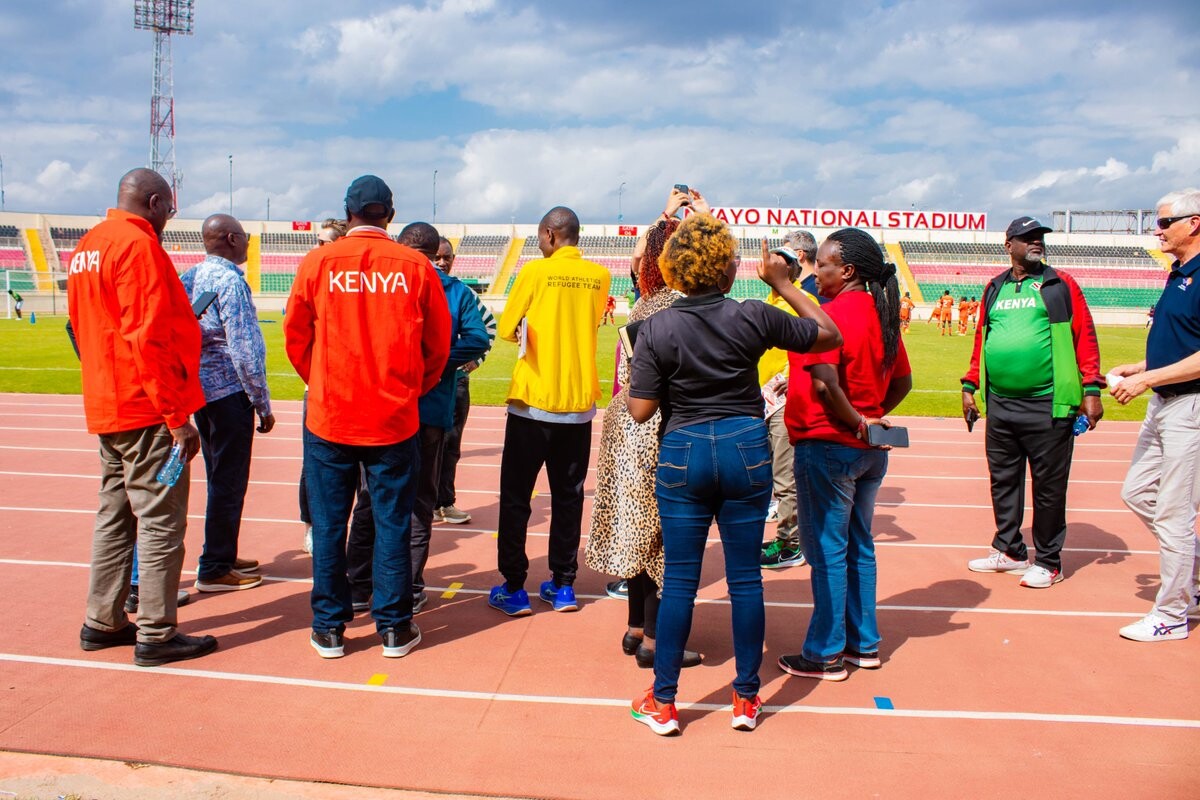
For decades, Kenya has remained synonymous with excellence in middle- and long-distance running, producing generations of champions who have rewritten world records, conquered Olympic podiums, and elevated the nation’s reputation on the global sporting stage. From the high-altitude training camps of the Rift Valley to packed road races across the world, Kenyan athletics has evolved into more than just sport — it is part of the country’s identity.
Tergat believes hosting the championships would offer the world an opportunity to witness firsthand the environment that shapes elite athletes. Beyond the competition itself, he emphasized the cultural significance of Kenyan running communities, where young athletes grow up inspired by local heroes and where endurance running is deeply woven into everyday life.
The bid also represents Africa’s growing desire to host more major international sporting events. While African athletes have consistently dominated global athletics for generations, the continent has rarely been given the opportunity to stage the sport’s biggest championships. Kenya’s proposal is therefore seen as both symbolic and transformative for athletics worldwide.
Tergat’s endorsement adds significant weight to the campaign. Widely regarded as one of the greatest distance runners in history, the Kenyan legend remains a respected voice within international athletics circles. His support reflects the confidence many within the sport have in Kenya’s ability to deliver a memorable and globally impactful championship.
If successful, the championships would not only showcase elite competition but also spotlight Kenya’s rich sporting heritage, passionate fans, and deep-rooted connection to athletics — offering the world a chance to experience the birthplace of countless running legends.
by Erick Cheruiyot for My Best Runs.
Login to leave a comment
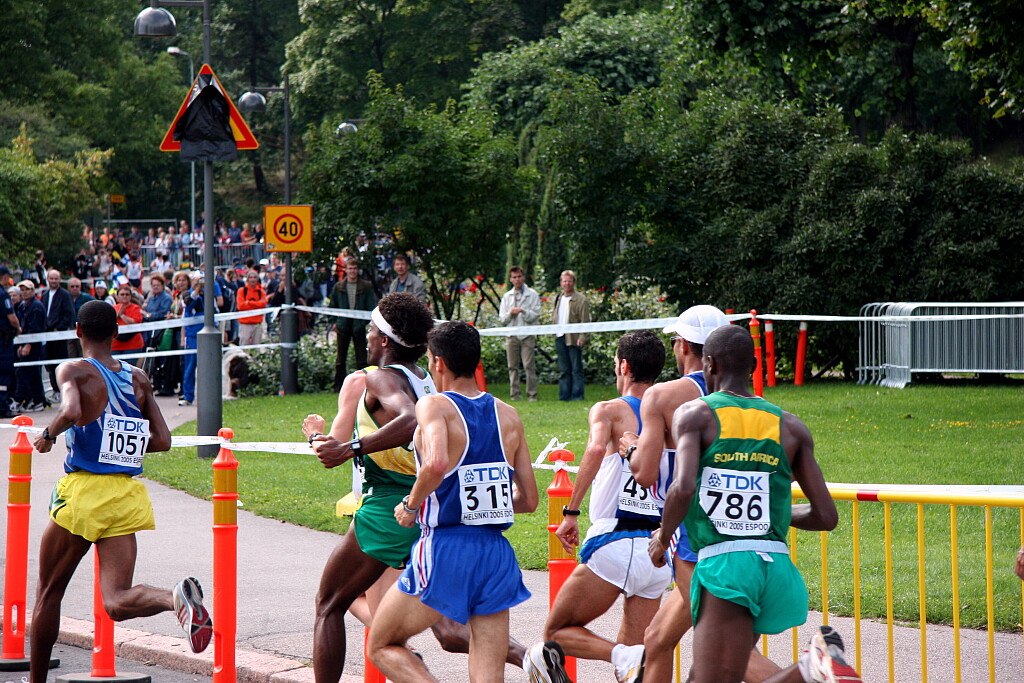
From Helsinki to Beijing: The Incredible Transformation of Marathon Qualification Standards
The road to the World Athletics Championships marathon has never been more unforgiving. What was once an attainable global benchmark for many international runners has now evolved into an exclusive club reserved for only the fastest athletes on the planet. Over the last two decades, the qualification standards for the championships marathon have dropped dramatically, reflecting the explosive evolution of elite distance running across the world.
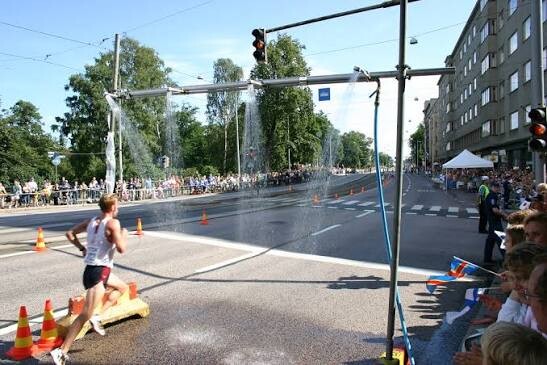
Back in Helsinki 2005, male athletes could secure qualification with a time of 2:18:00, while women needed 2:45:00 to earn a place on the starting line. The standards remained unchanged at the Osaka 2007 Championships, maintaining an era where consistency and endurance were enough to compete on the world stage.
However, the landscape of marathon running slowly began to transform between 2009 and 2017. Qualification times fluctuated between 2:16 and 2:19 for men, while women’s standards ranged from 2:38 to 2:45. Even then, the shift toward faster racing had already begun, driven by deeper international competition and advancements in sports science.
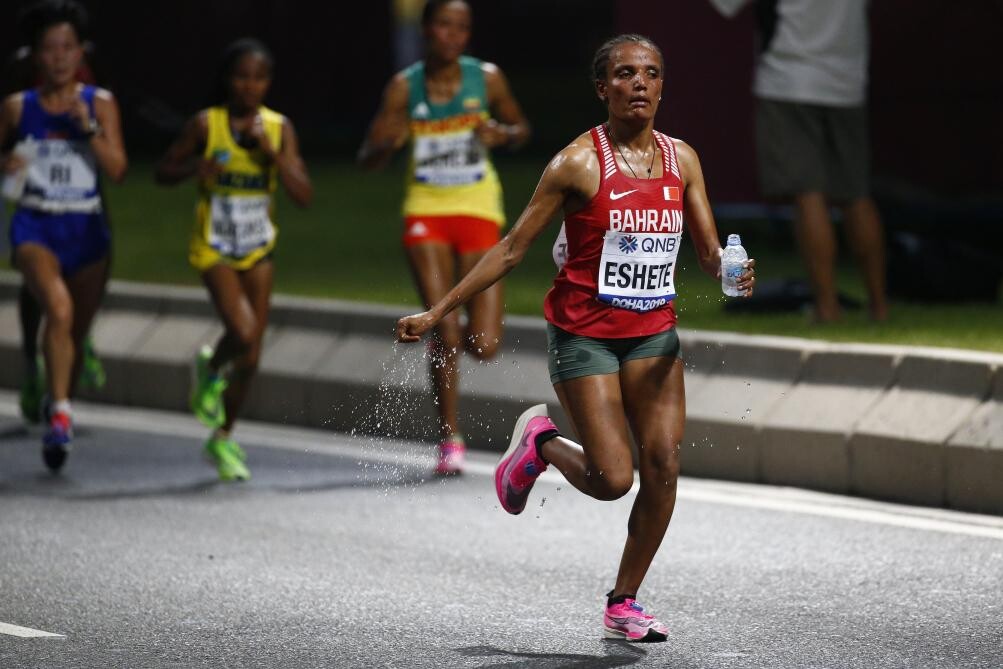
The major turning point arrived in 2019 during the Doha World Championships. World Athletics introduced a new qualification structure, replacing the old “A” and “B” standards with a unified direct-entry system supported by world rankings. At the same time, the standards became significantly tougher, dropping to 2:16:00 for men and 2:37:00 for women.
What followed was an unprecedented acceleration in elite marathon performances.
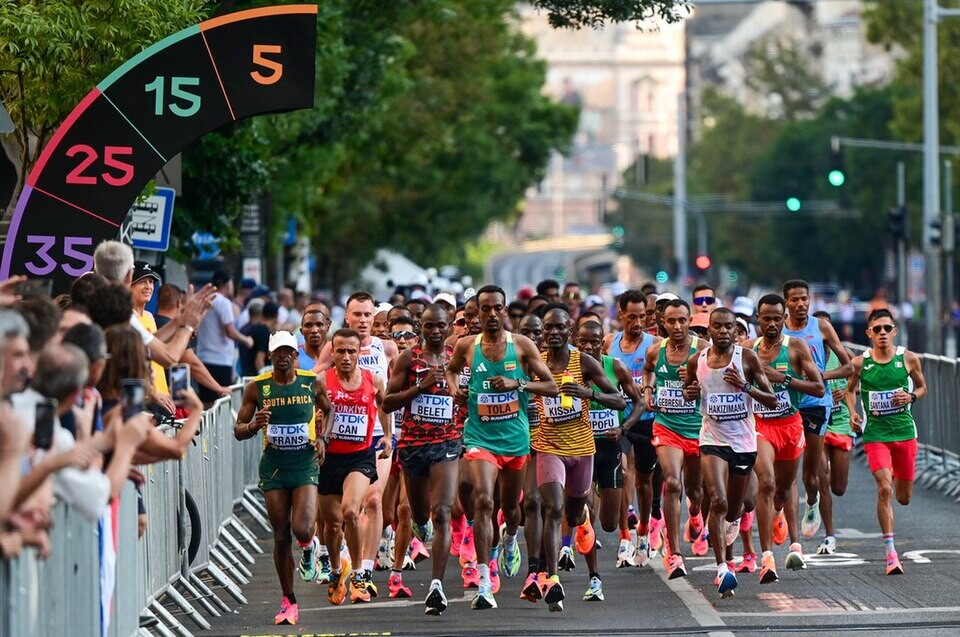
By the time the championships moved to Eugene in 2022 and Budapest in 2023, the entry standards had tightened even further to 2:14:30 for men and 2:33:30 for women. These were no longer simply elite times — they were becoming world-class requirements.
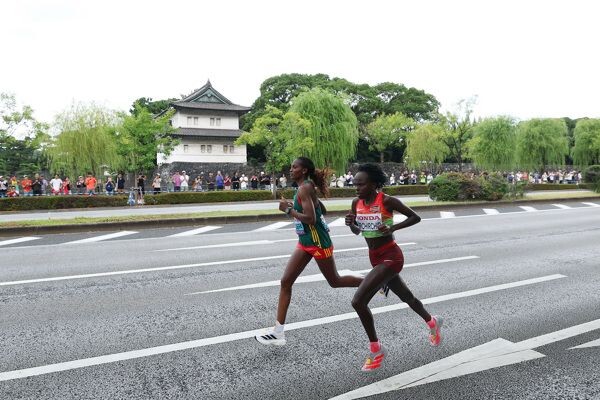
Then came the astonishing leap for Tokyo 2025 and Beijing 2027.

World Athletics pushed the standards to a staggering 2:06:30 for men and 2:23:30 for women — marks that place athletes among the very best marathoners globally. In today’s era, running a national-class performance is no longer enough; athletes must now deliver near-podium level times simply to qualify.
The dramatic drop in standards reflects far more than just faster athletes. Modern marathon running has been reshaped by revolutionary shoe technology, improved pacing systems, advanced nutrition strategies, scientific training methods, altitude preparation, and the growing depth of competition worldwide. The sport has entered a high-speed era where records fall rapidly and expectations continue to rise.
For many athletes, the new standards represent both inspiration and pressure. Qualification now demands extraordinary precision, consistency, and near-perfect execution over 42.195 kilometres. Every second matters more than ever before.
Yet despite the increasing difficulty, the evolution also highlights the remarkable progress of human performance. Marathon running is no longer merely about endurance — it has become a showcase of innovation, tactical intelligence, and extreme athletic excellence.
The World Championships marathon has evolved from a global competition into one of the most selective endurance events in athletics history, and the future suggests the standards may only continue to get faster.
by Erick Cheruiyot for My Best Runs.
Login to leave a comment

Road to Beijing 2027: World Athletics Unveils Tougher Qualification System for Global Championships
The road to the 2027 World Athletics Championships in Beijing has officially begun — and earning a place on athletics’ biggest stage is about to become even more demanding.
World Athletics has now confirmed the qualification system and entry standards for the championships set for September 2027 in Beijing, China, introducing a major adjustment that could reshape the battle for global qualification across distance running and track events.

Under the newly announced structure, only around 40 percent of athletes will qualify automatically through direct entry standards, while the remaining 60 percent of places will be awarded via the World Athletics Rankings system. The change represents a clear shift away from the previous 50-50 balance used in recent championships.
The updated model places greater emphasis on consistency throughout the season rather than relying solely on one exceptional performance. Athletes will now need to compete regularly at high-level meetings, collect ranking points, and maintain elite performances across an extended qualification period.
For distance runners, the standards remain exceptionally demanding, highlighting the increasing depth and competitiveness of global athletics.

In the men’s marathon, athletes must run 2:06:00 or faster to secure an automatic qualification mark, while the women’s standard has been set at 2:23:20. The qualifying window for the marathon opened on November 3, 2025, and will close on Midnight May 2, 2027.
The men’s 10,000m standard has been fixed at 26:48.00, with the women required to run 30:40.00. In the 5000m, athletes must clock 12:50.00 for men and 14:36.00 for women to gain direct entry.
Middle-distance events will also demand world-class performances. The men’s 1500m standard stands at 3:30.00, while women must achieve 3:58.00. In the 800m, the entry standards are 1:43.00 for men and 1:57.50 for women.
Sprint events remain brutally competitive. Athletes targeting the men’s 100m must break 10 seconds with a qualifying standard of 9.95, while the women’s requirement has been set at 10.96. In the 200m, the standards stand at 20.07 for men and 22.45 for women.
The hurdles events also demand elite-level precision and speed, with qualifying marks of 13.18 in the men’s 110m hurdles and 12.60 in the women’s 100m hurdles.
Meanwhile, the 3000m steeplechase standards have been fixed at 8:08.00 for men and 9:06.50 for women — times that underline the growing global standard in one of athletics’ most physically demanding disciplines.
World Athletics says the revised qualification pathway is designed to create stronger, more competitive championship fields while maintaining strict control of athlete numbers across all disciplines.
Qualification windows for the 10,000m, race walks, combined events, and relays will run from February 23, 2026, through August 22, 2027. For all other track events, athletes can qualify between August 23, 2026, and August 22, 2027.
The new system is expected to intensify competition across the entire athletics calendar, with ranking points now becoming more valuable than ever before. Athletes will no longer depend solely on one breakthrough race; instead, sustained excellence across multiple competitions may prove decisive in securing a ticket to Beijing.
As preparations begin worldwide, the countdown to Beijing 2027 has already sparked anticipation for what could become one of the most fiercely contested World Championships in recent history.
by Erick Cheruiyot for My Best Runs.
Login to leave a comment
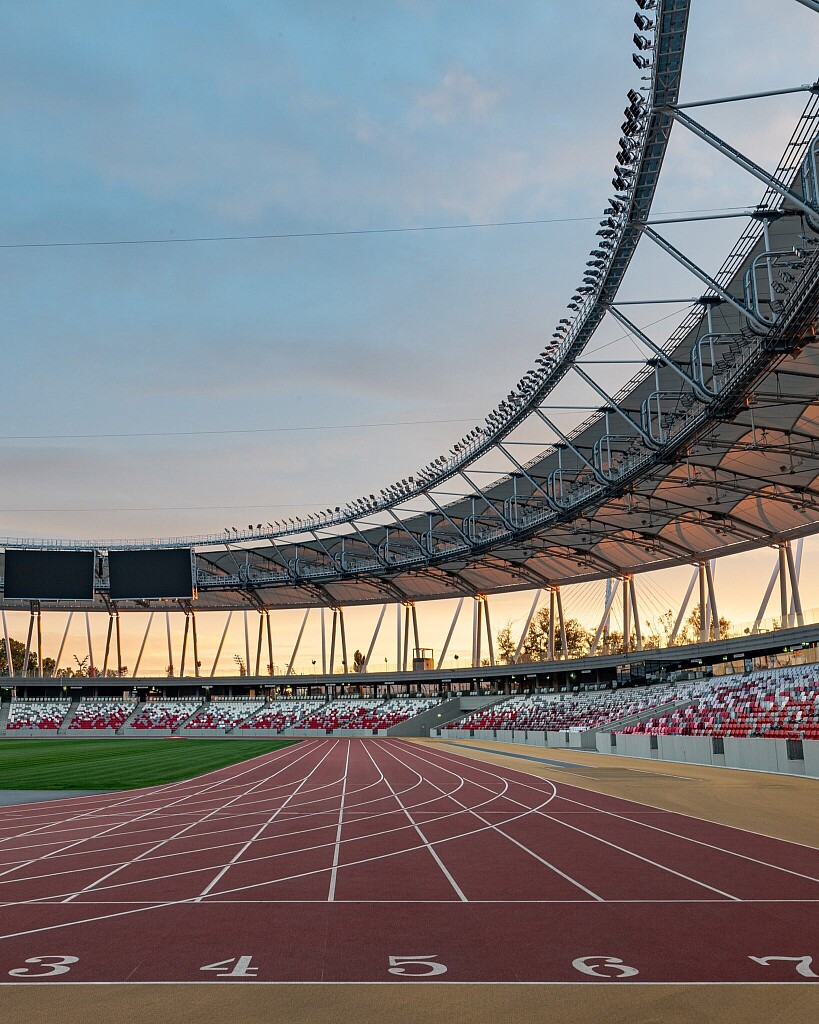
Budapest Set to Ignite the Athletics World with Historic Ultimate Championship
The city of Budapest is once again preparing to stand at the centre of global athletics as it readies itself to host one of the most anticipated spectacles of the 2026 season — the inaugural World Athletics Ultimate Championship from September 11 to 13.
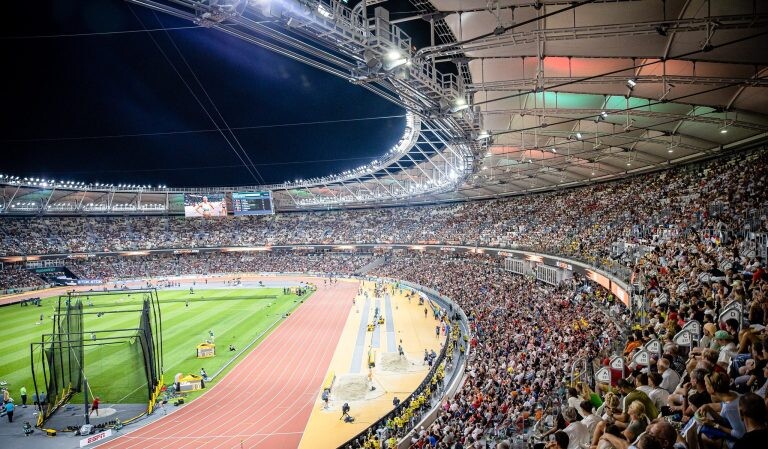
After delivering a breathtaking and unforgettable edition of the World Athletics Championships Budapest 23, the Hungarian capital is now set to welcome the sport’s biggest stars for a brand-new championship designed to bring together only the very best in the world. The atmosphere that captivated fans in 2023 is expected to return with even greater intensity as Budapest transforms into the ultimate battleground for elite athletics.

The newly introduced championship promises a rare collision of champions, featuring Olympic gold medallists, reigning world champions and Diamond League winners all competing head-to-head for the prestigious title of “Ultimate Champion” in their respective events. With pride, legacy and global supremacy on the line, every race, jump and throw is expected to carry extraordinary significance.
From explosive sprint showdowns to dramatic distance battles and field event duels, the competition is already generating massive excitement across the athletics community. The event is designed to elevate the sport to another level by assembling only the finest performers of the season in one high-stakes championship atmosphere.
Budapest has rapidly established itself as one of the world’s premier athletics destinations, and the return of the sport’s biggest names to the iconic National Athletics Centre is expected to deliver another unforgettable chapter in track and field history. Fans across the globe are now counting down to what could become one of the defining events of the modern athletics era.
by Erick Cheruiyot for My Best Runs.
Login to leave a comment
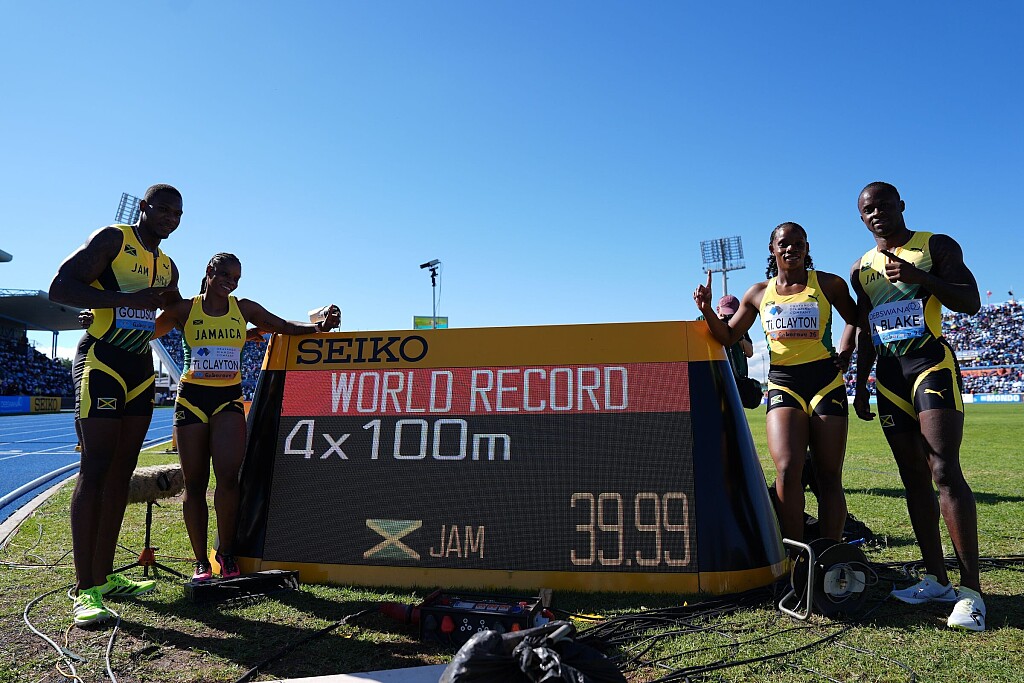
History in Motion: Jamaica Ignites a New Era with Mixed 4x100m World Record
Jamaica delivered a performance of breathtaking precision at the World Athletics Relays in Gaborone, storming to a sensational world record of 39.99 seconds in the mixed 4x100 metres relay—while securing qualification for both the final and the 2027 World Championships.
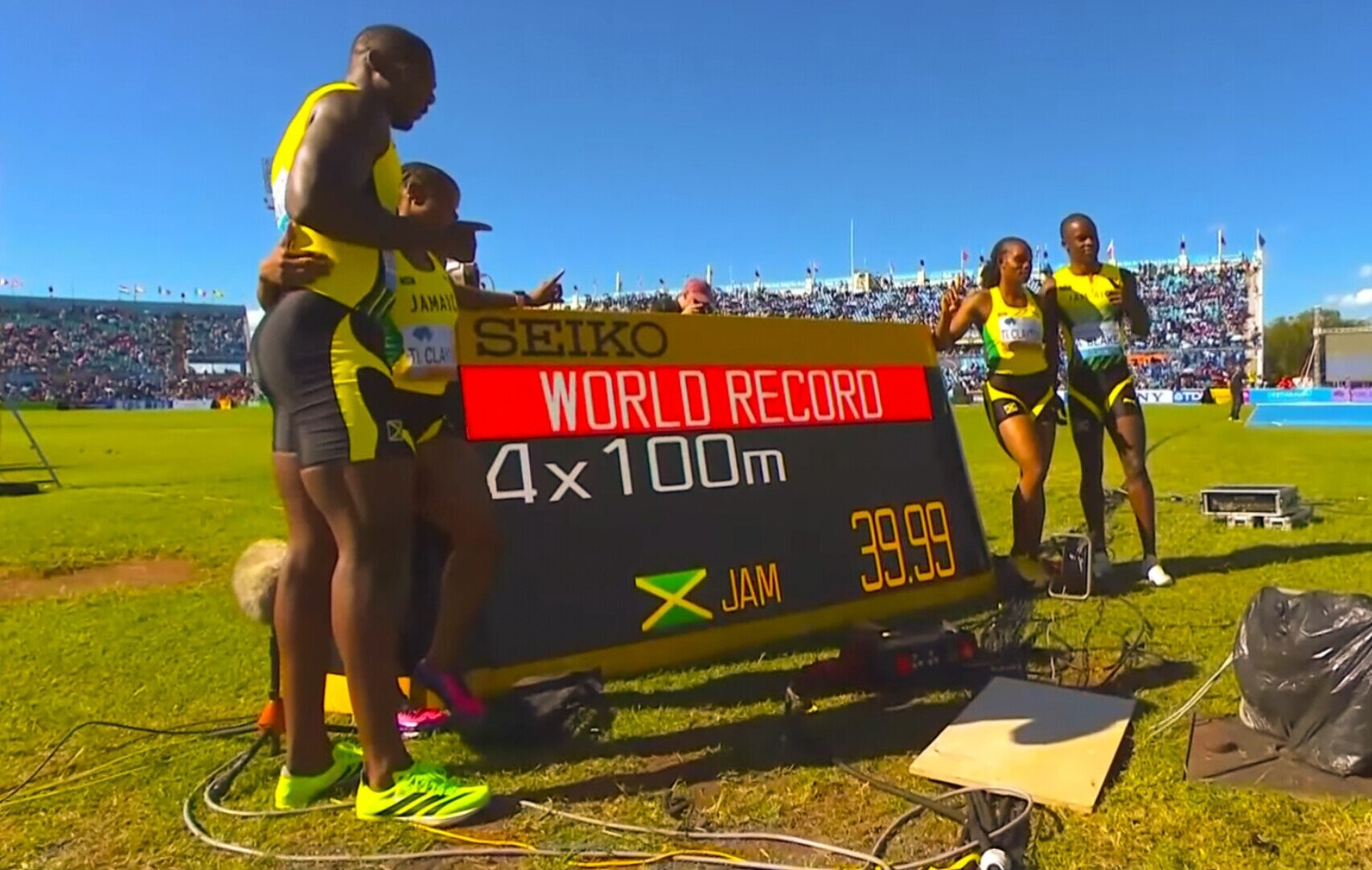
Though it came in a qualifying heat, the run carried the authority of a championship-winning performance. Jamaica did not merely progress—they redefined the standard. In one explosive display, they confirmed their place in the final and, crucially, booked early qualification for the World Athletics Championships.

The execution was nothing short of elite. The mixed 4x100m, still a developing event, demands absolute clarity in timing and flawless baton exchanges between male and female athletes. Jamaica delivered with remarkable cohesion, their transitions smooth and their speed devastating from start to finish.
Stopping the clock at 39.99 at this stage of the competition sends a powerful message. It highlights not only their dominance but also the possibility that an even faster performance could emerge when medals are on the line.
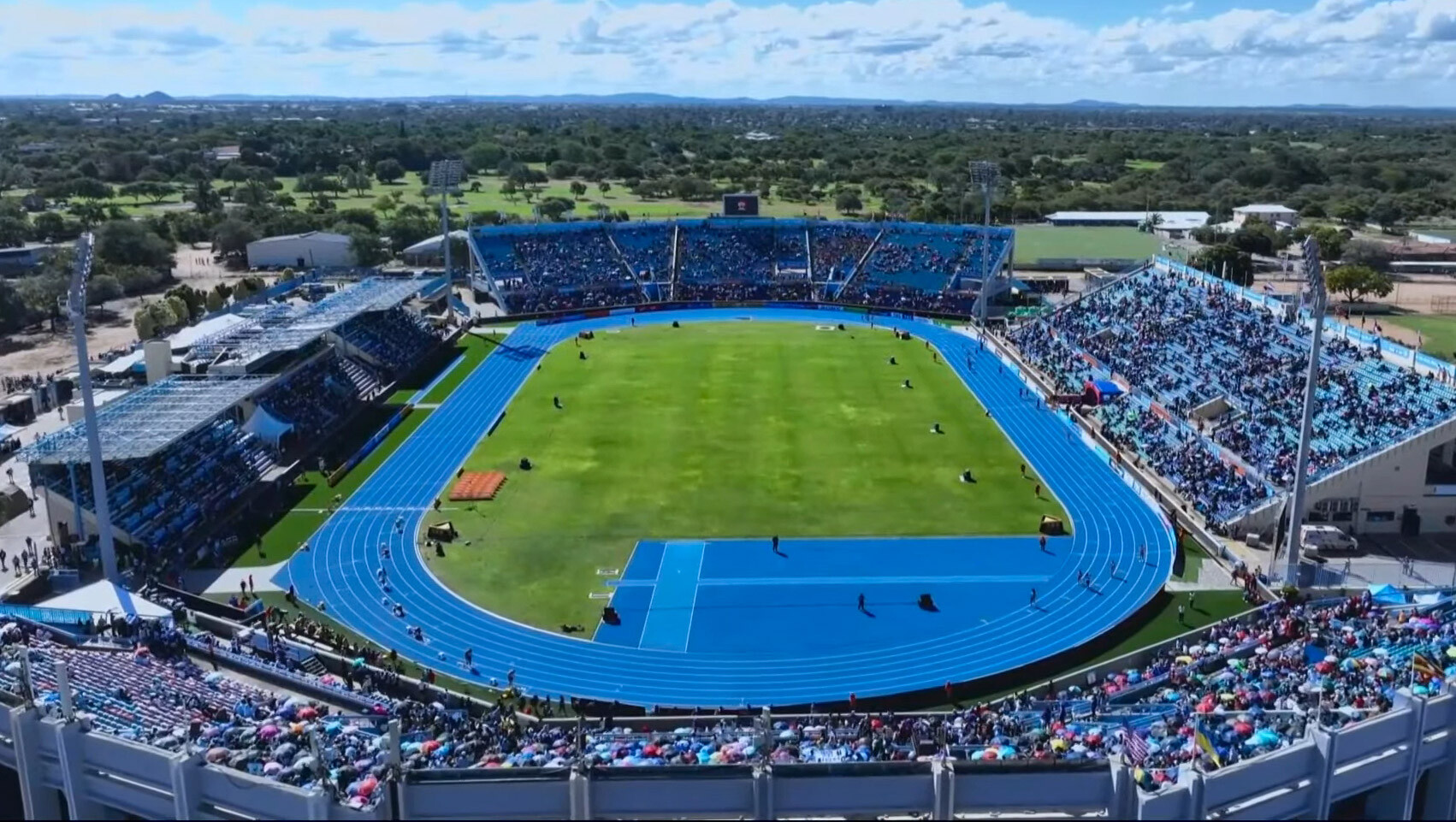
With the mixed 4x100m set to make its Olympic debut at the Los Angeles 2028 Olympic Games, Jamaica’s run in Gaborone stands as a defining early benchmark in the event’s history. It reflects the nation’s enduring sprint legacy, now evolving into new formats with the same authority.
What was meant to be a step toward the final became something far greater—a record-breaking statement, a qualification secured, and a clear warning to the world.
All eyes now turn to the final, where Jamaica will look to transform early dominance into gold.
by Erick Cheruiyot for My Best Runs.
Login to leave a comment
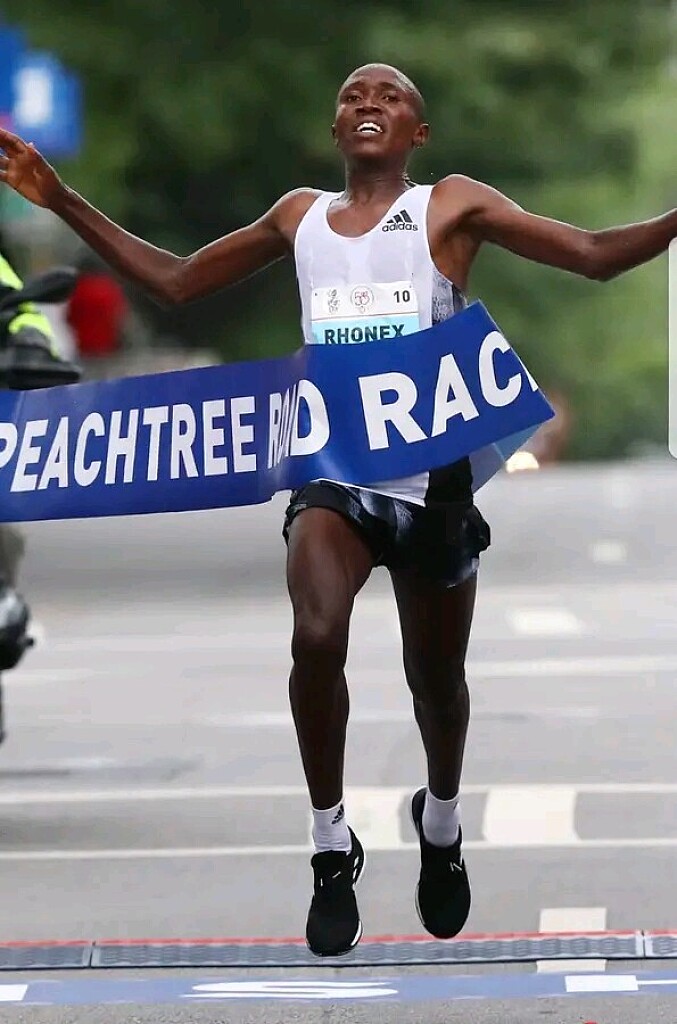
Rhonex Kipruto Wins Partial Appeal as CAS Cuts Ban, but Doping Offence Still Confirmed
Kenyan long-distance runner Rhonex Kipruto has secured a partial legal victory after the Court of Arbitration for Sport reduced his suspension by one year. Yet despite the shorter sanction, the tribunal upheld the central finding that he committed an anti-doping rule violation through blood manipulation.
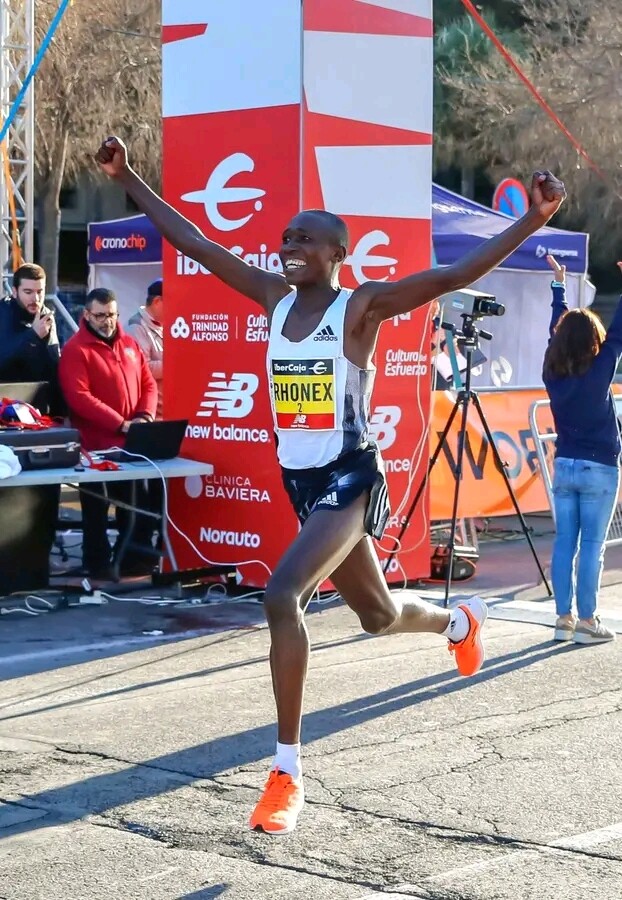
The ruling marks the latest chapter in one of athletics’ most high-profile disciplinary cases. Kipruto had originally been handed a six-year ban in May 2024 by the Athletics Integrity Unit after abnormalities in his Athlete Biological Passport were judged to be consistent with blood doping. Following his appeal, that penalty has now been reduced to five years.
While the revised decision offers Kipruto an earlier route back to competition, it does not erase the sporting consequences already attached to the case. His results during the affected period remain disqualified, including the loss of his road 10km world record and the bronze medal he earned in the men’s 10,000m at the 2019 World Athletics Championships.
The downfall has been dramatic for an athlete once celebrated as one of Kenya’s brightest distance talents. Kipruto rose quickly through the ranks with fearless front-running performances and remarkable speed on both road and track, earning global admiration and the reputation of a future champion.
Instead, his name has become tied to a case that has drawn significant attention across the sport. The CAS decision may soften the length of the punishment, but it firmly reinforces the original conclusion that a serious violation occurred.
For Kipruto, the path ahead is about more than simply counting down the remaining years of his suspension. Any eventual comeback will require renewed discipline, restored credibility, and the difficult task of rebuilding a legacy that once seemed destined for greatness.
by Erick Cheruiyot for My Best Runs.
Login to leave a comment
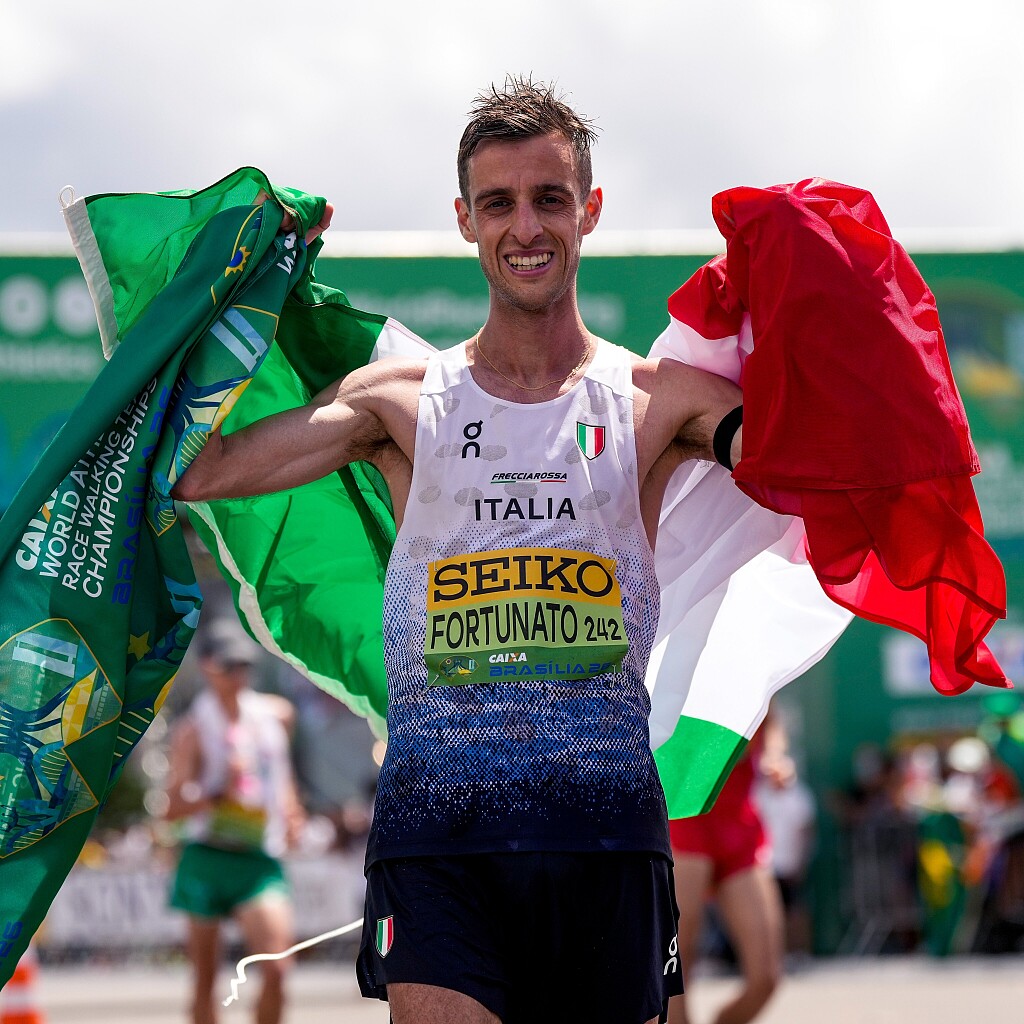
Fortunato and García León Crowned World Champions in Brazil
The 2026 World Athletics Championships Race Walk events in Brazil delivered two memorable contests, as Italy’s Francesco Fortunato and Peru’s Kimberly García León claimed gold in the men’s and women’s Half Marathon Race Walk titles respectively.
In the men’s race, Fortunato produced a performance of courage and composure to seize the world crown in dramatic fashion. The Italian star crossed the line in a championship record and personal best of 1:27:25, overcoming two red cards and harsh racing conditions before launching a devastating final-kilometre surge.
With the pressure at its highest, Fortunato found the strength to move past both Ethiopia’s Misgana Wakuma and Brazil’s Caio Bonfim, turning a tense battle into a historic victory. His triumph confirmed his status among the finest race walkers of his generation.
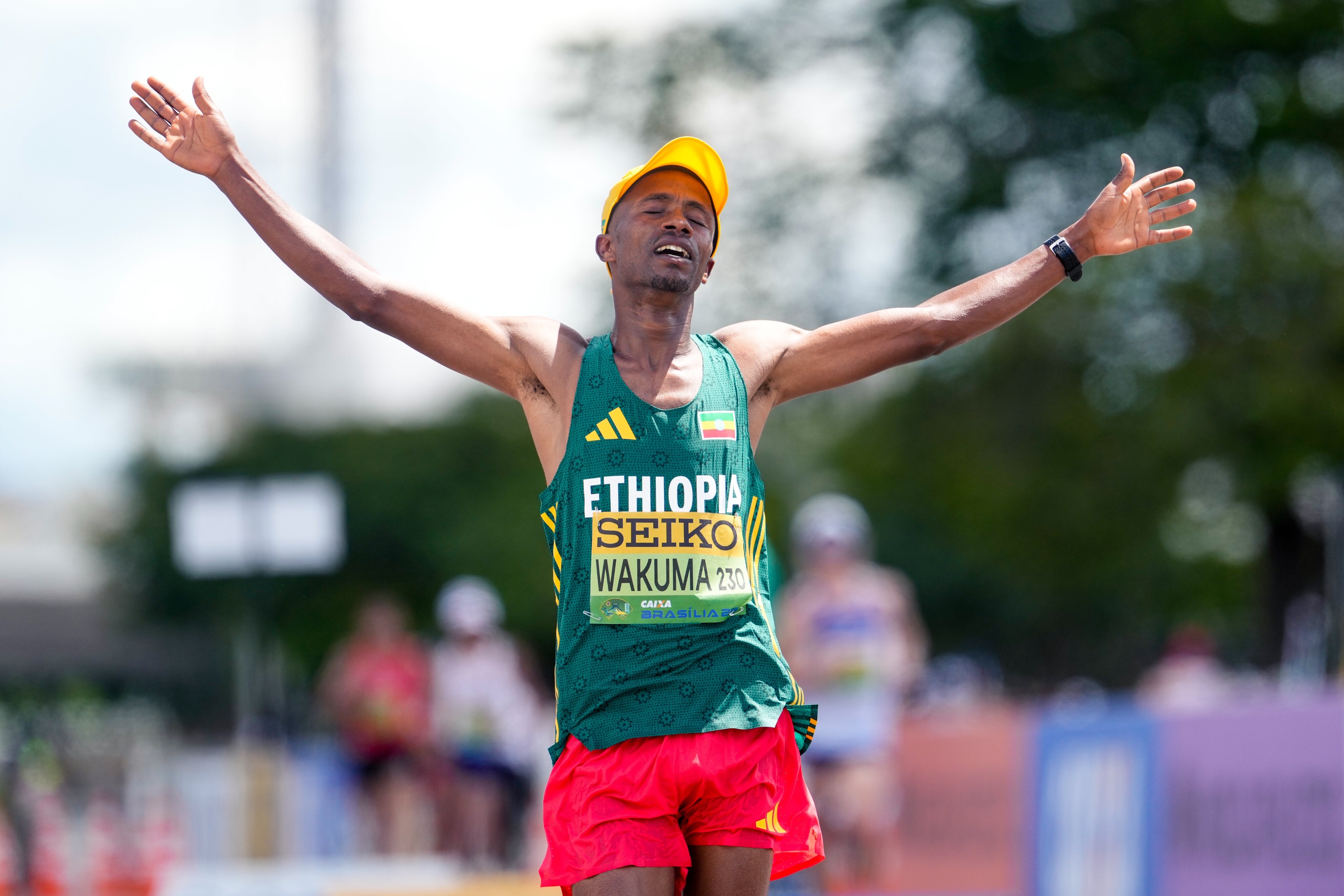
Wakuma earned a landmark silver medal for Ethiopia in 1:27:33, underlining Africa’s growing presence in the discipline, while home favourite Bonfim delighted the Brazilian crowd with bronze in 1:27:36.
Men’s Top 10 Results – Half Marathon Race Walk
1. Francesco Fortunato (Italy) – 1:27:25
2. Misgana Wakuma (Ethiopia) – 1:27:33
3. Caio Bonfim (Brazil) – 1:27:36
4. Leo Köpp (Germany) – 1:27:50
5. Kento Yoshikawa (Japan) – 1:28:00 SB
6. Jordy Rafael Jiménez Arrobo (Ecuador) – 1:28:00
7. Toshikazu Yamanishi (Japan) – 1:28:18
8. Tomohiro Noda (Japan) – 1:28:42
9. Diego García Carrera (Spain) – 1:28:55
10. Álvaro López (Spain) – 1:29:08
The women’s race was equally impressive, with Peru’s Kimberly García León once again proving why she remains one of the dominant names in global race walking. The reigning world champion over 20km judged her race perfectly, timing her effort to perfection before pulling clear to win gold in 1:35:00.
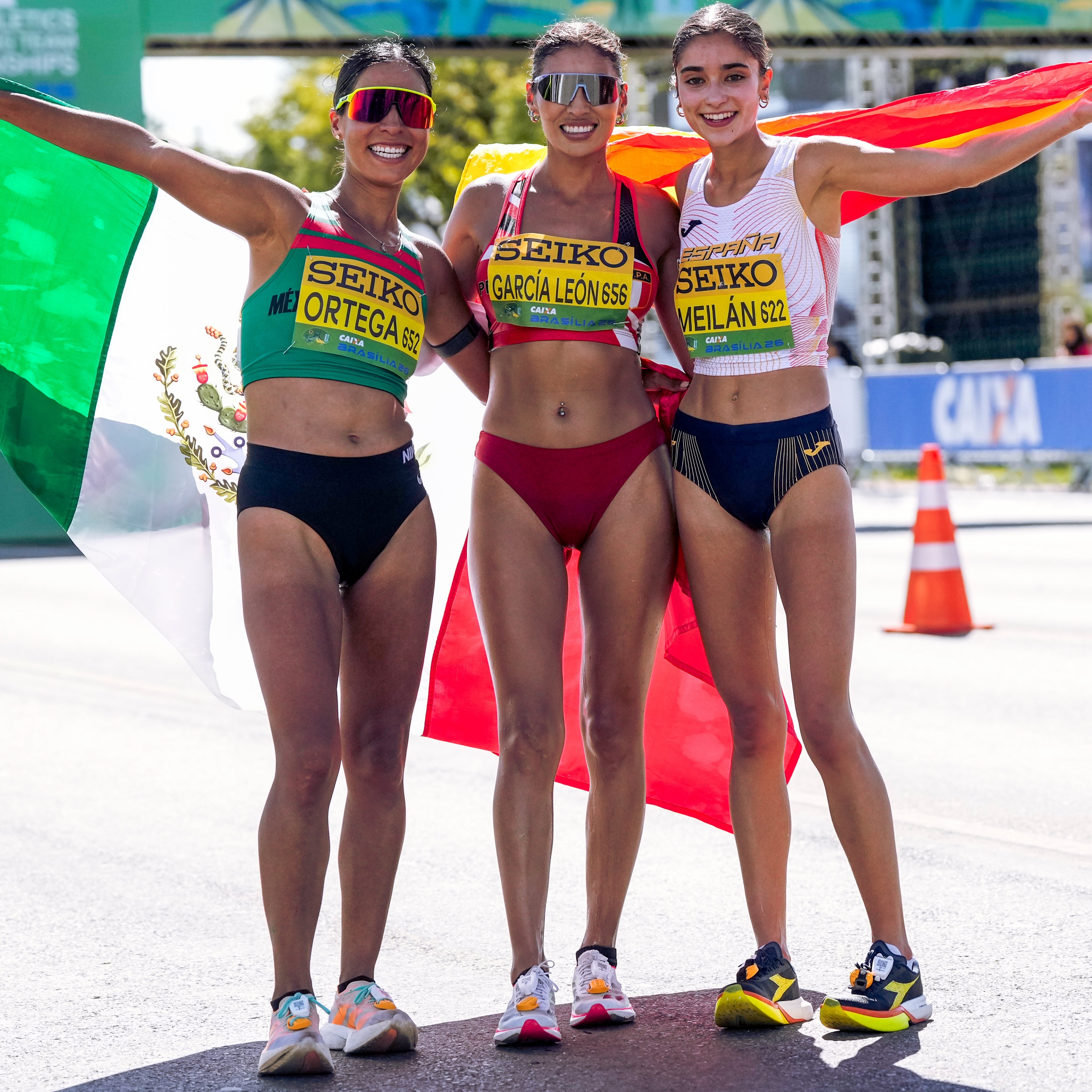
Her measured display of control and precision earned Peru another major title and reinforced her reputation as one of the sport’s most consistent champions.
Mexico’s Alejandra Ortega claimed silver in 1:35:21 after a strong and determined performance, while Spain’s Aldara Meilán completed the podium with bronze in 1:35:38.
In the women’s team standings, Ukraine secured the gold medal, with Spain taking silver and Australia finishing with bronze.
Together, the men’s and women’s races showcased the extraordinary demands of championship race walking—technical excellence, tactical intelligence, and resilience under pressure. In Brazil, Fortunato and García León rose above the rest to write their names into world championship history.
by Erick Cheruiyot for My Best Runs.
Login to leave a comment
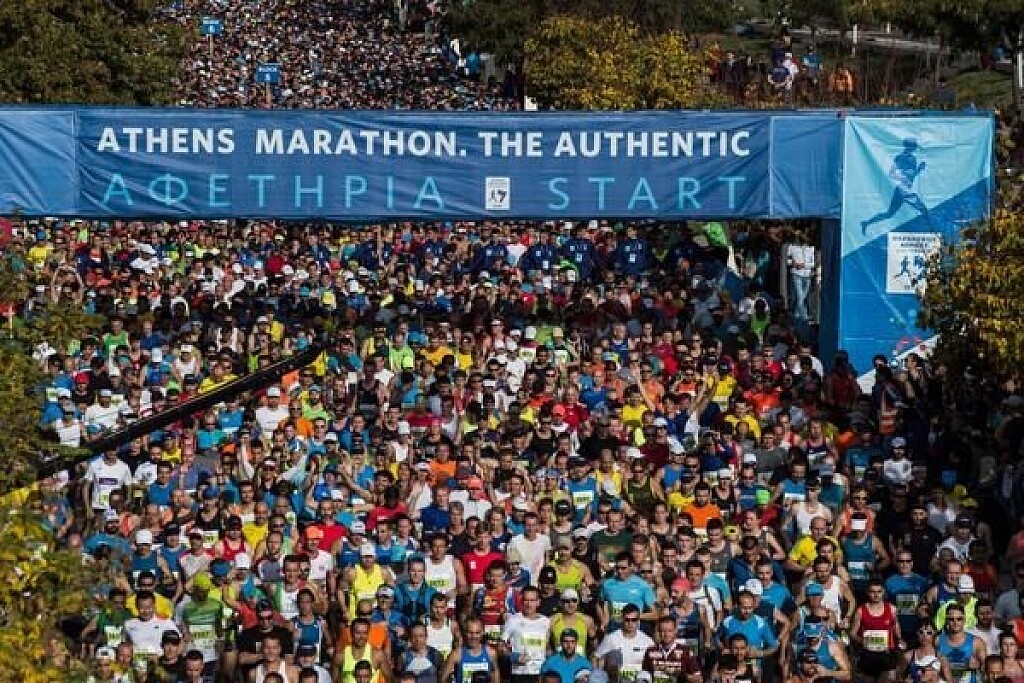
A New Era Begins: World Athletics Unveils Standalone Marathon Championships from 2030
In a bold and transformative move, World Athletics has laid out a visionary roadmap that will reshape the future of distance running. At the heart of this strategy is the introduction of a standalone World Marathon Championships, set to debut in 2030—marking a historic shift for one of the sport’s most iconic disciplines.
For decades, the marathon has been a cornerstone of the World Athletics Championships, embodying endurance, tradition, and global prestige. However, under the new structure, the event will make its final appearances within the Championships in 2027 and 2029 before stepping into its own spotlight. From 2031 onward, road races—including the marathon—will no longer feature in the World Championships program.
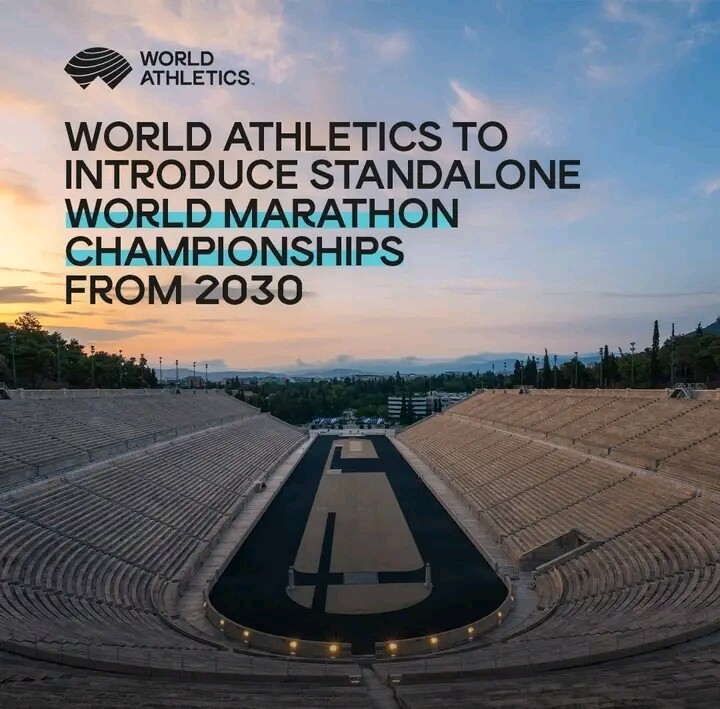
Instead, the newly established World Marathon Championships will stand as an annual spectacle, designed to elevate the discipline to unprecedented heights. In a unique format, elite men’s and women’s races will alternate each year, maintaining the rhythm of top-level competition while creating a more focused and commercially vibrant platform for the sport’s biggest stars.
This evolution is not happening in isolation. World Athletics has emphasized that the championship is being built in close collaboration with key stakeholders who have helped turn the marathon into a global phenomenon—from race organizers to commercial partners. While further details of these partnerships are yet to be revealed, the intention is clear: to create an event that reflects both the heritage and the modern dynamism of road running.
Meanwhile, the World Athletics Road Running Championships will continue as a separate annual competition, ensuring that shorter road distances retain their own global stage.
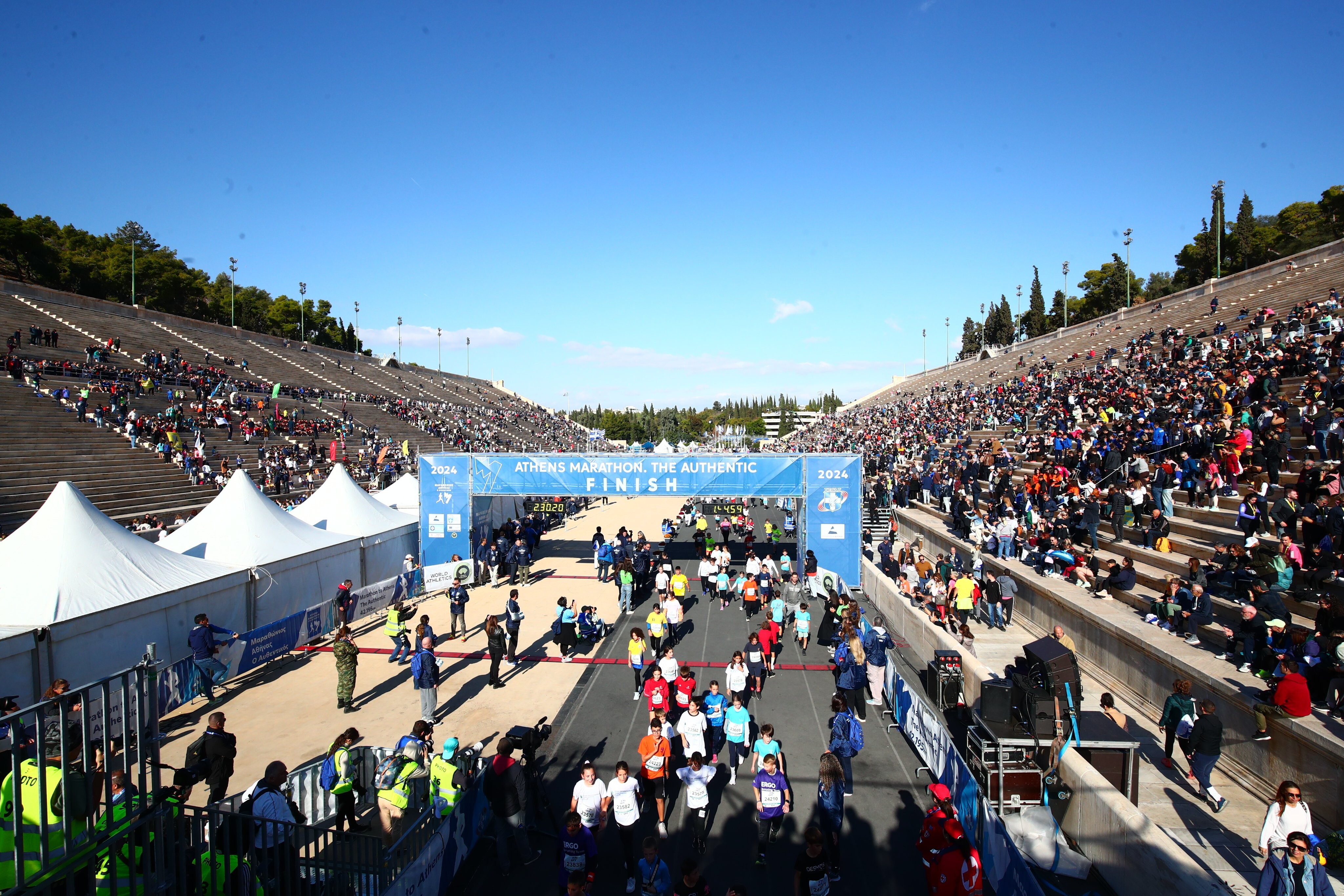
Adding a layer of historical significance to this new chapter, the ancient city of Athens has emerged as the preferred host for the inaugural edition in 2030. Widely regarded as the spiritual home of the marathon, Athens offers a symbolic and cultural resonance that aligns perfectly with the ambitions of the new championship. The Athens Marathon The Authentic—already steeped in legend—has further strengthened its case by attaining Elite Label status, reinforcing its credentials on the global stage.
If confirmed, Athens would not only host a new competition but also bridge the ancient origins of the marathon with its modern evolution, creating a powerful narrative that celebrates both legacy and progress.
This strategic shift signals more than just a structural change—it represents a reimagining of how the marathon is experienced, celebrated, and elevated worldwide. By giving the event its own dedicated platform, World Athletics is betting on a future where the marathon stands taller than ever, commanding global attention in a way never seen before.
by Erick Cheruiyot for My Best Runs.
Login to leave a comment
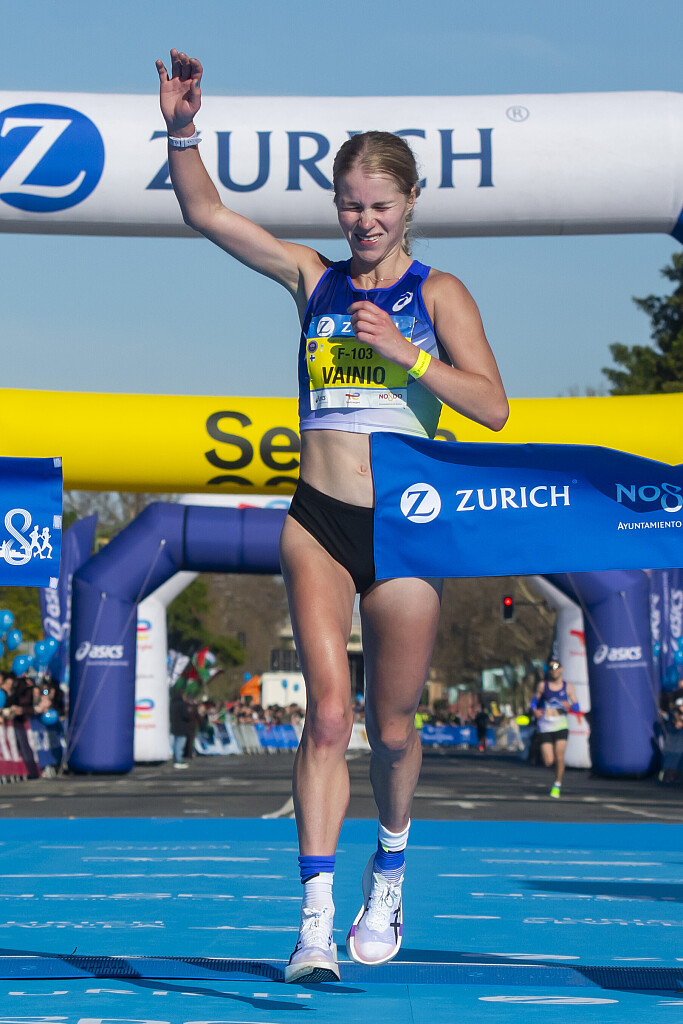
Chasing History in Paris: Vainio’s Relentless Rise Meets Europe’s Finest on April 12
The streets of Paris are set for another spectacular showcase of endurance and ambition on April 12, as the Paris Marathon assembles a field rich in form, momentum, and quiet defiance of limits. At the heart of the narrative stands Alisa Vainio, a name rapidly transforming from promising talent into a symbol of fearless consistency.
Barely two months after a commanding victory in Seville, where she clocked a remarkable 2:20:39, Vainio returns to the start line for her second marathon of the year—and astonishingly, her fifth in just seven months. In an era where elite marathoners carefully ration appearances, her relentless schedule speaks not of recklessness, but of confidence forged through resilience and form.

Her rise has been anything but ordinary. The turning point came at the World Athletics Championships Tokyo, where she stunned the athletics world with a fifth-place finish under punishing heat and humidity. That performance ignited a surge that has since seen her rewrite Finland’s marathon record three times, each effort sharpening her credentials among Europe’s elite.
Reflecting on her Seville triumph, Vainio revealed both ambition and composure:
“I knew from training that I was in slightly better shape than in Valencia, but many other things also affect the final result. I would have had a pretty good chance of running under 2:20, but that’s in the future now. Of course I’m not disappointed with this run. This was really good.”
Those words hint at something greater looming—a barrier not yet broken, but clearly within reach.

Yet Paris will not be a solo exhibition. The women’s race carries a compelling domestic subplot, with France’s finest eyeing history. Mekdes Woldu, Meline Rollin, and Melody Julien are all poised to challenge the national record currently held by Woldu at 2:23:13. With home support and collective momentum, the possibility of a record-breaking day looms large.
In the men’s field, attention turns to Yemaneberhan Crippa, whose recent exploits over the half marathon distance have reignited belief in his marathon potential. His 59:01 victory in Naples—one of the fastest times ever recorded by a European—suggests a runner in peak condition. The lingering question, however, remains whether he can finally translate that brilliance into a sub-2:10 performance over the full distance.
Adding further intrigue is Norway’s rising force, Awet Kibrab. His stunning 2:04:24 debut in Valencia last year not only secured a podium finish but also established a new benchmark for European marathon debuts. Now, Paris offers him a stage to confirm that performance was no anomaly, but the beginning of something extraordinary.
As the French capital prepares to host thousands of runners weaving past its historic landmarks, the elite race promises more than just fast times. It is a convergence of ambition—of records under threat, barriers within reach, and athletes daring to redefine their limits.
For Vainio, Paris is not merely another race. It is the next chapter in a story that is accelerating with every stride—and perhaps, the moment where potential finally meets history.
by Erick Cheruiyot for My Best Runs.
Login to leave a comment

Schneider Electric Paris Marathon
The Schneider Electric Marathon de Paris offers a unique opportunity to make the city yours by participating in one of the most prestigious races over the legendary 42.195 km distance. The Schneider Electric Marathon de Paris is now one of the biggest marathons in the world, as much for the size of its field as the performances of its runners....
more...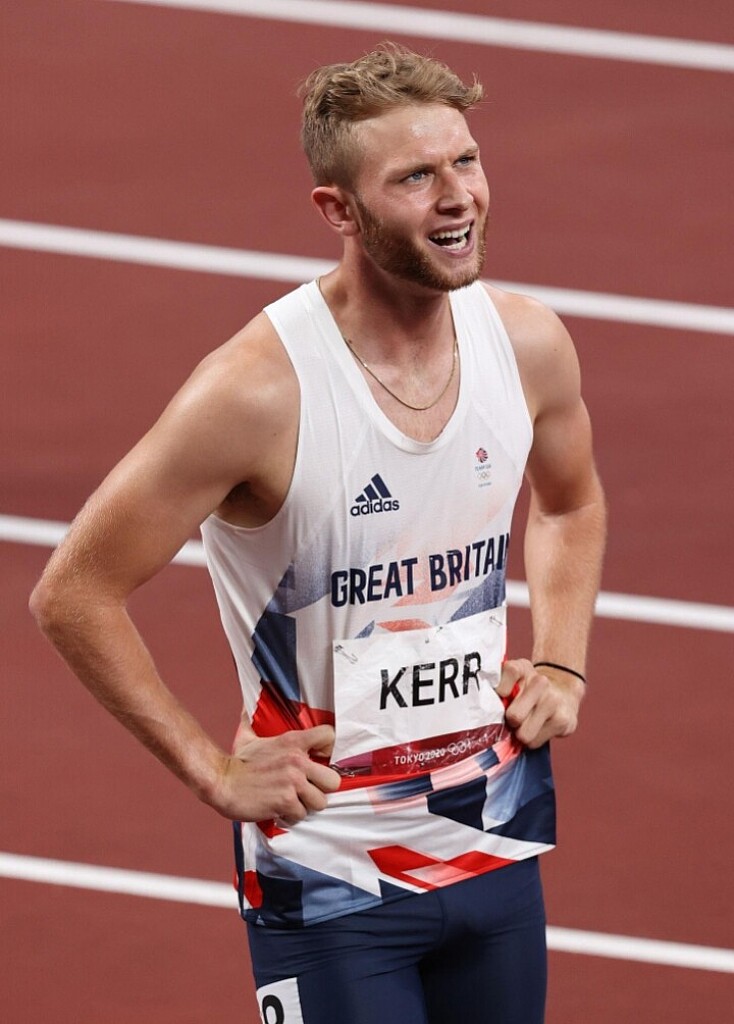
Josh Kerr’s Relentless Return: From Injury Setback to World Indoor Glory Chase
In elite sport, the line between triumph and adversity is often razor-thin. For Josh Kerr, that line was brutally exposed under the bright lights of Tokyo, where a moment of promise turned into a test of resilience.
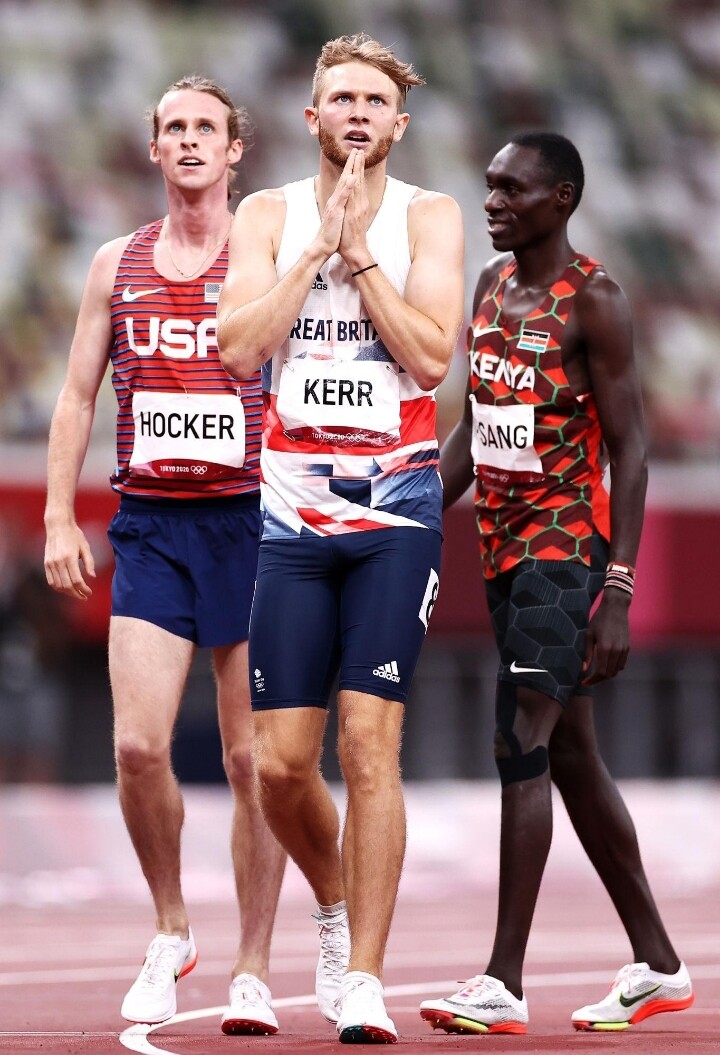
At the World Athletics Championships, Kerr’s campaign in the 1500m final was abruptly disrupted by a grade two tear in his calf muscle—an injury severe enough to halt not just a race, but potentially an entire season. For an athlete operating at the pinnacle of middle-distance running, such a setback is more than physical; it challenges identity, rhythm, and belief.
Yet, what followed was not a story of defeat—but of defiance.
Confined by pain and limited mobility, Kerr faced the humbling reality of being unable to perform even the simplest daily routines. But within that struggle, a powerful support system emerged. Central to his recovery was an unexpected yet deeply personal figure—his mother, who also serves as his physiotherapist. Her dual role became a cornerstone in his rehabilitation, blending professional precision with unwavering emotional support.
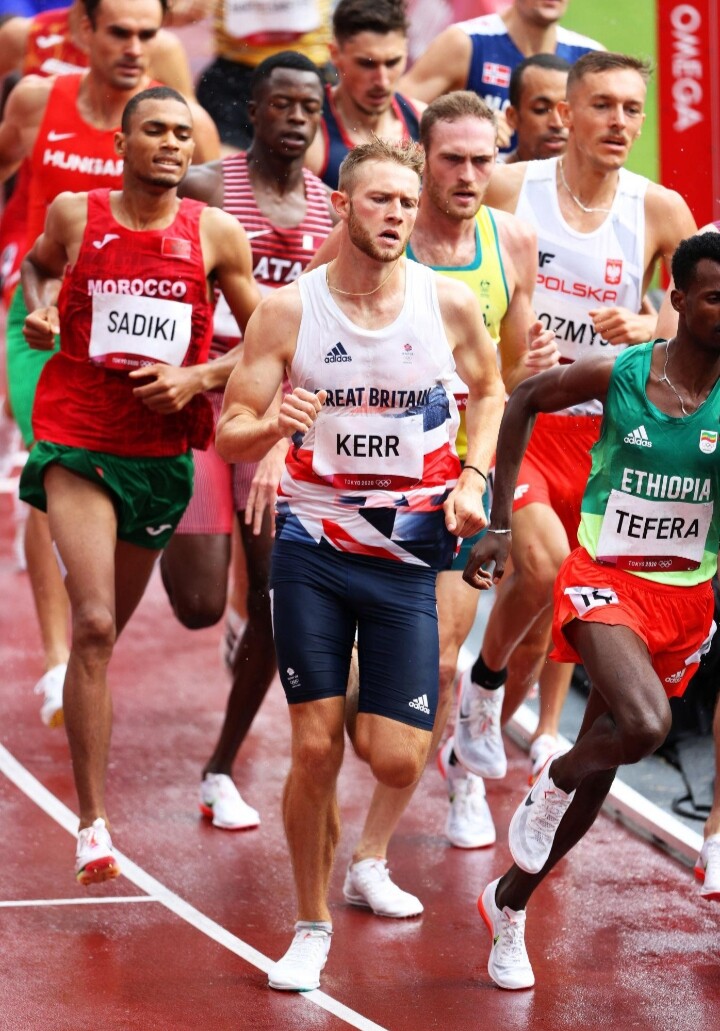
Weeks of disciplined recovery, careful conditioning, and mental recalibration began to reshape Kerr’s trajectory. The turnaround, by his own admission, came faster than anticipated—not through luck, but through resilience, trust in the process, and the strength of those around him.
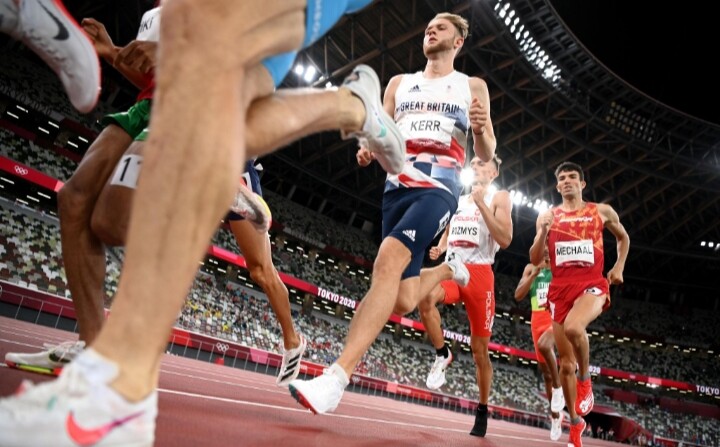
Now, as the indoor season intensifies, Kerr stands on the brink of another defining moment. He is not merely returning—he is targeting his second world indoor 3000m title. It is a bold ambition, but one that reflects both his competitive pedigree and renewed physical confidence.
Kerr’s journey underscores a deeper truth about elite athletics: greatness is not only measured in medals, but in the ability to rise, rebuild, and return stronger. His story is no longer just about racing—it is about endurance in its purest form.
As he steps back onto the track, the question is no longer whether he has recovered. It is whether the experience has made him even more dangerous.
And if his recent progress is any indication, the world may be about to witness exactly that.
by Erick Cheruiyot for My Best Runs.
Login to leave a comment
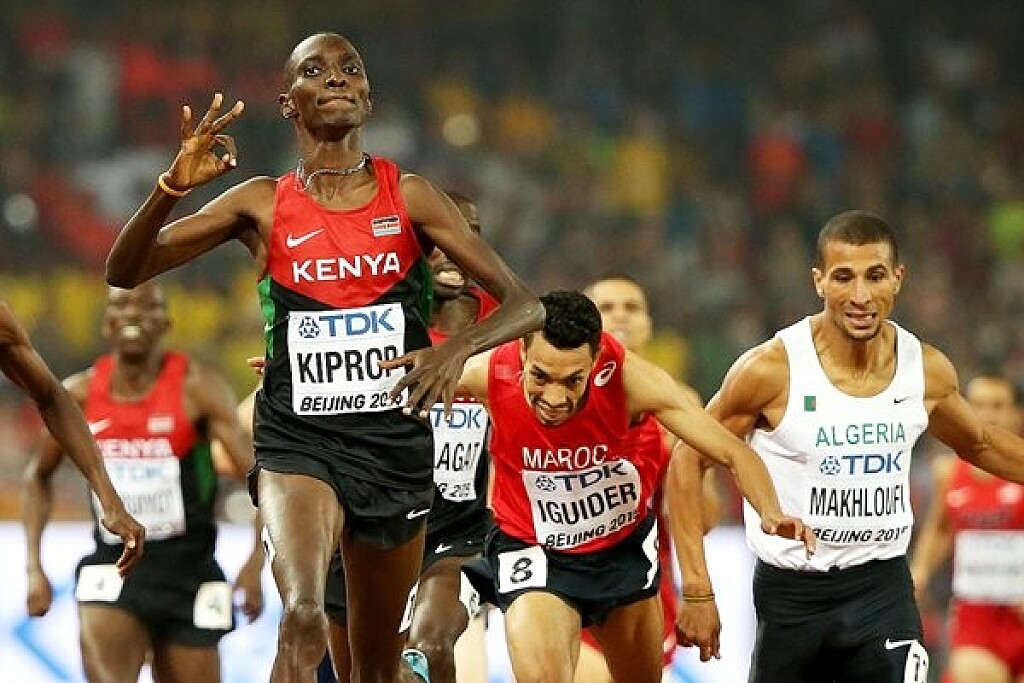
Front-Running Brilliance: The Night Asbel Kiprop Lit Up Monaco with 3:26.69
On a warm summer evening along the Mediterranean coast, the 1500 meters witnessed one of its most breathtaking performances. At the 2015 edition of the prestigious Herculis Monaco, part of the Diamond League circuit, Kenya’s middle-distance maestro Asbel Kiprop delivered a run that still resonates in athletics history.
On July 17, 2015, inside the famous Stade Louis II in Monaco, Kiprop stormed to a stunning 3:26.69 in the 1500 meters—at the time one of the fastest performances ever recorded over the distance. The run combined fearless front-running, precise pacing, and remarkable endurance, creating a race that left both spectators and competitors in awe.
From the opening gun, Kiprop made his intentions clear. Rather than relying on his renowned finishing kick, the Olympic champion chose to dictate the pace from the front, relentlessly pursuing the long-standing world record of Hicham El Guerrouj, whose iconic 3:26.00 still stands as the benchmark for the event.
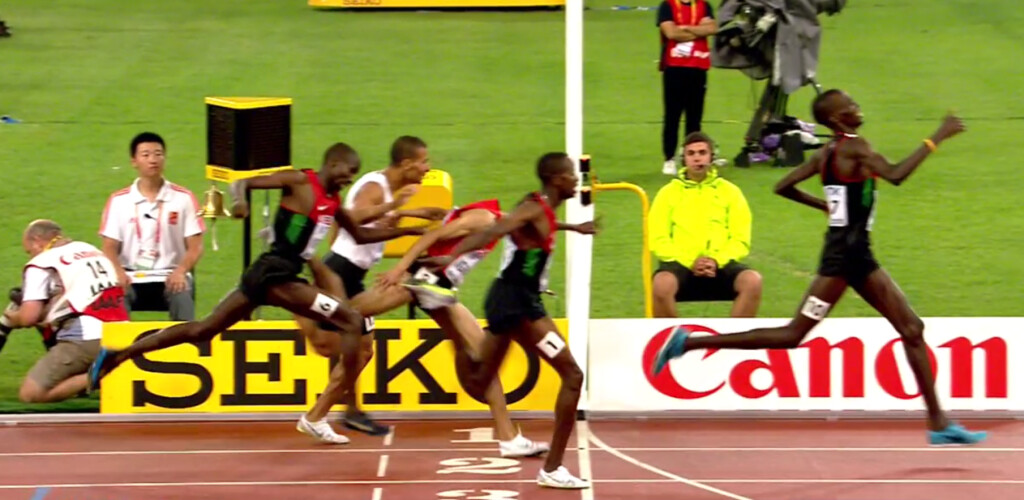
The early pace was sharp and deliberate. Behind the pacemaking assistance of Kenya’s Andrew Kiptoo Rotich, the first lap was covered in approximately 54 seconds, immediately signaling that the race would be something special. By the halfway mark, Kiprop passed 800 meters in about 1:50, maintaining a relentless rhythm that stretched the field.
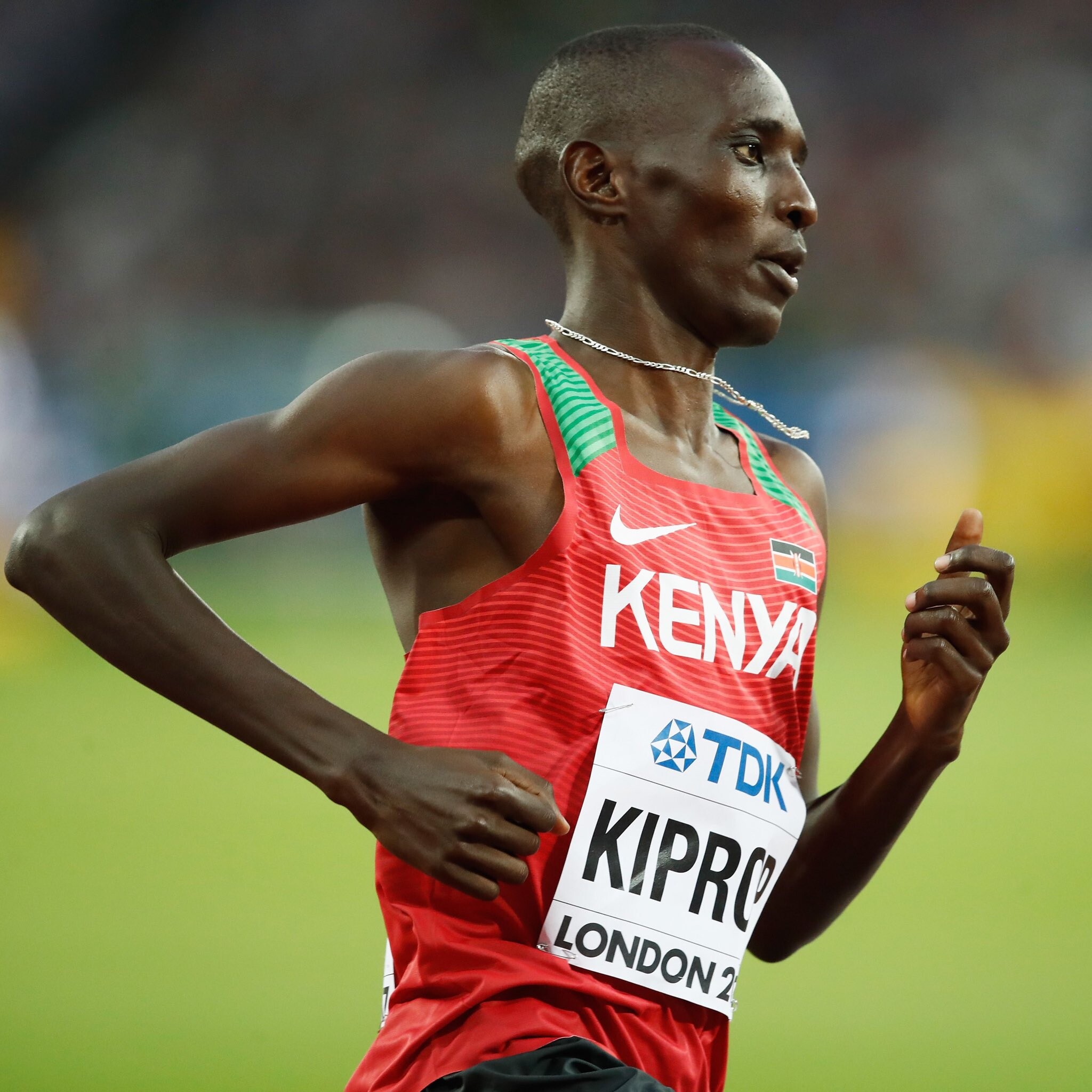
As the race progressed, the tall Kenyan floated around the track with the fluid stride that became his trademark. Passing 1200 meters in roughly 2:45, he remained firmly in control, gliding through the final lap in about 55 seconds to stop the clock at 3:26.69—a performance that etched his name even deeper into middle-distance history.
What made the run particularly remarkable was the margin of victory. Kiprop crossed the finish line more than two seconds ahead of a world-class field. Algeria’s Taoufik Makhloufi finished second in 3:28.75, just ahead of Morocco’s Abdelaati Iguider, who clocked 3:28.79.
The time also stood as a meeting record for the Monaco Diamond League at the time, further cementing the race’s place among the sport’s unforgettable moments.
For Kiprop, the performance was another shining chapter in a glittering career. The Kenyan star had already secured Olympic gold at the 2008 Beijing Olympics and would go on to collect three world titles at the World Athletics Championships in 2011, 2013, and 2015. Known for his elegant stride and exceptional race intelligence, he became one of the defining figures of modern middle-distance running.
Beyond Monaco, Kiprop built an impressive résumé across multiple distances. His personal bests included 1:43.15 for 800 meters, 3:48.50 for the mile, 2:14.23 for 1000 meters, and 7:42.32 for 3000 meters—a testament to both his speed and versatility.
Yet among all his achievements, the Monaco masterpiece remains one of the most memorable. On that night in July 2015, Asbel Kiprop didn’t just win a race—he delivered a performance that showcased the artistry and courage of championship middle-distance running, reminding the athletics world how extraordinary the 1500 meters can be when a great athlete dares to chase history.
by Erick Cheruiyot for My Best Runs.
Login to leave a comment
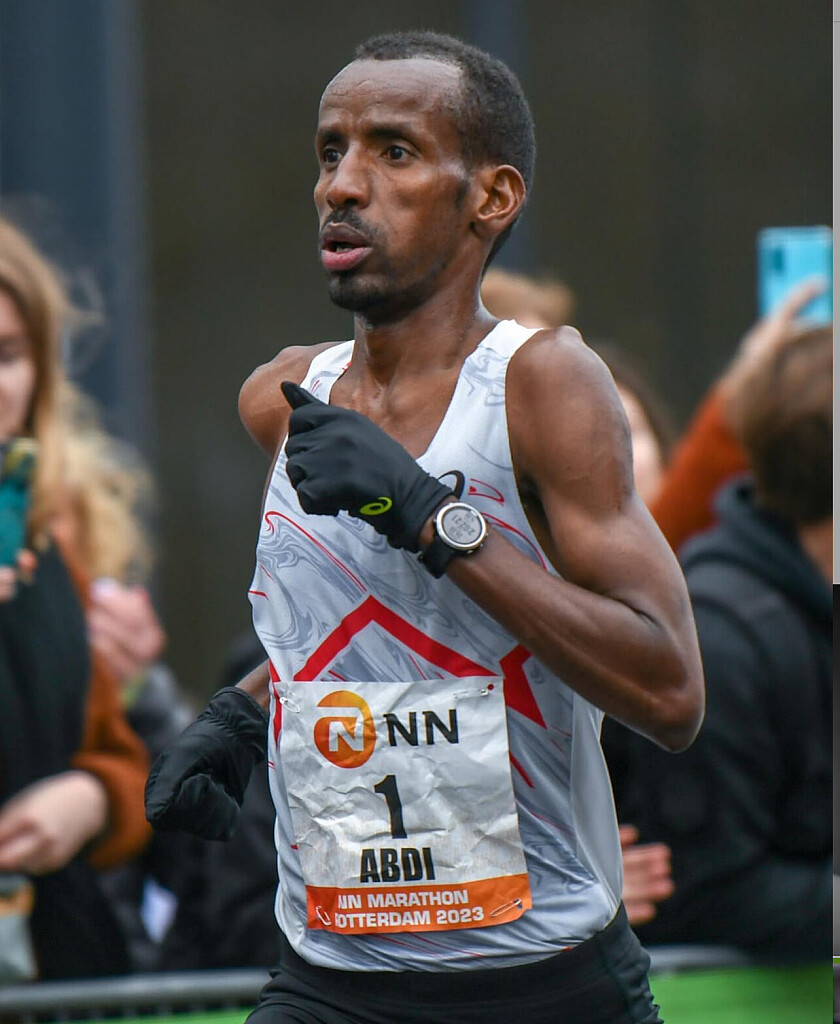
Bashir Abdi Targets European Record and Third Rotterdam Crown in 2026
After an injury-disrupted 2025 season, Bashir Abdi, who represents Belgium, is resetting his sights on a bold and ambitious 2026 campaign—one centered on Rotterdam, records, and redemption.
The two-time Olympic marathon medalist has confirmed his intention to return to the NN Rotterdam Marathon on April 12, where he will seek an unprecedented third victory and renew his pursuit of the European marathon record.
“It’s a special marathon,” Abdi told Sporza.be. “I’ve already run 14 marathons, four of which were here in Rotterdam. It won’t be easy to win here, as there will be a strong field. But I’m especially looking forward to running with a good feeling.”
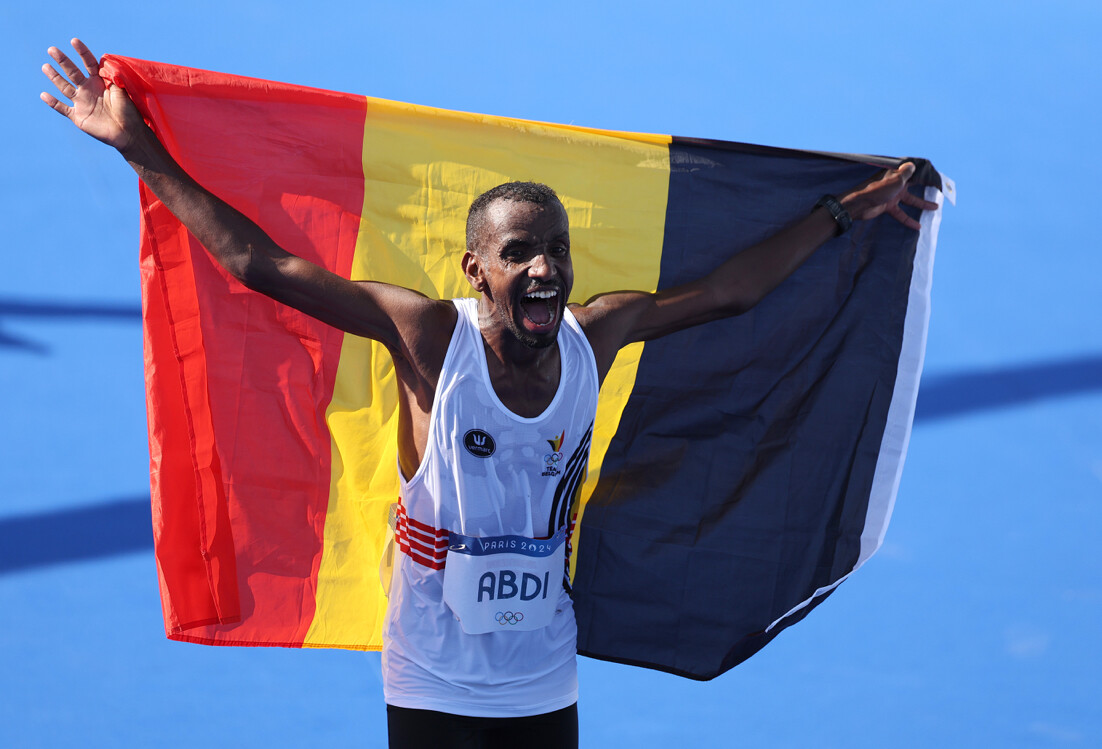
That “good feeling” has been central to Abdi’s career—one built on patience, consistency, and an unusually long peak for a modern elite marathoner.
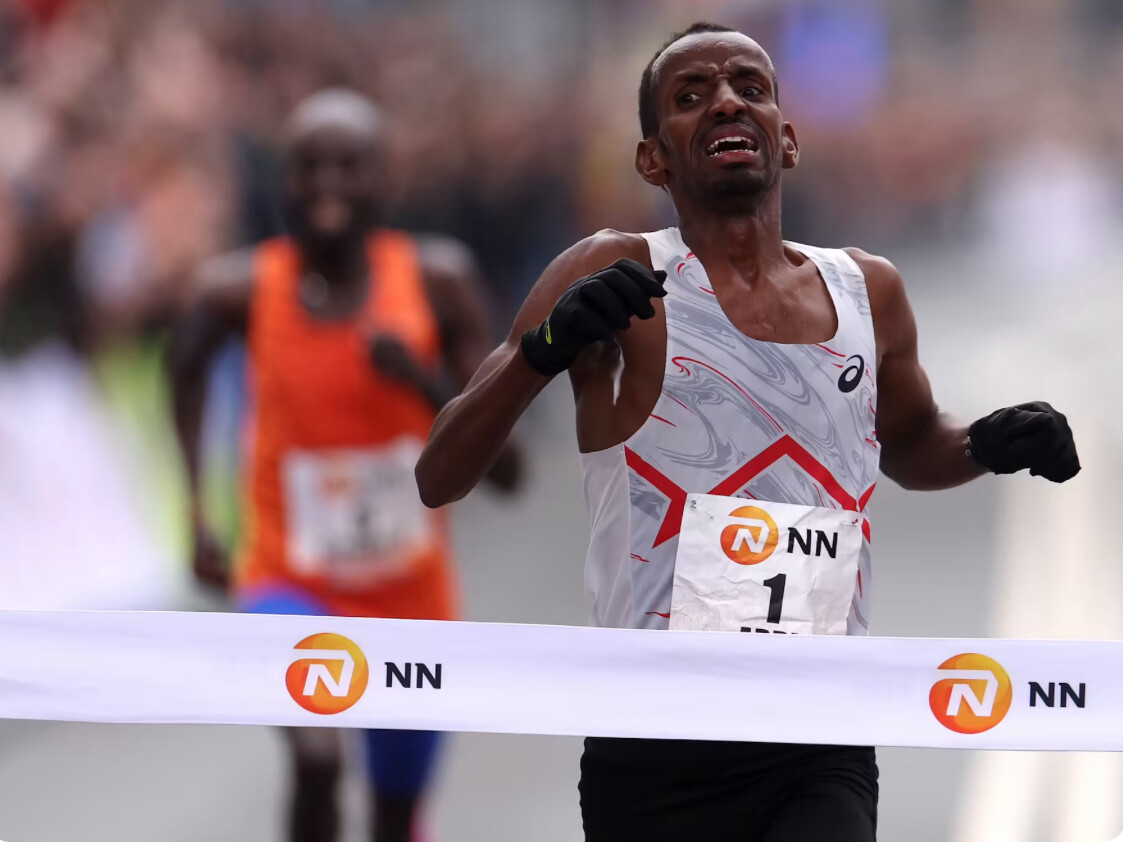
Born in Somalia, Abdi moved to Belgium as a child and later emerged as one of Europe’s most reliable championship performers. While many of his contemporaries built their reputations on a single breakthrough race, Abdi distinguished himself through durability across courses, conditions, and competitive formats. He has repeatedly delivered on the biggest stages, including Olympic Games, World Championships, and major city marathons.
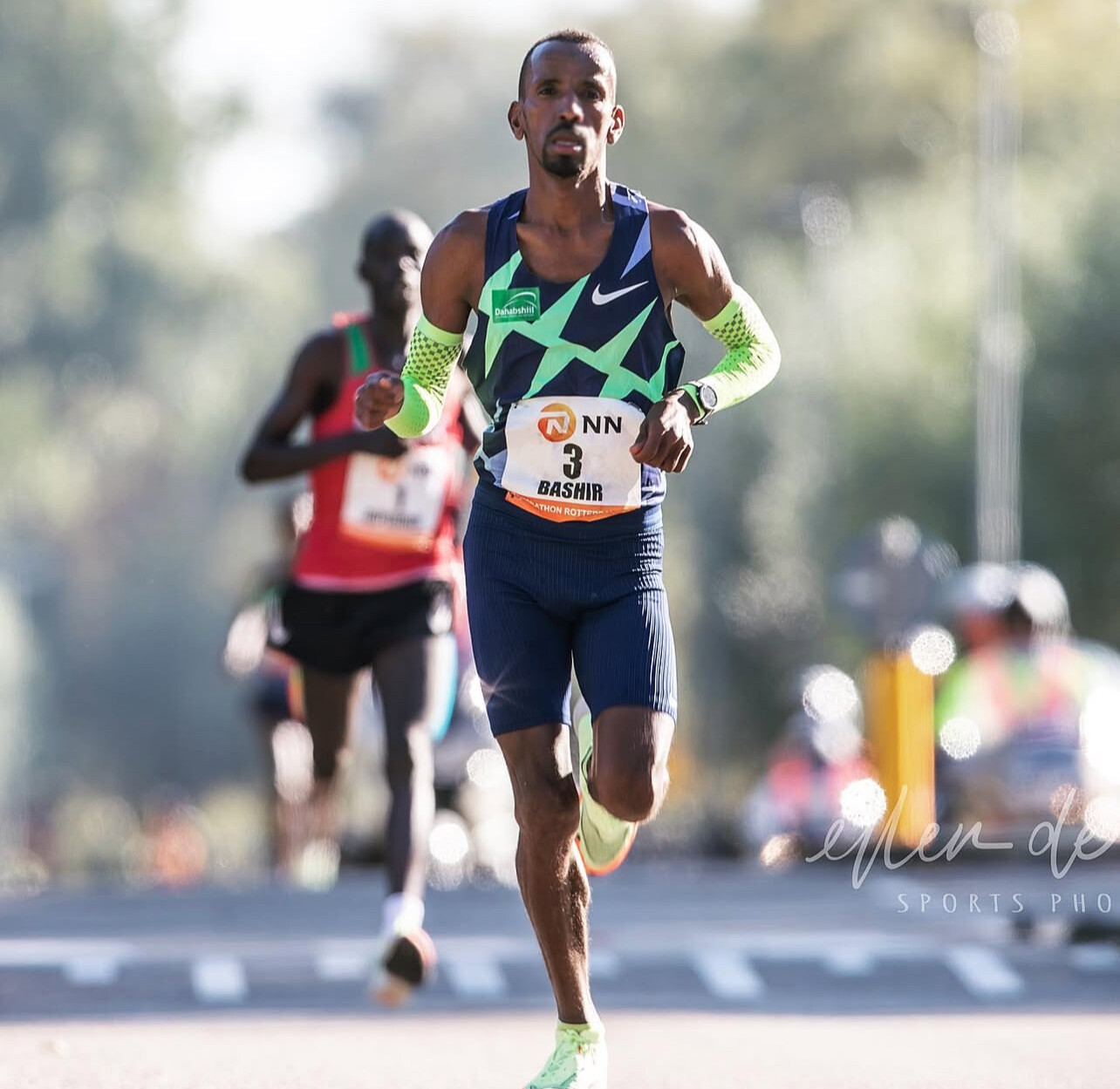
In 2021, just two months after winning Olympic bronze in Tokyo, Abdi produced the defining performance of his career in Rotterdam, winning in 2:03:36 to set a European marathon record. The run confirmed him not only as a medal contender, but as a time-trialist capable of matching the world’s fastest marathon specialists.
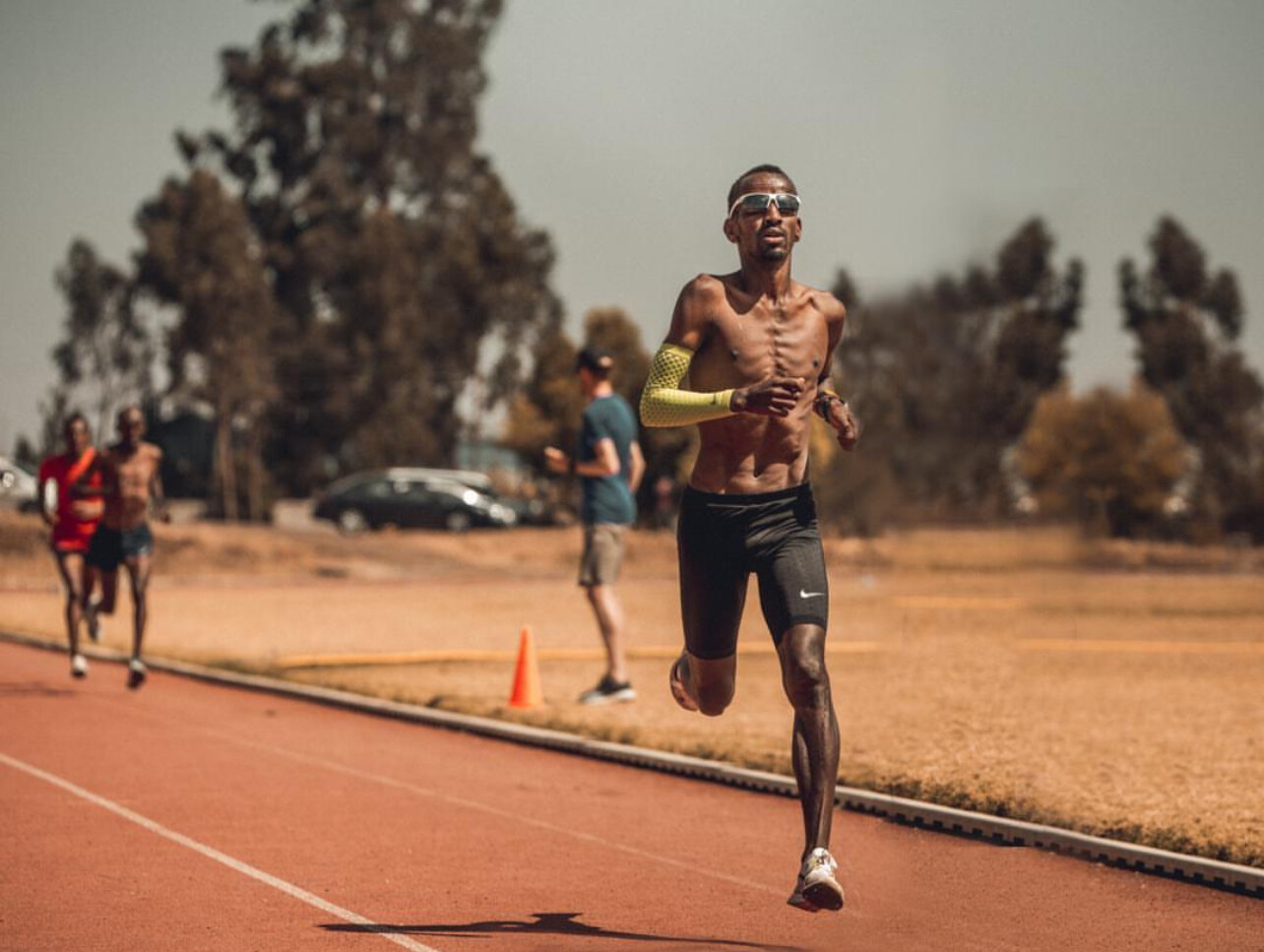
Two years later, he returned to Rotterdam and nearly surpassed his own mark, winning again in 2:03:47—just 11 seconds shy of the European record. That performance reinforced his unique connection to the course and his ability to execute under pressure.
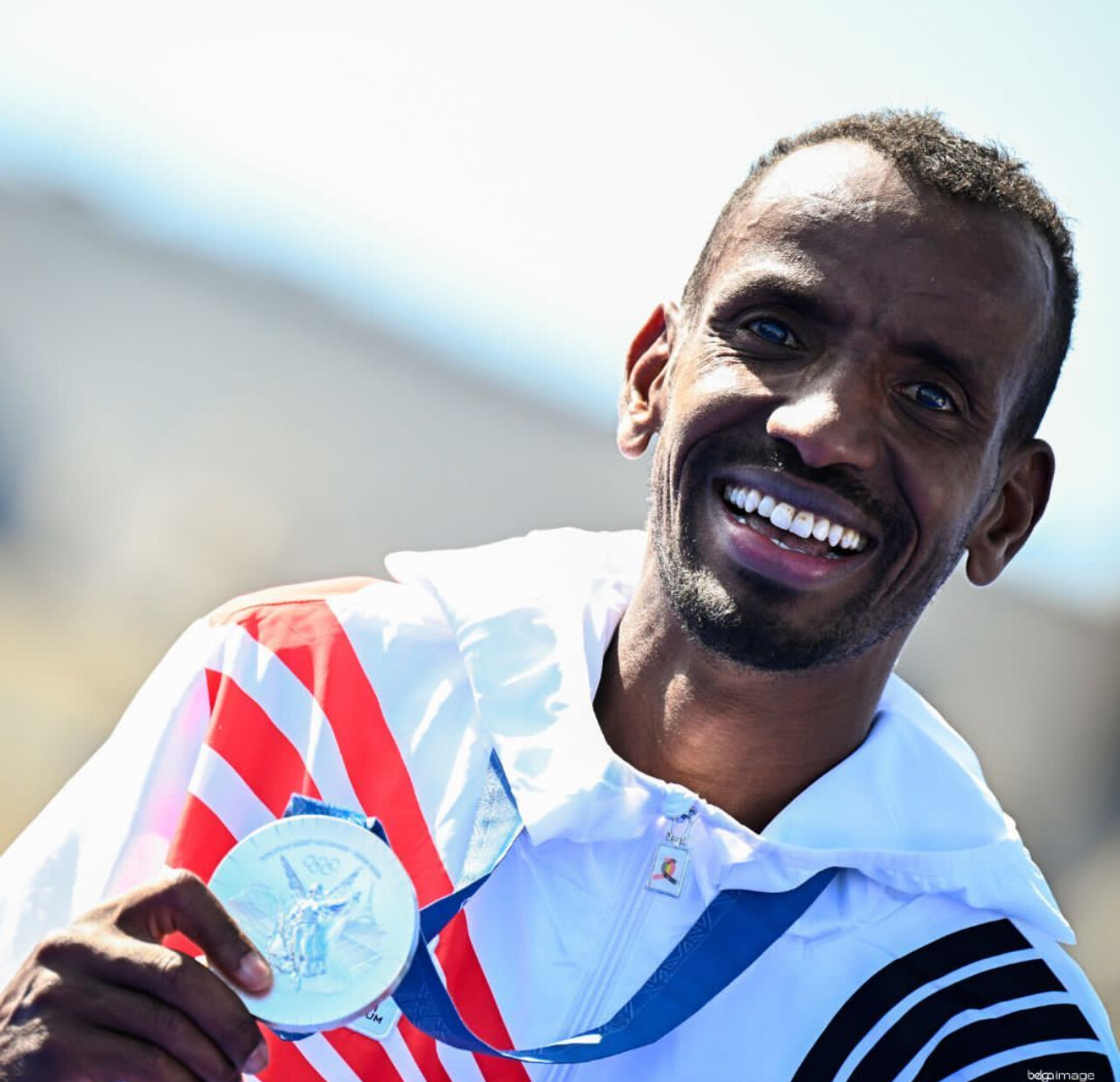
Now 36, Abdi is acutely aware that the margins are tightening.
“I feel many athletes are getting close to that record,” he said. “If I want to hold on to it for a few more years, I have to go faster. Whether it’s in this edition or another time, I don’t know. But my ambition is to break that European record.”
Ahead of Rotterdam, Abdi will test his form in familiar surroundings at the Gent Half Marathon on March 8, using the race as a barometer after a year that never fully came together physically. For a runner whose success has been built on rhythm and continuity, regaining health may be the most important victory of all.
A Course Built for History
Rotterdam’s reputation as one of the world’s fastest marathon courses is long established.
In 1985, Portugal’s Carlos Lopes set a world record of 2:07:12 there. Three years later, Ethiopia’s Belayneh Dinsamo lowered the mark to 2:06:50—a time that stood for a decade. In the women’s race, Tegla Loroupe rewrote history in 1988 with a world record of 2:20:47, ending Ingrid Kristiansen’s long reign.
It is into this lineage of record-breaking performances that Abdi has firmly placed himself—and where he hopes to return once more in 2026.
Bashir Abdi’s 10 Fastest Marathon Performances
• 2:03:36 – 1st, 2021 Rotterdam Marathon
• 2:03:47 – 1st, 2023 Rotterdam Marathon
• 2:04:32 – 3rd, 2023 Chicago Marathon
• 2:04:49 – 2nd, 2020 Tokyo Marathon
• 2:05:19 – 3rd, 2022 London Marathon
• 2:05:23 – 4th, 2022 Rotterdam Marathon
• 2:06:14 – 5th, 2019 Chicago Marathon
• 2:06:47 – 2nd, 2024 Olympic Games (Paris)
• 2:06:48 – 3rd, 2022 World Athletics Championships (Eugene, Oregon)
• 2:07:03 – 7th, 2019 London Marathon
by Boris Baron
Login to leave a comment

NN Rotterdam Marathon
The marathon has been the biggest one-day sporting event in the Netherlands for many years in a row with over 35000 athletes professionals inclusive. The world's top athletes will at the start on the bustling coolsingel, alongside thousands of other runners who will also triumph,each in their own way.The marathon weekend is a wonderful blend of top sport and festival. ...
more...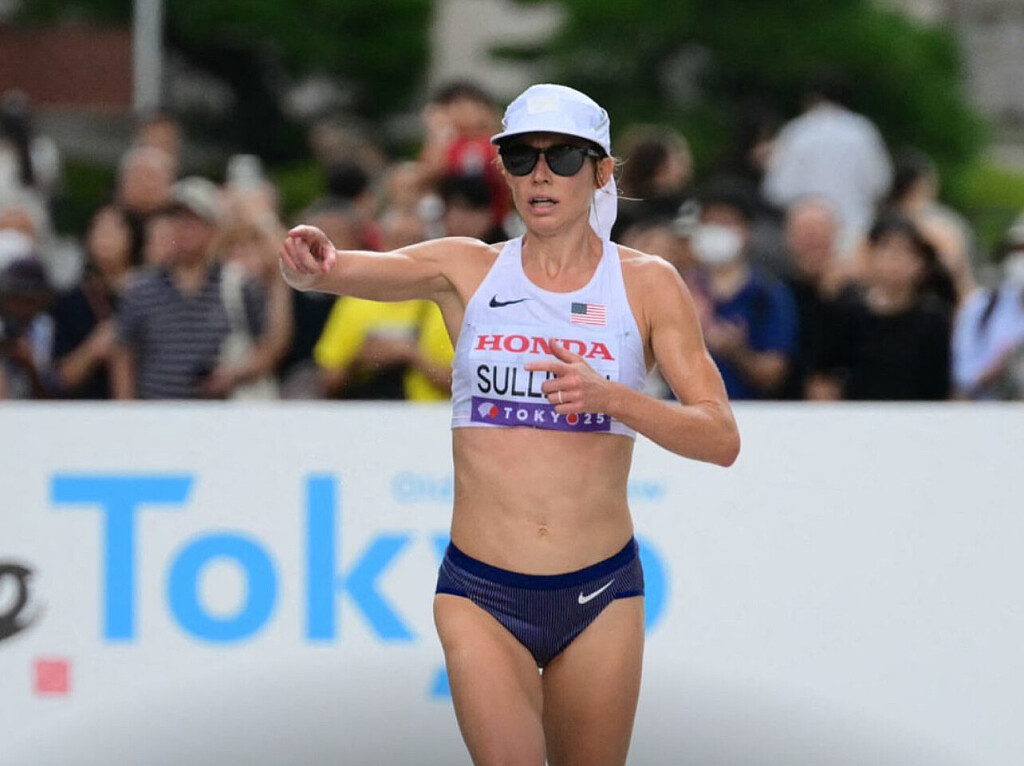
Susanna Sullivan — The Teacher Who Runs Among the World’s Best Set to run NYC Sunday
American marathoner Susanna Sullivan continues to prove that world-class athleticism and everyday life can coexist. A sixth-grade math and science teacher from McLean, Virginia, Sullivan has quietly become one of the top American women in marathon history — balancing the classroom with 120-mile training weeks and remarkable consistency on the roads.
From Humble Beginnings to World Class
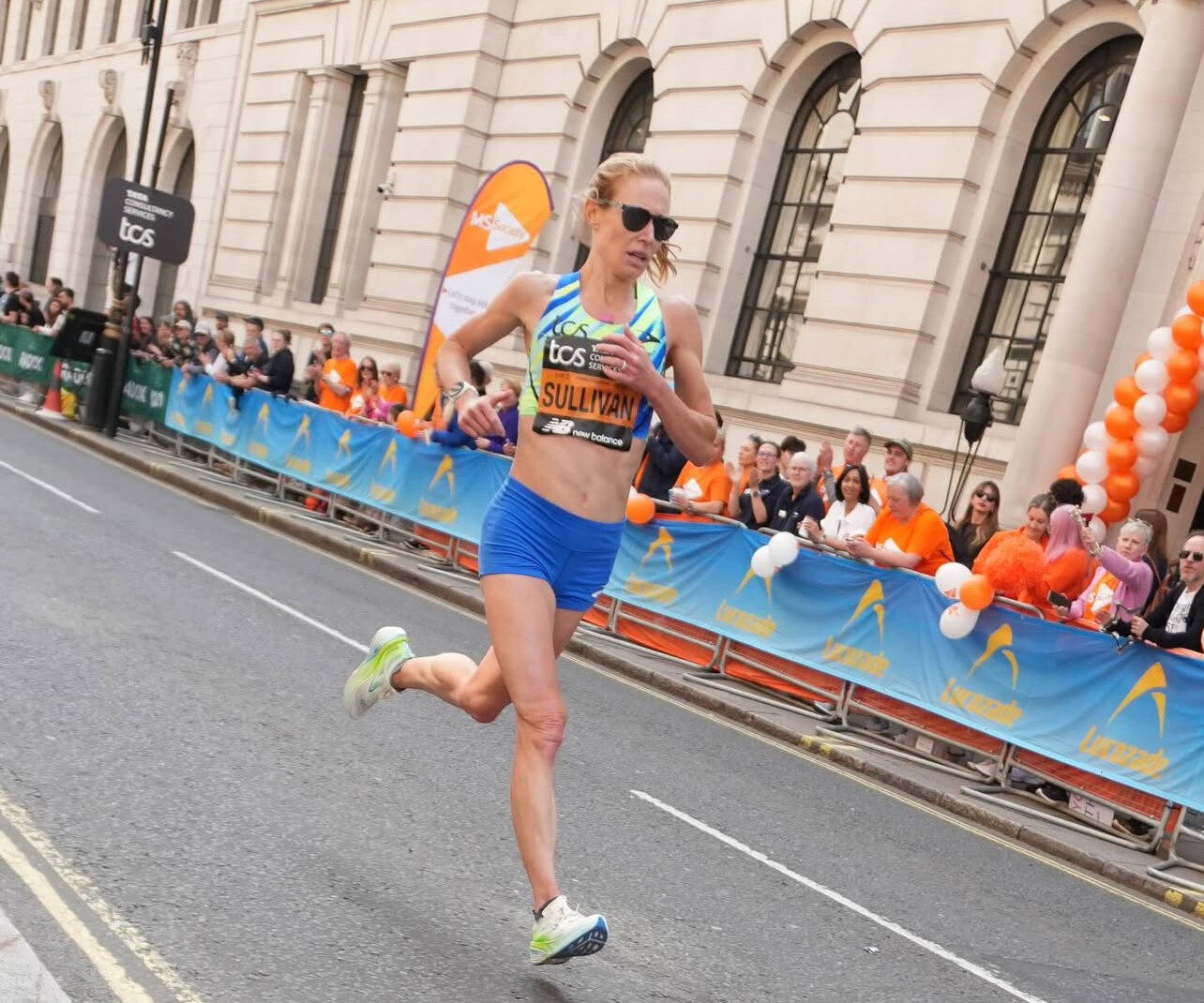
Born May 13, 1990, in West Palm Beach, Florida, and raised in Virginia, Sullivan’s early success came at George Mason High School, where she earned multiple state titles in cross-country and track. After competing at the University of Notre Dame, she battled injuries and fatigue but never lost her love for the sport.

Her marathon debut came in 2015 at Grandma’s Marathon in Minnesota, where she clocked 2:35:37 for 9th place. Over the next decade, she quietly built momentum, cutting time from race to race. The breakthrough arrived in 2024 at the Chicago Marathon, where she finished 7th overall — and first American — in 2:21:56, a personal best that placed her among the top ten fastest U.S. women of all time.
Fourth at the 2025 World Championships in Tokyo
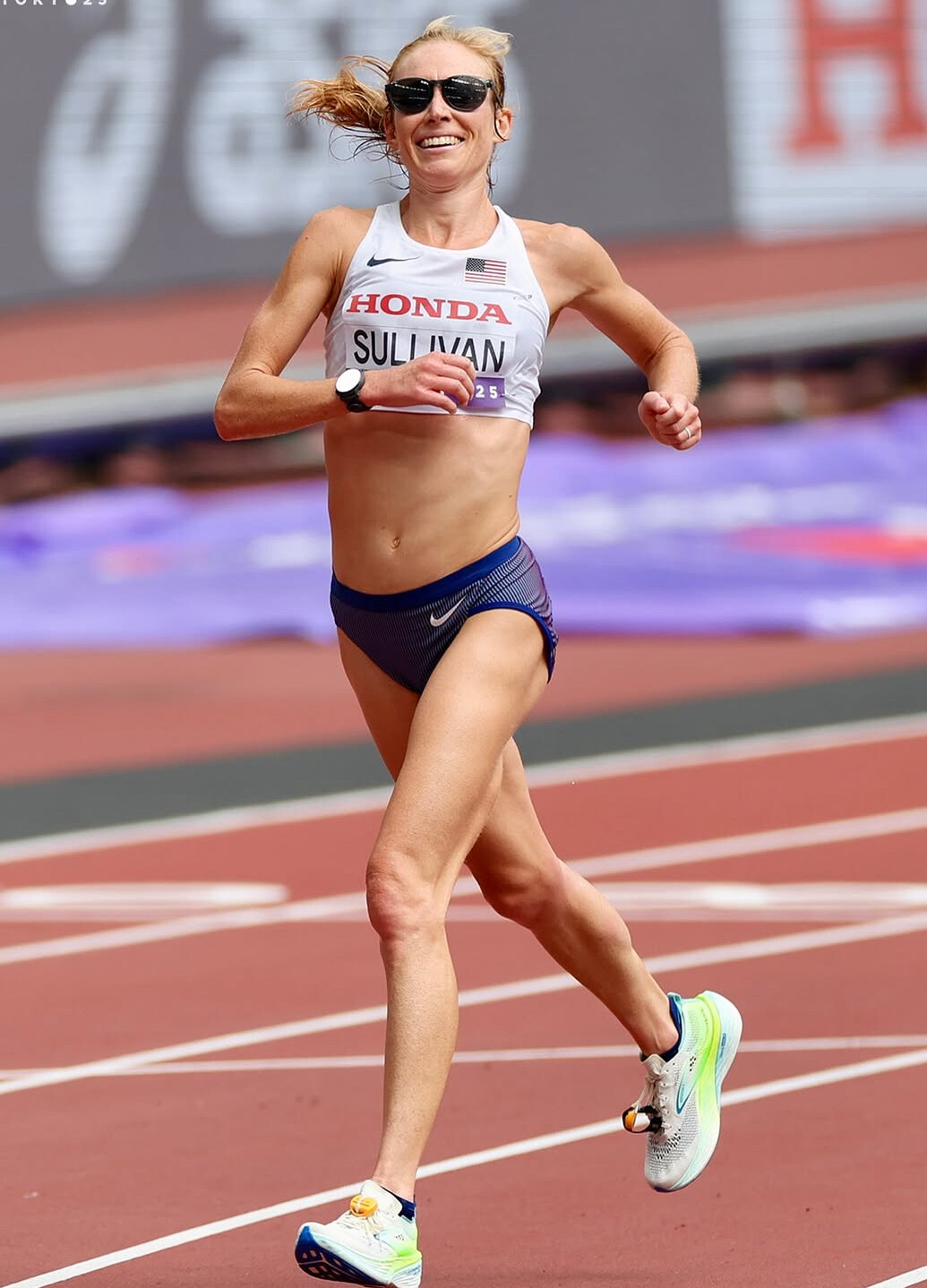
On September 14, 2025, Sullivan delivered one of her finest performances at the World Athletics Championships Marathon in Tokyo, finishing fourth in 2:28:17.
Under sweltering heat and high humidity, Sullivan courageously led much of the race, setting the pace through 25 kilometers before the eventual medalists pulled away. Her performance — the top American finish — underscored her strength, tactical intelligence, and resilience on one of the sport’s biggest stages.
It also marked a full-circle comeback. Two years earlier, at the 2023 World Championships, Sullivan fractured her kneecap mid-race and limped home in 58th place. Her return to the top five in Tokyo symbolized perseverance and renewed confidence.
The Balance of Two Worlds
While most professional runners build their lives around training, Sullivan still starts her mornings in the classroom. She teaches sixth-grade advanced math and science, grading papers and designing lessons between workouts.
“Running gives me perspective,” she has said in interviews. “It keeps me grounded. Teaching reminds me there’s more to life than splits and finish times.”
Her ability to balance two demanding worlds has made her an inspiration for runners who juggle careers, families, and athletic dreams.
On to New York
Next up, Sullivan is set to compete in the 2025 TCS New York City Marathon on Sunday, November 2. She enters as one of the leading Americans to watch in a stacked international field that includes Olympians and major-marathon champions.
After her stellar run in Tokyo, many eyes will be on how she handles the challenging hills and bridges of New York — a course that rewards experience and toughness rather than speed alone. Few embody those traits better than Sullivan.
Lessons from Her Journey
• Patience and perseverance — her steady rise from 2:35 to 2:21 shows the value of long-term commitment.
• Balance — proof that excellence isn’t limited to full-time athletes.
• Resilience — recovering from injuries and setbacks only to climb higher.
• Leadership — both in the classroom and in leading a world championship field
Career Highlights
• Marathon PR: 2:21:56 – Chicago (2024)
• World Championships Tokyo (2025): 4th Place, 2:28:17
• London Marathon (2023): 10th Place, 2:24:27 (top American)
• Cherry Blossom 10-Mile (2022): Champion, 52:32
• Half Marathon PR: 1:08:59 – January 2025
A Runner to Watch
Susanna Sullivan’s story reminds us that greatness doesn’t always come from perfect conditions or full-time focus. Sometimes it comes from a quiet classroom in Virginia, where a teacher grades homework — and then goes out to train like one of the best marathoners in the world.
Her journey is far from over, and as she lines up in New York, she represents not just American distance running but every runner chasing balance, progress, and purpose — one mile at a time.
by Boris Baron
Login to leave a comment
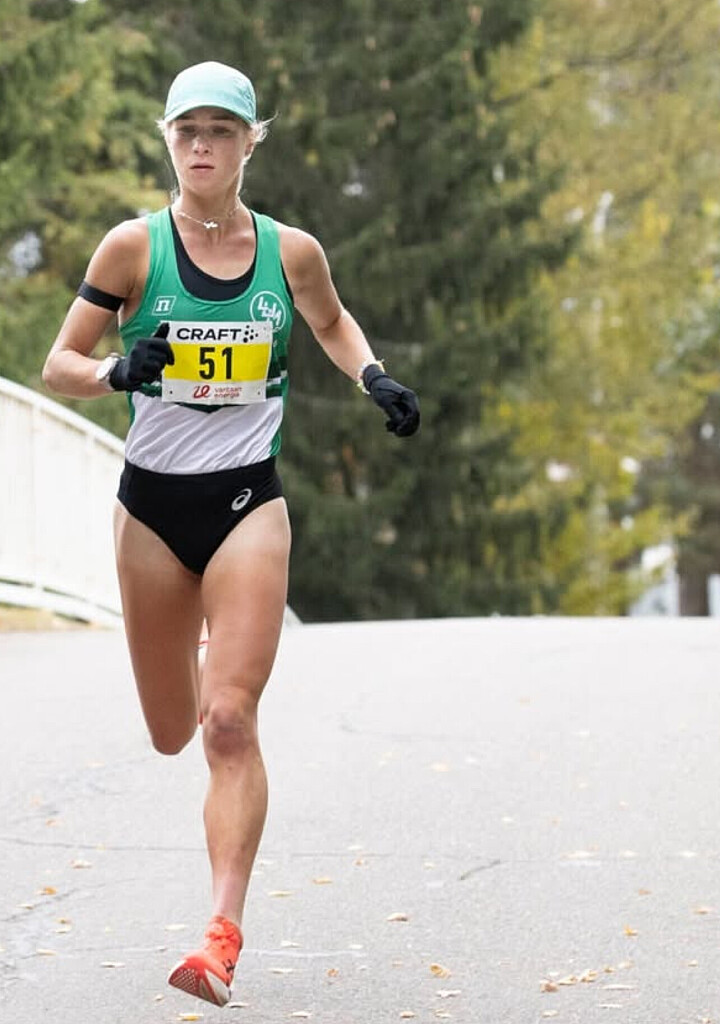
Alisa Vainio Smashes Finnish Marathon Record Just Three Weeks After World Championships
Just three weeks after placing an impressive fifth in the marathon at the World Athletics Championships in Tokyo, Finland’s Alisa Vainio has once again made headlines—this time rewriting the national record books.
Competing at the Finnish Championships in Vantaa on Saturday (Oct 4), Vainio claimed the national marathon title in 2:23:06, breaking the previous Finnish record by 92 seconds. The old mark of 2:24:38 was set by Camilla Richardsson at the 2023 Valencia Marathon.
In contrast to Tokyo’s hot and humid conditions, Vantaa offered cool but blustery weather, which suited Vainio’s strong and efficient running style. She finished second overall, just 33 seconds behind men’s winner Kari Heikura, who clocked 2:22:33.
“I felt pretty good, pretty strong the whole time. The stride felt good and I was able to tighten my stride uphill and then relax downhill. Sometimes I got some help from the guys,” said Vainio.
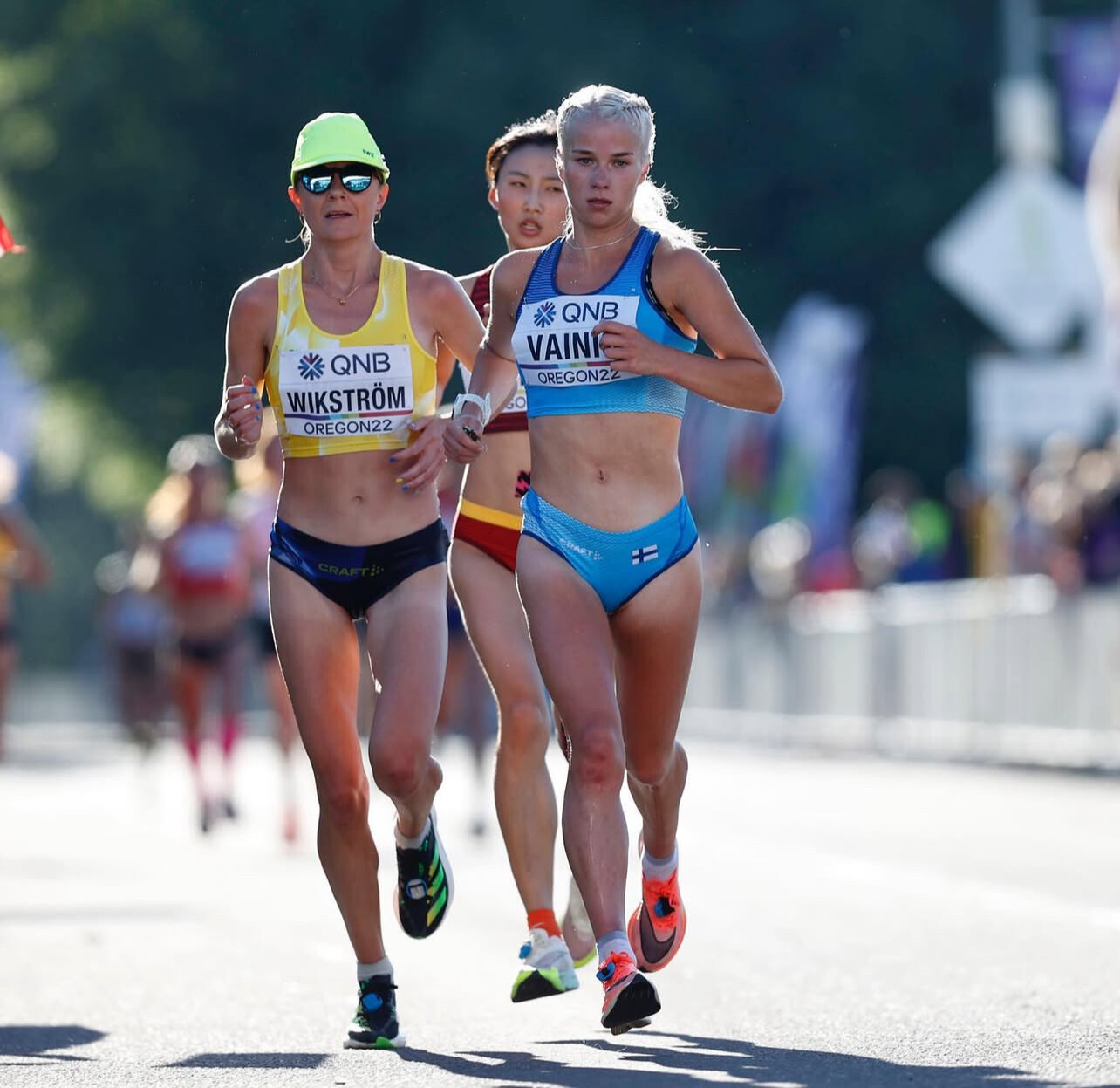
“I wanted to run hard. In Tokyo, I couldn’t run hard in the heat and that was annoying. After Tokyo, the recovery went incredibly well and I wanted to be brave today.”
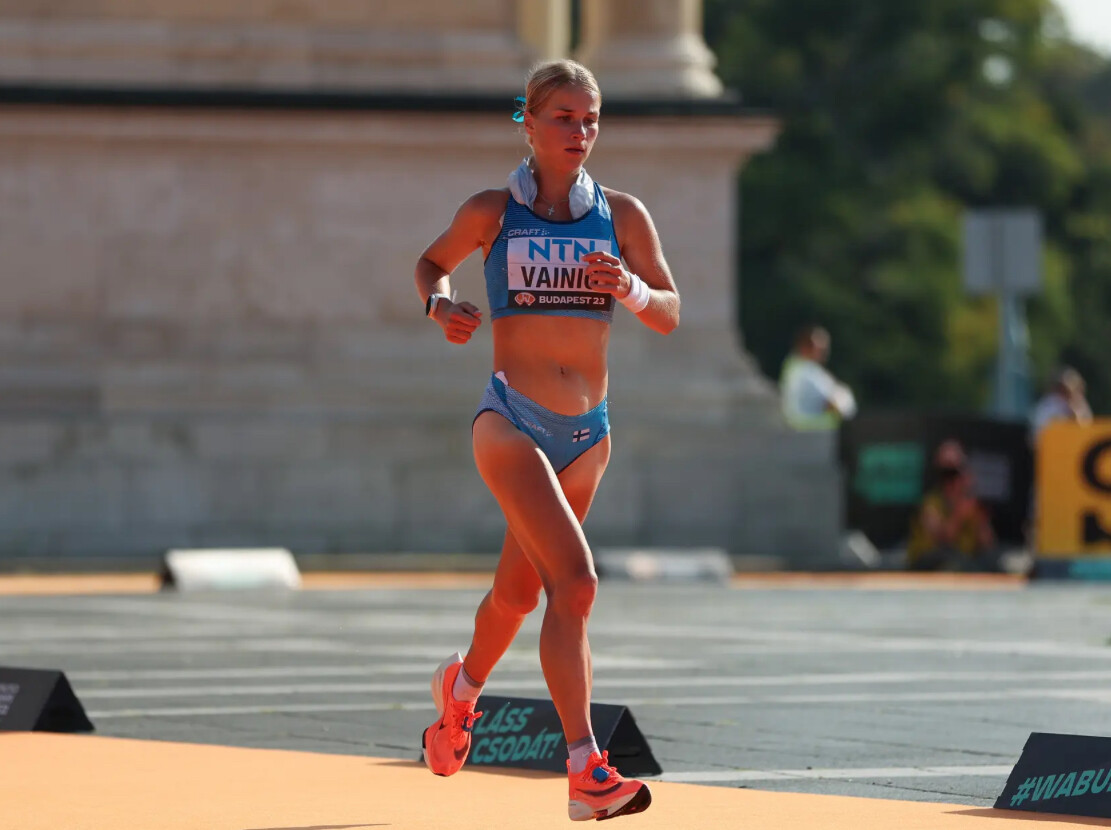
Remarkably, Vainio took just one week off following Tokyo before resuming training, showing her trademark resilience and determination. Her 2:23:06 performance now places her third on the 2025 European list, trailing only Olympic champion and European record-holder Sifan Hassan (2:19:00) and Germany’s Fabienne Königstein (2:22:17), who placed sixth at last month’s Berlin Marathon.
Despite having raced two marathons in three weeks, Vainio hasn’t ruled out another major test this year.
“I possibly have a place in Valencia. It’s not completely confirmed yet. There should be good conditions to run hard, but everything has to go well until then,” she said.
by Boris Baron
Login to leave a comment
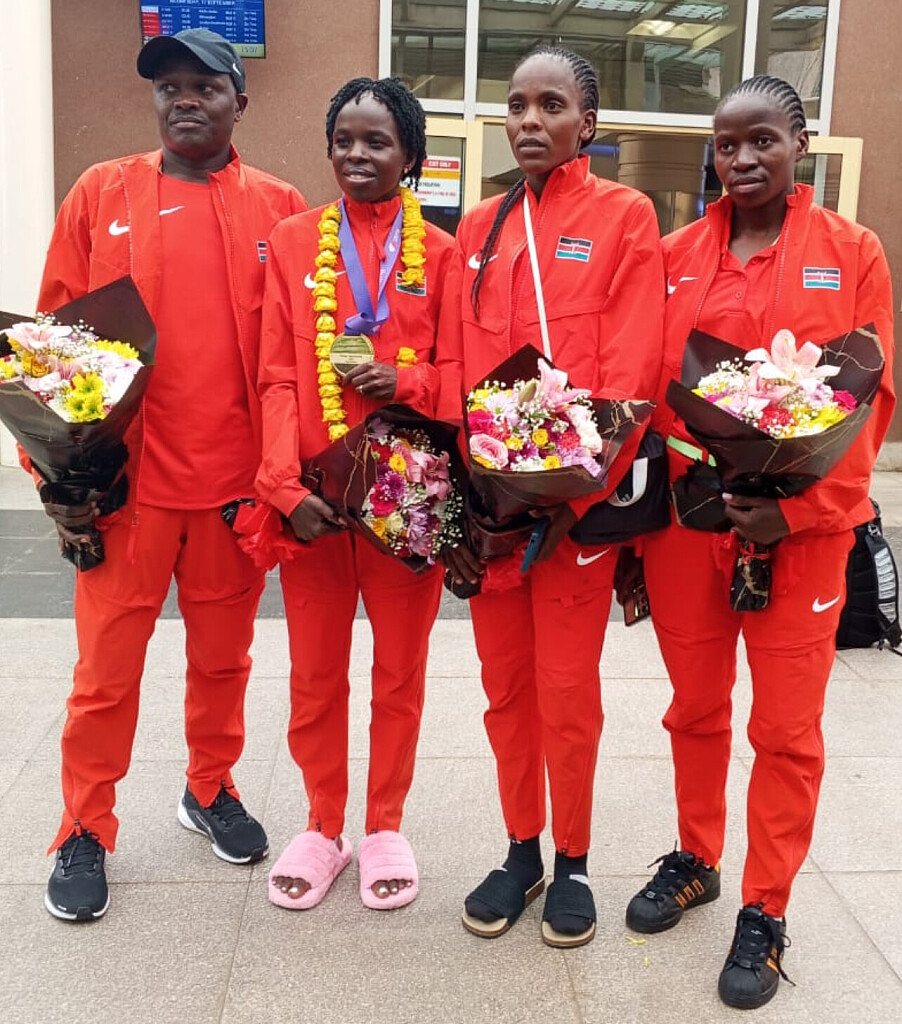
Kenya’s World Championship Marathon Champion Peres Jepchirchir Returns to Hero’s Welcome in Nairobi
NAIROBI, September 16 – Kenya’s world championship marathon champion, Peres Jepchirchir, arrived home to a hero’s welcome following her golden run at the 2025 World Athletics Championships in Tokyo.
The 31-year-old touched down at Jomo Kenyatta International Airport (JKIA) on Tuesday morning, where she was greeted by traditional dancers, cheering fans, and a delegation of government and athletics officials. She was joined by teammates Jackline Cherono, Magdalene Masai, and Janeth Ng’etich, forming the first group of Team Kenya athletes to return from Tokyo. The reception was both a celebration of her individual triumph and a testament to Kenya’s enduring dominance in distance running.
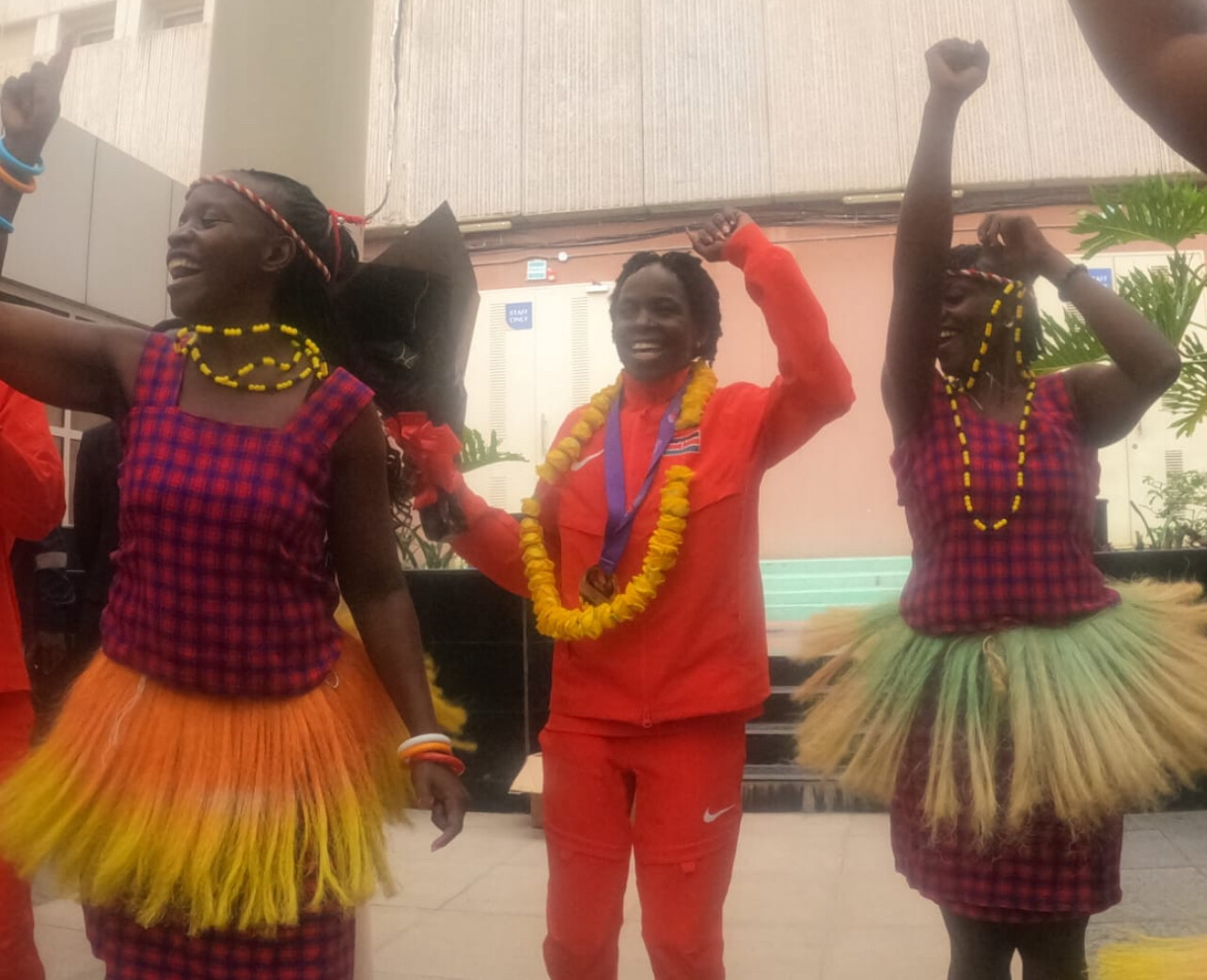
A Marathon Masterclass in Tokyo
Jepchirchir’s victory was marked by patience, grit, and precision. Competing in soaring temperatures against a formidable Ethiopian contingent, she conserved her energy in the lead pack before making a decisive late surge to secure gold.
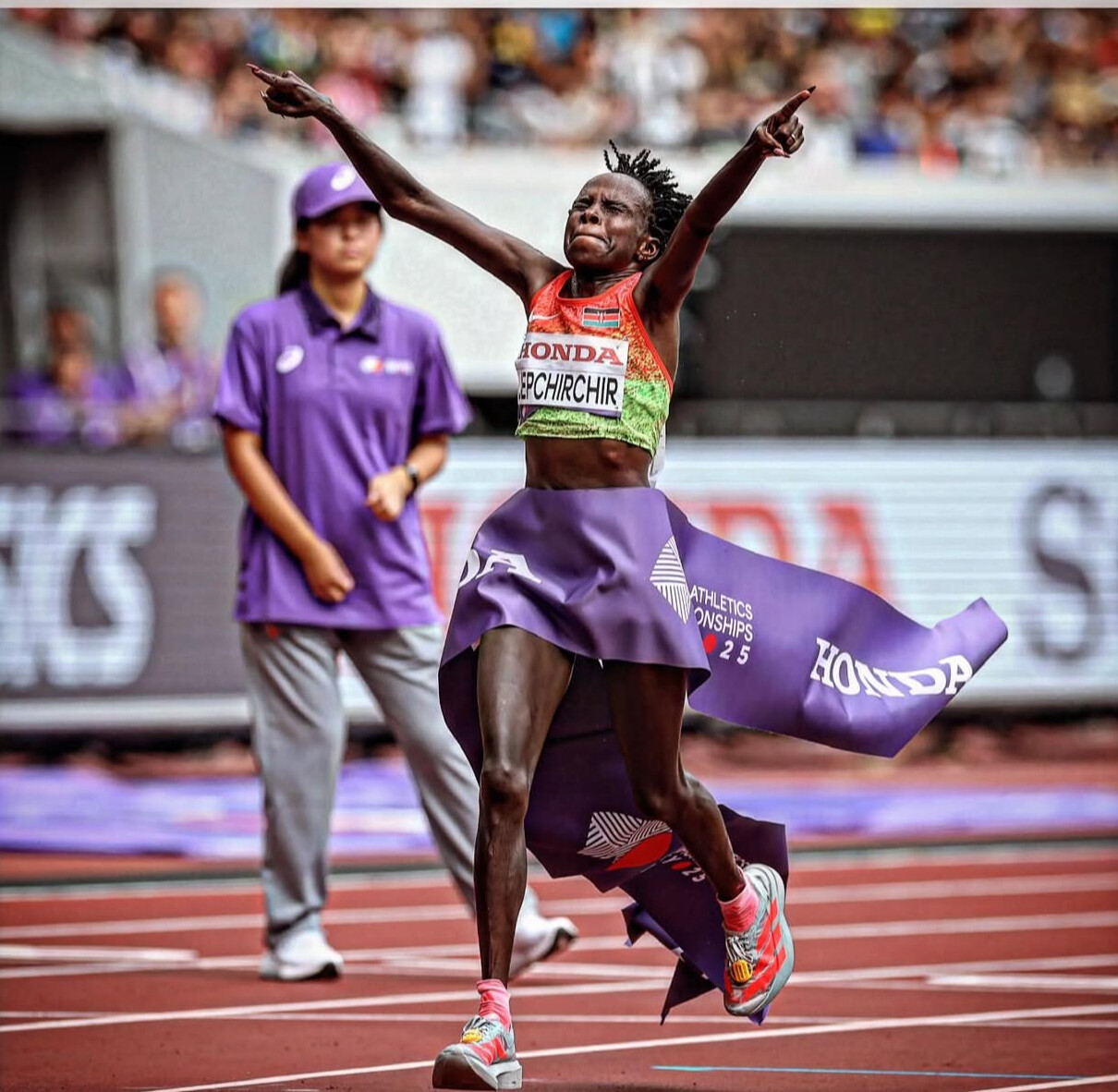
“From the beginning to the end, Peres believed in herself,” said long-distance coach Joseph Kahugu, who followed the race from the Tokyo course. “It was tough, especially against Ethiopia, but she showed her strength, fought hard, and delivered. We are proud of her.”
Her win reaffirmed her place among the greats: an Olympic champion, a two-time New York City Marathon winner, and now a world championship marathon gold medalist.
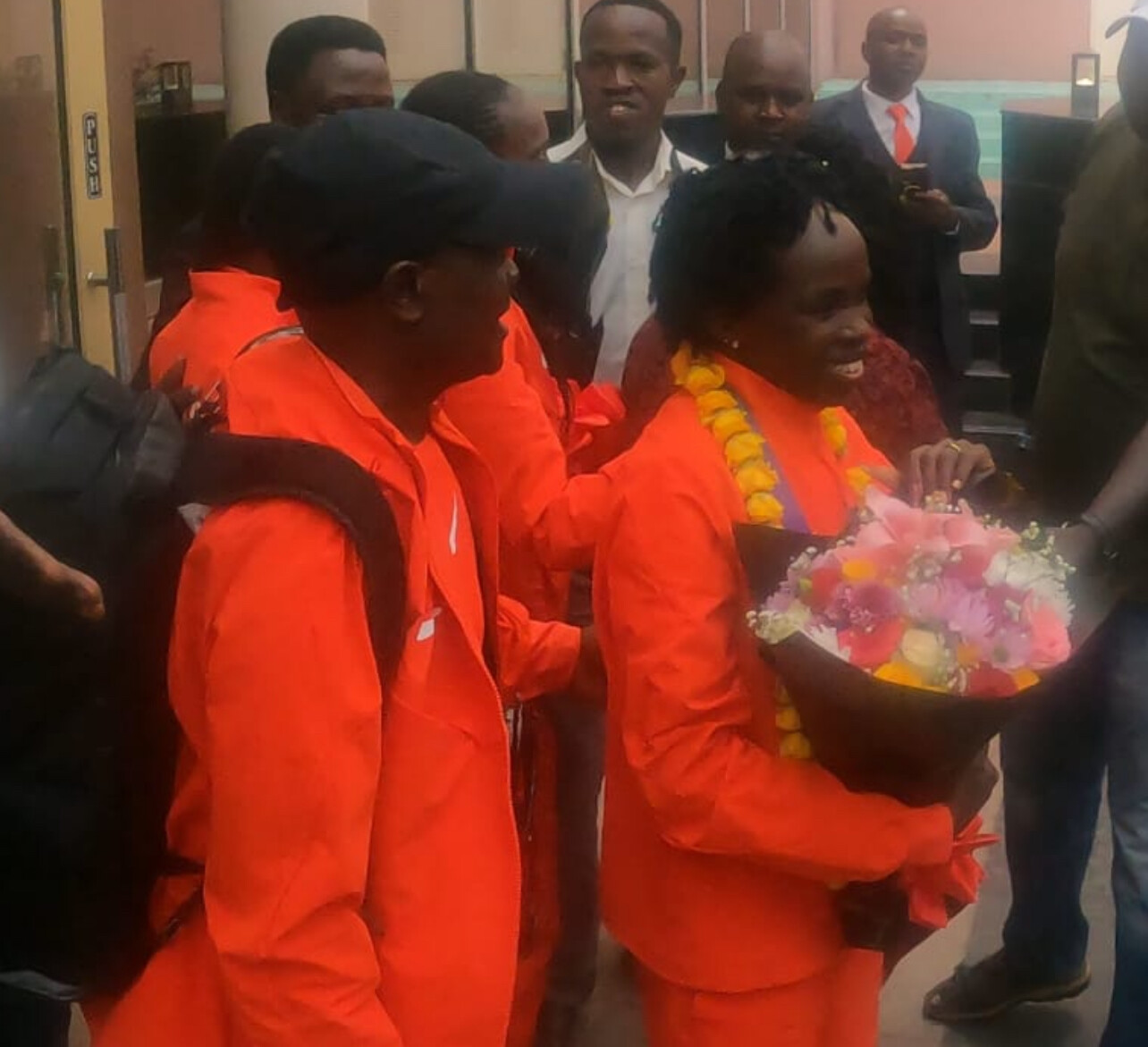
Government and Athletics Kenya Celebrate
Representing the Ministry of Sports, Jonah Towett assured the athletes of ongoing government backing.
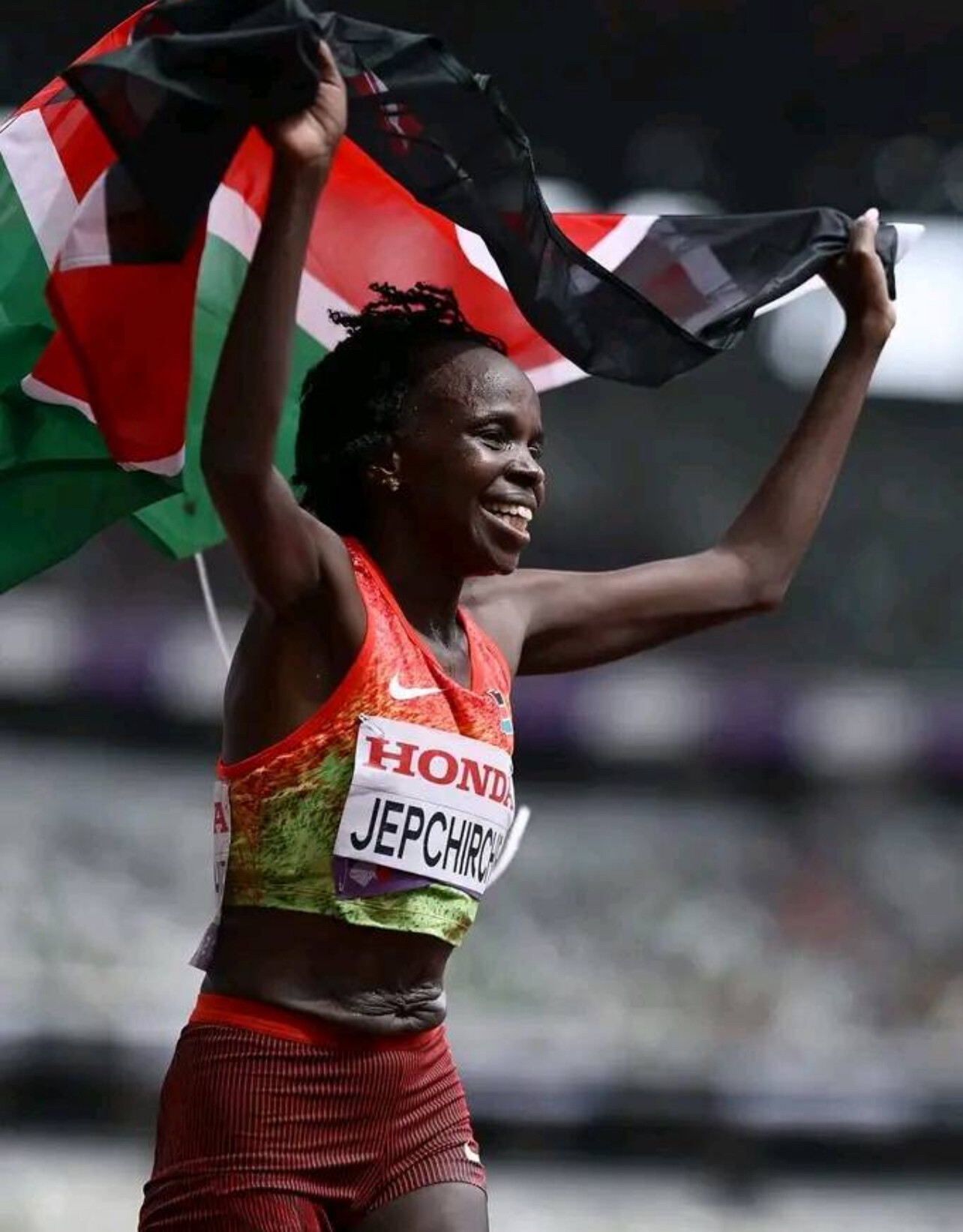
“This is a big day,” Towett said. “We are delighted to welcome our team back home. We congratulate them, especially our gold medalists, and assure them of our full support."
Athletics Kenya (AK) was equally visible at the welcome event, with officials led by Elizabeth Keitany. Keitany, praised Jepchirchir’s achievement and expressed optimism about the rest of Team Kenya still competing in Tokyo.
“We congratulate Peres for making Kenya proud,” Mary Keitany said. “Her victory is an inspiration, and we are confident more medals will come from Tokyo.”

Preparing for the Heat
Coach Kahugu explained that Tokyo’s humidity posed a challenge, but adjustments paid off. “In Kenya, we didn’t train in such hot conditions. Once in Tokyo, we shifted to midday sessions to adapt. That preparation made all the difference,” he said.
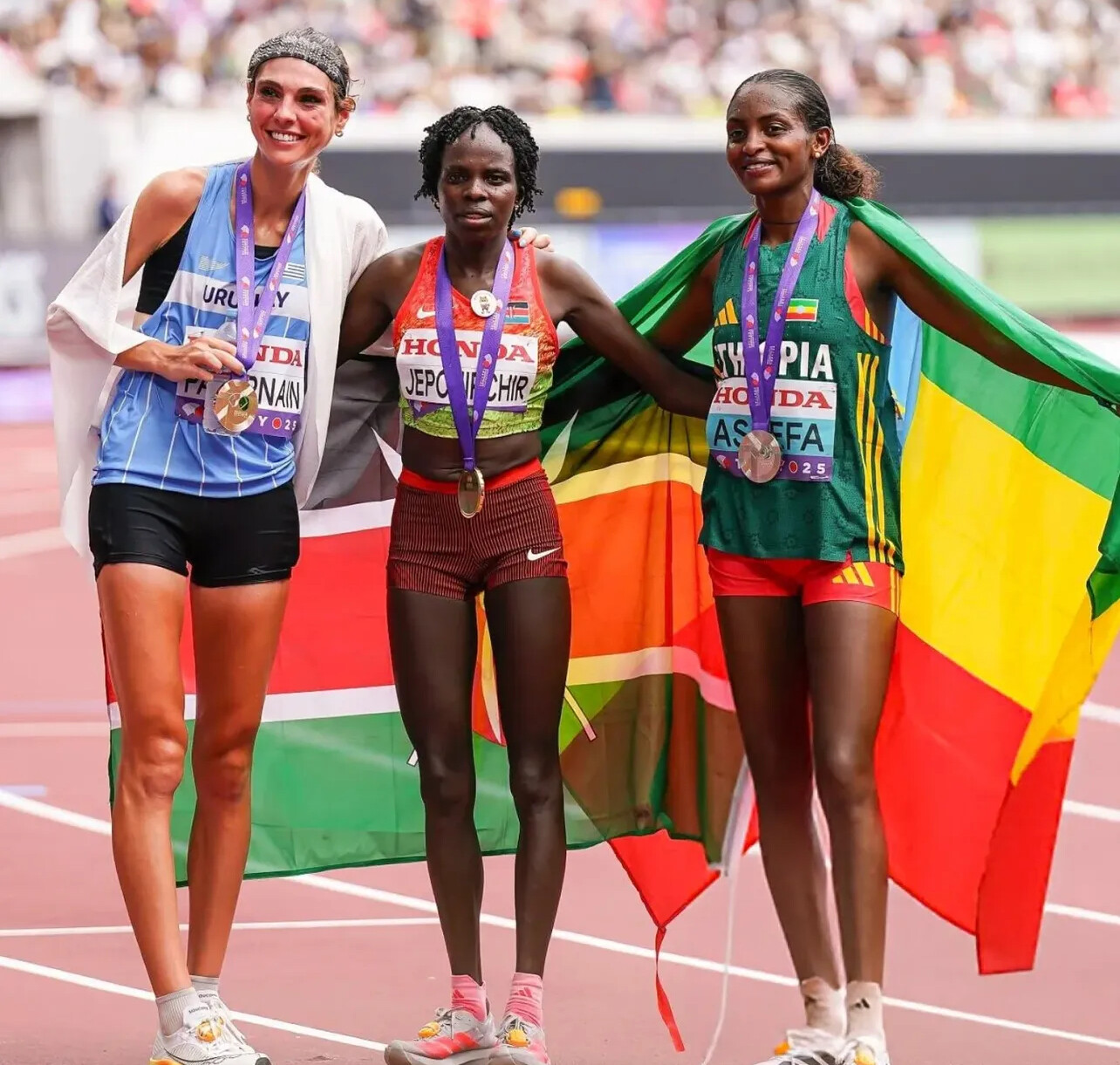
The strategy worked: Jepchirchir’s gold was supported by strong efforts from her compatriots, underlining Kenya’s strength in depth.
Global Spotlight on Kenya’s Legacy
Jepchirchir’s return has once again placed Kenya firmly at the center of the marathon conversation. Her triumph continues a proud tradition carried by icons like Catherine Ndereba, Tegla Loroupe, and Mary Keitany, while inspiring a new generation of runners.
“Kenya’s marathon culture is unmatched,” said one jubilant fan at JKIA. “Every victory like this strengthens our identity as the home of champions.”
Looking Ahead
While Nairobi celebrated, attention remains on Tokyo, where Kenyan athletes continue their medal hunt in the 1500m, 5000m, and steeplechase. Jepchirchir’s victory has set the tone, fueling hopes of more success.
A Champion Beyond the Finish Line
For Jepchirchir, the gold is more than just another medal. Having battled injuries and personal setbacks, her resurgence on the world’s biggest stage cements her as one of Kenya’s all-time greats.
From her beginnings in Kapsabet to victories in New York, the Olympics, and now Tokyo, Jepchirchir’s journey is one of resilience, faith, and belief. Her story continues to inspire athletes and fans worldwide — and her return home is a celebration not just of a single victory, but of a legacy still being written.
by Robert Kibet
Login to leave a comment
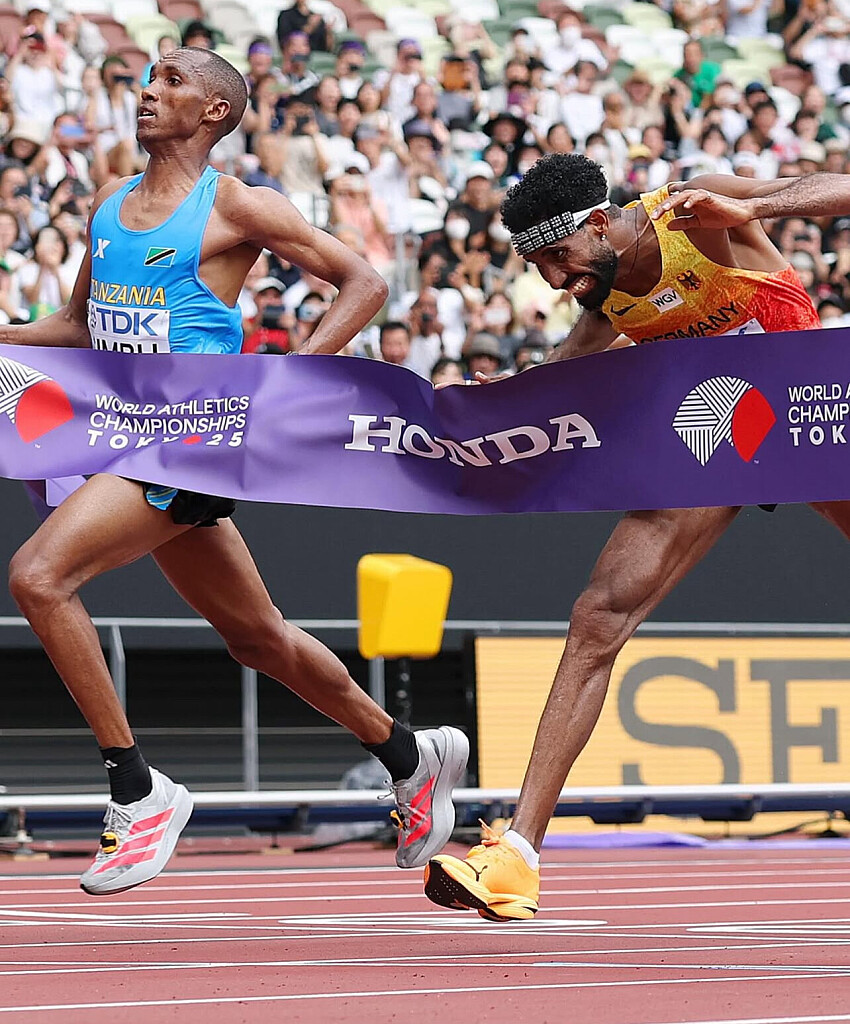
Simbu Wins Men’s Marathon World Title in Dramatic Photo Finish
The men’s marathon at the 2025 World Athletics Championships delivered an unforgettable finish that will be remembered for years to come. After 26.2 miles, the battle for gold came down to a fraction of a second.
With 100 meters to go, Germany’s Amanal Petros surged into the lead, spurred on by the roar of the crowd. But in the final 10 meters, Tanzania’s Alphonce Felix Simbu found one last burst of speed. Both men crossed the line together in 2:09:48, with Simbu declared the winner by the narrowest of margins after a photo review.
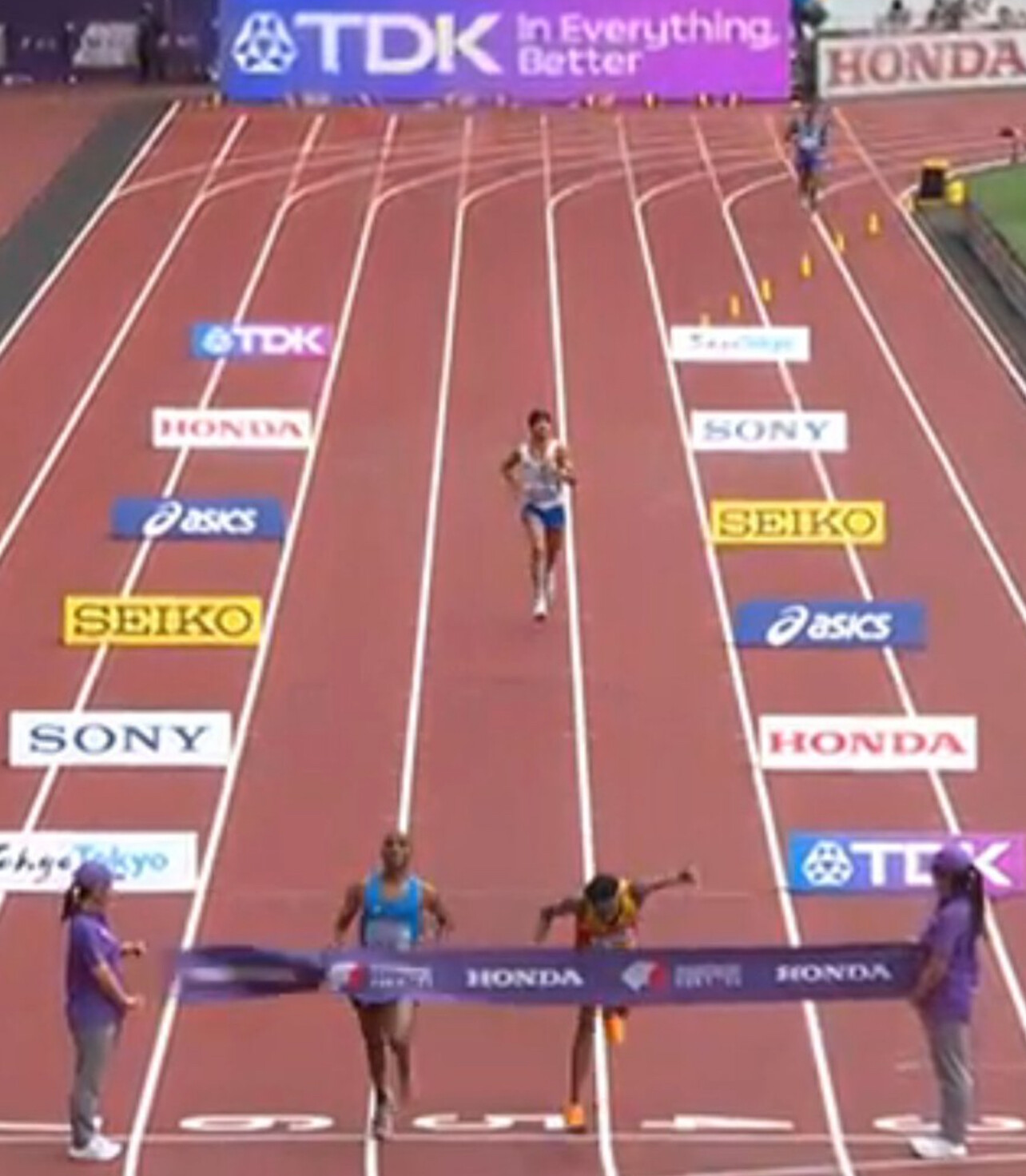
Italy’s Iliass Aouani claimed bronze with 2:09:53, while Israel’s Haimro Alame finished fourth in 2:10:03.
Why Were the Winning Times So Slow?
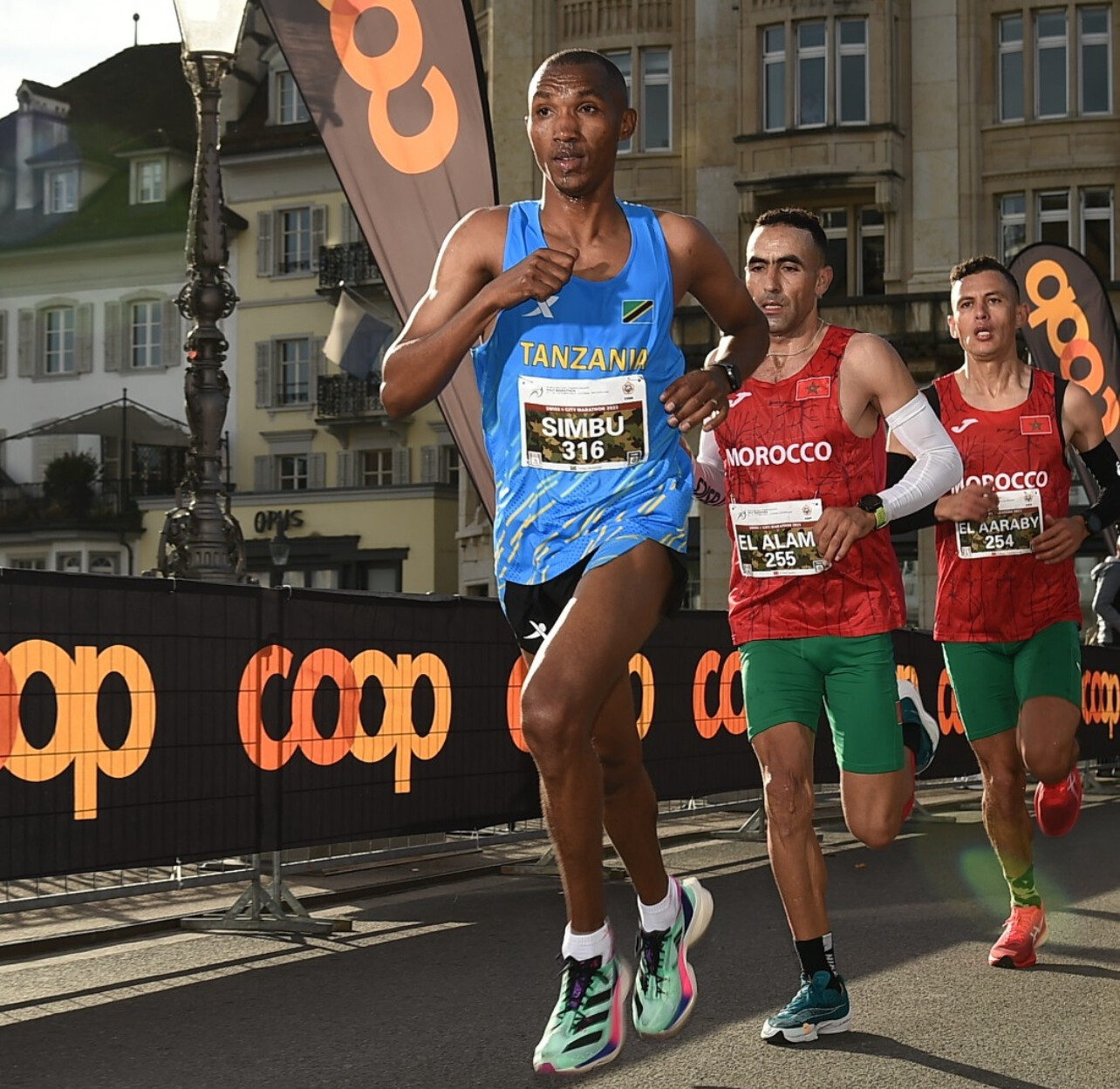
In an era where sub-2:05 performances are increasingly common on flat, fast city courses, a 2:09 winning time might appear modest. But championship marathons are rarely about speed—they’re about tactics, conditions, and survival.
On this humid Tokyo morning, the combination of rising temperatures, tactical surges, and the lack of pacemakers slowed the field considerably. Unlike commercial marathons designed for record attempts, World Championship races unfold as battles of attrition. The priority is medals, not fast times.

That context made the finish all the more gripping. Despite the relatively slow clocking, the drama of two men collapsing at the line after a two-hour duel showcased the true essence of championship racing: it’s not about how fast you run, but whether you cross the line first.
For Simbu, the victory is another milestone in a long and decorated career. For Petros, the silver marked both heartbreak and validation—a confirmation that he belongs among the world’s elite.
The 2025 World Championships men’s marathon may not go down for record times, but it will long be remembered for its thrilling conclusion.
by Boris Baron
Login to leave a comment
Geordie Beamish Rises from a Fall to World Champion Glory in Tokyo
Tokyo, September 15, 2025 — New Zealand’s Geordie Beamish produced one of the most dramatic victories of the World Athletics Championships, storming to gold in the men’s 3000m steeplechase. His winning time of 8:33.88 edged Morocco’s reigning champion Soufiane El Bakkali by just 0.07 seconds, with 17-year-old Kenyan Edmund Serem taking bronze in 8:34.56 .
This is a breakthrough moment for New Zealand athletics: the nation’s first-ever outdoor World Championships track gold .
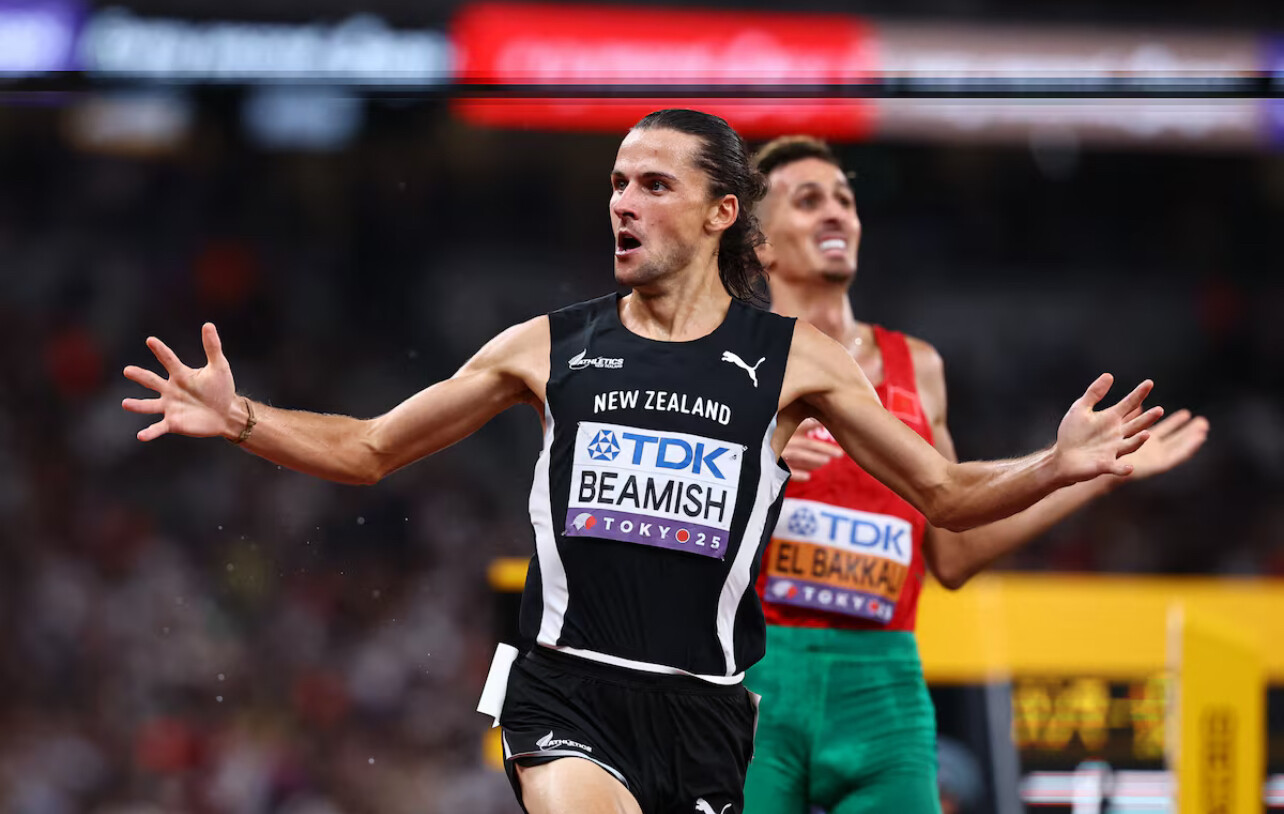
A Tactical Race Decided at the Line
The steeplechase final unfolded at a controlled pace, leaving the medals to be decided in the closing laps. El Bakkali, a two-time Olympic and world champion, looked ready to add another title. But Beamish, renowned for his devastating kick, stayed composed.
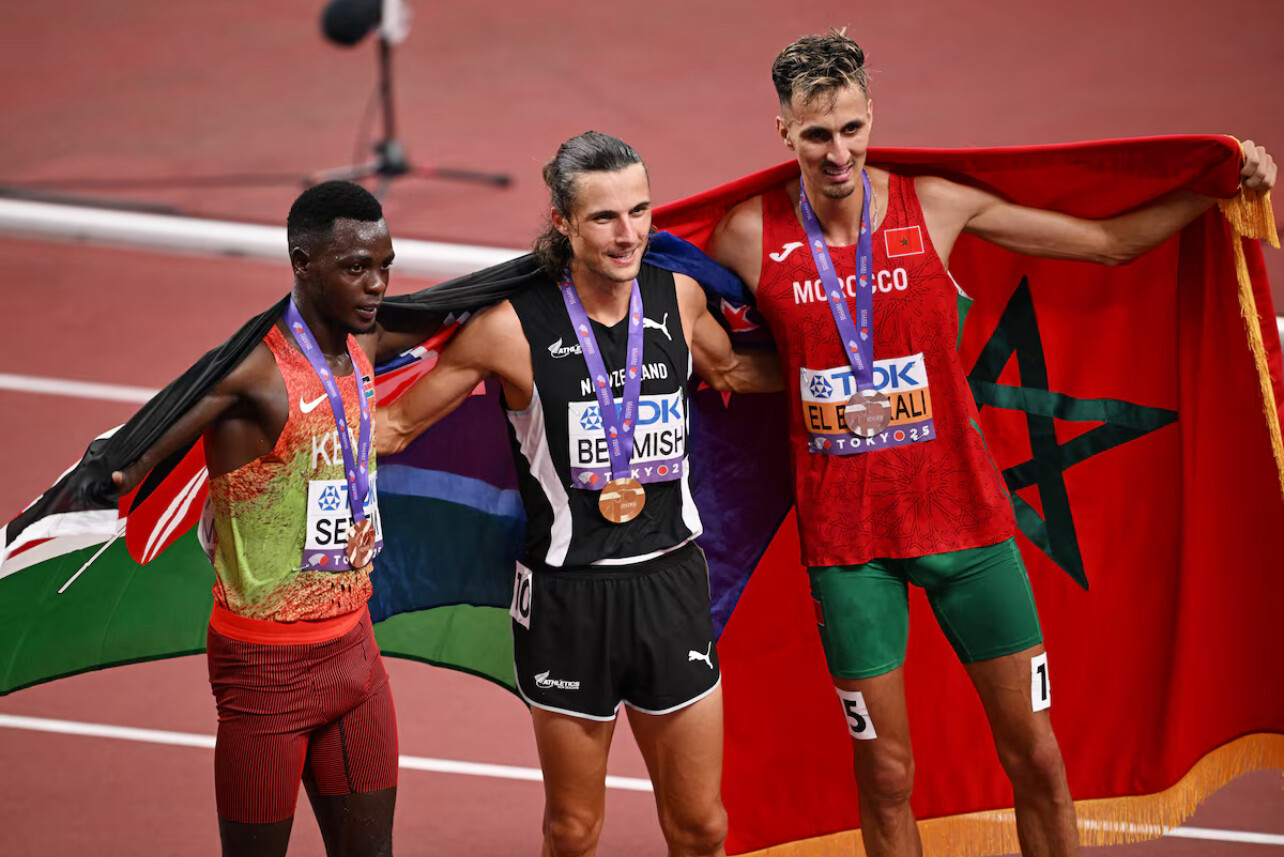
On the last lap, he surged through the field, matching El Bakkali stride for stride. Off the final water jump, Beamish unleashed one last burst of speed. In a thrilling lean at the line, he dethroned one of the event’s greats.
A fall and a spike in the heats
Beamish’s victory was even more remarkable considering his rough path to the final. In his qualifying heat, he fell heavily and was stepped on in the face, yet managed to get up and finish second to advance .
That resilience set the tone for his gold-medal run.
Who Is Geordie Beamish?
• Born: October 24, 1996, in Hastings, New Zealand
• Club: On Athletics Club (based in Boulder, Colorado)
• Coach: Dathan Ritzenhein
• Specialties: 1500m through 5000m, and now the steeplechase
• Career highlights:
• 2024 World Indoor Champion in the 1500m (Glasgow)
• Oceania record holder in the 3000m steeplechase (8:09.64, Paris, 2024)
• Fifth in the 2023 World Championships steeplechase final
Beamish’s late move to the steeplechase has transformed his career, turning him from a versatile miler into a global champion.
This was a big upset
Beamish’s Tokyo win not only toppled El Bakkali’s reign but also put New Zealand back on the map of world middle-distance running. For a nation that once celebrated icons like Peter Snell and John Walker, this is a new chapter in the sport’s history.
With the 2028 Los Angeles Olympics on the horizon , Beamish has proven he has the strength, resilience, and tactical brilliance to contend for more global medals.
by Boris Baron
Login to leave a comment
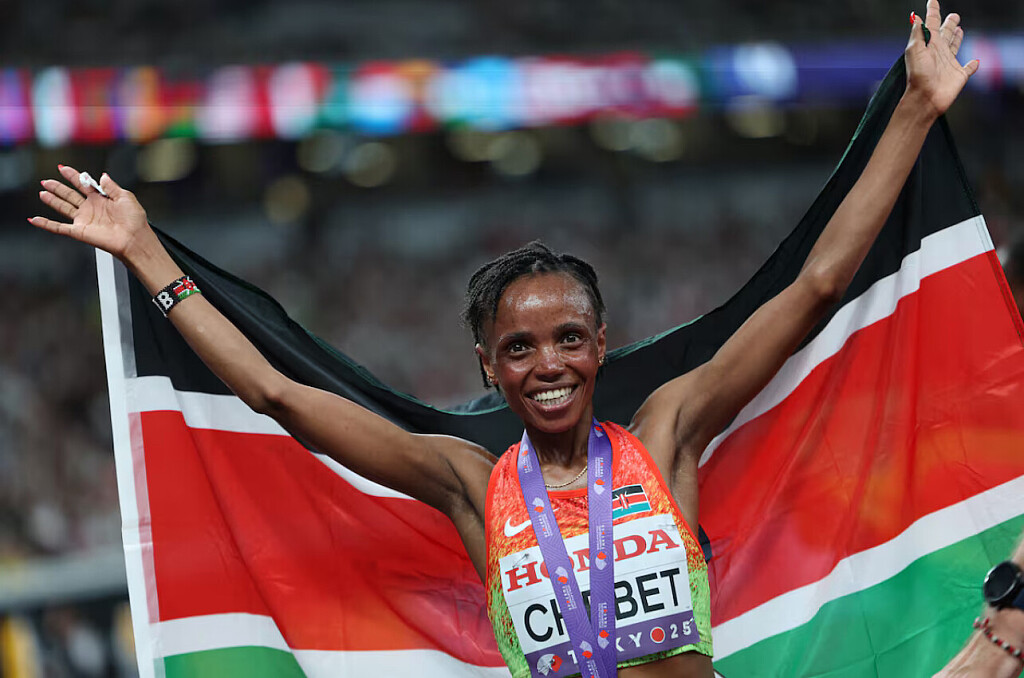
Thrilling Finishes Define 10,000m Races at World Championships in Tokyo
Tokyo, Sept. 14, 2025 — The 10,000m finals at the World Athletics Championships in Tokyo delivered everything fans hope for: tactical battles, dramatic last-lap fireworks, and history-making performances.
Chebet Claims Her First World Title
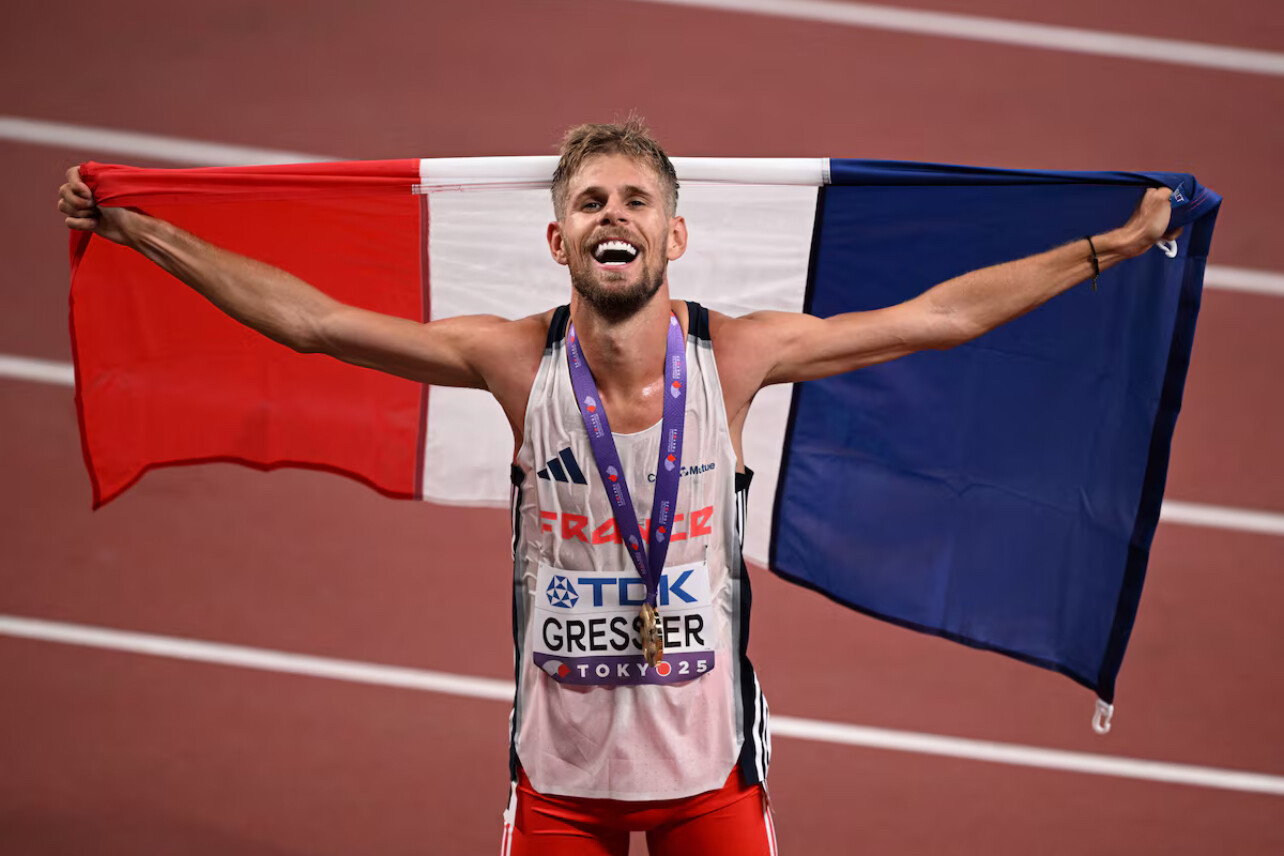
Kenya’s Beatrice Chebet finally added the missing piece to her resume, storming to her first World Championship gold in the women’s 10,000m. Already an Olympic champion and record-breaker on the roads, Chebet powered home in 30:37.61, unleashing a decisive final lap that left no doubt.
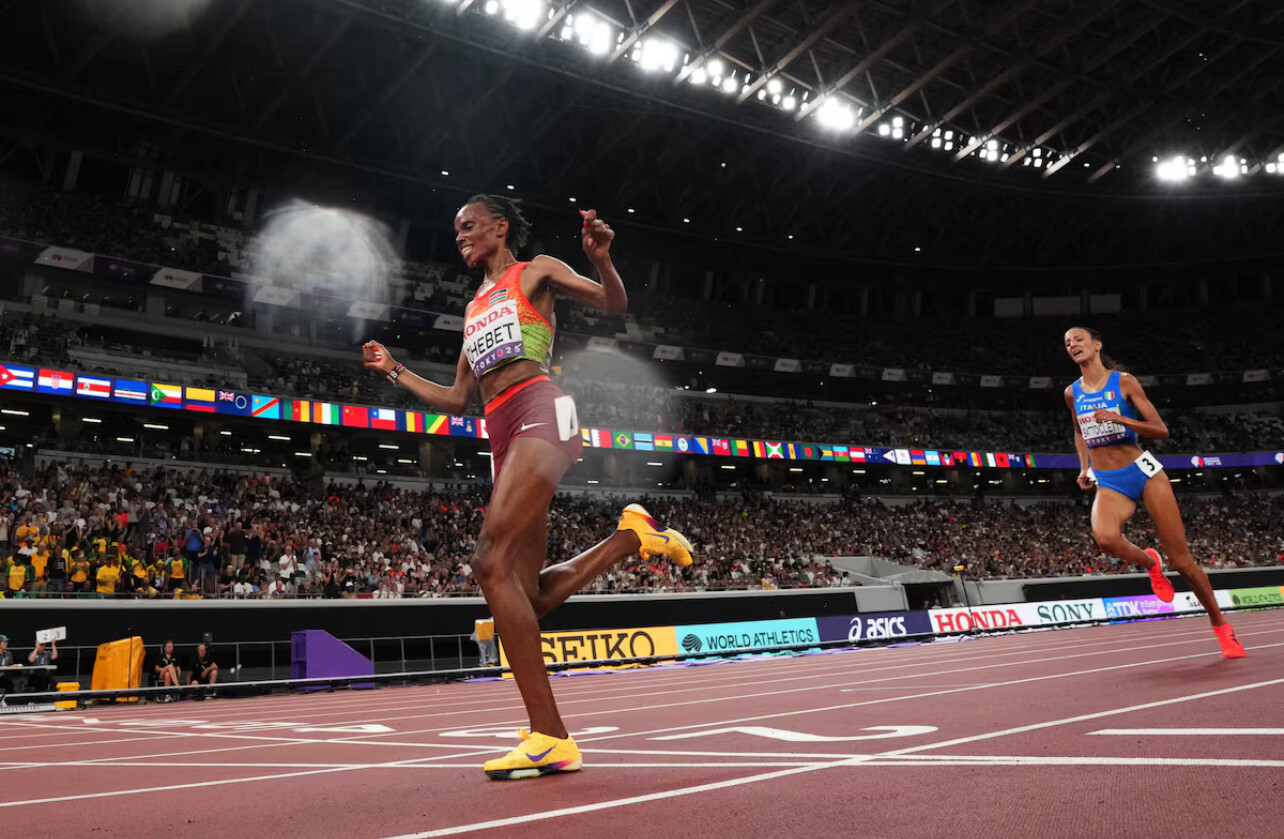
Italy’s Nadia Battocletti pushed hard to the line, setting a new national record for silver, while Ethiopia’s Gudaf Tsegay held on for bronze in the hot and humid conditions.
The race itself was cagey and tactical, with much of the field conserving energy before the closing laps. Chebet’s patience and well-timed surge sealed a long-awaited world crown. She now has her sights on a possible 5,000m–10,000m double in Tokyo.
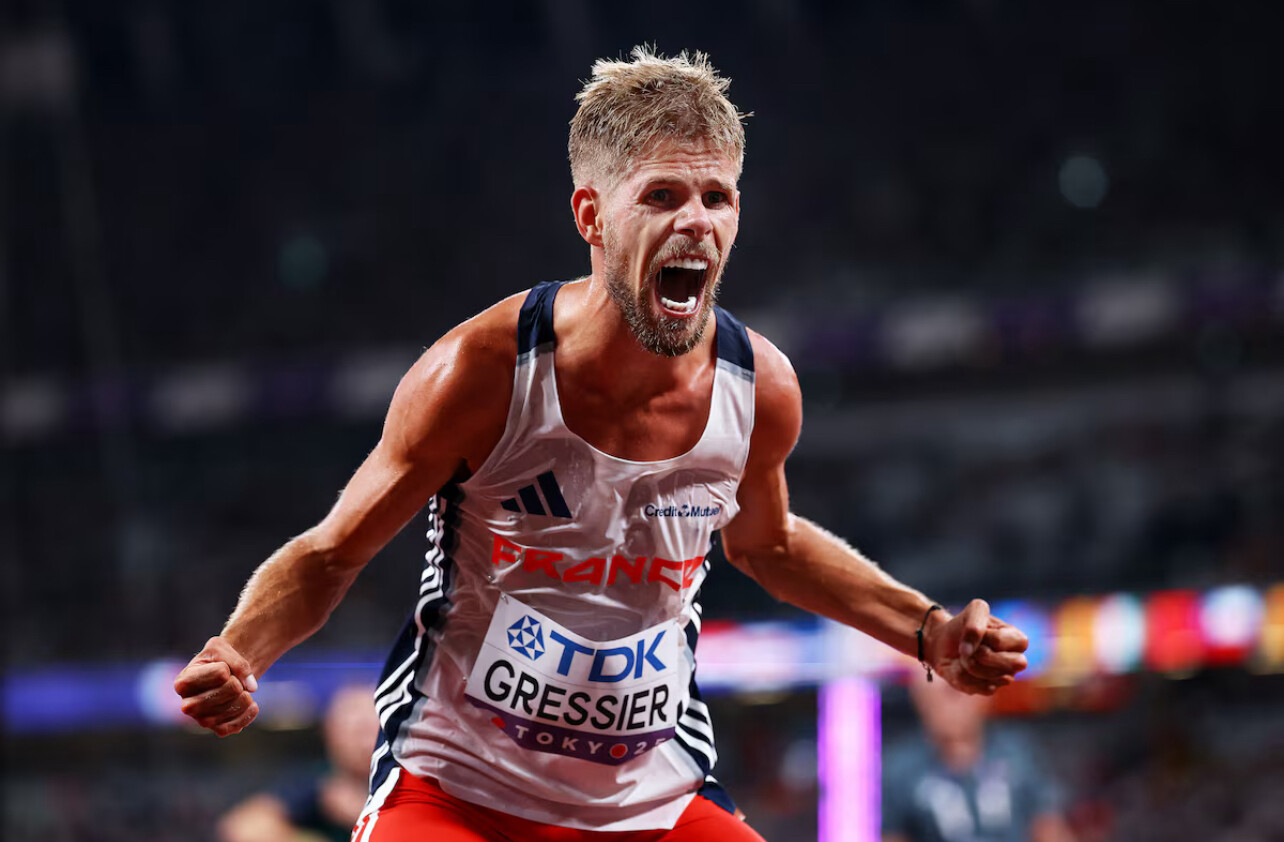
Gressier Shocks the Field in Men’s Race
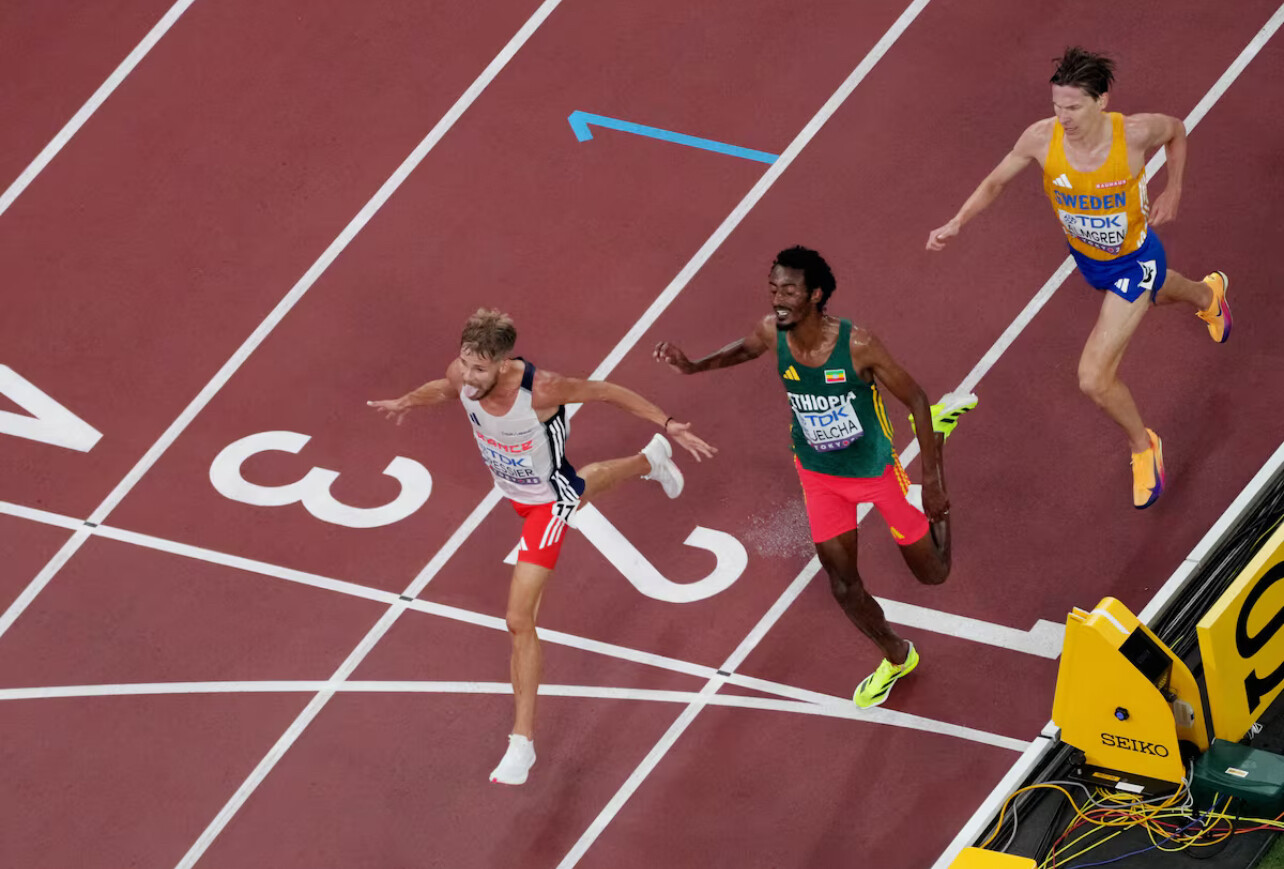
The men’s 10,000m unfolded in similar fashion, with the field bunched tightly until the bell lap. In one of the biggest upsets of the championships so far, Jimmy Gressier of France kicked past Ethiopia’s Yomif Kejelcha in the final strides, capturing gold in 28:55.77 by a margin of just 0.06 seconds.
Sweden’s Andreas Almgren took bronze, as the podium was decided by a frantic sprint down the home straight.
For Gressier, the victory was historic — he became the first non-East African-born athlete in decades to win a men’s 10,000m world title. His triumph underscored how smart tactics and raw finishing speed can still overturn tradition at the highest level.
Lessons from Tokyo
Both 10,000m finals highlighted how championship racing favors tactics over fast times. In the humid Tokyo evening, runners chose patience, waiting for the decisive final laps rather than chasing records. That set the stage for thrilling finishes that tested nerves, positioning, and sprinting strength.
• Chebet’s breakthrough confirmed her as the most complete distance runner in the world today.
• Gressier’s upset win proved that the East African stranglehold on the event is not unshakable.
• Fans were treated to dramatic championship racing at its best — where strategy matters as much as raw talent.
The 2025 World Championships in Tokyo are only just beginning, but the 10,000m finals will be remembered as races where patience, positioning, and perfect timing made all the difference.
by Boris Baron
Login to leave a comment
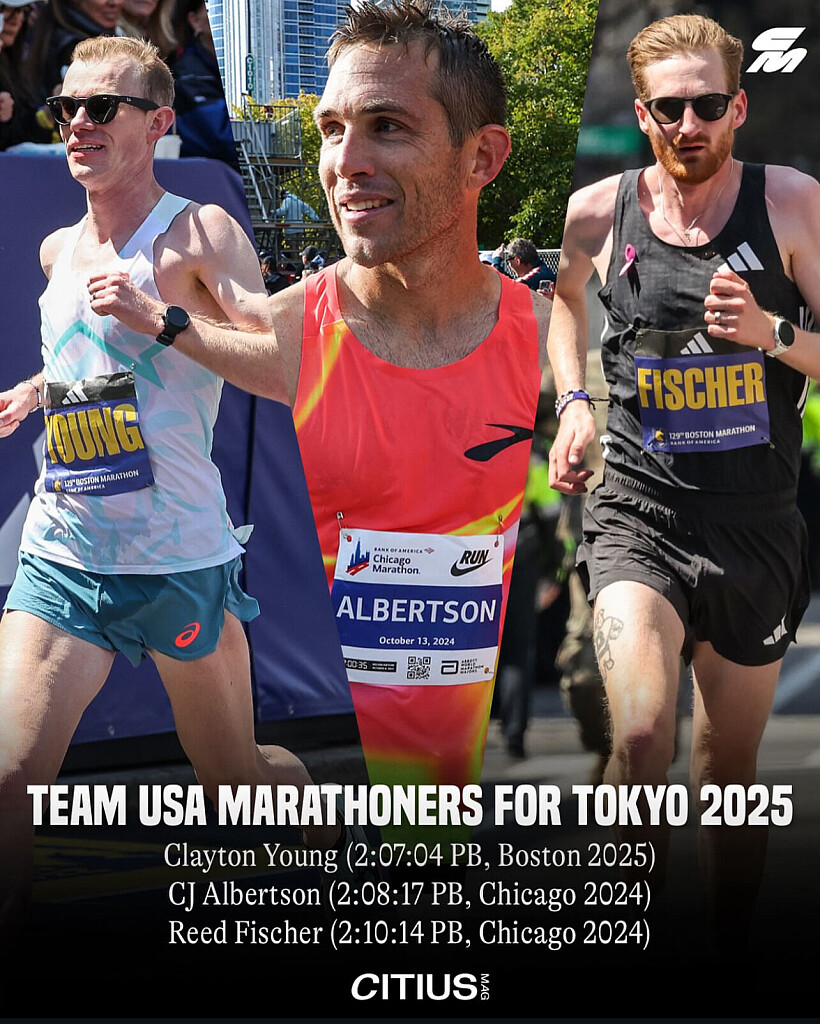
World Championships Men’s Marathon Preview: Familiar Faces Return to Tokyo
Tokyo, September 13, 2025 – The men’s marathon at the 2025 World Athletics Championships, set for Monday, September 15, has all the makings of a showdown that feels like déjà vu for fans of road racing in the Japanese capital.
Much of the World Championships route mirrors the Tokyo Marathon course, and so too does the field. The top three finishers from March’s Tokyo Marathon — Tadese Takele and Deresa Geleta of Ethiopia, along with Kenya’s Vincent Kipkemoi Ngetich — headline the lineup. They also hold the three fastest times in the world this year among those entered, giving the race a sharp competitive edge.
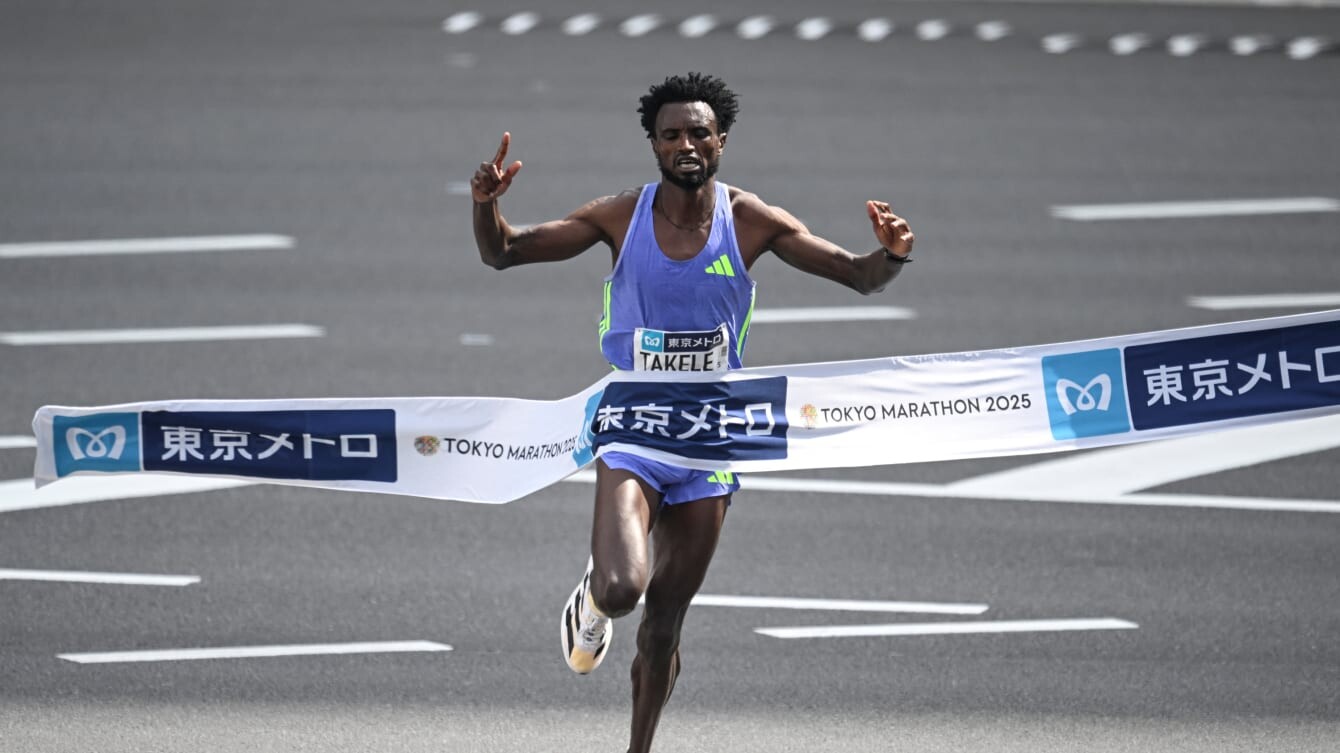
Adding to the depth, Emile Cairess of Great Britain, who placed fourth at the Paris 2024 Olympic Games, is set to challenge again in Tokyo. Defending world champion Victor Kiplangat of Uganda and 2023 Budapest silver medallist Maru Teferi of Israel add to a field packed with medal contenders.
The United States will also be represented with a strong trio: Clayton Young, CJ Albertson, and Reed Fischer. While Americans are not among the pre-race medal favorites, each brings international experience and competitive credentials. Young in particular has emerged as one of the fastest U.S. marathoners in recent years, and Albertson is known for aggressive pacing that could shake up the race dynamics. Fischer adds depth and consistency, giving Team USA multiple chances for a top-10 finish.
With multiple men entered who have run under 2:05, the pace promises to be ambitious. Whether it leads to a record will depend heavily on conditions. Tokyo has been under a heatwave alert, and organizers have moved the start time up by 30 minutes to help offset the temperatures. Still, if the weather cooperates, Tamirat Tola’s World Championships record of 2:05:36, set in Oregon in 2022, could be under serious threat.
All signs point to a thrilling clash — a familiar course, a world-class field, the Americans ready to test themselves against the best, and the possibility of history being rewritten in Tokyo.
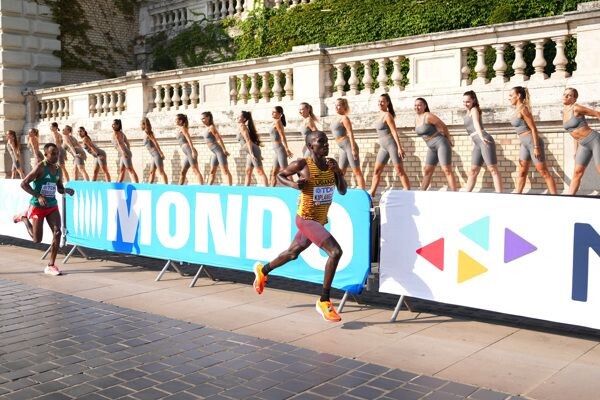
by Boris Baron
Login to leave a comment

World Athletics Championships Tokyo 2025: Final Entry Lists Confirm Historic Lineup
The countdown is on for the World Athletics Championships Tokyo 2025, set to take place from September 13–21 at Japan’s National Stadium. The final entry lists confirm that the event will be one of the largest in history, with more than 2,200 athletes from nearly 200 nations scheduled to compete across nine action-packed days.
A Global Gathering of Stars
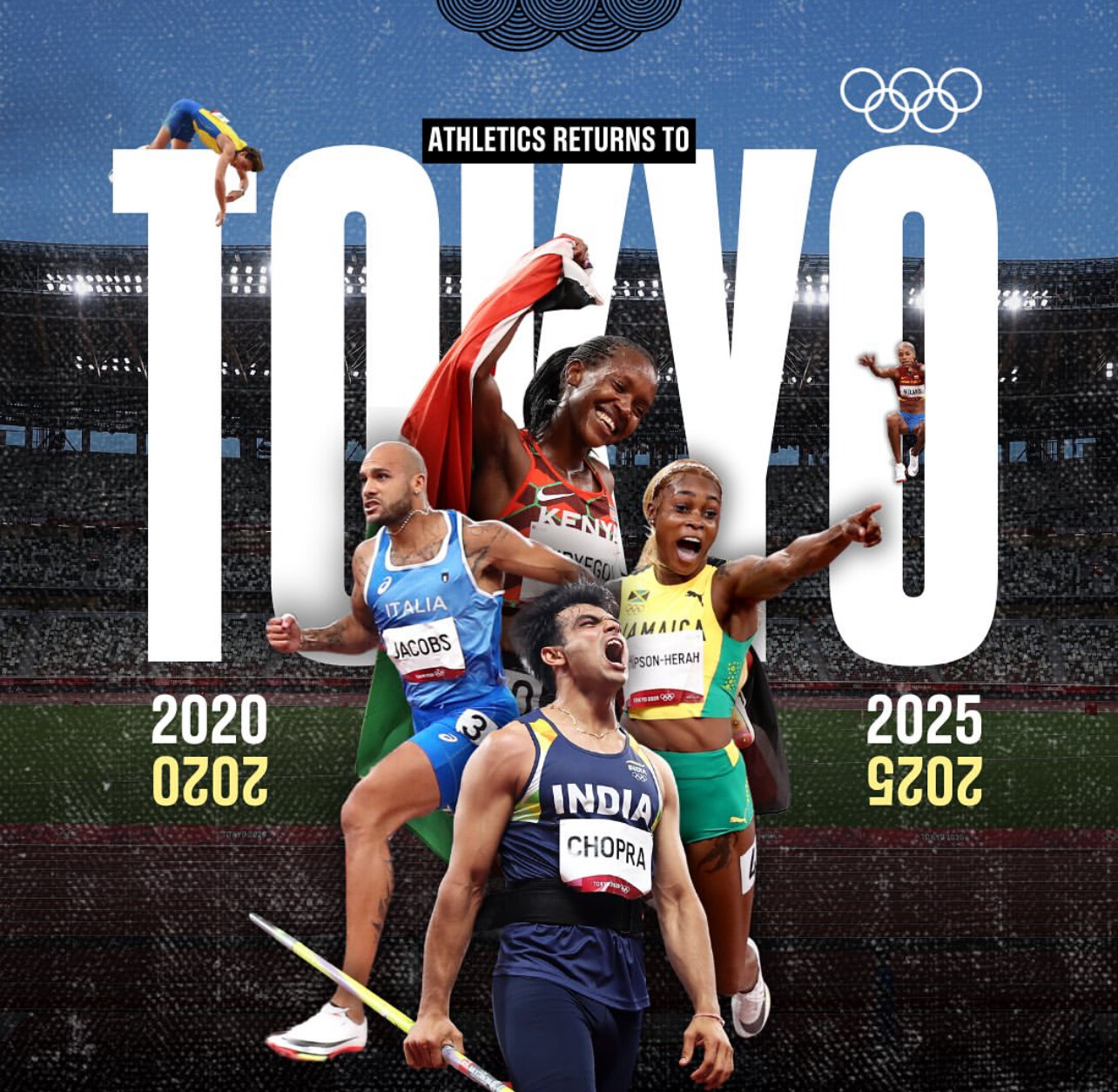
The championships bring together the very best from every corner of the globe. From world record holders and Olympic champions to rising stars making their debuts on the sport’s biggest stage, Tokyo promises to deliver unforgettable performances. With such a deep and diverse field, the competition is expected to be fierce in every discipline—sprints, middle distance, long distance, field events, and relays.

Spotlight on Distance Running
For distance fans, all eyes will be on the men’s and women’s marathons, both of which will showcase stellar fields. Tokyo’s marathon routes are known for their fast sections and demanding late-race turns, setting the stage for potential record-breaking times. In the 10,000m and 5,000m, East African dominance will once again be tested by emerging talents from Europe, North America, and Asia.
History at the National Stadium
The National Stadium, originally rebuilt for the Tokyo 2020 Olympic Games, will host tens of thousands of fans eager to witness world-class athletics. The venue carries a special significance as the heart of Japanese sport, blending cutting-edge facilities with a deep respect for tradition.
What’s at Stake
Beyond medals and records, the championships serve as a proving ground ahead of the next Olympic cycle. Athletes will not only chase global titles but also national pride, with team points and country standings closely watched. For many, a breakthrough performance here could define their careers.
The Road Ahead
With final entries now confirmed, the anticipation builds. The world’s fastest sprinters, strongest throwers, most daring jumpers, and toughest distance runners are all converging on Tokyo. Fans across the globe will tune in to see who emerges as champion when the best of the best go head-to-head.
One thing is certain: from September 13 to 21, Tokyo will be the epicenter of athletics, delivering drama, passion, and history in the making.
by Boris Baron
Login to leave a comment
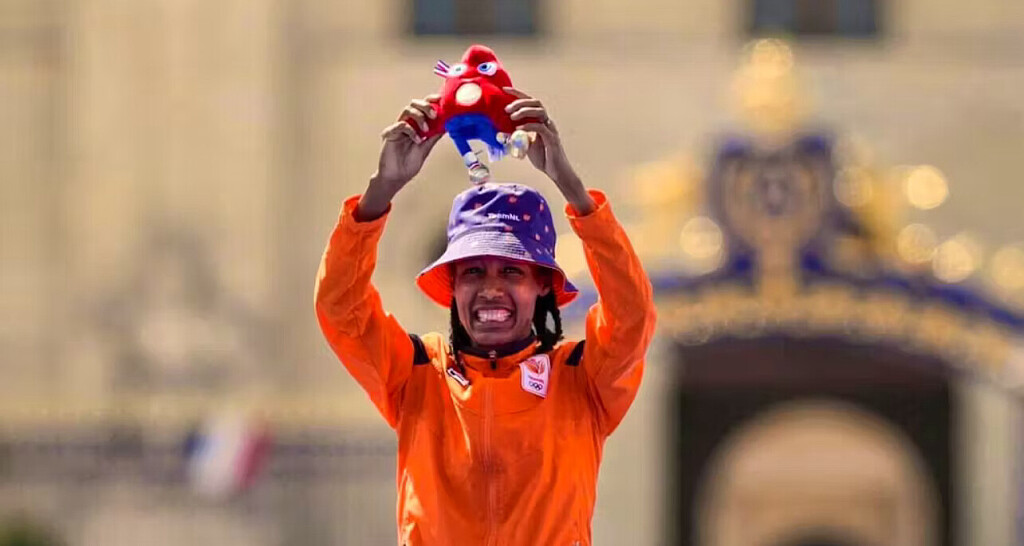
Sifan Hassan Withdraws from World Championships Marathon to Focus on Sydney
Olympic champion Sifan Hassan has announced that she will not compete in the marathon at the upcoming World Athletics Championships in Tokyo this September.
The Dutch star explained her decision on Friday (Aug. 29, 2025), citing recovery concerns following her marathon schedule. “In two or three weeks, I don’t even know if I will have recovered,” Hassan said, noting that she “can hardly run in the days after a marathon.”
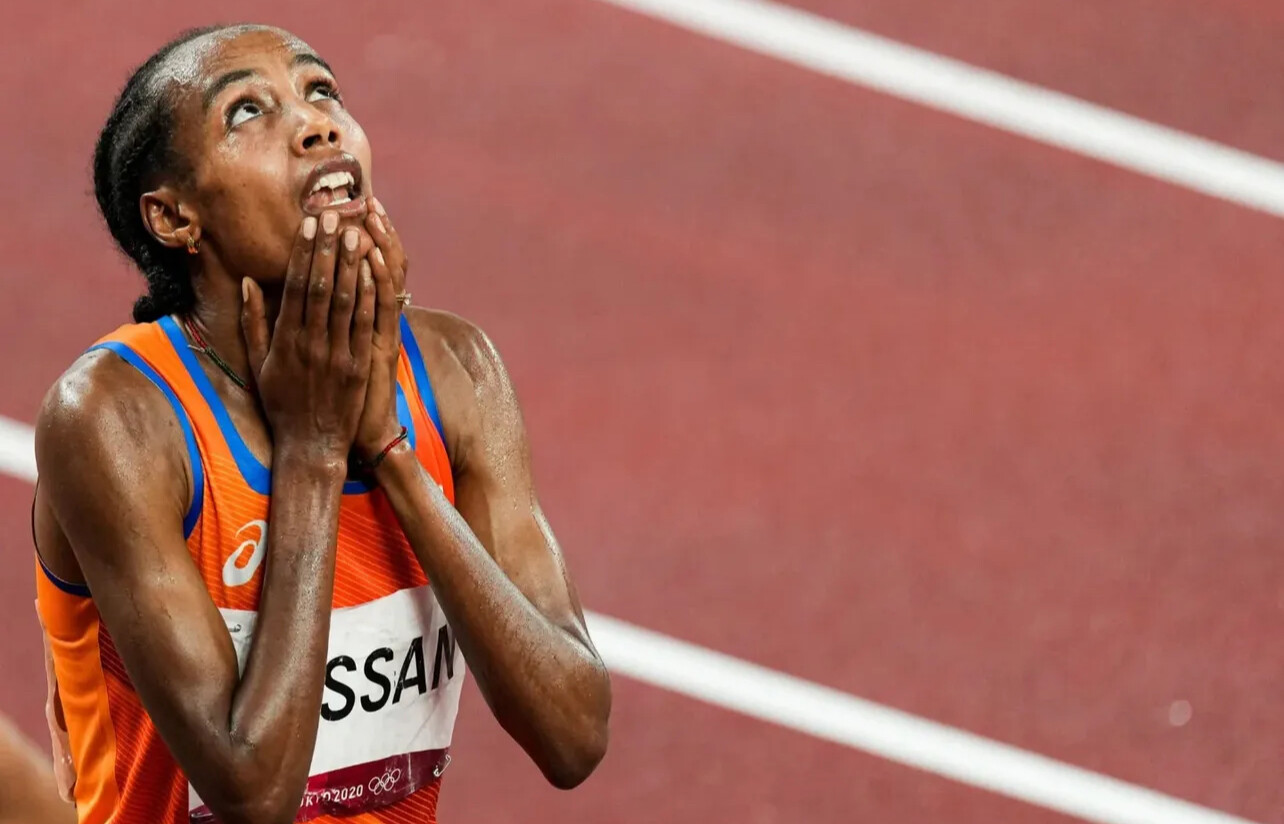
Instead, Hassan will shift her focus to Sunday’s Sydney Marathon, which will make its debut as part of the prestigious Abbott World Marathon Majors. The Sydney event now joins the elite company of London, New York, Tokyo, Boston, Berlin, and Chicago, further cementing its place among the most important marathon races in the world.
For Hassan, the decision underscores the physical and strategic challenges of balancing a championship calendar with the demands of the marathon. Known for her remarkable versatility on the track and the roads, she continues to shape her career by targeting races that define her legacy.
The absence of the reigning Olympic champion from the Tokyo World Championships marathon will be a significant storyline, but all eyes will now be on Sydney this weekend, where Hassan looks to etch her name in history at the newest member of the Marathon Majors.
by Boris Baron
Login to leave a comment
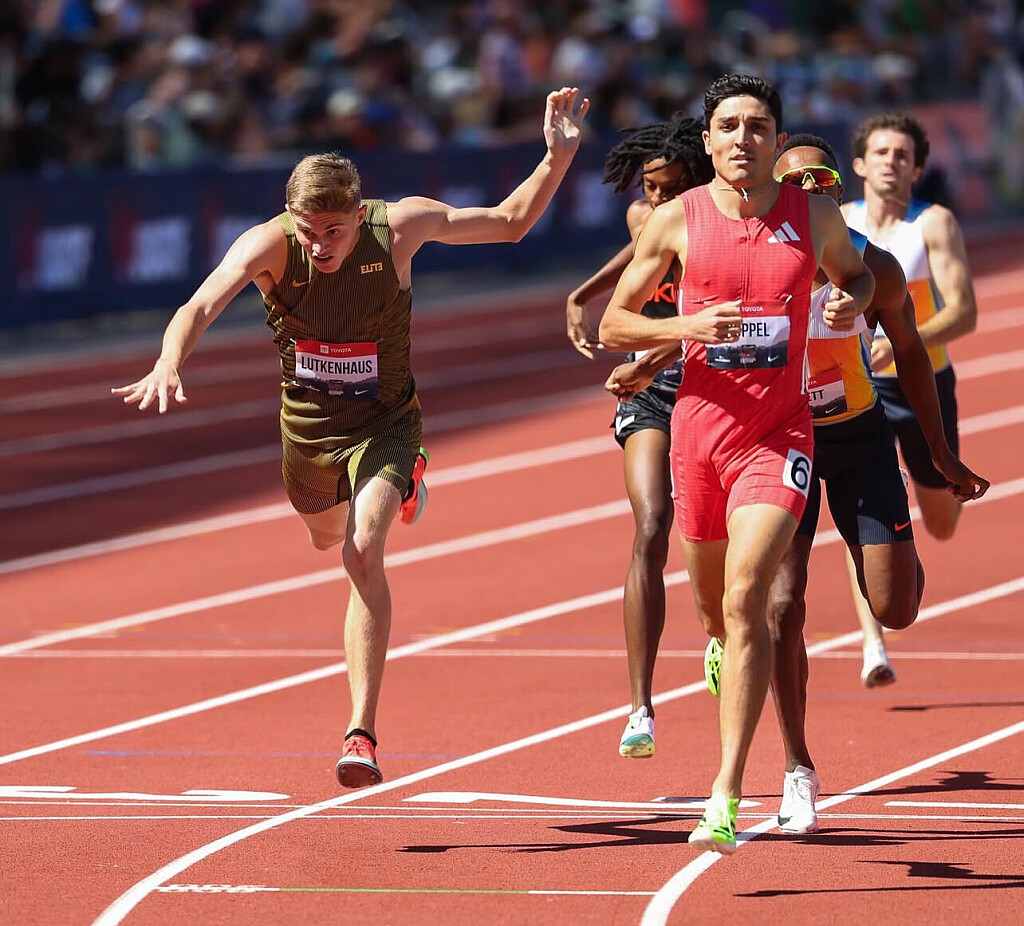
Cooper Lutkenhaus Stuns at USA Championships with Historic 800m Run
The world of middle-distance running witnessed a seismic moment on August 3rd, 2025, as 16-year-old Cooper Lutkenhaus delivered a performance for the ages in the men’s 800 meters at the USA Track & Field Championships. Competing against seasoned veterans, the high school phenom not only secured a runner-up finish but shattered expectations — and records.
Lutkenhaus clocked a stunning 1:42.77, smashing his personal best by over three seconds. That time established a new U18 world best, making him the fastest 800m runner ever under the age of 18 and the sixth-fastest in the world for the 2025 season.

“I don’t know if there’s words for it right now, but just… made the team,” said an overwhelmed Lutkenhaus after the race, moments after realizing he had secured a spot on Team USA’s roster for the upcoming World Athletics Championships 2025.
The teen’s expression at the finish line spoke volumes. Raw disbelief mixed with triumph as he absorbed what he had just accomplished. “I wasn’t supposed to make the team,” he admitted. “A lot of people didn’t think I’d even make the finals.”

But Cooper Lutkenhaus did more than make the finals—he rewrote the script. His breakthrough performance has catapulted him from rising talent to global contender. At just 16, he’ll now compete on the world stage, representing the United States in Tokyo later this year.
The performance underscores a growing trend in American middle-distance running: young athletes are pushing the boundaries of what’s possible—and doing it earlier than ever before.
The world will be watching closely as this Texas teen steps onto the biggest stage in athletics. If August 3 was the day the world learned his name, the rest of 2025 may be when he defines it.
by Boris Baron
Login to leave a comment

A guide to the World Athletics Championships in Tokyo
Thousands of the world’s best athletes will head to Japan in September for the World Athletics Championships Tokyo 25.
The 20th edition of this prestigious competition will star more than 2000 athletes from some 200 countries as they compete for medals across 49 events during nine days of action from 13-21 September.
Which events are contested at the World Athletics Championships?
There are 49 events on the programme for the World Athletics Championships Tokyo 25, meaning 147 medals will be awarded across the nine action-packed days of competition.
There are an equal number of disciplines for women and men – 24 each and one mixed event.
The disciplines are:
• 100m – women and men• 200m – women and men• 400m – women and men• 800m – women and men• 1500m – women and men• 5000m – women and men• 10,000m – women and men• Marathon – women and men• 3000m steeplechase – women and men• 100m hurdles – women• 110m hurdles – men• 400m hurdles – women and men• heptathlon – women• decathlon – men• high jump – women and men• pole vault – women and men• long jump – women and men• triple jump – women and men• shot put – women and men• discus – women and men• hammer – women and men• javelin – women and men• 20km race walk – women and men• 35km race walk – women and men• 4x100m relay – women and men• 4x400m relay – women, men and mixed
Learn more about the various events on our dedicated disciplines page.
How do athletes qualify and gain selection for the World Athletics Championships Tokyo 25?
The qualification system is based on a combination of entry standards and world rankings. The qualifying window for the marathon was 5 November 2023 until 4 May 2025. For the 10,000m, 20km race walk, 35km race walk, combined events and relays, the window runs from 25 February 2024 to 24 August 2025. For all other events, entry standards can be achieved from 1 August 2024 to 24 August 2025.
The World Athletics Relays Guangzhou 25 was a qualifying event for the relays, with the top 14 teams in each discipline securing their place at the World Championships.
The Road to Tokyo online tool is designed to help athletes, fans and media track the qualification process. Searchable by event, country and qualification status, the tool provides a real-time view of each event over the course of the qualification period.
The tool does not, and will not, indicate which athletes have been selected for entry by their member federation. Final entries will be published nearer to the time of the World Championships.
Will athletes win prize money?
Individual athletes and relay teams will win prize money at the World Athletics Championships Tokyo 25. There is a total prize money pot of US$8,498,000.
Individuals1st US$70,0002nd US$35,0003rd US$22,0004th US$16,0005th US$11,0006th US$70007th US$60008th US$5000
Teams1st US$80,0002nd US$40,0003rd US$20,0004th US$16,0005th US$12,0006th US$80007th US$60008th US$4000
There is also a world record bonus of US$100,000.
Which athletes will be competing?
The world’s best athletes – including global champions and world record-holders – will be competing at the World Athletics Championships Tokyo 25.
The names of the athletes who will be there will not be certain until the qualifying window closes and nations select their teams.
Champions from the last edition of the World Championships in Budapest in 2023 include:
• Sweden’s world pole vault record-holder Mondo Duplantis• Kenya’s world 1500m record-holder Faith Kipyegon• USA’s double sprint champion Noah Lyles• Ukraine’s world high jump record-holder Yaroslava Mahuchikh• USA’s world shot put record-holder Ryan Crouser• Dutch Olympic and world 400m hurdles medallist Femke Bol• India’s Tokyo Olympic javelin champion Neeraj Chopra• Venezuela’s world triple jump record-holder Yulimar Rojas• Norwegian multiple world record-holder Jakob Ingebrigtsen• Japan’s Olympic javelin champion Haruka Kitaguchi
by World Athletics
Login to leave a comment
