

Running News Daily
Running News Daily is edited by Bob Anderson and team. Send your news items to bob@mybestruns.com Advertising opportunities available.
Index to Daily Posts · Sign Up For Updates · Run The World Feed
Articles tagged #Final stretch
Today's Running News
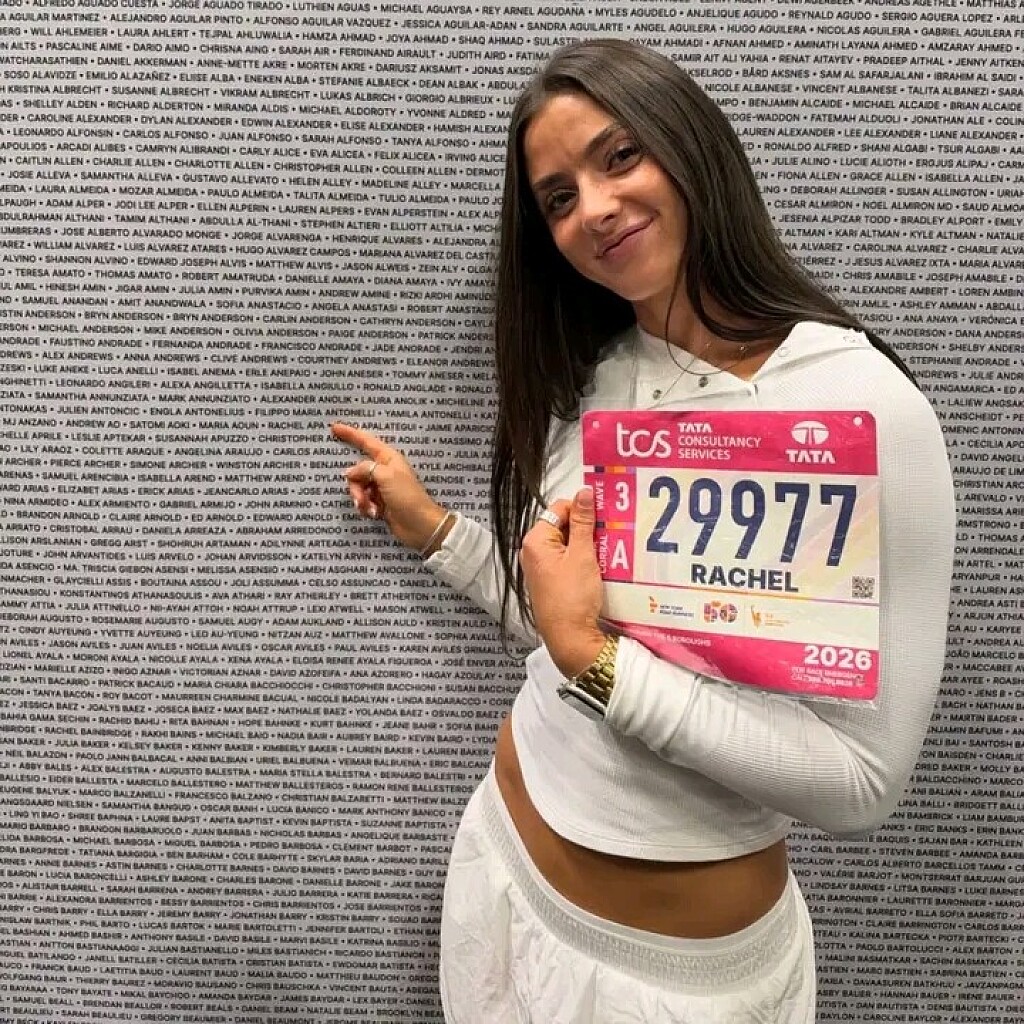


Final Stretch”: Rachel Apa’s First Marathon Ends in Heartbreak Just Two Miles From the Finish
The New York City Marathon is celebrated as a day of courage, endurance and achievement — a race where thousands of runners push their limits while families and friends wait eagerly to see them cross the finish line.
For one family, however, November 1, 2026, became a day of unimaginable heartbreak.

Twenty-four-year-old Rachel Apa, a former Division I field hockey athlete at Bucknell University, was running her first marathon when she collapsed in Central Park with roughly two miles remaining. She never made it to the finish line.
Rachel had entered the race with a deeply personal purpose. She was running in honour of her late grandfather, who had battled Parkinson’s disease, while raising money and awareness for Parkinson’s research and care.
Her family followed her journey closely as she made her way through the five boroughs.
Rachel exchanged messages with her father, Steve, during the race as he monitored her progress remotely. At Mile 18, she sent a brief message: “Ow.”
One mile later, another message arrived: “Ow ow.”
Then, at Mile 23, came her final message: “Final stretch.”
Those words would become heartbreaking in hindsight.
Rachel’s mother, Michelle, was waiting around Mile 25 in Central Park, expecting to see her daughter approaching the finish line. She was preparing for a moment of celebration — to watch Rachel complete the biggest running challenge of her life.
Instead, Rachel’s tracking-app location stopped moving around Mile 24.

At approximately 1:30 p.m., Rachel collapsed near 85th Street in Central Park. Spectators rushed to help, including medical professionals who began performing CPR. New York Road Runners’ medical team soon arrived with a defibrillator, and Rachel was taken to Mount Sinai Medical Center.
Doctors fought for more than six hours to save her life.
But at approximately 9:40 p.m., Rachel was pronounced dead.
According to her father, doctors attributed her death to rhabdomyolysis, a serious medical condition in which damaged muscle tissue breaks down rapidly and releases substances into the bloodstream that can cause severe complications.
The tragedy sent shockwaves through the running community.
New York Road Runners, organisers of the New York City Marathon, expressed deep sadness over Rachel’s death and extended their condolences to her family, friends and everyone affected by the loss.
Rachel’s marathon was never simply about completing 26.2 miles.
It was about family. It was about memory. It was about honouring her grandfather and helping others affected by Parkinson’s disease.
She had already pushed through more than 24 miles of one of the world’s toughest and most demanding marathon courses. She was so close to the finish line that her final message to her father was simply, “Final stretch.”
But the finish line she had spent months preparing for would remain out of reach.
For Rachel’s family, the New York City Marathon will forever be remembered not for the finish line, but for the devastating moment when a day of hope became a night of grief.
Her mother was waiting to celebrate her daughter’s achievement. Instead, she was left facing an unimaginable loss.
Rachel Apa was just 24 years old.
She came to New York chasing a dream, carrying the memory of someone she loved and running for a cause close to her heart. She never got to finish the race, but her story will remain with the people who knew her and with a running community that mourns her loss.
by Erick Cheruiyot for My Best Runs.
Login to leave a comment
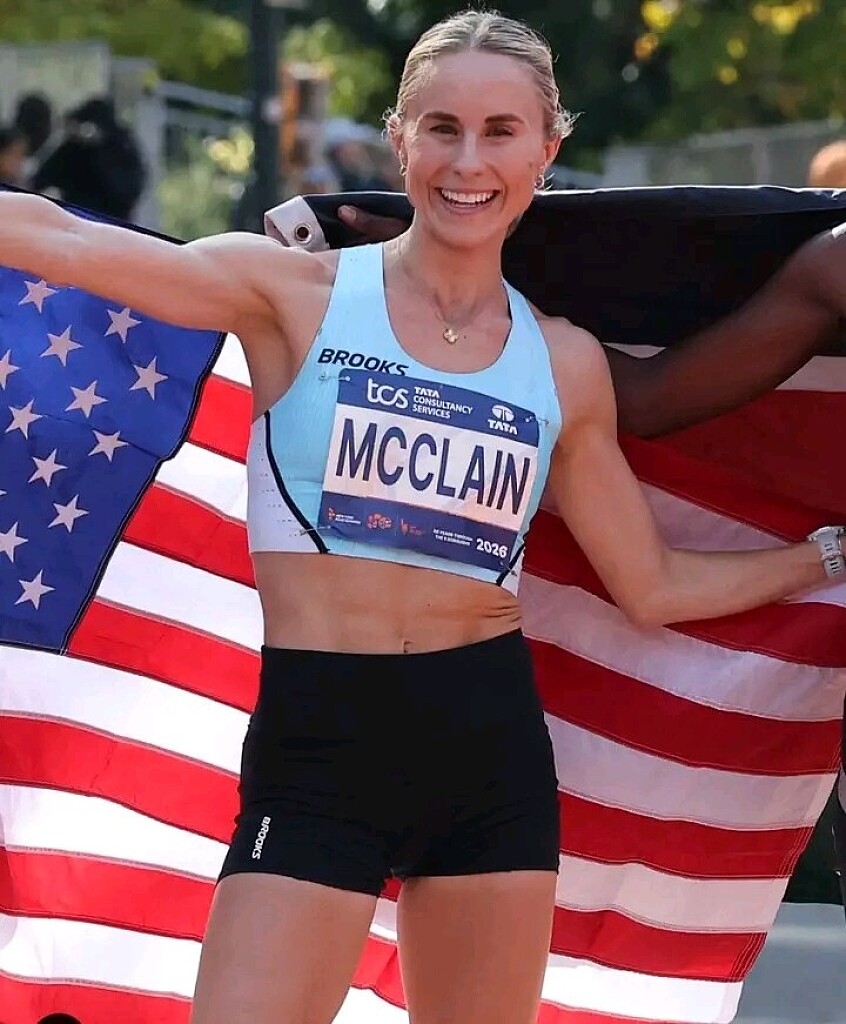
Jess McClain Ends Eight-Year American Podium Drought in New York
Jess McClain saved her best for the moment when the New York City Marathon demanded everything.
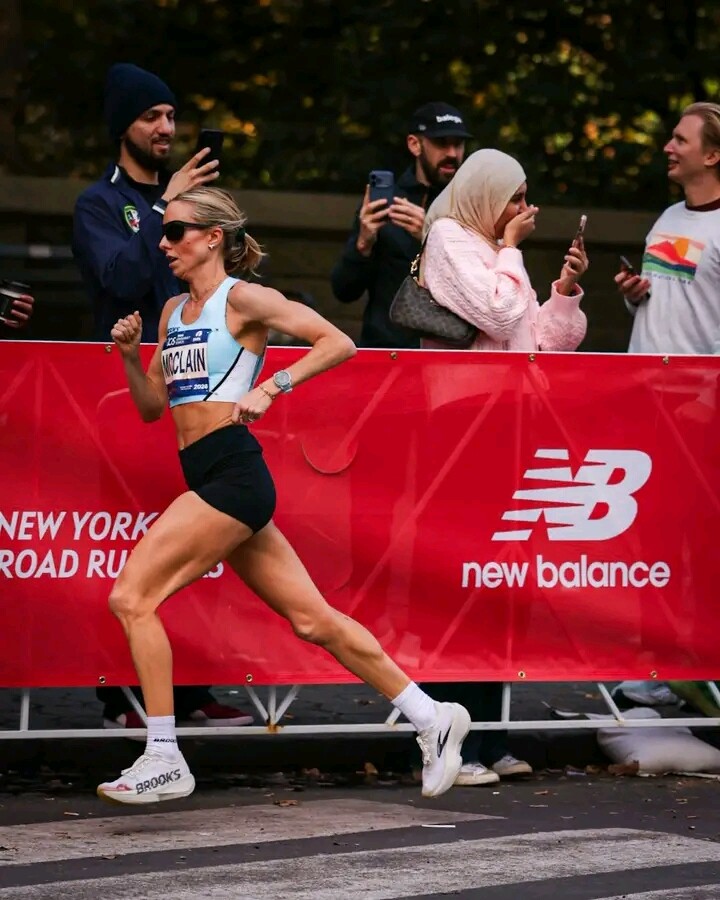
With the finish line approaching in Central Park, the 34-year-old American was still chasing the two-time Olympic medalist and defending champion Hellen Obiri. Then came the decisive move.
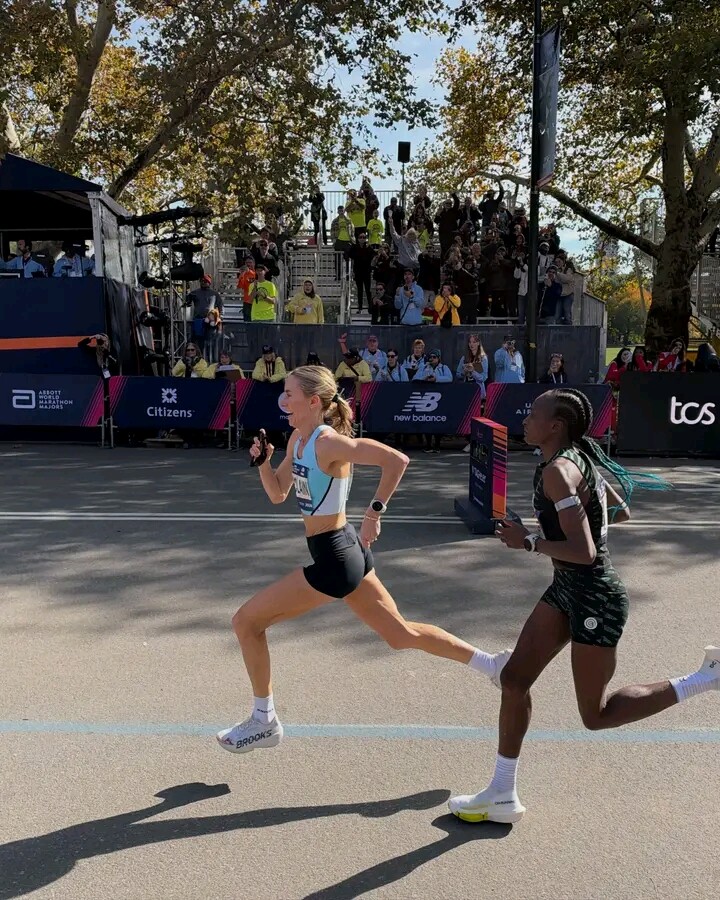
McClain surged through the closing stages, overtaking Obiri in the final meters to seize second place in 2:24:42 at the 2026 TCS New York City Marathon. Kenya’s Sheila Chepkirui held on for victory in 2:24:36, while Obiri finished just one second behind McClain in 2:24:43.
The result ended an eight-year wait for an American woman on the New York City Marathon podium. The last was Shalane Flanagan, who finished third in 2018 after winning the race the previous year. McClain became the first American woman since Flanagan to break into the top three on one of the sport’s most iconic stages.
McClain’s race was built on patience and belief. The opening half was covered in a relatively controlled 1:13:52, leaving a large group of contenders still within striking distance. Rather than forcing the pace early, McClain stayed composed and positioned herself for the decisive stages of the race.
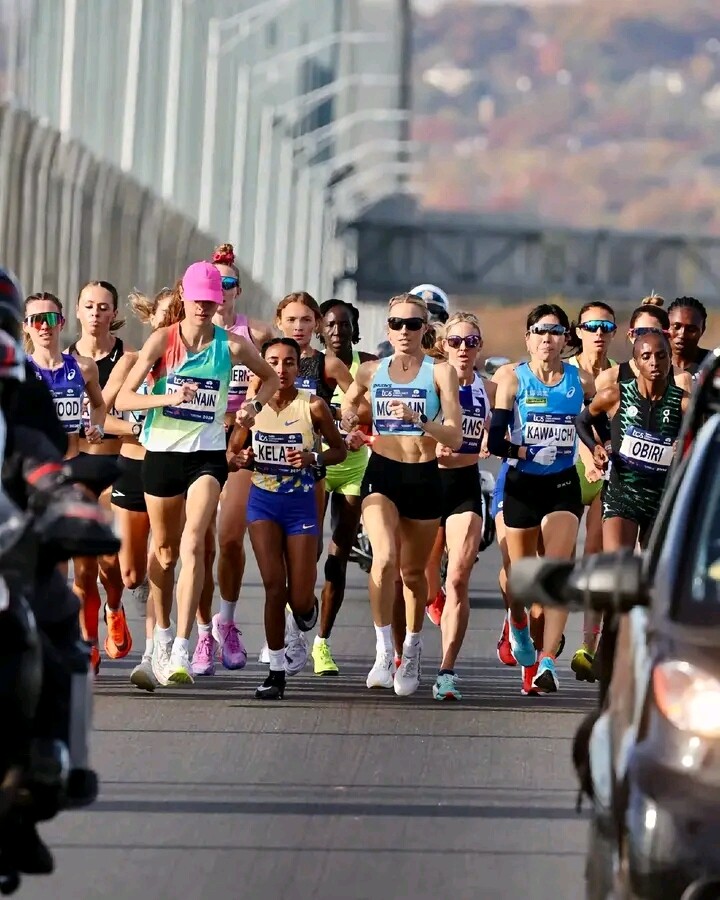
As the marathon moved toward Fifth Avenue and Central Park, the race finally began to fracture. Chepkirui and Obiri established themselves at the front, but McClain refused to let them disappear. She continued to close the gap while making the most of the Central Park curves, running the tangents efficiently and conserving precious distance.
By the final stretch, the opportunity was there.
McClain produced one last surge and caught Obiri just before the finish, turning what had looked like a battle for third into a stunning runner-up finish. World Athletics described her closing effort as superb, with McClain taking second by just one second.
The New York breakthrough comes during the strongest period of McClain’s marathon career. Earlier this year in Boston, she ran 2:20:49 to finish fifth and set the fastest marathon ever recorded by an American woman on the Boston course, breaking Shalane Flanagan’s previous mark of 2:22:02.
Her New York performance now adds another major milestone. McClain’s top-five finish qualifies her for the 2028 U.S. Olympic Marathon Trials, scheduled for March 25, 2028, in St. Louis. Three American women will ultimately earn places on the U.S. Olympic team for the Los Angeles Games.
For McClain, the journey has been anything but straightforward. A former Stanford standout and seven-time NCAA All-American, she stepped away from elite competition for a period before returning to the marathon and gradually rebuilding herself into one of America’s leading distance runners. Her fourth-place finish at the 2024 U.S. Olympic Marathon Trials showed she belonged among the country’s best; her performances in Boston and New York have now taken that belief to another level.
At 34, McClain is proving that marathon success is not always about arriving early. Sometimes it is about staying patient, learning from every setback and being ready when the biggest opportunity finally arrives.
In New York, with the crowds roaring through Central Park and the podium within reach, Jess McClain did exactly that.
She waited.
She believed.
And when the moment came, she took it.
by Erick Cheruiyot for My Best Runs.
Login to leave a comment
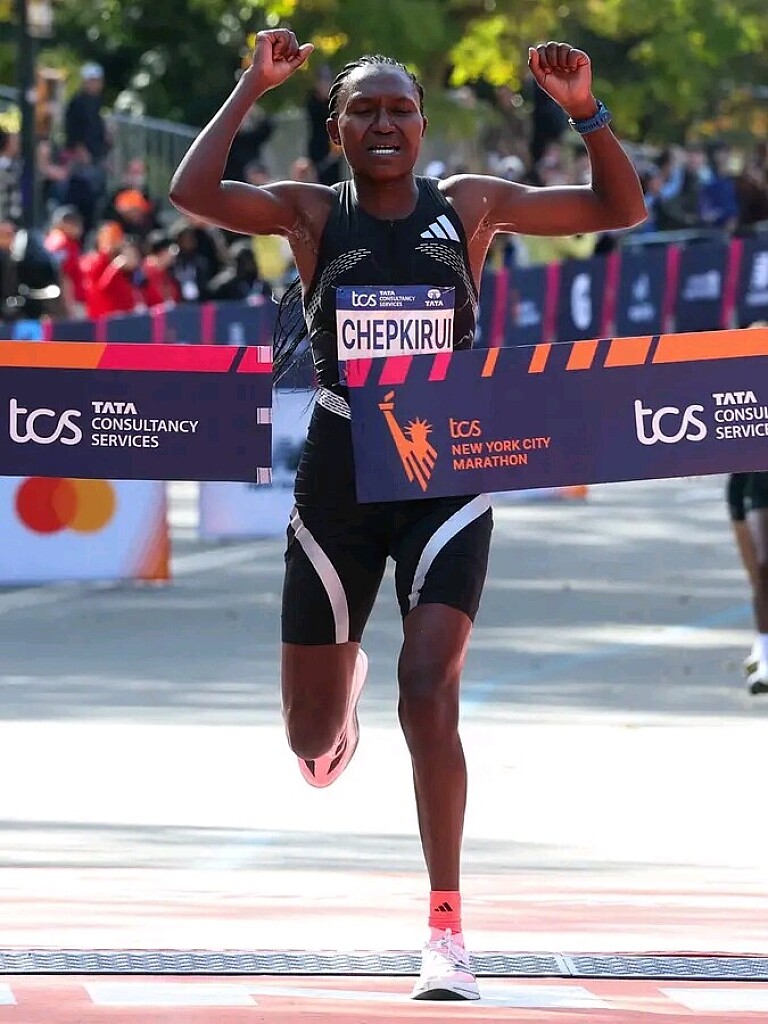
Sheila Chepkirui Conquers New York Again as McClain and Obiri Complete a Dramatic Podium
Kenya’s Sheila Chepkirui has conquered the streets of New York once again, claiming a second TCS New York City Marathon title after producing a perfectly timed late surge to win a thrilling women’s race in 2:24:36.
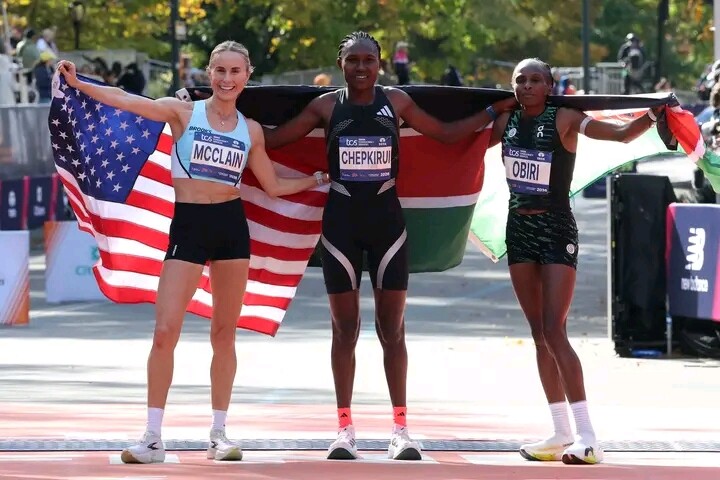
Chepkirui, who previously triumphed in New York in 2024, remained composed through a fiercely contested battle before making her decisive move in the closing stages. The Kenyan held off defending champion and compatriot Hellen Obiri to reclaim the title in one of the most dramatic finishes of the 2026 World Marathon Majors season.
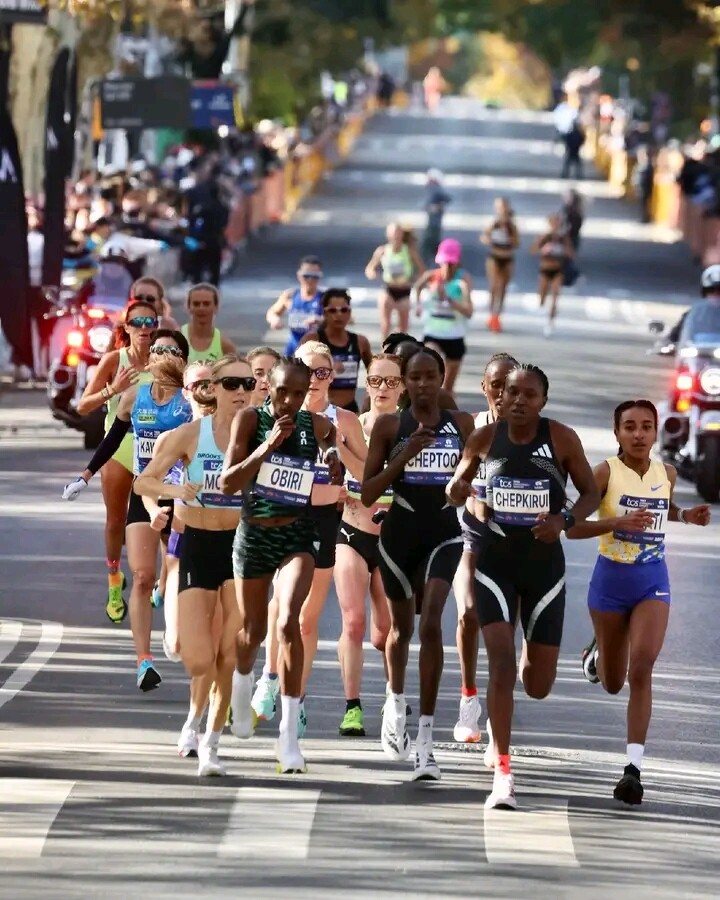
But behind the winner, American Jess McClain delivered one of the biggest moments of the race.
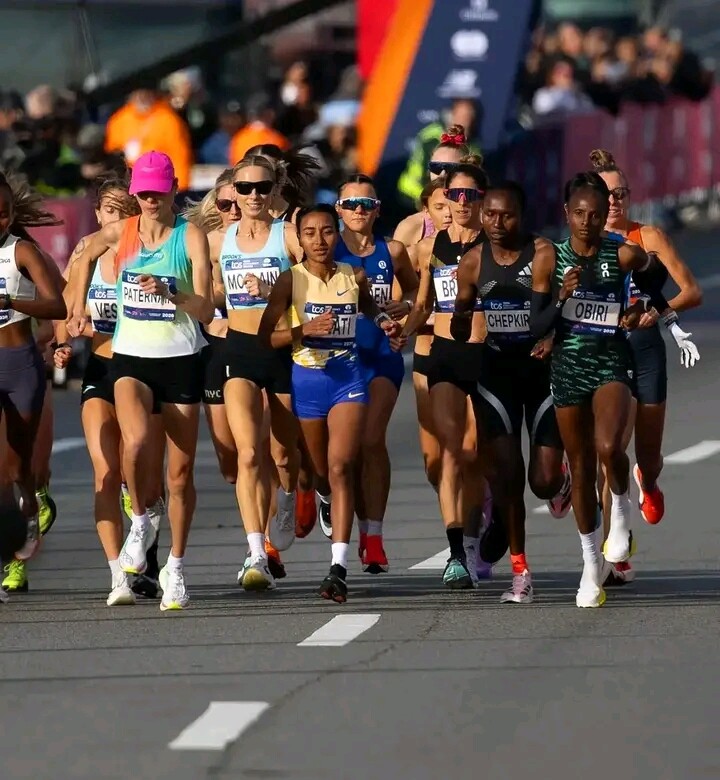
McClain produced a sensational finishing kick, closing rapidly on Chepkirui and Obiri as the trio approached the finish. After trailing the leading pair late in the race, she timed her move brilliantly and powered past Obiri in the closing metres.
McClain stopped the clock at 2:24:42, just six seconds behind Chepkirui and one second ahead of Obiri, who finished third in 2:24:43.
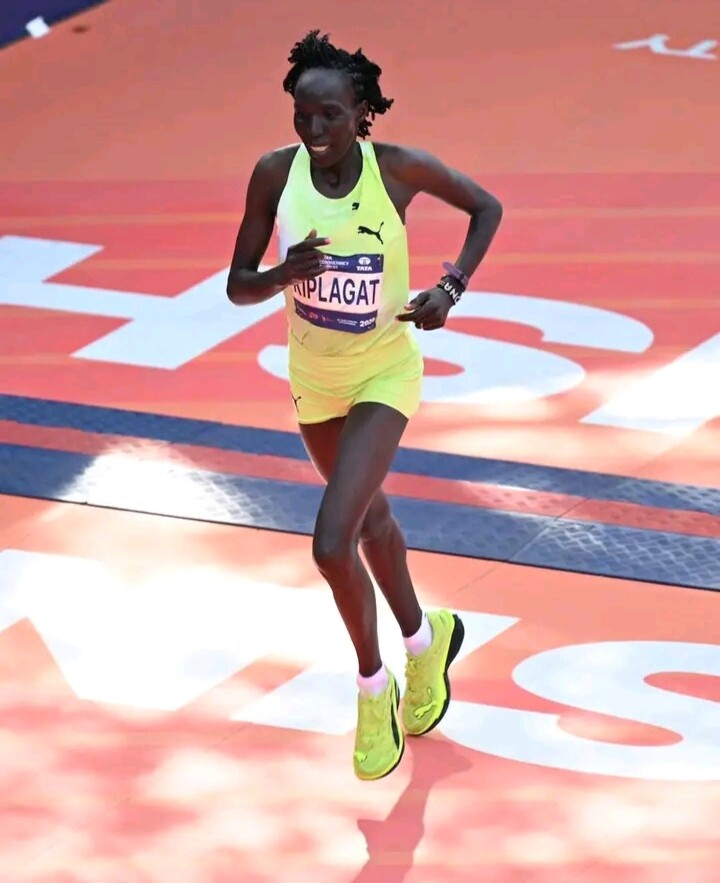
Age proved to be nothing more than a number as 46-year-old Kenyan veteran Edna Kiplagat produced another remarkable performance on the streets of New York, finishing fourth in 2:25:42. Just over a minute behind winner Sheila Chepkirui, Kiplagat once again demonstrated her remarkable longevity and ability to compete at the highest level, mixing it with a new generation of elite marathoners in one of the world’s most prestigious races.
The depth of the women’s field was further underlined by the performances behind the podium. Kenya continued to dominate the leading group, with Mercy Chelangat fifth in 2:25:46, while the United States placed three athletes inside the top eight. Viola Cheptoo also secured ninth in 2:28:34, giving Kenya five runners among the top 10. The results reflected the extraordinary quality and competitiveness of the 2026 New York City Marathon women’s race, with the leading athletes separated by only a handful of minutes.
2026 TCS NEW YORK CITY MARATHON — WOMEN'S TOP 10
1. Sheila Chepkirui — Kenya — 2:24:36
2. Jessica McClain — United States — 2:24:42
3. Hellen Obiri — Kenya — 2:24:43
4. Edna Kiplagat — Kenya — 2:25:42
5. Mercy Chelangat — Kenya — 2:25:46
6. Carrie Ellwood — United States — 2:26:28
7. Weini Kelati — United States — 2:26:51
8. Paige Wood — United States — 2:27:29
9. Viola Cheptoo — Kenya — 2:28:34
10. Fabienne Königstein — Germany — 2:28:49
The American’s performance was historic. McClain became the first U.S. woman since Shalane Flanagan in 2018 to reach the New York City Marathon podium, ending an eight-year wait for an American woman to finish among the top three in the iconic race.
Her runner-up finish also puts McClain in a strong position on the road to the 2028 U.S. Olympic Marathon Trials, adding another significant milestone to an already remarkable day.
For Obiri, the result was a rare departure from the top step in New York. The defending champion and course-record holder fought throughout the closing stages, repeatedly challenging Chepkirui before ultimately finishing just seven seconds behind the winner.
The Kenyan battle remained intense deep into Central Park, with Chepkirui and Obiri exchanging surges before Chepkirui finally managed to create enough separation. McClain then produced her spectacular late charge, overtaking Obiri in the final stretch to steal second place by the narrowest of margins.
Chepkirui’s 2:24:36 secured another chapter in her growing New York legacy, while McClain’s 2:24:42 announced her arrival on one of marathon running’s biggest stages.
In a race decided by seconds, Chepkirui had the winning move, McClain had the biggest late surge, and Obiri was left to settle for third.
New York once again delivered a finish worthy of its reputation.
by Erick Cheruiyot for My Best Runs.
Login to leave a comment

TCS New York City Marathon
The first New York City Marathon, organized in 1970 by Fred Lebow and Vince Chiappetta, was held entirely in Central Park. Of 127 entrants, only 55 men finished; the sole female entrant dropped out due to illness. Winners were given inexpensive wristwatches and recycled baseball and bowling trophies. The entry fee was $1 and the total event budget...
more...
He Ran Every Street In Calgary: Six Years, 10,359 Streets And 9,252 Kilometres
Most runners measure their progress in kilometres, personal bests and finish lines. Rick Richard chose a very different way to measure his.

For six years, the Calgary resident pursued a challenge that sounds almost impossible until you see the map: run every single street within his city.
This week, he finally completed it.

Richard covered all 10,359 streets in Calgary, accumulating an astonishing 9,252 kilometres along the way. That is roughly the distance between Calgary and Tokyo—except Richard did not travel it in one long journey. He covered it gradually, street by street, neighbourhood by neighbourhood, one section of the city at a time.
What began as an ambitious running project eventually became a six-year commitment requiring patience, planning and an extraordinary willingness to run roads that most people would never think twice about.
The challenge became increasingly difficult as the map filled in. Early on, each run could cover large sections of previously unexplored streets. But as Richard progressed, the easy kilometres disappeared. What remained were isolated roads, short lanes and residential cul-de-sacs that could be several kilometres from anything else he still needed to complete.
Sometimes, finishing the project meant travelling across Calgary simply to run a handful of streets that had been missed during earlier outings.
That is part of what makes the achievement so remarkable. There was no conventional finish line waiting at the end, no race number and no crowd lining the final stretch. The goal was simply to leave no street behind.
Richard documented the journey through a public map, allowing people to watch Calgary gradually transform from a blank canvas into a network of completed routes. Month after month, the coloured lines spread across neighbourhoods as another section of the city was conquered.
The project belongs to a growing community of runners known as city streeters—people who challenge themselves to run every road within a defined area. For some, it is about exploration. For others, it is a mapping obsession. For Richard, it became a six-year test of consistency and determination.
And then came the final street.
After 10,359 streets and 9,252 kilometres, the map was finally complete.
Calgary had no more roads left for Richard to run.
Six years after starting the project, every street was covered—and an extraordinary chapter of running history in the city had come to an end.
Sometimes, the biggest running achievements are not measured by how fast you finish.
Sometimes, they are measured by how much of the world you are willing to run.
by Erick Cheruiyot for My Best Runs.
Login to leave a comment
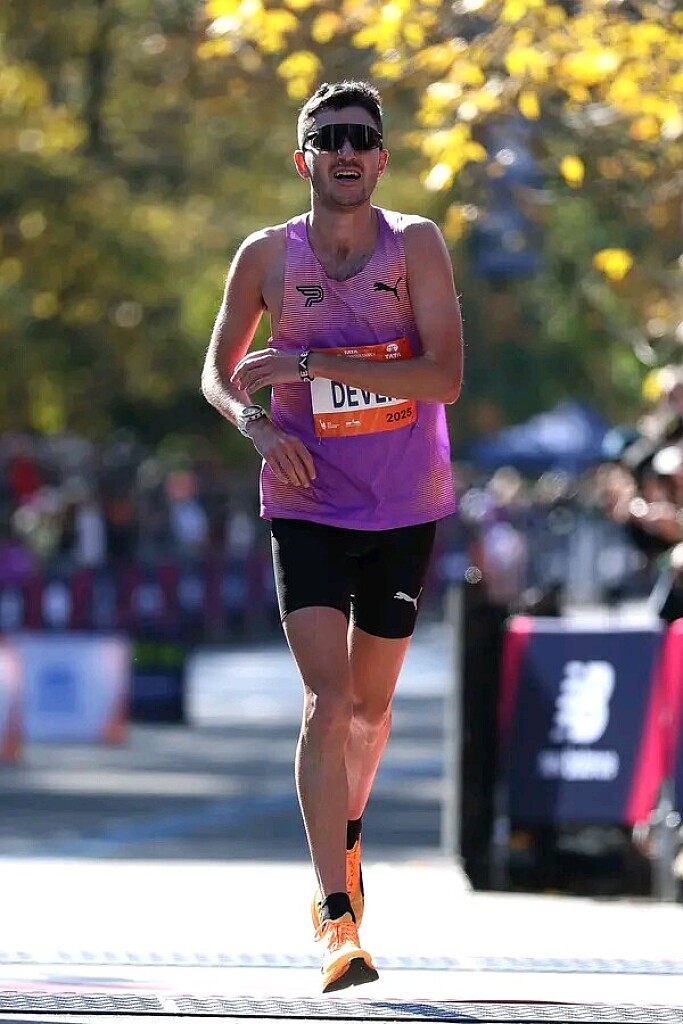
Patrick Dever Returns To New York With Olympic Ambitions: Can He Take Another Step Forward?
Patrick Dever returns to the streets of New York City on Sunday with unfinished business, renewed confidence and a much bigger target on the horizon.
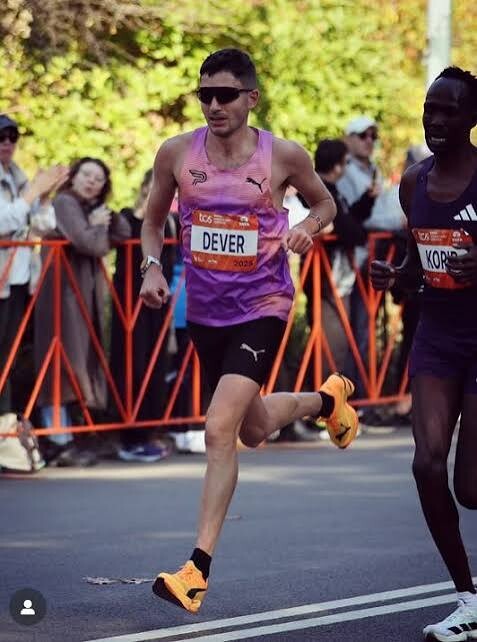
The 30-year-old Brit made an immediate impression on his marathon debut at last year’s New York City Marathon, crossing the line in 2:08:58 for what was initially recorded as fourth place. His result was later upgraded to third following Albert Korir’s five-year ban after anti-doping violations, giving Dever a podium finish on one of the world’s most demanding marathon stages.
But Dever has since shown that his potential stretches far beyond that breakthrough performance.
In April, he produced a major personal best of 2:06:18 at the London Marathon, elevating himself to third on the United Kingdom’s all-time marathon list. Only Mo Farah, with 2:05:11, and Mahamed Mahamed, with 2:06:14, have run faster for Britain.
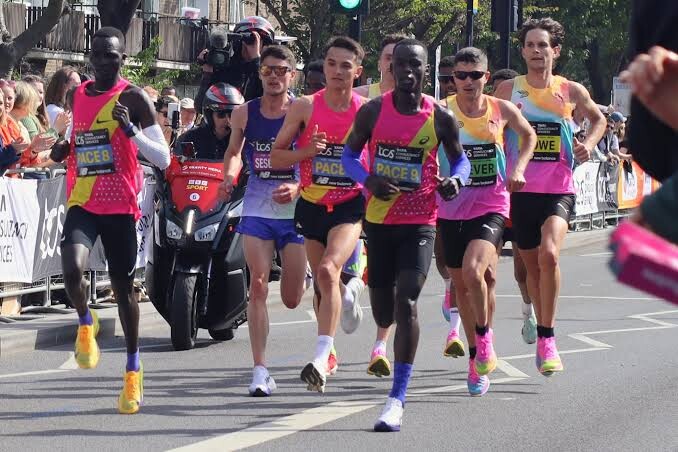
Now, Dever heads back to New York with another opportunity to test how far he has progressed.
The challenge will be particularly valuable because New York offers a very different racing environment from London. There will be no pacemakers to dictate the rhythm, meaning Dever will have to rely on his own tactical judgement, positioning and ability to respond when the race begins to unfold.
That is exactly the kind of experience he wants.
With the Los Angeles 2028 Olympic Games firmly in his long-term sights, Dever is using New York as an opportunity to sharpen his ability to race in a championship-style environment, where athletes must make their own decisions rather than simply follow a predetermined pace.
For a runner with ambitions of representing Great Britain on the Olympic stage, those lessons could prove invaluable.
New York is also a race that demands patience. The course features bridges, rolling terrain and a notoriously difficult final stretch through Central Park, making it less about simply chasing a fast time and more about executing a complete marathon.
Dever already knows what it takes to succeed there. This time, however, he returns as a significantly faster and more accomplished marathoner.
A year after announcing himself on the New York streets, the British star arrives with a 2:06:18 personal best, a place among Britain’s fastest marathoners and an Olympic dream that is beginning to look increasingly realistic.
The question now is whether Dever can turn that progress into another standout performance in the Big Apple.
by Erick Cheruiyot for My Best Runs.
Login to leave a comment
TCS New York City Marathon
The first New York City Marathon, organized in 1970 by Fred Lebow and Vince Chiappetta, was held entirely in Central Park. Of 127 entrants, only 55 men finished; the sole female entrant dropped out due to illness. Winners were given inexpensive wristwatches and recycled baseball and bowling trophies. The entry fee was $1 and the total event budget...
more...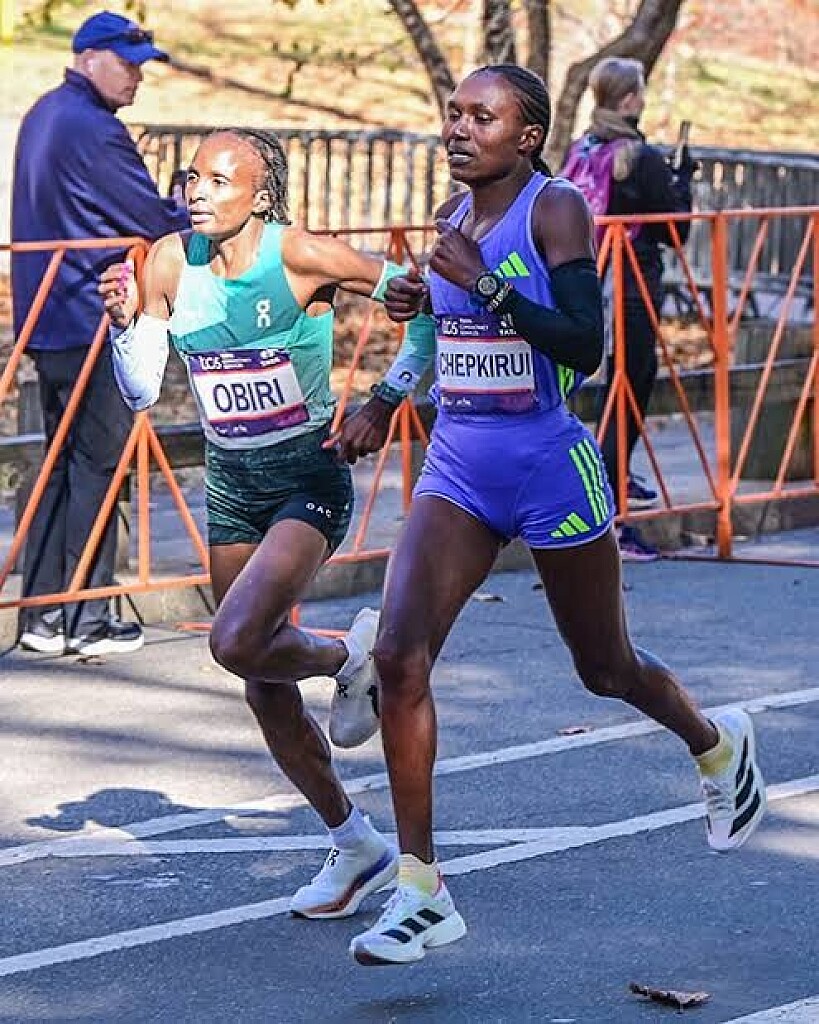
Hellen Obiri vs Sheila Chepkirui: A New York Rivalry Reignited
Hellen Obiri vs Sheila Chepkirui in New York City — round three.
The streets of New York are preparing for another fascinating chapter in a growing Kenyan marathon rivalry, as two of the last three winners of the TCS New York City Marathon return to the Big Apple for another showdown on Sunday.
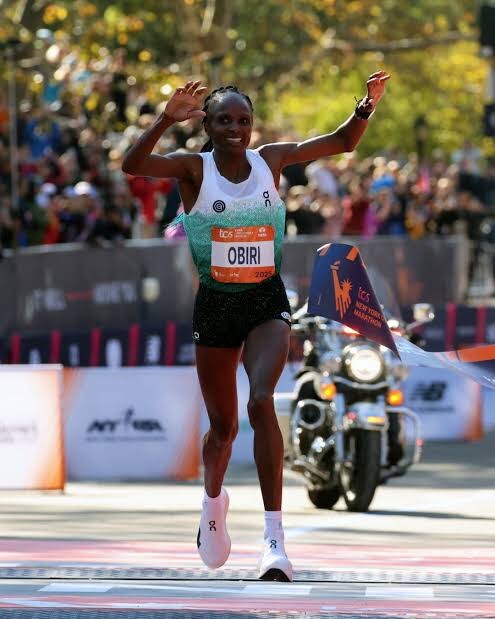
Obiri arrives as the defending champion and one of the biggest names in the elite women’s field, while Chepkirui returns determined to reclaim the title she won in 2024. Their recent history in New York has already produced two dramatically different outcomes, setting the stage for another potentially unforgettable battle.
Chepkirui announced herself on the New York stage in 2024 by producing a breakthrough performance to win her first TCS New York City Marathon title in 2:24:35. Obiri, who had won the race the previous year in 2:27:23, finished runner-up in 2:24:49 — just 14 seconds behind her fellow Kenyan.
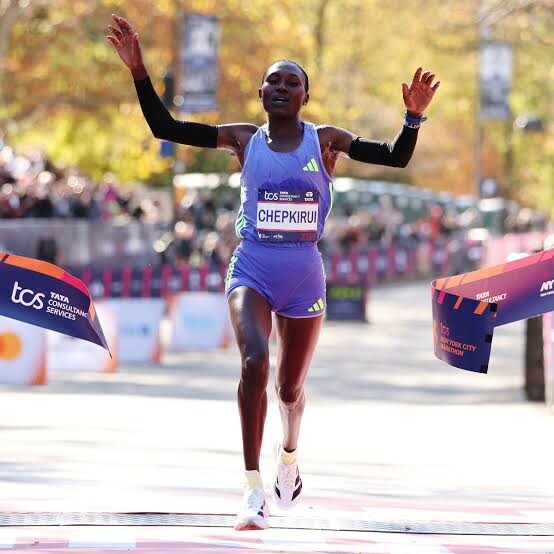
But Obiri responded in emphatic fashion twelve months later. In the 2025 edition, she produced a sensational performance to win in 2:19:51, smashing the previous course record and becoming a two-time New York champion. Sharon Lokedi finished second in 2:20:07, while Chepkirui placed third in 2:20:24.
Now they meet again, with the balance of power once more up for debate.
Obiri has plenty of momentum behind her. Earlier this year, she lowered her marathon personal best to 2:15:53 when she finished second at the 2026 London Marathon, establishing herself as the fastest woman entered in this year’s New York field.
Chepkirui, however, is far from an outsider. Her 2:17:29 personal best makes her one of the strongest challengers in the field, and her victory over Obiri in New York two years ago is proof that she has the strength, patience and tactical ability to thrive on one of marathon running’s most demanding courses.
For Obiri, the motivation goes beyond simply defending her crown. A third New York victory would elevate her into the exclusive company of three-time champions, alongside the legendary Paula Radcliffe. After winning in 2023 and again in 2025, Obiri now has another opportunity to add her name to one of the race’s most prestigious lists.
Yet Chepkirui knows exactly what it takes to defeat her. She has already stood on top of the podium in New York, and after finishing third behind Obiri last year, she will have every reason to believe she can reverse the order once again.
The race itself could make their battle even more intriguing. New York’s five-borough course, bridges, hills and notoriously unpredictable tactics rarely allow the marathon to unfold like a straightforward time trial. Every surge and every decision could become decisive as the runners make their way toward the final miles and the iconic finish in Central Park.
Two Kenyan champions. Two recent New York winners. One course that has already witnessed them trade victories.
Obiri wants history. Chepkirui wants revenge.
And when the battle reaches the streets of Manhattan and the final stretch into Central Park, the question will be simple:
Who will rule New York this time — Hellen Obiri or Sheila Chepkirui?
by Erick Cheruiyot for My Best Runs.
Login to leave a comment
TCS New York City Marathon
The first New York City Marathon, organized in 1970 by Fred Lebow and Vince Chiappetta, was held entirely in Central Park. Of 127 entrants, only 55 men finished; the sole female entrant dropped out due to illness. Winners were given inexpensive wristwatches and recycled baseball and bowling trophies. The entry fee was $1 and the total event budget...
more...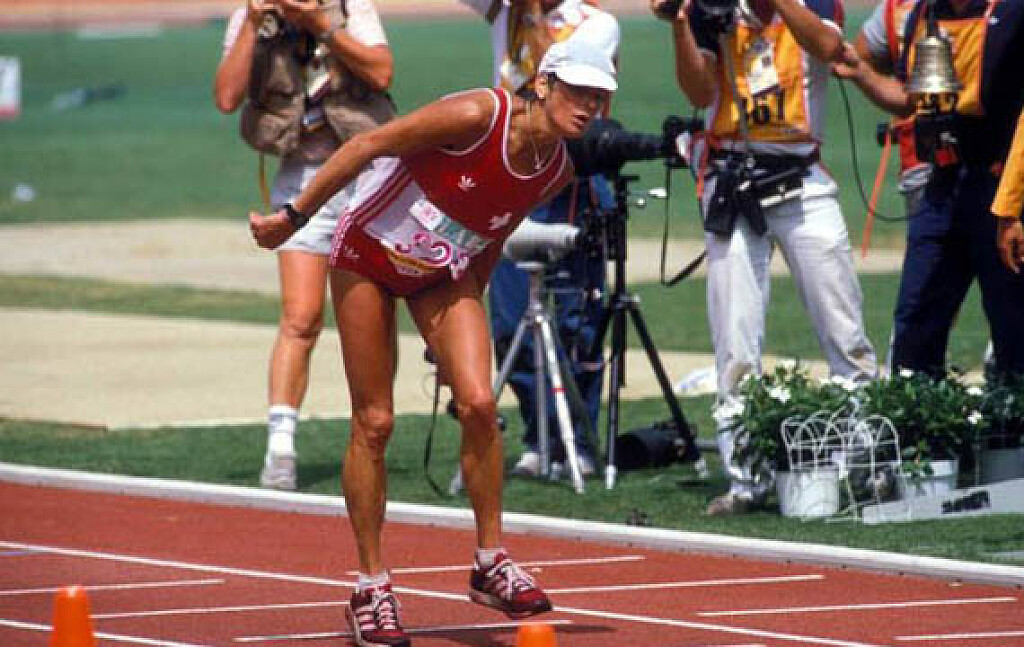
She Staggered, She Fell, But She Refused To Stop: The Olympic Finish That Became A Symbol Of Courage
At the 1984 Los Angeles Olympics, Gabriela Andersen-Schiess became part of Olympic history without winning a medal, setting a record, or standing on the podium.
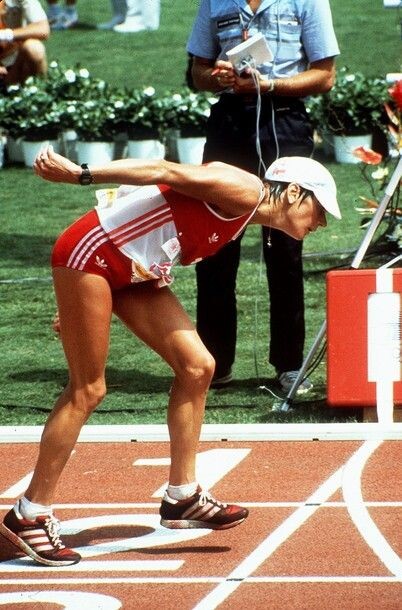
Instead, she gave the world something far more enduring: one of the most powerful displays of determination ever witnessed at the Olympic Games.
Andersen-Schiess, representing Switzerland, was competing in the inaugural women’s Olympic marathon when she entered the Los Angeles Memorial Coliseum after more than two hours of racing. What followed would become one of the most unforgettable moments in the history of distance running.
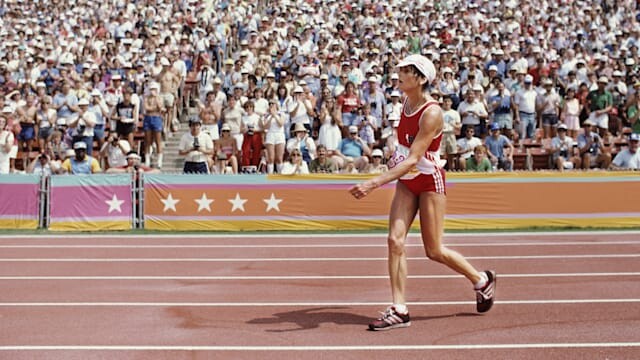
Severely exhausted and suffering from dehydration, the 39-year-old athlete could barely maintain her balance. Her body was visibly struggling. She staggered forward, her upper body leaning from side to side as she fought to keep moving.
Medical personnel immediately prepared to intervene.
But Andersen-Schiess knew that accepting assistance would mean being removed from the competition. She waved the medical staff away and continued, determined to reach the finish line under her own power.
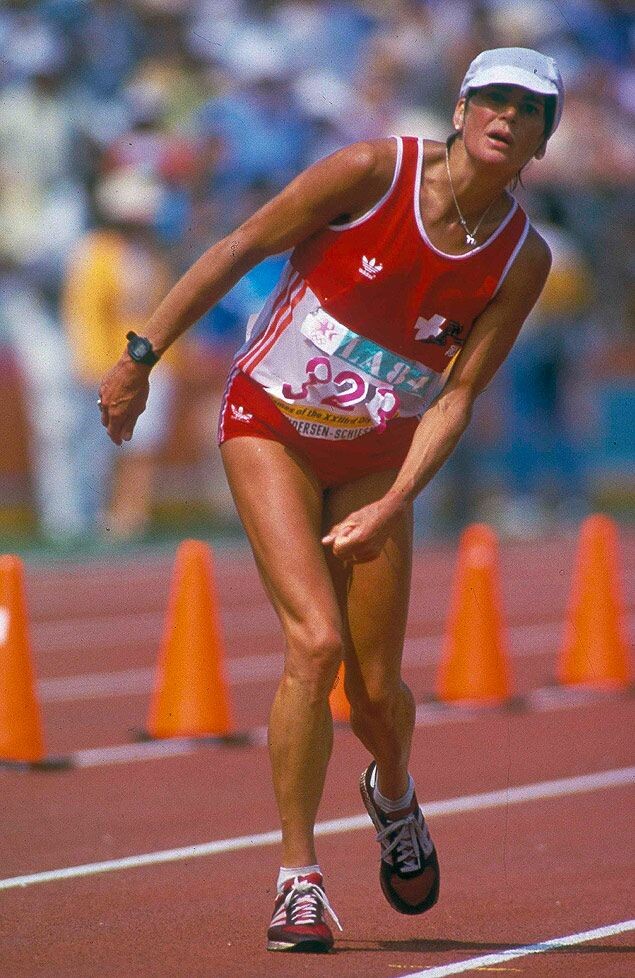
For the final stretch, every step appeared to require an enormous effort. She moved painfully around the stadium, stumbling and swaying as the crowd watched in stunned silence. The spectators could see that she was suffering, yet she refused to stop.
After an agonising final lap, Andersen-Schiess finally crossed the finish line in 37th place in 2:48:42.
The image of her struggling toward the finish quickly became one of the defining moments of the 1984 Olympics.
Earlier that day, American Joan Benoit had made history by winning the first women’s Olympic marathon in 2:24:52. Norway’s Grete Waitz took silver, while Portugal’s Rosa Mota claimed bronze.
Those athletes rightly received the medals and the headlines.
But Andersen-Schiess captured something different.
Her performance was not about victory over her rivals. It was about victory over exhaustion, pain and the overwhelming desire of the body to stop.
More than four decades later, her finish remains etched into the collective memory of Olympic sport. It stands as a reminder that courage is not always found in winning. Sometimes, it is found in taking one more step when every part of you is telling you that you cannot continue.
Gabriela Andersen-Schiess did not leave Los Angeles with an Olympic medal.
She left with something that has lasted far longer: a place in sporting history and a legacy of resilience that continues to inspire generations of runners.
That day, she did not simply finish a marathon.
She showed the world what it can mean to refuse to give up.
by Erick Cheruiyot for My Best Runs.
Login to leave a comment

South Korean Running Influencer Yoo Ji-Won, 25, Dies After Collapsing Just 500 Metres From Seoul Half Marathon Finish
The running community is mourning the heartbreaking death of South Korean running influencer Yoo Ji-won, who passed away after collapsing during the half marathon at the 2026 Seoul Race on Sunday, October 11. The 25-year-old was approaching the final stretch of the race when tragedy struck, cutting short a life filled with ambition, talent and promise.

The Seoul Race, a major city-centre running event, brought approximately 12,000 participants onto the streets of downtown Seoul. For thousands of runners, the occasion was an opportunity to challenge themselves and celebrate their shared passion for the sport. However, the event ended in tragedy following the incident involving Ji-won, whose death has sent shockwaves through South Korea's running community.
According to reports, Ji-won collapsed shortly before 9 a.m. at the 20.6-kilometre mark along Cheonggyecheon-ro, approximately 500 metres from the finish line of the 21.1-kilometre race. She was reportedly running near the front of the women's half marathon field when she suddenly fell.

A race official discovered her and immediately contacted emergency services. Cardiopulmonary resuscitation (CPR) was administered at the scene before she was transported to hospital for further medical attention. Despite the emergency response, Ji-won never regained consciousness and was subsequently pronounced dead. The cause of her death has not been officially confirmed.
Her passing has left a profound sense of sorrow among runners, particularly those who admired her performances and followed her journey in the sport. The circumstances surrounding the incident have also prompted renewed reflection on athlete safety and the importance of emergency preparedness at mass-participation running events.

Within South Korea's running community, Ji-won was recognised as one of the country's fastest women competing at a purely amateur level. Despite not being a professional athlete, she had achieved impressive performances over the marathon and half marathon distances, establishing herself as a formidable recreational runner.
Her personal best in the marathon stood at an impressive 2:56, while she had recorded approximately 1:22 for the half marathon. Those performances reflected a high level of dedication, disciplined training and a strong commitment to improving her abilities on the road.
Ji-won was also known for sharing aspects of her running journey with a wider audience, helping bring attention to the ambitions and achievements of amateur athletes. Her story demonstrated that the pursuit of excellence in running extends far beyond the professional ranks, with dedicated recreational athletes continually pushing their limits and setting increasingly challenging goals.
Earlier this year, she appeared on a running-focused YouTube channel, where she discussed her ambitions for the future. Among the targets she hoped to achieve was a half marathon time of 1:19, a goal that would have represented a significant improvement on her previous performance.
That ambition makes her passing particularly heartbreaking. At just 25, she was still developing as a runner, with more milestones to pursue and new challenges ahead. Her journey reflected the determination of athletes who find fulfilment in testing their limits, celebrating progress and discovering how far their dedication can take them.
Away from running, Ji-won was pursuing a master's degree at the Korea Advanced Institute of Science and Technology (KAIST), one of South Korea's leading institutions for science and technology research. She was reportedly studying artificial intelligence semiconductors, balancing demanding academic work with her commitment to running.
Her achievements in both education and athletics painted the picture of a young woman with diverse interests and considerable potential. She had invested herself in a challenging field of research while continuing to pursue ambitious sporting goals, making her sudden death an especially painful loss for those who knew her.
The Seoul Race Organizing Committee has expressed its condolences to Ji-won's bereaved family, acknowledging the immense grief caused by the sudden tragedy.
Her death has also brought attention to the human stories behind major road races. While finish times, personal records and race-day achievements often dominate the conversation, every participant arrives at the starting line with personal ambitions, responsibilities and loved ones waiting for them. Ji-won's story is a painful reminder of the fragility of life and the importance of treating such tragedies with compassion and respect.
For those who shared the roads with her, followed her progress online or simply recognised her as an inspiration within the amateur running scene, the loss will be difficult to comprehend. The goals she had spoken about earlier this year will remain unfinished, but her dedication to running and the example she set through her achievements will not easily be forgotten.
As tributes and condolences continue to reach her loved ones, the thoughts of the wider running community remain with her family, friends, fellow students and everyone affected by this devastating loss.
by Erick Cheruiyot for My Best Runs.
Login to leave a comment
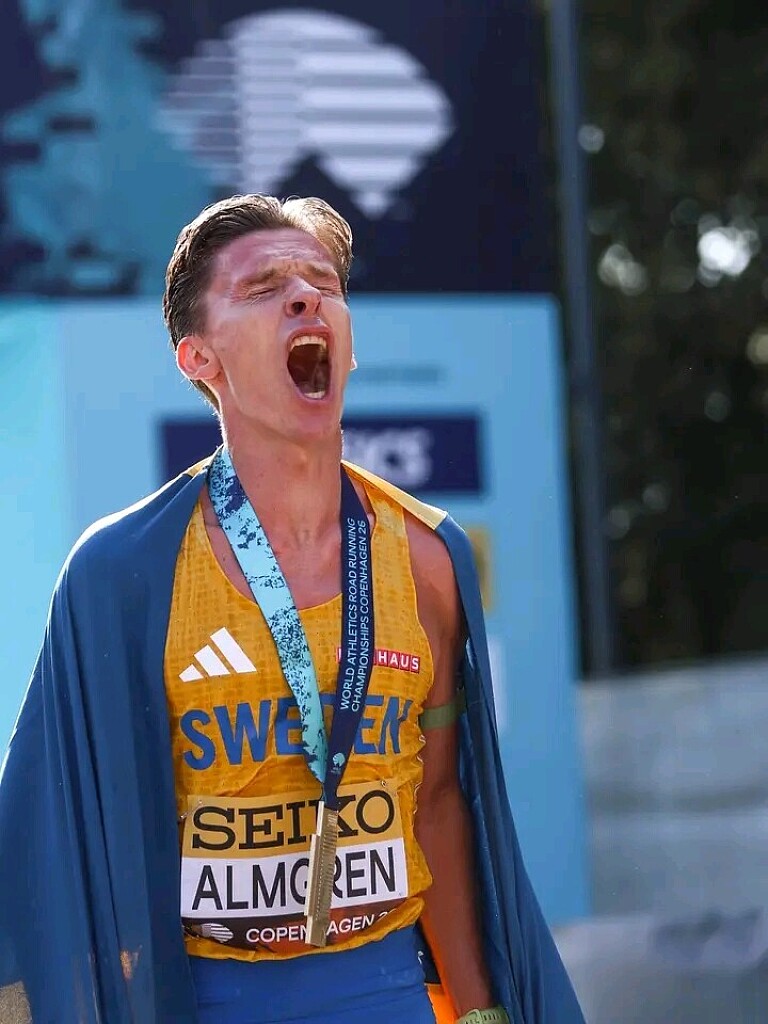
Andreas Almgren Times His Move To Perfection For World Half Marathon Gold In Copenhagen
Sweden’s Andreas Almgren produced a breathtaking finish on the streets of Copenhagen, unleashing a perfectly timed late surge to win the men’s half marathon title at the 2026 World Athletics Road Running Championships in 58:06.
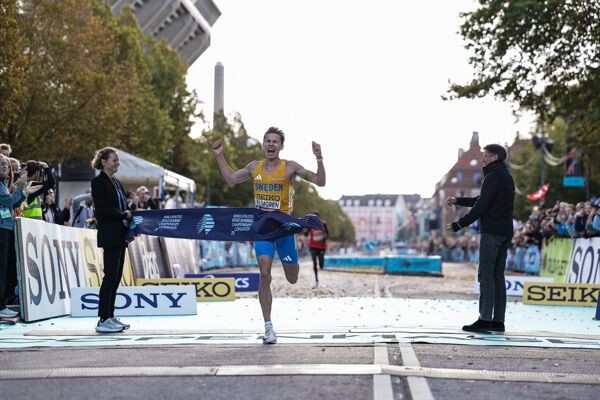
The Swedish star waited patiently through the decisive stages of the race before making his move with roughly 200 metres remaining, accelerating away from the field and producing a devastating sprint down the final straight.
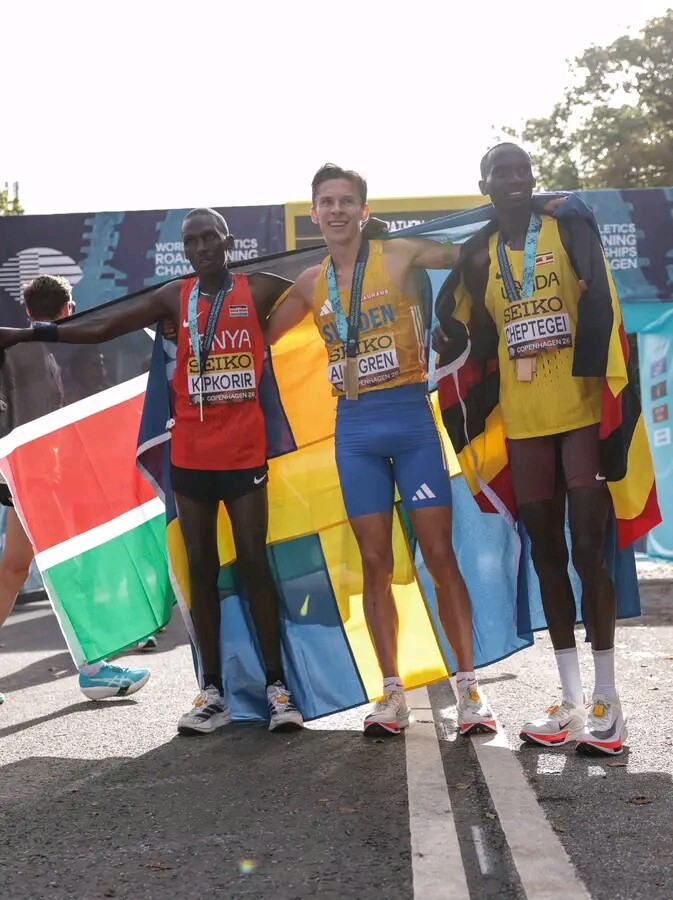
Nicholas Kipkorir had controlled much of the race, dictating the pace and keeping the leading contenders under pressure. Almgren, however, remained close throughout, carefully conserving enough energy for the moment that would ultimately decide the world title.
When the race entered its final stretch, Almgren made his move. The Swede surged hard over the final 200 metres and then outsprinted Kipkorir over the last 100 metres, powering clear to cross the line first in 58:06.
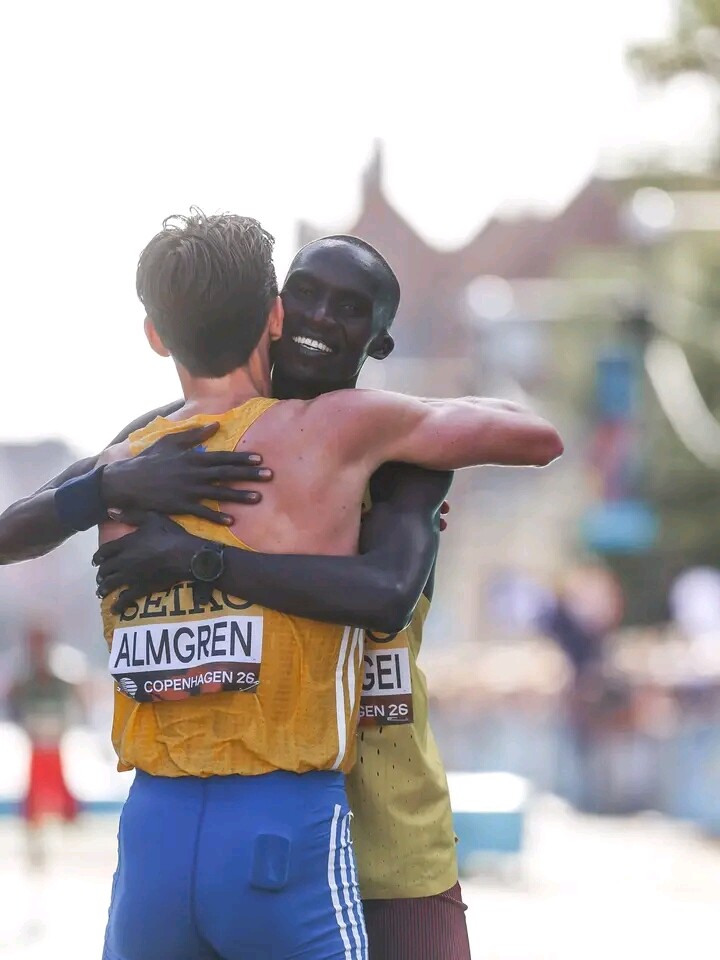
The performance was not only enough to secure the gold medal but also delivered an Area Record, adding another extraordinary achievement to Almgren’s rapidly growing list of accomplishments.
His winning time makes the victory even more significant in the history of the championships. Almgren becomes the first non-African world half marathon champion since Italy’s Stefano Baldini in 1996, ending a remarkable 30-year period in which athletes from Africa had dominated the global title.
For much of the race, Kipkorir appeared to have control, but Almgren refused to be separated from the Kenyan. His patience proved decisive as the race entered its final kilometres, allowing him to remain within striking distance before producing the acceleration that ultimately settled the contest.
Behind the leading pair, Uganda’s Joshua Cheptegei endured a gruelling battle to hold on to third position. The Olympic and world champion was pushed relentlessly in the closing stages and had to dig extremely deep to preserve his place on the podium. Despite the intense pressure from the athletes behind him, Cheptegei held firm to secure the bronze medal in a personal best of 58:26.
Ethiopia’s Tadese Worku also produced a personal best of 58:35 to finish fourth, while Kenya’s Gideon Kipkertich Rono followed in fifth in 58:57. The depth of the field was reflected by the fact that six athletes broke the 59-minute barrier, underlining the exceptional quality of the championship race.
Top 10 Men’s Half Marathon Results
1. Andreas Almgren (Sweden) — 58:06 — AR
2. Nicholas Kipkorir (Kenya) — 58:11
3. Joshua Cheptegei (Uganda) — 58:26 — PB
4. Tadese Worku (Ethiopia) — 58:35 — PB
5. Gideon Kipkertich Rono (Kenya) — 58:57
6. Hani Idriss Hersi (Djibouti) — 59:09 — NR
7. Yemaneberhan Crippa (Italy) — 59:18
8. Alex Nzioka Matata (Kenya) — 59:22
9. Daniel Simtu Ebenyo (Kenya) — 59:42 — SB
10. Othmane El Goumri (Morocco) — 59:53 — PB
The victory further strengthens Almgren’s remarkable 2026 campaign. The 58:06 performance gave the Swede an Area Record as he added the World Athletics Road Running Championships half marathon crown to his résumé, following his 10,000m triumph at the European Athletics Championships. His ability to combine sustained endurance with a devastating finishing kick once again proved decisive on the biggest stage.
For Almgren, the Copenhagen triumph also provides an intriguing glimpse ahead to his next challenge. With his New York City Marathon debut now on the horizon, the world half marathon title represents an important statement as he prepares to make the transition to the marathon. After demonstrating that he can handle the demands of championship racing over 21.1 kilometres while still possessing the speed to produce a decisive late surge, Almgren now turns his attention toward an entirely new distance.
The victory marks Almgren’s first global title, completing a remarkable transformation from European record-holder and leading continental distance runner into a world champion.
It also adds another spectacular chapter to an already outstanding 2026 season. Almgren has consistently demonstrated an exceptional combination of endurance, speed and tactical intelligence, and Copenhagen provided the perfect stage for all three qualities to come together.
With the clock showing 58:06, Almgren not only conquered the world championship field but also rewrote the European record books. His perfectly timed attack in the final 200 metres delivered Sweden a historic world road-running title and created one of the most dramatic finishes of the Copenhagen championships.
by Erick Cheruiyot for My Best Runs.
Login to leave a comment

World Athletics Road Running Championships
Six world champions and 65,000 runners just behind them. In September 2026, the heart of Copenhagen is expected to be the stage for Denmark’s largest-ever participant event. The World Athletics Road Running Championships Copenhagen 26 will take place on September 19-20, 2026. A total of 65,000 participants will join the running festivities behind the world’s fastest female and male athletes...
more...
South America’s Best Set For Copenhagen World Half Marathon Showdown
South America will be represented by a strong eight-man contingent at the World Athletics Road Running Championships Copenhagen 26, with the athletes set to take on one of the deepest and most competitive men’s half marathon fields on Sunday.
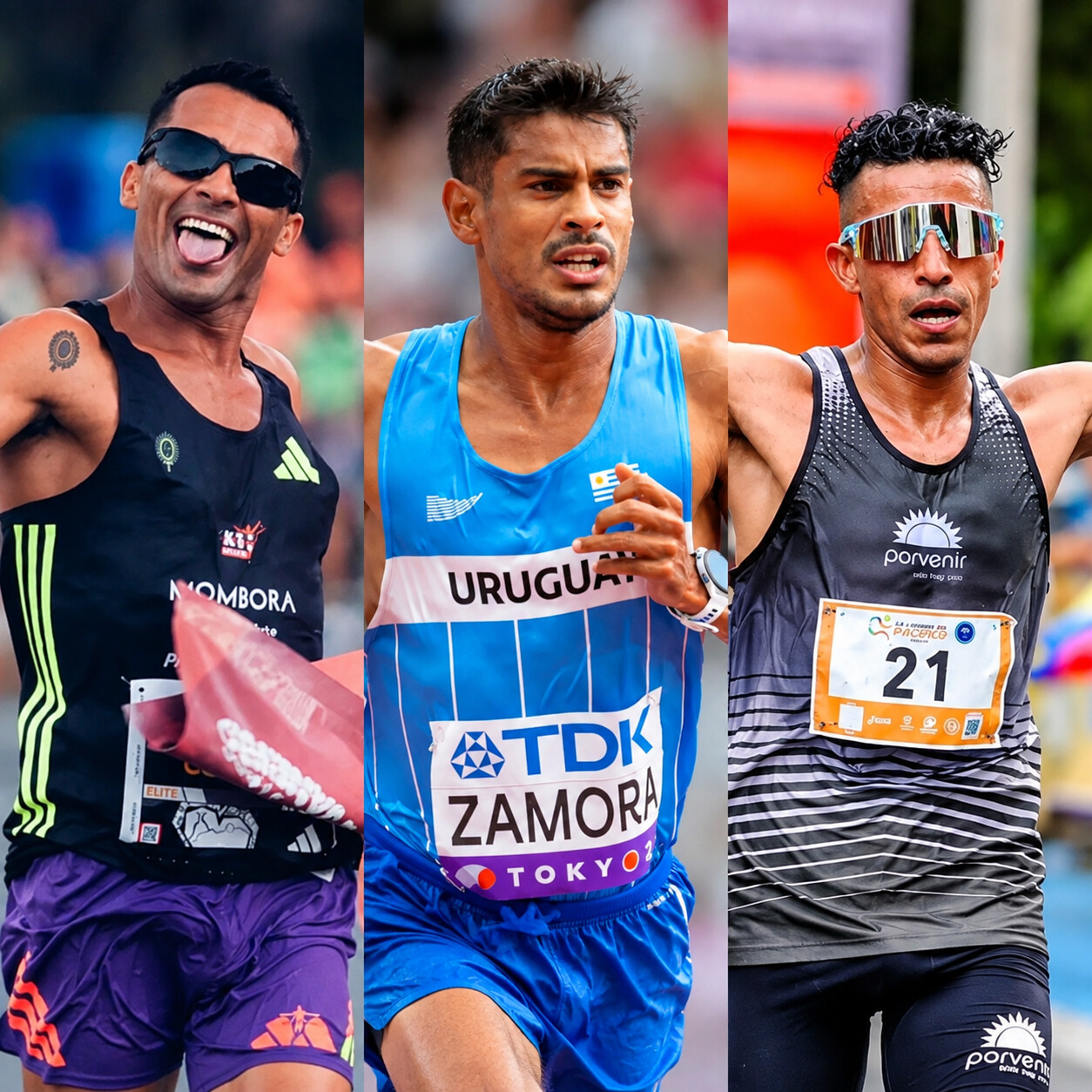
The championship will bring together leading road runners from around the world, creating a demanding stage for the South American representatives as they battle for strong championship positions and potentially significant personal breakthroughs.
Bolivia’s Héctor Garibay headlines the group, joined by Colombia’s Mauricio González and Uruguay’s Cristhian Zamora. Peru will be represented by Ferdinand Cereceda, while Brazil has the largest presence with Fabio Jesus Correia, Lucas Paulo Ferreira and Giovani Dos Santos.
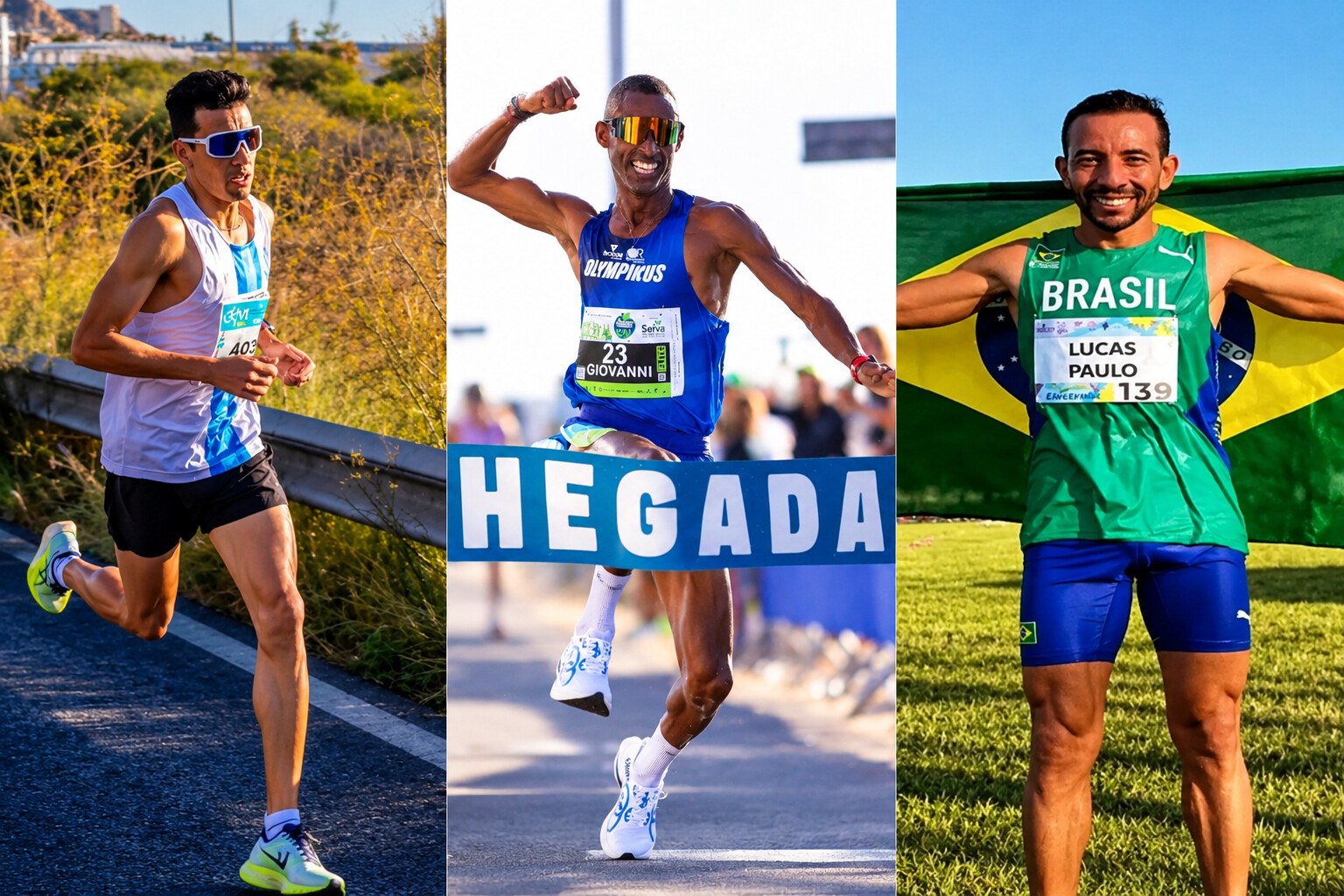
Argentina completes the contingent with Marcelo Fabian Manrique, giving South America a diverse eight-man lineup ready to take on the challenge in Copenhagen.
Competing at a World Athletics championship is never simply about chasing a fast time. Championship racing often demands patience, tactical awareness and the ability to respond when the pace changes, particularly when the field contains athletes capable of producing world-class performances.
For the South American runners, Copenhagen offers more than an opportunity to compete for championship honours. It is a chance to test themselves against the very best in the world and measure how far they have progressed on the international stage.
The contingent also brings a fascinating mix of experience, ambition and emerging talent. Each athlete arrives with a different racing background, but they share the same opportunity: to turn months of preparation into one memorable performance on the biggest road-running stage. Against a world-class field, even a small improvement in the closing kilometres could make a significant difference in the final standings.
Copenhagen is therefore set to provide a true test of character as much as fitness. The championship atmosphere, fast competition and relentless pace will demand that the South American runners remain composed from the opening kilometres to the final stretch. If they can execute their race plans and find another level when it matters most, several could leave Denmark with performances that represent important milestones in their careers.
With the pressure of a global championship and the depth of talent expected on the starting line, every kilometre will count. A personal best would be a major achievement, but strong tactical racing and a competitive finish could prove just as valuable.
The eight athletes will now look to arrive in Copenhagen ready to embrace the challenge, with South America hoping to make its presence felt when the world’s best half marathoners take over the streets of the Danish capital.
by Erick Cheruiyot for My Best Runs.
Login to leave a comment
BMW Berlin Marathon Unveils 2026 Finisher Medal As Runners Prepare For September Showdown
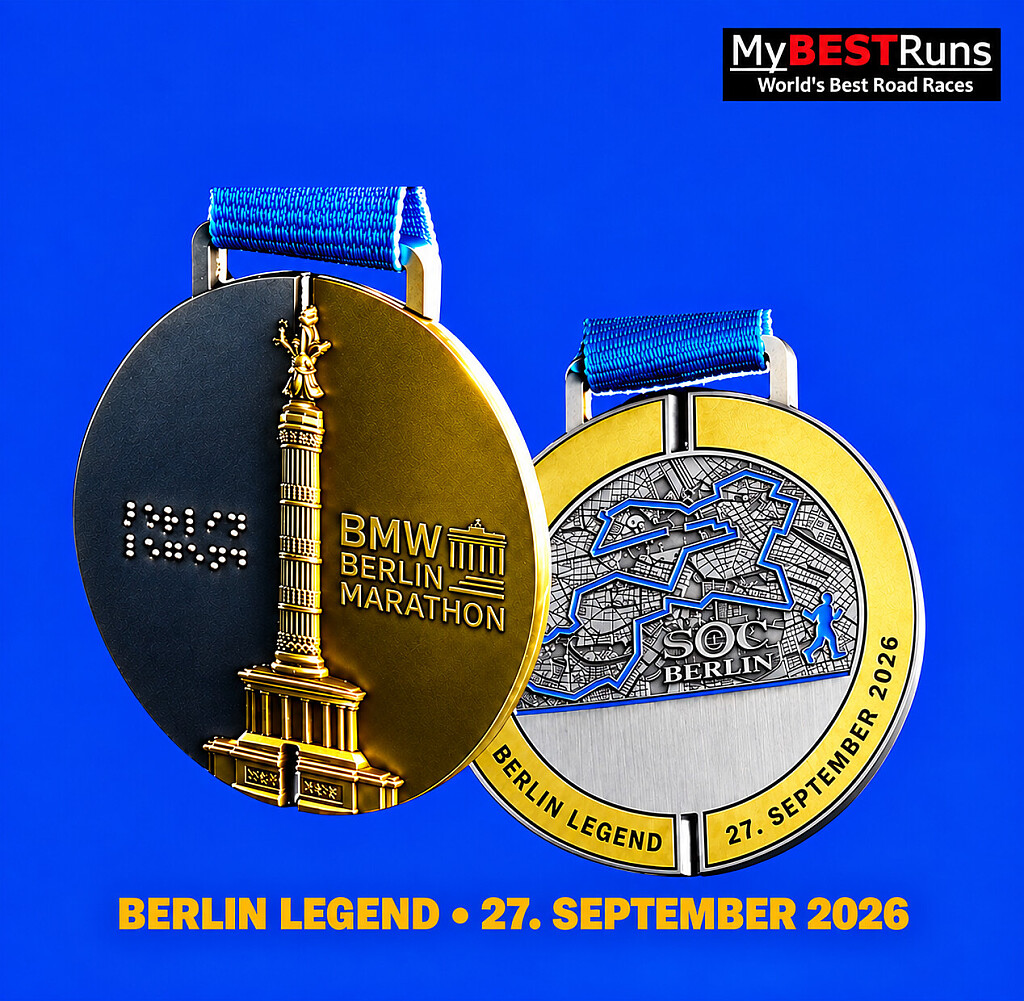
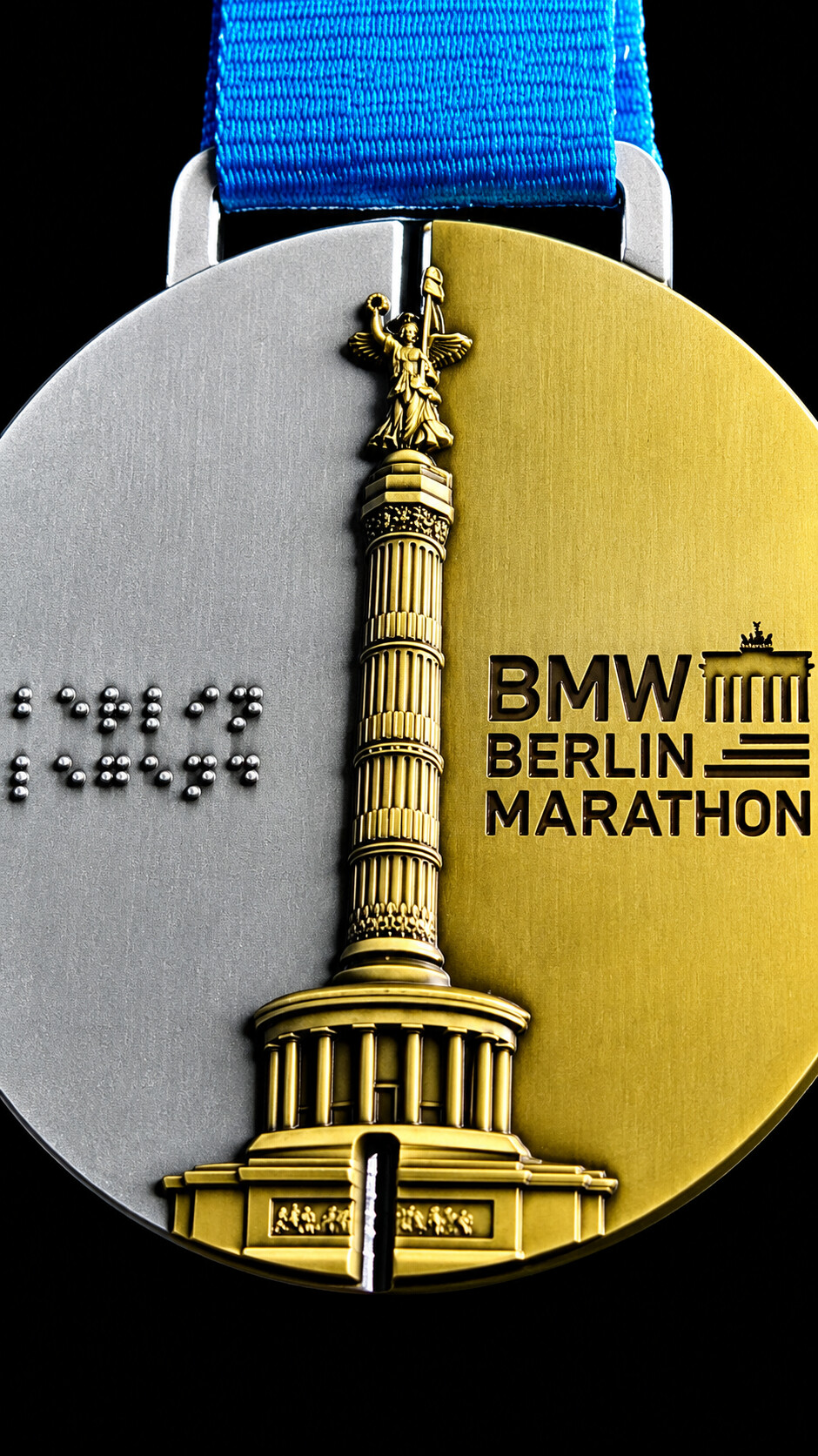
The BMW Berlin Marathon has unveiled its official finisher medal for the 2026 edition, giving thousands of runners another exciting reminder of what awaits them when they cross the finish line in the German capital on September 27.
The striking medal celebrates Berlin through a distinctive combination of gold and silver tones. On the front, the city’s iconic Victory Column takes centre stage, creating a powerful symbol of the historic marathon and the unforgettable journey runners will make through the streets of Berlin.
The reverse side continues the city-inspired theme, featuring a detailed map of Berlin with the marathon course highlighted across it. The design also carries the words “Berlin Legend” and the race date, 27 September 2026, making the medal a lasting reminder of the occasion.
But while the medal offers a glimpse of the reward waiting at the finish, organisers are also making preparations to help runners manage one of the biggest challenges of marathon racing: staying cool during the closing stages of the 42.195-kilometre journey.
For the 2026 race, dedicated Cooling Stations will be available at kilometres 30 and 38, integrated into the aid-station areas. These locations are strategically positioned to provide runners with an opportunity to cool themselves during the demanding final stretch of the marathon.
The cooling facilities will be located before the respective aid stations in the direction of running, close to the showers. They will be clearly identifiable by an official sign attached to the wash trough, making them easy for participants to spot while racing.
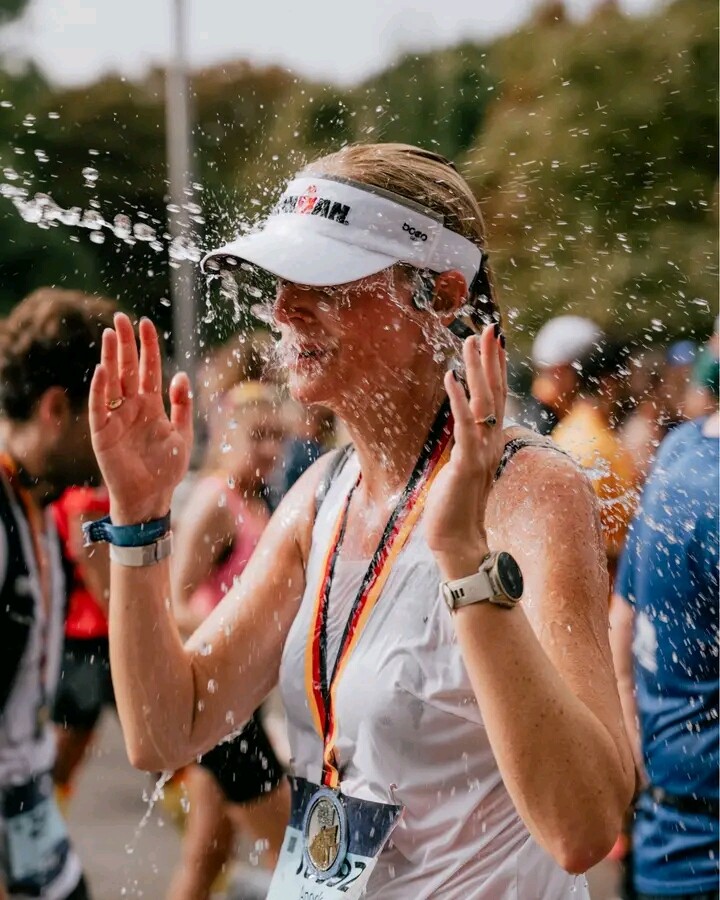
The wash troughs will be filled with water, allowing runners to dip their own sponges, towels, caps and other cooling items into the water before continuing their journey. Importantly, participants must bring these items themselves, as they will not be supplied or handed out at the cooling stations.
The reminder could prove particularly valuable for runners planning their race strategy. By preparing cooling equipment in advance and knowing exactly where the stations are located, participants can make the most of the facilities when fatigue begins to set in during the final 12 kilometres.
The BMW Berlin Marathon is one of the world's most prestigious marathon races and forms part of the Abbott World Marathon Majors, attracting elite athletes and recreational runners from across the globe. For many participants, finishing in Berlin represents the culmination of months of training, sacrifice and anticipation.
Now, with the 2026 finisher medal revealed and practical race-day details being released, the excitement is building. The goal for thousands of runners will soon become very real: navigate the streets of Berlin, manage the demanding final kilometres, cross the finish line and earn the coveted “Berlin Legend” medal.
For those lining up on September 27, the countdown is officially on.
by Erick Cheruiyot for My Best Runs.
Login to leave a comment

BMW Berlin Marathon
The story of the BERLIN-MARATHON is a story of the development of road running. When the first BERLIN-MARATHON was started on 13th October 1974 on a minor road next to the stadium of the organisers‘ club SC Charlottenburg Berlin 286 athletes had entered. The first winners were runners from Berlin: Günter Hallas (2:44:53), who still runs the BERLIN-MARATHON today, and...
more...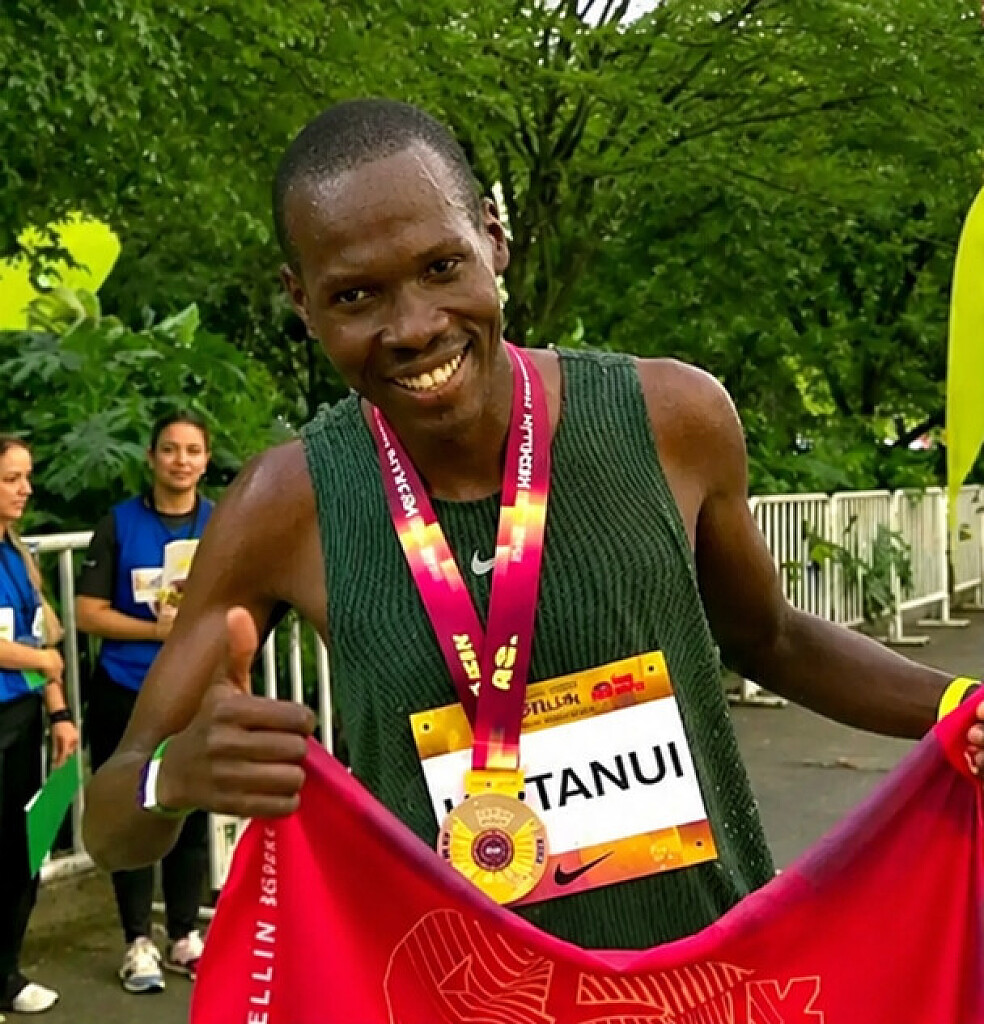
Kiptanui Leads Kenyan One-Two As Colombia’s Patiño Completes A Thrilling Medellín Podium
Eric Kiptanui delivered a superb performance on Colombian soil to win the 2026 Medellín Marathon, leading a Kenyan one-two finish in the streets of the City of Eternal Spring.
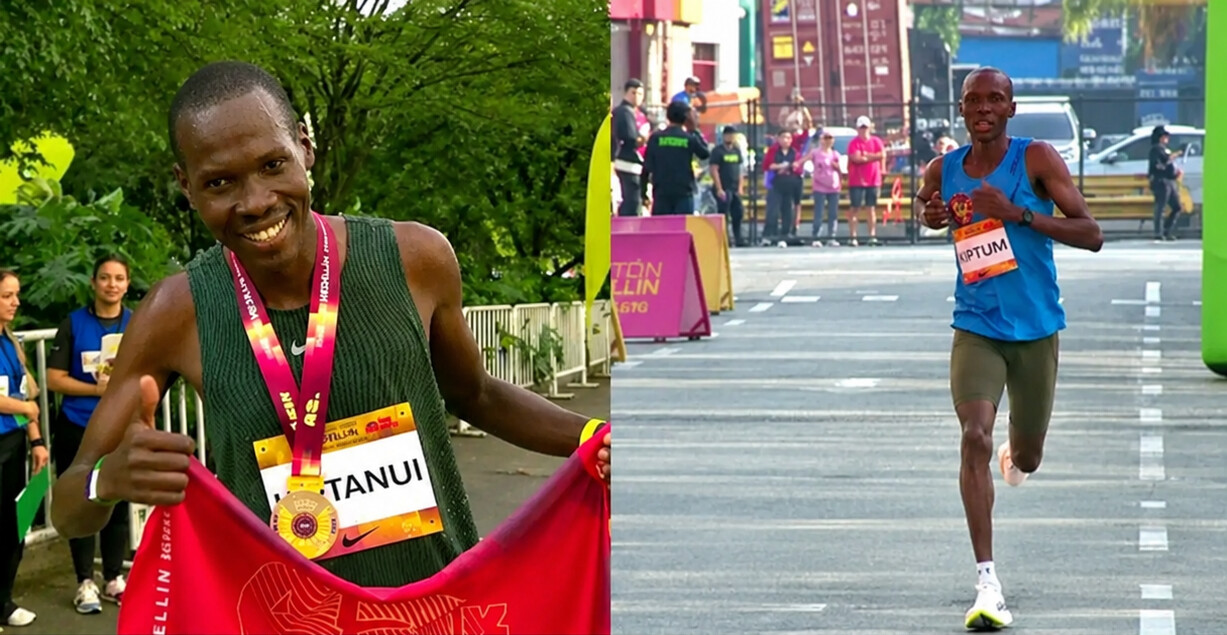
Kiptanui crossed the finish line in 2:17:36, securing a convincing victory ahead of compatriot Joseph Kiptum, who stopped the clock at 2:18:09. Colombia’s Carlos Patiño completed the podium in 2:19:14, giving the home crowd a reason to celebrate after a fiercely contested marathon.
The Medellín Marathon presents a distinctive challenge for distance runners. The city sits at a significant elevation above sea level, meaning athletes must contend not only with the physical demands of 42.195 kilometres but also with reduced oxygen availability compared with races held closer to sea level. On a course where endurance and pacing are crucial, maintaining strength deep into the second half of the race can make all the difference.
Kiptanui appeared equal to the challenge, producing the strongest performance when it mattered most. Over the closing stages, the Kenyan held his composure and preserved enough energy to finish ahead of the chasing field, completing the marathon in 2:17:36 and securing the victory.
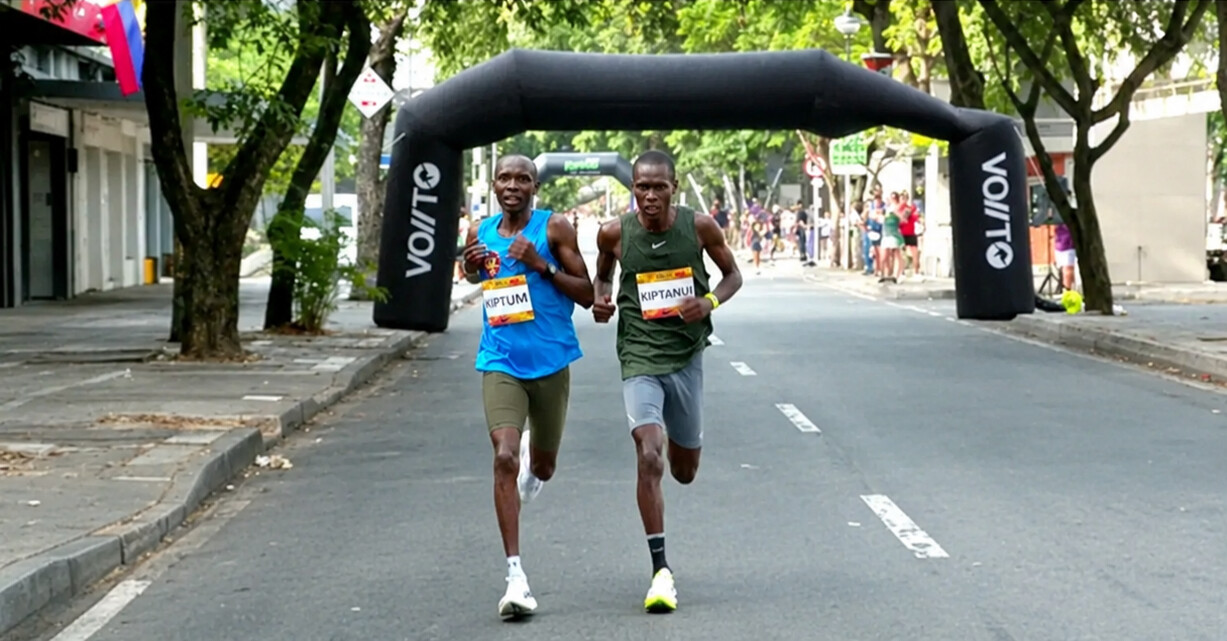
Behind him, Kiptum showed impressive resilience to finish just 33 seconds adrift of his fellow Kenyan. His 2:18:09 was enough to secure a second-place finish and complete Kenya’s dominance at the top of the standings. Patiño, meanwhile, fought his way to 2:19:14, becoming the leading Colombian finisher and claiming a hard-earned third place in front of the home supporters.
The result also highlighted the depth of Kenyan marathon running. With two athletes occupying the top two positions, Kenya once again demonstrated the combination of endurance, tactical discipline and competitive experience that has made the nation such a formidable force across road racing and marathon competition.
For Kiptanui, however, the spotlight belonged entirely to him. From the opening kilometres to the decisive final stretch, he kept his focus on the ultimate objective — victory. When the long battle through Medellín finally came to an end, it was the Kenyan who had done enough to stand alone at the top of the podium.
The Final Podium
1. Eric Kiptanui — Kenya — 2:17:36
2. Joseph Kiptum — Kenya — 2:18:09
3. Carlos Patiño — Colombia — 2:19:14
It was a performance built on strength, patience and mental toughness, with Kiptanui mastering one of the marathon’s most unforgiving tests: staying composed when fatigue begins to take over.
Medellín witnessed a Kenyan masterclass — and Eric Kiptanui walked away as its champion. Patiño’s third-place finish provided a proud moment for Colombian athletics.
by Erick Cheruiyot for My Best Runs.
Login to leave a comment

Medellin Marathon
The Marathon of Flowers is the oldest running competition in Colombia. It is organized by MCM Events, a company dedicated to managing large-scale athletic and cultural events. The Marathon of Flowers has grown thanks to a private-public alliance between the Medellin Mayor’s office and MCM Events. The race is sponsored by EPM, the largest utilities company in Colombia, which is...
more...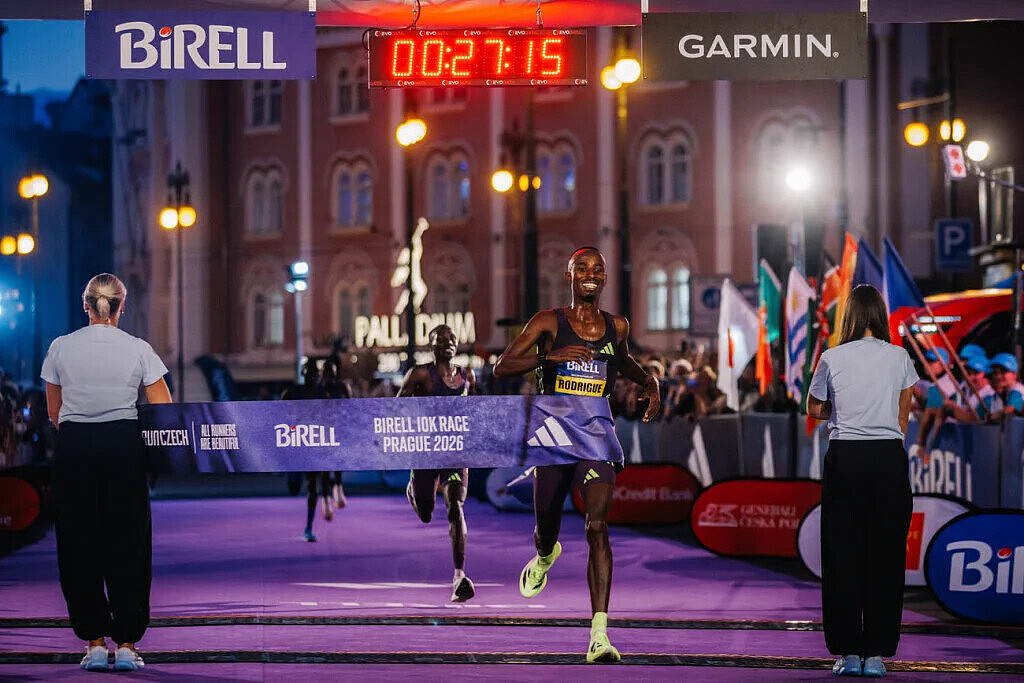
Kwizera Seals Historic Prague Victory as a Costly Wrong Turn Steals the Spotlight
PRAGUE, Czech Republic — The streets of Prague were illuminated by speed, tension and one of the most dramatic finishes of the 2026 road-racing season as Rodrigue Kwizera produced a stunning victory at the Birell 10K Night Race.
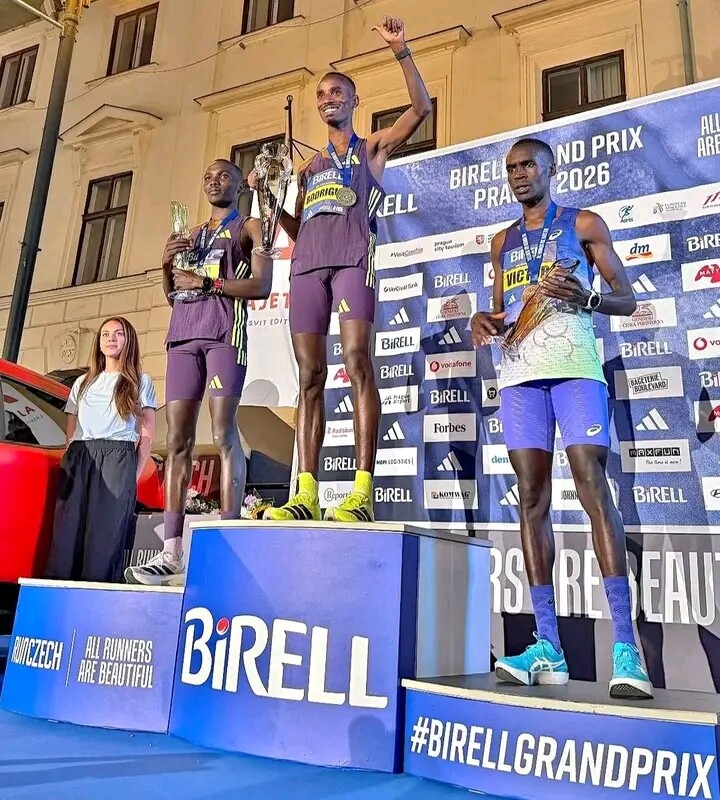
Running his first official international race under the Spanish flag, the Burundi-born distance star stopped the clock at 27:15, smashing the Spanish national record by 10 seconds and adding another major victory to his remarkable 2026 campaign.
But the result tells only part of the story.
For much of the decisive phase of the race, it was Kenya’s Victor Kipruto Kiprono who appeared to be marching towards victory. After the leading group began to fracture around the seventh kilometre, Kiprono moved aggressively to the front alongside fellow Kenyan Elisha Kiprop Chemiron before gradually opening a significant gap on his pursuers.
By the eighth kilometre, the 26-year-old Kenyan had established himself as the clear leader and seemed to be heading towards a commanding triumph.

Then came the moment that changed everything.
As the race entered its final stretch, Kiprono followed the lead vehicle instead of taking the correct route towards the finish. The costly detour allowed Kwizera to close the gap and sweep past, with Kenya’s Owen Korir Kapkama also moving ahead.
In the space of a few seconds, a race that had appeared to be Kiprono’s to lose was transformed into a frantic battle for the podium.
Kwizera seized the opportunity with ruthless efficiency.
The Spanish representative crossed the line in 27:15, securing the victory and rewriting the Spanish record books. Kapkama followed just one second later in 27:16, while Kiprono recovered from his costly mistake to claim third in 27:18.
Despite the disappointment, Kiprono still produced one of the fastest performances of the night — and one of the most memorable.
Behind the leading trio, Kenya’s Filex Kibet Masai ran 27:19 for fourth, while Uruguay’s Santiago Catrofe completed the top five in 27:24.
The quality of the field was reflected throughout the results. Kenyan runners occupied seven of the top 20 positions, while Spain, Japan, Uruguay, the Netherlands, Belgium and hosts Czech Republic were also represented.
Japan’s Shunya Kikuchi added another national-record performance to the evening, running 28:07 to improve the Japanese record by eight seconds.
Birell 10K Night Race Prague 2026 — Men’s Elite Top 10
1. Rodrigue Kwizera (Spain) — 27:15
2. Owen Korir Kapkama (Kenya) — 27:16
3. Victor Kipruto Kiprono (Kenya) — 27:18
4. Filex Kibet Masai (Kenya) — 27:19
5. Santiago Catrofe (Uruguay) — 27:24
6. Elisha Kiprop Chemiron (Kenya) — 27:33
7. Elia Kiprop (Kenya) — 27:46
8. Isaac Kibet Ndiema (Kenya) — 27:47
9. Said Mechaal (Spain) — 27:59
10. Shunya Kikuchi (Japan) — 28:07
The men’s race was only half of an extraordinary evening in Prague. Ethiopia’s Chaltu Dida Diriba, just 19, dominated the women’s race to win in 30:04, finishing eight seconds ahead of her sister Robe Dida Diriba. Kenya’s Cynthia Chelangat Chepkwony completed the podium in 30:23.
The 2026 Birell 10K Night Race attracted almost 9,500 runners from 98 countries, with the elite field competing in ideal evening conditions of around 20 degrees Celsius and little wind.
Yet it was the men's finish that will linger longest.
Kwizera will leave Prague with a victory and a new national record. Kapkama will celebrate a superb second place. And Kiprono will be left wondering what might have been after a single wrong turn dramatically altered the final chapter of a race he had controlled for much of its decisive stage.
In distance running, victory can sometimes be decided not only by fitness, strength and tactics, but by the smallest of moments.
On this Prague night, one wrong turn changed everything.
by Erick Cheruiyot for My Best Runs.
Login to leave a comment

Birell 10K Race
The Birell Prague Grand Prix is a captivating evening race that takes runners through the heart of historic Prague. Held during the first weekend of September, this event transforms the city’s streets into a vibrant festival of running, with thousands of participants and enthusiastic spectators lining the course. The event begins with the adidas Women’s Race 5K, an empowering race...
more...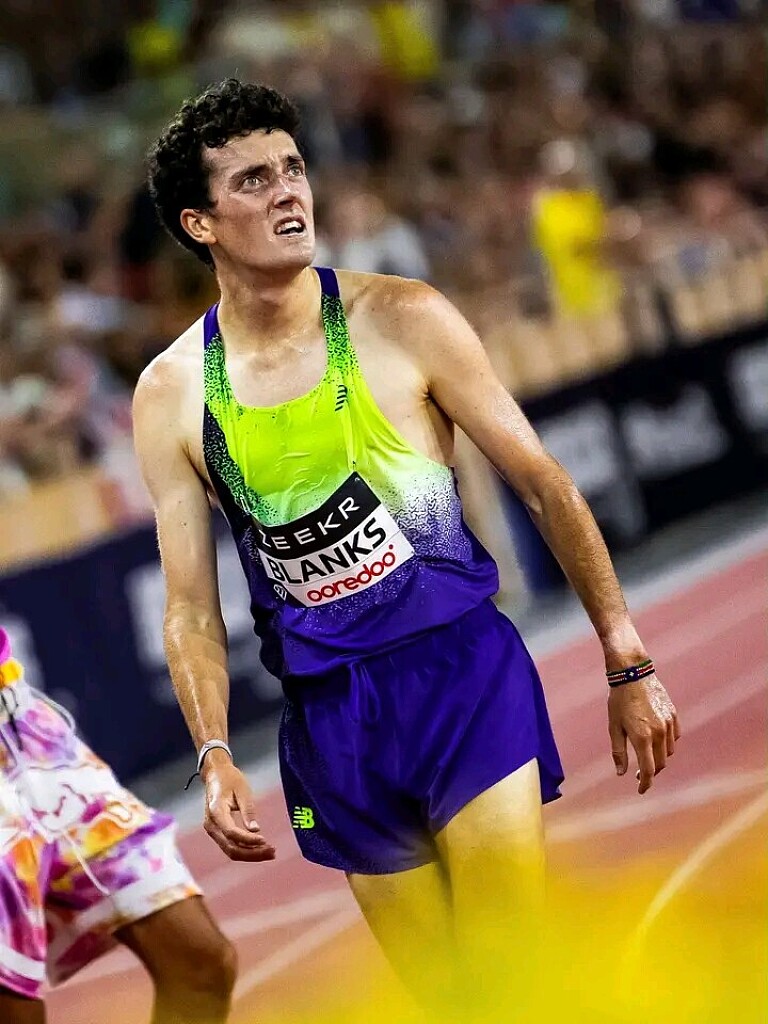
Americans Bring The Heat As Lausanne Diamond League Sets Up A Fierce 5000m Showdown
The Wanda Diamond League returns to action on Friday, August 21, and the men’s 5000m in Lausanne promises to be one of the evening’s most compelling distance races, with a strong American quartet ready to take on a deep international field.
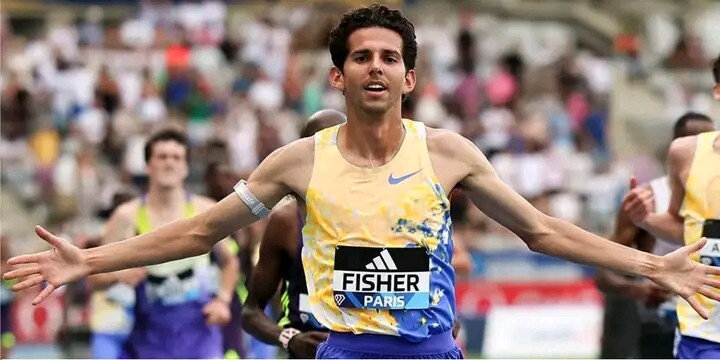
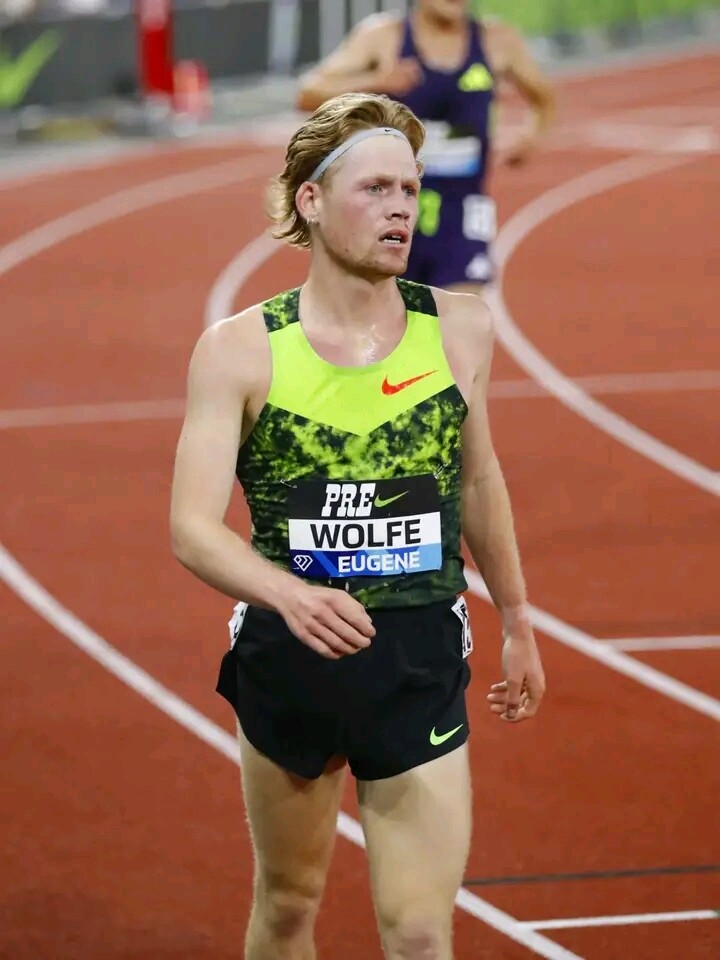
Graham Blanks, Grant Fisher, Parker Wolfe and Nico Young will carry the American challenge at Athletissima, where they will line up against a formidable group featuring athletes from Kenya, Ethiopia, Bahrain, Eritrea, Burundi, Switzerland, Uruguay, Slovenia and Mexico.
The Lausanne meeting marks an important point in the 2026 Diamond League campaign, with the Road to the Final entering its decisive stages ahead of the series finale in Brussels on September 4-5. Lausanne is followed just two days later by the Silesia meeting, before the series heads to Zurich for the final regular-season stop.
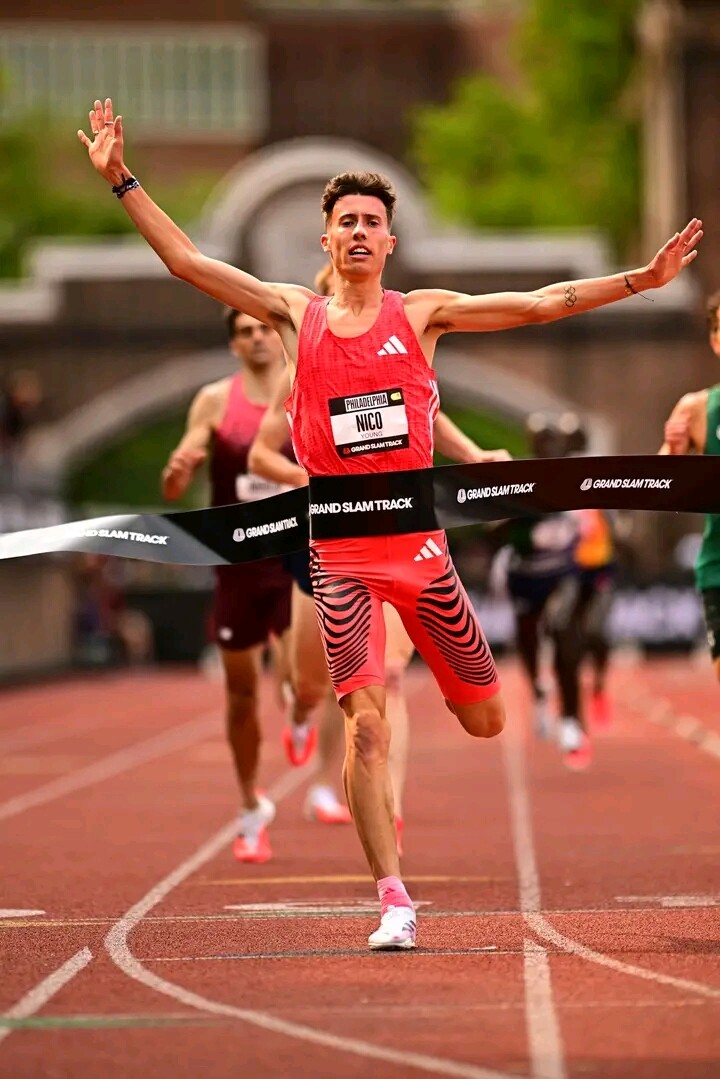
Fisher arrives as one of the most established names in the field. The American Olympic bronze medallist has already produced a 12:49.61 season best over 5000m in Oslo and also won the 3000m in Paris earlier this season. His experience at the highest level makes him a major contender when the pace accelerates over the closing laps.
Blanks is another American to watch closely. Ranked among the leading 5000m athletes in the world, he has continued to establish himself as one of the United States’ most exciting young distance runners. World Athletics’ rankings placed him eighth globally in the event as of July 26, with Fisher sixth.
Wolfe and Young add further depth to an American lineup that could make the race particularly tactical. With four athletes capable of competing at a high level, the United States will have several cards to play as the race develops.
But the Americans will have no easy path to victory.
Bahrain’s Birhanu Balew headlines the international opposition and entered the season among the world’s highest-ranked 5000m runners. Kenya will be represented by Jacob Krop, Edwin Kurgat, Cornelius Kemboi, Charles Kiboina, Mathew Kipchumba Kipsang and Laban Kiptoo Kosgei, giving the race a powerful Kenyan presence.
Ethiopia also brings considerable strength, with Khairi Bejiga, Kuma Girma, Shimelis Niguse, Mezgebu Sime and Getnet Wale all listed in the field. Eritrea’s Abderezak Suleman, Burundi’s Egide Ntakirutimana, Switzerland’s Dominic Lokinyomo Lobalu, Uruguay’s Santiago Catrofe, Slovenia’s Žan Rudolf and Mexico’s Eduardo Herrera complete a truly international lineup.
The Lausanne 5000m is therefore shaping up as much more than an American showcase. It is a meeting of contrasting strengths: American depth, Kenyan distance tradition, Ethiopian endurance and a collection of international contenders eager to make their mark on one of the sport’s biggest stages.
With the Diamond League season moving rapidly toward its final stretch, every position and every point carries added importance. The question now is whether the American quartet can convert its collective strength into a victory—or whether the international field will once again prove too deep to control.
One thing is certain: when the Lausanne 5000m gets underway, the pace is expected to be hot, the competition fierce and the final laps unforgettable.
by Erick Cheruiyot for My Best Runs.
Login to leave a comment
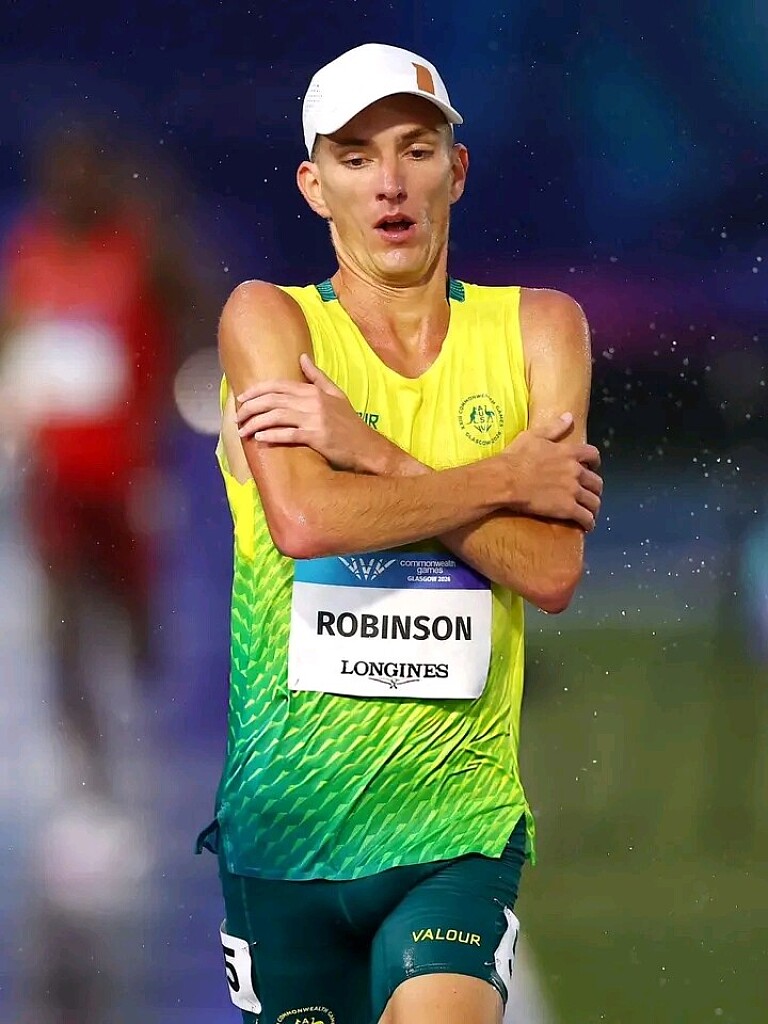
Australia Ends Long Wait as Ky Robinson Claims Historic Commonwealth 10,000m Gold in Glasgow
Australia's Ky Robinson produced the race of his career to capture the men's 10,000m gold medal at the 2026 Commonwealth Games in Glasgow, Scotland, becoming the first Australian ever to win the Commonwealth title in the event.
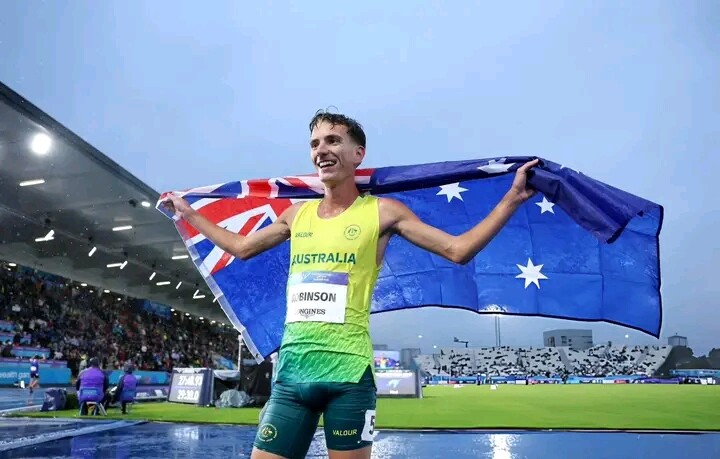
On a cold and rain-soaked night at Scotstoun Stadium, Robinson timed his finish to perfection, crossing the line in 27:48.93 to secure a landmark victory and complete an Australian sweep of the Commonwealth Games 10,000m titles after the nation's success in the women's race.
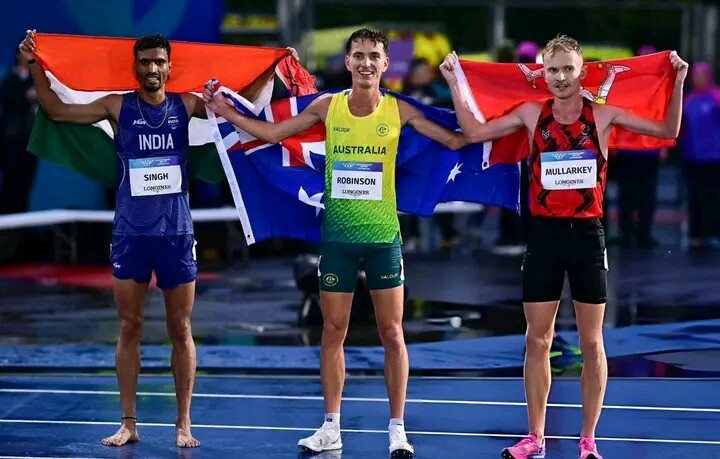
The race unfolded into one of the most dramatic distance finals of the championships. With the rain making conditions treacherous, a tightly packed lead group remained together well into the closing stages as the pace intensified lap after lap. Robinson found another gear in the final stretch to hold off a determined challenge from India's Gulveer Singh, while David Mullarkey unleashed a late surge to secure bronze. Just behind them, Edwin Kurgat fought bravely for Kenya but missed the podium by only 0.70 seconds, highlighting just how fiercely contested the battle for medals was. The top four athletes were separated by barely two seconds, making it one of the closest and most thrilling men's 10,000m finals in recent Commonwealth Games history.
India also celebrated a historic breakthrough as Gulveer Singh delivered the performance of his life to take silver in 27:49.78, earning India's first-ever Commonwealth Games medal in the men's 10,000m. David Mullarkey of the Isle of Man completed the podium in 27:50.28, capping a memorable evening for both nations.
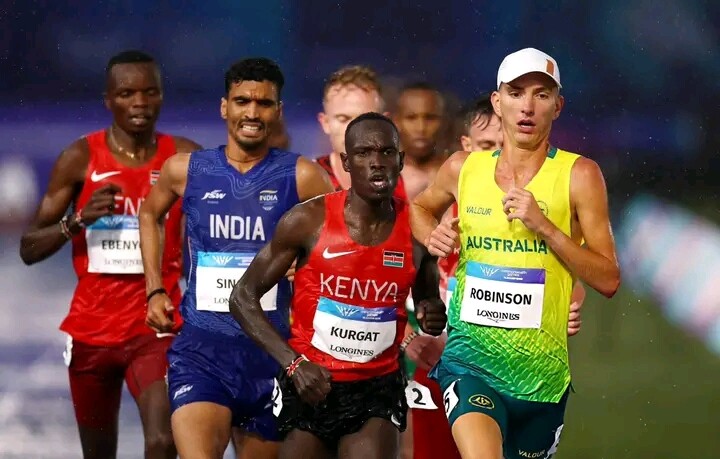
For Kenya, hopes of extending its proud tradition in the event fell agonizingly short. Edwin Kurgat led the Kenyan challenge with a courageous fourth-place finish in 27:50.98, narrowly missing out on a medal. Former Commonwealth Games Birmingham 2022 silver medalist Daniel Ebenyo finished sixth in 27:56.35, while Ishmael Kipkurui placed 10th in 28:04.60 as the Kenyan team was left without a podium finish.
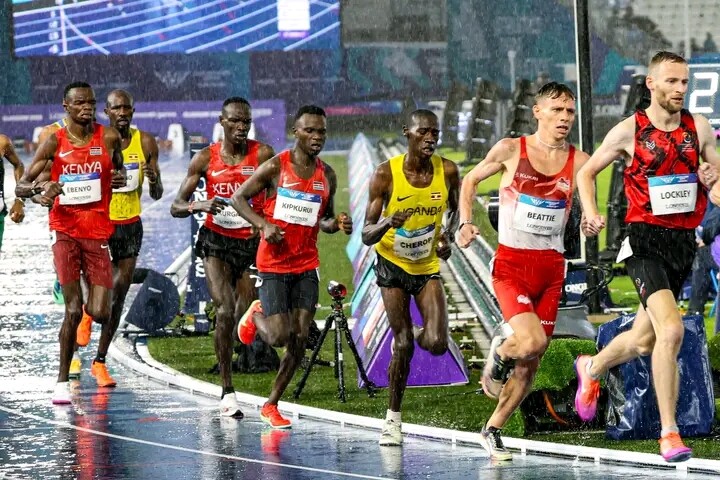
Uganda also came up short despite another determined performance from Samuel Simba Cherop, who clocked a personal best of 27:56.68 to finish seventh. The result ended an extraordinary era of Ugandan dominance in the men's 10,000m at the Commonwealth Games. Since Boniface Kiprop's victory at the 2006 Commonwealth Games in Melbourne, Australia, Uganda had ruled the event for two decades through a succession of outstanding distance runners, making Ky Robinson's triumph the first by another nation since Kiprop's breakthrough gold in Melbourne.
The final also showcased the growing depth of Commonwealth distance running, with athletes from Australia, India, the Isle of Man, Kenya, England, Uganda, Lesotho, Scotland and Tanzania all featuring prominently in a race that demonstrated the event's increasing global competitiveness.
Men's 10,000m Final Results – Glasgow 2026 Commonwealth Games
1. Ky Robinson (Australia) – 27:48.93
2. Gulveer Singh (India) – 27:49.78
3. David Mullarkey (Isle of Man) – 27:50.28
4. Edwin Kurgat (Kenya) – 27:50.98 (SB)
5. Scott Beattie (England) – 27:54.50
6. Daniel Ebenyo (Kenya) – 27:56.35 (SB)
7. Samuel Simba Cherop (Uganda) – 27:56.68 (PB)
8. Benjamin Ratsim (Tanzania) – 27:59.70 (PB)
9. Kamohelo Mofolo (Lesotho) – 28:01.00 (NR)
10. Ishmael Rokitto Kipkurui (Kenya) – 28:04.66 (SB)
11. Dan Kibet (Uganda) – 28:05.84 (SB)
12. Oscar Chelimo (Uganda) – 28:10.60
13. Andrew Butchart (Scotland) – 28:16.70
Robinson's historic triumph not only delivered Australia's first-ever Commonwealth men's 10,000m gold medal but also signaled a changing landscape in Commonwealth distance running, ending Uganda's remarkable 20-year reign and proving that the battle for long-distance supremacy is becoming more competitive than ever.
by Erick Cheruiyot for My Best Runs.
Login to leave a comment

The Commonwealth Games
The Commonwealth Games are coming to Victoria - bringing an action packed sports program to our regional cities and delivering a long-term legacy for our future. From 17 to 29 March 2026, Geelong, Bendigo, Ballarat, Gippsland and Shepparton will be on the world stage, attracting millions of viewers and creating thousands of jobs. The multi-city model will...
more...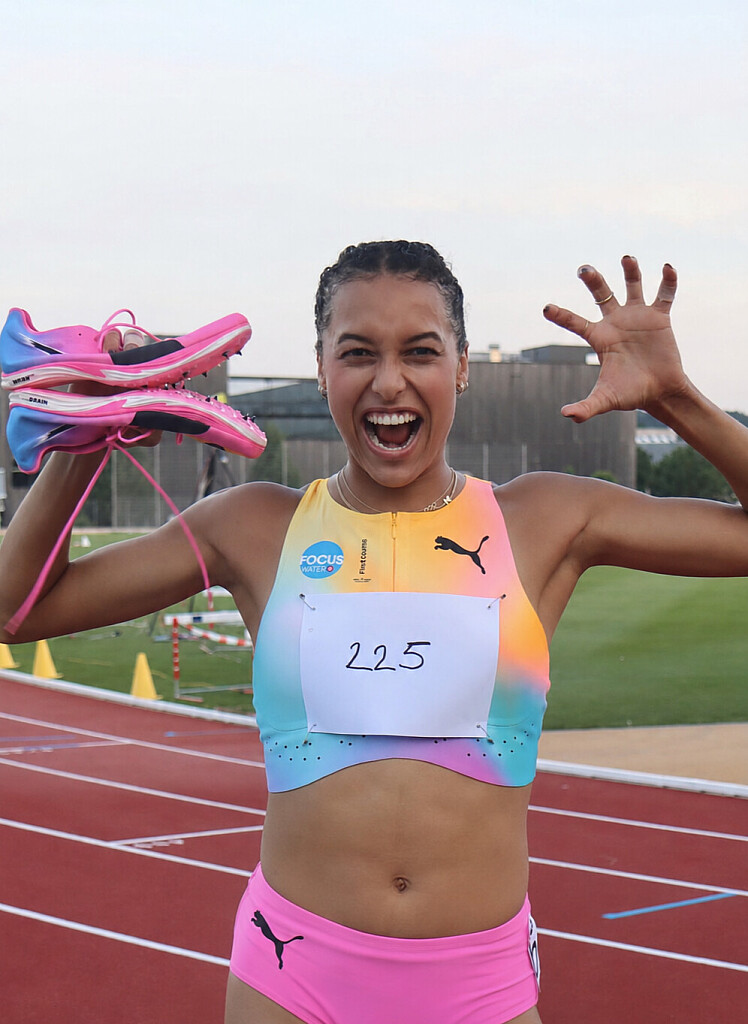
Audrey Werro Smashes European 600m Best as Remarkable Season Reaches New Heights
Swiss middle-distance sensation Audrey Werro continues to redefine the limits of European athletics after producing a breathtaking performance in front of her home supporters, setting a new European best of 1:22.85 in the women's 600m.
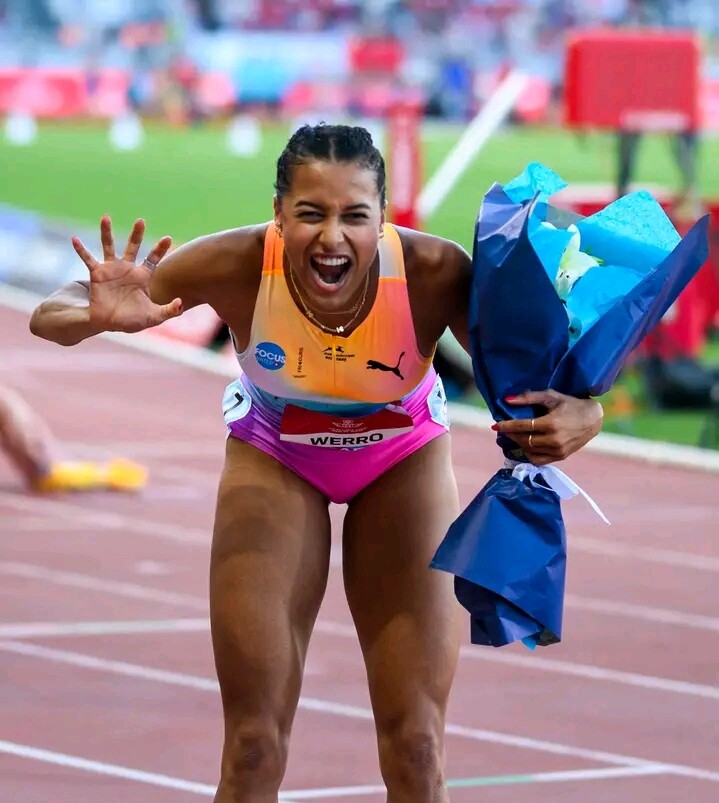
Competing on home soil in Switzerland, Werro delivered a run of exceptional quality and composure, eclipsing the previous European best of 1:23.41 that had been established by Keely Hodgkinson in 2023. The performance further underlined the extraordinary form that has transformed the Swiss star into one of the most exciting athletes in world athletics this season.
The new mark is another milestone in what is rapidly becoming a breakthrough year for the 22-year-old. Werro has consistently demonstrated her ability to blend speed, strength and tactical intelligence, qualities that have elevated her from a promising talent to a genuine global contender.
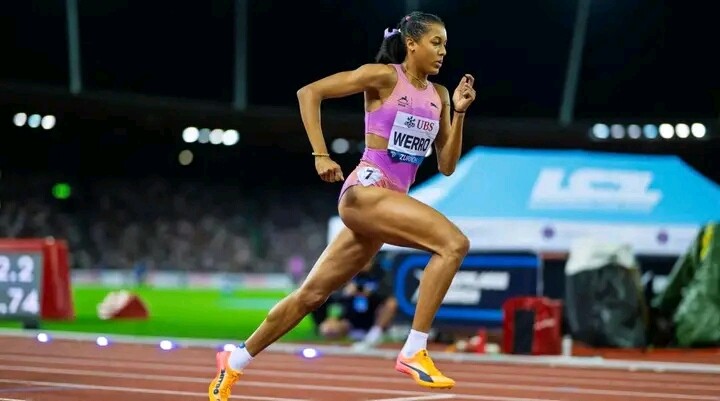
Her latest achievement arrives just days after she stunned the athletics world in Stockholm, where she defeated Hodgkinson in a sensational women's 800m race. On that occasion, Werro crossed the line in a remarkable 1:53.98, a performance that elevated her to third on the all-time women's 800m list and firmly established her among the greatest one-lap-and-a-half runners in history.
The 600m is often regarded as a demanding test of both sprint speed and middle-distance endurance, making Werro's record-breaking effort all the more impressive. From the opening stages, she controlled the pace with confidence before powering through the final stretch to stop the clock at a historic time that rewrote the European record books.
For Swiss athletics, the moment was especially significant. Roared on by a passionate home crowd, Werro delivered a performance that showcased not only her immense talent but also the growing strength of Switzerland on the international athletics stage.
With every race, Werro appears to be pushing the boundaries of what is possible. Her victory in Stockholm and now a European-best performance over 600m suggest that the Swiss star is entering the prime of her career, carrying momentum that could make her one of the defining figures of the current athletics era.
As the season gathers pace, the athletics world will be watching closely. If recent performances are any indication, Audrey Werro's remarkable rise is far from over—and more records may soon be within reach.
by Erick Cheruiyot for My Best Runs.
Login to leave a comment
Under Two Hours, Yet Not Enough: Yomif Kejelcha's Remarkable Run in London
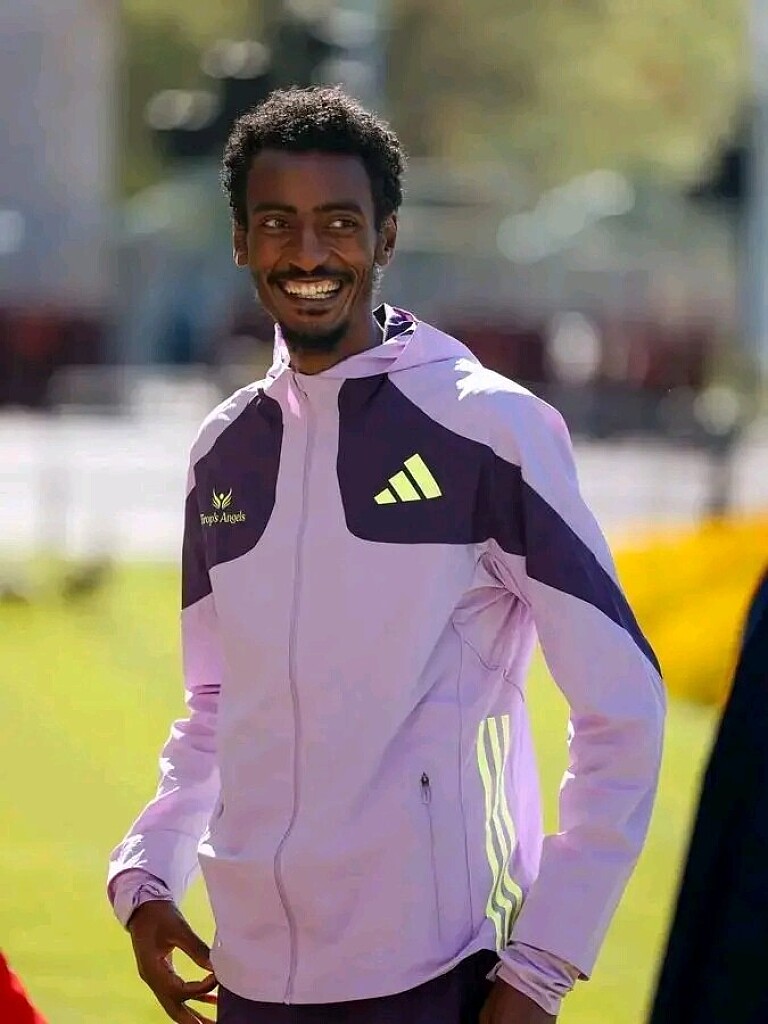
In most marathons, a performance like Yomif Kejelcha's would have rewritten history.
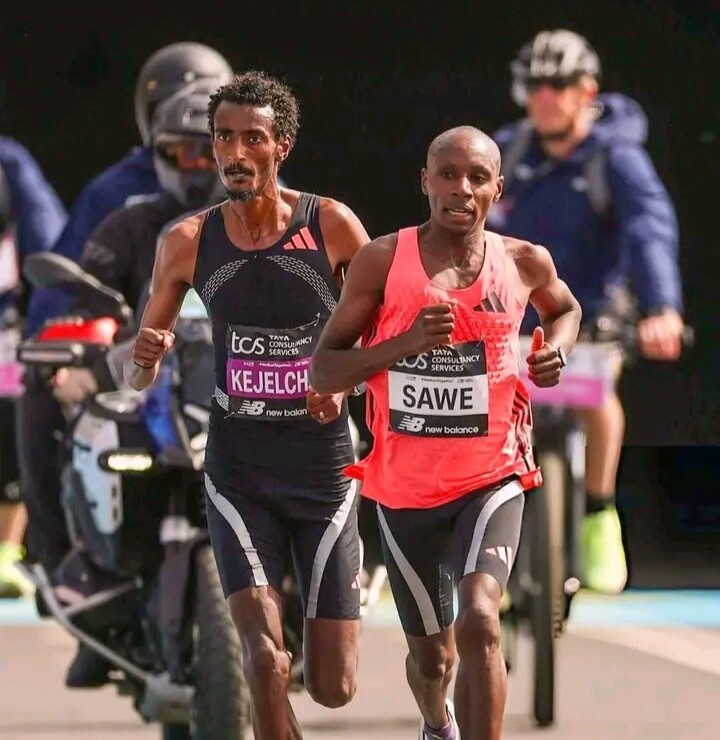
At the 2026 London Marathon, the Ethiopian distance star produced one of the finest races ever seen over 42.195 kilometres, stopping the clock at an astonishing 1:59:41. The time placed him among an extremely exclusive group of athletes to complete the marathon distance in under two hours in race conditions and would have shattered the world record on almost any other day.
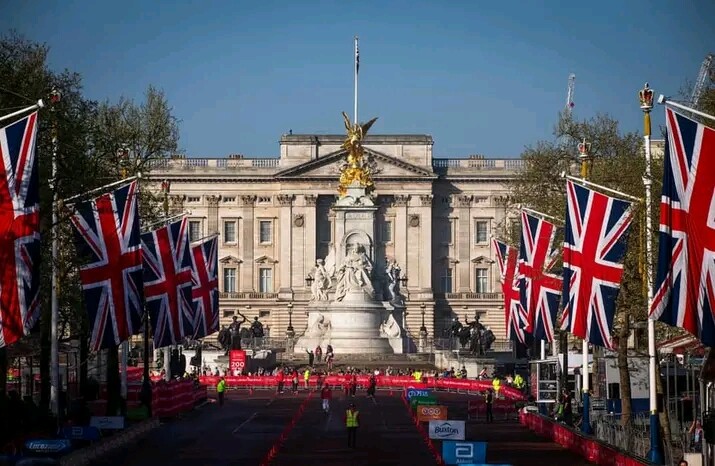
Yet Kejelcha crossed the finish line in second place.
Ahead of him was Kenya's rising marathon sensation, Sebastian Sawe, who delivered a performance for the ages, storming to victory in 1:59:30 and finishing eleven seconds clear of the Ethiopian. It was a race that elevated the standard of marathon running to unprecedented heights and left spectators struggling to comprehend what they had witnessed.
What makes Kejelcha's achievement even more remarkable is that he never expected such a result.
After the race, the Ethiopian admitted that his pre-race expectations were far more modest. He believed a finishing time somewhere between 2:02 and 2:03 was realistic. As the race entered its closing stages, fatigue began to take hold. Around the 25-mile mark, his legs felt increasingly heavy, and he was convinced his opportunity for something special had slipped away.
Then came the final stretch.
A glance at his watch revealed numbers that seemed almost impossible. Despite the pain and exhaustion, he was running at a pace few athletes in history had ever sustained. The finish line confirmed it: a sub-two-hour marathon and one of the fastest performances the sport has ever recorded.
Yet there was no world record celebration. No winner's trophy.
Only second place.
And perhaps that is what makes this story so compelling.
Elite sport often teaches us to measure success through victories, medals and records. But Kejelcha's run serves as a reminder that greatness cannot always be defined by finishing first. Sometimes an athlete produces the performance of a lifetime and still encounters someone capable of something even more extraordinary.
On paper, the result will forever show Kejelcha as the runner-up. History, however, is unlikely to remember it that way. His courageous front-running effort, his refusal to surrender when fatigue struck, and his astonishing finishing time ensured that his race became one of the defining moments of modern marathon running.
There are defeats that fade quickly from memory. Then there are performances so exceptional that they transcend the final standings.
Yomif Kejelcha did not leave London with a title or a world record. He left with something arguably more enduring: a place in one of the greatest marathon battles ever contested.
And when future generations look back on that unforgettable morning in London, they may ask a simple question:
If an athlete runs one of the fastest marathons in history, exceeds every expectation, and inspires millions along the way, can it really be called a defeat?
by Erick Cheruiyot for My Best Runs.
Login to leave a comment
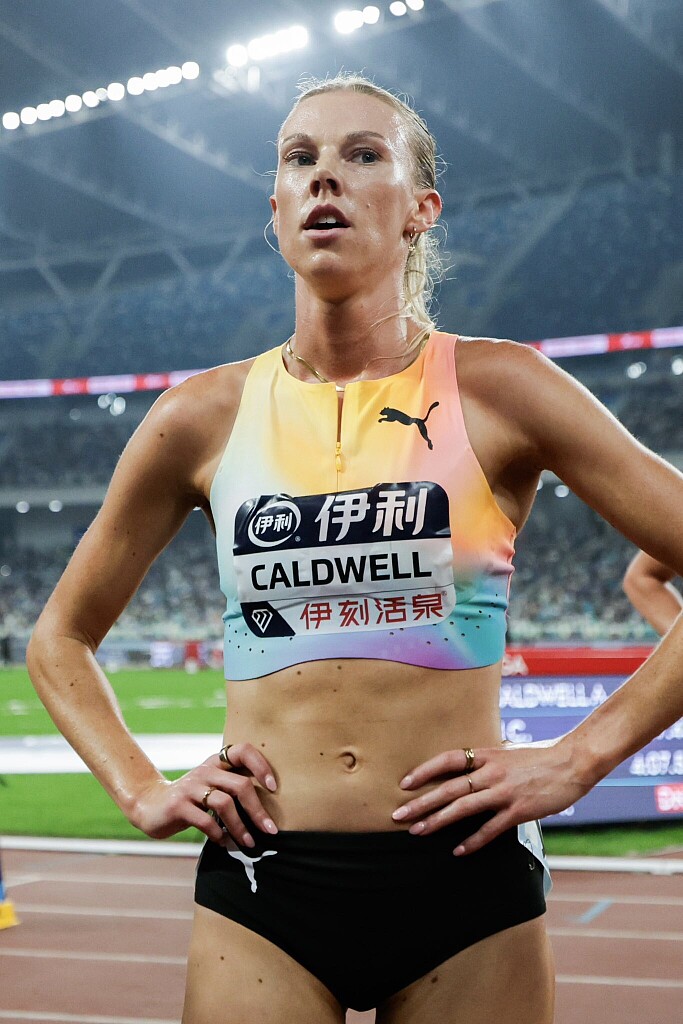
Abbey Caldwell Storms to Maiden Diamond League Triumph in Xiamen
Australian middle-distance star Abbey Caldwell delivered the performance of her career on Saturday night, powering to a sensational victory in the women’s 1500m at the prestigious Diamond League meeting in Xiamen.
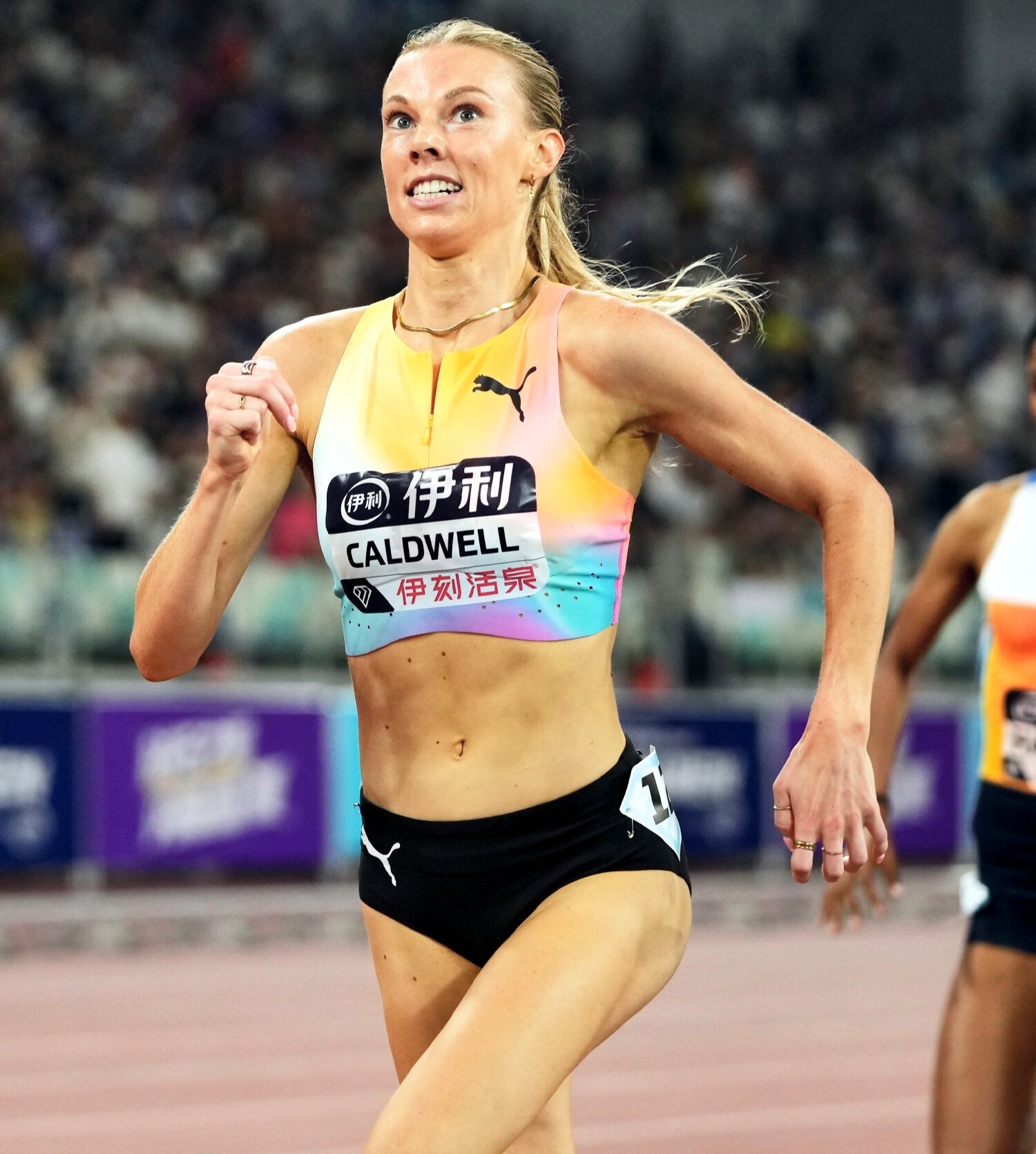
Just weeks after claiming an impressive bronze medal in Shanghai, Caldwell returned to the Chinese circuit with greater confidence, sharper tactics, and an unshakable belief that her breakthrough moment had finally arrived. In a race packed with world-class talent, the Australian produced a fearless and composed display to secure her first-ever Diamond League win in a brilliant time of 3:57.26 — a milestone that instantly elevates her status among the sport’s rising stars.
From the opening laps, the pace was relentless, with the field tightly packed as athletes battled for position. Caldwell remained patient throughout the early stages, carefully conserving energy while keeping herself within striking distance of the leaders. As the bell rang for the final lap, the intensity inside the stadium exploded.
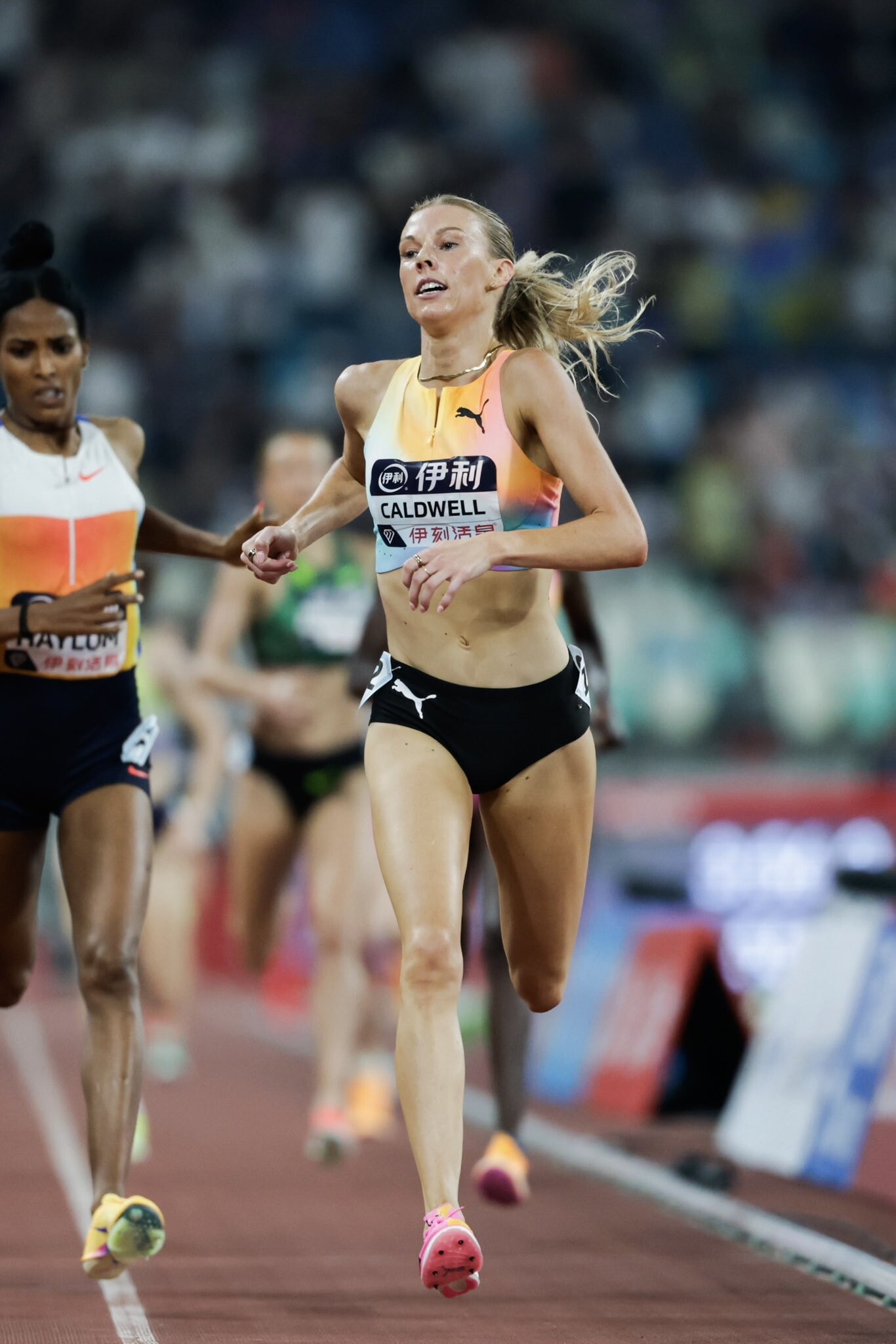
What followed was a defining moment in the young Australian’s career.
Launching a perfectly timed surge down the final stretch, Caldwell unleashed a devastating finishing kick that left her rivals scrambling for answers. With every stride, she looked stronger, more determined, and completely in control as she clocked 3:57.26 to cross the finish line and claim a memorable victory against one of the deepest fields of the season.
The emotional scenes after the race told the full story.
In her post-race interview, Caldwell spoke with visible joy and disbelief, admitting that capturing her first Diamond League title felt surreal after years of hard work, setbacks, and perseverance. Her reaction reflected the magnitude of the achievement — not simply another race win, but the arrival of an athlete ready to compete consistently on the global stage.
The triumph in Xiamen marks a major turning point for Caldwell, whose rapid rise continues to gather momentum in 2026. From standing on the podium in Shanghai to climbing to the very top in Xiamen, the Australian has announced herself as one of the most exciting names in women’s middle-distance running.
by Erick Cheruiyot for My Best Runs.
Login to leave a comment
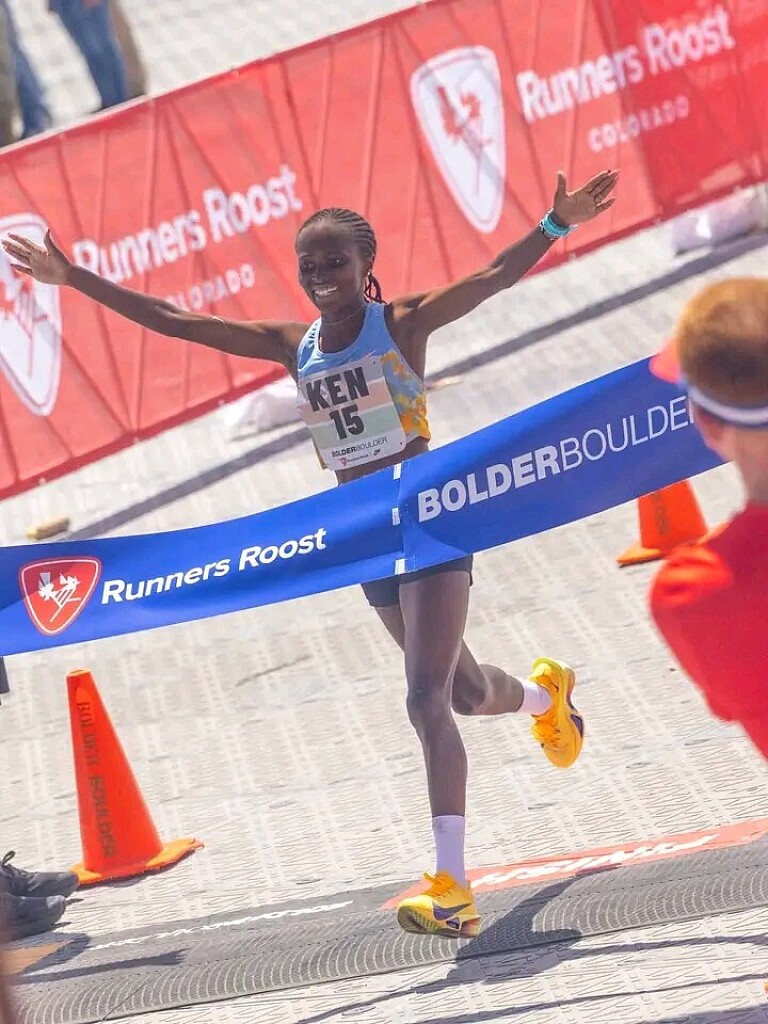
World-Class Battle at Altitude: Mwangi Shines in Epic BOLDERBoulder Women’s Race
The 2026 edition of the legendary BOLDERBoulder 10K once again delivered world-class drama as elite athletes battled not only each other, but also the punishing altitude of Boulder, Colorado, during the iconic Memorial Day spectacle.

Under crisp Colorado skies and in front of thousands of roaring spectators, Kenya’s Rebecca Mwangi produced a stunning performance to seize victory in the Women’s International Pro 10K, clocking a brilliant 32:33 in one of the fastest and most fiercely contested races of the day.
Mwangi was pushed all the way to the finish by fellow Kenyan Jesca Chelangat, who remained within striking distance throughout the race before crossing the line just three seconds later in 32:36. The electrifying duel between the two compatriots turned the final stretch into a breathtaking sprint finish, showcasing Kenya’s continued dominance on the international road racing scene.

The American crowd also had reason to celebrate as Rachael Rudel delivered a courageous run to secure third place for USA Red in 32:46. Rudel stayed composed against an elite international field and held off a late challenge from Kenya’s Evaline Chirchir, who finished fourth in 32:48.
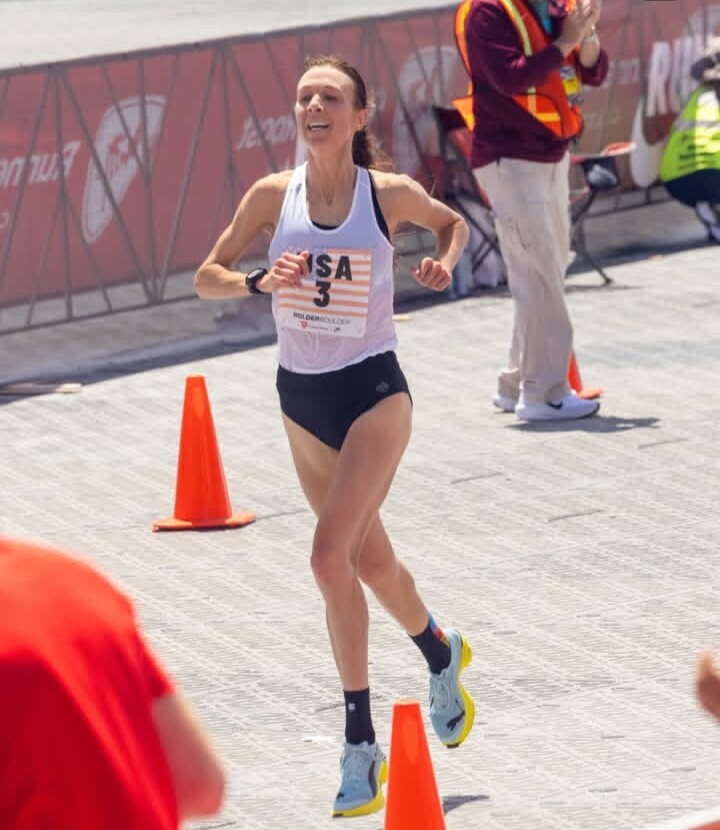
Ethiopia also made a strong statement with Axumawit Embaye, Lemlem Nibret, and Buze Diriba all placing inside the top seven in a deep and highly competitive field.
Top 10 Finishers — Women’s International Pro 10K
1. Rebecca Mwangi (KEN) — 32:33
2. Jesca Chelangat (KEN) — 32:36
3. Rachael Rudel (USA) — 32:46
4. Evaline Chirchir (KEN) — 32:48
5. Axumawit Embaye (ETH) — 33:08
6. Lemlem Nibret (ETH) — 33:23
7. Buze Diriba (ETH) — 33:27
8. Adela Honorato (MEX) — 33:45
9. Kassie Parker (USA) — 33:49
10. Biruktayit Degefa (USA) — 34:16
One of the standout performances of the day came from Mexico’s rising talent Adela Honorato. The young star impressed with a fearless run to finish eighth overall in 33:45, underlining the growing strength of Mexican women’s distance running on the world stage. Mexico added further depth through strong performances from Natalí Noemí Mendoza and Anahí Álvarez, both of whom finished inside the top 15.
From the opening miles to the dramatic closing sprint, the women’s race embodied everything that makes the BOLDERBoulder special — speed, resilience, international rivalry, and unforgettable atmosphere. At altitude, where every breath matters, the athletes still produced remarkable times and an unforgettable showcase of elite road racing excellence.
by Erick Cheruiyot for My Best Runs.
Login to leave a comment

BOLDER BOULDER
In 1979 we dreamt of attracting a few hundred of our friends to race though the streets of Boulder, Colorado to celebrate Memorial Day with our families. Fast forward almost 40 years and the Bolder BOULDER has grown to become one of the largest and most highly acclaimed 10K’s in the world. Almost 1.2 million runners, joggers, walkers and spectators...
more...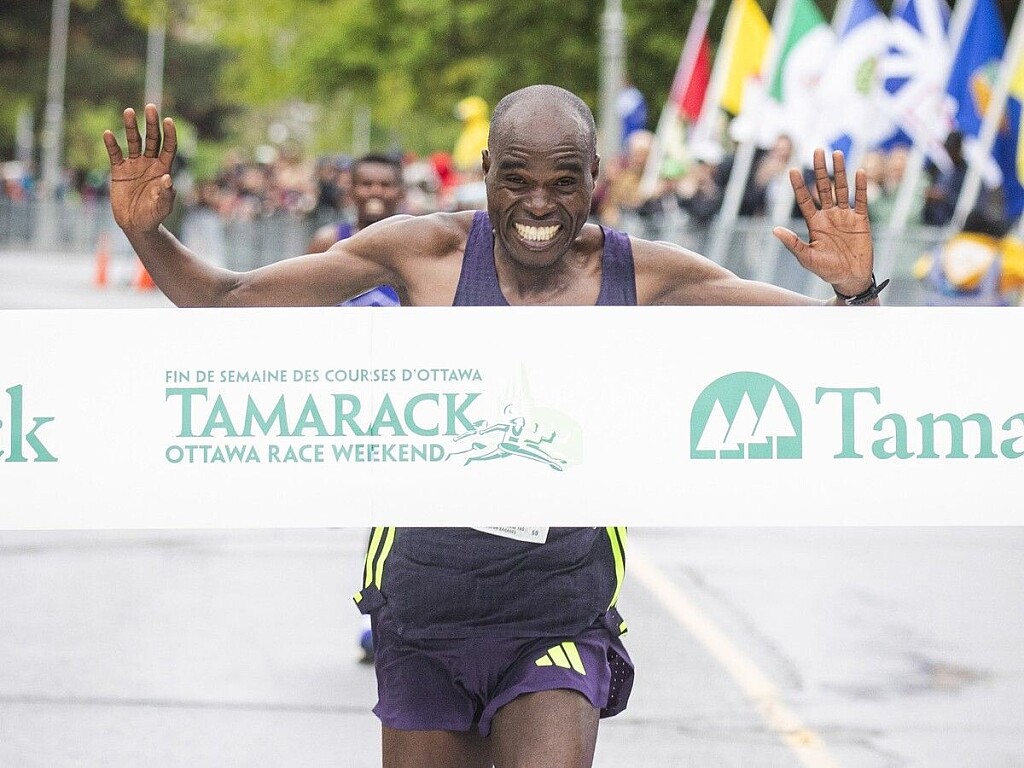
Elvis Cheboi Powers to Ottawa Marathon Glory in Thrilling Finish
Kenya’s Elvis Cheboi delivered a composed and courageous performance to capture the Ottawa International Marathon title, storming to victory in 2:09:08 and handing Kenya its first marathon win of the weekend in emphatic fashion.
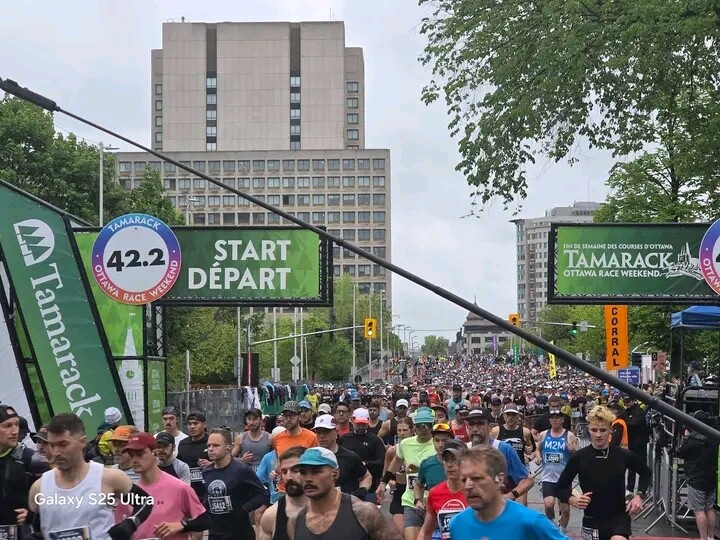
On the rain-soaked streets of Canada’s capital, Cheboi showed remarkable patience, strength and tactical intelligence as the race unfolded into a dramatic late battle. With Ethiopia’s Gizealew Ayana pushing hard behind him, the Kenyan dug deep over the closing kilometres and held firm to cross the line just two seconds ahead of his rival in one of the closest finishes of the day.
The victory was far more than just another marathon win. It was a statement performance from Cheboi, who mastered difficult conditions and resisted relentless pressure during the decisive stages of the race. His ability to maintain rhythm and composure while the chasing pack closed in highlighted both his experience and competitive maturity.
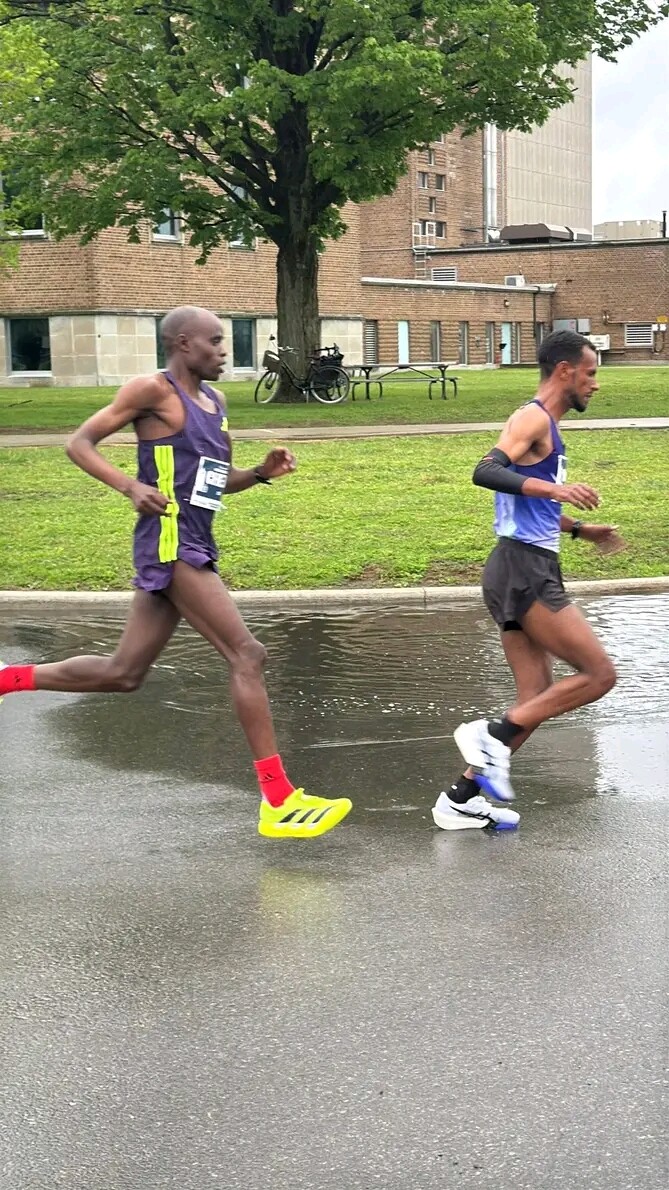
Ayana finished second in 2:09:10 after an aggressive final surge that nearly overturned the result, while Canada’s Rory Linkletter thrilled the home crowd with a strong third-place finish in 2:09:25. Ethiopia’s Afewerk Mesfin followed in fourth with 2:09:41, ahead of compatriot Gebretsadik Abraha in 2:09:47.
Top 10 Finishers
1. Elvis Cheboi — Kenya — 2:09:08
2. Gizealew Ayana — Ethiopia — 2:09:10
3. Rory Linkletter — Canada — 2:09:25
4. Afewerk Mesfin — Ethiopia — 2:09:41
5. Gebretsadik Abraha — Ethiopia — 2:09:47
6. Mulugeta Debasu Mereh — Ethiopia — 2:10:05
7. Shura Kitata — Ethiopia — 2:10:56
8. Luke Kibet Cheruiyot — Kenya — 2:12:25
9. Patrick Cullen — United States — 2:13:00
10. Blake Buysse — United States — 2:13:53
From the opening kilometres, the pace remained honest despite the damp weather, with a tightly packed lead group refusing to give an inch. As the race entered its final stretch, Cheboi gradually separated himself at the front before producing one final decisive push that ultimately secured the crown.
The triumph adds another memorable chapter to Kenya’s proud marathon tradition and gives the nation an early breakthrough on an important weekend of global road racing. For Cheboi himself, the Ottawa victory could prove to be a defining moment — a performance built on discipline, resilience and perfect execution when it mattered most.
In a marathon decided by seconds, Elvis Cheboi stood tallest when the pressure peaked.
by Erick Cheruiyot for My Best Runs.
Login to leave a comment

Ottawa Marathon
As one of two IAAF Gold Label marathon events in Canada, the race attracts Canada’s largest marathon field (7,000 participants) as well as a world-class contingent of elite athletes every year. Featuring the beautiful scenery of Canada’s capital, the top-notch organization of an IAAF event, the atmosphere of hundreds of thousands of spectators, and a fast course perfect both...
more...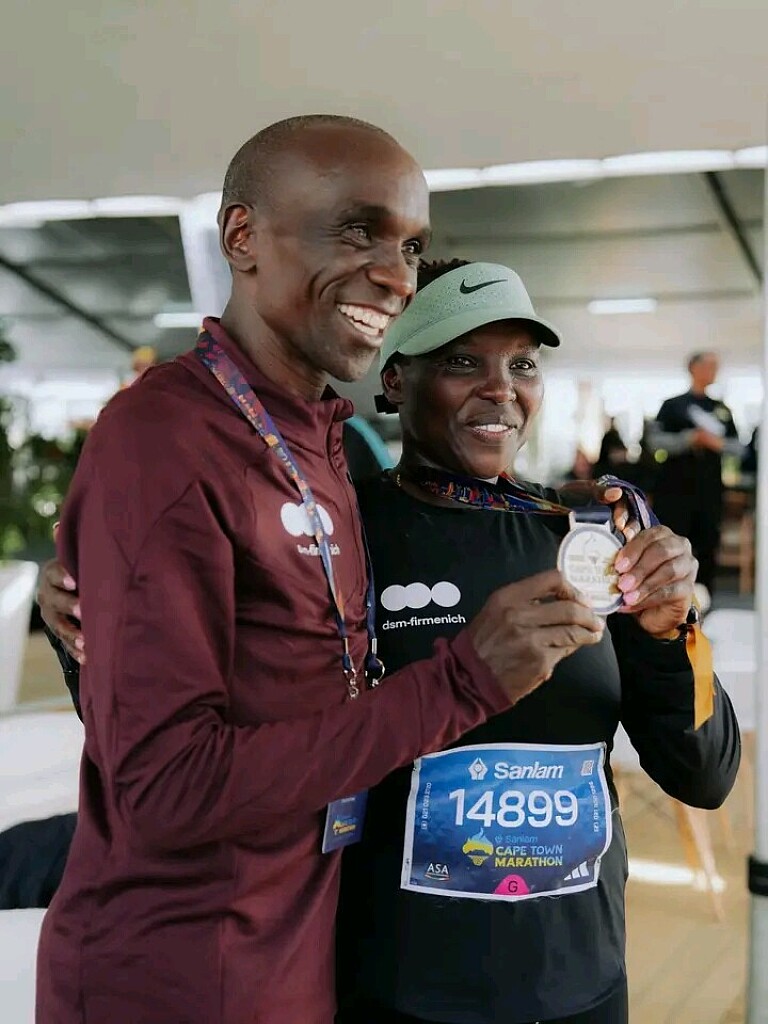
From Supporting a Legend to Running Her Own Race: Grace Sugut Conquers Cape Town Marathon
For more than two decades, the world has watched Eliud Kipchoge redefine the boundaries of endurance and greatness. At the 2026 Sanlam Cape Town Marathon, however, the spotlight belonged to someone whose strength has long existed away from the cameras — his wife, Grace Sugut.
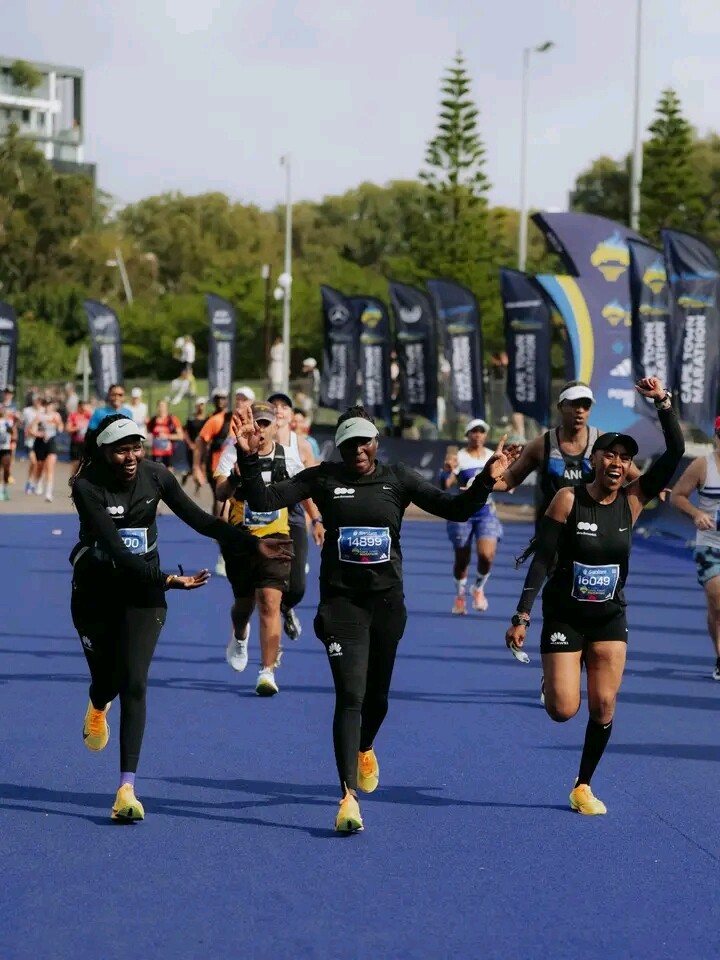
In one of the most emotional stories of the marathon weekend, Grace completed her very first 42.2-kilometre race in 4:29:59, transforming a personal milestone into a moment that resonated far beyond the finish line in Cape Town.
Her marathon journey unfolded exactly the way most first marathons do — honest, demanding, unpredictable, and deeply human. She opened with calm discipline, reaching 5K in 28:30 while maintaining a controlled rhythm. By halfway, she was still moving strongly through the streets of the Mother City in 2:02:47, showing patience and composure in the early stages of the race.
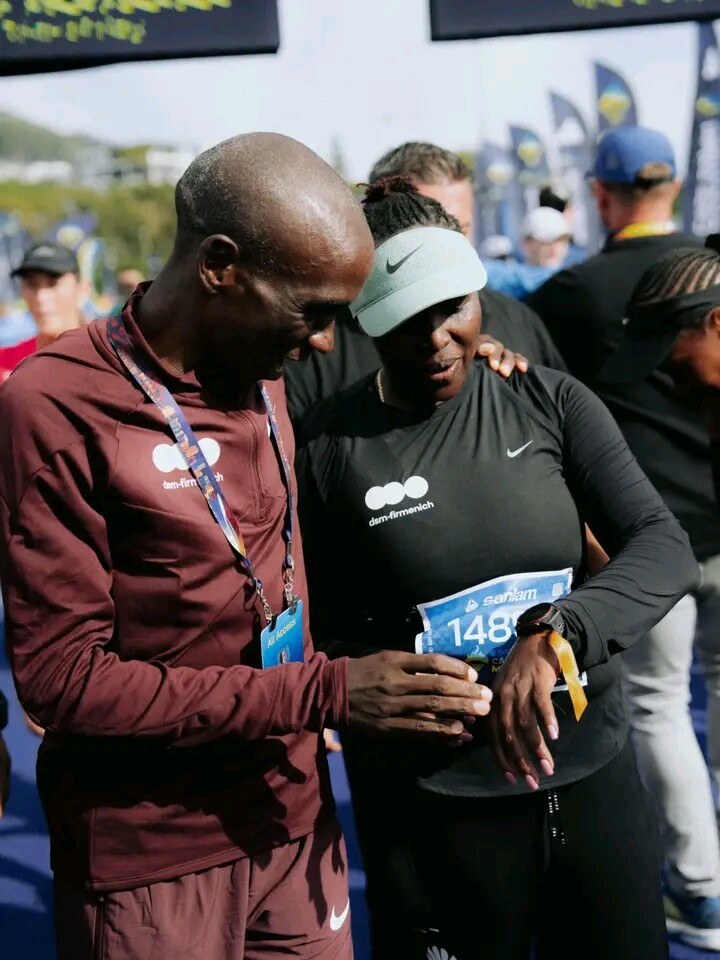
Then the marathon began asking harder questions.
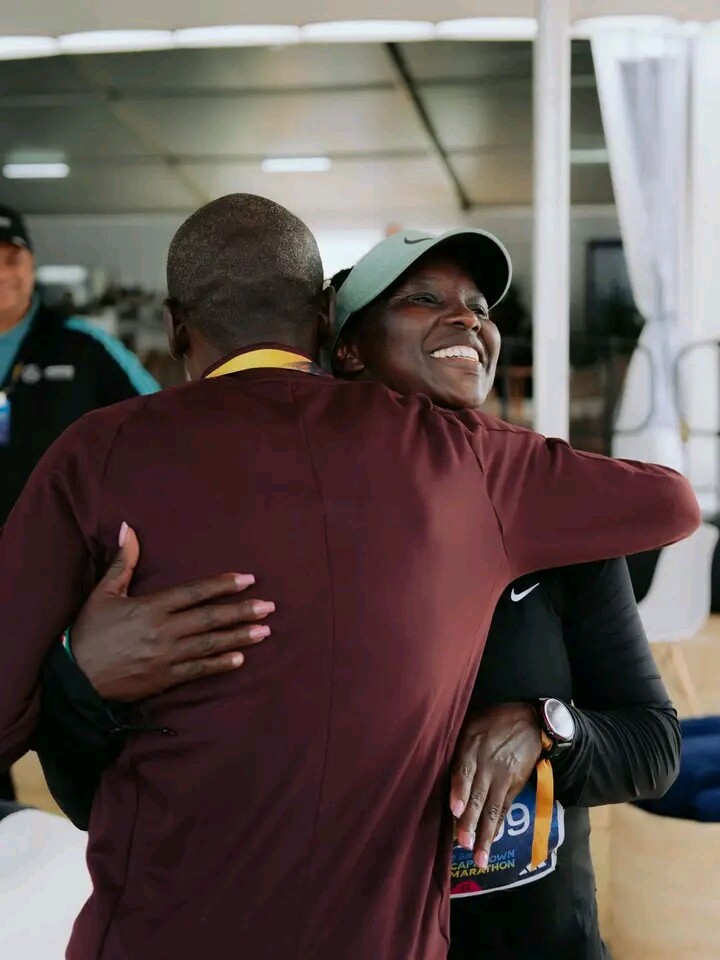
As the kilometres accumulated, the pace gradually slowed — the inevitable reality familiar to nearly every debut marathoner. By 30K, fatigue had started to take hold, and the final stretch became less about time and more about determination. Yet Grace kept pushing forward, kilometre after kilometre, refusing to surrender to the pain that defines the final chapter of every marathon.
And that perseverance carried special meaning.
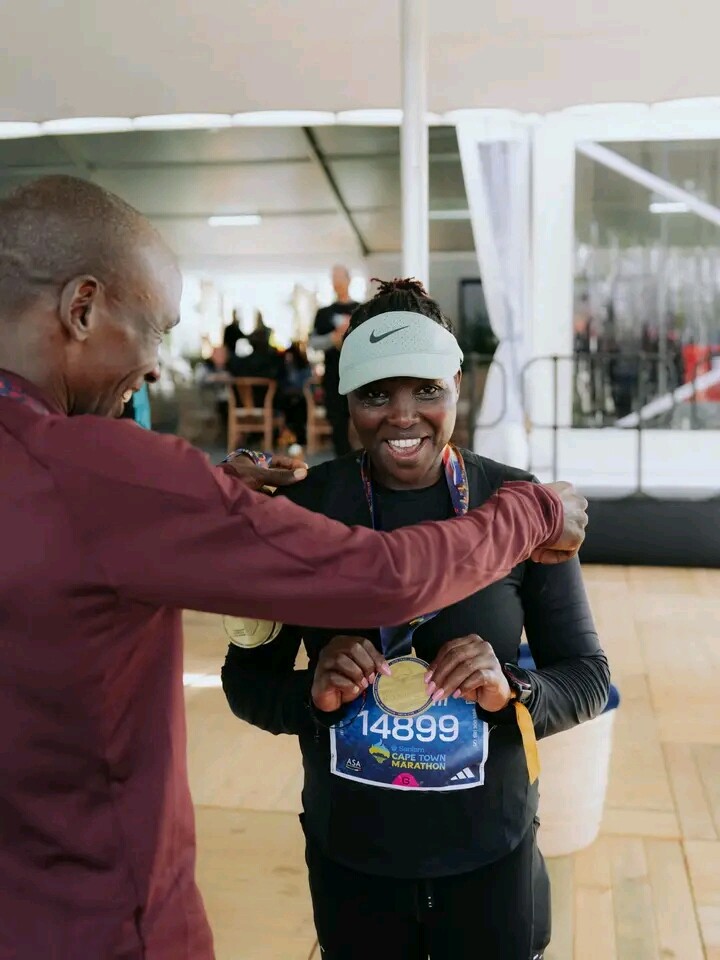
Before the race, Eliud Kipchoge had spoken publicly about his wife’s challenge, encouraging her to embrace the suffering, trust the process, and simply finish the race. After she crossed the line, his words became even more powerful.
“I have run my first marathon 13 years ago. It has brought me to where I am today, but I could not do this without the support of many including my family,” Kipchoge shared. “My heart is filled with pride, for my wife Grace completing her first marathon in Cape Town.”
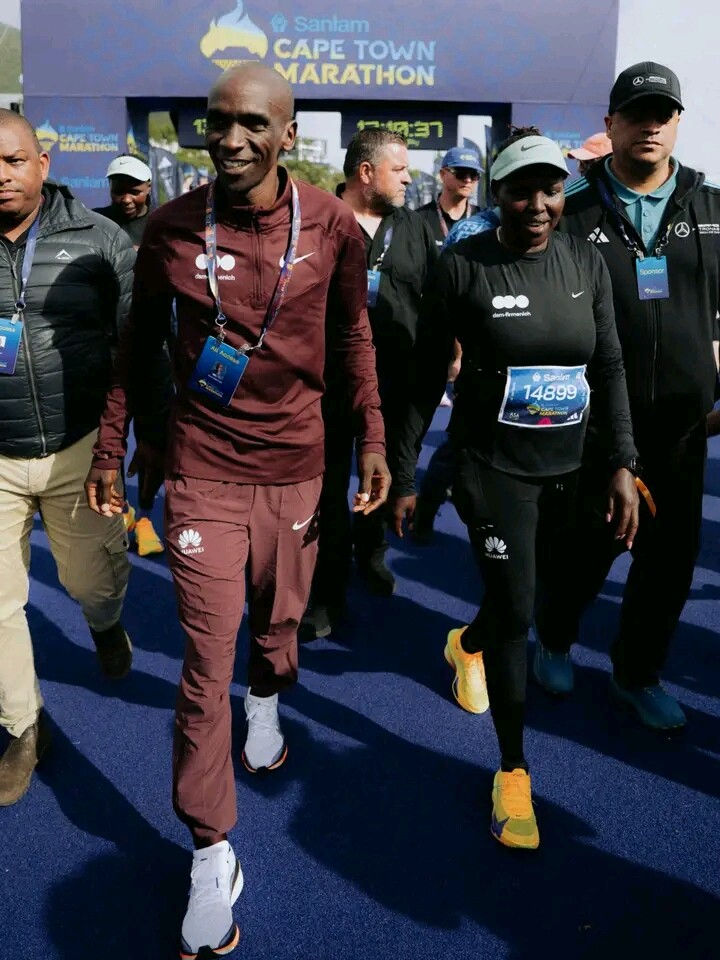
The message revealed a side of the marathon icon the world rarely sees — not the record-breaker or Olympic champion, but the grateful husband recognising the woman who has stood beside him throughout one of the greatest careers in sporting history.
While Eliud built a global legacy on the roads of Berlin, London, Tokyo, and Vienna, Grace quietly anchored the family behind the scenes in Eldoret, raising their children and managing family responsibilities far from international attention. For years, she supported marathon greatness from the sidelines. In Cape Town, she stepped into the arena herself.
That alone made her finish extraordinary.
Grace’s 4:29:59 will not enter record books, but its significance reaches somewhere deeper. It reflects the experience shared by countless runners around the world — the excitement of the start line, the physical battle through the closing kilometres, and the emotional reward that comes only after refusing to quit.
The final 12 kilometres tested her in every possible way. She answered every challenge with courage.
When Grace Sugut crossed the finish line in Cape Town, the crowd did not witness another world record performance. Instead, they witnessed something equally memorable: the beginning of a new running journey built on resilience, humility, and the quiet strength that has always existed behind one of athletics’ greatest champions.
by Erick Cheruiyot for My Best Runs.
Login to leave a comment
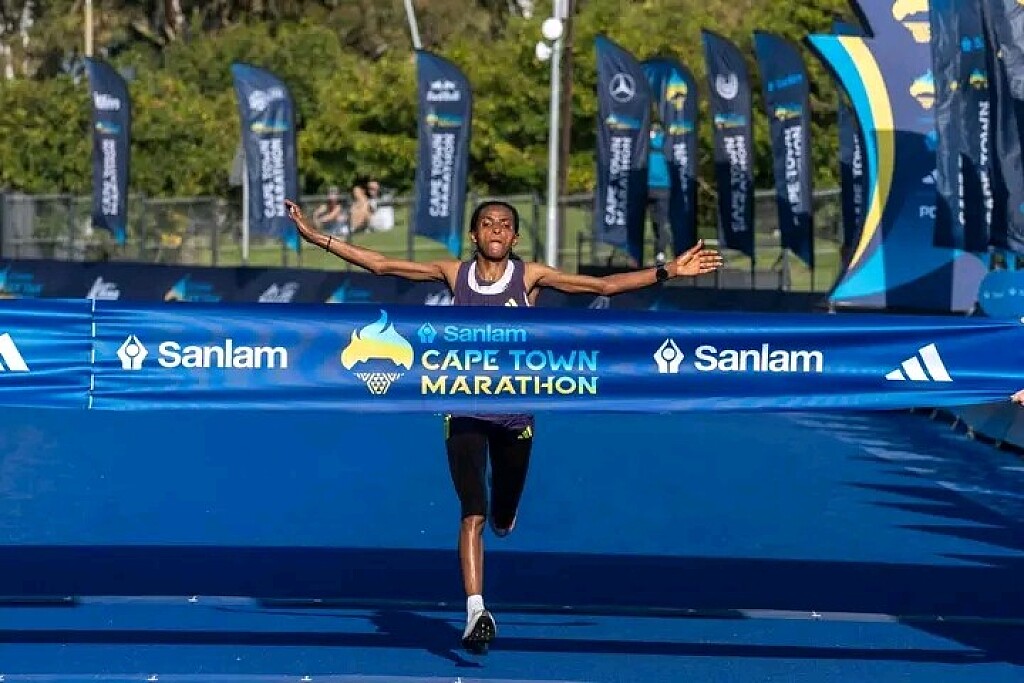
Dera Dida Yami Triumphs in Thrilling Sanlam Cape Town Marathon Showdown
Ethiopia’s Dera Dida Yami delivered a performance of grit, composure, and pure class to capture the women’s title at the Sanlam Cape Town Marathon, crossing the finish line in a brilliant 2:23:18 after a fiercely contested battle through the streets of the Mother City.
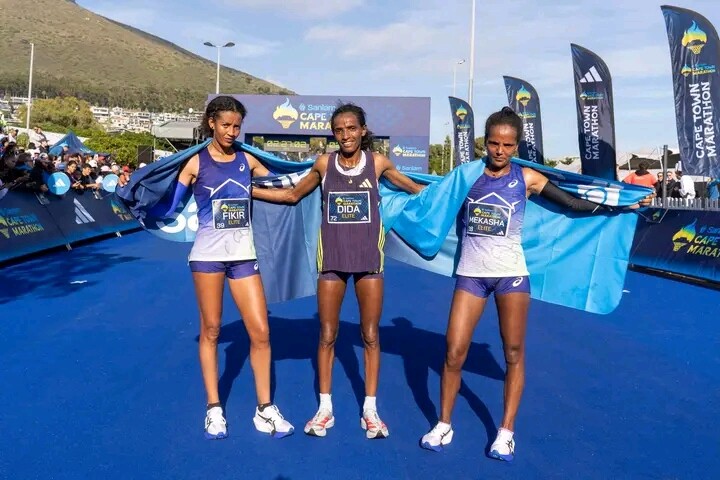
From the opening kilometers to the dramatic closing stages, Yami remained calm under immense pressure in one of the most competitive women’s races the event has witnessed. She narrowly missed the course record of 2:22:22 by just 56 seconds, but her commanding run still ranks among the finest performances ever produced on the Cape Town course.
The Ethiopian star was pushed all the way by compatriots Mestawut Fikir and Waganesh Amare, who finished second and third in 2:23:46 and 2:23:57 respectively. Only 39 seconds separated the entire podium, highlighting the breathtaking intensity of the race and the extraordinary depth of the women’s field.
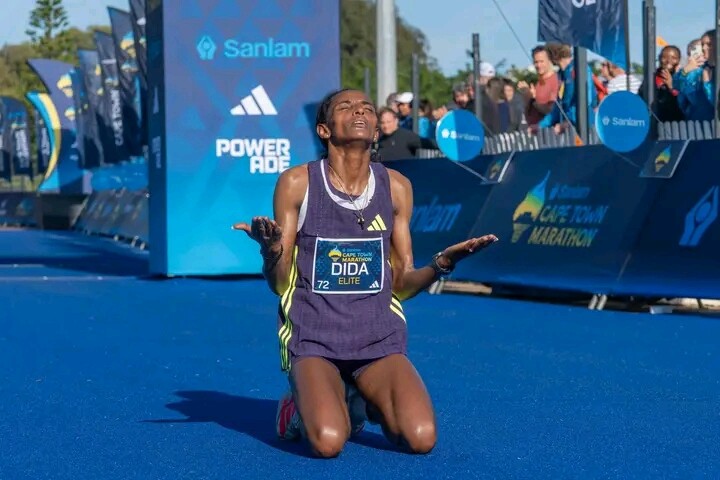
Yami gradually asserted herself as the race unfolded along Cape Town’s scenic route, maintaining a relentless rhythm while the chasing pack refused to let her escape. Every surge was answered, every kilometer contested, creating a dramatic contest that kept spectators captivated until the final stretch.
Kenya’s Leah Cheruto placed fourth in 2:24:31, while veteran marathon star Edna Kiplagat finished fifth in 2:25:44 in another strong showing from the Kenyan contingent.
Top 10 Women’s Finishers – Sanlam Cape Town Marathon
1. Dera Dida Yami (Ethiopia) – 2:23:18
2. Mestawut Fikir (Ethiopia) – 2:23:46
3. Waganesh Amare (Ethiopia) – 2:23:57
4. Leah Cheruto (Kenya) – 2:24:31
5. Edna Kiplagat (Kenya) – 2:25:44
6. Gojjam Enyew (Ethiopia) – 2:26:24
7. Mercy Jerop Kwambai (Kenya) – 2:30:36
8. Desi Jisa Mokonin (Bahrain) – 2:30:44
9. Cynthia Jerotich Limo (Kenya) – 2:32:00
10. Fortunate Chidzivo (Zimbabwe) – 2:41:09
Beyond the fast times and elite competition, the marathon once again demonstrated why Cape Town continues to strengthen its reputation as one of the world’s rising road racing destinations. With passionate crowds lining the route and athletes producing world-class performances, the event delivered another major statement in its journey toward becoming Africa’s first World Marathon Major.
The 2026 edition, held on 23–24 May, showcased marathon racing at its absolute finest — and at the heart of it all stood Dera Dida Yami, whose unforgettable victory combined courage, resilience, and championship quality on one of Africa’s grandest stages.
by Erick Cheruiyot for My Best Runs.
Login to leave a comment

Cape Town Marathon
The Sanlam Cape Town Marathon is a City Marathon held in Cape Town, South Africa, which is sponsored by Sanlam, the City of Cape Town and Vital Health Foods. The marathon is held on a fast and flat course, starting and finishing in Green Point, near the Cape Town Stadium. Prior to existing in its current format, the Cape Town...
more...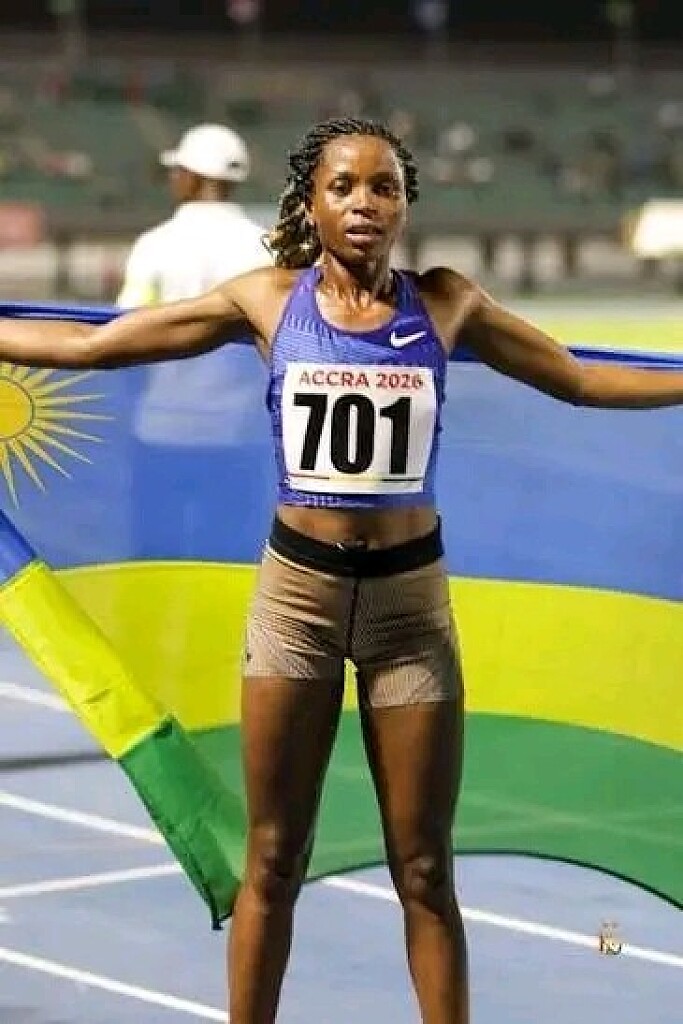
Golden Kick! Rwanda’s Emeline Imanizabayo Stuns Field in Thrilling 5000m Final
The opening day of the African Senior Athletics Championships in Accra delivered a breathtaking spectacle as Rwanda’s Emeline Imanizabayo produced a stunning late surge to seize gold in the women’s 5000 metres final.
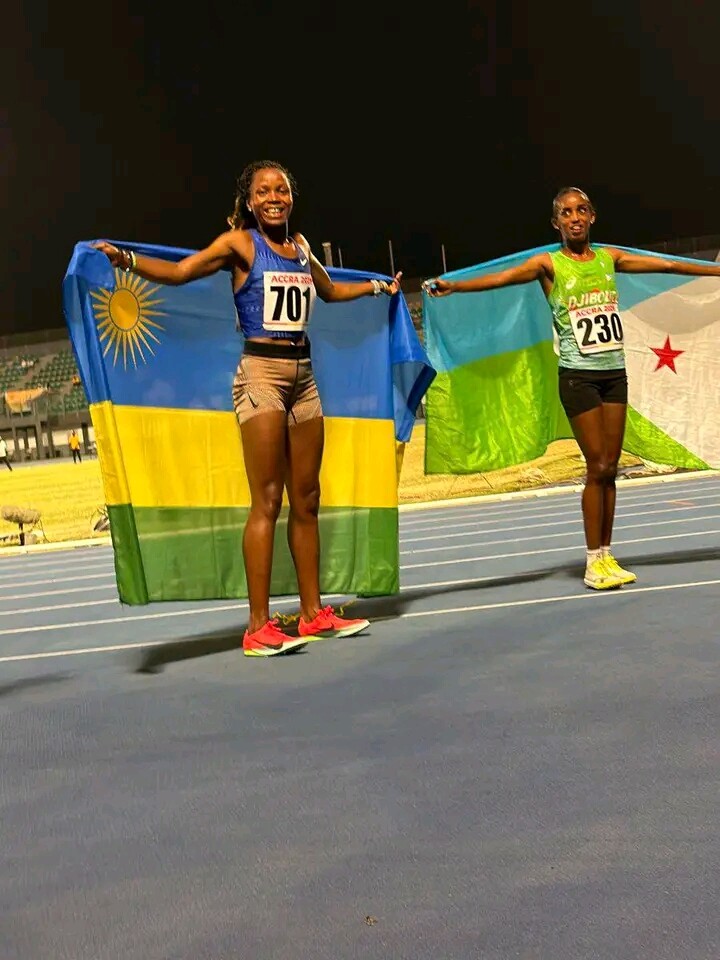
In one of the most dramatic races of the evening, Imanizabayo showcased remarkable composure and tactical brilliance, unleashing a powerful finishing kick in the closing metres to edge past her rivals and secure the continental crown in 23:25.92. The Rwandese star crossed the line with sheer determination written across her face, igniting celebrations for Team Rwanda on a memorable night in Ghana.
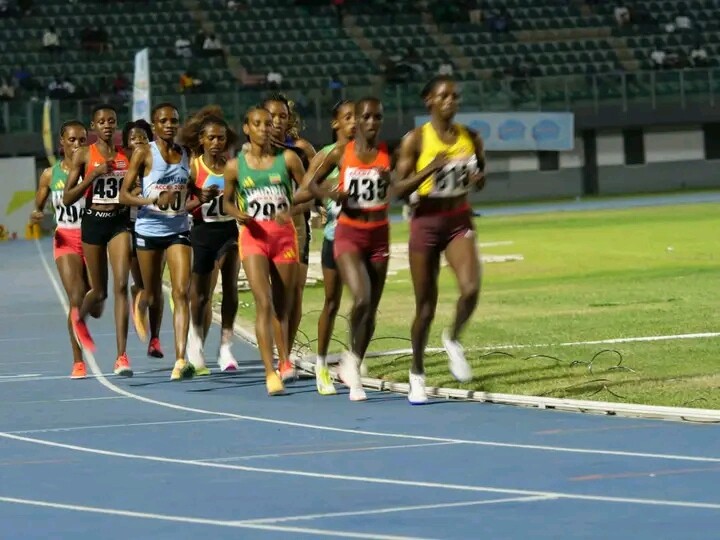
Djibouti’s Samia Hassan pushed the eventual champion all the way to the finish, delivering a courageous performance to claim silver in 23:26.34 after an intense shoulder-to-shoulder battle down the final stretch. Ethiopia’s Zeyen Ayelegn completed the podium with bronze in 23:30.55, ensuring East Africa once again dominated the distance event on the continental stage.
The race unfolded at a calculated pace before exploding into life during the decisive final lap. With the leading pack refusing to break apart, the championship was ultimately decided by grit, timing, and raw finishing power. Imanizabayo’s explosive final burst proved unstoppable as she surged ahead at the perfect moment to etch her name into African athletics history.
Her victory not only marked a proud achievement for Rwanda but also highlighted the growing strength and depth of African women’s distance running. The electric atmosphere inside the stadium reflected the magnitude of the contest, with fans witnessing a championship duel worthy of a continental final.
Day one in Accra has already set the tone for what promises to be a thrilling African Championships, filled with fierce rivalries, emotional victories, and unforgettable performances from the continent’s finest athletes.
by Erick Cheruiyot for My Best Runs.
Login to leave a comment
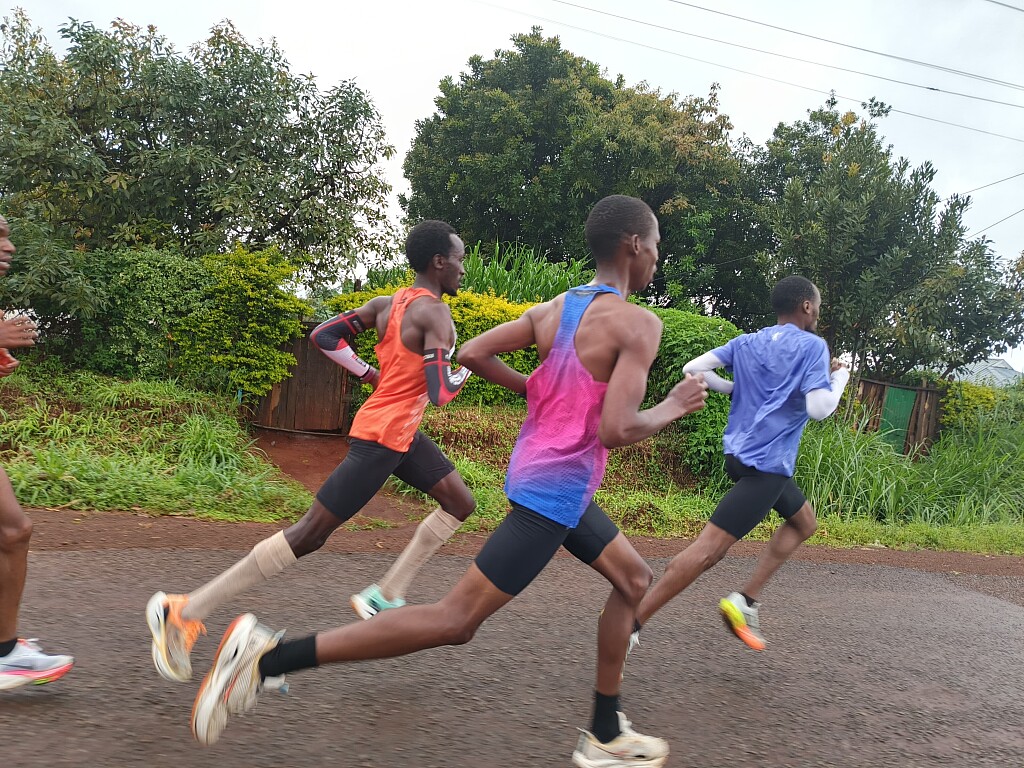
Chasing Personal Bests: Speed, Strategy and Rivalry Set the Stage for the 56th KATA Time Trial Series in Thika
Long before the crowds awaken and the world notices the results, athletes in Thika will already be battling exhaustion, pressure, and expectation. The rhythm of pounding footsteps will once again echo across the tarmac roads of Thika on Wednesday, May 13, 2026, as the 56th edition of the KATA Time Trial Series returns with renewed intensity, ambition, and anticipation. This is more than a race against time — It's a reflection of sacrifice, resilience, and the endless pursuit of personal growth in athletics dream.
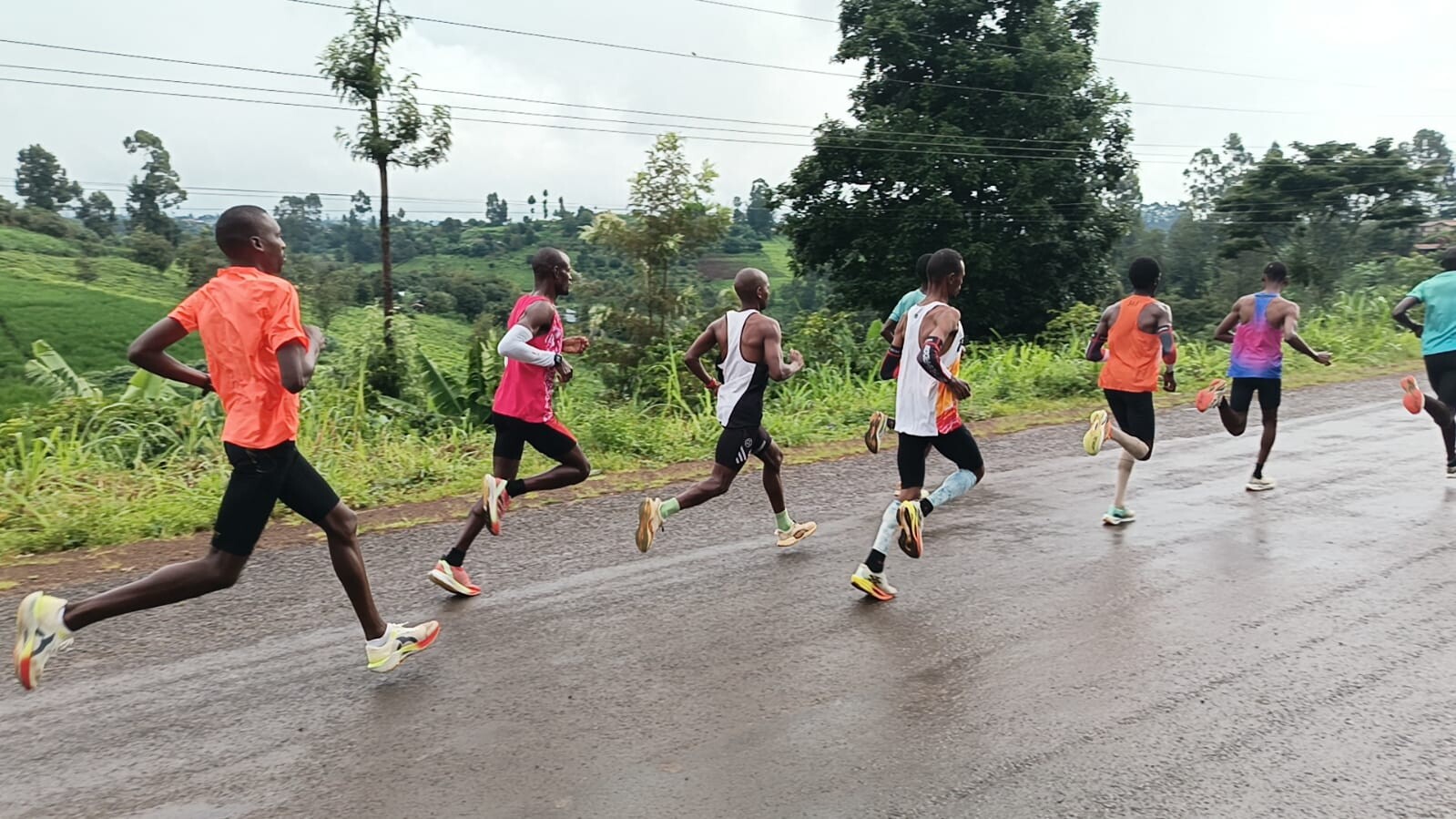
There may be no roaring stadium crowd, no flashing lights, and no elaborate finish-line celebrations, yet within Kenya’s athletics circles, few events command as much quiet respect as this one. For the athletes preparing to line up, the occasion is not about spectacle—it is about testing limits, measuring progress, and pursuing the relentless dream of improvement.
Held near the training base of the Kenyan Athletics Training Academy in Thika, the KATA Time Trial has steadily evolved into one of the most trusted performance platforms for developing and experienced athletes alike. Over the years, it has earned its reputation as a proving ground where months of sacrifice, demanding training sessions, and disciplined preparation are transformed into measurable reality. Every edition carries stories of breakthrough performances, painful lessons, and moments that redefine confidence.
Traditionally, the event has stood apart from conventional road races by stripping competition down to its purest form. Athletes do not simply race each other—they race the clock, their previous performances, and the invisible standards they set for themselves during training. Yet this 56th edition is expected to introduce a more tactical dimension. While fast times remain the primary objective, strategy and intelligent pack running are likely to shape the morning in significant ways.
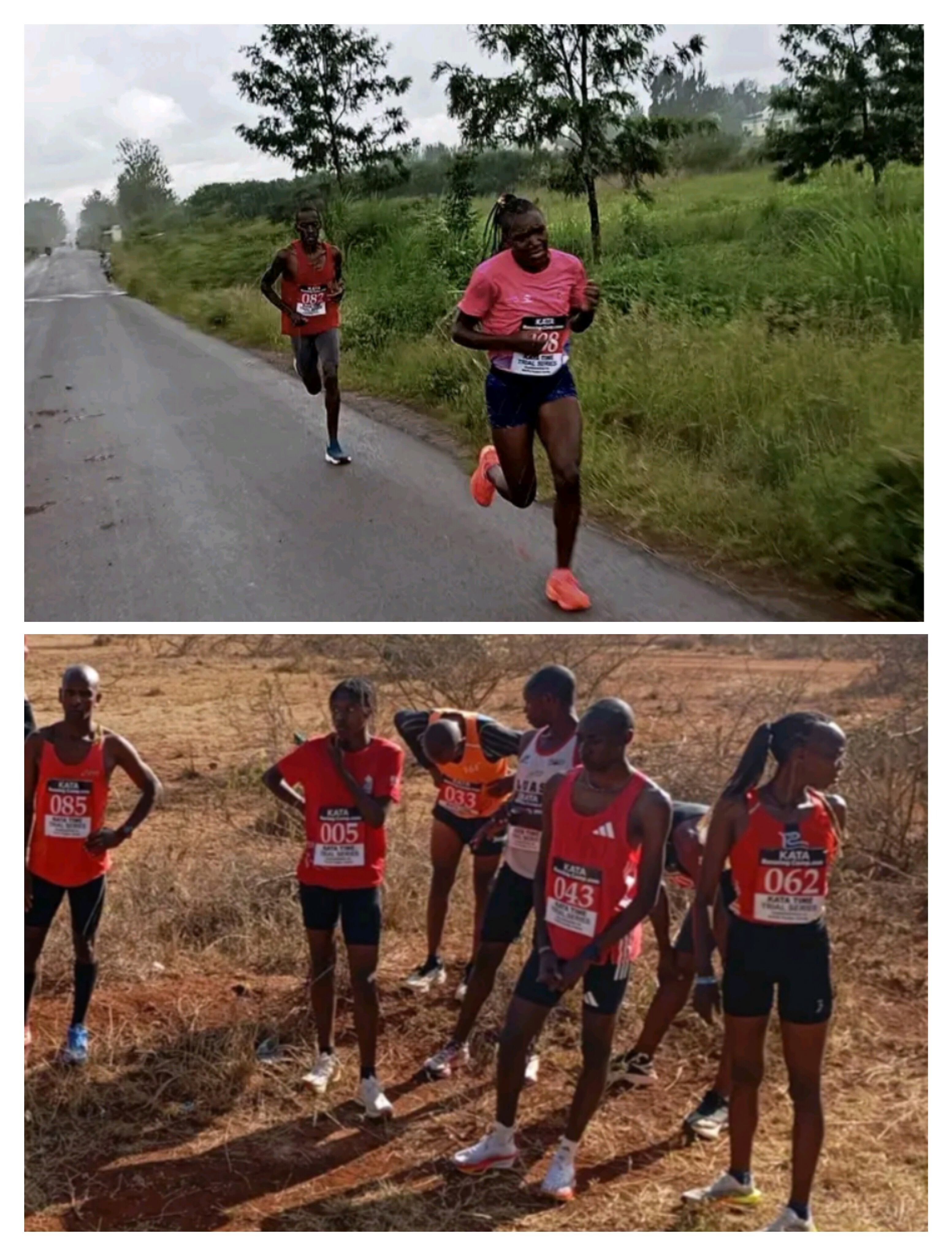
Athletes are expected to work together through the opening stages, carefully maintaining rhythm and pacing in pursuit of stronger finishing times and valuable personal bests. In such races, patience becomes just as important as raw speed. A poorly judged opening kilometre can destroy an otherwise promising performance, while disciplined execution often rewards those who conserve energy for the decisive closing stretch. It is this delicate balance between aggression and control that makes the KATA Time Trial so compelling.
The programme will once again feature the classic 5km and 10km distances, each demanding a very different kind of athlete. The 5km rewards sharpness, rhythm, courage, and the ability to sustain discomfort at relentless speed. The 10km, meanwhile, is a deeper examination of endurance, mental strength, and tactical discipline. On the unforgiving roads of Thika, even the slightest pacing mistake can separate a brilliant run from a disappointing result.
Perhaps the most powerful storyline surrounding this edition is the universal pursuit of personal bests. For many athletes, the stopwatch represents far more than numbers on a screen. Every second gained reflects countless early mornings, exhausting intervals, sacrifices away from competition, and unwavering belief in the training process. The KATA Time Trial has always provided athletes with an honest answer to one important question: has the work truly paid off?
Conditions in Thika are expected to favour runners who combine patience with intelligence. Those who remain composed in the early kilometres often find the strength to finish aggressively, while athletes who force the pace too early may struggle before the final stretch. It is an environment where discipline is rewarded and resilience is exposed in real time.
Though the event may unfold without major fanfare, its significance stretches far beyond a single morning of racing. On this modest stretch of road, athletes continue refining their craft, sharpening their instincts, and chasing the standards that define excellence in Kenyan athletics. When the watches finally stop at the end of the 56th edition, the results will reveal far more than finishing times. They will tell the story of ambition, rivalry, sacrifice, and the endless pursuit of becoming better with every stride.
by Erick Cheruiyot for My Best Runs.
Login to leave a comment

KATA Time Trial Series
Welcome to the KATA Monthly Time Trial Held at the Kenyan Athletics Training Academy in Thika, Kenya, the KATA Monthly Time Trial is a unique and inclusive event designed to support runners of all levels in achieving their goals and showcasing their fitness. This event offers both 10K and 5K distances on an accurate, certified course, providing participants with...
more...
Thunder in Gaborone: Botswana Storms to Historic 4x400m Triumph
The roar inside the National Stadium reached a fever pitch as Collen Kebinatshipi powered down the final stretch, sealing a breathtaking men’s 4x400m victory for Botswana on home soil. In a moment charged with national pride and raw athletic brilliance, the world 400m champion delivered a masterclass anchor leg that ignited celebrations across the stands.
This was no ordinary win—it was a performance etched into the sport’s history. Botswana’s quartet of Lee Bhekempilo Eppie, Letsile Tebogo, Bayapo Ndori, and Kebinatshipi combined precision, speed, and composure to clock a stunning 2:54.47. The mark not only shattered the championships record but also stands as the third-fastest time ever recorded in the history of the event.

From the opening leg, Botswana signaled intent. Eppie launched the team into contention with controlled aggression, handing over to Tebogo, whose fluid stride and composure kept the momentum alive. Ndori, running the critical third leg, absorbed pressure from chasing rivals and ensured the team remained firmly in control heading into the final exchange.
Then came Kebinatshipi.
With the baton in hand and the weight of expectation on his shoulders, he surged forward with authority. His form was fierce, his cadence relentless. As he drove down the home straight, the gap widened, and with every stride, the certainty of victory grew. By the time he crossed the line, the stadium had already erupted—an entire nation rising to salute a performance of rare magnitude.
Beyond the time and the record, this victory carried deeper meaning. It was a statement of Botswana’s growing dominance in sprinting, a showcase of teamwork forged through discipline and belief, and a reminder of how powerful sport can be when it unfolds in front of a home crowd.
On a day where speed met history, Botswana didn’t just win—they announced themselves among the all-time great relay nations.
by Erick Cheruiyot for My Best Runs.
Login to leave a comment
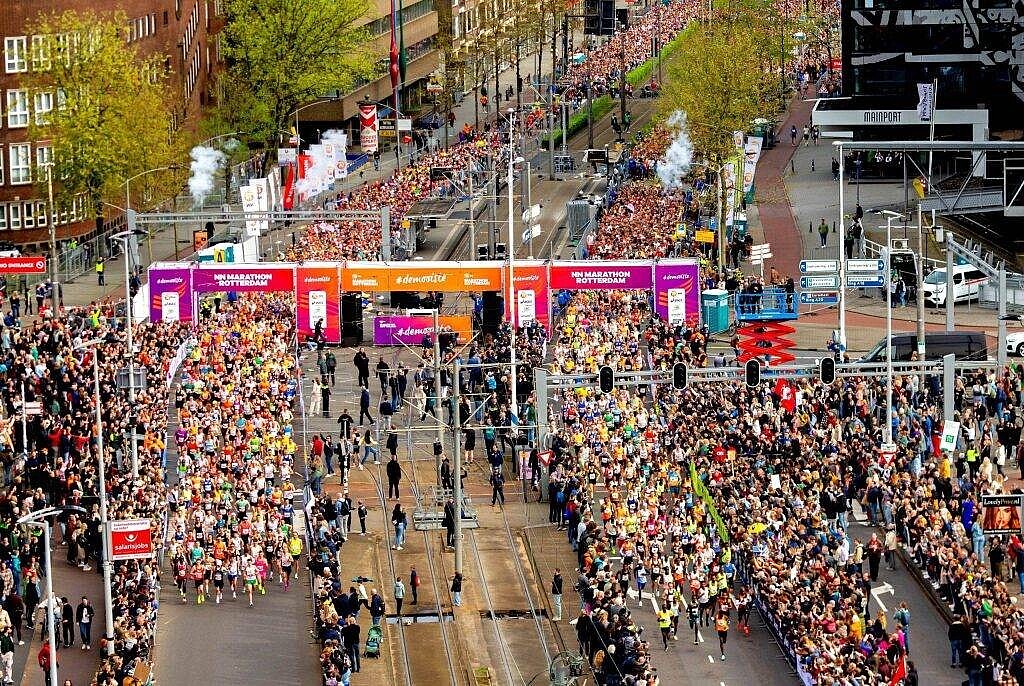
Rotterdam Ready for Double Drama as Elite Men and Women Promise Marathon Fireworks
All roads lead to Rotterdam this Sunday as the NN Marathon Rotterdam prepares to deliver a thrilling showcase across both the men’s and women’s elite races. Set for April 12 at 10:50 AM (CEST), one of the world’s fastest marathon courses will host a compelling blend of speed, strategy, and elite competition.
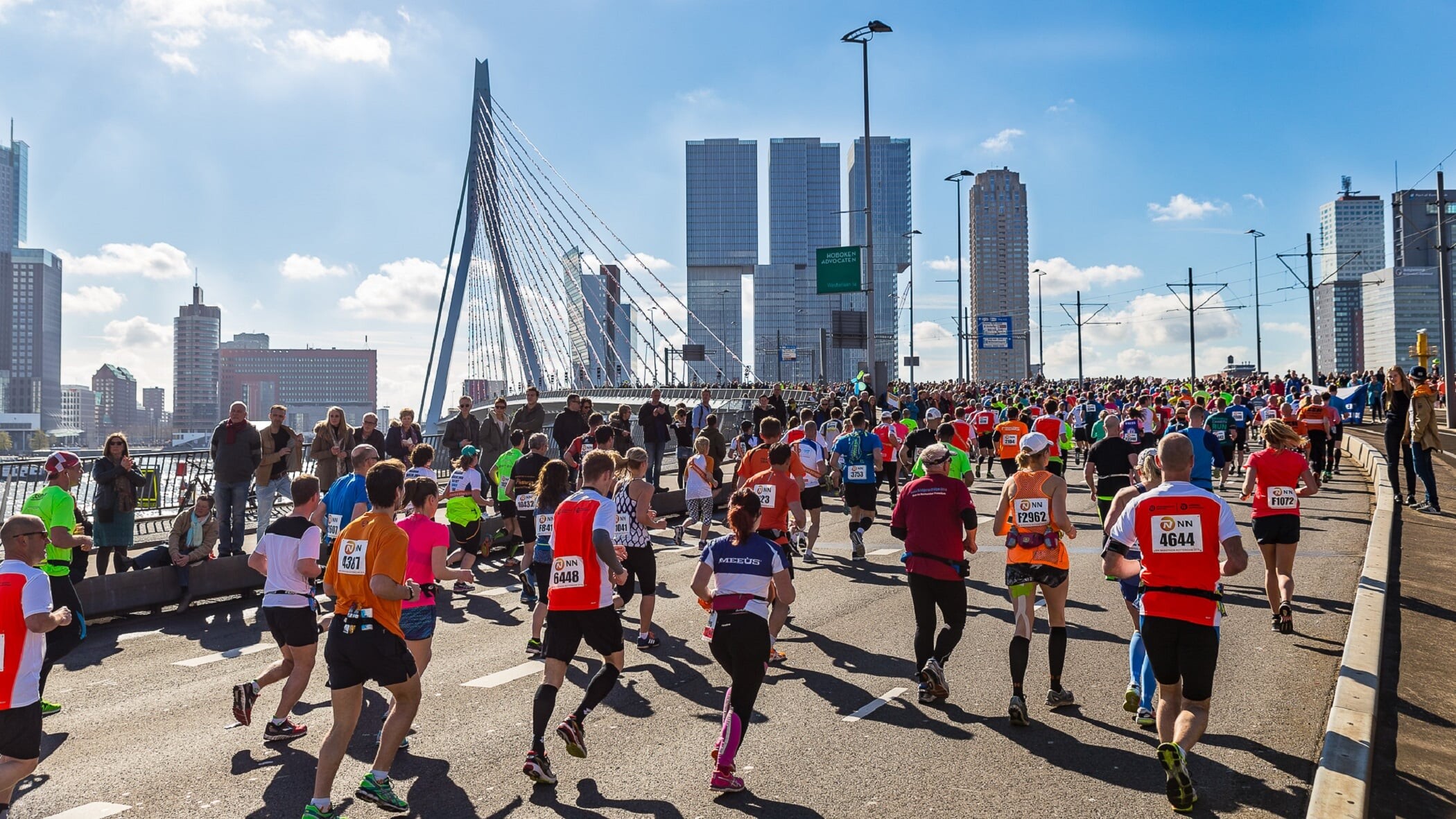
Women’s Race: Precision, Patience, and a Battle of Equals
The women’s field is defined by remarkable balance at the top, where Ethiopia’s Shitaye Eshete (2:20:32) leads a tightly matched group of contenders. Close behind is Meskerem Assefa (2:20:36), a tactician known for her calm racing style and devastating finishing strength.
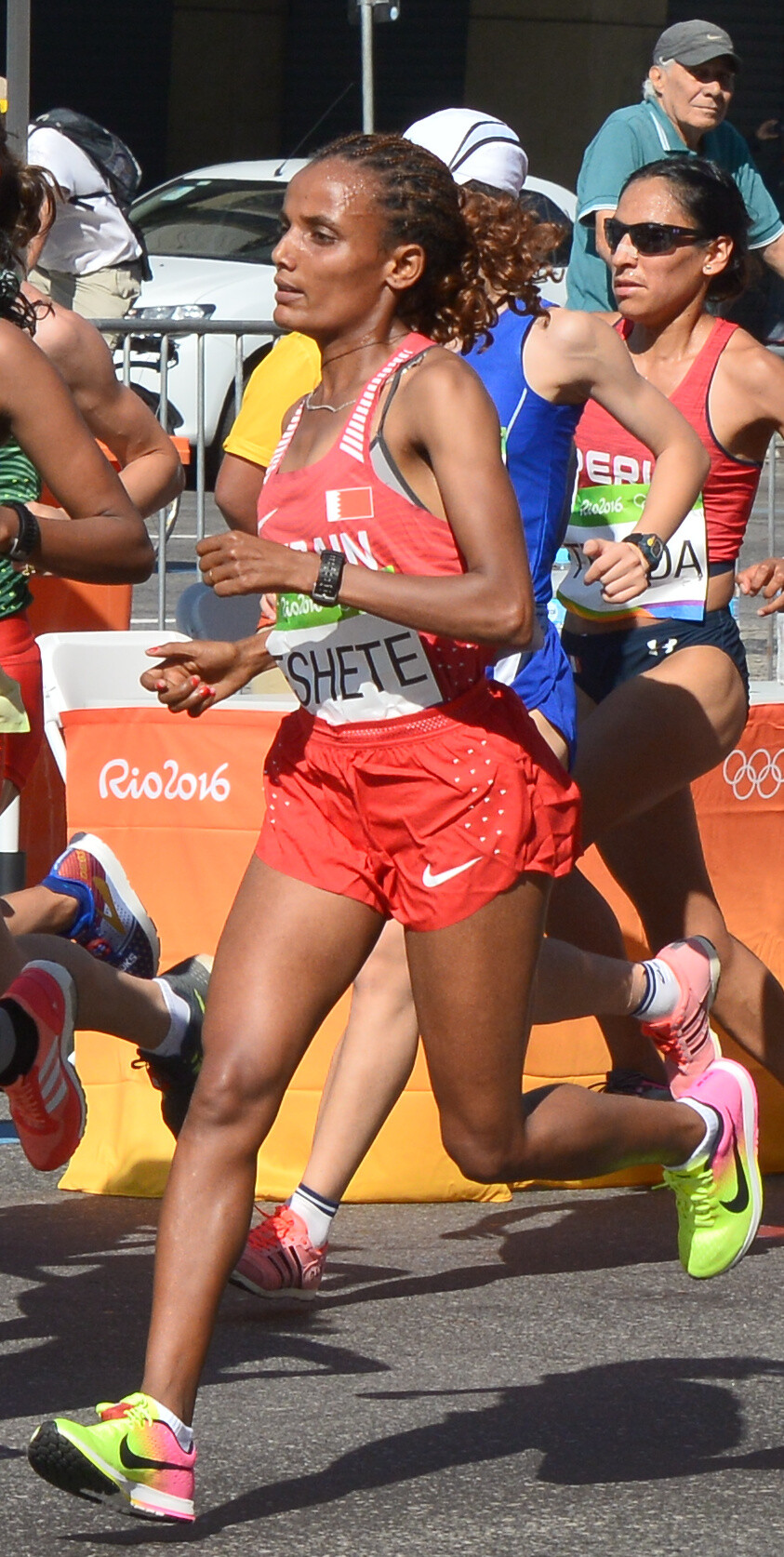
Eritrea’s Dolshi Tesfu (2:20:40) adds further intrigue, ensuring the front pack could remain intact deep into the race. With such narrow margins separating the top three, the contest may well be decided in the final kilometers.
Kenya’s hopes rest on Jackline Cherono (2:21:14), whose measured, patient approach could prove decisive if the race turns tactical. She faces strong Ethiopian depth through Aminet Ahmed (2:21:24) and the experienced Derartu Hailu (2:23:18), both capable of stepping up when it matters most.
Adding an unpredictable twist is debutant Geta Alemayehu, whose transition to the marathon distance could reshape the dynamics of the race.
Men’s Race: Speed Meets Depth in a Stacked Showdown
If the women’s race promises tactical brilliance, the men’s field brings raw speed and extraordinary depth. Ethiopia’s Birhanu Legese leads the charge with a stunning personal best of 2:02:48, making him the fastest man in the lineup on paper.
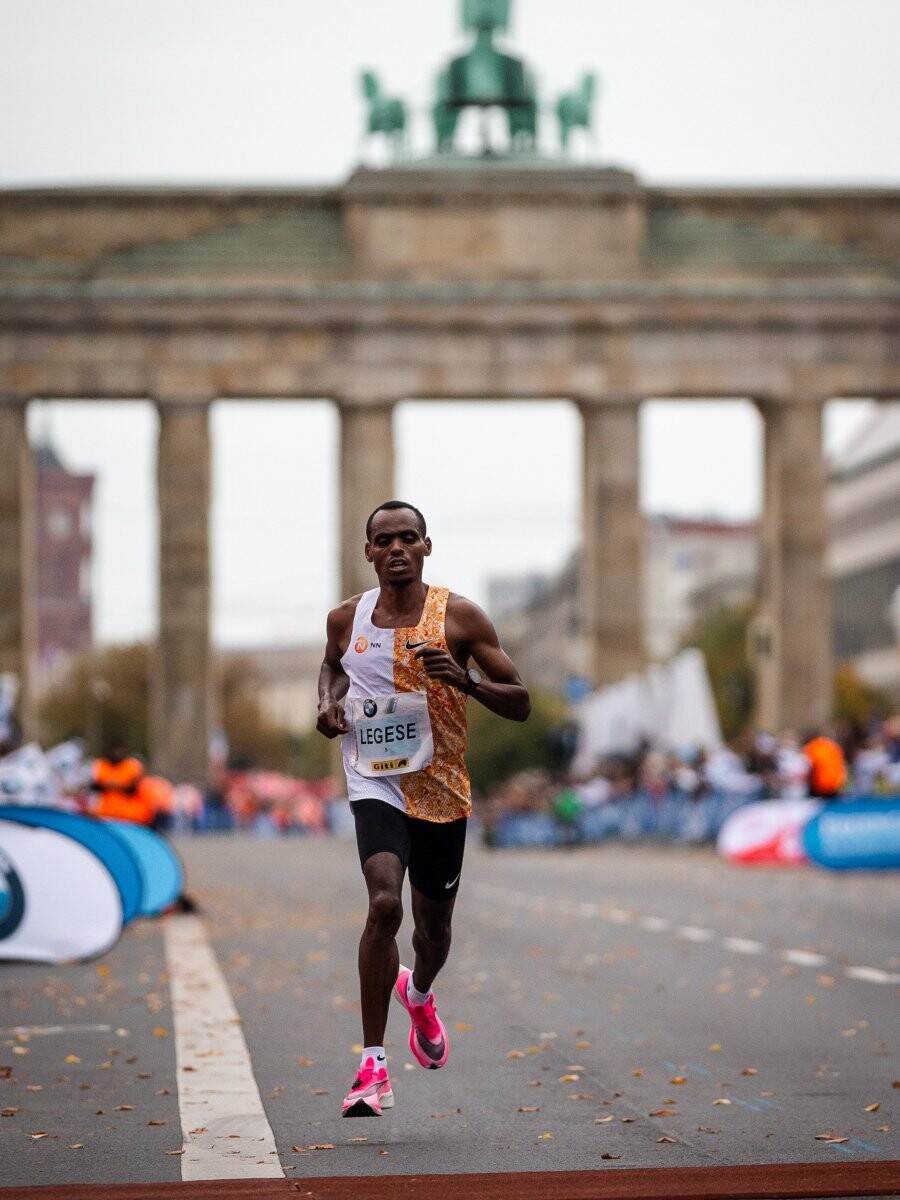
Hot on his heels is compatriot Haymanot Alew (2:03:31), alongside Belgium’s Bashir Abdi (2:03:36), a proven championship performer capable of thriving under pressure.
Ethiopia’s depth is further reinforced by Guye Adola (2:03:46), ensuring a relentless pace from the front. Kenya, however, arrives with a powerful contingent led by Erick Sang (2:04:30) and Kenneth Kipkemoi (2:04:52), both capable of inserting themselves into the podium conversation.
The depth continues with Chala Regasa (2:05:06), Mike Boit (2:06:08), and Lameck Too (2:06:29), while home interest will center on Filmon Tesfu (2:06:42). Belgium’s Koen Naert (2:06:56) adds further quality to an already loaded field.
A Tale of Two Races, One Grand Stage
Both races reflect the enduring supremacy of East African distance running, with Ethiopia’s numerical dominance meeting Kenya’s precision and resilience. Yet beyond regional rivalries, Rotterdam offers something deeper—a stage where tactics meet courage, and where races are often decided not just by pace, but by nerve.
With such fine margins across both fields, Sunday’s showdown could unfold in many ways: a blistering, record-chasing assault on the clock, or a slow-burning tactical duel decided in the final stretch.
Either way, NN Marathon Rotterdam is set to deliver a marathon masterclass—one where every stride carries meaning, and every moment edges closer to greatness.
by Erick Cheruiyot for My Best Runs.
Login to leave a comment

NN Rotterdam Marathon
The marathon has been the biggest one-day sporting event in the Netherlands for many years in a row with over 35000 athletes professionals inclusive. The world's top athletes will at the start on the bustling coolsingel, alongside thousands of other runners who will also triumph,each in their own way.The marathon weekend is a wonderful blend of top sport and festival. ...
more...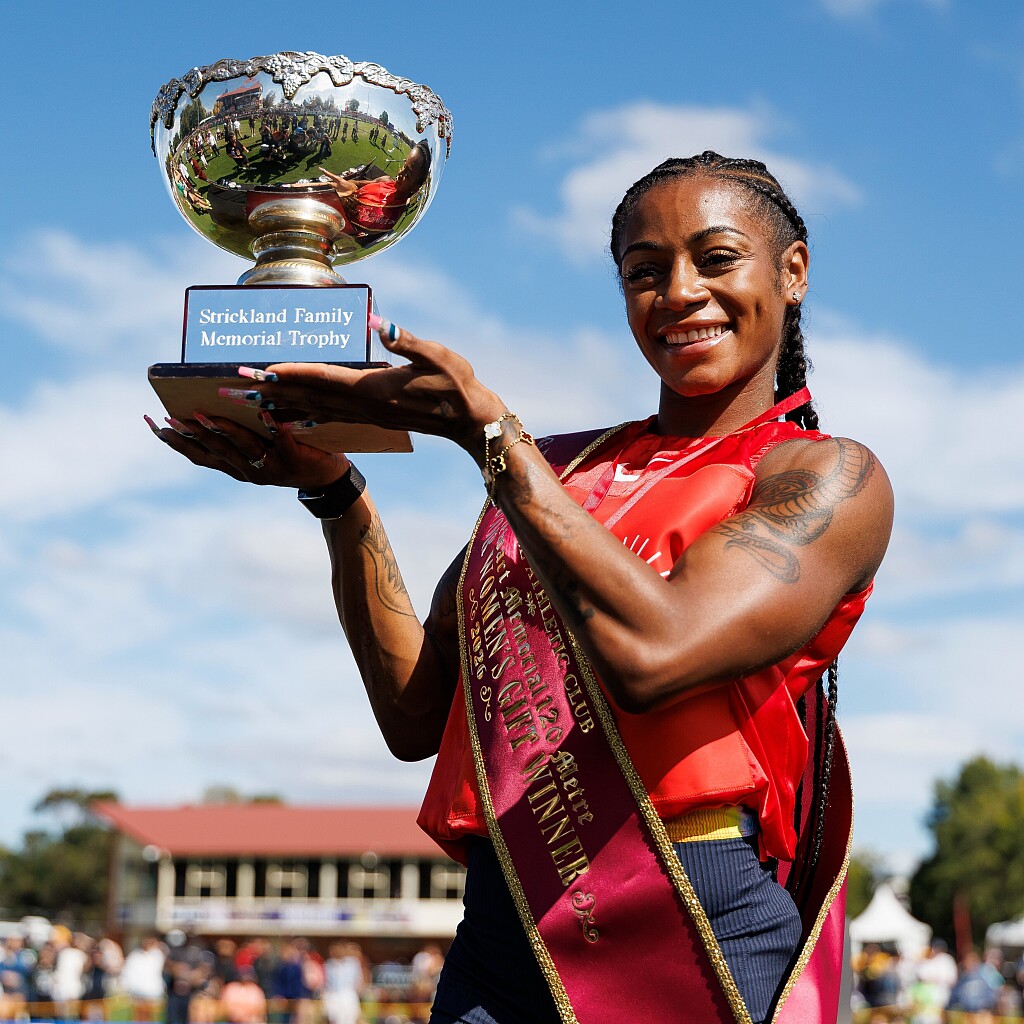
Lightning at Stawell: Richardson Rewrites History in Commanding 120m Triumph
Under the weight of expectation and the gaze of a captivated crowd, Sha'Carri Richardson delivered a performance of pure authority, surging to victory in the women’s 120m at the iconic Stawell Gift. Clocking a blistering 13.15 seconds, the American superstar not only claimed the title but etched her name into history with the fastest time ever recorded in the women’s event.
From the crack of the gun, Richardson’s intent was unmistakable. Running off scratch—without the advantage of a handicap—she faced a staggered field chasing both distance and glory. Among them was rising talent Charlotte Nielsen, who carried the hopes of an upset deep into the race. But Richardson, composed and explosive, steadily reeled in her rivals with each powerful stride.
The decisive moment came as the race approached its final stretch. At approximately the 90-metre mark, Richardson shifted gears with devastating precision, her cadence sharpening as she surged clear. In that instant, the outcome was no longer in doubt—only the margin of her dominance.
Her victory continues a remarkable trend at Stawell, marking the second consecutive year a woman has triumphed from scratch, following Bree Rizzo’s breakthrough win in the previous edition. Yet Richardson’s run elevated the standard even further, blending speed, confidence, and competitive poise into a singular statement performance.
Beyond the time and the title, this was a showcase of Richardson’s racing intelligence. She did not rush the moment—she owned it. Her ability to judge the race, to strike at precisely the right second, transformed a competitive final into a commanding exhibition.
As the dust settled on the historic Stawell track, one truth remained unmistakable: Sha’Carri Richardson did not merely win—she redefined what victory looks like on one of athletics’ most storied stages.
by Erick Cheruiyot for My Best Runs.
Login to leave a comment
A Star is Born in Berlin: Sheyla Eulogio Paucar Powers Perú into the Record Books
At the prestigious Berlin Half Marathon, a new name surged into global recognition as Sheyla Eulogio Paucar delivered a performance that blended courage, precision, and historic significance. The young Peruvian clocked an outstanding 1:10:03 to finish 18th overall, a result that not only elevated her standing on the international stage but also rewrote her nation’s record books. In doing so, she secured the third-fastest half marathon time ever recorded by a South American woman, placing herself among the continent’s most elite distance runners.
From the opening kilometers, Eulogio demonstrated remarkable composure, settling into a strong and consistent rhythm that reflected both tactical awareness and physical strength. She passed 5 kilometers in 16:24 and reached 10 kilometers in 32:46, maintaining an impressive 3:17 per kilometer pace. By 15 kilometers, she remained firmly in control at 49:17, before pushing through the final stretch to cross the line in 1:10:03. Her disciplined execution and ability to sustain pace under pressure revealed a maturity far beyond her years, marking her as one of the brightest emerging talents in global distance running.
Her breakthrough performance now places her firmly within the all-time greats of South American women’s half marathon running. The continental rankings are led by Florencia Borelli with 1:09:21, followed closely by Daiana Ocampo at 1:09:22. Eulogio’s 1:10:03 now stands third, ahead of a strong wave of Peruvian excellence including Zaida Ramos (1:10:05), Gladys Tejeda (1:10:14), Zarita Suárez (1:10:19), Luz Mery Rojas (1:10:32), Saida Meneses (1:10:44), Jovana de la Cruz (1:10:56), and Silvana Pereira (1:11:15).
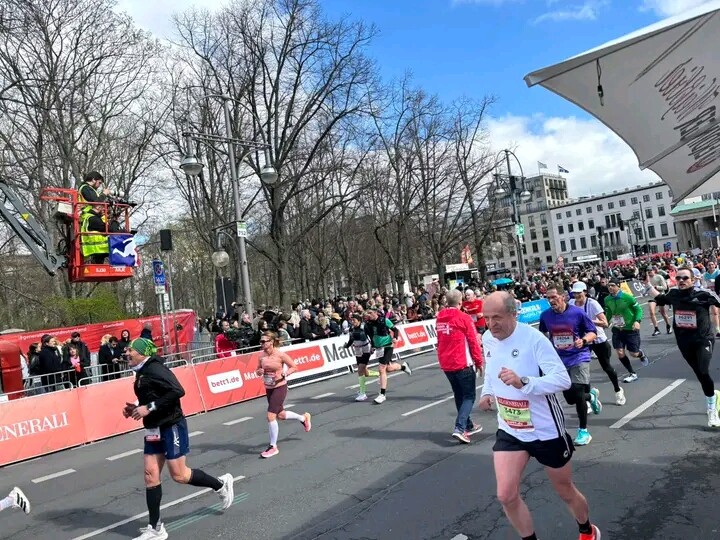
What makes this achievement even more compelling is its broader meaning. This was not just a fast race—it was a defining moment for Peruvian athletics. Eulogio’s rise signals a generational shift, where fearless young athletes are stepping onto the world stage with the belief and ability to challenge long-standing benchmarks. Her performance in Berlin serves as a powerful reminder that greatness is not only inherited through legacy but forged through bold ambition and relentless pursuit.
In one unforgettable run, Sheyla Eulogio Paucar did more than set a national record—she ignited a movement. And as Perú continues to rise in the world of distance running, her name will stand as a symbol of what is possible when talent meets opportunity on the grandest stage.
by Erick Cheruiyot for My Best Runs.
Login to leave a comment
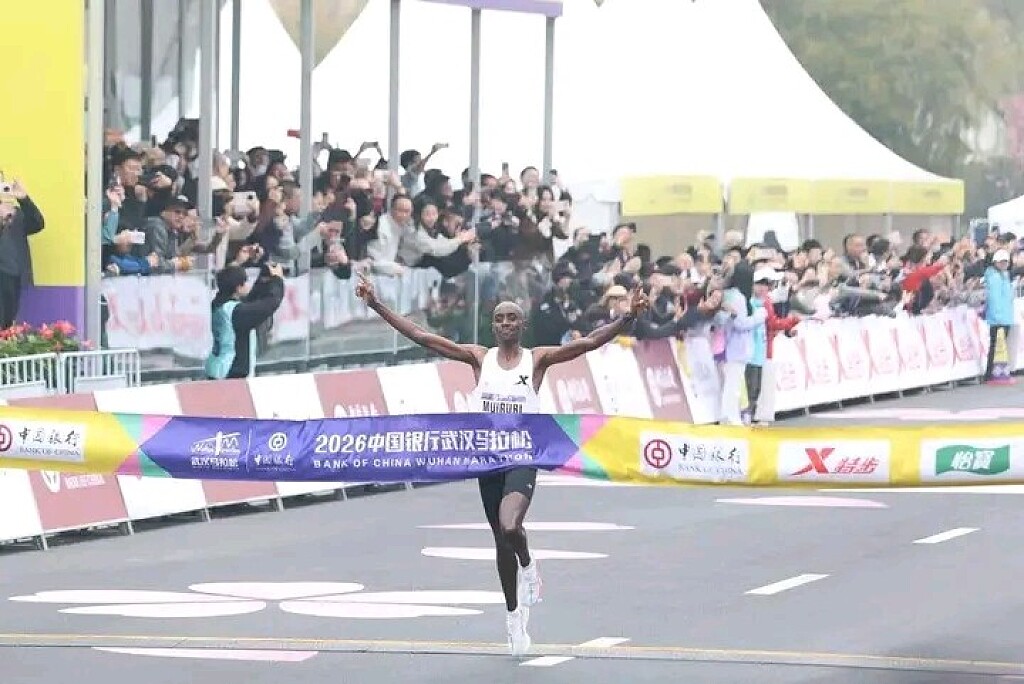
Double Kenyan Triumph in Wuhan: Muiruri and Maina Crowned in a Marathon of Grit and Glory
The vibrant streets of Wuhan bore witness to a day of extraordinary endurance and elite competition as the Wuhan Marathon unfolded into a gripping dual narrative—one defined by tactical brilliance in the men’s race and commanding authority in the women’s contest. Battling a demanding course wrapped in thick humidity and shifting conditions, the world’s finest distance runners delivered a spectacle that resonated with intensity from start to finish.

In the men’s race, patience and precision shaped the early kilometers before the contest erupted into life in the closing stages. A tightly packed lead group, dominated by East African powerhouses, held formation deep into the race, each athlete measuring effort against the punishing conditions. But as the decisive moments approached, it was John Mburu Muiruri who seized control with authority. With a perfectly timed surge, he broke away in the final stretch to claim a memorable victory in 2:10:16, stamping his class on a race that demanded both courage and composure.
Ethiopia’s Dekeba Gadisa Tafa fought valiantly to secure second place in 2:10:23, while Kenya’s Musa Kipsoyan Mitei completed the podium in 2:10:30, underscoring the depth of talent within the region. The home crowd found its hero in He Jie, whose determined run to fourth place in 2:10:56 drew roaring support as he carried national pride into the heart of the final kilometers.
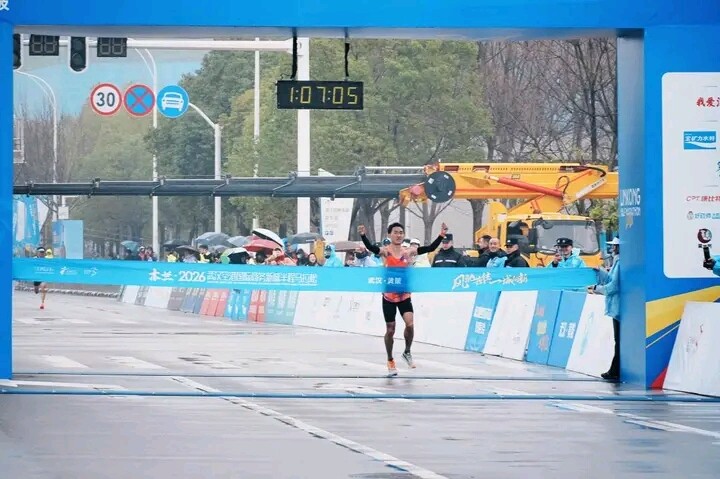
Yet if the men’s race delivered a tactical battle, the women’s contest rose as a masterclass in control and execution.
Kenya’s Veronica Njeri Maina stood at the center of a captivating performance, navigating the same unforgiving conditions with remarkable poise. In a race shaped by endurance and split-second decisions, Maina remained composed throughout before asserting her dominance when it mattered most. Her winning time of 2:24:14 reflected not only strength, but a deep understanding of race rhythm and timing.

Ethiopia’s Tamir Agere Adera followed with a determined effort to take second in 2:25:47, maintaining steady pressure but unable to reel in the Kenyan leader. Fellow Ethiopian Jeleta Lensa Debele secured third place in 2:28:44, holding firm as the race intensified in its closing stages.
One of the most electrifying moments came just behind the podium, where China’s Zhu Qing produced a dramatic late surge to finish fourth in 2:28:45—a mere second off third place. Her thrilling push ignited the home crowd, embodying the fighting spirit that defined the day. Ethiopia’s Askale Alemayehu He claimed fifth in 2:29:37, while China’s contingent, including Li Chunxia, Liu Jingya, and Liu Junhui, rounded out the top eight—highlighting the nation’s growing strength in distance running.

From the opening strides to the final sprints, spectators lining the course fueled every surge, transforming the marathon into a celebration of global athletics. The 2026 Wuhan Marathon will be remembered not only for its results, but for its narrative—a compelling blend of dominance and defiance, where Africa’s enduring excellence met China’s rising ambition on home soil.
In the end, it was a story of double Kenyan triumph. John Mburu Muiruri’s late-race brilliance and Veronica Njeri Maina’s commanding control defined a day where champions were not merely crowned, but forged—through discipline, resilience, and the relentless pursuit of greatness.
by Erick Cheruiyot for My Best Runs.
Login to leave a comment

Wuhan Marathon
Join Wuhan Marathon Wuhan Marathon by the Chinese track and field association, Hubei Province Sports Bureau, Wuhan Municipal People’s Government co-sponsored by the Wuhan Municipal Sports Bureau, Wuhan Sports Development Investment Co., Ltd. co-hosted by the Wuhan Hanma Sports Management Co., Ltd. operation. Will be held in April, in Wuhan. Race with full marathon, half marathon, healthy run and many...
more...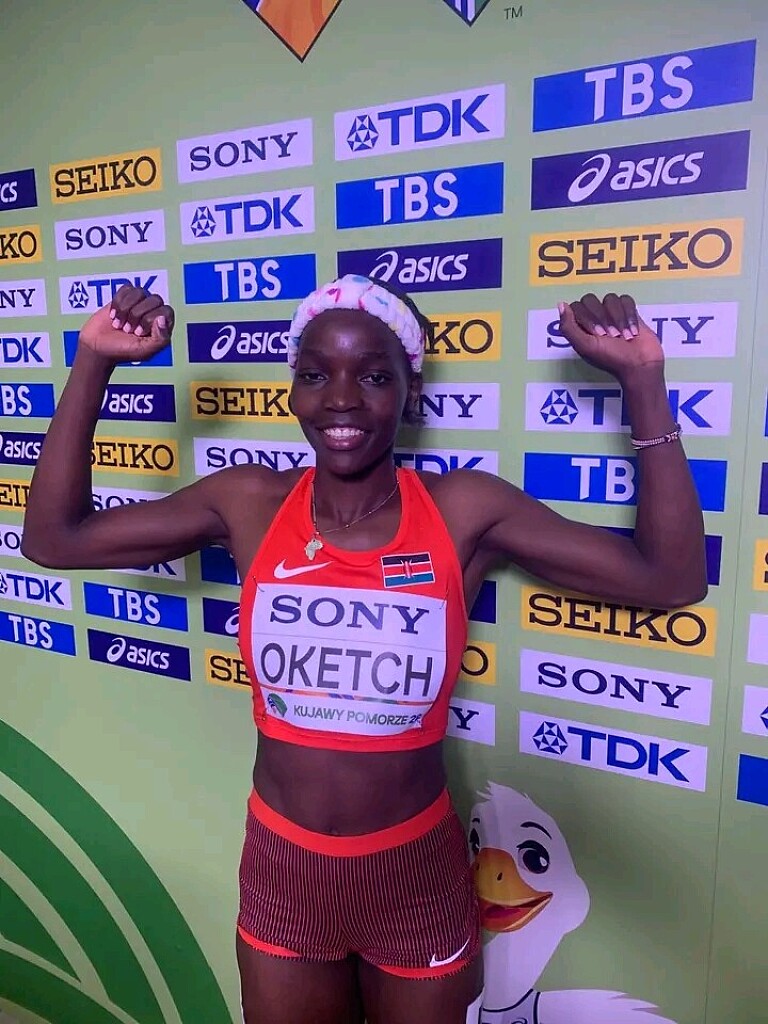
Grace Under Pressure: Mercy Oketch Storms Into World Indoor Semi-Finals in Style
On a charged afternoon of elite competition at the World Athletics Indoor Championships in Poland, Kenya’s sprint sensation Mercy Oketch delivered a composed and commanding performance to secure her place in the semi-finals of the women’s 400 metres. With the world watching and the stakes soaring, Oketch rose to the moment, clocking an impressive 51.57 seconds to finish second in Heat 6—an effort defined by both control and quiet confidence.
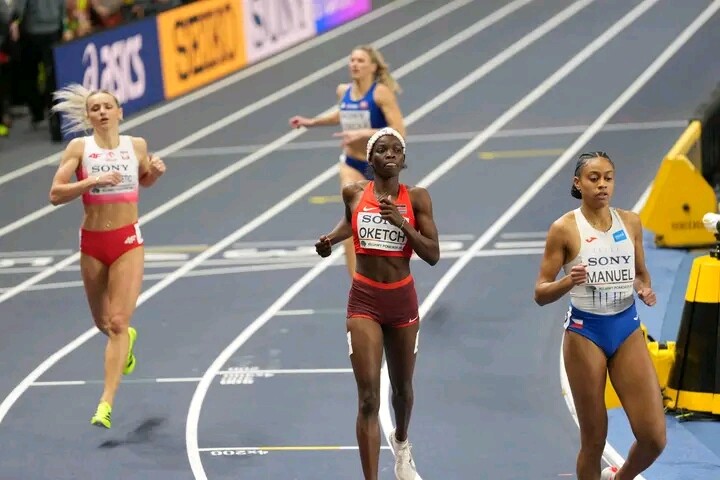
From the crack of the starter’s gun, Oketch ran with purpose, gliding through the opening lap with measured precision before unleashing a strong finishing drive down the final stretch. Against a field packed with global talent, her ability to maintain form under pressure underscored not only her growing maturity on the international stage but also her readiness to challenge the very best.
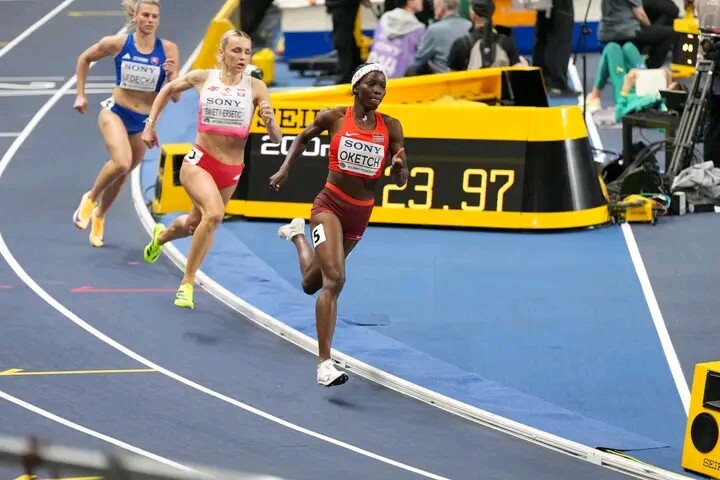
This performance adds another compelling chapter to what is fast becoming a remarkable season for the Kenyan national record holder. Earlier this year, she set her indoor personal best of 51.53 seconds in Metz, signaling her intent long before arriving on this grand stage. Her outdoor pedigree is equally formidable—highlighted by a blistering 50.14 seconds run at the prestigious Kip Keino Classic in 2025, a mark that firmly established her among the world’s elite quarter-milers.
What makes Oketch’s progression particularly captivating is the seamless transition she continues to make between outdoor dominance and indoor excellence—a rare blend that speaks volumes about her versatility, discipline, and competitive spirit. Each stride she takes now carries the weight of expectation, yet she meets it with remarkable composure.
As the semi-finals beckon, anticipation continues to build. With momentum on her side and confidence surging through her veins, Mercy Oketch is no longer just participating—she is contending, asserting, and inspiring. And if her performance in the heats is anything to go by, the best may still be yet to come.
by Erick Cheruiyot for My Best Runs.
Login to leave a comment
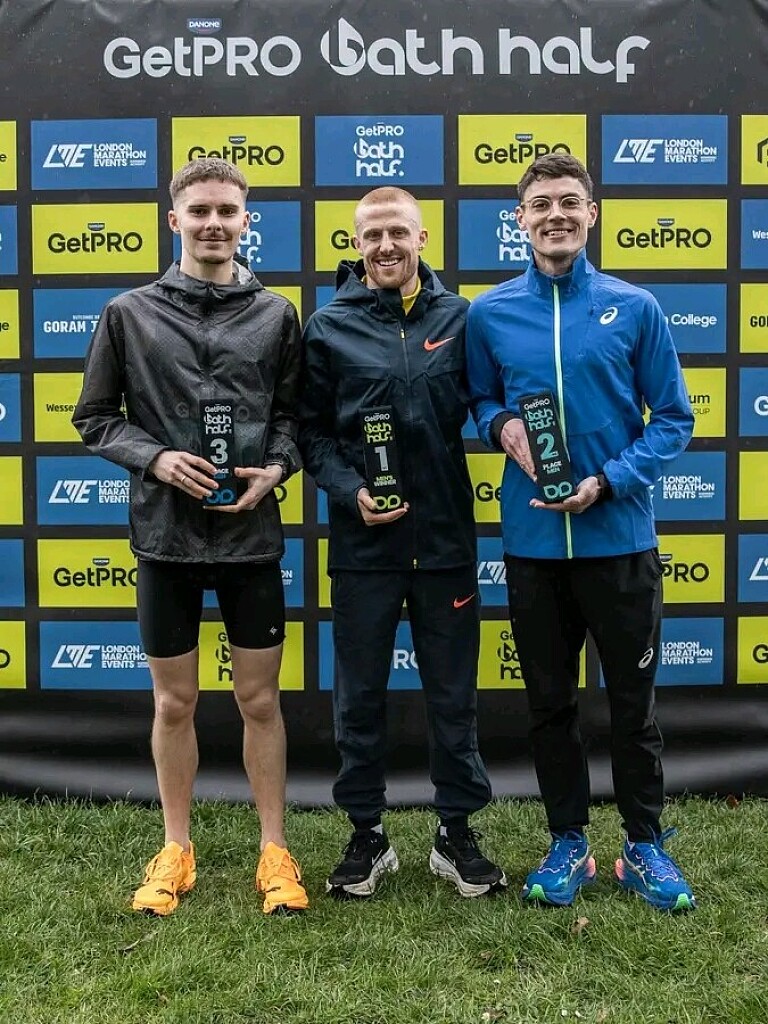
Joe Wigfield Edges Thrilling British Duel as Alex Bell Shines in Women’s Race at the 2026 Bath Half
The 2026 edition of the Bath Half Marathon delivered a memorable day of racing as elite British athletes produced thrilling contests in both the men’s and women’s events through the picturesque streets of Bath.
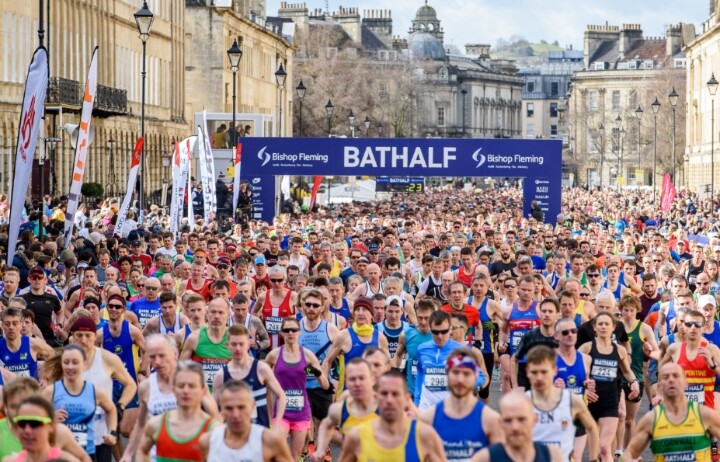
First staged in 1982, the Bath Half has grown into one of the United Kingdom’s most established road races. Held each March, the event regularly attracts strong domestic fields and serves as a key early-season test for athletes preparing for major spring marathons. This year’s race continued that tradition, featuring dramatic finishes and standout performances across both elite races.
In the men’s race, Joe Wigfield emerged victorious after a tense battle that remained undecided until the closing moments. Wigfield surged ahead in the final stretch to cross the line in 1:02:07, securing the win after a fiercely competitive contest.
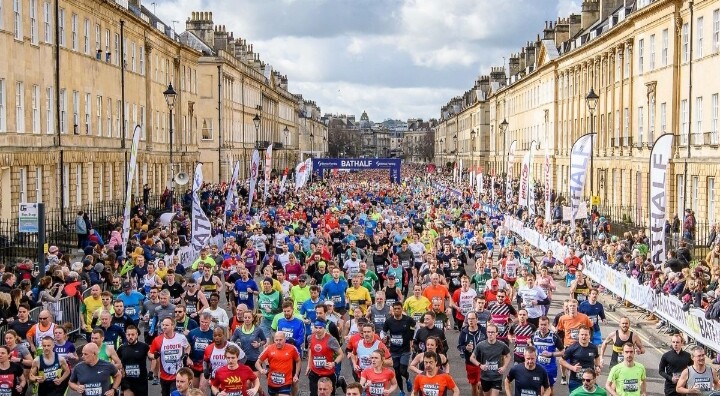
Close behind was Phil Sesemann, who fought all the way to the finish but ultimately took second place in 1:02:13, just six seconds adrift of the winner. The battle for the podium remained razor-thin, with Alfie Manthorpe finishing third in 1:02:14, only a single second behind Sesemann after an intense sprint to the line.
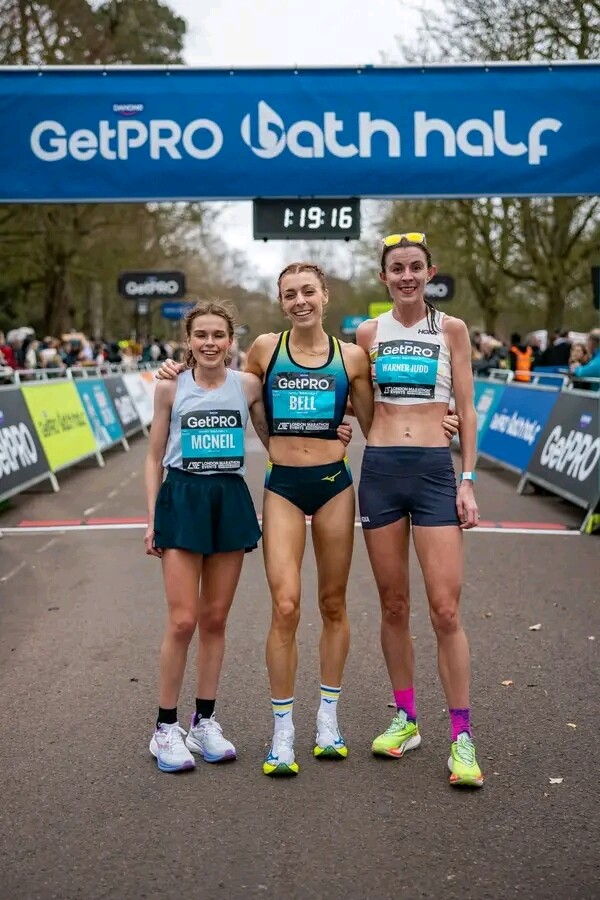
While the men’s race delivered high drama, the women’s event belonged to Alex Bell, who produced a brilliant performance to capture victory and set a new personal best. Bell ran with confidence and strength throughout the race, ultimately breaking the tape in 1:09:15, a performance that crowned her the standout star of the women’s field.
She was followed by Jess Warner-Judd, who secured second place with a determined effort, while Lauren McNeil completed the podium in third after a strong showing of her own.
With thrilling finishes, personal milestones, and tightly contested podium battles, the 2026 Bath Half once again proved why it remains one of Britain’s most cherished road races—combining competitive depth with the electric atmosphere of one of the country’s most scenic running routes.
by Erick Cheruiyot for My Best Runs.
Login to leave a comment
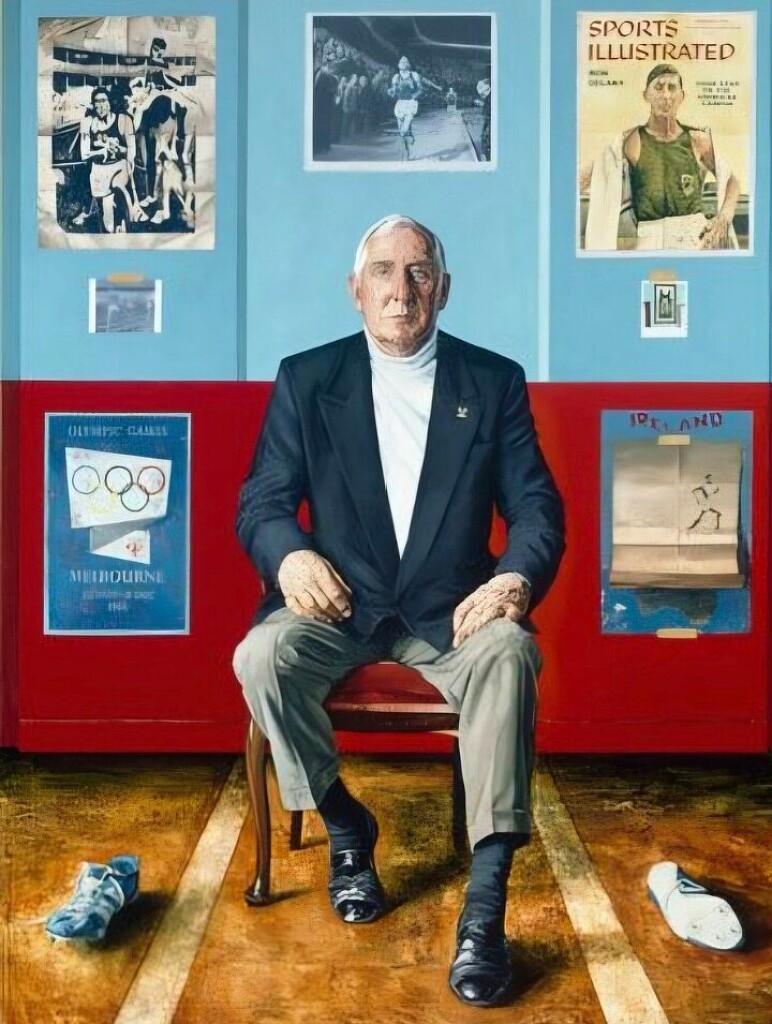
Farewell to an Irish Legend: Olympic Champion Ronnie Delany Dies at 91
The athletics world is mourning the passing of Irish middle-distance legend Ronnie Delany, who has died at the age of 91. A figure forever etched in Olympic history, Delany remains one of Ireland’s most celebrated sporting icons, remembered best for his unforgettable triumph in the 1500 metres at the 1956 Melbourne Olympic Games.
On that memorable evening in Melbourne, Delany delivered a performance that has since become part of Irish sporting folklore. Running with patience and tactical precision, he unleashed a devastating finishing sprint in the final stretch to surge past the field and capture Olympic gold. It was a moment that not only crowned him champion but also placed his name permanently among the greats of middle-distance running.
That victory proved historically significant in more ways than one. Nearly seven decades later, Delany still stands as Ireland’s last Olympic gold medallist in athletics, a testament to the magnitude of what he achieved on the sport’s biggest stage.
Beyond his Olympic success, Delany continued to demonstrate his quality on the international circuit. Two years after his Olympic triumph, he added another major accolade to his résumé by securing the bronze medal in the 1500 metres at the 1958 European Athletics Championships. His performances throughout that era confirmed his status as one of the finest middle-distance runners of his generation.
At his peak, Delany possessed both speed and endurance—qualities reflected in his personal best times of 1:47.1 for 800 metres and 3:41.49 for 1500 metres. In an era far removed from modern sports science and advanced track technology, those marks stood as powerful evidence of his extraordinary natural talent and competitive spirit.
Yet statistics alone cannot fully capture Delany’s impact. For Ireland, he represented a symbol of possibility, proving that athletes from a small nation could rise to the very top of global sport. His Olympic victory inspired generations of Irish runners and remains one of the most cherished moments in the country’s athletics history.
With his passing, the sport bids farewell to a man whose legacy stretches far beyond medals and times. Ronnie Delany’s name will forever resonate in the annals of athletics—as a champion, a pioneer, and a reminder of the magic that can unfold in a perfectly timed finishing kick.
by Erick Cheruiyot for My Best Runs.
Login to leave a comment
Fan Interference Sparks Debate After Dramatic Finish at the 2026 Los Angeles Marathon
The closing moments of the Los Angeles Marathon 2026 delivered one of the most dramatic and controversial finishes the race has seen in recent years, leaving the global running community debating whether outside interference may have altered the outcome of the race.
With only a few hundred meters remaining, Kenya’s Michael Kimani Kamau appeared firmly in control of the race. After leading through the final stretch, victory seemed all but secured as he pushed toward the finishing straight in downtown Los Angeles.
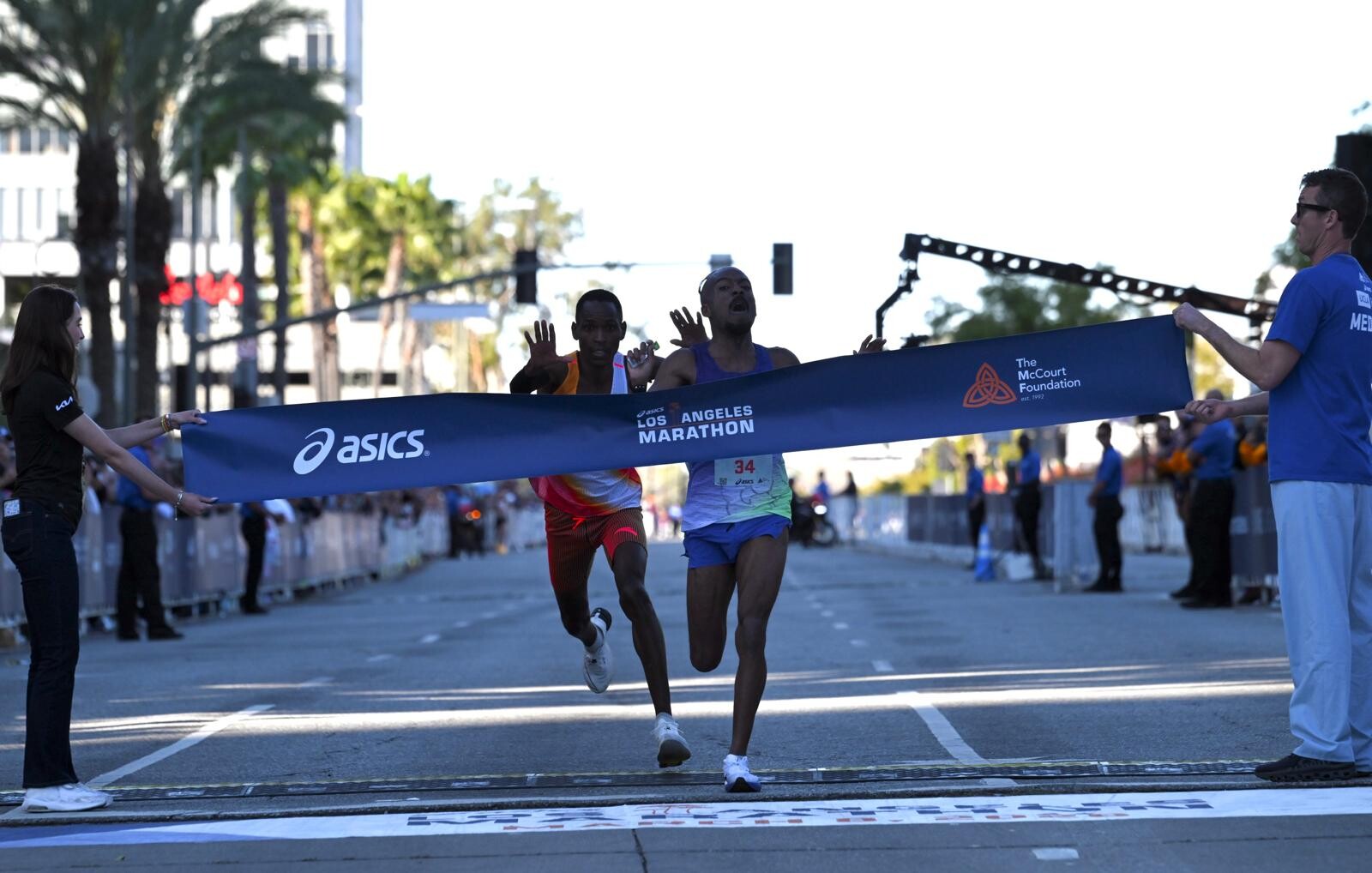
Then, in a split second, the race took an unexpected turn.
A spectator waving a Kenyan flag suddenly ran onto the course and moved directly in front of Kamau near a split in the road. For several crucial seconds, the fan ran ahead of the leader, creating confusion about the correct racing line at a decisive point of the course.
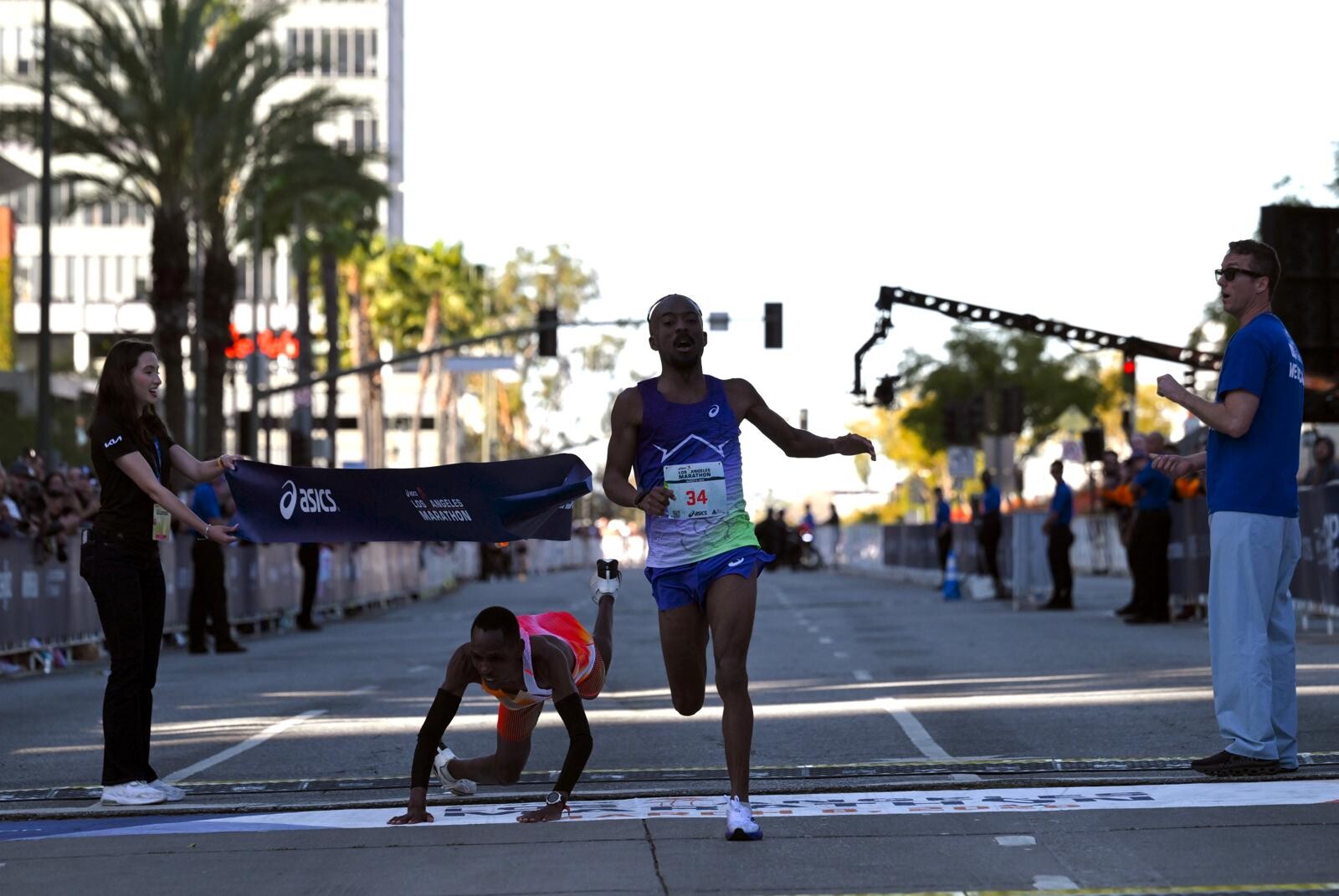
In the momentary uncertainty, Kamau drifted toward the wrong lane and briefly followed the lead vehicle and police escort off the correct route. Realizing the mistake, he quickly corrected his direction and returned to the proper course—but the costly hesitation had already reshaped the race.
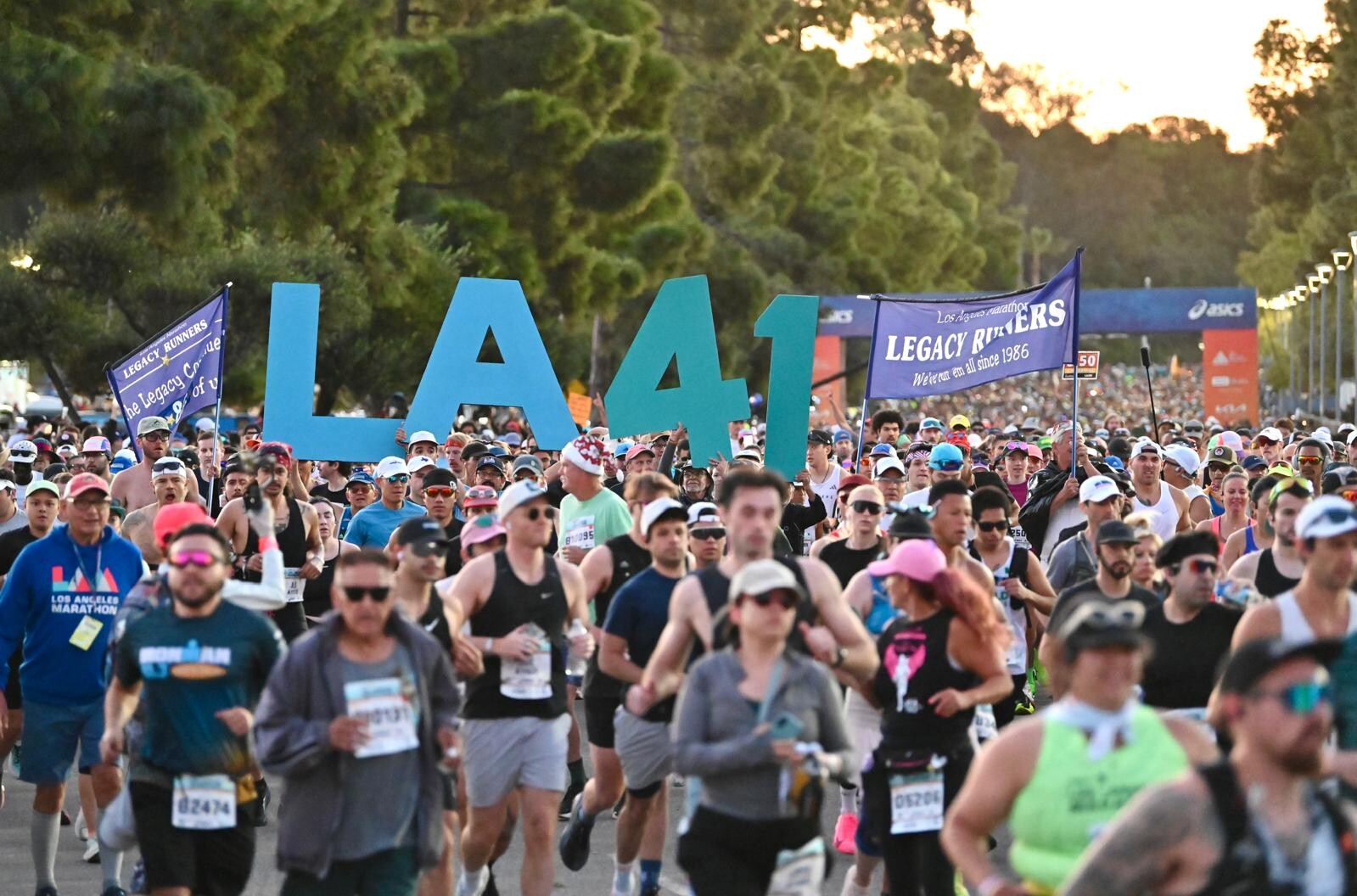
Behind him, American marathoner Nathan Martin had been steadily closing the gap. The unexpected disruption gave Martin the opportunity he needed, setting up a frantic sprint over the final meters.
What followed was a breathtaking dash to the finish line.
Martin surged alongside Kamau in the final steps and edged ahead in one of the closest finishes in the history of the race. The official timing showed Martin crossing the line just 0.01 seconds ahead, both athletes recording times around 2:11:16.
While the result stands, the finish has quickly become a major topic of discussion across the running world. Many observers are questioning whether the fan’s presence on the course played a decisive role in determining the outcome of the race.
The controversy is heightened by the timing of the incident. Just days earlier, another race-direction issue occurred at the U.S. Half Marathon Championships in New York City, where leading runners including Jess McClain, Ednah Kurgat, and Emma Hurley were misdirected off course after police officers left their assigned positions along the route.
Incidents like these highlight how vulnerable road races can be to unexpected disruptions, even in the final moments when every second—and every step—matters.
For elite athletes, these competitions represent far more than a race. They carry significant consequences tied to sponsorship agreements, world rankings, appearance fees, and prize money that can change careers and lives.
As discussions continue, one difficult question lingers over the dramatic finish in Los Angeles: when outside interference disrupts a race, should the results simply stand—or should the sport reconsider how such moments are judged?
At the 2026 Los Angeles Marathon, the margin between triumph and heartbreak was just one hundredth of a second, a reminder of how fragile victory can be when chaos enters the course at the worst possible moment.
by Erick Cheruiyot for My Best Runs.
Login to leave a comment
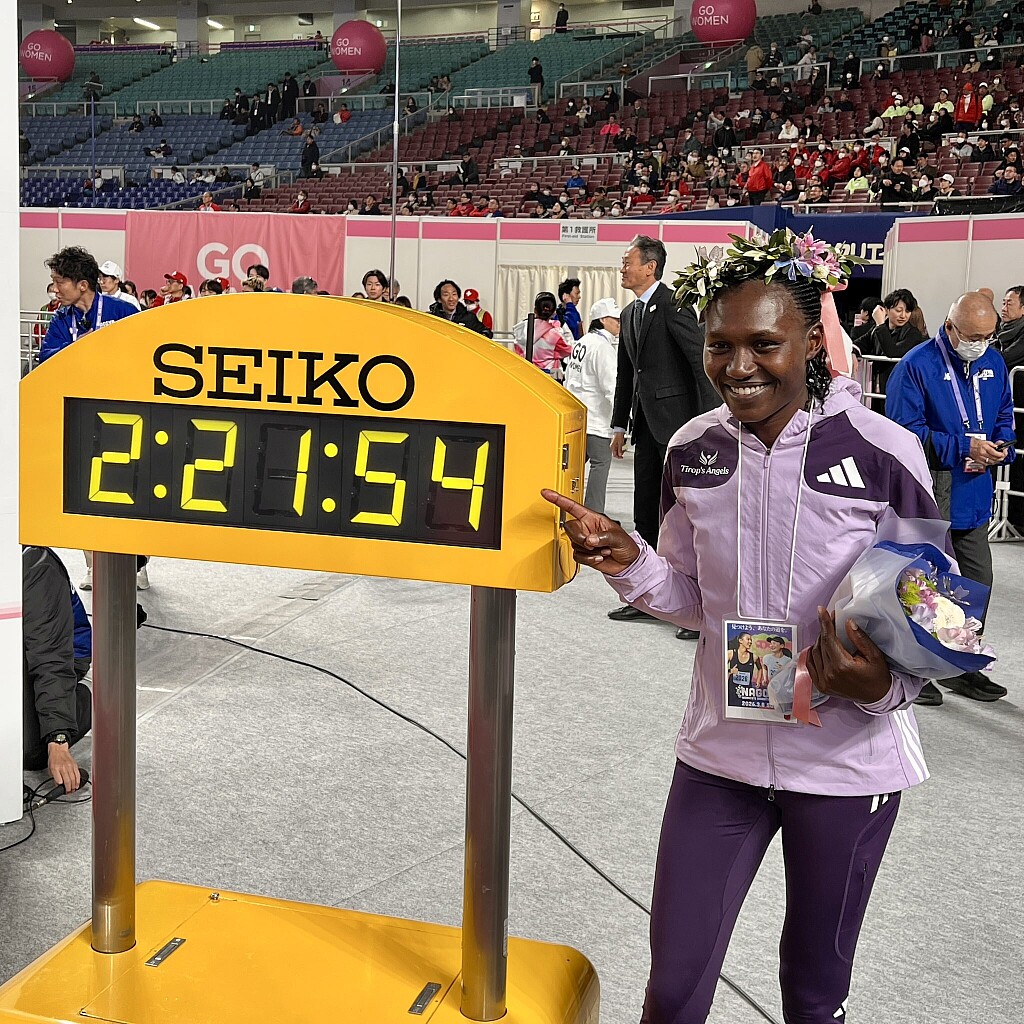
Chepkirui’s Brilliant Late Surge Seals Dramatic Victory at the Nagoya Women’s Marathon
A breathtaking duel lit up the streets of Nagoya as Kenya’s Sheila Chepkirui and Japan’s Saya Sato produced a thrilling battle for supremacy at the prestigious Nagoya Women's Marathon.
What began as a controlled tactical contest gradually transformed into one of the most gripping finishes of the marathon season, with the race ultimately decided in the final moments before the runners entered the iconic Vantelin Dome Nagoya.
As the leaders approached the final stretch, Sato appeared poised to claim victory in front of the home crowd. But with roughly 600 meters remaining, Chepkirui unleashed a perfectly timed surge, drawing level with the Japanese star before powering ahead in a dramatic sprint to the line.
The Kenyan crossed the finish tape in 2:21:54, securing victory by the slimmest of margins in a race that demanded courage, patience, and a final burst of brilliance. Sato followed just moments later in 2:21:56, delivering a magnificent performance that electrified the spectators. Ethiopia’s Aynalem Desta ran a composed and consistent race to claim third place in 2:22:37, completing a strong international podium.
Beyond the podium battle, the race also highlighted remarkable endurance from athletes across the globe. Mexico’s Argentina Valdepeñas Serna finished 31st in 2:45:30, an impressive feat considering she had run the Tokyo Marathon just a week earlier, clocking 2:41:47. Meanwhile, Tarahumara runner Maria Juana Ramirez Hernandez produced a determined effort to finish in 2:48:25, adding another inspiring chapter to the race’s international story.
Top 10 – Nagoya Women’s Marathon 2026
1. Sheila Chepkirui (Kenya) – 2:21:54
2. Saya Sato (Japan) – 2:21:56
3. Aynalem Desta (Ethiopia) – 2:22:37
4. Rika Kaseda (Japan) – 2:22:53
5. Natsuki Omori (Japan) – 2:23:45
6. Shinzakura Sora (Japan) – 2:24:34
7. Rihango (International) – 2:24:44
8. Jenew Gregson (Australia) – 2:25:06
9. Aika Murakami (Japan) – 2:25:07
10. Yuna Takahashi (Japan) – 2:25:58
A Race That Celebrated the Spirit of Women’s Marathon Running
The 2026 edition of the Nagoya Women’s Marathon delivered far more than fast times—it delivered a story of courage, heart, and relentless determination. Chepkirui’s stunning late surge reminded the world that victory in the marathon often belongs to those who dare to believe in their final reserve of strength.
Yet the beauty of the race extended beyond the champion’s triumph. From Sato’s fearless fight on home soil to the inspiring performances of athletes from every corner of the globe, the event became a celebration of resilience and unity through sport. In Nagoya, every stride told a story, every finish carried meaning, and together these remarkable women turned 42.195 kilometers into a powerful reminder that the spirit of marathon running is as boundless as the athletes who chase their dreams along its roads.
by Erick Cheruiyot for My Best Runs.
Login to leave a comment

Nagoya Women's Marathon
The Nagoya Women's Marathon named Nagoya International Women's Marathon until the 2010 race, is an annual marathon race for female runners over the classic distance of 42 km and 195 metres, held in Nagoya, Japan in early March every year. It holds IAAF Gold Label road race status. It began in 1980 as an annual 20-kilometre road race held in...
more...
Kosgei Reigns Supreme in Tokyo as Course Record Falls in Women’s Marathon Thriller
The streets of Tokyo witnessed a masterclass in endurance and tactical brilliance as the women’s elite race at the Tokyo Marathon 2026 delivered one of the most compelling chapters in the event’s history. At the heart of it all was Kenya’s marathon queen, Brigid Kosgei, who stormed to victory in a breathtaking 2:14:29, smashing the course record and reaffirming her status among the greatest marathoners of her generation.
From the early kilometres, the pace signaled serious intent. The lead group moved with composure through Tokyo’s iconic avenues, but as the race stretched beyond the 30km mark, it became clear that Kosgei was running with something extraordinary in reserve. With controlled aggression and trademark efficiency, she gradually broke away, her stride smooth and decisive.
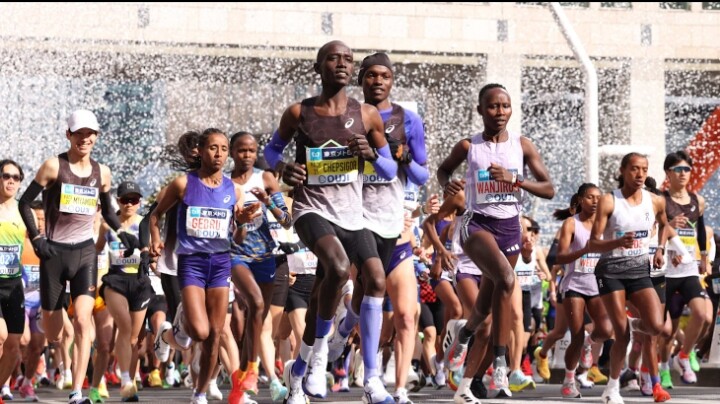
By the final stretch, the outcome was no longer in doubt. Kosgei powered through the closing kilometres to cross the line alone, arms raised in triumph, the clock confirming a new course record — a performance of authority, experience, and pure class.
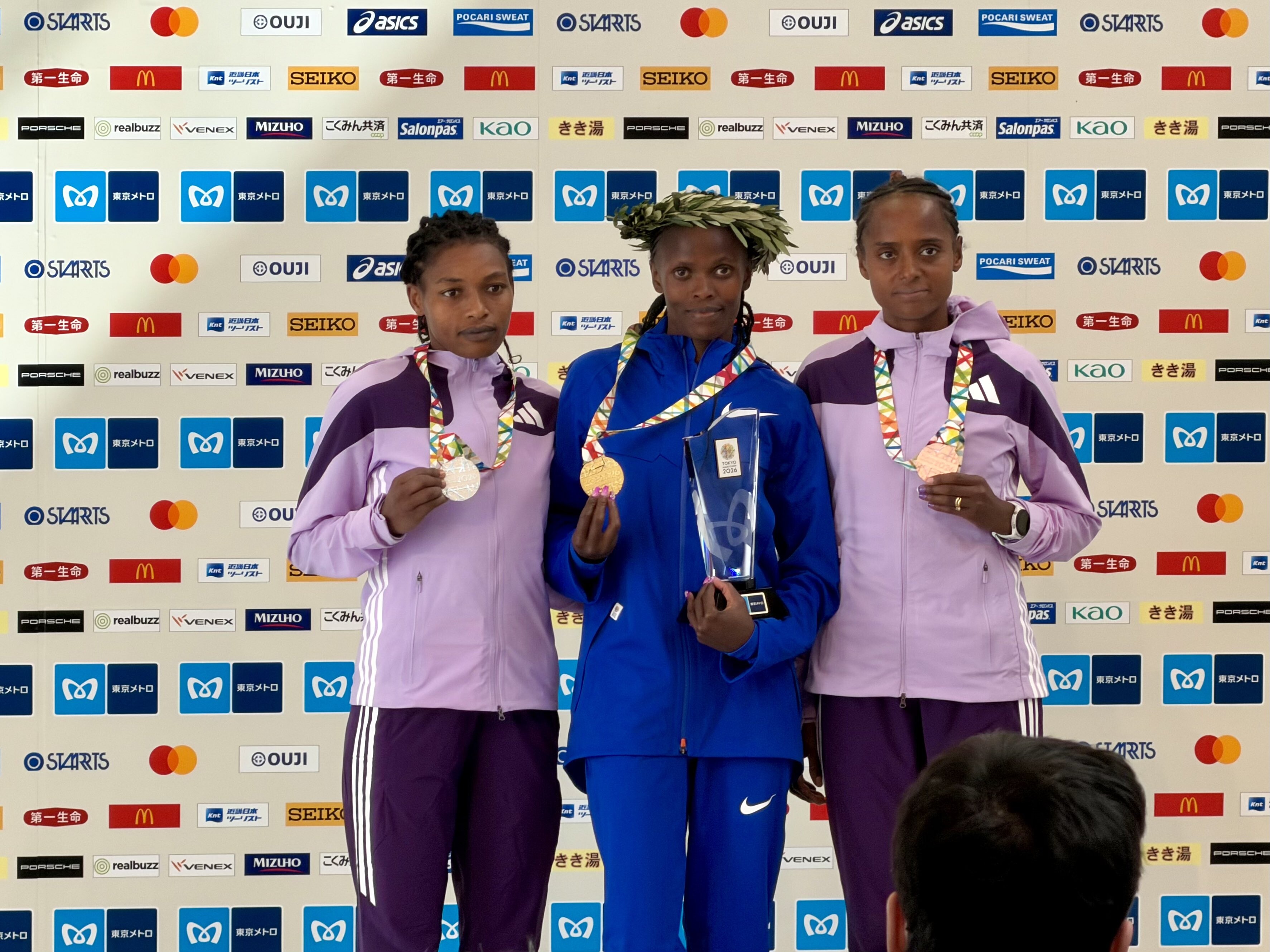
Behind her, Ethiopia’s Bertukan Welde delivered a career-defining run. Clocking 2:16:36, she secured second place with a personal best, demonstrating remarkable composure in one of the deepest fields assembled this season. Her breakthrough performance signals a powerful emergence on the global marathon stage.
The battle for the final podium spot produced the day’s most dramatic moment. Ethiopia’s Hawi Feysa and compatriot Sutume Asefa Kebede were inseparable in the closing metres. In a thrilling sprint to the line, both were credited with 2:17:39, but Feysa edged ahead by the narrowest of margins to claim third, sealing an unforgettable duel that electrified the finish area.
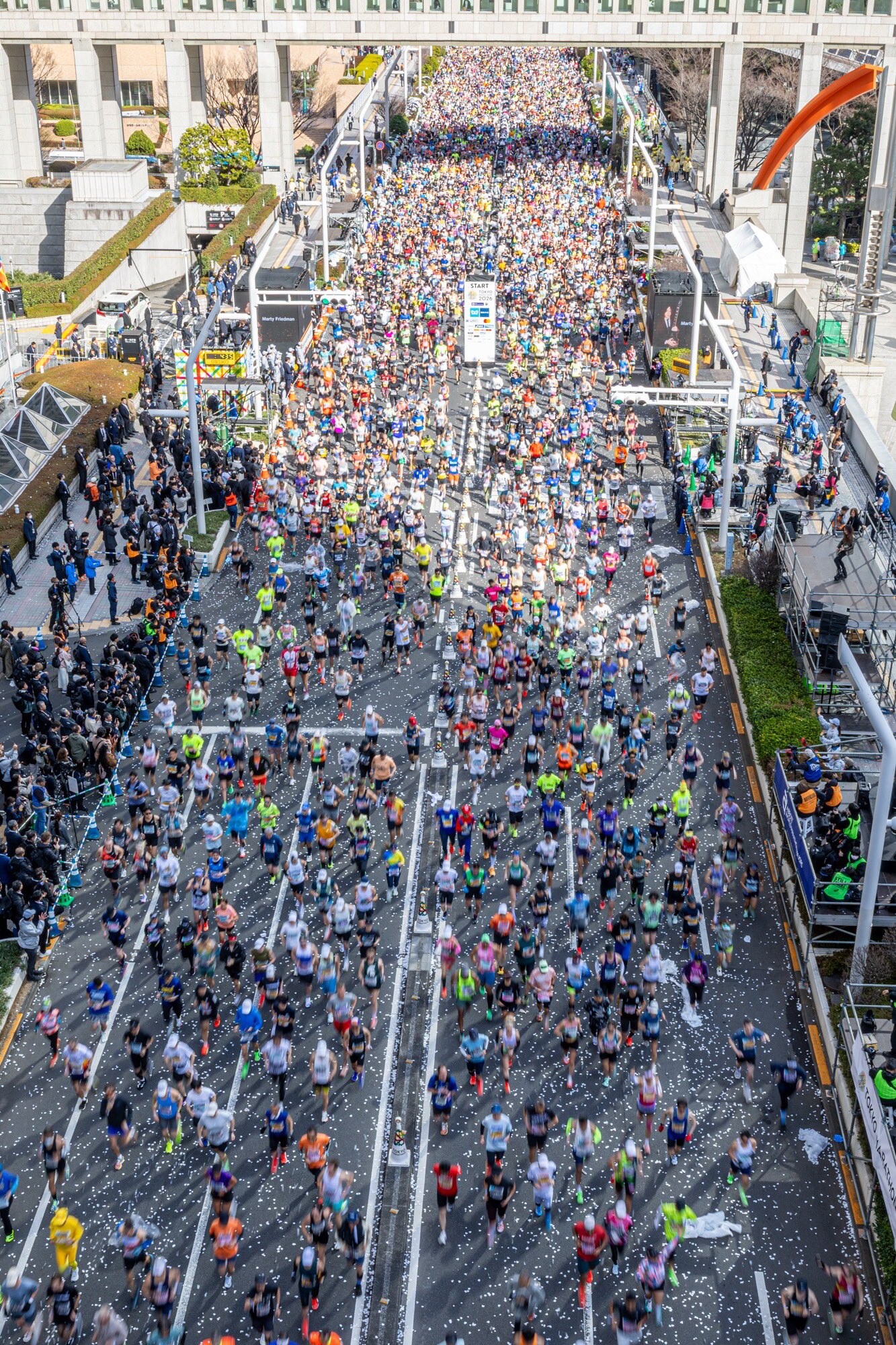
The 2026 edition once again highlighted Tokyo’s reputation as one of the premier stages in global road racing, blending fast conditions with elite depth and tactical racing of the highest order.
Top 10 Women – Official Results
1. Brigid Kosgei (KEN) – 2:14:29 (CR)
2. Bertukan Welde (ETH) – 2:16:36 (PB)
3. Hawi Feysa (ETH) – 2:17:39
4. Sutume Asefa Kebede (ETH) – 2:17:39
5. Megertu Alemu (ETH) – 2:18:50
6. Viola Cheptoo (KEN) – 2:19:05
7. Mestawut Fikir (ETH) – 2:20:00
8. Aberu Ayana (ETH) – 2:20:30
9. Pascalia Jepkogei (KEN) – 2:21:39
10. Ai Hosoda (JPN) – 2:23:39
Beyond the podium, the depth of the field reflected the continued rise of women’s marathon running across continents — from Africa to Asia, Europe to Oceania and the Americas. Every athlete in the top ranks contributed to a race defined by courage, precision, and competitive spirit.
Tokyo once again proved that when the world’s finest gather on its roads, history is never far away. And in 2026, it belonged to Brigid Kosgei — a champion rewriting records with every decisive stride.
by Erick Cheruiyot for My Best Runs.
Login to leave a comment

Tokyo Marathon
The Tokyo Marathon is a world-renowned annual marathon held in Tokyo, Japan. As one of the prestigious Abbott World Marathon Majors, it attracts elite and amateur runners from around the globe. The race holds World Athletics Platinum Label status, recognizing its high competitive standards, top-tier organization, and international appeal. Sponsored by Tokyo Metro, the Tokyo Marathon has grown into one...
more...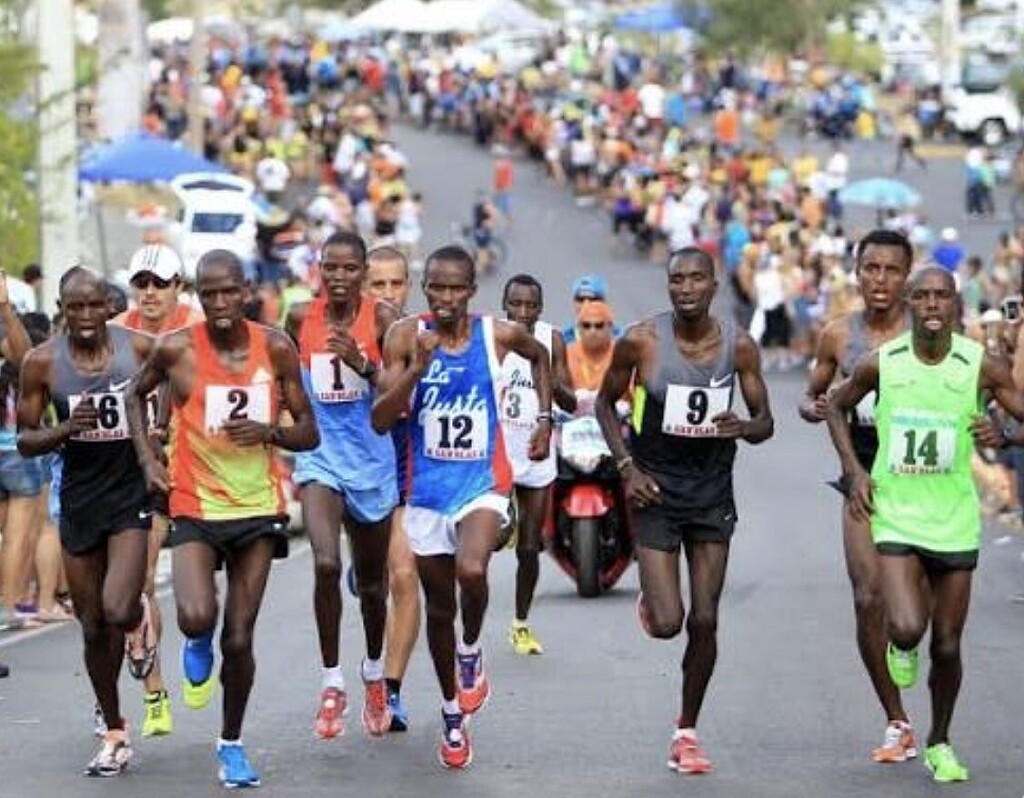
Nearly $1 Million US at Stake as Marathon Heavyweights Clash in South Korea
On Sunday, February 22, 2026, the streets of Daegu, South Korea, will host one of the richest marathons in the world. The Daegu Marathon, staged in one of Asia’s most established athletics cities, offers $200,000 USD to each of the men’s and women’s champions, placing it among the most lucrative payouts in global road racing.
The elite prize structure extends ten deep in both divisions, creating a combined international prize purse of $842,000 USD — $421,000 per gender. Prize money descends from $200,000 for first place to $7,000 for tenth, with additional domestic awards and performance bonuses further enhancing the overall package.
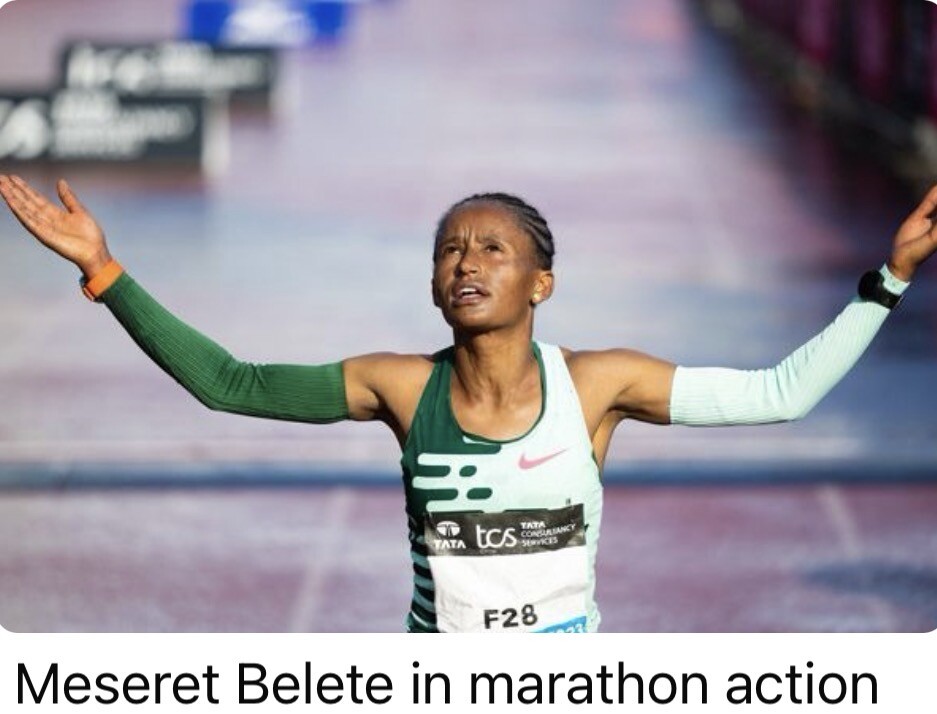
With nearly one million dollars in elite prize money on the line, Daegu has assembled a field worthy of the stakes.

Elite Women: Sub-2:19 Firepower
The women’s race features three Ethiopians with personal bests under 2:19, immediately signaling record-level intent.
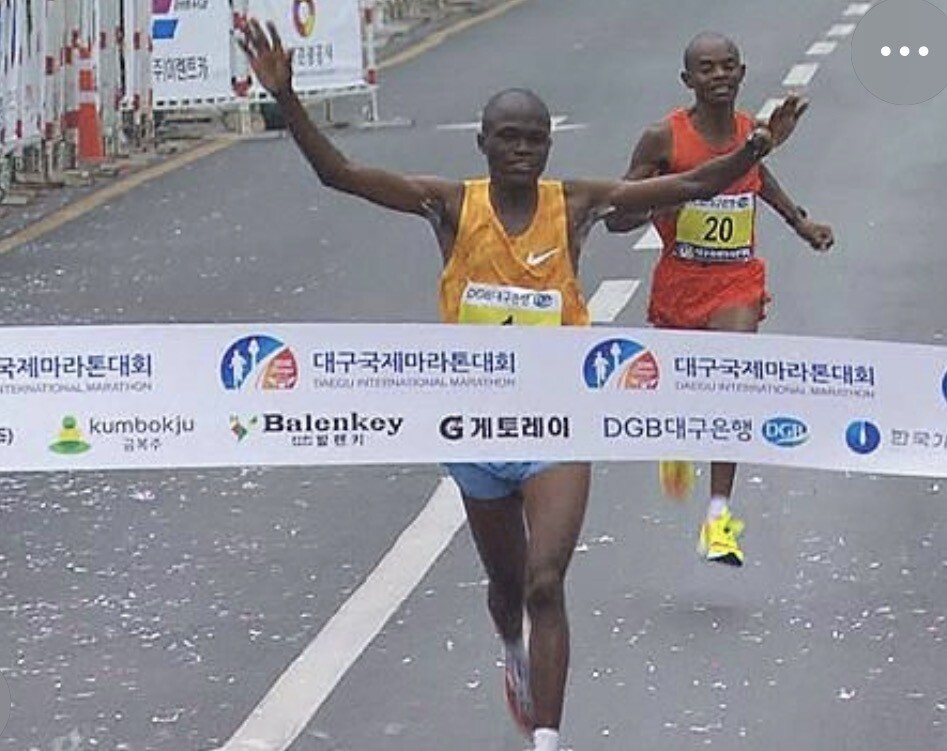
Defending champion Meseret Belete returns with a lifetime best of 2:18:21 and the confidence of past success on this course. Ruti Aga, the 2024 winner, owns the fastest PB in the field at 2:18:09 and brings extensive championship experience. Dera Dida Yami, the 2023 Dubai Marathon champion (2:18:32), strengthens Ethiopia’s tactical options on a flat, rhythm-friendly layout.
Kenya’s Lilian Kasait Rengeruk introduces intrigue. Known globally for her half-marathon speed, she presents a potential late-race threat if she manages the marathon distance conservatively through 30 kilometers. Should she remain within contact entering the final stretch, her finishing speed could prove decisive.
South Korea’s Choi Jung-yoon (PB 2:32:20) carries the hopes of the home crowd inside Daegu Stadium, where the race both begins and concludes. Her performance will be closely watched as a measure of domestic progress against the dominant East African contingent.
Men’s Elite: Proven Champions and Record Credentials
The men’s race features equal depth and experience.
Tanzania’s Gabriel Geay, defending champion and former course record holder, arrives with a 2:03:00 personal best. His strength lies in sustained high tempo, making him especially dangerous if the early pace remains controlled but honest.
Ethiopia’s Chimdesa Debele Gudeta (2:04:44) and Kenya’s Stephen Kiprop (2:07:04) round out a field capable of maintaining sub-2:05 rhythm deep into the race. Tactical discipline will likely determine whether the contest becomes a time trial or a strategic battle over the final 10 kilometers.
Domestic favorite Jeon Su-hwan (2:17:00) will seek to elevate his performance on home soil, testing himself against one of the strongest international lineups of the season.
Course, Conditions, and Championship Stakes
Daegu’s late-February climate typically delivers cool, stable conditions ideal for distance racing. The circular course, starting and finishing at Daegu Stadium, features extended straightaways and minimal elevation change — characteristics that reward even pacing and negative splits.
With $200,000 awaiting each winner and $842,000 distributed across the elite fields, the 2026 Daegu Marathon represents more than a standard tour stop. It is a high-stakes confrontation in South Korea where world-class credentials, tactical precision, and endurance will determine who leaves Daegu not only victorious — but significantly rewarded.
by Robert Kibet for My Best Runs
Login to leave a comment

Daegu International Marathon
Daegu International Marathon brings together varied groups of people with passion for running. With a sincere hope to host a meaningful event for everyone, Daegu International Marathon will amplify the love of running for all and promote a healthy life through running. On behalf of 2.6 million Daegu citizens, we welcome all of you and hope your race in Daegu...
more...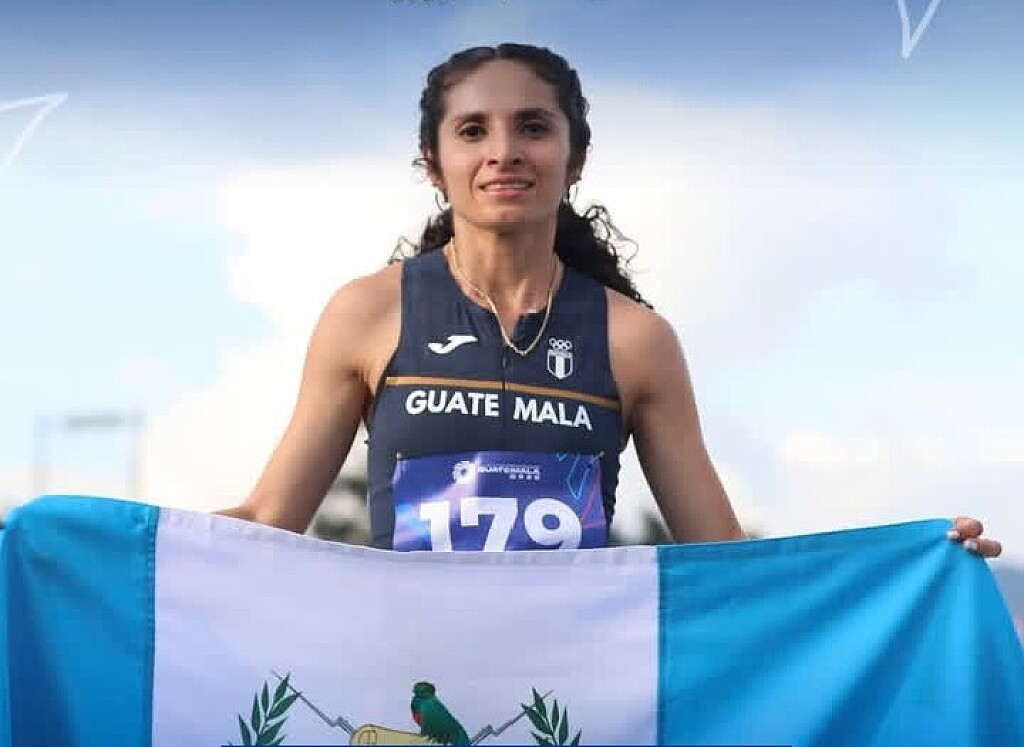
Historic Breakthrough in Barcelona: Viviana Aroche Smashes Central American Half Marathon Record
Guatemala has a new distance queen. On the streets of Barcelona, Viviana Aroche delivered the performance of her life, clocking a sensational 1:11:27 in the half marathon to set both a new Guatemalan national record and a new Central American record. The landmark run not only elevates her status in the region but also places her firmly among the most formidable distance athletes in the Americas this season.
Aroche’s historic mark eclipses the previous Central American record of 1:12:46 set by Costa Rica’s Diana Bogantes in Boston on November 10, 2024. By slicing more than a minute off that standard, the Guatemalan star redefined the limits of regional excellence in the 21.097-kilometer discipline.
Her race unfolded with remarkable precision and composure. According to official tracking data from the Mitja Marató Barcelona, Aroche passed 5km in 17:09, signaling controlled aggression from the gun. She reached 10km in 34:07 and 15km in 51:07, maintaining an impressive rhythm that balanced speed with endurance. At 20km, the clock read 1:08:01 — the record already within reach. She powered through the final stretch to stop the clock at 1:11:27, sealing a breakthrough performance that will resonate across Central America.
This latest achievement further strengthens Aroche’s remarkable résumé. Over the past few seasons, she has methodically rewritten Guatemala’s record books, from middle-distance track events to long-distance road racing. Her progression — spanning from 800 meters to the half marathon — reflects rare versatility and a steady evolution toward endurance dominance. With national records in multiple disciplines and now ownership of every Central American best from 3000 meters to the half marathon, Aroche has constructed a legacy that transcends a single race.
Beyond the numbers, this run symbolizes a powerful moment for Guatemalan athletics. It showcases the emergence of a generation capable of competing — and winning — on international roads. In Barcelona, under clear skies and fast conditions, Viviana Aroche did more than break a record. She lifted a region, inspiring a nation and confirming that Central American distance running is entering a bold new era.
WOMEN’S TOP 10 — OFFICIAL RESULTS
1. Loice Chemnung (KEN) – 1:04:01 (Course Record)
2. Weini Kelati Frezghi (USA) – 1:06:03
3. Diniya Kedir Aboraya (ETH) – 1:06:27
4. Taylor Roe (USA) – 1:06:50
5. Magdalene Yeko Masai (KEN) – 1:07:42
6. Domenika Mayer (GER) – 1:08:06
7. Netsanet Desta Gebre (ETH) – 1:08:10
8. Mekdes Woldu (FRA) – 1:08:36
9. Samantha Harrison (GBR) – 1:09:00
10. Melody Julien (FRA) – 1:09:38
by Erick Cheruiyot for My Best Runs.
Login to leave a comment
Teen Star Cooper Lutkenhaus Breaks U18 World Record in 600m at the 118th Millrose Games Feb 1
LNEW YORK (Feb. 1, 2026) — At one of the most prestigious indoor track meets of the season, Cooper Lutkenhaus, just 17 years old, delivered a breathtaking performance in the men’s 600 meters at the Millrose Games.
In the 118th edition of the historic meet at The Armory in New York City, Lutkenhaus powered to victory in 1:14.15, setting a World Under-18 record, posting the 2026 world lead, and running one of the fastest 600m times in history. His mark also stands as the fastest indoor 600m ever by a high school-aged athlete.
What made the performance even more remarkable is that this was his first indoor race as a professional athlete.
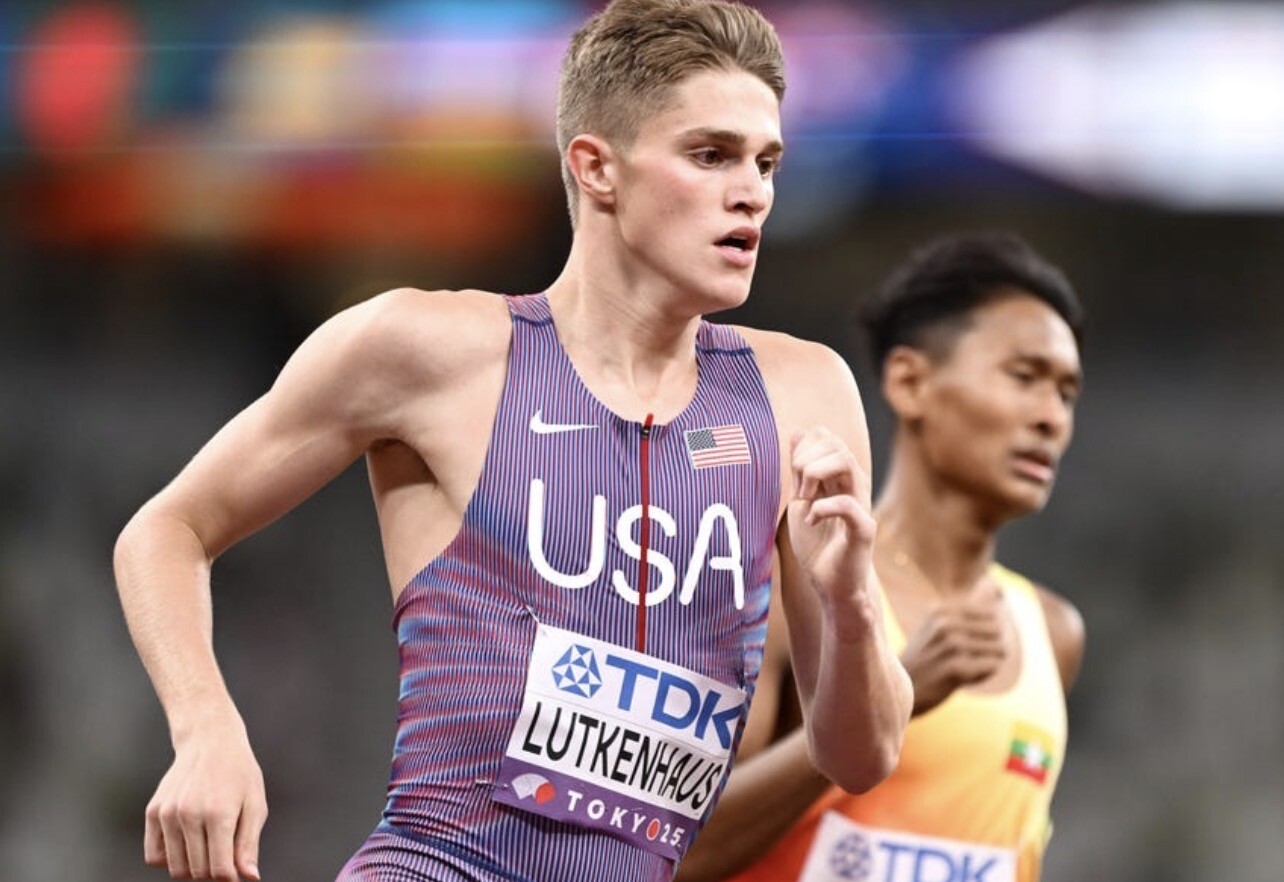
The 600m is a demanding distance that blends raw sprint speed with middle-distance strength. In a race stacked with emerging and established talent, Lutkenhaus stayed composed through the early laps, measured his effort smoothly, and unleashed a powerful kick in the final stretch to secure the win.
When the clock hit 1:14.15, it marked not only a new record but also a statement performance — one that placed him sixth on the all-time global list at the event.
Lutkenhaus’ time eclipsed all other competitors on the night, with runner-up Jenoah McKiver posting a personal best of 1:14.77.
This run at Millrose puts a spotlight on one of the most exciting young talents in track and field. At just 17, Cooper Lutkenhaus didn’t just win a race — he made history.
by Elam Wangwero for my best runs
Login to leave a comment

NYRR Millrose Games
The Pinnacle of Indoor Track & Field The NYRR Millrose Games, first held in 1908, remains the premier indoor track and field competition in the United States. The 2025 edition will once again bring the world’s top professional, collegiate, and high school athletes to New York City for a day of thrilling competition. Hosted at the New Balance Track &...
more...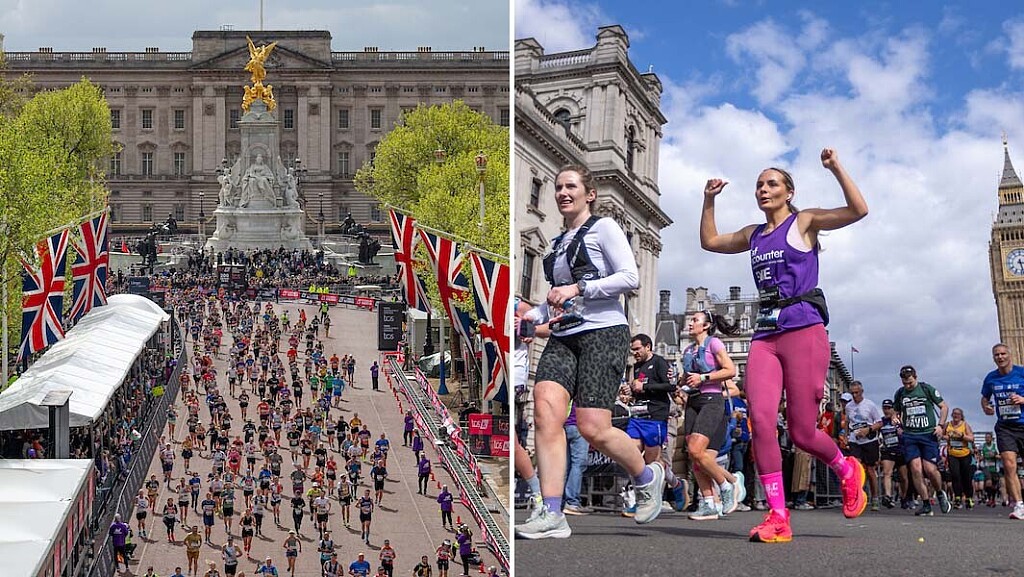
A Dream Showdown Awaits: London Marathon Unveils a Historic Women’s Elite Field
The 2026 TCS London Marathon, scheduled for Sunday, April 26, 2026, is shaping up to be one of the most electrifying races in the event’s storied history, with an elite women’s field that reads like a roll call of modern marathon greatness.
Reigning champion Tigst Assefa returns to London carrying both confidence and unfinished business. The Ethiopian star, whose 2:11:53 personal best ranks among the fastest ever recorded, will once again test her limits on the streets of the British capital. But this time, the challenge is even steeper.
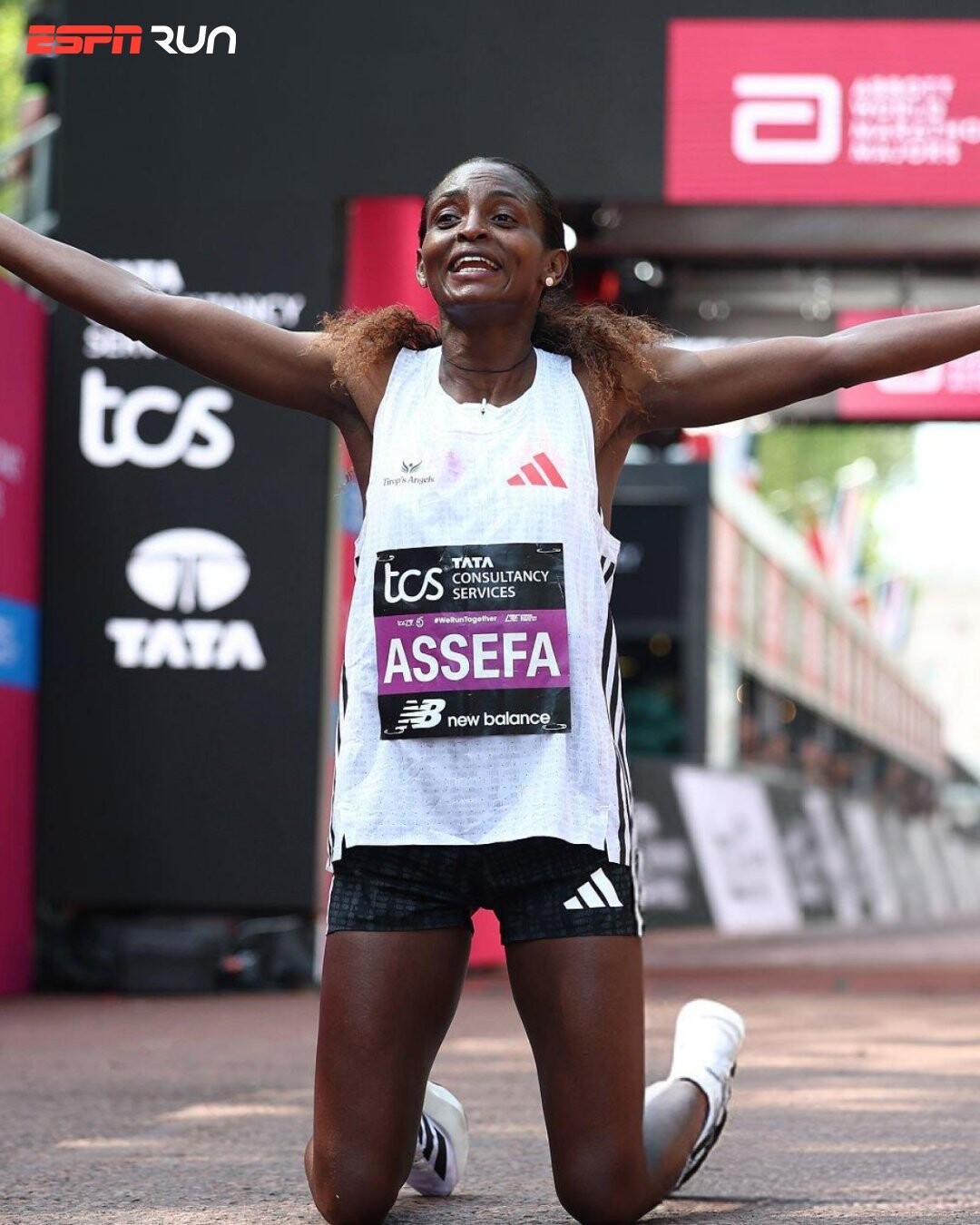
Standing in her way are the current Olympic and world marathon champions, Sifan Hassan and Peres Jepchirchir, setting the stage for a clash that fans have long dreamed of. Hassan’s fearless racing style and unmatched versatility have redefined what is possible in distance running, while Jepchirchir’s tactical brilliance and finishing power make her one of the most dangerous competitors over 42.195 kilometers.
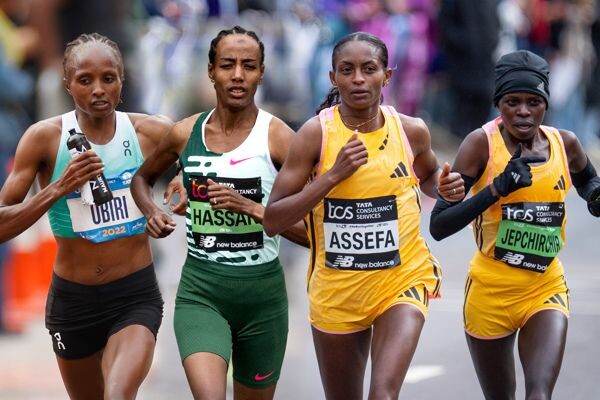
Adding another layer of intrigue is Hellen Obiri, the double New York City and Boston Marathon champion, who will be making her long-awaited London Marathon debut. Already proven on the toughest courses in the world, Obiri’s arrival in London raises expectations and deepens an already stacked field.
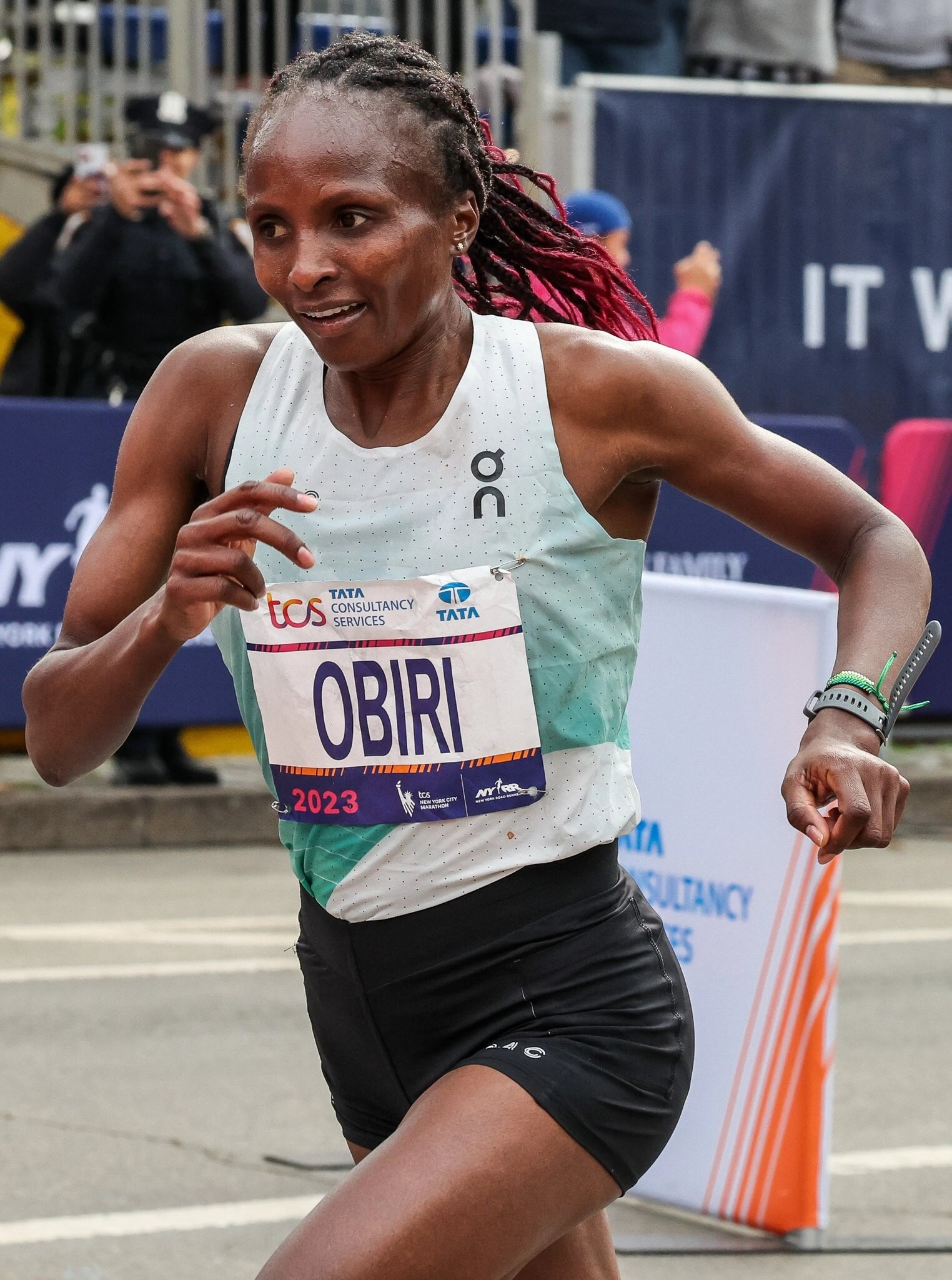
Experience and consistency also feature prominently through Megertu Alemu, a familiar force in major marathons. With four podium finishes at World Marathon Majors—two of them in London—Alemu knows exactly what it takes to perform on this stage and could once again play a decisive role.
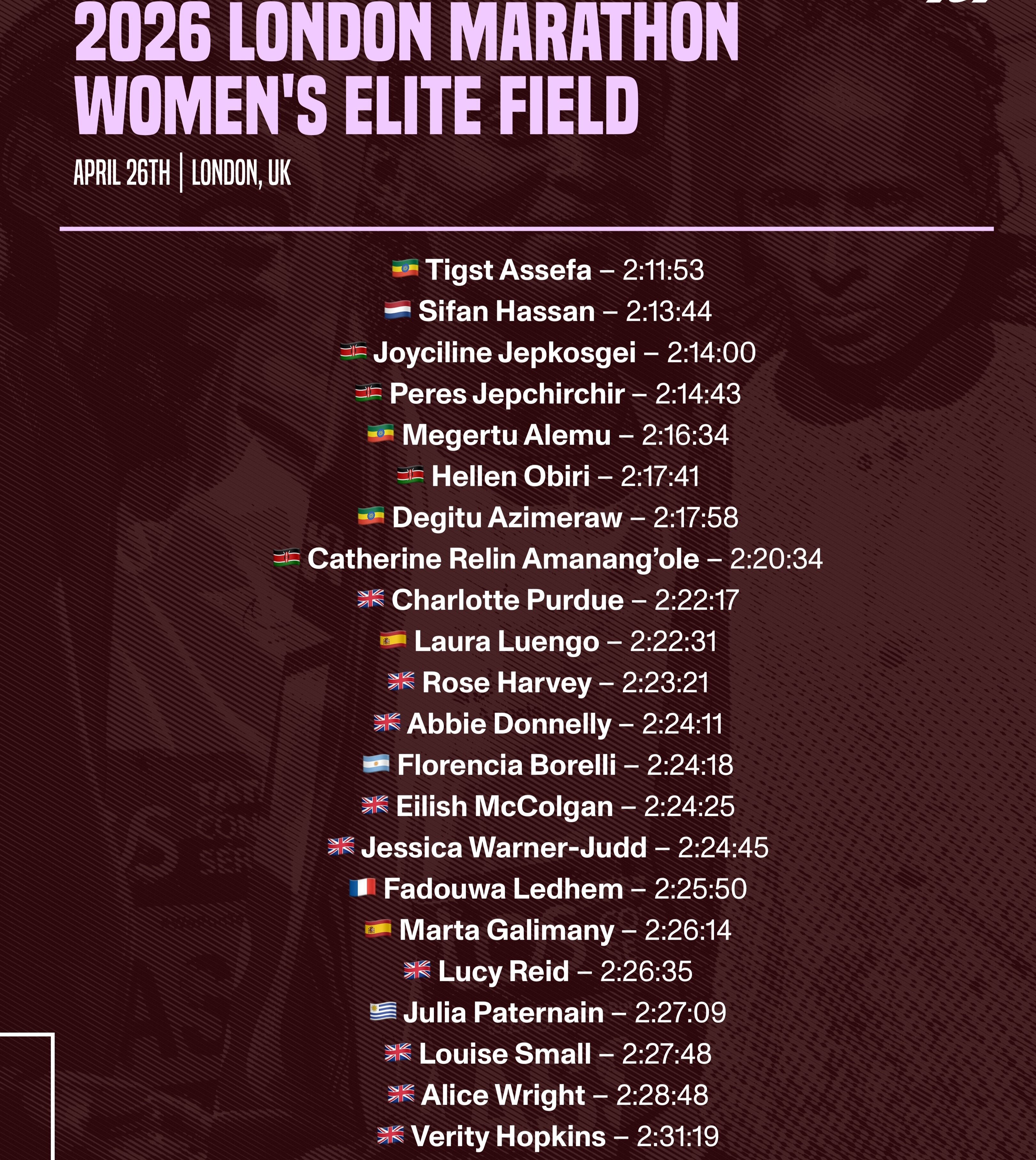
The depth does not end there. Former London winner Joyciline Jepkosgei, along with accomplished athletes such as Degitu Azimeraw, Catherine Amanang’ole, Charlotte Purdue, and Laura Luengo, ensures that no moment of the race will be predictable. From the opening kilometers to the final stretch along The Mall, pressure will be relentless.
More than just a race, the April 26, 2026 showdown promises a celebration of excellence, resilience, and fearless competition. With world-class champions, debutants hungry for glory, and proven contenders ready to strike, this year’s women’s race is not merely about winning—it is about redefining greatness on one of marathon running’s biggest stages.
The countdown to London has truly begun.
by Erick Cheruiyot for My Bestruns.
Login to leave a comment
TCS London Marathon
Since its inaugural edition on March 29, 1981, the TCS London Marathon has grown into one of the world's most prestigious road races, blending elite competition with an extraordinary charitable legacy. Founded by former Olympic champion and journalist Chris Brasher alongside Welsh athlete John Disley, the event has been staged every year and has been held in the spring annually...
more...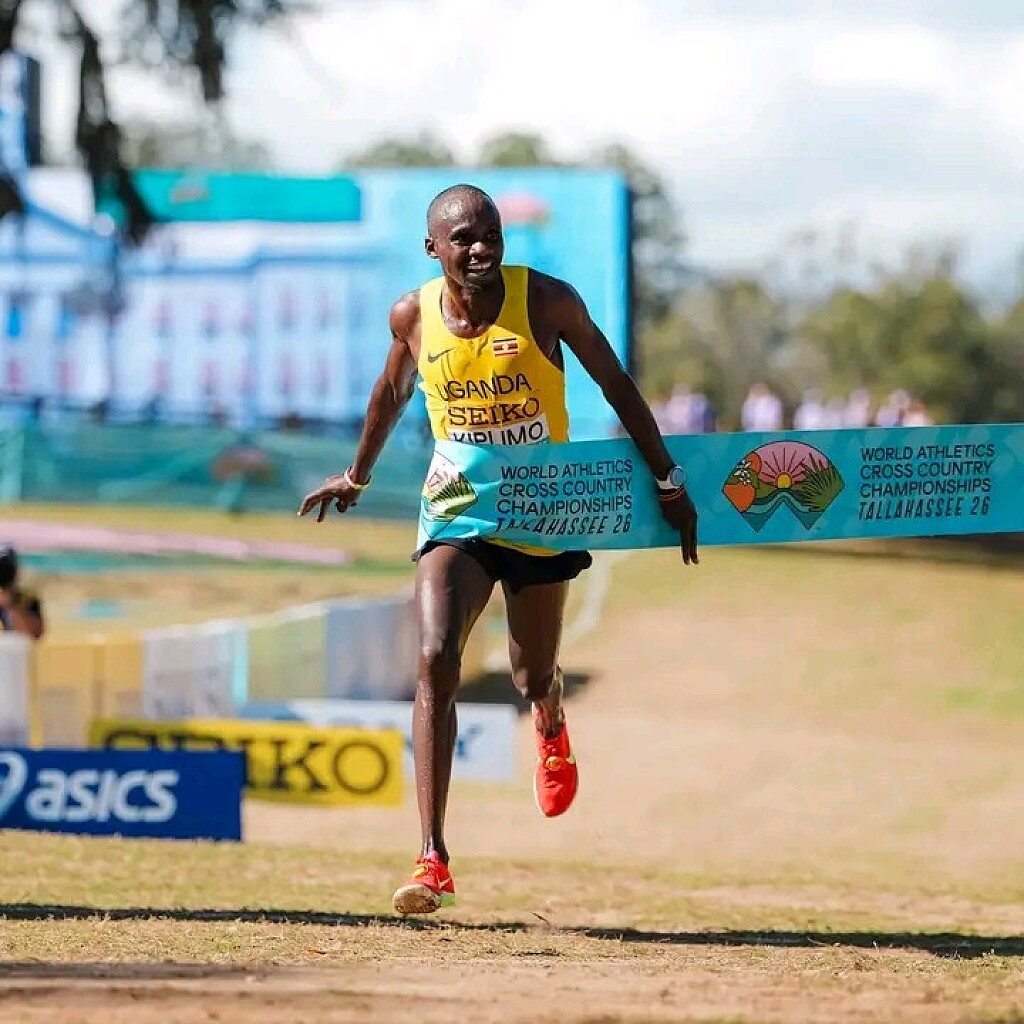
Jacob Kiplimo Reigns Supreme as the Undisputed King of Cross Country
The men’s senior 10km final delivered exactly what fans around the world hoped for—intensity, courage, and a breathtaking display of class from one extraordinary athlete. On a demanding course and under relentless pressure, Uganda’s Jacob Kiplimo once again reminded the world why his name is etched among the greats of cross country running.
For much of the race, a tightly packed lead group moved with caution, each contender waiting for the decisive moment. Ethiopia’s Berihu Aregawi and Kenya’s Daniel Simiu Ebenyo looked composed, matching every surge and refusing to blink. But champions are defined by timing, and with just two kilometers remaining, Kiplimo chose his moment perfectly.
What followed was ruthless brilliance.
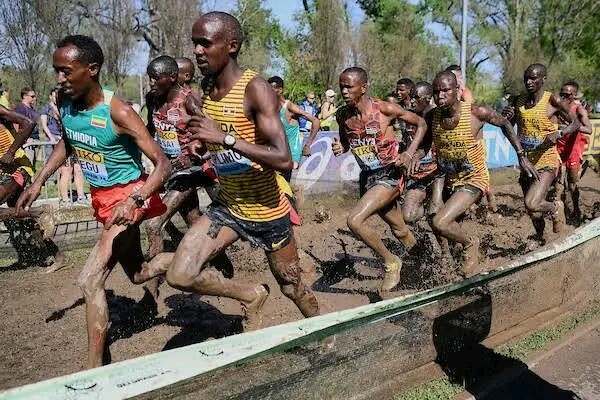
With a sudden and devastating change of rhythm, Kiplimo shifted gears and simply ran away from the field. His acceleration was clean, controlled, and utterly decisive—within seconds, the gap opened, and the race was effectively over. No one could respond. No one could follow. The Ugandan star powered on alone, floating over the final stretch with authority and confidence.
He crossed the line in 28:18, arms raised, sealing a glorious victory for Uganda and reaffirming his status as the master of cross country. Behind him, Aregawi fought valiantly to secure silver in 28:36, while Ebenyo showed trademark grit to claim bronze for Kenya in 28:45 after a hard-fought battle through the closing stages.
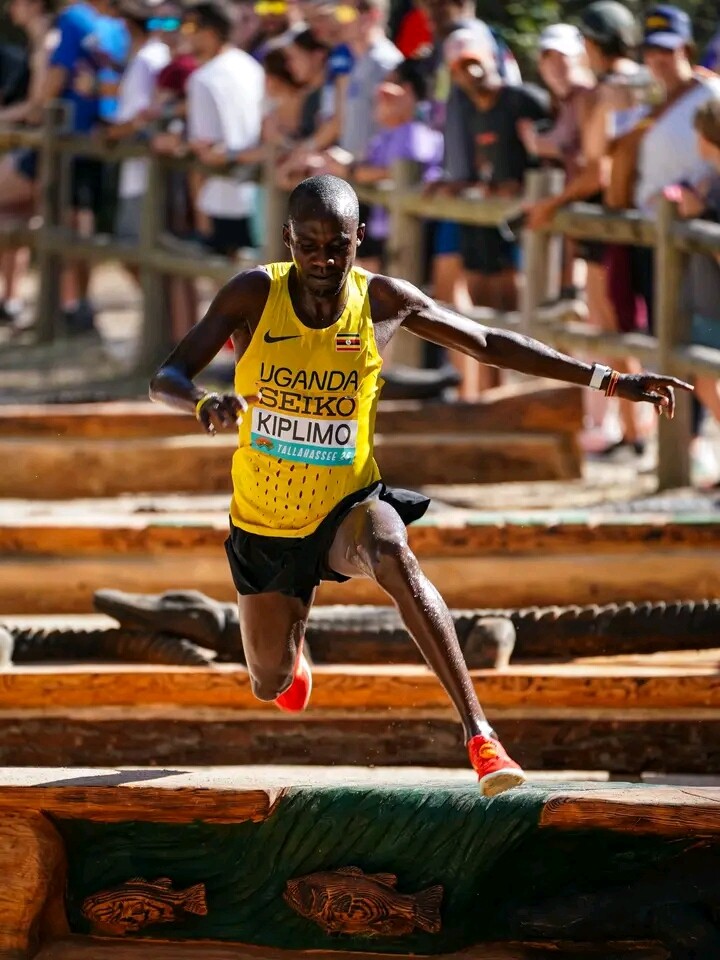
The depth of the field was remarkable, with athletes from Africa, Europe, Oceania, and the Americas filling the top 30—proof of the global strength of the event. Yet above them all stood Kiplimo, untouchable when it mattered most.
This was not just a win. It was a statement.
In a race packed with talent and ambition, Jacob Kiplimo delivered a performance of absolute dominance—calm under pressure, explosive at the critical moment, and supreme to the finish. Once again, the cross country crown belongs to Uganda’s golden champion.
by Erick Cheruiyot for My Bestruns.
Login to leave a comment
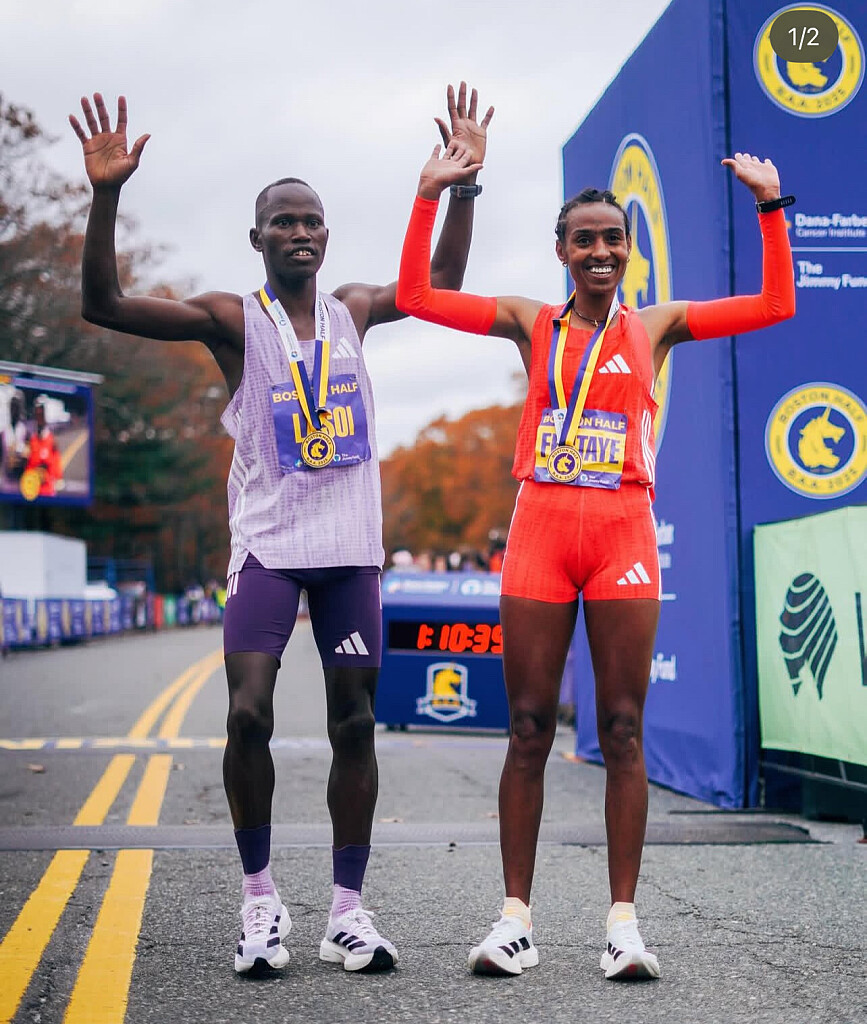
Fantaye Belayneh Repeats, Isaia Lasoi Shines at the 2025 Boston Half Marathon
Boston’s Emerald Necklace once again set the stage for one of the country’s most scenic and competitive half marathons on Sunday morning. Over 7,000 runners lined up at Franklin Park for the 2025 Boston Half Marathon, where Ethiopia’s Fantaye Belayneh successfully defended her women’s title and Kenya’s Isaia Lasoi powered to an impressive victory in the men’s race. Each champion earned $15,000 for their wins.
Men’s Race – Lasoi Dominates in 1:00:59
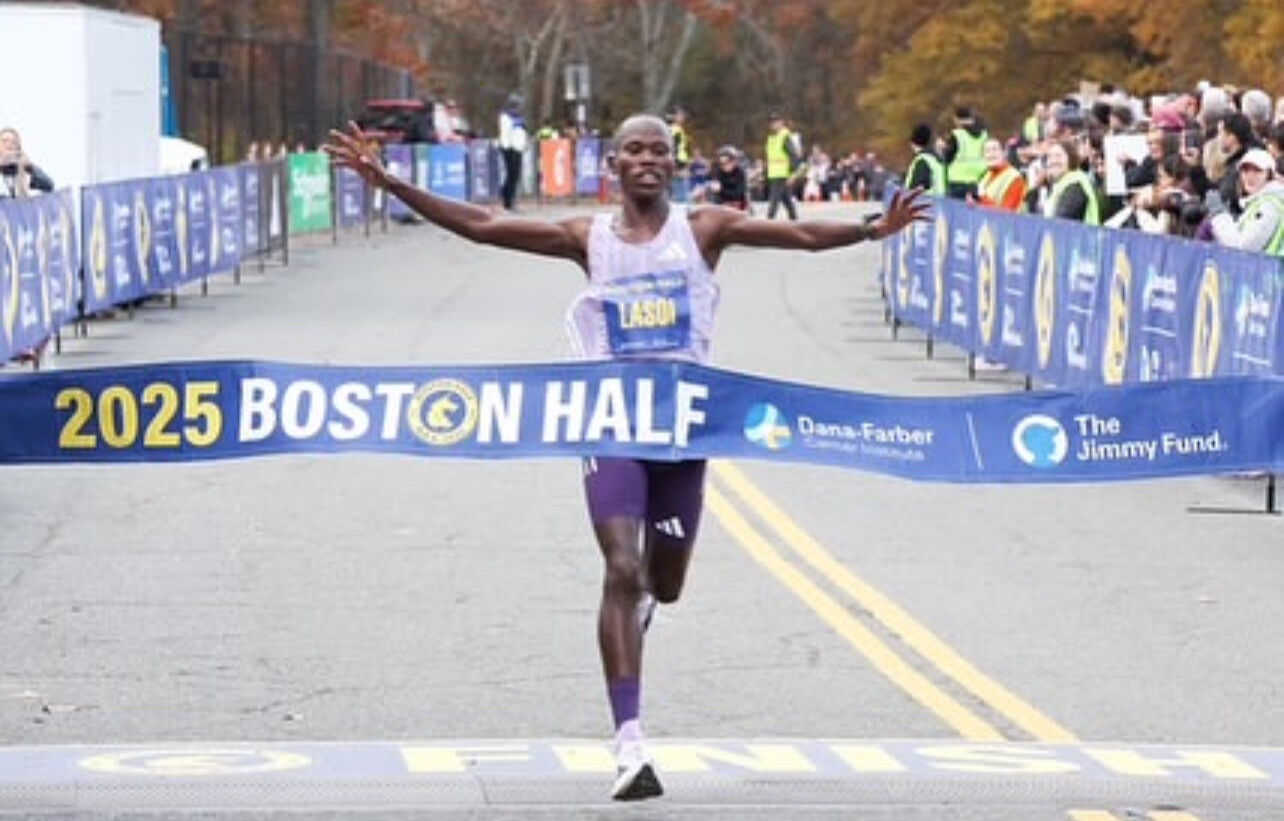
Kenya’s Isaia Lasoi delivered a commanding performance, clocking 1:00:59 to capture the men’s crown and the $15,000 winner’s prize. The race unfolded at a fast but controlled pace through the park-lined streets, with Lasoi making his decisive move in the final 5K. Uruguay’s Santiago Catrofefollowed in 1:01:23, while Kenya’s Andrea Kiptoo secured third in 1:01:30.
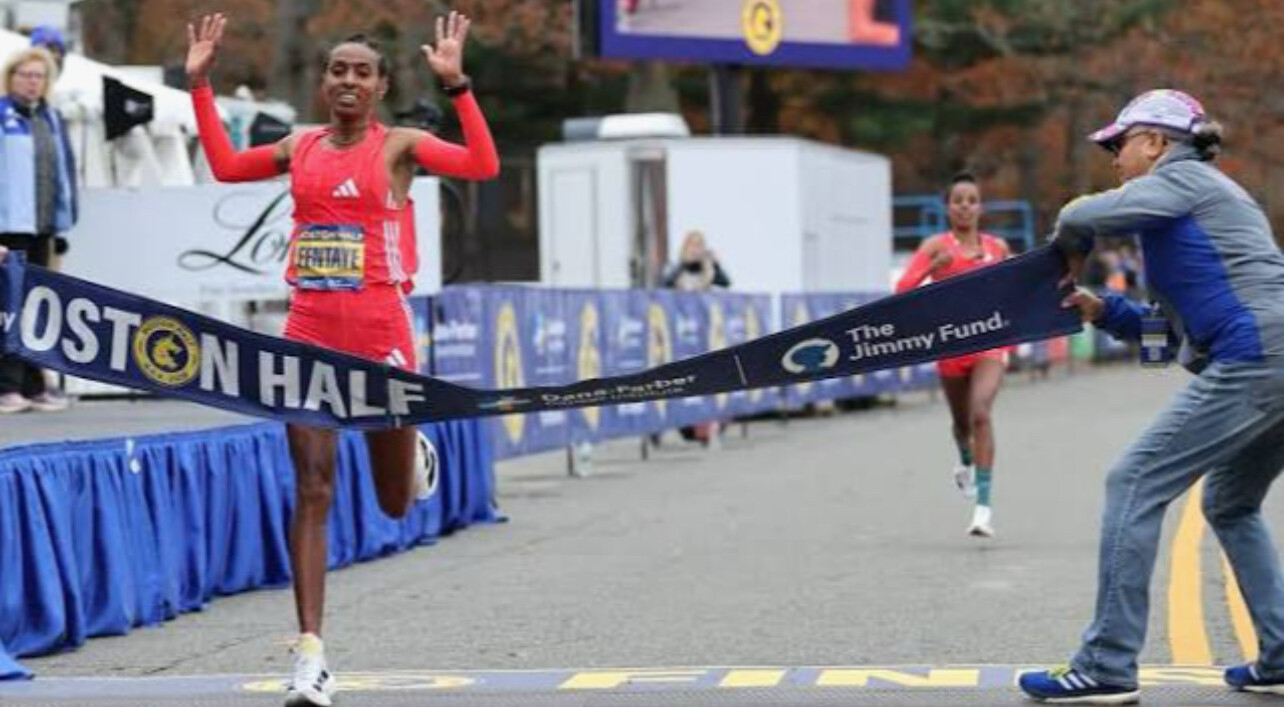
Lasoi’s sub-61 performance on Boston’s undulating course reinforced his growing status among Kenya’s new generation of road racing talent. His powerful stride and tactical patience over the final stretch left no doubt about his supremacy.
Women’s Race – Belayneh Holds Off Wudu in a Thrilling Finish
In the women’s division, Ethiopia’s Fantaye Belayneh out-kicked her compatriot Melknat Wudu in a dramatic finish, crossing the line in 1:08:51 — just two seconds ahead of Wudu (1:08:53). Kenya’s Evaline Chirchir completed the podium in 1:09:01. Belayneh’s repeat win also earned her $15,000, matching Lasoi’s prize.
Her victory made her the first woman since Joan Chelimo Melly (2017–2018) to win back-to-back Boston Half titles. With calm focus and a perfectly timed surge in the final meters, Belayneh turned a shoulder-to-shoulder battle into a defining moment of determination and poise.
Course and Conditions
Runners traversed Boston’s “Emerald Necklace,” a 13.1-mile loop of winding parkways and rolling roads connecting the city’s most picturesque green spaces. Conditions were ideal — cool temperatures and light winds — creating the perfect backdrop for fast times and fierce competition.
Race Legacy and Global Field
The Boston Half Marathon continues to attract elite international athletes alongside thousands of passionate runners from around the world. With its blend of competition, camaraderie, and New England charm, the event remains one of the premier fall half marathons in the United States.
Belayneh and Lasoi’s victories underscored the enduring global depth of distance running — and confirmed once again that Boston’s roads remain among the finest proving grounds for champions.
by Boris Baron
Login to leave a comment
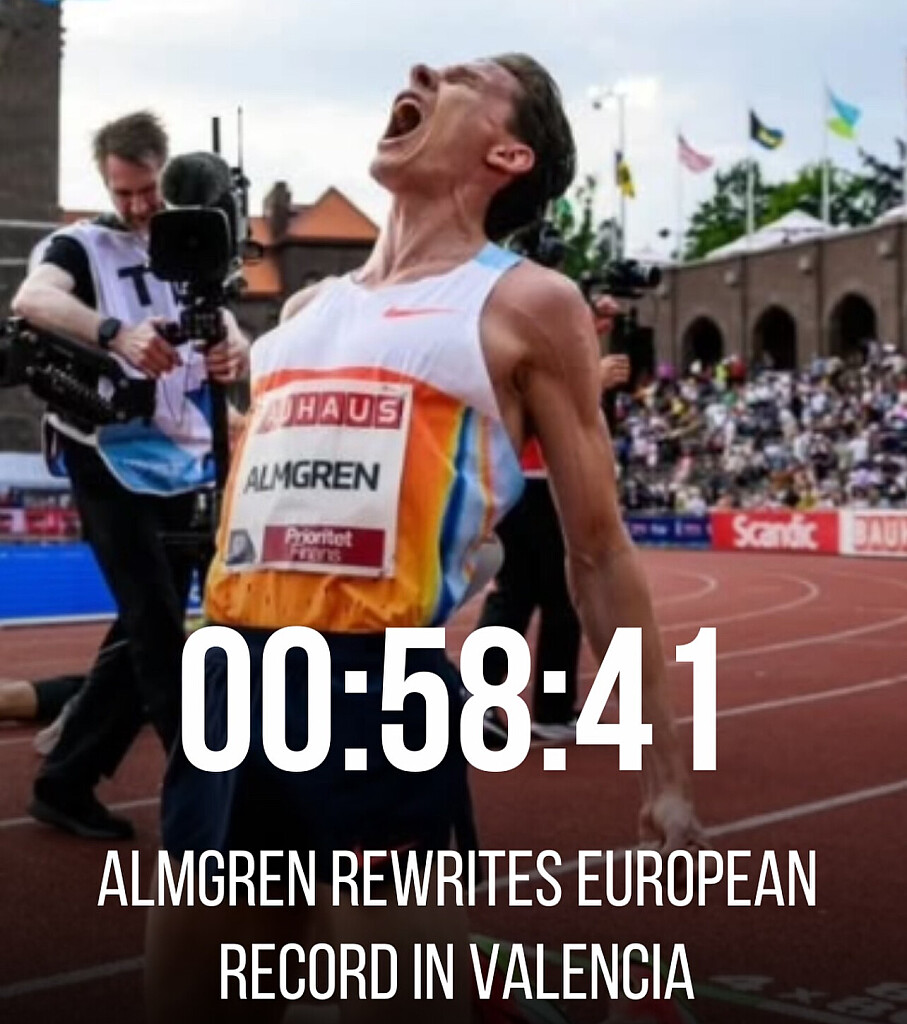
Andreas Almgren Breaks European Record as Agnes Ngetich Runs Second Fastest Half Marathon Ever in Valencia
Valencia, Spain — October 26, 2025 - The 2025 Valencia Half Marathon Trinidad Alfonso Zurich once again lived up to its global reputation as the fastest half marathon on Earth. The flat, coastal course produced extraordinary performances from both the men’s and women’s elite fields — highlighted by Sweden’s Andreas Almgren becoming the first European ever to break 59 minutes, and Kenya’s Agnes Jebet Ngetich clocking the second-fastest women’s time in history.
MEN’S RACE: ALMGREN MAKES HISTORY AS KEJELCHA DOMINATES
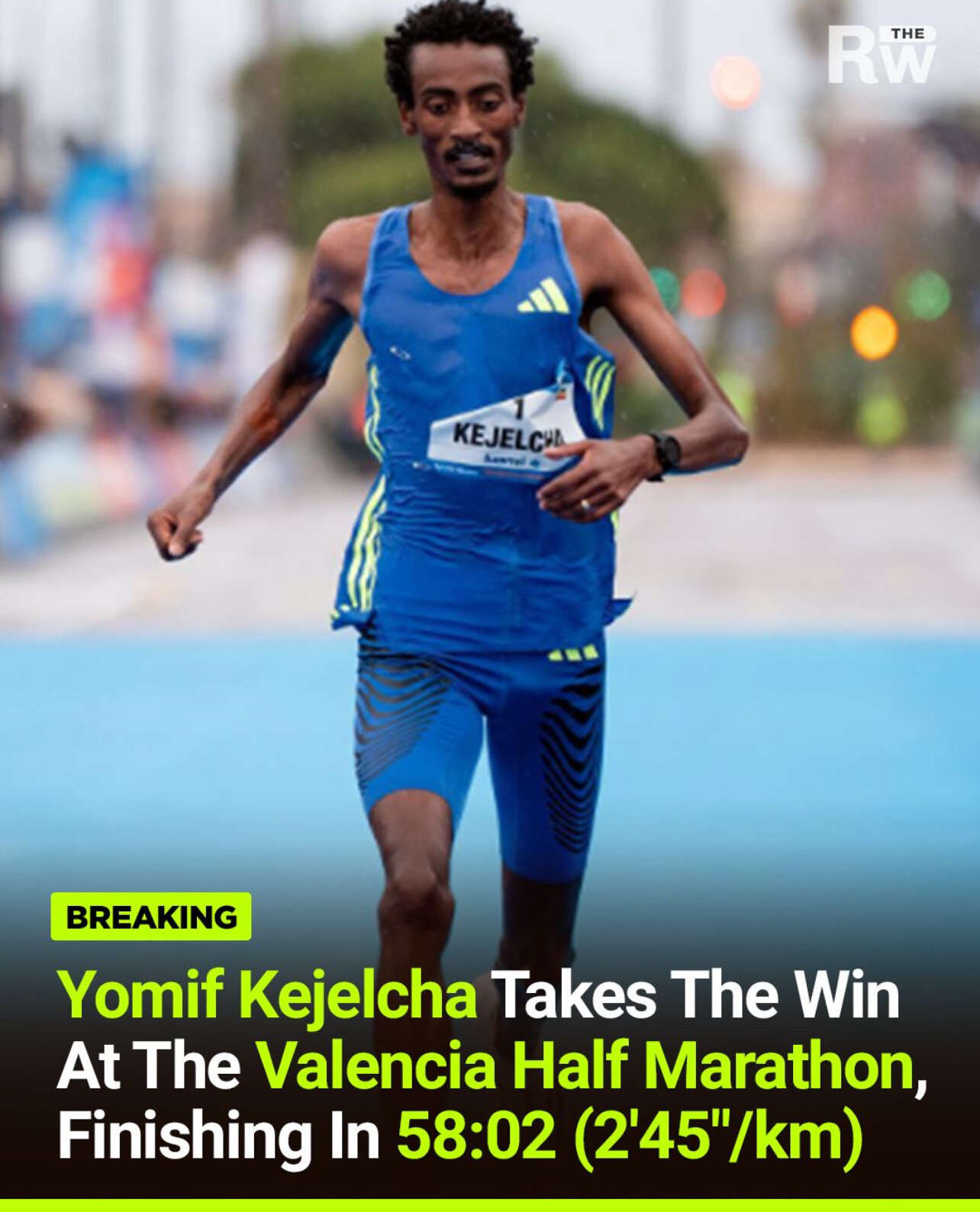
Ethiopia’s Yomif Kejelcha retained his Valencia title with a blistering 58:02, further cementing his place among the all-time greats. Though it was outside the current world record of 56:42, set earlier this year by Uganda’s Jacob Kiplimo at the Barcelona Half Marathon, Kejelcha’s effort was commanding from start to finish.
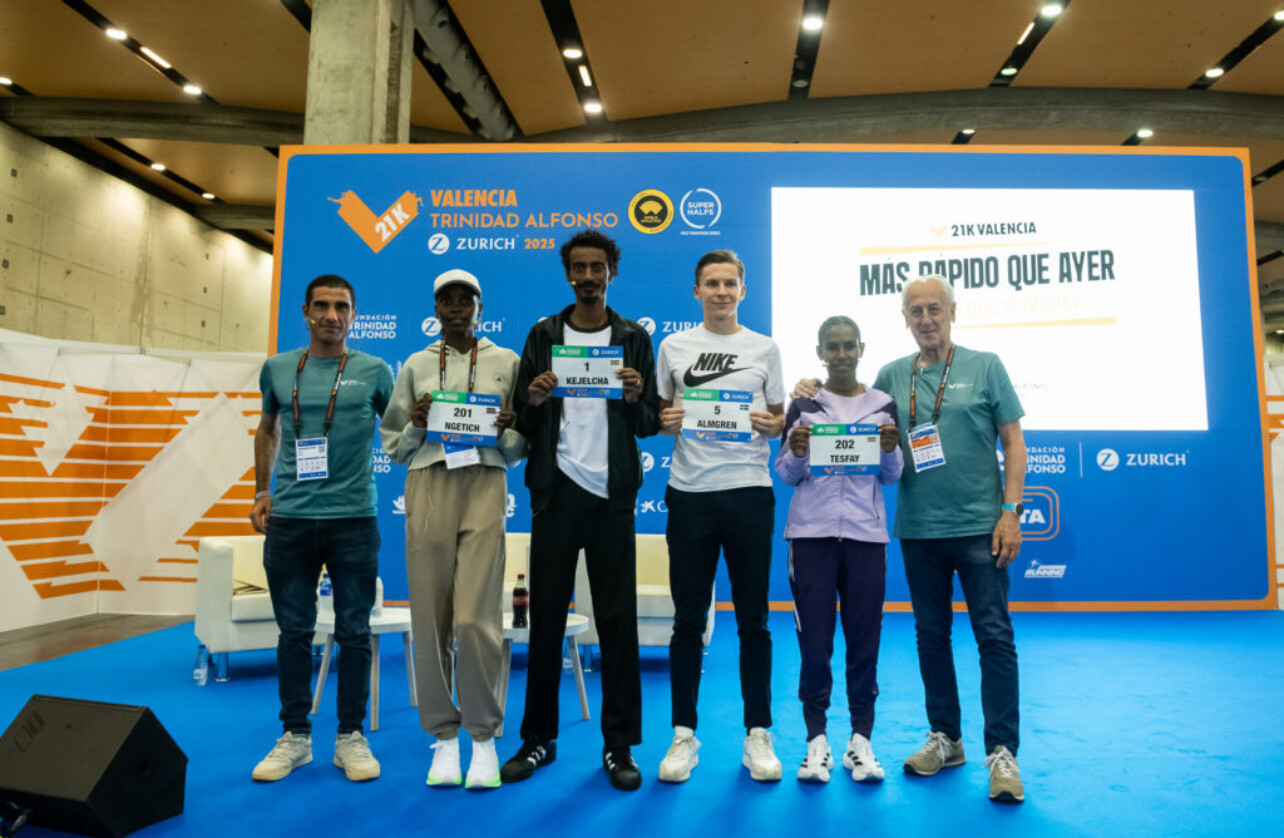
Running in his slipstream, Rodrigue Kwizera of Burundi and Brian Kibor of Kenya both crossed in 58:39, but the day’s biggest breakthrough came from Sweden’s Andreas Almgren, who stormed home in 58:41 — a stunning new European record.
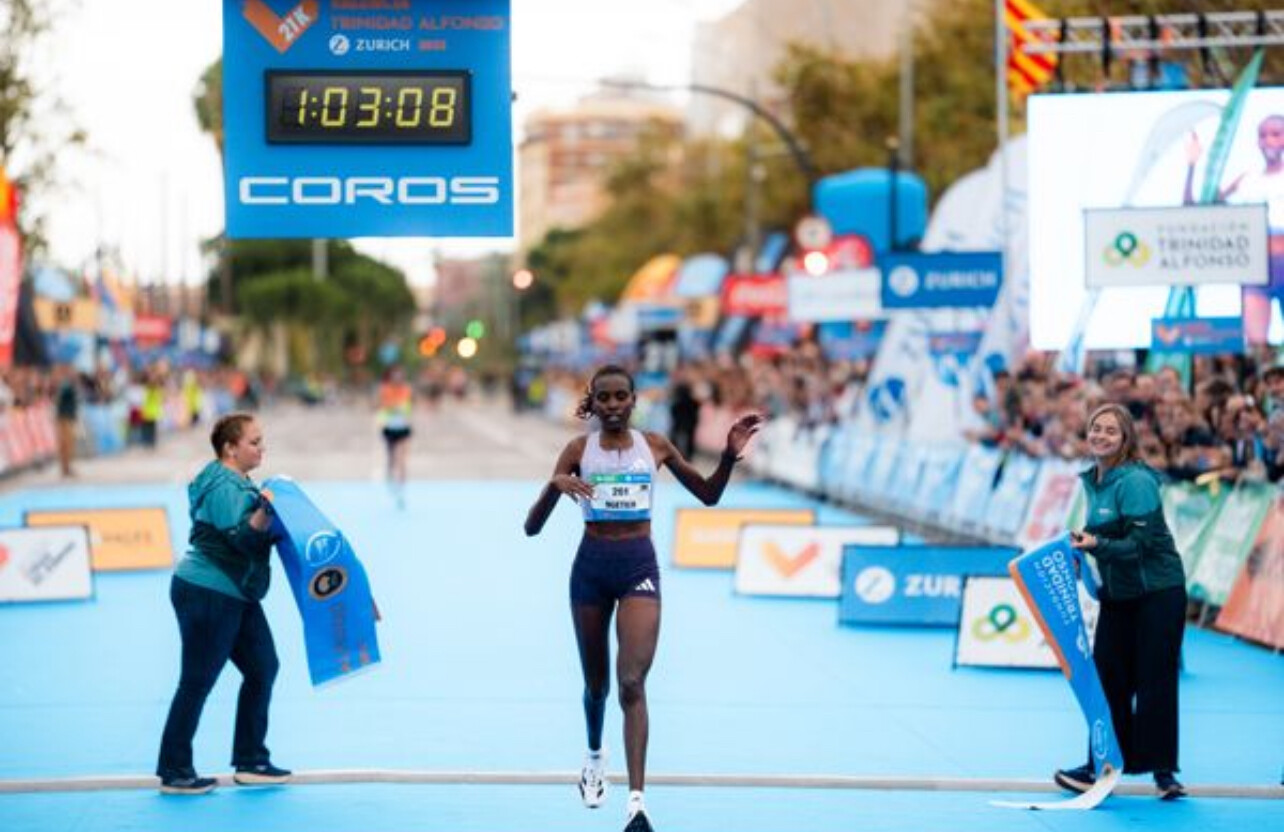
The 29-year-old Almgren shattered the previous continental best of 59:13, set by Julien Wanders in 2019, and became the first European athlete in history to dip under the 59-minute barrier.
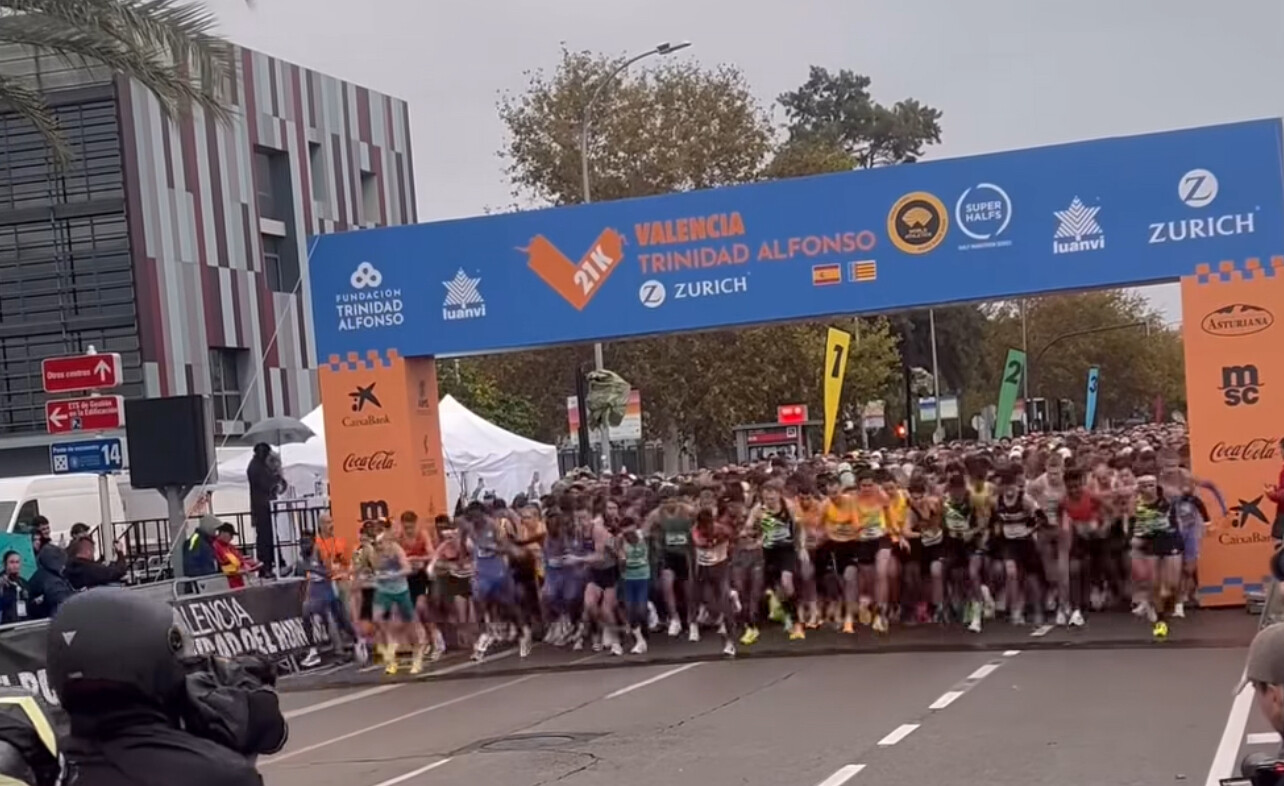
“This means everything,” Almgren said after the finish. “I came to Valencia knowing it was the place for fast times, but to run 58:41 — it’s beyond my dreams. Europe is back in the game.”
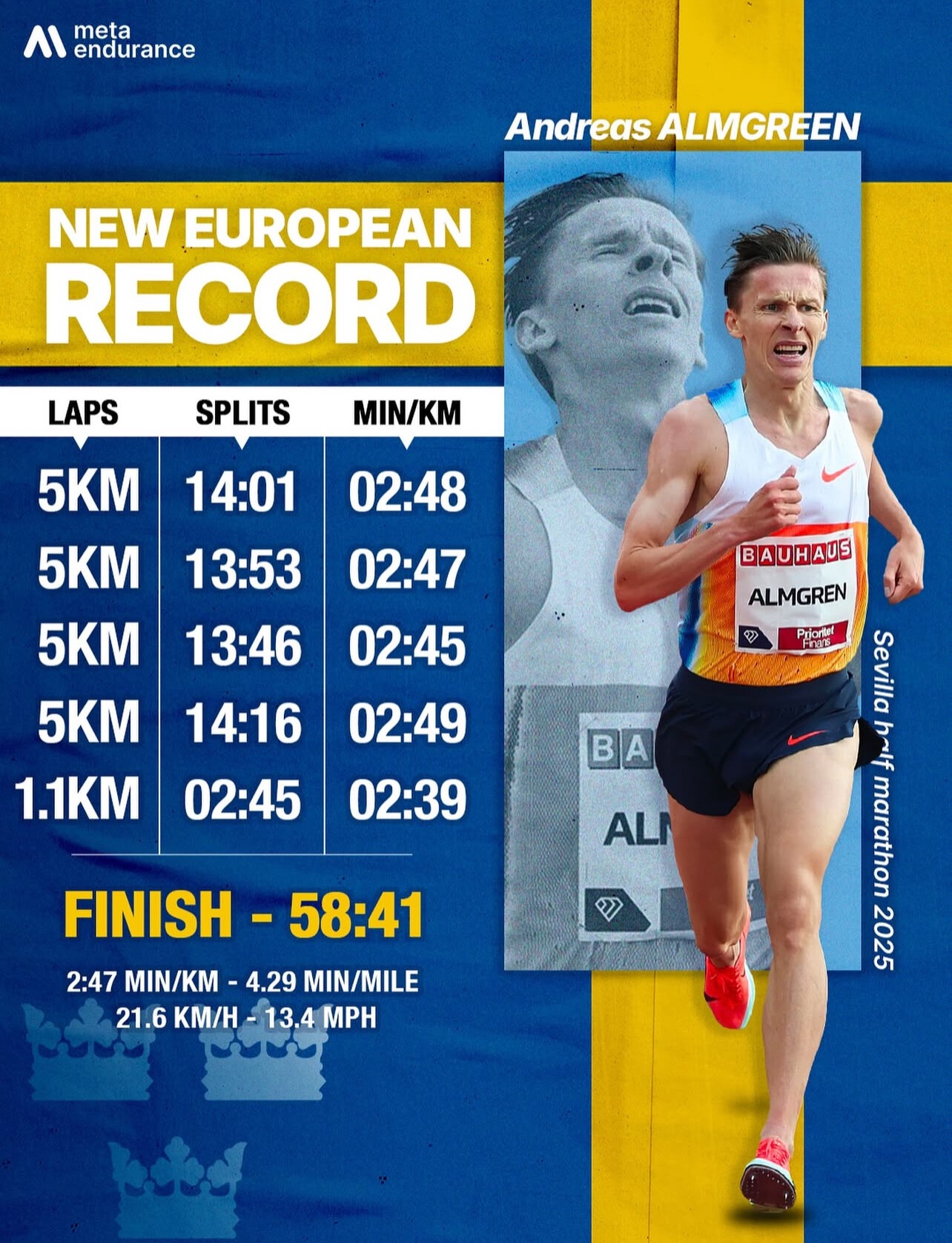
Kejelcha went out hard with early splits suggesting another sub-58 performance might be possible, hitting 10K in around 27:13. Slight headwinds in the final kilometers kept him just off world-record pace, but his margin of control was never in doubt.
WOMEN’S RACE: NGETICH CLOSES IN ON THE WORLD RECORD
Kenya’s Agnes Jebet Ngetich produced yet another masterpiece on the streets of Valencia, winning the women’s title in 1:03:08, the second-fastest time ever recorded for the half marathon. Only Letesenbet Gidey’s world record of 1:02:52, also set in Valencia in 2021, stands ahead of her on the all-time list.
Ngetich went out aggressively, passing 10K in 29:28, well inside world-record pace. But a headwind over the final five kilometers cost her valuable seconds. Despite missing the record, her performance once again showcased her dominance and her special connection with the streets of Valencia, where she has repeatedly delivered career-defining runs.
“Valencia brings out the best in me,” Ngetich said. “I felt strong, and even though I missed the record, I know it’s within reach. I’ll be back.”
Ethiopia’s Fotyen Tesfay took second in 1:05:11, while Kenya’s Veronica Loleo ran a superb personal best of 1:05:46 to finish third. The top performances underscored the remarkable depth and quality in women’s distance running today.
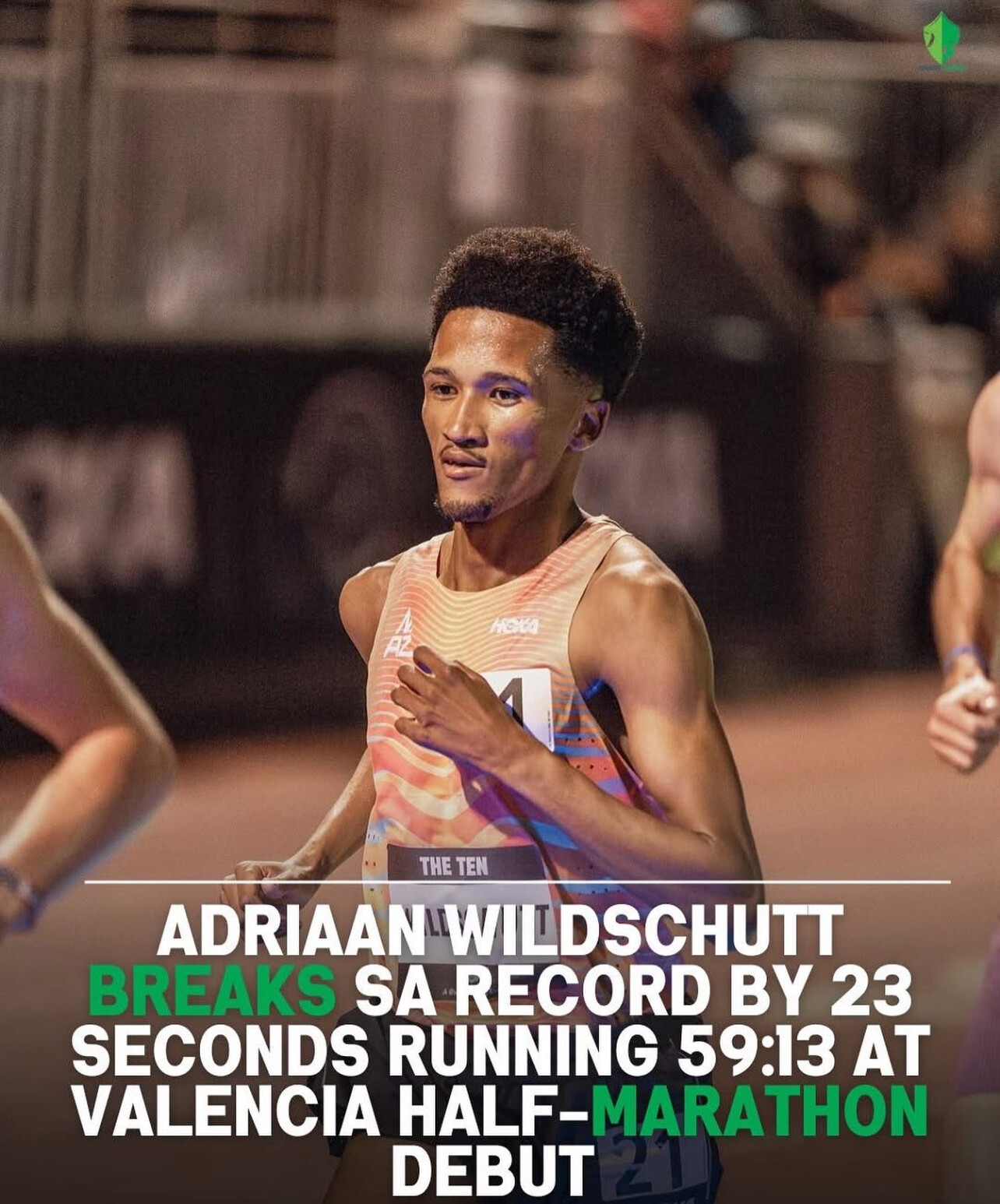
RACE CONDITIONS AND COURSE
Cool temperatures, light humidity, and minimal wind set the stage for another record-friendly day in Valencia. The famously flat and fast course — celebrated for its long straightaways and sea-level setting — once again proved why it’s the go-to destination for athletes chasing lifetime bests and global marks.
Pacemakers set an aggressive tempo from the start in both races, and despite minor breezes in the final stretch, the results confirmed that Valencia remains the gold standard for road racing worldwide.
TOP RESULTS
Men’s Elite Results
1. Yomif Kejelcha (Ethiopia) – 58:02
2. Rodrigue Kwizera (Burundi) – 58:39
3. Brian Kibor (Kenya) – 58:39
4. Andreas Almgren (Sweden) – 58:41 (European Record)
5. Milkesa Mengesha (Ethiopia) – 59:12
6. Boniface Kibiwott (Kenya) – 59:16
7. Sebastian Sawe (Kenya) – 59:22
8. Mohamed Essa (Morocco) – 59:45
9. Tadese Worku (Ethiopia) – 59:58
10. Gabriel Geay (Tanzania) – 1:00:02
Women’s Elite Results
1. Agnes Jebet Ngetich (Kenya) – 1:03:08 (Second-fastest time ever)
2. Fotyen Tesfay (Ethiopia) – 1:05:11
3. Veronica Loleo (Kenya) – 1:05:46 (Personal Best)
4. Irine Cheptai (Kenya) – 1:06:03
5. Melat Kejeta (Germany) – 1:06:37
6. Viola Chepngeno (Kenya) – 1:06:44
7. Tsige Haileslase (Ethiopia) – 1:06:56
8. Eilish McColgan (Great Britain) – 1:07:09
9. Selly Chepyego (Kenya) – 1:07:16
10. Marta Galimany (Spain) – 1:08:21
WHY VALENCIA CONTINUES TO INSPIRE THE WORLD
For more than a decade, Valencia has been the epicenter of half-marathon excellence. From Gidey’s women’s world record in 2021, to Kandie’s men’s mark in 2020, to Kejelcha’s near-record runs and now Almgren’s European breakthrough — the course has become synonymous with speed and history.
This year’s edition reinforced three powerful truths about modern distance running:
1. Yomif Kejelcha remains one of the greatest half-marathon specialists of all time.
2. Agnes Jebet Ngetich has brought women’s road racing to new heights, now sitting just seconds shy of a world record.
3. Andreas Almgren’s European record symbolizes a resurgent era for European endurance running.
FINAL SUMMARY
Event: 2025 Valencia Half Marathon Trinidad Alfonso Zurich
Date: October 26, 2025
Location: Valencia, Spain
Men’s Champion: Yomif Kejelcha (Ethiopia) – 58:02
Women’s Champion: Agnes Jebet Ngetich (Kenya) – 1:03:08 (Second-fastest ever)
European Record: Andreas Almgren (Sweden) – 58:41
by Boris Baron
Login to leave a comment

Valencia Half Marathon
The Trinidad Alfonso Valencia Half Marathon has become one of the top running events in the world. Valencia is one of the fastest half marathon in the world. The race, organized by SD Correcaminos Athletics Club, celebrated its silver anniversary in style with record participation, record crowd numbers, Silver label IAAF accreditation and an atmosphere that you will not find...
more...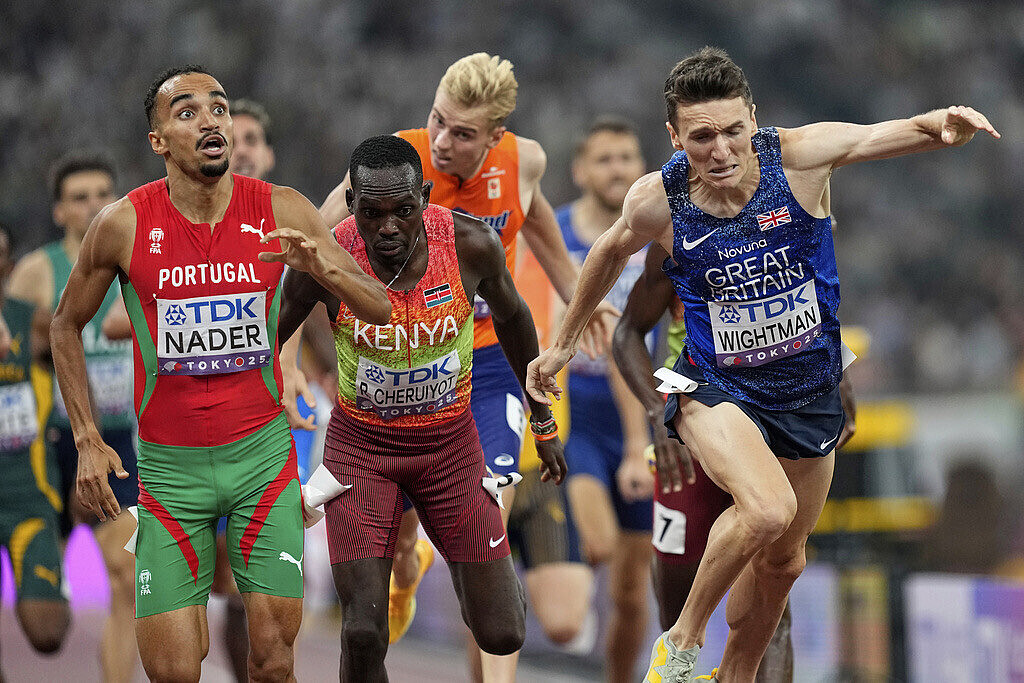
Thrilling Photo Finish and Historic Performances Highlight 1500m Finals in Tokyo
The 1500 meters is often called the “crown jewel” of middle-distance running, a race where tactics, speed, and heart all collide. At the 2025 World Championships in Tokyo, both the men’s and women’s finals lived up to that reputation, delivering drama, comebacks, and world-class performances that will be remembered for years.
Men’s 1500m: A Thrilling Comeback
The men’s final produced one of the most electrifying finishes of the championships. For much of the race, the field remained tightly packed, with every move closely marked. As the bell rang for the final lap, the intensity soared, and the last 200 meters became an all-out sprint for glory.
Portugal’s Isaac Nader surged wide in the final stretch, clawing back ground with each stride before lunging at the line. His daring comeback forced a photo finish against Britain’s Jake Wightman, with both men collapsing past the tape in exhaustion. Officials confirmed Nader as the gold medalist in 3:34.10, edging Wightman’s 3:34.12 by just two hundredths of a second.
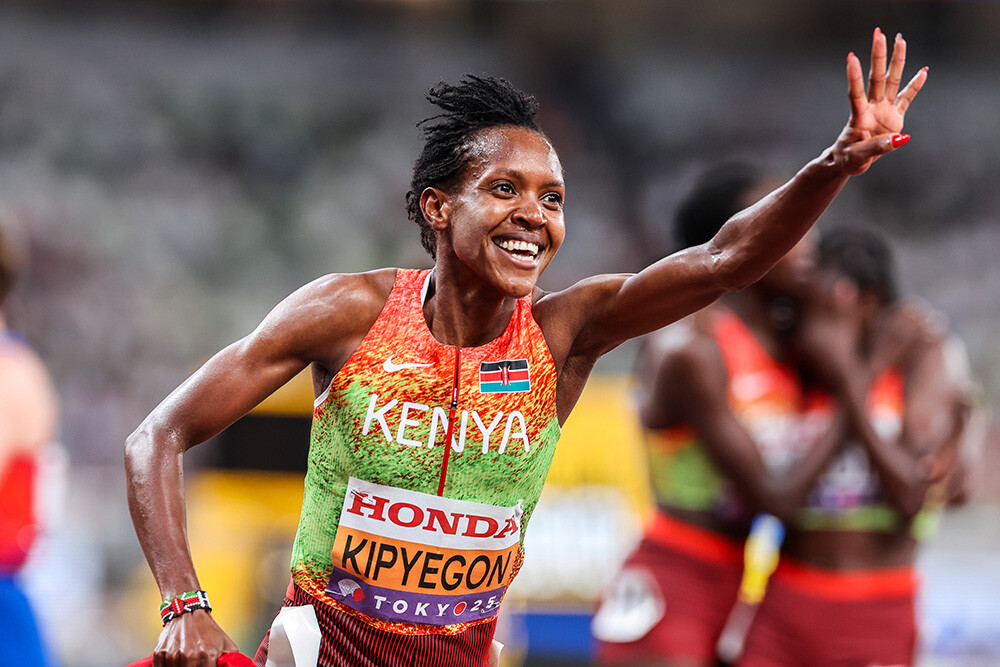
Kenya’s rising star Reynold Cheruiyot powered home for bronze in 3:34.25, while his compatriot and former world champion Timothy Cheruiyot finished fourth in 3:34.50. The razor-thin margins between the top four underscored the depth and unpredictability of today’s global 1500m racing.
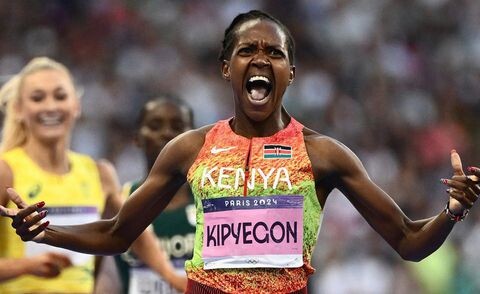
Men’s Top Four – Tokyo 2025
1. Isaac Nader (Portugal) – 3:34.10
2. Jake Wightman (Great Britain) – 3:34.12
3. Reynold Cheruiyot (Kenya) – 3:34.25
4. Timothy Cheruiyot (Kenya) – 3:34.50
Women’s 1500m: Kipyegon Reigns Supreme
If the men’s race was decided by a hair’s breadth, the women’s final was about one athlete stamping her authority on the distance. Kenya’s Faith Kipyegon, already a legend of the sport, once again proved untouchable. She controlled the pace from the front and then crushed the field over the final 300 meters, crossing in a dominant 3:52.15 to secure another world title.
Behind her, teammate Dorcus Ewoi earned silver with a strong 3:54.92, holding off Australia’s Jessica Hull, who thrilled the Tokyo crowd with a gritty run for bronze in 3:55.16. Another Kenyan, Nelly Chepchirchir, rounded out the top four in 3:55.25, making it three Kenyans in the top four.
Women’s Top Four – Tokyo 2025
1. Faith Kipyegon (Kenya) – 3:52.15
2. Dorcus Ewoi (Kenya) – 3:54.92
3. Jessica Hull (Australia) – 3:55.16
4. Nelly Chepchirchir (Kenya) – 3:55.25
A Showcase of Middle-Distance Greatness
Between the men’s photo finish and Kipyegon’s continued dominance, the Tokyo 1500m finals captured everything fans love about this distance: courage, strategy, and the ability to deliver in the biggest moments.
For Isaac Nader, it was the race of his life, as he became Portugal’s first world champion in the 1500m. For Faith Kipyegon, it was another masterclass, further cementing her status as perhaps the greatest middle-distance runner in history. And for the fans, it was proof that the 1500m remains one of the most thrilling events on the track.
by Boris Baron
Login to leave a comment
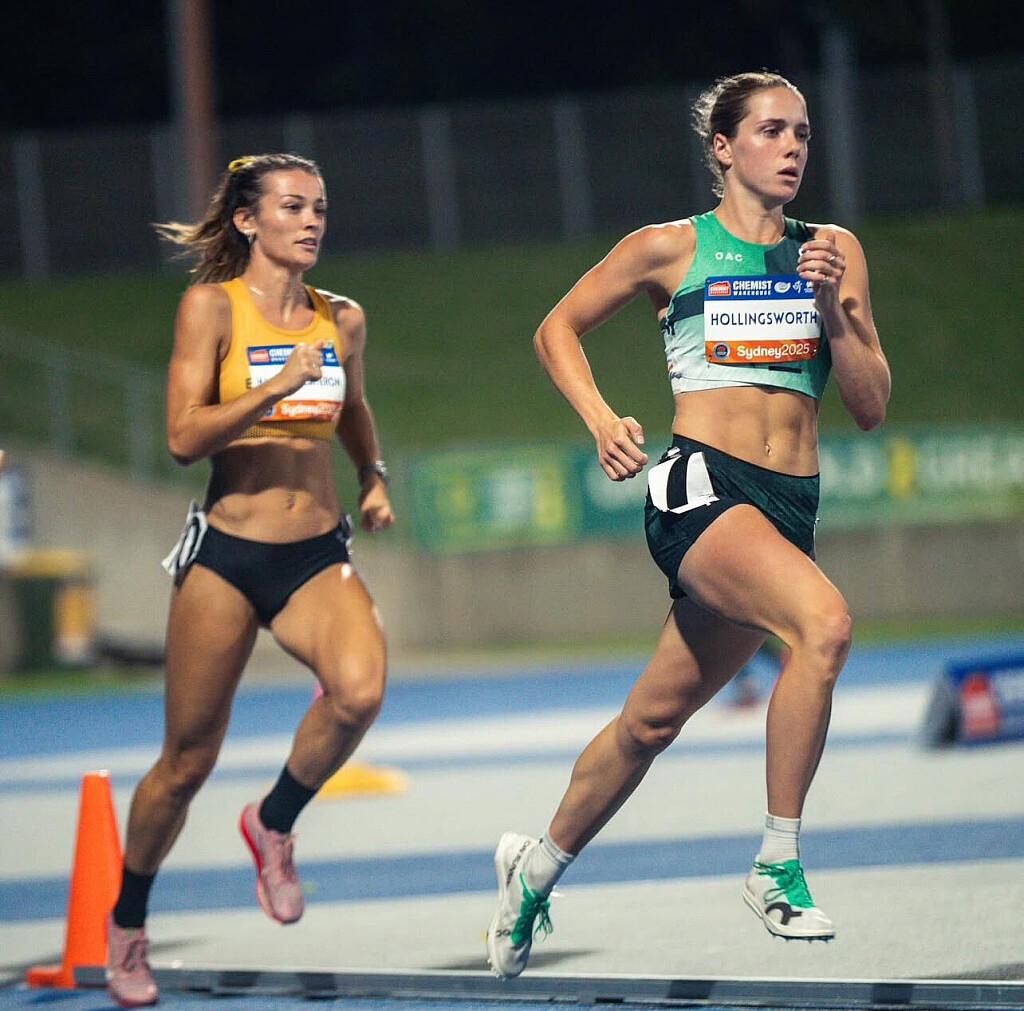
Claudia Hollingsworth Smashes Oceania 800m Record with 1:57.67
Australian middle-distance sensation Claudia Hollingsworth has rewritten the record books, setting a new Oceania 800m record with a time of 1:57.67 at the Silesia Kamila Skolimowska Memorial.
The 19-year-old rising star continues her meteoric rise on the international stage, taking down the long-standing regional mark and further establishing herself among the world’s best half-milers. Her performance not only sets a new benchmark for Oceania but also signals her growing potential ahead of future global championships.
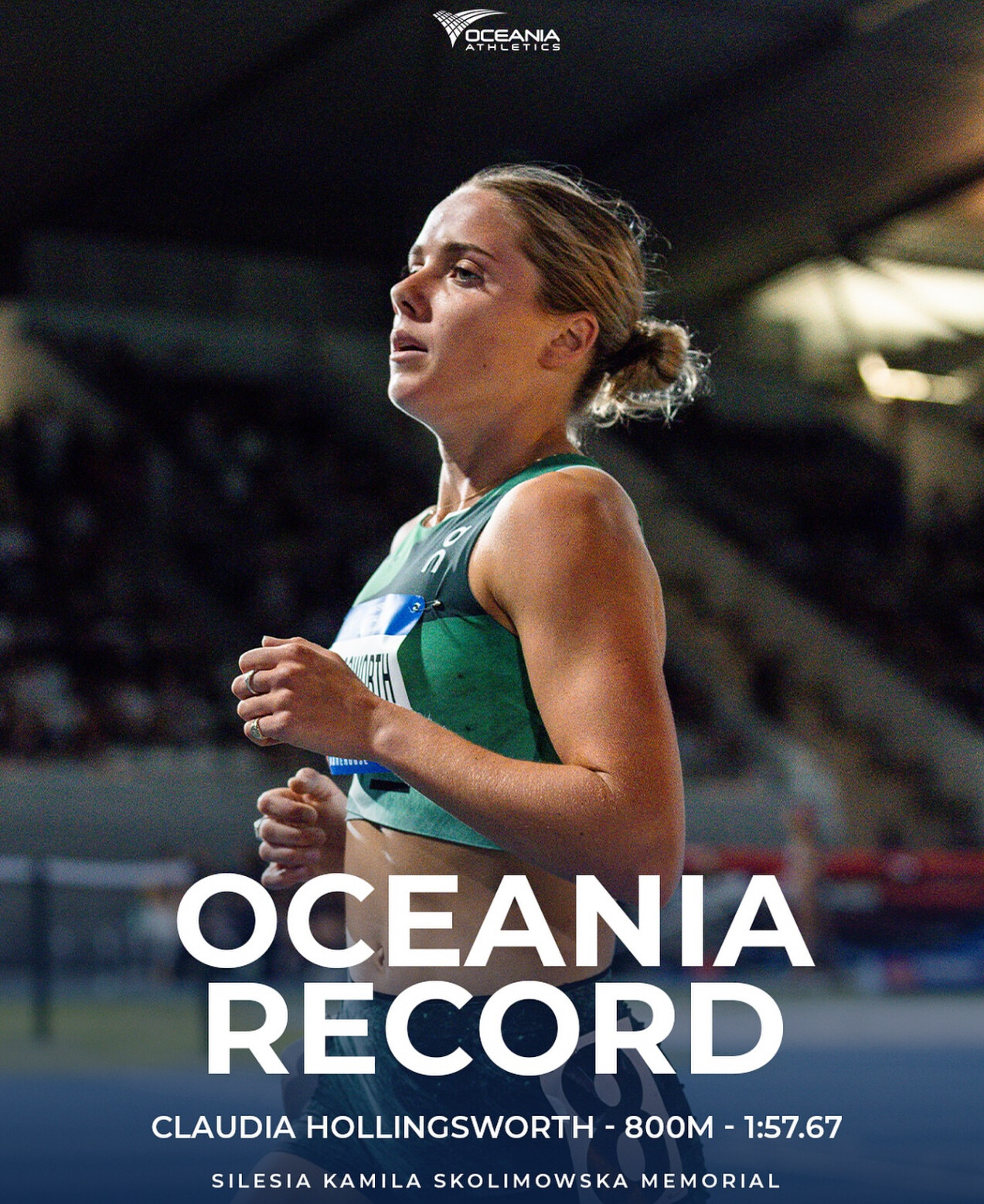
The Silesia Kamila Skolimowska Memorial, part of the Wanda Diamond League circuit, has become known for fast times and world-class competition. Hollingsworth thrived under the spotlight, racing with confidence and tactical precision before powering down the final stretch to secure the record.
With this breakthrough, Hollingsworth joins the conversation as one of the most promising young talents in world athletics. Her progression from junior standout to senior record-holder reflects both her natural talent and relentless dedication to training.
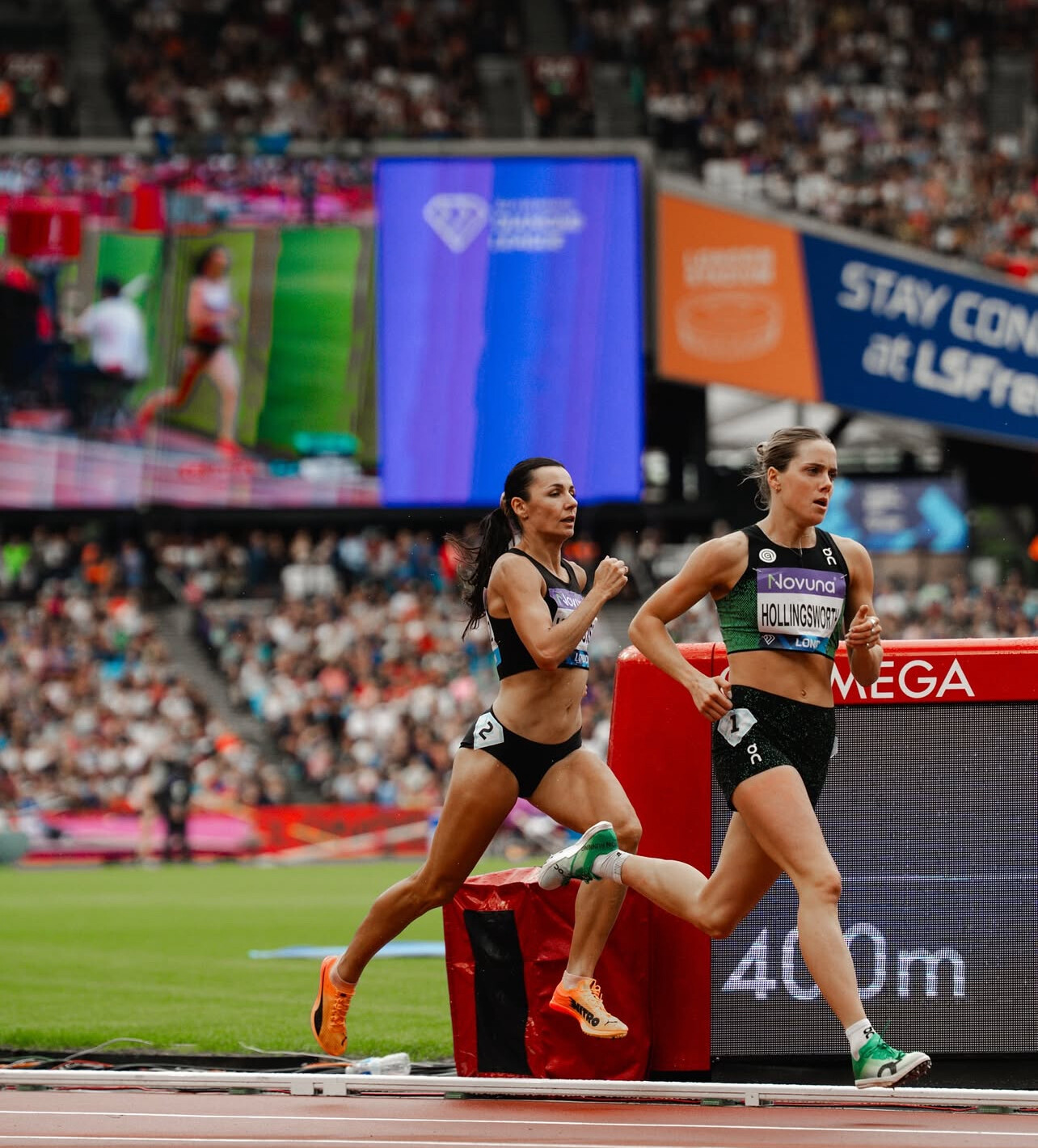
Fans and coaches alike will be watching closely as Hollingsworth builds momentum toward the 2025 World Championships and beyond. If her current trajectory is any indication, the new Oceania record of 1:57.67 may only be the beginning.
by Boris Baron
Login to leave a comment
Medina Eisa Triumphs in London with 14:30.57 Finish in the Women’s 5000m
On a charged evening in London, Ethiopia’s Medina Eisa delivered a masterclass in finishing speed, surging down the final stretch to win the women’s 5000 meters in a blazing time of 14:30.57.
The 19-year-old phenom held her composure as the field tightened in the closing laps, then made a decisive move with 200 meters to go—leaving no doubt about who owned the night. It was a hard-fought victory, with fellow Ethiopian Fantaye Belayneh pressing closely behind to take second in 14:30.90, while Australia’s Rose Davies closed strong for third in 14:31.45.
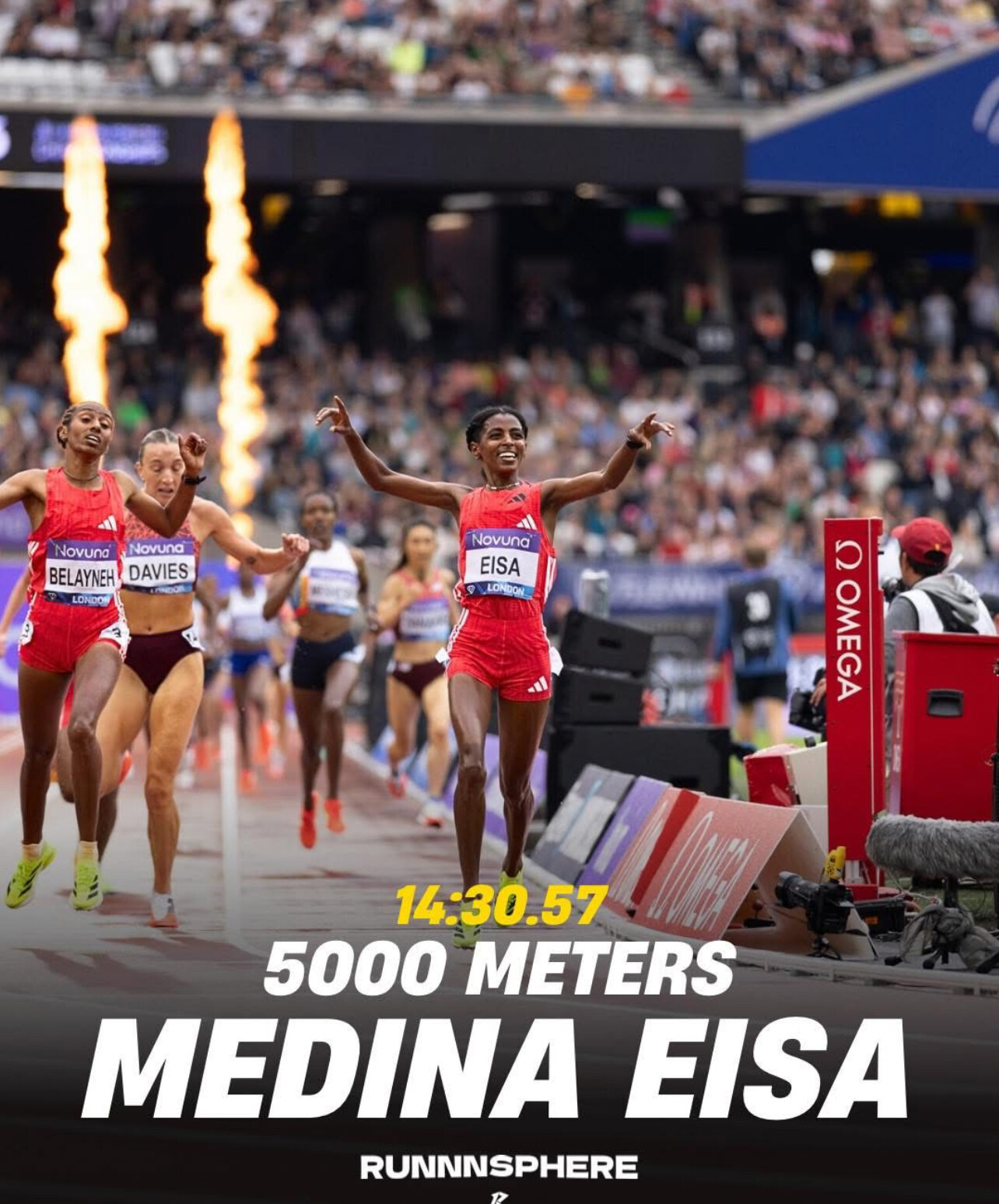
With this performance, Eisa not only claimed a major Diamond League victory but also cemented her status as one of the brightest young stars in distance running. Her time ranks among the fastest in the world this season and signals her as a major contender heading into next year’s global championships.
Top 3 – Women’s 5000m (London 2025)
Medina Eisa (ETH) — 14:30.57
Fantaye Belayneh (ETH) — 14:30.90
Rose Davies (AUS) — 14:31.45
For Eisa, this victory wasn’t just about the clock—it was about control, confidence, and kicking power. As the lights dimmed over the London Stadium, one thing became clear: the future of the 5000m is blazing brightly in Ethiopian colors.
by Boris Baron
Login to leave a comment
Sinclaire Johnson Breaks American Mile Record with 4:16.32 at London Diamond League
London, July 19, 2025 – In a race that lit up the track with historic speed, Sinclaire Johnson delivered a breakthrough performance, setting a new American and North American record in the mile with a time of 4:16.32 at the London Diamond League.
Johnson finished fourth overall in a blazing-fast women’s mile, one of the deepest in history, but her mark carved out a place in the record books. She broke the previous American record of 4:16.35 set by Nikki Hiltz in 2023—improving it by just three hundredths of a second.
“It was a race where everything clicked,” Johnson said afterward. “I knew the field would be fast, and I just focused on hanging on and staying composed.”
The field was stacked with some of the world’s most elite, and the pace was relentless from the gun. While the win went to Faith Kipyegon, who once again demonstrated why she’s one of the greatest milers of all time, Johnson’s run signaled that American middle-distance running is thriving on the global stage.
This wasn’t just a personal best—it was a statement.
A Career on the Rise
Johnson, 26, has long been considered a top-tier talent in the 1500m and mile, but this performance confirms she’s entering her prime. She previously won the 2022 U.S. Outdoor 1500m title and has represented Team USA at multiple World Championships, but this is her first American record.
With the World Championships in Tokyo less than a month away, this performance couldn’t have come at a better time. Johnson now heads into the final stretch of the season as the fastest North American miler in history and a legitimate contender for a podium finish in Tokyo.
by Boris Baron
Login to leave a comment
Billy Mills Turns 87 — A Running Legend Reflects on a Life of Purpose and Legacy
With wife Patricia by his side, the Olympic icon continues to inspire generations
On June 30, 2025, the legendary Billy Mills celebrated his 87th birthday, marking another chapter in a life defined by resilience, achievement, and unwavering purpose. His wife Patricia Mills, who has been his rock and closest partner for decades, shared a heartfelt message on social media:
“Happy Birthday to Billy! What a journey he has had! 87 years! Thank you all for his birthday wishes.”
For the running world, Billy Mills remains one of the most powerful figures in the sport’s history. His astonishing gold medal victory in the 10,000 meters at the 1964 Tokyo Olympics is still considered one of the greatest upsets in Olympic track history. Mills, a member of the Oglala Lakota Nation, was a virtually unknown underdog when he surged past world record holders in the final stretch to win in 28:24.4—setting an Olympic record and becoming the only American man ever to win Olympic gold in the 10,000 meters.
But Mills’ legacy extends far beyond the track.

He has spent his post-competitive life as a motivational speaker, author, and advocate for Native American youth, co-founding Running Strong for American Indian Youth, an organization that supports wellness, education, and cultural preservation across the U.S.
Now at 87, Billy remains a symbol of what is possible when belief, determination, and heart align. His story has inspired generations of runners—elite and recreational alike—to push beyond what seems possible.
Still Leading in so many different ways
Whether through his speeches, interviews, or presence at events, Mills continues to uplift others. He and Patricia, married since 1962, have navigated decades of change together, and her love and support have always been central to Billy’s journey.
From the Olympic podium to today, Billy Mills exemplifies the spirit of the running community: perseverance, humility, and using one’s platform to make the world better.
Happy Birthday, Billy. Your stride still echoes.
by Boris Baron
Login to leave a comment

Jane Hedengren’s Historic 5K Was Just the Beginning of a Record-Breaking Spring
On April 17, 2025, Jane Hedengren made U.S. high school history by becoming the first American high school girl to run under 15 minutes for the 5,000 meters, clocking an astonishing 14:57.93 at the Bryan Clay Invitational in Azusa, California. Now, over a month later, the running world is still feeling the shockwaves of her performance—and she’s not done yet.
The senior from Timpview High School in Utah led much of the race against top collegiate and pro runners. Despite being passed in the final stretch, Hedengren finished third overall, showing poise, power, and world-class pacing. Only New Mexico’s Pamela Kosgei (14:52.45) and future BYU teammate Lexy Halladay-Lowry (14:52.93) crossed the line ahead of her.
Prior to that, on April 12, Hedengren broke the U.S. high school girls’ outdoor two-mile record with a 9:34.12 effort at the Arcadia Invitational. That time eclipsed the previous record of 9:41.76 and underscored her extraordinary range—from the mile to 5K, Jane is dominating every step of the way.

What She’s Done Since
While May has been a quieter race month for Jane, she’s been focused on tuning up for a big June. According to her coach and recent interviews, Hedengren has been training at altitude in Utah, sharpening her speed with race-pace workouts and eyeing her final high school meets before transitioning to BYU.

She’s scheduled to compete at the HOKA Festival of Miles on June 5 in St. Louis, one of the most prestigious high school mile events in the country. There, she could challenge her own national mile record (4:26.14, set indoors in March) or even take aim at Mary Cain’s 4:24.11 outdoor mark from 2013.
A Season of Dominance
Here’s a look at what Hedengren has accomplished in just the last few months:
• March 2025 – Broke U.S. high school indoor records in both the mile (4:26.14) and 5,000m (15:13.26) at the Nike Indoor Nationals.
• April 12, 2025 – Set a new national 2-mile record of 9:34.12 at Arcadia Invitational.
• April 17, 2025 – Ran 14:57.93 for 5,000m at the Bryan Clay Invitational, becoming the first U.S. high school girl to break 15 minutes.
• June 5, 2025 (upcoming) – Scheduled to race the mile at HOKA Festival of Miles.
What’s Next?
With a spot secured at BYU and a history-making senior year already behind her, Jane Hedengren is setting herself up not just as one of the greatest U.S. high school distance runners of all time—but as a potential future Olympian. All eyes will be on St. Louis in June, and beyond that, the U.S. Junior Championships and her NCAA debut could come sooner than expected.
by Boris Baron
Login to leave a comment
Soh Rui Yong Breaks World Record in a Suit at London Marathon
From the blazing heat of Singapore to the historic streets of London, national marathoner Soh Rui Yong just redefined endurance and style. Clocking 2:39:57 at the 2024 London Marathon, Soh shattered the Guinness World Record for the fastest marathon run in a three-piece suit and tie, beating the previous best by 56 seconds.
But this record-breaking feat was no victory lap.
Running in sweltering heat along the Thames, Soh endured what he called a “sweatfest,” his heart pounding and pace slowing from 3:45/km to over 4:00/km by the final stretch. “The sun was beating down… with my head feeling like I was going to get a heat stroke anytime,” he shared in a candid post. Despite the discomfort, he leaned on his resilience—built from years of running in Singapore’s tropical humidity—and a quote by Haruki Murakami:
“Pain is inevitable. Suffering is optional.”
Those final 30 minutes were brutal. Shuffling step by step, Soh chipped away at the distance—kilometre by kilometre, minute by minute—passing runner after runner with sheer willpower. His sprint to the finish? “I only succeeded in looking pretty ridiculous on live BBC TV,” he joked.
Still, the result was no joke: first person in history to go under 2:40 in a full suit, making a bold fashion statement on one of the biggest marathon stages in the world.
From tiny tropical Singapore to the world, Soh’s message is clear: you don’t need ideal conditions to make history—you just need grit, heart, and maybe a really good tailor.
by Boris Baron
Login to leave a comment
Fast Finishes in Indy as Hacker and Andrews Claim 5K Crowns
On a crisp morning in downtown Indianapolis, the 2025 USATF 5 km Championships delivered thrilling finishes and fast times, with Olin Hacker and Josette Andrews emerging as national champions.
In the men’s race, Olin Hacker of HOKA Northern Arizona Elite made a decisive move in the final kilometer, pulling away from a tightly packed lead group. His surge proved untouchable, and he crossed the finish line in 13:31.93 to claim the national title. Casey Clinger of Brooks was just a stride behind in 13:33.04, with Hacker’s teammate Ahmed Muhumed rounding out the podium in 13:36.88—completing a trio of sub-13:40 finishers.
Men’s Top 10 Finishers
1. Olin Hacker (HOKA NAZ Elite) – 13:31.93
2. Casey Clinger (Brooks) – 13:33.04
3. Ahmed Muhumed (HOKA NAZ Elite) – 13:36.88
4. Morgan Beadlescomb (adidas) – 13:39.50
5. Graham Crawford (Reebok) – 13:42.10
6. Reed Fischer (Tinman Elite) – 13:44.75
7. Sam Chelanga (Nike) – 13:47.30
8. Ben Flanagan (On Running) – 13:49.60
9. Emmanuel Bor (U.S. Army) – 13:52.25
10. Eric Avila (HOKA) – 13:54.80
In the women’s race, Josette Andrews showed impressive strength and timing, kicking hard in the final stretch to take the win in 15:12.34. Emily Infeld of Nike followed closely in 15:14.50, and Karissa Schweizer of Bowerman Track Club secured third in 15:16.75, as the top trio pushed each other to the line.
Women’s Top 10 Finishers
1. Josette Andrews – 15:12.34
2. Emily Infeld (Nike) – 15:14.50
3. Karissa Schweizer (Nike Bowerman TC) – 15:16.75
4. Elly Henes (adidas) – 15:19.20
5. Rachel Schneider (Under Armour) – 15:22.85
6. Abbey Cooper (New Balance) – 15:25.40
7. Molly Seidel (Saucony) – 15:28.95
8. Vanessa Fraser (Nike) – 15:31.50
9. Emily Lipari (adidas) – 15:34.05
10. Natosha Rogers (Hansons-Brooks) – 15:36.60
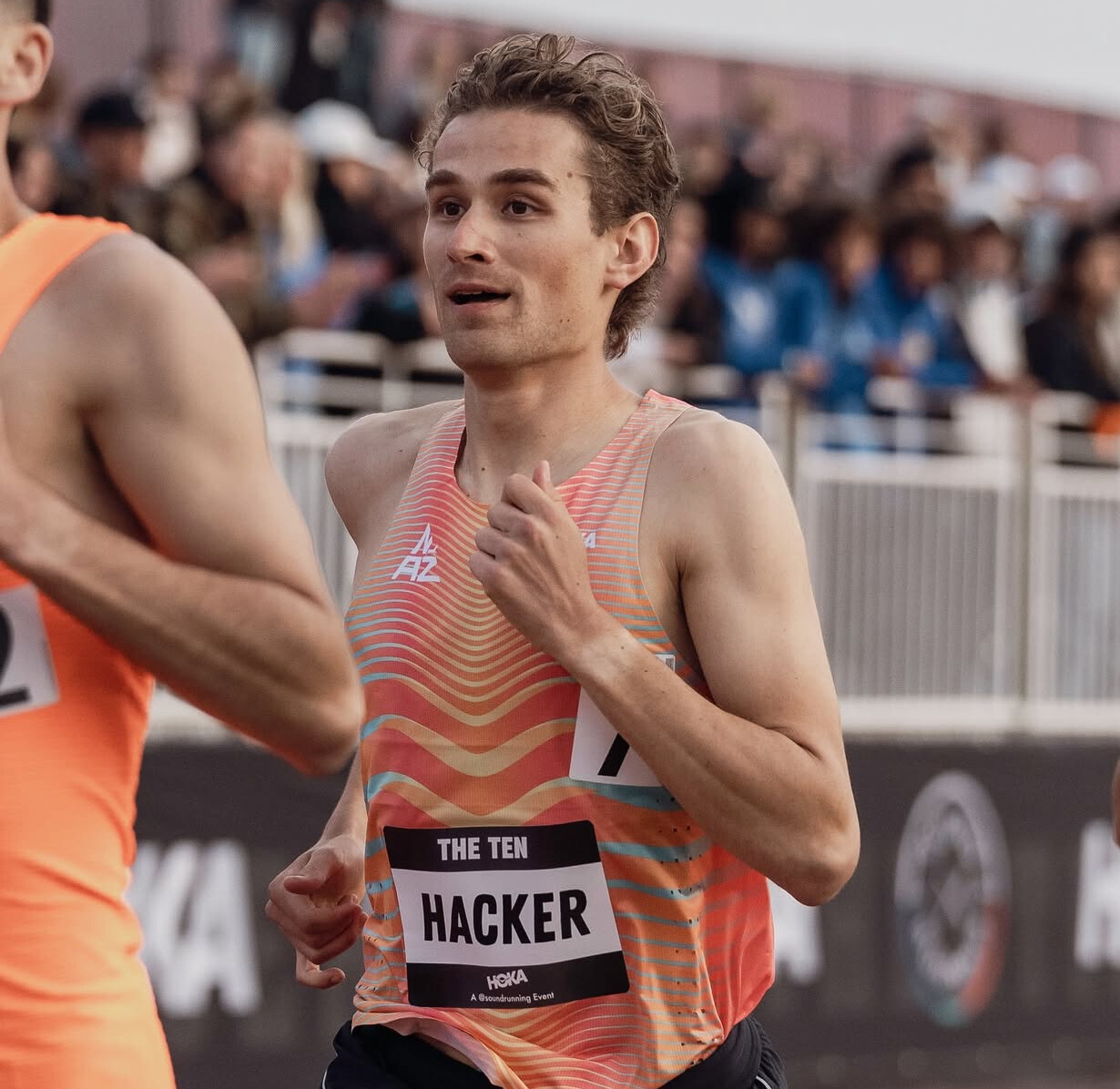
The performances in Indianapolis set the tone for what promises to be a fast and competitive summer racing season across the U.S. road circuit.
by Boris Baron
Login to leave a comment

OneAmerica 500 Festival Mini-Marathon
The mission of the 500 Festival is to produce life-enriching events and programs while celebrating the spirit and legacy of the Indianapolis 500 and fostering positive impact on the city of Indianapolis and state of Indiana. As an organization providing multiple events and programs, many of which are free to attend and impact over 500,000 people annually, our mission to...
more...