

Running News Daily
Running News Daily is edited by Bob Anderson and team. Send your news items to bob@mybestruns.com Advertising opportunities available.
Index to Daily Posts · Sign Up For Updates · Run The World Feed
Articles tagged #Rachel Apa
Today's Running News
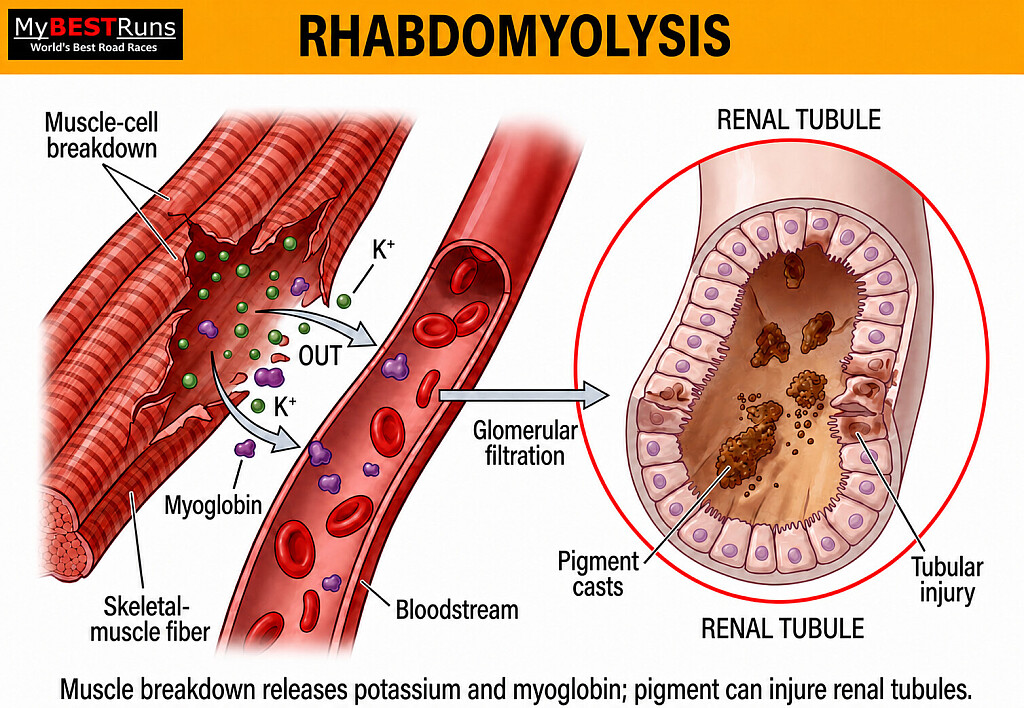


Rhabdomyolysis: The Hidden Danger Every Runner Should Know About — When Pushing Your Body Too Far Can Become Life-Threatening!
For runners, pushing beyond physical limits is often celebrated as a sign of determination, discipline and mental strength. However, behind every demanding training session and exhausting race lies an important responsibility that should never be overlooked: understanding when the body needs rest and recovery.
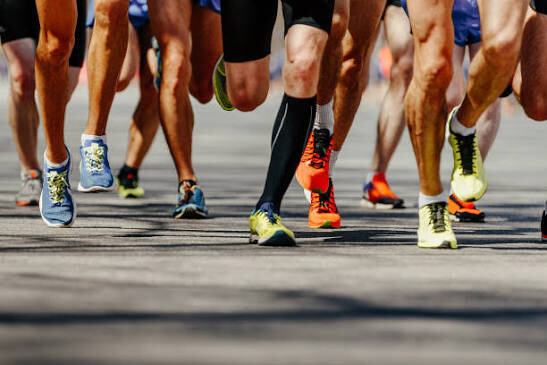
One potentially life-threatening condition every athlete, particularly marathon runners, should understand is rhabdomyolysis, commonly known as rhabdo. Although it is not frequently discussed in everyday running conversations, this serious medical condition can have devastating consequences if its warning signs are overlooked and treatment is delayed.
Rhabdomyolysis occurs when skeletal muscle tissue becomes severely damaged and breaks down rapidly, releasing substances normally contained within muscle cells directly into the bloodstream. These include myoglobin, a protein responsible for storing oxygen in muscles, potassium and creatine kinase (CK), an enzyme found in muscle tissue.
While these substances are normally contained within muscle cells, their release in excessive quantities can create serious complications throughout the body. Myoglobin, in particular, can damage the kidneys, potentially resulting in acute kidney injury or kidney failure. Meanwhile, excessive potassium in the bloodstream can interfere with the heart's electrical activity, triggering dangerous and potentially life-threatening abnormal heart rhythms. Severe electrolyte imbalances can further complicate the condition.
Although rhabdomyolysis can develop following traumatic injuries, extreme heat exposure, certain medications and other medical conditions, strenuous physical exercise is another recognised trigger. Prolonged endurance activities, exceptionally demanding workouts and sudden increases in training intensity can place enormous stress on muscles, sometimes resulting in severe muscle damage.
For marathon runners, the risks deserve particular attention. Preparing for 42.195 kilometres requires months of physical conditioning, demanding training sessions and considerable endurance. However, inadequate recovery, excessive training loads, exercising in extreme heat and pushing through severe physical exhaustion can increase the risk of exercise-induced rhabdomyolysis.

Importantly, this is not exclusively a condition affecting inexperienced athletes. Even highly trained, physically fit and experienced runners can develop it. Athletic ability, years of training and previous marathon experience do not make anyone completely immune.
Recognising the warning signs can make a critical difference. Symptoms may include unusually severe muscle pain, swelling, muscle tenderness, cramps, weakness and extreme fatigue. One particularly alarming warning sign is dark, tea-coloured or cola-coloured urine, which may indicate the presence of myoglobin released by damaged muscles.
However, symptoms do not always appear immediately. They may develop hours or even days after strenuous physical activity. Furthermore, the absence of dark-coloured urine does not necessarily mean that an athlete is free from the condition. Some individuals may experience significant muscle damage without displaying every recognised symptom.
Another important concern is that rhabdomyolysis can initially resemble ordinary post-exercise muscle soreness. While temporary discomfort and fatigue are common after demanding workouts, unusually intense pain, significant swelling, profound weakness or symptoms that continue to worsen should never be dismissed as normal training fatigue.
Prevention begins with responsible training. Athletes should increase their mileage and workout intensity gradually, allow sufficient recovery between demanding sessions, maintain appropriate hydration and avoid exercising excessively, particularly in extreme heat. Adequate nutrition, sufficient sleep and recognising the body's warning signals are equally important components of a sustainable training programme.
Runners should also understand that hydration alone cannot eliminate the risk. Training load, environmental conditions, individual susceptibility and overall physical health all play important roles in determining the body's response to strenuous exercise.
Anyone experiencing severe muscle pain, unusual weakness, swelling or dark-coloured urine following strenuous exercise should seek urgent medical assessment. Rhabdomyolysis is a medical emergency that requires prompt diagnosis. Doctors commonly use blood tests to measure creatine kinase levels, assess kidney function and identify potentially dangerous electrolyte disturbances.
Treatment often involves intravenous fluids to support kidney function and help prevent kidney injury, alongside careful monitoring of electrolytes, urine output and other complications. In severe cases, hospital admission and specialised medical intervention may be necessary. Early recognition and appropriate treatment significantly improve the chances of recovery.
The importance of understanding this condition has been brought into heartbreaking focus following the death of 24-year-old Rachel Apa, who collapsed approximately two miles from the finish line during her first New York City Marathon on November 1, 2026. She tragically died hours later, with rhabdomyolysis reported as the cause of her death.
Her story is a painful reminder that even the most anticipated sporting achievement can become overshadowed by a medical emergency. It also highlights why runners, coaches, race organisers and the wider athletics community must take exercise-related health risks seriously.
Every athlete dreams of crossing the finish line, achieving a personal best or completing a race they have spent months preparing for. But no medal, finishing time, training milestone or personal record is worth risking a life.
Running should challenge us, strengthen us and bring us together, but it should never come at the expense of our health and safety. Recovery is not a sign of weakness, and recognising when to stop is not a failure. Sometimes, the strongest decision an athlete can make is to listen to their body.
Train with discipline. Race with awareness. Recover with purpose. Above all, remember that getting home safely is more important than crossing any finish line.
by Erick Cheruiyot for My Best Runs.
Login to leave a comment

Final Stretch”: Rachel Apa’s First Marathon Ends in Heartbreak Just Two Miles From the Finish
The New York City Marathon is celebrated as a day of courage, endurance and achievement — a race where thousands of runners push their limits while families and friends wait eagerly to see them cross the finish line.
For one family, however, November 1, 2026, became a day of unimaginable heartbreak.

Twenty-four-year-old Rachel Apa, a former Division I field hockey athlete at Bucknell University, was running her first marathon when she collapsed in Central Park with roughly two miles remaining. She never made it to the finish line.
Rachel had entered the race with a deeply personal purpose. She was running in honour of her late grandfather, who had battled Parkinson’s disease, while raising money and awareness for Parkinson’s research and care.
Her family followed her journey closely as she made her way through the five boroughs.

Rachel exchanged messages with her father, Steve, during the race as he monitored her progress remotely. At Mile 18, she sent a brief message: “Ow.”
One mile later, another message arrived: “Ow ow.”
Then, at Mile 23, came her final message: “Final stretch.”
Those words would become heartbreaking in hindsight.
Rachel’s mother, Michelle, was waiting around Mile 25 in Central Park, expecting to see her daughter approaching the finish line. She was preparing for a moment of celebration — to watch Rachel complete the biggest running challenge of her life.
Instead, Rachel’s tracking-app location stopped moving around Mile 24.

At approximately 1:30 p.m., Rachel collapsed near 85th Street in Central Park. Spectators rushed to help, including medical professionals who began performing CPR. New York Road Runners’ medical team soon arrived with a defibrillator, and Rachel was taken to Mount Sinai Medical Center.
Doctors fought for more than six hours to save her life.
But at approximately 9:40 p.m., Rachel was pronounced dead.
According to her father, doctors attributed her death to rhabdomyolysis, a serious medical condition in which damaged muscle tissue breaks down rapidly and releases substances into the bloodstream that can cause severe complications.
The tragedy sent shockwaves through the running community.
New York Road Runners, organisers of the New York City Marathon, expressed deep sadness over Rachel’s death and extended their condolences to her family, friends and everyone affected by the loss.
Rachel’s marathon was never simply about completing 26.2 miles.
It was about family. It was about memory. It was about honouring her grandfather and helping others affected by Parkinson’s disease.
She had already pushed through more than 24 miles of one of the world’s toughest and most demanding marathon courses. She was so close to the finish line that her final message to her father was simply, “Final stretch.”
But the finish line she had spent months preparing for would remain out of reach.
For Rachel’s family, the New York City Marathon will forever be remembered not for the finish line, but for the devastating moment when a day of hope became a night of grief.
Her mother was waiting to celebrate her daughter’s achievement. Instead, she was left facing an unimaginable loss.
Rachel Apa was just 24 years old.
She came to New York chasing a dream, carrying the memory of someone she loved and running for a cause close to her heart. She never got to finish the race, but her story will remain with the people who knew her and with a running community that mourns her loss.
by Erick Cheruiyot for My Best Runs.
Login to leave a comment
