

Running News Daily
Running News Daily is edited by Bob Anderson and team. Send your news items to bob@mybestruns.com Advertising opportunities available.
Index to Daily Posts · Sign Up For Updates · Run The World Feed
Articles tagged #Michelle
Today's Running News
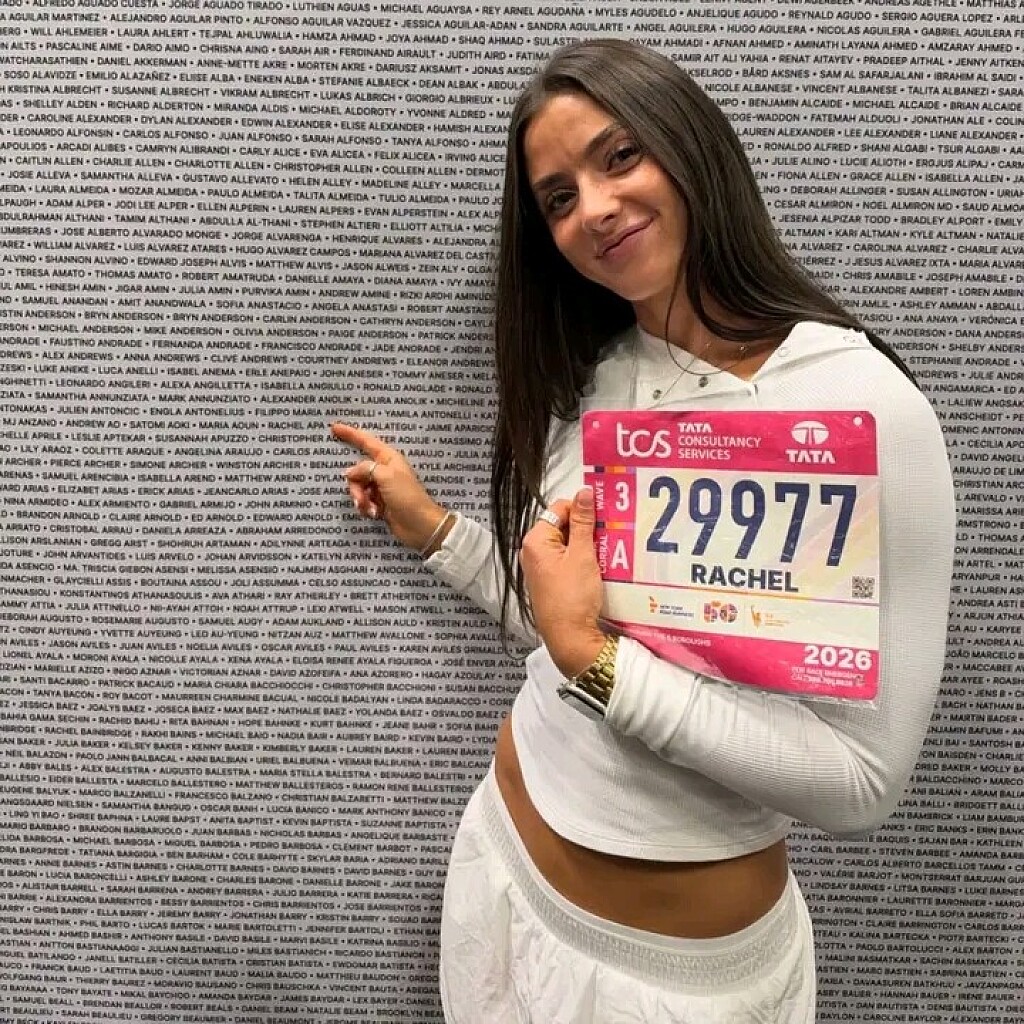


Final Stretch”: Rachel Apa’s First Marathon Ends in Heartbreak Just Two Miles From the Finish
The New York City Marathon is celebrated as a day of courage, endurance and achievement — a race where thousands of runners push their limits while families and friends wait eagerly to see them cross the finish line.
For one family, however, November 1, 2026, became a day of unimaginable heartbreak.
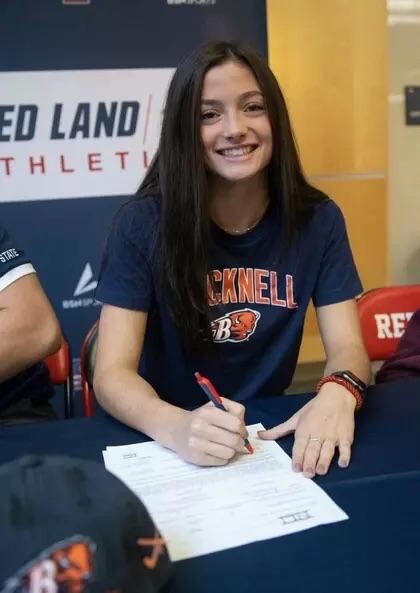
Twenty-four-year-old Rachel Apa, a former Division I field hockey athlete at Bucknell University, was running her first marathon when she collapsed in Central Park with roughly two miles remaining. She never made it to the finish line.
Rachel had entered the race with a deeply personal purpose. She was running in honour of her late grandfather, who had battled Parkinson’s disease, while raising money and awareness for Parkinson’s research and care.
Her family followed her journey closely as she made her way through the five boroughs.
Rachel exchanged messages with her father, Steve, during the race as he monitored her progress remotely. At Mile 18, she sent a brief message: “Ow.”
One mile later, another message arrived: “Ow ow.”
Then, at Mile 23, came her final message: “Final stretch.”
Those words would become heartbreaking in hindsight.
Rachel’s mother, Michelle, was waiting around Mile 25 in Central Park, expecting to see her daughter approaching the finish line. She was preparing for a moment of celebration — to watch Rachel complete the biggest running challenge of her life.
Instead, Rachel’s tracking-app location stopped moving around Mile 24.

At approximately 1:30 p.m., Rachel collapsed near 85th Street in Central Park. Spectators rushed to help, including medical professionals who began performing CPR. New York Road Runners’ medical team soon arrived with a defibrillator, and Rachel was taken to Mount Sinai Medical Center.
Doctors fought for more than six hours to save her life.
But at approximately 9:40 p.m., Rachel was pronounced dead.
According to her father, doctors attributed her death to rhabdomyolysis, a serious medical condition in which damaged muscle tissue breaks down rapidly and releases substances into the bloodstream that can cause severe complications.
The tragedy sent shockwaves through the running community.
New York Road Runners, organisers of the New York City Marathon, expressed deep sadness over Rachel’s death and extended their condolences to her family, friends and everyone affected by the loss.
Rachel’s marathon was never simply about completing 26.2 miles.
It was about family. It was about memory. It was about honouring her grandfather and helping others affected by Parkinson’s disease.
She had already pushed through more than 24 miles of one of the world’s toughest and most demanding marathon courses. She was so close to the finish line that her final message to her father was simply, “Final stretch.”
But the finish line she had spent months preparing for would remain out of reach.
For Rachel’s family, the New York City Marathon will forever be remembered not for the finish line, but for the devastating moment when a day of hope became a night of grief.
Her mother was waiting to celebrate her daughter’s achievement. Instead, she was left facing an unimaginable loss.
Rachel Apa was just 24 years old.
She came to New York chasing a dream, carrying the memory of someone she loved and running for a cause close to her heart. She never got to finish the race, but her story will remain with the people who knew her and with a running community that mourns her loss.
by Erick Cheruiyot for My Best Runs.
Login to leave a comment

Olympic Champion Sydney McLaughlin-Levrone Welcomes First Child, Beginning a Beautiful New Journey
Sprint and hurdles superstar Sydney McLaughlin-Levrone has entered an exciting new chapter in her remarkable life, welcoming her first child with husband Andre Levrone. The four-time Olympic champion and women's 400m hurdles world record holder announced the birth of their daughter, Savannah Michelle Levrone, who was born on Sunday, July 12, 2026.

The couple shared the joyful news with an emotional message celebrating the arrival of their daughter and expressing gratitude to everyone who supported them throughout the pregnancy. Sydney described Savannah as "our blessing and our joy," while expressing excitement and faith for the future that lies ahead for their growing family.

The announcement marks a deeply personal milestone for one of the most accomplished athletes of her generation. Renowned for redefining the women's 400m hurdles through a succession of record-breaking performances, McLaughlin-Levrone now embraces a new role beyond the track as a mother.
The timing of the announcement adds another layer of significance. Just days earlier, Sydney reflected on the 10th anniversary of qualifying for her first Olympic Games at only 16 years old—a breakthrough that launched one of the most decorated careers in modern athletics. Ten years later, her journey has come full circle with another life-changing milestone, underscoring that her greatest moments continue to extend beyond sporting success.
The arrival of Savannah Michelle Levrone has been met with an outpouring of congratulations from athletes, fans, and the wider sporting community, who have celebrated the couple as they begin this new chapter together. As Sydney McLaughlin-Levrone steps into motherhood, the athletics world will undoubtedly continue to follow her inspiring journey—both on and off the track.
by Erick Cheruiyot for My Best Runs.
Login to leave a comment
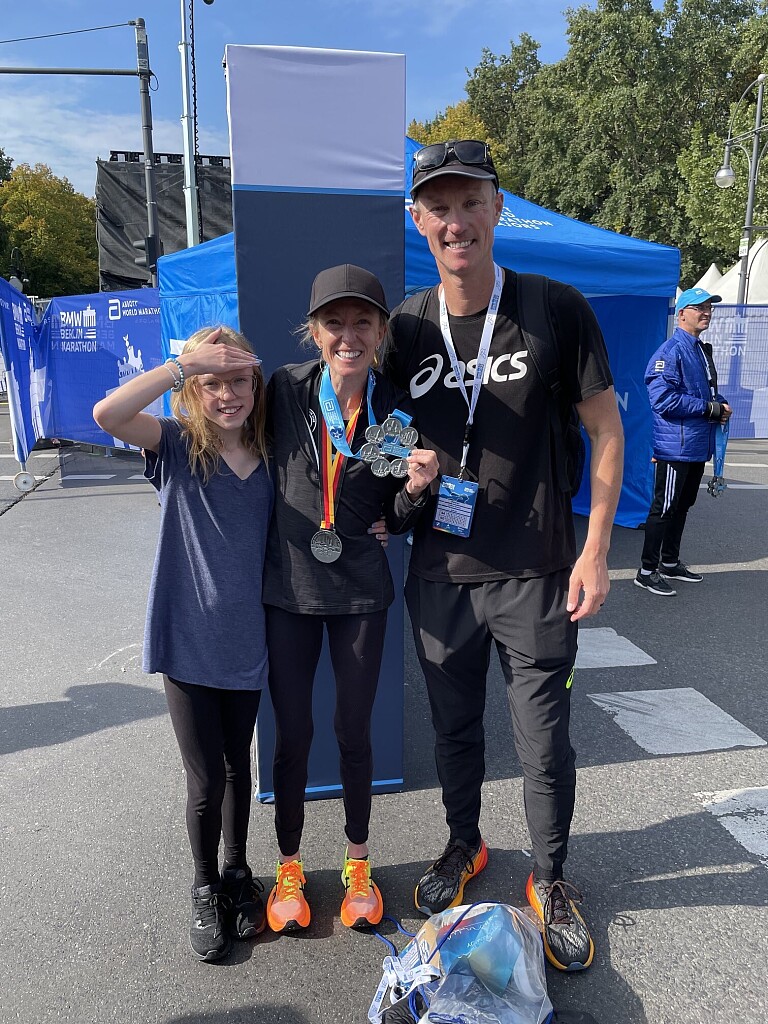
Deena Kastor: The Relentless Heart of American Distance Running
In the rich history of American distance running, few names carry the weight, respect, and lasting influence of Deena Michelle Kastor. Born on February 14, 1973, Kastor didn’t just compete—she redefined what was possible for U.S. women on the world stage, becoming one of the most celebrated and resilient athletes the nation has ever produced.
Kastor’s journey is a story of patience, belief, and fearless ambition. From the track to the roads, and ultimately to the marathon, she built a career marked by rare versatility. At one point, she held 15 American records at the same time, spanning distances from 5,000 meters to the marathon—an achievement that speaks to her extraordinary range and consistency across disciplines.
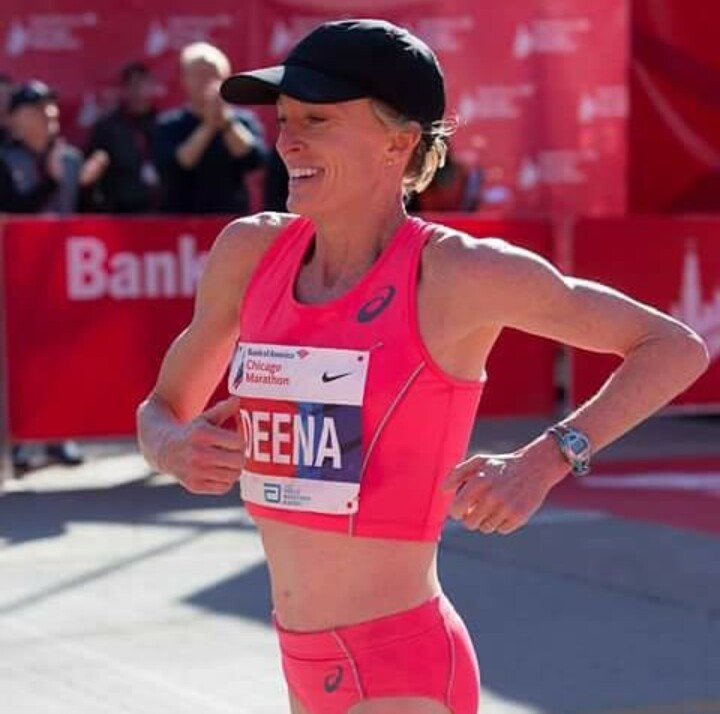
Her defining moment came at the 2004 Athens Olympic Games, where she delivered one of the most iconic performances in American distance-running history. Battling the world’s best under intense pressure, Kastor surged to claim the Olympic bronze medal in the women’s marathon, ending a long medal drought for the United States and inspiring an entire generation of runners. That race remains a benchmark of courage and competitive intelligence.
Beyond the Olympics, Kastor dominated some of the sport’s most prestigious events. She captured victories at the Chicago Marathon in 2005 and the London Marathon in 2006, a season that also saw her rise to world number one in the marathon rankings. On home soil, her dominance was unmatched—24 national titles, including eight cross-country championships, underline a career built on longevity and relentless excellence.
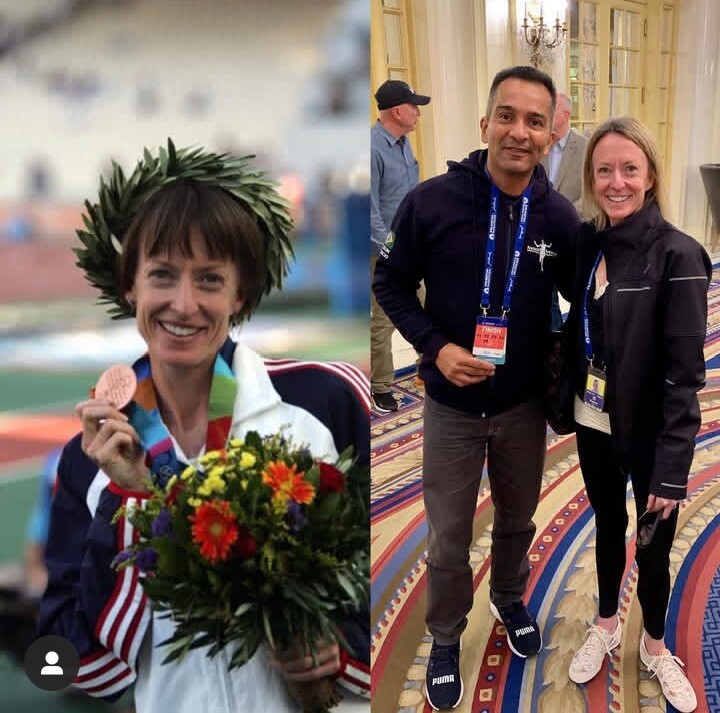
Kastor’s performances were backed by remarkable personal bests: a 2:19:36 marathon, a 1:07:34 half marathon, and sub-15-minute speed over 5,000 meters. These times reflect not only talent, but years of disciplined training and an unbreakable competitive mindset. Whether on the track, the roads, or the global championship stage, she proved she could compete with—and defeat—the very best.
Her championship résumé extends across three Olympic Games and multiple World Championships, highlighted by a fifth-place finish over 10,000 meters in Osaka and a top-ten marathon placing at the World Championships in Moscow in 2013. Even setbacks, including injury and a late-career DNF, never defined her. Instead, Kastor became known for resilience—always returning stronger, wiser, and more determined.
More than medals and records, Deena Kastor’s true legacy lies in what she represents. She is a symbol of perseverance, growth, and belief in long-term progress. Her career showed that greatness is not rushed—it is built step by step, season by season, with unwavering commitment.
Today, her impact continues to echo through American distance running. Deena Kastor didn’t just make history—she changed expectations. And in doing so, she secured her place as a true legend of the sport.
by Erick Cheruiyot for My Best Runs.
Login to leave a comment
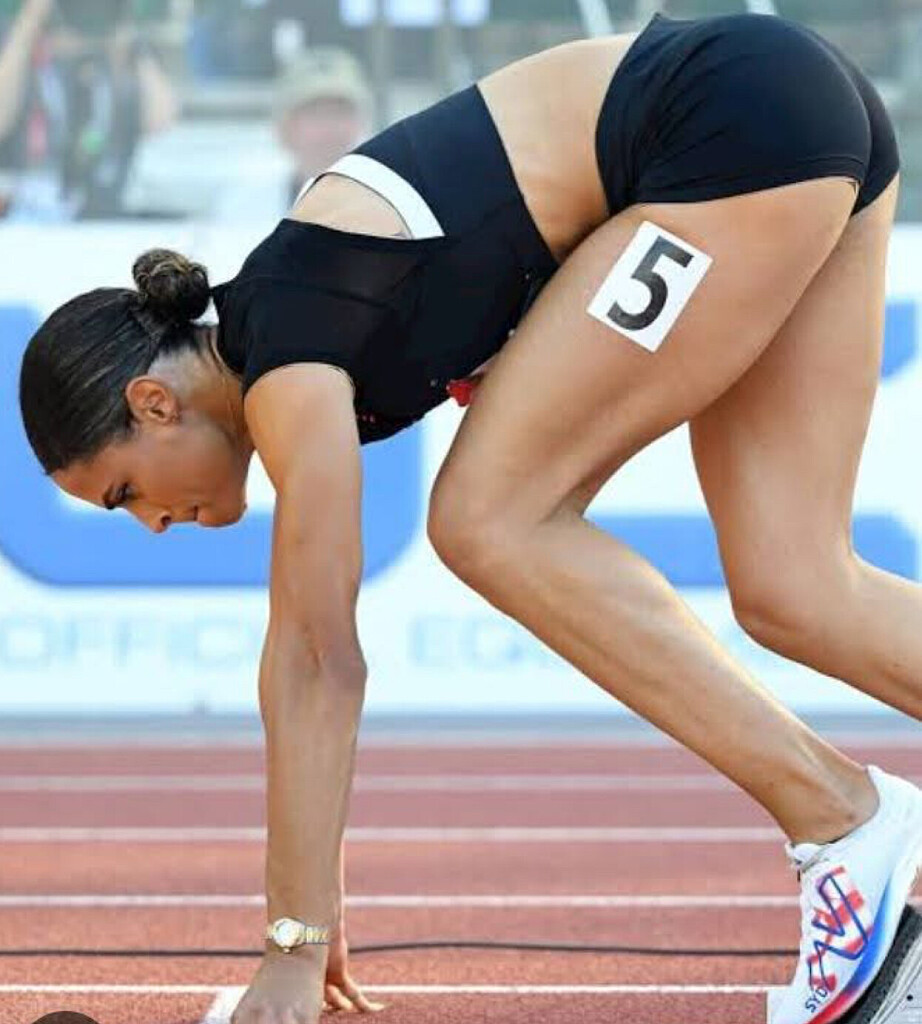
How many times has Sydney McLaughlin-Levrone broken the 400m hurdles world record?
Sydney Michelle McLaughlin-Levrone is an American hurdler and sprinter who competes in the 400 meters hurdles and is the world record holderin that event. She has won gold in the 2020 and 2024 Summer Olympics, as well as the 2022 World Athletics Championships.
She set a world record time of 50.37 seconds at the 2024 Summer Olympics on August 8, 2024, breaking her own old world record of 50.65 seconds.
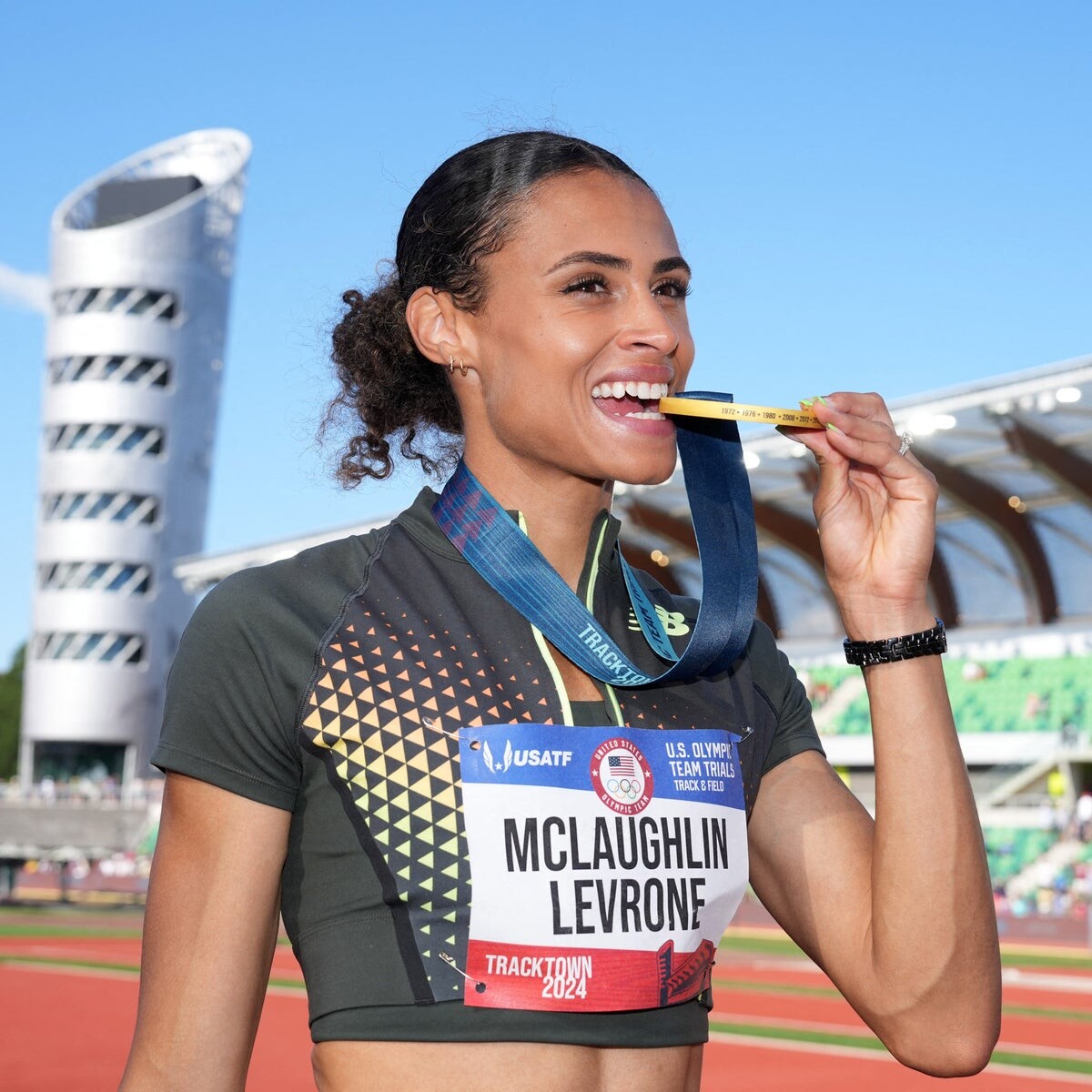
She is the first track athlete to break four world records in the same event; setting four world records during 13 months, she was the first woman to break the 52-second (June 2021) and 51-second (July 2022) barriers in the 400 m hurdles.[
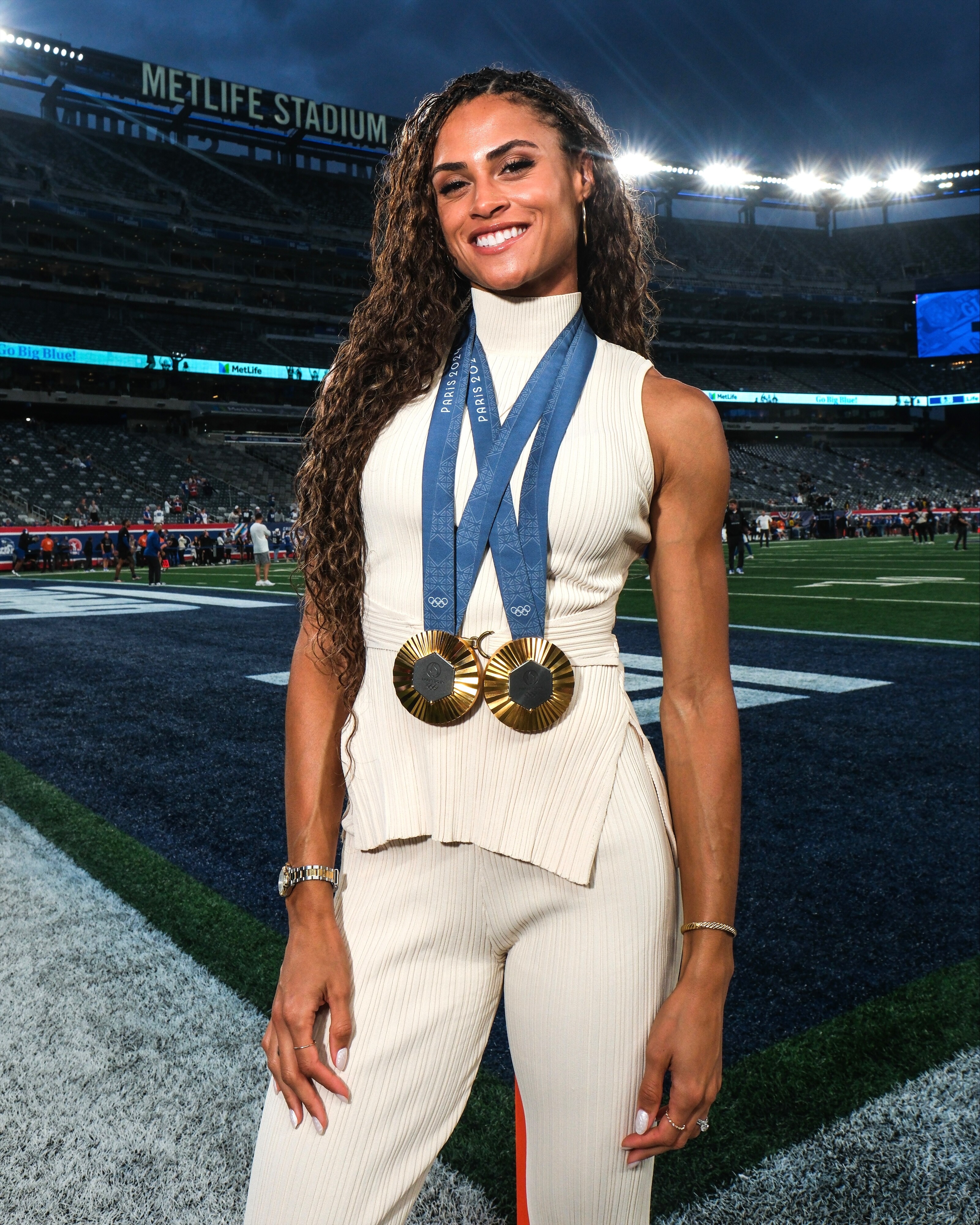
She won the silver medal at the 2019 World Championships. At all four competitions, she also took gold as part of a women's 4 × 400 m relay team.
Login to leave a comment
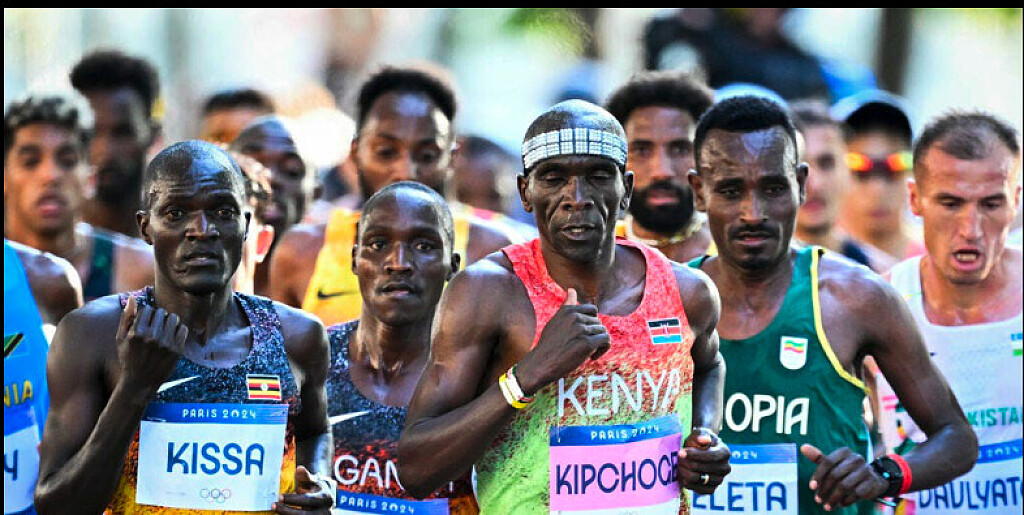
Eliud Kipchoge Drops Out of the 2024 Olympic Marathon
It may be the two-time gold medalist’s final Olympic Games.
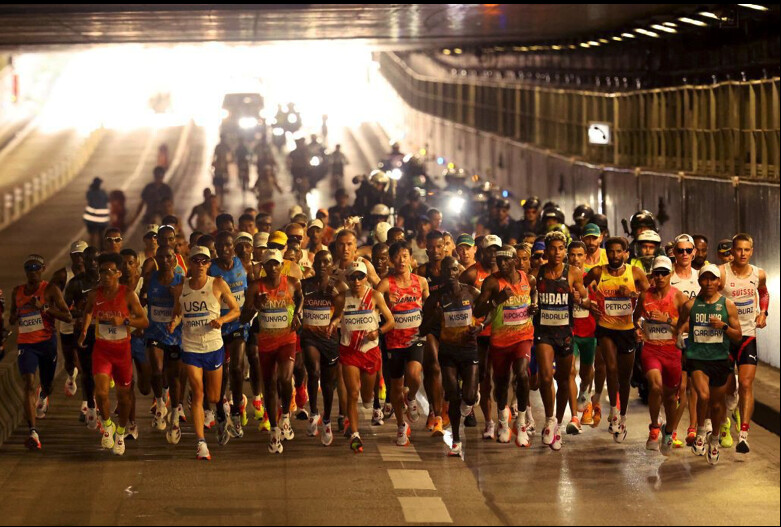
In what may be his final Olympic Games, Eliud Kipchoge of Kenya dropped out of Saturday’s men’s marathon around the 31K mark. Today’s race was Kipchoge’s chance to be the first man to win the Olympic marathon three times in a career. His other Olympic marathon wins came in the Rio Olympics in 2016 and Tokyo in 2021.
“I will be the happiest on earth to win an Olympic medal for the third time, back-to-back-to-back,” Kipchoge said about the race prior to the Games on Olympics.com. “It’s about making history, it’s about inspiring a generation.”
Wearing a cooling headband for what was going to end up being a warm day, the race started relatively cool in the lower 60s on a clear day in Paris. Kipchoge hung with the lead pack for the first 15K until the notoriously challenging Paris Olympic Marathon hills started claiming victims.
After reaching Versailles and turning back to head toward Paris, Kipchoge was more than a minute off the lead pack, not within the top 50 runners. He split 25K to the 30K mark—the segment of the course from Chaville to Meudon with the steepest uphill and downhill—a little over 21 minutes, putting him more than 8 minutes off the lead pack. He was out of contention but gutting it out toward the finish line, buoyed by the Olympic crowd.
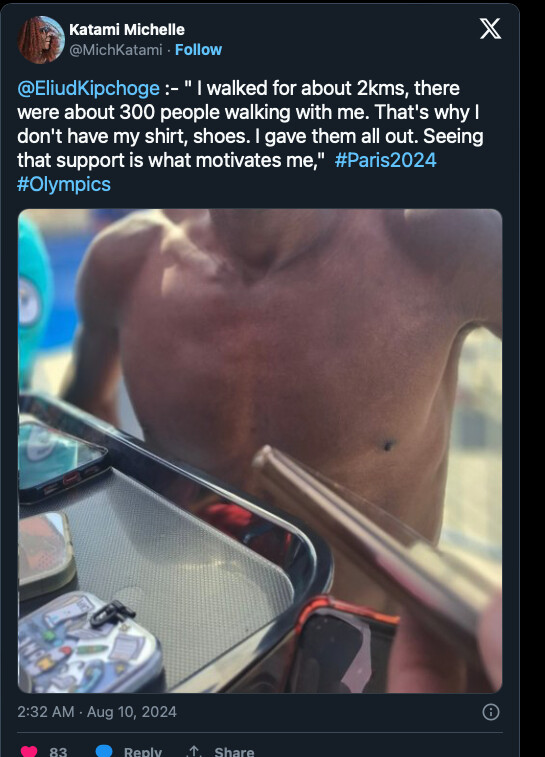
Journalist Michelle Katami found Kipchoge after the race, where he described his final few kilometers of the race. “I walked for about 2 kilometers, there were about 300 people walking with me. That’s why I don’t have my shirt, shoes. I gave them all out. Seeing that support is what motivates me.”
Win or not, Kipchoge’s extensive career has earned him G.O.A.T. status in the running world. He’s eclipsed the world record mark twice—both times at the Berlin Marathon—and became the only man ever to run under 2 hours in a non-record eligible marathon attempt in Vienna back in 2019.
For a period, Kipchoge was untouchable at the distance. He won 10 marathons in a row from 2014 to 2019. He finally showed himself as human at the 2020 London Marathon (a race he’s still won four times), when he finished a surprising 8th. He bounced back by winning the marathon in the 2021 Tokyo Olympics, then winning both the Tokyo Marathon and Berlin Marathon in 2022.
Some recent marathons have been a step back for Kipchoge. He was 6th overall in his first Boston Marathon in 2023 but returned to form with a Berlin win later that year. Earlier this year Kipchoge placed 10th in the Tokyo Marathon.
He’s openly spoken about the strain he has taken after the tragic passing of the new marathon world record holder Kelvin Kiptum in a car crash in February 2024. He told the BBC that he was was subjected to online abuse wrongly linking him to Kiptum’s death.
“I was shocked that people (on) social media platforms are saying, ‘Eliud is involved in the death of this boy,’ That was my worst news ever in my life. I received a lot of bad things; that they will burn the (training) camp, they will burn my investments in town, they will burn my house, they will burn my family. It did not happen but that is how the world is. What happened has (made) me not trust anybody. Even my own shadow, I will not trust."
And on the track, he has two other Olympic medals, both in the 5,000 meters, with silver in 2008, and bronze in 2004.
by Runner’s World
Login to leave a comment
TWENTY-ONE YEARS AGO, HE WAS INCARCERATED FOR LIFE. LAST YEAR, HE RAN THE NYC MARATHON A RADICALLY CHANGED MAN.
RAHSAAN ROUNDED THOMAS A CORNER. Gravel underfoot gave way to pavement, then dirt. Another left turn, and then another. In the distance, beyond the 30-foot wall and barbed wire separating him from the world outside, he could see the 2,500-foot peak of Mount Tamalpais. He completed the 400-meter loop another 11 times for an easy three miles.
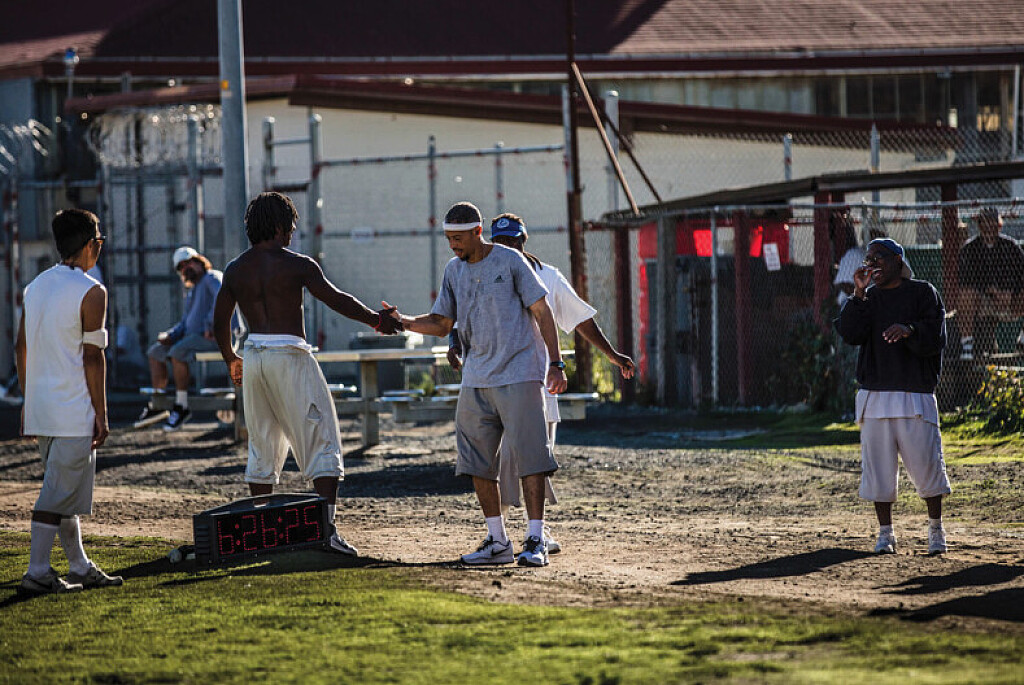
Rahsaan wasn’t the only runner circling the Yard that evening in the fall of 2017. Some 30 people had joined San Quentin State Prison’s 1,000 Mile Club by the time Rahsaan arrived at the prison four years prior, and the group had only grown since. Starting in January each year, the club held weekly workouts and monthly races in the Yard, culminating with the San Quentin Marathon—105 laps—in November. The 2017 running would be Rahsaan’s first go at the 26.2 distance.
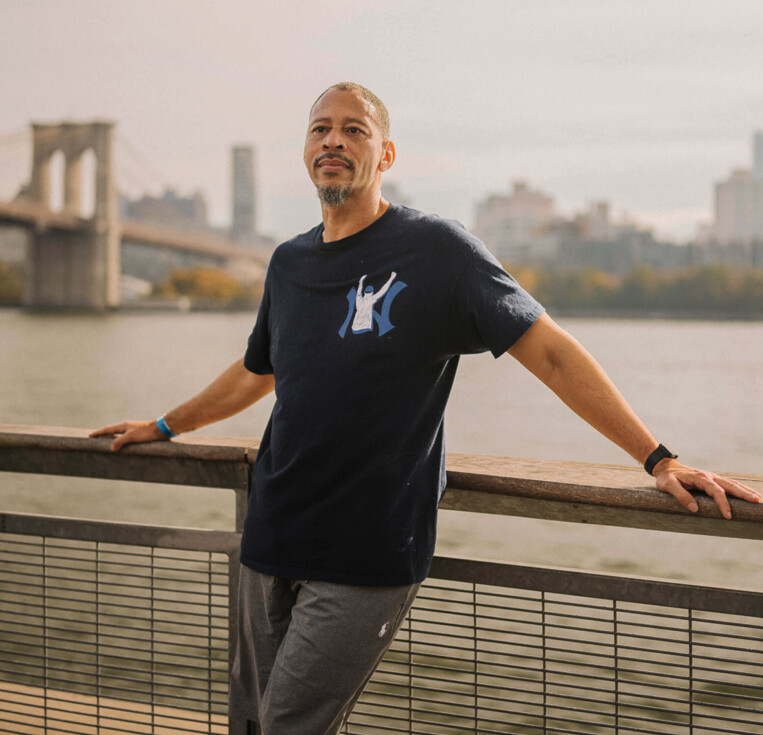
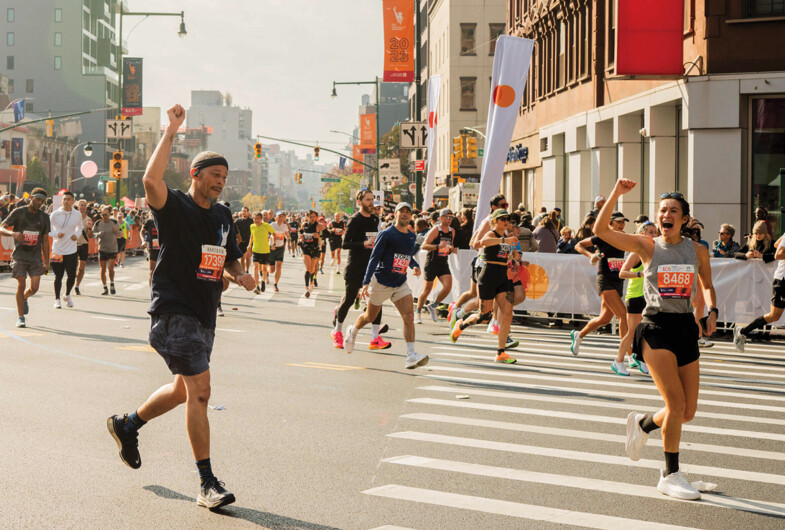
For Rahsaan and the other San Quentin runners, Mount Tam, as it’s known, had become a beacon of hope. It’s the site of the legendary Dipsea, a 7.4-mile technical trail from Mill Valley to Stinson Beach. After the 1,000 Mile Club was founded in 2005, it became tradition for club members who got released to run that trail; their stories soon became lore among the runners still inside. “I’ve been hearing about the Dipsea for the longest,” Rahsaan says.
Given his sentence, he never expected to run it. Rahsaan was serving 55 years to life for second-degree murder. Life outside, let alone running over Mount Tam all the way to the Pacific, felt like a million miles away. But Rahsaan loved to run—it gave him a sense of freedom within the prison walls, and more than that, it connected him to the community of the 1,000 Mile Club. So if the volunteer coaches and other runners wanted to talk about the Dipsea, he was happy to listen.
We’ll get to the details of Rahsaan’s crime later, but it’s useful to lead with some enduring truths: People can grow in even the harshest environments, and running, whether around a lake or a prison yard, has the power to change lives. In fact, Rahsaan made a lot of changes after he went to prison: He became a mentor to at-risk youth, began facing the reality of his violence, and discovered the power of education and his own pen. Along the way, Rahsaan also prayed for clemency. The odds were never in his favor.
To be clear, this is not a story about a wrongful conviction. Rahsaan took the life of another human being, and he’s spent more than two decades reckoning with that fact. He doesn’t expect forgiveness. Rather, it’s a story about a man who you could argue was set up to fail, and for more than 30 years that’s exactly what he did. But it’s also a story of navigating the delta between memory and fact and finding peace in the idea that sometimes the most formative things in our lives may not be exactly as they seem. And mostly, it’s a story of transformation—of learning to do good in a world that too often encourages the opposite.
RAHSAAN “NEW YORK” THOMAS GREW UP IN BROWNSVILLE, A ONE-SQUARE-MILE SECTION OF EASTERN Brooklyn wedged between Crown Heights and East New York. As a kid he’d spend hours on his Commodore 64 computer trying to code his own games. He loved riding his skateboard down the slope of his building’s courtyard. On weekends, he and his friends liked to play roller hockey there, using tree branches for sticks and a crushed soda can for a puck.
Once a working-class Jewish enclave, Brownsville started to change in the 1960s, when many white families relocated to the suburbs, Black families moved in, and city agencies began denying residents basic services like trash pickup and streetlight repairs. John Lindsay, New York’s mayor at the time, once referred to the area as “Bombsville” on account of all the burned-out buildings and rubble-filled empty lots. By 1971, the year after Rahsaan was born, four out of five families in Brownsville were on government assistance. More than 50 years later, Brownsville still has a poverty rate close to 30 percent. The neighborhood’s credo, “Never ran, never will,” is typically interpreted as a vow of resilience in the face of adversity. For some, like Rahsaan, it has always meant something else: Don’t back down.
The first time Rahsaan didn’t run, he was 5 or 6 years old. He had just moved into Atlantic Towers, a pair of 24-story buildings beset with rotting walls and exposed sewer pipes that housed more than 700 families. Three older kids welcomed him with their fists. Even if Rahsaan had tried to run, he wouldn’t have gotten far. At that age, Rahsaan was skinny, slow, and uncoordinated. He got picked on a lot. Worse, he was light-skinned and frequently taunted as “white boy.” The insult didn’t even make sense to Rahsaan, whose mother is Black and whose father was Puerto Rican. “I feel Black,” he says. “I don’t feel [like] anything else. I feel like myself.”
Rahsaan hated being called white. It was the mid-1970s; Roots had just aired on ABC, and Rahsaan associated being white with putting people in chains. Five-Percent Nation, a Black nationalist movement founded in Harlem, had risen to prominence and ascribed godlike status to Black men. Plus, all the best athletes were Black: Muhammad Ali. Reggie Jackson. Kareem Abdul-Jabbar. In Rahsaan’s world, somebody white was considered physically inferior.
Raised by his mother, Jacqueline, Rahsaan never really knew his father, Carlos, who spent much of Rahsaan’s childhood in prison. In 1974, Jacqueline had another son, Aikeem, with a different man, and raised her two boys as a single mom. Carlos also had another son, Carl, whom Rahsaan met only once, when Carl was a baby. Still, Rahsaan believed “the myth,” as he puts it now, that one day Carlos would return and relieve him, his mom, and Aikeem of the life they were living. Jacqueline had a bachelor’s degree in sociology and worked three jobs to keep her sons clothed and fed. She nurtured Rahsaan’s interest in computers and sent him to a parochial school that had a gifted program. Rahsaan describes his family as “upper-class poor.” They had more than a lot of families, but never enough to get out of Brownsville, away from the drugs and the violence.
Some traumas are small but are compounded by frequency and volume; others are isolated occurrences but so significant that they define a person for a lifetime. Rahsaan remembers his grandmother telling him that his father had been found dead in an alley, throat slashed, wallet missing. Rahsaan was 12 at the time, and he understood it to mean his father had been murdered for whatever cash he had on him—maybe $200, not even. Now he would never come home.
Rahsaan felt like something he didn’t even have had been taken from him. “It just made me different, like, angry,” he says. By the time he got to high school, Rahsaan resolved to never let anyone take anything from him or his family again. “I started feeling like, next time somebody tryin’ to rob me, I’m gonna stab him,” he says. He started carrying a knife, a razor, rug cutters—“all kinds of sharp stuff.” Rahsaan never instigated a fight, but he refused to back down when threatened or attacked. It was a matter of survival.
The first time Rahsaan picked up a gun, it was to avenge his brother. Aikeem, who was 14 at the time, had been shot in the leg by a guy in the neighborhood who was trying to rob him and Rahsaan. A few months later, Rahsaan saw the shooter on the street, ran to the apartment of a drug dealer he knew, and demanded a gun. Rahsaan, then 18, went back outside and fired three shots at the guy. Rahsaan was arrested and sent to Rikers Island, then released after three days: The guy he’d shot was wanted for several crimes and refused to testify against Rahsaan.
By day, Rahsaan tried to lead a straight life. He graduated from high school in 1988 and got a job taking reservations for Pan Am Airways. He lost the job after Flight 103 exploded in a terrorist bombing over Scotland that December, and the company downsized. Rahsaan got a new job in the mailroom at Debevoise & Plimpton, a white-shoe law firm in midtown Manhattan. He could type 70 words a minute and hoped to become a paralegal one day.
Rahsaan carried a gun to work because he’d been conditioned to expect the worst when he returned to Brownsville at night. “If you constantly being traumatized, you constantly feeling unsafe, it’s really hard to be in a good mind space and be a good person,” he says. “I mean, you have to be extraordinary.”
After high school, some of Rahsaan’s friends went to Old Westbury, a state university on Long Island with a rolling green campus. He would sometimes visit them, and at a Halloween party one night, he got into a scrape with some other guys and fired his gun. Rahsaan spent the next year awaiting trial in county jail, the following year at Cayuga State Prison in upstate New York, and another 22 months after that on work release, living in a halfway house in Queens. He got a job working the merch table for the Blue Man Group at Astor Place Theater, but the pay wasn’t enough to support the two kids he’d had not long after getting out of Cayuga.
He started selling a little crack around 1994, when he was 24. By 27 he was dealing full-time. He didn’t want to be a drug dealer, though. “I just felt desperate,” he says. Rahsaan had learned to cut hair in Cayuga, and he hoped to save enough money to open a barbershop.
He never got that opportunity. By the summer of 1999, things in New York had gotten too hot for Rahsaan and he fled to California. For the first time in his 28 years, Rahsaan Thomas was on the run.
EVERY RUNNER HAS AN ORIGIN STORY. SOME START IN SCHOOL, OTHERS TAKE UP RUNNING TO IMPROVE their health or beat addiction. Many stories share common themes, if not exact details. And some, like Rahsaan’s, are absolutely singular.
Rahsaan drove west with ambitions to break into the music business. He wanted to be a manager, maybe start his own label. His new girlfriend would join him a week later in La Jolla, where they’d found an apartment, so Rahsaan went first to Big Bear, a small town deep in the San Bernardino Mountains 100 miles east of Los Angeles. It’s where Ryan Hall grew up, and where he discovered running at age 13 by circling Big Bear Lake—15 miles—one afternoon on a whim. Hall has recounted that story so many times that it’s likely even better known than the American records he would go on to set in the half and full marathons.
Rahsaan didn’t know anything about Ryan Hall, who at the time was just about to start his junior year at Big Bear High School and begin a two-year reign as the California state cross-country champion. He didn’t even know there was a lake in Big Bear. Rahsaan went to Big Bear to box with a friend, Shannon Briggs, a two-time World Boxing Organization heavyweight champion.
Briggs and Rahsaan had grown up together in Atlantic Towers. As kids they liked to ride bikes in the courtyard, and later they went to the same high school in Fort Greene. But Briggs’s mom had become addicted to drugs by his sophomore year, and they were evicted from the Towers. Briggs and Rahsaan lost touch. Briggs began spending time at a boxing gym in East New York; often he’d sleep there. He had talent in the ring. People thought he might even be the next Mike Tyson, another native of Brownsville who was himself a world heavyweight champ from 1986 to 1989.
Briggs went pro in 1991, and by the end of that decade he was earning seven figures fighting guys like George Foreman and Lennox Lewis. Rahsaan was at those fights. The two had reconnected in 1996, when Rahsaan was trying to rebuild his life after prison and Briggs’s boxing career was on the rise. In August 1999, Briggs was gearing up to fight Francois Botha, a South African known as the White Buffalo, and had decamped to Big Bear to train. “He was like, ‘Yo, come live with me, bro,’” Rahsaan recalls.
Briggs was running three miles a day to increase his stamina. His route was a simple out-and-back on a wooded trail, and on one of Rahsaan’s first days there, he decided to join him. Rahsaan hadn’t done so much as a push-up since getting out of prison, but he wanted to hang with his friend. Briggs and his training partners set off at their usual clip; within a few minutes they’d disappeared from Rahsaan’s view. By the time they were doubling back, he’d barely made it a half mile.
Rahsaan never liked feeling physically inferior. So back in La Jolla, he started running a few times a week, going to the gym, whatever it took. Before long he was up to five miles. And the next time he ran with Briggs, he could keep up. After that, he says, “Running just became my thing.”
FOR YEARS, RAHSAAN HAD BUCKED AT TAKING RESPONSIBILITY for the murder that sent him to prison. The other guys had guns, too, he insisted. If he hadn’t shot them, they’d have shot him. It was self-defense.
In the moment, he had no reason to think otherwise. It was April 2000. A friend had arranged to sell $50,000 worth of weed, and Rahsaan went along to help. They met in the parking lot of a strip mall in L.A., broad daylight. The buyers brought guns instead of cash, things went sideways, and, in a flash of adrenaline, Rahsaan used the 9mm he’d packed for protection, killing one man and putting the other in critical condition. He was 29 and had been in California eight months.
After awaiting trial for three years in the L.A. County jails, Rahsaan was sentenced to 55 years to life. But for the crushing finality of it, the grim interminability, the prospect of never seeing the outside world again, he was on familiar ground. Even Brownsville had been a kind of prison—one defined, as Rahsaan puts it now, by division and neglect, a world unto itself that societal forces made nearly impossible to escape. He was used to life inside.
Rahsaan spent the next 10 years shuttling between maximum security facilities, the bulk of those years at Calipatria State Prison, 30 miles from the Mexican border. By the time he got to San Quentin, he was 42.
As part of the prison’s restorative justice program, Rahsaan met a mother of two young men who’d been shot, one killed and the other critically injured. Her pain, her dignity, her ability to forgive her sons’ shooters prompted Rahsann to reflect on his own crime. “It made me feel like, damn, I did this to his mother,” he says. “I did this to my mother. You don’t do that to Black mothers. They go through so much.”
ABOUT 2 MILLION PEOPLE ARE INCARCERATED IN THE UNITED States today, roughly eight times as many as in the early 1970s. Nearly half of them are Black, despite Black Americans representing only 13 percent of the U.S. population.
This disparity reflects what the legal scholar and author Michelle Alexander calls “the new Jim Crow,” an invisible system of oppression that has impeded Black men in particular since the days of slavery. In her book of the same title, Alexander unpacks 400 years of policies and social attitudes that have created a society in which one in three Black males will be incarcerated at some point in their lives, and where even those who have been paroled often face a lifetime of discrimination and disenfranchisement, like losing the right to vote. If you hit a wall every time you try to do something, are you really free? More than half of the people released from U.S. jails and prisons return within three years.
After Rahsaan got out of Cayuga back in 1992, with a felony on his permanent record, he’d had trouble doing just about anything legit: renting an apartment, finding a decent job, securing a loan. Though he’d paid for the Mercedes SUV he drove to California, the lease was in his girlfriend’s name. Selling crack had provided financial solvency, and his success in New York made him feel invincible. One weed deal in California seemed easy enough. But he wasn’t naive. Rahsaan packed a gun, and if he felt he had to use it, he would.
Today Rahsaan feels deep remorse for what transpired from there. But back then he saw no other way. “When we have a grievance, we hold court in the street,” he says of growing up in the Brownsville projects. “There’s no court of law, there’s no lawsuits.” Even while incarcerated, Rahsaan continued to meet threats with violence. But he also found that in prison, as in Brownsville, respect was temporary. “If you stab somebody, people leave you alone,” he says. “But you gotta keep doing it.”
Not long after Rahsaan got to Calipatria, around 2003 or 2004, an older man named Samir pulled him aside. “Youngster, there’s nobody that you can beat up that’s gonna get you out of prison,” Rahsaan remembers Samir saying. “In fact, that’s gonna make it worse.” Rahsaan thought about Muhammad Ali, how he would get his opponents angry on purpose so they’d swing until they wore themselves out. He realized that when you’re angry, you’re not thinking clearly or moving effectively. You’re not responding; you’re reacting.
The next time Rahsaan saw Samir was in the yard at Calipatria. They were both doing laps, and the two men started to run together. Rahsaan told Samir about the impact his words had on him, how they helped him see he’d always let “somebody else’s hangup become my hangup, somebody else’s trauma become my trauma.” Each time that happened, he realized, he slid backward.
Rahsaan began exploring various religions. He liked how the men in the Muslim prayer group at Calipatria encouraged him to think about his past, and the way they talked about God’s plan. He thought back to that day in April 2000 and came to believe that God would have gotten him out of that situation without a gun. “If I was meant to die, I was meant to die,” he says. “If I’m not, I’m not.” He started to see confrontations as tests. “I stopped feeding into the negativity and started passing the test, and I’ve been passing it consistently since,” he says.
CLAIRE GELBART PLACED HER BELONGINGS IN A PLASTIC TRAY AND WALKED THROUGH THE METAL detectors at the visitors’ entrance at San Quentin. She crossed the Yard to the prison’s newsroom. It was late fall of 2017, and Gelbart had started volunteering with the San Quentin Journalism Guild, an initiative to teach incarcerated people the fundamentals of newswriting and interviewing techniques.
Historically infamous for housing people like Charles Manson and Sirhan Sirhan, the man convicted of killing Robert Kennedy, and for having the only death row for men in California, San Quentin has in recent years instituted reforms. By the time Rahsaan arrived, the facility was offering dozens of programs, had an onsite college, and granted some of the individuals housed there considerable freedom of movement. Hundreds of volunteers pass through its gates every year.
Rahsaan was in the newsroom working on a story for the San Quentin News, where he was a staff writer. Gelbart and Rahsaan started to chat, and within minutes they were bonding over running. They talked about the San Quentin Marathon—in which Rahsaan was proud to have placed 13th out of 13 finishers in 6 hours, 12 minutes, and 23 seconds—and Gelbart’s plans to run her first half marathon that spring. “It was like I lost all sense of place and time,” Gelbart says, “like I could have been in a coffee shop in San Francisco talking to someone.”
In weekly visits over the next year, Gelbart and Rahsaan talked about their families, their hopes for the future. Gelbart had just graduated from Tufts University with dreams of being a writer. Rahsaan was working toward a college degree, writing for numerous outlets like the Marshall Project and Vice, and learning about podcasting and documentary filmmaking. In 2019, when Gelbart was offered a job in New York, she told Rahsaan she felt torn about leaving—they’d become close friends. They made a pact that if Rahsaan ever got out of prison, they would run the New York City Marathon together. “We couldn’t think of a better thing to celebrate him coming home,” Gelbart says.
When Rahsaan was sentenced, he still had hope for a successful appeal. But when his appeal was denied in 2011, he realized he was never going home. His parole date was set for 2085.
At the time, though, the political appetite for mass incarceration was starting to shift. Gray Davis, who was governor of California from 1999 to 2003, had never granted a single pardon; and his successor, Arnold Schwarzenegger, granted only 15. Then, between 2011 and 2019, Governor Jerry Brown pardoned or commuted the sentences of more than 1,300 people. Studies show that the recidivism rate among those who had been serving life sentences is less than 5 percent in a number of states, including California. And according to the U.S. Bureau of Justice, 98 percent of people convicted of homicide who are released from prison do not commit another murder.
In the fall of 2018, Governor Brown approved Rahsaan for commutation, but it was now up to his successor, Gavin Newsom, to follow through. And until a release date was set, there were no guarantees.
Back at San Quentin, Rahsaan was busier than ever. He was working on his fourth film, Friendly Signs, a documentary funded by the Marshall Project and the Sundance Institute; it was about fellow 1,000 Mile Club member Tommy Lee Wickerd’s efforts to start an ASL program to aid a group of deaf and hard-of-hearing newcomers to the prison. He had recently been named chair of the San Quentin satellite chapter of the Society of Professional Journalists and became a cohost and coproducer of Ear Hustle, a popular podcast about life in San Quentin that in 2020 was a finalist for a Pulitzer Prize. He was also sketching out plans for a nonprofit, Empowerment Ave, to build connections to the outside world for other incarcerated writers and artists and to advocate for fair compensation. And after five years, he was just one history class away from getting his associate’s degree from Mount Tamalpais College.
In January 2020, Rahsaan began his final semester, eager to don his cap and gown that June. MTC always organized a festive graduation ceremony in the prison’s visiting room, inviting families, friends, students, and staff. Then COVID-19 hit. Lockdown. All classes canceled until further notice. The 1,000 Mile Club suspended workouts and races as well, its 70-plus members scattering throughout the prison, not sure when or if they’d ever get together again. Covid would officially kill 28 people at San Quentin and make many more very ill. College graduation, let alone races in the Yard and parole hearings, would have to wait.
For the first time since arriving at San Quentin, Rahsaan felt claustrophobic in his 4-by-10-foot cell. He couldn’t work on his films or go to the newsroom. All he could do was read and write, alone. After George Floyd was murdered that May, Rahsaan fell into a depression. He remembered something Chadwick Boseman had said in a 2018 commencement speech at Howard University: “Remember, the struggles along the way shape you for your purpose.”
Rahsaan decided his purpose was to write. Outside journalists couldn’t enter the prison during the pandemic, but their publications were thirsty for prison Covid stories. Rahsaan saw an opportunity. Between June 2020 and February 2023, he published 42 articles, and thanks to Empowerment Ave, he knew what those articles were worth. As a writer for the San Quentin News, Rahsaan earned $36 a month; those 42 articles for external publications netted him $30,000.
DOZENS OF PEOPLE GATHERED OUTSIDE SAN QUENTIN’S GATES. IT WAS A FRIGID MORNING IN EARLY February 2023; the sun hadn’t yet risen. Among those assembled were two cofounders of Ear Hustle, Earlonne Woods and Nigel Poor, along with executive producer Bruce Wallace, recording equipment in hand. A procession of white vans, each carrying one or two men, arrived one by one. After three or four hours, the air had warmed to a balmy 60 degrees. Another van pulled up, Rahsaan got out, and the crowd erupted. Nearly 23 years after he’d been sentenced to 55 years to life, Rahsaan Thomas had been released.
Rahsaan got into a Hyundai sedan and was soon headed away from San Quentin. Wallace sat in the back, recording Rahsaan seeing water, mountains, and a highway from the front seat of a car for the first time in decades. “I feel like I’m escaping,” he joked. “Is anybody chasing us? This is amazing. This is crazy.”
Rahsaan called his mom, who wasn’t able to make it to California for his release.
“Hey, Ma, it’s really real,” he said, breathless with joy. “I’m free. No more handcuffs.”
Jacqueline’s exuberance can be heard in her laughter, her curiosity about what his first meal would be (steak and French toast), and her motherly rebuke of his plan to buy a Tesla.
“You ain’t been drivin’ in a while and I know you ain’t the best driver in the world,” she teased.
Rahsaan moved into a transitional house in Oakland and wasted no time adjusting to life in the 21st century. He got an iPhone, and a friend gave him a crash course in protecting himself from cyberattacks. He’s almost fallen for a few. “There’s some rough hoods on the internet,” he jokes. Earlonne Woods, who was paroled in 2018, and others taught Rahsaan how to use social media. He opened Instagram and Facebook accounts and worked on his own website, rahsaannewyorkthomas.com, which a friend had built for him while he was in San Quentin to promote his creative projects, Empowerment Ave, and even a line of merch.
Despite all the excitement and chaos, Rahsaan never forgot about the pact he’d made with Claire Gelbart. He found her on Facebook and sent a simple, two-line message: “Start training. We have a marathon to run.”
IN LATE MARCH, SIX WEEKS AFTER HIS RELEASE, RAHSAAN FLEW TO NEW YORK CITY. IT WAS THE FIRST time he’d been home in nearly a quarter century, and he hadn’t flown since before 9/11. The security protocols at SFO reminded him more of prison than of the last time he’d been in an airport. Actually, “it was worse than prison,” he jokes. They confiscated his jar of honey.
The changes to his home borough were no less surprising. He’d come to New York to take work meetings, see family, and catch a Nets game at Barclays Center in downtown Brooklyn. Rahsaan barely recognized Barclays; it had been a U-Haul lot the last time he was there, and skyscrapers now towered over Fulton Mall, where he used to buy Starter jackets at Dr. Jay’s and Big Daddy Kane tapes at the Wiz.
He met up with Gelbart on Flatbush Avenue, where come November they’d be just hitting mile 8 of the New York City Marathon. They hadn’t been allowed to touch at San Quentin and weren’t sure how to greet each other on the outside. “It was weird at first, because I was like, do we hug?” Gelbart recalls. But the awkwardness faded fast, and as they walked, Gelbart saw a different side of Rahsaan. “He seemed so much more relaxed,” she says. “Much happier, much lighter.”
Back in 1985, just a few blocks from where Rahsaan and Gelbart walked now, Rahsaan, his brother Aikeem, and his friend Troy had been on their way home from the Fulton Mall when out of nowhere, about a dozen guys rolled up on them. They started beating on Troy and, for a minute, left Rahsaan and Aikeem alone. Images of his father, throat slashed, flashed through Rahsaan’s mind. He pulled a rug cutter out of his pocket, ran to the smallest guy in the group, and jabbed it into the back of his head. “They looked at me like they were gonna kill me,” Rahsaan says. He threw the blade to the ground, slid his hand inside his coat, and held it there. “Y’all wanna play? We gonna play,” he said. The bluff worked; the guys ran. It was the first time Rahsaan had ever stabbed someone.
Change sometimes occurs gradually, and then all at once. That was a different Brooklyn, a different Rahsaan. He began to confront his own violence when he had met Samir some 20 years before, and continued to do so through his studies, his faith, his work in restorative justice, and his own writing. But the origin of his tendency toward violence, the death of his father, remained firmly rooted in his psyche. Then, in 2017, Rahsaan spoke for the first time with his estranged half-brother, Carl.
Carl had read Rahsaan’s work, and asked why he always said their father had been murdered.
“That’s what grandma told me,” Rahsaan said.
“But he wasn’t murdered,” Carl told him. “He killed himself.”
And it wasn’t in 1982, as Rahsaan remembered, but in 1985—the same year Rahsaan started carrying blades.
Rahsaan didn’t believe it until Carl sent him a copy of the suicide note. Even then he remained in shock. “To think I justified violence, treating robbery like a life-or-death situation, over a lie,” he says. Jacqueline was as surprised as Rahsaan to learn the truth of Carlos’s death. He never seemed troubled or depressed to her when they were together, but, “You can’t really read people,” she says. “You don’t know.”
Rahsaan still can’t account for why his grandmother told him what she did, nor for the discrepancy between his memory and the facts. Regardless, after more than 30 years, Rahsaan was finally able to let go of the one trauma that had calcified into an instinct to kill or be killed. And he has no intention of dredging it back up.
THE FASTEST RUNNER IN THE 1,000 MILE CLUB’S HISTORY IS MARKELLE “THE GAZELLE” TAYLOR, WHO was paroled in 2019 and went on to run 2:52 in the 2022 Boston Marathon. Rahsaan is the slowest. At San Quentin, he was often the last one to finish a race, but that wasn’t the point—he liked being out in the Yard with the guys. It gave him a sense of belonging, and not just to the 1,000 Mile Club, but to the running community beyond.
Like every other 1,000 Miler who gets released from San Quentin, Rahsaan had a rite of passage to conquer. On Sunday morning, May 7, 2023, he met a handful of other runners from the club and a few volunteer coaches in Mill Valley. After a decade of gazing up at Mount Tam from the Yard as he completed one 400-meter loop after another, Rahsaan was finally about to run over the mountain all the way to the Pacific.
The runners did a few final stretches, wished one another luck, and started to run. Almost immediately they had to climb some 700 stairs, many made of stone, and the course only got more treacherous from there. Uneven footing, singletrack paths, and 2,000-plus feet of elevation all conspire to make the Dipsea notoriously difficult. The giant redwoods and Douglas firs along the course were lost on Rahsaan; he never took his eyes off the ground.
One of the coaches, Jim Maloney, stayed with Rahsaan as his guide, and to help him if he slipped or fell. Markelle Taylor came too, but said he’d meet them in Stinson Beach. He knew how dangerous the trail was, Rahsaan says, and had vowed to never run it again. After his own initiation, Rahsaan decided that he, too, would never do it again. “I’ve been shot at,” he says. “I’ve been in physical danger. I don’t want to revisit danger.”
Rahsaan now logs most of his miles on a treadmill because of knee issues, but on occasion he ventures out to do the 3.4-mile loop around Lake Merritt, a lagoon in the heart of Oakland. He decided to use the New York City Marathon to raise money for Empowerment Ave, and to accept donations until he crossed the finish line in Central Park. Gelbart wrote a training plan for him and got him a new pair of shoes. In prison, Rahsaan had run in the same pair of Adidas for three years, and he was excited to learn about the maximalist shoe movement. Gelbart tried to interest him in Hokas, but Rahsaan thought they were ugly. He wanted Nikes.
In June, Gelbart went to the Bay Area to visit family and met Rahsaan for a six-mile run around Lake Merritt. As they looped the lake at a conversational 11:30 pace, they talked about work, relationships, and, of course, the New York City Marathon. Rahsaan was disappointed to learn that he would probably not be the last person to finish. (He still holds the record for the slowest San Quentin Marathon in its 15-year history, and he hopes no one ever beats it.) Besides, the more time he spent on the course in New York, he figured, the longer people would have to donate to Empowerment Ave.
On Sunday, November 5, Gelbart and Rahsaan made their way to Staten Island. Waiting at the base of the Verrazzano Bridge, Gelbart recorded Rahsaan singing along to Frank Sinatra’s “New York, New York” for Instagram, and captioned the video “back where he belongs.” They documented much of their race as they floated through Brooklyn, Queens, Manhattan, and the Bronx: greeting friends along the course, enjoying a lollipop on the Queensboro Bridge, beaming even as their pace slowed from 11:45 per mile for the first 5K to 16:30 for the last. Rahsaan finished in six hours, 26 minutes, and 21 seconds, placing 48,221 out of 51,290 runners. The next day, he sent me a text: “The marathon was pure love.” What’s more, he received more than $15,000 in donations for Empowerment Ave, enough to start a writing program at a women’s prison in Texas.
Every runner has an origin story. Every runner finds a reason to keep going. At Calipatria, Rahsaan liked to joke that he ran because if an earthquake ever came along and brought down the prison’s walls, he needed to be in shape so he could escape and run to Mexico. In San Quentin, he ran for the community. Today he has a new reason. “I heard that running extends your life by 10 years,” he says, “and I gave away 22.” Now that he’s out, his motivation has never been higher. He has so much to do.
Login to leave a comment
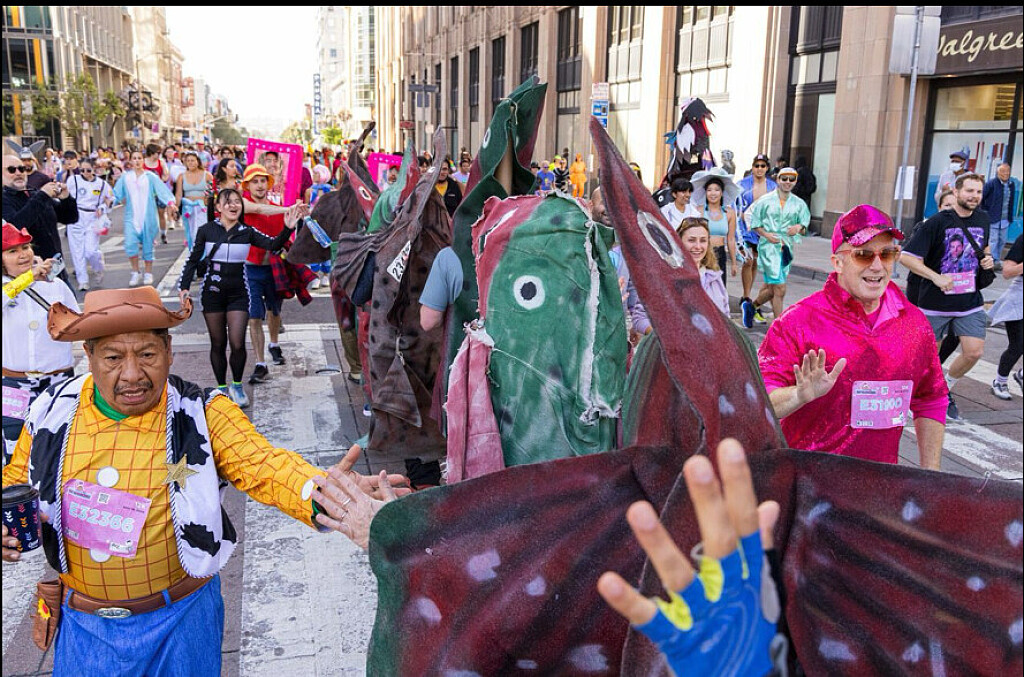
‘You Stole!’ Running World Divided Over ‘Bandits’ Who Crash Races
The Miami Marathon is contemplating facial-recognition tech to curtail interlopers; at a popular San Francisco race, bandits, who have included Gov. Gavin Newsom, are gods.
During the 2023 Miami Marathon, Frankie Ruiz, an event founder, spotted a bandit and pounced. He interrogated a runner wearing a comically bad counterfeit racing bib pinned to her shirt. She claimed she and pals had paid for entry to the race, and were told to print out their bibs at home.
“Who did you give the money to?” Ruiz asked
“My friend,” the woman answered vaguely. “That’s not a friend,” Ruiz replied. “You’re not registered.” Her run was done. She left the course, just 300 meters from the finish line.
As the public face of the marathon’s surveillance group, aka the “bandit busters,” Ruiz posts videos of his team catching bandits—runners who crash events without signing up.
I n “bandit reel” videos, he’ll intercept interlopers or his crew will strip medals from bibless finishers. Excuses fly: “It fell off, bro, it fell off.” One man unzips his jacket, feigning surprise at the missing bib. Caught red-handed, many sheepishly surrender their medals without a word.
As running booms, some races burst at the seams. Sold-out events and increasing fees, which can top $150, spur some bandits to sneak in, while others simply see no harm in crashing the course.
Last month, influencer Alexa Curtis bandited a sold-out New York City race, like a party she wasn’t invited to.
“I just ran 13.1 miles for the Brooklyn half marathon at a 7.43 minute pace,” she humblebragged in a tearfully triumphant Instagram message, mentioning her “fearless” journey. “I didn’t sign up for this race. I just asked the security where it started and where it ended and jumped in.” She didn’t know what was about to hit her.
To critics, Curtis committed the cardinal bandit sin: crossing the finish line.
“You are a bandit and you stole from this race,” one commenter wrote. A defender retorted, “if there was a line that was marked as ‘finish line’ and she walked over it, that doesn’t cost anything to anyone.”
C urtis initially was confused. “I literally googled, ‘What is a bandit,’” she said in an interview.
In the running world, among peers and in online forums, the bandit debate rages like a nasty blister. Are bandits happy runners harmlessly enjoying public roads? Or narcissistic resource-hogs using up porta potties and guzzling ill-gotten Gatorade?
Race banditry has a rich history. Bobbi Gibb, the first woman to run the Boston Marathon, crashed it in 1966 when women couldn’t register.
Tolerance varies. The Miami Marathon, a qualifier for Boston and other prestige races, takes a hard line. But San Francisco’s anarchic Bay to Breakers 12k? That’s a different story altogether.
If race banditry had an Olympics, it would be this race. California Gov. Gavin Newsom bandited Bay to Breakers in 2010. Organizers reported 21,000 registered participants this year, but anticipated as many as 10,000 additional crashers.
‘The salmon’
“Bandits are a part of Bay to Breakers,” said race director Kyle Meyers. “Do they all finish? No.”
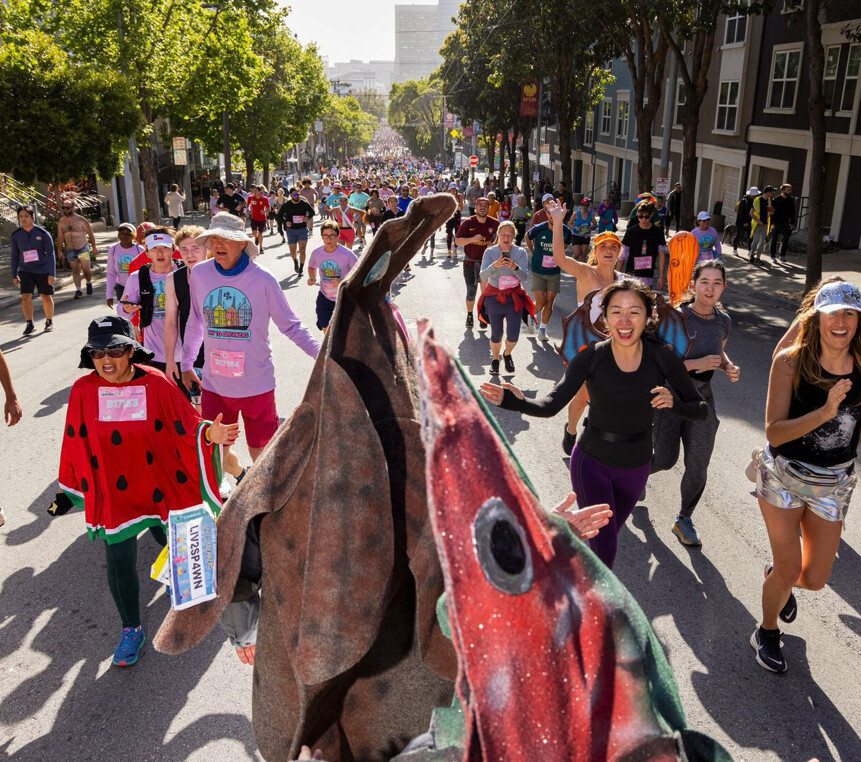
The most notable bandits are “the salmon,” die-hard mostly-unregistered runners who show up yearly, dress as salmon, and run in the wrong direction. This past Sunday, a dozen plunged into a crowd of about 30,000 participants, heading not to the finish line but to the Chieftain, an Irish pub near the start.
The lead runner, who gave his name as Uncle Milty, wore four old race bibs. “One of those was official,” he said when asked. “The rest were ones we made up.” As he waited to jump into the race, just a block from San Francisco’s famous Painted Ladies Victorians, he spied a fifth bib on the ground, and nonchalantly pinned it on.
After consulting with Michelle Kaye Fitzgerald, a legitimately registered salmon, to ensure the serious runners had passed, Milty rallied his school into Hayes Street. They approached advancing racers, shouting: “Spawn! Spawn! You’re going the wrong way!”
While Meyers says bandits shouldn’t cross the finish line, race staff happily handed cups of water to salmon along the course, and other amenities treasured by runners were open to bandits. “We probably have the most portable restrooms of any 12k on the planet,” Meyers said, with a hint of pride.
The salmon are the brainchild of Rob Schmitt, who hatched the idea more than 30 years ago after discussing salmon-spawning habits with his girlfriend. He repurposed old carpet into salmon costumes, and then relayed his plans to friends at the Cacophony Society, an underground group known for pranks and chaotic events.
To run with the salmon, as this reporter discovered Sunday, is to experience many things at once. Setting off downhill with some trepidation, you view thousands of participants, flowing toward you for block after block, like sparkly crawling ants, and feel an initial grim sense of awe at the thought of navigating through them. But that fades as passing racers greet you with glee.
You high-five 125 sweaty hands in a single block, including crabs, cows, bananas, banana slugs, furbys, Cybertrucks and nudists. You stop and dance every time there is music, especially if there are bubbles. You scream in mock terror when a bear runs by.
Meanwhile, in Miami
Frankie Ruiz began wrangling bandits a decade ago when the Miami Marathon ran out of medals for nearly 1,500 finishers, despite having ordered enough.
Ruiz is now known—and revered by some—for his bandit videos. He’s even nabbed bandits at Thanksgiving turkey trots. “I’ve had entire families showing up without paying.”
The Miami Marathon now uses holograms on bibs to prevent counterfeiting, and Ruiz is looking into facial-recognition technology.
What does he think of San Francisco’s salmon-suited bandits? “I’m glad you guys didn’t show up to my race,” he said. “I don’t know what I’d do.”
Login to leave a comment
Boston Athletic Association names field of professional athletes for 2024 Boston 10K
The Boston Athletic Association announced Wednesday the professional fields for the 2024 Boston 10K, which will be held on Sunday, June 23.
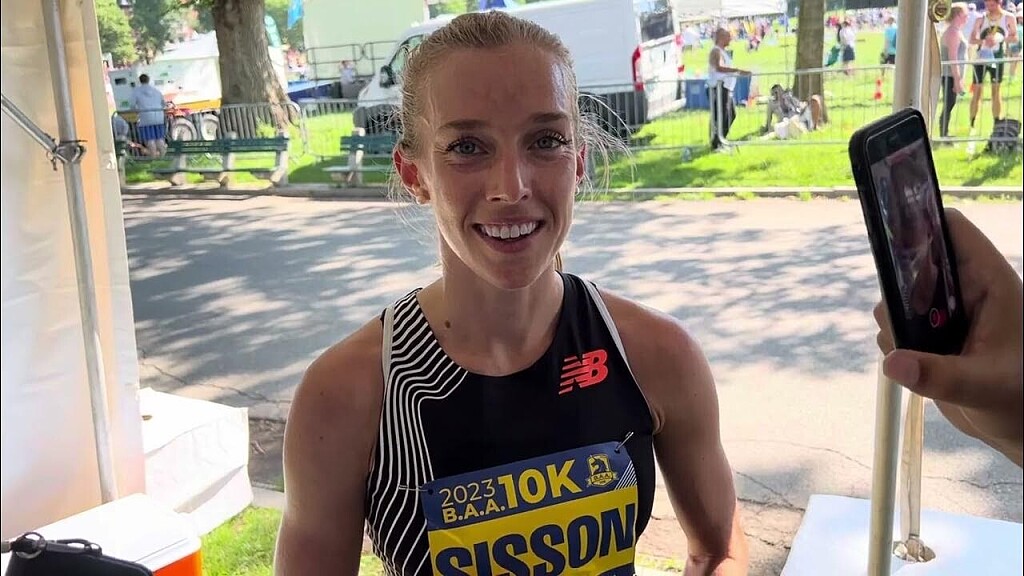
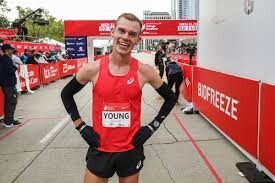
American Olympic marathoners Emily Sisson and Clayton Young will race the new and enhanced course that features scenic views of the Charles River and finishes at Boston Common.
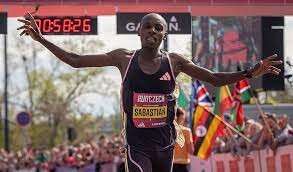
Making his American road racing debut is world-number one ranked road racer Sabastian Sawe, of Kenya, and returning is defending Boston Half champion Abel Kipchumba. 2024 Boston Marathon runner-up Sharon Lokedi and two-time Boston Marathon champion Edna Kiplagat headline the women’s field, while Para Athletics Division winners Marko Cheseto Lemtukei, Atsbha Gebremeskel and Kelly Bruno will compete two months after finishing April’s marathon.
“The Boston 10K presented by Brigham and Women’s Hospital kicks off the summer running season,” said Jack Fleming, the president and CEO of the B.A.A. “We’re eager for participants to take on the new course, which will run along the Charles River, over two historic bridges, and across the Boston Marathon finish line before finishing at Boston Common. Leading the way are some of the fastest and most accomplished athletes to race 6.2 miles, some doing so as a tune-up for the Olympic and Paralympic Games.”
Sisson and Young locked up their spots on Team USA’s Marathon roster in February, both finishing second in their respective women’s and men’s races. Sisson returns to the Boston 10K after placing second in 2022 and fourth in 2023, while this will be Young’s first B.A.A. event.
From Kenya are Lokedi and Kiplagat, racing in Boston two months after placing on the podium at the 128th Boston Marathon presented by Bank of America. Lokedi is currently the alternate for Kenya’s Olympic Marathon team, and Kiplagat has twice finished runner-up at the Boston 10K. Joining them among international competitors are last year’s Boston 10K second-place finisher Stacy Ndiwa (Kenya), Cherry Blossom 10 Mile champion Sarah Chelangat (Uganda), 2022 Beach to Beacon 10K winner Fantaye Belayneh (Ethiopia), and 2021 Olympic 10,000m sixth place finisher Irine Cheptai (Kenya). Mercy Chelangat, an NCAA Cross Country and 10,000m champion from Kenya, and 2022 Boston Half third-place finisher Hiwot Gebremaryam (Ethiopia) are entered as well.
From the USA is 2015 Boston Marathon champion Caroline Rotich, B.A.A. High-performance team member Abbey Wheeler, 2024 USA 15K third-place finisher Emily Durgin and former American 10,000m record holder and U.S. Olympian Molly Huddle.
The men’s international field is headlined by Sabastian Sawe, the top-ranked road racer in the world and the 2023 World Athletics Half Marathon champion. Sawe, of Kenya, has run 26:49 — fastest in the field — and will be making his American road racing debut.
From Kenya are Boston Half reigning champion Abel Kipchumba, 2023 Falmouth Road Race winner Wesley Kiptoo, and 17-time NCAA champion Edward Cheserek. Also from Kenya is Alex Masai, third in 2023.
Beyond Clayton Young, American men on the starting line will include recent USA 25K national champion Diego Estrada, 1:00:02 half marathoner Teshome Mekonen, and B.A.A. High Performance Team member Josh Kalapos. Kalapos finished 17th at February’s U.S. Olympic Team Trials – Marathon.
Hermin Garic returns in the men’s wheelchair division as a two-time defending champion, timing 22:44 last year. He’s joined by Michelle Wheeler, a top entrant in the women’s wheelchair division, who was runner-up last year.
In the Para Athletics Divisions, Brian Reynolds — who set a world record 41:09 at last year’s event for T61-64 Classification (lower-limb impairment) is back with sights on the podium again. Marko Cheseto Lemtukei and Kelly Bruno — each of whom won the T62-T64/T42-T44 Division at the 128th Boston Marathon — will compete, as well as Atsbha Gebremeskel, the two-time Boston Marathon T46 (upper limb impairment) Para Athletics Division champion. More than 25 athletes will participate in the Para Athletics Divisions and Adaptive Programs at this year’s Boston 10K. Nearly $20,000 — an event record — in prize awards are available to top-three finishers across Vision Impairment (T11-T13), Upper Limb Impairment (T45-T46), Lower Limb Impairment (T61-T64), Coordination Impairment (T35-T38) classifications.
The Boston 10K presented by Brigham and Women’s Hospital will be the second event of the 2024 B.A.A. Distance Medley, a year-long series featuring the Boston 5K (April), Boston 10K (June), and Boston Half (November). While open registration is sold out, limited spots are still available through Brigham and Women’s fundraising team.
by Jamy Pombo Sesselman
Login to leave a comment

B.A.A. 10K
The 6.2-mile course is a scenic tour through Boston's Back Bay. Notable neighborhoods and attractions include the legendary Bull and Finch Pub, after which the television series "Cheers" was developed, the campus of Boston University, and trendy Kenmore Square. ...
more...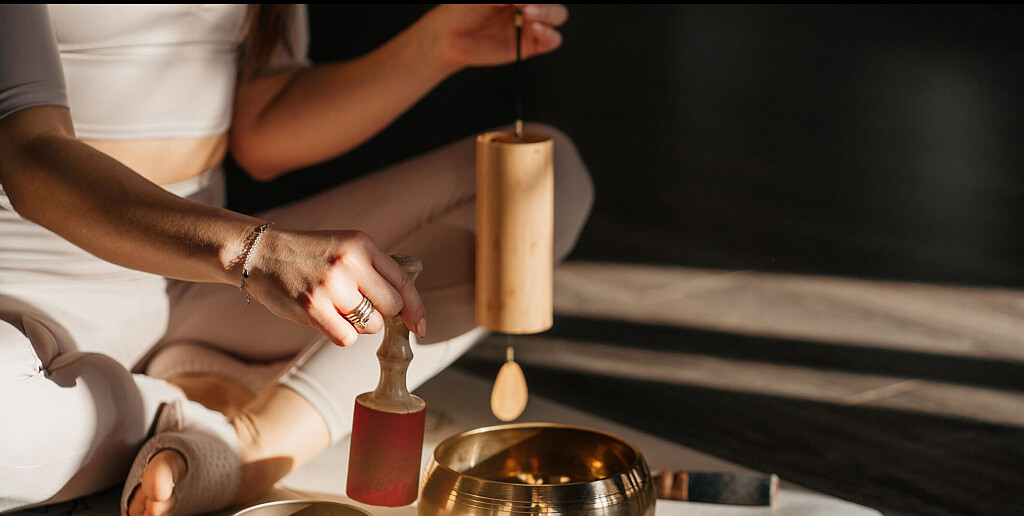
Could Sound Therapy Improve Your Athletic Performance?
You might listen to pump-up music while running to help you churn out the miles. But tuning into another form of sound could offer the opposite effect. Sound therapy—also known as sound baths or sound healing sessions—work to bring you into a state of calm and relieve stress. Sound baths aren’t just for savasana in yoga class, either, as the acoustic notes can offer benefits for athletes.
Here’s everything you need to know about sound therapy and how it can help your mindset and your recovery
What is sound therapy?
While sound therapy in Western medicine is a newer practice, it’s grounded in a very long tradition. “Sound therapy is the practice of not only auditory, but also vibratory inputs to influence physiology,” says Nathan R. Handley, M.D. medical oncology and integrative medicine doctor at Jefferson Health in Philadelphia. Think of sounds like crystal bowls, chimes, light drumming, or gongs, all emitting different frequencies and working to create a relaxed mind and body experience.
Some Eastern philosophies hold that the universe arose from sound—like the “om” chanting sound. “One of the principles with Eastern medicine is that when someone is sick they can be nourished by the correct sound,” Handley says, because the specific vibrations help to bring the body back into a healthy state. Eastern medicine traditions have a deep appreciation of the mind-body connection, and an awareness that sound can quiet the mind and reduce stress, Handley explains.
Handley uses vibro acoustic therapy in his medical practice, which is the combination of audible sound and vibration to decrease stress and promote relaxation. Transducers—which emit vibrations—can also be embedded in soft furniture so that the healing is felt as well as heard, Handley adds. “Sound therapy is really interesting because in one form or another, it has really been part of traditional healing culture for thousands of years,” he says.
The premise of sound therapy is simple: Certain sounds are naturally meant to bring you into a state of calm, relaxation, and healing. “Sound is energy. Specific vibrations carry different energy. In Eastern medicine, different parts of the body are associated with specific energies, frequencies, and vibrations. Sound, then, is a vibrational force that can influence (and ideally harmonize) these energies,” Handley says.
What are the benefits of sound therapy?
1. Stress Relief and Improved Mood
Listening to relaxing, repetitive sounds can help your body calm down, relax, and relieve tension, and can help you focus on the present moment, says Michelle DiBlasi, D.O., chief of inpatient psychiatry at Tufts Medical Center in Boston.
In fact, research published in the Journal of Evidence-Based and Complementary Alternative Medicine in 2017 backs up the benefits of sound therapy for mood and stress. The study, which involved 62 men and women with an average age of about 50, found that following a Tibetan singing bowl meditation, participants reported reduced feelings of tension, anger, fatigue, and depressed mood.
DiBlasi explains that sound therapy may work to reduce stress and boost mood potentially by stimulating the vagal nerve. The vagal nerve carries signals between the brain, heart, and digestive system, and is responsible for triggering a parasympathetic response, or our “rest and digest” state. When we’re in a parasympathetic state, we experience a lower heart rate and relaxed breathing, which in turn, helps the mind relax, Diblasi explains.
2. Better Sleep Quality
You’re probably aware that a restful night’s sleep is important to feeling your best, and helping you perform better as a runner. It’s easy to fall into patterns that disrupt sleep quality, like scrolling on phones or watching TV before bed. But there’s promising research that sound therapy can help with sleep.
This is especially true for a particular kind of sound therapy known as binaural beats. The Sleep Foundation defines binaural beats as an auditory phenomenon that occurs when listening to two different frequencies at once. “The strategy with binaural beats is to create the perception of a specific frequency by presenting two slightly different frequencies to each ear,” Handley says.
These frequencies then influence your brain waves frequencies, which can lead to different effects, Handley explains. For example, “delta waves are associated with deep sleep; theta waves are associated with light sleep or deep relaxation; alpha waves are associated with a relaxed state, when the brain isn’t focused on anything in particular; beta waves occur during periods of alertness and engagement; and gamma waves are associated with learning, problem solving, and high-level cognition,” he says. Binaural beats tap into the frequencies of these brain waves (often delta waves) to help you find calm and sleep better.
A pilot study published in Digital Health in 2022, examining the sleep of 20 healthy participants, found that the practice of listening to 90 minutes of delta binaural beats had a positive effect on sleep quality, as shown by markers like the number of awakenings and sleep duration. Participants also reported increased sleep satisfaction after one week of listening to the binaural beats, as well as reduced anxiety and anger.
While there are a host of remedies on the market advertised to help you sleep, a good alternative to pill therapy might just be sound therapy. “I think anything like this where you’re doing something that’s relaxing your mind and body certainly gets you ready for sleep,” Diblasi says. “It’s a great exercise to do before bed.”
3. Pain Management and Recovery
“Sound baths and sound therapy are helpful for athletes because they can lead to the relaxation response which can be helpful for not only recovery, but also performance enhancement,” Handley adds.
Sound meditation can also have a positive impact on perceived levels of pain. According to research published in Journal of Evidence-Based and Complementary Alternative Medicine, participants who listened to singing bowls experienced a reduction in pain and tension after the therapy.
While the exact mechanism for this is unclear, researchers found that for many participants, mood improved while listening to the sound therapy, which could account for physiological changes in the body. In other words, when your mind relaxes, your body might follow suit.
4. Increased Heart Rate Variability
“There is increasing evidence that sound therapy can enhance heart rate variability (HRV),” Handley says. HRV is the variation in the intervals between heart beats and can signal your adaptability. A higher HRV can indicate better cardiovascular health, stress resilience, and enhanced athletic performance, he explains.
“Because HRV indicates increased parasympathetic activation, it is indicative of better recovery and preparedness for intense training sessions,” Handley adds.
A study published in Cureus in 2023, which involved 23 participants, found that the practice of humming—considered a form of sound therapy—increased heart rate variability. The study indicates that humming can create a unique pattern of the heart’s signal, which can potentially lower sympathetic activation (our stressful state) and increase the parasympathetic tone (our relaxed state).
What’s more, the study found that after taking part in the humming exercise, the practice increased breathing quality and consistency through increased HRV and lung function. Researchers found that the effects of humming continued to help even when the individual was not consciously doing the activity.
How to Get Started With Sound Therapy
In order to experience the benefits of sound therapy, DiBlasi recommends listening for 30 to 90 minutes, but if you have less time, it’s still worth a listen. “If you only have 10 minutes before you go to work, or before bedtime, that could still be helpful,” she says.
To get started with sound therapy, these five apps provide a relaxing experience. All you need to do is find a quiet, comfortable place to tune in and chill out.
1. Apple Fitness+ ($10/month or $79/year)
Beginning in 2024, Apple Fitness+ introduced a new meditation theme called Sound. While a trainer will start off the meditations, the five-, 10-, and 20-minute sessions allow you to focus in on calming tones and rhythms, with the help of gongs and singing bowls.
2. Binaural Beats App ($3/month)
This app is exclusively designed to offer binaural beats, which you should listen to with headphones to experience the different frequencies in each ear. The app allows you to select your focus, like sleep or stress relief.
3. Calm App (Sound Baths) ($14/month)
Users can select their focus from within the sound bath categories, including sleep, meditation, work, wisdom, and even sounds baths meant for children.
4. The Sound Bath App ($10/month)
Choose from various sound baths based on your mood and your needs. The app includes a library of more 100 options, plus eight-hour evening baths to last you through a good night’s sleep. Plus, you can tune into twice-weekly live-stream sessions, which also feature live chats with facilitators.
5. Third Ear (free for limited use or up to $10/month)
You can choose to listen to different sounds like gongs, bowls, chimes, mantras, or binaural beats. Free sound baths range from three to five minutes, while full use of the app offers 30- to 50-minute sessions.
Login to leave a comment
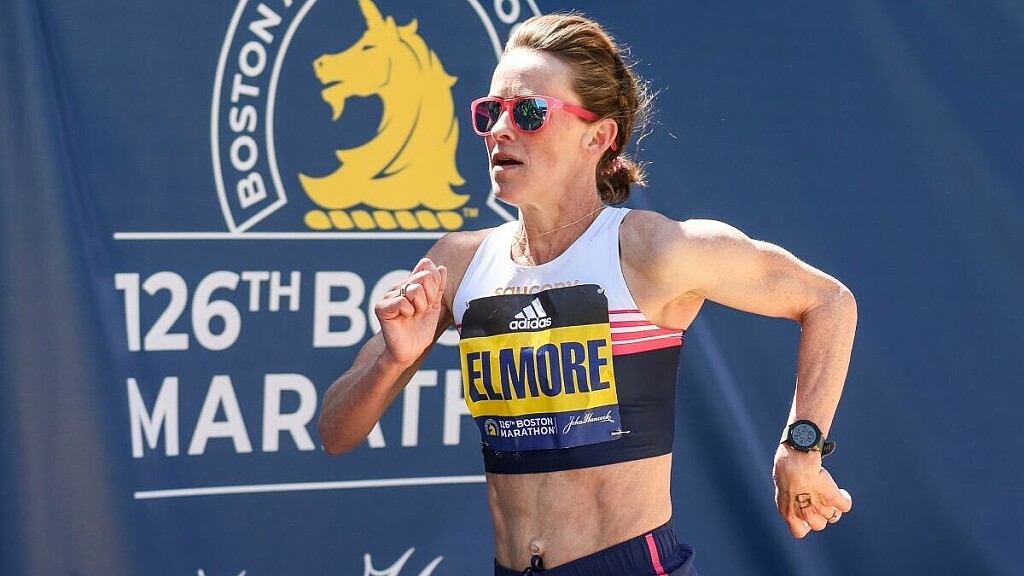
Malindi Elmore set to race 2024 Boston Marathon
Two-time Olympian Malindi Elmore of Kelowna, B.C., is on the women’s elite list for the 128th Boston Marathon on April 15. Elmore is featured in a strong field with reigning champion Hellen Obiri and 2022 New York Marathon champion Sharon Lokedi; she will also be one of three Canadian women running in Boston.
This will be Elmore’s second time running the Boston Marathon. In 2022, she ran to an impressive 11th-place finish, posting a time of 2:27:58, which is the fastest-ever time in Boston by a Canadian woman. She left Boston wanting to return, saying, “It’s a blast to run the crowd-lined streets, where there is always someone cheering you on and shouting your name.”
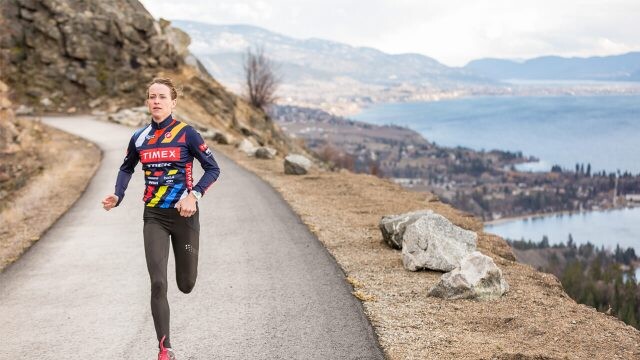
Elmore, who ran the second-fastest Canadian women’s marathon time at the 2023 Berlin Marathon, achieved the Olympic qualifying mark of 2:26:50. She is currently the only woman who has solidified her spot on Team Canada for the marathon in Paris. The 43-year-old told Canadian Running that she plans to use Boston as a prep race for the Olympic marathon in August.
“Racing Boston is part of the Paris 2024 plan,” says Elmore on her decision to race Boston. “The course in Paris is reported to be twice the elevation gain of Boston, so I want the opportunity to train and race on hills through the winter and hopefully be a hill beast by August!”
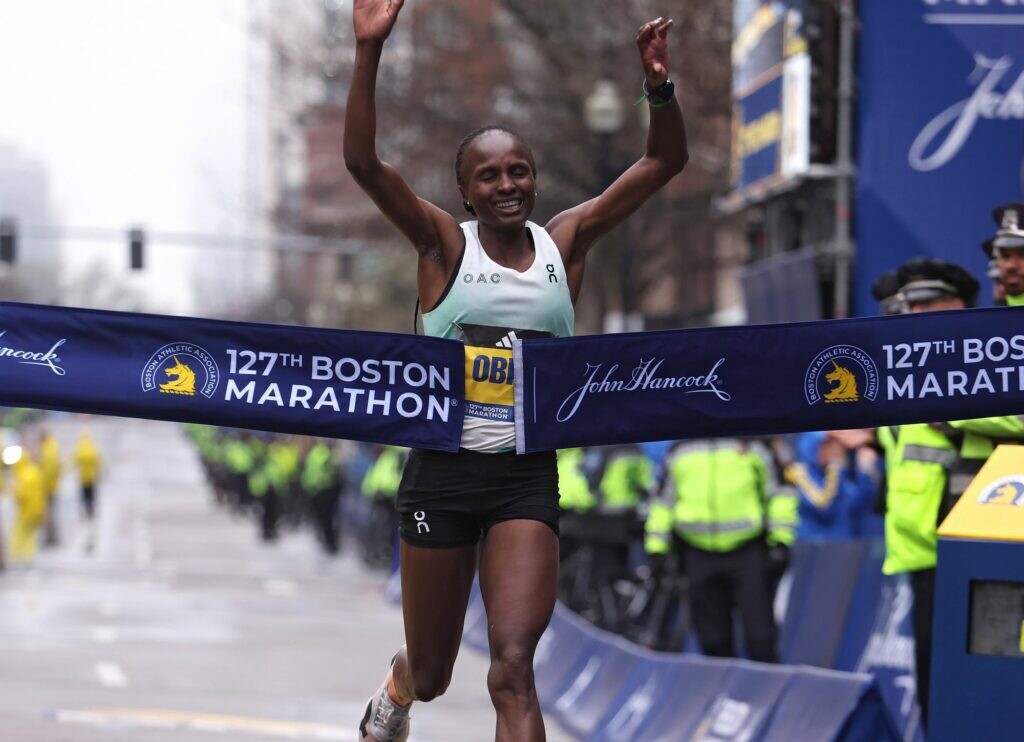
The Boston and New York marathons are two of the tougher Abbott World Marathon Major courses. The Boston is a net downhill, but features a lot of hills in the second half of the race, including the famous Heartbreak Hill at 32 kilometres. The Paris Olympic marathon is touted to be the hilliest Olympic marathon to date, featuring more than 400 metres in elevation gain on an out-and-back loop to the Palace of Versailles.
Elmore will be one of three Canadian marathoners on the women’s elite list. Joining Elmore in Boston are two up-and-coming marathoners from Thunder Bay, Ont., Michelle and Kim Krezonoski. The Krezonoski sisters ran their personal bests of 2:36:39 (Michelle) and 2:37:20 (Kim) at the 2022 California International Marathon.
Michelle said it’s been an exciting and emotional journey to get to this point after partially tearing her Achilles tendon in her build-up to the 2023 Toronto Waterfront Marathon (which she did not race). “I am grateful to have this opportunity to run alongside the world’s best with my twin sister,” Michelle told Canadian Running. “Boston is historic, and it’s a course that challenges your strength.”
Obiri returns for glory
The most dominant women’s marathoner in the world right now, Hellen Obiri, returns to Boston to defend her title. Last year, Obiri unleashed a perfectly-timed sprint in the final mile to earn her first Boston Marathon title, in only her second career marathon. Boston marked one of her two marathon wins in 2023. She became only the second women’s marathoner in history to win both Boston and New York in the same year.
“I am excited to return to the 2024 Boston Marathon to try to defend my title,” shared Obiri, who won last year’s race in 2:21:38. “Boston is a historic race, and I would like to add my name further to its history on April 15. Winning such a historic marathon with my family waiting at the finish line was an experience I’ll never forget.”
The 2024 Boston Marathon will also see a trio of Ethiopian runners with personal bests under 2:18:00. Worknesh Degefa, the 2019 Boston Marathon champion, is set to return. Tadu Teshome, with a marathon best of 2:17:36 from the 2022 Valencia Marathon, will make her Boston debut, and Senbere Teferi, a world championship silver medallist over 5,000m, will also compete after winning the B.A.A. 5K in a course record time of 14:49 in 2022.
by Marley Dickinson
Login to leave a comment
Boston Marathon
Among the nation’s oldest athletic clubs, the B.A.A. was established in 1887, and, in 1896, more than half of the U.S. Olympic Team at the first modern games was composed of B.A.A. club members. The Olympic Games provided the inspiration for the first Boston Marathon, which culminated the B.A.A. Games on April 19, 1897. John J. McDermott emerged from a...
more...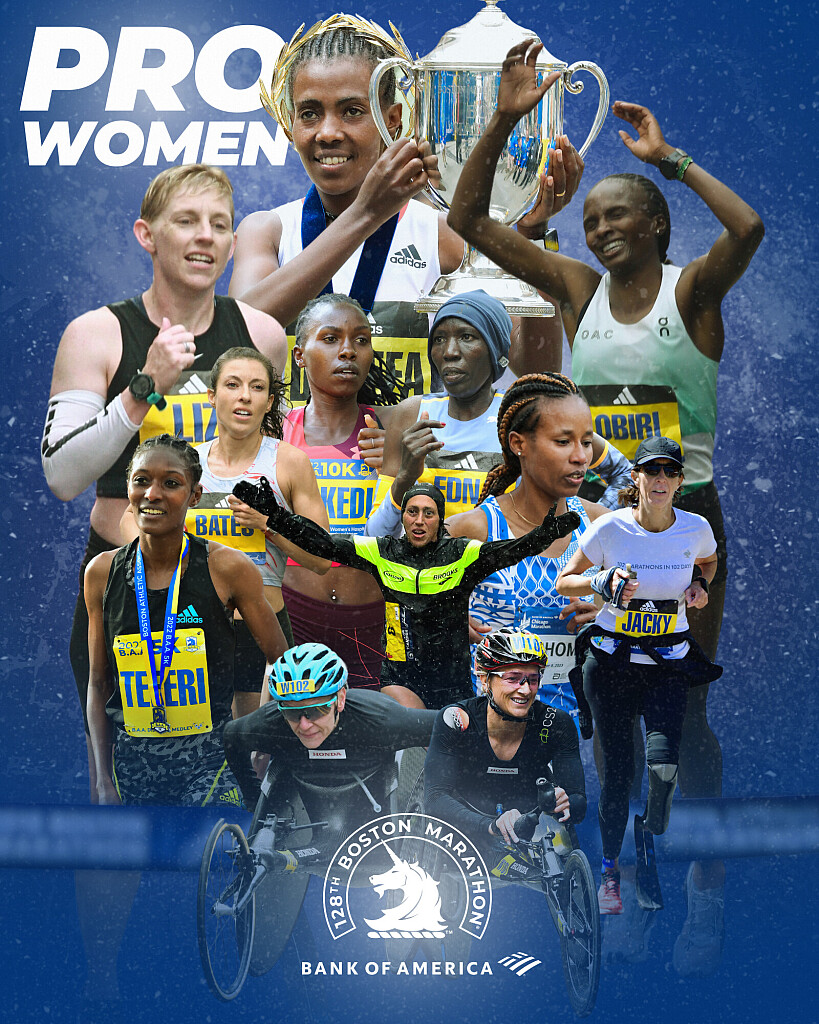
Strongest Women’s Field in the race history at Boston Marathon 2024
The 128th Boston Marathon presented by Bank of America will feature the strongest women’s field in race history, led by defending champions Hellen Obiri and Susannah Scaroni. A total of 19 women with personal bests under 2:23:00 will line up in Hopkinton aiming to earn the Open Division crown, including Olympians, Abbott World Marathon Majors winners, and national stars. In the Wheelchair and Para Athletics Divisions, Paralympic hopefuls from around the world are set to compete.
“The Boston Marathon is proud to showcase the world’s best athletes year in and year out on Patriots’ Day,” said Jack Fleming, President and CEO of the Boston Athletic Association. “This year’s women’s field is exceptionally fast and showcases many who’ve been podium finishers on the global stage. It’ll make for an exciting race from Hopkinton to Boston, and we look forward to crowning our champions on April 15.”
Women from 20 countries will be competing as part of the Bank of America Professional Athlete Team.
“Each year, the Boston Marathon sets the bar higher with an unbelievable level of athletic talent, and its impact on communities around the world,” said David Tyrie, chief digital officer and chief marketing officer, Bank of America. “The 128th Boston Marathon builds on a rich history and will continue to be an inspiration for all athletes.”
HELLEN OBIRI SET TO DEFEND OPEN DIVISION TITLE
Hellen Obiri, a two-time Olympic silver medalist from Kenya now living in Colorado, won the 2023 Boston Marathon thanks to a perfectly-timed sprint in the final mile. Adding to her trophy case, Obiri also took home the 2023 B.A.A. 10K title in June and the TCS New York City Marathon crown in November.
“I am excited to return to the 2024 Boston Marathon to try to defend my title,” said Obiri, who finished last year’s race in 2:21:38. “Boston is an historic race and I would like to add my name further to its history on April 15. Winning such an historic marathon with my family waiting at the finish line was an amazing experience.”
A trifecta of Ethiopians with lifetime bests under 2:18:00 will take to the Boston course. Worknesh Degefa, the 2019 Boston Marathon champion, returns, while 2:17:36 marathoner Tadu Teshome will make her Boston debut and Hiwot Gebremaryam aims to improve upon her eighth-place finish last year. Also from Ethiopia is World championships medalist Senbere Teferi; she won the 2022 B.A.A. 5K in a course record 14:49 and has shown talent at the longer distances. Experienced marathoner Ababel Yeshaneh –second in 2022 and fourth in 2023— will try to become the seventh woman from Ethiopia to win the olive wreath in Boston.
Joining Obiri from Kenya are 2022 World Athletics Championships Marathon silver medalist Judith Korir; two-time Boston Marathon winner Edna Kiplagat; four-time top-ten finisher Mary Ngugi-Cooper; and 2022 TCS New York City Marathon champion Sharon Lokedi. Helah Kiprop, who holds a silver medal in the marathon from the 2015 World Athletics Championships and has earned wins in Tokyo, Copenhagen, and Paris, makes her second career Boston start. From Morocco is 2023 World Athletics Championships Marathon bronze medalist Fatima Gardadi.
Desiree Linden leads the American contingent six years after winning the 2018 title. Linden has finished in the top-five five times, and holds the third fastest time by an American ever on the Hopkinton-to-Boston route (2:22:38). Linden will run her fifth U.S. Olympic Marathon Trials in February. Joining her is Emma Bates who finished fifth last year in the second-fastest time ever by an American woman at Boston (2:22:10).
“At this point in my career it’s an easy decision to return to the Boston Marathon and make it my top priority race of the spring,” said Linden. “I can’t wait to take on the iconic course for an 11th time and have the opportunity to mix it up with some of the best runners in the world.”
128TH BOSTON MARATHON PROFESSIONAL WOMEN’S FIELDS
Women’s Open Division
Country
Personal Best
Worknesh Degefa
ETH
2:15:51 (Valencia, 2023)
Tadu Teshome
ETH
2:17:36 (Valencia, 2022)
Hiwot Gebremaryam
ETH
2:17:59 (Valencia, 2023)
Judith Korir
KEN
2:18:20 (Eugene, 2022)
Meseret Belete
ETH
2:18:21 (Amsterdam, 2023)
Tiruye Mesfin
ETH
2:18:47 (Valencia, 2022)
Worknesh Edesa
ETH
2:18:51 (Berlin, 2022)
Zeineba Yimer
ETH
2:19:07 (Berlin 2023)
Senbere Teferi
ETH
2:19:21 (Berlin, 2023)
Dera Dida
ETH
2:19:24 (Berlin, 2023)
Edna Kiplagat
KEN
2:19:50 (London, 2012)*
Mary Ngugi-Cooper
KEN
2:20:22 (London, 2022)
Nazret Weldu Gebrehiwet
ERI
2:20:29 (Eugene) NR
Ababel Yeshaneh
ETH
2:20:51 (Chicago, 2019)
Vibian Chepkirui
KEN
2:20:59 (Vienna, 2022)
Helah Kiprop
KEN
2:21:27 (Tokyo, 2016)
Hellen Obiri
KEN
2:21:38 (Boston, 2023)
Emma Bates
USA
2:22:10 (Boston, 2023)
Desiree Linden
USA
2:22:38 (Boston, 2011)*
Buze Diriba
ETH
2:23:11 (Toronto, 2023)
Sharon Lokedi
KEN
2:23:23 (New York City, 2022)
Malindi Elmore
CAN
2:23:30 (Berlin, 2023)*
Fatima Gardadi
MOR
2:24:12 (Xiamen, 2024)
Angie Orjuela
COL
2:25:35 (Berlin, 2023) NR
Fabienne Konigstein
GER
2:25:48 (Hamburg, 2023)
Jackie Gaughan
USA
2:27:08 (Berlin, 2023)
Dominique Scott
RSA
2:27:31 (Chicago, 2023)
Grace Kahura
KEN
2:29:00 (Sacramento, 2023)
Katie Kellner
USA
2:32:48 (Berlin, 2023)
Briana Boehmer
USA
2:33:20 (Sacramento, 2021)
Dylan Hassett
IRL
2:33:25 (Pulford, 2021)
Parley Hannan
USA
2:33:43 (Carmel, 2023)
Sara Lopez
USA
2:33:48 (Eugene, 2023)
Annie Heffernan
USA
2:34:33 (Lowell, 2023)
Nera Jareb
AUS
2:35:00 (Queensland, 2022)*
Johanna Backlund
SWE
2:35:10 (Hamburg, 2019)
Argentina Valdepenas Cerna
MEX
2:35:34 (Chicago, 2022)*
Ariane Hendrix Roach
USA
2:35:39 (Sacramento, 2022)
Michelle Krezonoski
CAN
2:36:39 (Sacramento, 2022)
Shannon Smith
USA
2:36:43 (Columbus, 2023)
Caroline Williams
USA
2:37:01 (Sacramento, 2022)
Gina Rouse
USA
2:37:10 (Sacramento, 2023)*
Kim Krezonoski
CAN
2:37:20 (Sacramento, 2022)
Abigail Corrigan
USA
2:37:45 (Sacramento, 2023)
Marissa Lenger
USA
2:38:41 (Chicago, 2022)
Emilee Risteen
USA
2:38:46 (Duluth, 2023)
Isabelle Pickett
AUS
2:38:46 (Valencia, 2023)
Allie Hackett
USA
2:38:52 (Duluth, 2023
Mary Christensen
USA
2:38:55 (Big Bear, 2023)
Olivia Anger
USA
2:39:13 (Indianapolis, 2023)
April Lund
USA
2:39:23 (Houston, 2022)*
Sarah Short
AUS
2:39:51 (Valencia, 2023)
Maura Lemon
USA
2:40:30 (Valley Cottage, 2023)
Sarah Sibert
USA
2:40:31 (Philadelphia, 2022)
Lauren Ames
USA
2:40:34 (Valley Cottage, 2023)
Kassie Harmon
USA
2:41:48 (Utah Valley, 2023)*
Elizabeth Camy
USA
2:42:51 (Sacramento, 2022)*
Alexandra Niles
USA
2:43:23 (Hartford, 2022)*
Amber Morrison
USA
2:43:50 (Sacramento, 2022)*
Mindy Mammen
USA
2:44:01 (Duluth, 2023)*
Ziyang Liu
USA
2:44:56 (Eugene, 2023)*
*Denotes Masters Division (40+)
Login to leave a comment
Boston Marathon
Among the nation’s oldest athletic clubs, the B.A.A. was established in 1887, and, in 1896, more than half of the U.S. Olympic Team at the first modern games was composed of B.A.A. club members. The Olympic Games provided the inspiration for the first Boston Marathon, which culminated the B.A.A. Games on April 19, 1897. John J. McDermott emerged from a...
more...
Isai Rodriguez, Sam Chelanga capture gold and silver for U.S. in men´s 10,000 meters at Pan American Games
Isai Rodriguez and Sam Chelanga made history Friday at the Pan American Games, becoming the first American teammates to take the top two spots in the men’s 10,000-meter final at Julio Martinez Pradanos National Stadium in Santiago, Chile.
Rodriguez, an All-American at Oklahoma State, and Chelanga – the collegiate 10,000 record holder from 2010 at Liberty – became the first pair of teammates from any country since 1979 and only the third tandem in meet history to secure gold and silver in the event.
Rodriguez prevailed in 28 minutes, 17.84 seconds, the fastest Pan Am Games winning performance since 2007, and Chelanga clocked 29:01.21, with Guatemala’s Alberto Gonzalez earning bronze in 29:12.24.
Rodriguez and Chelanga joined Mexico’s Rodolfo Gomez and Enrique Aquino in 1979, along with Luis Hernandez and Gomez in 1975 as the only teammates to sweep the top two spots in the men’s 10,000.
Rodriguez secured the first 10,000 gold for the U.S. since Bruce Bickford triumphed in 1987 in Indiana.
It marked the second straight Pan Am Games that the Americans had two athletes on the 10,000 podium, with Reid Buchanan and Lawi Lalang achieving silver and bronze in 2019 in Peru. The U.S. also had a pair of 10,000 medalists in 1967 in Winnipeg.
The Americans added bronze medals in the women’s 1,500-meter final and javelin throw competition, in addition to the men’s shot put, taking the lead with 19 overall medals entering the last day of the track and field schedule.
Brazil leads with seven gold medals and is second behind the Americans with 18 overall medals.
Darlan Romani triumphed for Brazil in the men’s shot put with a fifth-round effort of 70-1 (21.36m).
Mexico’s Uziel Aaron Munoz secured silver at 69-4.75 (21.15m), with former Arizona standout and NCAA Division 1 champion Jordan Geist edging fellow American athlete Roger Steen for bronze by a 67-4.25 (20.53m) to 67-3.50 (20.51m) margin.
Colombia’s Flor Denis Ruiz won the women’s javelin gold medal with a throw of 207 feet (63.10m) on her opening attempt.
Nebraska teammates Rhema Otabor, representing the Bahamas, and American competitor Maddie Harris captured silver and bronze, respectively. Otabor had a mark of 198-7 (60.54m) and Harris produced a throw of 197 feet (60.06m).
Venezuela’s Joselyn Brea completed a sweep of the women’s 1,500 and 5,000 titles, clocking 4:11.80 to edge Cuba’s Daily Cooper (4:11.86) and American athlete Emily Mackay (4:12.02).
Gianna Woodruff believed she had become the first female athlete from Panama to capture a Pan Am Games gold medal in any event, clocking 56.44 in the women’s 400-meter hurdles.
But Woodruff was later disqualified as a result of Rule 22.6.2, which states that an athlete is penalized after “knocking down or displacing any hurdle by hand, body or the upper side of the lead leg.”
Brazil’s Marlene Santos, who ran 57.18, was elevated to the event winner, with Daniela Rojas from Costa Rica earning silver in 57.41 and Montverde Academy of Florida senior Michelle Smith, representing the U.S. Virgin Islands, taking bronze in 57.53.
Jamaica’s Jaheel Hyde emerged victorious in the men’s 400-meter hurdles in 49.19.
Brazil’s Matheus Lima earned silver in 49.69 and Cuba’s Yoao Illas was the bronze medalist in 49.74.
Cuba’s Luis Enrique Zayas cleared 7-5.25 (2.27m) on his third attempt to prevail in the men’s high jump final.
Puerto Rico’s Luis Joel Castro achieved a 7-4.25 (2.24m) clearance on his first opportunity to capture silver, with Donald Thomas of the Bahamas grabbing bronze after achieving the height on his third try.
Cuba added two more medals in the men’s triple jump final, with Lazaro Martinez winning on his first attempt with a 56-4.75 (17.19m) performance.
Brazil’s Almir Dos Santos secured silver at 55-6.25 (16.92m) and Cuba’s Cristian Napoles took the bronze medal at 54-8 (16.66m), holding off American athlete Chris Benard and his fourth-place mark of 54-1 (16.48m).
by Erik Boal
Login to leave a comment

Pan American Games
The Pan American Games area premier, quadrennial multi-sport event for 41 nations across the Americas, held one year before the Summer Olympics. Organized by Panam Sports, the games serve as a direct Olympic qualifier and feature thousands of athletes competing in diverse sports. The next edition, the 2027 Pan American Games, will take place in Lima, Peru, from July 16...
more...
Santiago 2023 - Yarima Garcia wins Cuba's first Pan Am Games women's 100m since 1991
With the sun setting on the Andes, things were just heating up in athletics at the Pan American Games Santiago 2023 inside the Estadio Nacional Julio Martínez Prádanos, as gold, silver and bronze were awarded in the women's 100m final.
Yarima Garcia of Cuba sprinted to a time of 11.36, taking the Pan American title and the gold medal. She held off Guyana's Jasmine Abrams (11.52), who took silver. Michelle-lee Ahye of Trinidad and Tobago was the bronze medallist at 11.53.
A hushed crowd waited as the field of eight sat in the blocks, readying for the start. Garcia took the lead by the halfway mark and didn't let up, cruising to the gold medal.
Well ahead of the field, Garcia clasped her hands over her mouth in disbelief as the realization of her win began to set in.
The victory is the first win for Cuba since Liliana Allen took the title at the 1991 Games in Havana.
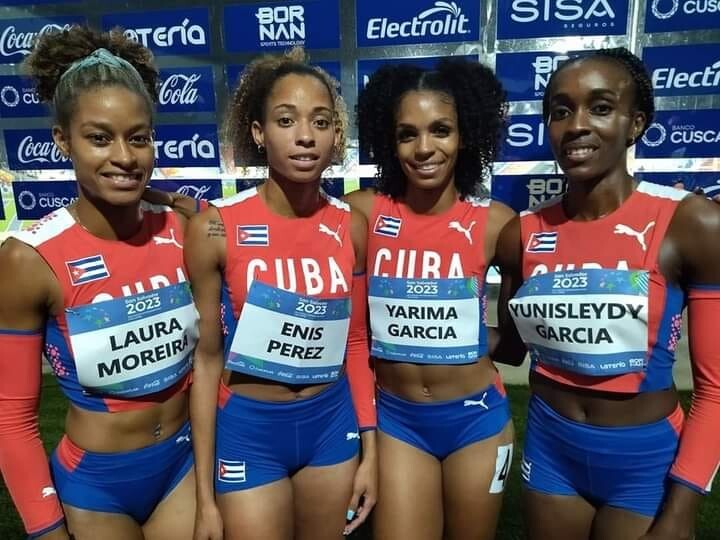
Mexico's Cecilia Tamayo, who won her semi-final some 24 hours ago, finished eighth in the final.
Login to leave a comment
Pan American Games
The Pan American Games area premier, quadrennial multi-sport event for 41 nations across the Americas, held one year before the Summer Olympics. Organized by Panam Sports, the games serve as a direct Olympic qualifier and feature thousands of athletes competing in diverse sports. The next edition, the 2027 Pan American Games, will take place in Lima, Peru, from July 16...
more...
The Best Ways to Relieve Stress When You Need to Chill Out Fast
Take a deep breath, listen to music, or try one of these other suggestions.
None of us are immune to stress, especially on or around race day, holidays, and other big events. While big solutions, like going on a vacation or getting a massage, might help you relax in these times, we often need a quick solution that doesn’t require a big financial commitment.
For that, we found out how to relieve stress fast, according to research and experts, when you’re feeling overwhelmed, frazzled, and/or under appreciated. Consider one or maybe all of them (we’ve all had that kind of day!) to chill out in the moment.
1. Take a Deep Breath
There’s a reason this advice is given so often: It works. Conscious, deep breathing engages the parasympathetic nervous system, which in turn slows your heart rate, according to Henry Emmons, M.D., author of The Chemistry of Calm.
A plethora of research backs up the power of deep breathing, demonstrating its effects on the parasympathetic nervous system and psychological stress levels. And you can try several different breathing exercises to see what works for you, too.
2. Put Your Hand on Your Heart
Don’t save this super valuable tactic only for national anthem moments. This is a self-soothing action that your body recognizes as a calming technique, Emmons says. It also allows you to feel your heartbeat, another signal to your brain to slow down the panic.
3. Recall a De-Stress Success
One of the biggest parts of a high-pressure situation is feeling like you won’t get past it, according to Michelle Gielan, author of Broadcasting Happiness: The Science of Igniting and Sustaining Positive Change. But you’ve done it before, and she suggests writing down a list of stressful situations you’ve conquered—from a huge presentation to overcoming an injury—as a quick reminder that you have the skills you need to power through. Turn back to these list when times feel tough.
4. Visualize Better Times
Your brain is wired to anticipate threats, says Loretta Graziano Breuning, Ph.D., author of Habits of a Happy Brain. Create a visualization exercise that’s geared toward de-escalation. For example, as stress ramps up, imagine that you just unlocked an escape room door. Or, if thoughts of your race have you in a stress spinal, picture yourself conquering hills, staying positive, and pushing through tough stretches—and crossing that finish line strong.
5. Tell Yourself It Will Be Okay
Sounds almost too simple, and yet, comforting yourself as you would a friend actually works, says Breuning. That’s because your brain believes what you tell it, she says. It’s the same tactic that keeps you running a few extra miles or jogging past your bonk point.
6. Practice Affirmations
Once you give yourself the initial pep-talk moment, follow it up with a major language change, suggests Jen Sincero, author of You Are a Badass: How to Stop Doubting Your Greatness and Start Living an Awesome Life. For example, instead of saying, “I’m so stressed by this deadline,” switch it to, “I’m excited to get past this deadline.”
The more you practice these simple positive switches in your internal dialogue, the more likely they become default mode.
7. Text One Friend
While it’s tempting to crowdsource your way out of stress, that may actually make you feel worse since you have to navigate an array of opinions, says Gielan. Instead, choose your best chill-out friend—the one who always talks you off the ledge the fastest—and send an SOS.
8. Get Mouthy
Many people, when they stress, get tension in the face and jaw, says Emmons. You can tell when that’s happening because you often press your tongue up to the roof of your mouth. Take a moment to peel it off, and your jaw will usually unclench as a result.
Being mindful of the physical symptoms of stress can also help you relax those tense muscles and feel better mentally and physically.
9. Carry a Chill-Out Item
Objects have the power that we assign to them, says Sincero. So, power up an everyday item that’s easily slipped into your pocket—maybe your kid’s Lego, or a small rock from your favorite running route, or a safety pin from your first race bib. Keep it handy and grab it when you’re getting frazzled. The point is to choose some kind of talisman that reminds you of what’s really important.
10. Skip, Jump, or Hop on One Leg
Basically, if it makes you feel like a kid and a little silly, you’ve got it right. Play can trigger positive neurochemicals like serotonin, oxytocin, and dopamine, according to Breuning. Even just a minute of child-like activity can cause a good-chemicals surge.
11. Change Your Password
File this under the “positive affirmation” tactic, but in a way your IT department will appreciate. Change your email or laptop password into something meaningful but still security-minded. For example, if this is your year for your best PR ever, try something like: 20PR&BeAst#18.c. Then, every time you type in your password, you have a little reminder of a positive in your life.
12. Stand Up or Sit Down
Getting overwhelmed often happens when you’re in go-go-go mode, and your brain can start to spin out. Changing your body position is a helpful way to take a break, says Breuning. Even if it’s just for 30 seconds, your mind will recognize that something has changed, giving you an opportunity to take that deep breath and reset yourself. (Not to mention moving around more often throughout the day can have real benefits for your overall health!)
13. Turn on Some Tunes
A study published in JAMA Network Open suggests listening to music may lower stress levels and improve mood, especially if you perceive the music as “happy.”
What’s more, several studies have suggested that music you consider “relaxing” can have a direct effect on functions in in the body, including reducing levels of stress hormones in the body.
14. Try Alternate-Nostril Breathing
If a few deep breaths aren’t working, it’s time to get funky with this shortcut. First, exhale completely, then inhale deeply. On your next exhale, gently place an index finger against your right nostril to close it off. Inhale, then release that nostril and close off the left. Exhale, then inhale, through that side. Repeat until people move away from you on public transit.
15. Exhale Longer Than You Inhale
Sometimes called the 1:2 breathing practice, this is another nervous-system soother. Place a hand on your belly and take a few relaxed breaths, and then begin counting each inhale and exhale. Eventually, work up to exhaling for twice as long as your inhale.
16. Eat One Blueberry
Or a single bite of anything, really. Chew very, very slowly and notice the texture, advises New York-based registered dietitian, Vanessa Rissetto, RD. This mindful eating exercise helps bring you into the present more easily, she says, and that can de-frazzle you.
Bonus: This kind of chewing aids digestion, and having better digestion reduces your stress response.
17. Eavesdrop for a Moment
Just as mindful eating can cause you to let go a little more, mindful listening can also be helpful, says Emmons. Take a few seconds and sit back, and really listen to everything around you. Hey, when did those birds start singing?
18. Smell or Eat Something Lemony
Aromatherapy might sound woo woo, but many people find it works like a (non-magic) charm. And this one has some science behind it. A small study of 46 individuals, published in Explore suggests smelling lemon-scented essential oil can help reduce anxiety levels.
Another study, published in Nutrients, suggests lemon balm, eaten or in essential oil form, can improve mood and even cognitive performance. Other calming scents include lavender, clary sage, lemongrass, and jasmine.
19. Make a Specific Request
If there’s one thing your brain and the universe loves, it’s specifics, says Sincero. Saying you want to “be calm” is often too vague to be useful. Instead, she suggests something like, “I want to arrive at work feeling like this commute was a breeze, and that will let me start the check-in meeting like a hero.” Even if that doesn’t happen, your brain will respond as if it’s already occurring, Sincero says.
20. Stop Scrolling
Step away from social media for a bit, suggests Breuning. If your feed makes you feel energized, then keep up your digital consumption (though maybe take a more critical look at it to ensure it’s really making you feel good). But if it’s making you anxious or feeding your stress, go offline until you can come back refreshed. This is especially smart to do before a run and before bed.
21. Drink a Glass of Water
As if you need another reason to hydrate, drinking water can reduce your response to stress, according to Mithu Storoni, M.D., author of Stress-Proof: The Scientific Solution to Building a More Resilient Brain and Life. That’s because even a bit of dehydration can raise levels of cortisol, the hormone responsible for your fight-or flight response, she says.
22. Eat Some Protein
When your blood sugar gets low, your body responds by releasing stress hormones in an effort to get you back into balance. Cue the blood sugar surge, and even more stress. Stay on an even keel by eating regularly, and pay particular attention to including protein at every meal, since that can keep blood sugar steadier, advises Rissetto.
23. Pet an Animal
Note to employers: Letting your employees bring animals to work is a great way to keep your office on chill-out mode. But even if you can’t bring Peaches in as a colleague, petting a dog or cat has been shown to ease stress and get you feeling calmer fast.
24. Go Outside
All it takes is a 20-minute walk outside to reduce stress levels, according to one study published in Frontiers in Psychology. If you can’t get outdoors for one reason or another, research suggests even looking at photos of outdoor scenes can bring some level of de-stressing.
25. Run Up Some Stairs
Or down the hallway, or across the parking lot. Maybe do a few jumping jacks or squats. Just move, because exercise has tons of stress-lowering effects. Physical activity increases production of your feel-good endorphins, making you more relaxed.
26. Use a Mantra
Originally used as a word or sound meant to deepen meditation practice, “mantra” has evolved to be any statement that’s repeated frequently and has meaning for whomever is saying it—or even just thinking it. For example, that assurance of “I’m okay, everything will be fine” becomes a mantra when you repeat it strategically. Breuning says that your brain craves this kind of repetition and instruction.
Find the words that work best for you to bring you into the moment and feel good, then keep repeating them to yourself when you feel stress levels rise.
27. Dance It Out
This strategy is a multi-layer chill-out tactic, because it combines the stress relief of music, play, and physical activity. And research shows that getting up and dancing can help reduce anxiety and depression.
Plus, dancing itself has such beneficial effects on the brain that it’s now being used to treat people with Parkinson’s disease.
28. Say Thanks
Gratitude is hot these days as a stress reliever, and that’s no surprise. Research suggests showing gratitude led to higher levels of perceived social support, and lower levels of stress and depression.
So say thanks, even if it’s to the universe for getting you that primo parking spot or to your barista for the perfect froth or to your body for getting you through five, 10, or 20 miles. And who knows, maybe saying thanks more often and doing a bunch of other items on this list will make you so chill that it will cut down on your need to de-stress in the first place.
by Runner’s World
Login to leave a comment
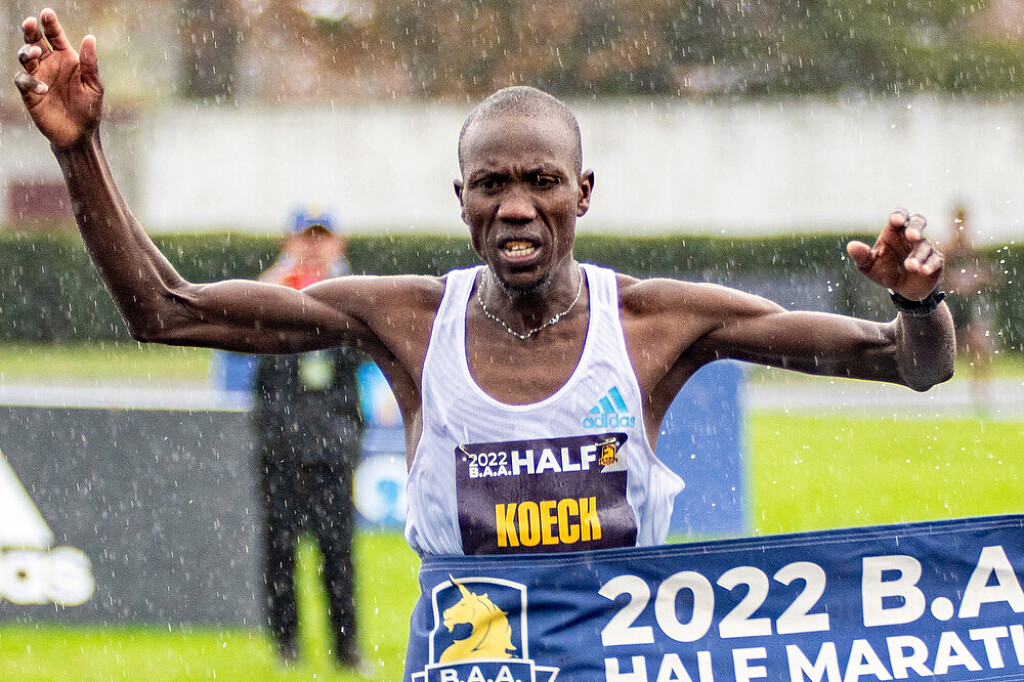
Defending Champions, American Record Holders & Global Stars Highlight 2023 B.A.A. Half Marathon Professional Field
The Boston Athletic Association (B.A.A.) announced today a star-studded professional field for the 2023 B.A.A. Half Marathon presented by Dana-Farber Cancer Institute and the Jimmy Fund. Defending champions Viola Chepngeno, Geoffrey Koech, and Jenna Fesemyer all return, while American half marathon record holder Keira D’Amato will take on the challenging course for the first time on Sunday, November 12. The B.A.A. Half Marathon starts and finishes at Franklin Park and runs along the Emerald Necklace Park System.
“As one of the most competitive half marathons in the country, we’re eager to bring many of the best open, wheelchair, and Para athletes in the world to Boston for November’s B.A.A. Half Marathon presented by Dana-Farber Cancer Institute and the Jimmy Fund,” said Jack Fleming, President and CEO of the B.A.A. “Nearly 9,000 athletes will take to the roads, led by some of the fastest and most decorated competitors in event history.”
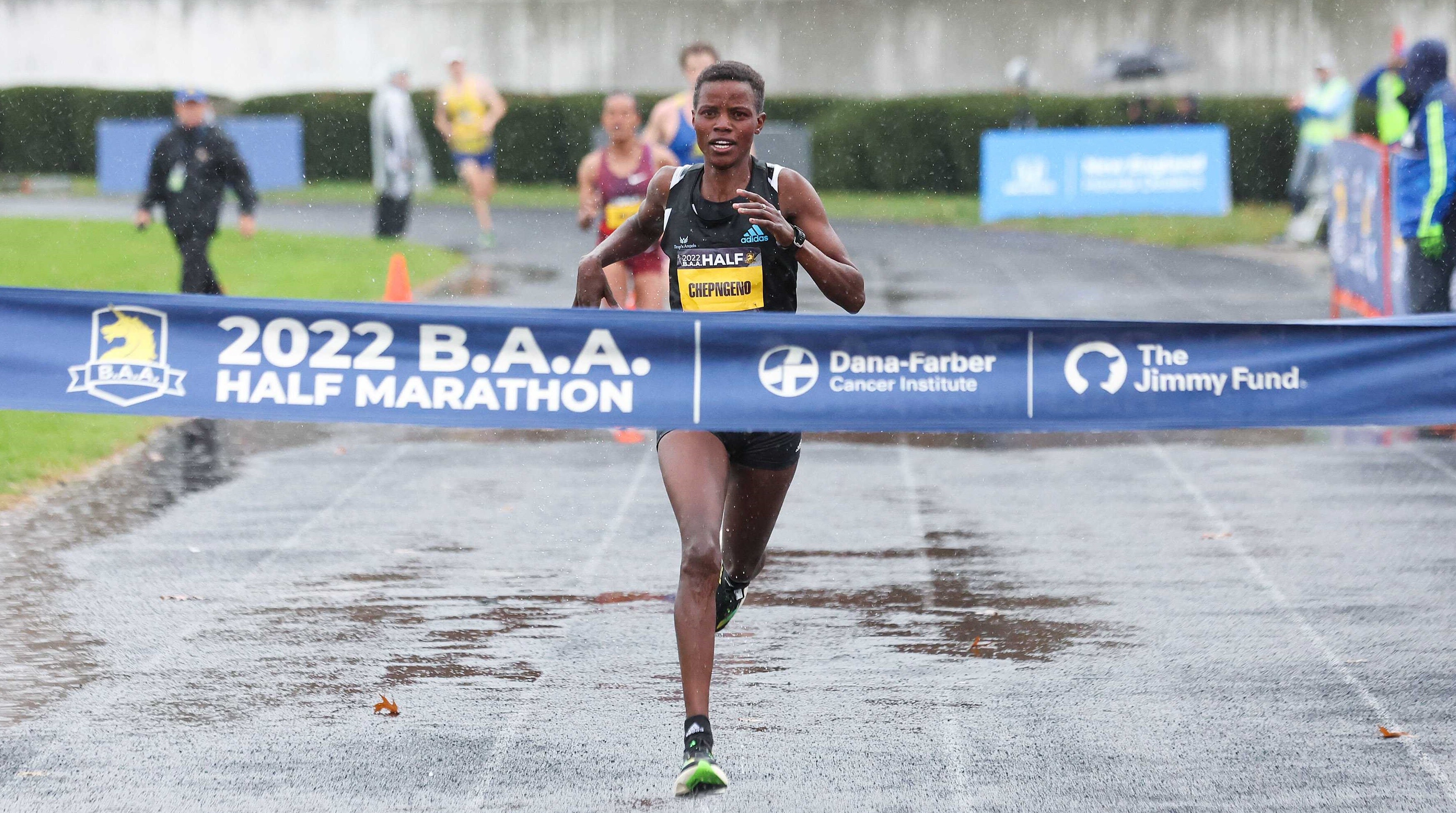
In 2022, Chepngeno (Kenya), Koech (Kenya), and Fesemyer (USA) won the women’s open, men’s open, and women’s wheelchair divisions, respectively, while Marko Cheseto and Jacky Hunt-Broersma (both USA) persevered through rain to finish atop the podium in the Para Athletics Division. To repeat the feat, all will square off against a field that includes national record holders and global medalists.
Senbere Teferi of Ethiopia, the 2022 B.A.A. 5K champion and three-time world championships medalist, looks to continue her winning ways in Boston. She’ll battle Tokyo Marathon champion Rosemary Wanjiru, 2019 B.A.A. 10K winner Fancy Chamutai, world cross country silver medalist Tsigie Gebreselama, last year’s runner-up Bosena Mulatie, and two-time B.A.A. Half Marathon second place finisher Cynthia Limo.
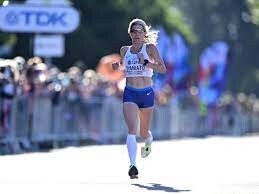
Four Americans who competed at the World Athletics Championships in Budapest in August will toe the line, including D’Amato, Lindsay Flanagan, Susanna Sullivan, and Natosha Rodgers. D’Amato set the national half marathon record of 1:06:39 at this year’s Gold Coast Half Marathon in Australia, and along with Flanagan and Sullivan made up Team USA at the World Championships Marathon. Rodgers raced the 5,000m and 10,000m on the track in Budapest, finishing 14th in the latter event. Rachel Schneider Smith, a 2021 Olympian at 5,000m for Team USA, will be making her B.A.A. Half Marathon debut.
Ten men with sub-61 minute personal bests will line up for the B.A.A. Half Marathon. Abel Kipchumba owns the fastest lifetime best in the field (58:07), while Shadrack Kimining of Kenya, second fastest in the field, placed fifth in 2022. Mohamed El Aaraby (Morocco), Yemane Haileselassie (Eritrea), Pat Tiernan (Australia), and Amanuel Mesel (Eritrea) bring international expertise. The fastest American men’s entrants are Nadir Yusuf (1:03:23), Kevin Koski (1:03:35) and Ryan Cutter (1:03:54) and sub-2:10 marathoner Ian Butler.
Dedham, Mass.-native Brian Reynolds, who set a world record at last year’s B.A.A. Half Marathon in the T62 (lower-limb impairment) category, returns, as does Marko Cheseto (T62) who ran 1:24:54 in 2022. Jacky Hunt-Broersma, last year’s women’s T62 champion, and Liz Willis, a three-time Boston Marathon T62 winner, will compete as well.
In the wheelchair division, Fesemyer set a course record 59:50 in 2022 to become the first women’s wheelchair athlete ever to break one hour in race history. Fellow 2022 women’s wheelchair podium finishers Yen Hoang (second place) and Michelle Wheeler (third) return as well.
James Senbeta and Hermin Garic, veterans of many B.A.A. events, headline the men’s wheelchair field. Garic was victorious at this year’s B.A.A. 10K.
The B.A.A. Half Marathon course runs along the picturesque Emerald Necklace Park System, past landmarks such as the Arnold Arboretum, Jamaica Pond, and Franklin Park Zoo, before finishing at White Stadium in Franklin Park. The B.A.A. Half Marathon is a family-friendly event for athletes and spectators of all ages. Free youth events will be offered on race morning within Franklin Park, including races and medals for all.
Dana-Farber Cancer Institute and the Jimmy Fund has partnered with the B.A.A. Half Marathon since 2003 as the race’s presenting sponsor and exclusive charity team. Through this relationship, Dana-Farber runners have collectively raised more than $8 million to support groundbreaking cancer research, and enabled Dana-Farber scientists and clinicians to positively impact the lives of cancer patients around the world. In advance of the 2023 event, 640 Team Dana-Farber athletes have raised $375,000 to date.
Login to leave a comment
B.A.A. Half Marathon
Dana-Farber and the Jimmy Fund have partnered with the B.A.A. in the Half Marathon for 13 years as the race’s presenting sponsor. Through this relationship, team members have collectively raised more than $5 million to support groundbreaking cancer research, and enabled Dana-Farber scientists and clinicians to positively impact the lives of cancer patients around the world. Dana-Farber runners often participate...
more...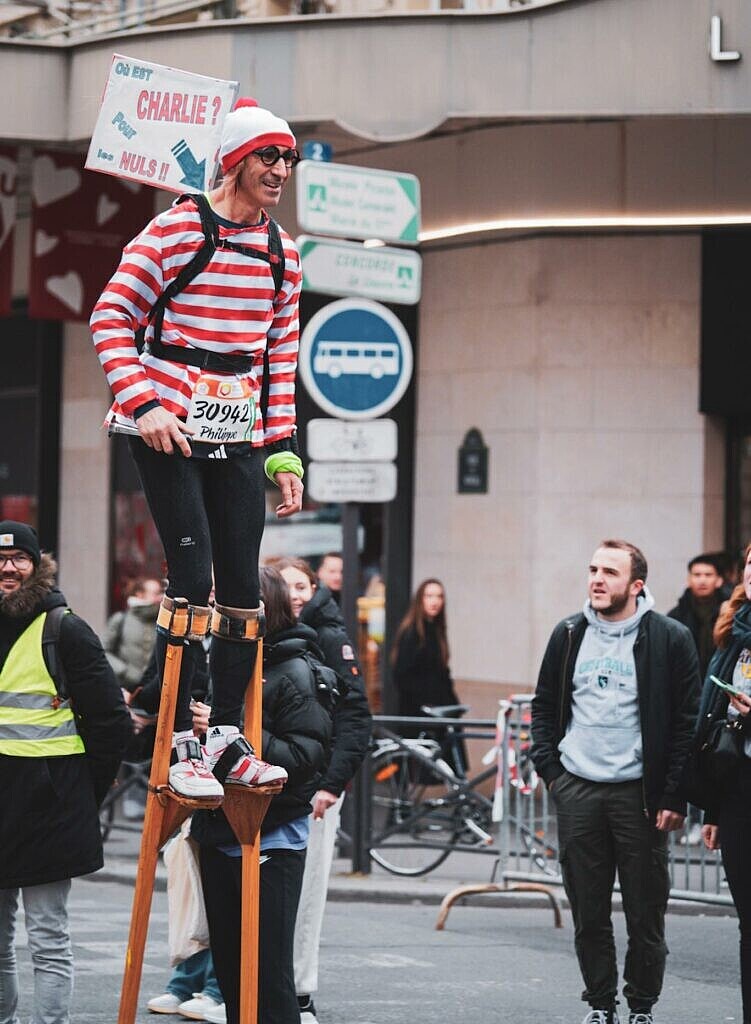
French runner completes two-hour half marathon in stilts
Over the last few weeks, we’ve witnessed some runners pull off incredible things while wearing unusual footwear–though what this French runner did at Sunday’s Paris Half Marathon takes the cake. Philippe Graciette of Pau, France, completed the half marathon in exactly two hours while running on five-foot wooden stilts.
The 54-year-old gym teacher completed the half-marathon in 2:00:40, averaging a pace of five minutes and 43 seconds per kilometre while standing an extra four feet off the ground.
Graciette was dressed in a Where’s Waldo? costume and had a sign attached to his back reading “Where’s Charlie? For dummies.” Usually looking for Waldo is difficult, but the stilts make him stand out.
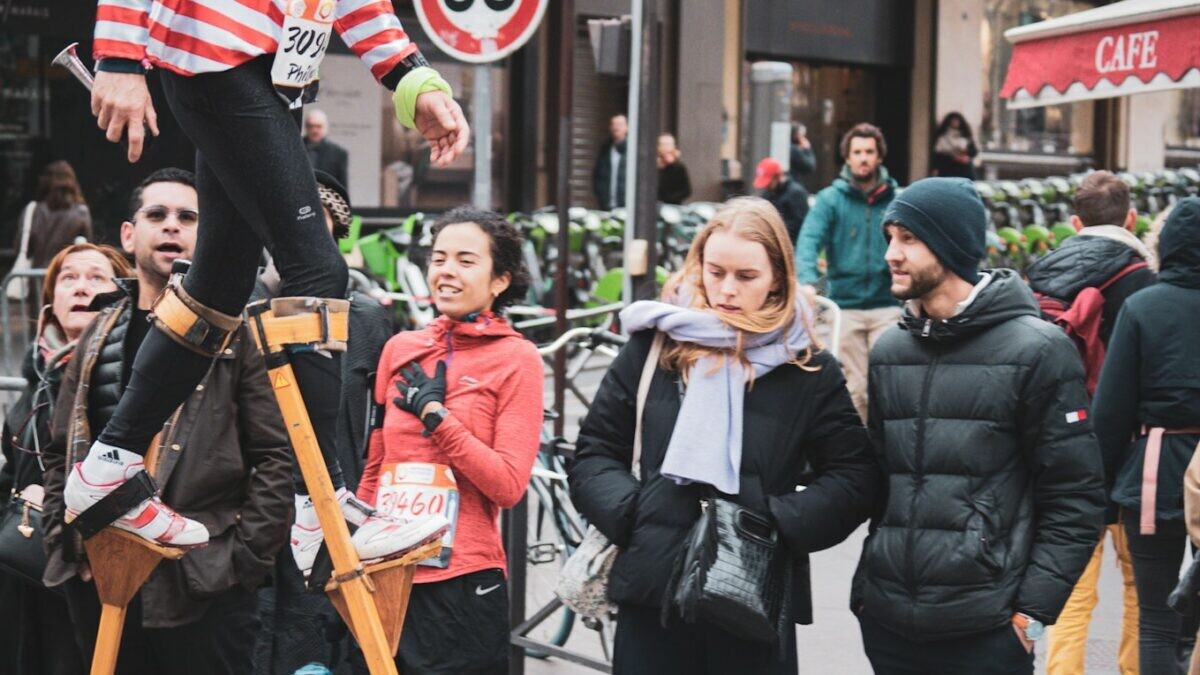
What’s even more remarkable is that Graciette finished in 27,928th place out of more than 45,000 runners. We aren’t sure what World Athletics competition rules are around wooden stilts—either way, his result is impressive.
There does not appear to be a Guinness world record for the fastest half marathon on stilts, but Graciette could likely have achieved it, if he cared to document the event and submit it. If he chooses to move up to the marathon on stilts (he has run at least a couple in regular running shoes), we think he has a shot at the stilts marathon record of 6:37:38 from the 2018 London Marathon (held by Michelle Frost of the U.K.).
by Marley Dickinson
Login to leave a comment

Semi de Paris
Paris Half Marathon (French: Semi de Paris) is an annual half marathon held normally every March in Paris, France since 1993. It currently holds IAAF Bronze Label status. Kenya's Stanley Biwott is the men's course record holder, with his winning time of 59:44 from the 2012 race. The women's course record is held by Nigsti Haftu (ETH), who ran a...
more...
2023 Kaiser Permanente Napa Valley Marathon & Half at Full Capacity as Runners Gear Up for Race Weekend
The 2023 Kaiser Permanente Napa Valley Marathon & Half Marathon has officially sold out, with runners from around the world gearing up for the highly anticipated race. The event, scheduled for March 5th, has drawn runners of all abilities who are ready to tackle the scenic courses through California’s beautiful wine country.
The Napa Valley Marathon is a celebration of running, health, and wellness. The point-to-point race will feature several runners looking for their Olympic Marathon Trials qualifying time, including last year’s female champion and course record holder, Ann Centner (2:38:29). Others to watch include Peter Gilmore, Napa Valley Marathon’s 2009 champion who is now a top-level masters runner. This year’s field also includes wheelchair athlete Rob Balucas, who was injured in a biking accident in 2015 and became paralyzed. Rob hopes to qualify for the Boston Marathon.
Local runner Jonathan Pascual is a five-time finisher of the Napa Valley Marathon and is returning to the race this year after a seven-year absence due to health issues. Jonathan was diagnosed with stage IV cancer and had to put his running on hold. But this year, he is ready to tackle the course once again.
“It was through nutrition and my diligence in exercise that I could do a comeback running race in December 2022. I knew then that with the cancer treatments and continued training, I can keep getting stronger and fitter,” Jonathan said. “ I have accepted that I will no longer be the athlete I was once nor could I perform the way that I used to. So I decided that these are times of discovery. The challenge is to figure out what my mind and body can do athletically”.
According to Race Director, Michelle La Sala, “Whether runners are looking for a personal best, coming to celebrate a girl’s weekend, or seeking out a beautiful and inspiring course to achieve a goal, the Napa Valley Marathon offers it all. One of the largest sporting events in the valley and with proceeds supporting the local community, we are thrilled at the continued growth and notoriety this race brings. On behalf of the Napa Valley Marathon, Inc. board of directors and President Jonathan Williams, we look forward to welcoming runners to Napa and showing them a wonderful weekend!”
For more information about the 44th annual Napa Valley Marathon & Half Marathon, visit the event’s website at www.napavalleymarathon.org.
by Running USA
Login to leave a comment

Kaiser Napa Valley Marathon
As one of California's top tourist destinations, Napa Valley has been home to this race for decades. When it comes to scenic, it just doesn't get better than Napa in the spring. The narrow valley is covered in grape vines that stretch high up the hillsides on either side. The colors are crisp green, blue and yellow at that time...
more...
Bahrain's Eunice Chumba wins Adnoc Abu Dhabi Marathon in her fourth attempt, Kenyan Timothy Kiplagat takes the men’s title after starting the race as a pacemaker
Kenyan-born Bahraini athlete Eunice Chumba made her experience count as she won the elite women’s section of the Adnoc Abu Dhabi Marathon on Saturday.
She clocked 2 hour 20 minutes and 41 seconds, just outside her personal best 2:20:02, to clinch the top prize.
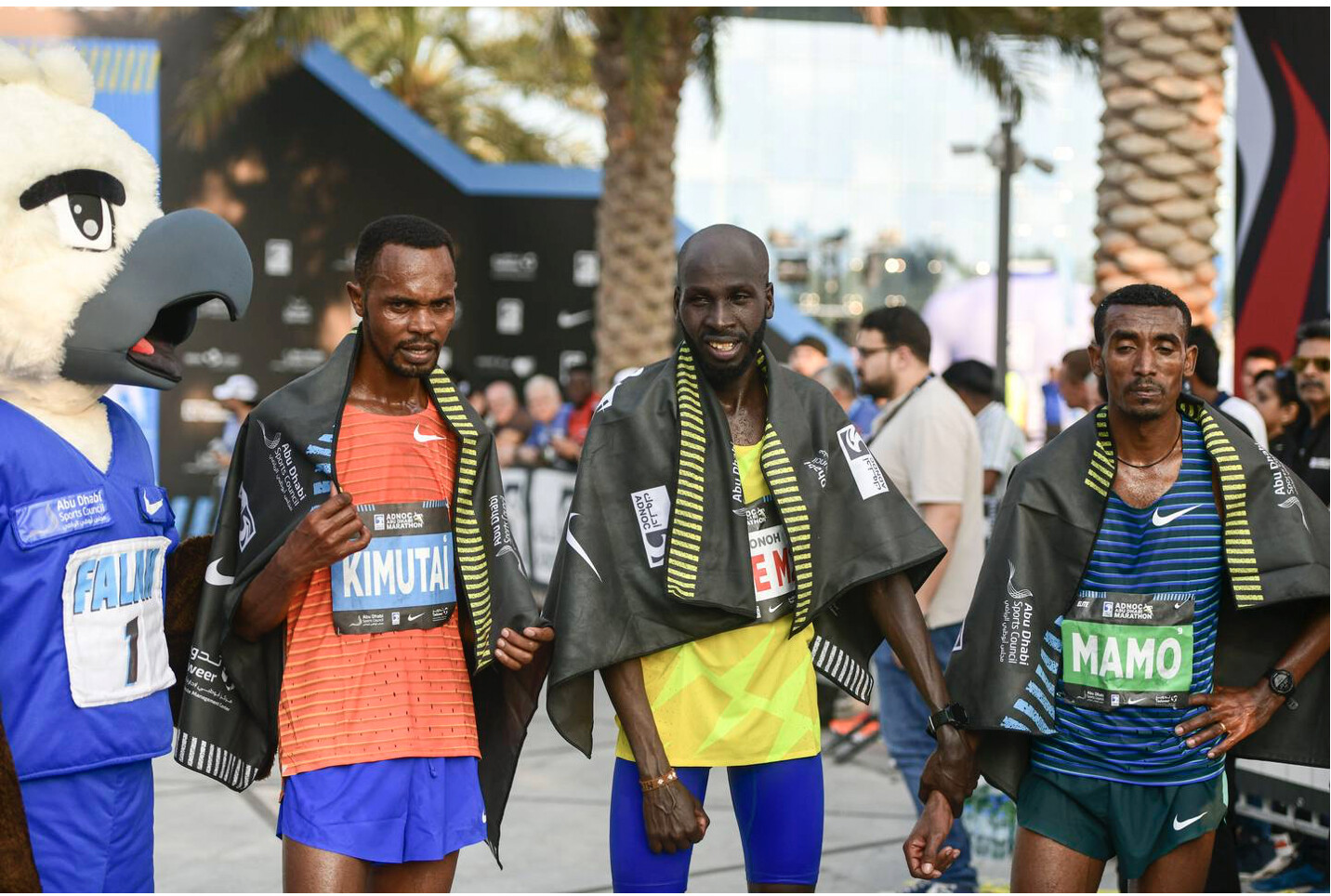
Chumba changed gears in the final two kilometres to beat Kenya's Angela Tanui (2:21:14). Mare Dibaba (2:21:25) of Ethiopia was third.
In the men’s race, Kenyan Timothy Kiplagat ran the race of his life after starting as a pacemaker to become the fourth man to win the Adnoc Abu Dhabi Marathon.
Kiplagat crossed the winning line in a personal best 2:05:20, nearly four minutes ahead of compatriot Felix Kimutai and Ethiopian Adeladhew Mamo, who was a further 10 seconds down in third.
Chumba, 29, was runner-up in the inaugural Abu Dhabi Marathon in 2018 and was fourth in 2019. She was runner-up again last year after the 2020 event was cancelled following the Covid-19 outbreak.
It was a festive atmosphere in the UAE capital as the fourth edition of the Abu Dhabi Marathon drew more than 20,000 runners in various categories - elite marathon, marathon relay, 10k run, 5k run, 2.5k 'Fun Run' and wheelchair race.
“I tried to win this race for Bahrain from my first visit to Abu Dhabi and I have finally managed to fulfil that dream in my fourth attempt,” Chumba told The National.“It was a very challenging race with Angela and Mare, who have both run better than my personal best time. We raced together for a long time and it wasn’t until the final five kilometres of the race I felt I could win.
“I tried my best to better my personal best time but just couldn’t do that. Perhaps on another day and another race. Having said that, I’m just delighted to win in Abu Dhabi.”
Chumba won a silver medal for Bahrain in 10,000m at the 2018 Jakarta Asian Games and ran a creditable seventh at the 2020 Tokyo Olympics.
“Yes, 2024 Paris is very much on my radar,” she said of her plans.
“This year was fantastic and it certainly was a nice way to end the year. I’m going to take a small break and be back in training from January, and hopefully return to defend my title in Abu Dhabi.”
Kiplagat, 25, bettered his previous personal best time of 2:07:01, set at the Marathon Eindhovan in October 2021. He arrived in Abu Dhabi on the back of winning the Melbourne Marathon in October.
“I felt so good today, setting the pace and with nobody to challenge towards the finish. This was a great opportunity to win a race,” Kiplagat said.
“It was my first time in Abu Dhabi and what a wonderful day it has been for me. The race route was flat and fast, the weather was pretty ideal. It was one of those days when everything turned out to be beautiful for me.”
The Relay Marathon was won by the Irish pair Michelle Nagle and Niall McCarthy of Slainte Endurance in 2:58.53.
Anouar El Ghouz (29.09) led the first four home for Morocco in the men’s 10km race while Briton Eilish McCologan (31.44) took the women’s race.
Joren Selleslaghs of Belgium took the men’s 5km run while Egyptian Sara Salama won the women’s prize. UAE's Badr Al Hosani bagged the men’s wheelchair title.
Login to leave a comment

ADNOC Abu Dhabi Marathon
The Abu Dhabi Marathon is shaping up to being first class marathon for both elite runners and average runners as well. Take in the finest aspects of Abu Dhabi's heritage, modern landmarks and the waters of the Arabian Gulf, at this world-class athletics event, set against the backdrop of the Capital's stunning architecture.The race offered runners of all abilities the...
more...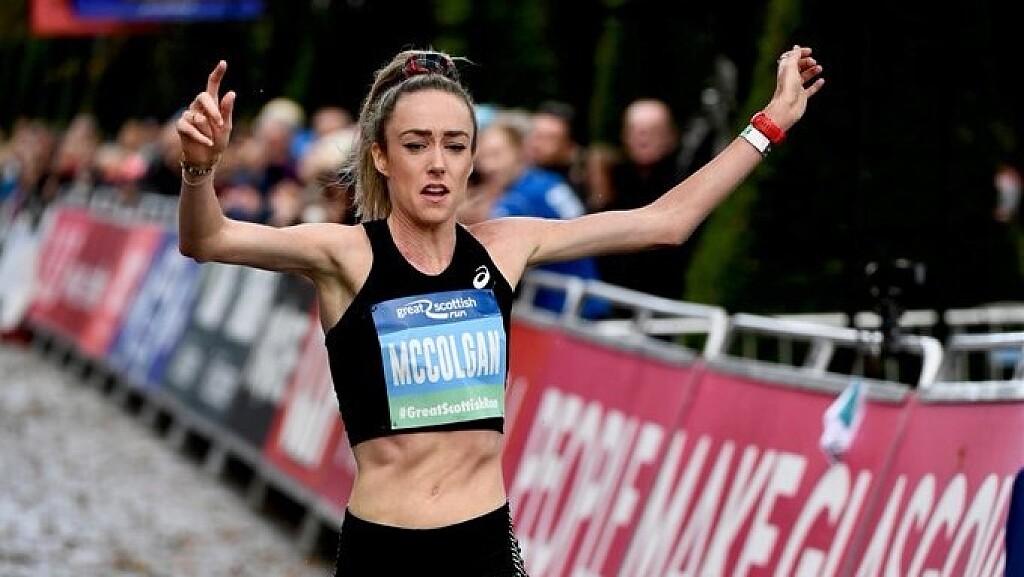
Eilish McColgan and Callum Hawkins triumph at Great Scottish Run
Eilish McColgan and Callum Hawkins secured home victories at the Great Scottish Run.
Commonwealth champion McColgan set a new British record and surpassed her own European mark by finishing in 30 minutes 18 seconds.
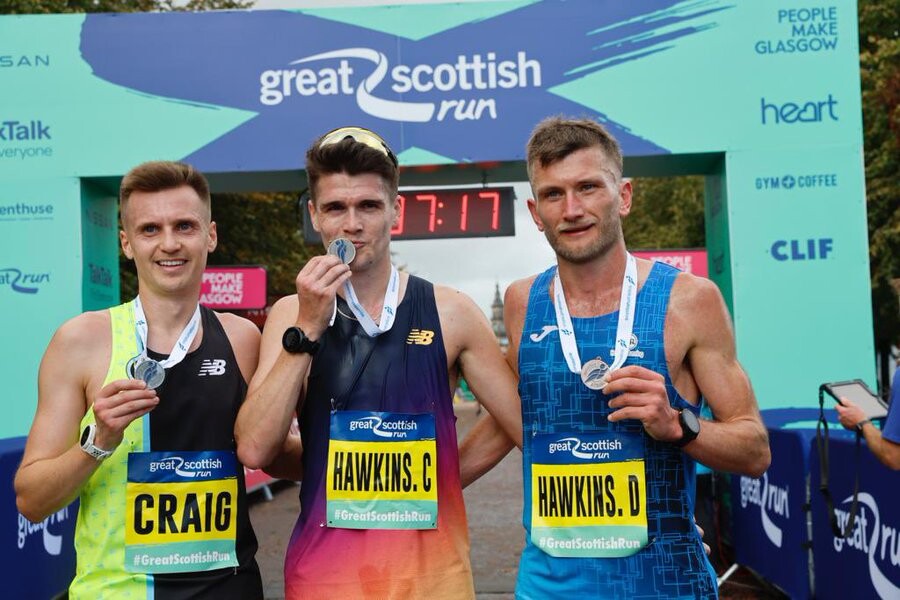
Fellow Scot Hawkins won the men's half marathon in 1:03:35 ahead of Adam Craig and Callum's brother Derek.
Irish athlete Michelle Finn won the women's half marathon in 1:12:33 and Lewis Hannigan won the men's 10k.
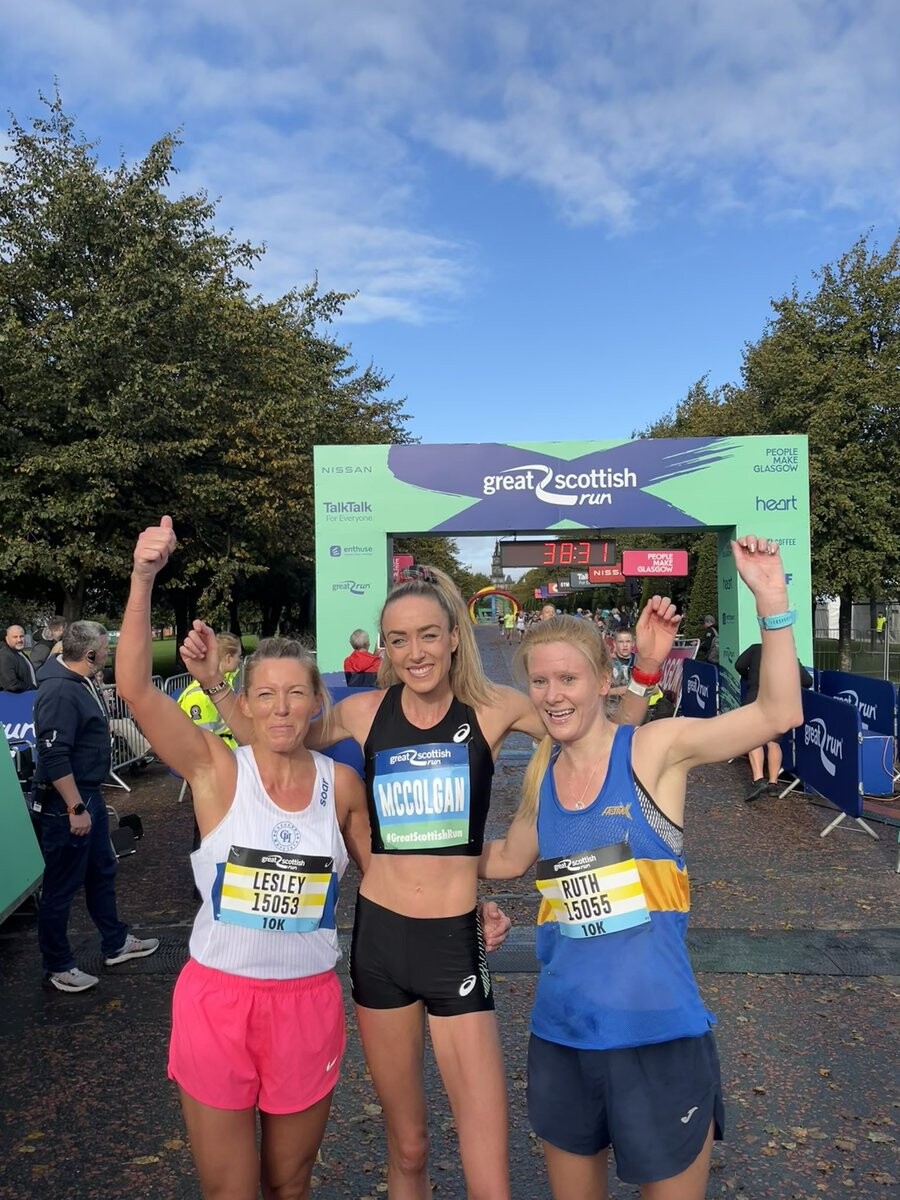
The Scotsman crossed the finish line in 29:33.
There was another Scottish winner in the women's wheelchair 10k, with Sammi Kinghorn's time of 26:40 more than two minutes faster than closest rival and compatriot Mel Woods.
Luke Deighton beat Kyle Brotherton to first place in the men's wheelchair 10k.
Login to leave a comment

Great Scottish Run
Experience the inspiring atmosphere of Scotland’s biggest running event and achieve something great this autumn. This spectacular weekend of running is a celebration of sport that is suitable for the whole family and is televised live on the BBC. The Bank of Scotland Great Scottish Run half marathon welcomes thousands of runners to the city of Glasgow every year. The...
more...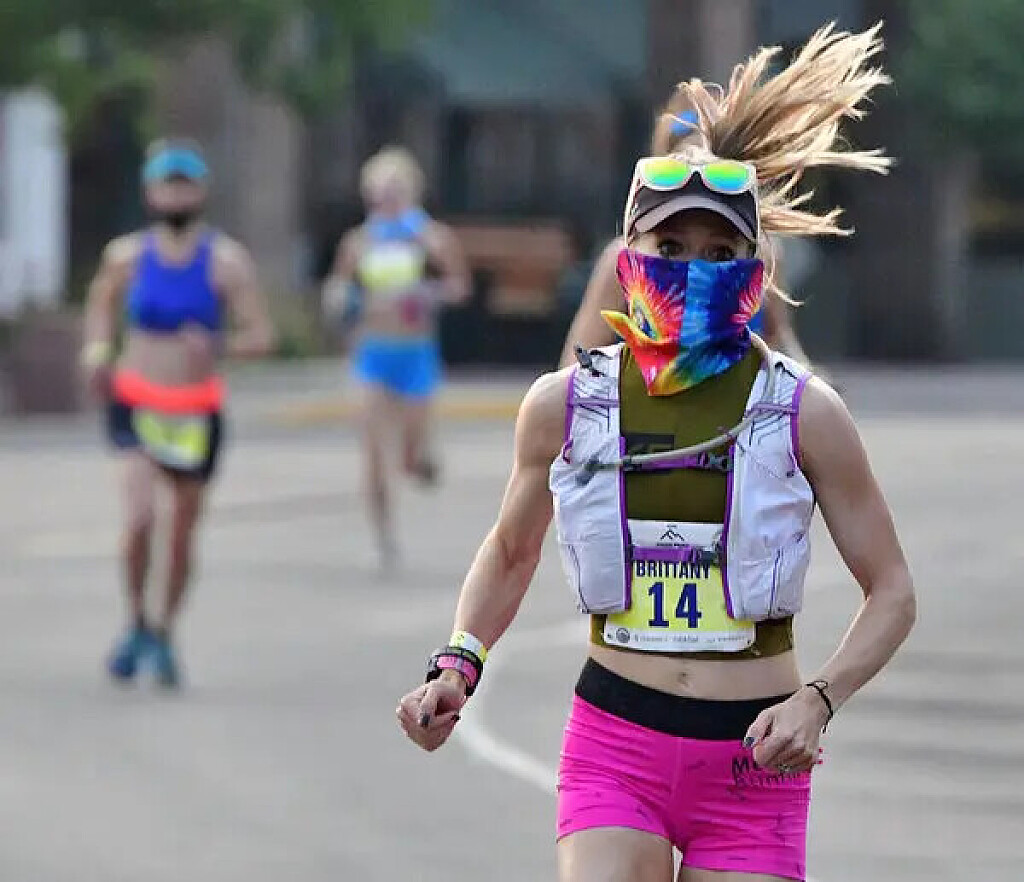
Some races are down since the pandemic took charge of road racing for a couple of years but there is some good news
Even marquee events have seen declines of 25 percent or more between 2019 and 2022.
Across the country, many road races are returning after the COVID-19 pandemic forced them into a two-year hiatus. But runners haven’t yet come back to those events in the same numbers as they were turning out in 2019.
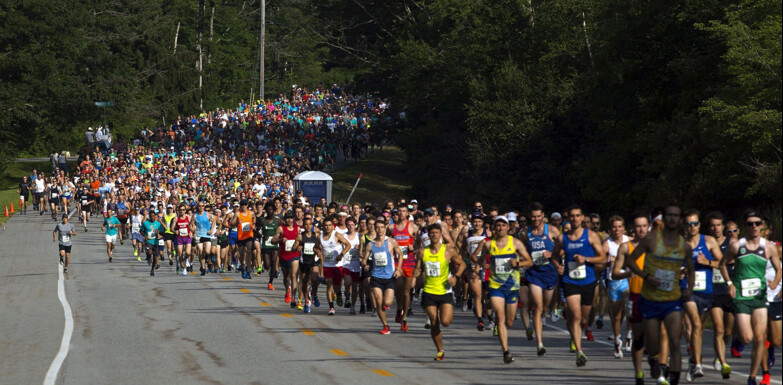
A few examples from the first eight months of 2022:
The BAA 10K in June had 5,144 finishers, down from 8,003 in 2019, a decrease of 35 percent.
The Utica Boilermaker 15K in July had 5,848 finishers, which was up from 2021, when it had 3,480, but down from the 2019 tally of 11,194, for a three-year decrease of 47 percent.
In Colorado, the Cherry Creek Sneak, a 5K, 5-miler, and 10-miler in Denver, had its final running in 2022 after 40 years. Combined participation in the three events had already been falling before the pandemic, and it fell an additional 38 percent between 2019 and 2022 (from 3,390 finishers to 2,092).
Larger, well-known events haven’t been immune from the declines. The Cherry Blossom Ten Mile Run in April in Washington, D.C., had 2,700 fewer runners, for a decline of 15 percent.
The Falmouth Road Race in Massachusetts and the Beach to Beacon 10K in Cape Elizabeth, Maine, two popular destination summer road races, saw declines of 24 percent and 16 percent, respectively. The town of Falmouth reduced the field size of the race to 10,000 runners this year (from its usual 12,800) but only 8,610 finishers appear in the results.
Jean Knaack, CEO of the nonprofit Road Runners Club of America, wrote in an email to Runner’s World, “We are seeing a slow recovery in 2022, and we are tracking with participation data showing about 84 percent return.”
Why aren’t runners coming back to events? Industry experts cited many theories:
The economy: “I think inflation will be a factor for 2023 as events plan and people pick what events they can afford to run,” wrote Knaack. The cost of travel to races—for flights, hotels, rental cars, gas—has gone up. So, too, have race entry fees for many events, especially for runners who wait until the last minute to register.
Competing events: Long-postponed weddings are back on. So are family vacations. The annual road race might need to take a back seat this year.
COVID concerns: Many runners worry about contracting COVID at a race, or they get sick at an inopportune time, keeping them from the starting line.
Shifting priorities: Erin Vandenberg, 42, for years raced at least monthly, often more, at distances from 5K to the marathon. Running a race with coworkers and then getting drinks after in downtown Chicago was a common occurrence. But she always felt a certain pressure to be training hard and performing well, worried what the time read on the clock at the finish.
Since the pandemic, she has taken a new approach to running. “I want to enjoy it; not stress myself out about it,” she said. “I don’t know that getting up at 5 a.m. to hit a certain pace and worry whether I’m fueling correctly is how I want to spend my time.”
Vandenberg has run three races in 2022—including one with her dog.
Not every race is down. Michelle La Sala, president of race management company Blistering Pace, says two of the events her company works on—the Big Sur Marathon and the Napa Marathon—have emerged largely unscathed from the pandemic. Big Sur was down only 240 runners (6.8 percent) and registration is tracking strongly for 2023. Same for Napa, which “should grow significantly this year,” La Sala said.
The bigger “bucket list” marathons, with a few exceptions, are not having any problems at all, she said, while smaller, regional races, without a compelling point of differentiation, are “on the struggle bus.”
Grandma’s Marathon along Lake Superior in Minnesota was off only 6.4 percent in 2022 from its 2019 tally, and well up from 2021. The Eugene Marathon, in May in Oregon, and the Missoula Marathon, in June in Montana, were both well ahead in finisher numbers, although many might have been deferred entries from the cancellations of 2020 and 2021. Vandenberg has a deferred entry from the Chicago Marathon in 2020, and she plans to use it in 2023.
John Mortimer, owner and founder of Millennium Running in Bedford, New Hampshire, sounded an optimistic note as well. Millennium has 30 of its own events of varying distances, manages and times others, and it has a running store. Sales are strong at the retail location, showing him that people continue to walk and run, even those who took it up during the pandemic.
And race participation in Millennium events continues to be robust, in part, because the company developed a time trial start system during the pandemic as an alternative to a mass start race. For many months, they had the only events happening in New England.
The company kept in frequent contact with runners and tried to make the race experience safe and convenient for them. They continue to offer the option to make any race a virtual race, up until the last minute, if runners would otherwise have to be a no-show at an event—thereby ensuring the runners would at least be mailed their tee shirts and medals.
That policy will continue, Mortimer said. “Every week we’re shipping out apparel and medals and bibs,” he said. “We’re trying to make it easy for the participant to be a part of the running community.”
The effort aimed at keeping relevant has paid off, Mortimer said, and registrations for most of the company’s events haven’t declined. The same can’t be said, he knows, for races that have been off for two years.
For them, “It’s out of sight, out of mind,” he said. “People have moved on.”
by Runner’s World
Login to leave a comment
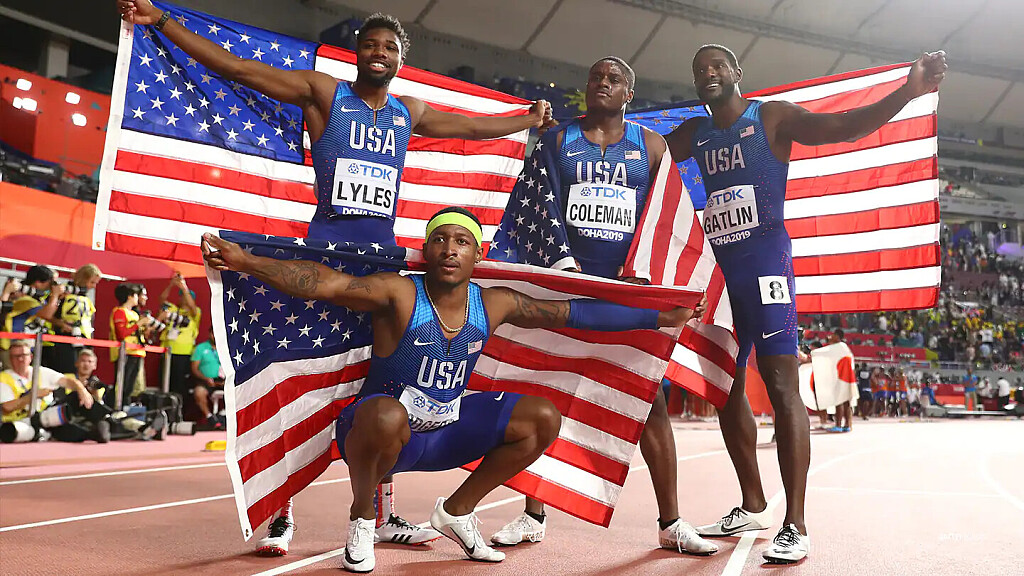
USA names 151-strong team for World Championships in Oregon
A team of 151 athletes will represent the USA on home soil at the World Athletics Championships Oregon22 on July 15-24.
Multiple global champions and world record-holders feature in the squad as Eugene’s Hayward Field gets ready to welcome the world for the first-ever outdoor World Athletics Championships to be hosted in the USA.
World record-holder and Olympic champion Sydney McLaughlin will take on the former world record-holder and reigning world champion Dalilah Muhammad as they look to further cement the US women’s global dominance in the 400m hurdles final on July 22.
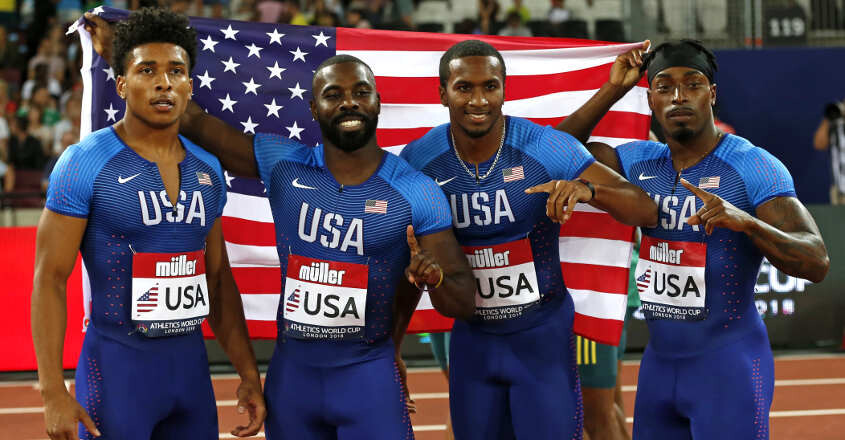
In the men’s shot put on July 17, world record-holder and Olympic champion Ryan Crouser will go after the one title that has so far eluded him – that of world champion – and will take on two-time world champion Joe Kovacs.
Such is the strength of the women’s 800m squad of Athing Mu, Ajee Wilson and Raevyn Rogers, as well as the men’s 200m team of Noah Lyles, Erriyon Knighton, Fred Kerley and Kenny Bednarek, that athletes will be aiming for USA medal sweeps.
Returning to defend the titles they won in Doha in 2019 are Nia Ali (women's 100m hurdles), Donavan Brazier (men's 800m), Christian Coleman (men's 100m), Grant Holloway (men's 110m hurdles), Kovacs (men's shot put), Lyles (men's 200m), Muhammad (women's 400m hurdles), DeAnna Price (women's hammer) and Christian Taylor (men's triple jump).
Making her 10th World Championships appearance will be Allyson Felix, who has 18 world medals, including 13 golds, to her name and will be in the mixed 4x400m pool.
“I couldn’t be prouder to lead this amazing team for this once-in-a-lifetime event,” said USATF CEO Max Siegel. “We have been given the unique opportunity to impact the track and field landscape in the US, and we’ve put our best team forward.”
USA team for Oregon
Women
100m: Aleia Hobbs, Melissa Jefferson, Twanisha Terry
200m: Tamara Clark, Jenna Prandini, Abby Steiner
400m: Talitha Diggs, Kendall Ellis, Lynna Irby
800m: Athing Mu, Raevyn Rogers, Ajee Wilson
1500m: Sinclaire Johnson, Cory McGee, Elle St. Pierre
5000m: Elise Cranny, Emily Infeld, Karissa Schweizer
10,000m: Alicia Monson, Natosha Rogers, Karissa Schweizer
Marathon: Emma Bates, Keira D’Amato, Sara Hall
3000m steeplechase: Emma Coburn, Courtney Frerichs, Courtney Wayment
100m hurdles: Nia Ali, Alia Armstrong, Keni Harrison, Alaysha Johnson
400m hurdles: Shamier Little, Sydney McLaughlin, Dalilah Muhammad, Britton Wilson
Heptathlon: Michelle Atherley, Anna Hall, Kendell Williams, Ashtin Zamzow-Mahler
High jump: Vashti Cunningham, Rachel Glenn, Rachel McCoy
Pole vault: Gabriela Leon, Sandi Morris, Katie Nageotte
Long jump: Quanesha Burks, Tiffany Flynn, Jasmine Moore
Triple jump: Tori Franklin, Jasmine Moore, Keturah Orji
Shot put: Adelaide Aquilla, Chase Ealey, Maggie Ewen, Jessica Woodard
Discus: Valarie Allman, Rachel Dincoff, Veronica Fraley, Laulauga Tausaga-Collins
Hammer: Brooke Andersen, Annette Echikunwoke, Janee Kassanavoid, DeAnna Price
Javelin: Ariana Ince, Maggie Malone, Kara Winger
20km race walk: Robyn Stevens, Miranda Melville
35km race walk: Stephanie Casey, Miranda Melville, Maria Michta-Coffey
4x100m: Celera Barnes, Tamari Davis, Gabby Thomas (plus athletes named in individual sprints)
4x400m: Wadeline Jonathas, Jaide Stepter, Kaylin Whitney (plus athletes named in individual sprints)
Men
100m: Marvin Bracy, Trayvon Bromell, Christian Coleman, Fred Kerley
200m: Kenny Bednarek, Fred Kerley, Erriyon Knighton, Noah Lyles
400m: Champion Allison, Michael Cherry, Michael Norman, Randolph Ross
800m: Donavan Brazier, Bryce Hoppel, Jonah Koech, Brandon Miller
1500m: Johnny Gregorek, Cooper Teare, Josh Thompson
5000m: Grant Fisher, Woody Kincaid, Abdihamid Nur
10,000m: Grant Fisher, Joe Klecker, Sean McGorty
Marathon: Elkanah Kibet, Colin Mickow, Galen Rupp
3000m steeplechase: Hillary Bor, Evan Jager, Benard Keter
110m hurdles: Devon Allen, Trey Cunningham, Grant Holloway, Daniel Roberts
400m hurdles: Trevor Bassitt, Rai Benjamin, Khallifah Rosser
Decathlon: Steven Bastien, Kyle Garland, Zach ZiemekHigh jump: Darius Carbin, JuVaughn Harrison, Shelby McEwen
Pole vault: Andrew Irwin, Chris Nilsen, Luke WinderLong jump: Marquis Dendy, Steffin McCarter, Will Williams
Triple jump: Chris Benard, Will Claye, Donald Scott, Christian Taylor
Shot put: Josh Awotunde, Ryan Crouser, Joe Kovacs, Tripp Piperi Discus: Andrew Evans, Sam Mattis, Brian Williams
Hammer: Daniel Haugh, Rudy Winkler, Alex Young
Javelin: Ethan Dabbs, Tim Glover, Curtis Thompson
20km race walk: Nick Christie, Dan Nehnevaj
35km race walk: Nick Christie
4x100m: Kyree King, Josephus Lyles, Elijah Hall-Thompson (plus athletes named in individual sprints)
4x400m: Bryce Deadmon, Vernon Norwood, Elija Godwin (plus athletes named in individual sprints)
Mixed
4x400m: Allyson Felix, Kennedy Simon, Ismail Turner, Noah Williams (plus athletes named in individual sprints).
by World Athletics
Login to leave a comment

World Athletics Championships Budapest23
Budapest is a true capital of sports, which is one of the reasons why the World Athletics Championships Budapest 2023 is in the right place here. Here are some of the most important world athletics events and venues where we have witnessed moments of sporting history. Throughout the 125-year history of Hungarian athletics, the country and Budapest have hosted numerous...
more...
Next up is the Wanda Diamond League meeting in Paris on Saturday June 18
At 35, Jamaica’s two-time Olympic 100m champion Shelly-Ann Fraser-Pryce has done it all. But she still hasn’t finished, and her appearance at the Wanda Diamond League meeting in Paris on Saturday (18) will represent another significant step in her campaign to defend her world 100m title in Oregon next month.
Fraser-Pryce established her name early on this season’s world list when she ran in the rarified air of Nairobi and won in 10.67 - only seven-hundredths off the personal best she ran last year to put herself third on the all-time list.
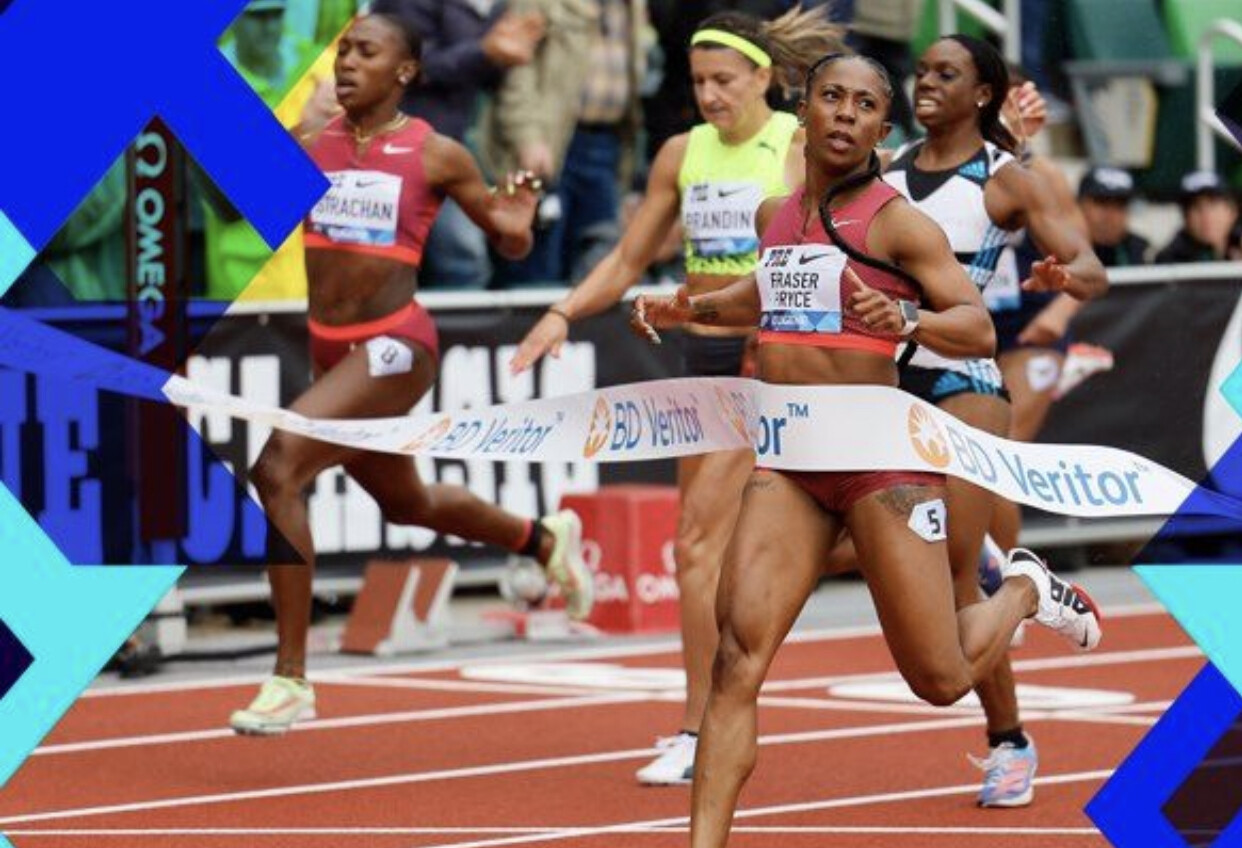
Her Jamaican compatriot and twice successor as Olympic 100m champion, Elaine Thompson-Herah, has since made a good start to her pursuit of a first individual world title with a best of 10.79 on the Eugene track that will stage the World Athletics Championships Oregon22.
But now Fraser-Pryce is back to make another impression in top-level competition at the Meeting de Paris on the ultra-fast blue track at Stade Charlety, which was renovated in 2019.
She will be taking on some talented sprinters including Switzerland’s Mujinga Kambundji, the surprise – and surprised – winner of the world indoor 60m title in Belgrade earlier this year in a personal best of 6.96. Kambundji, who turns 30 on the day before the race, will be targeting her personal best of 10.94.
Also in the mix will be Michelle-Lee Ahye of Trinidad and Tobago, who has run 10.94 this season and has a personal best of 10.82, and Marie-Josee Ta Lou of the Ivory Coast, who missed a 100m medal by one place in Tokyo as she ran 10.91.
Two-time Olympic 400m champion Shaunae Miller-Uibo, who has raced well but not exceptionally at 200m this season, will get down to serious business at her specialist event.
The 28-year-old Bahamian, who lowered her own continental record to 48.36 in Tokyo last summer, is third in this year’s top list with her time of 49.91, but that was set in April and the Olympic champion will want to check in on her current form having run over 200m recently.
She faces a strong Polish trio of Natalia Kaczmarek, who ran a huge personal best of 50.16 in Ostrava and stands sixth in this year’s world list, European champion Justyna Swiety-Ersetic and Anna Kielbasinska.
The Bahamas will be providing both Olympic 400m champions in Paris, with Steven Gardiner hoping to further fine-tune his world title defence in Oregon with a rare Diamond League appearance.
The leggy 26-year-old, who is 1.93m tall and has run 43.48, making him the sixth best performer of all time, did not compete in any Diamond League race last year and only raced once in Europe, at Szekesfehervar in Hungary.
His last appearance on the sport’s top circuit was at Monaco in 2019, when he won. Gardiner is already in good shape, having run 44.22 at Baton Rouge in Louisiana on 23 April - the fastest time recorded so far this year.
Meanwhile, European champion Matthew Hudson-Smith, who recently took one hundredth of a second off the British record of 43.36, set by Iwan Thomas in 1997, could be in position to better a record of even longer standing, this time the European one of 44.33 set by East Germany’s Thomas Schoenlebe in 1987.
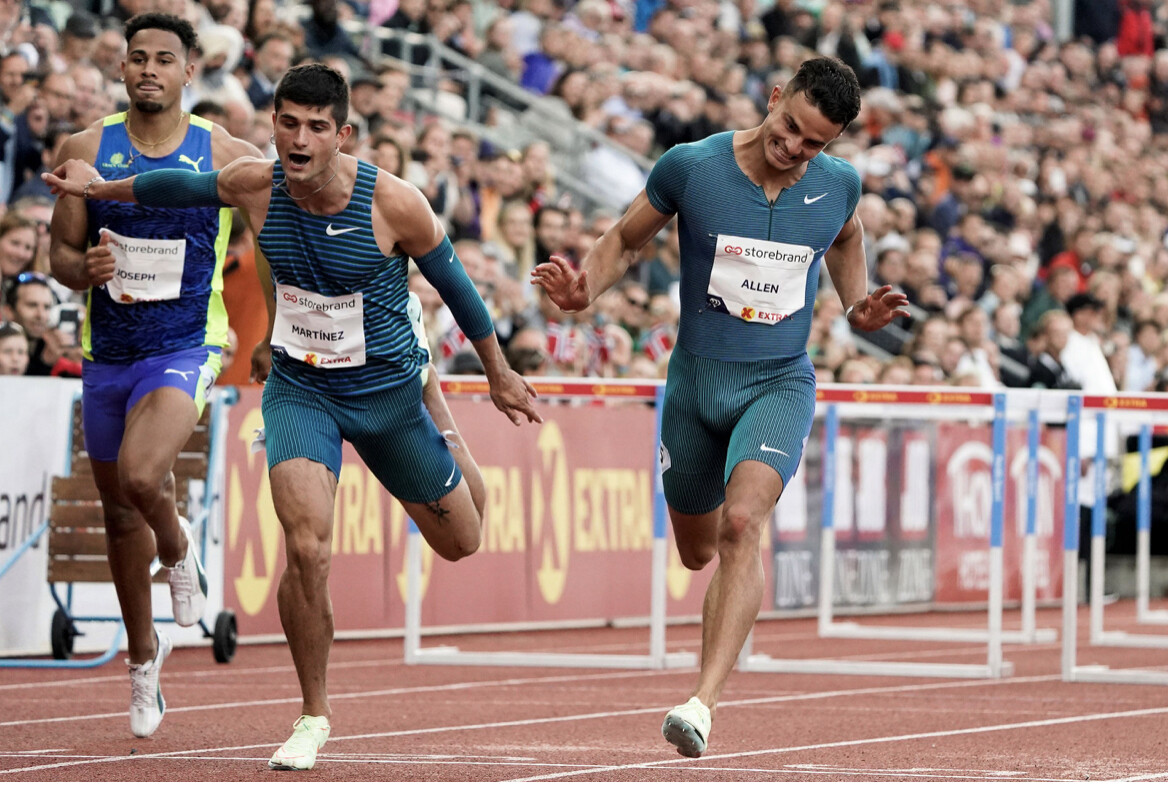
Devon Allen of the United States, whose 12.84 clocking in last Saturday’s New York Grand Prix – the third-fastest ever run – earned him a handsome victory ahead of world champion and compatriot Grant Holloway, maintained winning momentum over 110m hurdles in Oslo, although this victory was earned in 13.22 into a headwind of -1.2 m/s.
Allen, who will take up a professional American football career at the end of this season as a wide receiver with National Football League side Philadelphia Eagles, is due to run in Paris against a field that includes home hurdler Wilhem Belocian.
Canada’s Olympic 200m champion Andre De Grasse has been running 100m recently to sharpen up, but after clocking 10.24 at the Birmingham Diamond League on 21 May he dropped out of the Fanny Blankers-Koen Games on 5 June. On Thursday in Oslo, however, he returned to form in the 100m – in which he won Rio 2016 bronze – as he earned victory in 10.05 from Britain’s Reece Prescod, who clocked 10.06.
On Saturday, like Miller-Uibo, he will get down to business in his main event against a field that includes Prescod, who produced a big personal best over 100m of 9.93 in blustery conditions at the Ostrava Golden Spike meeting on 31 May. Meanwhile, Alexander Ogando of the Dominican Republic will be seeking to build on what has been a good start to the season, in which he has run 20.07.
Olympic 10,000m champion Selemon Barega, who won the Ethiopian World Championships trials race in Hengelo and then finished fourth in the 5000m in Rome, is expected to race over the shorter distance in Paris.
by World Athletics
Login to leave a comment
Quad-City Times Bix 7 to Hold In-Person and Virtual Races in 2022
Runners and walkers will fill the streets of Davenport, Iowa on Saturday, July 30 in celebration of the 48th running of the Quad-City Times Bix 7.
The iconic 7-mile race and all race weekend events are set to take place at full capacity; Genesis Sports Medicine Brady Street Sprints (July 28), Arconic Jr Bix (July 29) & the Prairie Farms Quick Bix (July 30). In addition, the Virtual Bix 7, Quick Bix & Jr Bix will take place July 23-30.
The Iowa American Water Bix @ 6 training runs start at 6 p.m. on Thursdays, June 23 and 30, July 7 and 14, 2022. If you have registered for the Quad-City Times Bix 7, Prairie Farms Quick Bix or Arconic Jr Bix, join the hundreds that train every Thursday on a safe and secure course.
“The Quad-City Times Bix 7 is a fun, family event where you can run with the best – right here in the Midwest,” said Quad-City Times Bix 7 Race Director Michelle Juehring. “We’re excited to welcome you, your family and friends – 48 is going to be great!”
Juehring announced a new and exciting addition to the 2022 race; Caesar’s Sportsbook Team Challenge, sponsored by the Isle Casino Hotel Bettendorf. Comprised of 5 athletes each, teams will race the 7-mile course for cash prizes and bragging rights. Competition is limited to 40 teams.
In addition to the inaugural team competition, the Quad-City Times Bix 7 is proud to continue to offer these traditional competitions within the 7-mile race: Elite athletic competition, the High School Challenge & the First Responder’s Challenge from Premier Buick GMC Dealers and All-City Challenge from Scott County Regional Authority.
Additional details from the April 6 press conference may be found online at www.qctimes.com , www.kwqc.com, @QCTBix7 on Facebook, @BixSeven on Twitter, quadcitytimesbix7 on Instagram and www.bix7.com.
by Running USA
Login to leave a comment

Bix 7 miler
This race attracts the greatest long distance runners in the world competing to win thousands of dollars in prize money. It is said to be the highest purse of any non-marathon race. Tremendous spectator support, entertainment and post party. Come and try to conquer this challenging course along with over 15,000 other participants, as you "Run With The Best." In...
more...
Why Run on Trails When You Can Collapse in Snowshoes?
Have you ever realized you were in over your head in a race, moments after the starting gun went off?
That's what happened to me last month, in a 10K snowshoe race at the Winter Mountain Games in Vail, Colorado. Feeling semi-fit and eager to compete in my first snowshoe race in a few years, I toed the line with a few dozen or so other enthusiastic competitors in what might be best considered the equivalent of a trail running race over a snow-covered golf course.
Fifteen seconds after the start, though, the course transitioned from groomed, hard-packed snow to the first of many sections with deep, light, fluffy powder. I watched as other competitors gracefully bounded through the snow in what seemed like a postcard-perfect scene of a bluebird Colorado day.
But amid all the wintry exuberance, it was as if I had been tossed out of a boat and was treading water wearing a heavy pair of hiking boots. As I sunk deeper with every stride, I felt something grab my back leg and was suddenly airborne, momentarily Superman-ing above the pristine layer of snow that the others were methodically dashing through.
And then, Whommppfff! I face-planted into the snow.
To me, snowshoe racing has always been a special kind of Type-2 fun, a unique wintertime activity to whet your appetite for just about any type of endurance racing later in the year. For the uninitiated, it's an easy sport to enjoy. If you can run on trails, you can run on snowshoes.
It's kind of like what cyclocross is for the cycling world. As such, there aren't really any true snowshoe racing specialists, but more a collection of adventurous trail runners, marathoners, triathletes, mountain bikers, and hikers converging in a winter wonderland for some adrenaline-fueled fun.
Sure, there are some great snowshoe racers who excel at dashing through the snow. In fact, Josiah Middaugh, Alex Willis, Seth Wealing, and Meredith Cook were among the local Colorado athletes who were off the front in this race as I was torpedoing into the snow. Middaugh, Nichols, and Wealing are all great trail runners, but have primarily made their mark as Xterra off-road triathletes, while Cook is also an accomplished trail runner.
Middaugh is a six-time U.S. snowshoe champion, and Willis is competing in the 2022 World Snowshoe Championships on Sept. 3 in Argentina. There will be a lot of good trail runners competing in the 2022 U.S. Snowshoe Championships on March 13 in Cable, Wisconsin. And that event made it clear that anyone can enter and everyone is welcome: "There are no Qualifiers or Membership Requirements to compete."
Two years ago, trail runners Michelle Hummel and Joe Gray won the U.S. Snowshoe Championships and then went to Japan, where Hummel won the women's World Snowshoe Championship and Gray was fourth among men. (Gray was the world champion in 2017 and the runner-up in 2018 and 2019.)
Generally speaking, though, most people who show up for a snowshoe race are training for something else. Or, like me, they just want to endure the torturous fun of something new.
I've raced on snowshoes about 30 times, from as short as 1 mile to as long as 20K. I've never been particularly good, but that hasn't stopped me from coming back. When you're fit, it's a fun way to get a winter workout without any stress tied to your summer goal races.
For this race, though, I wasn't that fit, so after my inadvertent crash near the start, I got back on my feet and realized I'd be in for a long, slow jog with amazing mountain vistas.
Most of the athletes were wearing running shoes strapped to lightweight, aluminum 825-inch snowshoes from Atlas, TSL, Redfeather, or OT Racing. I would have been, too, but one of my bindings broke while I was warming up and the makeshift repairs I made with duct tape and zip ties didn't hold, so I had to rent a heavier pair from the Vail Nordic Center.
As the race progressed, Middaugh and Willis pushed the pace, but it was Middaugh's 17-year-old son, Sullivan, who stole the show and won the race in 46:41 - an impressive 7:31 per mile pace. Cook, meanwhile, was the top woman in 1:08:19.
"It's pretty exciting for me to see him pass me in a race and really go for it, and really lay it on the line," the elder Middaugh said. "It's really demoralizing when someone else makes a strong move on me like that, but when it's my own kid, it makes me feel good and bad at the same time. I'll just have to find his weakness the next time we race."
As for me, I definitely found my weakness. I tried to keep pace with Danielle McNair, but she was stronger and more determined than I was, and left me in the snowy dust en route to finishing second among women. She seemed happy and chipper as she passed me, so I did my best to keep a smile on my face and enjoy the views as I slogged to the finish.
"Although it can be an intimidating sport and quite challenging," McNair told me after the race, "I just remind myself that I was brave enough to show up today, and isn't that what most of racing and events are about? I'm never going to be a fasty, but I can show up and challenge myself and rack up smile points."
by Trail Runner Magazine
Login to leave a comment
Athletics Canada names 18 athletes to World Indoor Championships team
On March 3, Athletics Canada announced the 18-member team that will represent Canada at the World Athletics Indoor Championships in Belgrade, Serbia from March 18-20. This team is made up of six men and 12 women who have successfully achieved the World Athletics Indoor standard in their event. Athletics Canada has chosen to send an experienced team, with 16 out of the 18 athletes selected having represented Canada on the world stage previously.
Toronto native and Bowerman Track Club member Gabriela DeBues-Stafford headlines the team, sitting at fifth in the World Athletics rankings over the 3,000m and first in the 5,000m. DeBues-Stafford has had a remarkable indoor season, breaking the Canadian indoor 3,000m and 5,000m records in back-to-back weekends. In Serbia, DeBues-Stafford will be among those contending for a medal in the women’s 3,000m.
Canada’s 2021 Lou Marsh Award winner, Damian Warner, who won gold in the decathlon at the Tokyo Olympics, was also named to Team Canada, competing in the indoor heptathlon. Warner won silver at the 2018 World Indoor Championships in this event and he’ll be looking to upgrade that to gold in Serbia.
That was the only medal a Canadian brought home from in 2018. Team Canada’s head coach Glenroy Gilbert expects this year’s team to contend for high placings across all disciplines in Birmingham.
There are high expectations on what could be Canada’s best 4x400m women’s team ever, comprised of Natassha MacDonald, Lauren Gale, Kyra Constantine, Micha Powell and Sage Watson. The women’s 4x400m team finished fourth at the Tokyo Olympics and will be looking for redemption this time around in Serbia.
Indoor Worlds Team (information via Athletics Canada)
Athletes
Bolade Ajomale (Richmond Hill, Ont.) – Men’s 60 metres
Cameron Proceviat (Burnaby, B.C.) – Men’s 400 metres
Damian Warner (London, Ont.) – Men’s Heptathlon
Ehab El-Sandali (Toronto, Ont.) – Men’s 3,000 metres
Gabriela DeBues-Stafford (Toronto, Ont.) – Women’s 3,000 metres
John Gay (Kelowna, B.C.) – Men’s 3,000 metres
Julie-Anne Staehli (Lucknow, Ont.) – Women’s 3,000 metres
Kyra Constantine (Brampton, Ont.) – Women’s 4×400 metres
Lauren Gale (Ottawa, Ont.) – Women’s 4×400 metres
Lindsey Butterworth (North Vancouver, B.C.) – Women’s 800 metres
Lucia Stafford (Toronto, Ont.) – Women’s 1,500 metres
Madeleine Kelly (Pembroke, Ont.) – Women’s 800 metres
Marco Arop (Edmonton, Alta.) – Men’s 800 metres
Micha Powell (Toronto, Ont.) – Women’s 4×400 metres
Michelle Harrison (Saskatoon, Sask.) – 60 metres hurdles
Sage Watson (Medicine Hat, Alta.) – Women’s 4×400 metres
Sarah Mitton (North York, Ont.) – Shot put
According to Athletics Canada:
a second list of athletes who met the Athletics Canada indoor qualification standard in their respective events will be added to the team if they appear as “Qualified by Entry Standard” or “In World Rankings quota” on the March 9 World Athletics rankings list and the quota places remain open in their event.
The 2022 World Indoor Championships will kick off on March 18 and run until March 20.
by Marley Dickinson
Login to leave a comment

World Athletics Indoor Championships
World-Class Competition Lands in Poland: 2026 World Athletics Indoor Championships The 21stWorld Athletics Indoor Championshipsare being held from 20 to 22 March 2026 at theKujawsko-Pomorska Arena ToruńinToruń,BiT City,Kuyavian–Pomeranian,Poland. It is the second time the country has held the event after the2014 editioninSopot. The venue previously hosted the2021 European Athletics Indoor Championships. On 22 March 2023, the World Athletics Council...
more...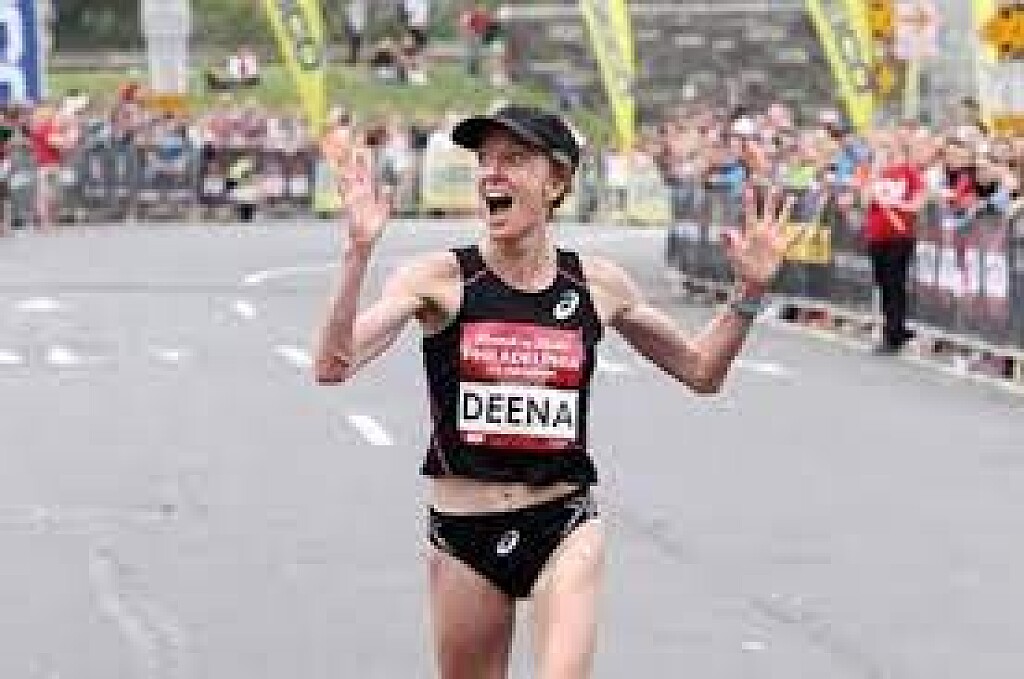
Bernard Lagat and Deena Kastor to Join TCS New York City Marathon Broadcast Team
Five-time Olympian Bernard Lagat and Olympic medalist and American record holder Deena Kastor will join fellow Olympian Carrie Tollefson as part of the broadcast team for the 50th running of the TCS New York City Marathon on Sunday, November 7, which will be aired live on ABC7/WABC-TV in the New York City area and on ESPN2 nationwide.
WABC-TV and ESPN have been home to the award-winning broadcast of the world’s largest marathon since 2013. The race will be available globally in more than 180 countries and territories and in over 500 million homes through various international broadcast partners.
The trio of Olympians will join a team of 15 commentators, led by ESPN’s John Anderson, who will serve as race-day host and play-by-play analyst for his eight consecutive race. Both Lagat and Tollefson will join Anderson in the commentary booth. Kastor will join Lewis Johnson in covering the professional athlete races throughout the course from the women’s and men’s motos, respectively. Johnson will then join ABC7’s Sam Ryan in hosting the post-race award ceremonies for the champions.
Lagat competed at every summer Olympics on the track from 2000 to 2016, winning a silver and bronze medal in the 1,500 meters in 2004 and 2000, respectively. He ran the TCS New York City Marathon in 2018, finishing as the top men’s masters athlete. He will now make his broadcast debut at the event at the same time his sister, Viola Cheptoo, makes her marathon debut in the professional athlete field.
“In 2008, I got to watch the TCS New York City Marathon from a lead vehicle, and in 2018 I ran New York for my debut marathon,” Lagat said. “I’m excited that in 2021, I get to see the race unfold from yet another angle – in the broadcast booth. I hope my experiences as an athlete can add a different perspective to the race for those watching throughout New York City and across the country.”
Kastor is the American record holder in the marathon and a three-time Olympian who won a bronze medal at the Athens 2004 Games. She finished as the top American woman in her marathon debut at the 2001 New York City Marathon in an American debut record time, and had three top-10 finishes at the event in her career.
“Twenty years ago, I fell in love with the marathon distance when I debuted at the New York City Marathon,” Kastor said. “I feel privileged to commentate on this historic race by joining the ESPN2 broadcast with my fellow Olympians Bernard Lagat and Carrie Tollefson. I can’t imagine a better way to celebrate 50 years of this race.”
The group will be joined by a talented array of reporters at the start, finish, along the course, and in the sky, including ABC7’s Eyewitness News reporters Ryan Field, Anthony Johnson, Kemberly Richardson, Michelle Charlesworth, Lee Goldberg, John Del Giorno, and Josh Einiger.
The international feed will be led by local sports radio personality Ed Cohen calling the play-by-play, and veteran track and field broadcaster, Paul Swangard.
The broadcast, produced in coordination with 45 Live and distributed by IMG, will air on ABC7/WABC-TV and ESPN2 from 8:30 a.m. to 11:30 a.m. EST. Pre and post-race coverage will air on WABC-TV from 7:00 a.m. to 8:30 a.m. EST, and 11:30 a.m. to 1:30 p.m. EST.
Long-time director of the broadcast Bruce Treut, who has directed every New York City Marathon broadcast since 1989, is handing the reins to Brigette Boginis. Boginis, the first women at the helm of the show, will pick up Treut’s duties directing 35 live cameras.
The 50th running of the race will also stream live on abc7ny.com, and the ABC7New York app in the tristate viewing area and the ESPN App nationally from 8:30 a.m. to 1:00 p.m. EST. Pre-race and continuing coverage will also be streamed live nationally on ESPN3 (accessible on the ESPN App and ESPN.com) from 7:00 a.m. to 8:30 a.m. and from 11:30 a.m. to 1:00 p.m.
A two-hour encore presentation of the race broadcast will air on ABC affiliates around the country from 4:00 p.m. to 6:00 p.m. EST and on ESPN2 from 8:00 p.m. to 10:00 p.m. EST.
International broadcast partners secured by IMG for the race include: ESPN Brasil (Brazil), SMG Sports (China), Eurosport (Pan Europe, Pan Asia, India), L’Equipe (France), RAI (Italy), TV Asahi (Japan), Sky Mexico (Mexico), NOS (Netherlands), New Zealand (Sky), SuperSport (South Africa), ESPN International (South America), and TVE & Esports3 (Spain).
This year’s broadcast features an engaging story on U.S. Olympic marathon medalist Molly Seidel; a look back at the first New York City Marathon in 1970 through the spoken word of its first champion, Gary Muhrcke; and an insightful piece on New York City during the pandemic from the perspective of Ana Johnson, an Oncology Nurse at Memorial Sloan Kettering Cancer Center racing in the professional women’s field.
by Running USA
Login to leave a comment
TCS New York City Marathon
The first New York City Marathon, organized in 1970 by Fred Lebow and Vince Chiappetta, was held entirely in Central Park. Of 127 entrants, only 55 men finished; the sole female entrant dropped out due to illness. Winners were given inexpensive wristwatches and recycled baseball and bowling trophies. The entry fee was $1 and the total event budget...
more...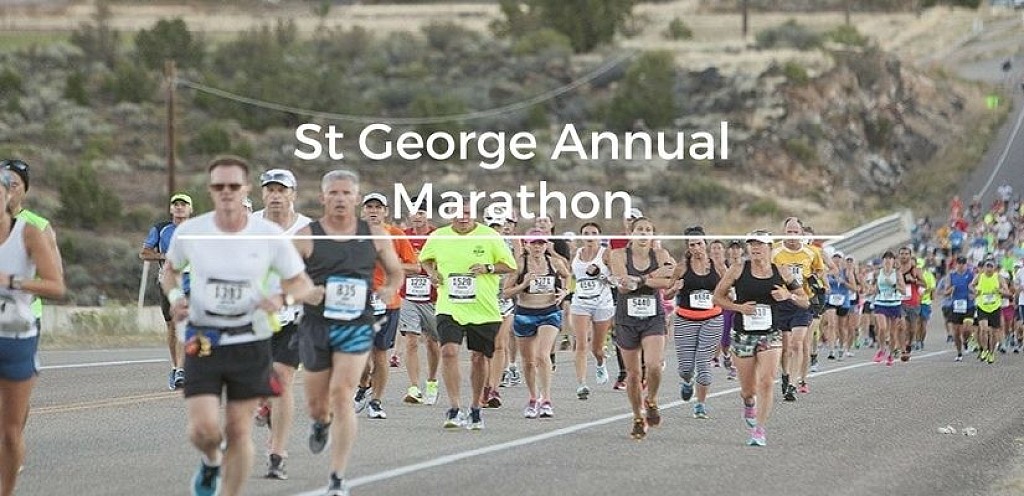
St. George Marathon returns for its 45th edition with big plans after one-year COVID-19 hiatus
The St. George Marathon makes its return Saturday for its 45th edition and the first since 2019 after the 2020 race was canceled due to the COVID-19 pandemic.
The race is set to start in its usual spot north of the city along State Route 18 at the base of the Pine Valley Mountains and descending nearly 2,600 feet in elevation back to the finish line downtown.
The race starts at 7 a.m. and will force some road closures and detours along SR-18 and a number of streets in and around downtown.
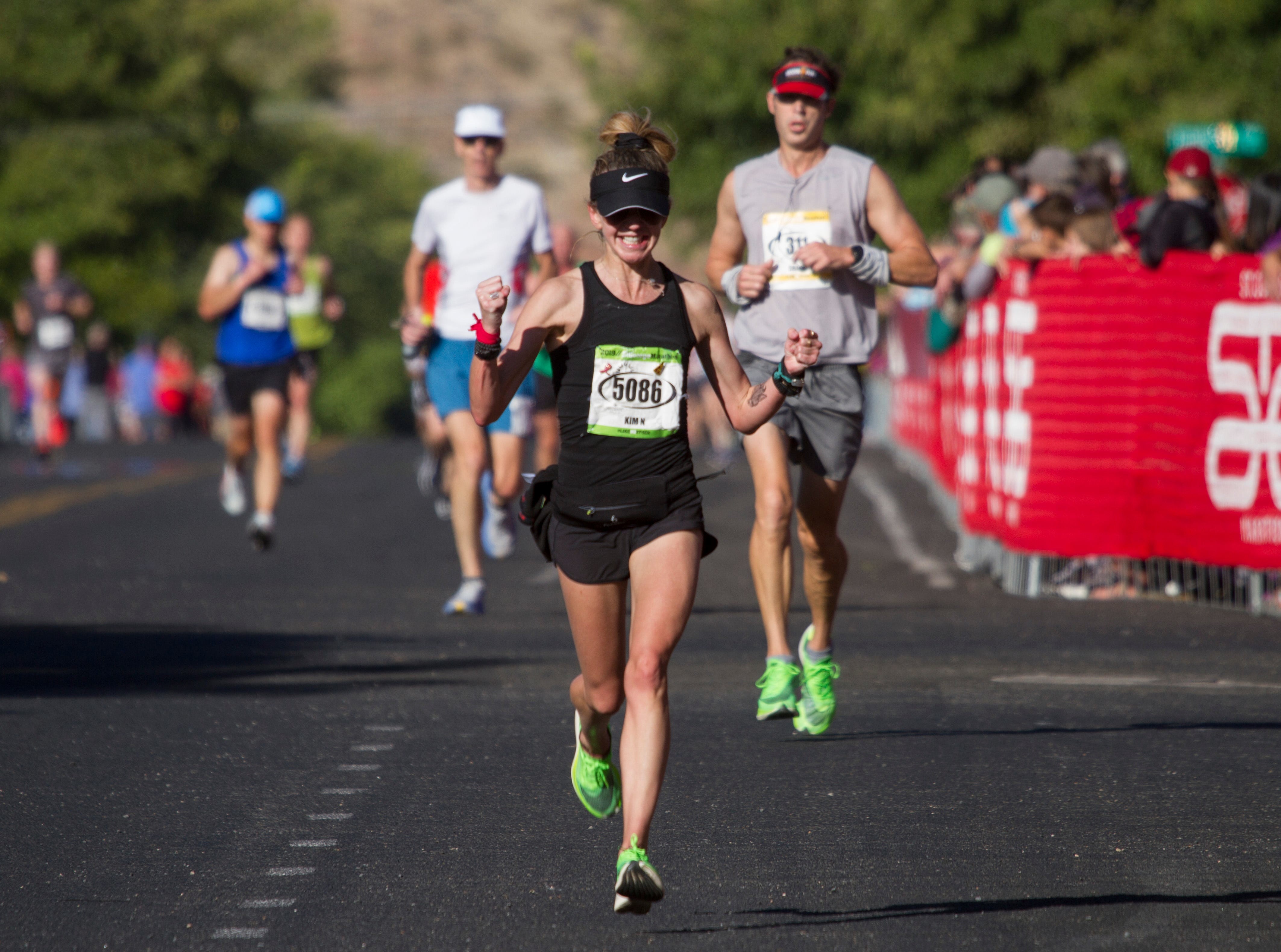
“We are so excited to have the marathon back in 2021. It is St. George’s signature event,” said Michelle Graves, race director and the Deputy Director of Arts and Events for the City of St. George. “This might be the best St. George Marathon ever. There has been a vibrant return to racing and we are happy to have a strong field of runners for this year's event.”
This year's event will include a mini-marathon starting at 6:15 a.m, with races of 1 mile and 200 meters at Vernon Worthen Park. Children ages 3 to 12 and people with special needs are invited to participate.
“We are so excited to have the marathon back in 2021. It is St. George’s signature event,” said Michelle Graves, race director and the Deputy Director of Arts and Events for the City of St. George. “This might be the best St. George Marathon ever. There has been a vibrant return to racing and we are happy to have a strong field of runners for this year's event.”
This year's event will include a mini-marathon starting at 6:15 a.m, with races of 1 mile and 200 meters at Vernon Worthen Park. Children ages 3 to 12 and people with special needs are invited to participate.
Login to leave a comment

St. George Marathon
Rated by Runner's World as one of the four "Marathons to Build a Vacation Around" in the World. Included in Runner`s World 10 Most Scenic and Fastest Marathons and Top 20 Marathons in the USA. It begins in the majestic Pine Valley mountains and descends nearly 2600 feet through scenic southwest Utah, to the beautiful Worthen Park. The St. George...
more...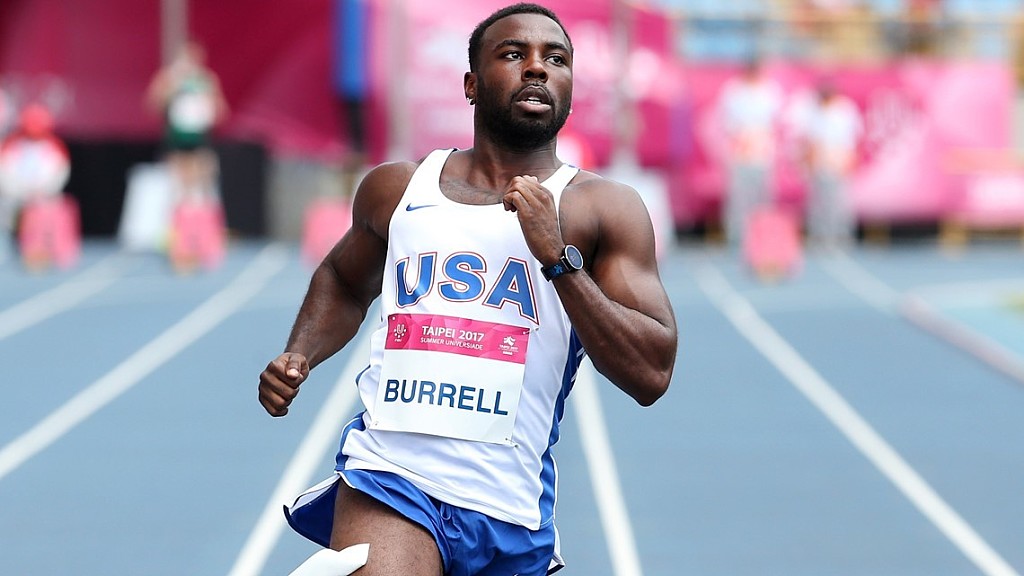
US sprint star Cameron Burrell has dies at age 26 in an unexplained incident
Cameron Burrell, the fastest college athlete in the US and the son of Olympic gold medal-winning parents, died on Monday at the age of 26.
Burrell had become a national champion after winning the National Collegiate Athletic Association’s (NCAA) individual national championship in 100 metres in 2018 at the University of Houston, equaling his father Leroy Burrell’s accomplishment 28 years earlier.
Leroy Burrell, who is a track and field coach at the University of Houston and a gold-medal sprinter, said the family is going through “profound sorrow” over the death of his son.
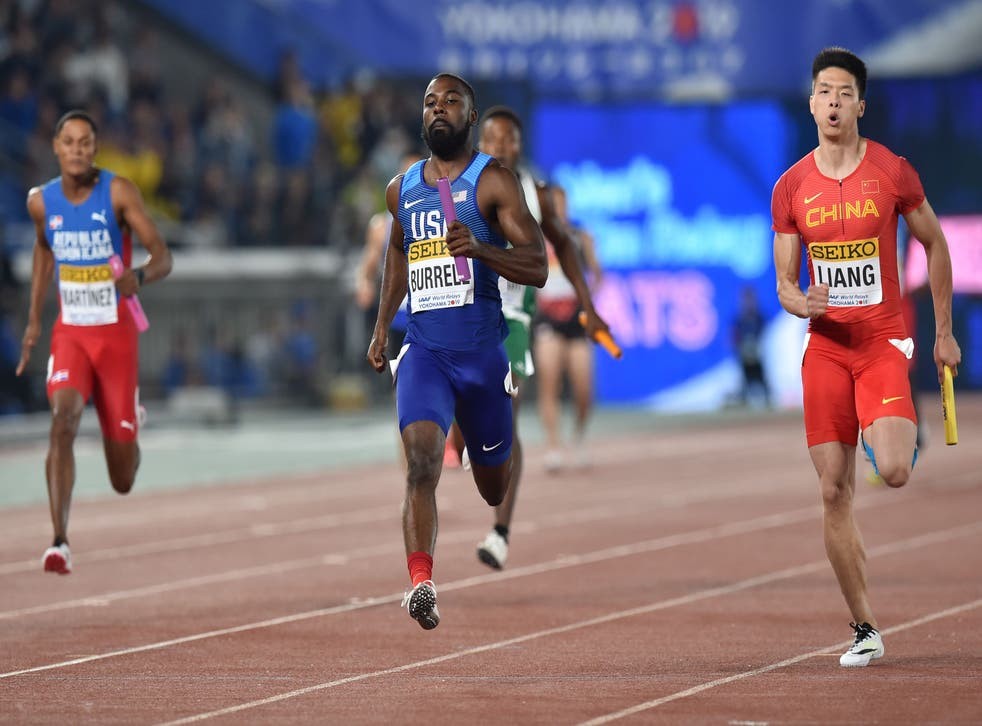
“My family is extremely saddened with the loss of our son, Cameron, last night,” Leroy said in a release on Tuesday. “We are going through profound sorrow and ask that all of our friends, extended University of Houston family and the track and field community in the US and abroad allow us to gather with our closest family and friends. We are profoundly grief stricken, and thank everyone for the outpouring of prayers and support.”
The cause of Burrell’s death has not been revealed, but medical records accessed by TMZ indicate he died in a parking garage. Further details surrounding the death remain unknown.
The University of Houston announced his death on Tuesday while describing him as one of the university’s best track and field athletes.
“Words cannot express how we feel for Leroy, Michelle and their family. Cameron grew up around the Houston Athletics Department, worked hard and developed himself into one of our greatest Track and Field stars,” university athletics director Chris Pezman said in a release.
“To lose him so suddenly is tragic. We ask all University of Houston and track and field fans to keep Coach Burrell and his family in their thoughts and prayers.”
The sudden demise of a budding professional athlete has shocked those around him. He was believed by many to be following in the footsteps of his father and his godfather Carl Lewis, a legendary track star and nine-time Olympic gold medalist.
Burrell was a member of the Houston Cougars track and field team from 2013-18. In the same season he equaled his father’s accomplishment, the Atlanta native ran the anchor leg for the Cougars in a 4x100m relay team event, successfully defending its NCAA championship.
by Shweta Sharma
Login to leave a comment
The Bix is back: Race returns with resounding success
The crack of a starting pistol sent a scribble of smoke upward, queuing upbeat dance club music.
Miles away, a barber shop quartet serenaded with harmonic tones.
Palmer College of Chiropractic members dressed as vertebrae snaked their way up the infamously steep Brady Street.
Good Samaritans sprinkled cooling droplets of mist and rushed to the aid of an overheated runner.
A volunteer raked a neat pile of thousands of discarded water cups out of the road.
"These 14,000 cups have gotta go somewhere," Jen Broders said.
Post-race Jello shots were downed and accompanied by dives onto a front-lawn water slide.
Runner, walkers, past Olympians, pint-sized entrepreneurs, Marilyn Monroe look-alikes and "short-legged, no-talent" family members, friends and supporters packed the streets of downtown Davenport on Saturday morning for the 47th annual Quad-City Times Bix 7. More than 9,750 people registered for Bix races, according to race officials, marking the first time participation has dipped below 10,000 since 1986 (not counting last year's virtual Bix).
"Since last year's race ended, we've been planning for a very different race because our plans have changed on a monthly, weekly and daily basis," Bix 7 Race Director Michelle Juehring said.
The 53-year-old became race director in 2020 after the retirement of former longtime Race Director Ed Froehlich. She guided the race through its virtual version during the COVID-19 pandemic and was in the midst of preparing for her first full-blown Bix as its director.
Through all the changes COVID-19 forced in 2020, planning for the 2021 race was not without lingering pandemic-induced difficulties.
"We didn't know if the race would be open to all contestants until, basically, the last week in June, first week of July," Juehring said. "I am very grateful to have a whole race, but the road to getting here has forced us to be flexible and change."
Shade become prime real estate along the race course for bystanders. The temperature at race time was 78 degrees, tied for the third-hottest in Bix history, with 82% humidity and a 9-mph wind.
Though the start-time temperature was reasonable, the mercury shot up quickly and so did the action inside the medical tent. By 9 a.m., the temperature had climbed above 80 degrees. By 10:30 a.m., the mercury reached 85 degrees, at which time 36 people had been treated in the medical just past the finish line, one of whom was transported to the hospital. Another 10 runners were taken from the course to the hospital. Craig Cooper, spokesman for Genesis, said Saturday evening that one person had been admitted to the hospital but all others taken to Genesis had been treated and released.
Beat the Elite runner Doug Boleyn, 53, was the first patient escorted into the medical tent. Innovation officer at Genesis Health System, Boleyn was treated by colleagues from Genesis, which staffs the medical tent with dozens of volunteer doctors, nurses, aids and others. He was treated and released.
The hot, hazy and muggy conditions, though, didn’t slow former Olympian Leonard Korir, 34, of Colorado Springs, Colo., who won his third Quad-City Times Bix 7 with a time of 32 minutes, 48 seconds, edging 25-year-old Frank Lara, of Boulder, Colo. Forty-one-year-old fellow Olympian Edna Kiplagat of Kenya won the women’s division.
“To win it three times, I’m so grateful,” said Korir, who credited his experience and training for his third top finish at the Bix 7.
As runners slogged through the heat and crowds on Kirkwood Boulevard, a gray tarp, continuously sprayed with a hose, offered brief refreshment for those brave enough to jump on.
Watching over the scene, resting on a lawn chair with Happy Birthday balloons tied to the back, was a large photo Sean Troncao's mother smiling.
he loved the Bix, Trancao said. It was one of her favorite days of the year. This year the Bix fell on her birthday weekend, so the family chose to celebrate at the Bix and bring her back to the event she loved so much.
"It just felt fitting to make sure she could join us," Trancao said.
Tom and Linda Hughes arrived on McClellan Boulevard at 6:15 a.m. Saturday to reserve their usual spot for their large family to watch the road race, and to promote organ donation through the Iowa Donor Network.
The group wore matching T-shirts featuring a photo of Tom's sister, the late Mary Ellen Smith. Smith used to run the Bix every year and was killed several years ago in a pedestrian-truck crash. Upon her death, all of her organs were donated.
Jerry Spaeth, Carl Anderson and Ken Stark stood on the side of the road enjoying a drink or two and cheering on Stark's wife, who he said has been running the Bix 7 for 22 years.
"I ran it for 15," Anderson said. "Now I stand here and drink beer."
Login to leave a comment
Bix 7 miler
This race attracts the greatest long distance runners in the world competing to win thousands of dollars in prize money. It is said to be the highest purse of any non-marathon race. Tremendous spectator support, entertainment and post party. Come and try to conquer this challenging course along with over 15,000 other participants, as you "Run With The Best." In...
more...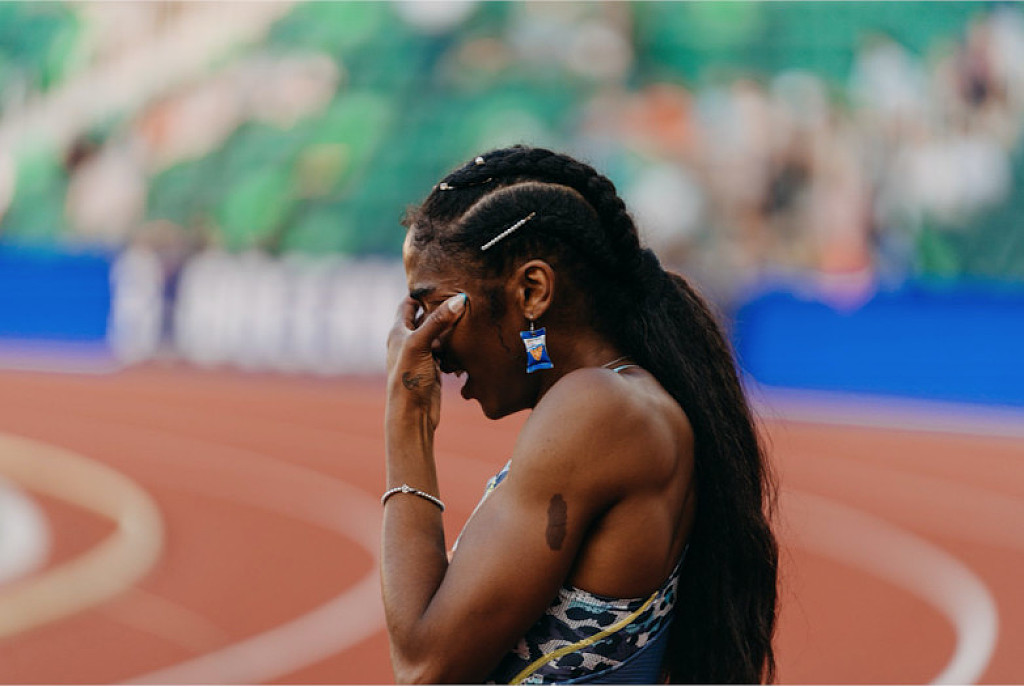
The Weird and Wonderful Moments From the Olympic Trials That You May Have Missed
Want to run fast? Try wearing a pair of Doritos earrings, just like Christina Clemons.
During the 2021 Olympic Track and Field Trials, held at Hayward Field in Eugene, Oregon, we watched as the nation’s best athletes competed for spots to race at the Tokyo Games—the pinnacle for these runners. But we also some wacky, weird, and wonderful moments, reminding us that no matter how fast these athletes can run, they’re still human.
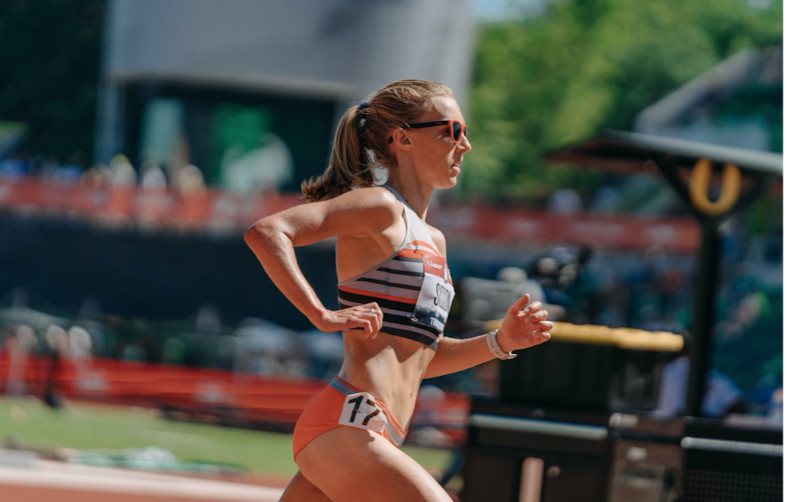
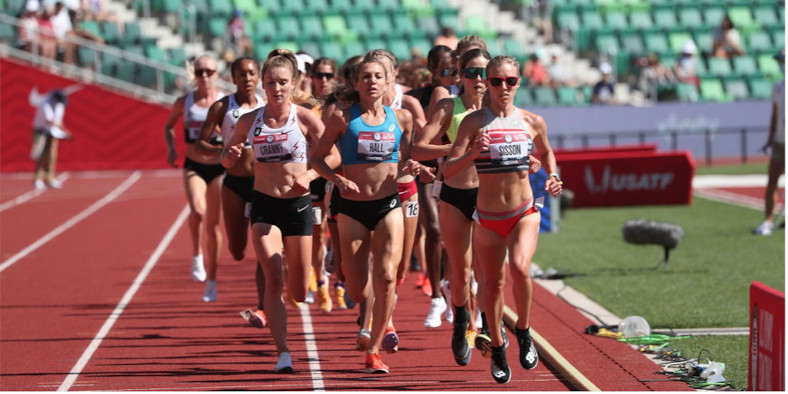
Lewis Johnson goes for a dip in the steeplechase water pit
Before the first round of the women’s 3000-meter steeplechase on Sunday, June 20, NBC broadcaster Lewis Johnson was tasked with explaining exactly what the steeplechase race is. (Runners jump over 35 barriers, seven of which are over a water pit. It also started as a horse race. Read more here!) Not only did he show viewers on TV all around the barriers, he actually took his shoes and socks off and waded into the water pit to show how deep it was. Talk about dedication to his craft.
A short time later, Allyson Felix qualified for her fifth Olympic team, finishing second in the 400 meters—and when Johnson was interviewing her trackside, his shorts appeared to be dry. Did he bring an extra pair of shorts and change? Was it so hot that his shorts dried? I haven’t stopped thinking about this for over a week. — Bette Canter
Christina Clemons makes the Olympic team wearing Doritos earrings
Forget the Wheaties cereal box. Christina Clemons, who made her first Olympic team in the 100-meter hurdles during the opening weekend of the Trials, has her face on a bag of Doritos!
How did this happen? According to The Washington Post, Clemons was looking for new earrings before the meet and purchased a pair of Cool Ranch Doritos bling at a Hot Topic. We’re so thankful that eagle-eyed viewers and on-site photographers spotted the awesome earrings, helping the selection go viral and providing Clemons this unique opportunity. May I suggest for her Olympic run, she get mini earrings of her favorite high-end car? — Brian Dalek
New England Pride in the Women’s 1500
I’m not a “real” New Englander—I’ve lived in Maine for only 18 years, or about 200 years shy of many natives’ standards for sufficient family roots. But from the fan boy angle, close enough. So it was a treat to see Vermonter Elle Purrier St. Pierre and Heather MacLean of Massachusetts finish first and third, respectively, in the women’s 1500 final amid the usual west-of-the-Mississippi-based candidates.
The moment was made sweeter by MacLean nabbing the Olympic standard, her and Purrier St. Pierre’s modest college running achievements, and the fact that they’re New Balance Boston teammates and close friends. Or, as their coach, Mark Coogan, told Runner’s World in his best southern Massachusetts intonation, “A girl from UMass and a girl from UNH are going to the Olympics, in the mile. Top that!” — Scott Douglas
Michelle Obama congratulates Sha’Carri Richardson
After Sha’Carri Richardson dominated the women’s 100-meter final with a winning time of 10.86, her performance and reaction afterwards (she ran into the stands to hug her grandmother right after the victory) went viral. Even former First Lady Michelle Obama took notice and tweeted a message congratulating the national champion. Obama tweeted a video clip of Richardson’s post-race interview in which the sprinter shared that her biological mother passed away before the championship. Richardson also thanked her family, especially her grandmother who witnessed Richardson become an Olympian.
“Without my grandmother, there would be no Sha’Carri Richardson,” Richardson told Lewis Johnson on NBC. “My family is my everything, my everything until the day I’m done.”
Richardson responded to the Becoming author’s tweet with a message of her own.
“I am up right now losing my mind!” Richardson wrote at 2:41 a.m. PDT on June 23. — Taylor Dutch
Even the pros sometimes borrow gear from their significant other
She’d sketched out her race plan lap by lap and even traded out her pre-race coffee for caffeinated gum to stay cooler. But there was one minor detail Emily Sisson realized she forgot as she was stepping onto the track to dominate the women’s 10,000 meters Saturday morning: shades. Fortunately, her husband, Shane Quinn, had a pair he was willing to part with.
“I stole them off him as we were walking into the warm-up area,” she said post-race. Those red-and-black frames—which appeared to be from goodr—made her look even more like a boss as she lapped nearly everyone en route to a new meet record and her first Olympic spot. — Cindy Kuzma
Runners warming up ... around a cemetery
Eugene Pioneer Cemetery, on the National Register of Historic Places, is also a destination for U.S. elite distance runners, warming up and cooling down for the races in Hayward Field.
The cemetery, which has a dirt trail around its perimeter that’s roughly 0.6 miles long, saw plenty of use during the Olympic Trials. Before the semifinal round of the women’s 1500, Runner’s World spotted Jenny Simpson, Dani Jones, Amanda Eccleston, Sarah Lancaster and others jogging the loop before heading one block east to the athlete entrance to the track. After the semis of the men’s 800, Bryce Hoppel went over for a cooldown.
The cemetery isn’t affiliated with the University of Oregon, but it’s adjacent to the campus, and many Duck track athletes over the years have used it for their runs. It’s an easy target for, well, gallows humor—as athletes hope warming up their doesn’t signal the death knell of their careers.
by Runner’s World
Login to leave a comment

The Big Sur Marathon Foundation (BSMF) Taps Blistering Pace Race Management as Organization Reboots
As the running industry eagerly returns to in-person racing, the Big Sur Marathon Foundation (BSMF) is excited to announce their expanded partnership with Napa-based Blistering Pace Race Management (BPRM). On October 1, 2020, the Big Sur Marathon Foundation suspended most business operations in order to preserve resources during pandemic-era shutdowns. As California begins to lift restrictions and develops guidelines for large in-person events, the organization is planning for 2022 events with BPRM and Race Director, Doug Thurston, at the helm.
BPRM, who has worked with BSMF since 2016, is expanding their scope of work with more operational responsibilities and added marketing and communications, sponsorship, and registrations.

“After working with the Big Sur Marathon Foundation in increasing capacities for the last five years, we have been fortunate to learn about their events, work alongside their staff, board of directors, and committee members, and build a very strong relationship of trust between us,” said Michelle La Sala, President of Blistering Pace Race Management. “We are thrilled to take the next step with the foundation and look forward to delivering continued success and a world-class participant experience.”
In order to allow adequate time to plan and execute a safe event weekend, BSMF’s next in-person race is the Big Sur Marathon weekend of events scheduled for April 22-24, 2022. The next in-person Monterey Bay Half Marathon weekend is planned for November 11-13, 2022.
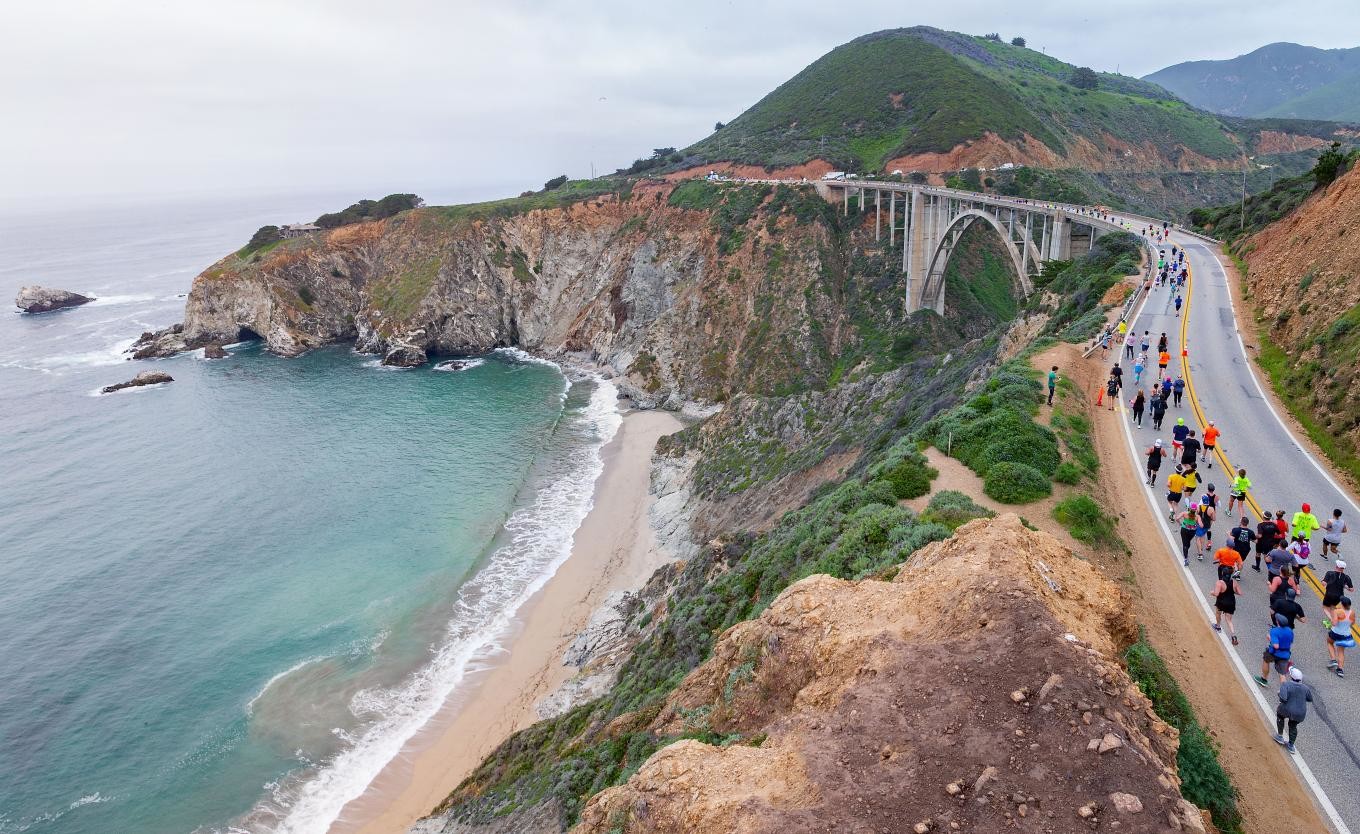
“We’re excited to expand our relationship with Blistering Pace,” said Doug Thurston, race director. “She has built a world-class team that is dedicated to the runner experience and helping our non-profit organization rebuild from the effects of the pandemic.”
The Big Sur Marathon Foundation’s mission is to “create beautiful running events that promote health and benefit our community.” BSMF aims to expand upon their mission by employing BPRM’s strategic counsel and professional implementation for their two flagship races. BPRM brings six years of wide-ranging industry experience to the BSMF portfolio of events, along with a full-time staff of five.
About Blistering Pace Race Management
Founded in 2016, BPRM works in a variety of race management capacities, ranging from staffing to full operational oversight. Clients include the Kaiser Permanente San Francisco Half Marathon, 10K & 5K, the Napa Valley Marathon and Half Marathon, the Big Sur Marathon Foundation, the Bank of America Chicago Marathon, and the TCS New York City Marathon. For more information, visit the website.
About the Big Sur Marathon Foundation
The Big Sur Marathon Foundation is a nonprofit organization whose mission is to create beautiful running events that promote health and benefit the community. Under the brand are two individual race weekends: Big Sur International Marathon in April and the Monterey Bay Half Marathon in November. For more information, visit www.bsim.org #bigsurmarathon
by Running USA
Login to leave a comment
Big Sur Marathon
The Big Sur Marathon follows the most beautiful coastline in the world and, for runners, one of the most challenging. The athletes who participate may draw inspiration from the spectacular views, but it takes major discipline to conquer the hills of Highway One on the way to the finish line. Named "Best Marathon in North America" by The Ultimate Guide...
more...
The Quad-City Times Bix 7 organization is proud to announce the Bix is back
Quad-City Times Bix 7 Organizers, Health Officials Lift COVID-19 Race Restrictions, the race is on, and organizers invite the Quad Cities Community to the starting line this July 24.
Read the news coverage from the Quad City Times. An excerpt:
Race Director Michelle Juehring announced COVID-19 safety protocols were lifted Friday morning after consulting with the race's local medical team. Race organizers are calling the race an opportunity for the Quad-Cities community to "Come Back to the Start."
The race will held Saturday, July 24, starting off at 8 a.m. from 4th and Brady streets. Both the Quad-City Times Bix 7 and the Prairie Farms Quick Bix will start at 8 a.m.
"We have worked all along with officials from Genesis Health System and the Scott County Health Department," Juehring explained. "And in April we put some protocols in place to have an in-person race.
"We have been told that with the vaccination rates, the low positivity rate and the low rate of infections per 100,000 we can lift the safety protocols."
The 47th Quad-City Times Bix 7 race begins at 8:00 AM Saturday, July 24, 2021. Online registration is open at www.bix7.com. Registration fees will increase on July 2, 2021.
Volunteers are needed for race weekend. Learn more at www.bix7.com/getinvolved.
In addition to the website, you can stay connected with race news and training tips on our social media channels:
Facebook.com/QCTBix7
Instagram.com/quadcitytimesbix7
Twitter.com/BixSeven.
by Running USA
Login to leave a comment
Bix 7 miler
This race attracts the greatest long distance runners in the world competing to win thousands of dollars in prize money. It is said to be the highest purse of any non-marathon race. Tremendous spectator support, entertainment and post party. Come and try to conquer this challenging course along with over 15,000 other participants, as you "Run With The Best." In...
more...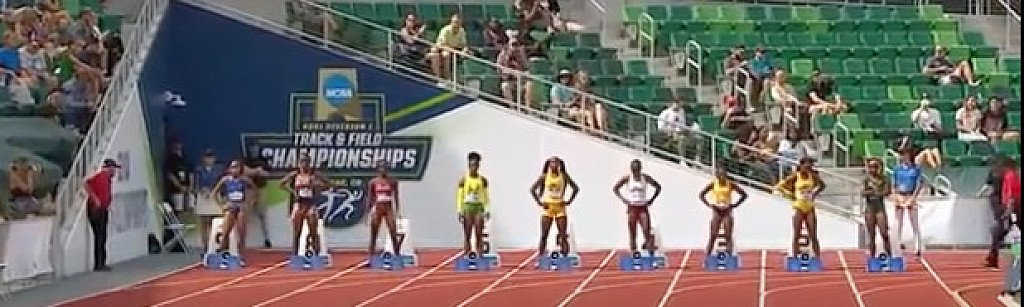
Double delight for Mu, Sturgis and Cockrell on final day of NCAA Championships
US teenager Athing Mu wrapped up her 2021 collegiate season with a pair of record-breaking performances on the final day of the NCAA Championships in Eugene on Saturday (12).
The Texas A&M student, who is undefeated outdoors over 400m and 800m this year, opted to focus on the shorter event in Eugene. After a comfortable 51.04 heat victory on Thursday, she dominated the final and won by more than a second, breaking her own collegiate and North American U20 record with 49.57.
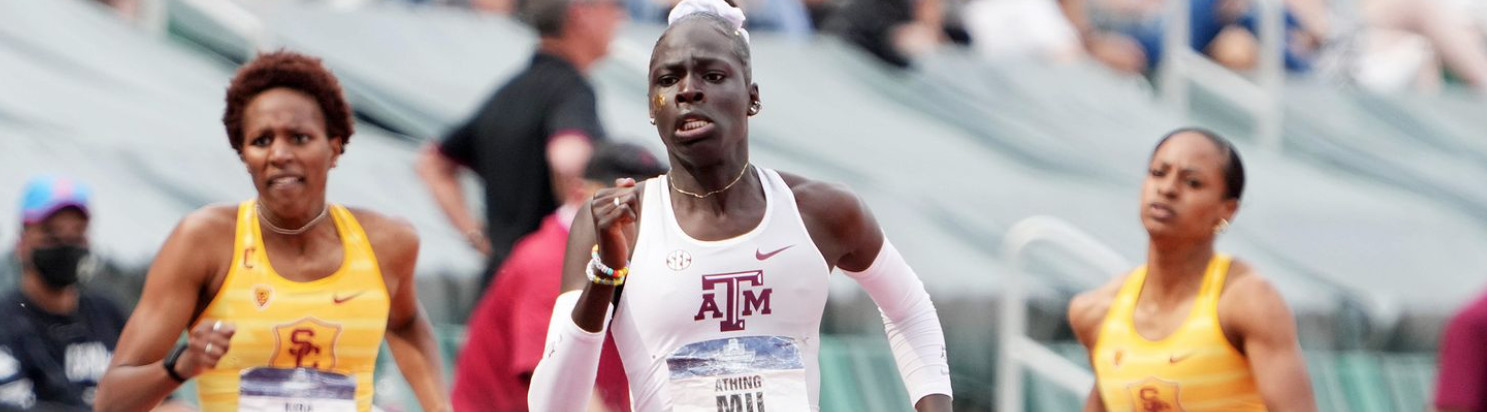
Fellow U20 runner Talitha Diggs, representing the University of Florida, finished second in 50.74, while Canada’s Kyra Constantine of USC was third in 50.87.
“I’m really happy to win; I’ve been dying to have the 400m title since the indoor season,” said Mu, whose only loss this year came at the NCAA Indoor Championships.
Just 80 minutes after winning the individual 400m title, Mu teamed up with Tierra Robinson-Jones, Charokee Young and Jaevin Reed to win the 4x400m in a collegiate record of 3:22.34. Mu’s anchor leg of 48.85 is the fastest split ever recorded at the NCAA Championships.
“It’s amazing,” said Mu. When we checked in, I said, ‘we’re going to get the collegiate record’ so we knew it was coming.”
Mu, who turned 19 earlier this week, will now turn her attention to the US Olympic Trials, where she’ll be among the leading contenders over 800m, having clocked a North American U20 record of 1:57.73 earlier this year.
“I’m glad to be moving back to ‘my’ race (the 800m) for the trials,” she said. “I just want to go out there and try my best and hopefully make the team.”
Mu was one of three women to win two titles on Saturday.
Cambrea Sturgis of North Carolina A&T State University produced the performances of her life to win the 100m and 200m double. She blasted out of the blocks in the 100m and, despite the best efforts of USA’s Twanisha Terry, could not be caught, flying to a marginally wind-assisted 10.74 (2.2m/s). Terry, the world U20 silver medallist, was second in10.79 while Tamara Clark (10.88) and Kemba Nelson (10.90) were next across the line.
Clark was Sturgis’s toughest opposition in the 200m. Clark, a student at the University of Alabama, got off to a strong start and was slightly ahead of Sturgis as they came off the bend. But the diminutive Sturgis, drawn two lanes outside of Clark, clawed back the deficit in the closing stages and crossed the line in a lifetime best of 22.12 (0.2m/s). Clark was second in 22.17 while Anavia Battle of Ohio State was third (22.42).
Anna Cockrell, the 2016 world U20 400m hurdles champion, became just the second woman in collegiate history to win the hurdles double at the NCAA Championships. She took the 100m hurdles title in 12.58 (0.4m/s) after setting a PB of 12.54 in the heats. Collegiate leader Tonea Marshall ran 12.48 in the heats but withdrew from the final.
Just 45 minutes later, Cockrell was back on track for the 400m hurdles. The USC student ran a controlled race and negotiated the barriers well, cruising to a 54.68 PB to win by more than a second. Arizona’s Shannon Meisberger took the runner-up spot in 55.70.
Texas A&M’s Tyra Gittens secured a full set of medals. The all-rounder from Trinidad and Tobago had placed second in the long jump on Thursday, then went on to dominate the heptathlon on Friday and Saturday, winning with 6285 to beat Miami’s Michelle Atherley by 218 points.
In between the last two disciplines of the heptathlon, Gittens contested the high jump and finished third with 1.87m in a competition won by Rachel Glenn with 1.93m.
The women’s steeplechase proved to be one of the closest and most exciting races of the championships. Mahala Norris of the Air Force Academy was in third place as she approached the final barrier. Despite losing some momentum, she managed to regain her stride to outkick Auburn's Joyce Kimeli and Washington's Katie Rainsberger to win in a big PB of 9:31.79. Kimeli finished just 0.05 behind with Rainsberger taking third in 9:32.12.
Elsewhere, Dutch thrower Jorinde van Klinken, representing Arizona State, won the discus with a final-round throw of 65.01m, breaking the championship record in the process. And North Carolina State’s Elly Henes won the 5000m in 15:28.05, 30 years after her mother and coach Laurie won the title.
by World Athletics
Login to leave a comment
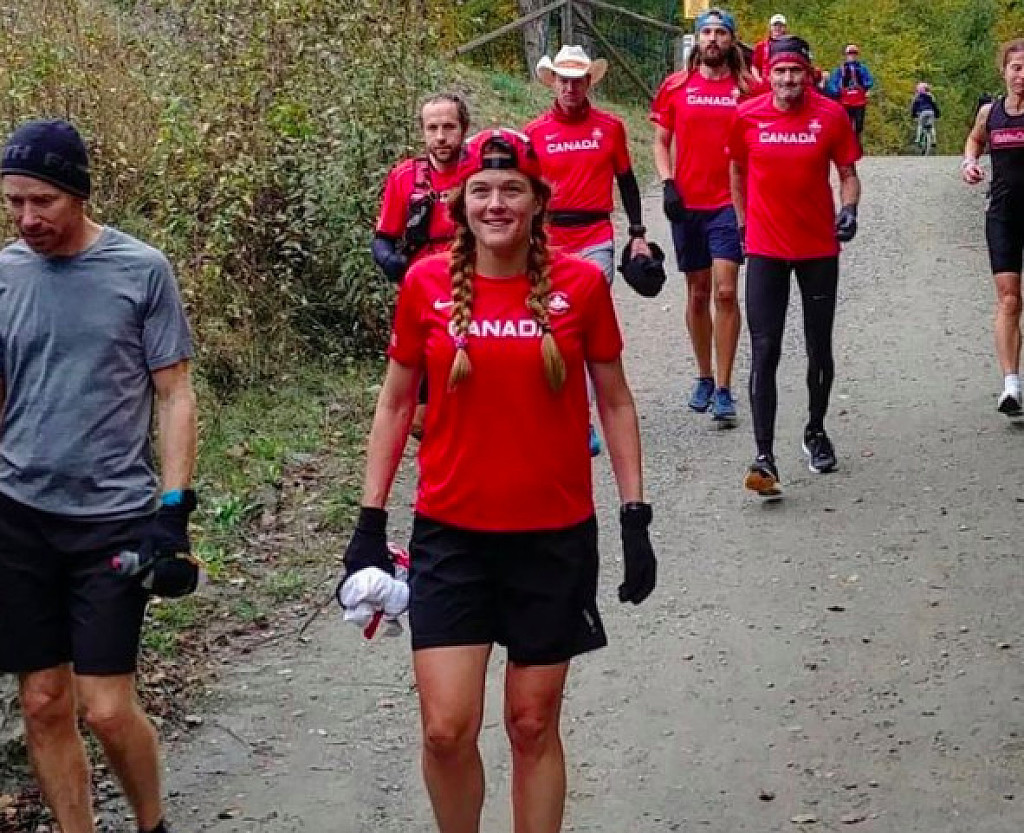
Canadian Stephanie Simpson to attempt Canadian 100-mile record on June 12 at the Montreal 24-hour Endurance Challenge
Canadian ultrarunner Stéphanie Simpson will be attempting to break the Canadian 100-mile (160 km) record this weekend at the Défi 24 heures Endurance (24-hour endurance challenge) in Montreal, Que. The current Canadian record, held by Michelle LeDuc of Russell, Ont., is 15:19:45, and Simpson’s goal is to not only beat that time, but to complete the distance in 14:45.
Simpson began running in 2008 as a way to deal with stress when her mother was sick. She started the way many of us do, running shorter distances like 5K’s and 10K’s, eventually working her way up to half-marathons and marathons. She completed her first 50-kilometer ultramarathon after the birth of her first child in 2015 and never looked back. She was relatively unknown in the world of ultra trail running until last October when she became the Canadian winner at Big’s Backyard Ultra, running for 43 hours to lead Team Canada to a third-place finish.
So what does the training for a record attempt like this look like? For Simpson, it’s been fewer really long runs and more speedwork.
“I haven’t run really long distance since the Backyard,” she says. “Since then, I haven’t done anything above 50, but I’ve still been doing big weeks of 200 kilometers. I’ve been doing more speed lately, because you need some kind of speed to run for that long at that pace.”
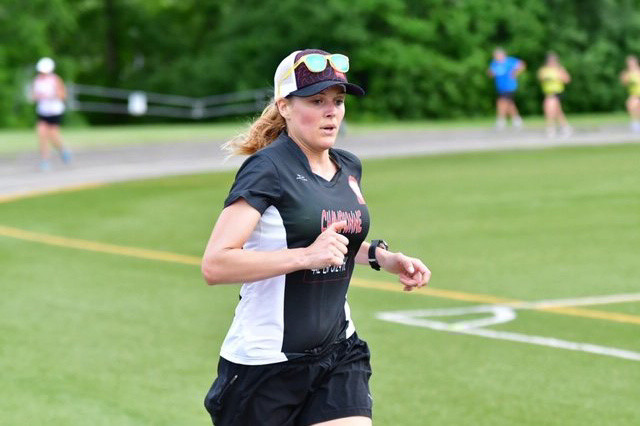
To run her goal time, Simpson will need to maintain a pace of 5:29 per kilometer. Because the event is a 24-hour race, her plan is to get through 100 miles in her goal time, then see what happens with the rest. The Canadian 24-hour record is 238 kilometers, and while that record isn’t her main goal, two records in one race isn’t out of the realm of possibility. Regardless, in order to achieve her goal, Simpson says mindset and confidence are the two main keys to success.
“A hundred-miler at that pace is really mental, so you have to be really really ready,” she says. “I’ve been visualizing everything that could happen, and when you run those kinds of distances, you have to be really confident in your plan — that’s the only way you’re going to get through 100 miles.”
Simpson will be running with seven other local runners around the outdoor track at McGill University. The race is set to begin at 8 am this Saturday, June 12, and if all goes according to plan, she should reach the 160-kilometer mark just before 1 a.m. on Sunday.
by Brittany Hambleton
Login to leave a comment
Viktoria Brown breaks Canadian W45 100-mile record in North Carolina, running 15:24:23 to beat the previous national record by 14 minutes
Canadian ultrarunner Viktoria Brown recently set the Canadian W45 100-mile record, posting a time of 15:24:23 at a 24-hour race in North Carolina. This is the third ultrarunning record for Brown, who lives and trains in Whitby, Ont., and it beat the previous Canadian best by 14 minutes. She stopped after hitting the 100-mile mark, a distance that was good enough for 11th overall in the 24-hour event.
Brown only started running ultras in September 2020, but she already has three records to her name. Her first came in her ultra debut, when she ran to the women’s 24-hour Canadian soil record at That Dam Hill in London, Ont. Despite never having run an ultramarathon before, Brown excelled, running 213.8K in 24 hours and beating the previous record (which had stood for 36 years) of 210K.
After her performance in London, Brown was invited to run in Kelowna, B.C., in October as a member of the Canadian team at Big’s Backyard Ultra. Again, although she was still so new to the sport, she ran extremely well, completing 34 laps and stopping after 228K. Next up was a 48-hour race in Duncan, B.C., in November, and Brown set another record, beating the previous Canadian 48-hour best by more than 6K with her two-day total of 324K.
Given her previous results in ultras, it shouldn’t have come as any surprise when Brown beat yet another record, this time at the Alexander County 24-Hour race in the U.S. After the race, Brown said she stopped short of the 24-hour cutoff because she didn’t want to push her body too far, as she is training for the Six Days in the Dome race, which will be held in Wisconsin in June. Stopping after just 15 hours meant Brown could dedicate less time to recovering after the race and more time to training.
“I learned what I needed to learn from this one,” she said, referring specifically to a recent asthma diagnosis. After learning that she has asthma, Brown realized she needed to figure out how to race without making the problem worse. Seeing as she set a Canadian record, it’s safe to assume she worked things out on the race course.
As Brown noted on Instagram after the race, she was on pace to break the open Canadian women’s 100-mile record (which belongs to Michelle Leduc at 15:19:45) for most of the race, but she slowed too much in the final kilometres and had to settle for the W45 age group best (a time of 15:38:18 that Bernadette Benson ran in 2014) instead.
While she was disappointed with missing the Canadian record, Brown said she isn’t too upset, and her focus is now set on the Six Days in the Dome. If she wants to break the national six-day best at this event, she will have to run farther than Charlotte Vasarhelyi‘s 2014 record of 734.225K. To run the W45 best, Brown will need to better Kimberley Van Delst‘s record of 547.177K, which she ran in 2017.
by Ben Snider-McGrath
Login to leave a comment
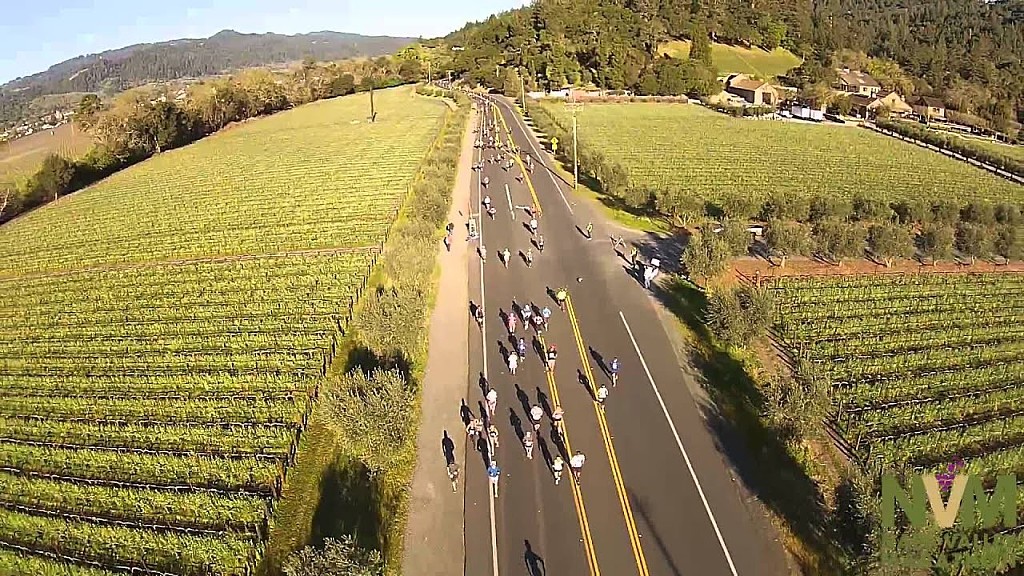
2021 Napa Valley Marathon has been cancelled due to the pandemic
The 43rd Annual Kaiser Permanente Napa Valley Marathon and Half Marathon has officially been cancelled as an in-person event for 2021. The NVM board of directors made this difficult decision as they continued to monitor updates from county and state agencies regarding the global coronavirus (COVID-19) pandemic. The governance board cited an abundance of safety as the primary reason for cancelling the event.
“Our highest priority is always the safety of our participants, volunteers, spectators, and residents,” said Race Director Michelle La Sala. “We are deeply saddened by the decision to cancel, but we’re confident that it is the responsible choice for our community.”
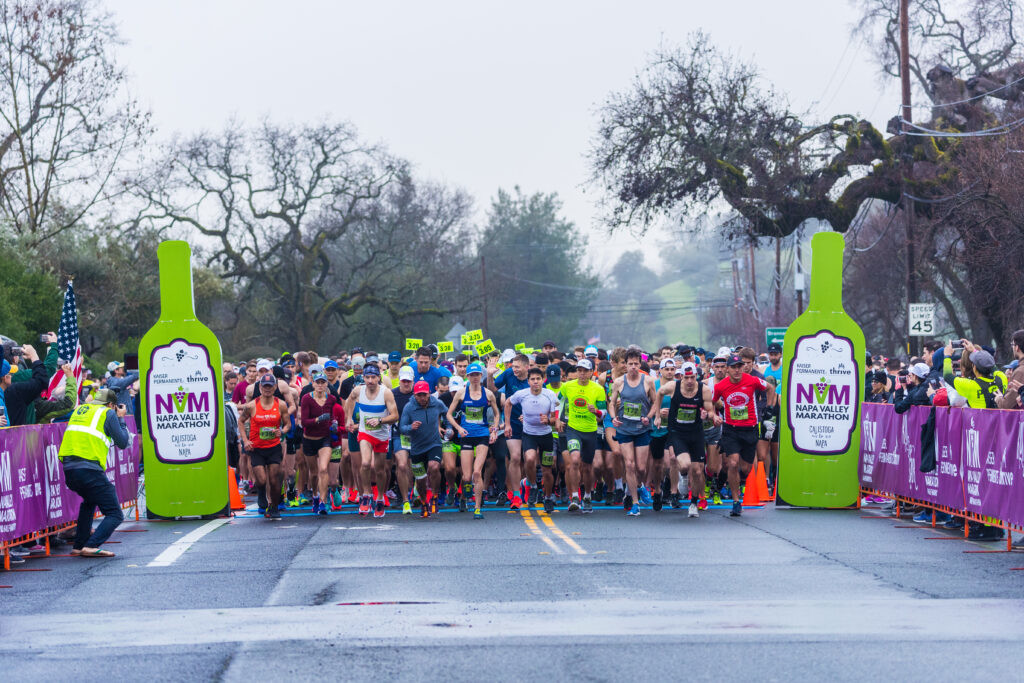
California’s comprehensive reopening plan does not allow mass gatherings until the final reopening phase when a vaccine is widely available. Race organizers say that even if the state began allowing mass participation events early next year, there would not be enough time to secure proper permits and infrastructure to guarantee a safe event.
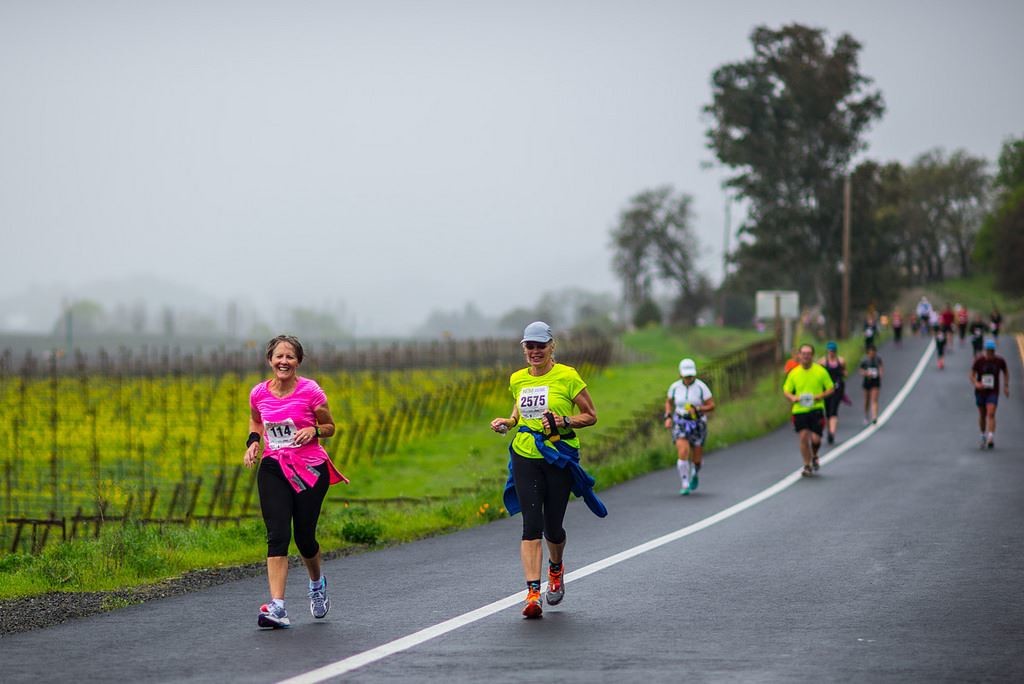
Several hundred participants were already registered for the 2021 via the organization’s “Whine Stopper” Registration plan, which guaranteed participants deferral to either the 2022 or 2023 race free of charge. All 2021 entrants will be contacted when registration opens for the 2022 event and asked to make their deferral choice. There is no action required of 2021 entrants at this time.
Napa Valley Marathon officials state that a virtual race experience will replace the 2021 in-person event, with details to come in the near future.
“We’re excited to unveil a virtual experience that really captures the spirit of the Napa Valley,” said La Sala. “It’s important for us to find ways to keep our community engaged and continue to support our local nonprofits, and I think our participants will find it very unique and engaging.”
Napa Valley Marathon, Inc. is a nonprofit organization that typically provides nearly $30,000 in support back to the local community. The organization points to the development of their new virtual experience as one avenue to raise revenue for their charitable giving.
Login to leave a comment
Kaiser Napa Valley Marathon
As one of California's top tourist destinations, Napa Valley has been home to this race for decades. When it comes to scenic, it just doesn't get better than Napa in the spring. The narrow valley is covered in grape vines that stretch high up the hillsides on either side. The colors are crisp green, blue and yellow at that time...
more...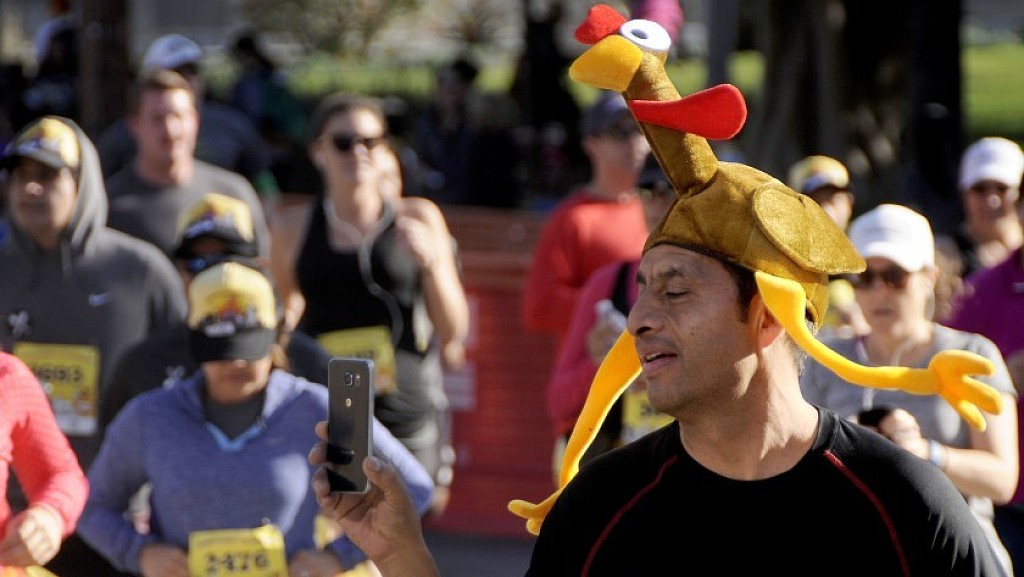
Over one million people in the US normally run a 5k or 10k on Thanksgiving morning but not this year
Thanksgiving Day has long been the most popular day in the U.S. to run a race. Every year more than 1 million people lace up their shoes and take off on a 5K or 10K run somewhere in the country before sitting down to a big meal. And this year?
“I don’t think you’ll find a live event anywhere in California,†said Michelle Lindner, organizer of Turkey Trot Los Angeles, which typically starts at City Hall in downtown L.A. That assertion is mostly true. Websites for a few races in Orange County say they’ll host in-person events with staggered start times and social-distancing rules.
Most turkey trots in Southern California, however, are keeping the race tradition alive with virtual runs. If you haven’t done one, here’s how it works: You sign up and then pick the route, time and date for your personal 5K or 10K. You can run alone or with someone in your COVID-19 bubble but not in a group. (L.A. County limits outdoor group gatherings to three households.)
And because it’s virtual, many races are encouraging people to not only run but also walk, bike, treadmill or ride your Peloton; it all counts.
Login to leave a comment
Dr. Jill Biden is a runner and in fact has run a marathon
The Second Lady is still active in the Komen Race for the Cure.
It was a charity race that got you started running, wasn’t it?
I started running after Joe and I were asked to kick off a Komen Race for the Cure in the early ’90s. After sounding the horn, we ran to get out of everyone’s way, and I got so winded that I said, “I’m going to start running.” My first run was around my neighborhood in Delaware—about a third of a mile. I kept increasing the distance until I got the bug.
What did you like about it?
It was such a feeling of freedom. I love running outside. It was a good feeling. I mean, I felt good about myself, and so that’s why I continued. I started when I was, what, 40, so I’ve been running almost 20 years. And I’ve been pretty consistent with it. I mean, I’ve had things in my life happen where I’ve had to slow down a little bit, but I’ve always gone back to it.
How many Susan G. Komen races have you participated in?
Oh, I’m not sure about the exact number—probably a handful or so. Over the years I’ve also completed several 5K, 10K, and half-marathon races for other cancer charities.
Why are you participating in the Komen race this year?
This year, I am serving as the Honorary Chair for the Washington D.C. Race for the Cure along with Joe. It’s the second year in a row we’ve done this, and we are honored to continue the tradition. On the eve of race day, Joe and I will host breast-cancer survivors for a special reception at our home. It’s a really special event and gives us a chance to spend time with survivors and their loved ones before the race. We’re really looking forward to it.
In addition to your work with Susan G. Komen Race for a Cure, you’ve been very involved in breast-cancer awareness. Why is it such an important issue for you?
Back in the early ’90s, I had several friends who got breast cancer. One died. I felt like I had to do something, and I couldn’t just sit by. Being an educator, I thought, Well, maybe there’s something I could do in education. So I started the Biden Breast Health Initiative, and I have health-care professionals go to high schools in Delaware, and we talk to them about good health practices, breast self-examination, and early detection. So not only is that awareness created for them, but they take that message home to their moms and grandmoms, and they start a dialogue. We’ve reached more than 10,000 young women.
What’s typical for a daily workout? Where do you usually run and how many miles?
Well, you know, my goal is five miles at a nine- to 10-minute pace five days a week. But between teaching and administration responsibilities, I barely make that any more. Like, for instance, this morning I had a breast-cancer event here [at the house, the Vice President’s Residence at the United States Naval Observatory in Washington, D.C.] at breakfast. I knew I was limited for time, so I did a little over four miles on the treadmill. I try to adapt my workout to where I am—I could be in another city or country—so it often depends on what I’m doing. I also try to incorporate a little bit of weight training, because I think that’s really good for your bones. That’s my basic workout.
How do you change your training when you’re preparing for a race, as you are now?
When I’ve done races, I’ve been pretty disciplined about setting up a plan for myself and then following that plan on a daily basis. That’s how I got ready for the 1998 Marine Corps Marathon, which is the only one I’ve done. I’ve done several half-marathons and 10-mile races. In the next couple months, I would love to train for the Army 10-Miler [in Washington, D.C.], and so I feel like I could work up to that.
You’re pretty close to the race in the beginning of June, so what are you aiming for now? Are you still doing five miles or are you trying to ramp it up?
Usually because of time, I can’t go over five miles—sometimes maybe I could do six or seven, and sometimes I could just do three. Because, you know, my days are pretty filled, so I have to run in the morning or whenever I have time, and then I’ve got to build in that time to get back and showered and changed and read my briefing for an event. I have to factor all of those things in.
So what’s your best time?
My best time was my only time [the Marine Corps Marathon]. I finished in 4:30:32. My goal was 4:30, so I feel like I met that goal and I was ecstatic. I have to say it was one of the highlights of my life. I saw my family at several spots along the way. And I tell you, at the end of that race, I felt like I could run five more miles. My adrenaline was through the roof.
Would you consider running another marathon?
I always said I only wanted to do one marathon, but I’ve also learned to never say never!
So now do you run with the Secret Service?
Oh, yeah. That’s another big change in my life now—I usually have someone ahead of me and someone behind me. But they’ve been great. I just say to them, “I need to pretend you’re not here,” because I love to run by myself, and they’re pretty respectful of that.
Are the Secret Service in cars or are they actually running?
No, these guys are runners. I mean, these guys are fit, and they’re good runners.
You said you love to run by yourself. Why is that? Is it because you use that time to think or is it meditative for you?
I think that running creates a sense of balance in my life. And it really calms me down. It’s a great feeling to just get out and lose myself in a run. I think that’s why I continue to run because, as you know, once you get that, you kind of crave that time for yourself.
So I guess you don’t exercise with your husband?
Sometimes Joe runs with me, but he’s not a runner. He’s an athlete, and he does a lot of exercise. Like last night, he was playing football out on the front lawn with our granddaughter who loves to play football. So he likes to do a lot of sports, but I think once you’re a runner, you really stick with it.
But I have heard you do run with some of your staff.
A lot of people on my staff run, so that’s nice. If we get time and we’re in a different city, we’ll go out and do a run.
Obviously this is a very fit administration. Is it motivating? The President and First Lady are known for it. Do you ever run with either the President or First Lady?
You know, I really love what Michelle is doing with Let’s Move! Let’s face it, we really did need something like this in this country to fight childhood obesity. I see Michelle at events or we pass one another on the way to meetings, but life is a little too hectic. I mean, that would be great, but it just isn’t reality that we would have time to do that.
So do you feel more pressure to perform well as a runner now that everyone knows you?
Well, when I’m out running, people don’t recognize me, which is great. I don’t feel pressure; I’m not out to beat anybody or hit a certain time. I just do it for the enjoyment of it. I’m doing it for myself.
How do you make the time to run? How do you carve that time out?
Well, I definitely make it a priority. That’s not always possible, but my office knows that it goes first on the list. It’s really an important part of my life, and I try to be pretty true to it.
Do you have a preferred workout outfit?
I don’t have a workout outfit. The usual, you know, black pants and a T-shirt.
Do you listen to music when you run?
Oh, yeah, I do.
Can I ask what’s on your iPod?
What’s on my iPod? Well, certainly Bruce Springsteen. [Biden was born in New Jersey.] I don’t know what else. My kids are runners, by the way. I have two sons and a daughter and two daughters-in-law, and they’re triathletes, my two sons and their wives. So if they hear something good, they’ll say, “Oh, Mom, let me put this on your iPod.”
by Runner’s World
Login to leave a comment
Frankfurt Marathon champion Valary Jemeli Aiyabei is currently ranked as the 10th fastest woman in marathon history
Vegetables vendor who conquered the Frankfurt marathon, ranked as the 10th fastest woman in marathon history.
This is after breaking the course record in Frankfurt last year, winning in two hours, 19 minutes and 10 seconds.
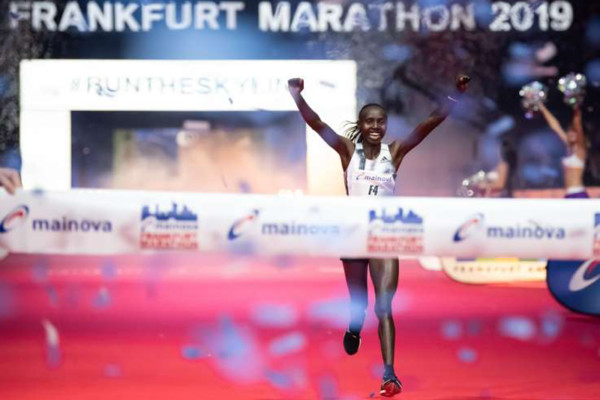
But she’s not done yet and will be seeking to move up the pecking order at the London Marathon next Sunday.
Her’s is an amazing story of a late bloomer who started off selling vegetables to eke out a living before taking to athletics.
In London, she will be competing against compatriots, defending champion Brigid Kosgei, 2018 champion Vivian Cheruiyot, world marathon champion Ruth Chepng’etich and debutant Edith Chelimo.
Aiyabei told Nation Sport that her preparations for the London race are complete and that she looks forward to a good race.
“My training was injury free and I’m happy because despite the Covid-19 challenges, I managed to train well and I’m just waiting for the race day,” said Aiyabei.
She also said that training in a group helps athletes gauge their limit but she has been training alone which she feels that she has done well so far.
“It’s my first time to compete in London Marathon and I will be doing my best despite the fact that I was training alone. I trust I did well and finished my training programme and I will be implementing what I have done so far,” she added.
Went there to set up business
Aiyabei joins the long list of athletes who started their training and ventured straight into the road and marathon races. She trains in Iten, Elgeyo Marakwet County, where she has called home since 2011 when she went there to set up business but decided to join athletes who used to train every day.
Aiyabei comes from a humble background and after graduating from Kapkitony High School in Elgeyo Marakwet, life was hard and she decided to shift base to Iten where she started a small business to keep her going. The athlete decided to look for some income generation and her mind clicked Iten, a busy town full of athletes training for various races where she thought there could be good circulation of cash.
It was while she was selling her vegetables and fruits, that she could see athletes training every day and she was attracted to the sport.
“Poverty pushed me to Iten town where I used to hear that athletes were camping and I wanted to go there and make money. In my interaction with them, I came to love the sport and I started training in the morning and evening every day,” said Aiyabei.
She started training on road races and she later had her first child, Michelle Chebet, before getting back to serious training.
“With good training I’m very much sure that I can still lower that time but my target is to also run a world record time in the near future,” said Aiyabei.
At the Frankfurt Marathon, Aiyabei broke from the leading pack with her husband Ken Tarus pacing for her in the initial stages before he dropped out of the race after feeling unwell.
“It was tough running alone when the pacemaker dropped but I kept going because I wanted to win the race. Breaking early saved me because the Ethiopian athlete (Kebede) looked strong and she would have beaten me in the final part of the race,” said Aiyabei.
by Bernard Rotich
Login to leave a comment
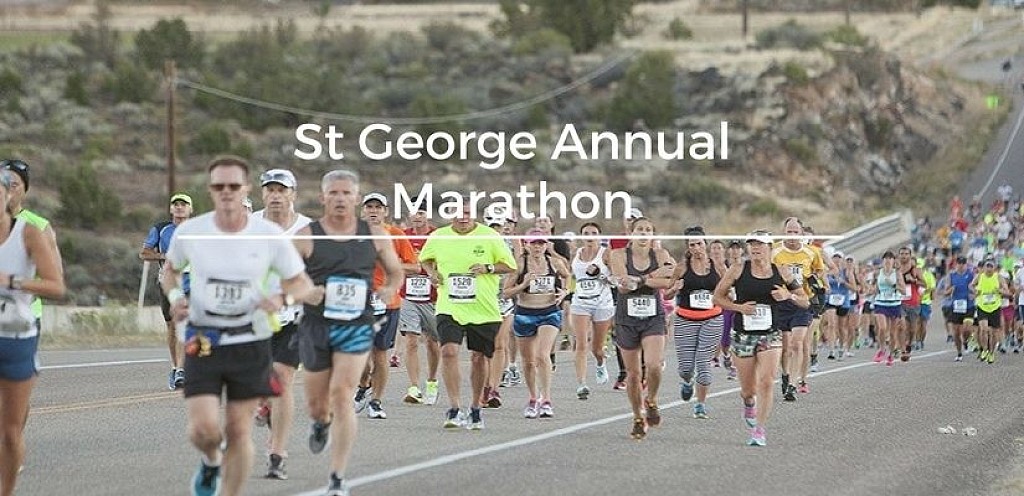
St. George Marathon cancelled due to the ongoing coronavirus
Citing concerns related to the potential spread of COVID-19 and the challenge of providing adequate health and safety protections for race participants and volunteers, the city has canceled the 2020 St. George Marathon, which was originally scheduled for Oct. 3.
“This was a difficult decision for us to make. We have enjoyed 43 consecutive years of this race, which has become one of the crown jewels of the marathon circuit,” Michelle Graves, race director for the St. George Marathon, said in a press release.
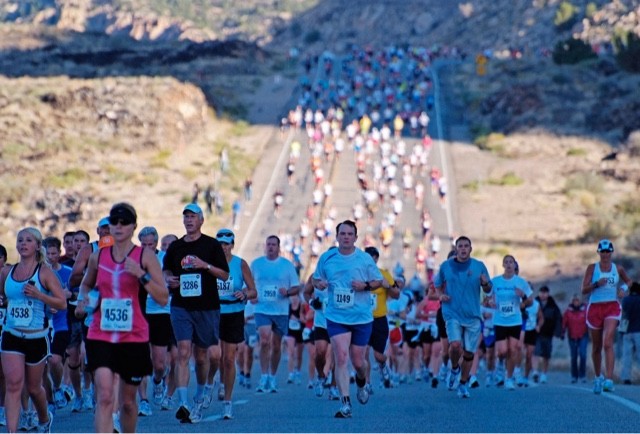
“However, the health and safety of our runners, volunteers, staff members and residents outweighed the potential benefits of moving forward with this year’s race.”
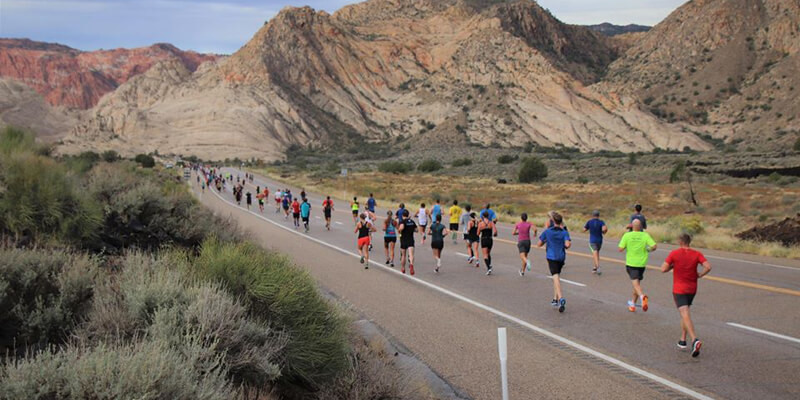
As the St. George Marathon advertised at the outset of the registration period in April, each registered participant has the option for a full refund or deferral to the 2021 St. George Marathon.
All registered participants have been contacted via email conveying their options. The next St. George Marathon is set for Oct. 2, 2021.
“We really tried to make this work out. We are sad that we won’t have a race this year, but we are beyond excited for the 2021 version of the St. George Marathon,” race operations director Nikelle Pledger said.
“We look forward to our great runners, effervescent volunteers and feeling of accomplishment that comes with the St. George Marathon.”
Login to leave a comment
St. George Marathon
Rated by Runner's World as one of the four "Marathons to Build a Vacation Around" in the World. Included in Runner`s World 10 Most Scenic and Fastest Marathons and Top 20 Marathons in the USA. It begins in the majestic Pine Valley mountains and descends nearly 2600 feet through scenic southwest Utah, to the beautiful Worthen Park. The St. George...
more...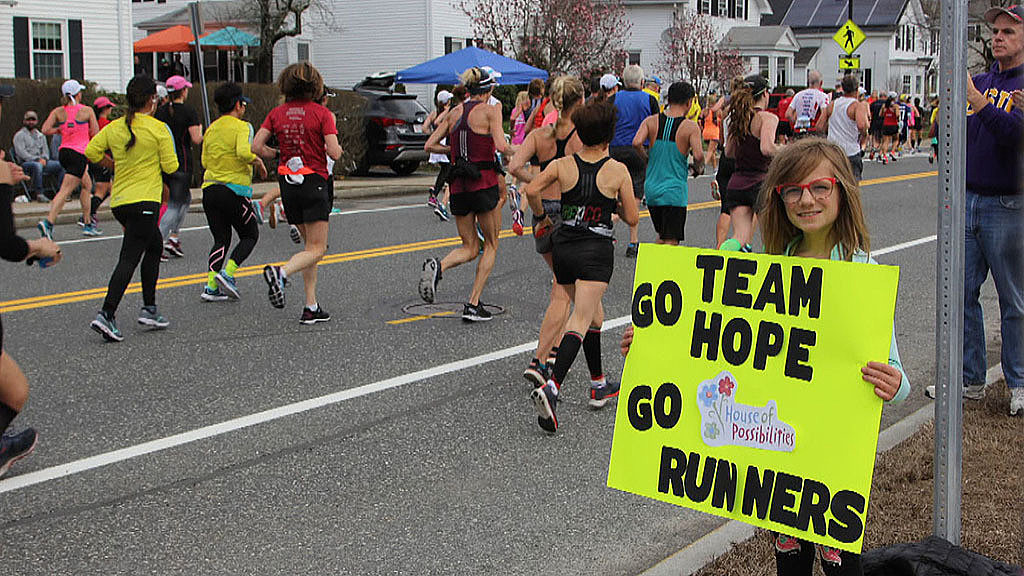
Boston Marathon charity runners were devastated by the cancellation of the iconic race due to the coronavirus pandemic
Boston Marathon charity runners say they deserve spot in future race after coronavirus cancellation.
Boston Marathon charity runners devastated by the cancellation of the iconic race due to the coronavirus pandemic say they are not getting a fair shake from race organizers, who will not give them a spot in a future race after raising upwards of $10,000 each this year.
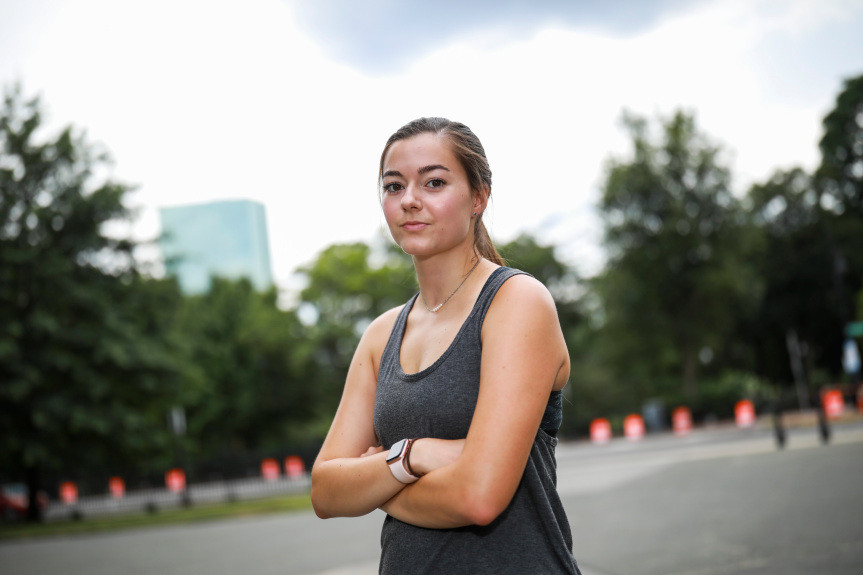
Many charity runners are sounding the alarm after they’ve seen how other major marathons have handled these unprecedented circumstances — allowing 2020 fundraising efforts to carry over to future years.
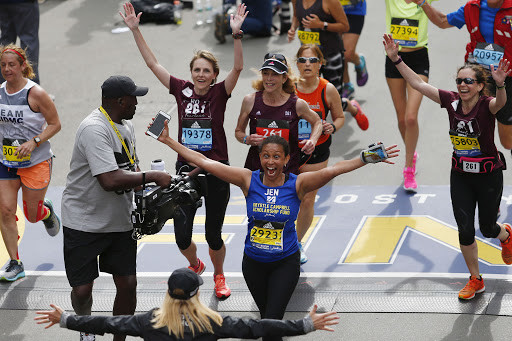
“All charity runners are asking is to be treated fairly,” said Tony Clish, who started an online petition for existing fundraising to count for 2021. “I’ve raised $15,000, and I don’t have a place in a future Boston Marathon. That feels wrong.”
Clish — who lives 30 miles outside of London, England — in his petition notes how the New York City Marathon has allowed charity runners to have a three-year period to defer their bibs, and they’re not obligated to do further fundraising to secure their place.
“Boston runners feel exploited,” said Clish, 58, who has been raising money for the American Red Cross, one of 171 charities involved in the 2020 marathon fundraising programs.
The Boston Athletic Association said they offered all 31,500 people registered for the 2020 marathon the same opportunity to request a full refund of their entry fee. Some charity runners have been offered a spot in the 2021 marathon, but they have to fundraise again.
“With the 2021 Boston Marathon being just nine short months away, and with the unknown nature of the pandemic, no participants were offered deferments for a future year,” the association wrote in a statement.
Some charities are acknowledging the challenge presented to 2020 runners and offering them a chance to run in 2021 with a lower fundraising minimum.
“The B.A.A. provides each nonprofit with its invitational entries,” the association said. “Each organization then directly manages its own application process, athlete selection, and fundraising minimums, deadlines, and requirements.”
At the American Red Cross of Massachusetts, for example, runners are required to raise 50% of the 2020 fundraising minimum to participate in next year’s marathon.
“The American Red Cross of Massachusetts intends to honor our commitment to ensure every interested runner on the 2020 team has a path forward to participation on Team Red Cross in either the 2021 or a future Boston Marathon event,” Kelly Isenor of the American Red Cross of Massachusetts said in a statement.
But even raising an additional $5,000 to secure a bib for next year is simply not feasible, said Emerson College senior Maddie Lynch, 21, who has already raised $10,000 for the American Red Cross.
“Raising that money has been so rewarding,” she said. “I reached out to every person close to me, and tapped every resource, really scraping for every dollar. An extra $5,000 just wouldn’t be possible.”
Given the uncertainty over the next year and the field limitations, it would make more sense for 2020 charity runners to receive a bib that’s valid for the next five years, said Michelle Mirzoian, 40, who lives in Chicago.
“The B.A.A owes me a spot in that race,” said Mirzoian, who has raised money for 261 Fearless. “To just tell us to go raise it all again next year, during a recession and pandemic, is just heartless.”
by Rick Sobey
Login to leave a comment
Boston Marathon
Among the nation’s oldest athletic clubs, the B.A.A. was established in 1887, and, in 1896, more than half of the U.S. Olympic Team at the first modern games was composed of B.A.A. club members. The Olympic Games provided the inspiration for the first Boston Marathon, which culminated the B.A.A. Games on April 19, 1897. John J. McDermott emerged from a...
more...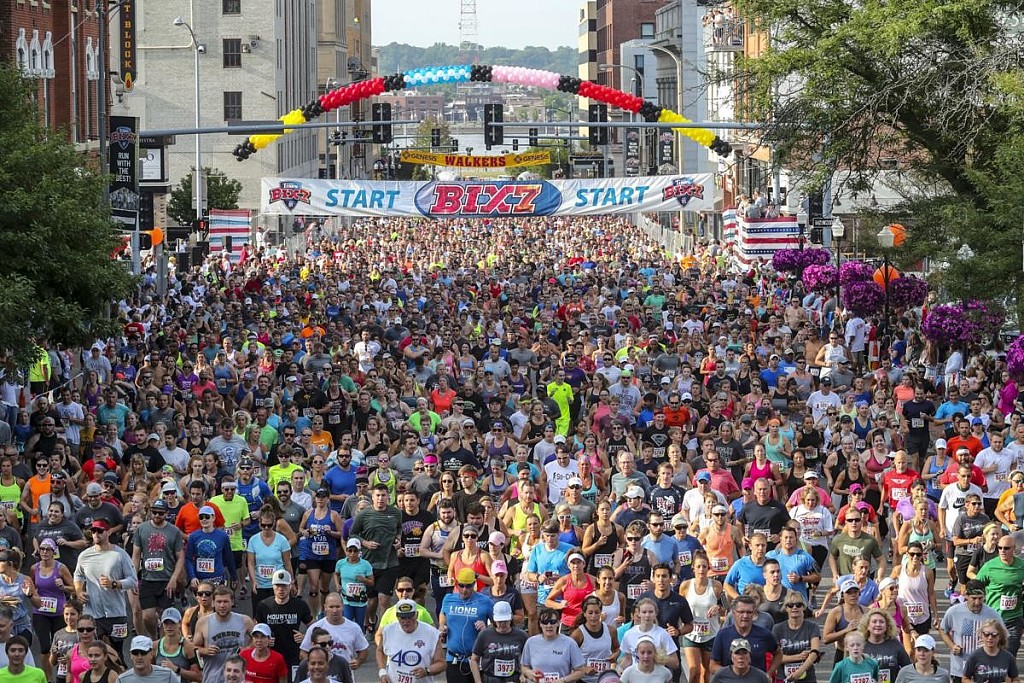
The Quad-City Times Bix 7 will be held virtually in July 2020
The Quad-City Times Bix 7, Prairie Farms Quick Bix, and Arconic Jr. Bix will be held virtually in July 2020, race leaders announced today – continuing the Bix tradition in a way that honors the caution necessary in this time of pandemic.
This unprecedented decision was made out of an abundance of caution, and in concert with the Bix 7 medical and safety support team, said Michelle Juehring, race director.
The greatest factor has been, and will continue to be, the safety of race participants, volunteers, spectators and the community as a whole. This year, the spirit of Bix will go beyond the city of Davenport, Iowa.
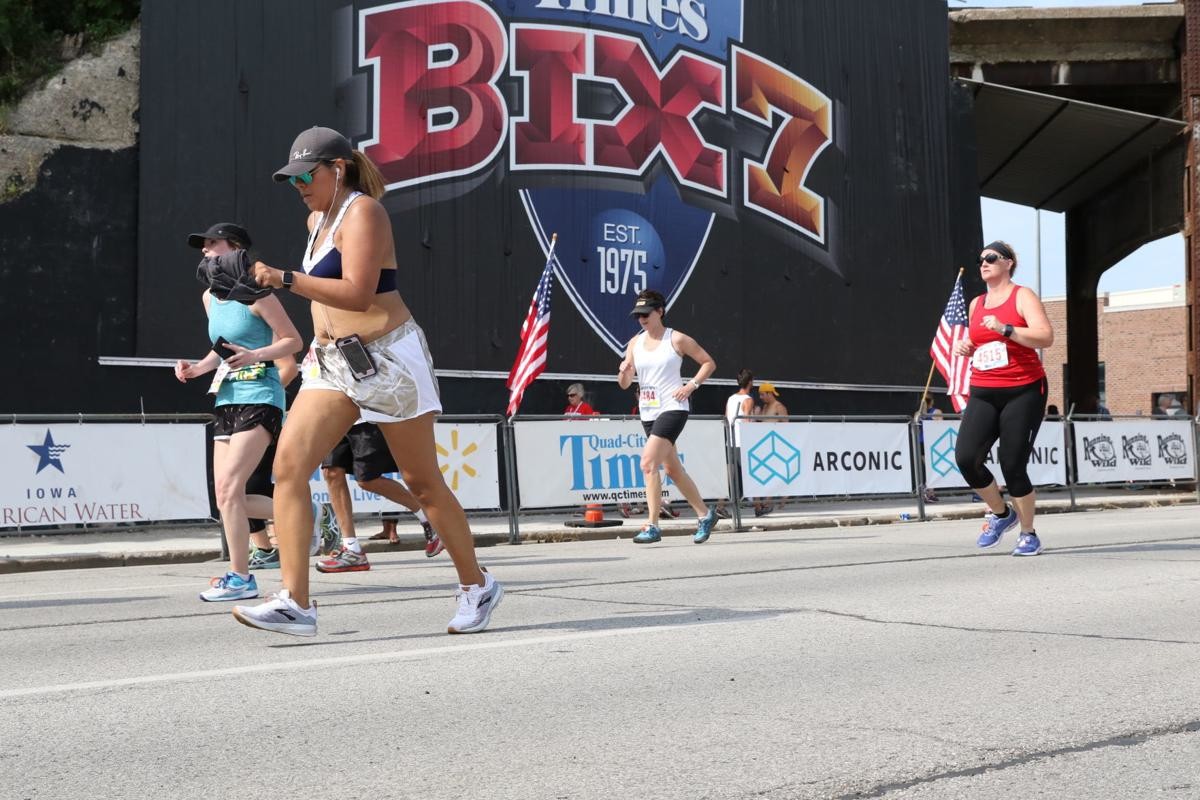
“Our team has been working diligently over the past months, exploring every option to make this year’s Quad-City Times Bix 7 a safe and successful event,” Juehring said. “For more than 45 years, the Quad-City Times Bix 7 was held on the last Saturday of July. This year, participants will have the whole month of July to Run With The Best.”
Participants can complete their race distance during the time frame of July 1-July 25, at any location: sidewalk, treadmill, trail, living room or track. Runners and walkers will submit their times online. A finisher’s certificate can be printed and shared to social media. An official race T-shirt will be mailed.
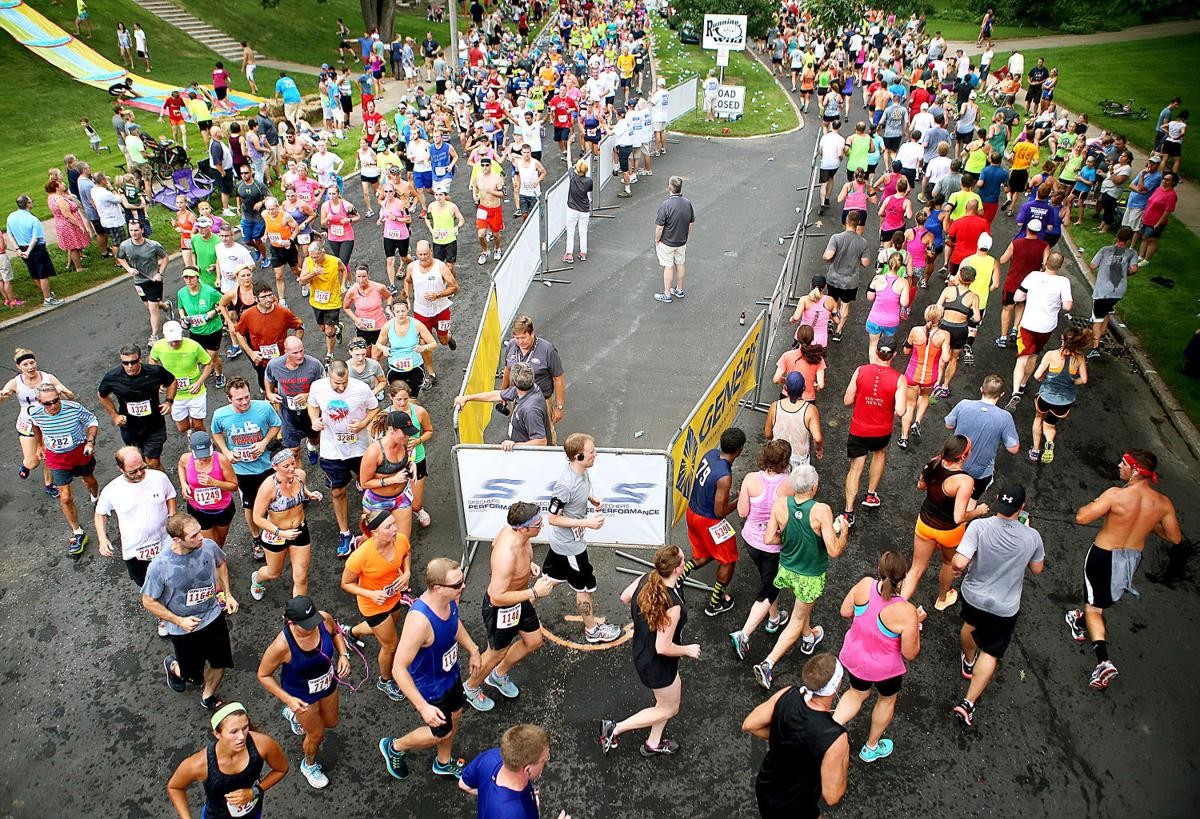
Registered runners for the Quad-City Times Bix 7, Praire Farms Quick Bix and Arconic Jr Bix will have two options. Transition into the 2020 Quad-City Times Bix 7 Virtual Race or transfer race entry into the 2021 race. An email will be sent to registered runners with detailed instructions.
“The 2020 Quad-City Times Bix 7, Prairie Farms Quick Bix, and Arconic Jr. Bix may not be the races we are accustomed to, but it will certainly be historic," Juehring said.
“Please, stay safe, look out for each other and throw out kindness like confetti. This year we will Run With The Best – together, apart.”
Register today at www.Bix7.com to Find Your Happy Pace!
Login to leave a comment
Bix 7 miler
This race attracts the greatest long distance runners in the world competing to win thousands of dollars in prize money. It is said to be the highest purse of any non-marathon race. Tremendous spectator support, entertainment and post party. Come and try to conquer this challenging course along with over 15,000 other participants, as you "Run With The Best." In...
more...
The Runner Statue-COVID-19 Mask Movement
Over the weekend, famous runner statues from Boston to Boulder donned a new look to support solidarity in slowing the coronavirus.
Runners are among the healthiest people. We prize and appreciate our good fortune, and want to encourage the same in others. We’d like everyone to be health—to follow federal guidelines, both for exercise and for disease prevention.
That was the thinking behind the Runner Statue-COVID-19 Mask movement. It began Saturday morning in Mystic, CT. By Sunday afternoon, it had spread to Cape Elizabeth, Maine, Hopkinton, Massachusetts, Central Park in New York City, Davenport, Iowa, and Boulder, Colorado.
In each location, a well-known runner statue is now wearing a low-tech protective face mask. The message: Do your part to prevent the spread of COVID-19.
The Boston Marathon course has three such mask-wearing statues. In Hopkinton, “The Starter” George V. Brown wears a mask immediately adjacent to the Boston Marathon start line. Nearby, the statue of Rick and Dick Hoyt shows off their colorful masks.
Near the Marathon’s 19-mile mark in Newton, the double statue of “Old John” Kelley and his younger self shows them both wearing bandanna masks. These were fashioned by Ray Charbonneau from recycled road race t-shirts.
Born on a Morning Run
The story starts, like many, with a morning run. On Saturday morning, my wife, Cristina, and I met my brother, Gary, for an easy 3-mile jog on the banks of the meandering Mystic River in Connecticut. We had barely begun when Gary said, “You know what might be cool—to put a COVID mask on the Kelley statue.”
Mystics’s statue of John J. Kelley, 1957 Boston Marathon winner, has been a favorite local landmark for about five years now. It has a sparkling location in a tiny parklet that overlooks Mystic Pizza, made famous by the 1988 Julia Roberts movie. Before our biggest annual road races, Kelley is often attired in that’s year’s t-shirt.
Gary’s idea seemed so perfect that Cristina and I rushed home post-run to complete the mask project. To be honest, I merely “supervised,” since I have no sewing or crafting skills. Fortunately, Cristina is one of those creative types. She was even smart enough to realize that a statue mask would have to be larger than the bright masks she had already turned out for family members. Most statues are literally larger than life.
We rushed back to downtown Mystic to give Kel’ his new facemask. It was made of green shamrock material to honor his Irish roots. No one asked what we were doing, though several families strolled by and gave us an enthusiastic “thumbs up.”
Back home a few minutes later, I was ready for a nap. Then it hit me. I knew of a half-dozen other runner statues, and I knew runners who lived in those communities. What if I could get all those statues to wear covid masks?
Idea Runs Across the Country
Honestly, it took little effort on my part. A handful of friends, both new and old, “ran” with the suggestion. In Central Park and Cape Elizabeth, police quickly descended on my mask-placing co-conspirators. Moments later, having heard an explanation for the masks, the very same officers volunteered to help.
My buddy in Cape Elizabeth needed it. Marty Clark was struggling on crutches to give Joan Benoit Samuelson a facelift. Now we’ll let you in on one of Joanie’s secrets: She has no ears. (Makes you more aerodynamic.) Or maybe she just has hair over her ears. In both Cape Elizabeth and Davenport, IA, where the Bix-7 has erected statues of Samuelson and Bill Rodgers, my friends had trouble keeping the mask in place.
But Bix race director Michelle Juehring persisted until she achieved success. “I love the solidarity of this project—the way it says we’re all in this together,” she observed.
Rodgers was a big fan from the get-go. “I’m so glad to be wearing a mask next to Joan Samuelson in Davenport,” he said. “If others see us, and then they wear a mask also, we’re going to beat this disease in America.
At Central Park’s reservoir, thronged with walkers and runners, a socially-distanced crowd gathered around the Fred Lebow statue. When the onlookers realized what was going on, they broke into applause. “I was stunned,” said Scott Lange, who once worked for Lebow at New York Road Runners.
In Boulder, Rich Castro got a mask onto Frank Shorter only a couple of hours after we began with Kelley in Connecticut. Castro had already worn a mask around town on his morning errands. “I hope more people help us spread the message,” he said. “There are too many nonbelievers around.”
Shorter concurred. “Any and all expressions of solidarity are a good thing,” he said.
In Hopkinton, where the Boston Marathon begins, Tim Kilduff found a talented high schooler, Emily Karp, to make masks and corralled a Hopkinton Board of Selectmen member (John Coutinho) and photographer (Bruce MacDonald) for the effort. Today, Monday April 6, this team plans to mask 1946 Boston winner Stylianos Kyriakides at the marathon’s 1-mile mark. (Look hereto see why this requires a special effort.)
“This has been fun,” Kilduff said. “It’s a good thing. I think it might really catch on.”
by Amby Burfoot (Podium Runner)
Login to leave a comment
Ryan Smith rules men's field, Anne Theisen pulls out women's win at Napa Valley Marathon
The 42nd Annual Kaiser Permanente Napa Valley Marathon and Half Marathon, boasting its largest field ever, did not disappoint on Sunday.
Far from it, in fact.
The field of 5,000 registered runners for the marathon, half marathon and 5K were treated to stellar views, mild weather and the type of hospitality and community feel that have attracted runners from all over the world.
“We kind of need to wait for it to flush out until the very end, but so far so good,” said second-year Race Director Michelle La Sala as the latter half of the marathon field began to come across the finish line at Vintage High School. “We have had lots of happy people finish today, lots of PRs (personal records). It was a really fast day and the weather was great. We’re definitely excited and want to see what we can do from here.”
While a community event in the truest sense, none of the top finishers were Napa Valley natives. Both the men and women’s winners of the full marathon were out-of-staters, but the top finishers in the second annual half marathon hailed from the Bay Area.
With a time of 2 hours, 27 minutes and 47 seconds, Ryan Smith, 40, of Boulder, Colorado won the full 26.2-mile race on the men’s side, while 47-year old Anne Theisen of Mazama, Washington, was the fastest woman to cross the line, doing so in 2:52:58.
Smith ran alone for the majority of his time on the course on Silverado Trail, which began in Calistoga and ended at Vintage High School in north Napa. He finished almost three minutes ahead of second-place finisher Nicholas Budzyn of Citrus Heights.
Smith said after the race that he actually prefers running alone, and that by looking at previous times he figured that might be a possibility again on Sunday.
“It’s a great marathon,” Smith said. “It’s kind of my jam. I like the low-key ones. It’s just something a bit more mellow and fun about it.”
Sporting a mullet, Budyzn, a collegiate hockey player-turned-endurance runner, had no complaints about his performance.
“I feel like it went great,” he said. “I ran smart but pushed when I wanted to. I was conservatively aggressive and was able to hold it together and finish strong.”
Theisen, meanwhile, had competition nipping at her heels. She came in with arms raised in victory just 20 seconds ahead of Catherine Medvene, 30, of New York. Unlike Smith, Theisen didn’t come in expecting a top finish but that reality showed itself relatively early on.
by Gus Morris
Login to leave a comment
Kaiser Napa Valley Marathon
As one of California's top tourist destinations, Napa Valley has been home to this race for decades. When it comes to scenic, it just doesn't get better than Napa in the spring. The narrow valley is covered in grape vines that stretch high up the hillsides on either side. The colors are crisp green, blue and yellow at that time...
more...
The Napa Valley Marathon 2020, has the largest field ever with over 5,000 entrants
the 42nd Annual Kaiser Permanente Napa Valley Marathon and Half Marathon, second-year Race Director Michelle La Sala has been busy putting the final touches on this year’s event.
“We prepare all year long to have this week to prepare for all of the many things that are not set in stone and change on a dime,” she said Monday morning.
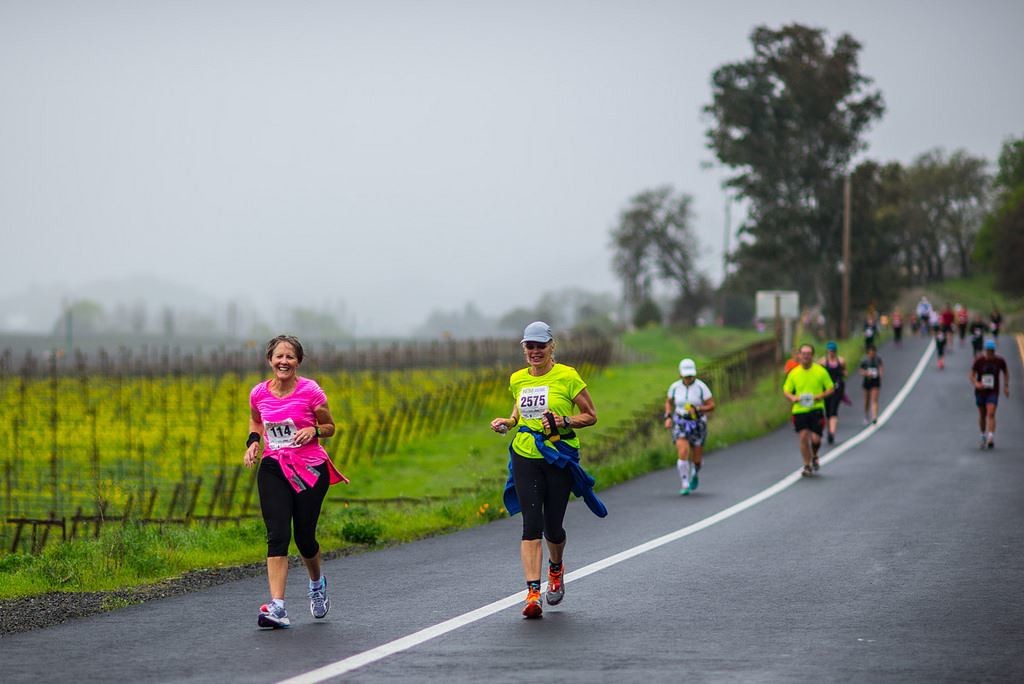
On that particular day, she was updating the event’s website and social media pages to spread the news that all the races had officially sold out. The final spots had been reserved late Sunday night.
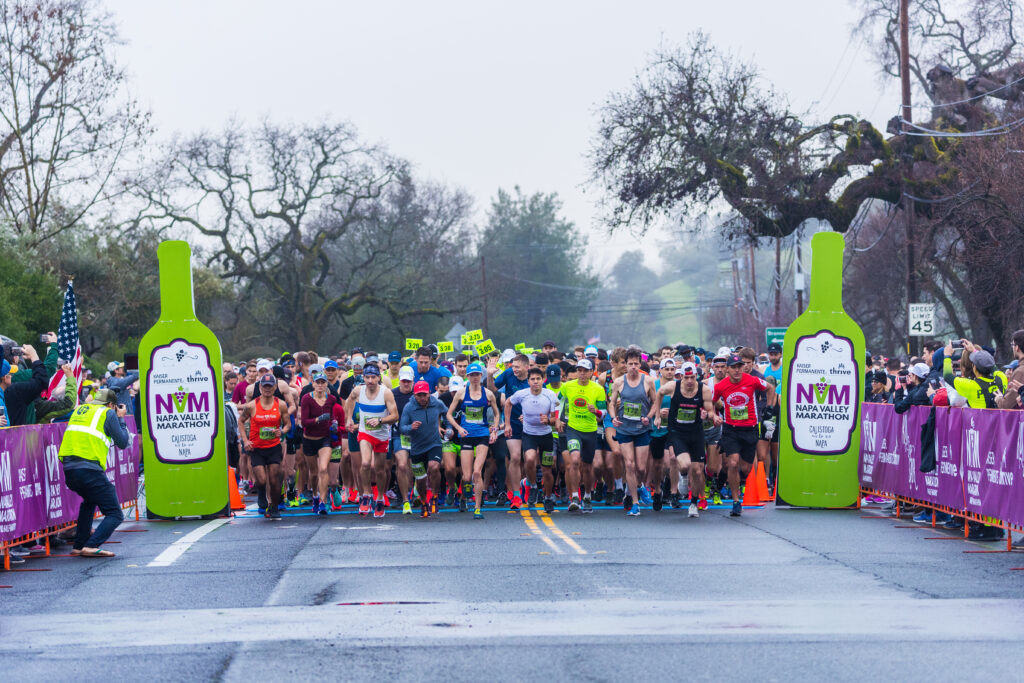
One of the main reasons for the down-to-the-wire sellout was because of the expanded field this year. After the success of the inaugural half marathon in 2019, the organization extended the caps on both that race and the full marathon for this year.
“We’ve taken just over 700 more people across the board in all three events this year for this sellout, so we’re super excited,” La Sala said. “It’s going to be a great year. The weather is looking good, but we are coming into this race as the largest Napa Valley Marathon and Half Marathon ever.”
In total, she said, more than 5,000 people will be participating in this year’s marathon, half marathon and 5K combined, all taking place this Sunday, March 1. Two thousand have registered for the full, 2,500 for the half, and 600 for the 5K.
Sunday will also be one of the coolest days temperature-wise all week. The high is forecast to be 59 and the low at 39, according to accuweather.com, which also says it will be “mostly cloudy and cool.” The forecast also says that the chance of rain will be 25 percent.
Twenty-one countries and 47 American states will be represented on Sunday. La Sala said there are “many” entrants from the Bay Area as well as from across the rest of California. She also added that they’ve had sign-ups from New Zealand, Brazil, Mexico, Canada, Costa Rica and the United Kingdom, to name a few.
“We’re excited to showcase the Napa Valley to them,” she said.
While this is the largest field ever seen for this event, La Sala did concede that the marathon won’t feature as many elite entrants as it has in the past. That’s because the U.S. Marathon Olympic Trials are being held in Atlanta, Georgia, this weekend, as well, and most of the country’s premier distance runners will be competing there.
by Gus Morris
Login to leave a comment
Kaiser Napa Valley Marathon
As one of California's top tourist destinations, Napa Valley has been home to this race for decades. When it comes to scenic, it just doesn't get better than Napa in the spring. The narrow valley is covered in grape vines that stretch high up the hillsides on either side. The colors are crisp green, blue and yellow at that time...
more...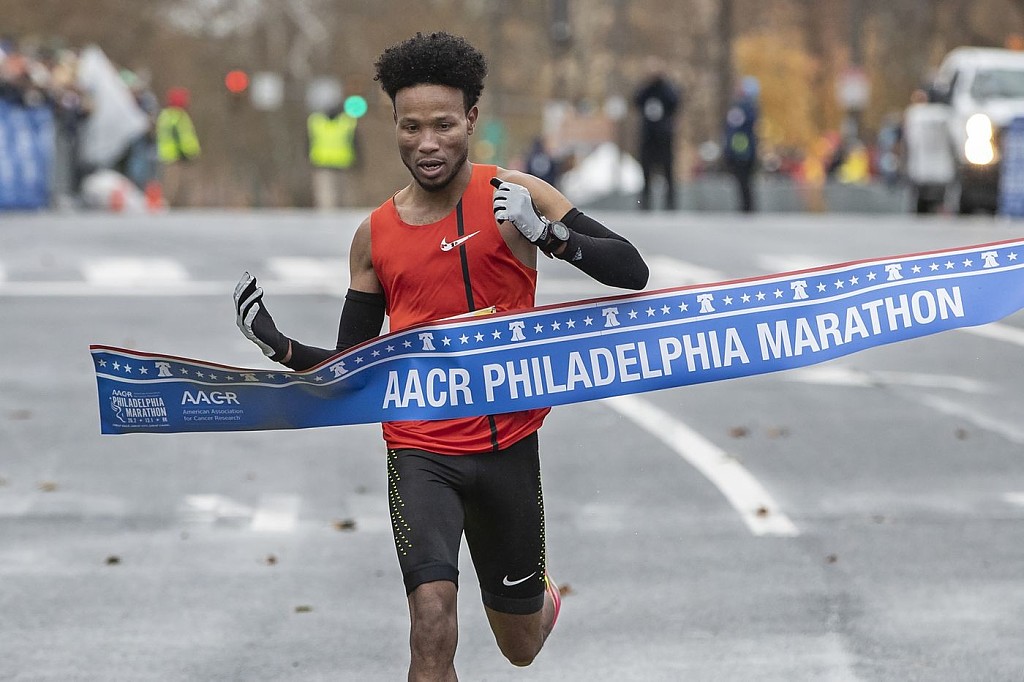
Diriba Yigezu wins men’s race; Feyne Gemeda breaks women’s record at Philadelphia Marathon
An expression of relief and achievement swept across the face of Diriba Degefa Yigezu as he crossed the finish line first in the Philadelphia Marathon on Sunday with a time of 2 hours, 16 minutes, 31 seconds.
Last year, the Ethiopian finished second in the Philadelphia Marathon’s 8K event. He was so disappointed he decided to run in the marathon the next day but finished third with a time that would have won the race the year before.
In 2019, there was cold wind and rain but no disappointment. Yigezu, fittingly wearing bib No. 3, was all alone on top.
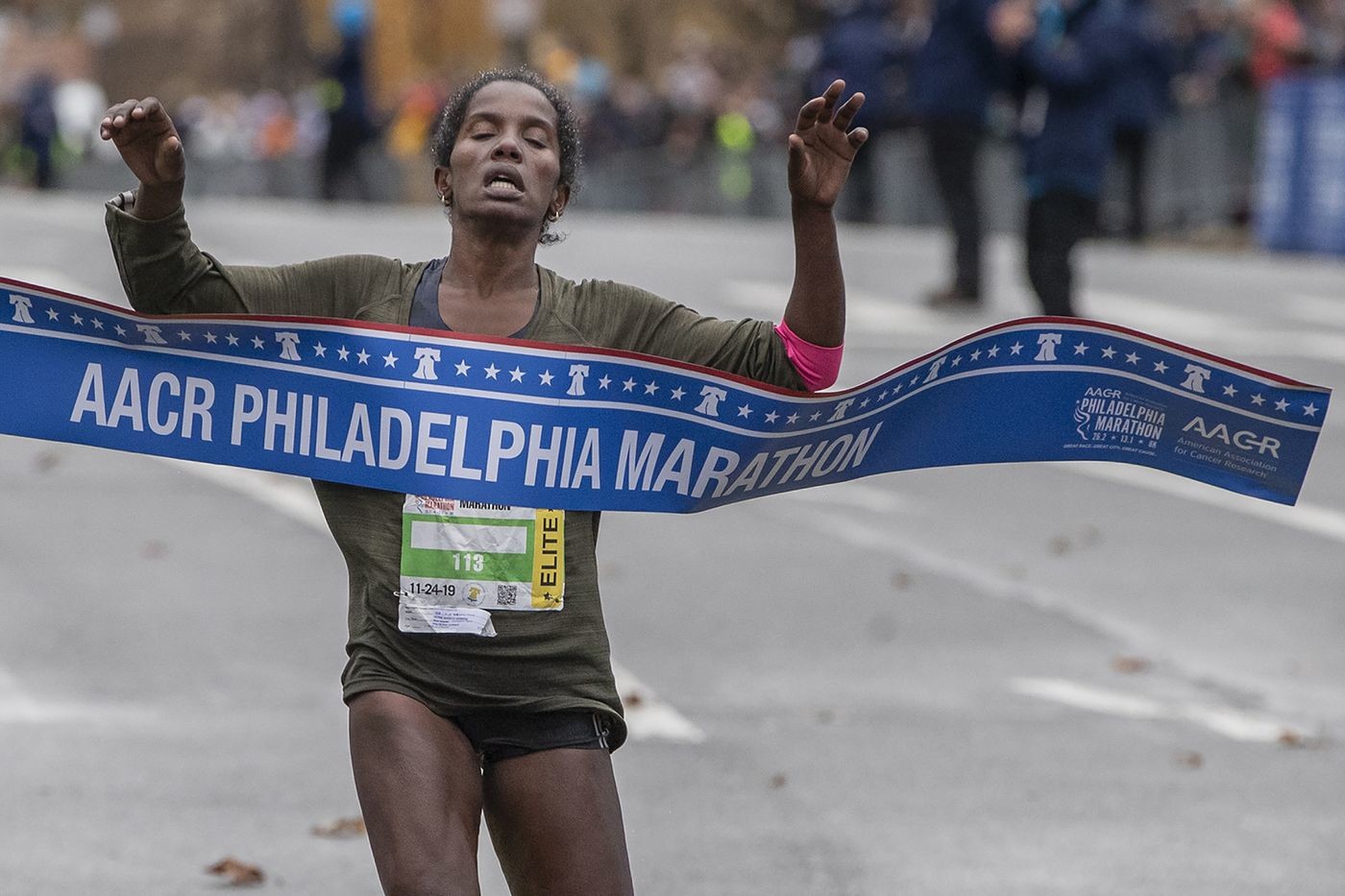
“It feels really good, I trained really hard,” said Yigezu, who took the lead just before the seventh mile and never lost it. “The rain made it very hard but I got through. ... It just feels so good.”
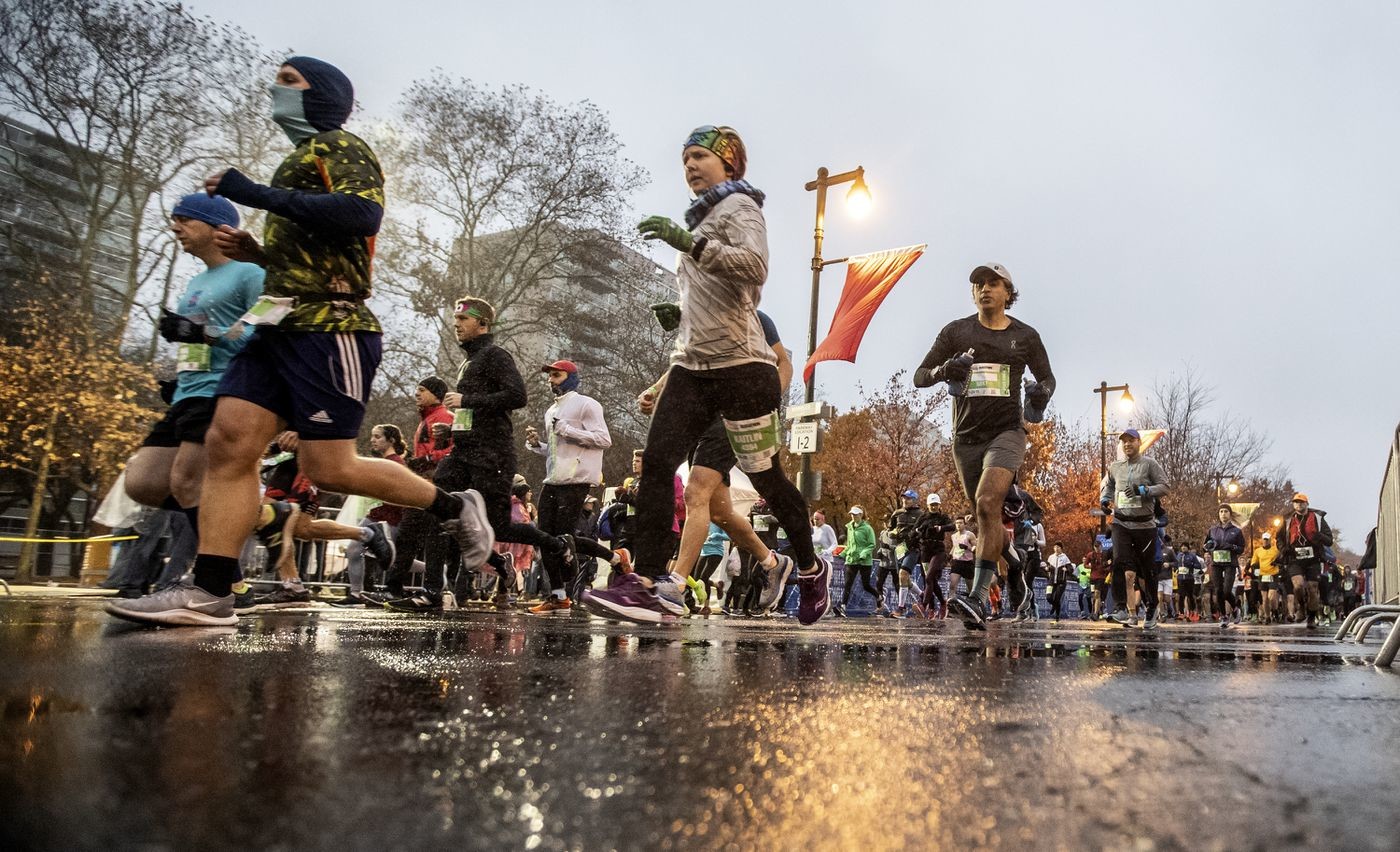
Minutes later, the bundled-up crowd on the Benjamin Franklin Parkway witnessed dramatic history as Feyne Gudeto Gemeda beat the female course record by 3 seconds with a time of 2:32:48.
Gemeda knew what was at stake and pushed hard through the last few hundred feet before falling to the ground just past the finish line. With the Ethiopian flag draped around her back, she was able to rise to her feet minutes later to celebrate her achievement.
“I’m very happy with the record,” Gemeda said through an interpreter. “I was training very hard. I was pushing to run under 2:32 but the rain and wind was very challenging so I’m happy with how I finished.”
Ethan Rissell was the first Philadelphian to cross the finish line, with a time of 2:35 even. The 30-year-old previously lived outside of Harrisburg and in Conshohocken but moved to Roxborough in January.
Rissell’s friend told him Saturday night that he had a good chance to finish first among Philadelphians. Through the last 10 miles of his third marathon, he said it was all he could think about.
“I was on the fence about doing a marathon this fall," Rissell said. “Doing the Philly Marathon was a big factor because now it feels like my hometown race. It’s really awesome.”
Lauren Kelly finished first among Philadelphia women with a time of 2:52:25. Michelle Wheeler took the wheelchair title with a time of 2:31:49. Phoenixville’s T. Lawrence Way, at 71, finished first among hand cyclers at 2:37:59.
The misty rain blowing through chilly early-morning winds didn’t deter thousands of spectators whose ponchos and bright jackets created a bright rainbow lining along the track. Hundreds of volunteers in neon vests trudged through the Benjamin Parkway mud and directed the eager supporters, unfazed by the conditions.
by Graham Foley
Login to leave a comment

Philadelphia Marathon
Whether you’re a seasoned marathoner or a first-timer, Philadelphia is the place for you. We’ve designed our course to be scenic, fan-friendly and, above all, great for running. It’s no wonder we're consistently listed among the top ten races in the country, recognized for our mostly flat terrain, ideal temperature and awesome atmosphere. Join us this fall for the best...
more...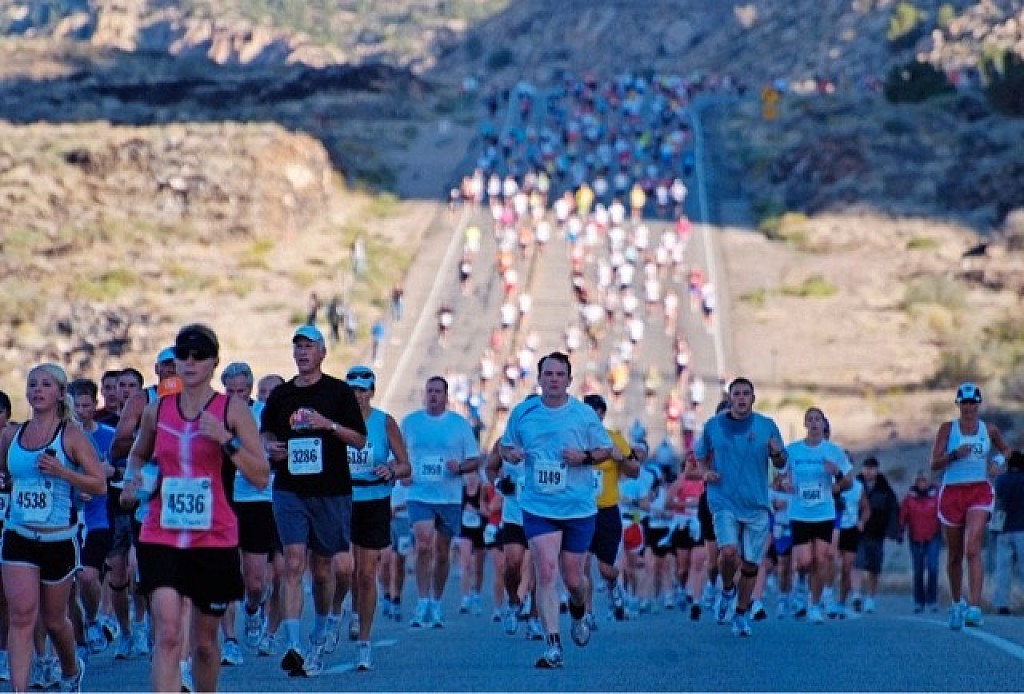
The annual St. George Marathon is set for its 43rd run Saturday morning
The annual St. George Marathon is set for its 43rd run Saturday morning, and entrants in the 2020 race will have the option to run a half-marathon.
According to a press release issued by the city of St. George, the marathon is the city’s signature event, having received accolades for a variety of superlatives, including the course itself and the enthusiasm of its more than 1,000 volunteers.
“The marathon would not be the event it has become without the efforts and support of our great community — from the participants, to our City staff and especially the volunteers,” Leisure Service Director Shane McAffee said. “The marathon is such a beautiful reflection of our scenery and the great people that reside here.”
The event officially begins Friday with the Marathon Expo at the Dixie Convention Center. It is free for the public to attend and where runners pick up their packets. The booths, free samples, photo opportunities and keynote speakers combine to kickstart to the weekend.
At Vernon Worthen Park, the “Marathon Fun Walk Run n’ Roll” events begin at 6 p.m. Friday. Children ages 3-12 or anyone with special needs are invited to participate. After the event, (200-meter or 1-mile distances), everyone is invited to celebrate with a party in the park that will go until 8 p.m.
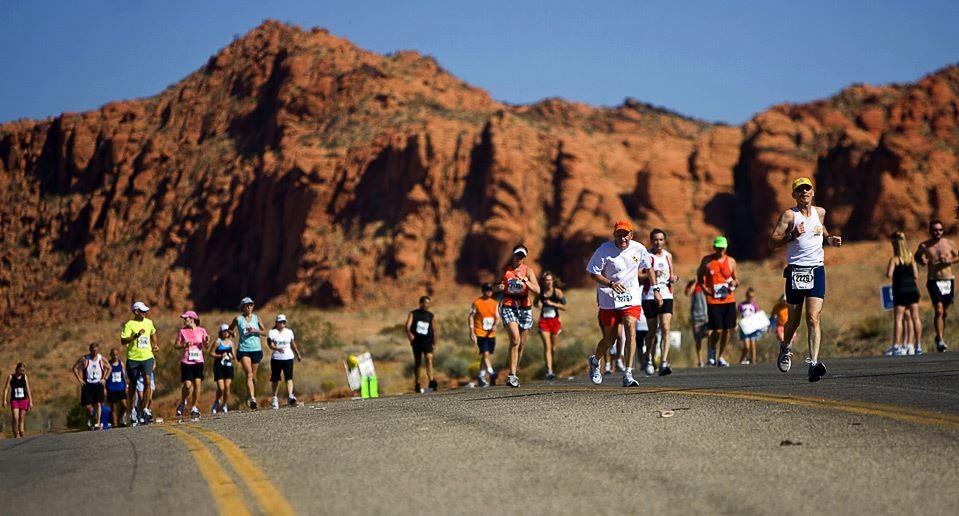
On the morning of the marathon, Mayor Jon Pike will lead hundreds of participants in the traditional Mayor’s Walk. The approximate 2-mile walk begins at Sandtown Park and ends at Vernon Worthen Park, where scones are provided by the Exchange Club of St. George.
“The whole day is just a wonderful tradition and a great citywide celebration,” Pike said.
Starting next year, there will be a half-marathon called the St. George 13.1. During this year’s Expo, interested runners can lock in the lowest rate for the 2020 St. George 13.1 — $60.
“We’ve noticed throughout the years that marathon runners receive a lot of support from their families. The option of a half marathon may encourage more participation within the family who are already in — or plan to be in — St. George that weekend,” said Michelle Graves, race director and deputy director of arts and events for the city of St. George. “You need not be a participant in this year’s marathon to sign up for the St. George 13.1 — but that $60 rate is only good for the day of the Expo.”
by
Login to leave a comment
St. George Marathon
Rated by Runner's World as one of the four "Marathons to Build a Vacation Around" in the World. Included in Runner`s World 10 Most Scenic and Fastest Marathons and Top 20 Marathons in the USA. It begins in the majestic Pine Valley mountains and descends nearly 2600 feet through scenic southwest Utah, to the beautiful Worthen Park. The St. George...
more...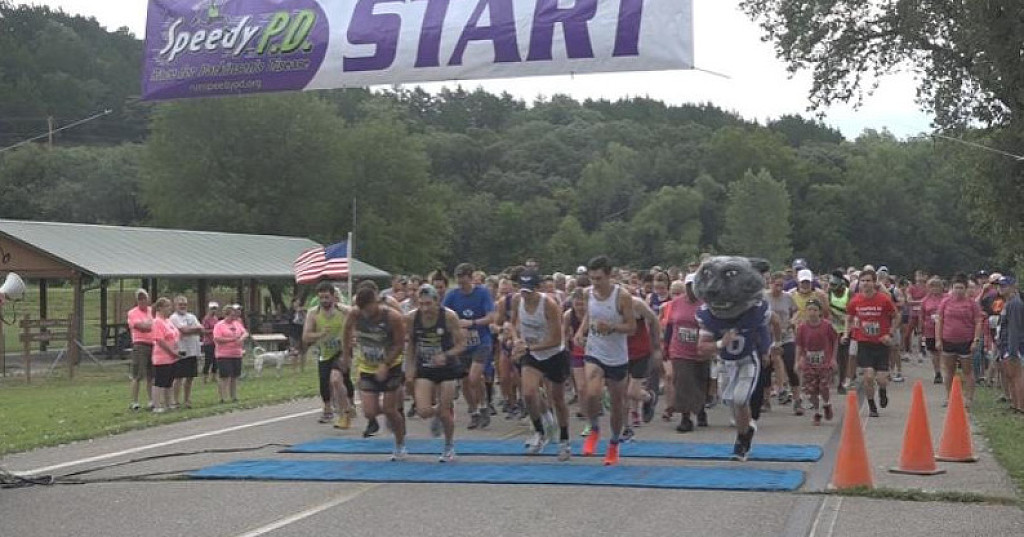
11th Annual Speedy PD Race for Parkinson's Disease
More than seven hundred people gathered at Tuttle Creek State Park in Manhattan Kansas Saturday for the 11th annual Speedy PD Race for Parkinson’s Disease.
More than $81,000 was raised by donations, sponsorships, and race fees.
The money raised goes to the Meadowlark Parkinson Fund to help support services for the community to improve the quality of life for all those affected by Parkinson’s disease.
With this fund, Meadowlark is able to continue and expand opportunities for education, outreach and much more.
Saturday’s event had more than 50 participants with Parkinson’s Disease and 10 of those completed the 5K event.
“So it’s just a true testament to what people can do when they are living with this disease, that they can..can do amazing things.” Meadowlark Hills Parkinson’s Program leader, Michelle Haub says.
Login to leave a comment
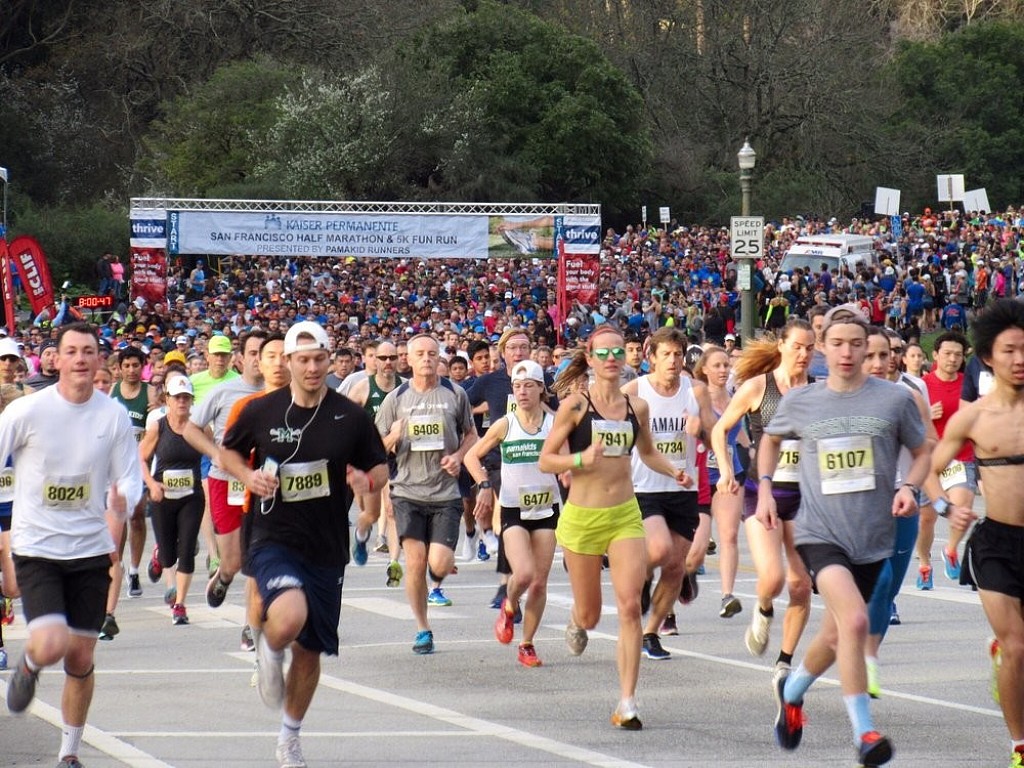
Registration for the 37th Kaiser Permanente San Francisco Half Marathon, 10K & 5K is now open
The 37th annual event will take place on Sunday, February 2, 2020, showcasing Golden Gate Park and the Pacific Ocean while treating finishers to a lively post-race expo. A fixture on the Bay Area running calendar, participants in all three race distances will test themselves on scenic, net-downhill courses, offering runners of all abilities the opportunity to achieve a personal best. Each year, the race donates $100,000 to four designated local charities.
Owned by the non-profit Pamakid Runners, the 2020 event will feature a one-time prize purse and course record bonus in the half marathon for elite athletes tuning up for the U.S. Marathon Trials in Atlanta, GA. With over 30 Northern California athletes already qualified for the Marathon Trials, the race will offer an expanded elite program designed to attract a deep field of athletes seeking a fitness benchmark one month out from Atlanta.
The prize purse will be tiered based on the number of elites entered, with the total purse doubling from $3,000 to $6,000 if more than twenty qualified elites are entered. In addition, a $500 bonus will be offered to the first runner breaking the existing course records (Men: 1:04:08; Women: 1:15:07).
“We are thrilled to offer an opportunity for our regional elite athletes to use the Kaiser Permanente San Francisco Half Marathon as a target race prior to the U.S. Marathon Trials,” said Michelle La Sala of Blistering Pace Race Management, producer of the event.
“By offering a prize purse and course record bonus, our region’s best athletes will be able to test their fitness without having to travel. We are looking forward to a deep and exciting race on February 2nd!”
"The Pamakids are excited to present the 37th Kaiser Permanente San Francisco Half Marathon along with our long-time partner, Kaiser Permanente," added Pamakid Runners president Andy Chan. "Our race is positioned four weeks before the Marathon Trials, which makes it an ideal tune-up race.
It's also a great opportunity for the Bay Area running community to meet and support the elite runners who could be representing the U.S. in the 2020 Olympics."
Login to leave a comment

Kaiser Permanente San Francisco Half
The Kaiser Permanente San Francisco Half Marathon® is a runners’ favorite for its scenery and value. A fast and certified course through San Francisco’s scenic Golden Gate Park, the race has been selected as Road Race of the Year by the Road Runners Club of America several times. The 5K is a fast, downhill 3.1 mile course certified by USA...
more...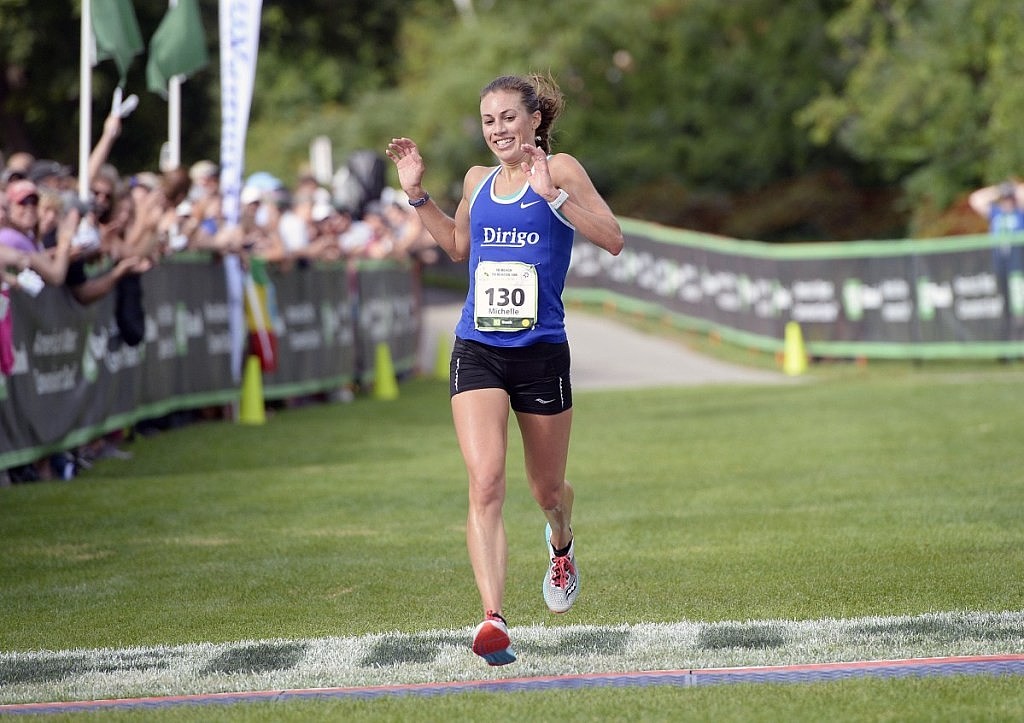
Michelle Lilienthal, a three-time Maine women's champion of the Beach to Beacon 10K, will be seven months pregnant when she toes the line in Cape Elizabeth on Aug. 3
Side by side, Michelle Lilienthal and Gretchen Speed lope around the 400-meter track at Fitzpatrick Stadium.
On this muggy weekday morning, sweat rolls off the faces of the two Portland women. They complete the lap in 90 seconds, which translates to a 6-minute mile pace, then rest before running another.
Lilienthal will do eight such laps, interspersed between 200-meter recovery jogs and two trips to a portable toilet on the far side of the stadium.
“I can’t keep up with her when she’s not pregnant,” Speed says with a laugh. “When I was pregnant with my kids, I (ran) a lot, but I never did (track) workouts. It’s impressive to see her keep it up and be really fit through her pregnancy.”
Lilienthal is a three-time Maine women’s champion of the TD Beach to Beacon 10K road race. She set the Maine course record of 33 minutes, 39 seconds in her first victory, in 2014, and won again in 2016 and 2018.
She will not win in 2019. On race day next month, she will be seventh months pregnant.
That hasn’t stopped her from running or training, but she does promise to dial back her usual intensity on race day – Saturday, Aug. 3.
“I’m trying to not push too hard,” Lilienthal, 37, said as she walked around the track after completing her weekly workout. “I’m so used to pushing myself until I could vomit that I’m trying to rein it in and not make myself feel that way.”
Lilienthal has been a serious runner since her teens, a seven-time Iowa high school state champion who went on to earn all-Big Ten distinction at the University of Wisconsin. She shifted to marathons while in graduate school in Philadelphia, got a sponsorship deal with Saucony that lasted nearly 10 years, and has competed in three U.S. Olympic marathon trials, with a fourth scheduled for late February in Atlanta.
While on the road racing circuit, she met another three-time Beach to Beacon champion, Sheri Piers of Falmouth. It was at the 2013 Beach to Beacon that Piers introduced Lilienthal to Marc Halverson, a former Falmouth High and University of Maine runner. They started dating and, with a nudge from a brutally cold Minnesota winter, Lilienthal moved to Maine in 2014.
They got married in the spring of 2018, and over the winter learned that Lilienthal was pregnant. Since then, she has run three races, the Robert Burns 10K in Westbrook in late January, the Falmouth 4-Miler in April and the Patriot 5K in Gray in May. Each time, she was the top female finisher.
She considered another 5K in June, but Halverson helped dissuade her of that notion. Halverson, 30, said he experienced some initial trepidation about Lilienthal continuing her running regimen.
Login to leave a comment
TD Beach to Beacon 10K
Joan Benoit Samuelson, a native of Cape Elizabeth, Maine, won the first-ever women's Marathon at the 1984 Olympics in Los Angeles and is founder and chair of the TD Bank Beach to Beacon 10K. "A long time dream of mine has been realized" says Samuelson. "I've always wanted to create a race that brings runners to some of my most...
more...