

Running News Daily
Running News Daily is edited by Bob Anderson and team. Send your news items to bob@mybestruns.com Advertising opportunities available.
Index to Daily Posts · Sign Up For Updates · Run The World Feed
Articles tagged #Calgary
Today's Running News



He Ran Every Street In Calgary: Six Years, 10,359 Streets And 9,252 Kilometres
Most runners measure their progress in kilometres, personal bests and finish lines. Rick Richard chose a very different way to measure his.

For six years, the Calgary resident pursued a challenge that sounds almost impossible until you see the map: run every single street within his city.
This week, he finally completed it.

Richard covered all 10,359 streets in Calgary, accumulating an astonishing 9,252 kilometres along the way. That is roughly the distance between Calgary and Tokyo—except Richard did not travel it in one long journey. He covered it gradually, street by street, neighbourhood by neighbourhood, one section of the city at a time.
What began as an ambitious running project eventually became a six-year commitment requiring patience, planning and an extraordinary willingness to run roads that most people would never think twice about.
The challenge became increasingly difficult as the map filled in. Early on, each run could cover large sections of previously unexplored streets. But as Richard progressed, the easy kilometres disappeared. What remained were isolated roads, short lanes and residential cul-de-sacs that could be several kilometres from anything else he still needed to complete.
Sometimes, finishing the project meant travelling across Calgary simply to run a handful of streets that had been missed during earlier outings.
That is part of what makes the achievement so remarkable. There was no conventional finish line waiting at the end, no race number and no crowd lining the final stretch. The goal was simply to leave no street behind.
Richard documented the journey through a public map, allowing people to watch Calgary gradually transform from a blank canvas into a network of completed routes. Month after month, the coloured lines spread across neighbourhoods as another section of the city was conquered.
The project belongs to a growing community of runners known as city streeters—people who challenge themselves to run every road within a defined area. For some, it is about exploration. For others, it is a mapping obsession. For Richard, it became a six-year test of consistency and determination.
And then came the final street.
After 10,359 streets and 9,252 kilometres, the map was finally complete.
Calgary had no more roads left for Richard to run.
Six years after starting the project, every street was covered—and an extraordinary chapter of running history in the city had come to an end.
Sometimes, the biggest running achievements are not measured by how fast you finish.
Sometimes, they are measured by how much of the world you are willing to run.
by Erick Cheruiyot for My Best Runs.
Login to leave a comment
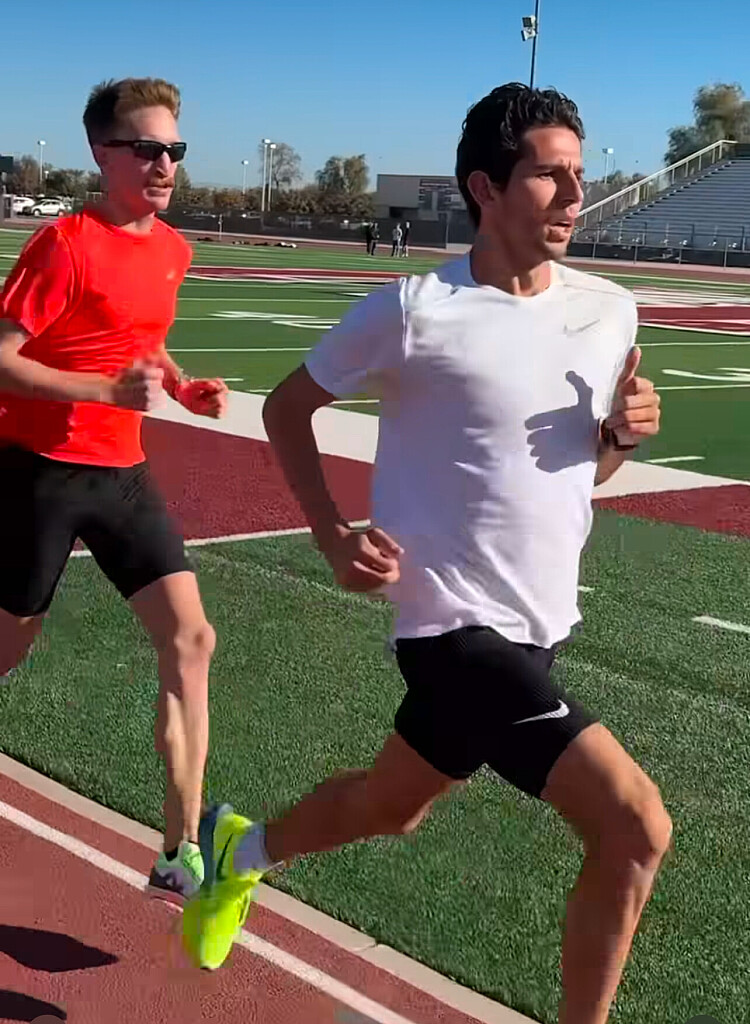
Grant Fisher Clocks a sub Four-Minute Mile to Conclude a 7K Workout
Grant Fisher, one of America's top distance runners, continues to showcase his exceptional fitness and race-readiness. In a recent Track workout Grant closed a demanding 7-kilometer workout with a stunning sub four-minute mile, demonstrating his world-class endurance and speed. The session, held in Chandler, Arizona, was designed to simulate race conditions, ensuring that Fisher is primed for his upcoming season opener.
A Closer Look at the Workout
The workout was structured to test Fisher’s ability to maintain a high level of performance deep into a training session. His coach, Mike Scannell, closely monitored his effort, emphasizing the of controlled fatigue management.
The workout breakdown:
First Segment: A 2,000-meter interval, completed in 5:08.
Second Segment: Four 800-meter repeats, split in 2:06, 2:09, 2:08, and 2:08.
Final Segment: A 1,600-meter effort, where Fisher clocked an astonishing sub 4:00 mile to finish the session.
Between intervals, Fisher took controlled recovery breaks, with coach Scannell monitoring his blood lactate levels to ensure he remained within an optimal training range. Professional runner Sam Gilman assisted in pacing certain portions of the session, helping maintain consistency and push Fisher to his best effort.
A Career Defined by Breaking Barriers
Fisher’s ability to produce elite performances at the highest level is no surprise. Born on April 22, 1997, in Calgary, Alberta, and raised in Grand Blanc, Michigan, Fisher made history as a high schooler when he became the seventh U.S. prep athlete to break the four-minute mile barrier. He achieved this milestone in 2015 at the Festival of Miles in St. Louis, Missouri, clocking a 3:59.38.
After high school, Fisher attended Stanford University, where he further cemented his reputation as a distance-running star. Under coach Chris Miltenberg, he won the 2017 NCAA 5,000m title and earned 12 All-American honors. Fisher’s consistency and tactical intelligence on the track made him one of the most accomplished distance runners in Stanford history.
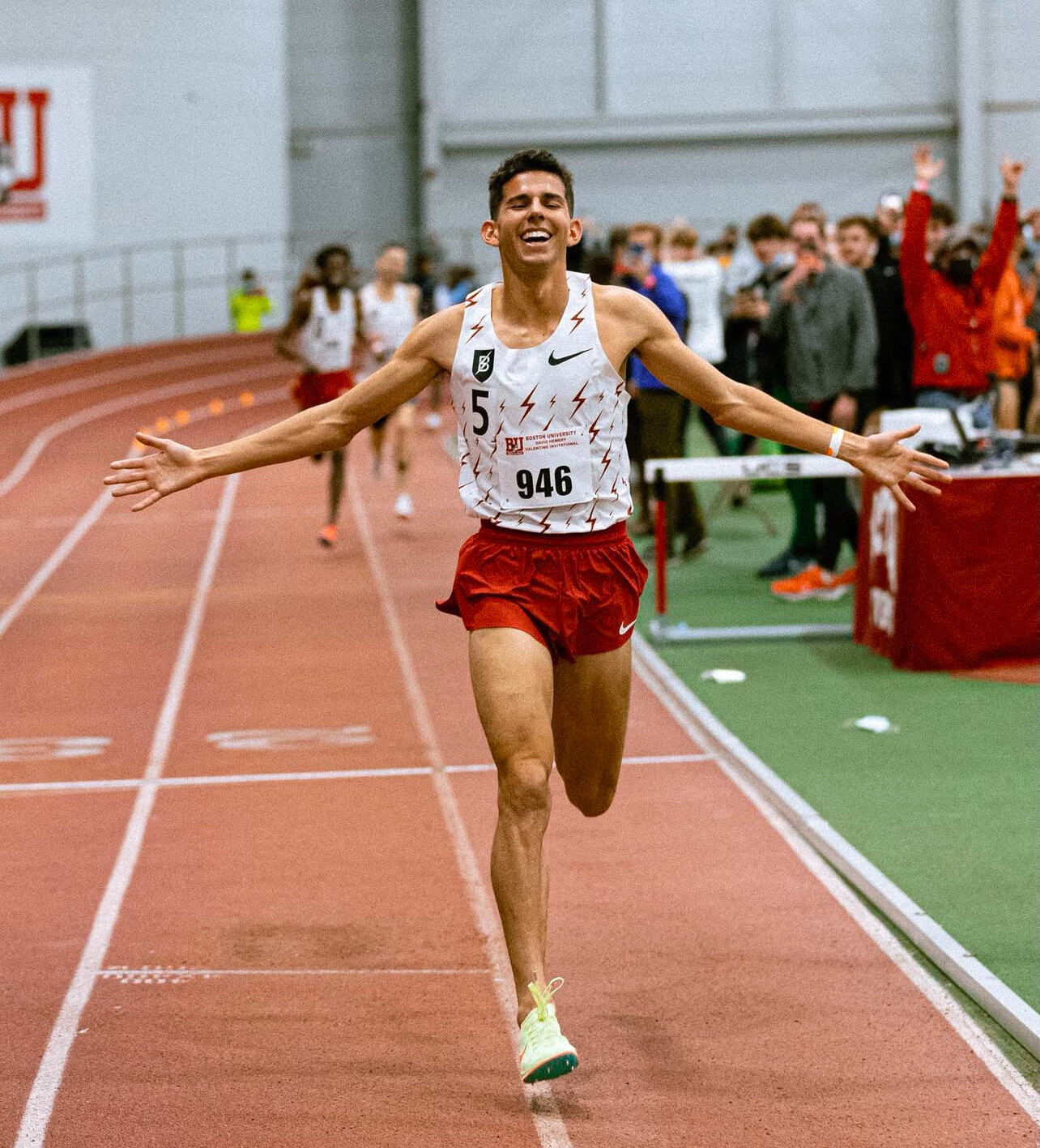
Turning professional in 2019, Fisher joined the Bowerman Track Club (BTC), training under coach Jerry Schumacher. The move propelled his career to new heights, as he set multiple American records, including:
3,000m: 7:25.47 (2023)
Two-mile: 8:03.62 (2023)
5,000m: 12:46.96 (2022)
10,000m: 26:33.84 (2022)
His performances placed him among the best distance runners in the world. At the Tokyo 2020 Olympics (held in 2021), he finished fifth in the 10,000m and ninth in the 5,000m, proving he could compete at the sport’s highest level.
Paris 2024 and Beyond
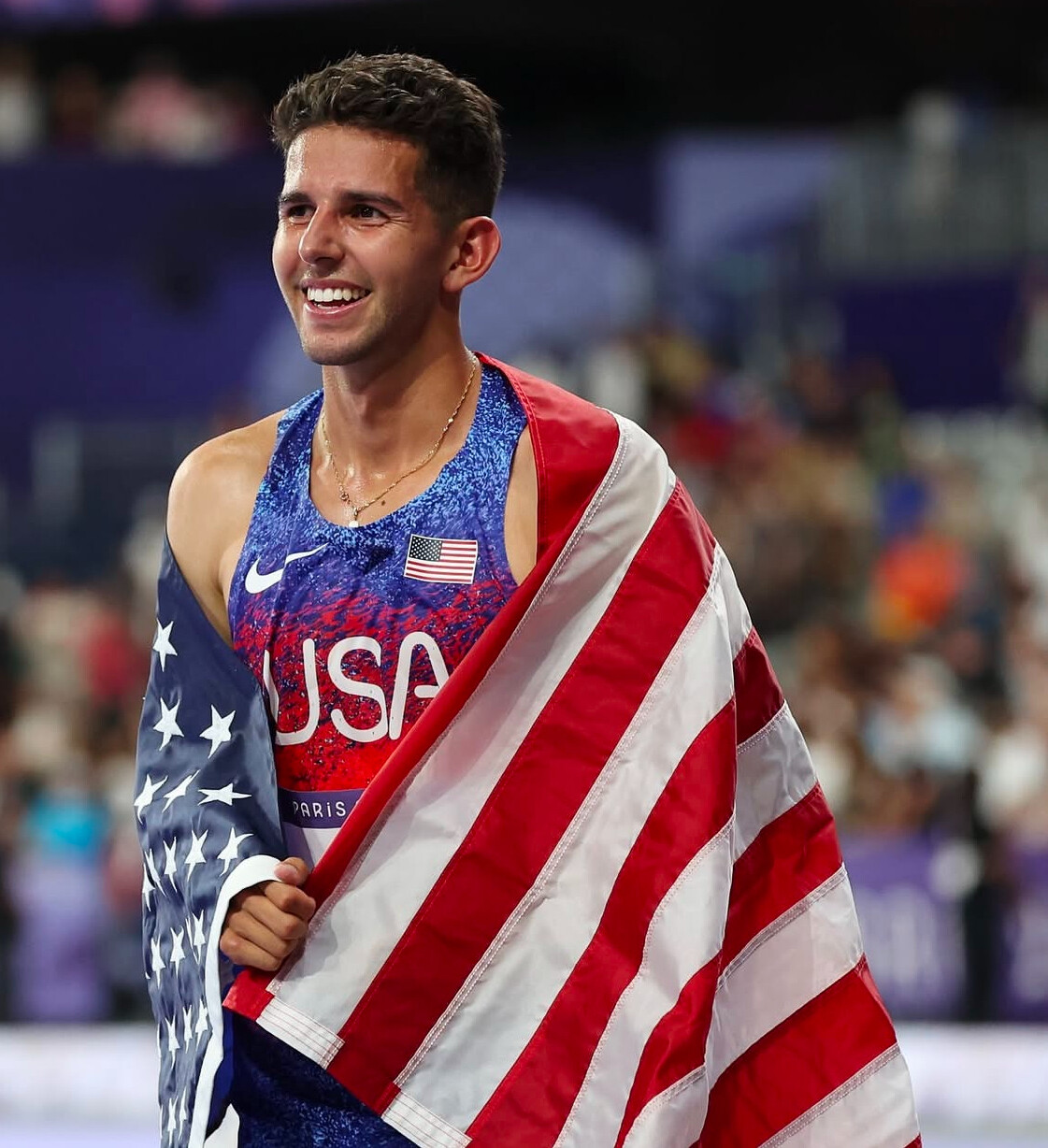
Fisher’s steady progression led to historic achievements at the 2024 Paris Olympics, where he became the first American to medal in both the 5,000m and 10,000m in the same Games, earning two bronze medals. This feat solidified his status as one of America’s greatest-ever distance runners.
As he prepares for the 2025 season, Fisher is expected to begin his campaign with a 1,500-meter race at the New Balance Indoor Grand Prix in Boston before focusing on the 3,000m and 5,000m during the indoor season. His long-term goal remains clear: to position himself as a gold medal contender at the 2028 Los Angeles Olympics.
Fisher’s ability to run a sub four-minute mile at the end of an intense workout speaks volumes about his fitness level and training discipline. As he continues to sharpen his form, fans can expect even greater performances from him in the coming months.
by Boris Baron
Login to leave a comment
Morning people make faster marathoners, study shows
If you’re the type of person who typically jumps out of bed at the crack of dawn, thrilled to greet the new day, and who feels most productive in the morning, you may be more likely to achieve your marathon time goal than your night owl training partner, according to a new study published in the Journal of Sleep Research.
Of course, there are many factors that influence running performance. But there is less data around “circadian preferences” (i.e., whether you identify as a morning person or an evening person) and “sleep inertia” (how hard you find it to transition to being awake, after you get out of bed) as they relate to running performance.
The study was conducted among 936 participants at the 2016 London Marathon. Co-author Jesse D. Cook (a postdoctoral fellow at the University of Wisconsin-Madison and host of the Sleep Research Society Podcast) told Psypost.org marathons are good settings for this type of research, since they typically start early in the morning. (Canadian 1976 track Olympian and professor of kinesiology at the University of Calgary Penny Werthner is also one of the study’s co-authors.)
The data was surprisingly clear: people who identify as morning persons run a whopping 13.9 minutes faster, on average, than people who identify as evening persons, and the more strongly the identification, the greater the difference. Moreover, those who find it takes them more than 30 minutes to transition to being fully alert after waking also ran slower than those who felt alert more quickly, though this connection was less significant than the morning vs. evening distinction. (This correlation makes intuitive sense–if you’re having trouble waking up, you might find that running a marathon more or less immediately upon waking is quite challenging, and would result in slower race times than if you ran it later in the day, when you feel more alert.)
The study also took into account participants’ personal and sleep habits and caffeine consumption, as well as age and sex, to account for these other variables; however, it’s possible that circadian preferences and sleep inertia are also associated with other factors, such as psychological characteristics and how much people train. (Cook emphasized that the study does not show direct causation.)
Cook implied that, while trying to change your body’s circadian rhythms may be not be practical, being aware of your body clock and the possible connection between circadian rhythms and performance could help you perform better. For example, scheduling training runs around the same time as the race start will help you get used to early start times.
by Anne Francis
Login to leave a comment
A cold, hard look at extreme winter races
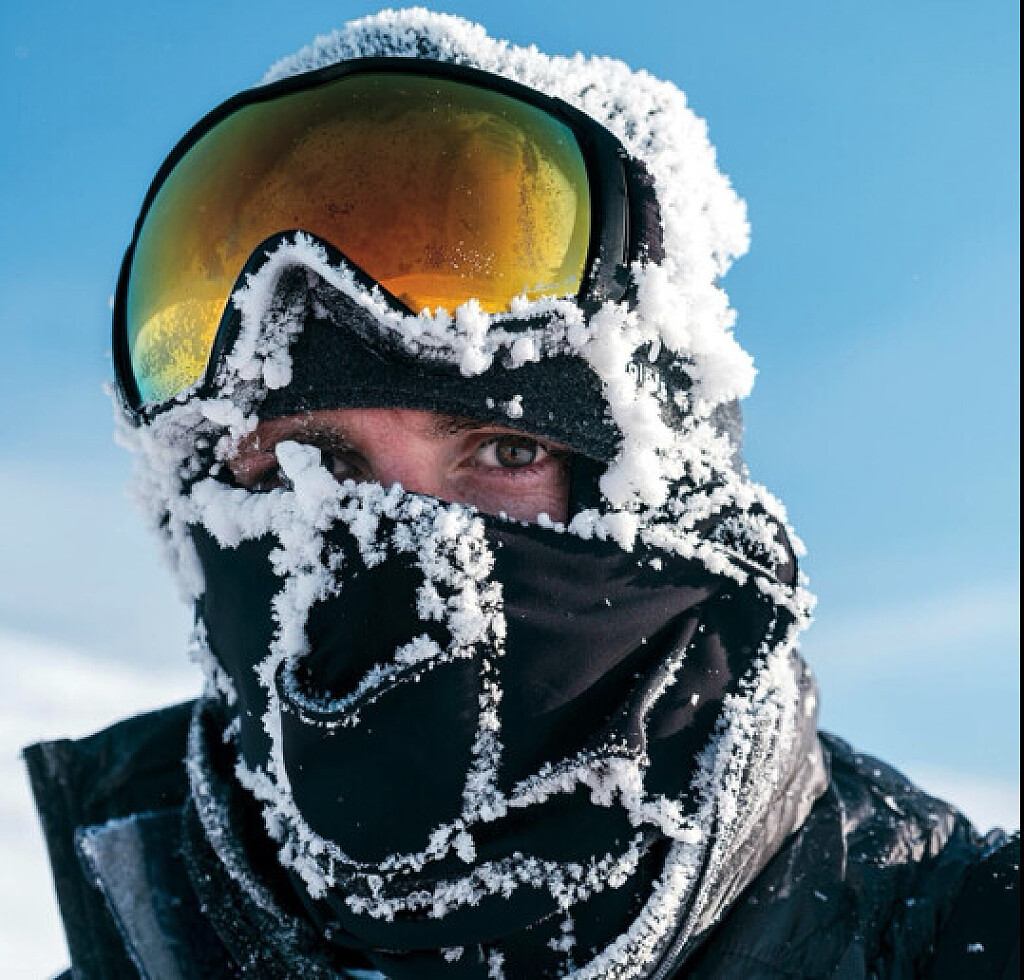
Winter is when races careen from the cosy, coddling courses of autumn into a forbidding tundra that both terrifies and exhilarates. It’s in this frozen landscape that the most extreme races are forged—competitions that take things to unsettlingly unconventional extremes, like sporting the scariest name or boasting the largest field of hungover revellers.
From a race season positively steeped in superlatives, here’s a sampling of extreme cold-weather races that boast the most—for reasons silly and chillingly serious—and strategies for making the most of them.

THE WILDEST
Polar Bear Marathon
Nov. 23, 2024
Churchill, Man.
Distances: 21.1 km, 42.2 km, 50 km
albertmartens.com
An event where vehicles tail runners in case a polar bear wanders onto the course truly deserves the title of winter’s wildest race. Beginning from Churchill, Man., the course takes participants along the coast of Hudson Bay for a challenge that balances breathtaking beauty with physical and mental rigour.
“A few times there have been polar bears right on the road where they run,” says race director Albert Martens. “However, we do provide safety for the runners, escorting them with a vehicle. Often the Canadian Rangers are out and assist us, as well.”
As challenging as this event is, the joys of the race aren’t to be outdone by the hardships. “One of the highlights of the run is the beautiful sunrise at the start overlooking Hudson Bay, and the post-marathon banquet, where the runners get to know each other better,” says Martens. He adds that one of the “swag bag” items runners receive is a polar bear carved out of soapstone. Although signups for this year’s event were set to close Oct. 1, it’s a race worth keeping in mind
THE BOOZIEST
Santa Will Run for Beer 5K-ish
Dec. 7, 2024
Bethlehem, Pa.
Distance: “5K-ish”
runsignup.com/Race/PA/Bethlehem/SantaWillRunforBeer5Kish
When it comes to combining Santa and suds, this race really raises the bar. Suit up in your best Kris Kringle costume and simultaneously work up and quench your thirst as you race between more than a dozen drinking establishments. The order you hit the bars in is up to you, but you’ve got three hours to stop at them all before raising a celebratory glass with your fellow runners at Molly’s Irish Grille and Sports Pub.
Speed counts—the first 24 runners at each location get a free beer—but so does presentation, so don’t skimp on style when putting together your Santa look. “Don’t go easy on your costume,” suggests Rochelle Romeo Kane, managing director of Run Lehigh Valley, which organizes the race. She also recommends mapping out your “beer strategy” beforehand: “Are you more of a ‘run fast and hit the close bars’ or ‘go for the early long-haul’ kind of runner? Either way, come with your plan and know it will change!” Runners must be at least 21, but it’s a race that
THE JOLLIEST
Santa Shuffle Fun Run & Elf Walk
Dec. 7, 2024
British Columbia: Abbotsford, Chilliwack, Langley
Alberta: Edmonton, Calgary
Saskatchewan: Regina
Manitoba: Winnipeg
Ontario: Hamilton, Kemptville, Kingston, Ottawa, Sudbury, Thunder Bay, Toronto, Whitby
Quebec: Montreal
Prince Edward Island: Charlottetown
Nova Scotia: Halifax
Newfoundland and Labrador: St. John’s
Additional virtual events
Distances: 1 km, 5 km
santashuffle.ca
What started in 1990 as a fundraiser by Running Room members to support Salvation Army programs in Edmonton has become a countrywide celebration of seasonal giving, as legions of speedy Santas are unleashed from start lines coast to coast. Santa Shuffle races, which continue to benefit the Salvation Army, boast the most Santas in Canada’s winter-running scene, but also pull in plenty of reindeer, elves and assorted festive fashionistas. Clever costuming pays at the events, with prizes for the best individual, group and pet get-ups (see the event website for details).
THE PRICIEST
Antarctic Ice Marathon
Dec. 13, 2024
Union Glacier, Antarctica
Distances: 21.1 km, 42.2 km
icemarathon.com
With a registration fee approaching $30,000, the Antarctic Ice Marathon isn’t a race you’ll enter on a whim, but the experience it offers is as rich as its price tag, and it’s sure to earn a spot on many runners’ bucket lists. You’ll be whisked by jet from Punta Arenas, Chile, to Union Glacier in the Antarctica interior, within a few hundred kilometres of the South Pole. Although aid stations, snowmobile support and medical personnel will be available, completing either the event’s marathon or half-marathon will take plenty of self-motivation; as race organizers point out, there won’t be any crowds to cheer you on—not even penguins venture this far south. Runners should also note this race can be as unpredictable as it is unforgettable. “The Antarctic Ice Marathon presents a unique challenge with its extreme cold and unpredictable weather,” says race director Becca Pizzi. “We advise runners to prepare for low temperatures and be ready for sudden shifts in conditions. Proper layering and mental resilience are key to tackling this unforgettable race.”
THE HEAD-POUNDINGEST
The 18th Hangover Hike
Jan. 1, 2025
Dewsbury, England
Distances: 15 km, 27 km, 34 km
ldwa.org.uk/TheIrregulars/W/2112/hangover-hike.html
An event that gives a refreshingly honest nod to the realities of New Year’s revelry, the Hangover Hike in northern England encourages hikers and runners to get an early and (mostly) sober start to 2025. The New Year’s Day run/hike around the rural roadways, hills and hiking trails of the town of Dewsbury (about 15 km south of Leeds) will ease participants into the challenge ahead with tea and toast at registration. The event’s three hikes—15 km with just over 300 m of ascent, 27 km with about 520 m of climb and 34 km with almost 550 m of ascent—start and end at The Leggers Inn. The Irregulars group of the Long Distance Walkers Association, which organizes the event, puts it succinctly: “A brisk walk or run, a breath of fresh air, a wee dram en route and a hair of the dog at The Leggers. What better way to start the new year?”
THE LOOPIEST
Frozen Falcon
Jan. 12, 2025
Falcon Beach, Man.
Distance: As far as you can go in eight hours
ontheedgerunning.com/home/frozenfalcon
Looped courses can help take the sting out of daunting distances by breaking down the kilometres into bite-sized chunks. The Frozen Falcon’s 6.5-km course at Falcon Trails Resort in southeastern Manitoba is the perfect length to keep your run manageable without it becoming monotonous, but be aware of the course’s unique challenges: “This race is run on groomed trails, however, after a few laps the snow can become a little like sugary mashed potatoes,” cautions race director Joel Toews. “Get working on that lower-leg strength! Also, you’re going to head into the yurt each loop, where there is food and a wood stove. It’s pretty cosy, so don’t get sucked into the comfort. Get back out there as soon as possible.”
THE SCARIEST-SOUNDING
Hypothermic Half Marathon
Vancouver: Jan. 19, 2025
Edmonton: Feb. 2, 2025
(A planned second Edmonton event was not confirmed before publication.)
Kelowna, B.C.: Feb. 9, 2025
Halifax: Feb. 16, 2025
Calgary: Feb. 23, 2025
Winnipeg: Feb. 23, 2025
Additional virtual events
Distances: 10 km, 21.1 km
hypothermichalf.com
The Hypothermic Half Marathon is no walk in the park, but this intimidating-sounding series of winter races has a bark that’s worse than its frostbite. That’s due in large part to the warmth and hospitality shown by volunteers and supporters during and after the races. There are other ways to stay toasty at the Hypo Half, however—at last year’s event in Edmonton, local runner David Eliuk sported 120 T-shirts in a bid to set a new world record for the most T-shirts run in a half-marathon. He achieved the feat, but was bested by American Dan Harvey—who donned 127 shirts at an event a few months later—before Eliuk’s record could be ratified.
THE LONGEST
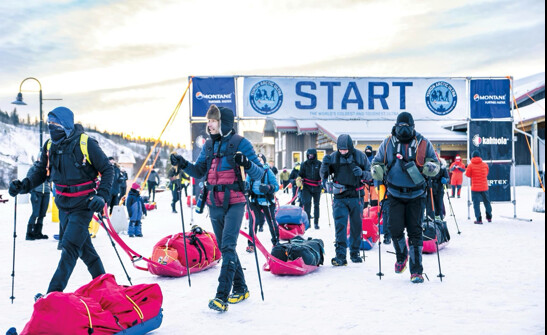
Montane Yukon Arctic Ultra
Feb. 2–14, 2025
Teslin, Yukon
Distances: 340 km, 640 km
arcticultra.de/home
This race could be a contender for the most extreme in several categories—winds whip up with unfathomable force while temperatures can plummet to -40 C—but its length is what really makes it a standout. Starting from the village of Teslin and finishing in the town of Faro, the ultra’s shorter race totals 340 km, while the main event (including a 150-km route out and back from Faro) adds up to an eye-watering 640 km. Competitors can tackle these either on foot or skis or by mountain bike.
“Many races with these kinds of distances are organized in stages,” says race director Robert Pollhammer. “In our race, athletes are on the go day and night, sometimes up to an average of 20 hours per day.” He cautions that sleep deprivation can be dangerous in such an extreme environment and emphasizes the importance of having a strong race strategy.” While cautioning that the race isn’t for everyone, he says, “If you like the cold, the vastness of nature and being in a race with a family-like atmosphere, the
THE LARGEST (LATITUDINALLY)
6633 Arctic Ultra
Feb. 27 to March 8, 2025
Eagle Plains, Yukon
Distances: 120 miles (193 km), 380 miles (612 km)
6633ultra.com
Canada’s most northerly winter foot race, the 6633 Arctic Ultra (named for the latitude of the Arctic Circle in the Yukon—66 degrees, 33 minutes north) tests the ambitious and adventurous in a gruelling trek across two Canadian territories. Beginning in Eagle Plains, Yukon, runners who tough it out will cross the Arctic Circle to finish lines in the Northwest Territories hamlets of Fort McPherson (193 km) and Tuktoyaktuk (612 km).
Blistering wind and cold make the 6633 one of the most physically punishing races on Earth—but the competition’s mental challenge is greater still, according to race co-director Stuart Thornhill. “The mental fatigue experienced and resilience required cannot be underestimated,” Thornhill says. “Our athletes experience long periods of isolation in the dark and extreme cold, leading to extreme hallucinations.” Sticking to script, he says, is key to success at the 6633: “Those who make it through have a plan which they follow, eating when they need to, sleeping when they need to. They don’t get caught up racing someone else and breaking their plan. I have seen people who have been at the back of the pack for most of the race and have come in the top three finishers, because they stuck to what worked best for them.”
THE SPICIEST
Chilly Half Marathon
March 2, 2025
Burlington, Ont.
Distance: 21.1 km
raceroster.com/events/2025/84601/2025-chilly-half-marathon
The Chilly Half Marathon is a cold-weather race that throws some serious heat. While most of the events on this list aren’t really built for racking up personal bests, the course through downtown Burlington and along Lake Ontario’s western shore is perfect for burning rubber. “This will be the 29th year of the fun, fast, flat race that welcomes 4,000 runners to downtown Burlington,” says Kelly Arnott, co-CEO and co-owner of race organizer VR Pro Inc.
An event that marks the start of the spring road-running season in eastern Canada, the Chilly Half is just as popular for its post-race revelry as for its scenic, zippy course. Spectators and runners can shake off the March chill by coming together for a bowl of piping hot chili. “If it is a chilly day, we will warm you up with a bowl of hot Stagg Chili following the great race,” says Arnott.
THE MOST ENDURING
Around the Bay Road Race
March 30, 2025
Hamilton
Distances: 5 km, 10 km, 15 km, 30 km, additional virtual events
bayrace.com
Launched in 1894—three years before the Boston Marathon—Hamilton’s storied Around the Bay Road Race is North America’s oldest long-distance running event. More than a testing ground for generations of runners, Around the Bay is itself something of an endurance feat. Despite some challenging obstacles (in recent years organizers have had to switch up the course due to renovation and construction projects in the city), the 30K run around Hamilton Harbour remains a cultural focal point for the local community and favourite destination race for runners worldwide. Race-day weather has been known to swing wildly from warm and sunny one year to blizzard-like the next, so the best way to prepare is to be consistent in training, suggests race director Anna Lewis. “Keep to your training schedule even on bad weather days, because you never know what the weather will be like on race day,” she says, adding that wisely managing effort is also key to negotiating tougher terrain near the end of the race. “Don’t go out too fast, so
FROZEN FEATS
Here are some extreme winter exploits that have earned a place in the Guinness Book of World Records.
Coldest marathon
By its name alone, the Siberian Ice Marathon seems a convincing contender for the world’s coldest marathon—and it’s not just hype. Temperatures as low as -39 C were recorded at the 2001 race in Omsk, Russia. While it’s the coldest marathon recognized by Guinness, organizers of the Pole of Cold Marathon in Oymyakon (also in Siberia) reported the mercury crashing to -55 C at its most recent event on Jan. 12, 2024.
Fastest half-marathon barefoot on ice/snow
Not content to set this record by running a bone-chilling half-marathon barefoot in 1:50:42, Josef (Joska) Šálek added an extra dash of shivery showmanship by running the distance in nothing but shorts. The Czechian set the record on a course in his home country on Feb. 18, 2024.
Fastest marathon by a female dressed as Santa
From snowmen to ice-cream cones, there’s no end to the cold- and winter-centric costumes runners will don to break records, but most of these attempts are made in spring or fall. Hand it to British runner
WINTER RACE TIPS FOR FIRST-TIMERS
Don’t dress just for the start line
As tempting as it is to bundle up while waiting for your race to start, things can heat up pretty quickly once you’re on the move, and overheating can sap your performance and enjoyment of the race. If temperatures are dry and above freezing, dressing as though it’s 10 C warmer than it really is will keep your engine running cool as you hit your stride. On colder, windier days, dress in layers that can easily be discarded or passed off to a supporter on the sidelines.
Show up fully charged
The energy demands on your body when racing in colder temperatures aren’t significantly different from those of any other time of year, so there’s no need for drastic changes to your pre-race fuelling. The same can’t be said of your running tech, however. Plummeting temperatures can be a big drain on the battery capacity of your watch, headlamp and heart rate monitor, even during shorter races. Make sure the devices you rely on are fully charged; don’t assume the GPS that saw you to the end of a summer 5K on a 15 per cent
Login to leave a comment
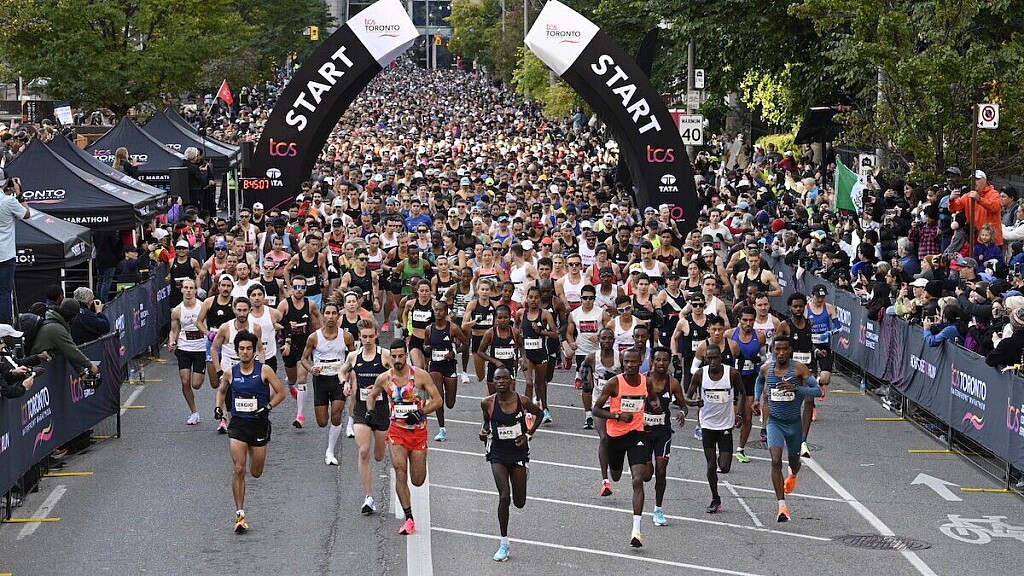
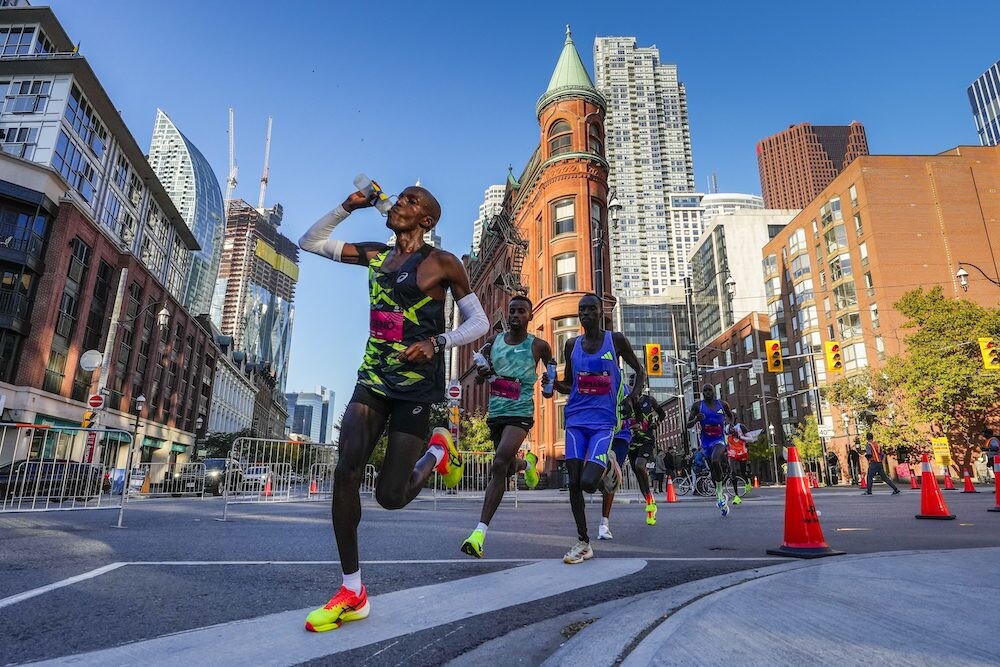
TCS Toronto Waterfront Marathon elite field announced for 2024
We are just 10 days away from Canada’s largest race weekend: the 2024 TCS Toronto Waterfront Marathon. Since 2015, this event has also served as the annual Canadian Marathon Championships. This year’s race will feature everything from former champions and national record holders to rising stars looking to make their mark on the 42.2 km distance.
Here’s your cheat sheet for the men’s and women’s elite fields in Toronto.
Canadian men’s field
Andrew Alexander (Toronto): The 25-year-old former NCAA standout won the 2023 Toronto Waterfront Half-Marathon in 62:44. He is coached by Matt Hughes, the Canadian record holder in the men’s 3,000m steeplechase, and former Canadian marathoner Dave Reid. Alexander is aiming for a sub-2:10 finish at his hometown marathon.
Thomas Broatch (Vancouver): The reigning Canadian marathon champion. He was the first Canadian across the line last year in his marathon debut (2:16:25). Four months later, Broatch took another shot at the distance, lowering his personal best by more than four minutes at the 2024 Houston Marathon (2:11:54).
Justin Kent (Surrey, B.C.): This will be Kent’s first time competing at the Toronto Waterfront Marathon. He ran his PB of 2:13:07 at the 2023 Prague Marathon, earning him a spot on Team Canada’s men’s marathon team for the 2023 World Athletics Championships.
Maxime Leboeuf (Gatineau, Que.): Leboeuf finished third at the 2022 Montreal Marathon in 2:24:25. He’s a former graduate of Queen’s University XC program and an avid cross-country skier.
Kieran McDonald (Halifax): McDonald will be making his marathon debut in Toronto. He ran his half-marathon best of 65:45 at the 2024 Houston Half Marathon in January.
Alex Neuffer (Stratford, P.E.I.): Neuffer ran his PB of 2:21:34 at the 2022 Boston Marathon, finishing as one of the top Canadians. He’s a graduate of St. Francis Xavier University’s XC program and a training partner of Kieran McDonald (see above).
Thomas Nobbs (Vancouver): The 25-year-old will be running his second-career marathon in Toronto. He made his debut in Philadelphia last fall, running 2:19:13. Nobbs finished just off the podium at the 2024 Canadian 10K Championships, in 29:31. He also finished second at the Canadian Half Marathon Championships in Winnipeg in June.
Sergio Ráez Villanueva (Mississauga, Ont.): Ráez Villanueva has competed at the Toronto Waterfront Marathon for the last two years. He set his best of 2:18:04 here in 2022 (his marathon debut). Ráez Villanueva is self-coached and also coaches youth athletes in his hometown of Mississauga.
Tristan Woodfine (Cobden, Ont.): Coached by former Canadian Olympic marathoner Reid Coolsaet. Woodfine won the half marathon here in 2022. He has the fastest time among Canadian men in the field, with a PB of 2:10:39 from Houston earlier this year.
International men’s field
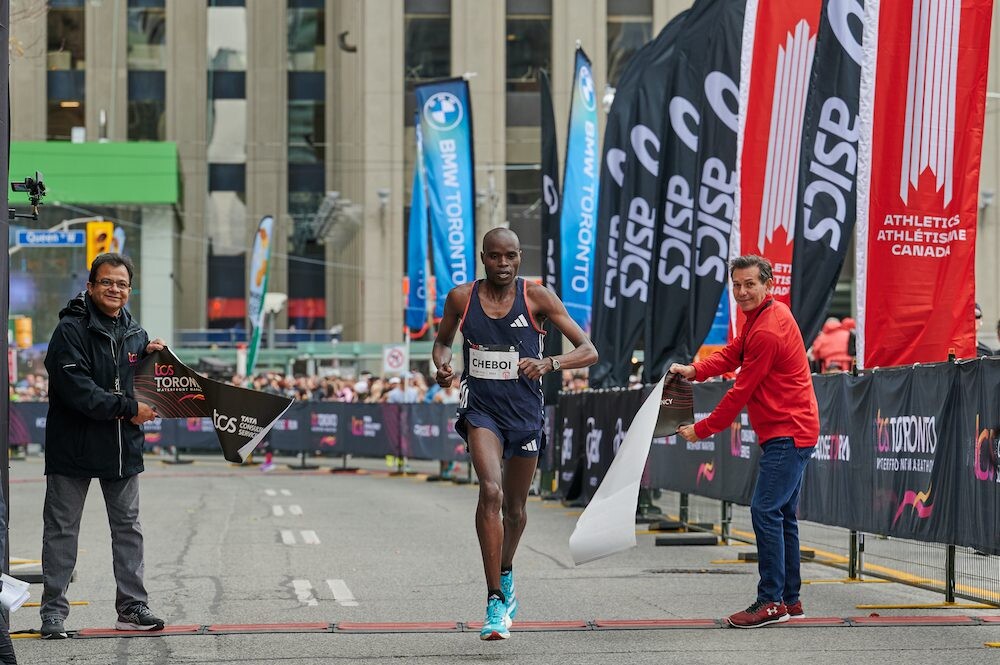
Elvis Cheboi (Kenya): Cheboi ran his personal best of 2:09:20 to win the 2023 Toronto Waterfront Marathon. (Reigning champion)
Mulugeta Uma (Ethiopia): Uma ran 2:05:33 to win the 2024 Paris Marathon in April. He has the fastest personal best in the men’s field.
Abdi Fufa (Ethiopia): Fufa finished just off the podium at the 2024 Dubai Marathon in January (2:06:23). He ran his PB of 2:05:57 at the Siena Marathon in 2021 (where he was second). The 29-year-old is looking for his first marathon win.
Hailu Zewdu (Ethiopia): The 29-year-old ran his PB of 2:06:31 at the Dubai Marathon in 2020. He has not broken 2:09:00 in his six marathons since.
Gizealew Ayana (Ethiopia): Ayana is the youngest elite athlete in the field–he’s only 21. He ran his PB of 2:07:15 to win the 2023 Paris Marathon in his debut at the distance.
Domenic Ngeno (Kenya): The 26-year-old is the fastest Kenyan marathoner in the Toronto field. He won the 2024 L.A. Marathon in March in 2:11:01. Ngeno’s PB of 2:07:26 was from a podium finish at the 2023 Eindhoven Marathon in the Netherlands.
Noah Kipkemboi (Kenya): A veteran of the marathon distance. The 31-year-old has competed at more than 10 marathons in his career. He podiumed at the Enschede Marathon earlier this year, with a time of 2:09:06.
Brian Kipsang (Kenya): Kipsang arrives in Toronto fresh off a personal best at the 2024 Milan Marathon in March, where he placed second in 2:07:56. The 30-year-old has finished in the top five at three of his last four races.
Abe Gashahun (Ethiopia): Gashahun has the fastest half-marathon personal best in the field of 59:46. He’s had success at shorter distances and cross country, but it hasn’t yet translated to the marathon. The 26-year-old ran 2:08:51 earlier this year in Saudi Arabia.
Sydney Gidabuday (U.S.A.): Former member of Adidas Tinman Elite Track Club in Colorado. Gidabuday made his marathon debut on Canadian soil at the 2023 Ottawa Marathon, where he finished ninth. His PB of 2:14:34 was run at the hilly NYC Marathon in 2023.
Yusuf Nadir (U.S.A.): Personal best of 2:15:27 from the 2023 Grandma’s Marathon in Duluth, Minn. He finished 25th at the U.S. Olympic Marathon Trials in February.
Aidan Reed (U.S.A.): Also made his marathon debut at the 2023 Ottawa Marathon–2:20:23. Reed ran collegiately at Southern Utah University, following in the footsteps of Canadian marathon record holder Cam Levins.
Canadian women’s field
Kate Bazeley (St. John’s, N.L.): The 40-year-old ran her PB of 2:36:35 in Toronto in 2019. Earlier this year, Bazeley represented Team Canada at the World XC Championships in Belgrade, Serbia.
Anne-Marie Comeau (Saint-Ferréol-les-Neiges, Que.): The 2018 Canadian (winter) Olympian ran her marathon best of 2:34:51 in Toronto last year, crossing the line as the second Canadian woman.
Asia Dwyer (Toronto): Dwyer ran her personal best of 2:42:45 at the 2023 Toronto Waterfront Marathon last fall. She told Canadian Running in an interview for the November/December 2024 issue of the print magazine that she is looking to smash her previous best.
Rachel Hannah (Port Elgin, Ont.): Hannah was the top Canadian finisher at the 2024 Ottawa Marathon in May. She won a bronze medal for Canada at the 2015 Pan-American Games in Toronto. She ran her personal best of 2:32:09 was at the 2016 Houston Marathon.
Liza Howard (Toronto): Howard told Canadian Running in an interview that her goal is to reach the podium and run a personal best. Howard ran her current personal best of 2:35:29 at the 2022 Chicago Marathon. She has unofficially broken the Canadian women’s 50K record, twice, in her marathon build for this race.
Erin Mawhinney (Hamilton): The 28-year-old runner will be making her marathon debut in Toronto. She is coached by two-time Canadian Olympian Reid Coolsaet. She broke the tape at the Toronto Waterfront Half Marathon last year, running a PB of 1:13:50.
Melissa Paauwe (Calgary). Paauwe is carrying the pride of Calgary into Toronto. She ran her PB of 2:41:12 at the 2023 Chicago marathon, and finished as the top Canadian.
Leslie Sexton (Markham, Ont.): Sexton returns to Toronto to run her hometown marathon. She said she will be trying to qualify for Worlds in Tokyo next year. She set her PB of 2:28:14 at the 2024 Houston Marathon this year, but missed the Olympic standard by two minutes.
Natasha Wodak: (Vancouver) started her marathon career here in 2013 but has not returned until this year; has never won the championship. Her PB of 2:23:12 from the 2022 Berlin Marathon stands as the current Canadian record.
International women’s field
Waganesh Mekasha (Ethiopia): Has a personal best of 2:22:45 from the 2019 Dubai Marathon. The 32-year-old Ethiopian won the 2023 Ottawa Marathon and finished second in Toronto last fall, with a time of 2:23:12.
Afera Godfay (Ethiopia): Godfay finished third behind compatriots Buze Diriba and Mekasha (see above) last year. She has a personal best of 2:22:41 and has finished in the top five in four of her last five marathons.
Roza Dejere (Ethiopia): The 27-year-old Ethiopian has the fastest personal best in the women’s field (2:18:30). She finished fourth in the women’s marathon at the Tokyo Olympic Games. She comes to Toronto as a threat to the course record of 2:22:16, which was set in 2019.
Meseret Gebre (Ethiopia): Gebre hasn’t raced since Toronto last fall, where she finished seventh in 2:29:54. She set her PB of 2:23:11 to win the Barcelona Marathon in 2022.
Valentina Matieko (Kenya): One of two Kenyan women in the international elite field. Matieko comes to Toronto fresh off a personal best earlier this year at the Paris Marathon in April (2:24:21).
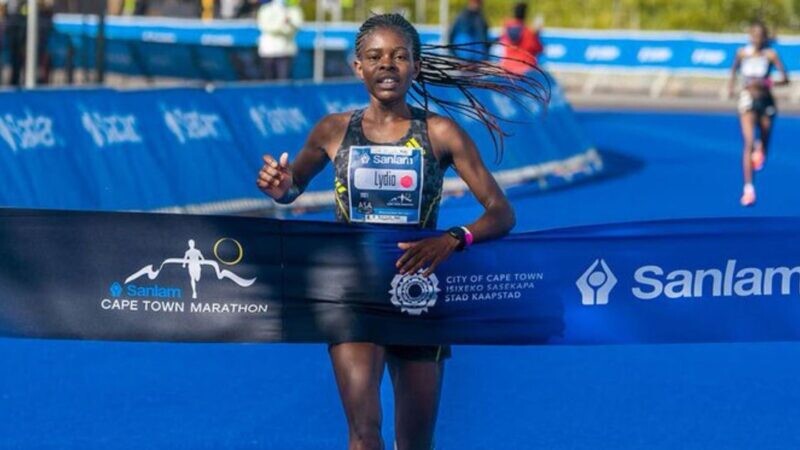
Lydia Simiyu (Kenya): Simiyu ran her PB of 2:25:10 earlier this year at the Rome Marathon. She served a six-month doping suspension in 2022 after she tested positive for chlorthalidone after the Poznan Half Marathon in Poland.
Rediet Daniel (Ethiopia): Two top-five finishes in her three professional marathon starts. The 24-year-old Ethiopian ran her personal best of 2:26:25 at the 2024 Doha Marathon in February.
The TCS Toronto Waterfront Marathon, to be held on Oct. 20, is Canada’s premier running event and the grand finale of the Canada Running Series (CRS). Since 2017, the race has also served as the Athletics Canada marathon championship and Olympic trials.
by Marley Dickinson
Login to leave a comment
TCS Toronto Waterfront Marathon
The Scotiabank Toronto Waterfront Marathon, Half-Marathon & 5k Run / Walk is organized by Canada Running Series Inc., organizers of the Canada Running Series, "A selection of Canada's best runs!" Canada Running Series annually organizes eight events in Montreal, Toronto and Vancouver that vary in distance from the 5k to the marathon. The Scotiabank Toronto Waterfront Marathon and Half-Marathon are...
more...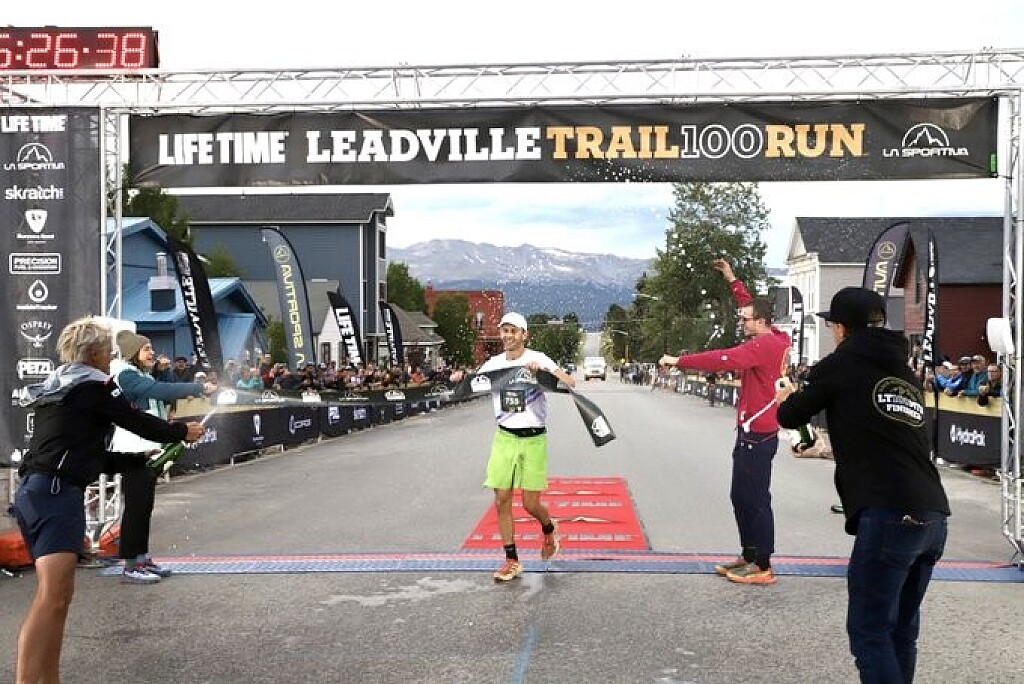
Leadville 100 sees long-standing course record fall
This year's edition of "the race across the sky" saw history-making performances on both the men's and women's sides
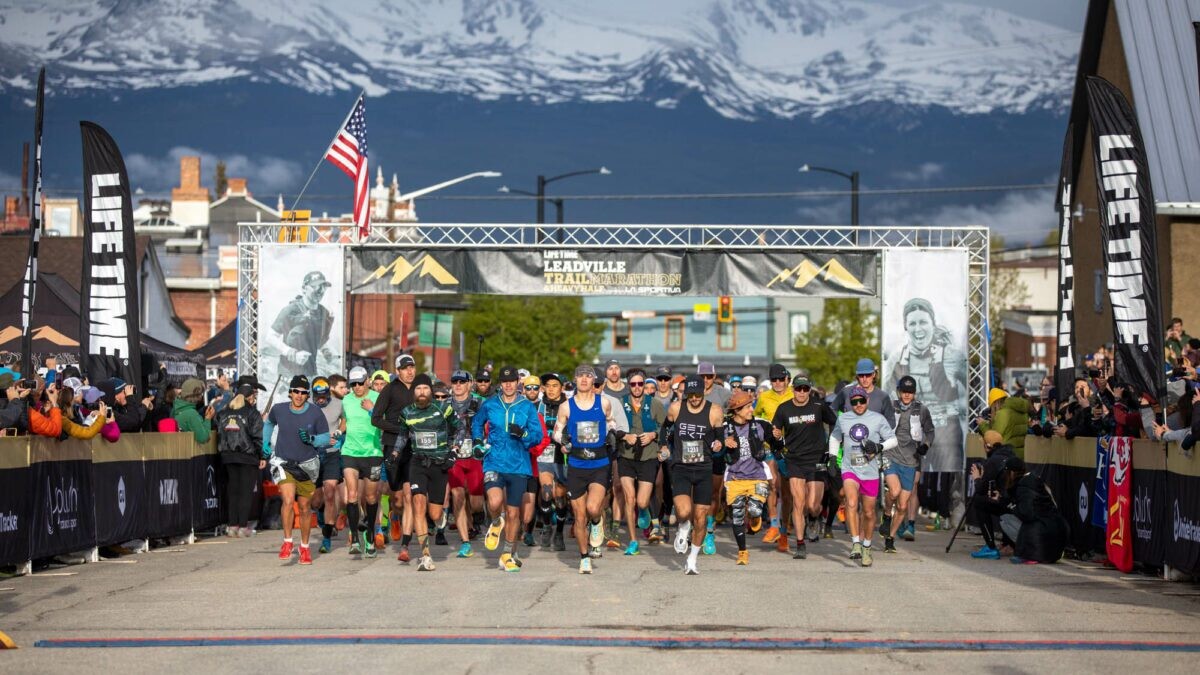
Leadville 100, known as the “race across the sky” for its stunning vistas as it traverses the Colorado Rockies, has been a staple in the ultrarunning community since its inception in 1983. This year’s event saw blistering performances in both the men’s and women’s races, with popular coach and author David Roche taking 16 minutes off the long-standing course record, and women’s race winner Mary Denholm recording the second-fastest time ever at the event.
The 100-mile race has runners climbing nearly 4,800 metres of elevation gain over rugged mountain trails, and runners begin and end in Leadville, Colo.
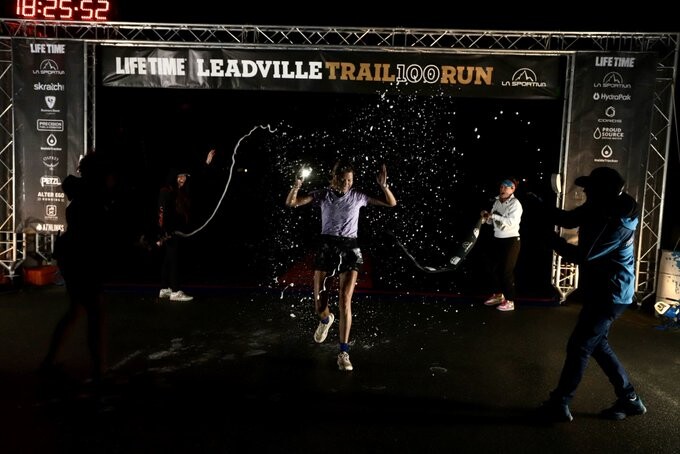
Women’s race
Denholm took off hot and dominated the competition from start to finish. By the halfway point, she had built an insurmountable 50-minute lead. She crossed the finish line in 18:23:51, securing the second-fastest time ever recorded for the women’s race, just short of legendary Ann Trason’s mark of 18:06:24, set in 1994. Denholm was followed by fellow American runners Zoe Rom in 21:27:41, and Julie Wright in 21:48:57.
Alberta’s Ailsa MacDonald and Molly Hurford of Ontario were initially in contention for podium positions, but both faced challenges that saw them taking DNFs. Hurford left the race after suffering a badly sprained ankle, and MacDonald after dealing with unrelenting gut issues.
Men’s race
Like Denholm, Roche set a fast pace from the start and built on his lead throughout the race. His time of 15:26:34 took more than 16 minutes off the previous course record, set by Matt Carpenter in 2005. He was followed in by U.S. ultrarunners Adrian Macdonald in 15:56:34, and Ryan Montgomery in 16:09:40.
Pete Kostelnick, a well-known ultrarunner famous for completing the fastest transcon run of the U.S. in 2016 (42 days, six hours and 30 minutes), made a remarkable return to running earlier this year after recovering from a severe car accident that resulted in multiple pelvic fractures. In May, Kostelnick finished the Cocodona 250, followed by Badwater 135 only a few weeks ago; he finished Leadville 100 in 24:30:18.
Calgary’s Reiner Pauwwe took the 28th overall position (24th man) in 22:16:59.
by Keeley Milne
Login to leave a comment

Leadville Trail 100 Run
The legendary “Race Across The Sky” 100-mile run is where it all started back in 1983. This is it. The race where legends are created and limits are tested. One hundred miles of extreme Colorado Rockies terrain — from elevations of 9,200 to 12,600 feet. You will give the mountain respect, and earn respect from all. ...
more...
TAMING THE TAPER
How to avoid becoming unhinged during your marathon or half-marathon taper
The taper—a period of reduced training leading up to your goal race—can be a troublesome time; you might look forward to backing off the grind of training, but when you do, you might experience some guilt or anxiety about running less. Lynsey Romano, founder of Calgary-based Skyline Run Coaching, outlines a few key strategies for maximizing your downtime to get the most out of your race—and yourself—and for avoiding falling prey to the “taper tantrum.”

“The main objective of the taper is to reduce the accumulated stress on the body and mind that has built up over a training cycle,” Romano explains. “By carefully balancing a training load reduction, tapering can help an athlete optimize their muscle glycogen stores, it can enhance muscle repair, and they can just go in feeling invigorated and ready to go.”
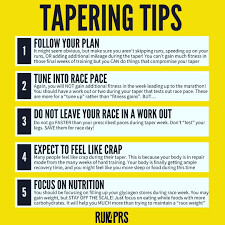
Romano says different athletes benefit from different types of taper structures, but they all have the same objective: to reduce mileage and effort and allow your body to adjust to all your training efforts.
Don’t skimp on nutrition and hydration
You may be tempted to think that because you’re running less during your taper, you should eat less, but that’s not the case, says Romano. One of the biggest mistakes she sees in her practice is athletes tapering their nutrition along with their running volume, when the goal is to maximize glycogen stores—in other words, making sure you have plenty of energy on race day. Cutting back on nutrition can really hamper your race. Romano recommends eating a well-balanced diet that mirrors what you’d normally eat while training. And don’t forget about hydration—take in electrolytes and sip water throughout the day to make sure you’re well hydrated on race morning.
Get extra rest
The taper is also the time to take extra rest, whether it’s sleeping in or taking naps—“anything that you can do to revitalize, to rest more, is something I would support entirely,” says Romano.
She adds: “It can feel really counterintuitive to be resting when you’re getting ready to do something that is a considerable physical feat.” This is one reason potentially unnerved athletes should pay close attention to how they’re feeling during this time. Sometimes a nap is a better idea than a short run, if you’re feeling tired.
It’s also completely normal to have some aches and pains as your body absorbs your training, and taper week is the perfect opportunity to book a pre-race massage, physio or chiropractic appointment to work out any lingering kinks.
Nurture your mindset
As for the mental side of things, the taper allows you the time to get your mental game in check. Romano recommends creating mantras you can repeat to yourself during the race, or writing a motivational phrase on your arm for visual encouragement. Creating a race plan will also help prepare you mentally, and can help quell some of those race-day nerves. (But remember to be flexible, adjusting your plan on the fly if you encounter difficult weather conditions, or you find yourself nurturing a minor injury on race day.)
You want to go into your race feeling fresh mentally and physically and ready to leave it all out on the course. Above all, don’t forget to have fun!
Login to leave a comment
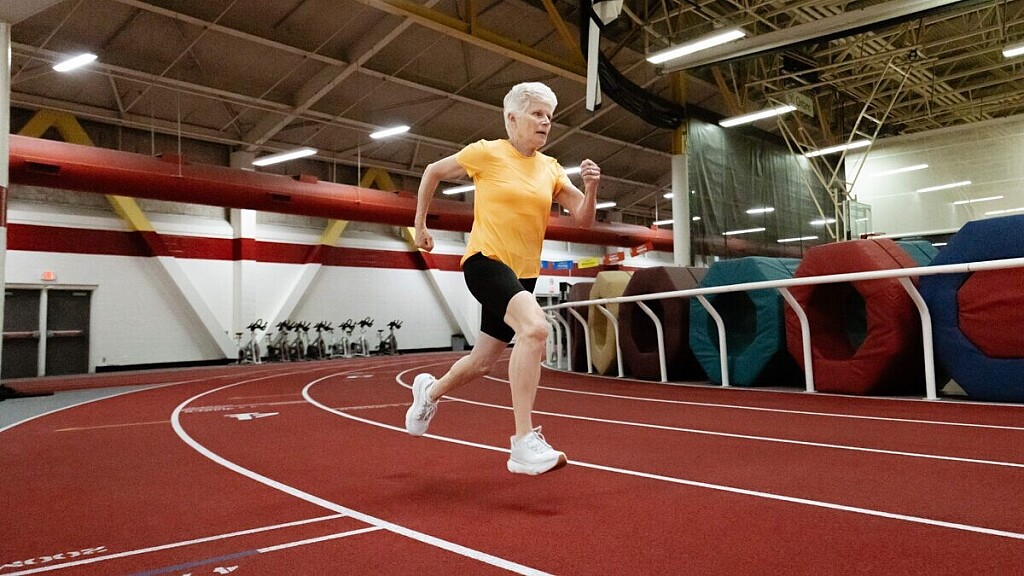
Canada’s Karla Del Grande sets women’s 70+ 100m world record in Sweden
Toronto’s Karla Del Grande has cemented her status as one of the world’s fastest masters runners, holding more than a dozen world age group records. On Wednesday afternoon at the 2024 World Masters Athletics Championships in Gothenburg, Sweden, Del Grande added another record to her illustrious resume by setting a new world record in the W70+ 100m, clocking an impressive 14.70 seconds.
Del Grande’s time won her the gold in the women’s 70+ event, narrowly edging out her Chilean rival, Sara Montecinos, by just one hundredth of a second. Montecinos took the silver with a time of 14.71 seconds, while Finland’s Sinikka Illaru went home with the bronze, finishing in 15.97 seconds.
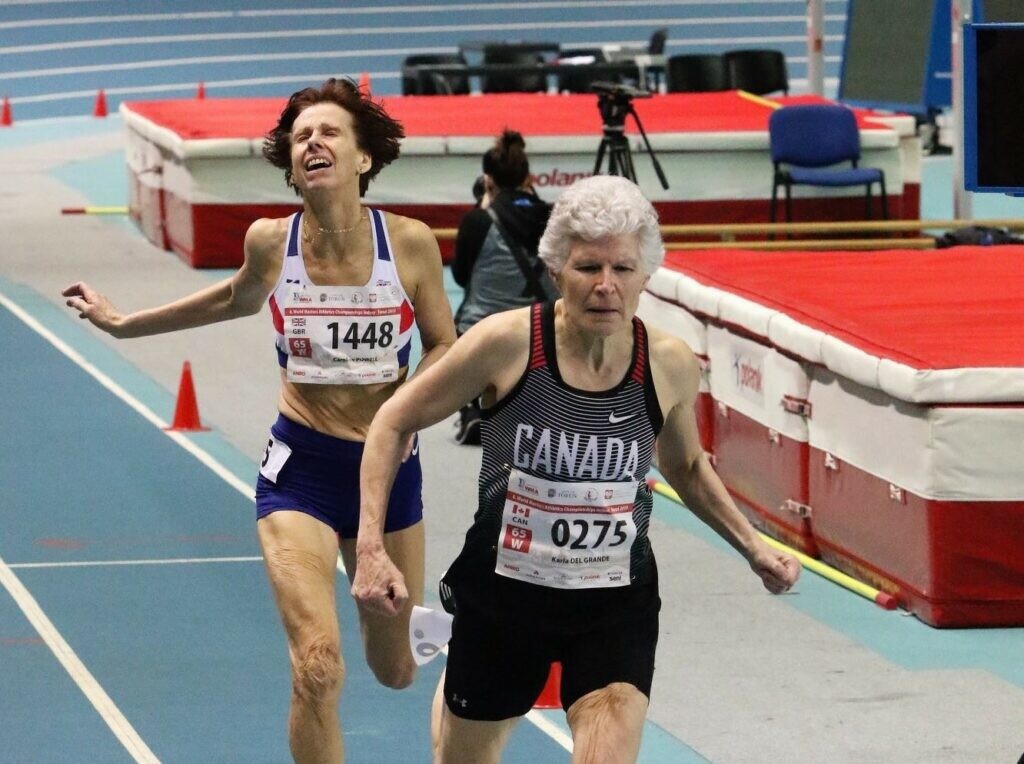
To put Del Grande’s world record into perspective, she averaged a speed of 25 km/h over 100m at the age of 71. This marks the second time this season that she has broken the 100m world record for the W70+ age group, having run a similar time at last month’s Puma Twilight meet in Hamilton.
Her gold was one of two medals for Canada on Day 2 of the World Masters Athletics Championships in Gothenburg. Calgary’s Maria Zambrano also brought home a medal, winning silver in the W50+ 5,000 meters with a blazing time of 18 minutes and 19 seconds.
Del Grande’s success at the masters level has been nothing short of remarkable. She began competing in 2002 at the age of 49 and has since set numerous Canadian records in various sprint events across both indoor and outdoor competitions. She has been named Ontario Masters Athletics’ Female Masters Athlete of the Year an astounding 12 times and was honored as the World Masters Athlete of the Decade for 2010-2020.
At 71, Del Grande stands as a beacon of inspiration in Canadian masters running, and is known for her indomitable spirit and record-setting performances. In a recent interview, she voiced her goal of sharing her passion for the sport and encouraging other older women to take up running/track and field.
by Marley Dickinson
Login to leave a comment
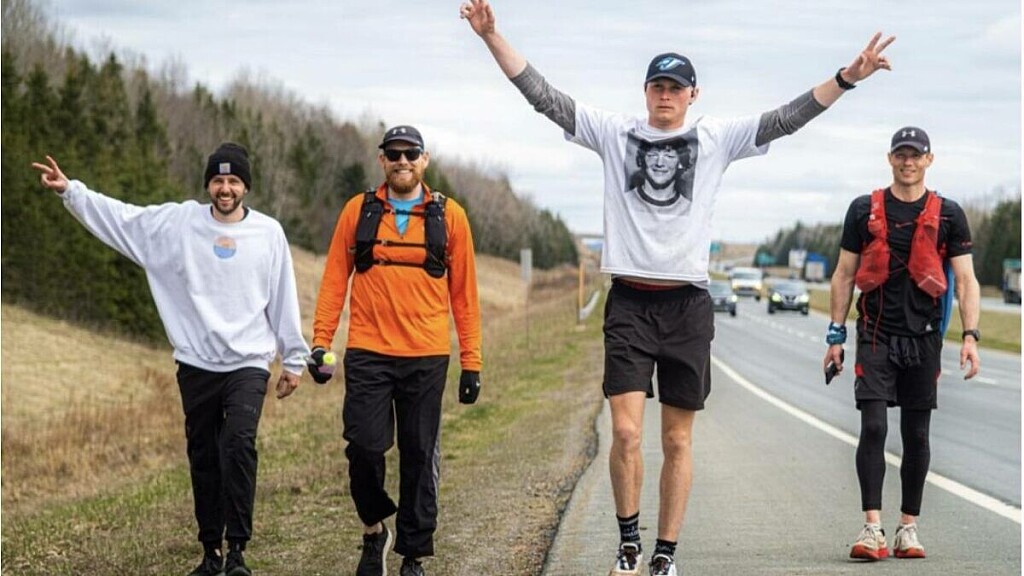
Halifax man completes run across Canada in 99 days
Ryan Keeping ran from St. Johns to Victoria in 99 days to raise money for the Heart and Stroke Foundation.
As a touching tribute to one man’s hero, Terry Fox, and to support the Heart and Stroke Foundation, Ryan Keeping of Halifax has run across Canada in 99 days. On Sunday, July 7, Keeping completed his 7,386-kilometer trans-Canada journey in Victoria, running more than 75 kilometers daily and raising more than $200,000 for the Heart and Stroke Foundation.
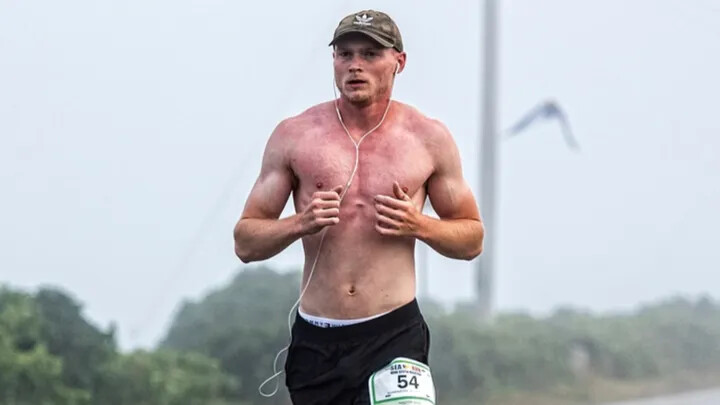
Keeping began his journey on April 1 in St. John’s, intending to end in Victoria within 100 days. He says his goal was not to chase any records, but to meet amazing people, hear the stories of Canadians along the way and raise money for a cause close to his heart.
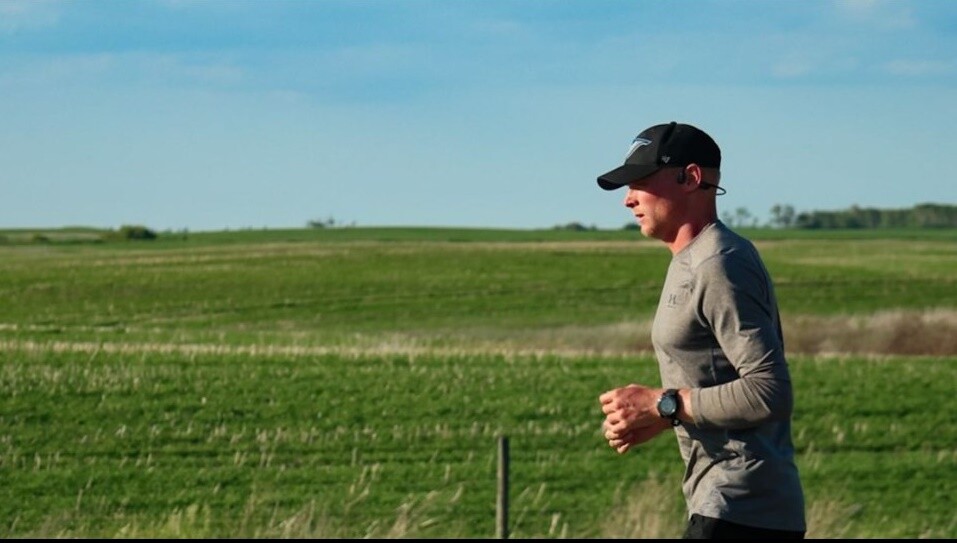
“This wasn’t about a record, a time, or bragging rights,” Keeping wrote about his achievement. “This was about Canada, the children, and the amazing people along the way. The interactions throughout the 99 days changed my life forever, and I thank everyone for that. I am forever grateful for this journey, and I hope we can all take a lesson from this, that anything is possible, whether you’re a couch potato or an athlete.”
Like his hero, Fox, Keeping had a reason for his cross-country run. Several of his family members, including his dad and his grandfather, have been affected by heart disease. Recently, both of his siblings have tested positive for the gene causing heart issues. His decision to run across Canada to raise funds and awareness was to help other families like his, who have been affected by heart disease.
Keeping ran through nine of Canada’s 10 provinces, holding meet-and-greets and running events as he passed major cities: Toronto, Winnipeg, Calgary and Vancouver. He celebrated his finish by pouring a jug of water from the Atlantic into the Pacific Ocean. “It’s what Terry wanted, and I’m happy to say I could honor my run for him,” said Keeping.
by Marley Dickison
Login to leave a comment
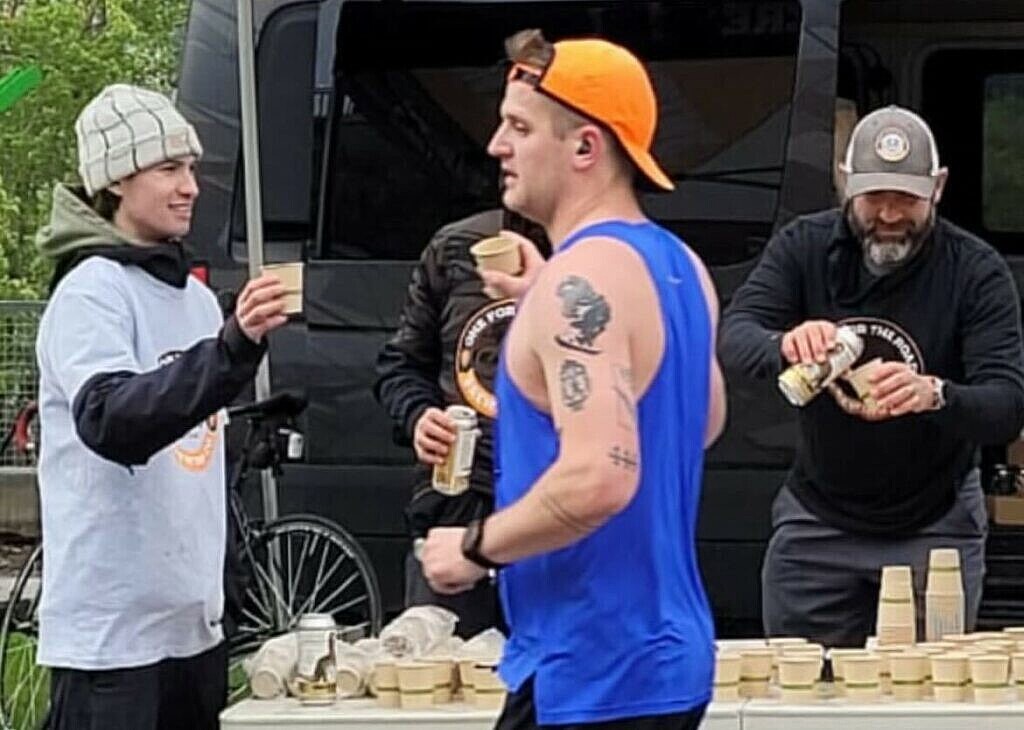
Calgary Marathon becomes first marathon to have an on-course beer station
The Calgary Marathon celebrated its 60th anniversary on Sunday, and for the first time in event history, the race featured an on-course beer station for the marathon and half-marathon runners.
Calgary-based brewery One for the Road Brewing Co., founded by Graham Matheos, approached Calgary Marathon race director Kirsten Fleming earlier this year with the idea of the race becoming the first North American marathon to have non-alcoholic beer stations.
Officially referred to by organizers as a “hydration station serving non-alcoholic beer,” it was essentially a beer aid station. The beer was offered in addition to water and electrolytes at the 18 km and 36 km marks. “People loved it,” said Fleming.

The local non-alcoholic brewery was also a sponsor of the race’s inaugural 60K distance, which was extended from the usual 50K to celebrate the 60th anniversary of the Calgary Marathon.
This year’s race saw the second-largest field in event history, with just over 13,600 participants taking part in one of the six race weekend festivities. In the half-marathon, Calgary’s Blaine Penny and his team of 11 runners set a new Guinness World Record for the fastest half-marathon as a tethered team, raising over $30,000 for the charity MitoCanada.
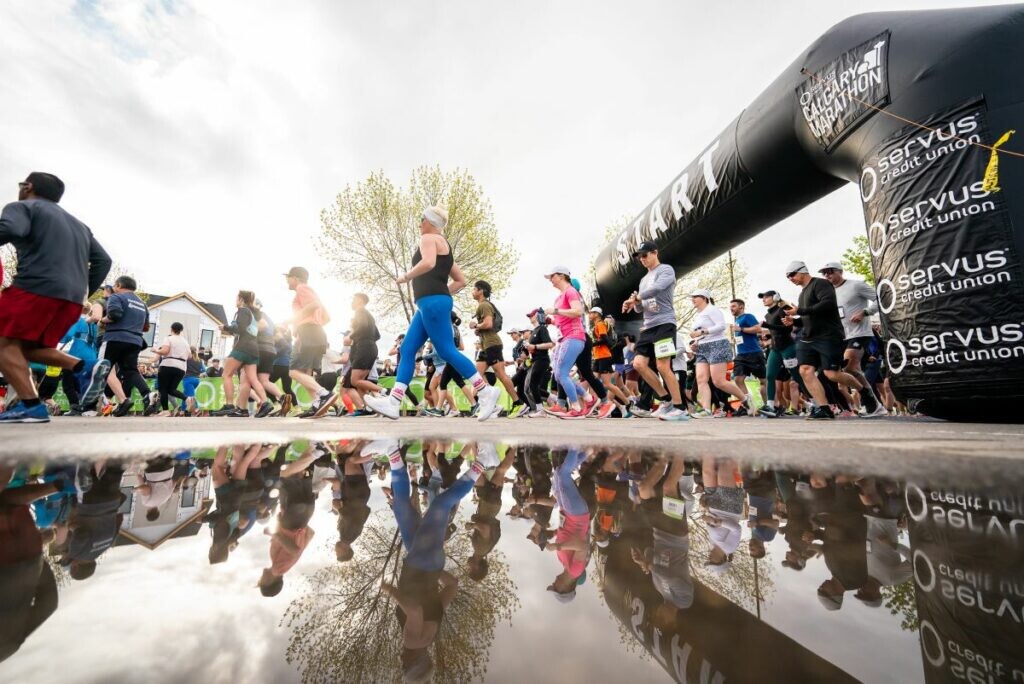
The marathon (the weekend’s main event), was won by Great Britain’s Jordan Clay in 2:35:59. According to CTV News Calgary, Clay did not expect to win the race, as this was his first time visiting the city. Calgary’s own Emily James won the women’s race in 2:49:16.
by Marley Dickinson
Login to leave a comment

Scotiabank Calgary Marathon
This is Canada's oldest marathon, Canadians and runners from around the world love this race, consistently voting in the Best Road Race in Alberta. There is a 50k, full-marathon, half-marathon, 10k, 5k family walk/run and kids races. You expect the route to be packed with participants and enthusiastic spectators. ...
more...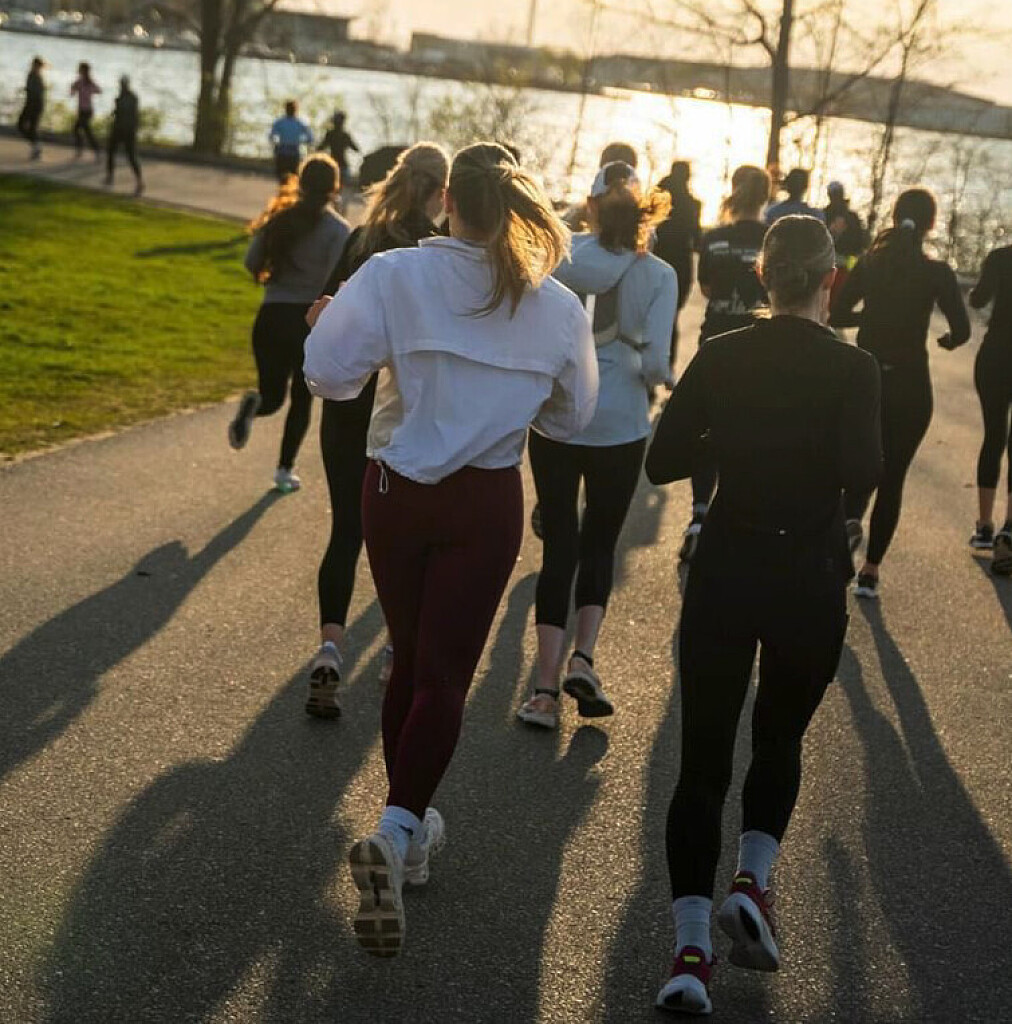
Why women-only run clubs are dominating the scene
Amid 2024’s run-mania, with races frequently selling out across Canada, female-exclusive run clubs are gaining momentum. In honour of Sexual Assault Awareness Month, we’re discussing how the sport has evolved, with women’s run clubs paving the way for female runners to feel seen, safe and empowered.
Run clubs are in
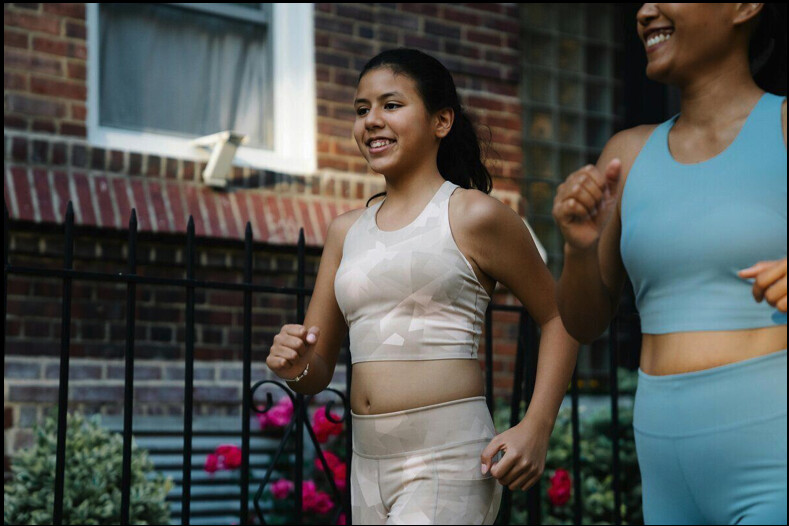
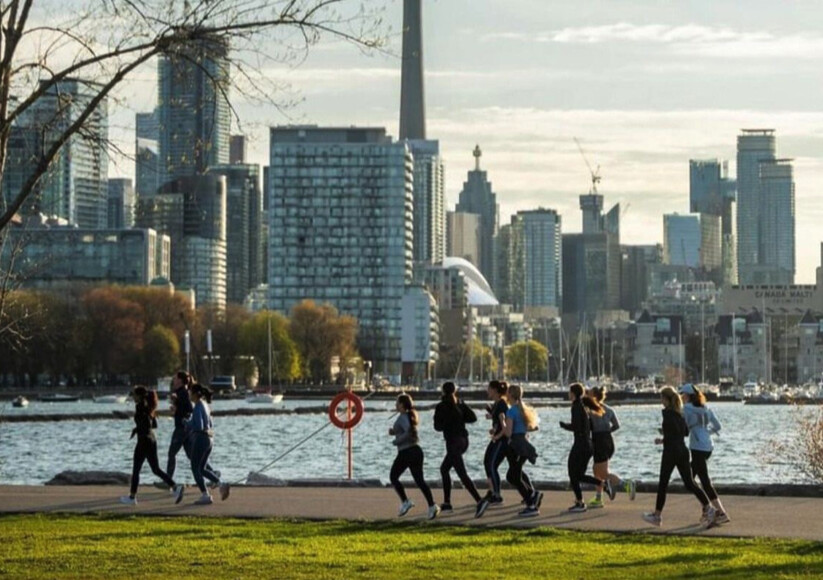
Women’s running has been on the rise since the ’70s, when recreational jogging first became popular. However, the recent surge in gender-exclusive running clubs is a significant development. According to Reddit, this is not just a passing trend. Women’s run clubs have become especially attractive to women who’ve experienced gender-based discrimination or sexual harassment in mixed-gender clubs.“As a woman that has participated in many mixed-company athletic pursuits, [I feel that] men often react poorly to women being skilled or successful in a sport, in addition to the usual perils of being harassed or bothered,” said one Reddit user. Another pointed out that “this obnoxious masculinity is woven into the history of run clubs.”
Confronting patriarchy
Running, like many other sports, was designed by men for men. Women in France began challenging this norm in 1903 with a race in Paris known as “The Race of the Midinettes” (a 12-km walking race for seamstresses or assistants in the Paris fashion industry). While the French press called these midinettes derogatory names like “streetwalkers” (sex workers), feminist scholars such as Florys Castan-Vicenet (in her 2023 report in Front Sports Act Living) strongly argue otherwise, considering them pioneers. Amsterdam’s 1928 Olympic Games marked a revolutionary moment in women’s running. For the first time, female runners were invited to participate in the 800m. This feat was short-lived however, as the event was immediately banned, and would remain so until 1960. In 1967, Kathrine Switzer became the first woman to run the Boston Marathon with an official bib (though she was physically assaulted by the race manager for doing so).
“Female runners were spearheading a revolution, changing common beliefs about the limits of women’s physical endurance,” shared Louise Wood in her story “Into the Boys’ Club”. By the turn of the 21st century, feminist movements were changing the landscape of women’s running.
Women supporting women
During this time, feminist thinkers like Sara Ahmed confronted topics like gender inequity and female objectification that commonly deterred women from joining the sport. “What I hate is, for example when someone comments on your run,” wrote Ahmed in her 2000 novel Strange Encounters. “They mean it as a compliment, but for me, it just emphasizes, ‘I don’t expect this from someone who looks like you.'” As female runners and feminists continued to reshape the narrative, gender-exclusive run clubs emerged, reflecting a significant rise in women’s participation in running. A report by International Journal of Environmental Research and Public Health says between 1953 and 2017, sex differences decreased dramatically in 100-mile ultras worldwide. By 2020, according to RunRpeat, 57 per cent of Canadian runners and 23 per cent of ultramarathon participants identified as female, marking a significant increase.
Strength in numbers
Today, women are choosing to forgo late nights on the town for a good night’s sleep and morning run club with the girls. These clubs are not just about running; they are about women sprinting together through life’s challenges, forming strong bonds and a sense of community that extends beyond the club. Women-only run clubs across Canada, such as Switzer’s 261 Fearless (which has chapters in 14 countries; the Canadian chapter is in Toronto), and runs celebrating women, like Lululemon’s Further 6-day ultra (based in Vancouver), are surging in popularity. Still, in a 2023 study by Adidas, it was reported that 38 per cent of women have experienced physical or verbal harassment while running, with more than half receiving unwanted attention (56 per cent), sexist comments or unwanted sexual attention (55 per cent). According to a 2024 study by Asics, a startling number of Canadian women have cited “lack of safe spaces” as a barrier to running.
Chix Run (located in Toronto and Calgary) has been dedicated to offering women this safe space. Since founding the club four years ago, Amanda Richardson, 42, has observed a significant improvement in the sport’s female representation. “Toronto run clubs used to be focused just on performance, but now it’s all about community, where women are out there connecting on topics like motherhood, marriage or their love of coffee—a post-run highlight.”
The club strives to take the emphasis off competing and winning to make running more about having fun, being active with other women and creating friendships. “Many people have noticed running is advertised as a place to date,” Richardson laughs. “Turning up to a running club where you know it’s all women there, free to say what you want to say, be who you want to be, they don’t have to worry about how they look; there is no hidden agenda.”
Girlhood and good vibes
According to Strava, women under 25 are the fastest-growing community using the app today, promising a more balanced and inclusive future for running. The Girls run the 6ix run club has quickly become a regular hotspot for young female runners in Toronto. The club was founded in December by Jill Amirault, 26, and Claire Milburn, 23, and already has 5,000 Instagram followers.“I think for someone new to running, it can be really intimidating to go to a gender-diverse run club, because men are typically competitive,” says Amirault. “Some women need that safe space, similar to a gym with a ‘women only’ section.” The club embarks once a week on a 6-km route through the city, in which its members can be found swapping stories about dating misadventures and connecting about girlhood. For a long time, there was a lack of female-exclusive run clubs in Toronto, says Amirault.
“Now, with more female run clubs and influencers, people are certainly beginning to notice that this is an environment where women can succeed,” says Amirault. “Pace doesn’t matter; what’s important is that we motivate, connect and celebrate our womanhood.”
by Running Magazine
Login to leave a comment
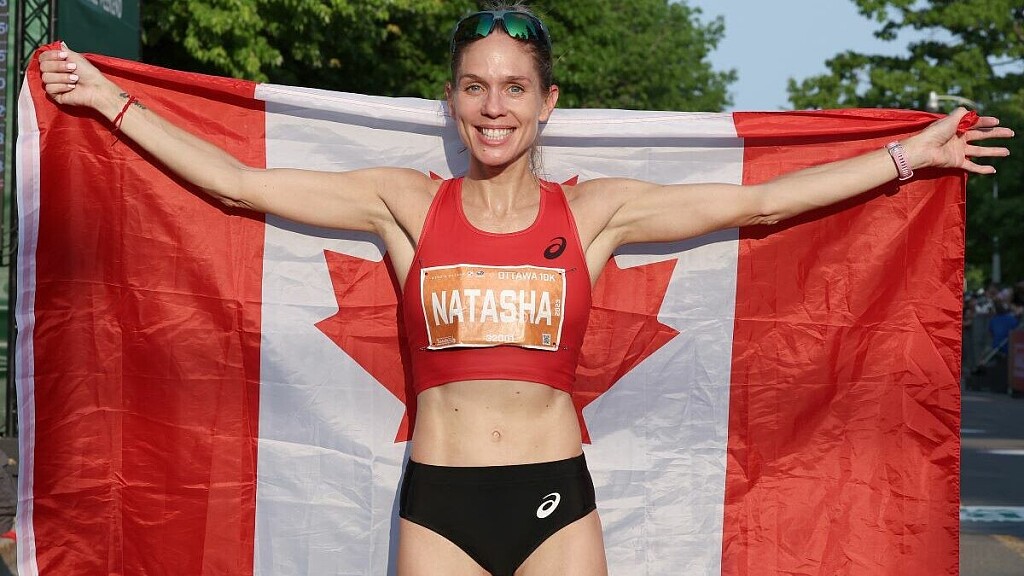
Natasha Wodak returns to Ottawa in search of a three-peat
For the past nine years, the last weekend of May has been a significant date on the calendar for many of Canada’s top distance runners, who head to Ottawa to battle it out on the roads for the Canadian 10K Championship. Last year, Moh Ahmed came close to beating Ben Flanagan’s national record on the banks of the Rideau Canal, surging past Canadian record holder Cam Levins in the final kilometre to win his first national title on the roads.
Two-time Olympian Natasha Wodak dominated from gun to tape to win her second consecutive title on the women’s side. Now, Wodak is aiming for a third straight Canadian 10K title, which would put her in a league of her own and make her the only woman to three-peat in championship history.
Wodak is coming off her third marathon build in the last 12 months. Four weeks ago, she took her final shot at the Paris Olympic standard of 2:26:50 (at the Hamburg Marathon), but came up three and a half minutes shy. After a few days off, Wodak returned to training in hopes of winning her third consecutive 10K title. “It feels like my training for this has been brief,” laughs Wodak. “I’m hoping there’s some residual fitness in the legs.”
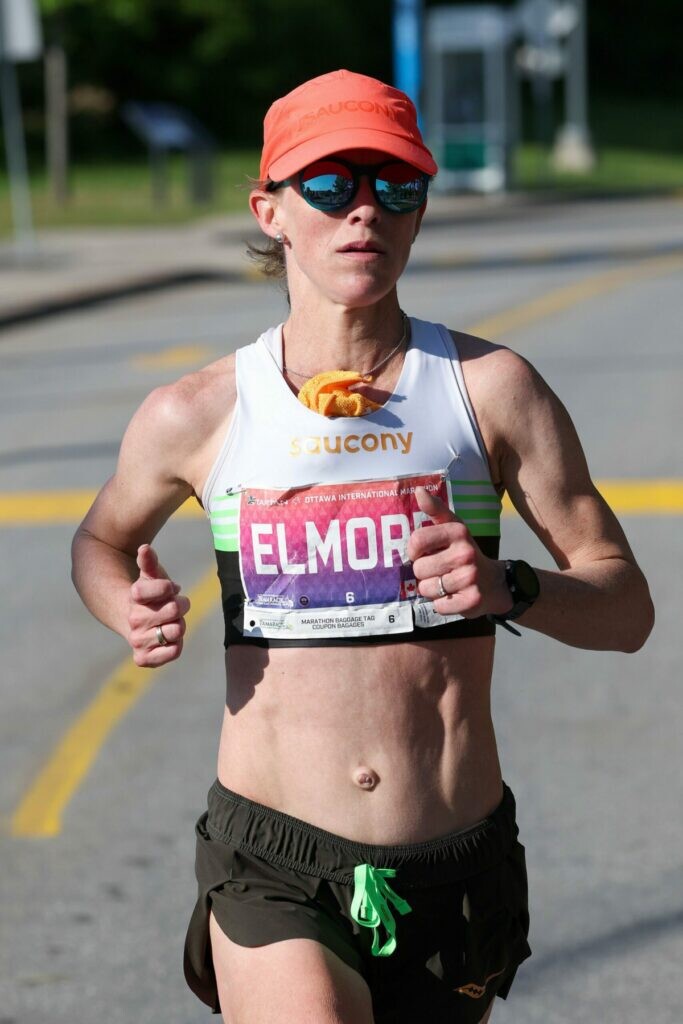
The Canadian record holder in the marathon has competed at the last seven editions of the 10K and won on four occasions. “It’s our national championships and I come here every year to compete,” says Wodak. “I have no false expectations of winning, but I know I’ll fight hard for a top-five spot.”
The women’s field this year is deeper than it has been in recent years, with (soon-to-be) three-time Canadian Olympian Malindi Elmore also dropping down in distance to challenge Wodak for the national title. Elmore made it clear at Friday’s press conference that she’ll be racing on a full week’s training load and using the race to kick off the next stage of her Olympic marathon build.
Outside of Elmore and Wodak, former national champion Lanni Marchant returns to Ottawa, coming off a solid performance at the Night of the 10,000m PBs in London last weekend, where she ran 33:24. Marchant last won here in Ottawa in 2016. Eliyah Brawdy of Smithers, B.C., could also be a surprise winner. Two weeks ago in Coquitlam, B.C., Brawdy won her first national title over 10,000m (on the track), clocking an impressive 33:37.
Rory Linkletter vs. Ben Flanagan
Calgary’s Rory Linkletter had two goals for his 2024 season, and he’s already accomplished one of them: punching his ticket to the Paris Olympic Games (his second Olympics). Now, he aims to achieve his second goal: winning his first career Canadian national title. Linkletter came close two weeks ago at the Canadian 10,000m Championships in B.C., finishing second to Toronto’s Andrew Alexander in a wild sprint finish, but now he’ll get that chance once again on Saturday night in Ottawa, with only a few men standing in his way—including one of Canada’s best road racers and the 10K record holder, Ben Flanagan.
These two men know each other very well, having competed against one another for the last 10 years (dating back to their collegiate days in the NCAA). Being just one year apart in age, their careers have taken different paths. Flanagan has racked up several national titles over 5K and 10K and found success on the track over 5,000m. In contrast, Linkletter jumped up to the marathon, lowering his personal best by eight minutes since his debut in 2019. “The Ottawa 10K will be a good test of where I’m at,” says Linkletter. “I look forward to racing more than anything, and I love doing it—I always want to win.”
Flanagan has won the Ottawa 10K in his last two appearances and dominated the race from start to finish when he won two years ago in 28:39. “This is my first road race of the season before gearing up for the Canadian Olympic Trials,” says Flanagan. “I’m excited and eager to see where my fitness is at. I want to put on a show.”
by Marley Dickinson
Login to leave a comment

Ottawa 10K
Ottawa's course is fast, scenic and few elevation changes. Considered to be an excellent course for first timers and should provide an environment conducive to setting a PR. The Ottawa 10K is the only IAAF Gold Label 10K event in Canada and one of only four IAAF Gold Label 10Ks in the world. The Ottawa 10K attracts one of the...
more...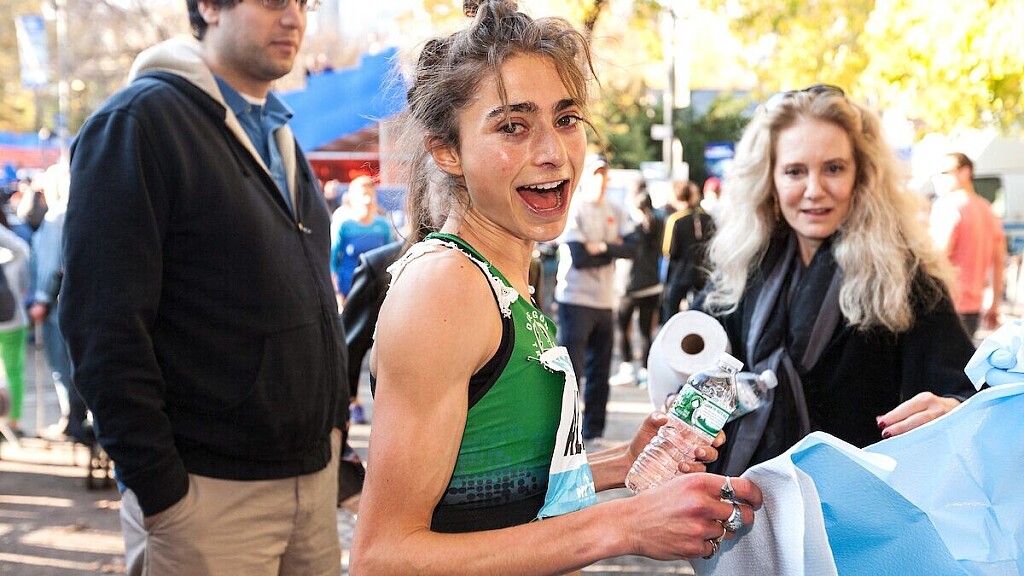
Four runners share their mental health stories
Many runners find their sport is not only a way to gain physical resilience, but also a powerful ally in the path toward mental well-being. The road to mental health isn’t solitary, and witnessing others share their challenges and successes can be uplifting and inspiring.
From pros to amateurs, athletes are speaking out about their struggles and triumphs with mental health. Here are four runners to follow who are also mental health advocates.
1.- Alexi Pappas
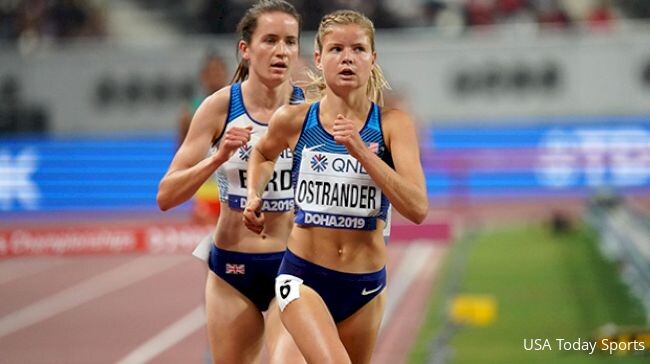
Pappas is known for being a remarkable athlete (she ran the 10,000m for Greece at the 2016 Olympics in Rio de Janeiro), but she also boasts credentials as a renowned author, filmmaker, and mental health advocate. Pappas opened up about mental health in 2020: after working toward and achieving her Olympic dreams, her mental health spiralled, and she was eventually diagnosed with severe clinical depression, which was compounded by injuries, a lack of sleep and her own reluctance to take a break from training.
Pappas authored her first book in 2021: Bravey: Chasing Dreams, Befriending Pain, and Other Big Ideas, highlighting her triumphs and challenges in sports and life, and encouraging readers to be “braveys” in pursuing their passions. She continues to advocate and be a source of hope to others on social media.”What if we athletes approached our mental health the same way we approach our physical health?” Pappas asks.
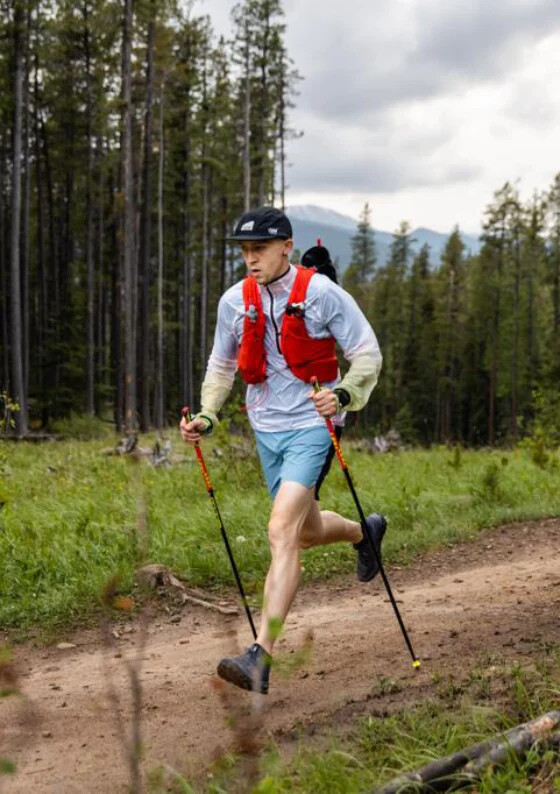
Former American steeplechaser turned elite trail runner, Ostrander uses her Instagram platform to share mental health and eating disorder awareness and advocacy.
In 2021, Ostrander returned to professional competition after being sidelined with multiple injuries for the previous 18 months. During this time, she was hospitalized for treatment of an eating disorder. Ostrander qualified for the U.S. Olympic Trials, where she ran a personal best of 9:26.96 in the 3,000m steeplechase, before deciding to take a year-long break from professional running to prioritize her own mental health.
Ostrander returned to racing in 2023, and made a shift to the trails, running to ninth place at the Mammoth 26K in California in September.
3.- Evan Birch
Canadian ultrarunner and mental health advocate Evan Birch shares an unflinching look at his mental health journey on social media as he works to destigmatize the conversation around mental wellness. Birch is a former 911 dispatcher from Calgary who has been running on trails for more than a decade, and who most recently conquered Western Canada’s first 200-mile race, The Divide 200, in September 2023.
A busy father to young children, Birch recently collaborated with filmmaker Dylan Leeder to create Running Forward, a documentary illuminating the intersection between running and mental health.”It is more important to me now that I meet the truth within me, than it is to make other people comfortable with how I am,” Birch says on social media. “The gifts I have received from allowing myself to be sad are so plentiful.”
4.- Denoja Uthayakumar
From Scarborough, Ont., Uthayakumar is no stranger to hardship, but she has taken her experiences and built a social platform where she can advocate for individuals from similar backgrounds. Uthayakmar is a cancer survivor, body positivity and mental health advocate and was Canadian Running’s pick for our 2023 Community Builder of the Year award.
Uthayakumar was born into a Tamil family, and was diagnosed with thyroid cancer at age five; she shares her physical and mental health challenges alongside the joy that running and the community around it bring to her. “This year pushed me. It broke me down. It challenged me to no end,” Uthayakumar says on Instagram. “It was hard, but I rose higher with my running journey, and was able to share more of my story during my healing while being a survivor.”
by Keeley Milne
Login to leave a comment

Canadian masters running icon Helly Visser dies at 89
On Nov. 30, Canada and the province of Alberta lost a influential member of the running community with the death of 11-time Canadian masters record holder Helena “Helly” Visser of Calgary. She died at the age of 89.
Born in Hilversum, The Netherlands, in 1934, Visser came to Canada in her youth. Her running journey began after her three children left home to pursue their education. With time on her hands, she discovered a passion for pushing her limits and embraced the outdoors.
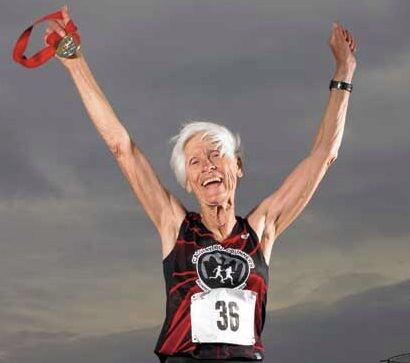
In 1995, she officially entered competitive events for Canada, winning gold in the W60 1,500m at the WAVA (now WMA) meet. Over the years, Visser achieved remarkable success in her age group, setting three world masters age group records and 11 Canadian masters records across middle distances from 800m to 3,000m (indoor and outdoor).
Visser competed at the masters level provincially, nationally, and in numerous world championships. Notably, she still holds three world masters records in the W80 category for the 1,500m, mile and 3,000m events. Additionally, she boasts numerous Alberta provincial masters records, received multiple honors as Athletics Alberta Masters Athlete of the Year, and was inducted into the Canadian Masters Athletics Hall of Fame in 2010.
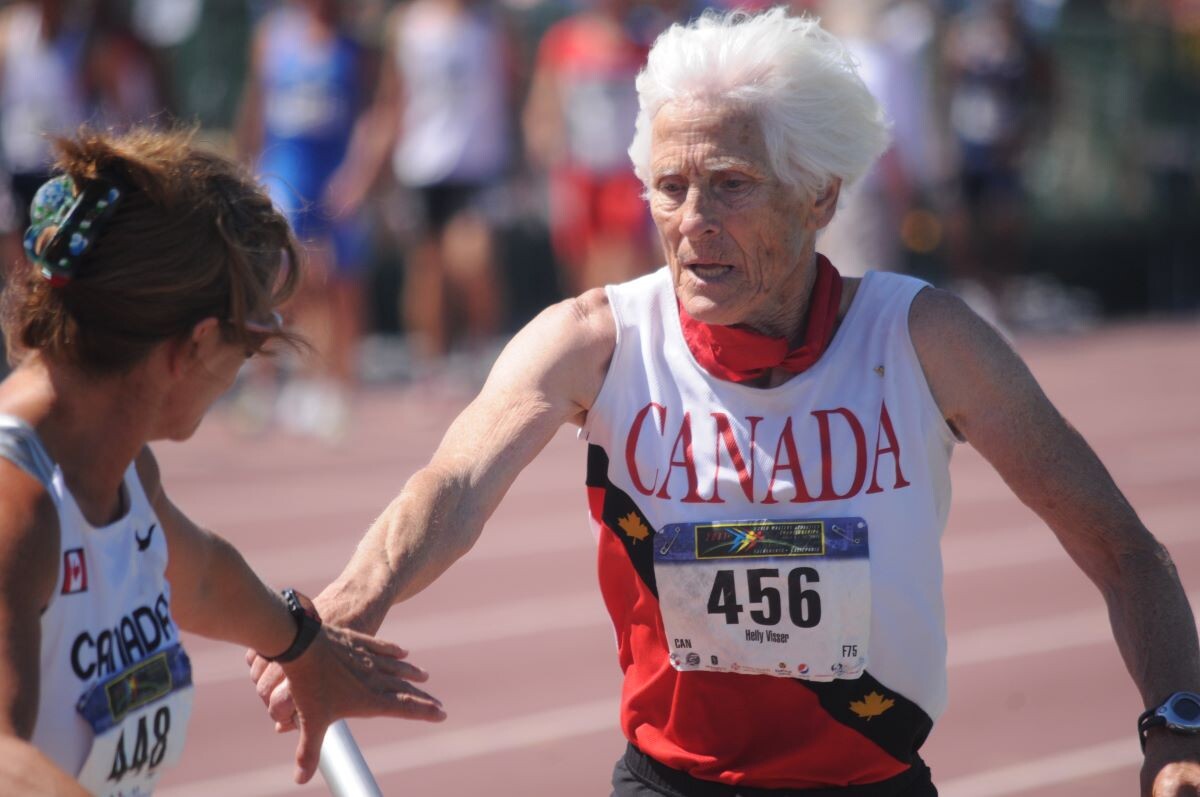
Beyond her athletic accomplishments, Visser played an active role in promoting the sport within Calgary’s community. She organized local running clinics and helped advocate for the construction of an indoor track and field house.
Competing at the masters level until the age of 85 in 2019, Visser served as an inspiration to many runners. Her love for continuous learning and her commitment to improvement through shared experiences made her a cherished figure in the running community.
In memory of Visser and her love for the outdoors, a tree will be planted in the Ann & Sandy Cross Conservation Area in Calgary’s Fish Creek community.
by Marley Dickinson
Login to leave a comment
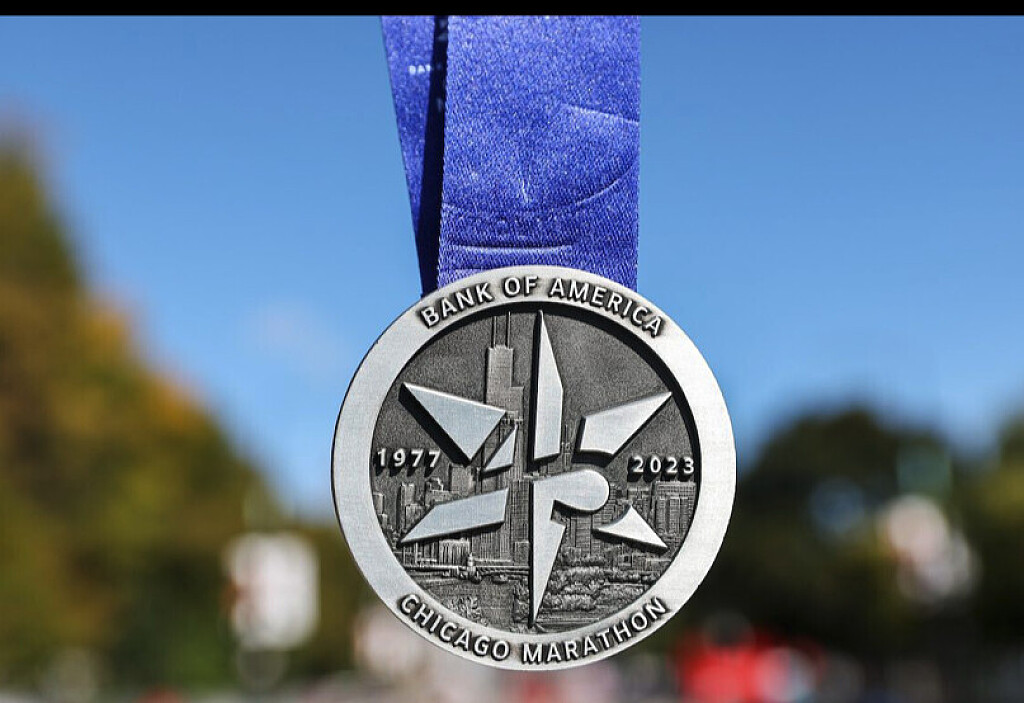
Calgary woman distraught after F-word engraved on marathon medal
A marathon medal represents months of dedication, perseverance and the sense of personal accomplishment that comes from completing 42.2 gruelling kilometres. Adorchita Di Perno of Calgary felt that way about her 2023 Chicago Marathon medal, until she saw that the expletive “F***” had been engraved onto the back of it.
Di Perno had just finished her 22nd marathon in 3:34:29, achieving a Boston-qualifying time. She was able to get 2018 Boston Marathon champion Des Linden to sign the back of her medal and, for the first time, decided to get it engraved. After the race, she dropped it off at the U.S. running chain Fleet Feet Chicago, where she wrote down her name, phone number and bib information for the engraving.
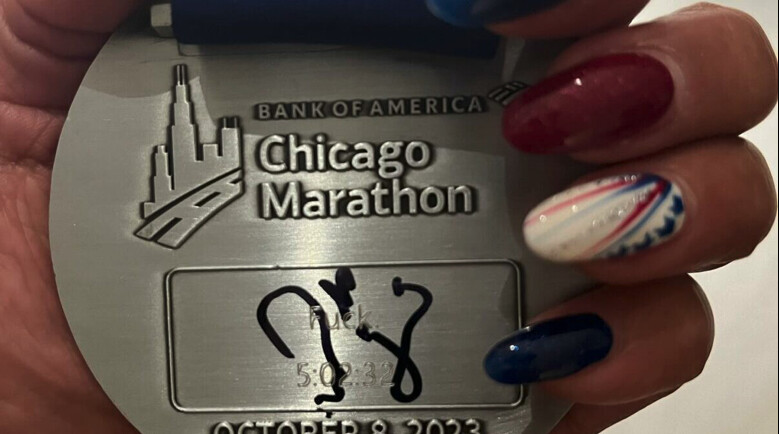

After waiting a few hours, Di Perno arrived back at the store to collect her medal. She wasn’t wearing her glasses at the time, but immediately noticed that it had the wrong time (5:02:32). Then, when she put on her glasses, her heart stopped as she read the profanity engraved onto the medal.
“This is my medal, but this is not my time or name,” says Di Perno. “And I did not ask for the F-word.”
Di Perno immediately spoke to store management, and after much confusion, they apologized for the mistake, giving her the option of a new, untarnished medal. “I did not want to give it up, because I ran for it and earned it,” says Di Perno.
Later that day, staff at the store figured out that Di Perno, whose bib number was 5773, had dropped off her medal at the store at around the same time as another runner, with a bib number 57731, dropped off her own medal, and the engravers got the two customers confused.
We reached the other runner, who told us, “I was supposed to get my medal back on Oct. 12,” and who confirmed that they requested the F-word be engraved on her medal, but declined to say why. “I haven’t heard from [Fleet Feet] and did not know [my medal] was given to someone else,” they said.
When Canadian Running showed them a photo of the medal, they were unhappy about the black marker on it, not realizing it was Linden’s signature.
Looking back on the mishap, Di Perno says she was upset at the time, but now, it’s hard not to laugh about it.
The Calgarian hopes to one day become an Abbott World Marathon Major six-star finisher, and is waiting to hear whether she’s been selected to race the Tokyo Marathon in 2024.
by Running Magazine
Login to leave a comment
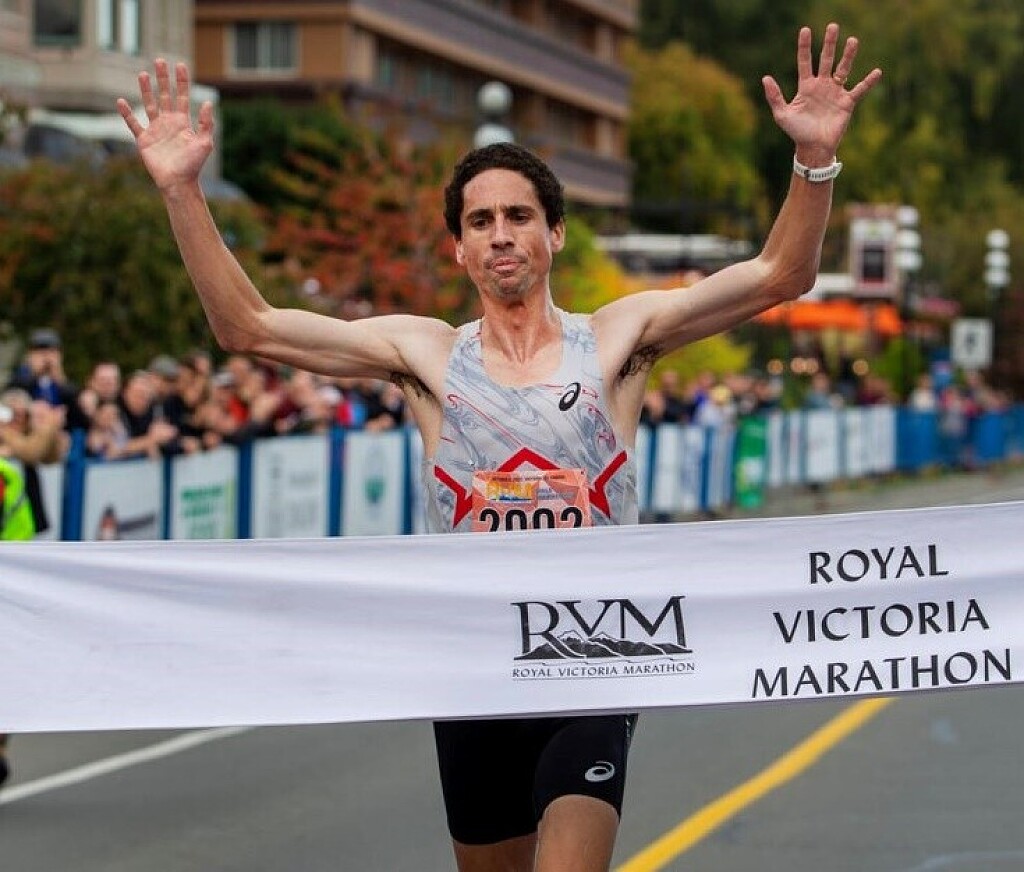
Cam Levins shatters longstanding course record at Royal Victoria Half Marathon
On Sunday, Cam Levins raced close to his home of Black Creek, B.C., winning the Royal Victoria Half Marathon in a new course record time of 61:18 in front of his friends and family in preparation for the TCS New York City Marathon on Nov. 5. Levins broke the previous record of 62:32 held by two-time British Olympian Jon Brown, which stood for 21 years.
Running close to home meant Levins was able to race in front of his 94-year-old grandmother, Fern, and his parents, Barb and Gus, who came down from Black Creek. “I am so proud of him,” said Fern Levins of Esquimalt to the Victoria newspaper Times Colonist. “It’s not very often I get to see Cameron race live.”
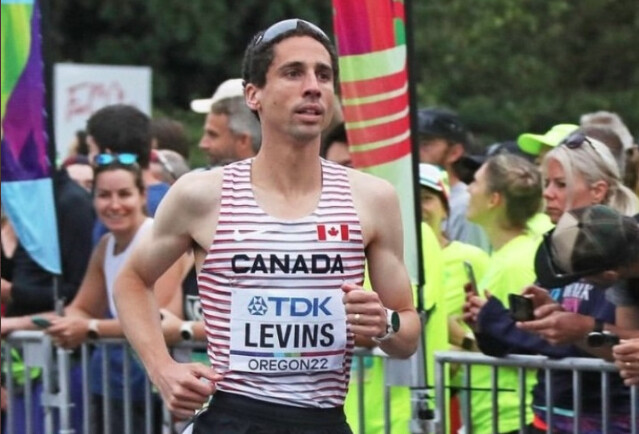
“Vancouver Island will always be my home, so racing here is extra special,” said Levins. His finishing time on Sunday was a minute shy of his Canadian half-marathon record of 60:18, set at Vancouver’s First Half last February.
The 34-year-old marathoner was slated to race in the half-marathon at the 2023 World Road Running Championships in Riga, Latvia, on Oct. 1, but changed his plans two weeks before the championships, opting to race the Victoria half instead, rather than travelling internationally.
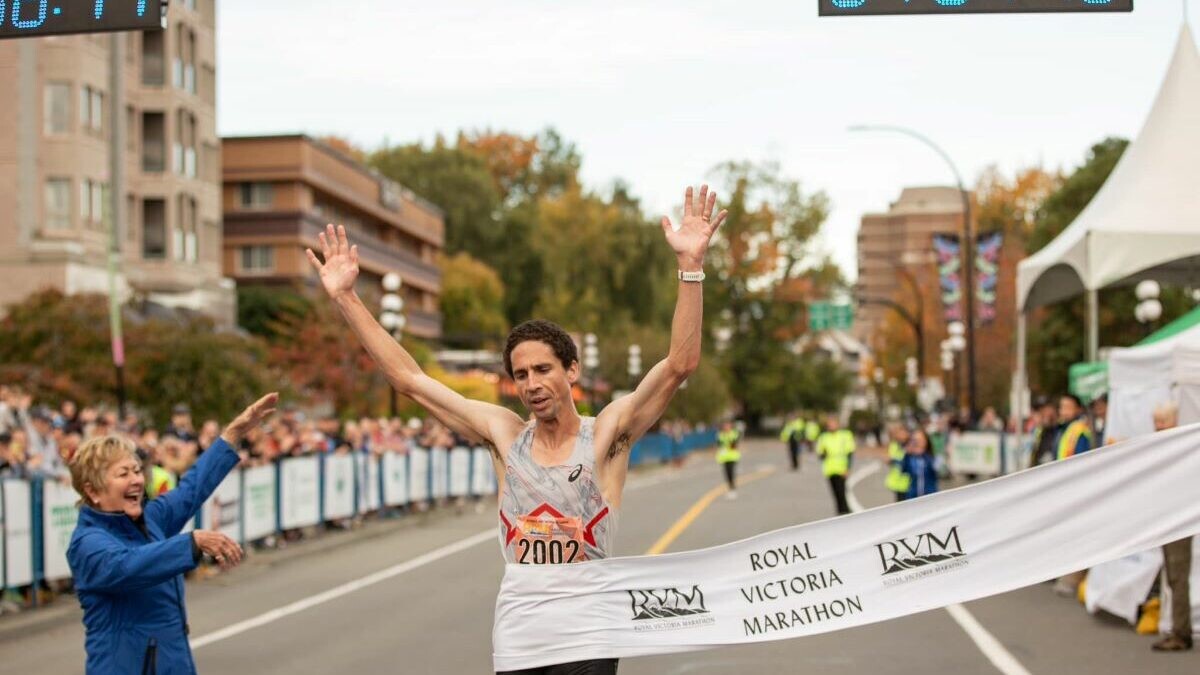
Levins finished nearly three minutes ahead of the second-place finisher, 2020 Olympic marathoner and reigning Canadian marathon champion Trevor Hofbauer, who ran to a personal best of 64:07. Kip Kangogo of Lethbridge, Alta., rounded out the podium for third in 67:46.
“I felt good about my effort today,” Levins told the Times Colonist. “It [Victoria] was definitely a hard course, much like New York, helping me to gauge, making me feel pretty good about my marathon.”
Makenna Fitzgerald of Calgary won the women’s half marathon in 1:17:30, beating second-place finisher Vancouver’s Eriko Soma by 58 seconds. Victoria’s own Carley Gering took the final spot on the podium for third in 1:18:57.
The 2023 TCS New York City Marathon will be Levins’s second marathon of the year. Last March, he broke his Canadian record in the marathon for the second time in less than a year by running 2:05:36 to place fifth in the Tokyo Marathon. This marked the fastest time ever recorded by a North American marathoner, beating Khalid Khannouchi’s mark of 2:05:38 from the 2002 London Marathon (which remains the American record). Levins’s Tokyo time was under the Olympic standard of 2:08:10 and qualified him for his third Olympic Games in Paris next July.
by Marley Dickinson
Login to leave a comment

Royal Victoria Marathon
We are one of Canada's premier running event, offering athletes an unmatchable running experience on the pristine West Coast. Our world-class, record-breaking course is designed by runners, for runners. As the only Certified Boston Qualifier on Vancouver Island, come join us to compete, to conquer and to move from warm-up to reward. ...
more...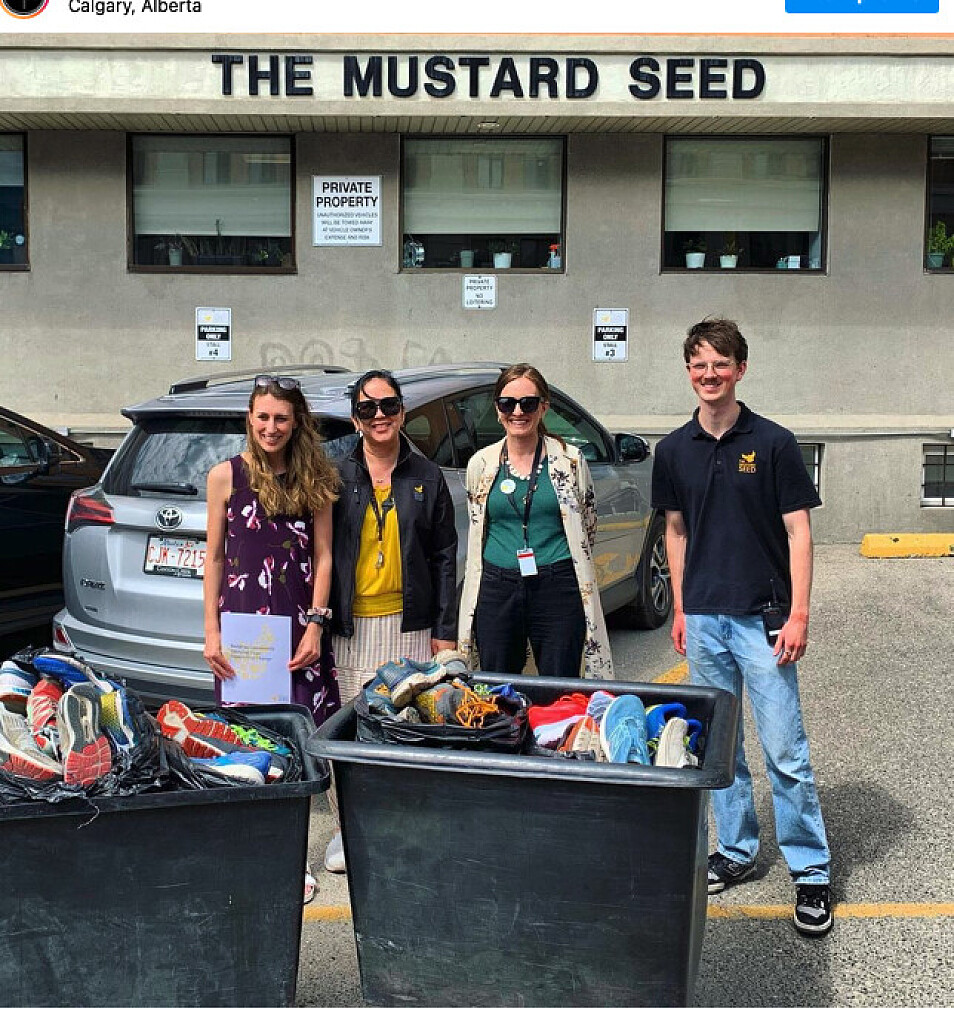
Canadian Olympian Julie-Anne Staehli gives old running shoes a new purpose
Canadian distance runner and Olympian Julie-Anne Staehli is renowned for her success in the 5,000m, but she has also made a profound impact through a project that’s close to her heart.The ReRun Shoe Project originated in 2016 during a local road race in Kingston, Ont., when Staehli and her friend, Kurtis Marlow, realized the number of shoes they accumulate each year. This gave her the idea of repurposing shoes to enable others in their physical activity. Staehli explains, “The project started with a personal donation to a local youth sports organization, which sparked the idea of repurposing shoes to make a difference in the community. With no local organization dedicated to donating lightly used shoes on a regular basis, we took the initiative to create The ReRun Shoe Project.”The primary objective of ReRun is to collect lightly used running shoes that are no longer suitable for running but that could be worn by those without access to expensive gear. By reducing the number of unused shoes and donating them to local organizations, ReRun aims to provide shoes with another purpose and enhance the lives of others.“Most of the recipients of shoes are elementary school and college students, but we have also built a network with organizations like Big Brothers and Big Sisters to ensure the shoes reach those who need them the most,” says Staehli.Julie-Anne Staehli: Run Your Way” — Canadian Running Magazine
Having grown up in the small town of Lucknow, Ont., Staehli feels personally connected to this initiative; she received her first pair of spikes through a donation. “Making physical activity more accessible and witnessing the impact, regardless of who receives those donations, is truly meaningful,” she says.
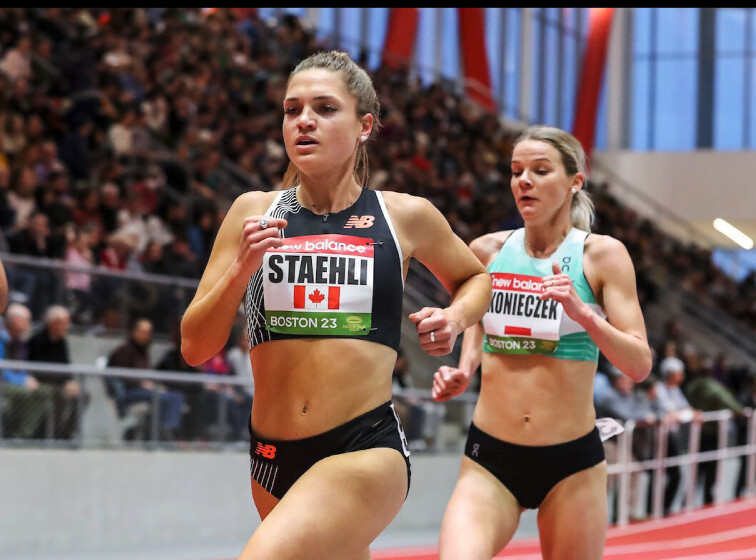
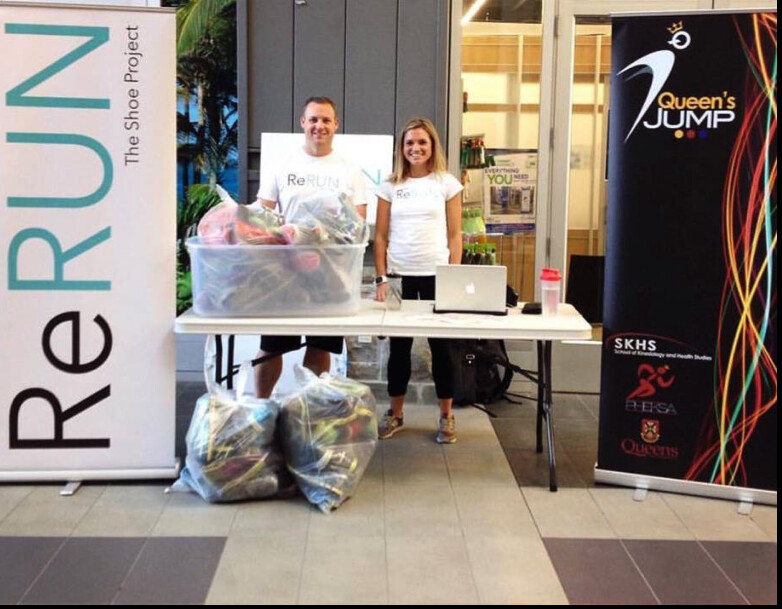
Staehli takes pride in the project’s meticulous selection process, accepting lightly used shoes with good soles that are still suitable for walking or other activities. Its mission is to ensure the shoes find their way into deserving hands.A poignant moment for Staehli and Marlow that reinforced their commitment to the cause occurred at a women’s shelter in Kingston. Staehli recalls, “We donated hundreds of shoes, mainly adult sizes, and all the shoes disappeared within the hour. This highlights the immense need for shoes in our community.”
To date, ReRun has collected more than 5,500 pairs of shoes. The project has expanded to collect donations in three stores in Kingston, two stores in London and multiple locations in Edmonton and Calgary. ReRun serves as a remarkable example of how a simple idea and a dedication to giving back can create a lasting impact on communities.y providing shoes with a new lease on life, ReRun is taking strides to make physical activity more accessible—one step at a time.
by Running Magazine
Login to leave a comment
Study finds speedwork (not hill repeats) more likely to cause stress fractures in runners
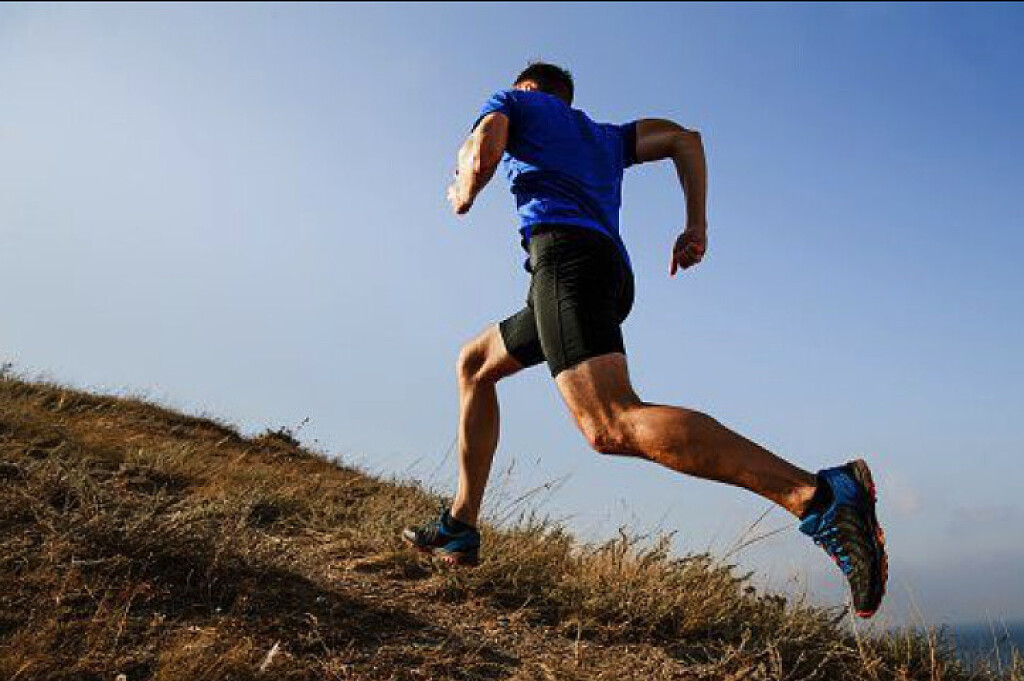
Fast efforts are more likely than tough hill sessions to lead to tibia (shin-bone) stress fractures, according to new research out of the University of Calgary. In fact, the same factors that can make hill work so gruelling might also help promote runners’ bone health.
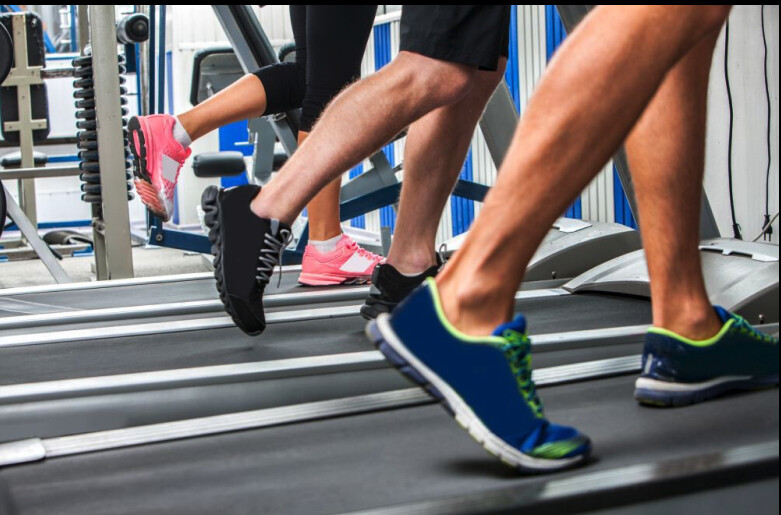
The findings come from a study in which researchers enlisted 17 volunteers for treadmill runs up to 16 km/h, at five different slopes. Through complex modeling that also pulled information from motion-capture testing and a database of computerized tomography (CT) scans of volunteers’ tibia bones, researchers were able to get insights into the type of running that places greater stress on the tibia, which in turn is more likely to result in a stress fracture.
“I’ve really been interested in running biomechanics, and in particular, understanding why people get injured,” says Michael Baggaley of the University of Calgary’s faculty of kinesiology. He tells Canadian Running that although the link between increasing training intensity and a greater risk of tibial stress fractures is well established, he and his team wanted to understand what specific aspects of training were more likely to result in injury.
“We didn’t really see a difference in the damage potential when you run uphill or downhill relative to running on flat ground,” Baggaley says of his team’s findings, “but changing the speed that you run at really did change what we consider the damage potential.”
He suggests the body’s response to the challenge of running uphill helps protect runners from shin-bone stress.
“It can be counterintuitive, because uphill running is very exhausting, really taxing, but when you run uphill, you tend to run with a very quick cadence and a very short stride length,” he says. “So it’s actually these adaptations going uphill running that minimize the loading on the bone. Inadvertently, the fact that running uphill is so tough, that it costs so much energy and oxygen, actually causes you to change the way you run into a more protective manner for our body. Conversely, when you run fast [i.e., on flat ground], you take longer strides and spend more time in the air. All that requires more force to be placed on your body.”
He says while other factors, such as previous bone injuries or malnutrition, can increase susceptibility to stress fractures, the study does make a clear connection between running faster and increasing the risk of damage to the tibia. “The faster you’re trying to run, the more likely you are to be stressing the bones to a higher degree,” says Baggaley.
The takeway for runners, he says, is to take easy runs easy, and to be careful not to introduce too much speedwork too quickly into your training. “There’s a general premise that most runners spend too much time training too fast, and most of us should spend most of our runs at an easy, conversational pace. I think the results of this work support that notion, and that many people are putting themselves at a higher risk than is necessary in order to gain the training benefits of running.”
by Running Magazine
Login to leave a comment
France wins double gold at World Mountain and Trail Running Championships
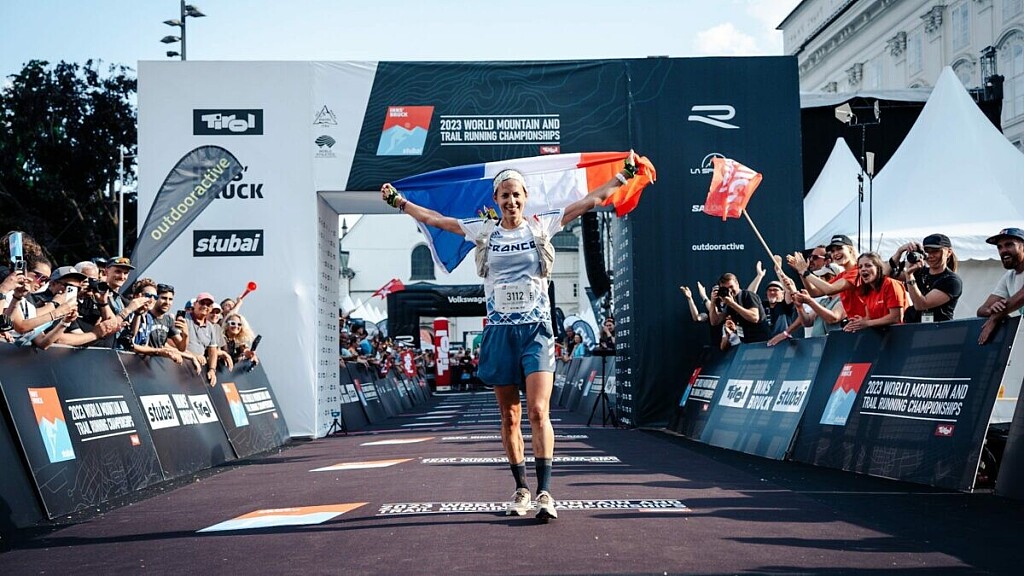
French runners pulled off a tour de force at the World Mountain and Trail Running Championships in Innsbruck, Austria, on Friday, with Benjamin Roubiol and Marion Delespierre winning gold in the men’s and women’s 86.9-km long-trail events.
Roubiol placed first in 9:52:59 and was joined on the podium by second-place Italy’s Andreas Reiterer (10:00:46), and Peter Frano from Slovakia in third (10:02:10).
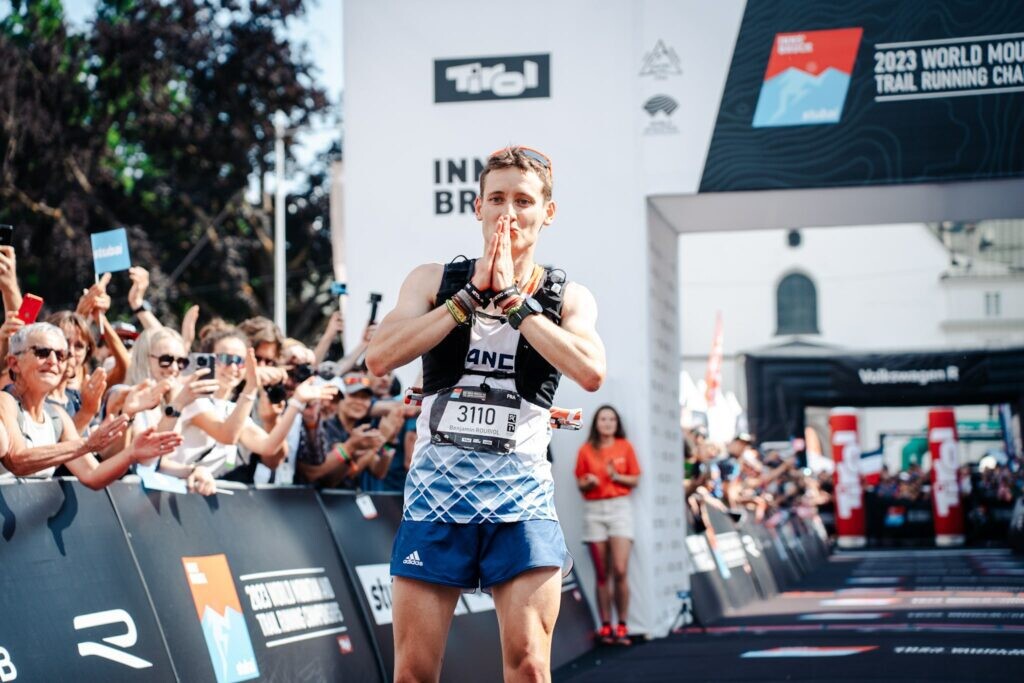
Late comeback
The 23-year-old Rubiol’s gold-medal finish came as a surprise to many, as Reiterer had situated himself firmly in the lead for more than 45 kilometres. The Italian was running solo at times, leaving a changing field in pursuit up to six minutes behind. But after having passed three peaks and the flat approach to Kranebitten, the climb up to the Nordkette caused Reiterer trouble, allowing Roubiol to pass the Italian just before the Aspach hut.
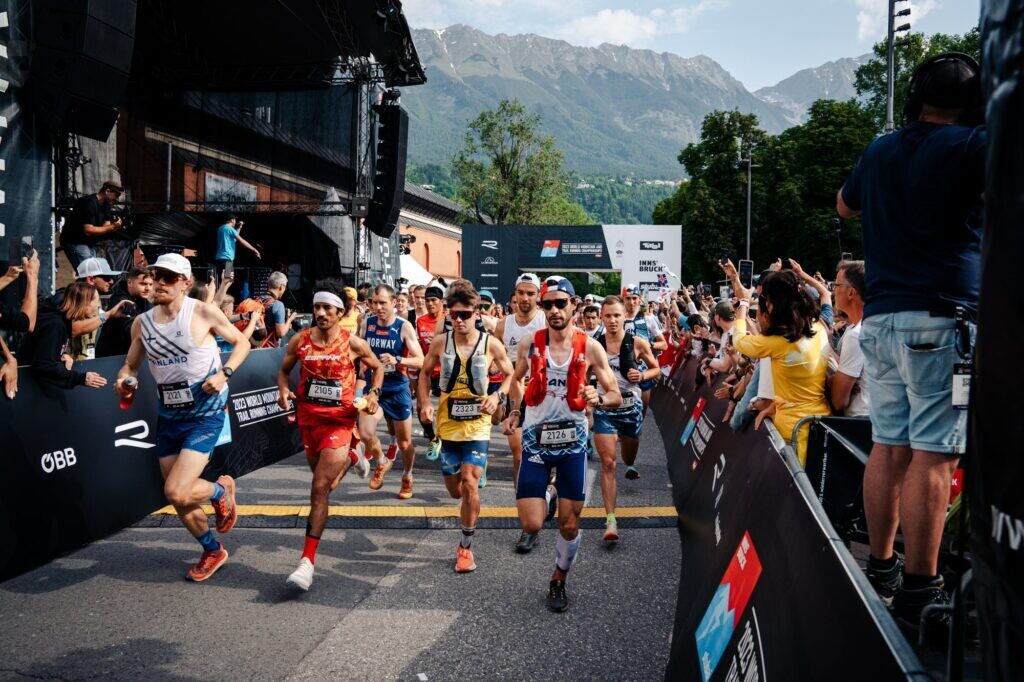
France punctuated Roubiol’s stunning performance in Innsbruck by claiming two podium spots in the women’s long trail race. Delespierre won the event in 11:22:31; Germany’s Katharina Hartmuth ran 11:29:14 to place second, and France’s Manon Bohard Cailler finished third in 11:34:22.
How the Canadians did
The Canadian women’s team finished eighth overall out of 27 teams, led by Calgary’s Arden Young, who placed 34th overall in 13:10:54. Anne-Marie Madden and Mylene Sansoucy both landed inside the top 50 to solidify Team Canada’s top-10 result. The men’s team wound up 13th of 33 teams with all five men placing inside the top 70. Jean-Philippe Thibodeau of Quebec was the top Canadian in 46th place, an hour and 23 minutes back of the leaders. Thibodeau won the Quebec Mega Trail 50K in June 2022.
Thursday’s races
France’s impressive showing Friday came on the heels of the country taking gold in Thursday’s women’s 45.2-km short-trail event. Clementine Geoffray won the race, covering 3,121 verticle metres from Innsbruck to Neustift im Stubaital in 4:53:12 ahead of two Swiss runners; Judith Wyder placed second in 4:55:13, followed by Theres Leboeuf for third (5:09:29).
In Thursday’s men’s short-trail event, Norway’s Stian Angermund ran 4:19:00 to successfully defend his short-trail title against second-place British runner Thomas Roach (4:21:18) and Italy’s Luca del Pero, who finished third in 4:22:04. Angermund and Roach took the lead soon after the start in the centre of Innsbruck, running the first 14.15 kilometres in a trio with Britain’s Jonathan Albon before Angermund was able to pull away. The route to the Kalkkögel leads over slippery fields of snow, and Angermund managed to extend his lead to more than 90 seconds. It briefly appeared the race could get close again as Angermund slowed down to a walking pace just before reaching the route’s highest point at the Starkenberger hut. On the downhill, weaving through the avalanche barriers down to Neustift, Angermund accelerated again and was able to keep his competitors at bay, allowing him to run down the final switchbacks to Neustift without pressure.
by Running Magazine
Login to leave a comment

World Mountain and Trail Running Championships
Welcome all athletes, officials, coaches, and families to THE AMAZING THAILAND WORLD MOUNTAIN & TRAIL RUNNING CHAMPIONSHIPS 2021 (WMTRC2021). The event will feature 80km and 40km trail races, classic up and down and uphill only mountain races. It replaces World Championships previously hosted with World Athletics, WMRA (mountain running) and IAU and ITRA (trail). The Amazing Thailand World Mountain and...
more...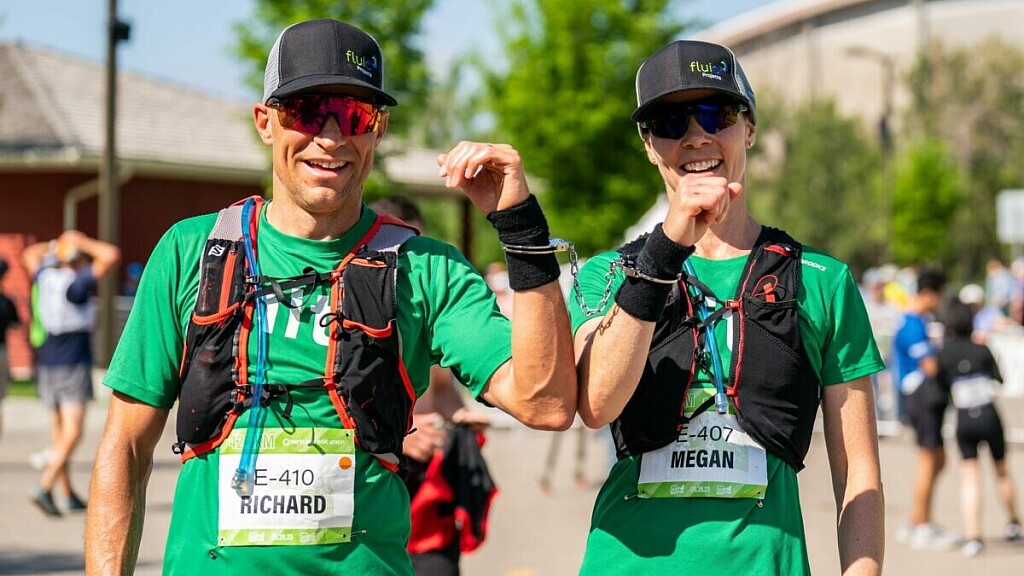
Handcuffed couple lock in world record at Calgary Marathon
A Calgary couple toasted 20 years of marriage with a new world record Sunday after running the Servus Calgary Marathon handcuffed to one another. Megan and Rich MacDonald completed the 42.2-km distance in 3:18:28, setting the record for the fastest marathon run by a male-female duo tethered at the wrist.
The MacDonalds shaved 25 minutes off the previous record set at the 2019 London Marathon. In addition to hitting their target time, the couple also surpassed their fundraising target of $8,000 for MitoCanada, a charity that helps support and protect Canadians living with mitochondrial disease. The couple began training for their world-record attempt in February.
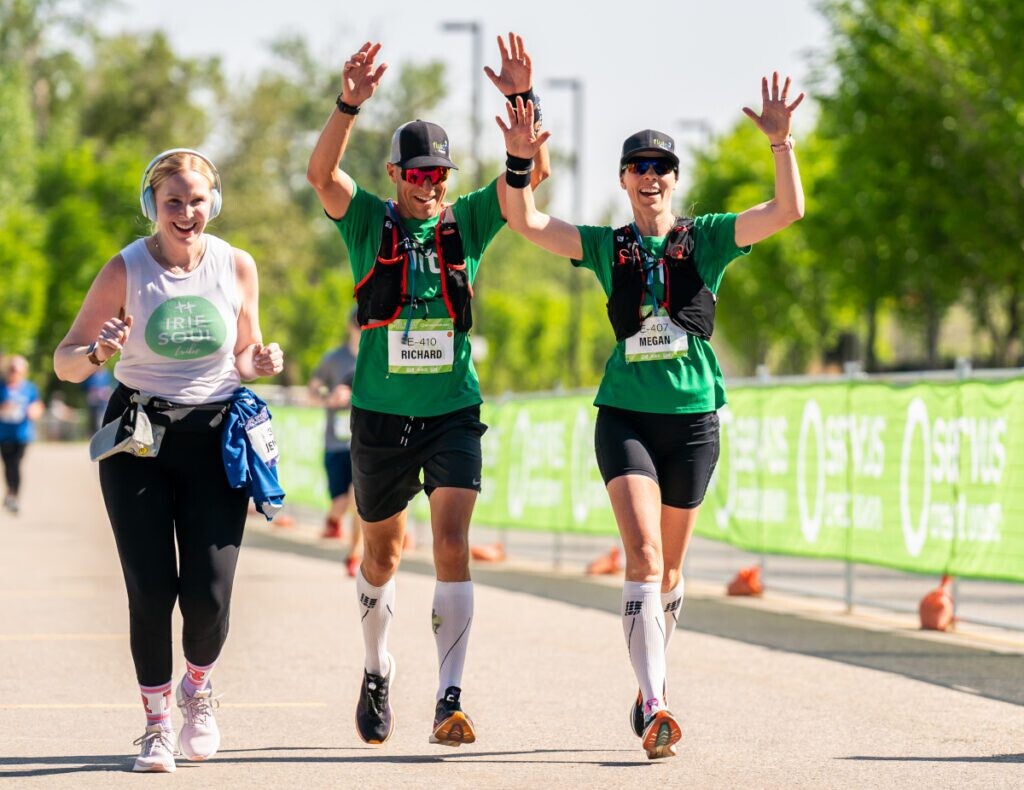
Sunday’s event wasn’t the first time the MacDonalds locked in a world record at the Calgary Marathon. In 2017, Megan was part of the 10-member Team MitoCanada who set the Guinness World Record for the fastest marathon run by a female team linked together (3:27:58). That same year, Rich was part of the 112-person team who set the record for the most people to finish a marathon linked together.
Sunday’s event wasn’t just a marathon to remember for the MacDonalds, but for a race day that continues to build its post-pandemic momentum, said John Bird, interim executive director with Run Calgary. “Today’s race went so well, and we were delighted to welcome more than 9,200 people to the finish line,” said Bird. “We had our highest attendance since the pandemic, raised more than $475,000 for charity, and brought together the running community in a great celebration of health and wellness. I’d like to thank the 1,100 plus volunteers who gave their time to help others achieve their goals today.”
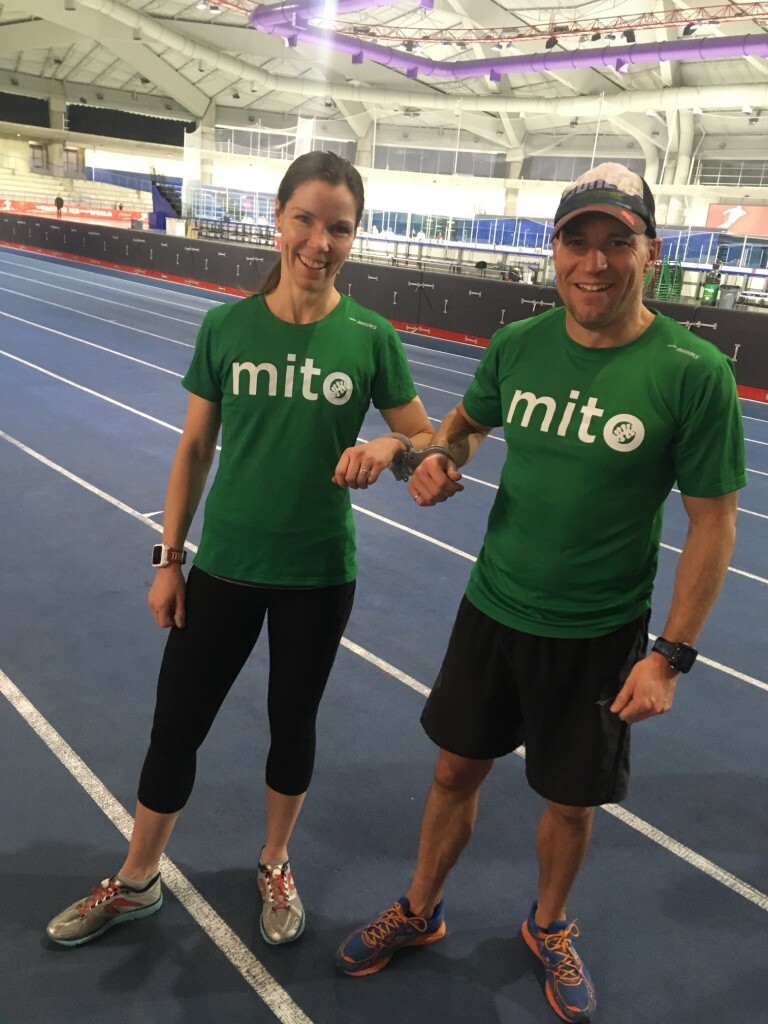
The men’s marathon was won by Lance Risseeuw in 2:36:04, and the women’s event by Maria Zambrano, in 2:48:02. Both winners are from Calgary.
In addition to the marathon, which drew close to 1,200 participants, the race day included 50-km, half-marathon, 10-km, and 5-km events, as well as a 1.2-km “kids marathon.”
In total, 93 charities benefited from donations collected through this year’s marathon, with $475,000 being collected as part of the Servus Charity Challenge. The event has raised $9.7 million for charities over the last 12 years.
by Paul Baswick
Login to leave a comment
Scotiabank Calgary Marathon
This is Canada's oldest marathon, Canadians and runners from around the world love this race, consistently voting in the Best Road Race in Alberta. There is a 50k, full-marathon, half-marathon, 10k, 5k family walk/run and kids races. You expect the route to be packed with participants and enthusiastic spectators. ...
more...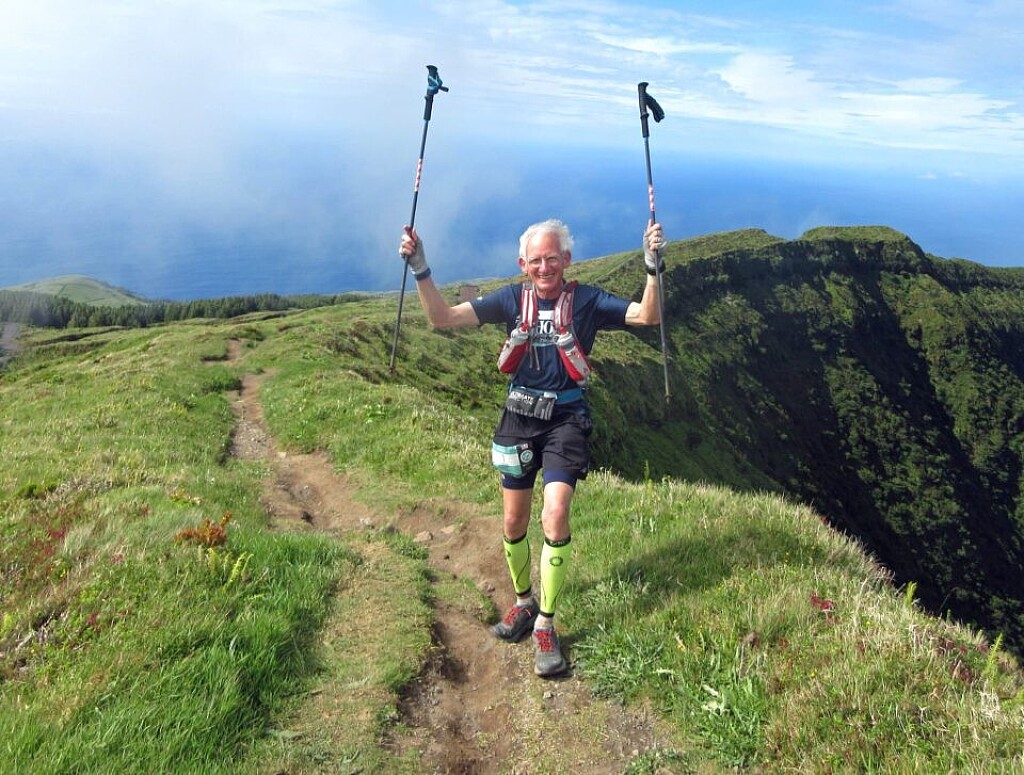
Gene Dykes hopes to become oldest Western States finisher
Gene Dykes, the record-setting 75-year-old ultrarunner from Philadelphia, will hit the trail this summer in a bid to become the oldest finisher in the history of the 100-mile Western States Endurance Run.
This year’s event, which takes place June 24-25 in Auburn, Calif., will mark the race’s 49th year.
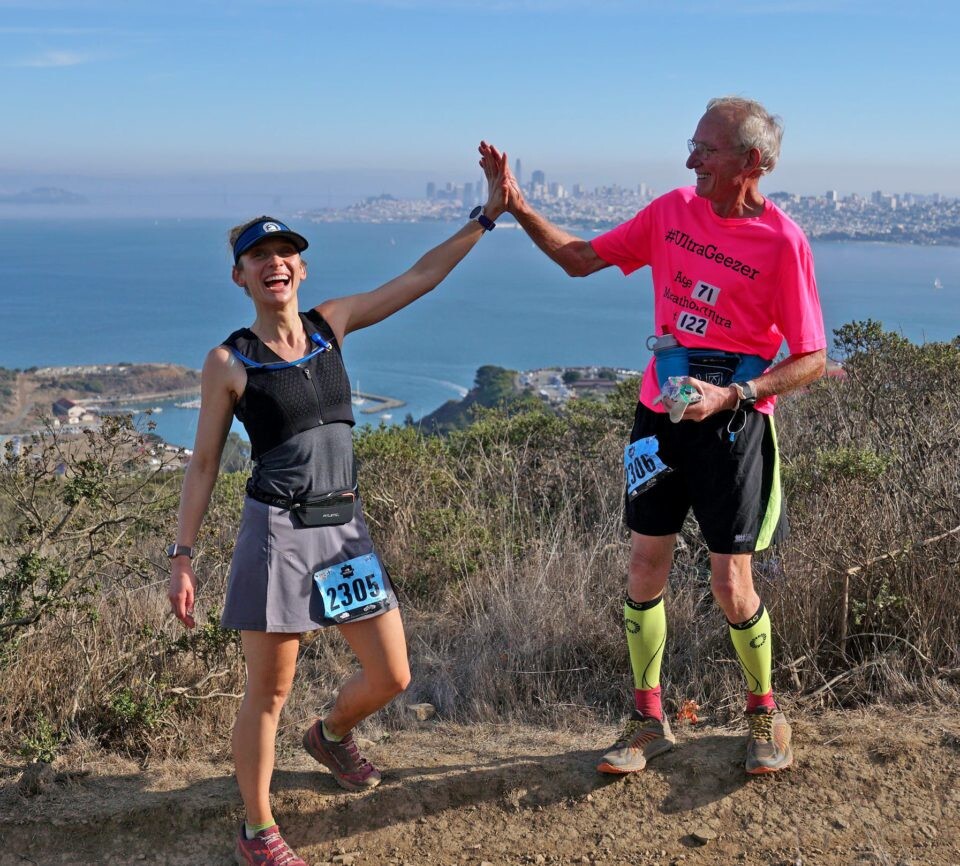
The current oldest finisher is Nick Bassett of Cheyenne, Wy., who finished the 2018 race in 29:09. (The cutoff for all finishers is 30 hours.) Bassett was 73.
A self-proclaimed “ultra geezer,” Dykes started competing in races when he was in his 60s and has since broken multiple records for his age group. In 2021, he broke the M70 50K world record at the USATF national 50K road championships in East Islip, N.Y., crossing the finish line in 3:56:43 and beating the previous record of 4:15:55, set by Germany’s Wilhelm Hofmann in 1997, by nearly 19 minutes. Dykes broke the M70 100-mile and 24-hour track records at the Dawn 2 Dusk 2 Dawn 24-hour ultramarathon in Sharon Hill, Penn., in 2019.
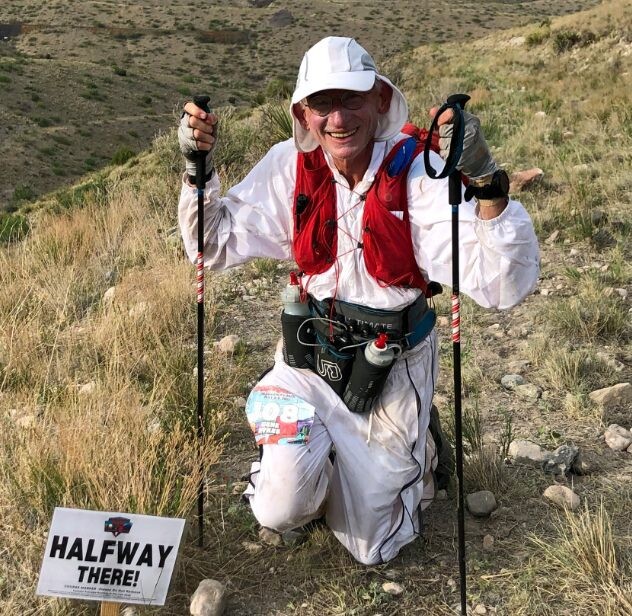
In 2018, Dykes ran his fastest marathon time—2:54:23—at age 70 at the Jacksonville Marathon in Florida. The result would have seen him take the world M70 marathon title from former record holder Ed Whitlock, but Dykes’s final time was not ratified due to the race not being a USATF-sanctioned event.
In total, Dykes has run 157 marathons and ultras since 2006. His daughter Hilary will pace him at this year’s WSER.
Dykes is being sponsored in his latest effort by Calgary-based Stoked Oats. As part of their support, the company has kicked off its Breakfast with Gene series on Instragram and YouTube. The series will feature guests including Vancouver-based WSER female record holder Ellie Greenwood, three-time WSER racer Michael Wardian and race director Craig Thornley.
In 2016, 72-year-old Wally Hesseltine made a valiant and heartbreaking attempt to break the “oldest finisher” record, but missed the 30-hour cutoff by two minutes.
“We are thrilled to be supporting Gene on his journey to WSER,” says series host and Stoked Oats founder Simon Donato. “Running 100 miles is a tall order for professional runners, let alone someone in their 70s. What Gene is trying to accomplish is truly remarkable and we’re looking forward to supporting him every record-setting step of the way.”
Western States, first run in 1974, is the world’s oldest 100-mile trail race and one of the most prestigious. Each June, 369 runners from across the United States and around the world embark from the start line in Olympic Valley, Calif., to tackle a challenging course to the coveted finish line at Placer High School in Auburn.
by Paul Baswick
Login to leave a comment

Western States 100
The Western States ® 100-Mile Endurance Run is the world’s oldest and most prestigious 100-mile trail race. Starting in Squaw Valley, California near the site of the 1960 Winter Olympics and ending 100.2 miles later in Auburn, California, Western States, in the decades since its inception in 1974, has come to represent one of the ultimate endurance tests in the...
more...
UTMB World Series introduces new pregnancy policy
Organizers of the UTMB World Series—billed as the world’s ultimate trail-running circuit—say they have committed to supporting mothers and their partners by introducing a new pregnancy policy that will apply to UTMB World Series events in the 2023 season.
The policy (which includes deferral and priority entry guidelines for athletes who are pregnant, athletes with a partner who is pregnant and athletes who are adopting or birthing via surrogacy) encourages runners to return to the trails in a safe way and within a timeframe that is considerate of individual circumstances following birth.
For events with an entry lottery, including UTMB Mont-Blanc, Lavaredo Ultra Trail by UTMB and Eiger Ultra Trail by UTMB, the policy states women will be given a full refund and priority entry to be used within five years for races in the 50K, 100K and 100M categories, and within two years for 20K races.For all other events, the policy allows for women who become pregnant after registration to defer their entry for up to two years for the same race, or receive a full refund.
Partners of pregnant women as well as parents who are adopting or birthing via surrogacy will have the option to defer their entry for up to two years or receive a full refund.
Organizers say the policy was created following a lengthy consultation process, which included gathering expertise from sports and medical professionals, the Pro Trail Runners Association, and athletes such as Sophie Power, who made headlines in 2018 when a photo of her breastfeeding midway through UTMB went viral.
“I’m delighted that UTMB World Series is launching a world-leading pregnancy deferral policy that supports all women to return to racing when they are ready,” said Power, founder of SheRACES. “At SheRACES we look forward to continuing to work with UTMB World Series going forward, sharing our insights to ensure more women from all backgrounds participate in these iconic events.”
UTMB World Series organizers say the new policy comes as part of an effort to encourage more women into the sport and to build on UTMB Group’s commitment to equal opportunities. In line with the actions put in place in previous years, in 2023, male and female elite athletes will be equally represented on the start line of all three UTMB World Series Finals races at the sports pinnacle event UTMB Mont-Blanc, thanks to the new sports system, which sees elite athletes qualify through a series of events throughout the year.
UTMB World Series adds it also remains committed to equal media coverage and representation on communication platforms including UTMB Live, as well as equal prize money for male and female athletes.
UTMB is one of several prominent races—including Western States, the London Marathon and the Calgary Marathon—to have recently introduced policies aimed at supporting mothers and pregnant athletes.
by Paul Baswick
Login to leave a comment

North Face Ultra Trail du Tour du Mont-Blanc
Mountain race, with numerous passages in high altitude (>2500m), in difficult weather conditions (night, wind, cold, rain or snow), that needs a very good training, adapted equipment and a real capacity of personal autonomy. It is 6:00pm and we are more or less 2300 people sharing the same dream carefully prepared over many months. Despite the incredible difficulty, we feel...
more...
Amber Zimmerman captured the Philadelphia Marathon on her home course on a frigid day as Dominic Ondoro, a Kenyan who lives in Texas, won the men's race
As the sun began to light Ben Franklin Parkway and the city’s skyline on Sunday morning, spectators and competitors were warming up for the coldest Philadelphia Marathon since 1994. Hands and feet were cold, and even contact lenses froze.
Yet spirits prevailed as the city showed up for those who prepared for this day months in advance.
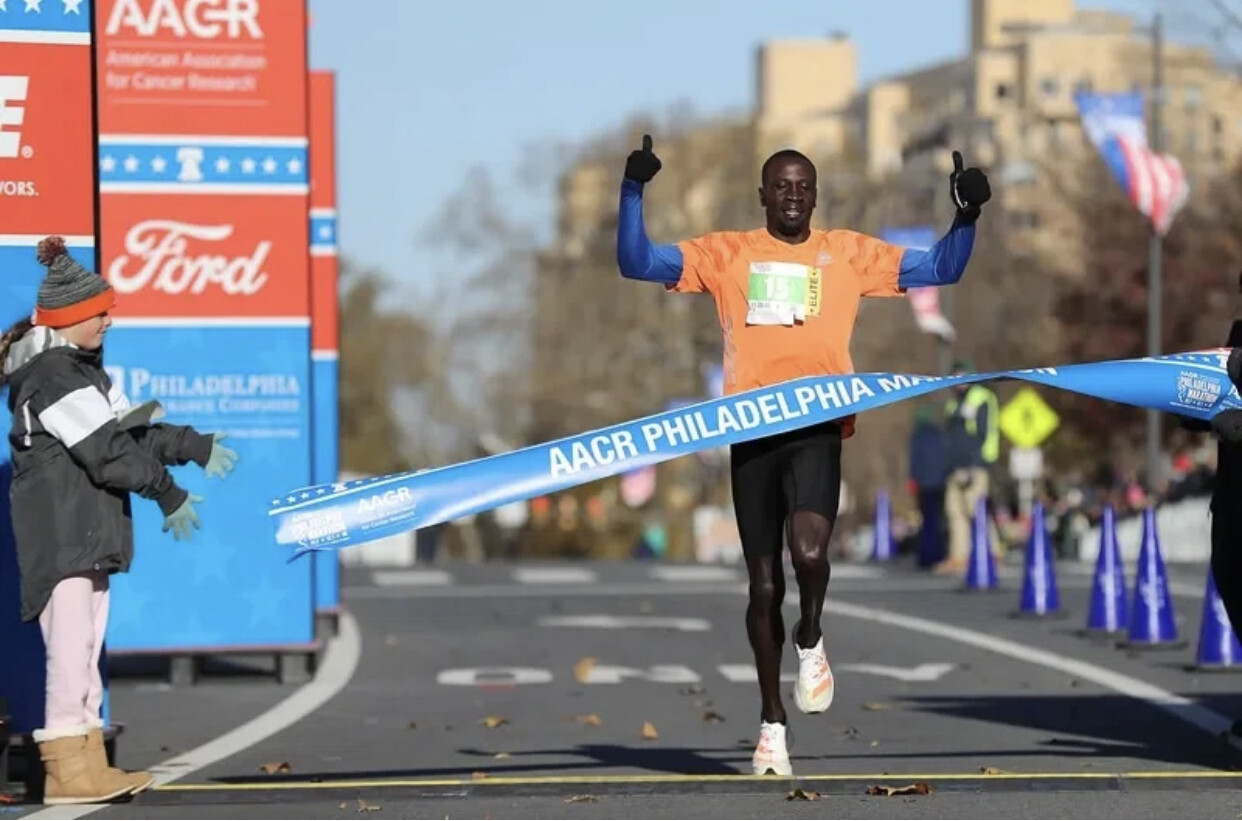
“I had a phenomenal group of people that last half mile before we made that turn up Kelly Drive, and that saved my life,” said women’s winner Amber Zimmerman, who recently moved to the city.
The temperature at the start was 35 degrees, but the wind made it feel like the low 20s. Eleven miles of the marathon were concentrated in Center City, blocking the wind somewhat. However, at the finish, the wind was fierce along Boathouse Row and Kelly Drive.
“The race was good, but there was a lot of wind,” said men’s champion Dominic Ondoro, who thought he was slowing down because of the gusts. “I enjoyed the course.” The Kenyan runner who lives in Texas broke away from the pack in the last few miles, finishing in 2 hours, 14 minutes, 20 seconds, followed by Gilmar Lopes of Brazil and Bernard Kiprop Koech of Kenya.
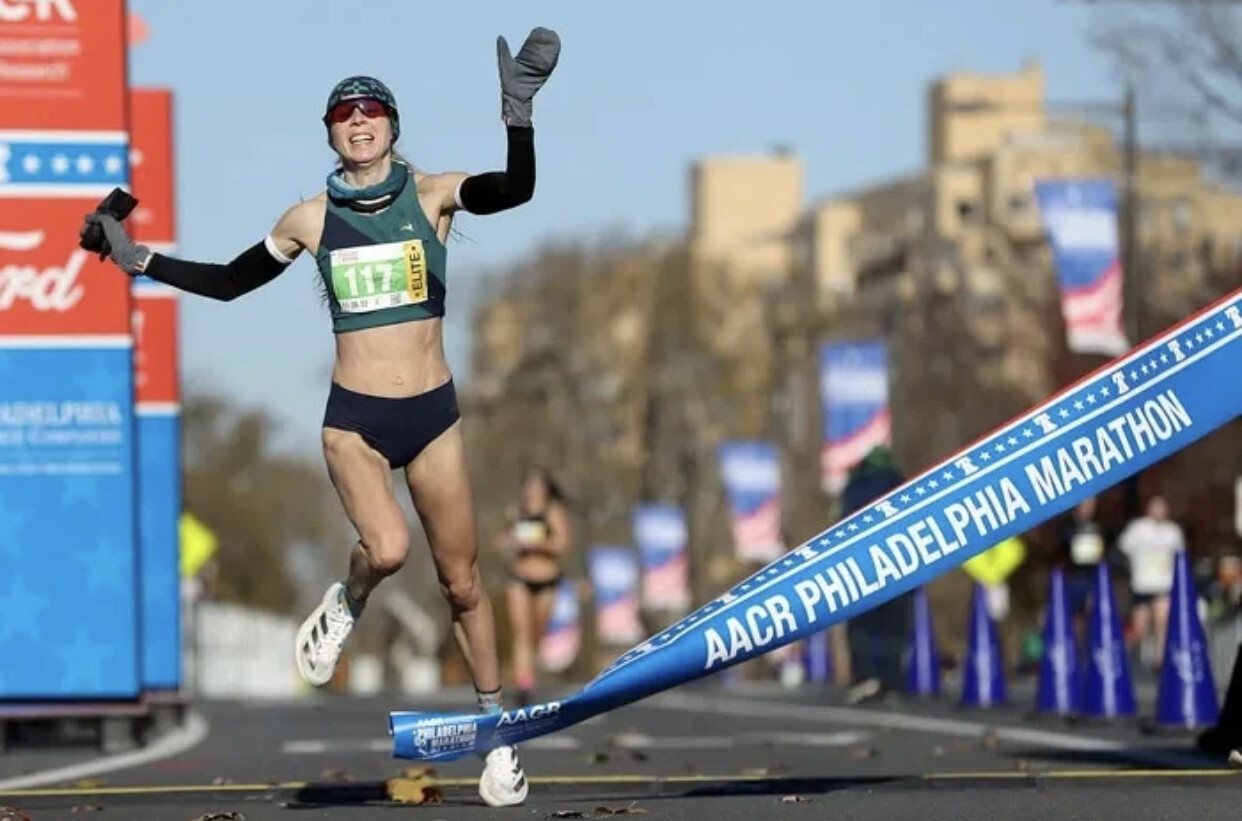
Zimmerman triumphed in 2:31:35, her new personal best. Maegan Krifchin of Long Island was second and Fantu Zewude Jifar of Ethiopia took third.
“They’re great runners and they’re brave runners,” Zimmerman said. “And I thought, you know, I’m going to try to be a brave runner to put myself in it.”
In the first half of the race, Zimmerman said she felt strong but hit a wall in Manayunk where her body started hurting. Nevertheless, she pushed to the finish, knowing that others were close behind. A regular runner since 7 years old, she posted her first win in her new city.
“I was thinking about that this week. I get a little bit teary about it,” she said when asked about her journey. “I really tailored my training. I coached myself and I played around with a lot of harder, longer runs, and that really worked out for me this time. I’ve been trying to make myself tougher.”
First-place finishers take home $10,000, plus an extra $1,000 for Zimmerman as a Philadelphian. What will she spend it on? Her blue heeler Doughnut (an Australian cattle dog), she said, pointing to her socks featuring blue doughnuts.
“He’s really sweet and I told him I was going to run this race for him and I was going to win for him,” Zimmerman, who ran at the University of New Mexico.
This year’s marathon was a notable one for the city, as a nonbinary category was added for the first time. Fifty-five runners registered in the category and race director Kathleen Titus said he believes it will grow in years to come, along with prize money for these athletes as well as para-athletes.
“You look at it and it’s a city of diversity as well as adaptivity,” she said. “... Whatever type of an athlete you are, if you’re a runner, we want you to feel that you can come to Philadelphia and participate as you are, in the ability that you are.”
The city also cheered on its first marathon long boarder, Chris Koch, who completed his 13th marathon. The 40-year-old Canadian was born with a partially developed right leg and foot. Shortly after he pedaled across the finish line, he joked, “I couldn’t feel my fingers the whole time.”
Koch completed his first marathon in 2016. “I guess I’m a glutton for punishment,” he said. “It’s a great challenge. I’m a motivational speaker and I encourage people to keep raising the bar and keep pushing themselves. I don’t want to be just talking the big talk.”
Sporting a Bobby Clarke Flyers jersey and blacked-out front teeth, Koch looked the Philly part. After visiting the city when he was speaking nearby, he decided to add it to his marathon list.
“I literally boarded out Ben Franklin Parkway to the Rocky stairs, climbed up the Rocky stairs,” he said. “... I’ve always found marathons [to be] a neat way to see the city.” Koch plans to attend the Flyers-Calgary Flames game at the Wells Fargo Center on Monday night.
Celebrations are in order for Koch and all the finishers. Runners will travel back home, rewind on the Thanksgiving holiday, and return to the grind soon enough.
When asked if she would be running on Monday, Zimmerman said she is probably going to walk. Probably.
by Bridget Reilly
Login to leave a comment

Philadelphia Marathon and Half
Have the time of your life in 2022 completing 13.11 miles! Runners will start along the Benjamin Franklin Parkway in the cultural Museum District and wind through Philadelphia’s most scenic and historic neighborhoods. From the history-steeped streets of Old City, through one of the liveliest stretches of Center City, across the Schuylkill River...
more...
Yoshihiko Ishikawa wins Badwater 135 for the 2nd time
The male course record holder celebrated his second victory, while American Ashley Paulson's new female course record raised a few eyebrows
The 45th anniversary of the Badwater 135 race wrapped up Wednesday, with no shortage of both heat and excitement. Yoshihiko Ishikawa of Japan took his second victory at the race, running negative splits to finish in 23:08:20. Ishikawa previously set the course record at Badwater 135 in 2019, in 21:33:01. He famously followed his win by proposing to his then-girlfriend, and the couple has since married.
The famously gruelling Badwater 135 starts at Badwater in California’s Death Valley at 85 metres below sea level (the lowest elevation in North America), taking runners 135 miles (216 km) through Death Valley and up Mount Whitney, reaching 2,548m of altitude at its highest point. Temperatures have been known to soar well above 100 F (37 C). The cutoff time is 48 hours, and the average finishing time is 40 hours. As at the Western States Endurance Run, finishers receive a much-coveted belt buckle. There is no prize money for winners. The race is invitational, and 94 athletes started the event this year, with 77 finishing.
Fan favourite and last year’s winner Harvey Lewis, of Cincinnati, finished his 11th Badwater in fourth place with 27:16:05, while his partner, Kelly O’Dell, completed her first Badwater with just over an hour to spare, in 46:57:33.Ultrarunner and race director Bob Becker, 77, of Fort Lauderdale, attempted to become the race’s oldest finisher. In a heroic effort, Becker made it across the line just over the 48-hour cutoff. The athlete made an attempt at the same title last year, but had to drop at mile 50. His dedication won the hearts of fellow athletes and supporters as he struggled to complete the last few steps of the race.
Two Canadians competed in Badwater 135 this year. Norma Roberts, 63, of Calgary, finished in 37:00:13 and was the 11th female, while Rich Peers, 51, of Kitchener, Ont. finished in 44:13:01.
Login to leave a comment

Badwater 135
Recognized globally as "the world’s toughest foot race," this legendary event pits up to 90 of the world’s toughest athletes runners, triathletes, adventure racers, and mountaineers against one another and the elements. Badwater 135 is the most demanding and extreme running race offered anywhere on the planet. Covering 135 miles (217km) non-stop from Death Valley to Mt. Whitney, CA, the...
more...
Dave Proctor ends his cross-Canada run in Victoria after 67 days
Right on schedule, Dave Proctor of Okotoks, Alta. wrapped up his cross-Canada record quest in Victoria late Thursday afternoon. Proctor completed his 7,159km run after 67 straight days of running, and (pending verification) will have topped Al Howie’s cross-Canada speed record of 72 days, 10 hours, set in 1991. Proctor began this record attempt with a hat dip in St. John’s, and has been steadily running around 105 kilometers a day across the country, bumping that distance up to 107 km over the last few days to be certain of hitting the target.
This was not Proctor’s first attempt at the record; in 2018, running in the other direction, he was beset by a back injury and forced to quit in Manitoba after 32 days on the road. He then had to put off making his record attempt due to COVID. He shared gratitude for the journey in a social media post Thursday evening, calling the experience “priceless.”

Proctor is one of Canada’s most accomplished and best known ultrarunners. He holds course records at races including Lethbridge, Alta.’s Lost Soul Ultra (where he ran the 100-miler in 2021 in 19:05:00, beating his own previous course record of 19:27:00); he set the 48-hour Canadian record at 6 Days in the Dome in 2018 (358.163 km); in addition, he holds Canadian records over 24 hours (257.093 km) and 72 hours (500.077 km).
Proctor shared daily posts on Instagram that included his mileage, a ‘ditch find’ of the day, and his daily progress. In a recent post thanking the watch brand Coros for their sponsorship, he mentioned that he would be making his COROS data available post-run, but warned, “they’ll be big files.”
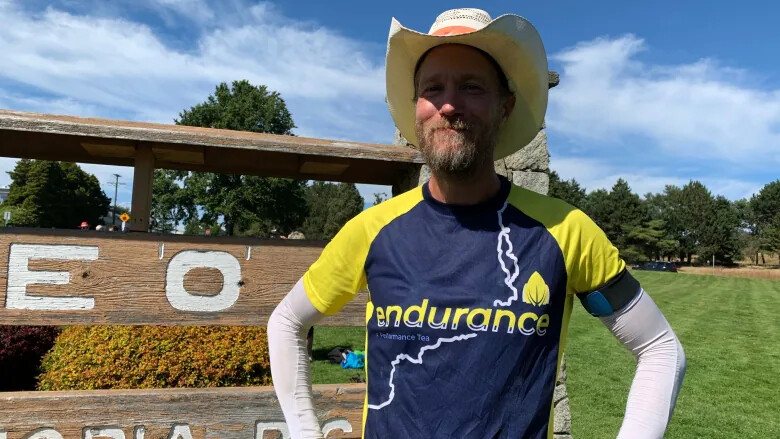
American ultrarunner Pete Kostelnick is familiar with a journey like Proctor’s: he holds the trans-American speed record of 42 days, 6 hours, 30 minutes. Kostelnick spoke to Proctor on Thursday during the final leg of his run, and shared some insight into how he is probably feeling right now.
“It’s bittersweet, but mostly sweet. After over two months, Dave’s new normal is very simple–eat, run, rest, repeat. Soon he’ll be back to ‘normal’ life, which, quite honestly, is a shock to the body and mind. In something like this, I think also a lot of the reward comes while you’re doing it,” Kostelnick said. “It’s a powerful feeling to know you just ran another 105 km yesterday, today and will keep doing it day after day. Once you’ve done it, you have so much to celebrate and be thankful for, but part of you is also thinking “well, what now?” My best advice to him today was to spend some time running alone and reflecting on the whole experience as he nears the finish line.”
Proctor was joined across the country by various friends, family members and fellow ultrarunners, who crewed and logged kilometres with him for anywhere from six days to over two weeks. Calgary-based ultrarunner Joel Campbell spent nine days with him, and has also paced him at local races. He feels Proctor’s strongest ability is his mental stamina.
“[It] is what puts him on the shortlist of elite multi-day runners out there,” Campbell says. “A lot of it has to do with his courage and the willingness to put himself on the line for failure, and high-profile public failure at that. Scrolling through the comments on his social media posts, I’m struck by how many people mention their own running triumphs, but more often, their missed attempts. Most of us have bonked in a race at some point, and to see him be willing to try again and now achieve his goal, seems to inspire others in whatever pursuits they’re facing.”
Kostelnick agrees: “He’s stubborn! This accomplishment for him has been in the making for years, and there were so many times when almost anyone but Dave would have said ‘well, maybe it’s not for me. Time to move on.'” Proctor faced both mental and physical challenges on the road and shared some of them with his fans on social media, including his struggle with not seeing his kids for so long and the physically painful start to each day.
Proctor touted both Howie and Terry Fox as inspiration on the road, sharing his thoughts on day 39 as he ran on the stretch of highway where Fox was forced to end his own trans-Canada run: “On this road, on this day I was schooled in the lessons of courage, determination, and belief that I thought I understood prior to this run but now know that I knew nothing.”
Proctor’s partner, Lana Ledene, shared her perspective on social media Wednesday evening. She wrote about watching Proctor log miles seemingly without effort, and the immense suffering and exhaustion she witnessed at the end of each day. Ledene asked Proctor how he managed to keep going: “He said he doesn’t think about the pain, he blocks it out and does not allow it to occupy any space in his thoughts.” She adds: “Without a doubt, Dave’s superpower is not his legs, it’s his mind.”
Post-run Thursday, Proctor shared that he was looking forward to coffee in bed, and added: “I’ll be taking tomorrow off running.”
by Keeley Milne
Login to leave a comment
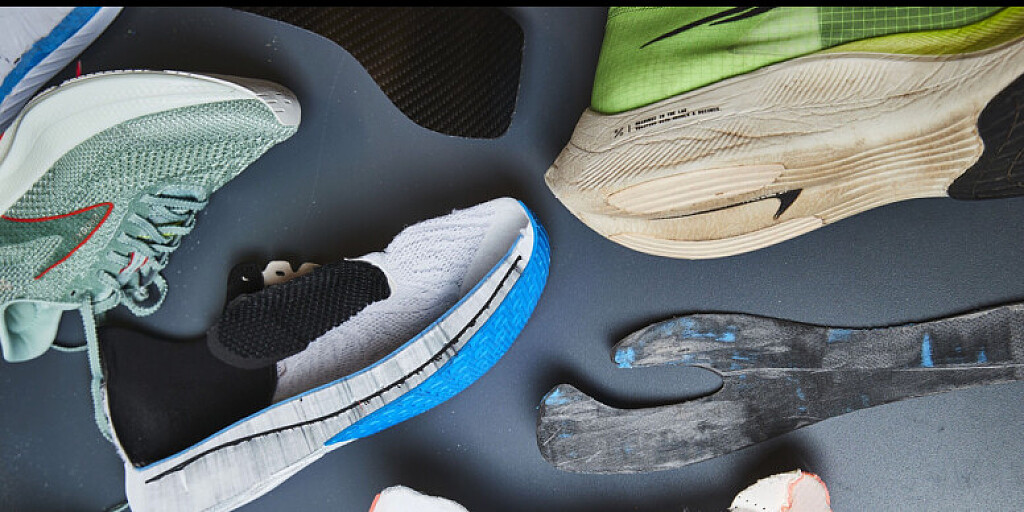
Demystifying Carbon Fiber, A Key Super Shoe Ingredient
The plate is just one part of a midsole’s secret sauce.
Four years ago, Nike launched the Vaporfly 4%, enthralling us with the promise its name implied: a 4-percent boost in running economy. Before the shoe’s release, Eliud Kipchoge wore the Vaporfly while attempting to run a marathon in less than two hours in 2017’s Breaking2 Project. He eventually succeeded two years later in the Alphafly Next%, the Vaporfly’s beefed-up, controversial descendant.
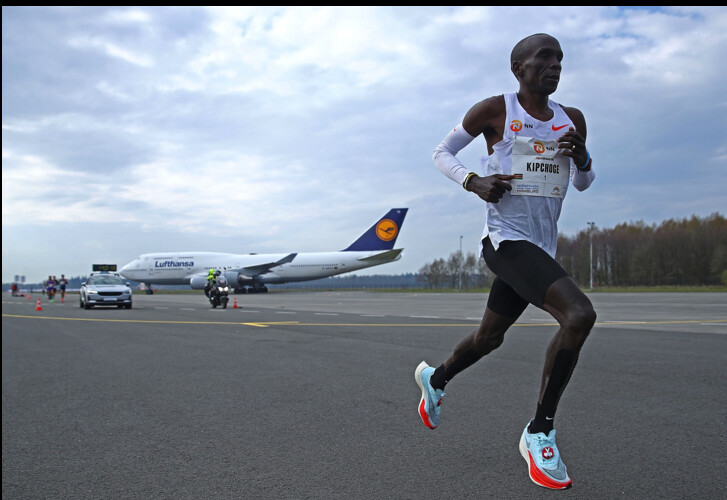
It takes a superhuman like Kipchoge to break what was once thought an impossible barrier, but stats show the average runner can also benefit from running in super shoes. In 2019, Strava data showed runners ran 4 to 5 percent faster in the Vaporfly or Next% compared to runners wearing an average trainer.
Trailing Nike, other brands dove in, releasing their own rendition of super shoes, and adding a smidge of original flavor (e.g., Saucony’s Speedroll tech; the decoupled midsole on the Puma Fast-R). But there are two common denominators these models share: a responsive midsole foam and a carbon-fiber plate. The midsole foam is usually made from a polyether block amide thermoplastic (also known as Peba, or the Arkema-trademarked Pebax). Examples include Nike’s ZoomX, Puma’s Nitro Elite, and Saucony’s PwrrunPB. Compared with standard foam (EVA), Peba is lighter, more compliant, and more resilient.
“Typically, foams act as a cushioning ingredient and plates act as a stiffening ingredient,” said Rebekah Broe, director of product and performance footwear at Hoka, on a video call. The plate limits flexibility, acting as a propulsion agent in the gait cycle. It works in harmony with the responsive foam sandwiching it, thus delivering even higher energy return as you run.
Elliot Heath, Nike product line manager, referred to the carbon-fiber plate as an “enabler.” In constructing the Vaporfly and subsequent models, the Nike running footwear team focused on stiffness and propulsion. The placement of the plate as well as its shape—it has curves like a spoon—enhances your stride’s toe-off.
The plate in Hoka’s road racing models, for example, is fork-shaped and sits closer to the heel. It curves higher in the rear of the shoe and swoops down closer to the ground in the forefoot. “Its offset helps reduce energy loss at the ankle joint and increases stiffness to reduce energy loss at the big toe,” said Broe. “It gives you this balanced ride because you have really soft compliant foam under the foot.”
Hoka released a carbon-fiber trail shoe, the Tecton X, earlier this year. We dissected its midsole in “The Cut Up” last issue, revealing two parallel plates to allow dexterity over obstacles while still providing that propulsive stiffness. The ski-like plates are markedly different from the wishbone-shaped single plate in Hoka’s road racing shoes. Broe said Hoka worked with carbon-fiber vendors to finesse and mold the plates to meet the shoes’ specific needs.
Broe was evasive about which carbon-fiber vendors Hoka uses, withholding that specific information. As predicted, Nike also dodged the question, with Heath stating, “We’re not really in a position to talk exactly about our manufacturers, but all of the initial research and building is done here at Nike campus.”
At The Running Event in Austin, Texas, last November, I met with the carbon-fiber manufacturer Carbitex. Founded in 2010, the company shifted its focus to footwear about five years ago. Shoe brands, including Adidas, Altra, and Scott, are listed on Carbitex’s site.
Carbon fiber is valued not only for its stiffness to encourage propulsion but also because shoe manufacturers can control flexibility. The human foot, Carbitex founder Junus Khan explained on a video call, is asymmetrical; its tendons and ligaments change in stiffness based on need. The malleability of Carbitex’s plates allows the foot to bend in its natural way while providing stability and the prized propulsion PR chasers crave. “When it comes to sporting equipment, how do you create technology that helps augment people’s natural performance?” asked Khan. “The traditional carbon-fiber plates in shoes kind of tell you how to run because it’s a fixed rigid plate.”
Carbon fiber, according to Khan, has been around for only about 50 years. It’s still the new kid on the block in terms of usage. It’s implemented in a host of sectors, from military aerospace to backpacks. Khan describes Carbitex’s role working with shoe brands as “the best supporting actor,” not the main event. The relationship is built on independent research, data, and athlete testing.
Carbitex’s Three Plate Technologies
Khan’s team is currently working on a plant-based carbon-fiber material. The next phase for carbon-fiber-plated footwear is making it more accessible, Khan said, pointing to Vibram, Gore-Tex, and Boa as examples. “They’re still premium but have found their way into products that are able to benefit a wider population,” he said. “That’s not necessarily what people think about when they think of technology development, but to enable new technology to come down in price requires a whole different type of engineering.”
It’s still too early to know the long-term effects of running in shoes with carbon-fiber plates, but there’s some concern that overuse could weaken a runner’s foot muscles. Conversely, a study at the University of Calgary found that stiffness improved foot biomechanics, potentially staving off MTP (metatarsophalangeal) joint injury, turf toe, and other ailments. Still, another study conducted at the Georgia Institute of Technology found that there was no improvement in running economy when carbon-fiber plates were added to shoe soles.
Only time will tell which party is correct. It should be noted, however, that the plate is only one part of the equation; everything must work in concert for the ultimate running experience. “You can have a great shoe that has one bad feature that throws everything else off versus having a bad shoe with one awesome feature that is not going to fix it,” said Khan. “People ask, ‘What is the secret?’ And the secret is the sum. The sum is greater than the parts.”
by Runner’s World
Login to leave a comment
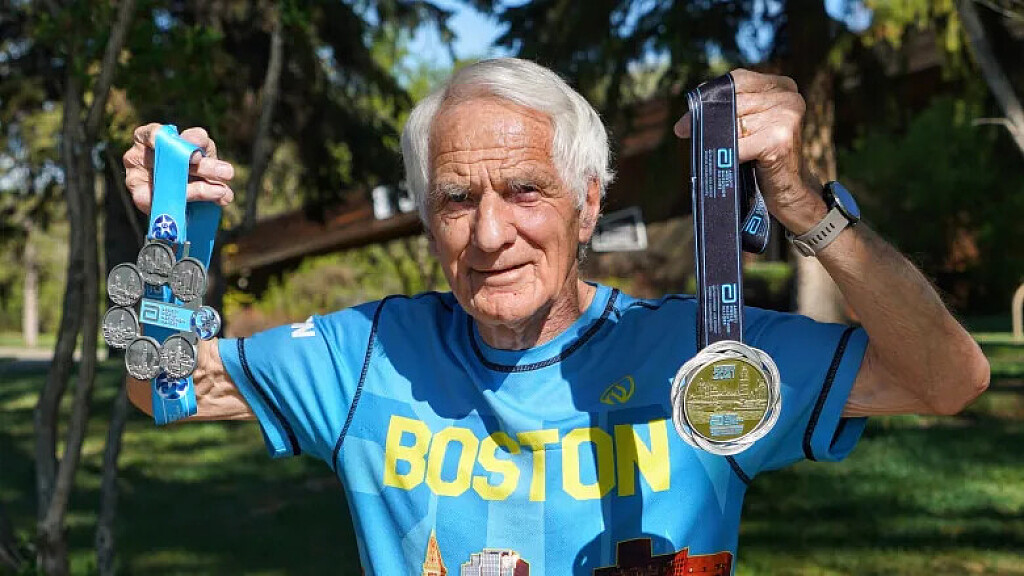
85-year-old running Calgary Marathon calls himself 'oldest ever grandpa pace bunny'
I’ve always liked to keep moving,' says man who has won medals all over the globe.
Ahead of his half-marathon on Sunday, 85-year-old Gerald "Gerry" Miller will likely have a bowl of oatmeal topped with raisins and a bit of Greek yogurt.
This isn't Miller's first race, let alone his first marathon, and he knows what he needs to fuel his run.
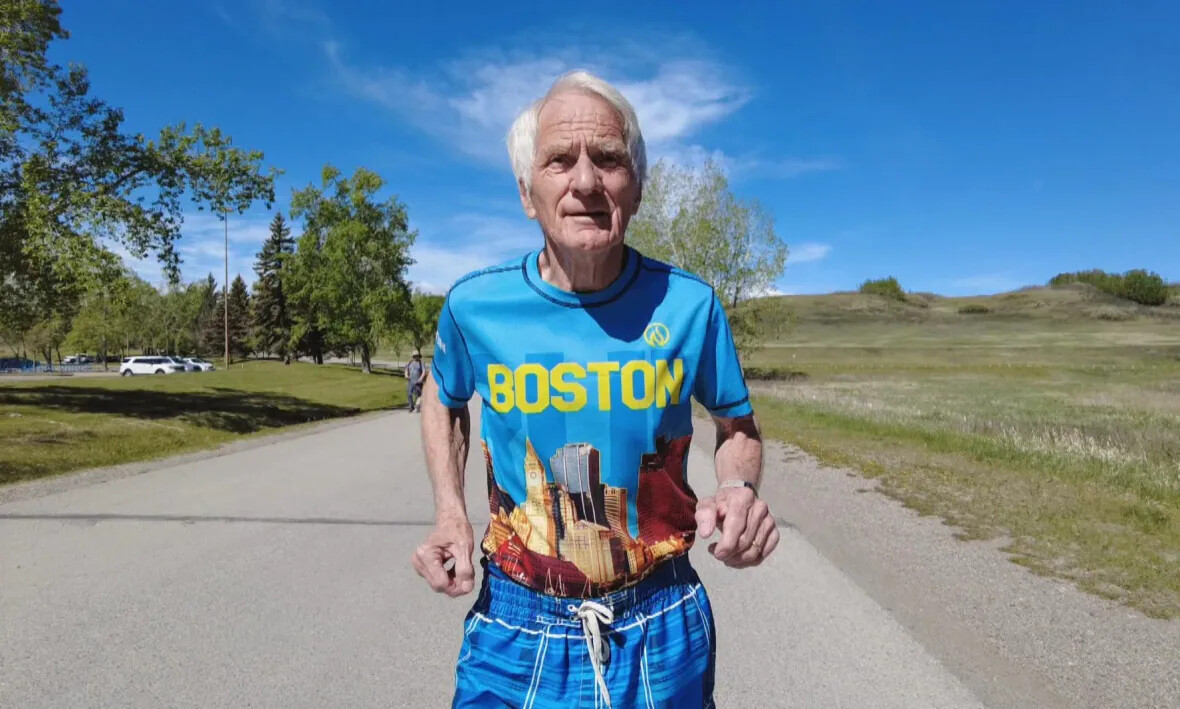
Since he began long-distance running at 58-years-old, Miller has run more than 40 marathons — including New York, Boston, Berlin and Tokyo.
This Sunday in the Calgary Marathon he will be running with bunny ears on, a signal that he is a "pace bunny," with the aim to bring in runners at the two hours and 30 minute mark.
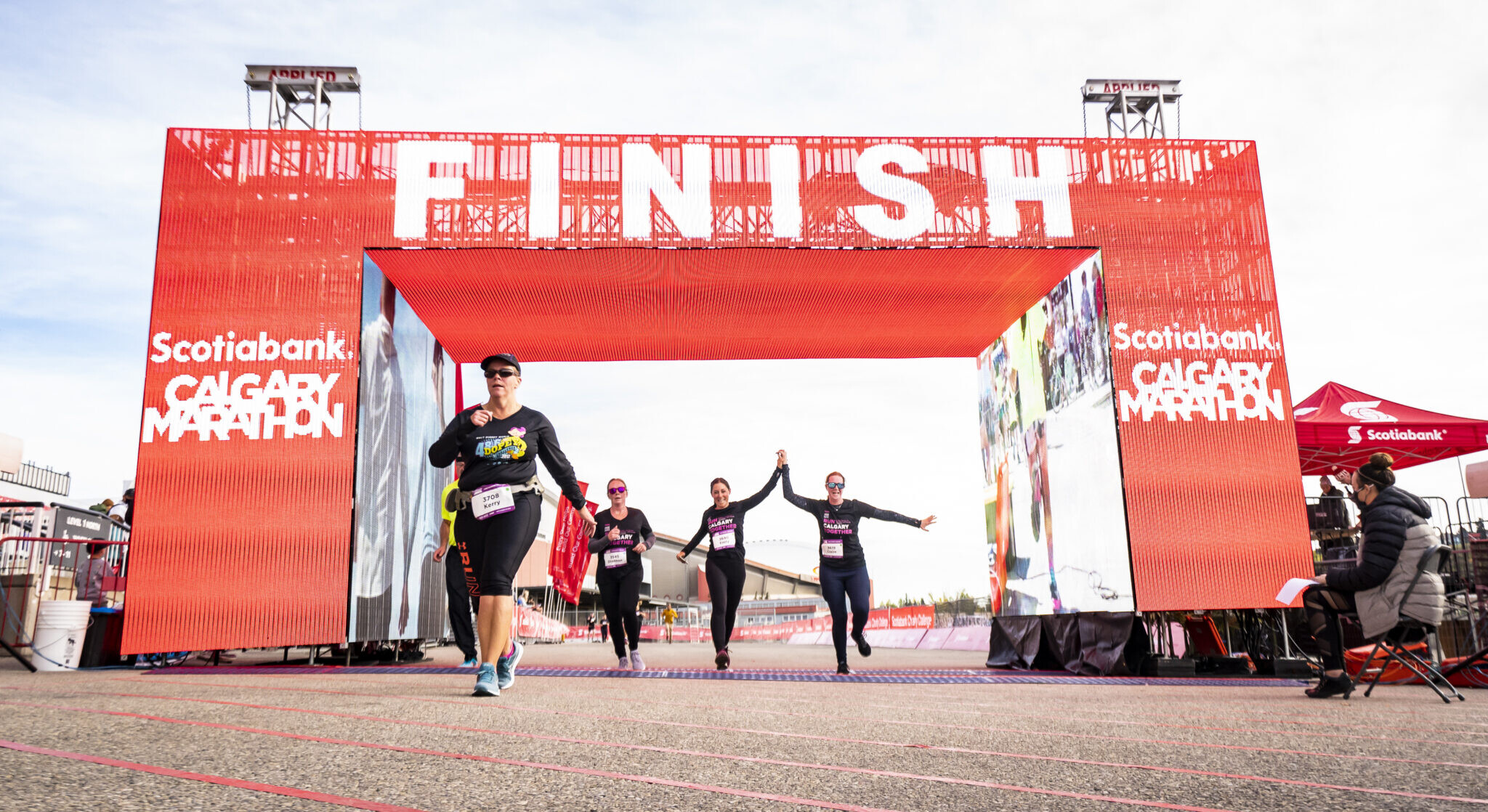
"[I'm] going to help pace the slower runners and charity runners … I'm the oldest ever grandpa pace bunny," he said.
"I've always liked to keep moving," says Miller, who in 2021 placed first in the men's 80 plus category for the inaugural Abbot World Marathon Majors Wanda Age Group world championships in London.
It was an invitation by his son to run 19 kilometers with him that hooked Miller, who had only done shorter runs in his school and university days.
He qualified for the competitive Boston Marathon after running his first ever marathon in Vancouver.
Miller says he's "grateful" to be able to do what he does and share his passion with others.
Miller's running buddy Daron Wong says that he is the model for the energy and attitude he wants to have about running.
"He always amazes me and he still amazes me today," said Wong.
"Everybody wants to be in great shape and be running like Gerry when they're when they hit that age."
Wong says what Miller, who he met about a decade ago, has taught him the value of consistency and to "trust the training."
Miller approaches running meditatively. He says often it takes "digging deep", like when he ran in New York and had a bad fall which left blood on his face, or when he got hypothermia during another race.
"In many of those situations, it is the mindfulness that kicks in and says, 'Gerry, just keep going, even if it's a little slower.'"
Miller's family will often run the tail ends of races alongside him, and keep a Guinness beer cold and ready for him after the race. But he says they do question him about when he'll hang up his shoes for good.
"In my heart, I feel OK. If I can do it, I will relax and enjoy it," he said.
He says he knows every run might be his last, but in the meantime he's going to keep at it.
On Sunday 6,200 people are registered to run the Calgary Marathon, and just 72 of them will be over 70 years old.
Miller will be the second-oldest in the crowd.
by Jennifer Dorozio
Login to leave a comment
Scotiabank Calgary Marathon
This is Canada's oldest marathon, Canadians and runners from around the world love this race, consistently voting in the Best Road Race in Alberta. There is a 50k, full-marathon, half-marathon, 10k, 5k family walk/run and kids races. You expect the route to be packed with participants and enthusiastic spectators. ...
more...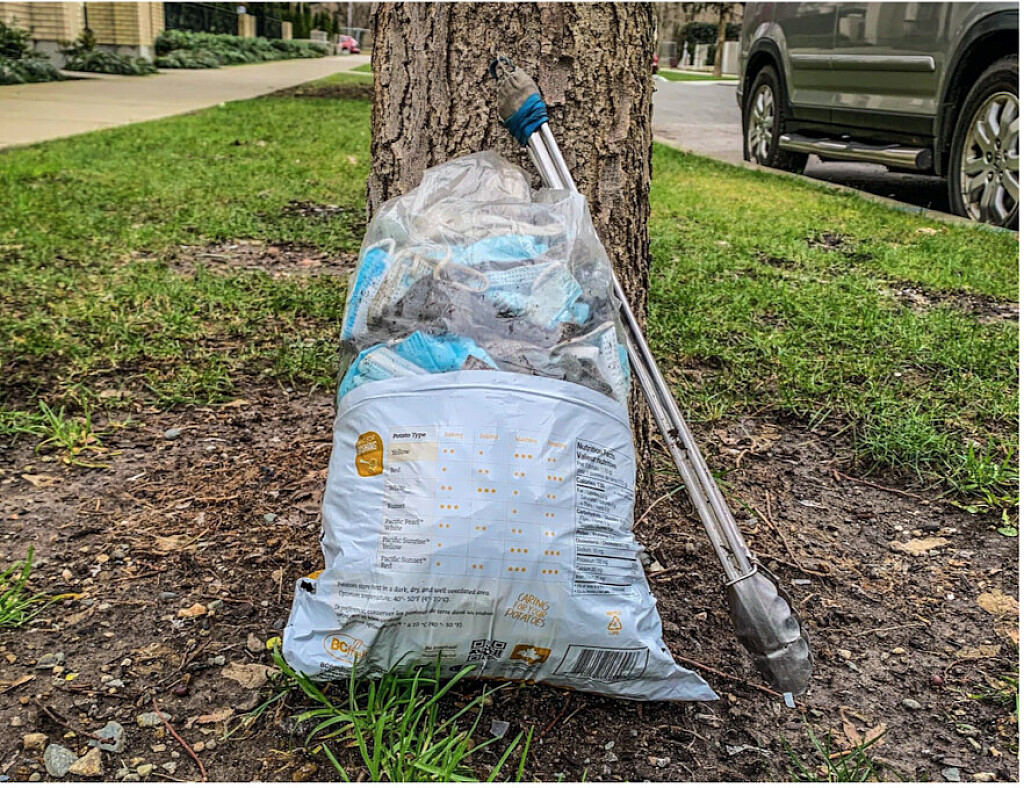
One Vancouver runner has taken 'plogging' to the next level
One year ago, Vancouver’s David Papineau was struggling to find the motivation to run. He was looking for a new challenge after running every street in the city. Papineau remembered the reason he originally stayed in Vancouver, his love for the outdoors and, of course, the moderate climate compared to his hometown, Calgary.
Over the next 10 months, Papineau picked up approximately 24,000 face masks off the streets of Vancouver. “On my runs, I couldn’t help but notice more pollution on the ground,” he says. “I began picking them up and recording each one in a spreadsheet.”
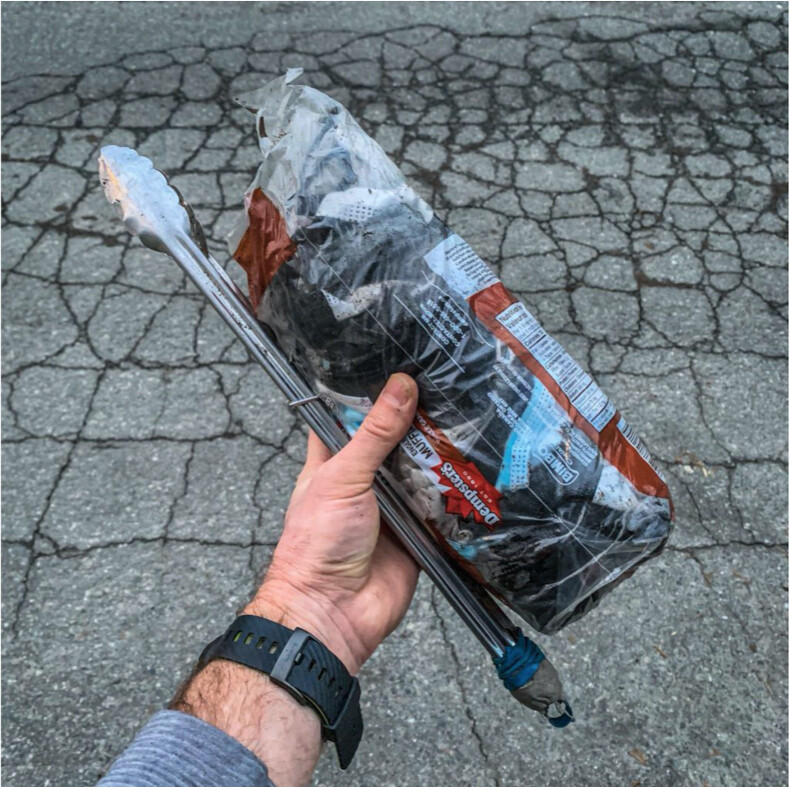
The act of picking up garbage while you run is called plogging, a combination of jogging and the word pick-up in Swedish (plocka upp). It is described as an eco-friendly exercise where people pick up trash while exercising as a way to clean up the environment.
“With more people working from home, there’s more pollution in areas you wouldn’t usually expect it,” Papineau says. “Parking lots, bus stations, parks and hospitals have become hotspots for mask pollution.”
As a runner at heart, Papineau eventually has a goal with his cleaning-up efforts. “I take a lot of pride in cleaning up these masks,” he says. “It’s become my obsession, like marathon running is for other runners.”
Papineau hopes to collect 30,000 face masks by March 30. “That is the day I began the challenge in 2021 – and it motivates me to get out the door and help this city become a cleaner space,” he says. Papineau brings his phone on each run to document each milestone, uploading pictures on his Twitter and Instagram.
For those who are looking to start plogging in your local community, it doesn’t take much equipment. A pair of salad tongs, gloves and a durable/breathable bag you can carry. “Don’t get hyper-focused on picking up everything, as you won’t get very far,” Papineau says. He suggests planning your route and picking up just one type of garbage, like coffee cups.
Papineau’s efforts to clean up Vancouver have not been ignored. The type of bag he uses to collect the masks is from a Victoria, B.C. bakery called Porto-Fino. Nick Mulroney, the son of the former prime-minster Brian Mulroney, reached out to Papineau asking about the type of bag, later to find out Mulroney invested in the small Vancouver Island bakery.
by Running Magazine
Login to leave a comment
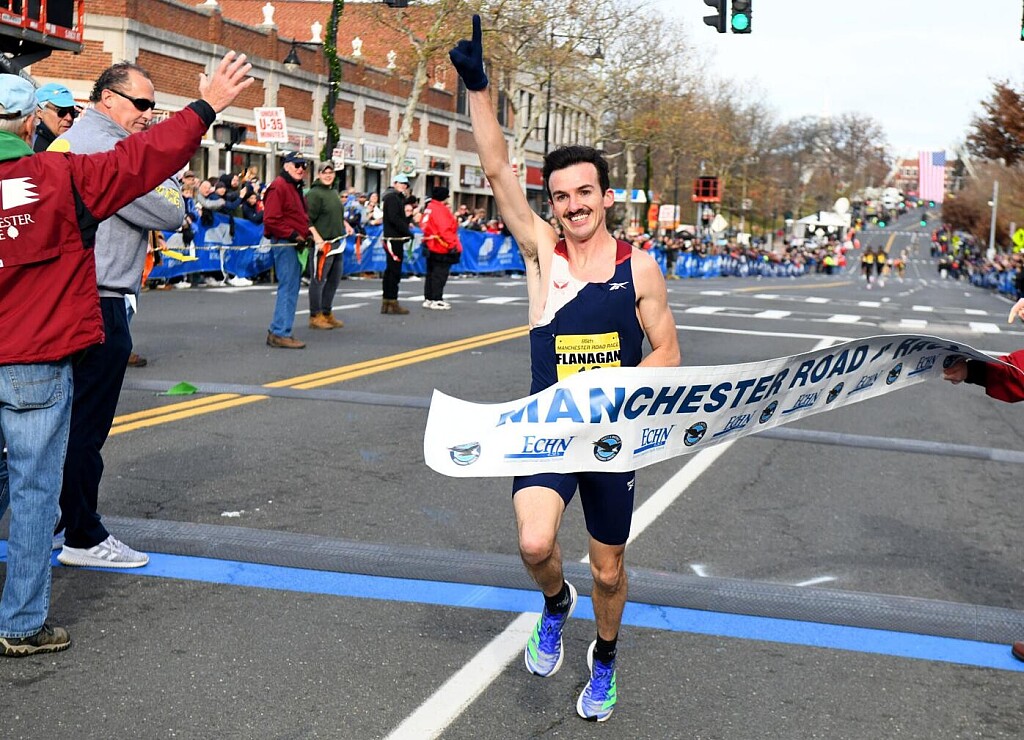
Canadian Ben Flanagan is after one thing at the Houston Half Marathon, I have my eye on the Canadian half-marathon record of 61:28, he says
The 2022 Houston Half Marathon is set to take place this Sunday, drawing many of the world’s top elite to the event. In the field is Kitchener, Ont’s., Ben Flanagan, who ended his 2021 season on a winning note, looking to continue his string of solid performances into the new year. He is heading to this weekend’s half marathon with one thing on his mind: Jeff Schiebler’s 23-year-old Canadian half-marathon record of 61:28.
“I am looking forward to competing,” Flanagan says. “The plan is to run conservatively to tackle the Canadian record. It’s engraved in my head.” The 21.1 km distance isn’t foreign for the former NCAA 10,000m champion. In 2020, he ran 1:03:19 to win his half-marathon debut in South Carolina. His debut time was the 10th fastest ever by a Canadian male, and on Sunday he has the chance to better his result on one of the fastest courses in North America.
“My results at the Scotiabank Waterfront 10K and Manchester Road Race gave me a lot of confidence in the fall,” Flanagan says. He won both races skillfully, breaking away from his competition in the mid-stages of the race and not looking back.
Flanagan made his decision to run Houston in late November. “The timing of this race fit in perfectly in my training,” Flanagan says. “I had a lot of strength built up after Manchester, so we focused on building endurance over the past month and a half.”
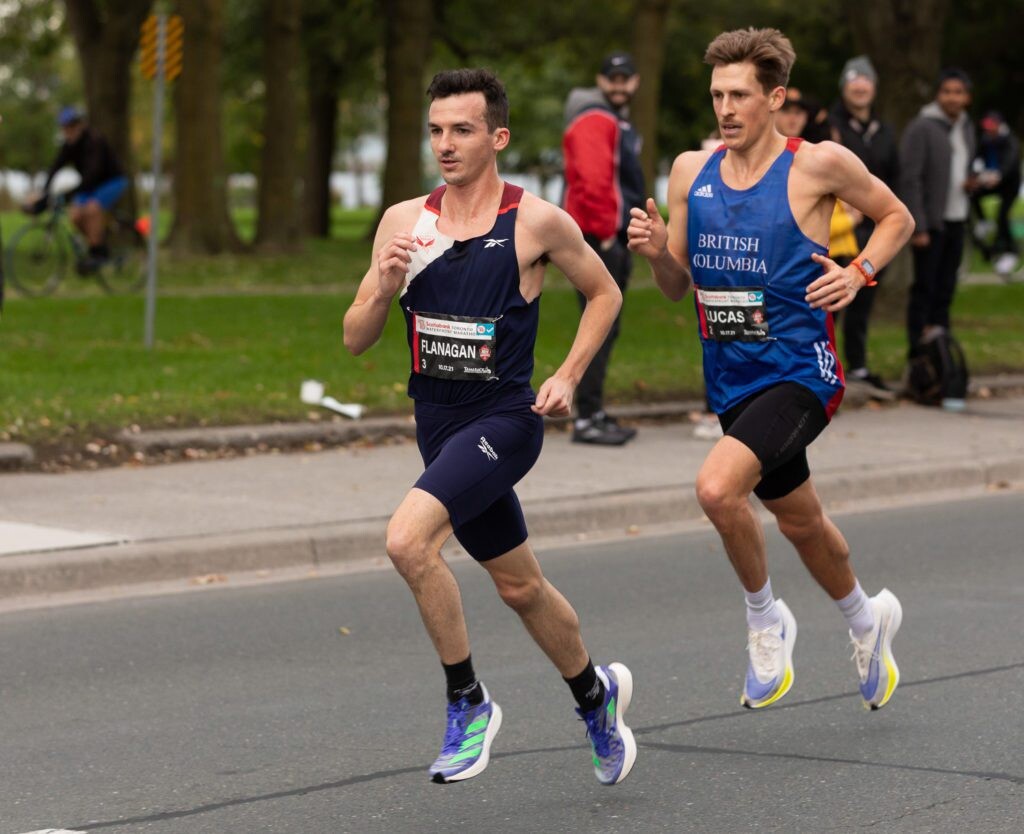
Although Flanagan has shown a lot of success on the roads, he isn’t quite done with the track yet. He will be running a few 5,000m and 10,000m races this spring to secure a spot on Team Canada at the 2022 World Championships in Eugene, Ore.
When asked about when he was going to step up to the marathon, Flanagan mentioned he would love the opportunity to represent Canada in the marathon at the Paris Olympics. “Stepping up to the marathon this year might be a stretch, but I want to give myself a chance to qualify for Paris.”
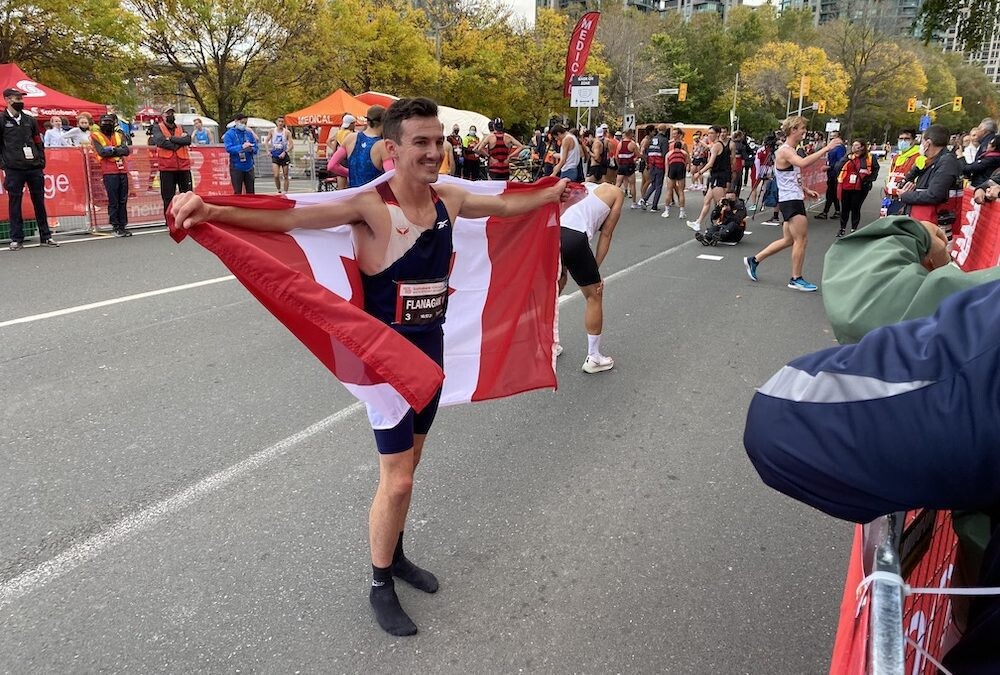
Flanagan won’t be the only Canadian elite in the race Sunday. Alberta native Rory Linkletter, who was second at the California International Marathon a month ago, is in search of another personal best in Houston. In 2020, Linkletter ran 61:44, only 16 seconds off the Canadian record.
In the women’s elite field, Calgary’s Emily Setlack returns to Houston following the 1:11:40 PB she ran in 2020.
by Marley Dickinson
Login to leave a comment

Aramco Houston Half Marathon
The Chevron Houston Marathon provides runners with a one-of-a-kind experience in the vibrant and dynamic setting of America's fourth-largest city. Renowned for its fast, flat, and scenic single-loop course, the race has earned accolades as the "fastest winter marathon" and the "second fastest marathon overall," according to the Ultimate Guide to Marathons. It’s a perfect opportunity for both elite athletes...
more...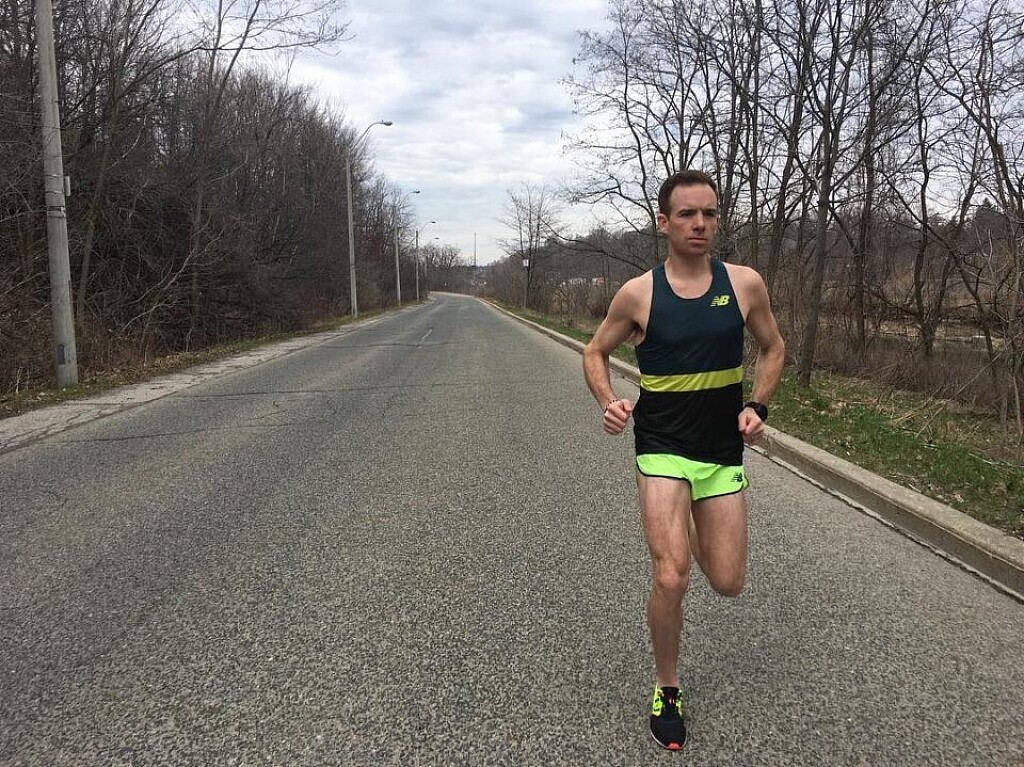
Canadian Reid Coolsaet set to run the 2022 Western States 100
The lotteries for the 2022 Western States 100 and Hardrock 100 took place this weekend, and Canadian Olympian Reid Coolsaet got his name on the Western States list. With over 8,000 applicants vying for only 340 lottery spots (221 for Western States and 119 for Hardrock), runners without automatic entry have a slim chance of having their names pulled, but 34 lucky Canadians got a spot on the start lines.
Western States
Of the top 10 male finishers at last year’s race, eight will be making their return to Olympic Valley, Calif., including second- and third-place finishers Tyler Green and Drew Holmen. Jim Walmsley, who won the race in 2018, 2019 and 2021 (the race was canceled in 2020 due to COVID-19), has not elected to return for the 2022 race. The top three podium finishers from last year’s race, Beth Pascall of the UK, Ruth Croft of New Zealand and Ragna Debats of the Netherlands, will all be returning, as will six more of the top 10 women from 2021.
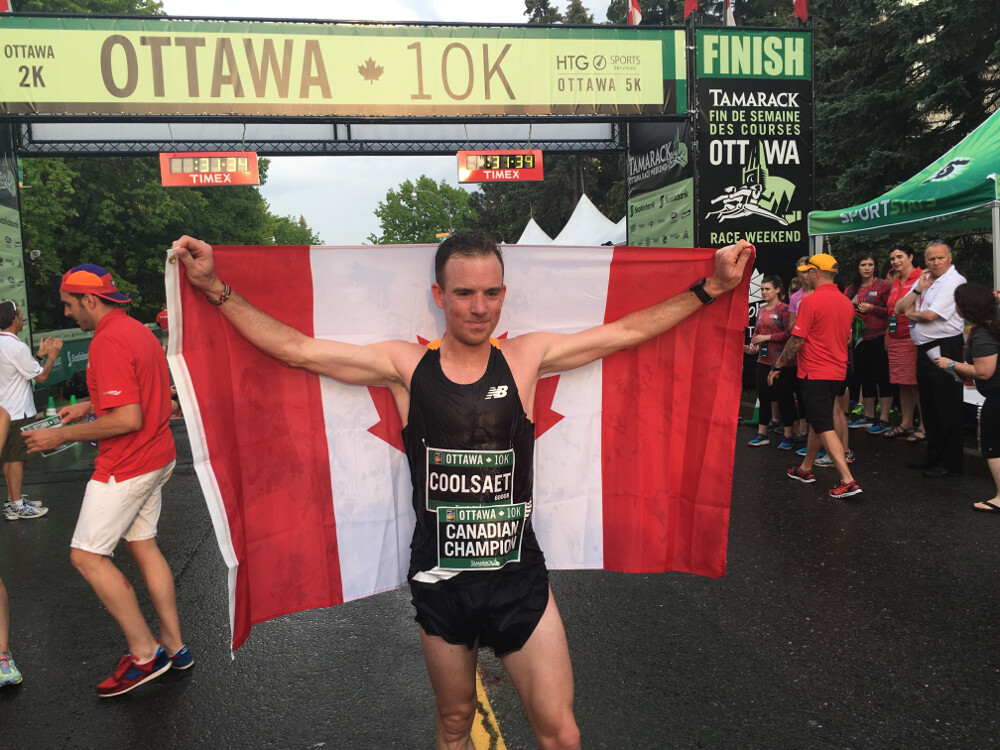
Canada’s Ailsa MacDonald received automatic entry, thanks to her 13th-place finish at the 2019 Western States and first-place finish at the 2020 Tarawera 100 Mile. Other fast runners who have received automatic entry include Sébastien Spehler (second at Ultra Trail Cape Town this year), Tom Owens (fourth at UTMB in 2019), Cole Watson (third at the Javelina Jundred), Stephanie Auston (third at the 2020 Black Canyon 100K and second at the 2019 Tarawera 100K) and Zoë Rom (third at the 2021 Rio del Lago 100 Mile and third at the 2021 Tillamook Burn 50 Mile), among others.
Coolsaet will be one of the top Canadians in the race, despite being relatively new to the ultramarathon scene. In August, he won his first-ever ultra, the Quebec Ultra Trail 110K, despite missing a turn and having to run an extra 10 kilometres. He will be joined by several other Canadians, including:
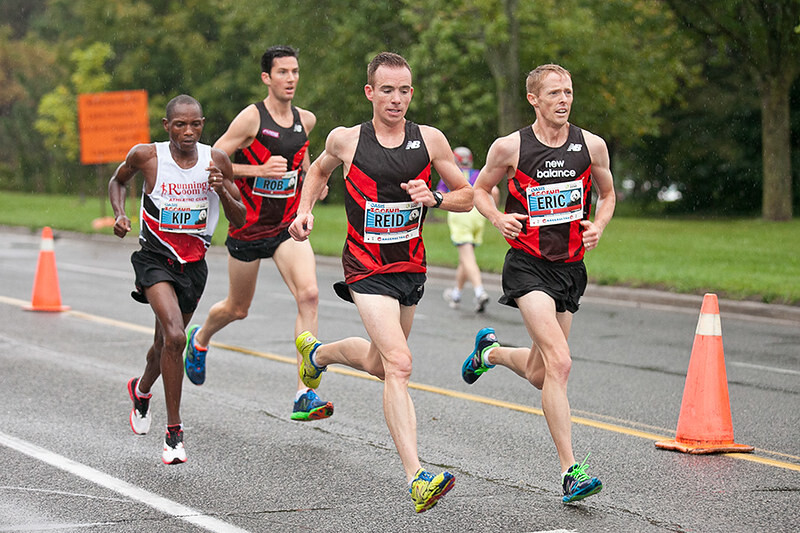
Leo Fung, Calgary
Jesse Hulley, Calgary
Mike Jollie, Calgary
Kevin Jansen, Calgary
Rohan Aurora, Vancouver
Steve Day, North Vancouver
Adam Harris, Squamish, B.C.
Patrick Humenny, Kimberly, B.C.
Ricardo Tortini, Port Moody, B.C.
Dawson Mossman, New Maryland, NB
Aytug Celikbas, Oakville, Ont.
Matt Lowe, Hamilton
Derek Mulhall, Tecumseh, Ont.
Norman Nadan, Orangeville, Ont.
James Swartz, Toronto
Vincent Gauthier, St-Zotique, Que.
Fanny Barrette, Calgary
Tara Chahl, Edmonton
Chelsey Topping, Lethbridge, Alta.
Kelly Haston, Toronto
Karen Holland, Kimberly, Ont.
Hardrock 100
Hardrock is particularly difficult to get into, because the only way to gain automatic entry into the race is by winning it the previous year. A unique addition to this year’s lottery: entrants who were chosen for last year’s race but were unable to travel because of COVID-19 were given automatic entry for 2022, which included 16 men and two women.
There are some big names on the 2022 start list, including Courtney Dauwalter, Sabrina Stanley, Magie Guterl, François D’Haene, Kilian Jornet, John Kelly, Luke Nelson and Jeff Browning. Canada’s Stephanie Case, who was the first woman (and third overall) at the 450km Tor des Glaciers race in Italy, will also be on the start line.
Other Canadians who received entry into Hardrock include:
Suzanne Johnson, North Vancouver
Dana Samis, North Vancouver
Joanna Ford, Calgary
Larry Kundrik, Lethbridge, Alta.
Ken Legg, Powell River, BC
Randy Duncan, Victoria, BC
Christopher Aubrey, Sherwood Park, Alta.
Nathaniel Couture, Fredericton, NB
Matthew Fortuna, Oyama, BC
Leo Fung, Calgary
by Brittany Hambleton
Login to leave a comment
Western States 100
The Western States ® 100-Mile Endurance Run is the world’s oldest and most prestigious 100-mile trail race. Starting in Squaw Valley, California near the site of the 1960 Winter Olympics and ending 100.2 miles later in Auburn, California, Western States, in the decades since its inception in 1974, has come to represent one of the ultimate endurance tests in the...
more...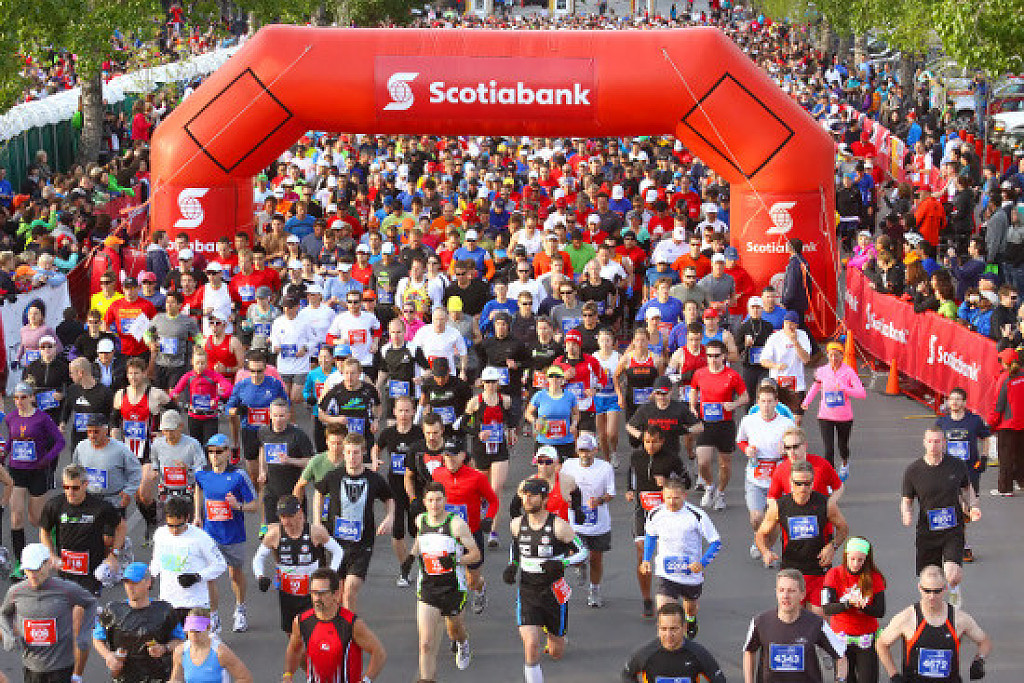
Calgary Marathon to host 4,000 runners this weekend
On Sunday, Sept. 19, the Calgary Marathon will host the largest Canadian race since the pandemic.
After more than two years without an in-person event, the race will return with a 50K, marathon, half-marathon, 10K and 5K races. 4,000 runners are registered across the five races with more than 1,000 runners starting in the 10K and half marathon.
Right now, Alberta is in the midst of the fourth wave of COVID-19, reporting 1,600 new cases on Sept. 15, in addition to the 11,500 active cases across the province. A province-wide state of emergency was issued earlier this week, but there are no restrictions on outdoor events.
The race published a statement to social media earlier today. “We are moving forward with plans to host the 2021 Calgary Marathon this Sunday, September 19th,” said race officials. “The race worked with health officials to ensure the safest possible event for participants, staff and volunteers.”
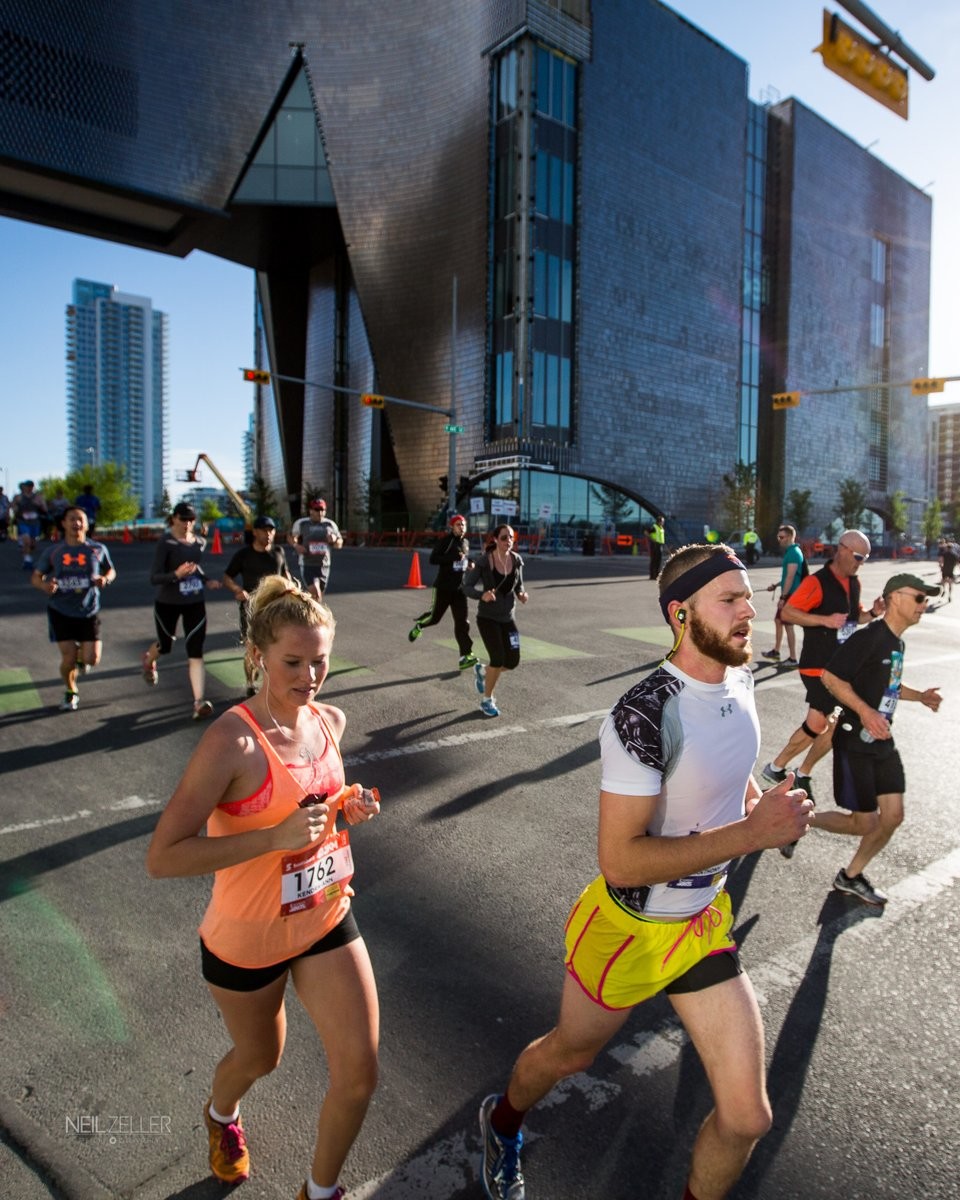
“Our plan isn’t to break the rules or offer a world-class event. This is a restricted safe event to celebrate personal accomplishment and achieve fundraising,” says race director Kirsten Fleming. “Our policies were already in place to meet the provincial guidelines set by the Alberta government.”
“We have worked with Alberta Health to ensure that this event is run safely. All aspects of the race will be held outdoors (besides race kit pickup), with no pre-or post-race celebrations,” says Fleming. Precautions will include masking at the start and finish lines, and at least six feet of separation between runners, in their corrals.
A live broadcast of the event will be streamed online to minimize the number of spectators on the course. Spectators are also welcome to watch at the finish line of Stampede Park, which seats 17,000.
The Calgary Marathon offers a virtual race option, which 1,000 runners have chosen to participate in from across the country.
by Marley Dickinson
Login to leave a comment
Scotiabank Calgary Marathon
This is Canada's oldest marathon, Canadians and runners from around the world love this race, consistently voting in the Best Road Race in Alberta. There is a 50k, full-marathon, half-marathon, 10k, 5k family walk/run and kids races. You expect the route to be packed with participants and enthusiastic spectators. ...
more...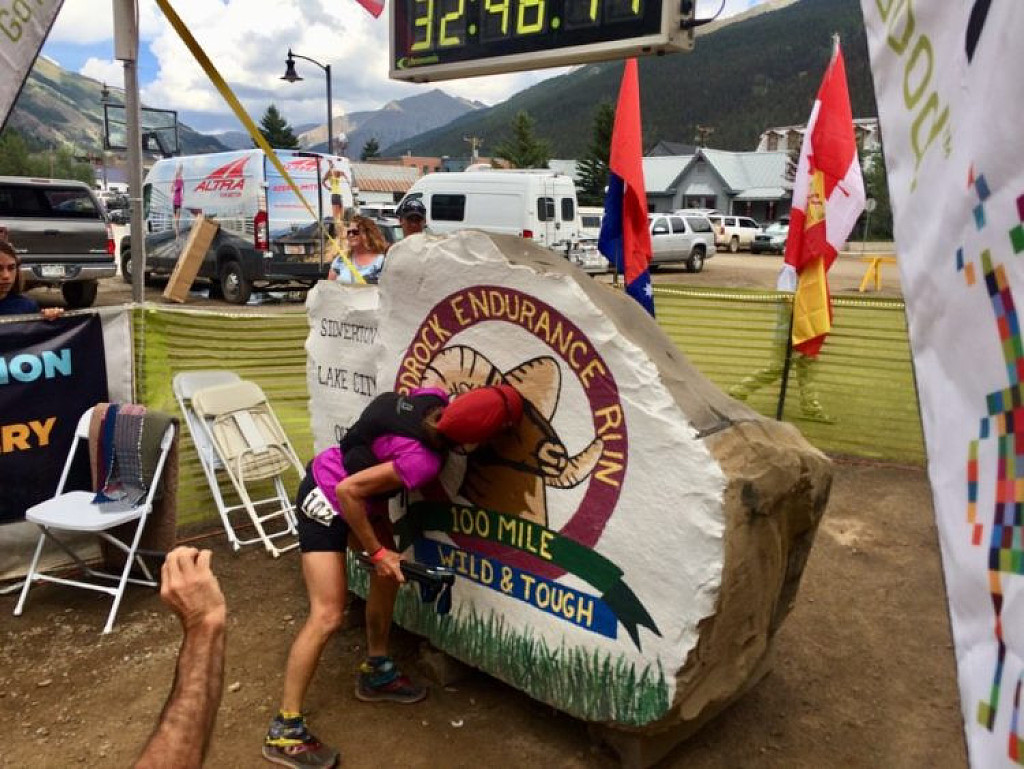
François D'haene, Sabrina Stanley win first Hardrock 100 in three years
After two successive cancellations (one due to snowfall and one to COVID), the Hardrock 100 took place in Colorado’s San Juan mountains on Friday, and it was worth the wait. French ultratrail superstar and three-time UTMB winner François D’haene was strong from the start, and powered through to a 21:45:51 finish early Saturday – the fastest time anyone has run the course, counterclockwise or overall (both records were held by Kilian Jornet, who did not run this year).
Defending champion Sabrina Stanley of Silverton, Colo. (where the looped-course race starts and finishes) won the women’s race in 27:21:48 – the second fastest women’s finish ever, and her second time racing Hardrock. Stanley was sixth overall, and was on pace for a course record until approximately mile 80.
Dylan Bowman of Portland, Ore. took second place, exactly one hour behind D’haene, in 22:45:50. and Ryan Smith of Boulder, Colo. was third, in 23:24:29. All three finished faster than Jornet’s counterclockwise course record of 23:28:00, set in 2015, and D’haene bettered Jornet’s overall record of 22:41:33 from 2014.
Darcy Piceu of Boulder was the second woman to finish, in 32:08:17. Piceu has finished first or second in all eight of her Hardrock finishes. Meghan Hicks of Moab, Utah finished third, in 33:04:59.
D’haene is a three-time UTMB winner (2012, 2014 and 2017), among other titles, and Bowman has twice won the Ultra-Trail Mount Fuji, in 2016 and 2019. Both are Hardrock first-timers. D’haene was paced for the 30-mile section from Grouse to Telluride by Jim Walmsley, who won his third consecutive victory at Western States just three weeks ago and is now training for UTMB.
The second First-timer and favourite Courtney Dauwalter did not finish, dropping out at mile 62. Mike Wardian finished in 26th place, in 36:00:25.
Mario Festival of Calgary, who also dropped out at Ouray, appears to be the only Canadian entry.
Top 10 men
François D’haene 21:45:50
Dylan Bowman 22:45:50
Ryan Smith 23:24:29
Julien Chorier (2011 winner, 2nd in 2014) 25:56:57
Jeff Browning (2018 winner) 26:58:16
Nick Pedatella 28:27:47
Troy Howard 28:33:51
Trevor Fuchs 29:19:42
Kevin Shilling 30:33:20
Mick Jurynec 30:33:20
Top 10 women
Sabrina Stanley 27:21:48
Darcy Piceu 32:08:17
Meghan Hicks 33:04:59
Olga Nevtrinos 36:35:26
Heather Brooks 38:09:00
Betsy Nye 39:36:00
Pam Reed 41:56:00
Barbara Olmer 43:22:00
Marta Fisher 45:21:47
Betsy Kalmeyer 45:47:17 her second time racing Hardrock. Stanley was sixth overall, and was on pace for a course record until approximately mile 80.
by Running Magazine
Login to leave a comment
What You Need To Know About Running Shoes And Injuries
At age 50, I have recently begun to wonder how my body will hold up for running (and life) over the long haul given that in the last decade, I have dealt with several lingering bouts of Achilles tendinitis, a painful stint of iliotibial (IT) band syndrome, a functional leg-length imbalance that led to an angry case of sciatica, a debilitating case of runner's knee, one frustrating case of shin splints, and an excruciating ruptured Achilles. Not all of those injuries were caused by running, but each one presented itself when I ran.
This has led me to think a lot more about the shoes I choose to wear and the marketing promises that accompany them. Can they really help me run longer, healthier, and injury-free? Conversely, might they be causing my problems?
Despite the continued evolution of running shoes since the 1970s, the rate of injury among runners has remained high and, depending on which report you read, might even be climbing. Reports of annual injury rates vary widely, from 20 percent to 92 percent, but the average rate is somewhere around 50 to 60 percent. That means more than half of the running population gets dinged up in some fashion every year. Imagine that as every other runner in your local running group, or fully half of the 50,000 participants who line up to start the New York City Marathon every November.
It's a startling injury rate. Might shoes be the culprit? Absolutely not, says Jay Dicharry, who authored Running Rewired: Reinvent Your Run for Stability, Strength & Speed.
Dicharry has published numerous research studies about running mechanics, and he insists that running shoes don't cause injuries. "There are better and worse shoes for an individual runner based on their gait characteristics, but running shoes are not the cause of injuries," he says.
There has never been a correlative link between injuries and running shoes, he points out, which sounds like a convincing exoneration of shoes from where I sit, though it's important to note that there also haven't been many studies. In fact, in the only study that has remotely produced some interaction between running shoes and injury rates, 81 female runners were categorized by foot type (neutral, pronated, highly pronated) and randomly assigned neutral, stability, or motion-control shoes.
After basic information about their gaits was recorded, the runners were put through a 13-week half-marathon training program. Of the 194 training days missed by the test subjects due to pain or ailments, 79 were missed by runners wearing motion-control shoes, followed by 64 by neutral-shod runners, and 51 by stability-shoe wearers.
The neutral runners reported greater pain values while running in neutral shoes than in stability shoes; runners with pronated gaits reported greater pain values while running in stability shoes than in neutral shoes. No significant effects were reported for runners with highly pronated gaits. Ultimately, the study concluded that the "current approach of prescribing in-shoe pronation control systems on the basis of foot type is overly simplistic and potentially injurious." But the researchers admitted that the study was too small and didn't take into account enough factors to be conclusive.
Even with the advancements in kinesiology; the study of biomechanics, the human body, and materials science; and massive investment and vested interest from shoe companies, relatively little is known about how shoes actually impact our ability to run, no matter whether it is 100 meters, 100 miles, or somewhere in between.
There is no universal understanding of or agreement on how shoes should be designed and built to improve efficiency, maximize energy return, and reduce the risk of overuse injuries that, some research shows, may be caused by the repetitive motions of a running gait.
The Pronation Effect
In the 1970s, there was tremendous focus on stability and motion control. Despite the fact that at the time, there was little science related to human running mechanics, brands became obsessed with the notion that pronation could be harmful to a runner's heath.
Although high-speed video cameras and force-plate treadmills weren't yet available to analyze running gait, biomechanists, podiatrists, coaches, and shoe developers pointed to this inward rolling as one of the causes of common running injuries. As a result, the shoe war encountered a brand-new battlefield, one concerned with how to control the movement of a runner's feet-an idea that, although never grounded in science, has lingered into today. Science or no science, it has been a powerful marketing and sales tool.
In 1977, Brooks introduced several shoe models that supported the interior side of the heel with its Varus Wedge. The firm foam piece was engineered to provide greater stability, increase heel and foot protection, and improve running efficiency while decreasing muscle and tendon fatigue.
The Brooks Vantage was the first shoe designed to control the inward rotation of the foot, a motion that would soon be known by the industry-wide catchphrase "overpronation." Under the guidance of renowned podiatrist Steven Subotnick, who would later author Cures for Common Running Injuries, Brooks attempted to counter the rolling of the foot toward the medial side with a wedge that not-so-subtly canted the foot outward to the lateral side.
Brooks's innovation sparked dozens of imitators and eventually led to a whole new category of shoes based around stability and motion control. But it also led the industry down a misdirected path of self-help without compelling scientific evidence or quantifiable results. Soon every brand had its own feature designed to restrict overpronation-the most common being the medial post, a firmer-density midsole foam located under the arch of the foot. Worse yet, it also prompted the unsavory practice of brands hiring scientists and paying for the lab results they needed for their marketing programs that supported their new shoe models.
While innovation can be good-and even imperative at times-the problem was that a lot of the innovation was being fueled not by science but rather by marketing hype and copycat imitation, neither of which necessarily led to better performance or more efficient running, even if they decidedly did lead to selling more shoes and developing a vernacular to support three types of shoes (neutral, stability, and motion control). Worse, the new trend didn't reduce a growing epidemic among recreational runners: overuse injuries such as shin splits, Achilles tendinitis, plantar fasciitis, patellar tendinitis, and runner's knee.
Dicharry doesn't think shoe brands are really listening to what science-specifically kinesiology and anatomy-is telling them.
"For a long time, the running shoe industry has had a bias that suggests a running shoe has to stop parts of your body from moving and force something to move in a different way," he says. "That's based on unfounded ideas that evolved 40 or 50 years ago. Science shows that doesn't exist and never did. People are variable and move differently, and that's OK."
Dicharry says that until brands stop trying to control or limit movement, shoes will never fully move forward. "The foot is an adaptively controlled lever; it's not just one rigid thing that moves one way. It's all about adapting and conforming." His insights beg the question: If every runner has his or her own preferred path of movement based on specific anatomical variances and irregularities, is it even possible to mass-produce a commercial product that will actually improve performance and reduce injury risk for a wide range of runners?
Dicharry insists that it is possible, but "you would mostly have to scrap the model of how shoes are built and marketed." There is sufficient technology and understanding of how to do it, he says; however, mass production and an entire recategorization of running shoes are still significant inhibitors.
Until that happens-if indeed it ever does, at least for a wide audience- the biggest challenge facing running shoes may be that they're not keeping runners from being injured. Despite numerous advancements in outsole rubber, midsole foam, training philosophies, and understanding of how the body moves, there has yet to be a shoe that has shown the ability to reduce injuries. The incidence rate of common running injuries has remained constant since they began being monitored, with most surveys and studies showing an average of 50 to 60 percent of runners being injured every year.
An essential piece of the puzzle cannot be ignored: Running shoes are a commodity, and every running shoe company is in the business of designing and manufacturing shoes for the sake of selling as many as possible. The A-goal is not improving performance or reducing injuries-and perhaps with good, or at least justified, reasoning. Because while running shoes have both functional and aesthetic cues-along with loads of marketing hype-consumer purchasing surveys have shown that the color or aesthetics of a shoe often influences a runner's purchasing decision more than its perceived ability to help that individual run better.
Ultimately, it's not in the best interest of a shoe brand to really hone a message about training better, becoming stronger, and fixing one's mechanics because that proves that it's not about the shoes, or at least makes shoes a secondary factor in healthy running. Plus, it's too risky for a running shoe brand to make a claim even remotely suggesting that its running shoes can reduce the chance for injuries. Instead, it is in every brand's financial interest to make shoes that look good and feel good and come with a good marketing story.
Form & Fitness
When it comes to running's extraordinarily high annual injury rate, many people want to blame their shoes, but that's like blaming the tires on your car when the engine won't start, insists Reed Ferber, PhD, the founder and director of the Running Injury Clinic at the University of Calgary.
"Running shoes are definitely not the cause of injuries," he says, echoing Dicharry. "Shoes are a small piece of the puzzle that people have focused on as being the cause or salvation of running injuries, but that's just not the case."
Ferber says that the one thing the running research community agrees on is that the most common running injuries, especially those suffered by recreational runners, are caused by doing too much, too fast, too soon. In other words, overuse injuries such as shin splits, Achilles tendinitis, runner's knee, IT band syndrome, plantar fasciitis, and many types of stress fractures are caused by user error: running too many miles or running too hard during workouts without adequate aerobic fitness, leg and foot strength, or flexibility.
When it comes down to it, most recreational runners aren't nearly as aerobically fit or as functionally strong as they could be. "Not even close," says Mark Plaatjes, a Boulder, Colorado-based physical therapist, coach, and owner of In Motion Running, a running specialty store. The former world-class runner-and 1993 world champion in the marathon-points to the stark difference between how elite runners train and how the average runner trains.
Not only are elites leaner and stronger, he says, but they're also running higher-mileage weeks-thus becoming much more aerobically fit and efficient-and dedicating equal hours every week to strength training, form drills, therapeutic work, and recovery. The majority of recreational runners don't have the time or interest to do those things, he says, and they often pay the price through the resulting overuse injuries.
Plaatjes points out that this lack of comprehensive training is also the reason that the minimalist shoe revolution was a disaster for many people. The shoes weren't the problem, he insists. In fact, there were merits to the idea that minimally constructed shoes would help build foot strength and cue better running form. The trouble was that few people were willing to take the time to ease into wearing those kinds of shoes and do the considerable amount of work it would take to prepare their bodies to adapt.
While minimalist shoes weren't to blame for injuries, the movement simultaneously proved that running shoes couldn't prevent injuries, either. Yes, running shoes can be a tool to improve your running, but the most vivid takeaway from the minimalist revolution was the reminder that most runners need an ample amount of cushioning and protection between foot and ground, and that good running form (and the proper strength, posture, and flexibility that go with it), not newfangled running shoes, is the key to healthy, efficient running.
Doing core strength work, drills, and plyometric exercises can give you a general boost toward running better, more efficiently, and maybe even faster. But the only way to create a specific program for improving as a runner is to gain a detailed understanding of how the individual body operates as it runs-how it moves, where it is strong, where it is weak, where it is asymmetrical. These mechanics can be revealed through a high-tech gait analysis.
At his lab in Bend, Oregon, Dicharry uses state-of-the-art force-plate instrumented treadmills and high-speed cameras to analyze a runner's gait data in real time. He routinely tests fit and functionally strong runners who move efficiently and stabilize their body effectively but have a specific gait aspect that needs improvement. It might be subpar cadence, poor running posture, or a propensity to overstride. Postanalysis, Dicharry and his team of physical therapists and coaches provide exercises and drills to help cue improvement in those areas.
"Some issues have nothing to do with running," Dicharry says. "They might be lifestyle problems developed from everyday life, but they show up in running or other things you might do, whether it's walking or riding a bike or swimming."
The Shoe Factor
Generally speaking, Dicharry believes most runners can benefit from running in "less" shoe, especially models that don't inhibit the natural motion of a foot. But he cautions against making big changes-to a more minimally designed shoe or a shoe with a lower heel-toe offset-too quickly.
However, he points out, running in a variety of different kinds of shoes on a weekly basis is the best scenario for a runner, and there is science to back up that statement. A 2013 study conducted in Luxembourg showed that recreational runners who rotated among multiple models of shoes during a 22-week study had a 39 percent lower risk of running injury than those who almost always ran in the same shoes.
"Having a quiver of shoes exposes your body to different ways of interacting with running surfaces, different muscular responses, and different neurological reaction timings," Dicharry says. "Variability is a good thing, so switching up your running shoes several times a week is a very good thing."
Like Plaatjes, Ferber believes most runners can make headway by improving their overall fitness and functional strength to become less injury prone, but he doesn't necessarily believe in overhauling a runner's gait. Plaatjes, in contrast, is concerned about the industry-wide shift and strongly disagrees that most runners should be running in soft, flexible neutral shoes, insisting that many runners still need some support and stability, especially as they become fatigued during longer runs. The best way to provide that support, he says, is via stability shoes or after-market insoles.
"The answer to reducing injuries, enhancing comfort, and improving performance is not to change or fix a runner's 'flaws' but to work with the natural and highly individual motion paths of the joints," says Carson Caprara, senior director of global footwear product management at Brooks. "The focus then becomes keeping a runner in this path of least resistance for as long as possible during a run. For some runners, the variables of shoe geometries, midsole hardness, or excessive stabilizing technologies can push them outside of their preferred motion path. The task of modern running shoes should be to help these runners stay within their unique motion corridor at all times."
Brooks outlined a holistic approach to designing and fitting running shoes that would optimize efficiency, reduce injury, and enhance comfort. Instead of breaking down its shoes into neutral, stability, and motion-control categories that took into consideration one factor-the level of pronation at the ankle-it came up with new categories based on four biomechanical silos related to cushioning, energizing, connecting, and propelling a runner's experience. And it acknowledged that the individual's preference had a lot to do with what shoe would be best for that person. The brand concluded that shoes allowing runners to run in their natural preferred state on the path of least resistance, rather than attempting to correct perceived problems or deficiencies, would provide the best experience and be the most comfortable. Brooks became the first brand to ditch medial posts to control overpronation in favor of a new system of guiderails that offer just enough support for that particular runner's feet and gait style.
However, it has become increasingly clear that there is no magic bullet, and that ultimately, it is less about shoes and more about how a runner is training and taking care of his or her body on a daily basis.
Advances in footwear, training, and technology might have an effect on how a runner moves, but how and whether those changes will impact the rate of injuries remains a big question mark. In the end, running is both a very simple and an extremely complex activity, a polarizing set of parameters that leave it open and vulnerable to the interpretation, style, and experience of each individual runner. The key to healthy, efficient running has less to do with shoes than with the time, effort, care, and passion that each of us puts into it.
"Don't spend time opening your wallet; spend time opening your mind to making yourself a better athlete," Dicharry says. "There are multiple ways of improving as a runner and getting faster, and none of them require spending money on a piece of footwear. Make your body better and you'll run better."
by Trail Runner Magazine
Login to leave a comment
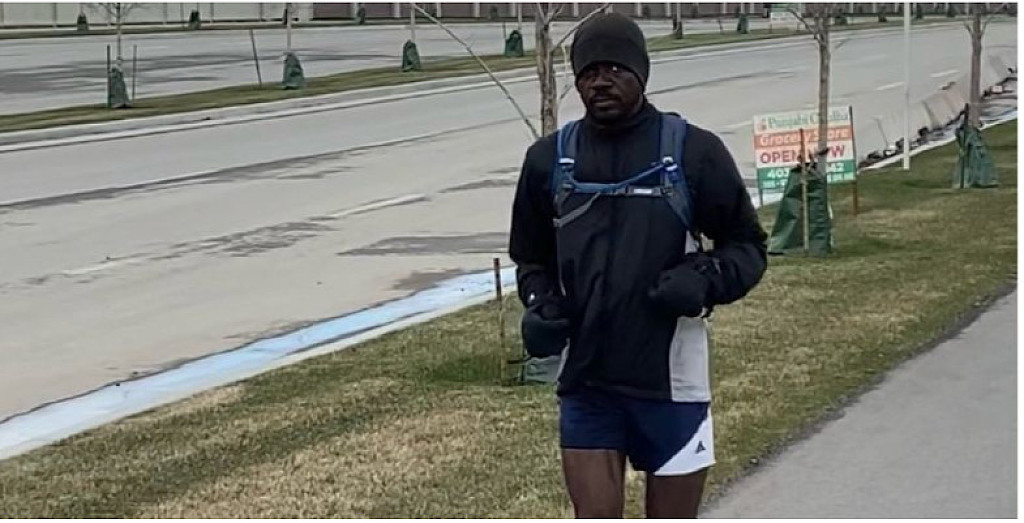
Canadian Ultrarunner Runs 1,000K in Fewer Than 10 Days to Win the Great Virtual Race Across Tennessee
After finishing in 148th overall in last year’s race, Morris was on a mission to win.
For the second year in a row, the Great Virtual Race Across Tennessee (GVRAT) has been won by a Canadian, and once again in a record-breaking performance.
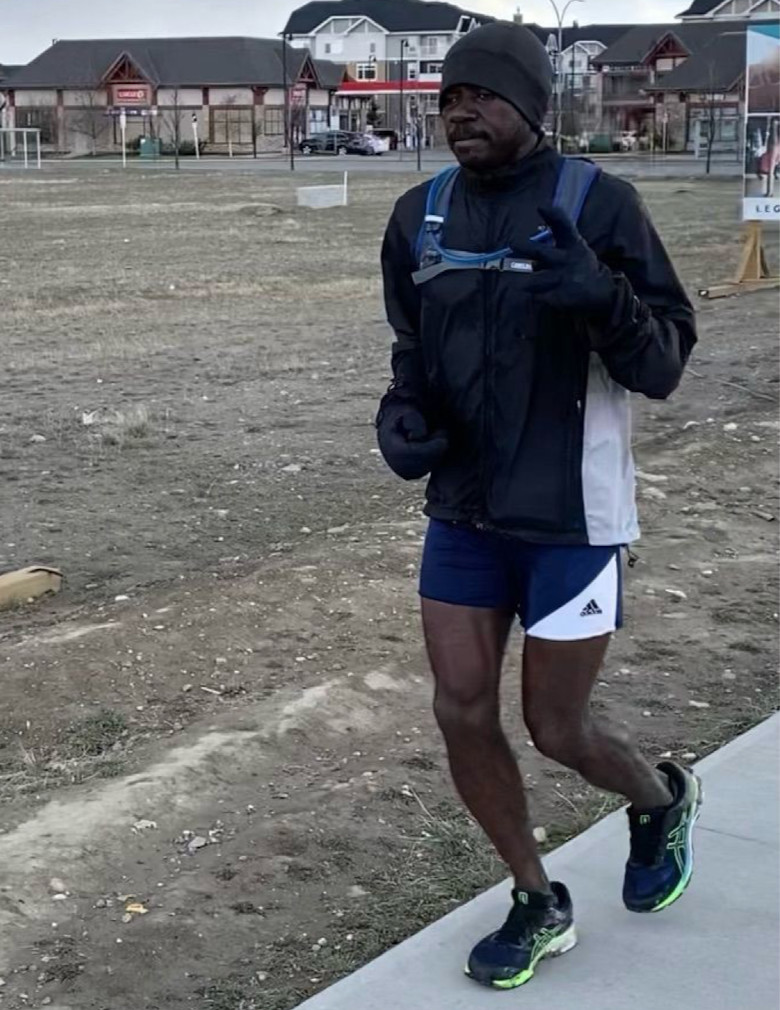
Varden Morris, 50, who lives in Calagary, Alberta and is from Jamaica, completed the 1,000K distance (a little more than 621 miles) in 9 days and 23 hours, averaging more than 100K a day. Morris beat out fellow Canadians Matthew Shepard, 33, and Crissy Parsons, 40, who finished in 13 days and 15 days, respectively.
“Honestly, I’m in disbelief,” Morris told Runner’s World. “Just hearing stuff on social media about the magnitude of what I just did. I knew it was possible but after finishing and realizing that not many people have done what I’ve done, it baffles my mind.”
Last April, Barkley Marathons creator Gary “Lazarus Lake” Cantrell came up with the idea of hosting a virtual ultra, giving people four months to run twice the distance of the Last Vol State 500K—and more than 19,000 runners signed up. One of them was Morris, who went out with the fastest of the bunch, but due to lack of training, he picked up a few injuries and was forced to slow down. He finished 148th overall.
After that, Morris decided he wanted to win the 2021 race, so he studied the training methods of successful ultrarunners and increased his mileage. By the start of 2021, he was running about 14 miles a day for a week before upping that mileage by four miles to his daily total until he reached a max of 36 miles a day. In March alone, he covered 965 miles.
On May 1, when GVRAT finally began, Morris set out to not only win, but to also finish in fewer than 10 days.
“My strategy was to run as close to possible to the same average distance every day,” he said. “Most people try to put in most miles in the first few days. My plan was to be consistent. I went a little above my average the first day by 10 percent, but I was doing mostly the same miles every day.”
Morris ran around his neighborhood in Calgary, with a routine of running for six hours and resting for five. He rotated through three pairs of Asics shoes, and for fuel, he focused on solid foods like boiled eggs with veggies, Jamaican sweet potato pudding, toto (a Jamaican pastry), and fruit, such as grapes, bananas, oranges, and watermelon.
No day was easy. Morris said he often found himself contemplating if he would complete the run he was on. On the first day, he picked up a groin injury that lasted a couple days. Another day, he ran through rain and hail with winds over 25 mph.
“Every minute was important,” he said. “Each day was more and more difficult. There was a sense of uncertainty if I would finish. It wasn’t something easy. It was something very difficult. We just took it one day at a time.”
When Morris woke for his final push of 44 miles, he was hurting but he knew he was ahead of his fellow Canadians. His wife, who also served as his crew chief, joined him for the first 15 miles of that final push, and his daughter ran the final four miles with him.
Celebrations included a big meal at home of meat and veggies and some non-alcoholic wine. With the record in hand, Morris plans on running back across Tennessee; part of the GVRAT format allows runners to run back across Tennessee as many times as they like during the four-month period.
Morris said he will be taking it much slower back across.
During last summer’s GVRAT, Cantrell faced criticism when he deleted a GVRAT finisher’s post on Facebook that described the runner’s experience receiving racist and homophobic slurs during his runs.
by Runner’s World
Login to leave a comment
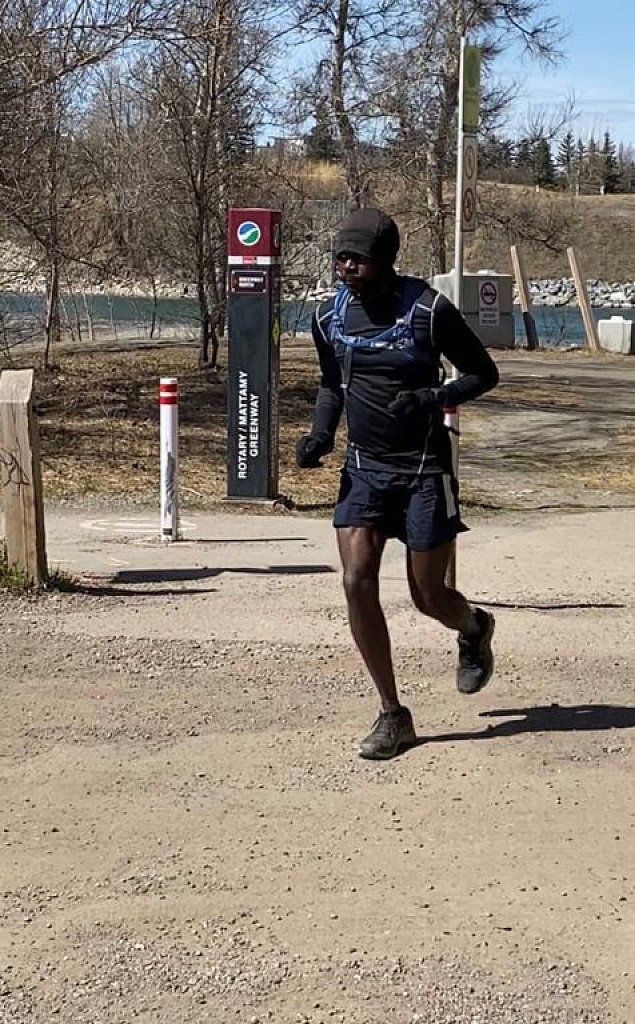
Canadian ultrarunner Varden Morris wins Great Virtual Race Across Tennessee
The Great Virtual Race Across Tennessee has only been running for 10 days, but it already has its first finisher. Calgary’s Varden Morris completed the roughly 1,000K race in just over a week, averaging an impressive 103K per day since the event kicked off on May 1. Matt Shepard of Valleyview, Alta., is currently in second place, with just over 800K complete.
The GVRAT
Laz Lake created the GVRAT in 2020 at around the same time many races started going virtual. Lake, who is best known as the race director of the Barkley Marathons, wasn’t going to organize a quick virtual 5K or 10K, though, and he decided to take runners across his home state in a 1,000K ultramarathon. This year, just like in 2020, the race started on May 1, and participants have until August 31 to complete the route. They upload their runs or walks to the event website, which tracks every runner’s progress and lists the leaderboard.
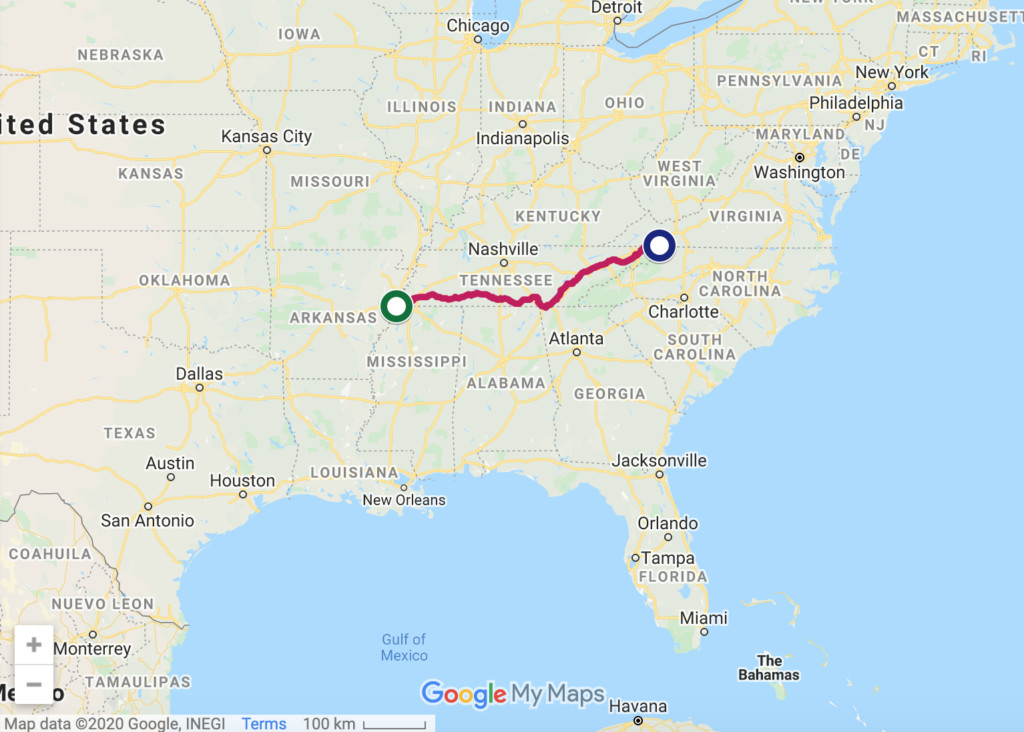
This year, around 5,000 people have signed up, although registration is still open for anyone interested in jumping into the ultra challenge. For people who think 1,000K is a bit too short, there’s an out-and-back race option, which tops out at a bit above 2,000K.
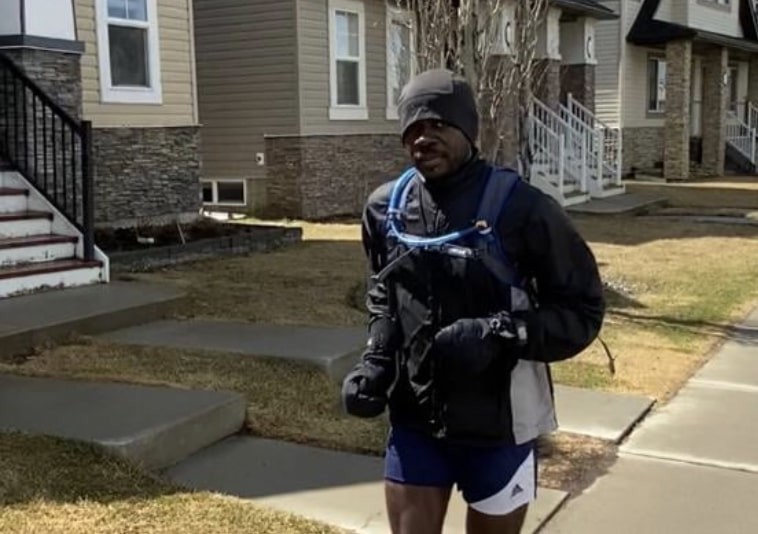
Morris’s win
Morris was relentless in his 10 days of racing, and he went for multiple runs each day to rocket himself up the leaderboard and toward the win. He kicked the challenge off on May 1 with a 112K day, followed by a 119K total on Day 2. From there, he continued his attack, distancing himself from the rest of the field every day. Throughout his 10 days of running, Morris ran under 100K only twice.
As he wrote on the GVRAT Facebook page, the race was 70 per cent mental for him and 30 per cent physical. “It has been a very humbling experience for me from day #1 through day #10,” Morris wrote. “Every single run came with its own set of challenges that resulted in me questioning God if this is possible and if I will be able to complete it.” He said his wife and daughter played big roles in his win, helping him throughout the race by preparing meals for him and showing him moral support.
The race is now on for second place, although Shepard appears to have a pretty good hold on it with his 800K total. In third is another Canadian, Crissy Parsons, who leads the women’s field with about 650K run. Like the gap between Parsons and Shepard, the distance from Parsons to the fourth-place runner is quite far, and as long as she holds steady in the coming days, she will likely finish third and complete a Canadian sweep of the podium.
by Ben Snider-McGrath
Login to leave a comment
After about a day of running, medical concerns force Dave Proctor to stop short of TransAlberta FKT
Mid-run medical concerns have forced Dave Proctor to call off his TransAlberta FKT (fastest known time) attempt. Around a day into what he hoped would be a 72-hour run across Alberta, Proctor decided it was in his best interest to get picked up and receive medical attention. He was taken to Foothills Medical Center in Calgary on Saturday, and after a round of tests, he has returned home.
Before his run, Proctor said he hoped to complete the 537K TransAlberta FKT in 72 hours or less. This would set two records, as it would be the fastest run across Proctor’s home province of Alberta and it would better his own Canadian 72-hour record, which currently sits at 500K. Pushing a stroller that contained all of his gear, food and water, Proctor set out on the Trans-Canada Highway on Friday morning, kicking the challenge off at the B.C.-Alberta border.
Proctor’s goal for the opening 100 miles of the FKT attempt was to run somewhere between 14 and 16 hours. He hit that with time to spare, passing through 100 miles in 15 hours, 30 minutes. He then continued on through Calgary and powered toward the remaining two thirds of the run. Unfortunately, Proctor didn’t get much farther, and when things didn’t feel right on the other side of Calgary, he decided to call for a ride to take him to the hospital.
Posting on Proctor’s behalf on Instagram, Stephanie Gillis-Paulgaard of Take Roots Consulting wrote, “Dave had to make a very tough call to end his TransAlberta run. He had some concerns and is now being cared for by our amazing healthcare workers. Of course there is disappointment but he’s happy with his effort.”
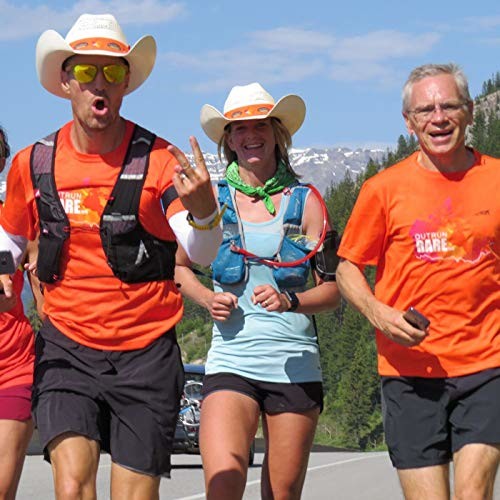
Before his run, Proctor said all he had in his mind as a set goal was to hit the first 100 miles between 14 and 16 hours. After that, he said, it was impossible to know how his body would react to the run. He averaged about 5:47 per-kilometer pace for the opening 100 miles, and he decided that carrying on for another 200 wouldn’t have ended well.
“These decisions are never easy to make,” Gillis-Paulgaard said after Proctor returned home. “When you have concerns — any concerns — you leave it to the professionals.” Gillis-Paulgaard noted that Proctor’s tests at the hospital came back normal, but he’s at peace with the decision he made on the route.
“The reality of completing the TransAlberta in the intended timeframe was not in the cards,” she said. “For now, Dave will rest and assess.”
by Ben Snider-McGrath
Login to leave a comment
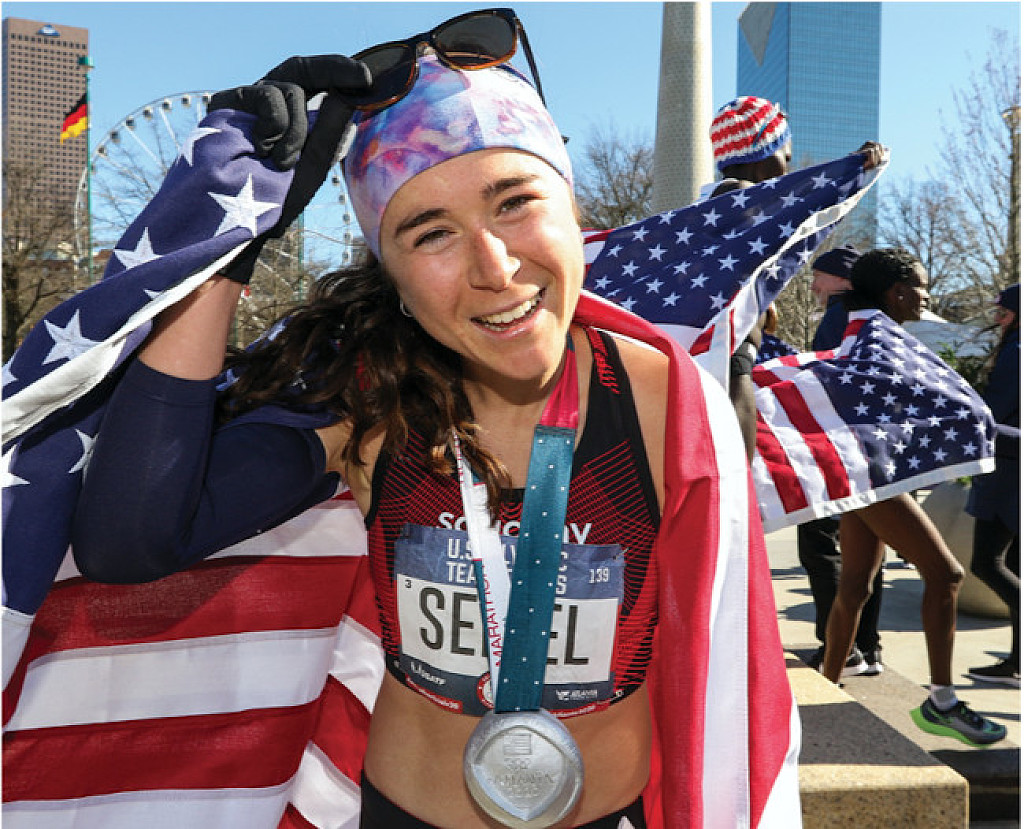
None of us would dispute that running makes us happy. But it's also clear that it's not a panacea
“It was running or Zumba,” says James Duncan of Montreal (not his real name), when asked why he started running. Back in 2018, when he first experienced symptoms of depression and anxiety, a friend suggested he take up a new activity. He was attracted to running as an individual sport without too much pressure: “No one expects me to win, so it seemed like a good option,” he says. But Duncan quickly discovered he could do more than he thought, so he registered for his first 5k race. “It gave me a sense of achievement, some sort of purpose,” he says. “It forced me to get up on days when I just wanted to stay in bed.”
Cut to June 2020, when Duncan proudly ran his first unofficial (and entirely unplanned) half-marathon – in the middle of the night. Getting up at 3:30 a.m. after a bout of insomnia, he went out for a quick run to watch the sunrise over the St. Lawrence River, and had his first runner’s high: “It just felt good,” he says. “So I kept running.”
Is runner’s high what kept him running over the past two years? Duncan is clear: “To be honest, that’s only ever happened to me once. Running gives me a way to stop thinking about everything else for a while. When I run, I just focus on my breathing. It’s almost like meditation. And the social connections I got from being part of a running group also really helped me.”
Although thousands of people have taken up running for the first time during the pandemic, COVID has put a damper on group running, so the mental-health boost from socializing with other runners has been absent for most people over the past year. This has given rise to a particularly COVID-specific type of mental distress: loneliness. A recent Angus Reid survey found that almost a third of Canadians report suffering from loneliness and social isolation – and this figure rose 10 per cent between October 2019 and October 2020. (Those reporting that they had “a good social life” dropped from 55 per cent to 33 per cent during the same period – and there are probably a fair number of runners among those numbers.)
With the prospect of a gradual return to normality thanks to vaccination, runners are tentatively signing up for races (where they can find them) and reconnecting with their groups, while solo runners whose motivation to train never flagged are cheered by the approach of spring. Research has repeatedly demonstrated the many mental health benefits of running and exercise, and that has never been truer than now.
But running obviously isn’t a guarantee against anxiety, depression or loneliness. Runners of all levels struggle with mental health issues, while also experiencing running as a mood-booster, at least some of the time. Elite athletes like Canadian ultrarunner Rob Krar, U.S. runners Alexi Pappas, Amelia Boone and Molly Seidel have shared their experiences with anxiety, depression, obsessive compulsive disorder (OCD) and eating disorders in an effort to reduce stigma, and their candour has led to recognition of the need for dedicated support. And while mental performance coaches have for decades helped pro athletes deal with negative mental habits that impede performance, there’s a difference between mental performance and mental health; psychotherapists are only recently becoming an essential part of the team as well. This was brilliantly demonstrated in April last year as Canadian sports groups and associations united to create a dedicated mental health task force to support athletes after the postponement of the Tokyo Olympics. All of which raises the question: if elite professionals, who spend a large portion of their days training, are experiencing anxiety and depression, is exercise really as beneficial for mental health as we thought?
The relationship between running and mental health is both subtle and complex. Multiple studies have demonstrated the crucial role of exercise in well-being. Sport psychology expert, Olympian and dean of the University of Calgary’s faculty of kinesiology, Penny Werthner, says, “Movement is critical for both mental and physical health. There are physiological and neurological changes that occur when we move, when we run and become fitter.” Achieving running milestones (which, depending on the individual, may mean anything from simply getting out the door to setting a new marathon PB) can boost confidence and motivation, foster a sense of accomplishment and improve self-esteem – all of which boost mental health. But it’s only part of the picture: “I would argue that exercise and movement can always help,” says Werthner, “and it would be wise to incorporate them into a treatment plan, along with other treatments, such as cognitive behaviour therapy.”
HOW NEW RUNNERS CAN BENEFIT
If you’re a new runner who’s embraced the sport because you’ve heard of its widely touted mental health benefits, it may not be quite that simple. It may take time to build up the fitness that will allow you to reap any significant mental health benefit. (One study found that running at a moderate pace for 30 minutes produces a much higher increase in the neurotransmitters known as endocannabinoids, which researchers believe may be more responsible for running’s mood-boosting properties than endorphins, than either walking or running at maximum intensity – and it may take some time for a non-runner to be able to run continuously for 30 minutes.) Obviously, the risk for new runners is taking on too much too soon, which is likely to deprive them of any mental health benefit they might have derived from running because they are sidelined with an injury. Werthner suggests reaching out to a trainer or coach to get started in a way that’s appropriate to your fitness level and goals.
Another pitfall for new runners is that running can very easily become a chore, adding nothing to one’s mental health (and possibly compromising it). For running to make you happy, it should be carefree and liberating (as it is for Duncan). It doesn’t mean having to run a marathon – by all means, start training for a marathon if all of the following are true: you’re healthy, that goal excites you and you have support for it from the people in your life whom it may impact. Marathon training and recovery are time-consuming. Most plans recommend starting with some 5k, 10k and half-marathon races to build a base of fitness, which generally means putting off marathon training until you’ve been running for at least six months to a year. Don’t compare yourself to others you see on social media, posting about their running accomplishments, and remember that there are no shortcuts to athletic greatness – elite athletes have years of training (and plenty of failures) behind them.
Whether you start with a few minutes of running and walking or a more ambitious regimen, check in with yourself regularly. “The best gift you can give yourself is to be aware of your own needs,” says Kim Dawson, mental performance consultant and professor at Ontario’s Wilfrid Laurier University.
EXPERIENCED RUNNERS: BALANCE IS KEY
Experienced runners who decide to take on a new running goal may also be at risk of biting off more than they can chew, says Dawson, who suggests runners think carefully about the possible mental health implications of a new training plan: “Be aware of what you are sacrificing,” she says. “Choose a running program that fits your lifestyle and allows for a healthy amount of training, while giving you room for growth in other areas of your life, such as your professional development, social connections and emotional well-being.” While often challenging, running should still be fun, at least most of the time. Regularly ask yourself whether you still look forward to getting out for a run. If not, it may be time to take the intensity down a notch or find a challenge more suited to your current state of mind.
DEALING WITH INJURY
Healing an injury can be a long, emotionally difficult process that sometimes involves giving up short-term goals, such as a much-anticipated race. That is likely to have an impact on your mental health, at least in the short term. The pandemic certainly hasn’t made dealing with injury easier. Being forced to take a break from a much-enjoyed activity is hard enough; doing it without the mood-boosting brain chemicals provided by alternative forms of exercise at facilities that aren’t accessible during lockdown can make recovery that much more difficult. Once again, Dawson suggests focusing on the other areas of your life that bring you joy. It also helps to seek out a supportive friend, or possibly a mental health professional, with whom to talk about the situation.
WHEN RUNNING IS PART OF THE PROBLEM
Finding balance may be a particular challenge for pro runners, for whom training is the biggest part of their daily life. Canadian half-marathon record holder Andrea Seccafien is from Guelph, Ont. but lives and trains in Melbourne, Australia. For Seccafien, feelings of isolation during the first lockdown in 2020, when she couldn’t work out with her teammates and she was a long way from home, were compounded by anxiety about the virus. That impacted her performance, which led to further anxiety, which led to the decision to take a month-long break from the sport last May. “I so badly wanted this to be a physical problem,” Seccafien told Canadian Running in January 2021, adding that she was prepared to deal with an iron or thyroid deficiency. But healing a mental health injury is no different than healing a running injury, and the solution usually isn’t more running, but its opposite – rest. (And treatment by a trusted health professional.)
Alexi Pappas, who was raised in the U.S. but hopes to run for Greece at the Tokyo Olympics, has a similar story, which she tells in her recent book, Bravey: Chasing Dreams, Befriending Pain, and Other Big Ideas. Pappas’s mental health took a nosedive after the 2016 Olympics, where she competed in the 10,000m, setting a new national record for Greece. Instead of taking a well deserved and much needed vacation before setting new goals for the next Olympic cycle, she felt compelled to continue training. And after getting a distribution deal for her first film, Tracktown, she felt pressure to produce another film. There were also deeper psychological issues having to do with her mother’s death by suicide when Pappas was a young child, and she spiralled into insomnia and depression. It was a year before her father finally persuaded her to seek treatment, which was ultimately effective.
Professional athletes have the added pressure of having their performance tied to their livelihood, but recreational runners are not immune to overdoing it to the point of burnout. “The key,” says Dawson, “is to maintain a holistic identity. And this is valid for everyone, professional athlete or not. You are a person first, who happens to run.” It’s important to keep developing other areas of your life, which may include time with family, building a career or pursuing another hobby that you’re passionate about.
Duncan, for his part, still runs four to five times a week and regularly attends therapy sessions. “It’s not a magic pill,” he says of running. “You have to find out what works for you. But it’s definitely been an adventure. You never know where you’re going to end up.” He smiles. “Could be on a riverbank, watching the sun rise at 6 a.m. after running 21 kilometres.”
by Apple News
Login to leave a comment
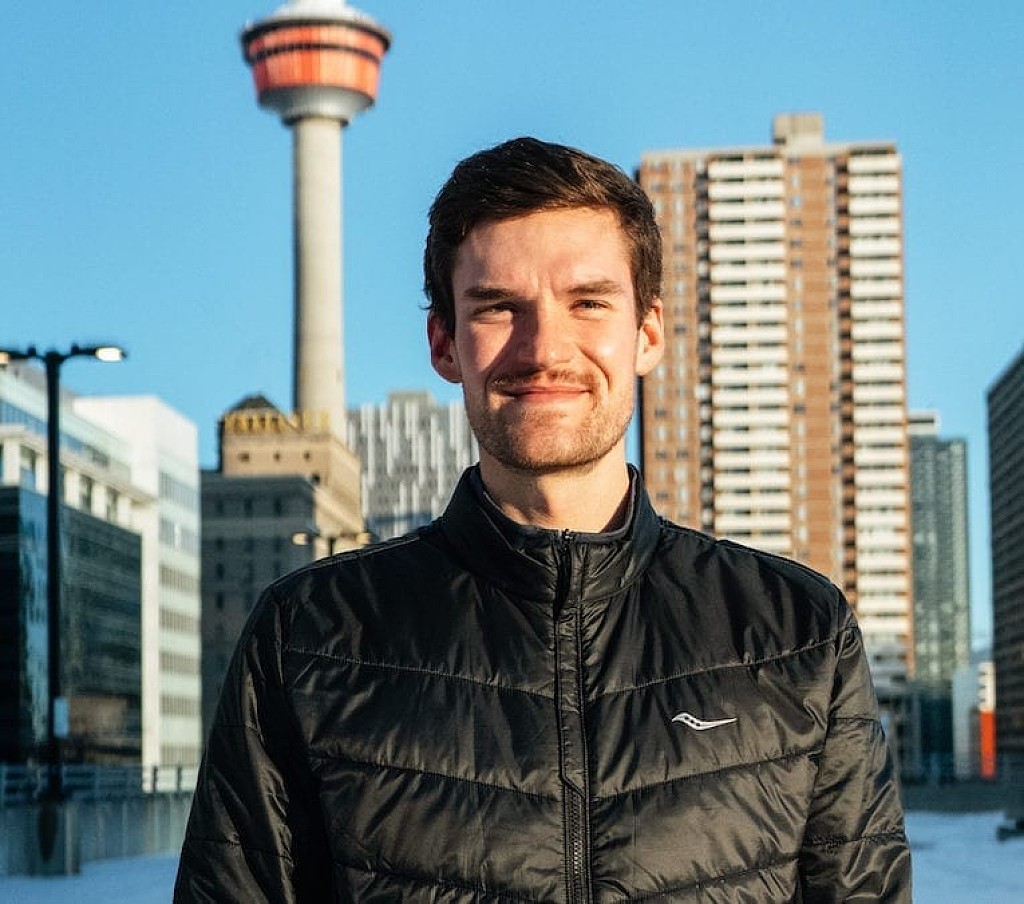
The two-time Canadian marathon champion Trevor Hofbauer has officially joined the team at Saucony
On Wednesday morning, Saucony announced that it has signed Canadian marathon champion and Olympian-to-be Trevor Hofbauer as a sponsored athlete. The 2:09:51 Calgary-based marathoner was previously unsponsored, and the new partnership comes just seven months out from his Olympic debut.
Hofbauer qualified for the Tokyo Olympics with his win at the Canadian Marathon Championships (which doubled as the Canadian trials) in Toronto in 2019, where he ran his PB and the second-fastest time in national history.
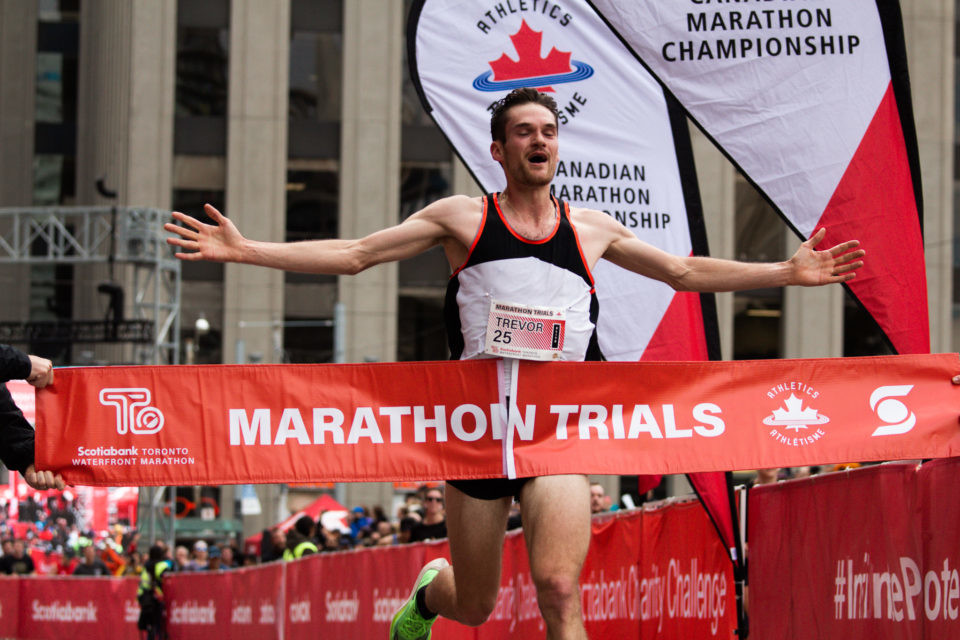
Hofbauer joins fellow canadian marathoner Malindi Elmore on the Saucony team. Elmore, who signed with Saucony in November, is the national marathon record holder with a blazing-fast PB of 2:24:50 that she ran in Houston in early 2020. For Saucony, adding Hofbauer to the team was not a difficult choice.
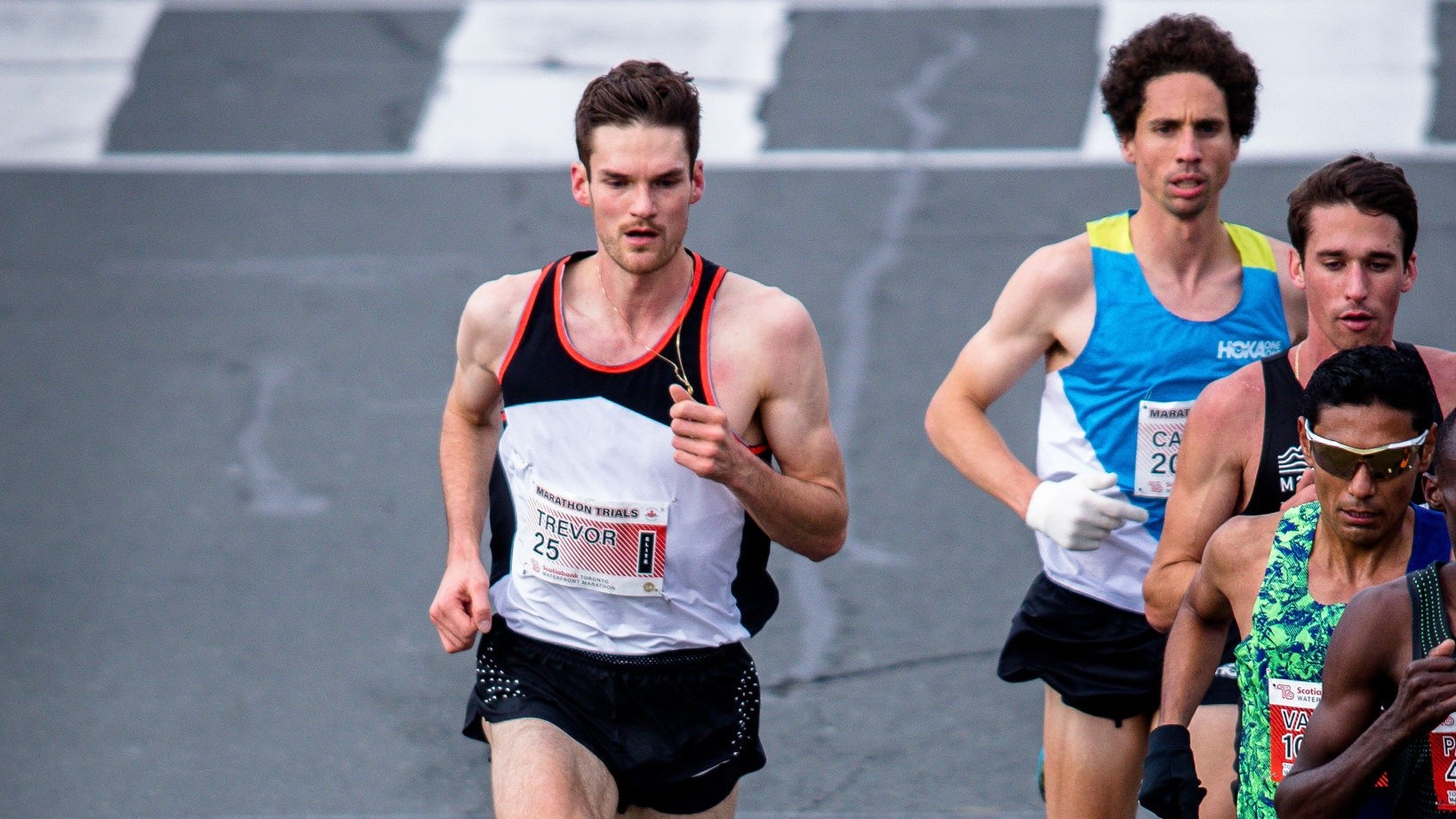
His win in 2019 was the second Canadian marathon crown of his career, and he also won the national half-marathon championships in Calgary in 2018.
Hofbauer didn´t race in 2020 due to COVID-19, but he had a great run from 2017 to 2019, winning a Canadian championship each year. Now into 2021, he will be looking to get back to his winning ways with his new support crew as he works toward the Olympics.
"I am honored to represent Saucony within the running community and at the 2021 Olympics,” Hofbauer said.
“The Saucony Canada team has made me feel extremely valued and their support goes a long way in allowing me to reach my full potential. Saucony’s commitment to sustainability, the Canadian running community, and their leadership are top-notch. I look forward to the future of our partnership together.”
by Ben Snider-McGrath
Login to leave a comment
Researchers at the University of Calgary found that running can boost mental acuity
You’ve always known running is physically good for you, but a recent study out of the University of Calgary found that it has cognitive benefits, too. The study was published by the American Academy of Neurology (AAN), and it showed that running and performing other aerobic exercises on a regular basis for just six months can boost brain function by 5.7 per cent.
The study suggests that new runners of all ages should experience at least some improvements after adding consistent exercise to their weekly schedules.
Marc Poulin, one of the authors on the study, said in an AAN press release that “even if you start an exercise program later in life, the benefit to your brain may be immense.” Poulin works at the Cumming School of Medicine at U of C. “Sure, aerobic exercise gets blood moving through your body,” he said. “As our study found, it may also get blood moving to your brain, particularly in areas responsible for verbal fluency and executive functions.” Poulin said these findings could help in future research regarding Alzheimer’s and dementia.
The study looked at 206 adults over a six-month period in which they exercised at least four days a week. At the start of the six months, the subjects — who had an average age of 66 — underwent thinking and memory tests, and they also had ultrasounds to monitor the blood flow to their brains. Physical tests administered again after three months and then six months, when the subjects were also given thinking tests.
The study participants worked out in a supervised group setting three days a week throughout those six months, and they were asked to exercise at least once more on their own each week. Their aerobic exercise program started at 20 minutes per day and was eventually bumped up to 40 minutes. After the six months, subjects showed a 5.7 per cent improvement on tests of executive function, as well as a boost of 2.4 per cent when it came to verbal fluency, which pertains to the ability to retrieve information.
Blood flow to the brain also improved after the half-year of training, jumping from 51.3 centimeters per second at the start of the trial to 52.7 at the end for an increase of 2.8 per cent. “Our study showed that six months’ worth of vigorous exercise may pump blood to regions of the brain that specifically improve your verbal skills as well as memory and mental sharpness,” Poulin said.
What does this mean for runners? Well, if you exercise regularly already, you’re doing yourself a favor, even if you didn’t realize it before. If you’re new to running, though, the study shows that you can still boost your mental acuity if you stick with the sport and work out consistently.
by Ben Snider-McGrath
Login to leave a comment
How to makes the weekly long run a key part of your training plan
When starting to train for a race of almost any distance beyond the sprints, the weekly long run is key to building endurance. The main principle is to add mileage gradually over time. In the case of the marathon, a four- to six-month build is recommended, and less for a half-marathon or 10K race. Most training plans are conveniently built on a weekly schedule, and your weekend long runs are interspersed with short, easy runs, once- or twice-weekly speedwork sessions and/or strength training and recovery time.
How to incorporate the long run into your weekly routine
The point of the weekly long run is to build your endurance. Starting with a modest goal, such as being able to run for at least an hour without stopping, those who are new to running should run at a pace that lets them carry on a conversation. “You want to be able to actually do the long run, to be able to start it and to finish it – to me that’s where the win is, regardless of your pace,” says Under Armour runner and YAMAJO Run Crew founder David Joseph, who is based in Montreal. Putting in those weekly long runs will give you the confidence to go the distance on race day.
For a first half-marathon, a good rule of thumb is that a runner should have some experience with the 10K before they begin training, and similarly, those tackling their first marathon should have raced a half-marathon first, according to Joseph.
Initially, you’ll be better off running without a watch and getting used to what an easy, conversational pace feels like. More experienced runners might prefer to train by distance rather than time, starting with a long run of 12K to 15K. Adding a kilometre each week, after training for a couple of months you’ll have your long runs up to or beyond 21K and be well on your way to a successful result in the half-marathon – assuming you’re also running shorter distances, and occasionally running fast, in between your weekly long runs.
Under Armour trainer and former Canadian national decathlon champion Rich Hesketh, who is based in Calgary, recommends that beginners build mileage slowly: “Keep your increases quite progressive in a linear fashion,” he says. “Don’t try and have big jumps or go too long at the same pace for more than a couple of weeks. As a principle of progressive loading, we could look at up to one to two kilometres per week for marathon training. And you’ll eventually get to the point where you’re doing your three- and four-hour long runs.”
Keep your long runs easy
It’s important to do the long run at an easy, comfortable, conversational pace in order to train your aerobic system and slow-twitch muscle fibres, which are what the body uses during all but the final sprint of the marathon. You can work on speed over short distances during your mid-week runs. On race day, the two elements of your training (endurance and speed) will come together, and if you’ve also dialled in your nutrition and recovery, you should be able to hold your goal pace and sprint across the finish line. The challenge is to trust that this process works!
Runners should be guided by the 80/20 rule: run 80 per cent of mileage at an easy pace and 20 per cent at a faster pace (steady state, tempo or race pace). Many runners think they will only get faster if they hammer every workout, but this is a very unwise approach that will likely lead to overtraining and injury. Hesketh explains, “People feel like they’re not working hard enough – they feel like they’ve got to go out and blast a hard run. And that’s not necessary – in fact, that steady, even pace, once you find your pace and your cadence for that, will go a long way in your ability to maintain and improve your running.”
Use a heart rate monitor
The best way to determine how fast to run your long runs is to calculate 220 minus your age, and keep your heart rate at or below 60 to 65 per cent of that. For best results, use a wrist-based or chest strap heart rate monitor. For example, a typical 30-year-old’s max heart rate would be around 190 beats per minute, so on long runs their heart rate should not exceed 123 beats per minute. You might feel like you could easily go faster, especially at the beginning of a long run, but you should resist the urge and save the speed for your short midweek runs. The Samsung Galaxy Watch Active2, Under Armour Edition offers accurate wrist-based heart rate monitoring to keep you honest! And in addition, Under Armour’s MapMyRun app offers heart rate analysis, whose detailed heart rate graphs help runners train at the right intensity.
Your total weekly mileage should increase by not more than 10 per cent per week. Let’s say, for example, that you’re running 6K to 8K four times a week, plus your 10K weekly long run (to start). That’s 34K to 42K total for that week. The following week, if you increase your long run to 13K while keeping your other runs at roughly the same length, you’re now running 37K to 45K per week – an increase of around eight per cent. Keep in mind that as you gain fitness and experience, you’ll want to make your mid-week runs a bit longer, as well. (There’s a certain amount of mental math necessary to make sure you’re increasing your mileage at an appropriate rate – not so slowly that you don’t reach your goal, but not so quickly that you end up overtrained, and possibly injured.) Always schedule at least one or two rest days or easy run days between the long run and your next speed workout.
Shoes for the long run
For your long runs, you want a shoe with plenty of cushioning. The UA HOVR™ Infinite 2 is an excellent high-mileage shoe and perfect for the long run. The midsole is made with UA’s signature HOVR cushioning foam, and the shoe has the embedded chip in the heel to give you all your key running metrics via the UA MapMyRun™ app. The Samsung Galaxy Watch Active2, Under Armour Edition also comes pre-loaded with UA MapMyRun™, so you can also receive real-time audio cues on your form and cadence.
f you prefer a shoe that will work well for easy runs, speedwork and tempo runs as well as the long run, the most versatile choice would be the UA HOVR™ Sonic 3, which has all the lightweight cushioning and flexibility you need. It, too, comes with the built-in chip that connects to the UA MapMyRun™ app.
by Running Magazine
Login to leave a comment
Stretching was once the cure-all for running injuries.
When it comes to running, experts want you to avoid static stretching
Stretching was once the cure-all for running injuries. Practitioners would ask injured runners if they were stretching enough, and if the answer was no they would offer more stretches. However, research is now suggesting that certain kinds of stretching aren’t great for runners, and may even be harmful for those who are prone to injury.
According to a literature review of several studies, there’s actually a correlation between lower levels of flexibility and better running economy, which refers to the amount of energy expended to maintain a particular speed. A study on untrained runners found that participants with the lowest flexibility happened to have the most naturally economic running styles. Researchers believe that this was a result of low range of motion, leading to better stabilization when the foot hits the ground. Basically, excessive range of motion means more energy is needed to stabilize muscles, and having a lower range of motion reduces that use of energy.
Carla Robbins is the owner of Vital Strength and Physiology in Calgary, Alta. She says she almost never prescribes static stretching to her clients – she’s all about strength work. “If stretching is something you do frequently, it’s technically possible to get more length in the muscle, but I don’t personally recommend it. I feel like there are other things that can check that box, for example, dynamic stretching or strength training. Strength training results in strength (and length), while also preventing injury.”
When To stretch - If static stretching (holding one position) isn’t recommended for runners, then what should they be doing to warm up? Robbins says ideally runners will integrate dynamic stretching (not holding the stretch, but moving with control in and out of the end ranges of the stretch) into their pre-run routine. A dynamic warmup will increase body temperature, which activates enzymes that are beneficial to running.
When not to stretch - Robbins says static stretching should be avoided by runners who are trying to prevent (or rehabilitate) an injury. “There isn’t enough evidence to support that stretching prevents injury,” she explains. “Some stiffness is required in the ligaments and muscles to run. For example, if you’re a hyper-mobile person with relaxed ligaments, you might be more prone to injury as your joints are more likely to move with loading. Lack of stiffness isn’t necessarily beneficial.”
Robbins also reminds runners never to stretch through pain. “Listen to your body, it’ll tell you if you’re doing something wrong.
”What about cramping?
When runners cramp up, many feel the need to “stretch it out,” but the research is divided on the topic. Muscle cramps can be caused by many factors including dehydration, fatigue and vitamin or mineral deficiencies. Leg cramps can also be a side effect of some prescription medications.
However, the reason for cramping and its exact cure eludes us. Several studies suggest that stretching out a cramp won’t hurt you, but it won’t necessarily help, either. If cramping is an issue for you, Hyland’s Leg Cramp Tablets, an official sponsor of the Boston Marathon, are one way to feel confident on the start line. Hyland’s Leg Cramps Tablets are taken without water, the quick dissolving tablets melt instantly in your mouth for fast-acting natural relief of leg, calf and foot cramps with no known side effects. They can be purchased on Amazon.ca and ship worldwide.
What muscles should runners pay attention to?
Robbins is a big fan of strength training, which both lengthens and strengthens muscles. In addition to making runners stronger, it’s a great way to prevent injury. “For example, if you’re super stiff and have no hamstring flexibility, but also continually injure your hamstrings, you could look at training that muscle,” she says. “Train at the end of a muscle’s range of motion (a deep deadlift is an example) so that you not only develop length, but also strength in the long term. Studies comparing stretching protocols to strengthening protocols have shown that a runner can improve injury-resilience with strength training and joint mobility without ever stretching.”
When strength training, runners should pay special attention to their quads and hamstrings, along with ankle and hip mobility. These are the areas where the most-common running injuries tend to happen.
by Running Magazine
Login to leave a comment
When it comes to running, experts suggest avoiding static stretching
Stretching was once the cure-all for running injuries. Practitioners would ask injured runners if they were stretching enough, and if the answer was no they would offer more stretches. However, research is now suggesting that certain kinds of stretching aren’t great for runners, and may even be harmful for those who are prone to injury.
According to a literature review of several studies, there’s actually a correlation between lower levels of flexibility and better running economy, which refers to the amount of energy expended to maintain a particular speed. A study on untrained runners found that participants with the lowest flexibility happened to have the most naturally economic running styles. Researchers believe that this was a result of low range of motion, leading to better stabilization when the foot hits the ground. Basically, excessive range of motion means more energy is needed to stabilize muscles, and having a lower range of motion reduces that use of energy.
Carla Robbins is the owner of Vital Strength and Physiology in Calgary, Alta. She says she almost never prescribes static stretching to her clients – she’s all about strength work. “If stretching is something you do frequently, it’s technically possible to get more length in the muscle, but I don’t personally recommend it. I feel like there are other things that can check that box, for example, dynamic stretching or strength training. Strength training results in strength (and length), while also preventing injury.”
When to stretch.- If static stretching (holding one position) isn’t recommended for runners, then what should they be doing to warm up? Robbins says ideally runners will integrate dynamic stretching (not holding the stretch, but moving with control in and out of the end ranges of the stretch) into their pre-run routine. A dynamic warmup will increase body temperature, which activates enzymes that are beneficial to running.
When not Stretching.- Robbins says static stretching should be avoided by runners who are trying to prevent (or rehabilitate) an injury. “There isn’t enough evidence to support that stretching prevents injury,” she explains. “Some stiffness is required in the ligaments and muscles to run. For example, if you’re a hyper-mobile person with relaxed ligaments, you might be more prone to injury as your joints are more likely to move with loading. Lack of stiffness isn’t necessarily beneficial.”
Robbins also reminds runners never to stretch through pain. “Listen to your body, it’ll tell you if you’re doing something wrong.”
When runners cramp up, many feel the need to “stretch it out,” but the research is divided on the topic. Muscle cramps can be caused by many factors including dehydration, fatigue and vitamin or mineral deficiencies. Leg cramps can also be a side effect of some prescription medications.
However, the reason for cramping and its exact cure eludes us. Several studies suggest that stretching out a cramp won’t hurt you, but it won’t necessarily help, either. If cramping is an issue for you, Hyland’s Leg Cramp Tablets, an official sponsor of the Boston Marathon, are one way to feel confident on the start line. Hyland’s Leg Cramps Tablets are taken without water, the quick dissolving tablets melt instantly in your mouth for fast-acting natural relief of leg, calf and foot cramps with no known side effects.
When strength training, runners should pay special attention to their quads and hamstrings, along with ankle and hip mobility. These are the areas where the most-common running injuries tend to happen.
by Madeleine Kelly
Login to leave a comment
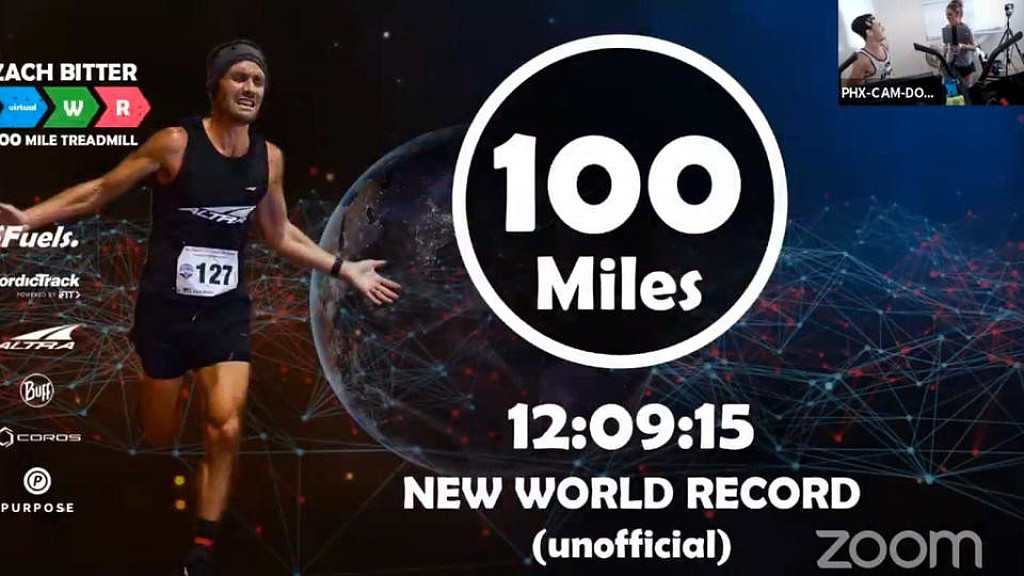
American ultra runner Zach Bitter breaks 100-mile treadmill world record clockin 12:09:15
American ultra runner Zach Bitter spent all day Saturday on the treadmill, starting at 6:30 a.m. PST and running until just after 6:30 p.m.
He ran for 100 miles (160.9K) and set the new treadmill world record for the distance with a time of 12:09:15. He bettered Canadian Dave Proctor‘s previous record (set at last year’s Calgary Marathon expo) of 12:32:26 by over 20 minutes. Bitter averaged an incredible 4:32 per kilometer over 12 hours and 100 miles of running.
Bitter’s average pace of 4:32 per kilometer would have given him a 3:11 marathon, which is a good time on its own, but he ran almost four marathons in a row on Saturday. The run was streamed live on YouTube, and different ultra runners and endurance athletes Zoomed in to chat as Bitter chipped away at his 100-mile trek.
Some of those big names included 2019 Ultra-Trail du Mont-Blanc winner Courtney Dauwalter, Aravaipa Running’s Jamil Coury, Quarantine Backyard Ultra champion Mike Wardian and Proctor himself, who knows exactly what it takes to break the 100-mile treadmill record.
Bitter is already the world record-holder in the 100-mile run, which he set last August at an indoor track in Wisconsin in a time of 11:19:13. He is also the owner of the 100-mile trail record from the 2018 Tunnel Hill trail race in Illinois, where he ran 12:08:36.
Now, he has officially added the treadmill record to his resume. With these three records to his name, it’s fair to say that Bitter is in the conversation for greatest 100-mile runner of all time, if not the outright winner of that title.
Bitter has been running ultra marathons for a decade now, and he’s got plenty of big race wins and results to his name.
He was 11th at the 2018 Western States 100, he took 32nd place at the 2016 Comrades Marathon and sixth at the International Association of Ultra runners 100K world championships in 2014. In 2019, he won three races, including the San Diego 100-miler in California.
by Ben Snider-McGrath
Login to leave a comment
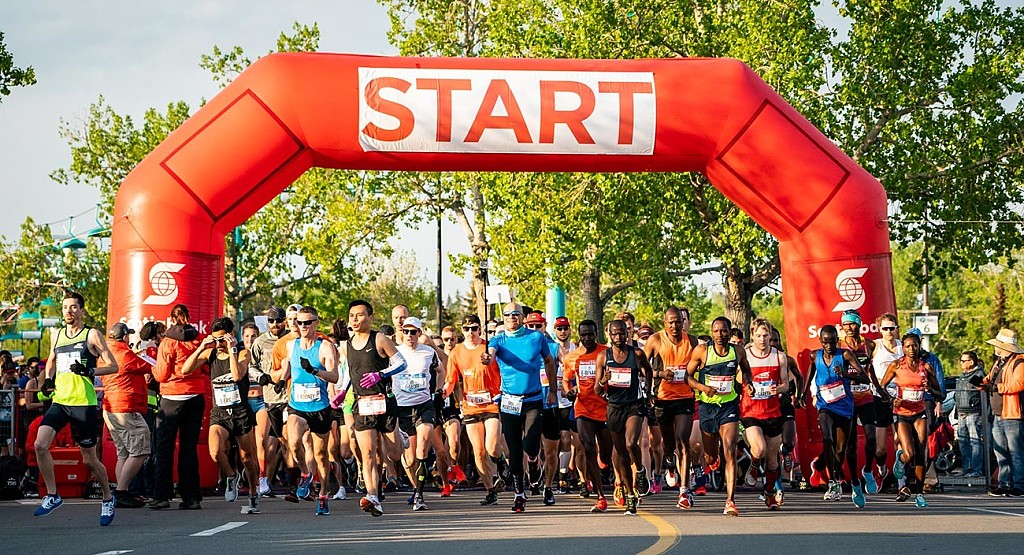
The Calgary Marathon race weekend is going virtual for 2020
Calgary Marathon organizers have announced that the event (which includes a 5K, 10K, half and full marathons and a 50K) will take the virtual route for the 2020 season.
Organizers had postponed the race weekend—which had originally been set for May 31—until the fall, but given the uncertainty of COVID-19, they have decided to go virtual instead. In addition to the marathon race weekend, Run Calgary will hold several other virtual events throughout the rest of 2020.
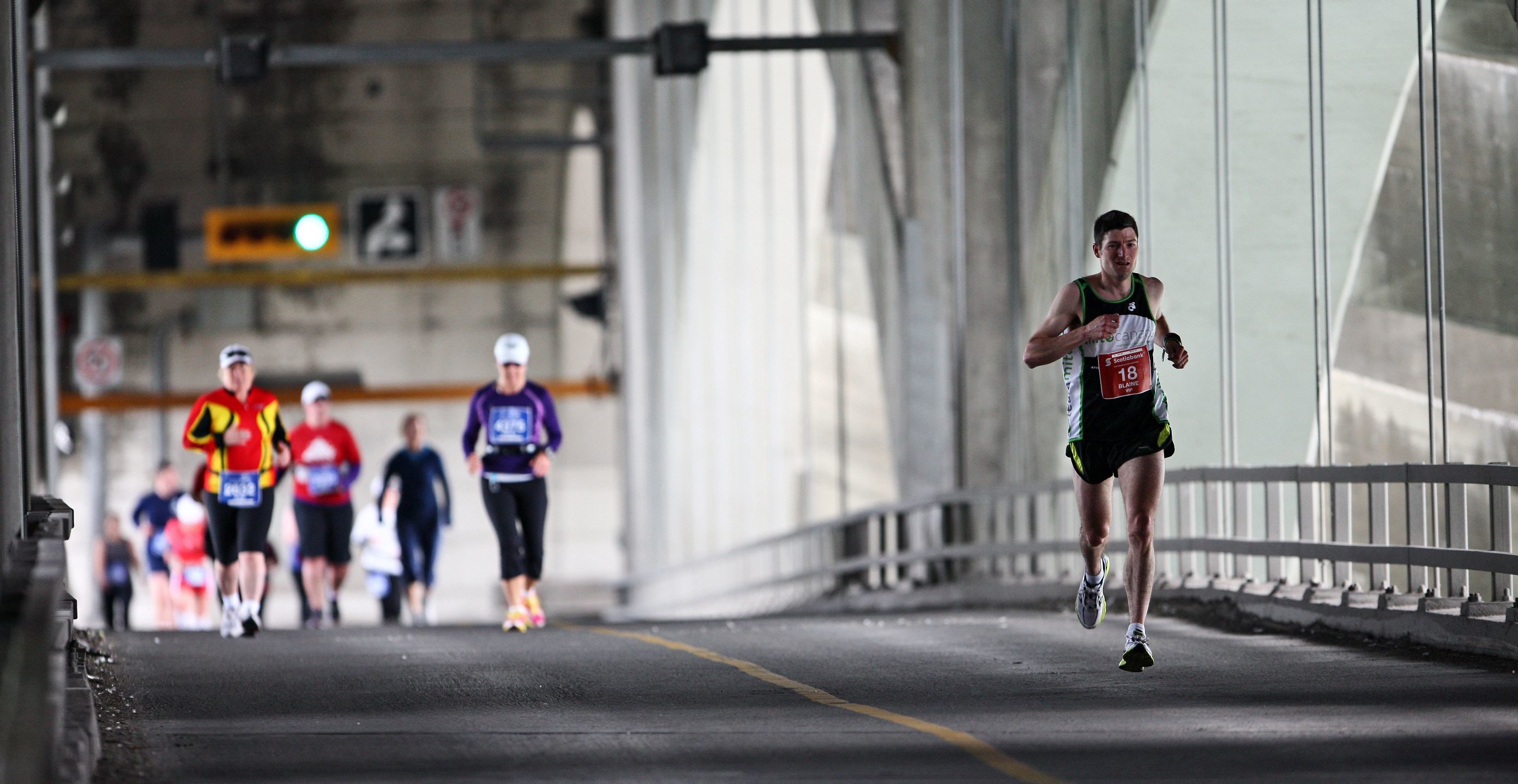
Over 6,000 people have already signed up for the Calgary Marathon Race Weekend, and on May 4, registration will re-open for anyone else who would like to enter the virtual events. Entrants in each of the races will have from May 31 to September 27 to complete their runs.
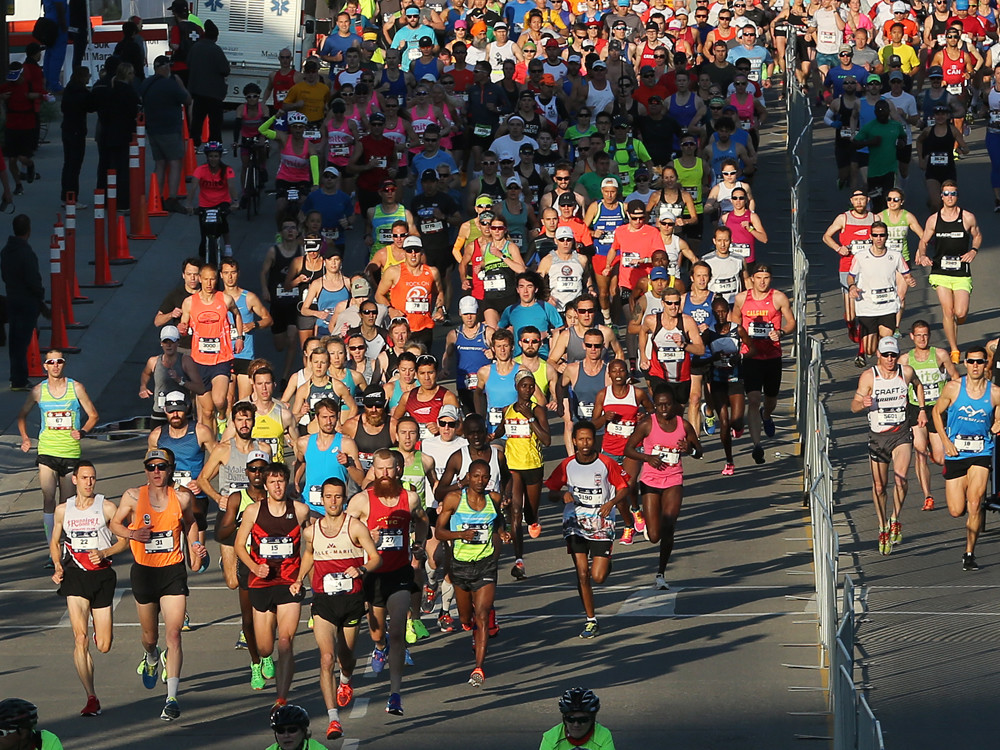
After completion, runners upload their results to the RunKeeper app, where race leaderboards will be compiled. Anyone who had already registered for the race weekend and doesn’t want to compete in the virtual event has the option to defer their run until the 2021, 2022 or 2023 events.
The new virtual race series, which is called the 2020 Run Calgary Virtual Running Festival, features six events. The virtual festival starts with the Calgary Marathon on May 31 and has events throughout the summer and fall until December.
Participants won’t just get to race and see where they stack up against other runners—they will also receive race swag and medals, bibs and finishers’ certificates. Run Calgary organized a virtual event in 2019, well before COVID-19, and it did extremely well, selling out in just three hours.
by Ben Snider-McGrath
Login to leave a comment
Scotiabank Calgary Marathon
This is Canada's oldest marathon, Canadians and runners from around the world love this race, consistently voting in the Best Road Race in Alberta. There is a 50k, full-marathon, half-marathon, 10k, 5k family walk/run and kids races. You expect the route to be packed with participants and enthusiastic spectators. ...
more...
Michael Wardian set out for a virtual ultra marathon. He kept running for 2½ days.
n the early days of the second full month of the global novel coronavirus pandemic that has all but paralyzed the sports world, Michael Wardian went out for a run around the block. He woke up early Saturday morning, laced up his shoes and stepped outside to run around his Northern Virginia neighborhood.
He circled the block and then did it again. And then again and again. Wardian ended up running for more than 2½ days, skipping sleep and piling up miles. When he finally unlaced his shoes late Monday night, he’d run 262½ miles in all, winning a long-distance event called the Quarantine Backyard Ultra, a virtual race inspired by the social distancing recommendations that make a standard road race impossible in the midst of a pandemic.
The unique event was intended to fill a void for distance runners who saw their race calendars wiped clean by the spread of the coronavirus. It brought together more than 2,000 runners from nearly 60 countries and turned into a captivating affair with a drama-filled, controversial finish.
“We do not know when this situation is going to end, and this is a fun way to bring a whole bunch of people together to be able to test their fitness, join a community, and do something together when many people cannot leave their homes,” a Calgary-based distance-running outfit called Personal Peak wrote in a March post announcing the race.
The rules were simple enough. The runners had to honor social distancing recommendations and either compete on a treadmill or in some sequestered environment. Some, such as Wardian, circled their neighborhood, while others circled their backyard. One entrant did laps around his living room in Dubai, and another ran circles in a Canadian coffee shop that had been closed because of the virus.
Runners were connected via Zoom and required to run 4.167 miles each hour. After hitting their hourly mark, the runners flashed their watch to the camera and then waited for the next lap to begin at the top of the hour.
For each 4.167-mile lap in the race, Wardian made 10 loops around the block in his Arlington neighborhood. That means that once the race began Saturday morning, he passed the same neighbors, same trees, same parked cars — same everything — more than 620 times.
The race began with more than 2,400 entrants, but they slowly dropped, and Monday was mostly a duel between Wardian and a runner halfway around the world named Radek Brunner, who was pounding out miles on a treadmill in the Czech Republic. Wardian officially won shortly before midnight Monday after more than 62½ hours of running when Brunner was disqualified because of a technicality.
Brunner failed to start running his 63rd lap precisely at the top of the hour, apparently because of some technical difficulty or confusion, and organizers reluctantly said they had no choice but to disqualify him for a rules violation.
In winning the event, Wardian ran the equivalent of 10 marathons in a little more than 2½ days. That’s a bit farther than running straight from Washington to Pittsburgh. Perhaps equally impressive: A sleep-deprived Wardian consistently turned in sub-10-minute miles, but his fastest lap was his final one, when he averaged 7:23 over the event’s final four miles.
Wardian, who turns 46 on Sunday, is well-known on the ultra circuit, his running exploits growing longer each year. He has raced against horses, run around the Capital Beltway, completed marathons on seven continents (twice) and competed in the U.S. Olympic marathon trials and most every other premier distance event. Until this virtual competition, though, he had never run so many hours and so many miles consecutively, he said.
To prepare, Wardian ran a full marathon in his neighborhood the week before, knowing he would be in for a grueling turn in the virtual race. After the first hours of the event ticked by Saturday, the field whittled down quickly. Treadmills broke, hamstrings tweaked, work and real life beckoned, quick power naps turned into full-bore slumber. But mostly the miles and hours just became too much.
By Sunday evening, after 36 hours and 150 miles, the field was down to 14. By that point, Wardian was running in the dark, and his kids were nearing bedtime. Overnight, the runners kept dropping, and at one point, Wardian thought he would be joining them. Around 3 a.m., he briefly stopped running and walked over to his wife, Jennifer.
“I was crumbling in the middle of the night,” he later explained. “She asked if I was all right. I said, ‘No, I just don’t want to be doing this anymore.’ She said that’s not a good enough excuse.”
So he kept going, finding a second wind. He would usually finish his 4.167-mile lap in 40 or so minutes, which gave him a bit of time to catch his breath before lining up again at the top of the hour. This was the reflective period when others typically bowed out.
After 42 hours and 175 miles, Matt Shepard, who had been circling the Tall Timber coffee shop in Canada, Matthieu Weiner of Pennsylvania and Scott Martin from Oregon all dropped. Then Greg Armstrong in Tennessee an hour later. And then, after 46 hours of running, the last female runner, Anna Carlsson, who had been trekking through the outdoors near the northern tip of Sweden, had to stop. She had been running on a frozen lake that had been plowed for the occasion but had to drop when a snowstorm approached.
Finally, as the race hit the 48-hour mark Monday morning, just Wardian and Brunner were left. Both knew it wasn’t the speed or mile-pace that counted. It was a race of attrition, and the last man standing would be the sole winner. Brunner sneaked quick naps at the bottom of each hour, but Wardian hadn’t slept since Friday night.
“Sleep, what? None,” Wardian said at one point. “This is my money race. I don’t need to sleep.”
Because we live in virtual times, the entire event was streamed online, first on YouTube and later on Facebook, and thousands tuned in to watch the runners in Zoom’s now-familiar checkerboard format. The audience was able to engage and ask questions of the runners as they rested between laps.
“Let’s keep doing this!” Wardian said into the camera after he was 216 miles into the race.
And so they kept running into a third day and night. Even with 250 miles behind them — around 9 p.m. Monday — both were turning in a relatively fast pace, and Wardian had his sights set on what organizers say is the virtual backyard ultra record: 69 laps.
But then a whistle sounded for lap No. 63. Wardian took off running in the dark, but more than 4,000 miles away, Brunner stood still on his treadmill, seemingly unaware the lap had started. The online audience watched as Brunner fielded a phone call from race organizers, visibly in disbelief that after 62 hours of running, he was disqualified over what seemed like a minor infraction.
Wardian finished his lap and was slightly confused, too — and also disappointed the race was over and he couldn’t add another record to his lengthy race résumé.
Login to leave a comment
Mike Huber runs for 25 hours in virtual marathon and he was one of 2,400 runners from 64 countries
Mike Huber was supposed to travel to Calgary in June to run an ultra-marathon in support of The Rare Disease Foundation.
Then along came COVID-19. The world was turned upside down and the marathon, like all other events across the globe, was cancelled.
However, the die-hard running community didn’t hang up their bibs. Instead they went the extra mile.
Huber along with 2,400 runners from 64 countries from around the world, took part in the first annual Quarantine Backyard Ultra – the brainchild of Albertan ultra-marathon runner Dave Proctor and a company called Peak Run Performance.
Every runner around the world started the race at the exact same time at their own home – either on a treadmill or on the road.
They had to run a 6.7 kilometer loop every hour, starting again at the beginning of every hour, until they could no longer run anymore.
If an athlete finished the loop early within the hour they got to rest for the remaining time before setting out on the next loop. However, if a participant did not finish the loop within the allotted time, they were eliminated.
“That’s the game,” said Huber.
“It’s how much time do you have to rest versus not rest,” he said.
The strategy depends on the runner. Some people like more rest, explained Huber, and some people like less so they keep moving and their body doesn’t seize up. And then you have to eat.
A two minute warning would alert athletes get on their start line and if a runner failed to start at the exact time then they were disqualified.
Times were logged on an app called Strava through the athlete’s watches.
Runners also used the teleconferencing app called Zoom to allow them to interact with other racers and live feed while running.
“What makes the race really unique, and we joke about it in the running world, there’s only one winner,” said Huber.
Huber started his race at 6 a.m. PST on Saturday, April 4, and finished at 7 a.m. on Sunday.
by Collen Flanagan
Login to leave a comment
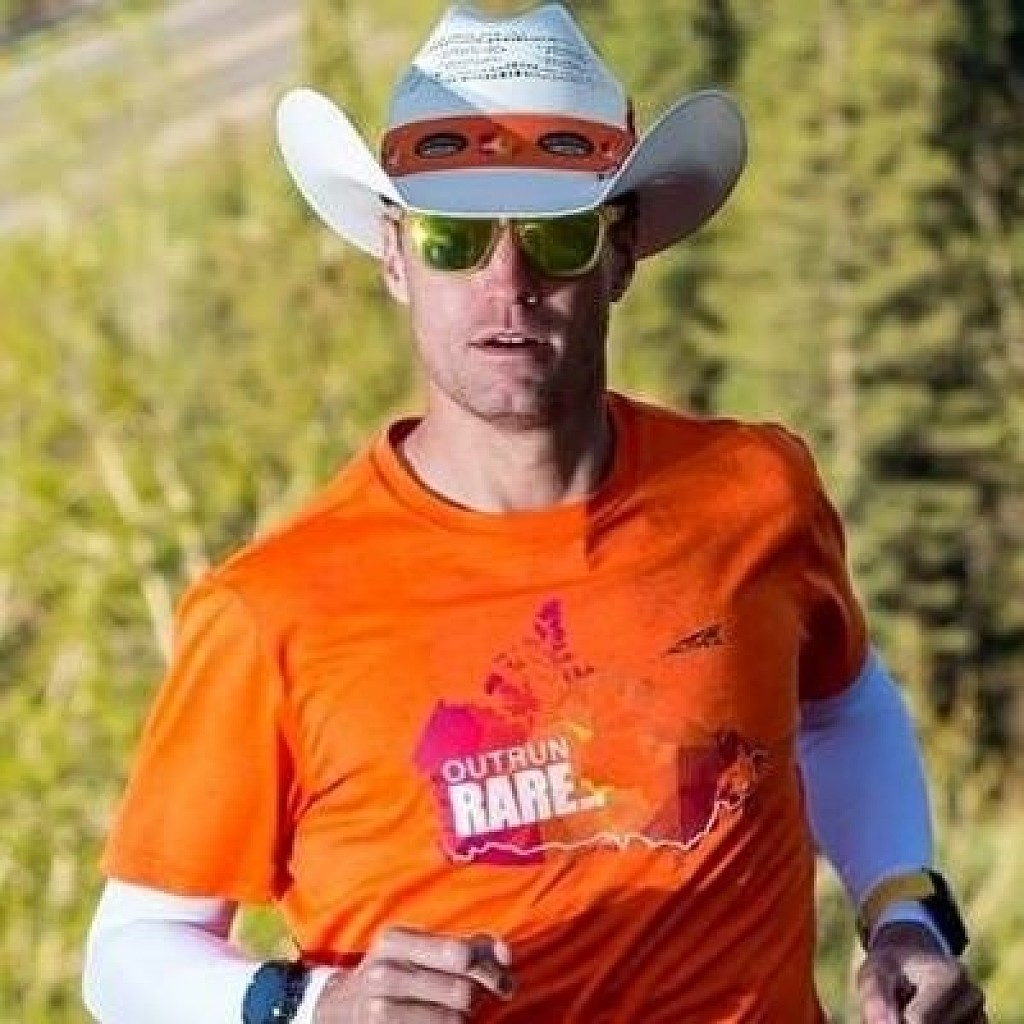
The Quarantine Backyard Ultra is a chance to race virtually for free this spring
If you’re itching to race this spring but don’t know where to turn, maybe just look to your backyard. The Quarantine Backyard Ultra is a free race that anyone can enter, and you can do it from the comfort of your own home or on a route nearby. Canadian ultrarunner and treadmill-running world record-holder Dave Proctor will be running the Backyard Ultra, which will be broadcast on YouTube starting on April 4, and the Barkley Marathons‘ Laz Lake will be the honorary race director.
The race starts at 6 a.m. PT on April 4. All runners will connect via Zoom video call, and this is where their progress will be monitored. Athletes can choose between running on a treadmill or on a route that starts and finishes at their home. Runners who choose the former option must point their camera at their treadmill after they complete each lap to prove they completed the distance (each lap is 6.706K).
Racers who opt to run outside must use a GPS watch or smartphone to record their distance run, and at the end of each lap, they must show proof of the completed lap to the Zoom audience. Once runners complete each lap, they can relax until the next lap begins. The last person running is the winner.
The race will be live streamed on YouTube, which should satisfy many running fans’ needs for live racing. Better yet, the event will have live updates on its Facebook page written by Lake, and, if all goes well with Zoom, Lake will also provide colour commentary over the live feed as well. Last year, Lake travelled to Calgary and acted as the honorary race director for Proctor’s Outrun Backyard Ultra, which was modelled after Lake’s Big’s Backyard Ultra in Tennessee.
The race is being organized by Personal Peak, an endurance coaching company witch which Proctor works. In May, Proctor was set to tackle the TransCanadian speed record attempt, and Personal Peak coaches were going to be his crew for the run. When he had to postpone his attempt, Proctor decided he had to do something to replace it.
“His fitness level wasn’t going to go to waste,” says Stephanie Gillis-Paulgaard, Proctor’s publicist. “Dave’s a competitor, so we said, ‘Let’s see who else we can get on board.'” So, Personal Peak set the race up and they “extended that invitation to all of the best ultrarunners,” Gillis-Paulgaard says. As it stands now, 11 other elite runners have confirmed for the April 4 race, but Gillis-Paulgaard, Proctor and the Personal Peak team hope to attract runners of all levels.
“Hopefully, for those people who have trained over the winter months, this will give them something to race, whether they run one lap or 50,” Gillis-Paulgaard says. The winner of the event will win what is, according to the race website, “soon to be world’s most coveted prize: The Golden Toilet Paper Roll.” In a time where race opportunities are sparse and toilet paper is hard to come by, you can get both in the newest virtual race.
by Ben Snider-McGrath
Login to leave a comment
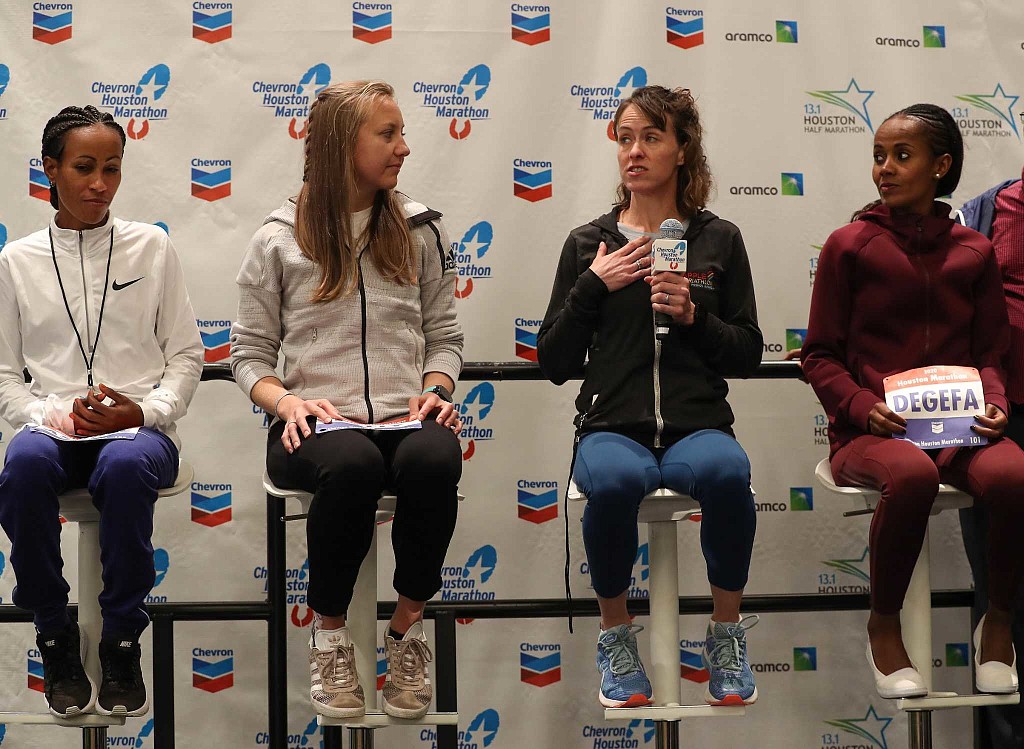
Former 1,500-meter specialist, Malindi Elmore shatters Canadian marathon record in 2:24:50 at Houston Marathon on Sunday
There’s no way Malindi Elmore, 39, predicted that she would be a marathoner when she hung up the spikes in 2012, let alone the Canadian marathon record-holder.
But Elmore finished the Houston Marathon on Sunday morning in third place, in 2:24:50, smashing the record in her second marathon ever.
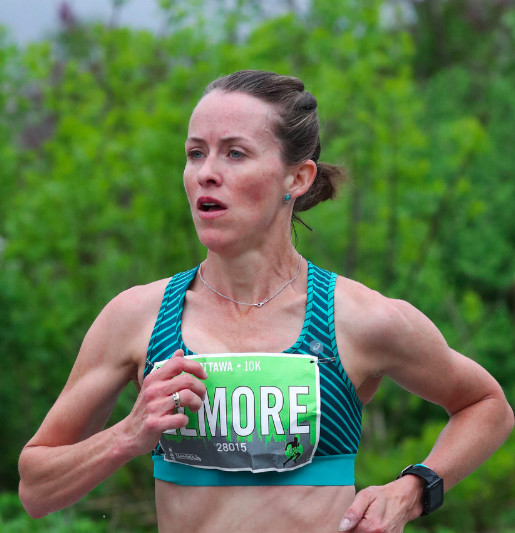
The Kelowna, B.C. native was a talented high school runner who attended Stanford University before returning to Canada to do a masters degree at the University of Calgary. She competed for Canada at the 2004 Olympic Games, the 2006 Commonwealth Games and the 2011 Pan Am Games as a 1,500m specialist who ran one of the fastest times ever by a Canadian woman, at 4:02.64.
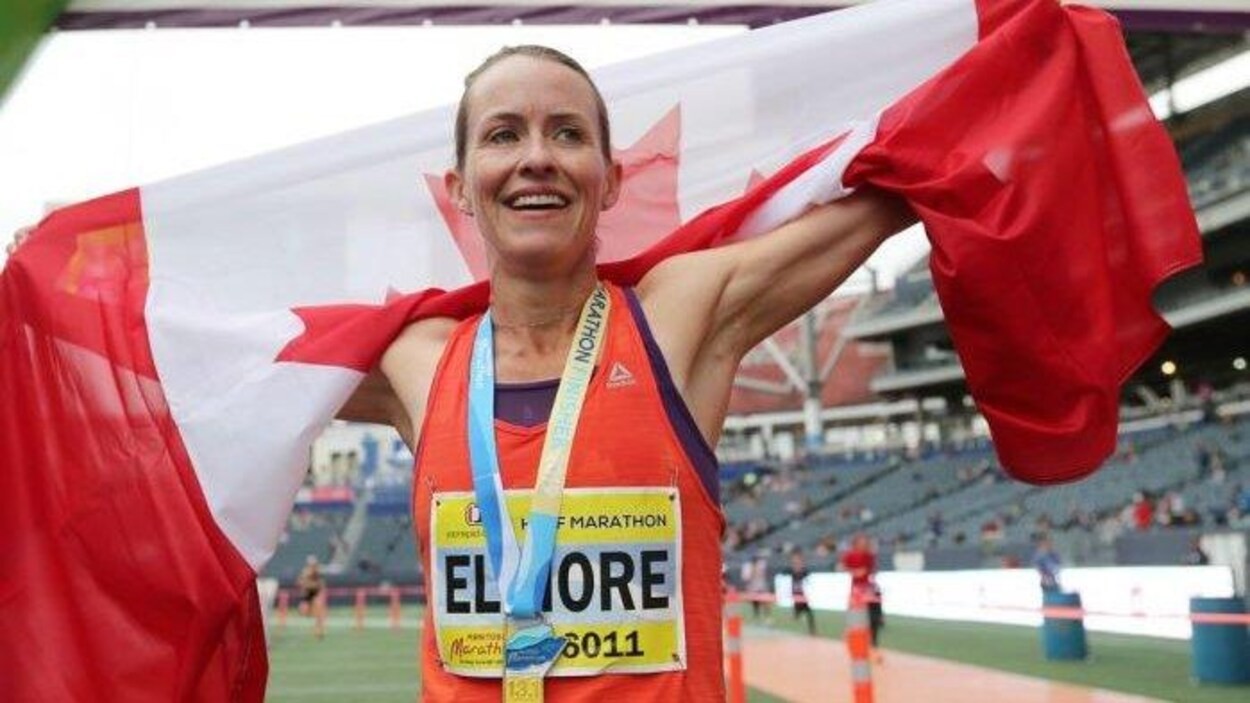
After retiring from professional running in 2012, Elmore describes struggling with the sport and being unsure about her future in running. In January 2019, seven years after hanging up her spikes and her middle-distance career, she ran a blazing 2:32 marathon debut at Houston.
Exactly one year later, she became the Canadian record-holder.
Elmore’s 2019 did not go exactly to plan. She was scheduled to race the Canadian Olympic Marathon Trials in Toronto in October, but had to pull out only one week from the event because of a hamstring strain.
She took a few weeks of downtime to allow her hamstring to recover before refocusing and getting ready for the Houston Marathon. She said pre-race that her build went extremely well–she knew she was fit and ready to run something impressive.
Elmore has nearly guaranteed her spot for the 2020 Tokyo Olympics. Her time is now the fastest-ever run by a Canadian, and barring someone beating the new record, she’s likely earned her place.
by Anne Francis
Login to leave a comment

Chevron Houston Marathon
The Chevron Houston Marathon offers participants a unique running experience in America's fourth largest city. The fast, flat, scenic single-loop course has been ranked as the "fastest winter marathon" and "second fastest marathon overall" by Ultimate Guide To Marathons. Additionally, with more than 200,000 spectators annually, the Chevron Houston Marathon enjoys tremendous crowd support. Established in 1972, the Houston Marathon...
more...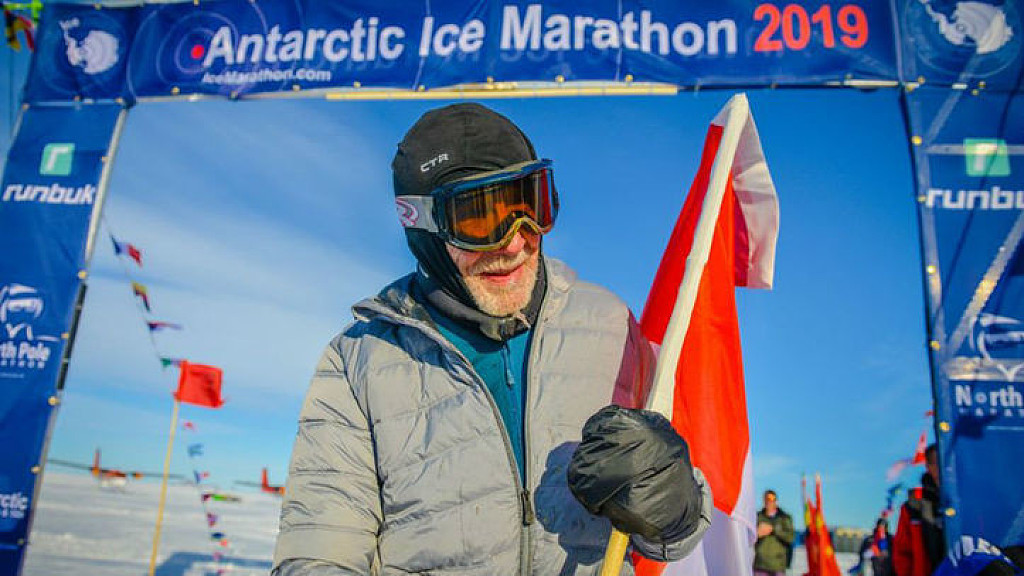
An 84-year-old Canadian man, Roy Jorgen Svenningsen, became the oldest person to ever run a marathon in Antarctica as he completed the Antarctic Ice Marathon
The senior runner, Roy Jorgen Svenningsen, was not the only marathoner to set a record at the extreme running event as this year's winner, William Hafferty of the United States, clocked a new record time coming in at an impressive 3 hours, 34 minutes and 12 seconds.
Runners braved windy, yet sunny, conditions as they made two laps around the Union Glacier exploration camp just 965km from the South Pole.
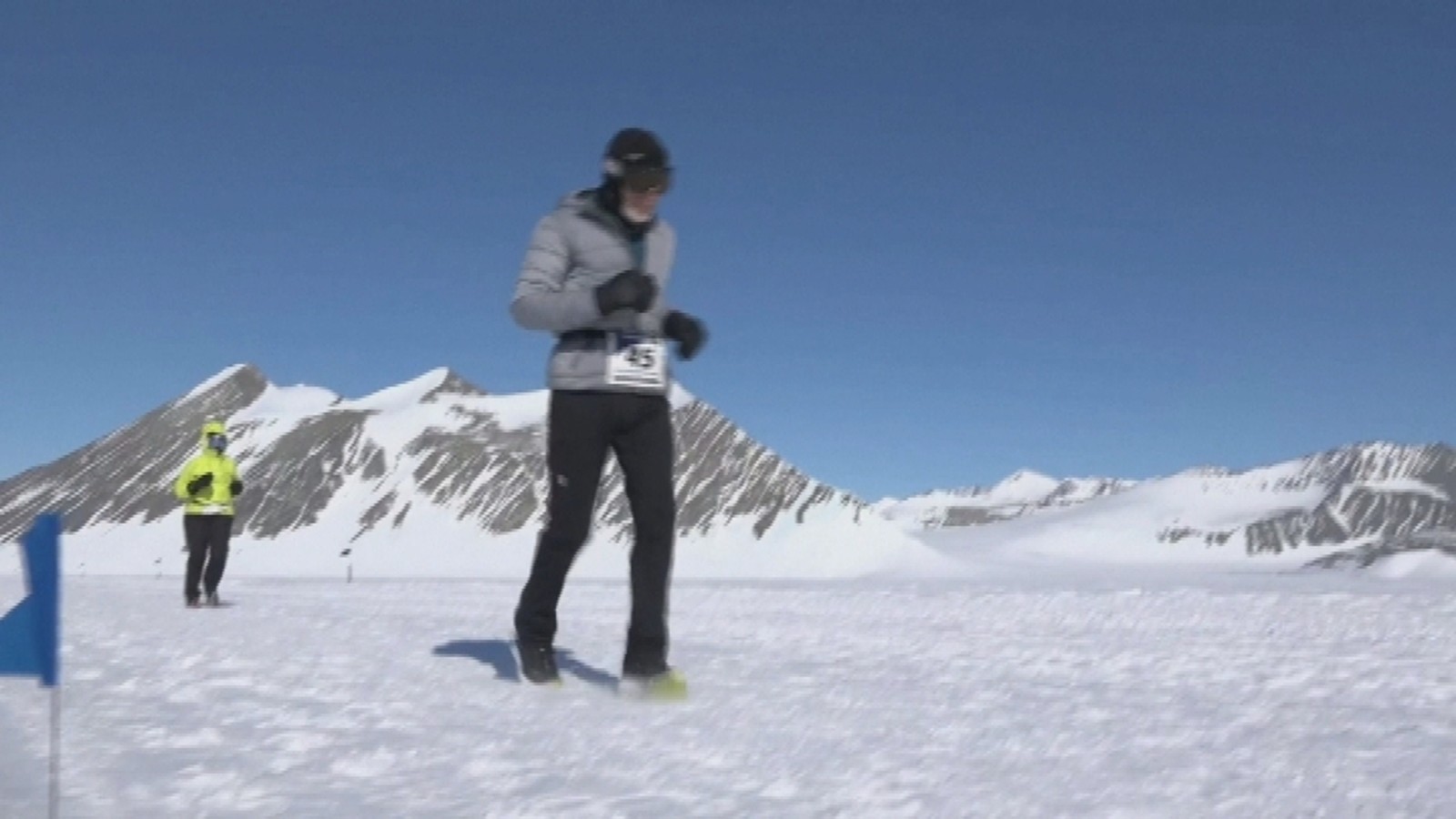
The first woman across the finish line was Lenka Frycova from the Czech Republic with a time of 4 hours, 40 minutes and 38 seconds.
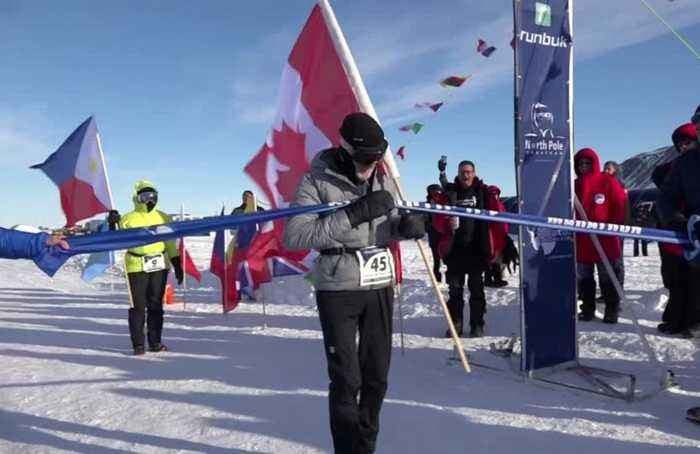
There were three Irish runners, with James Murphy first across the line, finishing fifth overall, in a time of 4:21:15, while Sean O'Hagan finished in 5:30:46 and Paul Grealish in 6:42:37.
But it was the most senior of the runners that inspired most, when Svenningsen crossed the line at 11 hours, 41 minutes and 58 seconds.
Race organisers said it made him the oldest person to ever complete a marathon on the continent.
They also said Svenningsen, who will soon turn 85, has completed more than 50 marathons around the world having run his first in Calgary, Canada back in 1964.
Login to leave a comment

Antarctic Ice Marathon
The Antarctic Ice Marathon is one of the world's most extreme endurance races, taking place on the coldest, driest, and windiest continent on Earth. Held annually at the Union Glacier camp in Antarctica, this race is run over the standard 42.195 km (26.2 miles) marathon distance, challenging participants with sub-zero temperatures, strong winds, and an altitude of approximately 700 meters...
more...
Sapporo switch could come back to haunt IOC
The clash between the International Olympic Committee (IOC) and the Tokyo Metropolitan Government (TMG) over the marathon and race walk move to Sapporo played out last week as if it were scripted.
IOC Coordination Commission chair John Coates came cast as peacemaker. The Australian showered the TMG and Tokyo 2020 with praise for their preparations, while lauding the achievements of the Japanese team and organisers at the Rugby World Cup.
Tokyo Governor Yuriko Koike performed impressively in her role, defending locals against foreign influence and insisting she would not pay for the mess created by the IOC. A victory on both counts.
The decision to move the events to Sapporo was never going to change. Even if the TMG had the option to keep the races, it would have been a risk to overrule the IOC’s warnings about heat on the off chance a major incident occurred involving an athlete.
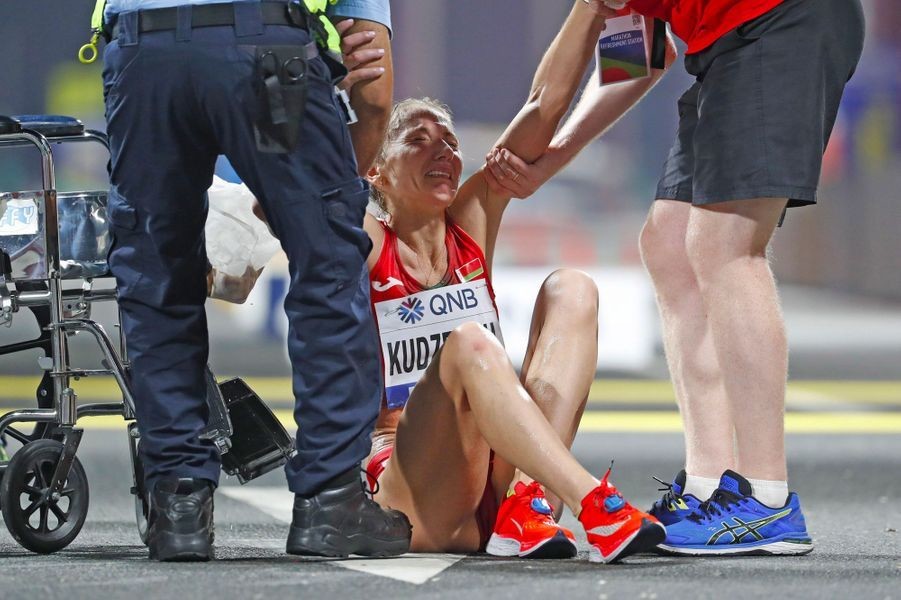
The decision is a sad one, with Tokyo missing out on the opportunity to showcase the city’s landmarks to a worldwide audience and offer the residents of the capital city the chance to watch one of Japan’s favoured events for free.
Maybe, the IOC decision is the right one. Even if we set aside previous Olympic marathon and race walks being held under similar conditions, and the fact the IOC did not rush to protect the health of athletes when a year before Rio 2016 sailors and rowers were falling ill amid the pollution of Guanabara Bay.
If we take the view of Canadian race walker Evan Dunfee - one I share - that the IOC took the decision to protect their brand and avoid negative press, it could still be a fair reason to move the events.
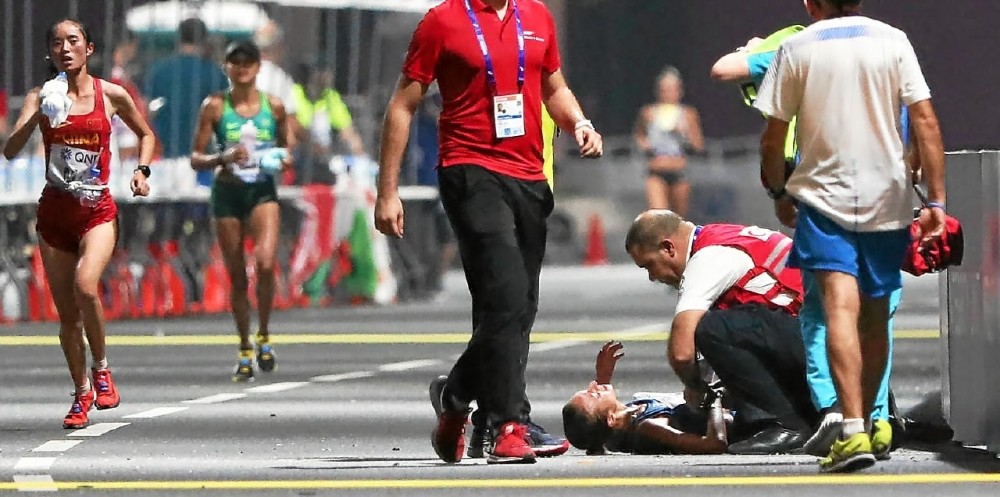
Would it be a good thing for the sport of athletics to see athletes wheeled away from a course requiring medical attention, as they were at the World Championships in Doha, even if they are ultimately okay? Sure, athletes will push beyond their limits anyway, but it seems reasonable to try to mitigate risks.
It was suggested here that the looped course in Doha made it easier for athletes to receive medical support. Where the city circuit touring the sights of Tokyo would see resources more spread out.
The five Ps of "proper preparation preventing poor performance" apply here, with athletes having the responsibility to tailor their training to the conditions. But, equally, organisers could not respond by saying an athlete should have prepared better if something went awry.
A key question is whether the IOC should be the ones making this call, rather than an International Federation or medical experts.
There is little doubt, though, that the IOC has handled this badly.
Managing to annoy athletes, politicians and residents of a city at the same time is impressive - even for the IOC.
This is problematic for the IOC in both the short and long-term.
The most pressing issue is that there is no course in Sapporo yet for either the marathon and race walks, while financing remains unclear.
Athletes and National Olympic Committees will be required to adapt plans, which is likely to see additional support staff required to be brought to Sapporo, with the associated costs involved.
Currently, there is no concrete plan as to who picks up the cost of the move, other than knowing that the Tokyo Government will not be doing so. I wonder whether Sapporo’s hopes of the hosting the Winter Olympics in 2030 could enjoy a boost should they bail the IOC out of a hole here.
The IOC has agreed to examine and verify the money already spent by the TMG on heat countermeasures, such as special paving. Although the IOC has promised it will not walk away from obligations, there appeared to be a suggestion the Paralympic and proposed "Olympic Celebration Marathon" could be used to say Tokyo has received a legacy for their investment.
The TMG’s anger at the lack of consultation may just be a short-term issue. A sympathetic view is that the IOC realised the only way to force the switch to Sapporo was the take extreme action and give Tokyo no choice but to conform, given they knew organisers would fight tooth and nail otherwise.
The IOC may have decided it is better to take the heat now than at Games time - excuse the pun. The decision could yet leave them marinating in their own words for some time to come, given what it exposes about the IOC’s relationship with host cities.
If we rewind little over a year, the IOC dispatched Olympic Games executive director Christophe Dubi to Calgary to convince locals to support their 2026 Winter bid. The visit came at a time when the Winter Olympic bid race appeared to be threatening to collapse completely, with anti-Olympics campaigners driving the message that the IOC cannot be trusted.
I wrote at the time that Dubi had delivered a strong display for the IOC, where he fronted up on previous mistakes and insisted changes had been made. The message was clear: the IOC will act as a partner with host cities and work the Games concept around them.
"What has changed in the IOC from 2014 is our approach to the way we do the bidding, organise the Games and manage legacies," he said. "It is all about partnership, it is all about flexibility and finding the right solution for the hosts.
"The Games cannot impose to a city anymore; the Games adapt to a city.
"It means over the last two years, we had to look at our Host City Contract, every single article to make sure that flexibility is reflected in every single article. Every requirement has to live to local creativity to play.
"We do not have the final solution, we have local solutions."
It is hard to reconcile these words with this latest decision taken by the IOC.
Is taking a unilateral decision without consulting the host city really acting in partnership with them? Is taking free events from a host against their will not the IOC imposing its will on city? Is moving an event 800 kilometres from the host city really a local solution?
When asked about whether the decision was the IOC dictating to a host city, Coates suggested the Sapporo switch did not clash with their rhetoric.
"We have a Host City Contract and the Olympic Charter leaves a clear authority for the IOC to take decisions like this where it is necessary," he said. "I do not think that is at odds with the Agenda 2020 reforms in terms of flexibility.
"If you suddenly become aware of something, you have got to have the right to respond to that, as has happened here where we have had to act very quickly because of the experience of Doha."
While Coates and the IOC might believe that, the past couple of weeks will serve as evidence for critics that the leopard has not changed its spots.
The IOC claim they are a joint party with a host city, but their actions suggest that these are our Games, not yours.
After all, an Organising Committee repeatedly hailed as being the best prepared in Olympic history has been rewarded by being left scrambling for the past two weeks, unable to provide answers to a scenario they did not create.
Anti-Olympics campaigners will point to one of Japan’s most powerful politicians being overruled about a decision in her own city. Koike’s own quotes will be used as warnings for future hosts.
"We are receiving angry opinions about what being a host city really implies," she said earlier this week. "We consider it an unprecedented turn of events for the IOC to take such a proposal with no consultation or discussion with the host city beforehand."
The IOC may be right to move the marathon and race walk events.
However, I wonder whether their handling of the switch will have a wider impact than the decision itself.
by Michael Pavitt
Login to leave a comment

Tokyo 2020 Olympic Games
Fifty-six years after having organized the Olympic Games, the Japanese capital will be hosting a Summer edition for the second time, originally scheduled from July 24 to August 9, 2020, the games were postponed due to coronavirus outbreak, the postponed Tokyo Olympics will be held from July 23 to August 8 in 2021, according to the International Olympic Committee decision. ...
more...