

Running News Daily
Running News Daily is edited by Bob Anderson and team. Send your news items to bob@mybestruns.com Advertising opportunities available.
Index to Daily Posts · Sign Up For Updates · Run The World Feed
Articles tagged #May 13
Today's Running News



African Athletics Mourns the Death of CAA President Hamad Kalkaba Malboum
African athletics has been plunged into mourning following the death of Hamad Kalkaba Malboum, one of the continent’s most respected and influential sports administrators.
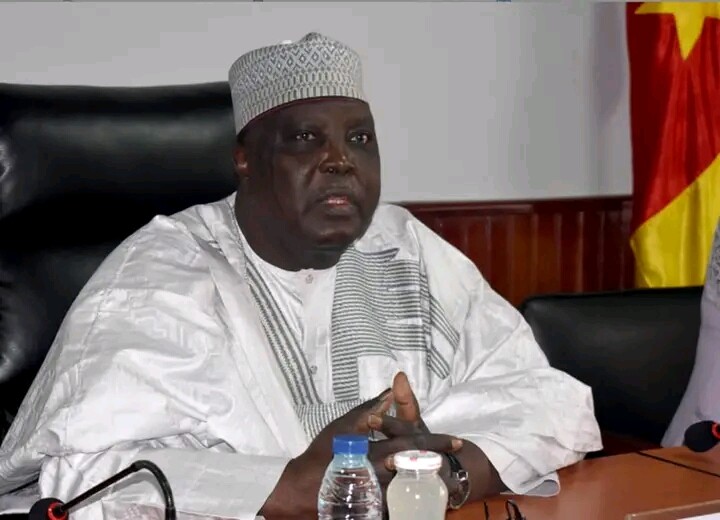
The Confederation of African Athletics officially confirmed that Hamad Kalkaba Malboum passed away on May 13, 2026, at the age of 75. Born on November 11, 1950, the veteran Cameroonian sports leader dedicated decades of his life to the growth and transformation of athletics across Africa.
Kalkaba Malboum served as President of the Cameroon Olympic Committee from 2001 and later rose to become President of the Confederation of African Athletics in 2003. He succeeded Lamine Diack after Diack was elected President of the International Association of Athletics Federations, now known as World Athletics.

Throughout his long tenure, Kalkaba Malboum became a towering figure in African sport, guiding the continent’s athletics development with vision, discipline, and unwavering commitment. Under his leadership, African athletics expanded its influence globally, while countless athletes benefited from increased opportunities to compete and excel on the international stage.
His leadership style earned admiration across sporting circles, with many praising his calm diplomacy, administrative strength, and passion for nurturing African talent. He played a key role in elevating the profile of athletics championships within Africa and strengthening the continent’s voice in global sports governance.
The late president had been absent from the recent CAA Council meeting in Accra ahead of the ongoing African Championships due to health complications, raising concern among members of the athletics community.
News of his passing has triggered an outpouring of grief and tributes from athletes, federations, coaches, and sports leaders from across the world, all honoring a man whose impact on African athletics will remain unforgettable.
At the time of his death, Hamad Kalkaba Malboum stood among the most powerful and respected figures in international sports administration. In addition to serving as a World Athletics Council Member and President of the Confederation of African Athletics, he also led the Cameroon National Olympic and Sports Committee while holding several prestigious global positions, including membership in the IOC Sport and Environment Commission, a seat on the Board of the IOC Olympic Truce Foundation, and the role of Senior Vice President of the Islamic Solidarity Sports Federation. His extensive leadership roles reflected the enormous respect and influence he commanded across the world of sport.
His death marks the end of a remarkable era in African sport — a legacy built on service, leadership, and dedication to the advancement of athletics throughout the continent.
May his soul rest in eternal peace.
by Erick Cheruiyot for My Best Runs.
Login to leave a comment
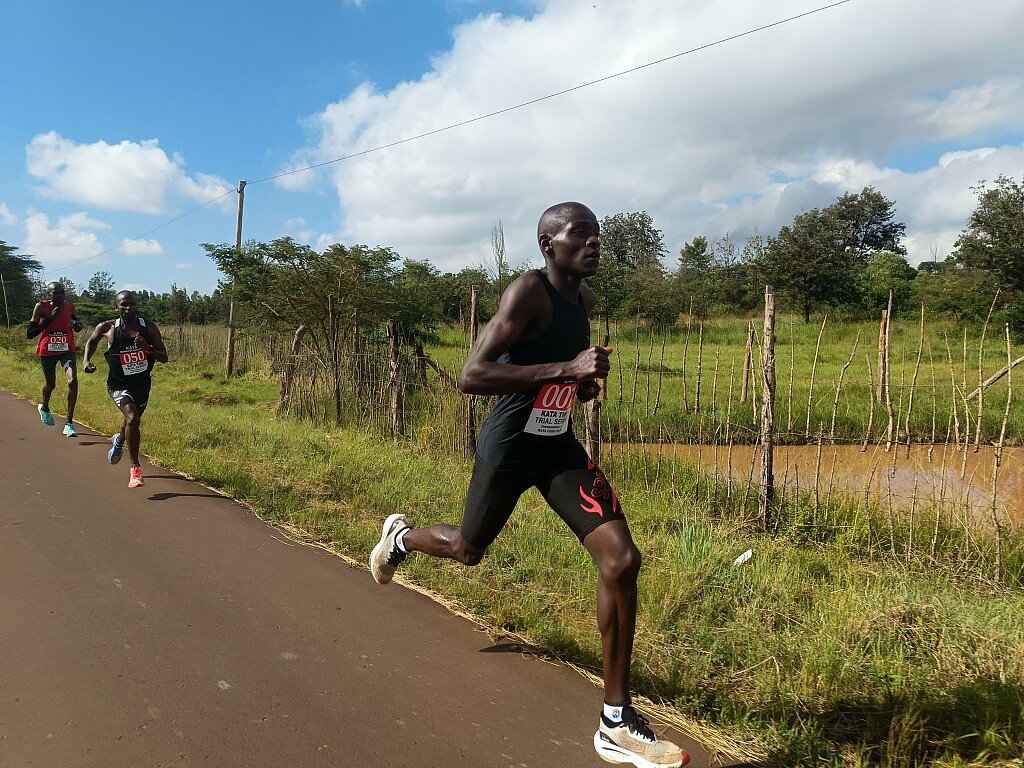
Elite Rhythm and Relentless Effort Headline the 56th KATA Time Trial Series
The roads of Thika once again became a proving ground for ambition, endurance, and personal growth as athletes delivered impressive performances during the 56th edition of the KATA Time Trial held on Wednesday, May 13, 2026. In an event built around discipline rather than spectacle, runners turned months of preparation into measurable results, producing a morning filled with fast times, tactical execution, and valuable lessons for the season ahead.
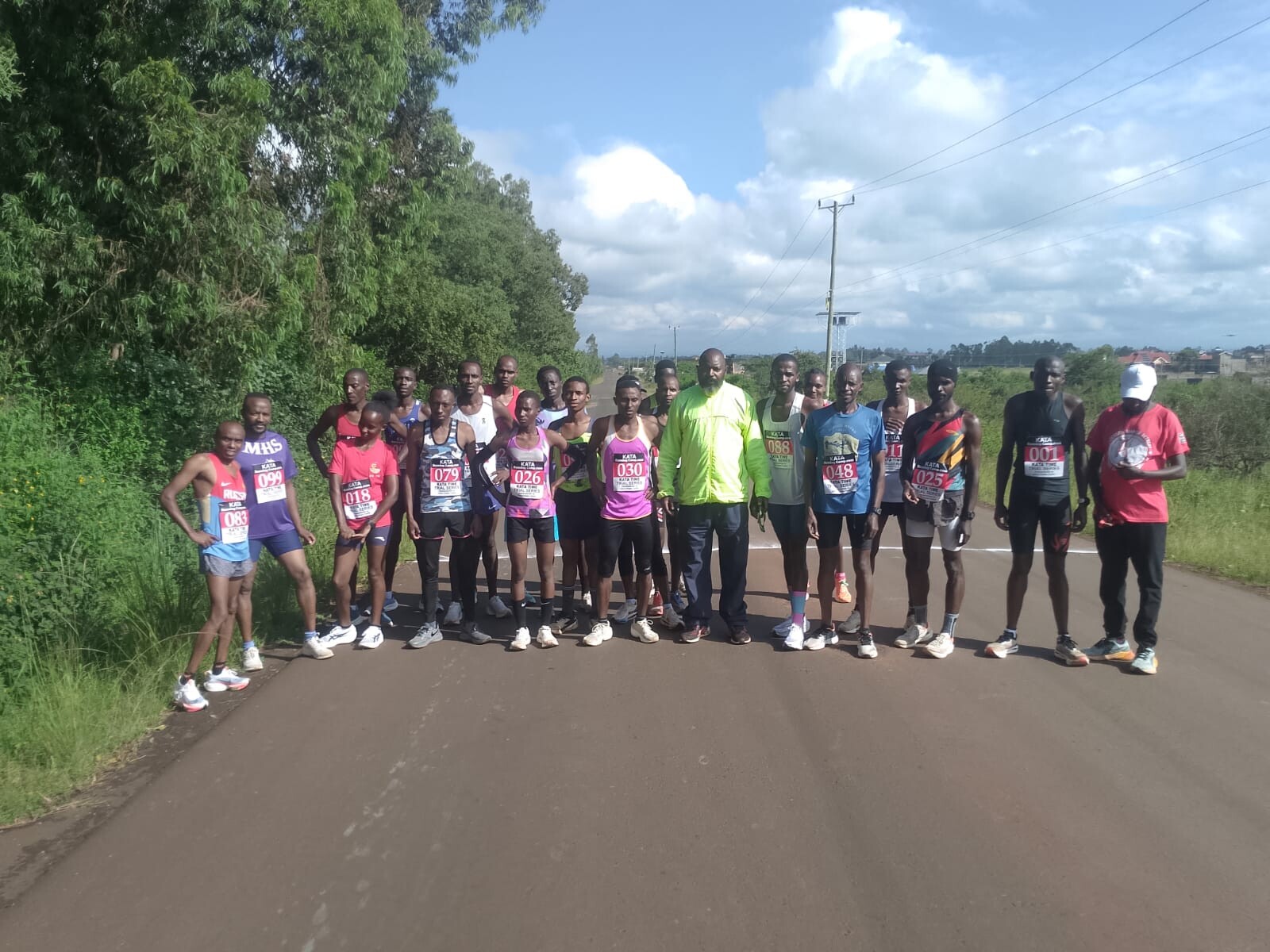
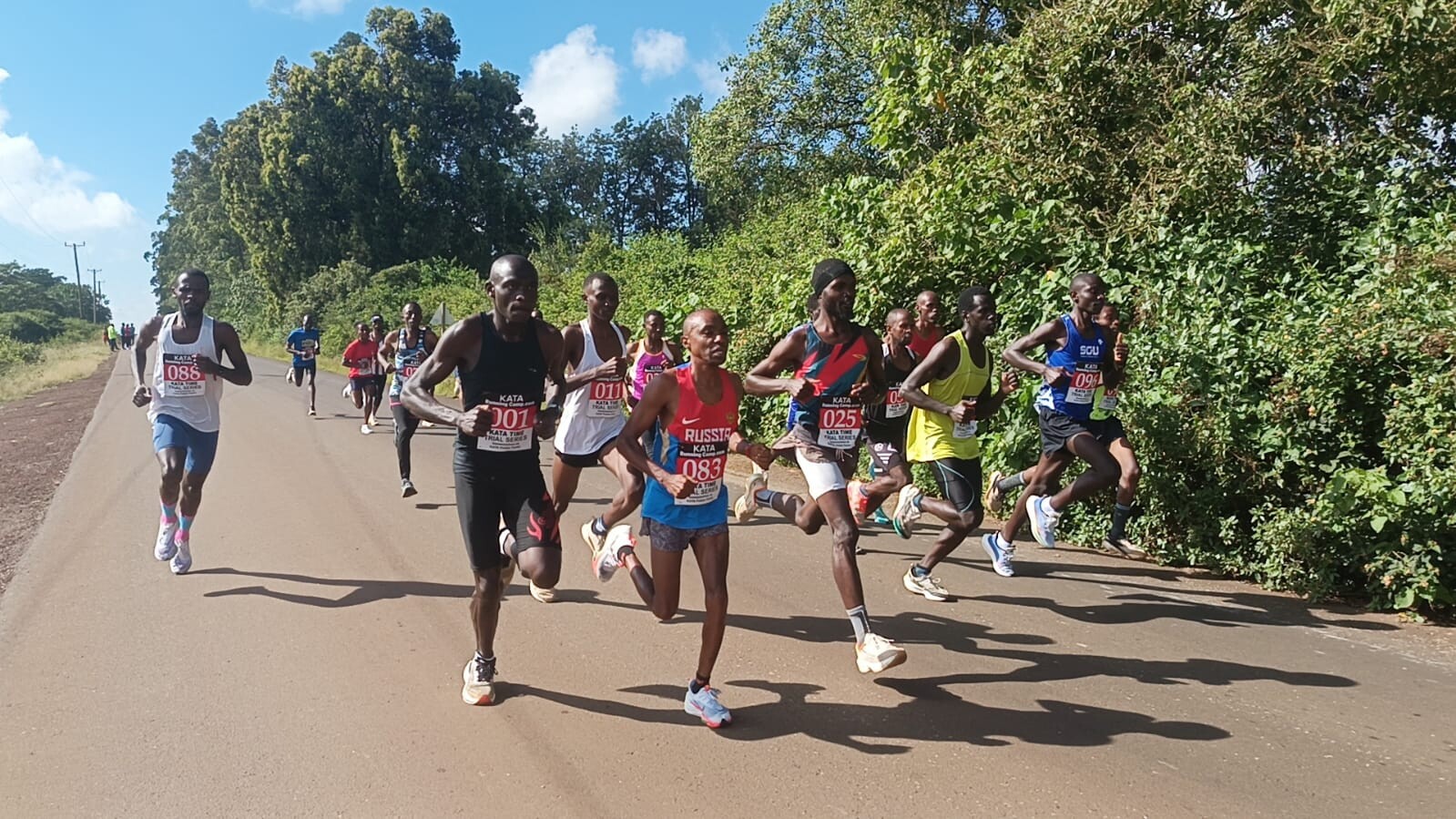
Widely respected among developing and competitive athletes, the KATA Time Trial continues to serve as one of the most reliable performance tests on the local athletics calendar. Unlike major championship races driven by crowd energy and medals, the Thika event places athletes face-to-face with the stopwatch, demanding honesty, rhythm, and mental toughness from start to finish.
The men’s 10-kilometre contest produced one of the strongest performances of the day as Charles Wanjora stormed to victory in an impressive 30:44. Running with confidence and composure, Wanjora controlled the pace effectively and held off a determined challenge from Bernard Waweru, who crossed the line just a second later in 30:45 after a highly competitive battle. Robin Musa completed the top three with a strong 31:12, confirming the high quality of the front pack throughout the race.
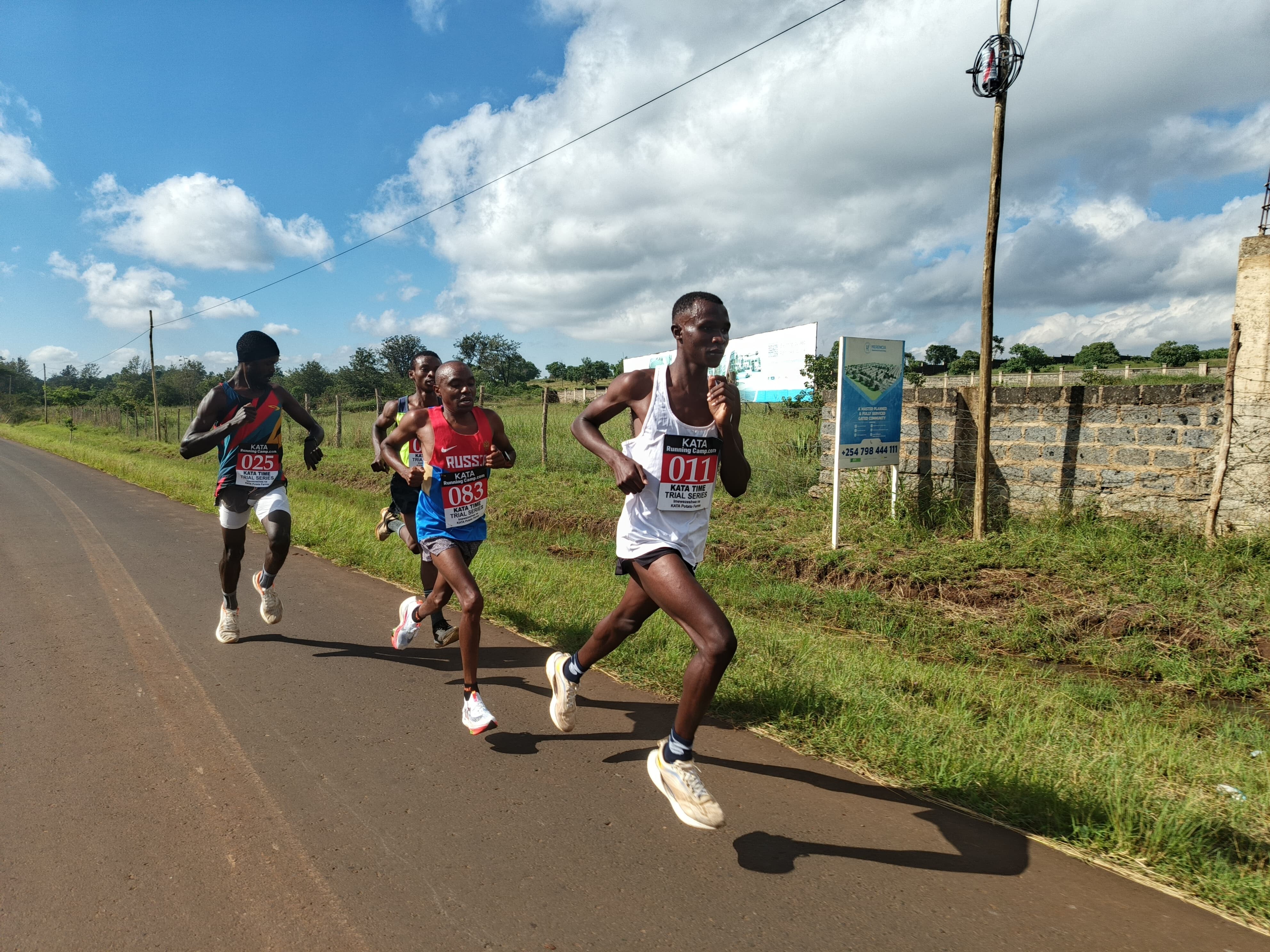
Joel Maina secured fourth place in 31:52, while Ismael Mburu finished fifth in 32:36 after maintaining a consistent rhythm over the demanding course. Vincent Kiprotich followed in sixth position with 33:12, narrowly ahead of Erick Cheruiyot, who clocked 33:14 in another tightly contested finish. Fredrick Wambua placed eighth in 33:46, as George Kamau and Paul Ng’ang’a completed the top ten in 36:10 and 36:11 respectively.
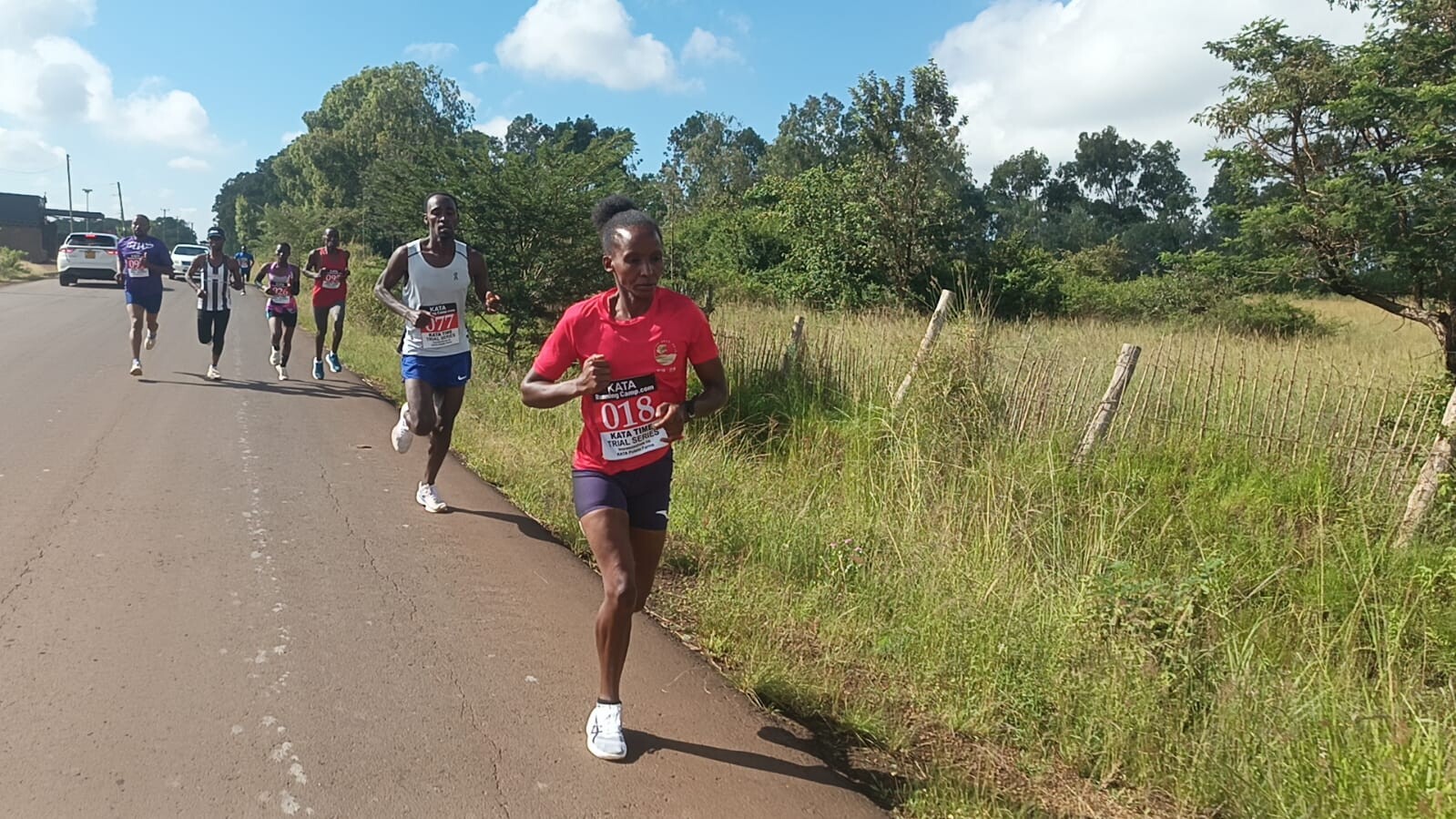
In the women’s 10km race, Kellen Waithira produced a commanding performance to take victory in 35:34. Her controlled pacing and strong finishing stretch allowed her to separate herself from the field and secure a well-earned win. Jane Wanja followed closely in second place with 35:44, ensuring a highly competitive women’s contest from start to finish. Regina Sandiki completed the podium after crossing the line in 36:45 following a determined run.
The men’s 5-kilometre race also delivered several impressive performances, with Francis Maina leading the field in 16:06 after an aggressive but well-managed effort. Anthony Kariuki secured second position in 16:49, while Harrison Mathenge finished third in 17:20 to round off the podium places.
5KM MEN
1. Francis Maina – 19 – Bib 92 – 16:06
2. Anthony Kariuki – 28 – Bib 79 – 16:49
3. Harrison Mathenge – 18 – Bib 96 – 17:20
4. John Mwangi – 45 – Bib 99 – 18:36
5. Kennedy Ochieng – 20 – Bib 33 – 22:24
MEN 10KM
1. Charles Wanjora – 24 – Bib 01 – 30:44
2. Bernard Waweru – 40 – Bib 50 – 30:45
3. Robin Musa – 17 – Bib 11 – 31:12
4. Joel Maina – 41 – Bib 83 – 31:52
5. Ismael Mburu – 25 – Bib 25 – 32:36
6. Vincent Kiprotich – 24 – Bib 94 – 33:12
7. Erick Cheruiyot – 30 – Bib 20 – 33:14
8. Fredrick Wambua – 20 – Bib 30 – 33:46
9. George Kamau – 35 – Bib 88 – 36:10
10. Paul Ng’ang’a – 43 – Bib 95 – 36:11
11. Edward Niyukuri – 24 – Bib 77 – 36:47
12. Charles Ndirangu – 65 – Bib 48 – 39:30
WOMEN 10KM
1. Kellen Waithira – 39 – Bib 18 – 35:34
2. Jane Wanja – 35 – Bib 16 – 35:44
3. Regina Sandiki – 19 – Bib 26 – 36:45
Beyond the finishing times, the true significance of the KATA Time Trial once again lay in the personal battles fought across every kilometre. For many athletes, the event represented far more than competition alone. It was an opportunity to measure improvement, test race fitness, and evaluate the effectiveness of months of disciplined training. Every second gained reflected sacrifice, resilience, and the determination to reach higher standards.
The conditions in Thika rewarded athletes who respected the demands of the course and managed their pacing intelligently. Those who remained patient during the early stages found strength in the closing kilometres, while the unforgiving nature of the road exposed even the smallest tactical mistakes. It was another reminder that success in distance running depends not only on physical preparation, but also on judgment, composure, and mental strength under pressure.
As the morning came to an end and the watches finally stopped, the 56th KATA Time Trial once again proved why it remains an important fixture in Kenya’s athletics culture. On a simple stretch of road in Thika, athletes continued chasing excellence, refining their craft, and turning ambition into reality — one stride at a time.
by Erick Cheruiyot for My Best Runs.
Login to leave a comment
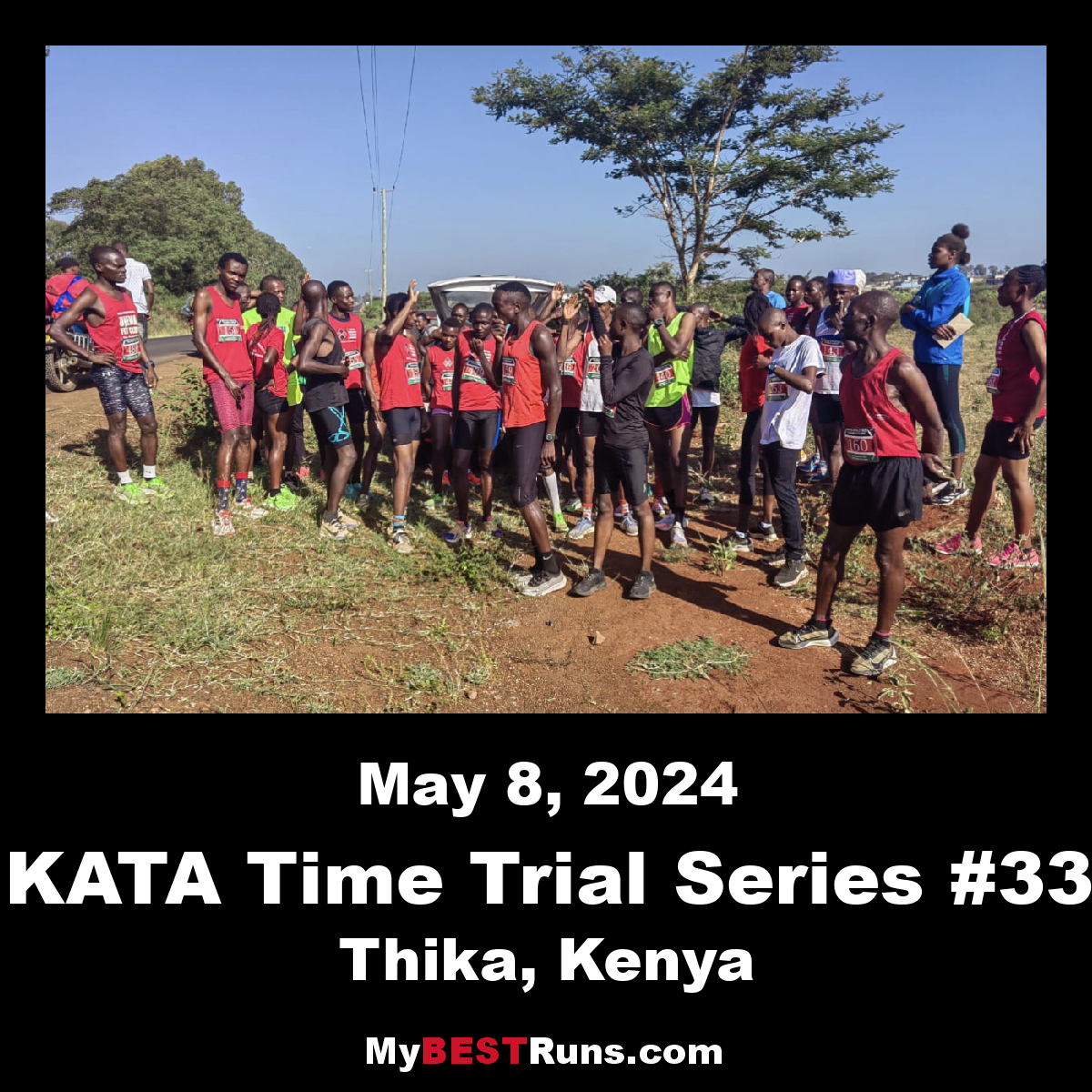
KATA Time Trial Series
Welcome to the KATA Monthly Time Trial Held at the Kenyan Athletics Training Academy in Thika, Kenya, the KATA Monthly Time Trial is a unique and inclusive event designed to support runners of all levels in achieving their goals and showcasing their fitness. This event offers both 10K and 5K distances on an accurate, certified course, providing participants with...
more...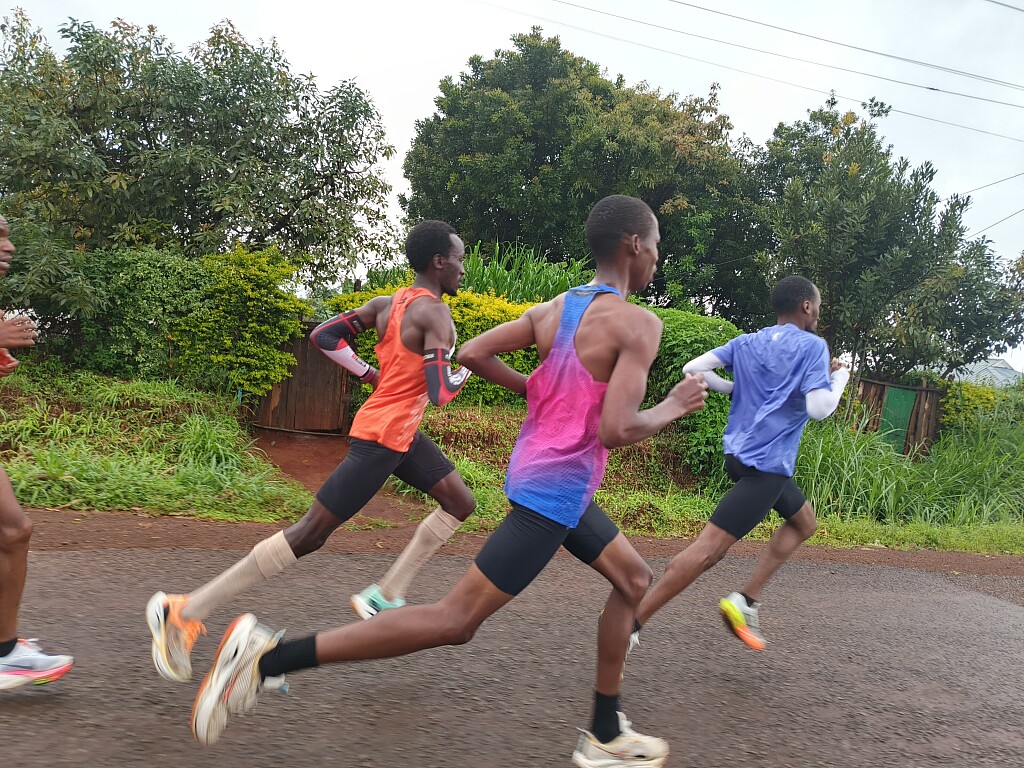
Chasing Personal Bests: Speed, Strategy and Rivalry Set the Stage for the 56th KATA Time Trial Series in Thika
Long before the crowds awaken and the world notices the results, athletes in Thika will already be battling exhaustion, pressure, and expectation. The rhythm of pounding footsteps will once again echo across the tarmac roads of Thika on Wednesday, May 13, 2026, as the 56th edition of the KATA Time Trial Series returns with renewed intensity, ambition, and anticipation. This is more than a race against time — It's a reflection of sacrifice, resilience, and the endless pursuit of personal growth in athletics dream.
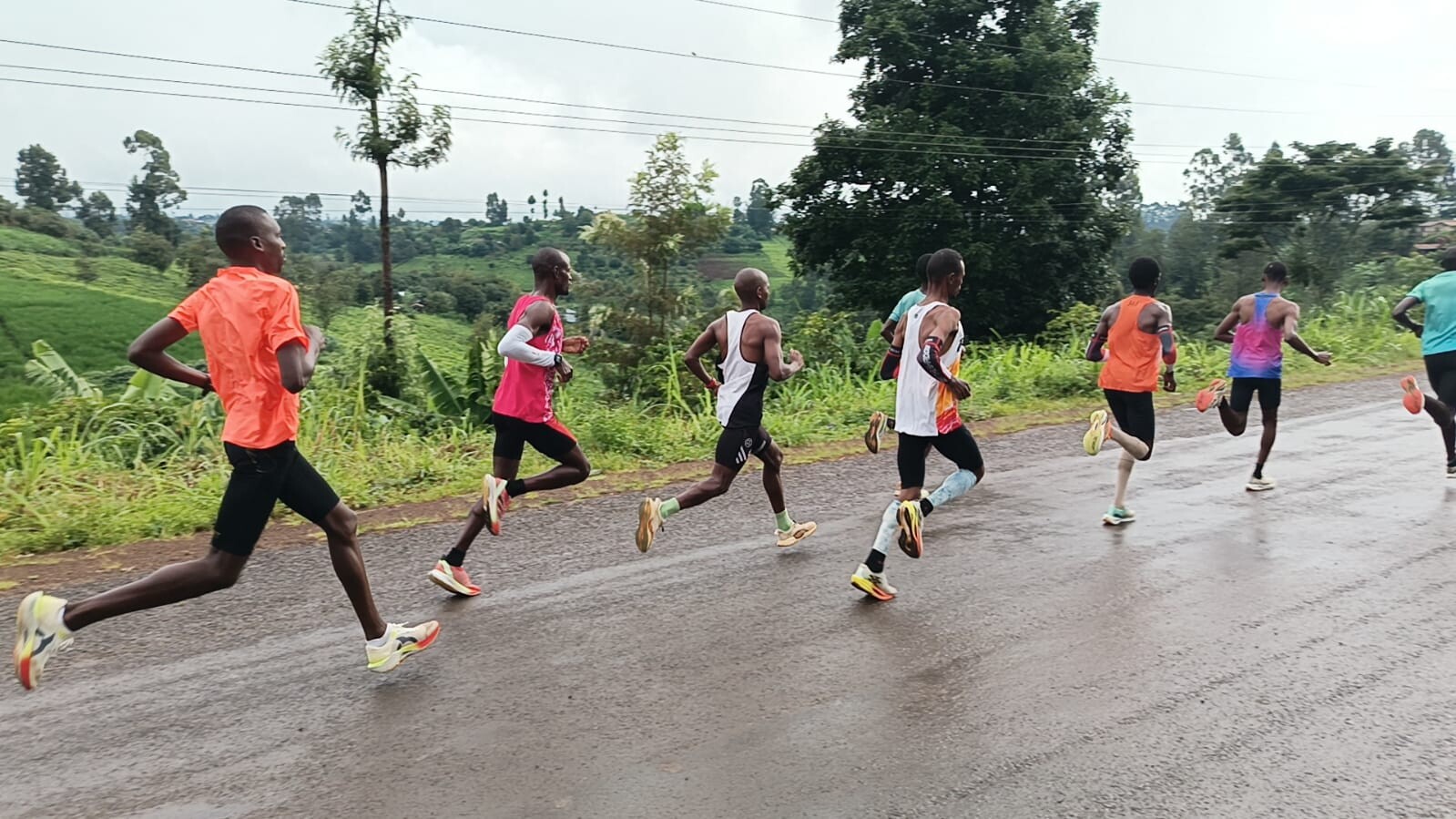
There may be no roaring stadium crowd, no flashing lights, and no elaborate finish-line celebrations, yet within Kenya’s athletics circles, few events command as much quiet respect as this one. For the athletes preparing to line up, the occasion is not about spectacle—it is about testing limits, measuring progress, and pursuing the relentless dream of improvement.
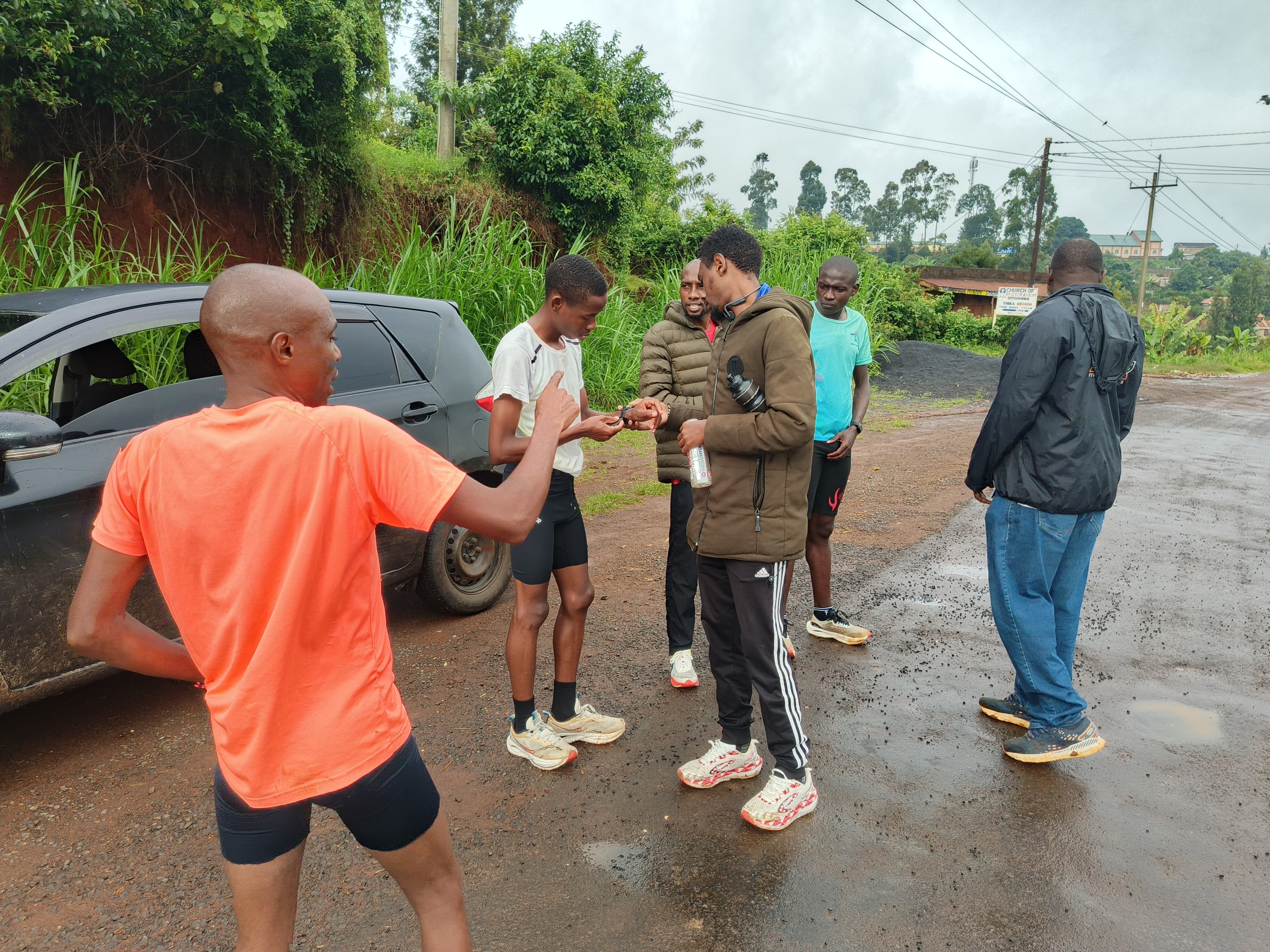
Held near the training base of the Kenyan Athletics Training Academy in Thika, the KATA Time Trial has steadily evolved into one of the most trusted performance platforms for developing and experienced athletes alike. Over the years, it has earned its reputation as a proving ground where months of sacrifice, demanding training sessions, and disciplined preparation are transformed into measurable reality. Every edition carries stories of breakthrough performances, painful lessons, and moments that redefine confidence.
Traditionally, the event has stood apart from conventional road races by stripping competition down to its purest form. Athletes do not simply race each other—they race the clock, their previous performances, and the invisible standards they set for themselves during training. Yet this 56th edition is expected to introduce a more tactical dimension. While fast times remain the primary objective, strategy and intelligent pack running are likely to shape the morning in significant ways.
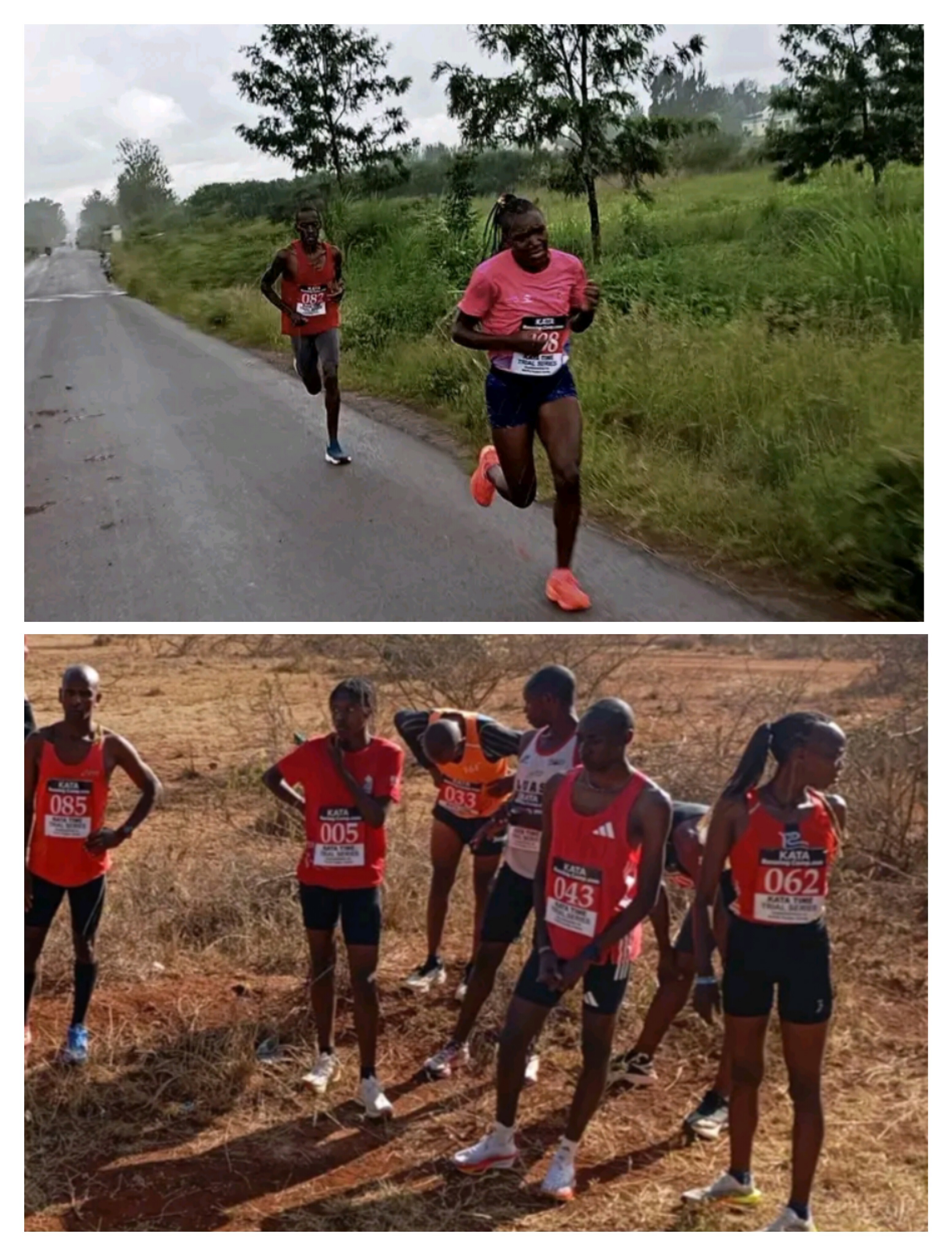
Athletes are expected to work together through the opening stages, carefully maintaining rhythm and pacing in pursuit of stronger finishing times and valuable personal bests. In such races, patience becomes just as important as raw speed. A poorly judged opening kilometre can destroy an otherwise promising performance, while disciplined execution often rewards those who conserve energy for the decisive closing stretch. It is this delicate balance between aggression and control that makes the KATA Time Trial so compelling.
The programme will once again feature the classic 5km and 10km distances, each demanding a very different kind of athlete. The 5km rewards sharpness, rhythm, courage, and the ability to sustain discomfort at relentless speed. The 10km, meanwhile, is a deeper examination of endurance, mental strength, and tactical discipline. On the unforgiving roads of Thika, even the slightest pacing mistake can separate a brilliant run from a disappointing result.
Perhaps the most powerful storyline surrounding this edition is the universal pursuit of personal bests. For many athletes, the stopwatch represents far more than numbers on a screen. Every second gained reflects countless early mornings, exhausting intervals, sacrifices away from competition, and unwavering belief in the training process. The KATA Time Trial has always provided athletes with an honest answer to one important question: has the work truly paid off?
Conditions in Thika are expected to favour runners who combine patience with intelligence. Those who remain composed in the early kilometres often find the strength to finish aggressively, while athletes who force the pace too early may struggle before the final stretch. It is an environment where discipline is rewarded and resilience is exposed in real time.
Though the event may unfold without major fanfare, its significance stretches far beyond a single morning of racing. On this modest stretch of road, athletes continue refining their craft, sharpening their instincts, and chasing the standards that define excellence in Kenyan athletics. When the watches finally stop at the end of the 56th edition, the results will reveal far more than finishing times. They will tell the story of ambition, rivalry, sacrifice, and the endless pursuit of becoming better with every stride.
by Erick Cheruiyot for My Best Runs.
Login to leave a comment
KATA Time Trial Series
Welcome to the KATA Monthly Time Trial Held at the Kenyan Athletics Training Academy in Thika, Kenya, the KATA Monthly Time Trial is a unique and inclusive event designed to support runners of all levels in achieving their goals and showcasing their fitness. This event offers both 10K and 5K distances on an accurate, certified course, providing participants with...
more...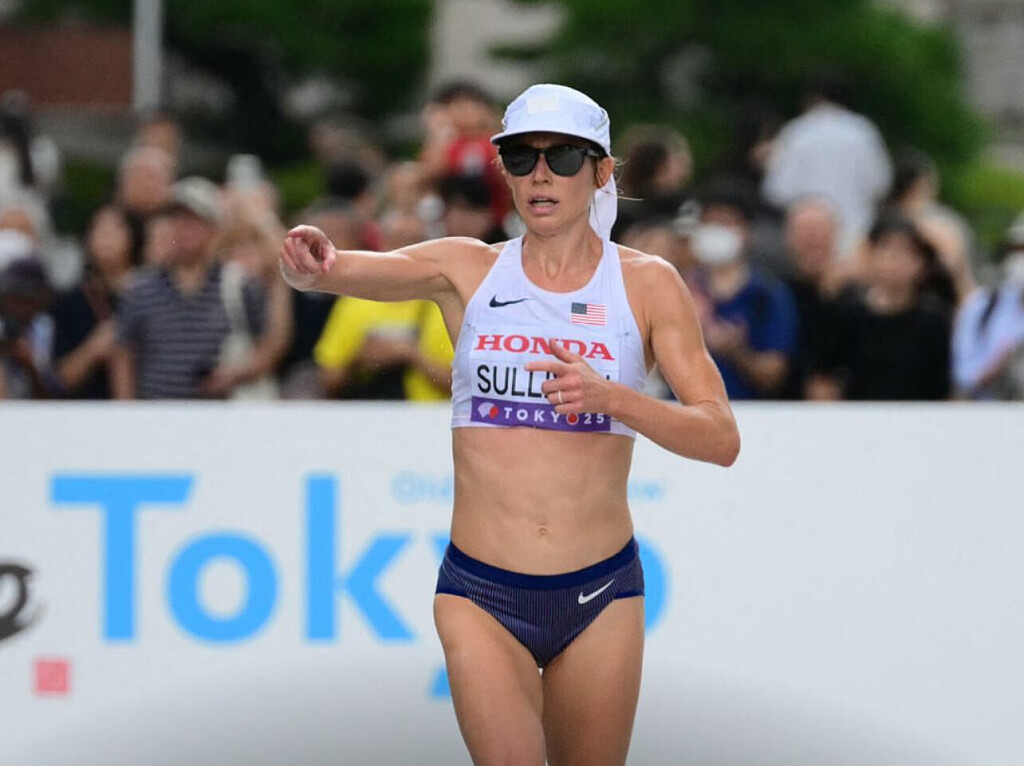
Susanna Sullivan — The Teacher Who Runs Among the World’s Best Set to run NYC Sunday
American marathoner Susanna Sullivan continues to prove that world-class athleticism and everyday life can coexist. A sixth-grade math and science teacher from McLean, Virginia, Sullivan has quietly become one of the top American women in marathon history — balancing the classroom with 120-mile training weeks and remarkable consistency on the roads.
From Humble Beginnings to World Class
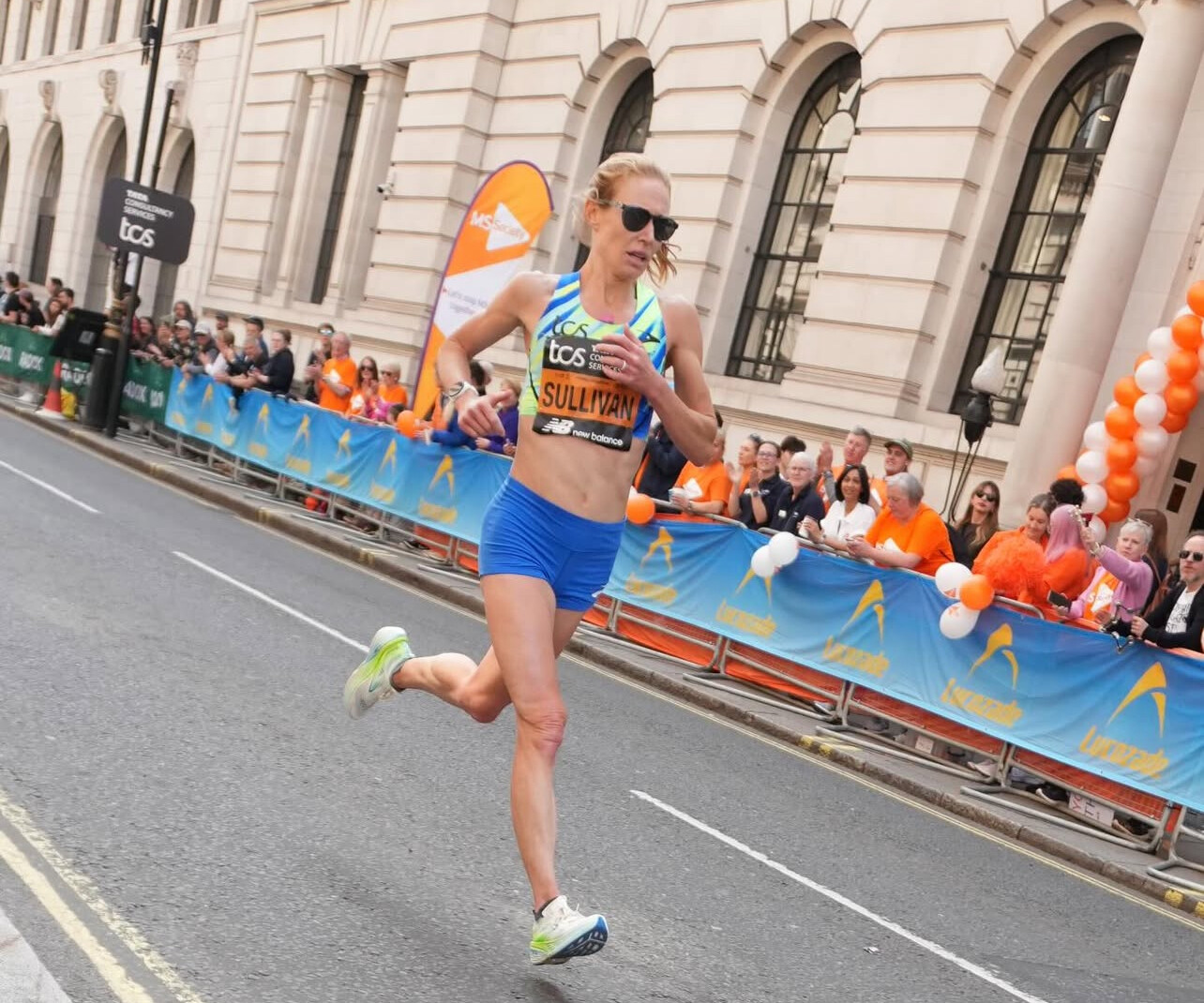
Born May 13, 1990, in West Palm Beach, Florida, and raised in Virginia, Sullivan’s early success came at George Mason High School, where she earned multiple state titles in cross-country and track. After competing at the University of Notre Dame, she battled injuries and fatigue but never lost her love for the sport.

Her marathon debut came in 2015 at Grandma’s Marathon in Minnesota, where she clocked 2:35:37 for 9th place. Over the next decade, she quietly built momentum, cutting time from race to race. The breakthrough arrived in 2024 at the Chicago Marathon, where she finished 7th overall — and first American — in 2:21:56, a personal best that placed her among the top ten fastest U.S. women of all time.
Fourth at the 2025 World Championships in Tokyo
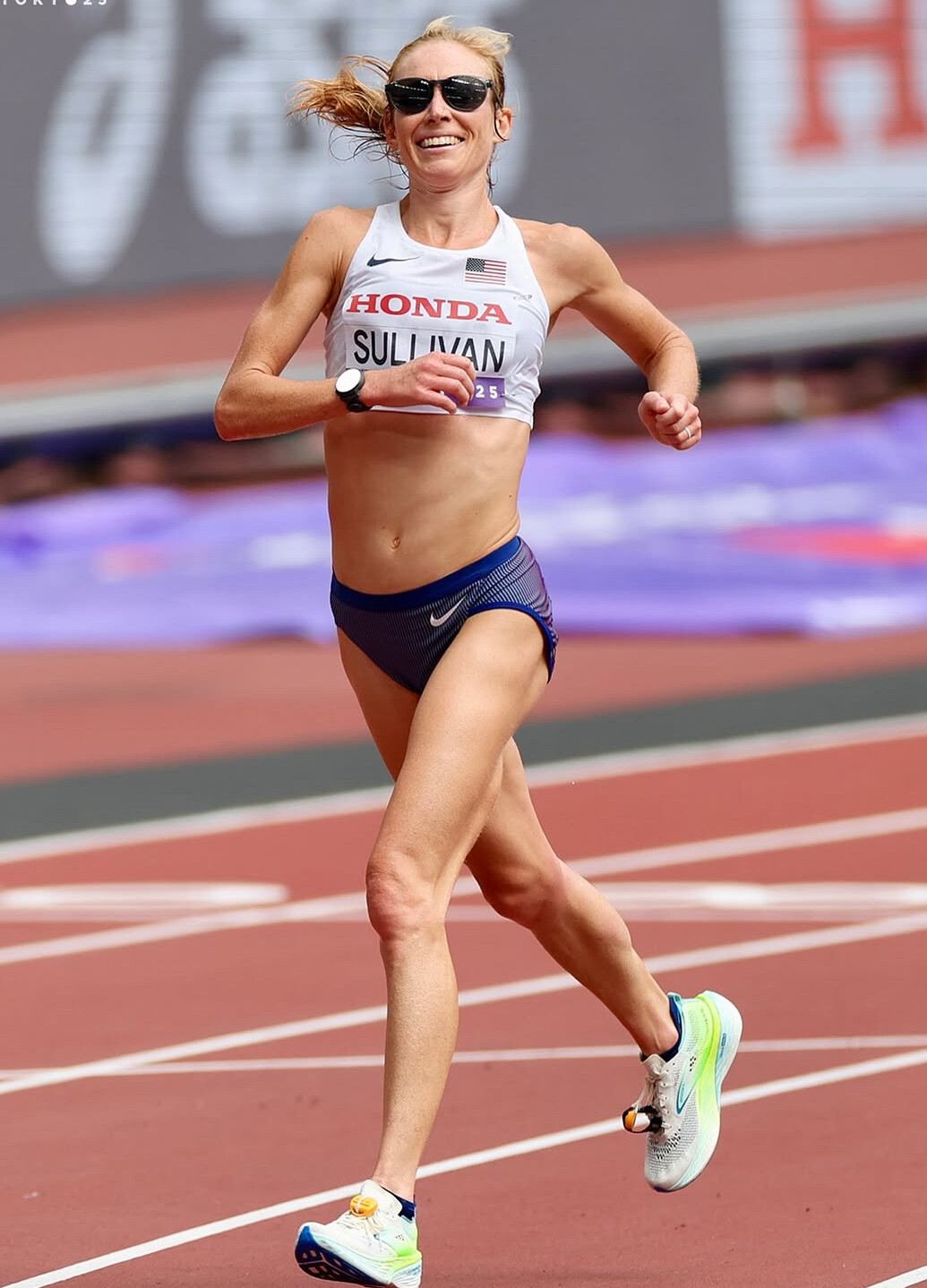
On September 14, 2025, Sullivan delivered one of her finest performances at the World Athletics Championships Marathon in Tokyo, finishing fourth in 2:28:17.
Under sweltering heat and high humidity, Sullivan courageously led much of the race, setting the pace through 25 kilometers before the eventual medalists pulled away. Her performance — the top American finish — underscored her strength, tactical intelligence, and resilience on one of the sport’s biggest stages.
It also marked a full-circle comeback. Two years earlier, at the 2023 World Championships, Sullivan fractured her kneecap mid-race and limped home in 58th place. Her return to the top five in Tokyo symbolized perseverance and renewed confidence.
The Balance of Two Worlds
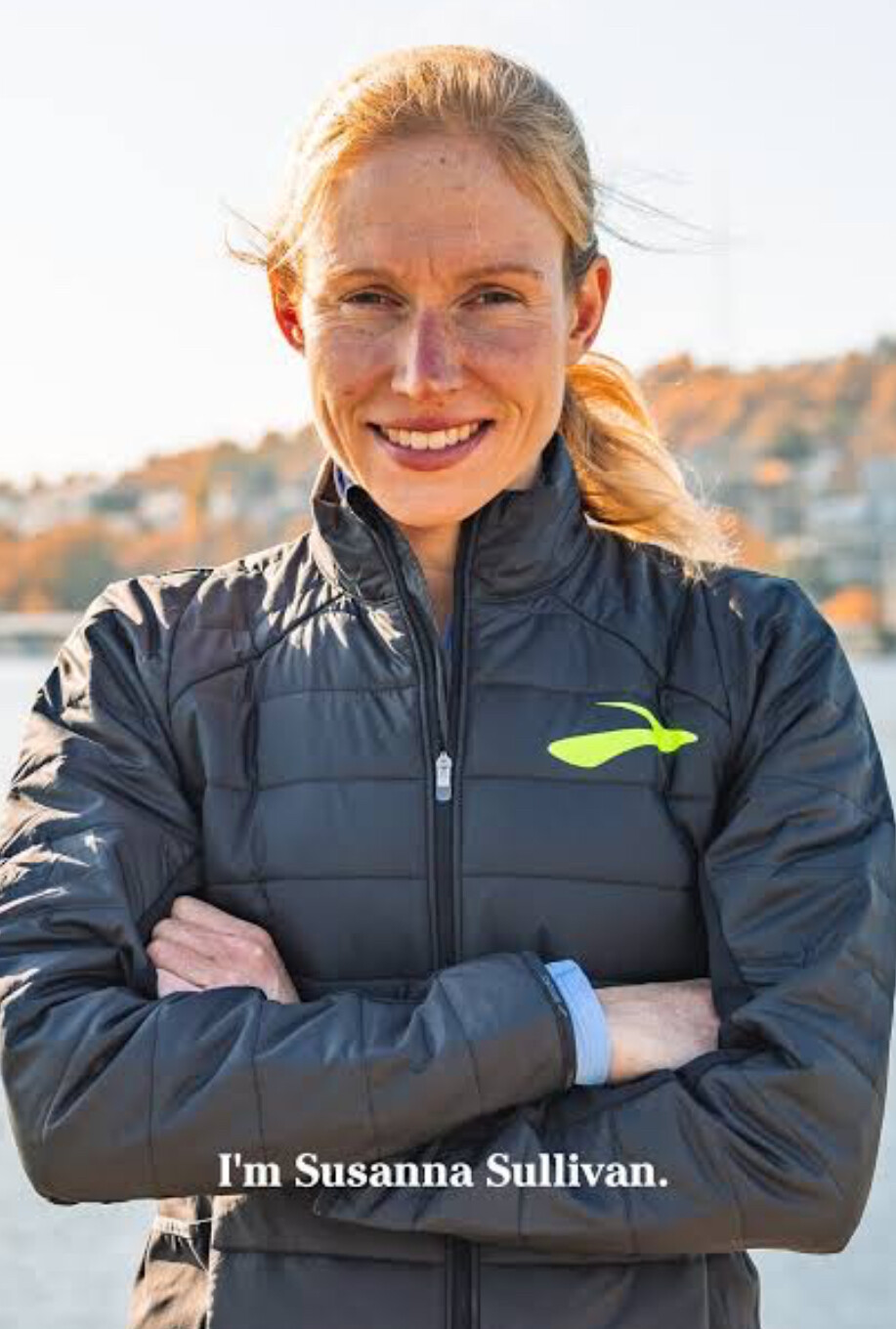
While most professional runners build their lives around training, Sullivan still starts her mornings in the classroom. She teaches sixth-grade advanced math and science, grading papers and designing lessons between workouts.
“Running gives me perspective,” she has said in interviews. “It keeps me grounded. Teaching reminds me there’s more to life than splits and finish times.”
Her ability to balance two demanding worlds has made her an inspiration for runners who juggle careers, families, and athletic dreams.
On to New York
Next up, Sullivan is set to compete in the 2025 TCS New York City Marathon on Sunday, November 2. She enters as one of the leading Americans to watch in a stacked international field that includes Olympians and major-marathon champions.
After her stellar run in Tokyo, many eyes will be on how she handles the challenging hills and bridges of New York — a course that rewards experience and toughness rather than speed alone. Few embody those traits better than Sullivan.
Lessons from Her Journey
• Patience and perseverance — her steady rise from 2:35 to 2:21 shows the value of long-term commitment.
• Balance — proof that excellence isn’t limited to full-time athletes.
• Resilience — recovering from injuries and setbacks only to climb higher.
• Leadership — both in the classroom and in leading a world championship field
Career Highlights
• Marathon PR: 2:21:56 – Chicago (2024)
• World Championships Tokyo (2025): 4th Place, 2:28:17
• London Marathon (2023): 10th Place, 2:24:27 (top American)
• Cherry Blossom 10-Mile (2022): Champion, 52:32
• Half Marathon PR: 1:08:59 – January 2025
A Runner to Watch
Susanna Sullivan’s story reminds us that greatness doesn’t always come from perfect conditions or full-time focus. Sometimes it comes from a quiet classroom in Virginia, where a teacher grades homework — and then goes out to train like one of the best marathoners in the world.
Her journey is far from over, and as she lines up in New York, she represents not just American distance running but every runner chasing balance, progress, and purpose — one mile at a time.
by Boris Baron
Login to leave a comment
NHL legend Zdeno Chara crushes 50K ultra-trail race
Three weeks after finishing the Boston Marathon, the former 6'9" foot defencemen took on a 50K ultra-trail race, finishing eighth overall
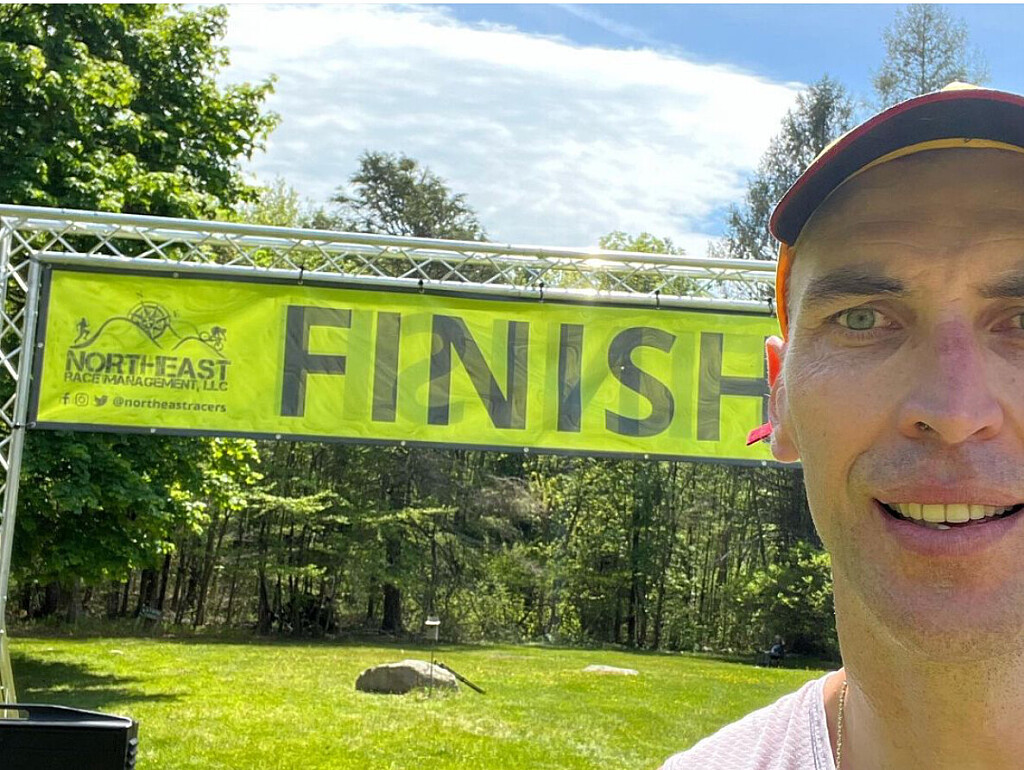
Former NHL defenceman Zdeno Chara may have found his new hobby: ultrarunning. On May 13, the 46-year-old completed his first ultra-trail race at the Watuppa Trail 50K in Fall River, Mass., and performed admirably.
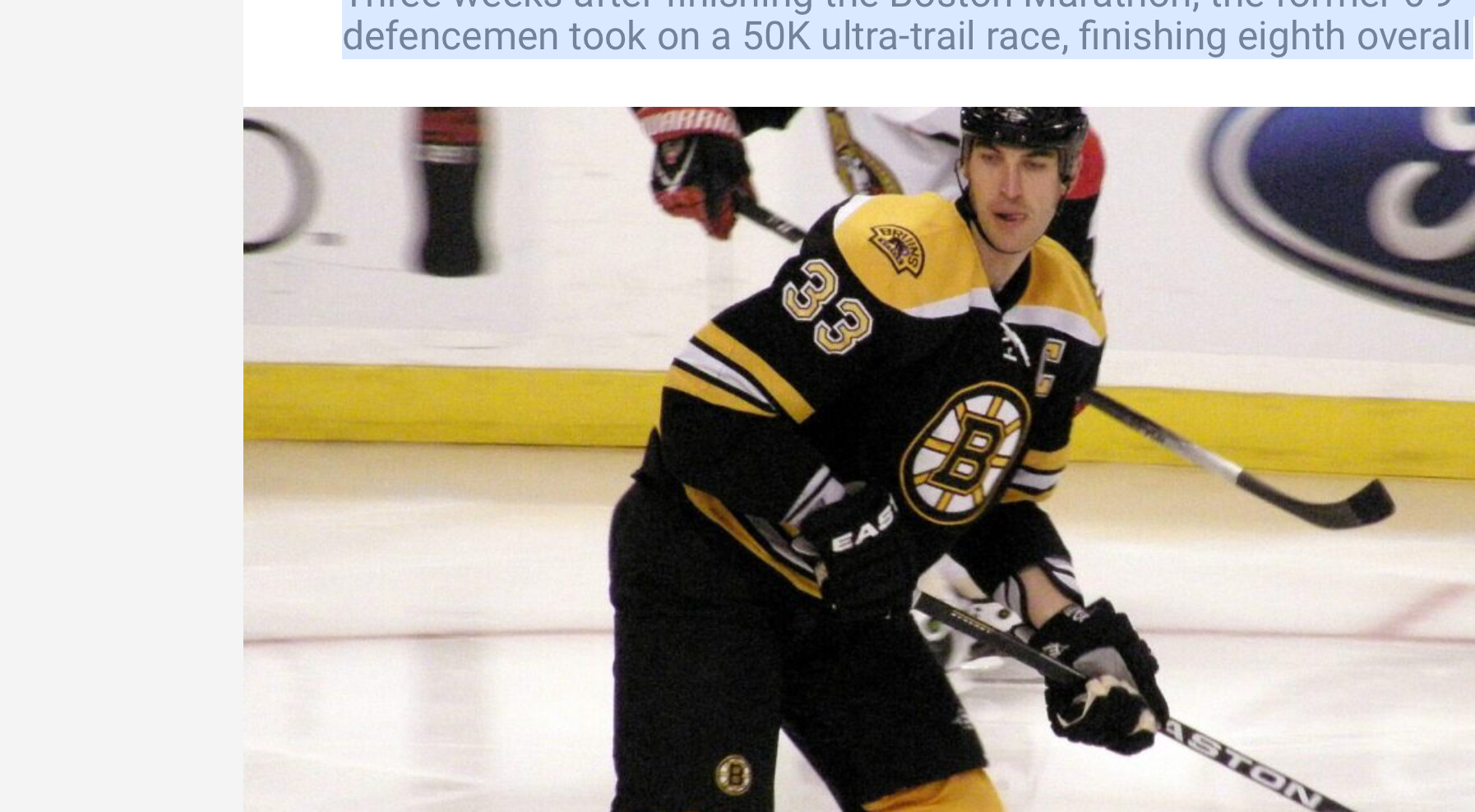
“I tried a new distance today,” Chara wrote on his Instagram. “I can’t thank my team enough for their incredible help and support for my first ultra trail race.”
Despite lacking ultra experience, the former 6’9 foot defencemen finished the 50K in eighth overall, in 5:07:29, and even took second place in his 40-54 age category.
Since retiring from the NHL in 2022, Chara has found an interest in distance running. He completed the 2023 Boston Marathon in a very respectable time of 3:38:23; he also raised USD $33,333 for The Hoyt Foundation during his campaign.
Chara holds the all-time NHL record for most games played by a defenceman, with 1,680. He played for four teams over his 20+ year career, starting with the New York Islanders, Ottawa Senators, Boston Bruins and Washington Capitals.Chara entered the race with his friend and training partner Becca Pizzi,who won the 50K outright in 3:59:11. Pizzi also helped pace Chara for his first marathon last month.We think it’s only a matter of time until we see the big man take on a 100-miler.
by Running Magazine
Login to leave a comment
Feeling out of shape? Maybe you should run up and down a mountain three times.
It’s a perfectly normal question to ask someone, I just wasn’t the right person to ask. I had been chugging up the trail at about mile 22 or so of the race, trying to push myself but also pace myself, and in my own head because I’d only seen three or four people in the last 45 minutes or so. The guy was hiking downhill, getting out before the Saturday heat really warmed things up, and I had made a little room as I passed him hiking the other direction, trying to get up Tiger Mountain for the last time. We’d said hello, and then he asked,
“How far to the Section Line Trail?”

I rounded the switchback and confidently said, “Oh, I don’t know,” and he seemed a little surprised that I didn’t know, pausing for a second with a somewhat quizzical look on his face. So I added, “This is my first time here,” hoping that would help him understand. It was true, kind of. If I’d felt like I had more time to stop and chat, I might have added a few more bits of information:
> I am participating in an ultramarathon trail race called the Tiger Claw 50K > I have never set foot on this mountain before today, May 13th, 2023 > This is my third trip to the summit of West Tiger #2, and finally, > Hey man, I’m just following these pink flags till I see people with pitchers of electrolyte drink and trays of Oreos standing under an EZ-up at the top. I’m not paying attention to the trail names, the distances, or the intersections, I’m barely looking at the scenery. My goals today are:
a) Survive this race despite the 88-degree temperature and 70 percent humidity and b) Produce urine that isn’t the color of a No Passing Zone sign by midnight tonight
I hope that man found his way and is not still out there looking for the Section Line Trail.
Another question someone asked me, the day before the Tiger Claw: “Why did you pick that race? Isn’t it just kind of a local thing?”
I got really out of shape in 2022—spinal disc injury, new baby, sleep deprivation from helping take care of a new baby, and another back/hip injury. I was starting to wonder if at 43, I was hitting some sort of downhill slope in life. I turned 44 this winter, and was determined. Not to return to any sort of athletic glory, no, but to avoid going to the emergency room again after herniating a disc while picking up a dog because I sit on my ass 40 hours a week, and inside my regular-sized middle-aged man body is a smaller man who loves to eat emotionally and is also super fucking lazy.
So I started looking on UltraSignup for 2023 races near western Montana, and thought
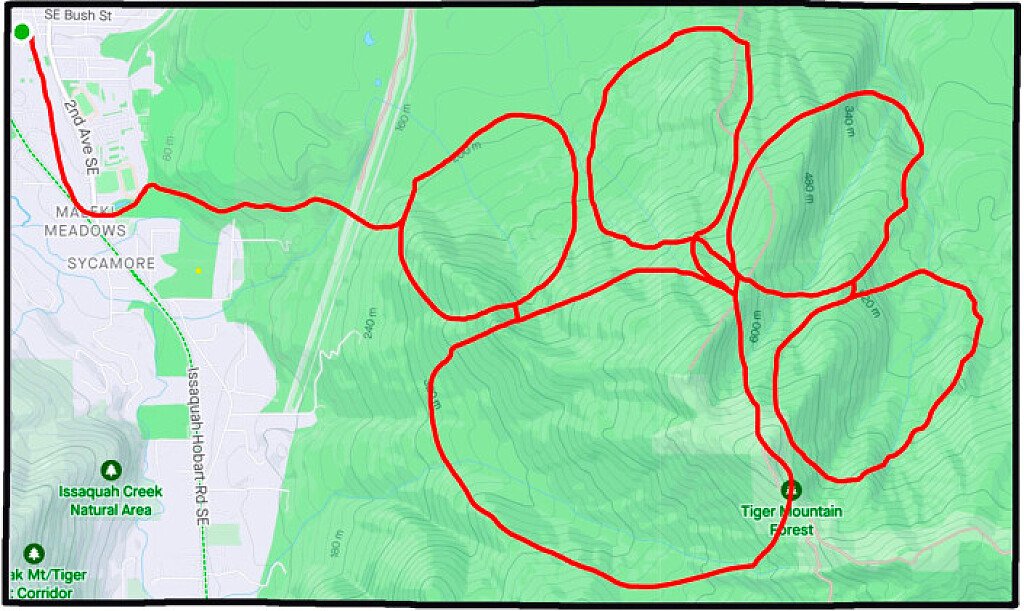
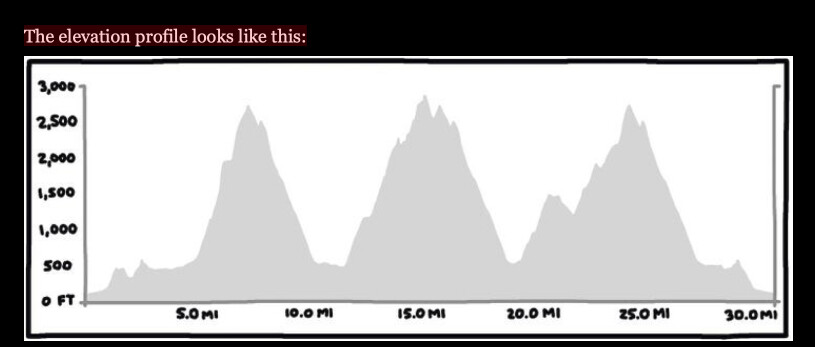
Three summits of West Tiger #2 (elevation 2,757 feet), returning to the High Point Trailhead (elevation 527) each time. For a total of “nearly 9,000 feet of elevation gain,” per the Tiger Claw website. If you are looking for a fast, flat race to help you get your PR for the 50K distance, the Tiger Claw is not it.
This, I was afraid, would call for drastic measures: I was going to have to learn to do something I have always been terrible at doing: drink a responsible amount of fluids. This was almost too much to ask, I thought. Maybe I should bail. DNS: Did Not Start. Reason: Not good at drinking water.
The White Loop was the steepest. Ethan’s final email to participants the previous day had said the Pink Loop would stay in the shade into the afternoon. I had decided to go White (steepest, least fun) first, Yellow (longest, most meandering) second, and Pink (afternoon shade). I chugged down a 17-ounce water bottle in the final minutes before the start and stuffed it in my vest.
The first 4.6 miles wound around in the forest with a couple ups and downs, gradually climbing a few hundred feet to get us to the lower aid station, where we’d split up into our respective loops and go on our way. I had put a small drop bag at the lower aid station, as we’d all return here after each of our three ascents and descents of West Tiger 2. I packed my drop mag pretty minimally because after I finished my final lap, I planned to stuff whatever was left of it into my vest for the final three miles to the finish line, so I didn’t have to drive back to get it after the race.
I filled one water bottle at the aid station and ran on, splitting off to do the White Loop, 2.8 miles, 2,800 feet of climbing to the upper aid station/turnaround. I had no ambitions to do a fast first lap, but ran some of the less-steep sections and hiked the rest. Less than a mile into the White Loop, I was alone in the forest, so I pulled over to pee. Just as I was finishing, Krissy Moehl, who is a very famous ultrarunner, hiked past a few feet away, which is sort of an awkward moment to introduce yourself, but I did it anyway, because we have a mutual friend, and then we ended up hiking together for the rest of the ascent. This is not to say that I am as fast as a person who won the UTMB in 2003 and 2009; more like Krissy was not in a hurry on the race course.
With a couple other guys, we jogged a few short sections of the trail, but mostly hiked at a good clip to the upper aid station, arriving at about 1 hour and 45 minutes. I got my water bottles refilled and started heading down. The top of West Tiger 2 had been logged a few years back, and the good news was we could see Mt. Rainier, Mt. Baker, the buildings of downtown Seattle, and the Puget Sound. The bad news was there was no shade at the top, and it was already sunny and warm at 8:45 a.m.
The 2.2-mile route back down to the lower aid station, which we’d all do a total of three times during the race, was steep and technical for about a half-mile, and then just steep. I made myself drink two 17-ounce bottles of fluid as I ran downhill, and made a mental note to do this each time I ran the descent. I had drunk two bottles on the way up, and my shirt was completely drenched in sweat, front and back, by the time we hit the summit.
At the lower aid station, I grabbed my drop bag, stuffed a couple packages of Clif Bloks into my sweat-soaked vest, filled up three water bottles, and started jogging back up the trail, looking for the turnoff for the Yellow Loop—5.5 miles, 3,000 feet of elevation gain.
The Tiger Claw is sort of a multiple-loop race, in that you run multiple loops, and pass through the same checkpoint (the lower aid station) at the end of each loop—but that checkpoint is still three miles from where you parked your car at the start/finish, so maybe it’s less tempting. (you could call someone and ask them to pick you up at the aid station, though, since it’s about 150 feet from a parking lot that’s only a mile from I-90)
But I was definitely not thinking, “Man, I hate loops, I can’t believe I have to come back to this aid station two more times”—I was thinking, “Jesus it’s hot already.”
I was alone for most of the loop, running when possible, hiking the steeper parts, and chugging water and Skratch electrolyte drink. About two-thirds of the way up, Krissy Moehl passed me, and we chatted for a few minutes. Through the forest, I had been forcing myself to chug water—three 17-ounce bottles by the time I got to the top of the climb. Mileage-wise, I was past the halfway mark by my second summit of West Tiger 2, and had drunk 7 bottles of liquid, or about 119 ounces.
With only the Pink Loop to go, I only had 2,700 feet of elevation gain to climb. I could feel a slight dehydration headache forming, but maybe if I kept forcing water down I’d be able to keep it at bay. At the Upper Aid Station, I refilled two bottles and drank both of them as I navigated the downhill.
If you look a map of the course with all three loops on a map, you could see why they called it the Tiger Claw:
A solid mile and a half from the upper aid station, I started to hear a dog howling. Or some animal. I kept plugging away, slowly passing a couple other runners, every once in a while scanning the trees above my head for the top of the ridge, the end of my final climb. Eventually, I ran out of trees, hitting the north edge where the trees had been clear cut. I went from hints of sun to full-blast afternoon white heat as I chugged up the trail, finally seeing the howling dog, which turned out to not be a dog at all, just a really psyched volunteer wooing so loudly and so often that I thought there was no chance he’d have his voice tomorrow. I thanked him and walked to the aid station, got my water bottles refilled, grabbed a handful of potato chips and a couple Oreos, and headed down.
On each of my three descents of the trails to the lower aid station, I was elated to not be climbing. I was also reminded that there was, also today, a race called the Tiger Claw Double, a 50-mile version of this same race I was doing, but with THREE EXTRA LAPS to the summit of West Tiger 2. As I ran downhill, I’d pass by a 50-mile racer heading uphill, and I’d say something like “Good job,” but what I was thinking was, “Look, I am a person of questionable judgment and intelligence, who is spending their Saturday doing a steep-ass 50K race with almost 9,000 feet of climbing in 88-degree heat and 70 percent humidity, but you, Runner, are a FUCKING MANIAC. I salute you. Also I’m really glad I didn’t sign up for that race instead.”
At this point, midway through my final descent, the hot spots on the instep sides of my big toes had turned into full-on blisters, and my toenails were sick of the cumulative effects of being pushed backwards by my shoes every one of the thousands of downhill steps so far.
My strides had shortened, and I wasn’t grunting or wincing with pain every step, but I definitely wasn’t smiling. I glanced down at my watch to check my pace, just out of curiosity: 12-minute miles. I was pretty ready to be done.
I hit the lower aid station, grabbed my drop bag, shoved it into the back pocket of my vest, and started jogging down the road in full sun. Every piece of fabric on my body was soaked through with sweat, including the inside of my vest and the outsides of my shoes.
The route meandered through a short section of forest, and the final three-quarters of a mile was a wide, paved, shaded multi-use path. I started running faster, because on flat ground, my blisters didn’t hurt, and I was ready to get it over with. And I think I remembered them saying something about pizza at the finish line.
I jogged under the finish arch, gave Ethan a very soggy, gross hug, took my finisher medal, and felt the relief of No More Exercising Today slowly roll over me. Mark Griffith, who had been out on the course taking photos all day and working as hard as the racers, directed me to the pizza and cold beverages, and I asked him if he was able to take care of himself at all in the heat. He said he eventually was able to rehydrate at the upper aid station, but at one point, the sweat was just rolling down his head into his eyes. “My eyebrows stopped working,” he said. And I thought, Same, man. I had drunk approximately 225 ounces of water and Skratch electrolyte drink in 7 hours and 39 minutes, and I still felt like a piece of beef jerky that had been left out in the sun for a week.
It had been hot, for sure, but I finished, and as I sat down with a can of sparkling water, it seemed like I had a good chance of surviving the day. I thought a little bit about my friend’s question as to how I decided to sign up for the Tiger Claw, since it was kind of a local race on a local mountain. I am not sure if I could draw a flow chart of how I, and maybe other runners too, decide to run whichever races we run. I don’t know, it sounded fun? It sounded not fun? I heard good things about it? It was close to where I live, or close to some place I wanted to travel to, or it was flat, or it was steep, or whatever.
As far as I know, ultramarathon races basically work like this:
I had assumed that Ethan and Kim could put on a pretty good race because they do other things well, and I am not in the business of reviewing races, but I have to say, I was right. It was fun. Although parts of it were not fun.
Fortunately, there’s plenty of steep terrain very close to where I live. Unfortunately, lots of that steep terrain was still covered in snow and ice until the first week of April. But, I have microspikes, and enough of it melted out in time for me to get in some steep uphills. I did laps on Mt. Sentinel, sort of our local Tiger Mountain, with a ~2,000-foot climb via several different trails. At one point, I wondered: “Am I spending too much time on really steep terrain? What if the course is more gradual, or rolling?”
(Answer below)
I honestly hadn’t given it any thought until he asked. I had just focused on the big numbers: 31 miles, 8,000-something feet of elevation gain. But now I was thinking about it. And it did sound kind of nice to run the loops in whatever order they would be least crowded. But how would I know?
by Outside Online
Login to leave a comment
10 Reasons to Start Following Track and Field This Year
The 2023 season should be full of record-breaking performances from the sport’s biggest stars. Here are the most important things to know.
Track is back, and if the results from the indoor season and early outdoor meets are any indication, it should be another year of eye-popping results around 400-meter ovals this summer.
Why is track and field relevant to the average recreational runner?
Perhaps you’re running some of the same distances in your training and racing. Or maybe you have a connection to some of the events from your youth, days in gym class or on the playground. From a human performance perspective, no sport showcases the all-out speed, red-line endurance, max power, dynamic agility, and meticulous bodily control as track and field does.
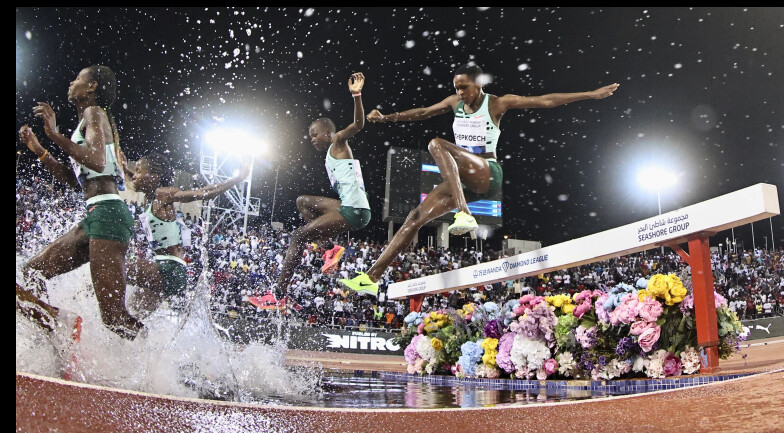
Here’s a primer on the most awe-inspiring athletes and events of this summer’s track season. Because, come on: with a sport that includes events as multifaceted as the pole vault, as primal as the shot put, and as wild as the 3,000-meter steeplechase—a 1.8-mile race with 28 fixed barriers to hurdle and seven water pits to jump—what’s not to like?
One of the many things that makes track and field so special is that it’s one of the most diverse sports on the planet, both culturally and athletically.
Last summer, athletes from a record 29 different countries earned medals in the 25 different running, jumping, and throwing events at the World Athletics Championships in Eugene, Oregon.
At the highest level, there are athletes of all shapes and sizes from every culture and socioeconomic background. While there certainly are racial and cultural stereotypes that need dissolving and vast inequality among competing countries, from a performance point of view the sport is largely meritocratic, based on the time or distance achieved in a given competition.
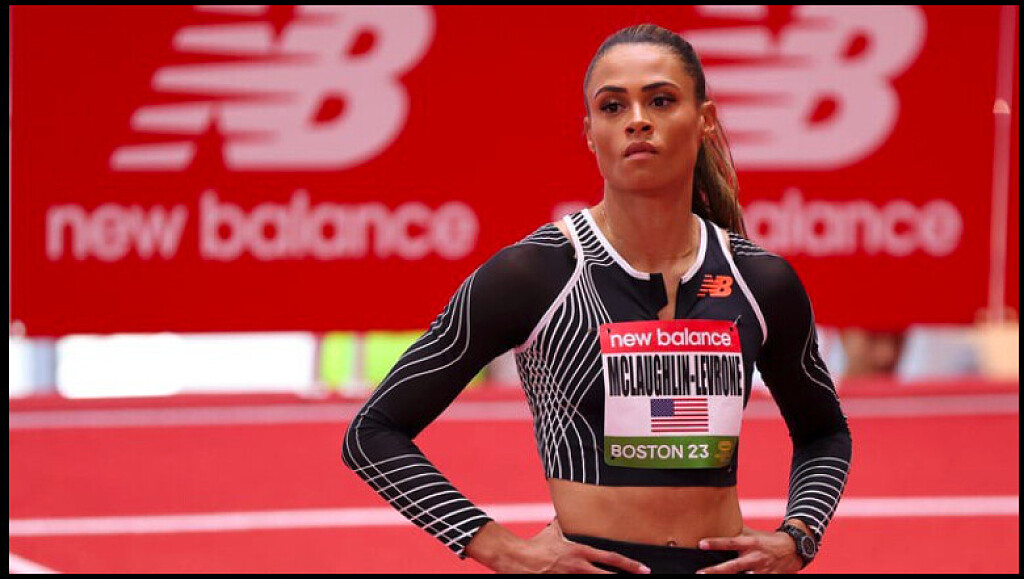
Watching American Sydney McLaughlin-Levrone masterfully win the 400-meter hurdles in a world-record time last summer in front of a deafening crowd at Hayward Field in Eugene was a riveting experience. It was vastly different than watching Grenada’s Anderson Peters win the javelin world title with a career-best throw of 90.54 meters on his final attempt to beat India’s Neeraj Chopra, but both had edge-of-your-seat excitement, athletic excellence, and cultural significance.
One of the knocks against track and field in recent years is that it hasn’t done enough to attract casual fans the way professional football, basketball, hockey, and soccer have. Following the On Track Fest, the USATF Los Angeles Grand Prix on May 26-27 in Los Angeles is trying to up the ante by combining a mix of elite-level competition, an interactive fan festival, and top-tier musical performances.
Billed as the one of the deepest track meets ever held on U.S. soil, it will feature a star-studded 400-meter face-off featuring Americans Michael Norman, the reigning world champion, and Kirani James, a three-time Olympic medalist from Grenada, and a women’s 100-meter hurdles clash with world champion Tobi Amusan of Nigeria, Olympic silver medalist Keni Harrison of the U.S., and Olympic gold medalist Jasmine Camacho-Quinn of Puerto Rico.
Saturday’s action will be broadcast live on NBC Sports from 4:30 P.M. to 6 P.M. ET and be followed by a concert event called the Legends Jam, which will include appearances from some legendary athletes and be headlined by Grammy-winning singer Judith Hill.
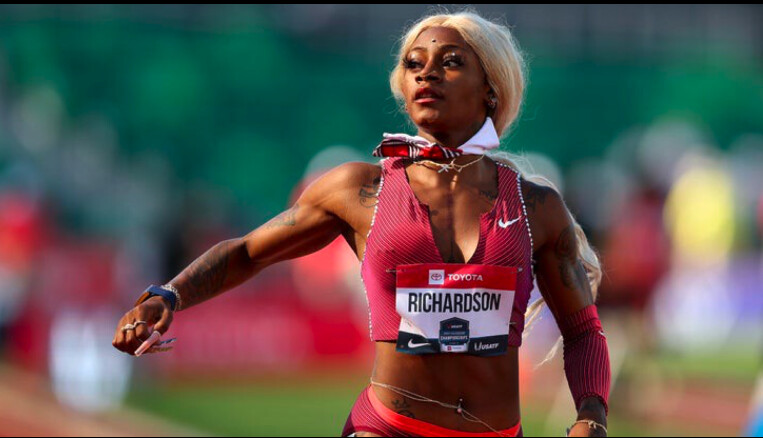
American sprint sensation Sha’Carri Richardson will be racing the 100-meter dash at the USATF Los Angeles Grand Prix. You probably remember her for her perceived failures more than the astounding times she’s actually achieved on the track.
Two years ago, the sprinter from Dallas blew away the field in the 100-meter dash at the U.S. Olympic Trials with a 10.86 effort, but then she was famously suspended after testing positive for cannabis (which is on the World Anti-Doping Agency’s list of banned substances) and missed the Tokyo Olympics as a result. (She admitted using the drug to cope with the pressure of qualifying for the Olympics while also mourning the recent death of her biological mother.)
Then last year, despite strong early season performances, Richardson failed to make the finals of the 100-meter or 200-meter at the U.S. championships, so she missed out on running in the first world championships held on American soil.
This year, the 23-year-old sprinter appears to be locked in and better than ever, posting a world-leading 10.76 100-meter time on May 5 in Doha (she also ran an eye-popping 10.57 with an over-the-limit tailwind on April 9 in Florida) and posted the second-fastest time in the 200-meter (22.07) on May 13 at a meet in Kenya.
If she keeps it all together, expect Richardson to finally contend with elite Jamaican sprinters Shericka Jackson and Shelly-Ann Fraser-Pryce in the 100 and 4×100-meter relay in August at the World Athletics Championships in Budapest, Hungary.
A few years ago, American sprinter Fred Kerley was on his way to becoming one of the world’s best 400-meter runners. But he wanted more than that. What he really had his heart set on was becoming the world’s fastest man, a moniker that goes with the most dominant sprinter in the 100-meter dash.
Ignoring doubters, Kerley retooled his training and earned the silver medal in the 100-meter at the Tokyo Olympics (.04 seconds behind Italy’s Marcell Jacobs) and then continued his ascent last year by winning the U.S. championships (in 9.76, the sixth-fastest time in history) and world championships (9.86).
The 28-year-old from San Antonio, Texas, also became one of just two other runners (along with American Michael Norman and South African Wayde van Niekerk) to ever run sub-10 seconds in the 100-meter, sub-20 seconds in the 200-meter, and sub-44 seconds in the 400-meter. So far this year, Kerley has two of the four fastest 100-meter times of the season, including a speedy 9.88 on May 21 in Japan.
After trading barbs on social media this spring, Kerley and Jacobs are expected to face off in an epic 100-meter showdown on May 28 at a Diamond League meet in Rabat, Morocco, marking the first time the Olympic gold medalist and the world champion in the men’s 100m face off since the 2012 Olympic final, when Jamaican Usain Bolt beat countryman Yohan Blake. American Trayvon Bromell, the silver medalist at last year’s world championships, is also in the field, so it should be an extraordinary tilt.
If you’re a gambler, bet on Kerley to win that one and eventually get close to Bolt’s 9.58 world record. (To do so, he’ll be running faster than 26 miles per hour!) But don’t count out Kenya’s Ferdinand Omanyala, the early world leader (9.84), or fellow American sub-9.9 guys Bromell, Norman, Christian Coleman, and Noah Lyles at the 2023 World Athletics Championships on August 20, in Budapest. Depending on which three Americans join Kerley (who has an automatic qualifier) at the world championships, it’s actually quite likely the U.S. could sweep the top four spots in the 100 in Budapest.
If you’ve ever wanted to see the world’s top track and field stars competing live in the U.S., this is the year to do it. The May 26-27 USATF Los Angeles Grand Prix meet and June 3-4 Portland Track Festival are part of what might be the mosst compelling outdoor track season ever held on U.S. soil.
If you’re looking for an athlete to marvel at, start with Sydney McLaughlin-Levrone, the gold medalist in the 400-meter hurdles at the Olympics in 2021 and World Athletics Championships last summer. She’s been one of the sport’s rising stars since she was a teenager and yet she’s only 23. Her trajectory is still rising—especially since she moved to Los Angeles to train under coach Bob Kersee. Driven by her strong faith, McLaughlin-Levrone is the personification of hard work, grace and competitiveness.
This year she’ll temporarily step away from her primary event to show off her pure sprinting prowess when she opens her season in a “flat” 400-meter race at the Diamond League meet in Paris on June 9. Her personal best in the 400-meter is 50.07 seconds, set when she was a freshman at the University of Kentucky, but she clocked a speedy 50.68 while running over hurdles, en route to a world-record setting win at last summer’s world championships.
Her best 400-meter split as part of a 4×400-meter relay is 47.91, so it’s within reason to think she could be one of several runners to challenge the long-standing world record of 47.60 set in 1985 by East German Marita Koch. Because McLaughlin-Levrone has an automatic qualifier to the world championships in the 400-meter hurdles, she will likely run the open 400-meter at the U.S. championships and decide after the meet which one she’ll focus on.
American 800-meter ace Athing Mu has looked unbeatable for the past several years as she won Olympic gold in the event at the Tokyo Olympics and last year’s world championships. In fact, she has been unbeatable, having won 13 straight races since she dropped out of a mile race at the Millrose Games in January 2022. Going back to 2020 (when she was a senior in high school) and 2021 (during her one season at Texas A&M), she’s finished first in 51 of her past 53 races (relays included), with her only loss being a narrow runner-up finish to Kaelin Roberts in the 400-meter at the 2021 NCAA indoor championships.
Mu, who is also coached by Kersee and trains with McLaughlin-Levrone, seems to be the most likely athlete to challenge the women’s 800-meter world record of 1:53.28, set in 1983 by the Czech Republic’s Jarmila Kratochvílová. It’s the longest standing record in track and field, and only two runners have come within a second of it in the past 15 years. Her personal best of 1:55.04 is an American record and the eighth-fastest time in history. She’s still only 20 years old, so she has many years to keep improving and other historic opportunities ahead of her.
Mu said earlier this year she’d like to try a 400-800-meter double at an Olympics or world championships if the schedule permits—it’s only been done once successfully by Cuba’s Alberto Juantorena at the 1976 Games—but her coach has said she might attempt a 800-1,500-meter double next year at the Paris Olympics.
This year, Mu will run the 1,500 meters at the USATF Championships in July, but will likely defend her 800-meter title at the world championships in Budapest, as well as potentially running on the U.S. women’s 4×400-meter relay and the mixed-gender 4×400-meter relay (with McLaughlin-Levrone) for an opportunity to win three gold medals in a single championships.
With apologies to quarterback extraordinaire Patrick Mahomes, gymnastics all-arounder Simone Biles, and skiing superstar Mikela Shiffrin, pole vaulter Armand Duplantis just might be the most dynamically talented athlete in the world. That’s because he’s the world’s most dominant athlete (and has set six world records) in arguably the most demanding discipline, not only in track and field but quite possibly in any sport. No sport discipline involves such a dynamic combination of speed, power, precision and agility, and Duplantis, who is only 23, is already the greatest of all-time.
Prove me wrong or watch him set his latest world record (6.22 meters or 20 feet, 5 inches) at an indoor meet on February 25 in Clermont-Ferrand, France. That’s the equivalent of vaulting onto the roof of a two-story building, and in his case, often with room to spare.
Duplantis, who grew up in Lafayette, Louisiana, to athletic parents with Swedish and Finnish heritage, represents Sweden in international competitions. He started pole vaulting at age three, set his first of 11 age-group world-best marks at age seven, and won an NCAA title in 2019 as a freshman competing for LSU before turning pro.
All indications are that North Carolina State junior Katelyn Tuohy could become the next American running star. All she has done since she was young is win races and break records.
After winning the NCAA outdoor 5,000-meter a year ago, she won the NCAA cross country title in November. During the indoor track season this past winter, she set a new collegiate mile record (4:24.26) and won both the 3,000-meter and 5,000-meter title at the NCAA indoor championships in March. On May 7, the 21-year-old from Thiells, New York, broke the NCAA outdoor 5,000-meter record by 17 seconds, clocking 15:03.12 at the Sound Running On Track Fest.
Tuohy will be running both the 1,500-meter and 5,000-meter at the NCAA East Regional May 24-27 in Jacksonville, Florida, with the hopes of eventually advancing to the finals of both events at the June 7-10 NCAA Division I championship meet in Austin, Texas.
University of Arkansas junior Britton Wilson is a top collegiate star who is ready for prime time at the pro level. She won the 400-meter in a world-leading and collegiate record time of 49.13 in mid-May at the SEC Championships, where she also won the 400-meter hurdles (53.23) in a world-leading time. The 22-year-old from Richmond, Virginia, was the runner-up in the 400-meter hurdles at last year’s U.S. championships and fifth in the world championships, and could contend for a spot on Team USA in either event at the July 6-9 U.S. championships.
Kerley and Lyles are expected to square off in a 200-meter race at the USATF New York Grand Prix meet on June 24 at Icahn Stadium on Randall’s Island in New York City. There are also two high-level Puma American Track League meets in Tennessee—the Music City Track Carnival June 2 in Nashville and the Ed Murphey Classic August 4-5 in Memphis—and two Under Armour Sunset Tour meets organized by Sound Running on July 22 in Los Angeles and July 29 in Baltimore.
The best U.S. meet of the year, though, will be the USATF Outdoor Championships held July 6-9 in Eugene, Oregon, where American athletes will be vying for top-three finishes to earn a chance to compete for Team USA at the 2023 World Athletics Championships August 19-27 in Budapest.
The U.S. season will culminate with the September 16-17 Pre Classic in Eugene, Oregon, a two two-day meet that will double as the finals of the international Diamond League circuit and should include many of the top athletes who will be representing their countries in next summer’s Paris Olympics. (And if you want to see the country’s top high school athletes run unfathomable times for teenagers, check out the Brooks PR Invitational on June 14 in Seattle, Washington.)
At the June 2 Diamond League meet in Rome, Italy, the men’s field in the 5,000-meter run will have what might be the fastest field ever assembled, with 13 runners who have personal best times of 12:59 or faster.
The field will be headlined by Joshua Cheptegei of Uganda, who lowered the world record to 12:35.36 in Monaco three years ago. (That’s a pace of 4:03 per mile!). But it will also include Kenya’s Jacob Krop (12:45.71) and Nicholas Kipkorir (12:46.33), Ethiopia’s Yomif Kejelcha (12:46.79), American Grant Fisher (12:46.79), Canadian Mohammed Ahmed (12:47.20), and Guatemalan-American Luis Grijalva (13:02.94), among others. With a big prize purse at stake and pacesetters ramping up the speed from the start, it should be a race for the ages.
by Outside Online
Login to leave a comment
Boston champions and U.S. record holders return for 2023 B.A.A. 10K
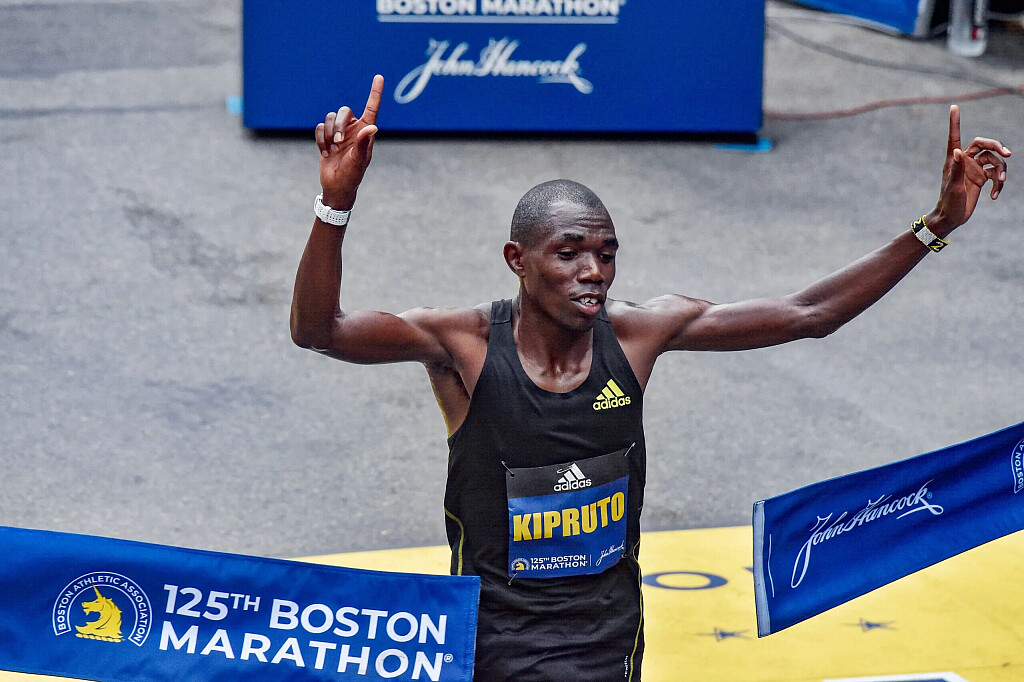
The Boston Athletic Association (B.A.A.) has announced professional fields for the 2023 B.A.A. 10K presented by Brigham and Women’s Hospital, to be run on Sunday, June 25 through Back Bay. Among the challengers set to compete are Boston Marathon champions Hellen Obiri (2023) and Benson Kipruto (2021), defending B.A.A. 10K winner Leonard Korir, as well as national record holder Emily Sisson. Complete field lists can be found below.
The B.A.A. 10K presented by Brigham and Women’s Hospital will be the second event of the 2023 B.A.A. Distance Medley, a year-long series featuring the B.A.A. 5K (April), B.A.A. 10K (June), and B.A.A. Half Marathon (November). Registration remains open with limited spots remaining.
“Many fan favorites and global stars return to Boston for this year’s B.A.A. 10K, including Boston Marathoners, American record holders, Olympians and Paralympians,” said Mary Kate Shea, Director of Professional Athletes for the B.A.A. “The B.A.A. 10K course is flat, fast, and –most importantly—fun for our top contenders. We look forward to kicking off summer with a memorable competition on June 25.”
Obiri, a two-time Olympic silver medalist, won April’s Boston Marathon in her Boston debut, and will return to the roads hoping to extend her winning streak. Her 30:15 personal best at 10K is fourth fastest among the field, only trailing Sheila Chepkirui (Kenya, 29:46), Vicoty Chepngeno (Kenya, 30:14), and Joan Chelimo Melly (Romania, 30:14). Chelimo Melly won the B.A.A. 10K in 2017, while Chepkirui placed fourth at last month’s TCS London Marathon.
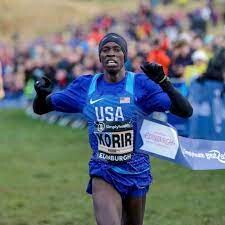
Korir, the reigning B.A.A. 10K champion, is fresh off a win at the USA 25K National Championships on May 13, and looks to become the fourth man to win back-to-back B.A.A. 10Ks. Sisson, the current American record holder in the marathon and half marathon also will return, joined by Olympic Marathon bronze medalist and former Boston resident Molly Seidel.
Among the international field squaring off are Boston Marathon winners Kipruto (2021), Edna Kiplagat (2017 and 2021), and Caroline Rotich (2015), all of Kenya. Gabriel Geay (Tanzania) will return after a runner-up finish at April’s Boston Marathon, and previously won the B.A.A. 10K in 2018.
Geoffrey Koech, winner of last year’s B.A.A. Half Marathon, will compete, as will Callum Hawkins of Great Britain, twice the fourth-place finisher at the World Championships marathon, plus decorated road racers Edward Cheserek (Kenya), a 17-time NCAA champion, and Zouhair Talbi (Morocco), most recently fifth at the Boston Marathon. From Team B.A.A. are Matt McDonald, Paul Hogan, Jonas Hampton, and Eric Hamer.
Mary Ngugi of Kenya, a two-time B.A.A. 10K winner and two-time Boston Marathon podium finisher, will aim for title number three, as fellow Kenyan Sharon Lokedi, the 2022 TCS New York City Marathon champion, looks for her first B.A.A. event victory. Team B.A.A.’s Annie Rodenfels, third place and top American at the 2023 B.A.A. 5K, will make her debut at the 10K distance leading a full contingent of Boston-based B.A.A. teammates including Bethany Hasz, Megan Hasz, and Jenna Magness.
Hermin Garic, the 2022 B.A.A. 10K winner, returns in the men’s wheelchair division, while Yen Hoang, third place at the 2021 Boston Marathon, leads the women’s wheelchair division. Brian Reynolds and Liz Willis will compete in the T61-64 (lower-limb impairment) division having already earned podium placings at the Boston Marathon in April. Reynolds, a Massachusetts native, set a world best 1:25:46 at the 2022 B.A.A. Half Marathon. Local Para athlete and last year’s T61-64 women’s winner, Adrianne Haslet, will also compete. Additional 2023 Boston Marathon Para division winners Andrew Thorson (T11-T13 vision impairment) and Atsbha Gebre (T45/T46 upper-limb impairment) are racing. The B.A.A. 10K presented by Brigham and Women’s Hospital has been certified by World Para Athletics as a record-eligible competition, paving the way for Para Athletes to set world and national records this year.
Media members interested in covering the B.A.A. 10K, presented by Brigham and Women’s Hospital, may apply for credentials here.
Registration for the 2023 B.A.A. 10K presented by Brigham and Women’s Hospital, is currently open through the B.A.A.’s online platform Athletes’ Village. All participants who enter will receive an adidas participant shirt, unique bib number, and finisher medal. Additional participant information can be found on baa.org. The race will start at 8:00 a.m. ET on Sunday, June 25 on Charles Street adjacent to Boston Common and Boston Public Garden.
Brigham and Women's Hospital, the B.A.A. 10K’s presenting sponsor and exclusive fundraising partner, will again field a team of fundraising runners. Since 2016, more than 2,100 runners and 180 teams have raised $1.2 million to fuel life-giving breakthroughs at Brigham and Women’s Hospital. Learn more and register at www.runbwh.org/10k.
Login to leave a comment

B.A.A. 10K
The 6.2-mile course is a scenic tour through Boston's Back Bay. Notable neighborhoods and attractions include the legendary Bull and Finch Pub, after which the television series "Cheers" was developed, the campus of Boston University, and trendy Kenmore Square. ...
more...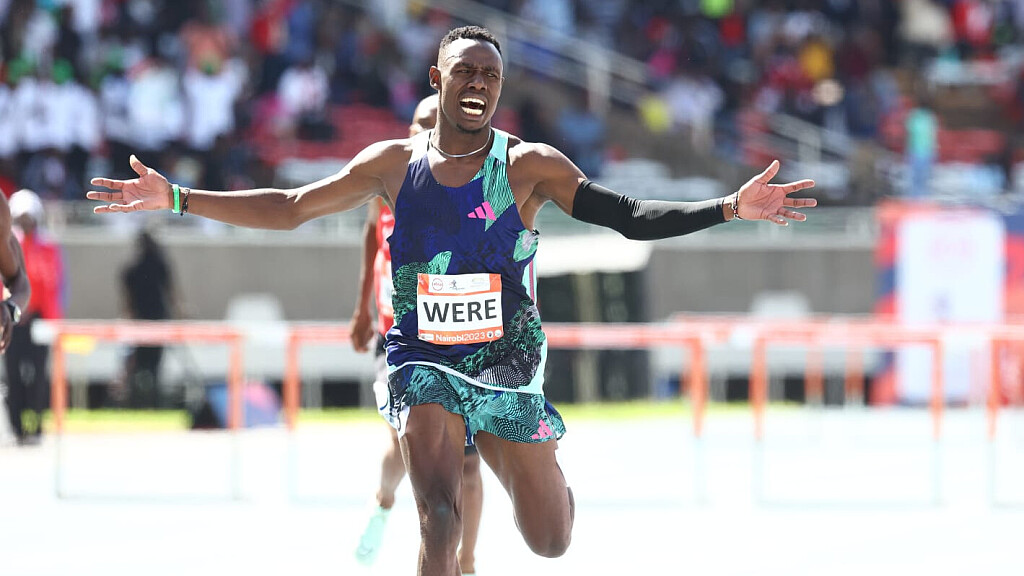
Commonwealth Games 4x400m relay bronze medalist Wiseman is focusing on Budapest
Wiseman Were has reaffirmed his intention to lead the country to unparalleled success at the World Championships in Budapest, Hungary.
Were stated in an exclusive interview on Monday that he had stepped up training to place on the podium in the premier yearly global spectacle scheduled for August.
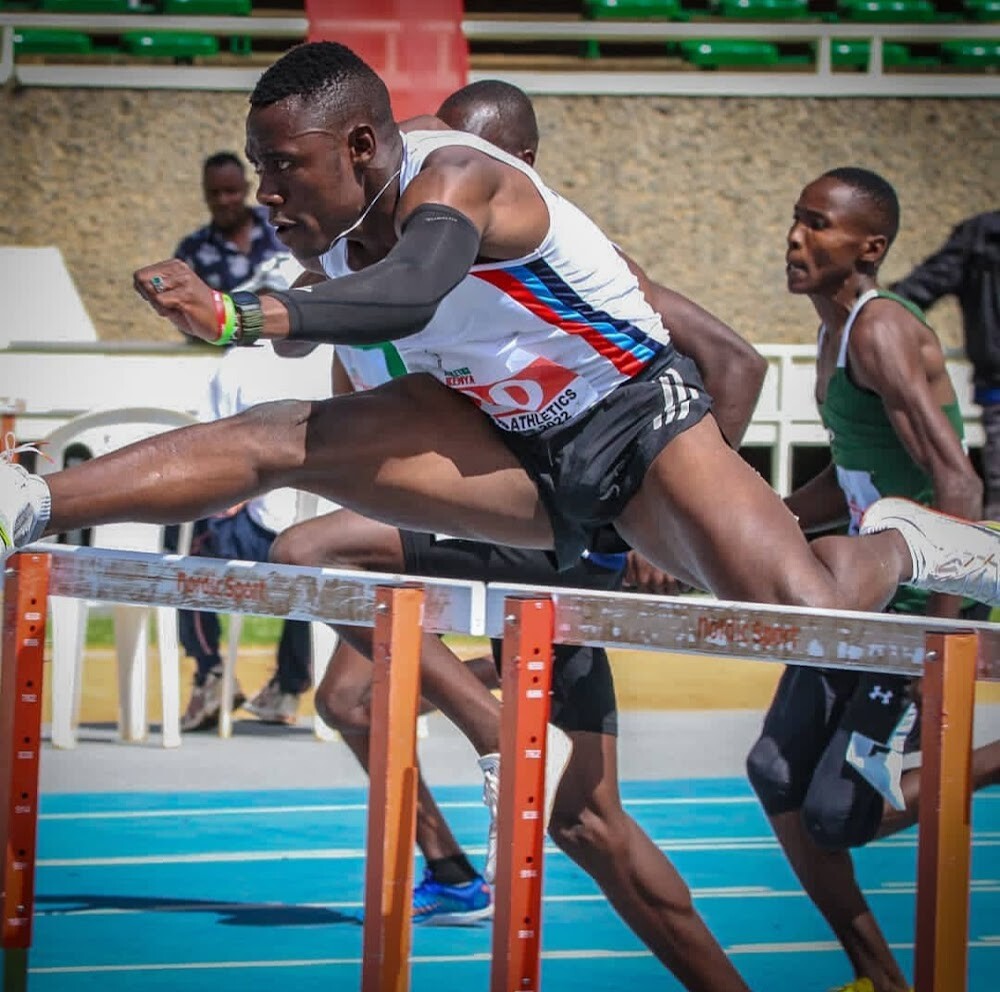
"August isn't that far away, so I want to keep putting forth my best effort in the meanwhile. I regret not being able to go to Oregon last year," Were said.
However, first things first and must work tirelessly to earn the qualification mark that will secure him a spot on the plane to Budapest.
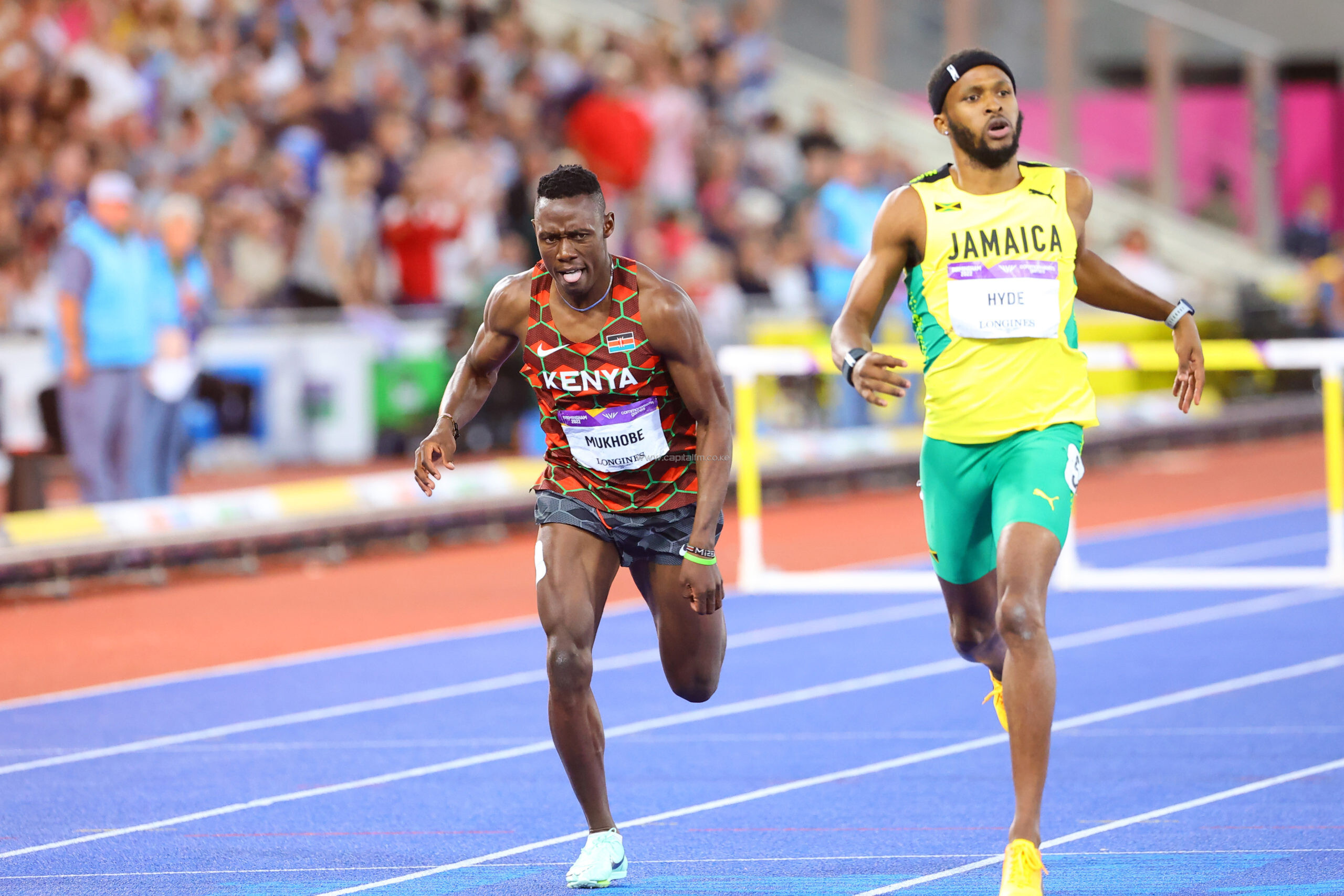
"The entry standard for the 400m hurdles at the 2023 World Athletics Championships is 48.70s, and I'm still 1.09 seconds off the mark."
Already boasting an impressive personal best of 49.09, Were's best time this season is the 49.23 seconds he posted in Pretoria on April 12 on his way to victory during the Athletics South Africa (ASA) Grand Prix.
He ran 49.29 seconds to wrap up in third place at the Botswana Grand Prix and finished third in Johannesburg with a time of 49.78.
His most recent performance was at the Kip Keino Classic on May 13 where he clocked a meet record of 49.59 seconds to bag the men’s 400m hurdles race in yet another mesmerising on-track show of dexterity.
"That was a sweet victory. Winning at home is such a good thing. I'm happy with the outcome I recorded at the Kip Keino Classic," Were said.
Were stated that he will continue to compete in more races in the coming days to meet the championship threshold.
"I'm still waiting to hear from my manager which races I'll be running in the coming days as I eye the qualification mark for Budapest," Were said.
The 25-year-old effervescent sprinter underlined the necessity of tight collaboration between all parties, stating that achieving the ideal heights in sprints necessitates a concerted effort from everyone associated with the sport.
"It's not just about how hard an athlete works. To lead us to such heights, we need every bit of assistance from our coaches, the physios, the local athletics governing body, government, and supporters," Were stated.
Were believes he has set the platform for a slew of legendary performances after kicking off his season with spectacular victories in South Africa and Kenya.
He believes the results gave him the confidence he needs to advance his career.
"I had a commendable performance; my speed and skill were superb. I intend to replicate my performance and bring about the desired results," Were said.
"The ASA Grand Prix and Kip Keino Classic races offered me some crucial lessons. Competing against some of the best sprinters in the world and winning while posting good times boosted my self-belief."
by Tony Mballa
Login to leave a comment

World Athletics Championships Budapest 23
From August 19-27, 2023, Budapest will host the world's third largest sporting event, the World Athletics Championships. It is the largest sporting event in the history of Hungary, attended by athletes from more than 200 countries, whose news will reach more than one billion people. Athletics is the foundation of all sports. It represents strength, speed, dexterity and endurance, the...
more...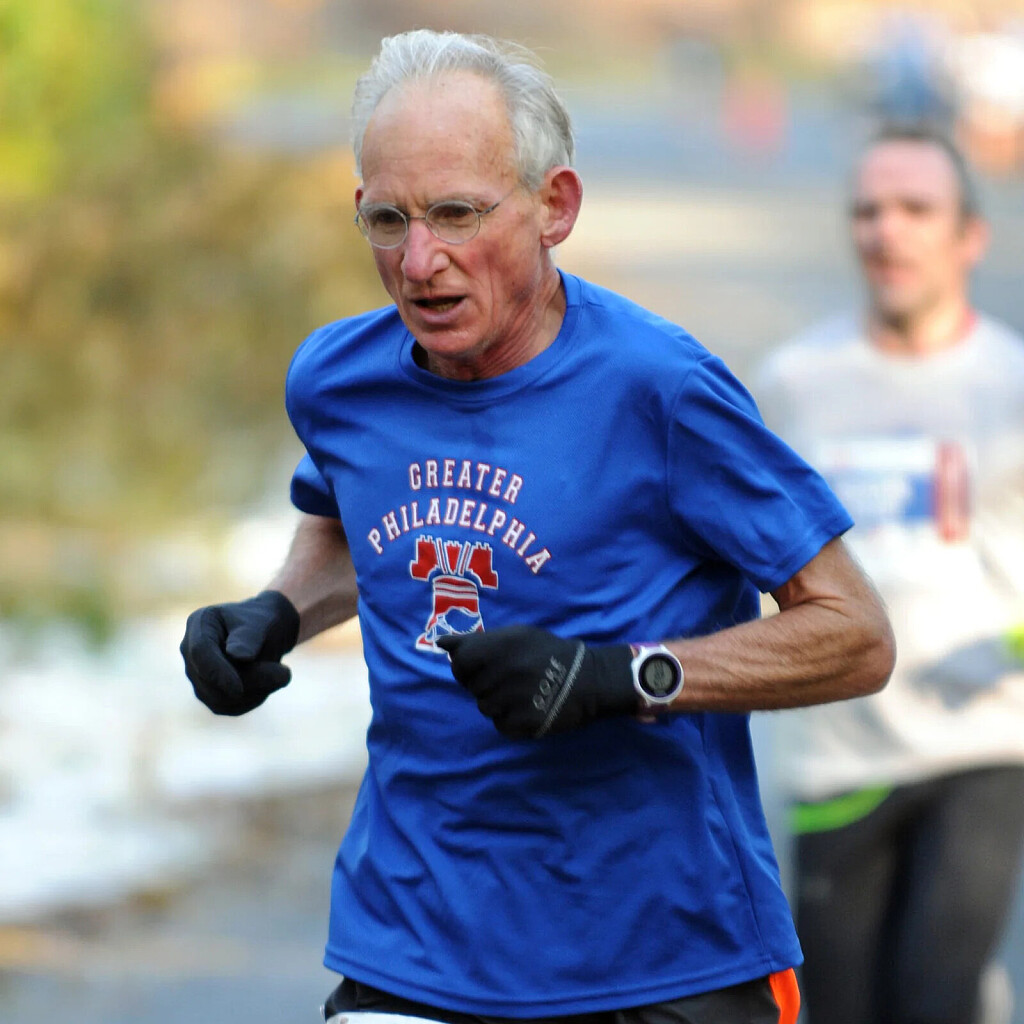
Gene Dykes, 75, sets seven U.S. masters records
Accomplished ultrarunner Gene Dykes, 75, looks to have set no fewer than seven U.S. masters records at a 12-hour race in his home state of Pennsylvania over the weekend, surprising himself as he pushed past health issues to pass the 100-km mark with 400 metres to spare.
The records, which have yet to be ratified by USA Track and Field, include the fastest outdoor track times in the U.S. men’s 75-79 category for 25K (2:48:33), 30K (3:24:08), 50K (5:40:39), 20 miles (3:41:28), 50 miles (9:25:10) and 100K (11:56:26), and the longest distance run in that category for a 12-hour period (100,481 metres). Dykes set the records during his 12-hour overnight effort at the Dawn to Dusk to Dawn Track Ultras in Sharon Hill, Pa., on May 13-14.
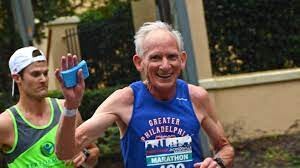
The 100K record was the most surprising to Dykes, who has broken multiple records since he took up competitive racing in his 60s. “I didn’t think I had a prayer,” he says. “It’s hard running 100K at my age. I only made it by four minutes.”
Making his latest effort even more remarkable was the fact he was battling a host of health issues on race night.
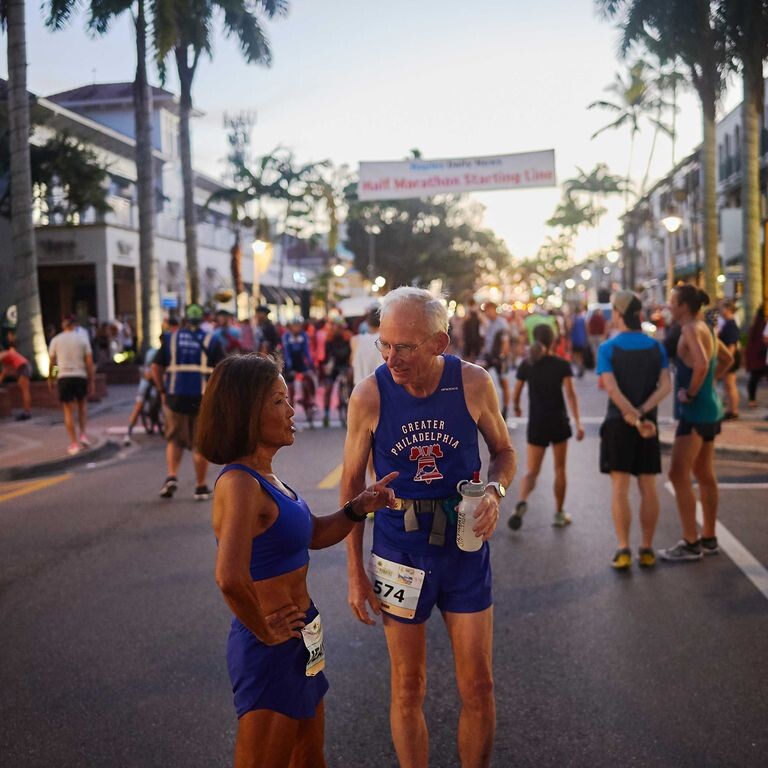
“I told people I’m battling the three C’s out here,” says Dykes. “Two weeks ago I contracted COVID, and I also had cold symptoms going into the race. Six months before I had been diagnosed with blood cancer, and that’s been really hurting my fast pace, but I have this theory that it doesn’t affect ultra paces and that seems to have really been borne out here. The only symptom I have is that I can’t breathe hard enough when I run fast, but when you’re running 12 hours, you’re never running hard. I was really happy to be able to get through 12 hours with all those health problems.”
Dykes says although he has been sitting out races recently due to health challanges, it was important for him to step up to the starting line over the weekend, as he prepares to make history next month as the oldest finisher of the 100-mile Western States Endurance Run.
“I kind of had to take a chance, because the really big race is next month,” says Dykes. “That’s a big deal. I’ve got a sponsor, and everybody’s expecting me to become the oldest-ever finisher there. So I thought, If I can’t run for 12 hours, how am I going to run for 30 hours?”
The self-described “ultra geezer” says his race on the weekend—his longest since receiving his cancer diagnosis—is a good confidence booster ahead of Western States.
“When you haven’t done something that like in a while, doubts creep in. A lot of things could have gone wrong. I could have got nauseated, I could have bonked, running out of glycogen, in which case you’re going to slow down no matter how much you want to run faster. None of those things happened. You get in this strange mindset where you just kind of dial out misery and keep on going.”
Reflecting on his latest effort with humility, Dykes says many of the U.S. masters records he set on the weekend were “low-hanging fruit,” saying he could “think of a half a dozen 75-year-olds out there” who could have set records in the 25- and 30-km distances “if they had the mind to.”
He adds, however, that he was proud to have hit the 100-km distance under the wire. “At 50 km I asked my crew to find out the new pace I would have to run over the next 50 km for the 100 km. I had to pick up from my comfortable pace. I thought I don’t care if I have no chance—I’m going to run the pace I need and keep doing it until I can’t do it anymore.’ Somehow, for seven hours I managed to keep pushing myself right up to the ending bell.”
Dykes is now looking forward to bringing that same determination to Western States on June 24-25. “It’ll be fun trying,” he says. “There are just so many ways to enjoy running. I’m really fortunate.”
by Paul Baswick
Login to leave a comment

Western States 100
The Western States ® 100-Mile Endurance Run is the world’s oldest and most prestigious 100-mile trail race. Starting in Squaw Valley, California near the site of the 1960 Winter Olympics and ending 100.2 miles later in Auburn, California, Western States, in the decades since its inception in 1974, has come to represent one of the ultimate endurance tests in the...
more...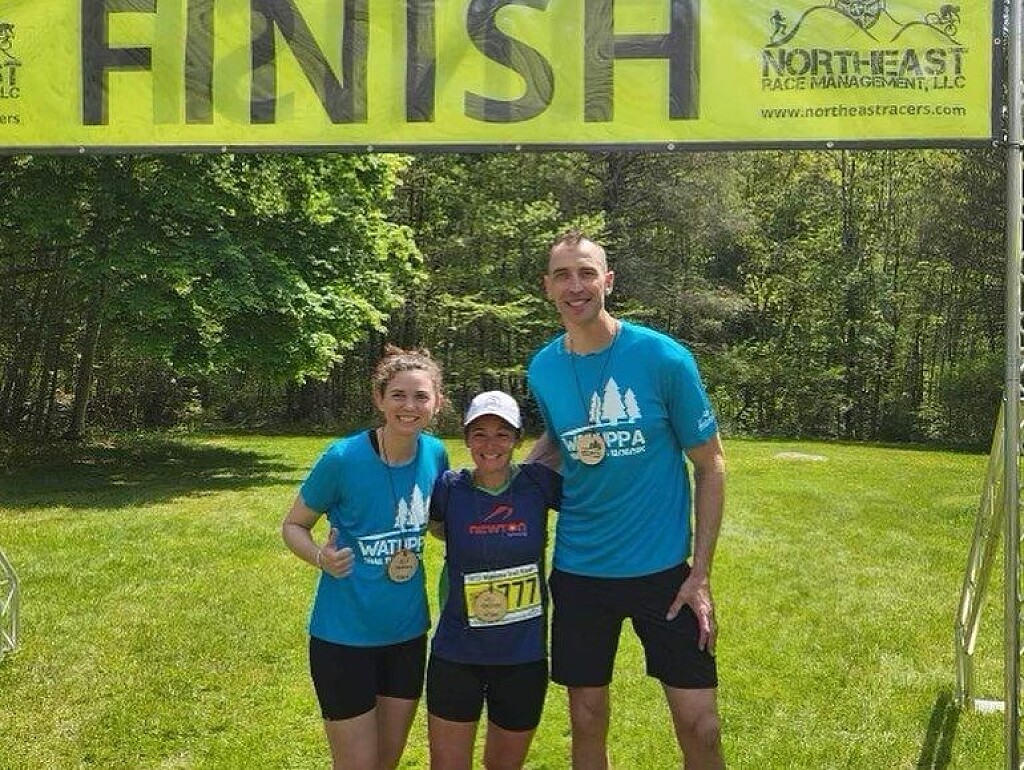
NHL legend Zdeno Chara crushes 50K ultra-trail race
Three weeks after finishing the Boston Marathon, the former 6'9" foot defencemen took on a 50K ultra-trail race, finishing eighth overall.
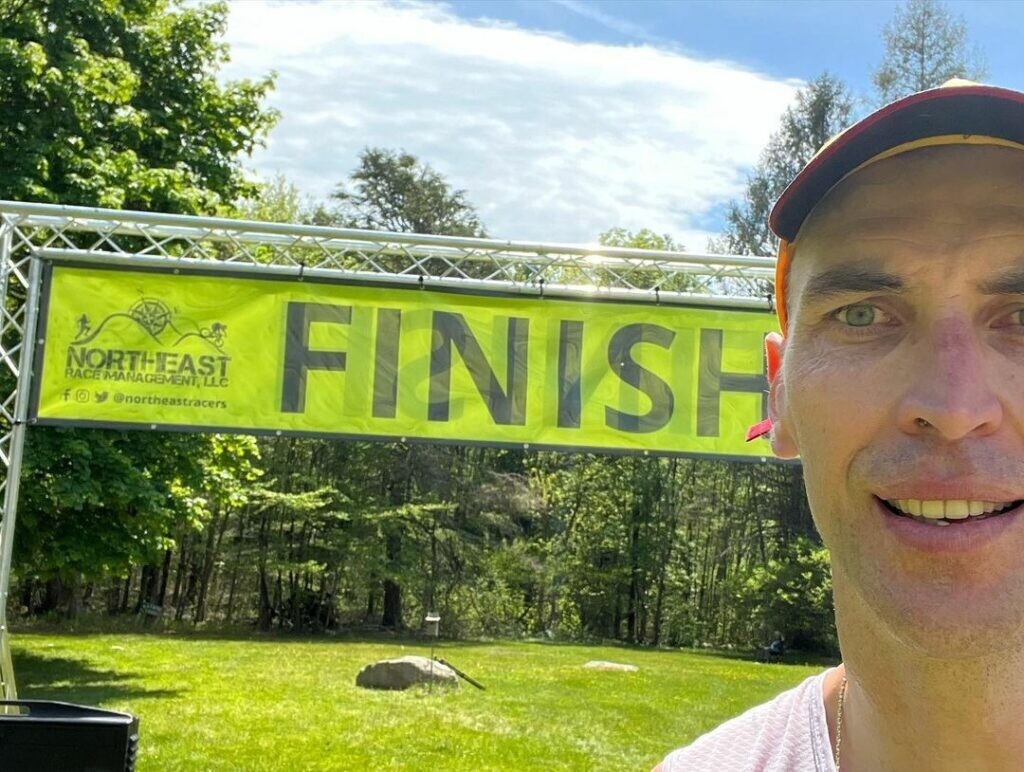
Zdeno Chara may have found his new hobby: ultrarunning. On May 13, the 46-year-old completed his first ultra-trail race at the Watuppa Trail 50K in Fall River, Mass., and performed admirably.
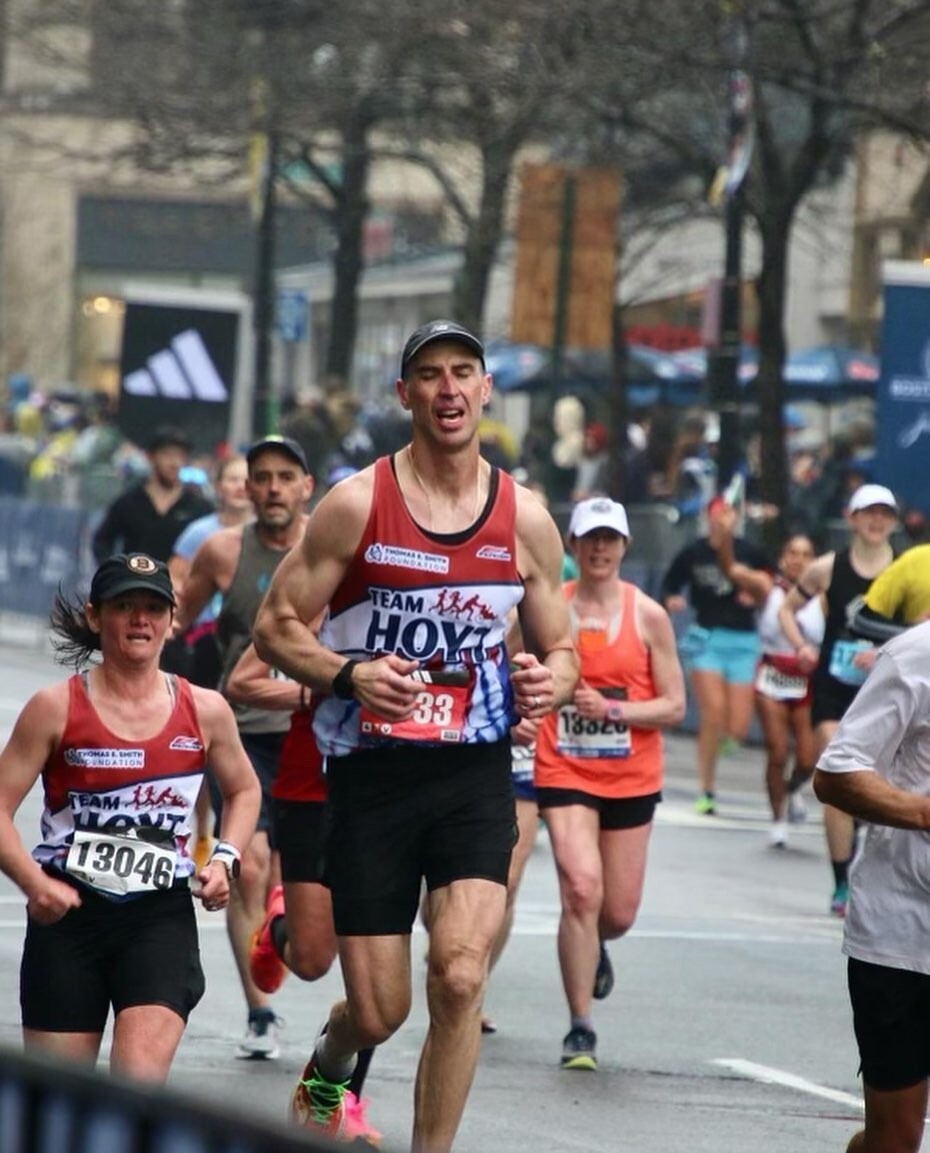
“I tried a new distance today,” Chara wrote on his Instagram. “I can’t thank my team enough for their incredible help and support for my first ultra trail race.”
Despite lacking ultra experience, the former 6’9 foot defencemen finished the 50K in eighth overall, in 5:07:29, and even took second place in his 40-54 age category.
Since retiring from the NHL in 2022, Chara has found an interest in distance running. He completed the 2023 Boston Marathon in a very respectable time of 3:38:23; he also raised USD $33,333 for The Hoyt Foundation during his campaign.
Chara holds the all-time NHL record for most games played by a defenceman, with 1,680. He played for four teams over his 20+ year career, starting with the New York Islanders, Ottawa Senators, Boston Bruins and Washington Capitals.
Chara entered the race with his friend and training partner Becca Pizzi, who won the 50K outright in 3:59:11. Pizzi also helped pace Chara for his first marathon last month.
We think it’s only a matter of time until we see the big man take on a 100-miler.
by Marley Dickinson
Login to leave a comment
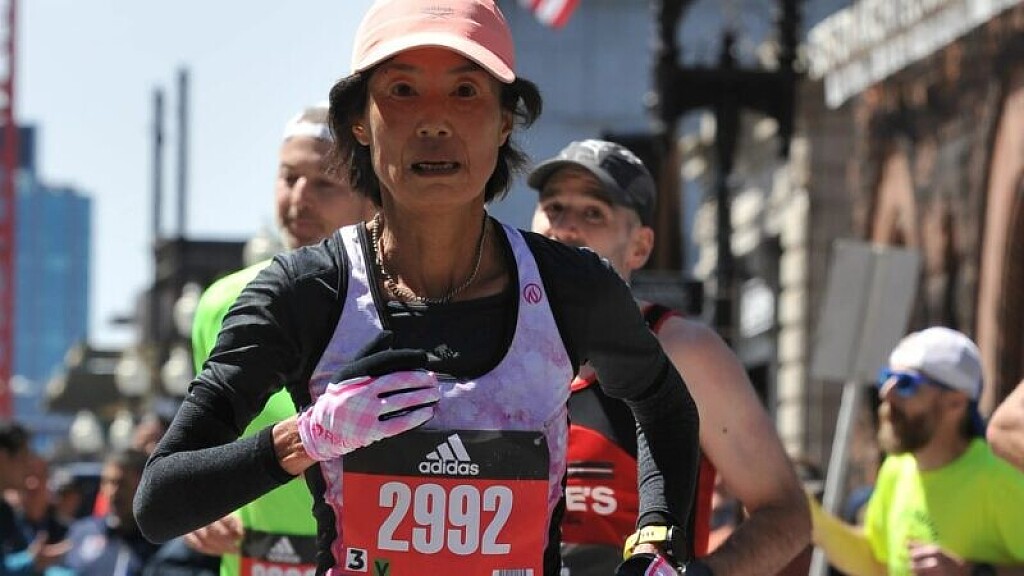
Japanese woman, 64, runs three sub 3:05 marathons in two weeks
Sixty-four-year-old marathoner Mariko Yugeta is already a huge celebrity in the Japanese running community, and she continues to prove that age is just a number. On Sunday at the Nagoya Women’s Marathon in Nagoya, Japan, Yugeta accomplished another memorable feat, running three sub-3:05 marathons at three different races in a span of 14 days.
On Feb. 26, Yugeta kicked things off at the Himeji Castle Marathon, where she ran 3:04:57 (winning her 60-64 age category). The following week, Yugeta won her age category for the fourth consecutive year at the 2023 Tokyo Marathon, posting a time of 3:04:18. Seven days later in Nagoya on March 12, she posted another sub-3:05 time, in 3:04:30, winning her age category once again.
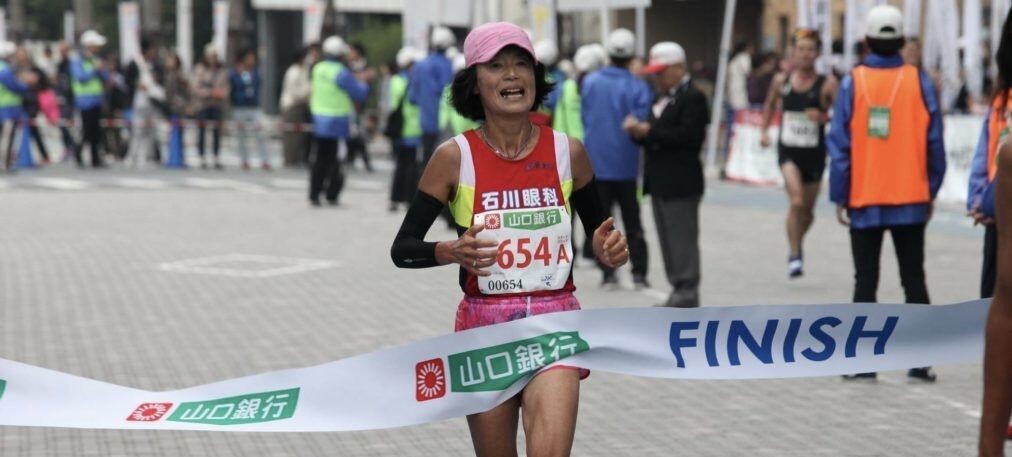
Yugeta is the first 60+ woman to break three hours for a marathon, holding the women’s 60-64 world record of 2:52:13 from the 2021 Osaka Marathon. Since her world record run, she has dipped under the three-hour mark four times.
Last year, Yugeta ran both Tokyo and Nagoya within seven days (both under 3:05) in preparation for the Boston Marathon, where she hoped to lower her world-record time; she fell short, but still won her 60-64 age category in 3:06:27.

Yugeta got into running by watching the finishers at the 1979 Tokyo International Women’s Marathon, when she was 21. She spent the next three years training, making her marathon debut in 1982 in Tokyo, where she ran 3:09:21, which was good for 34th place in the Tokyo International Women’s Marathon.
Forty years later, Yugeta is still getting faster. On May 13, she’ll turn 65 and enter the W65-69 age bracket, where she will challenge the 3:07:51 world record of her Japanese compatriot, Kimi Ushiroda.
In a 2021 interview with the nutrition brand Maurten, Yugeta said she doesn’t think about her age when she runs.
When Yugeta isn’t running, she is a mother to four children and teaches high school phys-ed, training alongside her 16- and 17-year-old high school students.
by Marley Dickinson
Login to leave a comment

Nagoya Women's Marathon
The Nagoya Women's Marathon named Nagoya International Women's Marathon until the 2010 race, is an annual marathon race for female runners over the classic distance of 42 km and 195 metres, held in Nagoya, Japan in early March every year. It holds IAAF Gold Label road race status. It began in 1980 as an annual 20-kilometre road race held in...
more...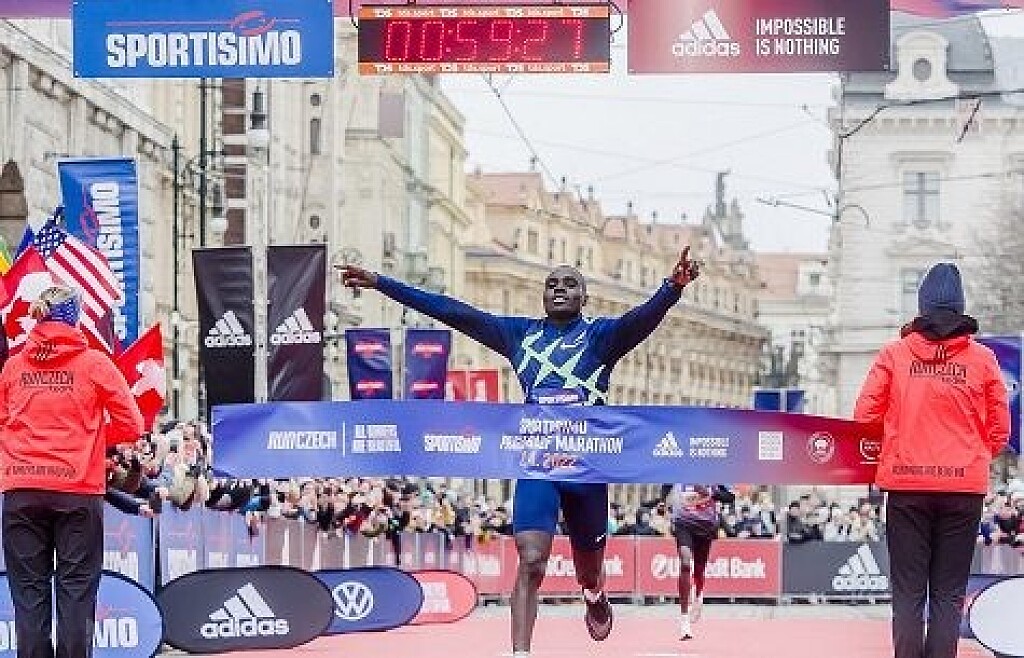
Kenyan 10,000m champion Renju earns five-year doping ban
Keneth Kiprop Renju, who won the national 10,000m title in April, has become the latest Kenyan middle distance runner to be banned for doping.
Renju has been sanctioned for five years following three positive tests this year for banned steroid methasterone, the Athletics Integrity Unit has reported.
The 26-year-old returned adverse analytical findings in competitions between March and May this year.
The first test occurred at the 10km de Lille race in France on March 20.
The second took place at the Prague Half Marathon on April 2, and the athlete was given notification of a provisional suspension on April 13.
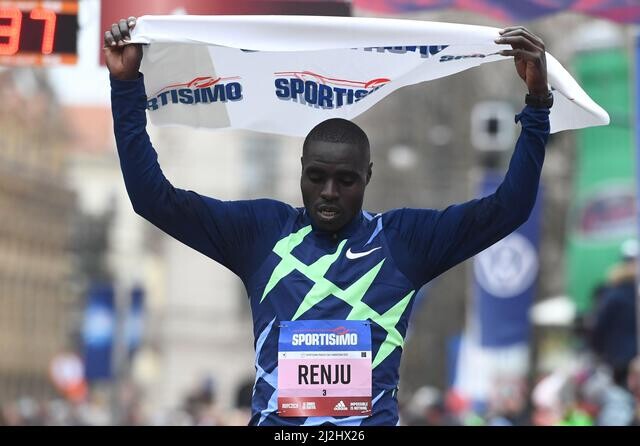
On May 8 the athlete provided another positive in-competition urine sample at the Lisbon Marathon.
Renju was notified regarding his provisional ban on May 13 and sent the testing agency medical documents from the Uasin Gishu County Hospital to explain his first adverse finding.
"The medical documents submitted contained no information that assisted the Athlete to explain how the metabolite of Methasterone had been detected in the First Sample," the AIU said.
Renju was initially given a six-year ban based on the application of Aggravating Circumstances, but that was reduced by a year after he responded with a signed admission.
His results since March 20 2022 have all been disqualified with any titles, awards, medals, points prizes and appearance money gained.
Renju joins a list of Kenyan long-distance runners to be either provisionally suspended or outright banned recently.
Boston Marathon winner Diana Kipyokei tested positive for triamcinolone and has also been charged with tampering for allegedly "obstructing or delaying the AIU's investigation through the provision of false information or documentation".
She won the women's race in America on October 11 last year but failed a test immediately after.
Meanwhile, Philemon Kacheran Lokedi has been banned for three years after testing positive for testoerone and its metabolites "with exogenous origin".
Felix Kipchumba Korir - the winner of the 2018 Nanjing Marathon - and Emmanuel Saina have also both received three-year bans after testing positive for norandrosterone.
by Mike Rowbottom
Login to leave a comment
2023 World Relays track meet postponed
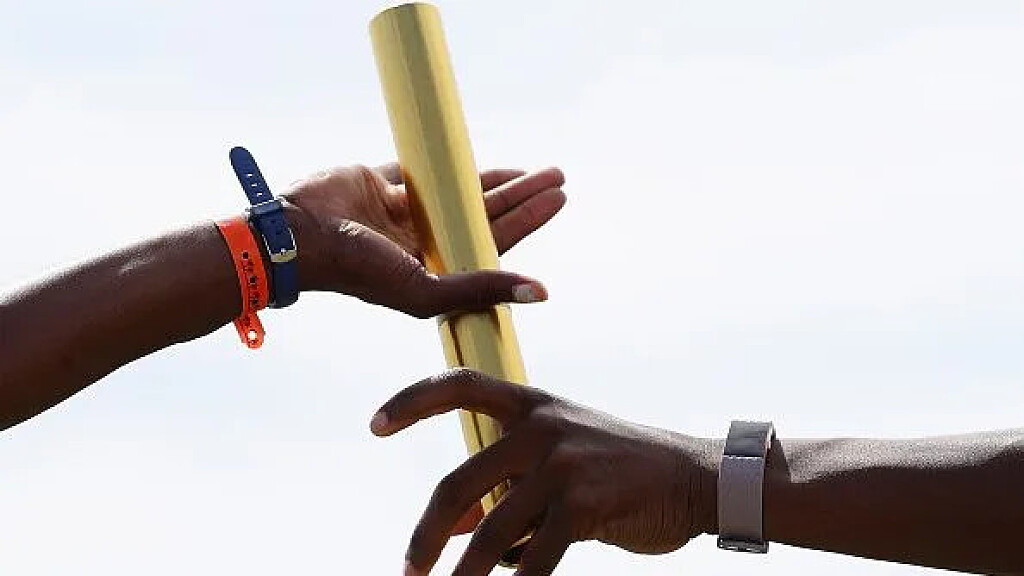
The next edition of the World Relays, a relays-only international track meet, have been postponed due to the coronavirus pandemic.
The 2023 World Relays, scheduled for May 13-14 in Guangzhou, China, have been pushed to April and/or May 2025 “due to the ongoing pandemic conditions,” according to World Athletics, citing the local organizing committee and the Chinese track and field federation.
World Relays, which debuted in 2014, have been held in odd years since 2015. The last edition was in Poland in May 2021.
However, a World Relays will be held in 2024 as an Olympic qualifier for the 2024 Paris Games. The host of that meet will be awarded on Nov. 30, according to World Athletics.
Login to leave a comment
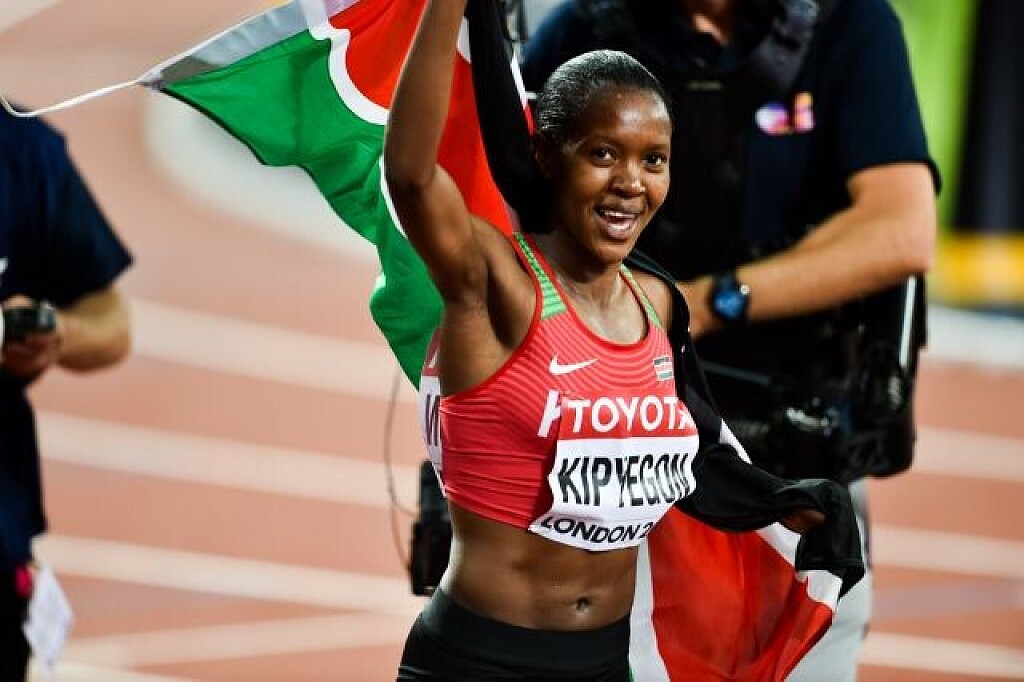
Kenyan Faith Chepng’etich steps up preps for major races
Two-time Olympic 1,500 meters champion Faith Chepng’etich will on Monday compete in the 800m race at the FBK Games in Hengelo, the Netherlands.
She will battle it out with the world champion over the distance, Ugandan Halima Nakayi.
Chepng’etich said that she will be using the race to improve her speed in preparation for the World Athletics Championships that will be held in Eugene, Oregon, United States of America on July 15-24.
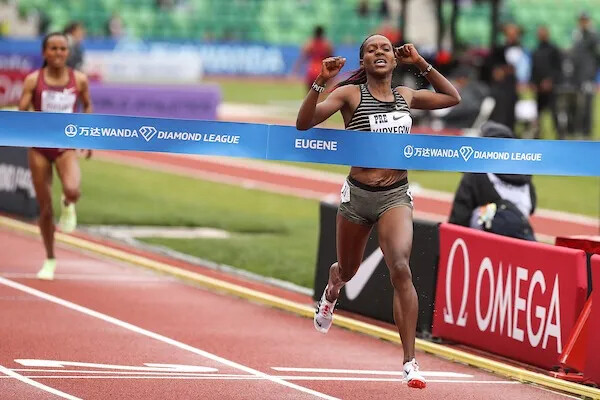
The world 1,500m silver medalist finished second behind Burundi’s Francine Niyonsoba in the 3,000m race at the Doha Diamond League on May 13.
And at the Prefontaine Classic Diamond League held on Saturday in Eugene, Oregon, Chepng’etich ran a world-lead time of three minutes, 52.59 seconds (3:52.59) to win the 1,500m race.
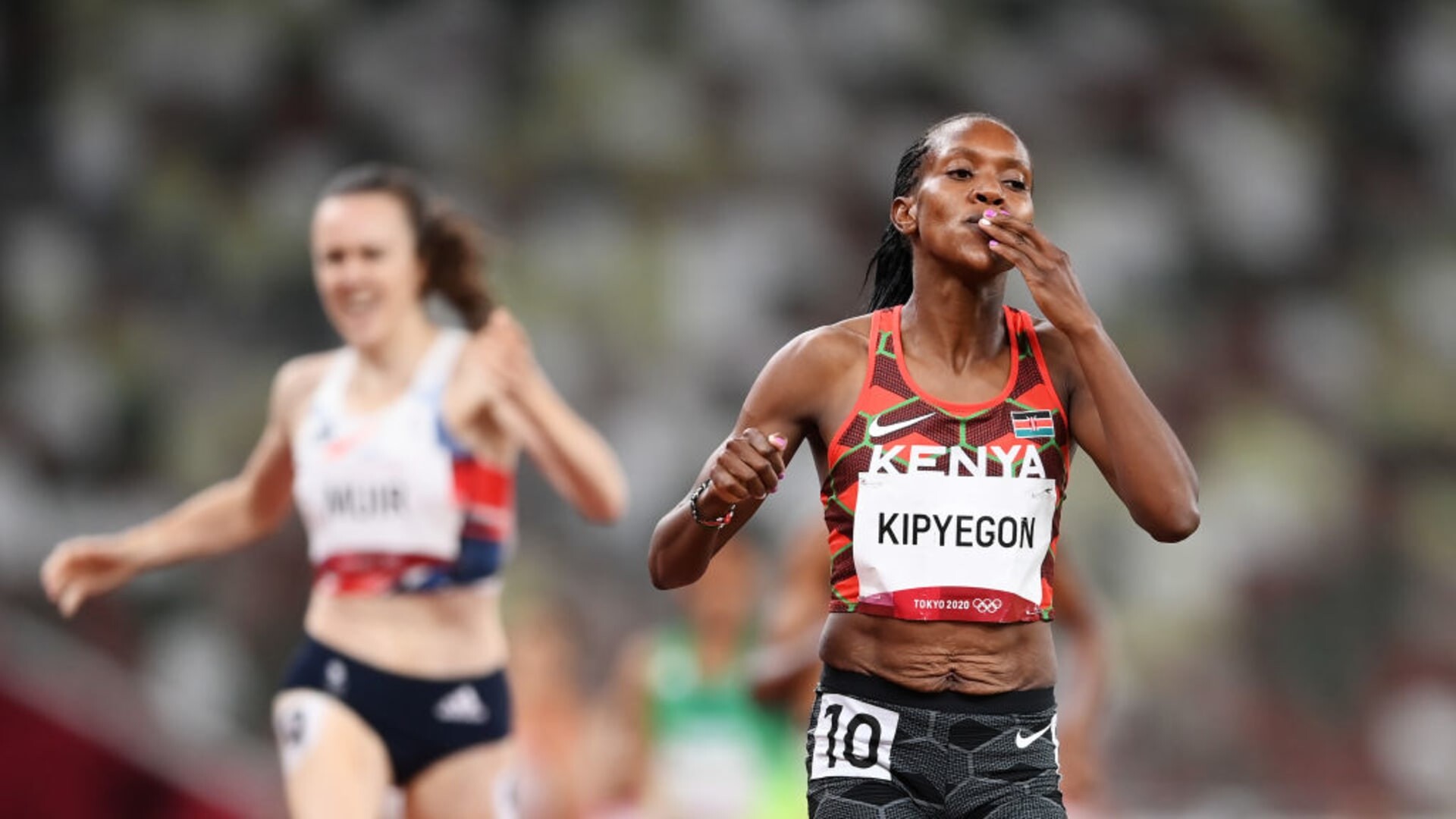
“Competing in the 800m race is part of my training. I will be testing my speed as I prepare for the world championships in July. Speed is critical for a podium finish,” she told Nation Sport.
Chepng’etich will be looking to reclaim the world 1,500m title that she won during the 2017 edition held in London, but which she surrendered to Sifan Hassan of the Netherlands in Doha in 2019.
During the delayed 2020 Tokyo Olympic Games that were held last year, Chepng’etich defended her 1,500m title that she had previously won at the 2016 Rio Olympic Games.
In the 3,000m steeplechase, another top Kenyan athlete, Celliphine Chespol, will be seeking to qualify for the world championships.
The 2018 World Athletics Under-20 Championships winner in Tampere, Finland will be competing against Olympic champion Peruth Chemutai from Uganda, who will be participating in her fifth event this year.
During last week’s Prefontaine Classic, Eugene Diamond League, Chespol finished fifth in her specialty.
Kenyan-born Kazakhstani athlete Norah Jeruto won the race and another Kenyan-born Bahraini runner Winfred Yavi was second.
Chespol said that her season has started slowly, but she is getting back into shape. She said that the races she has participated in have helped her improve her performance.
by Bernard Rotich
Login to leave a comment
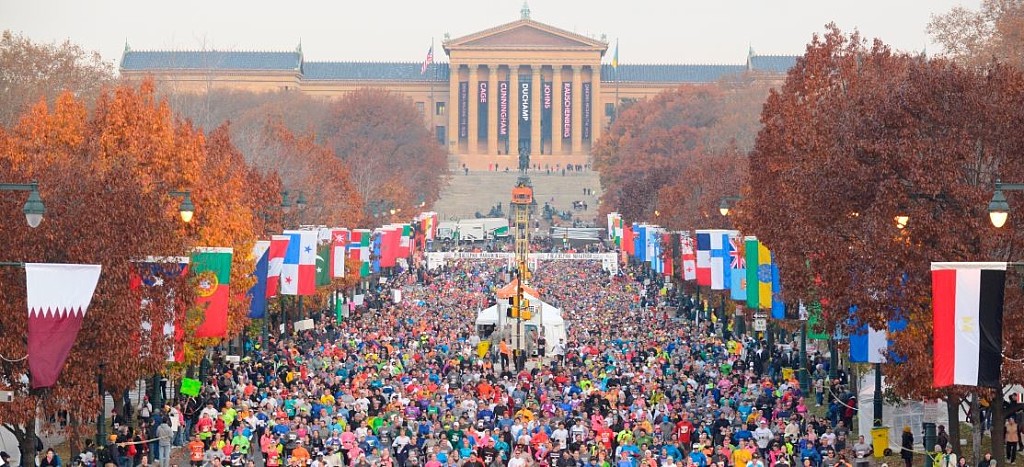
With 50% reduction of runners, Philadelphia Marathon will return this year
The Philadelphia Marathon was cancelled in 2020 due to COVID-19, but the event is gearing up for a return this fall.
The City of Philadelphia recently shared that a preliminary date for race weekend has been set for Nov. 19-21.
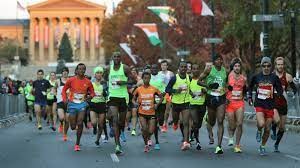
While city officials continue to monitor COVID-19 case trends closely, planning for the 27th annual running event is underway as event organizers are working closely with the City of Philadelphia on race weekend plans that align with Philadelphia’s COVID-19 safety policies," a press release stated.
There will be a 50% reduction in runners this year for each of the four races: AACR Philadelphia Marathon, Dietz & Watson Philadelphia Half Marathon, Rothman 8K and the Dunkin’ Munchkin Run.
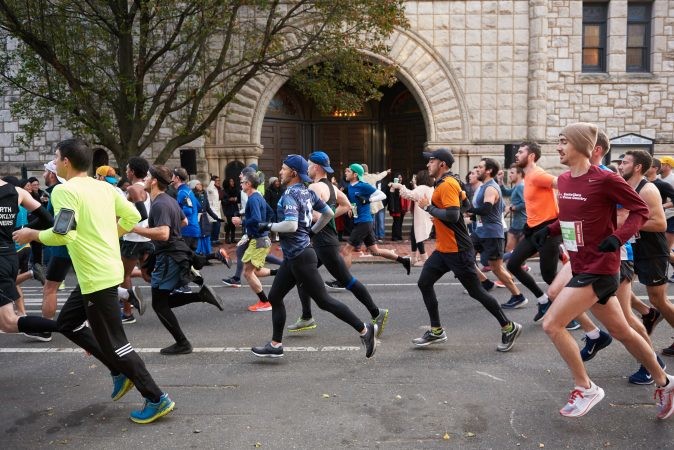
Online registration opens to runners on Thursday, May 13, beginning at 2 p.m.
There is potential for runner participation to increase, depending on current COVID-19 restrictions, race organizers said.
Event day precautions will include restricted access to start and finish lines exclusively for runners, and spectators will be limited to spectator zones located throughout the course of the race.
Runners will be required to wear a mask covering their mouth and nose in the start line corral, and after crossing the finish line. High-fives and celebratory hugs at the finish line won't be permitted, as runners will be asked to remain socially distanced from others at the finish.
At the start, runners will be funneled into eight corrals with 10 runners starting in waves every 10 seconds to allow for more distance between participants. Runners will be spaced three feet apart in the starting corrals.
There will still be hydration and nutrition stations along the course, which will follow public health and safety guidelines.
Ahead of the race, the expo at the Pennsylvania Convention Center will be modified and there will be no registration or packet pickup on event day. Also, a pre-event questionnaire will be sent to all registered participants assessing their exposure risk in advance.
"While canceling the 2020 Philadelphia Marathon Weekend was necessary, it was still a difficult announcement to make," Mayor Jim Kenney said. "Today, we’re filled with hope as vaccine distribution continues to increase, making announcements like today’s possible. We are excited as we plan for the return of an iconic Philadelphia event, and we’re committed to creating the safest environment for our staff, athletes, volunteers and partners. Safety is our top priority, and we continue to work closely with public health experts to plan and execute a safe, successful marathon weekend."
Runners who are registered for in-person races scheduled on Nov. 20 or Nov. 21 will be given the option to participate virtually if they wish to, or if they are unable to run in-person due to illness.
by Sinead Cummings
Login to leave a comment

Philadelphia Marathon
Whether you’re a seasoned marathoner or a first-timer, Philadelphia is the place for you. We’ve designed our course to be scenic, fan-friendly and, above all, great for running. It’s no wonder we're consistently listed among the top ten races in the country, recognized for our mostly flat terrain, ideal temperature and awesome atmosphere. Join us this fall for the best...
more...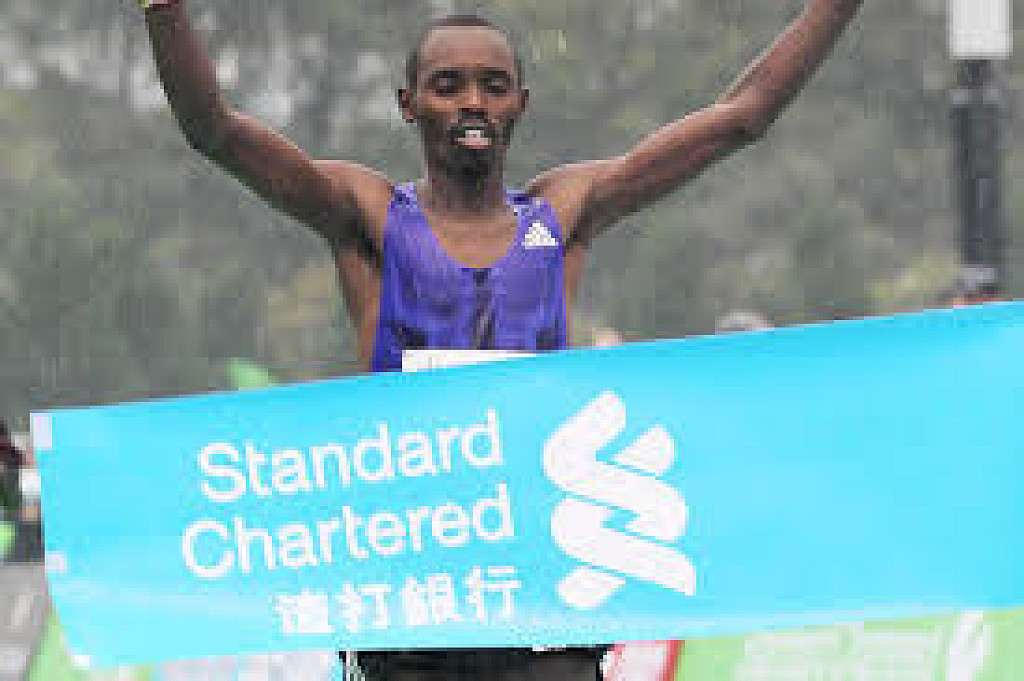
Kenya’s long distance runner, Mikel Kiprotich Mutai has been handed a four-year ban with compatriot Japhet Kipchirchir Kipkorir getting a provisional suspension for doping offences
World Athletics’ (WA) Athletes Integrity Unit (AIU) announced on Friday that it had found Mutai guilty of having tested positive to prohibited substance Norandrosterone.
Mutai’s suspension starts on March 20, 2020 for four years and his results dating back to December 15, 2019 will be nullified.
Mutai and another Kenyan long distance runner Alex Oloitiptip were flagged down on May 13 by AIU for separate violations of anti-doping rules. AIU is yet to determine on Oloitiptip’s case after the athlete was flagged down for his whereabouts violation.
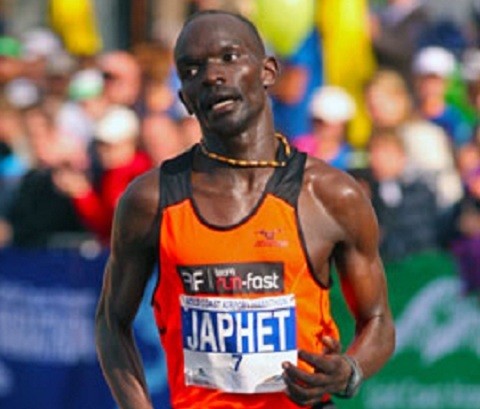
In his last race, Mutai finished third during the Taipei Marathon in 2:17:14 on December 15 last year in Taipei, almost a month after claiming an ninth place finish at Nanchang International Marathon in China in 2:19:06.
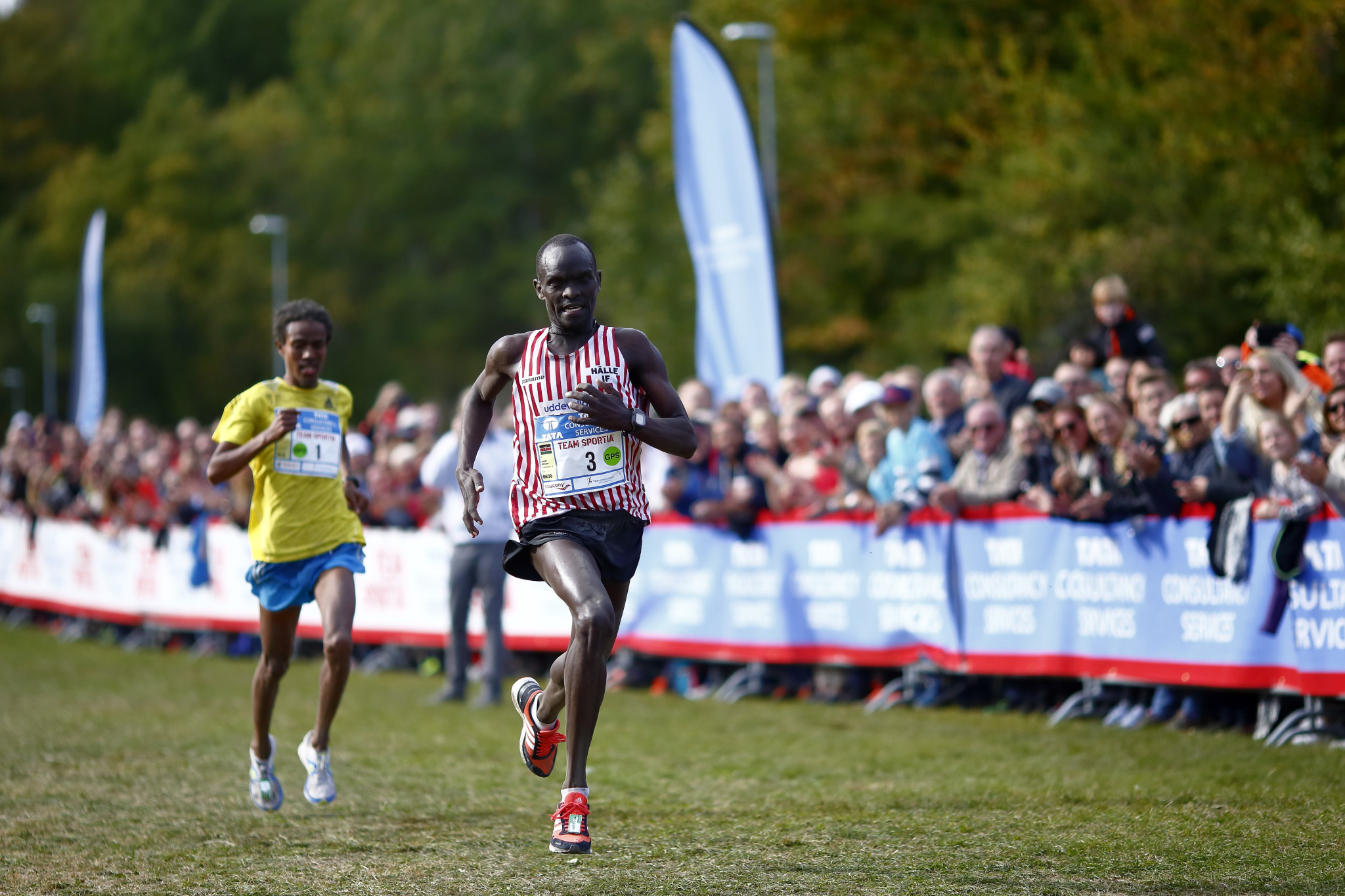
Mutai had started the year at the Standard Chartered Hong Kong Marathon where he finished eighth in 2:12:54 on February 17, having won the race for the first time in 2016 in 2:12:12.
Mutai, who has personal best 2:09:18 from 2012 Dubai Marathon, would then finish sixth at New Taipei City Marathon in 2:25:32 on March 1 last year.
Mutai started his road running career at the 2008 Nairobi Half Marathon where he finished eighth has a chance to appeal the decision.
Kipkorir, who finished third at 2011 Gold Coast Marathon in personal best 2:10:50, too has tested positive to prohibited substance Norandrosterone.
Mutai, Kipkorir and Oloitiptip join several other Kenyans who have either been banned or under provisional suspension for various doping offences this year by AIU.
They are the 2017 London Marathon champion Daniel Wanjiru, Kennth Kipkemoi, 2014 World Under-20 800m champion Alfred Kipketer and former world marathon record holder, Wilson Kipsang.
Others are Mercy Kibarus, Vincent Kipsegechi Yator and Peter Kwemoi.
by Bernard Rotich
Login to leave a comment
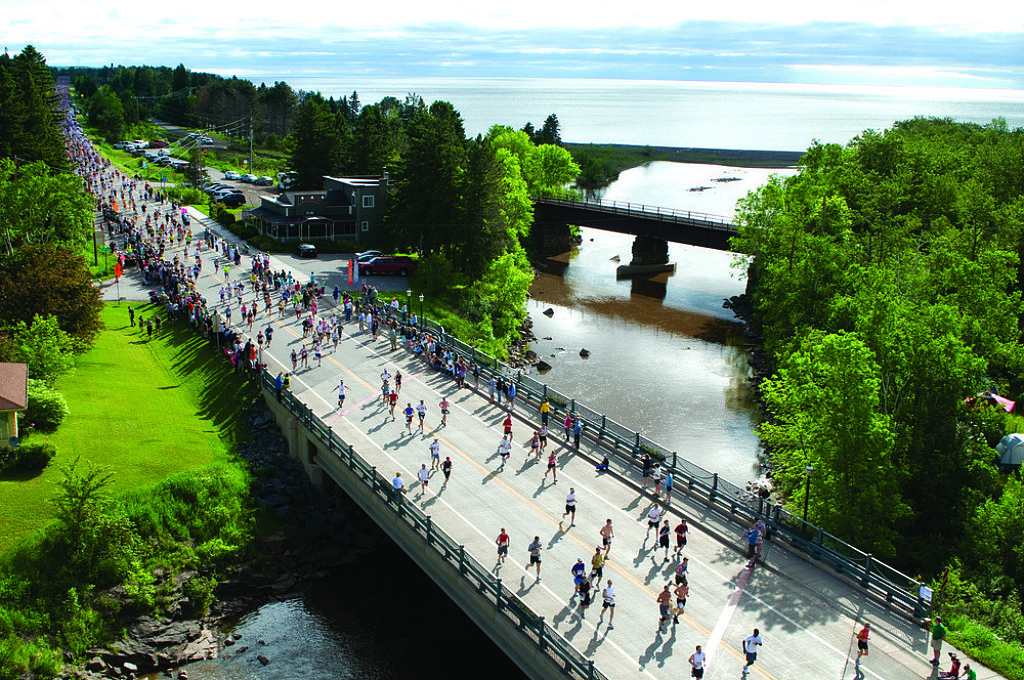
The 2020 Grandma´s Marathon has been cancelled due to coronavirus outbreak
Race organizers made the announcement on the Grandma's website Tuesday that the 44th annual marathon, which was scheduled for June 20, will not take place.
Minnesota's legendary North Shore marathon will go on hiatus for a year, after organizers decided it was prudent to cancel with ongoing concerns about the coronavirus.
Grandma's Marathon made the announcement on it's website Tuesday that the 44th annual marathon, which was scheduled for June 20, will not take place.
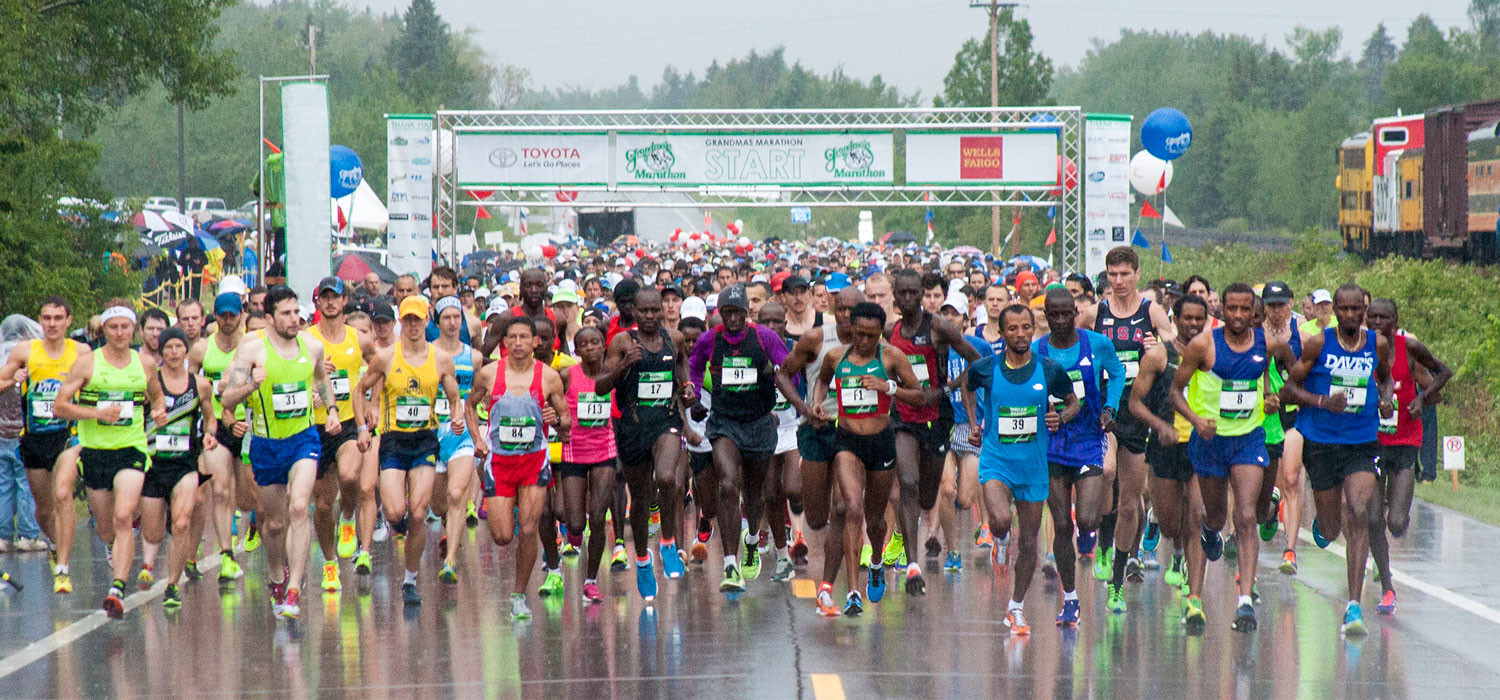
"This is not the news that we wanted to be sharing with our running community, but after very careful deliberation, we have made the extremely difficult decision to cancel the 2020 Grandma’s Marathon Race Weekend of events," read the post. "The staff and board of Grandma’s Marathon along with our medical and public agency leaders believe this is the responsible action to take in an effort to keep everyone safe during the ongoing COVID-19 pandemic, and not take valuable resources away from our local health system."
Race officials say they know runners registered for the race are well into their training, and may be disappointed by the decision to cancel. They are providing the following resources: 2020 Virtual Race - You will be automatically entered into the virtual version of your race. All you need to do is run your race wherever you want, whenever you want while following the safety measures that have been laid out by your local government regarding COVID-19. The Virtual Submission Platform provided by Mtec Results will open on May 4. An email will be sent to you in early May with a link to your personal results page on the Virtual Submission Platform where you can download an official Race Bib, upload your time, and view/download an official Finisher Certificate. More details are available on the Grandma's Marathon website.
2021 Race Discount - We will provide a 20% discount toward the 2021 Grandma’s Marathon Weekend Race of your choice: Grandma’s Marathon, Garry Bjorklund Half Marathon or William A. Irvin 5K. Your promo code and instructions for redeeming the discount will be emailed to you in September 2020. Those who received complimentary 2020 entries do not qualify for the 2021 discount.
Donation - As we are a Minnesota Nonprofit with 501(c)(3) status, your registration has been converted to a donation, which will enable you to claim the entry fee you paid as a tax write-off. Tax receipts will be issued between April 13 and May 13. In addition, if you choose to contribute your discount by not using the promo code that will be sent to you in September, please know that your donation will help ensure that our organization can continue to provide a world-class experience to the running community for years to come.
Sponsor Rewards - We are working with our committed team of sponsors to provide a worthwhile variety of discounts and rewards to 2020 registrants as an additional thank you for your support. Details about these items will be emailed periodically to participants.
Grandma's Marathon officials are making it very clear that this is not the end of an event that has become part of Duluth culture, a race that brings both money and humanity to the city during a weekend that thousands look forward to.
"Looking ahead, we sincerely hope you are able to celebrate our 45th Anniversary Race Weekend with us next year on June 18-19, 2021! The anniversary weekend will provide a merited occasion to be grateful that we partake in a sport that endures all circumstances," reads the Grandma's website. "A sport that will come back from this crisis even stronger – because together we are stronger."
by Dana Thiede
Login to leave a comment

Grandmas Marathon
Grandma's Marathon began in 1977 when a group of local runners planned a scenic road race from Two Harbors to Duluth, Minnesota. There were just 150 participants that year, but organizers knew they had discovered something special. The marathon received its name from the Duluth-based group of famous Grandma's restaurants, its first major sponsor. The level of sponsorship with the...
more...
IAAF may stop Team Nigeria from competing in the Olympics, African Games and the World Championships over ‘missing’ $135,000
Thehh IAAF may have put the machinery in motion to stop Nigerian athletes from participating in this year’s African Games in Morocco, the World Athletics Championships in Doha, as well as the 2020 Olympics Games in Tokyo following the country’s refusal to return the $135,000, which the IAAF mistakenly paid into AFN account two years ago.
The amount was said to have been paid by IAAF as part of its $15,000 annual grant to member federations for the year 2017. But instead of the $15,000, the IAAF mistakenly paid $150, 000 to the AFN. The IAAF accountants later discovered the error and subsequently asked AFN to refund the excess payment.
Former Secretary-General of AFN, Amaechi Akawo, confused about the amount, allegedly contacted his superiors at the sports ministry then, but soon after, the money ‘developed wings.’
In IAAF’s letter to the AFN on Tuesday May 13, 2019 made available to The Guardian, Jee Isram, Senior Manager, Governance, Member & International Relations Department wrote: “You were informed on March 14, 2018 by our CEO of a payment made by the IAAF to the bank account of your federation on May 17, 2017. A sum of $150,000 was transferred by the IAAF of which $135,000 was wrongly credited.
“We promptly notified you of this overpayment and followed up several written correspondences, as well as a meeting with you in November 2017 requesting that you reverse the bank transfer for the overpaid amount to no avail.
“On June 28, 2018, you informed us that the ministry of sports was ready to refund 50 percent of that amount and despite several telephone conversations the amount was still not paid.
While we were in Asaba in August 2018 during the African Senior Championships, we met with the minister of sports and the Permanent Secretary. We discussed about the return of the funds to the IAAF and until today we have not heard anything.
“We understand that the minister of sports will be stepping down soon and it is imperative that you arrange for the return of the full amount within two weeks at the latest. Failure to receive the funds back within that period, we will have no alternative than to apply appropriate sanctions against your Federation,” IAAF official said
Login to leave a comment

IAAF World Athletics Championships Doha
The seventeenth edition of the IAAF World Championships is scheduled to be held between 27 September and 6 October 2019 in Doha, Qatar at the renovated multi-purpose Khalifa International Stadium. Doha overcame bids from Eugene, USA, and Barcelona, Spain to be granted the rights to host the 2019 IAAF World Championships in Athletics. Having hosted the IAAF Diamond League, formerly...
more...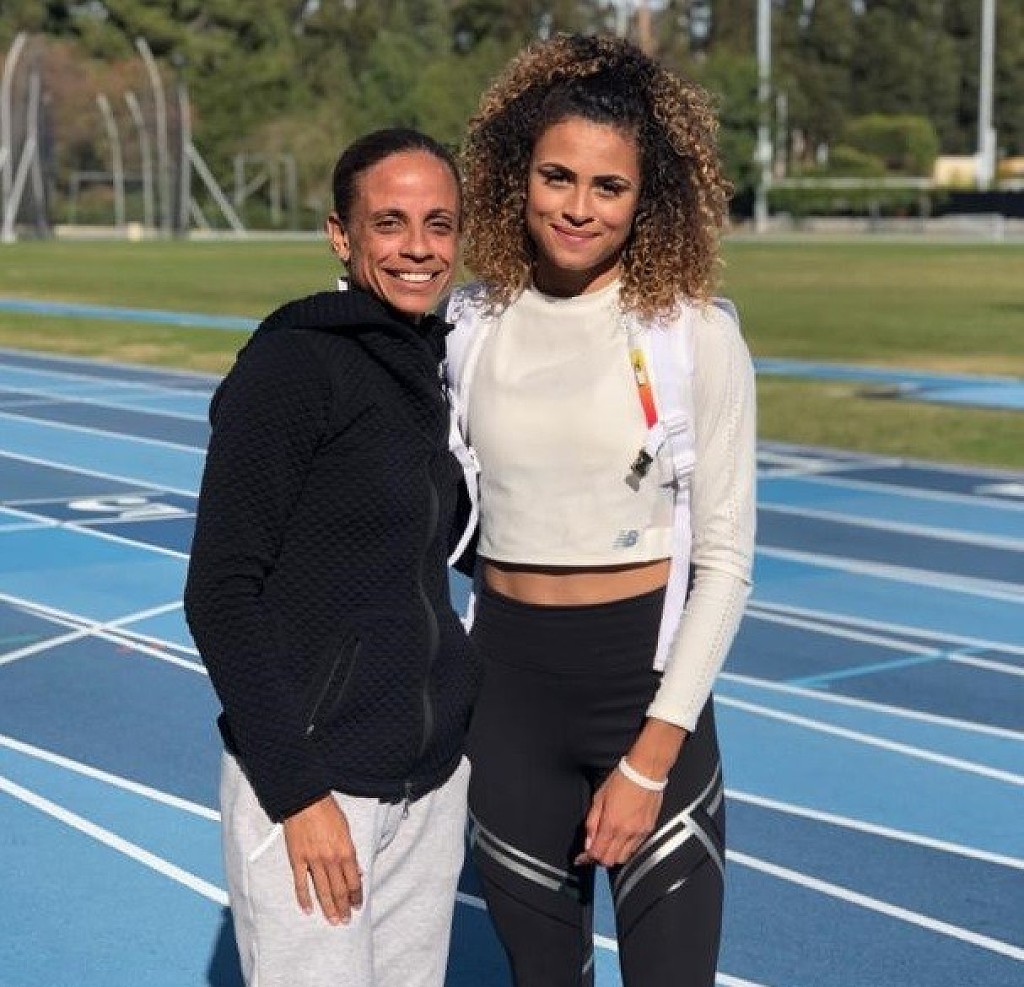
19-year-old Sydney McLaughlin who is one of the biggest track stars will be coached by Olympian Joanna Hayes
Login to leave a comment
