

Running News Daily
Running News Daily is edited by Bob Anderson and team. Send your news items to bob@mybestruns.com Advertising opportunities available.
Index to Daily Posts · Sign Up For Updates · Run The World Feed
Articles tagged #Gabriela Andersen-Schiess
Today's Running News



She Staggered, She Fell, But She Refused To Stop: The Olympic Finish That Became A Symbol Of Courage
At the 1984 Los Angeles Olympics, Gabriela Andersen-Schiess became part of Olympic history without winning a medal, setting a record, or standing on the podium.

Instead, she gave the world something far more enduring: one of the most powerful displays of determination ever witnessed at the Olympic Games.
Andersen-Schiess, representing Switzerland, was competing in the inaugural women’s Olympic marathon when she entered the Los Angeles Memorial Coliseum after more than two hours of racing. What followed would become one of the most unforgettable moments in the history of distance running.

Severely exhausted and suffering from dehydration, the 39-year-old athlete could barely maintain her balance. Her body was visibly struggling. She staggered forward, her upper body leaning from side to side as she fought to keep moving.
Medical personnel immediately prepared to intervene.
But Andersen-Schiess knew that accepting assistance would mean being removed from the competition. She waved the medical staff away and continued, determined to reach the finish line under her own power.

For the final stretch, every step appeared to require an enormous effort. She moved painfully around the stadium, stumbling and swaying as the crowd watched in stunned silence. The spectators could see that she was suffering, yet she refused to stop.
After an agonising final lap, Andersen-Schiess finally crossed the finish line in 37th place in 2:48:42.
The image of her struggling toward the finish quickly became one of the defining moments of the 1984 Olympics.
Earlier that day, American Joan Benoit had made history by winning the first women’s Olympic marathon in 2:24:52. Norway’s Grete Waitz took silver, while Portugal’s Rosa Mota claimed bronze.
Those athletes rightly received the medals and the headlines.
But Andersen-Schiess captured something different.
Her performance was not about victory over her rivals. It was about victory over exhaustion, pain and the overwhelming desire of the body to stop.
More than four decades later, her finish remains etched into the collective memory of Olympic sport. It stands as a reminder that courage is not always found in winning. Sometimes, it is found in taking one more step when every part of you is telling you that you cannot continue.
Gabriela Andersen-Schiess did not leave Los Angeles with an Olympic medal.
She left with something that has lasted far longer: a place in sporting history and a legacy of resilience that continues to inspire generations of runners.
That day, she did not simply finish a marathon.
She showed the world what it can mean to refuse to give up.
by Erick Cheruiyot for My Best Runs.
Login to leave a comment

What Happens When the Finish Line Feels 100 Miles Away
We’ve all seen the footage: a runner, sometimes even an elite, staggering or crawling across the marathon finish line. It’s a powerful image—equal parts dramatic and heartbreaking. But what causes those jelly legs, and can it be prevented?
The Science of “Jelly Legs”
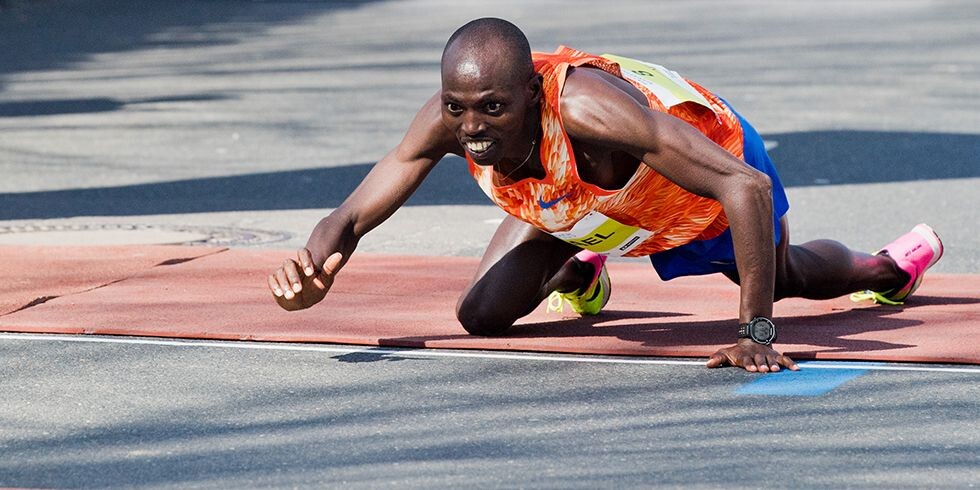
The feeling of wobbly or unresponsive legs at the end of a marathon is often the result of neuromuscular fatigue and metabolic depletion. After 26.2 miles, the body’s ability to send signals from the brain to the muscles can falter.
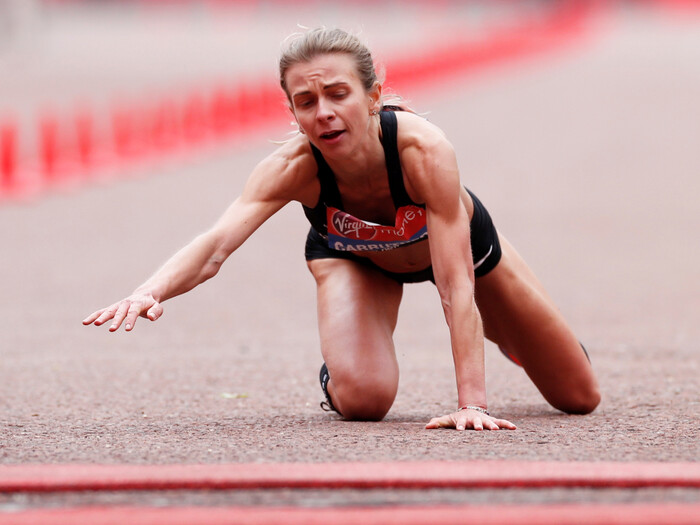
“You’re not just tired,” says Coach Jimmy Muindi, seven-time Honolulu Marathon champion. “Your legs stop responding to what your brain is telling them to do.”

Key Causes
1. Glycogen Depletion
Muscles run on glycogen, and after two to three hours of running, those stores run dry—especially if fueling is inadequate.
2. Dehydration and Electrolyte Imbalance
Even a small loss in body fluid affects muscle function. Electrolyte imbalances (particularly low sodium or potassium) can trigger cramps and weakness.
3. Central Nervous System Fatigue
Your brain gets tired, too. Prolonged effort reduces the brain’s ability to send strong, coordinated signals to the muscles.
4. Improper Pacing
Going out too fast early in the race can lead to full-system shutdown in the final miles. Your body simply can’t hold that pace.
5. Heat and Humidity
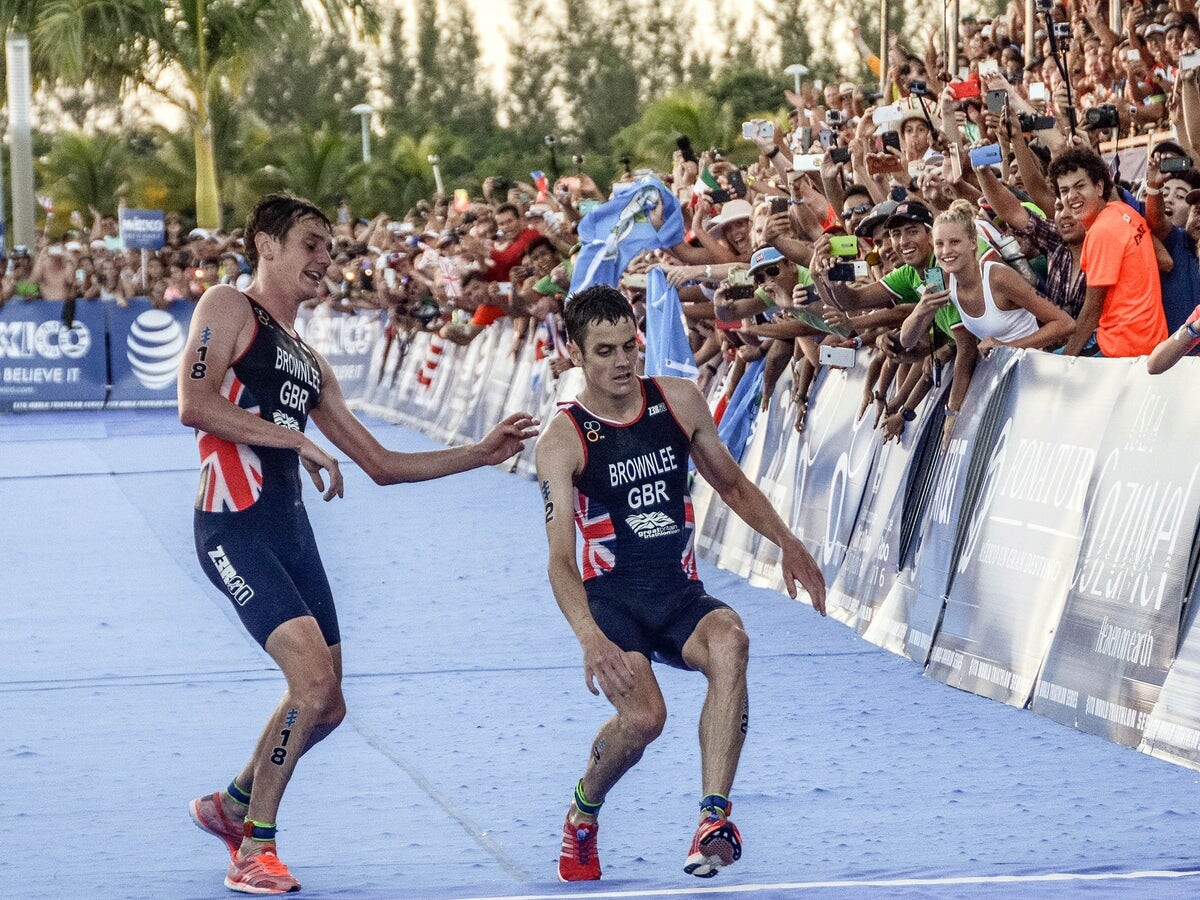
Hot races amplify all of the above. Core temperature rises, making it harder for muscles to function efficiently.
Why It Even Happens to Elites
Elite runners push their bodies to the limit. Sometimes a miscalculation in pace, nutrition, or weather adjustment can bring even the strongest athlete to their knees—literally. And because they’re aiming for peak performance, they’re often operating on a knife’s edge.
In 2018, American runner Sarah Sellers nearly collapsed after finishing second at the Boston Marathon, a race defined by brutal weather. Others, like Gabriela Andersen-Schiess in the 1984 Olympics, became iconic for their final, staggering strides.
Prevention Strategies
• Dial in race-day nutrition. Practice fueling with gels, fluids, and electrolytes during training.
• Train your brain. Long runs, heat training, and race simulations help develop mental toughness and delay central fatigue.
• Know your pace. Use race predictors and experience to avoid going out too fast.
• Hydrate smart. Don’t just drink water—replace lost electrolytes.
Final Thought
Marathon running pushes the human body to its limits. Jelly legs and crawl finishes are not signs of weakness—they’re the body’s emergency brake. With smarter training and fueling, most runners can avoid it. But when it does happen, it reminds us how far people will go to finish what they started.
by Boris Baron
Login to leave a comment
