

Running News Daily
Running News Daily is edited by Bob Anderson and team. Send your news items to bob@mybestruns.com Advertising opportunities available.
Index to Daily Posts · Sign Up For Updates · Run The World Feed
Articles tagged #Africa
Today's Running News
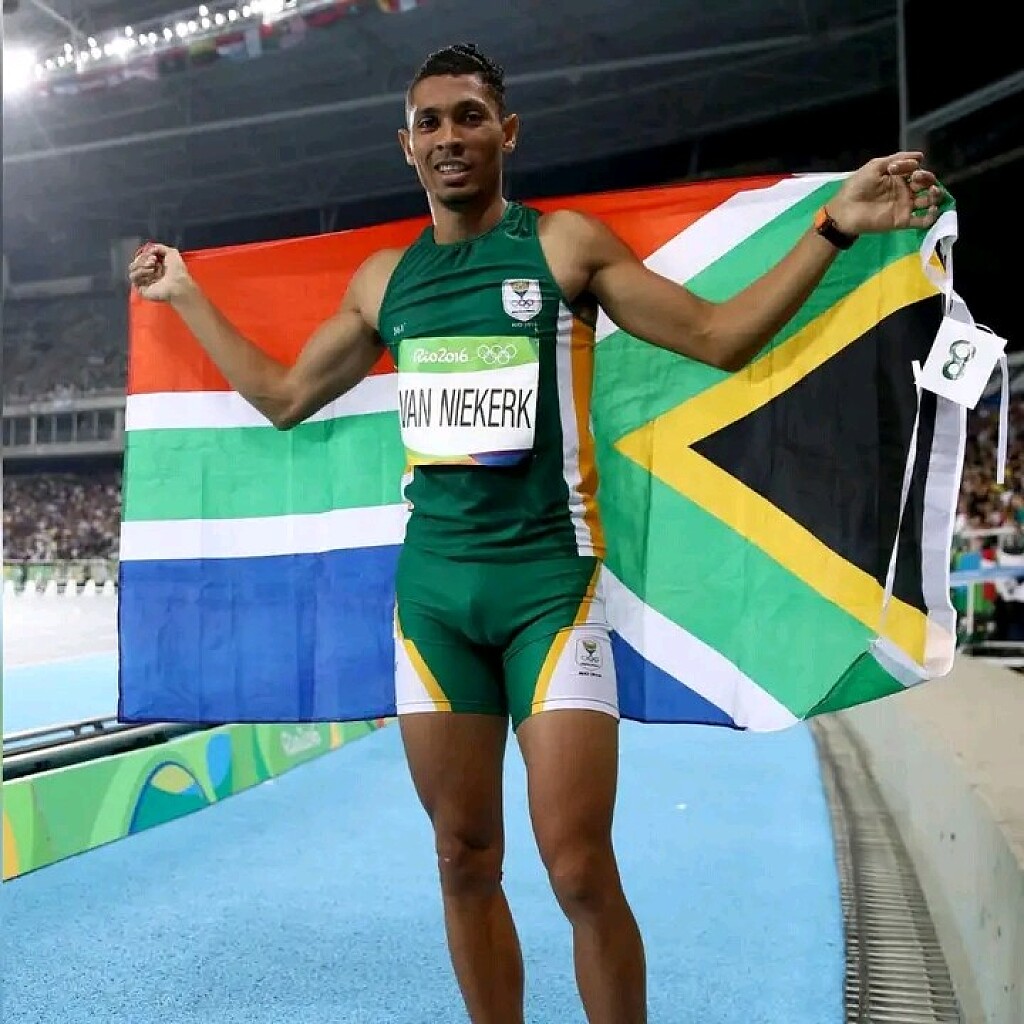


The Lane Eight Legend: Wayde Van Niekerk’s Night Of History
On a night when the world expected the spotlight to fall on the established stars, Wayde van Niekerk stepped into the shadows of lane eight and produced one of the greatest 400m performances athletics has ever witnessed.
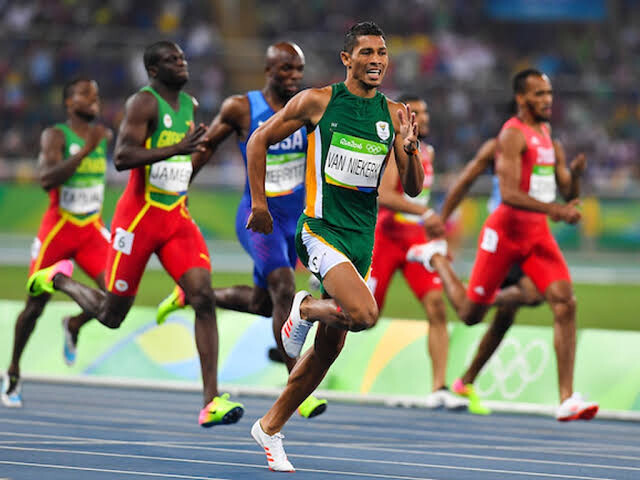
The stage was the 2016 Rio Olympic final. The field was stacked with proven champions, including Grenada’s Kirani James, the reigning Olympic champion, and American LaShawn Merritt, the 2008 Olympic champion. Van Niekerk had already announced himself as a serious contender, but few could have predicted what was about to unfold.
From the outside lane, the South African exploded from the blocks and attacked the race with extraordinary speed. Running virtually alone around the final bend, he maintained his relentless pace into the home straight while the rest of the field fought desperately to close the gap.
They never caught him.
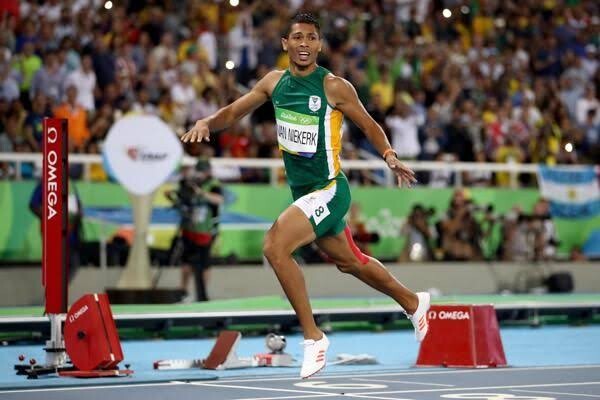
Van Niekerk crossed the finish line in 43.03 seconds, winning Olympic gold and rewriting the history of the 400m. In one breathtaking performance, he lowered Michael Johnson’s legendary 43.18-second world record, set in 1999, by 0.15 seconds.
Johnson’s mark had survived for 17 years. Then, in less than 44 seconds, Van Niekerk erased it.
His victory also carried another remarkable distinction: he became the first athlete to win the Olympic men’s 400m title from lane eight, turning what many considered an unfavourable position into the setting for an unforgettable piece of sporting history.
What made the performance even more extraordinary was the manner in which it happened. Van Niekerk was not surrounded by the visual advantage of the middle lanes. He could not easily see his closest rivals. Instead, he had to trust his preparation, his rhythm and his own belief from the first step to the last.
That is perhaps what makes the Rio performance resonate so strongly even years later. It was more than a world record and an Olympic title. It was a reminder that greatness does not always announce itself from the obvious position. Sometimes, the athlete furthest from the spotlight is the one who ends up changing the sport forever.
Van Niekerk’s 43.03 seconds remains one of the most iconic marks in athletics history, a performance born from speed, courage and extraordinary execution.
And now, years after that unforgettable night in Rio, one question continues to fascinate the athletics world:
Is Van Niekerk’s legendary 43.03 finally vulnerable?
With a new generation of 400m stars pushing the boundaries of human speed, the chase for that historic mark remains one of the most intriguing storylines in the sport.
Who do you believe has what it takes to finally break Wayde van Niekerk’s 43.03-second masterpiece?
by Erick Cheruiyot for My Best Runs.
Login to leave a comment
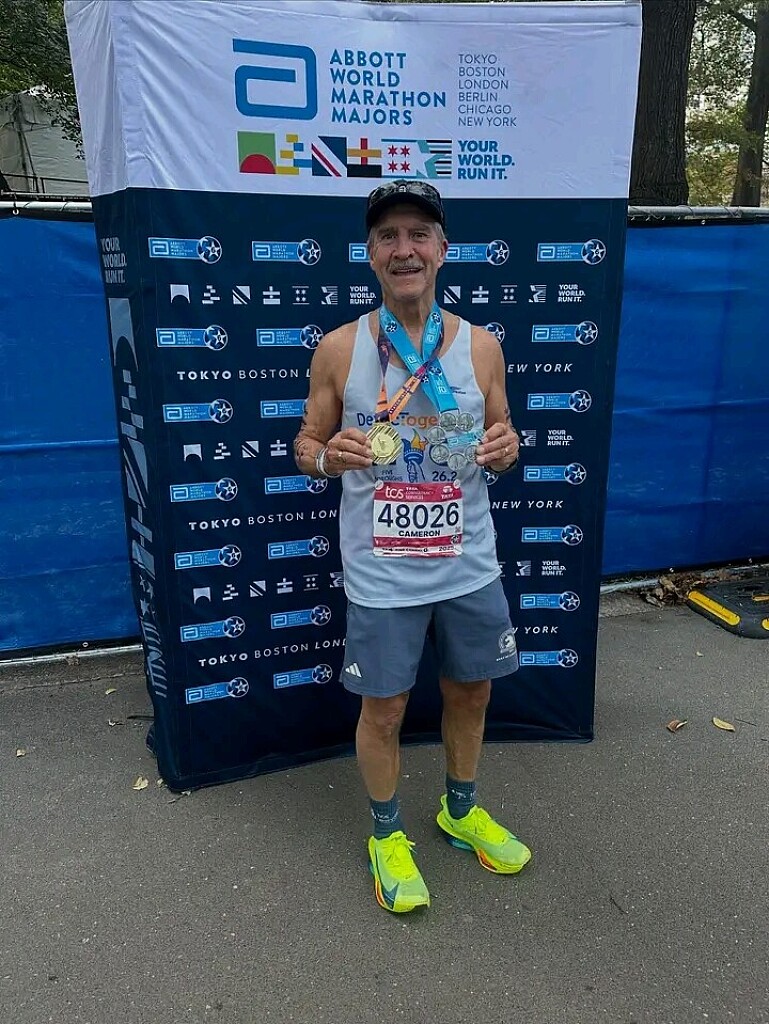
67-Year-Old Pete Benson Takes On Seven Marathons Across Seven Continents In Seven Days For A Worthy Cause
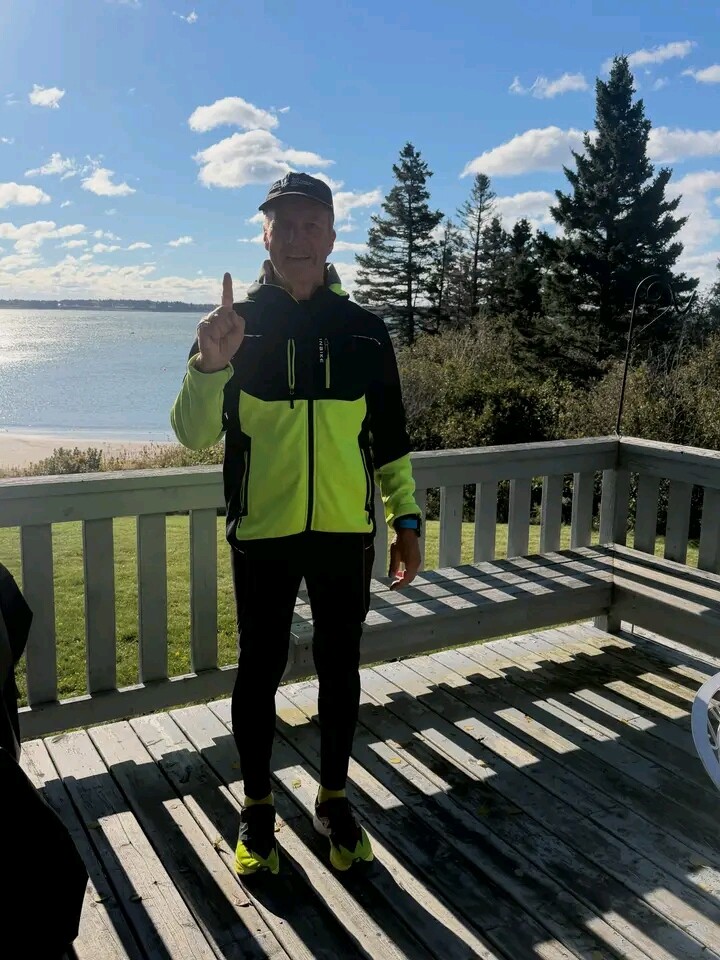
At 67, Canadian runner Pete Benson is preparing to take on one of the most extraordinary endurance challenges in marathon running: completing seven marathons across seven continents in just seven days while raising money for a cause that reaches far beyond the finish line.

Hailing from Grand Manan, New Brunswick, Benson is set to participate in the Great World Race, an ambitious event that combines the physical demands of marathon running with a demanding journey around the globe. The challenge will require him to complete seven full marathons, each covering 42.195 kilometres, while travelling between continents on a tightly scheduled itinerary.
The challenge is scheduled to begin on November 15, 2026, with pre-event activities expected to start around November 12. Benson's adventure will begin in Antarctica, where the icy terrain and harsh conditions will provide a formidable introduction to the week ahead.
The opening marathon is scheduled for Wolf's Fang in Antarctica, where Benson will face the unfamiliar and potentially unforgiving conditions of the frozen landscape. Reflecting on the prospect of running through the ice and snow, he admitted that the experience is intimidating.
"That's pretty, pretty scary in itself," he said. "Through the ice and snow."
From Antarctica, Benson will travel to Cape Town, South Africa, for his second marathon on November 16. The journey will then continue to Perth, Australia, on November 17, followed by Singapore on November 18. On November 19, he is scheduled to race in the Algarve, Portugal, before heading to Cartagena, Colombia, on November 20. The challenge will conclude in Miami, United States, on November 21.
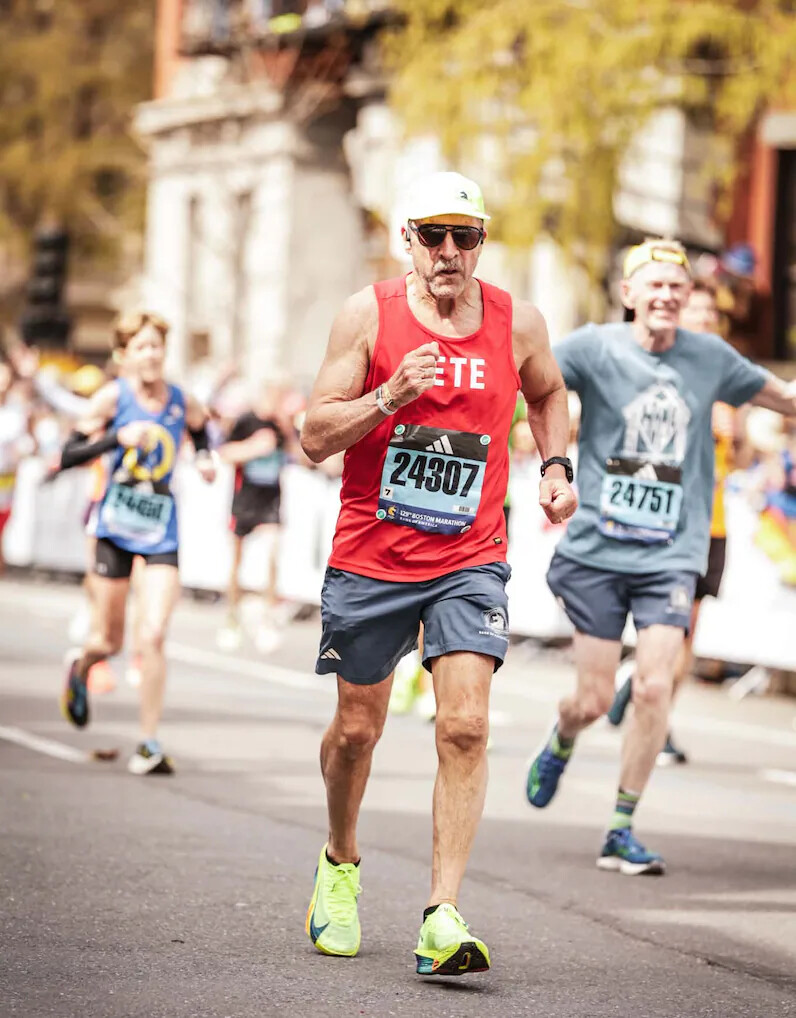
The demanding itinerary will leave little time for conventional recovery. After each marathon, Benson will need to travel to the next destination, navigate changing time zones and prepare for another 42.195 kilometres. Managing fatigue, nutrition, hydration and sleep will be essential as he attempts to complete the seven races within a single week.
Benson described the unusual routine that awaits him, highlighting the relentless cycle of running and travelling that defines the challenge.
"We run the race, get back on the bus, back on the plane, head to the next one and away we go around the world," Benson said. "That plane becomes our hotel and restaurant for the week, pretty much."
Beyond the physical demands, Benson recognises that taking part in such an ambitious international adventure comes at a considerable financial cost. He describes running as a personal investment, one that has provided him with valuable experiences and opportunities to discover more about himself.
"It's certainly a want, not a need," he said. "Some people go on river cruises and other things that they spend their money on and I spend my money on running and I've learned a lot from it."
Despite the expense, Benson believes the experience is worth the investment.
"So I think the investment is worth it, but it is extravagant," he said.
However, his motivation extends beyond personal achievement. Benson is also using the challenge to raise money for a nonprofit organisation that funds clean-water projects in countries around the world. The fundraising initiative is voluntary and is not a requirement for participating in the event.
By connecting his running adventure to a cause with a tangible impact on communities, Benson hopes to give every kilometre a greater purpose. His effort demonstrates how an individual sporting challenge can also become an opportunity to support work that improves lives.
"I'm happy that there's a purpose behind every mile that I run," he said.
That purpose adds another dimension to Benson's ambitious undertaking. While the seven marathons will test his physical strength, mental resilience and ability to recover between races, his fundraising mission will allow him to contribute to efforts aimed at improving access to clean water around the world.
As November 15 approaches, Benson is preparing for a demanding week that will take him from the ice and snow of Antarctica to the streets of Miami, with five other destinations in between. Each marathon will bring a new test, requiring careful preparation, determination and the ability to keep moving forward despite accumulating fatigue.
At 67, Benson is setting out to complete an extraordinary endurance challenge while supporting a cause beyond himself. Seven marathons, seven continents and seven days will test his limits, but his journey will carry a purpose that extends far beyond the finish line.
by Erick Cheruiyot for My Best Runs.
Login to leave a comment
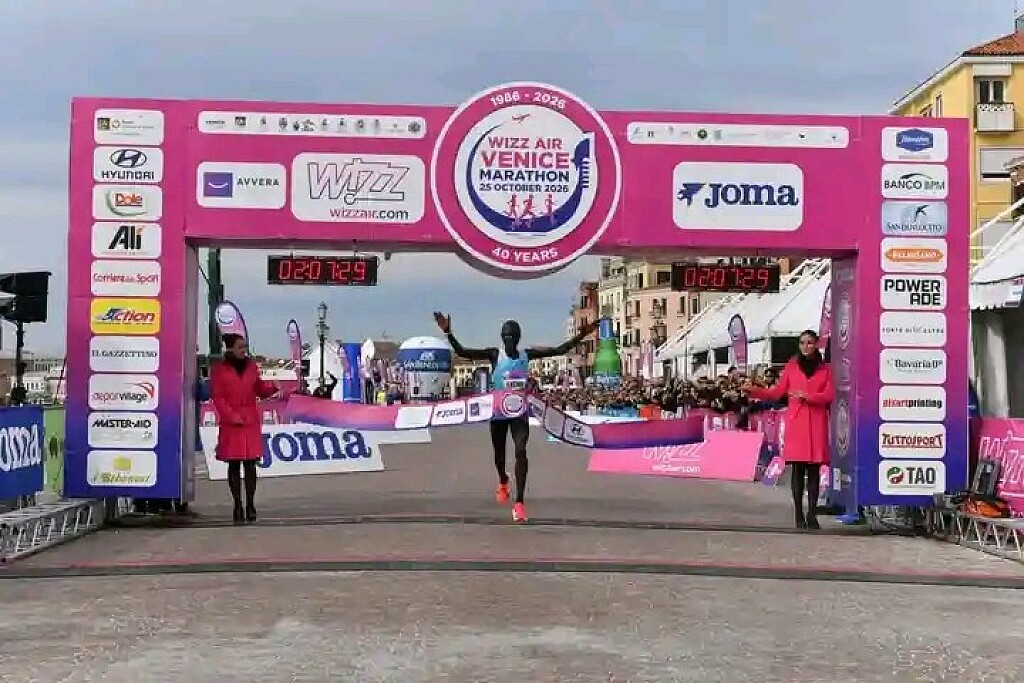
Peter Kwemoi Ndorobo Breaks Venice Marathon Course Record as Jackline Jerono Makes History in 40th Anniversary Edition
Kenya celebrated a memorable double victory at the 2026 Wizz Air Venice Marathon on Sunday, October 25, as Peter Kwemoi Ndorobo stormed to the men's title in a course-record 2:07:31 while Jackline Jerono claimed the women's crown in 2:26:16, the third-fastest women's marathon time in the race's history.
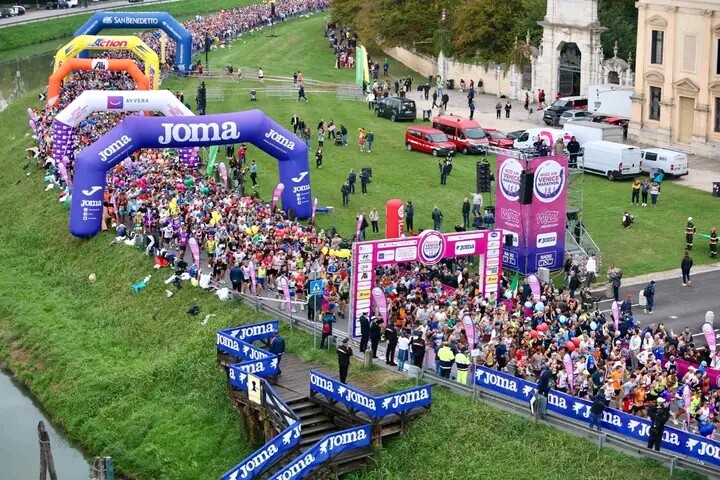
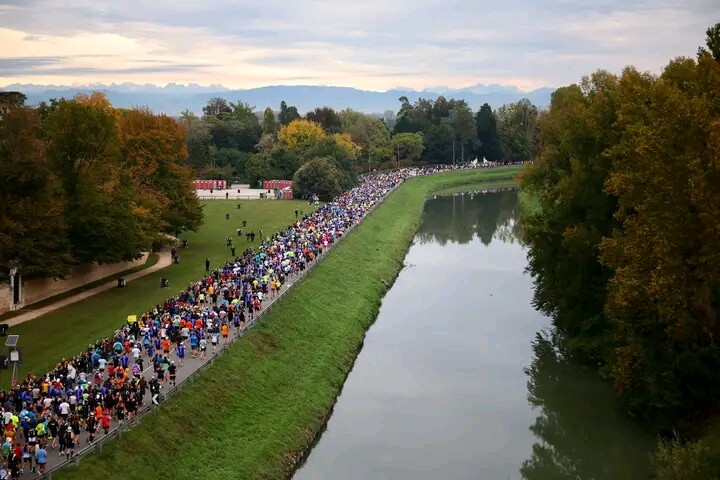
The 40th anniversary edition of the celebrated Italian road race delivered a spectacular combination of record-breaking performances, fierce competition and emotional moments, with Kenyan athletes taking centre stage in both elite races.
Ndorobo produced an outstanding performance in the men's race, crossing the finish line in 2:07:31 to establish a new course record. His victory highlighted his strength and composure over the demanding 42.195-kilometre distance, which includes challenging bridges and changes in terrain that test even the most experienced marathon runners.
Ethiopia's Berhanu Tarto Yatede finished a close second in 2:07:47, just 16 seconds behind the winner, after delivering an impressive performance of his own. Kenya's Dickson Simba Nyakundi completed the podium in third place in 2:07:56, making it a particularly strong showing for the East African nation.
The men's race also featured several other impressive performances. Kenya's Collins Kipsang Kemboi finished fourth in 2:08:07, followed by compatriot Evans Kipkorir in fifth in 2:08:41. Ethiopia's Teresa Nyakola Gela placed sixth in 2:08:50, while Kenya's Felix Kimutai finished seventh in 2:09:00 and Wesley Ledama eighth in 2:09:01. Kenya's Elkana Kipkemei Kiprop took ninth in 2:10:14, with Ethiopia's Deribe Robi Melka completing the top 10 in 2:10:55.
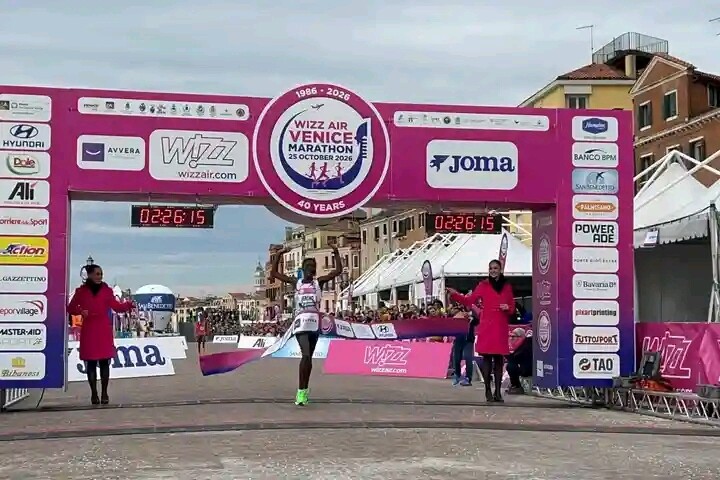
In the women's competition, Jerono delivered a superb performance to secure victory in 2:26:16, recording the third-fastest women's marathon time ever achieved at the Venice Marathon. Her performance added another memorable chapter to the event's 40-year history and underlined her strength over the classic distance.
The Kenyan runner faced a determined challenge from Ethiopia's Alemaz Samuel Teshale, who finished just seven seconds behind in 2:26:23. Teshale's performance was particularly notable as she made an impressive marathon debut, immediately establishing herself as a formidable competitor over the distance.
Ethiopia's Worknesh Alemu Mola completed the podium in third place in 2:28:46, ensuring that the leading positions were shared between Kenya and Ethiopia.
Kenya's Chepkemboi Domtyla Lagat finished fourth in 2:33:34, while Ethiopia's Webalem Basazew Ayele took fifth in 2:36:36. Italy's Federica Moroni was the leading Italian finisher in sixth place in 2:49:39, followed by compatriot Giorgia Bonci in seventh in 2:54:38. Lia Visintin finished eighth in 2:57:49, while Hungary's Zsofia Malatinszky completed the top 10 in 3:00:05.
The results underlined the continued strength of Kenyan and Ethiopian distance running, with athletes from the two nations dominating the leading positions in both elite competitions.
As the Wizz Air Venice Marathon marked four decades of racing, Ndorobo's course-record triumph and Jerono's historic performance provided two of the defining moments of the anniversary edition. Their victories ensured that Kenya left Venice celebrating a remarkable double, with both champions delivering performances worthy of the occasion.
by Erick Cheruiyot for My Best Runs.
Login to leave a comment

Venice Marathon
The Venice Marathon is one of the most beautiful marathons known for the historical, artistic and picturesque surrounding in which it takes place. It starts in Stra, a small village located at about 25 km west of Venice, at the beginning of the Riviera del Brenta, a beautiful area near the River Brenta, where the rich and noble Venetians built...
more...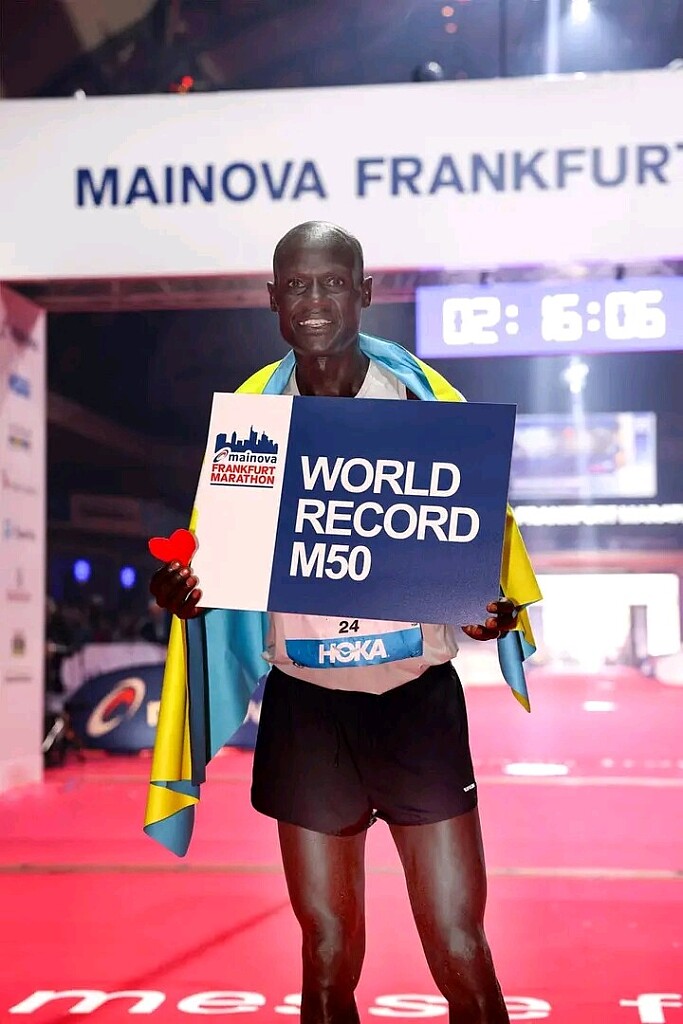
Mark Kiptoo Shatters M50 Marathon World Record As Ethiopian Duo Shine In Frankfurt
Kenyan distance-running veteran Mark Kiptoo delivered an extraordinary performance at the 2026 Frankfurt Marathon in Germany on Sunday, October 25, setting a new men's M50 marathon world record with a remarkable time of 2:15:24.
At 50, Kiptoo continues to defy expectations, demonstrating that age is no barrier to exceptional endurance, speed and determination. His performance highlighted another remarkable chapter in a career defined by longevity and an unwavering commitment to distance running.
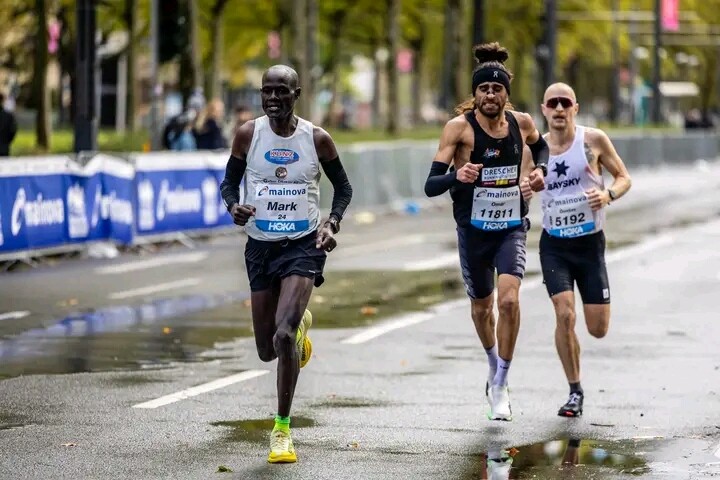
The Kenyan improved on the previous M50 marathon world record of 2:19:29, set by South Africa's Titus Mamabolo in 1991, by an extraordinary four minutes and five seconds. The previous mark had stood for 35 years, making Kiptoo's achievement an especially significant milestone in masters marathon running.
His latest record-breaking performance comes just weeks after he reportedly set an M50 half-marathon world record of 1:03:57 in San Sebastián, Spain. The two achievements underline his exceptional form and ability to maintain an extraordinary level of competitiveness at an age when many athletes have long since retired from elite competition.
Frankfurt has played a defining role in Kiptoo's marathon journey. He made his marathon debut at the German race in 2013 at the age of 37, finishing second in 2:06:16. A year later, he returned to claim victory in 2:06:49, establishing himself among the leading marathoners of his era.
In 2018, Kiptoo again made history on the same course, recording 2:07:50 to establish a then-world record in the men's M40 masters marathon category. His return to Frankfurt in 2026 has now delivered another extraordinary chapter, with the Kenyan rewriting the M50 record books at the age of 50.
From competing against the world's leading marathoners in his 30s to producing record-breaking performances in the masters ranks, Kiptoo has demonstrated remarkable longevity, discipline and determination. His journey is a powerful reminder that age does not necessarily signal the end of sporting excellence.
Kiptoo's achievement was one of the standout stories of the Frankfurt Marathon, which also witnessed Ethiopian runners dominate the elite races, with Lelisa Denki and Zeineba Yimer claiming the men's and women's titles, respectively.
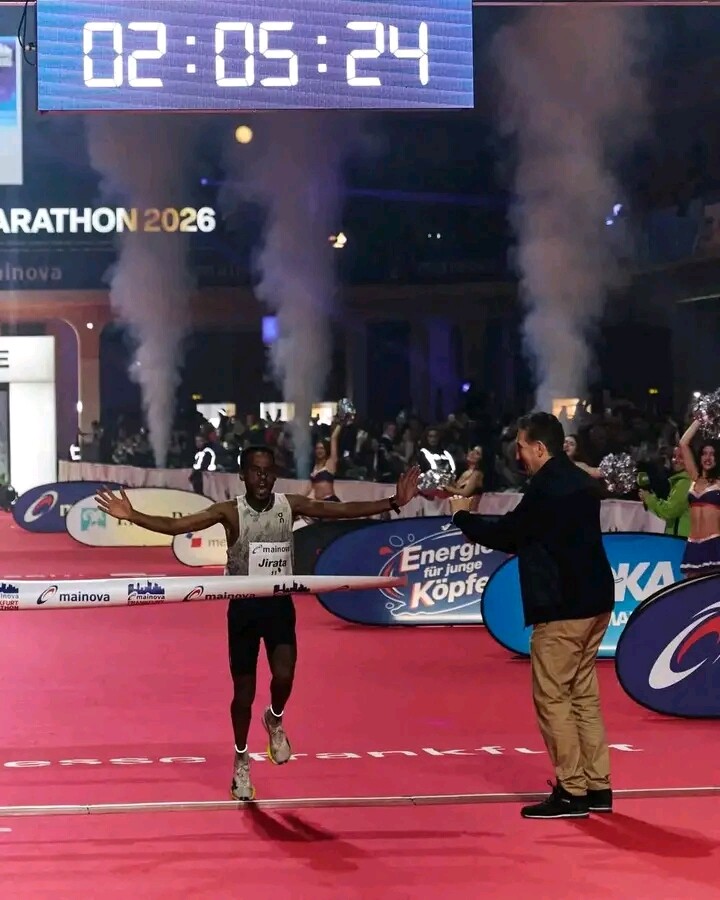
In the men's race, Denki produced an impressive performance to take victory in a personal-best time of 2:05:26. Germany's Amanal Petros delighted the home crowd by finishing second in 2:05:46, while Kenya's Benard Biwott secured third place in 2:06:23, ensuring a strong podium finish for the East African nation.
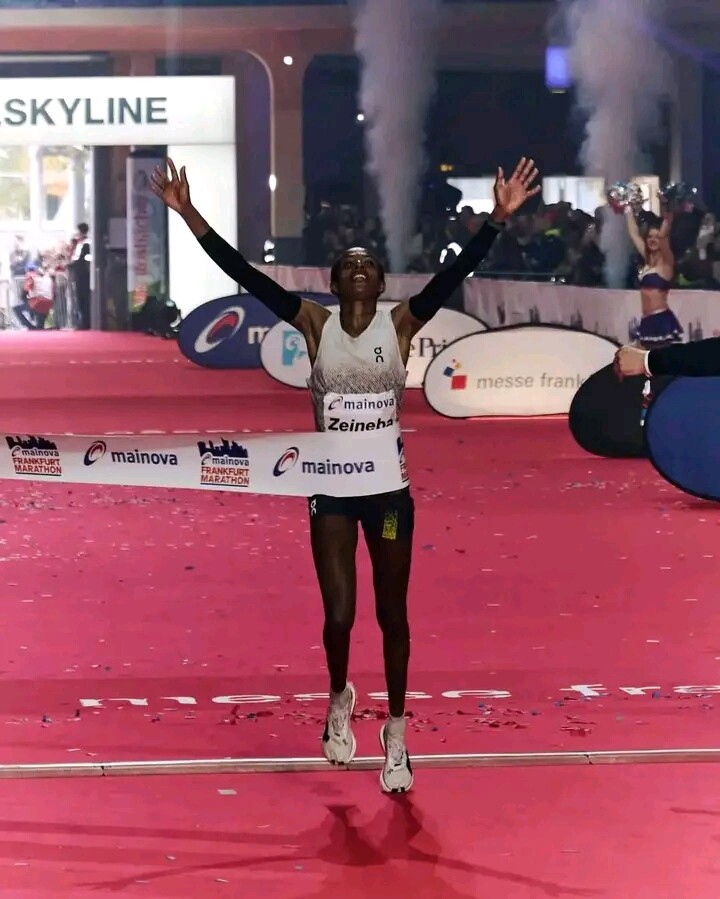
The women's contest was equally compelling, with Ethiopia's Yimer taking the title in 2:19:45. Germany's Blanka Dörfel finished second in 2:20:46, while Ethiopia's Beriha Gebreslasie completed the podium in third place with a time of 2:22:46.
The results underlined Ethiopia's strength in international marathon running, while the performances of Petros, Biwott and Dörfel provided memorable moments for German athletics fans on home soil.
For Kiptoo, however, the spotlight belonged to his remarkable achievement in the men's M50 category. His 2:15:24 performance represented an exceptional demonstration of endurance and competitive ability at an age when many former elite runners have long since stepped away from top-level competition.
Frankfurt has long held a special place in Kiptoo's marathon career. He made his marathon debut at the event in 2013, finishing second in 2:06:16 before returning a year later to claim victory in 2:06:49. He also established a world record in the men's over-40 category on the same course in 2018, clocking 2:07:50.
His latest performance further strengthens his connection with the German race, where he has repeatedly demonstrated his ability to produce outstanding results across different stages of his career.
Beyond the numbers, Kiptoo's achievement carries an inspiring message for runners around the world. His continued success demonstrates the value of discipline, experience and perseverance, challenging conventional assumptions about the age at which athletes can remain competitive.
For Kenya, his performance adds another remarkable chapter to the country's rich distance-running heritage. Meanwhile, the victories of Denki and Yimer ensured that Ethiopia also left Frankfurt celebrating a memorable day on the marathon circuit.
The 2026 Frankfurt Marathon therefore delivered a compelling combination of elite competition and sporting inspiration, from the fast times at the front of the men's and women's races to Kiptoo's extraordinary achievement in the masters category.
At 50, Kiptoo continues to challenge expectations and push the boundaries of what is possible in distance running, proving that a passion for excellence can endure long after many athletes have retired.
by Erick Cheruiyot for My Best Runs.
Login to leave a comment

Mainova Frankfurt Marathon
Frankfurt is an unexpectedly traditional and charming city, with half-timbered buildings huddled in its quaint medieval Altstadt (old city), cosy apple wine taverns serving hearty regional food, village-like neighbourhoods filled with outdoor cafes, boutiques and street art, and beautiful parks, gardens and riverside paths. The city's cache of museums is second in Germany only to Berlin’s, and its nightlife...
more...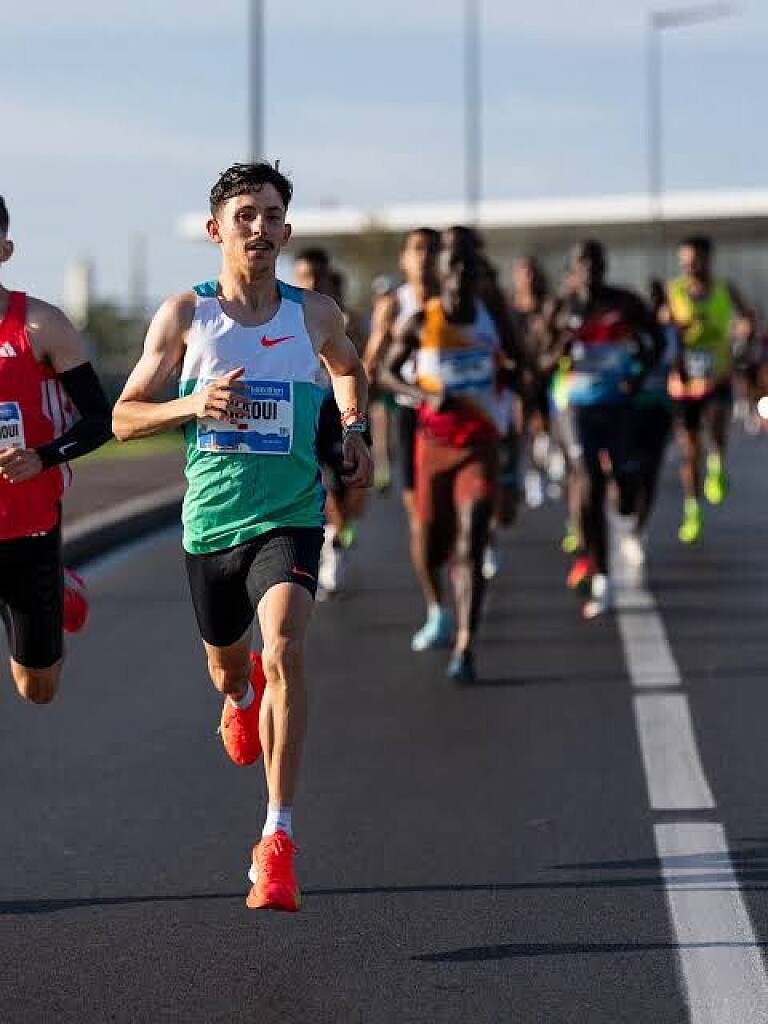
Casablanca Half Marathon 2026: Mustapha Akkaoui Leads The Home Charge As Kenyan Duo Threatens Moroccan Glory
The 2026 Casablanca Half Marathon is set to deliver an exciting contest on Sunday, October 25, with Morocco's leading distance runners preparing to defend home honours against a competitive international field featuring some of East Africa's finest athletes.
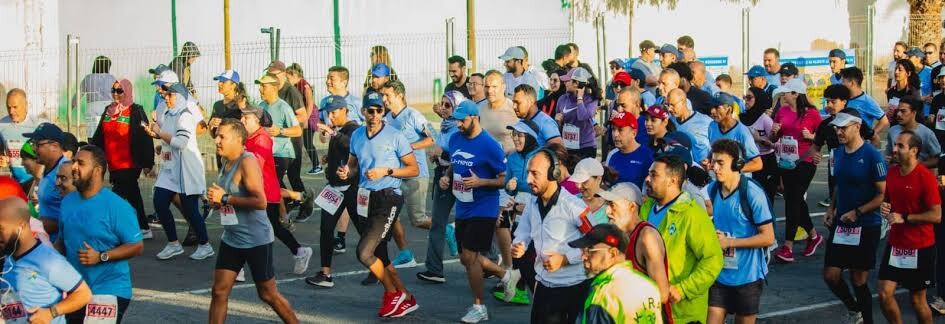
Moroccan standout Mustapha Akkaoui headlines the men's elite start list with an impressive personal best of 1:00:38, making him the fastest athlete entered on paper. With the support of the home crowd behind him, Akkaoui will be aiming to turn his credentials into a memorable performance on Moroccan soil.
However, the Moroccan favourite faces a serious challenge from Kenya, with Shadrack Korir Kipyegon and Joshua Munyoto Kithuku leading the international threat. Korir Kipyegon enters with a personal best of 1:01:19, while Kithuku has clocked 1:01:24. Both athletes possess the credentials to challenge for the podium and will be determined to disrupt Akkaoui's ambitions.
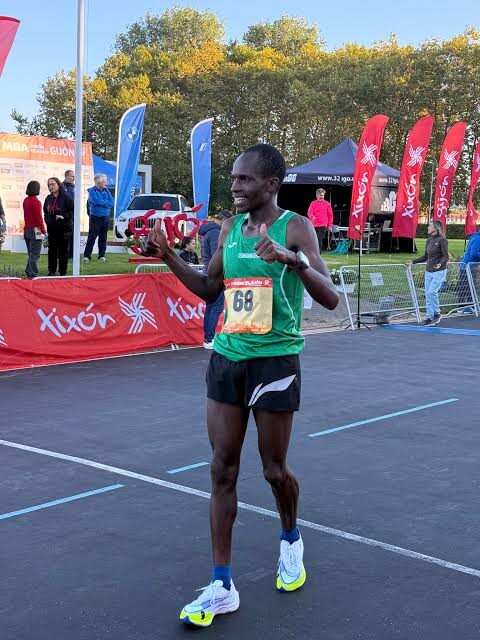
Uganda's Martin Kiprotich also adds considerable strength to the contest. With a personal best of 1:01:30, Kiprotich is another serious contender capable of making his presence felt in a race expected to feature an intense battle among the leading athletes.
The opening four names on the start list are separated by just 52 seconds in their respective personal bests, underlining the potential for a competitive race if the leading runners find favourable conditions and maintain a demanding pace. Although Akkaoui holds the fastest time, his advantage on paper offers no guarantee of victory against opponents eager to challenge the Moroccan favourite.
Beyond the leading international contenders, the men's field features a strong contingent of Moroccan athletes, including Allami Yassine, Fathi Abdenasir, El Hassouni Ahmed, Bybat Mohammed, Mounir Elouali and Ait Taghzant Mohammed. Their presence gives the host nation considerable depth and could produce an intriguing battle for the leading positions behind the principal contenders.
Ethiopia's Taha Adem Gudeto, listed with a personal best of 1:02:52, provides another international dimension to the race. Meanwhile, a host of Moroccan runners with personal bests ranging from the low 1:02s to the 1:04s will be looking to deliver strong performances and improve their standing against a competitive field.
With Akkaoui leading the entries, Kenya bringing two formidable challengers and Uganda represented by Kiprotich, the men's contest promises an engaging clash of national ambitions. The key question is whether the Moroccan favourite can capitalise on home advantage or whether the East African challenge will produce a different winner.
Men's Elite Start List — Leading Athletes
1. Mustapha Akkaoui (Morocco) — 1:00:38
2. Shadrack Korir Kipyegon (Kenya) — 1:01:19
3. Joshua Munyoto Kithuku (Kenya) — 1:01:24
4. Martin Kiprotich (Uganda) — 1:01:30
5. Allami Yassine (Morocco) — 1:01:30
6. Fathi Abdenasir (Morocco) — 1:01:32
7. El Hassouni Ahmed (Morocco) — 1:01:43
8. Bybat Mohammed (Morocco) — 1:01:47
9. Mounir Elouali (Morocco) — 1:02:08
10. Ait Taghzant Mohammed (Morocco) — 1:02:13
As race day approaches, attention will centre on whether Akkaoui can deliver a winning performance in front of his home supporters or whether Kenya's and Uganda's challenge will prove decisive. With several athletes possessing personal bests close to the leading mark, Casablanca is preparing for a compelling half-marathon showdown.
by Erick Cheruiyot for My Best Runs.
Login to leave a comment
Casablanca Half Marathon
A real sporting festival placed under the theme "The Casablanca half-marathon: Two races for the pleasure of the people of Casablanca: 21km97m, 10km", which will bring together a large audience of spectators all along the course and personalities, professionals but also technical assistance from several Olympic and world champions....
more...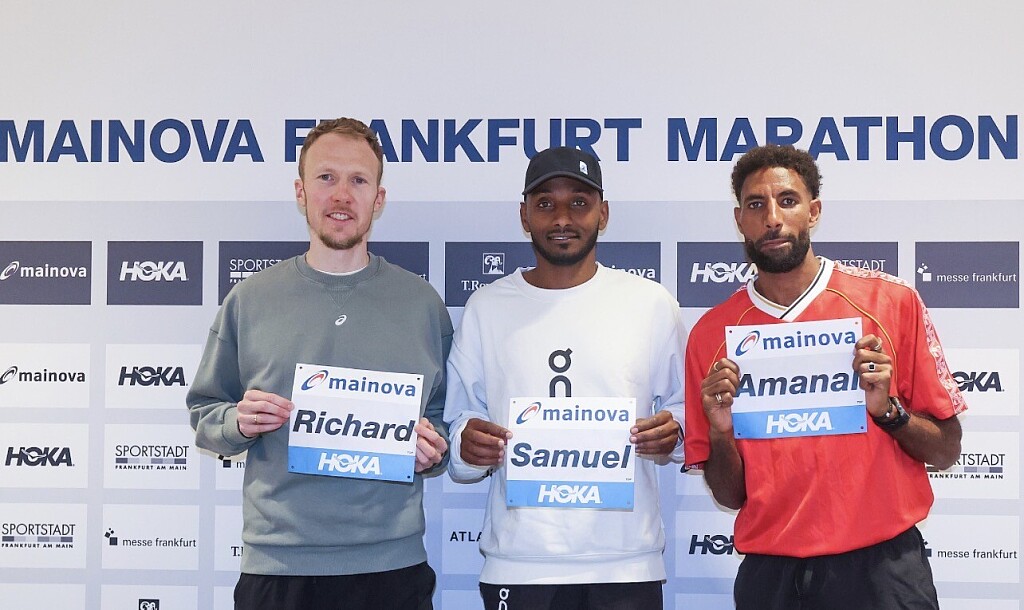
Records in Sight as Frankfurt Assembles Its Fastest Men’s Field
Petros leads Germany’s top marathoners, Zeineba Yimer targets the women’s course record, and Kenya’s Mark Kiptoo chases an age-group milestone at Sunday’s Mainova Frankfurt Marathon.
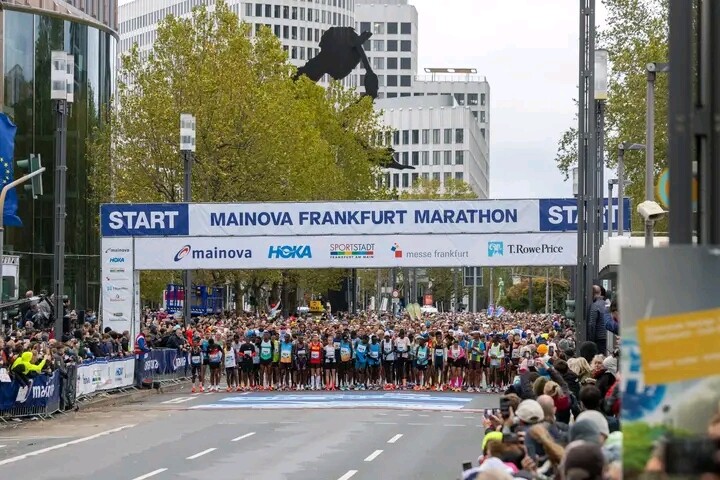
The Mainova Frankfurt Marathon could deliver a series of record performances on Sunday, October 25—if the weather cooperates.
The 43rd edition brings together the fastest men’s field in the event’s history, with German and European records potentially within reach. Both course records—2:03:42 for men and 2:17:25 for women—could come under pressure, while a promising German debut and an M50 world-best attempt add further interest.
Conditions will play a decisive role. Rain, cold and strong winds could derail ambitious pacing plans. If the weather settles, Frankfurt’s flat course could provide the setting for an exceptional day.
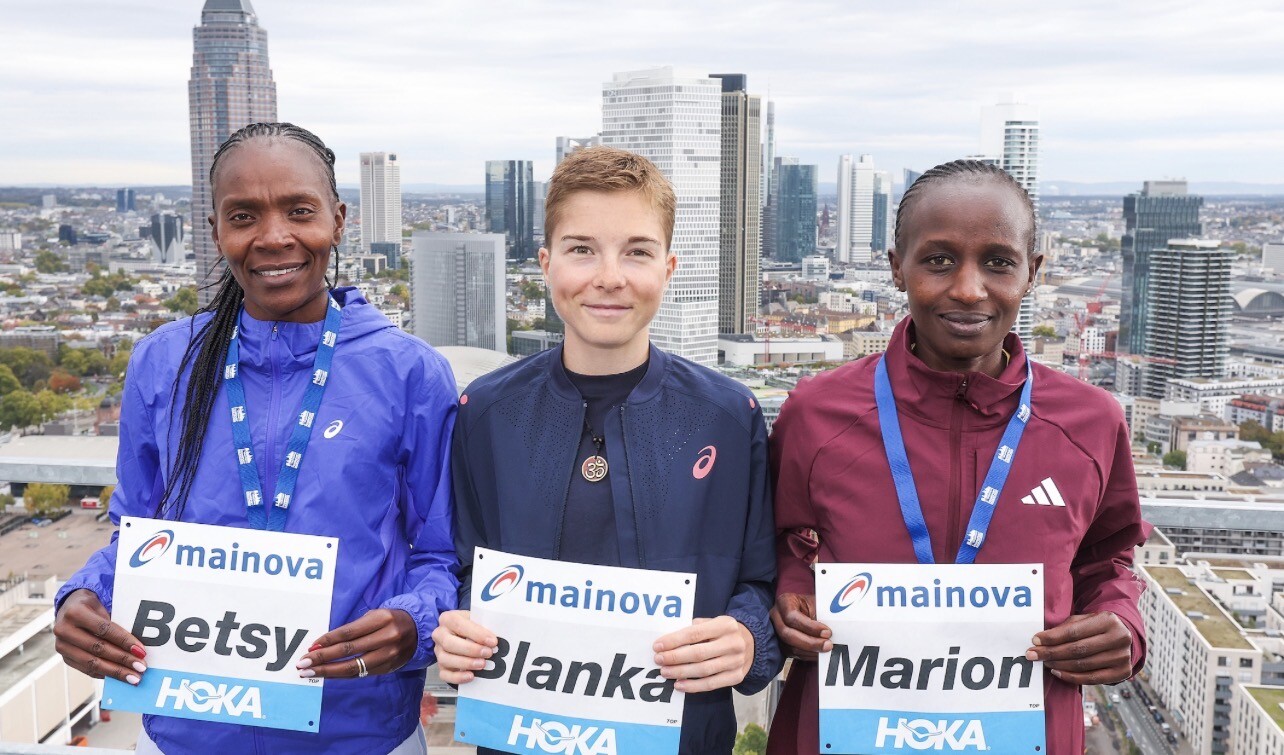
Organizers have reported a record 19,720 entries from 128 nations. The occasion also marks the final race for Jo Schindler as race director.
“We are absolutely delighted with this record number of entries. Over the past 25 years, we have taken the Mainova Frankfurt Marathon to a whole new level in every aspect,” Schindler said.
Germany’s Best Take Center Stage
Leading the men’s field is Amanal Petros, the German record-holder at 2:04:03, who won the European marathon title in Birmingham in August. He arrives with ambitions that could extend beyond his own national mark to the European record of 2:03:36.
“My training in Kenya went very well. If the weather is on my side, it could happen,” Petros said. “I have been dreaming of breaking the European record for several years now.”
A European record would also take him under Wilson Kipsang’s Frankfurt course record of 2:03:42, set in 2011.
Petros will face a strong domestic challenge from Samuel Fitwi, whose 2:04:45 runner-up finish in Hamburg in April is the fastest German performance this year.
“If the weather is good, the German record is within reach on the flat course in Frankfurt. I am well prepared and definitely want to beat my personal best,” Fitwi said.
Richard Ringer, the 2022 European marathon champion, completes the leading German trio. His record-eligible personal best is 2:05:46, although he ran 2:04:47 at Boston this spring on its non-record-eligible course.
Ringer plans a more measured approach after overcoming a muscle problem following the European Championships.
“I do not expect to be running right at the front on Sunday and will probably go with a second group,” he said.
Biwott Returns With Winning Ambition
The German contenders will have plenty of international competition.
Ethiopia’s Andualem Belay brings a personal best of 2:04:44, while Kenya’s Benard Biwottreturns to the scene of his breakthrough. Biwott won his marathon debut in Frankfurt in 2024 in 2:05:54, then improved to 2:05:25 while winning the 2025 Paris Marathon.
“My aim is to win on Sunday. I think I can achieve a time of around 2:04:00,” Biwott said.
Another Kenyan, Mark Kiptoo, could deliver one of the day’s most compelling performances. Now 50, the 2014 Frankfurt champion is targeting the M50 world best of 2:19:29, set by South Africa’s Titus Mamabolo in Durban in 1991.
Kiptoo has already made masters history in Frankfurt, running 2:07:50 here in 2018.
Yimer Targets the Women’s Course Record
Ethiopia’s Zeineba Yimer leads the women’s field with a personal best of 2:18:47, set while finishing third in Barcelona this spring
The 28-year-old is seeking a turnaround after stomach problems forced her out of the Berlin Marathon four weeks ago. Her ambitions include challenging the Frankfurt course record of 2:17:25, set by Hawi Feysa in 2024.
“Now I want to make the most of the flat course in Frankfurt and set a personal best. I have also got my sights set on the course record and want to break that mark as well,” Yimer said.
American Betsy Saina, who has run 2:19:17, returns from a maternity break and is targeting a halfway split of 70:00.
Kenya’s Marion Kibor, who improved to 2:21:12 in Hamburg this spring, also hopes to break 2:20. Ethiopia’s Meskerem Assefa, the 2018 Frankfurt champion, returns with the 2:20:36 personal best she set during that victory.
Dörfel Runs on Instinct in Marathon Debut
Germany’s Blanka Dörfel adds an intriguing debut to the women’s race.
The 24-year-old ran a half-marathon personal best of 68:08 in Mainz this spring and intends to trust her feel for the pace as she moves up to the marathon.
“I will be running without a watch and will trust my instincts,” Dörfel said.
Her half-marathon performance suggests the potential for a strong debut. The German women’s debut benchmark is 2:23:57, set by Melat Kejeta in Berlin in 2019.
Elite Runners with Personal Bests
MEN
Amanal Petros GER 2:04:03
Andualem Belay ETH 2:04:44
Samuel Fitwi GER 2:04:45
Richard Ringer GER 2:04:47
Benard Biwott KEN 2:05:25
Haimro Alame ISR 2:06:04
Antenayehu Dagnachew ETH 2:06:55
Jiregna Geleta ETH 2:06:57
Derara Hurisa ETH 2:08:09
Jirata Dinki ETH 2:08:18
Abe Gashahun ETH 2:08:35
Lemawork Ketema AUT 2:10:44
WOMEN
Zeineba Yimer ETH 2:18:47
Betsy Saina USA 2:19:17
Meskerem Assefa ETH 2:20:36
Siranesh Yirga ETH 2:21:08
Marion Kibor KEN 2:21:12
Janet Ruguru KEN 2:23:00
Mehret Gemeda ETH 2:23:29
Milicent Jelimo KEN 2:24:19
Obse Abdeta ETH 2:27:14
Martina Strähl SUI 2:28:07
Selam Fente ETH 2:28:22
Aselef Amare ETH 2:28:47
Blanka Dörfel GER Debut
by Race News Service
Login to leave a comment
Mainova Frankfurt Marathon
Frankfurt is an unexpectedly traditional and charming city, with half-timbered buildings huddled in its quaint medieval Altstadt (old city), cosy apple wine taverns serving hearty regional food, village-like neighbourhoods filled with outdoor cafes, boutiques and street art, and beautiful parks, gardens and riverside paths. The city's cache of museums is second in Germany only to Berlin’s, and its nightlife...
more...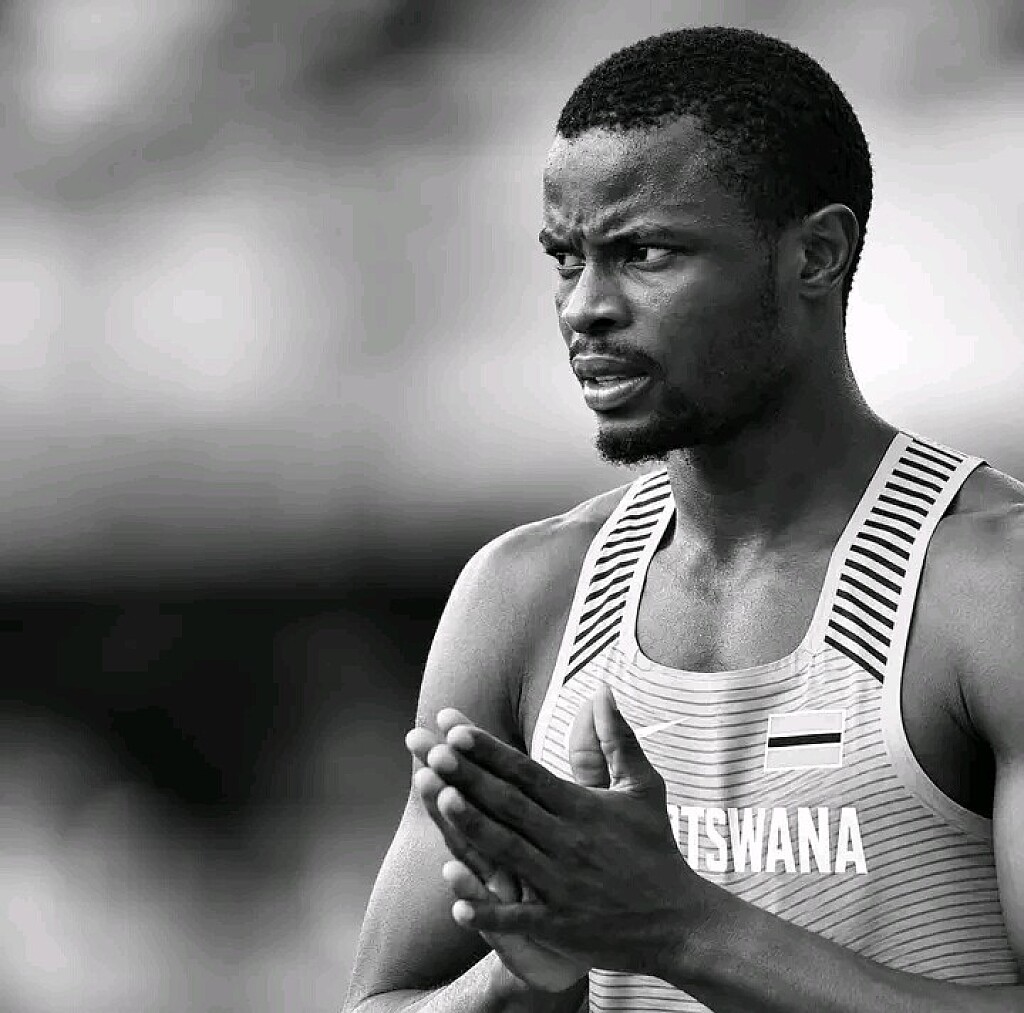
Botswana Athletics Mourns Gaone ‘Lux’ Maotoanong, Commonwealth Games Gold Medallist And Former National Team Sprinter
Botswana’s athletics community is mourning the sudden death of former national team sprinter Gaone Leaname Maotoanong, affectionately known as “Lux,” who represented his country at major international championships and played a significant role in its relay success.
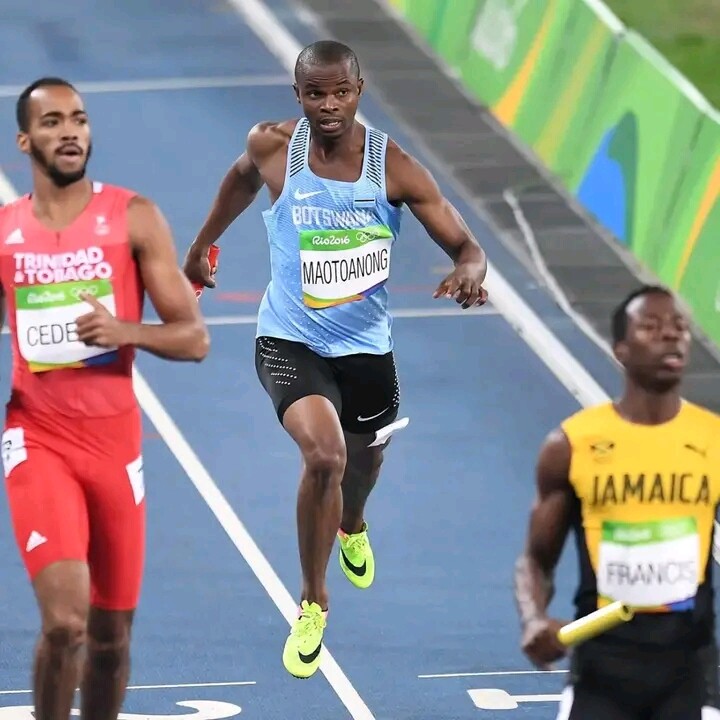
The Botswana Athletics Association (BAA) announced his passing in a bereavement notice issued on October 22, 2026, paying tribute to an athlete whose dedication, talent and commitment to excellence earned him respect across the athletics fraternity. Maotoanong was born in 1991 and died in 2026.
Throughout his career, Maotoanong proudly wore Botswana’s national colours on some of the biggest stages in athletics, contributing to the country’s growing reputation in the men’s 4x400m relay. His international achievements included competing at the Olympic Games, World Athletics Championships, Commonwealth Games, World Athletics Relays and continental championships.
One of the standout moments of his career came at the 2018 Commonwealth Games on the Gold Coast in Australia, where he was part of Botswana’s gold-medal-winning 4x400m relay team. The victory represented a major achievement for the southern African nation and reinforced its standing among the leading relay teams on the continent.
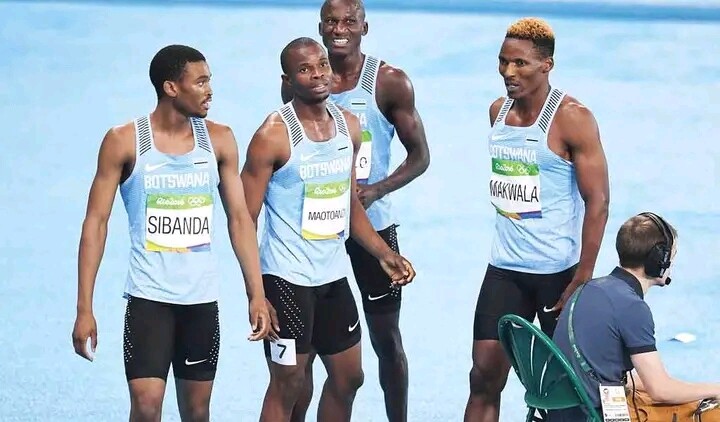
Maotoanong also represented Botswana at the 2016 Rio Olympic Games, where the national 4x400m relay team reached the final and finished fifth. He subsequently featured in the country’s relay squad at the 2019 World Athletics Championships in Doha, Qatar, having also competed at the 2015 edition in Beijing, China.
His experience on the global stage extended to the World Athletics Relays in the Bahamas in 2015 and 2017, where Botswana’s 4x400m relay teams reached the finals. These appearances reflected his place within a generation of athletes helping Botswana establish itself as a consistent presence in international relay competition.
At continental level, Maotoanong enjoyed further success, winning gold in the 4x400m relay at the African Championships in Marrakech, Morocco, in 2014 and again in Durban, South Africa, in 2016. He also helped Botswana secure silver in the relay at the 2015 African Games in Brazzaville, Republic of the Congo.
His achievements were not limited to relay racing. Maotoanong demonstrated his individual ability in the 400m by winning silver at the 2015 World University Games in Gwangju, South Korea, adding another significant accomplishment to his international career.
Beyond his appearances at major championships, he competed at the Commonwealth Games, African Games, African Championships, Diamond League meetings and numerous other international competitions, building a career defined by service to his country and commitment to athletics.
A Legacy Beyond The Track
Maotoanong’s contribution to Botswana athletics extended beyond competition. According to the BAA, he served as a member of the Botswana National Olympic Committee (BNOC) Athletes’ Commission from 2022 to 2025, where he contributed to efforts to advance athletes’ interests and welfare.
The role reflected another dimension of his involvement in sport, demonstrating a commitment to athlete representation and sports development beyond his own performances on the track.
In its tribute, the BAA remembered Maotoanong as an athlete, leader, mentor and friend whose contributions had left a lasting mark on Botswana athletics. The association also extended its condolences to his family, friends, teammates and everyone who had the privilege of knowing him.
His passing represents a profound loss for Botswana’s sporting community, particularly those who shared in the country’s relay achievements and witnessed his dedication to representing the national team. His legacy will remain part of the story of Botswana’s development as a force in African and international athletics.
As tributes emerge, Maotoanong will be remembered not only for the medals and championships he helped his country achieve, but also for his service to fellow athletes and his contribution to the wider sporting fraternity.
Funeral arrangements are expected to be communicated by the Botswana Athletics Association in due course.
Gaone “Lux” Maotoanong’s name will endure in Botswana athletics as a reminder of a career spent representing his country with pride, both on the track and in service to the athletes who followed.
by Erick Cheruiyot for My Best Runs.
Login to leave a comment
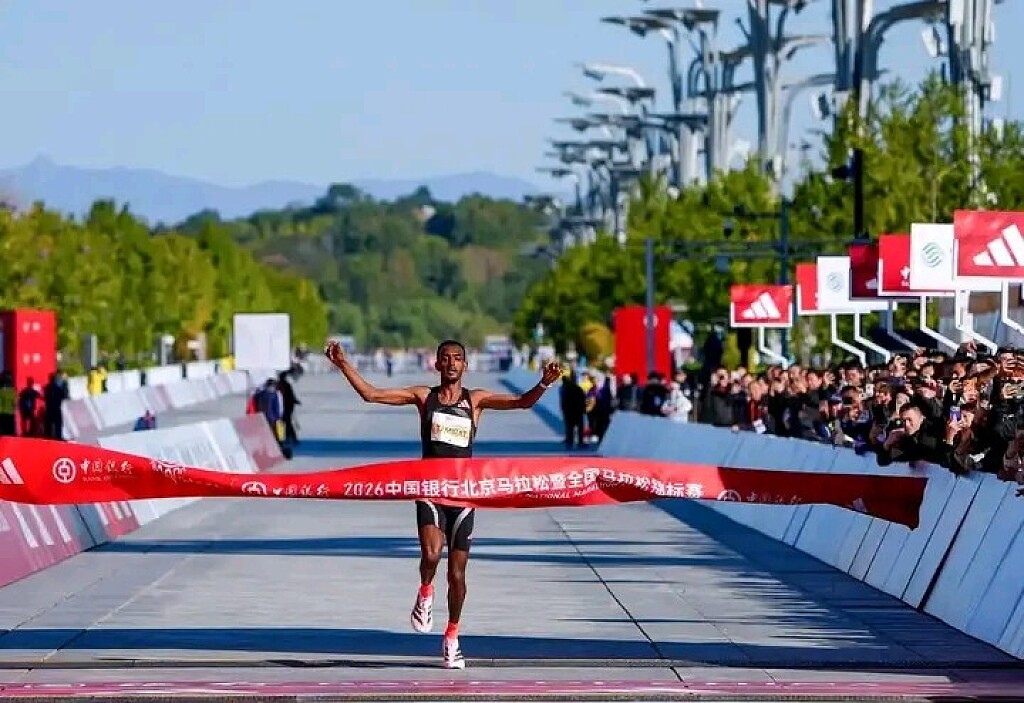
Tamirat Tola Shatters Beijing Marathon Record With 2:03:10 as Ethiopia Dominates in China
Ethiopia’s Olympic marathon champion Tamirat Tola delivered a sensational performance at the 2026 Bank of China Beijing Marathon, storming to victory in 2:03:10 on Sunday, October 18, to set a new course record and establish the fastest marathon time ever recorded on Chinese soil.
Tola produced a commanding display in the Chinese capital, becoming the first man to break 2:04 at the Beijing Marathon. His remarkable performance demolished the previous course record of 2:07:06 by almost four minutes, underlining his position among the world’s leading marathon runners.
The Ethiopian star also surpassed the previous reported best marathon time on Chinese soil of 2:05:34, set by a Kenyan runner in Shanghai in 2023, ushering in a new era for marathon running in China with his outstanding 2:03:10 performance.
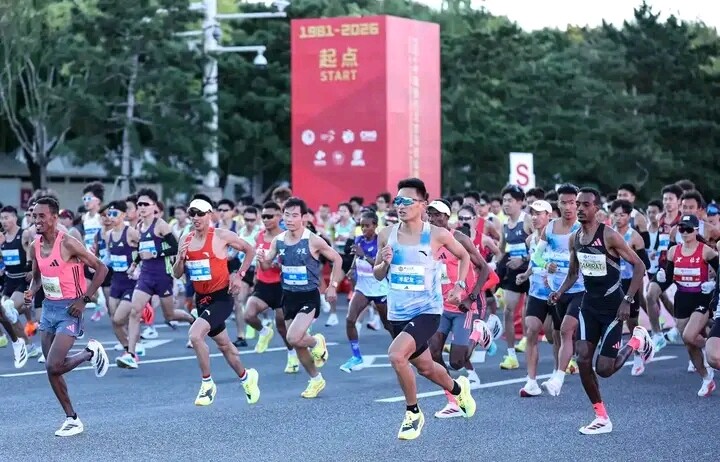
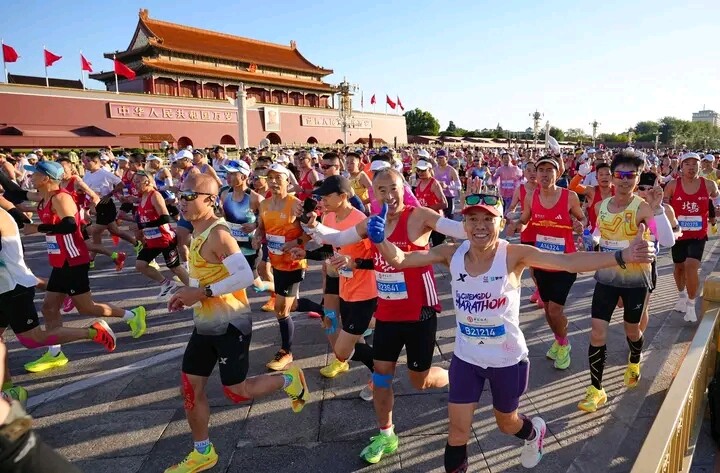
The 2026 Beijing Marathon and National Marathon Championships attracted approximately 32,000 runners, transforming the streets of the Chinese capital into a celebration of distance running. The race began near the iconic Tian’anmen Square before heading towards the Olympic Park, with elite athletes and amateur runners setting off together under the same starting gun on a beautiful autumn morning.

More than 23,000 participants, representing over 70 per cent of the field, travelled from outside Beijing, highlighting the event’s national appeal and its ability to bring together runners from across China and beyond. The combination of world-class competition and mass participation made the marathon a major sporting occasion, with Tola’s record-breaking run providing the standout performance of the day.
Over more than four decades, the Beijing Marathon has evolved through changing courses, growing participation and increasingly impressive performances. However, its connection to the Chinese capital’s distinctive identity remains unchanged. Known as the “Dual Olympic City” for hosting the 2008 Summer Olympics and the 2022 Winter Olympics, Beijing once again provided a memorable stage for an event that combined elite athletics, community participation and the beauty of the city in autumn.
Ethiopia completed a clean sweep of the men’s podium, demonstrating the country’s remarkable depth in marathon running. Muktar Edris finished second in 2:04:34, while Adane Kebede Gebre took third place in 2:05:10, giving Ethiopia all three top positions in a high-quality international field.
China’s Dalin Li led the home contingent in fourth place in 2:08:30, followed by compatriot Tianyu Chen in fifth in 2:09:09. Fakun Jiang finished sixth in 2:09:29, while Yunce Xie secured seventh in 2:09:47. Jinh u Mao placed eighth in 2:10:39, Shaohui Yang finished ninth in 2:10:42, and Ciren Zhaxi completed the men’s top 10 in 2:11:13, rounding off a competitive race dominated by Ethiopia at the front and featuring a strong Chinese presence among the leading finishers.
Tola, the Paris 2024 Olympic marathon champion, arrived in Beijing with high expectations and delivered emphatically. His performance not only rewrote the course record but also established a new benchmark for marathon racing in China, making the 2026 edition a landmark moment for the event.
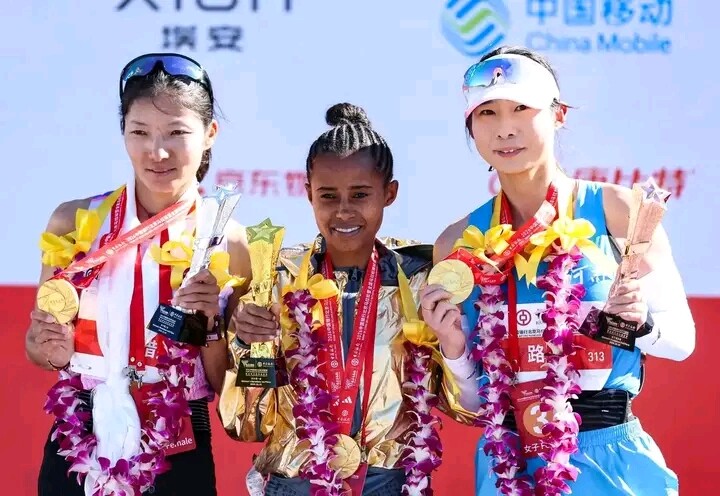
Anchinalu Dessie Leads Ethiopian Success in Women’s Race
Ethiopia also celebrated victory in the women’s race, with Anchinalu Dessie Genaneh taking the title in 2:20:36 after an impressive performance over the 42.195-kilometre distance.
Dessie’s victory gave Ethiopia a memorable double at the Beijing Marathon, with the East African nation claiming the top spot in both elite races. China’s Cuomu Ciren finished second in 2:23:48 to lead the home challenge, while compatriot Ying Lu secured third place in 2:24:24.
The women’s race also showcased considerable depth, with nine athletes finishing inside 2:30:00. Qing Zhu placed fourth in 2:27:26, followed by Yuyu Xia in 2:27:33. North Korea’s Hye-Song Kim finished sixth in 2:28:14, ahead of Shuangshuang Xu in 2:28:25 and Yiting Yang in 2:28:47. Hongmei Jiang took ninth in 2:29:56, while Yi Tian completed the top 10 in 2:30:31.
The 2026 Beijing Marathon will be remembered for Tola’s extraordinary course-record victory, Ethiopia’s dominance in the men’s race and the country’s success in the women’s contest. With tens of thousands of participants filling the streets, the event once again demonstrated the power of marathon running to unite elite athletes and everyday runners in one of the world’s most historic cities.
by Erick Cheruiyot for My Best Runs.
Login to leave a comment

Beijing Marathon
The Beijing Marathon is an annual marathon held in Beijing, People's Republic of China. The race was first held in 1981 and has been held every year since. The race begins at Tiananmen Square and finishes at the National Olympic SportsCenter stadium. Beijing Marathon is now a full marathon only marathon race. At the 2009 edition of the race, 4897...
more...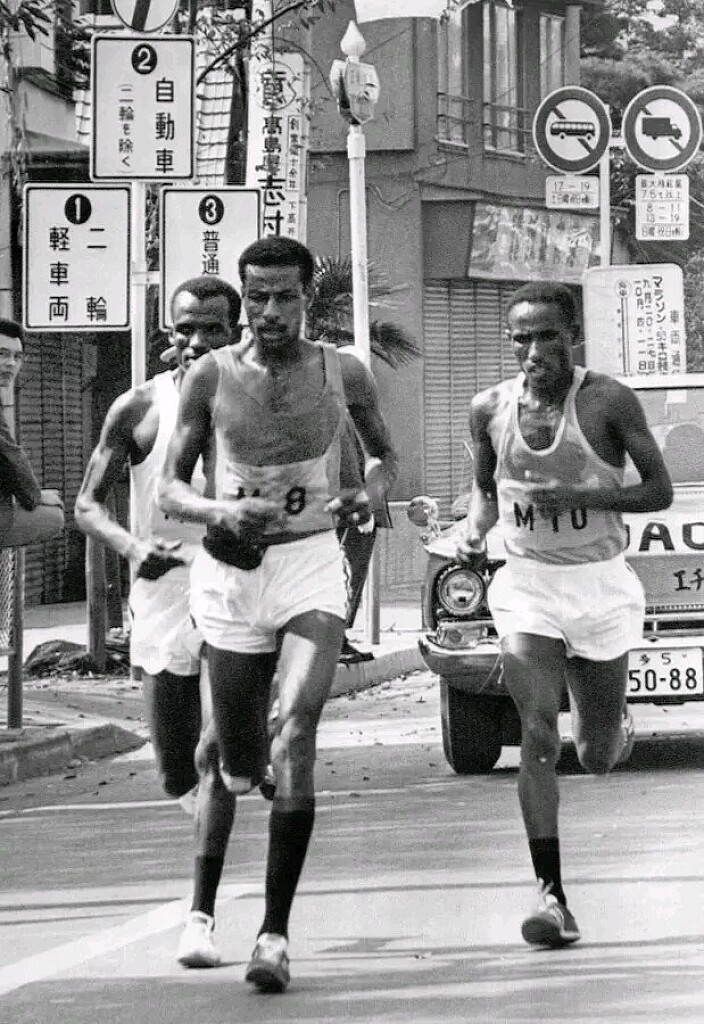
Abebe Bikila’s Historic Double: The Ethiopian Legend Who Conquered The Olympic Marathon Twice
On This Day in 1964, Ethiopian distance-running legend Abebe Bikila cemented his place among the greatest marathon runners in history, winning his second consecutive Olympic marathon gold medal at the Tokyo Games with a sensational world-record performance.
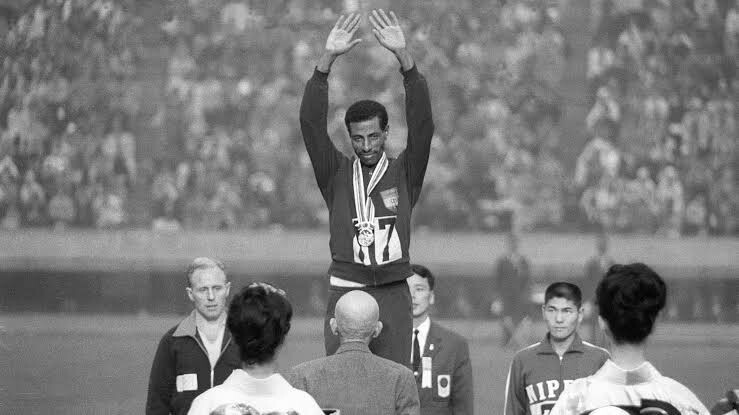
Four years after making history at the 1960 Rome Olympics, Bikila returned to the biggest stage in athletics and delivered another extraordinary display of endurance, determination and class. He crossed the finish line in 2:12:11.2, setting a new world record and Olympic record to become the first athlete to successfully defend the men’s Olympic marathon title.
His triumph in Tokyo was particularly remarkable because it came just weeks after he underwent an appendectomy. Despite the setback, the Ethiopian champion demonstrated exceptional resilience, proving once again that his greatness extended far beyond his remarkable physical abilities.
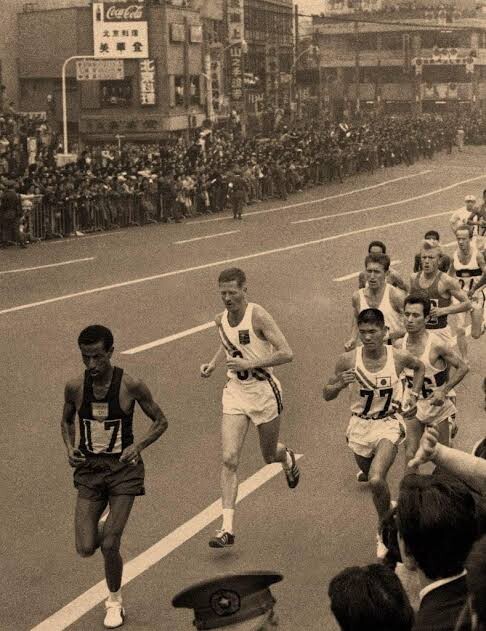
Bikila had first announced himself to the world in Rome in 1960, where he won the Olympic marathon in 2:15:16.2, establishing a world record. Running barefoot on the streets of the Italian capital, he became an international sensation and the first athlete from sub-Saharan Africa to win an Olympic gold medal.
His victory carried enormous historical significance, making him a symbol of African sporting excellence and inspiring generations of distance runners across Ethiopia and the wider continent.
At Tokyo 1964, Bikila returned in even more commanding fashion. This time, he wore running shoes as he navigated the Japanese capital’s streets, producing a masterful performance to finish more than four minutes ahead of his closest rival. His winning time of 2:12:11.2 lowered his own world record by 3 minutes and 5 seconds, an astonishing improvement at the highest level of marathon running.
Great Britain’s Basil Heatley claimed the silver medal in 2:16:19.2, while Japan’s Kōkichi Tsuburaya delighted the home crowd by securing bronze in 2:16:22.8.
The Tokyo podium reflected Bikila’s extraordinary superiority on the day, as he once again demonstrated his ability to rise to the occasion when Olympic glory was at stake.
Bikila’s back-to-back victories established a rare benchmark in Olympic marathon history. Only three men have successfully defended the Olympic marathon title: Bikila in 1960 and 1964, East Germany’s Waldemar Cierpinski in 1976 and 1980, and Kenya’s Eliud Kipchoge in 2016 and 2021.
Cierpinski and Kipchoge would later join the Ethiopian in this exclusive club, but Bikila remains the man who first achieved the feat, setting a standard that endured for more than half a century before Kipchoge became the third man to accomplish it.
Beyond his medals and records, Bikila’s legacy rests on the barriers he broke and the inspiration he provided. His performances helped establish Ethiopia as a global distance-running powerhouse and opened the door for generations of African athletes to excel on the international stage.
More than six decades after his Tokyo triumph, Abebe Bikila’s name remains synonymous with courage, endurance and Olympic greatness. His remarkable achievement in 1964 was not merely another marathon victory; it was a defining moment in the history of athletics, securing his place among the sport’s most enduring legends.
by Erick Cheruiyot for My Best Runs.
Login to leave a comment
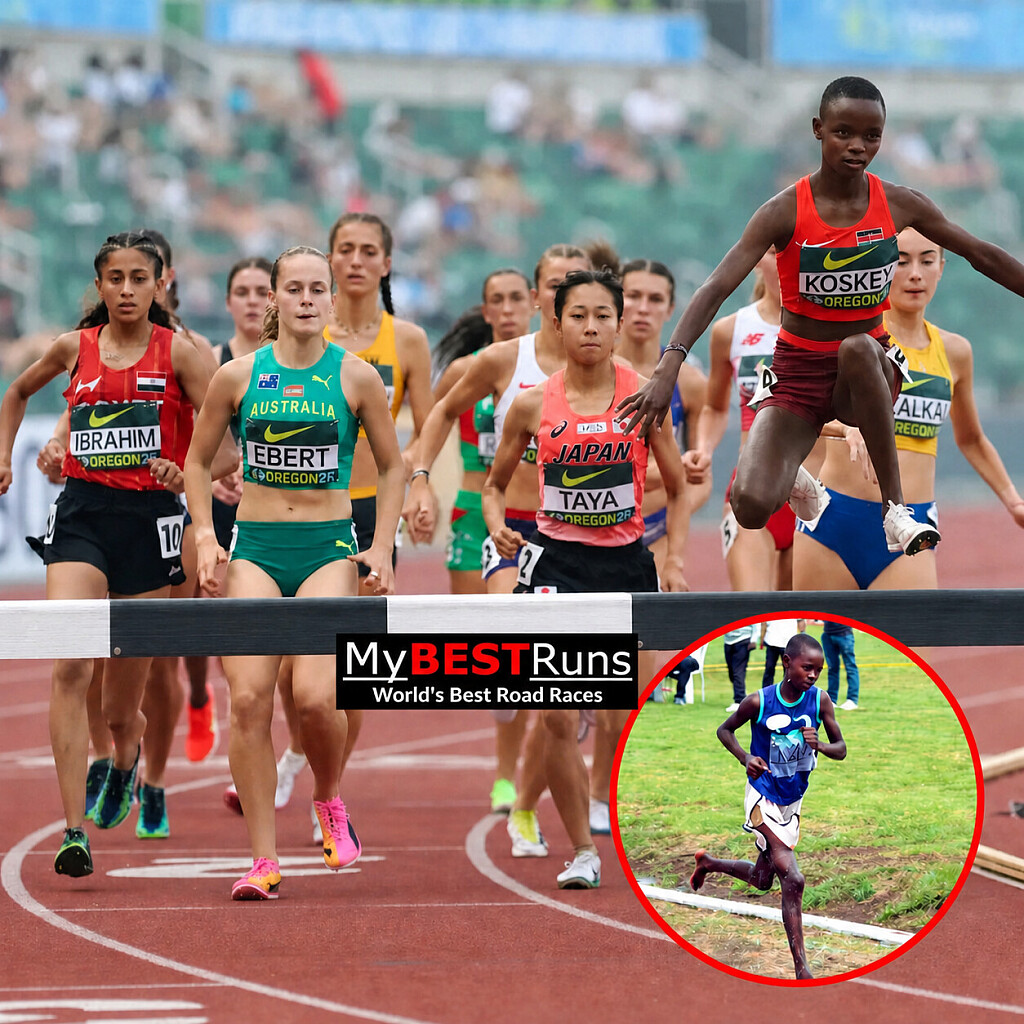
From Barefoot Dreams To The World Stage: Mercy Kosgei’s Remarkable Rise
From running barefoot on a school track in Kenya to competing on the international stage and signing a landmark deal with a global sportswear brand, Mercy Chepngeno Kosgei’s journey is a powerful story of determination, talent and unwavering belief.
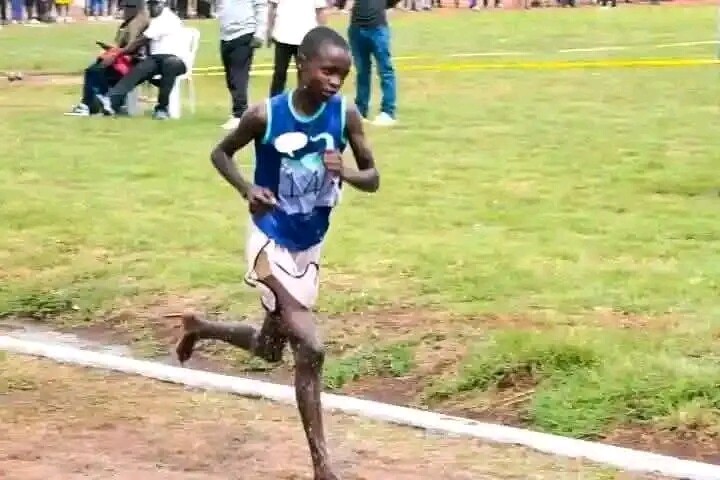
In March 2024, then just 17 years old, Kosgei captured widespread attention when she won the 3,000m steeplechase at the Rift Valley Regional Secondary Schools Championships in Nandi — without a pair of racing shoes on her feet.
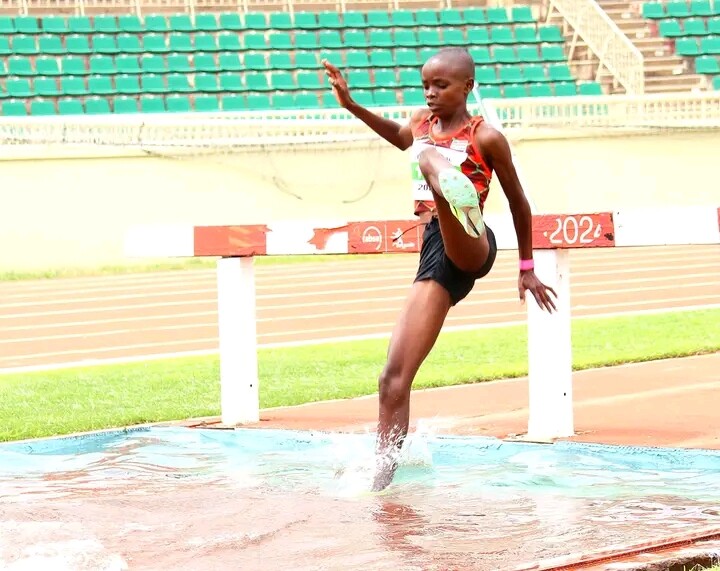
What could have been seen as a simple race became the beginning of something much bigger. Her barefoot victory quickly drew attention, shining a spotlight on a young athlete whose talent was already far greater than the resources available to her.
But the viral moment was only the opening chapter.

Kosgei continued to develop rapidly, proving that her success was not built on one extraordinary performance. In 2025, she claimed silver at the African U20 Championships in Nigeria, establishing herself among the continent’s promising young middle- and long-distance athletes.
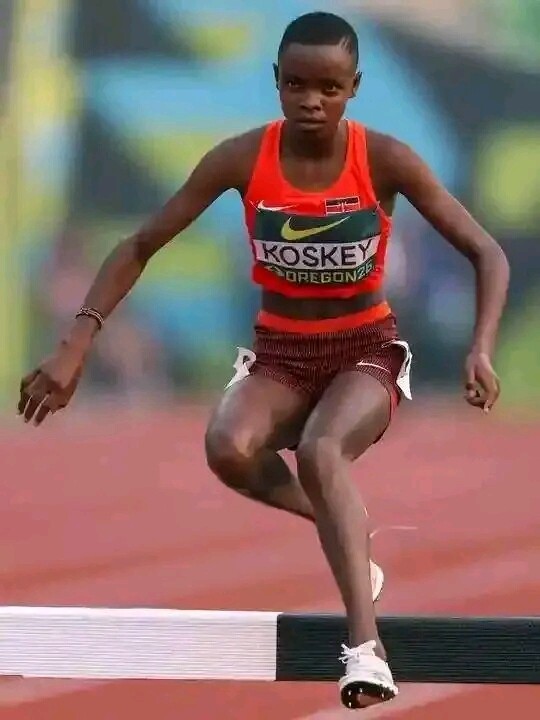
She took another major step forward in 2026. At the Thika Weekend Meet, Kosgei produced a memorable double, winning both the 1,500m and 3,000m steeplechase.
Her progress continued at the African Championships in Accra, where she secured silver in the steeplechase and lowered her personal best to an impressive 9:30.47.
Later in the year, she reached an even bigger stage, representing Kenya at the World Athletics U20 Championships in Eugene, Oregon — another significant milestone in a career that has developed at remarkable speed.
Away from the track, February 2026 brought another defining moment. Kosgei signed a Name, Image and Likeness (NIL) agreement with Swiss sportswear company On, marking a major breakthrough for the young Kenyan and placing her among a new generation of athletes attracting international attention at an early stage of their careers.
Yet behind the medals, contracts and international appearances is a young woman who remains grounded in her ambitions beyond athletics.
Hailing from Lesirwo village in Kericho County, Kosgei continues to balance education with the demanding routine of training and competition. Her dream extends beyond becoming a champion athlete — she also hopes to become a medical doctor.
That combination of ambition makes her journey even more compelling.
Her story began without expensive equipment or the privileges often associated with elite sport. It began with bare feet, determination and a dream.
Today, those same dreams have carried Mercy Chepngeno Kosgei from the school fields of Kenya to the international stage.
And if her journey so far is anything to go by, the barefoot girl who once captured the imagination of Kenyan athletics fans may only be getting started.
by Erick Cheruiyot for My Best Runs.
Login to leave a comment
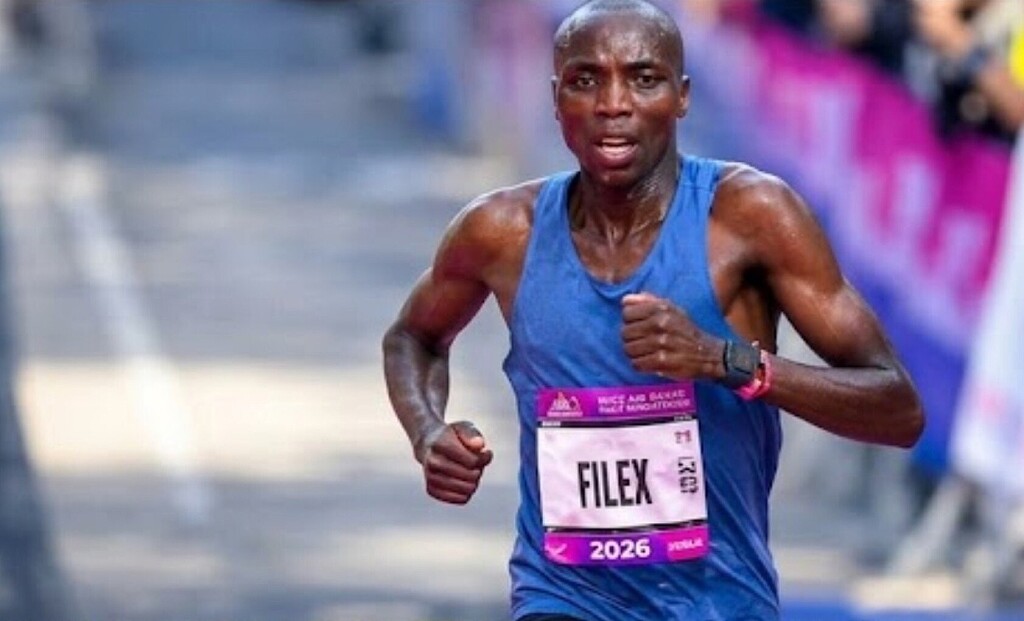
Filex Kibet Smashes Course Record as Netsanet Desta Claims Women’s Crown at Rome Half Marathon
Kenya’s Filex Kibet delivered a sensational performance at the 2026 Wizz Air Rome Half Marathon by Brooks, storming to victory in a remarkable 59:22 to establish a new men’s course record and headline an impressive display of distance running in the Italian capital.
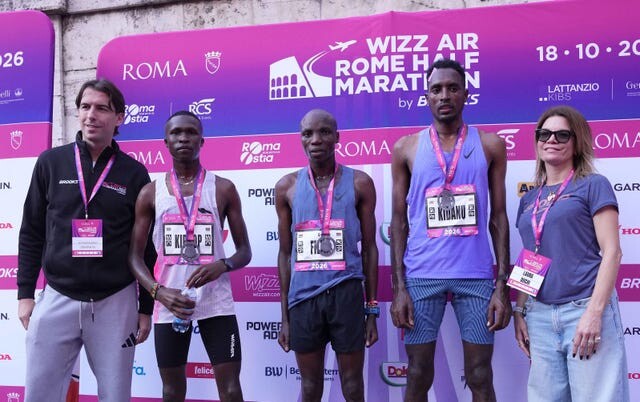
The Kenyan produced a commanding performance over the 21.0975km distance, combining speed, endurance and tactical discipline to secure the prestigious title. His record-breaking achievement was the defining moment of an exciting competition that brought together some of the finest road-running talents from East Africa.
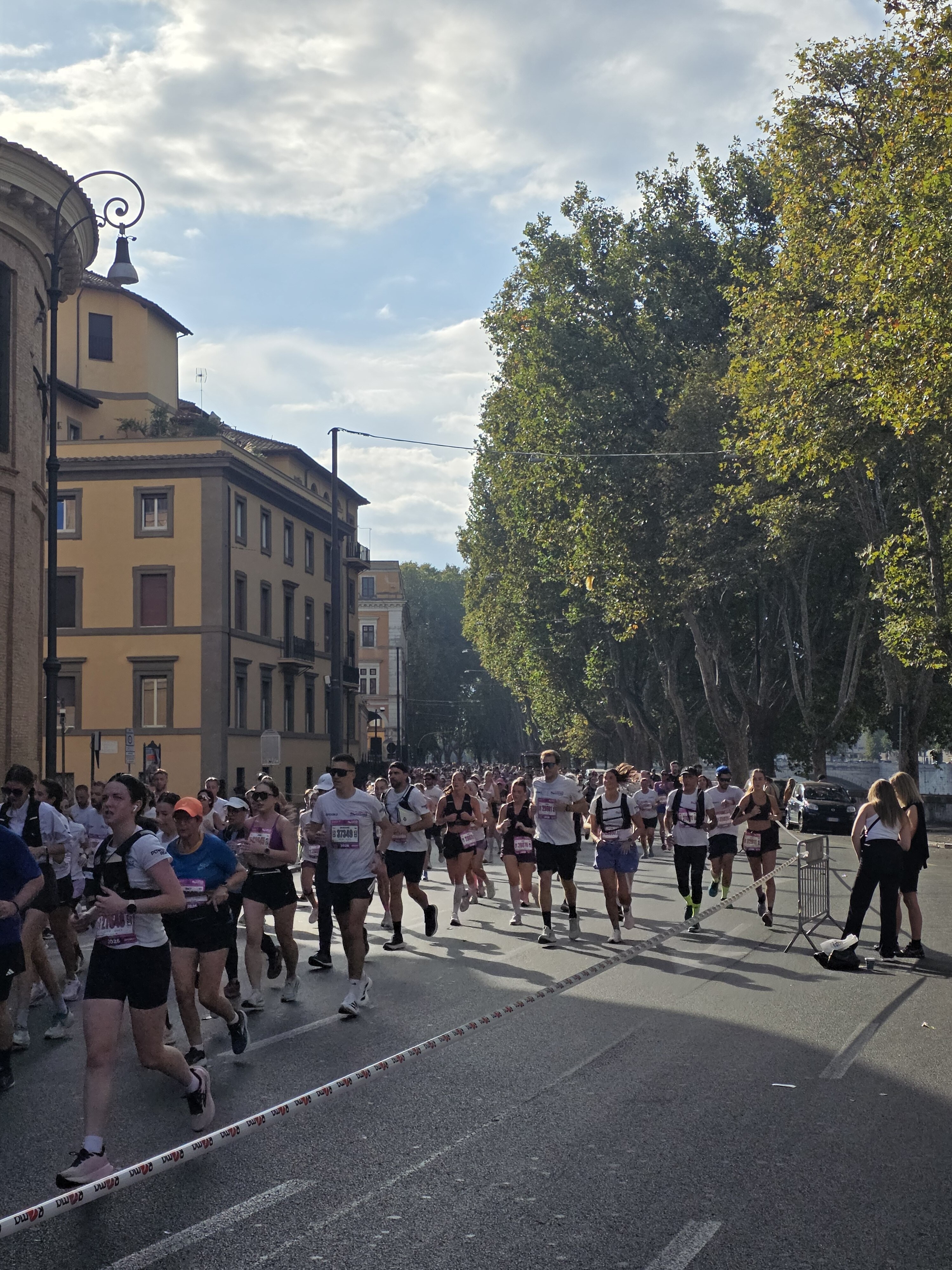
Kibet's winning time not only secured him a place in the event's history but also demonstrated his ability to compete at an exceptional level on the international road-running circuit. Breaking the one-hour barrier in a half marathon remains a significant benchmark in elite distance running, and his performance underlined the quality of the men's field.
Ethiopia's Selemon Atakiti Kidanu emerged as one of the standout performers of the day, producing an outstanding half-marathon debut to finish second in 59:38. Despite competing over the distance for the first time, the Ethiopian displayed remarkable composure and endurance, crossing the finish line just 16 seconds behind the eventual champion.
Kenya's Elisha Kiprop completed the men's podium after clocking 1:00:13, ensuring that two Kenyan athletes finished among the top three. His performance added further strength to Kenya's presence in a highly competitive race that saw the leading contenders produce impressive times on the streets of Rome.
While Kibet dominated the headlines in the men's competition, Ethiopia's Netsanet Desta delivered an equally impressive performance in the women's race, claiming victory in 1:07:26 to complete a memorable day of elite road racing.
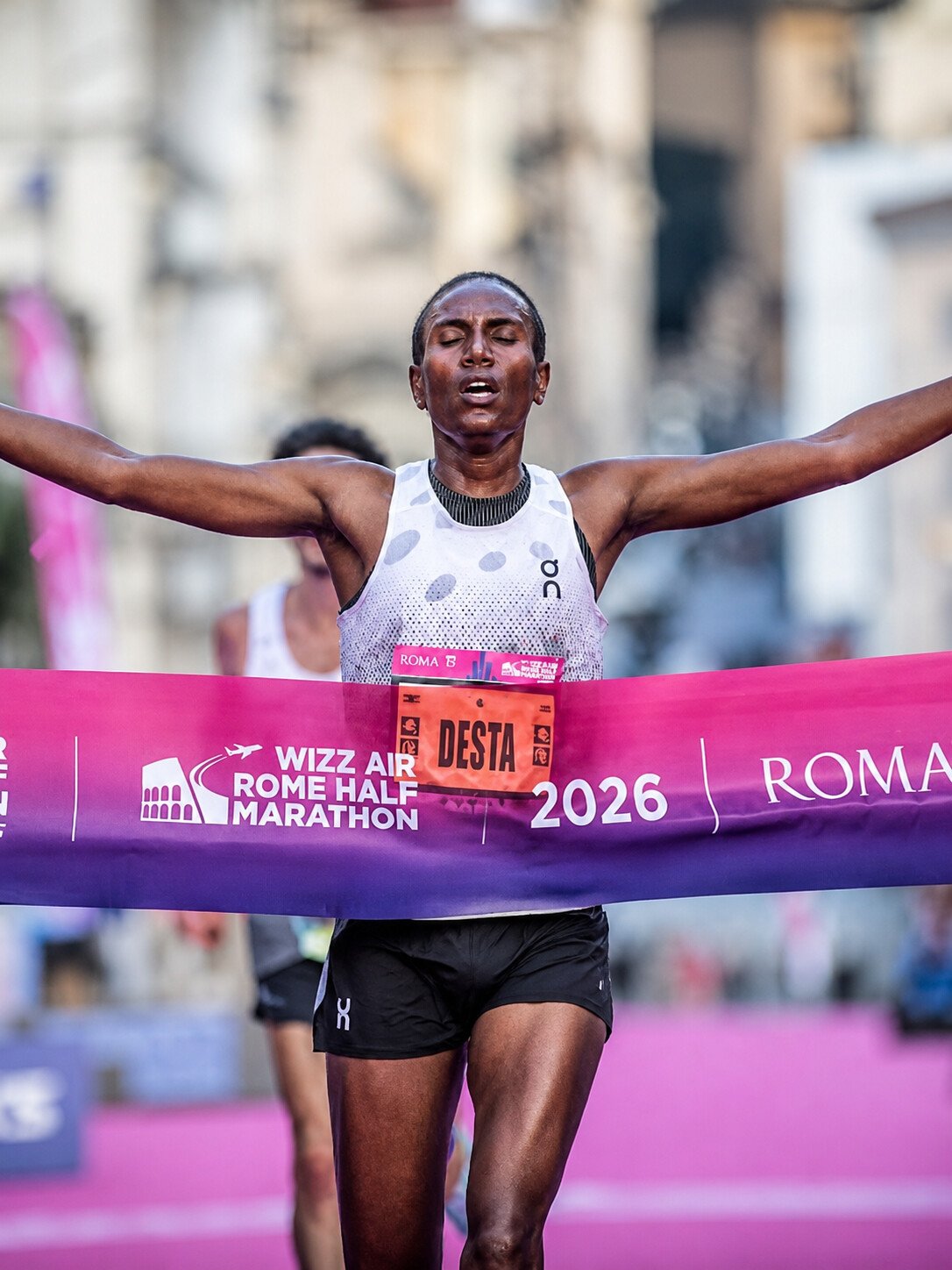
Desta demonstrated exceptional consistency throughout the demanding half-marathon distance, maintaining the pace necessary to overcome a competitive field and secure the women's title. Her victory highlighted Ethiopia's continued strength in international distance running.
Kenya's Regina Wambui Ndungu mounted a strong challenge but ultimately settled for second place in 1:07:48, finishing 22 seconds behind the Ethiopian champion. Ndungu's performance ensured Kenya was represented on both the men's and women's podiums.
Ethiopia's Yalemget Yaregal rounded out the women's top three, crossing the finish line in 1:08:22 to complete an impressive Ethiopian showing in the women's competition.
The contrasting victories of Kibet and Desta provided the perfect storyline for an event that continues to attract accomplished distance runners to one of Europe's most historic cities. With athletes competing against the clock and one another, the race delivered both a new course record and an impressive collection of performances.
For Kibet, the achievement represents another significant milestone, with his name now attached to the men's course record. His 59:22 performance establishes a new standard for future competitors seeking success at the Rome Half Marathon.
Kidanu's impressive debut also offered a glimpse of his potential over the distance, while the strong performances of Kiprop, Ndungu and Yaregal further demonstrated the depth of talent competing at the event.
The 2026 edition will be remembered particularly for Kibet's record-breaking triumph, as the Kenyan's exceptional run added a new chapter to the race's history and reinforced Rome's growing reputation as a destination for elite international road racing.
With the men's course record rewritten and two deserving champions crowned, the Italian capital once again provided a memorable stage for some of the world's most accomplished distance-running talents.
by Erick Cheruiyot for My Best Runs.
Login to leave a comment

Rome Half Marathon
An unforgettable race through the heart of Rome! The Rome Half Marathon will be an amazing opportunity to discover the city’s gems. The route, 21.0975 km long, will pass through the city center, crossing the city’s most iconic landmarks, including the Colosseum, the Circus Maximus, the Baths of Caracalla, Piazza Navona and many other historical sites. This incredible half marathon...
more...
Leonard Langat Leads Kenyan Clean Sweep With Title Defence At Toronto Waterfront Marathon
Kenya delivered a commanding performance at the 2026 TCS Toronto Waterfront Marathon, as Leonard Langat successfully defended his title and led a remarkable Kenyan sweep of the men’s podium in Toronto, Canada.

Langat crossed the finish line in 2:06:51, confirming his dominance for a second consecutive year. The Kenyan distance runner once again demonstrated his strength and consistency over the 42.195-kilometre distance, retaining the crown he claimed in 2025.
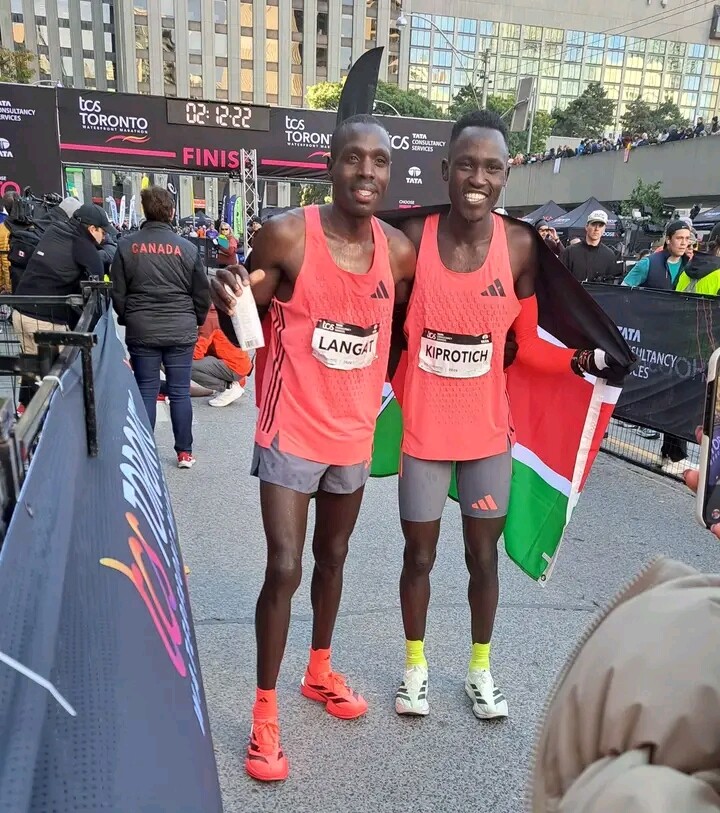
Fellow Kenyan Noah Kipkemboi secured second place in an impressive 2:07:21, while Fanny Kiprotich completed the all-Kenyan podium, finishing third in 2:07:25. The narrow four-second gap between Kipkemboi and Kiprotich added further intrigue to an outstanding Kenyan display.
Kenya’s dominance extended beyond the podium, with Absel Rutto finishing fourth in 2:07:32 and Elvis Cheboi taking fifth. The top five positions were occupied entirely by Kenyan athletes, underlining the country's remarkable depth and continued strength in international marathon running.
Langat's successful title defence was the highlight of a memorable day for Kenya, with three compatriots securing the podium places and five finishing among the top five. The performance reinforced Kenya's reputation as a powerhouse in long-distance running and demonstrated the country's ability to produce world-class marathoners.
The defending champion's victory was particularly significant given the competitive nature of the field, which featured accomplished marathon runners determined to challenge his supremacy. However, Langat rose to the occasion, producing another outstanding performance that demonstrated his ability to deliver under pressure on one of Canada's biggest road-running stages.
Meanwhile, Andrew Davies claimed the Canadian men's championship in 2:08:48. Davies delivered an impressive performance to become the leading Canadian finisher, earning national honours in a race that saw Kenyan athletes dominate the overall standings. His achievement provided a significant highlight for the home nation.
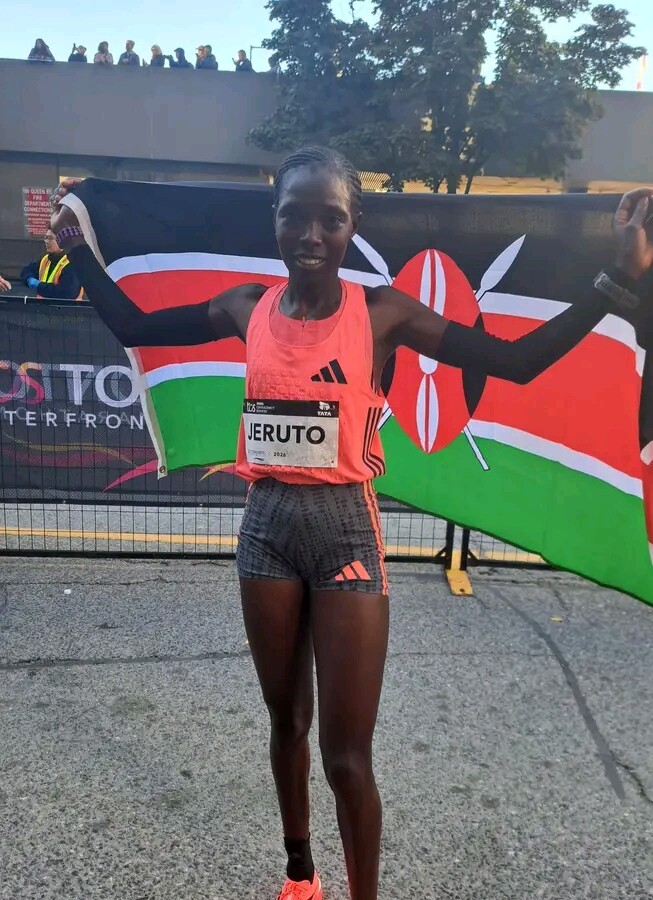
In the women's competition, Leah Jeruto emerged as the overall champion, crossing the finish line in 2:21:19 to secure victory at the 2026 TCS Toronto Waterfront Marathon. Her triumph added to Kenya's success at the event, making it another memorable outing for the country's distance-running contingent.
Jeruto faced strong competition from Ethiopia's Nigsti Haftu, who finished second in 2:21:34, just 15 seconds behind the winner. Fellow Ethiopian Ayinadis Teshome completed the women's podium in 2:22:51, while Biruktayit Degefa followed in fourth place with 2:24:07. Their performances highlighted the fierce rivalry between some of East Africa's leading marathon runners.
The women's race also demonstrated the remarkable depth of international marathon competition, with athletes from Kenya, Ethiopia and Canada producing impressive performances. Jeruto's victory, combined with Langat's successful title defence, ensured that Kenya celebrated a memorable double triumph in Toronto.
Canada also celebrated success in the women's national championship, with Dayna Pidhoresky taking the Canadian women's title in 2:26:02. Her performance highlighted the strength of the country's leading female distance runners and gave Canadian supporters another reason to celebrate at their home marathon.
Top 10 Men's Finishers – 2026 Toronto Waterfront Marathon
1. Leonard Langat (Kenya) – 2:06:51
2. Noah Kipkemboi (Kenya) – 2:07:21
3. Fanny Kiprotich (Kenya) – 2:07:25
4. Absel Rutto (Kenya) – 2:07:32
5. Elvis Cheboi (Kenya) – 2:07:37
6. Wesley Kiptoo (USA) – 2:08:08
7. Gizealew Ayana (Ethiopia) – 2:08:10
8. Yismaw Atinafu (Ethiopia) – 2:08:44
9. Andrew Davies (Canada) – 2:08:48
10. John Gay (Canada) – 2:13:01
Top 10 Women's Finishers – 2026 Toronto Waterfront Marathon
1. Leah Jeruto (Kenya) – 2:21:19
2. Nigsti Haftu (Ethiopia) – 2:21:34
3. Ayinadis Teshome (Ethiopia) – 2:22:51
4. Biruktayit Degefa (Ethiopia) – 2:24:07
5. Maritu Ketema (Kenya) – 2:24:45
6. Beatrice Cheserek (Kenya) – 2:24:54
7. Regina Cheptoo (Kenya) – 2:25:48
8. Dayna Pidhoresky (Canada) – 2:26:02
9. Betty Chepkorir (Canada) – 2:28:29
10. Florence Caron (Canada) – 2:29:37
Beyond the individual victories, the marathon once again demonstrated its importance as a major destination for elite distance runners seeking international recognition and competitive performances. The combination of established champions, emerging contenders and strong domestic representation contributed to another compelling edition of the prestigious Canadian road race.
With Langat defending his crown, Kenya sweeping the men's podium, Jeruto claiming the women's title, and Canadian champions Davies and Pidhoresky earning national honours, the 2026 TCS Toronto Waterfront Marathon delivered an impressive showcase of distance-running excellence. The event celebrated both international competition and domestic achievement, with Kenya's outstanding depth and Canada's leading runners sharing the spotlight.
by Erick Cheruiyot for My Best Runs.
Login to leave a comment
TCS Toronto Waterfront Marathon
The Scotiabank Toronto Waterfront Marathon, Half-Marathon & 5k Run / Walk is organized by Canada Running Series Inc., organizers of the Canada Running Series, "A selection of Canada's best runs!" Canada Running Series annually organizes eight events in Montreal, Toronto and Vancouver that vary in distance from the 5k to the marathon. The Scotiabank Toronto Waterfront Marathon and Half-Marathon are...
more...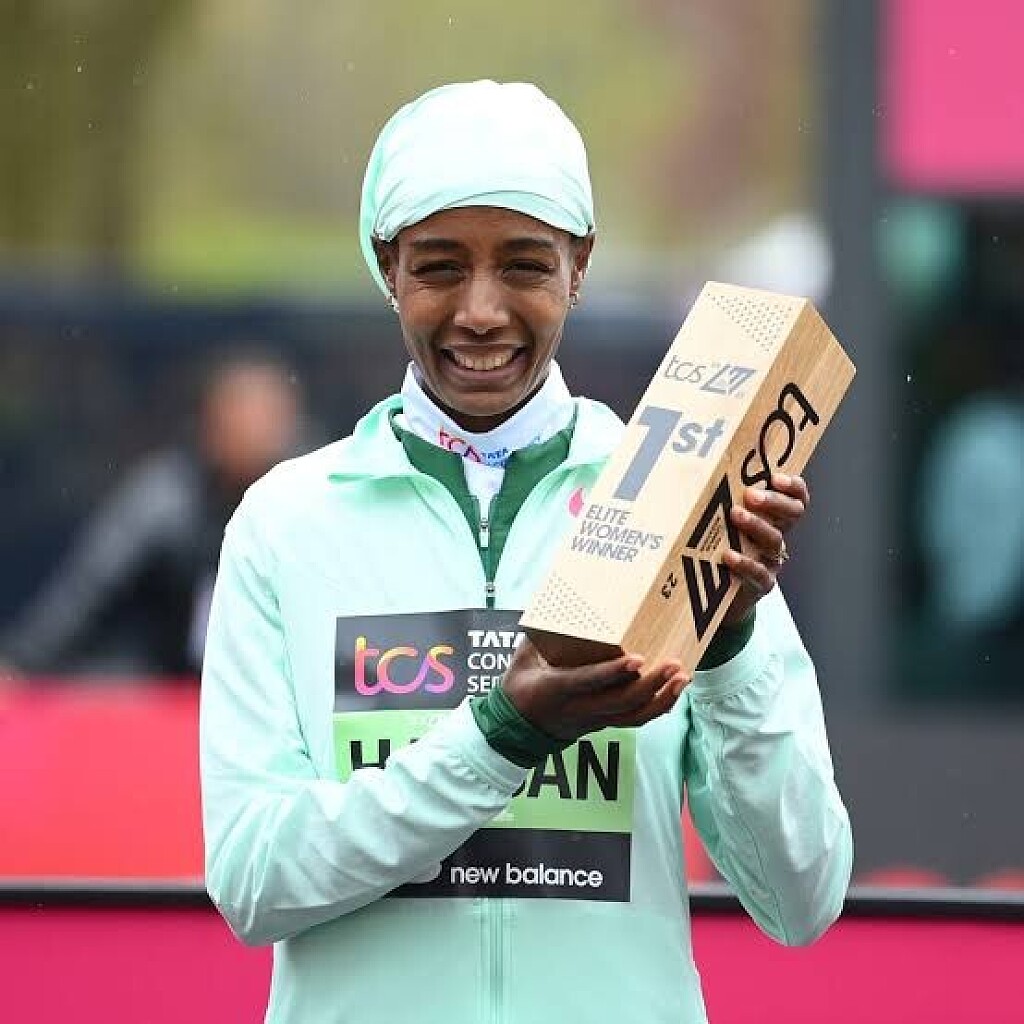
Sifan Hassan Withdraws From 2026 New York City Marathon As Illness Disrupts Her Preparation
Olympic marathon champion Sifan Hassan of the Netherlands has officially withdrawn from the 2026 TCS New York City Marathon after illness disrupted her preparations, ending hopes of seeing the versatile distance-running star return to one of the world’s most prestigious road races this autumn.
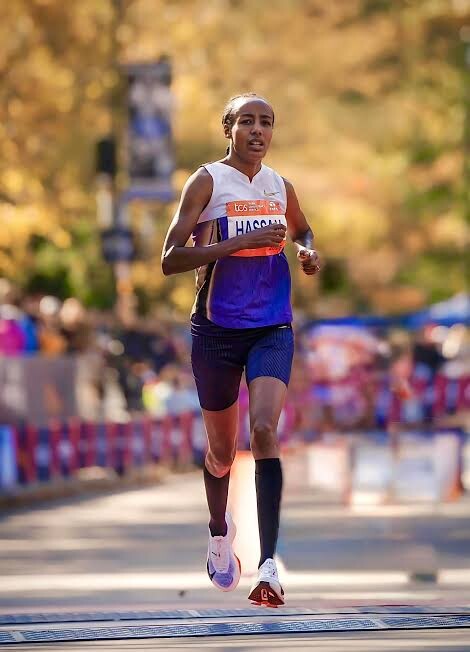
Hassan announced her decision on social media, explaining that sickness had slowed her training and left her short of the level of preparation she had hoped to achieve ahead of the November 1 race. The withdrawal is a setback for the Dutch star, who had been looking forward to returning stronger after her previous appearance in New York.
“I was so excited to come back stronger, but a sickness slowed down my training and I’m not where I wanted to be. Sometimes, things just don’t go as planned,” Hassan wrote.
Despite her disappointment, the Olympic champion also sent her best wishes to the athletes preparing to compete in New York, demonstrating her support for the wider running community even as she steps away from the competition.
Hassan, who holds a personal best of 2:13:44, ranks fifth on the women’s all-time marathon list. Her extraordinary range across track and road running has established her as one of the most versatile athletes of her generation, capable of competing at the highest level from shorter distances to the marathon.
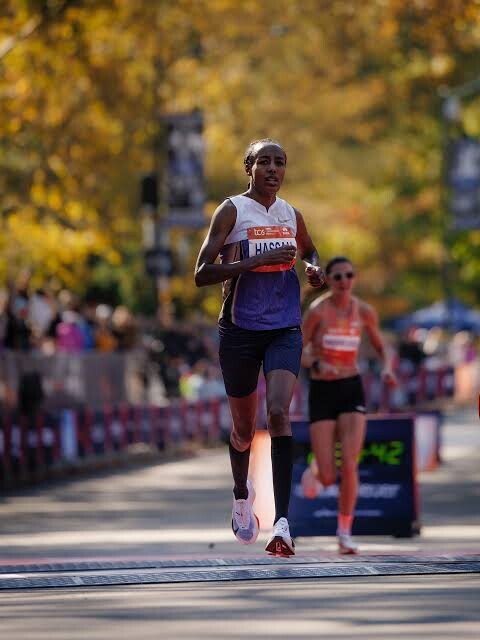
Her marathon career has already produced several memorable achievements. Hassan has won the London Marathon and Chicago Marathon, claimed victory at the Sydney Marathon, and secured Olympic marathon gold at the Paris 2024 Games. Those accomplishments underline her ability to adapt to different courses, race conditions and competitive challenges.
The withdrawal from New York follows another interruption to her 2026 campaign. Hassan previously pulled out of the London Marathon because of an Achilles injury, and the latest illness has further disrupted her plans for the season. With her training affected, stepping aside from New York allows her to prioritise her recovery rather than compete without the preparation she considers necessary.
Hassan’s absence will be a significant talking point in the build-up to the New York City Marathon, which takes runners through all five boroughs of the city before finishing in Central Park. The demanding course and deep international field regularly produce compelling racing, and her withdrawal creates an opportunity for other leading contenders to strengthen their ambitions.
Although the precise implications for the women’s elite field will depend on the final start list, the race remains an important opportunity for leading East African athletes and top American runners to challenge for victory. Without Hassan on the starting line, attention will turn to the athletes capable of taking advantage of the opportunity and delivering a memorable performance on the streets of New York.
For Hassan, however, the priority is no longer the immediate challenge of another marathon. The Dutch star has built her reputation through resilience, adaptability and a willingness to take on some of the toughest challenges in distance running. Recovering fully and returning to structured training will be essential as she considers her next competitive objectives.
At 33, Hassan already has an exceptional record that includes Olympic glory and victories at some of the world's most prestigious marathons. While her withdrawal is disappointing for fans who hoped to see her compete in New York again, it does not diminish the achievements that have made her one of the defining distance runners of her era.
The running world will now wait for news of her recovery and next racing plans. For the moment, Hassan’s message is clear: sometimes, even the best-laid preparations do not go according to plan, and knowing when to step back is part of an athlete’s journey.
The 2026 TCS New York City Marathon is scheduled for November 1. Hassan’s withdrawal removes one of the most accomplished names from the anticipated women’s field, but the race will continue to bring together elite athletes from around the world for another major contest over the five-borough course.
by Erick Cheruiyot for My Best Runs.
Login to leave a comment
TCS New York City Marathon
The first New York City Marathon, organized in 1970 by Fred Lebow and Vince Chiappetta, was held entirely in Central Park. Of 127 entrants, only 55 men finished; the sole female entrant dropped out due to illness. Winners were given inexpensive wristwatches and recycled baseball and bowling trophies. The entry fee was $1 and the total event budget...
more...
From Olympic Gold To National Icon: Letsile Tebogo’s Legacy Reaches Botswana’s Currency
Botswana’s sprint sensation Letsile Tebogo has achieved something few athletes can ever imagine: seeing his sporting legacy celebrated beyond the stadium and onto the nation’s currency.
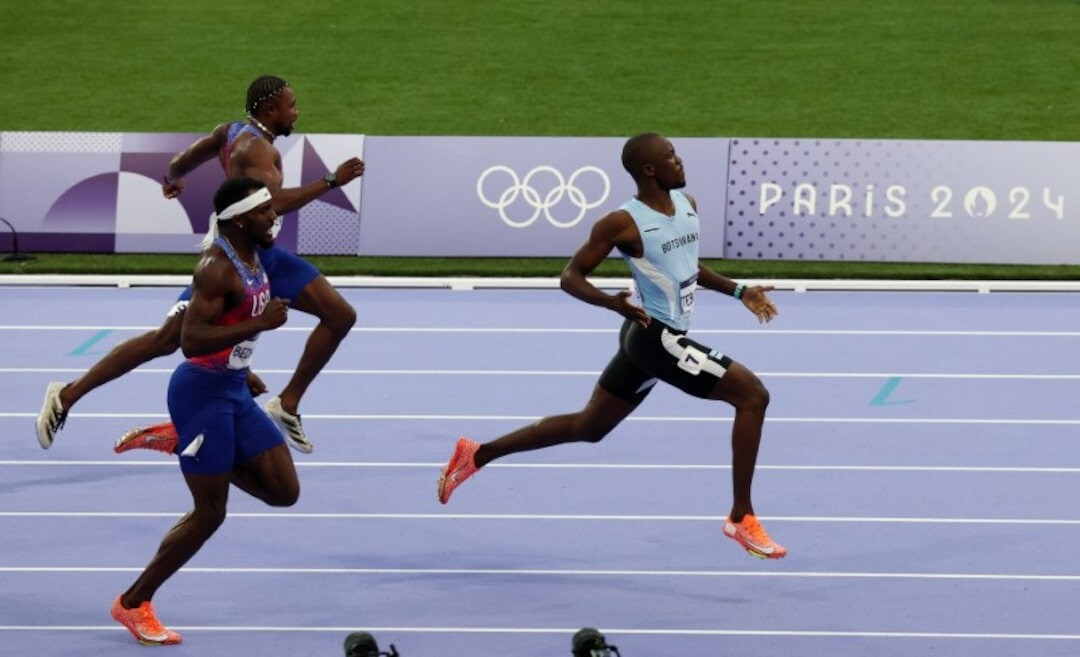
The Olympic 200m champion has been featured on Botswana’s commemorative 50-pula banknote, a powerful tribute to a young athlete whose remarkable achievements have elevated his country’s profile on the global athletics stage.
Tebogo made history at the Paris 2024 Olympic Games, storming to victory in the men’s 200 metres in an astonishing 19.46 seconds to claim Botswana’s first-ever Olympic gold medal. In doing so, he also became the first African man to win Olympic gold in the 200m, marking a landmark moment for African sprinting.
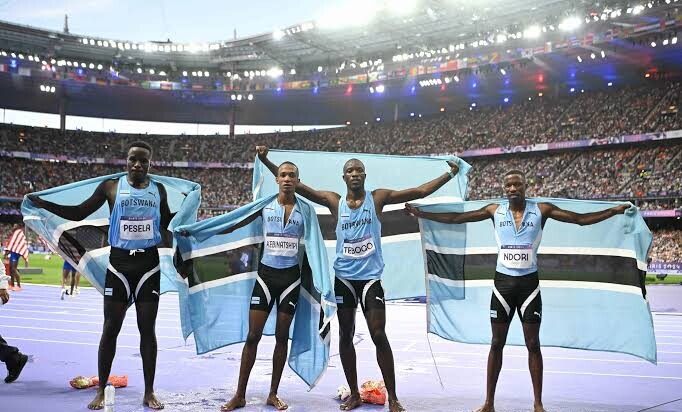
His triumph was more than a personal accomplishment. It represented a defining moment for Botswana, bringing immense national pride and demonstrating the country’s growing influence in international athletics. With his electrifying speed and composed performance on the biggest sporting stage, Tebogo established himself among the world’s leading sprinters and inspired a new generation of athletes across Africa.
The recognition of his achievements has now extended beyond the track. His appearance on Botswana’s commemorative 50-pula banknote, issued to mark the 50th anniversary of the Bank of Botswana, places his historic Olympic victory among the milestones being celebrated in the nation’s financial and cultural history. The note also recognises members of Botswana’s men’s 4×400m relay team, who secured silver at the Paris 2024 Olympics.
For a young athlete who has risen to the summit of world sprinting, the honour carries significance beyond its monetary value. It reflects the impact of sporting excellence on national identity and demonstrates how an extraordinary performance can unite a country around a shared moment of achievement.
Tebogo’s journey has also become a source of inspiration for aspiring athletes across the continent. His success shows that African sprinters can compete at the highest level and make history on the global stage. His Olympic gold medal has already secured his place in Botswana’s sporting history, while the recognition on the commemorative banknote further celebrates his contribution to the nation.
From the Olympic track to the nation’s currency, Letsile Tebogo has become a powerful symbol of Botswana’s ambition, pride and sporting progress. His remarkable 19.46-second performance in Paris will forever remain a landmark in Olympic history, while his growing legacy continues to inspire athletes and fans far beyond his homeland.
For Botswana, this is more than a tribute to a champion. It is a celebration of a historic achievement, a symbol of national pride and a reminder that one extraordinary performance can leave a lasting mark on an entire nation.
by Erick Cheruiyot for My Best Runs.
Login to leave a comment
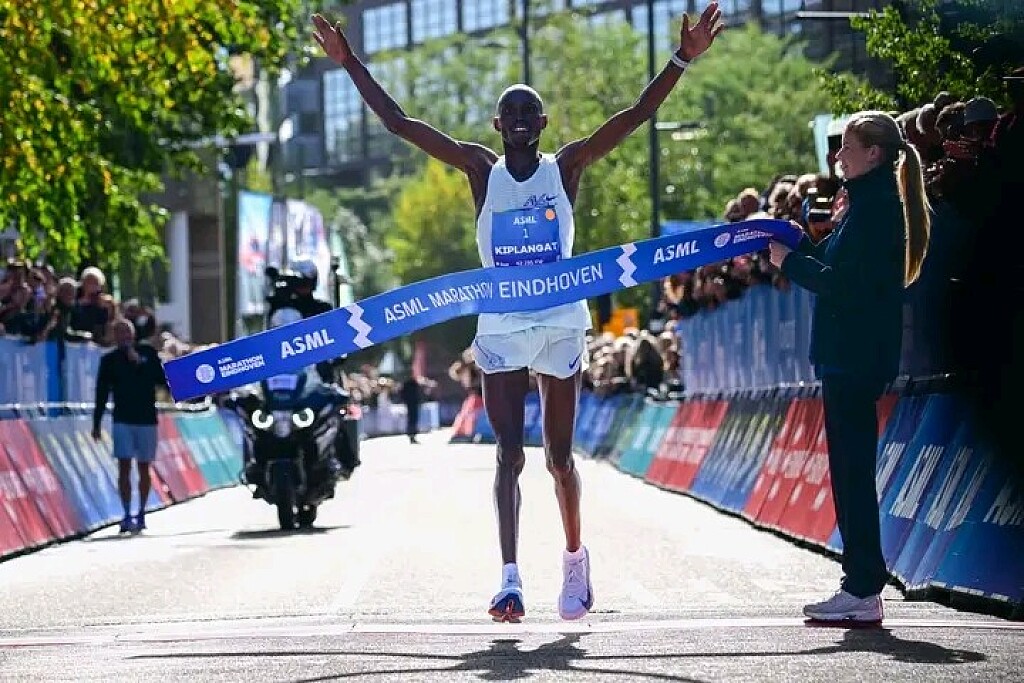
Davis Kiplangat Leads Kenyan Success At Eindhoven Marathon With 2:07:41 Victory As Lidya Cheruto Wins Women's Title
Kenyan distance running enjoyed a successful outing in the Netherlands on Sunday as Davis Kiplangat and Lidya Cheruto claimed victories at the Eindhoven Marathon, delivering impressive performances over the classic 42.195-kilometre distance.
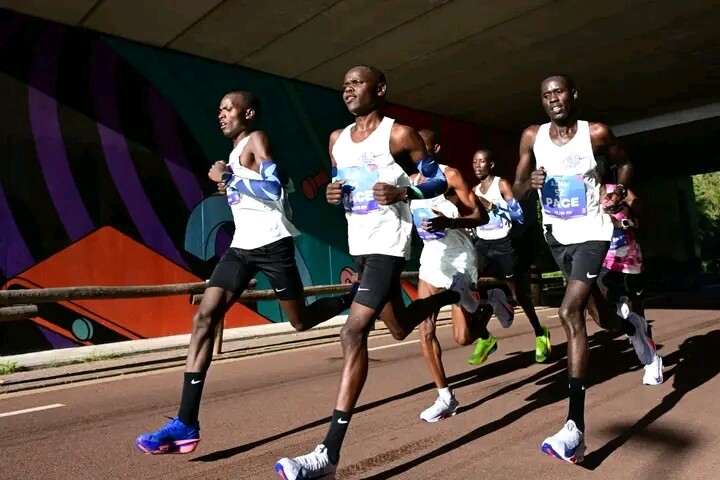
Kiplangat secured the men's title in 2:07:41, while compatriot Cheruto won the women's race in 2:32:46, ensuring Kenya celebrated victories in both categories at the Dutch road-running event.
The men's race was led by Kiplangat, who produced the fastest performance of the day to cross the finish line in 2:07:41. His victory highlighted his strength over the marathon distance and placed him ahead of a competitive international field.
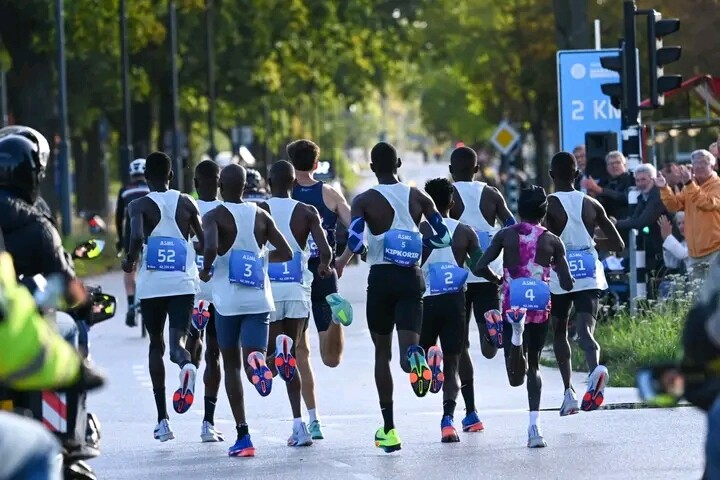
Kenya's Asbel Kipkorir finished second in 2:10:25, completing a strong performance behind the winner. Although he could not match Kiplangat's pace, Kipkorir secured the runner-up position with a time of 2:10:25.
Uganda's Levi Chelangat claimed third place in 2:16:34, giving the East African region two nationalities on the men's podium. His performance ensured that the leading three finishers represented Kenya and Uganda.
Belgium's Diego van Looy finished fourth in 2:18:17, making him the highest-placed Belgian athlete in the men's overall standings shown in the results. He followed the leading trio across the line after a demanding marathon contest.
The men's results also featured Tim Calliauw of Belgium, who recorded 2:20:23 in the men's 40–49 age category. His performance was among the age-group results published alongside the leading overall finishers.
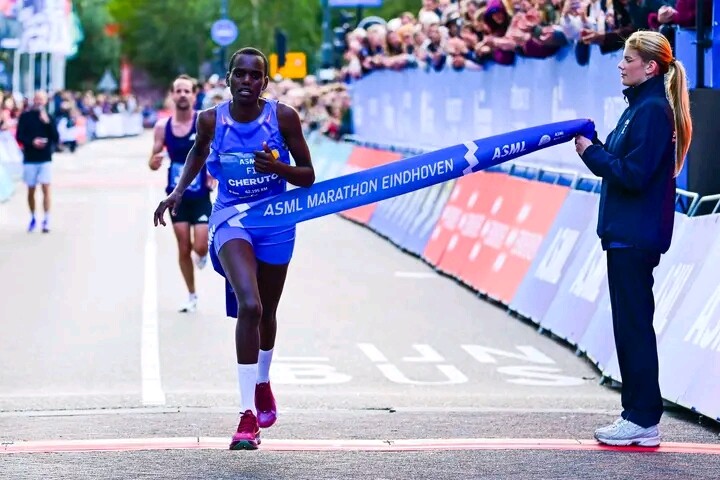
In the women's race, Kenya's Lidya Cheruto delivered another important victory, crossing the finish line in 2:32:46 to secure the title. Her performance placed her ahead of Belgium's Valentine Mathy, who finished second in 2:35:03.
Mathy's runner-up finish was followed by compatriot Elisa Vancolen, who clocked 2:37:44 to claim third place. The result gave Belgium two athletes on the women's podium behind the Kenyan winner.
Belgium's Karen van Proeyen finished fourth in 2:40:31, adding another strong result for the host country's neighbouring European running nation. Her time also appeared among the women's age-group results, where she was the leading finisher in the 40–49 category.
The women's podium therefore featured Kenya and Belgium, with Cheruto taking the overall honours ahead of Mathy and Vancolen. Their performances provided a clear picture of the leading competition in the women's marathon.
The published results also recorded Pawel Wojcik of Poland in the men's 50–59 category with 2:34:39. France's Willie Nijsten finished the men's 60–69 category in 2:57:24, while Gijs van den Hurk, also listed under France, recorded 3:24:44 in the men's 70-plus category.
In the women's age groups, Norway's Helle Blak recorded 2:59:55 in the 50–59 category, while Belgium's Silvia Lenaerts finished in 3:32:04 in the 60–69 category.
The results underline the international character of the Eindhoven Marathon, which brings together elite competitors, experienced club runners and athletes competing across a wide range of age categories.
For Kiplangat, the victory was the standout performance of the men's race, with his 2:07:41 placing him comfortably ahead of Kipkorir and Chelangat. The three leading finishers demonstrated the depth of East African distance running, with Uganda also represented on the podium.
Cheruto's victory was equally significant for Kenya, as she led the women's field in 2:32:46. Her win placed her ahead of two Belgian athletes, with Mathy and Vancolen completing the top three.
Belgium also enjoyed a notable presence among the leading finishers, particularly in the women's race, where its athletes occupied second, third and fourth positions. Van Looy's fourth-place finish in the men's race added to the country's representation among the leading competitors.
The Eindhoven Marathon once again offered a platform for athletes from different countries to test themselves over the marathon distance, while the age-group results highlighted the participation of runners across several generations.
For the Kenyan winners, the Dutch race provided another opportunity to turn preparation into success on the international stage. Kiplangat claimed the men's crown, while Cheruto led the women's field, giving Kenya a double victory.
As the marathon season continues, their performances will add to the growing list of results shaping the international road-running calendar. Eindhoven's latest edition concluded with Kenyan winners in both elite races and a strong showing from Belgian athletes, making it a memorable Sunday for the leading competitors.
by Erick Cheruiyot for My Best Runs.
Login to leave a comment

Marathon Eindhoven
The Eindhoven Marathon is an annual marathon held in the city of Eindhoven every second Sunday of October. It has been an annual race since 1990. There is also a half marathon, 10K and 5k. The 2018 race was the 35th annual event. Dickson Kiptolo Chumba and Georgina Rono are the men's and women's course record holders with times of...
more...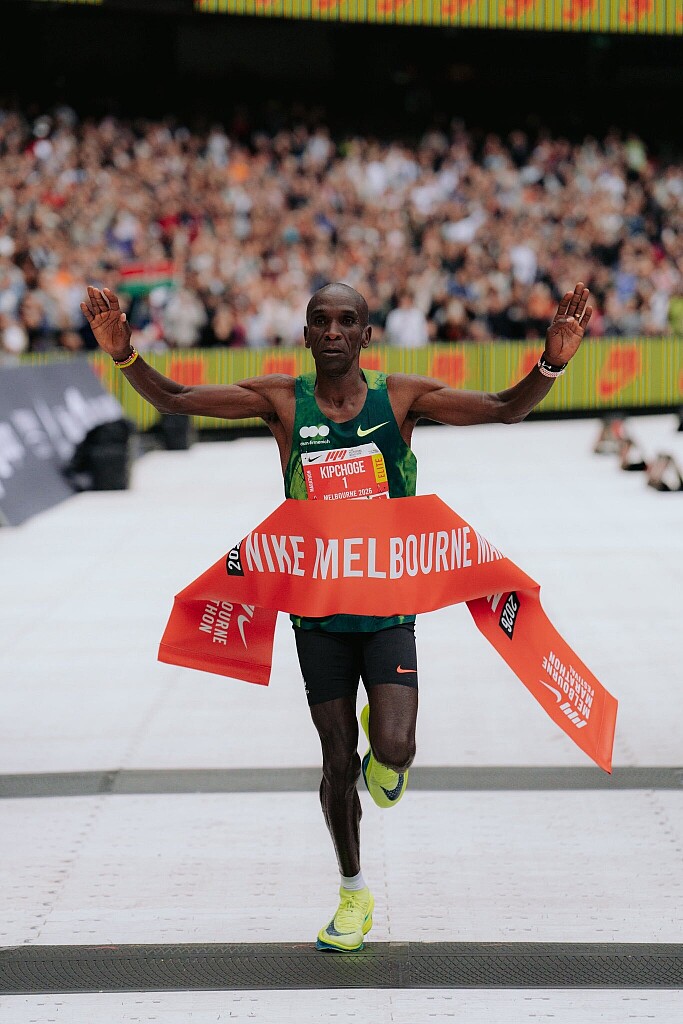
Eliud Kipchoge Conquers Melbourne With Course-Record 2:09:10 Victory
MELBOURNE, Australia — Kenyan marathon great Eliud Kipchoge added another memorable chapter to his illustrious career on Sunday, October 11, 2026, winning the Nike Melbourne Marathon Festival in a course-record time of 2:09:10
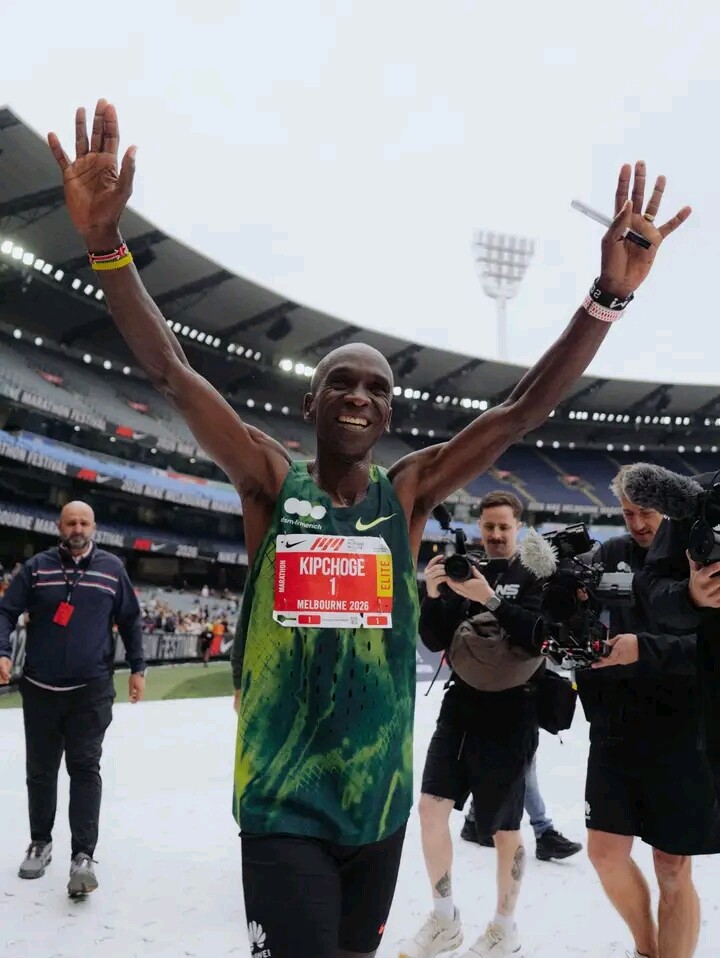
The victory further underlined the 41-year-old's enduring class and competitive spirit as he continues his ambitious global project, Eliud’s Running World, a three-year journey aimed at completing a marathon on every continent.
Kipchoge's performance delivered another milestone in a career defined by extraordinary consistency, historic achievements and an unwavering commitment to pushing the boundaries of distance running. His Melbourne triumph marked the 17th marathon victory of his career, adding another prestigious result to a remarkable record on the roads.
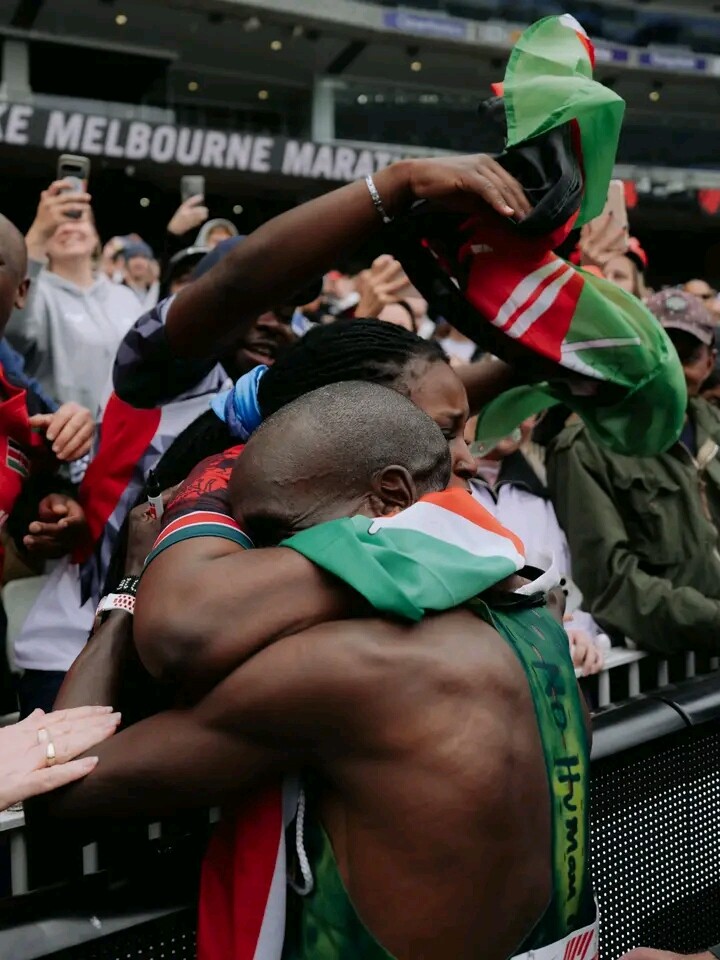
Kipchoge's Melbourne triumph was particularly significant as it marked his return to the top of the marathon podium three years after his previous marathon victory in Berlin in 2023. At 41, the Kenyan legend demonstrated that experience, discipline and an enduring passion for running can continue to produce exceptional performances at the highest level. His course-record time of 2:09:10 was a powerful reminder of his remarkable longevity in a sport that demands extraordinary physical and mental strength.
Australia's Thomas Do Canto finished second in 2:10:35, while compatriot Reece Edwards took third in 2:14:33, completing an all-Australian finish behind the Kenyan champion. For Kipchoge, the victory represented more than another achievement in his decorated career; it was another opportunity to inspire runners of all ages and reinforce his belief in the unifying power of the sport. His Melbourne success added fresh momentum to his global running tour and reaffirmed his status as one of the most influential marathon runners in history.
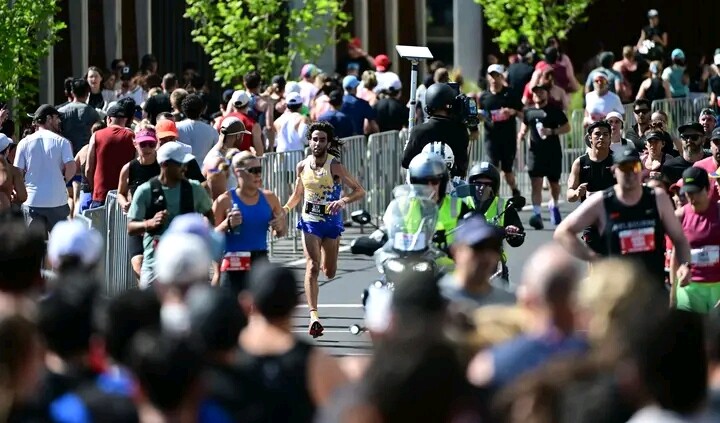
The Kenyan star broke away from his rivals in the closing stages of the 42.195-kilometre race before crossing the finish line inside the iconic Melbourne Cricket Ground (MCG). His official finishing time of 2:09:10 set a new course record, improving the previous mark of 2:09:12 established by Timothy Ronoh in 2022.
Melbourne represented the third stop on Kipchoge's ambitious Eliud's Running World journey. The project began with the Sanlam Cape Town Marathon in South Africa in May, followed by the NB42K Porto Alegre Marathon in Brazil in July. His latest appearance took the initiative to Oceania, bringing one of the greatest figures in distance-running history to Melbourne's passionate running community.
Kipchoge's Melbourne appearance was about much more than chasing another victory. The Kenyan legend embraced the city's running culture, sharing the course with runners of different abilities and inspiring the next generation through his presence. His course-record performance provided a fitting highlight to a day that celebrated the power of running to bring people together, with enthusiastic spectators lining the route and the spectacular finish at the Melbourne Cricket Ground adding to the occasion.
Reflecting on the experience, Kipchoge expressed his pride in winning a new race record while continuing his global mission to inspire runners and communities around the world. He also praised the tremendous support he received throughout the race, describing the atmosphere in Melbourne as an unforgettable experience that went beyond the competition itself.
“Today was such a special day, not only running my third World Tour, but also winning in a new race record. It makes me proud to run with the younger generation and inspire the running community in Melbourne. Today was about more than sport. It was about the energy of the city, the huge support along the race route, running alongside so many other runners, and a stunning finish at the MCG. No words can describe that feeling. Thank you, Melbourne.”
The two-time Olympic marathon champion has built a legacy through his remarkable achievements, including becoming the first man to complete a marathon in under two hours during the INEOS 1:59 Challenge in 2019, although that performance was not eligible for an official world record.
At 41, Kipchoge continues to demonstrate his love for the sport, using his global journey to promote running as a force for unity, inspiration and positive change across communities and continents.
His Melbourne victory was therefore more than another addition to his impressive collection of marathon wins. It was a statement of continued competitiveness and a celebration of a career that has helped shape modern marathon running.
With four continental stops remaining on his seven-continent mission, Kipchoge's journey is far from over. His latest triumph in Australia has provided another compelling chapter in the story of a champion whose influence extends well beyond the finish line.
by Erick Cheruiyot for My Best Runs.
Login to leave a comment

Melbourne Marathon
Be a part of Australia’s largest marathon and race alongside marathon legends. Circle around Albert Park Lake, Flinders Street Station, pass the St Kilda beach foreshore and cross the finish line at the MCG to cheers from supporters, family and friends. The Nike Melbourne Marathon is a competitive, adrenaline-filled race for those experienced in marathon running who want to set...
more...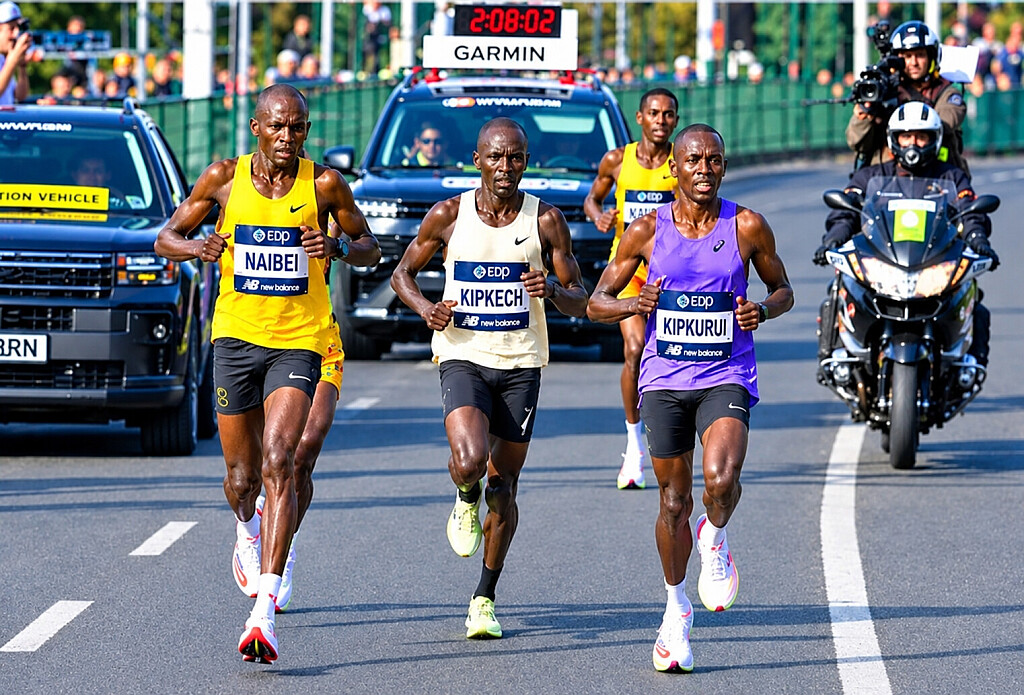
Martin Naibei Musau and Meskerem Mamo Shine as Uganda and Ethiopia Claim Lisbon Marathon Victories
Uganda’s Martin Naibei Musau and Ethiopia’s Meskerem Mamo Hayile emerged as the standout performers at the 2026 EDP Lisbon Marathon, securing victories in the men’s and women’s races on Saturday, October 10, in Portugal.
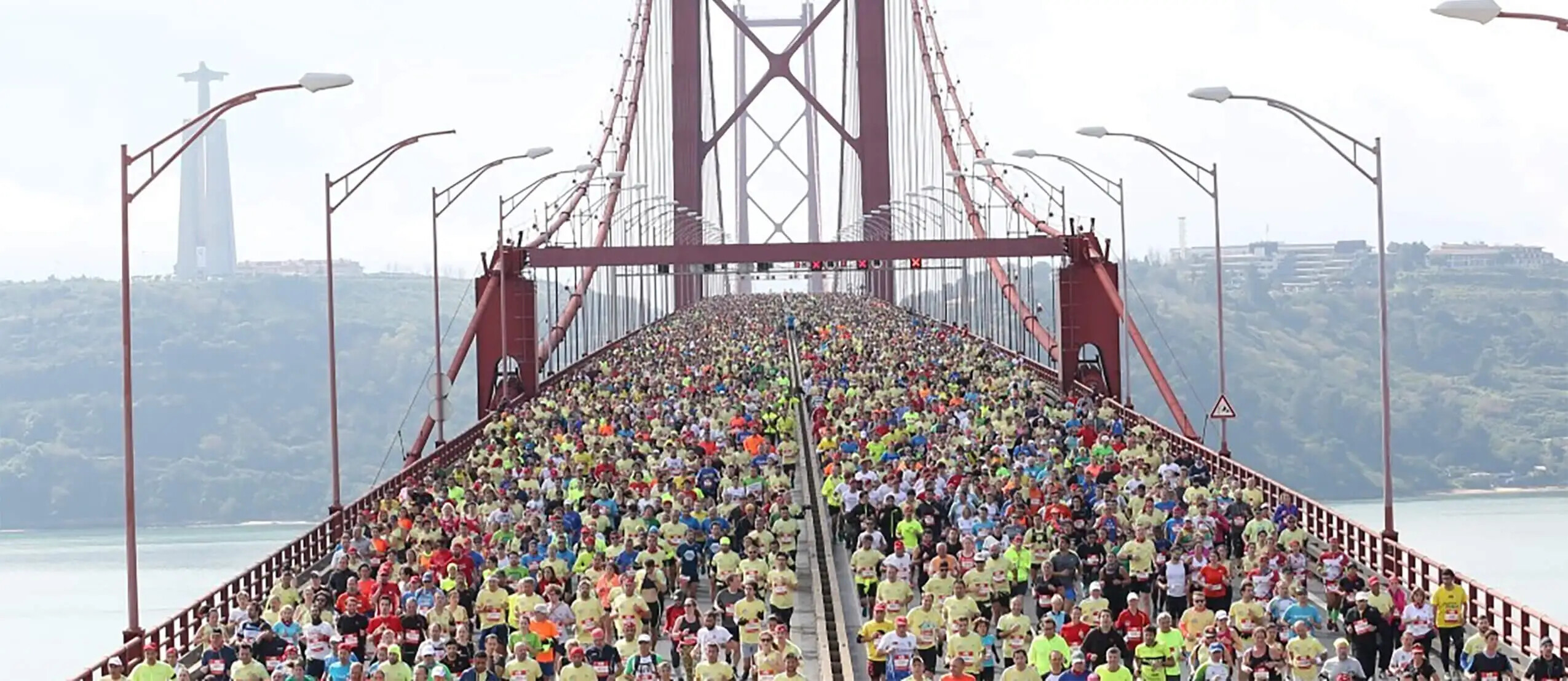
The two champions delivered impressive performances over the classic 42.195-kilometre distance, while runners from Kenya and Ethiopia featured prominently across both races, producing a competitive day of elite marathon running.
Musau led the men’s field with a commanding performance, crossing the finish line in 2:08:07 to claim the title. The Ugandan’s victory was particularly significant as he improved on his previous personal best of 2:08:42, recorded at the Hamburg Marathon in 2024.
Kenya’s Gilbert Kipkurui finished second in 2:08:33, narrowly ahead of compatriot Stephen Chebon Kipkech, who completed the podium in 2:08:35. Just two seconds separated the two Kenyan athletes, highlighting the intensity of the battle for the remaining podium positions.
Ethiopia’s Desalegn Yilie finished fourth in 2:09:08, followed by Kenya’s Elkana Langat in fifth in 2:09:20. Another Kenyan, Victor Kiplimo, placed sixth in 2:10:34, while Ethiopia’s Abdi Ali Gelchu took seventh in 2:11:11.
Demisu Gemeda secured eighth place in 2:11:29, followed by Kenya’s Zablon Chumba in ninth in 2:12:23. Ethiopia’s Dechasa Nugusa Demsa completed the men’s top 10 with a time of 2:12:53.
2026 EDP Lisbon Marathon – Men’s Top 10 Results
1. Martin Naibei Musau (Uganda) — 2:08:07
2. Gilbert Kipkurui (Kenya) — 2:08:33
3. Stephen Chebon Kipkech (Kenya) — 2:08:35
4. Desalegn Yilie (Ethiopia) — 2:09:08
5. Elkana Langat (Kenya) — 2:09:20
6. Victor Kiplimo (Kenya) — 2:10:34
7. Abdi Ali Gelchu (Ethiopia) — 2:11:11
8. Demisu Gemeda (Ethiopia) — 2:11:29
9. Zablon Chumba (Kenya) — 2:12:23
10. Dechasa Nugusa Demsa (Ethiopia) — 2:12:53
Kenya recorded five athletes inside the top 10, while Ethiopia had four, with Uganda represented by the race winner. The results demonstrated the strength of East African distance running, with Musau producing the decisive performance to finish ahead of his Kenyan challengers.
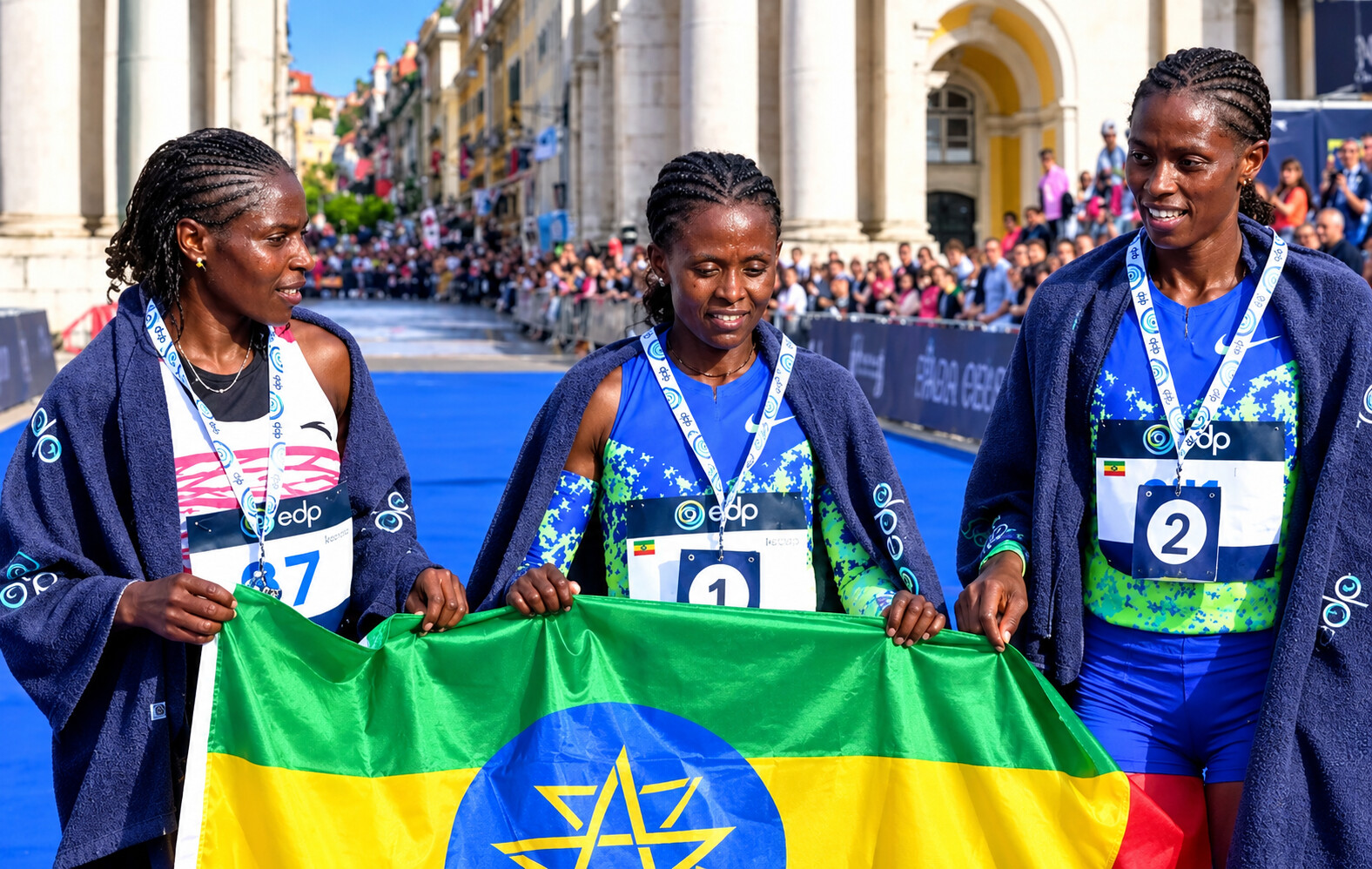
In the women’s race, Ethiopia’s Meskerem Mamo Hayile delivered another outstanding performance, crossing the finish line in 2:28:04 to secure victory after a closely fought contest among the leading athletes.
Mamo finished just seven seconds ahead of compatriot Tejitu Siyum, who claimed second place in 2:28:11. Bashanke Bilo completed an all-Ethiopian podium, finishing third in 2:28:15 after another strong performance over the marathon distance.
The competition at the front remained intense, with Sintayehu Tilahun taking fourth in 2:28:19 and Abeebech Afework finishing fifth in 2:29:00. The five Ethiopian athletes at the top of the standings underlined the country's considerable depth in women’s marathon running.
Kenya’s Ruth Chebitok was the leading non-Ethiopian finisher, securing sixth place in 2:29:18. Her compatriot Ruth Chepkoech followed in seventh in 2:32:41, while Ethiopia’s Waganesh Endawork Asegie finished eighth in 2:33:00.
Genet Sahle completed the top nine in 2:34:04, giving Ethiopia seven athletes among the first nine finishers.
2026 EDP Lisbon Marathon – Women’s Top Nine Results
1. Meskerem Mamo Hayile (Ethiopia) — 2:28:04
2. Tejitu Siyum (Ethiopia) — 2:28:11
3. Bashanke Bilo (Ethiopia) — 2:28:15
4. Sintayehu Tilahun (Ethiopia) — 2:28:19
5. Abeebech Afework (Ethiopia) — 2:29:00
6. Ruth Chebitok (Kenya) — 2:29:18
7. Ruth Chepkoech (Kenya) — 2:32:41
8. Waganesh Endawork Asegie (Ethiopia) — 2:33:00
9. Genet Sahle (Ethiopia) — 2:34:04
The women’s race was particularly notable for the narrow margins separating the leading contenders. Mamo’s seven-second winning advantage reflected a determined contest at the front, with Siyum and Bilo pushing the eventual champion throughout the race.
The two competitions highlighted different dimensions of marathon racing. Musau established himself as the leading man with a personal-best performance, while Mamo prevailed in a tightly contested women’s race to secure the women’s crown.
The 2026 EDP Lisbon Marathon once again brought together elite distance runners from across East Africa and beyond, with Uganda celebrating a men’s champion and Ethiopia dominating the women’s podium.
by Erick Cheruiyot for My Best Runs.
Login to leave a comment

EDP Lisbon Marathon
The EDP Lisbon Marathon is already considered as one of the most beautiful races in the world and acclaimed by international media such as the Forbes Magazine, the Huffington Post and American Express. Starting in Cascais and finishing at Praça do Comércio, the EDP Marathon course is 100% sea and river side, providing to the runners an unique view along...
more...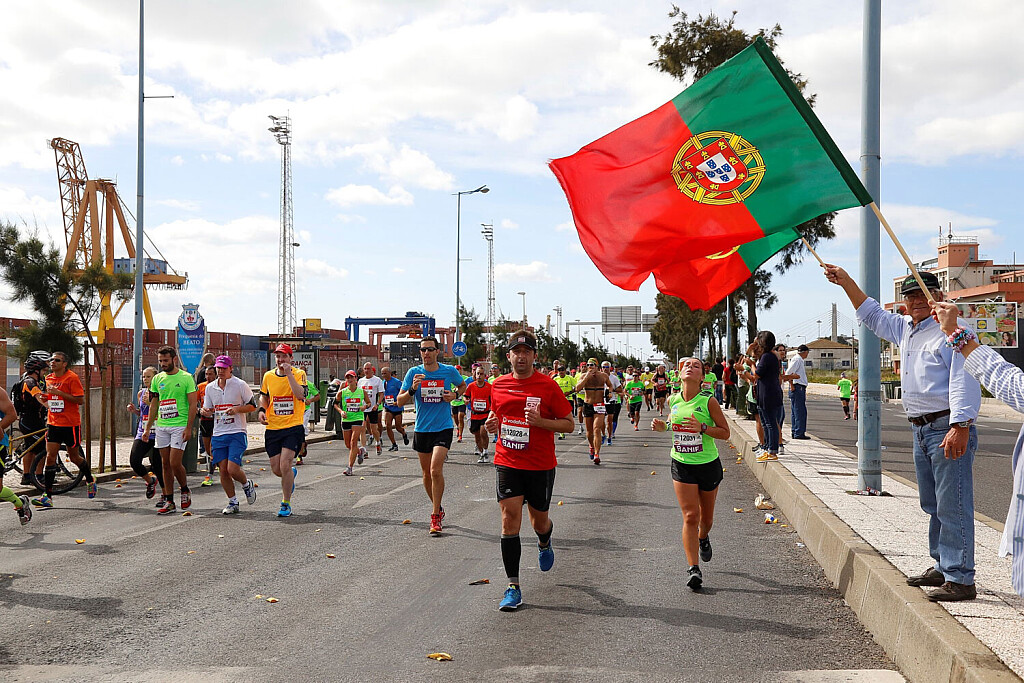
Kenyan Stars Lead Strong Elite Fields for the 2026 Lisbon Marathon
The 2026 Lisbon Marathon is set to feature a competitive international field, with Kenyan distance runners leading the men's elite entries and a strong Ethiopian contingent adding depth to the women's race.
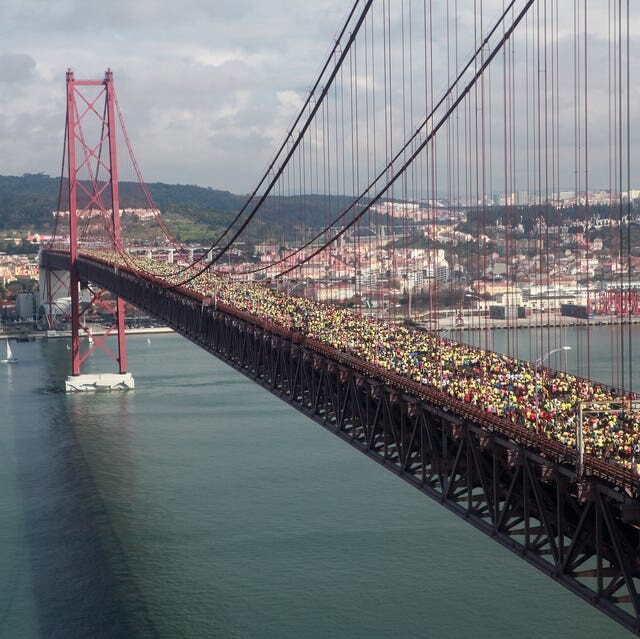
Scheduled for October 10 in Lisbon, Portugal, the race will bring together athletes with impressive personal bests, setting the stage for an exciting contest over the classic 42.195-kilometer distance.
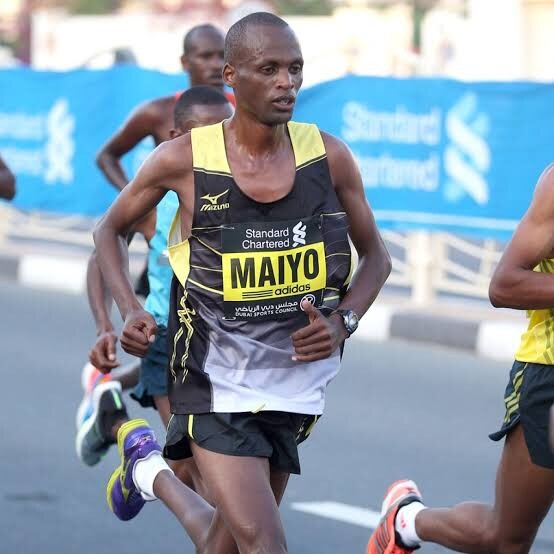
Kenya's Jonathan Kiplimo Maiyo headlines the selected men's elite field with a personal best of 2:04:56, placing him among the leading names to watch. He will be joined by compatriot Timothy Kibet Misoi, who has a best of 2:06:07, as Kenya looks to make a strong impression on the Portuguese course.
John Langat and Zablon Chumba complete the selected Kenyan men's lineup, both carrying personal bests of 2:07:11. Their presence adds further strength to a team with considerable experience and proven marathon ability.
The women's race also promises an intriguing battle, with Kenya and Ethiopia represented by four athletes each in the selected elite field.
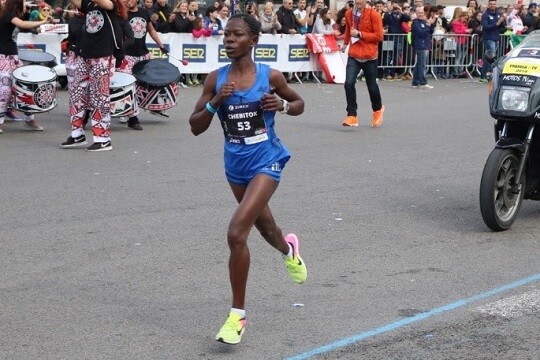
Kenya's Ruth Chebitok leads the women's entries with a personal best of 2:21:03. She faces a strong Ethiopian challenge led by Sintayehu Tilahun Getahun, whose best stands at 2:22:19.
Ethiopia's Abebech Afework Bekele, with a personal best of 2:23:33, and Worknesh Alemu, who has run 2:24:42, complete the selected women's field. Their presence sets up a potentially compelling contest between two of East Africa's leading distance-running nations.
With established marathon performers on both sides, the Lisbon Marathon offers an opportunity for the elite athletes to test themselves against high-level opposition and pursue strong performances on race day.
While personal bests provide a useful indication of each runner's credentials, the final outcome will depend on race-day conditions, pacing and execution over the demanding marathon distance.
With the selected elite fields featuring a strong Kenyan presence and determined Ethiopian challengers, attention will turn to Lisbon on October 10 as the athletes prepare for one of Portugal's major road-running events.
by Erick Cheruiyot for My Best Runs.
Login to leave a comment
EDP Lisbon Marathon
The EDP Lisbon Marathon is already considered as one of the most beautiful races in the world and acclaimed by international media such as the Forbes Magazine, the Huffington Post and American Express. Starting in Cascais and finishing at Praça do Comércio, the EDP Marathon course is 100% sea and river side, providing to the runners an unique view along...
more...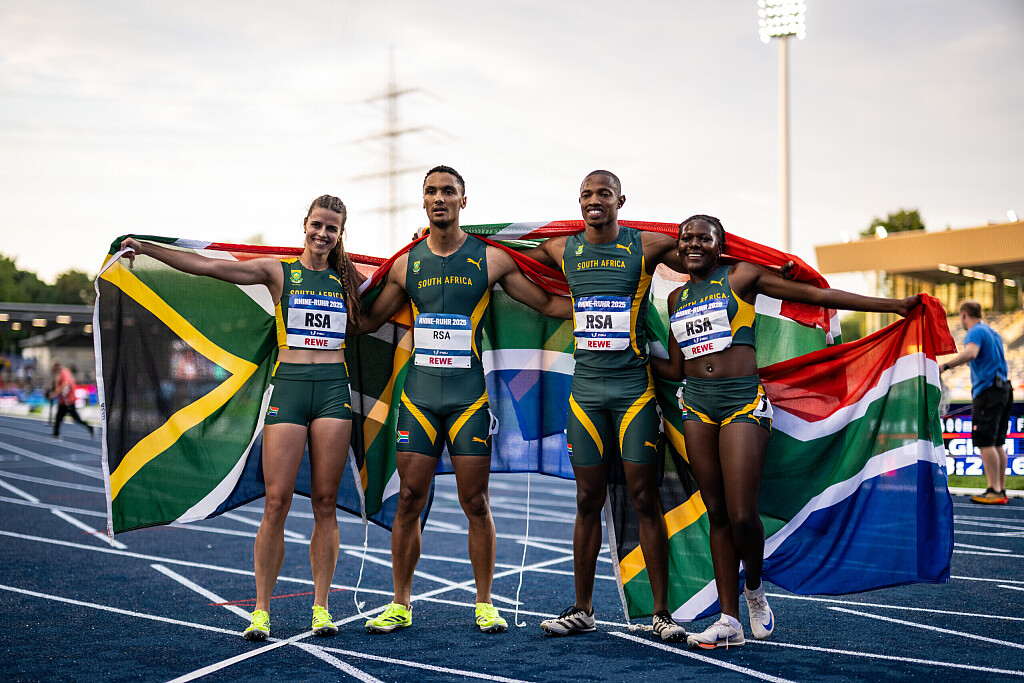
South Africa Enters Race To Bring The Olympics To Africa For The First Time
South Africa has taken a major step towards potentially bringing the Olympic Games to Africa for the first time after formally entering the International Olympic Committee’s process as an interested party for the 2036 Summer Olympics and Paralympics.
The development could mark a historic moment for the continent, which has never hosted an edition of the Olympic Games despite its long and distinguished sporting tradition. South Africa’s interest now places the country among the potential candidates seeking to convince the IOC that Africa is ready to stage the world’s biggest multi-sport event.
A successful bid would represent a significant expansion of South Africa’s sporting legacy. The country has already demonstrated its ability to host major international competitions, most notably the 2010 FIFA World Cup, which brought football’s biggest tournament to Africa for the first time and showcased South Africa’s stadiums, infrastructure and capacity to welcome visitors from around the world.
The 2036 ambition also arrives at a time when Africa is gaining greater recognition as a destination for major global sporting events.

Kenya has already secured the right to host the 2029 World Athletics Championships in Nairobi, marking the first time the senior global championships will be staged on African soil. The breakthrough followed a competitive bidding process and represents another important milestone for the continent’s athletics movement.
South Africa’s Olympic interest therefore comes against a backdrop of growing confidence in Africa’s ability to organise and deliver events at the highest international level.
For South Africa, however, winning the right to host the Olympics would be a considerably larger undertaking. The Games require extensive sporting venues, accommodation, transportation networks, security arrangements and long-term financial planning, while the host must also present a compelling vision for the event’s wider legacy.
The country’s experience with the 2010 World Cup provides an important foundation, but an Olympic bid would require an even broader national strategy involving multiple sports and venues.
The IOC is expected to make its decision on the host of the 2036 Olympics later in the decade, with several countries expressing interest in entering the race. The process will ultimately determine whether Africa can finally break one of the biggest remaining barriers in the history of the Olympic movement.
For a continent that has produced generations of Olympic champions across athletics, swimming, boxing, cycling and numerous other sports, hosting the Games would carry significance far beyond the competition itself.
South Africa is now putting itself forward for that opportunity.
If the bid eventually succeeds, the 2036 Olympic Games could become a landmark moment — not only for South Africa, but for an entire continent that has waited more than a century to welcome the Olympic movement onto its soil.
by Erick Cheruiyot for My Best Runs.
Login to leave a comment
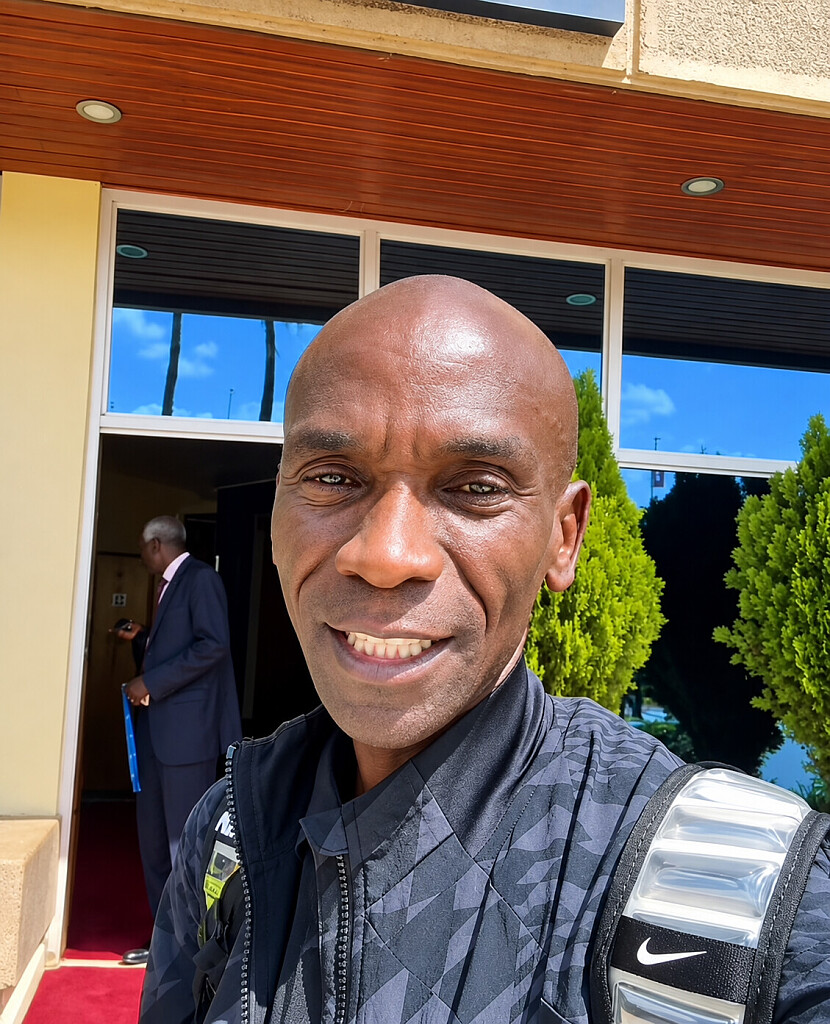
Eliud Kipchoge Brings His Seven-Continent Journey To Melbourne
MELBOURNE, AUSTRALIA — The countdown is almost over. On Sunday, October 11, Eliud Kipchoge will return to marathon racing in Australia as the legendary Kenyan takes the next step in his extraordinary seven-continent world tour.

The two-time Olympic marathon champion will headline the 2026 Nike Melbourne Marathon, marking the third stop of his global journey after opening the project in Cape Town in May before travelling to Porto Alegre, Brazil, in July. Melbourne now becomes the next chapter in a remarkable mission designed to take one of the greatest marathoners in history across all seven continents.
And for Kipchoge, the Melbourne visit carries a message that reaches beyond the marathon itself.
Reflecting on the history of the Olympic city, Kipchoge drew inspiration from an extraordinary moment in 1956, when a 17-year-old boy named Ian (John Wing) encouraged Melbourne to come together and walk during the Olympic Games.
“In 1956, a 17-year-old kid called Ian (John Wing) told Melbourne to walk together during the Olympic Games. Seventy years down the line, I am going to tell the people of Melbourne, let us run together,” Kipchoge said.
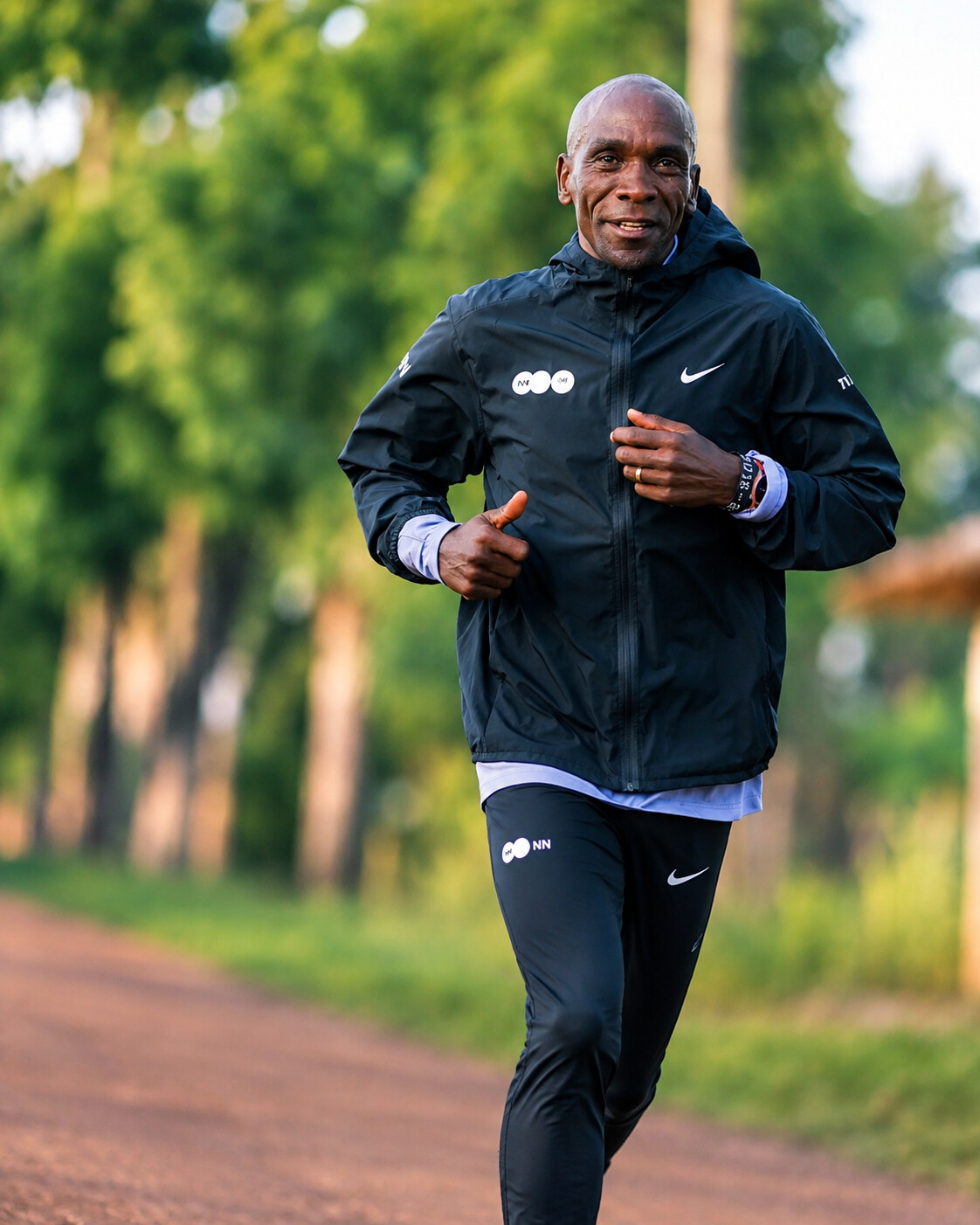
The message perfectly captures the spirit behind his latest global adventure — using running not simply as competition, but as a way of bringing people together, inspiring communities and connecting different parts of the world through the sport he has devoted his life to.
And Melbourne has prepared for the occasion.
The 2026 Nike Melbourne Marathon has undergone one of the most significant course transformations in its history. Organisers have created a faster and flatter route, reducing elevation gain by up to 20 per cent and cutting the number of turns by around 30 per cent. The demanding climb between Birdwood Avenue and Domain Road has also been removed, while the race will once again culminate with the iconic finish inside the Melbourne Cricket Ground.
For Kipchoge, however, this journey is about far more than chasing another fast marathon time.
At 41, the Kenyan legend is at a different stage of his career. The days of relentlessly pursuing world records may be behind him, but his ambition remains unmistakable. This time, the challenge is to take his message of running, unity and inspiration to every corner of the world while sharing the road with runners and communities across seven continents.
The Melbourne appearance also carries a special significance. Kipchoge has never previously raced the Nike Melbourne Marathon, and his arrival has added another layer of excitement to an event already entering a new era. More than 60,000 participants are expected across the festival, while the marathon itself has a capacity of 20,000 runners.
The race will begin at 6:15 a.m. local time on Sunday, with runners setting off from Batman Avenue before making their way through some of Melbourne's most recognisable landmarks. The finish inside the MCG promises to provide a spectacular backdrop for what could become one of the most memorable moments of Kipchoge's global tour.
Kipchoge arrives in Melbourne with a formidable legacy that few athletes in any sport can match. He is a two-time Olympic champion, a former marathon world-record holder and the first man to run a marathon under two hours in a controlled, non-record-eligible event.
Yet his latest challenge is not about adding another number to an already extraordinary list of achievements.
It is about the journey.
From Africa to South America and now Oceania, Kipchoge's seven-continent adventure is allowing fans around the world to see the marathon icon in places where he has never raced before. Each race represents another opportunity to connect with runners, inspire younger generations and celebrate the power of the sport that has defined his life.
And in Melbourne, his message is simple: let us run together.
On Sunday morning, the streets will fill with thousands of runners, spectators will line the course, and one of the most celebrated athletes in the history of distance running will once again stand on a marathon start line.
Seventy years after a teenager encouraged Melbourne to walk together during the 1956 Olympic Games, Kipchoge will return to the city with a new invitation — to run together.
Eliud Kipchoge is coming to Melbourne, and the world will be watching.
by Erick Cheruiyot for My Best Runs.
Login to leave a comment
Melbourne Marathon
Be a part of Australia’s largest marathon and race alongside marathon legends. Circle around Albert Park Lake, Flinders Street Station, pass the St Kilda beach foreshore and cross the finish line at the MCG to cheers from supporters, family and friends. The Nike Melbourne Marathon is a competitive, adrenaline-filled race for those experienced in marathon running who want to set...
more...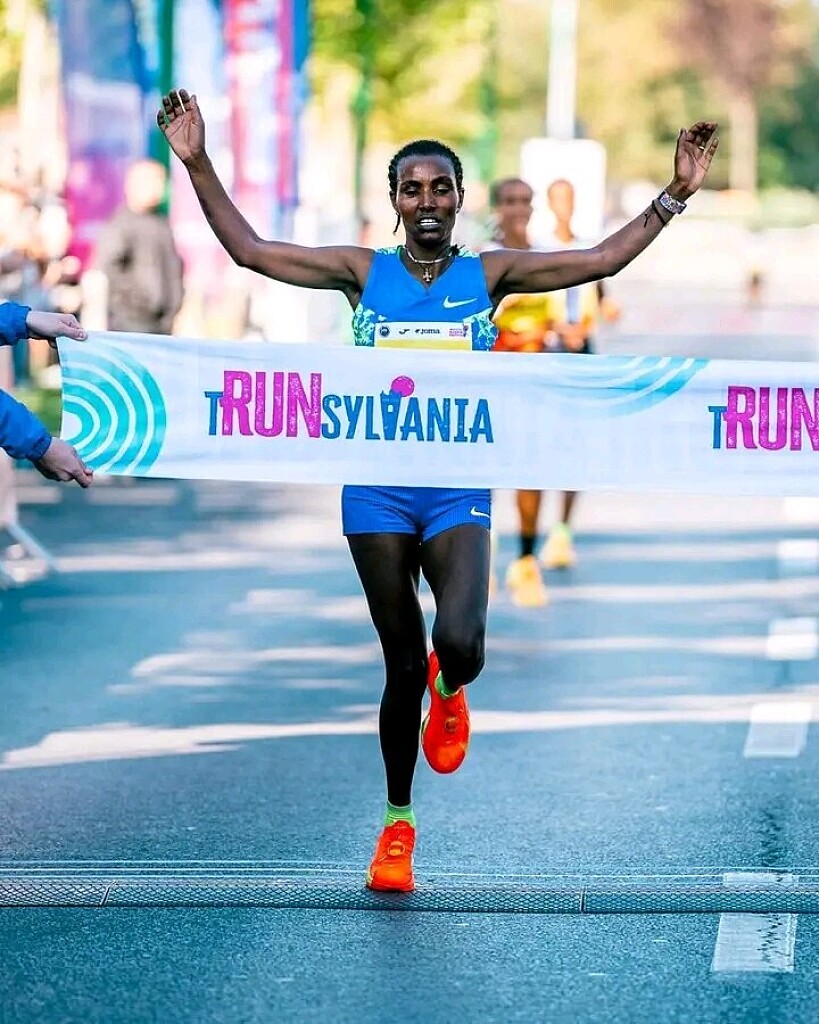
Ethiopian Double As Khairi Bejiga And Asefu Abreha Triumph At Fast-Paced Brasov 10K
Ethiopia dominated the 2026 Brasov Running Festival in Romania, with Khairi Bejiga and Asefu Abreha claiming impressive victories in two fiercely contested elite 10km races.
Bejiga, still only 20, successfully defended his title in the men’s race, becoming the first athlete — male or female — to win the Brasov 10K in consecutive editions across the event’s six-year history.
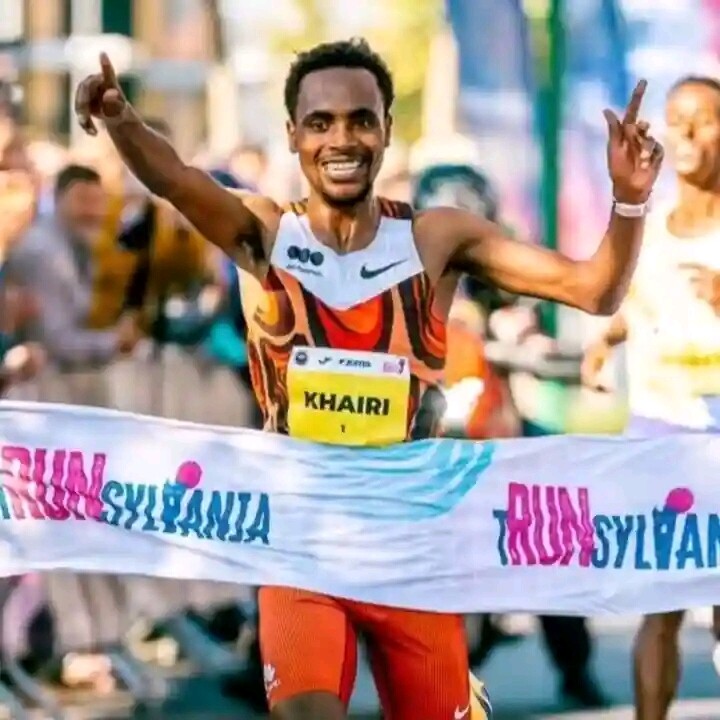
The Ethiopian produced a dramatic finish to retain his crown, edging training partner Nibret Kinde by just one second. Bejiga stopped the clock at 27:01, while Kinde followed in 27:02. Ayele Tadesse completed an Ethiopian sweep of the men’s podium in 27:09.
The depth of the field was underlined by the performances behind the leading trio, with Kenyan Amos Kipkemoi Bett finishing fourth in 27:13, followed by Djibouti’s Hani Idriss Hersi in 27:16.
Kenya also placed three more athletes inside the top 10, with Laban Kosgei sixth in 27:21, Victor Okoth Otieno seventh in 27:22, Kevin Chesang ninth in 27:29 and Silas Senchura 10th in 27:32. Uganda’s Samuel Simba Cherop completed the top eight in 27:25.
Brasov Running Festival 2026 — Men’s Top 10
1. Khairi Bejiga — Ethiopia — 27:01
2. Nibret Kinde — Ethiopia — 27:02
3. Ayele Tadesse — Ethiopia — 27:09
4. Amos Kipkemoi Bett — Kenya — 27:13
5. Hani Idriss Hersi — Djibouti — 27:16
6. Laban Kosgei — Kenya — 27:21
7. Victor Okoth Otieno — Kenya — 27:22
8. Samuel Simba Cherop — Uganda — 27:25
9. Kevin Chesang — Kenya — 27:29
10. Silas Senchura — Kenya — 27:32
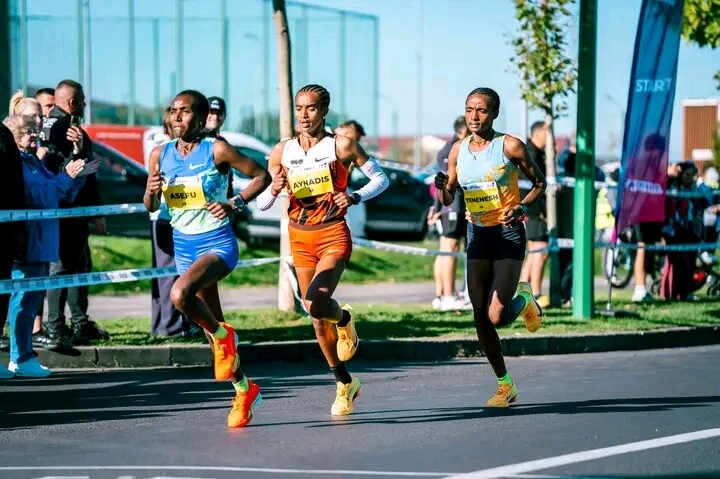
The women’s race delivered another Ethiopian victory as Asefu Abreha produced a major personal best to take the title in 30:16.
Abreha, also 20, surprised a strong field with a breakthrough performance, finishing three seconds ahead of compatriot Aynadis Mebratu, who crossed the line in 30:19.
Ethiopia completed the women’s podium through Yenenesh Shimket Ademas, whose 30:21 was a world under-20 best for the 10km distance, adding another significant achievement to an extraordinary Ethiopian showing in Brasov.
Djibouti’s Samiya Hassan Nour finished fourth in 30:37, while South Africa’s Tayla Kavanagh was fifth in 30:50. Kenya’s Nelvin Jepkemboi placed sixth in 30:57.
The remaining places in the women’s top 10 were filled by Ethiopia’s Mastewal Mehabaw in 30:59, Axumawit Embaye in 31:05 and Tibeb Eneyew in 31:29, with Romania’s Joan Chelimo Melly rounding out the top 10 in 31:46.
Brasov Running Festival 2026 — Women’s Top 10
1. Asefu Abreha — Ethiopia — 30:16
2. Aynadis Mebratu — Ethiopia — 30:19
3. Yenenesh Shimket Ademas — Ethiopia — 30:21
4. Samiya Hassan Nour — Djibouti — 30:37
5. Tayla Kavanagh — South Africa — 30:50
6. Nelvin Jepkemboi — Kenya — 30:57
7. Mastewal Mehabaw — Ethiopia — 30:59
8. Axumawit Embaye — Ethiopia — 31:05
9. Tibeb Eneyew — Ethiopia — 31:29
10. Joan Chelimo Melly — Romania — 31:46
The Brasov Running Festival has established itself as one of the fastest and most competitive 10km road races in Europe, attracting an increasingly deep international field capable of producing world-class performances.
The 2026 edition further strengthened that reputation, with national records for Djibouti and South Africa and a European under-18 best also among the notable achievements of the event.
For Ethiopia, however, the spotlight belonged to Bejiga and Abreha. Their victories gave the nation a memorable double in Brasov, with 27:01 and 30:16 respectively highlighting another spectacular day of elite road racing in Romania.
by Erick Cheruiyot for My Best Runs.
Login to leave a comment

Brasov Running Festival 10K
"Brasov Running Festival” is set to become the iconic running event of Romania, with elite, popular and children races, concerts, conferences and other running related activities. The elite 10K race, Trunsylvania International 10K is expected to enjoy an impressive participation of world class runners on a very fast course. -The only World Athletics Elite Label 10K in South-East Europe -The...
more...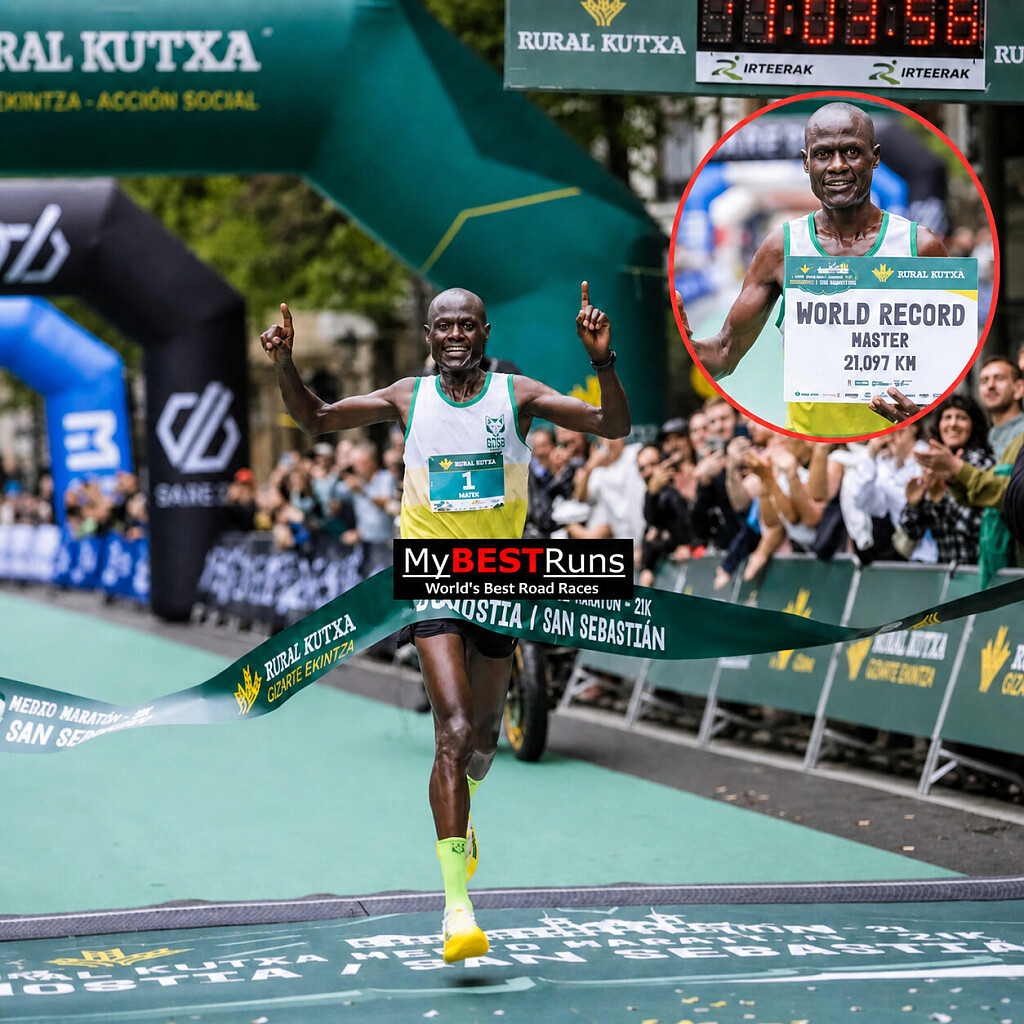
Mark Kiptoo, 50, Shatters M50 World Half-Marathon Record In San Sebastián
Kenyan distance-running veteran Mark Kosgei Kiptoo has added another extraordinary achievement to his remarkable career, setting a new M50 world record in the half marathon at the 2026 San Sebastián Rural Kutxa Half Marathon in Spain.
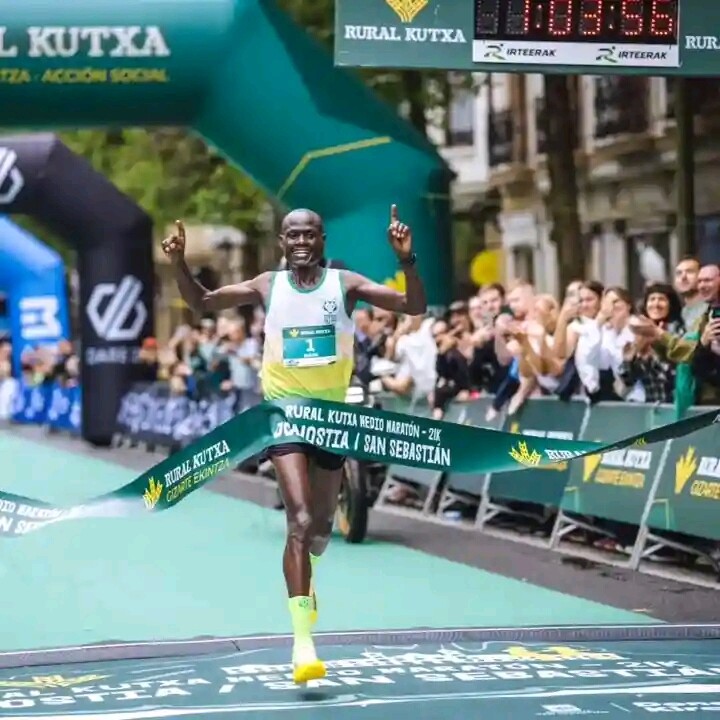
At 50, Kiptoo produced a stunning 1:03:57 over the 21.097-kilometre distance, winning the race outright while rewriting the masters record books.
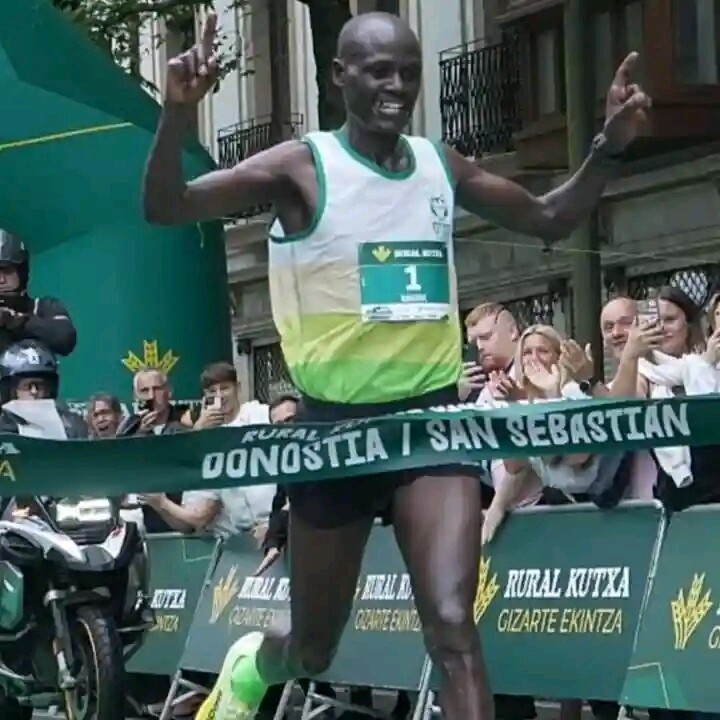
His performance demolished the previous M50 world record of 1:06:23, set by South Africa’s Titus Mamabolo, by 2 minutes and 26 seconds. The scale of the improvement makes Kiptoo’s performance one of the most remarkable masters distance-running achievements of the year.
The Kenyan arrived in San Sebastián in impressive form after already showing that age had done little to diminish his speed. At 49, Kiptoo won the Azkoitia-Azpeitia Half Marathon in March in 1:03:17, a performance that underlined his extraordinary endurance and ability to maintain world-class pace well into his late 40s.
Kiptoo’s latest achievement is another milestone in a career that has already delivered success across track, cross country and road running. Now competing in the masters ranks, the Kenyan continues to demonstrate the exceptional endurance and speed that made him one of the most respected distance runners of his generation.
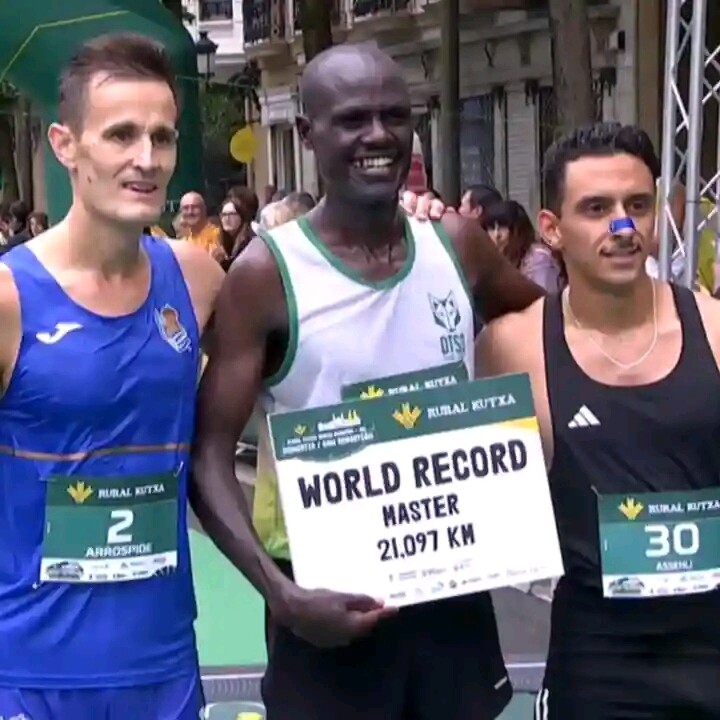
Born on June 21, 1976, Kiptoo has spent decades competing at the highest level of international athletics. His career includes major performances on the track and road, and his transition into the masters category has done little to slow his remarkable competitive drive.
Kiptoo’s transition to marathon running produced another extraordinary achievement. At the 2018 Frankfurt Marathon, he clocked 2:07:50 to establish what was then a world record for the Masters 40-and-over age group, further highlighting his ability to remain competitive well beyond the traditional peak years of an elite distance runner.
That performance offered an early indication of the extraordinary longevity that would later define his masters career. With the M50 half-marathon world record standing at 1:06:23, Kiptoo arrived in San Sebastián with history within reach—and he did far more than simply break the mark.
He obliterated it.
Kiptoo’s 1:03:57 was also fast enough to secure the overall victory, putting the 50-year-old Kenyan ahead of considerably younger competitors. Spain’s Iraitz Arrospide was the leading Spanish finisher, taking second in 1:04:48, while Youness Assehli completed the podium in 1:07:16.
Kiptoo’s record run was also notable for the consistency of his pace throughout the race. He passed 5 kilometres in 15:22 before reaching 10 kilometres in 30:21, with his second 5-kilometre segment covered in a remarkable 14:59. He continued to maintain the demanding tempo, reaching 20 kilometres in 1:00:40 before completing the final 1.097 kilometres to stop the clock at 1:03:57.
Those splits underline just how controlled and aggressive Kiptoo’s performance was. Rather than relying on a late surge, the Kenyan built his record through sustained world-class pace from the opening kilometres to the finish, averaging roughly 3:02 per kilometre across the entire half marathon. The performance not only shattered the longstanding M50 record but also demonstrated that Kiptoo’s extraordinary speed remains intact at an age when most elite athletes have long since stepped away from the highest level of competition.
In San Sebastián, Kiptoo’s experience came together in one extraordinary performance. He not only won the race outright but also lowered the M50 world record from 1:06:23 to 1:03:57, an improvement of 2 minutes and 26 seconds. At 50, he continues to show that world-class determination and years of experience can still translate into astonishing performances over 21.1 kilometres.
Kiptoo’s credentials were established long before his entry into the masters ranks. A former African champion over 5,000 metres and a winner on the Diamond League circuit, he competed successfully against the world’s best during the peak of his track career.
His track personal bests include 12:53.46 for 5,000 metres and 26:54.64 for 10,000 metres, evidence of the elite speed and endurance that have remained the foundation of his longevity in the sport.
The latest record is therefore more than another entry on a masters list. It is a reflection of a career built on consistency, discipline and an extraordinary ability to remain competitive across different generations of distance runners.
At 50 years old, Mark Kiptoo is still running at a level that commands attention.
A 1:03:57 half marathon, an outright race victory and a world record—another remarkable chapter in the career of one of Kenya’s enduring distance-running stars.
by Erick Cheruiyot for My Best Runs.
Login to leave a comment
Košice Marathon 2026: Lipschitz and Fayesa Robi Lead a Fast International Day in Slovakia
The 2026 Košice Marathon delivered a strong display of international marathon talent, with South Africa’s Adam Lipschitz and Ethiopia’s Aberash Fayesa Robi claiming victories in contrasting but equally impressive performances on the streets of Košice, Slovakia.
In the women’s race, Fayesa Robi produced the standout performance, crossing the finish line in 2:21:54 to secure a commanding victory and improve her personal best. The Ethiopian maintained a strong rhythm throughout the race before finishing well clear of the rest of the field.
Her compatriot Nurit Ahmed Samiro added another impressive chapter to Ethiopia’s day, placing second in 2:25:03 on her marathon debut. Racing over the full 42.195-kilometre distance for the first time, Samiro delivered a remarkably mature performance to immediately establish herself among the leading names in the field.
Kenya’s Tecla Jelimo Kibet completed the women’s international podium, finishing third in 2:29:56. Her performance secured a place among a highly competitive leading group as the Ethiopian pair dominated the top two positions.
The men’s contest was even tighter at the front, with Adam Lipschitz producing a breakthrough performance to win in 2:07:21. The South African not only claimed the prestigious Košice Marathon title but also lowered his personal best, underlining the quality of his performance on the day.
Kenya’s Abednego Cheruiyot pushed Lipschitz all the way and finished second in 2:07:53, also recording a new personal best. The Kenyan remained firmly in contention deep into the race before crossing the line just 32 seconds behind the winner.
Another Kenyan, Moses Kipngetich Kemei, secured third place in 2:08:04, giving Kenya two athletes inside 2:09 and completing a highly competitive podium.
Turkey’s Kaan Kigen Özbilen followed in fourth with 2:08:22, narrowly missing the podium after remaining within striking distance of the leading trio.
The performances in Košice highlighted the depth of the international field, with the men’s race producing three athletes under 2:09 and the women’s contest featuring a commanding winning performance alongside an impressive marathon debut.
The results once again underlined the historic Košice Marathon’s ability to attract high-level athletes from across the world and provide a competitive stage for both established marathoners and emerging talent.
by Erick Cheruiyot for My Best Runs.
Login to leave a comment

kosice Peace Marathon
The Kosice Peace Marathon is the oldest European marathon.This year for the organizers of Kosice Peace Marathon is also about memories and flashbacks. One of the fastest marathon courses has been created in Košice 20 years ago on that occasion it was the 1997 IAAF World Half Marathon Champioships. Tegla Loroupe and Shem Kororia were awarded from the hands of...
more...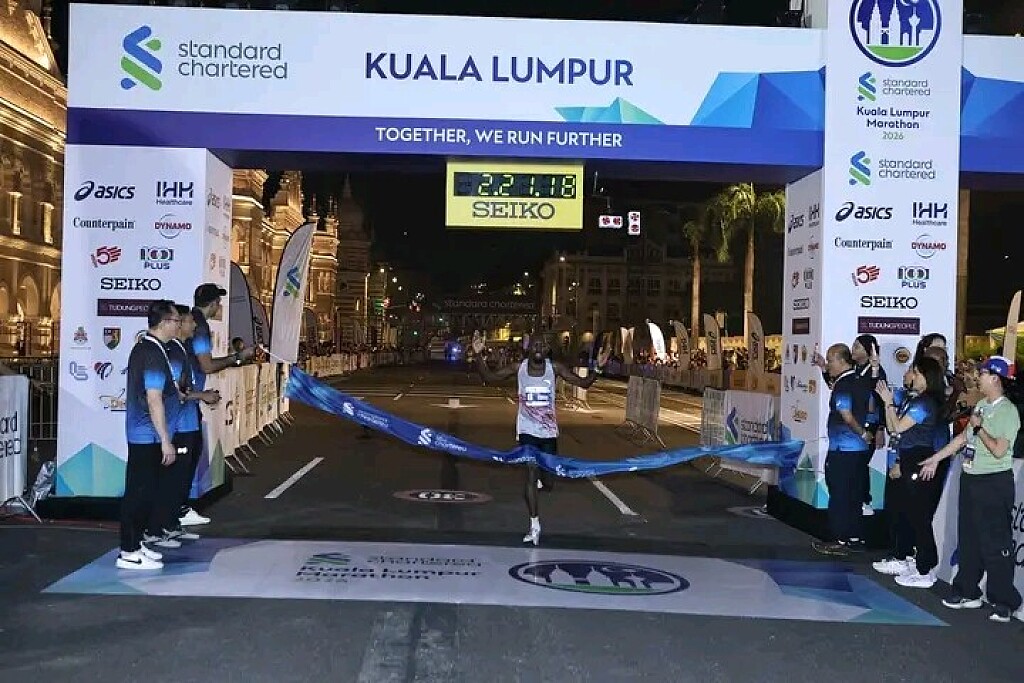
Ezekiel Kemboi Omullo Leads Kenyan Dominance At Kuala Lumpur Marathon
Kuala Lumpur, Malaysia — Ezekiel Kemboi Omullo emerged victorious at the 2026 Kuala Lumpur Marathon, leading an impressive Kenyan performance as athletes from the East African nation claimed nine of the top 10 positions in the men’s race.
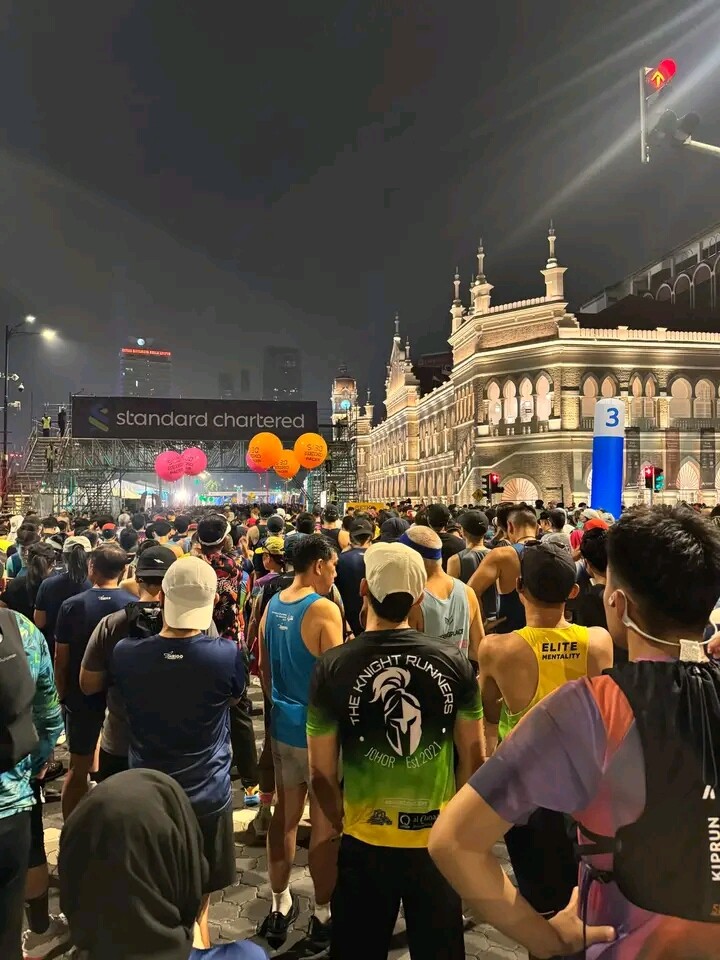
Omullo produced a winning performance of 2:21:15, edging compatriot John Nzau Mwangangi, who finished second in 2:21:23. Moses Kibet Kipsang completed the podium in 2:21:34, giving Kenya a clean sweep of the first three places.
The contest at the front was remarkably close, with the leading Kenyan athletes separated by only seconds. Samuel Kalalei matched Kipsang’s time of 2:21:34 to finish fourth, while James Tallam followed closely in fifth with 2:21:40.

Kenya’s strong showing continued with Julius Kipkorir Tuwei, who crossed the line sixth in 2:22:10. Ethiopia’s Asmera Tamiru Beshir was the only athlete from outside Kenya among the first seven, finishing seventh in 2:22:28.
The Kenyan dominance resumed behind Beshir, with Vincent Kipsang Mutai taking eighth in 2:23:08. Edwin Cheruiyot Soi finished ninth in 2:23:53, while Felix Kipsang Mutai completed the top 10 in 2:25:24.
The narrow margins among the front-runners made the men’s race particularly competitive. Omullo’s eight-second advantage over Mwangangi was the largest gap separating the top two, while Kipsang and Kalalei could not be separated on the clock after both recorded 2:21:34.
For Kenya, the result underlined the depth of its marathon talent. Nine of the 10 leading finishers came from Kenya, with the country occupying every position from first through sixth before Beshir interrupted the sequence in seventh.
Omullo ultimately took the headline victory, but the wider performance from the Kenyan contingent was equally striking. From the opening positions through the closing places of the top 10, Kenya maintained a commanding presence on the Kuala Lumpur results sheet.
2026 Kuala Lumpur Marathon — Men’s Top 10
1. Ezekiel Kemboi Omullo — Kenya — 2:21:15
2. John Nzau Mwangangi — Kenya — 2:21:23
3. Moses Kibet Kipsang — Kenya — 2:21:34
4. Samuel Kalalei — Kenya — 2:21:34
5. James Tallam — Kenya — 2:21:40
6. Julius Kipkorir Tuwei — Kenya — 2:22:10
7. Asmera Tamiru Beshir — Ethiopia — 2:22:28
8. Vincent Kipsang Mutai — Kenya — 2:23:08
9. Edwin Cheruiyot Soi — Kenya — 2:23:53
10. Felix Kipsang Mutai — Kenya — 2:25:24
Omullo’s triumph therefore came alongside a powerful collective showing from Kenya, with the 2026 Kuala Lumpur Marathon providing another showcase of the country’s remarkable depth in long-distance road racing.
by Erick Cheruiyot for My Best Runs.
Login to leave a comment

Kuala Lumpur Marathon
Standard Chartered Bank has been the title sponsor of the KL marathon since its inception in 2009 and we are honoured that our partnership will continue and as always, our aim is to make the Marathon bigger and better", said Rainer Biemans, Director of Dirigo Events and Project Director of the Standard Chartered KL Marathon 2018. The Standard Chartered KL...
more...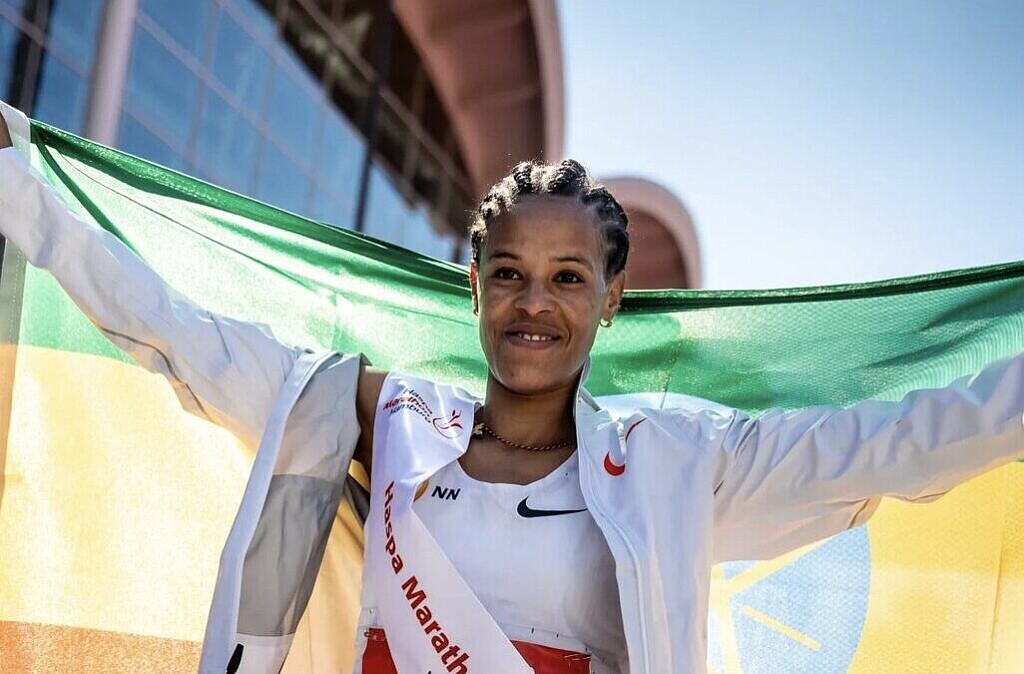
Valencia Half Marathon 2026 Set for Star-Studded Women’s Battle as Yehualaw, Gebreselama and Gitonga Head Elite Field
The Valencia Half Marathon 2026 is shaping up to be one of the most anticipated women’s road races of the season, with a deep international field set to assemble in Valencia, Spain, on Sunday, October 25.
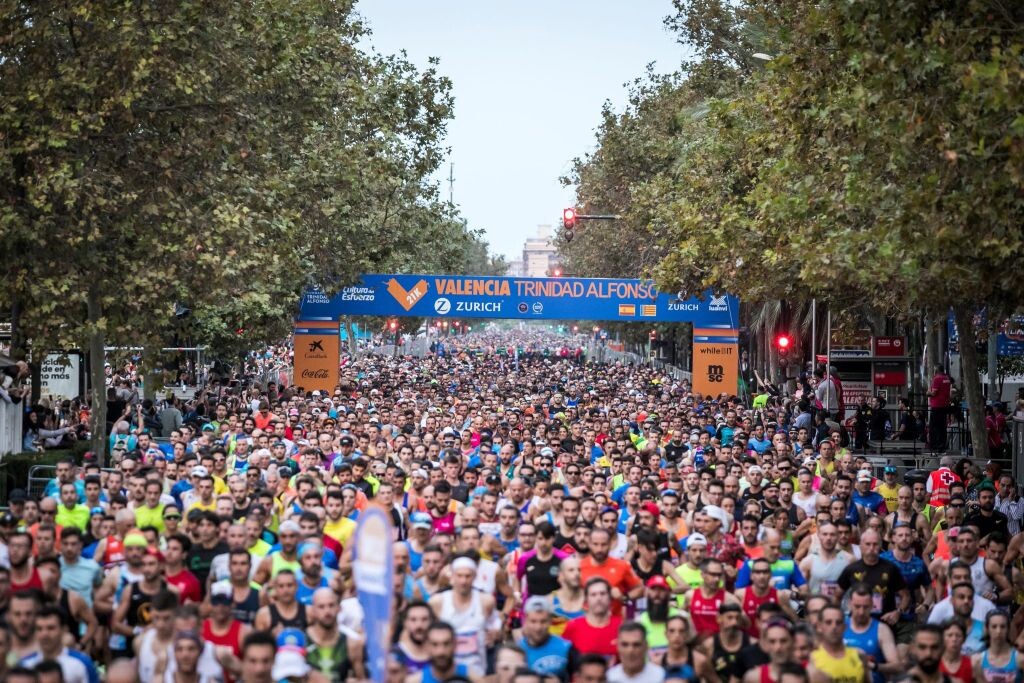
Leading the announced line-up are Ethiopia’s Yalemzerf Yehualaw, Tsigie Gebreselama and Kenya’s Caroline Gitonga, with a strong group of athletes from Kenya, Ethiopia, Germany and Spain adding considerable depth to the race.
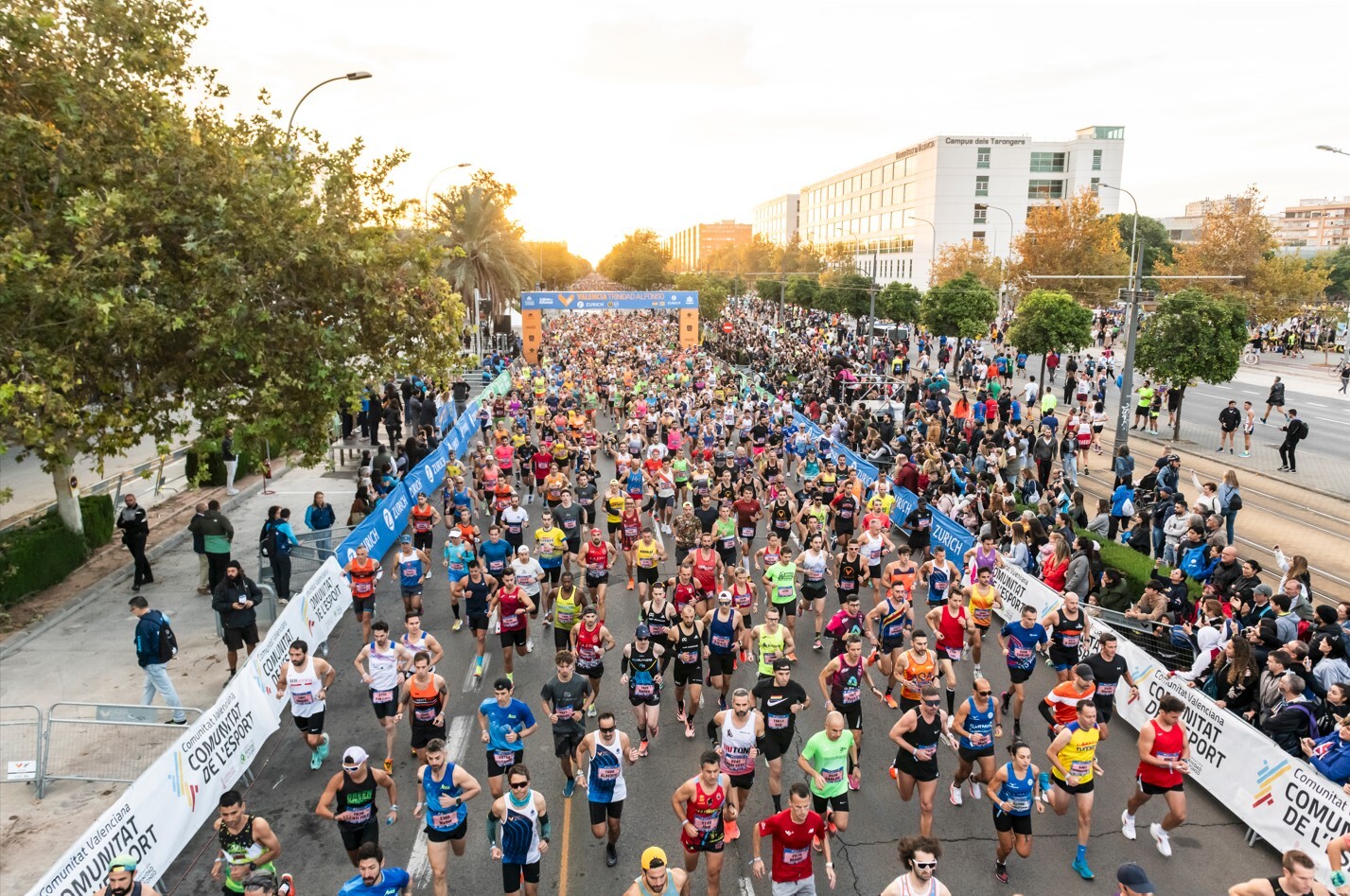
Yehualaw arrives with a listed personal best of 1:03:51, placing her among the fastest athletes in the field. The Ethiopian has considerable experience in Valencia, having finished second in the 2021 edition in 1:03:51 when compatriot Letesenbet Gidey set the then-world record of 1:02:52.
Gebreselama is also listed at 1:04:21, while Ethiopia’s Ftaw Zerai enters with 1:05:12. Their presence gives Ethiopia a formidable challenge at the front of the women’s race and sets the stage for a potentially fast contest from the opening kilometres.
Kenya will be strongly represented as well. Daisilah Jerono has a listed best of 1:05:21, followed by Veronica Loleo at 1:05:35 and Caroline Gitonga at 1:06:16. Loleo is particularly familiar with Valencia, having finished third in the 2025 race in 1:05:46.
Germany’s Konstanze Klosterhalfen, listed at 1:05:41, adds another major international name to the field. Meanwhile, Spain’s hopes will be carried by Carla Gallardo, Laura Luengo and Irene Sánchez-Escribano, who are listed at 1:08:30, 1:08:50 and 1:09:10 respectively.
Valencia Half Marathon 2026 — Women’s Elite Field
1. Yalemzerf Yehualaw (Ethiopia) — 1:03:51
2. Tsigie Gebreselama (Ethiopia) — 1:04:21
3. Ftaw Zerai (Ethiopia) — 1:05:12
4. Daisilah Jerono (Kenya) — 1:05:21
5. Veronica Loleo (Kenya) — 1:05:35
6. Mizam Alem (Ethiopia) — 1:05:38
7. Konstanze Klosterhalfen (Germany) — 1:05:41
8. Caroline Gitonga (Kenya) — 1:06:16
9. Carla Gallardo (Spain) — 1:08:30
10. Laura Luengo (Spain) — 1:08:50
11. Irene Sánchez-Escribano (Spain) — 1:09:10
The quality of the field is particularly significant given Valencia’s reputation as one of the fastest half-marathon venues in the world. The race has produced both the women’s and men’s world records, with Gidey running 1:02:52 in 2021 and Yomif Kejelcha clocking 57:30 in 2024.
With several athletes already possessing credentials around or below the 1:06 mark, the women’s race could develop into a high-quality battle over the 21.0975-kilometre distance. The depth behind the leading trio also means the outcome could depend on pacing, positioning and how the contenders respond when the race reaches its decisive stages.
For the Spanish athletes, racing on home roads provides an opportunity to challenge a powerful African contingent, while the Kenyan and Ethiopian runners will arrive with ambitions of competing for the leading positions.
The Valencia Half Marathon 2026 will take place on October 25, bringing together an international elite field alongside thousands of mass-participation runners on the fast streets of Valencia.
by Erick Cheruiyot for My Best Runs.
Login to leave a comment

Valencia Half Marathon
The Trinidad Alfonso Valencia Half Marathon has become one of the top running events in the world. Valencia is one of the fastest half marathon in the world. The race, organized by SD Correcaminos Athletics Club, celebrated its silver anniversary in style with record participation, record crowd numbers, Silver label IAAF accreditation and an atmosphere that you will not find...
more...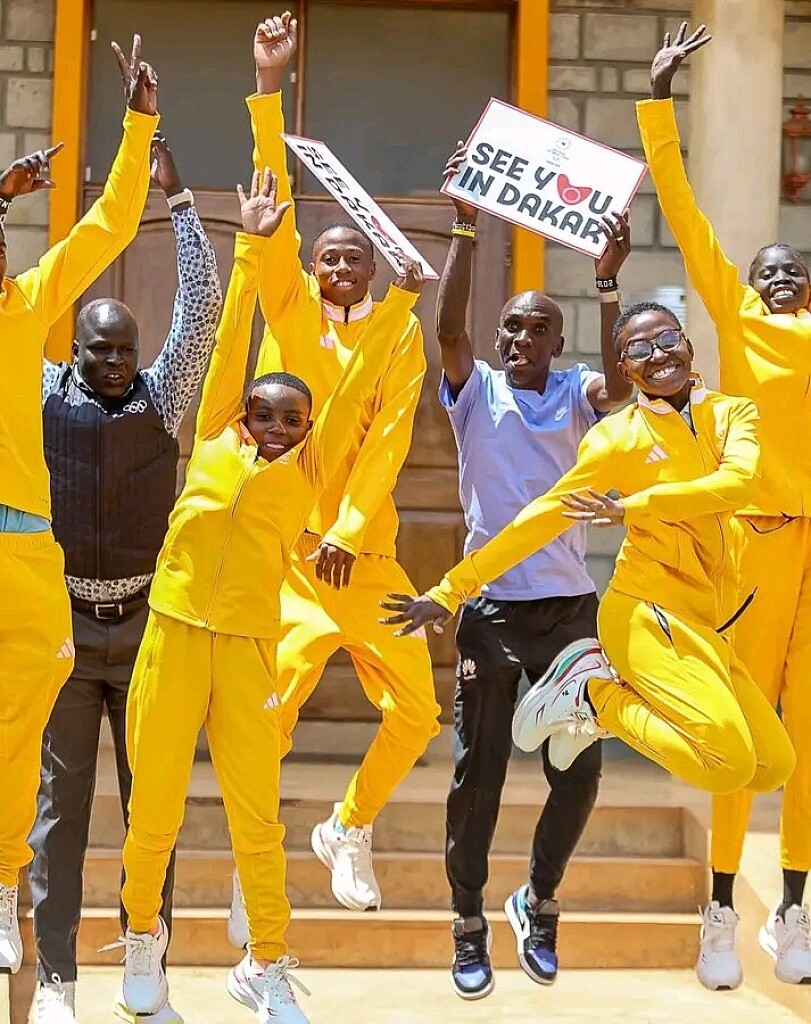
From Olympic Glory To Guiding The Next Generation: Eliud Kipchoge Takes On A New Mission In Dakar
Eliud Kipchoge has spent more than two decades chasing greatness on the world’s biggest stages. Now, the Kenyan marathon legend is taking on a different kind of challenge — helping shape the athletes who could one day follow in his footsteps.
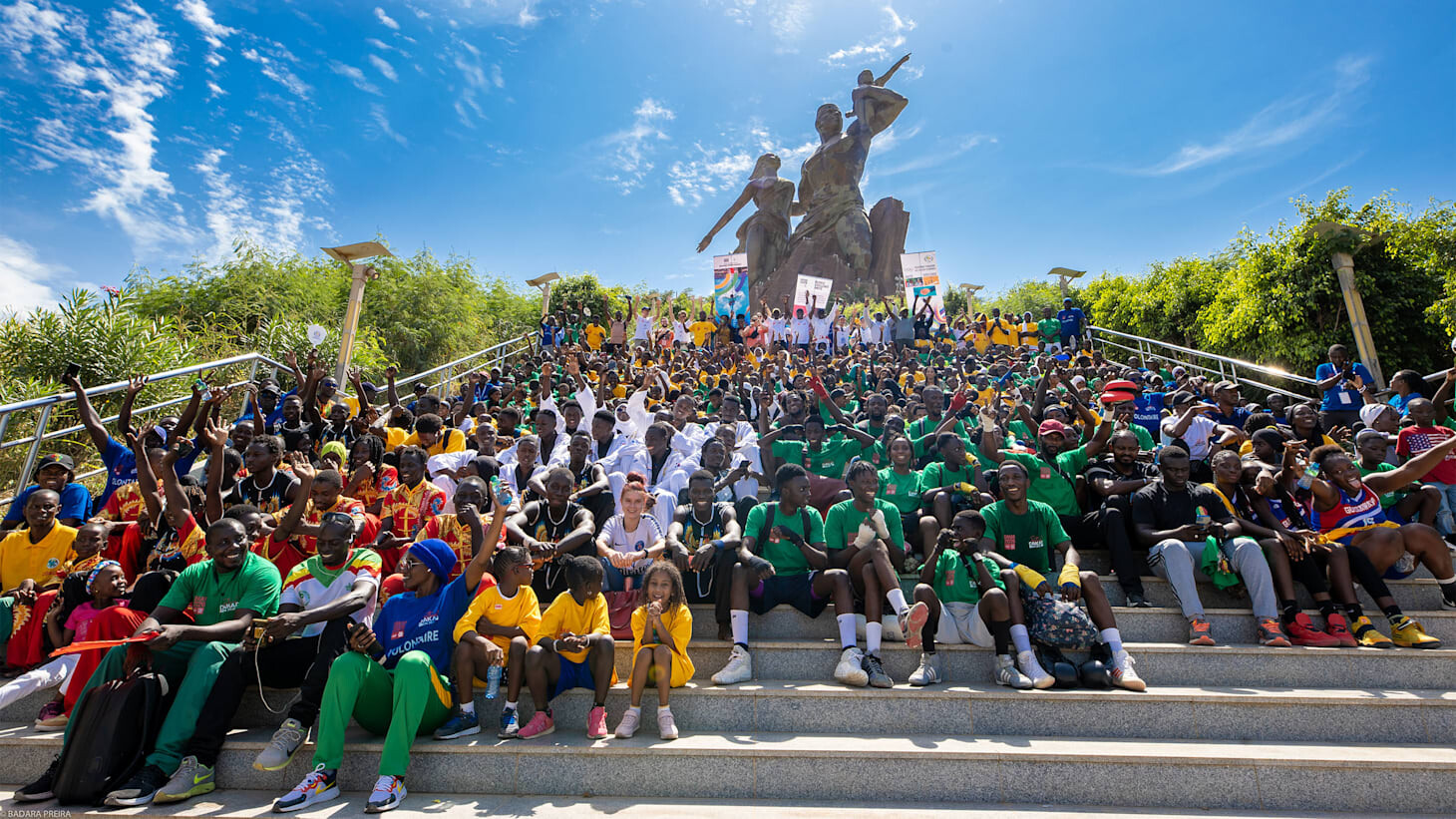
The two-time Olympic marathon champion has been appointed a Global Ambassador for the Dakar 2026 Youth Olympic Games, where he will use his experience at the highest level of sport to connect with and mentor young athletes from around the world.
Kipchoge will share the ambassadorial role with Brazilian skateboarding star Rayssa Leal, while also taking on a special mentoring role with the Refugee Olympic Team, which will make its first appearance at a Youth Olympic Games in Dakar.
For Kipchoge, the appointment represents a shift from competing for medals to investing in the future of sport.
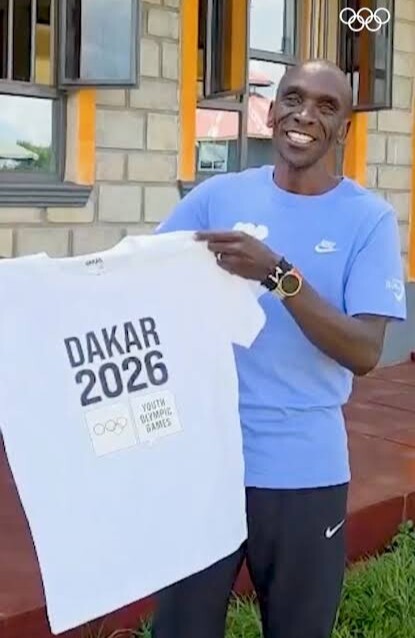
“I’ve been in the sport for 24 years; it’s my time to give back to the next generation,” Kipchoge said.
The 41-year-old has already begun that work, meeting members of the Refugee Olympic Team at their training camp in Kaptagat, Kenya. His message has extended beyond running and competition, focusing on discipline, education, personal values and what success means both in sport and in life.
“When I go to Dakar, I’ll make sure I meet young athletes from across the world — meet them, have an honest talk, mentor them, and look at what the future of sport, and the world, looks like,” Kipchoge said.
The assignment carries enormous significance for Africa. Dakar 2026 will be the first Olympic sporting event ever staged on African soil, with the Youth Olympic Games bringing together approximately 2,700 young athletes across Dakar, Diamniadio and Saly.
It will also mark a historic moment for young refugee athletes, with the Refugee Olympic Team making its Youth Olympic Games debut. World Athletics has confirmed that young athletes hosted by the National Olympic Committees of Kenya and Uganda will form part of the team competing in Senegal.
For Kipchoge, Dakar is therefore about much more than ceremonies, appearances and titles. It is an opportunity to share the lessons accumulated through an extraordinary career and encourage a new generation to believe in its own potential.
“Dakar 2026 is a huge event on our young continent — something we’ve long waited for here,” Kipchoge said. He added that being part of the first Olympic sporting event in Africa would leave a lasting impression on young people across the continent.
From Athens 2004, where he won his first Olympic medal, to his marathon triumphs at Rio 2016 and Tokyo 2020, Kipchoge has experienced virtually every level of Olympic competition. His next contribution will not be measured in seconds, medals or records.
This time, his impact will be measured by the young athletes he inspires.
The man who spent years showing the world how far a human being can push the limits is now preparing to help the next generation discover how far they can go.
Kipchoge is no longer simply chasing history. In Dakar, he will be helping the next generation write its own.
by Erick Cheruiyot for My Best Runs.
Login to leave a comment
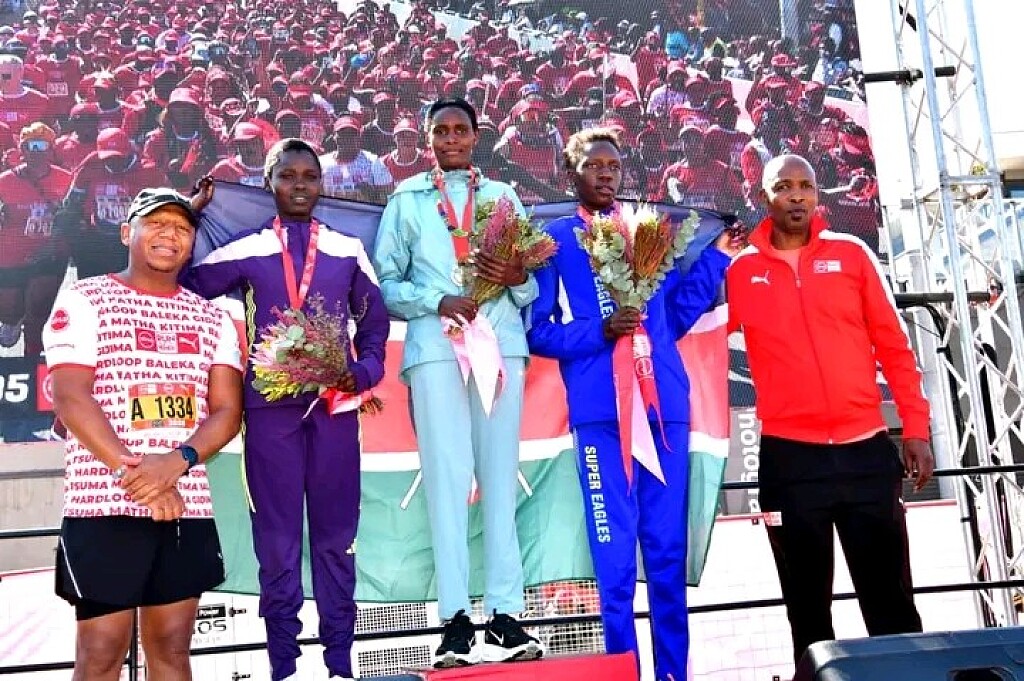
Kenyan Trio Completes Clean Sweep At 2026 Absa Joburg 10K
Kenya produced a commanding display on the streets of Johannesburg, South Africa, as Deborah Chemutai led a clean sweep of the women’s podium at the 2026 Absa Joburg 10K.

Chemutai delivered a strong winning performance to cross the finish line first in 32:50, securing victory and leading a remarkable Kenyan one-two-three in the South African road race.
She was followed by compatriot Mercy Chelimo, who battled her way to second place in 33:10, while Esther Borura completed the Kenyan domination by taking third in 33:27.
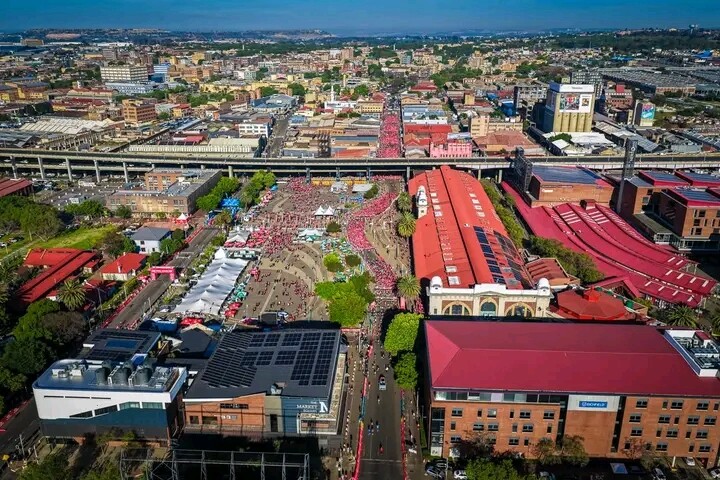
The result highlighted Kenya’s depth in women’s road running, with all three podium positions occupied by athletes from the East African distance-running powerhouse.
Chemutai’s victory was the centerpiece of an impressive Kenyan performance, as she maintained her advantage to claim the top step of the podium in Johannesburg. Chelimo and Borura ensured the Kenyan dominance extended through the leading positions, completing a memorable sweep.
The margin between the three Kenyans also made the podium battle particularly compelling. Chelimo finished just 20 seconds behind Chemutai, while Borura was another 17 seconds adrift, producing a closely packed Kenyan presence at the sharp end of the race.
Beyond the individual victory, the result underlined the remarkable depth available in Kenyan women’s road running. Producing the winner is one achievement, but occupying all three podium places demonstrates how strongly the country continues to feature when elite road races bring together talented distance runners.
For Chemutai, the Johannesburg triumph provided a memorable addition to her racing campaign, while Chelimo and Borura completed a result that will stand out from the 2026 edition of the Absa Joburg 10K. Together, the trio turned the women’s podium into a celebration of Kenyan running strength.
Women’s 10km Results
1. Deborah Chemutai (Kenya) — 32:50
2. Mercy Chelimo (Kenya) — 33:10
3. Esther Borura (Kenya) — 33:27
The Johannesburg finish therefore belonged entirely to Kenya, with Chemutai, Chelimo and Borura combining to produce a flawless podium sweep and underline the depth of Kenyan talent in the 10km road-racing scene.
by Erick Cheruiyot for My Best Runs.
Login to leave a comment

Absa Run Your City Joburg 10K
A proud Heritage Day Celebration, the Absa RUN YOUR CITY JOBURG 10K was founded in 2016 and celebrates the splendour of the City of Gold. Runners (and walkers) will be treated to a 10km journey that highlights iconic landmarks and features lively performances by a host of Joburg’s leading performing arts groups. A true highlight on the SA running calendar,...
more...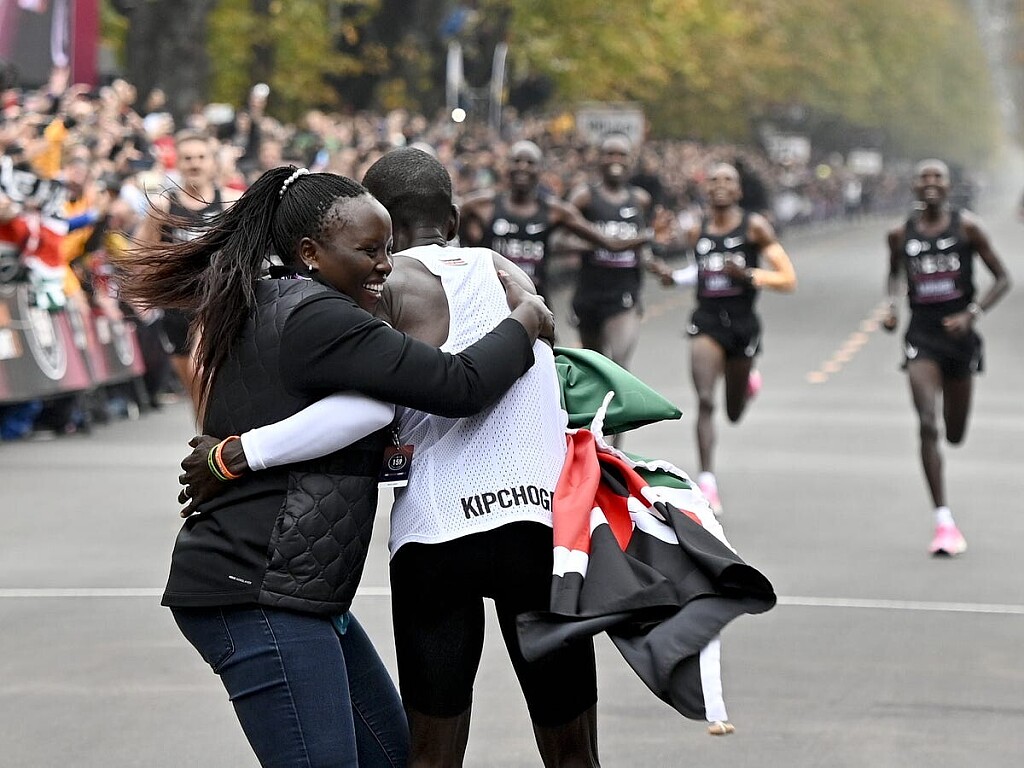
From Supporting Eliud Kipchoge To Chasing Her Own Marathon Dreams — Grace Sugut’s Journey Continues In Melbourne
For years, Grace Sugut has been a familiar presence alongside one of the greatest marathon runners in history, Eliud Kipchoge. Now, her own running story is beginning to take shape.

Sugut is preparing for the third marathon of her career when she lines up at the Nike Melbourne Marathon on Sunday, October 11, 2026, sharing the start line with her husband once again as Kipchoge continues his ambitious global marathon journey in Australia.
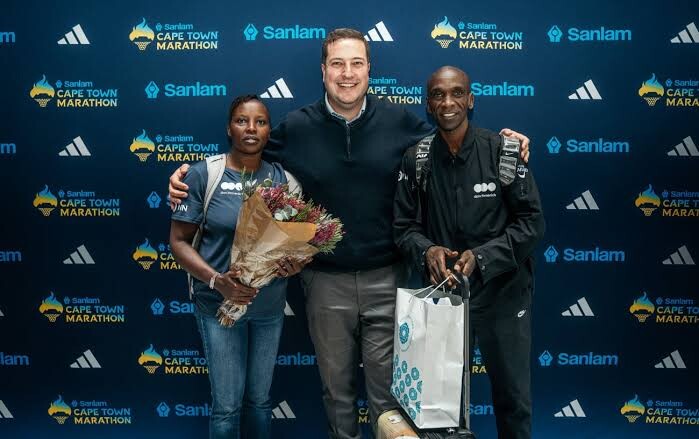
What makes Grace’s story particularly fascinating is the speed at which her marathon journey has developed. Rather than spending years building towards the distance, she has embraced the challenge in a relatively short period, travelling across continents and gradually establishing her own identity as a marathon runner.
Her journey began in Cape Town on May 24, 2026, where she completed her marathon debut in 4:29:59. That first race marked the beginning of a new chapter for a woman who had long been closely connected to marathon running through Kipchoge.
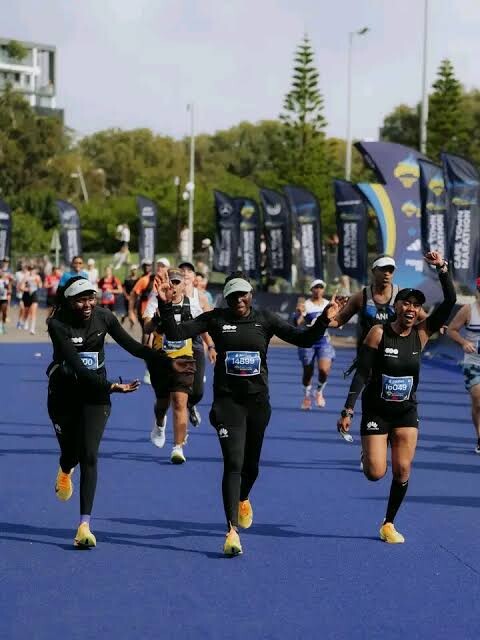
Just weeks later, she continued that adventure in South America, taking on the NB42K Porto Alegre Marathon in Brazil on July 12. The race provided another opportunity to gain experience over the demanding 42.195-kilometre distance and add another international marathon to her growing journey.
Now, Melbourne awaits.

The Nike Melbourne Marathon will give Grace another chance to test herself over the full marathon distance, this time on a redesigned course that organisers have made faster and flatter. The 2026 route features up to 20 per cent less elevation gain and 30 per cent fewer turns, while the race will once again finish inside the iconic Melbourne Cricket Ground.
The marathon starts at 6:15 a.m. from Batman Avenue before taking runners through some of Melbourne’s most recognisable areas and ultimately into the MCG for a memorable stadium finish.
For Grace, however, Melbourne represents more than another race on the calendar.
It places her directly inside the extraordinary global adventure being undertaken by her husband.
Kipchoge’s Eliud’s Running World project is taking him to seven marathons across all seven continents over a two-year period, combining marathon racing with a wider mission to bring communities together through running and support education and environmental initiatives through the Eliud Kipchoge Foundation.
Melbourne is the third stop of that journey, following Cape Town in South Africa and Porto Alegre in Brazil.
And this time, Grace is not simply accompanying the journey from the sidelines.
She is running it.
From Cape Town to Porto Alegre and now Melbourne, her progression reflects a personal transformation from being closely associated with marathon running through Eliud to taking on the distance herself.
There is something deeply compelling about that journey. While Kipchoge has spent more than a decade building one of the most celebrated marathon careers in history, Grace is beginning her own story from a very different starting point — learning the marathon one race, one continent and one kilometre at a time.
On October 11, thousands of runners will fill Melbourne’s streets, while the spectacular finish inside the MCG will provide the backdrop for another memorable day of marathon running.
Kipchoge will continue his seven-continent mission.
Grace Sugut will have a simpler but equally personal objective: to keep moving forward and complete another 42.195 kilometres.
From supporting a marathon legend to becoming a marathon runner herself, Grace’s journey is only beginning — and Melbourne could become another important chapter in a story that is already taking her around the world.
by Erick Cheruiyot for My Best Runs.
Login to leave a comment
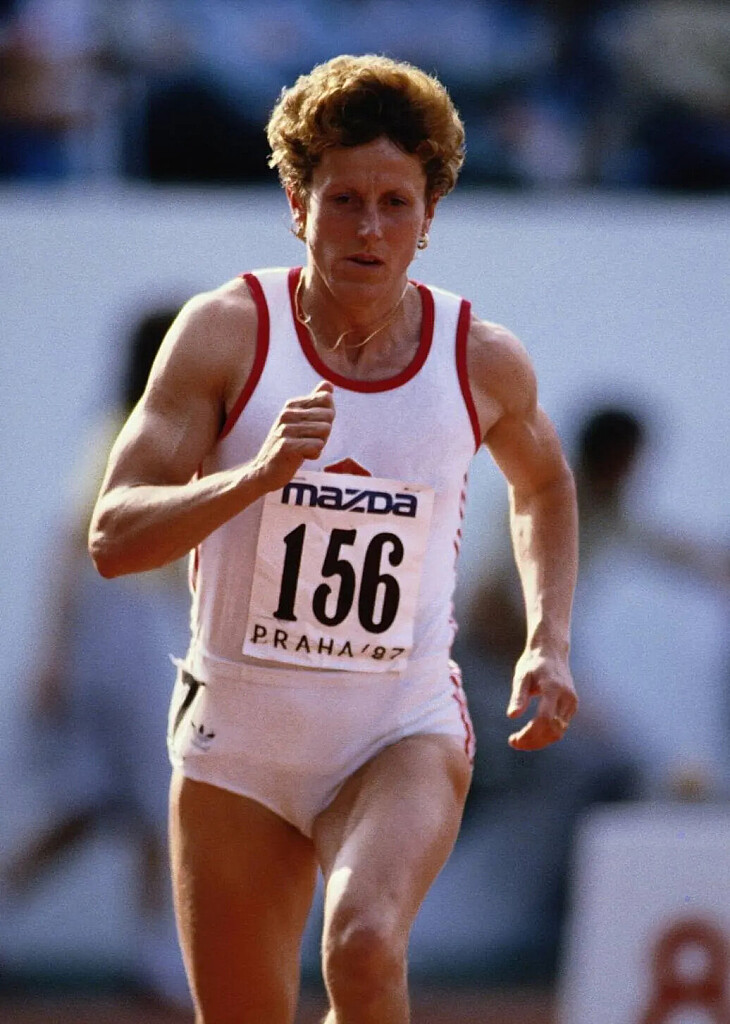
Oldest Running World Records: The Historic Marks That Refuse To Fall
Some world records are broken within months or even weeks. Others survive for years, becoming part of athletics history and turning every new generation of challengers into another chapter in their remarkable story.
As of September 25, 2026, a remarkable collection of long-standing running world records continues to stand across the track. At the top of that list is one of the most enduring marks in modern athletics: Jarmila Kratochvílová’s women’s 800m world record of 1:53.28, set in Munich in 1983. The record has now stood for 43 years, making it the oldest current outdoor track world record in athletics.
Kratochvílová’s performance remains extraordinary not only because of its longevity, but also because of how rarely athletes have come close to it. Decades after it was established, the 1:53 barrier remains one of the most formidable standards in women’s middle-distance running.
The next-oldest record on the board belongs to Marita Koch, whose 47.60 for the women’s 400m has remained untouched since 1985. Koch’s mark is now 40 years old, while Florence Griffith-Joyner’s extraordinary world records of 10.49 for 100m and 21.34 for 200m, both established in 1988, have survived for 38 and 37 years respectively.
Those records from the 1980s and early 1990s form one of the most intriguing chapters in athletics history. They belong to an era that produced performances still sitting at the very top of the all-time lists, with modern generations repeatedly attempting to reach standards that have resisted decades of competition.
China’s Wang Junxia added another remarkable mark to that era when she ran 8:06.11 for 3000m in 1993. That record has now stood for 32 years, while Morocco’s Hicham El Guerrouj set the men’s 1500m world record of 3:26.00 in 1998, giving the list another mark that has survived for more than a quarter of a century.
Then comes a different kind of longevity: the extraordinary sprint records of Usain Bolt.
Bolt’s 9.58-second 100m world record, set in Berlin in 2009, and his 19.19-second 200m record, established at the same championships, are now both 17 years old.
When Bolt produced those performances, many of today’s elite sprinters were still children. Yet despite enormous advances in training, sports science, track technology and competition, his two marks remain the standards that every new generation must chase.
The list also highlights the remarkable staying power of more recent records. Kenya’s David Rudisha set the men’s 800m world record of 1:40.91 at the London 2012 Olympics, while South Africa’s Wayde van Niekerk stunned the world with 43.03 in the 400m at the Rio 2016 Olympics.
Kenya’s Beatrice Chepkoech followed with her historic 8:44.32 world record in the women’s 3000m steeplechase in 2018. Uganda’s Joshua Cheptegei then established the men’s 5000m and 10,000m records in 2020, running 12:35.36 and 26:11.00 respectively.
More recently, Ethiopia’s Lamecha Girma set the men’s 3000m steeplechase world record at 7:52.11 in 2023, while Kenya’s Faith Kipyegon produced another landmark performance that year, running 4:07.64 for the women’s mile.
Together, these records create a fascinating timeline of athletics—from the pioneering performances of the 1980s to the spectacular achievements of the modern era. Some have survived for more than four decades, while others are still in the early stages of what could become an equally remarkable reign.
And that is what makes world records so captivating: every generation arrives believing that today’s impossible can become tomorrow’s target, yet some numbers continue to stand as enduring reminders of performances that changed the sport forever.
by Erick Cheruiyot for My Best Runs.
Login to leave a comment
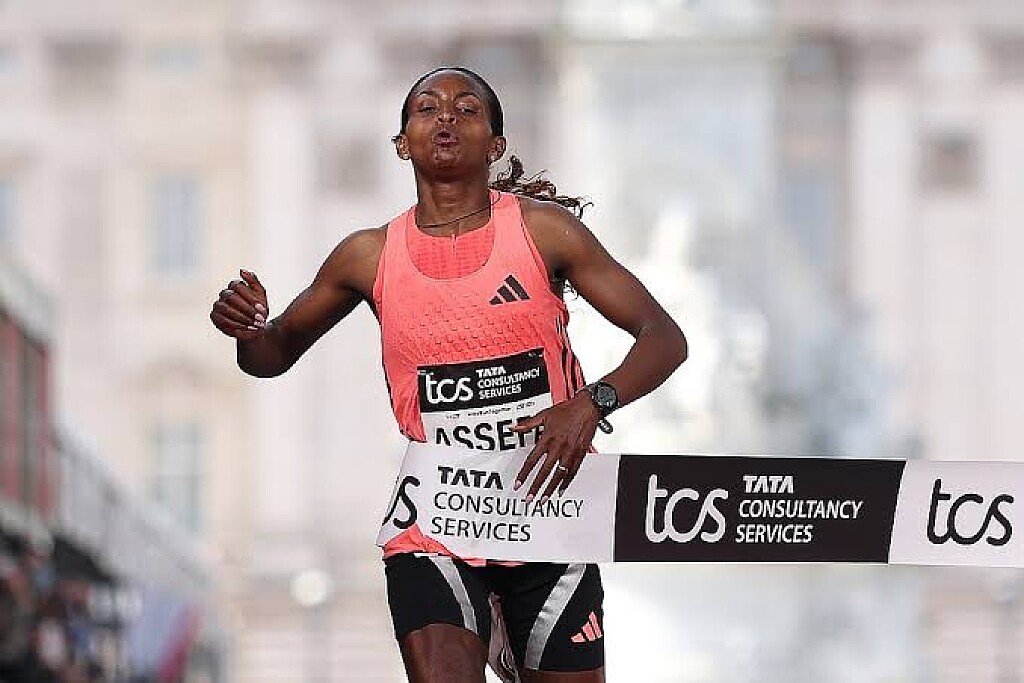
Tigst Assefa Extends East Africa’s Remarkable Reign Over the Women-Only Marathon World Record
The women-only marathon world record has remained in East African hands since 2017, with Kenya and Ethiopia trading the historic mark in a remarkable sequence of record-breaking performances.
The latest chapter belongs to Ethiopia’s Tigst Assefa, who lowered the record to 2:15:41 at the 2026 London Marathon, taking nine seconds off her own previous mark of 2:15:50.
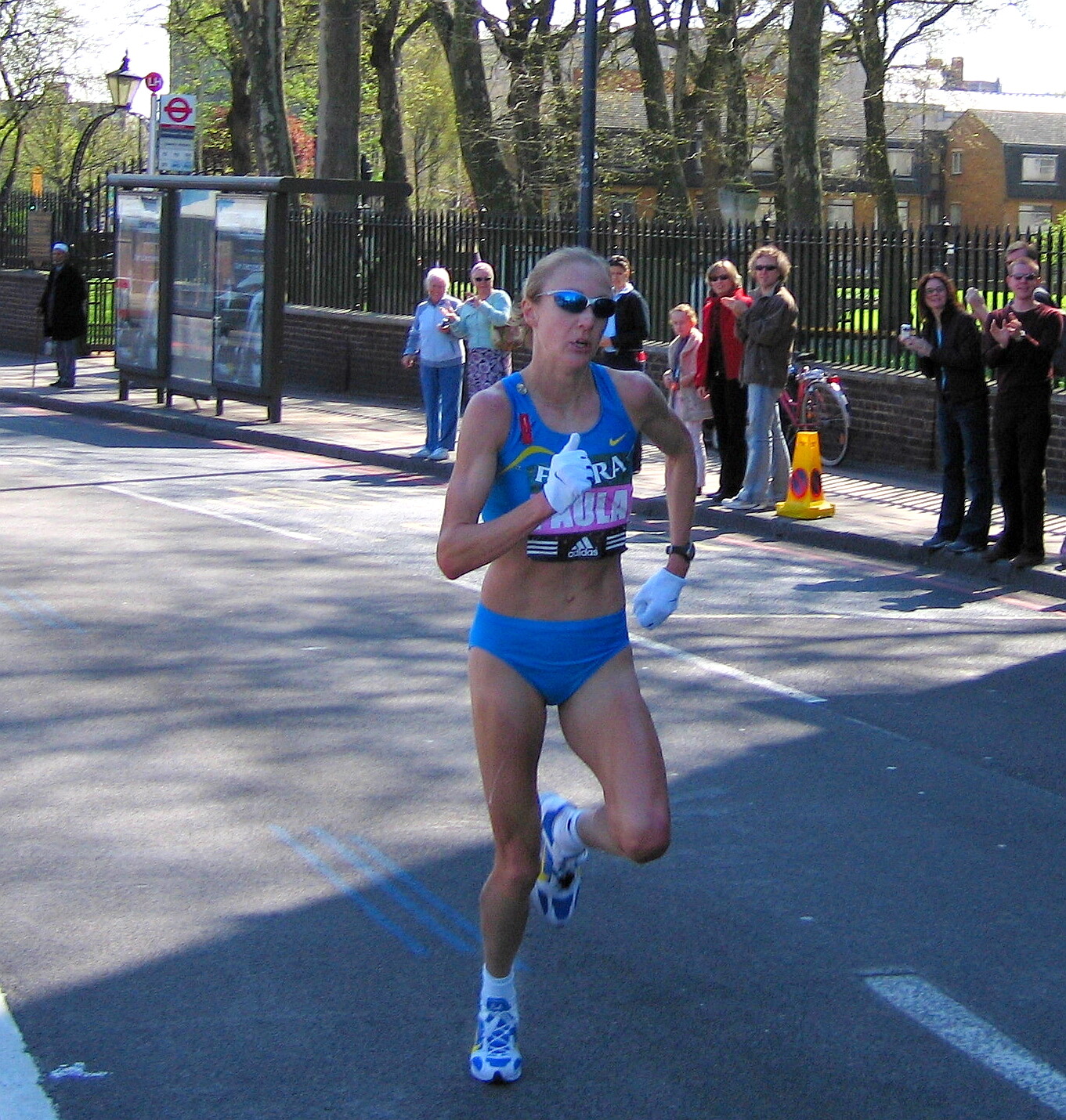
The progression began with Britain’s Paula Radcliffe, whose 2:17:42 in 2005 stood for 12 years before Kenya’s Mary Keitany finally brought the record down. Keitany clocked 2:17:01 at the 2017 London Marathon, beginning the current East African era of the women-only record.
Kenya strengthened its grip in 2024 when Olympic champion Peres Jepchirchir produced one of the defining performances of her career in London. She ran 2:16:16, cutting 45 seconds from Keitany’s record and becoming the latest Kenyan to set the women-only marathon world record.
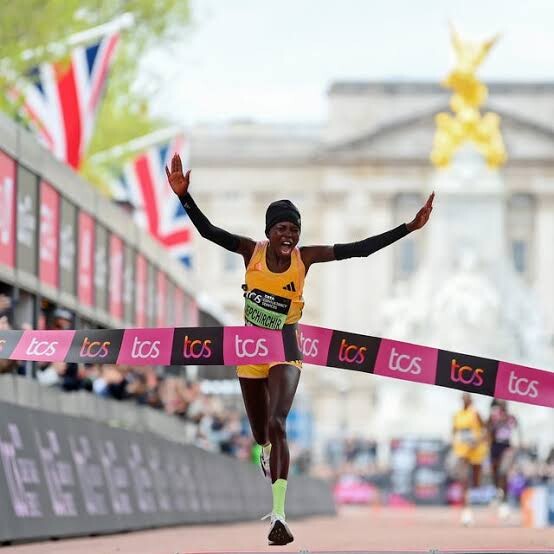
But the record did not remain in Kenya for long. At the 2025 London Marathon, Assefa produced a spectacular 2:15:50, improving Jepchirchir’s mark by 26 seconds and establishing herself as the latest Ethiopian custodian of the record.
A year later, Assefa returned to London with the record still in her sights. She delivered again, running 2:15:41 to successfully defend her title and extend her own world record by another nine seconds.
Behind her, Kenya’s Hellen Obiri ran a personal best of 2:15:53, while Joyciline Jepkosgei followed in 2:15:55. The extraordinary depth of the race meant three women finished inside 2:16 in the same marathon.
The rivalry between Kenya and Ethiopia has consequently become a defining feature of the modern women-only marathon record. Each breakthrough has raised the standard, creating an increasingly demanding target for the next generation of marathon stars.
It is also important to distinguish the women-only record from the overall women's marathon world record. A women-only race does not use male pacemakers, while mixed-gender races can have male athletes helping to maintain the pace. This distinction makes the progression of the women-only record a particularly interesting measure of women's marathon racing.
For now, the record progression reads:
Great Britain — Paula Radcliffe, 2:17:42 (2005)
Kenya — Mary Keitany, 2:17:01 (2017)
Kenya — Peres Jepchirchir, 2:16:16 (2024)
Ethiopia — Tigst Assefa, 2:15:50 (2025)
Ethiopia — Tigst Assefa, 2:15:41 (2026)
From Radcliffe’s landmark performance in 2005 to Assefa’s latest breakthrough in 2026, the record has undergone a remarkable transformation. Since Keitany ended Radcliffe’s 12-year reign, every improvement has come from either Kenya or Ethiopia, underlining the extraordinary depth of East African women’s marathon running.
And with the record now standing at 2:15:41, the next chapter is waiting to be written. The question is not only who will break the mark next, but how much further the women-only marathon can ultimately be pushed.
by Erick Cheruiyot for My Best Runs.
Login to leave a comment
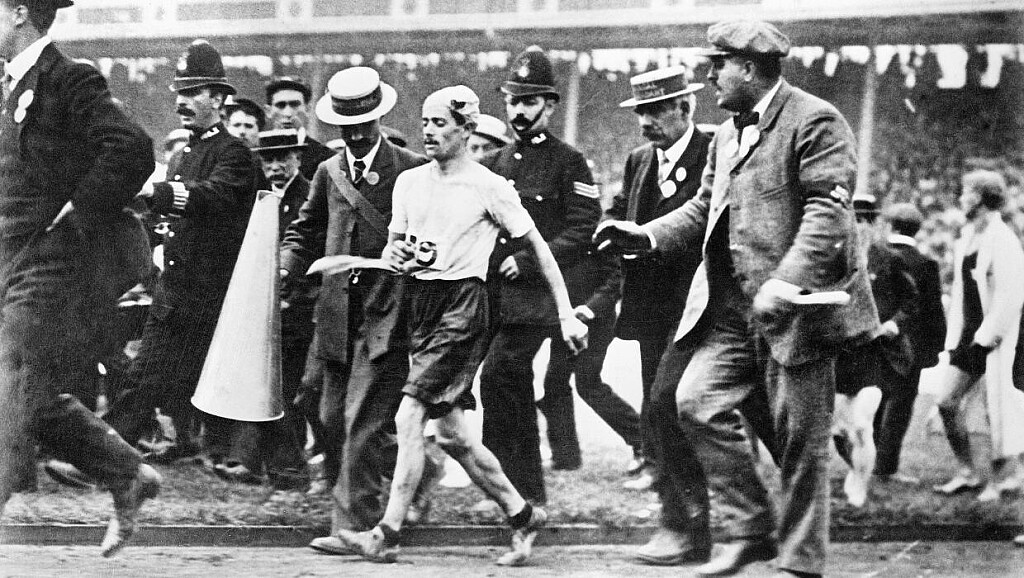
The Strangest Olympic Marathon Ever: Cars, Rotten Apples, Wild Dogs And Strychnine
Few Olympic races have produced a story as bizarre, chaotic and brutal as the marathon at the 1904 Games in St. Louis.
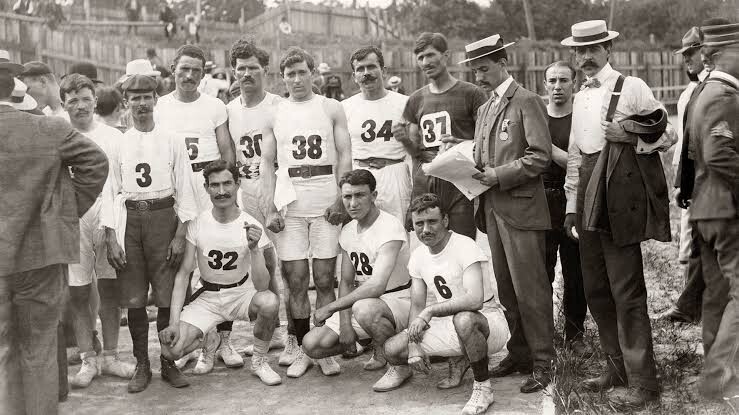
Held on August 30, 1904, the race took place over roughly 40 kilometres in oppressive heat, on dusty country roads where passing automobiles stirred clouds of dust into the air. Water was extremely limited, and the combination of heat, hills, dehydration and poor race organization turned the event into an extraordinary test of survival.
Thirty-two runners started the marathon, but only 14 reached the finish. What happened along the way would eventually make the St. Louis marathon one of the most infamous races in Olympic history.
Among the strangest episodes was the story of American runner Frederick Lorz.
Lorz was initially celebrated as the winner after reaching the stadium first in 3:13:00. But the apparent victory quickly collapsed when officials discovered that he had been transported by automobile for a substantial portion of the course after suffering severe cramps. Accounts place the car ride at roughly 11 miles.
When the automobile eventually broke down, Lorz returned to the road and continued running. He crossed the finish line first, but his deception was uncovered almost immediately and he was disqualified. Lorz later described the incident as a joke rather than an attempt to claim the Olympic title.
That left Thomas Hicks as the official Olympic champion, but his journey to the gold medal was almost as extraordinary.
Hicks completed the marathon in 3:28:53, a time that remains the slowest winning performance in Olympic marathon history. Yet the number on the clock tells only part of the story.
As Hicks began to fade badly during the latter stages, his support team gave him a mixture containing strychnine and egg white, followed later by brandy. Strychnine was regarded at the time as a stimulant in very small quantities, although today it is recognized as a highly poisonous substance. There were no modern anti-doping rules at the 1904 Games to prohibit such treatment.
Hicks became increasingly exhausted and reportedly hallucinated during the closing stages. His condition deteriorated so badly that his trainers eventually helped carry him across the finish line while his legs continued moving beneath him.
Afterward, he needed medical attention before he was well enough to leave the stadium. The Olympic Museum records that four doctors were required to attend to him following the race.
Then there was Andarín Carvajal, the Cuban postman whose Olympic debut sounded more like an adventure than a marathon.
Carvajal arrived in St. Louis shortly before the race and had little of the equipment expected of a serious marathon runner. He competed in long trousers and a long-sleeved shirt, with the legs of his trousers cut down to make them more suitable for running.
Despite his unconventional preparation, Carvajal ran remarkably well and stayed among the leading competitors.
But hunger became a problem. Having gone for a long period without proper food, he stopped along the course and ate apples he found. Unfortunately, the fruit was rotten, leaving him with severe stomach cramps. At one point, he lay down beside the road and fell asleep.
Remarkably, he recovered, got back on his feet and continued running. Carvajal eventually finished fourth, an extraordinary result considering the conditions and the obstacles he encountered.
The race also marked an important moment in Olympic history for Africa.
Len Taunyane and Jan Mashiani, two South Africans of Tswana background, became the first Black Africans to compete at the Olympic Games. They were in St. Louis as part of a South African exhibition connected to the World's Fair and entered the marathon almost unexpectedly.
Historical accounts have long described the pair as running barefoot, although surviving photographs indicate that the footwear situation was more complicated, with at least one of them appearing to have shoes. Their names were also recorded inconsistently in contemporary reports.
Taunyane became part of one of the race's most extraordinary stories when he was reportedly chased off the course for about a mile by a wild dog. Despite the incident, he recovered and continued the race.
Taunyane finished ninth, while Mashiani placed 12th, making their appearances significant not only because of the bizarre circumstances but also because they represented an important milestone in Olympic history.
There were other dangers too. The roads were so dusty that the automobiles accompanying the runners created clouds of dust that made an already punishing race even more difficult. One American runner, William Garcia, reportedly collapsed after dust severely affected his throat and stomach, illustrating just how dangerous the conditions had become.
The 1904 St. Louis marathon was therefore unlike almost anything seen in modern distance running.
There were no sophisticated hydration stations, no carefully measured modern course, no sports science teams and no anti-doping regulations. Instead, runners faced extreme heat, dusty roads, limited water and primitive medical practices.
One athlete rode in a car. Another stopped to eat rotten fruit and fell asleep. Two pioneering African competitors endured an extraordinary race, with one reportedly being chased by a dog. And the eventual champion was administered a dangerous stimulant mixture before being helped across the finish line.
More than a century later, the St. Louis marathon remains a remarkable reminder of just how different Olympic distance running once was.
It was a marathon where survival sometimes seemed as important as speed—and where almost every mile produced another unbelievable chapter.
by Erick Cheruiyot for My Best Runs.
Login to leave a comment
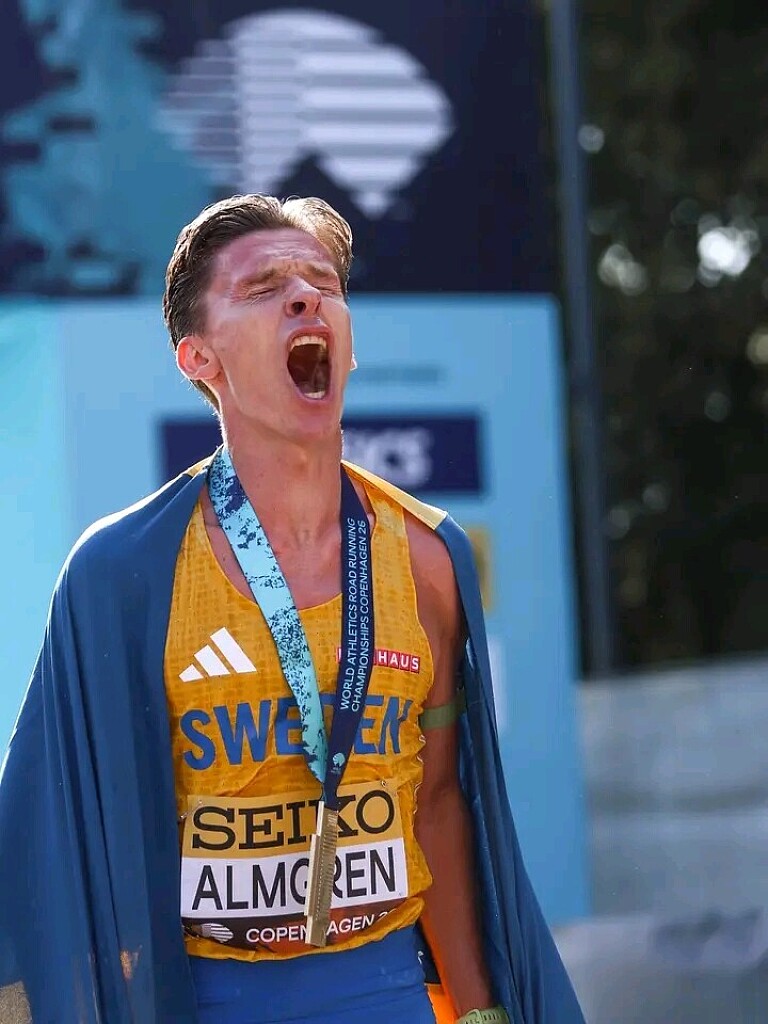
Andreas Almgren Times His Move To Perfection For World Half Marathon Gold In Copenhagen
Sweden’s Andreas Almgren produced a breathtaking finish on the streets of Copenhagen, unleashing a perfectly timed late surge to win the men’s half marathon title at the 2026 World Athletics Road Running Championships in 58:06.
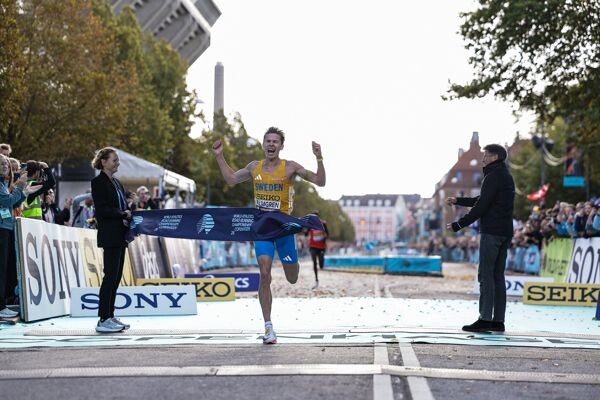
The Swedish star waited patiently through the decisive stages of the race before making his move with roughly 200 metres remaining, accelerating away from the field and producing a devastating sprint down the final straight.
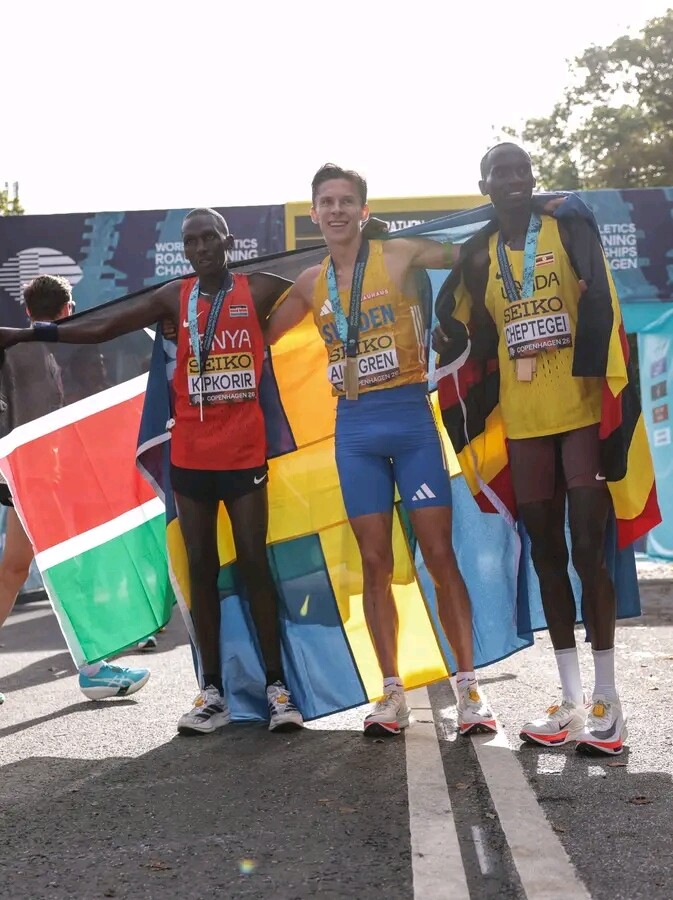
Nicholas Kipkorir had controlled much of the race, dictating the pace and keeping the leading contenders under pressure. Almgren, however, remained close throughout, carefully conserving enough energy for the moment that would ultimately decide the world title.
When the race entered its final stretch, Almgren made his move. The Swede surged hard over the final 200 metres and then outsprinted Kipkorir over the last 100 metres, powering clear to cross the line first in 58:06.
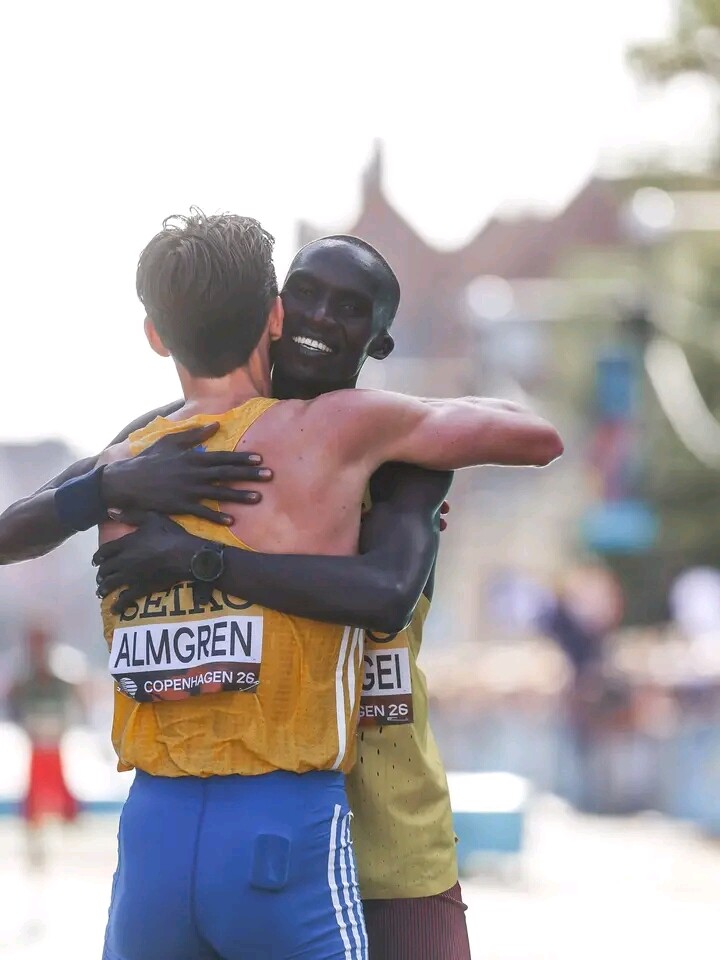
The performance was not only enough to secure the gold medal but also delivered an Area Record, adding another extraordinary achievement to Almgren’s rapidly growing list of accomplishments.
His winning time makes the victory even more significant in the history of the championships. Almgren becomes the first non-African world half marathon champion since Italy’s Stefano Baldini in 1996, ending a remarkable 30-year period in which athletes from Africa had dominated the global title.
For much of the race, Kipkorir appeared to have control, but Almgren refused to be separated from the Kenyan. His patience proved decisive as the race entered its final kilometres, allowing him to remain within striking distance before producing the acceleration that ultimately settled the contest.
Behind the leading pair, Uganda’s Joshua Cheptegei endured a gruelling battle to hold on to third position. The Olympic and world champion was pushed relentlessly in the closing stages and had to dig extremely deep to preserve his place on the podium. Despite the intense pressure from the athletes behind him, Cheptegei held firm to secure the bronze medal in a personal best of 58:26.
Ethiopia’s Tadese Worku also produced a personal best of 58:35 to finish fourth, while Kenya’s Gideon Kipkertich Rono followed in fifth in 58:57. The depth of the field was reflected by the fact that six athletes broke the 59-minute barrier, underlining the exceptional quality of the championship race.
Top 10 Men’s Half Marathon Results
1. Andreas Almgren (Sweden) — 58:06 — AR
2. Nicholas Kipkorir (Kenya) — 58:11
3. Joshua Cheptegei (Uganda) — 58:26 — PB
4. Tadese Worku (Ethiopia) — 58:35 — PB
5. Gideon Kipkertich Rono (Kenya) — 58:57
6. Hani Idriss Hersi (Djibouti) — 59:09 — NR
7. Yemaneberhan Crippa (Italy) — 59:18
8. Alex Nzioka Matata (Kenya) — 59:22
9. Daniel Simtu Ebenyo (Kenya) — 59:42 — SB
10. Othmane El Goumri (Morocco) — 59:53 — PB
The victory further strengthens Almgren’s remarkable 2026 campaign. The 58:06 performance gave the Swede an Area Record as he added the World Athletics Road Running Championships half marathon crown to his résumé, following his 10,000m triumph at the European Athletics Championships. His ability to combine sustained endurance with a devastating finishing kick once again proved decisive on the biggest stage.
For Almgren, the Copenhagen triumph also provides an intriguing glimpse ahead to his next challenge. With his New York City Marathon debut now on the horizon, the world half marathon title represents an important statement as he prepares to make the transition to the marathon. After demonstrating that he can handle the demands of championship racing over 21.1 kilometres while still possessing the speed to produce a decisive late surge, Almgren now turns his attention toward an entirely new distance.
The victory marks Almgren’s first global title, completing a remarkable transformation from European record-holder and leading continental distance runner into a world champion.
It also adds another spectacular chapter to an already outstanding 2026 season. Almgren has consistently demonstrated an exceptional combination of endurance, speed and tactical intelligence, and Copenhagen provided the perfect stage for all three qualities to come together.
With the clock showing 58:06, Almgren not only conquered the world championship field but also rewrote the European record books. His perfectly timed attack in the final 200 metres delivered Sweden a historic world road-running title and created one of the most dramatic finishes of the Copenhagen championships.
by Erick Cheruiyot for My Best Runs.
Login to leave a comment

World Athletics Road Running Championships
Six world champions and 65,000 runners just behind them. In September 2026, the heart of Copenhagen is expected to be the stage for Denmark’s largest-ever participant event. The World Athletics Road Running Championships Copenhagen 26 will take place on September 19-20, 2026. A total of 65,000 participants will join the running festivities behind the world’s fastest female and male athletes...
more...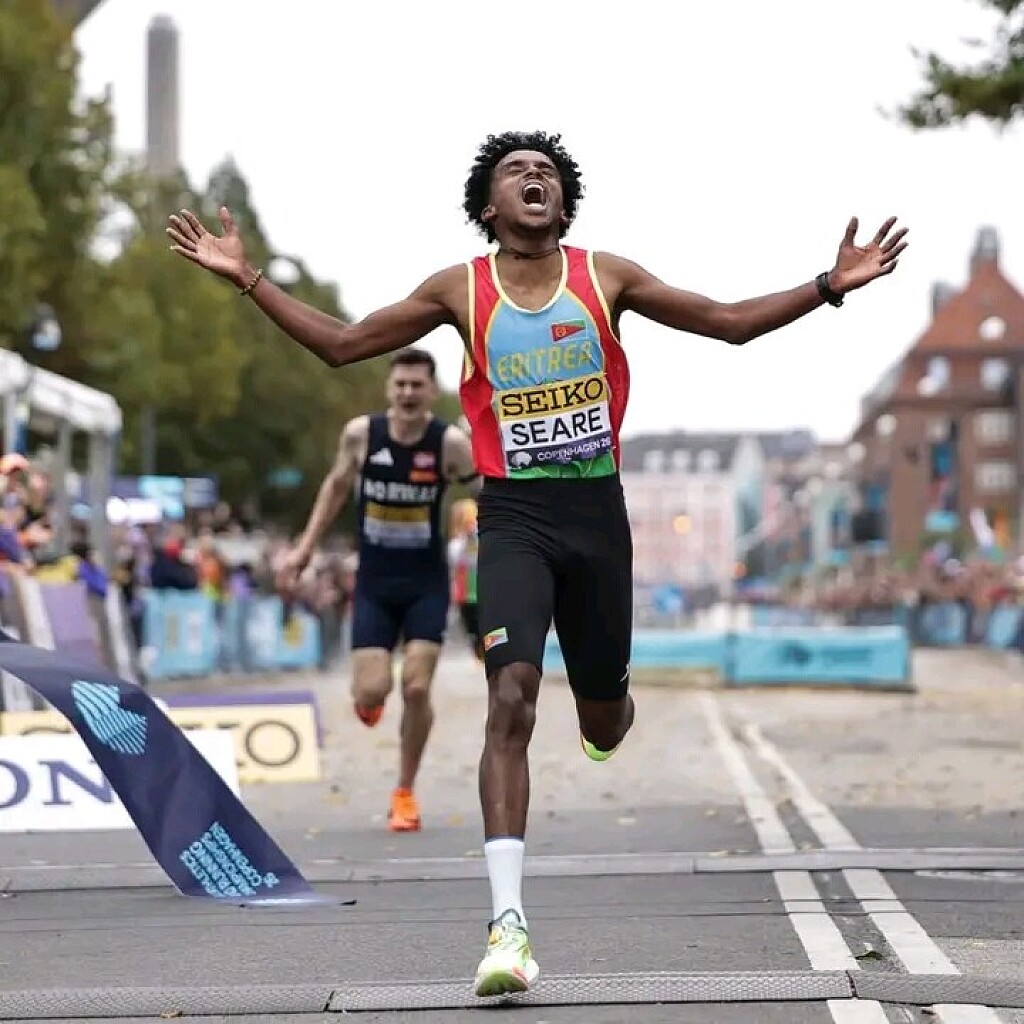
Dawit Seare Stuns Ingebrigtsen In Thrilling Finish To Win World 5km Title In Copenhagen
Eritrea’s Dawit Seare produced a sensational performance on Saturday, September 19, 2026, to claim the men’s 5km world title at the World Athletics Road Running Championships in Copenhagen, defeating Norway’s Olympic champion Jakob Ingebrigtsen in a dramatic battle that went down to the final metres.
Seare crossed the finish line in a national record of 12:56, with Ingebrigtsen taking silver in a Norwegian record of 12:59. Eritrea completed a remarkable double podium as Saymon Amanuel secured bronze in a personal best of 13:00.
The closing stages produced an extraordinary finish as Seare and Ingebrigtsen engaged in a fierce battle for the world title. With just 150 metres remaining, the lead changed hands three times, underlining the intensity of the contest. Ingebrigtsen briefly surged ahead and appeared to have taken control, but Seare responded with another gear, powering past the Norwegian before the finish line.
The Eritrean’s decisive acceleration carried him to victory by three seconds, turning what had been a tightly contested race into a remarkable championship triumph. Seare held his composure under immense pressure and produced the strongest finish when it mattered most.
The race had featured a large leading group through much of the early stages before the pace intensified approaching the final kilometres. As the runners entered the decisive phase, Seare remained firmly in contention, positioning himself perfectly for the battle that would ultimately determine the world champion.
For Seare, the victory adds another major achievement to an impressive 2026 season. Having already established himself as the African 5,000m champion, he has now transferred that success to the roads by securing a world title in Copenhagen.
Ingebrigtsen was forced to settle for silver despite producing a national record of his own. The Norwegian’s late surge demonstrated his determination to control the race, but Seare’s response in the final metres proved decisive in one of the closest and most dramatic finishes of the championships.
Eritrea’s success was made even more remarkable by Amanuel’s bronze medal. His 13:00 personal best ensured that two Eritrean athletes stood on the podium, giving the country both gold and bronze in a memorable men’s 5km championship race.
Australia’s Ky Robinson also delivered an outstanding performance, finishing fourth in 13:04 to set an Oceanian record. Uganda’s Keneth Kiprop matched the time in fifth, while Ethiopia placed two athletes inside the top seven through Addisu Yihune and Mezgebu Sime.
Kenya’s Mathew Kipchumba Kipsang finished eighth in 13:11, followed by Burundi’s Egide Ntakarutimana in ninth and South Africa’s Maxime Chaumeton in 10th.
Men’s 5km Top 10 Results
1. Dawit Seare — Eritrea — 12:56 NR
2. Jakob Ingebrigtsen — Norway — 12:59 NR
3. Saymon Amanuel — Eritrea — 13:00 PB
4. Ky Robinson — Australia — 13:04 AR
5. Keneth Kiprop — Uganda — 13:04 PB
6. Addisu Yihune — Ethiopia — 13:07
7. Mezgebu Sime — Ethiopia — 13:08 SB
8. Mathew Kipchumba Kipsang — Kenya — 13:11 SB
9. Egide Ntakarutimana — Burundi — 13:12 PB
10. Maxime Chaumeton — South Africa — 13:13
Seare’s victory capped an unforgettable finish in Copenhagen, where three changes of the lead in the final 150 metres set up a dramatic showdown. In the end, the Eritrean produced the crucial final surge to deny Ingebrigtsen and claim a historic world 5km title in a national-record 12:56.
by Erick Cheruiyot for My Best Runs.
Login to leave a comment
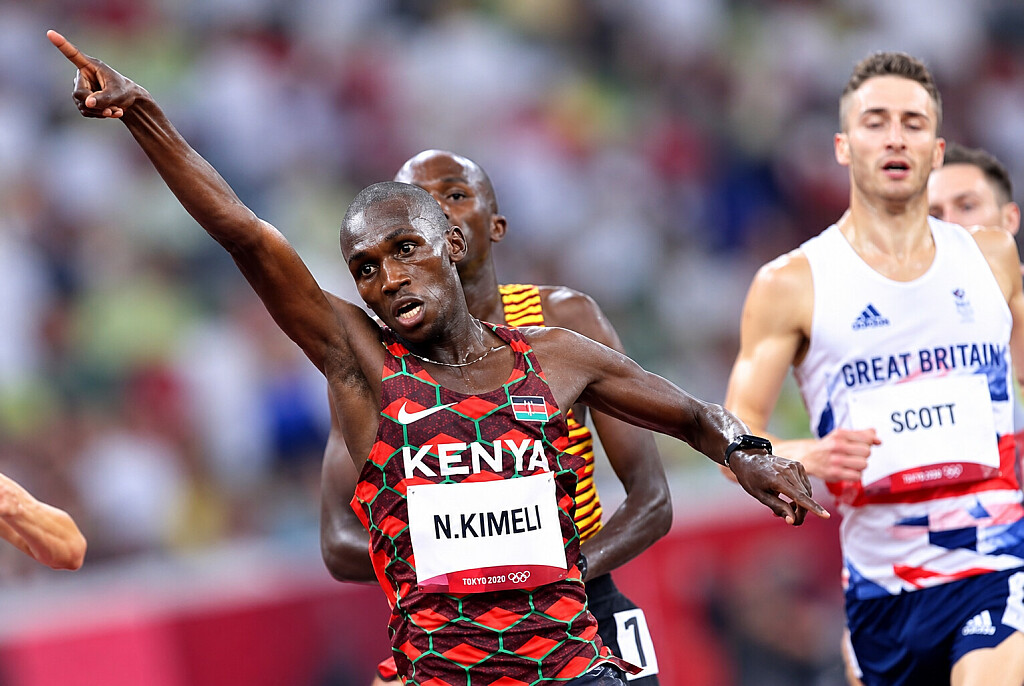
Nicholas Kipkorir Leads Star-Studded Men’s Half Marathon Field At World Road Running Championships
The stage is set for a spectacular men’s half marathon at the World Athletics Road Running Championships Copenhagen 26, with some of the world’s leading distance runners preparing to battle for global honours on Sunday, September 20.
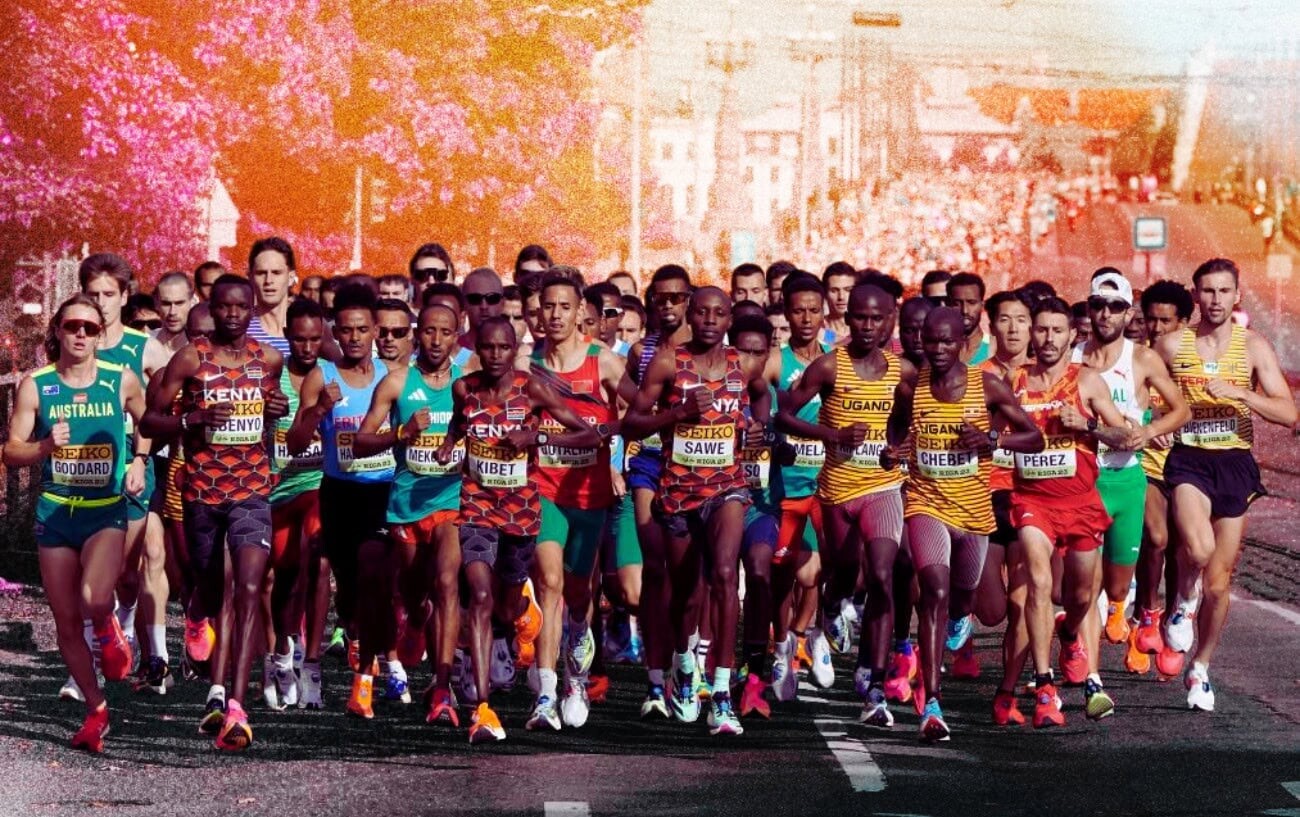
Kenya’s Nicholas Kipkorir headlines the field with a remarkable personal best of 58:08, the fastest mark among the athletes entered.
Kipkorir will face a formidable challenge from compatriot Gideon Kipkertich Rono, who owns a 58:38 personal best. Sweden’s Andreas Almgren also brings an exceptional 58:41 to the start line, while Ethiopia’s Tadese Worku has a 58:59 personal best.
Italy’s Yemaneberhan Crippa adds another major name to the field with a national record of 59:01, while Kenya’s Daniel Simiu Ebenyo enters with a 59:04 personal best and valuable championship experience.
Ebenyo won silver at the 2023 World Road Running Championships in Riga and will be looking to challenge for another medal in Copenhagen.
Uganda’s Joshua Cheptegei will bring enormous championship pedigree to the race. The Olympic and multiple world champion has a half marathon best of 59:21, making him another athlete capable of featuring prominently in the battle for the medals.
The American challenge will be led by Conner Mantz, who owns a 59:15 personal best. France’s Etienne Daguinos, Portugal’s Samuel Barata, Ethiopia’s Bereket Nega, France’s Jimmy Gressier, Canada’s Rory Linkletter, Australia’s Jack Rayner and Morocco’s Mohamed Reda El Aaraby further strengthen an already formidable international field.
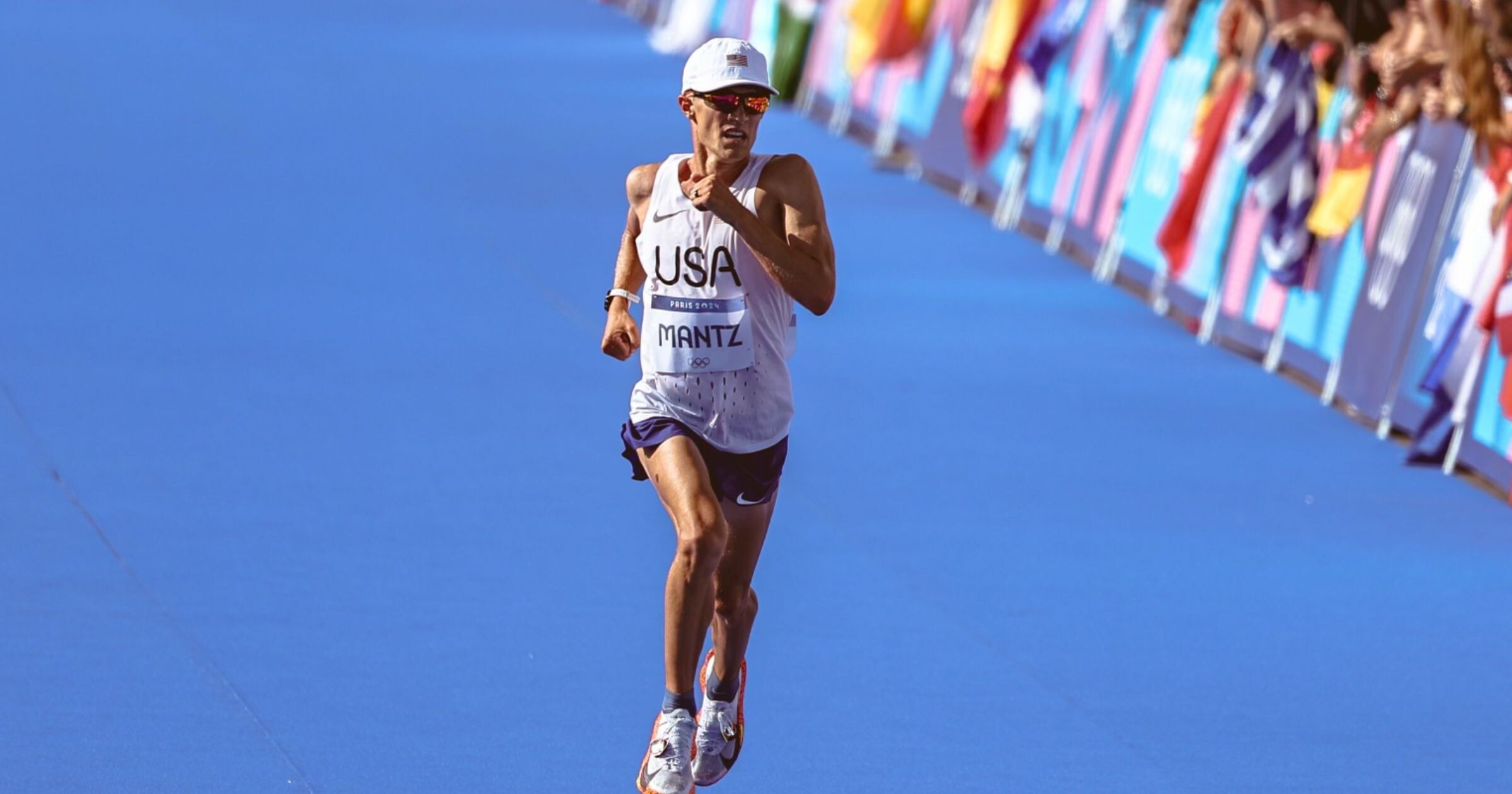
Kenya will have particular interest in the championship, with several of its leading road runners lining up against some of the best athletes from Europe, Africa, North America, Asia and Oceania.
The race will be contested over the traditional 21.0975-kilometre distance, with the elite men scheduled to start at 9:45 a.m. local time on Sunday, September 20.
Leading Athletes And Personal Bests
1. Nicholas Kipkorir (Kenya) — 58:08
2. Gideon Kipkertich Rono (Kenya) — 58:38
3. Andreas Almgren (Sweden) — 58:41
4. Tadese Worku (Ethiopia) — 58:59
5. Yemaneberhan Crippa (Italy) — 59:01
6. Daniel Simiu Ebenyo (Kenya) — 59:04
7. Alex Nzioka Matata (Kenya) — 59:11
8. Conner Mantz (USA) — 59:15
9. Joshua Cheptegei (Uganda) — 59:21
10. Etienne Daguinos (France) — 59:27
11. Samuel Barata (Portugal) — 59:40
12. Bereket Nega (Ethiopia) — 59:43
13. Jimmy Gressier (France) — 59:45
14. Rory Linkletter (Canada) — 59:49
15. Peter Lynch (Ireland) — 59:52
16. Jack Rayner (Australia) — 59:53
17. Mohamed Reda El Aaraby (Morocco) — 59:54
18. Hillary Bor (USA) — 59:55
19. Zerei Kbrom Mezngi (Norway) — 1:00:01
20. Bastien Augusto (France) — 1:00:09
21. Mande Bushendich (Uganda) — 1:00:14
22. Jack Rowe (Great Britain) — 1:00:17
23. Cameron Levins (Canada) — 1:00:18
24. Ogikubo Tomoya (Japan) — 1:00:22
25. Bayelign Teshager (Ethiopia) — 1:00:22
26. Elroy Gelant (South Africa) — 1:00:22
27. Célestin Ndikumana (Burundi) — 1:00:23
28. Said Mechaal (Spain) — 1:00:24
29. Nishizawa Yuma (Japan) — 1:00:26
30. Namiki Neo (Japan) — 1:00:29
31. Othmane El Goumri (Morocco) — 1:00:30
32. Inyasi Nicodemus Sulley (Tanzania) — 1:00:31
33. Wesley Kiptoo (USA) — 1:00:34
34. Haftu Strintzos (Australia) — 1:00:36
35. Filmon Tesfu (Netherlands) — 1:00:38
36. Mustapha Akkaoui (Morocco) — 1:00:38
With such remarkable depth, the championship could remain finely poised until the closing stages. The presence of multiple sub-59-minute runners, experienced championship performers and strong finishers sets the scene for a race in which positioning, tactics and the ability to respond to late surges could prove decisive.
For Kipkorir, Ebenyo and their Kenyan teammates, Copenhagen provides an opportunity to turn impressive personal credentials into championship medals. But with a world-class field assembled behind them, the final outcome will only be determined when the leading runners reach the finish line.
by Erick Cheruiyot for My Best Runs.
Login to leave a comment
Agnes Ngetich Leads Star-Studded Women’s Half Marathon Field At World Road Running Championships
The stage is set for a spectacular women’s half marathon at the 2026 World Athletics Road Running Championships in Copenhagen, Denmark, with a deep international field ready to battle for the world title on Sunday, September 20.
The elite women’s race will begin at 9:10 a.m. local time, with the 21.0975-kilometre championship race taking runners through the streets of Copenhagen before the finish on Øster Allé.
At the head of the entry list is Kenya’s Agnes Jebet Ngetich, who brings a sensational 1:03:04 personal best into the championship. She will lead a powerful Kenyan contingent that also includes Lilian Kasait Rengeruk, whose 1:03:32 is among the fastest times ever recorded over the distance.
Ngetich has established herself as one of the leading distance runners in the world, and her combination of speed and endurance makes her one of the major names to watch when the championship race gets underway.
Rengeruk provides another formidable Kenyan threat, while Daisilah Jerono, with a 1:05:21 personal best, and Veronica Loleo, with 1:05:35, add further depth to the Kenyan line-up.
Ethiopia will also arrive with serious firepower. Tsigie Gebreselama owns a remarkable 1:04:21 personal best, while Ftaw Zeray comes into Copenhagen with a 1:05:12 lifetime best.
The battle will not be restricted to the leading African nations, however. Weini Kelati Frezghi heads the American challenge with a 1:06:04 personal best, while Esther Chebet of Uganda has run 1:06:33.
Europe will be represented by several accomplished athletes, including Slovenia’s Klara Lukan, who owns a 1:06:43 personal best, and Norway’s experienced Karoline Bjerkeli Grøvdal, whose best stands at 1:06:55.
South Africa’s Glenrose Xaba is another prominent name on the list with a 1:07:03 personal best, while Great Britain’s Samantha Harrison enters with 1:07:10.
Uganda has further depth through Rebecca Chelangat at 1:07:18, Annet Chemengich Chelangat at 1:08:12 and Rispa Cherop at 1:08:53.
The international field also includes Ethiopia’s Melat Siyoum and Baraky Redae, Rwanda’s Florence Niyonkuru and Emeline Imanizabayo, Mexico’s Laura Galván, Belgium’s Chloé Herbiet and Lisa Rooms, the United States’ Emma Grace Hurley, Ednah Kurgat, Carrie Ellwood and Jessica McClain, France’s Mekdes Woldu, Alessia Zarbo and Mélody Julien, Italy’s Sofia Yaremchuk and Elvanie Nimbona, China’s He Wuga and Liang Tiantian, and New Zealand’s Georgie Grgec.
Women’s Half Marathon Entry List
1. Agnes Jebet Ngetich — Kenya — 1:03:04
2. Lilian Kasait Rengeruk — Kenya — 1:03:32
3. Tsigie Gebreselama — Ethiopia — 1:04:21
4. Ftaw Zeray — Ethiopia — 1:05:12
5. Daisilah Jerono — Kenya — 1:05:21
6. Veronica Loleo — Kenya — 1:05:35
7. Weini Kelati Frezghi — United States — 1:06:04
8. Esther Chebet — Uganda — 1:06:33
9. Klara Lukan — Slovenia — 1:06:43
10. Karoline Bjerkeli Grøvdal — Norway — 1:06:55
11. Glenrose Xaba — South Africa — 1:07:03
12. Samantha Harrison — Great Britain — 1:07:10
13. Rebecca Chelangat — Uganda — 1:07:18
14. Melat Siyoum — Ethiopia — 1:07:21
15. Florence Niyonkuru — Rwanda — 1:07:22
16. Baraky Redae — Ethiopia — 1:07:31
17. Laura Galván — Mexico — 1:07:31
18. Chloé Herbiet — Belgium — 1:07:32
19. Emeline Imanizabayo — Rwanda — 1:07:35
20. Emma Grace Hurley — United States — 1:07:35
21. Annet Chemengich Chelangat — Uganda — 1:08:12
22. Mekdes Woldu — France — 1:08:20
23. Alessia Zarbo — France — 1:08:20
24. Ednah Kurgat — United States — 1:08:25
25. Sofia Yaremchuk — Italy — 1:08:27
26. He Wuga — China — 1:08:31
27. Liang Tiantian — China — 1:08:33
28. Carrie Ellwood — United States — 1:08:34
29. Jessica McClain — United States — 1:08:37
30. Elvanie Nimbona — Italy — 1:08:38
31. Lisa Rooms — Belgium — 1:08:40
32. Rispa Cherop — Uganda — 1:08:53
33. Georgie Grgec — New Zealand — 1:09:13
34. Mélody Julien — France — 1:09:15
With so many athletes separated by relatively small margins on paper, the championship race could develop into a fascinating tactical contest. Personal bests provide an indication of speed, but championship racing often comes down to positioning, patience and the ability to respond when the decisive moves arrive.
For Ngetich, Rengeruk, Gebreselama, Zeray and the rest of the field, the opportunity is clear: 21.0975 kilometres through Copenhagen with a world championship title waiting at the finish.
The World Athletics Road Running Championships Copenhagen 26 take place on September 19–20, with the women’s elite half marathon taking centre stage on Sunday, September 20, at 9:10 a.m.
Copenhagen is ready for a major championship showdown — and the women’s half marathon promises to be one of the highlights of the weekend.
by Erick Cheruiyot for My Best Runs.
Login to leave a comment
She Went Out for a Run and Never Came Home: The Tragic Story of Tsontso Moselakgomo
What should have been an ordinary afternoon run ended in devastating tragedy for 38-year-old Elizabeth “Tsontso” Moselakgomo, a mother, dedicated runner and much-loved member of South Africa’s running community.

Moselakgomo left her home in Rhodesfield, Kempton Park, east of Johannesburg, on September 10 for a run — something that had become a familiar part of her life. But when she failed to return home, the routine quickly turned into a desperate search.
Her eight-year-old daughter was among the first to realise that something was wrong and raised the alarm when her mother did not come home. Family, friends and authorities were left hoping that the missing runner would be found safe.
Two days later, that hope was shattered.
Moselakgomo’s body was discovered on September 12 behind a hotel in the Rhodesfield area. She was found wearing sports clothing, and her family later identified her remains at the Germiston mortuary on September 14. Police investigations into the circumstances surrounding her death are continuing.
For the running community, the tragedy has been particularly painful because Tsontso was not simply someone who occasionally went out for exercise. Running was part of who she was.
She was a member of Team Vitality and Waterfall City Athletics Club, and had recently completed the Wanderers 21K in Johannesburg on August 23. She was also known beyond the running community as the manager of Festival Mall and a member of her church choir.
Those who knew her have remembered her as a vibrant and energetic woman who brought warmth to the communities around her.
Her death has also unfolded against a deeply disturbing backdrop.
By September 15, police were investigating the deaths of six women whose bodies had been discovered in and around Kempton Park and the wider East Rand since July. Moselakgomo is the only one among the victims to have been publicly identified so far. Police have established a task team to investigate the cases and determine whether there are connections between them.
One suspect linked to the first case remains in custody, while investigators continue working on the other cases. Authorities have not established that all of the deaths are connected, making it important for the investigation to determine the circumstances surrounding each case individually.
The tragedy has sent shockwaves through South Africa’s athletics and running fraternity.
Athletics South Africa, Team Vitality and Waterfall City Athletics Club have all expressed their grief and extended condolences to Moselakgomo’s family. Athletics South Africa said her death highlighted the vulnerability of women who should be able to participate in sport and exercise without fear for their safety.
The response from runners has been immediate and deeply personal.
On Tuesday, Waterfall City Athletics Club and Run Alex Athletics organised tribute runs and walks in her honour, bringing runners together not only to remember Tsontso but also to stand together during a moment of fear and grief within the running community.
Members of TZD Sports Club in Eswatini also ran a 10-kilometre tribute in her memory, showing how far her story has travelled beyond the streets where she once trained and raced.
Across South Africa, runners have been turning their usual training sessions into moments of remembrance — some wearing black, others gathering in groups and many simply showing up to honour a fellow runner whose life was tragically cut short.
But the tributes have also carried a broader message.
Running With Sole Athletics Club has called for stronger safety measures, including more police presence, functioning street lights and safer running routes. The club stressed that running should represent freedom, health, community and joy — not fear.
That message has resonated strongly with runners, particularly women who have long had to think about safety before deciding when, where and with whom they can run.
For many, a run is a simple escape from the pressures of everyday life. It is a chance to clear the mind, improve health, chase a personal goal or spend time with friends. It should not be an activity that requires someone to constantly wonder whether they will make it home.
For Tsontso’s eight-year-old daughter and her family, however, this is no longer an abstract concern about safety.
It is the painful reality of losing a mother who left home for a run and never returned.
The running community can now only carry her memory forward — through the races she completed, the clubs she belonged to, the people she inspired and the miles that runners will continue to dedicate to her.
Elizabeth “Tsontso” Moselakgomo went out doing something she loved.
She should have been able to finish her run, walk through the door and return to the daughter who was waiting for her.
She should have made it home.
by Erick Cheruiyot for My Best Runs.
Login to leave a comment
Nairobi 2029: Kenya Wins Historic Bid to Bring World Athletics Championships to Africa
Africa finally has its moment. Kenya has won the race to host the 2029 World Athletics Championships, turning years of ambition into a landmark reality for the continent.
In a historic decision announced in Budapest, Nairobi has been selected to host the 2029 World Athletics Championships, making Kenya the first African nation to stage the senior global track and field championships.
World Athletics confirmed that Nairobi and Munich have been selected to host the 2029 and 2031 World Athletics Championships respectively, following what the governing body described as one of the strongest bidding processes in the history of its flagship event.
For Kenya, the announcement represents far more than a successful hosting bid. It is the latest chapter in a remarkable athletics story built over generations.
The Kenyan capital overcame strong competition from London, Rome and Munich to secure the 2029 edition, bringing the world's biggest senior athletics championship to African soil for the first time.

The championship will be staged at the Moi International Sports Centre, Kasarani, in Nairobi, giving Kenya the opportunity to welcome the world's greatest athletes to a country that has produced countless champions of its own.
For generations, Kenya has established itself as one of the most influential nations in global athletics.
From pioneering Olympic champion Kipchoge Keino and distance-running legend Tegla Loroupe among others to modern icons such as Eliud Kipchoge, Faith Kipyegon, David Rudisha, Faith Cherotich, Vivian Cheruiyot and Ezekiel Kemboi among others. Kenyan athletes have repeatedly conquered the world's biggest stages.
Their Olympic victories, world titles, records and unforgettable performances have made Kenya one of the most recognizable names in track and field.
But Kenya's athletics identity extends far beyond medals.
Running is deeply rooted in communities across the country, while the high-altitude training regions of the Rift Valley have become synonymous with the development of world-class distance runners. Behind the champions are coaches, families, training partners and communities that have helped create an athletics culture admired around the world.
Now, for the first time, that culture will become the backdrop for the sport's biggest senior global championship.
Nairobi 2029 will be historic before the first race even begins.
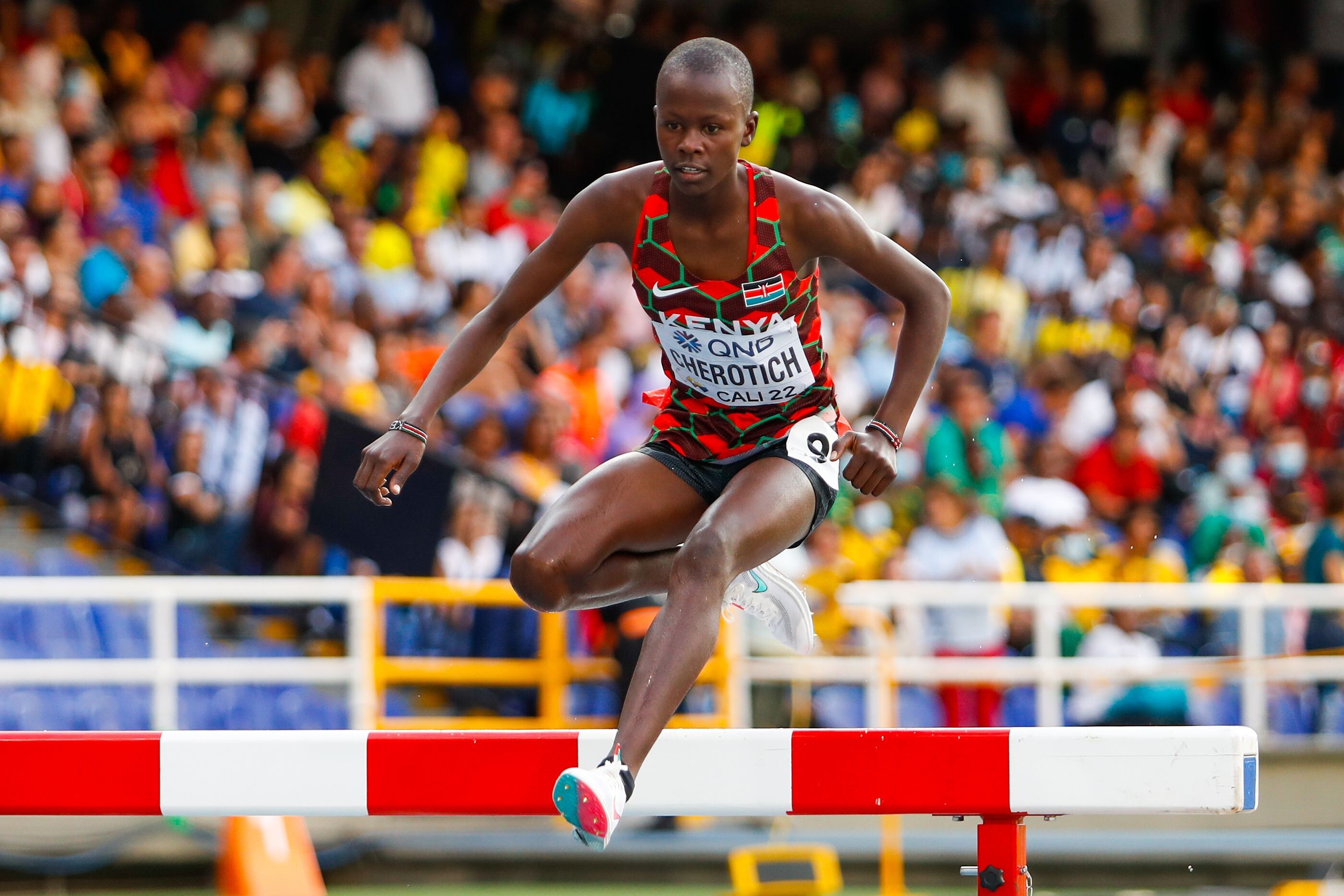
Kasarani, already an important venue in Kenya's sporting history, will take center stage as athletes from across the globe descend on Nairobi in pursuit of world titles.
For Kenyan fans, the opportunity to watch the world's greatest sprinters, middle-distance runners, distance stars, hurdlers, field-event athletes and relay teams compete on home soil will be extraordinary.
For the country's next generation of athletes, the impact could be even greater.
Young runners who have grown up watching Kenyan champions compete around the world will now have the chance to experience a World Championships in their own country. The sight of the world's best athletes competing at Kasarani could inspire a new generation to believe that they, too, can reach the highest levels of the sport.
The significance, however, stretches well beyond Kenya's borders.
Africa has produced generation after generation of Olympic champions, world champions and global athletics icons. From Kenya and Ethiopia to Uganda, Morocco, South Africa and numerous other nations, African athletes have played a central role in shaping the history of track and field.
Yet the continent had never hosted the senior World Athletics Championships.
Nairobi 2029 changes that forever.
The successful Kenyan bid therefore represents a major breakthrough for African athletics and a powerful recognition of the continent's contribution to the sport.
World Athletics' decision also secures the future of the championships beyond Nairobi. Munich will host the 2031 World Athletics Championships, creating a two-edition sequence that will see the global showpiece move from Africa to Germany.
But the spotlight now belongs to Nairobi.
The announcement in Budapest has transformed what was once an ambitious bid into a confirmed date with history.
In 2029, Kenya will not simply send athletes to compete for world titles.
Kenya will welcome the world.
It will be a celebration of the pioneers who laid the foundation, the champions who carried the country's name across the globe and the young athletes who represent the future of African athletics.
After decades of producing champions for the world, Kenya will finally have the opportunity to bring the world's greatest athletics stars into its own backyard.
For Africa, this is more than a hosting victory.
It is a breakthrough. It is recognition. It is a new chapter.
And when the athletes walk into Kasarani for the 2029 World Athletics Championships, they will be stepping into a moment that will belong not only to Kenya, but to an entire continent.
NAIROBI 2029 — THE WORLD IS COMING TO AFRICA.
by Erick Cheruiyot for My Best Runs.
Login to leave a comment

Nairobi 2029: Could Kenya Finally Bring the World Athletics Championships to Africa?
Tomorrow could be a defining day for Kenyan athletics — and potentially for the entire African continent.

The World Athletics Council is expected to announce the host of the 2029 World Athletics Championships, with Nairobi's bid carrying the hopes of a continent that has produced generations of extraordinary athletes but has never staged the senior global championships.
For Kenya, the moment could represent the culmination of decades of dominance, sacrifice and achievement on the international athletics stage.
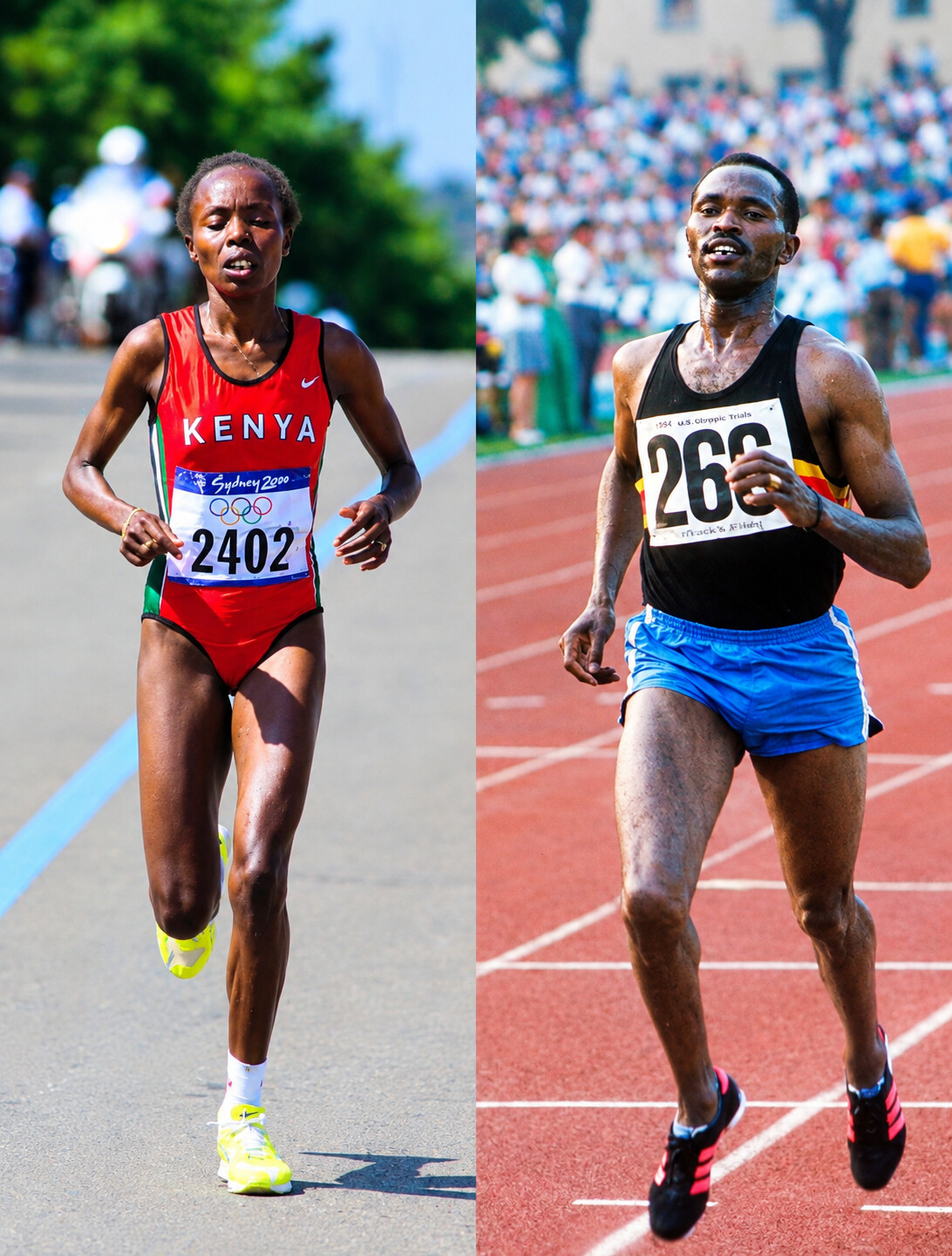
For generations, Kenya has built one of the most remarkable traditions in track and field. From pioneering legends such as Kipchoge Keino and Tegla Loroupe to modern icons including Eliud Kipchoge, Faith Kipyegon, David Rudisha, Sebastian Sawe, Beatrice Chebet and Ezekiel Kemboi among others. Kenyan athletes have repeatedly stood on the biggest stages in world sport.
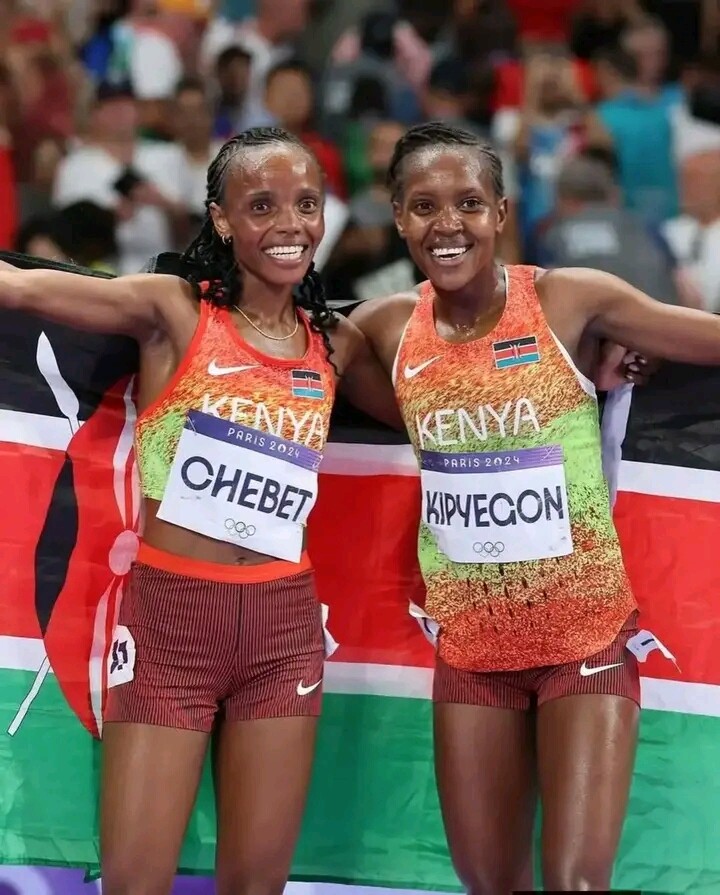
Their achievements have helped make Kenya one of the most respected names in global athletics. Olympic triumphs, world titles, records and unforgettable performances have carried the country's name across every corner of the sporting world.
But Kenya's relationship with athletics extends far beyond its medal collection.
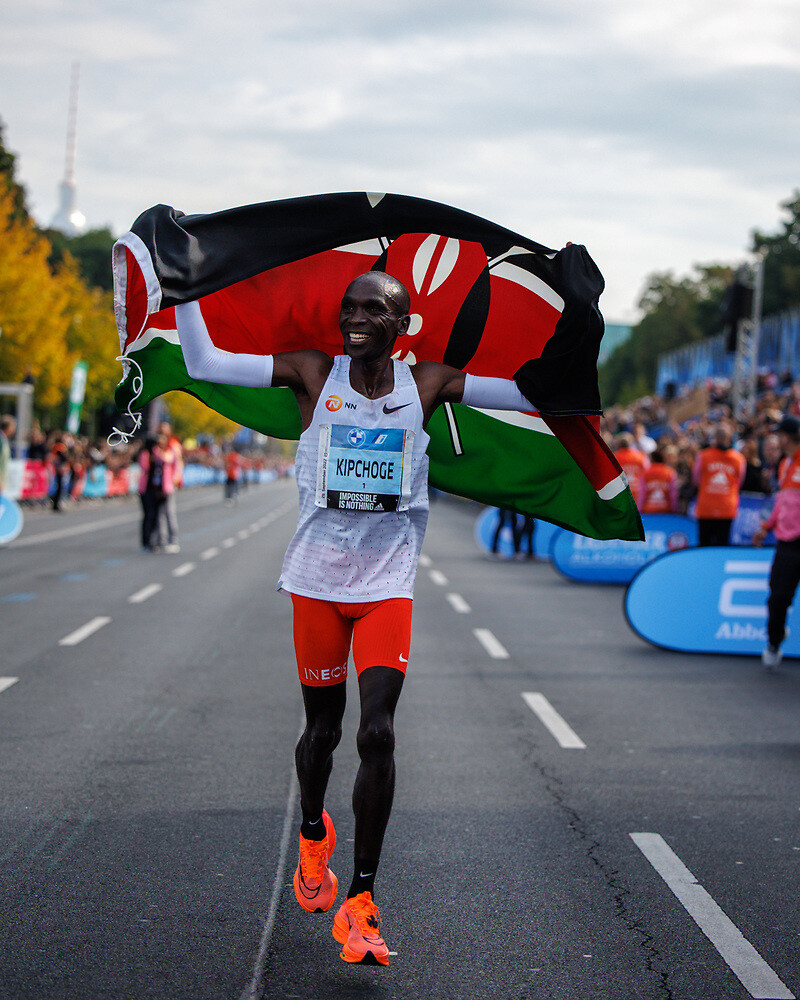
Running is deeply rooted in communities throughout the country, while the high-altitude training environments of the Rift Valley have become famous worldwide for producing elite distance runners. Behind every champion is a network of coaches, families, training partners and communities that have helped sustain Kenya's extraordinary athletics culture.
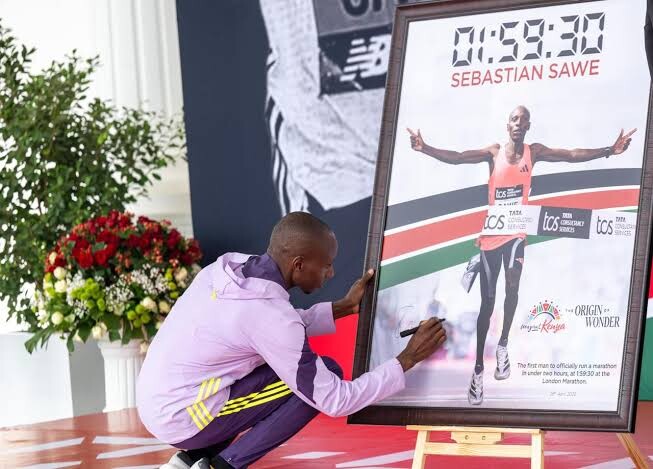
Now Nairobi is seeking to bring the world's biggest track and field championship to the country where so many champions have been produced.
The proposed centerpiece of Kenya's bid is Moi International Sports Centre, Kasarani, a venue already deeply connected to Kenyan athletics. If the bid succeeds, Kasarani could become the stage where the world's finest athletes gather in 2029 to compete for global titles.
And the significance would extend far beyond Kenya.
Africa has produced some of the greatest athletes in athletics history, yet the continent has never hosted the World Athletics Championships. Nairobi's bid could change that.
Kenya's proposal is therefore not simply about staging another major sporting competition. It represents an opportunity to bring the championships to African soil for the first time and introduce millions of international fans to the continent's remarkable athletics culture.
However, Nairobi is facing formidable competition.
Kenya's bid is competing against proposals from London, Rome and Munich, three European cities with established sporting traditions and significant experience hosting major international competitions.
That sets up a fascinating choice for World Athletics.
Will the organization take the championships to a continent that has never hosted the event, creating a historic first for Africa? Or will the competition return to one of Europe's traditional athletics powerhouses?
For Nairobi, the stakes could hardly be higher.
A successful bid would give Kenyan athletes the opportunity to compete at a World Championships in front of their home supporters. It would give young runners across the country the chance to watch the world's best athletes compete in their own backyard. And it would place Kenya's extraordinary athletics heritage at the center of global attention.
It could also provide an opportunity to celebrate the champions who came before — athletes whose achievements helped establish Kenya as an athletics superpower — while inspiring the generation that will carry that legacy forward.
Imagine Kasarani filled with thousands of passionate supporters, the world's best athletes arriving in Nairobi, and Kenyan stars stepping onto the track knowing that the biggest championship in their sport is being staged on home soil.
For a country whose identity is so closely intertwined with running, it would be a remarkable sight.
And for Africa, it could be a moment of enormous symbolic importance.
Tomorrow, Kenya — and Africa — could hear its name called.
One decision. One host. One opportunity to make history.
If Nairobi is chosen, the story would not simply be about Kenya winning a bid. It would be about Africa finally welcoming the World Athletics Championships to its own soil.
It would be a celebration of the pioneers, the champions, the coaches, the communities and the generations of athletes who have helped make African athletics a global force.
And perhaps the headline of 2029 would already be waiting:
Kenya, the home of champions, has finally brought the world to its own backyard.
Nairobi 2029 — could this finally be Africa's moment?
by Erick Cheruiyot for My Best Runs.
Login to leave a comment
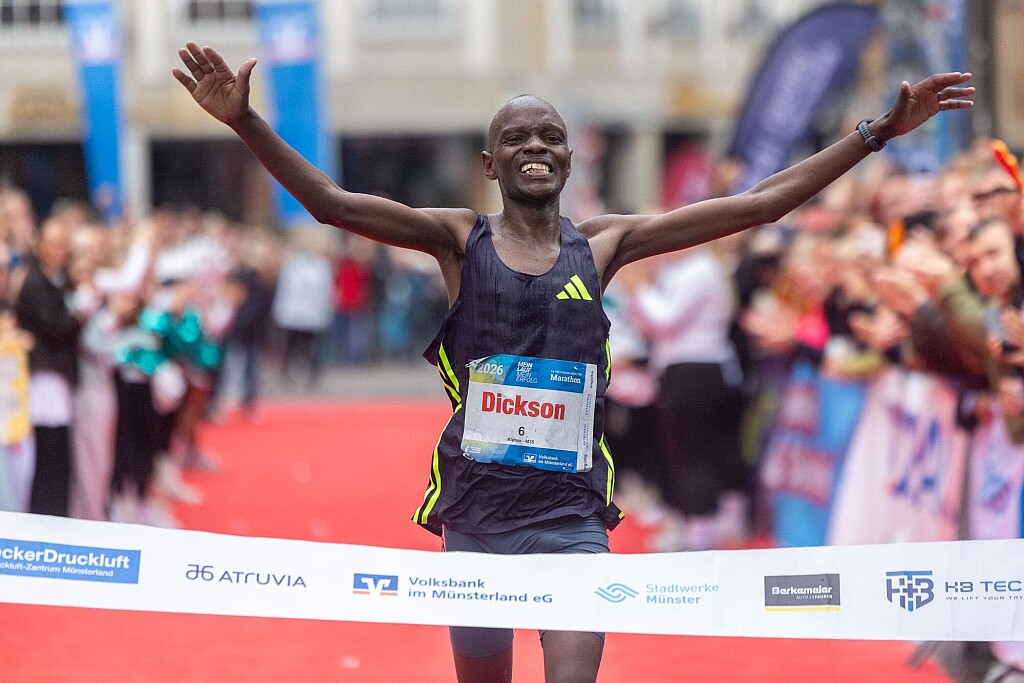
Kiptoo Leads Kenyan One-Two As Wole Triumphs In Dramatic Münster Marathon
Kenya produced a commanding display at the 2026 Volksbank-Münster-Marathon in Germany, with Dickson Kiptoo and Dickson Kiprop finishing first and second in the men’s race, while Ethiopia’s Agrie Wole claimed victory in the women’s competition.
Kiptoo delivered the winning performance in 2:10:03, holding off compatriot Kiprop, who crossed the finish line just 43 seconds later in 2:10:46. The Kenyan dominance continued on the podium as Tanzania’s Emanuel Giniki secured third place in 2:12:37.
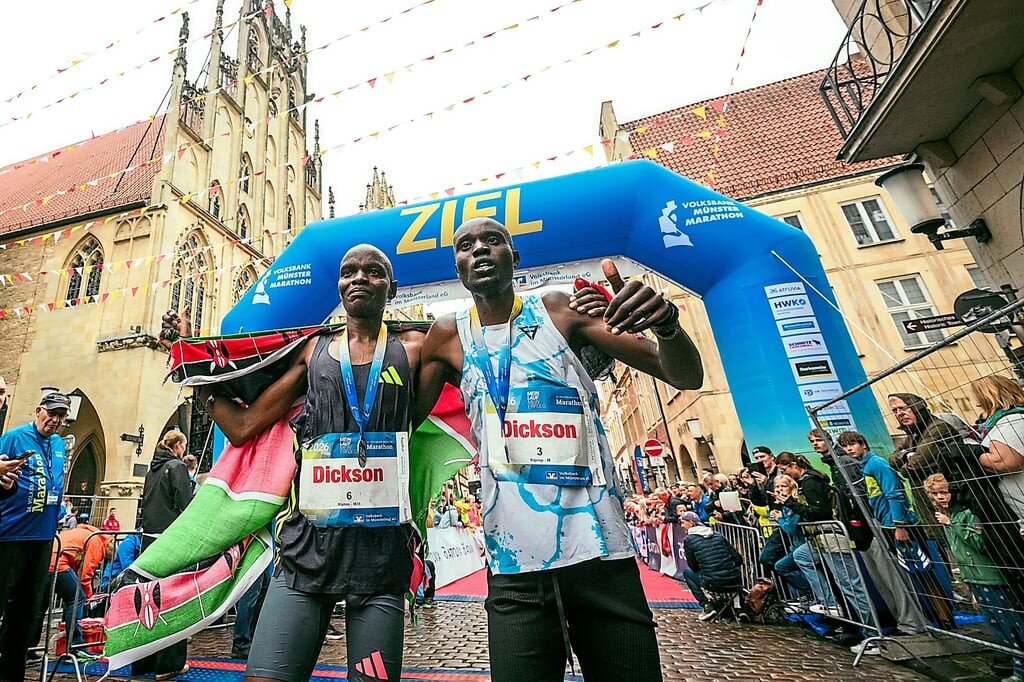
The men’s contest unfolded at a strong marathon pace, with the leading runners having to balance speed with the demanding conditions. Kiptoo ultimately produced the strongest performance on the day, securing the victory in just over two hours and ten minutes.
Kiprop remained within striking distance of his fellow Kenyan and finished with an impressive 2:10:46, making the battle for the top positions particularly compelling. Giniki also delivered a quality performance, breaking 2:13 to complete a highly competitive East African podium.
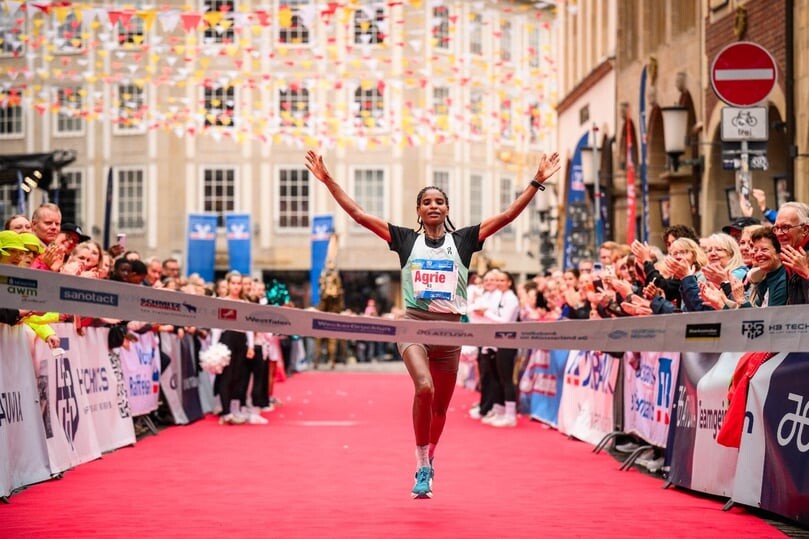
The women’s race was equally engaging, with Agrie Wole emerging as the strongest runner over the 42.195-kilometre distance. Her 2:28:43 winning time placed her comfortably ahead of Kenya’s Cecilia Wayua, who ran 2:30:21 to secure second.
Wayua’s performance added another Kenyan presence to the podium, while Ethiopia’s Azalech Woldesellase fought her way into third with 2:31:09. The result gave Ethiopia two athletes among the women’s top three and underlined the strength of East African distance running.
But the weather added another layer of drama to the race. Heavy rain accompanied the competition, creating difficult conditions for the athletes as they tackled the marathon course. The challenging weather demanded concentration and resilience, particularly as fatigue inevitably increased during the latter stages.
The conditions also had a serious consequence for Argentina’s Ignacio Erario, who was unable to finish after suffering a fall caused by the heavy rain. His withdrawal served as a reminder of just how unpredictable a marathon can become when athletes are forced to contend with difficult weather alongside the physical demands of the distance.
In the end, Münster belonged to East African distance running. Kiptoo and Kiprop delivered a Kenyan one-two in the men’s race, Wole led an Ethiopian triumph in the women’s competition, and the rain ensured that the 2026 edition would be remembered as a particularly demanding and dramatic marathon.
by Erick Cheruiyot for My Best Runs.
Login to leave a comment

Volksbank Munster Marathon
Word has long since got around that we are combining the marathon with a big event. Appreciation for our runners is very important to us. The Volksbank-Münster-Marathon is organized by runners for runners - mostly on a voluntary basis and with a lot of passion. There will again be theme power points, around 300 artists and bands and over 100,000...
more...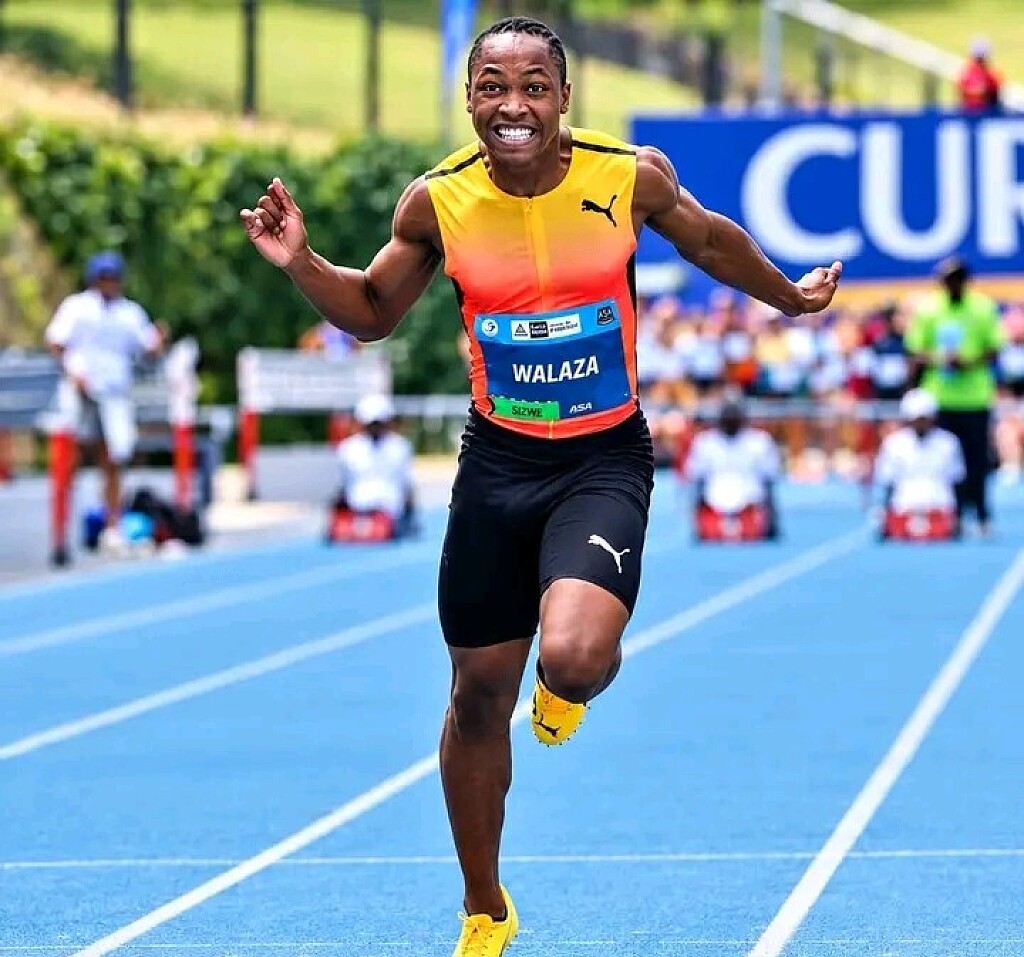
Bayanda Walaza Blazes to 9.91 in Rovereto, Smashing Meeting Record
South Africa’s Bayanda Walaza delivered another electrifying performance on the European circuit, storming to victory in the men’s 100m at the 62nd Palio Città della Quercia in Rovereto, Italy.
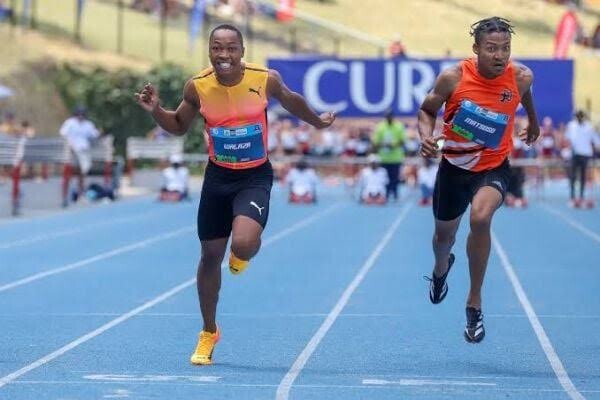
Walaza stopped the clock at a blistering 9.91 seconds, with a legal +0.5 m/s tailwind, to not only secure the win but also shatter the meeting record. His performance erased the previous mark of 9.98 seconds.
The 20-year-old South African produced a commanding run against a strong international field, holding off Ghana’s Abdul-Rasheed Saminu, who finished second in 10.01, while Canada’s Eliezer Adjibi completed the podium in 10.09.
For Walaza, the 9.91 adds another sub-10-second performance to an increasingly impressive season. His personal best remains 9.89 seconds, a mark that underlines just how close he is to another major breakthrough.
Walaza has already established himself as one of South Africa’s most exciting young sprinters. He was a double gold medallist in the 100m and 200m at the 2024 World Athletics U20 Championships in Lima before helping South Africa win Olympic silver in the 4x100m relay at Paris 2024.
Now making his mark against senior competition, Walaza is showing increasing consistency at the highest level.
A 9.91 meeting record in Rovereto is another powerful statement from the young South African — and with his speed continuing to develop, Walaza’s ceiling looks remarkably high.
by Erick Cheruiyot for My Best Runs.
Login to leave a comment
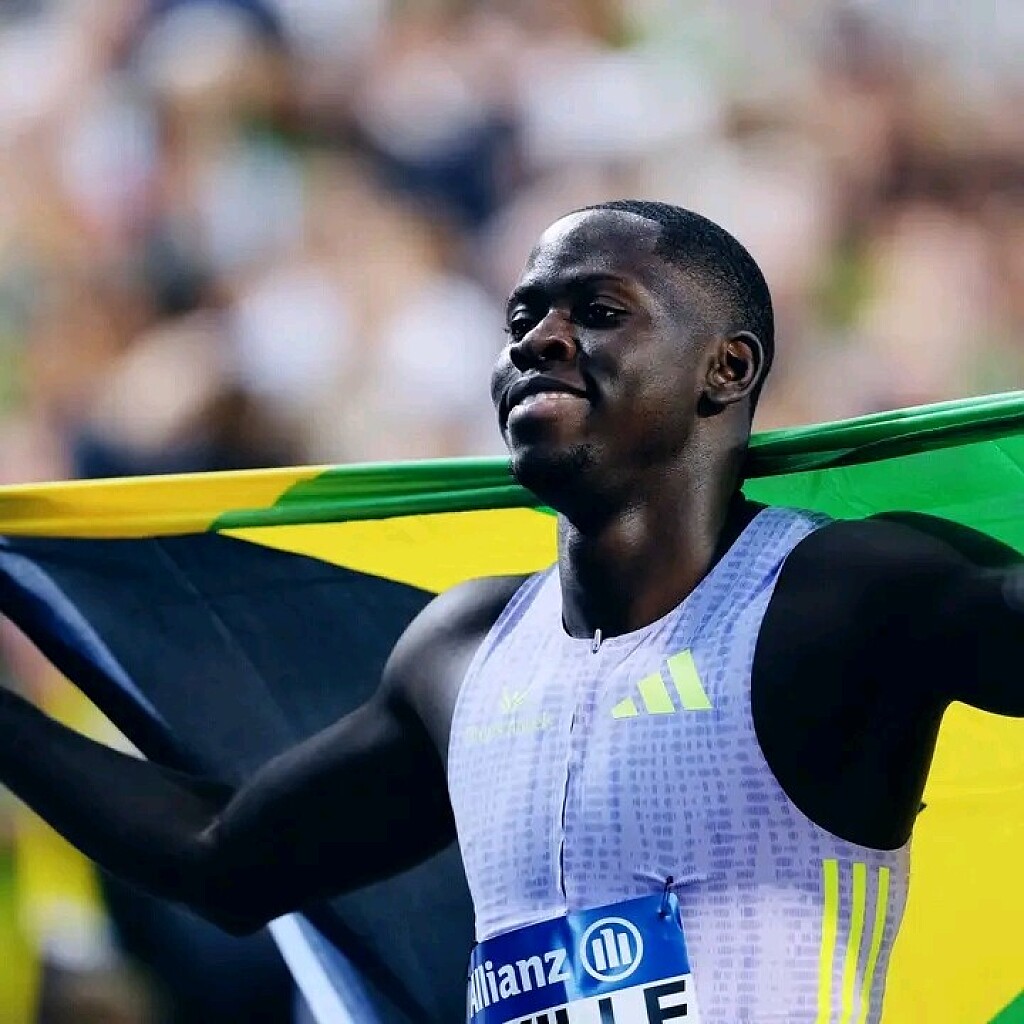
Oblique Seville Rules Brussels With A Blistering 9.90 To Claim The Diamond Trophy
Oblique Seville produced a statement performance in Brussels, powering to a superb 9.90 seconds to capture the men’s 100m Diamond League title and secure the coveted Diamond Trophy for Jamaica.
The Jamaican sprinter rose to the occasion in a fiercely contested final, exploding from the blocks and maintaining his composure as the field charged towards the finish. Seville held off a remarkable challenge from Cameroon’s Emmanuel Eseme, who pushed him all the way before crossing the line in an outstanding 9.93 seconds.
Nigeria’s Kayinsola Ajayi also delivered a superb performance, breaking the 10-second barrier to take third in 9.97 seconds and complete a remarkably fast podium.
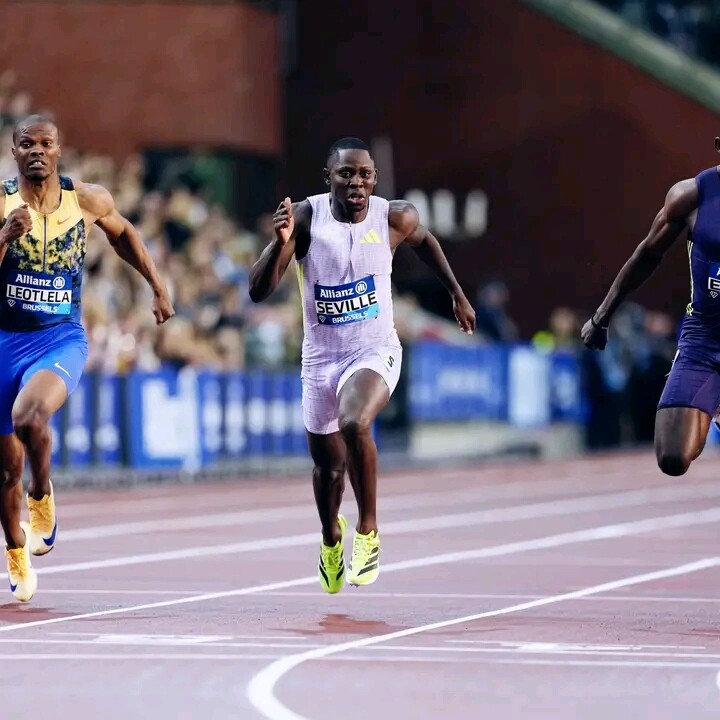
Behind the leading trio, Australia’s Lachlan Kennedy narrowly missed the podium in 9.99, while South Africa’s Gift Leotlela and American Christian Coleman both stopped the clock at 10.01. South Africa’s Akani Simbine followed in 10.03, with American Trayvon Bromell recording 10.07.
For Seville, the victory represents another significant milestone in a rapidly developing career. The Jamaican has established himself as one of the leading sprinters of his generation, and his ability to deliver under the pressure of a Diamond League final once again demonstrated his competitive strength.
The Brussels final was particularly impressive for its depth, with seven athletes breaking or matching the 10-second barrier. Yet when the decisive moment arrived, Seville had the extra gear required to separate himself from the pack.
His 9.90 was not merely enough to win the race—it was enough to put his name on the Diamond League trophy and cap his campaign with another major victory.
1. Oblique Seville — 9.90
2. Emmanuel Eseme — 9.93
3. Kayinsola Ajayi — 9.97
Jamaica celebrates another Diamond League champion, while Seville leaves Brussels with the biggest prize of the night and yet another reminder that he belongs among the very best in the world.
A brilliant finish to the Diamond League season—and another golden moment for Oblique Seville.
by Erick Cheruiyot for My Best Runs.
Login to leave a comment
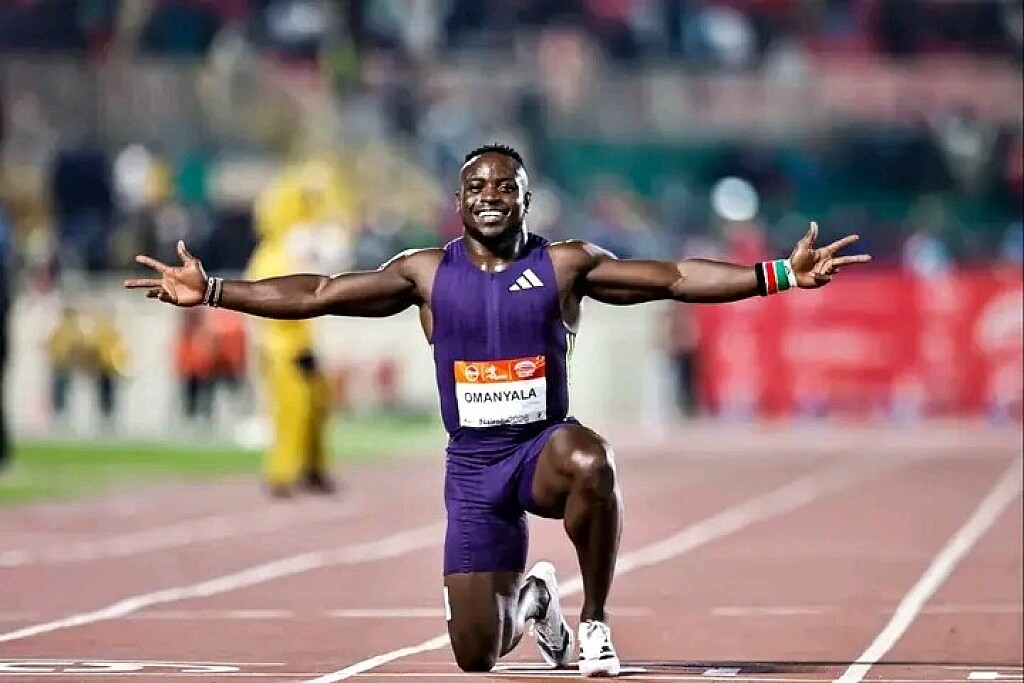
Ferdinand Omanyala’s 2026 Season Ends At The Worst Possible Moment
Ferdinand Omanyala’s 2026 season has come to an abrupt and heartbreaking end, just as the Kenyan sprint star appeared to be building momentum for a memorable finish to his campaign.

The African 100m record-holder has been forced to withdraw from the remainder of the season after suffering a stress fracture to the calcaneus, the heel bone of his left foot. The injury means Omanyala will miss the final two major competitions that were expected to bring his 2026 campaign to a spectacular conclusion — the Wanda Diamond League Final in Brussels and the inaugural World Athletics Ultimate Championship in Budapest.
For an athlete who had worked hard to rebuild his season, the timing could hardly have been more frustrating.
Omanyala revealed that he sustained the injury around two weeks before the Commonwealth Games. Despite the problem, he attempted to manage the discomfort and continue competing. But with the season reaching its most important stage, the Kenyan has now made the difficult decision to step away from competition and give his body the recovery time it needs.
It is a painful ending, but it should not overshadow what had otherwise been a highly encouraging campaign.
Throughout 2026, Omanyala repeatedly demonstrated that his speed remains among the best in the world. One of the standout moments came in Xiamen, where he stormed to victory in the 100m in 9.94 seconds. It was his fastest performance of the season and another powerful reminder of the explosive speed that has made him one of Africa’s most prominent sprinting figures.
His consistency was just as impressive. Omanyala produced five consecutive sub-10-second performances, maintaining a level of speed that very few sprinters can sustain across an extended period. His performances also pushed him into third place in the Diamond League 100m standings, putting him firmly among the leading contenders heading towards the series finale.
That makes his absence from Brussels particularly frustrating.
Omanyala had earned his place among the world’s best, but instead of lining up under the lights for another major showdown, he will now begin the long process of recovery.
The injury had already complicated his Commonwealth Games campaign. Having been carrying the problem into the championships, Omanyala was unable to produce the performance he wanted and failed to progress to the 100m final. Now, with the remaining major competitions of the season also ruled out, his year has officially come to an early conclusion.
There will be no final Diamond League appearance in Brussels. There will be no opportunity to compete at the World Athletics Ultimate Championship in Budapest. And there will be no chance to give his 2026 season the dramatic ending that his earlier performances had promised.
But sometimes an athlete’s most important decision is knowing when to stop.
A stress fracture is not an injury worth gambling with for the sake of another race. At this stage of his career, protecting his long-term health and allowing the injury to heal properly is far more important than forcing his way onto the track for one final appearance.
And when the disappointment fades, Omanyala will have plenty to be proud of.
A 9.94-second season best. Five consecutive sub-10-second performances. A Diamond League victory. Third place in the Diamond League 100m standings. Most importantly, another season in which he showed that he remains capable of competing with the very best sprinters on the planet.
Those achievements cannot be erased by the injury.
For Kenyan athletics, his absence from the final stages of the season is undoubtedly a major disappointment. Omanyala has become one of the most recognizable faces of Kenyan sprinting, carrying the country’s ambitions into a discipline where Kenya has traditionally had less international influence.
But this is not the end of his story.
It is simply an unexpected pause.
For now, the starting blocks can wait. The crowds can wait. The stopwatch can wait.
Omanyala’s next race is the race back to full fitness.
If he gives his body the time and patience it needs, the Kenyan star can return with something still to prove and, perhaps, another chapter of his remarkable sprinting journey waiting to be written.
The 2026 season may have ended sooner than Ferdinand Omanyala wanted, but his story on the track is far from over.
by Erick Cheruiyot for My Best Runs.
Login to leave a comment
Alemtsehay Asefa Leads Ethiopian Sweep At Mexico City Marathon
Ethiopia’s Kasegn Alemtsehay Asefa produced a brilliant performance at the 2026 Mexico City Marathon, winning the women’s race in 2:29:30 and leading an impressive Ethiopian clean sweep of the podium.
Asefa mastered the demanding 42.195-kilometre course through the Mexican capital, holding her form in an environment where altitude can make an already difficult marathon considerably more challenging. The race is staged at approximately 2,240 metres above sea level, meaning athletes have to contend with thinner air throughout the contest.
Despite those demanding conditions, Asefa looked in control and eventually crossed the finish line in 2:29:30, securing a convincing victory and adding another notable chapter to Ethiopia’s strong tradition in distance running.
Her compatriots Gebremedhin Alema and Tefera Mekashu completed the Ethiopian domination, finishing second and third respectively. Alema stopped the clock at 2:32:23, while Mekashu followed in 2:34:04, giving Ethiopia all three places on the women’s podium.
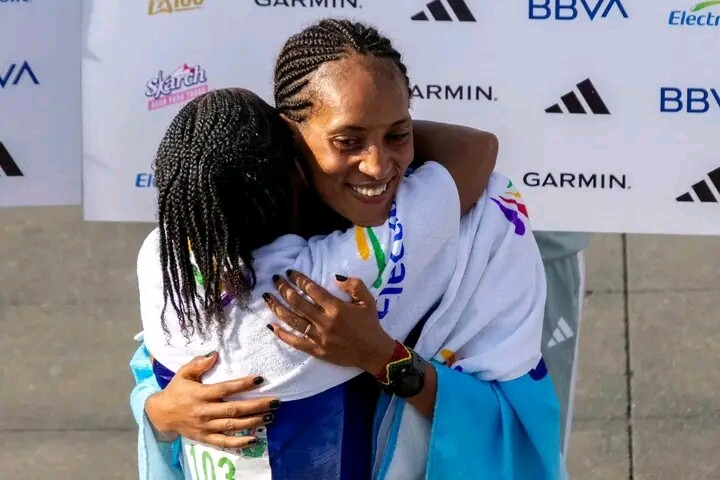
Peru’s Saida Meneses was the leading athlete outside Ethiopia, running an excellent 2:34:41 for fourth place. Her performance also made her the top South American woman in the race, narrowly missing the podium after finishing just 37 seconds behind Mekashu.
Kenya was represented inside the top six by Dorine Jerop, who produced a strong 2:36:32 to finish sixth.
Mexico’s leading runners followed behind the international contenders, with Margarita Hernandez finishing seventh in 2:46:14, followed by Estefany Rodriguez in 2:50:04. Ines Sarate Gil placed ninth in 2:55:20, while Micaela Rayo Reyes completed the top 10 in 2:55:58.
2026 Mexico City Marathon — Women's Top 10
1. Kasegn Alemtsehay Asefa — Ethiopia — 2:29:30
2. Gebremedhin Alema — Ethiopia — 2:32:23
3. Tefera Mekashu — Ethiopia — 2:34:04
4. Saida Meneses — Peru — 2:34:41
5. Gerefa Hailu — Ethiopia — 2:36:05
6. Dorine Jerop — Kenya — 2:36:32
7. Margarita Hernandez — Mexico — 2:46:14
8. Estefany Rodriguez — Mexico — 2:50:04
9. Ines Sarate Gil — Mexico — 2:55:20
10. Micaela Rayo Reyes — Mexico — 2:55:58
The women’s race ultimately belonged to Ethiopia, with four of the top five finishers representing the East African distance-running powerhouse. Asefa’s winning performance was the highlight, but the depth shown by her compatriots made the result even more impressive.
The Mexico City Marathon is unlike many other major city marathons because of its extraordinary elevation. At more than 2,200 metres above sea level, maintaining marathon pace requires not only physical strength but also careful management of effort and oxygen demand. Asefa’s ability to produce a 2:29:30 under those circumstances makes her victory particularly noteworthy.
For Asefa, the reward was a memorable victory on one of the world's most distinctive marathon courses. For Ethiopia, it was an emphatic statement of strength, with the country sweeping the entire women's podium in Mexico City.
by Erick Cheruiyot for My Best Runs.
Login to leave a comment

Mexico City International Marathon
The Mexico City Marathon is held in Mexico City, the federal district capital of Mexico and the country`s largest and most important city. The Mexico City Marathon is organized by the Mexican Athletic Association and is the largest running-event in the country. The race has been held for more than 30 years. The route starts in the historic district...
more...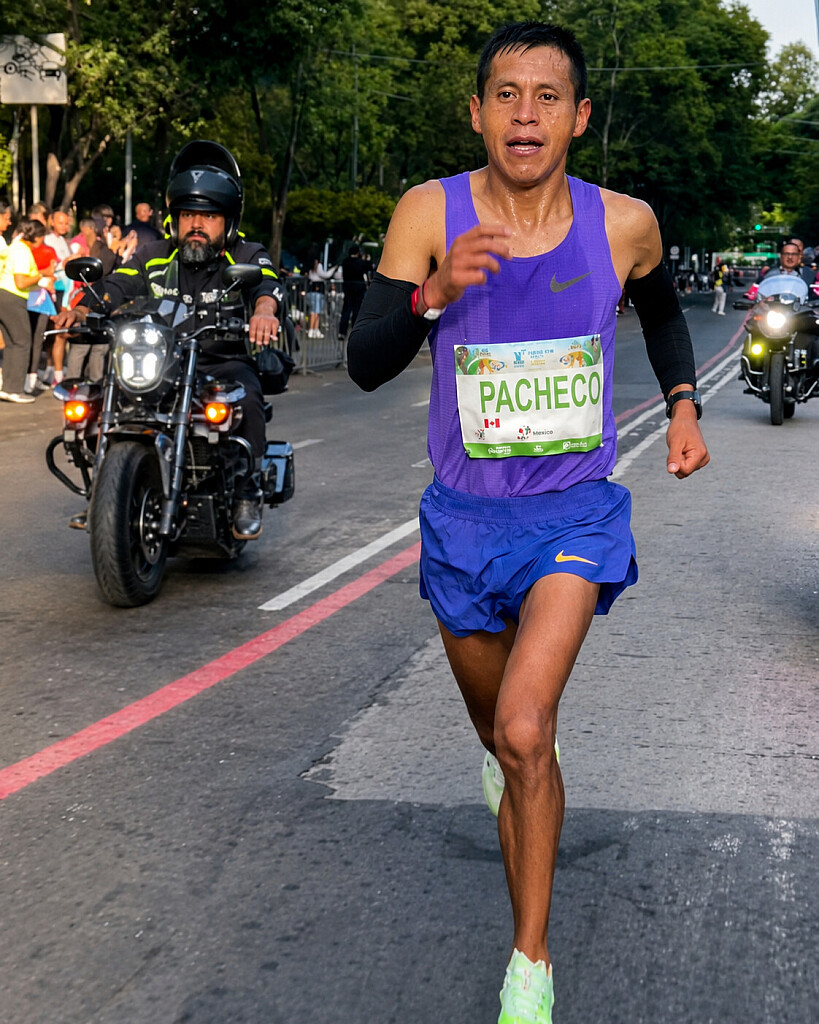
Cristhian Pacheco Conquers Mexico City Marathon as Peruvian Star Claims Victory in 2:10:03
Peru’s Cristhian Pacheco produced a magnificent performance to win the 2026 Mexico City Marathon, overcoming a strong international field and the demanding conditions of one of the world’s highest-profile high-altitude marathons.

Pacheco crossed the finish line in 2:10:03, securing a memorable victory on the streets of Mexico’s capital. Racing at an altitude of approximately 2,240 metres above sea level, the Peruvian had to contend with reduced oxygen availability and a course that places considerable demands on even the most experienced marathoners.
The race developed into a fascinating battle between Pacheco and a group of leading Ethiopian and African runners. However, the Peruvian remained composed as the kilometres accumulated and eventually established himself at the front, producing a strong finish to secure the title.
Behind Pacheco, Ethiopia’s Anbesa Tesfaye finished second in 2:11:25, followed by compatriot Balew Derseh in 2:11:58. Bolivia’s Héctor Garibay was fourth in 2:12:37, while Ethiopia’s Workneh Tasew completed the top five in 2:17:11.
For Pacheco, the triumph adds another important chapter to an already distinguished marathon career. The Peruvian has established himself as one of South America’s leading long-distance runners, and victory in Mexico City once again demonstrated his ability to compete successfully against some of the strongest marathoners from Africa and beyond.
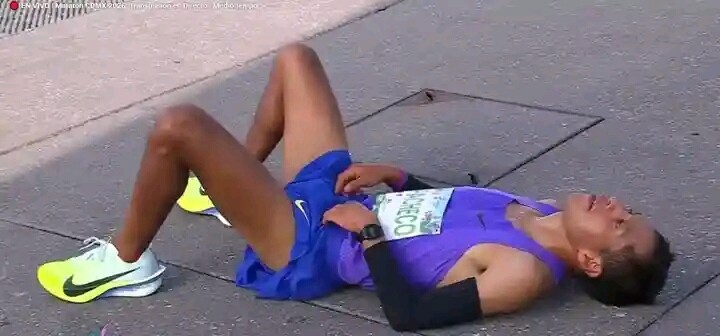
The demanding altitude made Pacheco’s achievement even more impressive. Rather than allowing the conditions to dictate the outcome, he managed his effort intelligently, stayed patient during the crucial stages and found the strength required to separate himself from his rivals when the race entered its decisive phase.
His victory also carries special significance for Peru, continuing the country’s proud marathon tradition on the Mexico City stage. Pacheco’s performance showed a combination of experience, resilience and tactical discipline, qualities that proved decisive over the final kilometres of a race where every second and every ounce of energy mattered.
Pacheco’s success is therefore more than simply another entry in the results book. It is a powerful reminder that great marathon performances are built not only on speed, but also on patience, preparation and the ability to withstand adversity. In Mexico City, the Peruvian delivered all three—and walked away as champion.
2026 Mexico City Marathon — Men’s Top 10
1. Cristhian Pacheco (Peru) — 2:10:03
2. Anbesa Tesfaye (Ethiopia) — 2:11:25
3. Balew Derseh (Ethiopia) — 2:11:58
4. Héctor Garibay (Bolivia) — 2:12:37
5. Workneh Tasew (Ethiopia) — 2:17:11
6. Boit Mike Kiptum (Kenya) — 2:17:32
7. Cornelius Kibiwott (Kenya) — 2:17:38
8. Fernando Tapia (Ecuador) — 2:21:12
9. Emmanuel Reyes (Mexico) — 2:21:35
10. Bett Kiprotich (Kenya) — 2:22:38
Cristhian Pacheco has conquered Mexico City—and in doing so, delivered a performance of Peruvian pride, determination and marathon excellence.
by Erick Cheruiyot for My Best Runs.
Login to leave a comment
Mexico City International Marathon
The Mexico City Marathon is held in Mexico City, the federal district capital of Mexico and the country`s largest and most important city. The Mexico City Marathon is organized by the Mexican Athletic Association and is the largest running-event in the country. The race has been held for more than 30 years. The route starts in the historic district...
more...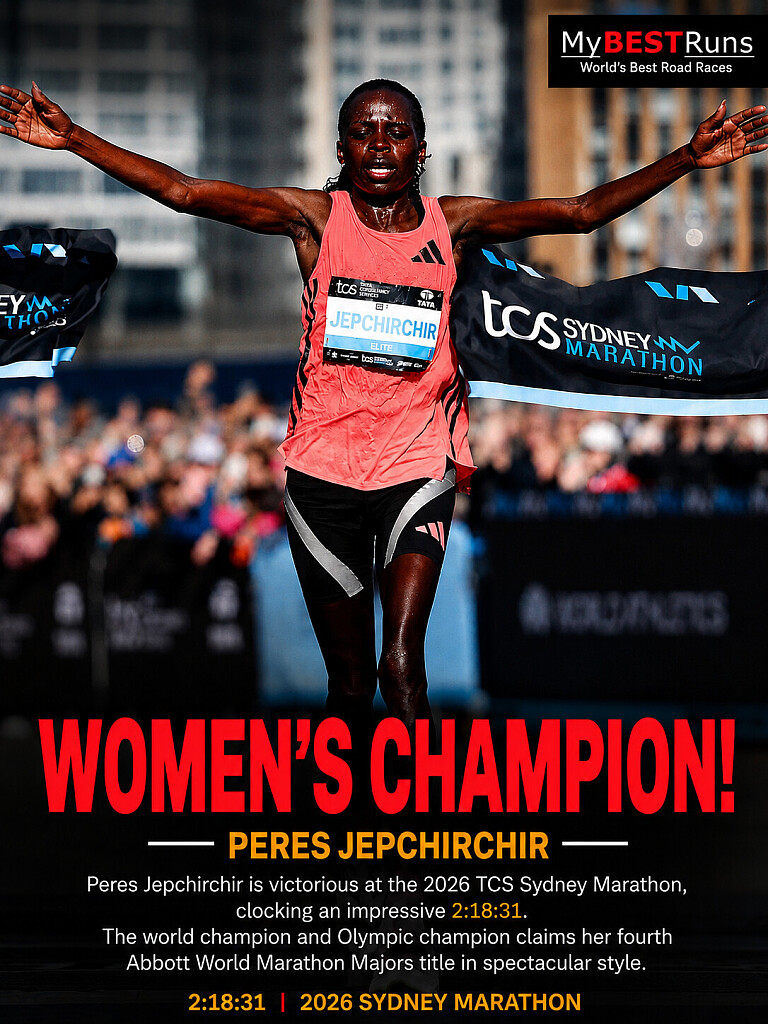
Peres Jepchirchir Conquers Sydney As World Champion Claims Fourth Major Marathon Crown
Kenya’s Peres Jepchirchir has added another prestigious chapter to her remarkable marathon career, claiming victory at the TCS Sydney Marathon presented by ASICS in an impressive 2:18:31.
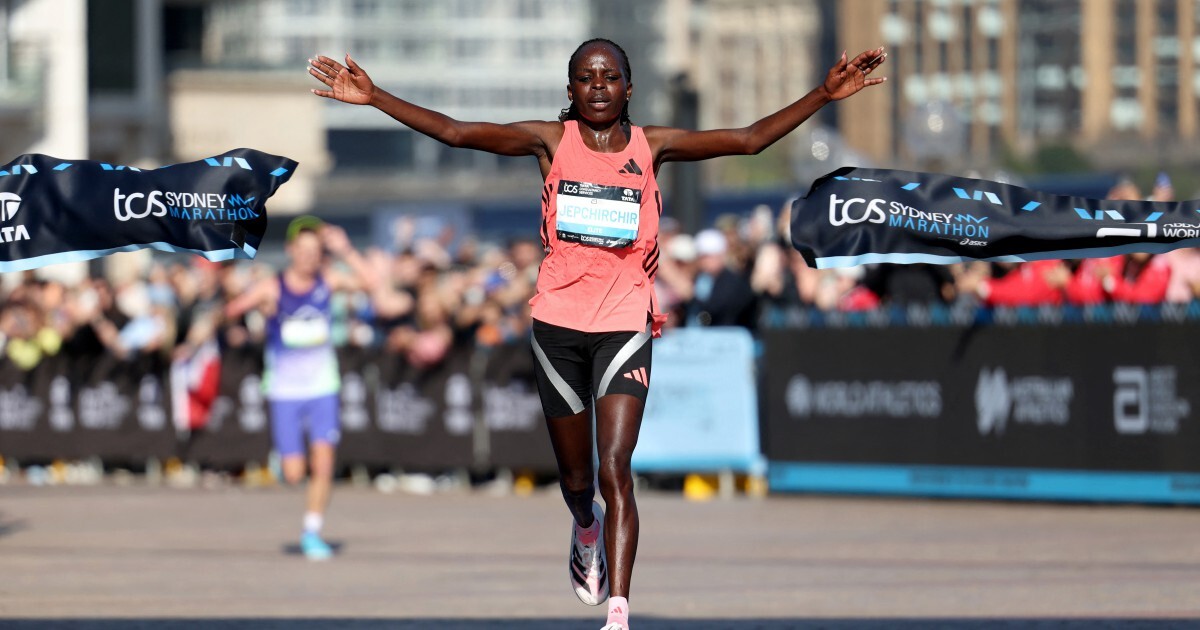
The reigning world champion and former Olympic champion produced a commanding performance on the streets of Sydney, securing another major victory and further strengthening her reputation as one of the most accomplished marathoners of her generation.
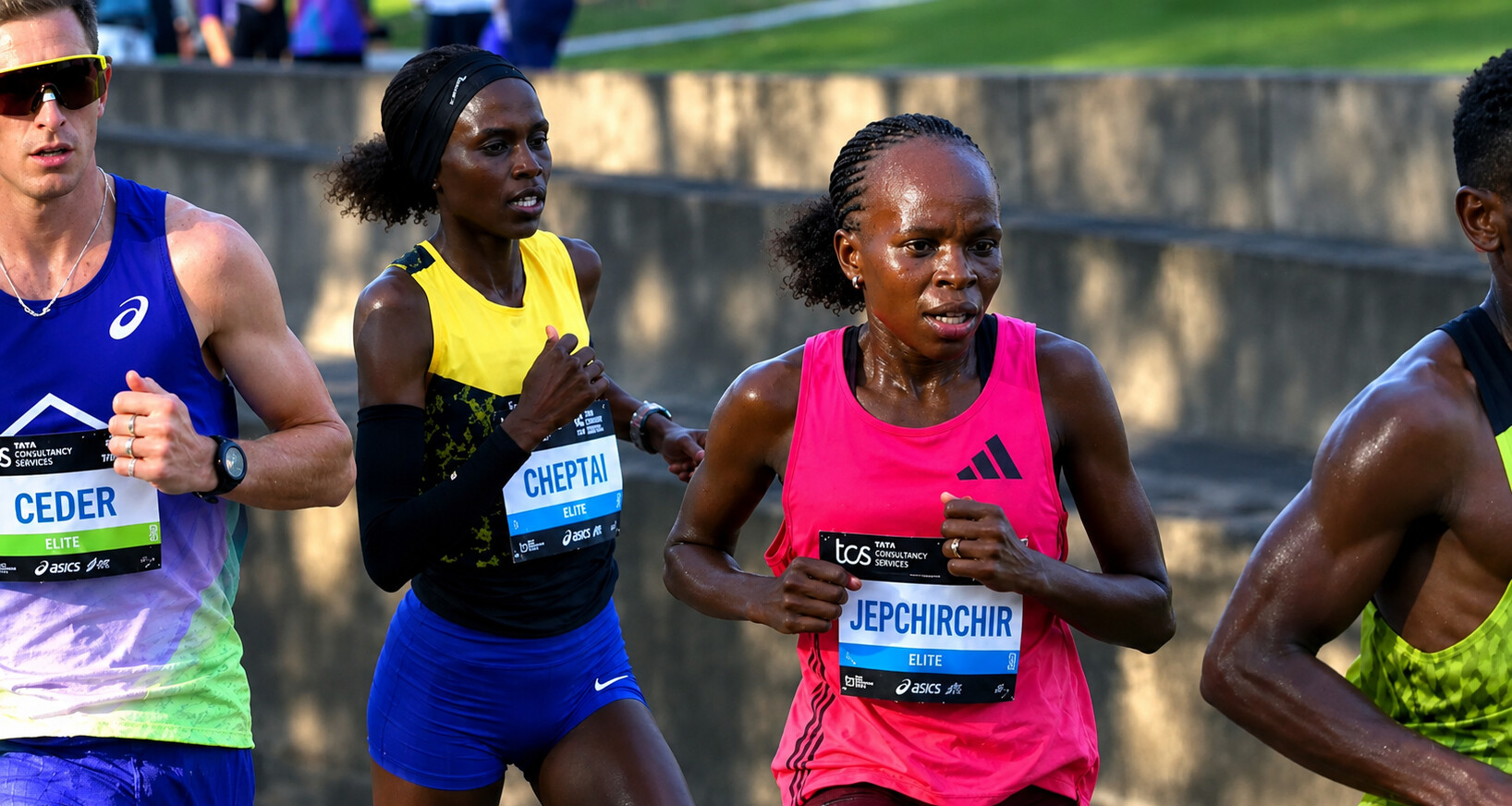
Jepchirchir’s winning time was just nine seconds shy of Sifan Hassan’s Sydney course record of 2:18:22, set at the 2025 edition. Although the record remained intact, the Kenyan once again demonstrated her ability to perform with precision and confidence on one of the sport’s biggest stages.
She won the race with a performance defined by patience, poise and remarkable composure. Rather than being drawn into unnecessary battles in the early stages, Jepchirchir appeared to run with confidence, gradually asserting her authority as the kilometres passed. Her rhythm remained smooth and controlled, her focus unwavering, and when the decisive moments arrived, she had the strength and composure to take command. It was a victory crafted with intelligence, executed with elegance and finished with the unmistakable authority of a true champion.
More significantly, the triumph marks Jepchirchir’s fourth Abbott World Marathon Majors victory. She had previously conquered New York, Boston and London, and her Sydney success now adds another prestigious Major title to an already extraordinary résumé.
Behind the champion, compatriot Irine Cheptai completed an impressive Kenyan one-two, crossing the finish line in 2:22:11. Ethiopia's Shure Demise secured the final place on the podium with a strong run of 2:22:32, as Kenya and Ethiopia once again demonstrated their extraordinary depth in elite women's marathon running.
Ethiopia's Haven Hailu finished fourth in 2:22:56, followed by compatriot Meseret Abebayehu in fifth with 2:23:40. Kenya's Priscah Cherono took sixth place in 2:23:49, narrowly ahead of Uganda's Stella Chesang, who clocked 2:23:51 for seventh.
The race also featured a notable performance from home favourite Ellie Pashley, who battled her way into the top 10. The Australian finished ninth in 2:28:27, giving the home crowd a strong athlete to celebrate in an elite field dominated by East African runners.
2026 Sydney Marathon – Top 10 Women's Results
1. Peres Jepchirchir (Kenya) – 2:18:31
2. Irine Cheptai (Kenya) – 2:22:11
3. Shure Demise (Ethiopia) – 2:22:32
4. Haven Hailu (Ethiopia) – 2:22:56
5. Meseret Abebayehu (Ethiopia) – 2:23:40
6. Priscah Cherono (Kenya) – 2:23:49
7. Stella Chesang (Uganda) – 2:23:51
8. Fikrte Wereta (Ethiopia) – 2:25:18
9. Ellie Pashley (Australia) – 2:28:27
10. Aberu Ayana (Ethiopia) – 2:28:29
For Jepchirchir, Sydney represents far more than another race victory. It is another demonstration of the consistency, resilience and championship mentality that have defined her career. From Olympic glory to world championship success and now another Major triumph, she continues to strengthen her place among the most accomplished marathoners of her era.
The Sydney Marathon has rapidly established itself as one of the most significant races on the global marathon calendar, and Jepchirchir’s victory adds another memorable chapter to its growing history.
As the champion crossed the finish line beneath Sydney’s iconic skyline, she celebrated another remarkable achievement in a career that continues to evolve with every major challenge.
From Olympic champion to world champion, from New York and Boston to London and now Sydney, Peres Jepchirchir continues to turn the world’s greatest marathons into stages for her brilliance. Sydney has a new champion, and another extraordinary chapter has been added to the story of one of marathon running’s finest competitors.
Four Abbott World Marathon Majors conquered. One extraordinary legacy still being written.
From Jepchirchir's dominant victory to another fiercely competitive East African showdown and Pashley's determined top-10 finish on home soil, the 2026 Sydney Marathon delivered a memorable showcase of world-class women's distance running. And at the centre of it all stood Peres Jepchirchir—once again wearing the crown.
by Erick Cheruiyot for My Best Runs.
Login to leave a comment

Sydney Marathon
The Sydney Marathon is a marathon held annually in Sydney, Australia. The event was first held in 2001 as a legacy of the 2000 Summer Olympics, which were held in Sydney. In addition to the marathon, a half marathon, 9 kilometres (5.6 mi) "Bridge Run", and a 3.5 kilometres (2.2 mi) "Family Fun Run" are also held under the banner...
more...
The Final 1:59 D-Max: Eliud Kipchoge Celebrates a Legacy of Breaking Limits
Eliud Kipchoge has marked another memorable chapter in his remarkable journey after receiving the 159th and final Isuzu D-Max 1:59 Limited Edition vehicle, completing a unique partnership that celebrates one of the greatest achievements in marathon history.
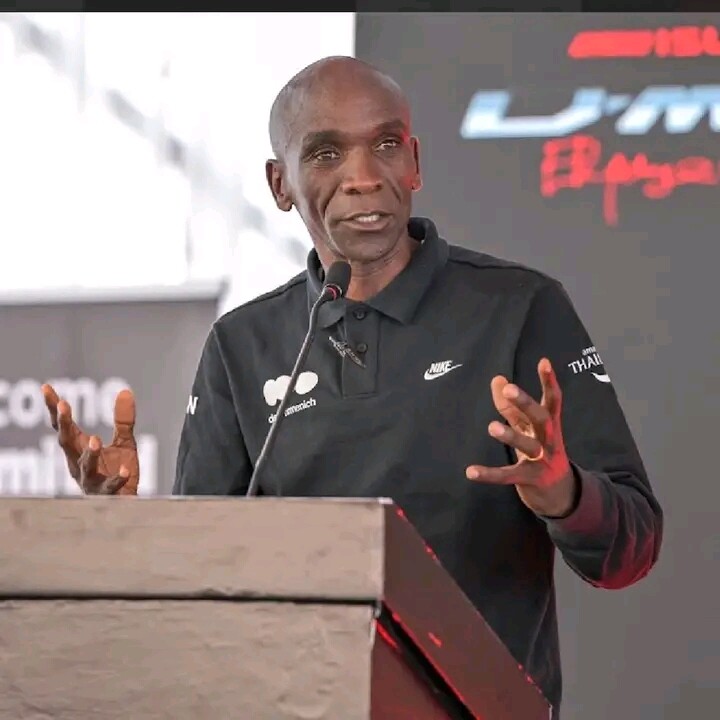
The legendary Kenyan marathoner expressed his appreciation to his Isuzu East Africa family after taking delivery of the final vehicle in a special series of just 159 units produced to commemorate his historic sub-two-hour marathon achievement.

Each of the limited-edition D-Max vehicles carries Kipchoge’s name and signature, transforming the collection into more than a series of exclusive vehicles. It represents a story built around ambition, discipline, perseverance and the belief that seemingly impossible goals can be achieved through commitment and trust in the process.
The inspiration for the special edition dates back to October 12, 2019, when Kipchoge made history in Vienna, Austria, becoming the first person to run a marathon distance in under two hours in a controlled event. He completed the 42.195-kilometre distance in 1:59:40.2, a landmark moment that redefined the boundaries of human endurance.
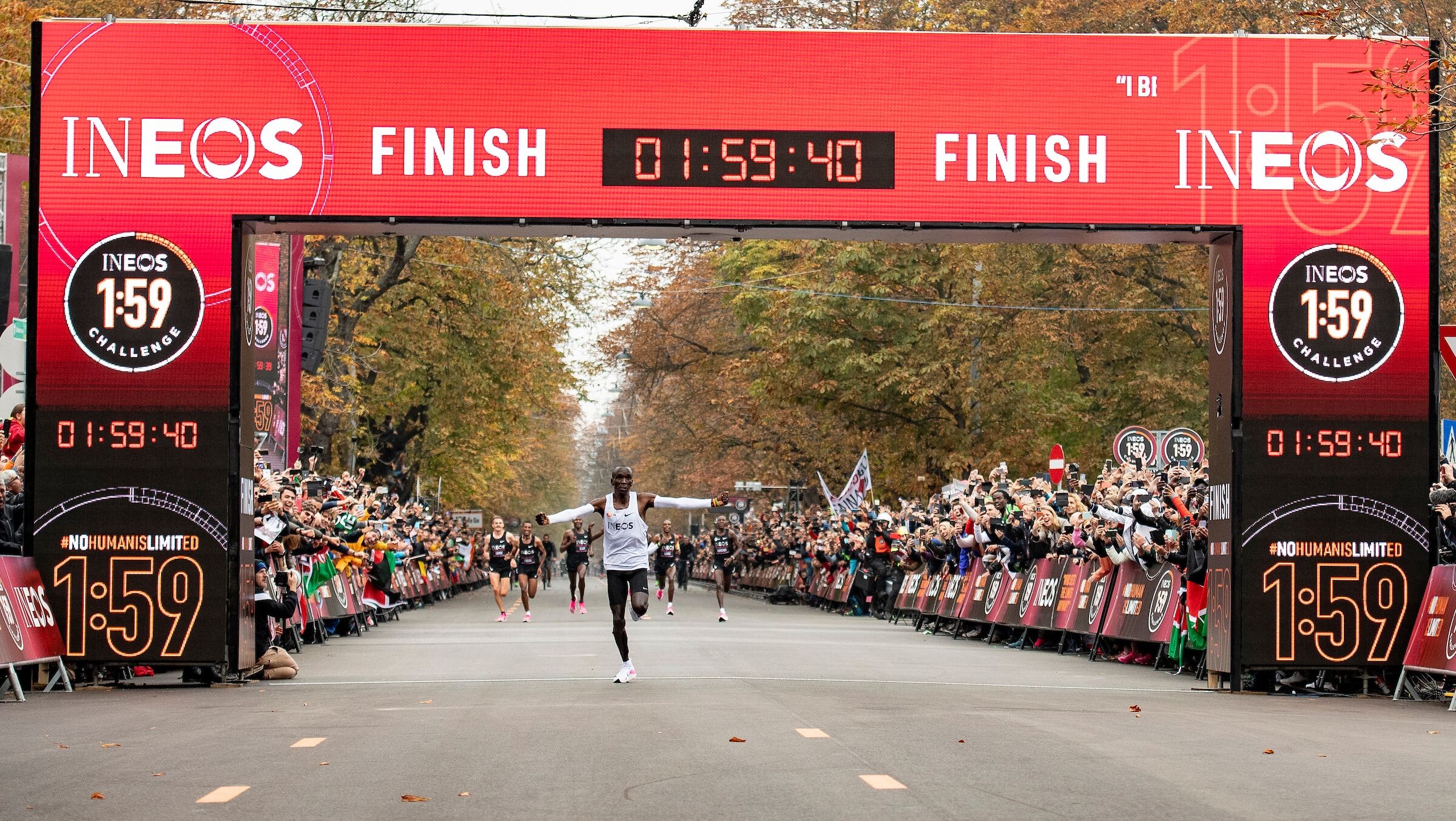
What began with that extraordinary morning in Vienna has since evolved into a lasting legacy on Kenyan roads, with 159 limited-edition vehicles now representing a shared connection between Kipchoge and their owners.
For Kipchoge, the final D-Max is therefore not simply the last vehicle to leave the production line. It is a symbolic conclusion to a story that connects his historic achievement with the values that have defined his career.
The number 159 carries particular significance, linking the limited production run to the historic 1:59 achievement while giving each owner a small piece of the story.
As he received the final unit, Kipchoge reflected on the journey from the streets of Vienna to the roads of Kenya, describing the 159 vehicles as a story shared by 159 owners who believe in the possibilities that emerge when people remain committed to their goals and trust the process.
The final D-Max consequently becomes another tangible reminder of a philosophy Kipchoge has carried throughout his career: no human is limited by the boundaries we initially believe exist.
From a historic morning in Vienna to a limited-edition collection spread across Kenya, the 1:59 legacy continues to inspire far beyond the marathon course.
by Erick Cheruiyot for My Best Runs.
Login to leave a comment
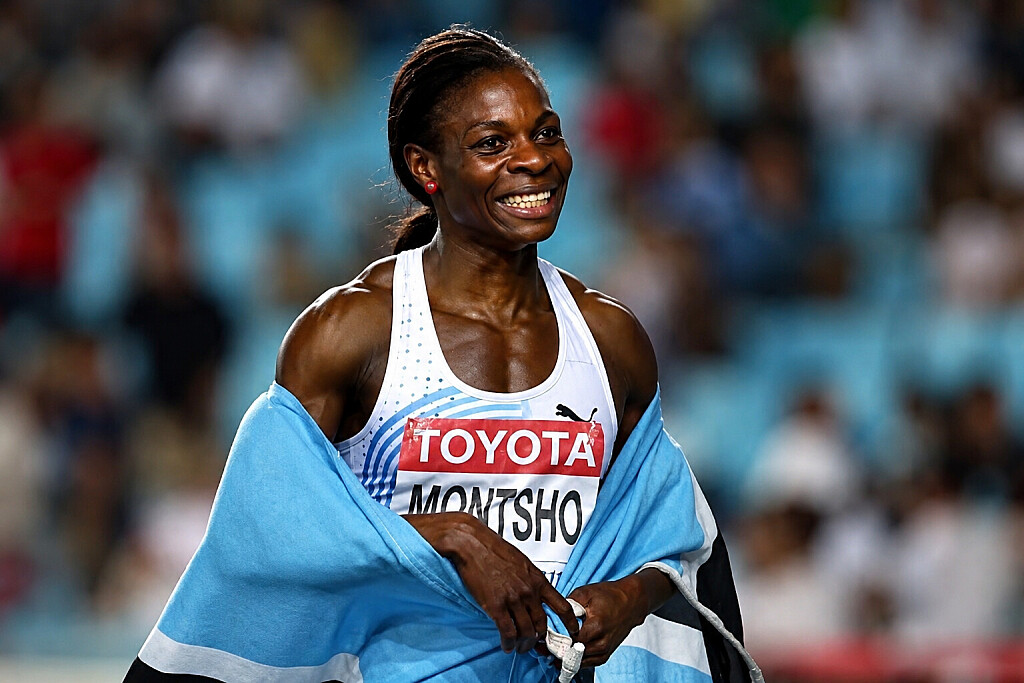
Montsho’s Historic 49.56: The Night Botswana Beat Allyson Felix in a Daegu Thriller
29 August 2011 — Daegu, South Korea
Some races are remembered for their times. Others are remembered for what they mean. The women’s 400m final at the 2011 World Championships in Daegu belonged firmly to the second category.
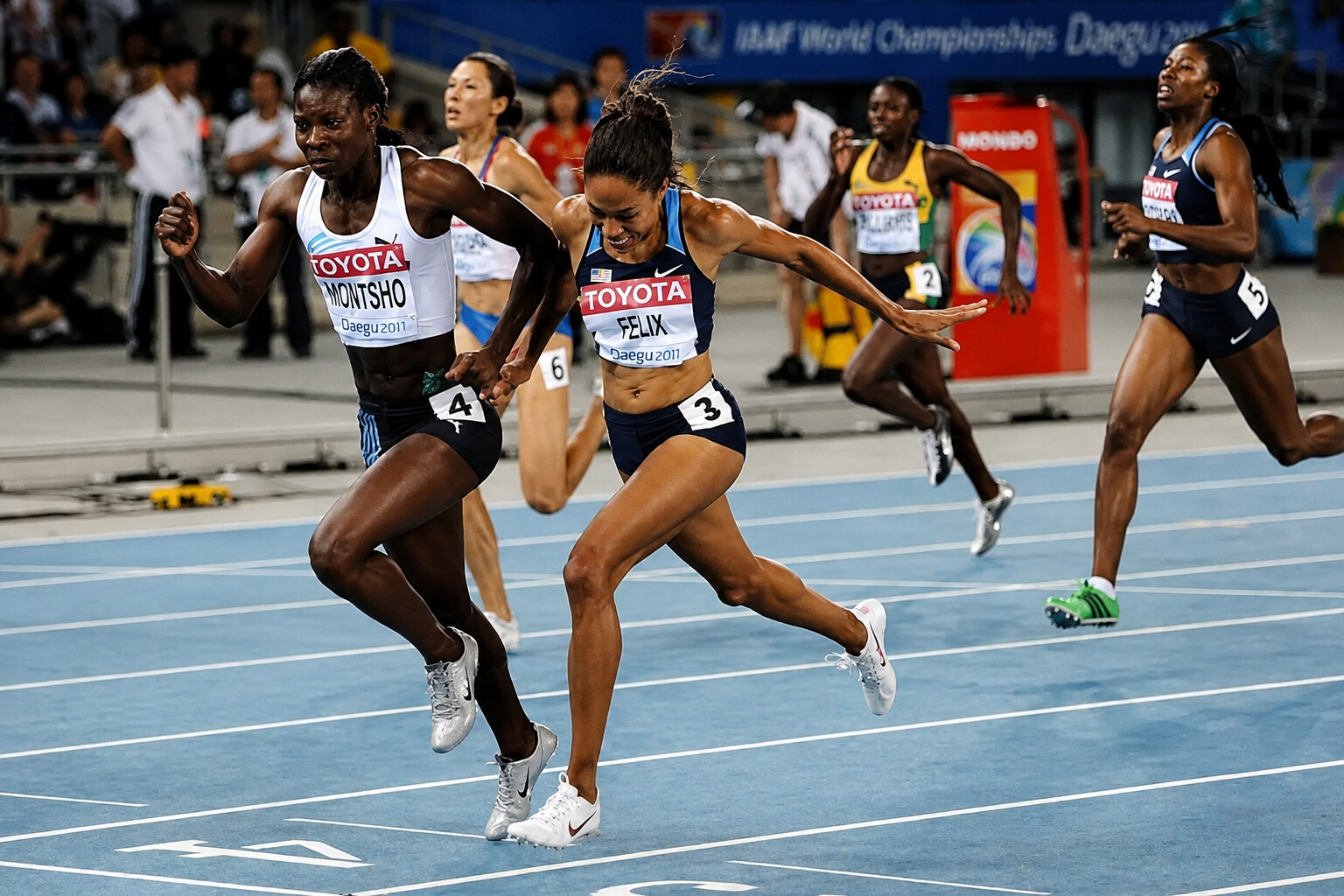
On 29 August 2011, Amantle Montsho produced one of the most important performances in Botswana’s athletics history, edging Allyson Felix by just three hundredths of a second to become the country’s first-ever World Championships gold medallist.
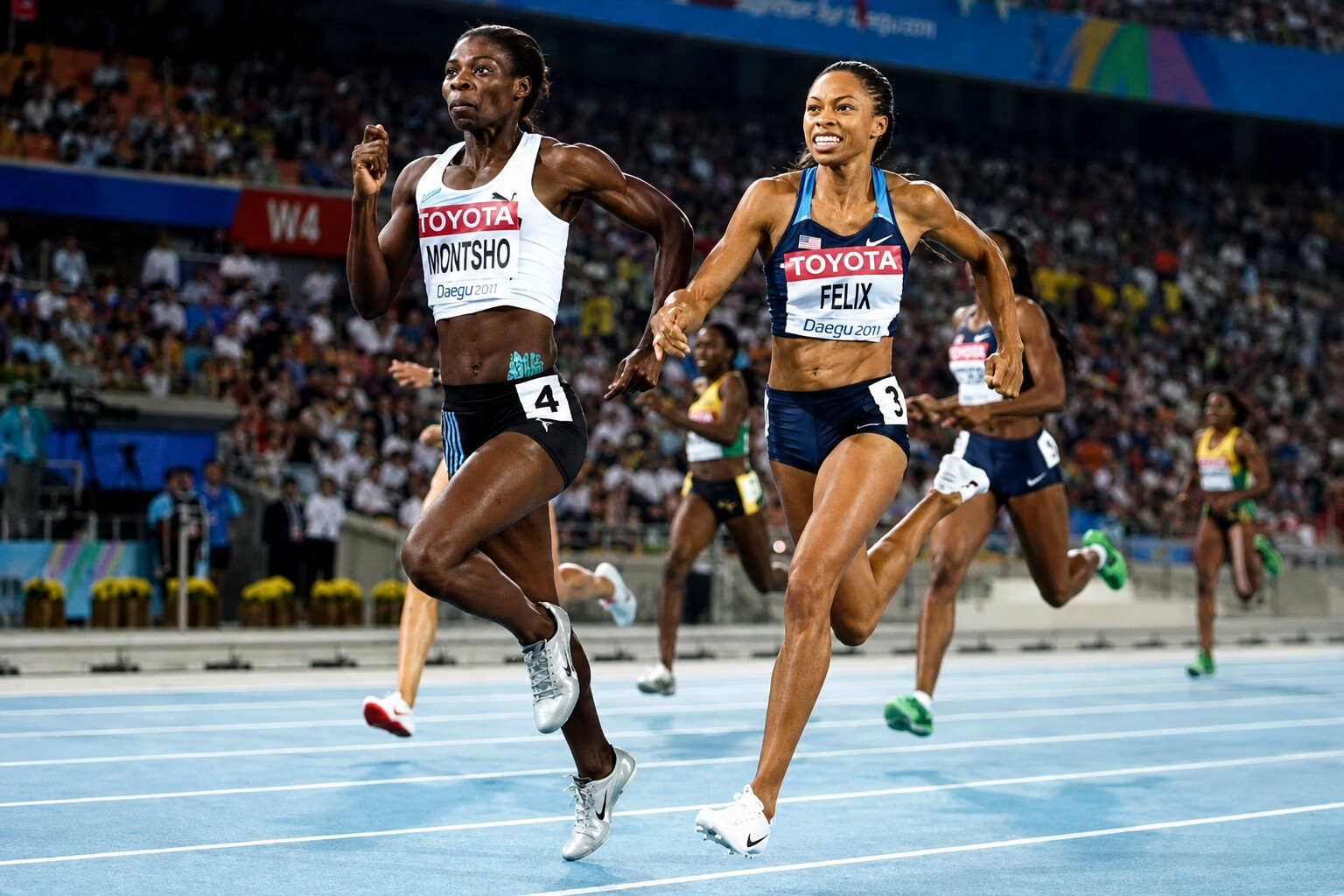
Montsho entered the final as one of the leading 400m runners in the world, having dominated much of the 2011 Diamond League season. But standing between her and global glory was a formidable field that included Olympic and world-class stars such as Felix, Sanya Richards-Ross, Shericka Williams and Anastasiya Kapachinskaya.
From the gun, Montsho attacked the race with purpose. Running in lane four, she carried tremendous momentum through the opening half of the lap and entered the home straight with a narrow advantage. Felix, drawn immediately inside her in lane three, responded brilliantly and began closing the gap as the two charged towards the finish.
The final metres became a straight fight between Botswana and the United States.
Felix threw everything at Montsho in the closing stages, but the Botswana star refused to surrender. She crossed the line in 49.56 seconds, with Felix just behind in 49.59. The margin was only 0.03 seconds, but it was enough to make history.
Montsho's winning time was not only a personal breakthrough but also a Botswana national record. It made her the first athlete from Botswana to win a World Championships gold medal and gave the southern African nation its first-ever World Championships medal in the process.
For Felix, the silver medal came with a remarkable performance of her own. Her 49.59 was a personal best and represented one of the finest 400m races of her career at that point. Despite coming agonisingly close to gold, Felix had pushed Montsho all the way to the finish line in one of the closest major championship 400m finals in history.
Behind the leading pair, Francena McCorory delivered another strong performance. Having already run a personal best of 50.24 in the semi-finals to qualify for the final, the American clocked 50.45 in the championship race. At the time, she crossed the line in fourth behind Kapachinskaya, who ran 50.24.
But the medal standings would later change.
Kapachinskaya was subsequently disqualified as part of a doping case involving violations dating back to the 2008 Olympic Games. As a result, her Daegu result was annulled, and McCorory was officially promoted from fourth to bronze medal position. World Athletics later recognised McCorory among the athletes receiving reallocated medals in 2017.
That change gave the race an additional historical dimension. What began as a breathtaking battle between Montsho and Felix ultimately became a championship podium of Montsho, Felix and McCorory.
More than a decade later, the image of Montsho and Felix racing shoulder-to-shoulder down the Daegu straight remains one of the defining moments of the 2011 World Championships. For Botswana, it was a breakthrough moment that announced Montsho on the biggest stage. For Felix, it was another chapter in a career filled with major championship success.
And for fans of the 400m, it was simply a spectacular race — 49.56 versus 49.59, with only three hundredths separating gold from silver.
by Erick Cheruiyot for My Best Runs.
Login to leave a comment
Stephen Kissa Carrying Ugandan Hopes at TCS Toronto Waterfront Marathon
Ugandan long-distance runners have emerged from the shadows of their legendary East African neighbours to earn distinction at the highest level.
Now Stephen Kissa will represent his nation at the 2026 TCS Toronto Waterfront Marathon on October 18 against a strong contingent of Kenyan and Ethiopian athletes. The event is once again a World Athletics Elite Label race.
Kissa set a Ugandan national record of 2:04:48 when he finished second in his 2022 marathon debut in Hamburg. That record was only broken this year. He was subsequently selected for Uganda’s 2023 World Championships marathon team, finishing fifth on the streets of Budapest.
He has also represented his country twice at the Olympics and competed at the World Cross Country Championships. With such experience, the 37-year-old is intent on challenging for Toronto’s $25,000 Canadian first-place prize.
“When I come to Toronto, I will do my best,” he declares with a broad smile. “I will be really happy if I can run 2:03 or 2:04.
“With training, we have been comparing the past to now, and we have come up with a solution. We do long runs and tempo runs ranging from 25km and 28km to 30km and up to 40km. I am running around 120km a week but will go up closer to 200km.”
Kissa is not the first of his compatriots to compete in the Toronto Waterfront Marathon. Stephen Kiprotich, the 2012 Olympic champion, finished seventh in the 2018 race. Kiprotich remains a national hero in Uganda, and his success has contributed significantly to the nation’s emergence as a distance-running power.
“I was really inspired a long time ago by Stephen Kiprotich,” Kissa admits. “He did some tremendous work, and I can say he is our mentor. We really respect him.
“He has given me advice. He told me, ‘Our sport is not a one-day journey. It is a long journey that takes a lot of patience and commitment. If you have commitment, patience and work hard, you will go far.’”
Kiprotich has been an occasional and welcome visitor to the training camp in Kapchorwa that Kissa calls home for most of the year. It sits at an altitude of 2,500 metres, or 8,200 feet.
From Monday through Saturday, Kissa trains there with a group that includes two-time Olympic champion Joshua Cheptegei, 2023 world marathon champion Victor Kiplangat and 2022 Olympic 3,000m steeplechase champion Peruth Chemutai.
The centre was built by their management company, Global Sports Communications, with a contribution from Cheptegei. The athletes return home to their families on Saturday evenings.
Kissa lives in Kapchorwa’s town centre, about 14 kilometres away, in an area dominated by Mount Elgon, an extinct volcano estimated to be 24 million years old. He lives there with his wife and two young children.
“Right now they are at school,” he says of his children. “They are about to come home for a holiday. That’s when I will meet them. At school, they concentrate on their studies unless there is a problem. Then they will call me.”
The training camp includes a dormitory, dining room, kitchen and recreation room where the group gathers to watch sports. The recent FIFA World Cup generated great interest, and Kissa admits enjoying the play of Spanish winger Lamine Yamal. When asked what he does to relax, he smiles.
“I can play pool. I like that,” he says, adding with a laugh, “Not for money. We also play cards.
“Sometimes, when I have time, I cook chapati. It is made from wheat flour. We also have potatoes and ugali, which is made from corn.”
The group holds a prayer before each workout. Victor Kiplangat is an assistant pastor at a nearby church called Temple of the Most High God, but the others, including Kissa, also take turns leading prayers.
For more than a decade, the group was coached by Addy Ruiter. After the 2024 Paris Olympics, the Dutchman returned home. He continues coaching the athletes remotely through WhatsApp, with an on-site team led by fellow Dutchman Roy Hoornweg.
“Kapchorwa is a hilly, mountainous area,” Kissa explains. “The tempo runs are done on a plateau where it is flat. Our training differs depending on the location. You can’t do long runs in the hilly area, so we go to the plateau. We also have flatlands where we can do long runs and tempo runs.”
Kissa understands that he is approaching the later stages of his running career and must look toward life beyond competition. Still, he laughs when asked how many more years he can compete.
“Maybe 10 years! I will be happy if I can run 2:03 or 2:04,” he says.
“If Toronto goes really well, I will look to invest in assets in town, build apartments and start a business. I can really say thank you for inviting me to Toronto. If it goes well, I will be very proud.”
Kissa won’t be the only Ugandan presence at the TCS Toronto Waterfront Marathon. At the Runner’s Expo on October 16 and 17 at the Better Living Centre, a Uganda Tourism booth will offer information about the Mount Rwenzori Marathon and Great Lakes Safaris.
On the starting line, Kissa can be confident that he has the international experience and talent to compete with anyone. As for his ultimate goals, he is succinct.
“I pray that in the years to come I will stand on the podium at the Olympics or World Championships,” he says. “That is what I am really looking forward to.”
A victory in Toronto would bolster that ambition.
by Paul Gains
Login to leave a comment
TCS Toronto Waterfront Marathon
The Scotiabank Toronto Waterfront Marathon, Half-Marathon & 5k Run / Walk is organized by Canada Running Series Inc., organizers of the Canada Running Series, "A selection of Canada's best runs!" Canada Running Series annually organizes eight events in Montreal, Toronto and Vancouver that vary in distance from the 5k to the marathon. The Scotiabank Toronto Waterfront Marathon and Half-Marathon are...
more...
Kejelcha and Sawe: Two Men Driving Road Running Into a New Era
Men's road running is moving into extraordinary territory, and two athletes are increasingly at the heart of its breathtaking evolution: Yomif Kejelcha of Ethiopia and Sabastian Sawe of Kenya.
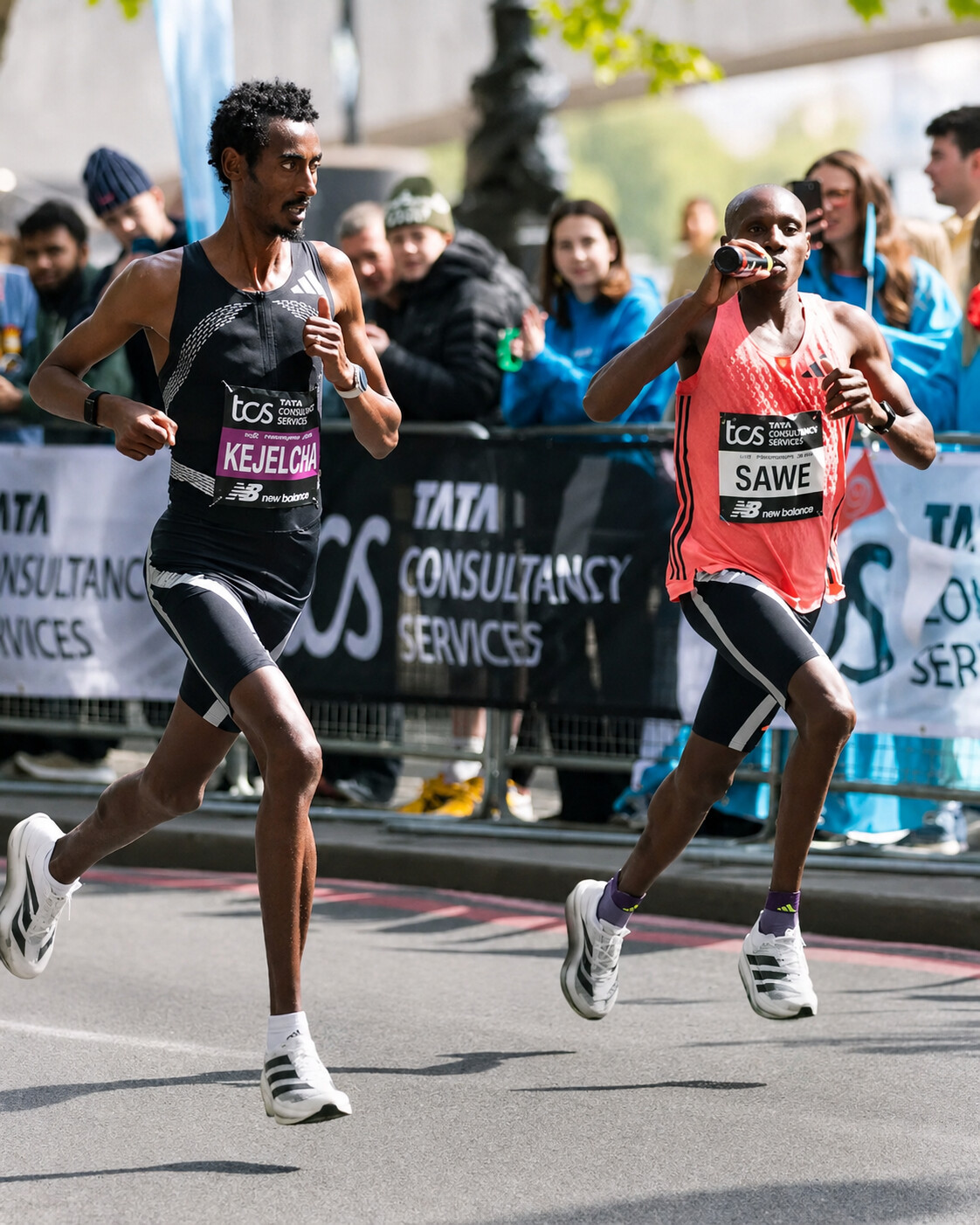
The pair represent the remarkable depth of modern East African distance running, but they are also doing something even more significant: pushing the boundaries of marathon and half-marathon performance to levels that once seemed almost unimaginable. Through their exceptional speed, endurance and ability to perform at the highest level, Kejelcha and Sawe are helping to redefine what is possible on the roads.
Sawe has established himself as one of the most formidable marathon runners in the world. His astonishing 1:59:30 marathon performance at TCS London Marathon on April 26, 2026, marked as a world record, African record and Kenyan record, demonstrated the extraordinary level the marathon has now reached. It also underlined his position at the very top of the men's marathon world rankings.
Kejelcha has been equally sensational, although his journey has highlighted a different kind of versatility. The Ethiopian, whose background includes world-class performances on the track and across shorter road distances, ran 1:59:41 for the marathon debut also at the TCS London Marathon on April 26, 2026, a performance marked as a national record. Just four months later, he delivered another stunning display by clocking 56:51 for the half marathon at the Argentina's capital, Buenos Aires on August 23, 2026, with the performance marked as a pending world record, African record and Ethiopian national record.
That combination of performances illustrates just how exceptional this new generation has become. Kejelcha's ability to threaten the absolute limits over the half marathon while also producing a sub-two-hour marathon performance speaks to his extraordinary range. Sawe, meanwhile, has continued to establish himself as a dominant force over the classic 42.195km distance, combining remarkable efficiency with the strength and speed required to compete at the very highest level.
The two stars are now preparing to take their talents to different stages of the road-running calendar. Kejelcha's next focus is the Valencia Marathon on December 6, where he will once again turn his attention to the marathon distance and look to build on his remarkable breakthrough over 42.195km. Sawe, meanwhile, is set to race the BMW Berlin Marathon on September 27, giving the Kenyan another major opportunity to showcase his extraordinary marathon strength on one of the world's fastest and most prestigious courses.
Those upcoming races add another fascinating dimension to their respective journeys. While Kejelcha heads to Valencia carrying exceptional speed and versatility into another marathon challenge, Sawe will arrive in Berlin with his sights firmly fixed on maintaining his dominance at the highest level of the sport.
What makes their rise particularly exciting is the wider message it sends to athletics. The marathon is no longer progressing only through small margins. The standards at the top are being pushed relentlessly forward, and performances that once appeared impossible are becoming increasingly realistic.
The official sub-two-hour marathon remains one of athletics' ultimate frontiers. Achieving it under standard race conditions would represent one of the greatest endurance breakthroughs in sporting history. Yet with athletes such as Sawe already breaking the two-hour barrier and Kejelcha running only seconds above it while also producing unprecedented half-marathon speed, that frontier appears closer than ever.
Their careers are different, and their strengths are not identical. Sawe has rapidly become a dominant marathon specialist, while Kejelcha brings exceptional versatility from the track to the roads and across multiple distances. But together, they symbolize the relentless progression of men's road running.
Yomif Kejelcha and Sabastian Sawe are not merely among the fastest men of their generation. They are helping to drive the sport toward a future that once seemed unthinkable. With Valencia and Berlin now on their horizons, the next chapter of this remarkable road-running revolution is already waiting to be written.
by Erick Cheruiyot for My Best Runs.
Login to leave a comment
Oblique Seville Blazes to Meeting Record in Historic All Nine-Sub-10 Silesia Showdown
Jamaica’s Oblique Seville delivered another sensational statement at the Silesia Wanda Diamond League, storming to victory in a breathtaking men’s 100 metres and setting a new meeting record of 9.83 seconds that made sprinting history in Chorzów, Poland.
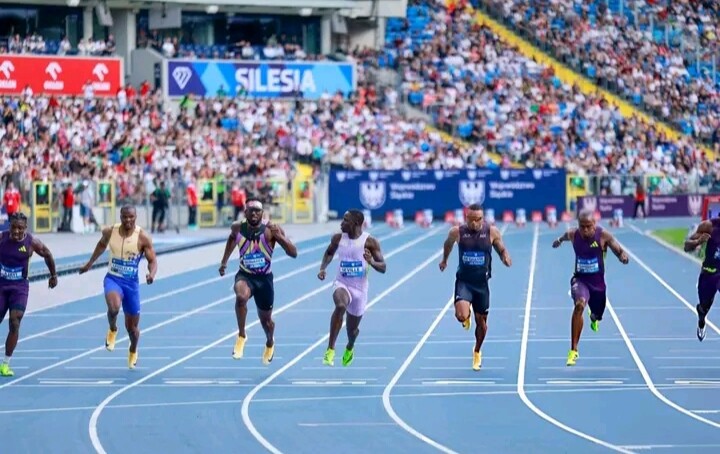
In one of the deepest and most extraordinary sprint races ever witnessed, Seville powered clear of a world-class field to take the win, with Kenneth Bednarek of the United States finishing second in 9.87 and fellow American Christian Coleman completing the podium in 9.93.
But Seville’s meeting-record victory was only one part of the remarkable story. For the first time in history, all nine athletes in a single men's 100m race broke the 10-second barrier, producing an unprecedented display of sprinting depth.
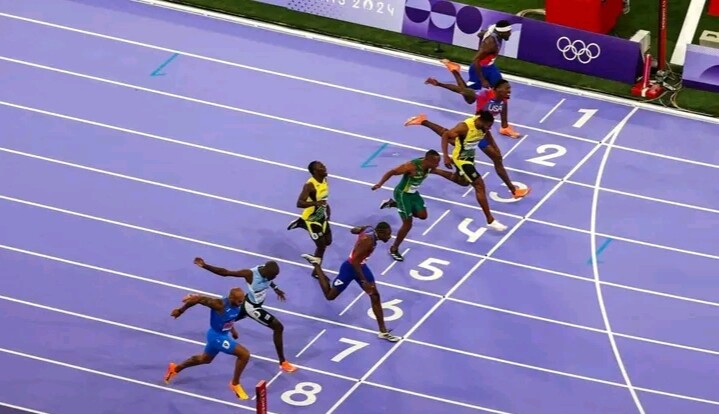
The historic race also marked only the second time that every athlete in a men's 100m final had broken 10 seconds, following the eight-man final at the Paris 2024 Olympic Games. In Silesia, however, the achievement went even further, with an entire nine-man field dipping below the iconic barrier.
Nigeria’s Kayinsola Ajayi produced another impressive performance to finish fourth in 9.94, while South Africa’s Gift Leotlela followed in fifth with 9.95. Canada’s Olympic champion Andre De Grasse clocked 9.96 in sixth, with South African star Akani Simbine recording the same time in seventh.
American Ronnie Baker added another sub-10-second performance with 9.97 for eighth place, while Cameroon’s Emmanuel Eseme ensured the historic sweep was complete by running 9.99 in ninth.
Men's 100m Results – Silesia Wanda Diamond League
1. Oblique Seville (Jamaica) — 9.83 Meeting Record
2. Kenneth Bednarek (United States) — 9.87
3. Christian Coleman (United States) — 9.93
4. Kayinsola Ajayi (Nigeria) — 9.94
5. Gift Leotlela (South Africa) — 9.95
6. Andre De Grasse (Canada) — 9.96
7. Akani Simbine (South Africa) — 9.96
8. Ronnie Baker (United States) — 9.97
9. Emmanuel Eseme (Cameroon) — 9.99
For Seville, the victory was another emphatic demonstration of his exceptional form and his ability to rise to the occasion against the strongest opposition. His 9.83 not only secured the Diamond League win but also lowered the Silesia meeting record, putting an exclamation mark on a performance of the highest quality.
Nine men went under 10 seconds. Seville went under 9.84. On an unforgettable day in Silesia, the Jamaican stood tallest in a race that pushed the boundaries of what men's sprinting has ever seen.
by Erick Cheruiyot for My Best Runs.
Login to leave a comment
