

Running News Daily
Running News Daily is edited by Bob Anderson and team. Send your news items to bob@mybestruns.com Advertising opportunities available.
Index to Daily Posts · Sign Up For Updates · Run The World Feed
Articles tagged #Paralympics
Today's Running News
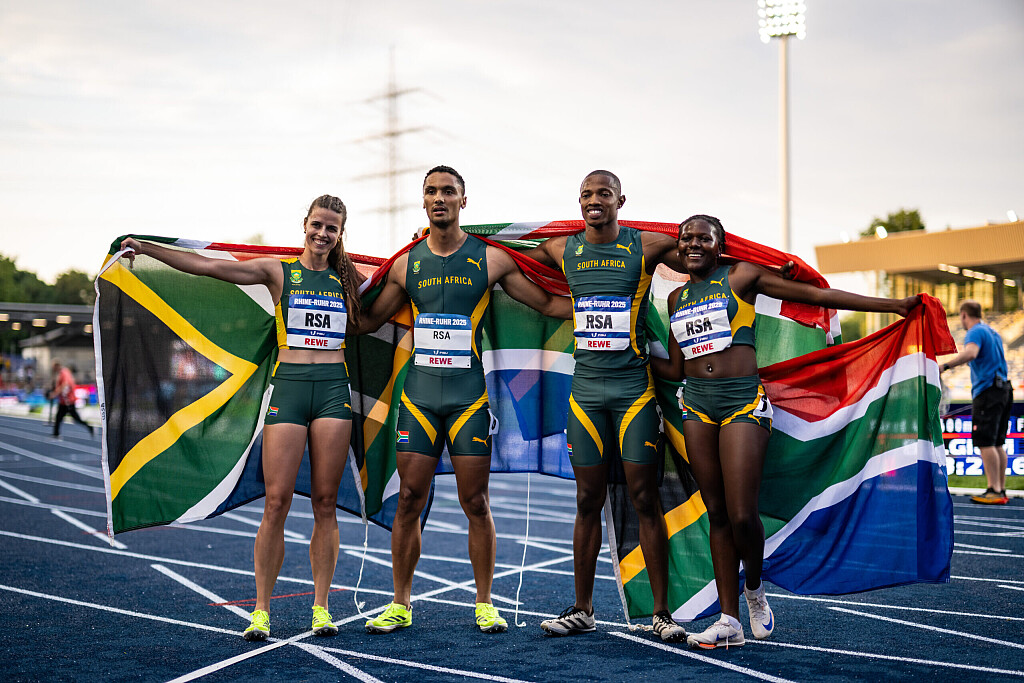


South Africa Enters Race To Bring The Olympics To Africa For The First Time
South Africa has taken a major step towards potentially bringing the Olympic Games to Africa for the first time after formally entering the International Olympic Committee’s process as an interested party for the 2036 Summer Olympics and Paralympics.

The development could mark a historic moment for the continent, which has never hosted an edition of the Olympic Games despite its long and distinguished sporting tradition. South Africa’s interest now places the country among the potential candidates seeking to convince the IOC that Africa is ready to stage the world’s biggest multi-sport event.
A successful bid would represent a significant expansion of South Africa’s sporting legacy. The country has already demonstrated its ability to host major international competitions, most notably the 2010 FIFA World Cup, which brought football’s biggest tournament to Africa for the first time and showcased South Africa’s stadiums, infrastructure and capacity to welcome visitors from around the world.
The 2036 ambition also arrives at a time when Africa is gaining greater recognition as a destination for major global sporting events.

Kenya has already secured the right to host the 2029 World Athletics Championships in Nairobi, marking the first time the senior global championships will be staged on African soil. The breakthrough followed a competitive bidding process and represents another important milestone for the continent’s athletics movement.
South Africa’s Olympic interest therefore comes against a backdrop of growing confidence in Africa’s ability to organise and deliver events at the highest international level.
For South Africa, however, winning the right to host the Olympics would be a considerably larger undertaking. The Games require extensive sporting venues, accommodation, transportation networks, security arrangements and long-term financial planning, while the host must also present a compelling vision for the event’s wider legacy.
The country’s experience with the 2010 World Cup provides an important foundation, but an Olympic bid would require an even broader national strategy involving multiple sports and venues.
The IOC is expected to make its decision on the host of the 2036 Olympics later in the decade, with several countries expressing interest in entering the race. The process will ultimately determine whether Africa can finally break one of the biggest remaining barriers in the history of the Olympic movement.
For a continent that has produced generations of Olympic champions across athletics, swimming, boxing, cycling and numerous other sports, hosting the Games would carry significance far beyond the competition itself.
South Africa is now putting itself forward for that opportunity.
If the bid eventually succeeds, the 2036 Olympic Games could become a landmark moment — not only for South Africa, but for an entire continent that has waited more than a century to welcome the Olympic movement onto its soil.
by Erick Cheruiyot for My Best Runs.
Login to leave a comment
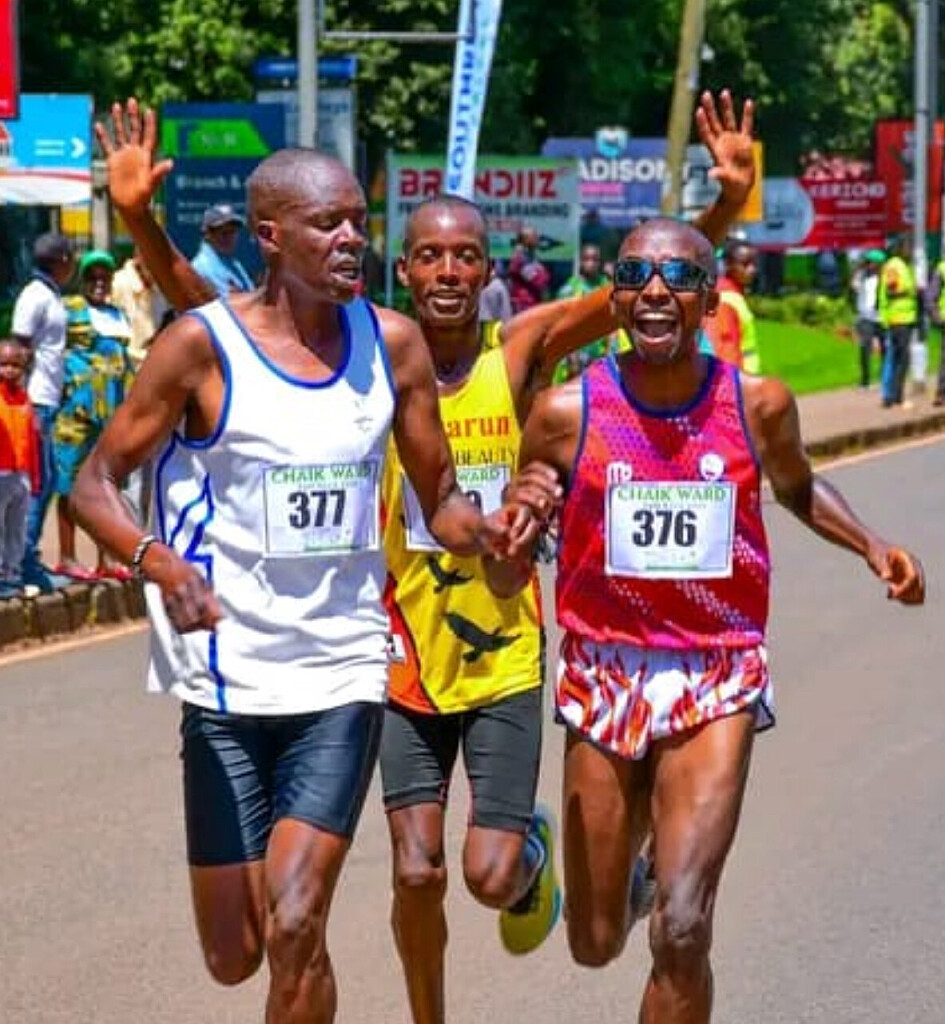
Blind Champion Wilson Bii to Open 2025 Season at KATA Time Trial
Four-time Paralympian Wilson Bii will launch his 2025 racing season at the KATA Monthly 10K Time Trial, scheduled for June 11 at the KATA Running Retreat in Thika, Kenya. Though Bii now trains at the newly opened KATA Running Camp in Molo, he’ll return to Thika to test his fitness in a race setting for the first time this year.
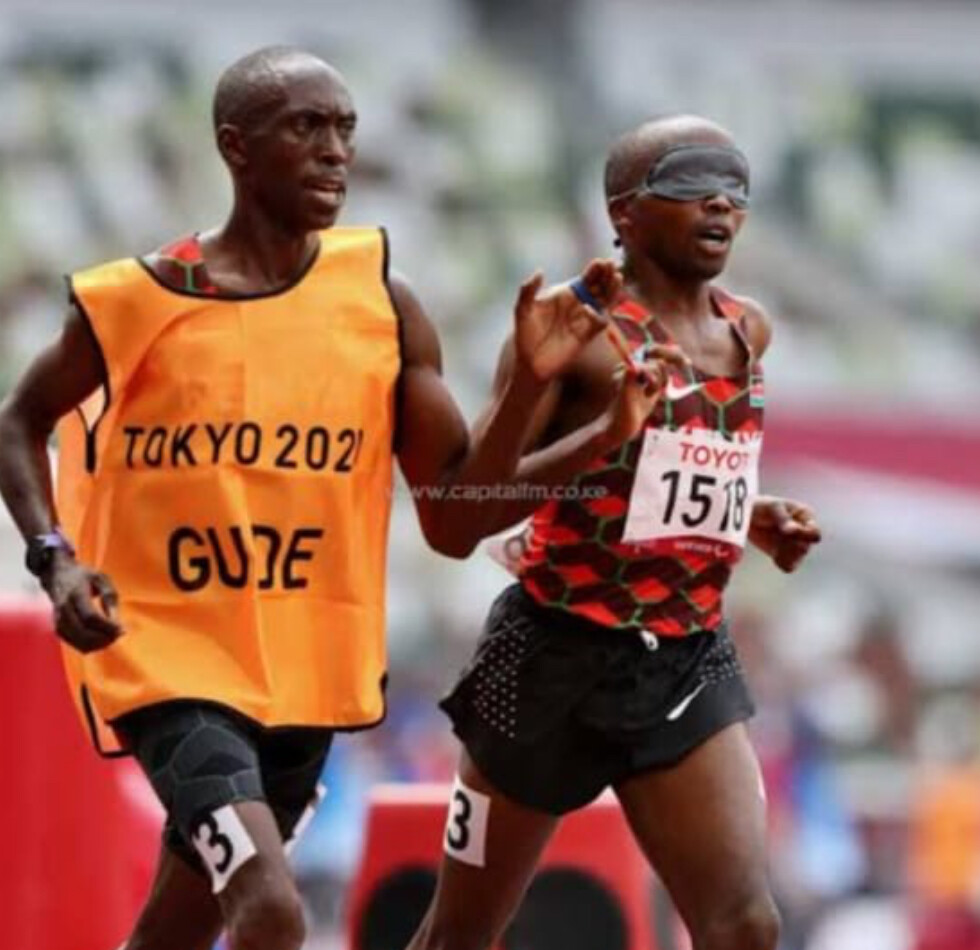
A T11-class athlete (completely blind), Bii has represented Kenya in four Paralympic Games, earning multiple medals and worldwide recognition. He won bronze in the 5000m T11 at the Rio 2016 Paralympics and remains one of Kenya’s most accomplished para-athletes.
Aiming High: Sub-35 in the 10K, Sub-2:30 in the Marathon
This 10K time trial marks an important checkpoint as Bii builds toward his ambitious goal of running a sub-2:30 marathon, with a possible target at the Chicago Marathon later this year. For this first effort of the year, he’s aiming to break 35 minutes for 10K—a notable time given the altitude.
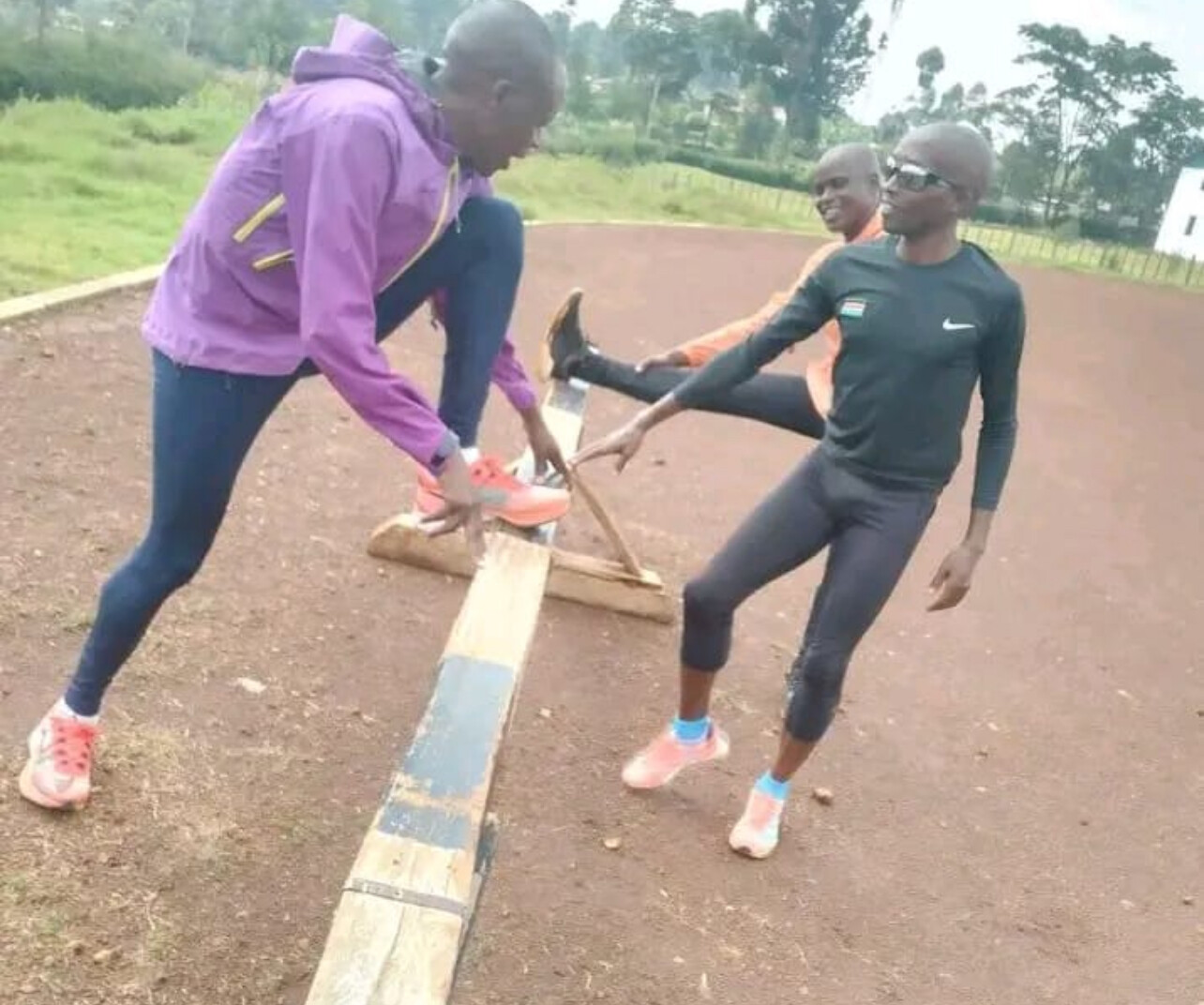
Bii will be guided by Job Kiprono Langat, who also serves as Assistant Coach at the KATA Molo Camp. Job has trained closely with Wilson and previously paced him in workouts, making their partnership on race day smooth and deeply synchronized.
“We are very proud to have Wilson now training with us in Molo,” said KATA Director Bob Anderson. “He is hoping to run a sub-35 minute 10K. This is the start of what we believe will be an exciting year for him.”
From Molo to Thika: Racing at Altitude
While Molo is located at a higher elevation, Thika still sits at approximately 5,000 feet (1,525 meters)—offering the kind of thin air that tests an athlete’s endurance and grit. A sub-35-minute 10K at this altitude would show that Bii is on track for a strong marathon season.
The KATA Molo camp, where Bii now trains, is designed for altitude adaptation and athlete development. With Job serving as both assistant coach and guide, Bii has found the structure and support needed to thrive.
Looking Ahead
With elite guidance, the backing of the KATA community, and his own determination, Wilson Bii is ready to make 2025 a breakout year. The June 11 time trial in Thika is more than a rust-buster—it’s a statement that one of Kenya’s most inspiring runners is back on the road, chasing new goals.
by Boris Baron
Login to leave a comment
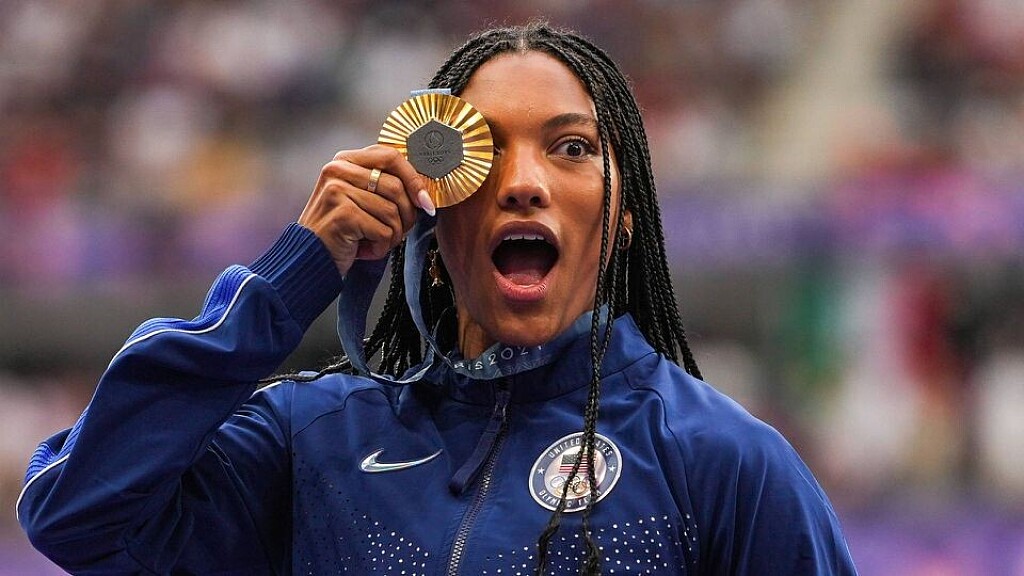
'My gold medal is peeling'- Tara Davis-Woodhall stuns fans as Paris Olympics medal quality concerns grow
Olympic and Paralympic medalists raise concerns about the rapid deterioration of their recently awarded medals, sparking widespread athlete frustration.
Olympic gold medalist Tara Davis-Woodhall has sparked a storm of controversy after revealing that her prized gold medal is peeling, joining the growing concerns of fellow athletes, including Paralympic bronze medalist Allison E. Lang.
What should be an enduring symbol of their achievements is, instead, tarnishing—both literally and symbolically—just weeks after the medals were awarded.

Davis-Woodhall’s revelation came after Lang, who secured bronze in the recent Paris Paralympic Games, expressed her frustration on Threads.
Lang shared a photo of her rapidly deteriorating medal, showing visible signs of oxidation and peeling.

“I’m kind of disappointed. My Bronze Medal from Paris is already oxidizing and looks like it’s peeling/rusting like what’s going on @paralympics? I’ve only had it for less than a month!!” Lang posted.
Initially, some social media users dismissed Lang’s concerns, with one commenter stating, “Gold does not tarnish by the way,” but Davis-Woodhall quickly came to her defense with a stunning admission: “Actually… it does ? my gold medal is peeling.”
The long jump athlete’s candid response added fuel to the fire, shifting the spotlight from a single case to a potential widespread issue.
The idea that gold and bronze medals—symbols of lifelong dedication and effort—could deteriorate so quickly has shocked athletes and fans alike.
In the wake of the revelations, several athletes have started to inspect their own medals. Some, like Lang and Davis-Woodhall, are reporting similar problems, while others have claimed their medals remain in pristine condition.
This inconsistency has only deepened the mystery, raising questions about the materials and manufacturing processes behind these prestigious awards.
Tessa Axsom, the director of CNC at Fictive, a San Francisco-based company that specializes in custom mechanical parts, has weighed in on the issue.
According to Axsom, the problem may lie in the materials used in the medals, particularly copper oxidation.
“This year’s bronze medal is actually 97% copper, 2.5% zinc, and a half a percent tin,” Axsom explained as reported by The Sport Rush.
“Copper oxidation is natural, and it reaches stability when it forms oxides and salts. So, when you have sweaty athletes wearing these medals, getting salt on them, you’re going to get oxidation. The metal should have been protectively coated.”
Despite some media reports attributing the issue to the use of recycled metals—a sustainable practice championed by the Olympic and Paralympic committees—Axsom was quick to refute those claims.
She emphasized that using recycled metals is not the cause of the peeling and rusting. Rather, it is the lack of a proper protective coating that has left these medals vulnerable to the elements and wear.
As of now, neither the International Paralympic Committee (IPC) nor the International Olympic Committee (IOC) has issued an official statement addressing the situation.
However, whispers of cost-cutting measures have begun circulating, with speculation that the medals may have been produced under tighter budget constraints, potentially leading to the quality issues now being reported.
For athletes like Lang and Davis-Woodhall, the peeling medals are more than just a cosmetic problem. They represent the culmination of years of hard work, dedication, and perseverance.
Seeing their hard-earned medals deteriorate so quickly has left them and their fans questioning the lasting value of these symbols.
by Festus Chuma
Login to leave a comment

Paralympic bronze medallist disqualified for helping her guide
The Paris 2024 Paralympics is getting backlash for what is seen by fans as an unmerited disqualification. Just two metres from crossing the finish line in the women’s T12 marathon on Sunday, five-time Spanish Paralympian Elena Congost was disqualified for momentarily letting go of her tether to assist her guide, Mia Carol Bruguera, who was visibly struggling to continue running. Paris officials ruled the Spaniard ineligible to claim the bronze medal that was otherwise hers.
Bruguera, 57, cramped up near the end of the race; his extreme discomfort was unmistakable as the pair approached the final stretch of the event. Congost reached out to grab Bruguera’s arm just moments before crossing the line to keep him from falling as he struggling to continue moving forward–dropping her end of the tether in the process.
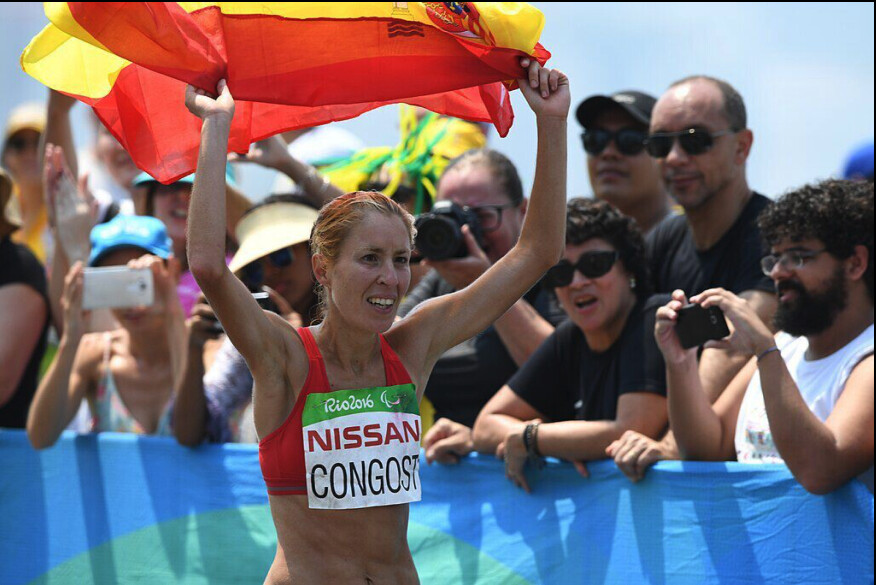
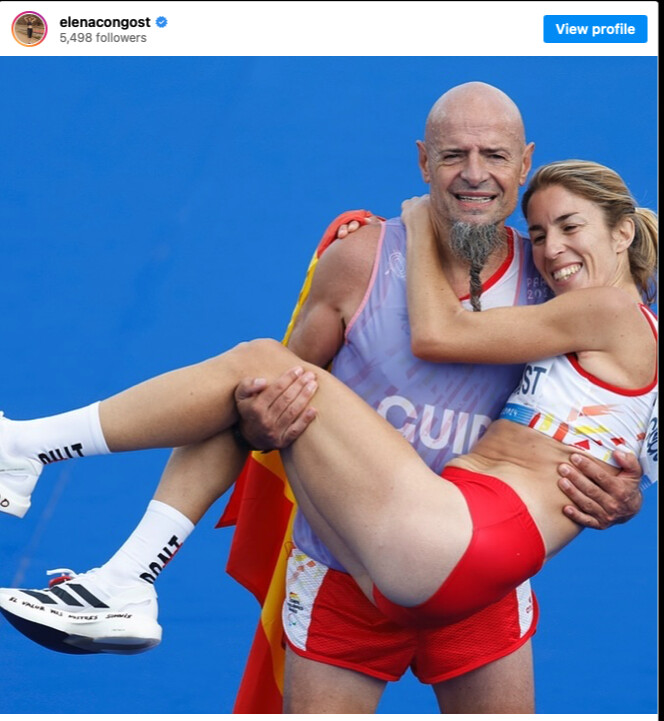
Congost was born with a degenerative vision impairment and competes in the T12 classification–runners in the T12 event must remain tethered to their guide for the duration of their race. The rules make no exceptions for these sorts of extenuating circumstances.
The 36-year-old took gold in the event at Rio 2016 and placed second in the 1,500m at London 2012. She recently returned to competition following the birth of her fourth child.
“I would like everyone to know that I have not been disqualified for cheating, but rather I have been disqualified for being a person and for an instinct that comes to you when someone is falling,” Congost told Marca. On Instagram, the Spanish athlete wrote that she has “no doubts or regrets”.
Fatima El Idrissi of Morocco took gold in the event and set a new world record of 2:48.36, while teammate Meryem En-Nourhi finished second.If not disqualified, Congost would have also gone home with a new personal best of three hours and 48 seconds–but was stripped of that achievement along with her hardware. The bronze medal was instead awarded to fourth-place finisher, Misato Michishita of Japan.
by Running Magazine
Login to leave a comment
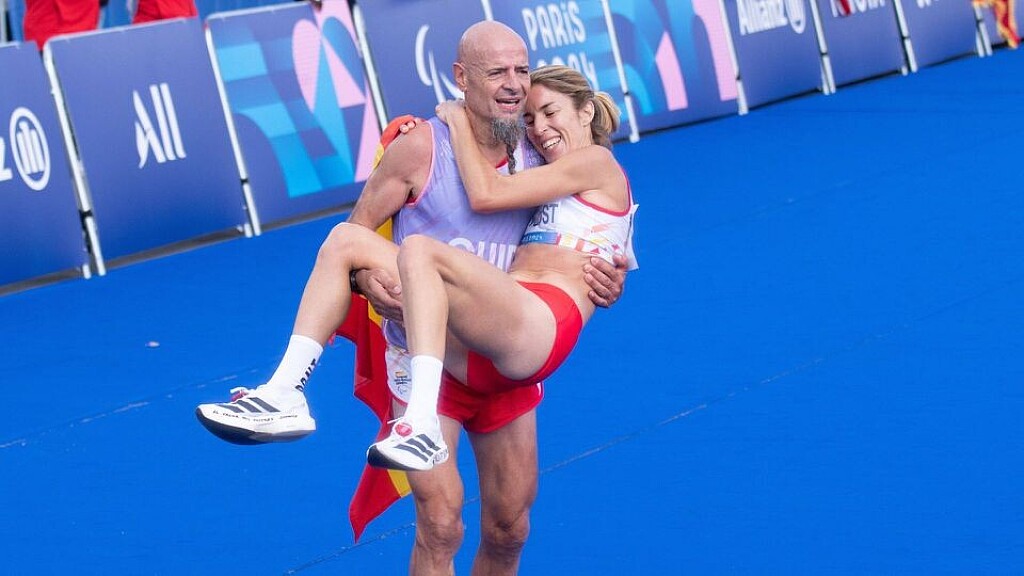
Paralympic bronze medalist disqualified for helping her guide
Spanish marathoner Elena Congost was stripped of her bronze medal after momentarily letting go of the tether connecting her to her guide.
The Paris 2024 Paralympics is getting backlash for what is seen by fans as an unmerited disqualification. Just two meters from crossing the finish line in the women’s T12 marathon on Sunday, five-time Spanish Paralympian Elena Congost was disqualified for momentarily letting go of her tether to assist her guide, Mia Carol Bruguera, who was visibly struggling to continue running. Paris officials ruled the Spaniard ineligible to claim the bronze medal that was otherwise hers.
Bruguera, 57, cramped up near the end of the race; his extreme discomfort was unmistakable as the pair approached the final stretch of the event. Congost reached out to grab Bruguera’s arm just moments before crossing the line to keep him from falling as he struggling to continue moving forward–dropping her end of the tether in the process.
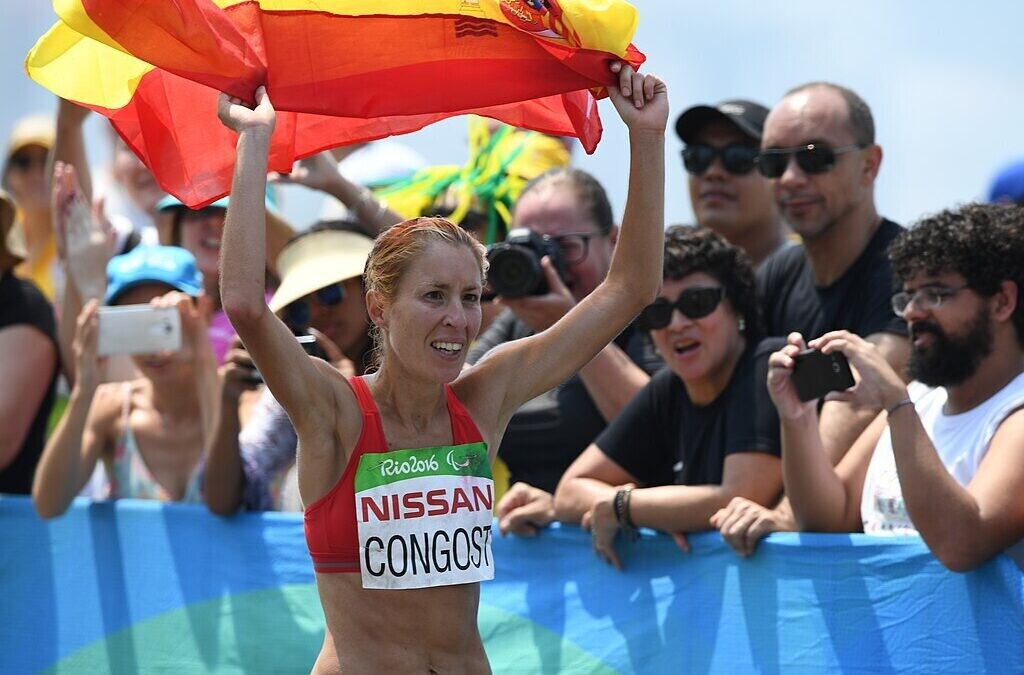
Congost was born with a degenerative vision impairment and competes in the T12 classification–runners in the T12 event must remain tethered to their guide for the duration of their race. The rules make no exceptions for these sorts of extenuating circumstances.
The 36-year-old took gold in the event at Rio 2016 and placed second in the 1,500m at London 2012. She recently returned to competition following the birth of her fourth child.
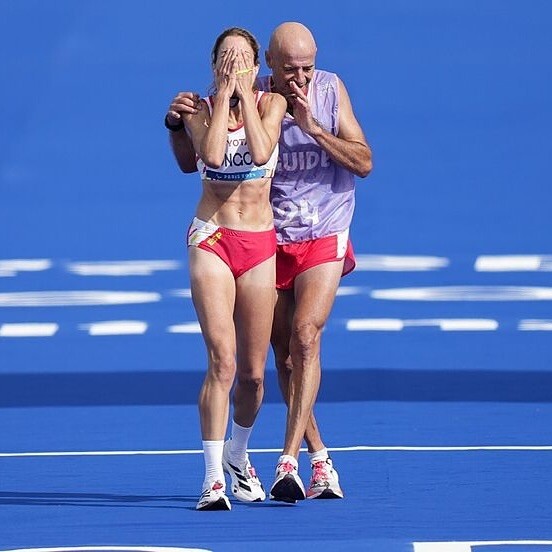
“I would like everyone to know that I have not been disqualified for cheating, but rather I have been disqualified for being a person and for an instinct that comes to you when someone is falling,” Congost told Marca. On Instagram, the Spanish athlete wrote that she has “no doubts or regrets”.
Fatima El Idrissi of Morocco took gold in the event and set a new world record of 2:48.36, while teammate Meryem En-Nourhi finished second.If not disqualified, Congost would have also gone home with a new personal best of three hours and 48 seconds–but was stripped of that achievement along with her hardware. The bronze medal was instead awarded to fourth-place finisher, Misato Michishita of Japan.
by Cameron Ormond
Login to leave a comment

What You Need to Know About the U.S. Track and Field Olympic Trials
From June 21-30, more than 900 runners, throwers, and jumpers will put it all on the line for a chance to compete for Team USA at the Paris Olympics
The U.S. Track and Field Olympic Trials is a showcase of hundreds of America’s best track and field athletes who will be battling for a chance to qualify for Team USA and compete in this summer’s Paris Olympics. For many athletes competing in Eugene, simply making it on to the start line is a life-long accomplishment. Each earned their spot by qualifying for the trials in their event(s). The athlete qualifier and declaration lists are expected to be finalized this week.

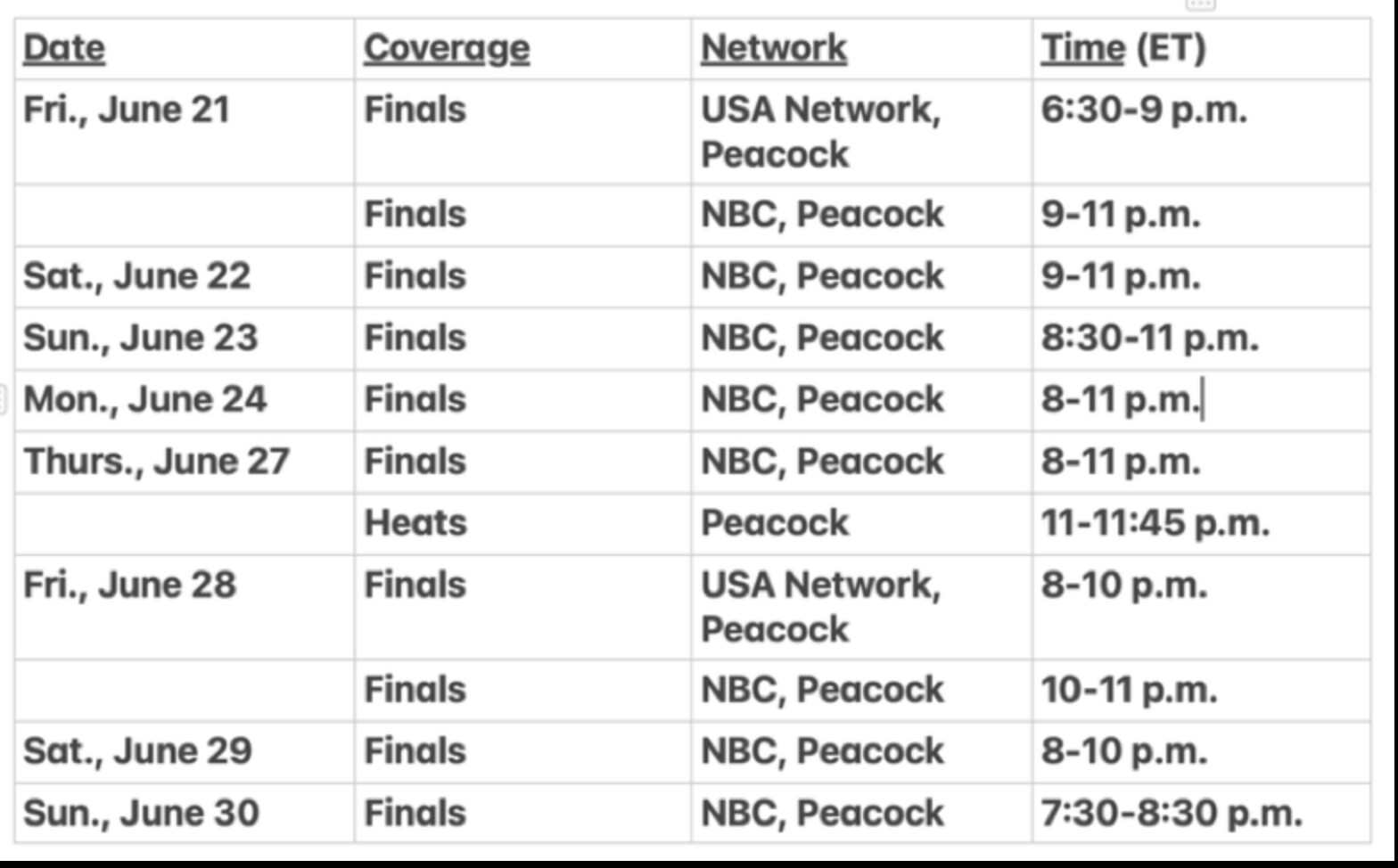
But for the highest echelon of athletes, the trials defines a make-or-break moment in their career. Only three Olympic team spots (in each gender) are available in each event, and given the U.S. depth in all facets of track and field—sprints, hurdles, throws, jumps, and distance running events—it’s considered the world’s hardest all-around team to make. How dominant is the U.S. in the world of track and field? It has led the track and field medal count at every Olympics since 1984.
At the trials, there are 20 total events for women and men—10 running events from 100 meters to 10,000 meters (including two hurdles races and the 3,000-meter steeplechase), four throwing events (discus, shot put, javelin, and hammer throw), four jumping events (long jump, triple jump, high jump, and pole vault), the quirky 20K race walking event, and, of course, the seven-event heptathlon (women) and the 10-event decathlon (men).
(At the Olympics, Team USA will also compete in men’s and women’s 4×100-meter and 4×400-meter relays, plus a mixed gender 4×400, and a mixed gender marathon race walk. The athletes competing on these teams will be drawn from those who qualify for Team USA in individual events, along with alternates who are the next-best finishers at the trials.
There’s also the Olympic marathon, but the U.S. Olympic Trials Marathon was held on February 3 in Orlando, Florida, to give the athletes enough time to recover from the demands of hammering 26.2 miles before the big dance in Paris.
Although some countries arbitrarily select their Olympic track and field teams, the U.S. system is equitable for those who show up at the Olympic Trials and compete against the country’s best athletes in each particular event. There’s just one shot for everyone, and if you finish among the top three in your event (and also have the proper Olympic qualifying marks or international rankings under your belt), you’ll earn the opportunity of a lifetime—no matter if you’re a medal contender or someone who burst onto the scene with a breakthrough performance.
The top performers in Eugene will likely be contenders for gold medals in Paris. The list of American stars is long and distinguished, but it has to start with sprinters Sha’Carri Richardson and Noah Lyles, who will be both competing in the coveted 100 and 200 meters. Each athlete won 100-meter titles at last summer’s world championships in Budapest and ran on the U.S. gold-medal 4×100 relays. (Lyles also won the 200) Each has been running fast so far this spring, but more importantly, each seems to have the speed, the skill, and swagger it takes to become an Olympic champion in the 100 and carry the title of the world’s fastest humans.
But first they have to qualify for Team USA at the Olympic Trials. Although Lyles is the top contender in the men’s 100 and second in the world with a 9.85-second season’s best, five other U.S. athletes have run sub-10-second efforts already this season. Richardson enters the meet No. 2 in the U.S. and No. 3 in the world in the women’s 100 (10.83), but eight other Americans have also broken 11 seconds. That will make the preliminary heats precariously exciting and the finals (women’s on June 22, men’s on June 23) must-see TV.
There are five returning individual Olympic gold medalists competing in the U.S. Olympic Trials with the hopes of repeating their medals in Paris—Athing Mu (800 meters), Sydney McLaughlin-Levrone (400-meter hurdles), Katie Moon (pole vault), Vallarie Allman (discus), and Ryan Crouser (shot put)—but there are more than a dozen other returning U.S. medalists from the Tokyo Olympics, as well as many more from the 2023 world championships, including gold medalists Chase Ealey (shot put), Grant Holloway (110-meter hurdles), Laulauga Tausaga (discus), and Crouser (shot put).
The most talented athlete entered in the Olympic Trials might be Anna Hall, the bronze and silver medalist in the seven-event heptathlon at the past two world championships. It’s an epic test of speed, strength, agility, and endurance. In the two-day event, Hall and about a dozen other women will compete in the 100-meter hurdles, high jump, shot put, 200 meters, long jump, javelin throw, and 800 meters, racking up points based on their performance in each event. The athletes with the top three cumulative totals will make the U.S. team. At just age 23, Hall is poised to contend for the gold in Paris, although Great Britain’s Katarina Johnson-Thompson, the world champion in 2019 and 2023, is also still in search of her first Olympic gold medal after injuries derailed her in 2016 and 2021.
If you can find your way to Eugene—and can afford the jacked-up hotel and Airbnb prices in town and nearby Springfield—you can watch it live in person at Hayward Field. Rebuilt in 2021, it’s one of the most advanced track and field facilities in the world, with an extremely fast track surface, a wind-blocking architectural design, and 12,650 seats that all offer great views and close-to-the-action ambiance. Tickets are still available for most days, ranging from $45 to $195.
If you can’t make it to Eugene, you can watch every moment of every event (including preliminary events) via TV broadcasts and livestreams. The U.S. Olympic Trials will be broadcast live and via tape delay with 11 total broadcast segments on NBC, USA Network, and Peacock. All finals will air live on NBC during primetime and the entirety of the meet will be streamed on Peacock, NBCOlympics.com, NBC.com and the NBC/NBC Sports apps.
The Olympic Trials will be replete with young, rising stars. For example, the men’s 1500 is expected to be one of the most hotly contested events and the top three contenders for the Olympic team are 25 and younger: Yared Nuguse, 25, the American record holder in the mile (3:43.97), Cole Hocker, 23, who was the 2020 Olympic Trials champion, and Hobbs Kessler, 21, who turned pro at 18 just before racing in the last Olympic Trials. Sprinter Erriyon Knighton, who turned pro at age 16 and ran in the Tokyo Olympics at age 17, is still only 20 and already has two world championships medals under his belt. Plus, the biggest track star from the last Olympics, Sydney McLaughlin-Levrone, is aiming for her third Olympics and third Olympic gold (she won the 400-meter hurdles and was on the winning 4×400 relay in Tokyo), and she’s only 24.
Several young collegiate stars could earn their place on the U.S. team heading to Paris after successful results in the just-completed NCAA championships. Leading the way are double-NCAA champions McKillenzie Long, 23, a University of Mississippi senior who enters the trials ranked sixth in the world in the 100 (10.91) and first in the 200 (21.83), and Parker Valby, a 21-year-old junior at the University of Florida, who ranks fifth in the U.S. in the 5,000 meters (14:52.18) and second in the 10,000 meters (30:50.43). Top men’s collegiate runners include 5,000-meter runner Nico Young (21, Northern Arizona University), 400-meter runner Johnnie Blockburger (21, USC), and 800-meter runners Shane Cohen (22, Virginia) and Sam Whitmarsh (21, Texas A&M).
It’s very likely. Elle St. Pierre is the top-ranked runner in both the 1500 and the 5,000, having run personal bests of 3:56.00 (the second-fastest time in U.S. history) and 14:34.12 (fifth-fastest on the U.S. list) this spring. Although she’s only 15 months postpartum after giving birth to son, Ivan, in March 2023, the 29-year-old St. Pierre is running better and faster than ever. In January, she broke the American indoor record in the mile (4:16.41) at the Millrose Games in New York City, then won the gold medal in the 3,000 meters at the indoor world championships in Glasgow in March.
St. Pierre could be joined by two world-class sprinters. Nia Ali, 35, the No. 2 ranked competitor in the 100-meter hurdles and the 2019 world champion, is a mother of 9-year-old son, Titus, and 7-year-old daughter, Yuri. Quanera Hayes, 32, the eighth-ranked runner in the 400 meters, is the mother to 5-year-old son, Demetrius. Hayes, a three-time 4×400 relay world champion, finished seventh in the 400 at the Tokyo Olympics.
Meanwhile, Kate Grace, a 2016 Olympian in the 800 meters who narrowly missed making Team USA for the Tokyo Olympics three years ago, is back running strong at age 35 after a two-year hiatus during which she suffered from a bout of long Covid and then took time off to give birth to her son, River, in March 2023.
No, unfortunately, there are a few top-tier athletes who are hurt and won’t be able to compete. That includes Courtney Frerichs (torn ACL), the silver medalist in the steeplechase at the Tokyo Olympics in 2021; Alicia Monson (torn medial meniscus), a 2020 Olympian in the 10,000 meters, the American record holder in the 5,000 and 10,000 meters, and the fifth-place finisher in the 5,000 at last year’s world championships; and Joe Klekcer (torn adductor muscle), who was 16th in the Tokyo Olympics and ninth in the 2022 world championships in the 10,000. Katelyn Tuohy, a four-time NCAA champion distance runner for North Carolina State who turned pro and signed with Adidas last winter, is also likely to miss the trials due to a lingering hamstring injury. There is also some doubt about the status of Athing Mu (hamstring), the Tokyo Olympics 800-meter champion, who has yet to race in 2024.
Meanwhile, Emma Coburn, a three-time Olympian, 2017 world champion, and 10-time U.S. champion in the 3,000-meter steeplechase, broke her ankle during her season-opening steeplechase in Shanghai on April 27. She underwent surgery a week later, and announced at the time that she would miss the trials, but has been progressing quickly through her recovery. If both she and Frerichs miss the meet, it will leave the door wide open for a new generation of steeplers—including 2020 Olympian Valerie Constein, who’s back in top form after tearing her ACL at a steeplechase in Doha and undergoing surgery last May.
The U.S. earned 41 medals in track and field at the 2020 Paralympic Games in Tokyo—including 10 gold medals—which ranked second behind China’s 51. This year’s Paralympics will follow the Olympics from August 28-September 8 in Paris.
The 2024 U.S. Paralympic Trials for track and field will be held from July 18-20 at the Ansin Sports Complex in Miramar, Florida, and Paralympic stars Nick Mayhugh, Brittni Mason, Breanna Clark, Ezra Frech, and Tatyana McFadden are all expected to compete.
In 2021 at the Tokyo Paralympics, Mayhugh set two new world records en route to winning the 100 meters (10.95) and 200 meters (21.91) in the T-37 category, and also took the silver medal in the 400 meters (50.26) and helped the U.S. win gold and set a world record in the mixed 4×100-meter relay (45.52). Clark returns to defend her Paralympic gold in the T-20 400 meters, while McFadden, a 20-time Paralympic medalist who also competed on the winning U.S. mixed relay, is expected to compete in the T-54 5,000 meters (bronze medal in 2021).
Livestream coverage of the U.S. Paralympic Trials for track and field will be available on Peacock, NBCOlympics.com, NBC.com, and the NBC/NBC Sports app, with TV coverage on CNBC on July 20 (live) and July 21 (tape-delayed).
Login to leave a comment
More Than 100 Professional Athletes to Race Boston 5K
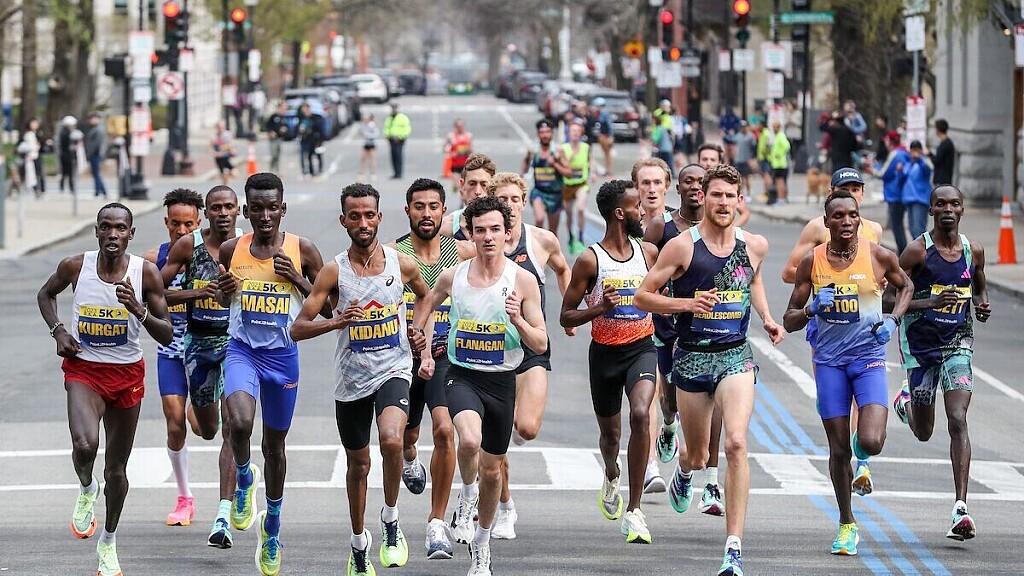
Fast fields featuring Olympians, Paralympians, rising stars, and recent B.A.A. event winners will take center stage at the Boston 5K presented by Point32Health and B.A.A. Invitational Mile on Saturday, April 13. The deepest professional field in race history will include more than 100 accomplished athletes from 19 nations, set to square off for prize money and awards in the open, wheelchair, and Para Athletics Divisions.
“More than 40,000 athletes will take part in B.A.A. races across Boston Marathon weekend,” said Jack Fleming, President and Chief Executive Officer of the B.A.A. “Saturday’s Boston 5K and B.A.A. Invitational Mile fields feature some of the fastest American and international stars, many who are aiming to compete at the Olympics and Paralympics in Paris.”
A new champion will be crowned and the stage is set for another close race at the Boston 5K. Ben Flanagan (Canada), Edwin Kurgat (Kenya), and Alex Masai (Kenya) – all top-five finishers a year ago – will return. They were at the front of an exciting finish a year ago that saw the top 13 men come across the line within ten seconds of the winner.
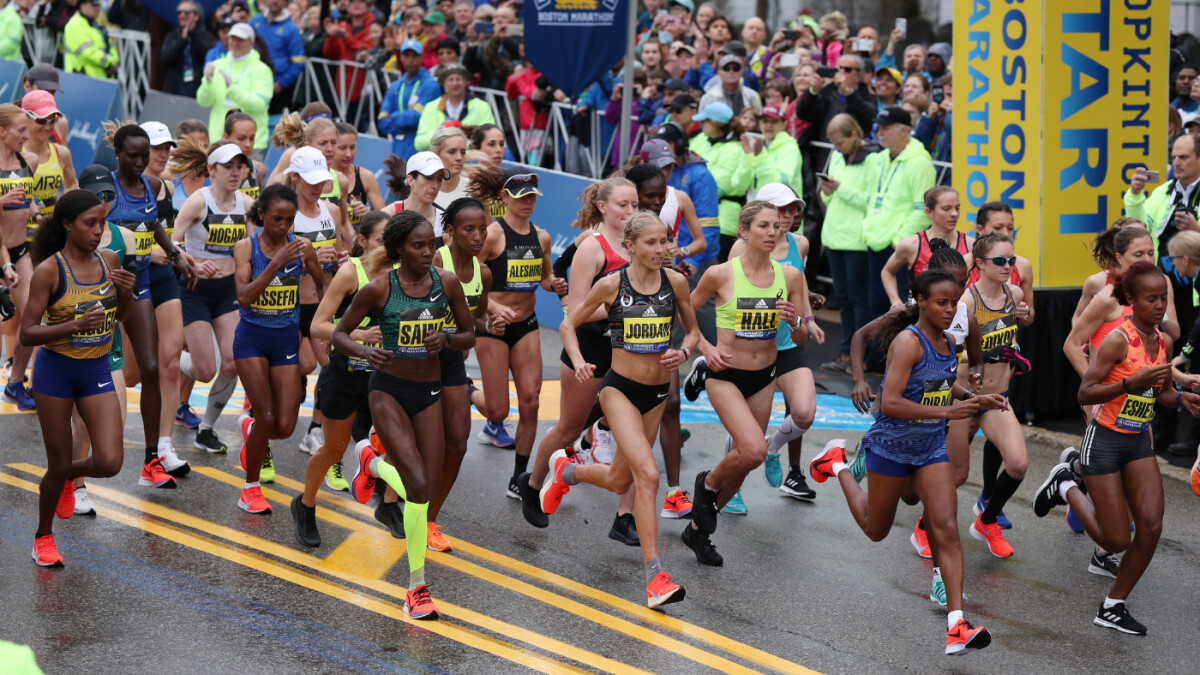
Top Americans Cooper Teare, Zach Panning, and Drew Hunter look to be at the front of the field. Teare is the reigning U.S. club cross country national champion, while Panning led a majority of February’s USA Olympic Team Trials – Marathon and Hunter is a former national champion indoors at 2 miles. B.A.A. High Performance Team members Eric Hamer and Barry Keane will be racing their hometown event.
Also on the start line will be Ben Kigen, an Olympic steeplechase bronze medalist in 2021; Simon Koech, last year’s Diamond League winner in the steeplechase; and Merhawi Mebrahtu, the 5,000m World Junior Championships silver medalist. Ethiopians Getnet Wale and Addisu Yihune are the two fastest men in the field, having gone sub-13:00 on the track for 5,000 meters.

Leading the women’s field is USATF 5K National Champion and B.A.A. High Performance Team member Annie Rodenfels. Joining her are 2024 Team USA Olympic marathoner Dakotah Lindwurm, former American marathon record holder Keira D’Amato, perennial top-American Boston Marathoner Nell Rojas, as well as Team B.A.A. runners Abbey Wheeler, Bethany Hasz Jerde, and Megan Hasz Sailor.
Uganda’s Sarah Chelangat, the Cherry Blossom 10 Mile champion in 2023, and Mercy Chelangat, a former NCAA Cross Country and 10,000m winner, are both entered. Reigning B.A.A. Half Marathon champion Fotyen Tesfay of Ethiopia also comes back to Boston seeking another win.
In the wheelchair division, course record holder and six-time Boston Marathon champion Marcel Hug (Switzerland) will square off against Americans Daniel Romanchuk and Aaron Pike. Brazil’s Vanessa de Souza – the 2018 Boston 5K winner – is the women’s wheelchair division favorite. Perennial Para Athletics Division contenders El Amine Chentouf (T12, vision impairment), Brian Reynolds (T62, lower-limb impairment), and Marko Cheseto (T62, lower-limb impairment) will vie for prize money and podium placings. This will be the largest professional Para Athletics Division field in event history.
Nearly 10,000 participants will take part in the Boston 5K, serving as the first race of the 2024 B.A.A. Distance Medley series.
KRISSY GEAR LOOKS TO REPEAT IN B.A.A. INVITATIONAL MILE
Krissy Gear earned a hard-fought B.A.A. Invitational Mile win last year and now comes in with the target on her back as defending champion. Four of the top five finishers from 2024 return, including Susan Ejore (Kenya), Jazz Shukla (Canada) and Taryn Rawlings (USA). Micaela Degenero, the 2022 NCAA Indoor Mile champion, and 4:23.94 Helen Schlachtenhaufen are entered as well.
Massachusetts high school standout Ellie Shea will take on the professionals. The Belmont High School student-athlete finished 10th at last year’s B.A.A. Invitational Mile.
Massachusetts native and 3:52.94 miler Johnny Gregorek leads the men’s field of competitors. Melkeneh Azize of Ethiopia, the world junior champion at 3000m in 2022, and Harvard’s Vivien Henz, a national champion in Luxembourg, will each make their B.A.A. road racing debuts.
In addition to the professionals, student-athletes from each of the eight cities and towns that make up the Boston Marathon route will compete in a Scholastic Mile and Middle School 1K.
Login to leave a comment

B.A.A. 5K
The B.A.A. 5K began in 2009, and became an instant hit among runners from far and wide. Viewed by many as the “calm before the storm,” the Sunday of Marathon weekend traditionally was for shopping, loading up on carbohydrates at the pasta dinner, and most importantly- resting. But now, runners of shorter distances, and even a few marathoners looking for...
more...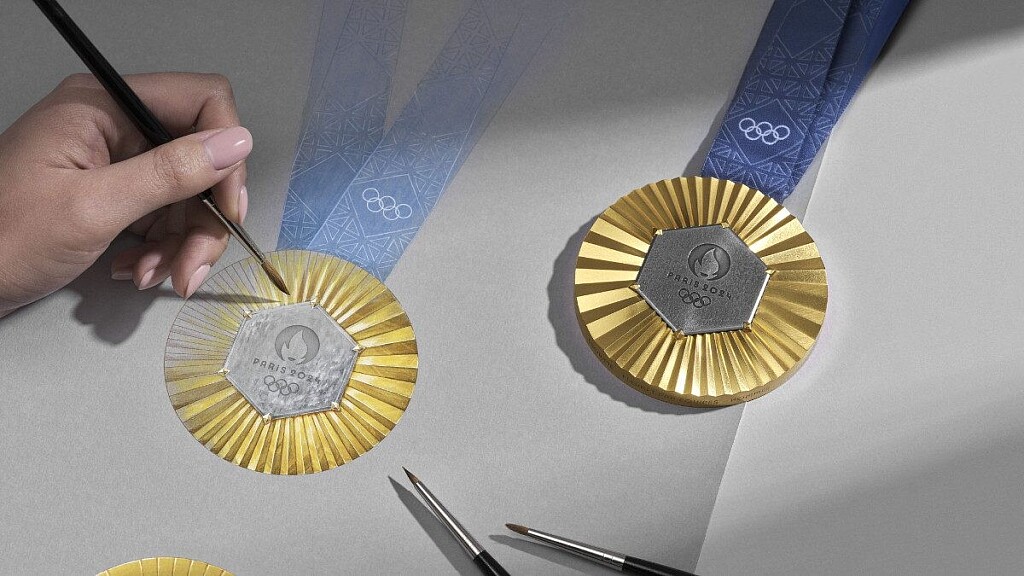
Paris 2024 Olympic medals to feature pieces of the Eiffel Tower
On Thursday, organizers of the Paris 2024 Olympic and Paralympic Games unveiled a unique addition to this year’s Olympic medals: pieces of the iconic Eiffel Tower. Each medal for the Games will incorporate a hexagonal piece of iron taken from the heart of the Eiffel Tower, Paris’s most recognizable monument.
Built for the Exposition Universelle (World’s Fair) in 1889 to celebrate the 100th anniversary of the French Revolution, the tower was designed to showcase France’s industrial prowess and serve as a symbol for the city. Each piece will be a focal point in the center of the medals.

Crafted by the French jeweller, Chaumet, the six-sided piece will be in the medal of all 5,084 gold, silver and bronze medals. “We wanted to offer a piece of the 1889 Eiffel Tower to all the medalists of the Paris Olympic and Paralympic Games,” said Paris 2024 president Tony Estanguet.
You may be asking where did the metal come from? No, it was not cut directly off the Eiffel Tower. According to Inside The Games, the metal was sourced from a metal warehouse in Paris by the company responsible for maintaining the 330-meter landmark. The use of recycled metal is also in line with the trend seen at the Tokyo Olympics, where the metals were made partly from consumer electronics.
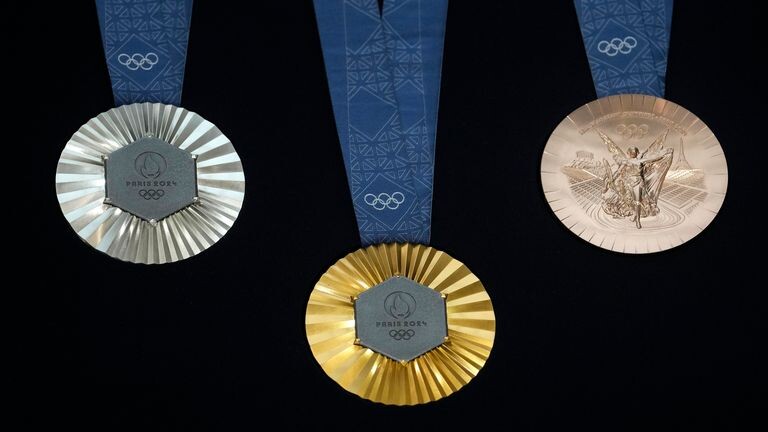
The reverse side of the medals will feature the Greek goddess Nike flying toward the historic Panathinaikos Stadium in Athens, a tradition since 2004. With the approval of the International Olympic Committee (IOC), Paris organizers modified the design to incorporate the Eiffel Tower in the background.
Beyond the medals, the Eiffel Tower will play a central role in the festivities at the Games. From the opening ceremony, where sports teams will sail down the River Seine, to the potential placement of the Olympic flame atop the tower, the iconic landmark will be a focal point throughout the Olympic and Paralympic Games, which run from July 26 to Aug. 11, and the Paralympics, from Aug. 28 to Sept. 8.
by Marley Dickinson
Login to leave a comment

Paris 2024 Olympic Games
For this historic event, the City of Light is thinking big! Visitors will be able to watch events at top sporting venues in Paris and the Paris region, as well as at emblematic monuments in the capital visited by several millions of tourists each year. The promise of exceptional moments to experience in an exceptional setting! A great way to...
more...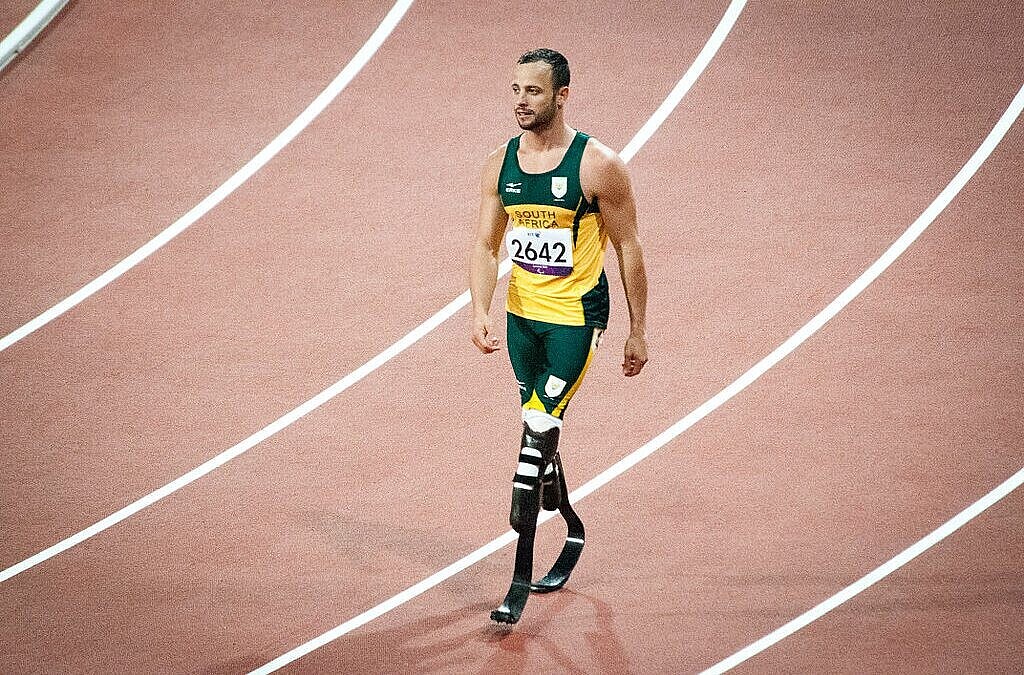
Blade runner Oscar Pistorius released on parole
Eleven years after shooting and killing Reeva Steenkamp through a bathroom door in their home in Pretoria, South Africa home, double-amputee runner and six-time Paralympic gold medallist Oscar Pistorius, 37, was released on parole on Friday.
On Valentine’s Day in 2013, Pistorius, known as the “Blade Runner,” fired numerous shots through a bathroom door in his home, killing Steenkamp, who was inside. The South African athletics star consistently denied intending to kill her, saying he shot her by mistake, believing she was an intruder.

Pistorius was initially convicted of the lesser charge of culpable homicide and sentenced to five years in prison, but after an appeal by prosecutors, he was found guilty of murder in 2016 and the sentence increased by a further six years. In 2017, according to a report in the Globe and Mail, his sentence was more than doubled, after South Africa’s Supreme Court of Appeal decided it was too lenient. In 2021, it was announced he would soon be eligible for parole, having served half his sentence.
South Africa’s Department of Corrections did not give details as to when and how Pistorius would be released, saying “Inmates and parolees are never paraded. Pistorius’ public profile does not make him different from other inmates nor warrant inconsistent treatment,” the Department of Corrections said in a statement Wednesday.
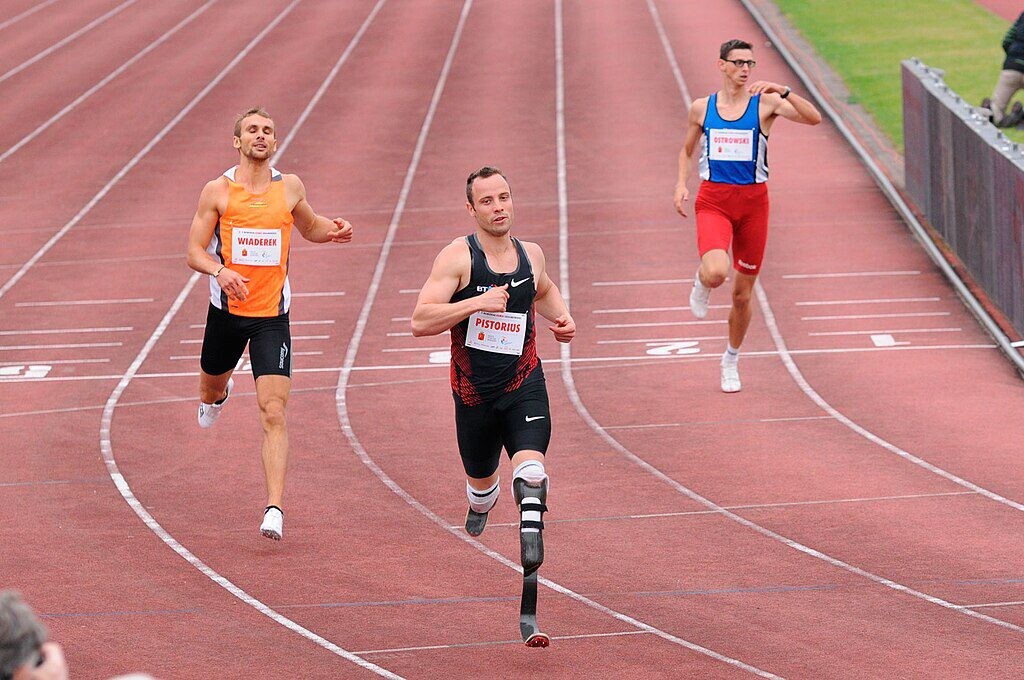
The 37-year-old will be under correctional supervision for the remainder of his murder sentence of 13 years and five months expires in December 2029. Pistorius will also undergo therapy for anger and gender-based violence issues, according to a report.
Pistorius competed in the 2004 Summer Paralympics in Athens, finishing third overall in the T44 100m and winning gold in the 200m; he went on to compete again in 2008, winning gold in the 100m, 200m and 400m. He wanted to compete against able-bodied runners, but the IAAF (now World Athletics) ruled that runners using carbon-fibre prosthetic “blades” had an unfair advantage and could not race against able-bodied athletes. Pistorius fought this ruling and won, and the rule was revoked, clearing the way for him to try to qualify for the 2008 Olympics in Beijing. (Further studies have also concluded that prosthetic blades do not confer an advantage over able-bodied runners.)
by Marley Dickinson
Oscar Pistorius
Login to leave a comment
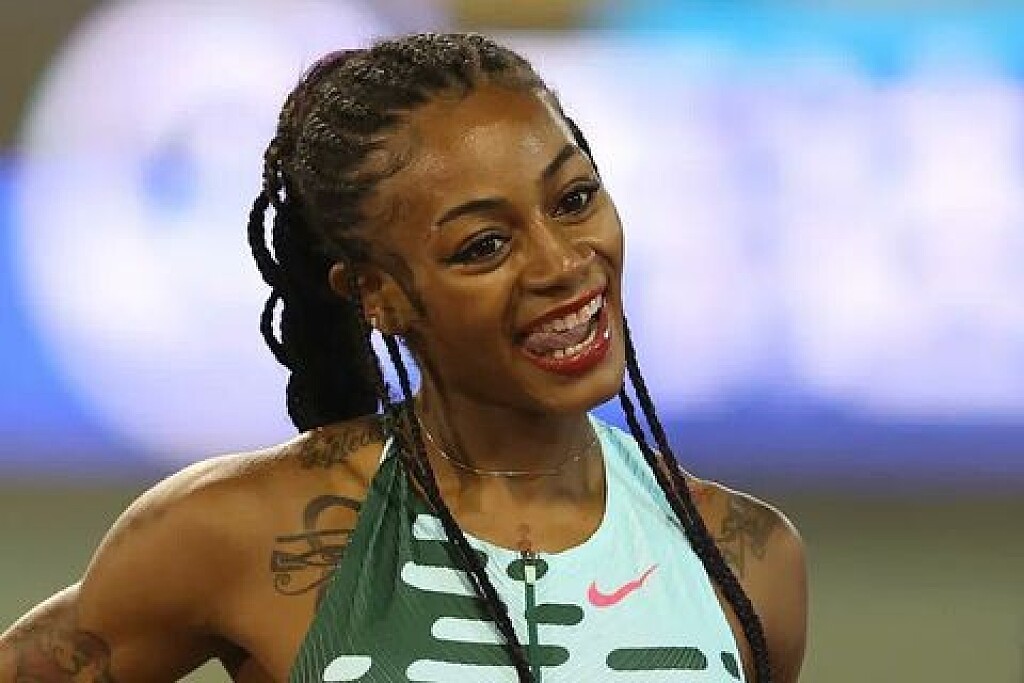
Sha'Carri Richardson shares favorite part of her holidays
Sha'Carri Richardson has shared the favorite parts of her festive season and how she is balancing it with training.
Reigning World 100m champion Sha’Carri Richardson has disclosed how she is spending her festive season and why she loves the holidays.
Richardson expressed her excitement about enjoying the festivities with her family and how she manages to train during the holiday period.

During an interview with NBC Olympics and Paralympics, the 23-year-old said: “For the holidays, I would definitely say it’s family time. I spend all my time with my family. Definitely still training because you know, can’t, I can’t know that.
“But the holidays are literally like thankfulness, giving and just embracing unity. I feel like that’s for me what the holidays are. And this is my only downtime too. That’s why I like the holidays because I can chill right now before the spring comes.”
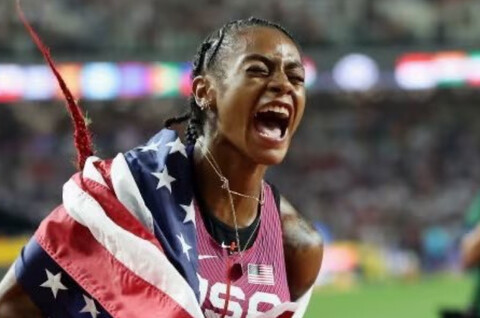
The American had an amazing 2023 season, winning three medals at the World Championships in Budapest, Hungary and ending the season as the fastest woman in the world.
At the Hungarian capital, Richardson won the 100m gold and proceeded to win a bronze medal in the 200m. In the 4x100m relay team, she anchored her team to victory.
After having an awesome 2023 season, the athlete is now preparing for the major events coming up in 2024, with the Paris Olympic Games being at the top of the list.
by Abigael Wuafula
Login to leave a comment
Double amputee Oscar Pistorius granted parole in girlfriend’s murder
Ten years after shooting and killing Reeva Steenkamp through a bathroom door in their home, double amputee runner and six-time Paralympic gold medalist Oscar Pistorius, 37, of South Africa is to be paroled and will be released from prison on Jan. 5, 2024.
On Valentine’s Day in 2013, Pistorius, known as the “Blade Runner,” fired numerous shots through a bathroom door in his home, killing Steenkamp, who was inside. The South African athletics star consistently denied intending to kill her, saying he shot her by mistake, believing she was an intruder.
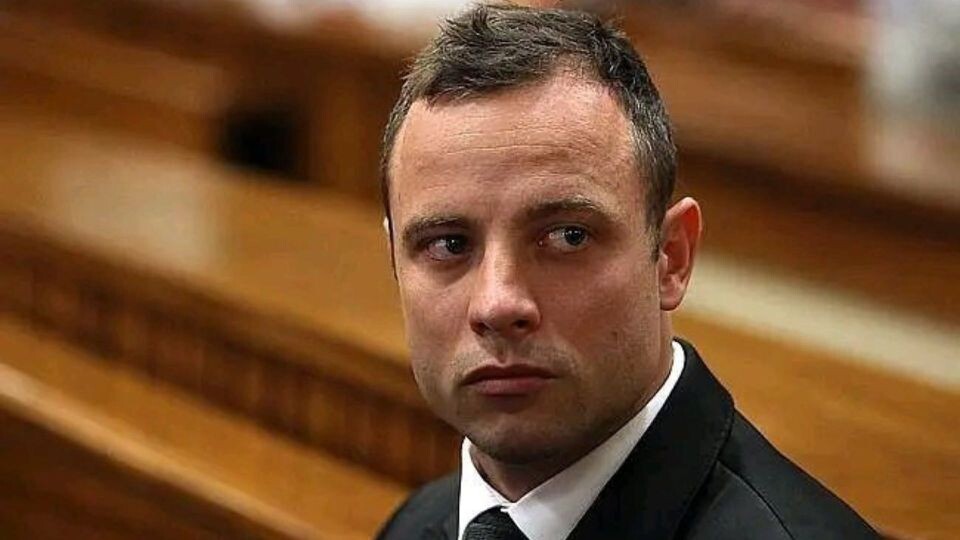
Pistorius was initially convicted of the lesser charge of culpable homicide and sentenced to five years in prison, but after an appeal by prosecutors, he was found guilty of murder in 2016 and the sentence increased by a further six years. In 2017, according to a report in the Globe and Mail, his sentence was more than doubled, after South Africa’s Supreme Court of Appeal decided it was too lenient. In 2021, it was announced he would soon be eligible for parole, having served half his sentence.
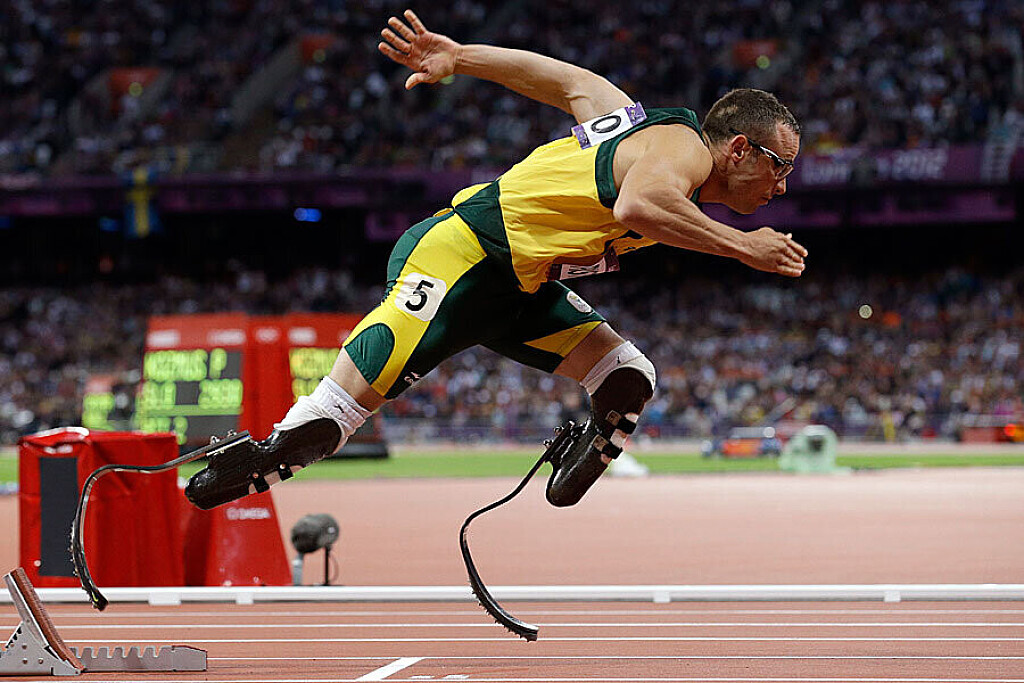
Pistorius competed in the 2004 Summer Paralympics in Athens, finishing third overall in the T44 100m and winning gold in the 200m; he went on to compete again in 2008, winning gold in the 100m, 200m and 400m. He wanted to compete against able-bodied runners, but the IAAF (now World Athletics) ruled that runners using prosethetic blades had an unfair advantage and could not race against able-bodied athletes. Pistorius fought this ruling and won, and the rule was revoked, clearing the way for him to try to qualify for the 2008 Olympics in Beijing. (Further studies have also concluded that prosthetic blades do not confer an advantage over able-bodied runners.)
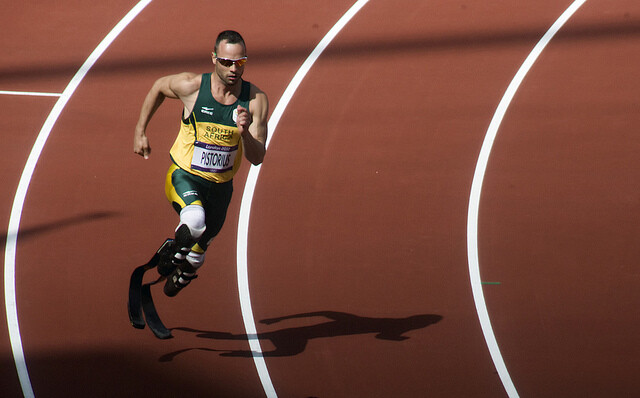
For various reasons, Pistorius did not compete in the Olympics until 2012 in London, where he became the first amputee runner to compete in an Olympic Games. He reached the semi-finals of the 400m, where he finished eighth, and competed in the 4x400m relay, where the South African squad finished eighth out of nine. Pistorius carried the South African flag in the closing ceremonies.
by Anne Francis
Login to leave a comment
Skating police to be rolled out for "zero-crime" Paris 2024 Olympics
The Territorial Contact Brigade Louvre - Paris Centre, the only roller-skating police unit in France, is to be used for the Paris 2024 Olympic and Paralympic Games as part of its security operations.
Its nine skaters are to be mobilised during the Games as part of a "zero-crime Olympics" plan.
Three team members - Gaël, Antoine and Basile - spoke to French publication 20 Minutes, explaining where they usually patrol on their rollerblades.
Usually, their group visit tourist spots such as Notre-Dame, the Louvre, the Hôtel de Ville and Place Vendôme.
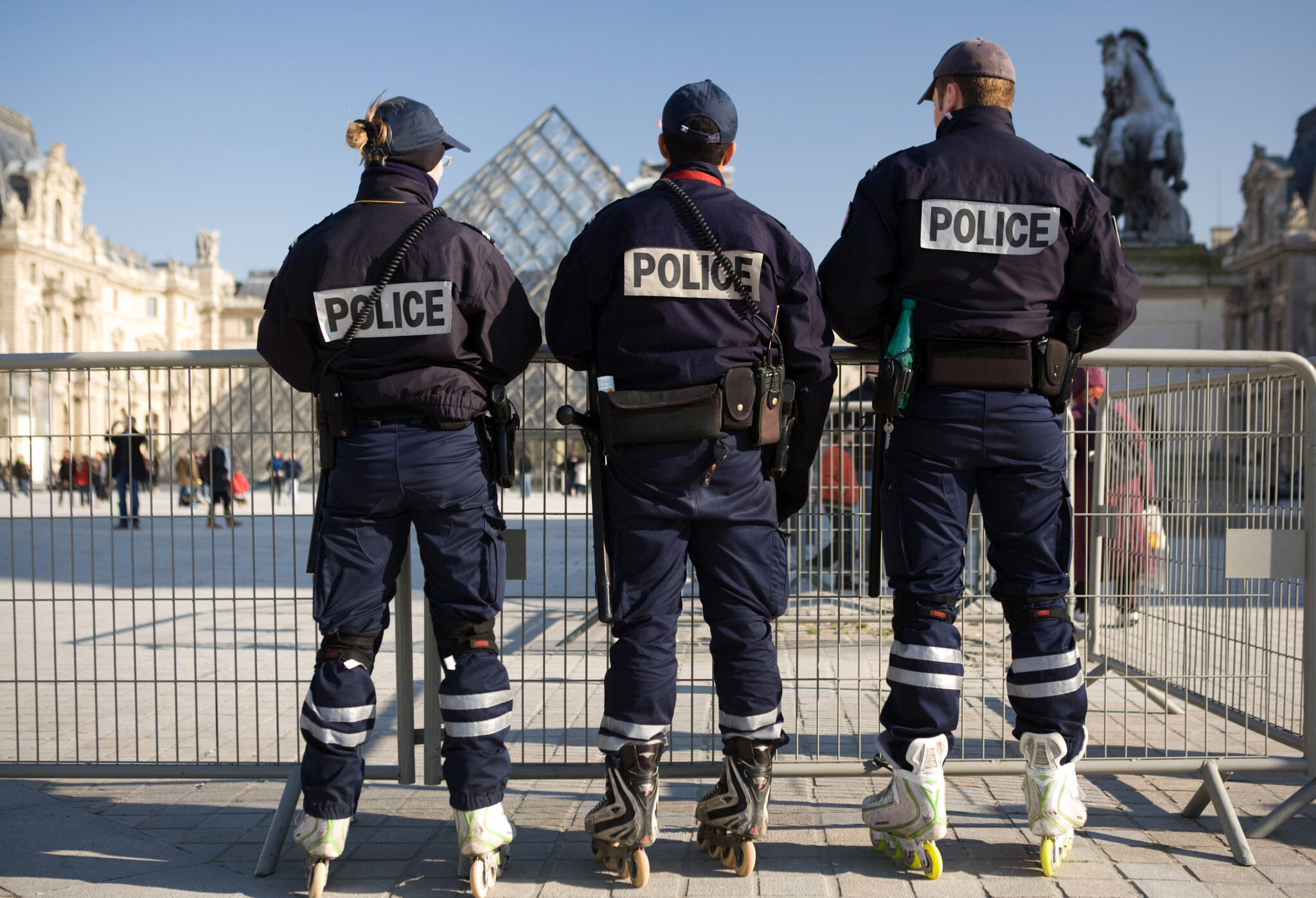
"Most of the time, passersby are curious, rarely disrespectful," said Gaël to 20 Minutes.
Basile and Antoine added that photos with the public are common when on patrol.
"This direct contact with fluid and friendly people is really a plus of our job," added Antoine.
However, during the Games, their role will not change significantly, as explained by their head of the team.
"Their priority mission and the reason for which it was imagined in 2001, is the security of tourist sites and the fight against crime linked to tourist phenomena, namely street vendors, pickpockets and against all scams that can affect tourists, such as hat players, petition scams," said Captain Soulié.
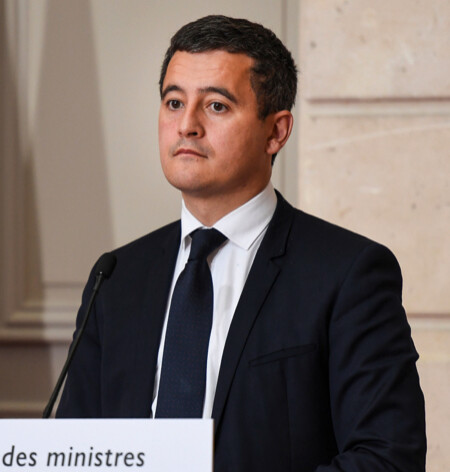
"The goal is to be present in a given sector and to show up to dissuade potential perpetrators of offenses from committing their misdeeds, as well as to reassure the population."n October, French Minister of the Interior, Gérald Darmanin, said the aim was for a "zero-crime Olympics".
Security has been a key talking point in recent months, with festival organisers being concerned of the status of their events due to the extra forces needed for the Games.
Major festivals such as Lollapalooza and Rock en Seine are still hang in the balance.
Approximately 35,000 police officers and gendarmes are expected to be used at the public-focused Opening Ceremony, with the rest of the Games needing around 30,000 on average.
The Paris 2024 Olympic Games are scheduled to take place from July 26 to August 11 next year, followed by the Paralympics from August 28 to September 8.
Login to leave a comment
Paris 2024 Olympic Games
For this historic event, the City of Light is thinking big! Visitors will be able to watch events at top sporting venues in Paris and the Paris region, as well as at emblematic monuments in the capital visited by several millions of tourists each year. The promise of exceptional moments to experience in an exceptional setting! A great way to...
more...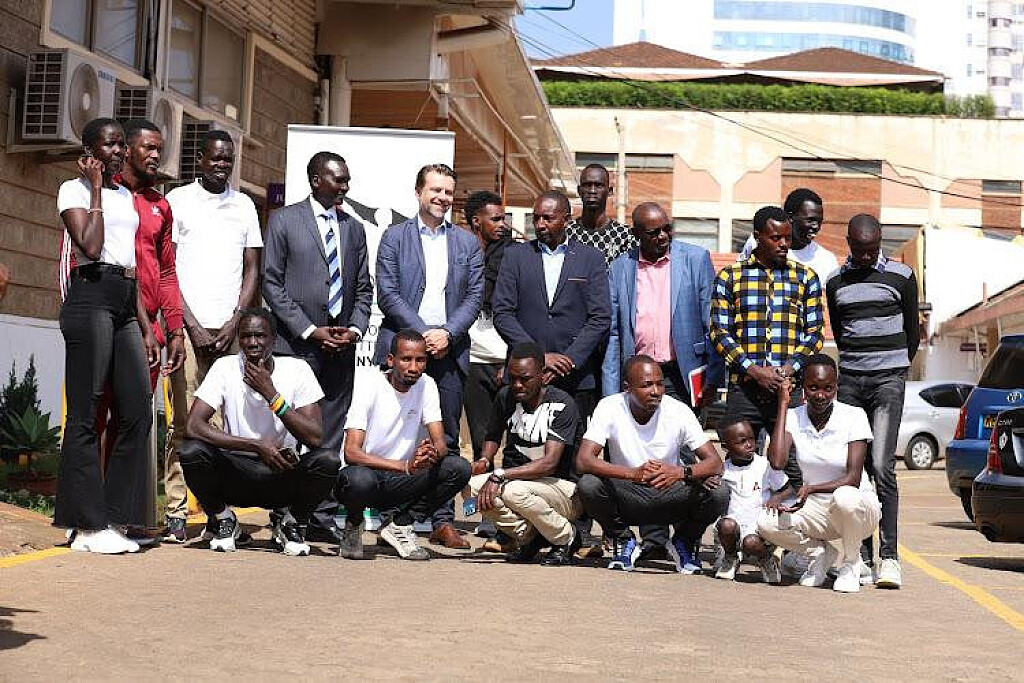
Refugee Olympic Team for Paris 2024 to have base in Kenya
The Refugee Olympic Team (EOR) will have a base in Kenya to prepare for the next year's Olympic Games in Paris, with eight athletes set to train in the North Rift of the country.
The National Olympic Committee of Kenya (NOC-K) has worked with the United Nations High Commission of Refugees and Athletics Kenya to find athletics training bases starting this month, with these visits led by its President Paul Tergat.
Kenya hosted five EOR athletes prior to Rio 2016 - all from South Sudan - with another four coming to the country from the same nation ahead of Tokyo 2020.
During a visit, the NOC head praised the work of Olympian and former women's marathon world-record holder Tegla Loroupe for their work in including refugees into sports programmes, like this one.
"The first batch of the athletes competed during the Rio 2016 Olympic Games and Loroupe was the Chef de Mission of the [EOR] Team," said Tergat, the double Olympic 10,000 metres silver medallist, according to Kenyan publication The Star.
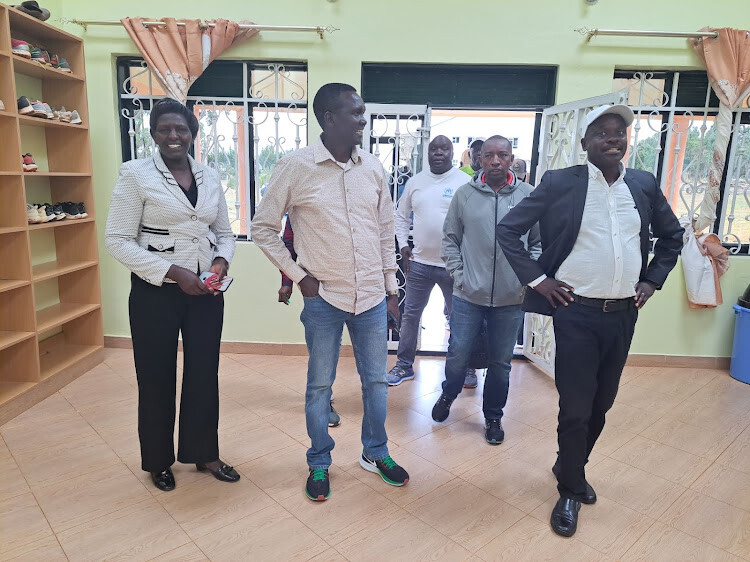
"We are very proud of the work and achievements that Loroupe, through her Foundation, has done in giving opportunities to these athletes."
This time, eight athletes are set to be at the training base.
Anjelina Nadai Lohalith is hoping to compete in her third Olympic Games as part of the EOR team with the South Sudanese athlete ready to race the women's 1500m again.
Dominic Lokolong, also from the country that spent seven years officially in a civil war, is to race the men's 1500m at his first Games.
Kun Waar and Rose Ihisa, competing in the men's and women's 400m respectively and originally from South Sudan, are on the team; as are their compatriots John Lokibe and Josephine Tein in the men's and women's 800m.
Emmanuel Ntagunga of the Democratic Republic of the Congo is to enter the men's 5,000m, while Gasto Nsazumukiza, also from this country, is the only member of the EOR team in Kenya who will not compete in athletics.
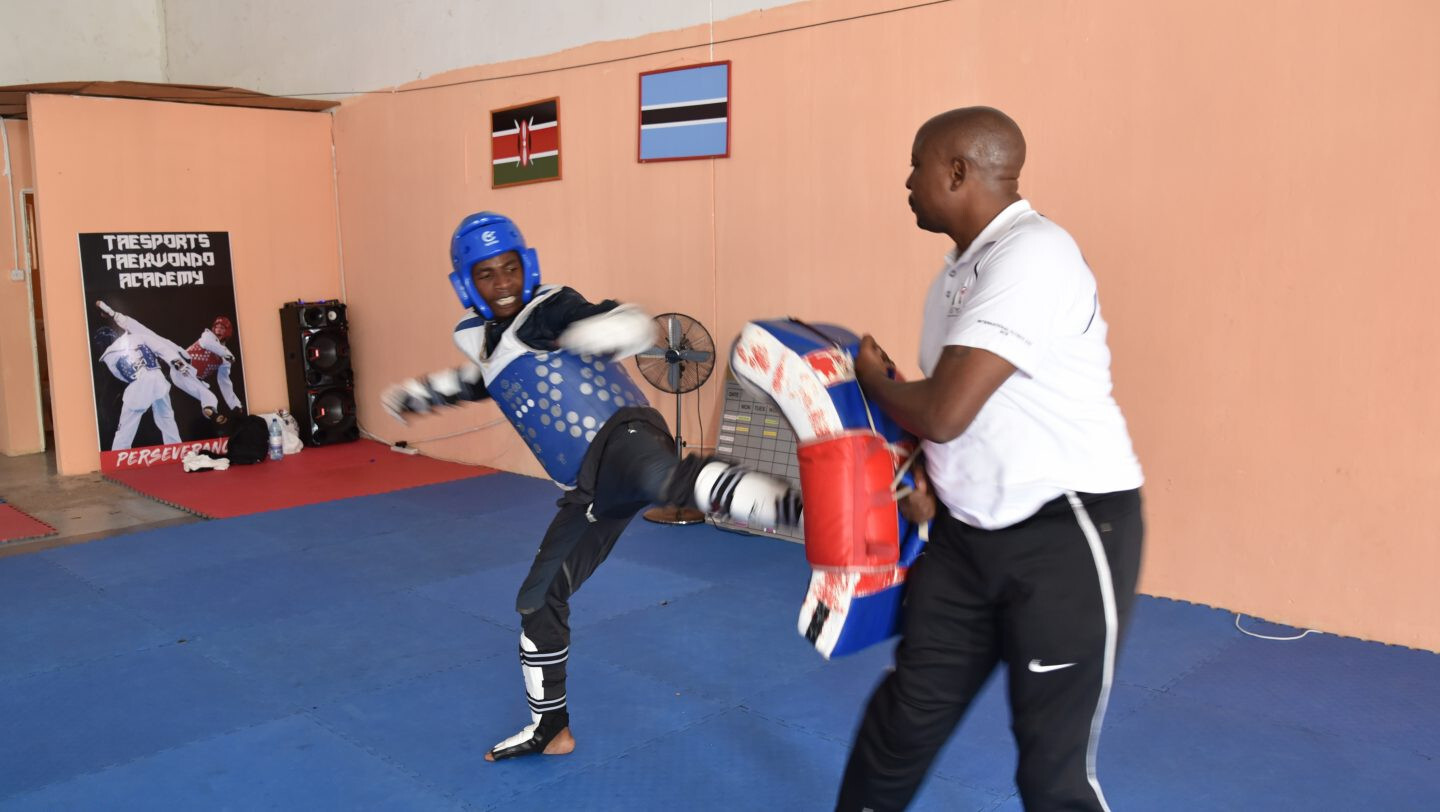
Nsazumukiza is set to compete in taekwondo.
NOC-K secretary general Francis Mutuku promised they would continue working with the refugees throughout the build-up to Paris 2024.
"The Refugee Team will now be working under NOC-K and we want to ensure that we get a good place for their training and produce proper results," said Mutuku.
"These athletes will fly the International Olympic Committee flag.
"We are not just looking at training camps but a good place for them to train.
"We are working hand in hand with Athletics Kenya and UNHCR to ensure that they perform well."
Parties visited the Complete Sports in Kaptagat, Lornah Kiplagat High Altitude Performance Centre in Iten, Kipchoge Keino facility and Ndura Sports Complex in Kitale as part of its training camp inspections.
The Paris 2024 Olympics are scheduled to take place from July 26 to August 11 2024, followed by the Paralympics from August 28 to September 8.
by Michael Houston
Login to leave a comment
Paris 2024 Olympic Games
For this historic event, the City of Light is thinking big! Visitors will be able to watch events at top sporting venues in Paris and the Paris region, as well as at emblematic monuments in the capital visited by several millions of tourists each year. The promise of exceptional moments to experience in an exceptional setting! A great way to...
more...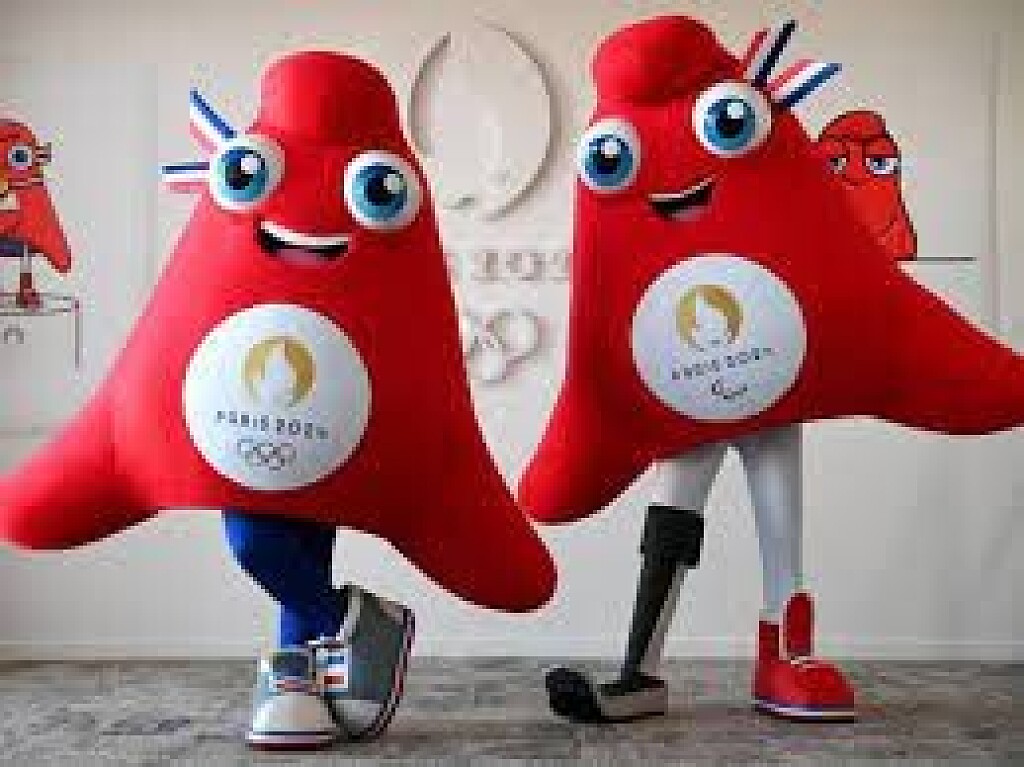
Internet reacts to Paris 2024 Olympic mascots
The Paris 2024 Olympics and Paralympics organizing committee unveiled the new mascots for the 2024 Games, and the Internet is skeptical. It’s difficult to know what they are meant to represent–both mascots display the French colours of blue, white and red, and they are vaguely triangular.
The organizing committee revealed that they are meant to represent Phrygian caps, which originated in Eastern Europe and came to represent the freedom won during the French Revolution, but the Internet has other ideas.
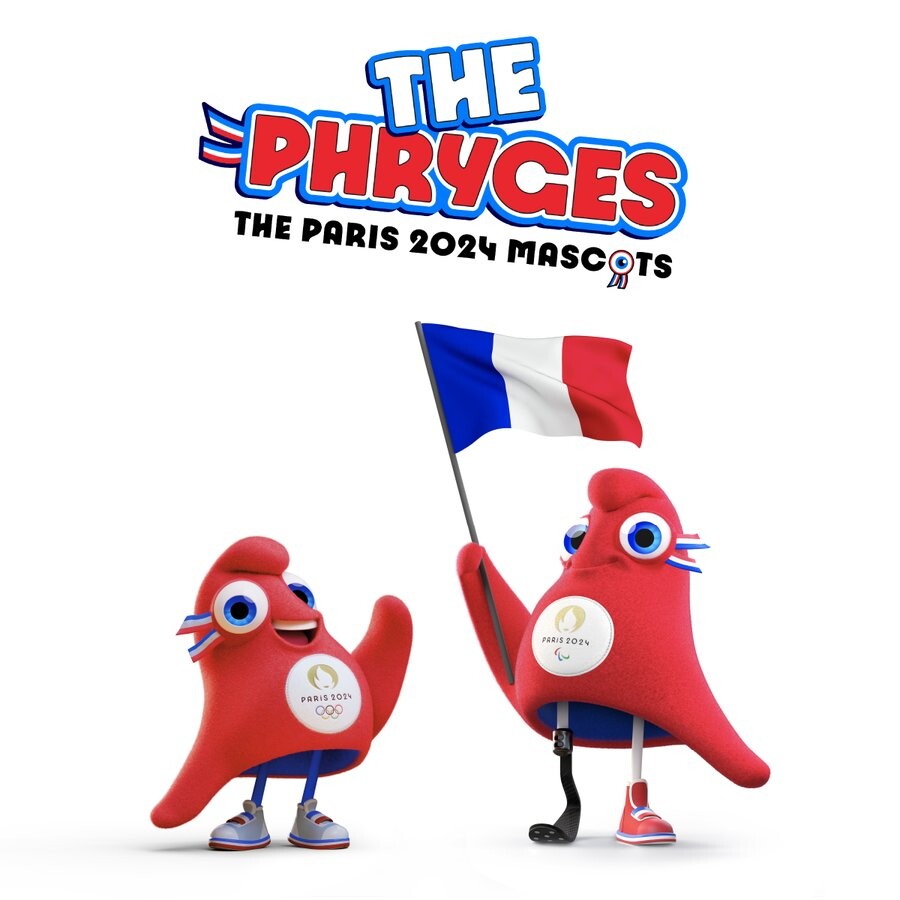
“They look like one of those hats Papa Smurf used to rock,” wrote one Twitter user.
“What’s it supposed to be? A bird with sneakers?” wrote another.
Several others expressed the peculiar triangular-shaped figure looks like a cartoon of a female body part brought to life.
According to the Olympic organizing committee, the mascot, who goes by the nickname Les Phryges, was designed to represent the Phrygian cap, a red bonnet famously worn by Marianne, the personification of freedom and democracy against all forms of oppression during the French Revolution.
This is the third connection the 2024 Games has made to the French Revolution (1789-1799). The route for the Olympic marathon follows the same course as the women’s march on Versailles, which was one of the earliest and most significant events of the French Revolution. The logo for the Paris Olympics also pays tribute to the French Republic, combining three symbols–a gold medal, a flame and Marianne.
Although we are 600 days away from the start of the 2024 Olympics and Paralympic Games, the mascots are already on sale online. The goal of the mascots is to connect with kids, fans and French culture.
by Marley Dickinson
Login to leave a comment
Paris 2024 Olympic Games
For this historic event, the City of Light is thinking big! Visitors will be able to watch events at top sporting venues in Paris and the Paris region, as well as at emblematic monuments in the capital visited by several millions of tourists each year. The promise of exceptional moments to experience in an exceptional setting! A great way to...
more...
Rising inflation has prompted a warning that the budget for the Paris 2024 Olympics and Paralympics is "very tight"
With tomorrow marking two years until the Olympics are due to begin in the French capital, concerns are mounting on preparations from a security and financial point of view.
AFP has reported that the Organising Committee's estimated budget for the Games has risen to €4 billion (£3.4 billion/$4.1 billion), with a source commenting: "Everything is very tight concerning the budget."

According to the unnamed source, the extent of the difficulties are expected to become clearer later this year.
Solideo, the public body charged with overseeing infrastructural projects for Paris 2024, also has a reported budget of €4 billion (£3.4 billion/$4.1 billion).

Inflation in France reached its highest level since 1991 last month, although remains lower than many other European countries.
Consumer prices rose by 5.8 per cent in the 12 months until June.
Tickets for the Games go on sale in December, and one premium partnership slot remains vacant, although it has been reported that there are hopes it could be filled by luxury goods company LVMH.
At the International Olympic Committee Session in Lausanne in May, Paris 2024 President Tony Estanguet conceded that the COVID-19 pandemic and war in Ukraine "caused major breakdowns in production and supply chains", and "generated an inflationary environment which was impossible to anticipate just a few months or weeks ago".
Budgetary issues are expected to be one of the topics examined when French President Emmanuel Macron meets other key Ministers at the Élysée Palace to discuss Paris 2024 today.
A French Presidential official told AFP that the meeting offers an opportunity "to take note of where there are weaknesses".
Concerns over security have escalated since Paris 2024 venue, the Stade de France, held the UEFA Champions League Final in May.
The match was marred by chaotic scenes which led to a delayed kick-off, led to widespread criticism of the French authorities and police, and prompted a warning in a French Senate report earlier this month that the Government and relevant bodies would be required to "draw the necessary lessons".
There are plans for around 600,000 people to watch the Opening Ceremony along the River Seine, but a police source cited in a AFP report warned that it would not be possible to secure the "nearly 7,000 officers" required, with a shortfall in the 24,000 required private security guards another stumbling block.
The Olympics in the French capital are due to run from July 26 until August 11 2024, followed by the Paralympics from August 28 until September 8.
by Patrick Burke
Login to leave a comment
Paris 2024 Olympic Games
For this historic event, the City of Light is thinking big! Visitors will be able to watch events at top sporting venues in Paris and the Paris region, as well as at emblematic monuments in the capital visited by several millions of tourists each year. The promise of exceptional moments to experience in an exceptional setting! A great way to...
more...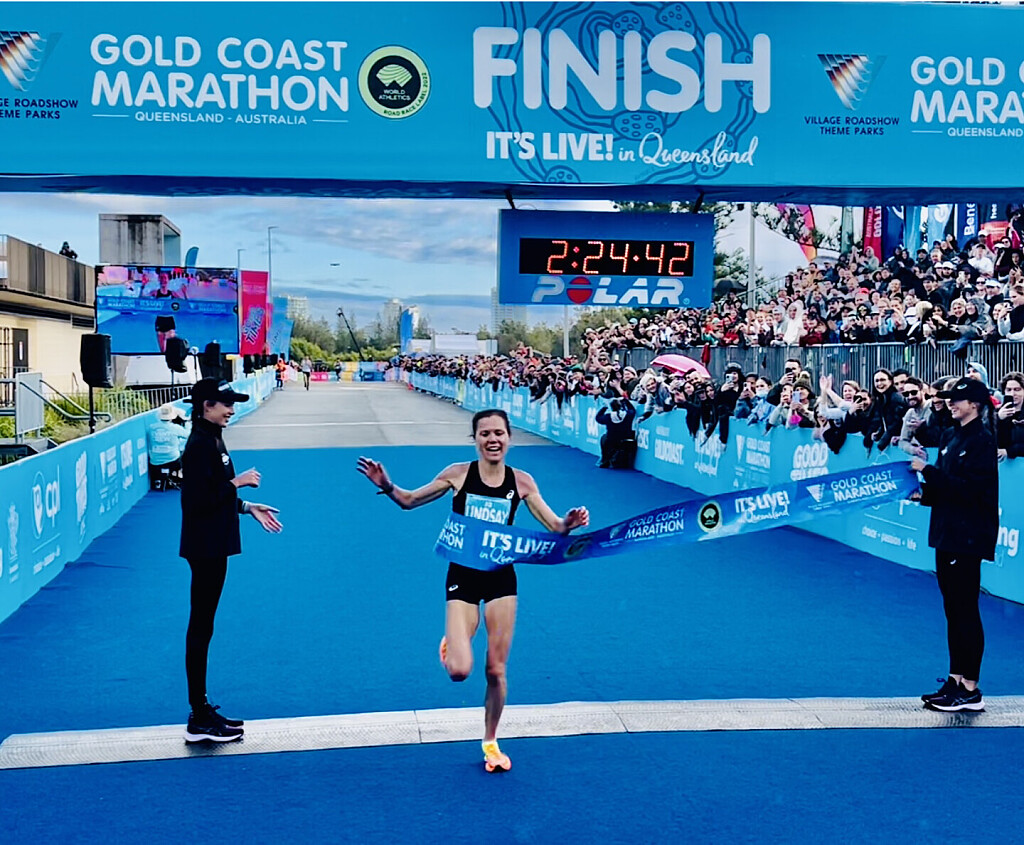
Flanagan Breaks Gold Coast Marathon CR, Fukuda Takes Men's Race
As Australia's Village Roadshow Theme Parks Gold Coast Marathon returned for the first time since 2019, Lindsay Flanagan became its first American winner female or male, taking 6 seconds off the course record and over 2 minutes off her PB to take 1st in 2:24:43. Accompanied by dedicated male pacers and a large group of men in a race that never saw a lead women's group congeal, Flanagan went through halfway in 1:11:59 and then sped up even further, clocking her two fastest 5 km splits of the race, 16:52 and 16:47, from 20 to 25 km and 25 to 30 km. The effects of that came down on her after 30 km as she slowed beyond 3:30/km, but with a rally over the last km she held on to just crack Ruth Chebitok's 2018 CR of 2:24:49.
Post-race Flanagan and her coach, Australian NR and Oceania AR holder Benita Johnson, were elated, having just met each other in person a few days before the race after a year of online coaching.
Like Flanagan, 2nd-placer and local favorite Lisa Weightman, the CR holder in Gold Coast's 10 km and half marathon divisions, ran the entire way with only male accompaniment, splitting halfway in 1:12:36 and coming home in 2:25:55, the best-ever by an Australian woman at Gold Coast and the 2nd-best time of her career. 3rd-placer Shiho Kaneshigestarted more conservatively with a 1:14:00 first half, passing American Stephanie Bruce just before 20 km and staying on track to break her 2:28:51 PB until late in the race when she faded to 2:29:12, also a career 2nd-best and her first time sub-2:30 outside Japan.
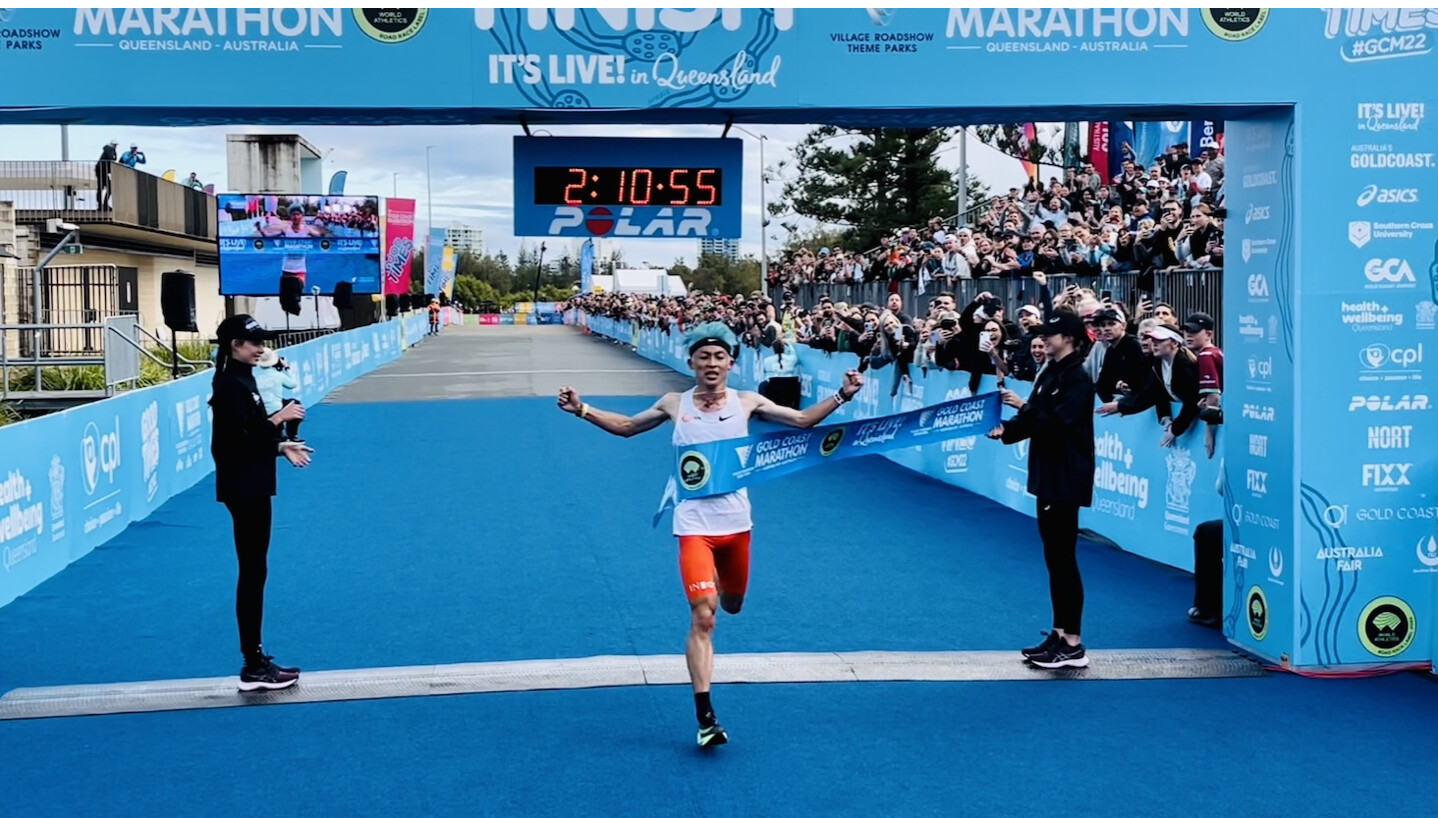
While the top women all ran separately, a lead group of 4 men shook out by 5 km, with Australian Liam Adams pacing Japan's Jo Fukuda and Akihiro Kaneko, Belgian Amaury Paquet and fellow Aussie Samuel Gebremichael on track to just break 2:10. When Adams dropped off before 20 km Fukuda took over, he and Kaneko quickly dropping the other two and pulling away. Fukuda, whose 2:09:52 best was set on the Gold Coast in 2018, disposed of Kaneko just past 25 km and ran the rest of the way alone, making good on his race logo-themed hair dye job with his first-ever marathon win in 2:10:55. In contrast to the fast women's race, it was the slowest men's winning time since 2010. Kaneko was 2nd in 2:14:25, Paquet taking 3rd in 2:15:45.
Tokyo Paralympics gold medalist Madison de Rozario fought off Paralympic teammate Christie Dawes to win the women's wheelchair division, her time of 1:46:58 good enough for 3rd overall. The only men to beat her were Jake Lappin, 1st by a wide margin in 1:37:32 and Luke Bailey, just hanging on to 2nd overall in 1:46:01.
Login to leave a comment

Gold Coast Airport Marathon
The Gold Coast Airport Marathon is held annually in one of the most popular holiday destinations in the world. It is Australia’s premier road race and was the first marathon in the country to hold an International Association of Athletics Federations (IAAF) Road Race Gold Label. The event is held on the first weekend of July and attracts more than...
more...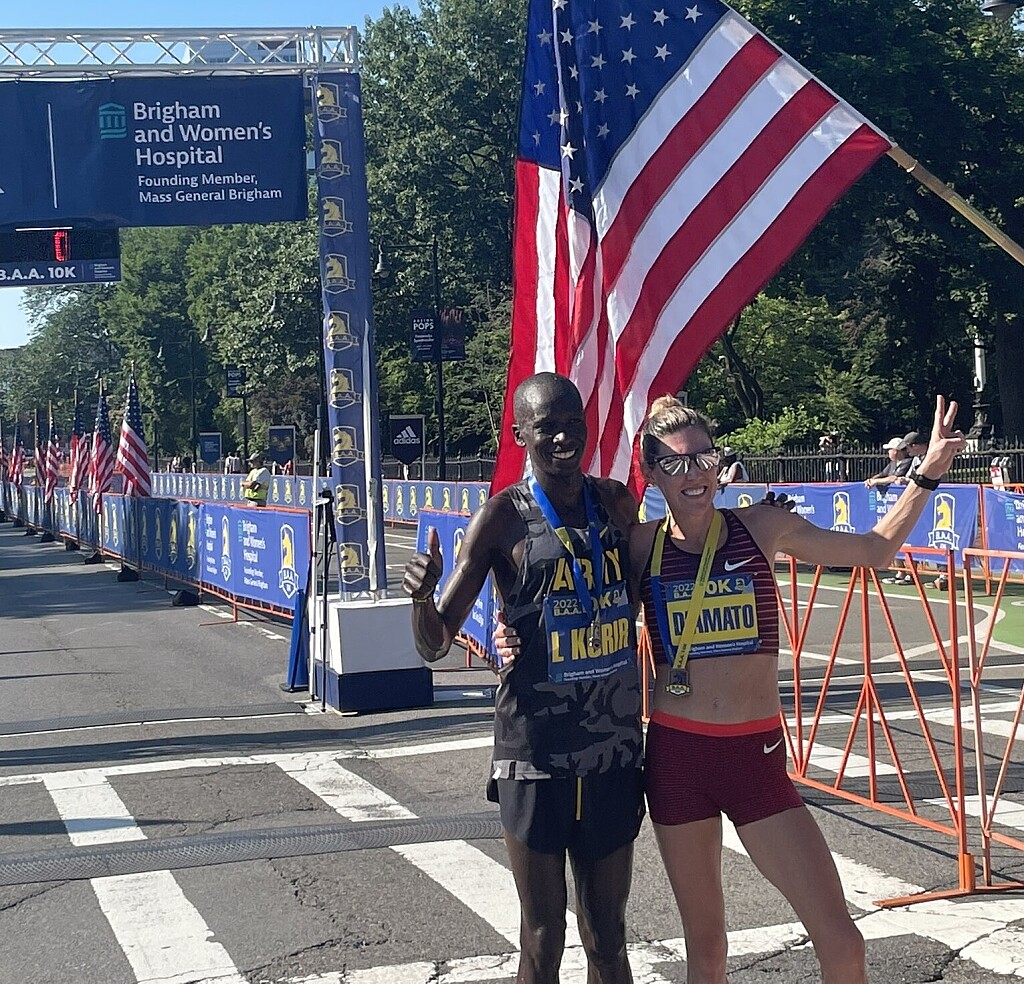
Americans Leonard Korir and Keira D’Amato Sweep Titles at 2022 B.A.A. 10K
It was an American sweep at the 2022 B.A.A. 10K presented by Brigham and Women’s Hospital, with Leonard Korir (28:00) and Keira D’Amato (31:17) winning the professional open divisions and Susannah Scaroni and Hermin Garic capturing the wheelchair crowns. The pace was as hot as the weather, with the wily veteran Korir setting a personal best and Scaroni shattering the wheelchair world record for the distance.
“It feels really nice!” said Scaroni, who won a gold medal at 5,000 meters in the 2020 Paralympics but two weeks later was struck by a car while training. “It’s always great to be at a race where they’re trying to make it world-record eligible.” Scaroni broke the tape in 21:56, shattering Tatyana McFadden’s previous mark of 23:34.
As pleased as she was with the record, Scaroni was also excited to win the race outright. Asked if she had ever been the first wheelchair athlete, man or woman, across the line, she beamed. “Oh no, never! I didn’t expect that at all.”
Winning the men’s wheelchair race was Boston Marathon veteran Hermin Garic, in 22:07. “It feels awesome, coming back to Boston.”
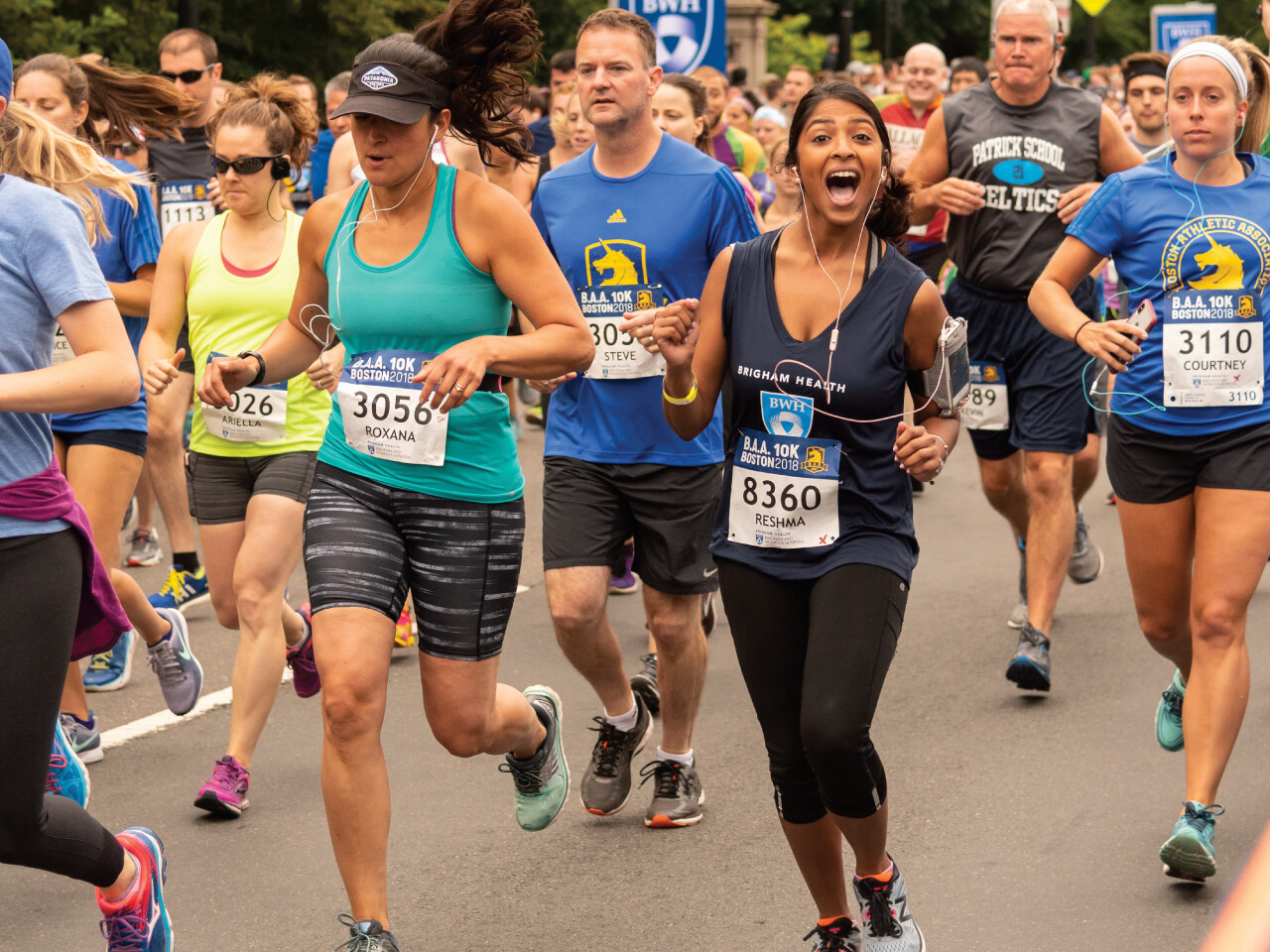
In the men’s open division, a pack of 17, led by Bravin Kiptoo, went through the first mile in a scorching 4:21.
“When I saw the first people were so fast, I knew they were going to pay,” said Korir, a 2016 Olympian who has already won national titles this year at the half marathon and 25K. “It was like suicide. I said, ‘let me just hang in there and strike when the time comes.’”
The men ran the second mile in 4:24, but had slowed to 4:37 by the fifth. By that time, it was Kennedy Kimutai and Korir running neck-and-neck. “With a mile to go, I realized I was feeling so strong. I said, ‘let me just go now.’”
He would surge ahead to win in 28:00, nine seconds faster than the personal best he set on this course in 2014. Kimutai would finish second in 28:07, with Philemon Kiplimo third in 28:09. American Ben True was fourth in the same time; Ben Flanagan, fifth in 28:11, set a Canadian 10K record and also set a national mark through 8K in 22:30.
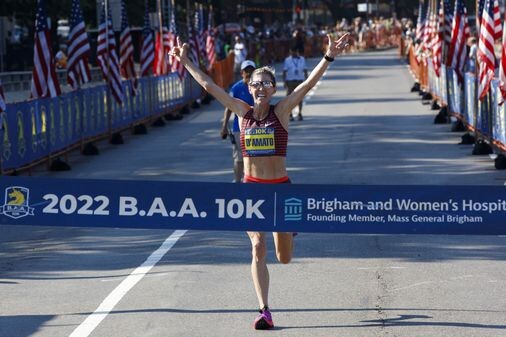
In the women’s race, D’Amato said that her goal was to race aggressively and go after the pace. Mission accomplished: A pack hit mile 1 in 5:05, but by mile 3 (reached in 15:08) she and Kenya’s Sharon Lokedi were gapping the field. As they battled, they ran mile 4 in 4:29, 30 seconds ahead of their chasers.
“We were battling it out,” said D’Amato, who in January broke the American record for the marathon when she ran 2:19:12 in Houston. “That was a fierce duel. With 1200 [meters] to go, she was breathing really hard and I just went by her.” Lokedi succumbed to the heat and humidity on Charles Street roughly 200 meters from the line and would not finish.
American Emily Sisson finished as runner-up in 32:03, with the 42-year-old Edna Kiplagat, the 2017 Boston Marathon champion, third in 32:09.
Claiming the inaugural B.A.A. 10K Para Athletics Divisions were Adrianne Haslet (1:15:19) and Marko Cheseto Lemtukei (35:44) for T61-T64 (lower limb impairment) classification and Erich Manser (50:49) and Jennifer Herring (45:41) in the T11-T15 (vision impairment) classification. Haslet earned the title on her birthday, and was exuberant at the opportunity to win on the road of Boston.
“To not just be invited to run a race, but invited to compete means that we’re being included among some of the world’s best runners with the world-class B.A.A. as hosts. It can’t get much better than that,” said Haslet.
Approximately 5,146 participants crossed the finish line of today’s B.A.A. 10K. Brigham and Women's Hospital, the B.A.A. 10K’s presenting sponsor and exclusive fundraising partner, fielded a team of more than 350 fundraising runners. Since 2016, more than 2,100 runners and 180 teams have raised $1.2 million to fuel life-giving breakthroughs at Brigham and Women’s Hospital through the B.A.A. 10K.
The third and final event of the 2022 B.A.A. Distance Medley will be the B.A.A. Half Marathon presented by Dana-Farber Cancer Institute and the Jimmy Fun on Sunday, November 13. Registration is currently open within the B.A.A.’s online platform, Athletes’ Village.
Login to leave a comment

B.A.A. 10K
The 6.2-mile course is a scenic tour through Boston's Back Bay. Notable neighborhoods and attractions include the legendary Bull and Finch Pub, after which the television series "Cheers" was developed, the campus of Boston University, and trendy Kenmore Square. ...
more...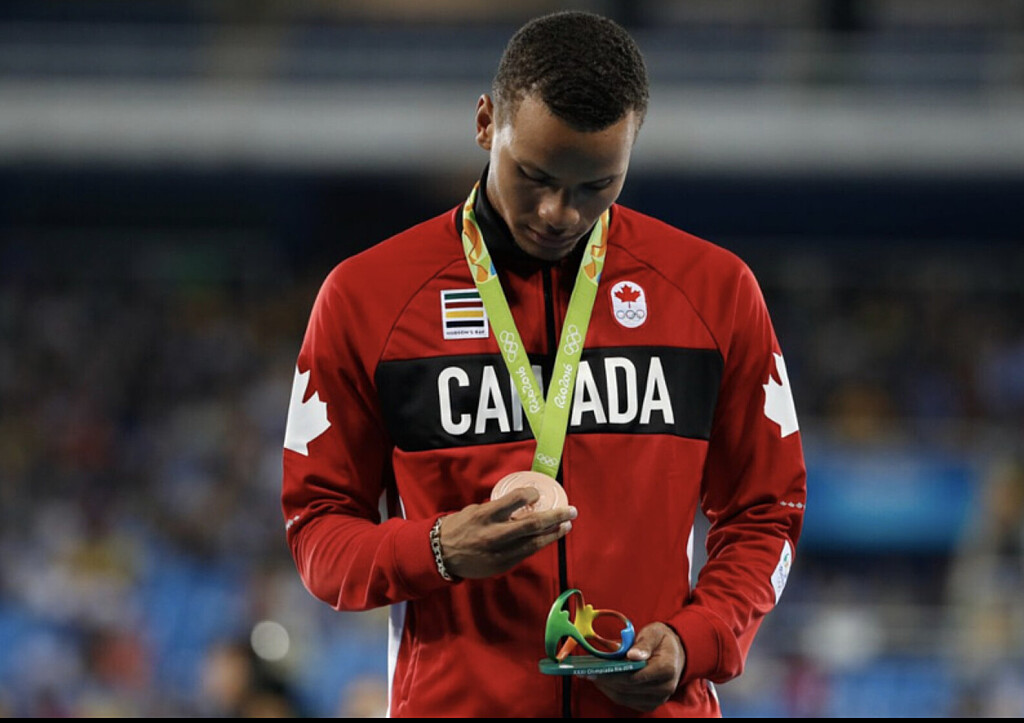
Canadian entrepreneur donates $1.2 million toward Olympic and Paralympic medallists
The Canadian Olympic Foundation and the Paralympic Foundation of Canada announced on March 30 that Canadian tech entrepreneur Sanjay Malaviya has made a $1.2 million donation to directly support Team Canada’s Tokyo 2020 and Beijing 2022 medallists.
This is the first time a large gift of this magnitude has been given directly to Olympic and Paralympic medallists through the Canadian Olympic Foundation. Each athlete who won a medal in Tokyo or Beijing will receive a $5,000 grant per medal earned. Another $100,000 will go directly to the NextGen program, which helps support future Canadian Olympians and Paralympians.
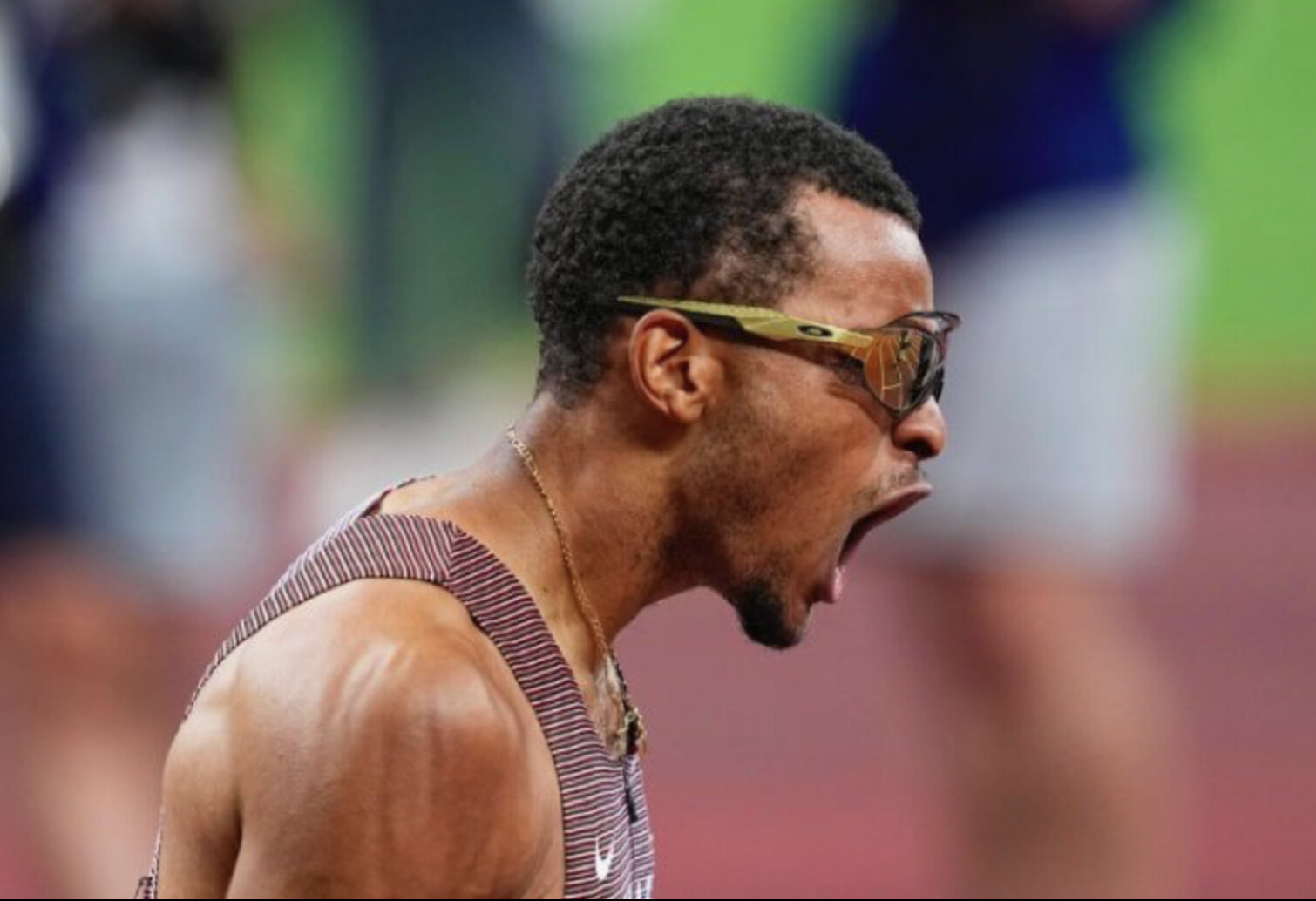
In a press release from the Canadian Olympic Committee, Malaviya said, “Our Olympic and Paralympic athletes have inspired this country and united us during a very difficult time. It’s an honour to be able to celebrate their achievements and help them invest in their future.”
There were 50 medals won by Canadian athletes at the Tokyo and Beijing Olympics and 47 medals at both Paralympics. One hundred and thirty Olympians and 53 Paralympians will receive the $5,000 grant through this donation. The high number is due to the number of rostered athletes on the women’s hockey and soccer teams, which both won gold at the Tokyo Games.
Canada’s Andre De Grasse will be one of the top-earning athletes from this donation, winning three medals in the 100m, 200m and 4x100m relay at the Tokyo Olympics.
“The gift Malaviya has made is truly remarkable, especially following the challenges Canadian athletes had to face over the past few years,” said Jacquie Ryan, Chief Brand and Commercial Officer of the Canadian Olympic Committee and CEO of the Canadian Olympic Foundation.
Malaviya is a Canadian healthcare technology entrepreneur who has developed advanced IT products that have helped more than 2,000 health organizations around the world. His passion for sport comes from his appreciation of the lessons that athletes can carry from sport to all other aspects of life. “Team Canada athletes have demonstrated that can handle anything over the past two years,” says Malaviya. “The past two games have been a source of inspiration for all Canadians to share Olympic and Paralympic values.
This gift will play a pivotal role in empowering Canada’s top Olympic athletes as they begin to prepare for the podium in Paris 2024 and Milan-Cortina 2026.
by Running magazine
Login to leave a comment
B.A.A. Unveils Honorary Women’s Team for 126th Boston Marathon
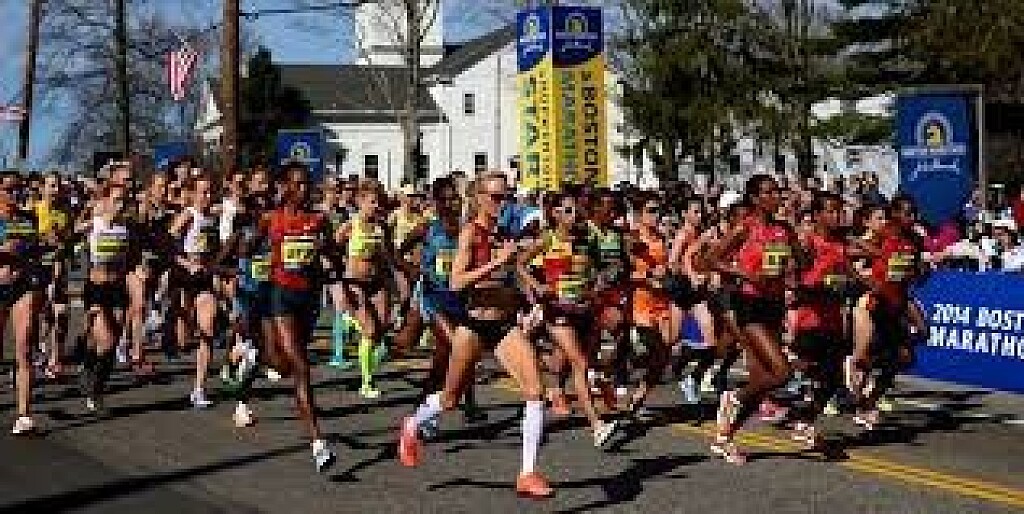
On the occasion of International Women’s Day, the Boston Athletic Association (B.A.A.) today announced a team of eight women who will participate in April’s 126th Boston Marathon, running in honor of the original eight finishers from the first official women’s field in 1972.
The honorary team is comprised of eight women who have made a powerful impact in areas from athletics to human rights. Among the eight women is Valerie Rogosheske, one of the original eight finishers in 1972, who returns 50 years later to once again cross the finish line on Boylston Street.
“I am so looking forward to returning to Boston this year with my daughters to celebrate 50 years of women being welcomed into the Marathon,” said Rogosheske. “In 1972, the students at Wellesley yelled ‘Right on, sista!’ On the 25th anniversary the students looked like my daughters, and this year they could be my granddaughters! I celebrate the progress through the generations as women claim their places on the start line.”
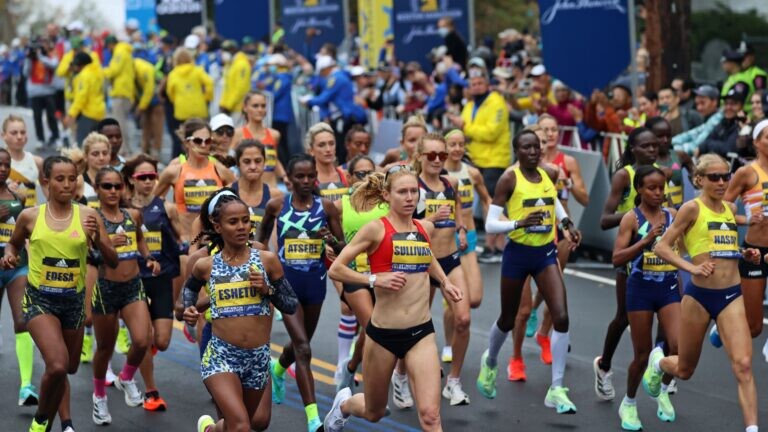
Joining Valerie on the Honorary Team are Mary Ngugi, Manuela Schär, and Melissa Stockwell, each of whom will be competing at the front of the race as part of the John Hancock Professional Athlete Team. Football and soccer star Sarah Fuller, U.S. national women’s soccer team alum Kristine Lilly, Guinness world record holder Jocelyn Rivas, and running activist Verna Volker round out the Honorary Team set for this year’s race.
Information on each of the Honorary Team members can be found below. The Honorary Team will be celebrated throughout race weekend at various Boston Marathon events and activities.
BOSTON MARATHON HONORARY WOMEN’S TEAM
Valerie Rogosheske is one of the original eight finishers from 1972. Valerie is from Minnesota and placed in the top ten at the Boston Marathon three times, taking sixth in 1972 (4:29:32), ninth in 1973 (3:51:12), and eighth in 1974 (3:09:38). This year, instead of lining up among eight female entrants, she’ll be supported and surrounded by 14,000 other women set to complete the 26.2 mile course, including her daughters Abigail and Allie.
Beyond being a world-class athlete, Mary Ngugi has been a vocal leader in spreading awareness against domestic violence. Following the death of professional athlete Agnes Tirop last year, Mary helped found the Women’s Athletic Alliance and led countless discussions —including with political leaders— to continue the fight against domestic abuse and inequalities. Mary placed third at last year’s Boston Marathon, and is a previous B.A.A. Distance Medley winner.
Manuela Schär is one of the most dominant wheelchair racers in recent history, having won three Boston Marathon titles and the last three Abbott World Marathon Majors series crowns. At the Tokyo Paralympics, Schär earned five medals (including a pair of golds) in distances from the 400 meters to marathon. She’s the current marathon world record and Boston course record holder (1:28:17), and remains the only women’s wheelchair athlete ever to break the 1:30 barrier.
One month after being deployed to Iraq as a Second Lieutenant in the United States Army’s transportation corps, Melissa Stockwell became the first female American soldier to lose a limb in active combat after her vehicle was hit by a roadside bomb. Melissa was later honored with a Purple Heart and a Bronze Star for her service. Four years later, she became the first Iraq War veteran to qualify for the Paralympic Games, competing in swimming at the 2008 Beijing Paralympics. Melissa competed in Paratriathlon at both the Rio de Janeiro and Tokyo Paralympics, and is a Paralympic bronze medalist. She’ll take to the Boston Marathon’s Para Athletics Division (T63) for the first time, looking to add another title to her impressive resume.
Sarah Fuller has been a fierce athlete since the age of five, when she first started playing soccer. She made history in 2020 as the first woman to suit up for a SEC football game as a student-athlete while at Vanderbilt University. Two weeks later, she made history again as the first woman to play in and score in a Power 5 football game, notching a pair of extra points for the Commodores. She studied Medicine, Health, and Society at Vanderbilt, and is currently pursuing her Masters at the University of North Texas where she is also a goalkeeper for the soccer team. This summer she’ll play for Minnesota Aurora FC of the USL W League. This will be Fuller’s first Boston Marathon.
Kristine Lilly played 23 years for the U.S. Women’s National Soccer Team, is a two-time World Cup Champion, two-time Olympic Gold Medalist, and has played more international soccer games than any other player –man or woman—in the world (354). Lilly played professionally in the Boston area for the Boston Breakers from 2001-2003 and 2009-2010. She is one of the most celebrated athletes in women’s soccer history, and was inducted into the U.S. Olympic Hall of Fame in 2012 and U.S. Soccer Hall of Fame in 2014. She is also the co-author of Powerhouse, a book about teamwork. A resident of Massachusetts, Lilly will take on her second Boston Marathon having run ten years ago in 2012.
Jocelyn Rivas is a proud Dreamer (DACA recipient) who came to the United States from El Salvador when she was six years old. In El Salvador, she was told she would most likely not be able to walk, but with physical therapy and a continued focus on recovery, she has proven that prediction wrong. She was inspired to run after watching friends in the 2013 Los Angeles Marathon, and soon made it her goal to finish 100 marathons. In November 2021, she completed her 100th marathon at the age of 24, making her the Guinness World Record holder for the youngest woman to run 100 marathons and the world record holder for youngest Latina to ever do so. Boston will be her 112th marathon.
Verna Volker is the founder of Native Women Running, whose mission is to build and nurture a community that features and encourages Native women runners on and off the reservation. A mother of four, member of the Navajo Nation, and brand ambassador, she balances family, running, and community activism. Verna created Native Women Running to bring more visibility to Native women runners across North America. She is part of the leadership team for the Running Industry Diversity Coalition, which focuses on improving inclusion, visibility, and access for Black, Indigenous, and people of color within the sport. Verna is running on behalf of Wings of America.
Login to leave a comment

Boston Marathon
Among the nation’s oldest athletic clubs, the B.A.A. was established in 1887, and, in 1896, more than half of the U.S. Olympic Team at the first modern games was composed of B.A.A. club members. The Olympic Games provided the inspiration for the first Boston Marathon, which culminated the B.A.A. Games on April 19, 1897. John J. McDermott emerged from a...
more...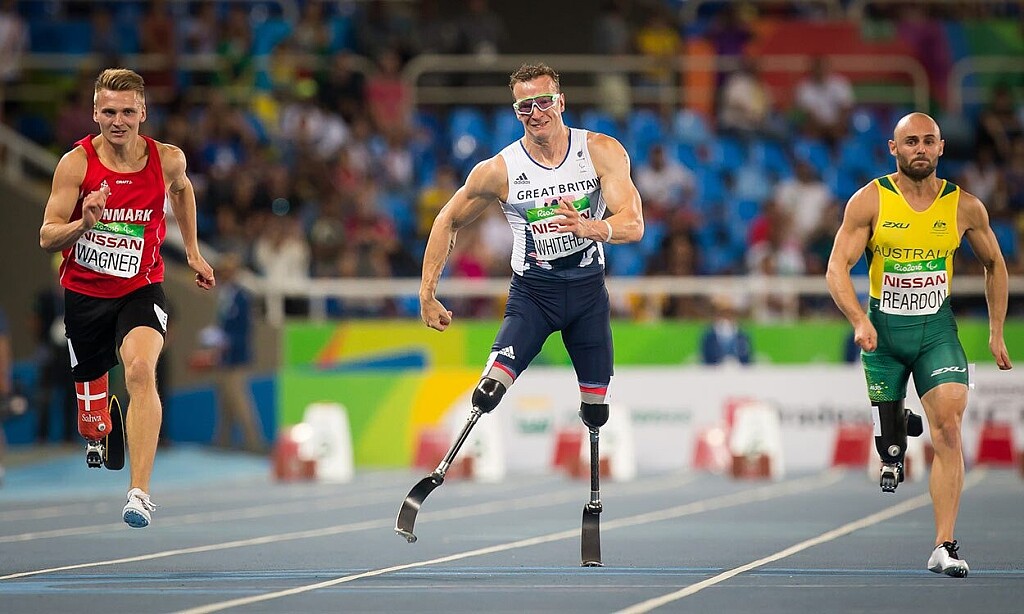
World Para Athletics Championships in Japan postponed until 2024
A year after the Paralympics were held in Tokyo, this summer’s World Para Athletics Championships in Kobe have been pushed back again
The World Para Athletics Championships, which were meant to take place between August 26 – September 4 in Kobe, Japan, have been postponed until 2024.
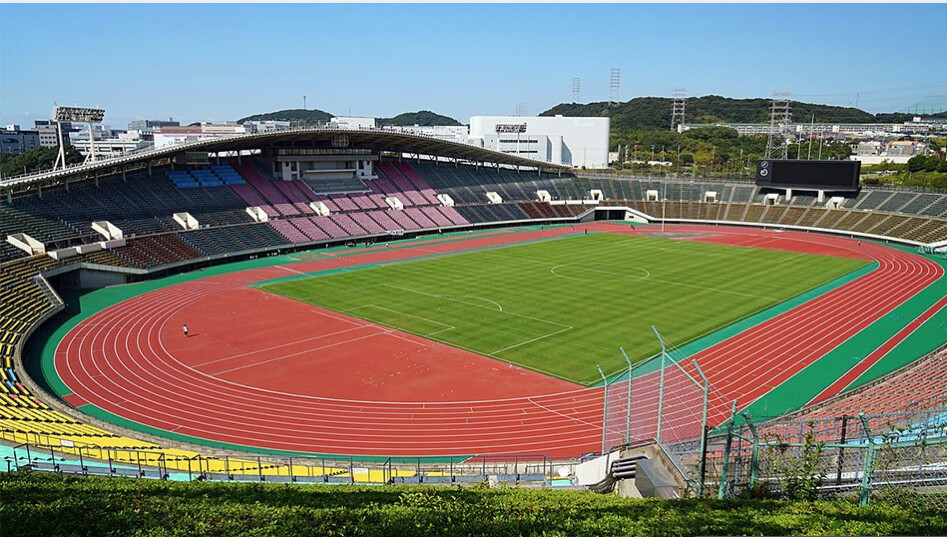
The championships were already pushed back until 2022 from 2020 due to the Covid-19 pandemic but after a request by the Kobe Local Organising Committee (LOC) that date will be moved again.
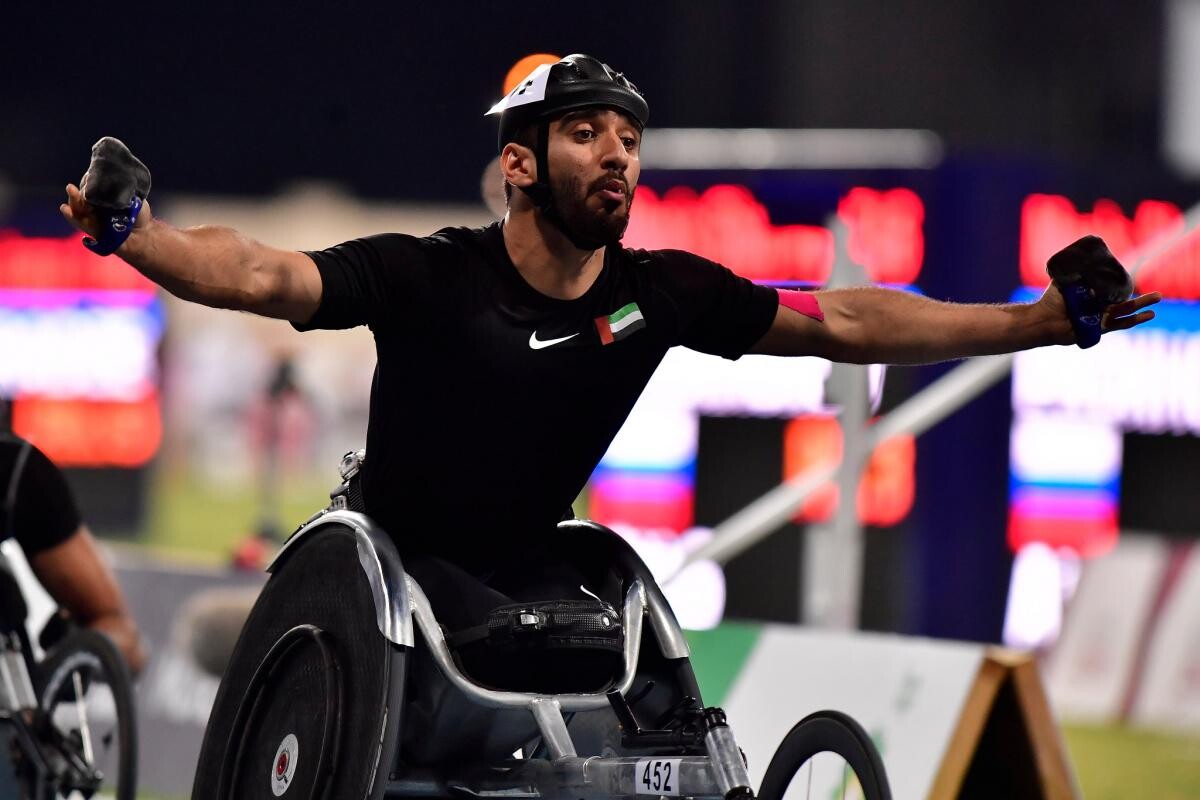
“Both World Para Athletics and the LOC have reached an understanding that the competition will not take place in 2022,” said World Para Athletics.
“Both parties are working closely to assess the feasibility of a postponement to 2024 in order to retain the World Championships within the Paris 2024 cycle.”
That means that the next scheduled championships will take place in Paris next year, with Kobe then taking the reins in 2024, the same year France host the Paralympics.
Dubai hosted the last and ninth edition of the World Para Athletics Championships back in 2019.
When Kobe host the event in 2024 it will be the first time that athletes compete at a World Para Athletics Championships in the Far East although both Japan (1964 and 2020) and China (2008) have hosted the Paralympics.
The first World Para Athletics Championships took place in Berlin in 1994 and since 2011 they have been held in the same years as the World Athletics Championships.
It remains to be seen whether the International Paralympic Committee stick to that format because if they do it would mean that the World Para Athletics Championships would take place in 2023, 2024 and 2025.
by Athletics Weekly
Login to leave a comment
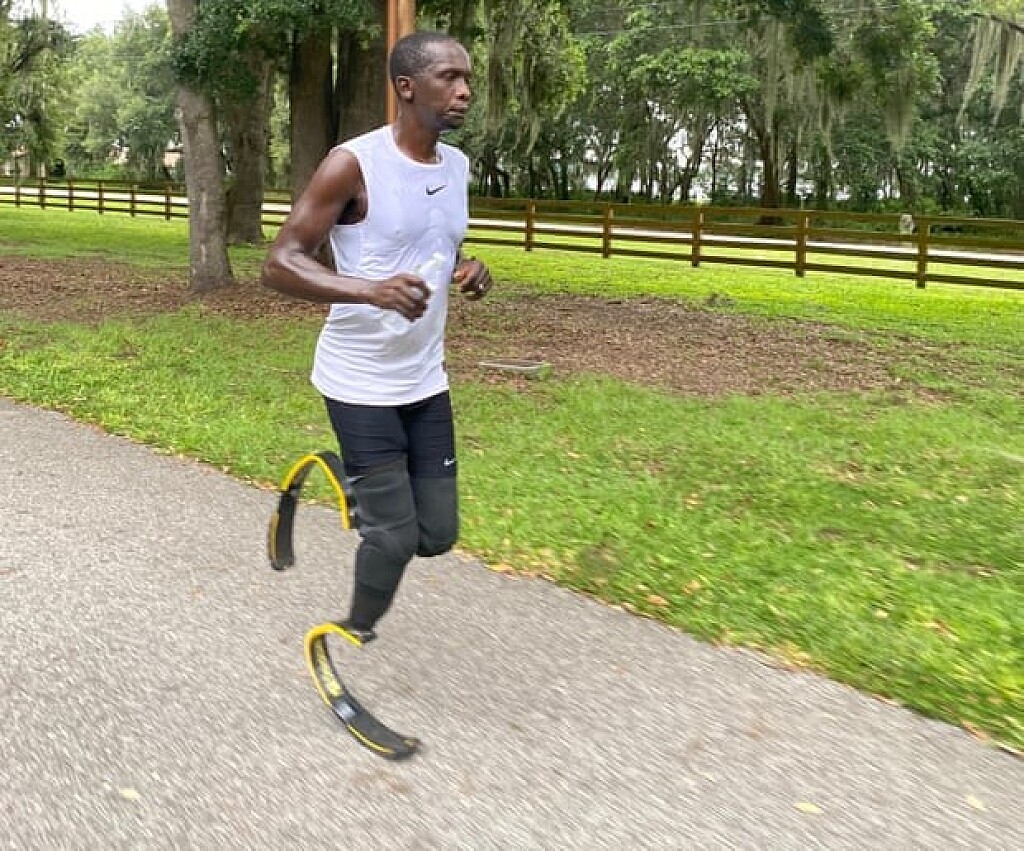
Marko Cheseto survived frostbite and double leg amputation, set to run Boston Marathon
Marko Cheseto will line up for Monday’s Boston Marathon with justified confidence: he has the fastest known time for a double-leg amputee: 2 hours 37 minutes and 23 seconds. In other words, Cheseto is capable of running six-minute miles for just over 26 miles.
The journey he took to get to this stage took him across two continents and through immense physical and emotional pain.
Cheseto’s athletic career began as a boy in Kenya, when he still had both of his feet. He was inspired by Tegla Loroupe, the first African woman to hold the world marathon record and win the New York City Marathon, who also happened to be his aunt.
Cheseto was later recruited to run at the University of Alaska, where he ran the 5k and 10k. He also convinced his coach to recruit his cousin and close friend, William Ritekwiang. But in 2011 Ritekwiang took his own life, and Cheseto blamed himself for not being able to help.
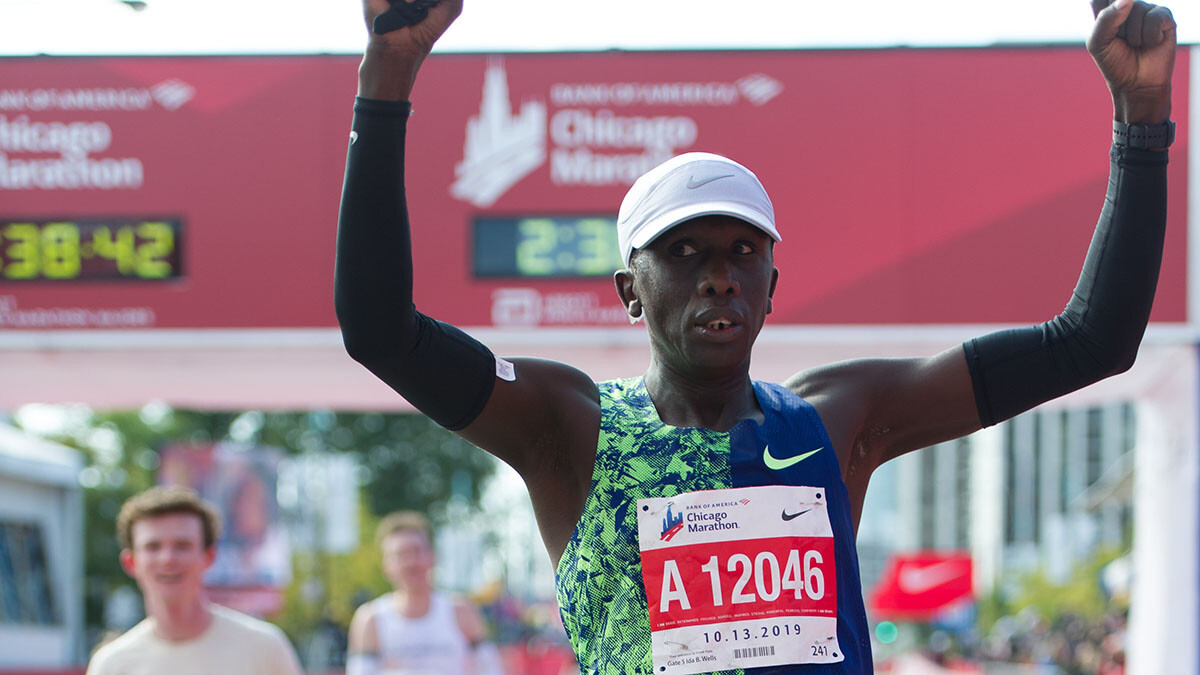
One night, deep in grief, Cheseto took some antidepressants, went for a run in the woods, and blacked out. He had overdosed. He woke up in the snow three days later, unable to feel his legs. His feet were frostbitten and developed gangrene, and his legs had to be amputated below the knee.
His world had shifted. He was fitted with walking prostheses. At first, Cheseto didn’t think running would be in his future. He had never seen anyone wearing prostheses, and he had never heard of the Paralympics.
But he started running again in 2012 on his walking prostheses. Although they were not made for running, it felt good, he says. He decided not to let the trauma of losing his cousin and his feet get the best of him. “I was trying to find a purpose in life, something that I could be proud of,” he says. “And running was that.”
In 2013, he received his first running prostheses from the Challenged Athletes Foundation (CAF). Running blades can cost $15,000 each, and they need to be highly specialized for each person.
Cheseto decided to try to qualify for the 2016 Paralympics in sprinting events, but that didn’t work out, so he shifted course to the marathon. His first was the 2018 New York Marathon, and his second was Boston in 2019.
“At first, running was for me. I wanted to do this for my own sanity,” Cheseto says. But he soon realized that other people related to what he had been through. “The only difference between me and so many people that I have talked to and have shared their pain is that mine is physical pain. I am not saying I don’t have internal struggles and pains just like everyone else … but my physical wounds helped people to feel comfortable sharing their pain.”
Cheseto also works with amputees in his job as a technician at Prosthetic & Orthotic Associates, a company that fits patients with prostheses and that he joined after receiving his own prosthetic care there for years. “That ability to be able to help someone else get a walking or running leg was just so rewarding,” he says.
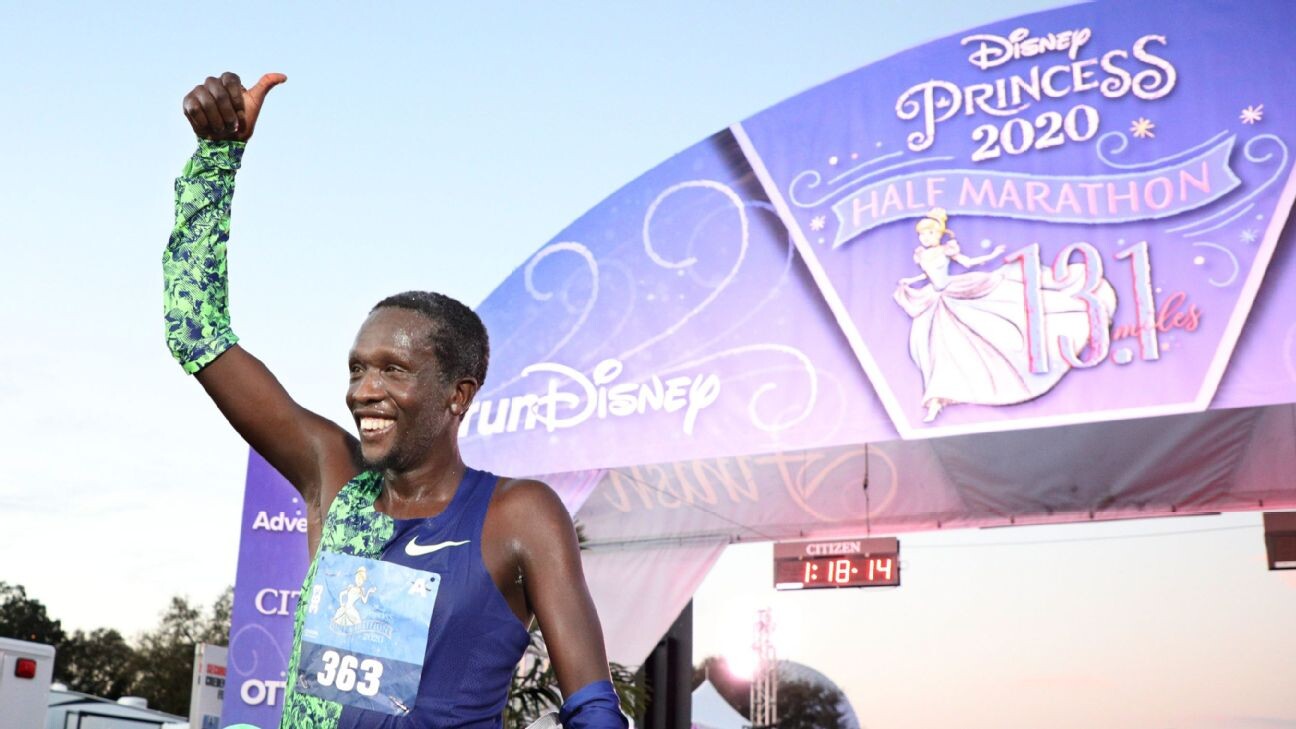
But Cheseto knows there are still challenges for athletes like him. One example came in February 2020, when he was competing at the Disney Princess Half Marathon, which he had hopes of winning. The race has separate categories for athletes with disabilities and those without. Cheseto said that before the race, the race director, Jon Hughes, told him that if he finished first overall, he wouldn’t be recognized as the overall winner.
The future looks secure for Cheseto. As well as his job with prosthetics, he is sponsored by Össur and Nike. He says that their help, and the ongoing support he gets from POA and his wife, Amanda, and the rest of his family have allowed him to reach this point.
In the process of sharing his story, Cheseto has become an advocate for mental health. “I have struggles every day about what I went through and losing my feet. But then, at the same time, I’m asking myself: How have I been able to will myself this far, still having a positive attitude toward life? – most days, anyway,” he says. The answer was being able to “transition from your old self to your new self,” which many people struggle to do, he says.
by Allison Torres Burtka
Login to leave a comment
Boston Marathon
Among the nation’s oldest athletic clubs, the B.A.A. was established in 1887, and, in 1896, more than half of the U.S. Olympic Team at the first modern games was composed of B.A.A. club members. The Olympic Games provided the inspiration for the first Boston Marathon, which culminated the B.A.A. Games on April 19, 1897. John J. McDermott emerged from a...
more...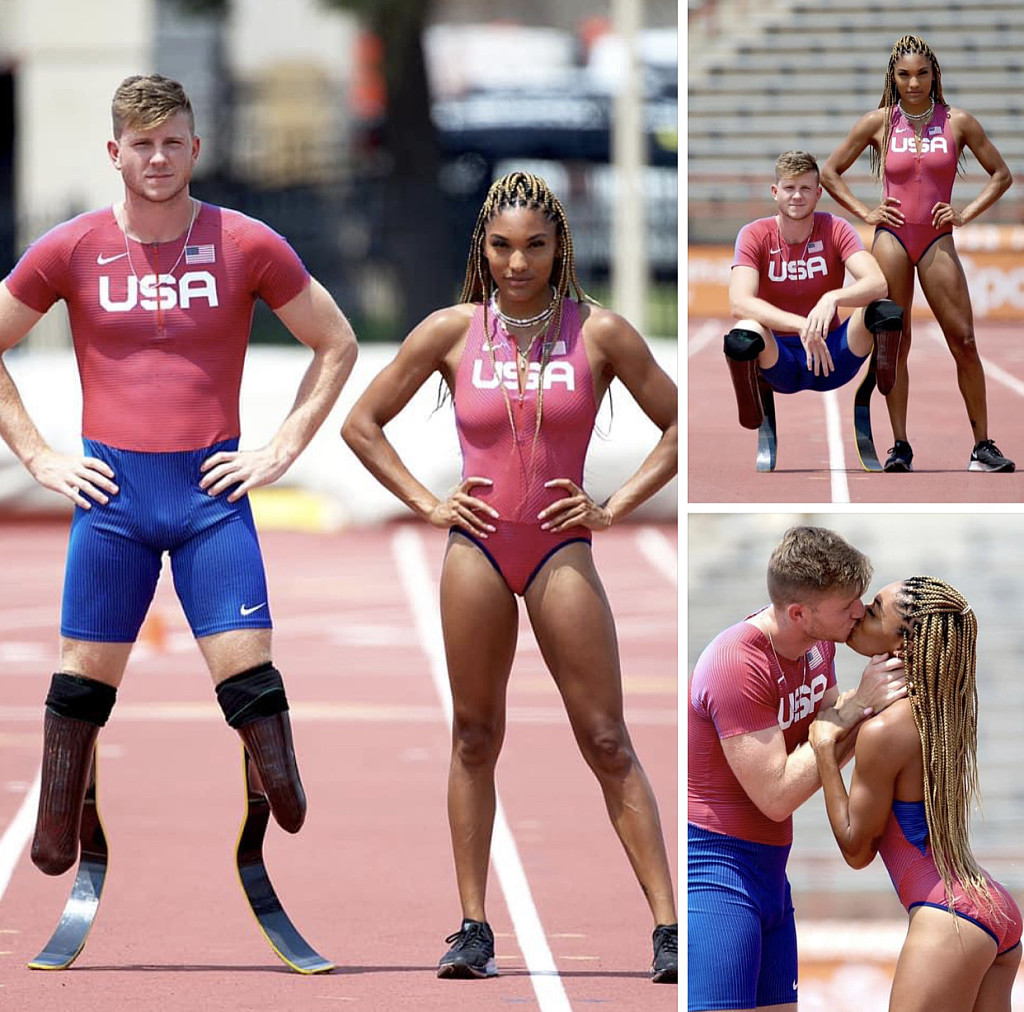
Hunter and Davis are officially melting the Internet: Hunter on Instagram - They said I’d never walk, So I learned to run instead!
#TeamUSA long jumper Tara Davis & Paralympic athlete Hunter Woodhall are officially melting the Internet!! I hope they both win gold in the #TokyoOlympicGames!! 🇺🇸 Posted Gary Allen on FB.
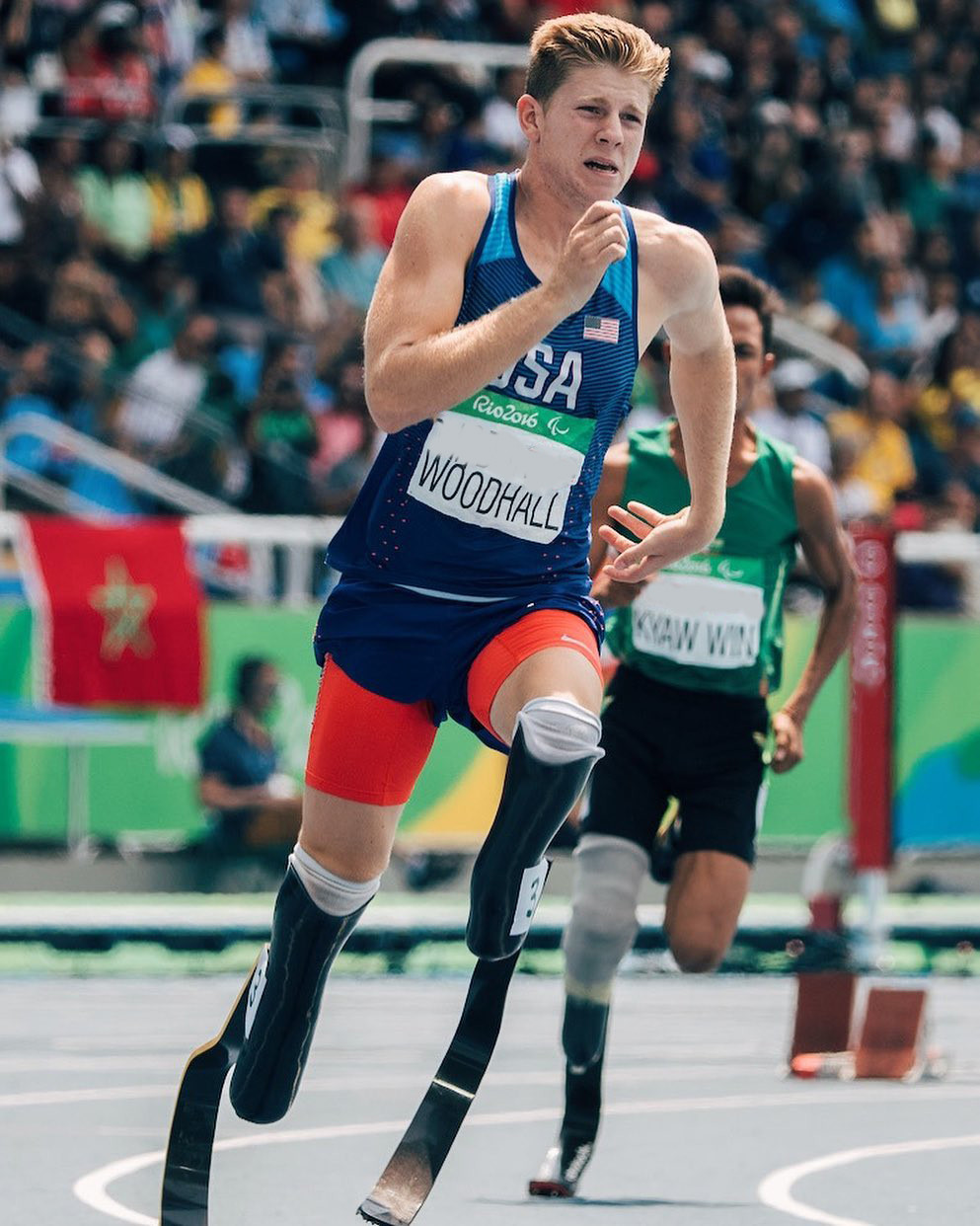
After two-time Paralympic medalist Hunter Woodhall ran a season-best 11.04 seconds in the 100-meter T62 sprint at the U.S. Paralympic Team Trials for Track and Field on June 18 in Minneapolis, he picked up his phone and FaceTimed his girlfriend immediately upon stepping off the track.
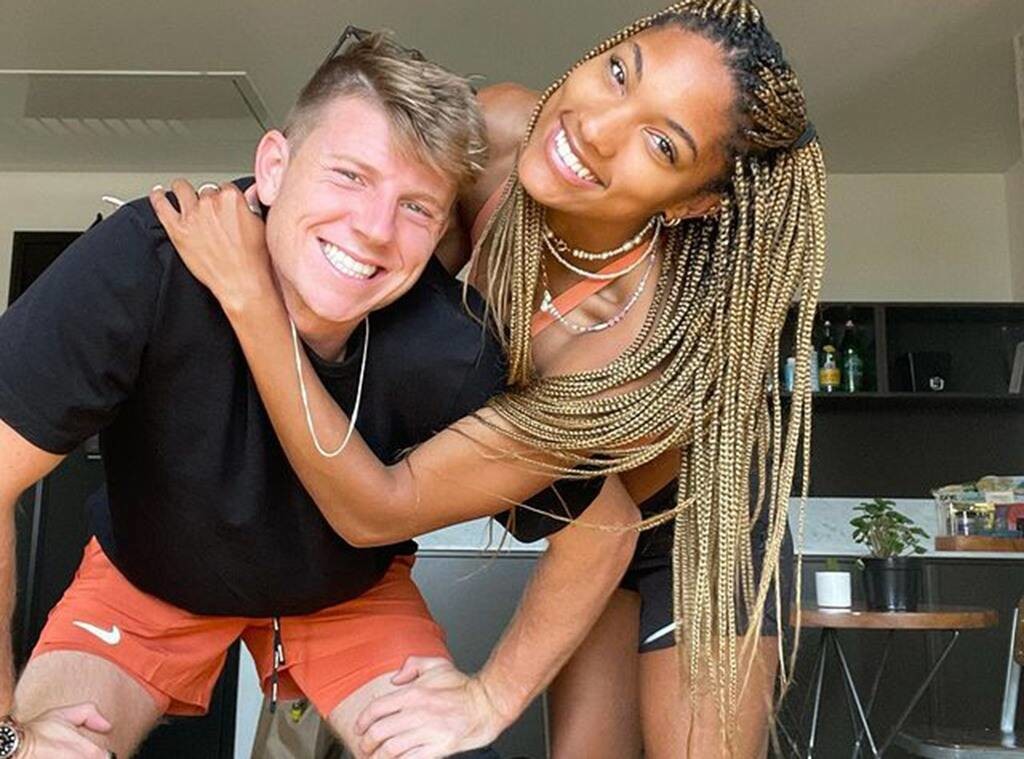
Tara Davis was already on the other side of the country, preparing for the long jump competition at the U.S. Olympic Team Trials in Eugene, Oregon. Woodhall and Davis, who train at the University of Arkansas and University of Texas, respectively, are accustomed to regular FaceTime calls at all moments in time to keep their long-distance relationship strong.
In Tokyo, Woodhall is expected to compete in both the 100 and 400; at the last Paralympic Games in Rio he won silver in the 200 and bronze in the 400. While he’s no longer competing at the NCAA level — he turned pro in January — he’s still training with the Arkansas team, having adjusted his schedule to peak at Trials and the Games as opposed to indoor and outdoor collegiate nationals.
Davis was competing in her second Olympic Trials after finishing 19th in the long jump in 2016. She has held the American junior record in the event since 2017 and earlier this season broke Jackie Joyner-Kersee’s collegiate record set back in 1985.
Davis is also No. 2 at the junior level in the 60-meter hurdles.“I can't put into words how I'm feeling right now, there just are so many emotions,” Davis said to the website of the University of Texas, where she was an NCAA indoor and outdoor national champion.
“I say it all the time, I didn't think I was going to be here. I was going through so much I just didn't ever think I was going to be at the Olympic Trials. But here I am, and I was so grateful for the opportunity, and I took advantage of it.
”The couple, both 22, have been chronicling their journeys in their own YouTube channel, and Woodhall, a TikTok star who has more than three million total social followers across all his platforms, has been profiled by the likes of the New York Times and “The Ellen DeGeneres Show.
”The first double amputee track and field athlete to have earned a Division I athletic scholarship insists there will be as many reasons to follow the Para track and field athletes like himself in Tokyo, as the Olympic athletes like Davis.
“The biggest reason to tune in is because of the stories that come along with the Paralympics — things that people have had to fight through and go through just to be here,” he said.
“At the end of the day we are all humans and all in the same field. If people can come out here and compete after the things they’ve gone through and still be chasing their dreams, that shows that everyone’s on the same level.”
Login to leave a comment
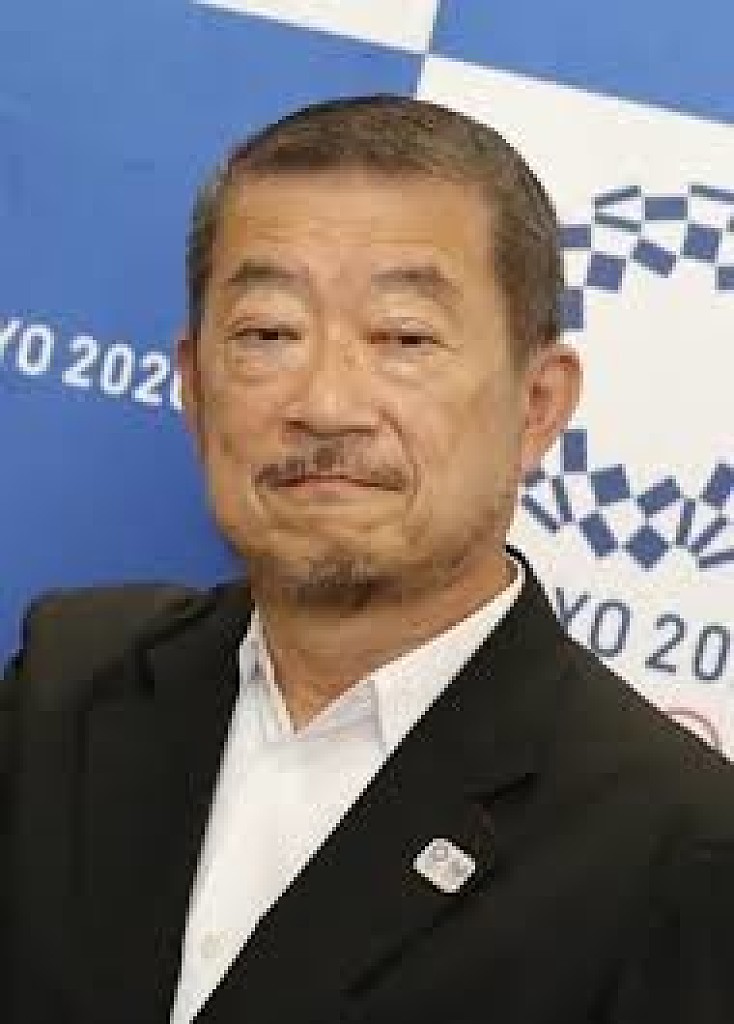
Olympics ceremony director fired over Holocaust joke
The Tokyo Olympic organizing committee fired the director of the opening ceremony on Thursday because of a Holocaust joke he made during a comedy show in 1998.
Organizing committee president Seiko Hashimoto said a day ahead of the opening ceremony that director Kentaro Kobayashi has been dismissed. He was accused of using a joke about the Holocaust in his comedy act, including the phrase “Let’s play Holocaust.”
“We found out that Mr. Kobayashi, in his own performance, has used a phrase ridiculing a historical tragedy,” Hashimoto said. “We deeply apologize for causing such a development the day before the opening ceremony and for causing troubles and concerns to many involved parties as well as the people in Tokyo and the rest of the country.”

Tokyo has been plagued with scandals since being awarded the Games in 2013. French investigators are looking into alleged bribes paid to International Olympic Committee members to influence the vote for Tokyo. The fallout forced the resignation two years ago of Tsunekazu Takeda, who headed the Japanese Olympic Committee and was an IOC member.
The opening ceremony of the pandemic-delayed Games is scheduled for Friday. The ceremony will be held without spectators as a measure to prevent the spread of coronavirus infections, although some officials, guests and media will attend.
“We are going to have the opening ceremony tomorrow and, yes, I am sure there are a lot of people who are not feeling easy about the opening of the Games,” Hashimoto said. “But we are going to open the Games tomorrow under this difficult situation.”
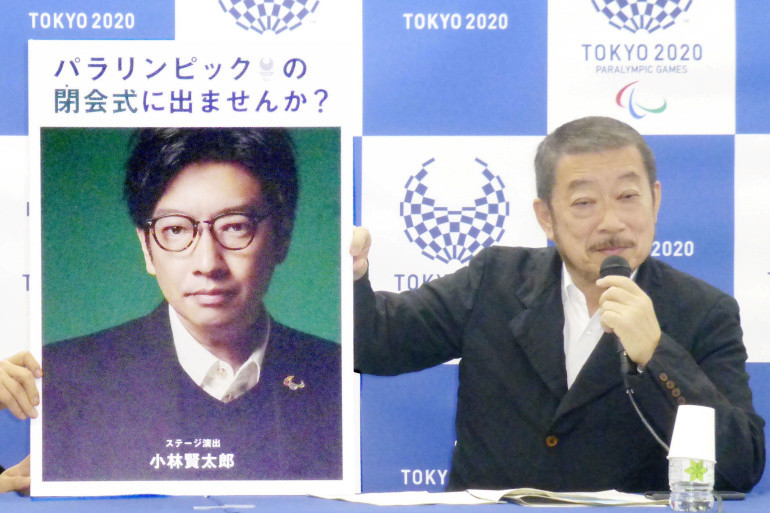
Earlier this week, composer Keigo Oyamada, whose music was to be used at the ceremony, was forced to resign because of past bullying of his classmates, which he boasted about in magazine interviews. The segment of his music will not be used.
Soon after a video clip and script of Kobayashi’s performance were revealed, criticism flooded social media.
“Any person, no matter how creative, does not have the right to mock the victims of the Nazi genocide,” said Rabbi Abraham Cooper, associate dean and global social action director of the Simon Wiesenthal Center, a Los Angeles-based human rights group.
He also noted that the Nazis gassed Germans with disabilities.
“Any association of this person to the Tokyo Olympics would insult the memory of 6 million Jews and make a cruel mockery of the Paralympics,” he said.
Kobayashi is a former member of a popular comedy duo Rahmens and known overseas for comedy series including “The Japanese Tradition.”
Japan is pushing ahead with the Olympics against the advice of most of its medical experts. This is partially due to pressure from the IOC, which is estimated to face losses of $3 billion to $4 billion in television rights income if the Games were not held.
The official cost of the Olympics is $15.4 billion, but government audits suggest it’s much more. All but $6.7 billion is public money.
“We have been preparing for the last year to send a positive message,” Hashimoto said. “Toward the very end now there are so many incidents that give a negative image toward Tokyo 2020.”
Toshiro Muto, the CEO of the Tokyo organizing committee, also acknowledged the reputational damage.
“Maybe these negative incidents will impact the positive message we wanted to deliver to the world,” he said.
by Mari Yamaguchi
Login to leave a comment

Tokyo 2020 Olympic Games
Fifty-six years after having organized the Olympic Games, the Japanese capital will be hosting a Summer edition for the second time, originally scheduled from July 24 to August 9, 2020, the games were postponed due to coronavirus outbreak, the postponed Tokyo Olympics will be held from July 23 to August 8 in 2021, according to the International Olympic Committee decision. ...
more...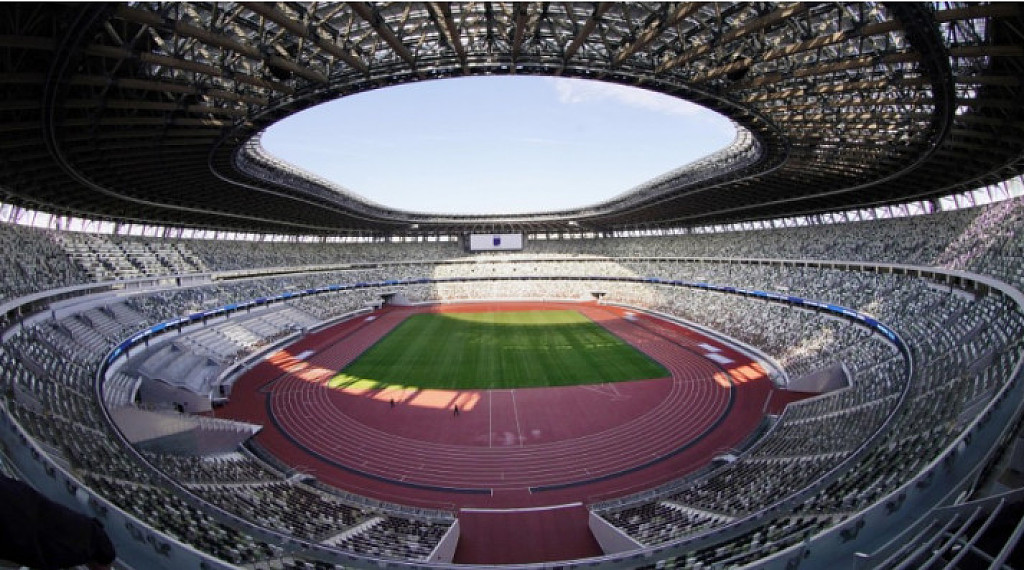
Olympic organizers estimate 225,000 fans per day at Tokyo venues
The Tokyo Olympics and Paralympics organizing committee said Friday it has sold tickets for 42 percent of the venues' capacity and expects to see up to about 225,000 spectators per day in the Japanese capital if all ticket holders attend.
With the organizers set to draw up a plan this month on what to do regarding domestic spectators, Hidemasa Nakamura, the committee's games delivery officer, suggested the risk of having spectators could be limited, given that the number of ticket holders set to enter venues is estimated to be smaller than those visiting or commuting to the capital.

Speaking at a press conference, Nakamura said 70 percent of the tickets for events taking place in Tokyo and neighboring Chiba, Saitama and Kanagawa prefectures have been sold to people living in those areas.
The Japanese organizers and the International Olympic Committee have waited to decide on venue capacity for spectators in Japan after barring fans from overseas. However, medical experts have expressed concern that allowing fans could lead to the spread of the coronavirus as people travel to and from the venues.
On Friday, infectious disease expert Shigeru Omi, Japan's top COVID-19 adviser who has been critical of staging the Tokyo Games, told a parliamentary committee he will assess the risk of allowing spectators.
Omi, who heads a government subcommittee on the coronavirus, said the public will most likely be asked to follow anti-virus mitigation steps, including refraining from traveling to other prefectures, during the Olympics as they coincide with summer vacation.
With about 40 days to go before the Olympics opening ceremony, Tokyo has been under a state of emergency since late April to bring down the number of infections. Omi has said he plans to put together recommendations on staging the Olympics by June 20, the final day of the emergency.
Separately on Friday, Tokyo Gov. Yuriko Koike said a vaccination center will be set up at the metropolitan government building to inoculate officials and workers related to the Olympics.
About 2,500 shots will be administered per day starting June 18 to referees and staff working at games facilities including the athletes' village, Koike said.
The center will use Pfizer Inc. vaccine doses provided by the IOC for Japanese athletes and officials related to the games.
Login to leave a comment
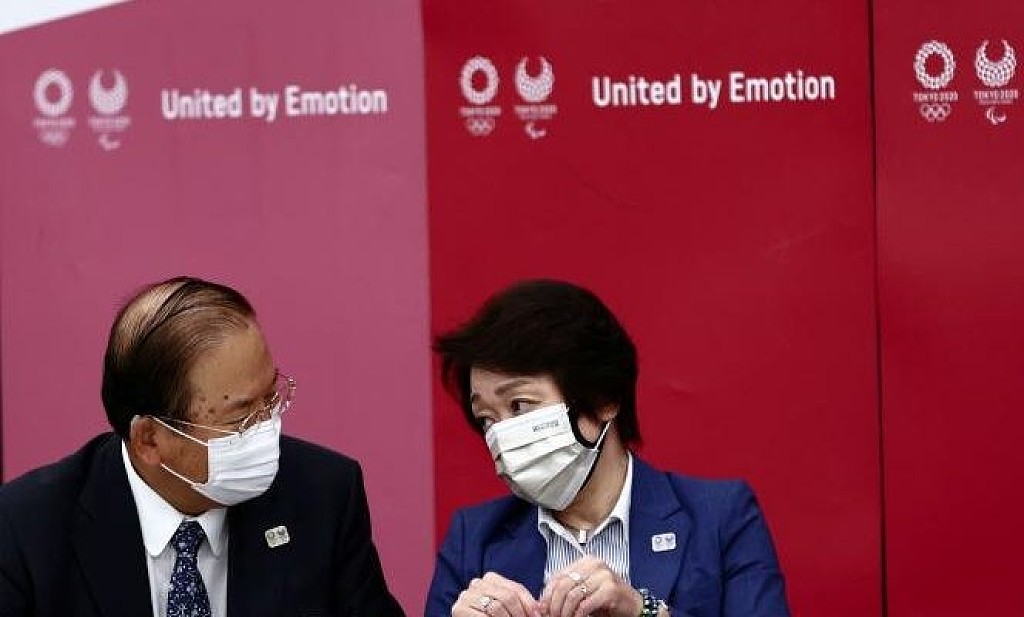
Olympics athletes will be monitored by GPS at Tokyo Games
Athletes at this summer's Olympics will be subject to GPS monitoring, says Tokyo 2020 organising committee chief Toshiro Muto.
The system will not be used to track their real-time movements but to trace them retroactively if issues arise around Covid-19.
International members of the media will also be subject to monitoring.
Muto said it had not yet been decided if alcohol would be allowed in the athletes' village.
Tokyo remains under a state of emergency amid a surge in Covid-19 cases, with the start of the Olympics just over six weeks away.
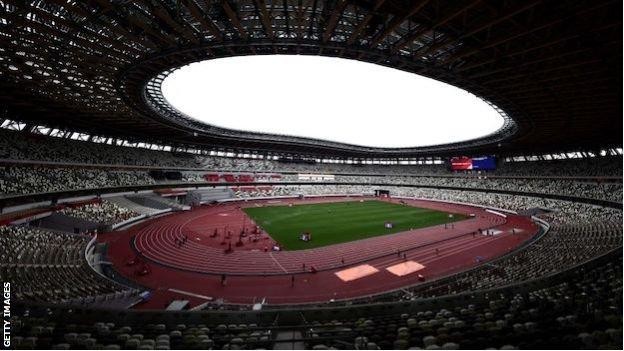
They are set to run from 23 July-8 August, with the Paralympics following from 24 August-5 September.
Muto said it would be of "great regret" if athletes from some countries where the Delta variant of coronavirus is spreading were unable to participate.
Border controls have been strengthened in recent weeks in Japan, but insiders said they would not impact "Games-related entries".
Earlier this week it was decided people arriving from the UK would need to quarantine on arrival for six days rather than three.
However, the British Olympic Association says it has not been told of "any further restrictions facing the British delegation" beyond those outlined in the playbook for the Olympics.
Login to leave a comment
Tokyo 2020 Olympic Games
Fifty-six years after having organized the Olympic Games, the Japanese capital will be hosting a Summer edition for the second time, originally scheduled from July 24 to August 9, 2020, the games were postponed due to coronavirus outbreak, the postponed Tokyo Olympics will be held from July 23 to August 8 in 2021, according to the International Olympic Committee decision. ...
more...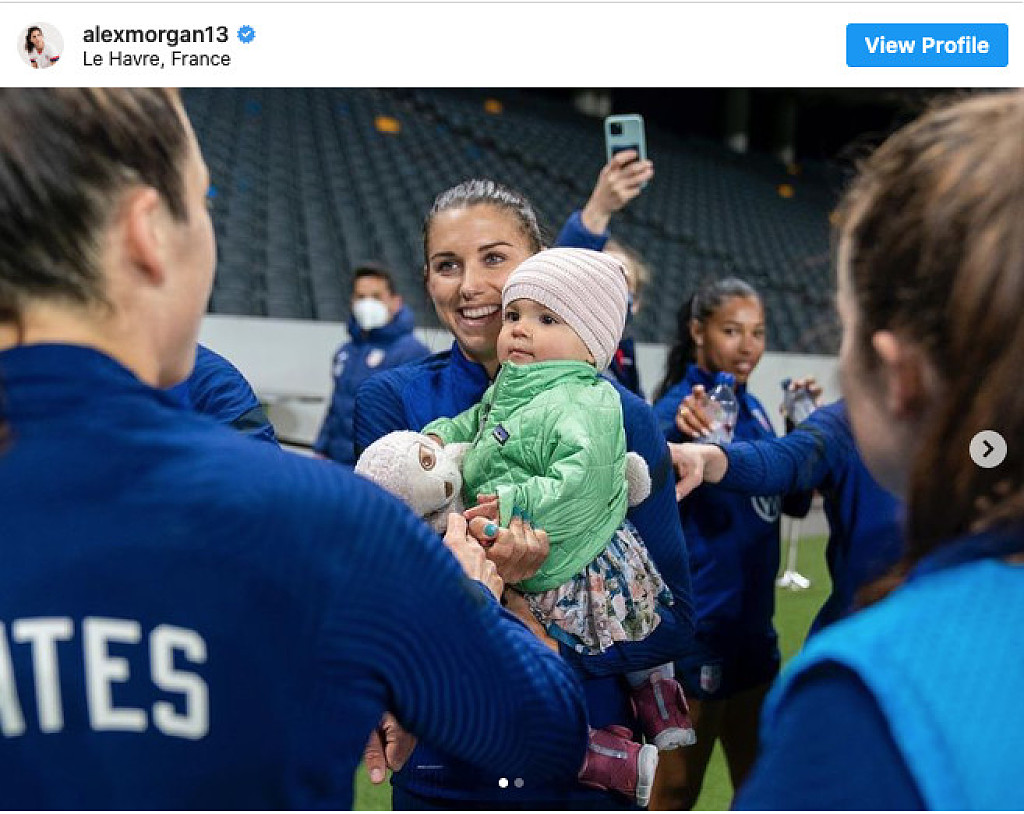
COVID-19 restrictions for Tokyo Olympics shouldn't apply to female athletes' infants, toddlers
A few days shy of her first birthday, Alex Morgan’s daughter Charlie is already more well-traveled than most adults.
There were the two-plus months in England, when Morgan was playing for Tottenham. The week in the Netherlands, followed by a few days in France, for U.S. women’s matches. There’s likely to be another trip in June for pre-Olympic warm-up games.
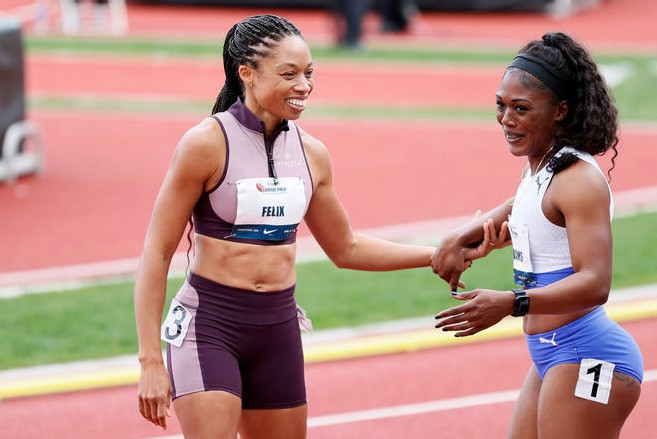
“It’s important to allow mothers that option, to have their kids with them while they compete. I’ve been lucky to be able to do that with every single camp and matches with Charlie,” Morgan said last month. “It’s incredibly important to feel supported as a mom. I hope I continue to feel that way leading into the Olympics and in the Olympics.”
But COVID-19 restrictions for the Tokyo Games could force Morgan and a small number of other athletes who are mothers of small children to choose between their dreams of competing at the Olympics and their families.
At previous Olympics, children of competing athletes would come to the Games like any other family member. Visas, if necessary, would be arranged, and they would travel with their other parent, another family member or caregiver. The family would either stay together outside the Olympic village, or moms would arrange to see their children between training and competitions.
That won’t be possible this summer. Japan is desperately trying to keep the Olympics and Paralympics from turning into a superspreader event, and the International Olympic Committee and Tokyo organizers have already said foreign fans won’t be allowed at the Games.
Japan also currently bars entry to residents of 152 countries “unless special exceptional circumstances are found,” meaning someone from the United States – and pretty much every other country sending athletes to the Games – can’t simply get on a plane and go to Tokyo.
But if allowing female athletes to bring their infants and toddlers to the Tokyo Games doesn’t qualify as a “special exceptional circumstance,” I don’t know what would.
“I would be most sensitive to moms that are breast-feeding, new moms, moms with very small babies,” sprinter Allyson Felix, whose daughter Camryn turned 2 in November, said last month. “I know how crucial that is. I know for me, when I competed when Cammy was under a year old, you need to be near your child. That needs to be taken into consideration for those mothers.”
Tokyo organizers did not respond to questions about whether female athletes will be allowed to bring their young children. IOC spokesman Christian Klaue said women athletes who want to bring their children to Tokyo will be dealt with on a case-by-case basis, without pr
Of course it will be crushing for partners, parents and siblings to miss what is, for many athletes, a once-in-a-lifetime event, and if any family members are allowed, no doubt everyone will be clamoring to go. But prohibiting babies and toddlers from accompanying their mothers to the Games is not remotely the same, and the IOC and Tokyo organizers need to acknowledge that.
This isn’t a matter of, “Oh, I want to have a selfie with my baby at the finish line.” For female athletes with an infant or a toddler, not having them in Tokyo can have a direct impact on their child-rearing decisions.
And their children’s health.
Breastfeeding benefits a child’s physical and cognitive development, and the World Health Organization – which the IOC relies on for medical advice – recommends children be breastfed “up to 2 years and beyond.” Research also indicates that mothers who have been vaccinated are passing COVID antibodies to their babies through breast milk, but that immunity only lasts so long as the child is nursing.
It’s possible athletes who are nursing and want to continue to do so could pump at the Games. But depending on the age of the child, that could require several hours each day.
“I am still nursing Zoe and cannot imagine her not being with me,” marathoner Aliphine Tuliamuk, whose daughter was born in January, told USA TODAY Sports in a statement. “There are many more challenges than usual at this Olympic Games, but I do hope that the needs of mothers, families and children are given full consideration and support."
Everyone is sympathetic to the challenges of holding an Olympics during a pandemic, as well as the concerns of the Japanese people. But allowing women athletes to bring their infants and toddlers to Tokyo, along with a caregiver, would not add a significant number of people.
The United States typically has the largest team at the Olympics, 500-plus for a Summer Games, and this affects only a handful of its athletes. So at most we’re talking, what, a few dozen additional people?
It’s not a large number, but the impact is.
The IOC has made a big show in recent years of elevating women and promoting gender equity, and will proudly tout its statistics on female representation at the Games and in its leadership roles. In March, Tamayo Marukawa, Japan’s minister in charge of the Tokyo Games, said in a statement that the “active participation of women will lead to the creation of a prosperous, vibrant and sustainable society and the realization of a society in which everyone can live comfortably.”
By telling female athletes to leave their young children behind, however, the IOC and Tokyo organizers show how empty those words are. You cannot claim to value and respect women if you are not supporting and empowering them to make choices that are in the best interest of their families.
by USA Today
Login to leave a comment

Pacing fellow Paralympian Michael Roeger accidentally breaks marathon world record while pacing training partner
Australian Paralympic runners Jaryd Clifford and Michael Roeger both set marathon world records in their respective para athletics classifications on Sunday at the Athletics Australia Tokyo Qualifying Marathon in Sydney. Clifford, a visually-impaired athlete competing in the T12 classification, set out with the original plan to simply pace Roeger, who competes as a T46 athlete, as his right arm only goes until about his elbow. Clifford paced Roeger well, helping him to a new T46 world record of 2:18:53 before continuing on and completing the marathon himself and accidentally breaking the T12 world record after crossing the line in 2:19:08.
As Clifford, who competed for Australia at the 2016 Paralympics, wrote on Instagram, his world record came as a shock for a number of reasons. He had never run a marathon before, and the plan was never to complete the race. Instead, he wanted to pace Roeger for as long as he could, and then he would bow out. At around 36K, though, Clifford said he realized he was going to stick in the race until the very end.
“It hurt like hell, but it’s a day I’ll never forget,” he wrote. He crossed the line just 15 seconds after Roeger (who has much more experience in the marathon), beating the world record of 2:21:33 by more than two minutes. After the race, Clifford spoke to Athletics Australia, noting that he would never have guessed that he could have run such a fast marathon.
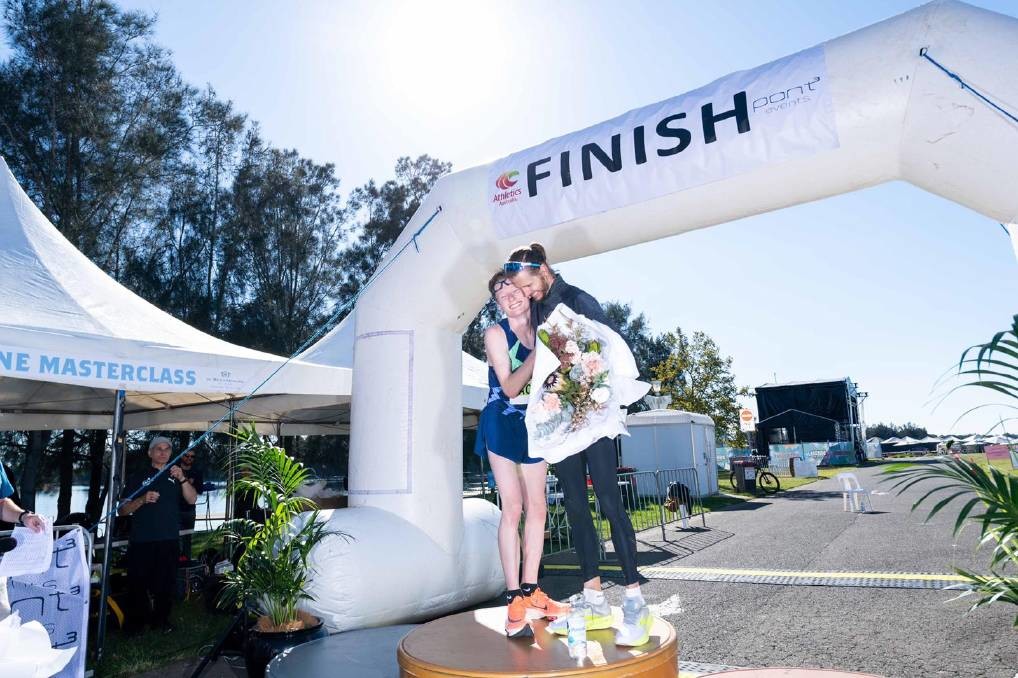
“I think [Roeger] asked me at 15K how many laps I had left in me, and I think I said I had two,” Clifford said. “Then I had one more, and then another. I feel a bit silly upon reflection, but I think psychologically all I was doing throughout the race was focus on Roegs.” Clifford may be an accidental marathoner, but if he chooses to focus on the longer race (he primarily competes in the 1,500m and 5,000m, two events in which he won gold at the 2019 World Para Athletics Championships), there’s no telling how quickly he could run.
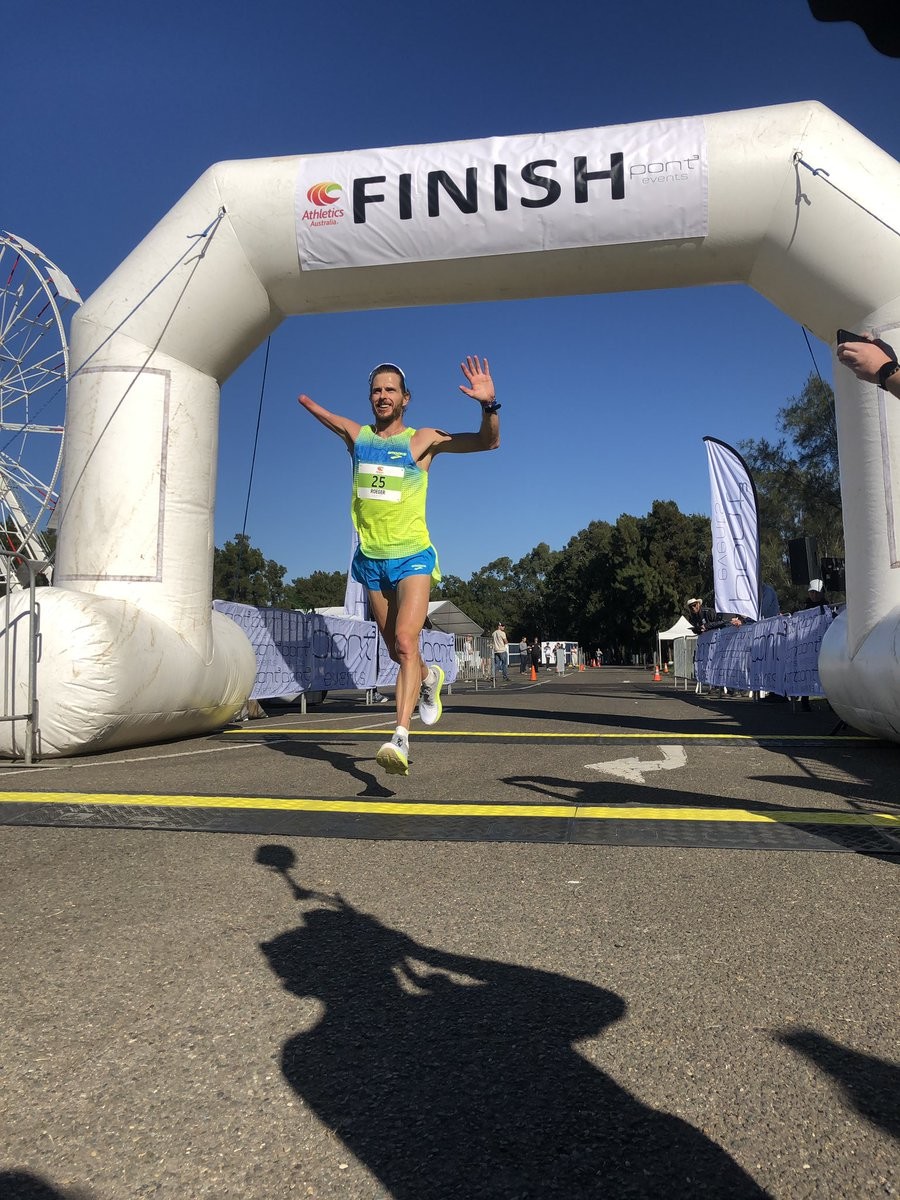
While his result in Sydney would easily qualify him for the Tokyo Paralympics, Clifford told Athletics Australia that he still plans to focus on the track this year. He has broken the T12 1,500m world record on multiple occasions in 2021, with the most recent coming in March after he ran 3:41.34 at a race in Canberra. He hopes to win gold in Tokyo in both the 1,500m and 5,000m.
Roeger, however, is all in on the marathon, and he will be looking to win gold in Tokyo. He is the reigning T46 world champion in the marathon, and the world record (which stood at 2:19:33) that he broke on Sunday was his own. Since debuting at the marathon in 2018, Roeger has broken the T46 world record four times (although his first race, which he ran in Melbourne, was not ratified). He will be the heavy favourite heading into this summer’s Paralympics, and if he wins gold, he will add to his lone Paralympic medal from 2016, which was a bronze that he won in the 1,500m.
by Ben Snider-McGrath
Login to leave a comment
NBC Olympics to use outdoor studio for Tokyo 2020 primetime show
In a first for the United States Olympic broadcaster, NBC Olympics' primetime coverage of the Tokyo 2020 Games will be anchored from an outdoor location.
The organisation has held US rights to the Games since Tokyo 1964, but has never before had its primetime show filmed outdoors.

Anchored by Mike Tirico, this year's show will come from a fifth-floor deck with a backdrop of the Tokyo skyline, including the Rainbow Bridge.
As COVID-19 is spread more easily indoors, the set could potentially aid in preventing infections, although this was not cited as a reason for open-air location.
The pandemic led to the Olympics and Paralympics being postponed by a year to 2021, with the Opening Ceremony now scheduled for July 23.
The set will be designed by Michael Sheehan and the TODAY show will also broadcast from the location.
It will be former National Football League play-by-play announcer Tirico's first Summer Olympics as the primetime host.
At Rio 2026, Tirico was a daytime host from an open-air set on Copacabana Beach.
"Tokyo is one of the great cosmopolitan cities in the world," said Tirico.
"The chance to use the city as our daily setting will help bring our viewers back in the States even closer to the Olympic experience."
The Olympics will also be broadcast on NBC's streaming service Peacock, which will show four live studio programmes every day to allow viewers to catch up on the action.
These four shows will stream for free on Tokyo NOW, Peacock's channel for live coverage and highlights, and will start from July 24.
All content will be produced by NBC Olympics.
"Peacock is thrilled to stream the most anticipated Olympics in history," said Jen Brown, senior vice-president of topical programming and development for Peacock.
"Our shows on the Tokyo NOW channel will give audiences the latest and greatest from the Games, including live competition each morning and quality coverage every night, all for free."
Rob Hyland, who joined NBC Sports in 1997, has been named the producer for the NBC Olympics' primetime show.
Hyland, who will be working on his 10th Olympics for the organisation, is an 18-time Sports Emmy winner has previously served as lead producer for two of the Games' most-watched sports - athletics at London 2012 and figure skating at Sochi 2014.
by Inside The Games
Login to leave a comment
Tokyo 2020 Olympic Games
Fifty-six years after having organized the Olympic Games, the Japanese capital will be hosting a Summer edition for the second time, originally scheduled from July 24 to August 9, 2020, the games were postponed due to coronavirus outbreak, the postponed Tokyo Olympics will be held from July 23 to August 8 in 2021, according to the International Olympic Committee decision. ...
more...
Biden backs Japan's bid to hold "safe and secure" Games at Tokyo 2020
United States President Joe Biden declared his support for Japan staging the postponed Tokyo 2020 Olympic and Paralympic Games during a meeting with Japanese counterpart Yoshihide Suga.
Suga, the first head of state to visit the White House under the Biden administration, said his country was doing its "upmost" to prepare for the Games amid speculation that the event might not go ahead because of a rise in COVID-19 cases across the world.
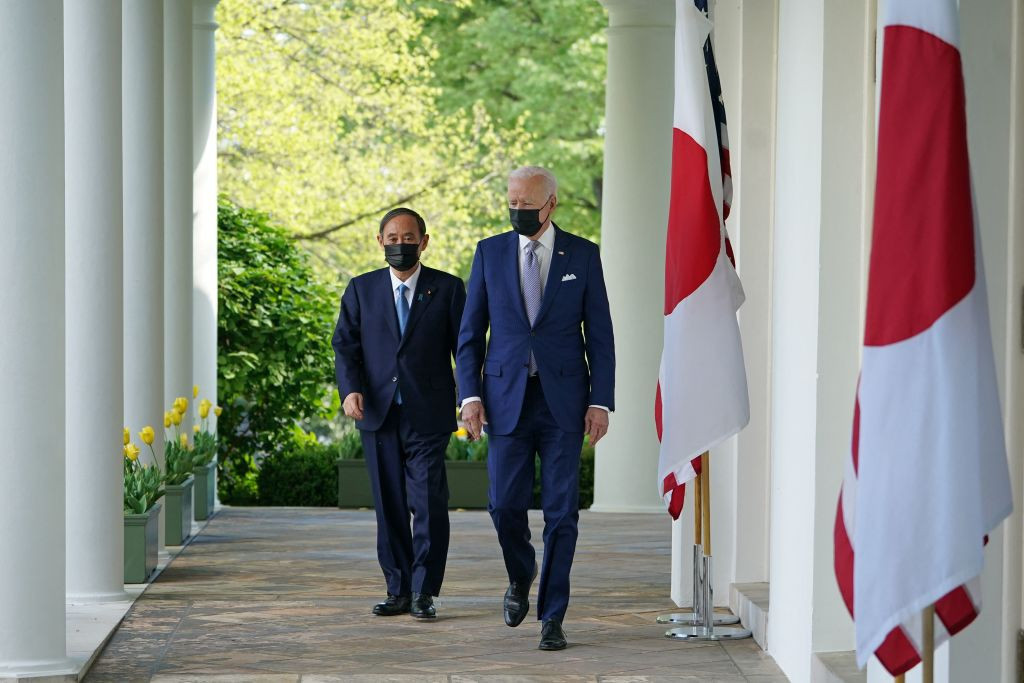
"They are doing everything possible to contain infection and to realise safe and secure Games from scientific and objective perspectives," Suga told a joint news conference.
"I expressed my determination to realise the Tokyo Olympic and Paralympic Games as a symbol of global unity this summer, and President Biden once again expressed his support."
Biden "supports Prime Minister Suga's efforts to hold a safe and secure Olympic and Paralympic Games this summer", a joint statement after the meeting read.
"Both leaders expressed their pride in the US and Japanese athletes who have trained for these Games and will be competing in the best traditions of the Olympic spirit," the statement added.
It remains unclear whether Biden himself will attend the Tokyo 2020 Olympics as the White House has refused to confirm the US President's plans for the Games.
International spectators have been banned while the number of guests is set to be severely limited as part of COVID-19 countermeasures set to be in place at the event.
Suga and Tokyo 2020 organisers were forced to reiterate their commitment to the Games taking place in their rearranged slot after a senior member of the Japanese Government admitted cancellation remains an option if the COVID-19 situation in the country worsens.
"If infections spread because of the Olympics, I don't know what the Olympics is for," Toshihiro Nikai, second-ranked member of Japan’s ruling Liberal Democratic Party said, before later attempting to backtrack on his comments.
Cases have been rising in Tokyo and across Japan following the lifting of the state of emergency.
Ten Japanese prefectures, including the Olympic and Paralympic host city, have been placed under stricter measures to curb the spike in infections.
The rise in cases also comes amid a slow rollout of COVID-19 vaccines in Japan to date, with latest estimates suggesting only one per cent of the population has received a jab.
The Tokyo 2020 Olympics are scheduled for July 23 to August 8, with the Paralympics due to follow between August 24 and September 5.
Login to leave a comment
Tokyo 2020 is set to resume test event with spectators planned for athletics in May
Tokyo 2020 is set to resume test events for the Olympic and Paralympic Games, with organizers hopeful of inviting overseas competitors and domestic spectators to an athletics competition in May.
Sport climbing's test event at the Aomi Urban Sports Park was the last to be held in March last year, prior to the COVID-19 pandemic which ultimately forced the postponement of the Games to 2021.
Organizers plan to hold 18 test events prior to the rescheduled Games, with 17 based in the Japanese capital.
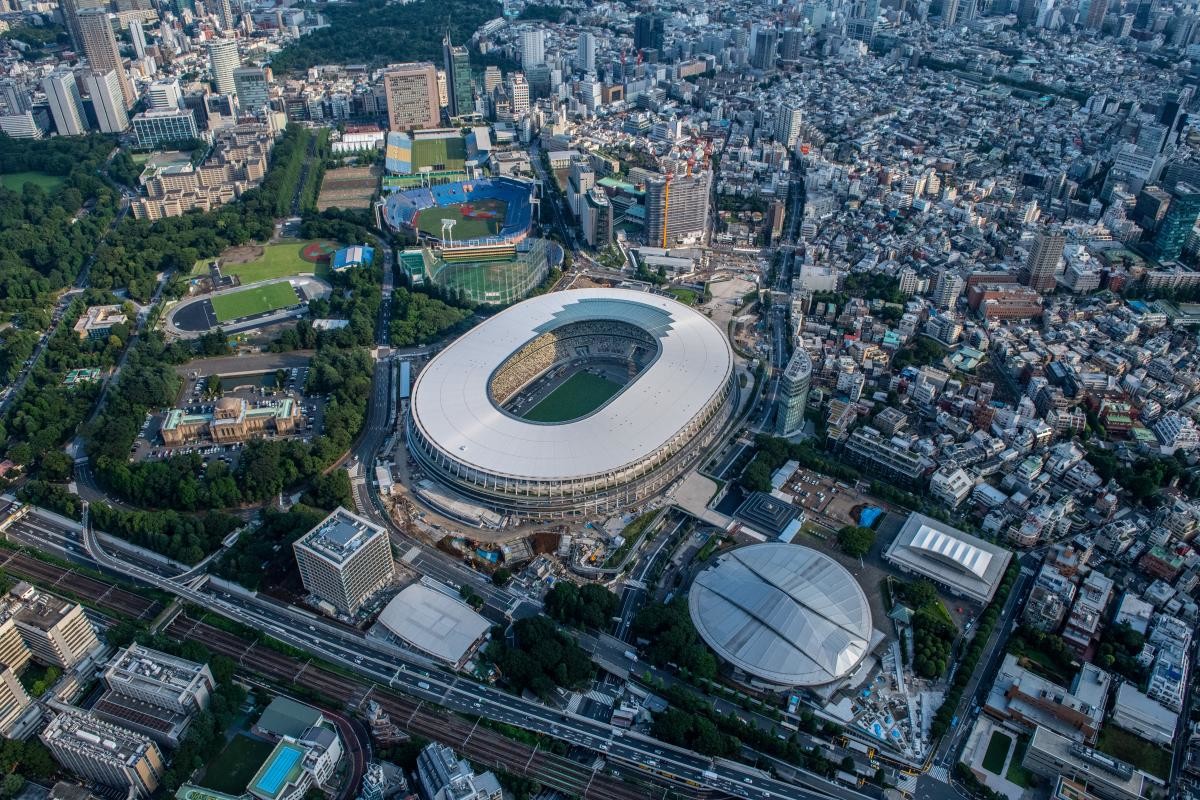
Sapporo will host the marathon test event on May 5.
Several of the test events will be operational, while others will be held under the "Ready, Steady, Tokyo" banner.
Test events will officially resume on April 3 and 4, with organizers conducting an operational test for wheelchair rugby at the Yoyogi National Stadium.
Water polo, diving, rugby, swimming and cycling test events are also planned to take place in April, with the May schedule including volleyball, artistic swimming, gymnastics, athletics, skateboarding, 3x3 basketball and shooting.
Tokyo 2020 said the Organizing Committee would be in charge of 14 of the test events.
The International Swimming Federation will oversee the artistic swimming, diving and water polo test events, with World Athletics in charge of the marathon event in Sapporo.
Tokyo 2020 Games delivery officer Hidemasa Nakamura suggested the four events run by International Federations could potentially include athletes from overseas, while the attendance of fans may also be possible.
Nakamura confirmed the athletics test event on May 9 will be the only event run by Tokyo 2020 to feature both overseas athletes and local spectators.
The test event will take place less than 12 weeks before the New National Stadium is due to stage athletics at the rearranged Olympics, which are due to open on July 23.
The stadium can have a capacity of 68,089 when used for athletics, with the test event likely to offer information to organizers over the feasibility and potential number of spectators that can be present during the Olympics and Paralympics.
"For athletics and the marathon we are thinking about having spectators and overseas athletes will be invited so we can have comprehensive measures tested," Nakamura said.
"During the athletics test events we will have to collect information so we can make decisions."
Nakamura added that the test events will be smaller and more focused on the operational requirements of the sports.
by Michael Pavitt
Login to leave a comment
Tokyo 2020 Olympic Games
Fifty-six years after having organized the Olympic Games, the Japanese capital will be hosting a Summer edition for the second time, originally scheduled from July 24 to August 9, 2020, the games were postponed due to coronavirus outbreak, the postponed Tokyo Olympics will be held from July 23 to August 8 in 2021, according to the International Olympic Committee decision. ...
more...
International spectators to be barred from entering Japan for Olympics
International spectators will not be allowed to enter Japan for this summer’s Olympic Games amid public concerns over coronavirus, organisers said on Saturday, setting the stage for a drastically scaled-back event.
Some 600,000 Olympic tickets purchased by overseas residents will be refunded, as will another 300,000 Paralympic tickets, Toshiro Muto, the chief executive of the Tokyo 2020 organising committee told a news conference.
He declined to say how much the refunds would cost.
The Olympic Games were postponed last year due to the COVID-19 pandemic. While the outbreak has chilled public opinion toward the event, both organisers and Prime Minister Yoshihide Suga have vowed to press ahead with the Games.
The decision on international spectators will “ensure safe and secure Games for all participants and the Japanese public,” Tokyo 2020 organisers said in a statement following five-way talks that included the head of the International Olympic Committee, Thomas Bach, and the Tokyo governor.
“People who are involved in the Olympics in some way may be allowed to enter the country, whereas regular visitors will not be able to,” Tokyo 2020’s Muto said.
He said costs for hotel cancellations would not be covered. Organisers may also consider cutting the number of staff members who will participate in the Games.
The Games are scheduled for July 23 to Aug. 8, and the Paralympics from Aug. 24 to Sept. 5.
Media polls have shown that a majority of the Japanese public are wary about letting in international spectators to watch the Games as the country grapples with the tail-end of a third wave of the pandemic.
STRIPPED-DOWN GAMES
A stripped-down Games means the government will not get the tourism boom it had long counted on. Japan has grown increasingly reliant on foreign tourists, particularly from Asia, to bolster its weak domestic economy.
Like other countries, it has seen tourism unravel with the pandemic and its hotels and restaurants have been hit hard.
Saturday’s decision did not cover local spectators. Muto said organisers will decide next month on caps for spectators in venues.
“It’s very unfortunate,” Tokyo Governor Yuriko Koike said of the decision on international spectators, speaking to reporters after the meeting.
But she added that the conclusion was “unavoidable” given that the main priority for holding a successful Games would be the health of the athletes and the Japanese public.
Kyodo news service earlier reported that organisers were leaning towards barring overseas volunteers from helping at the Games.
Sources told Reuters earlier this month that the Japanese government had concluded it will not be able to allow spectators from abroad.
Reporting by Sakura Murakami; Editing by William Mallard, David Dolan and Frances Kerry
Login to leave a comment
Japan's government has decided to stage Olympics without overseas spectators
Japan's government has decided to stage this summer's Tokyo Olympics and Paralympics without overseas spectators due to concern among the Japanese public about Covid-19, Kyodo news agency said on Tuesday.
Kyodo said the government had concluded that welcoming visitors from abroad to attend events would not be possible given public concern about the coronavirus and the detection of more contagious variants in many countries.
The opening ceremony will also be held without spectators.
"The organising committee has decided it is essential to hold the ceremony in the northeastern prefecture of Fukushima behind closed doors, only permitting participants and invitees to take part in the event, to avoid large crowds forming amid the pandemic," Kyodo said, quoting the officials.
A formal decision on overseas spectators is expected to be made by the end of the month. The Olympics are set for July 23 to August 8, with the Paralympics to follow from August 24 to September 5.
Tokyo 2020 president Seiko Hashimoto said last week she would like to have made a decision before March 25, when the torch relay is due to start.
A decision on the number of Japanese spectators allowed in venues is expected to be made by the end of April.
Most Japanese people do not want international visitors to attend the Games amid fears that a large influx of visitors could spark a resurgence of infections, a Yomiuri newspaper poll showed.
The survey showed 77 per cent of respondents were against allowing foreign fans to attend, versus 18 per cent in favour.
Sky Sports News has contacted both Tokyo 2020 organisers and the International Olympic Committee for a response to Kyodo's report and if a decision may be made earlier than previously stated.
Login to leave a comment
Tokyo 2020 Olympic Games
Fifty-six years after having organized the Olympic Games, the Japanese capital will be hosting a Summer edition for the second time, originally scheduled from July 24 to August 9, 2020, the games were postponed due to coronavirus outbreak, the postponed Tokyo Olympics will be held from July 23 to August 8 in 2021, according to the International Olympic Committee decision. ...
more...
Tokyo 2020 new president is open to spectators at Olympic Games
Tokyo 2020 president Seiko Hashimoto is open to fans being allowed to attend the rescheduled Olympic and Paralympic Games this year, albeit in limited numbers.
Organisers, the International Olympic Committee and other bodies involved in the event are reportedly due to meet at some stage next week to discuss the possibility of whether spectators will be permitted at the Games, amid ongoing concerns surrounding the Covid-19 pandemic.
Any decision regarding spectators possible attendance will be made over two stages. The first will be to determine whether to allow foreign spectators at all — expected by the end of this month — before establishing how many fans could be permitted at various venues.
IOC president Thomas Bach revealed that a final decision could be made in either April or May, just a matter of months ahead of the scheduled start of the Games, taking place from July 23 to August 8.
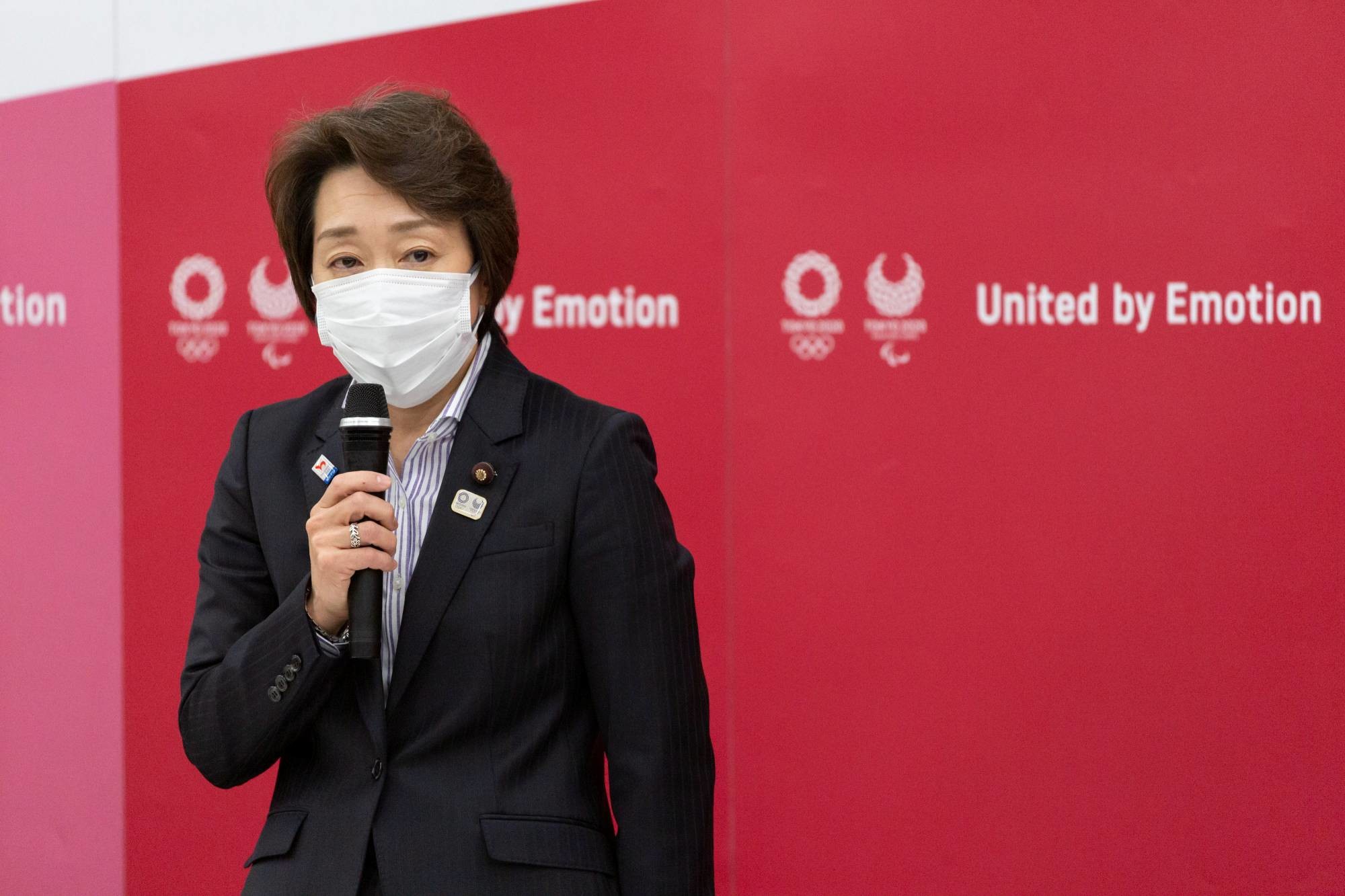
Hashimoto, who replaced Yoshiro Mori as head of the organising committee last month, told Japanese media that she believed the Olympic and Paralympic Games should be staged in front of spectators.
"When we think about the possibility of holding the Olympics without fans in the stands, athletes will definitely wonder why there are no fans just for the Olympics and Paralympics when other competitions are allowing in spectators," Hashimoto said.
"Everyone wants an early decision about the direction to be taken regarding fans to prepare tickets and hotel accommodations."
Meanwhile, IOC executive director for the Olympic Games Christophe Dubi said organisers "have to take the decision as late as possible but as early as needed" regarding spectators.
It has become increasingly likely in recent months that foreign fans will be prevented from attending events at the Games because of the pandemic.
Japan is fearful over large numbers of fans from across the world travelling to the country and potentially spreading the Covid-19 virus during the Games.
Capacities could also be restricted at Olympic and Paralympic events to limit the risk posed by the novel coronavirus.
by Sam Murley
Login to leave a comment
Tokyo 2020 Olympic Games
Fifty-six years after having organized the Olympic Games, the Japanese capital will be hosting a Summer edition for the second time, originally scheduled from July 24 to August 9, 2020, the games were postponed due to coronavirus outbreak, the postponed Tokyo Olympics will be held from July 23 to August 8 in 2021, according to the International Olympic Committee decision. ...
more...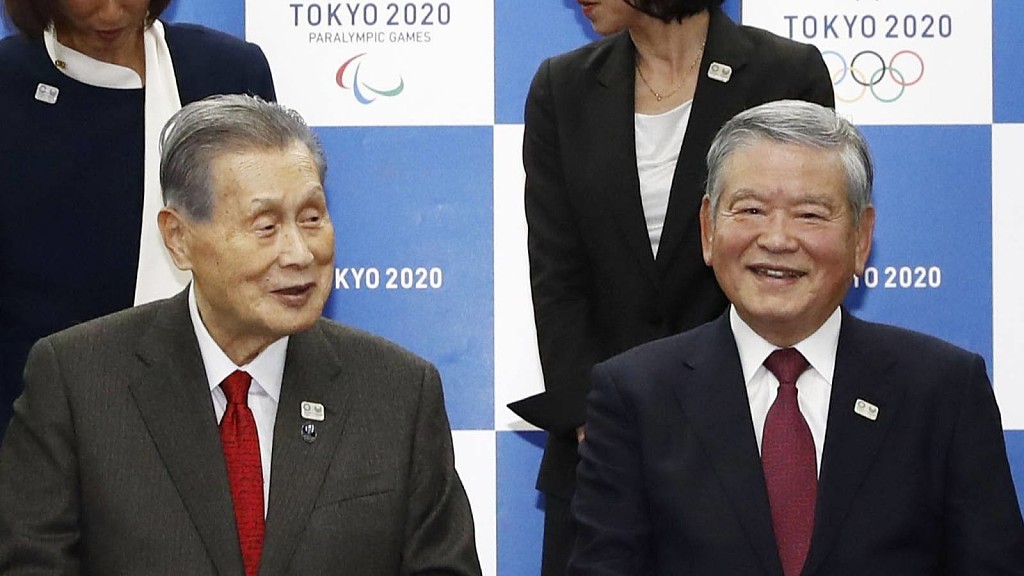
Saburo Kawabuchi declines offer to head Tokyo Olympics as Mori resigns
Saburo Kawabuchi, 84, a former Japan Football Association president and soccer player, will decline an offer to become head of the organizing committee for the Tokyo Olympics, Nikkei learned Friday.
Kawabuchi was slated to replace Yoshiro Mori, 83, as president of Tokyo 2020. Mori, who had said he would resign over sexist remarks he made during a board meeting held on Friday of last week, made that official.
"I resign as Tokyo 2020 president today," the former prime minister said. "The most important thing is to hold the Games in July, so I cannot be any hindrance to this aim."
Mori's appointment of Kawabuchi as successor, and the vague selection process had also been criticized. It is now unclear who will be appointed to the position, less than six months before the Olympics are due to start.
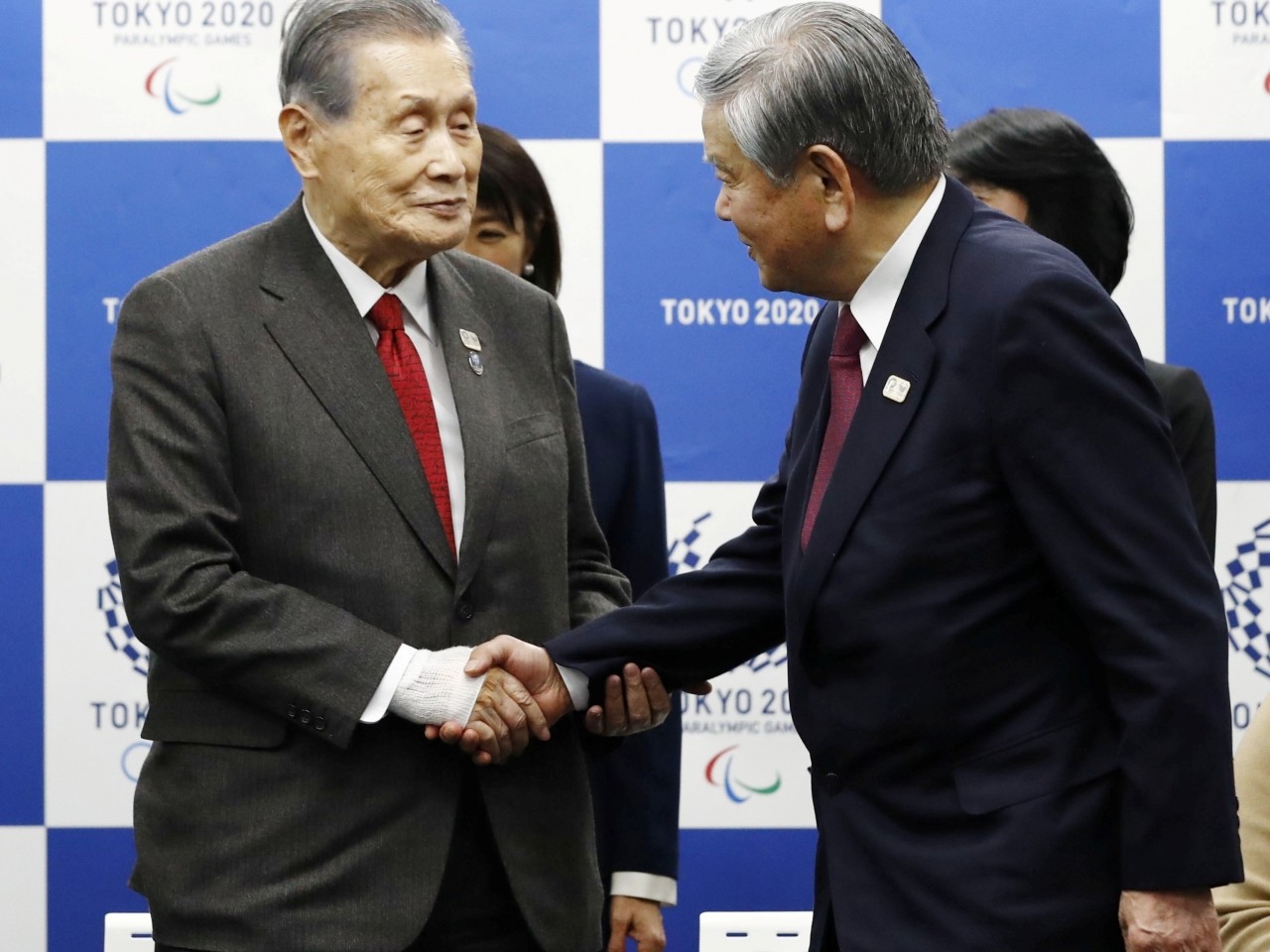
Mori had said during a meeting of the Japanese Olympic Committee in Tokyo on Feb. 3 that board meetings with women "take so much time." Because of their "strong sense of competition," he said, if one person raises their hand, others probably think, 'I need to say something, too.'
The remarks came during a discussion over efforts to increase female representation on the committee's board.
Mori withdrew his comments the next day and apologized to "everyone who was offended," saying the remarks "ran counter to the spirit of the Olympics and Paralympics."
Andrew Parsons, president of International Paralympic Committee, said in a Friday statement that he hopes "the domestic and international reaction over the last seven days can be harnessed" and "society places greater emphasis on diversity and inclusion, not just in terms of gender representation, but race, sexuality, and persons with disabilities."
by Rurika Imahashi
Login to leave a comment
Tokyo 2020 Olympic Games
Fifty-six years after having organized the Olympic Games, the Japanese capital will be hosting a Summer edition for the second time, originally scheduled from July 24 to August 9, 2020, the games were postponed due to coronavirus outbreak, the postponed Tokyo Olympics will be held from July 23 to August 8 in 2021, according to the International Olympic Committee decision. ...
more...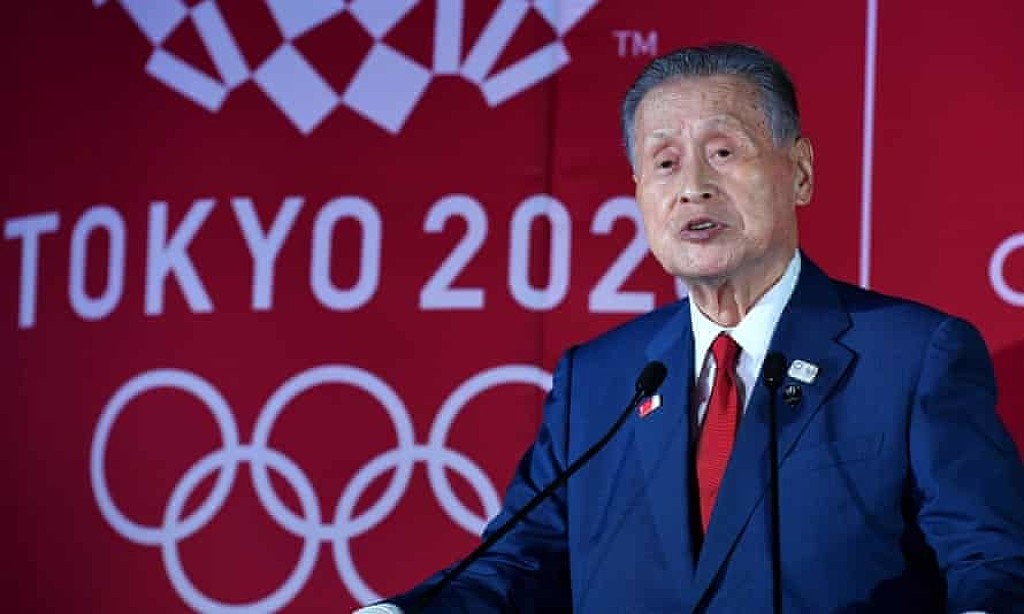
Tokyo olympics chief Yoshiro Mori apologizes for remarks demeaning women
Organizers of the Tokyo Olympics, already facing rising costs and significant public opposition to this summer’s Games, faced a new furor on Wednesday after the president of the Tokyo organizing committee suggested women talk too much in meetings.
The president, Yoshiro Mori, stoked a social media backlash after news reports emerged of his comments demeaning women during an executive meeting of the Japanese Olympic Committee that was held online.
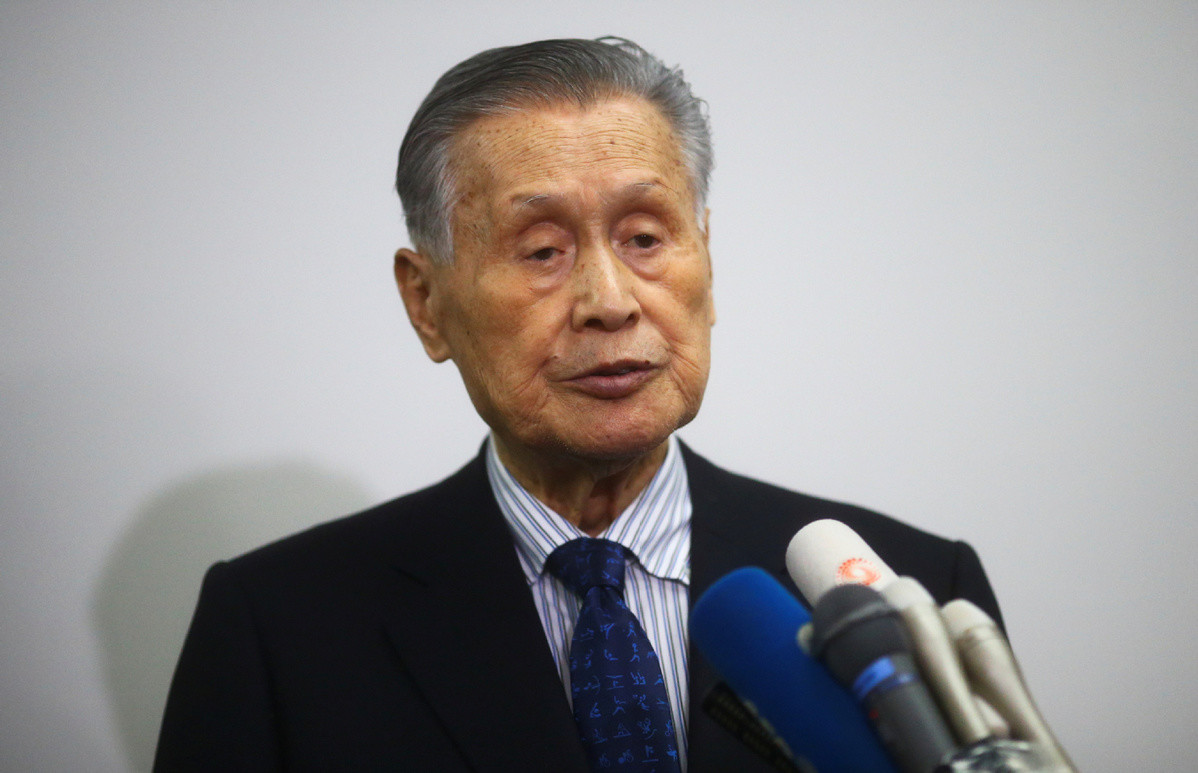
“On boards with a lot of women, the board meetings take so much time,” Mr. Mori, 83, said to laughter, according to a report in the Asahi Shimbun, one of the country’s largest daily newspapers. “Women have a strong sense of competition. If one person raises their hand, others probably think, I need to say something too. That’s why everyone speaks.”
Mr. Mori, a former prime minister, was responding to a question asking him to comment on the Olympic committee’s plan to increase the number of women board members to more than 40 percent of the total.
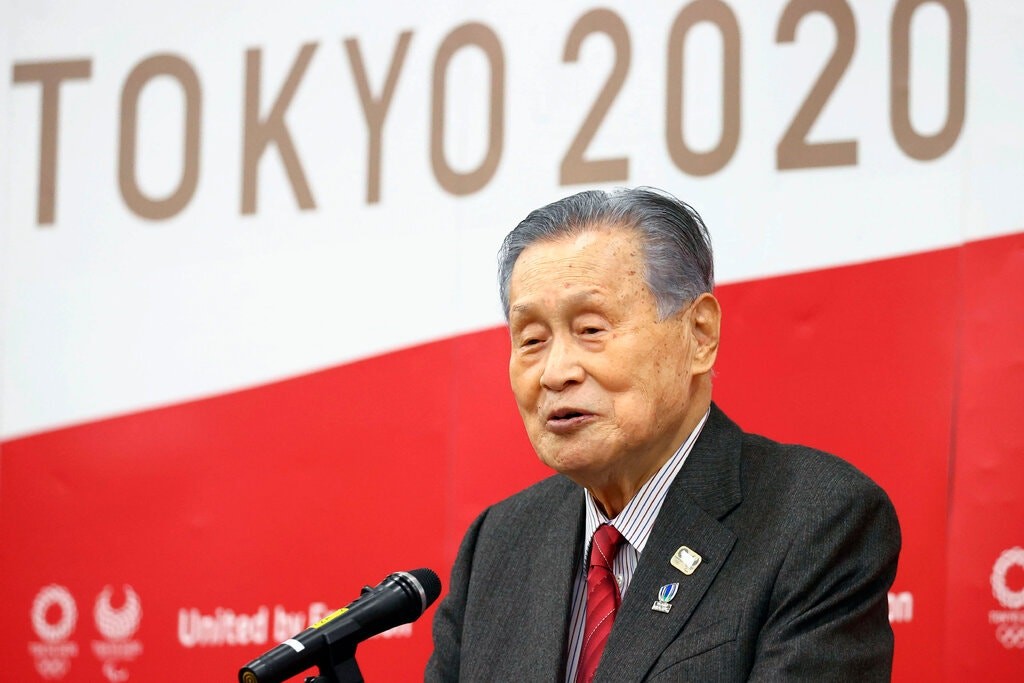
“You have to regulate speaking time to some extent,” Mr. Mori said. “Or else we’ll never be able to finish.”
The reports came just as Olympic organizers were releasing guidelines to reassure citizens and visitors that they would be able to secure the safety of athletes and others during the rescheduled Games this summer.
On Twitter, users quickly began calling for Mori to resign. Others suggested Mori’s age, and his outdated attitude, were the real problem.
At a news conference on Thursday, Mr. Mori said he had no intention of resigning. “I recognize the remark was against the spirit of Olympics and Paralympics,” he said. “I deeply regret what I said.” Mr. Mori said he wanted to retract his remarks, and he apologized “to those who felt uncomfortable.”
by Motoko Rich, Hikari Hida and Makiko Inoue
Login to leave a comment
Tokyo 2020 Olympic Games
Fifty-six years after having organized the Olympic Games, the Japanese capital will be hosting a Summer edition for the second time, originally scheduled from July 24 to August 9, 2020, the games were postponed due to coronavirus outbreak, the postponed Tokyo Olympics will be held from July 23 to August 8 in 2021, according to the International Olympic Committee decision. ...
more...
Dina Asher-Smith back on track and could go to European Indoor Champs
Dina Asher-Smith will return to competition next week for the first time since becoming world 200 meters champion more than a year ago.
On the day the British Indoor Athletics Championships were cancelled for the first time since 1961, the nation's fastest ever woman was confirmed for the Gold Series meet in the German city of Karlsruhe.

Asher-Smith will contest her first 60m for three years on Friday in a race also featuring Poland's European indoor champion Ewa Swoboda.
Pandemic-permitting she will then move on to Dusseldorf and another indoor race two days later.
Given the limited opportunities for competition ahead of the Tokyo Olympics, Asher-Smith could even take part in the European Indoor Championships in Poland on the first weekend of March. Her management have not ruled out the possibility.
Meanwhile, the International Olympic Committee and Japanese government have categorically denied a report that this summer's Olympics and Paralympics are to be cancelled.
“This is exhausting,” Paralympic star Stef Reid said in response to the ever-changing speculation.
Five-time Paralympic champion Hannah Cockroft agreed: “This is our livelihoods being played with.
"We’re all aware there’s a chance the Games might not go ahead, but until an official decision is announced, please leave us to work and dream!”
by Alex Spink
Login to leave a comment

European Athletics Indoor Championships
Witness six sessions of action-packed sport over three days of intense competition as some of the best athletes in the world compete for prestigious European titles. Don’t miss the opportunity to witness this thrilling event and get closer to the action. ...
more...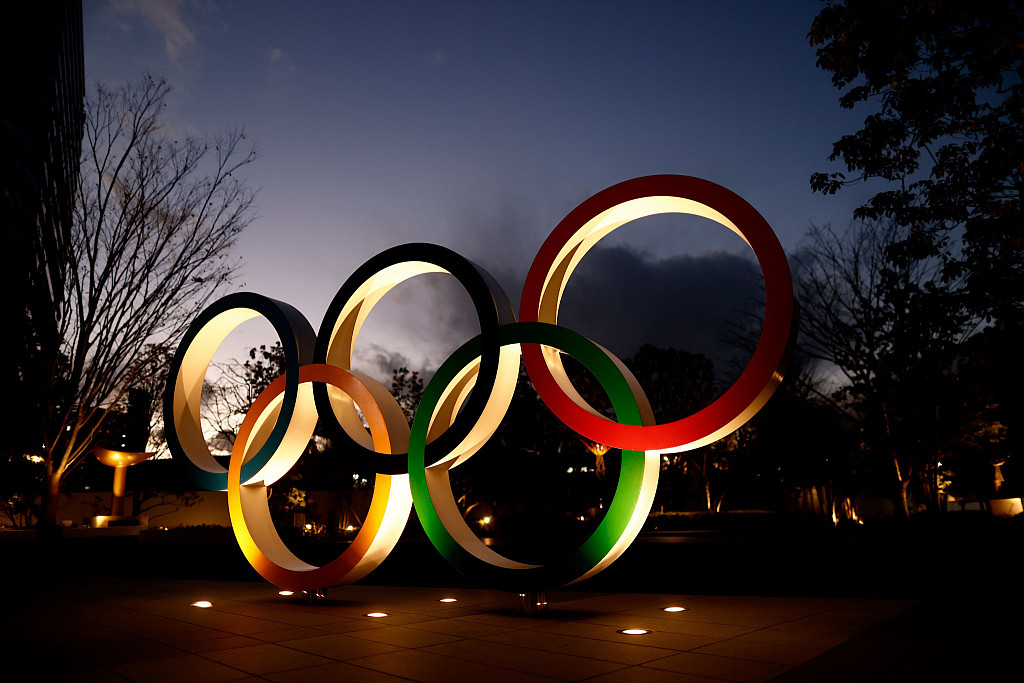
Survey finds 80 per cent of Japanese people want Tokyo 2020 cancelled or postponed
A Kyodo News survey has found around 80 per cent of Japanese people want this year's Olympic and Paralympic Games in Tokyo to be cancelled or postponed.
In the telephone poll, 35.3 per cent of those surveyed called for the cancellation of the Games and 44.8 per cent said there should be another postponement.
The survey was conducted as Japan struggles with a resurgence of COVID-19.
Tokyo, Kanagawa, Saitama and Chiba entered into a state of emergency on Friday (January 8) due to the increase in cases.
The Japanese capital recorded 1,494 new coronavirus infections today, the sixth day in a row the daily number of cases has exceeded 1,000.
In an address to mark the start of 2021, Japanese Prime Minister Yoshihide Suga vowed to hold a "safe and secure" Olympics in 2021 despite rising concern over the infection rate.
Critics have since claimed Suga was too slow in enacting a state of emergency, however, and the Kyodo News survey found a disapproval rate of 42.8 per cent for the Prime Minister.
The approval rate was found to be 41.3 per cent, down nine percentage points from the previous survey in December.
In addition, the declaration of the state of emergency was viewed as "too late" by 79.2 per cent of respondents, while nearly 78 per cent claimed it needed to be expanded to other areas.
The Tokyo 2020 Olympics are scheduled to run from July 23 to August 8, with the Paralympics due to follow from August 24 to September 5.
Organisers have previously claimed the Games would be cancelled outright if they can not take place this year.
If competition does go ahead, a host of COVID-19 countermeasures will be implemented in Tokyo.
This includes frequent testing, the mandatory use of face masks and social distancing, and a reduced stay in the Athletes' Village for competitors.
Athletes may also be vaccinated to ensure the Games can be held safely.
Senior International Olympic Committee member Richard Pound suggested prioritising athletes for the COVID-19 vaccine would be the "most realistic way" of ensuring Tokyo 2020 is held this year.
The IOC has expressed its commitment to having as many foreign participants as possible vaccinated for COVID-19 before the Games.
The organisation repeatedly said it supports priority access for high-risk groups and healthcare workers.
Login to leave a comment
Senior International Olympic Committee (IOC) member Richard Pound claims prioritizing athletes for COVID-19 vaccine is the most realistic way of staging Tokyo 2020
Senior International Olympic Committee (IOC) member Richard Pound has claimed prioritizing athletes for the COVID-19 vaccine would be the "most realistic way" of ensuring the Tokyo 2020 Olympic and Paralympic Games take place.
Uncertainty remains over whether year's Olympic and Paralympics in the Japanese capital will go ahead with less than 200 days to go before the event is due to open.
The Games were postponed from 2020 due to the COVID-19 pandemic, but the health crisis seems to have worsened after the discovery of the new variant of the virus, thought to be up to 70 per cent more transmissible.
Host country Japan is one of the nations to detect the new variant and is now on the cusp of a state of emergency after reporting a record 5,307 daily coronavirus cases today.
There is hope the development of a number of COVID-19 vaccines will allow Tokyo 2020 to take place safely, however, with the Pfizer-BioNTech vaccine currently being administered in the countries such as the UK and the United States, while it is awaiting approval in Japan.
Pound denied prioritizing athletes for the COVID-19 vaccine to ensure the Games go ahead would cause a public outcry.
"In Canada where we might have 300 or 400 hundred athletes - to take 300 or 400 vaccines out of several million in order to have Canada represented at an international event of this stature, character and level - I don't think there would be any kind of a public outcry about that," Pound told Sky News.
"It's a decision for each country to make and there will be people saying they are jumping the queue but I think that is the most realistic way of it going ahead."
IOC President Thomas Bach has previously encouraged athletes to have a COVID-19 vaccination before Tokyo 2020 but insisted it would not be an entry requirement.
He revealed the IOC was in talks with manufacturers and other health experts but said the organization would not jump the queue in front of those in greater need of a vaccination.
"We made it clear from the very beginning that the first priorities are for the nurses, medical doctors and everybody who keeps our society alive, despite the coronavirus crisis," Bach said during a visit to the Tokyo National Stadium in November.
"These are the people who deserve to be the first ones to be vaccinated."
The Tokyo 2020 Olympics are scheduled to run from July 23 to August 8, with the Paralympics due to follow from August 24 to September 5.
Organizers plan to have a number of COVID-19 countermeasures in place should the Games go ahead.
by Nancy Gillen
Login to leave a comment
Tokyo 2020 Olympic Games
Fifty-six years after having organized the Olympic Games, the Japanese capital will be hosting a Summer edition for the second time, originally scheduled from July 24 to August 9, 2020, the games were postponed due to coronavirus outbreak, the postponed Tokyo Olympics will be held from July 23 to August 8 in 2021, according to the International Olympic Committee decision. ...
more...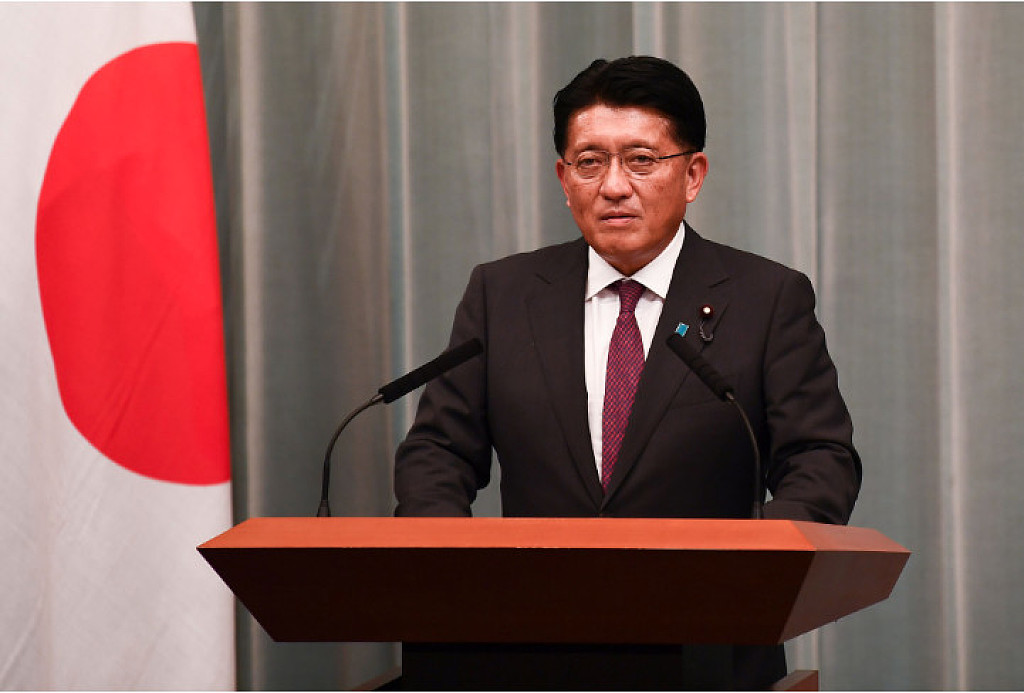
Japan bans foreign visitors as COVID-19 cases spike and new variant detected
The Japanese Government has announced that foreign travellers will not be permitted to enter the country until at least the end of January due to a rise in COVID-19 cases in the nation due to host the next Olympics and Paralympics.
The new measure is set to start tomorrow and will continue throughout January.
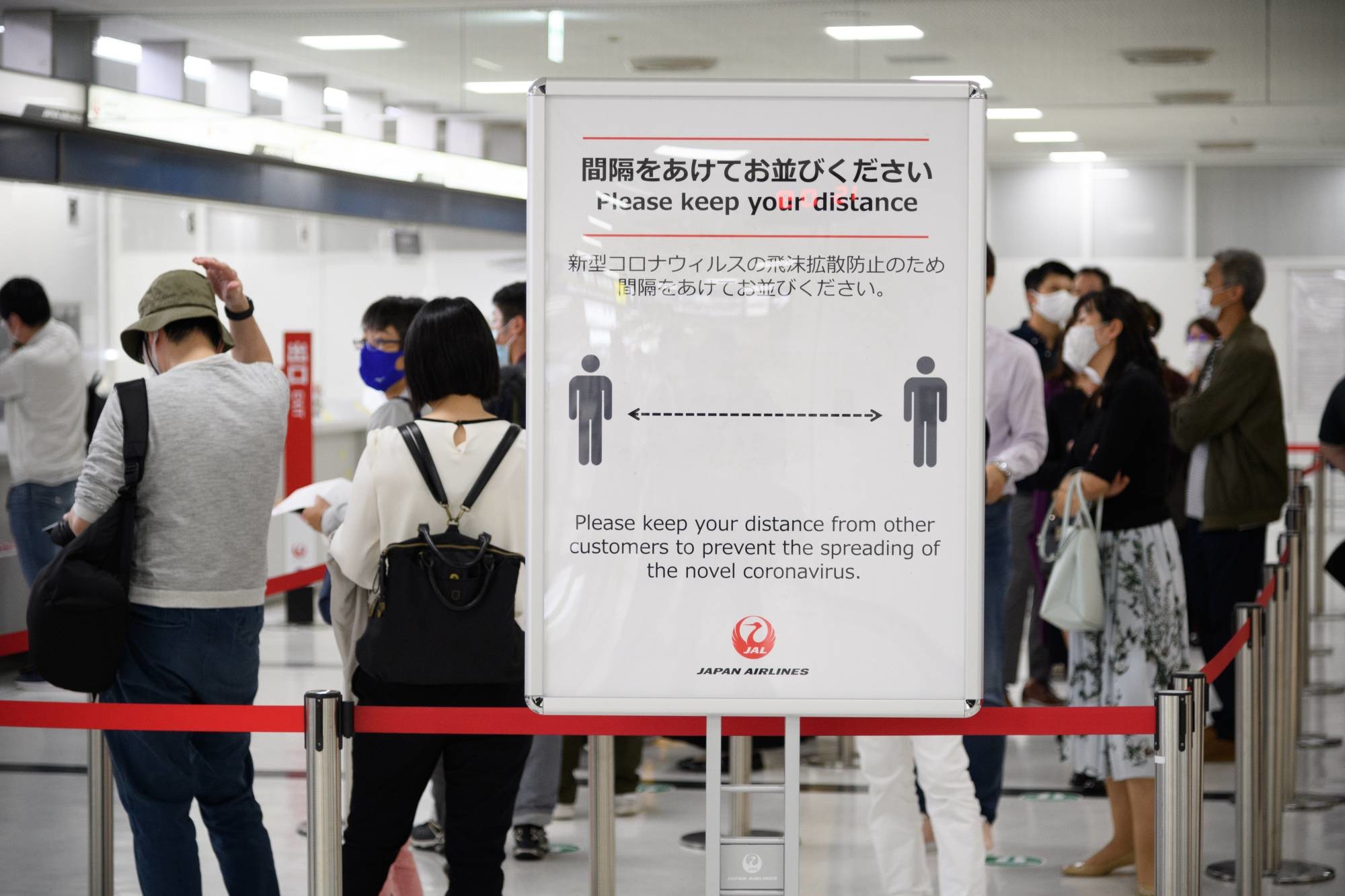
It follows a record daily increase in new coronavirus cases - including at least two of a new, faster-spreading strain of the virus.
Japan reported in excess of 3,500 new cases yesterday.
A further 50 deaths were reported as well.
As Japan tightens its border, citizens and foreign residents will be required to quarantine for two weeks upon returning to the country and must show proof of a negative COVID-19 test within 72 hours of their departure for Japan.
They will also be tested upon arrival.
Digital Transformation Minister Takuya Hirai has also spoken of a tracking system for overseas travellers being developed to monitor virus spread, with the system expected to be in place before the Olympics and Paralympics are held.
"There will be no point if we do not implement it, so that you will be allowed to enter the country unless you use it," Hirai said, Kyodo News reports.
Hirai suggested that tracking will be delivered through GPS technology.
The Tokyo 2020 Olympics are currently scheduled to take place from July 23 to August 8 in 2021, having been postponed by a year due to the COVID-19 pandemic.
The Paralympics are due to take place from August 24 to September 5.
With coronavrius cases rising in the host nation and across other parts of the world, notably Europe and the Americas, doubts remain over whether the Games will be able to go ahead - and if they do, whether international visitors or even domestic spectators will be allowed to attend events
by Inside The Games
Login to leave a comment
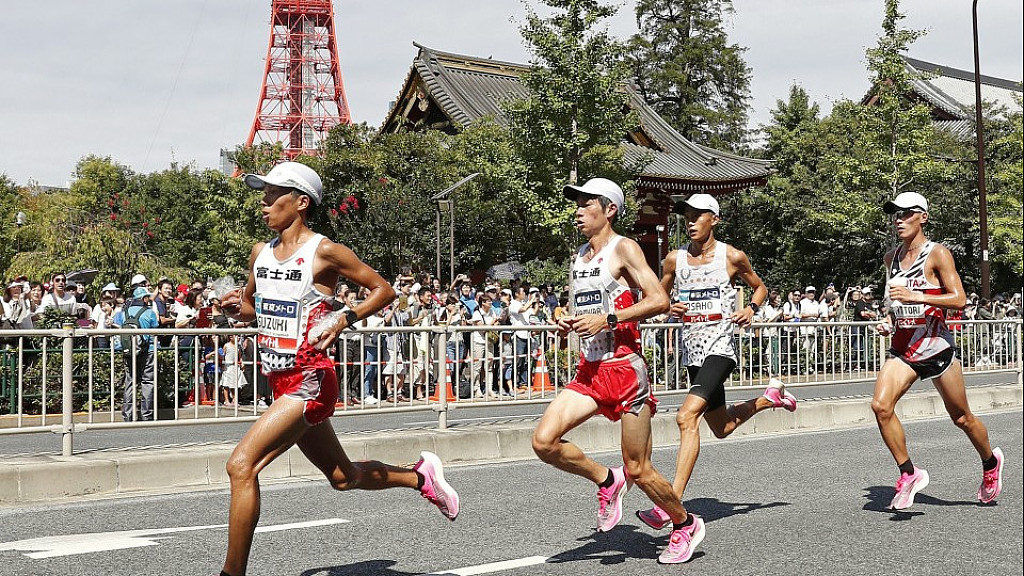
A test event for the Olympic marathon in Sapporo is now due to take place during the Hokkaido-Sapporo Marathon Festival on May 5
The confirmation of the date is among updates made to the calendar of test events by Tokyo 2020.
Olympic marathons and walking races are being held in Sapporo, on the northern Japanese island of Hokkaido, because of concerns over the heat in Tokyo.
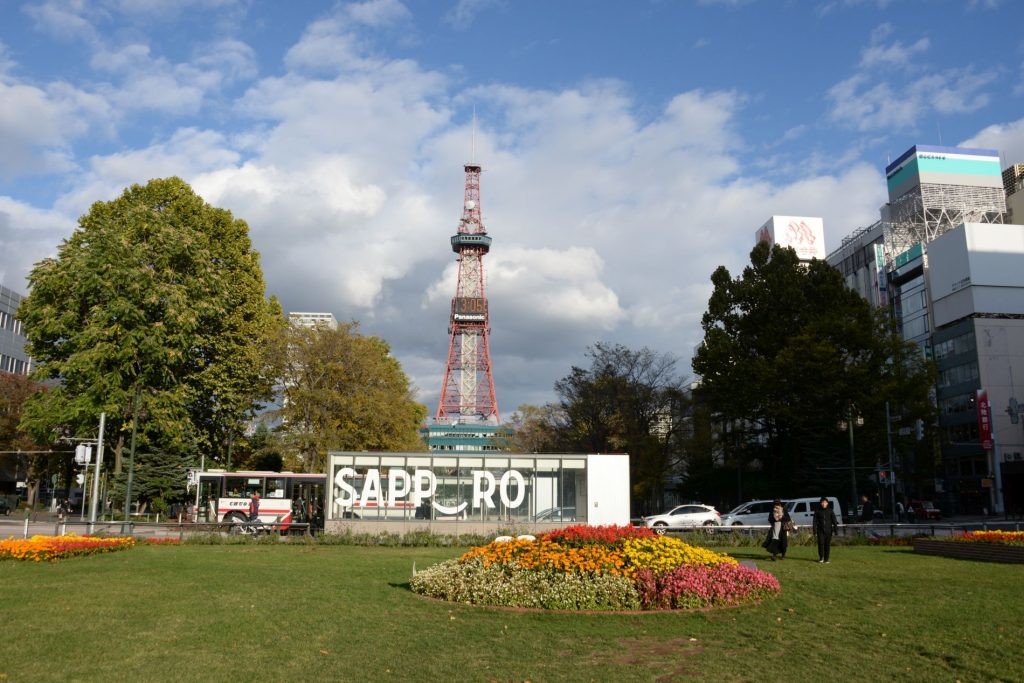
The test race will be organised by the Hokkaido-Sapporo Marathon Festival Committee.
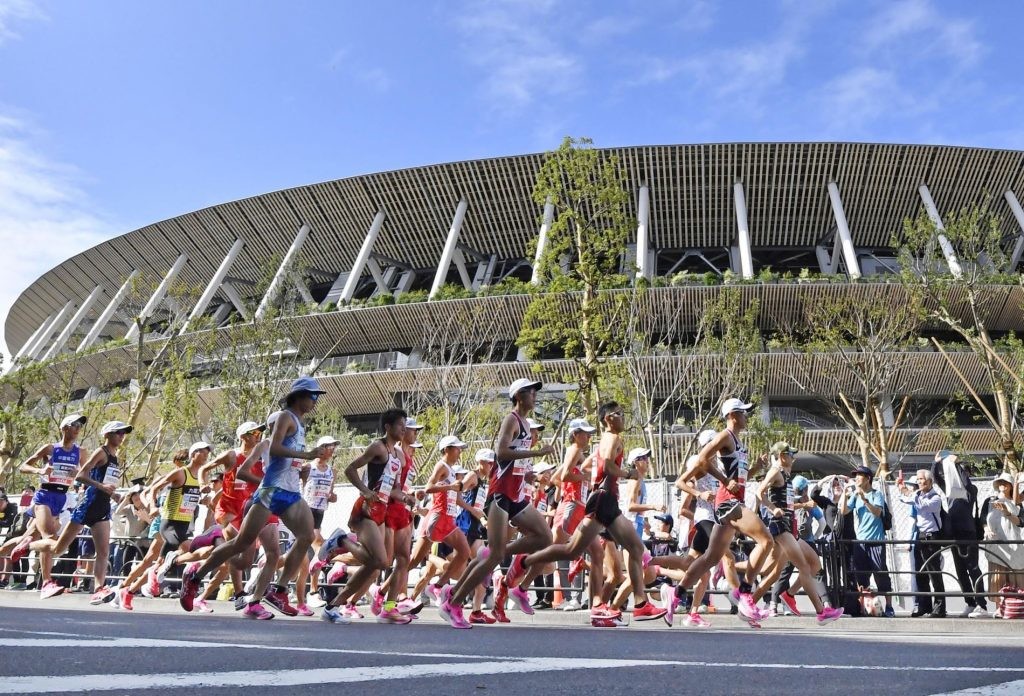
This race on May 5 will test the course for the Games.
World Athletics officials visited the marathon course on August 8, exactly one year prior to the men’s marathon race at the rescheduled Tokyo 2020 Olympics.
Air quality, heat stress, temperature and relative humidity were all measured as the officials cycled the route, and World Athletics said it was encouraged by the results.
A Para-athletics test event for track and field has also been given a date, and is now set to take place on May 11 at the Olympic Stadium in Tokyo.
Wheelchair rugby's test event has also been confirmed, and is scheduled for April 3 and 4 at Yoyogi National Stadium.
An artistic swimming test event is the first scheduled in 2021, due to run from March 4 to 7 at Tokyo Aquatics Centre.
The final test event is currently set to be for 3x3 basketball at Aomi Urban Sports Park from May 14 to 16.
Test events for skateboarding, gymnastics and volleyball, plus track and BMX cycling, are all scheduled as well.
The Tokyo 2020 Olympics are due to take place from July 23 to August 8 in 2021 following their postponement due to the COVID-19 pandemic.
The Paralympics are timetabled to run from August 24 to September 5.
by Michael Houston
Login to leave a comment
Tokyo 2020 Olympic Games
Fifty-six years after having organized the Olympic Games, the Japanese capital will be hosting a Summer edition for the second time, originally scheduled from July 24 to August 9, 2020, the games were postponed due to coronavirus outbreak, the postponed Tokyo Olympics will be held from July 23 to August 8 in 2021, according to the International Olympic Committee decision. ...
more...
Japanese Government considers private healthcare requirement for Tokyo 2020 visitors
The Japanese Government is reportedly considering making private health insurance compulsory for visitors attending next year’s Tokyo 2020 Olympic and Paralympic Games.
According to Kyodo News, a proposal was presented by the ruling Liberal Democratic Party.

The proposal would reportedly see visitors required to take out private health insurance coverage, as well as testing negative for coronavirus.

Visitors may also be required to submit a report on their health status.
The proposal has been made due to the current system requiring the Japanese public to bear the financial cost of treating overseas visitors.
This became an issue earlier this year regarding the Diamond Princess cruise ship.
The cruise ship was docked in Yokohama in February when it recorded around 700 coronavirus infections, with Japanese hospitals ultimately treating visitors with the infections.
Laws would need to be amended for private health coverage to be required, Kyodo News reported.
The Olympics are now scheduled for July 23 to August 8, followed by the Paralympics from August 24 to September 5.
Organisers are working on a series of coronavirus countermeasures to protect athletes and spectators during their stay in the Japanese capital.
Tokyo Governor Yuriko Koike has recently revealed her hopes of holding the Games with "full spectators present".
Tokyo 2020 chief executive ToshirÅ MutÅ has also previously said measures for fans, including non-Japanese residents, would be drawn up by the spring.
Hopes of a successful staging of the Games have been boosted by progress in the development of COVID-19 vaccines, although it may still be some time before they are available to the wider public.
by Michael Pavitt
Login to leave a comment
Tokyo 2020 Olympic Games
Fifty-six years after having organized the Olympic Games, the Japanese capital will be hosting a Summer edition for the second time, originally scheduled from July 24 to August 9, 2020, the games were postponed due to coronavirus outbreak, the postponed Tokyo Olympics will be held from July 23 to August 8 in 2021, according to the International Olympic Committee decision. ...
more...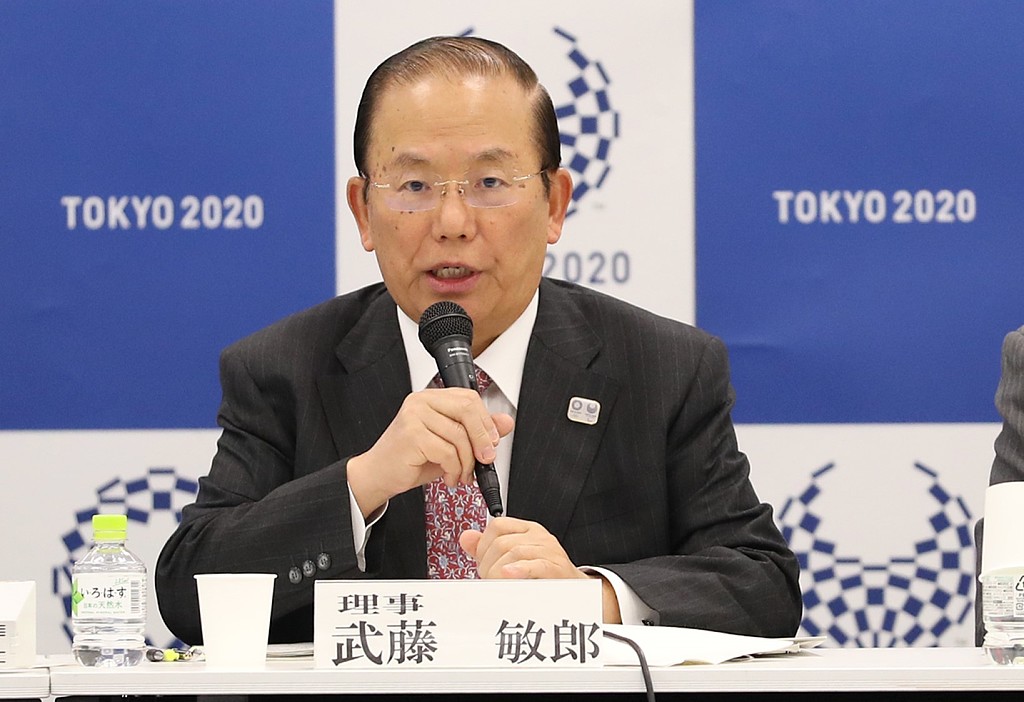
Tokyo 2020 chief executive ToshirÅ MutÅ has fuelled hope of foreign fans being allowed to attend the postponed Olympic Games by revealing a plan for spectators would be drawn up by next spring
ToshirÅ MutÅ also confirmed athletes, coaches and officials would be exempt from Japan's 14-day isolation period and suggested fans travelling from overseas might not need to do it either.
But anyone entering the country is likely to face stringent measures to control the spread of coronavirus.
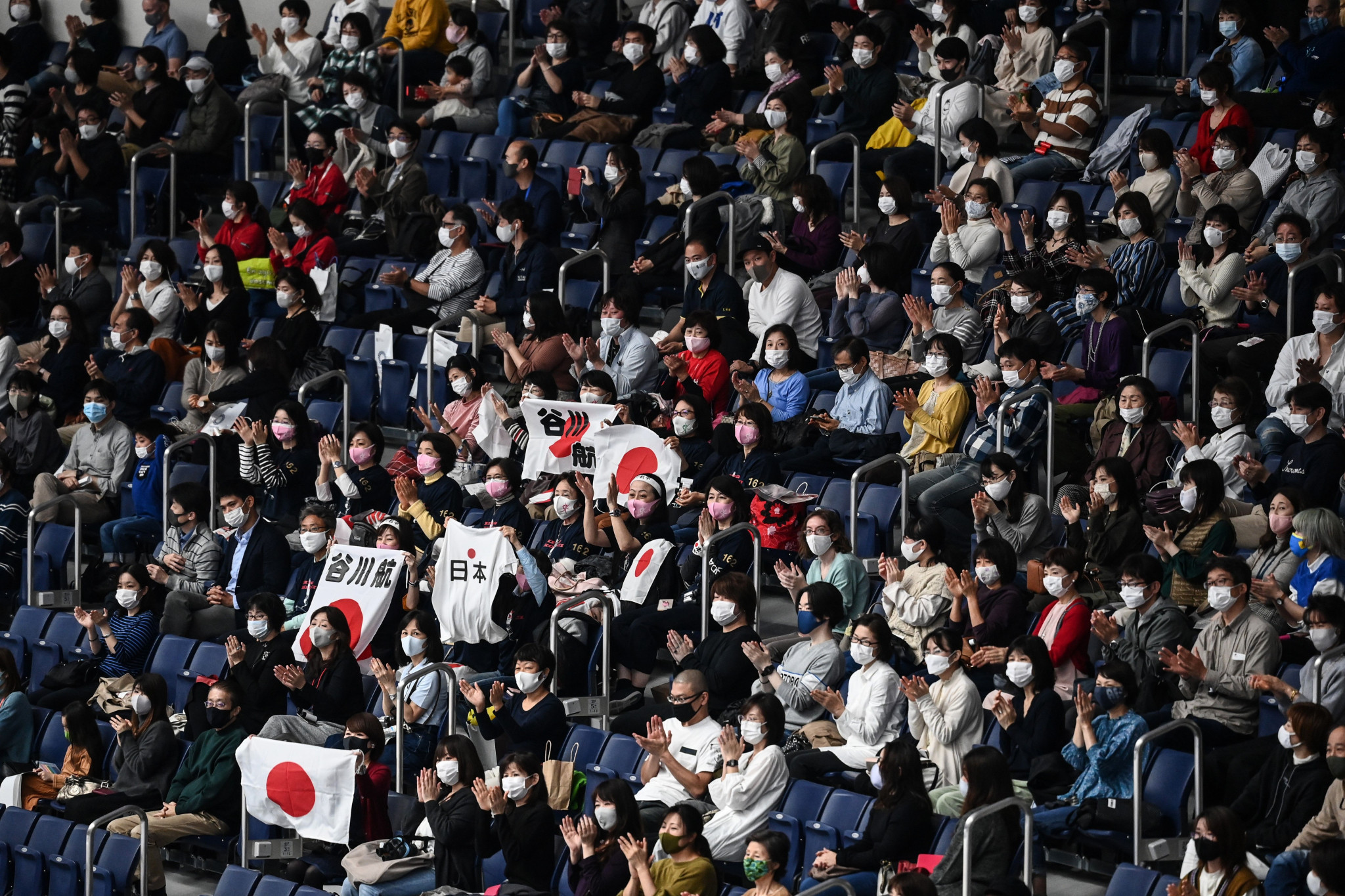
"By the spring, we will be coming up with measures for spectators, including non-Japan residents," said MutÅ to a news conference.
"For non-Japanese, we need to be sure we secure a spectating opportunity for them."
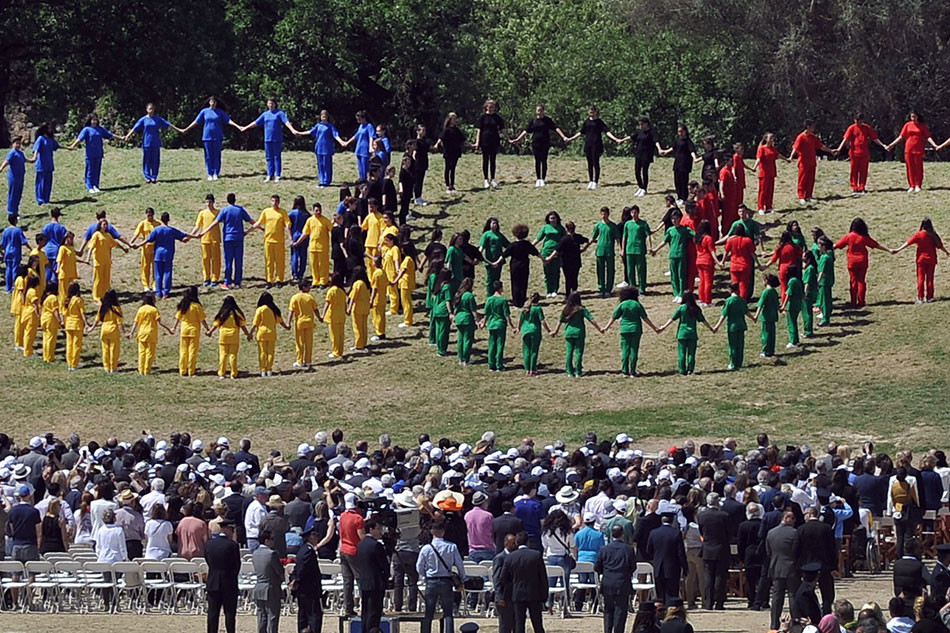
MutÅ was speaking after a meeting involving officials from Tokyo 2020, the Tokyo Metropolitan Government and the Japanese Government.
A series of high-tech devices were recently tested at a packed Yokohama Stadium as Tokyo 2020 organisers bid to come up with ways to safely allow spectators into venues.
The 32,402-seater stadium – which will host the Olympic baseball and softball competitions – reached 100 per cent capacity during the three-day experiment with fans screened for body temperature and high-spec cameras tracking movement.
MutÅ said spectators might be asked to be less vocal to avoid potentially spreading coronavirus.
"Whether we are going to have full capacity or not, the decision has not been made yet because various experiments are taking place," he said.
"There's a possibility that we may ask spectators to refrain from shouting and speaking in a loud voice."
Japan currently imposes a two-week quarantine period on foreign travellers, but MutÅ revealed that rule would be lifted for athletes ahead of Tokyo 2020.
"Athletes, coaches and Games officials that are eligible for the Tokyo Games will be allowed to enter the country, provided significant measures are made before they get to Japan," said MutÅ.
The chief executive said officials were also considering whether to ease travel restrictions for overseas fans attending the Olympics.
"Regarding spectators from overseas, whether they need to go through a 14-day quarantine or not, whether we can waive that or not will depend on the situation," said MutÅ.
"There is a possibility this quarantine is waived if they meet certain conditions."
MutÅ said routes between underground stations and nearby venues could be monitored, but conceded it would be "difficult to control their movement and behaviour".
"After the entry into Japan, we can't follow the spectators and general consumers like we do athletes, so what should we do?" said MutÅ.
"We need to make sure the screening is sufficient before they enter into the country."
Around 4.48 million tickets for the Olympics have been sold as well as 970,000 for the Paralympics.
Tickets for the Games will be valid for 2021, but Tokyo 2020 will offer refunds to fans who are no longer able to attend.
"The spectators' anxiety of not knowing if they can actually go to the Games or not is understandable," added MutÅ.
"We would like to be considerate of the spectators as much as possible while we take preventive measures at the same time to be able to accommodate as many as possible."
by Geoff Berkeley
Login to leave a comment
Tokyo 2020 Olympic Games
Fifty-six years after having organized the Olympic Games, the Japanese capital will be hosting a Summer edition for the second time, originally scheduled from July 24 to August 9, 2020, the games were postponed due to coronavirus outbreak, the postponed Tokyo Olympics will be held from July 23 to August 8 in 2021, according to the International Olympic Committee decision. ...
more...
Japan's Kane Tanaka 117-year-old set to carry Olympic torch ahead of Tokyo Games
Kane Tanaka, the world’s oldest person, will take part in the Olympic torch relay ahead of the Tokyo Games, according to a report in the Japanese newspaper the Mainichi Shimbun. At 117, Tanaka is officially recognized by Guinness World Records as the oldest person alive.
She was already scheduled to carry the torch in the 2020 relay, but those plans were put on hold when the Games were postponed due to COVID-19. Tanaka’s new date to carry the Olympic flame is set for May 11, by which time she will be 118 years, 129 days old.
Tanaka was born in Fukuoka, Japan, on January 2, 1903, just seven years after the first modern Olympics in Athens. Now, more than a century later, she is ready to play a role in the 2021 Olympics. At her care home in Fukuoka, Tanaka will be pushed in a wheelchair for 200m as she carries the Olympic flame. She was added to the relay lineup when Nippon Life Insurance Co., a Japanese company that has sponsored the 2021 Olympics and Paralympics, suggested it to organizers. The Nippon team said they “wanted her to send a positive message about this time of long-living.” Tanaka’s 61-year-old grandson accepted on behalf of his grandmother, saying his family wants “people to see Kane happily carrying the Olympic flame.”
The Mainichi Shimbun report says Tanaka is in good shape, but notes that the plans may be cancelled if she isn’t feeling well on the day of the relay. Because of this, the torch relay is going to be a surprise event for Tanaka, who has not been informed of the plans. “When we were first approached about her doing it, we worried what might happen given her age, but we were getting worked up over nothing,” her grandson told the Mainichi Shimbun. “We’ll be happy if the people who see her holding the torch up and looking well can think, ‘There’s hope in going on living.'”
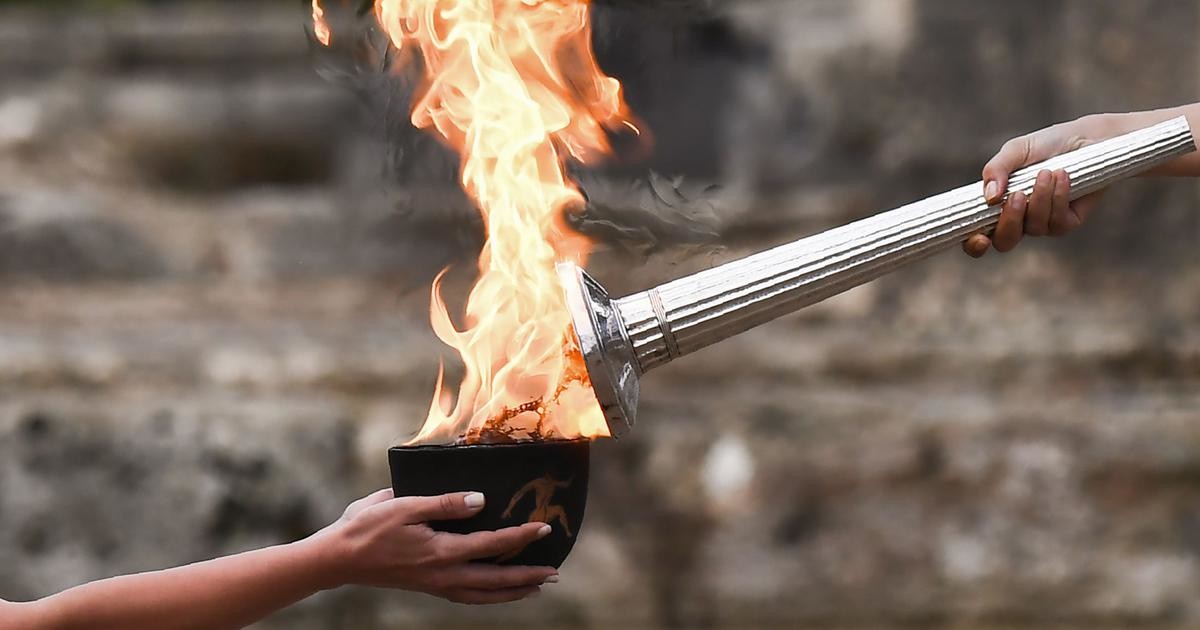
The last time the Olympics were held in Tokyo (which was in 1964), Tanaka was 61, as old as her grandson is now and almost half her current age. In her lifetime, she has lived through a total of 49 Olympics (both summer and winter editions), and the 2021 Games will be the 50th.
by Ben Snider-McGrath
Login to leave a comment
Tokyo 2020 Olympic Games
Fifty-six years after having organized the Olympic Games, the Japanese capital will be hosting a Summer edition for the second time, originally scheduled from July 24 to August 9, 2020, the games were postponed due to coronavirus outbreak, the postponed Tokyo Olympics will be held from July 23 to August 8 in 2021, according to the International Olympic Committee decision. ...
more...
Tokyo Olympics organizers said news of a coronavirus vaccine was a relief on Tuesday but insisted their bio-security planning for the postponed Games remained unchanged
Olympic officials have regularly said that a coronavirus vaccine is not a precondition for staging the Games, now scheduled to open a year late in July 2021.
But they have acknowledged that a successful shot would make their task significantly easier, and welcomed the 90 percent effectiveness shown by one trial vaccine.

"The organising committee is not disconnected from society... and I heard the vaccine news," Tokyo 2020's Games delivery officer Hidemasa Nakamura told reporters at a briefing.
"And the organising committee is feeling the same as you probably felt, positive sentiment and relief," he added.
But he added: "What we are doing right now is not thinking about the vaccine, because we don't have a vaccine yet, but rather focusing on testing, social distance and also the cooperation between the athletes and the other stakeholders."
"I think that is what we need to do to create a safe Games."
Global markets and sentiment soared after US pharmaceutical giant Pfizer said tests involving more than 40,000 people had provided results that were a "critical milestone" in the search for a vaccine.
The news is likely to be a shot in the arm for Japanese officials and their Olympic counterparts, who have faced continuing scepticism about whether the Games can be held next year if the pandemic is not under control.
On Sunday, Tokyo hosted its first international sporting event since the pandemic, a four-nation gymnastics meet that organisers hailed as proof the Games were possible despite the virus.
While the event involved only about 30 athletes and 2,000 socially distanced spectators, Nakamura said it was still evidence that the Olympic and Paralympic Games are feasible.
"Ultimately the Olympics and Paralympics are an accumulation of each competition in each venue, so the fact that a competition was held in November in a safe manner is a huge message," he said.
Sunday's event featured stringent rules for foreign athletes from the United States, China and Russia, who travelled on charter planes and were restricted to designated hotel floors, assigned buses and competition venues.
Athletes had to isolate themselves before coming to Japan, and test negative 72 hours before arrival. They were also tested every day after their arrival.
Spectators at the event had to wear face masks, sanitise their hands and undergo temperature checks, and were told not to shout or cheer.
International Olympic Committee chief Thomas Bach, who is due in Japan next week for the first time since the Games were delayed, said the event had set "an example that sports can be organised safely even under the ongoing health restrictions".
Login to leave a comment
Tokyo 2020 Olympic Games
Fifty-six years after having organized the Olympic Games, the Japanese capital will be hosting a Summer edition for the second time, originally scheduled from July 24 to August 9, 2020, the games were postponed due to coronavirus outbreak, the postponed Tokyo Olympics will be held from July 23 to August 8 in 2021, according to the International Olympic Committee decision. ...
more...
Tokyo trials tentatively announced
British athletes are told what they must do to reach the Olympics and Paralympics – if they take place next year
British Olympic hopefuls will try to qualify for the rescheduled Tokyo Games in a track and field trials event staged in Manchester on June 26-27, whereas marathon contenders will race for places on the team on a multi-lap circuit in London on March 26.
With the Virgin Money London Marathon being held in October in 2020 and 2021, a new trials race over 26.2 miles has been created in the British capital with small elite fields battling for Olympic selection on a loop course.
For 10,000m runners, the trial event will be at the annual Highgate Harriers-organised event at Parliament Hill on June 5.
Race walkers, meanwhile, will have a 20km trial in Leeds in May or June and 50km trial in the spring at a European Race Walking Permit meeting.
At these trials athletes will be striving to qualify for Tokyo, although there remains uncertainty surrounding the staging of the Games themselves.
On the coronavirus pandemic, UK Athletics say in their selection policy statement: “Each of us is managing the impact of Covid 19 and we can see the impact it has had on society at large, the international calendar and the Tokyo Olympic and Paralympic Games in 2021.
“There is still considerable uncertainty surrounding the rescheduling of qualifying competitions. British Athletics is working closely with its international partners to ensure that British athletes have a fair and reasonable opportunity to meet the respective qualification and entry criteria outlined in the policy, and a realistic timeline in which to do so.”
AW understands the marathon trial will be held in a secure bio-bubble similar to the recent London Marathon, though, and is almost certain not to be cancelled.
UKA say their priority is to pick athletes capable of winning medals and reaching the top eight. Following this their selection will focus on picking “individual athletes demonstrating future global medal potential for the Olympic cycle running up to and including the Paris 2024 Olympic Games.”
The announcement follows the news that Britain’s new head coach, Christian Malcolm, has already started his job, albeit from Australia before moving back to the UK soon.
On the track and field trials at Sportcity, UKA’s selection policy states: “The first two placed eligible athletes in each individual trials event will be automatically selected for the same event, provided that, within at least one of the two qualification periods … the athlete has achieved at least one World Athletics qualification standard.”
Marathon and race walks selections will be announced March 30 although Callum Hawkins has already been preselected for the marathon. Athletes for all remaining events will be named on June 28 after the team has been approved by the British Olympic Association.
You can read the full Tokyo 2021 selection policy for Olympic athletes here and for Paralympic athletes here.
by Athletics Weekly
Login to leave a comment
2021 Tokyo Marathon examining alternative plans
Tokyo Marathon is reported to be examining a plan to hold next year’s race, currently scheduled for 7 March, in October 2021 with a maximum field of 15000.
The plan is among the leading candidates for a solution to dealing with the ongoing coronavirus crisis. The Tokyo Marathon Foundation continues to examine the options and projections for the future and intends to make a final decision at its executive board meeting in early October.
This year’s race on 1 March was run as an elite-only event due to the effects of the coronavirus crisis. 38,000 mass participation runners had been scheduled to run through the city’s streets before the mass participation race was cancelled. Those who had been entered have the option to run in either 2021 or 2022 instead.
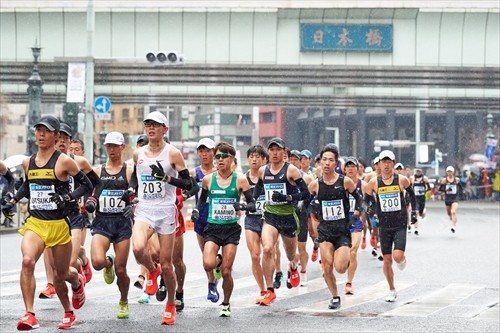
The countdown to next year’s race continues in the midst of uncertainty. Back in August there was a clear statement from the Foundation that “We are not considering an elite-only race.”
The postponed Tokyo Olympic and Paralympic Games are set to take place next summer. Some athletics officials are worried that if the Tokyo Marathon goes ahead with a large number of people on 7 March a cluster outbreak there would have serious repercussions for the Olympics’ and Paralympics’ chances of happening.
If the 7 March date is judged not to be feasible, the October date with a half-sized field of 15,000 seems like the most likely alternative. But with the Paralympics set to end on 5 September it remains to be seen whether another large-scale event could be realistically staged just a month later.
by Brett Larner
Login to leave a comment

Tokyo Marathon
The Tokyo Marathon is a world-renowned annual marathon held in Tokyo, Japan. As one of the prestigious Abbott World Marathon Majors, it attracts elite and amateur runners from around the globe. The race holds World Athletics Platinum Label status, recognizing its high competitive standards, top-tier organization, and international appeal. Sponsored by Tokyo Metro, the Tokyo Marathon has grown into one...
more...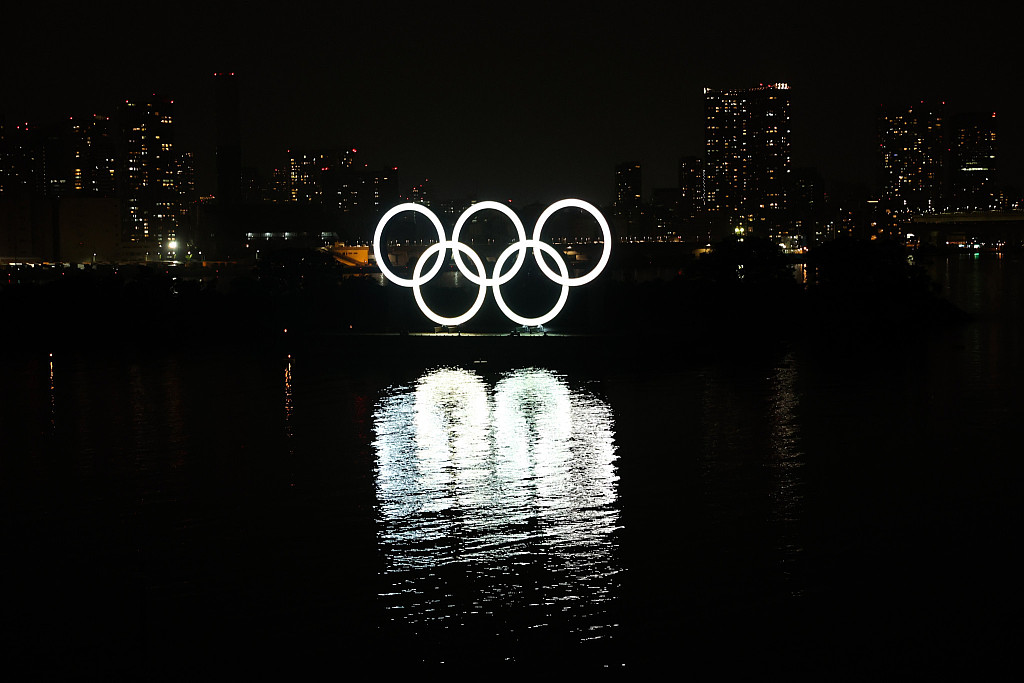
More than half of Tokyo residents opposed to Olympics next year, survey finds
A new survey has found that more than half of Tokyo residents do not want the postponed Olympic and Paralympic Games to be held next year.
Tokyo 2020 has been moved back to 2021 due to the coronavirus pandemic, but doubts remain about the Games going ahead.

The survey, carried out over the phone by Kyodo News and the Tokyo MX television channel, was taken by 1,030 people.
It found that 51.7 per cent want the Games to be postponed again or cancelled, with 46.3 per cent wanting the re-arranged Tokyo 2020 to take place.
Out of those who are opposed to next year, 24 per cent said they would favour a second postponement.
This option has been repeatedly rejected by Tokyo 2020 and International Olympic Committee officials, however.
Complete cancellation was backed by 27.7 per cent.
Of those who want to see the Games go ahead next year, 31.1 per cent said they should take place in a reduced form.
This is the path being taken by organisers, with Tokyo 2020 chief executive ToshirÅ MutÅ speaking about "simplified Games" and announcing this month that 200 ideas on how to scale things back were being considered.
Holding a full-scale Olympics as planned was backed by 15.2 per cent.
The Tokyo 2020 Olympics are now scheduled for between July 23 and August 8 next year, with the Paralympics due to follow from August 24 to September 5.
Some believe that these dates will also not be feasible, however, if the coronavirus pandemic does not subside significantly around the world and a vaccine is not developed.
IOC President Thomas Bach is among those who have admitted the Games would be cancelled entirely if not possible in 2021, with a second postponement not being considered.
Tokyo 2020 Board member Haruyuki Takahashi has claimed, however, that another shift in dates should be considered.
The delay has created a huge logistical challenge for organisers, which Bach has described as a "huge jigsaw puzzle and every piece has to fit".
Another survey by Japanese broadcaster NHK revealed that two-thirds of corporate sponsors for Tokyo 2020 are unsure if they will extend their contracts past December, with 14 per cent saying it would depend on the asking price.
The re-arranged Games is a key topic amid campaigning for Tokyo's gubernatorial election on Sunday (July 5).
Incumbent governor Yuriko Koike looks likely to win a second term although one of her rival candidates, TarÅ Yamamoto, has pledged to cancel Tokyo 2020 if elected.
There are fears of a second wave of coronavirus in the Japanese capital, with the city reporting more than 50 cases for the past four days.
This is the highest level since early May, when Japan was under a state of emergency.
Login to leave a comment
Tokyo 2020 Olympic Games
Fifty-six years after having organized the Olympic Games, the Japanese capital will be hosting a Summer edition for the second time, originally scheduled from July 24 to August 9, 2020, the games were postponed due to coronavirus outbreak, the postponed Tokyo Olympics will be held from July 23 to August 8 in 2021, according to the International Olympic Committee decision. ...
more...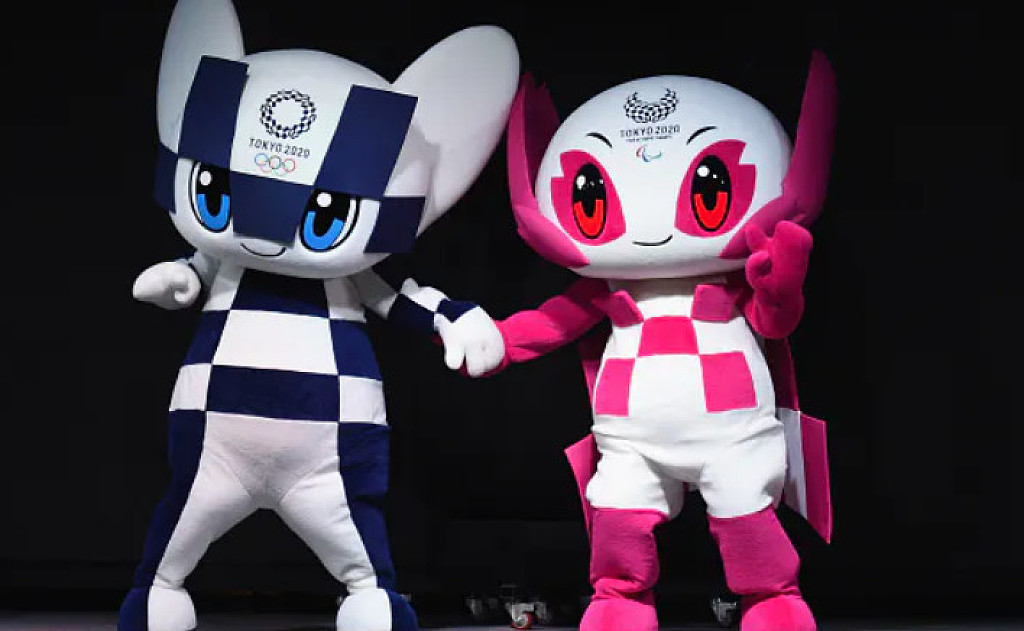
Majority of Tokyo Olympic sponsors undecided on extension
A survey in Japan has revealed two-thirds of corporate sponsors of the Tokyo 2020 Olympics and Paralympics are unsure if they will extend their contracts beyond this December.
Japan’s public media organization NHK conducted a survey of 78 Olympic and Paralympic sponsor companies in May, with 57 of them responding.
NHK says about 12 per cent plan to extend their contracts with the Organizing Committee, while about 65 per cent said they have not started any discussions with the committee and are undecided on extending agreements.
The sponsors who plan to extend their contracts said reports the Games would face cancellation if they cannot take place in 2021 were alarming, the same firms believed that Games without spectators in the stadium would be a reason for withdrawing sponsorship.
The Covid-19 pandemic was highlighted as the main concern for most sponsors with 68 per cent of them saying their financial situation this year has been deteriorating.
The social distancing restrictions due to Covid-19 had also prevented sponsors holding promotional events as they would potentially be held in crowded situations.
In their report NHK said companies failed to respond on how they will react if the committee asks for further financial contributions should they extend their contracts. Fourteen per cent said it would depend on the asking price on whether they will extend or not.
SportBusiness understands that the decision to ask sponsors to make extra payments will be taken in the June-July period and will determine whether domestic partners will be asked to pay more and, if so, at what percentage of the annualised fee.
During an online meeting this week the International Olympic Committee and Games organisers agreed to host a “simplified” games, cutting the financial burden caused by the postponement while prioritising safeguards against Covid-19.
Login to leave a comment
Tokyo 2020 Olympic Games
Fifty-six years after having organized the Olympic Games, the Japanese capital will be hosting a Summer edition for the second time, originally scheduled from July 24 to August 9, 2020, the games were postponed due to coronavirus outbreak, the postponed Tokyo Olympics will be held from July 23 to August 8 in 2021, according to the International Olympic Committee decision. ...
more...
Two-thirds of Tokyo’s corporate sponsors are undecided on whether to continue supporting the Games
Two-thirds of Tokyo 2020's corporate sponsors are undecided on whether to continue supporting the Games now the event has been pushed to 2021, according to a new survey.
In the poll published late Thursday by Japanese public broadcaster NHK, 65 percent of the sponsors surveyed said they had not made up their minds about whether to extend their financial backing for another year.
According to NHK, some companies voiced concerns that their promotional activities around the Games could be curtailed due to crowd-reduction measures imposed against the coronavirus.
They were also worried the Games could be scrapped altogether, with several senior Olympic officials saying the Tokyo Olympics must take place next year or not at all.
Many also said they had not decided whether to extend their sponsorship because they had not yet opened negotiations with the organisers -- suggesting they may be open to persuasion.
Tokyo CEO Toshiro Muto revealed later Friday that the organising committee had not contacted the sponsors due to the coronavirus state of emergency that was declared in Japan just after the Games were postponed in late March.
However, he sought to ease their concerns that the Games would not take place.
"I don't think there is anyone who can really promise that the Olympics and Paralympics will be held in 2021 for sure -- 100 percent in any circumstance," he admitted.
But he stressed that the sponsors should be assured of the "commitment and dedication" from the organising committee to "somehow holding the Olympics."
More than two-thirds (68 percent) of respondents said coronavirus had taken a toll on their own financial situation, as Olympic organisers face having to fund the unprecedented postponement of the Games.
Muto again refused to put a price tag on the additional costs of postponing the Games by one year, but the International Olympic Committee (IOC) has set aside $800 million.
According to the latest budget, the Games were due to cost $12.6 billion, shared between the organising committee, the government of Japan and Tokyo city.
Tokyo 2020 "Gold" sponsors include such Japanese household names as Canon, NEC and Asahi Breweries, while car giant Toyota is a worldwide Olympic sponsor.
According to the latest version of the Tokyo 2020 budget, local sponsorship was due to bring in $3.3 billion, more than half the projected revenues of $5.9 billion.
Since the postponement, officials have been stressing the need to slim down the Games, both in terms of costs and organisation.
IOC President Thomas Bach told AFP in an interview this week they were searching for ways to "simplify the organisation of the Games, how we can reduce the complexity of the Games, how we can save costs for these postponed Games".
Muto said there were 200 proposals on the table for simplifying the Olympics, but again refused to give further details.
For its survey, NHK surveyed 78 Olympic and Paralympic sponsors, receiving responses from 57.
Muto also announced on Friday that 80 percent of venues had been secured for the postponed Games and negotiations were ongoing for the rest, including the Athletes' Village and the proposed site for the media.
He refused to say which venues were still under negotiation.
Login to leave a comment
Japanese Government considering simplified format for Tokyo 2020
The Japanese Government is considering a simplified format for the postponed Olympic and Paralympic Games in Tokyo.
Measures would be introduced to contain the spread of coronavirus, with many concerned that the pandemic may still be an issue next year.
The changes could include a reduction in the number of spectators and a scaling back of the Opening and Closing Ceremonies, as reported by Kyodo News.
Athletes may also have restrictions on the number of times they can leave the Athletes' Village, with testing mandatory for athletes, staff and spectators.
"We hope to work together with the Government and the Tokyo Organising Committee to look into what can be rationalised and simplified," said Tokyo Govenor Yuriko Koike.
"It will be necessary in order to gain empathy and understanding from the public."
The pandemic forced the postponement of this year's Olympics to July 23 to August 8, 2021, with the Games set to be followed by the Paralympics from August 24 to September 5.
Japan Medical Association President Yoshitake Yokokura has expressed his fear that the Games may be completely cancelled if a coronavirus vaccine is not available, while Australian Olympic team medical director David Hughes recently warned that the event in the Japanese capital "will not be business as usual".
Tokyo 2020 and the International Olympic Committee (IOC) have also been looking to scale back some elements of the Games due to concerns over cost.
It has been suggested that the Olympic Torch Relay may be streamlined, for example.
IOC President Thomas Bach predicted the postponement of Tokyo 2020 would cost the governing body $800 million (£659 million/€739 million), while Tokyo 2020 are yet to calculate their final figure.
Japan has reported nearly 17,000 cases of coronavirus, resulting in 900 deaths.
Japanese Prime Minister ShinzÅ Abe lifted the state of emergency in the country last week, but the easing in restrictions has seen a jump in new cases in Tokyo.
Login to leave a comment
Tokyo 2020 Olympic Games
Fifty-six years after having organized the Olympic Games, the Japanese capital will be hosting a Summer edition for the second time, originally scheduled from July 24 to August 9, 2020, the games were postponed due to coronavirus outbreak, the postponed Tokyo Olympics will be held from July 23 to August 8 in 2021, according to the International Olympic Committee decision. ...
more...