

Running News Daily
Running News Daily is edited by Bob Anderson and team. Send your news items to bob@mybestruns.com Advertising opportunities available.
Index to Daily Posts · Sign Up For Updates · Run The World Feed
Articles tagged #Denmark
Today's Running News
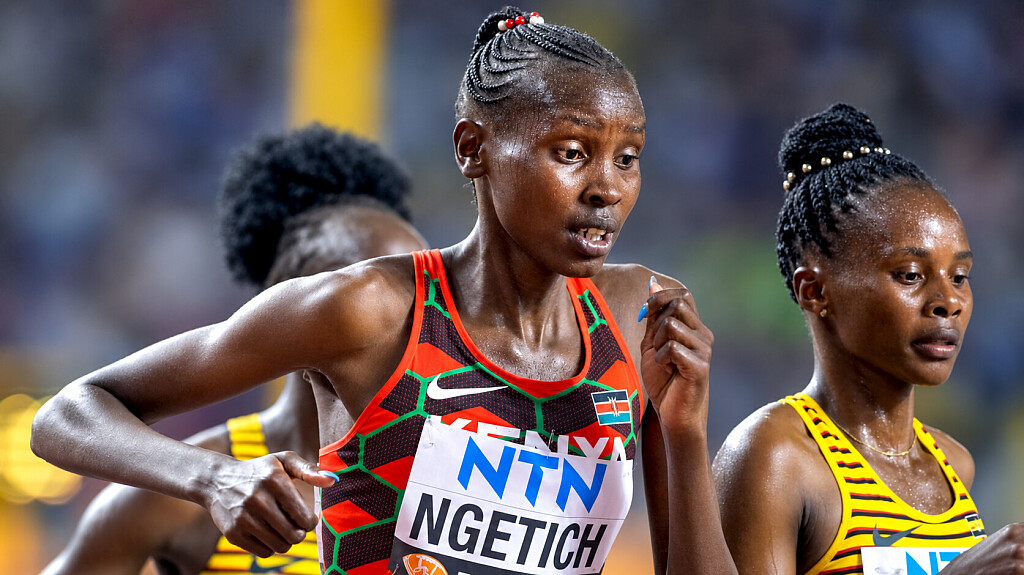


Agnes Ngetich Leads Star-Studded Women’s Half Marathon Field At World Road Running Championships
The stage is set for a spectacular women’s half marathon at the 2026 World Athletics Road Running Championships in Copenhagen, Denmark, with a deep international field ready to battle for the world title on Sunday, September 20.
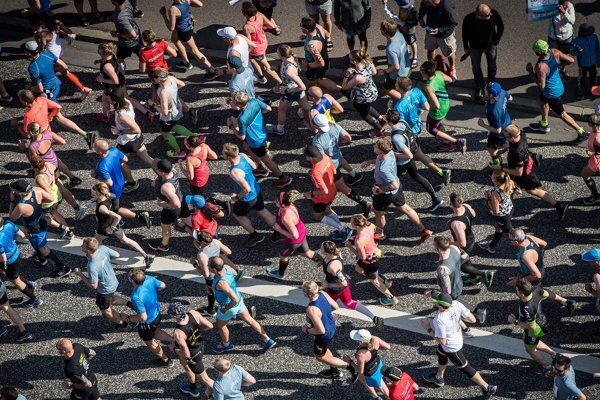
The elite women’s race will begin at 9:10 a.m. local time, with the 21.0975-kilometre championship race taking runners through the streets of Copenhagen before the finish on Øster Allé.
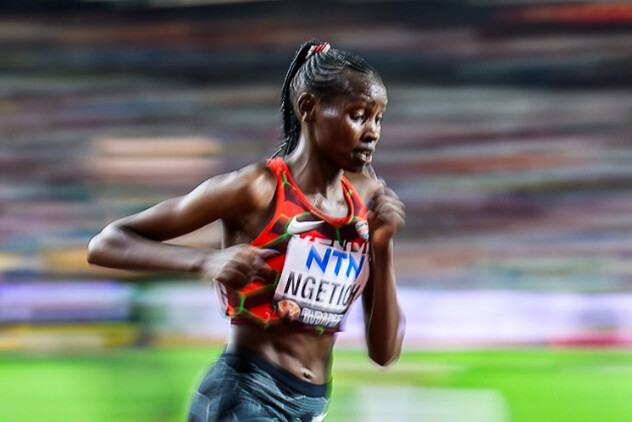
At the head of the entry list is Kenya’s Agnes Jebet Ngetich, who brings a sensational 1:03:04 personal best into the championship. She will lead a powerful Kenyan contingent that also includes Lilian Kasait Rengeruk, whose 1:03:32 is among the fastest times ever recorded over the distance.
Ngetich has established herself as one of the leading distance runners in the world, and her combination of speed and endurance makes her one of the major names to watch when the championship race gets underway.
Rengeruk provides another formidable Kenyan threat, while Daisilah Jerono, with a 1:05:21 personal best, and Veronica Loleo, with 1:05:35, add further depth to the Kenyan line-up.
Ethiopia will also arrive with serious firepower. Tsigie Gebreselama owns a remarkable 1:04:21 personal best, while Ftaw Zeray comes into Copenhagen with a 1:05:12 lifetime best.
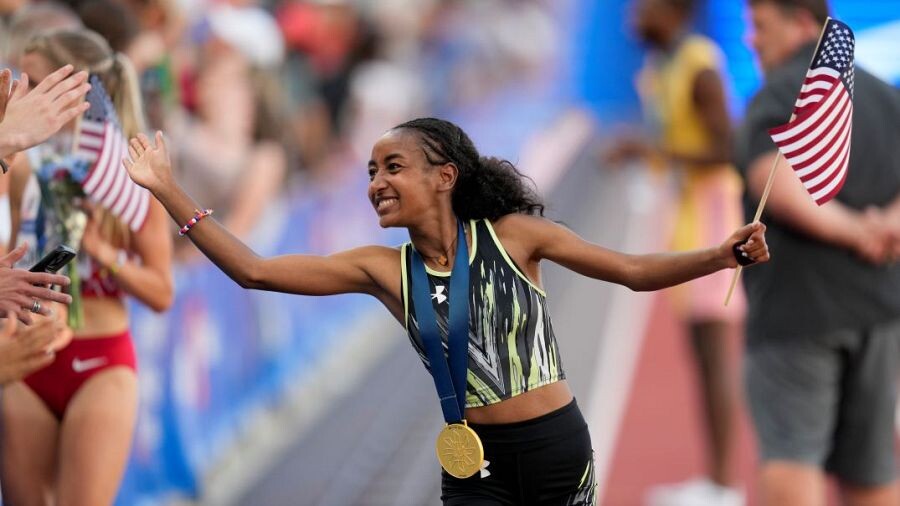
The battle will not be restricted to the leading African nations, however. Weini Kelati Frezghi heads the American challenge with a 1:06:04 personal best, while Esther Chebet of Uganda has run 1:06:33.
Europe will be represented by several accomplished athletes, including Slovenia’s Klara Lukan, who owns a 1:06:43 personal best, and Norway’s experienced Karoline Bjerkeli Grøvdal, whose best stands at 1:06:55.
South Africa’s Glenrose Xaba is another prominent name on the list with a 1:07:03 personal best, while Great Britain’s Samantha Harrison enters with 1:07:10.
Uganda has further depth through Rebecca Chelangat at 1:07:18, Annet Chemengich Chelangat at 1:08:12 and Rispa Cherop at 1:08:53.
The international field also includes Ethiopia’s Melat Siyoum and Baraky Redae, Rwanda’s Florence Niyonkuru and Emeline Imanizabayo, Mexico’s Laura Galván, Belgium’s Chloé Herbiet and Lisa Rooms, the United States’ Emma Grace Hurley, Ednah Kurgat, Carrie Ellwood and Jessica McClain, France’s Mekdes Woldu, Alessia Zarbo and Mélody Julien, Italy’s Sofia Yaremchuk and Elvanie Nimbona, China’s He Wuga and Liang Tiantian, and New Zealand’s Georgie Grgec.
Women’s Half Marathon Entry List
1. Agnes Jebet Ngetich — Kenya — 1:03:04
2. Lilian Kasait Rengeruk — Kenya — 1:03:32
3. Tsigie Gebreselama — Ethiopia — 1:04:21
4. Ftaw Zeray — Ethiopia — 1:05:12
5. Daisilah Jerono — Kenya — 1:05:21
6. Veronica Loleo — Kenya — 1:05:35
7. Weini Kelati Frezghi — United States — 1:06:04
8. Esther Chebet — Uganda — 1:06:33
9. Klara Lukan — Slovenia — 1:06:43
10. Karoline Bjerkeli Grøvdal — Norway — 1:06:55
11. Glenrose Xaba — South Africa — 1:07:03
12. Samantha Harrison — Great Britain — 1:07:10
13. Rebecca Chelangat — Uganda — 1:07:18
14. Melat Siyoum — Ethiopia — 1:07:21
15. Florence Niyonkuru — Rwanda — 1:07:22
16. Baraky Redae — Ethiopia — 1:07:31
17. Laura Galván — Mexico — 1:07:31
18. Chloé Herbiet — Belgium — 1:07:32
19. Emeline Imanizabayo — Rwanda — 1:07:35
20. Emma Grace Hurley — United States — 1:07:35
21. Annet Chemengich Chelangat — Uganda — 1:08:12
22. Mekdes Woldu — France — 1:08:20
23. Alessia Zarbo — France — 1:08:20
24. Ednah Kurgat — United States — 1:08:25
25. Sofia Yaremchuk — Italy — 1:08:27
26. He Wuga — China — 1:08:31
27. Liang Tiantian — China — 1:08:33
28. Carrie Ellwood — United States — 1:08:34
29. Jessica McClain — United States — 1:08:37
30. Elvanie Nimbona — Italy — 1:08:38
31. Lisa Rooms — Belgium — 1:08:40
32. Rispa Cherop — Uganda — 1:08:53
33. Georgie Grgec — New Zealand — 1:09:13
34. Mélody Julien — France — 1:09:15
With so many athletes separated by relatively small margins on paper, the championship race could develop into a fascinating tactical contest. Personal bests provide an indication of speed, but championship racing often comes down to positioning, patience and the ability to respond when the decisive moves arrive.
For Ngetich, Rengeruk, Gebreselama, Zeray and the rest of the field, the opportunity is clear: 21.0975 kilometres through Copenhagen with a world championship title waiting at the finish.
The World Athletics Road Running Championships Copenhagen 26 take place on September 19–20, with the women’s elite half marathon taking centre stage on Sunday, September 20, at 9:10 a.m.
Copenhagen is ready for a major championship showdown — and the women’s half marathon promises to be one of the highlights of the weekend.
by Erick Cheruiyot for My Best Runs.
Login to leave a comment
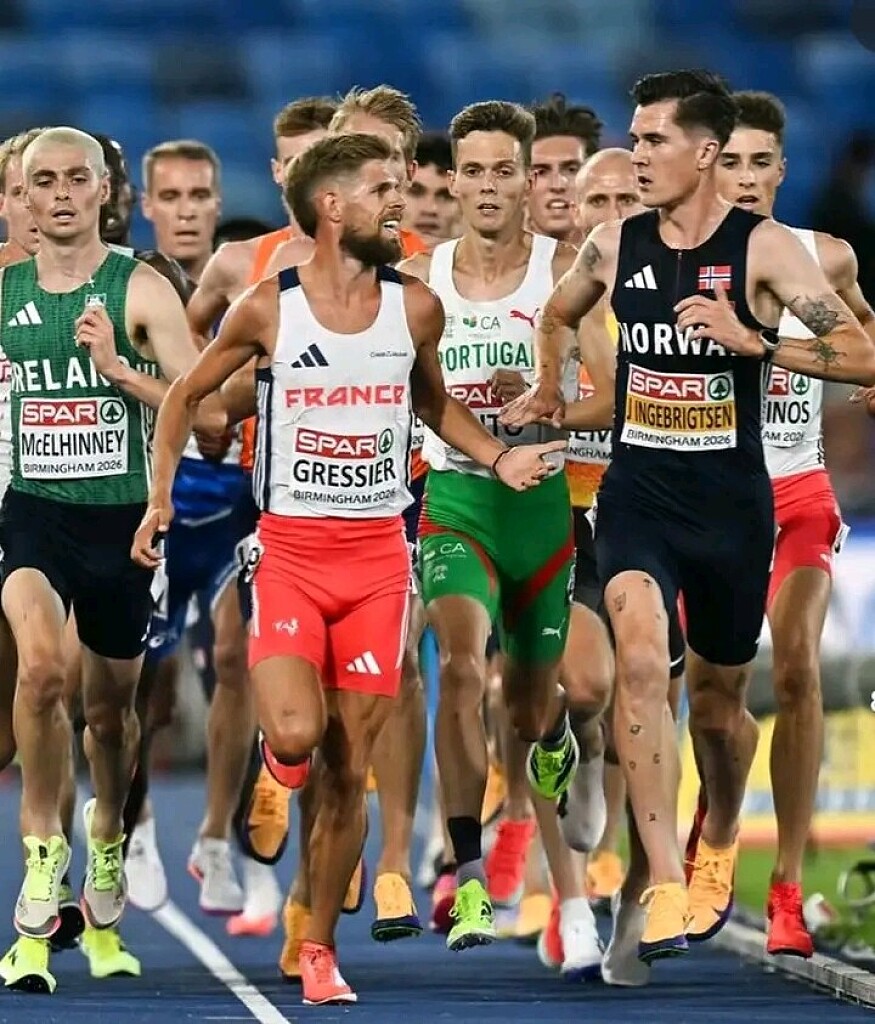
Jakob Ingebrigtsen And Jimmy Gressier Set For First-Ever Road Showdown In Copenhagen
COPENHAGEN — Two of the biggest names in modern distance running are about to take their rivalry onto unfamiliar territory.
Norway’s Jakob Ingebrigtsen and France’s Jimmy Gressier are set to meet for the first time on the roads when the men’s 5km at the World Athletics Road Running Championships gets underway in Copenhagen on Saturday, September 19.
The highly anticipated clash brings together two athletes with very different paths to the start line, but an equally strong appetite for another global title.
Ingebrigtsen arrives in Denmark as the reigning Olympic 5000m champion and a four-time European 5000m champion. He has also just added the inaugural World Athletics Ultimate Championship 5000m title to his collection, producing a powerful 12:59.24 performance in Budapest only days ago.
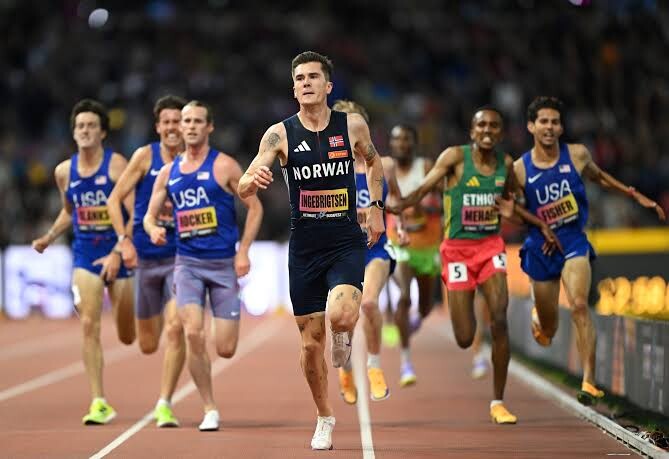
The Norwegian has already conquered some of the biggest stages in track and field. Now, Copenhagen presents a new challenge: winning a global title on the roads.
His road-racing experience over 5km is limited, however. World Athletics notes that Ingebrigtsen has raced the distance only once before, clocking 13:28 in Stavanger in 2020. He also raced his first and, so far, only half marathon in Copenhagen in 2024.
Standing in his way is a man who has already proved that he belongs among the very best road racers in the world.
Gressier enters Copenhagen as the reigning world 10,000m champion and the fastest man on the 5km entry list. In April, the Frenchman stormed to a European record of 12:51 in Lille, moving within just two seconds of the world record. Only Ethiopia’s Berihu Aregawi and Yomif Kejelcha have ever run faster over the distance.
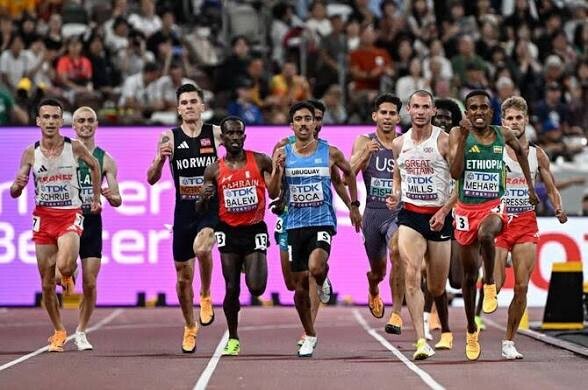
That performance also came with a warning for the rest of the field.
Ethiopia’s Addisu Yihune finished second behind Gressier in Lille in 12:54, a mark that places him fifth on the world all-time list. The two will meet again in Copenhagen, adding another major storyline to an already loaded championship race.
And Gressier is not stopping after one race.
The French star is entered for both the 5km on Saturday afternoon and the men’s half marathon on Sunday morning. With the 5km scheduled for 2:40 p.m. and the half marathon at 9:45 a.m. the following day, he will have only around 19 hours between the two championship races.
It is an extraordinary test of versatility. First comes a five-kilometre battle likely to demand close to all-out speed from the opening stages. Then, before a full day has passed, Gressier will have to return to the start line for 21.1 kilometres against a field packed with established road specialists.
Yet the 29-year-old is no stranger to the half marathon. He won the European half marathon title in 2025 in 59:45 and finished fifth at the 2023 World Road Running Championships in Riga in 59:46.
The 5km field, meanwhile, extends well beyond the headline names.
Kenya’s Mathew Kipsang arrives as the reigning Commonwealth 5000m champion, while Australia’s Ky Robinson, Burundi’s Egide Ntakarutimana, Norway’s Narve Gilje Nordås and Portugal’s José Carlos Pinto are among the other athletes capable of making the race highly competitive.
Copenhagen is therefore preparing for much more than a simple Ingebrigtsen-Gressier duel.
It is a meeting between a track superstar testing himself on the roads and a world champion who has already demonstrated extraordinary speed over the distance. Add Yihune’s 12:54, Kipsang’s championship pedigree and a deep international field, and the ingredients are there for a fiercely contested world title.
For Ingebrigtsen, the question is whether his world-class track speed and devastating finishing ability can translate seamlessly onto the roads.
For Gressier, the challenge is whether he can turn his remarkable 12:51 into a world championship crown — while keeping enough in reserve for the half marathon less than 24 hours later.
One thing is certain: when the gun fires in Copenhagen, the roads will provide a completely new chapter in the careers of two athletes who have already conquered some of the biggest stages in the sport.
And this time, there will be nowhere to hide.
Jakob Ingebrigtsen versus Jimmy Gressier.
Track royalty meets road-running firepower.
Copenhagen is ready.
by Erick Cheruiyot for My Best Runs.
Login to leave a comment
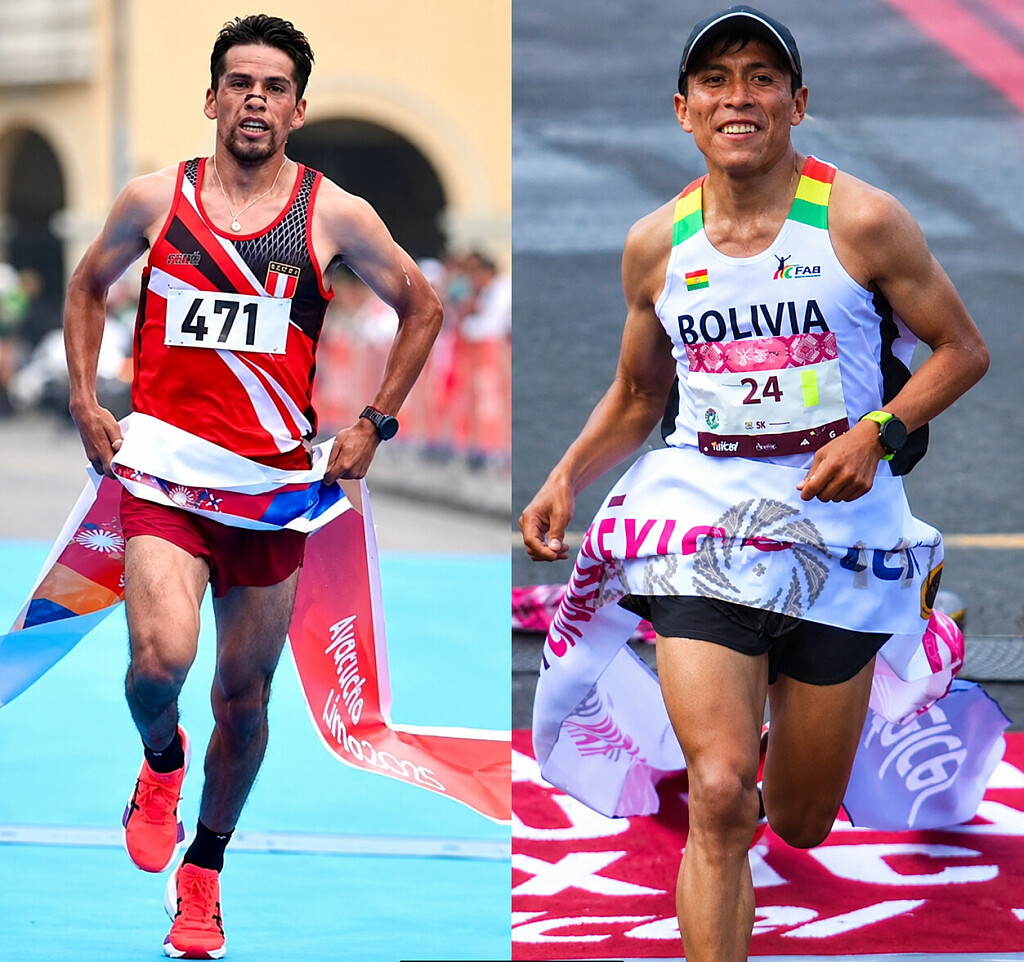
South America’s Best Set For Copenhagen World Half Marathon Showdown
South America will be represented by a strong eight-man contingent at the World Athletics Road Running Championships Copenhagen 26, with the athletes set to take on one of the deepest and most competitive men’s half marathon fields on Sunday.
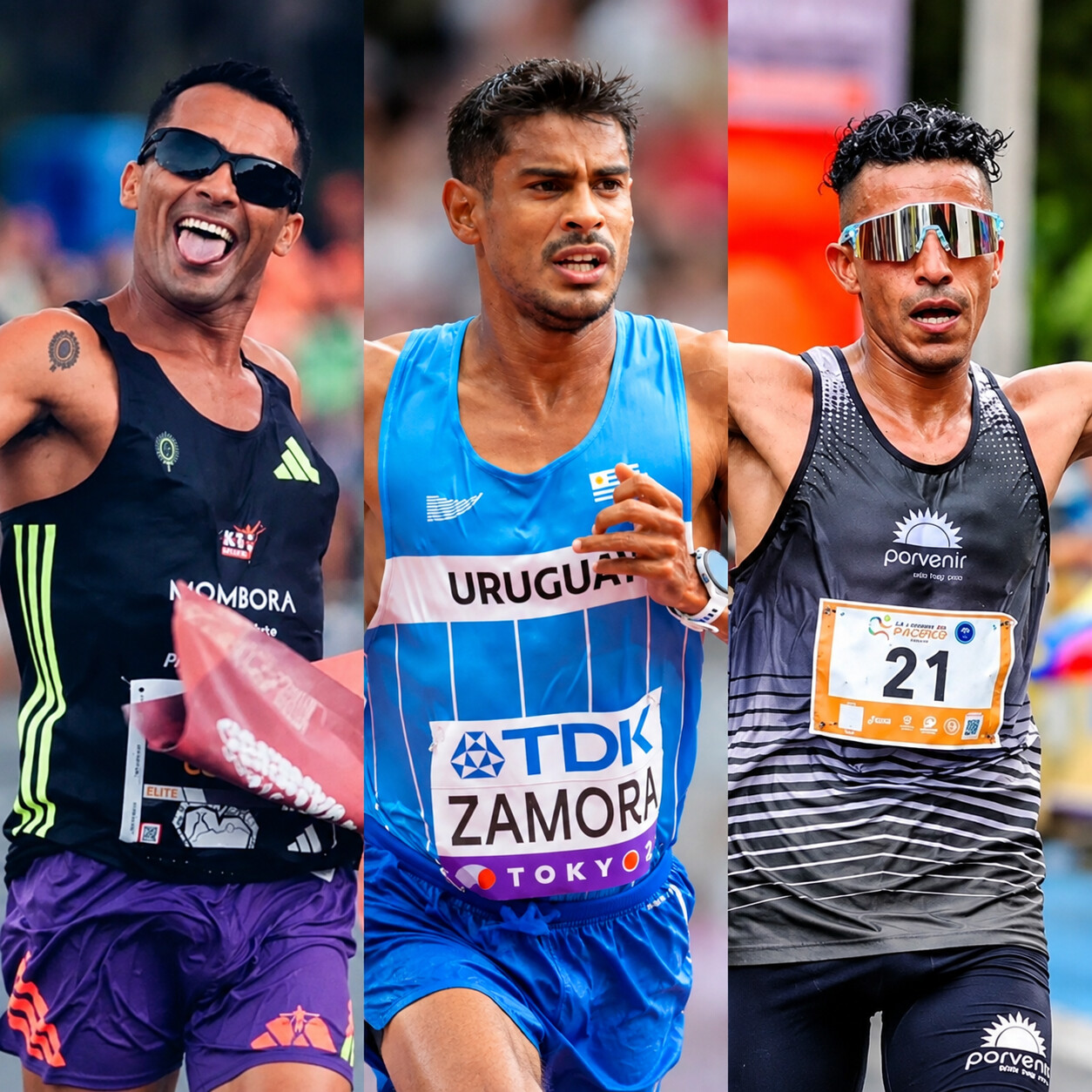
The championship will bring together leading road runners from around the world, creating a demanding stage for the South American representatives as they battle for strong championship positions and potentially significant personal breakthroughs.
Bolivia’s Héctor Garibay headlines the group, joined by Colombia’s Mauricio González and Uruguay’s Cristhian Zamora. Peru will be represented by Ferdinand Cereceda, while Brazil has the largest presence with Fabio Jesus Correia, Lucas Paulo Ferreira and Giovani Dos Santos.
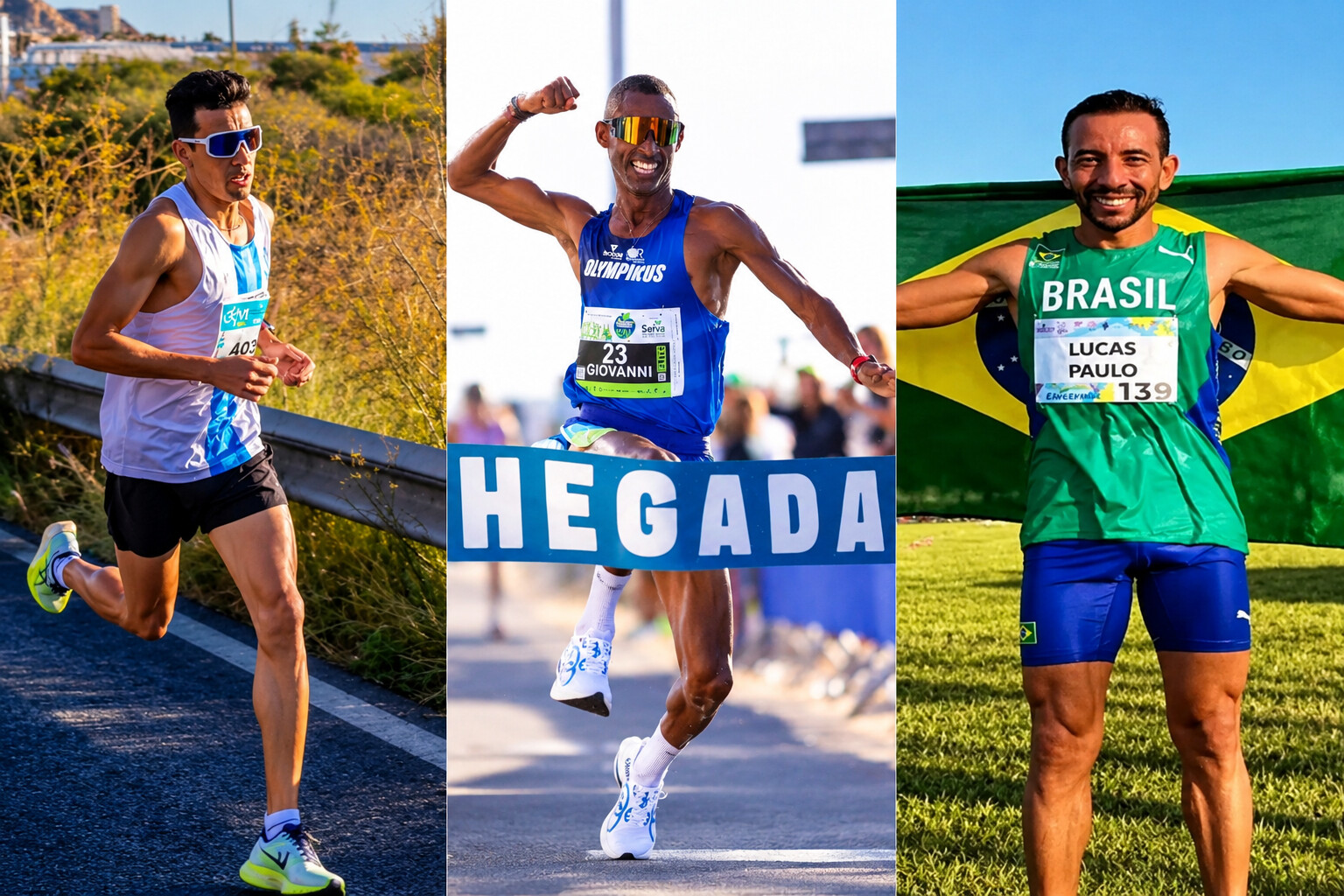
Argentina completes the contingent with Marcelo Fabian Manrique, giving South America a diverse eight-man lineup ready to take on the challenge in Copenhagen.
Competing at a World Athletics championship is never simply about chasing a fast time. Championship racing often demands patience, tactical awareness and the ability to respond when the pace changes, particularly when the field contains athletes capable of producing world-class performances.
For the South American runners, Copenhagen offers more than an opportunity to compete for championship honours. It is a chance to test themselves against the very best in the world and measure how far they have progressed on the international stage.
The contingent also brings a fascinating mix of experience, ambition and emerging talent. Each athlete arrives with a different racing background, but they share the same opportunity: to turn months of preparation into one memorable performance on the biggest road-running stage. Against a world-class field, even a small improvement in the closing kilometres could make a significant difference in the final standings.
Copenhagen is therefore set to provide a true test of character as much as fitness. The championship atmosphere, fast competition and relentless pace will demand that the South American runners remain composed from the opening kilometres to the final stretch. If they can execute their race plans and find another level when it matters most, several could leave Denmark with performances that represent important milestones in their careers.
With the pressure of a global championship and the depth of talent expected on the starting line, every kilometre will count. A personal best would be a major achievement, but strong tactical racing and a competitive finish could prove just as valuable.
The eight athletes will now look to arrive in Copenhagen ready to embrace the challenge, with South America hoping to make its presence felt when the world’s best half marathoners take over the streets of the Danish capital.
by Erick Cheruiyot for My Best Runs.
Login to leave a comment
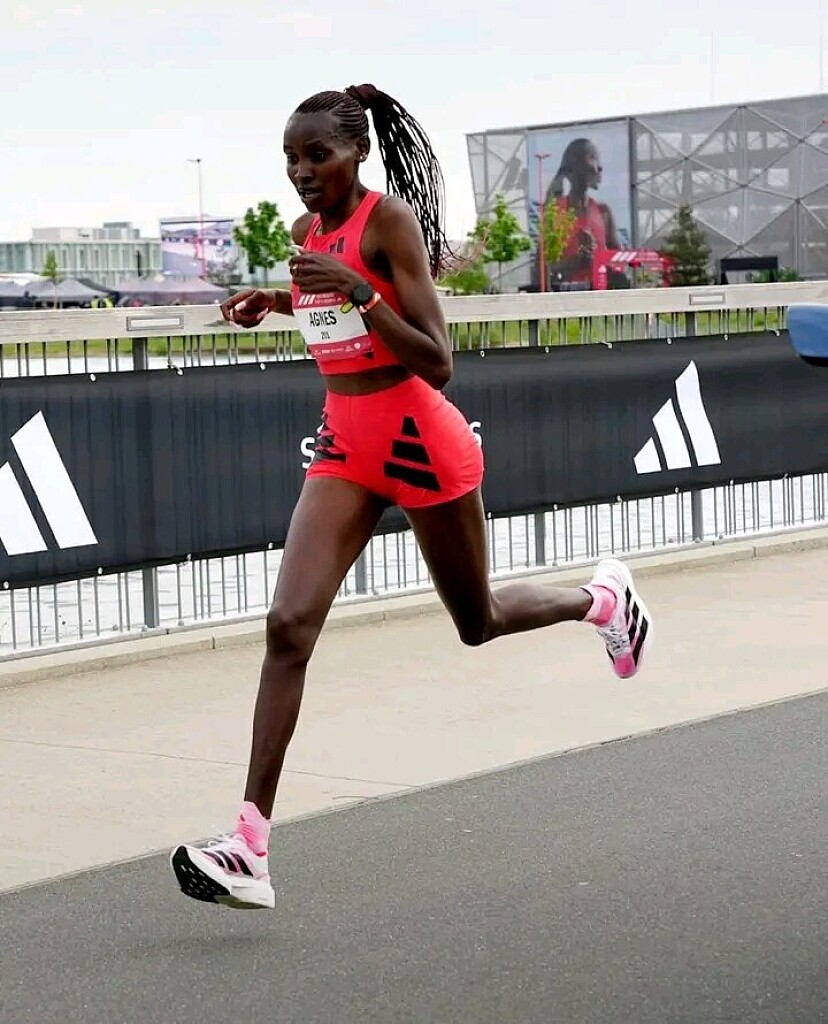
Kenya Unveils Strong Squad for 2026 World Athletics Road Running Championships in Copenhage
Kenya has unveiled a formidable squad for the 2026 World Athletics Road Running Championships, with some of the country’s leading distance-running talents selected to represent the nation in Copenhagen, Denmark, on September 19–20.
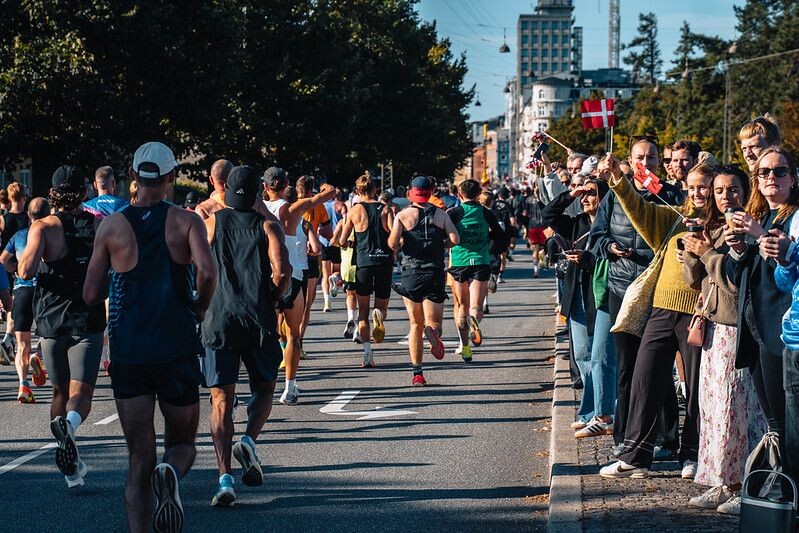
The team features a blend of established international performers and emerging stars, underlining Kenya’s ambition to make a strong impact across the half marathon, 5km and one-mile races.
Leading the women’s half marathon team is Agnes Jebet Ngetich, one of the most accomplished young distance runners in the world. She will be joined by Daisilah Jerono, Veronica Loleo and Lilian Kasait Rengeruk as Kenya looks to challenge for the women’s team and individual honours.
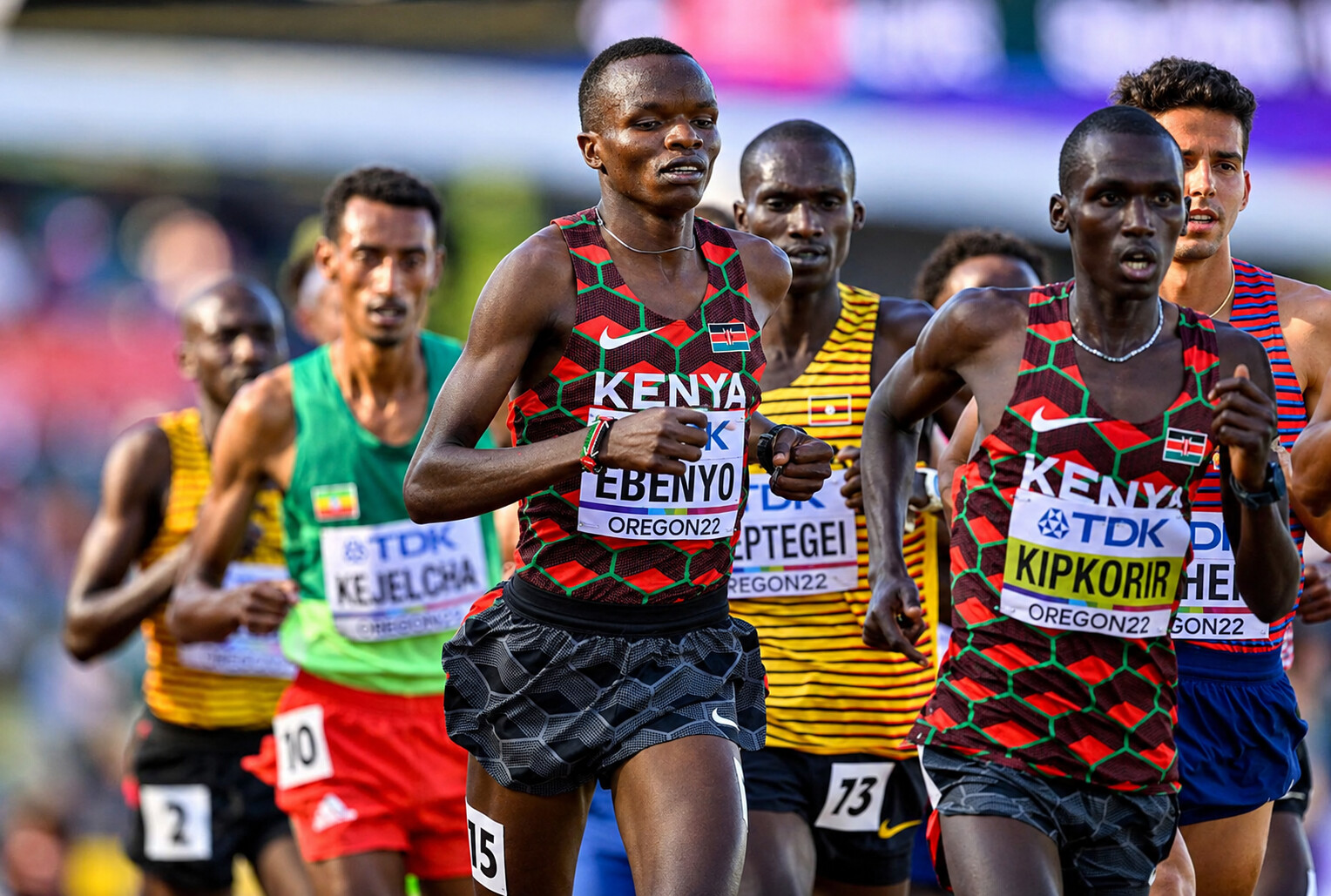
The men’s half marathon squad is equally impressive, headlined by Daniel Simiu Ebenyo. The experienced Kenyan will line up alongside Michael Kiplagat Temoi, Nicholas Kipkorir Kimeli and Gideon Kipkertich Rono, giving Kenya a powerful quartet capable of competing at the front of a championship field.
Kenya will also field two athletes in each of the 5km races. Charles Kiboino and Mathew Kipchumba Kipsang have been selected for the men’s event, while Caroline Makandi Gitonga and Caroline Nyaguthii Nyaga will carry Kenya’s hopes in the women’s race.
The one-mile races will provide another opportunity for Kenyan athletes to showcase the country’s renowned middle- and long-distance strength. Brian Komen and Daniel Kyumbe Munguti will represent Kenya in the men’s race, with Miriam Cherop and Naomi Korir selected for the women’s event.
With representation across all six individual races, Kenya heads to Copenhagen with a well-balanced squad and plenty of international experience. The championships will bring together the world’s leading road runners for two days of high-level competition, with Kenya once again expected to be among the nations fighting for medals.
For a country with such a rich tradition in distance running, the 2026 World Athletics Road Running Championships present another major stage for Kenyan athletes to demonstrate their speed, strength and championship racing ability on the streets of Copenhagen.
Team Kenya
Half Marathon – Men: Michael Kiplagat Temoi, Nicholas Kipkorir Kimeli, Gideon Kipkertich Rono, Daniel Simiu Ebenyo
Half Marathon – Women: Agnes Jebet Ngetich, Daisilah Jerono, Veronica Loleo, Lilian Kasait Rengeruk
5km – Men: Charles Kiboino, Mathew Kipchumba Kipsang
5km – Women: Caroline Makandi Gitonga, Caroline Nyaguthii Nyaga
One Mile – Men: Brian Komen, Daniel Kyumbe Munguti
One Mile – Women: Miriam Cherop, Naomi Korir
Kenya’s road-running stars now have their sights firmly set on Copenhagen, where they will look to turn the strength of the squad into medals and memorable performances on the world championship stage.
by Erick Cheruiyot for My Best Runs.
Login to leave a comment
World Athletics Road Running Championships in Copenhagen Aim for Lasting Impact Beyond the Finish Line
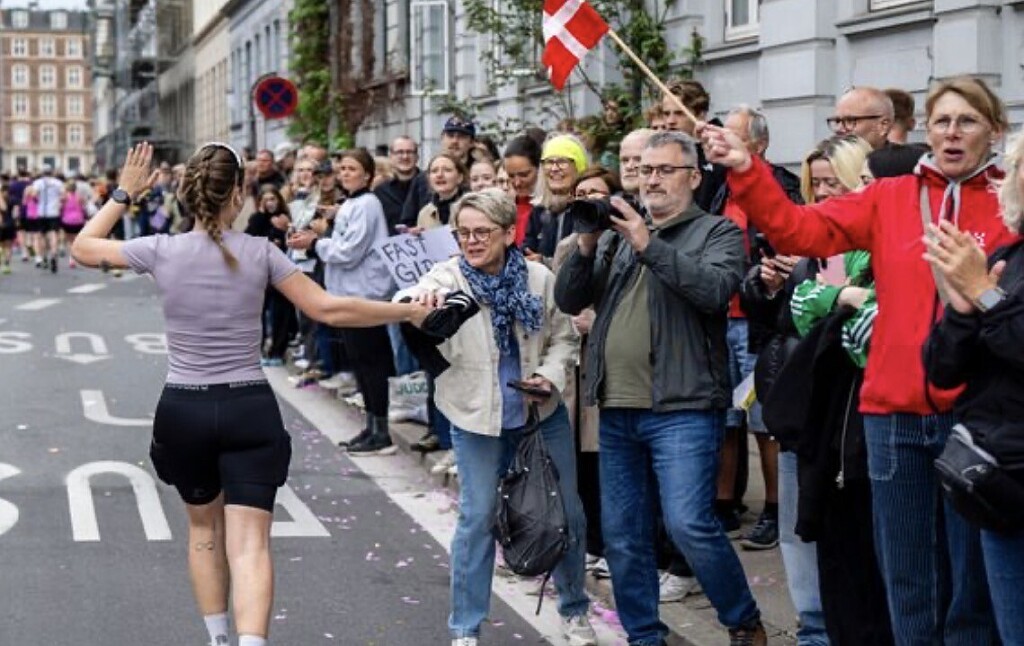
When the World Athletics Road Running Championships arrive in Copenhagen Sept. 19-20, 2026, the focus will extend far beyond medals and finishing times. Organizers of the global event are positioning the championships as a model for how major sporting events can create long-term environmental and social benefits while still delivering world-class competition.
The championships will feature the world’s best athletes competing for official world titles in the half marathon, 5K, and one mile. They will be joined by an estimated 65,000 recreational runners racing on the same streets through the Danish capital.
But organizers say the bigger goal is to leave behind a meaningful legacy.

Behind the scenes, the event team is implementing a broad sustainability strategy designed to reduce climate impact while encouraging healthier lifestyles across Denmark. Organizers expect both runners and more than 100,000 spectators to participate in these efforts through responsible waste sorting, use of public transportation, and climate-conscious food choices.
At the same time, the championships are being used to engage children, young people, and individuals living with illnesses in programs aimed at improving long-term public health and community participation through sport.
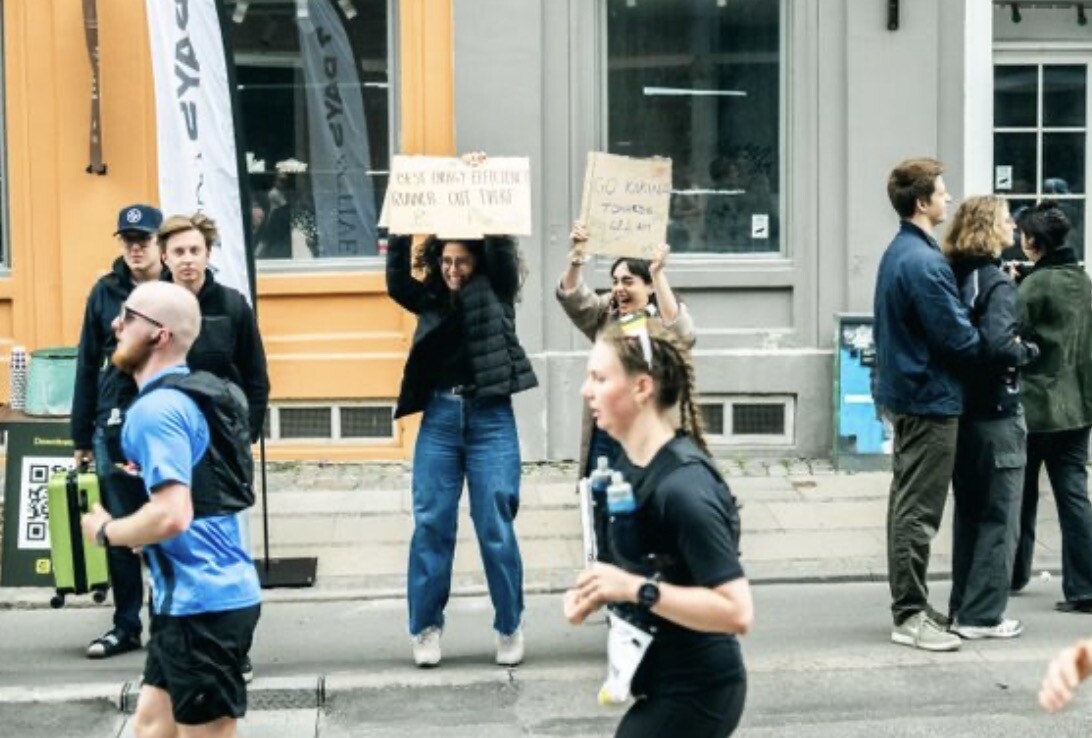
“It may sound simple to ask people to sort their waste or take the bus, but as a leading green city, Copenhagen has a responsibility — especially when we welcome the world,” said Christopher Røhl, Mayor of Culture and Leisure for the City of Copenhagen. “We cannot take over the city and its public spaces without taking responsibility for the footprint we leave behind.”
One of the event’s major goals is to achieve gold certification under World Athletics’ “Athletics for a Better World Standard,” a sustainability framework requiring measurable progress across 55 action areas covering climate impact, governance, and social responsibility.
Sport Event Denmark CEO Lars Lundov said Denmark’s approach to hosting major sporting events has evolved significantly in recent years.
“When Denmark hosts major international sporting events, it comes with a responsibility to do so in a more sustainable way,” Lundov said. “It is about concrete actions — from renewable energy and reducing food waste to circular solutions and better use of public transport.”
Wonderful Copenhagen, the city’s tourism organization, also sees the championships as an opportunity to create behavioral change through sport.
“International events bring locals and visitors together around shared experiences, making them strong catalysts for changing behavior and creating long-term positive impact,” said Kit Lykketoft, Director of Congresses, Events & Sustainability.
Sparta Athletics & Running, the local organizing body behind the championships, says the approach is intentionally practical rather than built around one headline-grabbing promise.
“The World Championships provide a unique international platform that allows us to elevate our social responsibility efforts to a new level,” said Sparta CEO Dorte Vibjerg. “The experience we gain here will create lasting effects that extend far beyond the event itself.”
Nynne Ammundsen, Head of Sustainability for Sparta Athletics & Running, summarized the philosophy this way:
“We believe that an ‘every action counts’ approach will take us far. Rather than promoting one overly ambitious goal, we are setting measurable targets across a wide range of areas where we, as organizers, can genuinely make a difference.”
The championships’ sustainability campaign is built around the slogan:
“Do less. Do greener. Do it together.”
With elite racing, mass participation, and one of Europe’s most environmentally focused cities working together, Copenhagen 2026 hopes to demonstrate that the future of road racing can be both world-class and responsible.
by Sparta
Login to leave a comment

USATF Unveils Powerful Squad for 2026 World Road Running Championships in Copenhagen
USA Track & Field has officially announced a formidable roster for the 2026 World Athletics Road Running Championships, set to take place on September 19–20 in Copenhagen, Denmark. Featuring a blend of American record holders, global finalists, and rising distance-running stars, Team USA heads into the championships with ambitions of challenging for medals across the mile, 5K, and half marathon events.
Leading the American charge are three national record holders whose presence immediately elevates the strength of the squad. From the road to the track, the United States has assembled one of its deepest and most versatile teams in recent years, reflecting the continued rise of American distance running on the global stage.
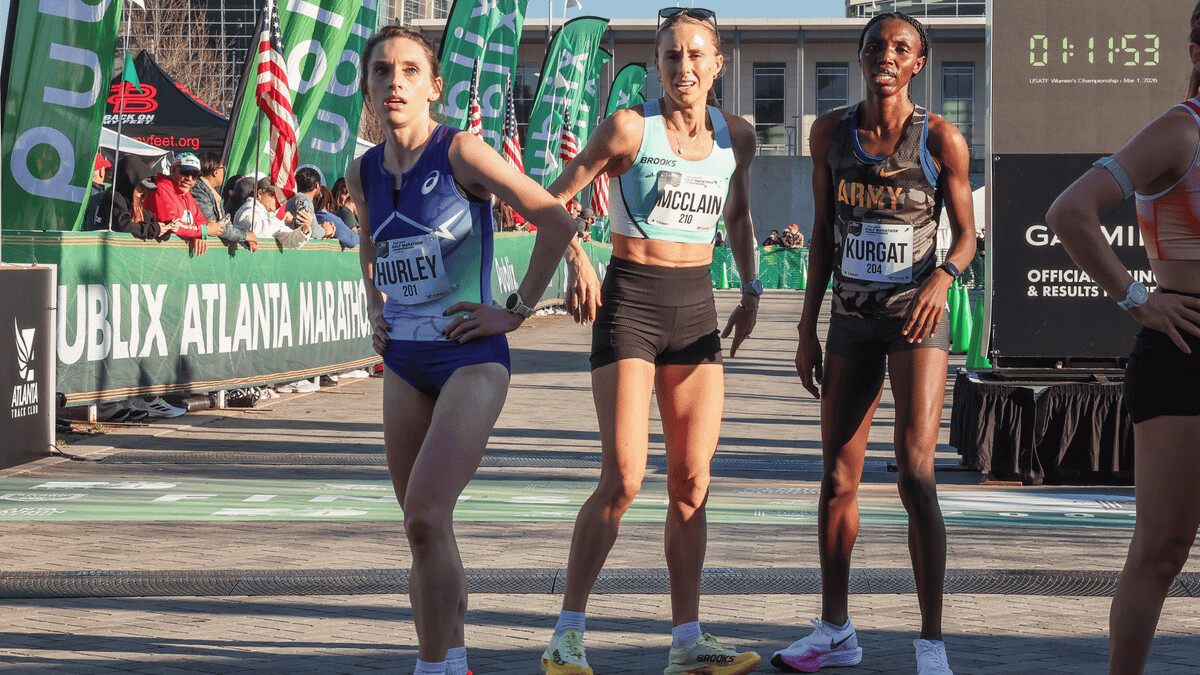
The women’s half marathon selection, however, comes with unusual circumstances following dramatic scenes at the USATF Half Marathon Championships. With just over a mile remaining in the race, the lead vehicle veered off course, unintentionally directing several athletes away from the official route and creating widespread confusion among the contenders.
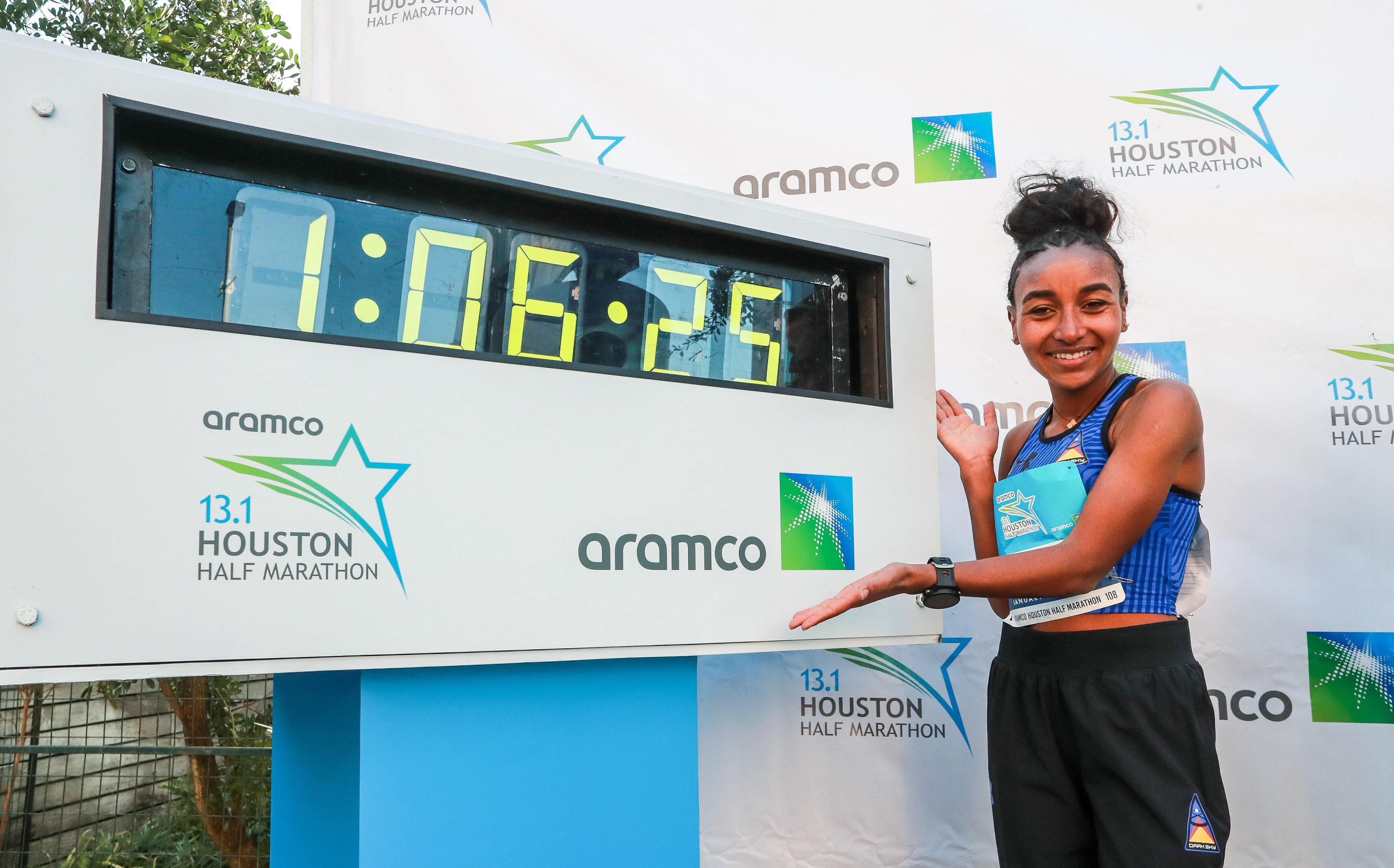
As a result, USATF confirmed that official team scoring for the championships will be restricted to American record holder Weini Kelati alongside the three athletes directly affected by the course error — Jess McClain, Emma Grace Hurley, and Ednah Kurgat.
Despite crossing the line as the top three finishers at the national championships, Molly Born, Carrie Ellwood, and Annie Rodenfels were granted entry to the world championships through a special World Athletics exception. While the trio will be eligible to compete in Copenhagen, they will not qualify for medals or prize money. Their performances, however, will still count toward official world ranking points — an important detail in the buildup to future global competitions.
Kelati’s inclusion provides a major boost for the American women’s squad. The Eritrean-born star has rapidly become one of the most dominant distance runners in U.S. history, and her record-breaking performances continue to redefine American standards in road racing.
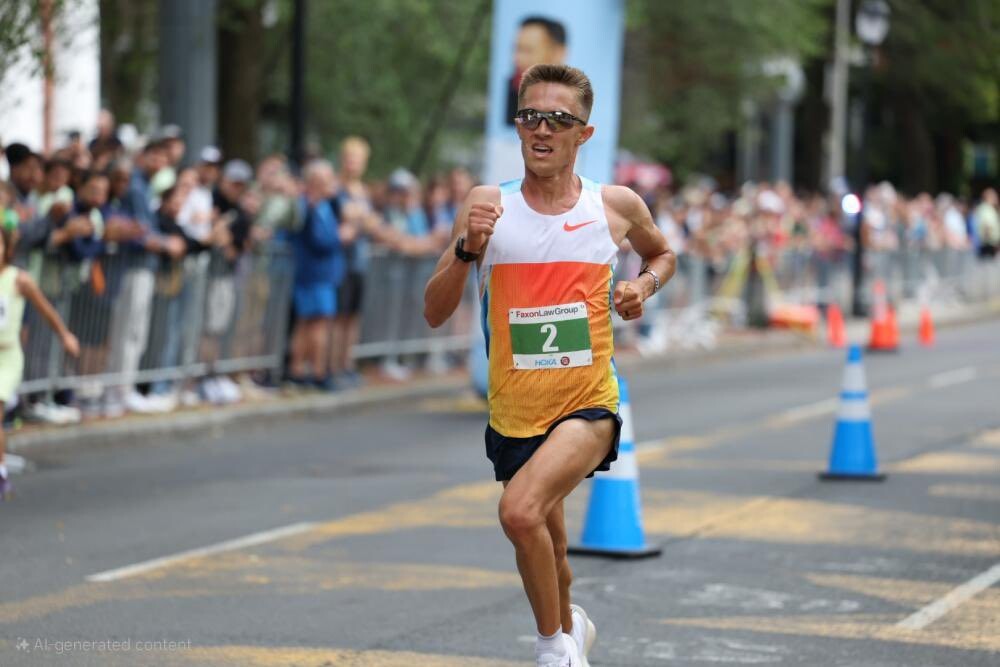
On the men’s side, Conner Mantz headlines a dangerous half marathon lineup that also features Wesley Kiptoo, Hillary Bor, and Ahmed Muhumed. Mantz has developed into one of the world’s premier road racers in recent seasons, and his aggressive racing style could make him a serious podium threat on the streets of Copenhagen.
The 5K teams also bring considerable firepower. Karissa Schweizer and Courtney Frerichs will spearhead the women’s challenge, while Drew Hunter and Dylan Jacobs line up for the men. Both squads combine championship experience with tactical versatility, qualities that will be crucial in the fast and unpredictable nature of road racing championships.
In the mile events, American middle-distance depth is once again on full display. Addy Wiley and Gracie Hyde will represent the women, while global star Yared Nuguse leads the men alongside Vincent Ciattei. Nuguse, already established as one of the finest milers in the world, arrives as one of Team USA’s biggest medal hopes.
With a roster packed with proven performers and emerging talent, the United States appears determined to make a major statement in Copenhagen. The championships promise two days of intense competition, and Team USA will arrive carrying both momentum and expectation as the world’s best road runners converge in Denmark.
Full Team USA Roster – 2026 World Athletics Road Running Championships
Women’s Half Marathon
1. Weini Kelati
2. Jess McClain
3. Emma Grace Hurley
4. Ednah Kurgat
5. Molly Born
6. Carrie Ellwood
7. Annie Rodenfels
Men’s Half Marathon
1. Conner Mantz
2. Wesley Kiptoo
3. Hillary Bor
4. Ahmed Muhumed
Women’s 5K
1. Karissa Schweizer
2. Courtney Frerichs
Men’s 5K
1. Drew Hunter
2. Dylan Jacobs
Women’s Mile
1. Addy Wiley
2. Gracie Hyde
Men’s Mile
1. Yared Nuguse
2. Vincent Ciattei
by Erick Cheruiyot for My Best Runs.
Login to leave a comment
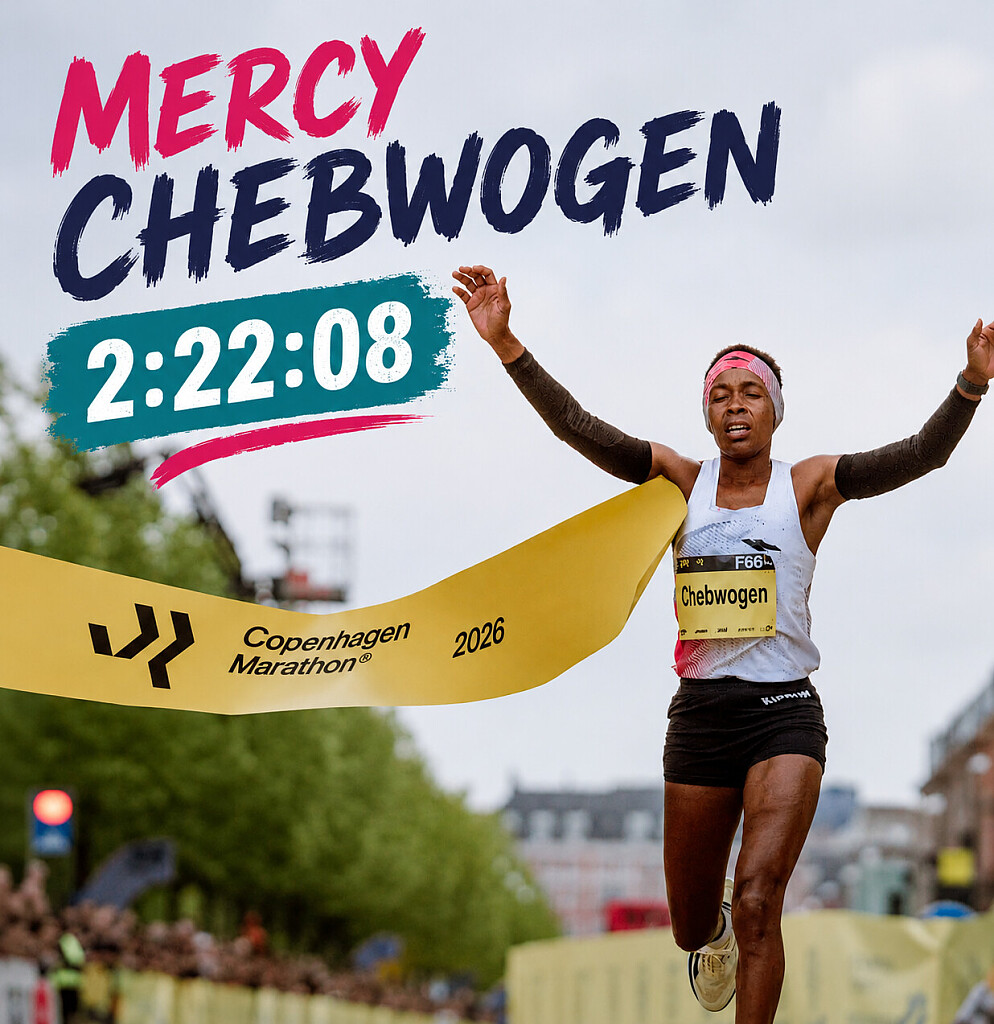
Mercy Chebwogen Shatters Course Record to Conquer Copenhagen Marathon
Kenya’s Mercy Chebwogen produced a magnificent performance on the streets of Copenhagen, Denmark storming to victory at the 2026 edition of Copenhagen Marathon in a sensational course record of 2:22:08.
What a race it was. Chebwogen battled relentlessly from start to finish, displaying extraordinary resilience and determination against a fiercely competitive field before sealing a memorable victory in emphatic fashion. Her breathtaking 2:22:08 not only secured the title, but also shattered the women’s course record in spectacular style.
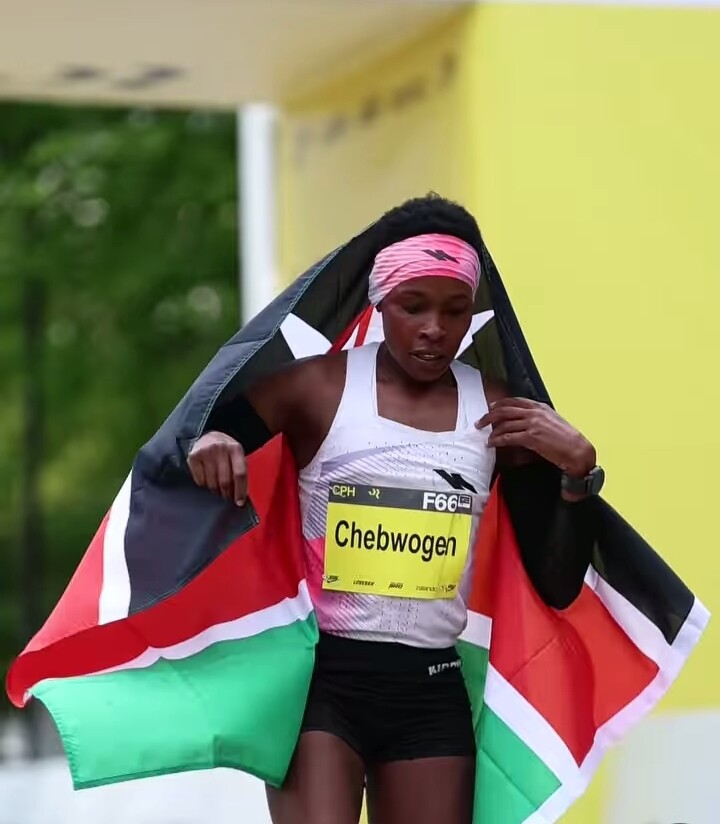
Chebwogen delivered a race defined by patience, strength, and tactical brilliance before unleashing a decisive surge in the latter stages to separate herself from the chasing pack. As she crossed the finish line with her arms raised in celebration, the Kenyan star etched her name into the history books with one of the finest women’s performances ever seen at the event.
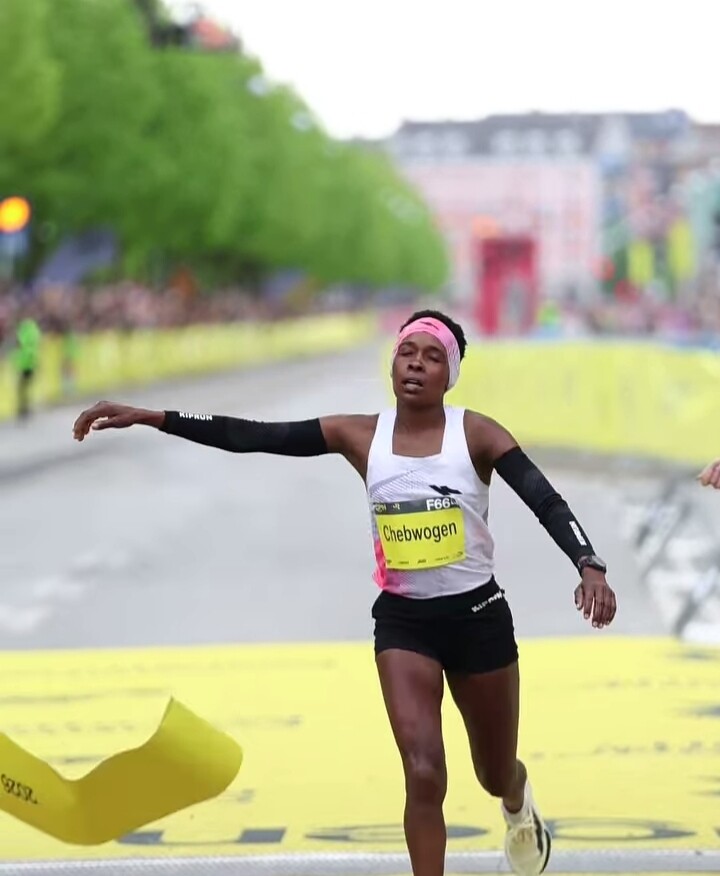
The race unfolded at a relentless pace from the opening kilometres, but Chebwogen remained composed throughout, conserving energy while her closest challengers attempted to stay within reach. Once she took command, there was no response from the field as she powered through the Danish capital with remarkable efficiency and control.
Representing Bahrain, Tigist Gashaw claimed second place in 2:23:07 after a determined run, while Ethiopia’s Ftaw Zeray Shugi secured third in 2:24:38 to complete a highly competitive podium.
Chebwogen’s triumph once again underlined Kenya’s enduring dominance in global road racing and added another memorable chapter to the country’s rich marathon legacy. Her course-record victory was not only a personal milestone, but also a statement performance that will resonate across the marathon world for a long time.
Women’s Top 3 Results
1. Mercy Chebwogen (Kenya) – 2:22:08 CR
2. Tigist Gashaw (Bahrain) – 2:23:07
3. Ftaw Zeray Shugi (Ethiopia) – 2:24:38
With this commanding victory in Copenhagen, Mercy Chebwogen has firmly announced herself among the rising forces in women’s marathon running. Her record-breaking run combined courage, discipline, and world-class endurance, leaving spectators in awe and sending a strong message to the global marathon scene that an exciting new chapter in her career is only just beginning.
by Erick Cheruiyot for My Best Runs.
Login to leave a comment

Copenhagen Marathon
The race is special in many ways But one thing is the course around almost every part of Copenhagen. The course goes to Frederiksberg which is a very beautiful part of the city. Theres a fantastic atmosphere in the city, and a lot of spectators along the route. The course is pretty fast, and the field of elite runners is...
more...
USATF Awards Prize Money to Three Athletes Led Off Course While Leading US Half Marathon Championships
In one of the most unusual moments in recent U.S. road racing history, three athletes who were leading the women’s race at the US Half Marathon Championships in Atlanta were mistakenly directed off the course, costing them the chance to compete for the national title. Days later, organizers moved to address the situation by awarding the athletes prize money equivalent to the podium positions they were holding before the error occurred.
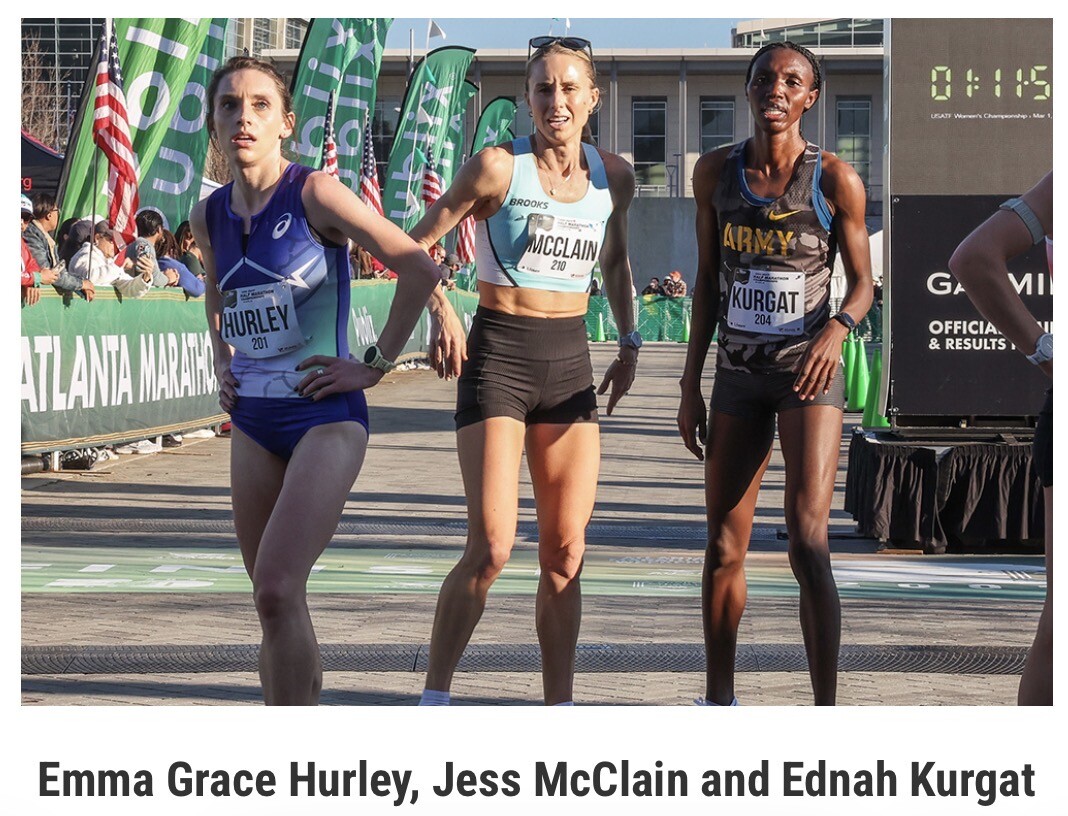
Jess McClain, Ednah Kurgat, and Emma Grace Hurley were running at the front of the race when confusion involving the lead vehicle and police escorts caused them to leave the official course. By the time they returned to the route, their hopes for a podium finish were gone.
The incident occurred near Mile 11 of the 13.1-mile race, with less than two miles remaining. At that point McClain had opened a comfortable lead, with Kurgat and Hurley running close behind. The three athletes followed the lead vehicle and a police motorcycle that appeared to be guiding the race but instead turned onto the wrong path.
After running several hundred meters off course and realizing the mistake, the athletes turned around and rejoined the race, but by then the chase pack had already passed them. McClain eventually finished ninth, Hurley 12th, and Kurgat 13th.
The race was officially won by Molly Born, who had been more than a minute behind the leaders before the incident. Carrie Ellwood finished second and Annie Rodenfels placed third.
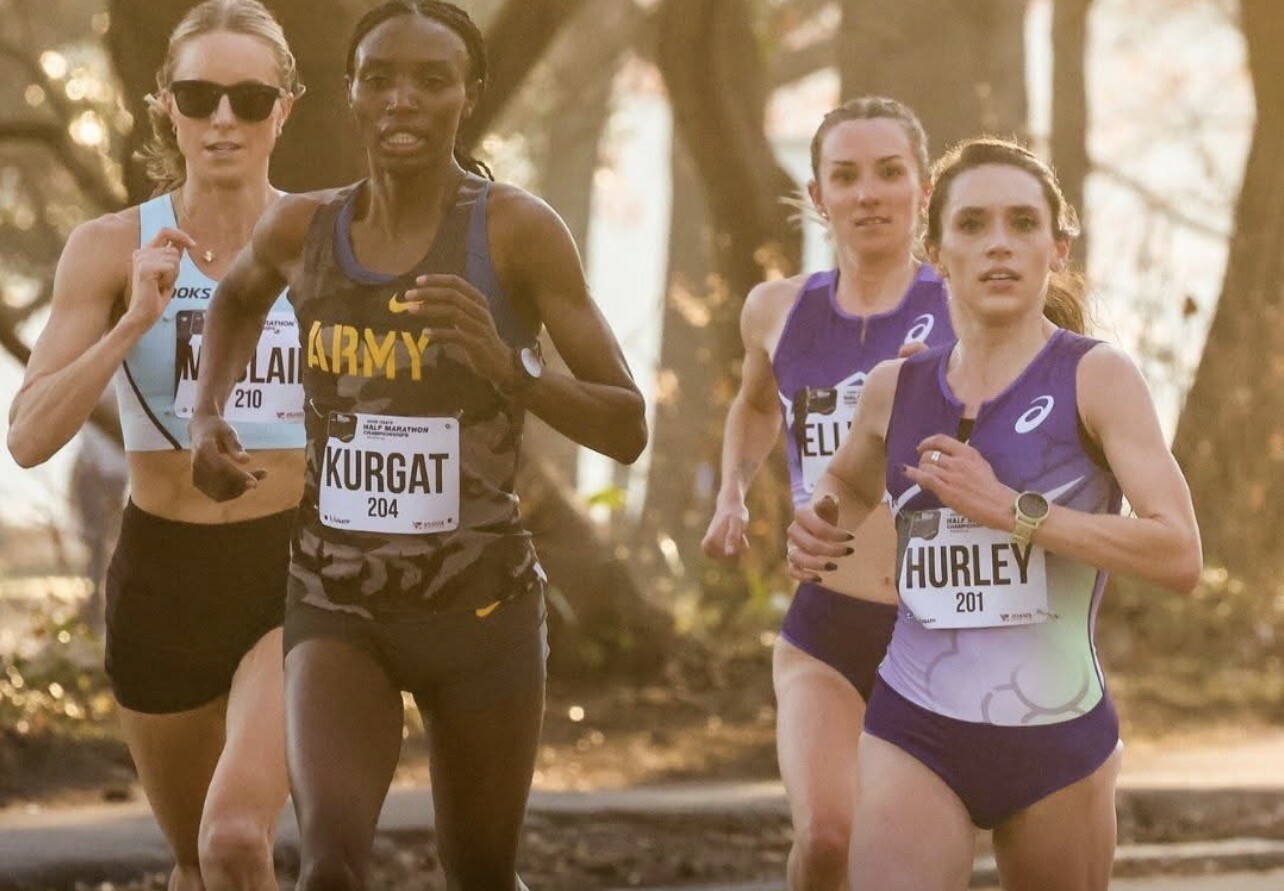
Following the race, the Atlanta Track Club acknowledged responsibility for the error and announced that it would compensate the affected athletes financially. McClain will receive first-place prize money of $20,000, while Hurley and Kurgat will split the combined second- and third-place prize money totaling $19,500.
Importantly, the official race results remain unchanged, meaning Born, Ellwood, and Rodenfels still received their prize money and podium recognition. In effect, organizers paid the top prize money twice, adding nearly $40,000 in additional compensation to address the mistake.
“We are responsible for the integrity of these championships,” the Atlanta Track Club said in a statement. “We regret that Jess McClain, Emma Grace Hurley and Ednah Kurgat were impacted by this incident and were unable to be recognised as the top three finishers reflective of their performance on the course.”
Race officials explained that the confusion began when police assigned to help guide the race route were called away to respond to an emergency involving an “officer down.” Replacement officers were unfamiliar with the race route, which included a section crossing a footbridge not normally used by vehicles. The lead vehicle driver then followed a police motorcycle, believing the race had been rerouted.
The stakes were particularly high because the race also served as a qualifier for the World Road Running Championships scheduled for September in Copenhagen, Denmark. Typically, the top finishers at the national championships are strong candidates for selection to the U.S. team.
USA Track & Field acknowledged that the course was inadequately marked but denied an appeal to change the official results. However, USATF confirmed that team selection for Copenhagen remains open, meaning the performances of McClain, Hurley, and Kurgat may still be considered during the final selection process.
While the financial compensation helps address the situation, the incident serves as a reminder of how critical course direction and race management are at championship events where national titles, international team spots, and significant prize money are at stake.
For McClain, Hurley, and Kurgat, the additional prize money recognizes where they were in the race when the error occurred—but it cannot fully replace the lost opportunity to compete for a national championship finish after more than 11 miles of strong racing.
by Boris Baron for My Best Runs
Login to leave a comment
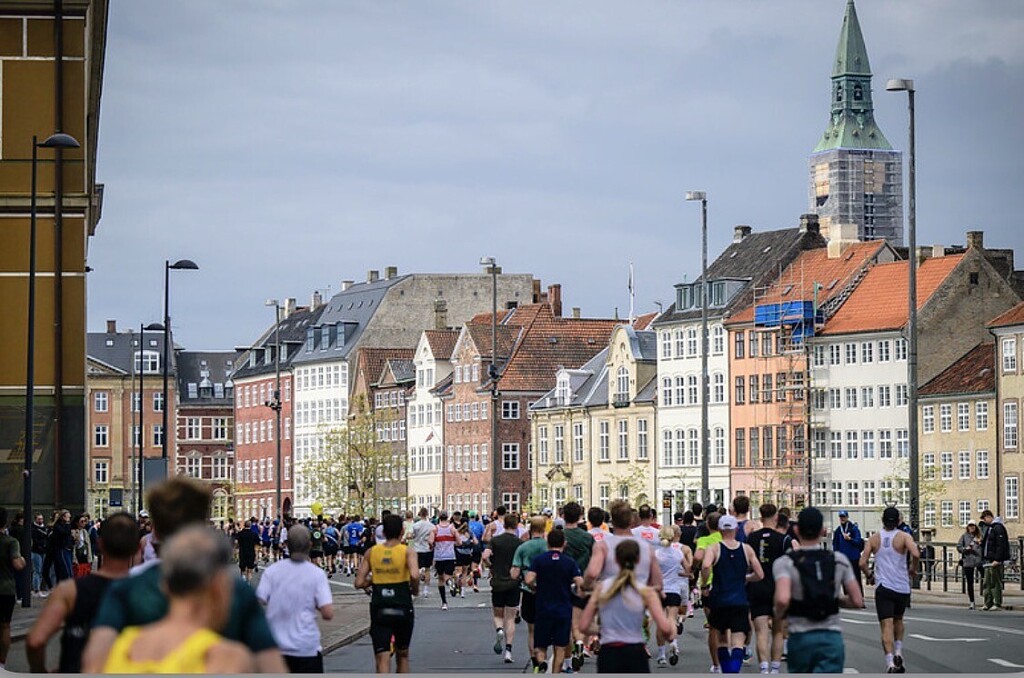
European Marathon Classics Launches New Era for Distance Running
A new chapter in European marathon running was unveiled on February 25, 2026, when organizers introduced the European Marathon Classics, a series linking eight of the continent’s most established races into one long-term challenge for runners.
The announcement was made in Vienna at the historic Schönbrunn Palace, bringing together race directors and organizers from across Europe. The concept is simple: one distance, eight cities, and a shared journey through some of Europe’s most celebrated marathon courses.
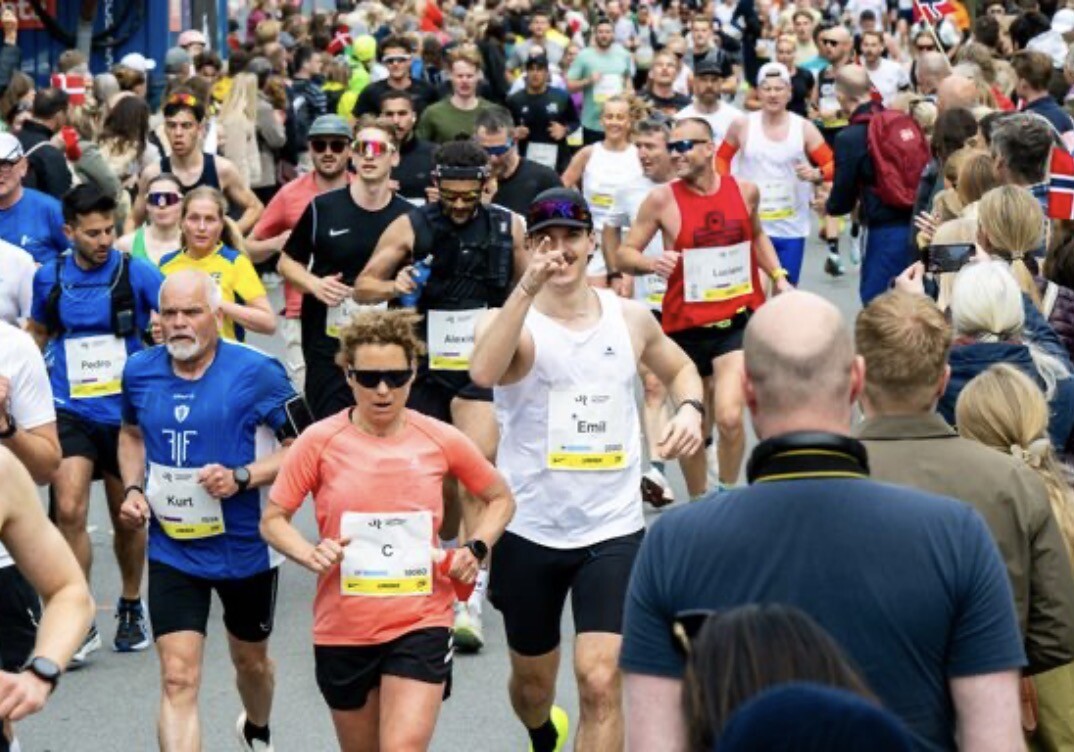
The new series connects races that already have strong identities of their own. By linking them together, organizers hope to inspire runners to explore different countries, cultures, and running traditions while pursuing a personal challenge.
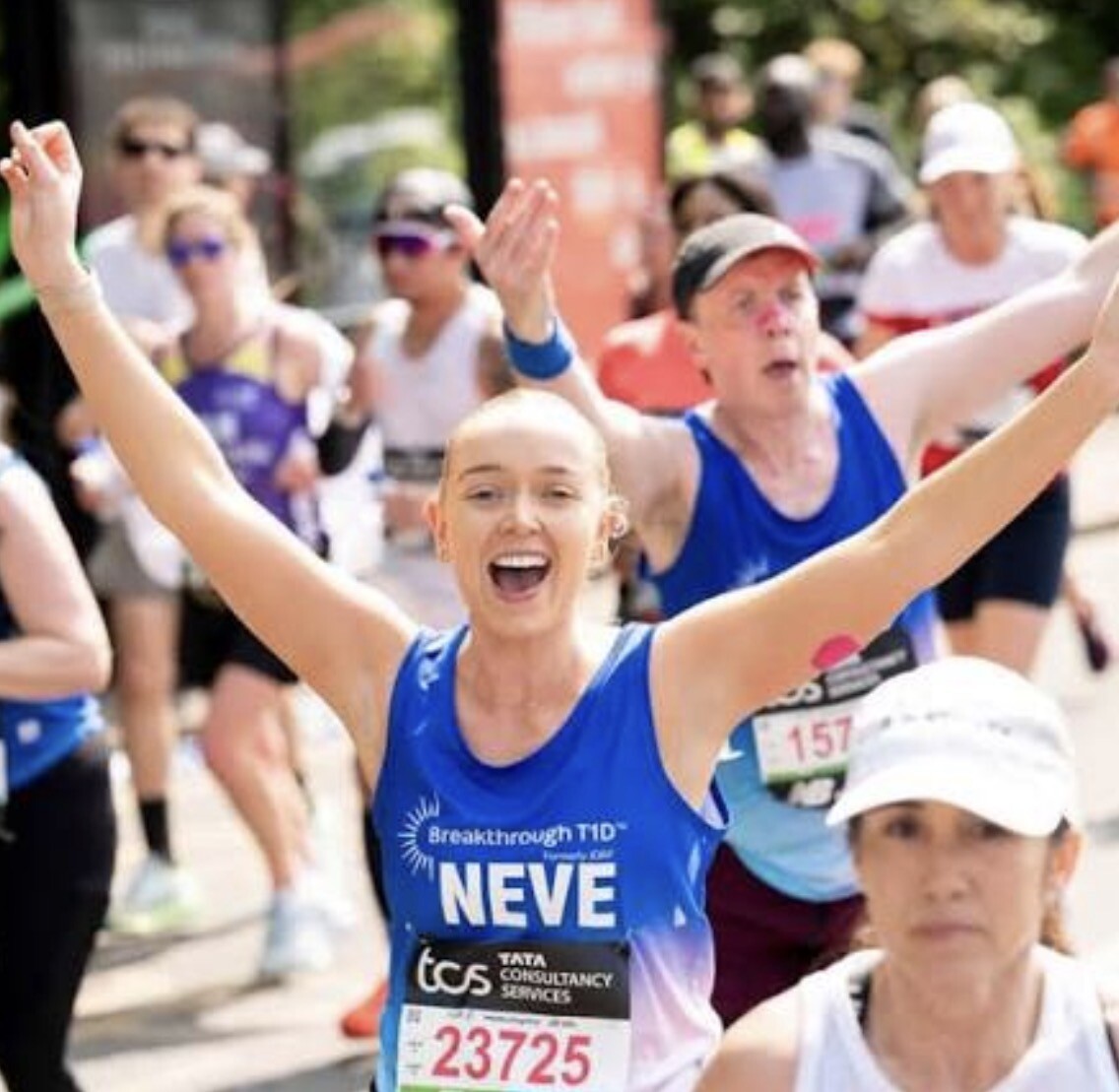
To earn the title European Marathon Classics Finisher, runners must complete five of the eight marathons, each in a different city. There is no time limit, allowing participants to build their journey over several seasons.
The eight races in the series form a calendar stretching from early spring to autumn:
2026 European Marathon Classics Schedule
March 22 – Rome Marathon (Italy)
April 19 – Vienna City Marathon (Austria)
April 26 – London Marathon (United Kingdom)
April 26 – Madrid Marathon (Spain)
May 10 – Copenhagen Marathon (Denmark)
September 27 – Warsaw Marathon (Poland)
October 10 – Lisbon Marathon (Portugal)
October 25 – Frankfurt Marathon (Germany)
Runners who complete five races will receive a commemorative medal designed to reflect the journey. The medal includes magnetic elements that allow athletes to add a marker for each marathon they finish.
One unusual feature of the project is that past results will count. Organizers say runners will be able to register historical performances from earlier editions of the races, recognizing the long traditions behind these events.
London Marathon Event Director Hugh Brasher said the idea is meant to highlight what connects runners across the continent.
by Bob Anderson for My Best Runs
Login to leave a comment
Coelmo Napoli City Half Marathon: Italian Records Under Threat in Naples Showdown
Naples prepares to host one of Europe’s most compelling early-season road races when the Coelmo Napoli City Half Marathon returns on Sunday, February 22, 2026. Both the men’s and women’s elite races carry strong potential for record-breaking performances, fueled by deep international fields and a fast, flat course designed for precision pacing. At the center of the narrative stands a compelling blend of national pride, domestic rivalry, and global competition.
Crippa and Riva Headline Men’s Record Assault
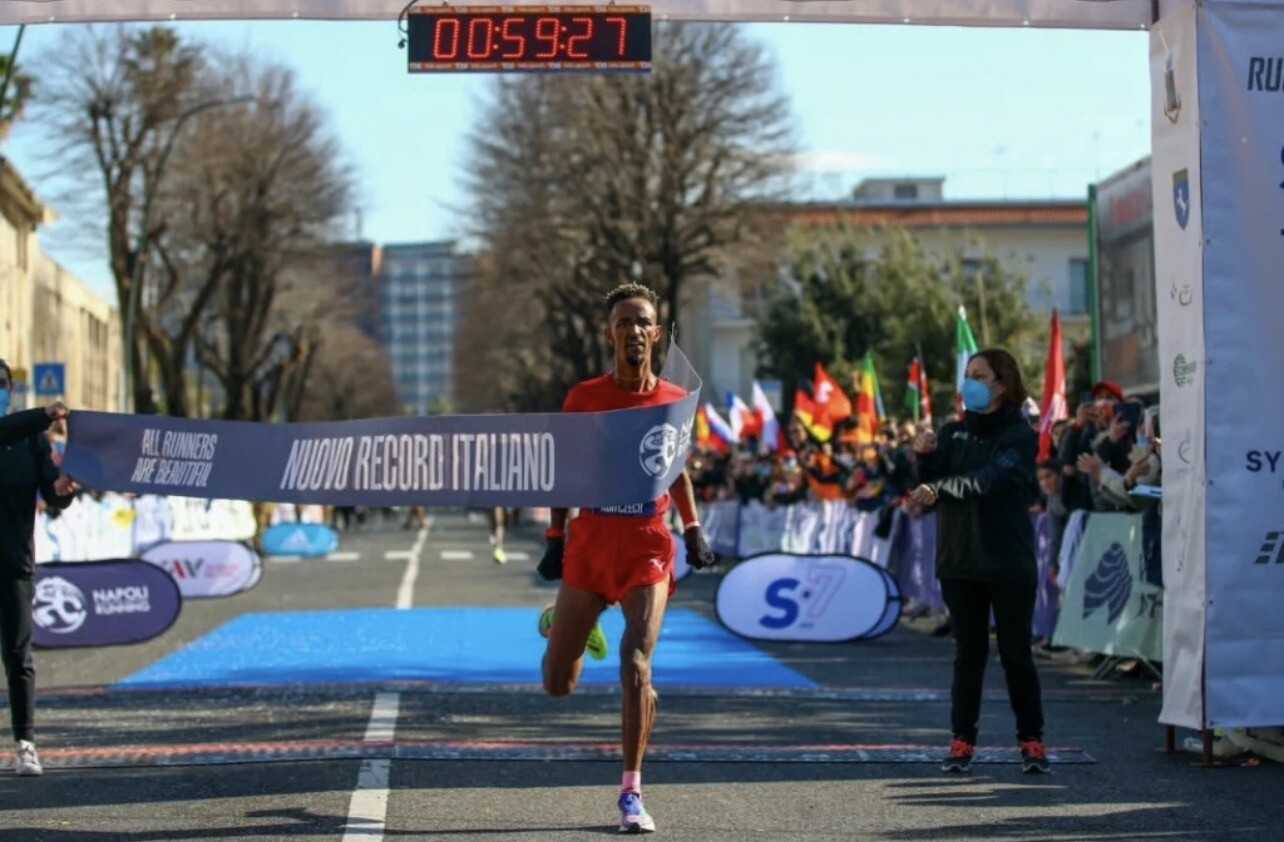
The men’s race is defined by a highly anticipated showdown between Italy’s two fastest half marathoners in history. Yeman Crippa enters as the Italian national record holder with his outstanding 59:26 performance, and he carries the added confidence of being the reigning European half marathon champion. Known for his disciplined pacing and ability to accelerate in the later stages, Crippa has consistently demonstrated the capacity to perform under pressure.
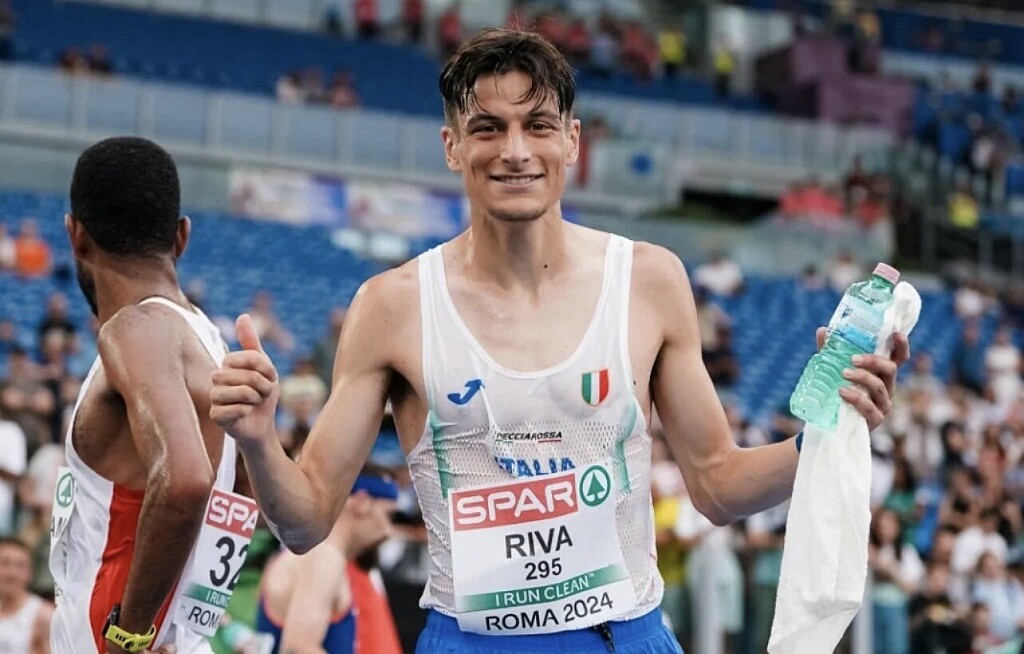
Challenging him directly is Pietro Riva, whose personal best of 59:41 places him firmly within striking distance of the national mark. Riva’s steady progression over recent seasons has narrowed the gap, and his closing speed makes him a serious threat if he remains in contention through 15 kilometers.
The international field provides both depth and pace support. Andrew Lorot brings a 59:54 personal best from Marugame, while Edward Konana Koonyo arrives with a precise 60:00 performance recorded in Gentbrugge earlier this year. Italian marathon standout Yohanes Chiappinelli and veteran Daniele Meucci, the European marathon champion, add experience and tactical intelligence to a race expected to unfold at record pace.
A 10-kilometer split near 28 minutes would signal clear intent to challenge the Italian record. Anything slower could transform the race into a tactical contest rather than a pure time trial.
Women’s Race Targets National and Course Marks
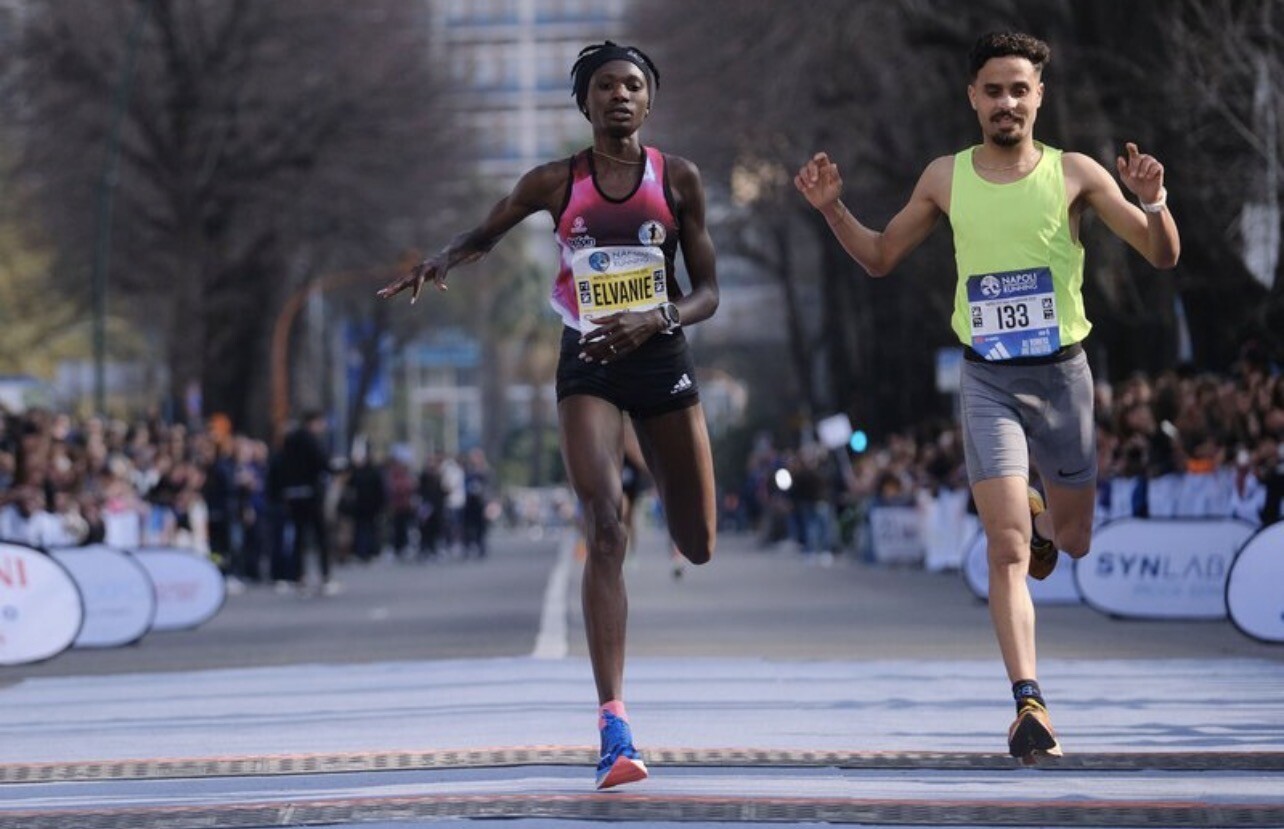
The women’s competition carries equally significant implications. Elvanie Nimbona, recently cleared to compete for Italy, will attempt to challenge the national record of 1:08:27. Her personal best of 1:09:00 places her within reach, provided pacing remains consistent and conditions remain favorable.
Kenya’s Regina Cheptoo enters with the fastest personal best in the field at 1:08:26, recorded in Rome. Her ability to sustain aggressive mid-race surges makes her one of the primary contenders for both victory and record contention.
Lucy Nthenya Ndambuki and Nelly Jeptoo strengthen the Kenyan presence, each holding personal bests under 1:10. Italian champion Sara Bottarelli and Denmark’s national marathon champion Sara Schou Kristensen add further competitive depth to a field capable of producing fast times across multiple positions.
While the course record of 1:06:47 represents a significant benchmark, the Italian national record appears particularly vulnerable if the lead group remains tightly packed through the decisive final kilometers.
Naples Course Designed for Fast Times
The race begins and ends at Mostra d’Oltremare, offering one of Europe’s most efficient half marathon circuits. The layout features minimal elevation change, wide roads, and extended straightaways that favor steady rhythm and negative splits. These characteristics have established Naples as a preferred destination for elite runners pursuing personal bests and national records.
World Athletics recognition further enhances the event’s reputation, attracting international competitors capable of elevating the level of competition.
A Race with Historic Potential
The 2026 Coelmo Napoli City Half Marathon represents more than a routine stop on the road racing calendar. It brings together Italy’s finest distance runners alongside world-class challengers in an environment engineered for fast performances. If pacing unfolds as planned and conditions cooperate, Naples may witness a defining moment in Italian distance running, with national records hanging in the balance and new milestones within reach.
by Robert Kibet for My Best Runs
Login to leave a comment

Napoli City Half Marathon
The Napoli City Half Marathon is the most growing running event in Italy. The race, certified by IAAF / AIMS/ European Athletics, is held inoptimal conditions with an average temperature of 10 ° C. From thewaterfront to the Castel dell'Ovo, the Teatro San Carlo to the Piazzadel Plebiscito, the course will lead you through the most fascinatingareas of the city,...
more...
Copenhagen Marathon Nearly Sees Course Records Fall in Historic 2025 Race
May 11, 2025 | Copenhagen, Denmark – The 45th edition of the Copenhagen Marathon was the largest in Danish history, with 21,141 registered runners and near-perfect racing conditions—11°C (52F) and no wind. It nearly became the fastest as well, with both men’s and women’s course records just out of reach.
Eritrea’s Berhane Tesfaye claimed victory in the men’s race, stopping the clock at 2:08:25, just two seconds shy of the course record. In the women’s race, Kenyan debutant Sharon Kiptugen ran a stunning 2:23:19, finishing just five seconds off the women’s course best.
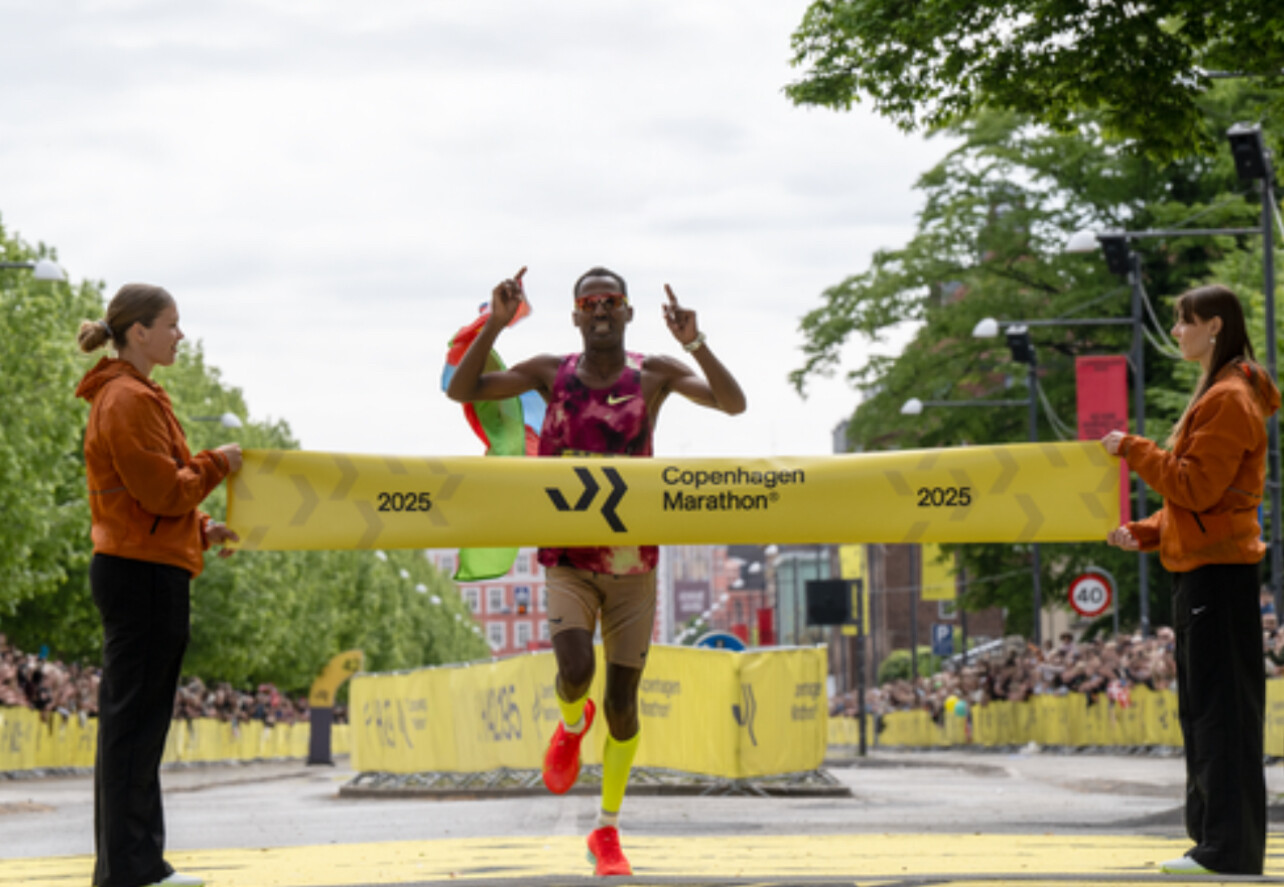
Tesfaye, who also won the 2025 Mumbai Marathon, ran a tactical race. After early pacing from Kenya’s Reuben Rono (1:03:43 at halfway), the lead shifted multiple times. Tesfaye and Kenya’s Vincent Mutai battled through the final kilometers, with the 38-year-old Tesfaye pulling away after 40K to win by 44 seconds. “I was aware of the record, but I had pain in my legs and just couldn’t finish faster,” Tesfaye said post-race.
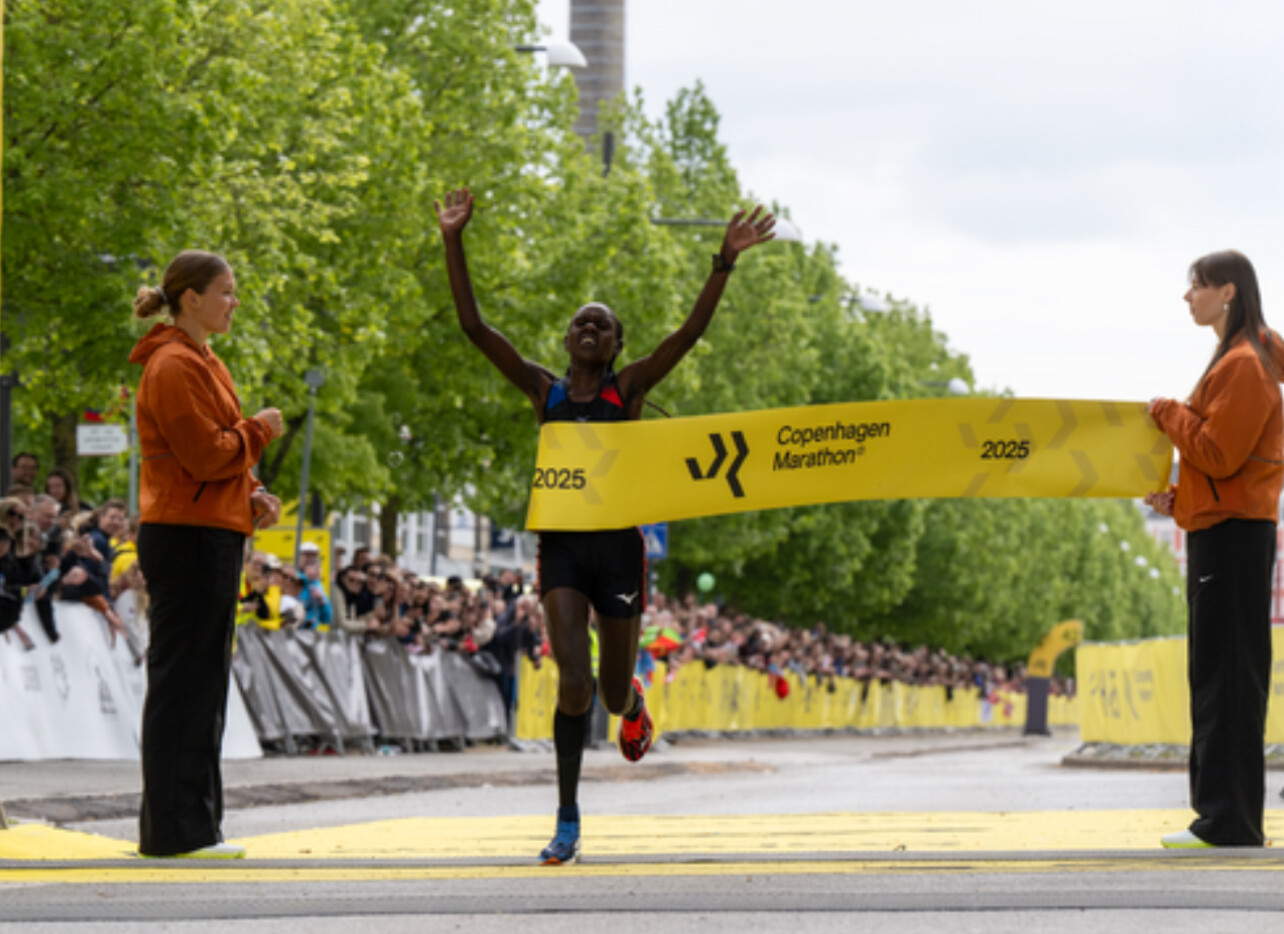
On the women’s side, Kiptugen pulled away after the halfway mark (1:11:27), steadily building a commanding lead over a deep field that included Sofia Assefa of Ethiopia—2012 Olympic silver medalist in the 3000m steeplechase—who finished second in 2:26:21. “I didn’t know I was so close to the record,” Kiptugen said. “But I’m just happy for the win.”
Top Finishers – Men
Berhane Tesfaye (ERI) – 2:08:25
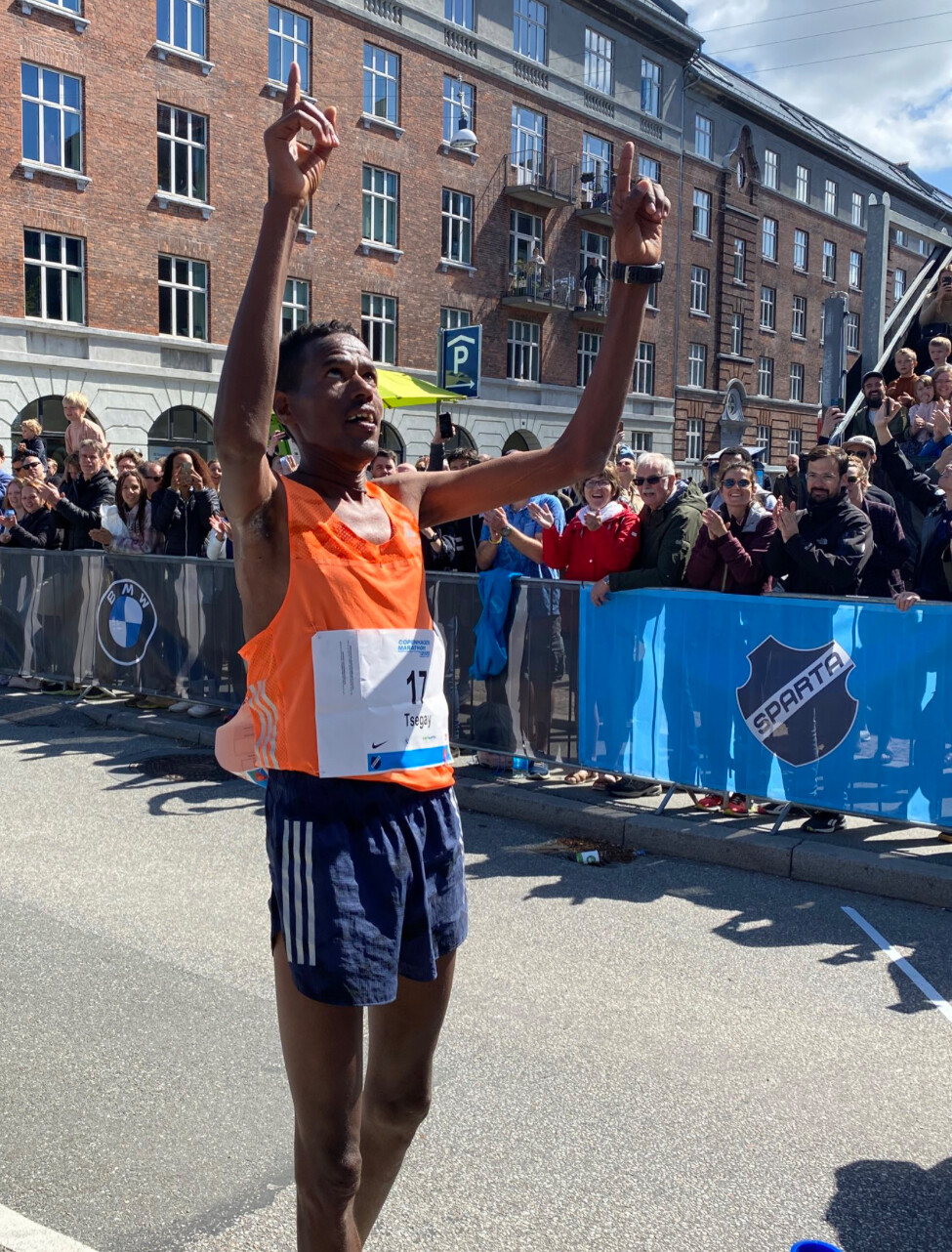
Vincent Mutai (KEN) – 2:09:09 (PB)
Yismaw Atinafu (ETH) – 2:10:32
Top Finishers – Women
Sharon Kiptugen (KEN) – 2:23:19 (PB)
Sofia Assefa (ETH) – 2:26:21
Abebech Afework (ETH) – 2:28:37
Looking ahead, the 2026 Copenhagen Marathon will take place on May 10, with registration opening on May 27, 2025. The next major event in the city is the Copenhagen Half Marathon, scheduled for September 14, 2025, which also serves as a lead-up to the World Athletics Road Running Championships Copenhagen 26—expected to draw up to 65,000 runners.
by Morten Eklöf Risager (with Boris Baron)
Login to leave a comment
Copenhagen Marathon
The race is special in many ways But one thing is the course around almost every part of Copenhagen. The course goes to Frederiksberg which is a very beautiful part of the city. Theres a fantastic atmosphere in the city, and a lot of spectators along the route. The course is pretty fast, and the field of elite runners is...
more...
World Road Running Championships Coming to Copenhagen in 2026
The global road racing spotlight will shine brightly on Denmark in 2026 as Copenhagen has been selected to host the World Athletics Road Running Championships, one of the premier events on the international running calendar.
Organized by World Athletics, this championship brings together elite and recreational runners alike to compete in the half marathon, 5K, and road mile—all in the heart of one of Europe’s most picturesque and runner-friendly cities.
Why Copenhagen?
Copenhagen isn’t just a beautiful city—it’s a city built for runners. Known for its flat terrain, scenic waterfronts, and vibrant running culture, it previously hosted the 2014 World Half Marathon Championships with rave reviews from athletes and fans alike. The city’s efficient infrastructure and passionate running community made it an easy choice for this return.
What to Expect
In 2026, tens of thousands of runners will take to the streets to compete in both championship and mass participation races. The event is expected to include:
• World-class Half Marathon Championships
• Fast and exciting 5K and road mile races
• Mass races open to the public
• Interactive fan zones and cultural celebrations
• Elite athlete appearances and meet-ups
Copenhagen’s Running Legacy
Copenhagen has long embraced running as part of its culture, from its booming local race scene to its emphasis on health and sustainability. Hosting the World Road Running Championships cements the city’s status as a global running hub.
If you’re looking for a race-cation in 2026, mark your calendar. This is more than a competition—it’s a celebration of road running at every level, in one of Europe’s most runner-friendly destinations.
by Boris Baron
Login to leave a comment
Copenhagen Marathon Set to Break Records with Deep East African Elite Field
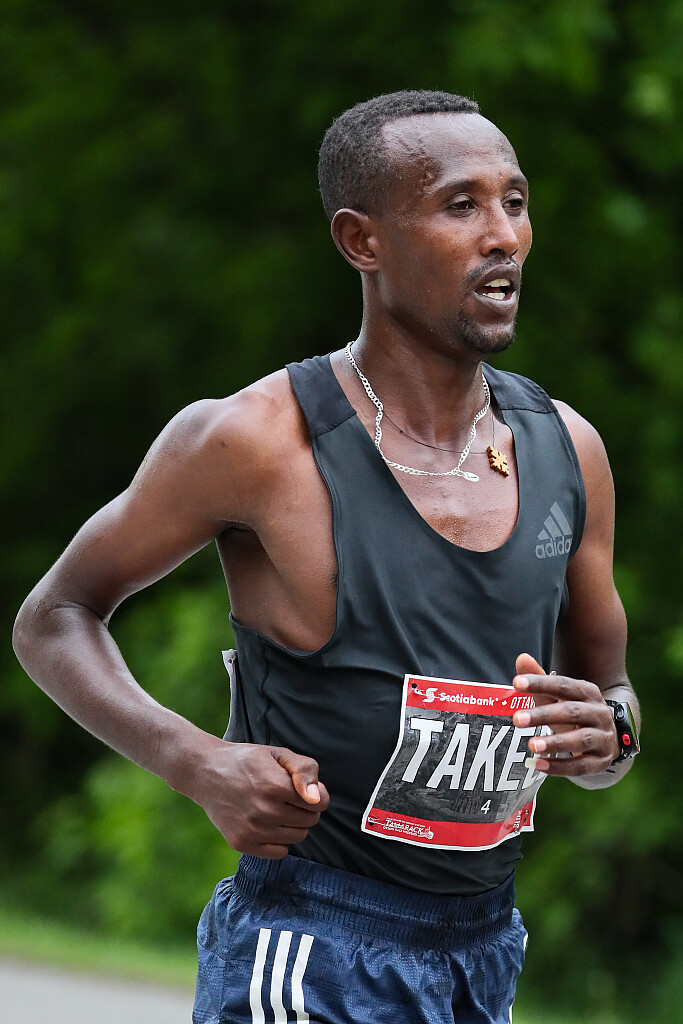
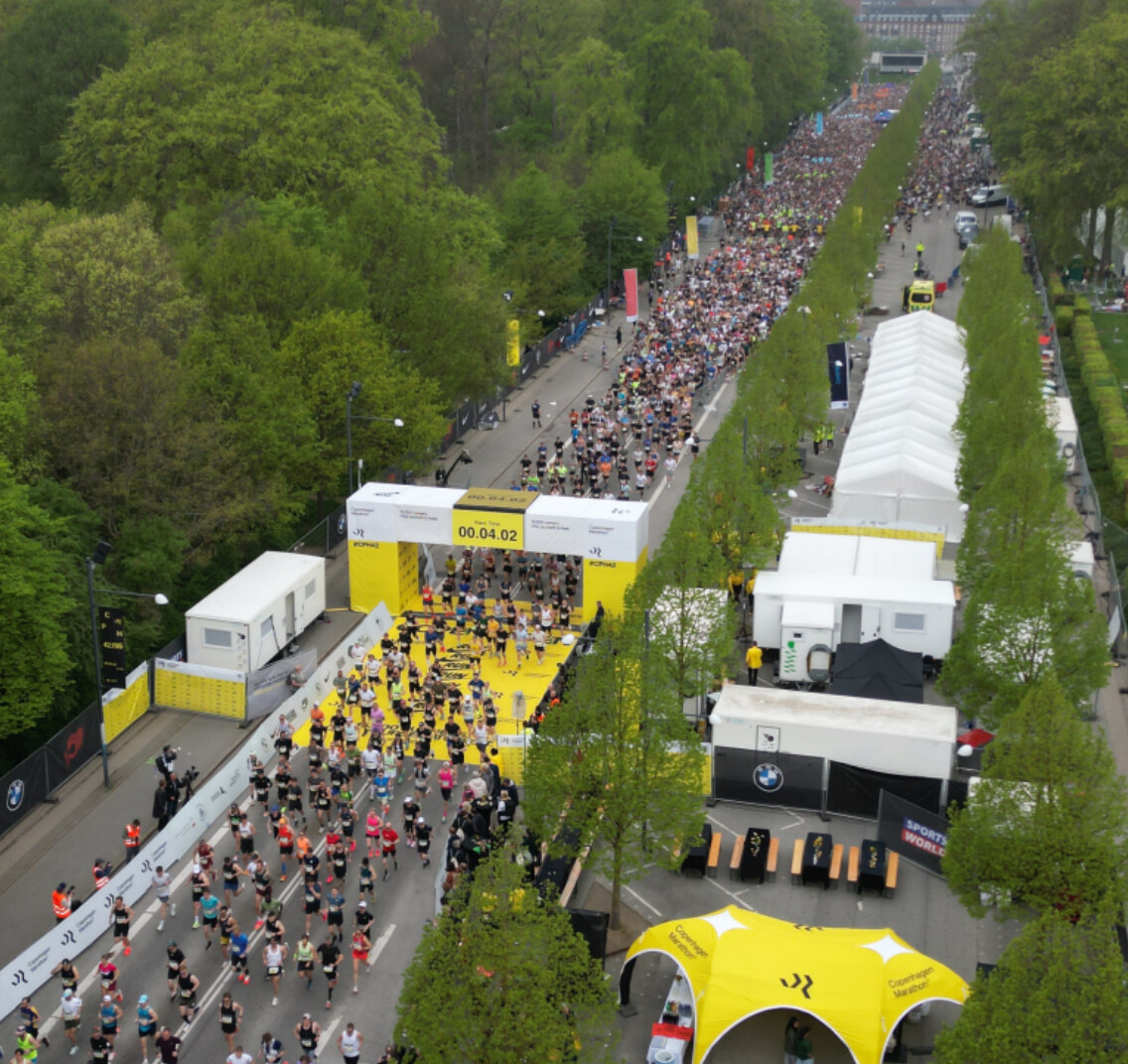
This Sunday, the streets of Denmark’s capital will be filled with more than 21,000 runners as the 2025 Copenhagen Marathon officially becomes the largest marathon ever held on Danish soil. All bib numbers have sold out, and with ideal racing conditions—cool temperatures of 8–9°C (46–48°F) and little wind—course records could be at serious risk.
And once again, it’s East African athletes who are expected to lead the charge.
Men’s Elite Field: Takele, Kipkemei, and Tesfaye Among Favorites
The men’s race features an exceptionally deep international field, led by Ethiopia’s Adugna Takele, who holds the fastest personal best in the race at 2:05:52, set in Seville. He returns to familiar territory in Copenhagen, where he placed ninth at the 2014 World Half Marathon Championships.
Also representing Ethiopia is Aychew Bantie, a consistent performer with a best of 2:06:23, and Mengistie Tadesse, who has run 2:08:04. Other Ethiopian contenders include Abebaw Muniye(2:08:38) and Yismaw Atinafu (2:09:32).
Kenya’s Boaz Kipkemei enters the race with momentum after a course record victory in Chongqing this March, where he ran 2:07:18. He’ll be challenged by Andrew Rotich Kwemoi, also from Kenya, who won the 2023 Milano Marathon in 2:07:52.
Eritrea’s Berhane Tesfaye (2:07:31), fresh off a win at the 2025 Mumbai Marathon, adds even more firepower. Martin Musau (2:08:42) from Uganda rounds out a world-class lineup.
With nine men entered with personal bests under 2:10, the current course record of 2:08:23, set by Eritrea’s Berhane Tsegay in 2022, is well within reach.
Women’s Elite Field: Ethiopia Stacks the Front Line
The women’s field is also loaded with talent—particularly from Ethiopia. Leading the charge is Tigist Getnet, who ran 2:23:17 in Dubai in 2023. Close behind is Sofia Assefa, the Olympic silver medalist in the steeplechase, now focusing on the marathon. She clocked 2:23:33 last year in Amsterdam.
Tigist Gashaw, now competing for Bahrain, recently won the Chongqing Marathon in 2:24:39 and looks poised for another strong showing. Other top Ethiopians include Abebech Afework (2:30:44) and Tinbit Gidey (2:30:09).
Kenya is well represented by Caroline Jepchirchir (2:29:00), Gladys Jemaiyo (1:08:18 for the half marathon), and Charon Kiptugen (1:09:00 for the half).
To challenge the women’s course record of 2:23:14, set by Rodah Chepkorir Tanui of Kenya in 2023, the front-runners will need to go out with intent—but the weather and course could make that goal very realistic.
Ready for a Historic Day
The 2025 Copenhagen Marathon is not just the biggest ever in Denmark—it’s shaping up to be one of the fastest as well. With nearly perfect conditions and some of the world’s top endurance athletes toeing the line, Copenhagen is set to host a race that could deliver breakthrough performances, new course records, and personal bests for thousands.
Whether you’re watching from the lead vehicle or tracking from home, Sunday’s race will be one to remember.
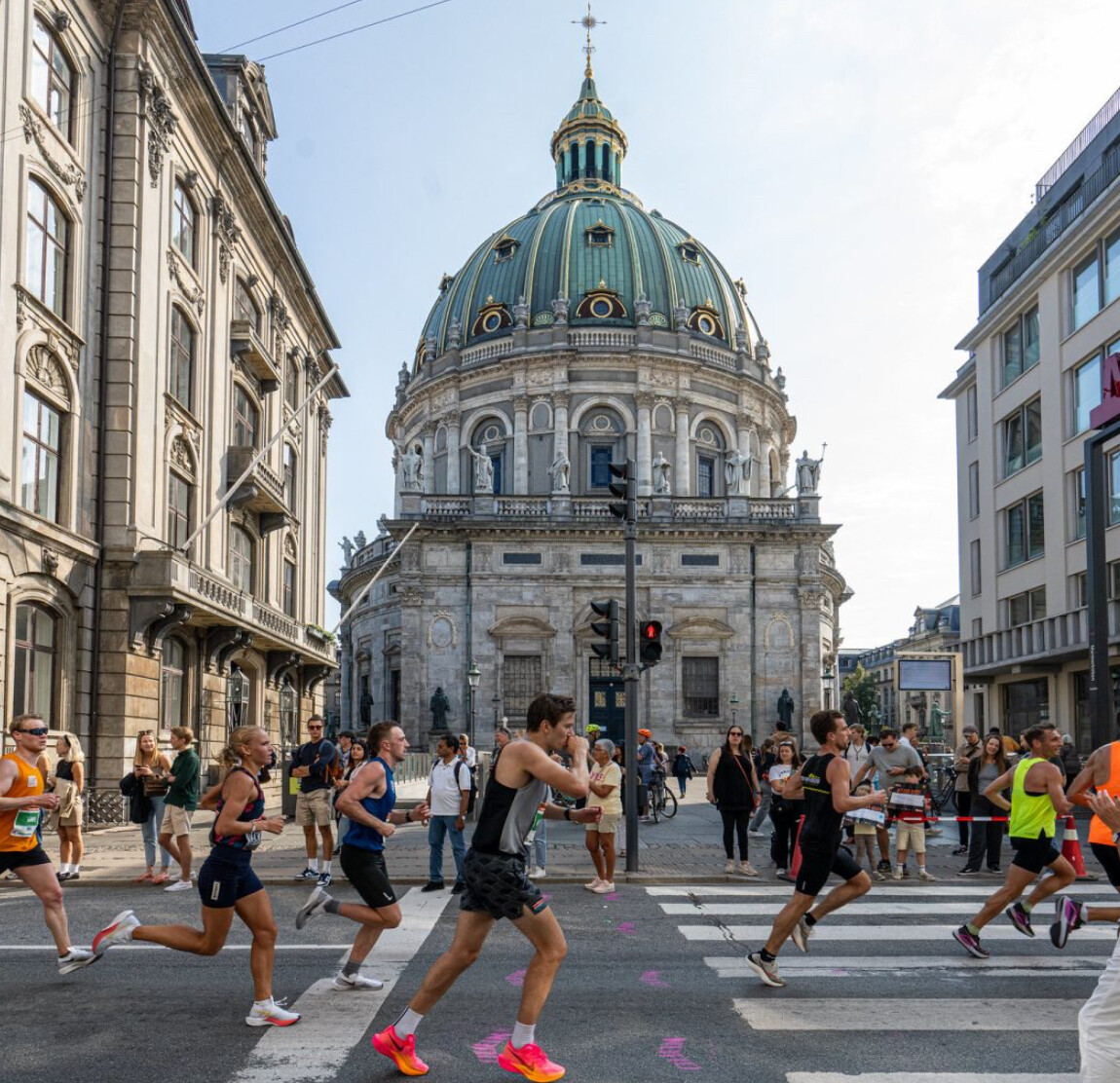
by Boris Baron
Login to leave a comment
Copenhagen Marathon
The race is special in many ways But one thing is the course around almost every part of Copenhagen. The course goes to Frederiksberg which is a very beautiful part of the city. Theres a fantastic atmosphere in the city, and a lot of spectators along the route. The course is pretty fast, and the field of elite runners is...
more...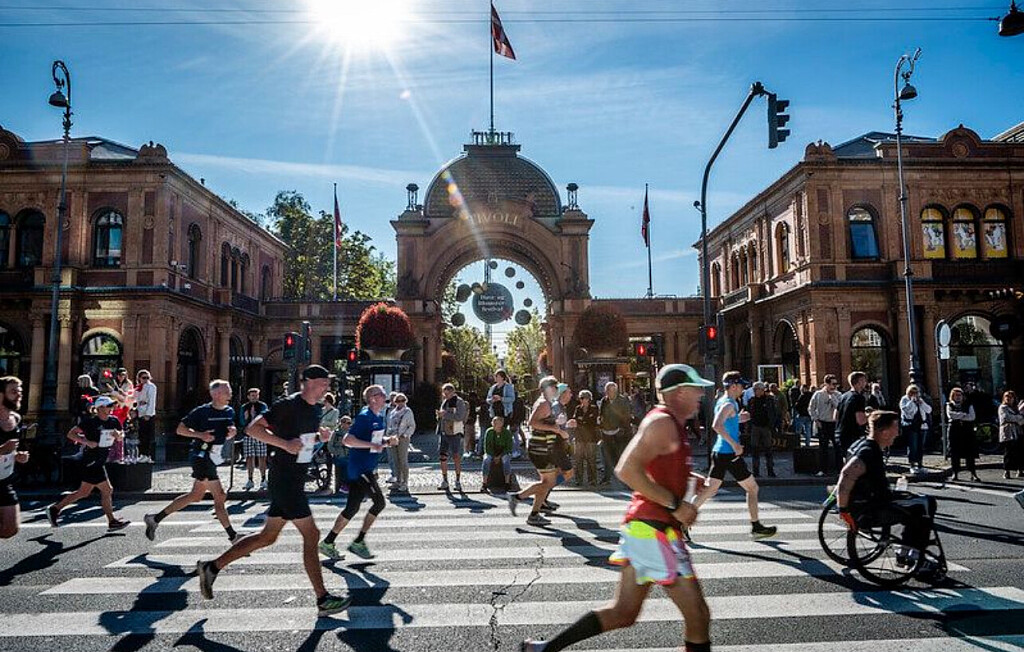
The Half Marathon Lottery is Open for World Athletics Road Running Championships Copenhagen 2026
Runners from around the world now have the opportunity to secure a spot in the half marathon at the World Athletics Road Running Championships Copenhagen 2026. The lottery, open until March 20 at 11:59 PM CET, will determine which lucky participants will line up alongside the world’s best on September 20, 2026.
A total of 65,000 runners will take part in the championships, spread across three race distances:
• Half marathon: 35,000 participants
• 5K: 20,000 participants
• One mile: 10,000 participants
The half marathon will give participants the rare opportunity to race on the same course as the elite competitors, following a scenic and festive route through Copenhagen.
For the first time in Denmark, race entries will be allocated through a lottery system, similar to major international marathons like London and Berlin.
The decision to implement a lottery follows overwhelming demand for the Copenhagen Half Marathon 2025, which sold out in just 2.5 hours. Many runners were left waiting in the queue without securing an entry, leading organizers to rethink the process.
“The lottery ensures a fair and equal chance for everyone,” said Dorte Vibjerg, CEO of Sparta Athletics & Running. “Interested runners now have plenty of time to sign up whenever it suits them, as the chances of being selected are the same regardless of when you enter during the lottery period, March 6-20.”
A Scenic and Historic Course
Copenhagen, Denmark’s vibrant capital, is a city rich in history, culture, and architectural beauty. The half marathon course will take runners through the heart of the city, passing iconic landmarks such as Tivoli Gardens, the colorful Nyhavn waterfront, the Royal Palace, and the famous Little Mermaid statue.
The route is known for being flat and fast, offering ideal conditions for runners aiming to set a personal best. With thousands of spectators lining the streets, the race promises an unforgettable atmosphere that will push runners to their best performances.
With the introduction of the lottery system, organizers aim to create a fairer and more inclusive registration process, ensuring that all runners have an equal opportunity to be part of this world-class event.
Login to leave a comment
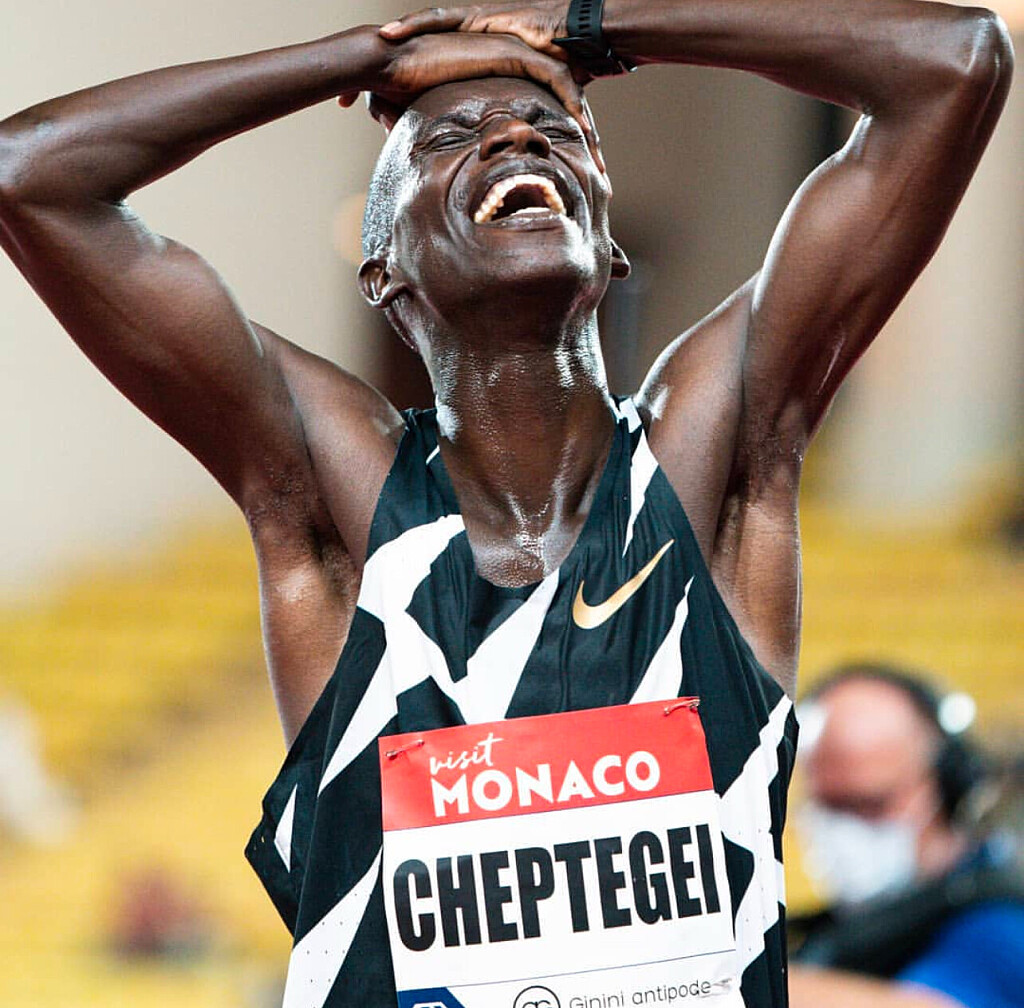
Joshua Cheptegei Ready for Second Marathon at Tokyo: Can the Track Legend Make a Statement?
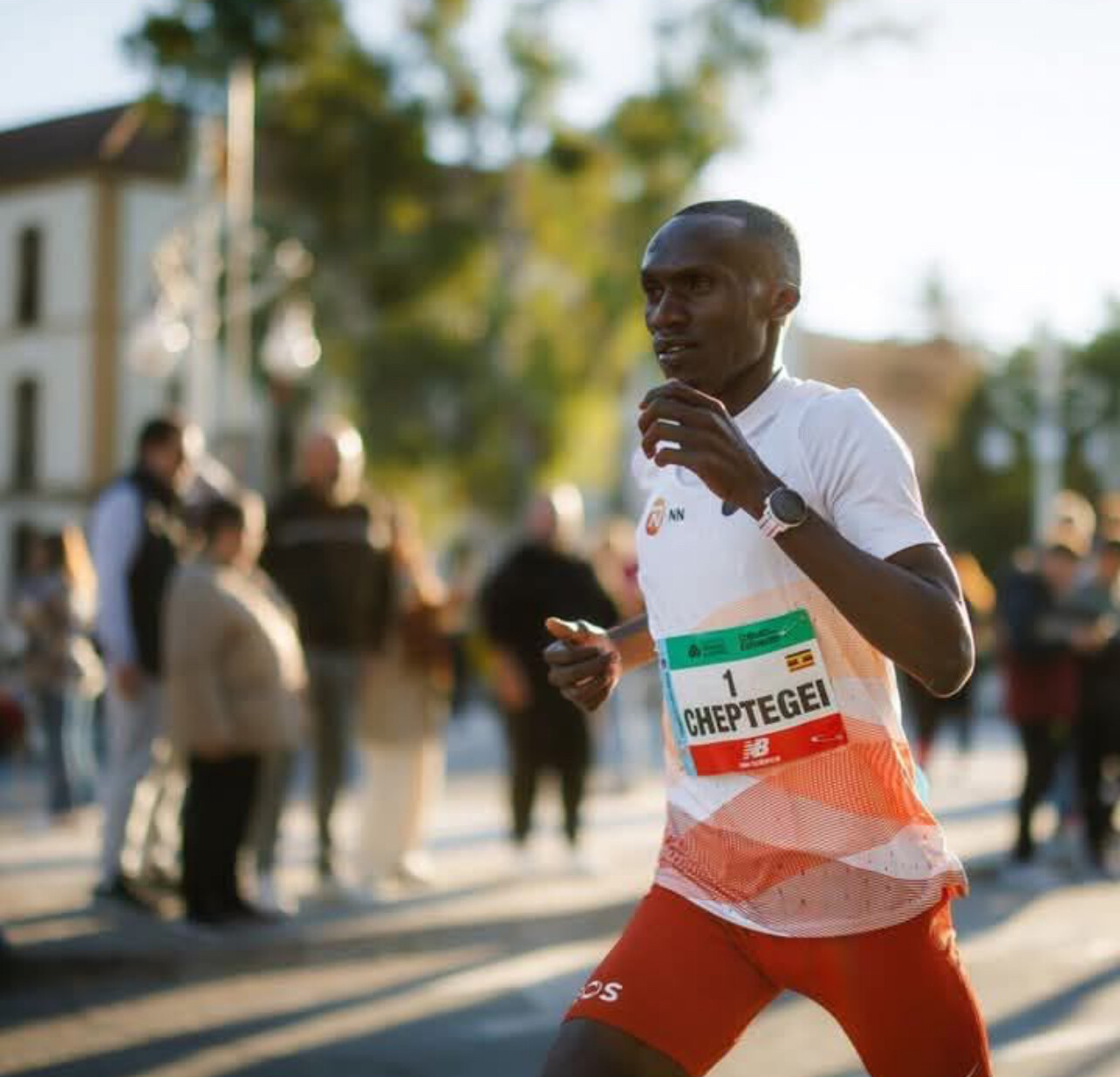
Ugandan distance-running great Joshua Cheptegei is set to race his second career marathon at the Tokyo Marathon on March 2. The reigning Olympic champion in the 5,000m (Tokyo 2020) and 10,000m (Paris 2024) made his highly anticipated marathon debut at the Valencia Marathon in December 2023, where he clocked 2:08:59. Now, with the experience of one full marathon under his belt, Cheptegei returns to the roads, aiming to improve his performance and establish himself as a serious contender in the event.
A Decorated Track Career
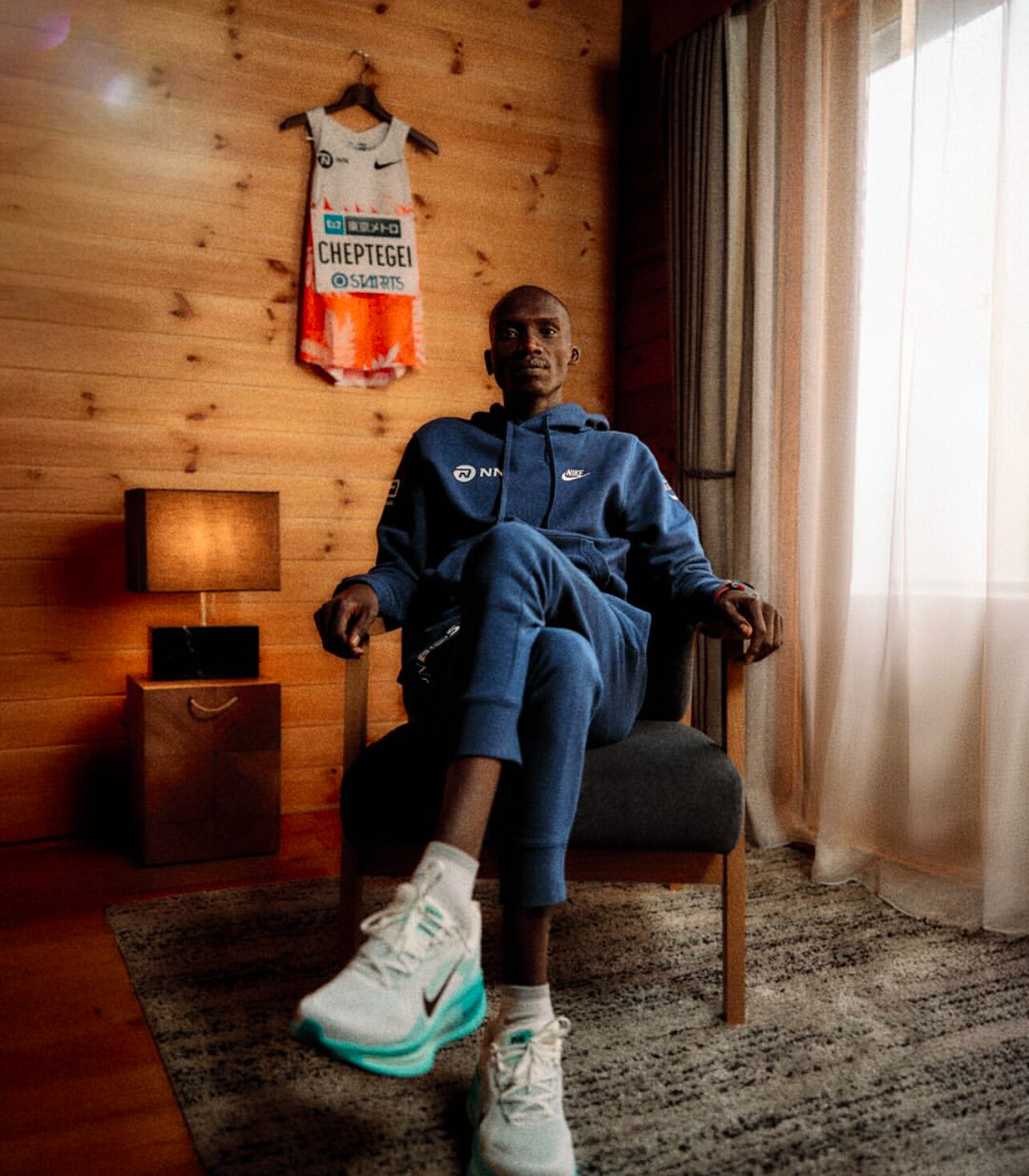
Cheptegei has long been one of the most dominant figures in long-distance running. He holds the world records in both the 5,000m (12:35.36) and 10,000m (26:11.00), both set in 2020. Over the past decade, he has collected multiple world titles, including gold in the 10,000m at the 2019 and 2023 World Championships. In addition to his Olympic success, he has also excelled in cross-country, winning the 2019 World Cross Country Championships title in Aarhus, Denmark.
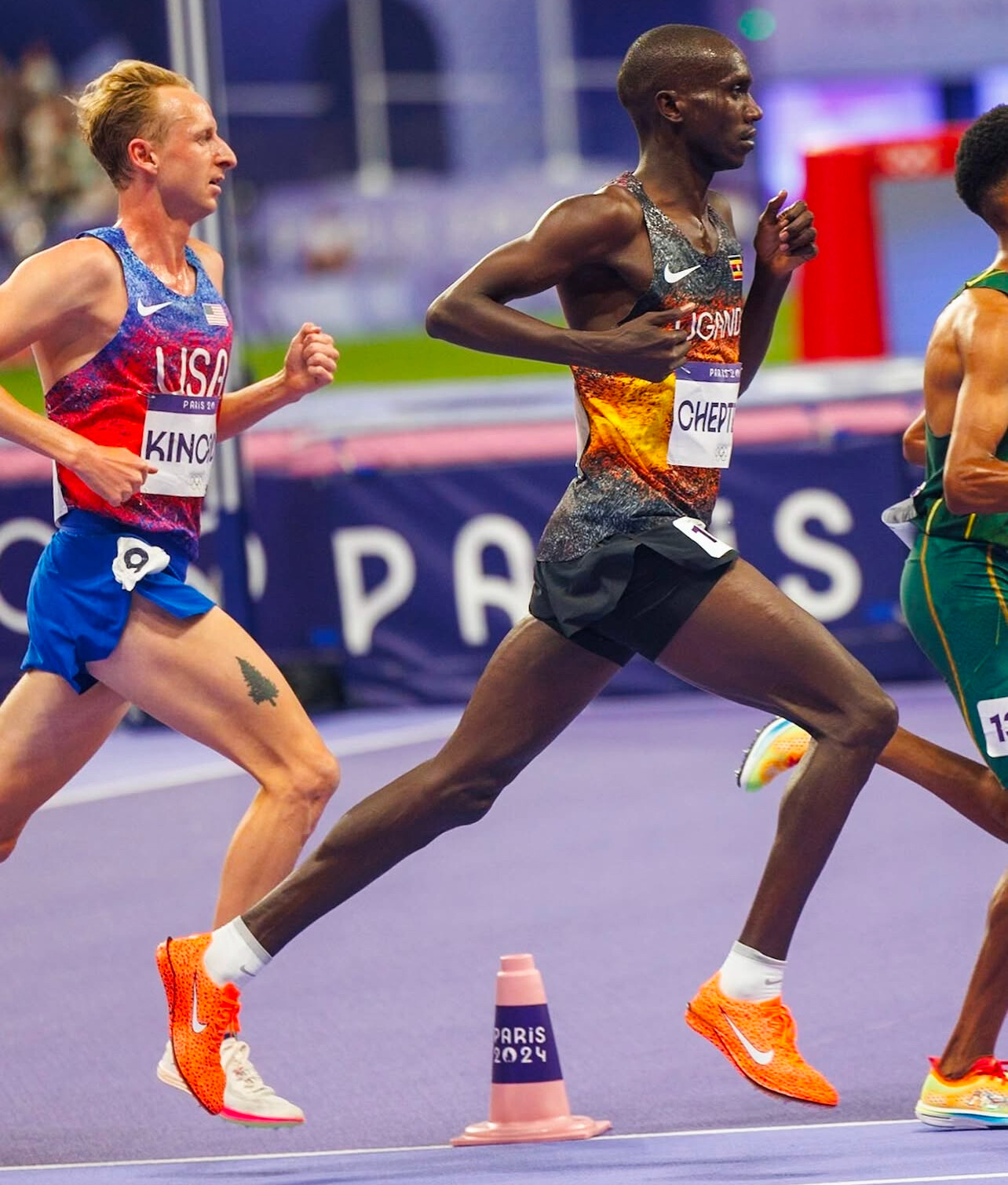
While his dominance on the track is unquestioned, the transition to the marathon presents a new set of challenges. Many track legends have struggled to translate their speed and efficiency to the demands of the 42.2km distance. However, Cheptegei has expressed confidence in his ability to adapt, and the Tokyo Marathon will serve as a key test in that process.
Learning from Valencia
Cheptegei’s marathon debut in Valencia was met with great anticipation, but his time of 2:08:59 was well off the blistering paces typically needed to compete with the world’s best marathoners. Despite this, he gained valuable experience, learning the physical and strategic demands of the event. Marathon racing is a vastly different challenge from track events, requiring exceptional fueling strategies, patience, and a strong finishing kick over the final kilometers.
Unlike his Valencia debut, where he may have approached the race with a more conservative mindset, Cheptegei is expected to be more aggressive in Tokyo. Given the right conditions and race dynamics, a significant improvement on his debut time is likely.
Why Tokyo?
The Tokyo Marathon is a fitting choice for Cheptegei’s second attempt at the distance. It is part of the prestigious World Marathon Majors circuit and is known for its fast, flat course that has produced numerous world-class performances. With a deep field of experienced marathoners expected to push the pace, Cheptegei will have the perfect opportunity to test his marathon potential under ideal conditions.
Additionally, Tokyo has historical significance for the Ugandan star. It was in the city’s Olympic Stadium that he won his first Olympic gold in the 5,000m in 2021, a moment that solidified his place among the all-time greats. Now, he returns to Japan looking to leave his mark on the roads.
What to Expect
While a victory may be a tough ask against seasoned marathoners, Cheptegei’s performance in Tokyo will be closely scrutinized. If he can dip under 2:06 or even approach 2:05, it would be a strong indicator that he has the potential to compete with the world’s best at the distance. His long-term goal is likely an Olympic marathon debut at the Los Angeles 2028 Games, and a strong performance in Tokyo would be a major step toward that goal.
For now, the world will be watching to see how one of the greatest track runners of his generation continues his marathon journey. Whether or not he makes a statement in Tokyo, Joshua Cheptegei’s transition to the marathon is just beginning—and it promises to be a thrilling ride.
by Boris Baron
Login to leave a comment

Tokyo Marathon
The Tokyo Marathon is a world-renowned annual marathon held in Tokyo, Japan. As one of the prestigious Abbott World Marathon Majors, it attracts elite and amateur runners from around the globe. The race holds World Athletics Platinum Label status, recognizing its high competitive standards, top-tier organization, and international appeal. Sponsored by Tokyo Metro, the Tokyo Marathon has grown into one...
more...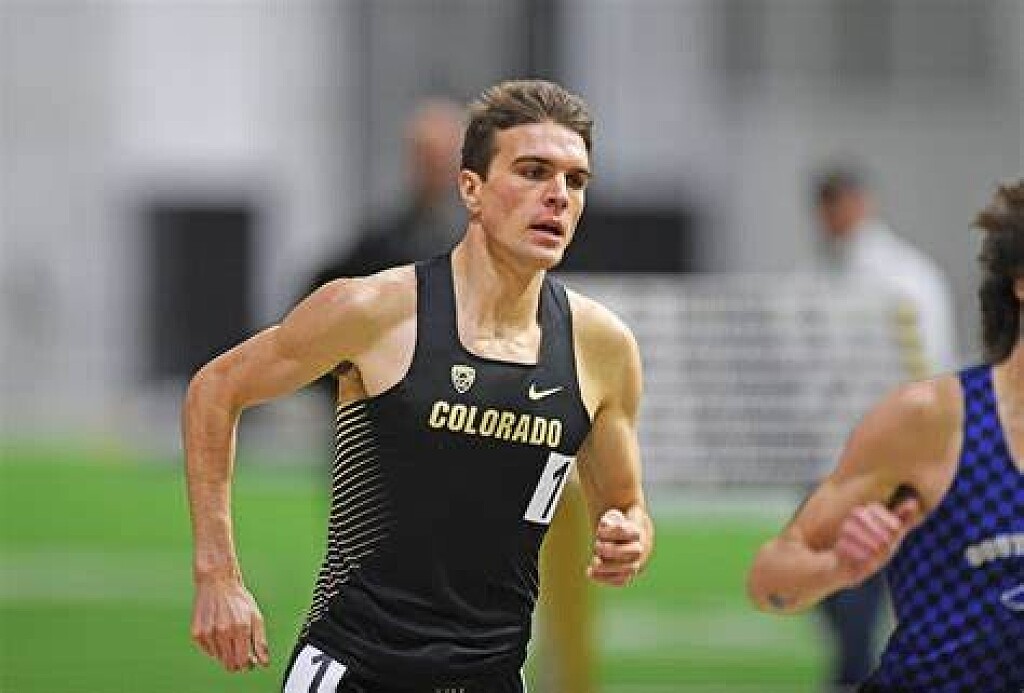
Joe Klecker Plans His Half Marathon Debut
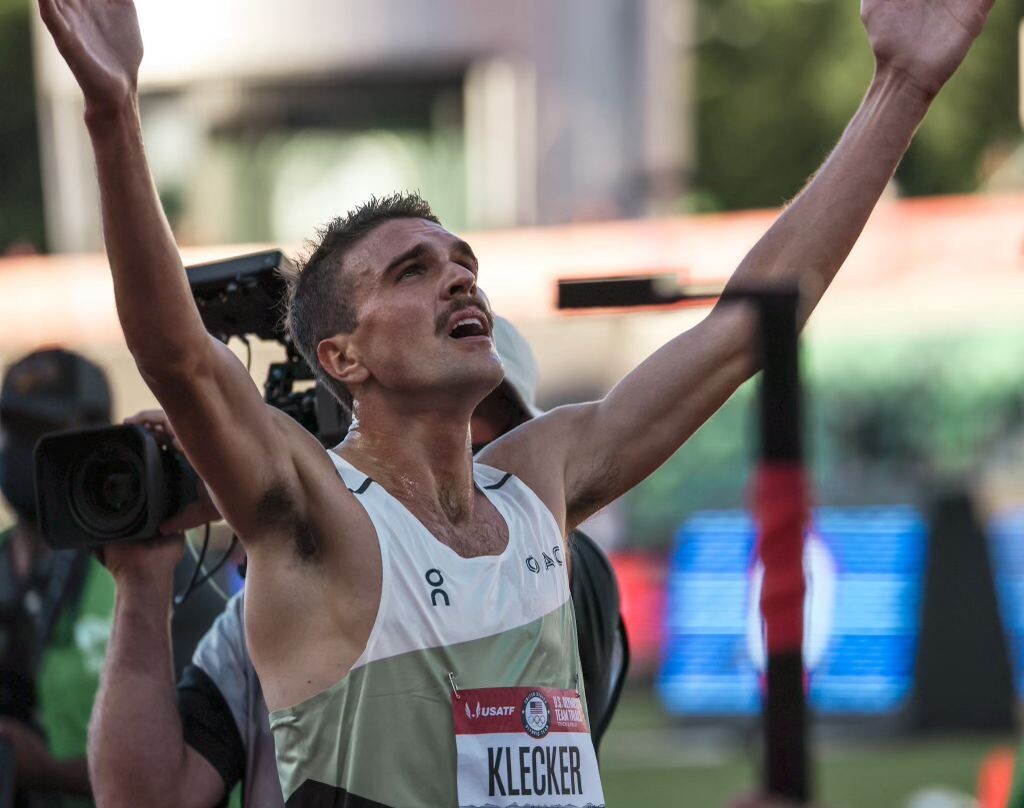
In a live recording of The CITIUS MAG Podcast in New York City, U.S. Olympian Joe Klecker confirmed that he is training for his half marathon debut in early 2025. He did not specify which race but signs point toward the Houston Half Marathon on Jan. 19th.
“We’re kind of on this journey to the marathon,” Klecker said on the Citizens Bank Stage at the 2024 TCS New York City Marathon Expo. “The next logical step is a half marathon. That will be in the new year. We don’t know exactly where yet but we want to go attack a half marathon. That’s what all the training is focused on and that’s why it’s been so fun. Not that the training is easy but it’s the training that comes the most naturally to me.”
Klecker owns personal bests of 12:54.99 for 5000m and 27:07.57 for 10,000m. In his lone outdoor track race of 2024, he ran 27:09.29 at Sound Running’s The Ten in March and missed the Olympic qualifying standard of 27:00.00.
His training style and genes (his mother Janis competed at the 1992 Summer Olympics in the marathon and won two U.S. marathon national championships in her career; and his father Barney previously held the U.S. 50-mile ultramarathon record) have always linked Klecker to great marathoning potential. For this year’s TCS New York City Marathon, the New York Road Runners had Klecker riding in the men’s lead truck so he could get a front-row glimpse at the race and the course, if he chooses to make his debut there or race in the near future.
The Comeback From Injury
In late May, Klecker announced he would not be able to run at the U.S. Olympic Track and Field Trials in June due to his recovery from a torn adductor earlier in the season, which ended his hopes of qualifying for a second U.S. Olympic team. He spent much of April cross training and running on the Boost microgravity treadmill at a lower percentage of his body weight.
“The process of coming back has been so smooth,” Klecker says. “A lot of that is just because it’s been all at the pace of my health. I haven’t been thinking like, ‘Oh I need to be at this level of fitness in two weeks to be on track for my goals.’ If my body is ready to go, we’re going to keep progressing. If it’s not ready to go, we’re going to pull back a little bit. That approach is what helped me get through this injury.”
One More Track Season
Klecker is not fully prepared to bid adieu to the track. He plans to chase the qualifying standard for the 10,000 meters and attempt to qualify for the 2025 World Championships in Tokyo. In 2022, after World Athletics announced Tokyo as the 2025 host city, he told coach Dathan Ritzenhein that he wanted the opportunity to race at Japan National Stadium with full crowds.
“I’m so happy with what I’ve done on the track that if I can make one more team, I’ll be so happy,” Klecker says. “Doing four more years of this training, I don’t know if I can stay healthy to be at the level I want to be. One more team on the track would just be like a dream.”
Klecker is also considering doubling up with global championships and could look to qualify for the 2025 World Road Running Championships, which will be held Sept. 26th to 28th in San Diego. To make the team, Klecker would have to race at the Atlanta Half Marathon on Sunday, March 2nd, which also serves as the U.S. Half Marathon Championships. The top three men and women will qualify for Worlds. One spot on Team USA will be offered via World Ranking.
Sound Running’s The Ten, one of the few fast opportunities to chase the 10,000m qualifying standard on the track, will be held on March 29th in San Juan Capistrano.
Thoughts on Ryan Hall’s American Record
The American record in the half marathon remains Ryan Hall’s 59:43 set in Houston on Jan. 14th, 2007. Two-time Olympic medalist Galen Rupp (59:47 at the 2018 Prague Half) and two-time U.S. Olympian Leonard Korir (59:52 at the 2017 New Dehli Half) are the only other Americans to break 60 minutes.
In the last three years, only Biya Simbassa (60:37 at the 2022 Valencia Half), Kirubel Erassa (60:44 at the 2022 Houston Half), Diego Estrada (60:49 at the 2024 Houston Half) and Conner Mantz (60:55 at the 2021 USATF Half Marathon Championships) have even dipped under 61 minutes.
On a global scale, Nineteen of the top 20 times half marathon performances in history have come since the pandemic. They have all been run by athletes from Kenyan, Uganda, and Ethiopia, who have gone to races in Valencia (Spain), Lisbon (Portugal), Ras Al Khaimah (UAE), or Copenhagen (Denmark), and the top Americans tend to pass on those races due to a lack of appearance fees or a stronger focus on domestic fall marathons.
Houston in January may be the fastest opportunity for a half marathon outside of the track season, which can run from March to September for 10,000m specialists.
“I think the record has stood for so long because it is such a fast record but we’re seeing these times drop like crazy,” Klecker says. “I think it’s a matter of time before it goes. Dathan (Ritzenhein) has run 60:00 so he has a pretty good barometer of what it takes to be in that fitness. Listening to him has been really good to let me know if that’s a realistic possibility and I think it is. That’s a goal of mine. I’m not there right now but I’m not racing a half marathon until the new year. I think we can get there to attempt it. A lot has to go right to get a record like that but just the idea of going for it is so motivating in training.”
His teammate, training partner, and Olympic marathon bronze medalist Hellen Obiri has full confidence in Klecker’s potential.
“He has been so amazing for training,” Obiri said in the days leading up to her runner-up finish at the New York City Marathon. “I think he can do the American record.”
by Chris Chavez
Login to leave a comment

Aramco Houston Half Marathon
The Chevron Houston Marathon provides runners with a one-of-a-kind experience in the vibrant and dynamic setting of America's fourth-largest city. Renowned for its fast, flat, and scenic single-loop course, the race has earned accolades as the "fastest winter marathon" and the "second fastest marathon overall," according to the Ultimate Guide to Marathons. It’s a perfect opportunity for both elite athletes...
more...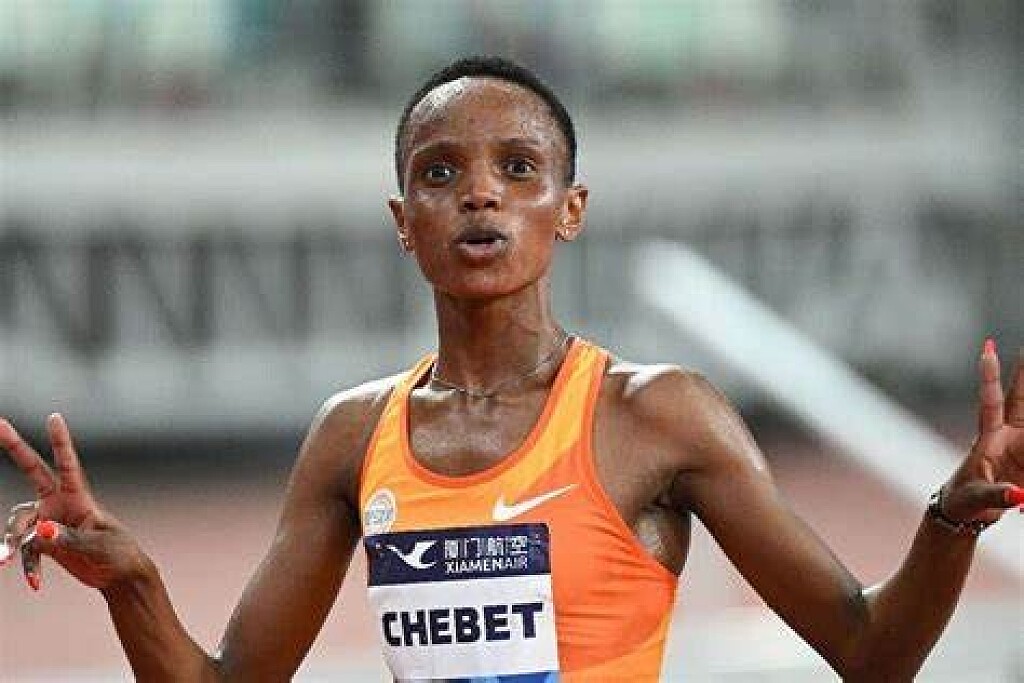
Chebet braces for Italica International Cross Country meeting on November 17
Double Olympic champion Beatrice Chebet is set to bring her fierce form to the 42nd Italica International Cross Country meeting on November 17, a highlight event on the World Athletics Cross Country Tour Gold circuit.
Chebet stunned the world in Paris in August with her dual gold-winning performances in the 5,000m and 10,000m.
She secured the 10,000m gong in a time of 30:43.25 leading Italy’s Nadia Battocletti ( 30:43.35 ) and Olympic marathon champion Sifan Hassan of Netherlands ( 30:44.12 ).
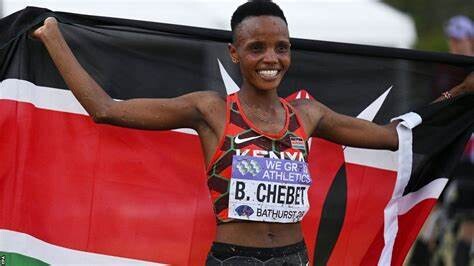
Chebet went on to add the 5,000m title, finishing in 14:28.56 outpacing three-time Olympic 1,500m champion Faith Kipyegon ( 14:29.60 ) and Hassan ( 14:30.61 ).
Chebet is no stranger to cross-country success.
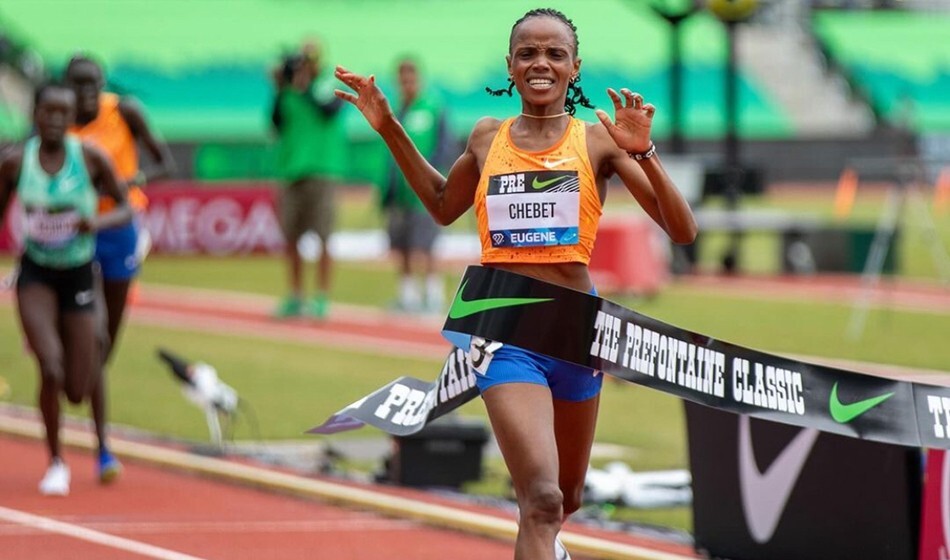
She captured the World U20 Cross Country title in Denmark in 2019 in 20:50.
In 2021, Chebet placed second at the Atapuerca 8km Cross Country event in 25:04 behind Eritrea’s Rahel Ghebreneyohannes ( 25:03 ).
That same year, she clocked 24:35 for a third-place finish at the Seville 7km cross-country meeting.
In 2022, she returned to Atapuerca, this time claiming the title in 25:39.
Last year, she claimed the World Cross Country Championships title in Bathurst, Australia clocking 33:48 with Ethiopia’s Tsigie Gebreselama ( 33:56 ) in second and Agnes Ngetich ( 34:00 ) completing the podium.
She defended her title this year in Belgrade, Serbia, finishing in 31:05 ahead of compatriots Lilian Kasait ( 31:08 ) and Margaret Chelimo ( 31:09 ).
Her illustrious track career boasts silver and bronze medals in the 5,000m during the 2022 (Eugene) and 2023 (Budapest) World Championships.
She boasts gold from the 2022 Birmingham Commonwealth Games as well as the Saint Pierre African Games, both in the 5,000m.
Chebet is the 2018 World Junior 5,000m champion as well as the 2019 African 5,000m junior champion.
In Italy, Chebet will be in the company of 2024 World U20 3,000m steeplechase bronze medallist Diana Chepkemoi as well as the 2018 World 3,000m steeplechase champion Daisy Jepkemei.
The trio will face off against European 3,000m steeplechase record holder Alice Finot of France as well as the World U20 5,000m bronze medallist Charity Cherop of Uganda.
Sweden’s Sarah Lahti, Portugal’s Mariana Machado and Spain’s Carolina Robles will add depth to the field.
In the men’s field, Olympic 10,000m silver medallist Berihu Aregawi from Ethiopia will lead the charge.
His main rivals will be the 2024 Rome Half Marathon champion Yemaneberhan Crippa of Italy as well as Ugandan’s Dan Kibet, Hosea Kiplangat and Kenneth Kiprop.
Portugal’s Etson Barros, Uruguay’s Santiago Catrofe and Spain’s adel Mechaal add depth to the field.
by Teddy Mulei
Login to leave a comment

Cross internacional de Italica
The Cross Internacional de Itálica is an annual cross country running competition it will be held on 21st of November in Santiponce, near Seville, Spain. Inaugurated in 1982, the race course is set in the ruins of the ancient Roman city of Italica. As one of only two Spanish competitions to hold IAAF permit meeting status, it is one of...
more...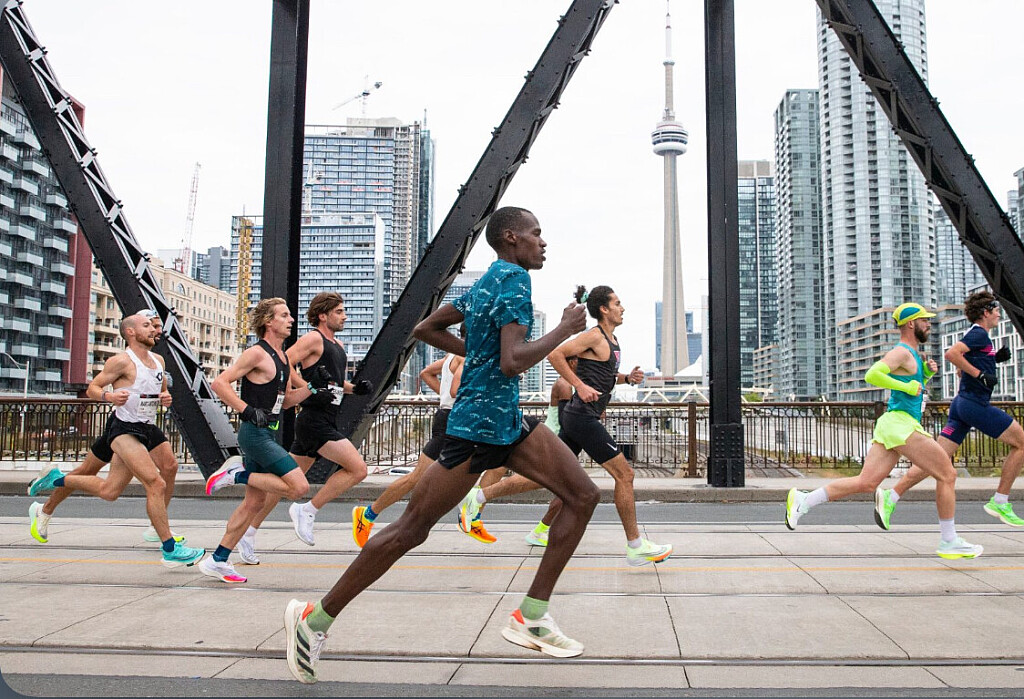
Ethiopian Marathon Star Commits to TCS Toronto Waterfront Marathon
Abdi Fufa will compete in the TCS Toronto Waterfront Marathon October 20th joining a large contingent of fellow Ethiopians on the trans Atlantic flight. Once again this is a World Athletics Elite Label race.
The 28 year-old has a personal best of 2:05:57 from the 2021 Sienna Marathon a time that will catch the attention of his competitors and perhaps cast him as a race favourite amongst the field.
More recently he finished 4th in the 2024 Dubai Marathon with a solid clocking of 2:06:23. It is no surprise, then, that Abdi aims to be on the Toronto Waterfront Marathon podium.
"My expectation in the Toronto Waterfront Marathon is to see myself on the podium,” he declares. “My (long term) goal is running well to support my family.”
Although he is married Abdi and his wife do not yet have children. In a country where the per capita annual income is a little over $1,000 the lure of Toronto Waterfront Marathon prize money - $20,000 to the winner - is immense.
The latest result in Dubai was a welcome sign that his injuries are behind him. Indeed, he didn’t compete at all in 2023.
“I had a calf injury which took me a long time to recover from,” he reveals. “But then I had continuous massage therapy and now I feel better.”
Abdi like many others grew up on a farm with his five brothers and four sisters. An elder brother enjoyed some success as a distance runner and the young Abdi took notice.
“My elder brother Imane Fufa was a good 10,000m runner and he is the one who inspired me,” he explains. “I saw him running during my childhood and so I started to run.”
After coming to the attention of the Ethiopian Athletics Federation he was selected to represent his country at the 2019 World Cross Country Championships in Aarhus, Denmark where he finished 15th. As the third Ethiopian finisher he helped Ethiopia to the team bronze medal.
These days he lives in Addis Ababa, Ethiopia’s capital, and for the past three years has been one of about thirty elite marathon runners training under legendary coach Gemedu Dedefo whose most notable charges are Tigest Assefa and Tamirat Tola.
Tigest smashed the women’s world record with a stunning 2:11:53 a year ago - before taking the Olympic silver medal in Paris - while Tamirat Tola, a last minute addition to the Ethiopian Olympic team, won the gold medal in the Paris Olympics.
It is Tamirat whose influence has proven most impactful upon Abdi. Striking Olympic gold in Paris and before that the 2022 world championship gold as he did in Eugene, Oregon led to grand celebrations amongst the group. The athletes speak of the respect and camaraderie amongst themselves.
Abdi Fufa says Tamirat’s success and the closeness “that we have in the team makes us have a team sprit. We saw Tamirat Tola’s achievement is because of his hard work and patience.”
The group will meet three times a week but each athlete follows a seven days a week program. The commitment is a constant element in Ethiopia’s success
Abdi hopes to follow in the success of Tamirat Tola and continue to improve. Perhaps one day he can achieve success at the Olympics and World Championships and add to coach Gemedu’s list of exceptional athletes. The TCS Toronto Waterfront Marathon is the next step in that journey.
by Paul Gains
Login to leave a comment
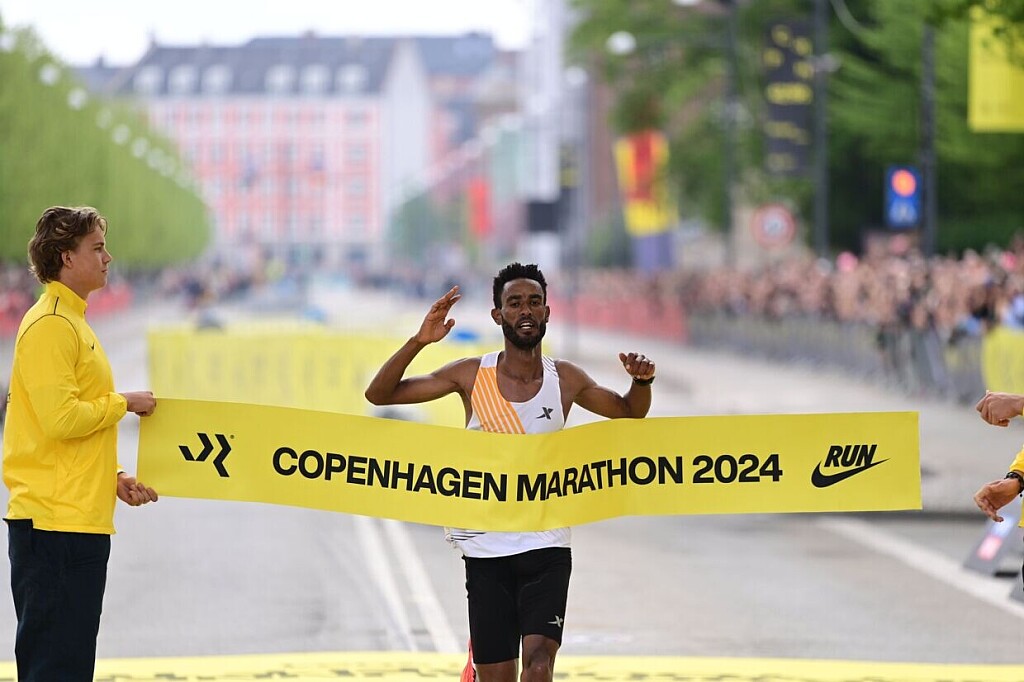
Abdi Gelelchu and Margaret Agai took the honors at Copenhagen Marathon
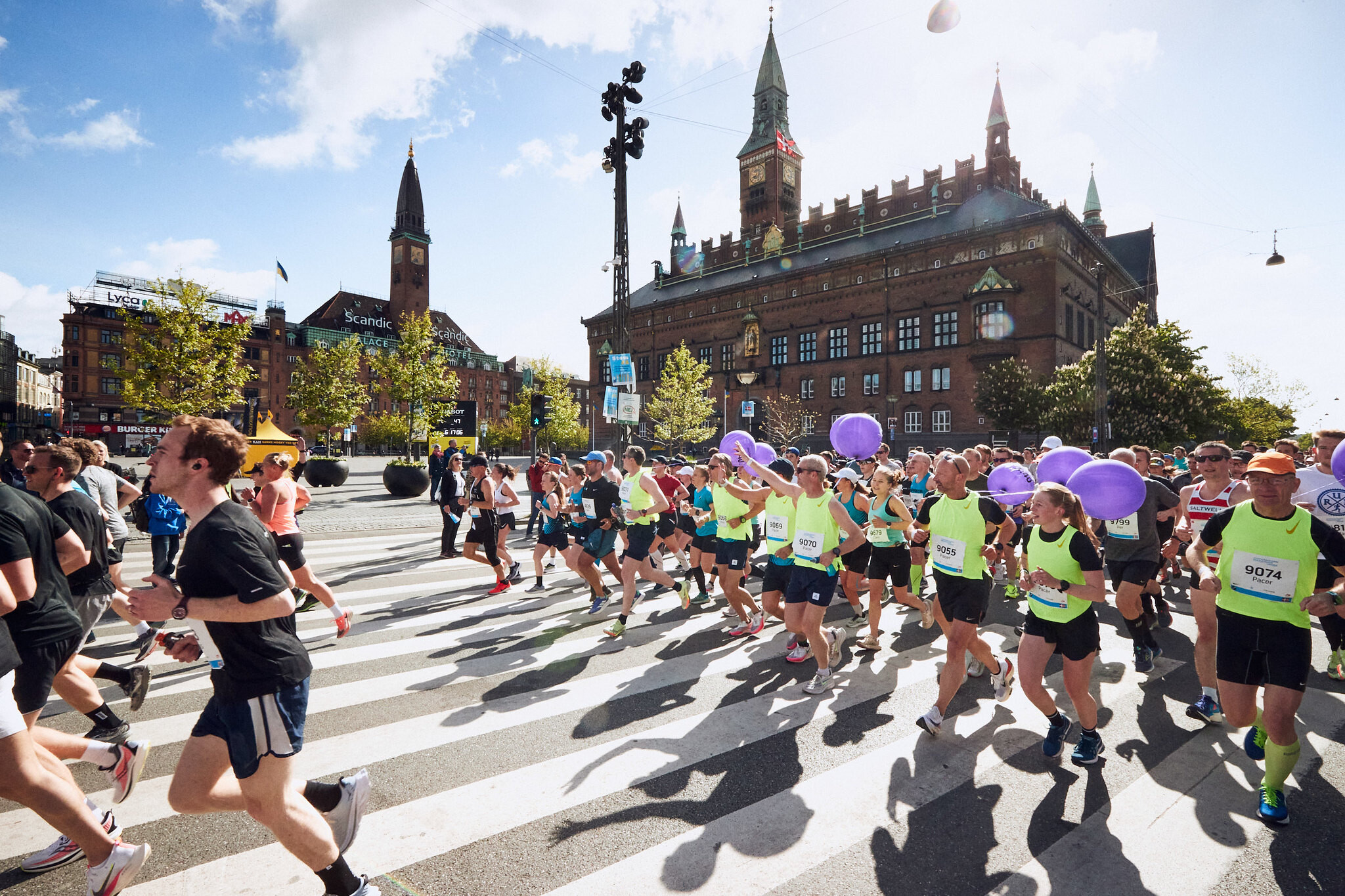
With all 15,000 entries sold out in January, the Copenhagen Marathon already set a historic record since the race was born in 1980. But the elite runners were aiming for more records Sunday May 5th as they took on the newly designed, fast and flat course in near perfect marathon weather.
Edition number 43 of Copenhagen Marathon was a new breakthrough for the race with the strongest starting field ever sent out into the streets of the capital of Denmark. The female winner of the day was Margaret Agai from Kenya, who surprised the favorites and finished in 2:27.31.
“I’m very, very happy. The spectators were amazing and carried us through,” Agai said shortly afterwards and found a smile when talking about meeting the Danish crowd.
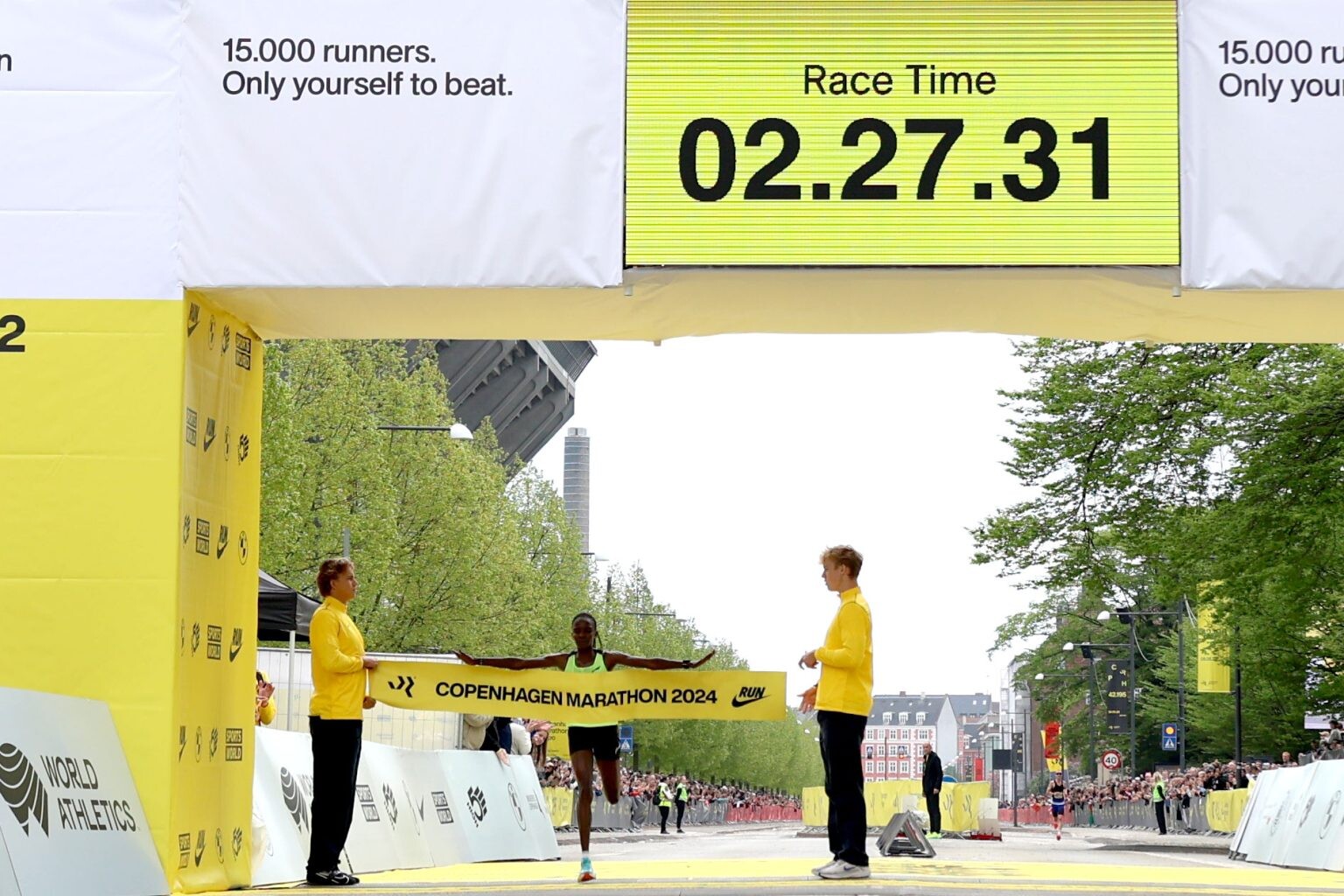
In the men’s race, favorite Gadisa Birhanu was also challenged by a strong field of favorites and was ultimately beaten by Abdi Gelelchu from Bahrain, who followed up on the surprises and crossed the finish line at Øster Allé in a winning time of 2:09.11.
“I’m very happy,” were the words that came out of the mouth of a hard-pressed winner who managed to lift his thumbs in triumph.
Last year’s female winner Rodah Chepkorir came into the race as the clear favorite with her race record from 2023 of 2:23.14. However, the 33-year-old Kenyan faced very strong competition. A total of 11 women were entered with times under 2 hours and 30 minutes. Mongolia’s Khishigsaikhan Galbadrakh surprisingly broke into the top 10 at the Tokyo Marathon this year and initially conquered the pacer and opened a small gap to Chepkorir and the other favorites. After 20 kilometers, she extended her lead to over a minute and was on course for direct Olympic qualification.
But her energy ran out and instead Agai came blowing from behind in a more measured race strategy to take the win and receive the flowers and be wrapped in the Kenyan flag.
Favorite defeat in the men’s raceIn the men’s race, expectations were high for Birhanu. The 31-year-old Ethiopian ran 2:04.59 when he won the Seville Marathon last year. The pacer was booked for a finishing time of just under 2:07 hours. It was a strong signal that the race record set by Eritrea’s Berhane Tsegay two years ago with 2:08.23 should be put to bed in the good conditions on an improved route. At the same time, it was well below the current time requirement for direct Olympic qualification of 2:08.10.
That goal was sought after early in the race when the favorite field of just under 10 runners completed 5 kilometers in 14.51. 25 seconds faster than the previous course record and also a pace well below the direct Olympic qualification requirements. It wasn’t enough for Gelelchu, but a lot of effort was put in to give the Danish audience a record.
After 25 kilometres, the front runners were still within reach of the race record. And after 35 km, a trio of Birhanu, Kenyan James Kiplagat and Abdi Gelelchu were decisively free and set the biodynamic GPS after breaking a yellow triumphal ribbon at the finish on Øster Allé.
Top-3 men and women
Women’s top three1: Margaret Agai, Kenya 2:27:312: Mercy Kwambai, Kenya 2:28,123: Alisa Vainio, Finland 2:28:21
Mens top three1: Abdi Gelelchu, Bahrain 2:09:112: Gadisa Birhanu, Ethiopia 2:09:553: Abebaw Muniye, Ethiopia 2:10:27
Login to leave a comment
Copenhagen Marathon
The race is special in many ways But one thing is the course around almost every part of Copenhagen. The course goes to Frederiksberg which is a very beautiful part of the city. Theres a fantastic atmosphere in the city, and a lot of spectators along the route. The course is pretty fast, and the field of elite runners is...
more...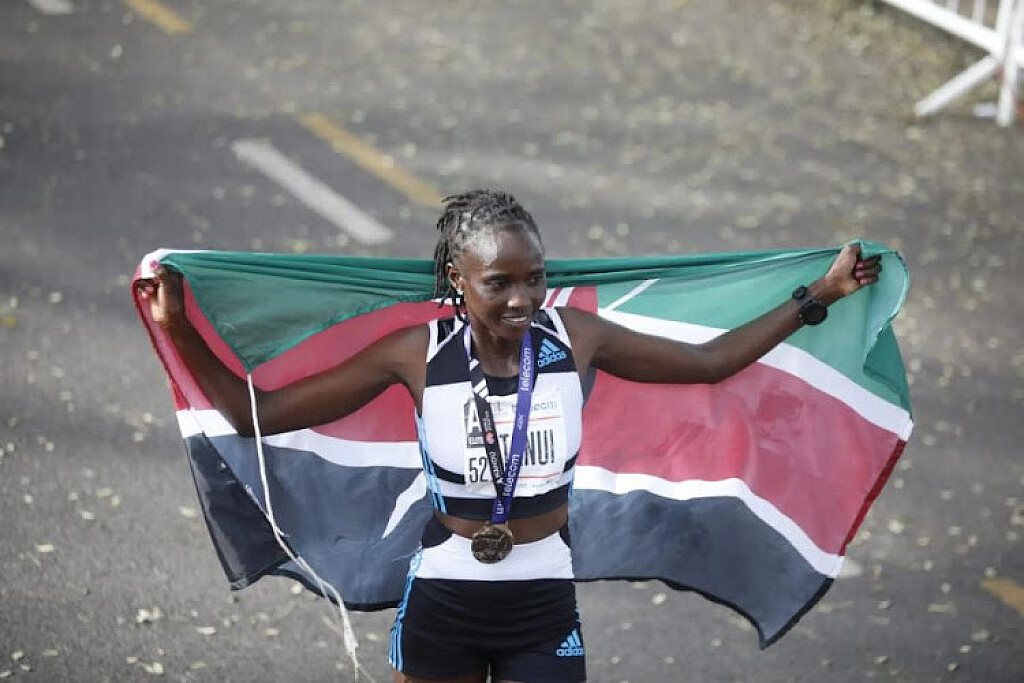
Jepkorir ready to shake off rivals as she seeks to defend Copenhagen title
Rodah Jepkorir is gearing up to defend her Copenhagen Marathon crown against top-tier competition on May 5 in Denmark’s capital.
Last year, Jepkorir blazed through the course in 2:23:14 to claim victory, setting a new personal best (PB) in the process.
Valentina Mateiko secured second place in 2:25:05, while Britain’s Philippa Bowden completed the podium with a time of 2:29:16.
The 33-year-old is no stranger to success, boasting three Buenos Aires Marathon titles under her belt.
In 2019, she clocked 2:25:46, followed by 2:26:53 in 2022, and completed a hat trick in 2023 with a time of 2:24:52.
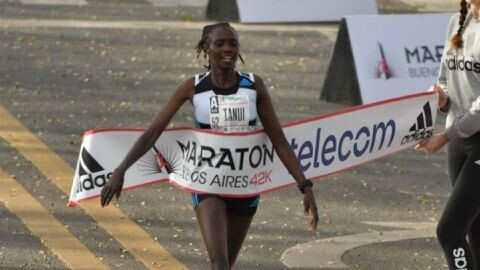
Jepkorir also clocked 2:27:10 to seal the Gold Coast Marathon title in Australia last year as well as the 2019 title in 2:27:56.
However, she'll face fierce competition from Ethiopia’s Derartu Hailu, who holds a PB of 2:23:18 from the Sevilla Marathon, where she finished fourth.
Hailu also holds the Xuzhou Marathon title with a time of 2:27:27.
Joining the fray is 2022 Kosice Marathon champion Margaret Agai, who aims to challenge Jepkorir for the title. Agai has a personal best of 2:23:28 from the 2013 Daegu Marathon.
In the men’s elite race, Castellon Marathon silver medallist James Kiplagat and 2018 Paris Marathon bronze medallist Ernest Ngeno will be among the contenders.
Kiplagat holds a PB of 2:09:08 from the 2023 Zurich Barcelona Marathon and also secured a runners-up spot at the 2021 Stockholm Marathon with a time of 2:12:26. Ngeno boasts a personal best of 2:06:41 from the 2018 Paris Marathon.
The duo will be joined by 2023 Durban Marathon bronze medallists Cornelius Yego and Benson Tunyo.
Ethiopia’s Gadisa Birhanu will prove a tough test for the Kenyans as he boosts a 2:04:59 PB set in 2023 at the Sevilla Marathon, where he clinched the title.
Abdi Gelelchu of Bahrain is also in the elite list with a PB of 2:07:15 set at the 2022 Sevilla Marathon and so will be Japan’s Tsubasa Ichiyama with a a PB of 2:07:41.
by Teddy Mulei
Login to leave a comment
Copenhagen Marathon
The race is special in many ways But one thing is the course around almost every part of Copenhagen. The course goes to Frederiksberg which is a very beautiful part of the city. Theres a fantastic atmosphere in the city, and a lot of spectators along the route. The course is pretty fast, and the field of elite runners is...
more...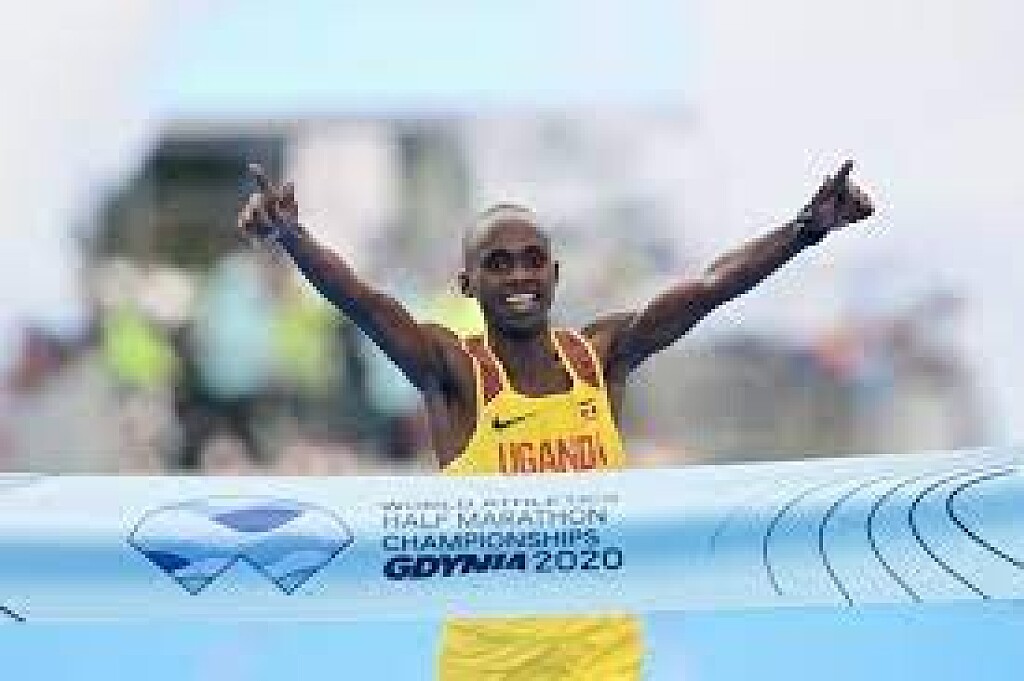
World record holder Jacob Kiplimo is first elite athlete named to run the Copenhagen Half Marathon
Organizers of the Copenhagen Half Marathon have announced that Jacob Kiplimo will run in the event on September 15.
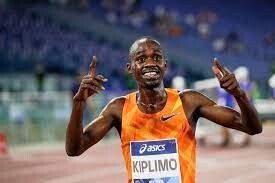
Kiplimo, the current world record holder for the half marathon, may try to beat his own record of 57:31 set in Lisbon in 2021, suggested organizers.
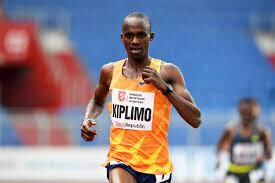
Despite his age of only 24, Jacob Kiplimo of Uganda has already established himself as one of the world’s leading long-distance runners. This year he also shows excellent form where won the World Athletics Cross Country championships in Belgrade.
“We are proud that Jacob Kiplimo will start in Copenhagen. His participation is a clear proof that Copenhagen Half Marathon is established as one of the most prestigious and fastest half marathon races in the world and can attract both the absolute world elite and a record number of participants from both Denmark and abroad,” said Dorte Vibjerg, CEO of the organizers, Sparta Athletics & Running.
by AIMS
Login to leave a comment
Copenhagen Half Marathon
The Copenhagen Half Marathon was the first road race in Scandinavia and is one of the fastest half marathons in the world. The Copenhagen Half Marathon has been awarded with the International Association of Athletics Federation's (IAAF) most distinguished recognition - the IAAF Road Race Gold Label. Copenhagen Half Marathon was awarded the IAAF Road Race Bronze Label in January...
more...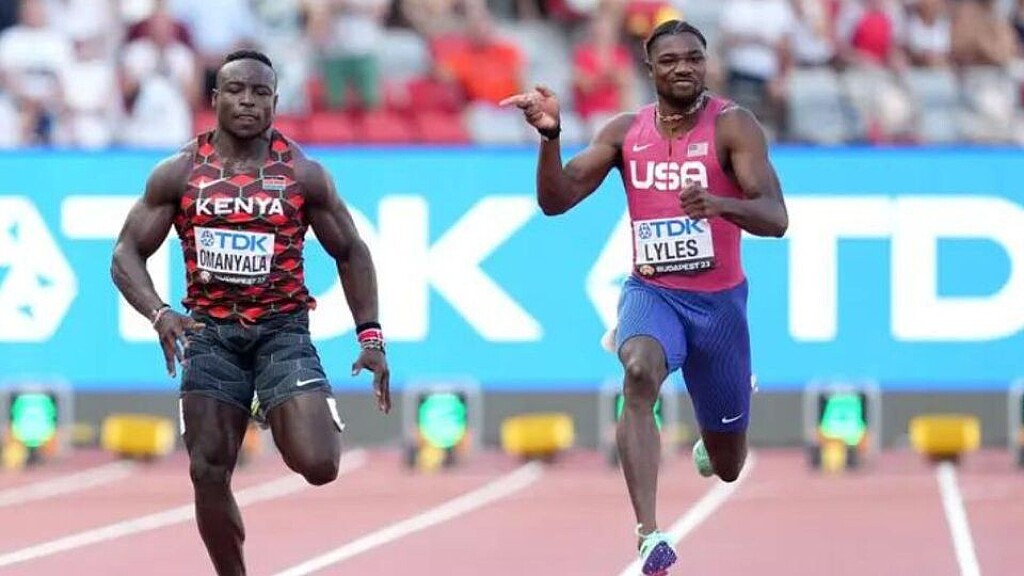
Noah Lyles, Ferdinand Omanyala cruise to 60m semifinal at World Indoor Championships
Noah Lyles and Ferdinand Omanyala have started their World Indoor campaign on a high, recording impressive times to proceed to the semifinal of the 60m race.
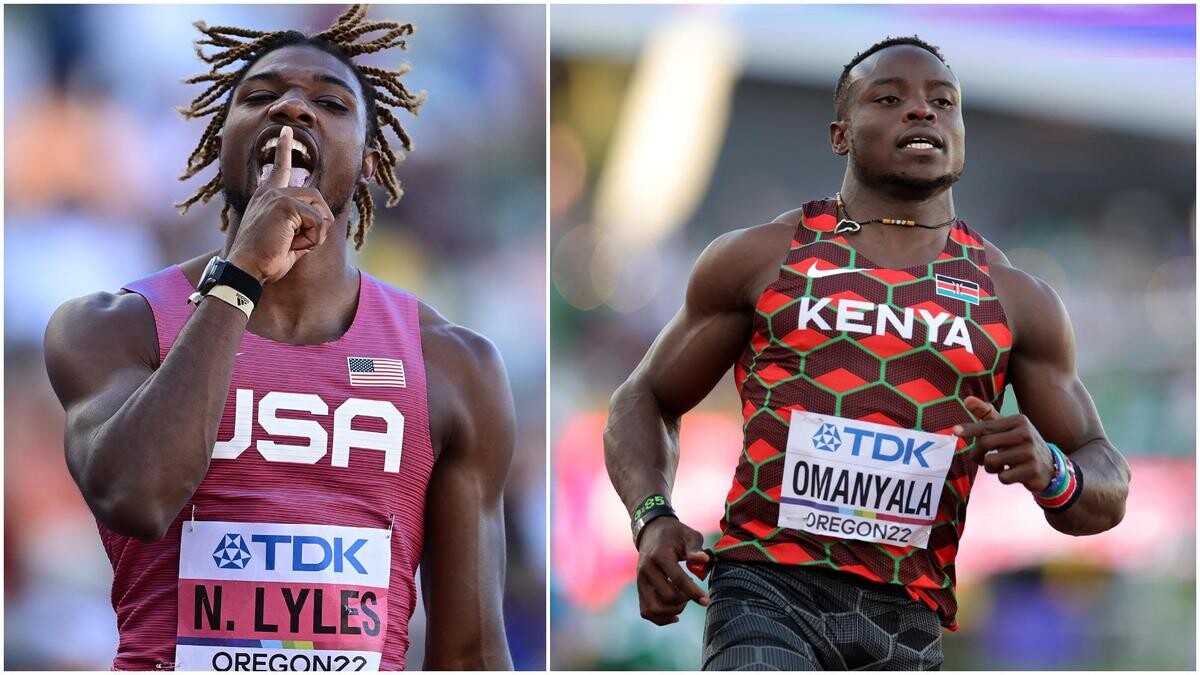
Triple World champion Noah Lyles and Africa’s fastest man Ferdinand Omanyala have started their campaign at the World Indoor Championships in Glasgow, United Kingdom on a high.
Omanyala, competing in Heat 4, was in a class of his own as he clocked 6.52 to win ahead of Japan’s Shuhei Tada and Singapore’s Marc Louis who clocked national record times of 6.52 and 6.69 to finish second and third respectively.
On his part, two-time World Champion Lyles was also breathing fire as he led in his heat. The American, competing in Heat One, started off on a high and sprinted to the finish line, cutting the tape in 6.57.
Second-place finisher Jeff Erius of France clocked 6.63 to cross the finish line as Germany’s Alexander Askovic completed the podium in 6.66.
Heat Two was won by Sweden’s Henrik Larsson as Canada’s Malachi Murray finished second in 6.64. Turkey’s Kayhan Ozer sealed the podium.
Cameroon’s Emmanuel Eseme clocked a national record time of 6.54 in Heat Five with Denmark’s Simon Hansen finishing second in 6.61. Slovenia’s Anej Čurin Prapotnik finished third in 6.68.
60m world record Christian Coleman also led in his heat, clocking 6.49 to win the race ahead of the duo of Mario Burke and Akihiro Higashida.
by Abigael Wuafula
Login to leave a comment

World Athletics Indoor Championships
World-Class Competition Lands in Poland: 2026 World Athletics Indoor Championships The 21stWorld Athletics Indoor Championshipsare being held from 20 to 22 March 2026 at theKujawsko-Pomorska Arena ToruńinToruń,BiT City,Kuyavian–Pomeranian,Poland. It is the second time the country has held the event after the2014 editioninSopot. The venue previously hosted the2021 European Athletics Indoor Championships. On 22 March 2023, the World Athletics Council...
more...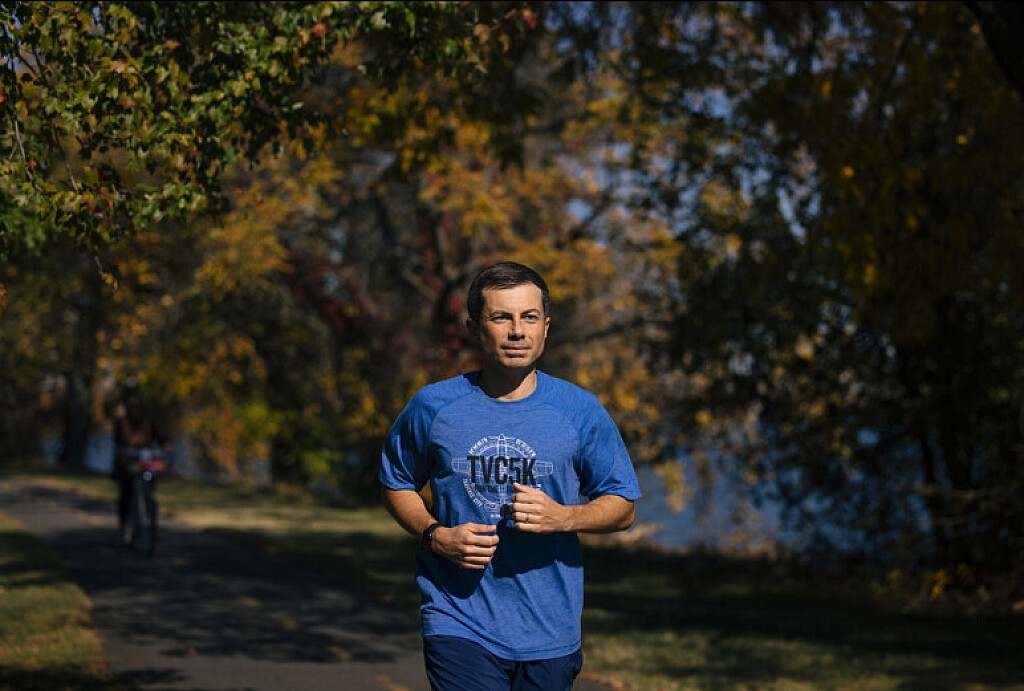
U.S. Secretary of Transportation Pete Buttigieg Treasures Time on His Feet
He has toddler twins and a very big job, but the cabinet member makes running a priority.
When you’re a “transportation guy,” as Pete Buttigieg calls himself, there’s no better place to run than Gravelly Point Park, in Arlington, Virginia, under the flight path of planes on final approach at Reagan Washington National Airport.
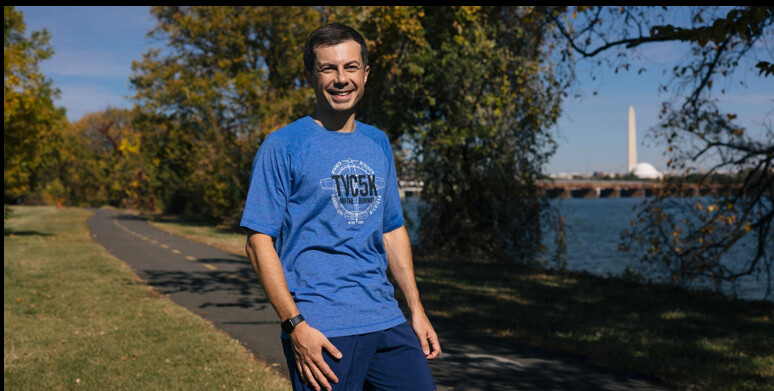
“It feels as though the planes are trying to land right between your eyes, and then you watch them go over your head,” said Buttigieg, the 41-year-old U.S. Secretary of Transportation. “It’s just really fun and motivating.”
Buttigieg—who in 2021 was sworn in as the youngest member of President Biden’s Cabinet—is (with all respect due to a government leader) a bit of a dork when it comes to planes.
“There it is!” he said, as a United Airbus passed close overhead. “You hear that swizzling noise in the air? That’s wake turbulence!”
“Turbulent” is a word Buttigieg uses regularly, although his political career has been mostly smooth sailing. In 2011, he was elected mayor of his hometown of South Bend, Indiana. Eight years later, he entered the Democratic presidential race as a longshot candidate and won the Iowa caucuses. He ended his bid in March 2020 and endorsed the man who’s now his boss, Joe Biden.
Recently Buttigieg squeezed a midmorning run with this reporter into a typically hectic day at the helm of a 53,000-employee department: getting his two-year-old twins fed, dressed, and off to daycare; meeting with the German minister of transportation; welcoming the newly confirmed FAA administrator to his post; meeting with colleagues at the Commerce Department; talking permitting processes at the White House; and then attending a state dinner for the Prime Minister of Australia. Wardrobe requirements included a suit, running clothes, and a tuxedo.
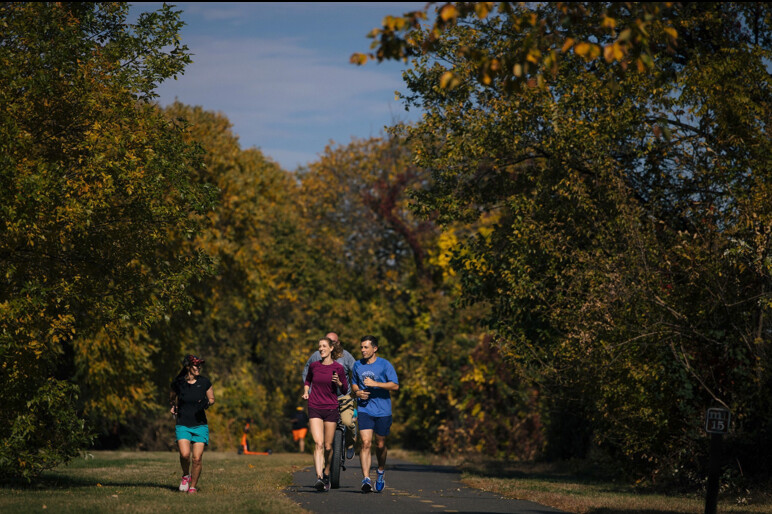
On days like that, running is a source of satisfaction and stress relief. As a cabinet secretary, Buttigieg is required to train with security; his detail trails behind him on a bike while he runs, or waits by the water’s edge while he swims. (When members of Buttigieg’s open-water swimming group tried to correct a hitch in the Secretary’s stroke, his security team protested, “Don’t fix that! It’s the only way we know which one is him!”)
For Buttigieg, knowing Secret Service members’ jobs revolve around his workout schedule is the ultimate in accountability. “It’s definitely kept me from hitting the snooze button more than once,” he said.
Apart from this interview, conducted at sub-10-minute-mile pace, and the occasional bit of bipartisan “jogging diplomacy,” as he calls runs with members of Congress, Buttigieg tends not to mix work with training. He runs about five days a week, usually early in the morning, when most people are too focused on their own workouts to recognize him.
“I get spotted a little bit, but not enough to disrupt my training,” Buttigieg said. “Once in a while somebody wants to take a selfie when I’m mid-run, and I’m never sure how to handle that. Usually I just do it.”
Humble run beginnings
As a teenager, Buttigieg did not take to running naturally.
“It’s difficult to overstate how unathletic I was,” said Buttigieg, who joined the track and cross-country teams at St. Joseph’s High School in South Bend. “I was the kid who was so far behind at a cross-country meet that I might take a wrong turn because there was nobody left on the course. So it meant a lot to me, years later, when I got to be speedier.”
His progression from back-of-the-packer to one of the fittest members of the executive branch took years. As an undergrad at Harvard, Buttigieg would run on the treadmill or along the Charles River, but never more than three to four miles. At Oxford, where he was a Rhodes Scholar, Buttigieg added rowing to his endurance repertoire. By his mid 20s, running had become a “comfortable habit”—and a gratifying one.
“There’s a level of coordination that I may never have to be good at basketball,” he said. “But running—the more you do it, the more rewarding it becomes.”
When Buttigieg joined the U.S. Naval Reserve in 2009, he excelled at the 1.5-mile run that was part of the requisite fitness test, getting close to a perfect score of 9 minutes flat.
“For a while I was the fastest guy in my unit, which felt great because I was always the slowest guy in my high school,” he said.
In 2014, during a seven-month deployment as a counterintelligence officer in Afghanistan, Buttigieg ran a half marathon at the U.S. base in Bagram. In addition to the typical instructions about course markers and fluid stations, the pre-race briefing included warnings to participants about the potential for rocket attacks. He ran his current PR of 1:42.
A triathlon two years in the making
Buttigieg continued to run throughout his mayorship of South Bend and his 2019–20 presidential run. In 2021, his first year as transportation secretary, he was training for a half-Ironman in Michigan when he and husband, Chasten, adopted premature newborn twins, Penelope and Gus. Suddenly, instead of miles, Buttigieg was counting ounces of formula. Long training runs were scrapped during sleepless nights and Gus’s hospitalization with RSV.
It took until this year before Buttigieg could try another tri. Preparing for a half-Ironman (1.2-mile swim, 56-mile bike, 13.1-mile run) is a major undertaking for anyone. But when you’ve got 2-year-olds, Buttigieg said, “physically redirecting and restraining them is a huge part of parenting.” He followed a 16-week training plan he got online and relied on Chasten to hold down the fort with their kids on weekend mornings while he did long runs or four-hour bike rides.
“I would try to make up for it later in the day, but there’s no way I could’ve done this without Chasten being very supportive,” Buttigieg said. “While there’s an ethos of self-discovery and self-reliance in endurance sports, it really does bring out how dependent you can be on others to support you.”
During the race, held in mid-September in Michigan, Chasten and the kids hung out at a nearby playground—“we were playing with fire when it came to naptime”—and were at the finish line when “Papa” crossed in 6 hours and 31 minutes, largely on the strength of a 2:05 half marathon leg.
“It was pretty thrilling, although there was a fair amount of pain,” Buttigieg said. “But the kids really got into it, and that’s part of why you do this, to be in good health for the people you love.”
Buttigieg said he was wrecked for a couple of days post-race, but he now hopes to take his fitness out for an occasional spin—perhaps a run at a half marathon PR. But he won’t undertake another 6-hour race anytime soon.
“I don’t think I can do something this time intensive again while I’ve got this job,” he said. “It’s too much to ask of Chasten.”
A runner’s perspective on infrastructure
After he averaged about 25 miles per week during his triathlon buildup, now it’s back to shorter workouts for Buttigieg. And with more than 100 miles of traffic-separated pathways up and down the Potomac, the nation’s capital is an endurance athlete’s paradise. “There are few better places to run in the whole world, I would argue,” he said.
The Washington area represents the kind of well-connected, accessible and pedestrian-friendly infrastructure the Department of Transportation wants to build more of through its National Roadway Safety program. For Buttigieg, helping communities around the country build separate paths for running and biking is about a population’s safety as much as its fitness.
“I worry sometimes that a path like this is viewed as purely ornamental,” he said. “I would argue that the recreational case is pretty compelling, but also fundamentally, safety is on the line. The very layout of our roads can either incentivize or discourage active transportation, and they can either make it safer or more dangerous.”
Buttigieg formed a new perspective on road design in 2016, when he was part of a group of U.S. mayors who traveled to Denmark. Buttigieg saw 1970s-era photos of Copenhagen, which now rivals Amsterdam for highest rate of bike commuting, and recognized the look of a lot of car-dependent American cities.
“That’s when the lightbulb went off,” he said. “It’s not some immutable Nordic cultural characteristic that changed things. It was some conscious decisions made by planners to make it more attractive and safer. By doing that, they reduced congestion, they reduced pollution, and over the long run, they increased safety.”
Buttigieg has a lot of priorities beyond encouraging active transportation. He wants to train more air traffic controllers. Strengthen HazMat requirements for railroads. Build more roads and bridges. Budget cuts or a government shutdown would make it harder to accomplish those projects.
When political roadblocks lead to frustration, he works through it with exercise. He is a transportation secretary who gets to where he needs to be, psychologically and physically, by putting one foot in front of the other.
“Especially in the early morning when the dawn’s just breaking over the river here, it’s hard not to feel even in our troubled Washington that there’s some magnificence to our nation’s capital,” Buttigieg said. “You count your blessings after a run, if not always during one.”
by Runner’s World
Login to leave a comment
Edward Cheserek, Irine Cheptai set PBs 2023 Copenhagen Half Marathon
Edward Cheserek and Irine Cheptai set personal bests on their way to leading the men and women 2023 Copenhagen Half Marathon results on Sunday. The Top 25 results below shows Edward Cheserek running 59:11 and Irine Cheptai clocking 1:05:53
The 2023 Copenhagen Half Marathon results and report on Sunday, 17 September, as Kenyan runners Edward Cheserek and Irine Cheptai won the men’s and women’s respective titles with a pair of quality runs to set personal bests in the Elite races.
On the men’s side, the top six finishers went faster than 60 minutes today, led by Cheserek, who crossed the finishing line at a new personal best time of 59:11. This was the first time Cheserek was breaking 60 minutes for the half marathon with his previous PB of 1:00:13 set in 2022 in Valencia.
Following the former Oregon Duck and NCAA standout home on Sunday was his countryman Bernard Koech, who clocked 59:13 in second place. Ethiopia’s Gemechu Dida ran 59:31 for third place and completed the podium.
The women’s 2023 Copenhagen Half Marathon results and report was led by three-time world champion Irine Cheptai from Kenya, who set a new personal best today, stopping the clock at 1:05:53.
Kenyan runners swept the podium in the women’s race with Winfridah Moseti finishing in second place with 1:06:40, followed by countryman Jesca Chelangat, who ran 1:07:03 for third.
Meanwhile, Jacob Sommer Simonsen was top Denmark finisher today, clocking in at 1:03:40 to take the national title and finishing 25th overall.
On the women’s side, the national winner was Carolien Millenaar, who ran 1:14:50 for first-place among the Denmark runners and
Login to leave a comment
Copenhagen Half Marathon
The Copenhagen Half Marathon was the first road race in Scandinavia and is one of the fastest half marathons in the world. The Copenhagen Half Marathon has been awarded with the International Association of Athletics Federation's (IAAF) most distinguished recognition - the IAAF Road Race Gold Label. Copenhagen Half Marathon was awarded the IAAF Road Race Bronze Label in January...
more...
Irene Cheptai bags Devolution title, shifts focus to Copenhagen 21km race
Fit-again former world cross country champion Irene Cheptai has revealed next month's Copenhagen Half Marathon remains top of her priorities this year.
Speaking in Eldoret on Tuesday after winning the Devolution 5km Road Race, the Commonwealth Games 10,000m silver medalist said she wants to mark her return to distance racing with a win in the Denmark capital city as consolation for missing the World Cross Country Championships in Bathurst, Australia through injury.
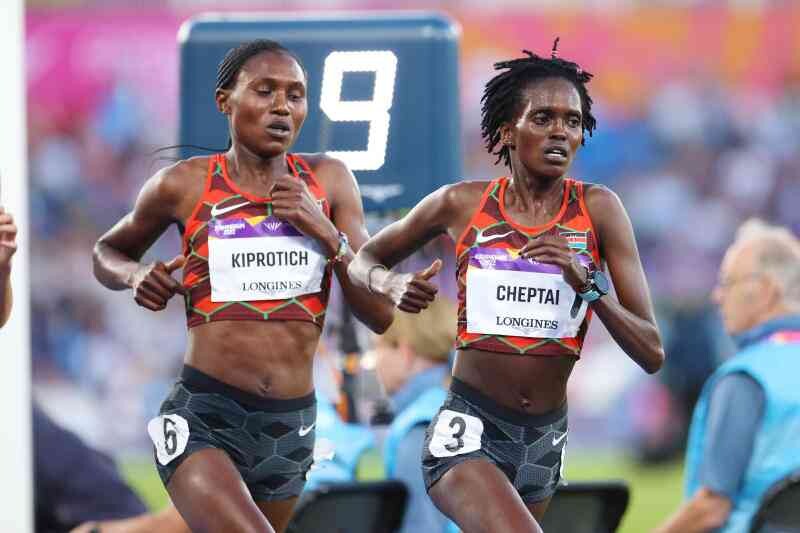
“Despite making the team to the World Cross, I had to leave the camp due to an injury," said Cheptai.
"And now that I am finally fit again, I want to mark my return in Copenhagen on September 17.”
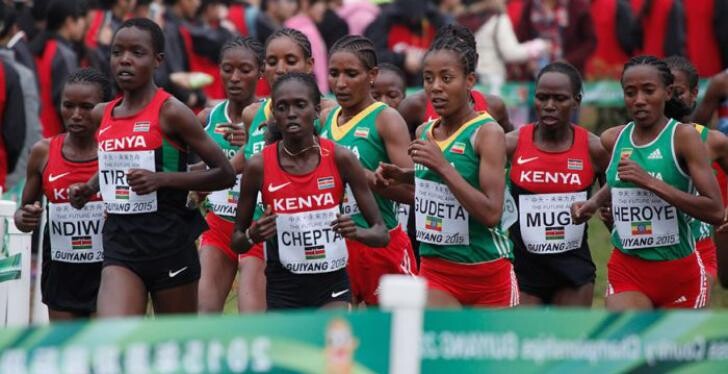
She said that the Devolution race was part of her speed and endurance training.
“This race is part of endurance and speed training. It was my first race since I sustained that injury and I feel like I am good to go,” added Cheptai.
The West Pokot-born runner won the title in 17:04.6 ahead of Sophia Jepchirchir (17:05.5) and Winnie Jemutai (17:16.1) in a race that had attracted over 500 athletes.
Cheptai said the race proved a real struggle in the initial stages especially after they were put on the starting point alongside the men.
“It was a real struggle at the start but I thank God I came home victorious,” she said.
Peter Mwaniki from Nyandarua County won the men's race in 15:09.1 ahead of Weldon Langat (15:12.5) and Charles Rotich (15:13.3).
Mwaniki, winner of Nairobi City 10km race said: “This year has been good for me, winning Nairobi 10km, Belgut 10km and last Sunday’s Uasin Gishu half marathon. These are blessings."
He said he was pushed to victory after race favorite Langat faded in the last few minutes.
“I have been pushed to run well since I have a family — children, wife and grandmother — who have been motivating me to continue exploiting my talent, especially after winning in Nairobi,” he said.
by Emmanuel Sabuni
Login to leave a comment
Copenhagen Half Marathon
The Copenhagen Half Marathon was the first road race in Scandinavia and is one of the fastest half marathons in the world. The Copenhagen Half Marathon has been awarded with the International Association of Athletics Federation's (IAAF) most distinguished recognition - the IAAF Road Race Gold Label. Copenhagen Half Marathon was awarded the IAAF Road Race Bronze Label in January...
more...
Danish dad smashes stroller half-marathon record
Breaking records in marathon running is no easy feat, but Danish distance runner and new dad Jacob Simonsen managed to do just that, in a rather unconventional way. With his one-year-old son, Viggo, safely tucked in a jogging stroller, Simonsen blazed through the Aarhus City Half Marathon on June 11, setting an unofficial stroller half-marathon Guinness World Record of 68:04.
Simonsen, 28, shattered the previous record by a whopping 34 seconds, averaging a speed of nearly 19 km/hr around Aarhus. Simonsen is quite an established runner domestically, earning the title of Danish champion at the 2023 Copenhagen Marathon, where he placed ninth overall in 2:14:46. He has also represented Denmark at the 2019 and 2023 World Cross-Country Championships.
Before the race, he told Danish reporters that he isn’t used to running with a stroller, but thought it would be a fun challenge with his newborn son. His main concern heading into the race was making sure his son didn’t wake up from his nap unhappy about this endeavour. Luckily, things went as planned. “Viggo was a champ throughout the race,” said Simonsen. “He seems to have inherited his father’s sense of adventure and love for the thrill of running.”
Typically, stroller runners start at the back, but to ensure fair competition and Simonsen’s bid for the record, he was granted a position at the front. He also had another runner follow him to capture the attempt on video and make the feat official, a requirement for a Guinness World Record.
Simonsen finished fifth overall, only a minute and a half behind the winner, Omar Hassan, who won in 66:31.
by Running Magazine
Login to leave a comment
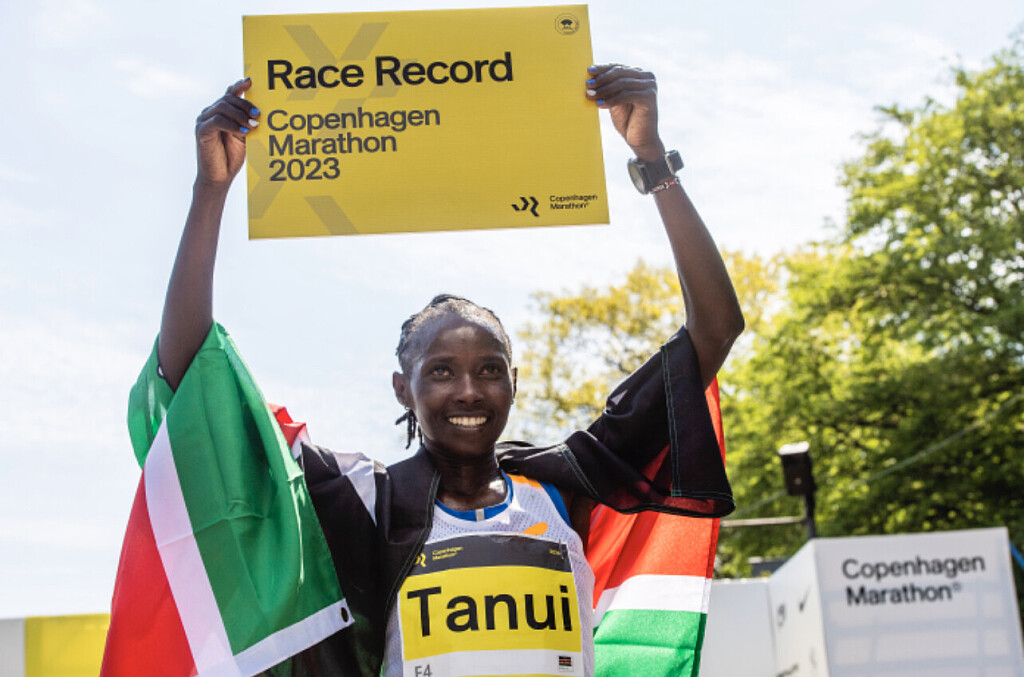
Tanui and Kirwa are the winners at the 2023 Copenhagen Marathon
Kenyans Rodah Chepkorir Tanui and Solomon Kirwa survived the heat to win the women’s and men’s 2023 Copenhagen Marathon on Sunday (14).
Running her second marathon of the year, Tanui pulled away from the field to better her personal best from 2:25:46, which was set in Buenos Aires on 22 September 2019. She ran 2:28:30 for sixth place in her other marathon race in 2023 in Riyadh in February.
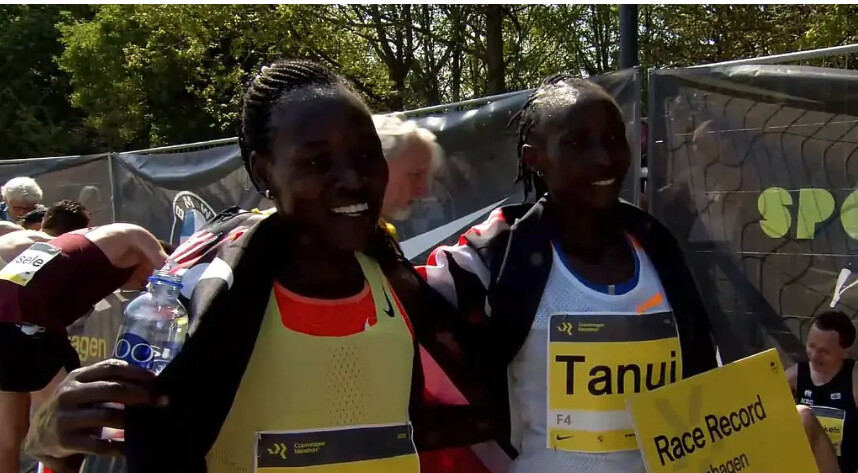
For her top performance today, Tanui collected €$6000 for the win and an extra €$3000 in bonus prize for breaking the race record. Look for her to race in other big marathon races in the near future!
Valentina Mateiko, the 2014 World Junior 3000m bronze medalist, made an impressive start to her marathon career in the extremely hot condition in Copenhagen today, clocking in at 2:25:05 to take second place on debut before being well received by her Kenyan teammate at the finish line.
Philippa Bowden of Great Britain also smashed her personal best big time when she ran in at 2:29:16 for third place, lowering her previous mark by almost five minutes.
The top American finisher today in the women’s contest was Roberta Groner, the 2019 World Championship sixth place finisher, who ran 2:31:37 to take sixth place today as well.
Karen Ehrenreich won the Danish title with a time of 2:35:02 for 9th place overall, with Stine Schønning a distant second place in the Danish Championships at 2:45:10.
Kirwa Leads Kenyan Sweep in Men’s Race
Meanwhile, Solomon Kirwa led a Kenyan podium sweep in the men’s race at the 2023 Copenhagen Marathon. The 36-year-old, running for the first time in the Copenhagen race, made it a fruitful debut at the Denmark event, clocking in at 2:09:12 for first place after surging away from his rivals after the 40km mark.
Edwin Kiptoo of Kenya, who led after the halfway mark, was second in the end with a time of 2:09:51, followed by countrymen Kenneth Keter, who posted 2:09:47 for third place and Pius Karanja in fourth.
T-Roy Brown was the best-placed male runner from the United States today, taking 18th place with a time of 2:21:17.
Karen Ehrenreich was crowned the Denmark champion after he finished at 2:35:02 for 9th overall, while Andreas Lommer of Denmark, who changed his race plans to work with Tanui in her chase for glory today, ran out of gas and finished with a time of 2:23:50.
Login to leave a comment
Copenhagen Marathon
The race is special in many ways But one thing is the course around almost every part of Copenhagen. The course goes to Frederiksberg which is a very beautiful part of the city. Theres a fantastic atmosphere in the city, and a lot of spectators along the route. The course is pretty fast, and the field of elite runners is...
more...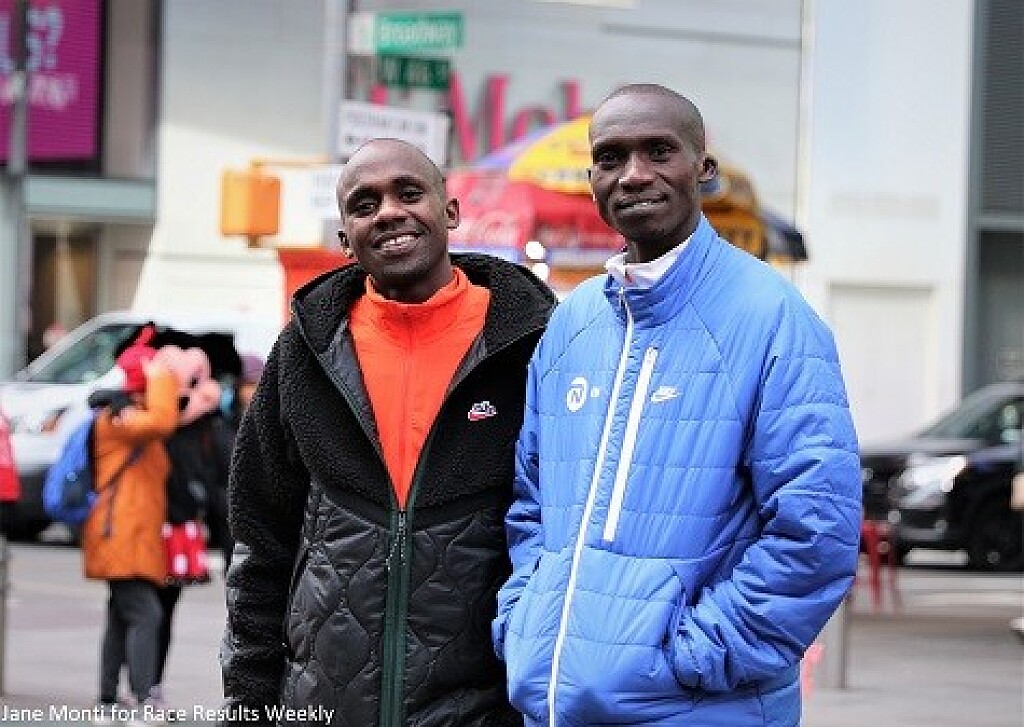
Cheptegei, Kiplimo To Renew Their Rivalry At United Airlines NYC Half
Standing in Times Square this morning, Jacob Kiplimo and Joshua Cheptegei looked like any other tourists visiting one of this city's most famous landmarks. Their hands thrust into their jacket pockets to ward off the late winter cold, the two Ugandans took in the sights while engaging in friendly conversation and taking a few selfies. Neither had ever been to New York City.
But on Sunday at the 16th edition of the United Airlines NYC Half, America's largest half-marathon with about 25,000 finishers, they will return to their more familiar roles as rivals. Kiplimo, 22, the reigning World Athletics half-marathon and cross country champion, and Cheptegei, 26, the reigning Olympic and World Athletics 10,000m champion, will face each other again just 29 days after the World Athletics Cross Country Championships in Bathurst, Australia. There --in hot, humid and windy conditions-- Kiplimo won the gold medal in a last-lap breakaway relegating Cheptegei, who was the event's reigning champion, to the bronze medal position. Both are savoring the chance to race head to head again, but their rivalry is clearly a friendly one.
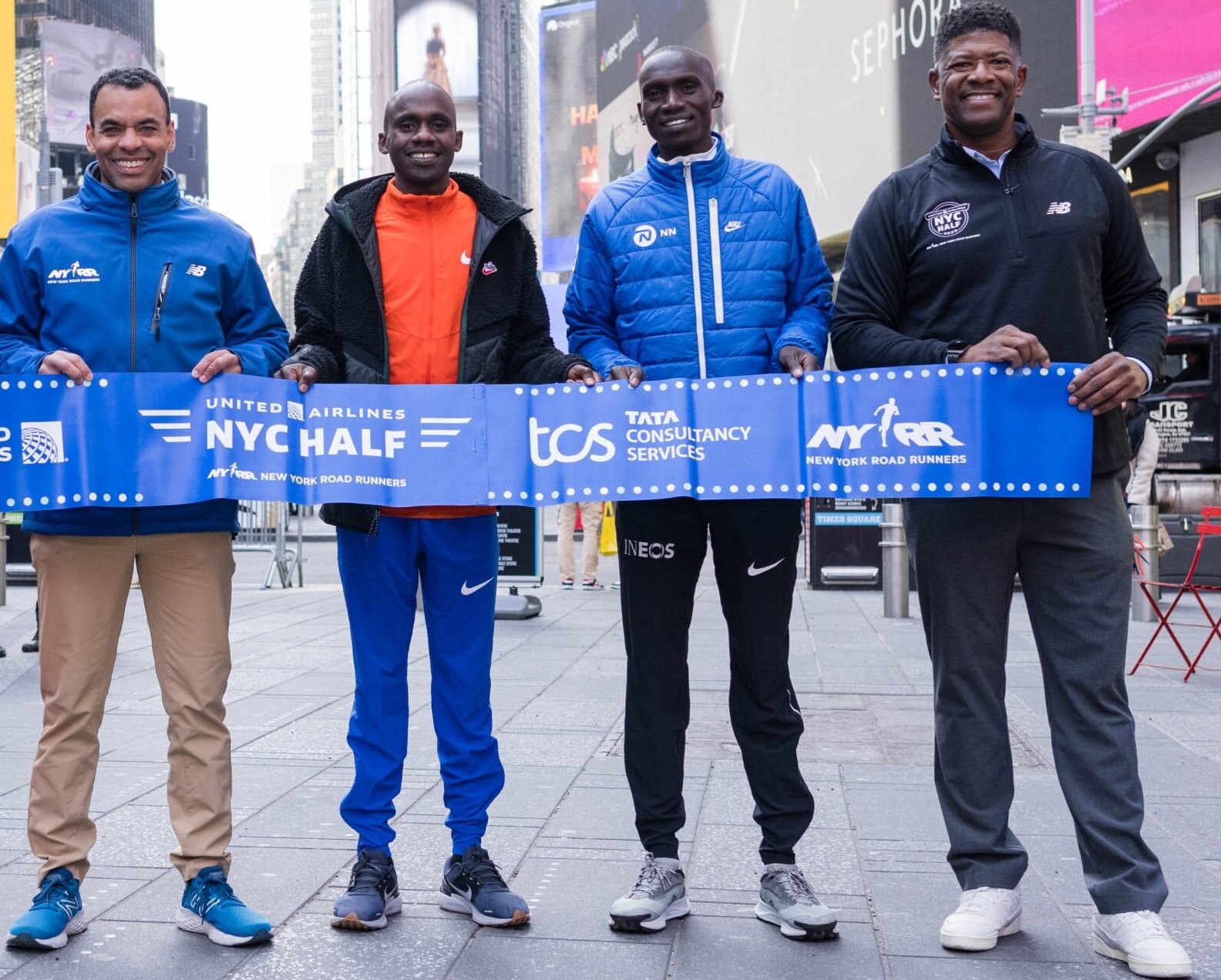
"I'm happy to be competing together with Joshua," said Kiplimo, the world record holder for the half-marathon, with a relaxed smile. He beat Cheptegei in 2020 World Athletics Half-Marathon Championships where he was the surprise gold medalist and Cheptegei finished fourth in his first and only half-marathon. He added: "On Sunday we're going to try our best, I'm going to try my best."
Cheptegei said, "absolutely, yes," when asked if he was motivated to race against Kiplimo. "I would really give everything to win," he told Race Results Weekly. "But you never know what goes in the race."
According to the respected statistics website Tilastopaja Oy, Cheptegei has a 6-0 record over Kiplimo in track races at 5000m and 10,000m. In the half-marathon, Kiplimo won in their only meeting, and at the World Athletics Cross Country Championships they are tied 1-1. Cheptegei was the gold medalist in Aarhus, Denmark, in 2019 where Kiplimo took the silver.
But their biggest rival on Sunday just might be the course. When the race debuted as a summer event back in 2006, the course went from Engineers' Gate in Central Park to a stretch of the West Side Highway just north of Battery Park in lower Manhattan. Runners enjoyed a total elevation loss of 30 meters, and in the final 10 kilometers the athletes were often helped by a tailwind as the prevailing winds in New York City come from the north and west. But in 2018 New York Road Runners changed the course to encompass more of the city's residential neighborhoods, and it now goes from Prospect Park in Brooklyn to Central Park in Manhattan. The opening nine kilometers feature several significant hills, including a steep climb up the Manhattan Bridge where the runners cross from Brooklyn to Manhattan.
"I saw in the TV that some is a little bit tough," Kiplimo said of the course. He added: "I think it will be very difficult, but actually for me it's not so difficult because we'll just be running up and down. It's almost the same (as) World Cross."
Cheptegei, who has reached the point in his track career that he has begun thinking about his marathon debut, didn't seem too worried about the course and was already looking ahead to a possible run at the TCS New York City Marathon which also has a hilly course.
"They haven't told me so many things about the course," Cheptegei said. "They told me about the New York full marathon course, where the race is mostly decided, especially on the climb." He continued: "About Sunday, really excited to run my second half-marathon. I've really thought about it, and maybe in the future when I go to marathons maybe New York can be my final destination."
Both men said they had recovered well since their race in Bathurst, and Cheptegei said he had picked up some additional fitness.
"I think I had a lot of time to recover," he said. "I had to continue with my training because I was sure that I was actually going to be invited for the New York Half-Marathon. Everything has been going along well. My shape is actually better than cross country so I hope that I can run a good half-marathon."
NYRR is offering a $120,000 prize money purse for Sunday's race. Twenty-thousand dollars will be paid to the winners in the open male and female categories, while the wheelchair winners will receive $4,000. There is special prize money for NYRR members in the male, female and non-binary categories ($1500 for each category winner).
This year's United NYC Half comes three years after the 2020 race was abruptly cancelled at the outset of the pandemic. The 2021 edition of the race was also cancelled, and in 2022 the race was held at nearly full capacity with 22,335 finishers recorded. NYRR's new president and CEO, Rob Simmelkjaer, was clearly excited to oversee his first major event since becoming the organization's head in December, 2022.
"We can't wait to welcome 25,000 runners to the starting line," said Rob Simmelkjaer, who pronounces his last name SIM-el-care. He continued: "People are running more now than ever before."
The 2023 United Airlines NYC Half will be broadcast locally by WABC-TV channel 7 as part of their Sunday morning news broadcast. The pro races, which begin at 7:00 a.m. local time, can be streamed on both the NYRR's Facebook (https://twitter.com/nyrr) and Twitter (https://twitter.com/nyrr) pages, and will also be available via the ESPN app and the WABC website (https://abc7ny.com/)
by David Monti
Login to leave a comment

United Airlines NYC Half-Marathon
The United Airlines NYC Half takes runners from around the city and the globe on a 13.1-mile tour of NYC. Led by a talent-packed roster of American and international elites, runners will stop traffic in the Big Apple this March! Runners will begin their journey on Prospect Park’s Center Drive before taking the race onto Brooklyn’s streets. For the third...
more...
How I Won the World Cross-Country Championship at Age 83
Seventy years after his first cross-country race and 46 years after competing as an elite runner, the author competes—and triumphs—on a tough Australian course
Last weekend, in Bathurst, Australia, I did something I thought I would never do again: I ran once more in the World Cross-Country Championship. Not the main men’s open race, in which I competed for England in 1966 and New Zealand in 1977. Not at age 83. But for the first time, the World Athletics federation added Masters championships, and—almost like a dream—I not only participated again, but raced at the front of the M80 field and managed to outlast a stubborn Australian for the win.
If you believe that running after eighty is about leisurely slow toddling, wait till you’re up there, racing to your limit, and you make the sharp u-turn at halfway and see that you are being closely stalked by a lean lanky Aussie with M80 on his bib and a threatening scowl like Mel Gibson in Lethal Weapon.
He is called James Harrison, and he made me work for it. I have won and lost many hard races over the years, and this was one of the hardest. The only possible tactic was unrelieved pressure. I finally broke him three-quarters through the four-kilometer distance, on the second two-kilometer lap, as we gasped up a big steep rough-surfaced hill that broke many hearts that weekend. At last, I sensed him drop. It took tenacity, months of focused training (including hill repeats), and years of learning the wiles that true cross-country demands.
This was a course where every decision counted about where you placed your next stride. Every sharp oxygen-draining uphill demanded that you keep momentum over the crest, every downhill was there for attack, not recovery, every tight turn required poise and pace. Those things don’t come easily after age eighty (and on two replaced knees in my case), but it was a World Championship of cross-country running, and we were there to take those tests.
I won’t claim the sheer thrill of winning the race was the same as ever. But it was real, and it had a private significance. I ran below my best in the senior world championship in the past. Nothing can change those results, but it felt good this time to get it right. And the sense of achievement is something that few things in the last years of life are ever likely to equal.
World Athletics, under President Seb Coe (who learned cross-country in England in his early teens), has grown tired of holding its cross-country championships on boring flat safe horse-race circuits, like those I encountered in my days in the main race. They decided to take some security risks to revitalize the sport. American senior administrator David Katz now acts as course consultant for each World Cross-Country, and insists on the real thing.
“Cross-country has one distinctive thing, the course. That has to be the talking point, and each one must be unique as the race moves around the world. The media and the public need to understand that cross-country is special in its challenges, not just another long race,” Katz said in Bathurst.
The previous championships in 2019 in Aarhus, Denmark, set the world chattering about a course that included loops over the steeply-sloping grassed roof of the Moesgaard Museum. This time (after several Covid-related postponements) the Aussies gave us a course that was a raw slice of the Australian outback. On the side of Mount Panorama, it was broken and unpredictable, rusty dirt, grey raggedy scrub grass, and diabolical hills. Scattered blue gum trees provided the only shade. Each morning, you could find fresh kangaroo poop.
They added some challenges to make it even more uniquely Australian. There was a “billabong,” of treacherous ankle-deep wet mud that caused many runners to skid and flop to a slimy downfall. (Some of the slower kids in the scholastic races lay down and daubed themselves heroically.) There was a dash through the straight vines of a winery, followed by tight turns, and, in honor of Bathurst’s motor-race circuit, a “chicane” where you had to steer through a forest of car tires.
High on a dry hillside there was a stretch named “Bondi Beach,” deep shifting sand decorated with lifeguard flags and “Beware of Sharks” signs. An Aussie joke, yet for the runners, another testing change of racing rhythm, another response to the challenge of contours and terrain. No other kind of running does that. Cross-country is the closest our sport gets to true interaction with the earth.
Added to all that was the Outback summer heat, 95 degrees for the main races on the Saturday late afternoon. In the different races, several runners were taken to hospital, and at least four passed out during the race, including, it seemed, the women’s favorite and race leader, Letesenbet Gidey (Ethiopia), who collapsed dramatically and glazy-eyed as she was passed by Beatrice Chebet (Kenya) within strides of the finish.
As a serious evening storm approached, its clouds like dark riders, the men’s race was hastily moved forward, and 22-year-old Ugandan Jacob Kiplimo had to win his first major title while lightning flashed behind the mountain and brutal wind gusts sent runners staggering. Slower runners were caught in torrential rain. Australia does nothing by half measures.
For me and many others, Australia was an unexpected opportunity. Three months before the race, World Athletics and World Masters Athletics announced that they were combining to add masters championships, part of a new and excellent policy to make the event a full cross-country festival, as well as the world’s elite team and individual championships. Hundreds of spectators doubled as competitors. I met so many old friends out there, it was like a global runners’ reunion.
In addition to the usual competitors from Europe, North America and Africa, there were teams from Fiji, Papua New Guinea, Tonga, and other Pacific nations, none of them obvious participants in a sport that is essentially one of cold winter.
I guess an 83-year-old who last ran the World Cross-Country in 1977 was another less-than-obvious participant. I never imagined it. I gave up cross-country for good, I believed, when my orthopedic surgeon confessed, after he watched me and the knee he had implanted struggle over a muddy course, that it gave him nightmares for weeks.
But a lifetime of racing has taught me that you have to seize the moment. Before committing, I watched videos of the course, which like a good actor came across looking much more attractive than it was. When I actually saw the steep downhills, I thought I was out of my mind. But another thing I have learned is that in running, only one thing is absolutely certain—you won’t run well if you’re not in the race.
I registered. I did the work. I seized my moment. I got the sheer thrill of winning a race. I was lucky in that the course’s surface proved (mostly) not too lumpy or too soft, and I was lucky in some top Europeans and South Americans not making the journey. In every race, you can only compete against those who show up.
Young readers, please note. In January 1953, aged 13, I ran my first cross-country race, in my high school’s inter-house league, well back in the field. Seventy years a runner. You never know what a high school race might lead to.
Being called world champion at 83 is a nice way to celebrate that small private anniversary—and at this age, I can surely be forgiven a memory lapse, if sometimes I forget to add “over-80.” It could also be a nice way to round off seventy years of running. Round off, except for the next race, that is.
(Roger Robinson ran the world cross-country championship for England and later New Zealand, and set a Masters record of 2:20:15 at the Boston Marathon. He is regarded as the outstanding historical writer on running. He recaptures history from personal observation in When Running Made History (Syracuse University Press) and he researches vivid and accurate accounts of the sport’s best stories in his new book, Running Throughout Time: the Greatest Running Stories Ever Told (Meyer & Meyer). Available through Amazon and all online outlets and bookstores.)
by Outside (Roger Robinson)
Login to leave a comment
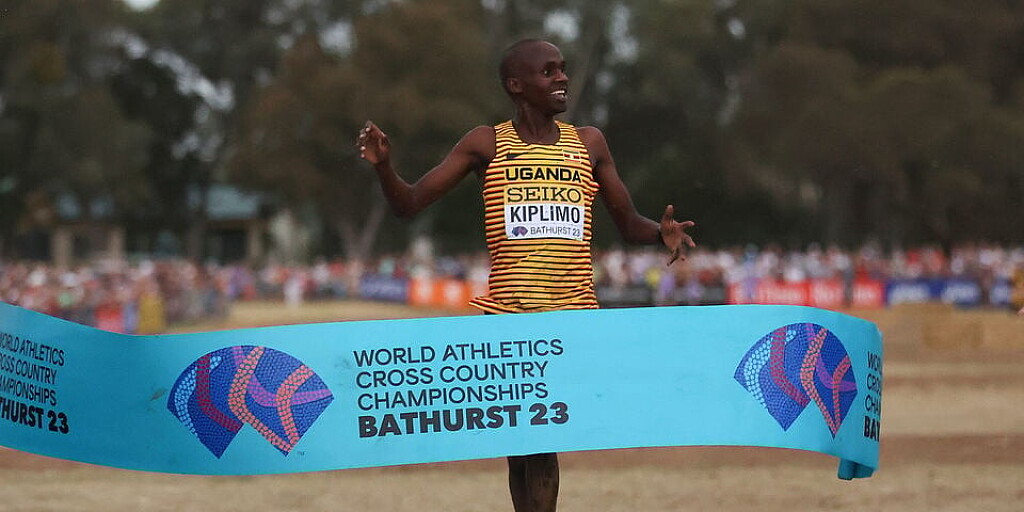
Uganda's Jacob Kiplimo wins World Cross Country title as Kenyans wilt
Kenya, for the first time in 14 years, failed to claim a medal in men’s 10 kilometres at the World Cross Country Championships as Uganda claimed back-to-back victories in Bathurst, Australia on Saturday.
Two times World Cross Country champion Geoffrey Kamworor was the best Kenyan finisher at fourth place in 29 minutes and 37 seconds as Commonwealth 10,000m champion Jacob Kiplimo won in 29:17.
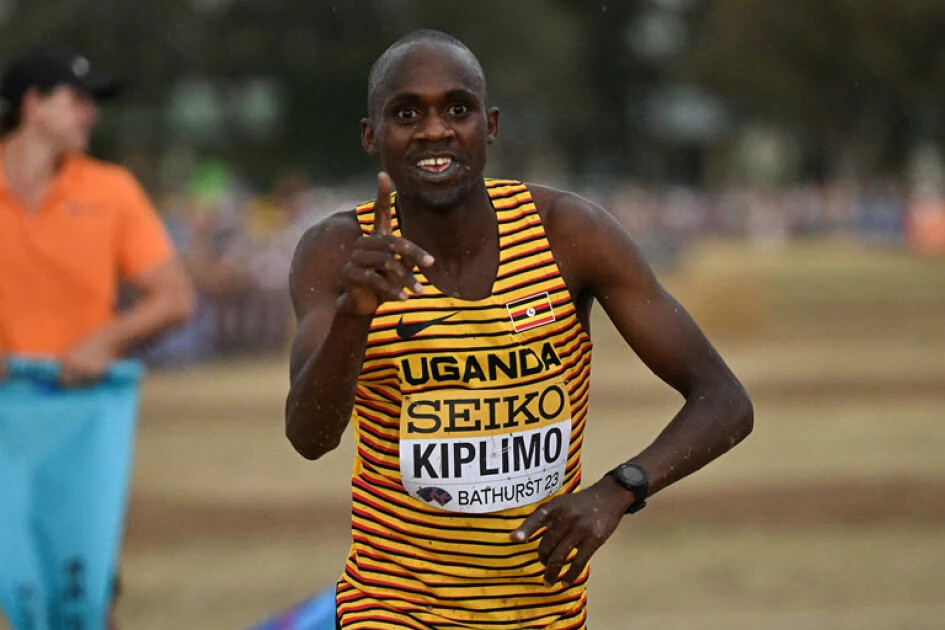
Kiplimo, who claimed silver in 2019 in Aarhus, Denmark, was in splendid form, beating Ethiopia’s Berihu Aregawi to silver position in 29:25 as defending champion Joshua Cheptegei from Uganda settled for bronze in 29:37.
Kamworor, the 2015 and 2017 champion, who settled for bronze in Aarhus, ran out of gas to let Aregawi overtake him to fall out of the medal bracket.
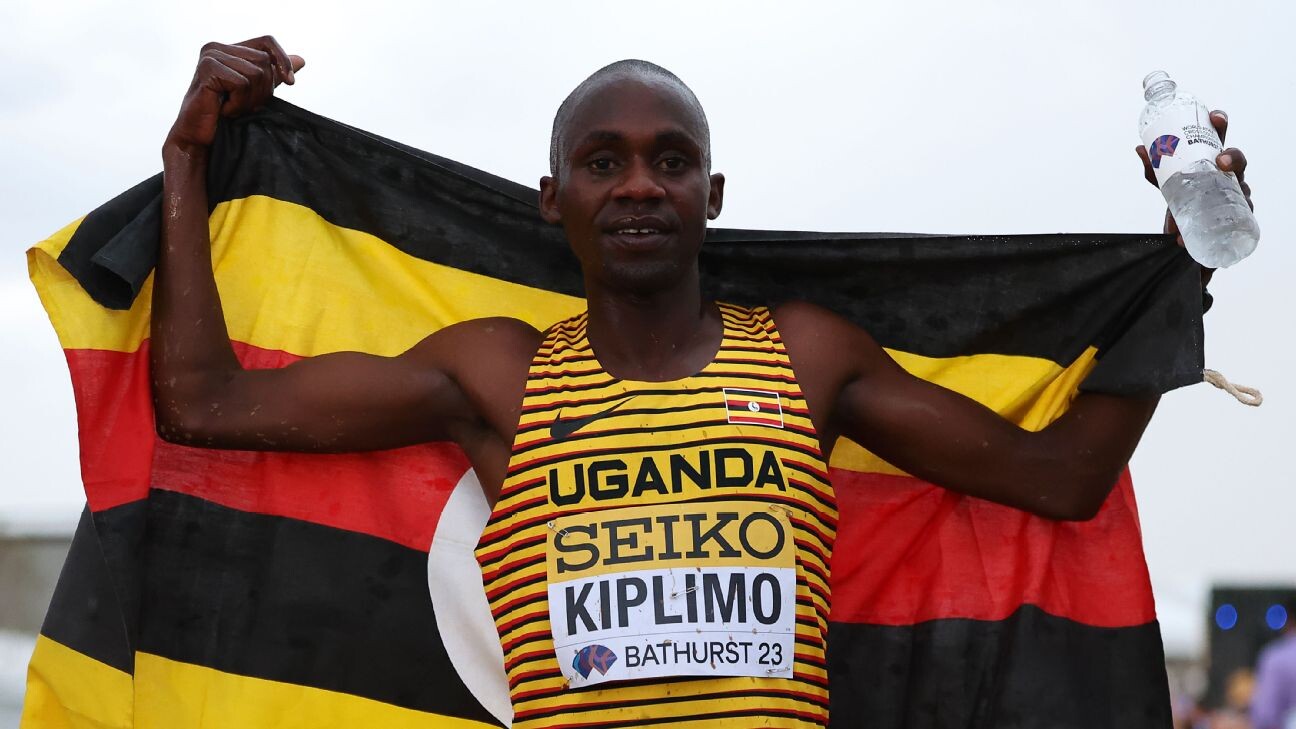
The last two laps were simply the three East African countries’ affair with Kamworor, World Half Marathon silver medallist KIbiwott Kandie and Daniel Simiu taking on the Ugandan duo and Aregawi.
It’s Cheptegei who led Kamworor, Kiplimo and Aregawi into the last lap as the rest wilted in the hills challenge.
Kandie, Simiu and Sabastian Sawe finished fifth, sixth and seventh respectively.
by Ayumba Ayodi and Peter Njenga
Login to leave a comment

World Athletics Cross Country
Athletes from across the globe will descend on Australia for the World Athletics Cross Country Championships Bathurst 2021. Mount Panorama is better known as the home of Australia’s premier endurance motor race, but in one year from now, it will welcome the world’s best endurance runners for what will be Australia’s first World Athletics Series event in...
more...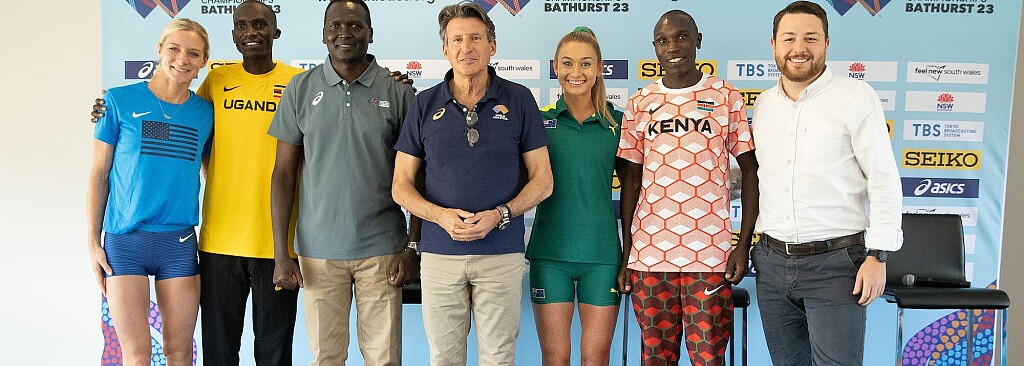
Bathurst ready to welcome the world on ‘toughest ever’ championship course
Absence, they say, makes the heart grow fonder. But in the case of World Athletics Cross Country Championships, it also seemingly makes the courses tougher.
Four years have passed since the memorable 2019 edition in the Danish city of Aarhus, where athletes had to run up a museum roof, trudge through a mud pit, and dash through a Viking zone. It was widely regarded as one of the most unique and challenging courses ever at a World Cross.
Now, on the eve of the World Athletics Cross Country Championships Bathurst 23, many people are convinced that the course for this year’s edition is even tougher.
“In recent years we’ve talked about reinvigorating cross country, and we adjusted the course in Aarhus to create a more challenging one,” said World Athletics President Sebastian Coe. “I’m delighted that the team here in Bathurst have picked up that torch and done an outstanding job. I’d say this is certainly one of the toughest courses ever for a World Cross.
“We are really pleased to be here,” he added. “In the 50-year history of the World Cross, this is just the second time it has been held in Oceania, and it’s the first time it has been held in Australia.
“Bathurst has one of the most iconic motor racing tracks in the world, but now, in the same breath, people will think of Bathurst staging the World Cross Country Championships.”
Local Organizing Committee Co-Chair Matt Whitbread expressed his pleasure at welcoming the world to Australia for a global athletics event.
“We’re delighted to have everyone here in Bathurst,” he said. “After the last edition in Denmark, there was plenty of inspiration. We got the brief that the course needed to be hard, and hopefully we’ve achieved that.
“We were originally scheduled for 2021, then 2022, and we’re finally here now,” he said. “We’re thrilled to be here and we welcome you all.”
Coe also used the opportunity to underline the importance of cross country.
“World Athletics takes cross country very seriously, and the importance of cross country goes beyond a great World Championships like this,” he said.
Championships ambassador Paul Tergat is living proof of someone who benefitted from cross-country running. A five-time world champion at cross country, the Kenyan legend also set world records on the track and roads during his long career.
“Cross country is part of my DNA,” said Tergat. “This is where my career started. Being here, especially in Australia where I have such fond memories, makes it more special.
“With cross country, not only do you have to think about the athletes you’re racing against, you also have to think about the terrain and the course,” he added. “I believe that makes you tougher. Each course is different, which makes cross country unique.”
Cheptegei and Kamworor ready for rematch
Uganda’s Joshua Cheptegei and Kenya’s Geoffrey Kamworor – who, between them, have won the past three senior men’s titles – will once again go head to head on Saturday.
Cheptegei’s compatriot Jacob Kiplimo, who took silver in 2019, is also in Bathurst, meaning the full podium will be reunited.
“It’s exciting that the people who shared the podium in 2019 are all back here,” said Cheptegei, the 5000m and 10,000m world record-holder. “I know it’s going to be mind-blowing and will be something that will stay in our hearts and minds for a long time.”
Memories of the 2017 World Cross Country Championships have certainly stayed with Cheptegei over the past six years. On that occasion, with the World Cross taking place on home soil, Cheptegei had built up a huge lead but fatigue eventually got the better of him and he faded to 30th, as Kamworor successfully defended his title.
“Sometimes you have to accept what life throws at you and then learn from it,” said Cheptegei. “I can proudly say that I am a better athlete because of the incident in 2017. It taught me a lot of lessons about my life and my career. When you want something in life, it’s important to chase your goals, but you also have to be patient and make certain judgements.”
For Kamworor, it was the 2011 edition of the World Cross that holds most significance.
“The first major title I won was the U20 title at the 2011 World Cross Country Championships,” he said. “That motivated me so much, and ever since then I have loved cross country.”
Despite winning two individual senior titles and one U20 title, Kamworor is yet to win a senior team gold at the World Cross. He hopes that will change on Saturday, though.
“We had great training with the team and we hope to do our best tomorrow and hopefully win the team title,” he said.
Hull and Coburn take different routes to Bathurst relay
Dramatically contrasting paths have led accidental contender Emma Coburn and child prodigy Jessica Hull to the World Cross Country Championships in Bathurst where they are both in contention for medals.
Colorado-based Coburn, 32, is looking forward to leading USA in the mixed relay, despite being an athlete who spurned cross country at school and college in favour of volleyball and track.
Coburn instead went on to become a steeplechase specialist, winning the 2017 world title at that discipline, as well as the 2019 world silver and 2016 Olympic bronze.
Coburn said the longer cross country courses were the reasons she never got into the discipline.
“I was never that mentally into it (cross country) because I played volleyball during the same season in high school,” Coburn said. “In college I tried it, but I wasn’t that great. I always loved the steeplechase and the track.”
Being able to compete in a mixed relay – the ninth time Coburn has represented the USA at a global championship – where each runner completes a 2km loop has changed her attitude about cross country.
“This 2km distance I think is really fun,” she said. “The muscular strength in my legs will be beneficial on some of the technically challenging parts of the race, like the mud pit.
“As a steeplechaser, I like the challenge of this course. We’ll be going for it, trying our hardest to conquer the course and come out with some hardware.
“This is a fun opportunity and something different for me. I’m eager to try new things and mix it up and this is an opportunity to challenge my mind and body.”
Coburn will be supported in the mixed relay by US teammates Heather MacLean, a 2021 Tokyo Olympic 1500m semi-finalist, steeplechase expert Alec Basten, and 2019 mixed relay runner Jordan Mann.
The USA will be vying for the medals alongside Australia, whose team boasts a cross country child enthusiast in Hull.
Twenty years ago Hull kicked off her athletics career doing 2km primary school cross country carnivals across the road from her home in New South Wales, Australia.
“It’s kind of scary,” Hull said. “It was part of my school sports days and it was 2km. Now I’ll do a 2km hot lap of the Bathurst course. So it’s kind of a full circle moment.
“If we were to get the win out there, it would be pretty special,” she added. “It is incredible that we can talk about the Aussie team even having a win. It would be quite a remarkable day if we got to hear the national anthem while we are out there.”
Athletics has taken Hull, 26, from school cross country carnivals to the world stage where she’s been a 1500m finalist at three majors – the 2021 Tokyo Olympics (11th), the 2022 World Championships in Oregon (7th) and the 2022 Commonwealth Games in Birmingham (8th).
Hull will be joined on the tough Bathurst course by three other Australian 1500m specialists: Commonwealth champion Oliver Hoare, Commonwealth bronze medallist Abbey Caldwell, and Olympic finalist Stewart McSweyn.
The mixed relay is the first medal event on the championship programme on Saturday (18). 15 teams will compete for the medals, running in a 4x2km man-woman-man-woman format with each athlete having a wristband which they transfer to their teammate in the takeover zone.
“Cross country is an absolutely essential part of the development of young athletes. Any athlete who can master cross country and can do so from a young age is going to be well placed to pursue an endurance career on the track.”
by World Athletics
Login to leave a comment
World Athletics Cross Country
Athletes from across the globe will descend on Australia for the World Athletics Cross Country Championships Bathurst 2021. Mount Panorama is better known as the home of Australia’s premier endurance motor race, but in one year from now, it will welcome the world’s best endurance runners for what will be Australia’s first World Athletics Series event in...
more...
Kenyan Charles Lokir said he is now preparing for the World Championships in Budapest
Fresh from winning his maiden national cross country championships title, Charles Lokir said he is now preparing for the World Championships in Budapest, Hungary.
Lokir said he plans to use this weekend's Sirikwa Classic World Athletics Cross Country Tour at the Lobo Village in Kapseret, Uasin Gishu County.
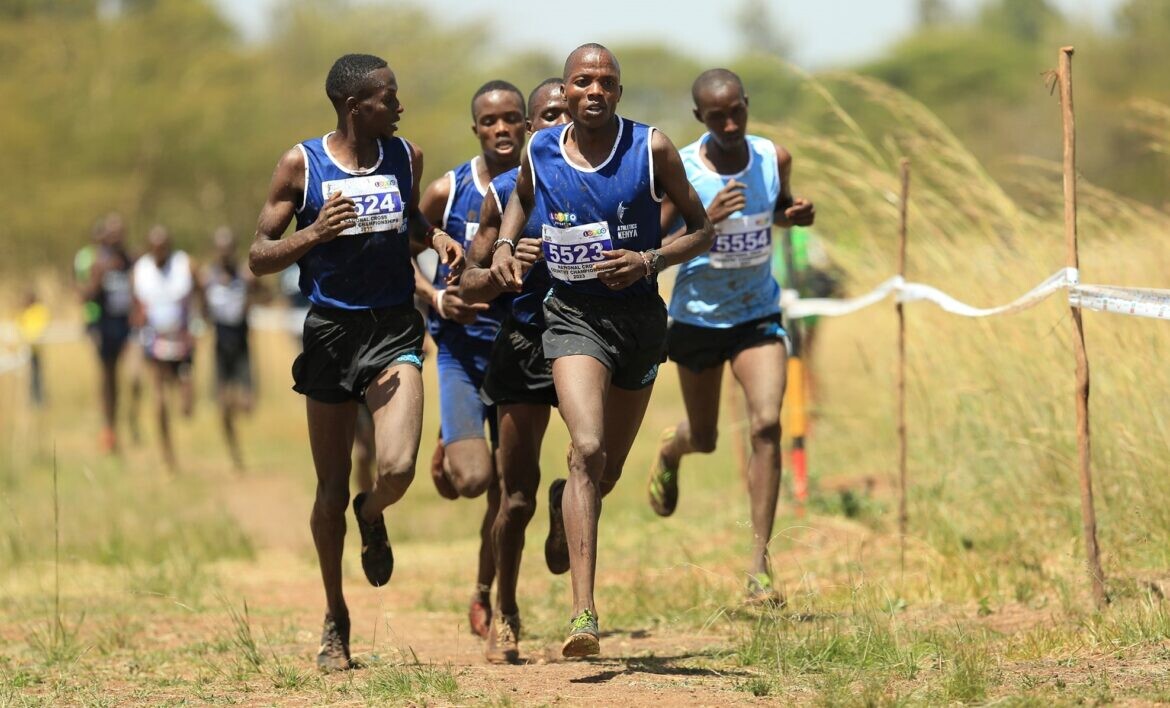
Lokir, who also won the North Rift Athletics Kenya region title during the regional championships in Maralal, Samburu County said: "I want to register better results this year."
"I know it will be a very competitive race but I have been training well for the race. I was fifth during last year's edition and I want to improve on this by finishing in the podium places."
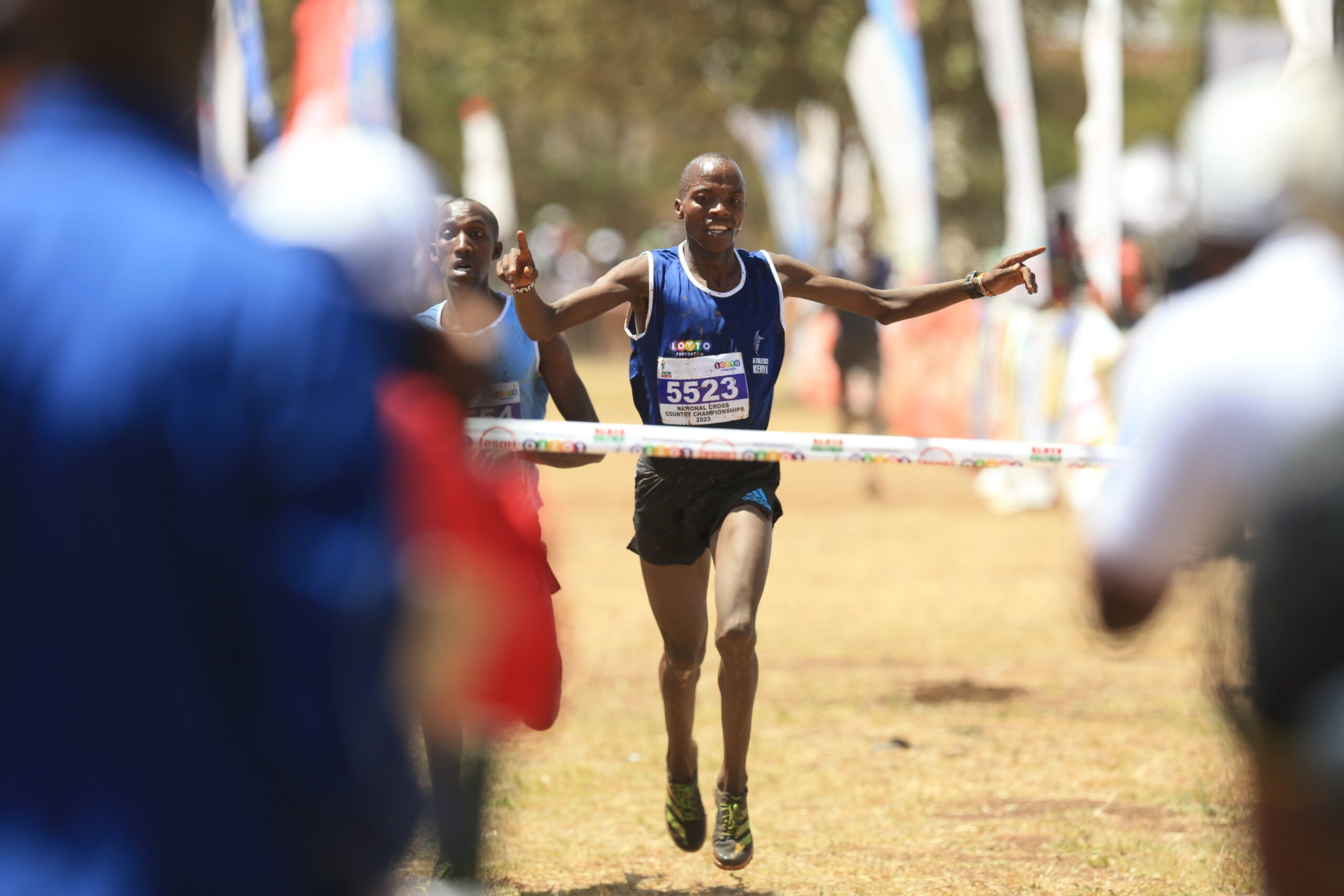
Speaking during Sunday's Discovery Kenya Cross Country Championships at the Eldoret Sports Club, Lokir said winning the national title was a good thing but he cannot celebrate for long.
Instead, he said this will only serve as inspiration to train harder.
“Winning the national cross country for the first time was a motivation for me and my career. This means I will have to work harder to remain at the top and i am certain this is possible," he added.
Lokir said his mission is to represent the country at the World Championships in Budapest to atone for his failures at the 2019 World Cross Country in Aarhus, Denmark, where he finished a disappointing 15th.
“I ran very well at the national trials, finishing third, but I could only manage a 15th-place finish in Denmark. It was disappointed but that in the nature of competition,” said Lokir, who was accompanied by his coach Daniel Ng’eitch..
He observed that Sirikwa Classic will test him accordingly as he targets a slot in the Team Kenya 10, 000m category.
“I want to compete in 10,00m at the world championships in Budapest. It has been a while since Kenya won gold in this race and I want to try my luck,” he concluded.
by Emmanuel Sabuni
Login to leave a comment

World Athletics Championships Budapest 23
From August 19-27, 2023, Budapest will host the world's third largest sporting event, the World Athletics Championships. It is the largest sporting event in the history of Hungary, attended by athletes from more than 200 countries, whose news will reach more than one billion people. Athletics is the foundation of all sports. It represents strength, speed, dexterity and endurance, the...
more...
Olympic 100m champion Marcell Jacobs given the green light to chase the European 100m title in Munich 2022
The presence on the final entry-list of the Olympic 100m champion Marcell Jacobs adds a huge and intriguing element to the sprints at the Munich 2022 European Athletics Championships from 15-21 August, part of the wider multisport European Championships.
The 27-year-old Italian was a surprise winner at the Tokyo 2020 Olympic Games in a European record of 9.80, although his win over 60m at the European Athletics Indoor Championships earlier in the year indicated his rising potential having started his career primarily as a long jumper.
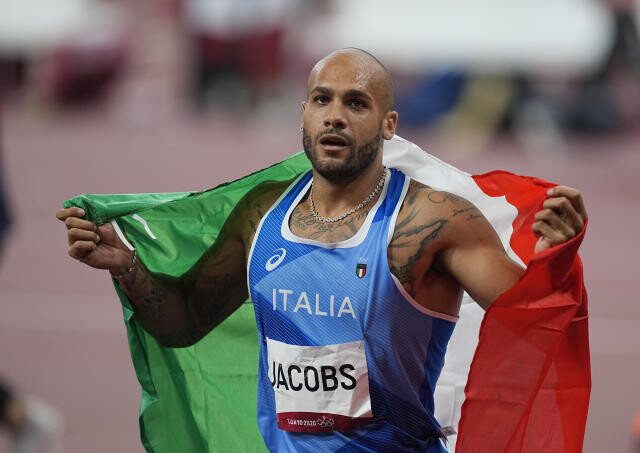
In March this year he beat the defending world indoor champion Christian Coleman to the world indoor 60m title in Belgrade but Jacobs’ outdoor season has been undermined so far by illness and muscle problems which forced him to scratch from the semifinals at the World Athletics Championships in Oregon.
It will be a huge feature of the Munich 2022 athletics programme if he can toe the line in the 1972 Olympic stadium – and it will be fascinating to see what degree of fitness he has been able to reclaim.
On the eve of the championships, Jacobs’ coach Paolo Camossi was optimistic about his prospects in the Munich Olympic Stadium next week. "He's running free, he's having fun, the workouts are promising. If we are here in Munich it is because he is fine and can compete…Marcell is the Olympic gold medalist and he is here to win, but it is not a race to be taken lightly," said Camossi as quoted by FIDAL.
Among his prospective rivals include Great Britain’s Zharnel Hughes who stands ready to defend the 100m title he won in Berlin four years ago in a championship record of 9.95.
Hughes had an ultimately frustrating time at last summer’s Olympics, false-starting in the individual 100m final and then seeing the 4x100m silver-medal winning performance to which he had contributed annulled because of a positive doping test for team-mate CJ Ujah.
Last week he indicated he is in fine racing form as he won Commonwealth silver in the 200m in Birmingham and helped England win 4x100m gold.
While Jacobs won the Olympic title in 9.80, he has only run 10.04 this year although he did open his season with a marginally wind-aided 9.99. Hughes is second fastest this season with 9.97 but top spot goes to his enigmatic fellow Briton Reece Prescod, who ran 9.93 this season at the Golden Spike meeting in Ostrava – into a significant headwind.
France’s Meba-Mickael Zeze is the third sub-10 second performer this season with 9.99 and will be in medal contention along with home sprinter Lucas Ansah-Peprah, who has clocked 10.04 this season.
And it doesn’t do to rule out the experienced French performer Jimmy Vicaut, who has run 10.10 this year but has a best of 9.86 - the former European record which Jacobs surpassed when he blazed to the Olympic title in Tokyo last summer.
A clash of youth and experience in the 200m
Fresh from a medal at the Commonwealth Games Hughes will also fancy his medal chances in the 200m, where his British teammate Nethaneel Mitchell-Blake, silver medalist four years ago, is also entered.
Turkey’s defending champion Ramil Guliyev, who has a best of 19.76 from the 2018 European Athletics Championships where he came within 0.04 of Pietro Mennea’s long-standing European record, has run 20.21 this year.
Zeze will also double up, and is looking good for a podium place given his 19.97 personal best this season.
But the most intriguing presence will be that of 18-year-old Israeli Blessing Afrifah, who won the world U20 title in Cali in a European U20 record of 19.96 - to surpass Guliyev’s previous mark of 20.04 - and in so doing beat Botswana’s hugely favoured Letsile Tebogo, who had earlier won the 100m title in a world U20 record of 9.91 despite showboating over the final 30 meters.
Afrifah was born in Tel Aviv and raised in Israel to parents from Ghana - his father came to Israel as an employee of the Ghanaian consulate – and was granted permanent residence in 2010.
Will this hugely talented runner be able to adapt to the pressures and rigors of a senior international competition less than two weeks after his record-breaking exploits in Cali? It will be fascinating to see.
Also in the 200m mix will be a sprinter who brought home the baton for a historic 4x100m victory at last year’s Tokyo 2020 Games - Italy’s Filippo Tortu - who has run a personal best of 20.10 this season and harbors aspirations of broaching the 20 second-barrier for the first time.
Jacobs and Tortu are also named in an Italian 4x100m relay squad that could produce another historic performance in Munich although a squad - admittedly devoid of Jacobs who was injured - didn’t make it through the heats at the World Athletics Championships.
Reigning champions Great Britain, France, hosts Germany and Turkey will all offer strong opposition along with surprise Tokyo 2020 Olympic finalists Denmark.
Login to leave a comment

European Athletics Champioships
The27thEuropean Athletics Championshipswill be held from 10 to 16 August 2026 at theAlexander StadiuminBirmingham, United Kingdom.[1] This is the first time that a British city will have staged the European Athletics Championships although Birmingham has hosted many high-profile events, including the2007 European Athletics Indoor Championships, the2003and2018 IAAF World Indoor Championshipsand the2022 Commonwealth Games. Alexander Stadium was renovated between 2019 and...
more...
Hendrik Pfeiffer and Domenika Mayer win in Hannover and take German titles
In freezing conditions Germans Hendrik Pfeiffer and Domenika Mayer took the HAJ Hannover Marathon and the national championships which were included in the event.
Hendrik Pfeiffer clocked 2:10:59 and was well ahead of Kenyan debutant Josphat Kiptis who ran 2:13:47. Martin Olesen of Denmark took third in 2:14:35. Despite temperatures around zero Celsius Domenika Mayer ran a surprisingly strong marathon debut with 2:26:50. German pre-race favourite Rabea Schöneborn was second with 2:27:35 while Croatia’s Matea Parlov Kostro took third in 2:28:39. Hendrik Pfeiffer and the top three women all achieved the qualifying standards for the European and the World Championships.
In total 18,098 athletes were registered for the 30th edition of the HAJ Hannover Marathon, which is a World Athletics Label Road Race. 3,527 athletes ran the marathon distance. “We are impressed with the event and obviously we were able to make our participants happy,“ said Race Director Stefanie Eichel. Next year organisers hope to be able to come back with a bigger field and with a much stronger elite race. The 31st edition of the HAJ Hannover Marathon is scheduled for 26th March 2023.
A group of eight runners passed the half way mark in 65:25. That was almost exactly as planned. At around 25k Hendrik Pfeiffer began to take the initiative. He broke away with Kenyans Josphat Kiptis and Wilfred Kiptoo. Until the 30k mark they had support of pacemaker and fellow-Kenyan Kiprotich Kirui. With around 12k to go Hendrik Pfeiffer left behind his rivals and was then all alone at the front, building a huge lead.
“The atmosphere was superb. The spectators helped me getting through the race. It was a bit tough during the final twelve kilometers,“ said Hendrik Pfeiffer, who ran his second fastest marathon in Hannover. The German has a PB of 2:10:18 from 2020. “I have reached all my goals today, which was important for me,“ said Hendrik Pfeiffer, who won the race and his first major German title. Additionally he achieved the qualifying standards for the European and the World Championships.
In the women’s race Domenika Mayer, Rabea Schöneborn and Kenya’s Flomena Ngurais were in the leading group when the half marathon mark was passed in 1:13:36. By 30k pre-race favourite Rabea Schöneborn had lost around 20 seconds and soon after that Flomena Ngurais could not cope with Domenika Mayer’s pace. The Kenyan dropped back to fourth later when Matea Parlov Kostro overtook her around the 40k mark.
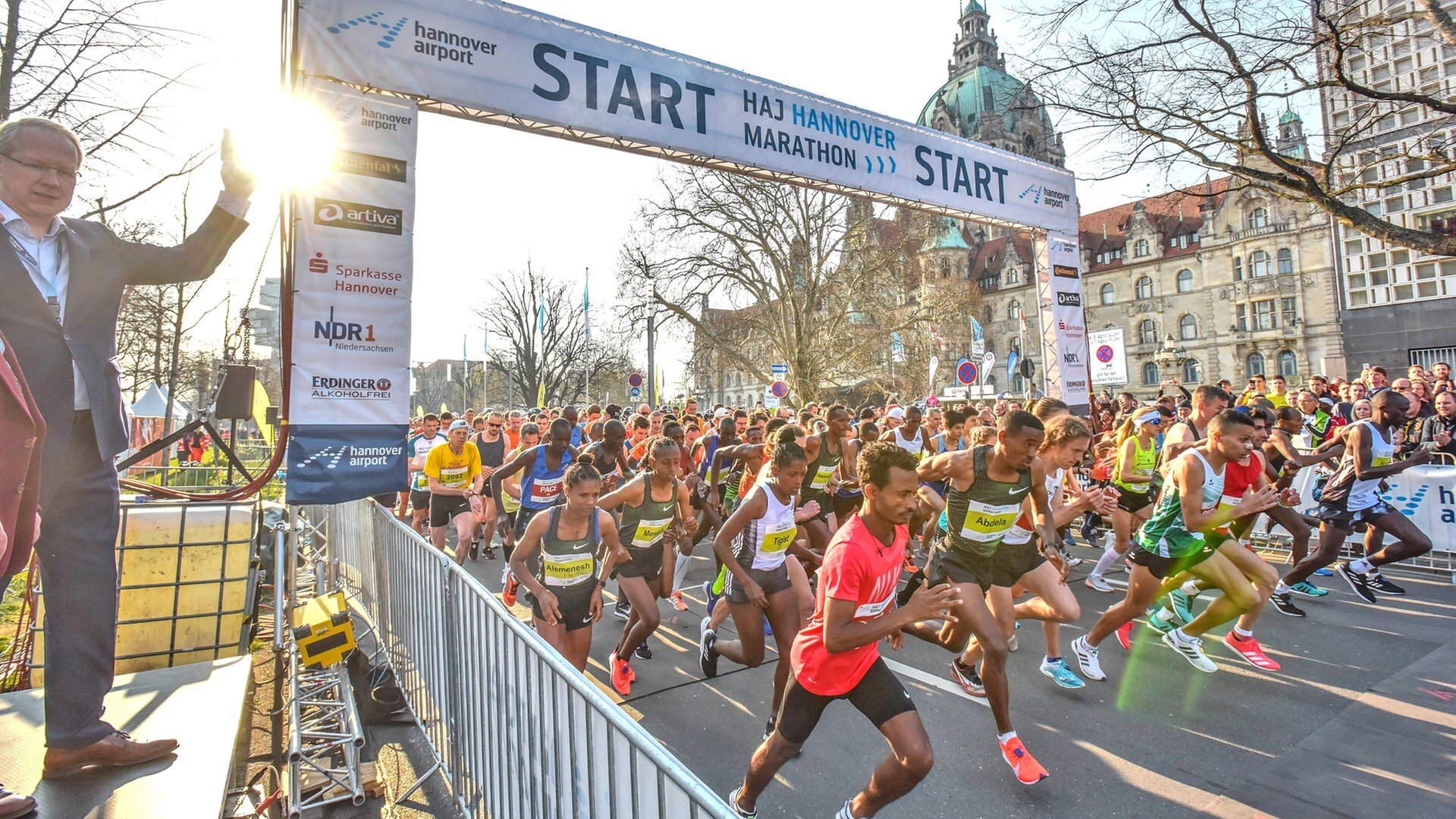
"I did not think too much about what could happen. Sometimes in a race it just rolls, sometimes it does not. Today was a good day. I just concentrated on my pacemakers. But the wind was partly disturbing,“ said Domenika Mayer, who is a mother of two. “It was a great debut. Of course I had no clue before what could happen.“ While Domenika Mayer had a promising half marathon PB of 69:52 she had a Corona infection recently. Because of this her triumph was quite a surprise. And she came relatively close to Hannover’s course record: Three years ago Kenya’s Rachel Mutgaa clocked 2:26:15.
Runner-up Rabea Schöneborn ran 2:27:35 which was her second best marathon time. “It was a struggle today and I am happy to have finished,“ she said.
Results, Men:
1. Hendrik Pfeiffer GER 2:10:59
2. Josphat Kiprop Kiptis KEN 2:13:47
3. Martin Olesen DEN 2:14:35
4. Wilfred Kiptoo KEN 2:14:43
5. Frank Schauer GER 2:14:43
6. Erik Hille GER 2:15:04
Women:
1. Domenika Mayer GER 2:26:50
2. Rabea Schöneborn GER 2:27:35
3. Matea Parlov Kostro CRO 2:28:39
4. Flomena Ngurais KEN 2:30:42
5. Runa Skrove Falch NOR 2:33:53
6. Vaida Zusinaite-Nekriosiene LTU 2:36:04
Login to leave a comment

ADAC Hannover Marathon
It is not only the gripping competition that makes the marathon in Hannover so captivating, but also the exceptionally attractive side programme.With numerous samba bands and musicians accompanying the athletes along their sightseeing tour through the city, a feel-good mood is guaranteed on the course. The city will be transformed with a mix of musical entertainment, shows and activities that...
more...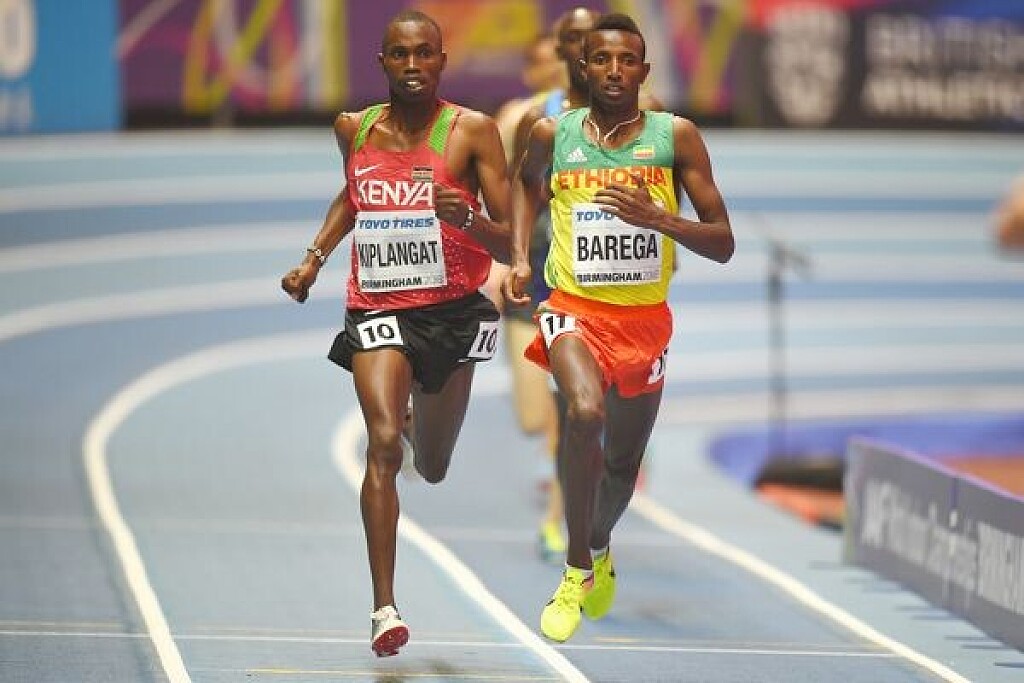
Barega upgrades to 3000m gold in Belgrade in one-two for Ethiopia
The Ethiopian domination of the men’s 3000m continued with an eighth gold and a second successive 1-2 in the event, Selemon Barega emerging victorious from a last-lap sprint with compatriot Lamecha Girma in the final morning session at the World Athletics Indoor Championships Belgrade 22.
Four years ago in Birmingham in 2018, Barega had to settle for silver behind Yomif Kejelcha but that was when he was an 18-year-old junior still learning his craft.
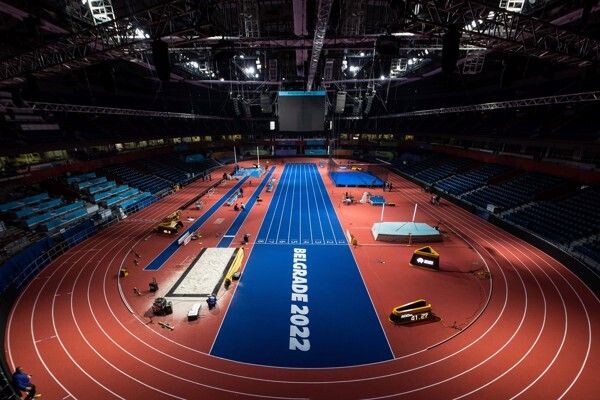
Four years on, with an Olympic 10,000m gold and world 5000m silver back home, the 22-year-old had too much strength and speed when Girma attempted to launch an attack on the back straight of the final lap, crossing the line 0.25 clear in 7:41.38.
As in the Olympic steeplechase final in Tokyo last year, and over the barriers in the 2019 world final in Doha, Girma finished in the silver position again, clocking 7:41.63, with Marc Scott timing his effort to perfection to claim Britain’s first medal in Belgrade – and their first in the event since Rob Denmark’s bronze in Seville in 1991.
It was a slow burner of a contest, Barega moving to the front after the opening lap and leading the field to 800m in 2:04.20. At that point, however, he was content to drift back as Kenyans Daniel Ebenyo and Jacob Krop assumed the lead but without ever threatening to make a decisive break.
At the bell Barega was back in front with six others still in the hunt but none of them could match him – even Girma, who had got the better of him earlier in the season in Lievin and Torun.
“We came to Belgrade aiming to make history for Ethiopia,” said Barega. “I have had a good season, so I was ready both physically and mentally to fight for gold. With Girma we discussed the possibility of helping each other make the podium. Our tactic has paid off.
“It was a tough race in which we were focused mostly on the Kenyan guys,” he added. “I decided to lead the race from the beginning because many runners in this final are 1500m specialists. I just wanted to make the pace fast and comfortable. Then I slowed down to save some energy for the finishing kick. It was a good plan and another great experience for me.”
And so the Ethiopian with the awesome range found himself emulating his celebrated compatriots Haile Gebreslassie and Kenenisa Bekele as an Olympic champion at 10,000m and a world indoor winner at 3000m
Gebrselassie, of course, also struck world indoor gold as a 1500m runner in Maebashi in 1999 – as well as taking the 3000m crown in 1997, 1999 and 2003.
The other Ethiopian 3000m golds came from Bekele in 2006, Tariku Bekele in 2008, and Kejelcha in 2016 and 2018.
Scott took the bronze in 7:42.02, 0.95 ahead of Ebenyo in fourth, with Krop in fifth, Zouhair Talbi of Morocco in sixth and Spain’s Adel Mechaal seventh.
by World Athletics
Login to leave a comment
Joel Ibler Lillesø breaks Ingebrigtsen’s European indoor U20 3000m record in Sollentuna
Reigning European U20 5000m champion Joel Ibler Lillesø from Denmark bettered one of Jakob Ingebrigtsen’s many European U20 records in Sollentuna, Sweden on Saturday (29) afternoon.
Only 18, Lillesø shaved three seconds off Ingebrigtsen’s European indoor U20 3000m record with a 7:48.34 clocking to erase the Norwegian’s previous record of 7:51.20 which was set in the heats at the 2019 European Athletics Indoor Championships in Glasgow.
Lillesø was ably paced in the early laps by world class 1500m runner Kalle Berglund before embarking on a tough last six laps single-handedly. His winning time was a qualifier for the World Indoor Championships in Belgrade and also puts the national senior record of 7:44.76 into view.
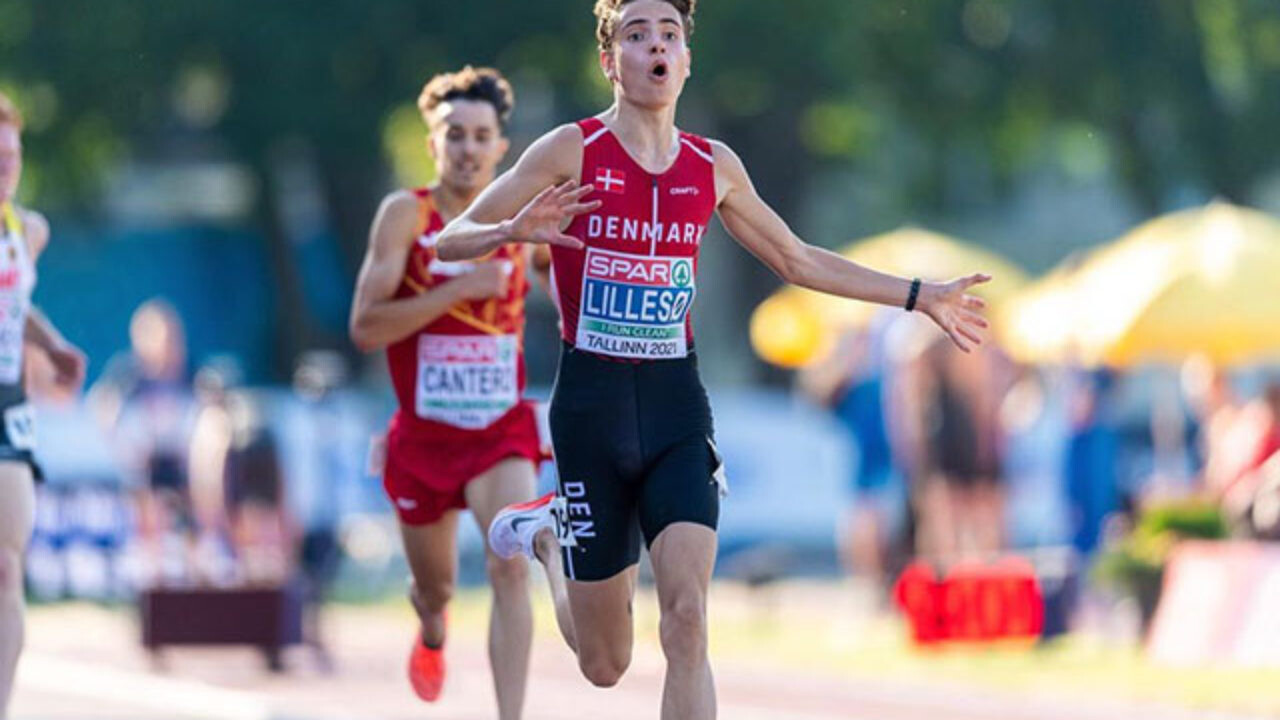
Lillesø is part of an emerging group of Scandinavian distance runners who are following Ingebrigtsen through the age-group ranks. After winning U20 5000m gold in Tallinn, Lillesø won individual bronze in the U20 race at the SPAR European Cross Country Championships behind Danish teammate Axel Vang Christensen and Norway’s Abdullahi Rabi to ensure a Scandinavian clean sweep.
Lillesø's next race will be on the roads in the Monaco 5km on 13 February.
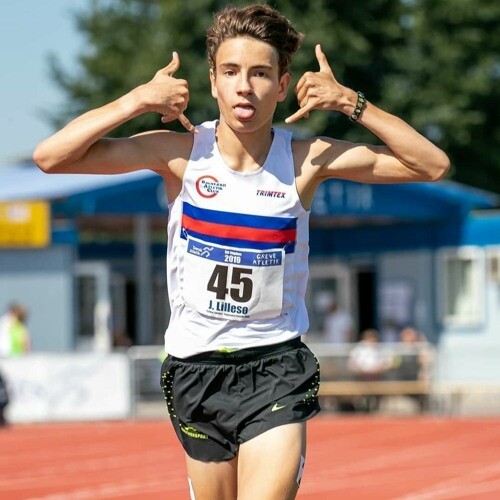
This was a particularly brilliant weekend for Danish athletics. As well as Lillesø’s European indoor U20 record, Benjamin Lobo Vedel set a Danish indoor 400m record of 45.95 in Baerum, Norway on Saturday and Ida Karstoft also clocked a Danish indoor 200m record of 23.36.
And two more Danish records were broken in Randers on Sunday (30). Kojo Musah shattered the Danish indoor 60m record on home soil with 6.56 to move to second on the 2022 European list and Mathilde Kramer also revised the Danish record in the women’s 60m with a 7.31 clocking.
Bekh-Romanchuk bounds out to 14.34m triple jump
Maryna Bekh-Romanchuk might be known first and foremost as a long jumper but the reigning European indoor champion made a hugely promising senior debut in the triple jump at the Ukrainian Indoor Team Championships in Sumy.
Contesting the event for the first time in nine years, Bekh-Romanchuk bounded out to a European leading mark of 14.34m off an abbreviated approach as well. Her winning effort was also accompanied by four more jumps in excess of the 14 meter-line.
At the Top Perche Plus pole vault meeting in Nevers on Saturday, Menno Vloon from the Netherlands cleared 5.86m before three attempts at 6.02m which would have equalled Mondo Duplantis' world lead from Karlsruhe on Friday evening. Belarus' Iryna Zhuk won the women's competition with a 4.60m clearance ahead of former world champion Yarisley Silva from Cuba with 4.52m.
Ahead of the DNA International match in Glasgow on Saturday, Molly Scott equalled her Irish 60m record with 7.27 before breaking it outright with 7.23 in Athlone on Saturday while European U23 cross country silver medallist Darragh McElhinney won the 1500m in 3:42.89.
In Apeldoorn on Saturday, Isayah Boers clocked a fast 46.36 in the 400m and Taymir Burnett won the 60m in 6.62.
by European Athletics
Login to leave a comment
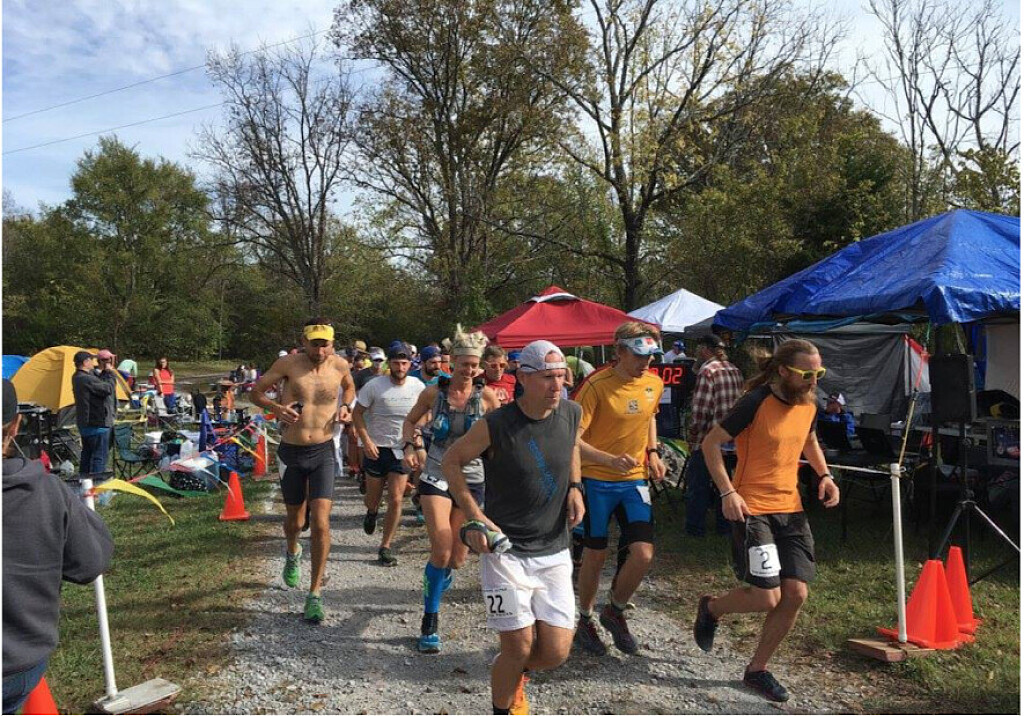
Big's Backyard Ultra World Championship has begun
Big’s Backyard Ultra World Championships, Laz Lake’s infamous last-person-standing ultra, started at 7 a.m. Central this morning in Bell Buckle, Tenn. with 36 runners from 10 countries qualified at backyard races around the world to toe the line today. Watch for Canadians Dave Proctor, Stephanie Simpson, Matt Shepard, Eric Deshaies and Terri Biloski, with the action likely to continue until Monday.
The rules are simple: the course is a 4.1667-mile (6.7 km) trail loop (a.k.a. yard), which switches to a road loop at night. (The rationale for the length of the loop is that using this formula, 100 miles takes exactly 24 hours.) A new yard starts every hour on the hour. Runners must complete each loop under the one-hour cutoff and be ready on the start line for the next yard. A warning whistle is blown at three, two and one minute before the cutoff. If you fail to finish before the hour is up, it’s a DNF. If you fail to start (and make forward progress) at the top of the next hour, that’s a DNF. This continues until only one runner is left.
In the early hours of the race, most runners have time to spare after finishing each yard, and they use this time to refuel, use the bathroom, tweak their gear and rest. As the hours wear on and their pace gets slower, they have less and less time before lining up for the next yard.
As the race goes on and fatigue sets in, the dilemma becomes, where is the sweet spot between expending as little energy as possible while maximizing rest time between yards? In other words, the faster you complete the yard, the more rest time you get before the next yard – but you also fatigue more quickly.
This year’s starting list
This year’s competitors include seven women, two of whom are former Big’s champions Courtney Dauwalter and Maggie Guterl. Courtney holds the record for the most yards run at the Big’s course in Tennessee (68). The world record for the backyard format was set by John Stocker of the U.K. in June 2021, with 81 yards, eclipsing Karel Sabbe’s previous WR of 75 yards, set at last year’s Big’s world championships, on his home course in Belgium.
Here are this year’s contenders, with their country, age and qualifying number of yards. (Unfortunately, due to travel restrictions, most runners from Europe were not able to participate this year.)
Courtney Dauwalter, USA, 36 (68 yards – i.e., 455.6 kilometres over 68 hours)
Harvey Lewis, USA, 45 (67 yards)
Gavin Woody, USA, 44 (64 yards)
Michael Wardian, USA, 47 (63 yards)
Maggie Guterl, USA, 41 (60 yards)
Amy Masner, Ireland, 47 (59 yards)
Steve Slaby, USA, 40 (57 yards)
Chris Roberts, USA, 36 (56 yards)
Jennifer Russo, USA, 55 (54 yards)
Yukinori Yushida, Japan, 52 (54 yards)
Terumichi Morishita, Japan, 41 (53 yards)
Dave Proctor, Canada, 40 (52 yards)
Jon Noll, USA, 36 (50 yards)
Jacob Conrad, USA, 36 (49 yards)
Katie Wright, New Zealand, 34 (49 yards)
Gabe Rainwater, USA, 33 (48 yards)
Sarah Moore, USA, 33 (48 yards)
Chris Murphy, Australia, 37 (46 yards)
Stephanie Simpson, Canada, 35 (43 yards)
Ron Wireman, USA, 40 (43 yards)
Fanny Jean, France, 41 (42 yards)
Matthew Shepard, Canada, 34 (42 yards)
Hisayuki Tateno, Japan, 50 (42 yards)
Shawn Webber, USA, 47 (42 yards)
Mathieu Weiner, USA, 54 (42 yards)
Piotr Chadovich, USA, 43 (41 yards)
Morton Klingenberg, Denmark, 36 (39 yards)
Chris Boyle, USA, 42 (38 yards)
Andres Villegran, Ecuador, 37 (38 yards)
Will Rivera, USA, 51 (37 yards) (DNS)
Eric Deshaies, Canada, 48 (35 yards)
Vincent Barrientos, USA, 40 (34 yards)
Haim Malki, Israel, 44 (34 yards)
Terri Biloski, Canada, 45 (33 yards)
Jason Bigonia, USA, 44 (32 yards)
Mark Begg, USA, 47 (26 yards)
by Running Magazine
Login to leave a comment
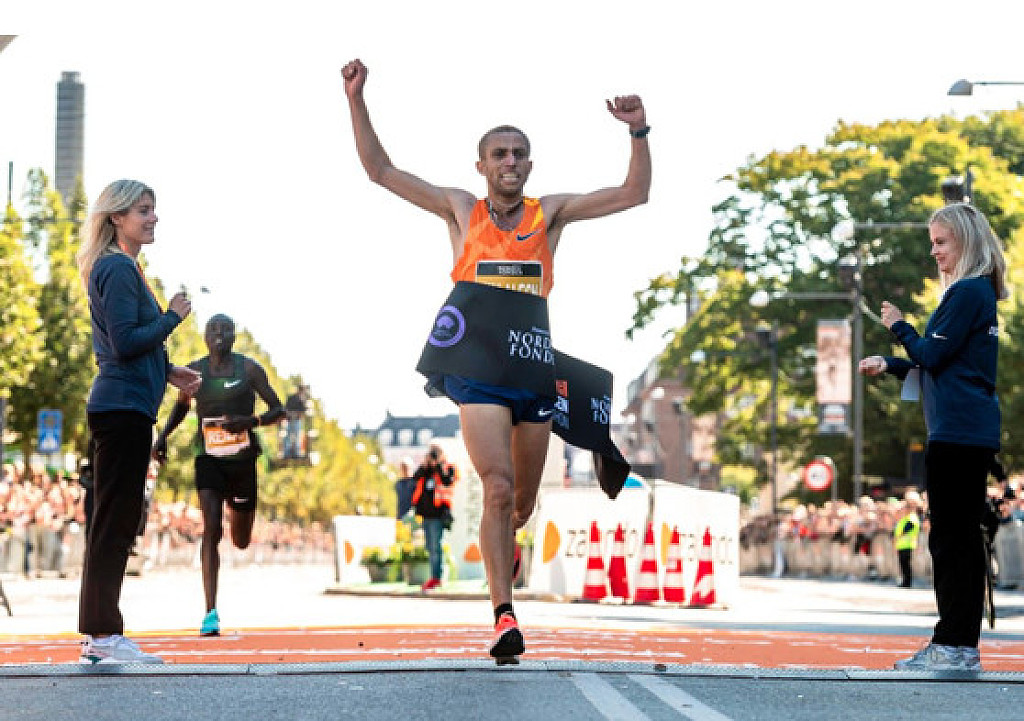
Gemechu breaks course record at Copenhagen Half Marathon
sehay Gemechu set a course record while Amedework Walelegn made it an Ethiopian double at the Copenhagen Half Marathon, a World Athletics Elite Label Road Race, on Sunday (19).
Making the most of the flat course in Denmark’s capital city, Gemechu took 52 seconds off her almost two-year-old PB, running a dominant 1:05:08 to improve the course record set by Sifan Hassan in 2018 by seven seconds. Walelegn, meanwhile, won a much closer men's race, holding off a challenge from Kenya’s Keneth Renju to win by two seconds in 59:10.
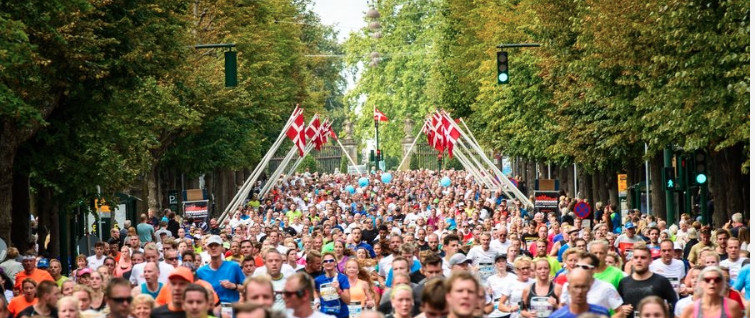
Running behind her pacemaker Roy Hoornweg, who also paced Yalemzerf Yehualaw to her world half marathon record in Larne last month, Gemechu had her sights on the 1:05:15 race record set by the now double Olympic champion Hassan three years ago, but the big pre-event favourite wasn’t alone in the opening stages. Her fellow Ethiopians Hawi Feysa, Gete Alemayehu and Beyenu Degefa, plus Kenya’s Vivian Kiplagat, joined her in a lead group which went through 5km in 15:16 and by 10km (30:48) the pack was starting to stretch, with Alemayehu having been dropped and Gemechu still to the fore and looking comfortable.
A couple of kilometres later Gemechu, who finished fourth in the 2019 world 5000m final in Doha, had broken away and was running clear ahead of her compatriot Feysa, the 2017 U20 world cross country silver medallist. By 15km Gemechu, now running without her pacemaker, had a 13-second lead ahead of Feysa, with Kiplagat another 22 seconds back. That is how the positions remained to the finish line, but with Gemechu’s advantage having grown to half a minute.
Feysa, who has a 2:23:36 marathon PB from Dubai last year but was making her half marathon debut, finished second in 1:05:41, with Kiplagat clocking 1:06:07 to take 31 seconds off her PB in third. Degefa was fourth (1:08:15) and Ethiopia’s Yitayish Mekonene fifth (1:08:53).
“I was hoping to break my personal best and run close to 65 minutes, and beating Sifan Hassan’s race record of course is something special,” said Gemechu. “I am very happy. It was a bit windy, so I had to work hard.”
The men’s race saw a group of nine athletes, plus pacemaker Abel Sikowo, pass the 5km mark in 13:55 and the 10km point in 28:01. As Sikowo dropped back just before 15km it was the pre-race favourite Walelegn, who claimed bronze at last year’s World Half Marathon Championships in Gdynia, who took control, taking the field through that checkpoint in 42:15.
The podium was decided over the next kilometre, with Walelegn making a move along with Kenya’s Daniel Mateiko and Renju. With around two kilometres remaining, Walelegn tried to break away but with a glance over his shoulder he could see it wasn't enough to lose his rivals. Then it was Renju’s turn to push the pace and while Walelegn stuck close behind him, Mateiko was dropped and the race was down to two.
Covering Renju’s move, Walelegn was determined to take the top spot and with another look over his shoulder at 21km he strode down the final stretch to victory. Renju’s runner-up time of 59:12 was a PB and his first half marathon under the hour, while Mateiko was third in a PB of 59:25. The top four all ran under 60 minutes, with Ethiopia’s Abe Tilahun finishing fourth in a PB of 59:46, while Norway’s Zerei Kbrom, returning to the half marathon for the first time since 2016, ran a more than six-minute PB of 1:00:07 for fifth.
The event incorporated the Danish Championships, with Annah Ritah Nagadya (1:16:49) and Abdi Hakin Ulad (1:03:30) claiming the national titles.
Behind the elite action, the mass event had close to 20,000 entries.
Login to leave a comment
Copenhagen Half Marathon
The Copenhagen Half Marathon was the first road race in Scandinavia and is one of the fastest half marathons in the world. The Copenhagen Half Marathon has been awarded with the International Association of Athletics Federation's (IAAF) most distinguished recognition - the IAAF Road Race Gold Label. Copenhagen Half Marathon was awarded the IAAF Road Race Bronze Label in January...
more...
You’ll Want to Load Up on Vitamin K for Better Heart Health
Add dark leafy greens, broccoli, Brussels sprouts, and avocados to your grocery list ASAP.
Eating a diet rich in foods containing vitamin K can provide a significant protective effect when it comes to your heart health, according to new research.

Dark leafy greens, broccoli, Brussels sprouts, and avocados are all rich in vitamin K.
Eating a diet rich in foods containing vitamin K can provide a significant protective effect when it comes to heart health, according to new research in the Journal of the American Heart Association.
Researchers looked at dietary data from more than 50,000 people taking part in a decades-long study in Denmark. They found that those who ate more foods high in vitamin K had a 21 percent lower risk of developing atherosclerotic cardiovascular disease than those who ate the lowest amounts.
The effect was highest among those who consumed green leafy vegetables and vegetable oils, which have a form of the vitamin called K1, according to lead author Nicola Bondonno, Ph.D., a research fellow at the Institute for Nutrition Research, at Edith Cowan University in Australia. But, she told Runner’s World, there was also lower risk among those who ate foods high in a form called K2, found in animal products and fermented foods.
Although it’s possible to get a boost of vitamin K through taking supplements—much as you can isolate other vitamins or minerals in the same way—previous studies on supplements in general cast doubt on whether this is the best route.
For example, a 2019 research review looked at both observational studies and randomized trials on multivitamins, antioxidants, folic acid, vitamin E, folic acid, and beta-carotene, which have all shown promise for cardiovascular health. But researchers found little evidence that any of them aided in prevention or treatment of cardiovascular disease.
Getting these compounds through food, however, is a very different story. That’s because dietary sources not only have a range of vitamins, they also tend to have fiber, antioxidants, and healthy fats, which all work together to improve your heart function, according to Robert Greenfield, M.D., medical director of non-invasive cardiology and cardiac rehabilitation at MemorialCare Heart & Vascular Institute at Orange Coast Medical Center.
For instance, foods high in vitamin K—such as dark leafy greens, broccoli, Brussels sprouts, and avocados—are also abundant in other vitamins and minerals that benefit the heart, Greenfield told Runner’s World. Those include iron, magnesium, and zinc. Meats and dairy high in vitamin K—such as beef liver, chicken, and hard cheeses—also provide protein and healthy fats. Greenfield added that vitamin K is fat soluble, which means you need a bit of fat for proper absorption, so dietary options may be an advantage there as well.
One more benefit to getting vitamin K in your diet: It doesn’t take much effort to see benefits. In the recent study, those who had more of the vitamin didn’t see greater benefits, said Bondonno. So, adding options like chard or spinach to a meal every day is likely enough of a heart booster, she said.
“The multitude of bioactive compounds in vitamin K-rich vegetables can protect you against other chronic diseases in many different ways,” she said. “And the takeaway is that they help protect against cardiovascular disease as well.”
by Runner’s World
Login to leave a comment
All eyes were on the Tokyo's Olympic Stadium, 69 athletes from the sport of athletics were among the flag bearers when the Opening Ceremony of the Olympic Games Tokyo 2020 got under way
For the first time, each nation can be represented by two flag bearers, with 38 women and 31 men leading their nations before going on to compete in athletics at the Games.
A number of these athletes could also make history for their country when athletics action begins on 30 July and here are some of the stars to watch out for.
Hugues Fabrice Zango, triple jump - Burkina Faso
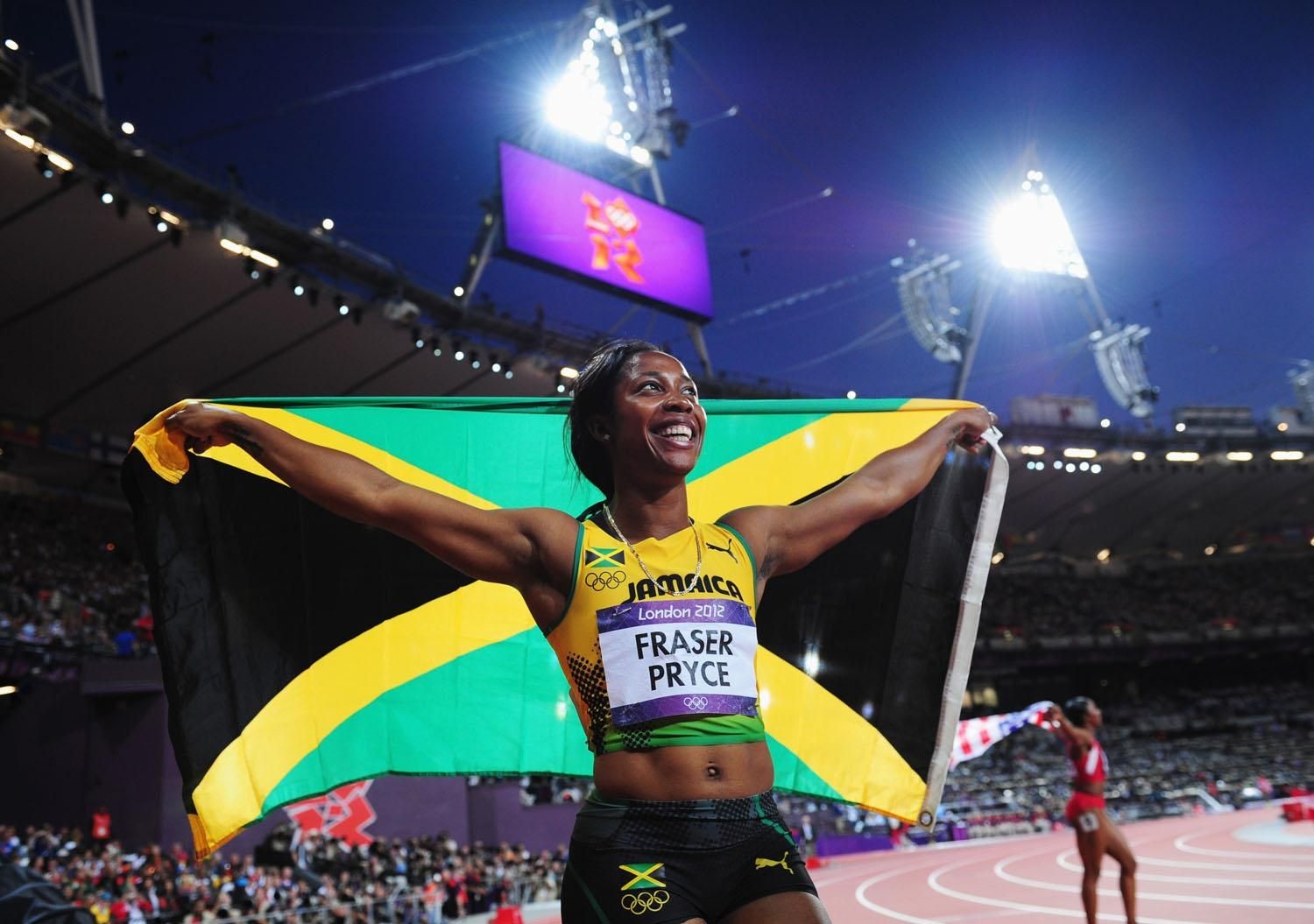
Zango became the first athlete from his nation to win a World Championships medal thanks to his third place in Doha and now he could become the first person from Burkina Faso to win an Olympic medal in any sport. The 27-year-old broke the world indoor triple jump record of 18.07m in Aubiere in January and has also leapt a PB of 17.82m outdoors this year.
Shelly-Ann Fraser-Pryce, 100m, 200m and 4x100m - Jamaica

Sprint star Fraser-Pryce will be looking to regain the 100m title after her wins in 2008 and 2012 and add further medals to a collection which also includes two 4x100m silvers, a 200m silver and a 200m bronze. The 10.63 she ran in Kingston in June puts her second on the world 100m all-time list.
Joseph Fahnbulleh, 200m - Liberia
No athlete from Liberia has ever finished in the top eight in their event at the Olympics, let alone won a medal, and sprinter Fahnbulleh will be looking to change that when he takes to the track for the 200m. The 19-year-old ran a PB of 19.91 to win the NCAA title in June.
Thea LaFond, triple jump - Dominica
Dominica hasn’t yet won a medal in any Olympic sport but if she progresses beyond the qualifying round then triple jumper LaFond – who holds the national records of 14.54m indoors and 14.38m outdoors – will make further history for her nation, as no athlete from Dominica has ever competed in an Olympic final.
Alex Rose, discus - Samoa
Rose competed at the Rio Olympics in 2016, placing 29th in discus qualifying, but he’s keen to become the first Samoan athlete ever to reach an Olympic final. He improved his national record to 67.48m in May.
Athletics flag bearers at the Tokyo 2020 Olympic Games
Afghanistan (AFG) - Kimia Yousofi (women’s 100m)
Albania (ALB) - Luiza Gega (women’s 3000m steeplechase)
Andorra (AND) - Pol Moya (men’s 800m)
Antigua and Barbuda (ANT) - Cejhae Greene(men’s 100m)
Bahamas (BAH) - Donald Thomas (men’s high jump)
Belize (BIZ) - Samantha Dirks (women’s 400m) and Shaun Gill (men’s 100m)
Belgium (BEL) - Nafissatou Thiam (heptathlon)
Bosnia and Herzegovina (BIH) - Amel Tuka (men’s 800m)
Botswana (BOT) - Amantle Montsho (women’s 400m)
Burkina Faso (BUR) - Hugues Fabrice Zango (men’s triple jump)
British Virgin Islands (IVB) - Kyron McMaster (men’s 400m hurdles)
Cambodia (CAM) - Sokong Pen (men’s 100m)
Cape Verde (CPV) - Jordin Andrade (men’s 400m hurdles)
Central African Republic (CAF) - Francky Mbotto (men’s 800m)
Colombia (COL) - Caterine Ibarguen (women’s triple jump)
Comoros (COM) - Amed Elna (women’s 100m) and Fadane Hamadi (men’s 110m hurdles)
Congo (CGO) - Natacha Ngoye Akamabi (women’s 100m)
Costa Rica (CRC) - Andrea Vargas (100m hurdles)
Croatia (CRO) - Sandra Perkovic (women’s discus)
Cuba (CUB) - Yaime Perez (women’s discus)
Cyprus (CYP) - Milan Trajkovic (110m hurdles)
Denmark (DEN) - Sara Peterson (women’s 400m hurdles)
Dominica (DMA) - Thea Lafond (women’s triple jump) and Dennick Luke (men’s 800m)
Equatorial Guinea (GEQ) - Alba Mbo Nchama (women’s 100m) and Benjamin Enzema (men’s 1500m)
Eritrea (ERI) - Nazret Weldu (women’s marathon)
Gambia (GAM) - Gina Bass (women’s 100m and 200m) and Ebrima Camara (men’s 100m)
Ghana (GHA) - Nadia Eke (women’s triple jump)
Guam (GUM) - Regine Kate Tugade (women’s 100m)
Israel (ISR) - Hanna Minenko (women’s triple jump)
Ivory Coast (CIV) - Marie-Josee Ta Lou (women’s 100m and 200m)
Jamaica (JAM) - Shelly-Ann Fraser-Pryce (women's 100m, 200m and 4x100m)
Kazakhstan (KAZ) - Olga Rypakova (women’s triple jump)
Lao People's Democratic Republic (LAO) - Silina Pha Aphay (women’s 100m)
Liberia (LBR) - Ebony Morrison (women’s 100m hurdles) and Joseph Fahnbulleh (men’s 200m)
Mauritania (MTN) - Houleye Ba (women’s 100m) and Abidine Abidine (men’s 5000m)
Micronesia (FSM) - Scott James Fiti (men’s 100m)
Nauru (NRU) - Jonah Harris (men’s 100m)
Netherlands (NED) - Churandy Martina (men’s 4x100m)
Palau (PLW) - Adrian Justin Jimena Ililau (men’s 100m)
Panama (PAN) - Alonso Edward (men’s 200m)
Portugal (POR) - Nelson Evora (men’s triple jump)Refugee Olympic Team (EOR) - Tachlowini
Gabriyesos (marathon)
Rwanda (RWA) - John Hakizimana (men’s marathon)
Saint Kitts and Nevis (SKN) - Amya Clarke (women’s 100m) and Jason Rogers (men’s 100m)
Saint Lucia (LCA) - Levern Spencer (women’s high jump)
Saint Vincent and the Grenadines (VIN) - Shafiqua Maloney (women’s 800m)
Samoa (SAM) - Alex Rose (men’s discus)Sao Tome and Principe (STP) - D'Jamila Tavares (women’s 800m)
Saudi Arabia (KSA) - Yasmeen Al Dabbagh (women's 100m)
Sierra Leone (SLE) - Maggie Barrie (women’s 100m)
Solomon Islands (SOL) - Sharon Firisua (women’s marathon)
Somalia (SOM) - Ali Idow Hassan (men’s 1500m)
South Sudan (SSD) - Lucia Moris (women’s 200m) and Abraham Guem (men’s 1500m)
Switzerland (SUI) - Mujinga Kambundji (women's 100m, 200m and 4x100m)
Timor Leste (TLS) - Felisberto de Deus (men’s 1500m)
Trinidad and Tobago (TTO) - Kelly-Ann Baptiste (women’s 100m and 4x100m)
Tuvalu (TUV) - Matie Stanley (women’s 100m) and Karalo Hepoiteloto Maibuca (men’s 100m)
Uruguay (URU) - Deborah Rodriguez (women’s 800m)
Vietnam (VIE) - Thi Lan Quach (women’s 400m hurdles)
by World Athletics
Login to leave a comment

Tokyo 2020 Olympic Games
Fifty-six years after having organized the Olympic Games, the Japanese capital will be hosting a Summer edition for the second time, originally scheduled from July 24 to August 9, 2020, the games were postponed due to coronavirus outbreak, the postponed Tokyo Olympics will be held from July 23 to August 8 in 2021, according to the International Olympic Committee decision. ...
more...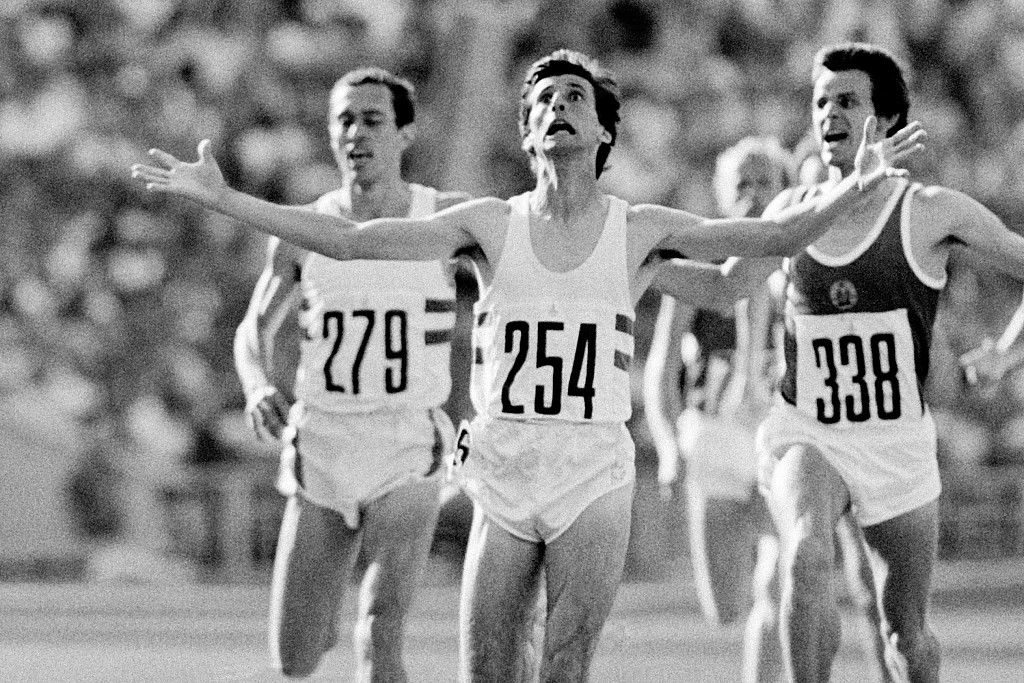
Sebastian Coe's monumental 800 meters
June 10, 1981 remains a red-letter day in the long history of 800m running, for it was in Florence late that night that Sebastian Coe lowered his own world record from 1:42.33 to 1:41.73. Every world record is special, marking as it does an advance on anything previously achieved, but Coe's run was extra-special. That time would not be bettered for 16 long years, itself a record in the annals of the men's 800m event.
When strongly-built Alberto Juantorena won the 1976 Olympic title in a world record 1:43.50 it was widely thought that here was the man to revolutionize two-lap running. And yet, for all his speed (44.26 400m) and power, the Cuban succeeded only in clipping another few hundredths off the record with 1:43.44 at the 1977 Universiade. Instead it was the slight figure of Coe who has gone down in history as the athlete who, like Germany's Rudolf Harbig in 1939 and New Zealand's Peter Snell in 1962, pushed back the frontiers of 800m performance.
It was in 1979 that Britain's Coe established himself as one of the all-time greats of middle distance running when in the space of 41 days he shattered three world records. He started with 1:42.33 in Oslo on July 5, and was as shocked as everyone else by his time. After clocking his fastest 400m of 46.87 at the AAA Championships he returned to Oslo for the star-studded Dubai Golden Mile on July 17. Despite being practically a novice at the distance with a best time of 3:57.67, he moved into the lead shortly before the three-quarter mark (2:53.4) and then proceeded to cover the final quarter in 55.6. He had run 3:48.95, again astonished when told he had broken New Zealander John Walker's world record of 3:49.4. As he related later: "When I looked back twice in the final straight it was fear, it was panic, not pain, that I was feeling. I certainly wasn't in the slightest distress at the finish."
Record number three came about in Zurich on August 15. The target this time was the 3:32.16 1500m by Tanzania's Filbert Bayi. Elated by the knowledge that he had never been faster, having been timed at 45.5 for a 400m relay leg 10 days earlier, Coe shot off at a potentially suicidal pace by clinging to the pacemaker, sweeping through the opening 200m in 25.9 and 400m in 54.3. Before 800m (1:53.19) had been covered, Coe was on his own, nearly 20m ahead of the field. Instead of easing back on the third lap he covered that in 56.3 for 2:49.5 at 1200m and at the finish – almost five seconds clear – his time was a hard earned 3:32.03.
Coe's athletic immortality was sealed in 1980 when he triumphed in the Olympic 1500m in Moscow to make up for his 'disastrous' run in the 800m (a mere silver medal behind Steve Ovett) after adding to his portfolio of world records by covering 1000m in 2:13.40 in his first ever race at the distance.
And so to 1981. With no major title to aim for, the emphasis was on achieving spectacular 'one-off' performances. Asked how he had prepared during the winter, Coe replied: "My training mileage is slightly down but there's been more accent on speedwork. I'm going back to basics, trying to improve my 400m speed." That approach hadn't diminished his endurance, though, for he opened his indoor season by winning the UK 3000m title in a personal best of 7:55.2. Two weeks later he smashed the world indoor 800m record with 1:46.0. "I knew I was fit, but not that fit," he enthused.
A 46.9 400m and 46.3 relay leg on May 4 confirmed his speed was at a high level, and before his fateful appearance in Florence he won the Yorkshire county 800m title on May 17, in 1:46.5, an invitation 800m at Crystal Palace on June 3, in 1:44.06 followed two hours later with a 45.8 relay split from virtually a standing start, and as a final tune-up a 46.6 relay leg at Gateshead on 7 June. He traveled to Florence not expecting anything too special ... around 1:43/1:44.
His 800m race in Florence got under way after 11pm. Kenya's 19-year-old Billy Konchellah, then a 45.38 400m performer who would go on to become world 800m champion in 1987 and 1991, acted as pacemaker. In his slipstream Coe reached 200m in 24.5 and 400m in 49.7 and was perfectly set up for a super-fast time. Sensing Konchellah was about to flag, Coe forged ahead by 450m and after 200m splits of 24.5 and 25.2 he covered the next half-lap in a daring 25.3 for a remarkable 600m time of 1:15.0 – precisely 1:40 pace for the full distance. Inevitably he slowed towards the end but still managed a final 200m of a little under 26.7.
Coe's immediate post-race response: "I'm very happy about the result, but it was terrible waiting the 10 minutes for the official result. It's getting under 1:42 that is the great thing for me. It was as hard a race as I have run for a long time. In the last 30 meters I was beginning to tie up but apart from that there was no problem."
Coe went through that 1981 season undefeated, collecting further world records at 1000m (2:12.18) and mile (3:48.53 and 3:47.33). Other glittering performances would follow, notably a second Olympic 1500m triumph in 1984, but as a testimony to the quality of that 800m exploit in Florence note that even now, 40 years on, only two men have gone faster: David Rudisha of Kenya and Wilson Kipketer of Denmark.
by World Athletics
Login to leave a comment
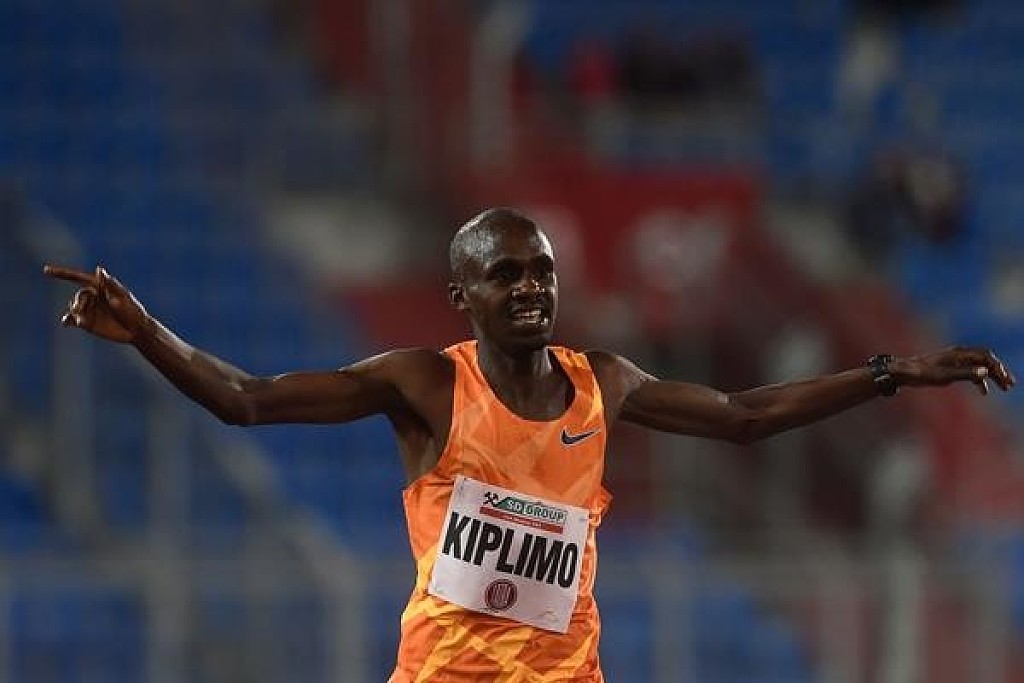
World record-holders will headline a stunning cast of athletic talent for the 60th edition of the Golden Spike in Ostrava
Paul Chelimo, Joshua Cheptegei, Genzebe Dibaba, Barbora Spotakova and Anita Wlodarczyk have all gone where no other athlete in history has, while with his indoor world record of 18.07m earlier this year, Hugues Fabrice Zango showed he has the potential to one day surpass Jonathan Edwards’ triple jump world record of 18.29m.
With 1500 fans allowed in the stadium, every set of eyes will be trained on Cheptegei when he takes to the track for the men’s 3000m, the final event on the programme. Edged by Duplantis for Male World Athlete of the Year in 2020, the Ugandan 24-year-old has been untouchable on the track since 2019, setting world records at 5000m and 10,000m.
Cheptegei’s current best for 3000m is 7:33.26, but the enlisting of Australia’s Stewart McSweyn – a 7:28 man – as pacemaker suggests the Ugandan is ready to take a massive chunk off that. If conditions are favourable, he looks primed to challenge Daniel Komen’s 3000m world record of 7:20.67, which has stood for 25 years. The world 10,000m champion sharpened his speed last month with a 3:37.36 1500m PB at altitude in Kampala. Olympic 5000m silver medallist Paul Chelimo is likely to be his closest pursuer.
Elsewhere in the distance events, world half marathon champion Jacob Kiplimo will open his season over 10,000m where it seems the 20-year-old Ugandan’s personal best of 27:26.68 is due for serious revision. In the men’s 3000m steeplechase, 2019 Diamond League champion Getnet Wale of Ethiopia will be looking to improve on his best of 8:05.21, having clocked a blazing 7:24.98 for 3000m indoors back in February.
Poland’s world bronze medalist Marcin Lewandowski takes on Ugandan record-holder Ronald Musagala in the men's 1500m. European Indoor 800m champion Patryk Dobek will race the two-lap distance in Ostrava, and the Pole remains undecided between the 800m and the 400m hurdles for the Tokyo Olympics. He should get a good indicator of his medal chances at the longer distance on Wednesday as he takes on seasoned veterans Adam Kszczot and Amel Tuka.
Genzebe Dibaba is the star attraction in the women’s 1500m, her first outing at the distance in which she holds the world record since August 2019. The Ethiopian made an eye-catching half marathon debut last December when clocking 1:05:18 in Valencia, but she failed to finish on her only outing since, an indoor 3000m in February. Uganda’s Winnie Nanyondo should be her biggest rival. In the women’s 800m, European indoor champion Keely Hodgkinson should be tough to beat.
Richardson takes on Schippers and Okagbare
In the sprints, the women’s 200m will take top billing, with fans eager to see what Sha’Carri Richardson can produce after her red-hot form in recent weeks. The 21-year-old US sprinter clocked wind-legal 100m times of 10.72, 10.74 and 10.77 already this season and she seems primed to dip below 22 seconds over 200m for the first time. Also in the field is two-time world champion Dafne Schippers and Nigeria’s Blessing Okagbare.
Olympic 100m bronze medallist Andre De Grasse will face 2004 Olympic champion Justin Gatlin in the men’s 100m and while both have edged below 10 seconds this year, they will have it all to do to beat 400m specialist Fred Kerley, who clocked 9.91 (2.0m/s) in Miami last month.
Kerley is also slated for the 200m, which takes place 80 minutes after the 100m. In the latter, Kenny Bednarek should prove tough to beat, having run 19.94 behind Noah Lyles at the USATF Golden Games recently.
In the men’s 400m, 2012 Olympic champion Kirani James will be looking to return to his best as the clock counts down towards the Tokyo Games. The Grenadian opened his season with a 44.88-second clocking in Phoenix, USA, last month, though Vernon Norwood is the quickest in the field this year with his 44.64.
Olympic bronze medallist Yasmani Copello headlines the men’s 400m hurdles, while Denmark’s Sara Slott Petersen is the quickest on paper in the women’s event.
by World Athletics
Login to leave a comment
Hong Kong’s Christy Yiu to take part in Milan Marathon hoping to achieve Olympic qualification
Hong Kong running star Christy Yiu Kit-ching has been thrown a lifeline in her stuttering Olympic qualifying campaign after being handed an invite to take part in next weekend’s Milan Marathon – her first marathon race in 22 months.
Yiu’s hopes to qualify for this summer’s Tokyo Olympics have been thrown in disarray since the pandemic threw the world sporting calendar upside down in 2020.

The 33-year-old long-distance runner needed assistance from the world governing body to save her Olympic qualification campaign after every race she wanted to compete was either cancelled or she was rejected because of Covid-19 restrictions.
The Rio Olympian has been struggling to get a single racing opportunity after competing in the 2019 Gold Coast Marathon and she desperately wants to compete overseas in her bid to qualify for her second Olympics.
A senior local official shared Yiu’s frustrations but said she might finally get the opportunity to compete again in the marathon after months of anxiety.
“Yiu needs to reach the [Olympics] entry mark but unfortunately she has been denied the opportunity one race after another after competing in Australia and this is mainly due to the pandemic,” said Hong Kong Association of Athletics Affiliates chairman Kwan Kee. “The event she has supposed to compete was this month’s Copenhagen Marathon in Denmark but that was called off in late April due to Covid-19 safety measures in the city.
“We have found the Milan Marathon, which is opened to invited athletes and after seeking assistance from World Athletics and the local organisers for the event, we were able to obtain a spot for her. And there is no need for her to do the quarantine when she arrives in Milan.”
The Milan Marathon, which will take place in the northern Italian city on May 16, will be run on a fast circuit of 7.5 kilometres with runners running around it five times. The hub will be Piazza del Cannone, in front of Castello Sforzesco, the famous castle that was built in the 15th century by Francesco Sforza.
by Chan Kin-wa
Login to leave a comment

Milano Marathon
Passion is what allows us to go beyond our limits. It’s what makes us run when our heath is bursting in our chest, it’s whats makes our legs move even if they’re worn out. It’s passion against sacrifice, and the winner will be declared though hard training, hearth and concentration. Milano Marathon has been presented in the futuristic Generali Tower,...
more...
Hosts Poland crowned first winners of World Athletics Relays Silesia 21
There was success for the host nation Poland on an action-packed first evening of competition at the World Athletics Relays Silesia 21, with Joanna Jozwik and Patryk Dobek teaming up to win the 2x2x400m.
It was the first of two finals at the Silesian Stadium in Chorzow on Saturday (1), with Germany winning the shuttle hurdles relay and a whole host of competitive 4x100m and 4x400m heats taking place.
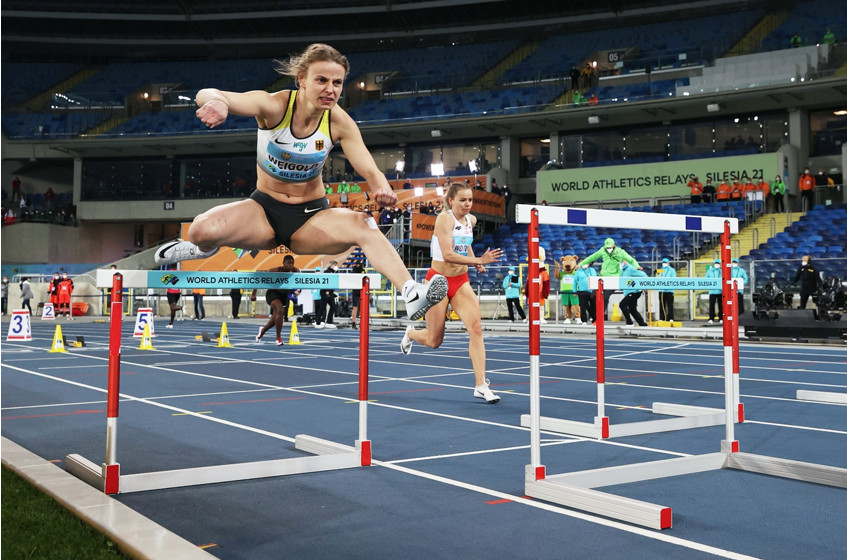
Tactical victory on home soil
With two athletes taking it in turns to run their two 400m legs, the 2x2x400m is an event which favours the middle-distance athletes rather than sprinters but in Dobek the host nation had a bit of both. Previously better known as a 400m hurdler, the 27-year-old has stepped up to the 800m this year in superb style, winning the European indoor title in just his fourth competition at the distance.
In Silesia he was joined by his European Indoors teammate Jozwik, who claimed 800m silver in Torun, and together they powered to victory on home soil, clocking 3:40.92.
After a conservative start, Kenya were narrowly ahead after the first lap, with Naomi Korir handing the baton to Ferguson Cheruiyot Rotich and Jozwik passing on to Dobek, who had helped Poland to a fourth-place finish in this event at the last edition of the World Athletics Relays in Yokohama in 2019.
Slovenia is only fielding one team in Silesia and they made their presence felt in this event, with Anita Horvat and Zan Rudolf challenging Kenya on the third and final legs. Kenya had the stronger finish, however, and it saw them secure second place in 3:41.79 as Slovenia were third in 3:41.95.
Germany holds off strong Polish challenge in shuttle hurdles
All-round stronger starts and composure under pressure helped Germany to victory in the mixed shuttle hurdles relay, the final event of the night.
Monika Zapalska began well to give Germany a slight lead on the first leg. Poland’s Zuzanna Hulisz made up a bit of ground on Zapalska towards the end of her leg, but Germany’s Erik Balnuweit got off to a swift start on the second leg, opening up another metre on Poland.
Krzysztof Kiljan maintained Poland’s second-place position on the second leg as the top two teams continued to pull away from Kenya in third. The positions stayed the same on the third leg with Anne Weigold holding on to the lead for Germany as Poland’s Klaudia Wojtunik tried to give chase.
Poland saved their strongest runner, Damian Czykier, for the final leg. At first it seemed as though Gregor Traber’s lead was unassailable, but Czykier closed well in the final stages. He clattered the final barrier, though, and so was unable to catch the German before the finish.
Germany won in 56.53 with Poland taking second in 56.68. Kenya took third in 59.89.
All to race for in qualifying events
Competition was fierce in the heats for the championship events, with qualification for the Tokyo Olympic Games and World Athletics Championships Oregon22 up for grabs.
The women’s 4x400m heats were up first and hosts Poland secured a strong start as they won the event’s opening race, clocking 3:28.11.
Cuba’s quartet of Zurian Hechavarria, Rose Mary Almanza, Lisneidy Veitia and Roxana Gomez went quickest overall, leading from gun to tape to win the second heat in 3:27.90 ahead of the Netherlands with 3:28.40. It was a busy night for European indoor 400m champion Femke Bol as before lining up for the mixed 4x400m, she opened her campaign with a 49.81 anchor split for the Dutch women’s team – the fastest overall in the first round.
Like the Netherlands and Poland, who won this event in Yokohama in 2019, Belgium and Great Britain had already qualified for Tokyo as 2019 World Athletics Championships finalists. They all also made the final in Silesia where they will be joined by Germany, Italy and France on Sunday.
Belgium qualified third quickest for the final with 3:28.27, ahead of Great Britain’s 3:28.83.
There was joy for the Dutch men’s 4x400m team too as Jochem Dobber, Liemarvin Bonevacia, Ramsey Angela and Tony van Diepen combined to clock 3:03.03 and win the second heat, leading the list of qualifiers. But Poland didn’t share in the success of their female teammates as they missed out on the final by just one place. Their run did, however, gain them a spot at the World Athletics Championships in Oregon.
In that third heat, which was won by Botswana in 3:04.03, Italy’s Vladimir Aceti surged past Karol Zalewski – who was part of Poland's world indoor record-breaking team at the 2018 World Athletics Indoor Championships in Birmingham – with a split of 45.36 to finish second in 3:04.81 and pip the hosts for that place in the final.
The Japanese team ensured that they will also be heading for a home Olympics as Rikuya Ito, Kentaro Sato, Kazuma Higuchi and Kaito Kawabata clocked 3:03.31 to win the first heat.
Colombia’s Anthony Zambrano, the world 400m silver medallist, eased over the finish line in 3:04.64 to comfortably anchor his team to second place and a spot in the final along with South Africa, Belgium and France.
As expected, the mixed 4x400m heats provided some thrilling action, with Italy’s Edoardo Scotti, Giancarla Trevisan, Alice Mangione and Davide Re storming to a second heat win of 3:16.52 to lead the first round ahead of heat three winners Brazil with 3:16.53 and the Dominican Republic with 3:16.67.
Ireland, Belgium, Great Britain, Netherlands and Spain will be joining them in the final but Colombia and Poland will miss out after placing third and fourth in that high-quality second heat.
Colombia’s 3:17.61 was faster than the Netherlands’ winning time of 3:18.04 in the first heat, but they were run out of an all-important top two qualifying spot.
In that Netherlands team, Bol ran 50.72 after her earlier 49.81 in the women’s event.
Narrow margins in 4x100m
Things were tight at the top and bottom of the list of teams to qualify for the men’s 4x100m final, with just 0.001 separating Italy from Brazil to lead the first round and the exact same small margin between Denmark and Ukraine at the bottom, to see Ukraine just miss out.
European indoor 60m champion Marcell Jacobs and Italian record-holder Filippo Tortu both ran storming legs along with Eseosa Fostine Desalu and Davide Manenti to clock 38.45 in winning heat three ahead of South Africa, anchored by African champion Akani Simbine, while 2019 winners Brazil, anchored again by Paulo André Camilo de Oliveira, won heat two in a time just a thousandth slower.
Denmark ran a national record of 39.06 in that race to finish fourth behind Germany and Japan to secure their spot in the final, while the first heat was won by the Netherlands in 38.79 ahead of Ghana.
A strong team of Jamile Samuel, Dafne Schippers, Nadine Visser and Marije Van Hunenstijn led the qualifiers in the women's event to book their place in the final, as well as the major championships in Tokyo and Oregon. Together they clocked 43.28 to win the second heat ahead of Poland.
Just as the Danish team had the race of their lives in the men's event, so too did Ecuador in the women's and the quartet ran a national record of 43.86 in third to advance on time. Brazil was disqualified for a lane violation after originally winning the first heat ahead of Italy with 44.02, while heat three was won by France in 43.51.
They will be joined in the final by Switzerland and Japan.
Competition resumes on Sunday at 19:20 local time with the mixed 4x400m final.
by World Athletics
Login to leave a comment
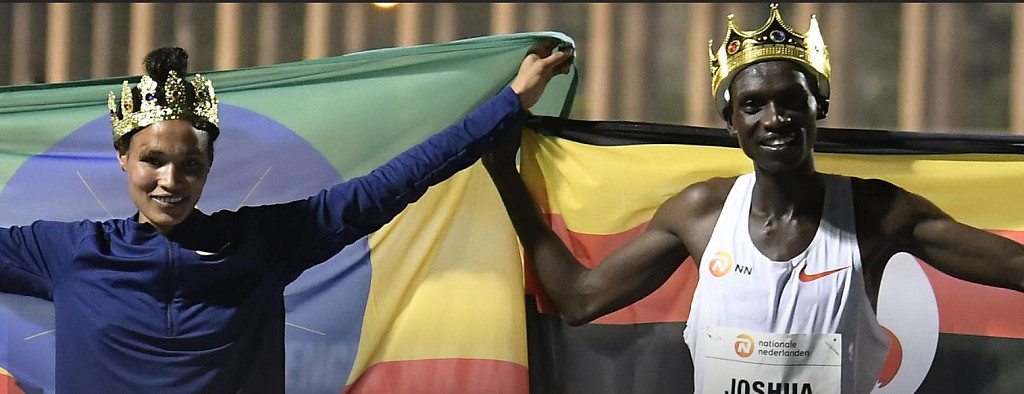
World records ratified: Gidey's 5000m and Cheptegei's 10,000m
The monumental performances of Ethiopia’s Letesenbet Gidey and Uganda’s Joshua Cheptegei, to break two of the sport’s most revered world records within one glorious hour, have been officially ratified.
Gidey’s 5000m mark of 14:06.62 and Cheptegei's 10,000m performance of 26:11.00 were both set at the aptly named NN Valencia World Record Day on 7 October.
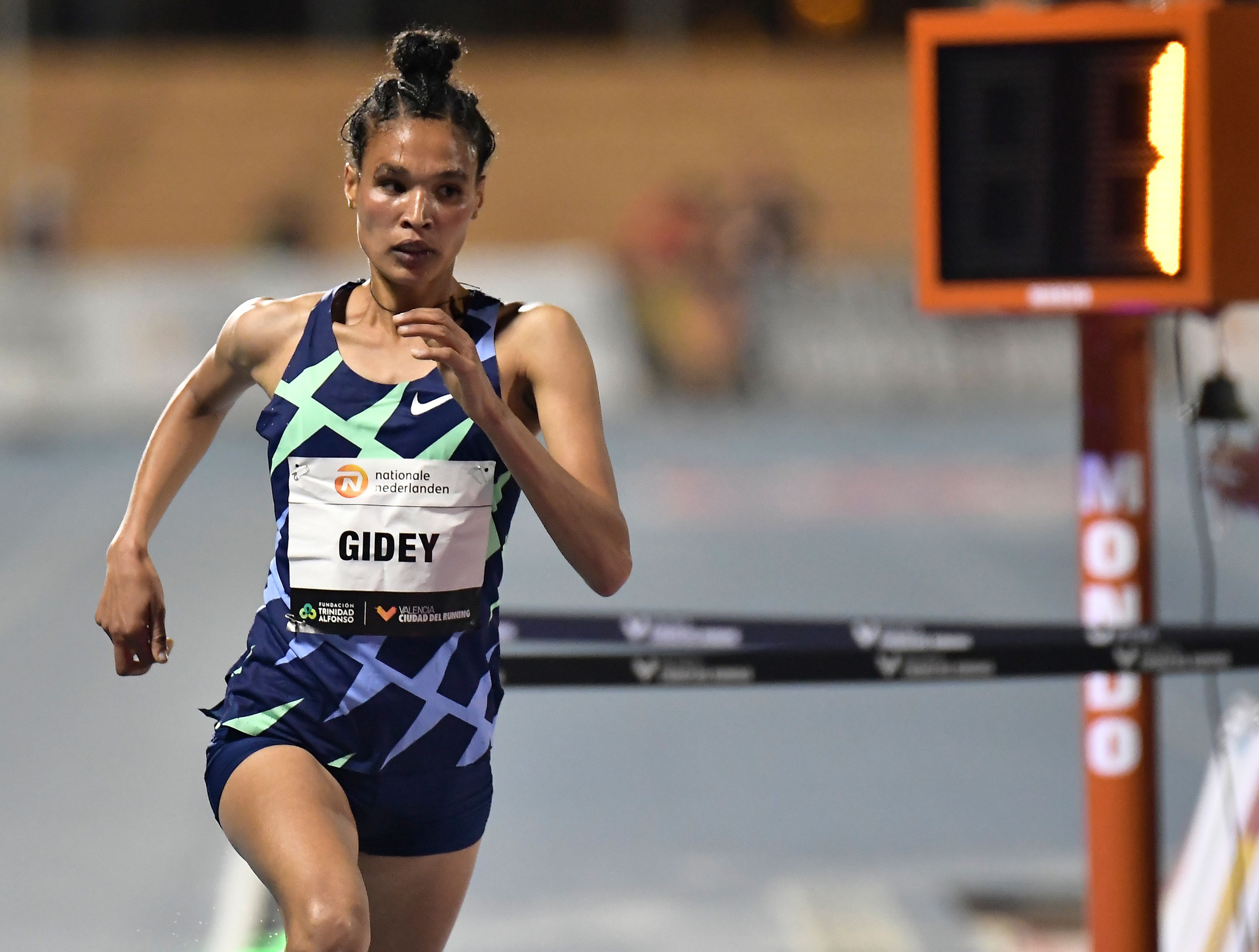
Gidey went first, producing a stunning run that clipped more than four seconds from the previous record set by Tirunesh Dibaba 12 years earlier. A few minutes after the 22-year-old crossed the line, Cheptegei took his turn, churning out 25 laps of the track in an average of less than 63 seconds apiece to better Kenenisa Bekele’s 15-year-old benchmark by more than six seconds. The records for those two events had never been broken on the same day.
The two-race meeting was held at the Spanish city’s intimate Turia Stadium before a crowd limited to less than 150 due to Covid-19 pandemic restrictions.
That scene was in stark contrast to those in Oslo, on 6 June 2008, when Dibaba took command of the world 5000m record with a 14:11.15 run and three years earlier, in Brussels on 26 August 2005, when Bekele clocked 26:17.53 to clip 2.57 seconds from his own year-old mark. The roar of capacity crowds at the events, both fixtures of the Golden League series, were crucial in those record assaults. In Brussels, the pulsating beat provided by an African expat drum orchestra added to the thunder produced by the crowd of 47,000 that packed the King Baudouin Stadium.
That was absent in Valencia, but it didn’t seem to matter to either Gidey or Cheptegei whose phenomenal form and singular focus landed both in the record books. For Cheptegei, whose performance came 54 days after he broke the world 5000m record in Monaco, where attendance was also restricted, the circumstances of the setting wasn’t anything new.
“I wanted to show the sports lovers of the world that the track is exciting," said the 24-year-old, who became the 10th man to hold the 5000m and 10,000m world record concurrently.
Pace setters brought Cheptegei through the first half in 13:07.73, before the Ugandan forged on alone over the final 12 laps. He slowed slightly over the sixth kilometre but then picked up the pace in the seventh to steadily build a gap on Bekele's legendary mark before sealing it with a 60-second final lap.
Alluding to the coronavirus pandemic, Cheptegei added, "In this difficult situation, I hope things like this can still give us joy and some hope for tomorrow."
Gidey, a cross country standout with two world U20 titles to her credit and a bronze medal finish at the World Cross Country Championships in Aarhus, Denmark, last year, arrived in Valencia with just one race on her CV this season, a solid 14:26.57 run in Monaco, but reportedly in form suggesting that she could run significantly faster.
Unlike Cheptegei, who made no secret about his planned assault on the record, Gidey opted for a more understated approach in the lead-in to the meeting, choosing to play down pre-race talk of her attack on Dibaba's mark. But her ambitions became evident when she passed the 3000-metre point nearly seven seconds ahead of world record pace. She closed the deal with back-to-back 67-second laps before crossing the finish.
“I have been dreaming about this (setting a world record) for six years,” said Gidey, who hadn't won a 5000m race since 2016. "I am very happy now."
by World Athletics
Login to leave a comment
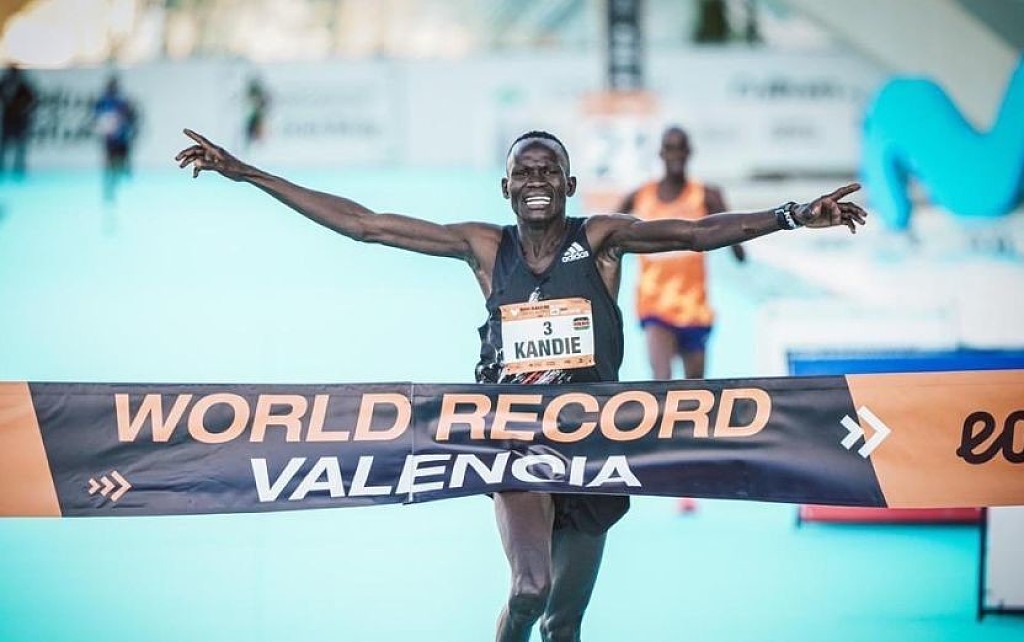
Half marathon world record holder Kibiwott Kandie eyes Olympics 10,000m title
Newly-crowned world half marathon world record holder Kibiwott Kandie is planning a stab at the 10,000m Olympic title at the rescheduled 2020 Tokyo Olympics.
Kandie is now hopeful of glory on the track although he has never run in the 10,000m race before.
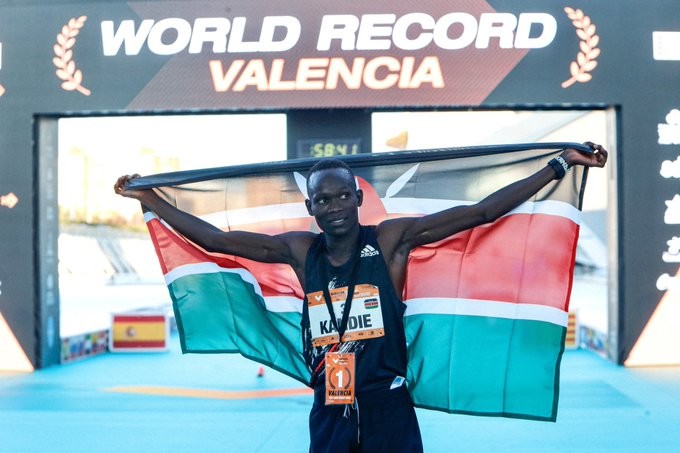
"I have run 10,000m in training but I never took it seriously. But I know that I have the tools to succeed on track and that is why I will be seeking a slot in Team Kenya to Tokyo," Kandie said
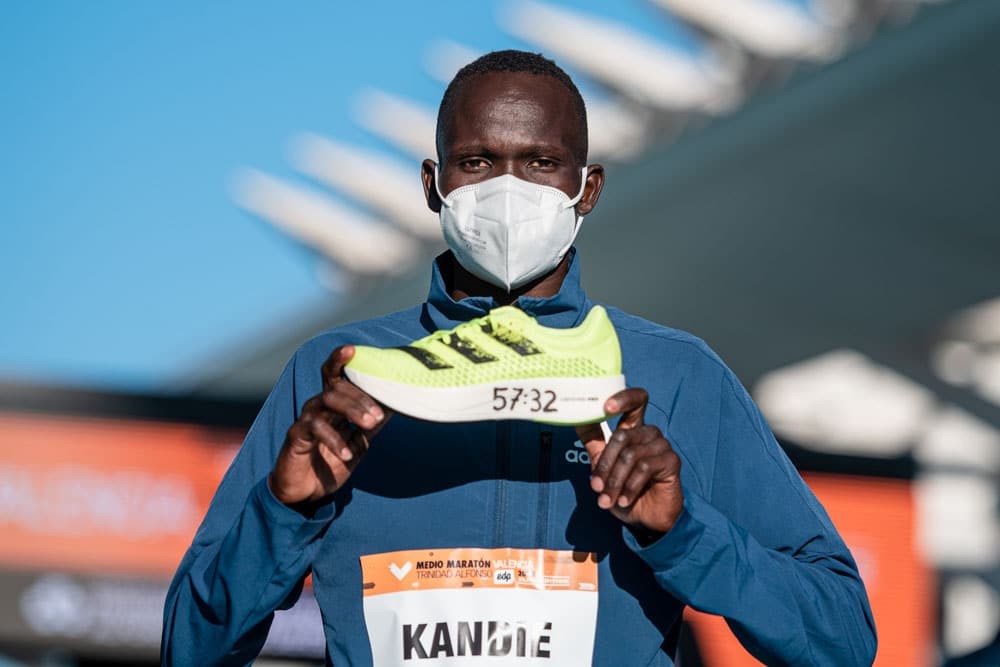
Nonetheless, Kandie believes that competing against seasoned athletes in 10,000m will be no child's play.
Consequently, the man who broke Geoffrey Kamworor's half marathon record at this Sunday's Valencia Marathon has planned a rigorous training session ahead
"The key thing is to be committed in training and to work hard. It will not be easy but if I work hard for it, then I am confident of good results," Kandie said.
Kandie set a new world record of 57:32 to smash the previous 58:01 mark set by his compatriot Kamworor at the 2019 World Half Marathon Championships in Copenhagen, Denmark.
Second-placed Jacob Kiplimo of Uganda clocked 57:37 as he lost out to the man he had beaten to the World Half Marathon title in October in Gdynia, Poland.
Not satisfied with this feat, Kandie is dreaming big about his world record.
"My next target in the half marathon will be to break this new world record by reducing it to 56:00. I know that it will not be easy to achieve but with hard work, it is possible," Kandie said.
by Omondi Onyatta
Login to leave a comment
Tokyo 2020 Olympic Games
Fifty-six years after having organized the Olympic Games, the Japanese capital will be hosting a Summer edition for the second time, originally scheduled from July 24 to August 9, 2020, the games were postponed due to coronavirus outbreak, the postponed Tokyo Olympics will be held from July 23 to August 8 in 2021, according to the International Olympic Committee decision. ...
more...
World Triathlon proposing a new elimination style race for inclusion at Paris 2024
A new elimination style individual event is being proposed by World Triathlon for inclusion at the 2024 Olympic Games in Paris.
insidethegames understands World Triathlon has put forward five medal events - the eliminator for men and women, the traditional elite races and a mixed relay - on its Paris 2024 event programme that it has submitted to the International Olympic Committee (IOC).
The exact format of the eliminator concept - which could see athletes compete over a set number of rounds, with the lowest few athletes removed from the field after each heat - has not yet been confirmed.
The distance of the event and other details such as the order of the disciplines has also not yet been ironed out, but it has been suggested it could use the super sprint format of a 400 metres run, a 10km bike and a 2.5km swim.
World Triathlon believe the eliminator concept would not increase its athlete quota for Paris 2024 and it could be held using the same course as the mixed relay, which is set to make its Olympic debut at the postponed Tokyo 2020 Games next year.
The IOC, which is due to confirm the Paris 2024 event programme at its Executive Board meeting next month, has outlined its opposition to new events if they increase the number of athletes but has suggested it is open to their inclusion if it is contested by the same set of competitors.
World Triathlon President Marisol Casado has consistently spoken of the need to enhance the sport's presence at the Olympics.
Casado, who will face a challenge from Denmark's Mads Freund when she stands for re-election during the organisation's virtual General Assembly on Sunday (November 29), has previously floated ideas such as races including semi-finals and finals in order to improve the appeal of triathlon.
by Liam Morgan
Login to leave a comment

Paris 2024 Olympic Games
For this historic event, the City of Light is thinking big! Visitors will be able to watch events at top sporting venues in Paris and the Paris region, as well as at emblematic monuments in the capital visited by several millions of tourists each year. The promise of exceptional moments to experience in an exceptional setting! A great way to...
more...
Athlete Refugee team member Nait-Hammou on his half marathon championships debut
Athlete Refugee Team member Otmane Nait-Hammou is making a habit of rubbing elbows with some of the world's finest runners at World Championships.
In Doha last year, he lined up next to reigning world and Olympic champion Conseslus Kipruto in the opening round of the 3000m steeplechase. On the Gdynia start line, he stood should-to-shoulder with Joshua Cheptegei, the world record holder in the 5000 and 10,000m.
"If it's destiny or luck I don't know,” he says, laughing when reminded of the company he’s managed to keep at the start lines of his last two World Championship appearances. "It's an honour for me and I feel really proud.”
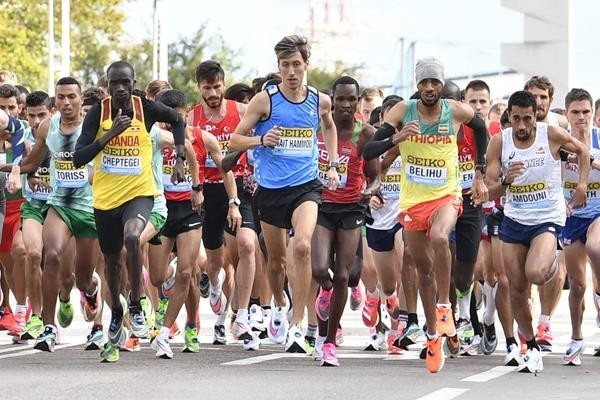
He’s also taking great pride in what he managed to achieve in Gdynia representing the Athlete Refugee Team.
On Saturday, Nait-Hammou wasn’t the same athlete he was a year ago in the Qatari capital. There, starry-eyed and overwhelmed, he tumbled to the track on the first lap of his race and was the last to finish, more than 70 seconds after Kipruto. In Gdynia, he finished 67th in the field of 122, clocking 1:03:28 in his competitive debut over the distance, beating some of the world’s finest half-marathoners in the process.
The difference? Taking to the line as a fledgling professional athlete, both in practicality and in attitude.
An opportunity to train like a professional
Nait-Hammou began running in his native Morocco in 2012, a passion he continued to feed even when life threw challenges in his path. He went to France in 2015 to pursue his studies, but, unable to return to Morocco, he made the difficult decision to apply for asylum. That road took him to Sweden in 2016 where he watched, on a television in a refugee centre, a team of refugee athletes competing at the Rio Olympics.
Those moving images fuelled his imagination and his motivation. Three years later he himself would compete twice on the international stage, first at the World Cross Country Championships in Aarhus, Denmark, then again in Doha, modest outings that nonetheless helped him step up to the next level.
“A lot of things changed over the past year,” Nait-Hammou says. “I have a lot of solidarity and support that has changed my life." That includes sponsorship arrangements with On, his apparel sponsor, with the energy gel Maurten, from his French club ES Sartrouville and ongoing development support from World Athletics and Olympic Solidarity.
Together, he says, "these things have given me more confidence and motivation and excitement to train very hard, to push very hard in training. It's a huge difference from when you come to participate and when you come to perform.”
His increasingly professional arrangement allowed him to attend a training camp for the first time, a month-long stint at altitude in Font-Remeu, France, in July and August where he logged 150 to 160 kilometres per week for four straight weeks. It was a type of training he’d never attempted before. “The first week was tough. I was really tired. But then the second week was better, and the third even better.”
It also brought results. On 29 August, he improved his steeplechase best to 8:51.07 at a French regional meeting in Decines Charpieu, his first race in seven months. Two weeks later he finished seventh at the French championships. In between he won a regional 10km in 30:50.
All that set him up well for Gdynia.
“I felt confident at the start line, because I had the opportunity to train and prepare like a professional. That made a big change in my life and my approach. I can see in training that I am getting better. I'm not the same person I was in Doha.”
“I never ran under 30 minutes. Never. I'm still in shock. I still haven't realised what I’ve done. I broke my 10k PB inside a half marathon. In my first half marathon. And in a world championship. It's crazy.”
"I'm starting to think about doing some really strong training this winter for a good marathon early next year," he says, and then focus on the steeplechase during the track season. "I want to go to the marathon for a new adventure. I am excited and motivated for that.
“I'm not thinking the same after Gdynia,” he continues. “I hope I gave the inspiration to other refugees to do better than me in the next World Championships.
“I didn’t come this time to participate. I came to perform. We get the support from World Athletics, from my sponsors, to come to the World Championships, so I wanted to show that we can perform like other athletes. That refugees can be like normal people.
"I beat some Swedish athletes, I beat some Spanish runners. I beat some of the best athletes from other countries, who are all very good athletes. I feel really proud of that and that I was able to represent 69 million people from around the world, to show that we can do it.”
by World Athletics
Login to leave a comment

World Half Marathon Championships
The Chinese city of Yangzhou will host the 2022 World Athletics Half Marathon Championships. China, one of the fastest-growing markets in road running, had 24 World Athletics Label road races in 2019, more than any other country. It hosted the World Half Marathon Championships in 2010 in Nanning and will stage the World Athletics Indoor Championships in Nanjing in 2021. ...
more...
What the fastest runners can learn from Joshua Cheptegei
Joshua Cheptegei made history on Wednesday when he set the 10,000m world record with a 26:11.00 run in Valencia. Cheptegei is arguably the best runner alive, and while he is riding an incredible high right now, it wasn’t long ago that he faced an enormous low after a massive mid-race collapse in 2017. Refusing to let this derail his career, Cheptegei pushed forward, and that is why he made it to where he is today.
While you probably won’t ever come close to Cheptegei’s level, that doesn’t mean you can’t learn from his career. If you’re facing disappointments or tough times in running, channel your inner Cheptegei and trust that you’ll eventually climb out of this rut.
In front of a home crowd at the 2017 World Cross Country Championships in Kampala, Uganda, Cheptegei, then 20 years old, was on his way to the biggest win of his young career. Cheptegei had led for most of the race, and he had a 50-metre lead on Kenya’s Geoffrey Kamworor in second place. With less than a kilometre to go and the championship within reach, Cheptegei began to unravel, and he was eventually passed, not just by Kamworor, but by the next 28 runners as well. It was one of the biggest implosions in running history, and Cheptegei went from first place to 30th in the blink of an eye.
Many people would have let this result define them, but not Cheptegei. Later that same year, he ran to a silver medal in the 10,000m at the world championships. In 2018, he won gold in the 5,000m and 10,000m at the Commonwealth Games, and he ended the year with the 15K world record. The following year, he upped his game once more, first redeeming himself with a win at the World Cross Country Championships in Denmark, then winning 10,000m world championship gold in Doha. His finale for 2019 was another world-record performance, this time in the 10K (although his mark was bettered by Rhonex Kipruto in early 2020).
Finally, in 2020 — the season that almost didn’t happen because of COVID-19 — Cheptegei had the year of his life, breaking world records in the 5K on the road in February, the 5,000m in August and then the 10,000m on Wednesday.
Odds are that you won’t have a collapse like Cheptegei did in Kampala in 2017, but even if you do, he’s proof that you can recover from it. Everyone will have slumps in their careers, whether in training or racing or both. But if you believe in your training and trust in your abilities, you’ll eventually leave those troubles behind, replacing them with PBs, race wins and great results.
by Ben Snider-McGrath
Login to leave a comment
Hassan and Farah break one-hour world records in Brussels
Britain's Mo Farah and Sifan Hassan of the Netherlands set respective men’s and women’s world one-hour records* at the Wanda Diamond League exhibition meeting at the King Baudouin Stadium tonight.
Britain’s multiple world and Olympic champion held off the challenge of his training partner, home athlete Bashir Abdi, to set a new mark of 21,330m – eclipsing the 2007 mark of 21,285m set by Haile Gebrselassie. Abdi finished eight metres behind.
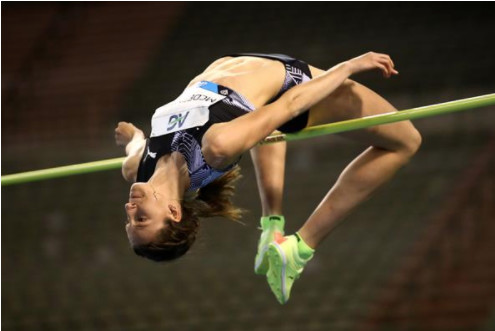
Hassan’s record also came after a titanic battle with Kenya’s world marathon record-holder Brigid Kosgei, although it later transpired the latter had been disqualified for stepping on to the infield in the closing stages.
The Dutch world 1500m and 10,000m champion reached 18,930 metres as the hour elapsed, beating the existing mark of 18,517 metres set by Ethiopia’s Dire Tune in 2008.
Moving into the final quarter of an hour, Tune’s mark seemed certain to be bettered, given that both women were more than a minute ahead of world record pace. The only question remained – which champion would secure it?
As they shadowed each other, swapping the lead but never getting away from each other, it was impossible to predict who would triumph. Hassan said afterwards that she thought Kosgei would “run away from her”.
But when the gun went to mark the final minute with the pair halfway down the back straight, Hassan moved ahead once more, and this time it was decisive.
Looking once behind her, the Dutch athlete took off, pumping her arms, going for broke. Kosgei, baring her teeth, did everything in her power to stay in touch, but there was no catching up, and when the 60 minutes elapsed, Hassan slowed to a halt halfway down the back straight after a crazy sprint finish.
"I didn't feel good before the start of the race, I even puked," revealed Hassan. "After 30 minutes of racing, I finally felt better. It was in the final 20 minutes that I gained the confidence I needed. When there were only two minutes left on the clock, the fun began. I just gave everything I had left. I am so happy with the win and the world record. It wasn't easy."
As the men’s race moved into the final quarter of an hour, the ghostly figure of the current world record holder, Gebrselassie, was shown in virtual shape, running at their side. They were bang on the pace.
With 10 minutes to go, they moved ahead of the world record schedule. They passed 18,000 metres in 50:43.
Inside the final five minutes, the home runner, who the day before had confessed that he expected Farah to beat him, moved to the lead, but the multiple champion was shadowing him still.
As advertised, the Wavelight visual pace-guidance system employing differently coloured LED lights installed on the inside edge of the track made the pursuit of records on the night immediately intelligible.
With three minutes remaining, both men were 30 metres clear of the leading blue lights, showing the intended pace, and the green lights snaking behind them, showing the actual world record pace.
A second world record appeared in the offing – and the same question was being asked. Who would break it?
The gun went to mark one minute to go, then Farah made a significant break. He charged around the bend as the final seconds ticked away, and at the same spot where Hassan had earlier triumphed, Farah did too, taking a few seconds to realise it was all over.
“The world record is yours, Mo!” said the stadium MC.
Abdi had the consolation of lowering the world best for 20,000m from 56:26 to 56:20.2*, having led his friend through that mark.
"I was very excited to be back on the track," said Farah. "I knew I was in a great shape after the hard work I did in the last six weeks. At a certain point, with just 10 laps to go, it became tough so I was happy that Bashir took the lead, but I felt great with just one minute to go. A fast last lap is still my best tactic."
Kenya’s Olympic 1500m champion Faith Kipyegon had to settle for another near miss as she attempted to beat the world 1000m record of 2:28.98 set on this track in 1996 by Russia’s double Olympic champion Svetlana Masterkova.
Having finished just 17 hundredths of a second short at last month’s opening Diamond League meeting in Monaco, Kipyegon seemed on track to achieve her ambition with 200 metres remaining, but faltered slightly over the final few metres to cross the line in 2:29.92.
Norway’s 19-year-old European 1500m champion Jakob Ingebrigtsen, who has already reduced the European record to 3:28.68, made a bold effort to improve on that but his honourable solo effort saw him finish in 3:30.69, with Jesus Gomez of Spain a distant second in 3:34.64.
In the pole vault, Sweden’s 20-year-old world record-holder Mondo Duplantis saw the last challenger, home vaulter Ben Broeders, fall away with a best of 5.70m.
The European champion then went on to clear a meeting record of 6.00m at his first attempt before having another crack at 6.15m, a centimetre higher than the best outdoor clearance ever made, by Sergey Bubka in 1994. He didn’t make it. But surely his time will come sooner rather than later.
Twenty-year-old Rani Rosius, who had won the Belgian title in 11.39, needed 11.43 to earn another prestige victory in the women’s 100m, with France’s Carolle Zahl second in 11.56.
Britain’s world heptathlon champion Katarina Johnson-Thompson had said the day before that this meeting – where she was competing in the 100m hurdles and the high jump – was effectively the highlight of her season, and she had a reasonably satisfactory result in the first of them, which was won by home champion Anne Zagre in 13.21.
Despite an uncertain start, Johnson-Thompson drew on her strength to take fourth place in 13.57 – inside her previous season’s best of 13.73.
Zagre was chased home by Denmark’s Mette Graversgaard, who clocked 13.26, and Belgian compatriot Sarah Missinne, who ran a season’s best of 13.55.
Johnson-Thompson went on to equal her season’s best of 1.84m in a high jump won by Australia’s Nicola McDermott with 1.91m.
Poland’s Iga Baumgart-Witan won the women’s 400m in 52.13, while the men’s 200m went to Italy’s Eseosa Desalu in 20.39.
by Mike Rowbottom for World Athletics
Login to leave a comment
