

Running News Daily
Running News Daily is edited by Bob Anderson and team. Send your news items to bob@mybestruns.com Advertising opportunities available.
Index to Daily Posts · Sign Up For Updates · Run The World Feed
Articles tagged #Romania
Today's Running News


Ethiopian Double As Khairi Bejiga And Asefu Abreha Triumph At Fast-Paced Brasov 10K
Ethiopia dominated the 2026 Brasov Running Festival in Romania, with Khairi Bejiga and Asefu Abreha claiming impressive victories in two fiercely contested elite 10km races.
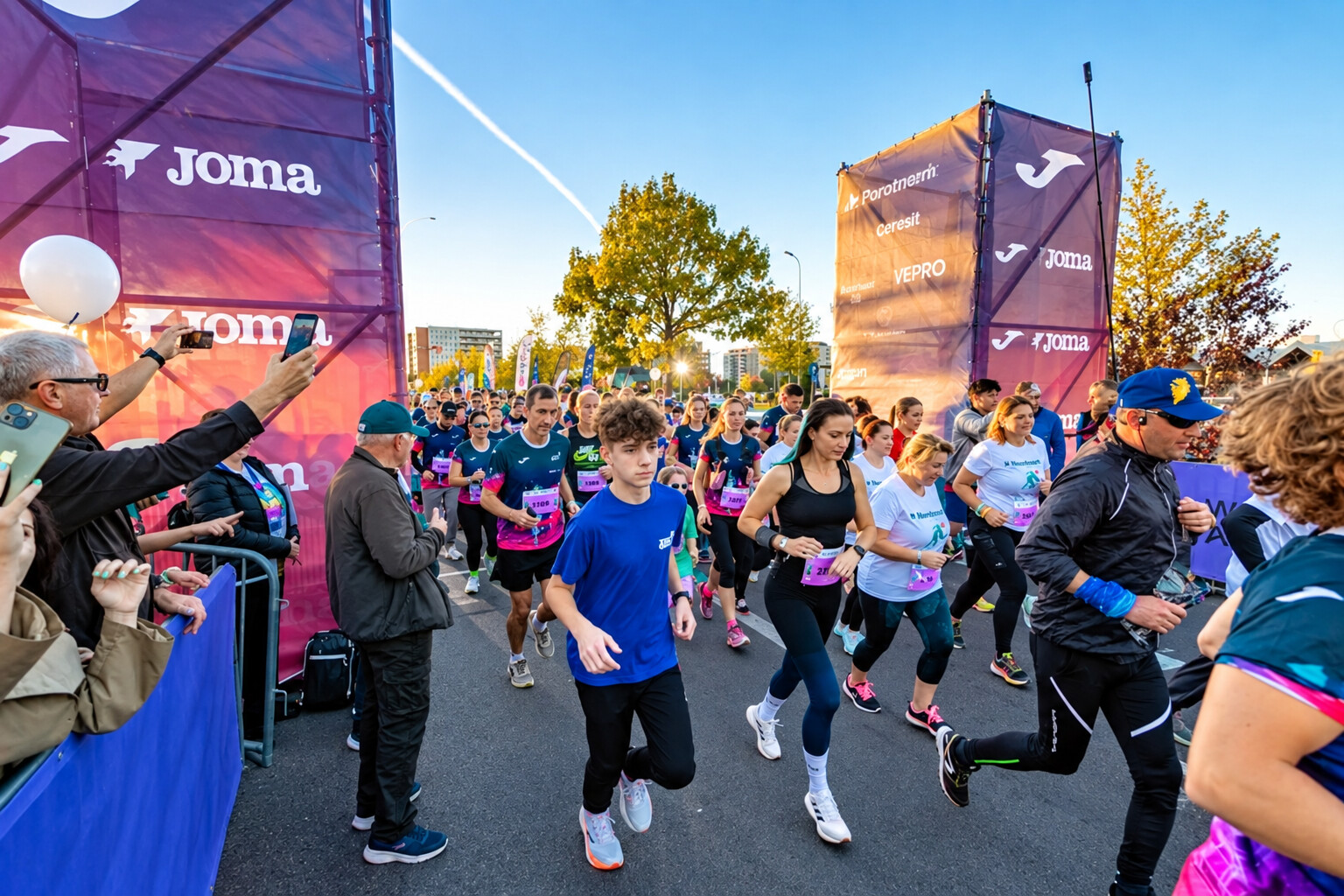
Bejiga, still only 20, successfully defended his title in the men’s race, becoming the first athlete — male or female — to win the Brasov 10K in consecutive editions across the event’s six-year history.
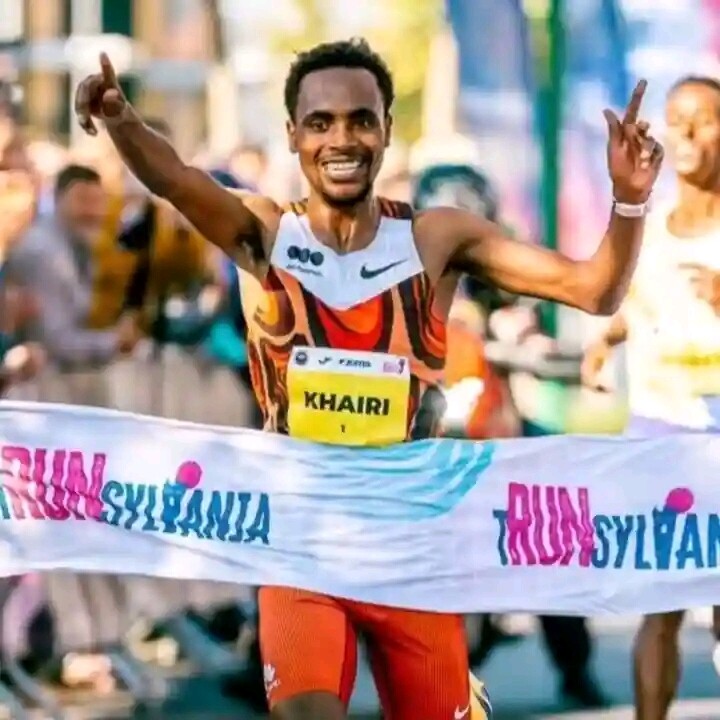
The Ethiopian produced a dramatic finish to retain his crown, edging training partner Nibret Kinde by just one second. Bejiga stopped the clock at 27:01, while Kinde followed in 27:02. Ayele Tadesse completed an Ethiopian sweep of the men’s podium in 27:09.
The depth of the field was underlined by the performances behind the leading trio, with Kenyan Amos Kipkemoi Bett finishing fourth in 27:13, followed by Djibouti’s Hani Idriss Hersi in 27:16.
Kenya also placed three more athletes inside the top 10, with Laban Kosgei sixth in 27:21, Victor Okoth Otieno seventh in 27:22, Kevin Chesang ninth in 27:29 and Silas Senchura 10th in 27:32. Uganda’s Samuel Simba Cherop completed the top eight in 27:25.
Brasov Running Festival 2026 — Men’s Top 10
1. Khairi Bejiga — Ethiopia — 27:01
2. Nibret Kinde — Ethiopia — 27:02
3. Ayele Tadesse — Ethiopia — 27:09
4. Amos Kipkemoi Bett — Kenya — 27:13
5. Hani Idriss Hersi — Djibouti — 27:16
6. Laban Kosgei — Kenya — 27:21
7. Victor Okoth Otieno — Kenya — 27:22
8. Samuel Simba Cherop — Uganda — 27:25
9. Kevin Chesang — Kenya — 27:29
10. Silas Senchura — Kenya — 27:32
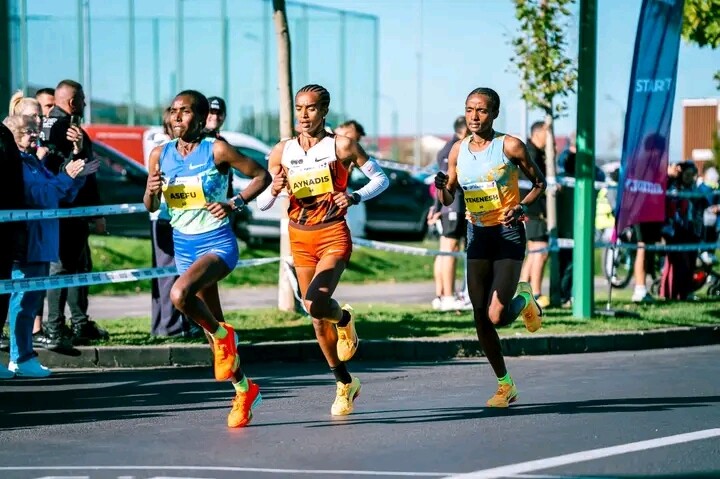
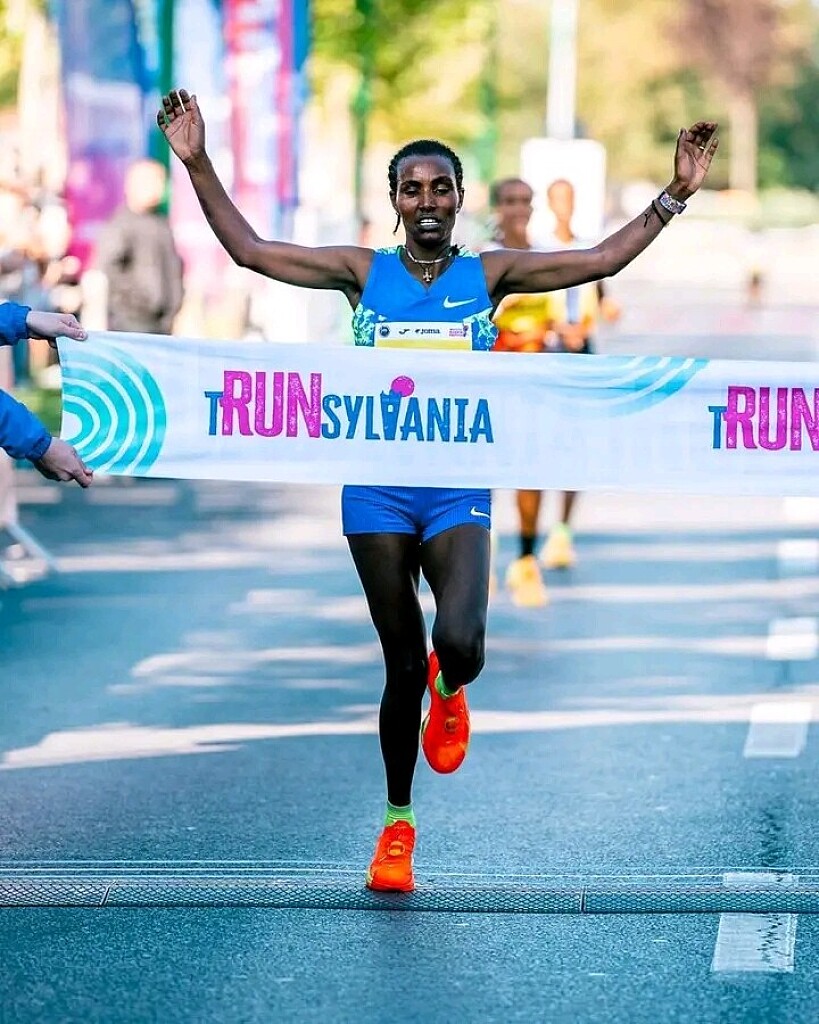
The women’s race delivered another Ethiopian victory as Asefu Abreha produced a major personal best to take the title in 30:16.
Abreha, also 20, surprised a strong field with a breakthrough performance, finishing three seconds ahead of compatriot Aynadis Mebratu, who crossed the line in 30:19.
Ethiopia completed the women’s podium through Yenenesh Shimket Ademas, whose 30:21 was a world under-20 best for the 10km distance, adding another significant achievement to an extraordinary Ethiopian showing in Brasov.
Djibouti’s Samiya Hassan Nour finished fourth in 30:37, while South Africa’s Tayla Kavanagh was fifth in 30:50. Kenya’s Nelvin Jepkemboi placed sixth in 30:57.
The remaining places in the women’s top 10 were filled by Ethiopia’s Mastewal Mehabaw in 30:59, Axumawit Embaye in 31:05 and Tibeb Eneyew in 31:29, with Romania’s Joan Chelimo Melly rounding out the top 10 in 31:46.
Brasov Running Festival 2026 — Women’s Top 10
1. Asefu Abreha — Ethiopia — 30:16
2. Aynadis Mebratu — Ethiopia — 30:19
3. Yenenesh Shimket Ademas — Ethiopia — 30:21
4. Samiya Hassan Nour — Djibouti — 30:37
5. Tayla Kavanagh — South Africa — 30:50
6. Nelvin Jepkemboi — Kenya — 30:57
7. Mastewal Mehabaw — Ethiopia — 30:59
8. Axumawit Embaye — Ethiopia — 31:05
9. Tibeb Eneyew — Ethiopia — 31:29
10. Joan Chelimo Melly — Romania — 31:46
The Brasov Running Festival has established itself as one of the fastest and most competitive 10km road races in Europe, attracting an increasingly deep international field capable of producing world-class performances.
The 2026 edition further strengthened that reputation, with national records for Djibouti and South Africa and a European under-18 best also among the notable achievements of the event.
For Ethiopia, however, the spotlight belonged to Bejiga and Abreha. Their victories gave the nation a memorable double in Brasov, with 27:01 and 30:16 respectively highlighting another spectacular day of elite road racing in Romania.
by Erick Cheruiyot for My Best Runs.
Login to leave a comment

Brasov Running Festival 10K
"Brasov Running Festival” is set to become the iconic running event of Romania, with elite, popular and children races, concerts, conferences and other running related activities. The elite 10K race, Trunsylvania International 10K is expected to enjoy an impressive participation of world class runners on a very fast course. -The only World Athletics Elite Label 10K in South-East Europe -The...
more...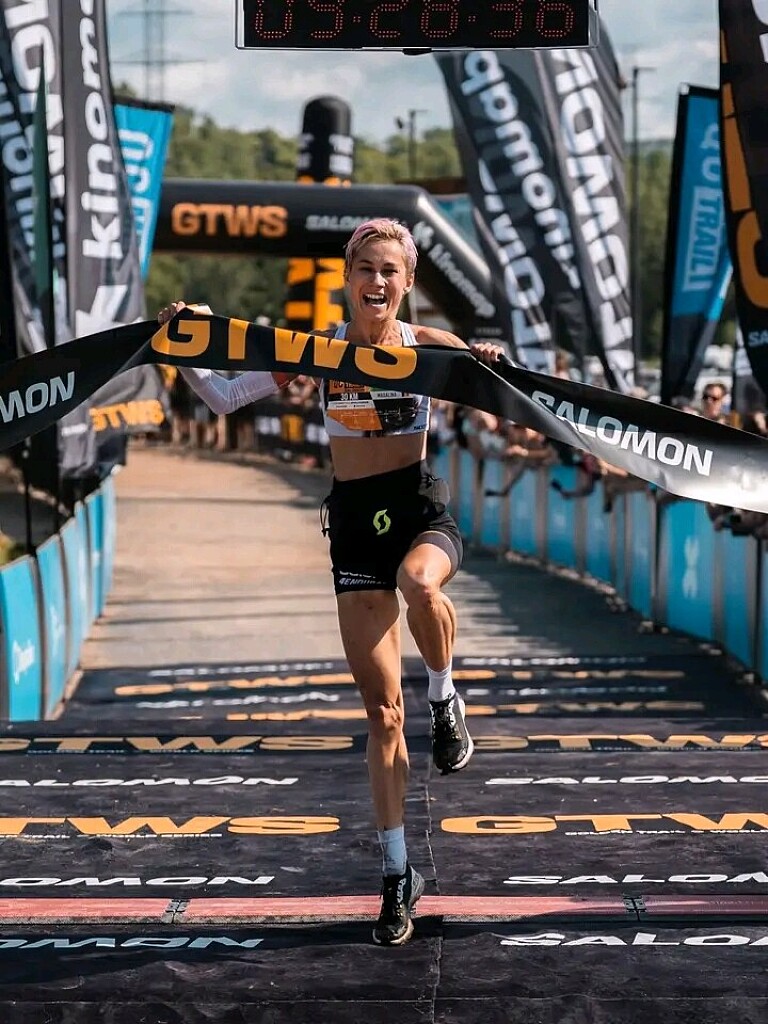
Madalina Florea Conquers Québec Mega Trail 30K to Seize Golden Trail World Series Lead
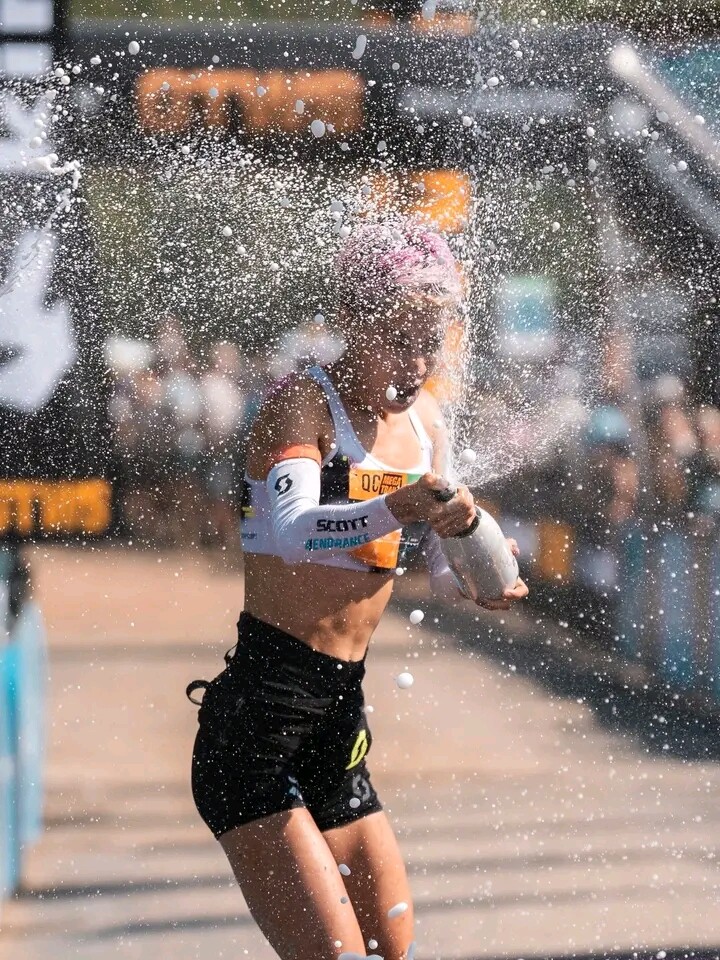
Romania's Madalina Florea delivered a commanding performance at the Québec Mega Trail 30K on Sunday, conquering one of the most demanding courses on the Golden Trail World Series calendar to claim victory and move to the top of the overall standings.
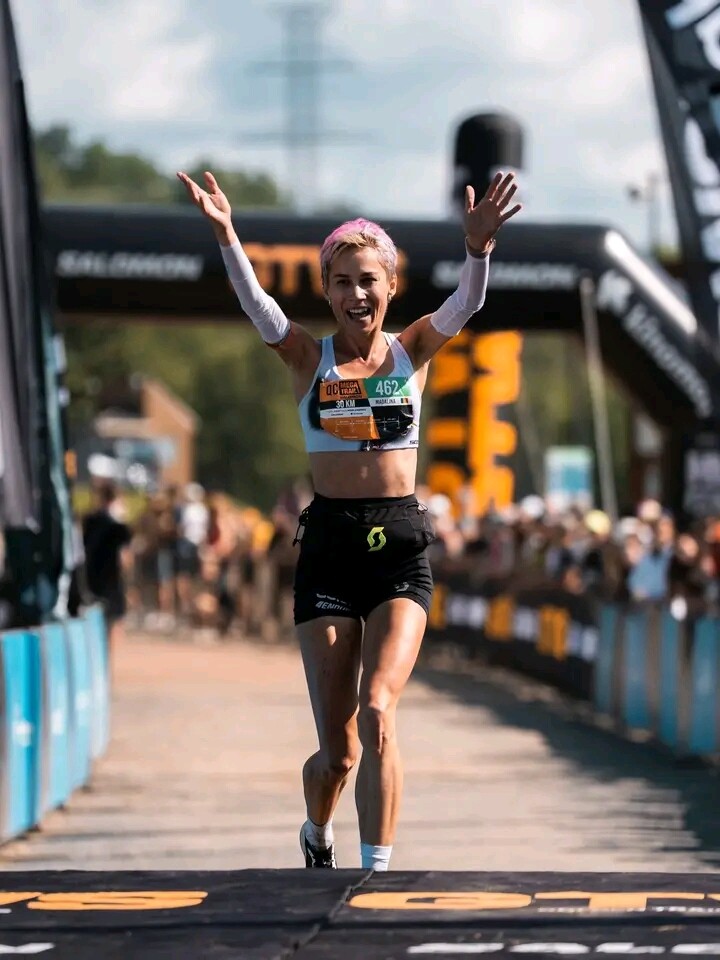
The reigning Golden Trail World Series champion crossed the finish line in 2:27:12, producing another masterclass in mountain racing on a brutal 28.7-kilometre course featuring 1,397 metres of elevation gain, two punishing ascents of Mont-Sainte-Anne, and highly technical descents across steep ski slopes.
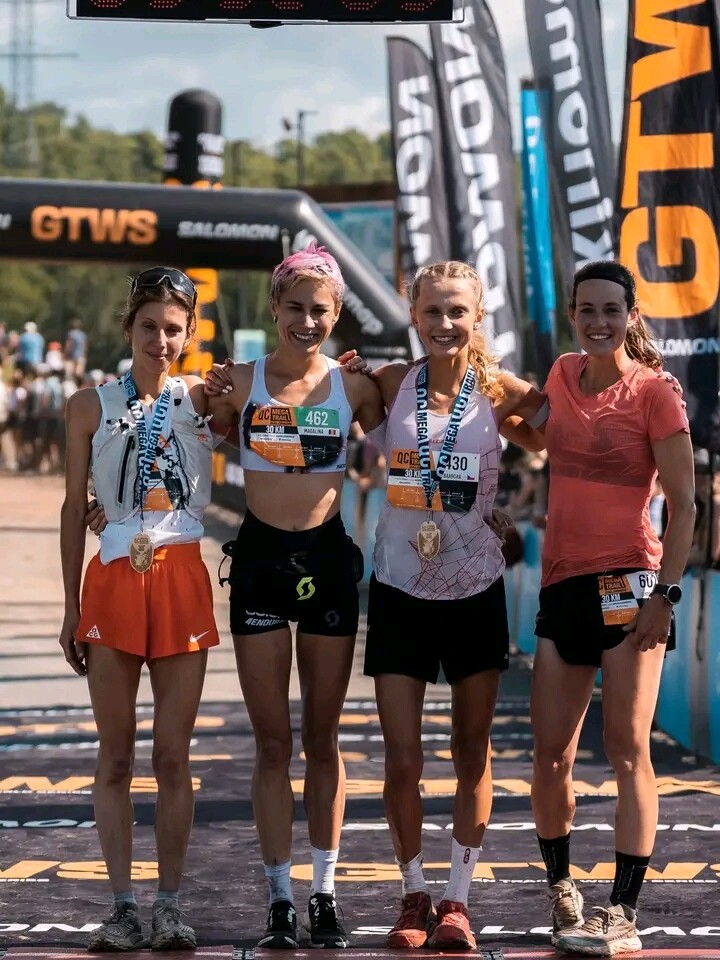
The race began at a relentless pace as Caroline Kimutai surged to the front, continuing the aggressive strategy that has defined her season. Florea, however, remained composed, keeping the Kenyan well within reach during the opening climb before launching her decisive move on the first descent.
From that moment, the Romanian steadily tightened her grip on the race. She extended her advantage on the second ascent and never looked back, controlling the remainder of the contest with remarkable strength and technical precision.
France's Marie Nivet secured second place, finishing more than seven minutes behind the winner, while Kimutai faded after her fast start to complete the podium in third.
The victory propels Florea to the summit of the Golden Trail World Series rankings with 442 points, overtaking Kimutai, who now sits second on 408 points. Nivet's runner-up finish also lifts her into third place in the overall standings, setting up an intriguing battle for the remainder of the season.
With the Québec triumph, Florea has once again underlined why she is the defending series champion. Her ability to combine patience, tactical awareness and exceptional climbing and descending skills proved decisive on one of the circuit's toughest tests.
The Golden Trail World Series now pauses before returning on August 1 in Austria, followed by the iconic Sierre-Zinal race in Switzerland a week later. As the championship enters its decisive phase, Florea has firmly established herself as the athlete everyone else will be chasing.
by Erick Cheruiyot for My Best Runs.
Login to leave a comment
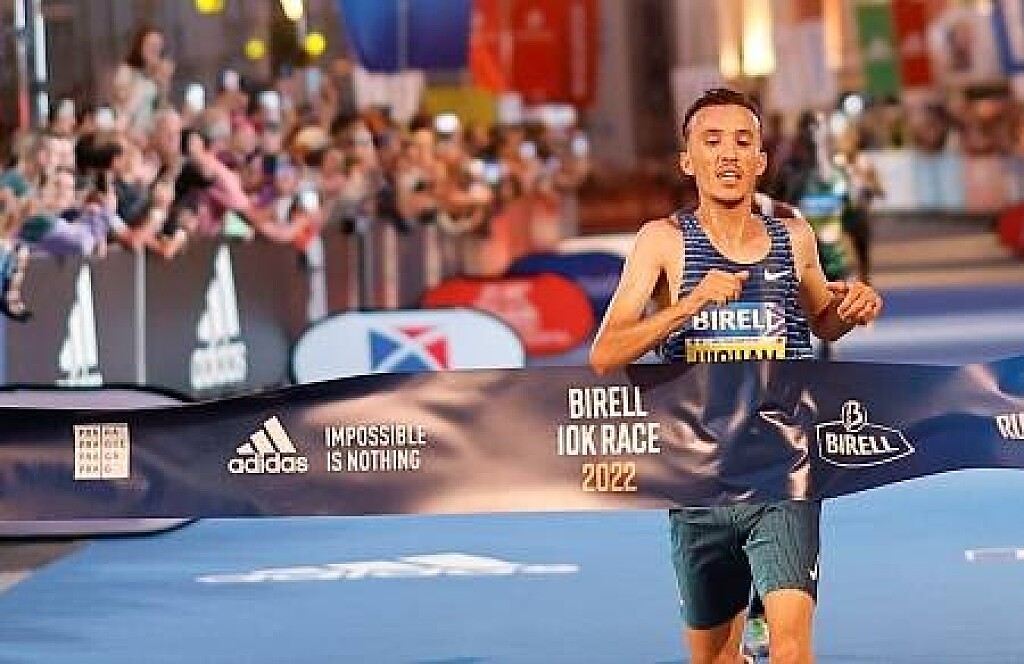
Top European and African Stars Headline tRUNsylvania International 10K Cluj
One of Eastern Europe’s strongest road races takes center stage this Sunday (June 28) as the tRUNsylvania International 10K Cluj, powered by Joma, brings together an exceptional field of elite athletes from Europe and Africa in Cluj-Napoca, Romania.
Run on a fast four-lap circuit through the city’s vibrant center, with the start and finish inside Cluj Arena, the race features numerous athletes capable of producing world-class performances.
Morocco’s Hicham Amghar leads the men’s field with a personal best of 27:09, set when he won the tRUNsylvania 10K in Brașov two years ago. He will face a deep international lineup that includes Norway’s European 10,000-meter silver medalist Zerei Kbrom Mezngi (27:39), France’s Mehdi Frere (27:44), Dutch marathon standout Filmon Tesfu (27:45), Spain’s Juan Antonio Perez (27:45), Kenya’s Moses Cheruiyot (27:51), Italy’s former national marathon record holder Eyob Faniel (28:10), Algeria’s Abderrazak Charik (28:12), Eritrea’s Seare Weldezghi (28:14), the Netherlands’ Noah Schutte (28:19), Spain’s Yago Rojo (28:21), and Australia’s James Whelan (28:26).
Several of Europe’s top runners will also be chasing qualifying standards for the 2026 European Athletics Championships, adding even more significance to the competition.
The women’s race is equally impressive and may prove to be the highlight of the day.
Uganda’s Joy Cheptoyek, the World Cross Country Championships silver medalist, headlines the field with an outstanding personal best of 30:03. Kenya’s Jackline Chepkoech, the 2021 World Under-20 3,000-meter steeplechase champion, will make her highly anticipated 10K road debut after recording an impressive 8:57.35 on the track.
Belgium’s reigning national 10K champion Julie Voet enters with a 31:54 best, while Ireland’s Fiona Everard follows closely at 31:58. The international field also includes France’s Ines Hamoudi (32:20), Ethiopia’s Meselech Alemayehu (32:20), Spain’s Beatriz Alvarez (32:21 on the track), Ireland’s Niamh Allen (32:25), Israel’s Maor Tiyouri (32:29), Türkiye’s Nursena Ceto (32:34), Hungary’s Lilla Bohm (32:41), and Spain’s Cristina Espejo (32:52).
With championship qualifying marks on the line, a fast course, and one of the deepest international fields ever assembled for a road race in Romania, the tRUNsylvania International 10K Cluj is set to deliver exciting competition and fast times from start to finish.
by Boris Baron
Login to leave a comment
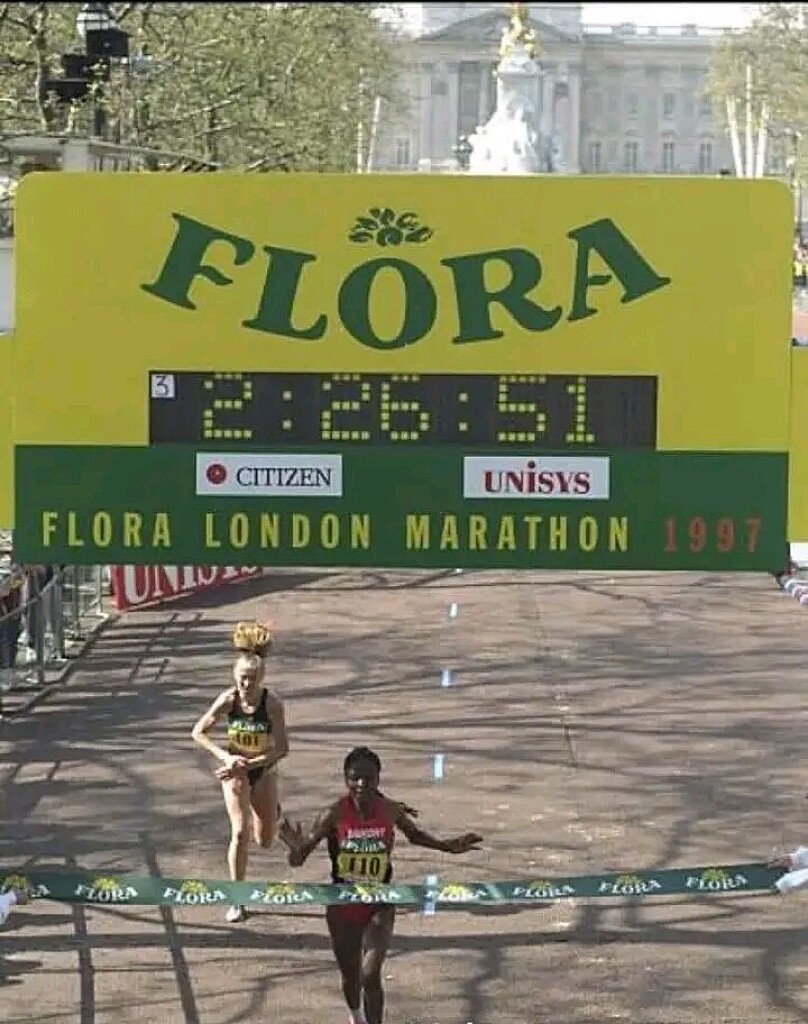
Today in History: Joyce Chepchumba’s One-Second Triumph Lights Up the 1997 London Marathon
On April 13, 1997, the streets of London witnessed one of the most dramatic finishes in marathon history as the 17th edition of the London Marathon delivered a race that still lives in memory. It was a day of elite performances, fierce competition, and unforgettable tension—none more thrilling than the women’s contest, where victory was decided by the narrowest of margins.
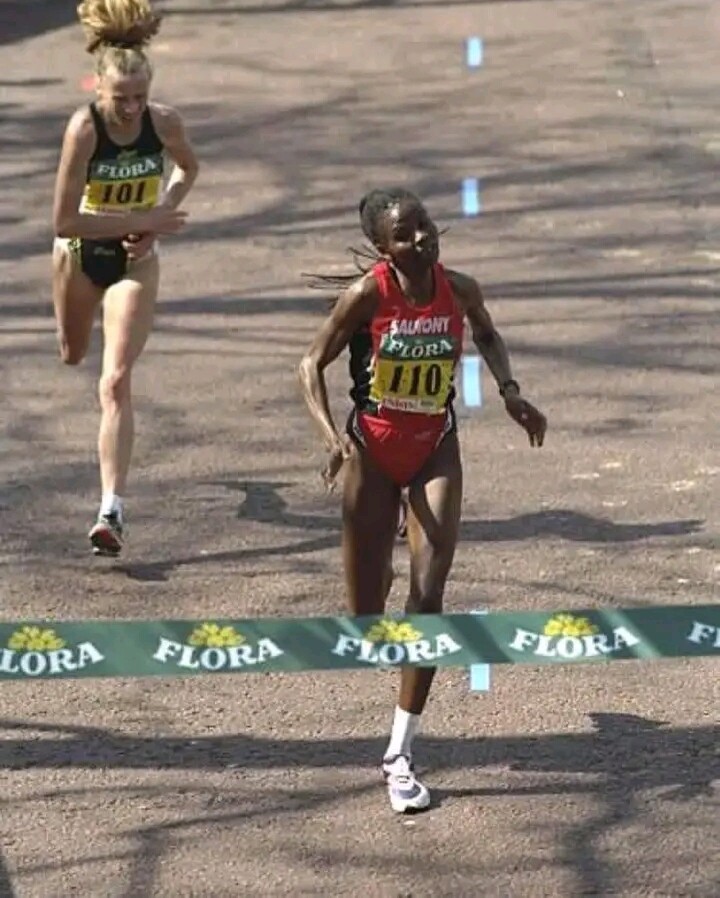
In a breathtaking duel that intensified over the closing kilometers, Joyce Chepchumba of Kenya and Liz McColgan went stride for stride in a battle of courage and endurance. With the finish line in sight, neither athlete gave an inch. In the end, it was Chepchumba who held her composure under immense pressure, crossing the line in 2:26:51—just one second ahead of McColgan, who stopped the clock at 2:26:52.
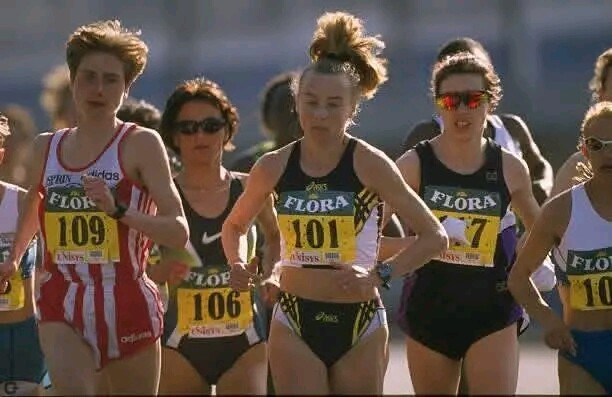
The razor-thin margin left spectators captivated and elevated the race into London Marathon folklore. It was not only a triumph of speed, but a showcase of resilience, tactical intelligence, and the relentless will to win.
Completing the women’s podium was Lidia Șimon of Romania, who ran an outstanding 2:27:11 to secure third place in a field packed with international quality.
Beyond the result itself, the race reflected the rising global strength of women’s marathon running during the 1990s. Athletes from Africa, Europe, Asia, North America, and Oceania filled the top places, underlining how the women’s marathon had become one of the sport’s most competitive stages.
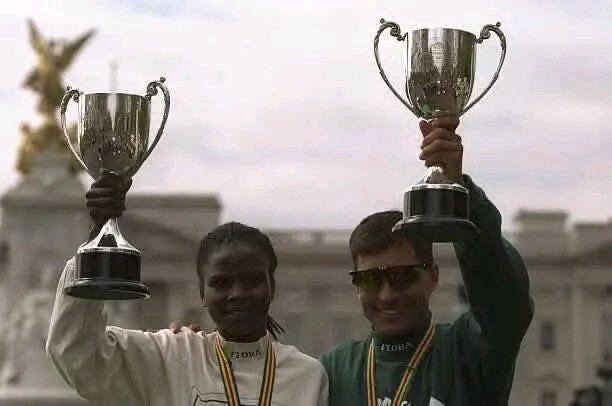
The men’s elite race also produced a performance of the highest class. António Pinto of Portugal claimed victory in 2:07:55, confirming his place among the finest marathoners of his era.
More than two decades later, the 1997 London Marathon remains a symbol of what makes distance running so compelling: history written by seconds, legends forged through suffering, and champions remembered forever. Joyce Chepchumba’s one-second masterpiece still stands as one of the greatest finishes the marathon world has ever seen.
by Erick Cheruiyot for My Best Runs.
Login to leave a comment
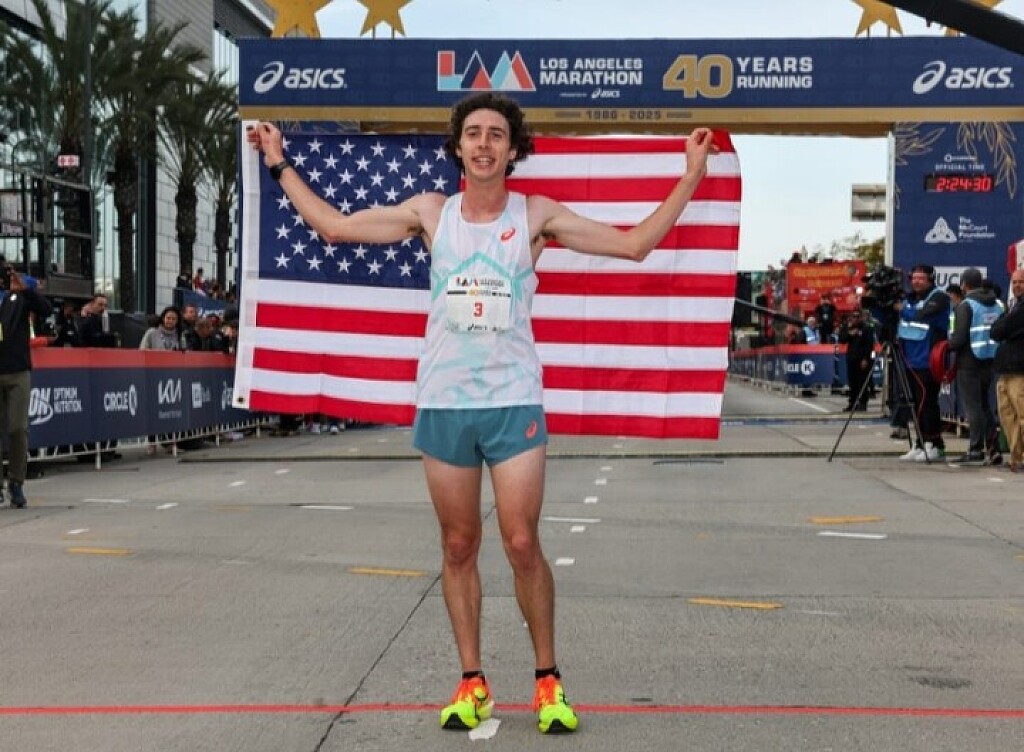
Rising Heat and Elite Rivalries Set the Stage for a Thrilling 2026 Los Angeles Marathon
The streets of Los Angeles will once again come alive with the rhythm of pounding footsteps as the 2026 edition of the Los Angeles Marathon takes place on Sunday, March 8 in California, United States. One of the most celebrated road races in America returns with thousands of runners and a competitive international elite field ready to battle across the iconic 42.195-kilometer distance.
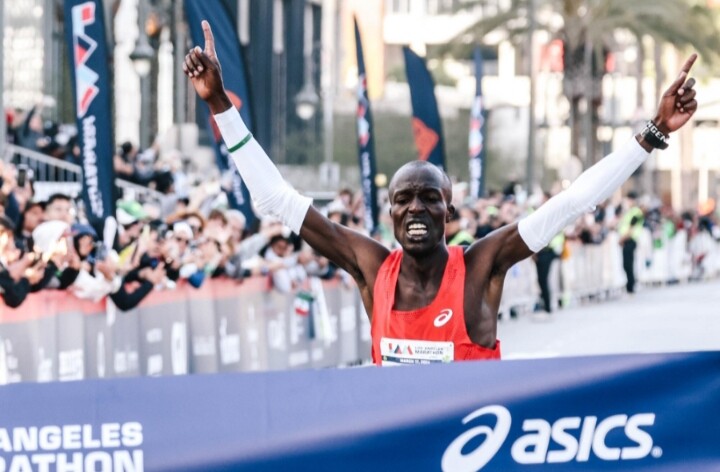
Race morning will begin early under Pacific Standard Time, with the professional wheelchair and handcycle athletes launching the action at 6:30 AM, followed by the elite men and women at 6:40 AM, before the main field of thousands of runners begins at 7:00 AM. For fans across Africa, the marathon unfolds later in the day, starting at 4:00 PM in West Africa, 5:00 PM in South and Central Africa, and 6:00 PM in East Africa.
Across Europe, Asia, and Oceania, fans will also be able to follow the race live as the 7:00 AM PST main start of the Los Angeles Marathon translates to 5:00 PM in Western Europe (including the United Kingdom and Portugal), 6:00 PM in Central Europe (such as France, Germany, Spain, and Italy), and 7:00 PM in Eastern Europe (including Greece, Finland, and Romania). In Asia, the race will begin at 9:30 PM in India, 11:00 PM in China, Singapore, and the Philippines, and midnight on March 9 in Japan and South Korea. For viewers in Oceania, the marathon will start at 2:00 AM on March 9 in Eastern Australia and 4:00 AM in New Zealand, meaning dedicated fans there will be watching the action unfold deep into the night.
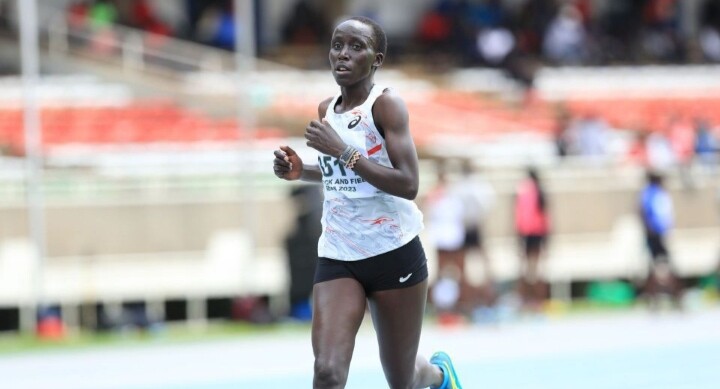
Defending champions return determined to protect their crowns. Ethiopia’s Tejinesh Tulu arrives aiming to repeat her triumph from last year, while American marathoner Matthew Richtman will attempt to defend the men’s title on home soil. Both champions face deeper and stronger fields this time, setting the stage for an unpredictable and highly competitive contest.
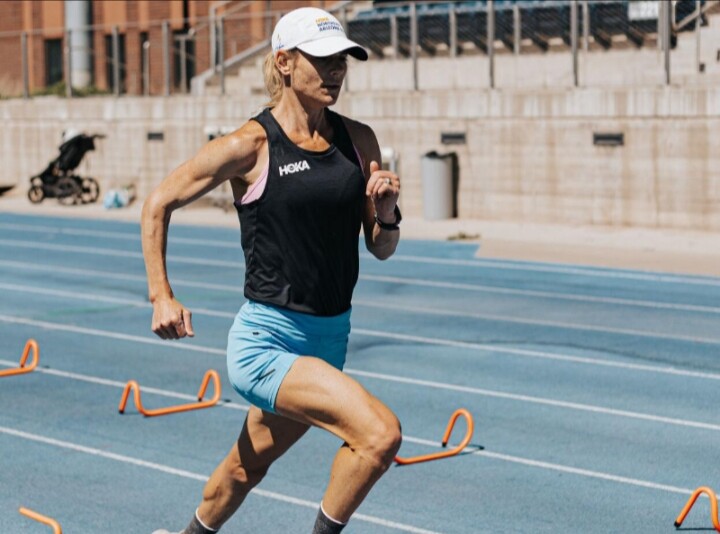
The women’s race features a strong East African presence led by Kenya’s Vicoty Chepngeno, who holds the fastest personal best in the field at 2:19:55. Ethiopia’s experienced campaigner Atsede Bayisa, with a best of 2:22:03, also arrives as a major contender, while Kenya’s Antonina Kwambai and Ethiopia’s Almaz Kemsi add further depth to a field capable of producing a fierce battle for the podium. The race also includes American hopes such as Kellyn Taylor and Makenna Myler, both looking to challenge the traditionally dominant East African runners. Meanwhile, defending champion Tejinesh Tulu remains a serious threat despite not owning the fastest personal best, as championship races often reward patience, tactical awareness, and strength in the closing kilometers.
The men’s contest promises equal intensity. Kenya’s Dominic Ngeno leads the field on paper with a personal best of 2:06:35, positioning him as one of the main favorites if the race develops at a fast pace. Defending champion Matthew Richtman will look to repeat his success, but he faces stiff competition from Ethiopia’s Abdela Godana and Kenya’s Michael Kimani Kamau, both capable of pushing the pace deep into the race. Eritrea’s Tesfu Tewelde, Sweden’s David Nilsson, and Kenya’s Athanas Kioko also enter the race with the potential to disrupt the favorites and deliver breakthrough performances.
Weather conditions could play a decisive role in how the race unfolds. Forecasts suggest that warm temperatures may already be present from the start, meaning the marathon could evolve into a tactical contest rather than a purely fast one. In such situations, pacing discipline, hydration, and the ability to surge late in the race often become the decisive factors.
With elite runners from Kenya, Ethiopia, the United States, Eritrea, and Europe lining up alongside thousands of passionate participants, the 2026 edition of the Los Angeles Marathon promises an exciting blend of global rivalry and personal ambition. As the sun rises over Los Angeles, champions will defend their titles, challengers will chase career-defining victories, and thousands of runners will set out on a journey toward one unforgettable finish line.
by Erick Cheruiyot for My Best Runs.
Login to leave a comment

Los Angeles Marathon
The LA Marathon is an annual running event held each spring in Los Angeles, Calif. The 26.219 mile (42.195 km) footrace, inspired by the success of the 1984 Summer Olympic Games, has been contested every year since 1986. While there are no qualifying standards to participate in the Skechers Performnce LA Marathon, runners wishing to receive an official time must...
more...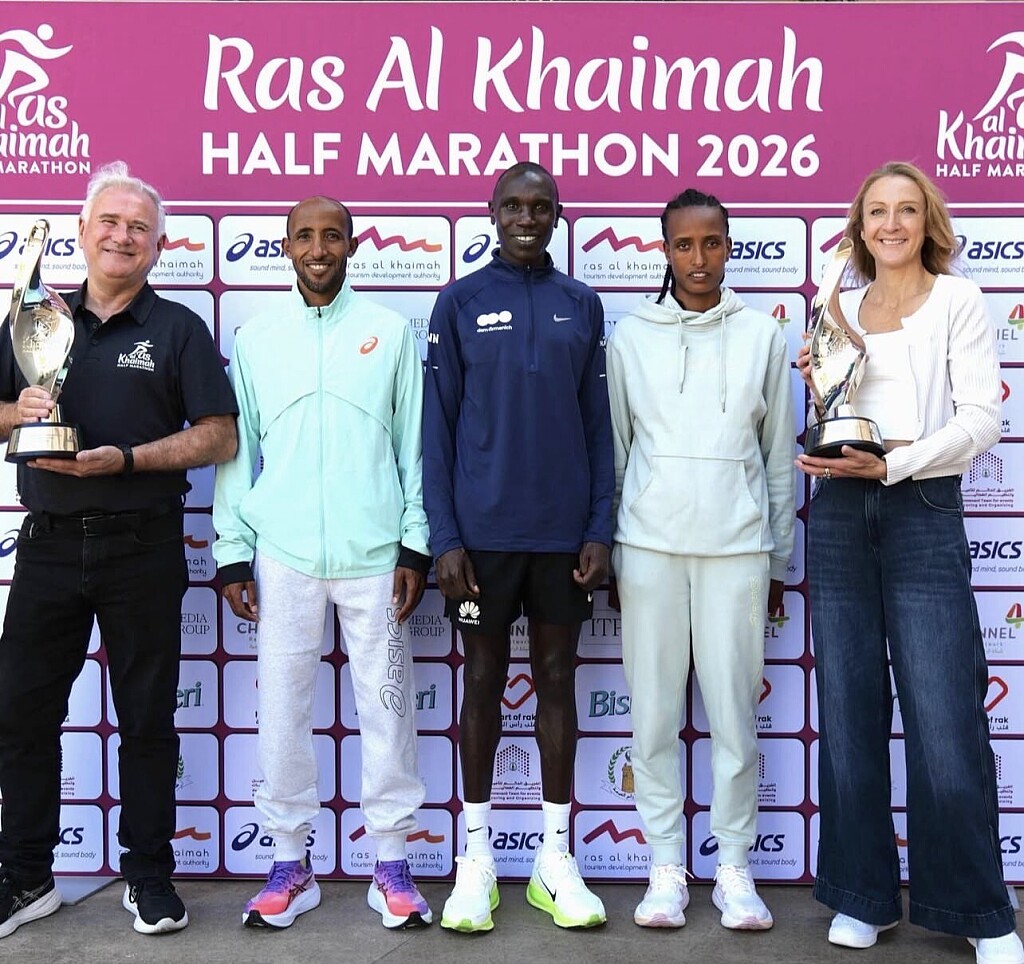
Geoffrey Kamworor Returns to Ras Al Khaimah, Chasing Redemption on the Course That Launched His Career
Thirteen years after announcing himself to the world on the roads of Ras Al Khaimah, Geoffrey Kamworor returns to the Ras Al Khaimah Half Marathon this Saturday with renewed purpose, hard-earned resilience, and the belief that his best running may still lie ahead.
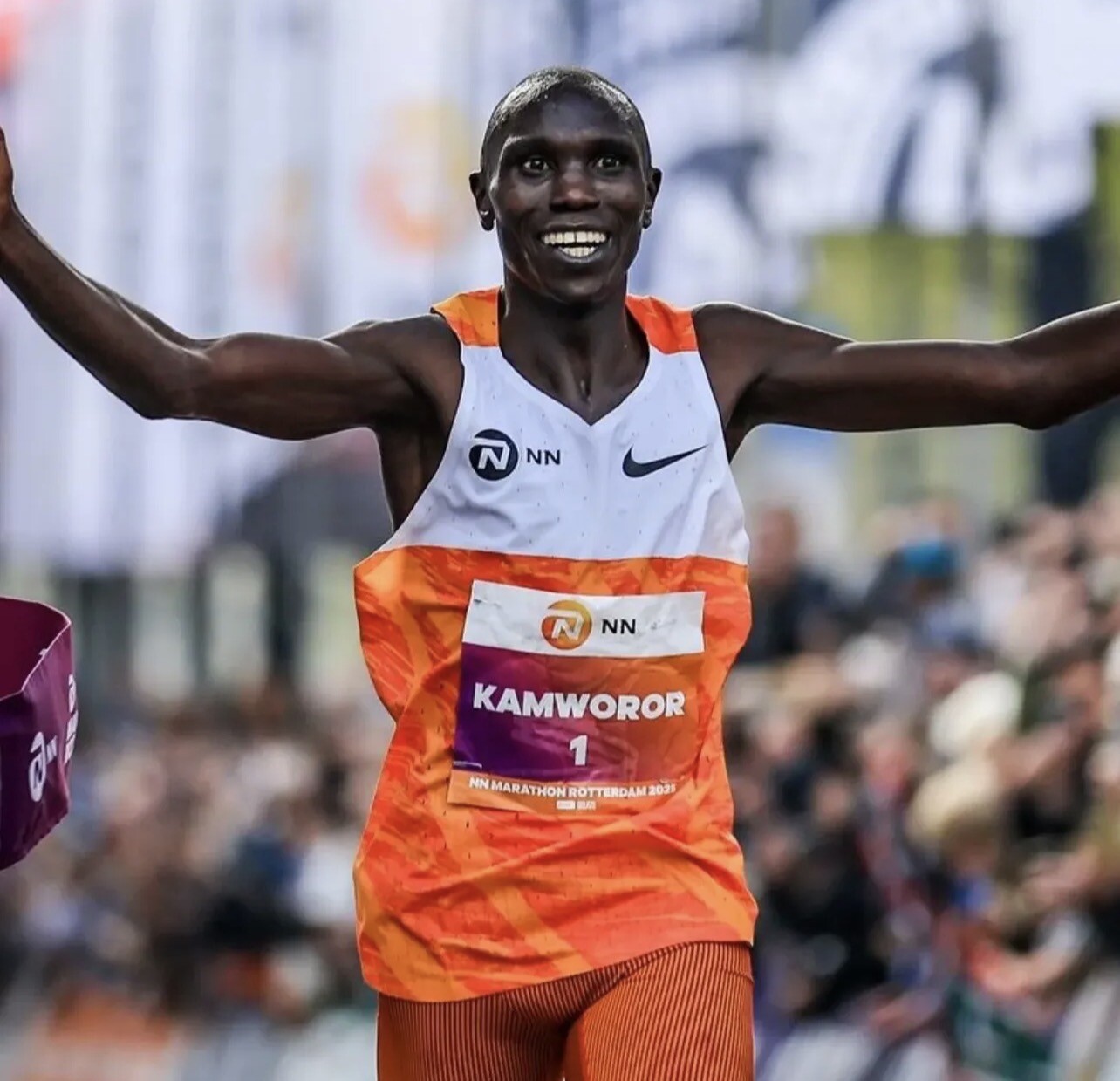
Few athletes in modern distance running have endured such dramatic highs and devastating setbacks. Kamworor’s victory here in 2013 marked his first major senior triumph and began a remarkable stretch of dominance. He went on to win three consecutive World Half Marathon titles and twice captured the World Cross Country Championships, establishing himself as one of the most versatile and formidable distance runners of his generation. His half marathon world record of 58:01, set in Copenhagen in 2019, remains one of the defining performances in road racing history. He also conquered the marathon stage, winning the New York City Marathon twice with commanding authority.
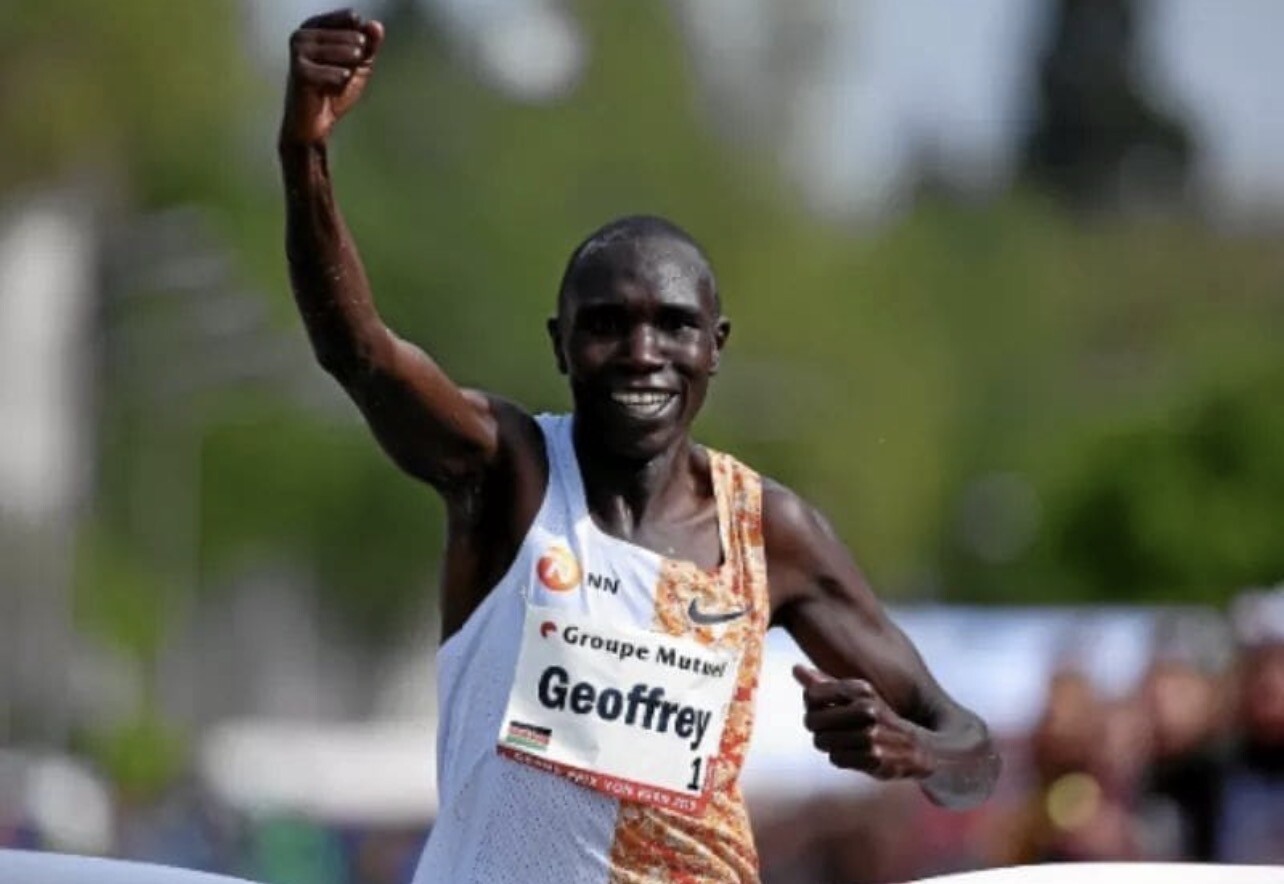
One of Kamworor’s most unforgettable moments came at the 2016 World Half Marathon Championships in Cardiff. After falling at the start and being trampled by competitors, he rose, regrouped, and delivered a stunning comeback victory.
“In Cardiff, it was wet and I slipped at the start,” Kamworor recalled. “Nobody tripped me. It was hard running through the crowd, but the fall made me more determined.”
That determination would be tested even further. In 2020, during the isolation of the COVID-19 pandemic, Kamworor’s career was nearly derailed when he was struck from behind by a motorcycle while training in Eldoret.
“I fractured my tibia and couldn’t run for six months,” he said. “When I started running again, my body was still out of balance and I kept getting injured. It took me over three years to be able to run properly.”
His return has been gradual but encouraging. In 2023, Kamworor stunned observers by finishing second at the London Marathon in a personal best of 2:04:23, proving his resilience on the global stage. He followed that performance with a marathon victory in Rotterdam last year, finishing just ten seconds slower than his London breakthrough.
Now 33, Kamworor brings both experience and renewed confidence back to Ras Al Khaimah.
“I think I’m training as well as ever,” he said. “I remember this flat, fast course from when I won in 2013. I’m just grateful to be back running without problems.”
Age is no barrier for distance runners at the highest level. History offers powerful examples, including Portugal’s Carlos Lopes, who won Olympic marathon gold at 37, and Romania’s Constantina Dita, who claimed Olympic marathon victory at 38. Kamworor hopes to add his own chapter to that legacy.
Strong Rivals Await on a Fast Course
Kamworor will face formidable competition. Ethiopia’s Jemal Mekonen enters with a personal best of 58:33, while Kenya’s Brian Kibor has run 58:39. Ethiopia’s Amedework Walelegn (58:40) and several rising talents add further depth to a field built for speed.
The women’s race is equally compelling, led by Ethiopia’s Wede Kefale, who clocked 65:21 in Copenhagen last year. Kenya’s Gladys Chepkurui (65:46) and Jesca Chelangat (66:13) are among those capable of challenging for victory.
A Race Built on Speed and Records
Since its debut in 2007, the Ras Al Khaimah Half Marathon has earned global respect as one of the fastest half marathons in the world. Sammy Wanjiru’s 58:53 in the inaugural race set the tone, and the women’s race has been particularly historic. Mary Keitany (65:50), Peres Jepchirchir (64:52), and Ababel Yeshaneh (64:31) all set world records here, cementing the race’s reputation.
The flat, fast roads around Al Marjan Island once again promise ideal conditions for world-class performances.
Men’s Elite Field (Personal Bests)
• Geoffrey Kamworor (KEN) – 58:01
• Jemal Mekonen (ETH) – 58:33
• Brian Kibor (KEN) – 58:39
• Amedework Walelegn (ETH) – 58:40
• Antenayeh Dagnachew (ETH) – 59:17
• Yismaw Dillu (ETH) – 59:23
• Birhanu Balew (BRN) – 59:41
• Enos Kales (KEN) – 60:17
• Bayelign Teshager (ETH) – 60:22
• Mao Ako (TAN) – 60:28
• Benson Kiplangat (KEN) – Debut
Women’s Elite Field (Personal Bests)
• Wede Kefale (ETH) – 65:21
• Gladys Chepkurui (KEN) – 65:46
• Jesca Chelangat (KEN) – 66:13
• Magdalena Shauri (TAN) – 66:37
• Gete Alemayehu (ETH) – 66:37
• Cynthia Chepkwony (KEN) – 67:20
• Bertha Gebreslasie (ETH) – 67:26
• Orba Chemurgor (KEN) – 67:56
• Wudinesh Alemu (ETH) – 68:08
• Debash Kelali (ETH) – 68:10
• Annet Chelangat (UGA) – 68:12
• Melknat Wudu (ETH) – 68:53
A Full-Circle Moment
For Kamworor, Saturday’s race represents more than competition—it is a return to the place where his journey toward greatness began. After years of adversity, injuries, and recovery, he now stands once again on familiar ground, ready to test himself against the world’s best.
Whether he wins or not, his presence alone is a powerful reminder of the resilience that defines champions—and of the unfinished chapters still waiting to be written.
by Race News Service
Login to leave a comment
Rak Half Marathon
The Rak Al Khaimah Half Marathon is the 'world's fastest half marathon' because if you take the top 10 fastest times recorded in RAK for men (and the same for women) and find the average (for each) and then do the same with the top ten fastest recorded times across all races (you can reference the IAAF for this), the...
more...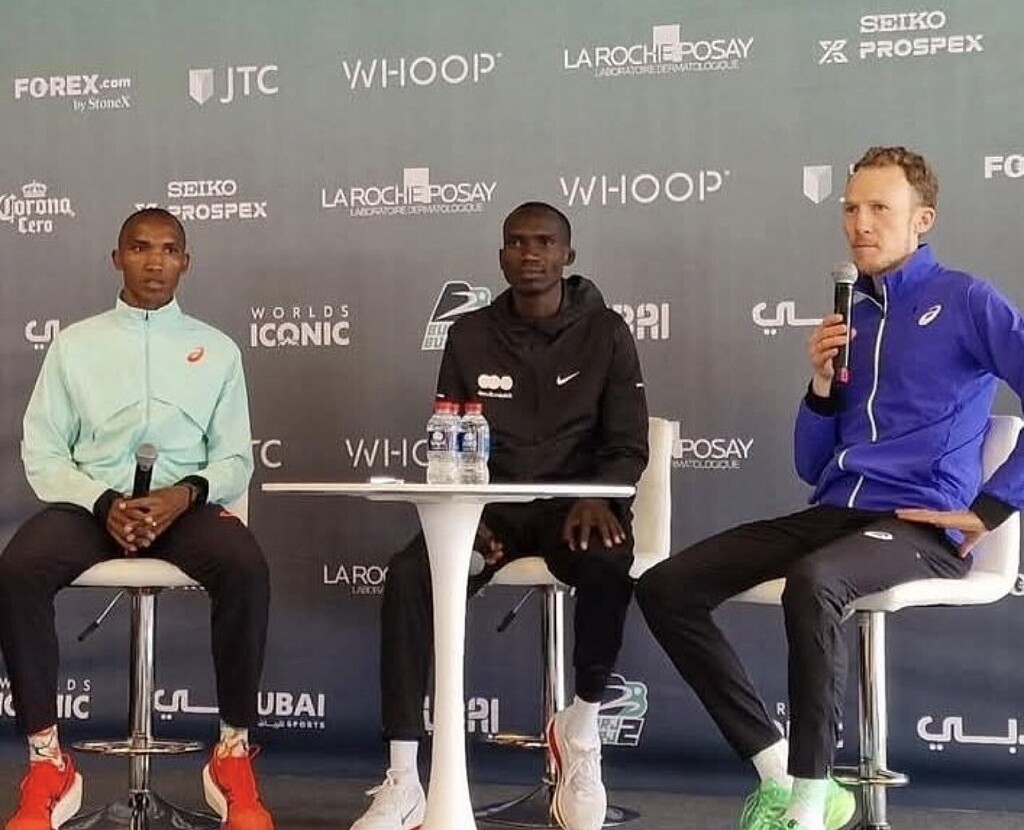
Burj 2 Burj Half Marathon Returns to Dubai with Kipkorir and Cheptai Headlining Elite Field
The Burj 2 Burj Half Marathon returns Sunday (Feb 8 in Dubai UAE, bringing a focused but highly competitive international field to one of the fastest and most visually striking courses in the Middle East. Framed by Dubai’s modern skyline and anchored by two of the city’s most iconic landmarks, the race has steadily grown into an important early-season test for elite road specialists and track stars transitioning to longer distances.
With flat terrain, predictable weather, and a reputation for honest pacing, the event offers athletes a valuable opportunity to establish form and confidence as the global road racing calendar begins to take shape.
Men’s Race: Kipkorir Leads, Cheptegei Adds Star Power
Kenya’s Nicholas Kipkorir enters as the clear favorite, carrying the fastest personal best in the field at 58:23. A proven road performer, Kipkorir has built his success on rhythm, efficiency, and the willingness to commit early. The Burj 2 Burj course traditionally rewards athletes who are prepared to take initiative, and his aggressive racing style makes him the man to watch from the gun.
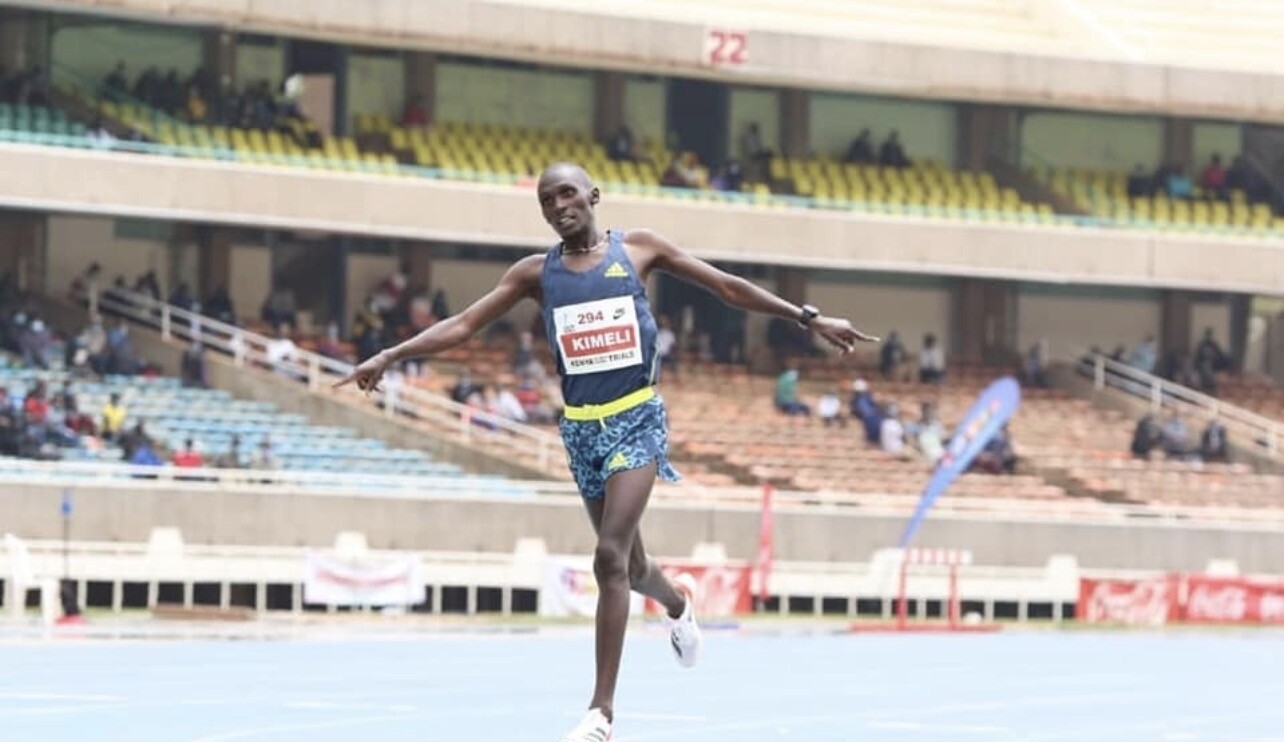
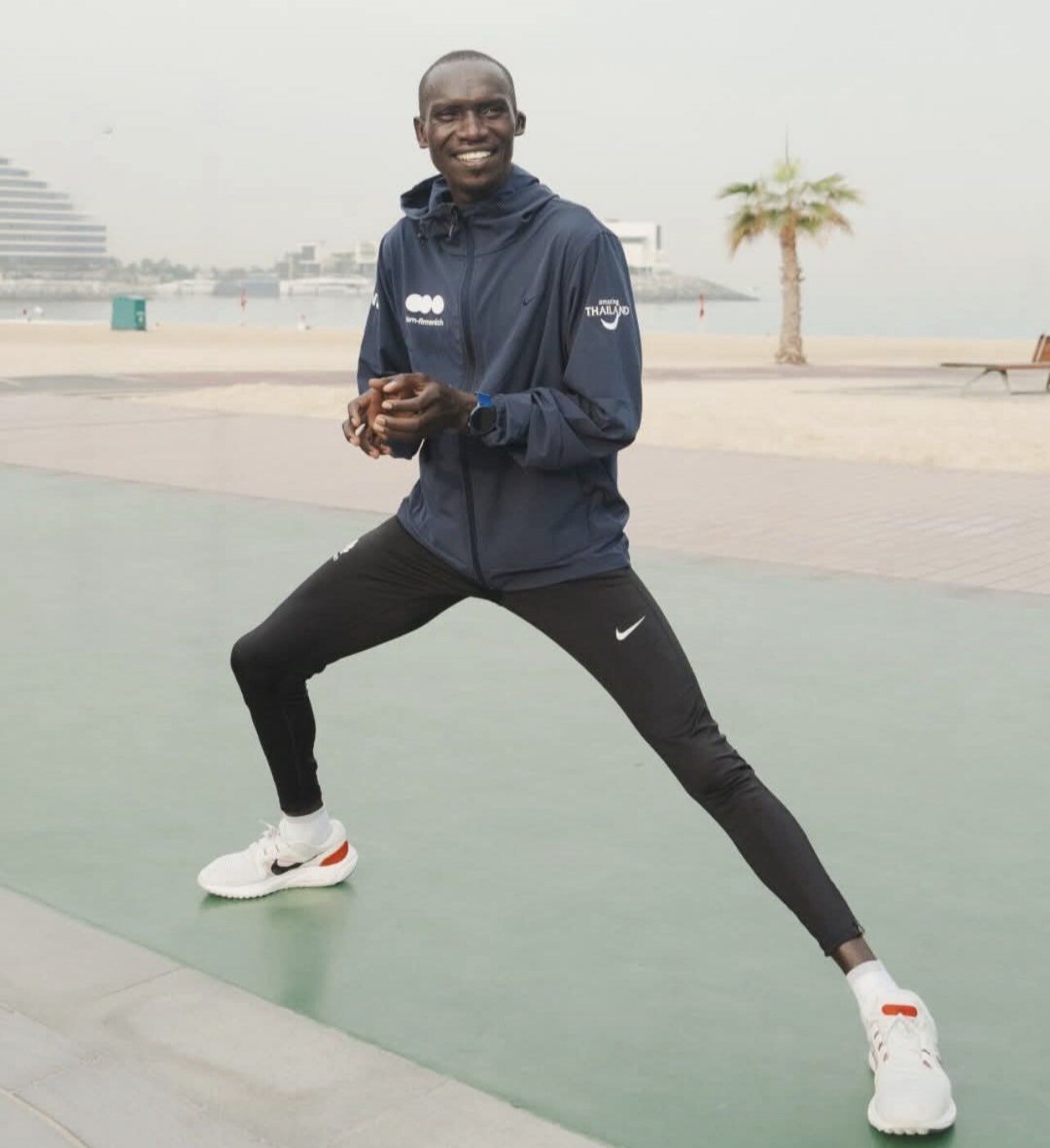
Providing the strongest challenge is Uganda’s Joshua Cheptegei, whose 59:21 personal best tells only part of his story. One of the most decorated distance runners of his generation, Cheptegei brings unmatched championship experience, including multiple world titles on the track. His continued transition to road racing has been closely followed, and Dubai presents another key opportunity to test himself against seasoned half marathon specialists. If the race becomes tactical, his finishing speed and composure could prove decisive.
Tanzania’s Alphonce Simbu, owner of a 60:03 best, adds depth and resilience to the field. Known for his strength in demanding competitions, Simbu excels in races where patience and mental toughness become critical. Kenya’s Enock Kipruto and Germany’s European marathon champion Richard Ringer, both with personal bests of 60:51, round out a men’s lineup where discipline and timing may ultimately determine the outcome.
Women’s Race: Cheptai Brings Momentum and Confidence
In the women’s race, Kenya’s Irine Cheptai stands out as the athlete to beat. Her impressive personal best of 64:53 places her at the front of the field, and she arrives with the experience and tactical awareness needed to control the race. Cheptai has demonstrated consistency across distances, and her ability to manage pace and respond under pressure makes her a formidable favorite.
Romania’s Joan Melly, with a 65:04 personal best, represents the closest challenger on paper. Melly’s strength lies in efficiency and measured racing, qualities that could allow her to remain within striking distance deep into the final kilometers.
Ethiopia’s Ftaw Zeray (66:04) brings the tradition of Ethiopian endurance excellence, while Kenya’s Jackline Cherono (67:16) adds further depth. In a field where the margins are slim, positioning and timing will likely prove decisive.
Dubai Provides the Perfect Early-Season Stage
The Burj 2 Burj Half Marathon continues to establish itself as more than just a fast race. It has become a strategic checkpoint for athletes aiming to build momentum, test fitness, and position themselves for major races later in the year.
With Nicholas Kipkorir and Irine Cheptai leading their respective fields, expectations are high. But with championship-tested competitors like Joshua Cheptegei and emerging challengers ready to seize opportunity, the outcome remains far from certain.
As the 2026 road racing season gains momentum, Dubai once again offers a stage where preparation meets opportunity—and where the next chapter of the season begins to unfold.
by Robert Kibet for My Best Runs
Login to leave a comment
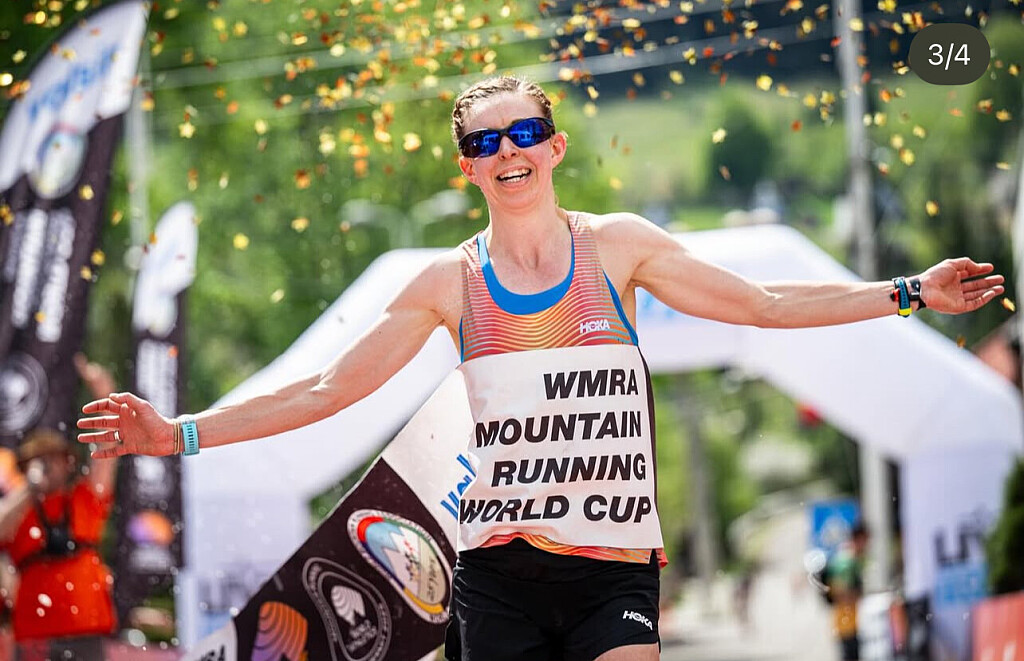
Myth Meets Mountain: Adkin and Machoka Conquer Romania’s Zmeu X-Fest
The 2025 World Mountain Running Association (WMRA) World Cup commenced on Saturday, May 3, with a dramatic and demanding debut at the Zmeu X-Fest in Câmpulung Moldovenesc, Romania. Set against the mystical backdrop of Bukovina’s pine forests and steep alpine meadows, the 19.6 km course featured a punishing 1,750 meters of elevation gain, including the infamous “Runc” climb—ominously nicknamed “The Wall.”
Women’s Race: Adkin Ascends to Victory
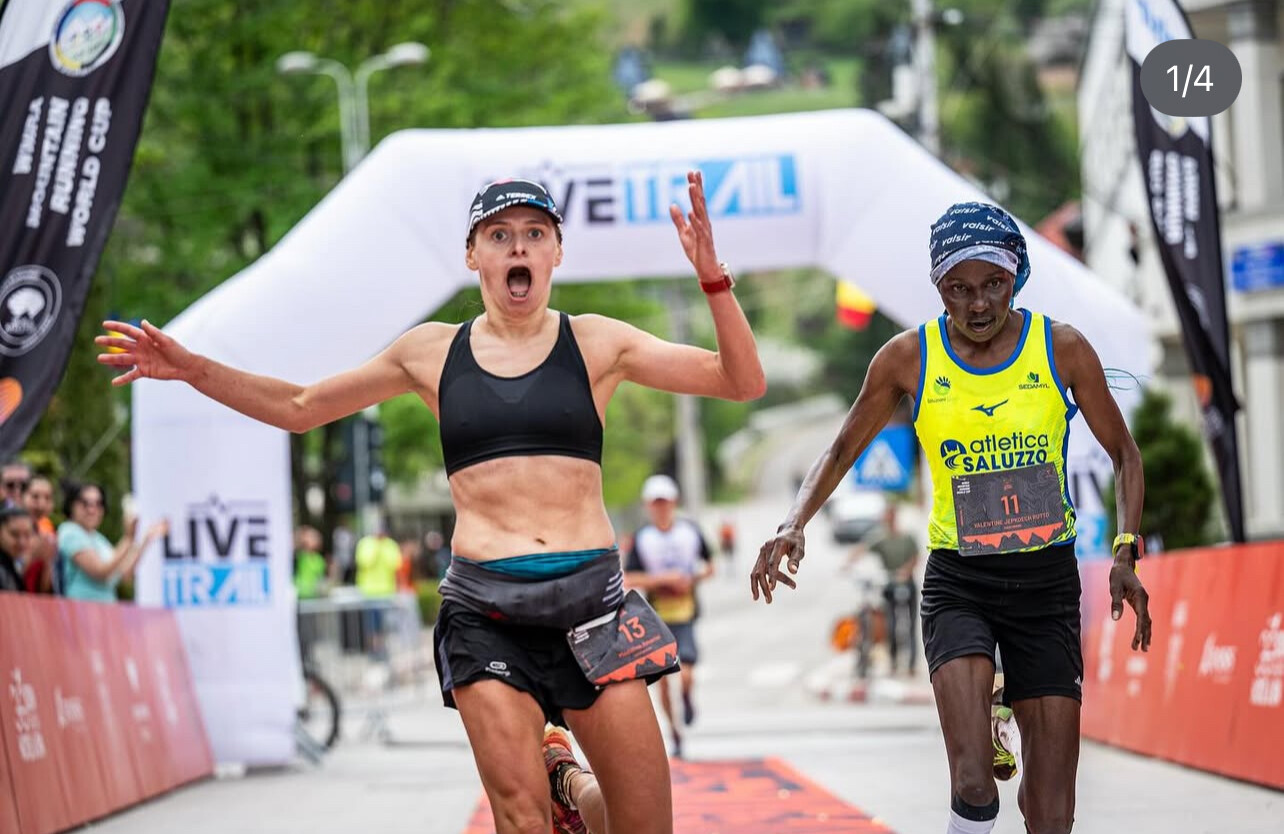
Britain’s Scout Adkin launched her World Cup campaign with a commanding performance, claiming the women’s title and finishing eighth overall. After pacing herself through the early climbs, Adkin surged ahead on the Runc ascent, pushing at an astonishing 1,700 meters per hour. She maintained her lead through the technical descents, crossing the finish line with a comfortable margin.
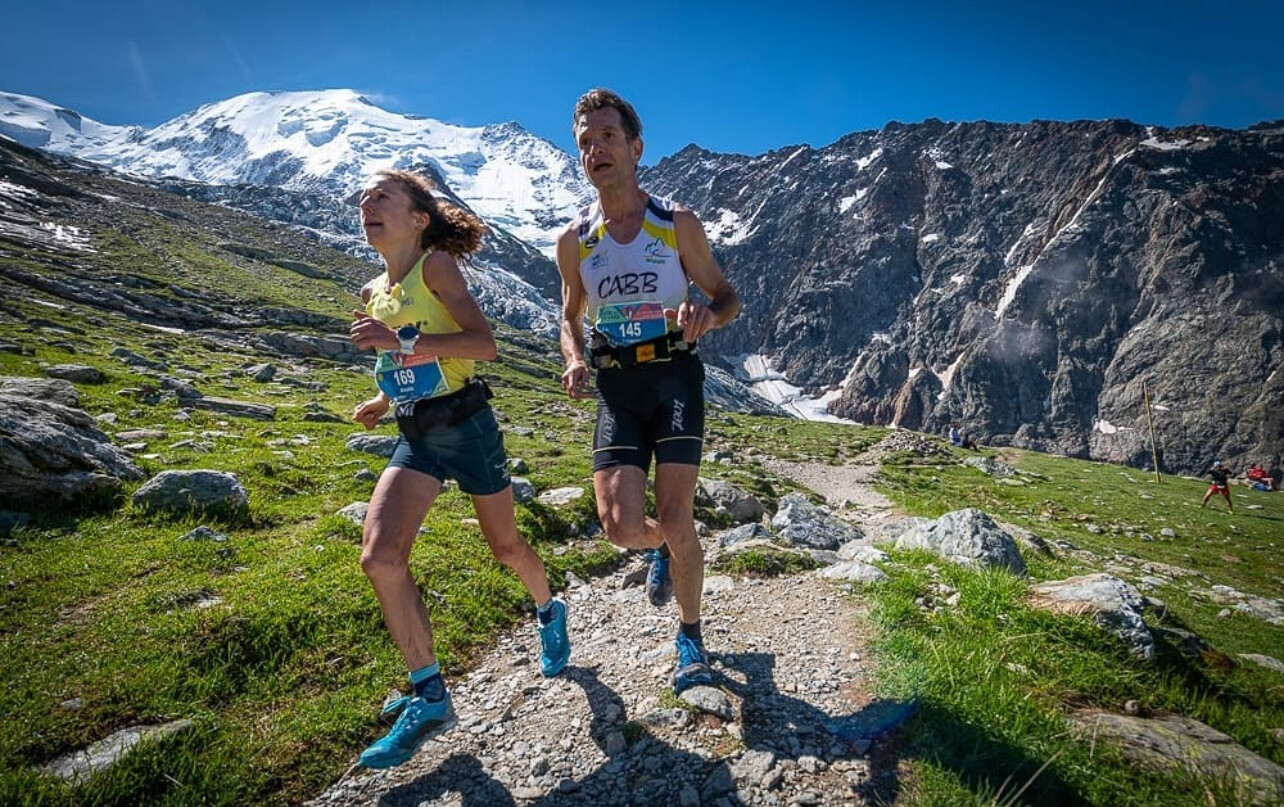
“The course is savage—but spectacular,” Adkin remarked post-race, praising both the terrain and the crowd support.
The battle for second place culminated in a rare photo finish between Kenya’s Valentine Rutto and Romania’s Mădălina Amăriei, both delivering gutsy performances on home soil.
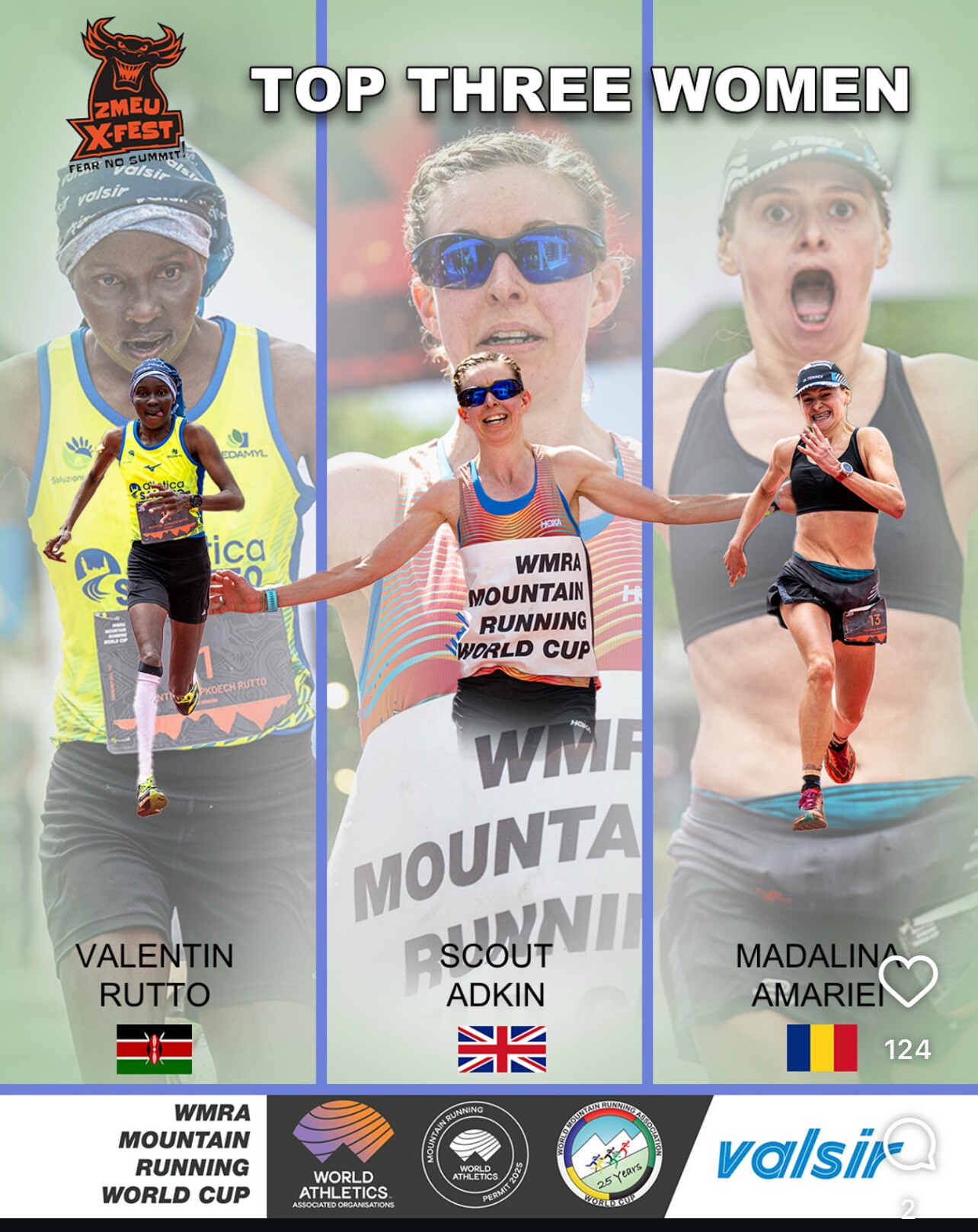
Top 3 Women’s Results:
1. Scout Adkin (Great Britain) – 2:03:18
2. Valentine Rutto (Kenya) – 2:03:33
3. Mădălina Amăriei (Romania) – 2:03:33
Men’s Race: Machoka Holds Off Late Surge
In the men’s race, Paul Machoka of Kenya delivered a masterclass in pacing and grit. Alongside compatriot Kevin Kibet, Machoka set a blistering early tempo, ascending at 2,200 meters per hour. Italian veteran Henri Aymonod mounted a fierce comeback over the final 5 km, closing a 30-second gap and nearly catching the Kenyan duo. However, Machoka held firm to secure the win in a thrilling finish.
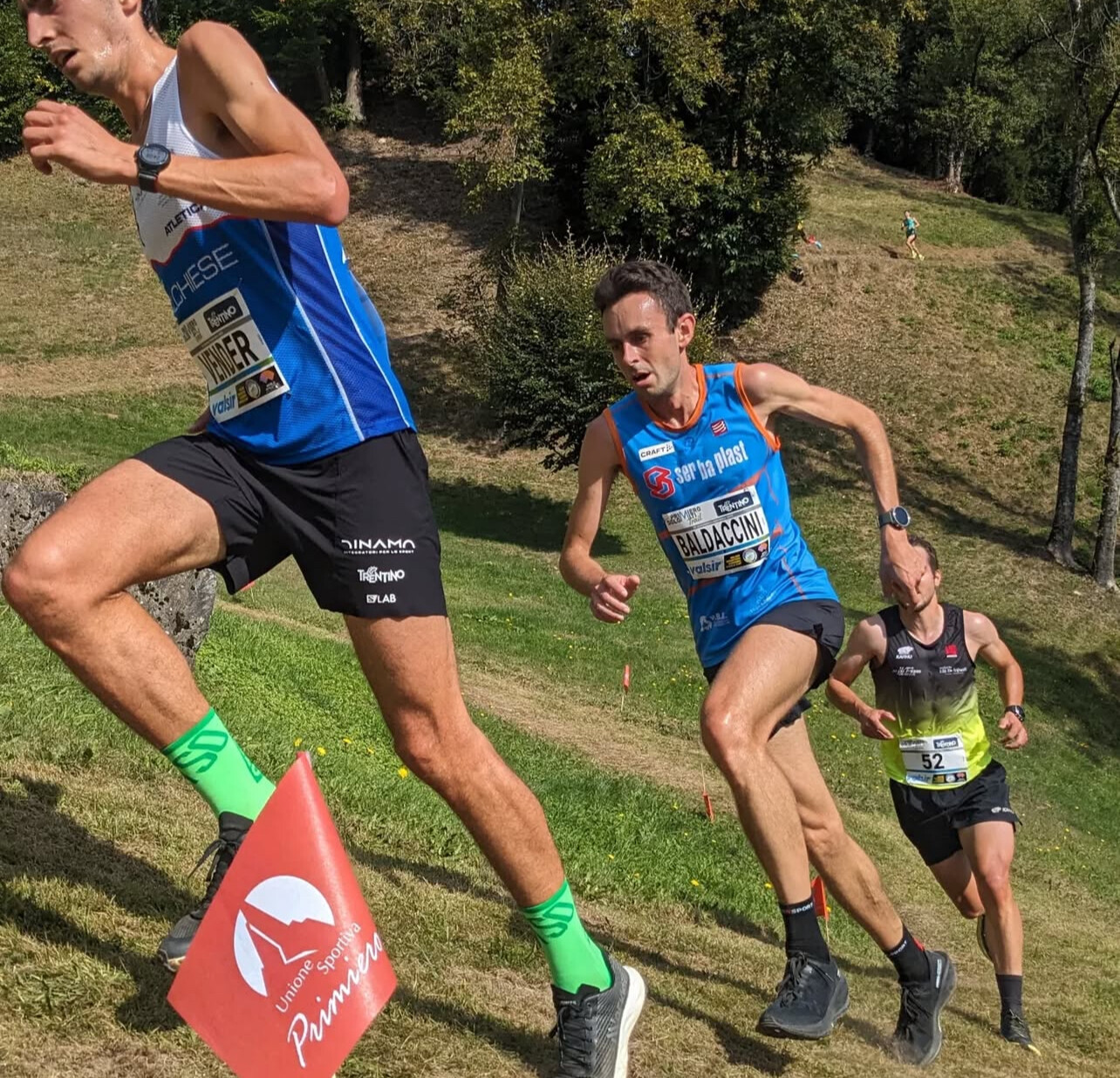
Top 3 Men’s Results:
1. Paul Machoka (Kenya) – 1:48:52
2. Kevin Kibet (Kenya) – 1:49:13
3. Henri Aymonod (Italy) – 1:49:15
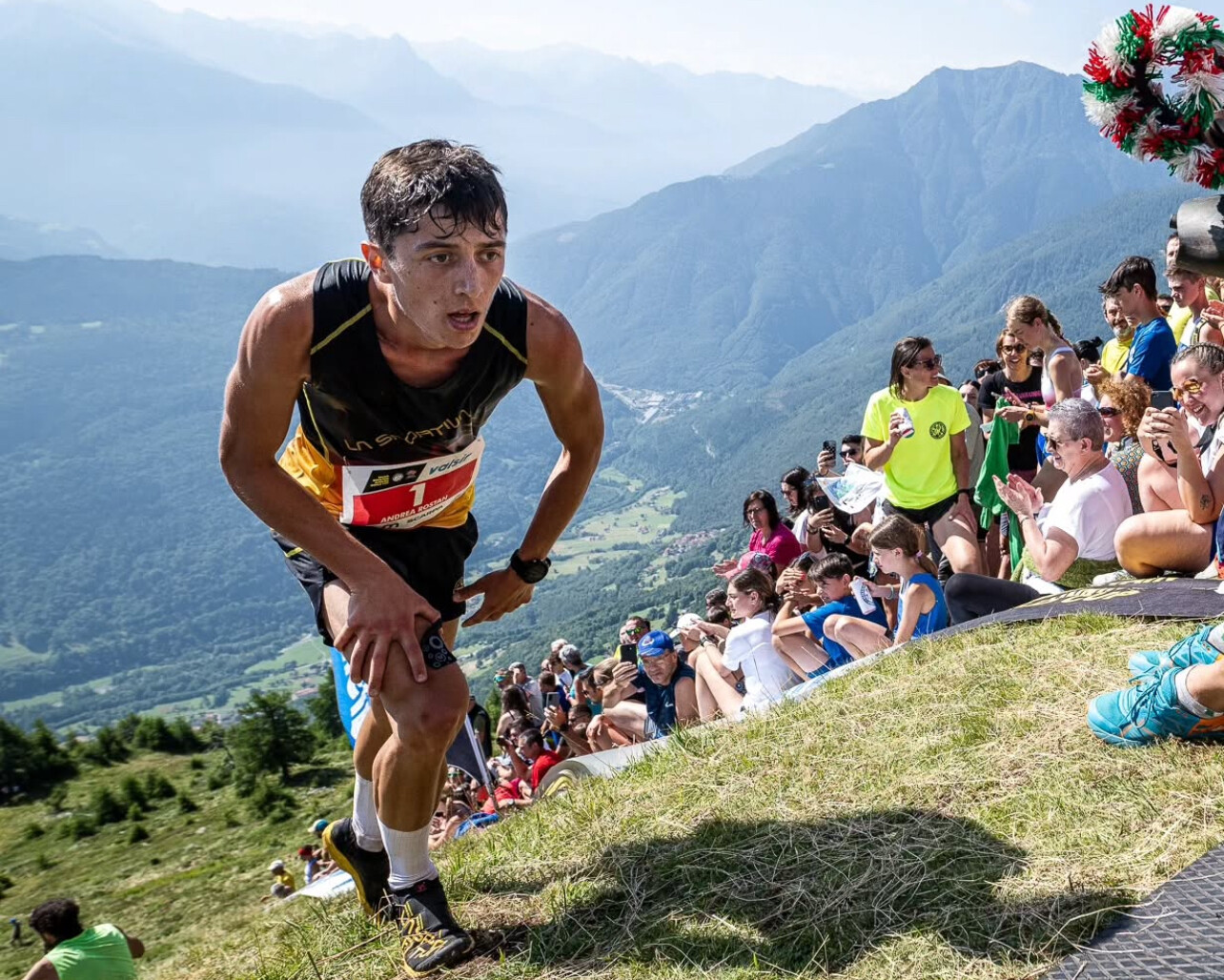
The Zmeu X-Fest, named after a dragon-like figure from Romanian folklore, proved a fittingly epic start to the 2025 WMRA World Cup. With its blend of cultural heritage and extreme terrain, the race set a high bar for the season ahead. Next, the series moves to Italy for the Vertical Nasego and Trofeo Nasego events on May 24–25.
by Boris Baron
Login to leave a comment
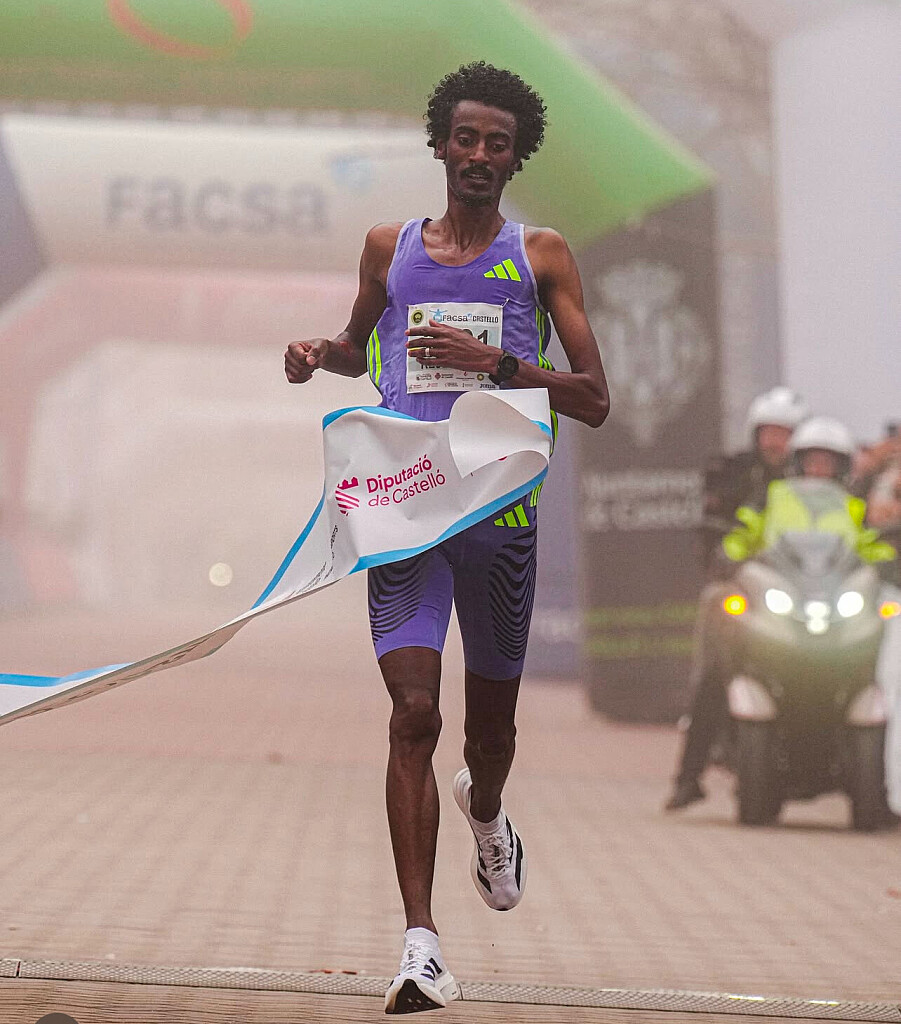
Yomif Kejelcha Runs Second Fastest 10K Ever on Road with 26:31 at Castellón
Yomif Kejelcha delivered a stunning performance at the Castellón 10K, clocking a personal best and course record time of 26:31. The Ethiopian star, known for his versatility across middle and long-distance events, continues to prove why he is one of the most formidable runners in the world today.
A Performance for the Ages
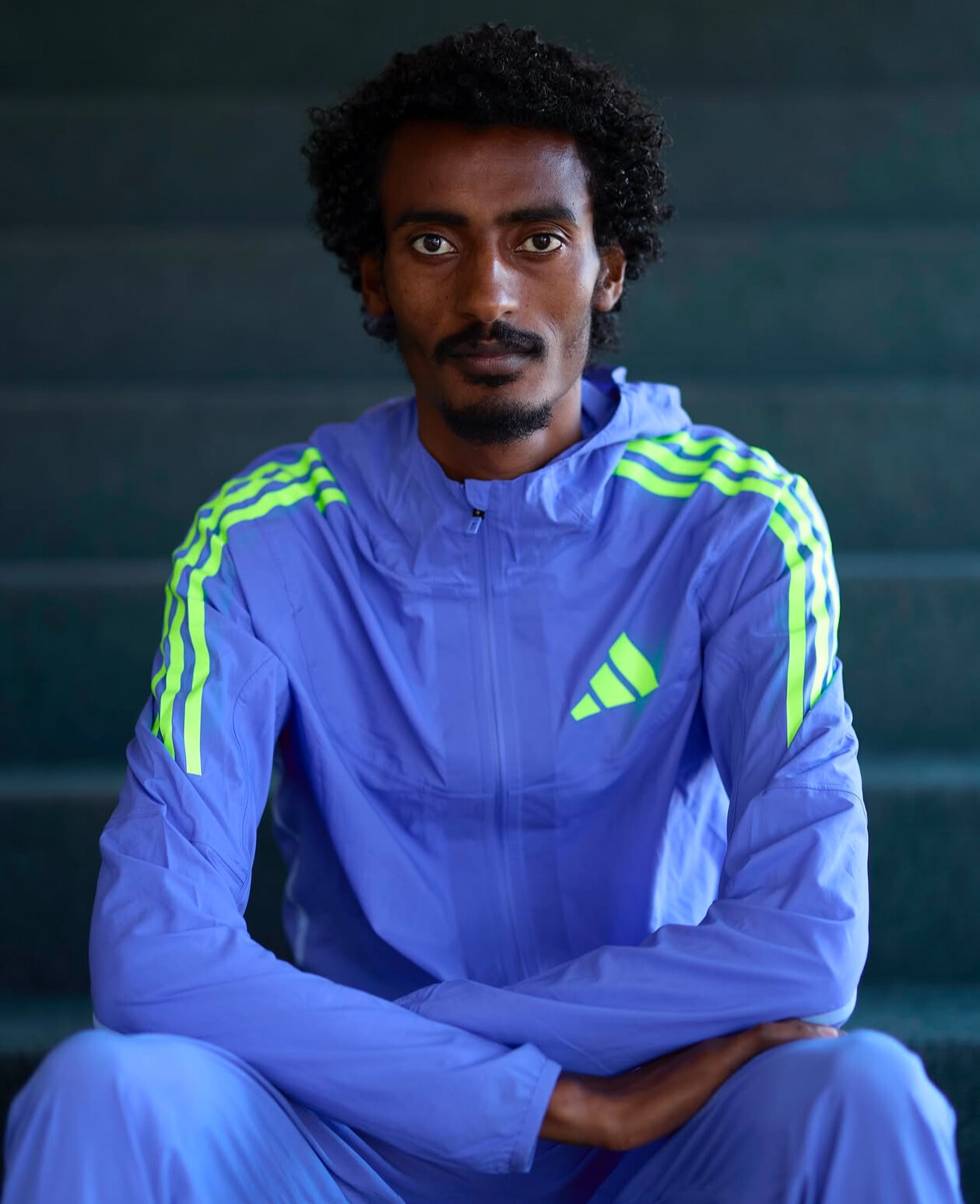
Kejelcha’s time of 26:31 is the second fastest ever recorded for 10 kilometers on the road, trailing only Rhonex Kipruto’s world record of 26:24 set in Valencia in 2020. He showcased his incredible endurance and speed, setting a blistering pace from the start and maintaining it through the streets of Castellón. His performance not only secured him the win but also solidified his place among the all-time greats in road racing.
The previous course record stood as a benchmark for elite performances, but Kejelcha demolished it with authority. His ability to transition between track and road racing at such a high level highlights his exceptional talent and training.
The Evolution of Yomif Kejelcha
Kejelcha has long been a dominant force in distance running. A two-time World Indoor Champion in the 3000m, he has also excelled on the track with a 12:46.79 personal best in the 5000m and a fo former indoor world record of 3:47.01 in the mile. His progression to longer road races has been remarkable, and this latest achievement suggests he is just getting started in rewriting records on the roads.
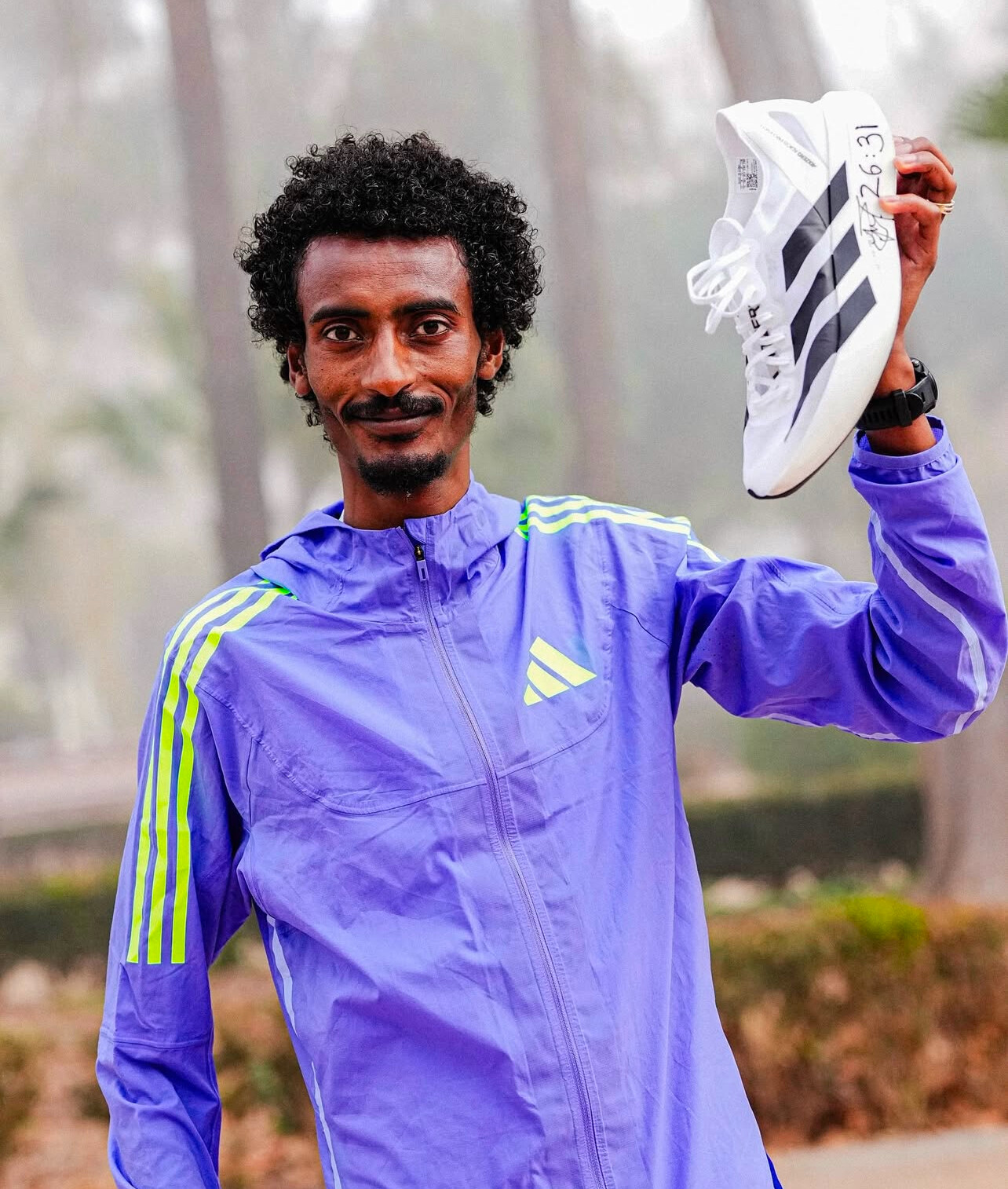
With this performance, Kejelcha joins again an elite club of sub-27-minute 10K road runners, a testament to his endurance and tactical brilliance. The road racing scene has seen unprecedented speed in recent years, with top athletes pushing the boundaries of what’s possible, and Kejelcha’s performance is yet another milestone in that progression.
What’s Next for Kejelcha?
With his new personal best, Kejelcha will undoubtedly be a contender in upcoming major road races and championship events. Whether he continues his focus on the 10K or makes an even stronger push into the half marathon and marathon distances remains to be seen, but one thing is certain—he is a runner to watch.
The Castellón 10K has witnessed history, and Yomif Kejelcha has once again shown why he is one of the premier distance runners in the world. His 26:31 finish not only sets a new course record but also raises the bar for what’s possible in road racing.
Top 10 Men's 10K Road Race Performances
As of February 2025, here are the top 10 fastest men's 10K road race times:
26:24 – Rhonex Kipruto (Kenya), Valencia, Spain, January 12, 2020
26:31 – Yomif Kejelcha (Ethiopia), Castellón, Spain, February 2025
26:33 – Berihu Aregawi (Ethiopia), Laredo, Spain, March 11, 2023
26:37 – Yomif Kejelcha (Ethiopia), Laredo, Spain, March 16, 2024
26:38 – Joshua Cheptegei (Uganda), Valencia, Spain, December 1, 2019
26:44 – Leonard Patrick Komon (Kenya), Utrecht, Netherlands, September 26, 2010
26:48 – Jacob Kiplimo (Uganda), Valencia, Spain, January 14, 2024
26:49 – Sebastian Sawe (Kenya), Herzogenaurach, Germany, April 29, 2023
26:50 – Kibiwott Kandie (Kenya), Herzogenaurach, Germany, April 30, 2022
26:51 – Nicholas Kimeli (Kenya), Brașov, Romania, September 25, 2022
Note: The above times are based on official records as of February 2025.
by Boris Baron
Login to leave a comment

10k Facsa Castello
The 10K FACSA Castelló is one of Spain’s fastest and most prestigious road races, drawing elite and amateur runners from around the world. Held in Castellón de la Plana, this race has grown exponentially, earning a reputation for its flat, high-speed course and exceptional organization. It holds a World Athletics Road Race Label, placing it among the top road races...
more...
Are muscle imbalances slowing you down?
When you lace up for your daily run, chances are you’re thinking about mileage and endurance, not the balance of strength in your muscles. However, ignoring muscle imbalances—especially between the front and back of your body—can lead to long-term pain and injury. Here’s how to recognize and prevent this sneaky problem.
What are muscle imbalances?
Muscle imbalances occur when opposing muscles around a joint aren’t equally strong or flexible. While everyone has some degree of imbalance, it becomes a concern when it starts affecting movement or causing pain. Runners are particularly prone to imbalances between their quads (the muscles in the front of the thighs) and their glutes or hamstrings (the muscles in the back). This can lead to tight hip flexors, weak glutes and poor posture, ultimately resulting in knee, hip or lower back pain. A recent article in The New York Times highlighted how focusing on strengthening underworked muscles is key to preventing discomfort caused by repetitive strain.
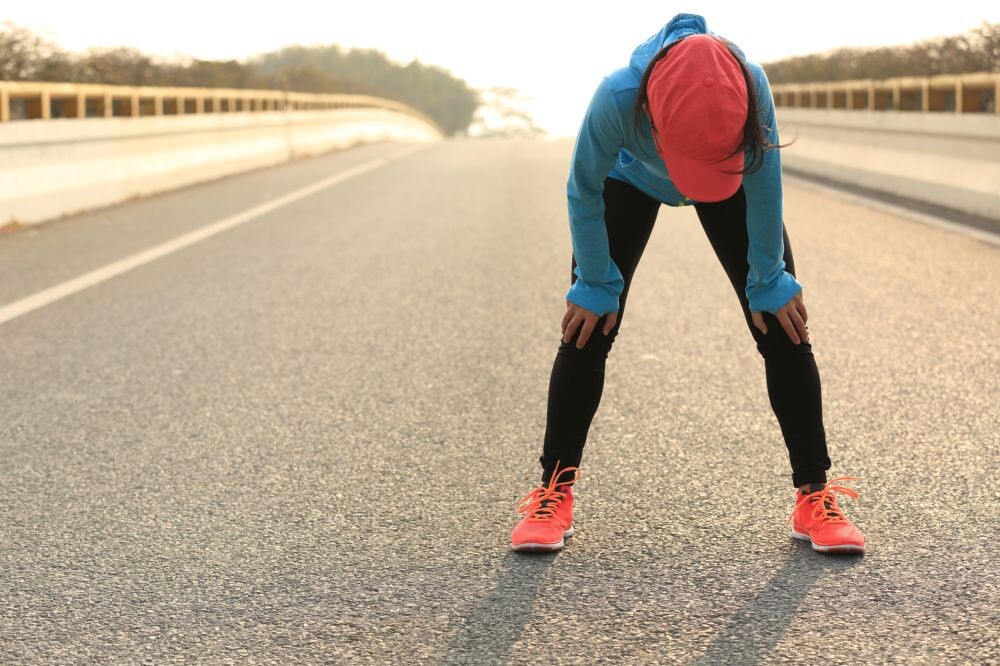
Ann Crowe, a physical therapist based in Clayton, Mo., works primarily with runners and cyclists, and emphasizes the importance of strengthening all muscle groups—not just those directly used in running. She points out that many athletes focus solely on cardiovascular fitness and neglecting strength training, which is essential for stabilizing muscles during movement.
The impact of everyday activities
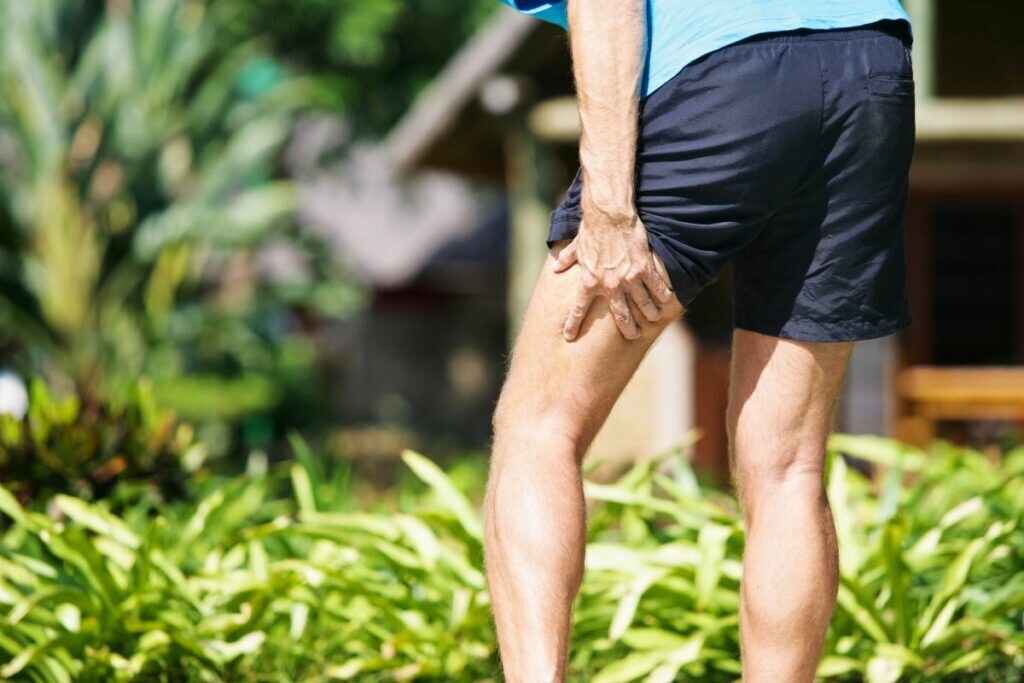
Muscle imbalances aren’t limited to runners or athletes. Sitting for long periods, such as at a desk, can also cause issues. Prolonged sitting often leads to tight hip flexors and a weakened core, which can result in lower back pain over time. Crowe notes that people who spend their days in front of a computer may experience poor posture and limited mobility due to this imbalance.
Recognizing the symptoms
The signs of a muscle imbalance can vary. Some people may notice recurring soreness in a specific area that doesn’t improve with rest, while others feel discomfort or tightness during certain movements. Someone with overdeveloped chest muscles and weak upper back muscles might experience shoulder pain. More seriously, imbalances can increase the risk of injury, such as hamstring strains or lower back problems.
Prevention through strength training
Preventing and correcting muscle imbalances requires regular strength training. Crowe recommends that runners incorporate exercises like single-leg squats or step-ups to target their glutes and hip stabilizers—muscles that often don’t get enough attention during runs. Spend your days in an office? Prioritize exercises that strengthen the upper back, such as bent-over rows or Romanian deadlifts, to counteract the effects of prolonged sitting.
Quick fix, long-term benefits
The good news? Muscle imbalances can often be corrected quickly with the right approach. Consistent strength training, along with varying your exercise routine, can not only alleviate pain but also boost performance and reduce the risk of future injuries.
Proactively addressing muscle imbalances will help keep your body functioning smoothly and pain-free in the long term. By paying attention to the muscles you’re neglecting, you can prevent discomfort and stay active without unnecessary setbacks.
by Keeley Milne
Login to leave a comment
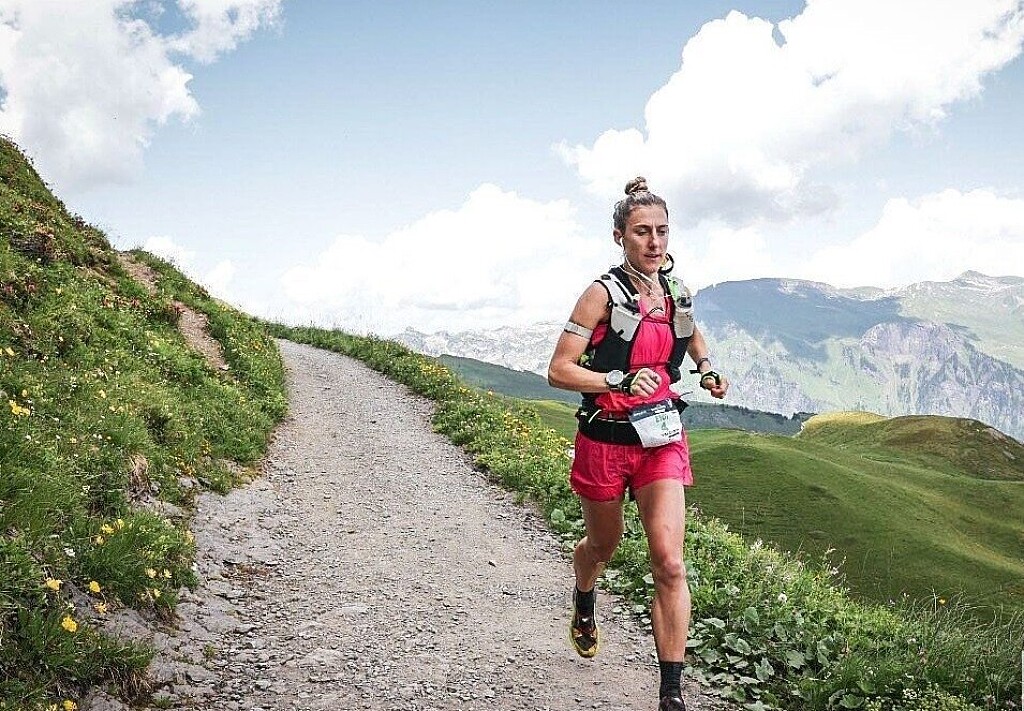
Get trail-strong with these tips from a pro
Pro trail runner and coach Hannah Allgood shares four exercises that target common weaknesses in runners.
If you want to be a strong trail runner, you’ll need more than just miles on your legs—you need to build strength that can take on the rugged terrain. Hannah Allgood, a Colorado-based pro trail runner for Dynafit, is here to help, sharing her four favourite exercises for athletes.
Allgood not only excels in the mountains (in July, she won the Eiger Ultra-Trail by UTMB 100K), but also helps athletes build strength through her coaching with Freetrail, an online trail community and media outlet. With a background in exercise science and years of competitive experience across multiple sports, she has perfected the art of staying strong, fast and injury-free on the trails. “Strength training has always been an integral part of my career as an athlete,” Allgood explains. She knows firsthand how crucial lifting is to boost performance and prevent injuries, especially for trail runners tackling challenging mountain races.If you want to be a strong trail runner, you’ll need more than just miles on your legs—you need to build strength that can take on the rugged terrain. Hannah Allgood, a Colorado-based pro trail runner for Dynafit, is here to help, sharing her four favourite exercises for athletes.
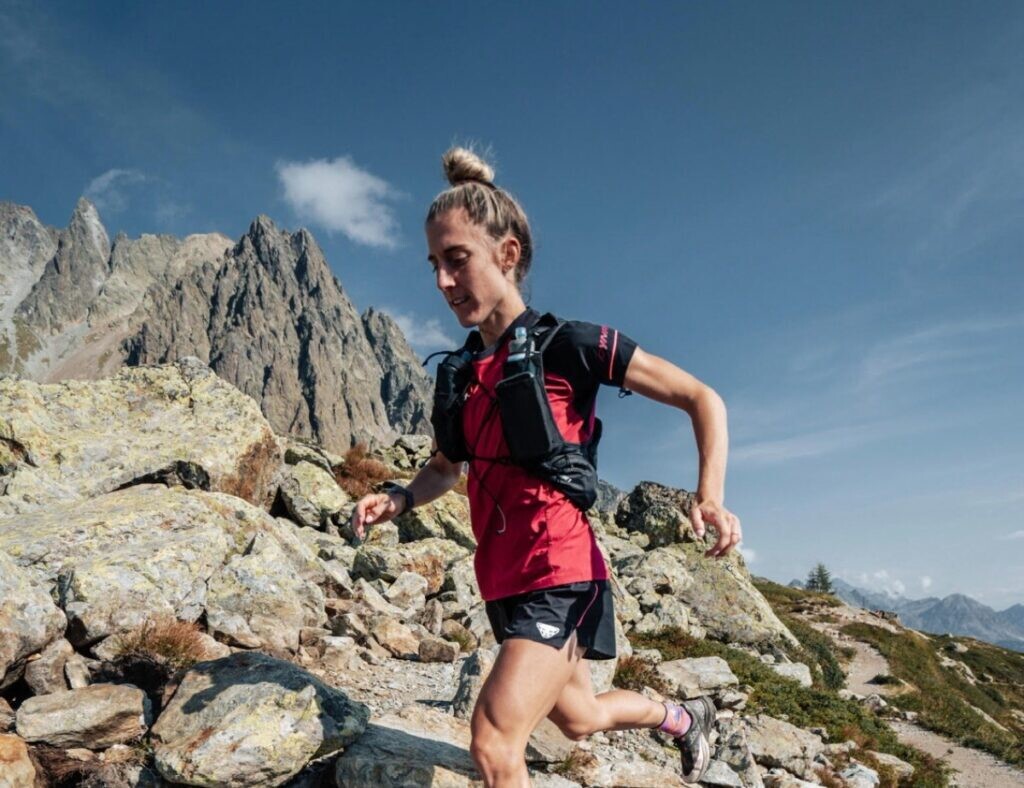
Allgood not only excels in the mountains (in July, she won the Eiger Ultra-Trail by UTMB 100K), but also helps athletes build strength through her coaching with Freetrail, an online trail community and media outlet. With a background in exercise science and years of competitive experience across multiple sports, she has perfected the art of staying strong, fast and injury-free on the trails.
“Strength training has always been an integral part of my career as an athlete,” Allgood explains. She knows firsthand how crucial lifting is to boost performance and prevent injuries, especially for trail runners tackling challenging mountain races.
If you want to be a strong trail runner, you’ll need more than just miles on your legs—you need to build strength that can take on the rugged terrain. Hannah Allgood, a Colorado-based pro trail runner for Dynafit, is here to help, sharing her four favourite exercises for athletes.
Allgood not only excels in the mountains (in July, she won the Eiger Ultra-Trail by UTMB 100K), but also helps athletes build strength through her coaching with Freetrail, an online trail community and media outlet. With a background in exercise science and years of competitive experience across multiple sports, she has perfected the art of staying strong, fast and injury-free on the trails. “Strength training has always been an integral part of my career as an athlete,” Allgood explains. She knows firsthand how crucial lifting is to boost performance and prevent injuries, especially for trail runners tackling challenging mountain races.
Step-ups
Allgood suggests varying the height of your step to 12-18 inches, based on your height and current strength. “Step-ups are a great exercise because they allow for versatility to match the athlete’s needs (weight or no weight, increase or decrease height, increase speed or decrease speed),” Allgood explains. “They help with not only strength on trails but functional day-to-day strength.”
Single-leg Romanian deadlift (with a cable or band, OR with weight)
“This exercise targets many different systems,” says Allgood. “The RDL changes your centre of mass, therefore working on your balance and coordination, which are highly beneficial for trail running. The row helps with rotational core stability, which is also vital for running, as it helps with balance and control across various terrains and helps with efficient force transfers from upper to lower body.”
Bulgarian Split Squat
Allgood explains that the Bulgarian split squat is another unilateral exercise that helps improve balance and core stability by using weights. “This move is also very helpful for improving leg power, which translates to improved force production, meaning you can get up the mountains faster.” She suggests adding in a soleus raise for an extra challenge.
Modified side plank with clamshells or hip abduction
“This is one of my favourite go-to glute exercises that also incorporates core stability,” Allgood says. “Adding a band around your knees will increase the challenge!”
If you’re adding strength training during your racing season, Allgood suggests focusing on 12-15 reps per set, aiming for two to three sets. “This will help build strength, but also not leave you too sore for running or other fun activities,” she says. “Strength training two to three times a week can be huge for your overall health and with preventing injuries.”
by Keeley Milne
Login to leave a comment
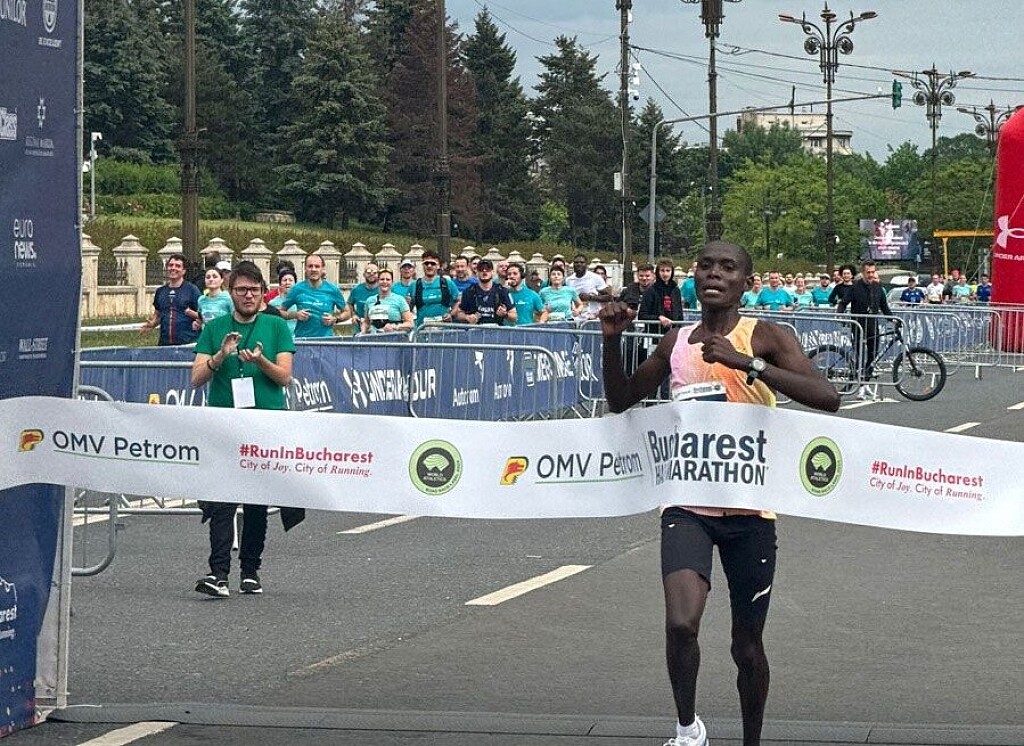
Kenyan Alex Nzioka Matata wins the Bucharest Half Marathon
Kenyan Alex Nzioka Matata won the Bucharest Half Marathon held last Sunday, May 12, with a time of one hour, one minute, and four seconds.
Second place was taken by another Kenyan, Chebor Elvis Tabarach, with a time of one hour, four minutes, and three seconds, while third place went to another Kenyan athlete, Kibet Bismark Langat, with a time of one hour, four minutes, and 10 seconds, according to News.ro.
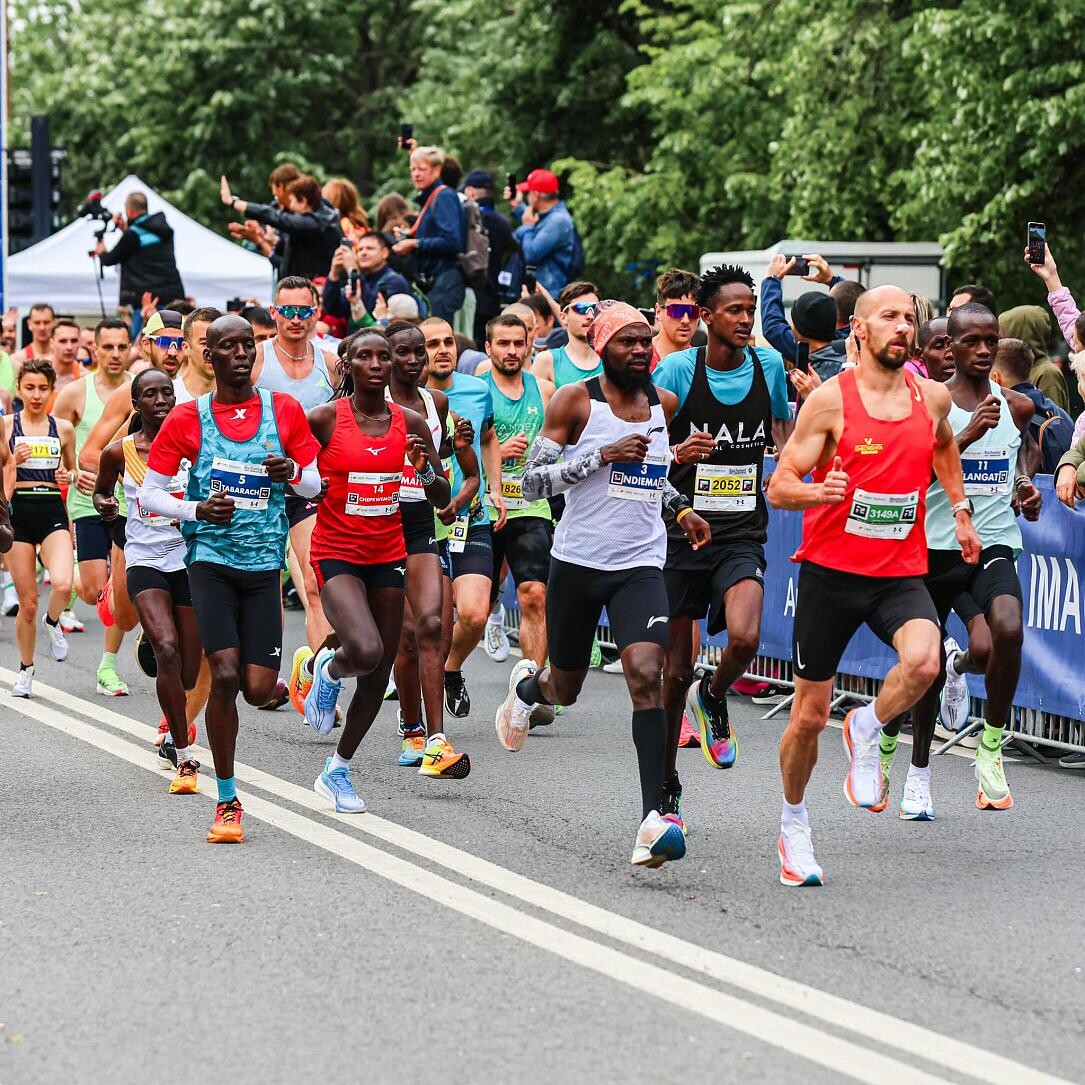
The first Romanian in the ranking was Leonard Mitrică, finishing in fifth place, followed by Alexandru Corneschi, who placed sixth.
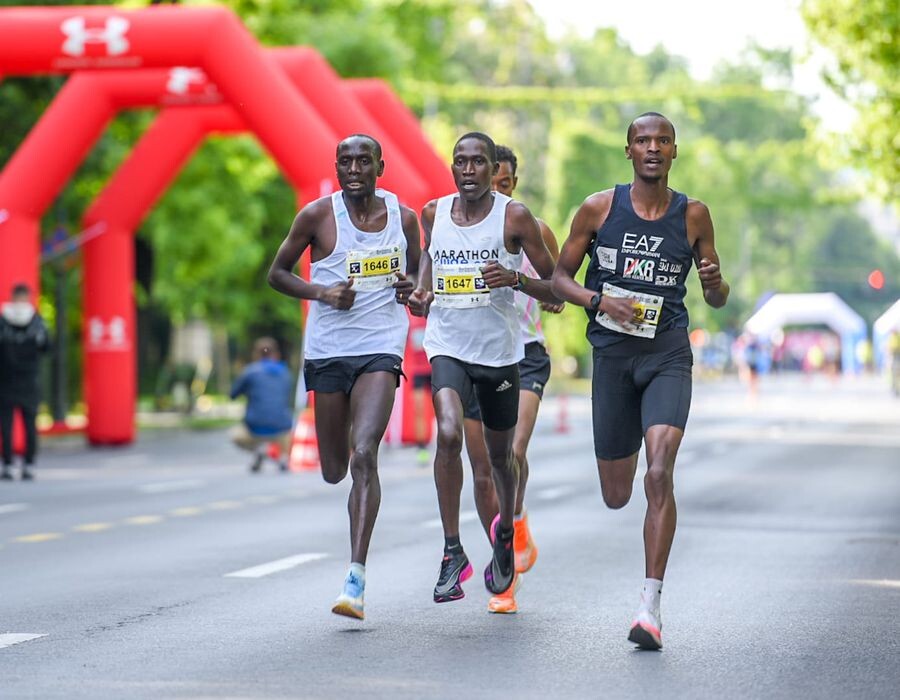
The former finished in one hour, seven minutes, and four seconds, while the latter finished in one hour, seven minutes, and 56 seconds.
In the women's category, the first in the ranking was Rabecca Chepkwemoi from Kenya, who finished the race in one hour, 12 minutes, and nine seconds.
by Radu Dumitrescu
Login to leave a comment
Bucharest Half Marathon
Created at the initiative of the Olympic Marathon Gold medalist Constantina Di?a, Bucharest International Half Marathon and 10K is the most beautiful road running race in Bucharest, Romania. Designed by Constantina herself, this is a very fast and flat course, and offers the opportunity for a competitive personal best for both professional athletes and amateur runners. Bucharest International Half Marathon...
more...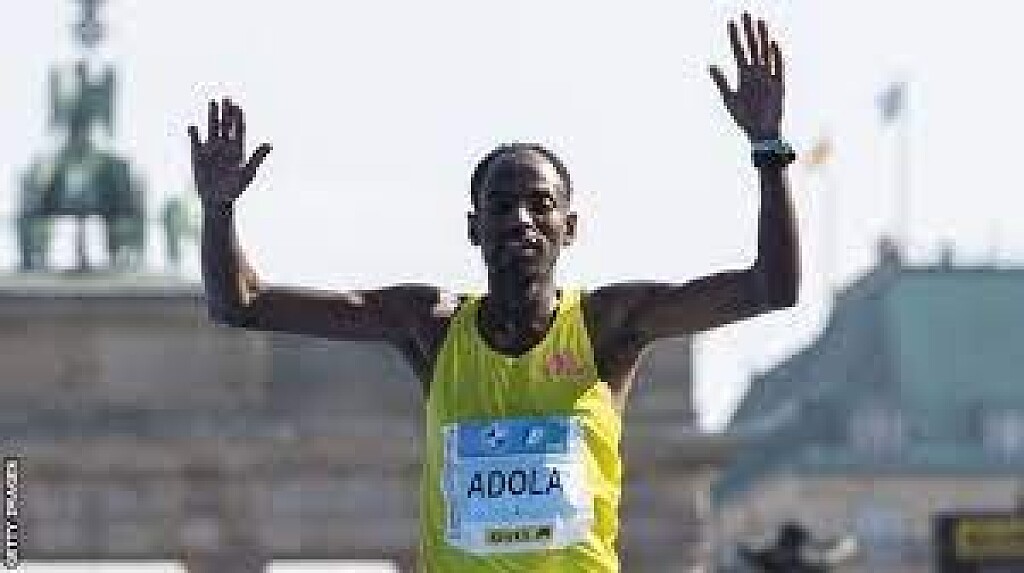
Competitive fields look to make a statement in Seoul
Ethiopia’s Guye Adola and Bahrain’s Desi Mokonin are among the athletes who will be looking to make a mark when they compete in the Seoul Marathon, this year’s sixth World Athletics Platinum Label road race, on Sunday (17).
While Adola competes in Korea for the first time, Mokonin has the benefit of race experience, as she returns to an event that she won in 2019.
Adola has the fastest PB among the entries, thanks to the 2:03:46 he ran to finish second when making his marathon debut in Berlin in 2017. The 2014 world half marathon bronze medallist returned to win in Berlin in 2021, running 2:05:45 for the third-fastest time of his career so far.
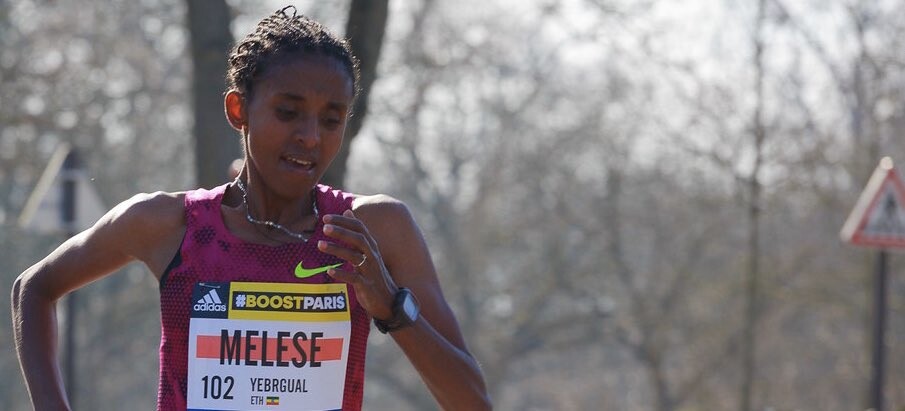
He is back in marathon action for the first time since October, when he placed third in Frankfurt after finishing runner-up in Paris in April.
There are a number of athletes who will want to challenge him in Seoul, where the men’s field features another six sub-2:06 athletes. The course record stands at 2:04:43, achieved by Mosinet Geremew in 2022.
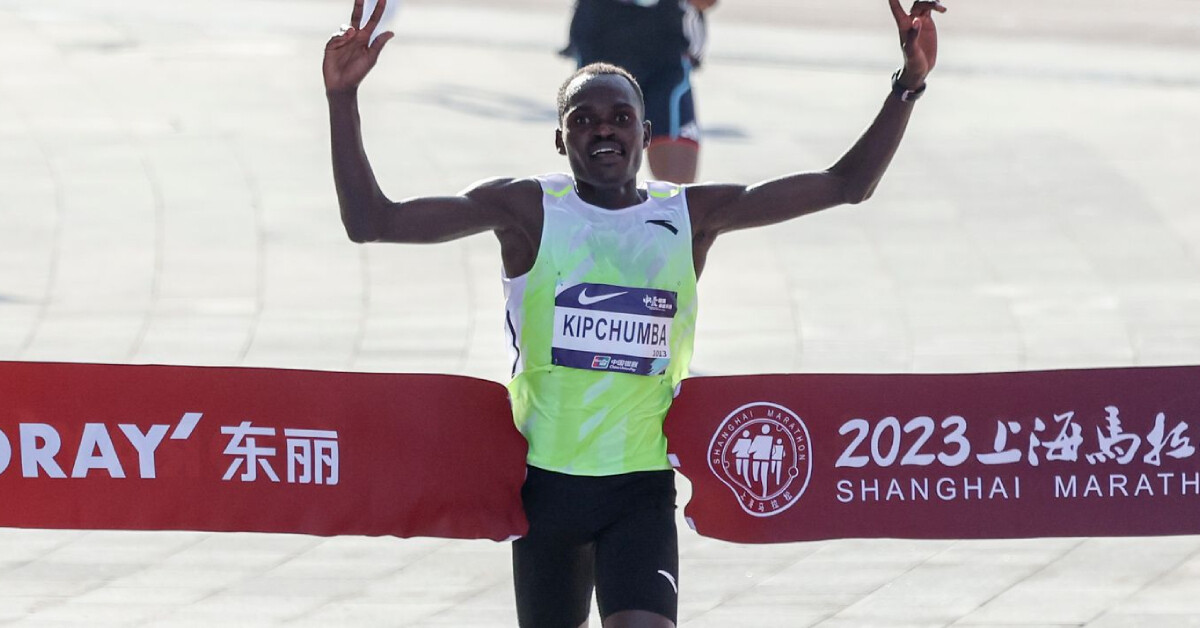
Kenya’s Philimon Kiptoo Kipchumba has won each of the four marathons he has completed so far, most recently winning the Shanghai Marathon in November in a PB of 2:05:35, but he withdrew when defending his Xiamen Marathon title in January.
His compatriot Solomon Kirwa Yego finished third in Shanghai in a PB of 2:05:42 and then placed eighth in Xiamen, while Joel Kemboi Kimurer ran his PB of 2:05:19 in Milan in 2021 and Laban Kipngetich Korir clocked his best of 2:05:41 in Amsterdam in 2022.
Ethiopia’s Derseh Kindie will be looking to build on the PB of 2:05:51 he set in Valencia in December and he’ll be joined on the start line by his compatriots Gebru Redahgne, who finished second in the 2022 Barcelona marathon in 2:05:58, and world half marathon fourth-place finisher Jemal Yimer.
China’s Feng Peiyou and Olonbayar Jamsran of Mongolia will be among those seeking Olympic qualification.
Ethiopia’s Yebrgual Melese is the quickest in the women’s field when it comes to PBs with the 2:19:36 she ran in Dubai in 2018, but the 2015 Chicago Marathon runner up’s last recorded result was a fifth-place finish in the 2020 Xiamen Marathon.
She’s the sole sub-2:20 runner in the women’s race but she will be joined by four others who have dipped under 2:22.
Those include Mokonin, who won the 2019 Seoul Marathon in 2:23:44 and clocked her PB of 2:20:47 in Doha just over a year ago. She ended 2023 with a 2:22:29 performance to finish seventh in Valencia.
Kenya’s Celestine Chepchirchir opens her 2024 campaign after having raced four marathons last year, topped by the 2:20:46 she ran to finish fourth in Valencia. Like Mokonin, she has previously raced in Seoul and it is where she recorded her PB of 2:20:10 set in 2022, when she finished fourth.
She lines up alongside her compatriot Janet Ruguru, who set a PB of 2:23:00 to finish second in Beijing in October and placed third in the Daegu International Marathon in the April.
Sisay Meseret Gola followed her 2:20:50 PB performance in Seville in 2022 with two 2:22 marathons in 2023 – in Osaka and Amsterdam. She withdrew from this year’s Osaka Women's Marathon in January but now returns to action in a field that also features her Ethiopian compatriot Fikrte Wereta, who ended 2023 with a win and a PB in Shenzhen, clocking 2:22:07.
Former Mongolian record-holder Munkhzaya Bayartsogt will be among those hoping to put themselves in the running for a place at the Paris Olympics.
The course record of 2:18:04 was set by Romania’s Joan Chelimo Melly in 2022.
Leading entries
Women
Yebrgual Melese (ETH) 2:19:36
Celestine Chepchirchir (KEN) 2:20:10
Desi Mokonin (BRN) 2:20:47
Sisay Meseret Gola (ETH) 2:20:50
Visiline Jepkesho (KEN) 2:21:37
Fikrte Wereta (ETH) 2:22:07
Sintayehu Tilahun (ETH) 2:22:19
Janet Ruguru (KEN) 2:23:00
Margaret Agai (KEN) 2:23:28
Sifan Melaku (ETH) 2:23:49
Munkhzaya Bayartsogt (MGL) 2:28:03
Marina Khmelevskaya (UZB) 2:29:28
Ayano Ikeuchi (JPN) 2:33:29
Men
Guye Adola (ETH) 2:03:46
Joel Kemboi Kimurer (KEN) 2:05:19
Philimon Kiptoo Kipchumba (KEN) 2:05:35
Laban Kipngetich Korir (KEN) 2:05:41
Solomon Kirwa Yego (KEN) 2:05:42
Derseh Kindie (ETH) 2:05:51
Gebru Redahgne (ETH) 2:05:58
Mark Kiptoo (KEN) 2:06:00
Felix Kandie (KEN) 2:06:03
Mike Kiptum Boit (KEN) 2:06:08
Ashenafi Moges Weldegiorgis (ETH) 2:06:12
Edwin Kiptoo (KEN) 2:06:52
Kibrom Desta Habtu (ETH) 2:07:05
Balew Yihunie Derseh (ETH) 2:07:12
Timothy Kipkorir (KEN) 2:07:53
Rory Linkletter (CAN) 2:08:01
Feng Peiyou (CHN) 2:08:07
Rhonzas Lokitam Kilimo (KEN) 2:08:08
Olonbayar Jamsran (MGL) 2:08:58
Huang Yongzheng (CHN) 2:10:49
Gantulga Dambadarjaa (MGL) 2:11:18
Jemal Yimer (ETH) 2:11:31
Evans Kipchumba (KEN) debut
by World Athletics
Login to leave a comment

Seoul International Marathon
The only marathon hosted in the heart of the Korean capital. Seoul marathon is the oldest marathon race hosted in Asia andis one of the fastestmarathon in the world. First held in 1931, Seoul marathon is the oldest marathon eventcontinuously held in Asia, and the second oldest in the world followingthe Boston Marathon. It embodies modern history of Korea, also...
more...
Nagoya Women's Marathon winner to pocket Ksh 35 million
The Nagoya Women's Marathon will be coming up on Sunday offering the highest prize money with the winner set to walk away with Ksh 35 million ($241,500US).
The 2024 Nagoya Women’s Marathon is certainly one of the marathons in the world that offers the highest prize money.
The winner of the race will walk away with more than Ksh 35 million with every finisher also being awarded a beautiful, specially designed pendant from a global luxury jeweller, Tiffany & Co., as a memento of their achievement.
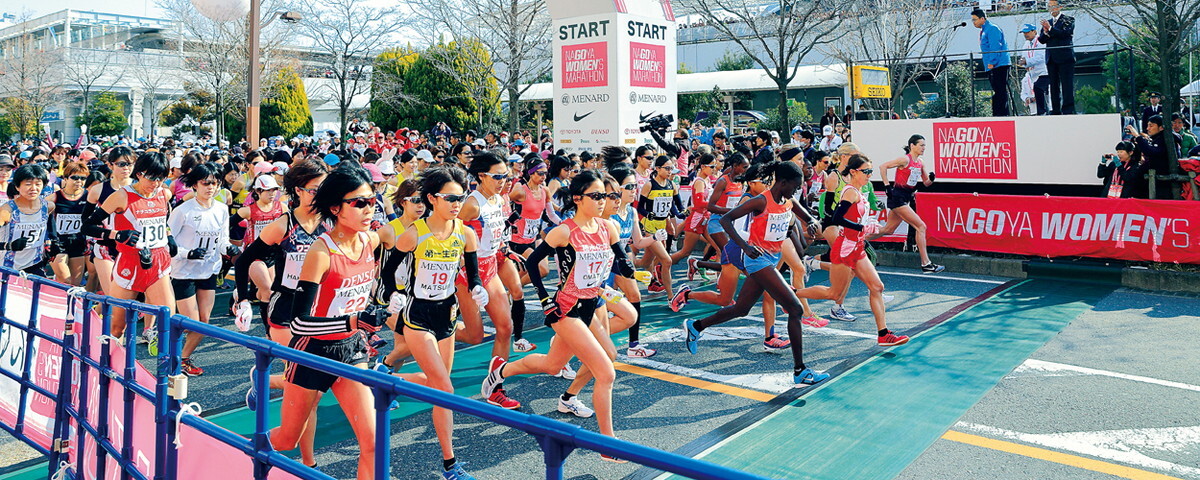
As per the race organisers, the prize money for the subsequent places will be determined separately based on the competition results.
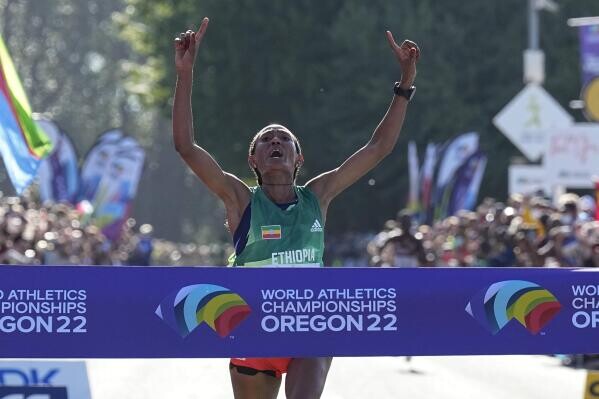
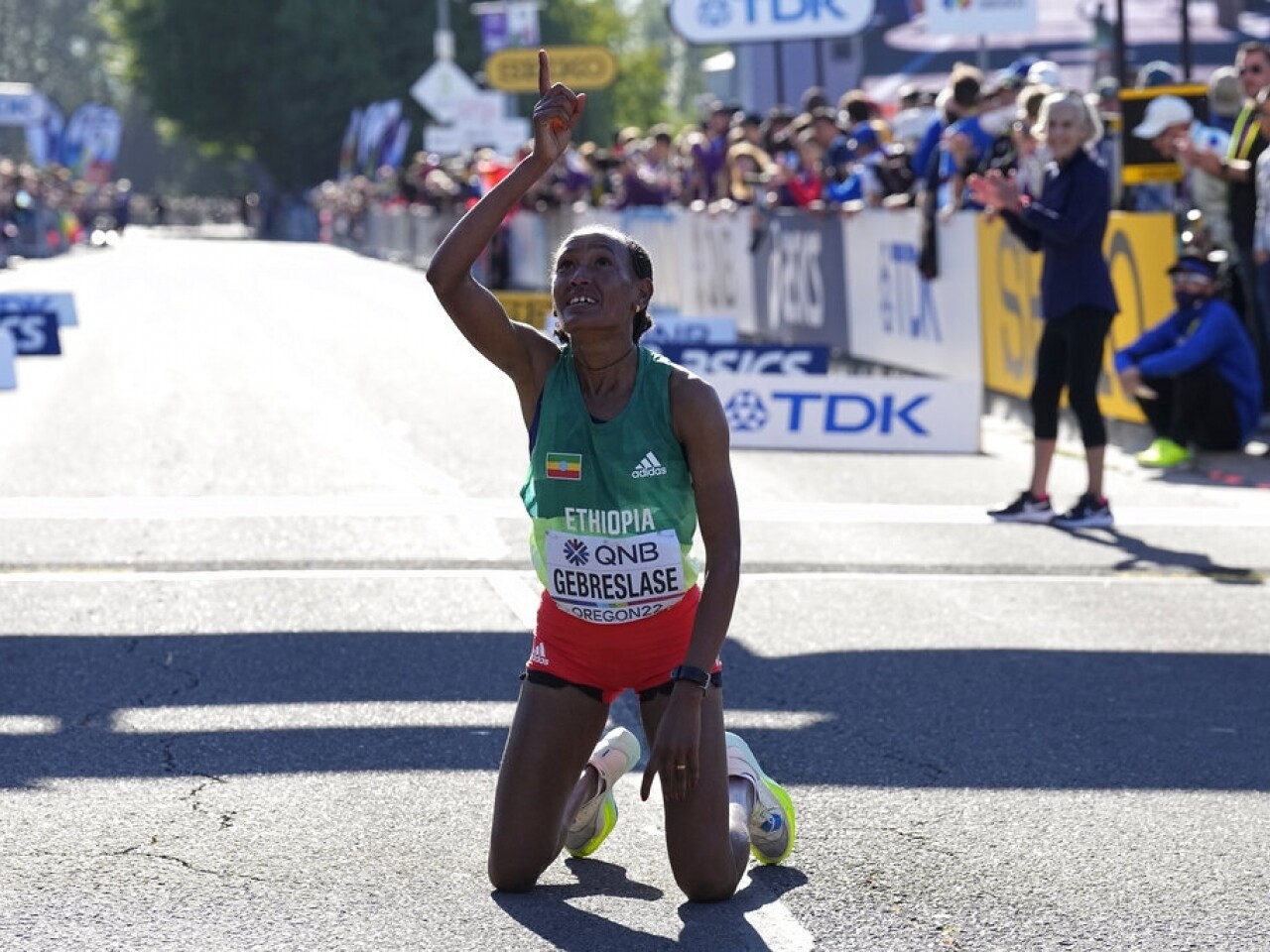
Meanwhile, this year’s field has attracted Gotytom Gebreslase who will have the course record in her sights when she races in the marathon, a World Athletics Platinum Label road race.
The 2022 world champion set her Personal Best time of 2:18:11 when winning that title in Oregon and she went on to secure silver at last year’s World Championships in Budapest.
This will be the Ethiopian’s first marathon since then and she goes into it targeting at least a lifetime best, if not the course record of 2:17:18 set by Kenya’s Ruth Chepngetich in 2022 – that time being the second-fastest-ever women-only marathon behind the 2:17:01 run by Mary Keitany in London in 2017.
“My goal for Sunday is to run under 2 hours and 18 minutes, and if the weather and pacemakers are good, I will try to break the course record of 2:17:18,” she said at the pre-event press conference.
She will face a stern test from Bahrain’s Eunice Chebichii Chumba, who finished seventh in the Olympic Games marathon in Sapporo, and Romania’s Delvine Relin Meringor who ran her national record of 2:20:49 when finishing third in Barcelona a year ago and she went on to place 12th in the Berlin Marathon in 2:23:25.
Violah Cheptoo will be Kenya’s sole representative in the race, hoping to retain the title that was won by Chepng’etich during last year’s edition of the race.
by Abigael Wuafula
Login to leave a comment

Nagoya Women's Marathon
The Nagoya Women's Marathon named Nagoya International Women's Marathon until the 2010 race, is an annual marathon race for female runners over the classic distance of 42 km and 195 metres, held in Nagoya, Japan in early March every year. It holds IAAF Gold Label road race status. It began in 1980 as an annual 20-kilometre road race held in...
more...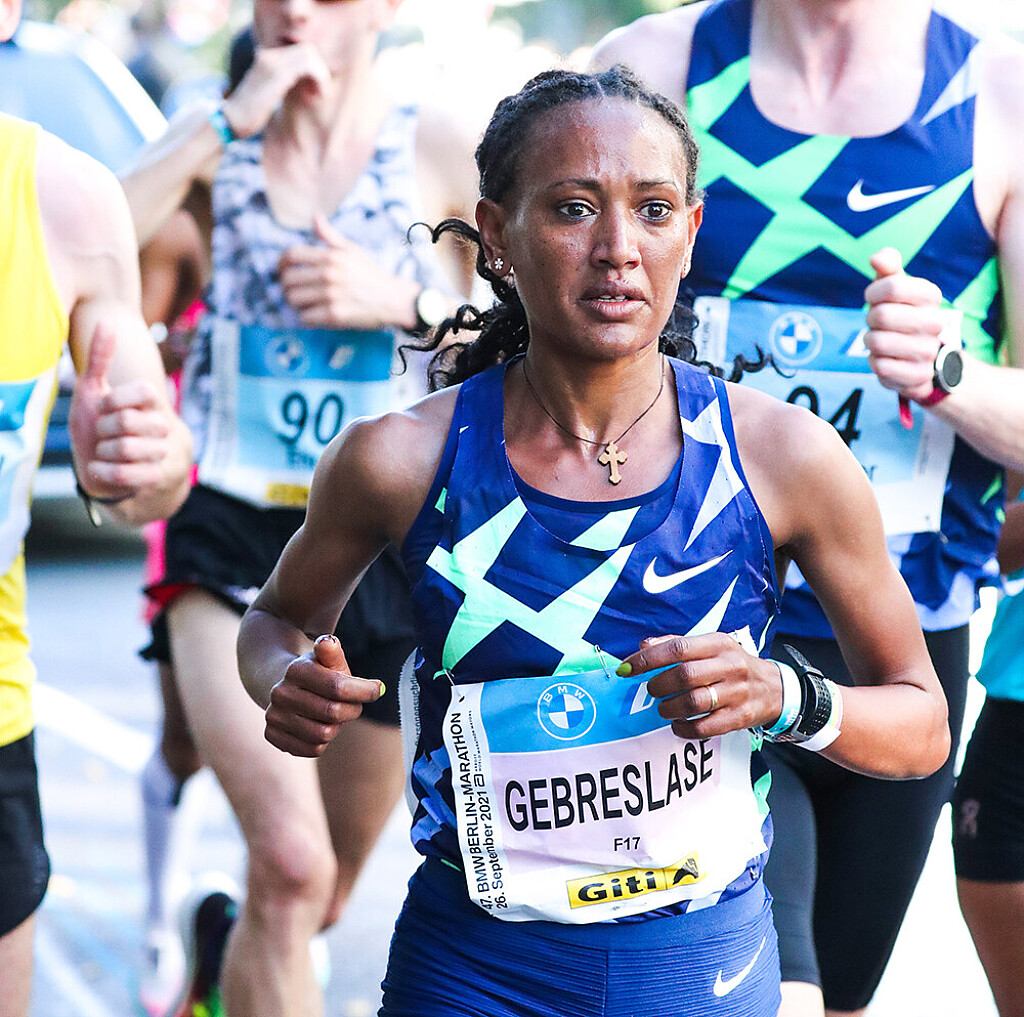
Gotytom Gebreslase hopes to break Nahoya course record
In advance of the highly anticipated race scheduled for this Sunday, March 10, 2024, the Nagoya Women’s Marathon held a pre-race press conference for the invited elite athletes today in Nagoya, Japan.
Gotytom Gebreslase (ETH), 2022 Oregon World Champion and 2023 Budapest World Championships silver medalist said, “My goal for Sunday is to run under two hours 18 minutes, and if the weather and pacemakers are good, I will try to break the course record of 2:17:18.” Her competitor Eunice Chebichii Chumba of Bahrain, 2023 Asian Games Champion said, “My preparation has been going well, and my focus will be to improve my personal best of 2:20:02.”
For Japanese athletes, the Nagoya Women’s Marathon 2024 will be the last chance to win a place in the Paris Olympics team by beating the new national record of 2:18:59 just set by Honami Maeda this January.
The 2020 Tokyo Olympians Ayuko Suzuki will aim to break the target of 2:18:59 so she can compete in the Olympics again to show what she really can do, adding that she was ready to turn the support of the local spectators of her hometown Aichi into strength. Sharing the same goal with Ayuko, Rika Kaseda commented that she had prepared for a high-speed race and would challenge herself to keep up with the pace of other fast athletes to grab the last ticket for Paris 2024.
In addition to these top elite athletes, many recreational runners will join the Nagoya Women’s Marathon 2024 from home and abroad, making it an exciting race with 18,000 participants. All finishers will be presented with an event’s exclusively designed Tiffany & Co. pendant and a New Balance T-shirt as the finisher prize.
Sunday’s race will be streamed live free of charge to 37 countries and regions (Argentina, Australia, Bahrain, Brazil, Brunei, Cambodia, Chile, Colombia, Egypt, Ethiopia, France, Germany, Hong Kong, Indonesia, Israel, Italy, Kenya, Macau, Malaysia, Mexico, Monaco, Myanmar, Namibia, Netherlands, New Zealand, Papua New Guinea, Philippines, Puerto Rico, Romania, Singapore, South Africa, South Korea, Spain, Taiwan, Thailand, United Kingdom, and United States of America) on the race’s official website at https://womens-marathon.nagoya/en/broadcast.php. Stay tuned for the race to start at 9:10 a.m. on Sunday, March 10, 2024, Japan time.
by AIMS
Login to leave a comment
Nagoya Women's Marathon
The Nagoya Women's Marathon named Nagoya International Women's Marathon until the 2010 race, is an annual marathon race for female runners over the classic distance of 42 km and 195 metres, held in Nagoya, Japan in early March every year. It holds IAAF Gold Label road race status. It began in 1980 as an annual 20-kilometre road race held in...
more...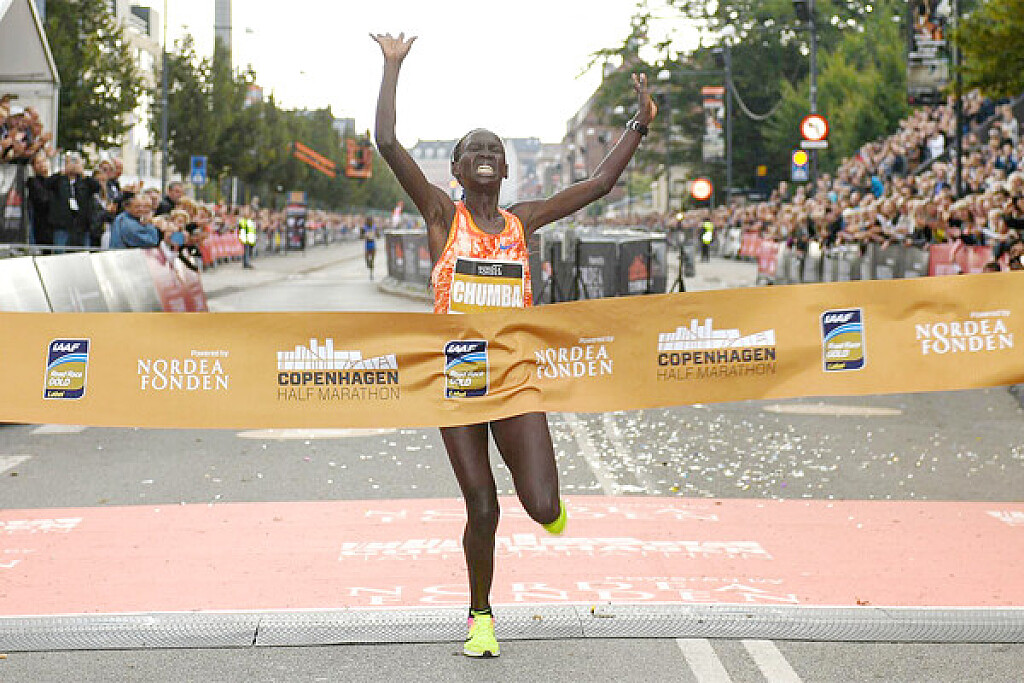
Chumba will go head to head against Gebreslase when the two clash at the Nagoya women’s marathon
Kenya-born Bahranian Eunice Chumba will go head to head against 2022 World champion Gotytom Gebreslase of Ethiopia when the two clash at the Nagoya women’s marathon slated for March 10.
Nagoya women’s marathon is held annually in Japan and it is the largest women’s race in the world certified by the Guinness World Records.
It was launched on March 12, 2012 with an initial participation of 13,114. It has since grown to be recognized by World Athletics as a Platinum label race averaging 20,000 participants.
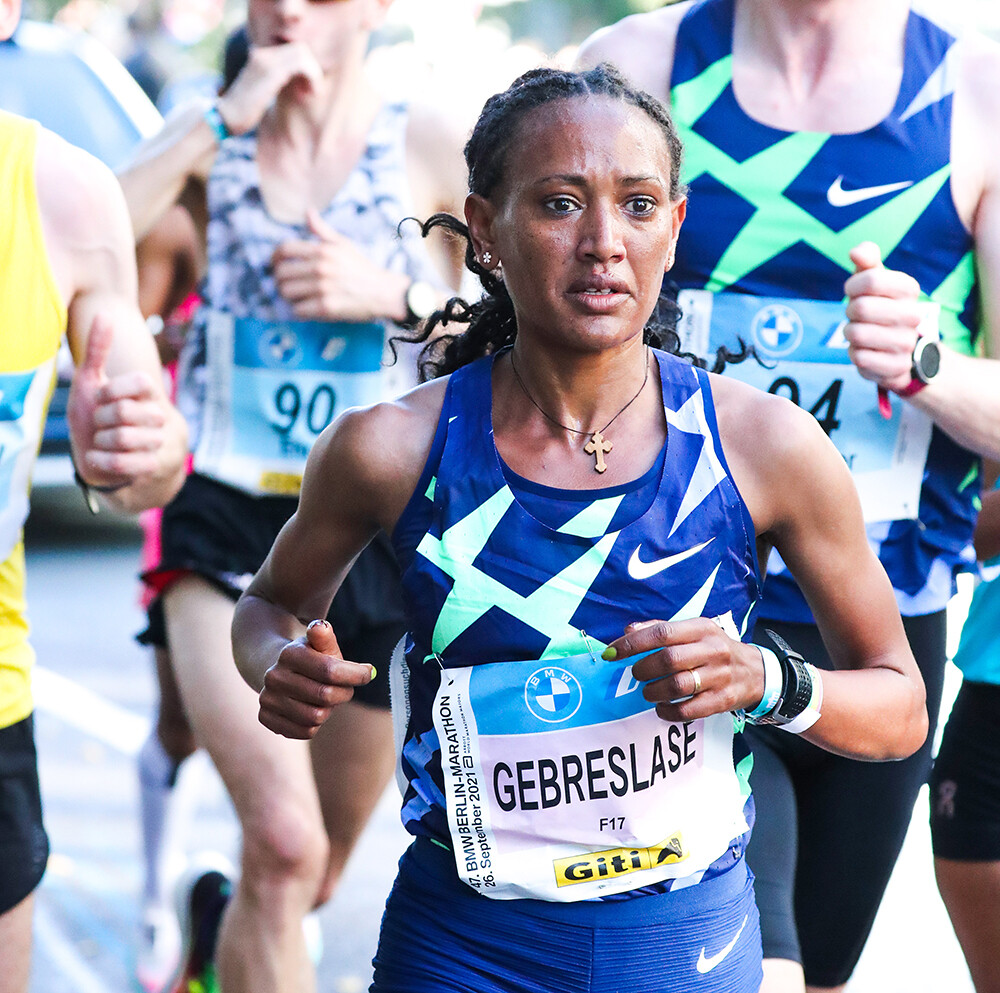
Chumba was a silver medalist in the 10,000m at the 2018 Asia Games in Jakarta, Indonesia, where she clocked 32:11.12.
Before that, she had also placed second in the same event in the 2015 Asia Championships held in Wuhan, China in 32:22.29. The 31-year-old further won the 2023 NN Rotterdam Marathon, Netherlands, clocking 2:20:31.
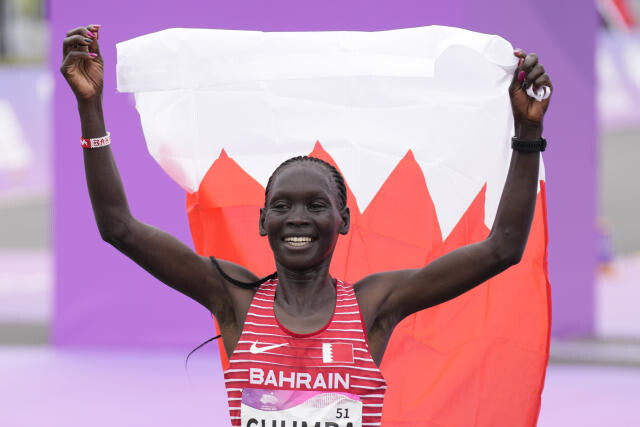
She followed it up with a bronze medal during the Shanghai Marathon, China, in November clocking 2:22:20.
Chumba has also won titles in the Abu Dhabi Marathon (2:20:41) in 2022 and the Copenhagen Half Marathon (1:06:11) in 2017.
In 2021 Gebreslase made her debut in the marathon with an overwhelming victory at the Berlin Marathon, Germany, clocking 2:20:09.
She followed it up with a bronze medal in the Tokyo marathon in 2022 (2:18:18) before winning the title at the 2022 World Athletics Championship (2:18:11) in Eugene, USA.
The 29-year-old also has a title in the Bahrain Half Marathon (1:05:36) and a silver medal in the Ras Al Khaimah marathon (1:05:51).
The two will be joined by the 2020 Napoli half marathon champion Violah Lagat and Kenyan-born Romanian Delvine Meringor.
Meringor won a title at the 2022 Los Angeles Marathon, USA, where she clocked 2:25:04.
The local contingent will be led by Ai Hosaoda who boosts a personal best of 2:21:42. She will be joined by 2016 Japanese champion in the 10,000m Suzuki Ayuko.
by Teddy Mulei
Login to leave a comment
Nagoya Women's Marathon
The Nagoya Women's Marathon named Nagoya International Women's Marathon until the 2010 race, is an annual marathon race for female runners over the classic distance of 42 km and 195 metres, held in Nagoya, Japan in early March every year. It holds IAAF Gold Label road race status. It began in 1980 as an annual 20-kilometre road race held in...
more...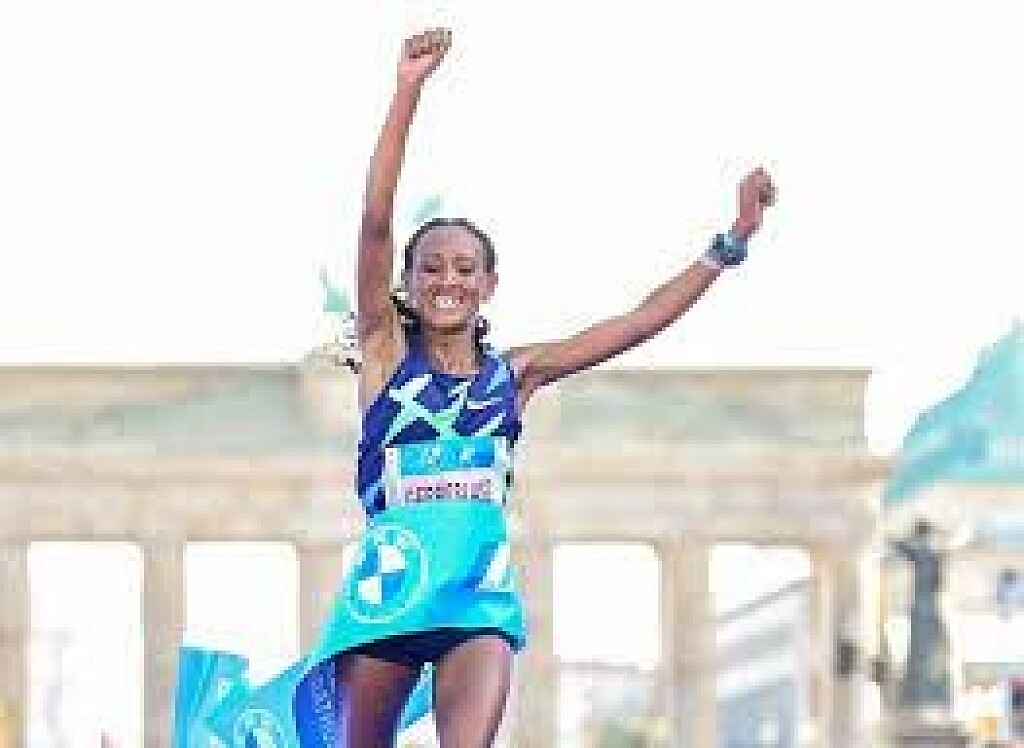
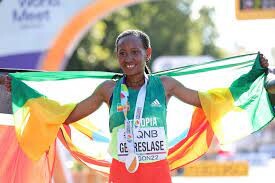
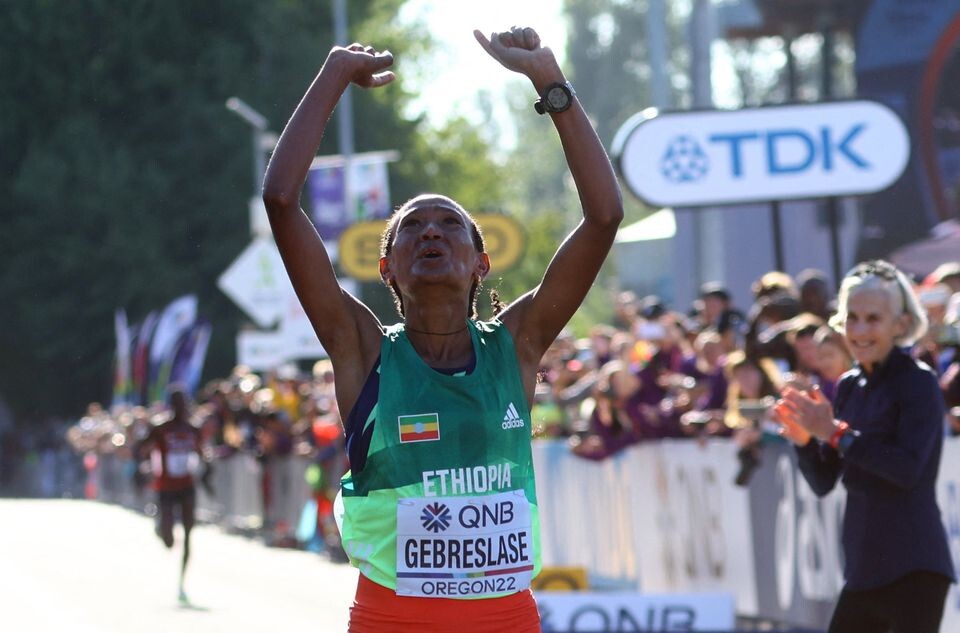
Ethiopian Gotytom Gebreslase will run in world’s largest women’s marathon
The Nagoya Women’s Marathon announced today the world’s top women athletes who will compete in the 13th edition of the race to be held on Sunday, March 10, 2024.
The leading names in the field are Gotytom Gebreslase of Ethiopia, world champion in Oregon in 2022 with a personal best of 2:18:11 and Silver Medallist in Budapest in 2023, and Eunice Chebichii Chumba of Bahrain, Asian Games Champion of 2023 in Hangzhou, who has a personal best of 2:20:02.
The competitor list also includes many outstanding international athletes such as Delvine Relin Meringor of Romania, Violah Cheptoo of Kenya, Giovanna Epis of Italy, Eloise Wellings of Australia, Camille French of New Zealand, and others representing China and Puerto Rico.
The local athletes who will face them from Japan are Ai Hosoda, the third-place finisher in the Marathon Grand Championship, Japan’s domestic qualifier for the 2024 Paris Olympics, who set a personal best of 2:21:42 in the 2022 London Marathon, the 2020 Tokyo Olympians Ayuko Suzuki in the marathon and Yuka Ando in the 10,000m, and 2023 Budapest World Championship competitor Rika Kaseda, all of whom have personal best records under 2:22 and will be vying for the final spot in Japan’s marathon team for the Paris Olympics.
Anyone who beats the Japanese record of 2:18:59 – just set this January for the first time in 19 years – will qualify for Paris.
The pacemakers driving the high-speed race include Sheila Chepkirui of Kenya, who has a personal best of 2:17:29.
The Nagoya Women’s Marathon is not only one of the world’s fastest elite competitions as a World Athletics Platinum Label road race, but it is also known as the world’s largest women’s marathon and a unique festival to celebrate women runners. All finishers will receive an event-exclusive Tiffany & Co. pendant as a token of their achievement.
The 2024 race will take place in Nagoya, Japan, on March 10 with 20,000 runners, while a virtual race is currently held from February 10 through March 31, which can be participated in anywhere in the world via a running app.
by AIMS
Login to leave a comment
Nagoya Women's Marathon
The Nagoya Women's Marathon named Nagoya International Women's Marathon until the 2010 race, is an annual marathon race for female runners over the classic distance of 42 km and 195 metres, held in Nagoya, Japan in early March every year. It holds IAAF Gold Label road race status. It began in 1980 as an annual 20-kilometre road race held in...
more...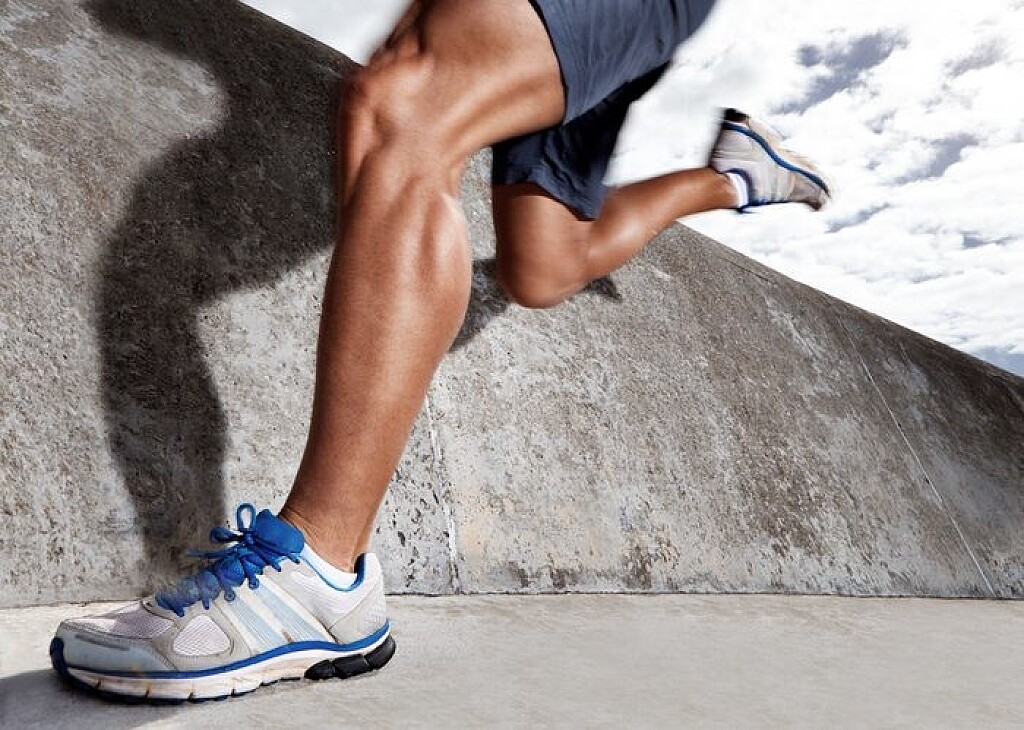
Five exercises to amplify ankle strength and stability
Adding a few ankle exercises into your routine can help you stay strong and steady during the final tough miles of any long training run or race, whether you’re tackling roads or trails. You’ll also avoid getting sidelined by a strained ankle or repetitive stress injury.
A runner’s feet endure a continuous impact that, over time, can take a toll on the network of tendons and ligaments in the ankles. Toward the end of a long run or hard training session, fatigue and low glycogen levels cause your feet’s responsiveness of to changes in terrain to diminish, affecting the swift micro-movements crucial for maintaining balance. This decline in agility places an increasing burden on your ankles, subjecting them to prolonged stretching and strain.
The result is not only discomfort, but disarray in your proprioceptive system—the internal compass that guides your body’s position and movement—causing soreness, slips and ankle rolls. These exercises not only fortify your ankles but also act as a safeguard against the pitfalls of a fatigued and under-prepared lower extremity.
1.- Hop and hold
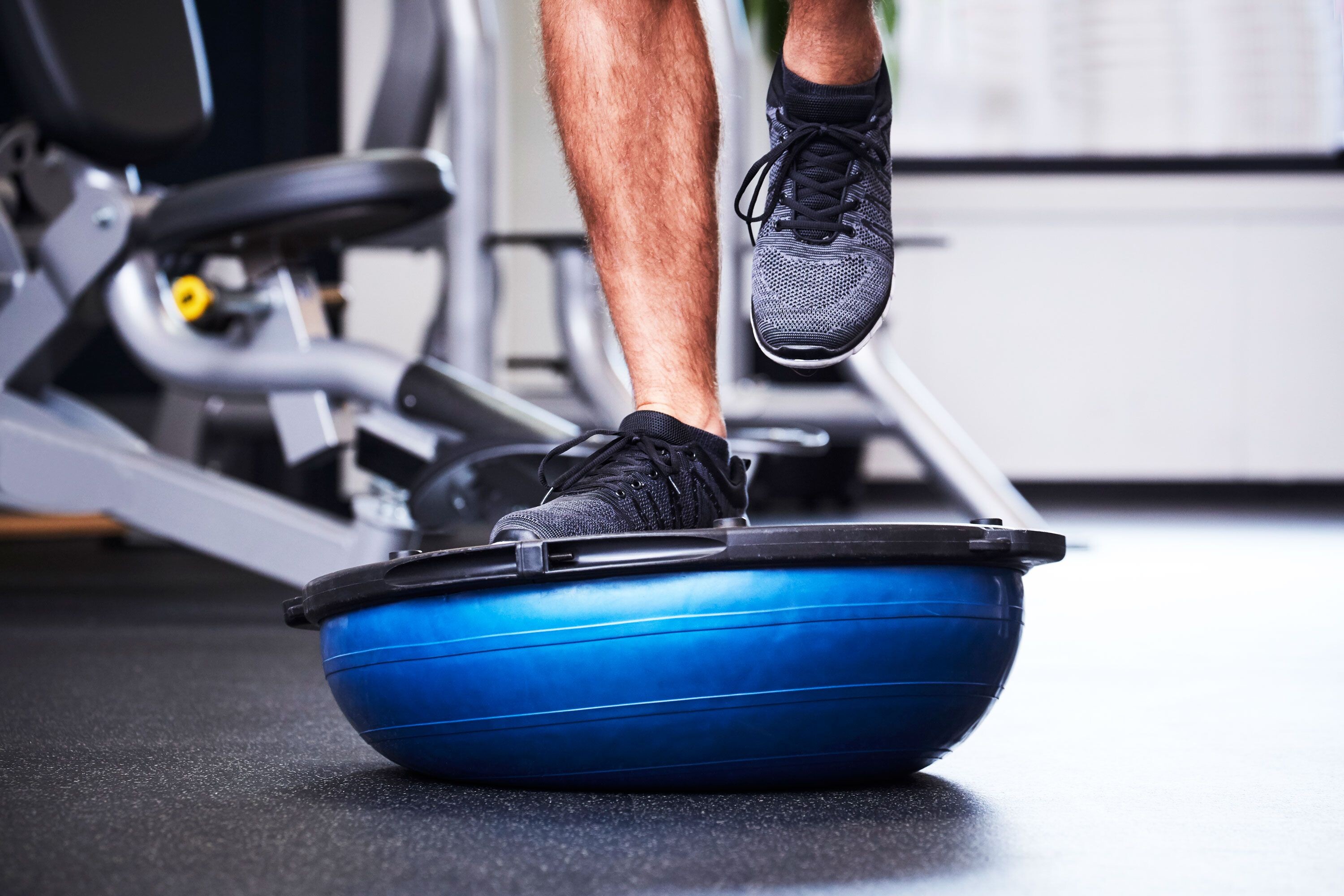
Stand with your feet hip-width apart, maintaining a straight and upright posture. Engage your core to ensure stability throughout the exercise.
Lift one foot slightly off the ground, balancing on the other.
With the grounded foot, perform a small, controlled hop. Focus on using the muscles around the ankle to control the movement. Upon landing, immediately shift your focus to holding the position. Balance on the foot that landed, ensuring that your ankle remains stable. Imagine rooting your foot into the ground.
Try to hold the position for 10-15 seconds, before switching to the other leg. Perform two to three sets of 10-15 reps on each foot, gradually increasing the duration of the hold as your ankle strength improves.
Modify this one if you find it challenging at first: you can hold onto a stable surface (like a chair or railing) for support until you build confidence and strength.
2.- Lateral shuffle
This exercise enhances ankle stability by engaging lateral movement and weight transfer.
Stand with feet hip-width apart, maintaining a slight bend in the knees.
Take a lateral step to one side, followed by the other foot. Move with controlled and deliberate steps.
Keep a low and athletic stance throughout the shuffle with your core engaged.
Try four x 10 steps to the left, then to the right.
3.- One-legged medicine ball toss
This exercise enhances ankle strength, stability and proprioception.
Stand on one leg with a slight bend in the knee for stability.
Hold a medicine ball with both hands, positioned in front of your chest.
While balancing on one leg, toss the medicine ball in the air and catch it. Focus on stability during the tossing and catching phases.
After completing a set, switch to the other leg. Try three sets of 10 tosses to start.
This exercise can be done with a cement wall, bouncing the ball gently off the wall with each toss and from both forward and sideways directions—it’s also a fun exercise to do with a partner.
4.- Eccentric calf raises
Try doing these on a step, lowering let your heels a few centimetres below the step with each one, to get a slightly deeper stretch.
Stand with feet hip-width apart and rise onto your tiptoes. Lower heels to a slow count to five.
Let your heels touch the ground, then immediately rise onto your toes again.
The key phase in this exercise is the eccentric one (the lowering part) when the tendon and muscles lengthen to control the downward path of your body.
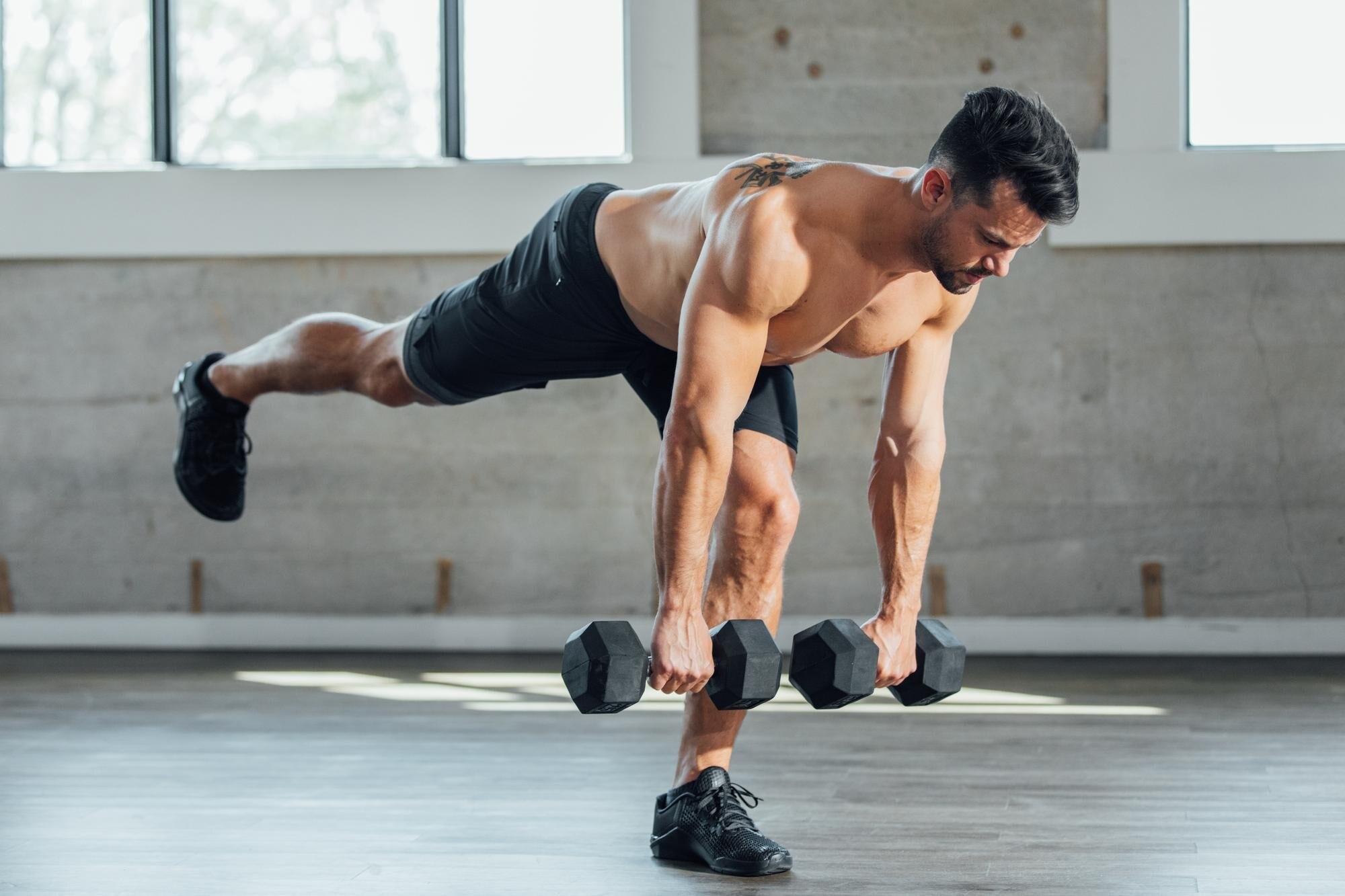
5.- Single-leg Romanian deadlift
The single-leg Romanian deadlift targets multiple areas for runners—it not only strengthens the hamstrings and glutes but also enhances balance and stability, crucial for maintaining that strong foundation during tired miles.
Begin standing on one leg, with a slight bend in the knee. Hinge at your hips, pushing them backward while simultaneously lowering your upper body towards the ground. Keep your back straight and your chest lifted.
As you hinge forward, extend your non-standing leg straight behind you. Work to keep your extended leg, hip, and torso in a straight line, forming a “T” shape with your body.
Reach your hands towards the ground, going as low as your flexibility allows. Engage your hamstrings and glutes to return to the upright position, bring your extended leg back to the starting position, and repeat.
Aim for three sets of 10-12 repetitions on each leg.
These exercises collectively target ankle strength, stability and mobility, providing a comprehensive approach to help you maintain an unshakeable foundation. As with any exercise, start with a light load, or use your body weight and gradually increase as your strength and technique improve.
by Keeley Milne
Login to leave a comment
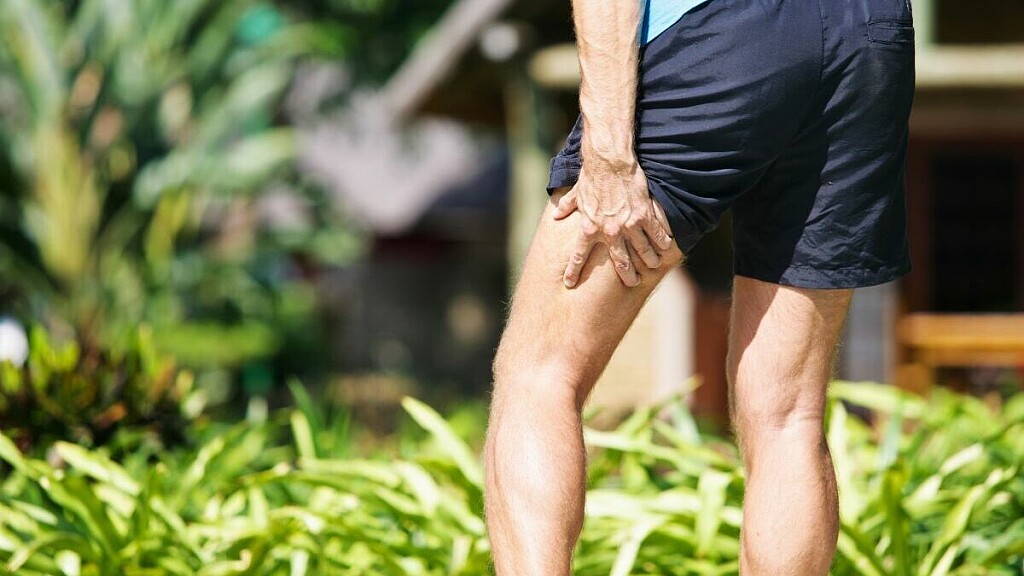
Three easy exercises to help you avoid hamstring pain for good
Hamstring injuries are common in runners due to the repetitive use and movement of the muscle. Factors like poor mechanics and inadequate strengthening and rehabilitation can only make your hamstrings more vulnerable to injury or tear. Strengthening these muscles is crucial for preventing tears and enhancing performance, so you’re able to run more and run stronger. In this article, we’ll explore three effective exercises for developing resilient hamstrings and reducing your risk of injury.
1.- Romanian deadlifts (RDLs)
Running requires the hamstrings to have a great range of motion, especially if you are a sprinter or trail runner with a lot of changes of pace. Romanian deadlifts specifically isolate your hamstring muscles, helping you build both strength and flexibility. Try doing this exercise at a controlled pace to intensify the demand on the muscles. RDLs are great for building resilience and reducing the risk of a future hamstring tear.
2.- Nordic curls
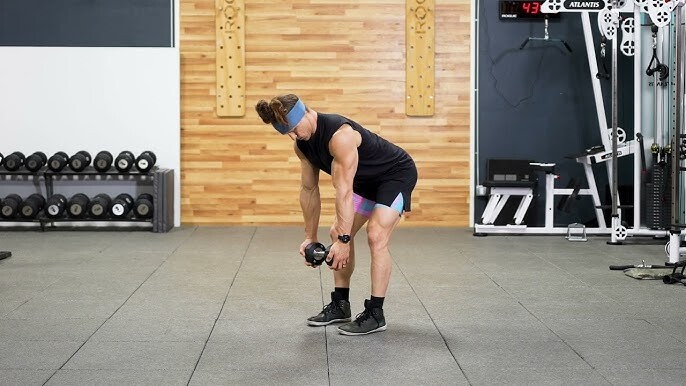
Nordic curls are a stand-out exercise for strengthening your hamstring muscles, especially crucial for middle-distance runners who encounter frequent changes in speed and sudden sprints that impose a lot of stress on these muscles during a race or workout.
To perform Nordic curls, you’ll need to anchor your feet under a resistance band, or weights, or ask for help from a workout buddy. Gradually lower your upper body toward the ground until you catch yourself with your hands. You’ll want to keep a controlled pace, similar to Romanian deadlifts (there’s no need for rapid movements)—focus on resisting the descent and steadily pushing yourself back up.
3.- Swiss ball hamstring curls
The primary objective is to enhance resilience and strengthen the hamstrings to reduce the likelihood of future strains. Using either an exercise machine or a stability ball, hamstring curls can be a highly effective workout to strengthen and engage the hamstring muscles. By integrating hamstring curls into your strength-training routine, you can actively minimize the risk of future tears.
For runners, hamstring curls offer targeted benefits by focusing on muscles that play a pivotal role in running biomechanics. These curls entail the controlled flexion of the knee joint against resistance, replicating the hamstring’s motion during the swing phase of running. As a result, incorporating hamstring curls becomes a valuable addition to a runner’s regimen, aiding in muscle strength, stability and injury prevention.
by Marley Dickinson
Login to leave a comment
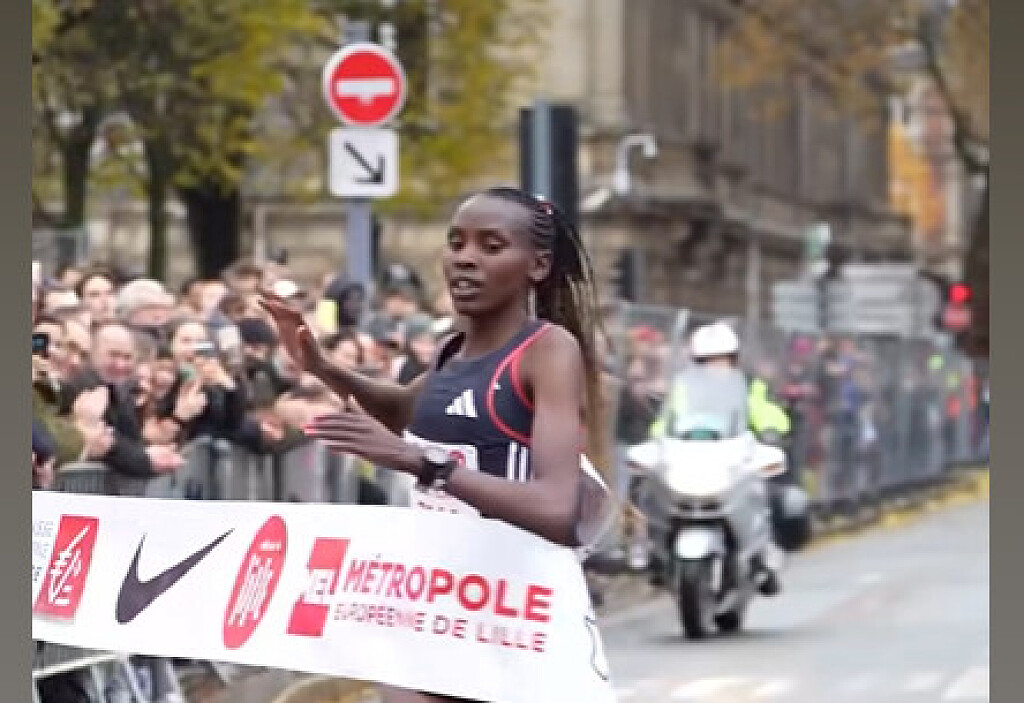
Agnes Ngetich clocks second-fastest time in history with dominant win in France
Agnes Ngetich clocked 29:26, the second-fastest time in history, to win the 10km trail road race in Lille, France.
Reigning World Cross-country bronze medalist Agnes Ngetich was in a class of her own as she reigned supreme in the 10km road race in Lille, France on Saturday, November 18.
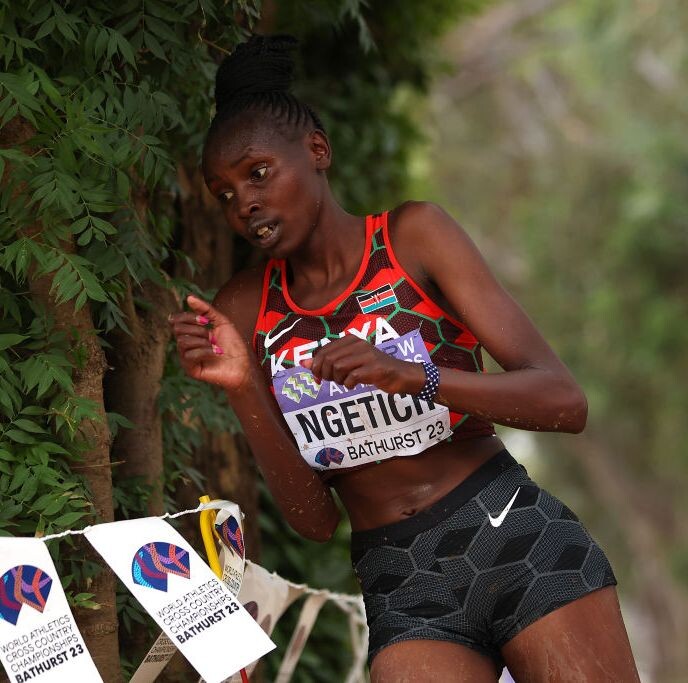
Ngetich clocked 29:26, the second-fastest time ever to win the race ahead of Emmaculate Anyango who clocked a Personal Best time of 30:01 to finish second. Christine Njoki completed the podium, clocking 30:41 to cross the finish line.
The 22-year-old has been in stellar form this season and will be keen to continue the winning streak to next year’s Olympic Games in Paris, France, where she intends to compete in the 10,000m.
Ngetich previously clocked a world record time of 29:24 at the Brasov Running Festival in Romania but the record was not ratified by World Athletics since the course did not meet the required standards.
She is also fresh from reigning supreme at the Athletics Kenya Cross-Country Meet held at Kyongong Grounds, Bomet County.
She clocked 31:55 to win the race ahead of Cynthia Chepngeno and Sandra Chebet who finished second and third in respective times of 31:59 and 32:11.
Ngetich’s time is the second-fastest time by a woman in history. She now comes behind former London Marathon champion Yalemzerf Yehualaw, who clocked a world record time of 29:14 to win the women's event in Castellón, Spain earlier this year.
by Abigael Wuafula
Login to leave a comment

Lille Urban Trail 10 KM
The Lille Urban Trail is an annual world-class race taking place in Lille. Professional runners, friends wishing to stretch their legs: the Lille Urban Trail welcomes people of all levels for nighttime events to discover the city's most beautiful monuments. Every year in November, the schedule of outings in Lille sees the arrival of one of the most anticipated races...
more...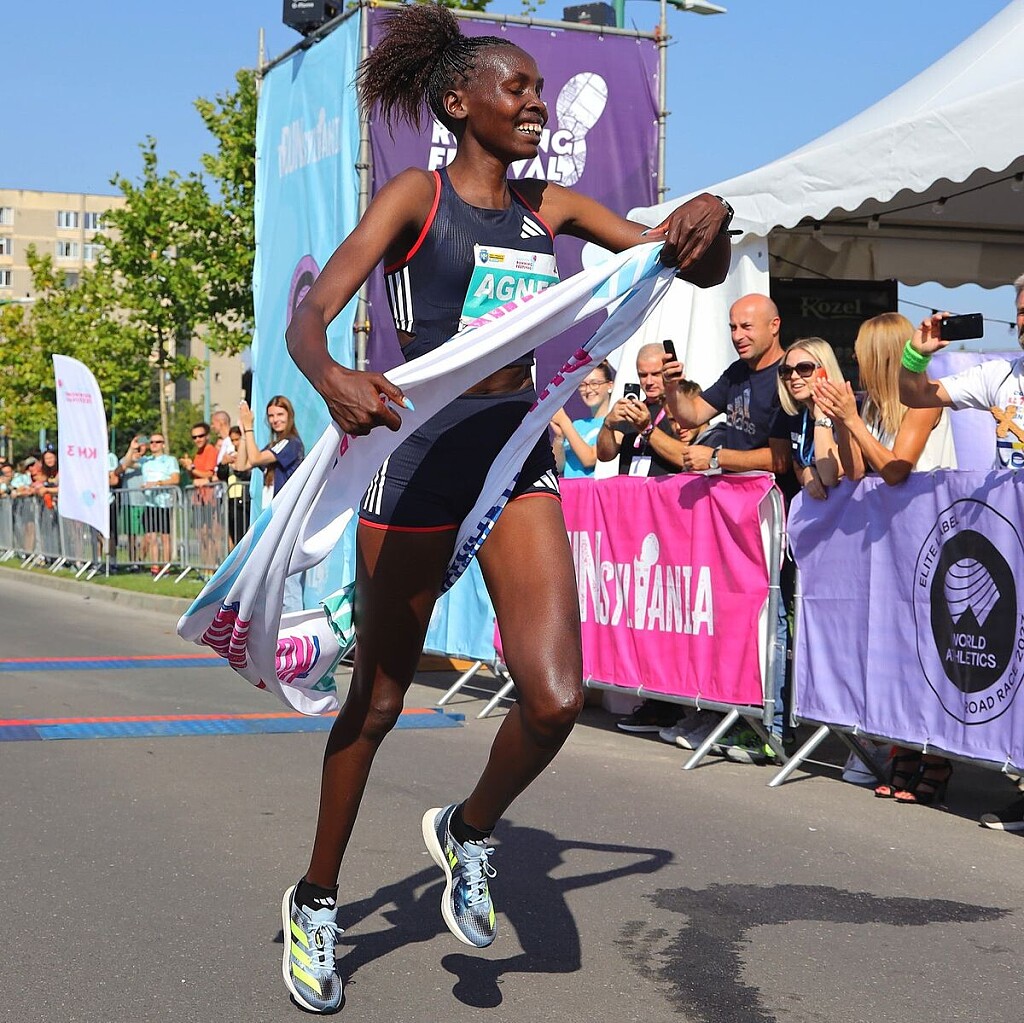
Ngetich vows to break the world 10km record again if not ratified
World cross-country bronze medallist Agnes Ngetich has vowed to set another record if her current world 10km record is not ratified by the World Athletics.
Speaking in Kapsokwony after winning the 10km senior women's title in the second leg of the Athletics Kenya (AK) cross-country meeting at the Kapsokwony High School ground in Bungoma County, Ngetich said it was not her blunder that the course was short.
“If my world record will not be ratified, I still have time to set another one because I did not create the mess that happened on the course,” said the two-time East Africa under-20 champion.
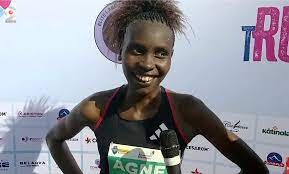
She said even if the course was 25 meters less, she could have either set her personal best or even broken the world record. “I had a chance to go ahead and set the world record because I was not only also in great shape but determined to make history," she noted.
"Even with the addition of the 25 meters, I believe I would have comfortably run 30:00 minutes. All the same, I still have time on my side and I will do it again," she insisted.
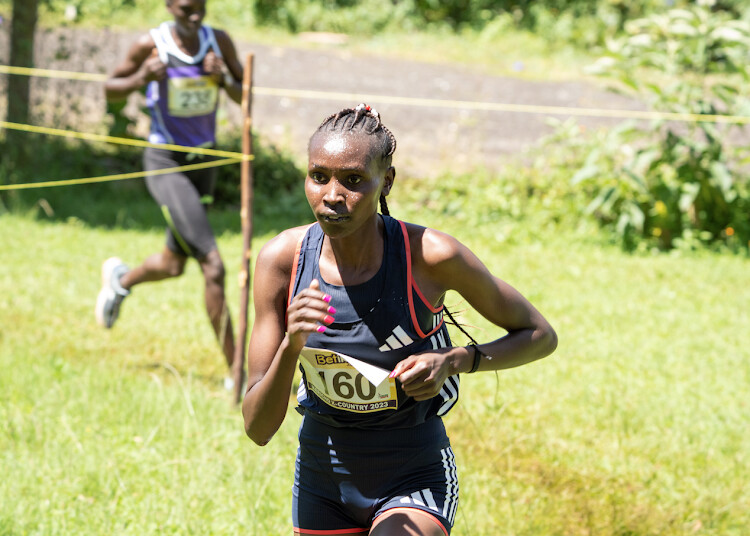
Ngetich broke the women-only world 10km record in the Transylvania 10km in Brasov, Romania, last month after posting 29:24 to surpass the initial time of 30:01 set by the late Agnes Tirop in Herzogenaurach, Germany in 2021.
Meanwhile, former athlete Tegla Sang has welcomed the move by the government to change the name of Kericho Green Stadium to Wilson Kipkurugut Chumo Stadium.
During the Mashujaa Day celebrations held in Kericho County, President William Ruto announced that the facility will now be known as the Kipkurgut Chumo Stadium.
The move is aimed at celebrating the first Kenyan to win an Olympic medal—the 800m bronze —during the 1964 Olympic Games in Tokyo, Japan.
"Allow me to celebrate Kiprugut Chumo, the first Kenyan to win an Olympic medal by renaming the Kericho Green Stadium in his name," he noted.
Sang, a former All Africa Games 400m champion, said the government is doing a good thing to support the legends who brought fame to the country.
“This is a good move to celebrate legends that brought fame to the nation,” said Sang, the first Kenyan to compete for the country at the 1968 Olympic Games in Mexico City, Mexico.
The late Chumo, who was the first Kenyan to win an Olympic medal for the country, died last year aged 84.
Sang said as much as the government's move is good, it's long overdue. " We don't have to wait for some athletes to die to recognize them," she noted.
She said the government should also offer monetary awards to retired athletes because they did not earn much during their time.
“Majority of former athletes did not earn any money from running, unlike the current athletes. With the government handing goodies to any medal winner, they should always remember those who laid that foundation,” she said.
She added that medical insurance for retired athletes would go a long way in cushioning them during their current old age.
Sang cited Nyantika Maiyoro, Amos Biwott, Kipchoge Keino, the late Naftali Temo, Naftali Bon, Ben Jipcho, Lydia Stephens, Elizabeth Jemeli Chesire, Hezekiah Nyamau, and Charles Asati as other deserving cases in as far as recognition and awards is concerned.
by Emmanuel Sabuni
Login to leave a comment
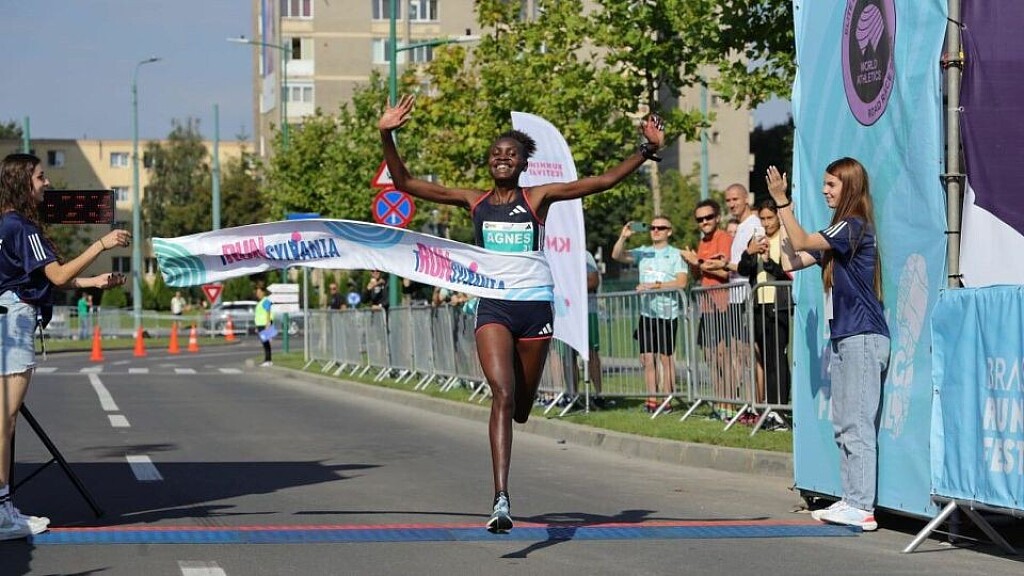
Why Agnes Ngetich's world record will not be ratified
Ngetich broke the women-only world 10km record at the Trunsylvania 10km but her record will not be ratified.
Agnes Ngetich made headlines two weeks ago as she oozed class to win the women’s 10km and break the women-only world 10km record at the Trunsylvania 10km, a World Athletics Elite Label road race held as part of the Brasov Running Festival in Romania.
Ngetich clocked 29:24 to cut the tape first ahead of Catherine Reline who finished second in 30:14 as Joy Cheptoyek of Uganda completed the podium in 30:34.
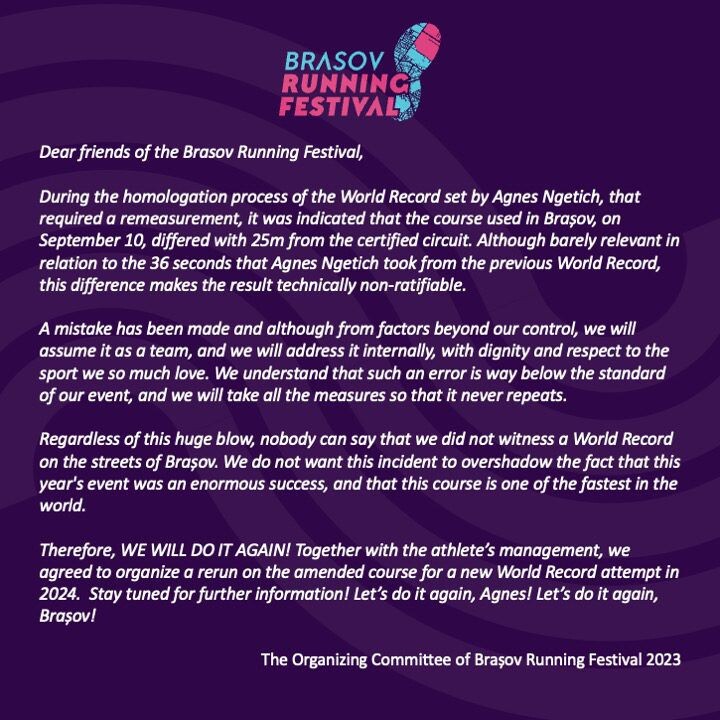
However, the 22-year-old’s record will not be ratified, as the course was found to be short by 25m. The race organisers made the announcement on their Facebook page, indicating that the course did not meet the standards of World Athletics.
When any world record is broken, World Athletics is required to re-measure the course to ensure it meets the required distance.
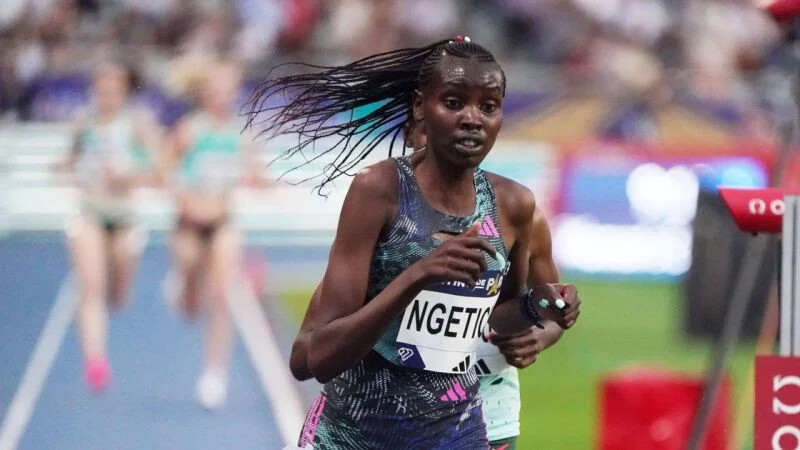
A part of the lengthy post on Facebook read: “During the homologation process of the World Record set by Agnes Ngetich, that required a remeasurement, it was indicated that the course used in Brasov, on September 10, differed with 25m from the certified circuit.
Although barely relevant in relation to the 36 seconds that Agnes Ngetich took from the previous World Record, this difference makes the result technically non-ratifiable.”
With her world record not being ratified, this means that the previous 10K record of 30:01, was set by the late Agnes Tirop. The women’s 5k record of 14:29, set by Ethiopia’s Senbere Teferi in 2021 will also stand.
by Abigael Wuafula
Login to leave a comment
Brasov Running Festival 10K
"Brasov Running Festival” is set to become the iconic running event of Romania, with elite, popular and children races, concerts, conferences and other running related activities. The elite 10K race, Trunsylvania International 10K is expected to enjoy an impressive participation of world class runners on a very fast course. -The only World Athletics Elite Label 10K in South-East Europe -The...
more...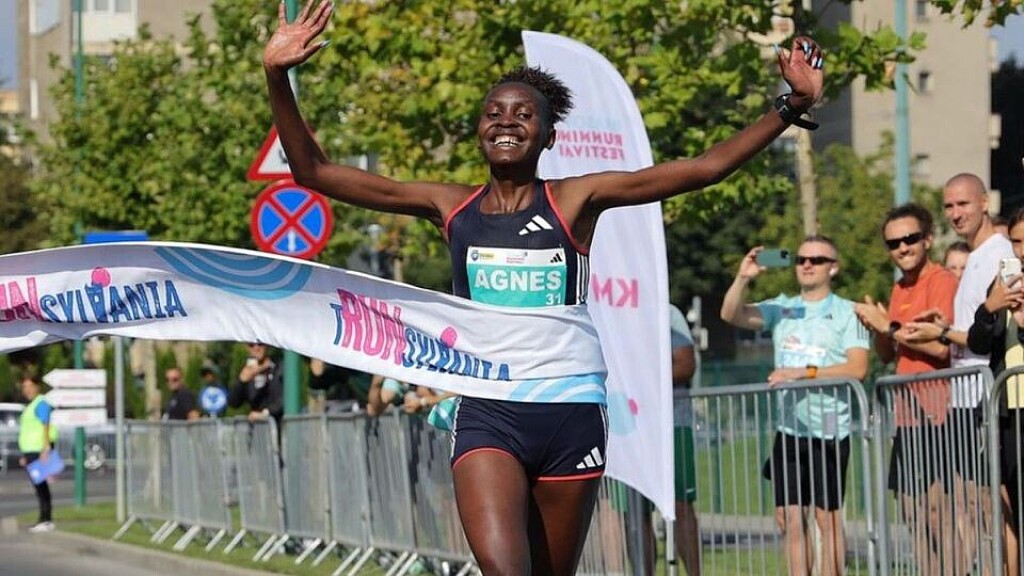
Agnes Ngetich becomes multi millionaire after smashing women-only 10km World Record
The 22-year-old broke the women-only world 10km record in Romania, surpassing the late Agnes Tirop's record, with Catherine Reline also shining for Kenya.
Kenya was once again thrust into the global limelight on Sunday after Agnes Ngetich shattered the women-only world 10km record by clocking 29:24 at the World Athletics Elite Label road race in Brasov, Romania, on Sunday.
At only 22, Ngetich covered the initial 5km in 14:25, eclipsing the previous record for that distance by four seconds.
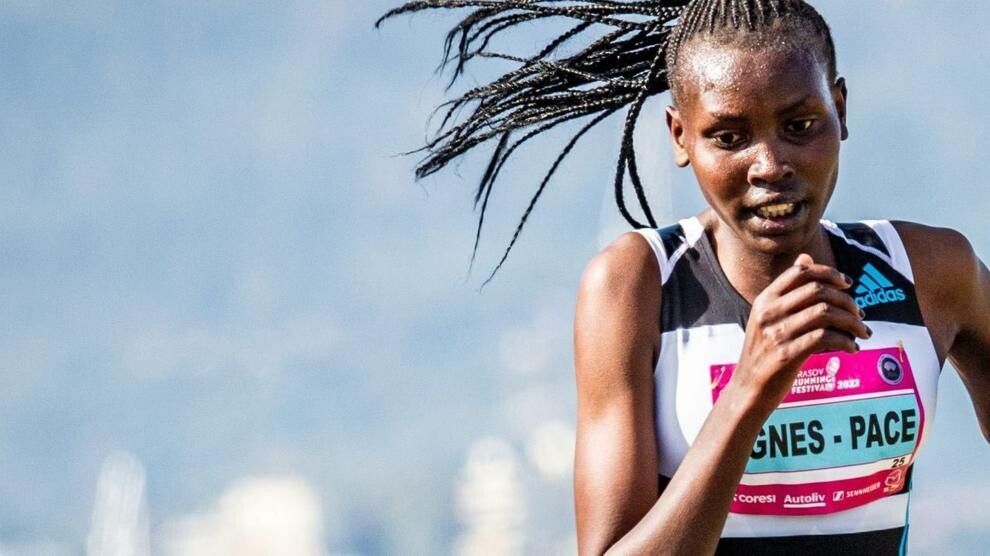
The significance of this feat becomes more profound when considering that the previous record was held by the late Agnes Tirop of Kenya.
Running closely behind, Kenya was once again represented on the podium by Catherine Reline who clocked a solid 30:14, securing second place. Uganda's Joy Cheptoyek completed the top three with a commendable time of 30:34.
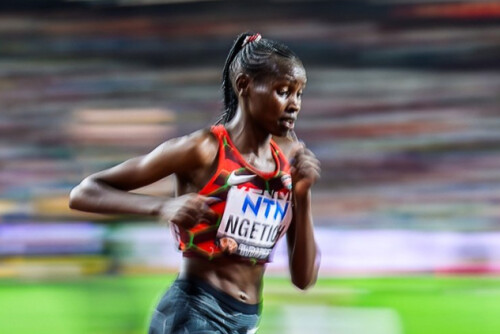
World Athletics, in its statement, lauded Ngetich's achievement by saying, “As well as being the fastest women-only 10km, Ngetich's time is the third-quickest by a woman in history."
This achievement is only behind the remarkable runs of 29:14 and 29:19 by Ethiopia's Yalemzerf Yehualaw, both accomplished in mixed races.
The remarkable feat was not just a win for Ngetich in terms of accolades but also a significant financial windfall.
The race organizers had initially placed the prize money at $5,000 (Ksh 731,000). However, smashing a world record comes with its unique set of rewards. and Ngetich is set to receive an additional bonus of $50,000 (Ksh7.3 million) from World Athletics.
This sums up to a whopping total of $55,000 (Ksh8.4 million) that Ngetich will be taking home, a well-deserved reward for her impeccable performance.
Speaking after the race, an ecstatic Ngetich remarked, “It is quite a surprise to me. I didn’t expect to break the world record. All I ever wanted was a personal best (PB) of 30:00 or 30:02 but to set a new world record in the women’s 10km was the last thing I expected.”
As fans across the globe celebrate her achievement, many are confident that this is just the beginning for the World Cross Country bronze medalist.
With youth on her side and a clear demonstration of her capability, the world waits in anticipation of her next move. Will she redefine another record, or perhaps set a new standard for future generations to aspire towards? Only time will tell.
For now, Agnes Ngetich revels in her well-deserved moment of glory, inspiring millions and etching her name in gold.
by Festus Chuma
Login to leave a comment
Brasov Running Festival 10K
"Brasov Running Festival” is set to become the iconic running event of Romania, with elite, popular and children races, concerts, conferences and other running related activities. The elite 10K race, Trunsylvania International 10K is expected to enjoy an impressive participation of world class runners on a very fast course. -The only World Athletics Elite Label 10K in South-East Europe -The...
more...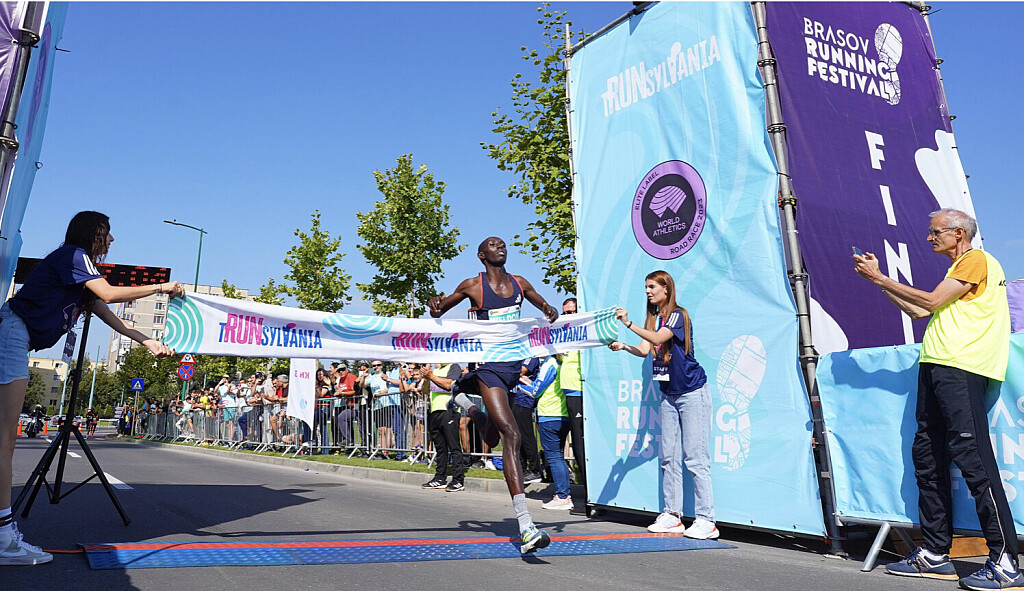
Ngetich breaks women-only world 10km record in Brasov
Kenya’s Agnes Ngetich broke the women-only world 10km record* at the Trunsylvania 10km, clocking 29:24 at the World Athletics Elite Label road race held on Sunday (10) as part of the Brasov Running Festival in Romania.
In an impressive solo running display, the 22-year-old showed her intent from the start and covered the first 5km in 14:25 – four seconds faster than the women-only world record for that distance.
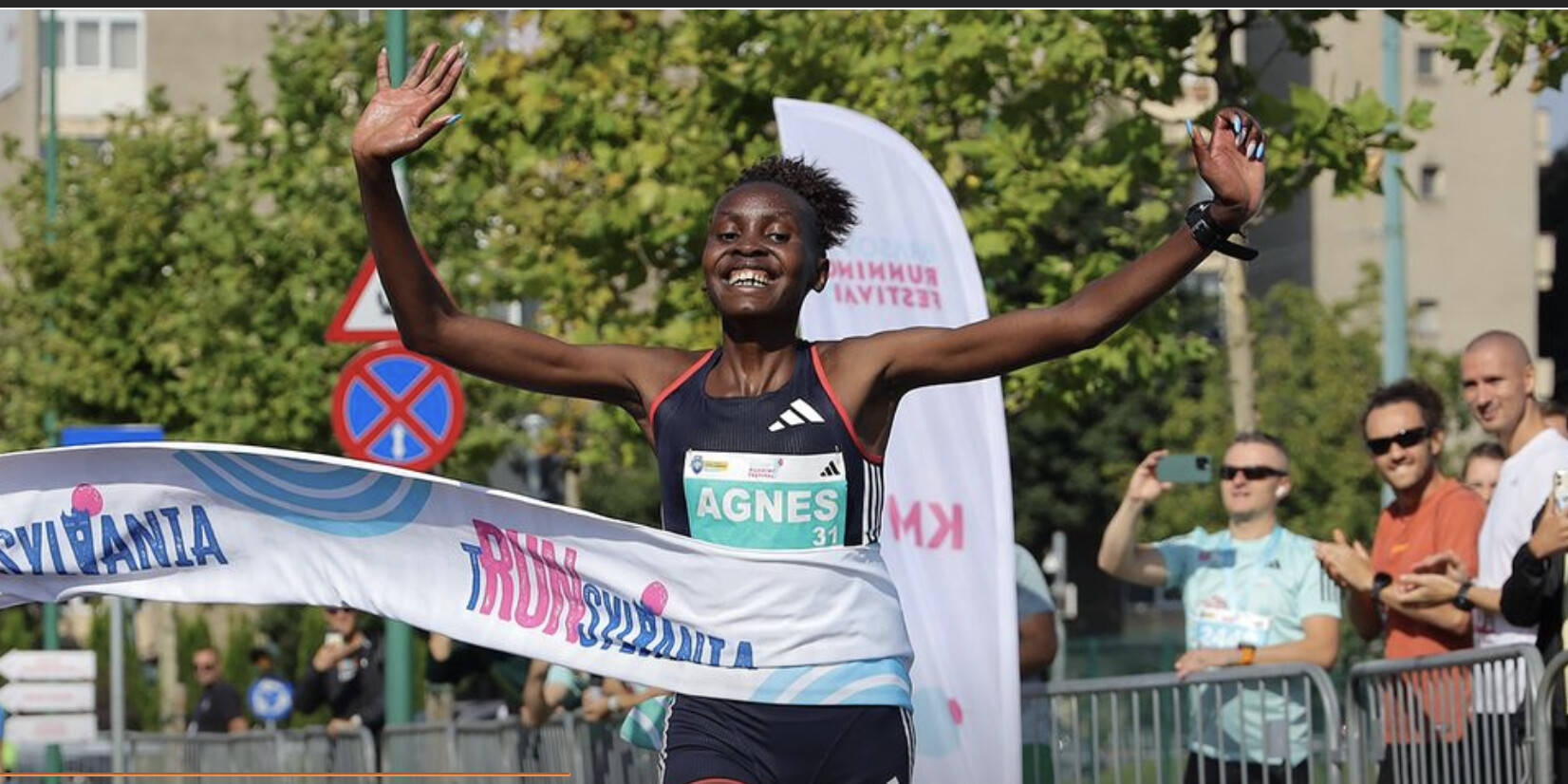
She had a lead of 10 seconds over her compatriot Catherine Reline at that point.
Racing on the loop course, Ngetich went on to pass 6.5km in 18:54 and 8.5km in 24:56 before crossing the finish line in 29:24 to record the fastest ever 10km in a women-only race, improving on the 30:01 set by the late Agnes Tirop in Herzogenaurach in 2021.
As well as being the fastest women-only 10km, Ngetich’s time is the third-quickest by a woman in history, behind only the 29:14 run by Ethiopia’s Yalemzerf Yehualaw in a mixed race in Castellon last year and the 29:19 Yehualaw clocked in Valencia earlier this year.
“The world record is a surprise to me,” said Ngetich, who started the 2022 race in Brasov as the pacemaker but went on to finish second in 30:30. “I didn’t expect to get the world record. I just wanted a PB, low 30 minutes to break the course record, but a world record is really a surprise.”
The race started at a fast pace right from the gun with Ngetich, Reline and Uganda’s Joy Cheptoyek leaving the pacemaker – who had been asked to lead the runners through 5km in 15:00 – quickly behind.
The trio sped through 1500m in 4:12 and Cheptoyek started to lose contact with the Kenyan pair a kilometre later. Ngetich and Reline went through 3km in 8:32 but it was only a few hundred metres down the road in the Coresi district on the outskirts of the Transylvanian city that the latter started to drift back. From then on, Ngetich was out on her own.
Ngetich, who claimed bronze at the World Athletics Cross Country Championships in Bathurst in February and then finished sixth in the 10,000m final at the World Athletics Championships Budapest 23 last month, set a women-only world 5km record with her split of 14:25, improving on the 14:29 achieved by Ethiopia’s Senbere Teferi in Herzogenaurach on the same day that Tirop set her 10km mark.
By 7km, Ngetich had built up an 18-second lead over Reline and the gap just kept on widening.
As Ngetich passed the 8.5km checkpoint in 24:56, Reline was second in 25:29, and the leader continued to fly over the final section of the three-lap course before gaining her second world record of the morning.
“I started the year with the World Cross, which was perfect, so I wanted to close the season with a good result,” explained Ngetich, who achieved that aim in sensational style.
Reline held on to finish second in 30:14, while Cheptoyek placed third in 30:34.
The men's race was won by Weldon Langat, who completed a Kenyan double in 27:05.
A group of seven athletes went through 5km in 13:30, with another four just two seconds further back at the halfway point.
Surges in the sixth kilometre by Kenya’s Amos Kurgat and Dennis Kibet saw the pair pull away, with Langat being towed along comfortably in their wake.
Kibet continued to regularly push the pace over the course of the next three kilometres but with just over one kilometre to go, he started to pay for his service at the front.
As Kurgat and Langat embarked on the final kilometre, the latter used that as a signal to change gears and made a decisive move that took him to victory just over two-and-a-half minutes later.
Kurgat took second place in 27:12, while the 2018 world U20 5000m champion Edward Zakayo Pingua came through strongly over the final kilometre, firstly overtaking the tiring Kibet and then almost catching Kurgat to complete an all-Kenyan podium in third place with 27:14.
Mile wins for Van Riel and Mechaal
The Trunsylvania 10km took place on the second day of the Brasov Running Festival, with Saturday (9) offering elite mile races.
Robin van Riel of the Netherlands and Turkiye’s Emine Hatun Mechaal claimed victories in the European Road Mile, winning in national records of 4:05.5 and 4:41.7, respectively.
Mechaal was the first across the line as dusk started to fall over the Coresi district, after a well calculated run that saw the 2014 European U20 cross country champion pull away from her nearest rivals over the final 100 metres.
Romania’s Cristina Balan finished second in 4:43.0, while Greek 1500m champion Melissa Anastasakis was third in 4:44.0, both women also setting national records.
In the men’s race, runners in the leading pack were reluctant to go with pacemaker Stephen Masindet and they passed 1km in an unofficial 2:40.0, which made the anticipated sub-four-minute time and a world record highly unlikely.
In the end, Van Riel was able to outsprint his younger compatriot Stefan Nillessen in a thrilling duel as the finish line approached.
Van Riel clocked 4:05.5 to Nillessen’s 4:05.8, with Italy’s Giovanni Filippi third in 4:07.2.
Further elite mile action will be on offer in Riga next month as the World Athletics Road Running Championships hosts mile, 5km and half marathon races.
Login to leave a comment
Brasov Running Festival 10K
"Brasov Running Festival” is set to become the iconic running event of Romania, with elite, popular and children races, concerts, conferences and other running related activities. The elite 10K race, Trunsylvania International 10K is expected to enjoy an impressive participation of world class runners on a very fast course. -The only World Athletics Elite Label 10K in South-East Europe -The...
more...
There’s a Six-Day Ultramarathon Happening Inside a Speed Skating Rink
Runners have been logging miles around a 443-meter running track all week. Last year’s winner ran 437 miles.
While summer racing heats up, some ultra athletes in Milwaukee are keeping on their layers as they race ’round the clock at the Six Days in the Dome ultramarathon. Held inside the Pettit National Ice Center, which houses two full-sized hockey rinks and a speed skating track nestled inside the 443-meter running track, the facility’s temperature is kept at a steady 55 degrees year-round.
That’s the point in this competition, which originated in 2014 at the Alaska Dome in Anchorage—where Joe Fejes broke the then American record for six days by running 580 miles. Eventually, the race relocated to Milwaukee for its second running in 2019. Whereas many ultra competitions feature rough terrain, brutal conditions, and require an “expect anything” mindset, the original race director, Steve Durbin, wanted to create an ultra race in a fully-controlled environment.
But just because the environment is carefully calibrated for racing success doesn’t mean the great distances require any less mettle than ultras that are contested in rugged outdoor settings. Ultramarathon running requires a great deal of planning—runners schedule their sleep, kit changes, showers, and fueling, and must stay on top of the unavoidable blisters, chafing, and other small aches and pains that can end their race if not tended to.
“The thing about ultra-running, the finish is not a guarantee,” race co-director Mike Melton told UrbanMilwaukee.com. “That’s part of the challenge. How deep into yourself will you go? How deep into the pain cave can you handle? How can you manage the sleep deprivation, the miles you want to do? Everyone’s motivation is something different, something unique.”
As Saturday night looms, athletes are nearing the end of the nearly weeklong competition, which began on June 18. The stakes are high, as those who place in the top six will secure their place on the U.S. 24-Hour National Team. As of Wednesday afternoon, Romania’s Nicolae Buceanu and Sandra Villines-Burruss from Florida were in the lead, at 268.268 and 243.243 miles, respectively.
Canadian Viktoria Brown took the win last year with a total of 457.4135 miles, setting two Canadian records and one world record in the process, but she didn’t return to defend her title, so the multi-day competition is anyone’s game at this point.
In addition to the six-day competition, there are 12, 24, 48, and 72-hour categories, and several attempts at records have been pursued. New Delhi’s Meenal Kotak was cheered on Wednesday afternoon as she completed her 72-hour attempt, recording just over 235 miles and setting a women’s record for India.
by Runner’s World
Login to leave a comment
How Your Feet Recover (or Don't) After a Marathon, According to Research
New research highlights the type of damage that may occur from 26.2 miles of impact.
Participating in marathons can be a thrilling accomplishment, but it’s not always easy on the body—research has highlighted that marathon runners can be prone to serious soreness depending on muscular strength levels, as well as hamstring damage, for example. But what does it do to your feet? New research in the Scandinavian Journal of Medicine & Science in Sports finds that the larger muscles in the feet may show damage in the form of swelling and soreness for a week or more after a race.
To determine how feet are affected, researchers recruited 22 college runners who ran at least two to three times per week, and who were registered for the Mt. Fuji International Marathon in either 2019 or 2021. They used magnetic resonance imaging to measure the transverse relaxation time of the intrinsic and extrinsic muscles at four different time points: before the marathon, as well as days one, three, and eight after marathon completion.
To help put that into layman’s terms: The intrinsic muscles of the foot originate and insert within the foot itself, while extrinsic muscles originate in the lower leg and connect to the foot by way of the ankle. Both types of muscles stabilize the inner arch of the foot while working to move the foot during walking and running. Transverse relaxation time, also known as T2, is a measure of muscle damage.
When comparing the T2 values, researchers found significant damage for one of the intrinsic muscles and three extrinsic muscles the day after the marathon, with values fluctuating over the course of eight days.
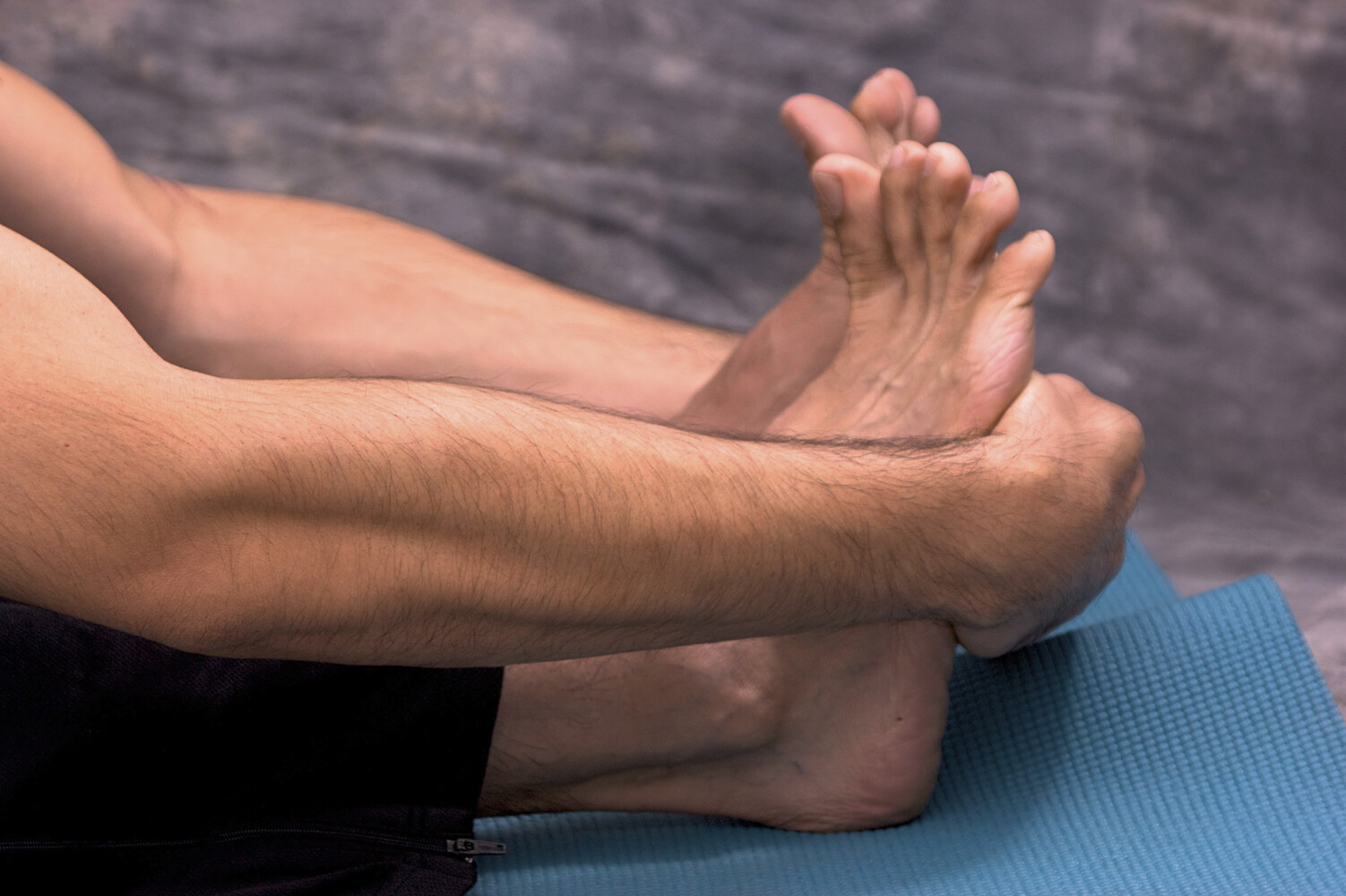
“This shows that different foot muscles are affected in different ways during a full marathon, with outer muscles more prone to damage than inner ones,” according to lead author Mako Fukano, Ph.D., researcher at the Shibaura Institute of Technology in Japan. He told Runner's World that pressure on the ankle joint during a continuous, long-distance run like a marathon would affect extrinsic muscles the most because they’re the ones that have to work harder to produce an efficient running stride.
“These findings might help for conditioning and injury prevention,” she said. “They give an indication that building strength in your feet could be important for recovery.”
In terms of how to best take care of your feet, the optimal strategy would be a combination of single- and double-leg exercises incorporated into a strength program, said Carol Mack, D.P.T., C.S.C.S.
“Strength training throughout the marathon training cycle can to help keep the foot and ankle muscles as strong as possible to run long distances,” she told Runner’s World. “For example, single-leg exercises will help isolate the stabilizing muscles in one leg at a time.”
Examples of some exercises to include in your marathon strength routine include single-leg Romanian deadlifts, single-leg squats, and Bulgarian split squats.
Another factor here is to allow time for recovery, she added. In the recent study, researchers only looked at damage in the first eight days after a race and there was still evidence of muscle damage. That means it’s unclear how long the damage may actually affect foot and ankle muscles, Mack said.
“What’s key is to understand that recovery from a marathon takes time,” she said. “In the weeks after a race, it’s important to take time off from impact exercise to let the muscles in the foot and ankle recuperate.”
by Runner’s World
Login to leave a comment
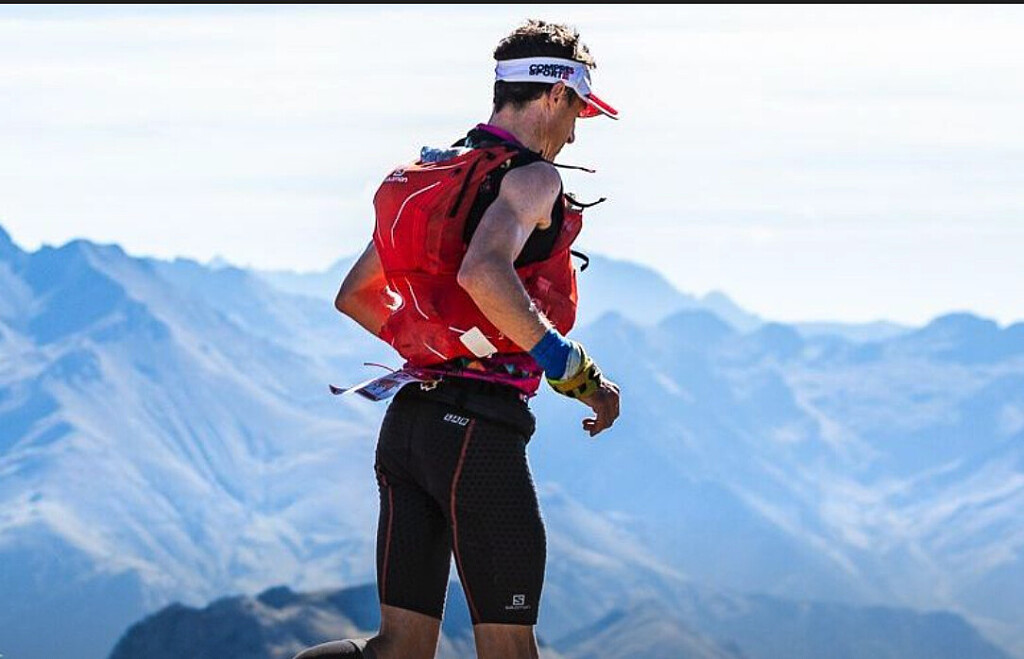
Canfranc to host 2025 World Mountain and Trail Running Championships
The third edition of the World Mountain and Trail Running Championships (WMTRC) will take place in Canfranc-Pirineos, Spain, between 25-28 September 2025.
The awarding of the event to Canfranc in the Pyrenees follows a successful bid by the Government of Aragon, the Canfranc Town Council, the Huesca Provincial Council, the Higher Sports Council and the Royal Spanish Athletics Federation (RFEA) to event partners the International Association of Ultrarunners (IAU), the International Trail Running Association (ITRA) and the World Mountain Running Association (WMRA), alongside World Athletics.
As well as the four-day elite race programme, the event will include a summer-long cultural and leisure festival to promote the Pyrenees Mountain Range.
Around 1700 athletes from 70 countries are expected to meet in September 2025 in Canfranc-Pirineos, which takes over from Innsbruck in Austria – host of the next edition of the championships, taking place this year between 6-10 June.
The race programme will feature uphill mountain running, classic up and down mountain running, short trail, long trail and U20 classic up and down mountain events.
“On behalf of the LOC, we are thrilled to be hosting the 2025 World Mountain and Trail Running Championships in our country and look forward to welcoming the best mountain and trail runners from all corners of the globe,” said RFEA President Raul Chapado.
“As a team, we express our deep satisfaction and appreciation to World Athletics and its partners WMRA, IAU and ITRA for choosing our beautiful region of Canfranc and the stunning Aragonese Pyrenees as the venue for this world-class event.
“The championships offer a unique opportunity for fans to witness the best mountain and trail runners from around the world compete in an unparalleled natural environment. We are excited to collaborate with the public administrations, sponsors and volunteers to leave a permanent legacy and create an unforgettable experience for all participants.”
The Aragonese proposal was backed by great experience in the organisation of sporting events such as the Canfranc-Canfranc, an annual event that features two Gold level Valsir Mountain Running World Cup races.
Canfranc-Pirineos offers a superb sporting environment, which will allow each athlete to perform to the best of their ability and create a complete competitive experience for athletes, teams, federations and international associations. That is proven by the list of world champions who have run and won at the Canfranc-Canfranc: from Kenya’s Joyce Muthoni Njeru to USA’s Grayson Murphy and Britain’s Charlotte Morgan, as well as Spain’s Oihana Kortazar, Manuel Merillas, Luis Alberto Hernando and Daniel Osanz.
In 2024, the Canfranc-Canfranc will host the World Masters Championships, before the region welcomes athletes for the World Mountain and Trail Running Championships in 2025.
Events due to take place as part of the associated festival include a series of awareness days, with emphasis on respectful use of the environment, and a natural running congress on the technical history and future convergence between the disciplines of athletics in nature: cross country, mountain running and trail running.
“It is our great pleasure to see the joint initiative to organise the World Mountain and Trail Running Championships continue its great momentum and we are excited that the third WMTRC will take place in Canfranc, Spain, in 2025 in the beautiful Pyrenees – a paradise for mountain and trail running,” said ITRA President Janet Ng, IAU President Nadeem Khan and WMRA President Tomo Sarf in a joint statement.
“It will be the second time that the championships have been held in Europe. The initial event took place in Chiang Mai, Thailand, and was a huge success. We are confident that the second edition in Innsbruck and Stubai will build on that in the coming days and that the third edition in Canfranc will reach even greater heights.
“We would like to thank the bidding committee, the Spanish athletics federation and World Athletics for all the cooperation and support during the application process to host the championships. The bidding committee worked extremely hard to prepare a compelling and impressive bid and we are all very much looking forward to being in Canfranc with the world’s best athletes in 2025.”
Innsbruck-Stubai entries confirmed
A total of 1122 athletes from 67 member federations are entered to compete in the next edition of the World Mountain and Trail Running Championships, taking place in Innsbruck-Stubai in Austria between 6-10 June.
That number includes 506 athletes entered into 574 women’s events and 616 athletes entered into 710 men’s events, with the programme featuring uphill mountain running, classic up and down mountain running, short trail and long trail. U20 men and women will compete in classic up and down mountain running.
USA’s Allie McLaughlin and Adam Peterman, Kenya’s Patrick Kipngeno, Norway’s Stian Angermund, Romania’s Denisa Dragomir and Blandine L'Hirondel of France were among the winners at the inaugural World Mountain and Trail Running Championships, held in Chiang Mai, Thailand, in November.
by World Athletics
Login to leave a comment
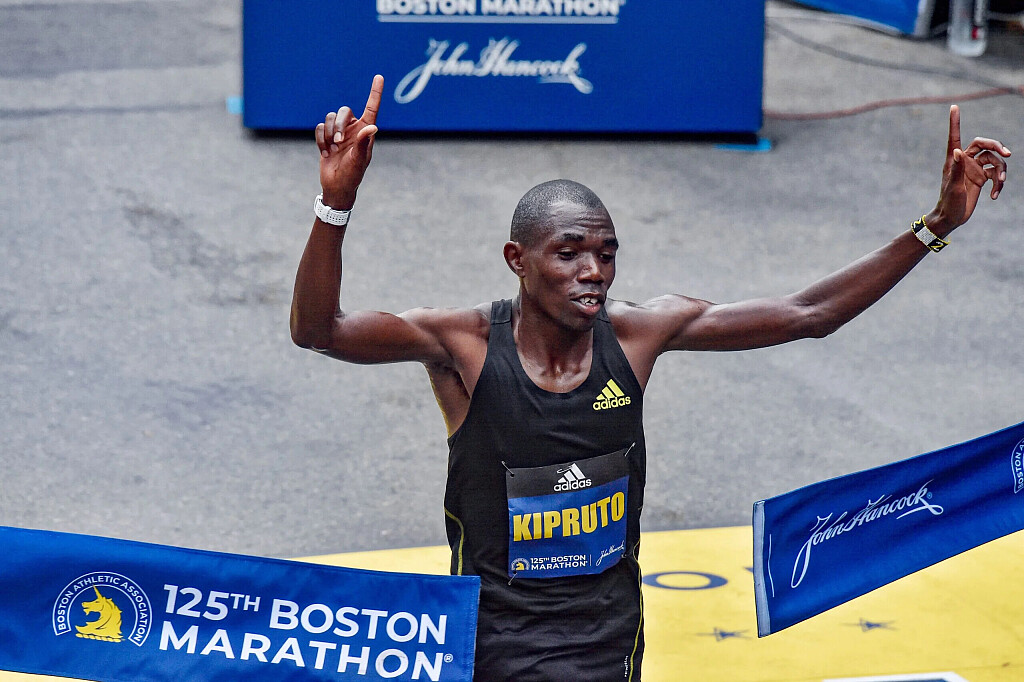
Boston champions and U.S. record holders return for 2023 B.A.A. 10K
The Boston Athletic Association (B.A.A.) has announced professional fields for the 2023 B.A.A. 10K presented by Brigham and Women’s Hospital, to be run on Sunday, June 25 through Back Bay. Among the challengers set to compete are Boston Marathon champions Hellen Obiri (2023) and Benson Kipruto (2021), defending B.A.A. 10K winner Leonard Korir, as well as national record holder Emily Sisson. Complete field lists can be found below.
The B.A.A. 10K presented by Brigham and Women’s Hospital will be the second event of the 2023 B.A.A. Distance Medley, a year-long series featuring the B.A.A. 5K (April), B.A.A. 10K (June), and B.A.A. Half Marathon (November). Registration remains open with limited spots remaining.
“Many fan favorites and global stars return to Boston for this year’s B.A.A. 10K, including Boston Marathoners, American record holders, Olympians and Paralympians,” said Mary Kate Shea, Director of Professional Athletes for the B.A.A. “The B.A.A. 10K course is flat, fast, and –most importantly—fun for our top contenders. We look forward to kicking off summer with a memorable competition on June 25.”
Obiri, a two-time Olympic silver medalist, won April’s Boston Marathon in her Boston debut, and will return to the roads hoping to extend her winning streak. Her 30:15 personal best at 10K is fourth fastest among the field, only trailing Sheila Chepkirui (Kenya, 29:46), Vicoty Chepngeno (Kenya, 30:14), and Joan Chelimo Melly (Romania, 30:14). Chelimo Melly won the B.A.A. 10K in 2017, while Chepkirui placed fourth at last month’s TCS London Marathon.
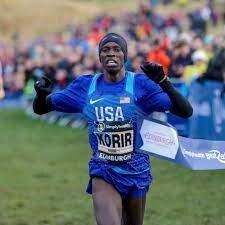
Korir, the reigning B.A.A. 10K champion, is fresh off a win at the USA 25K National Championships on May 13, and looks to become the fourth man to win back-to-back B.A.A. 10Ks. Sisson, the current American record holder in the marathon and half marathon also will return, joined by Olympic Marathon bronze medalist and former Boston resident Molly Seidel.
Among the international field squaring off are Boston Marathon winners Kipruto (2021), Edna Kiplagat (2017 and 2021), and Caroline Rotich (2015), all of Kenya. Gabriel Geay (Tanzania) will return after a runner-up finish at April’s Boston Marathon, and previously won the B.A.A. 10K in 2018.
Geoffrey Koech, winner of last year’s B.A.A. Half Marathon, will compete, as will Callum Hawkins of Great Britain, twice the fourth-place finisher at the World Championships marathon, plus decorated road racers Edward Cheserek (Kenya), a 17-time NCAA champion, and Zouhair Talbi (Morocco), most recently fifth at the Boston Marathon. From Team B.A.A. are Matt McDonald, Paul Hogan, Jonas Hampton, and Eric Hamer.
Mary Ngugi of Kenya, a two-time B.A.A. 10K winner and two-time Boston Marathon podium finisher, will aim for title number three, as fellow Kenyan Sharon Lokedi, the 2022 TCS New York City Marathon champion, looks for her first B.A.A. event victory. Team B.A.A.’s Annie Rodenfels, third place and top American at the 2023 B.A.A. 5K, will make her debut at the 10K distance leading a full contingent of Boston-based B.A.A. teammates including Bethany Hasz, Megan Hasz, and Jenna Magness.
Hermin Garic, the 2022 B.A.A. 10K winner, returns in the men’s wheelchair division, while Yen Hoang, third place at the 2021 Boston Marathon, leads the women’s wheelchair division. Brian Reynolds and Liz Willis will compete in the T61-64 (lower-limb impairment) division having already earned podium placings at the Boston Marathon in April. Reynolds, a Massachusetts native, set a world best 1:25:46 at the 2022 B.A.A. Half Marathon. Local Para athlete and last year’s T61-64 women’s winner, Adrianne Haslet, will also compete. Additional 2023 Boston Marathon Para division winners Andrew Thorson (T11-T13 vision impairment) and Atsbha Gebre (T45/T46 upper-limb impairment) are racing. The B.A.A. 10K presented by Brigham and Women’s Hospital has been certified by World Para Athletics as a record-eligible competition, paving the way for Para Athletes to set world and national records this year.
Media members interested in covering the B.A.A. 10K, presented by Brigham and Women’s Hospital, may apply for credentials here.
Registration for the 2023 B.A.A. 10K presented by Brigham and Women’s Hospital, is currently open through the B.A.A.’s online platform Athletes’ Village. All participants who enter will receive an adidas participant shirt, unique bib number, and finisher medal. Additional participant information can be found on baa.org. The race will start at 8:00 a.m. ET on Sunday, June 25 on Charles Street adjacent to Boston Common and Boston Public Garden.
Brigham and Women's Hospital, the B.A.A. 10K’s presenting sponsor and exclusive fundraising partner, will again field a team of fundraising runners. Since 2016, more than 2,100 runners and 180 teams have raised $1.2 million to fuel life-giving breakthroughs at Brigham and Women’s Hospital. Learn more and register at www.runbwh.org/10k.
Login to leave a comment

B.A.A. 10K
The 6.2-mile course is a scenic tour through Boston's Back Bay. Notable neighborhoods and attractions include the legendary Bull and Finch Pub, after which the television series "Cheers" was developed, the campus of Boston University, and trendy Kenmore Square. ...
more...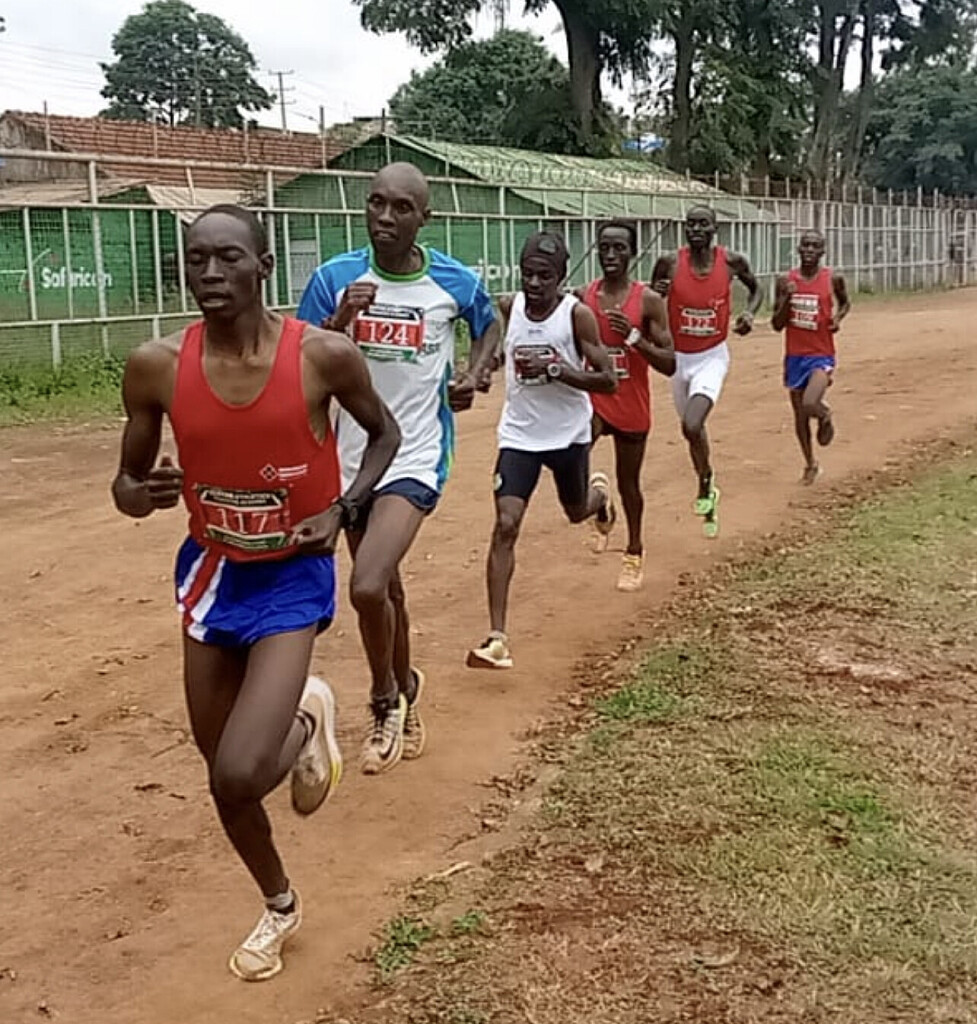
Kirika and Mungai were the winners at the 21st monthly KATA Time Trial in Thika
Zakariah Kirika and Boniface Mungai lived up to expectation by ruling both the 10, 000 and 5,000metres during the May Kenyan Athletics Training Academy Time- Trial held at Thika Stadium May 17.
The Star, who has been playing second fiddle to KATA's internationals Peter Mwaniki and Peter Wanyoike, timed 30:42.1 in his 10,000metres specialty while Mungai outclassed newcomer Simon Ngubao in the 5,000metres after clocking 15:04.6, improving his January’s time of 15:27.7 by 23 seconds.
During the 21st KATA (Kenyan Athketics Training Academy) Time Trial that alternated with the Road last month, Evans Kiguru took the silver position in 10,000metres behind Kirika in 32:13.3 with another newcomer Gabriel Kahura coming third in 32:27.3.
In the 5,000metres, Levis Kuria bettered his March’s 15:32.8 to record new personal record of 15:06.2, chopping off 26.5 seconds and finished ahead of perennial Fredrick Kiprotich who finished in 15:18.2.
In the Ladies, Caren Chepkemoi bettered her 5,000m Personal Best after registering a new17:28.2 from her previous 19:11.6 to come ahead in the category with Narok-based Maureen Nairesiae clocking 18:20.6.
KATA's Peter Njeru did not run the time trial because he had just gotten back after finishing third at the Petrom Bucharest Romania half marathon clocking 1:01:21.
The 22nd edition of the KATA monthly Time Trial will return to the Road on 14th June on the Ndarugo-Mang’u Road.
Name: Bib Age Time
10,000Metres
1. Zakaria Kirika 114 22 30:42.1
2. Evans Kiguru 93 27 32:13.3
3. Gabriel Kahura 124 40 32:27.3
4. Anthony Mukundi 84 35 32:41.8
5. Alfred Kamande 113 25 34:01.1
6. Paul Ng’ang’a 106 42 34:05.3
7. Charles Ndirangu 90 60 36:13.2
8. Moses Mutunga 121 27 37:44.4
5,000Metres
1.Boniface Mungai 111 24 15:04.6
2. Simon Ngubao 121 28 15:05.4
3. Levis Kuria 117 22 15:06.2
4. Fredrick Kiprotich 122 24 15:18.2
5. John Mutiso 109 19 16:14.8
6. Amos Chirchir 126 23 16:19.3
7. Peter Mukundi 115 25 17:22.0
8. Caren Chepkemoi 89 21 17:28.2
9. Ismael Mburu 120 22 18:18.1
10. Maureen Nairesiae 107 107 18:20.6
11. Virginia Wanjiru 123 21 20:14.2
12. Hannah Njeri 110 24 21:04.6
13. Nancy Githaiga 108 32 22:33.5.
by Coach Joseph Ngure
Login to leave a comment
KATA Time Trial Series
Welcome to the KATA Monthly Time Trial Held at the Kenyan Athletics Training Academy in Thika, Kenya, the KATA Monthly Time Trial is a unique and inclusive event designed to support runners of all levels in achieving their goals and showcasing their fitness. This event offers both 10K and 5K distances on an accurate, certified course, providing participants with...
more...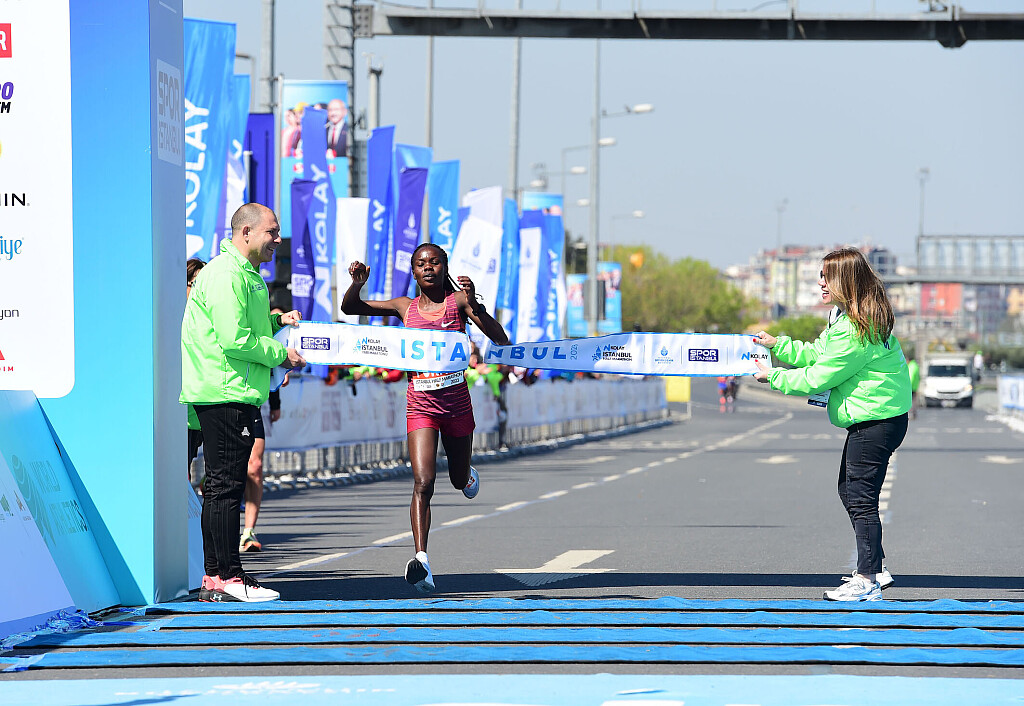
Purity Komen upsets Ruth Chepngetich and Daniel Ebenyo wins in Istanbul
Purity Komen was the surprise winner of the N Kolay Istanbul Half Marathon. Overtaking fellow-Kenyan and race favourite Ruth Chepngetich the 24 year-old stormed to her biggest career win with a personal best of 66:30. Course record holder Chepngetich followed in second with 67:18 while Evaline Chirchir made it an all-Kenyan podium with 67:31. Stella Rutto of Romania was the fastest European, finishing 10th with 70:05.
In partly windy conditions hopes for a course record faded in the men’s race as well after a fast first section. 27 year-old Daniel Ebenyo of Kenya was the winner of Turkey’s best quality road race with 59:52. Marokko’s Hicham Amghar took second place in 59:58 and Haftu Teklu clocked 60:03 for third. Britain’s Marc Scott was the best European runner in 63:17 for 12th place.
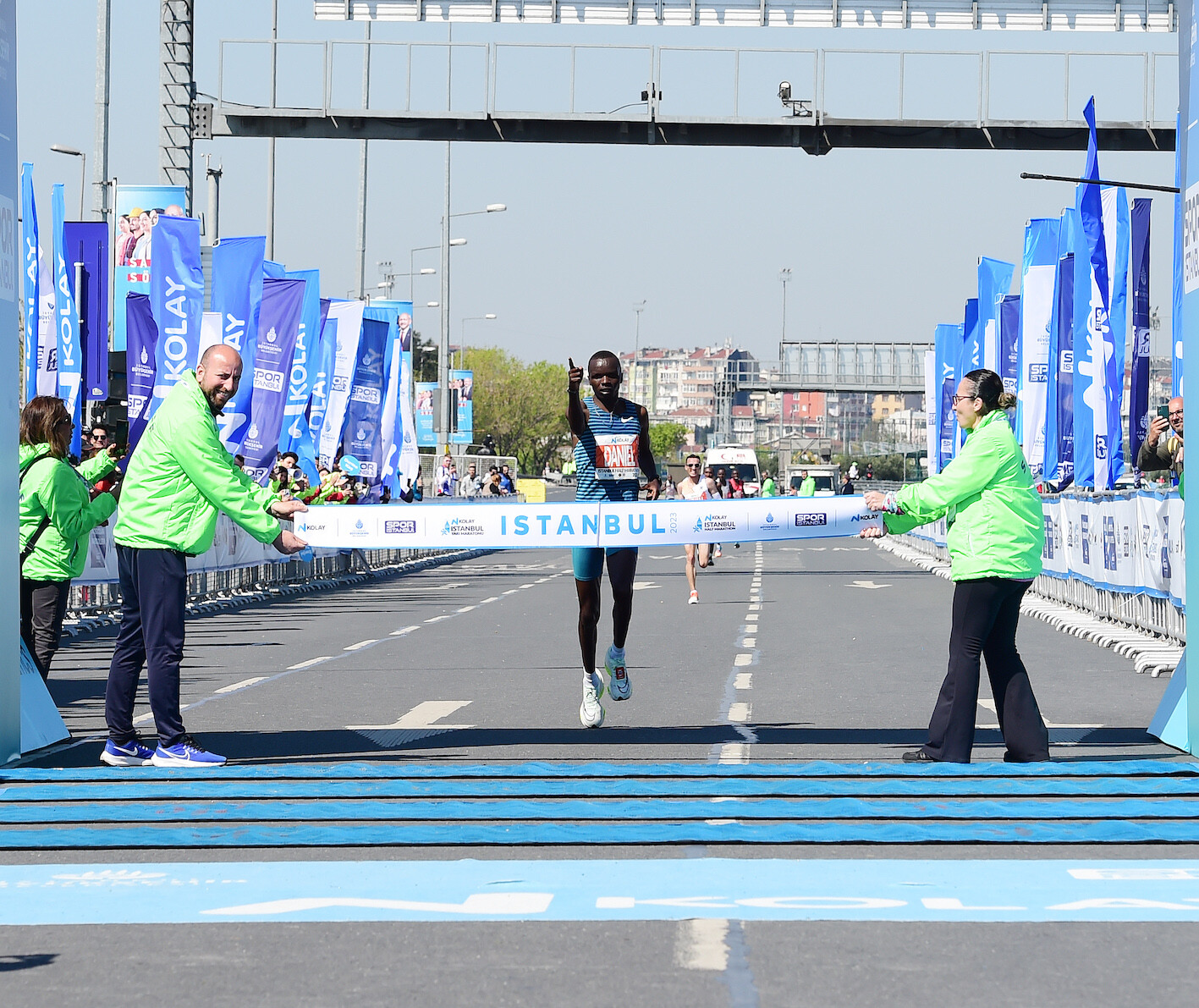
A record number of 12,300 runners competed in the 18th edition of the half marathon and the 10k race staged parallel. Many athletes ran for charity, collecting money for the victims of the devastating earthquake that shook southern Turkey earlier this year. The N Kolay Istanbul Half Marathon is a Gold Label Road Race of World Athletics.
"It was a nice race and especially the men’s elite was very competitive. We are happy that we continue to register record fields. It is always exciting to experience the historic atmosphere here in Istanbul and we are now inviting everyone to be back for our marathon on 5th November,“ said Race Director Reynar Onur.
The women’s race began as expected. Ruth Chepngetich sped away from the field right after the start and was so quick that even the TV cameras missed her on a few occasions early on. Passing the 5k mark in 15:16 the Kenyan was almost on course for breaking her Kenyan record and her Istanbul course record of 64:02, which in 2021 was a world record as well.
However once the 2019 Marathon World Champion came off Galata Bridge and had to run against the wind for almost four kilometers she slowed considerably. At the 10k point her 31:09 split time then indicated a 65:45 finish and her lead had shrunk to only four seconds. Purity Komen, Evaline Chirchir and Ethiopia’s Bosena Mulatie caught her a few minutes later. Then it was Komen, who had only been number nine with a PB of 67:08 on the final start list, who moved ahead before the 15k mark. Chepngetich tried to follow her in a bid to make it six wins from six races in Istanbul, but today she was unable to do so. Purity Komen won the race with 66:30 and became the first woman to beat Ruth Chepngetich on the historic roads of Istanbul.
“My body did not respond after the early part of the race. I don’t know why, but I assume that may be the race came a bit too soon after the Nagoya Marathon in March,“ said Ruth Chepngetich. “I have not yet decided if I will run the World Championships’ marathon or an autumn race. The big goal is the Olympic Games next year and I hope to be selected for the team.“
While Ruth Chepngetich is an experienced marathoner the victory in Istanbul may well have brought Purity Komen closer to her debut at the classic distance. “This victory was unexpected. I was surprised when I suddenly saw Ruth in front of me and was then able to pass her,“ said Purity Komen. “I had hoped to achieve a 65 minutes’ time, but it was too windy today. I now plan to run my marathon debut next year.“
The men’s race began very fast as well with the first couple of split times indicating a finishing time of around 58:00. But as in the women’s competition the pace then dropped considerable once the leading group hit the wind. A group of around ten athletes passed the 10k mark in 28:22, which is sub 60 minutes’ pace.
Two athletes were pushing the pace at the front: Kenya’s Daniel Ebenyo and Hicham Amghar of Morocco, who have PBs of 59:04 and 59:53 respectively. Soon after the 15k point (42:33) Ebenyo took the lead, covering the 16th kilometre in 2:46. Only Amghar was able to follow him, but when Ebenyo indicated to him to help pushing the pace the Moroccan stayed right behind him. Ebenyo then kept pressing ahead and opened up a decisive gap with around 4k to go.
“I hoped to catch Daniel but I am happy with my result. I was going for a PB, but it was not possible in the wind,“ said Hicham Amghar, while Daniel Ebenyo was happy about his first major half marathon victory. “I am excited to have won this race. My aim was to run 59:00 minutes but it was too windy for that,“ said the Kenyan. “I will probably run my marathon debut next year. May be I come back to Istanbul for that.“
Results, Men:
1. Daniel Ebenyo KEN 59:52
2. Hicham Amghar MOR 59:58
3. Haftu Teklu ETH 60:03
4. Charles Langat KEN 60:07
5. Vincent Kipkemoi KEN 60:09
6. Boniface Kibiwott KEN 60:23
7. Benard Biwott KEN 60:47
8. Ashenafi Kiros ETH 61:21
9. Alfred Ngeno KEN 62:24
10. Alene Mekonen ETH 62:32
Women:
1. Purity Komen KEN 66:30
2. Ruth Chepngetich KEN 67:18
3. Evaline Chirchir KEN 67:31
4. Bosena Mulatie ETH 67:43
5. Tigist Gezahagn ETH 68:49
6. Betelihem Afenigus ETH 69:04
7. Beatrice Cheserek KEN 69:14
8. Bekelech Gudeta ETH 69:35
9. Shamilah Kipsiror KEN 69:38
10. Stella Rutto ROM 70:05
Login to leave a comment
N Kolay Istanbul Half Marathon
The Istanbul Half Marathon is an annual road running event over the half marathon distance (21.1 km) that takes place usually in the spring on the streets of Istanbul, Turkey. It is a IAAF Gold Label event. The Istanbul Half Marathon was first organized in 1987. After several breaks it was finally brought back to life in 2015 when the...
more...
Petros and Kostro triumph in Hannover with both course records broken for the first time since 2013
Amanal Petros and Matea Parlov Kostro took the ADAC Marathon Hannover, smashing the course records and celebrating their biggest career wins.
In fine weather conditions Germany’s Amanal Petros triumphed with 2:07:02, improving the course best of 2:08:32 set by South Africa’s Lusapho April in 2013 by 90 seconds. The national record holder missed his PB by just 35 seconds but he is the first German to have run under the Olympic qualifying standard of 2:08:10. Kenyans Denis Chirchir and Frederick Kibii clocked personal bests of 2:07:17 and 2:08:09 respectively for second and third place.
Croatia’s Matea Parlov Kostro dominated the women’s race and ran a huge personal best of 2:25:45. The marathon silver medallist from the European Championships in Munich 2022 improved the course record by 30 seconds and was well under the Olympic qualifying time for Paris 2024 (2:26:50). Four years ago Kenya’s Rachel Mutgaa ran 2:26:15 in Hannover. Pauline Thitu of Kenya clocked 2:29:25 and Mexico’s Risper Gesabwa finished in 2:29:49 for second and third places on Sunday.
It was the third time after 1992 and 2013 that both course records were broken in Hannover. Including races at shorter distances, organisers registered over 19,000 athletes from around 100 nations for the ADAC Hannover Marathon, which is a World Athletics Road Race Label event. Germany’s defending champion Hendrik Pfeiffer ran the half marathon event and won with 62:58. He is preparing for the Boston Marathon in April.
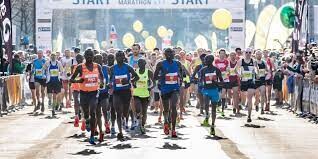
With the pace not as even as planned two pacemakers led a group of five runners through the half marathon mark in 63:30. Originally a split time of 63:00 was planned. The problem seemed to be that the runners right behind the pacers did not really go with their pace while Amanal Petros was at the end of the group. With a split time of 1:30:39 at 30k the German record of 2:06:27 was more or less out of reach. The pace at that stage pointed towards a 2:07:30 finish. When the pacemakers dropped back shortly after the 30k mark Amanal Petros took the lead. For a short period his training partner Denis Chirchir and Frederick Kibii could hold on but then they could no longer cope with the pace of the German, who was fourth in the European Championships’ marathon in 2022. The national record holder was able to increase the pace in the final quarter of the race, but his personal best was out of reach today. “Because of the uneven pace my muscles started to become tired earlier and I realized this at around 25k. But overall I came through very well,” said Amanal Petros. “It was the first time that I ran a German city marathon and this victory means a lot to me. It is a huge motivation for the next races.”
In the women’s race Matea Parlov Kostro ran 2:25 pace from the start. It was around the half way mark, which she passed in 72:34, when Pauline Thitu and Risper Gesabwa were no longer able to follow the Croatian. The gap constantly widened and the race for victory was more or less over a few kilometers later. While Matea Parlov Kostro, who became the first Croatian woman to win a European Championships’ medal in a running event in Munich last year, could not quite hold on to her pace she was ahead by more than a kilometer when she finished in 2:25:45 in front of the impressive Hannover townhall.
“I am really happy with my personal best and with the qualification for the Olympic Games. Paris will be my second Olympics,” said Matea Parlov Kostro, who can be confident that her performance in Hannover will be good enough for Olympic selection. With her PB she moved up to second place behind Romania’s Delvine Meringor (2:20:49) in the current European season’s list. For Matea Parlov Kostro the victory was her first in a marathon. “While my biggest success was surely the silver medal at the European Championships this was my greatest career victory today.”
by AIMS
Login to leave a comment

ADAC Hannover Marathon
It is not only the gripping competition that makes the marathon in Hannover so captivating, but also the exceptionally attractive side programme.With numerous samba bands and musicians accompanying the athletes along their sightseeing tour through the city, a feel-good mood is guaranteed on the course. The city will be transformed with a mix of musical entertainment, shows and activities that...
more...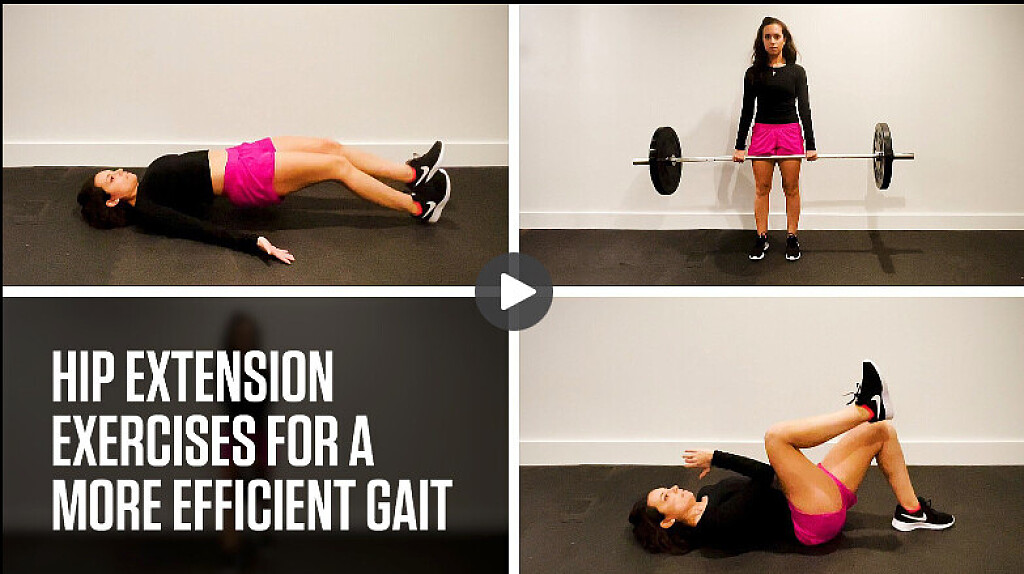
These 5 Hip Extension Exercises Will Make Your Stride More Efficient
Try these power moves to strengthen your posterior chain and add force behind your steps.
Your hips—and the muscles around them—take on more responsibility than you may realize. They hold you steady while sitting and serve as the mediator between a stable torso and fast-moving legs on a run. So, to perform at your best, you need healthy and strong hips.
While hip flexors often get a lot of our attention (because, hello, tightness and aches!), the hip extensors can always use more love—which is why you should add these hip extension exercises to your routine. “Hip extension exercises are integrally important for both runners and cyclists,” says Samantha Rothberg, C.S.C.S., certified strength coach and triathlete. “This movement pattern strengthens the muscles—the glutes and hamstrings—we need strong to ensure a safe and efficient gait on the run.”
More specifically, the gluteus maximus (the biggest muscle of the backside), drives the push-off phase of the running gait. “It also stabilizes the hips on the run to keep the low back, knees, and ankles safe,” Rothberg explains. Meanwhile, the hamstrings extend the leg in your midstance and also add force behind your push-off.
The Benefits of These Hip Extension Exercises for Runners
As Rothberg mentioned, the big power players that drive hip extension include your glute muscles (of the butt) and your hamstrings (on the back of the upper thighs). “These large posterior chain muscles are often under trained in favor of anterior muscles, such as the quadriceps and hip flexors, upon which we are over reliant because of poor posture and a sedentary lifestyle,” Rothberg explains. “Utilizing these large muscles [on the back of the body] is more efficient, will produce more power, and could help to prevent an overuse injury.”
Balancing out your lower body with hip extension exercises creates that efficiency in your stride by allowing all muscle groups to work at their best and add force to your steps. This also means you work better rather than harder to reach faster speeds, Rothberg adds.
How to use this list: Do each exercise below for 4 sets of 8-10 reps. If it is a single-sided exercise, go for 8-10 reps per side.
You will need a kettlebell or a heavy dumbbell for this workout. You’ll also need a barbell, but you can use a kettlebell or dumbbell in place of that, as well. An exercise mat is optional.
Rothberg demonstrates the exercises in the video above so you can learn proper form.
1. Single-Leg Glute Bridge
Why it works: Running is a single-leg sport and strengthening the legs one at a time prevents imbalances and helps you sidestep injury, Rothberg says. “Driving the elbow into the quad also ensures that the core is engaged and that you are driving through the down heel, and not kicking up to the sky with the elevated leg,” she adds.
How to do it: Lie faceup, knees bent and feet planted. Place left arm down by side. Lift right knee and bend right elbow. Touch right knee to right elbow, driving them into each other. This is your starting position. Drive through left heel to lift hips up. Engage glutes to lift hips; avoid lifting with low back. Slowly lower back down to starting position. Repeat. Then switch sides.
2. Deadlift
Why it works: “This exercise targets the entire posterior chain, teaches you to push off the ground effectively, which is important for running, and can be loaded and scaled as appropriate for your lifting level,” Rothberg says.
How to do it: Stand with feet hip-width apart, holding a kettlebell or dumbbell with both hands in front of hips. Hinge at hips by sending butt straight back, keeping back flat and core engaged. Keep weight close to body, reaching toward feet. Drive through feet and engage glutes to stand back up, extending hips. Repeat.
3. Kickstand Deadlift
Why it works: This deadlift variation also brings in a unilateral element, helping you strengthen one leg at a time. This helps keep your muscles symmetrical, Rothberg says, while providing the same benefits as a regular deadlift.
How to do it: Stand with feet hip-width apart, holding a kettlebell or dumbbell with both hands in front of hips. Step right foot back, so toe is in line with left heel, and keep right heel lifted. All weight should be on left leg. Hinge at hips by sending butt straight back, keeping back flat and core engaged. Keep weight close to body. Drive through left foot and engage glutes to stand back up, extending hips. Repeat.
4. Glute Bridge Walkout
Why it works: Adding a walkout to the glute bridge strengthens the hamstrings eccentrically, the lengthening (or lowering) phase, Rothberg explains. It also makes your glutes work isometrically, meaning they have to maintain contraction as you extend the legs. This helps to stabilize the hips, which can keep them from dipping on the run, too. “Many people get injured from not training the eccentric load—that’s often when they pull something,” she adds, which is why eccentric movements are so important.
How to do it: Lie faceup, arms down by sides, with knees bent and feet planted hip-width apart. Drive through heels to lift hips, engaging glutes and core. Avoid lifting with low back. Hold here. Then, step left foot forward. Then right. Continue alternating until legs are straight. Then pause and walk them back in, underneath knees. Lower hips. Repeat.
5. Barbell Romanian Deadlift
Why it works: Focus on the eccentric action of this exercise—that means slowing down the lowering phase, aiming for a five count as you go—to gain the most benefit. This helps you strengthen the posterior muscles in the lengthening phase, which increases your strength gains, Rothberg says.
How to do it: Stand with feet hip-width apart, holding a barbell (or two heavy dumbbells) with both hands in front of you. Hinge at hips by sending butt straight back, keeping back flat and core engaged. Move slowly, on a count of 5. Keep weight close to body. Drive through feet and engage glutes to stand back up, extending hips. Repeat.
by Runner’s World
Login to leave a comment
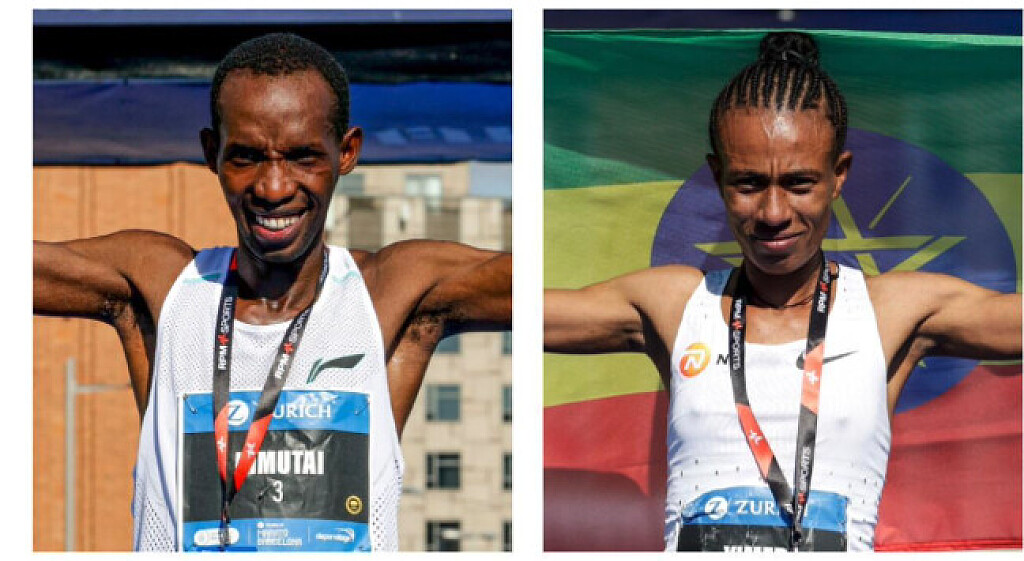
Kimutai and Yimer win the Barcelona Marathon and break the race records
Marius Kimutai, winner with 2.05.06, and Zeineba Yimer, winner with 2.19.44, managed this Sunday to improve the limits of the Barcelona circuit, placing the Zurich Marató de Barcelona among the fastest 42-kilometre races in Europe. Especially commendable is the Ethiopian's timer, below 2 hours and 20 minutes.
The race launched by the hares consolidated a pace, in the leading group of men, of less than three minutes per kilometer from the start on Avenida María Cristina, which guaranteed the breaking of the Ethiopian Yihuniligne Adane's record with 2.05.53, made in the last edition 2022.
The compact group of a dozen runners that led the test passed kilometer 30 (in 1.29.18) still grouped. From here the peloton stretched following the trail of the only hare still in the race and changes of pace followed, with the favourite, the Kenyan-born Turk Kaan Kigen Özbilen, trying to control the race when the last hare abandoned in the 31.
In 35, only a couple of athletes have been able to hold the pace imposed by Özbilen, the Moroccan Othmane El Goumri and the Bahraini of Kenyan origin Marius Kimutai. The podium seemed determined, but the order on the drawer was still to be determined.
The Turk gave in at minute 39 and El Goumri, second a couple of editions ago on this same circuit with 2.06.18, took advantage of his knowledge of the route to pick up the pace, seconded by Kimutai, sixth classified in the 2021 Barcelona Marathon and therefore as well as the Moroccan, who is also familiar with the blue-painted marathon track in the Catalan capital.
Kimutai waited for a definitive change of pace, just before facing Sepúlveda street and ended up winning alone with a new circuit record, 2.05.06, although he could not go below 2.05, which was the objective of the organization. El Goumri held on to second place and finished with a new Moroccan national record (2.05.12). Özbilen was the third on the podium, finishing in 2.05.37.
Very similar script in the women's race, passing the half marathon in 1.09, and with three Africans fighting for podium places in the final kilometers. The starting pace was already setting a new circuit record, this time by a much wider margin than that of the men.
Zeineba Yeimer finally managed to run under 2.20 and set a new women's record on the circuit, which lowers the previous record by more than three minutes and places it at an enviable 2.19. Second entered Selly Chepyego (2.20.03), and third and first European the Romanian Delvine Meringor (2.20.49).
Login to leave a comment
The Zurich Marató Barcelona returns for its 44 edition this weekend
More than 15,000 participants register for Barcelona, numbers grow by 50% compared to 2022 and international runners make up more than half.
The Zurich Marató Barcelona’s 44th edition will take place with 15,127 registered participants, recovering pre-pandemic numbers and growing by 5,000 runners compared to the previous edition.
This Sunday 19th of March, the Marató also returns to its large number of participants coming from all over the world. Runners of 119 different nationalities have chosen Barcelona to live the best possible experience in the 42.195 km distance, in a renovated circuit in 2018, monumental and fast at the same time, with the ideal climate to run with thousands of participants and a powerful civic atmosphere.
In this sense, the Councillor for Sports of the Barcelona City Council, David Escudé, has highlighted that “this is the Barcelona’s Marathon of the recovery of numbers. We are very happy because this year the overall participation of the Zurich Marató Barcelona has grown by 50% compared to 2022, exceeding 15,000 registrations. We have also doubled the international participation compared to last year’s edition and more than half of the runners (55%, 8,319 in total) come to our city from other countries. The female participation is again 25%, equalling the highest percentage in our history (3,781 women participants). Without a doubt, this will be the great running festival that we are all looking forward to, with the streets full of people cheering and enjoying this sporting event”.
On the other hand, the director of the race, Mauro Llorens, explains that “we have everything ready and we are looking forward to starting a great edition of the Zurich Marató Barcelona where, for the first time, we will be a Gold Label Marathon awarded by World Athletics. In Spain only Barcelona has this label and, in Europe, only three more marathons has it. This means having a great line-up of elite athletes and first class services for runners. We will be looking for the two circuit records to position ourselves as one of the fastest marathons in Europe”.
The new feature of this year’s edition is that World Athletics has awarded the Zurich Marató Barcelona with the Gold Label for 2023. This is a distinctive label awarded to an event when it guarantees a high competitive level, as well as quality and comfort for the popular runners (official refreshment points, physiotherapy and recovery services, etc.). This distinction, which represents a qualitative leap for the Marató, reinforces the city of Barcelona’s capacity to organise large-scale, international sporting events, making it the only marathon in Spain and one of only three in Europe (along with the Rotterdam Marathon and the Istanbul Marathon) to have this label.
In addition, the slogan of this edition is Run In The World’s Best City because Barcelona has been considered the best city in the world according to the Telegraph Travel 2022 ranking. The course of the Zurich Marató Barcelona is ideal to enjoy: it runs through the heart of a cosmopolitan city, which has the great modernist legacy of Antonio Gaudí or the Pla Cerdà and the Camp Nou, Plaza España, the Arc de Triomf, the Sagrada Familia, the Forum or the Seafront as some of its main tourist attractions to enjoy the Catalan capital uniquely, running on a fast and magical route.
A competitive group of athletes from East Africa, with up to seven athletes with a Gold label, will take the start 19th of March to try to run under 02:04h. In terms of personal bests, the Turkish athlete Kaan Kigen Özbilen, Kenya’s 5000m champion at the age of 20, with a record that already predicted a promising athletics career, stands out in the first place to win the Zurich Marató Barcelona 2023.
As is usual for most long-distance runners, Kigen moved up the distance to concentrate on the marathon. In 2015 he became a naturalised Turkish citizen and in 2016 he won the European Half Marathon runner-up medal and his first international medal with his new country. From this point on, Özbilen concentrated on marathon, running 02:06h in the Dubai Marathon and improving his personal best in Valencia, where he has participated in the last three editions: 02:04:16h in 2019, 02:08:50h in 2020 and 02:04:36h in 2022. In this 44th edition of the Zurich Marató Barcelona, he will be, a priori, the athlete to follow, as he will start the race as the theoretical favourite as he will start with the best time of all the participants.
Five athletes with records in 02:05h are, on paper, Kigen’s strongest rivals and the most qualified ones, as they are lower or very close to the current race record (02:05:53h), achieved by the Ethiopian Yihunilign Adane last year, starting with Joel Kemboi Kimurer (Gold athlete) with 02:05:19h at the Milan Marathon 2021. Likewise, with the experience of his 35 years and having run 11 marathons, Kenyan Kemboi Kimurer and his 02:05:19h in the Milan Marathon two years ago, is also among the favourites to win in Barcelona. Another Kenyan, Marius Kimutai, is also among the favourites. He has been competing for Bahrain for the past two years and knows the Catalan capital’s circuit well, where he finished sixth in 2021 (02:06:54h).
On the other hand, Ethiopia’s athlete Takele Bikila achieved his best time at the Seville Marathon (02:05:52h) last season in his tenth 42km race, and Eritrea’s Kibrom Ruesom at the Valencia Marathon 2020 (02:05:53h) in his second marathon attempt. Closing the list is Ethiopia’s runner Kelkile Woldaregay time of 02:05:56h at the Rotterdam Marathon, which dates back to 2018.
Kaan Kigen Özbilen: “I want to thank the organisation for inviting me to run in the best city in the world. Eliud Kipchogue is my mentor and teammate and he has wished me luck for Sunday. I am coming to Barcelona to set the course record”.
Marius Kimutai: “Sunday I will return to a circuit I already know with the aim of improving my personal best and setting a new record”.
Two-time finalist at the World Half Marathon Championships in Valencia 2018 and Gdynia 2020, Zeineba Yimer Worku (Gold Label) is the only female participant with a personal best under 2 hours and 20 minutes and is the favourite to break the women’s record set last year by Ethiopian Meseret Gebre Dekebo (02:23:11h). A time achieved twice, both times at the Valencia Marathon, finishing in 02:19:28h in 2019 and 02:19:54h the year after.
As a personal best and among the five Gold Label female athletes who will run on 19th of March in Barcelona, Yimer is the favourite among a group that also includes her compatriot, Ethiopia’s athlete Azmera Gebru Hagos, a cross-country runner who won bronze at the World Cross Country Championships in Punta Umbria in 2011, more than a decade ago. At the age of 23, Hagos made her debut at the 2018 Amsterdam Marathon, finishing in 02:23h and the following year, on the same circuit, she achieved what is, for the moment, her personal best (02:20:48h).
Zenebu Fikadu Jebesa (Gold Label) also repeats in Barcelona. The Ethiopian runner, third on the podium in the last edition of the Zurich Marató Barcelona (02:25:11h), will enjoy a new opportunity in a circuit she already knows. A fourth Ethiopian runner, Tsegaye Melesech, also returns to Barcelona after finishing second in 2017 (02:26:44h).
In terms of international experience, Kenya’s Selly Chepyego Kaptich (Gold Label) is a strong contender to face the Ethiopian trio of favourites. Kaptich is the U18 World 3000m champion and bronze medalist at the World Half Marathon in Copenhagen in 2014, as well as having finished third in another major event, the Berlin Marathon 2019, which she finished setting her personal best of 02:21:06h.
Among the European athletes, the participation of Delvine Relin Meringor, Kenyan until 2021 and Romanian since then, after her naturalisation by the European country, stands out. Meringor was a solid cross-country runner in her early days as an athlete. She made her debut at the 2021 Siena Marathon in 02:24:32h and won the Los Angeles Marathon a year ago (02:25:04h).
Selly Chepyego Kaptich: “I’m prepared for the weather conditions in Barcelona and I’m confident to beat the women’s record.”
by AIMS
Login to leave a comment

Zurich Marato Barcelona
The race is a favorite among both professional athletes and amateur runners, offering a unique running experience in and around Zurich. The scenic course follows the shores of Lake Zurich for much of the route, making it not only a thrilling sports event but also a visually stunning one. The start and finish lines are located at the upper lake...
more...
Former Euro XC champ faces three year doping ban for EPO
Olympian and two-time European cross country champ Aras Kaya has been given a three-year ban for doping after testing positive for erythropoietin (EPO). EPO is a hormone that promotes red blood cell production, improving endurance.
Kaya, 28, was born in Kenya but competes for Turkey, after moving there in 2015 and receiving citizenship in 2016. He tested positive at the Brasov Running Festival 10K in Brasov, Romania in September, according to the Athletics Integrity Unit (AIU). Kaya was given a four-year ban but admitted he was at fault and opted not to fight the case, reducing his ban to three years.
In 2021, Kaya took silver at the Euro cross country champs, runner-up to Norway’s Jakob Ingebrigtsen, and ran to bronze in 2018. He was set to run last weekend’s Euro Cross in Turin, Italy, but was a late withdrawal with his doping ban imminent, Athletics Weekly reported.
Kaya won the 2016 Euro cross country senior men’s title and took second in 2019 to Robel Fsiha of Sweden. Fsiha tested positive for artificial testosterone in 2020 and was banned for four years, elevating Kaya to the gold medal position. Kaya has a half-marathon PB of 60:51 and finished third in the 2022 European 10,000m cup.
In the last year, Kaya was reported to have been in the process of receiving Russian nationalization, as he has been based in the Russian city of Kazan.
by Keeley Milne
Login to leave a comment
Try this eight-minute leg routine to ramp up speed and strength
Coach and ultrarunner David Roche of Boulder, Colo. is well known for his three-minute mountain leg workout, a routine that is suitable for a wide variety of runners, from ultra-endurance athletes to those training for a 5K.
While the mountain-leg routine helps runners get strong, Roche shared in Trailrunner Mag that there was a need for a speed-focused routine for runners looking for help nailing faster paces.
Before doing this routine, note that if you aren’t struggling with speed, the mountain leg workout should be a sufficient boost for you, and you can safely increase reps as you gain strength.
Roche recommends speed legs only for athletes “who have evidence they need it, whether from health issues or imbalances or weakness at higher outputs.”
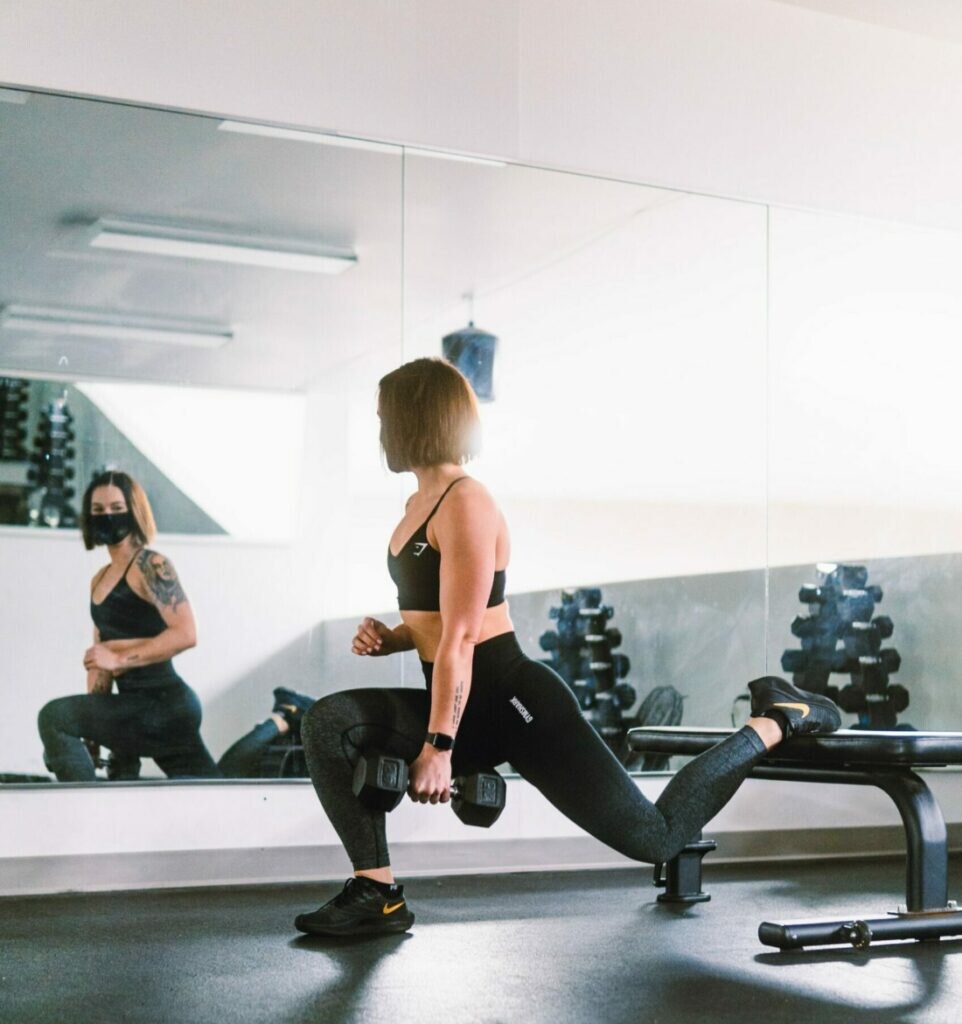
Make sure you aren’t adding any new exercises to your routine if you’re recovering from an injury, and ease into the routine, starting without weights of any kind. Roche suggests not rushing between exercises and says: “Do not go to failure. We’re looking to do some work, not get worked.”
Eight-minute speed leg routine
Warm up with a brisk walk or slow run, or do this routine following your workout (add these exercises to a hard workout day, so that your easy days stay easy).
10 x alternating rear lunges on each leg
Since rear lunges are easier than the rest of the exercises they’ll help you warm up, and Roche says to avoid going anywhere near failure. Focus on using controlled motion up and down, with your back knee getting close to the ground. Quads, glutes and hamstrings will all be engaged in these lunges, with both eccentric and concentric movements–great for descending and climbing. Alternate legs to avoid getting too tired.
10 x Bulgarian split squats on each leg
With your trailing leg on a bench or platform a few feet high, go up and down, staying in control. Roche says you’ll feel this in the butt and high hamstrings—make sure you start with no weight. Avoid this one if you have any pre-existing injuries or concerns.
10 x single-leg Romanian deadlift on each leg
Roche is firm on this one–start without weights. Firmly plant your foot and bend your knee slightly, raising the other leg parallel to the ground. Push down and pull back with the engaged leg to raise up to center, with controlled up and down motion.
10–20 x goblet squats
With legs shoulder width or a bit wider apart and feet slightly out, do a typical squat. Some people like to go to 90 degrees or beyond, but Roche says he prefers staying a bit higher. After you adapt to these exercises, it’s OK to use slightly heavier weights.
20–50 x single-leg step-ups
Runners familiar with the three-minute mountain legs will recognize the burn of the step-up portion to wrap up the speed leg routine.”Go up and down a bit more rapidly now, with the burn concentrated in your quadriceps,” says Roche. “It should feel almost exactly like climbing up a steep grade.”
Roche suggests going for a walk after the speed leg routine and making sure you have an easy running or recovery day planned to follow.
by Keeley Milne
Login to leave a comment
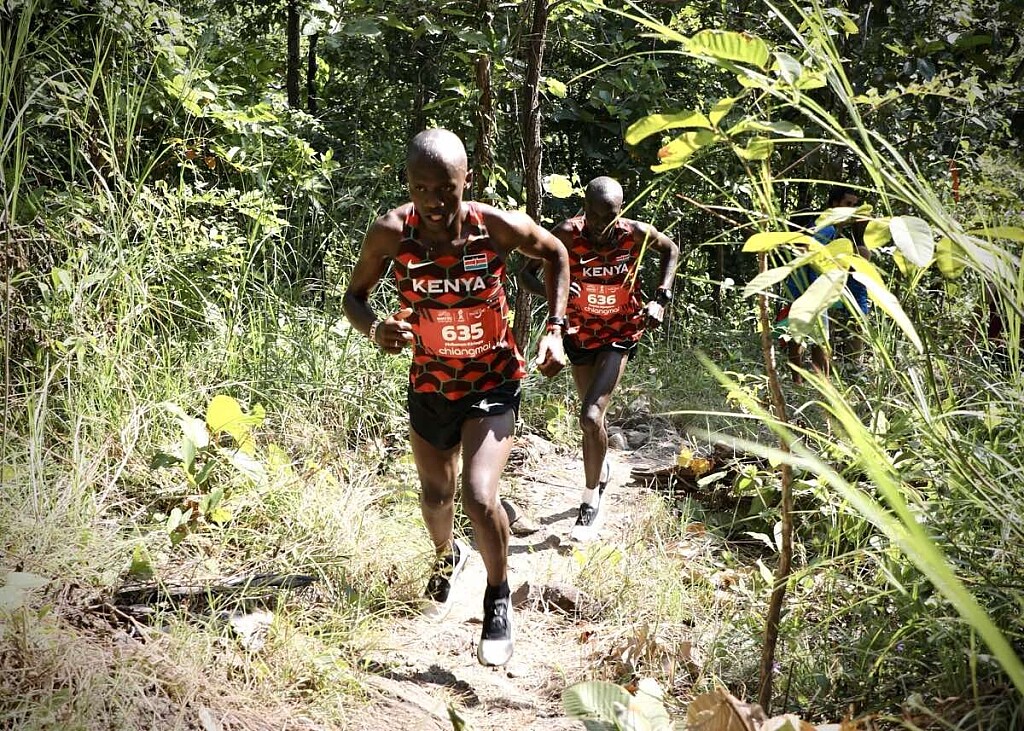
Kibet and Cheptegei mark triumphant day for Uganda as World Mountain and Trail Running Championships conclude
Ugandan athletes capped a successful week of racing at the inaugural World Mountain and Trail Running Championships in Chiang Mai, Thailand, as Samuel Kibet, Rebecca Cheptegei and Leonard Chemutai won three of the four titles on offer on Sunday (6), the final day of competition.
Kibet and Cheptegei won the senior men’s and women’s up and down mountain races respectively, both held over 11.2km with 475m ascent. Chemutai, meanwhile, took the junior men’s up and down title and Jessica Bailey led a British 1-2 in the junior women’s race, both competing over a 6.4km course with 224m ascent.
Uganda set out their stall early in the senior men’s race as Kibet formed part of a small lead group alongside compatriots Timothy Toroitich, Leonard Chemonges and Eliud Cherop, with Mexico’s Everado Moreno also trying his best to stick with them. The rest of the field was some 30 metres behind, Friday's uphill gold and silver medallists Patrick Kipngeno and Philemon Kiriago of Kenya leading the chase.
Eight kilometres later, Kibet emerged first from the trees, holding a 19-second advantage over Toroitich and Kipngeno who were locked together in second and third. Kipngeno eventually managed to pull away from Toroitich narrowed the gap to the leader, but it wasn't enough.
Kibet swept across the line to take the title, the sixth for a Ugandan senior man in the past eight World Championships. Kipngeno was 10 seconds behind, becoming the first double medallist at the new expanded championship format. Toroitich held on for bronze ahead of teammates Chemonges and Cherop in fourth and fifth. Spain's Andreu Blanes followed four seconds later, placing sixth.
With four athletes in the top five, Uganda was a clear winner of the team competition. Spain took silver with Italy just a single point behind, both teams placing three athletes inside the top 15.
The Ugandan dominance continued in the final race of the championships as Rispa Cherop, Rebecca Cheptegei and Annet Chelangat pushed the pace from the start with only Saturday's uphill world champion Allie McLaughlin of the USA able to hang on.As was the case with the senior and junior men’s races, it soon became a question of which of the Ugandan athletes would take the title. Cheptegei, still looking remarkably smooth, flew into the race's final kilometre with a 20-second gap over her teammate Chelangat and was jubilant as she tore across the finish line, flag in hand, to become the second Ugandan woman to win a mountain running world title.
Chelangat was no less ecstatic in second and the pair had time pose for the cameras before McLaughlin came in to take bronze, the second medal in a remarkable weekend for the US runner.
Romania's Monica Florea, both knees bleeding, came in fourth, just as she did in Friday's uphill race, confirming herself as one of the most consistent performers in mountain running, as did Britain’s Scout Adkin, who finished a minute further back in fifth.
With Cherop – one of the pre-race favourites – unable to finish, it meant Uganda didn’t have enough finishers to contend for the team title, opening the door for another country. Switzerland, with three finishers in the top 15, stepped up to take the team title, adding to the two sets of team medals they earned in the uphill race on Friday. Britain took team silver, while USA capped a strong championships with bronze.
Just as they did with the senior races on Sunday, Uganda dominated the junior men's event, filling the top four places to sweep the individual medals and earn team gold. Leonard Chemutai was a dominant winner ahead of teammates Caleb Tungwet, Denis Kiplangat and Silas Rotich.
Britain’s Finlay Grant was fifth individually but helped his country to secure team bronze, while France took team silver.
The junior women’s up and down mountain race was the only event on Sunday not won by Ugandan athletes. Jessica Bailey led a British 1-2 from teammate Rebecca Flaherty, also picking up gold in the team standings.
Italy's Axelle Vicari was third individually and a comfortable second in the team contest ahead of France.
Next year the championship heads to Europe and the spectacular trails of the Austrian Alps when the 2023 World Mountain and Trail Running Championships will take place in Innsbruck-Stubai, Tyrol from 6-10 June.
by World Athletics
Login to leave a comment

World Mountain and Trail Running Championships
Welcome all athletes, officials, coaches, and families to THE AMAZING THAILAND WORLD MOUNTAIN & TRAIL RUNNING CHAMPIONSHIPS 2021 (WMTRC2021). The event will feature 80km and 40km trail races, classic up and down and uphill only mountain races. It replaces World Championships previously hosted with World Athletics, WMRA (mountain running) and IAU and ITRA (trail). The Amazing Thailand World Mountain and...
more...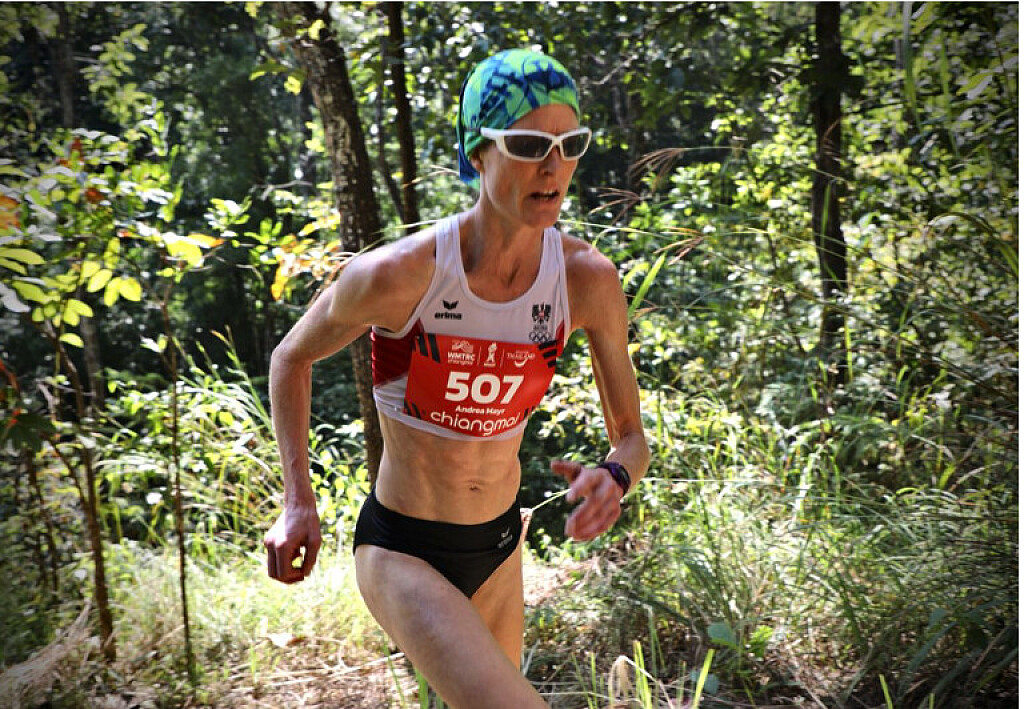
2022 World Mountain Running Championships Uphill Results: McLaughlin and Kipngeno Win
It’s finally happening! Years of postponements are done and the first-ever combined World Mountain and Trail Running Championships have started. The festivities are all just outside of Chiang Mai, Thailand, a city of 127,000 people in the mountainous northern part of the country.
Friday’s Uphill race went 8.5 kilometers uphill and with 1,065 meters of gain. Alternately, that’s 5.3 miles and 3,500 feet of elevation gain.
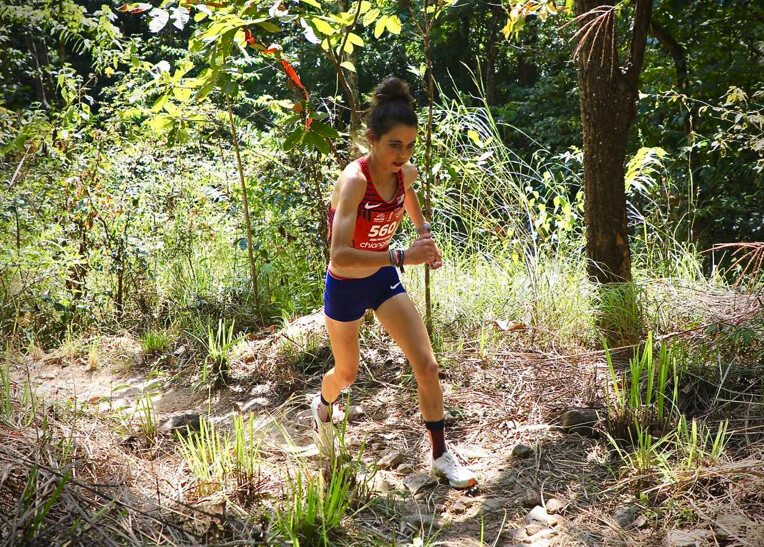
Allie McLaughlin (USA) dethroned Andrea Mayr (Austria) for the women’s crown. The pair raced up in 55:15 and 55:41, and Maude Mathys (Switzerland) was just behind in 56:00 for third.
McLaughlin just came off the Golden Trail World Series Finals in Portugal. Mayr, now 43 years old, is a six-time World Mountain Running Champion, typically excelling in uphill years. All three are expected to double back for the Classic Up and Down race on Sunday.
Monica Madalina Florea (Romania) and Onditz Iturbe (Spain) were fourth and fifth in 57:44 and 57:56.
[In 2015, Maude Mathys received a warning without suspension from the Disciplinary Chamber for Doping Cases of Swiss Olympic for two positive tests for clomifene (previously clomiphene) after it was determined that she was mistakenly taking the drug without first obtaining a World Anti-Doping Agency Therapeutic Use Exemption.]
n the teams competition, Team USA took gold, Great Britain and Northern Ireland took silver, and Switzerland rounded out the podium in third.
by I Run Far
Login to leave a comment
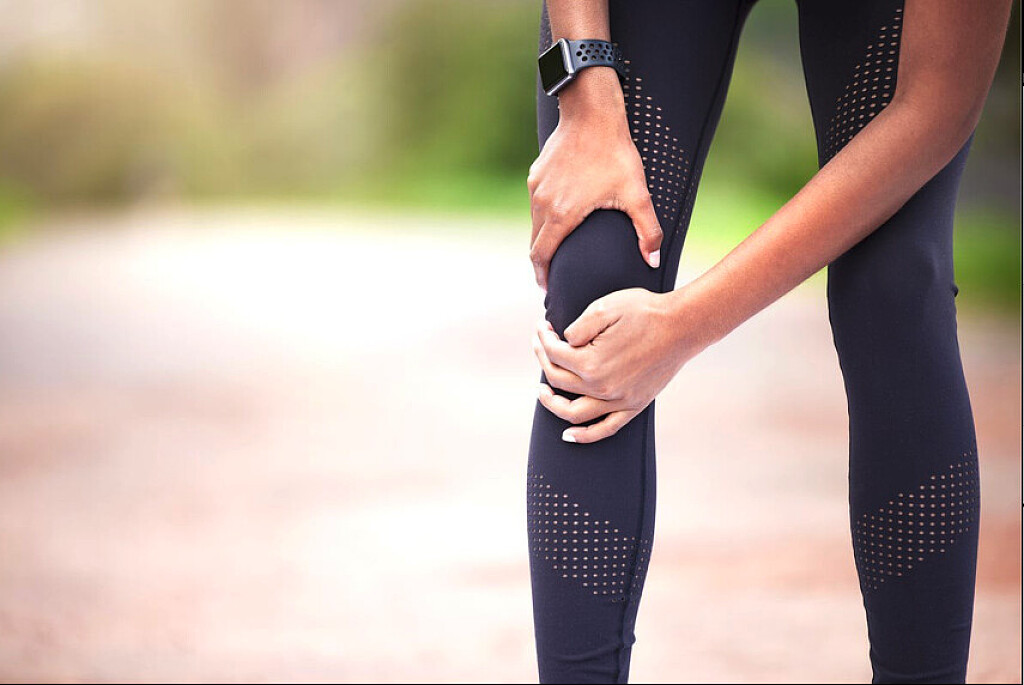
Here's Why You Keep Getting Injured, According to a Physical Therapist.
Today, the hill feels easier to climb. I step and press firmly into the rain-saturated dirt and raise myself one step closer to the horizon line, my heels lifted. The springs at the back of my legs are loaded and ready to release. There is no stretch or strain. I feel powerful. My back is erect and does not ache. No collapsing today as I charge up the hill. I can still hear my cross-country coach say "lean into it."
I've had the privilege of being shaped into an ultrarunner by my home state, Montana. My love for running is nurtured by following trails that connect landscapes. There is a great importance in the existence of these places, as well as sustaining our bodies - the vessels that take us there. As a doctor of physical therapy, my focus is to effectively build resiliency.

The Strength to Run
Our heart and lungs are invaluable aerobic tools that carry us forward, but trail runners cannot overlook our muscles, ligaments, tendons, or bones, either. The message of "be fit to run," instead of "run to be fit," is not new, but a large majority of non-elite runners have a difficult time following through with the former, in hot pursuit of the latter. Running has a simple essence, but the motion broken down is incredibly demanding on the body and deserves specific steps, and a plan, so running can continue.
Strength training can sometimes be a dirty phrase around the running world. Runners sometimes worry that BMI (body mass index) changes will impact performance and compromise their training hours, but there is a wealth of research supporting strength training improves running economy through neuromuscular changes in the body (2). A recent review of nearly 20 studies found body mass was unchanged from baseline with the implementation of strength training, but running performance markers did improve.
Bottom line? Your body - and your running - gains from strength training.
Research shows that resistance training can reduce risk of overuse injury. Based on a large meta analysis, strength training reduces overuse injury risk by half. Strength-to-run is what can help carry us forward when our lungs are sucking wind and our mind is telling us to take a nap in the wildflowers instead.
The Main Reason Trail Runners Keep Coming Into My Clinic
The main reason runners should invest time in strength training is to help stave off injury and to improve running performance. As a physical therapist, we see a broad spectrum of runners.
Now, strength training is a catchy term, and there are a ton of recommendations out there for how best to approach the endeavor of getting stronger. My approach comes via inspiration from a community colleague and friend, Dr. Evelyn Tate, as well as building research (from Richard Willy, Richard Blagrove, Rikke Beyer) around strength, running, and general strength/conditioning principles.
Best Practices: Approaching Resistance Training for Endurance
When starting out, in order to increase strength in a safe and effective way, following a periodization program is smart.
Strength-to-run is what can help carry us forward when our lungs are sucking wind and our mind is telling us to take a nap in the wildflowers instead.
Periodization means starting with higher repetitions (15-20) of an exercise, with a lower weight and, each week or so, decrease reps and increase weight. The goal? To incrementally build muscle strength, in order to keep your tendons and bones as healthy as possible in common overuse injury sites for endurance athletes (i.e. patellar tendon, tibia, achilles). If life happens and you take a week or two off, no problem. Simply start back over with your progression. Once you reach week 8, the goal is to maintain that rep/set pattern through the season.
Here's a Sample 8-Week Progression Plan:
When selecting from the endless bank of exercise variations, choose one large compound lift like back squats, front squats, deadlifts, or RDL (Romanian deadlift) as your first lift, and then 4 or 5 additional exercises focused on quads, glutes, hamstrings and especially the calves. During running, forces through the gastroc complex are up to 6-8x body weight.
Core exercises can be spread throughout your session, too. "Core" goes beyond the abdominal muscles, the sought after 'six pack.' It's also the muscles that hold us up, line our backs, surround our hips, and support the pelvic floor.
Now, even though our legs are what carry the body forward, trail runners cannot neglect the benefit of upper body strength. When the mountain gets steep enough, we lean in, and our arms become an extension of the legs pushing down through the knees, moving toward the sky. There may even be times where you are on all fours pushing and pulling yourself up and over rocks.
Running itself is a plyometric motion (rapid stretch-contract of muscle tissue, i.e. jumping and hopping), so your strength session does not need to be dense with plyo/power exercises, but for specificity of training, the addition of 1 to 2 plyo-power exercises is a good option.
If you find that your strength training sessions are causing the quality of your running to suffer, first decrease your volume of lifts, meaning decrease the number of sets or repetitions, and then second, decrease weight. Too often, the solution is to lower the load we are trying to move. We cannot lower the height of a mountain, but we can be stronger in our approach. If facing body soreness two days after a lift, the session was likely a bit too dense, and you can simply decrease total loading.
With all the guidelines and science to serve as the strong supportive frame, it is important to remember in training that maintaining our body's capacity to move through terrain is a fluid process. As trail runners, we are constantly evaluating terrain, checking in with maps, and pausing (even just for a moment) to look at the beauty. Your training and strength to run deserves the same respect.
by Trail Runner Magazine
Login to leave a comment
How to condition your legs to run further
Often, runners concentrate on racking up the miles at the expense of all other training. At some point, your body will scream “no more!” and protest by breaking down with a knee, calf, or ankle-based injury, side-lining you for weeks or even months. But with the right steps you can build up your legs’ strength and carry yourself further on your runs.
All of which would certainly come in handy ahead of the Wings for Life App Run on Sunday, May 7, 2023, which will see runners across the world raising vital funds for the Wings for Life Foundation, as they try and outrun a virtual Catcher Car via an app on their phone (sign up here!). So if you truly want to bulletproof your lower limbs for a test of pure distance, this is the one to sign up for.
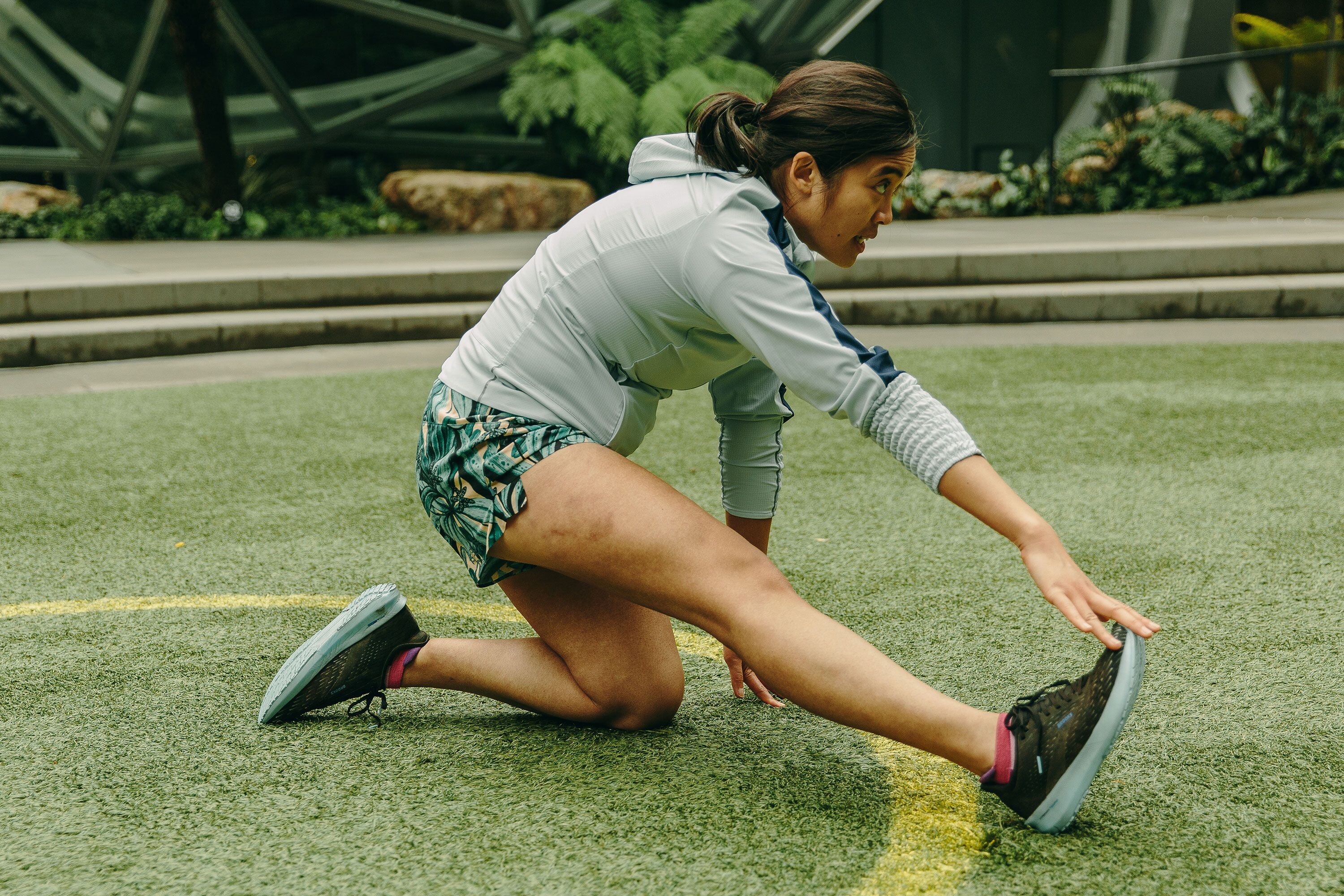
Without further ado, here are the pointers you need...
1. Always stretch.
A simple one to start, but one often neglected by runners. Stretching your calves and quads is key to building leg strength for running. “The idea is to improve movement of the ankle and knee joints before running,” says Pat Gillham, specialist musculoskeletal physiotherapist at Pure Sports Medicine. “This will help prevent over-loading of the joints by the repetitive nature of running.” Gillham also advises doing stretches before you run will give increased range of movements to the joints.
Calves can be stretched off a step and quads by holding your heel to your bum while standing or kneeling. Stretches should be held for 60 seconds at a time, and Gillham advises doing stretches before you run, “but not to the point of complete muscle fatigue otherwise your muscles won't be able to cope with running,” he adds.
2. Use a foam roller
Many runners see the foam roller as an instrument of torture, designed to reduce grown adults to tears. But, says Gillham, using a foam roller is key for helping your legs run further. “A foam roller can be the perfect way to give yourself soft-tissue release instead of, or in addition to, stretching.” And if you are going to target one area? Go for the outer hip. A Pulseroll vibrating roller is a good place to start.
3. Choose the right shoes and socks
Another simple tip, but one that can easily be overlooked when you enter a running shop and your mind becomes overwhelmed at the sheer size of the selection on offer. Most reputable running shops now have treadmills in store, where staff can watch you run, check your gait and suggest appropriate shoes. And Brooks and Saucony even have their own proprietary analysis systems. Also, consider compression socks, too. “They can reduce irritation to the fascia in your calves by reducing vibrations that come from the landing,” says Gillham.
4. Increase your leg-strength work
Gillham stresses the importance of building your legs’ strength through regular gym work. "Single-leg deadlifts/single-leg bridges/high step-ups/single-leg heel raises [seated and standing]/side planks – all these exercises are great for adding to your workout to increase your legs’ power," he says. “High reps are ideal, until fatigue with or without weight. This type of programme should be done ideally three to four times per week for a duration of six to eight weeks to see any benefit.”
Below are two exercises you can easily incorporate into your weekly strength and conditioning programme, or just do at home when you have five minutes...
5. Romanian deadlifts
“Your average Joe tends to ignore muscles they can't see,” says Richard Tidmarsh, strength and conditioning coach and founder of Reach Fitness. “Your hamstrings are key for running performance and they are hiding at the back of your legs and so are often ignored. Romanian deadlifts will strengthen your posterior chain, making you a more powerful and effective athlete.”
6. Monster walks
“Most people's glutes retired themselves from active duty years ago,” says Tidmarsh. “This is the modern-day curse of a desk job. But to be a good runner and to avoid injury, you need your glutes to fire up. The elastic bands you see in a gym that nobody ever uses? They’re your friend. Every training session, strap a band around your thighs, settle into a half squat and then walk side to side with little steps. It's called a monster walk for a reason; you should feel your glutes on fire. This will prime them ready to work when you are running.”
7. Get plenty of rest
And finally, what everyone wants to hear. “Put your feet up,” says Tidmarsh. “Runners often become obsessed with mileage. The more you do the better, right? Wrong. Running puts a huge amount of stress on your body’s major joints, particularly if you are out pounding the streets. So learn to take a rest, and focus on the quality of your training rather than the quantity. Space out your training runs throughout the week, have weekly sports massages and try to use running tracks or trails rather than roads, as the surface is more forgiving.”
by Howard Calvert
Login to leave a comment
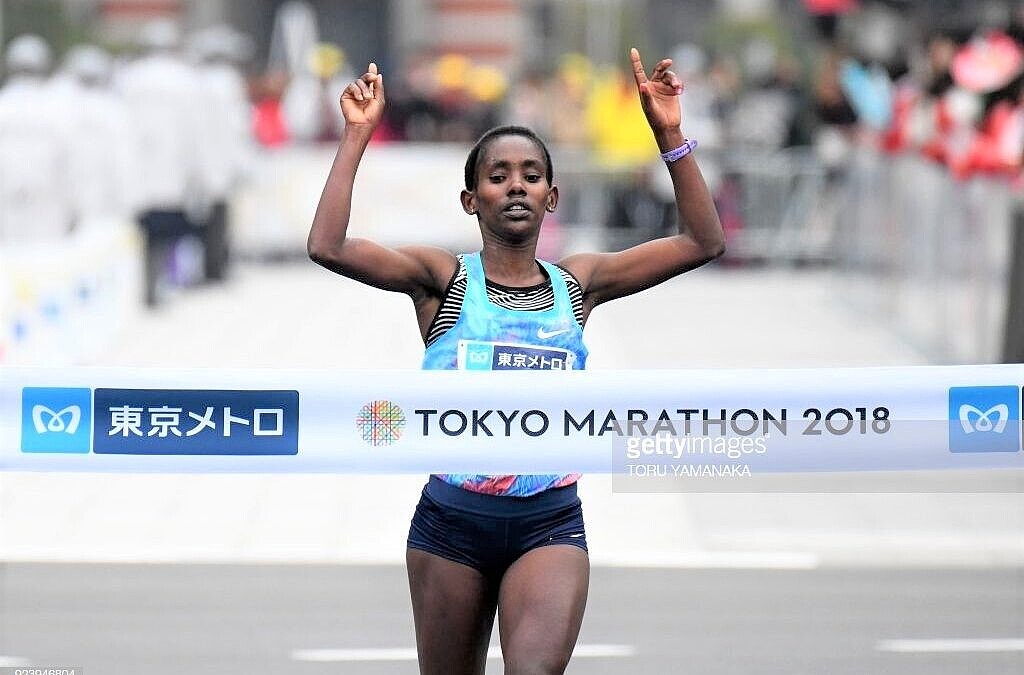
Jemal Yimel and Ruti Aga, added to 2022 Chicago Marathon elite fields
The 2022 Bank of America Chicago Marathon got a boost in quality yesterday when race organizers announced some significant additions to the elite fields, led by Ethiopian national record holder Jemal Yimer on the men’s side and 2:18:34 marathon Ruti Aga on the women’s side. Aga is the more accomplished marathoner but she is the bigger question mark as she dropped out of New York last year and hasn’t raced at all in 2022 whereas Yimer, who has recorded marathon finishers only in Boston (3rd and 8th the last 2 years), has been on fire on the roads this summer.
Below we show you the new additions to the elite fields (We present them in order from most likely to win to least likely) and after that you will see the full elite fields.
The 2022 Bank of America Chicago Marathon got a boost in quality yesterday when race organizers announced some significant additions to the elite fields, led by Ethiopian national record holder Jemal Yimer on the men’s side and 2:18:34 marathon Ruti Aga on the women’s side. Aga is the more accomplished marathoner but she is the bigger question mark as she dropped out of New York last year and hasn’t raced at all in 2022 whereas Yimer, who has recorded marathon finishers only in Boston (3rd and 8th the last 2 years), has been on fire on the roads this summer.
Below we show you the new additions to the elite fields (We present them in order from most likely to win to least likely) and after that you will see the full elite fields.
Men
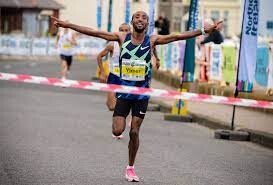
Jemal Yimer (ETH) – 2:08:58 pb (Boston, 2022). 26-years-old. Half marathon ace. 26:54 10,000 pb. Ethiopian national record holder in the half marathon, 58:33, which he ran in Valencia in 2018. Trivial: Did you know 12 Kenyans have run faster than that? His two marathon finishes have been in Boston where he was third in 2021 and 8th this year. In good form this summer. 3rd at Peachtree (27:50), 1st at Boilermaker (42:38), 1st in Larne half in 59:04 on August 28th.
Shifera Tamru (ETH) – 2:05:18 pb. Only 23. Won Seoul in 2019 (2:05:29) and Daegu (2:06:31) earlier this year. 5th in Chicago last year. Has ran under 2:06 in 4 of last 5 marathon.
Bernard Koech (KEN) – 2:04:09 pb (Amsterdamn 2021). 34-years-old. Has 5 times run run under 2:07 incluing twice in the 2:04s including in his debut in Dubain in 2013 without super shoes. Has never won a marathon but was s2nd in 2021 Amsterdam and 2014 Rotterdam. No races at all in 2022.
Guojian Dong (CHN) – 35-years-old. Three-time Olympian (2012, 2016 and 2020 marathon); five-time national champion on the track in the 10,000 and 5000m; marathon personal best 2:08:28 (Berlin, 2019). Chinese record is 2:08:15.
Women
Ruti Aga (ETH) – 2:18:34 pb (2018 Berlin). 28-years old. Hasn’t broken 2:20 in her last 6 marathons since running 2:18 in Berlin but did win Tokyo in 2019 in 2:20:40. DNF in NY last year. No results in 2022. Also 2018 Tokyo Marathon and Berlin Marathon runner-up.
Delvine Meringor (ROU) – 2:24:32 pb. 30-years-old. Former Kenyan. 2022 Los Angeles Marathon champion, and 2022 Romanian national champion in the 5000m and 10,000m.
Sarah Inglis (GBR) – 2:29:41 pb (Chandler, 2020). 31-years-old. 2022 Commonwealth Games competitor in the 5000m and 10,000m.
Elisha Rotich (KEN), Abayneh Degu (ETH), Amanuel Mesel (ERI), Masaya Taguchi (JPN), Jianhua Peng (CHN), Shaohui Yang (CHN), Steven Martinez (USA) have also been added to the 2022 elite open division race. Fidel Aguilar (MEX), Jose Pulido (USA) and Hannah Dederick (USA) have been added to the 2022 elite wheelchair competition.
by Letsrun
Login to leave a comment
Bank of America Chicago
Running the Bank of America Chicago Marathon is the pinnacle of achievement for elite athletes and everyday runners alike. On race day, runners from all 50 states and more than 100 countries will set out to accomplish a personal dream by reaching the finish line in Grant Park. The Bank of America Chicago Marathon is known for its flat and...
more...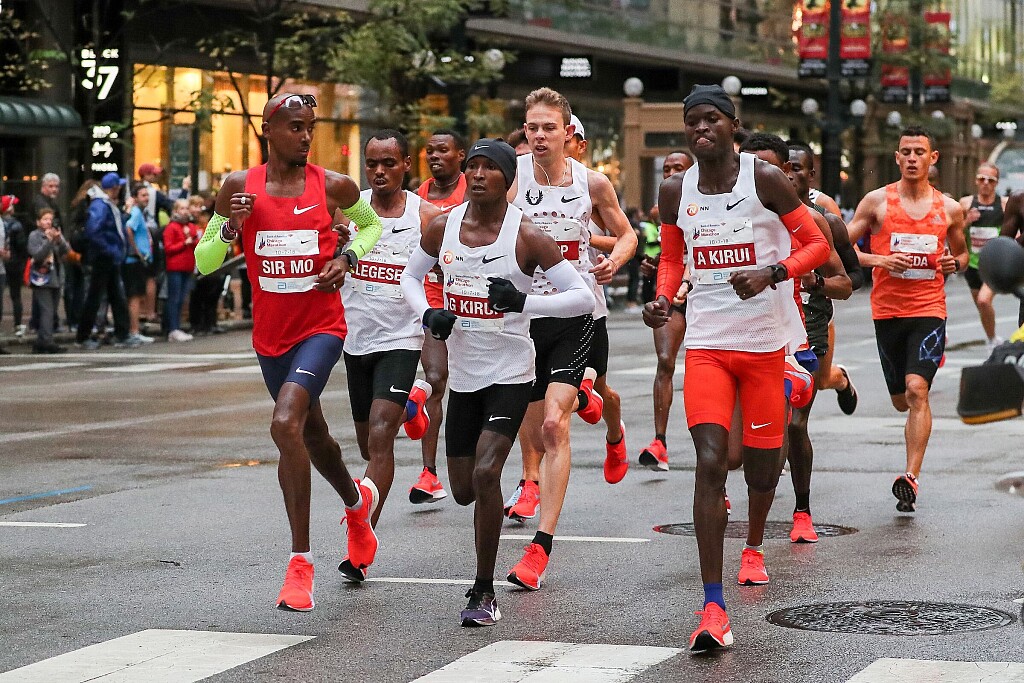
2022 Chicago Marathon Elite Field Updates
The Bank of America Chicago Marathon is thrilled to welcome elite athletes from around the world to its start line on Sunday, October 9. In addition to the previously announced field, the following athletes will be competing in 2022:
Bernard Koech (KEN) – Runner-up of the 2021 Amsterdam Marathon in a personal best of 2:04:09. Koech finished fifth in Chicago in 2014.
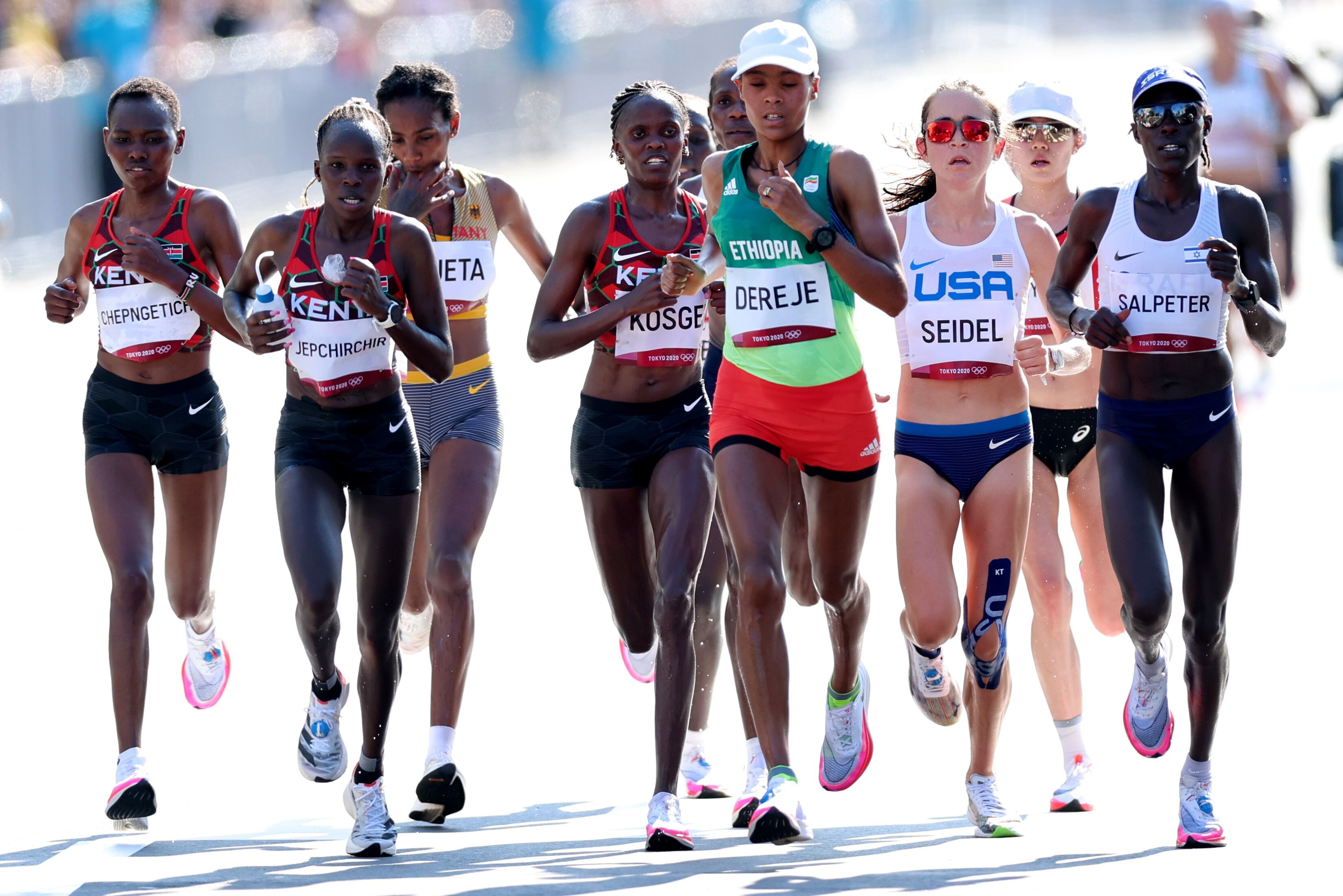
Shifera Tamru (ETH) – 2022 Daegu Marathon champion and 2019 Seoul Marathon champion with a personal best of 2:05:18 (Dubai, 2019). Tamru finished fifth in Chicago last fall.
Guojian Dong (CHN) – Three-time Olympian (2012, 2016 and 2020 marathon); five-time national champion on the track in the 10,000 and 5000m; marathon personal best 2:08:28 (Berlin, 2019).
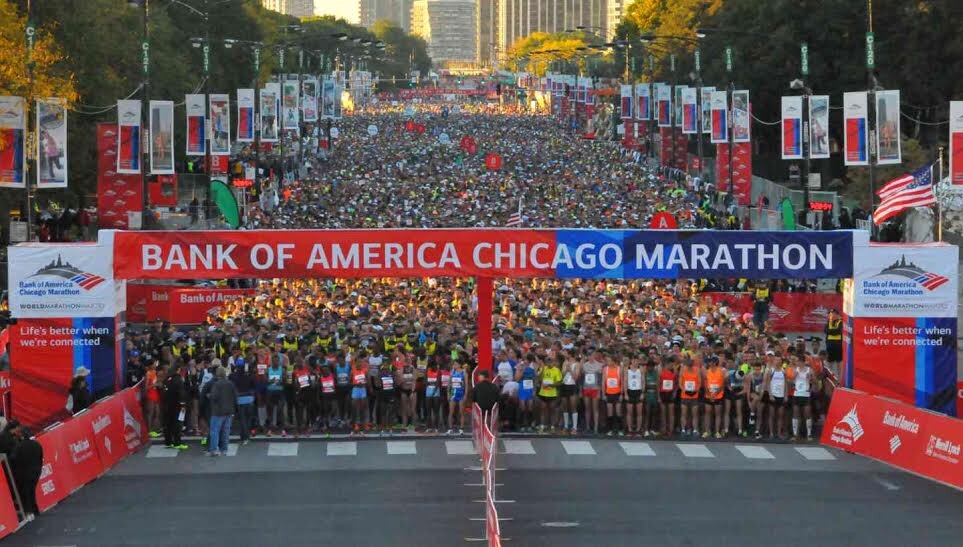
Jemal Yimer (ETH) – Ethiopian national record holder in the half marathon, 58:33, and the 12th fastest half marathon runner in history; third place finish in the 2021 Boston Marathon (his marathon debut); marathon personal best, 2:08:58 (Boston, 2022).
Ruti Aga (ETH) – 2019 Tokyo Marathon champion and 2018 Tokyo Marathon and Berlin Marathon runner-up; marathon personal best, 2:18:34 (Berlin, 2018).
Delvine Meringor (ROU) – 2022 Los Angeles Marathon champion, and 2022 Romanian national champion in the 5000m and 10,000m; marathon personal best, 2:24:32 (Siena, 2021); the Chicago Marathon will be her third marathon.
Sarah Inglis (GBR) – 2022 Commonwealth Games competitor in the 5000m and 10,000m; marathon personal best, 2:29:41 (Chandler, 2020).
Elisha Rotich (KEN), Abayneh Degu (ETH), Amanuel Mesel (ERI), Masaya Taguchi (JPN), Jianhua Peng (CHN), Shaohui Yang (CHN), Steven Martinez (USA) have also been added to the 2022 elite open division race. Fidel Aguilar (MEX), Jose Pulido (USA) and Hannah Dederick (USA) have been added to the 2022 elite wheelchair competition.
Previously announced athletes Jeison Suarez (COL), Jerrell Mock (USA), Colin Mickow (USA) and Hiroki Nishida (JPN) have withdrawn from the 2022 event.
Tune into the 2022 Bank of America Chicago Marathon
Watch Live
NBC 5 Chicago and Telemundo Chicago will provide complete live local TV coverage of the Bank of America Chicago Marathon in English and Spanish from 7 a.m. – 11 a.m. CST on Sunday, October 9. Expert analysts Ed Eyestone, Carrie Tollefson and Amanda McGrory will join Marion Brookes and Leila Rahimi on NBC 5 Chicago, with Juan Luis Barrios, Luis Posso and Saul Mendoza joining Anabel Monge and Héctor Lozano on Telemundo Chicago.
Covering the leaders and reporting along the course will be U.S. American Marathon Record Holder Keira D’Amato for the women’s elite open division and Olympian Diego Estrada for the men’s elite open division. A talented array of NBC and Telemundo reporters will join the broadcast at the start, finish and along the course.
The 44th running of the race will also be streamed live nationally on Peacock from 7 a.m. – 11 a.m. CST, as well as on nbcchicago.com and telemundochicago.com from 7 a.m. – 3 p.m. CST.
International viewers can watch the race via a variety of global broadcast partners, including Eurosport, SuperSport, ESPN Latin America, Sky New Zealand, Astro Malaysia and SMG China. Viewers are encouraged to check their local listings for timing.
Listen Live
670 The Score Sports Radio will provide complete live radio coverage of the Bank of America Chicago Marathon on race day from 6 a.m. – 10 a.m. CST. Fans of the sport can listen to Chicago’s Josh Liss joined by analysts Greg Meyer, Jenny Spangler, Treniere Moser and Chris Wehrman for a play-by-play of all the action. Listen from anywhere on Sunday, October 9 at 670thescore.com/listen.
About the Bank of America Chicago Marathon
The Bank of America Chicago Marathon welcomes thousands of participants from more than 100 countries and all 50 states, including a world-class elite field, top regional and Masters runners, race veterans, debut marathoners and charity participants. The race’s iconic course takes participants through 29 vibrant neighborhoods on an architectural and cultural tour of Chicago. The 2022 Bank of America Chicago Marathon, a member of the Abbott World Marathon Majors, will start and finish in Grant Park beginning at 7:30 a.m. on Sunday, October 9. In advance of the race, a three-day Abbott Health & Fitness Expo will be held at McCormick Place Convention Center Thursday, October 6 through Saturday, October 8. For more information about the event and how to get involved, go to chicagomarathon.com.
by Running USA
Login to leave a comment
Bank of America Chicago
Running the Bank of America Chicago Marathon is the pinnacle of achievement for elite athletes and everyday runners alike. On race day, runners from all 50 states and more than 100 countries will set out to accomplish a personal dream by reaching the finish line in Grant Park. The Bank of America Chicago Marathon is known for its flat and...
more...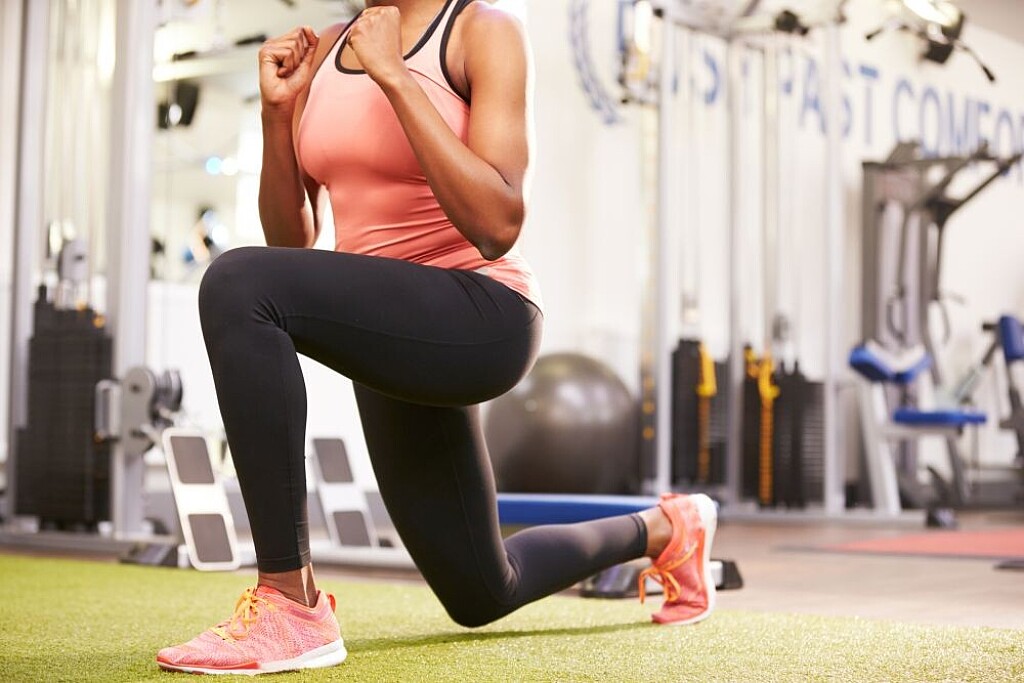
Use this lower body strength workout to improve your stride power
When you’re running, your legs and core drive most of your body’s momentum. Strength training can improve your hip mobility and lower body strength, and will make your running more efficient and your stride more powerful.
This workout is designed to improve agility and balance by developing the largest muscles in your hips, glutes and legs. These muscle groups are responsible for stabilizing your entire body during a run, and building them will help you not only run stronger but faster too.
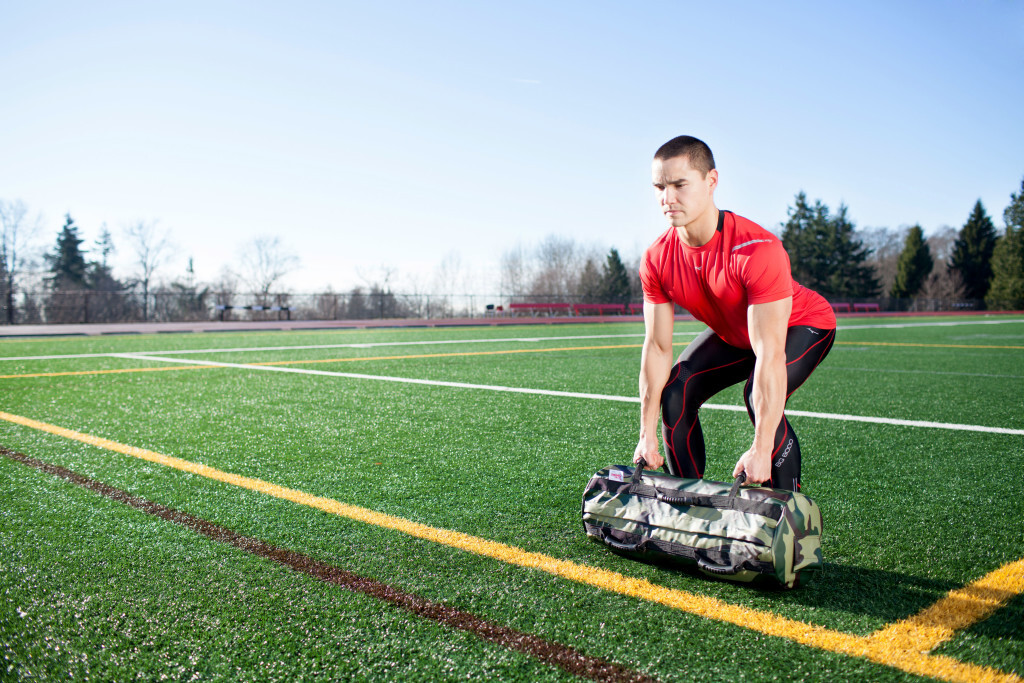
The workout
Try three to five circuits of the exercises below and give yourself 90 seconds to two minutes’ rest between each exercise.
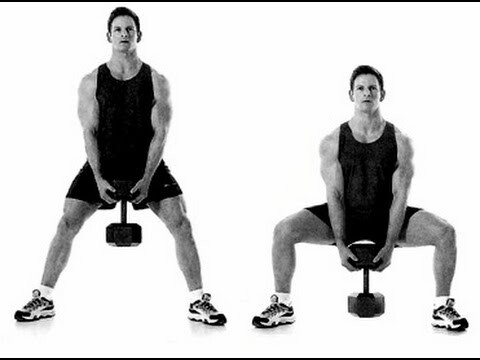
10 reps of single-leg Romanian deadlifts (each side)
The single-leg Romanian deadlift (RDL) involves hinging forward from your hips until your upper body is almost parallel to the floor. As you lean forward, your non-weight bearing leg is extended straight back behind you.
This range of movement develops your hip mobility, hamstring and hip-flexor flexibility.
10 to 15 reps of standing lunge with weights (each side)
Start by standing up straight and step ahead with one foot. Lean forward until your forward knee reaches a 90-degree angle and your rear knee is parallel to the ground. Return to the starting position and repeat with your other leg. Using weights will help build your power and balance (though the exercise can also be done without weights). Start with lighter dumbbells and move up to heavier ones if it feels too easy.
Make sure to keep your back in a neutral position, but don’t flatten the curve of your lower back. You want your knee to stay behind your toes and centred over your foot.
10 to 15 reps of Sumo squats with a medicine ball/weights or weighted item
Stand with your feet wider than shoulder-width apart and your toes pointed slightly out. Hold a dumbbell, medicine ball or a weighted item with your hands in front of your hips.
Push your hips back and squat down, keeping your chest up and knees out. Bring the weight you are bearing down to the floor in between your legs. Then stand back up to the starting position and repeat.
by Marley Dickinson
Login to leave a comment
British ultrarunner completes 2,850 km run along Europe’s Danube River
Kieran Alger ran the length of the second-longest river in Europe in 67 days.
If you’ve travelled to Budapest, Vienna or a number of other European cities, you might have run along the Danube River. That’s what British ultrarunner Kieran Alger just finished doing on Tuesday, but unlike what was likely a chill mid-vacation run for you, he did it for 67 days.
The Danube is the second-longest river in Europe, passing through 10 countries and spanning 2,850 kilometres, and Alger covered it from point to point. He called this challenge Danube Sea to Source and used it to raise money for five different charities, all of which fight child poverty.
Alger started his run on June 25 on the coast of the Black Sea in Romania. From there, he simply followed the Danube, taking every twist and turn the river makes. This challenge was almost completely unsupported, meaning Alger didn’t have a crew following along and meeting up with him at every pitstop. He carried his own supplies (a 22-pound bag) and camped most nights.
As Alger told the BBC after finishing his journey, he believes he is the first person to complete this running challenge along the Danube. As one would imagine, the Sea to Source was hardly an easy endeavour, but Alger said he had to fight more than just fatigue.
“In Romania, I battled lots and lots of wild dogs,” he said. “I suffered a couple of dog attacks … and I had to run quite a lot of those stretches on high alert.”
While this made the run even more difficult, Alger said he found that “the struggles made the highlights even better.” After crossing his finish line in Donauschingen, Germany, on Tuesday, Alger stopped the clock on his challenge after 67 days of running. That works out to more than a marathon every day for more than two months.
by Ben Snider-McGrath
Login to leave a comment
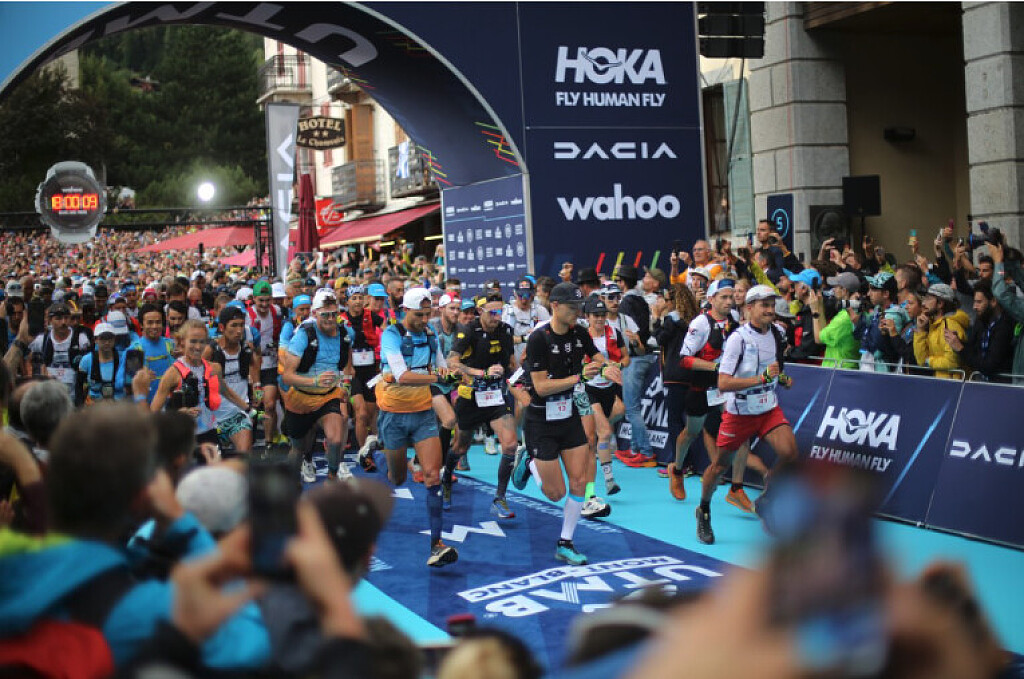
2022 UTMB Men’s Race
As expected, the men took the race out fast from the start on the relatively flat roads and trails from Chamonix to the village of Les Houches. Spain’s Pau Capell, the 2019 UTMB winner, led a charging group through Les Houches, seven kilometers into the race, followed closely by Mathieu Blanchard, a Frenchman living in Canada, and Jia-Ju Zhao and Guo-Min Deng, both of China. All the top contenders were in a massive chase pack, settling in for the long night and day ahead.
It didn’t take long for Jim Walmsley (pre-race interview) of the USA to make his intentions for this year’s race clear, coming into Saint-Gervais, at 20 kilometers into the race, in the lead, looking strong and relaxed. Kilian Jornet and Capell were just seconds behind with Deng, Zhao, and American Zach Miller making up a chase group half a minute in arrears. They were followed by Frenchman Germain Grangier, Blanchard, Frenchman Thibaut Garrivier, and Yan-Qiao Yun of China.
Unsurprisingly, by Les Contamines, 31 kilometers into the race, it was shaping up to be a showdown between Walmsley and Jornet. They came into the aid station together looking relaxed, Walmsley taking the time to high-five fans, and were shortly on their way into the night together. Capell and Miller came in just 30 seconds back, and Grangier rounded out the top five, just a minute behind them.
A notable withdrawal around this time due to physical issues is last year’s second place finisher, Frenchman Aurélien Dunand-Pallaz (pre-race interview).
Climbing over the high Col du Bonhomme, 43 kilometers in, Walmsley, Miller, Jornet, and Tom Evans (pre-race interview) of the U.K. shared the lead. With 1,160 meters (3,800 feet) of climbing down just on this one climb, everyone in the group looked relaxed and was moving well. Capell was just 90 seconds back, trying not to let the elastic to the front group snap in the dark of the night on the run over to Col du Bonhomme before the long descent into the remote French outpost of Les Chapieux.
The four leaders stayed together down to Les Chapieux, 50 kilometers into the race, where last year’s winner, François D’Haene — not participating this year — was spectating and cheering on runners. Unfortunately, Capell had lost contact with the lead group over the previous section, coming into the aid station more than two minutes back. The rest of the top nine stayed relatively the same with Erik Sorenson of the USA slotting in 10th for the first time.Coming into Lac Combal, 66 kilometers into the race, after crossing country borders into Italy and traversing the most remote part of the course, Walmsley and Jornet had only slightly pulled away, their gap to Miller and Evans hung at a tenuous minute. All four looked strong, but it seemed like pre-race predictions of a two-man showdown were about to be realized.
Walmsley, with his arms and legs fully covered from the cold of the night but shirt front open, came into the town of Courmayeur, 80 kilometers in, solo and in the lead, but his gap on Jornet just 80 seconds.
Both men were moving well and left the aid station together after only a few minutes. It was a significant 12 minutes before Evans and Miller came through, staying in Courmayeur for under three minutes. Blanchard, looking more relaxed than any of the previous four, was also in and out of the aid station quickly, 18 minutes off the lead. Known for his slower starts and late race surges, Blanchard appeared to know exactly what he was doing.
It was never a question of if Walmsley or Jornet would strike out on their own, it was just a matter of when. Walmsley was the first to throw down a serious acceleration, coming into Arnouvaz (97 kilometers) solo and with a 2.5-minute gap on Jornet. Both were in and out of the aid station quickly, looking strong and motivated. Blanchard also chose the trail between Courmayeur and Arnouvaz to make his move, coming into the Arnouvaz aid station in third, looking very controlled and 14 minutes behind the leaders.
He was familiar with that position in the race, having finished third in UTMB in 2021. He was also familiar with the race tactic of starting slower, letting the leaders fight it out early and tire themselves out, and then moving up as the fast starters dropped back. It had brought him success the previous year, and he was seemingly employing the strategy again. Miller and Evans continued to run near each other, what Evans would later refer to as a “bromance” that lasted over half the race, and both looked like they had less spring in their step than the men ahead of them.
Committed to making the move stick, Walmsley climbed the Grand Col Ferret at 102 kilometers with a strong powerhike and held a five-minute gap over Jornet. Seemingly unconcerned with his position, Jornet chatted in French with both spectators and volunteers before vanishing into the night. Moving faster and looking stronger over the col than the previous two men, Blanchard continued the chase in third 17 minutes back. Miller and Evans continued to work together to keep the gap manageable.
The gap between Walmsley and Jornet stretched even further to 14 minutes by the sleepy Swiss village of La Fouly, 112 kilometers into the race. Both men were running under course-record pace, and both looked calm and collected. Still running strong into La Fouly, Blanchard kept the leaders within reach.
But Walmsley was committed to stretching the elastic on the field as much as he could, coming through Champex-Lac at 125 kilometers with 13 hours and 40 minutes on the race clock, gaining even more time on the course record and moving strongly. It’s generally a bad idea to bet against Walmsley after he’s put his mind to something, and after a fifth place finish in 2017 and DNF in 2018 and 2021 at UTMB, his commitment to the race and move to Europe to train on the trails seemed to be paying off.
But Walmsley is also known for going out fast and strong, and it doesn’t always stick.One could argue that Jornet was just biding his time, letting Walmsley burn his matches out front. However, there were times around this point in the race where Jornet just plain looked like he was working, enough so that we all began to wonder if the GOAT of trail running would have a crack in his armor today. However, by Trient at 142 kilometers, Jornet had decided to make his move, coming into the aid station in the lead. But instead of seeing Walmsley behind him, it was a surging Blanchard, less than a minute back that Jornet would have to now battle.
It was a long 19 minutes before Walmsley would arrive, appearing to be in discomfort. The dynamic duo of Evans and Miller continued to run together, still holding the gap to the race leader at just over 30 minutes, as they had for much of the race.As the kilometers ticked down, it was indeed a showdown between two men, except it was Blanchard challenging Jornet, with both men coming into Vallorcine at 153 kilometers together, well ahead of the course-record pace.
With Walmsley slowly losing time to the leaders but still in third, eyes moved to Evans who’d finally dropped Miller after nearly a night and a day of racing side by side to see if he could make the pass.By this time, it felt nearly inevitable that Jornet would run to the win and it was no surprise when he came into Tete aux Vents solo looking focused and fast with an 11-kilometer downhill run to the finish. Blanchard never gave up the chase, seven minutes back, while Evans passed a tired but “pumped” Walmsley to slot into third for the first time.
Jornet would finish with a course-record time of 19:49:30, besting both François D’Haene’s 2014 record time (20:11:44) on a course which did not include the Pyramides Calcaires, a gnarly little climb and descent added to the UTMB course a few years back, and Capell’s 2019 time (20:19:09), which did include those extra kilometers.
This is his fourth win at UTMB. Just five minutes back, Blanchard would also come into the finishing chute under the previous course record in second place. An elated Evans rounded out the podium, a stellar finish for his first UTMB.
Walmsley came across the line in fourth, releasing the two DNF monkeys on his back and finishing the next step in his goal of ultimately winning this race someday. Miller, no longer on the comeback trail following surgery and recovery, but fully back, crossed the line in fifth place.
Most of the back half of the men’s top 10 are runners who started slower and bided their time, moving up in the race’s second half, including France’s Beñat Marmissolle, France’s Arthur Joyeux-Bouillon,Jonas Russi of Switzerland, and Romania’s Robert Hajnal. The final member of the men’s top 10, however, is France’s Thibaut Garrivier, who went out hot and looked like he paid for it later, but ultimately holding onto 10th place.
Login to leave a comment
North Face Ultra Trail du Tour du Mont-Blanc
Mountain race, with numerous passages in high altitude (>2500m), in difficult weather conditions (night, wind, cold, rain or snow), that needs a very good training, adapted equipment and a real capacity of personal autonomy. It is 6:00pm and we are more or less 2300 people sharing the same dream carefully prepared over many months. Despite the incredible difficulty, we feel...
more...
Boston Marathon Champions & National Record Holders Headline Professional Field for 2022 B.A.A. 10K
The Boston Athletic Association (B.A.A.) has announced a star-studded field for the 2022 B.A.A. 10K, presented by Brigham and Women’s Hospital, to be held on Sunday, June 26. Evans Chebet, the 2022 Boston Marathon men’s open division champion, will return to Boston, while recently crowned American half marathon record holder Emily Sisson will lead the women’s field on the roads of Back Bay. Four-time B.A.A. 5K champion and American 5K record holder Ben True will also make his B.A.A. 10K debut.
The B.A.A. 10K starts and finishes on Charles Street adjacent to Boston Common and Boston Public Garden, and is widely regarded as one of the fastest 10K races in the world. Registration remains open at www.baa.org, while athletes interested in supporting Brigham and Women's Hospital, the B.A.A. 10K’s presenting sponsor and exclusive fundraising partner, are encouraged to visit www.runbwh.org/10k.
“We’re excited to continue to showcase the world’s most accomplished runners at our B.A.A. events,” said Mary Kate Shea, the B.A.A.’s Director of Professional Athletes and Technical Support. “We’re looking forward to cheering on all participants as they race towards the finish.”
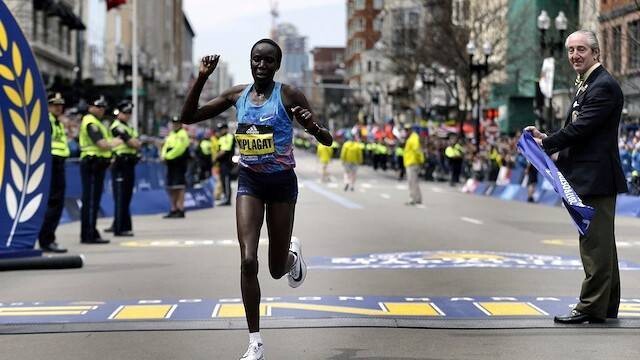
The B.A.A. 10K women’s race brings together Boston Marathon champions Des Linden (2018) and Edna Kiplagat (2017), American record holder Sisson, 2017 B.A.A. 10K winner Joan Chelimo Melly, 2022 Boston Marathon top American Nell Rojas, 2016 USA Olympian Marielle Hall, and USA 15K runner-up Emily Durgin.
Sisson, a Providence College graduate and 2021 Olympian, ran 1:07:11 on May 7 to win the USATF Half Marathon Championships in a new national record. She’s also the defending USA 15K champion.
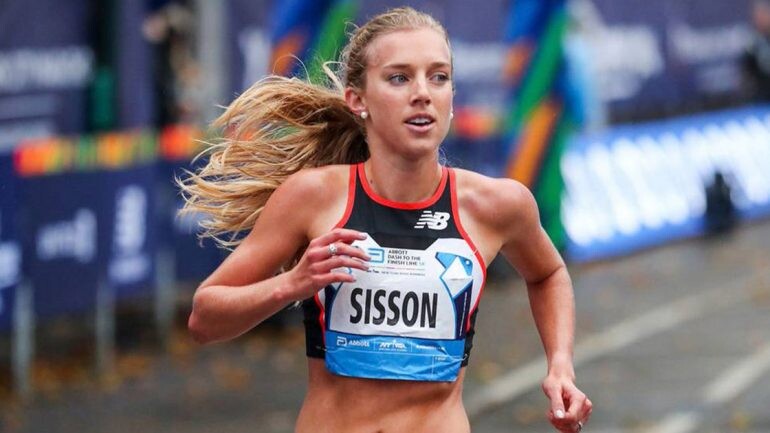
“Breaking the American record in the half marathon was very exciting and I'm now looking forward to switching things up and racing different distances,” said Sisson. “The 10K is a fun and different challenge and I always love racing in Boston.”
Additional international entrants include Biruktayit Degefa of Ethiopia, who has won a quartet of American road races this spring, and Kenya’s Sharon Lokedi, who placed third at the 2022 B.A.A. 5K in April. From the B.A.A. High Performance team are Erika Kemp and Abbey Wheeler; Kemp is a two-time national champion.
In the men’s race, Chebet looks to become only the second Boston Marathon champion to win the B.A.A. 10K, joining the likes of 2011 winner and course record holder Geoffrey Mutai. Chebet stormed to his first Boston Marathon victory in 2:06:51 on April 18.
“After winning the 2022 Boston Marathon, I’m excited to return to the city to run the B.A.A. 10K with a world class field,” said Chebet. “Boston feels like a second home to me now.”
Challenging Chebet from Kenya are David Bett, the reigning 2019 B.A.A. 10K winner; Kennedy Kimutai, the fastest man in the field with a 27:09 lifetime best; Bravin Kiptoo, the 2019 African junior 10,000m champion; and Nicholas Kosimbei, winner of this year’s Cherry Blossom 10 Miler in Washington, D.C. Brothers Jake and Zane Robertson, a dynamic pair from New Zealand who have lived and trained in Kenya, will also race. Recent Iowa State graduate and NCAA champion Wesley Kiptoo will make his Boston road racing debut.
Maine-native Ben True will return to familiar territory, having won the B.A.A. 5K four times, including a national-record setting run of 13:20 in 2017. Fellow American contenders include Olympians Leonard Korir and Shadrack Kipchirchir, Princeton, Mass.-native Colin Bennie, and a quartet of B.A.A. High Performance Team members in Jerrell Mock, Matt McDonald, Jonas Hampton, and Paul Hogan. Korir enters the B.A.A. 10K hot off a pair of national title wins at the USATF Half Marathon and USATF 25K Championships in May.
In the wheelchair division, Jenna Fesemyer, the 2022 B.A.A. 5K women’s winner, Susannah Scaroni, the 2022 Boston Marathon runner-up, and 2020 Paralympian Yen Hoang are entered. Scaroni earned a gold medal on the track at the 2021 Paralympic Games in the 5000m, and is the fastest women’s wheelchair marathoner in U.S. history. James Senbeta and Hermin Garic are the top men’s wheelchair entrants.
For the first time in race history, Para Athletics Divisions will be offered for athletes with upper-limb, lower-limb, and visual impairments. Among the entrants confirmed include Marko Cheseto Lemtukei, Chaz Davis, and Liz Willis, each of whom won Para Division titles at April’s 126th Boston Marathon. Jacky Hunt-Broersma, who ran 104 marathons in 104 consecutive days for a Guinness World Record, and local Para athlete Adrianne Haslet are also entered.
In addition to racing, top professional athletes will participate in the first-ever B.A.A. 10K Fest & Field Day on Saturday, June 25, one day prior to the race. From 2:00 p.m. to 6:00 p.m. at Boston Common, 10K Fest & Field Day will feature youth fitness activities, games, appearances by professional athletes, running clinics, and more. Participants will also be able to pick-up their participant shirts and bib numbers at 10K Fest. Additional details will be available on baa.org in the coming weeks.
Registration for the 2022 B.A.A. 10K, presented by Brigham and Women’s Hospital, is currently open through the B.A.A.’s online platform Athletes’ Village. All participants who enter will receive an adidas participant shirt, unique bib number, and finisher medal. Additional participant information can be found on baa.org. The race will start at 8:00 a.m. ET on Sunday, June 26 on Charles Street adjacent to Boston Common and Boston Public Garden.
Brigham and Women's Hospital, the B.A.A. 10K’s presenting sponsor and exclusive fundraising partner, will again field a team of fundraising runners. Since 2016, more than 2,100 runners and 180 teams have raised $1.2 million to fuel life-giving breakthroughs at Brigham and Women’s Hospital. Learn more and register at www.runbwh.org/10k.
On June 1, the B.A.A. will celebrate Global Running Day with a special pop-up location at the Boston Marathon Finish Line between 3:00-6:00 p.m. Runners can take a picture with the Boston Marathon trophy, receive giveaways, refreshments, and more! RSVP for the free event on our Facebook page, and log miles throughout the day as part of the Abbott World Marathon Majors Global Running Day Challenge. Visit https://bstnmar.org/GRD22 to sign up for free, track your miles, and print a bib to wear as you join a global community of athletes around the world logging miles.
2022 B.A.A. 10K WOMEN’S FIELD (NAME, COUNTRY, ROAD 10K PB)
Joan Chelimo Melly, Romania, 30:14^
Edna Kiplagat, Kenya, 31:06*
Sharon Lokedi, Kenya, 31:06
Mary Munanu, Kenya, 31:20
Biruktayit Degefa, Ethiopia, 31:23
Emily Sisson, USA, 31:47
Emily Durgin, USA, 31:49
Diane Nukuri, USA, 31:49
Lanni Marchant, Canada, 31:49
Vibian Chepkirui, Kenya, 31:49
Nell Rojas, USA, 31:52
Erika Kemp, USA, 32:18
Laura Thweatt, USA, 32:20
Elaina Tabb, USA, 32:40
Rachel Schneider Smith, USA, 32:47
Abbey Wheeler, USA, DB (32:53.50 10,000m)
Grayson Murphy, USA, 32:55
Fiona O’Keeffe, USA, 32:57
Katie Kellner, USA, 33:05
Des Linden, USA, 33:06*
Taylor Werner, USA, 33:35
Marielle Hall, USA, 33:36 (31:05.71 10,000m)
Allie Hackett, USA, 35:17
Jesca Chelangat, Kenya, DB (15:16 5K)
Courtney Hawkins, USA, DB (37:59.99 10,000m)
^ = Previous B.A.A. 10K Champion
* = Previous Boston Marathon Champion
2022 B.A.A. 10K MEN’S FIELD (NAME, COUNTRY, ROAD 10K PB)
Kennedy Kimutai, Kenya, 27:09
Bravin Kiptoo, Kenya, 27:12
Philemon Kiplimo, Kenya, 27:23
Zane Robertson, New Zealand, 27:28
Jake Robertson, New Zealand, 27:28
Wesley Kiptoo, Kenya, N/A (27:37.29 10,000m)
Ben True, USA, 27:51
Nicholas Kosimbei, Kenya, 27:52
John Dressel, USA, N/A (27:57.51 10,000m)
David Bett, Kenya, 28:08^
Dominic Korir, Kenya, 28:08
Leonard Korir, USA, 28:09
Shadrack Kipchirchir, USA, 28:12
David Nilsson, Sweden, 28:13
Tsegay Tuemay, Eritrea, 28:13
Bethwell Yegon, Kenya, 28:24
Reuben Mosip, Kenya, 28:28
Paul Hogan, USA, N/A (28:49.55 10,000m)
Johannes Motschmann, Germany, 28:51
Alex Masai, Kenya, 28:53
Colin Bennie, USA, 28:55
Futsum Zienasellassie, USA, 29:03
Matt McClintock, USA, 29:02
Jacob Thomson, USA, 29:07
John Raneri, USA, 29:19
Evans Chebet, Kenya, 29:30*
Jerrell Mock, USA, 29:36
Aaron Dinzeo, USA, 29:37
Matt McDonald, USA, 29:38
Diego Estrada, USA, 29:41
Fabiano Sulle, Tanzania, 29:53
Jonas Hampton, USA, 30:15
Tim McGowan, USA, 30:17
Connor McMillan, USA, 30:20
Josh Kalapos, USA, N/A (14:33.88 5,000m)
^ = Previous B.A.A. 10K Champion
* = Previous Boston Marathon Champion
Login to leave a comment
B.A.A. 10K
The 6.2-mile course is a scenic tour through Boston's Back Bay. Notable neighborhoods and attractions include the legendary Bull and Finch Pub, after which the television series "Cheers" was developed, the campus of Boston University, and trendy Kenmore Square. ...
more...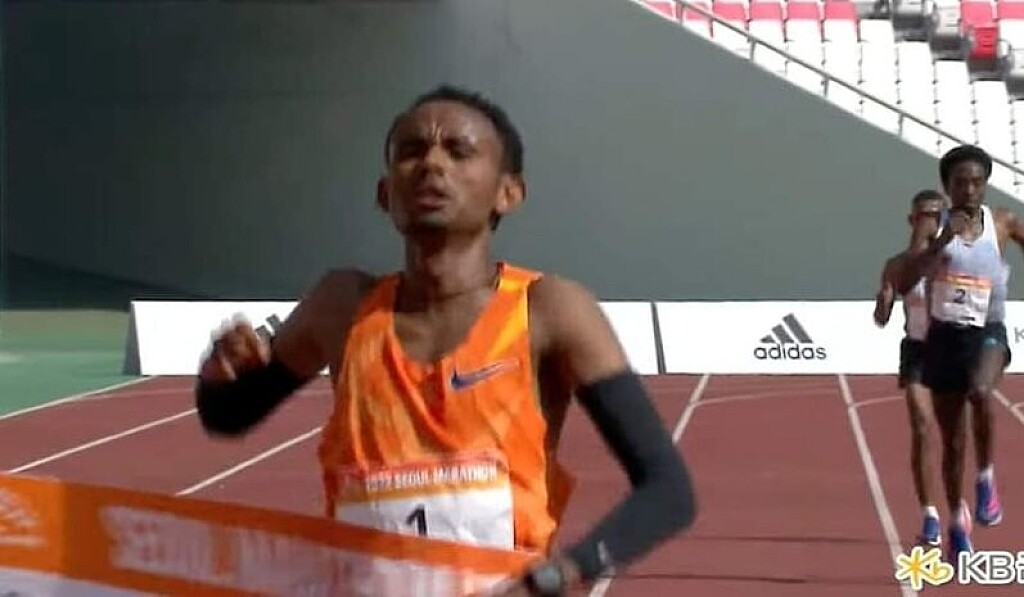
Melly and Geremew run course records for Seoul Marathon success
Joan Chelimo Melly and Mosinet Geremew both broke the course records to triumph at the Seoul Marathon, a World Athletics Elite Platinum Label road race, on Sunday (17).
Ethiopia’s world silver medallist Geremew saw off the challenge of his compatriot Herpasa Negasa and Brazil’s Daniel do Nascimento to win the men’s race in 2:04:43, while Romania’s Melly made a breakthrough to win the women’s contest in 2:18:04 ahead of Ethiopia’s Sutume Asefa Kebede and Bahrain’s Eunice Chumba.
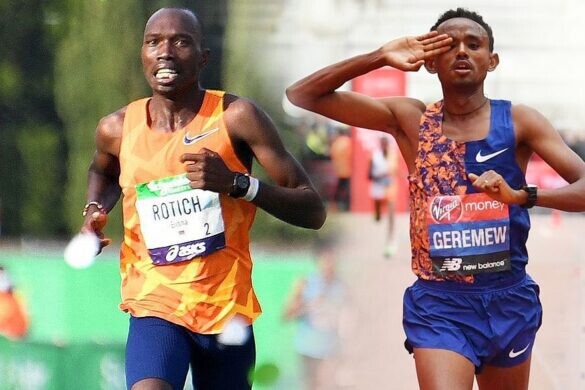
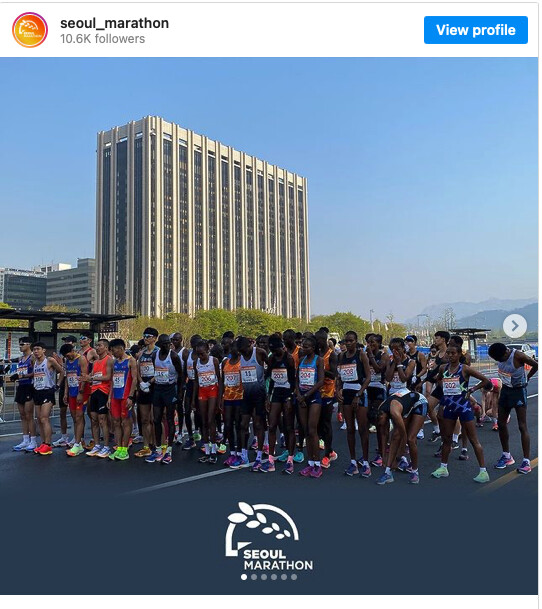
Both eventual winners managed to pull away from their rivals over the final couple of kilometres and keep them at bay, but it remained a fight to the finish. Negasa was just six seconds behind Geremew, with Do Nascimento a further two seconds back in a South American record, and Kebede was eight seconds behind Melly, with those five athletes all finishing inside the previous respective course records of 2:05:13 and 2:19:51.
Geremew, Negasa and Do Nascimento had been part of a 19-strong group that passed 5km in 14:42 and 10km in 29:14. By 20km that pack had 14 members, with 58:43 on the clock. Over the next 10km, three runners were dropped, with Geremew, Negasa and Do Nascimento among those to the fore along with Kenya’s Elisha Kipchirchir Rotich, Philemon Rono and Mark Korir (1:28:41). Rotich, last year’s Paris Marathon winner and the 2019 runner-up in Seoul, dropped out a short while later, while Geremew, Negasa and Do Nascimento began to break away, with the Brazilian pushing the pace.
Geremew and Negasa then made a move and looked to be leaving Do Nascimento behind, with a six-second gap, 1:43:31 to 1:43:37, at 35km and Korir and Rono another eight seconds back.
But Do Nascimento wasn’t giving up and rejoined the leaders to trail by just a few strides as 40km was passed in 1:58:27.
It was London and Chicago runner-up Geremew who was strongest in the closing stages and he held off his challengers to return to winning ways after being unable to finish the Tokyo Marathon earlier this year.
Negasa, who was second in Dubai in 2019, claimed another runner-up spot in 2:04:49, while Do Nascimento improved Ronaldo da Costa’s South American record of 2:06:05 – a world record when it was run in 1998 – by more than a minute, finishing third in 2:04:51.
Korir was a couple of minutes back in fourth in 2:06:54, one second ahead of Moses Kibet.In the women’s race, Melly – who has a half marathon best of 1:05:04 and was contesting her fourth marathon – was among the nine runners who passed 5km in 16:40 and 10km in 32:58. The lead group was down to six at 15km (49:30) and Melly had broken away with 2019 Beijing Marathon winner Kebede, Chumba and Kenya’s Celestine Chepchirchir by 20km (1:05:44).
That quartet continued to race through 25km in 1:21:58 and 30km in 1:38:29, and while Olympic seventh-place finisher Chumba was 10 seconds back at 35km – 1:55:03 to 1:55:13 – she passed Chepchirchir in the closing stages to finish third, eight seconds ahead.
Melly and Kebede had broken away by 40km, passed in 1:12:16, with Melly eventually striding away to win by eight seconds, 2:18:04 to 2:18:12, and record an almost three-minute PB.
Chumba was third in 2:20:02 and Chepchirchir fourth in 2:20:10, one place off her position in Seoul in 2019.
Seven years after her victory in Seoul, Ethiopia's Guteni Shone finished fifth in 2:28:05.
Login to leave a comment
Seoul International Marathon
The only marathon hosted in the heart of the Korean capital. Seoul marathon is the oldest marathon race hosted in Asia andis one of the fastestmarathon in the world. First held in 1931, Seoul marathon is the oldest marathon eventcontinuously held in Asia, and the second oldest in the world followingthe Boston Marathon. It embodies modern history of Korea, also...
more...
Fight fatigue by working on your hamstrings and posture, If you want to decrease the effects of late-race fatigue, don't neglect your hamstrings and core strength
Better fatigue resistance often separates the elites from the rest of us. It can also be the difference between a new PB and going home disappointed. So how do you improve fatigue resistance? New research says having stronger hamstrings and better postural stability will help fight off the effects of late-race fatigue so you can run strong to the finish.
The two types of fatigue
The authors of the study, published in the journal Sensors, identify two types of fatigue: peripheral and central. At its simplest, peripheral fatigue is the exhaustion you feel in your muscles from prolonged physical activity, and central fatigue refers to fatigue in your central nervous system. Both can affect muscle strength and activity, as well as running form.
Fatigue, whether peripheral or central, will not only slow you down, but will also put you at a higher risk for injuries. As fatigue begins to set in, research shows runners experience an increase in ground reaction forces, which puts more stress on the body.
How to improve fatigue resistance
The researchers recruited 18 male runners to complete a running test that induced peripheral and central fatigue and assessed which biomechanics deteriorated during the test. They found that runners with greater hamstring strength and postural stability experienced fewer fatigue-related changes to their biomechanics (a.k.a. their running form) than those with less.
These results led the team to this conclusion: “strength and stability training could prevent or delay the kinematic modifications associated with fatigued running and prevent the early increase in metabolic cost.” In other words, having stronger hamstrings and better postural stability can help you fight the effects of fatigue so you can maintain your pace until you cross the finish line.
Exercises to improve hamstring strength and postural stability
This highlights the importance (yet again) of strength training as a part of a running program. There are many exercises runners can do to improve their hamstring strength, like glute bridges, single-leg Romanian deadlifts and hamstring walkouts. Check out these hamstring exercises or this hamstring and glute strength routine to get you started.
To improve your postural stability, runners should aim to improve their core action, and work on core exercises that focus on counter-rotation, like the ones suggested in this strength training blueprint for runners.
by Brittany Hambleton
Login to leave a comment
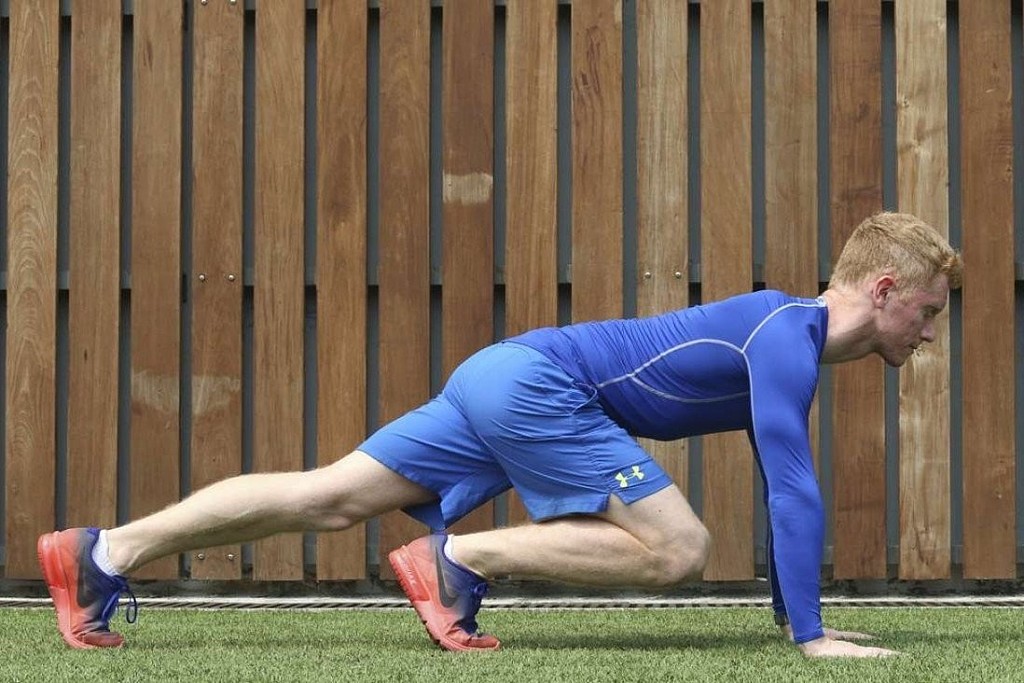
Five simple exercises to help improve your running
Just as strength athletes have a training routine tailored to them becoming stronger, and endurance athletes have a routine with a stamina focus, there are multiple exercises one can utilise in order to promote speed development. For example, you should focus on exercises that strengthen the muscles used when sprinting, as well as incorporating drills that train rapid leg movement. Practising running is not the only way to improve your performance. So what can you do? Here are five exercises that help to increase your optimal speed.
1. Mountain climber
An excellent move, as it trains the legs to move explosively, at a high cadence, while also simultaneously engaging the core muscles. Start in a push-up position with one leg straight and the other bent, with your knee under your torso. Maintaining a steady upper body, focus on explosively alternating legs for 20 seconds, with 40 seconds recovery. Repeat five or six times.
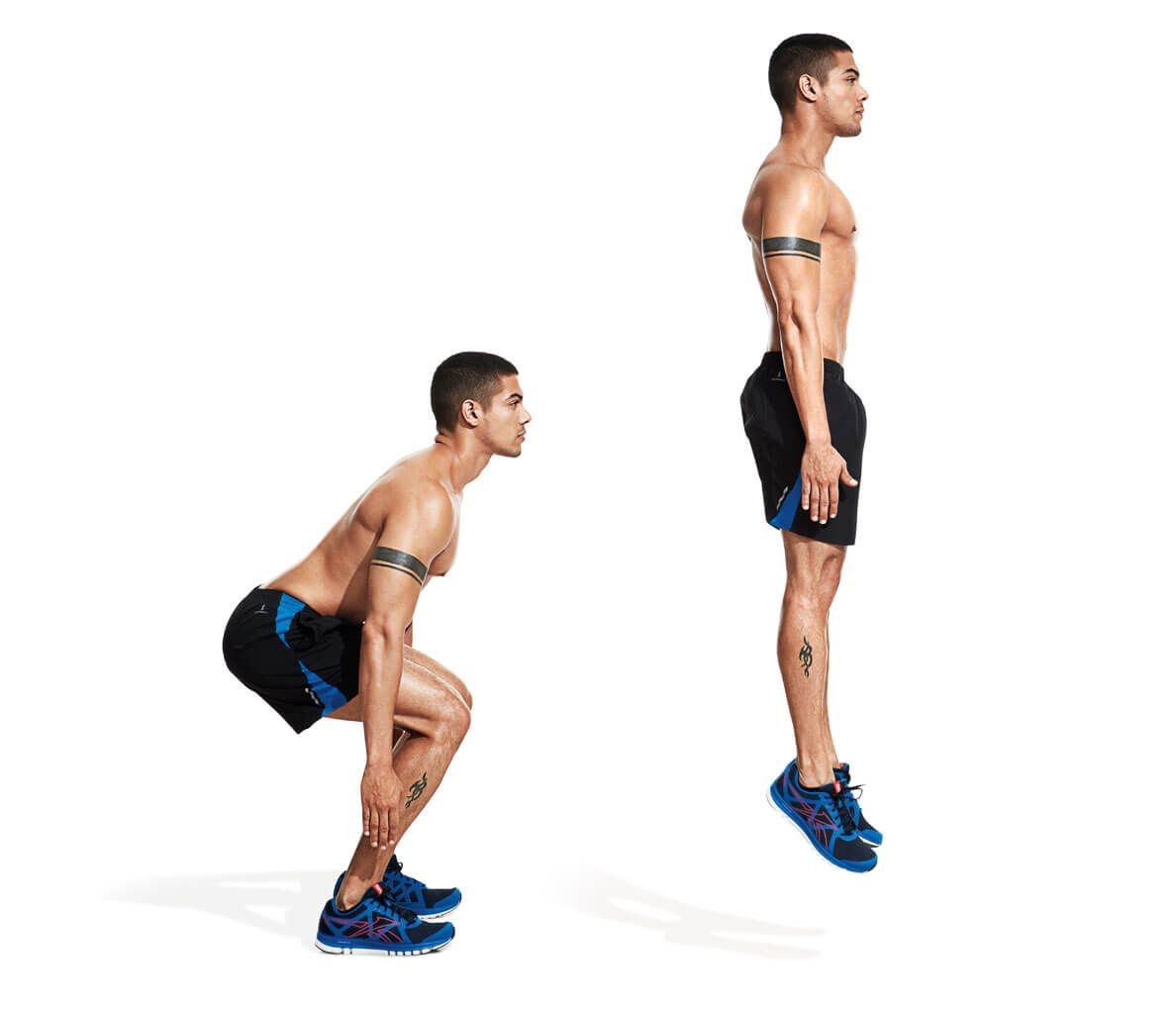
2. Vertical jump squat
Squats are probably the most effective strength training exercise for runners, engaging a great deal of the muscles used in running. This move trains similar muscle groups to a squat, but the power output is maximised. Squat down, hips back, maintaining your knees in a position behind your toes. Once you reach your lowest point, immediately jump with as much power as possible, focusing on engaging your glutes and core muscles to straighten your body as you rise. Do eight to 10 reps, rest for 60 seconds. Repeat four times.
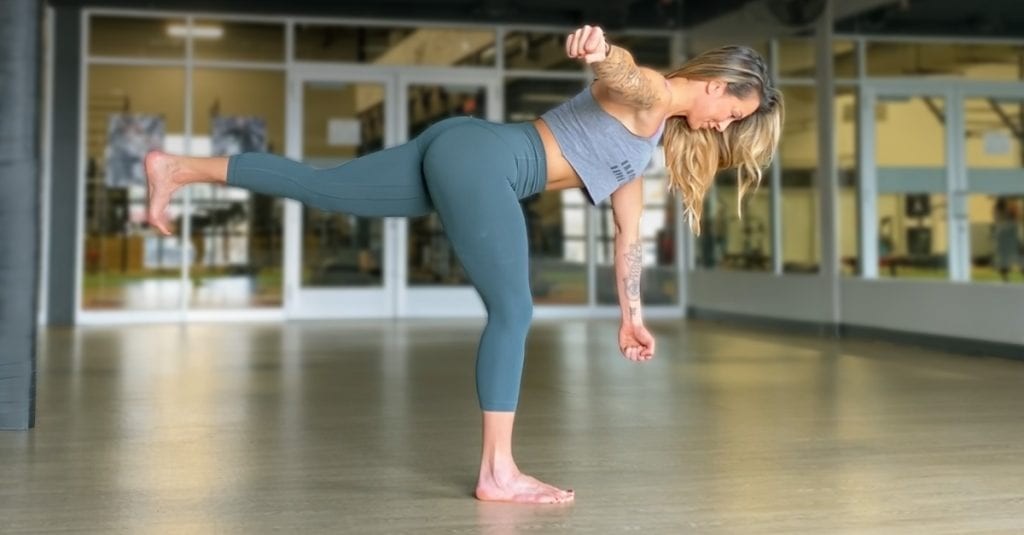
3. Single leg bound
A very effective plyometric (the term for explosive jump training) exercise, single leg bounds are basically consecutive jumps using only one leg at a time. This exercise not only forces the leg to generate a great deal of power, as the opposing leg is passive, but allows one to train force production in each leg independently.
4. Single leg balance
The foot and ankle muscles are directly involved in running at all distances so it should not be a surprise that strengthening these often neglected muscles can help in your quest to produce more power in your legs, thereby increasing your speed. Stand on one leg for 60 seconds without allowing your passive leg to touch the ground (eyes closed if you find it easier). Start on flat ground, advancing to the same exercise on an unstable surface such as a BOSU Ball. Repeat three times on each leg.
5. Single leg Romanian dead lift
This exercise is highly effective at developing speed, as it dynamically strengthens the posterior chain (the muscles on the back of the body). It is extremely common for runners to suffer from weak gluteus muscles, but this movement works these muscles, as well as the hamstrings, in a functional, explosive and highly transferable manner.
Stand tall on one leg with core engaged. Maintaining neutral spinal alignment, hinge at the hips as you lower your torso to parallel with the floor, only slightly bending at the knee. Now explosively extend the hips forward as you straighten your body to the start position, maximising contraction in your glutes and core muscles as you rise. Complete eight reps each leg. Repeat four times.
by Andrew Power
Login to leave a comment
Calum Neff ran faster than any other Canadian has over 50K, but Neff says he knows he can do better
Texas-based Canadian Calum Neff ran a 50K race in Houston over the weekend, posting a national record time of 2:51:27. He says he has had his eye on the Canadian record, which previously belonged to Andy Jones at 2:53:20 (a result that he ran at the same park in Houston where Neff ran on Sunday), for a couple of years.
After a failed record attempt in 2019, he had no trouble beating Jones’s time on Sunday, running to his first national record.
Neff´s previous 50K record attempt came at the 2019 50K world championships in Romania. “We unfortunately had a bit tougher of a course in Romania than I did in Houston,” Neff says. “There was some more elevation and it was very humid.” He fell well short of Jones’s record that day, although he managed to grab a 16th-place finish in a PB time of 2:57:58.
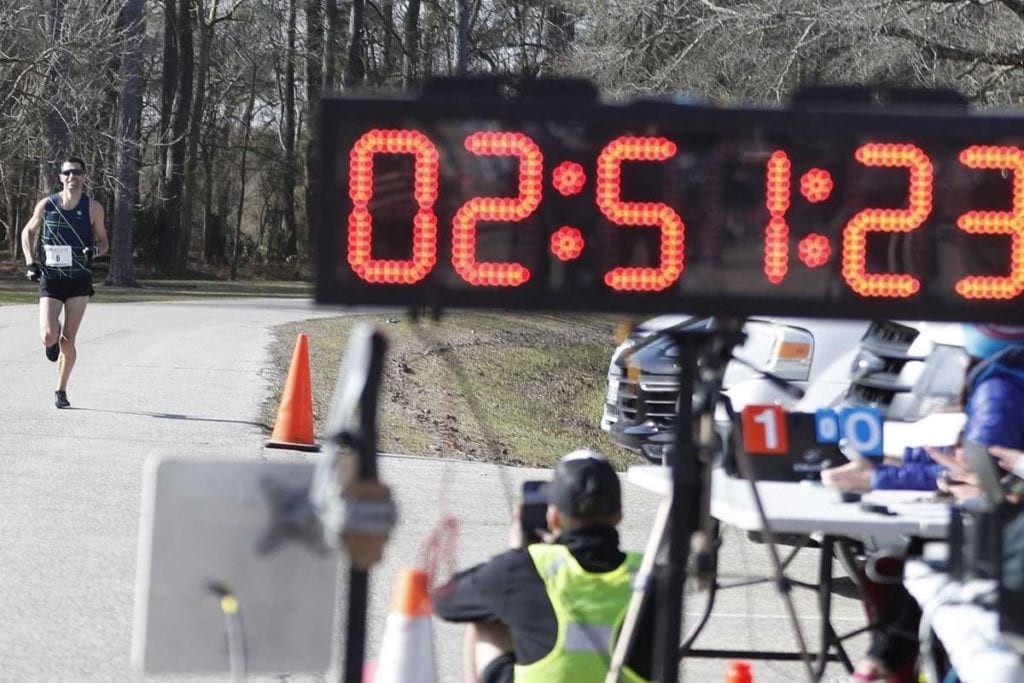
Even though Neff was four minutes off the record that day, he says he still believed it was within his reach.
Neff says his confidence grew even more after pacing Sara Hall at The Marathon Project in December. He helped Hall to a 2:20:32 finish (the second-fastest marathon ever run by an American) before crossing the line himself in 2:20:37, a PB of his own. “Having seen my marathon time come down, it all just lined up,” Neff says.
“After I paced Sara, I knew that day I could’ve gone another five miles and been under record pace.”
while his felt as fit as ever, there was one glaring problem: Neff had nowhere to race. Refusing to let that stop him, he organized his own event, which was a new experience for him. “I’ve put on kids’ cross-country and track meets, but this was the first actual event I’ve race directed,” Neff says. Ensuring that the course was record eligible, he got it officially measured and certified by the USATF, and he was joined by about 20 other athletes (many of whom he coaches) on race day as well.
The course followed a roughly 5K figure-eight loop that featured about one metre of elevation gain. “It was pancake flat and fast,” Neff says — much more ideal than the course in Romania. Feeling fit and ready to run, he says he was hoping to go a bit faster on Sunday, but he’s far from disappointed in his time. “I had targeted that sub-2:50 range, but I was just a little bit off my sharpness that I needed,” he says. “Still, I was able to take six minutes off my own PR and have one of those days.”
After he crossed the line in record breaking, fashion, Neff stuck around to cheer on the other runners as they pushed for the tape. “As a coach to half of the athletes running, that was really special to have my finish happen then to turn around to watch my athletes finish.” Neff says several men he coaches ran under three hours for the first time, and multiple women ran times that qualified them for the American 50K team. “The U.S. mark is 3:33 for 50K. Two women went 3:19, one went 3:24 and another ran 3:25.”
He doesn’t have specific plans, and as much as he wants to race, he isn’t too eager to travel right now. With nothing set in stone, he says he does know that he wants to lower his record and break the 2:50 barrier in the 50K and run sub-2:20 in the marathon. “For now, I’ll just continue to focus on domestic races here in the U.S.,” he says. “Then play it by ear and see what opportunities come up in the future.”
by Ben Snider-McGrath
Login to leave a comment
