

Running News Daily
Running News Daily is edited by Bob Anderson and team. Send your news items to bob@mybestruns.com Advertising opportunities available.
Index to Daily Posts · Sign Up For Updates · Run The World Feed
Articles tagged #South Africa
Today's Running News
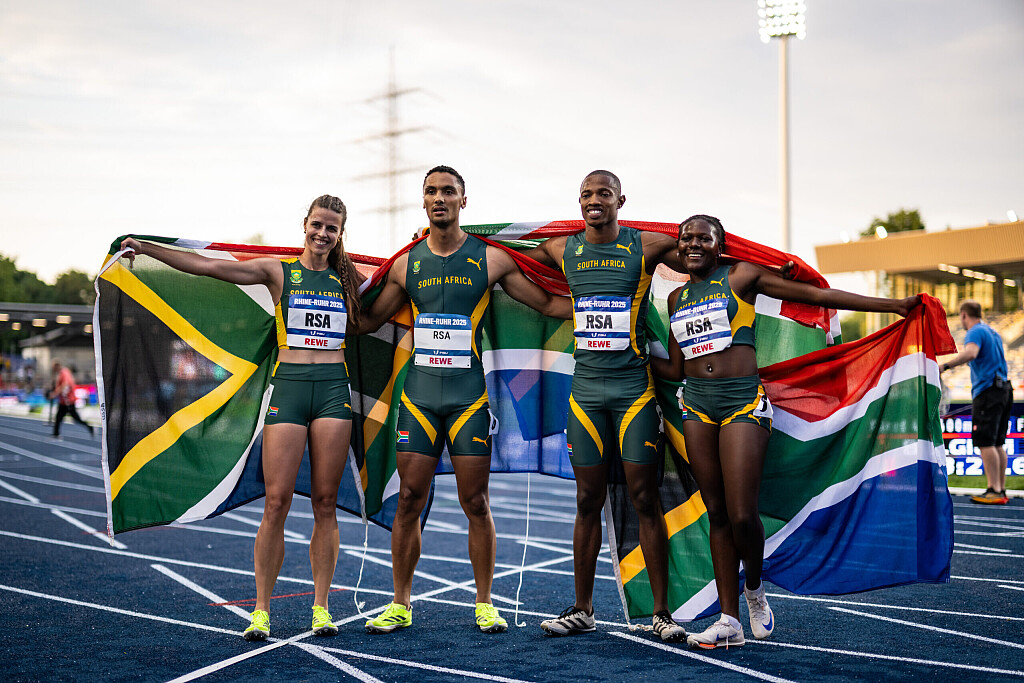


South Africa Enters Race To Bring The Olympics To Africa For The First Time
South Africa has taken a major step towards potentially bringing the Olympic Games to Africa for the first time after formally entering the International Olympic Committee’s process as an interested party for the 2036 Summer Olympics and Paralympics.
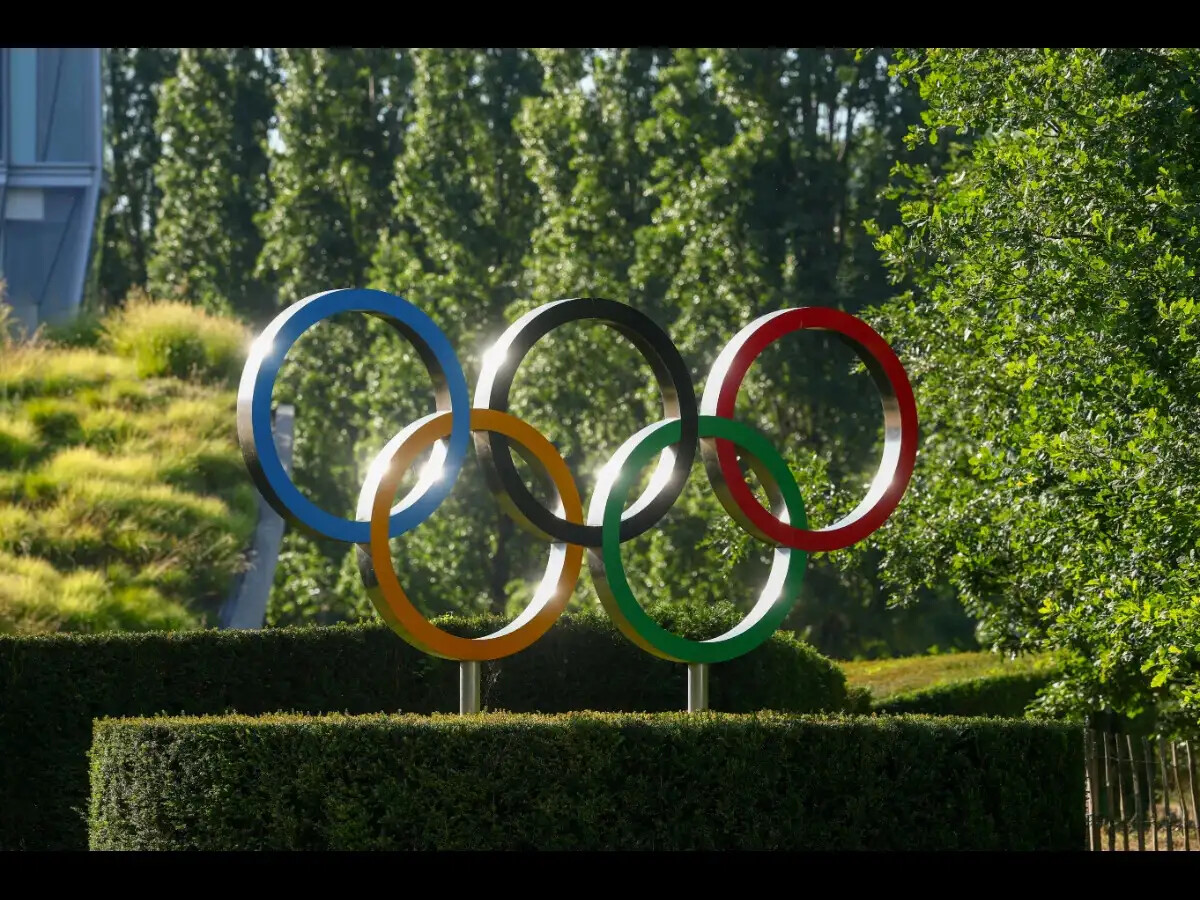
The development could mark a historic moment for the continent, which has never hosted an edition of the Olympic Games despite its long and distinguished sporting tradition. South Africa’s interest now places the country among the potential candidates seeking to convince the IOC that Africa is ready to stage the world’s biggest multi-sport event.
A successful bid would represent a significant expansion of South Africa’s sporting legacy. The country has already demonstrated its ability to host major international competitions, most notably the 2010 FIFA World Cup, which brought football’s biggest tournament to Africa for the first time and showcased South Africa’s stadiums, infrastructure and capacity to welcome visitors from around the world.
The 2036 ambition also arrives at a time when Africa is gaining greater recognition as a destination for major global sporting events.

Kenya has already secured the right to host the 2029 World Athletics Championships in Nairobi, marking the first time the senior global championships will be staged on African soil. The breakthrough followed a competitive bidding process and represents another important milestone for the continent’s athletics movement.
South Africa’s Olympic interest therefore comes against a backdrop of growing confidence in Africa’s ability to organise and deliver events at the highest international level.
For South Africa, however, winning the right to host the Olympics would be a considerably larger undertaking. The Games require extensive sporting venues, accommodation, transportation networks, security arrangements and long-term financial planning, while the host must also present a compelling vision for the event’s wider legacy.
The country’s experience with the 2010 World Cup provides an important foundation, but an Olympic bid would require an even broader national strategy involving multiple sports and venues.
The IOC is expected to make its decision on the host of the 2036 Olympics later in the decade, with several countries expressing interest in entering the race. The process will ultimately determine whether Africa can finally break one of the biggest remaining barriers in the history of the Olympic movement.
For a continent that has produced generations of Olympic champions across athletics, swimming, boxing, cycling and numerous other sports, hosting the Games would carry significance far beyond the competition itself.
South Africa is now putting itself forward for that opportunity.
If the bid eventually succeeds, the 2036 Olympic Games could become a landmark moment — not only for South Africa, but for an entire continent that has waited more than a century to welcome the Olympic movement onto its soil.
by Erick Cheruiyot for My Best Runs.
Login to leave a comment
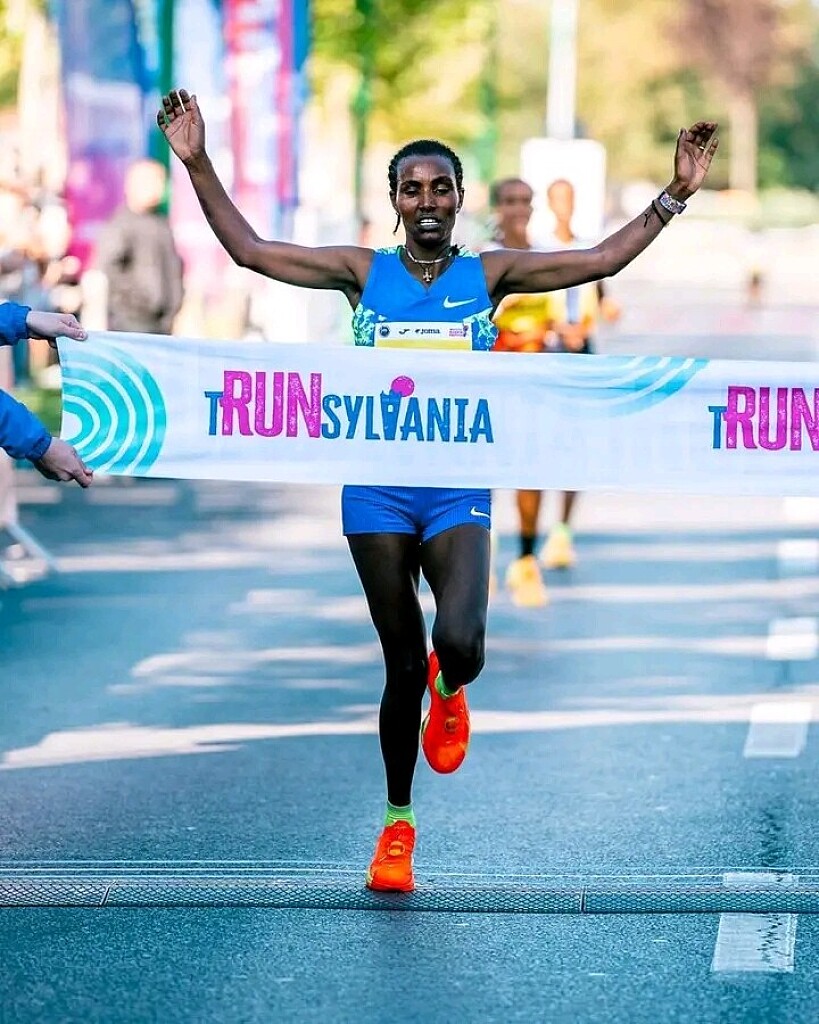
Ethiopian Double As Khairi Bejiga And Asefu Abreha Triumph At Fast-Paced Brasov 10K
Ethiopia dominated the 2026 Brasov Running Festival in Romania, with Khairi Bejiga and Asefu Abreha claiming impressive victories in two fiercely contested elite 10km races.
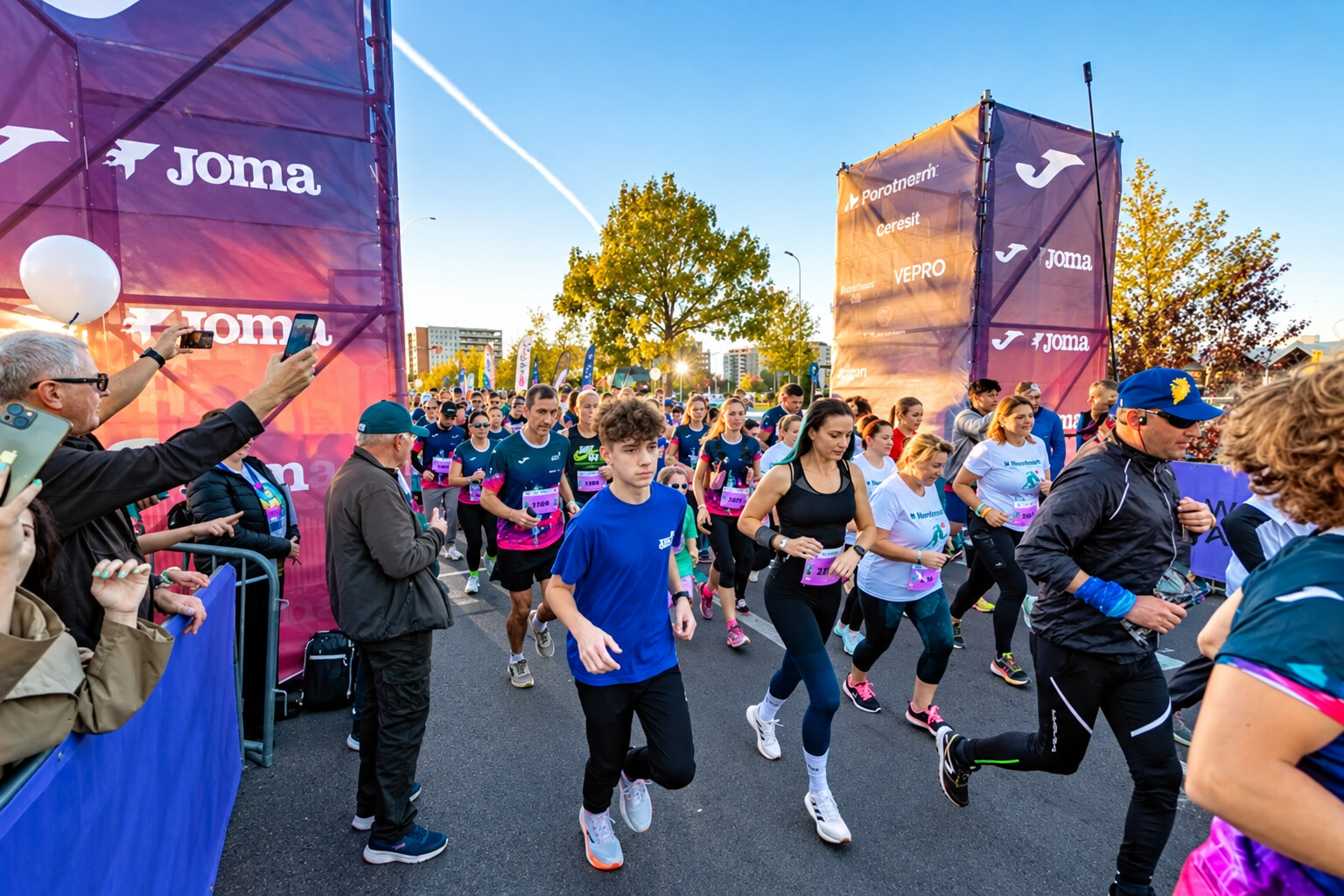
Bejiga, still only 20, successfully defended his title in the men’s race, becoming the first athlete — male or female — to win the Brasov 10K in consecutive editions across the event’s six-year history.
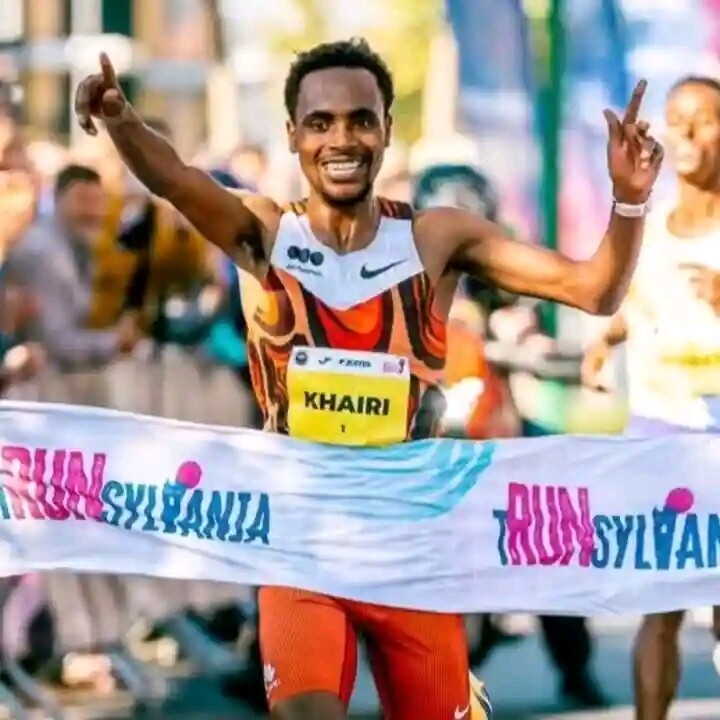
The Ethiopian produced a dramatic finish to retain his crown, edging training partner Nibret Kinde by just one second. Bejiga stopped the clock at 27:01, while Kinde followed in 27:02. Ayele Tadesse completed an Ethiopian sweep of the men’s podium in 27:09.
The depth of the field was underlined by the performances behind the leading trio, with Kenyan Amos Kipkemoi Bett finishing fourth in 27:13, followed by Djibouti’s Hani Idriss Hersi in 27:16.
Kenya also placed three more athletes inside the top 10, with Laban Kosgei sixth in 27:21, Victor Okoth Otieno seventh in 27:22, Kevin Chesang ninth in 27:29 and Silas Senchura 10th in 27:32. Uganda’s Samuel Simba Cherop completed the top eight in 27:25.
Brasov Running Festival 2026 — Men’s Top 10
1. Khairi Bejiga — Ethiopia — 27:01
2. Nibret Kinde — Ethiopia — 27:02
3. Ayele Tadesse — Ethiopia — 27:09
4. Amos Kipkemoi Bett — Kenya — 27:13
5. Hani Idriss Hersi — Djibouti — 27:16
6. Laban Kosgei — Kenya — 27:21
7. Victor Okoth Otieno — Kenya — 27:22
8. Samuel Simba Cherop — Uganda — 27:25
9. Kevin Chesang — Kenya — 27:29
10. Silas Senchura — Kenya — 27:32
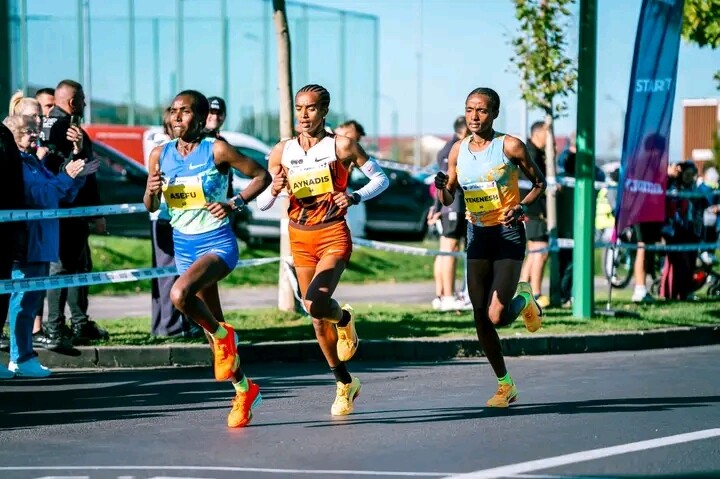
The women’s race delivered another Ethiopian victory as Asefu Abreha produced a major personal best to take the title in 30:16.
Abreha, also 20, surprised a strong field with a breakthrough performance, finishing three seconds ahead of compatriot Aynadis Mebratu, who crossed the line in 30:19.
Ethiopia completed the women’s podium through Yenenesh Shimket Ademas, whose 30:21 was a world under-20 best for the 10km distance, adding another significant achievement to an extraordinary Ethiopian showing in Brasov.
Djibouti’s Samiya Hassan Nour finished fourth in 30:37, while South Africa’s Tayla Kavanagh was fifth in 30:50. Kenya’s Nelvin Jepkemboi placed sixth in 30:57.
The remaining places in the women’s top 10 were filled by Ethiopia’s Mastewal Mehabaw in 30:59, Axumawit Embaye in 31:05 and Tibeb Eneyew in 31:29, with Romania’s Joan Chelimo Melly rounding out the top 10 in 31:46.
Brasov Running Festival 2026 — Women’s Top 10
1. Asefu Abreha — Ethiopia — 30:16
2. Aynadis Mebratu — Ethiopia — 30:19
3. Yenenesh Shimket Ademas — Ethiopia — 30:21
4. Samiya Hassan Nour — Djibouti — 30:37
5. Tayla Kavanagh — South Africa — 30:50
6. Nelvin Jepkemboi — Kenya — 30:57
7. Mastewal Mehabaw — Ethiopia — 30:59
8. Axumawit Embaye — Ethiopia — 31:05
9. Tibeb Eneyew — Ethiopia — 31:29
10. Joan Chelimo Melly — Romania — 31:46
The Brasov Running Festival has established itself as one of the fastest and most competitive 10km road races in Europe, attracting an increasingly deep international field capable of producing world-class performances.
The 2026 edition further strengthened that reputation, with national records for Djibouti and South Africa and a European under-18 best also among the notable achievements of the event.
For Ethiopia, however, the spotlight belonged to Bejiga and Abreha. Their victories gave the nation a memorable double in Brasov, with 27:01 and 30:16 respectively highlighting another spectacular day of elite road racing in Romania.
by Erick Cheruiyot for My Best Runs.
Login to leave a comment

Brasov Running Festival 10K
"Brasov Running Festival” is set to become the iconic running event of Romania, with elite, popular and children races, concerts, conferences and other running related activities. The elite 10K race, Trunsylvania International 10K is expected to enjoy an impressive participation of world class runners on a very fast course. -The only World Athletics Elite Label 10K in South-East Europe -The...
more...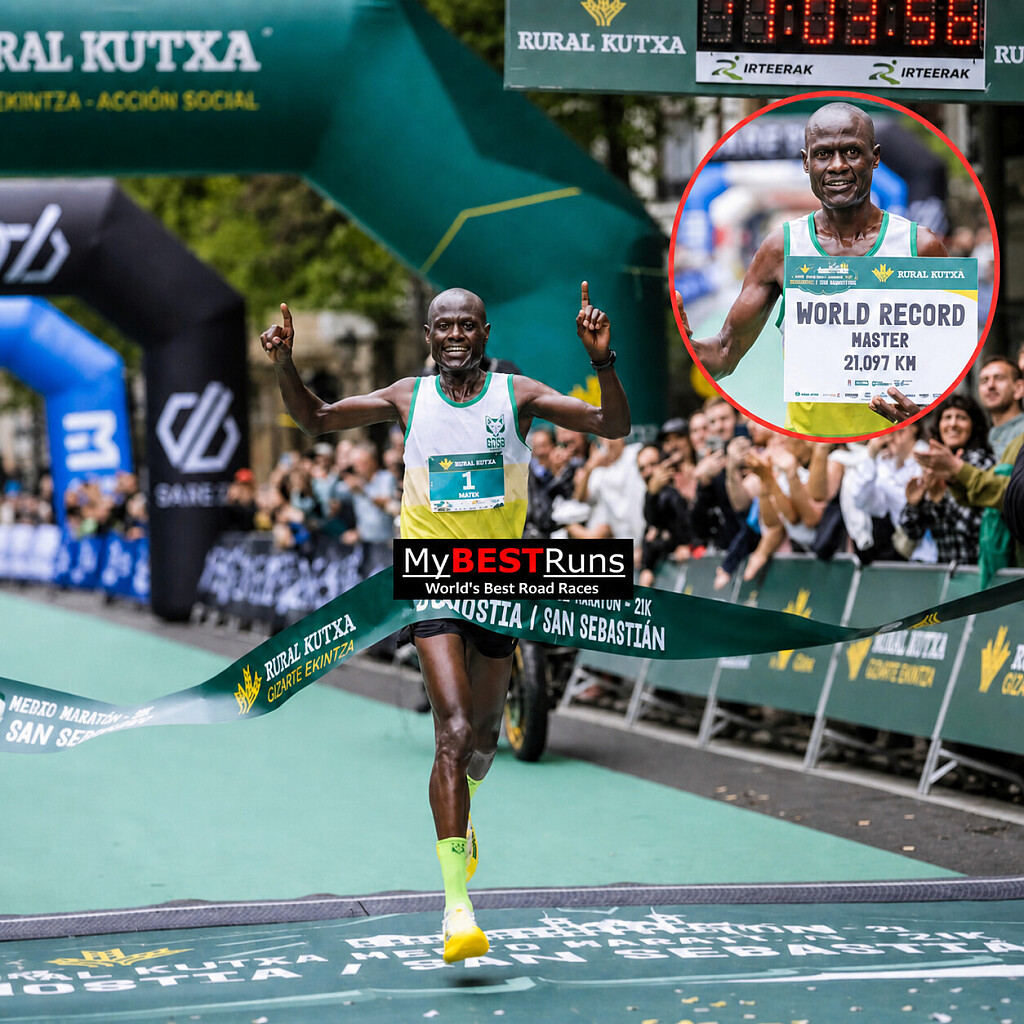
Mark Kiptoo, 50, Shatters M50 World Half-Marathon Record In San Sebastián
Kenyan distance-running veteran Mark Kosgei Kiptoo has added another extraordinary achievement to his remarkable career, setting a new M50 world record in the half marathon at the 2026 San Sebastián Rural Kutxa Half Marathon in Spain.
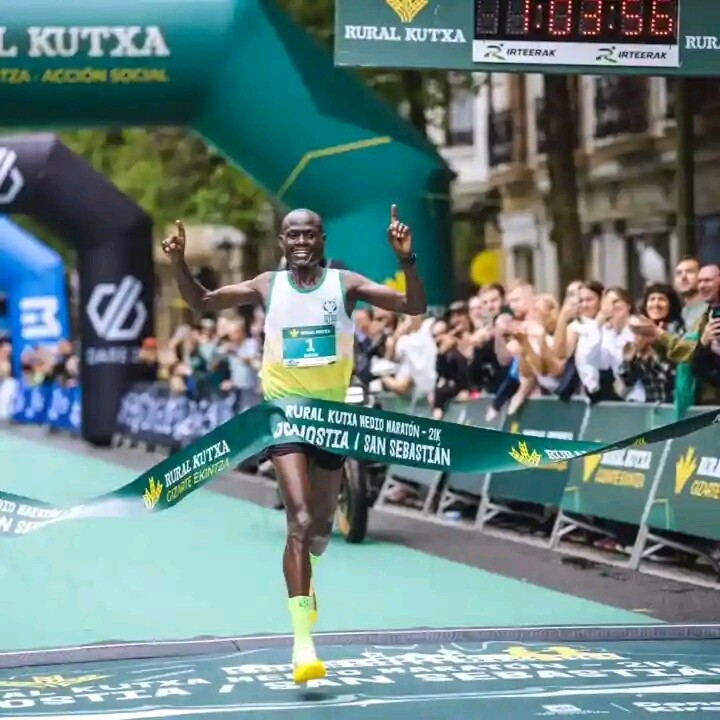
At 50, Kiptoo produced a stunning 1:03:57 over the 21.097-kilometre distance, winning the race outright while rewriting the masters record books.
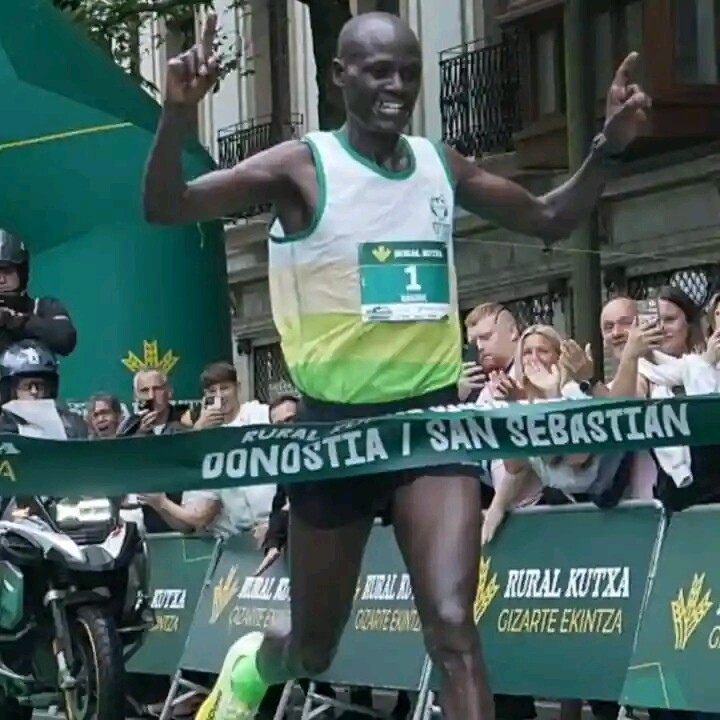
His performance demolished the previous M50 world record of 1:06:23, set by South Africa’s Titus Mamabolo, by 2 minutes and 26 seconds. The scale of the improvement makes Kiptoo’s performance one of the most remarkable masters distance-running achievements of the year.
The Kenyan arrived in San Sebastián in impressive form after already showing that age had done little to diminish his speed. At 49, Kiptoo won the Azkoitia-Azpeitia Half Marathon in March in 1:03:17, a performance that underlined his extraordinary endurance and ability to maintain world-class pace well into his late 40s.
Kiptoo’s latest achievement is another milestone in a career that has already delivered success across track, cross country and road running. Now competing in the masters ranks, the Kenyan continues to demonstrate the exceptional endurance and speed that made him one of the most respected distance runners of his generation.
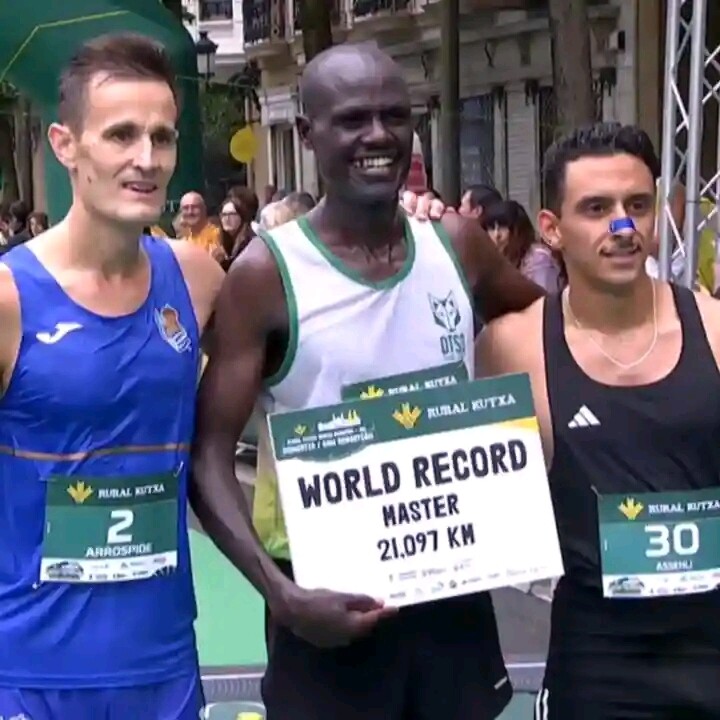
Born on June 21, 1976, Kiptoo has spent decades competing at the highest level of international athletics. His career includes major performances on the track and road, and his transition into the masters category has done little to slow his remarkable competitive drive.
Kiptoo’s transition to marathon running produced another extraordinary achievement. At the 2018 Frankfurt Marathon, he clocked 2:07:50 to establish what was then a world record for the Masters 40-and-over age group, further highlighting his ability to remain competitive well beyond the traditional peak years of an elite distance runner.
That performance offered an early indication of the extraordinary longevity that would later define his masters career. With the M50 half-marathon world record standing at 1:06:23, Kiptoo arrived in San Sebastián with history within reach—and he did far more than simply break the mark.
He obliterated it.
Kiptoo’s 1:03:57 was also fast enough to secure the overall victory, putting the 50-year-old Kenyan ahead of considerably younger competitors. Spain’s Iraitz Arrospide was the leading Spanish finisher, taking second in 1:04:48, while Youness Assehli completed the podium in 1:07:16.
Kiptoo’s record run was also notable for the consistency of his pace throughout the race. He passed 5 kilometres in 15:22 before reaching 10 kilometres in 30:21, with his second 5-kilometre segment covered in a remarkable 14:59. He continued to maintain the demanding tempo, reaching 20 kilometres in 1:00:40 before completing the final 1.097 kilometres to stop the clock at 1:03:57.
Those splits underline just how controlled and aggressive Kiptoo’s performance was. Rather than relying on a late surge, the Kenyan built his record through sustained world-class pace from the opening kilometres to the finish, averaging roughly 3:02 per kilometre across the entire half marathon. The performance not only shattered the longstanding M50 record but also demonstrated that Kiptoo’s extraordinary speed remains intact at an age when most elite athletes have long since stepped away from the highest level of competition.
In San Sebastián, Kiptoo’s experience came together in one extraordinary performance. He not only won the race outright but also lowered the M50 world record from 1:06:23 to 1:03:57, an improvement of 2 minutes and 26 seconds. At 50, he continues to show that world-class determination and years of experience can still translate into astonishing performances over 21.1 kilometres.
Kiptoo’s credentials were established long before his entry into the masters ranks. A former African champion over 5,000 metres and a winner on the Diamond League circuit, he competed successfully against the world’s best during the peak of his track career.
His track personal bests include 12:53.46 for 5,000 metres and 26:54.64 for 10,000 metres, evidence of the elite speed and endurance that have remained the foundation of his longevity in the sport.
The latest record is therefore more than another entry on a masters list. It is a reflection of a career built on consistency, discipline and an extraordinary ability to remain competitive across different generations of distance runners.
At 50 years old, Mark Kiptoo is still running at a level that commands attention.
A 1:03:57 half marathon, an outright race victory and a world record—another remarkable chapter in the career of one of Kenya’s enduring distance-running stars.
by Erick Cheruiyot for My Best Runs.
Login to leave a comment
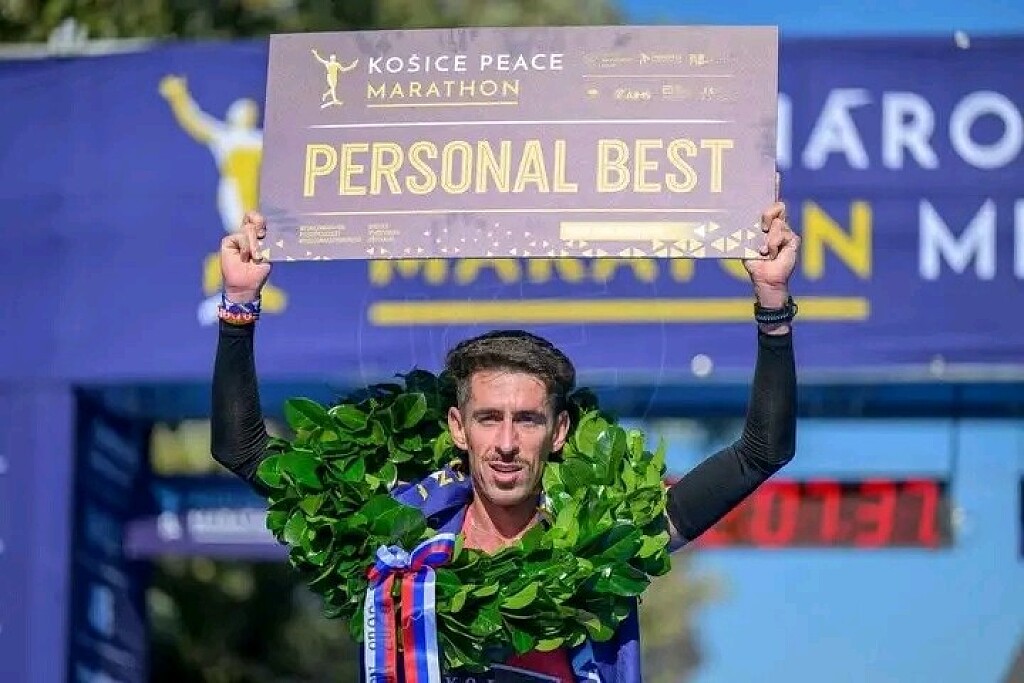
Košice Marathon 2026: Lipschitz and Fayesa Robi Lead a Fast International Day in Slovakia
The 2026 Košice Marathon delivered a strong display of international marathon talent, with South Africa’s Adam Lipschitz and Ethiopia’s Aberash Fayesa Robi claiming victories in contrasting but equally impressive performances on the streets of Košice, Slovakia.
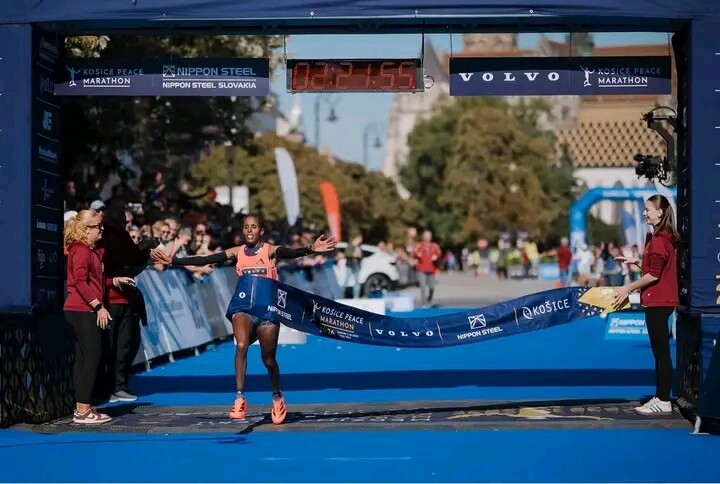
In the women’s race, Fayesa Robi produced the standout performance, crossing the finish line in 2:21:54 to secure a commanding victory and improve her personal best. The Ethiopian maintained a strong rhythm throughout the race before finishing well clear of the rest of the field.
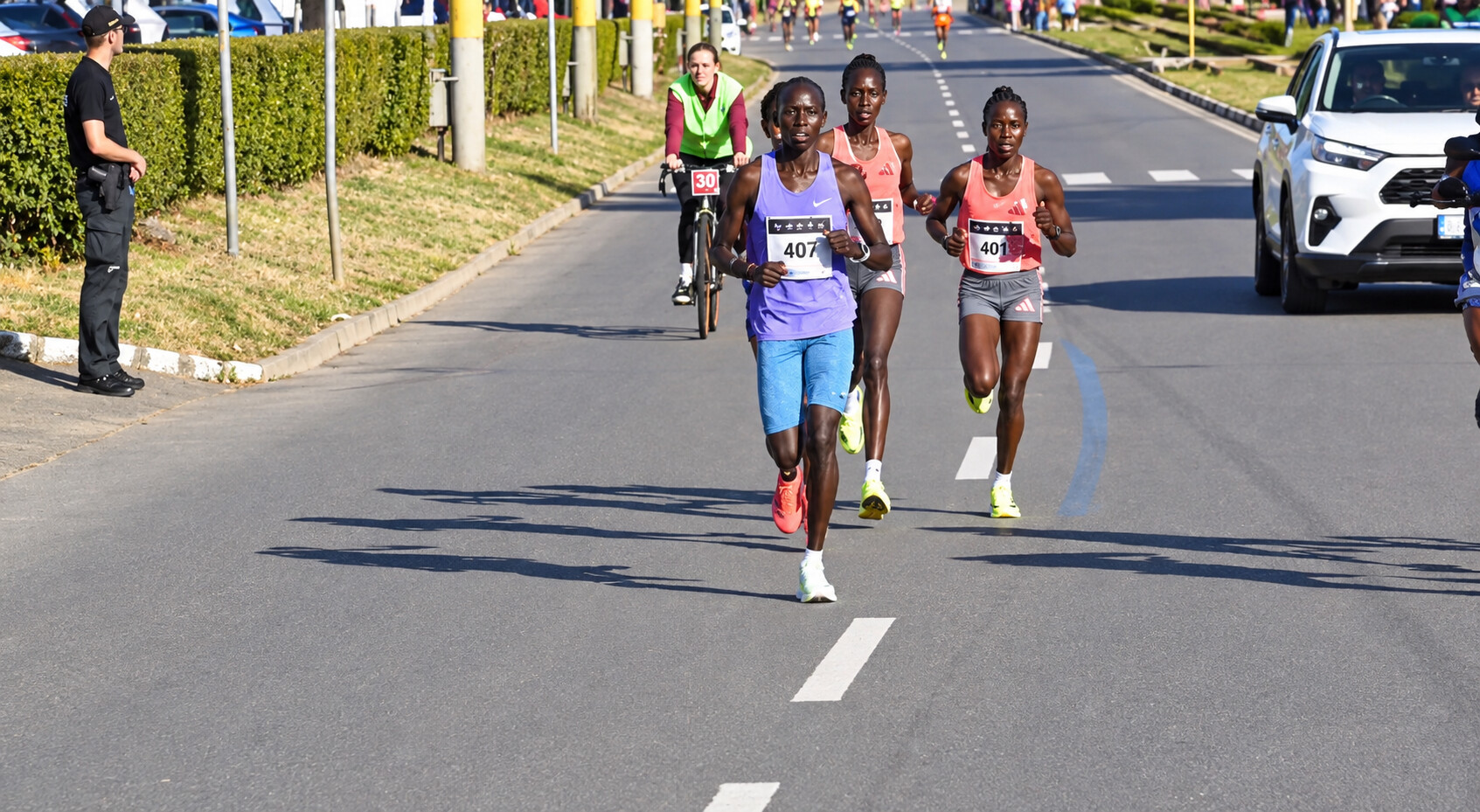
Her compatriot Nurit Ahmed Samiro added another impressive chapter to Ethiopia’s day, placing second in 2:25:03 on her marathon debut. Racing over the full 42.195-kilometre distance for the first time, Samiro delivered a remarkably mature performance to immediately establish herself among the leading names in the field.
Kenya’s Tecla Jelimo Kibet completed the women’s international podium, finishing third in 2:29:56. Her performance secured a place among a highly competitive leading group as the Ethiopian pair dominated the top two positions.
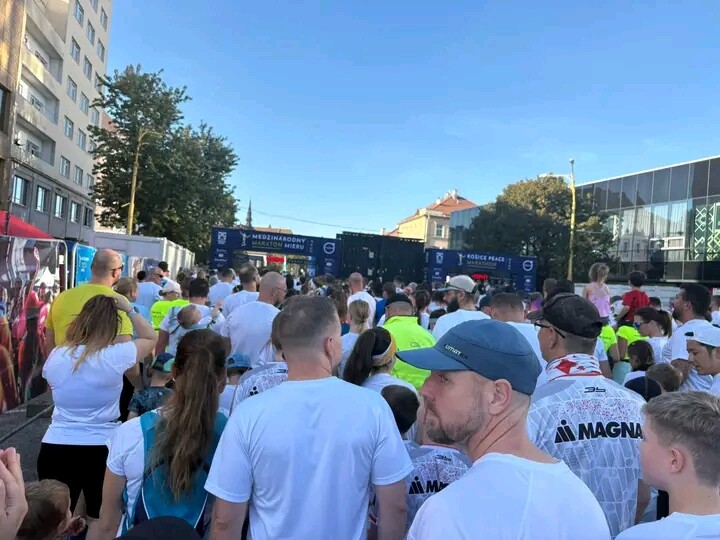
The men’s contest was even tighter at the front, with Adam Lipschitz producing a breakthrough performance to win in 2:07:21. The South African not only claimed the prestigious Košice Marathon title but also lowered his personal best, underlining the quality of his performance on the day.
Kenya’s Abednego Cheruiyot pushed Lipschitz all the way and finished second in 2:07:53, also recording a new personal best. The Kenyan remained firmly in contention deep into the race before crossing the line just 32 seconds behind the winner.
Another Kenyan, Moses Kipngetich Kemei, secured third place in 2:08:04, giving Kenya two athletes inside 2:09 and completing a highly competitive podium.
Turkey’s Kaan Kigen Özbilen followed in fourth with 2:08:22, narrowly missing the podium after remaining within striking distance of the leading trio.
The performances in Košice highlighted the depth of the international field, with the men’s race producing three athletes under 2:09 and the women’s contest featuring a commanding winning performance alongside an impressive marathon debut.
The results once again underlined the historic Košice Marathon’s ability to attract high-level athletes from across the world and provide a competitive stage for both established marathoners and emerging talent.
by Erick Cheruiyot for My Best Runs.
Login to leave a comment

kosice Peace Marathon
The Kosice Peace Marathon is the oldest European marathon.This year for the organizers of Kosice Peace Marathon is also about memories and flashbacks. One of the fastest marathon courses has been created in Košice 20 years ago on that occasion it was the 1997 IAAF World Half Marathon Champioships. Tegla Loroupe and Shem Kororia were awarded from the hands of...
more...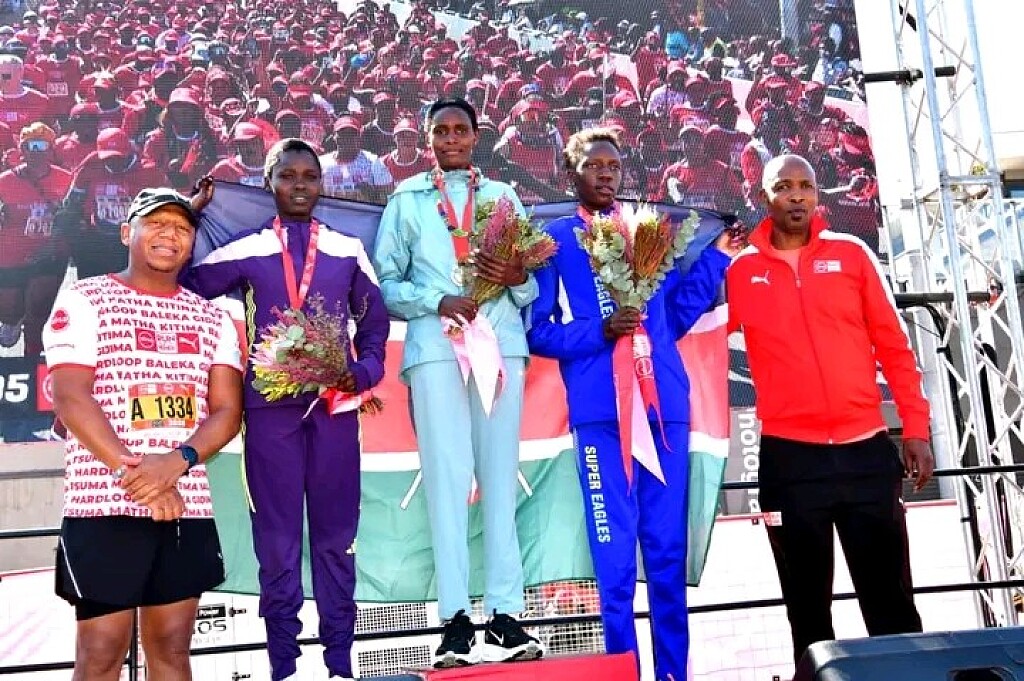
Kenyan Trio Completes Clean Sweep At 2026 Absa Joburg 10K
Kenya produced a commanding display on the streets of Johannesburg, South Africa, as Deborah Chemutai led a clean sweep of the women’s podium at the 2026 Absa Joburg 10K.
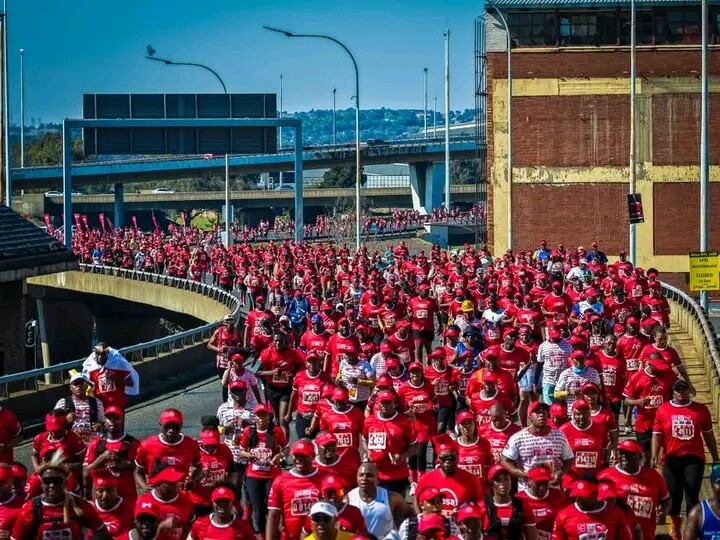
Chemutai delivered a strong winning performance to cross the finish line first in 32:50, securing victory and leading a remarkable Kenyan one-two-three in the South African road race.
She was followed by compatriot Mercy Chelimo, who battled her way to second place in 33:10, while Esther Borura completed the Kenyan domination by taking third in 33:27.
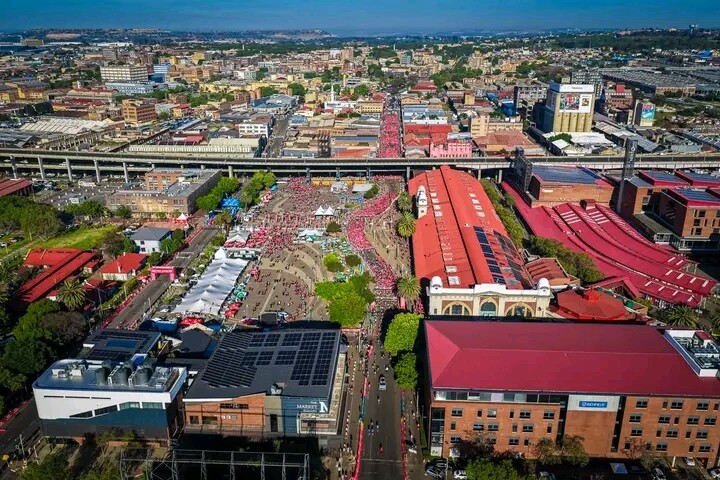
The result highlighted Kenya’s depth in women’s road running, with all three podium positions occupied by athletes from the East African distance-running powerhouse.
Chemutai’s victory was the centerpiece of an impressive Kenyan performance, as she maintained her advantage to claim the top step of the podium in Johannesburg. Chelimo and Borura ensured the Kenyan dominance extended through the leading positions, completing a memorable sweep.
The margin between the three Kenyans also made the podium battle particularly compelling. Chelimo finished just 20 seconds behind Chemutai, while Borura was another 17 seconds adrift, producing a closely packed Kenyan presence at the sharp end of the race.
Beyond the individual victory, the result underlined the remarkable depth available in Kenyan women’s road running. Producing the winner is one achievement, but occupying all three podium places demonstrates how strongly the country continues to feature when elite road races bring together talented distance runners.
For Chemutai, the Johannesburg triumph provided a memorable addition to her racing campaign, while Chelimo and Borura completed a result that will stand out from the 2026 edition of the Absa Joburg 10K. Together, the trio turned the women’s podium into a celebration of Kenyan running strength.
Women’s 10km Results
1. Deborah Chemutai (Kenya) — 32:50
2. Mercy Chelimo (Kenya) — 33:10
3. Esther Borura (Kenya) — 33:27
The Johannesburg finish therefore belonged entirely to Kenya, with Chemutai, Chelimo and Borura combining to produce a flawless podium sweep and underline the depth of Kenyan talent in the 10km road-racing scene.
by Erick Cheruiyot for My Best Runs.
Login to leave a comment

Absa Run Your City Joburg 10K
A proud Heritage Day Celebration, the Absa RUN YOUR CITY JOBURG 10K was founded in 2016 and celebrates the splendour of the City of Gold. Runners (and walkers) will be treated to a 10km journey that highlights iconic landmarks and features lively performances by a host of Joburg’s leading performing arts groups. A true highlight on the SA running calendar,...
more...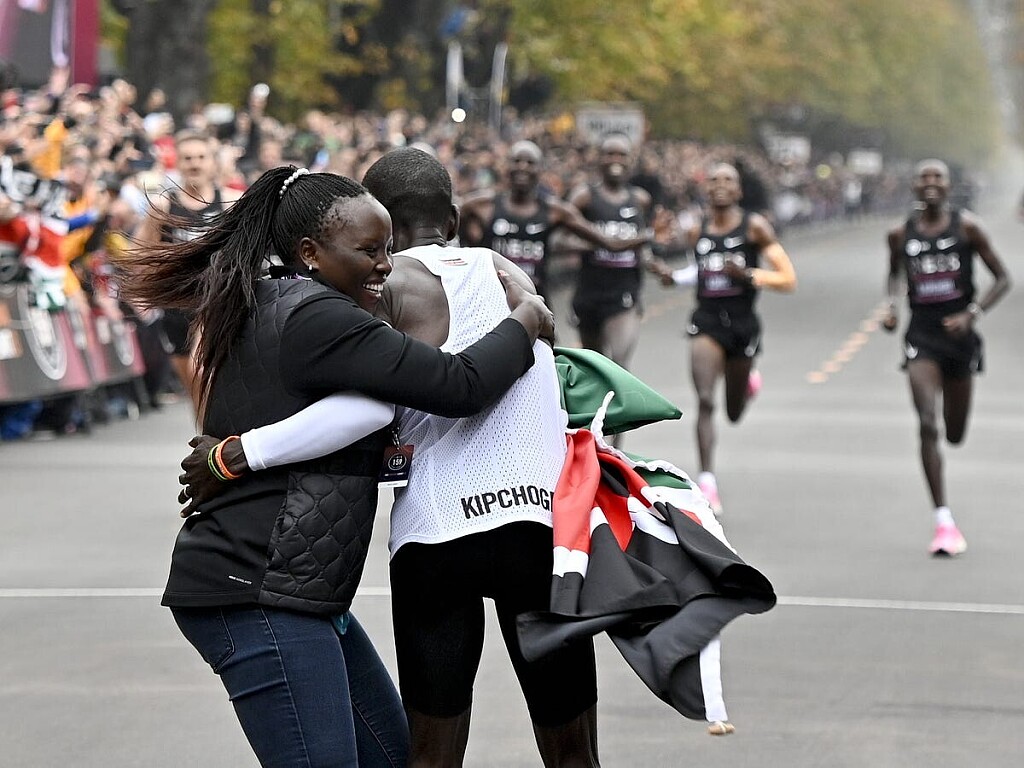
From Supporting Eliud Kipchoge To Chasing Her Own Marathon Dreams — Grace Sugut’s Journey Continues In Melbourne
For years, Grace Sugut has been a familiar presence alongside one of the greatest marathon runners in history, Eliud Kipchoge. Now, her own running story is beginning to take shape.

Sugut is preparing for the third marathon of her career when she lines up at the Nike Melbourne Marathon on Sunday, October 11, 2026, sharing the start line with her husband once again as Kipchoge continues his ambitious global marathon journey in Australia.
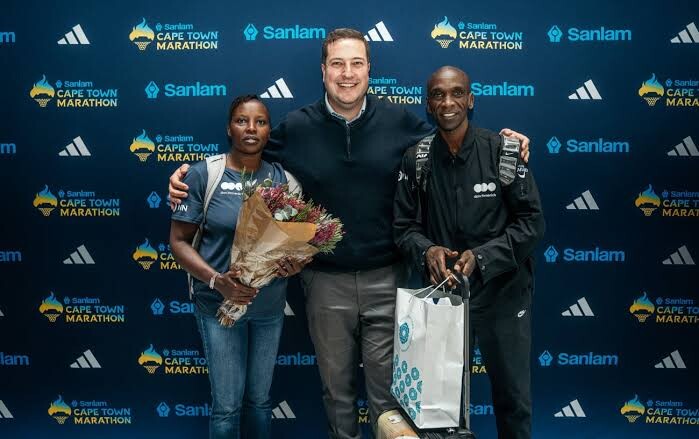
What makes Grace’s story particularly fascinating is the speed at which her marathon journey has developed. Rather than spending years building towards the distance, she has embraced the challenge in a relatively short period, travelling across continents and gradually establishing her own identity as a marathon runner.
Her journey began in Cape Town on May 24, 2026, where she completed her marathon debut in 4:29:59. That first race marked the beginning of a new chapter for a woman who had long been closely connected to marathon running through Kipchoge.
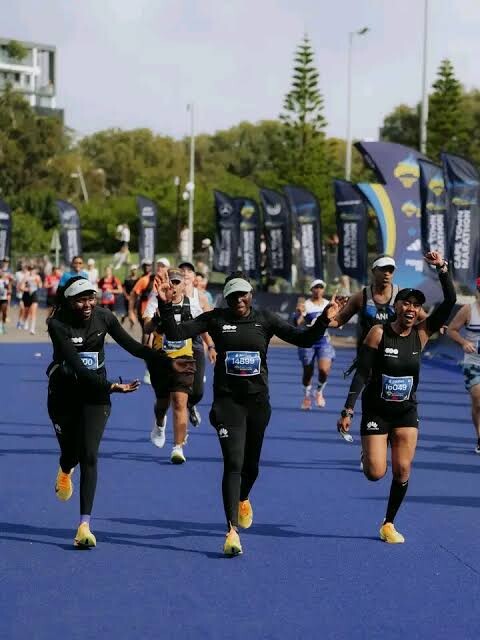
Just weeks later, she continued that adventure in South America, taking on the NB42K Porto Alegre Marathon in Brazil on July 12. The race provided another opportunity to gain experience over the demanding 42.195-kilometre distance and add another international marathon to her growing journey.
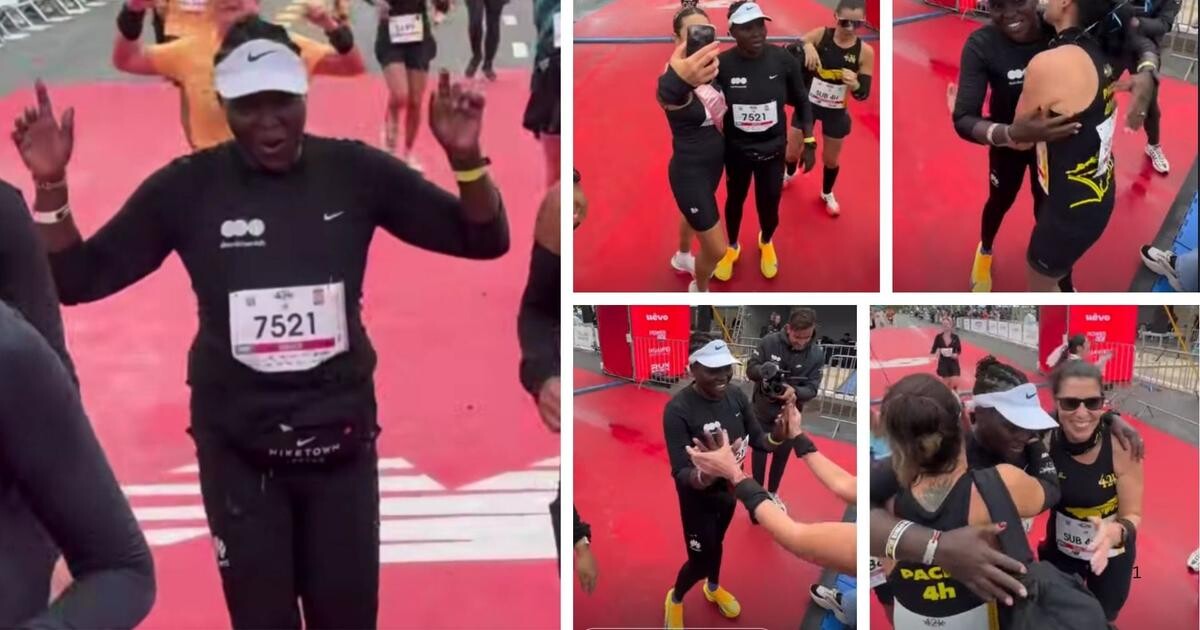
Now, Melbourne awaits.

The Nike Melbourne Marathon will give Grace another chance to test herself over the full marathon distance, this time on a redesigned course that organisers have made faster and flatter. The 2026 route features up to 20 per cent less elevation gain and 30 per cent fewer turns, while the race will once again finish inside the iconic Melbourne Cricket Ground.
The marathon starts at 6:15 a.m. from Batman Avenue before taking runners through some of Melbourne’s most recognisable areas and ultimately into the MCG for a memorable stadium finish.
For Grace, however, Melbourne represents more than another race on the calendar.
It places her directly inside the extraordinary global adventure being undertaken by her husband.
Kipchoge’s Eliud’s Running World project is taking him to seven marathons across all seven continents over a two-year period, combining marathon racing with a wider mission to bring communities together through running and support education and environmental initiatives through the Eliud Kipchoge Foundation.
Melbourne is the third stop of that journey, following Cape Town in South Africa and Porto Alegre in Brazil.
And this time, Grace is not simply accompanying the journey from the sidelines.
She is running it.
From Cape Town to Porto Alegre and now Melbourne, her progression reflects a personal transformation from being closely associated with marathon running through Eliud to taking on the distance herself.
There is something deeply compelling about that journey. While Kipchoge has spent more than a decade building one of the most celebrated marathon careers in history, Grace is beginning her own story from a very different starting point — learning the marathon one race, one continent and one kilometre at a time.
On October 11, thousands of runners will fill Melbourne’s streets, while the spectacular finish inside the MCG will provide the backdrop for another memorable day of marathon running.
Kipchoge will continue his seven-continent mission.
Grace Sugut will have a simpler but equally personal objective: to keep moving forward and complete another 42.195 kilometres.
From supporting a marathon legend to becoming a marathon runner herself, Grace’s journey is only beginning — and Melbourne could become another important chapter in a story that is already taking her around the world.
by Erick Cheruiyot for My Best Runs.
Login to leave a comment
Oldest Running World Records: The Historic Marks That Refuse To Fall
Some world records are broken within months or even weeks. Others survive for years, becoming part of athletics history and turning every new generation of challengers into another chapter in their remarkable story.
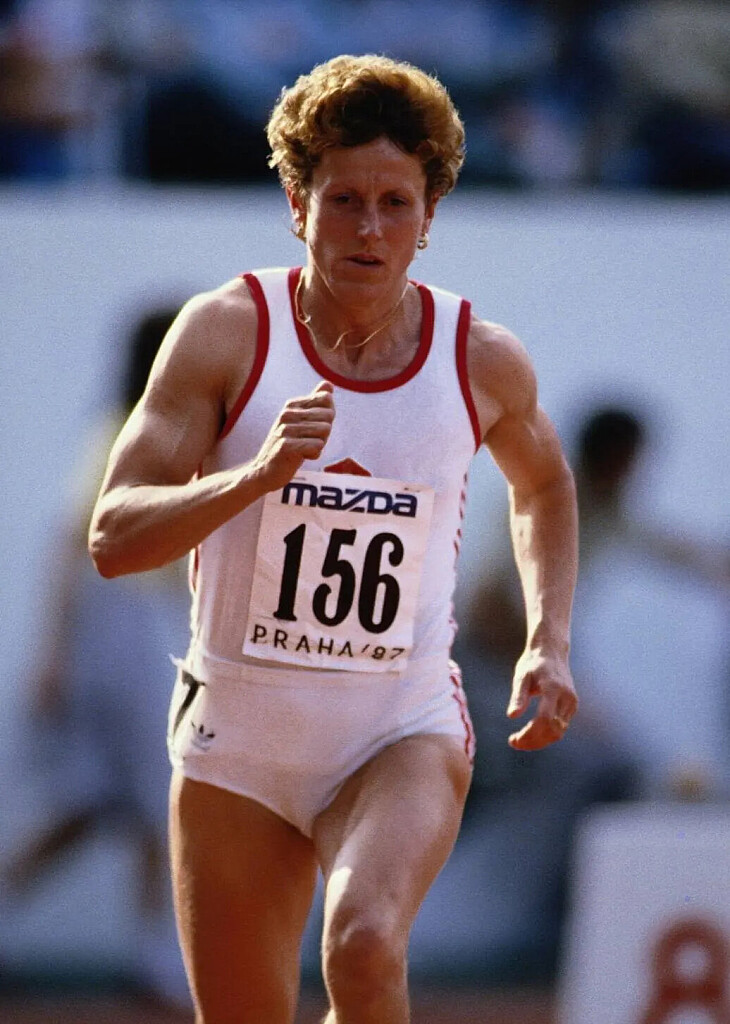
As of September 25, 2026, a remarkable collection of long-standing running world records continues to stand across the track. At the top of that list is one of the most enduring marks in modern athletics: Jarmila Kratochvílová’s women’s 800m world record of 1:53.28, set in Munich in 1983. The record has now stood for 43 years, making it the oldest current outdoor track world record in athletics.
Kratochvílová’s performance remains extraordinary not only because of its longevity, but also because of how rarely athletes have come close to it. Decades after it was established, the 1:53 barrier remains one of the most formidable standards in women’s middle-distance running.
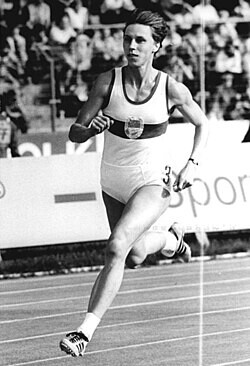
The next-oldest record on the board belongs to Marita Koch, whose 47.60 for the women’s 400m has remained untouched since 1985. Koch’s mark is now 40 years old, while Florence Griffith-Joyner’s extraordinary world records of 10.49 for 100m and 21.34 for 200m, both established in 1988, have survived for 38 and 37 years respectively.
Those records from the 1980s and early 1990s form one of the most intriguing chapters in athletics history. They belong to an era that produced performances still sitting at the very top of the all-time lists, with modern generations repeatedly attempting to reach standards that have resisted decades of competition.
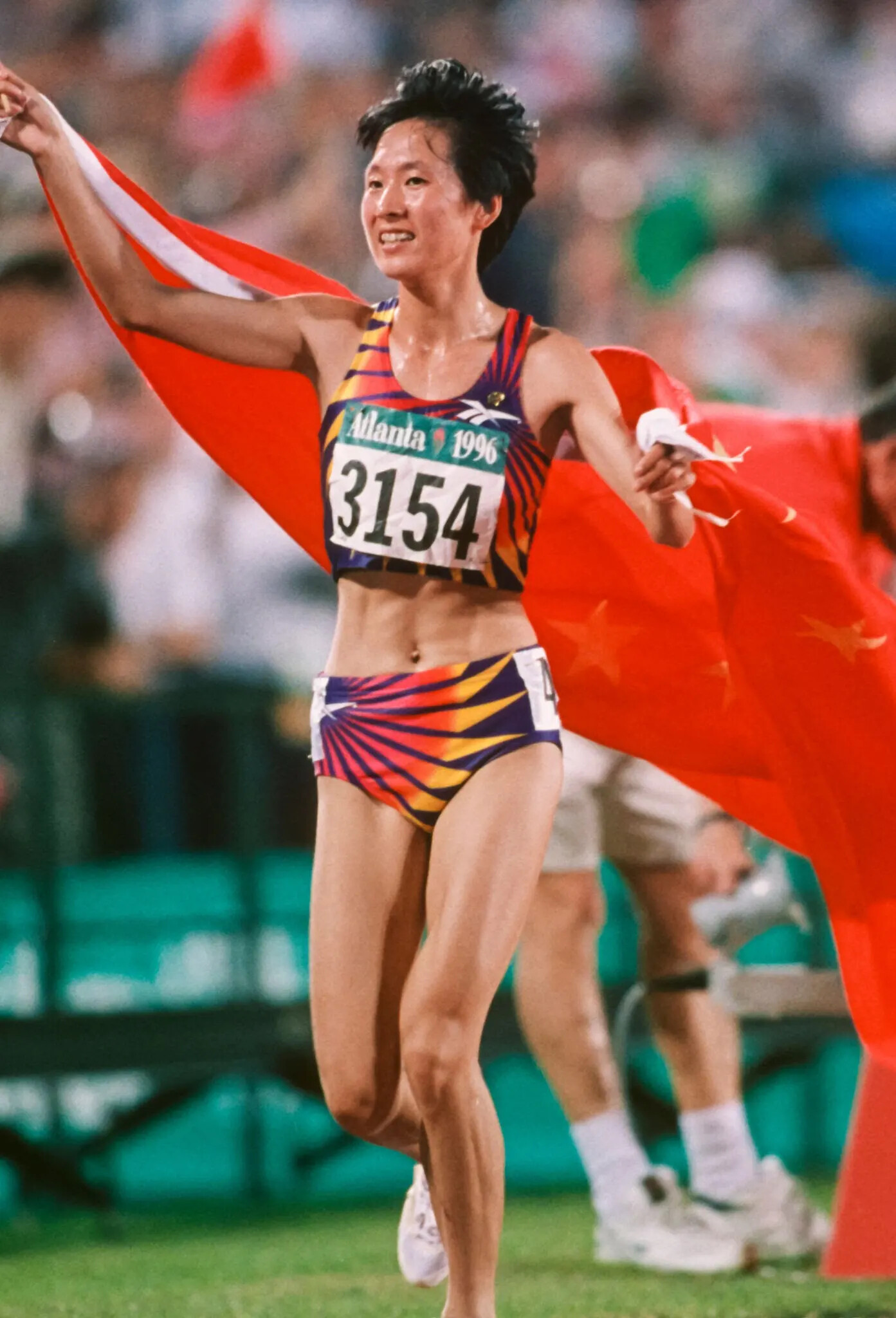
China’s Wang Junxia added another remarkable mark to that era when she ran 8:06.11 for 3000m in 1993. That record has now stood for 32 years, while Morocco’s Hicham El Guerrouj set the men’s 1500m world record of 3:26.00 in 1998, giving the list another mark that has survived for more than a quarter of a century.
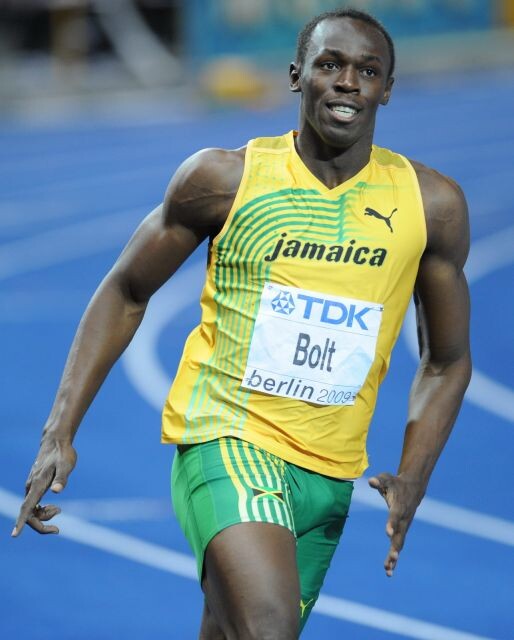
Then comes a different kind of longevity: the extraordinary sprint records of Usain Bolt.
Bolt’s 9.58-second 100m world record, set in Berlin in 2009, and his 19.19-second 200m record, established at the same championships, are now both 17 years old.
When Bolt produced those performances, many of today’s elite sprinters were still children. Yet despite enormous advances in training, sports science, track technology and competition, his two marks remain the standards that every new generation must chase.
The list also highlights the remarkable staying power of more recent records. Kenya’s David Rudisha set the men’s 800m world record of 1:40.91 at the London 2012 Olympics, while South Africa’s Wayde van Niekerk stunned the world with 43.03 in the 400m at the Rio 2016 Olympics.
Kenya’s Beatrice Chepkoech followed with her historic 8:44.32 world record in the women’s 3000m steeplechase in 2018. Uganda’s Joshua Cheptegei then established the men’s 5000m and 10,000m records in 2020, running 12:35.36 and 26:11.00 respectively.
More recently, Ethiopia’s Lamecha Girma set the men’s 3000m steeplechase world record at 7:52.11 in 2023, while Kenya’s Faith Kipyegon produced another landmark performance that year, running 4:07.64 for the women’s mile.
Together, these records create a fascinating timeline of athletics—from the pioneering performances of the 1980s to the spectacular achievements of the modern era. Some have survived for more than four decades, while others are still in the early stages of what could become an equally remarkable reign.
And that is what makes world records so captivating: every generation arrives believing that today’s impossible can become tomorrow’s target, yet some numbers continue to stand as enduring reminders of performances that changed the sport forever.
by Erick Cheruiyot for My Best Runs.
Login to leave a comment
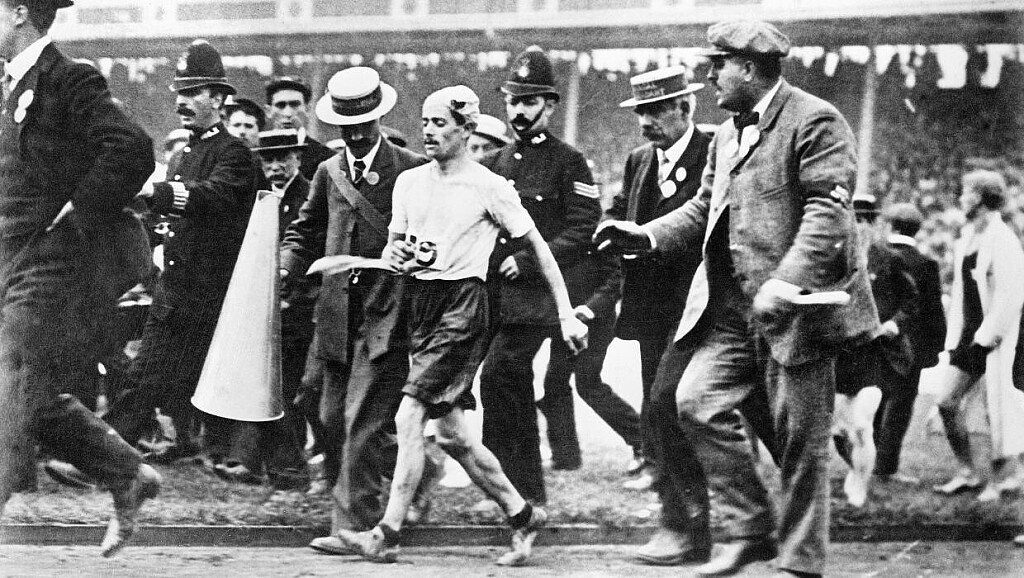
The Strangest Olympic Marathon Ever: Cars, Rotten Apples, Wild Dogs And Strychnine
Few Olympic races have produced a story as bizarre, chaotic and brutal as the marathon at the 1904 Games in St. Louis.
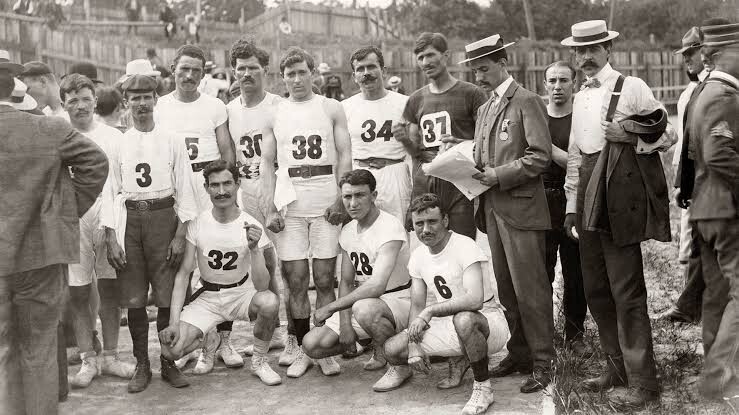
Held on August 30, 1904, the race took place over roughly 40 kilometres in oppressive heat, on dusty country roads where passing automobiles stirred clouds of dust into the air. Water was extremely limited, and the combination of heat, hills, dehydration and poor race organization turned the event into an extraordinary test of survival.
Thirty-two runners started the marathon, but only 14 reached the finish. What happened along the way would eventually make the St. Louis marathon one of the most infamous races in Olympic history.
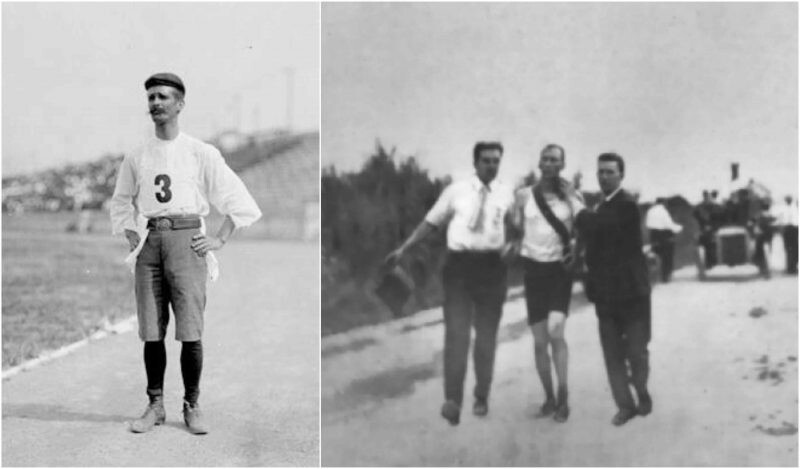
Among the strangest episodes was the story of American runner Frederick Lorz.
Lorz was initially celebrated as the winner after reaching the stadium first in 3:13:00. But the apparent victory quickly collapsed when officials discovered that he had been transported by automobile for a substantial portion of the course after suffering severe cramps. Accounts place the car ride at roughly 11 miles.
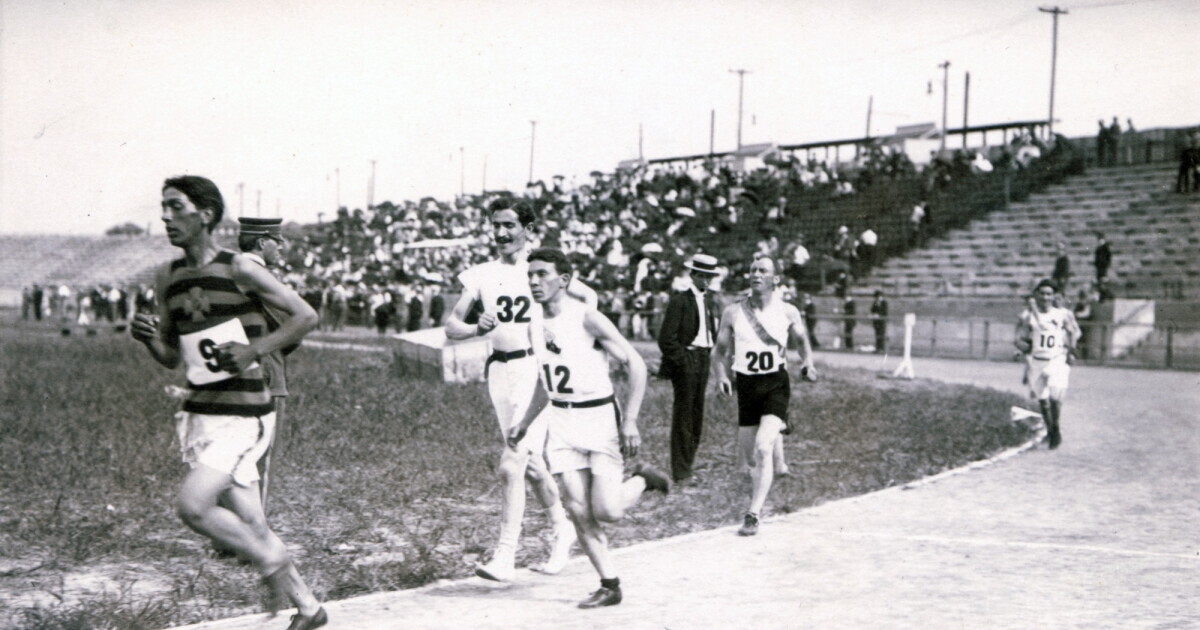
When the automobile eventually broke down, Lorz returned to the road and continued running. He crossed the finish line first, but his deception was uncovered almost immediately and he was disqualified. Lorz later described the incident as a joke rather than an attempt to claim the Olympic title.
That left Thomas Hicks as the official Olympic champion, but his journey to the gold medal was almost as extraordinary.
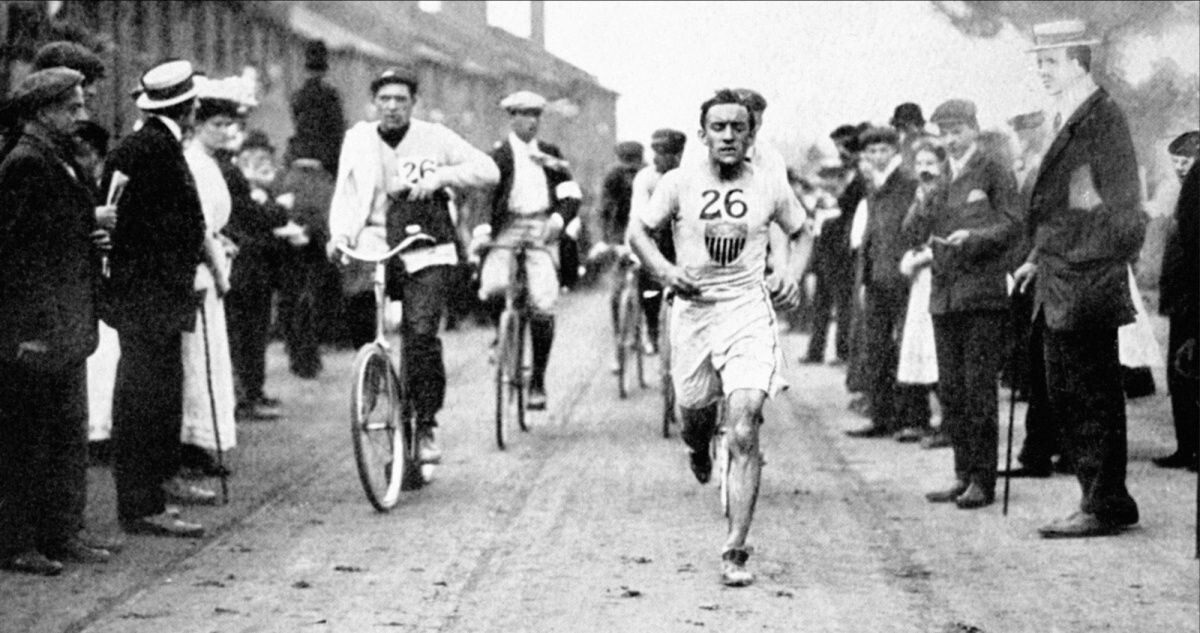
Hicks completed the marathon in 3:28:53, a time that remains the slowest winning performance in Olympic marathon history. Yet the number on the clock tells only part of the story.
As Hicks began to fade badly during the latter stages, his support team gave him a mixture containing strychnine and egg white, followed later by brandy. Strychnine was regarded at the time as a stimulant in very small quantities, although today it is recognized as a highly poisonous substance. There were no modern anti-doping rules at the 1904 Games to prohibit such treatment.
Hicks became increasingly exhausted and reportedly hallucinated during the closing stages. His condition deteriorated so badly that his trainers eventually helped carry him across the finish line while his legs continued moving beneath him.
Afterward, he needed medical attention before he was well enough to leave the stadium. The Olympic Museum records that four doctors were required to attend to him following the race.
Then there was Andarín Carvajal, the Cuban postman whose Olympic debut sounded more like an adventure than a marathon.
Carvajal arrived in St. Louis shortly before the race and had little of the equipment expected of a serious marathon runner. He competed in long trousers and a long-sleeved shirt, with the legs of his trousers cut down to make them more suitable for running.
Despite his unconventional preparation, Carvajal ran remarkably well and stayed among the leading competitors.
But hunger became a problem. Having gone for a long period without proper food, he stopped along the course and ate apples he found. Unfortunately, the fruit was rotten, leaving him with severe stomach cramps. At one point, he lay down beside the road and fell asleep.
Remarkably, he recovered, got back on his feet and continued running. Carvajal eventually finished fourth, an extraordinary result considering the conditions and the obstacles he encountered.
The race also marked an important moment in Olympic history for Africa.
Len Taunyane and Jan Mashiani, two South Africans of Tswana background, became the first Black Africans to compete at the Olympic Games. They were in St. Louis as part of a South African exhibition connected to the World's Fair and entered the marathon almost unexpectedly.
Historical accounts have long described the pair as running barefoot, although surviving photographs indicate that the footwear situation was more complicated, with at least one of them appearing to have shoes. Their names were also recorded inconsistently in contemporary reports.
Taunyane became part of one of the race's most extraordinary stories when he was reportedly chased off the course for about a mile by a wild dog. Despite the incident, he recovered and continued the race.
Taunyane finished ninth, while Mashiani placed 12th, making their appearances significant not only because of the bizarre circumstances but also because they represented an important milestone in Olympic history.
There were other dangers too. The roads were so dusty that the automobiles accompanying the runners created clouds of dust that made an already punishing race even more difficult. One American runner, William Garcia, reportedly collapsed after dust severely affected his throat and stomach, illustrating just how dangerous the conditions had become.
The 1904 St. Louis marathon was therefore unlike almost anything seen in modern distance running.
There were no sophisticated hydration stations, no carefully measured modern course, no sports science teams and no anti-doping regulations. Instead, runners faced extreme heat, dusty roads, limited water and primitive medical practices.
One athlete rode in a car. Another stopped to eat rotten fruit and fell asleep. Two pioneering African competitors endured an extraordinary race, with one reportedly being chased by a dog. And the eventual champion was administered a dangerous stimulant mixture before being helped across the finish line.
More than a century later, the St. Louis marathon remains a remarkable reminder of just how different Olympic distance running once was.
It was a marathon where survival sometimes seemed as important as speed—and where almost every mile produced another unbelievable chapter.
by Erick Cheruiyot for My Best Runs.
Login to leave a comment
Dawit Seare Stuns Ingebrigtsen In Thrilling Finish To Win World 5km Title In Copenhagen
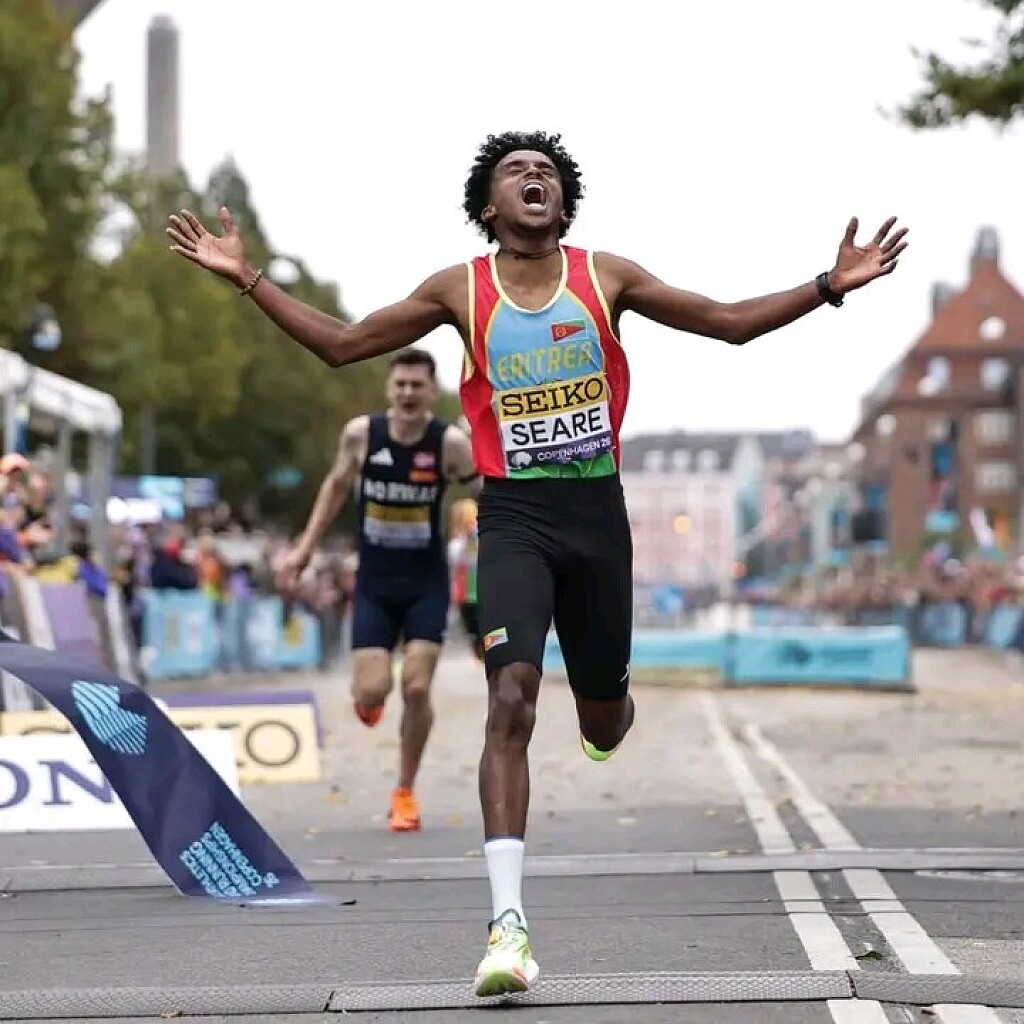
Eritrea’s Dawit Seare produced a sensational performance on Saturday, September 19, 2026, to claim the men’s 5km world title at the World Athletics Road Running Championships in Copenhagen, defeating Norway’s Olympic champion Jakob Ingebrigtsen in a dramatic battle that went down to the final metres.
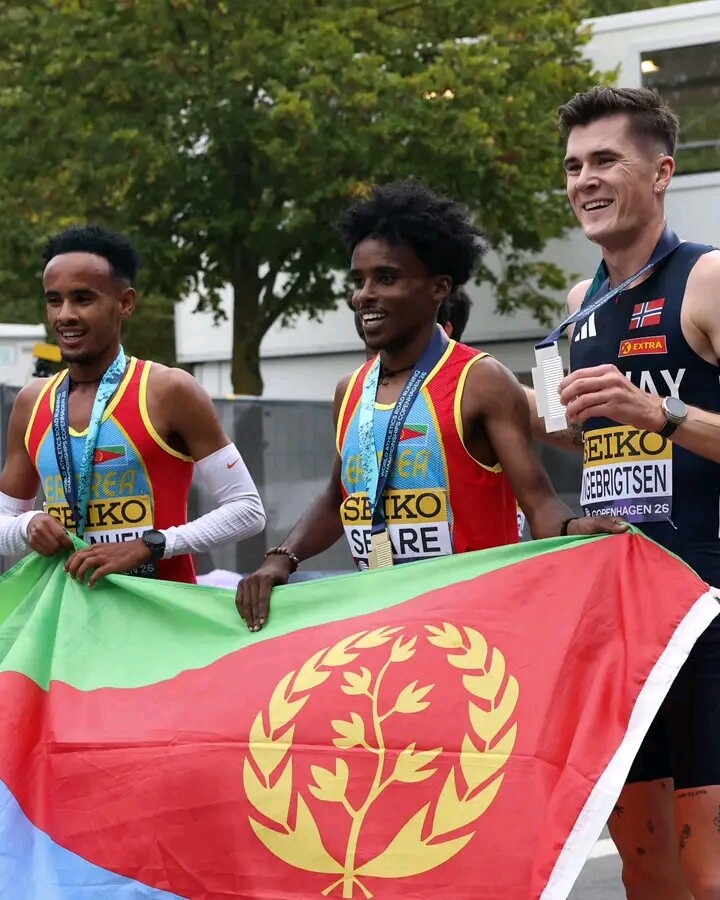
Seare crossed the finish line in a national record of 12:56, with Ingebrigtsen taking silver in a Norwegian record of 12:59. Eritrea completed a remarkable double podium as Saymon Amanuel secured bronze in a personal best of 13:00.
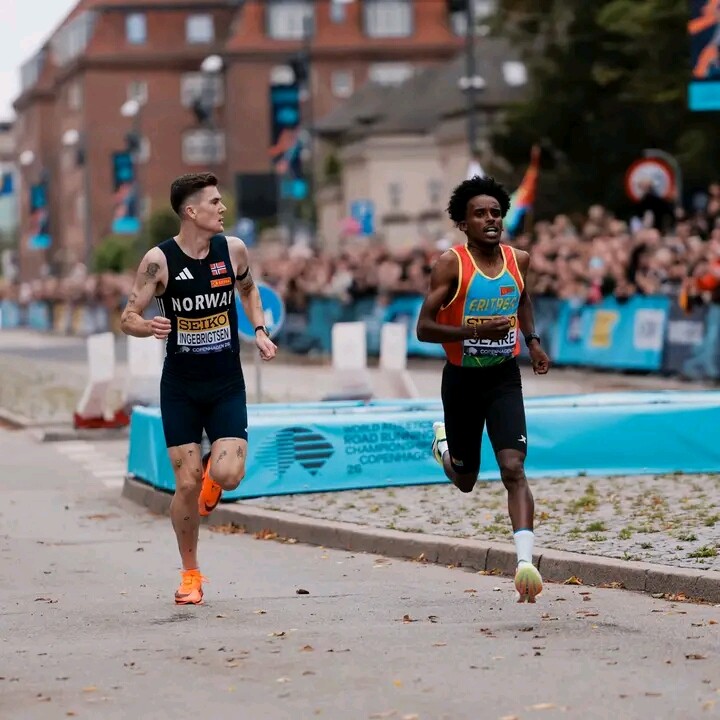
The closing stages produced an extraordinary finish as Seare and Ingebrigtsen engaged in a fierce battle for the world title. With just 150 metres remaining, the lead changed hands three times, underlining the intensity of the contest. Ingebrigtsen briefly surged ahead and appeared to have taken control, but Seare responded with another gear, powering past the Norwegian before the finish line.
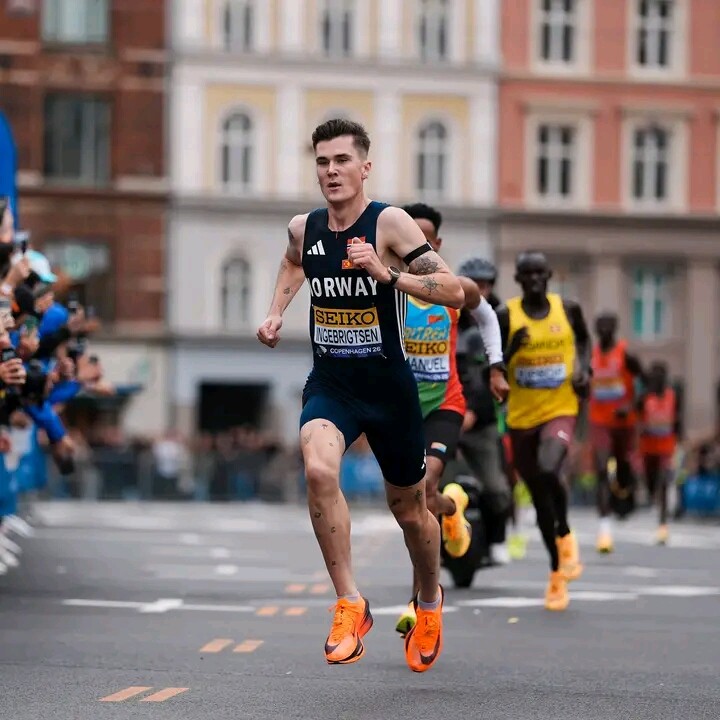
The Eritrean’s decisive acceleration carried him to victory by three seconds, turning what had been a tightly contested race into a remarkable championship triumph. Seare held his composure under immense pressure and produced the strongest finish when it mattered most.
The race had featured a large leading group through much of the early stages before the pace intensified approaching the final kilometres. As the runners entered the decisive phase, Seare remained firmly in contention, positioning himself perfectly for the battle that would ultimately determine the world champion.
For Seare, the victory adds another major achievement to an impressive 2026 season. Having already established himself as the African 5,000m champion, he has now transferred that success to the roads by securing a world title in Copenhagen.
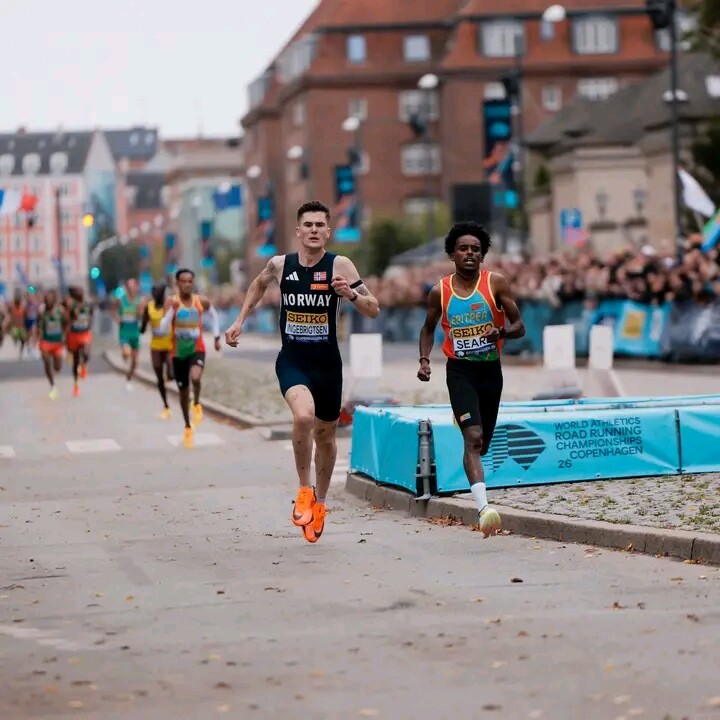
Ingebrigtsen was forced to settle for silver despite producing a national record of his own. The Norwegian’s late surge demonstrated his determination to control the race, but Seare’s response in the final metres proved decisive in one of the closest and most dramatic finishes of the championships.
Eritrea’s success was made even more remarkable by Amanuel’s bronze medal. His 13:00 personal best ensured that two Eritrean athletes stood on the podium, giving the country both gold and bronze in a memorable men’s 5km championship race.
Australia’s Ky Robinson also delivered an outstanding performance, finishing fourth in 13:04 to set an Oceanian record. Uganda’s Keneth Kiprop matched the time in fifth, while Ethiopia placed two athletes inside the top seven through Addisu Yihune and Mezgebu Sime.
Kenya’s Mathew Kipchumba Kipsang finished eighth in 13:11, followed by Burundi’s Egide Ntakarutimana in ninth and South Africa’s Maxime Chaumeton in 10th.
Men’s 5km Top 10 Results
1. Dawit Seare — Eritrea — 12:56 NR
2. Jakob Ingebrigtsen — Norway — 12:59 NR
3. Saymon Amanuel — Eritrea — 13:00 PB
4. Ky Robinson — Australia — 13:04 AR
5. Keneth Kiprop — Uganda — 13:04 PB
6. Addisu Yihune — Ethiopia — 13:07
7. Mezgebu Sime — Ethiopia — 13:08 SB
8. Mathew Kipchumba Kipsang — Kenya — 13:11 SB
9. Egide Ntakarutimana — Burundi — 13:12 PB
10. Maxime Chaumeton — South Africa — 13:13
Seare’s victory capped an unforgettable finish in Copenhagen, where three changes of the lead in the final 150 metres set up a dramatic showdown. In the end, the Eritrean produced the crucial final surge to deny Ingebrigtsen and claim a historic world 5km title in a national-record 12:56.
by Erick Cheruiyot for My Best Runs.
Login to leave a comment
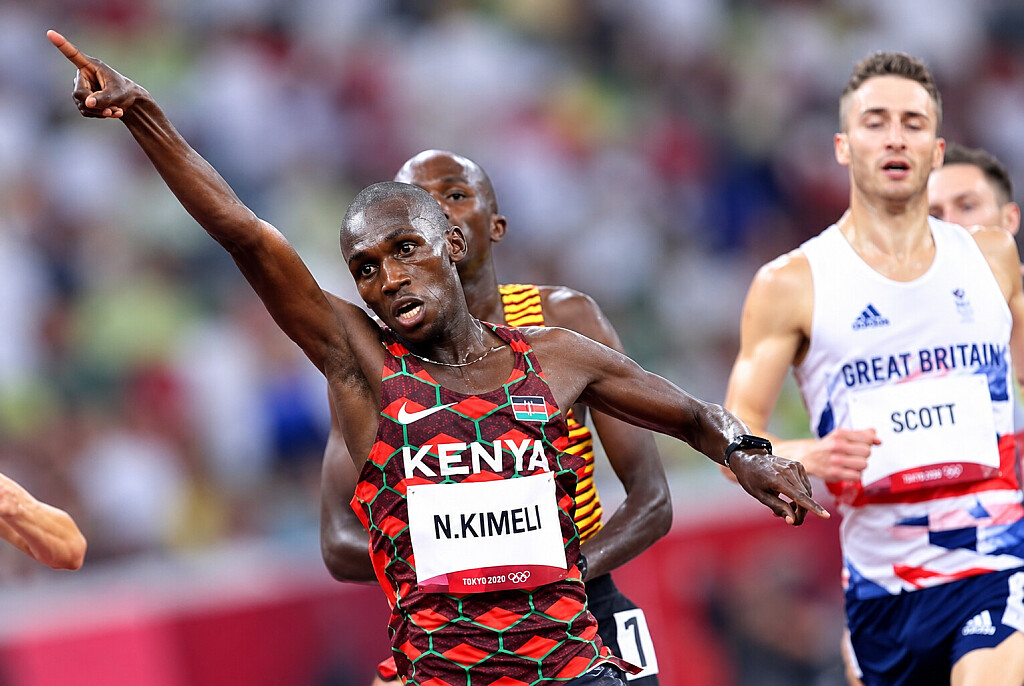
Nicholas Kipkorir Leads Star-Studded Men’s Half Marathon Field At World Road Running Championships
The stage is set for a spectacular men’s half marathon at the World Athletics Road Running Championships Copenhagen 26, with some of the world’s leading distance runners preparing to battle for global honours on Sunday, September 20.
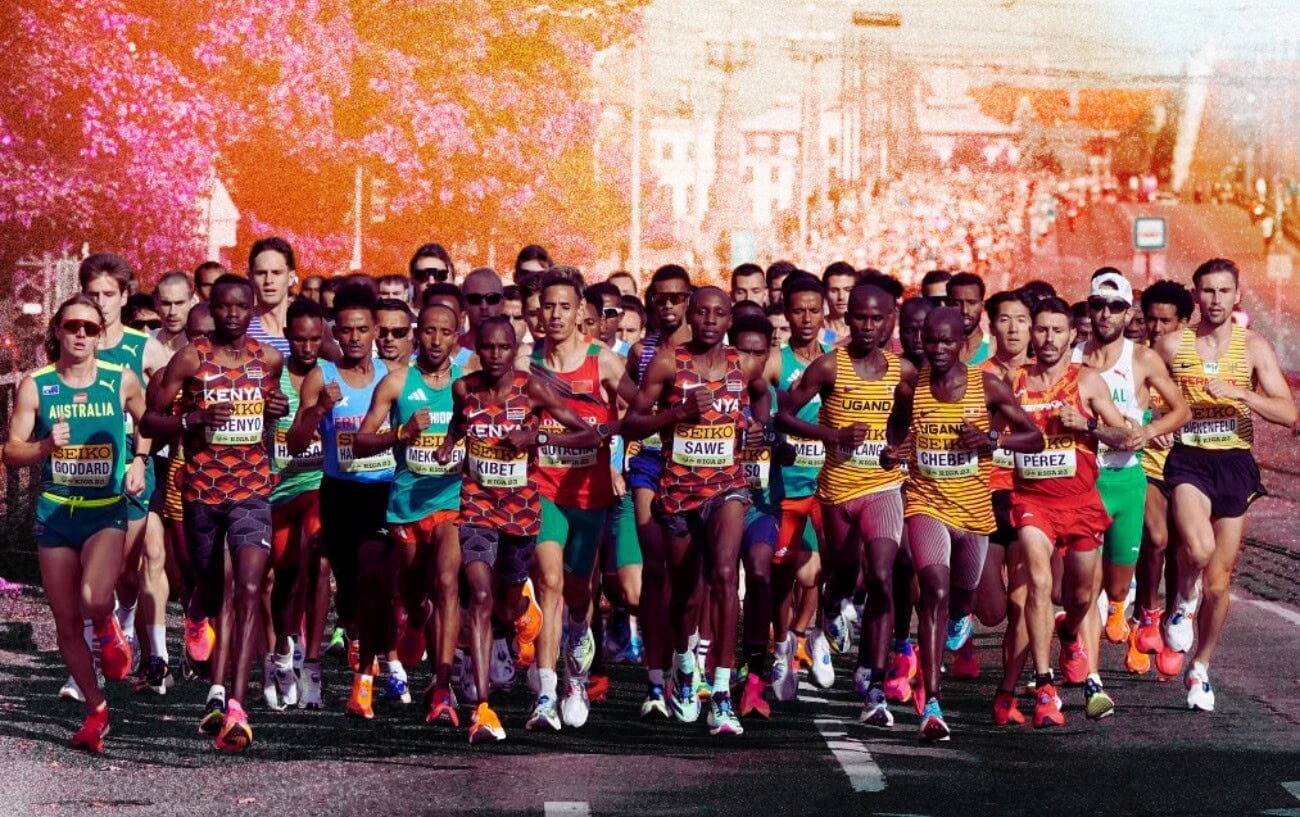
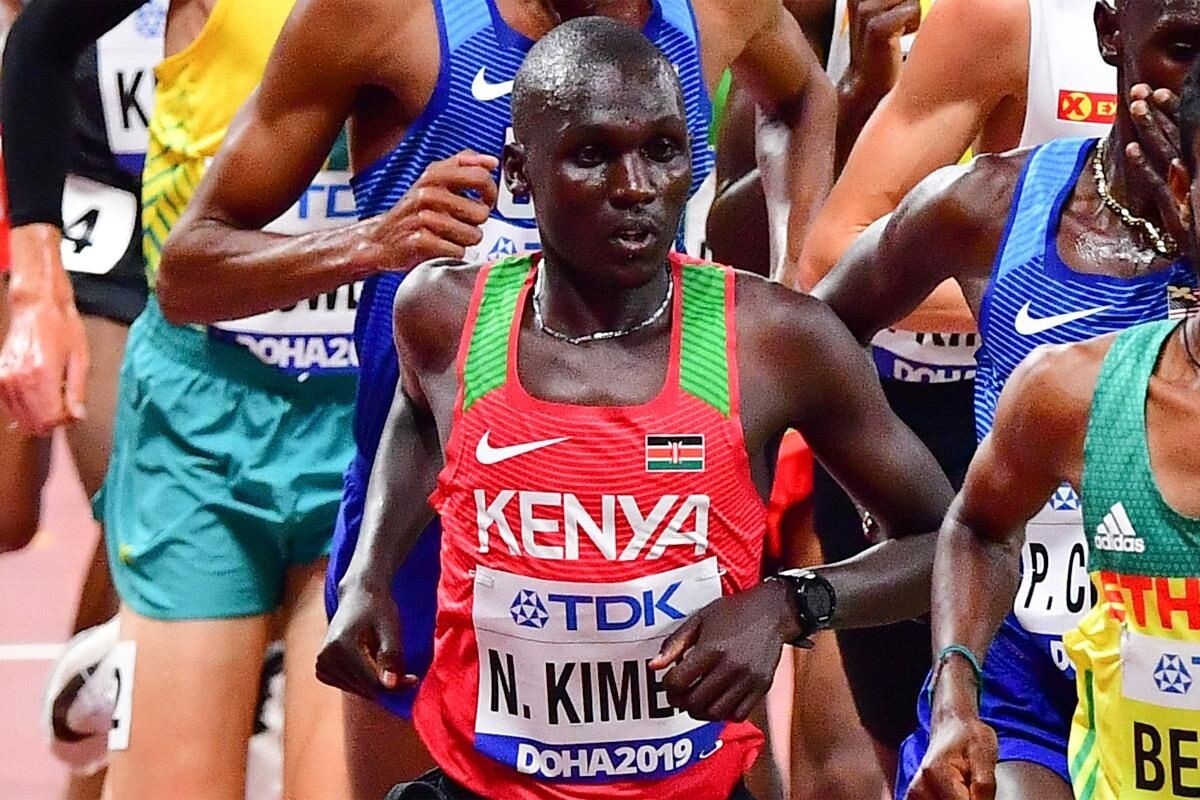
Kenya’s Nicholas Kipkorir headlines the field with a remarkable personal best of 58:08, the fastest mark among the athletes entered.
Kipkorir will face a formidable challenge from compatriot Gideon Kipkertich Rono, who owns a 58:38 personal best. Sweden’s Andreas Almgren also brings an exceptional 58:41 to the start line, while Ethiopia’s Tadese Worku has a 58:59 personal best.
Italy’s Yemaneberhan Crippa adds another major name to the field with a national record of 59:01, while Kenya’s Daniel Simiu Ebenyo enters with a 59:04 personal best and valuable championship experience.
Ebenyo won silver at the 2023 World Road Running Championships in Riga and will be looking to challenge for another medal in Copenhagen.
Uganda’s Joshua Cheptegei will bring enormous championship pedigree to the race. The Olympic and multiple world champion has a half marathon best of 59:21, making him another athlete capable of featuring prominently in the battle for the medals.
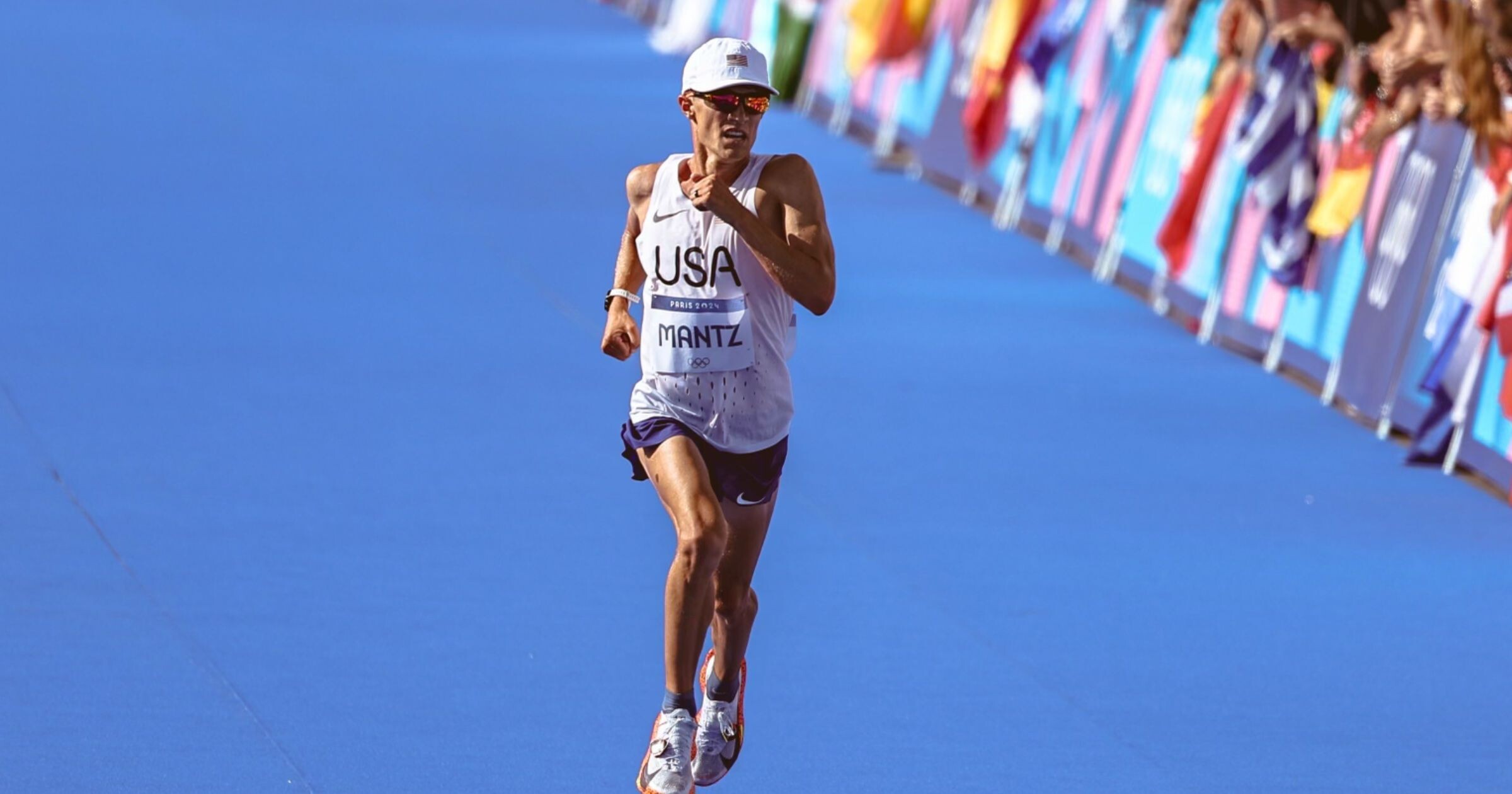
The American challenge will be led by Conner Mantz, who owns a 59:15 personal best. France’s Etienne Daguinos, Portugal’s Samuel Barata, Ethiopia’s Bereket Nega, France’s Jimmy Gressier, Canada’s Rory Linkletter, Australia’s Jack Rayner and Morocco’s Mohamed Reda El Aaraby further strengthen an already formidable international field.
Kenya will have particular interest in the championship, with several of its leading road runners lining up against some of the best athletes from Europe, Africa, North America, Asia and Oceania.
The race will be contested over the traditional 21.0975-kilometre distance, with the elite men scheduled to start at 9:45 a.m. local time on Sunday, September 20.
Leading Athletes And Personal Bests
1. Nicholas Kipkorir (Kenya) — 58:08
2. Gideon Kipkertich Rono (Kenya) — 58:38
3. Andreas Almgren (Sweden) — 58:41
4. Tadese Worku (Ethiopia) — 58:59
5. Yemaneberhan Crippa (Italy) — 59:01
6. Daniel Simiu Ebenyo (Kenya) — 59:04
7. Alex Nzioka Matata (Kenya) — 59:11
8. Conner Mantz (USA) — 59:15
9. Joshua Cheptegei (Uganda) — 59:21
10. Etienne Daguinos (France) — 59:27
11. Samuel Barata (Portugal) — 59:40
12. Bereket Nega (Ethiopia) — 59:43
13. Jimmy Gressier (France) — 59:45
14. Rory Linkletter (Canada) — 59:49
15. Peter Lynch (Ireland) — 59:52
16. Jack Rayner (Australia) — 59:53
17. Mohamed Reda El Aaraby (Morocco) — 59:54
18. Hillary Bor (USA) — 59:55
19. Zerei Kbrom Mezngi (Norway) — 1:00:01
20. Bastien Augusto (France) — 1:00:09
21. Mande Bushendich (Uganda) — 1:00:14
22. Jack Rowe (Great Britain) — 1:00:17
23. Cameron Levins (Canada) — 1:00:18
24. Ogikubo Tomoya (Japan) — 1:00:22
25. Bayelign Teshager (Ethiopia) — 1:00:22
26. Elroy Gelant (South Africa) — 1:00:22
27. Célestin Ndikumana (Burundi) — 1:00:23
28. Said Mechaal (Spain) — 1:00:24
29. Nishizawa Yuma (Japan) — 1:00:26
30. Namiki Neo (Japan) — 1:00:29
31. Othmane El Goumri (Morocco) — 1:00:30
32. Inyasi Nicodemus Sulley (Tanzania) — 1:00:31
33. Wesley Kiptoo (USA) — 1:00:34
34. Haftu Strintzos (Australia) — 1:00:36
35. Filmon Tesfu (Netherlands) — 1:00:38
36. Mustapha Akkaoui (Morocco) — 1:00:38
With such remarkable depth, the championship could remain finely poised until the closing stages. The presence of multiple sub-59-minute runners, experienced championship performers and strong finishers sets the scene for a race in which positioning, tactics and the ability to respond to late surges could prove decisive.
For Kipkorir, Ebenyo and their Kenyan teammates, Copenhagen provides an opportunity to turn impressive personal credentials into championship medals. But with a world-class field assembled behind them, the final outcome will only be determined when the leading runners reach the finish line.
by Erick Cheruiyot for My Best Runs.
Login to leave a comment
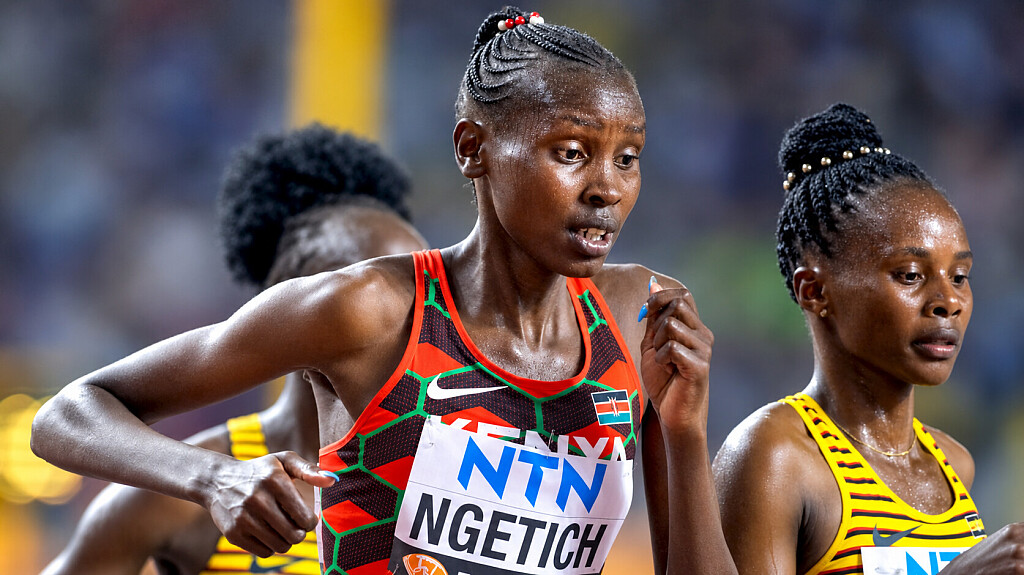
Agnes Ngetich Leads Star-Studded Women’s Half Marathon Field At World Road Running Championships
The stage is set for a spectacular women’s half marathon at the 2026 World Athletics Road Running Championships in Copenhagen, Denmark, with a deep international field ready to battle for the world title on Sunday, September 20.
The elite women’s race will begin at 9:10 a.m. local time, with the 21.0975-kilometre championship race taking runners through the streets of Copenhagen before the finish on Øster Allé.
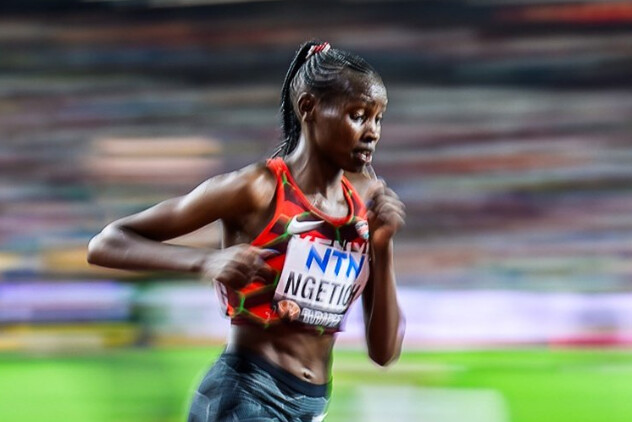
At the head of the entry list is Kenya’s Agnes Jebet Ngetich, who brings a sensational 1:03:04 personal best into the championship. She will lead a powerful Kenyan contingent that also includes Lilian Kasait Rengeruk, whose 1:03:32 is among the fastest times ever recorded over the distance.
Ngetich has established herself as one of the leading distance runners in the world, and her combination of speed and endurance makes her one of the major names to watch when the championship race gets underway.
Rengeruk provides another formidable Kenyan threat, while Daisilah Jerono, with a 1:05:21 personal best, and Veronica Loleo, with 1:05:35, add further depth to the Kenyan line-up.
Ethiopia will also arrive with serious firepower. Tsigie Gebreselama owns a remarkable 1:04:21 personal best, while Ftaw Zeray comes into Copenhagen with a 1:05:12 lifetime best.
The battle will not be restricted to the leading African nations, however. Weini Kelati Frezghi heads the American challenge with a 1:06:04 personal best, while Esther Chebet of Uganda has run 1:06:33.
Europe will be represented by several accomplished athletes, including Slovenia’s Klara Lukan, who owns a 1:06:43 personal best, and Norway’s experienced Karoline Bjerkeli Grøvdal, whose best stands at 1:06:55.
South Africa’s Glenrose Xaba is another prominent name on the list with a 1:07:03 personal best, while Great Britain’s Samantha Harrison enters with 1:07:10.
Uganda has further depth through Rebecca Chelangat at 1:07:18, Annet Chemengich Chelangat at 1:08:12 and Rispa Cherop at 1:08:53.
The international field also includes Ethiopia’s Melat Siyoum and Baraky Redae, Rwanda’s Florence Niyonkuru and Emeline Imanizabayo, Mexico’s Laura Galván, Belgium’s Chloé Herbiet and Lisa Rooms, the United States’ Emma Grace Hurley, Ednah Kurgat, Carrie Ellwood and Jessica McClain, France’s Mekdes Woldu, Alessia Zarbo and Mélody Julien, Italy’s Sofia Yaremchuk and Elvanie Nimbona, China’s He Wuga and Liang Tiantian, and New Zealand’s Georgie Grgec.
Women’s Half Marathon Entry List
1. Agnes Jebet Ngetich — Kenya — 1:03:04
2. Lilian Kasait Rengeruk — Kenya — 1:03:32
3. Tsigie Gebreselama — Ethiopia — 1:04:21
4. Ftaw Zeray — Ethiopia — 1:05:12
5. Daisilah Jerono — Kenya — 1:05:21
6. Veronica Loleo — Kenya — 1:05:35
7. Weini Kelati Frezghi — United States — 1:06:04
8. Esther Chebet — Uganda — 1:06:33
9. Klara Lukan — Slovenia — 1:06:43
10. Karoline Bjerkeli Grøvdal — Norway — 1:06:55
11. Glenrose Xaba — South Africa — 1:07:03
12. Samantha Harrison — Great Britain — 1:07:10
13. Rebecca Chelangat — Uganda — 1:07:18
14. Melat Siyoum — Ethiopia — 1:07:21
15. Florence Niyonkuru — Rwanda — 1:07:22
16. Baraky Redae — Ethiopia — 1:07:31
17. Laura Galván — Mexico — 1:07:31
18. Chloé Herbiet — Belgium — 1:07:32
19. Emeline Imanizabayo — Rwanda — 1:07:35
20. Emma Grace Hurley — United States — 1:07:35
21. Annet Chemengich Chelangat — Uganda — 1:08:12
22. Mekdes Woldu — France — 1:08:20
23. Alessia Zarbo — France — 1:08:20
24. Ednah Kurgat — United States — 1:08:25
25. Sofia Yaremchuk — Italy — 1:08:27
26. He Wuga — China — 1:08:31
27. Liang Tiantian — China — 1:08:33
28. Carrie Ellwood — United States — 1:08:34
29. Jessica McClain — United States — 1:08:37
30. Elvanie Nimbona — Italy — 1:08:38
31. Lisa Rooms — Belgium — 1:08:40
32. Rispa Cherop — Uganda — 1:08:53
33. Georgie Grgec — New Zealand — 1:09:13
34. Mélody Julien — France — 1:09:15
With so many athletes separated by relatively small margins on paper, the championship race could develop into a fascinating tactical contest. Personal bests provide an indication of speed, but championship racing often comes down to positioning, patience and the ability to respond when the decisive moves arrive.
For Ngetich, Rengeruk, Gebreselama, Zeray and the rest of the field, the opportunity is clear: 21.0975 kilometres through Copenhagen with a world championship title waiting at the finish.
The World Athletics Road Running Championships Copenhagen 26 take place on September 19–20, with the women’s elite half marathon taking centre stage on Sunday, September 20, at 9:10 a.m.
Copenhagen is ready for a major championship showdown — and the women’s half marathon promises to be one of the highlights of the weekend.
by Erick Cheruiyot for My Best Runs.
Login to leave a comment
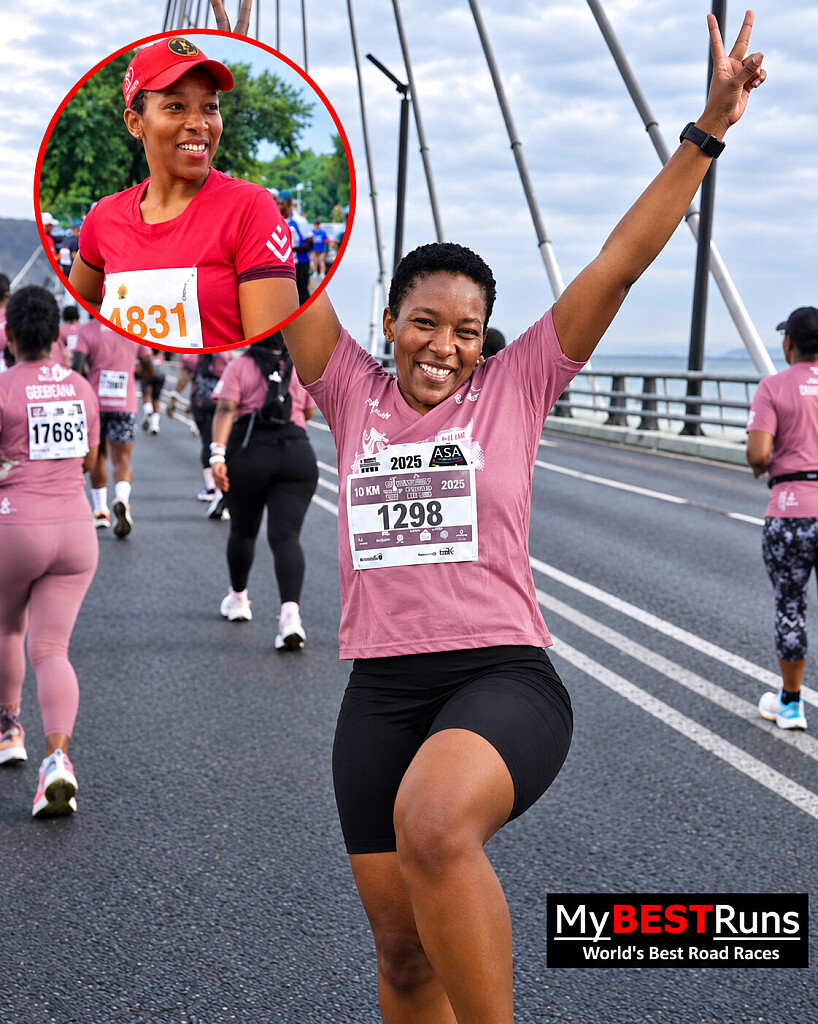
She Went Out for a Run and Never Came Home: The Tragic Story of Tsontso Moselakgomo
What should have been an ordinary afternoon run ended in devastating tragedy for 38-year-old Elizabeth “Tsontso” Moselakgomo, a mother, dedicated runner and much-loved member of South Africa’s running community.

Moselakgomo left her home in Rhodesfield, Kempton Park, east of Johannesburg, on September 10 for a run — something that had become a familiar part of her life. But when she failed to return home, the routine quickly turned into a desperate search.
Her eight-year-old daughter was among the first to realise that something was wrong and raised the alarm when her mother did not come home. Family, friends and authorities were left hoping that the missing runner would be found safe.
Two days later, that hope was shattered.
Moselakgomo’s body was discovered on September 12 behind a hotel in the Rhodesfield area. She was found wearing sports clothing, and her family later identified her remains at the Germiston mortuary on September 14. Police investigations into the circumstances surrounding her death are continuing.
For the running community, the tragedy has been particularly painful because Tsontso was not simply someone who occasionally went out for exercise. Running was part of who she was.
She was a member of Team Vitality and Waterfall City Athletics Club, and had recently completed the Wanderers 21K in Johannesburg on August 23. She was also known beyond the running community as the manager of Festival Mall and a member of her church choir.
Those who knew her have remembered her as a vibrant and energetic woman who brought warmth to the communities around her.
Her death has also unfolded against a deeply disturbing backdrop.
By September 15, police were investigating the deaths of six women whose bodies had been discovered in and around Kempton Park and the wider East Rand since July. Moselakgomo is the only one among the victims to have been publicly identified so far. Police have established a task team to investigate the cases and determine whether there are connections between them.
One suspect linked to the first case remains in custody, while investigators continue working on the other cases. Authorities have not established that all of the deaths are connected, making it important for the investigation to determine the circumstances surrounding each case individually.
The tragedy has sent shockwaves through South Africa’s athletics and running fraternity.
Athletics South Africa, Team Vitality and Waterfall City Athletics Club have all expressed their grief and extended condolences to Moselakgomo’s family. Athletics South Africa said her death highlighted the vulnerability of women who should be able to participate in sport and exercise without fear for their safety.
The response from runners has been immediate and deeply personal.
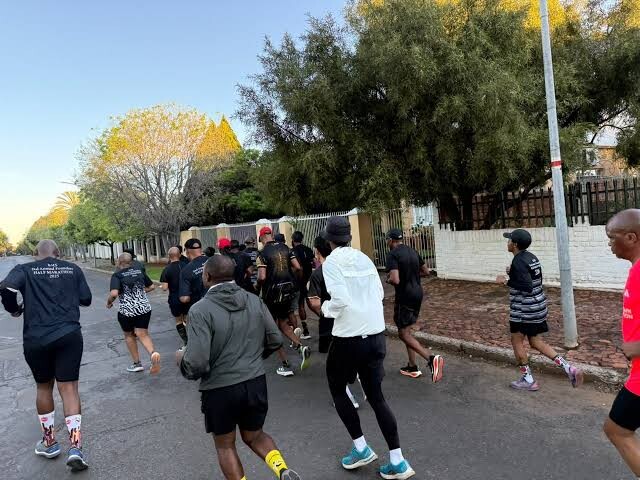
On Tuesday, Waterfall City Athletics Club and Run Alex Athletics organised tribute runs and walks in her honour, bringing runners together not only to remember Tsontso but also to stand together during a moment of fear and grief within the running community.
Members of TZD Sports Club in Eswatini also ran a 10-kilometre tribute in her memory, showing how far her story has travelled beyond the streets where she once trained and raced.
Across South Africa, runners have been turning their usual training sessions into moments of remembrance — some wearing black, others gathering in groups and many simply showing up to honour a fellow runner whose life was tragically cut short.
But the tributes have also carried a broader message.
Running With Sole Athletics Club has called for stronger safety measures, including more police presence, functioning street lights and safer running routes. The club stressed that running should represent freedom, health, community and joy — not fear.
That message has resonated strongly with runners, particularly women who have long had to think about safety before deciding when, where and with whom they can run.
For many, a run is a simple escape from the pressures of everyday life. It is a chance to clear the mind, improve health, chase a personal goal or spend time with friends. It should not be an activity that requires someone to constantly wonder whether they will make it home.
For Tsontso’s eight-year-old daughter and her family, however, this is no longer an abstract concern about safety.
It is the painful reality of losing a mother who left home for a run and never returned.
The running community can now only carry her memory forward — through the races she completed, the clubs she belonged to, the people she inspired and the miles that runners will continue to dedicate to her.
Elizabeth “Tsontso” Moselakgomo went out doing something she loved.
She should have been able to finish her run, walk through the door and return to the daughter who was waiting for her.
She should have made it home.
by Erick Cheruiyot for My Best Runs.
Login to leave a comment
Nairobi 2029: Kenya Wins Historic Bid to Bring World Athletics Championships to Africa
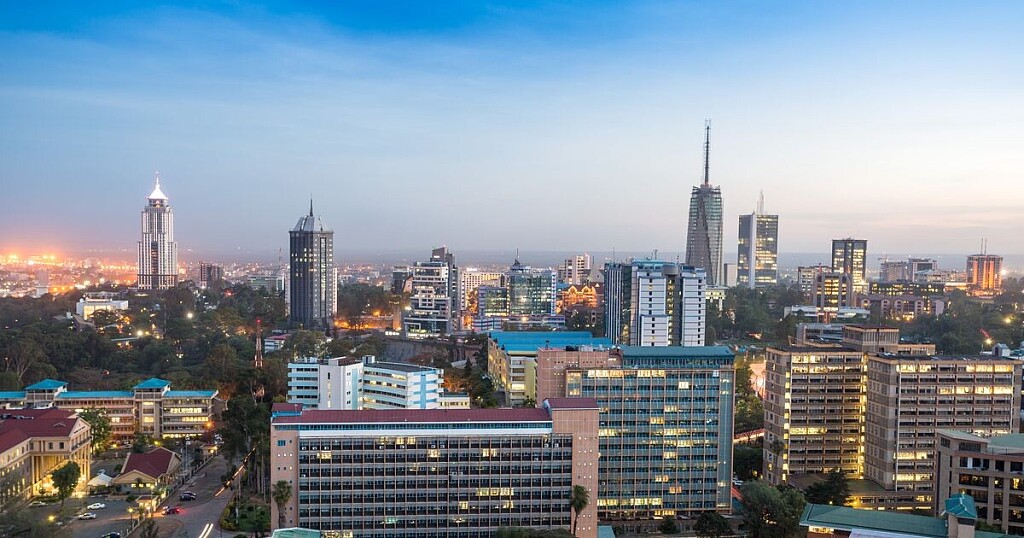
Africa finally has its moment. Kenya has won the race to host the 2029 World Athletics Championships, turning years of ambition into a landmark reality for the continent.
In a historic decision announced in Budapest, Nairobi has been selected to host the 2029 World Athletics Championships, making Kenya the first African nation to stage the senior global track and field championships.
World Athletics confirmed that Nairobi and Munich have been selected to host the 2029 and 2031 World Athletics Championships respectively, following what the governing body described as one of the strongest bidding processes in the history of its flagship event.
For Kenya, the announcement represents far more than a successful hosting bid. It is the latest chapter in a remarkable athletics story built over generations.
The Kenyan capital overcame strong competition from London, Rome and Munich to secure the 2029 edition, bringing the world's biggest senior athletics championship to African soil for the first time.

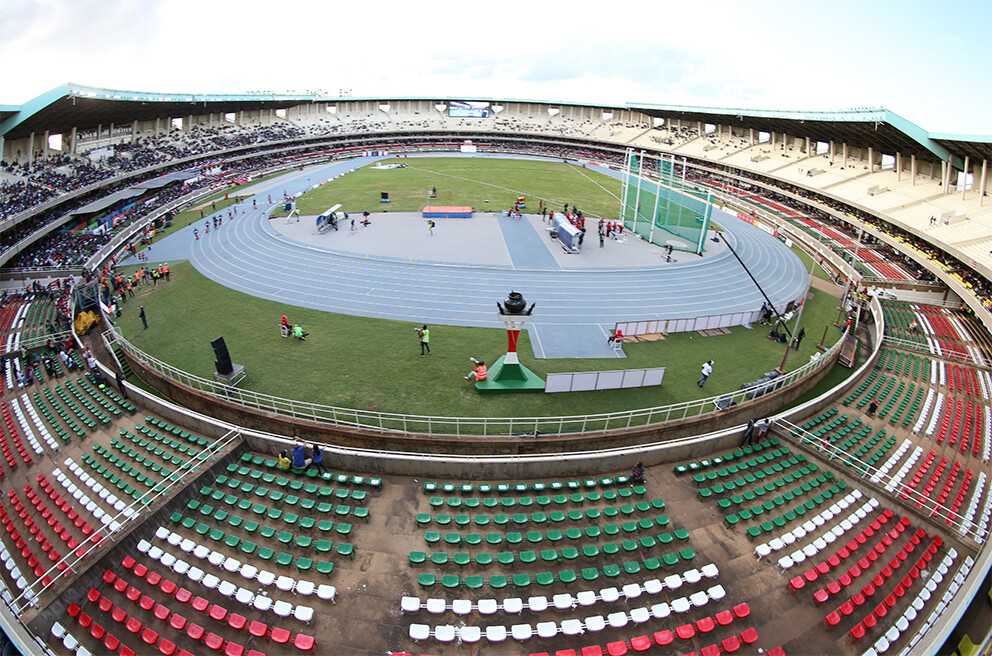
The championship will be staged at the Moi International Sports Centre, Kasarani, in Nairobi, giving Kenya the opportunity to welcome the world's greatest athletes to a country that has produced countless champions of its own.
For generations, Kenya has established itself as one of the most influential nations in global athletics.
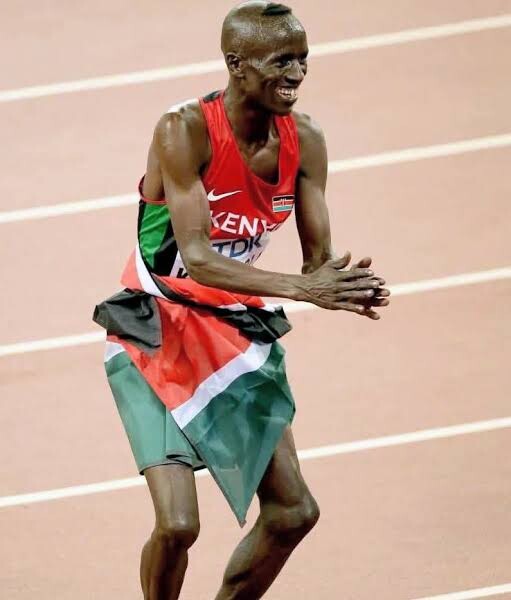
From pioneering Olympic champion Kipchoge Keino and distance-running legend Tegla Loroupe among others to modern icons such as Eliud Kipchoge, Faith Kipyegon, David Rudisha, Faith Cherotich, Vivian Cheruiyot and Ezekiel Kemboi among others. Kenyan athletes have repeatedly conquered the world's biggest stages.
Their Olympic victories, world titles, records and unforgettable performances have made Kenya one of the most recognizable names in track and field.
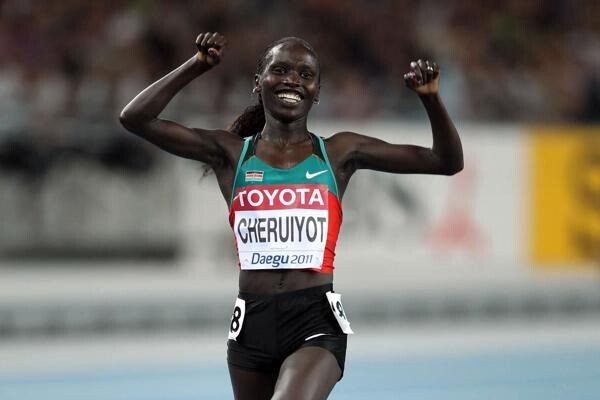
But Kenya's athletics identity extends far beyond medals.
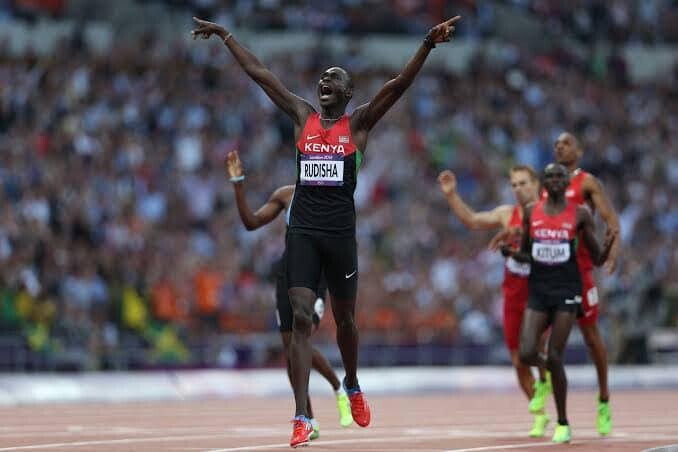
Running is deeply rooted in communities across the country, while the high-altitude training regions of the Rift Valley have become synonymous with the development of world-class distance runners. Behind the champions are coaches, families, training partners and communities that have helped create an athletics culture admired around the world.
Now, for the first time, that culture will become the backdrop for the sport's biggest senior global championship.
Nairobi 2029 will be historic before the first race even begins.
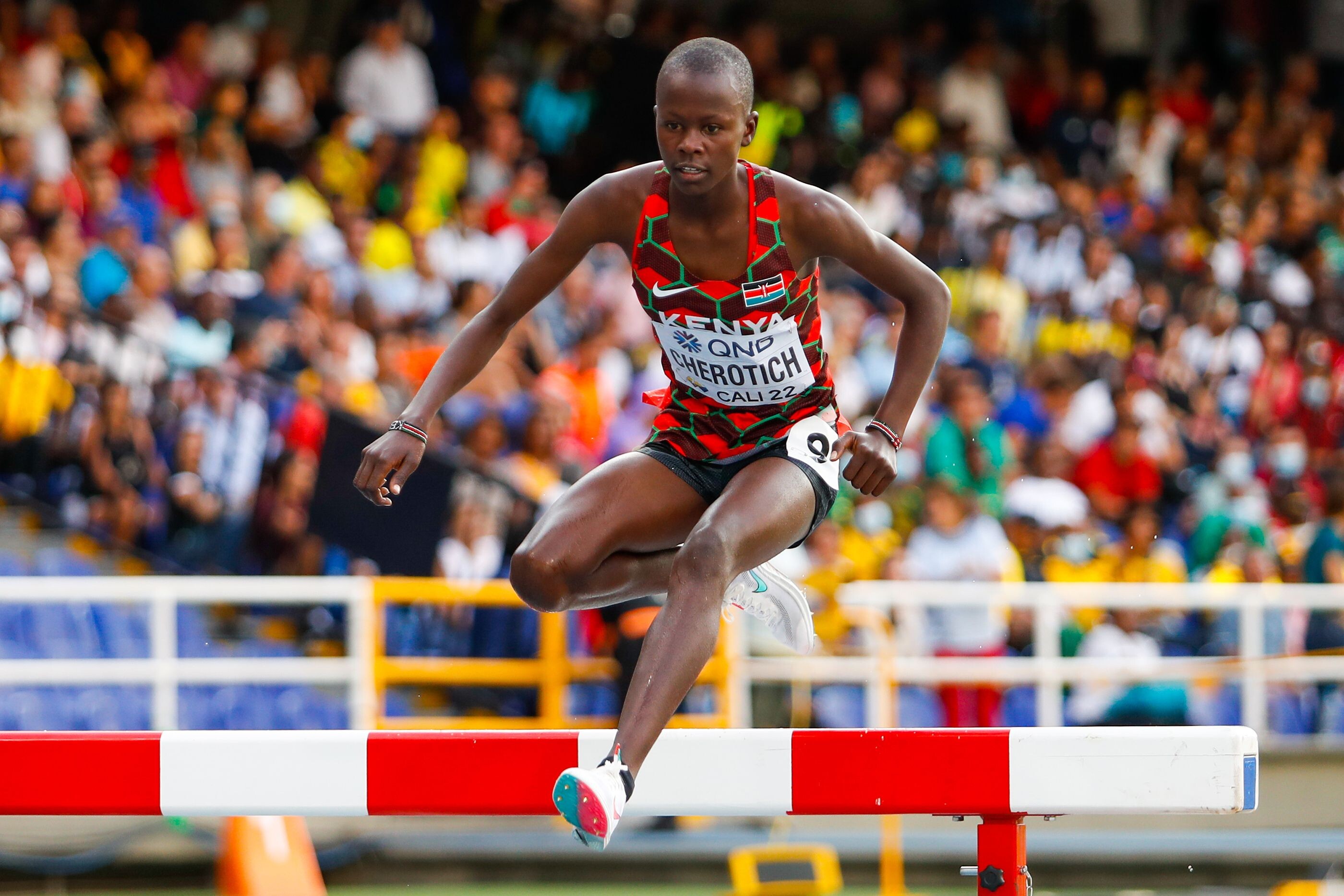
Kasarani, already an important venue in Kenya's sporting history, will take center stage as athletes from across the globe descend on Nairobi in pursuit of world titles.
For Kenyan fans, the opportunity to watch the world's greatest sprinters, middle-distance runners, distance stars, hurdlers, field-event athletes and relay teams compete on home soil will be extraordinary.
For the country's next generation of athletes, the impact could be even greater.
Young runners who have grown up watching Kenyan champions compete around the world will now have the chance to experience a World Championships in their own country. The sight of the world's best athletes competing at Kasarani could inspire a new generation to believe that they, too, can reach the highest levels of the sport.
The significance, however, stretches well beyond Kenya's borders.
Africa has produced generation after generation of Olympic champions, world champions and global athletics icons. From Kenya and Ethiopia to Uganda, Morocco, South Africa and numerous other nations, African athletes have played a central role in shaping the history of track and field.
Yet the continent had never hosted the senior World Athletics Championships.
Nairobi 2029 changes that forever.
The successful Kenyan bid therefore represents a major breakthrough for African athletics and a powerful recognition of the continent's contribution to the sport.
World Athletics' decision also secures the future of the championships beyond Nairobi. Munich will host the 2031 World Athletics Championships, creating a two-edition sequence that will see the global showpiece move from Africa to Germany.
But the spotlight now belongs to Nairobi.
The announcement in Budapest has transformed what was once an ambitious bid into a confirmed date with history.
In 2029, Kenya will not simply send athletes to compete for world titles.
Kenya will welcome the world.
It will be a celebration of the pioneers who laid the foundation, the champions who carried the country's name across the globe and the young athletes who represent the future of African athletics.
After decades of producing champions for the world, Kenya will finally have the opportunity to bring the world's greatest athletics stars into its own backyard.
For Africa, this is more than a hosting victory.
It is a breakthrough. It is recognition. It is a new chapter.
And when the athletes walk into Kasarani for the 2029 World Athletics Championships, they will be stepping into a moment that will belong not only to Kenya, but to an entire continent.
NAIROBI 2029 — THE WORLD IS COMING TO AFRICA.
by Erick Cheruiyot for My Best Runs.
Login to leave a comment
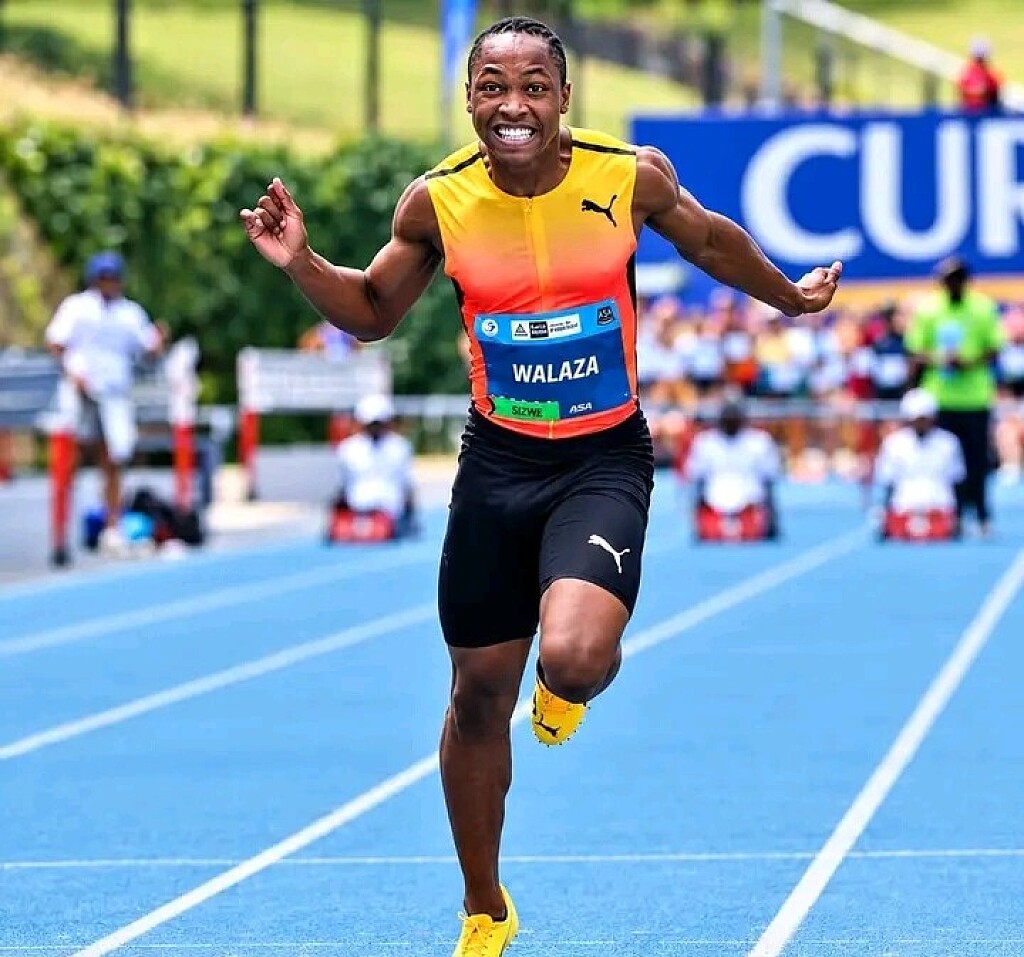
Bayanda Walaza Blazes to 9.91 in Rovereto, Smashing Meeting Record
South Africa’s Bayanda Walaza delivered another electrifying performance on the European circuit, storming to victory in the men’s 100m at the 62nd Palio Città della Quercia in Rovereto, Italy.
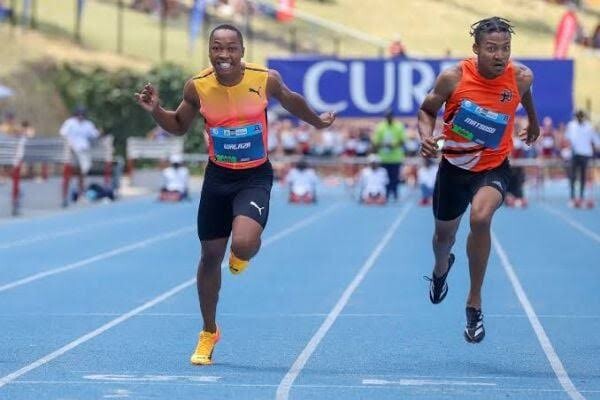
Walaza stopped the clock at a blistering 9.91 seconds, with a legal +0.5 m/s tailwind, to not only secure the win but also shatter the meeting record. His performance erased the previous mark of 9.98 seconds.
The 20-year-old South African produced a commanding run against a strong international field, holding off Ghana’s Abdul-Rasheed Saminu, who finished second in 10.01, while Canada’s Eliezer Adjibi completed the podium in 10.09.
For Walaza, the 9.91 adds another sub-10-second performance to an increasingly impressive season. His personal best remains 9.89 seconds, a mark that underlines just how close he is to another major breakthrough.
Walaza has already established himself as one of South Africa’s most exciting young sprinters. He was a double gold medallist in the 100m and 200m at the 2024 World Athletics U20 Championships in Lima before helping South Africa win Olympic silver in the 4x100m relay at Paris 2024.
Now making his mark against senior competition, Walaza is showing increasing consistency at the highest level.
A 9.91 meeting record in Rovereto is another powerful statement from the young South African — and with his speed continuing to develop, Walaza’s ceiling looks remarkably high.
by Erick Cheruiyot for My Best Runs.
Login to leave a comment
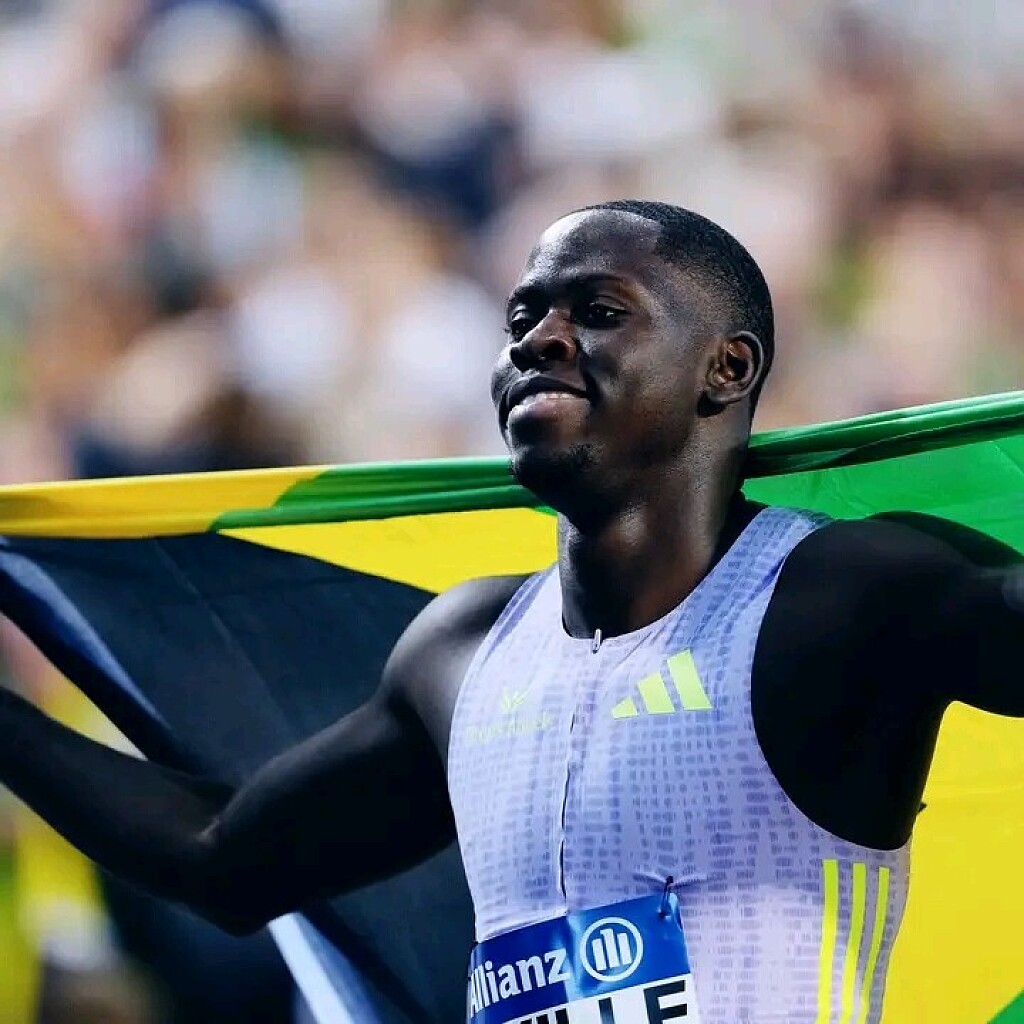
Oblique Seville Rules Brussels With A Blistering 9.90 To Claim The Diamond Trophy
Oblique Seville produced a statement performance in Brussels, powering to a superb 9.90 seconds to capture the men’s 100m Diamond League title and secure the coveted Diamond Trophy for Jamaica.
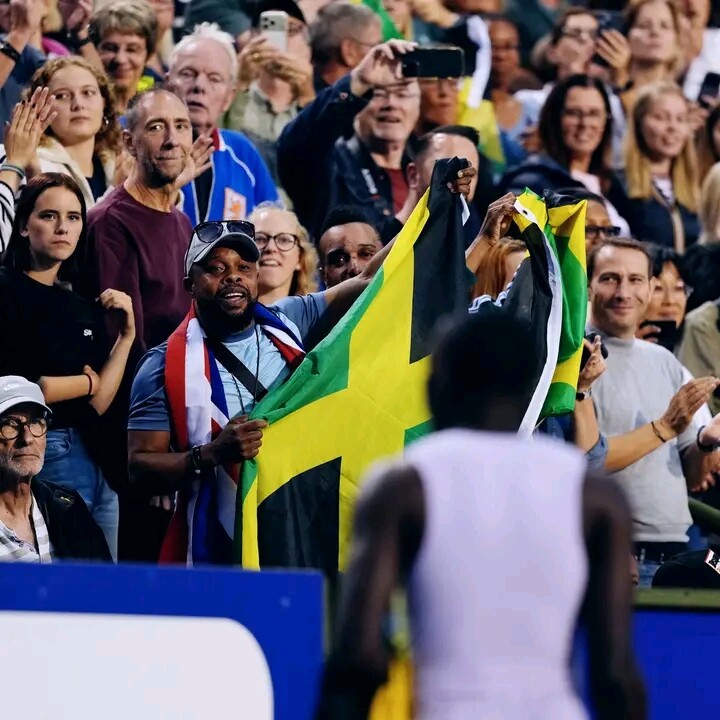
The Jamaican sprinter rose to the occasion in a fiercely contested final, exploding from the blocks and maintaining his composure as the field charged towards the finish. Seville held off a remarkable challenge from Cameroon’s Emmanuel Eseme, who pushed him all the way before crossing the line in an outstanding 9.93 seconds.
Nigeria’s Kayinsola Ajayi also delivered a superb performance, breaking the 10-second barrier to take third in 9.97 seconds and complete a remarkably fast podium.
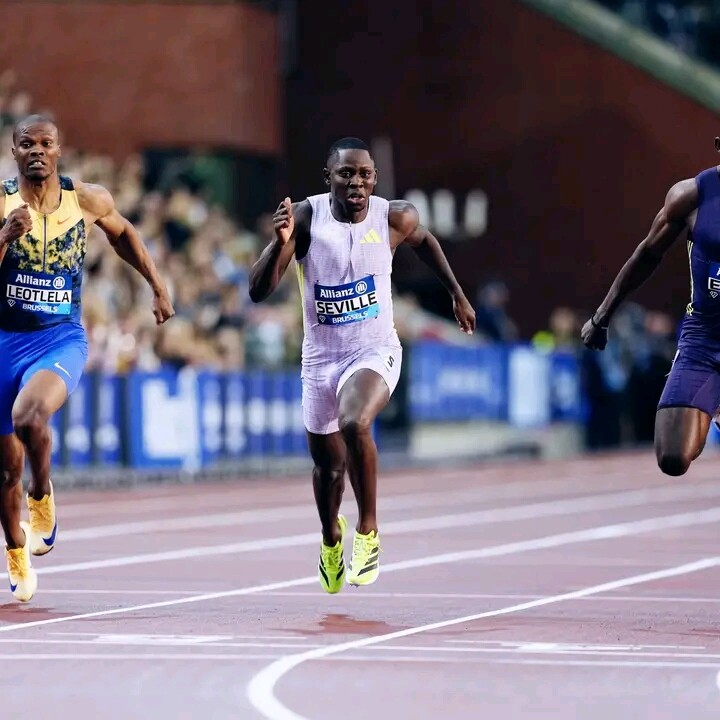
Behind the leading trio, Australia’s Lachlan Kennedy narrowly missed the podium in 9.99, while South Africa’s Gift Leotlela and American Christian Coleman both stopped the clock at 10.01. South Africa’s Akani Simbine followed in 10.03, with American Trayvon Bromell recording 10.07.
For Seville, the victory represents another significant milestone in a rapidly developing career. The Jamaican has established himself as one of the leading sprinters of his generation, and his ability to deliver under the pressure of a Diamond League final once again demonstrated his competitive strength.
The Brussels final was particularly impressive for its depth, with seven athletes breaking or matching the 10-second barrier. Yet when the decisive moment arrived, Seville had the extra gear required to separate himself from the pack.
His 9.90 was not merely enough to win the race—it was enough to put his name on the Diamond League trophy and cap his campaign with another major victory.
1. Oblique Seville — 9.90
2. Emmanuel Eseme — 9.93
3. Kayinsola Ajayi — 9.97
Jamaica celebrates another Diamond League champion, while Seville leaves Brussels with the biggest prize of the night and yet another reminder that he belongs among the very best in the world.
A brilliant finish to the Diamond League season—and another golden moment for Oblique Seville.
by Erick Cheruiyot for My Best Runs.
Login to leave a comment
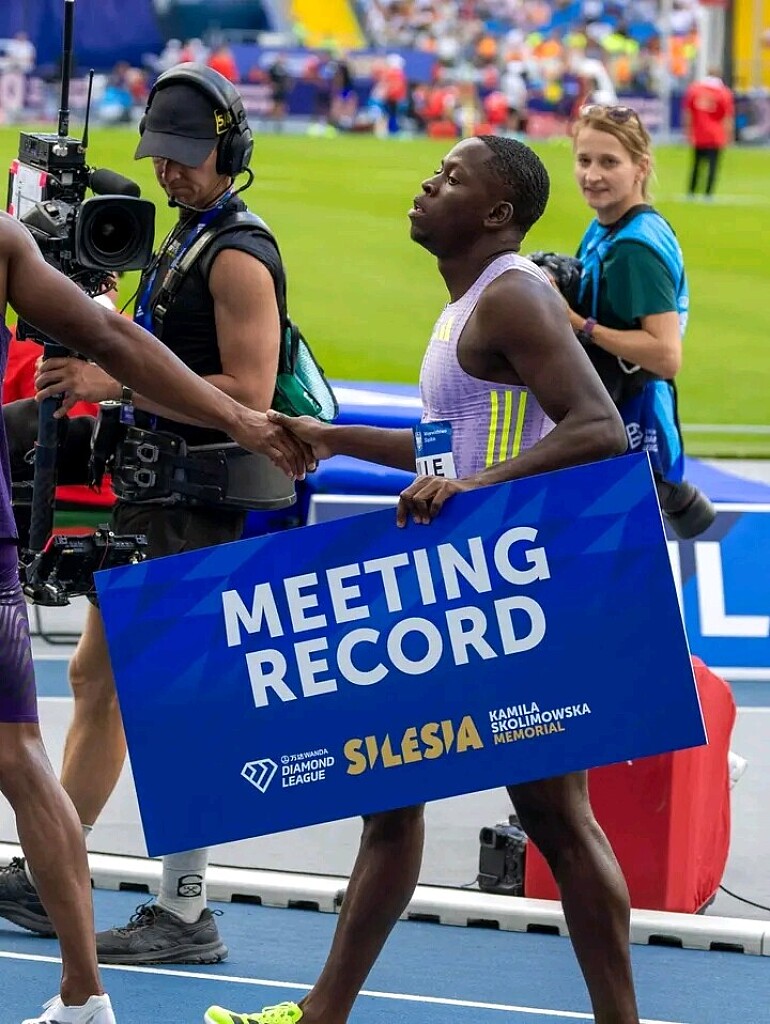
Oblique Seville Blazes to Meeting Record in Historic All Nine-Sub-10 Silesia Showdown
Jamaica’s Oblique Seville delivered another sensational statement at the Silesia Wanda Diamond League, storming to victory in a breathtaking men’s 100 metres and setting a new meeting record of 9.83 seconds that made sprinting history in Chorzów, Poland.
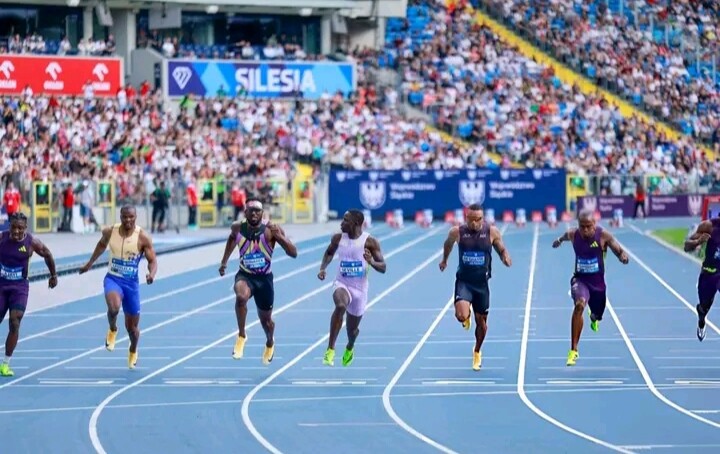
In one of the deepest and most extraordinary sprint races ever witnessed, Seville powered clear of a world-class field to take the win, with Kenneth Bednarek of the United States finishing second in 9.87 and fellow American Christian Coleman completing the podium in 9.93.
But Seville’s meeting-record victory was only one part of the remarkable story. For the first time in history, all nine athletes in a single men's 100m race broke the 10-second barrier, producing an unprecedented display of sprinting depth.
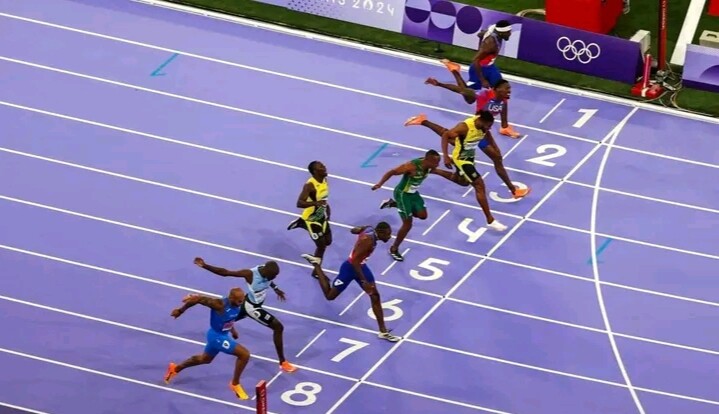
The historic race also marked only the second time that every athlete in a men's 100m final had broken 10 seconds, following the eight-man final at the Paris 2024 Olympic Games. In Silesia, however, the achievement went even further, with an entire nine-man field dipping below the iconic barrier.
Nigeria’s Kayinsola Ajayi produced another impressive performance to finish fourth in 9.94, while South Africa’s Gift Leotlela followed in fifth with 9.95. Canada’s Olympic champion Andre De Grasse clocked 9.96 in sixth, with South African star Akani Simbine recording the same time in seventh.
American Ronnie Baker added another sub-10-second performance with 9.97 for eighth place, while Cameroon’s Emmanuel Eseme ensured the historic sweep was complete by running 9.99 in ninth.
Men's 100m Results – Silesia Wanda Diamond League
1. Oblique Seville (Jamaica) — 9.83 Meeting Record
2. Kenneth Bednarek (United States) — 9.87
3. Christian Coleman (United States) — 9.93
4. Kayinsola Ajayi (Nigeria) — 9.94
5. Gift Leotlela (South Africa) — 9.95
6. Andre De Grasse (Canada) — 9.96
7. Akani Simbine (South Africa) — 9.96
8. Ronnie Baker (United States) — 9.97
9. Emmanuel Eseme (Cameroon) — 9.99
For Seville, the victory was another emphatic demonstration of his exceptional form and his ability to rise to the occasion against the strongest opposition. His 9.83 not only secured the Diamond League win but also lowered the Silesia meeting record, putting an exclamation mark on a performance of the highest quality.
Nine men went under 10 seconds. Seville went under 9.84. On an unforgettable day in Silesia, the Jamaican stood tallest in a race that pushed the boundaries of what men's sprinting has ever seen.
by Erick Cheruiyot for My Best Runs.
Login to leave a comment
Entries Set to Open for Historic 100th Comrades Marathon as Centenary Celebration Begins
One of the most iconic milestones in the history of ultramarathon running is drawing closer, with entries for the historic 100th edition of the Comrades Marathon set to open on Tuesday, 25 August 2026.
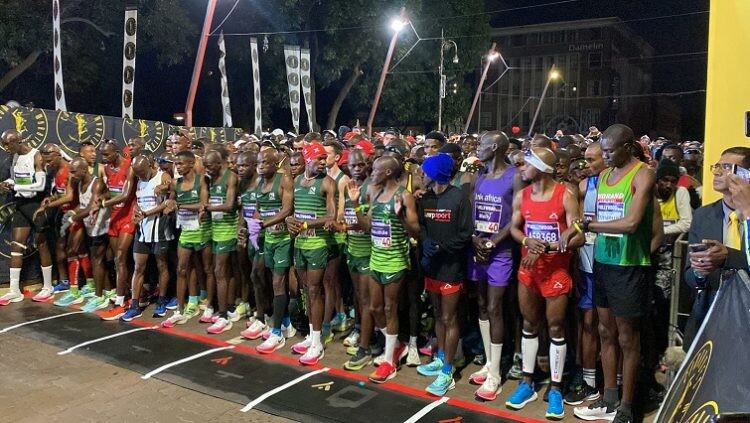
The Comrades Marathon Association has officially announced a detailed entry process for the 2027 race, which will unfold in three stages and give runners around the world the opportunity to secure their place in what promises to be one of the most significant editions ever held of The Ultimate Human Race.
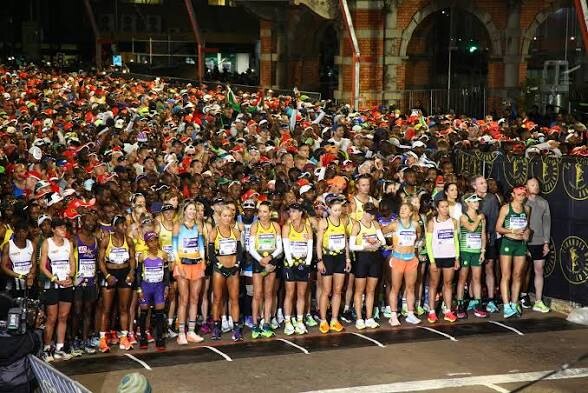
The announcement followed the official launch of the 2027 Comrades Marathon on Wednesday, 19 August, when the centenary campaign, “The Greatest Story Ever Run,” was unveiled alongside a special logo created exclusively for the landmark 100th edition.
The launch also revealed several major highlights for the Centenary Race. The historic event will take place on Sunday, 13 June 2027, and will be a Down Run, with 28,000 places available. The entry process will include a ballot, while the race will offer a record R8.919 million in prize money. Organisers have also set an ambitious goal of raising R10 million for the Amabeadibeadi charities, adding an important charitable dimension to the centenary celebrations. One of the defining moments of the launch was the unveiling of the special Centenary mark, created to commemorate this extraordinary milestone in the history of the race.
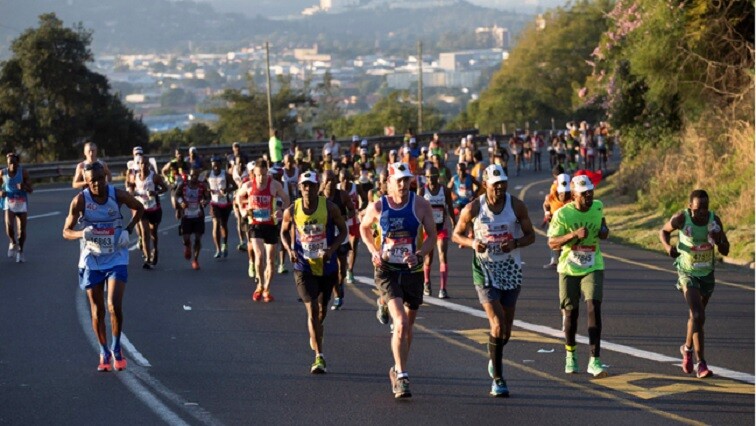
The entry process begins on 25 August at 10:00 a.m. SAST, when entries open for Green Number runners, Yellow Number runners and Amabeadibeadi charity entrants.
The next phase follows on 2 September at 10:00 a.m. SAST, when entries open for Comrades Marathon Association members. This window will remain open for 72 hours or until the available entry allocation is filled, with places offered on a strictly first-come, first-served basis.
For general entrants, the process will move to a ballot system. General entries open on 9 September at 10:00 a.m. SAST, with runners able to enter the ballot until it closes on 22 September at 4:30 p.m. SAST. The ballot draw is then scheduled to take place on 23 September.
Several other crucial dates will shape the road to the historic race. The substitution period will run from 15 to 31 March 2027, while 3 May 2027 is the final deadline for runners to submit their qualifying performances, seeding information and other required entry details.
To qualify for the 2027 Comrades Marathon, runners must complete a 42.2km marathon in under five hours between 15 June 2026 and 3 May 2027.
The journey will finally culminate on Sunday, 13 June 2027, when thousands of runners are expected to line up for the historic 100th edition of the Comrades Marathon.
The 2027 race will represent a remarkable moment for the legendary South African ultramarathon. For more than a century, the Comrades Marathon has captured the imagination of runners and spectators with its extraordinary test of endurance, determination and human spirit. Its centenary edition will celebrate the generations of athletes who have faced its demanding roads, conquered its challenges and helped build one of the world's most respected endurance events.
For runners dreaming of becoming part of this historic occasion, the road to Comrades 2027 is now clearly marked. From the opening of entries in August 2026 to race day in June 2027, every deadline will matter.
The Greatest Story Ever Run is preparing for its most historic chapter yet.
by Erick Cheruiyot for My Best Runs.
Login to leave a comment

Comrades Marathon
Arguably the greatest ultra marathon in the world where athletes come from all over the world to combine muscle and mental strength to conquer the approx 90kilometers between the cities of Pietermaritzburg and Durban, the event owes its beginnings to the vision of one man, World War I veteran Vic Clapham. A soldier, a dreamer, who had campaigned in East...
more...
Taylor and Maxwell Deliver Golden U.S. Sprint Sweep at World U20 Championships
The United States produced a memorable night of sprinting at the World Athletics U20 Championships in Eugene, Oregon, as Tate Taylor and Mia Maxwell captured the men's and women's 100 metres titles to complete a remarkable American clean sweep in one of track and field's most prestigious junior competitions.
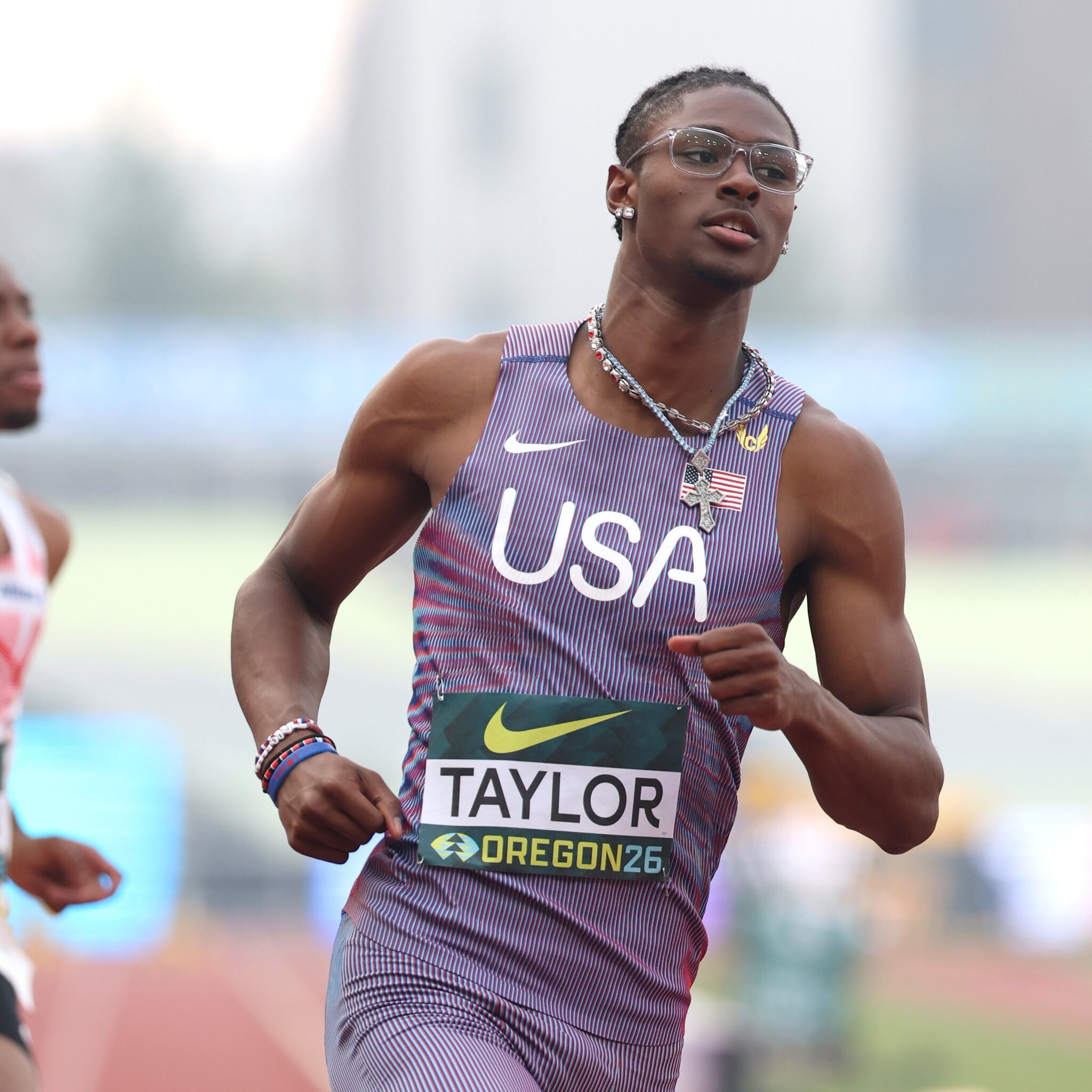
Taylor announced himself among the world's brightest young sprinters with a breathtaking performance in the men's final, powering away over the closing metres to clock a wind-legal personal best of 9.94 seconds. The outstanding run made him the only athlete in the field to break the 10-second barrier and confirmed his status as one of the fastest teenagers in history.
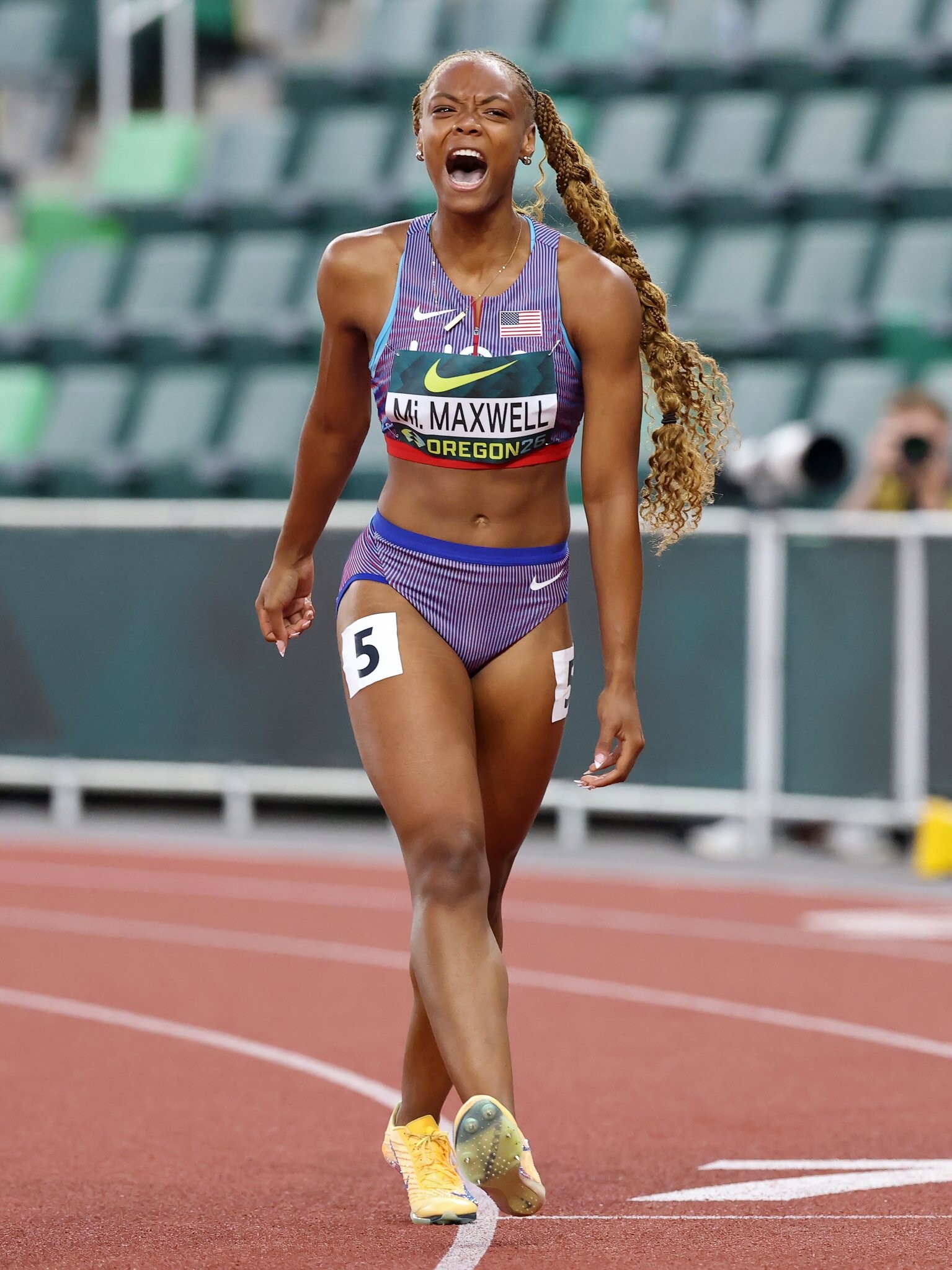
Jamaica's Gary Card claimed the silver medal in 10.05 seconds after a strong race, while South Africa's Marko Ferreira secured bronze in 10.16, completing a highly competitive podium. Despite a closely contested opening half of the race, Taylor's explosive finishing speed proved decisive as he surged clear to take the world junior crown in emphatic fashion.
The women's final delivered another thrilling contest, with Mia Maxwell holding her composure under immense pressure to secure the title in 11.14 seconds. Jamaica's Shanoya Douglas mounted a determined late challenge but settled for silver in 11.17, while Italy's Kelly Ann Doualla Edimo earned bronze after crossing the line in 11.27.
The victory capped an unforgettable championship for the Maxwell family. After progressing impressively through the rounds, Mia delivered when it mattered most, while her twin sister, Mariah Maxwell, also reached the final and finished fifth, underlining the family's exceptional sprinting talent on the global stage.
The double triumph marked a dominant evening for Team USA, which swept both 100m gold medals before a home crowd in Eugene. With Taylor producing a historic sub-10-second breakthrough and Maxwell demonstrating remarkable composure in a world-class women's final, the pair provided another glimpse of the exciting future of American sprinting.
by Erick Cheruiyot for My Best Runs.
Login to leave a comment
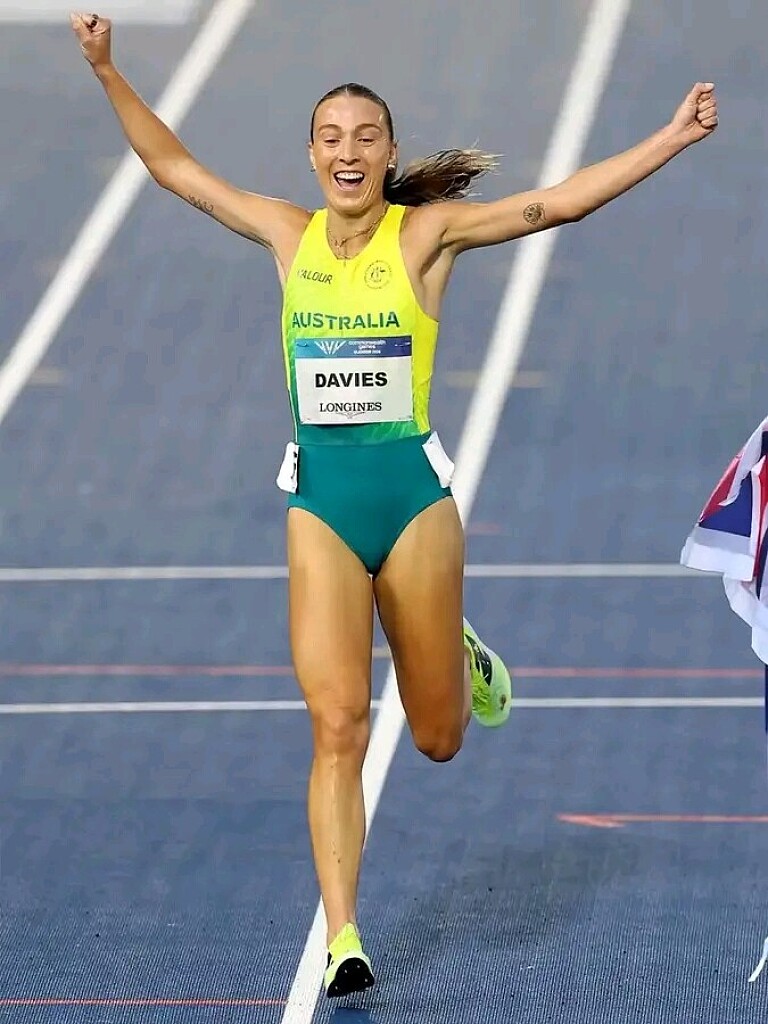
Rose Davies Completes Golden Double as Australia Delivers Historic One-Two in Thrilling Commonwealth Games 5,000m Final
Australia produced one of the most memorable distance-running performances of the Glasgow 2026 Commonwealth Games on Thursday night, claiming a remarkable one-two finish in the women's 5,000 metres as Rose Davies sprinted to her second gold medal of the championships.
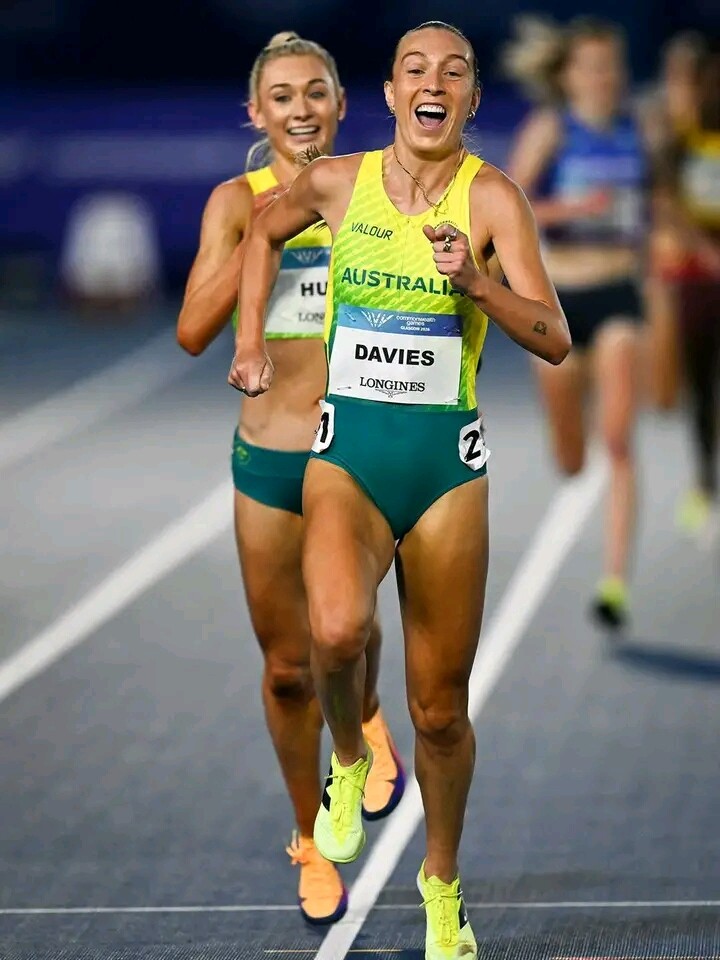
Just days after conquering the 10,000m, Davies completed a sensational distance double by clocking a season's best 14:44.53 to edge fellow Australian Jessica Hull, who crossed the line just 0.48 seconds later in 14:45.01. The historic finish marked a dominant night for Australian athletics, with the nation's two leading distance stars proving untouchable when the race reached its decisive stages.
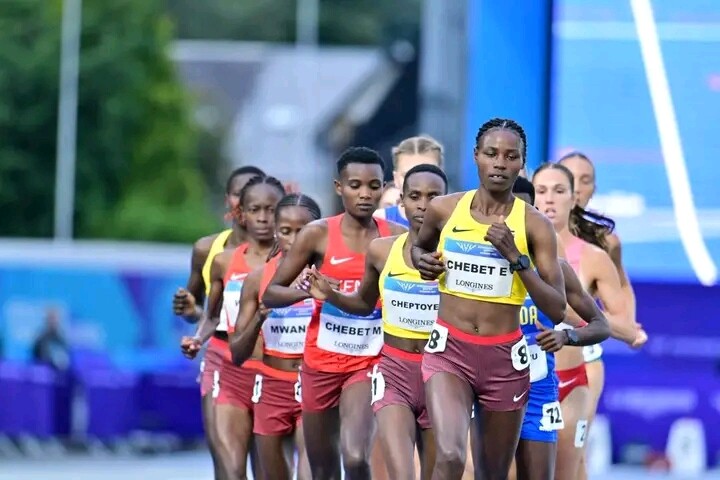
The women's 5,000m unfolded as a tactical contest for much of the race before exploding into life with 1,200 metres remaining. Davies, Hull and Scotland's Megan Keith launched a sustained surge that immediately stretched the field and shattered the hopes of the chasing pack. Their relentless acceleration proved too much for the African contenders, who were unable to respond as the medals slipped away.
Davies remained composed over the closing lap despite fierce pressure from Hull, holding her form all the way to the finish to secure another Commonwealth crown and cement her place among the standout performers of the Games. Her victory completed a rare golden double in the 5,000m and 10,000m, underlining her exceptional endurance and championship racing instincts.
Hull's silver medal completed Australia's historic one-two finish, rewarding another world-class performance from one of the sport's premier middle- and long-distance runners. Meanwhile, the home crowd erupted as Scotland's Megan Keith produced a season's best 14:49.10 to claim bronze, giving the hosts a memorable podium finish in front of a packed Glasgow stadium.
Uganda's Esther Chebet battled bravely to finish fourth in a personal best 14:50.70 after leading the pursuit of the front trio, while England's Hannah Nuttall placed fifth in a season's best 14:51.34. Kenya's Caroline Nyaga crossed the line sixth in 14:54.00, with Australia's Linden Hall adding further depth to her country's outstanding evening by finishing seventh.
The race also featured several outstanding individual performances further down the field. South Africa's Tayla Kavanagh recorded a personal best, Rwanda's Emeline Imanizabayo celebrated a new national record with ninth place, while Uganda's Joy Cheptoyek, England's Innes Fitzgerald, Canada's Gabriela Debues-Stafford and several others produced season or lifetime bests in one of the deepest women's 5,000m finals of the Games.
Women's 5,000m Top 10 Final Results
1. Rose Davies (Australia) – 14:44.53 (Season Best)
2. Jessica Hull (Australia) – 14:45.01 (Season Best)
3. Megan Keith (Scotland) – 14:49.10 (Season Best)
4. Esther Chebet (Uganda) – 14:50.70 (Personal Best)
5. Hannah Nuttall (England) – 14:51.34 (Season Best)
6. Caroline Nyaga (Kenya) – 14:54.00
7. Linden Hall (Australia) – 14:55.28
8. Tayla Kavanagh (South Africa) – 14:58.49 (Personal Best)
9. Emeline Imanizabayo (Rwanda) – 14:59.92 (National Record)
10. Joy Cheptoyek (Uganda) – 15:00.97 (Season Best)
With two gold medals around her neck and Australia's first-ever Commonwealth Games one-two finish in the women's 5,000m, Rose Davies leaves Glasgow having delivered one of the defining performances of the championships. Her unforgettable triumph, backed by Jessica Hull's silver medal, showcased Australia's growing strength in global distance running and ensured the event will be remembered as one of the highlights of the 2026 Commonwealth Games.
by Erick Cheruiyot for My Best Runs.
Login to leave a comment

The Commonwealth Games
The Commonwealth Games are coming to Victoria - bringing an action packed sports program to our regional cities and delivering a long-term legacy for our future. From 17 to 29 March 2026, Geelong, Bendigo, Ballarat, Gippsland and Shepparton will be on the world stage, attracting millions of viewers and creating thousands of jobs. The multi-city model will...
more...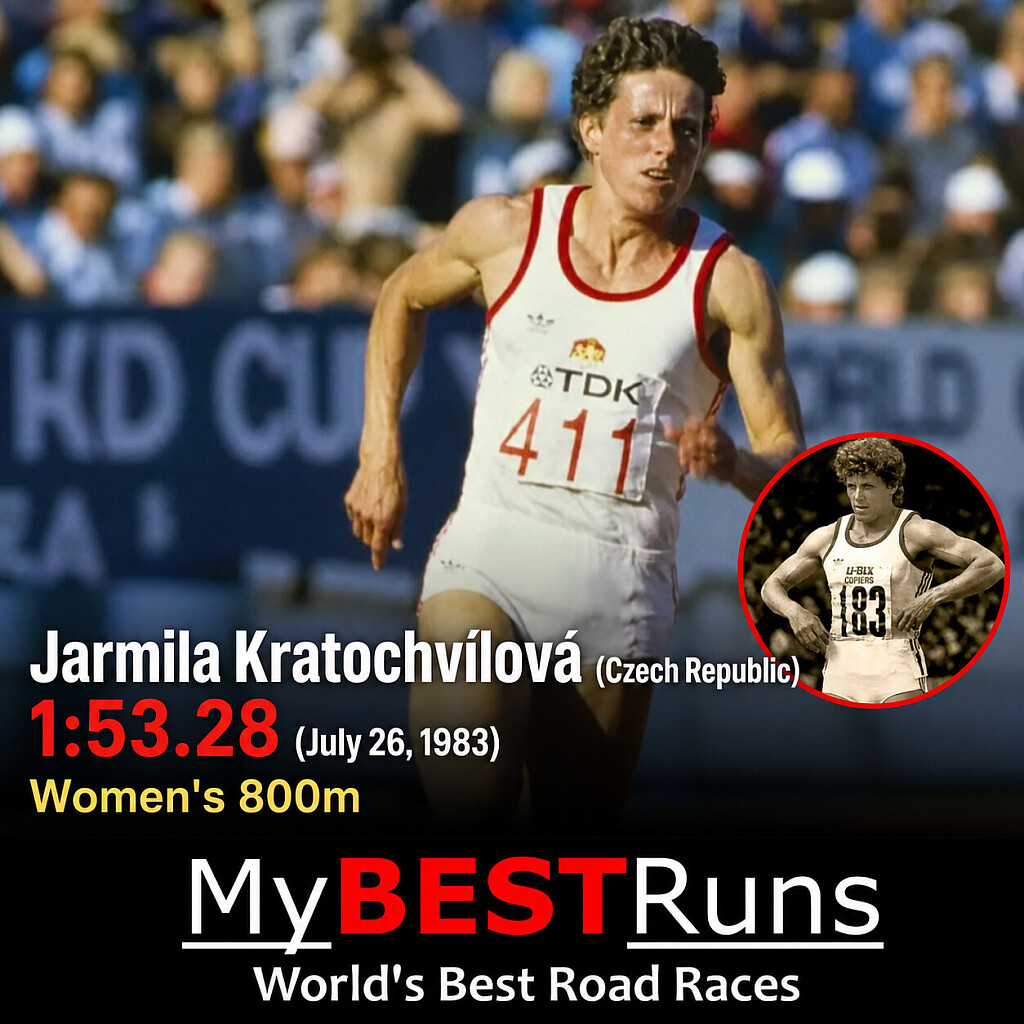
Forty-Three Years of Greatness: Is Jarmila Kratochvílová's Legendary 800m World Record Finally Ready to Fall?
Some world records define an era. Others transcend generations. Jarmila Kratochvílová's astonishing 1:53.28 in the women's 800 meters belongs firmly in the latter category.
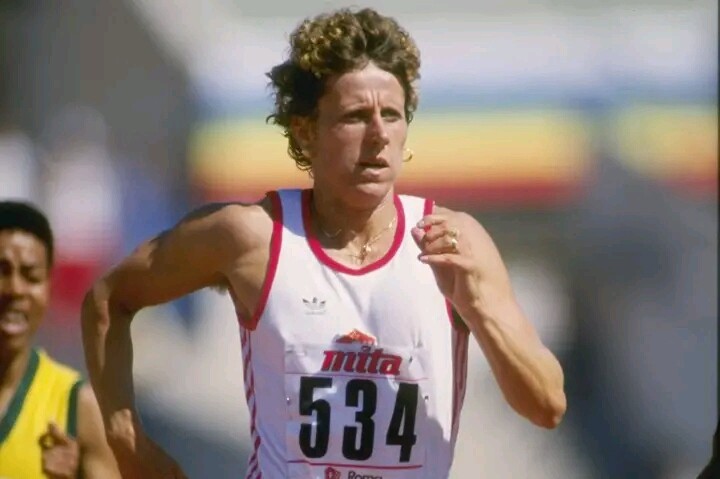
On July 26, 1983, in Munich, the Czech star delivered one of the most extraordinary performances the sport has ever witnessed, setting a world record that has now survived for an incredible 43 years. It remains the longest-standing individual track world record in athletics, a remarkable achievement in an era when advances in training, sports science, nutrition, and competition have seen countless other records disappear.
What makes Kratochvílová's feat even more extraordinary is that she was not primarily an 800-meter runner. She built her reputation as a dominant 400-meter specialist and only entered the two-lap race as a fitness test after recovering from leg cramps. What began as an experiment quickly turned into history.
After charging through an aggressive opening lap, Kratochvílová maintained her relentless pace all the way to the finish, crossing the line in an astonishing 1:53.28. It was a performance so far ahead of its time that generations of elite middle-distance runners have spent more than four decades trying—and failing—to erase it from the record books.
The longevity of the mark is no accident. Running 800 meters at world-record pace demands one of the rarest combinations in athletics: the explosive speed of a world-class 400-meter runner blended with the endurance, strength, and tactical intelligence of an elite middle-distance athlete. Few athletes in history have possessed that unique balance.
Even today, Kratochvílová sits comfortably atop one of the strongest all-time rankings in athletics history:
1. Jarmila Kratochvílová (Czech Republic) – 1:53.28 (July 26, 1983)
2. Nadezhda Olizarenko (Soviet Union) – 1:53.43 (July 27, 1980)
3. Audrey Werro (Switzerland) – 1:53.80 (June 28, 2026)
4. Pamela Jelimo (Kenya) – 1:54.01 (August 29, 2008)
5. Caster Semenya (South Africa) – 1:54.25 (June 30, 2018)
For many years, Kratochvílová's record was widely viewed as virtually untouchable. That perception, however, is beginning to change.
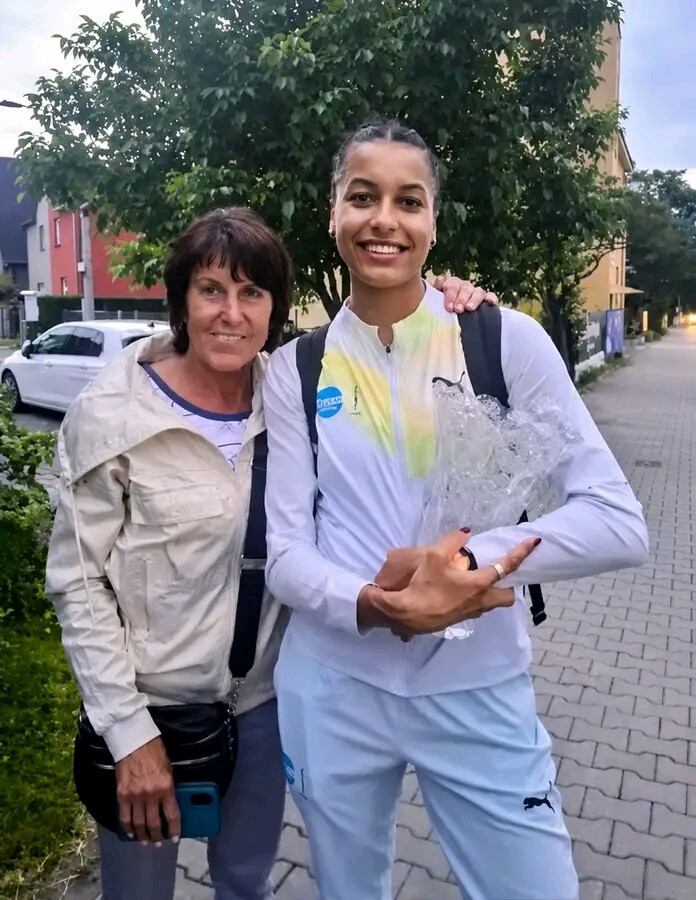
Swiss sensation Audrey Werro has reignited the conversation after producing a breathtaking 1:53.80 in Paris, moving into third place on the all-time list. Her performance was not only one of the fastest ever recorded but also the closest anyone has come to the world record in decades. At just the beginning of what promises to be a long career, Werro has demonstrated that the impossible may finally be within reach.
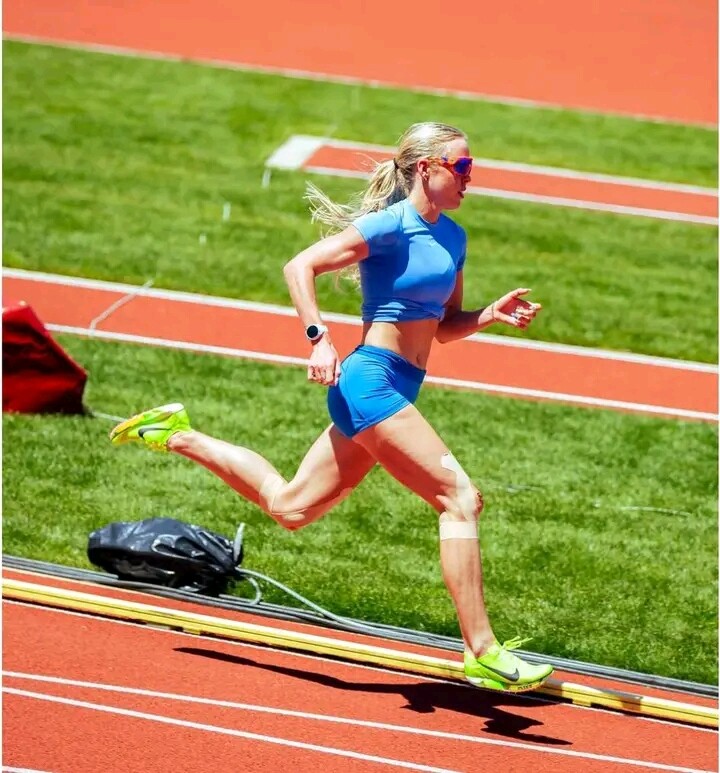
Great Britain's Keely Hodgkinson also remains one of the most compelling candidates. Already an Olympic champion and one of the most consistent performers of her generation, Hodgkinson reinforced her credentials by setting the world indoor short-track record of 1:54.87. Her combination of speed, racing intelligence, and consistency suggests that an outdoor assault on the world record cannot be ruled out.
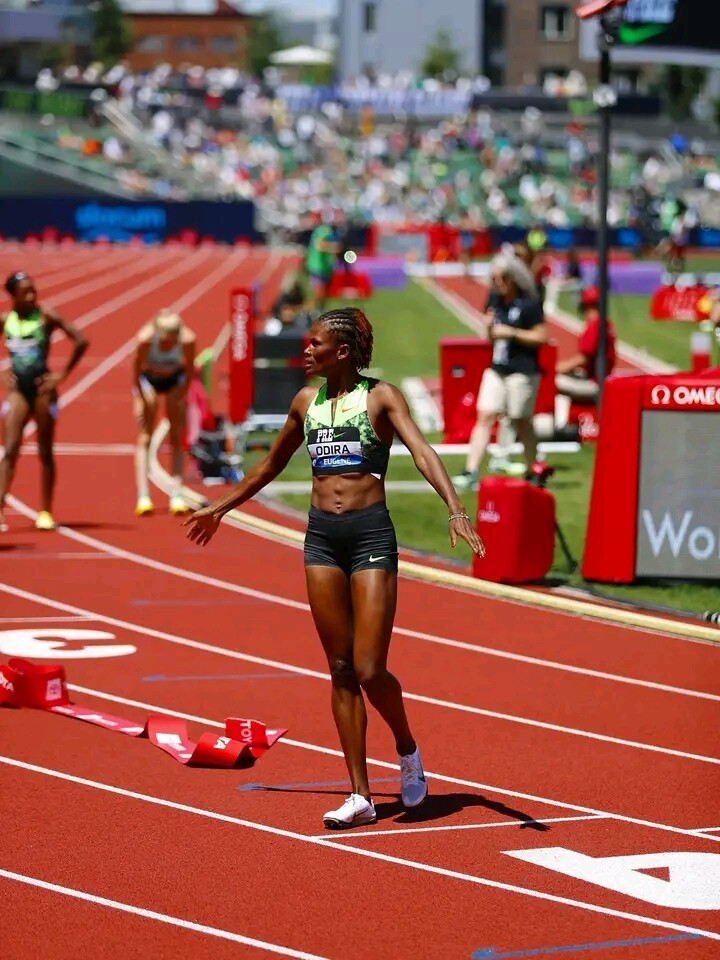
Kenya's Lilian Odira has also emerged as a genuine threat. The reigning world champion owns a personal best of 1:54.62, ranking her among the fastest women in history. She has already eclipsed Kratochvílová's long-standing championship record and continues to showcase an exceptional finishing kick that makes her dangerous in any race. If the pace is right, few athletes possess a stronger blend of championship experience and raw talent.
For 43 years, the athletics world has watched wave after wave of exceptional runners attempt to chase down one of sport's most iconic performances. Olympic champions, world champions, and record holders have all fallen short.
Yet the landscape feels different today. A new generation led by Audrey Werro, Keely Hodgkinson, and Lilian Odira is pushing the women's 800 meters to unprecedented depths. Their performances suggest that one of athletics' oldest and most celebrated records is no longer beyond imagination.
Whether Kratochvílová's 1:53.28 survives another season or another decade remains one of the sport's most fascinating questions. What is certain is that a record once considered untouchable is finally facing its most serious challenge in more than four decades.
The countdown may have already begun.
by Erick Cheruiyot for My Best Runs.
Login to leave a comment
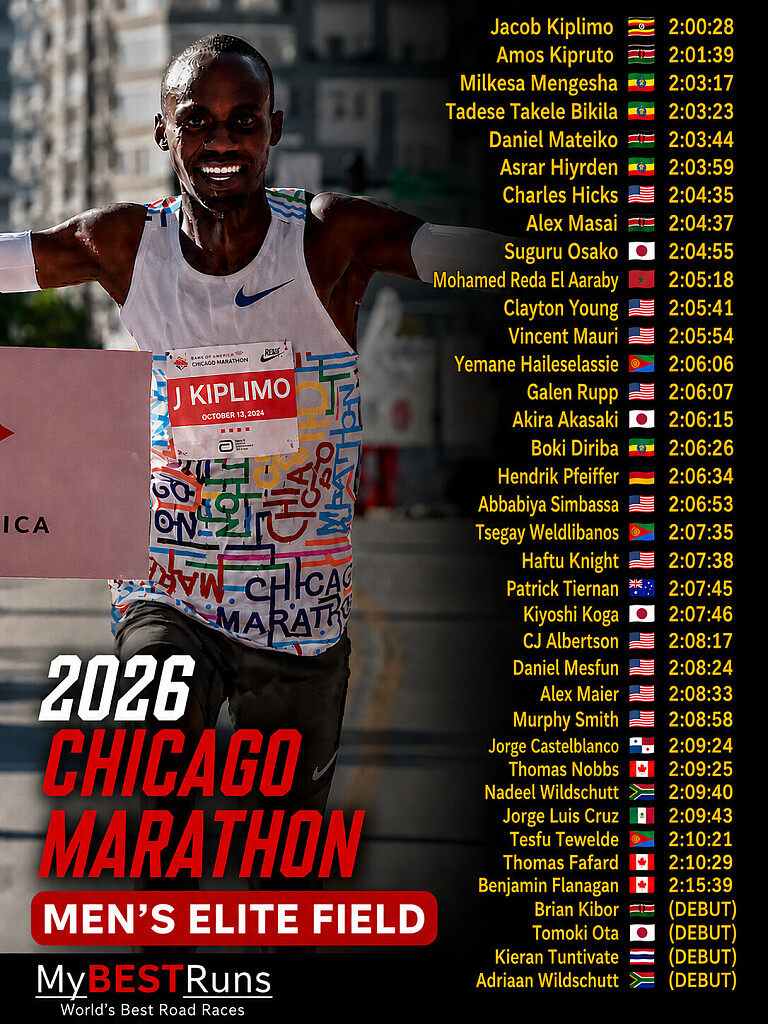
Jacob Kiplimo Leads Historic Men's Lineup as 2026 Chicago Marathon Unveils a World-Class Elite Field
The 2026 Bank of America Chicago Marathon has assembled one of the deepest and most competitive men's elite fields in the event's history, with Ugandan superstar Jacob Kiplimo returning to the Windy City to headline a remarkable international lineup capable of producing another unforgettable day of marathon racing.
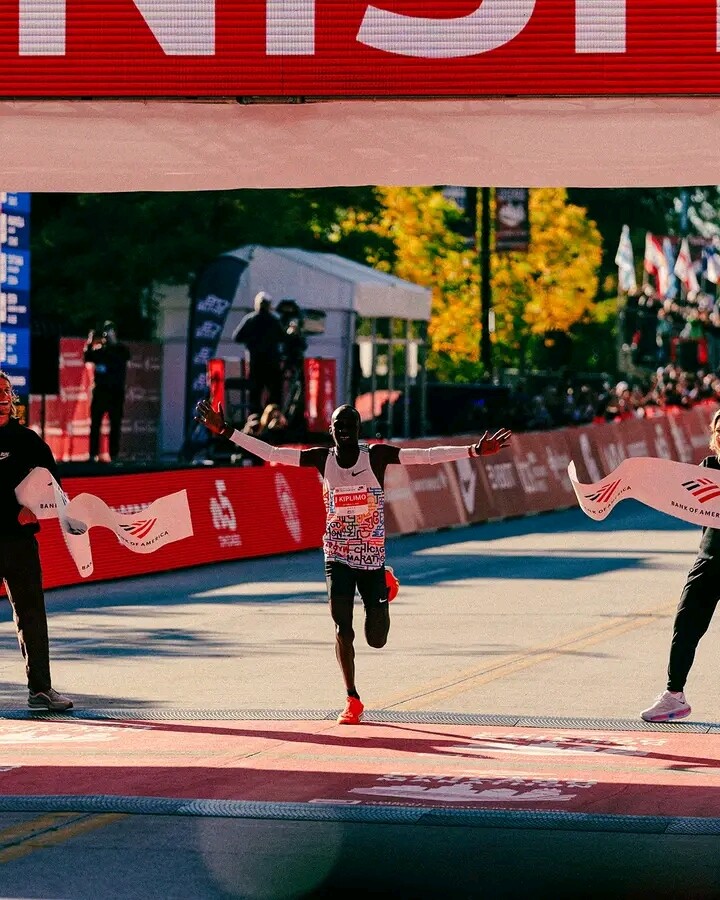
Kiplimo, who owns a sensational personal best of 2:00:28, enters as the fastest man in the field and one of the world's most exciting distance runners. After a spectacular marathon breakthrough, the Ugandan star returns to Chicago carrying the hopes of delivering another historic performance on one of the fastest marathon courses on the planet.
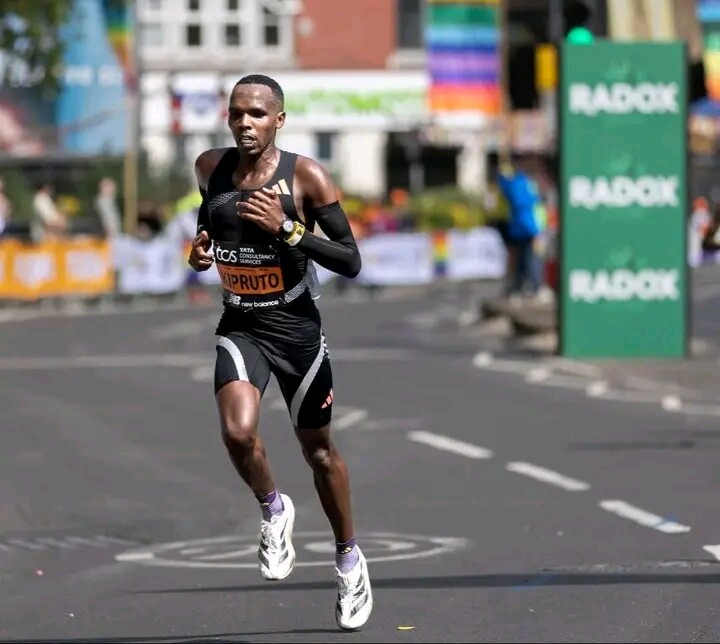
Standing between Kiplimo and victory is an exceptional collection of proven champions and rising stars. Kenya's Amos Kipruto (2:01:39) brings Olympic pedigree and world-class experience, while Ethiopia's Milkesa Mengesha (2:03:17), Tadese Takele Bikila (2:03:23), and Asrar Hiyrden (2:03:59) strengthen Ethiopia's challenge. Kenya will also be represented by the rapidly improving Daniel Mateiko (2:03:44) and Alex Masai (2:04:37), adding even more firepower to an already stacked front pack.
Japan fields an impressive trio of Suguru Osako (2:04:55), Akira Akasaki (2:06:15), and Kiyoshi Koga (2:07:46), while Morocco's Mohamed Reda El Aaraby, Eritrea's Yemane Haileselassie and Tsegay Weldlibanos, Germany's Hendrik Pfeiffer, Australia's Patrick Tiernan, Panama's Jorge Castelblanco, Canada's Thomas Nobbs, Thomas Fafard, and Benjamin Flanagan, South Africa's Nadeel Wildschutt, Mexico's Jorge Luis Cruz, and Ethiopia's Boki Diriba further underline the race's global quality.
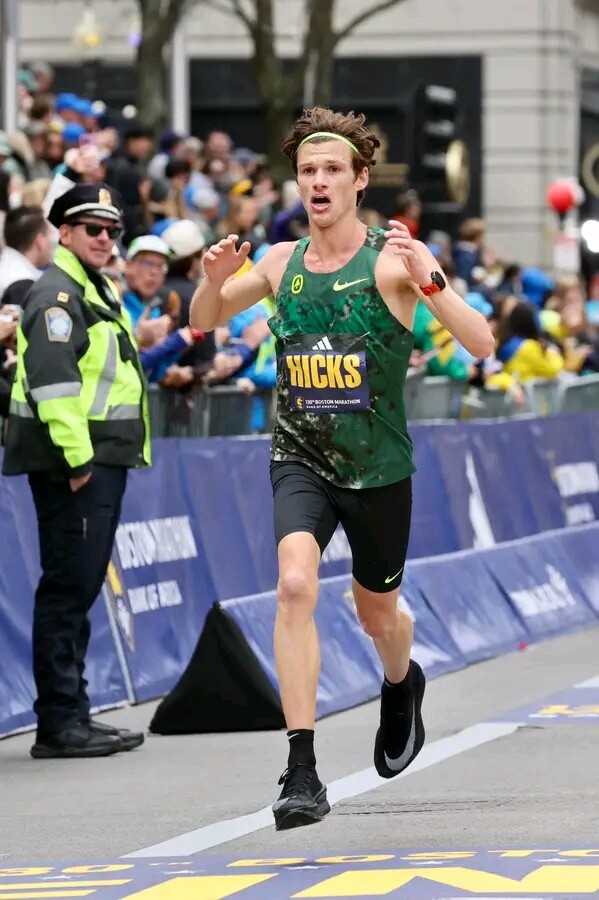
Several highly anticipated marathon debuts will also add intrigue to this year's race. Kenya's Brian Kibor, Japan's Tomoki Ota, Thailand's Kieran Tuntivate, and South Africa's Adriaan Wildschutt are all set to tackle the classic 42.195-kilometre distance for the first time, bringing fresh excitement and unpredictability to an already loaded field.
The United States will also have a strong presence, led by Charles Hicks, Clayton Young, Vincent Mauri, Abbabiya Simbassa, Haftu Knight, CJ Albertson, Daniel Mesfun, Alex Maier, Murphy Smith, and marathon legend Galen Rupp, giving home fans plenty of athletes to cheer throughout the race.
With multiple athletes boasting personal bests under 2:04, an outstanding mix of established marathon champions and fearless debutants, and Chicago's reputation for producing exceptionally fast times, the ingredients are in place for one of the greatest marathon contests of 2026.
All eyes may be on Jacob Kiplimo, but with such extraordinary depth from across the globe, the battle for the Chicago Marathon crown promises to be one of the highlights of the international road racing season.
by Erick Cheruiyot for My Best Runs.
Login to leave a comment

Bank of America Chicago
Running the Bank of America Chicago Marathon is the pinnacle of achievement for elite athletes and everyday runners alike. On race day, runners from all 50 states and more than 100 countries will set out to accomplish a personal dream by reaching the finish line in Grant Park. The Bank of America Chicago Marathon is known for its flat and...
more...
Adrian Wildschutt Set for Long-Awaited Marathon Debut at the Chicago Marathon
South African distance-running star Adrian Wildschutt has officially announced that he will make his highly anticipated marathon debut at the 2026 Chicago Marathon, taking on the iconic 26.2-mile distance for the first time on October 11.
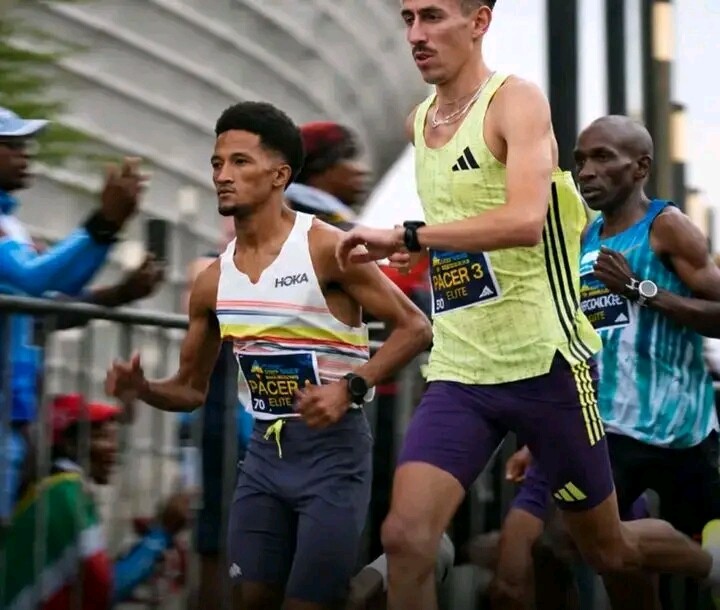
The announcement, shared on his social media channels, marks the beginning of an exciting new chapter for one of the world's most accomplished track and road racers. After building an impressive career over distances ranging from 3,000 metres to the half marathon, Wildschutt has decided the time is right to test himself in one of the sport's ultimate challenges.
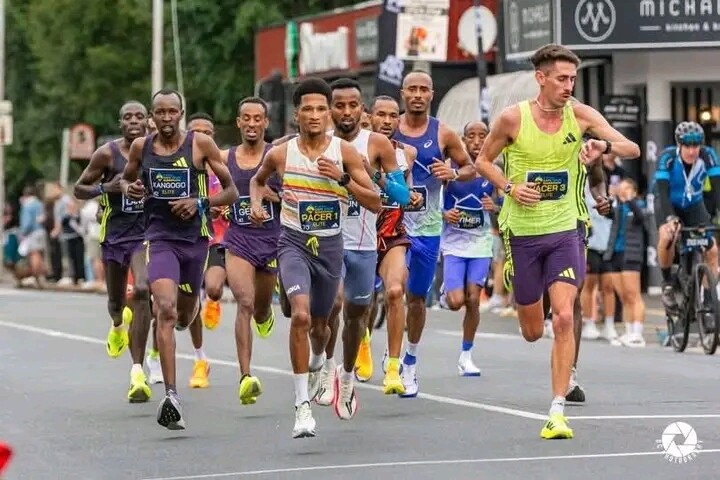
The move has been eagerly anticipated by fans and athletics followers, who have watched the South African steadily develop into one of the strongest endurance athletes on the international circuit. His combination of speed, strength and racing intelligence has long suggested that the marathon could become another stage on which he excels.
Wildschutt expressed both excitement and gratitude as he revealed the news, emphasizing that preparations are already well underway. His focus is now fully fixed on Chicago, where he hopes to translate years of experience over shorter distances into a successful marathon debut against one of the strongest fields in the world.
The Chicago Marathon has earned a reputation as one of the fastest marathon courses on the planet, producing numerous world records and unforgettable performances. It provides an ideal setting for elite athletes looking to make an immediate impact over the classic distance, making it a fitting choice for Wildschutt's first attempt.
Although marathon debuts are always unpredictable, Wildschutt arrives with an outstanding résumé that includes world-class performances on the track and road. His proven endurance, tactical racing ability and impressive half marathon credentials have already sparked excitement about what he might achieve over 42.195 kilometres.
With months of preparation still ahead, anticipation will continue to build as Wildschutt embarks on his journey toward one of the biggest milestones of his career. On October 11, all eyes will be on the streets of Chicago as the South African takes his first steps into marathon racing, aiming to announce himself on the global stage in spectacular fashion.
by Erick Cheruiyot for My Best Runs.
Login to leave a comment
Bank of America Chicago
Running the Bank of America Chicago Marathon is the pinnacle of achievement for elite athletes and everyday runners alike. On race day, runners from all 50 states and more than 100 countries will set out to accomplish a personal dream by reaching the finish line in Grant Park. The Bank of America Chicago Marathon is known for its flat and...
more...
Elite Performances Highlight Boilermaker 15K as Alex Matata Takes Top Honors
Kenya's Alex Matata delivered a sensational performance to claim the men's title at the prestigious Boilermaker Road Race 15K in Utica, New York, producing a dominant run that underlined his growing reputation as one of the world's finest road racers.
Matata surged to victory in an outstanding time of 42:24, mastering the demanding course with a display of strength, speed, and tactical brilliance. His commanding performance secured a memorable triumph in one of the United States' most celebrated road races, adding another significant international victory to his career.
Kenya's success was further highlighted by Kiprono Sitonik, who produced an equally impressive run to finish second in 42:53, completing a remarkable one-two finish for the East African nation. South Africa's Adam Lipschitz rounded out the podium after clocking 43:14 to claim third place following a determined effort.
The race featured a highly competitive international field, with American athletes Reid Buchanan and Hillary Bor finishing fourth and fifth respectively, while another Kenyan, Victor Shitsama, added to his country's strong showing by taking sixth place.
Matata's victory once again showcased Kenya's enduring strength in global road racing, as its athletes continued to dominate major international competitions through exceptional endurance, tactical awareness, and relentless finishing speed. His performance in Utica not only thrilled the spectators lining the streets but also reinforced the depth of Kenyan distance running on the world stage.
Men's Top 10 Results – Boilermaker Road Race 15K
1. Alex Matata (Kenya) – 42:24
2. Kiprono Sitonik (Kenya) – 42:53
3. Adam Lipschitz (South Africa) – 43:14
4. Reid Buchanan (United States) – 43:38
5. Hillary Bor (United States) – 43:40
6. Victor Shitsama (Kenya) – 44:02
7. Futsum Zienasellassie (United States) – 44:32
8. Charlie Sweeney (United States) – 44:37
9. Sam Lawler (United States) – 44:54
10. Tyler Berg (United States) – 45:08
With another major road racing title added to his résumé, Alex Matata continued his impressive 2026 campaign while reinforcing his status as one of the leading names on the international road racing circuit. The Boilermaker 15K once again delivered a high-quality contest, with athletes from across the globe producing memorable performances in one of the United States' most prestigious road races.
by Erick Cheruiyot for My Best Runs.
Login to leave a comment
Boilermaker 15k
The Boilermaker 15K is the premier event of Boilermaker Weekend. This world krenowned race is often referred to as the country's best 15K. The Boilermaker 15K is recognized for its entertaining yet challenging course and racing's best post-race party, hosted by the F.X. Matt Brewing Company, featuring Saranac beer and a live concert! With 3 ice and water stops every...
more...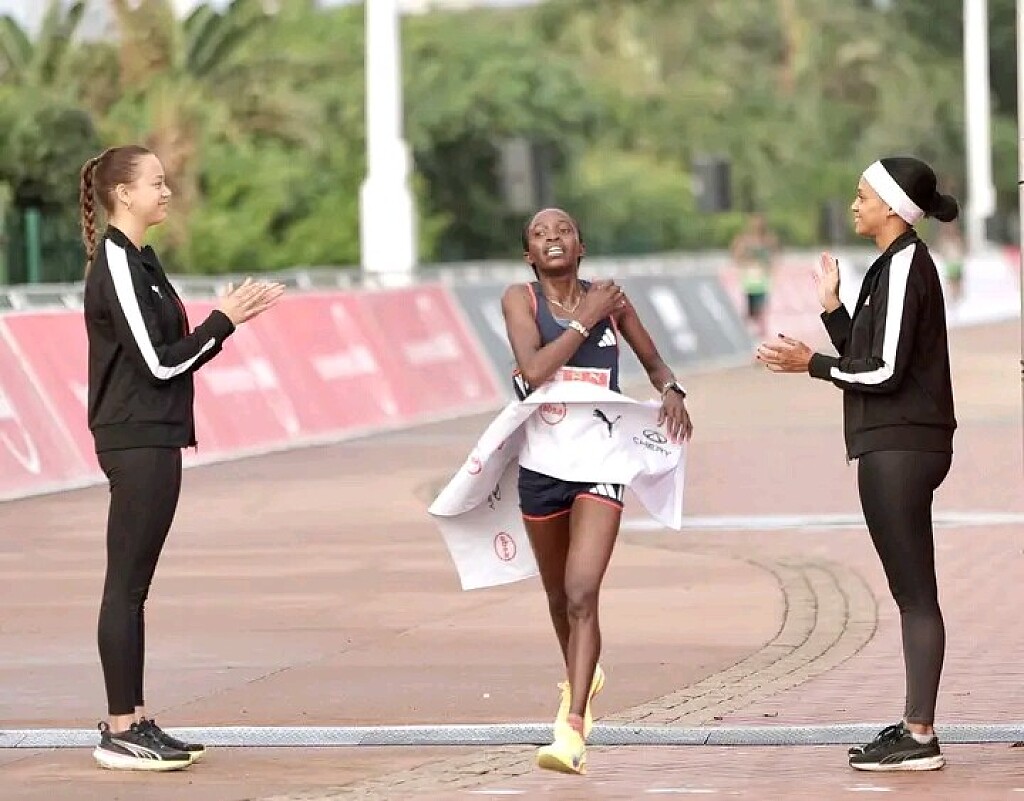
Doreen Cherop Shines in Durban as Kenyan Trio Sweeps Women's 10K Podium
Doreen Cherop delivered a superb performance to win the women's race at the Absa RUN YOUR CITY Durban 10K, crossing the finish line in an impressive 30:43 to lead a Kenyan 1-2-3 finish in one of the day's standout performances.
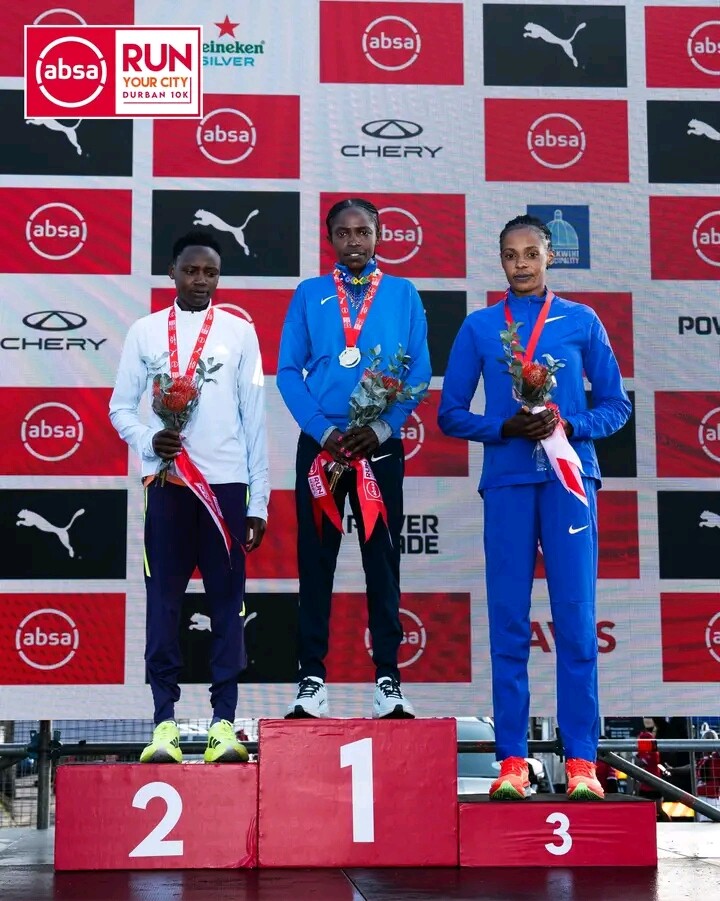
Cherop maintained a strong and consistent pace throughout the race before pulling away in the closing stages to secure victory. She was followed closely by Brenda Jepchirchir, who finished second in 30:52, while Beatrice Chepkoech completed the podium with a time of 31:25, capping an outstanding day for the Kenyan contingent.
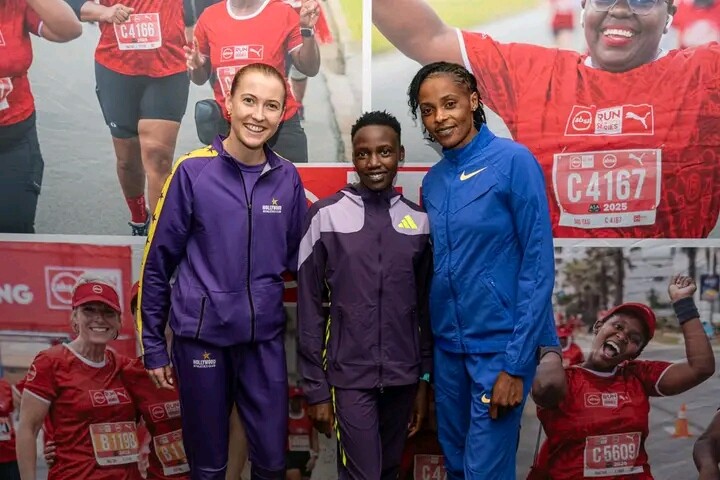
The women's race was contested at a fast pace from the opening kilometres, producing an exciting battle among some of the region's top distance runners. Behind the leading trio, Tayla Kavanagh emerged as the highest-placed South African, finishing fourth in 31:28, while Neheng Khatala of Lesotho claimed fifth place in 32:04 after another impressive outing.
The race also highlighted the depth and quality of women's road running, with athletes from across the continent producing strong performances on Durban's fast course. Although Cherop ultimately proved to be the strongest over the 10-kilometre distance, the closely fought contest behind her ensured an entertaining race from start to finish, reflecting the growing competitiveness of elite road racing in Africa.
Cherop's victory adds another significant achievement to her career and further enhances the prestige of the Absa RUN YOUR CITY Durban 10K, an event that continues to attract some of the continent's finest distance runners. Her composed display and decisive finish made the difference on the day, bringing the women's race to a memorable conclusion and providing another thrilling chapter in one of Africa's premier road-running events.
by Erick Cheruiyot for My Best Runs.
Login to leave a comment
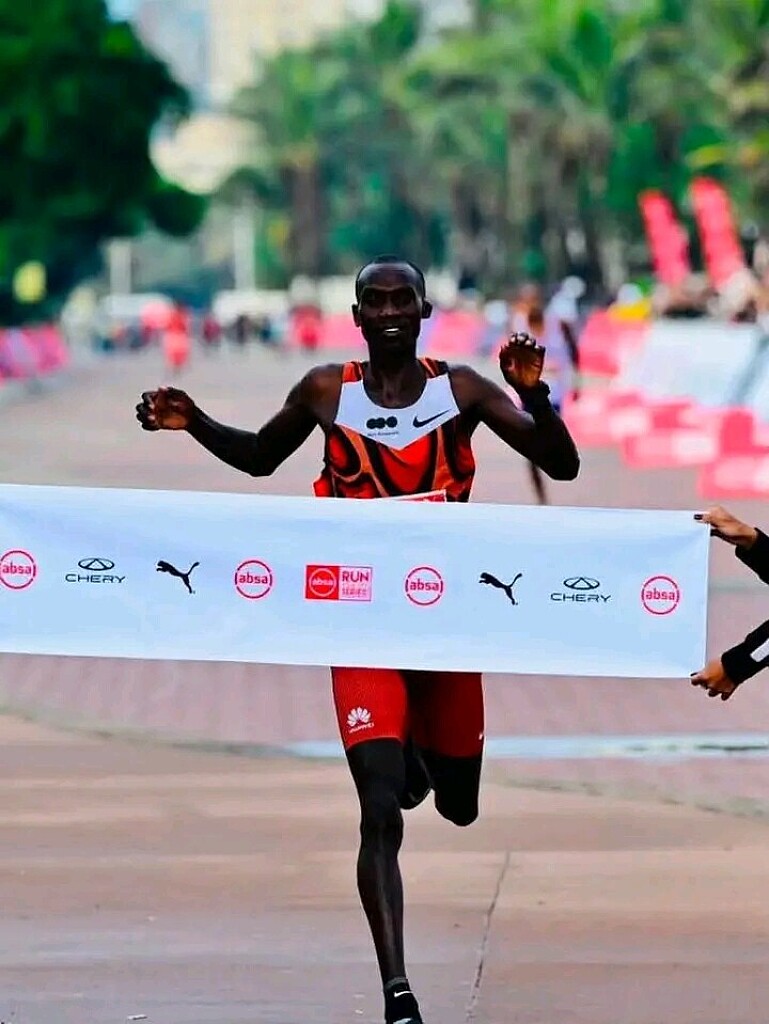
Joshua Cheptegei Rewrites Durban 10K History with Record-Breaking Triumph
Ugandan distance-running icon Joshua Cheptegei once again reminded the athletics world why he ranks among the greatest endurance athletes of his generation, producing a masterclass to win the 2026 Absa RUN YOUR CITY DURBAN 10K in a stunning 27:20.
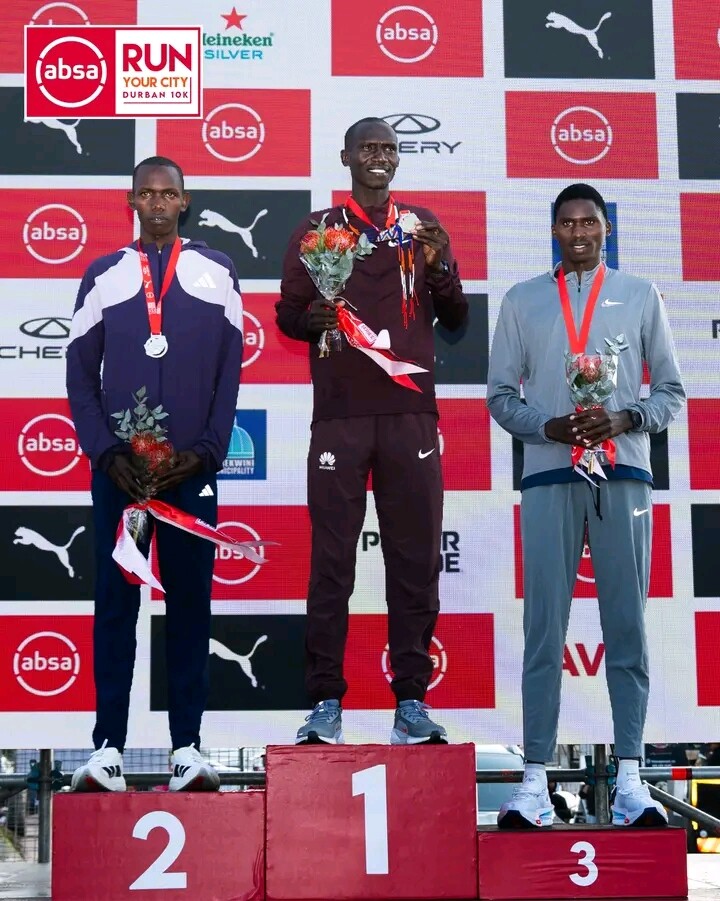
On a day that demanded both speed and precision, Cheptegei controlled the race with the composure of a seasoned champion before powering to the finish line to shatter the previous course record, etching his name even deeper into the event's history.
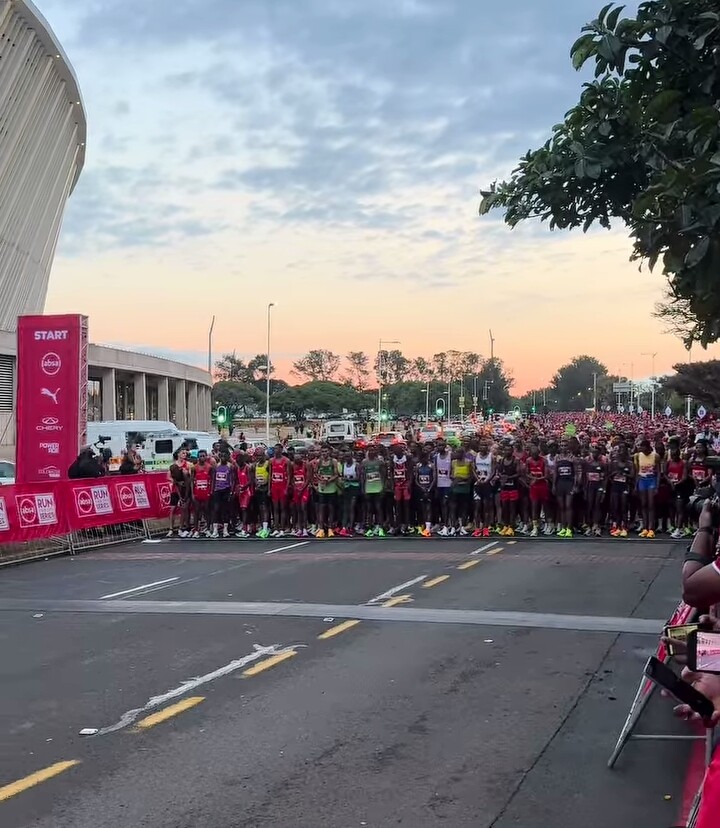
The Olympic 10,000m champion arrived in Durban with a clear objective—to challenge the fastest time ever recorded on South African soil—and he delivered in spectacular fashion. His commanding victory was another demonstration of the relentless consistency and tactical brilliance that have defined his remarkable career.
Behind the Ugandan star, Salem Kibet of Kenya claimed second place in 27:29, while fellow Ugandan Emmanuel Kibet completed the podium in 27:32, making it a fiercely contested battle among East Africa's finest distance runners.
The race also showcased impressive depth, with Kenya's Victor Okoth finishing fourth in 27:50, while Tanzania's Agustino Daniel rounded out the top five in 28:03. South Africa's leading performers, Kabelo Mulaudzi (28:06) and Musawenkosi Mnisi (28:11), thrilled the home crowd with determined performances against a world-class field.
Cheptegei's latest triumph adds another landmark achievement to an already extraordinary résumé that includes Olympic glory, multiple world titles, and world records. His victory in Durban was far more than another race win—it was a statement that the Ugandan legend continues to set the standard in global distance running.
By breaking the course record in emphatic fashion, Joshua Cheptegei once again proved that when the stakes are highest, few athletes in history can match his ability to rise to the occasion. His unforgettable run in Durban will be remembered as another defining chapter in the legacy of one of athletics' all-time greats.
by Erick Cheruiyot for My Best Runs.
Login to leave a comment
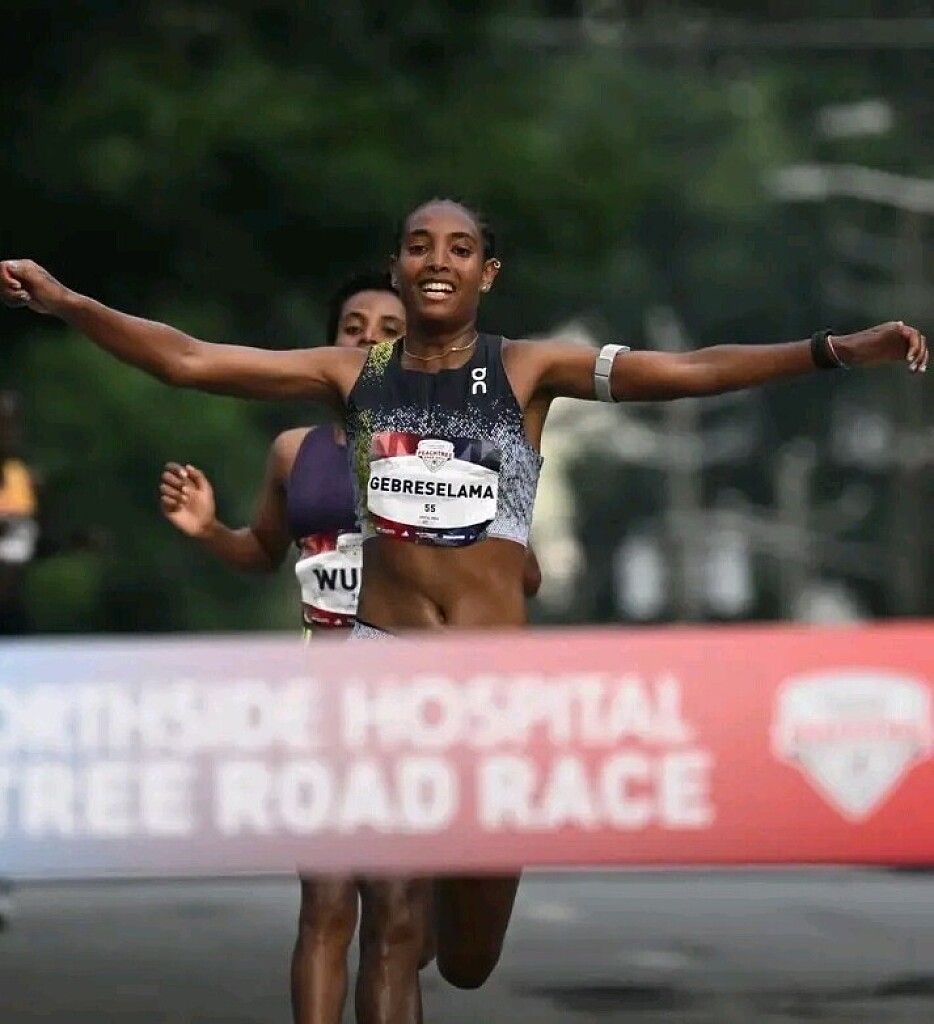
Tsigie Gebreselama Wins Thrilling Peachtree Road Race Showdown as Ethiopia Shines in Atlanta
Ethiopia's Tsigie Gebreselama produced a sensational finishing sprint to capture the women's title at the 57th Peachtree Road Race on Saturday, July 4, 2026, delivering one of the most dramatic finishes in the event's recent history.
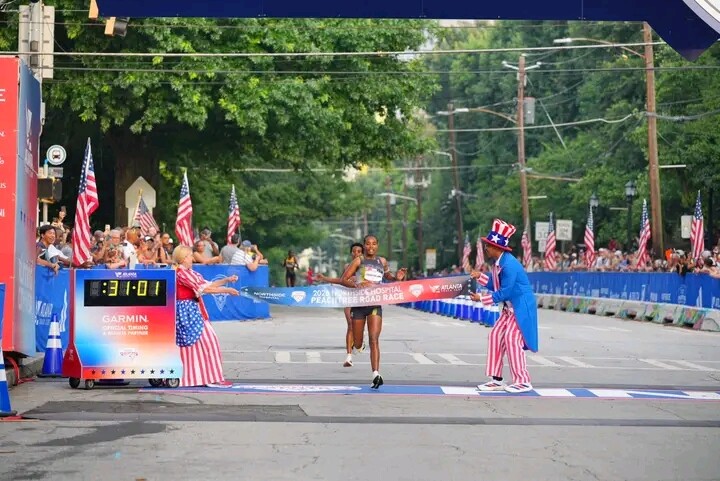
Competing on the iconic streets of Atlanta during the United States' Independence Day celebrations, Gebreselama timed her decisive move to perfection, edging compatriot Melknat Wudu in the closing metres to secure victory in 31:02. Just one second separated the two Ethiopian stars, with Wudu crossing the line in 31:03 after an intense battle from start to finish.
Kenya's Irine Cheptai completed the podium with a strong run of 31:11, while fellow Kenyans Gladys Kwamboka Mong'are (31:36), Stacy Chepkemboi Ndiwa (31:55), Maurine Jepkoech Chebor (31:55), and Selah Jepleting Busienei (31:56) ensured a commanding East African presence among the leading finishers. Ethiopia's Gela Degefa placed eighth in 31:57, ahead of American Sydney Vaught (32:18) and South Africa's Glenrose Xaba (32:20), who rounded out the top ten.
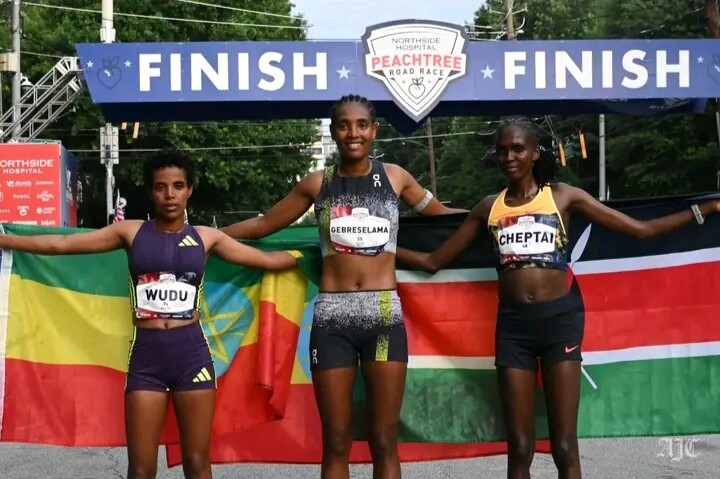
The women's race lived up to its billing, featuring relentless pace, tactical positioning, and an electrifying sprint finish that had spectators on their feet. Gebreselama's composure in the final metres proved to be the difference, as she claimed one of the most prestigious road racing victories on the American calendar.
Held annually on Independence Day, the Peachtree Road Race once again transformed Atlanta into a celebration of endurance, community, and world-class athletics. Tens of thousands of runners took to the famous 10-kilometre course, while elite athletes battled for victory in front of enthusiastic crowds lining the streets from Buckhead to Piedmont Park.
Top 10 Women's Results
1. Tsigie Gebreselama (Ethiopia) – 31:02
2. Melknat Wudu (Ethiopia) – 31:03
3. Irine Cheptai (Kenya) – 31:11
4. Gladys Kwamboka Mong'are (Kenya) – 31:36
5. Stacy Chepkemboi Ndiwa (Kenya) – 31:55
6. Maurine Jepkoech Chebor (Kenya) – 31:55
7. Selah Jepleting Busienei (Kenya) – 31:56
8. Gela Degefa (Ethiopia) – 31:57
9. Sydney Vaught (United States) – 32:18
10. Glenrose Xaba (South Africa) – 32:20
Gebreselama's victory added another memorable chapter to the rich history of the Peachtree Road Race, capping off a spectacular Independence Day celebration with a performance defined by courage, patience, and a breathtaking finishing kick. It was a fitting finale to one of the world's most celebrated road races and a reminder of the exceptional depth of women's distance running on the global stage.
by Erick Cheruiyot for My Best Runs.
Login to leave a comment

AJC Peachtree Road Race
The AJC Peachtree Road Race, organized by the Atlanta Track Club, is the largest 10K in the world. In its 48th running, the AJC Peachtree Road Race has become a Fourth of July tradition for thousands of people throughout the metro Atlanta area and beyond. Come kick off your Fourth of July festivities with us! If you did not get...
more...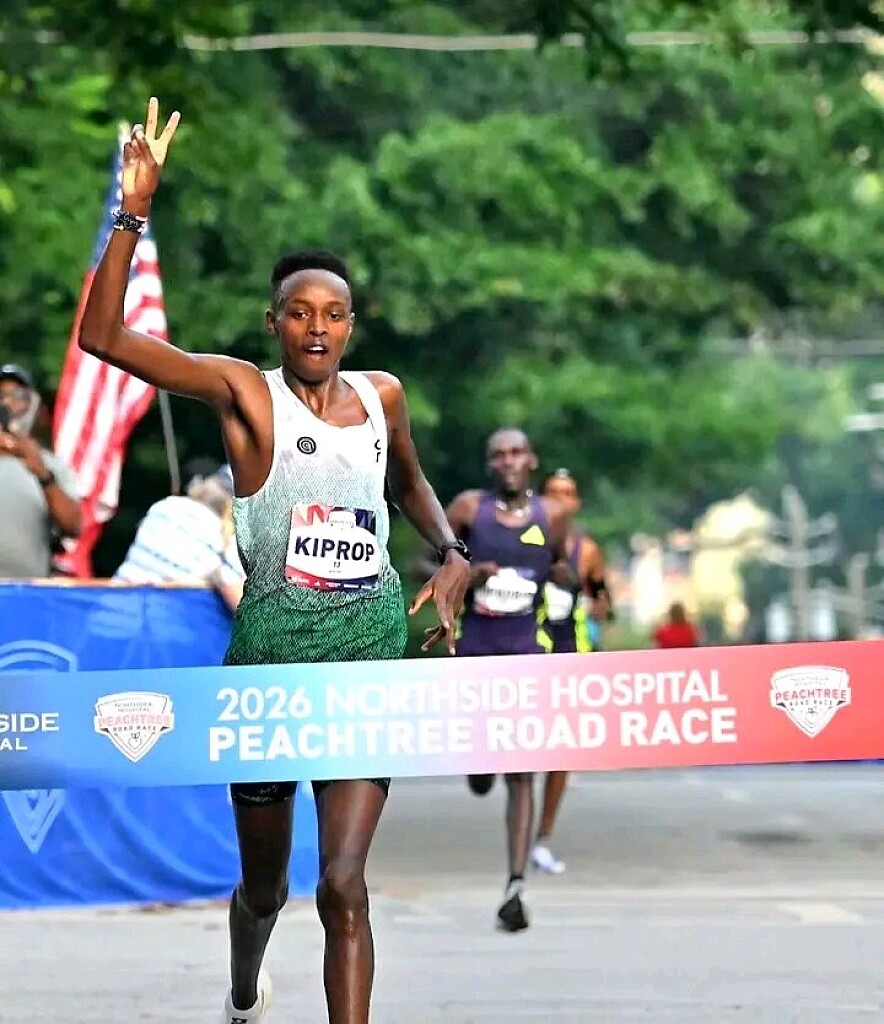
Patrick Kiptoo Kiprop Leads Kenyan Sweep to Capture 57th Peachtree Road Race Title on America's Independence Day
The streets of Atlanta once again came alive on Independence Day as thousands of runners celebrated one of road running's most iconic traditions, the Peachtree Road Race. In its 57th edition, the legendary 10-kilometre event delivered another thrilling chapter on Saturday, July 4, 2026, with Kenya's Patrick Kiptoo Kiprop producing a brilliant performance to claim victory in 27:37.
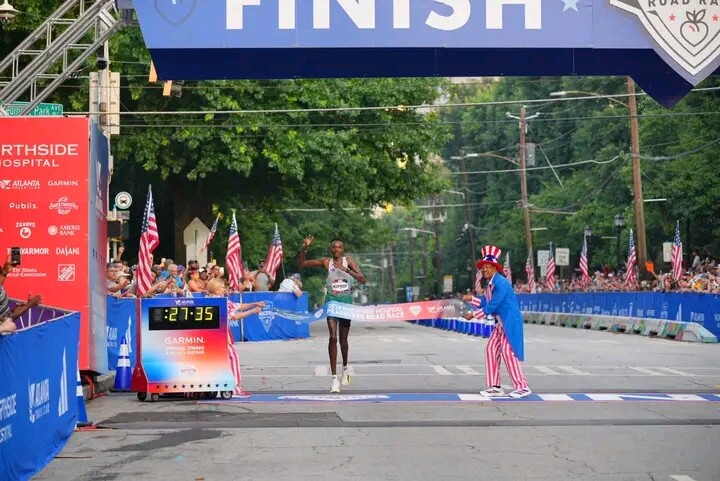
Competing against a world-class international field, Kiprop timed his race to perfection before surging to the finish, securing one of the most prestigious road racing titles in the United States. His victory highlighted Kenya's continued dominance on the global road racing circuit.
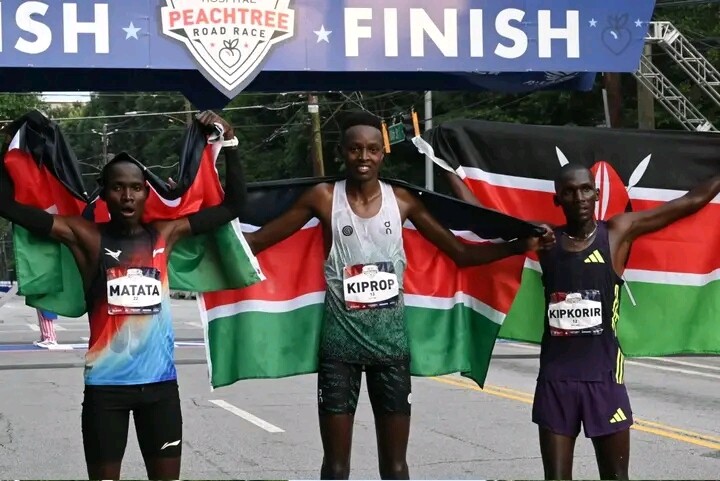
The men's race turned into a remarkable Kenyan showcase, with Nicholas Kipkorir finishing just four seconds behind the winner in 27:41 to complete a Kenyan one-two. Raphael Dapash crossed the line only two seconds later in 27:43, making it a clean sweep of the podium for Kenya. Alex Matata narrowly missed the top three after clocking 27:48, while Kiprono Sitonik completed an outstanding day for the East African nation with a fifth-place finish in 28:03.
Ethiopia's Tadese Worku was the highest-placed non-Kenyan in sixth, finishing in 28:10. Eritrea's Dawit Seare claimed seventh in 28:21, Ghana's William Amponsah impressed with eighth in 28:24, Kenya's Victor Shitsama finished ninth in 28:25, and South Africa's Adam Lipschitz rounded out the top ten in 28:27.
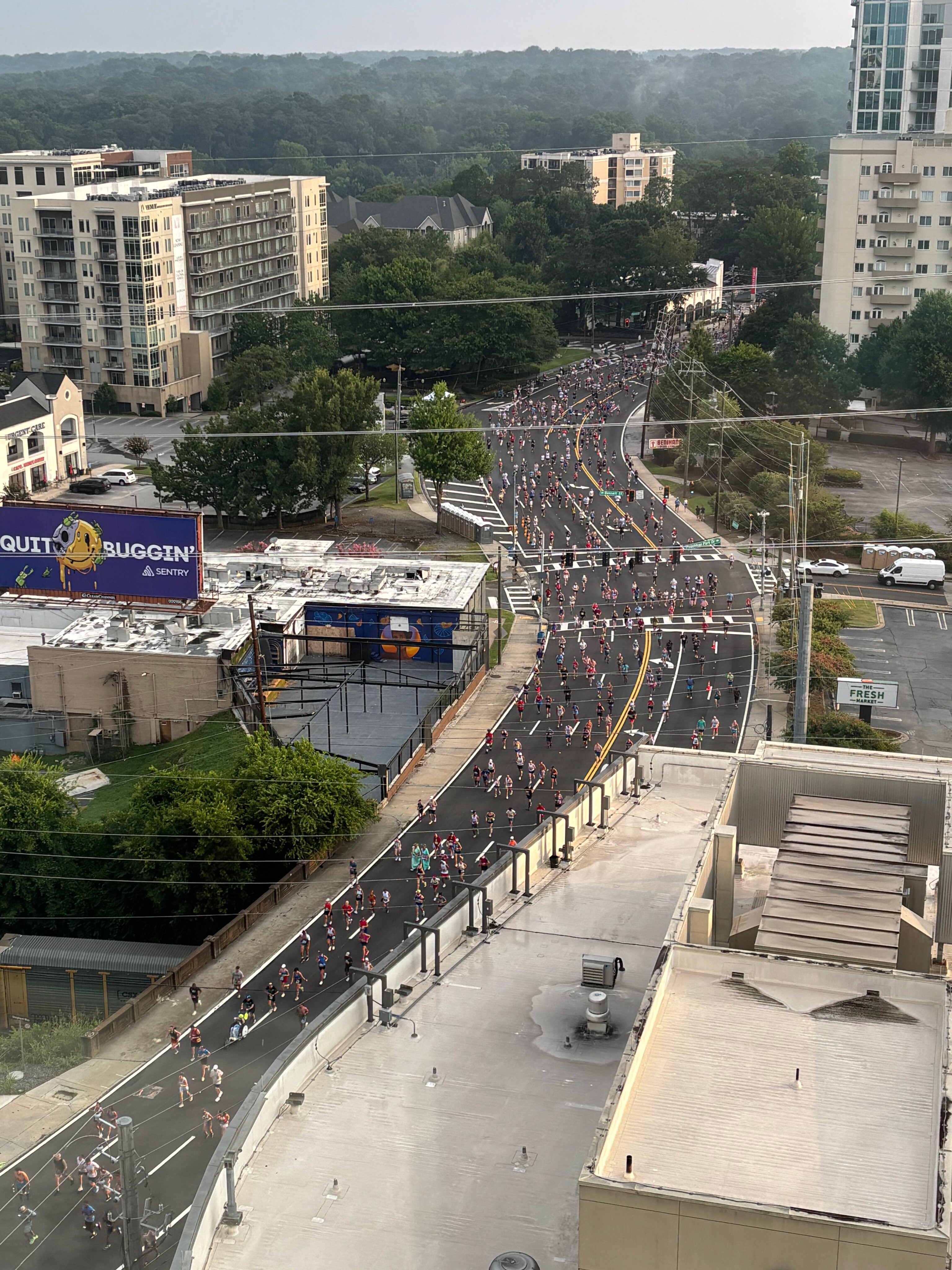
The Peachtree Road Race, staged annually on the Fourth of July, remains one of the world's largest and most celebrated 10-kilometre road races. Blending elite international competition with a vibrant community atmosphere, the event continues to attract tens of thousands of participants and enthusiastic spectators who line Atlanta's streets to celebrate both sport and America's Independence Day.
Top 10 Men's Results
1. Patrick Kiptoo Kiprop (Kenya) – 27:37
2. Nicholas Kipkorir (Kenya) – 27:41
3. Raphael Dapash (Kenya) – 27:43
4. Alex Matata (Kenya) – 27:48
5. Kiprono Sitonik (Kenya) – 28:03
6. Tadese Worku (Ethiopia) – 28:10
7. Dawit Seare (Eritrea) – 28:21
8. William Amponsah (Ghana) – 28:24
9. Victor Shitsama (Kenya) – 28:25
10. Adam Lipschitz (South Africa) – 28:27
Patrick Kiptoo Kiprop's commanding victory adds his name to the illustrious list of Peachtree Road Race champions, while Kenya's sweep of the top five positions underlined the country's extraordinary depth in distance running. On a day dedicated to celebration and tradition, the elite athletes once again delivered a memorable spectacle, ensuring the 2026 edition will be remembered as another outstanding chapter in the rich history of the Peachtree Road Race.
by Erick Cheruiyot for My Best Runs.
Login to leave a comment
AJC Peachtree Road Race
The AJC Peachtree Road Race, organized by the Atlanta Track Club, is the largest 10K in the world. In its 48th running, the AJC Peachtree Road Race has become a Fourth of July tradition for thousands of people throughout the metro Atlanta area and beyond. Come kick off your Fourth of July festivities with us! If you did not get...
more...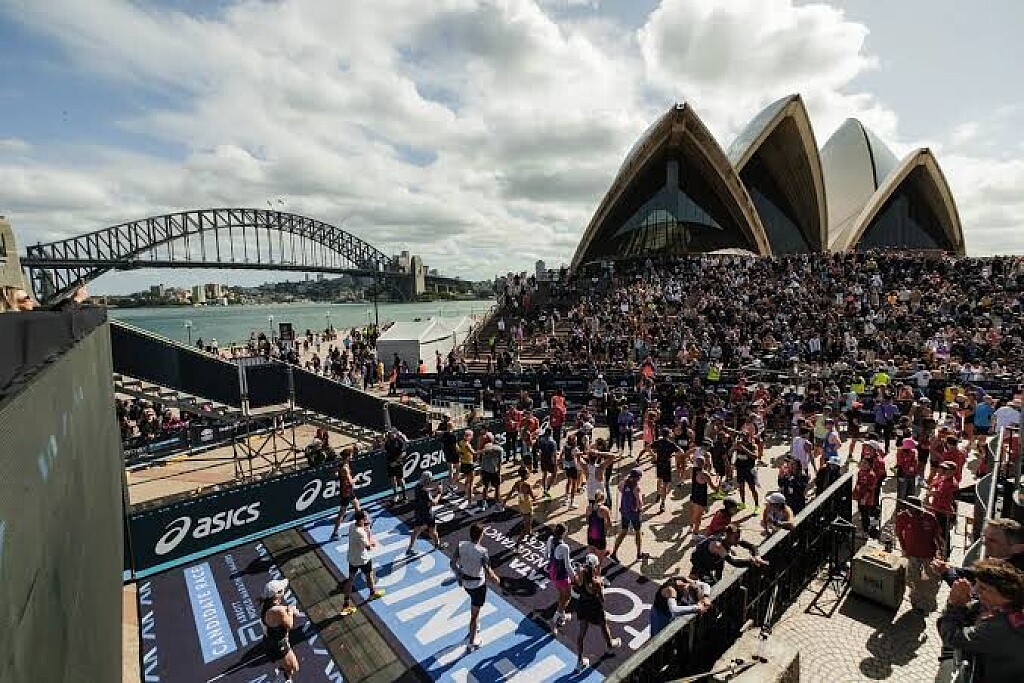
Sydney Marathon Unveils Strongest Elite Field in Australian History as 14 Men Boast Sub-2:05 Personal Bests
The 2026 TCS Sydney Marathon presented by ASICS has raised the bar ahead of its biggest edition yet, unveiling the deepest men's elite field ever assembled on Australian soil. With an astonishing 14 athletes holding personal bests under the 2:05 barrier, this year's race is shaping up to be one of the fastest and most competitive marathons of the season.
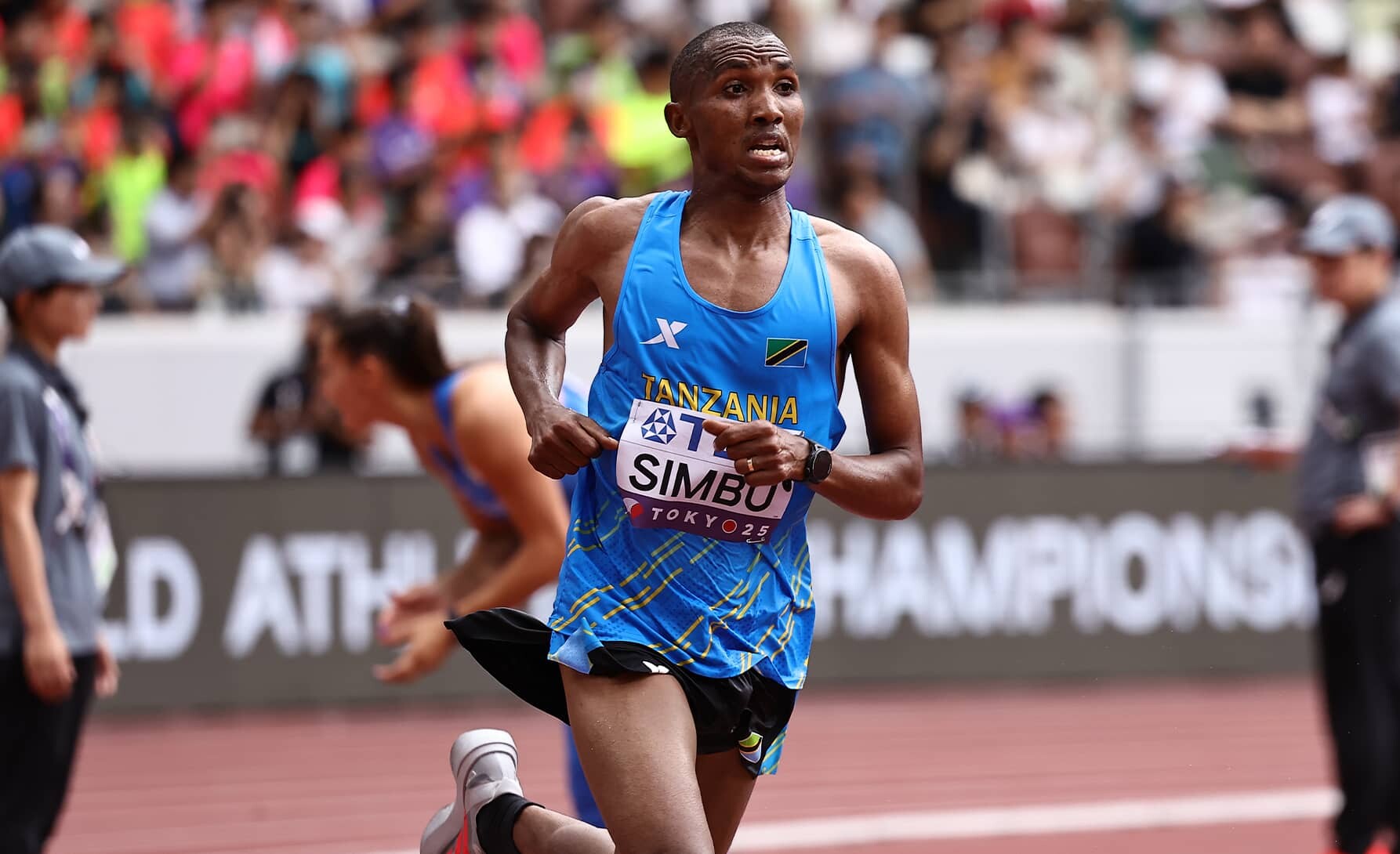
Leading the star-studded lineup is reigning marathon world champion Alphonce Felix Simbu of Tanzania, whose outstanding personal best of 2:02:47 makes him one of the leading contenders for victory. Simbu arrives in Sydney as one of the sport's most accomplished marathoners and is expected to spearhead an elite battle unlike anything previously seen in Australia.
Also among the favourites is Ethiopian standout Sisay Lemma, the fastest man in the field with a remarkable 2:01:48 personal best. Kenya will be strongly represented by Timothy Kiplagat (2:02:55) and Vincent Ngetich (2:03:13), while Ethiopia brings exceptional depth through athletes including Dawit Wolde, Leul Gebresilase, Seifu Tura, Chalu Deso, Addisu Gobena, Chala Regassa, Belay Tilahun, and Melaku Belachew.
South Africa's Tebello Ramakongoana, Djibouti's Ibrahim Hassan, and Australia's leading marathoners, including Andy Buchanan, headline a truly international field featuring elite athletes from Africa, Oceania, North America, and Asia.
The quality of the field is underlined by an extraordinary statistic—14 men have already broken 2:05 for the marathon, a level of depth never before seen at an Australian marathon. With so many proven performers capable of running world-class times, the race promises relentless pace from the opening kilometres to the finish.
As the Sydney Marathon continues to cement its place among the world's premier road races, the 2026 edition marks another major milestone in its rapid rise. With a world champion, multiple athletes with personal bests close to the 2:02 mark, and unprecedented depth across the field, fans can expect an unforgettable contest on the streets of Sydney.
All eyes will now be on race day to see whether this historic field can deliver equally historic performances in what is poised to become one of the most memorable marathons ever staged in Australia.
by Erick Cheruiyot for My Best Runs.
Login to leave a comment

Sydney Marathon
The Sydney Marathon is a marathon held annually in Sydney, Australia. The event was first held in 2001 as a legacy of the 2000 Summer Olympics, which were held in Sydney. In addition to the marathon, a half marathon, 9 kilometres (5.6 mi) "Bridge Run", and a 3.5 kilometres (2.2 mi) "Family Fun Run" are also held under the banner...
more...
Olympic Justice Delayed: Alysia Montaño Finally Earns London 2012 Bronze After 14-Year Wait
Justice has finally caught up with one of the most controversial Olympic races in modern history.
Fourteen years after crossing the finish line in fifth place at the London 2012 Olympic Games, American middle-distance star Alysia Montaño has officially been awarded the Olympic bronze medal following the International Olympic Committee's latest medal reallocation.
This week, the IOC Executive Board approved a revised set of results for the women's 800 metres, bringing another chapter of the event's long-running doping scandal to a close. South Africa's Caster Semenya remains the Olympic champion, while Kenya's Pamela Jelimo is elevated to the silver medal position. Montaño now claims the bronze medal she earned through clean competition.
The decision follows the disqualification of Yekaterina Guliyev, who represented Russia at the London Games under her maiden name, Yekaterina Poistogova. In 2024, the Court of Arbitration for Sport (CAS) ruled that Guliyev had committed anti-doping violations involving banned anabolic steroids. After her appeal was dismissed in May 2025, the IOC officially ratified the revised medal standings this week, making the changes final.
Guliyev's removal means three Russian athletes from the same Olympic women's 800m final have now been stripped of their results for doping offences. Mariya Savinova, the original gold medalist, was disqualified years earlier, while Elena Arzhakova also lost her result following anti-doping sanctions. The race has become one of the clearest examples of how widespread doping robbed clean athletes of their rightful Olympic moments.
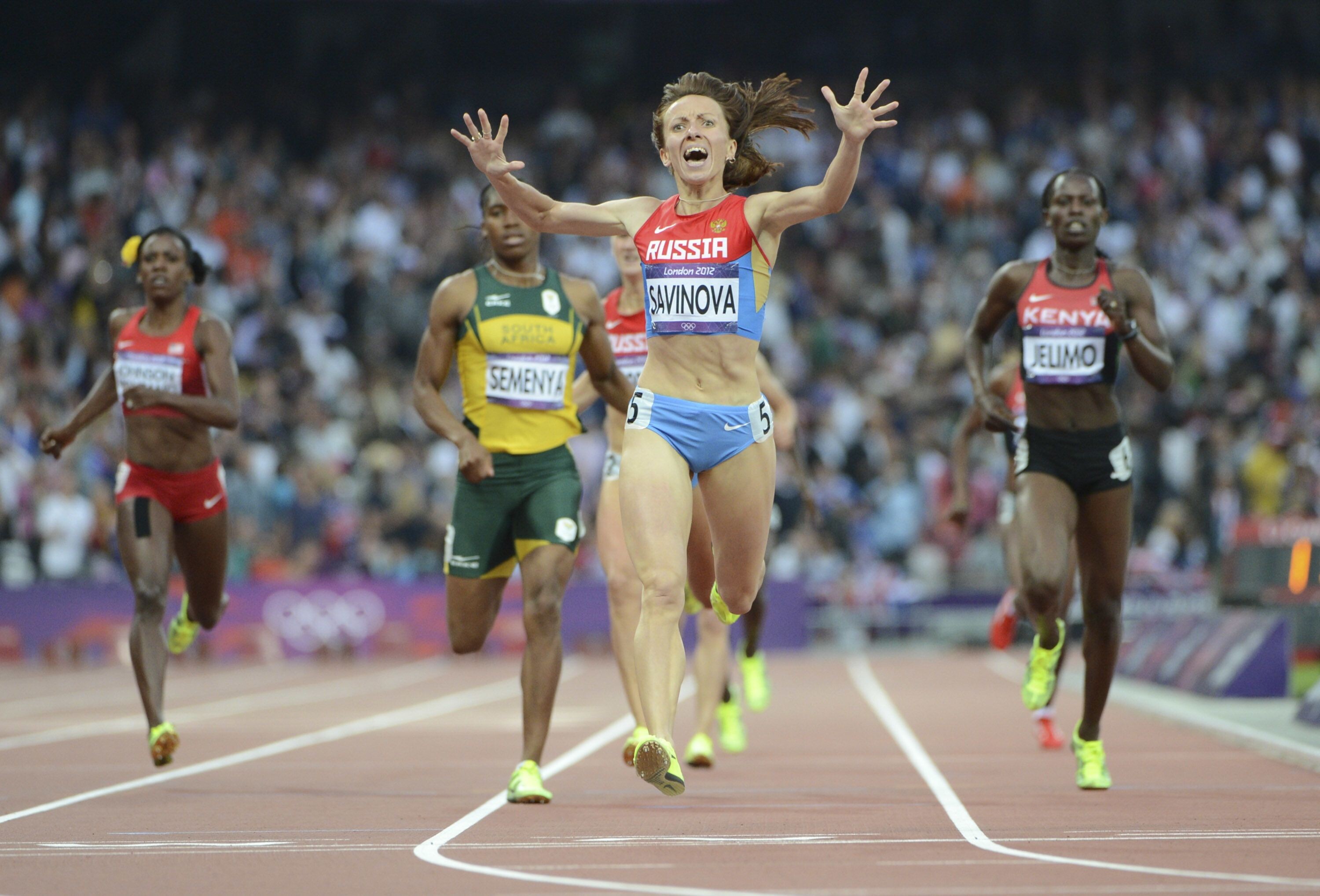
For Montaño, the medal is the reward for a courageous race. She boldly led the field through the opening 400 metres in 56.31 seconds before eventually finishing fifth as four athletes crossed the line ahead of her. Today, only two of those performances still stand.
Her promotion is also historically significant. Montaño becomes the first American woman to win an Olympic medal in the 800 metres since Kim Gallagher claimed bronze at the 1988 Seoul Olympics, ending a wait of more than three decades for the United States in the event.
Although the medal is finally hers, the years that have passed cannot restore the emotions of standing on the Olympic podium before a packed stadium and millions watching around the world. Montaño has often described the delayed recognition as both gratifying and heartbreaking—a victory that arrives without the unforgettable Olympic celebration every athlete dreams of.
Following the IOC's announcement, Montaño shared an emotional message on social media, celebrating the victory while acknowledging the long journey that still lies ahead before she finally receives her medal.
"Integrity and Truth always wins out. The IOC approved the medal reallocation ceremony at LA2028. More work to be done to ensure it's done right, but for now we celebrate one victory at a time. Swipe to see me patiently waiting till LA2028 to get my medal!"
Her message also revealed that the IOC has approved the medal reallocation ceremony to take place during the Los Angeles 2028 Olympic Games, giving Montaño the opportunity to finally receive her Olympic medal on one of sport's biggest stages. While nothing can replace the moment that was taken from her in London, the ceremony will provide long-overdue recognition of her achievement in front of the Olympic community.
Montaño's story serves as another powerful reminder that while anti-doping efforts can eventually correct the record books, justice delayed can never fully replace the memories, opportunities and emotions stolen from clean athletes.
Fourteen years after London 2012, the official results have finally been rewritten. Alysia Montaño is an Olympic bronze medalist at last—not because history changed, but because the truth finally caught up with it.
by Erick Cheruiyot for My Best Runs.
Login to leave a comment
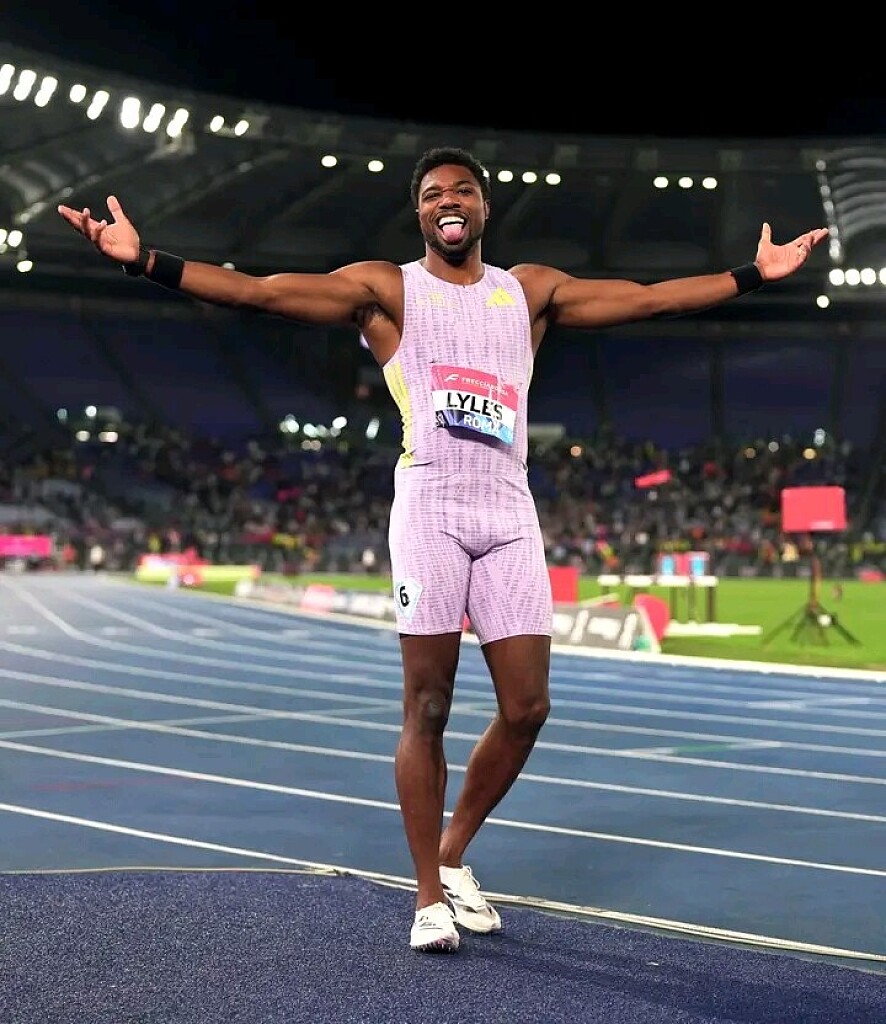
Sprint Titans Set for Paris Showdown as Noah Lyles Returns to Familiar Ground
Just one week after rewriting history with a sensational world-record performance over 150 metres, Noah Lyles is set to return to Paris, the city where some of his most memorable career moments were forged. The American sprint superstar will headline a blockbuster men's 100m field at the Paris Diamond League on June 28, promising one of the most captivating races of the season.
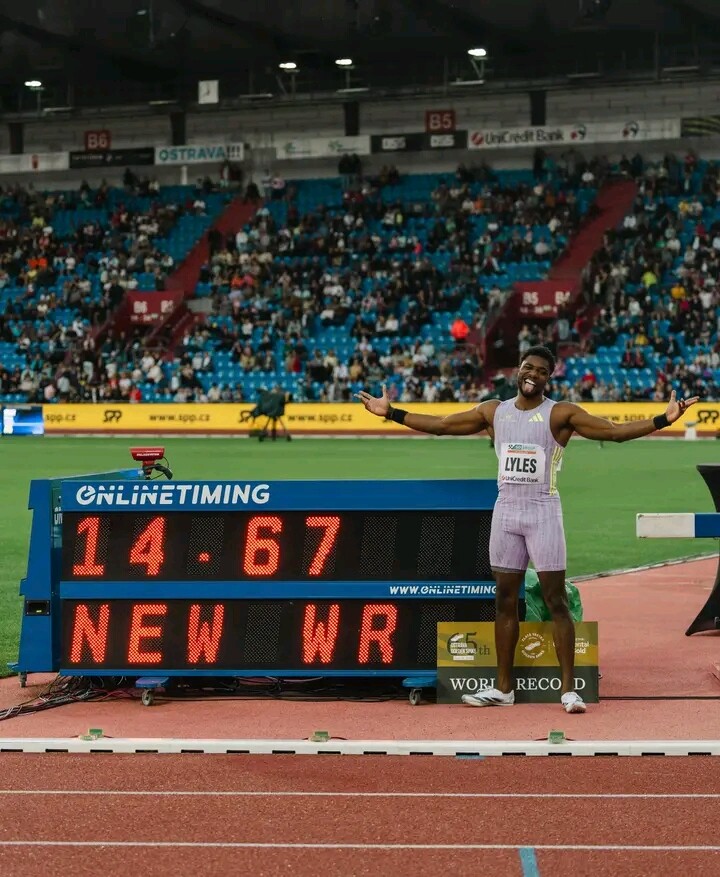
Paris has earned a reputation as one of the fastest tracks in world athletics, and Lyles will be hoping the magic returns once again as he steps back onto the same stage that witnessed his Olympic triumphs. Carrying the momentum of his recent world-record achievement, the reigning global sprint king arrives as the man everyone will be chasing.
Yet victory will be far from guaranteed.
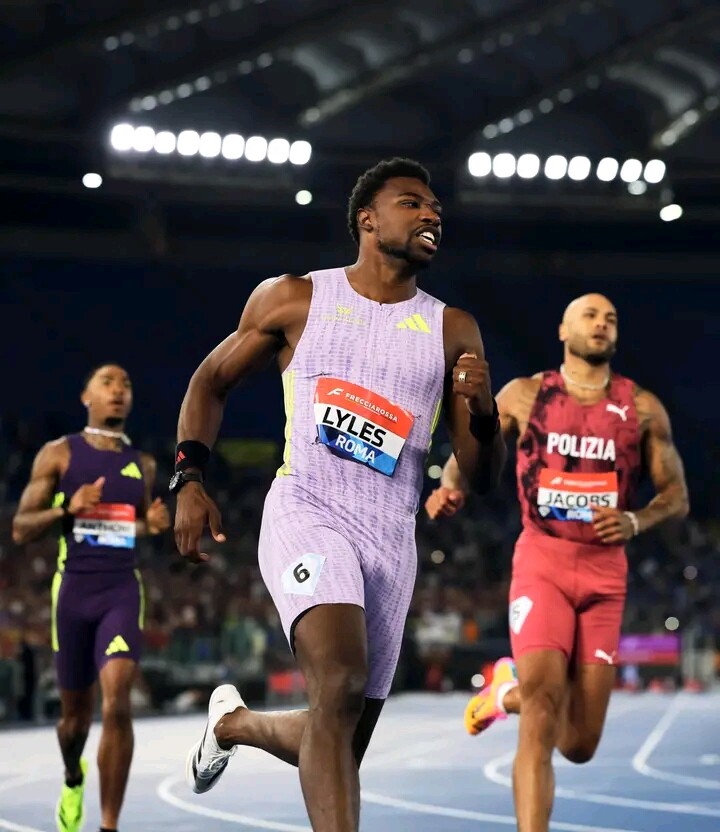
The men's 100m field is loaded with world-class talent, bringing together Olympic champions, Diamond League winners, continental record holders and emerging stars in what promises to be a battle from the gun to the finish line.
Kenya's Ferdinand Omanyala, Africa's fastest man, will be eager to use his trademark explosive start to challenge the favourite. South Africa's Akani Simbine, one of the most consistent performers on the international circuit, arrives in exceptional form and remains a serious contender for victory. Italy's Olympic champion Lamont Marcell Jacobs adds further championship pedigree, while American speedsters Trayvon Bromell and rising star Jordan Anthony strengthen an already formidable field.
Great Britain's Jeremiah Azu and Cameroon's Emmanuel Eseme complete a lineup capable of producing fireworks on one of athletics' quickest stages.
Official Men's 100m Start List – Paris Diamond League
1. Noah Lyles (United States)
2. Jordan Anthony (United States)
3. Emmanuel Eseme (Cameroon)
4. Trayvon Bromell (United States)
5. Akani Simbine (South Africa)
6. Lamont Marcell Jacobs (Italy)
7. Ferdinand Omanyala (Kenya)
8. Jeremiah Azu (Great Britain)
With the World Championships drawing closer, every race carries added significance. Paris offers athletes a chance not only to collect valuable Diamond League points but also to send a statement to their rivals ahead of the season's biggest tests.
For fans, the ingredients could hardly be better: a world-record holder at the peak of his powers, a lightning-fast track, and a field packed with elite sprinters capable of producing something special. The result is a race that has all the makings of one of the standout moments of the Diamond League campaign.
On June 28, the spotlight will once again shine on Noah Lyles. But against a field this strong, the road to victory will demand nothing less than brilliance.
by Erick Cheruiyot for My Best Runs.
Login to leave a comment
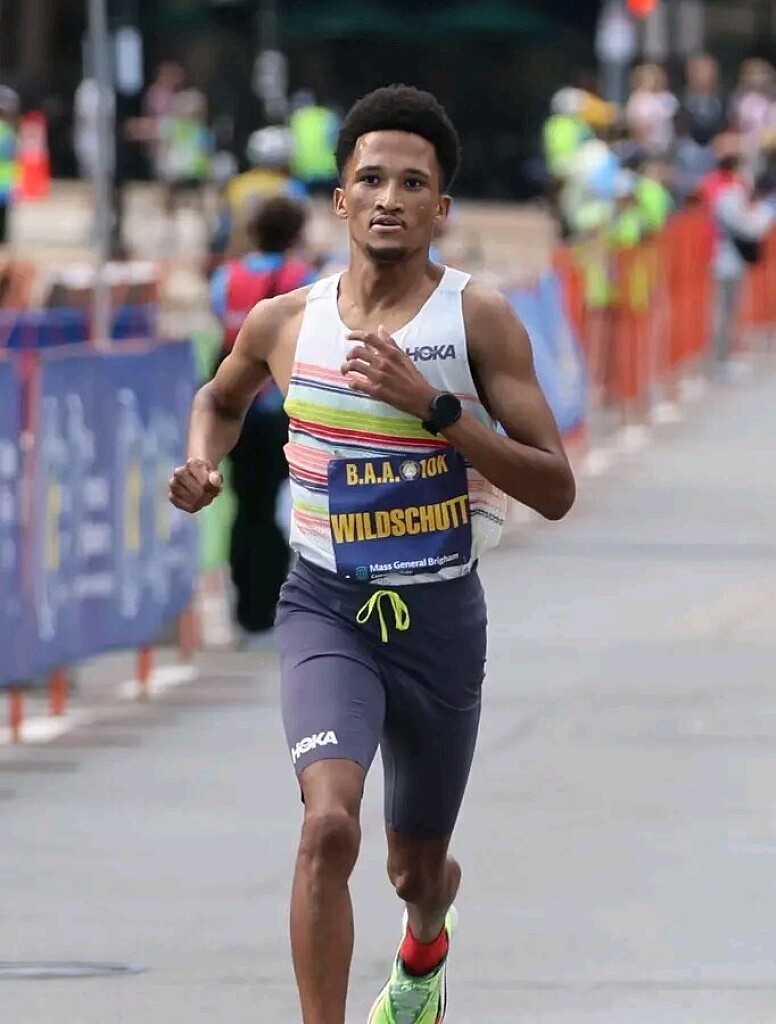
Wildschutt Fights Through Fatigue to Claim Runner-Up Finish at the B.A.A. 10K
South African distance star Adriaan Wildschutt once again showcased his toughness and racing intelligence, battling through lingering fatigue to secure an impressive second-place finish at the B.A.A. 10K in Boston.
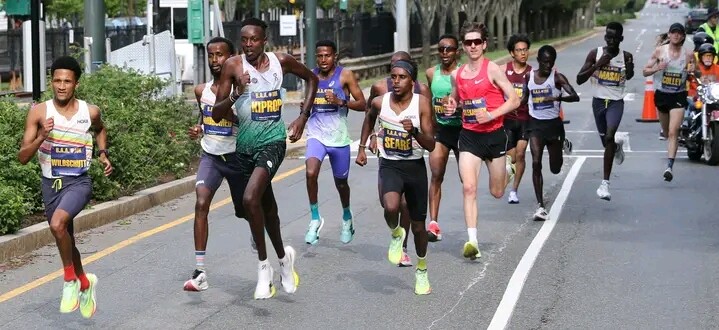
Fresh from his recent marathon pacing assignment in Cape Town, Wildschutt arrived at the prestigious road race eager to test his fitness but uncertain about how his body would respond after the demanding effort.
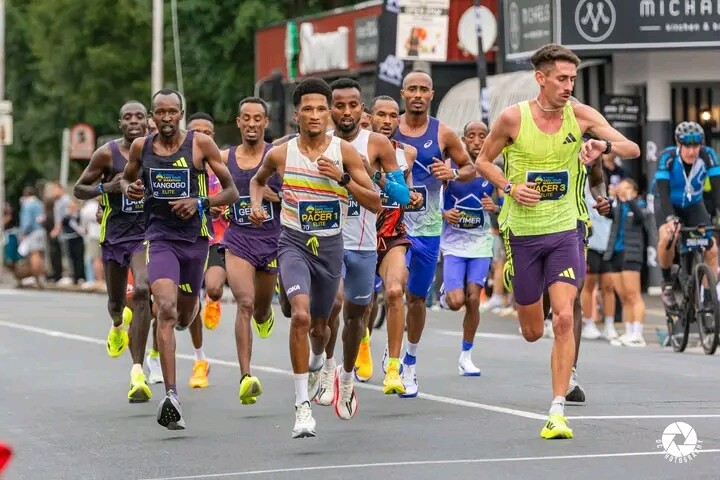
The race unfolded as a tactical affair, with the early stages developing at a measured pace before the competition came alive in the second half. Wildschutt covered the opening 5 kilometers in 14:27 as the leading contenders carefully sized each other up before unleashing a fierce acceleration over the closing kilometers.
When the pace intensified, the South African responded brilliantly, clocking a rapid 13:33 for the second half of the race to remain firmly in contention for the podium.
Although he admitted that he could feel the effects of his recent workload toward the closing stages, Wildschutt dug deep and held his position to cross the line in second place, adding another strong result to his growing résumé on the international stage.
The performance offered valuable insight into his current fitness while also highlighting the importance of recovery following a busy period of competition and pacing duties.
With the B.A.A. 10K now behind him, Wildschutt plans to take a well-earned period of downtime before shifting his focus to the next chapter of his season. While he has yet to reveal exactly what lies ahead, he hinted that exciting opportunities are on the horizon.
For now, his Boston performance stands as a testament to his consistency and determination. Even without feeling fully recovered, Wildschutt produced a world-class effort and left the B.A.A. 10K with another podium finish to his name.
by Erick Cheruiyot for My Best Runs.
Login to leave a comment

B.A.A. 10K
The 6.2-mile course is a scenic tour through Boston's Back Bay. Notable neighborhoods and attractions include the legendary Bull and Finch Pub, after which the television series "Cheers" was developed, the campus of Boston University, and trendy Kenmore Square. ...
more...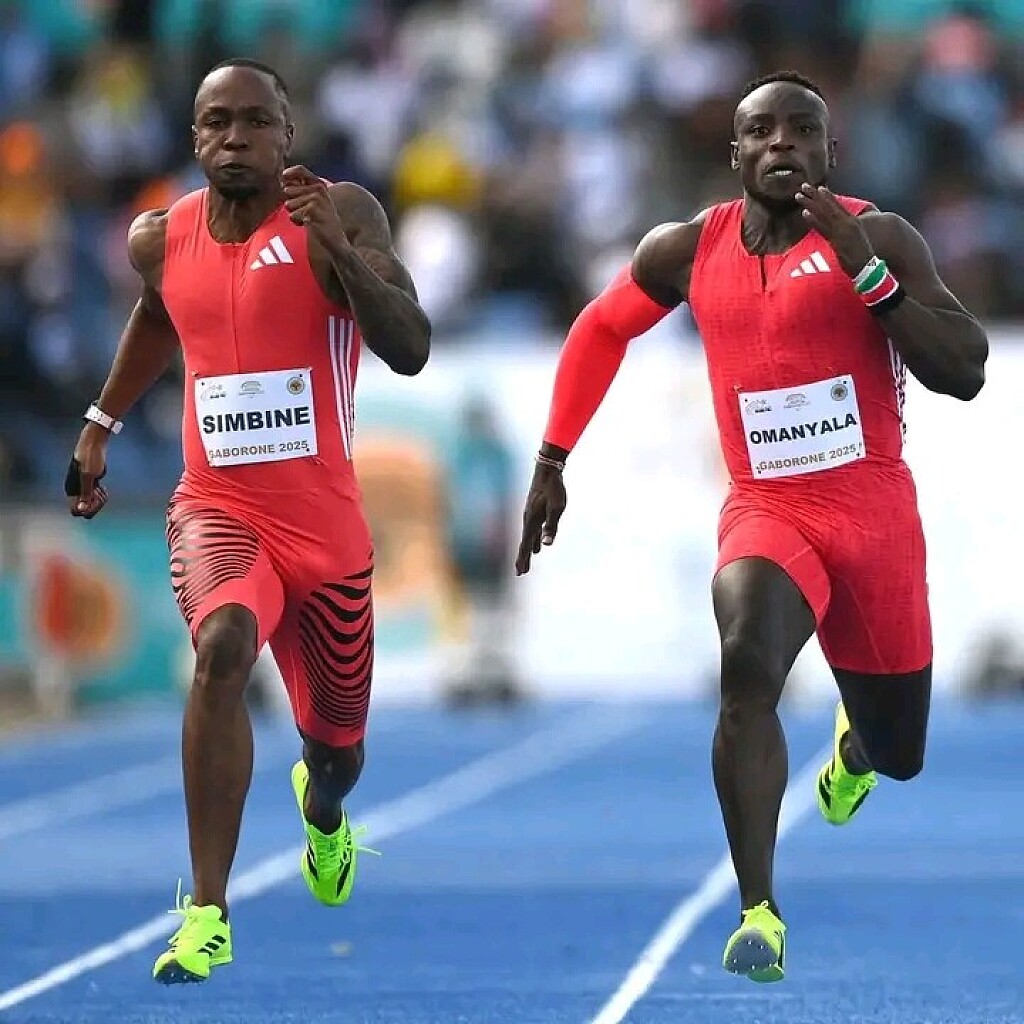
Omanyala and Simbine Set for Explosive Sprint Showdown at FBK Games in Hengelo
The stage is set for one of the most anticipated sprint battles of the season as Africa's fastest men, Ferdinand Omanyala of Kenya and Akani Simbine of South Africa, headline a stacked men's 100-meter field at the 2026 FBK Games in Hengelo Netherlands, on Sunday, June 21. The prestigious meeting is part of the World Athletics Continental Tour Gold circuit and regularly attracts some of the world's finest track and field stars.
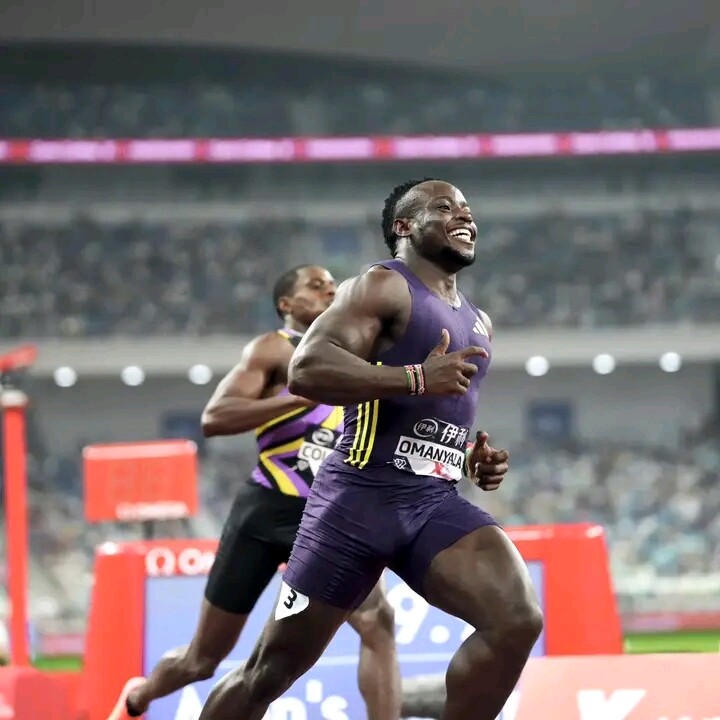
For sprint fans, the clash between Omanyala and Simbine is reason enough to tune in. Omanyala, the African record holder and Kenya's sprint trailblazer, has built a reputation for fearless front-running and explosive starts. Simbine, meanwhile, remains one of the most consistent sprinters of his generation, combining championship experience with remarkable top-end speed. Their rivalry has produced thrilling races over the years, and another chapter is about to be written on Dutch soil.
But this will be far more than a two-man contest.
South Africa's rising star Bradley Nkoana enters the race eager to challenge the established order, while Ireland's Benjamin Richardson continues to make strides on the international circuit. American veteran Ronnie Baker brings proven world-class credentials to the field, adding further depth and unpredictability to the race.
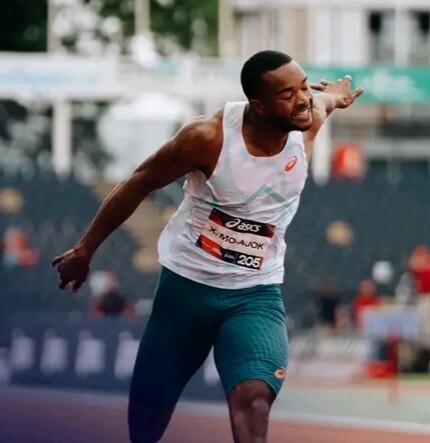
The home crowd will have plenty to cheer for as Dutch sprinters Elvis Afrifa, Taymir Burnet and Xavi Mo-Ajok line up in front of their supporters. All three have been key figures in the Netherlands' sprint resurgence and will be determined to make their mark against a world-class field.
With established stars, emerging talents and national pride all colliding in one race, the men's 100 meters promises to be one of the standout events of the meeting. Every athlete in the field has the speed to produce a surprise, ensuring that there will be no room for error once the starter's gun fires.
As Hengelo prepares to welcome another edition of the renowned FBK Games, all eyes will be fixed on the straightaway. When Omanyala and Simbine step into their blocks, fans can expect a race packed with intensity, speed and the kind of drama that only elite sprinting can deliver.
Men's 100m Entries – FBK Games 2026
1. Ferdinand Omanyala (Kenya)
2. Akani Simbine (South Africa)
3. Bradley Nkoana (South Africa)
4. Benjamin Richardson (Ireland)
5. Ronnie Baker (United States)
6. Elvis Afrifa (Netherlands)
7. Taymir Burnet (Netherlands)
8. Xavi Mo-Ajok (Netherlands)
On Sunday afternoon in Hengelo, the race may last less than ten seconds, but its impact could resonate throughout the remainder of the 2026 season.
by Erick Cheruiyot for My Best Runs.
Login to leave a comment
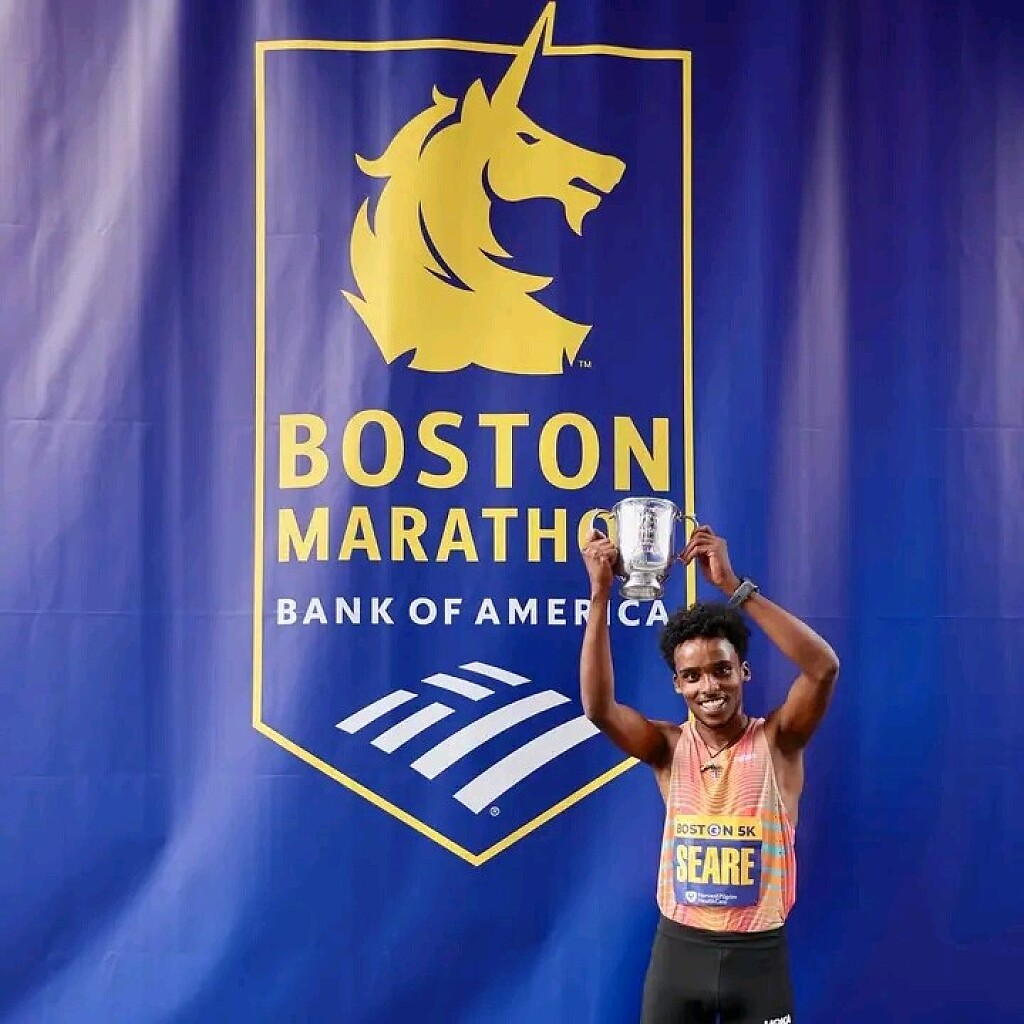
Boston 10K Set for Thrilling Showdown as International Stars Assemble in Massachusetts
The countdown is on for the 2026 Boston Athletic Association (B.A.A.) 10K, and the men's elite race is shaping up to be one of the most competitive road contests of the season.
Scheduled for Sunday, June 21, in Boston, Massachusetts, the prestigious event has attracted a deep international field featuring proven performers from Africa, Europe, and North America. With several athletes boasting personal bests under 28 minutes, fans can expect a fierce battle from the opening kilometers to the finish line.
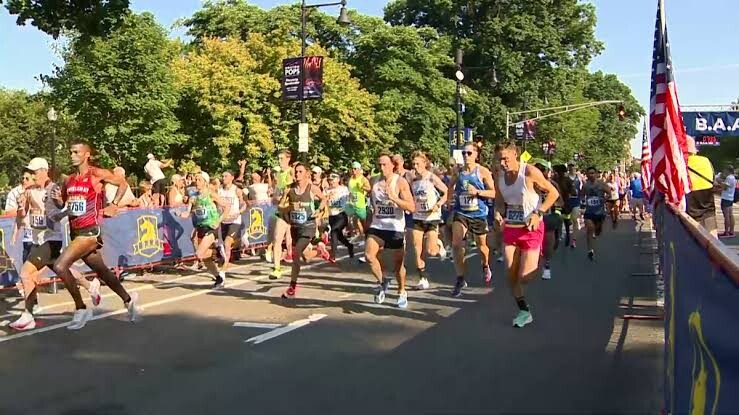
Leading the entries is Eritrea's Dawit Seare, whose impressive personal best of 27:21 makes him the fastest athlete on paper. The Eritrean will arrive as one of the leading contenders, but he faces strong opposition from a group of hungry challengers eager to make their mark on the historic Boston roads.
Kenya's Simon Mutula, carrying a lifetime best of 27:23, headlines a powerful Kenyan contingent that includes Alexander Mutiso, Patrick Kiprop, and Alex Masai. With Kenya's rich tradition of distance-running excellence, the trio will be aiming to continue the country's dominance on the global road racing circuit.
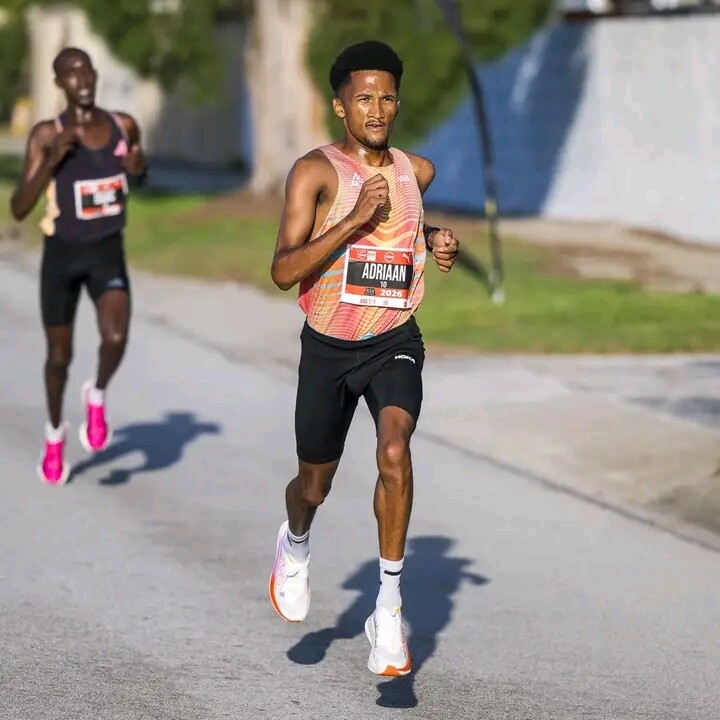
South Africa's Adriaan Wildschutt enters the race with a personal best of 27:28 and could prove to be one of the most dangerous competitors in the field. Known for his strength and tactical awareness, Wildschutt has consistently demonstrated his ability to challenge the world's best over long distances.
Ethiopia will also be strongly represented through Hagos Gebrhiwet, while Morocco's Mohamed El Aaraby and Spain's Pablo Alba add further international quality to an already stacked lineup. American hopes will rest largely on Andrew Colley, who will be looking to deliver a memorable performance in front of a home crowd.
Beyond the impressive statistics, the race promises an intriguing clash of styles, experience, and ambitions. With several athletes separated by mere seconds on personal bests, strategy, pacing, and finishing speed could ultimately determine who stands atop the podium.
The B.A.A. 10K has built a reputation for producing fast times and exciting competition, and the 2026 edition appears poised to uphold that tradition. As the world's distance-running spotlight turns toward Boston, spectators can look forward to a high-quality contest featuring some of the finest road runners currently competing on the international stage.
With national pride, valuable rankings points, and victory on the line, all signs point to a captivating morning of racing in Massachusetts. The only certainty is that the battle for the B.A.A. 10K crown will be anything but predictable.
by Erick Cheruiyot for My Best Runs.
Login to leave a comment
B.A.A. 10K
The 6.2-mile course is a scenic tour through Boston's Back Bay. Notable neighborhoods and attractions include the legendary Bull and Finch Pub, after which the television series "Cheers" was developed, the campus of Boston University, and trendy Kenmore Square. ...
more...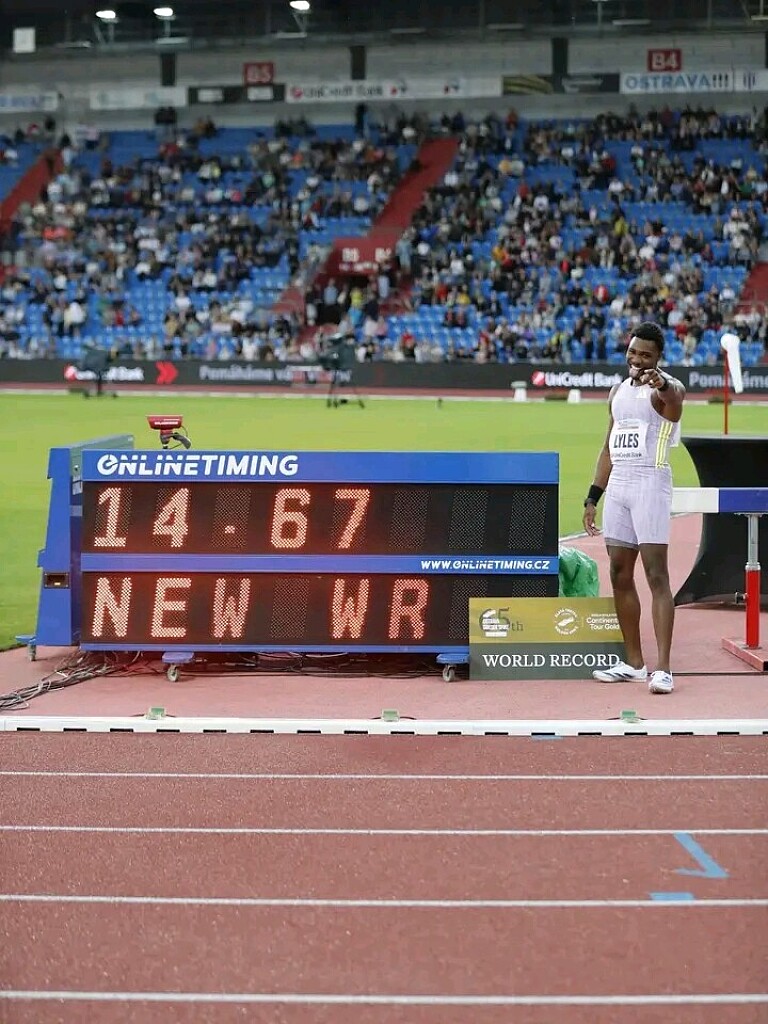
Noah Lyles Makes History With Blazing 150m World Record In Ostrava
Noah Lyles has once again rewritten the sprinting history books, delivering a stunning performance in the 150m at the Ostrava Golden Spike meet as he stormed to a new world record of 14.67 seconds.
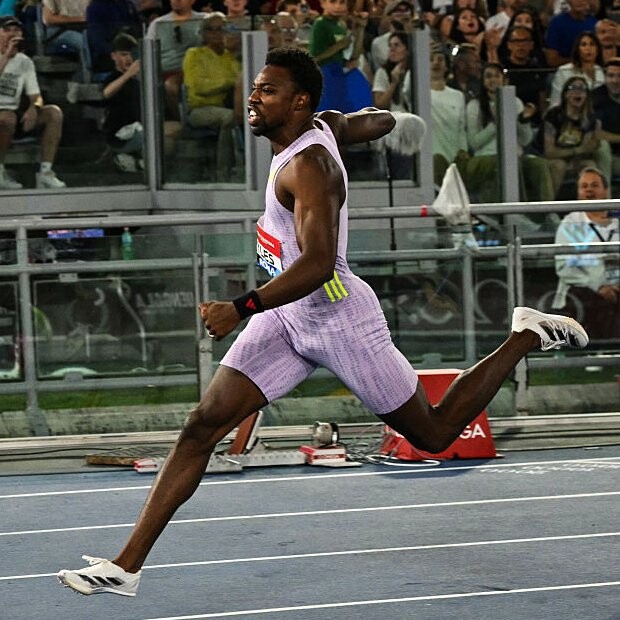
The American sprint superstar produced a flawless display of speed and power, stopping the clock at 14.67 (0.0) to break the previous world best mark of 14.92 set by Jamaica’s Kishane Thompson.
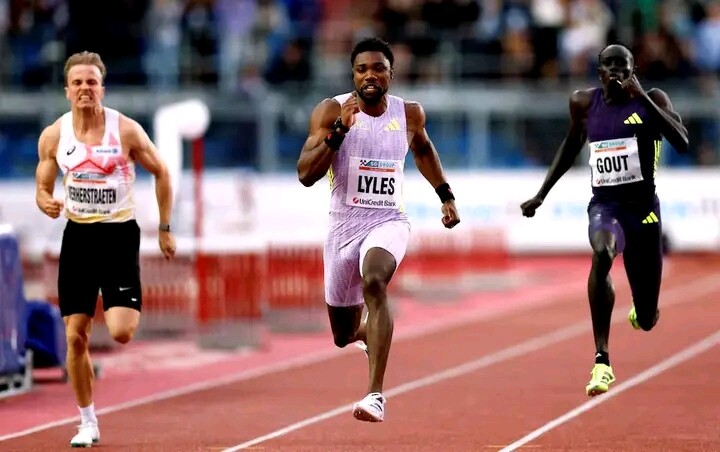
Lyles’ victory came in a high-quality field that saw South Africa’s Sinesipho Dambile push him all the way, finishing second in an impressive 14.78 seconds. Australia’s teenage sensation Gout Gout continued to show why he is regarded as one of the sport’s brightest young talents, completing the podium with a remarkable 14.96.
The 150m race, which combines the explosive acceleration of the 100m with the speed endurance required for the 200m, provided another opportunity for Lyles to showcase his rare sprinting ability.
Known for his dominance over 200m and his Olympic success, Lyles continues to expand his legacy with performances that underline his status as one of the greatest sprinters of his generation.
The record-breaking run in Ostrava adds another historic chapter to Lyles’ career and sends a powerful message ahead of the major international competitions ahead.
by Erick Cheruiyot for My Best Runs.
Login to leave a comment
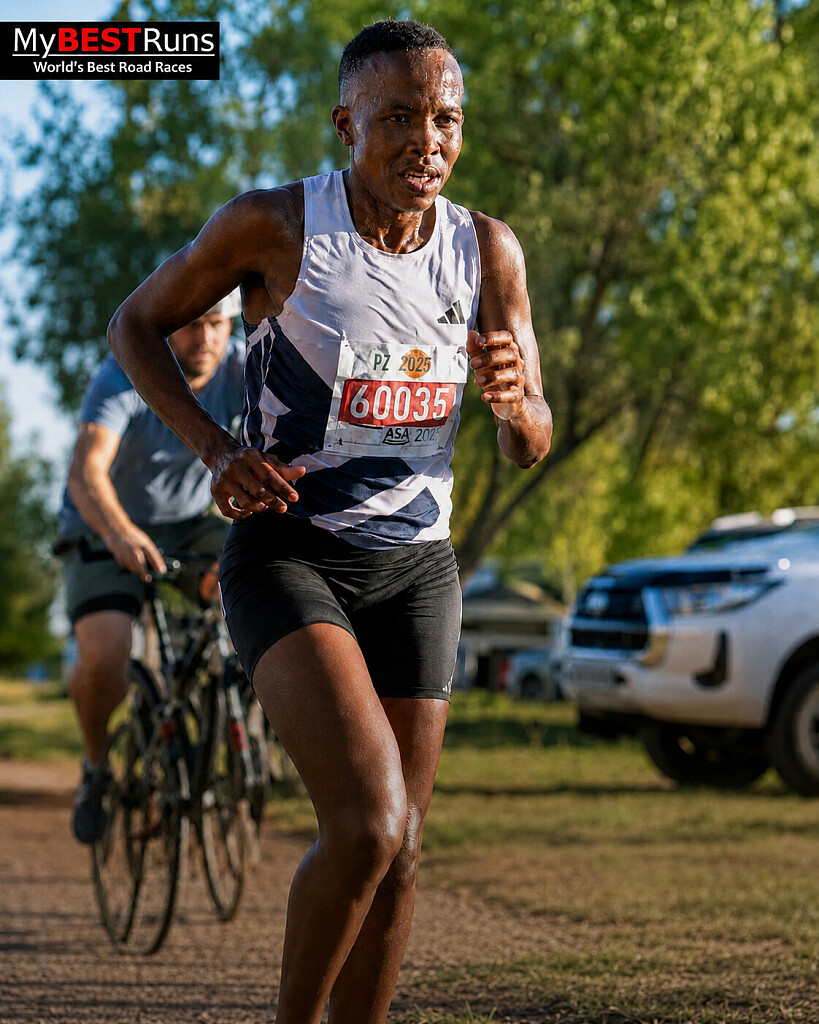
Nobukhosi Tshuma’s Comrades Breakthrough: Zimbabwe’s New Ultra-Distance Star Announces Herself to the World
The 2026 Comrades Marathon produced many remarkable performances, but few were as inspiring as the breakthrough run of Zimbabwe’s Nobukhosi Tshuma, who delivered the race of her life to claim a stunning second-place finish in one of the most prestigious ultra-marathons on the planet.
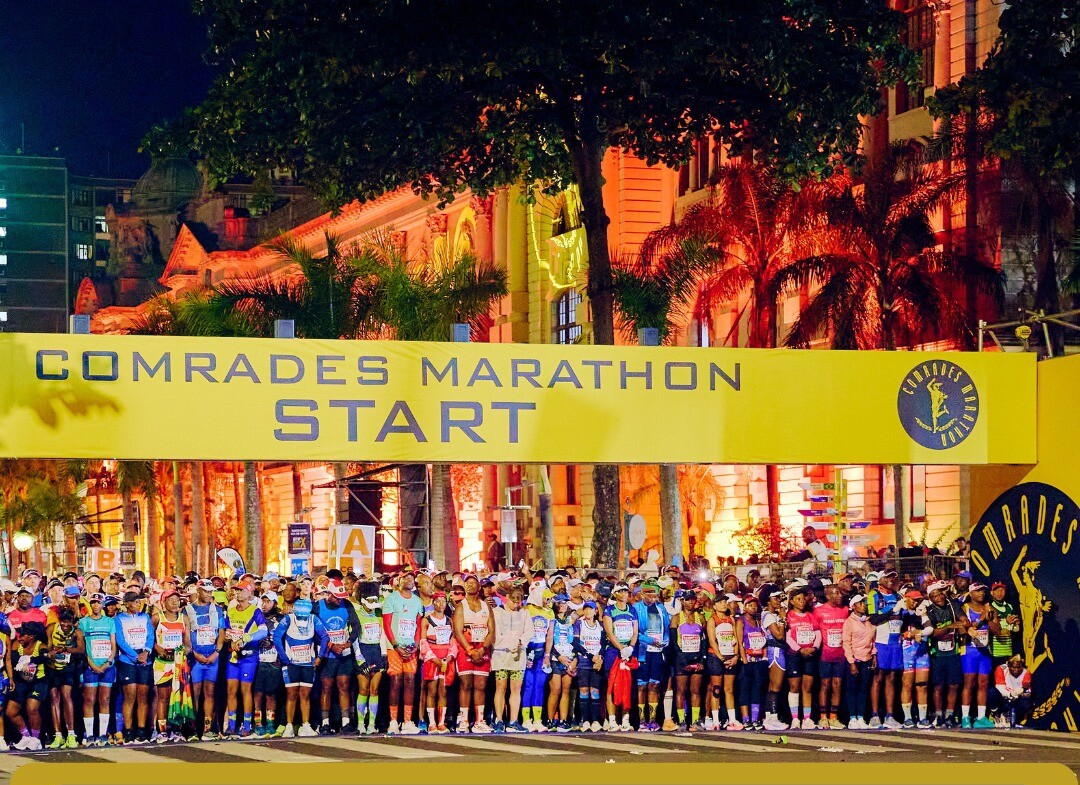
On the unforgiving 85.77-kilometre Up Run from Durban to Pietermaritzburg, Tshuma crossed the finish line in an outstanding 5:53:36, finishing behind only South African legend Gerda Steyn and ahead of a world-class field packed with proven marathon and ultra-distance talent.
For Zimbabwean distance running, it was a landmark moment.
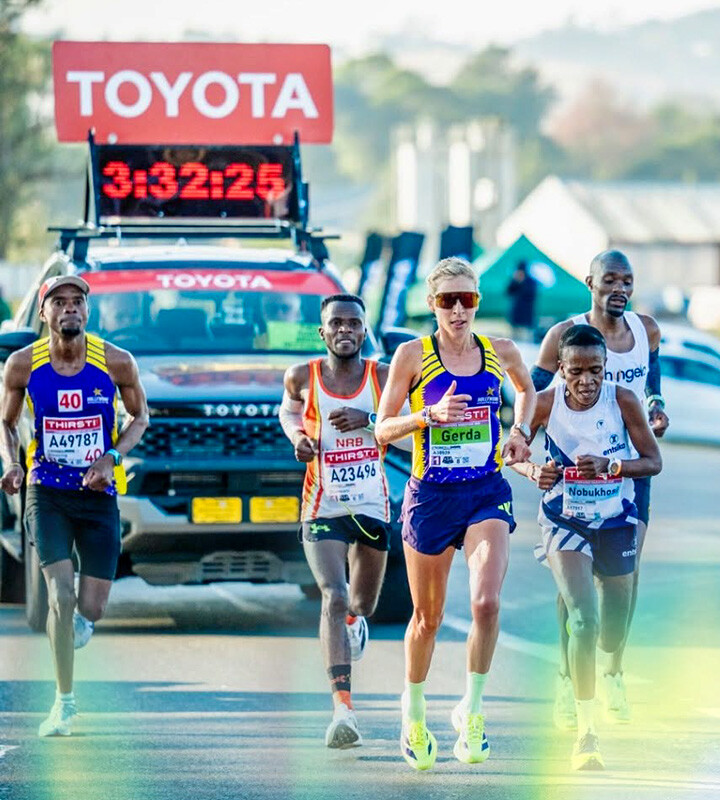
The Comrades Marathon is not a race that rewards luck or circumstance. It is a relentless examination of endurance, patience, strength, and mental resilience. Every athlete who reaches the podium must conquer thousands of metres of climbing, punishing gradients, and nearly six hours of sustained effort. Tshuma did exactly that, producing one of the finest performances ever recorded by a Zimbabwean woman at the iconic race.
While Steyn once again demonstrated why she remains the undisputed queen of Comrades, much of the attention turned to the athlete who chased her home. Tshuma ran with confidence, composure, and remarkable determination, refusing to be intimidated by a field that included some of the strongest ultra-runners in South Africa and beyond.
Perhaps most impressive was her ability to withstand the pressure from behind. South Africa’s Irvette van Zyl, a multiple-time Olympian and one of the country's most accomplished road runners, was among the athletes battling for the podium. Yet Tshuma never surrendered her position, matching experience with courage as the kilometres ticked away.
The Up Run is widely regarded as one of the toughest challenges in road running. It demands intelligent pacing and extraordinary physical preparation. Countless athletes have seen their ambitions unravel on its steep ascents. Tshuma, however, appeared to grow stronger as the race progressed, managing the course with maturity beyond her years and proving she belonged among the elite.
Her runner-up finish is more than just a personal achievement. It represents a significant moment for Zimbabwean athletics, showcasing the country's growing presence in ultra-distance running and demonstrating that its athletes can compete with the very best on the biggest stages.
In a race defined by suffering and perseverance, Tshuma delivered a performance that combined both. She earned every kilometre, every minute, and every accolade that came with standing on the Comrades podium.
The result firmly establishes her as one of Africa’s rising ultra-distance stars and places her name on the global endurance running map. For many fans, 2026 may be remembered as the year Gerda Steyn won another Comrades title. But it may also be remembered as the day Nobukhosi Tshuma announced herself to the world.
Zimbabwe has a new running heroine, and the future suddenly looks very exciting.
by Erick Cheruiyot for My Best Runs.
Login to leave a comment
Comrades Marathon
Arguably the greatest ultra marathon in the world where athletes come from all over the world to combine muscle and mental strength to conquer the approx 90kilometers between the cities of Pietermaritzburg and Durban, the event owes its beginnings to the vision of one man, World War I veteran Vic Clapham. A soldier, a dreamer, who had campaigned in East...
more...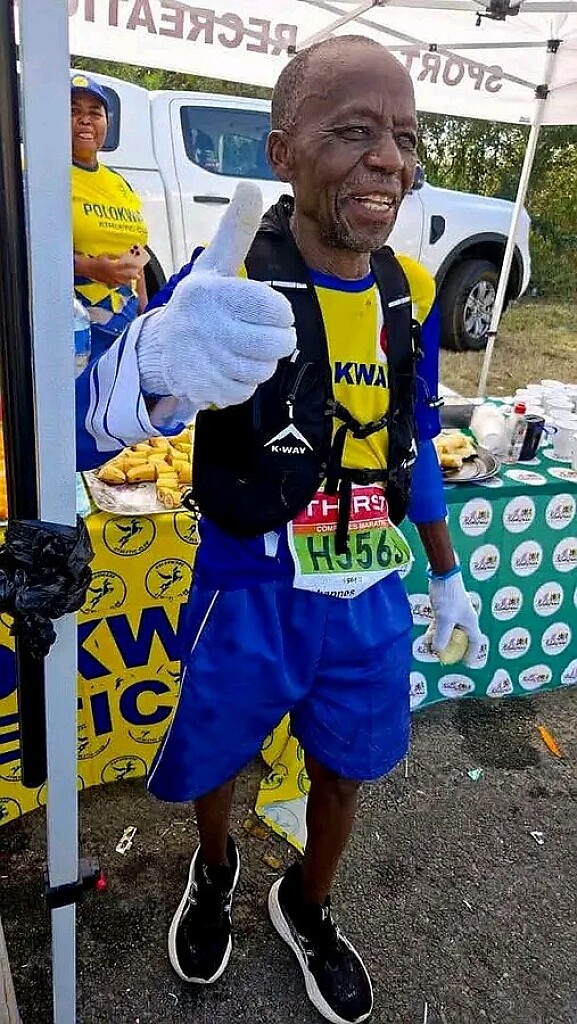
84 and Unstoppable: Johannes Mosehla's Historic Comrades Marathon Journey Continues to Inspire South Africa
Some records are measured in minutes and seconds. Others are measured in courage, perseverance, and an unwavering belief that age should never define human potential.
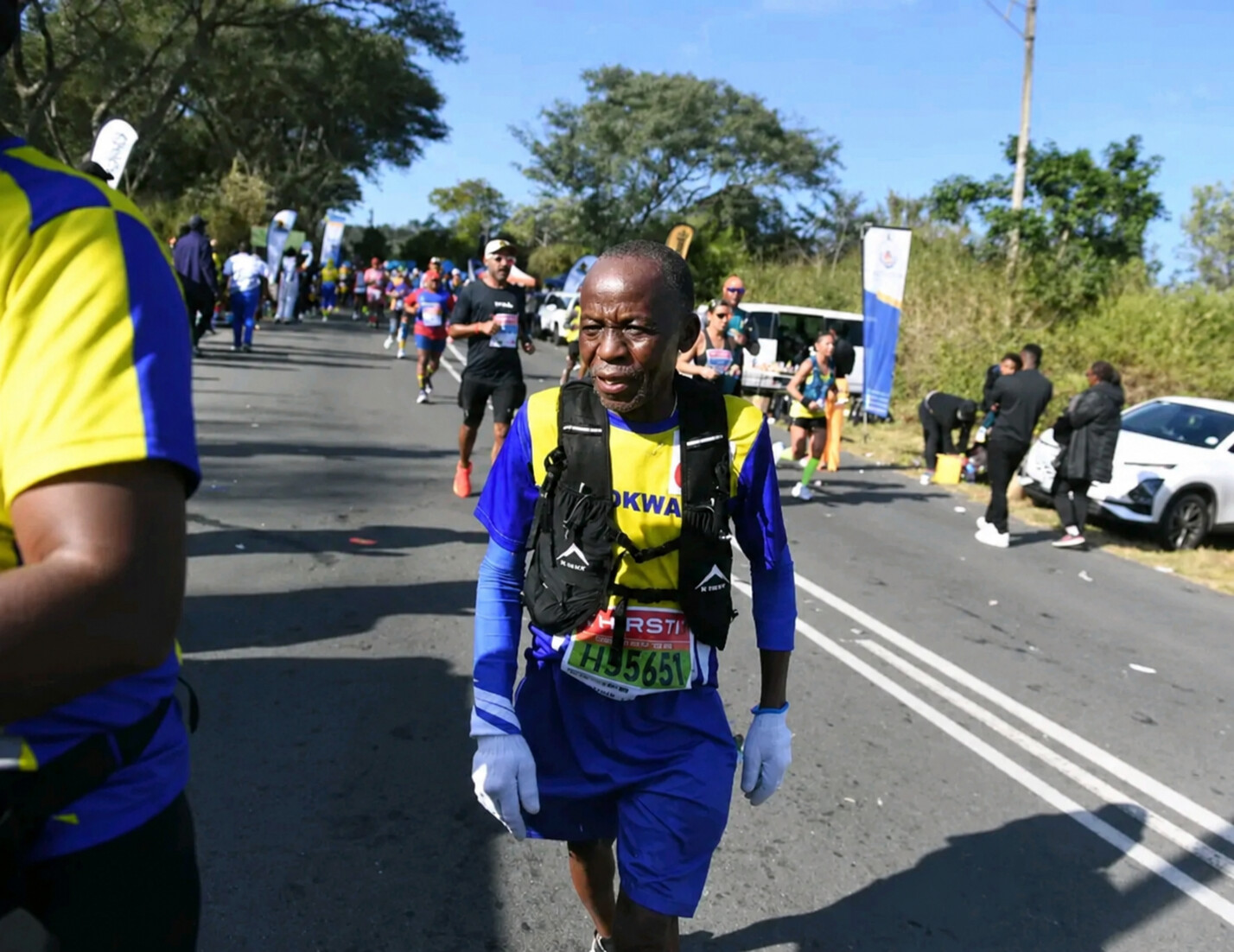
At 84 years old, South Africa's Johannes Mosehla has once again achieved what many thought impossible, becoming the oldest finisher in the history of the Comrades Marathon for a third consecutive time. Crossing the finish line in an impressive 11:12:27, Mosehla completed the gruelling ultramarathon with nearly 50 minutes to spare before the official cutoff, proving that determination can outlast time itself.
The remarkable athlete from Polokwane, Limpopo, continues to redefine the limits of endurance. Having already set the age record at 81 in 2023 and extended it at 83 in 2025, he has now raised the bar once more at 84, adding another unforgettable chapter to one of the most inspiring stories in distance running.
Yet Mosehla's journey to Comrades greatness began long before his record-breaking finishes. He first discovered his passion for running in 1963 as a 21-year-old young man with big dreams. However, the social realities of the era denied him opportunities that many runners take for granted today. During the early 1980s, black athletes were not permitted to participate in the Comrades Marathon, forcing him to put his ambitions on hold.

Rather than allowing disappointment to defeat him, Mosehla remained patient. He continued running, joined the Polokwane Athletic Club, and quietly prepared for the day when his opportunity would finally come.
When that chance arrived, he embraced it wholeheartedly.
Since making his Comrades debut, Mosehla has become a symbol of consistency and resilience. Remarkably, he has completed every Comrades Marathon he has entered since 2016, a streak that reflects not only physical endurance but also extraordinary discipline and commitment.
His approach remains refreshingly simple. He trains three times a week to keep his body strong while allowing adequate recovery. Despite tackling one of the world's most demanding ultramarathons, he believes in working smart rather than chasing excessive mileage.
Asked about the race itself, Mosehla admits he prefers the famous Down Run, joking that he performs better because he is lighter. Even after decades of running, the notorious Polly Shorts climb remains his toughest challenge, a reminder that every athlete, regardless of age or experience, still faces obstacles to overcome.
What stands out most, however, is his attitude toward the future. While many people his age have long since retired from competitive sport, Mosehla has no intention of stepping away. When asked about retirement, his response was simple and powerful: he is not thinking about it.
That mindset may be the secret behind his enduring success.
In an era obsessed with youth, Johannes Mosehla offers a different perspective. His story is not merely about running marathons; it is about patience rewarded, barriers overcome, and the refusal to surrender dreams despite the passage of time.
At 84, he is still moving forward, still inspiring thousands, and still proving that greatness has no expiration date.
Johannes Mosehla is more than a Comrades finisher. He is a living reminder that the human spirit remains strongest when it refuses to give up.
by Erick Cheruiyot for My Best Runs.
Login to leave a comment
Comrades Marathon
Arguably the greatest ultra marathon in the world where athletes come from all over the world to combine muscle and mental strength to conquer the approx 90kilometers between the cities of Pietermaritzburg and Durban, the event owes its beginnings to the vision of one man, World War I veteran Vic Clapham. A soldier, a dreamer, who had campaigned in East...
more...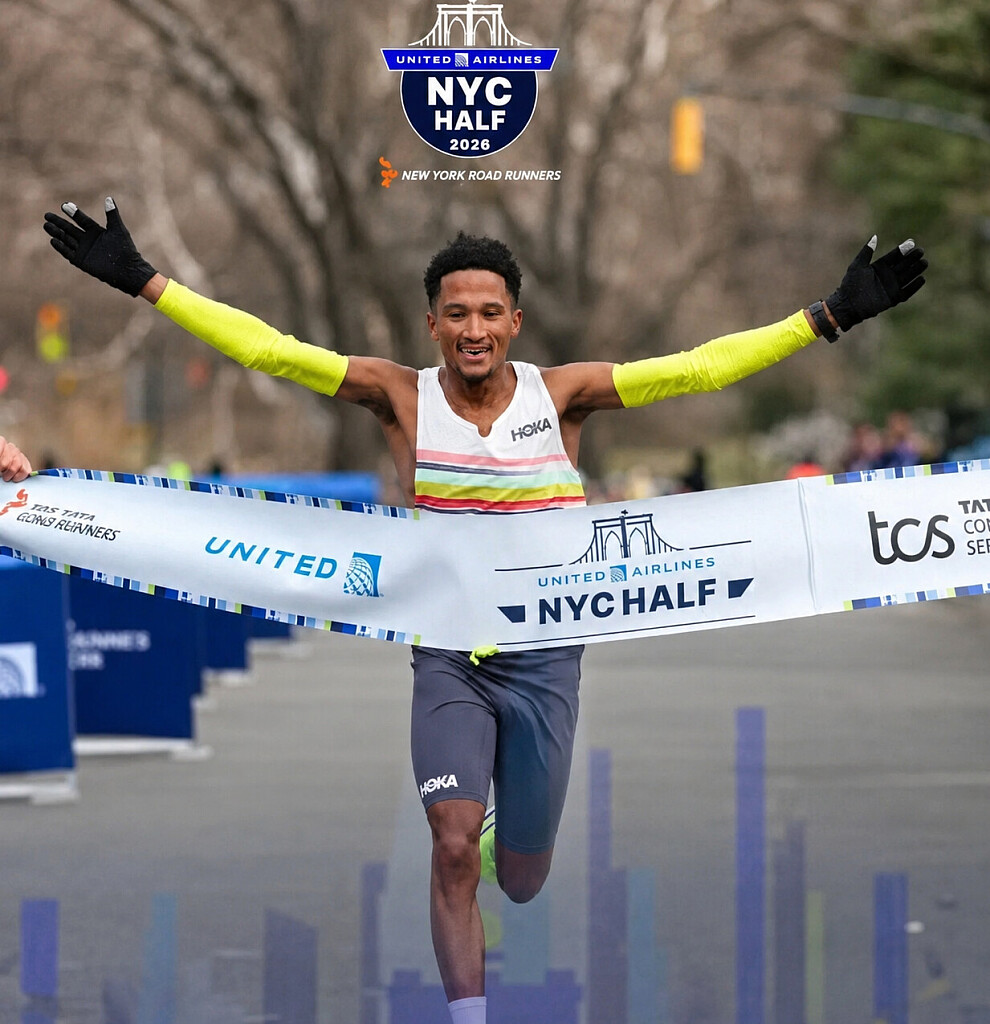
The Winning Move: How Adriaan Wildschutt Conquered New York with a Perfect Final 5K
Success in distance running is often decided long before the finish line comes into view. It is built through months of preparation, tactical discipline, and the ability to execute a plan when fatigue is at its greatest. For South Africa's Adriaan Wildschutt, one simple piece of advice from his coach became the foundation of a historic victory at the 2026 United Airlines NYC Half Marathon.
"My coach told me — if you want to win the race, you have to have the best last 5K."
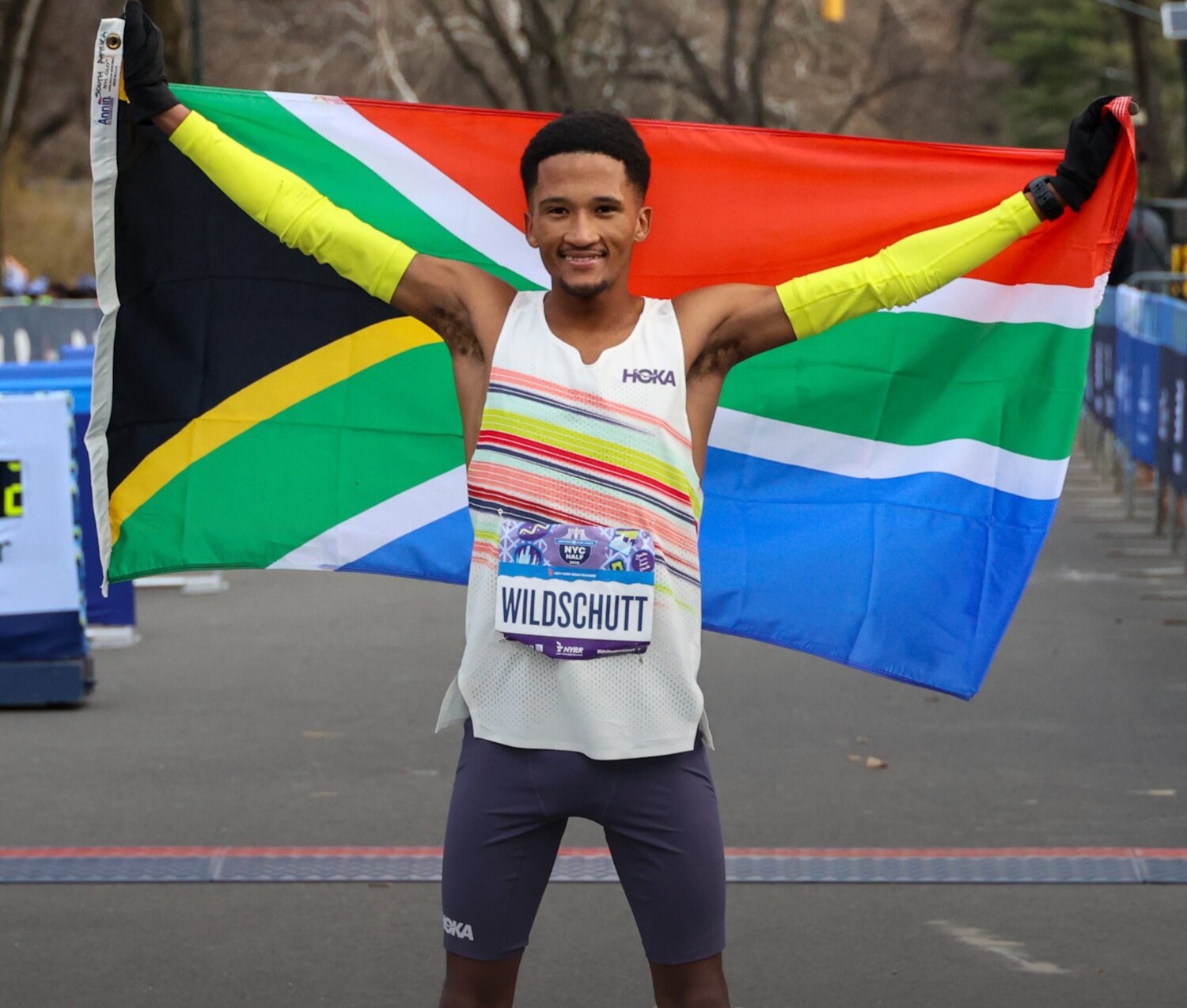
On March 15, 2026, Wildschutt turned those words into reality, becoming the first South African ever to win the prestigious New York City Half Marathon. Crossing the finish line in an impressive 59:30, the 27-year-old delivered a performance that announced his arrival among the world's elite road racers.
The victory was particularly significant because Wildschutt's reputation had been built primarily on the track. During a standout collegiate career at Florida State University, he captured two NCAA titles over 10,000 metres and established himself as one of the most accomplished distance runners South Africa has produced in recent years. Yet while his track credentials were unquestioned, his transition to road racing remained a work in progress.
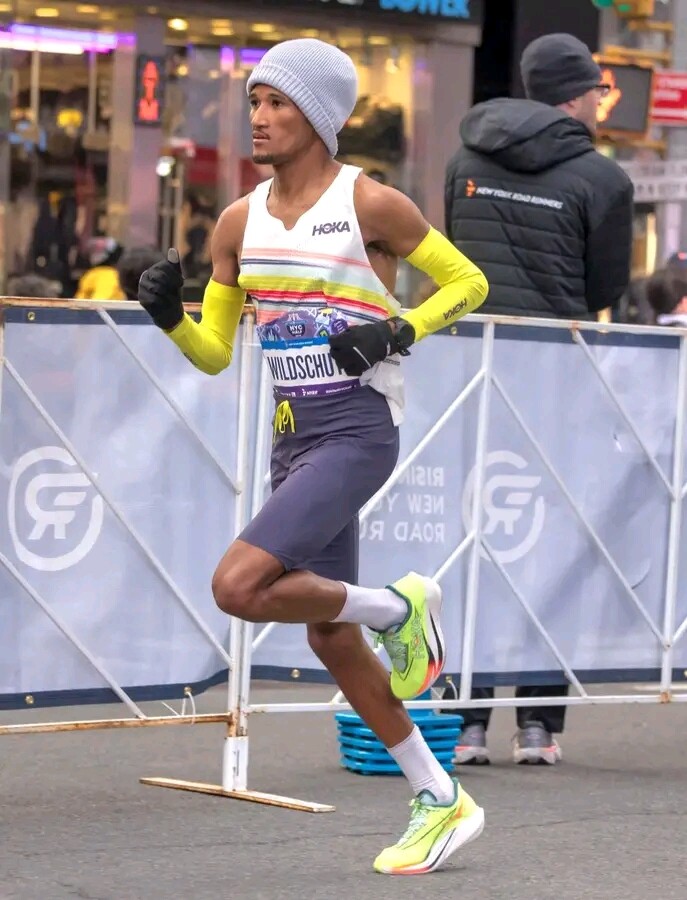
That transition began in earnest in 2024 when he made his marathon debut in Houston. The talent was obvious, but the question remained whether he could translate his track speed and endurance into major victories on the roads. New York provided a resounding answer.
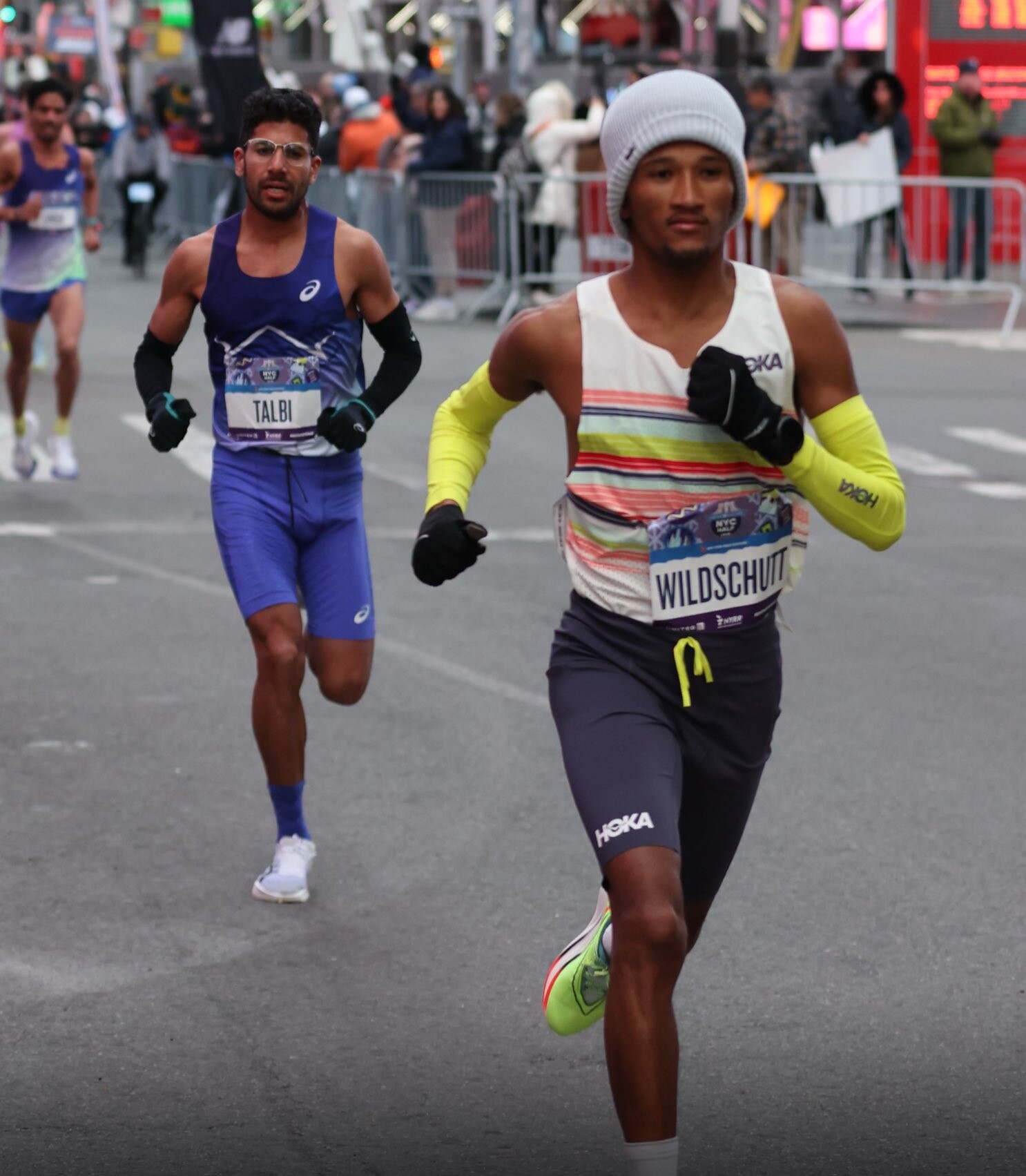
The NYC Half Marathon is far from a straightforward race. The opening stages through Central Park feature relentless rolling terrain that can punish athletes who become overly ambitious too early. From there, runners navigate the iconic streets of Manhattan, passing through Times Square before heading south toward the finish. Historically, many champions establish their winning position during the demanding first half of the race and then defend it over the closing kilometres.
Wildschutt chose a different approach.
Rather than forcing the pace early, he remained patient within the lead pack. He matched every move, conserved energy, and resisted the temptation to attack before the decisive moment arrived. Through 15 kilometres, he stayed composed while others tested one another.
Then came the moment his coach had prepared him for.
With approximately five kilometres remaining, Wildschutt unleashed a powerful surge on a slight uphill section. It was not a reckless acceleration but a calculated move born from confidence and preparation. The pace immediately stretched the lead group, and one by one his rivals lost contact. What had been a tightly contested race suddenly belonged to the South African.
From that point forward, Wildschutt never looked back.
The decisive attack showcased more than physical strength. It revealed tactical maturity and the ability to execute under pressure. Elite racing is often less about who feels strongest at halfway and more about who can deliver when exhaustion begins to cloud judgement. Wildschutt's final 5K demonstrated exactly that quality.
His triumph in New York represents more than a breakthrough victory. It is the strongest evidence yet that his future on the roads may be every bit as successful as his celebrated track career. Winning a major international half marathon against world-class competition requires a different skill set from championship track racing, and Wildschutt proved he possesses both.
For South African athletics, the achievement adds another milestone to a proud distance-running tradition. For Wildschutt himself, it may be remembered as the day his road-racing career truly arrived.
The advice was simple. Have the best last 5K.
In the streets of New York, Adriaan Wildschutt did exactly that—and made history in the process.
by Erick Cheruiyot for My Best Runs.
Login to leave a comment

United Airlines NYC Half-Marathon
The United Airlines NYC Half takes runners from around the city and the globe on a 13.1-mile tour of NYC. Led by a talent-packed roster of American and international elites, runners will stop traffic in the Big Apple this March! Runners will begin their journey on Prospect Park’s Center Drive before taking the race onto Brooklyn’s streets. For the third...
more...
Tshepo Tshite Stuns Olympic Champion Cole Hocker in Thrilling 3,000m Showdown at USATF LA Grand Prix
The men's 3,000m final at the 2026 USATF LA Grand Prix delivered one of the most electrifying distance races of the season, as South Africa's Tshepo Tshite produced a perfectly timed finishing surge to defeat Olympic and world champion Cole Hocker in a breathtaking battle to the line.
In front of an energized crowd, the race unfolded as a tactical contest before exploding into a furious sprint over the final lap. With several athletes still in contention as they entered the homestretch, Tshite demonstrated remarkable composure and racing intelligence, unleashing a devastating kick when it mattered most.
The South African crossed the finish line in a sensational 7:37.57, securing one of the biggest victories of his career and proving once again that he belongs among the world's elite distance runners.
Behind him, American star Cole Hocker fought relentlessly to defend home soil. The reigning Olympic and world champion responded to Tshite's move and closed hard in the final metres, but the finish line arrived just too soon. Hocker settled for second place in 7:37.77, only two-tenths of a second behind the winner after an unforgettable duel.
Mexico's Eduardo Herrera completed a memorable podium after producing one of the finest performances of his career. Running fearlessly against a world-class field, Herrera stayed in contention throughout the race before securing third place in 7:38.53, further establishing himself as one of the leading distance runners in the Americas.
The depth of the field was highlighted by Great Britain's David Mullarkey, who narrowly missed the podium by just five hundredths of a second. His fourth-place finish in 7:38.58 was rewarded with a new personal best, underlining the exceptional pace and competitiveness of the race.
Australia's Jackson Sharp rounded out the top five in 7:41.50, while Americans Dylan Jacobs and Kasey Knevelbaard finished sixth and seventh respectively. France's Romain Legendre completed the finishers in eighth place.
Unfortunately, the race also saw two athletes unable to reach the finish, with Great Britain's Sam Atkin and American Davis Bove both recording DNFs.
Beyond the times and positions, the race served as a reminder of why the 3,000m remains one of track and field's most compelling events. A world champion, an Olympic champion, emerging stars, and seasoned competitors all arrived at the final straight with victory still within reach. In the end, it was Tshite who found the decisive answer, producing a championship-caliber finish that left spectators on their feet and added another memorable chapter to the 2026 USATF LA Grand Prix.
by Erick Cheruiyot for My Best Runs.
Login to leave a comment
South Africa's Queen Of Ultra-Running Delivers Stunning Record Run To Reclaim Comrades Glory
History has been rewritten once more on the brutal climbs between Durban and Pietermaritzburg, as South Africa’s ultra-running icon Gerda Steyn delivered yet another performance for the ages at the Comrades Marathon.
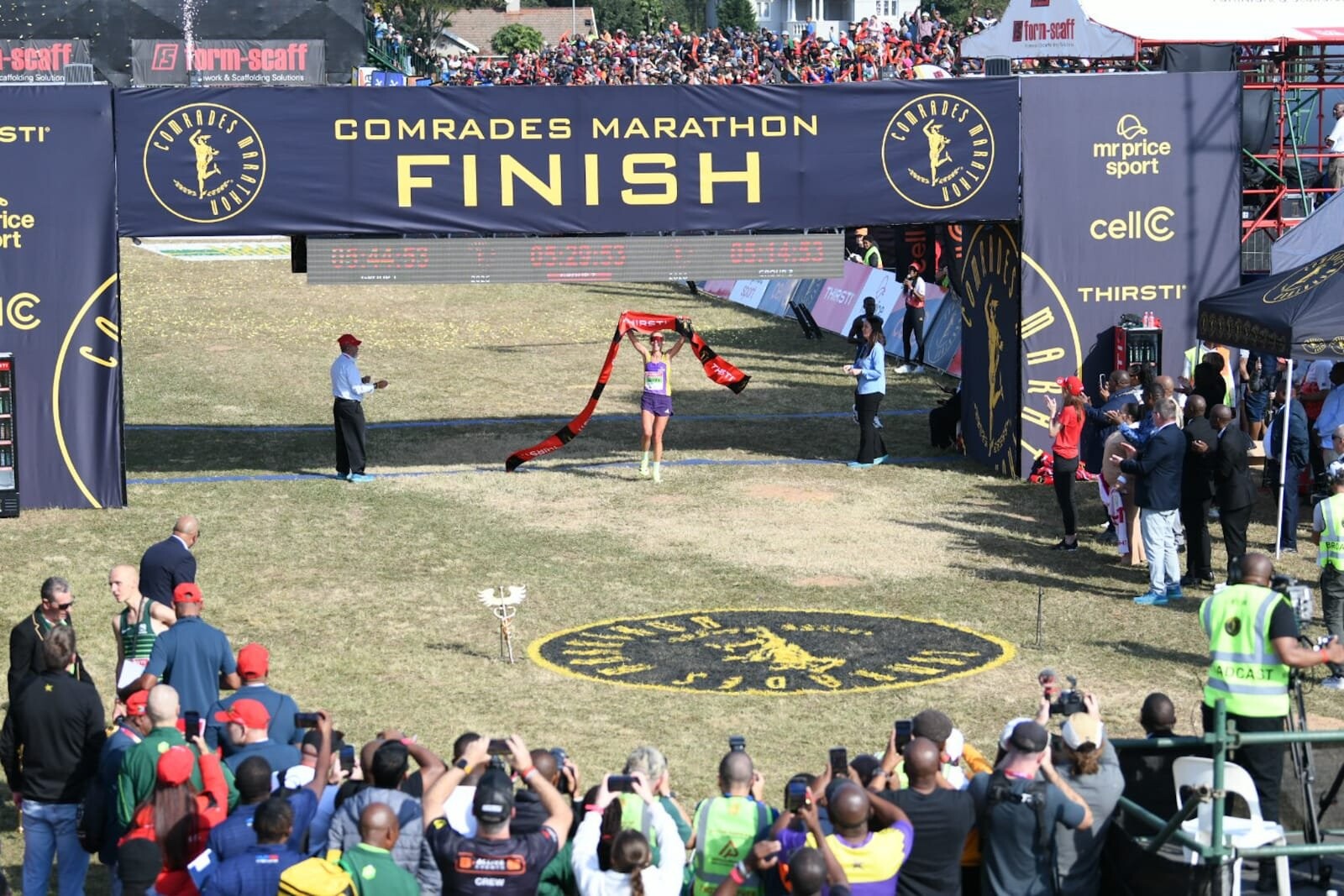
On a demanding up-run edition defined by punishing ascents, relentless rhythm changes, and unforgiving terrain, Steyn produced a masterclass in endurance running, powering away from the field and never looking back. With trademark composure and unshakable control, she surged into Pietermaritzburg alone, stopping the clock in a sensational 5:44:53, setting a new up-run course record and once again stamping her authority on the “Ultimate Human Race.”
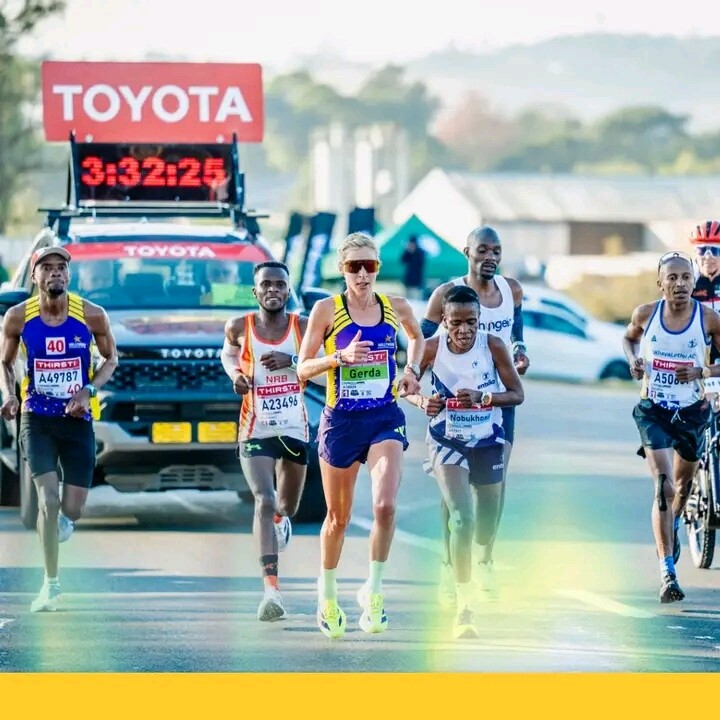
From the opening kilometres, Steyn looked composed and intentional, gradually dismantling the challenge of the hills one section at a time. As the race unfolded, her dominance became unmistakable—every climb conquered with precision, every kilometre reinforcing her status as the defining force of women’s ultra-running.
When she crossed the finish line, arms raised and that familiar calm smile breaking through the exhaustion, it was not just a victory—it was a statement. A reminder that greatness in this race is not only about strength, but about control, patience, and belief over nearly six hours of suffering.
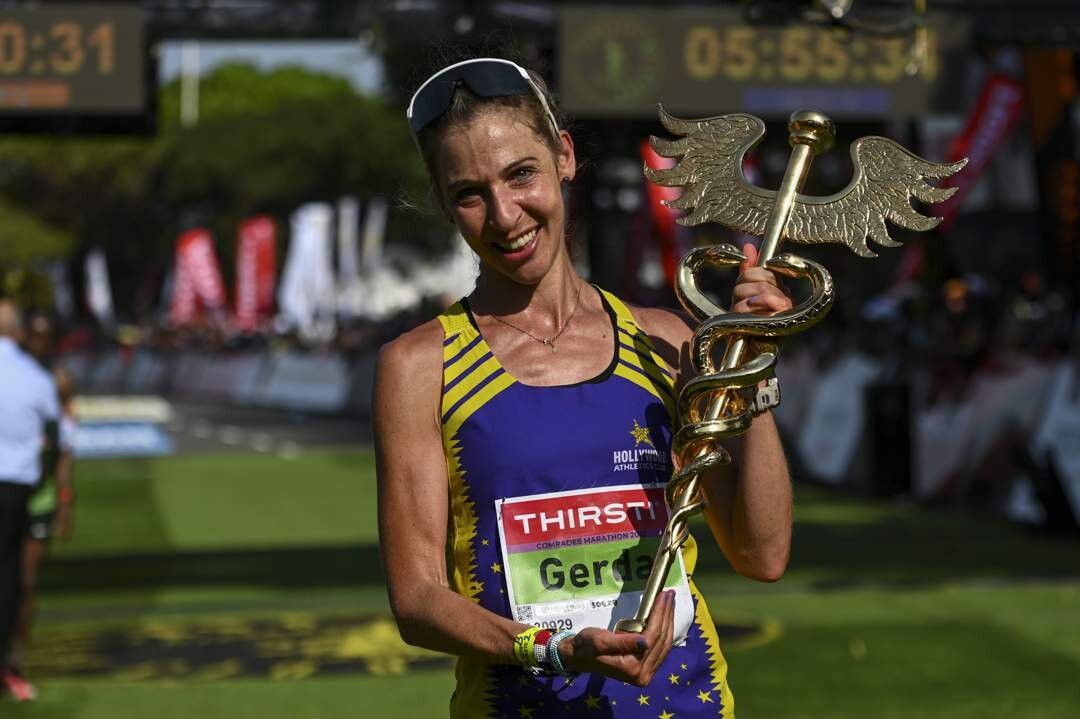
This latest triumph further deepens her legacy as the undisputed Queen of the Up-Run, a champion who continues to redefine what is possible on South Africa’s most iconic endurance stage.
This victory will be remembered not only for the record itself, but for the manner in which it was achieved—calm, controlled, and commanding from start to finish. Once again, Gerda Steyn has turned one of the world’s toughest road races into her personal stage, leaving fans, rivals, and the wider athletics world in awe of her consistency and greatness. As the dust settles on another historic Comrades up-run, one thing remains clear: her legacy is not just growing—it is accelerating into legend.
by Erick Cheruiyot for My Best Runs.
Login to leave a comment
Comrades Marathon
Arguably the greatest ultra marathon in the world where athletes come from all over the world to combine muscle and mental strength to conquer the approx 90kilometers between the cities of Pietermaritzburg and Durban, the event owes its beginnings to the vision of one man, World War I veteran Vic Clapham. A soldier, a dreamer, who had campaigned in East...
more...
Africa Makes History as Sanlam Cape Town Marathon Earns World Marathon Major Status
CAPE TOWN, South Africa — A landmark chapter in global distance running has been written, with the Sanlam Cape Town Marathon officially securing its place among the world's most prestigious road races. Following a rigorous assessment process, the event has been awarded Abbott World Marathon Majors status, becoming the eighth race in the renowned series and the first ever on African soil.
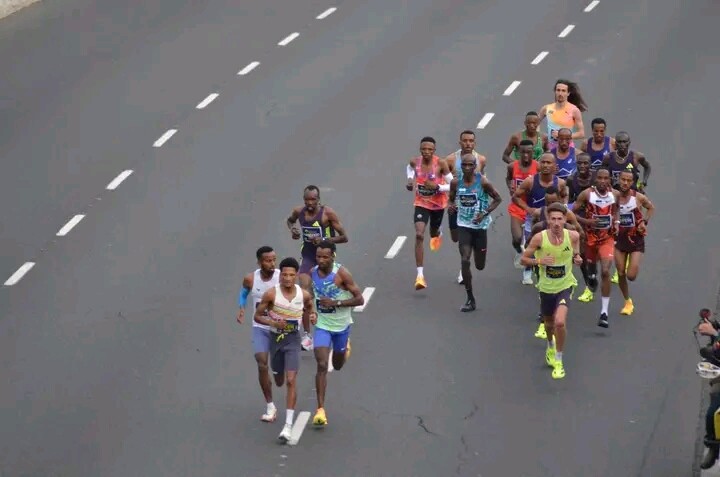
The announcement marks a historic breakthrough not only for South Africa but for the entire African continent, which has long been recognized as the heartbeat of distance running. For decades, African athletes have dominated marathon racing around the world. Now, Africa finally has a Major of its own.
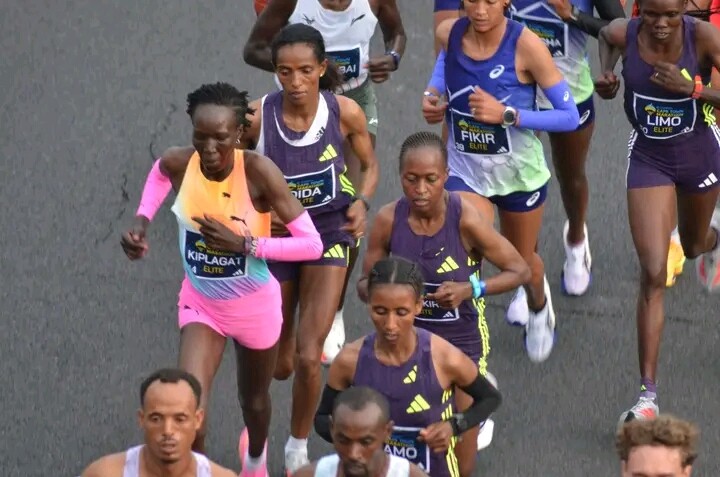
Beginning with the 2027 edition, scheduled for 22–23 May, the Sanlam Cape Town Marathon will join an elite group of races that includes Tokyo, Boston, London, Sydney, Berlin, Chicago, and New York City. The achievement elevates Cape Town into one of the most celebrated destinations in global marathon running and cements Africa's place at the highest level of the sport.
The journey to Major status has been years in the making, driven by relentless commitment from race organizers, athletes, volunteers, sponsors, running clubs, and supporters who believed in the vision of bringing a World Marathon Major to Africa. Through continuous improvements in race organization, international standards, athlete experience, and community engagement, the event steadily built a reputation worthy of the sport's grandest stage.
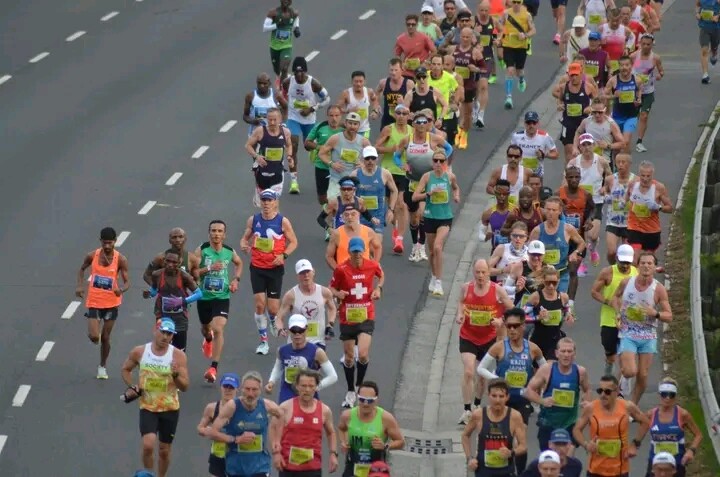
For many within the running community, the moment represents far more than the success of a single race. It is a victory for an entire continent whose passion for athletics has inspired generations. From elite champions to recreational runners, countless individuals have contributed to turning what once seemed an ambitious dream into reality.
The elevation of the Sanlam Cape Town Marathon is expected to boost international participation, tourism, and investment while providing a powerful platform to showcase Africa's culture, landscapes, and sporting excellence to a global audience.
As the countdown begins to May 2027, celebrations are already underway across the running world. The message resonating from Cape Town to every corner of Africa is clear: history has been made.
Africa's first Abbott World Marathon Major has arrived, and a new era for distance running has officially begun.
by Erick Cheruiyot for My Best Runs.
Login to leave a comment

Cape Town Marathon
The Sanlam Cape Town Marathon is a City Marathon held in Cape Town, South Africa, which is sponsored by Sanlam, the City of Cape Town and Vital Health Foods. The marathon is held on a fast and flat course, starting and finishing in Green Point, near the Cape Town Stadium. Prior to existing in its current format, the Cape Town...
more...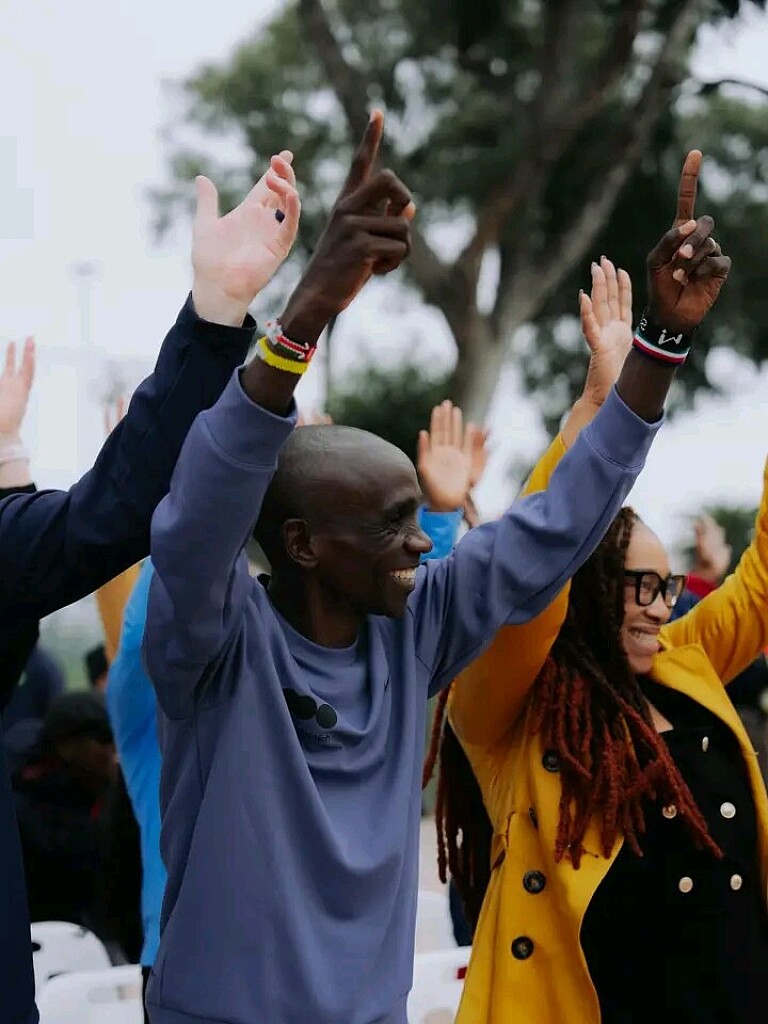
Eliud Kipchoge’s Legacy Beyond Running: Foundation Raises Over KSh 3.6 Million for Education and Environmental Projects
Eliud Kipchoge has spent years redefining what is possible on the roads of the world. From Olympic triumphs to historic marathon performances, the Kenyan icon has built a reputation as one of the greatest athletes of all time. Yet, his latest achievement has nothing to do with finish lines, records, or medals.
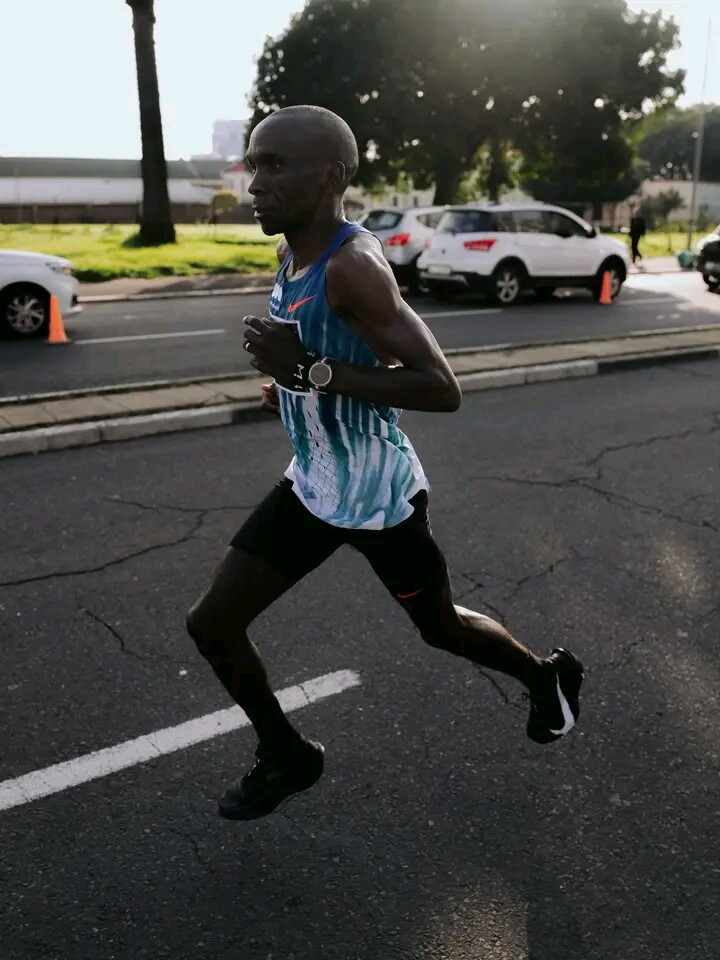
During the Cape Town Marathon weekend in South Africa, the Eliud Kipchoge Foundation successfully raised €24,591 (approximately KSh 3.68 million), with every shilling destined to support education and environmental initiatives across Africa.

The fundraising campaign attracted remarkable support from fans, partners, and well-wishers around the world. Contributions came through direct donations as well as a special charity auction featuring personal items associated with Kipchoge, highlighting the immense admiration and respect he continues to command both within and beyond the athletics community.
Expressing his gratitude, Kipchoge acknowledged the overwhelming generosity shown during the campaign.
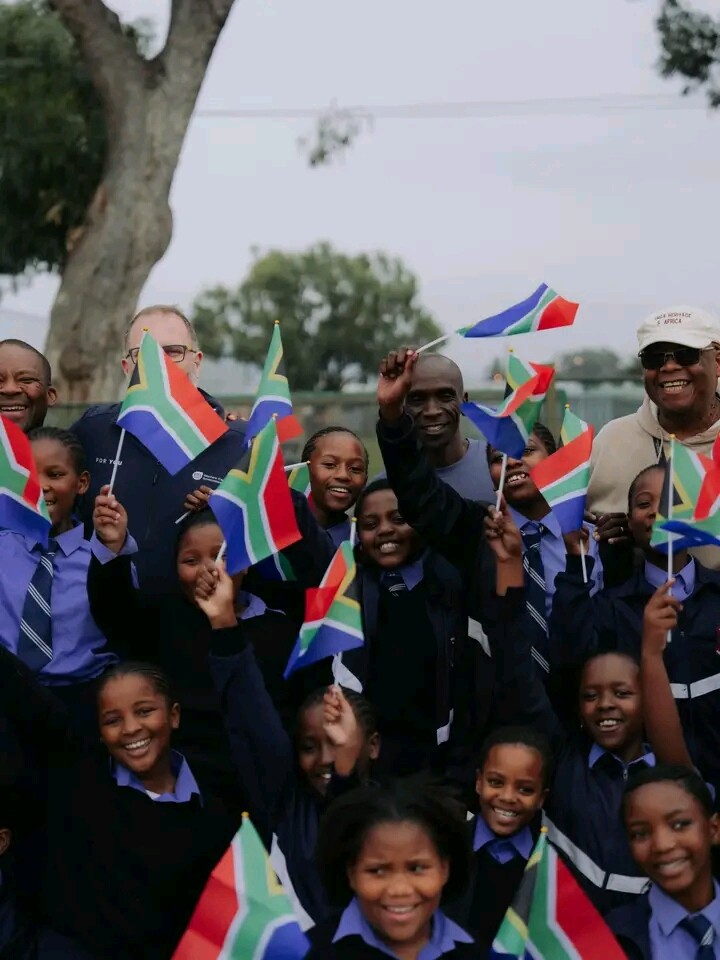
"We are blown away by the generosity from all of you who have donated through our website or bid on Eliud’s items through the auction. All proceeds will support education and environment projects in Africa and beyond. We can’t wait to show you how your contributions positively impact the lives of others. Asante sana."
The funds will help advance the foundation’s mission of creating opportunities through education while promoting environmental sustainability—two causes Kipchoge has consistently championed throughout his career.
For many athletes, success is measured by trophies and records. For Kipchoge, however, true greatness extends far beyond personal accomplishments. His commitment to empowering communities and investing in future generations reflects a vision that reaches well beyond sport.
The Cape Town fundraising success serves as another reminder that Kipchoge’s influence is not confined to marathon courses. While millions admire him for his extraordinary performances, countless others are now benefiting from his determination to create lasting positive change.
From inspiring the world with his running to transforming lives through meaningful action, Eliud Kipchoge continues to embody the philosophy that has defined his journey for years: no human is limited.
And as this latest initiative demonstrates, the impact of his legacy may ultimately stretch far beyond the finish line.
by Erick Cheruiyot for My Best Runs.
Login to leave a comment
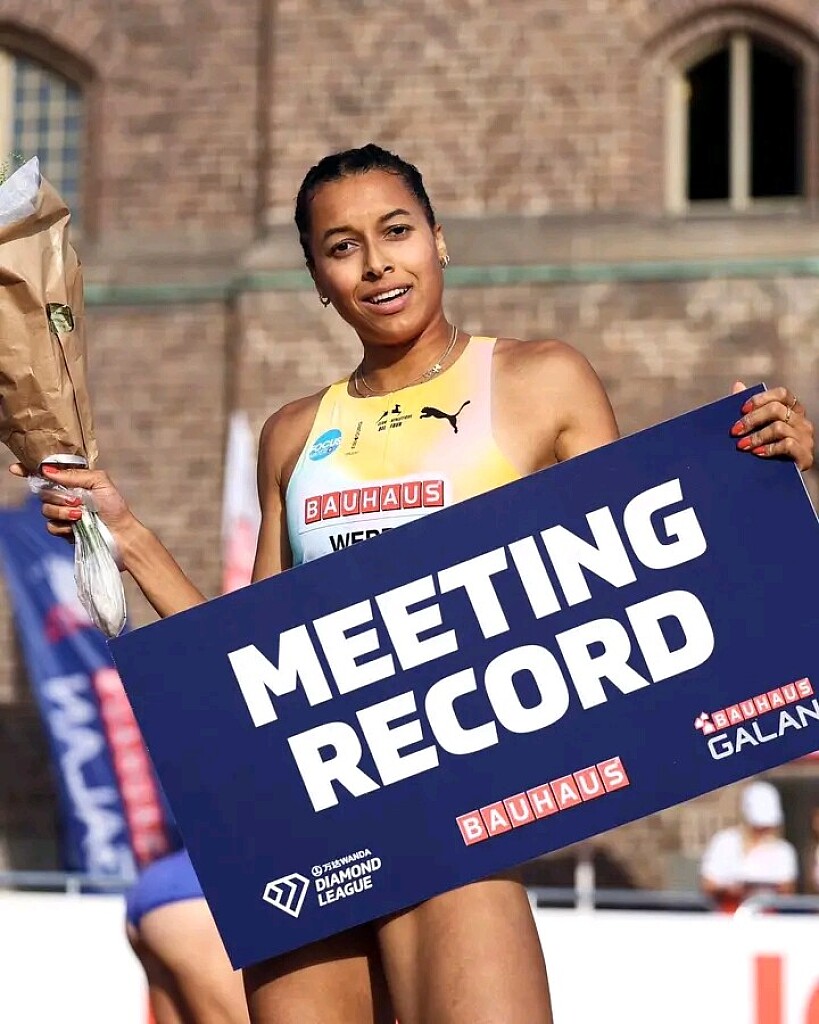
STOCKHOLM SHOCKWAVE: AUDREY WERRO BLASTS 1:53.98 IN ONE OF THE FASTEST 800M RACES EVER RUN
Stockholm delivered pure middle-distance history as the Wanda Diamond League witnessed a truly extraordinary women’s 800m—one that will be remembered as one of the fastest races in the event’s modern era.
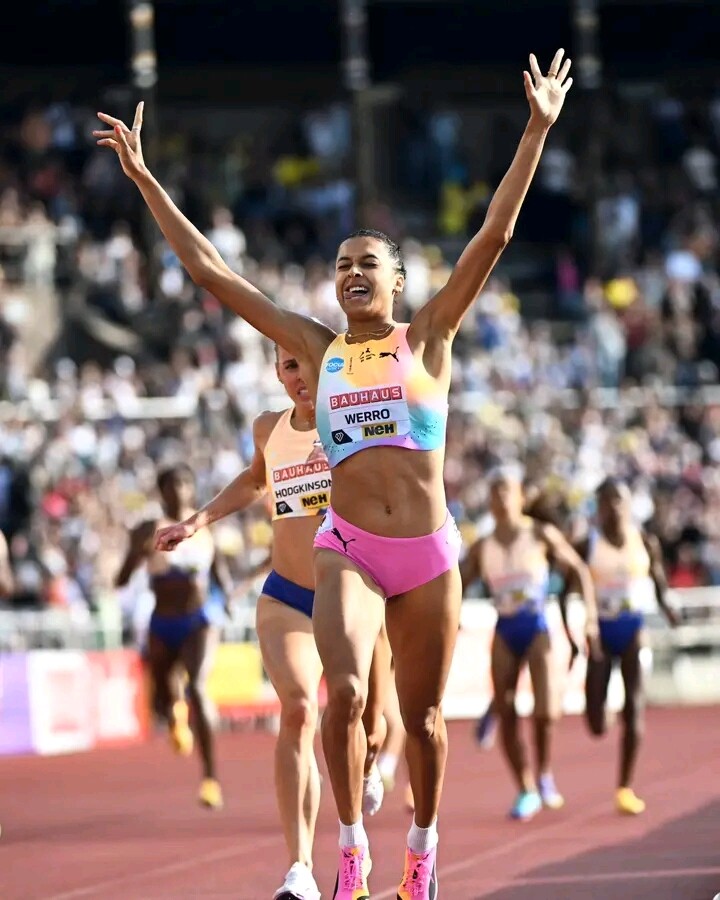
Switzerland’s rising star Audrey Werro produced the performance of her life, storming to victory in a breathtaking 1:53.98, a world-leading mark and a national record. In doing so, she became the third-fastest woman in history over 800m, coming within just 0.70 seconds of the legendary world record of 1:53.28 set by Jarmila Kratochvílová in 1983.
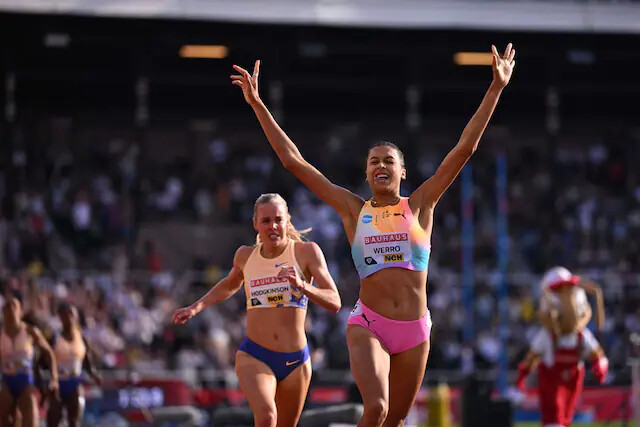
It was a fearless, perfectly timed run—controlled early, explosive down the back straight, and devastating in the final 200 metres as Werro pulled away in a finish of historic quality.
Right behind her, Keely Hodgkinson from Great Britain once again proved her consistency at the very highest level. The British star delivered a sensational 1:54.33, setting a new British national record and securing her place as the third-fastest woman in history. Despite finishing second, her performance was another statement of world-class dominance in a golden era for women’s 800m running.
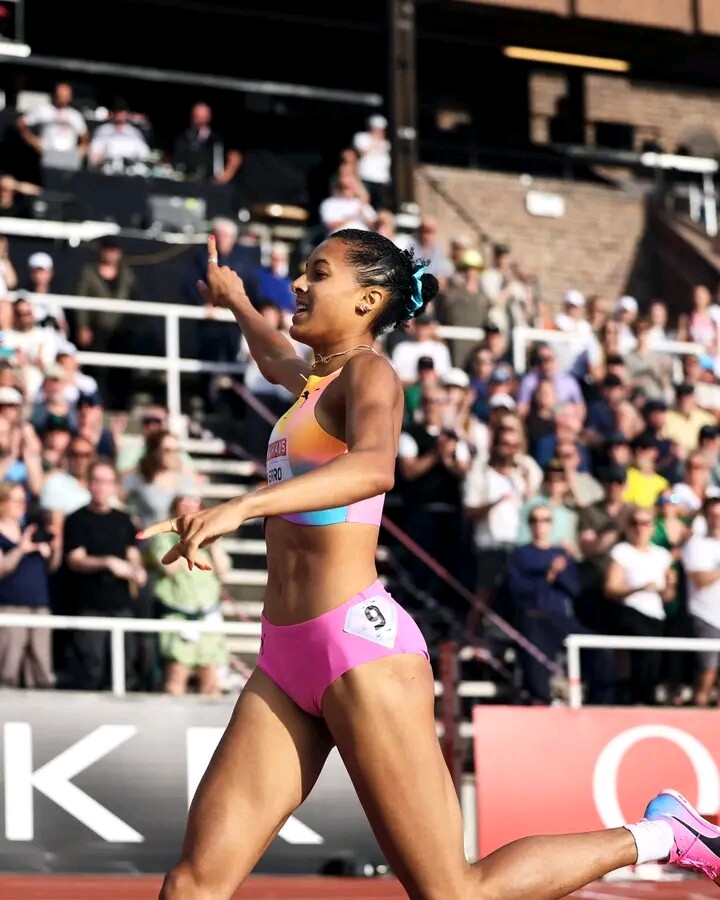
Behind the leading duo, the rest of the field produced high-quality performances in a race where almost every athlete was pushed to season’s or personal best levels.
Official Results – Women’s 800m (Stockholm DL)
1. Audrey Werro — Switzerland — 1:53.98 (WL, NR)
2. Keely Hodgkinson — Great Britain — 1:54.33 (NR)
3. Roisin Willis — United States — 1:57.56 (PB)
4. Anaïs Bourgoin — France — 1:57.68
5. Prudence Sekgodiso — South Africa — 1:57.70
6. Anna Wielgosz — Poland — 1:57.92 (PB)
7. Raevyn Rogers — United States — 1:57.94 (SB)
8. Sage Hurta-Klecker — United States — 1:58.26
9. Nigist Getachew — Ethiopia — 1:58.59
10. Pernille Karlsen Antonsen — Norway — 1:58.82 (PB)
11. Gabriela Gajanová — Slovakia — 2:02.88
DNF. Rachel Klopfenstein (Pacer)
From start to finish, the race unfolded at an unforgiving pace, with the front pack shredding expectations and rewriting the limits of women’s 800m running. Multiple athletes dipped under 1:58, highlighting just how exceptional the conditions and competition were.
As the dust settles in Stockholm, one question now rises above the rest: are we witnessing the beginning of a new era where the long-standing world record from 1983 finally comes under serious threat?
If this race is any indication, history may not only be under pressure—it may already be closing in.
by Erick Cheruiyot for My Best Runs.
Login to leave a comment
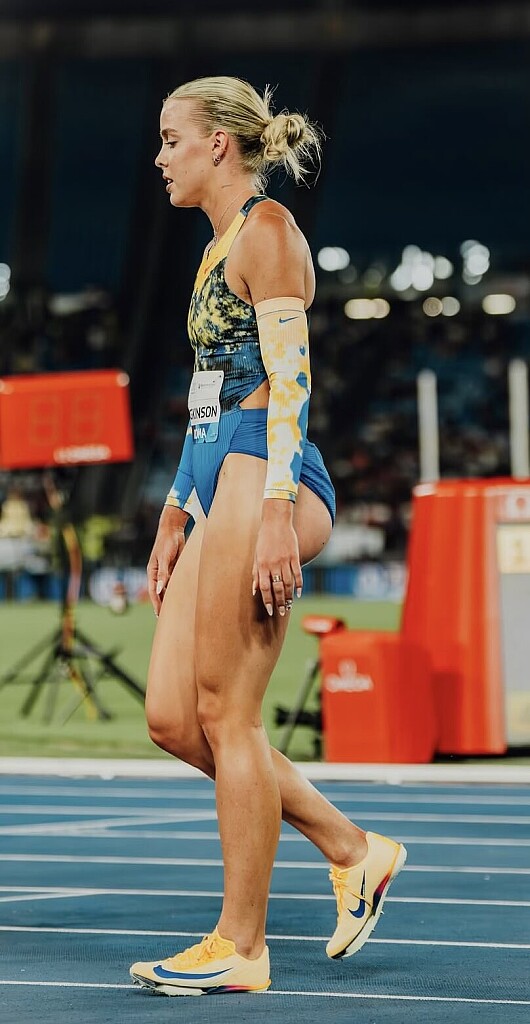
Stockholm Showdown: Keely Hodgkinson Leads Star-Packed Women's 800m Field
The spotlight will shine brightly on British middle-distance star Keely Hodgkinson when she returns to Diamond League competition at the Stockholm Diamond League on Sunday, June 7.
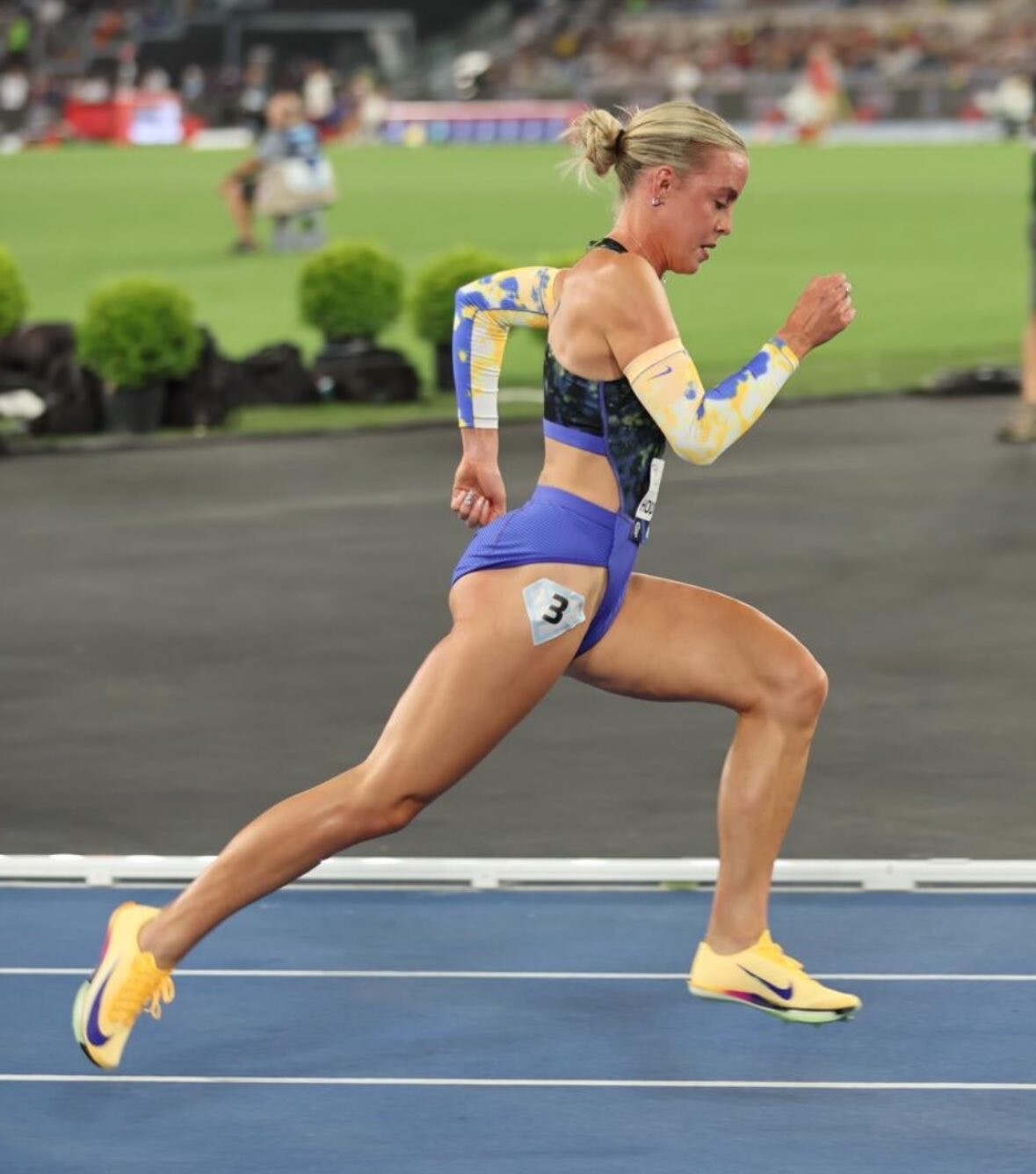
Fresh from another impressive start to her 2026 campaign, Hodgkinson heads to the Swedish capital as the marquee name in a highly competitive women's 800m field that features a blend of established contenders and rising talents from across the globe. The Olympic champion remains one of the most dominant forces in women's middle-distance running and will be eager to reinforce her status against a quality international lineup.
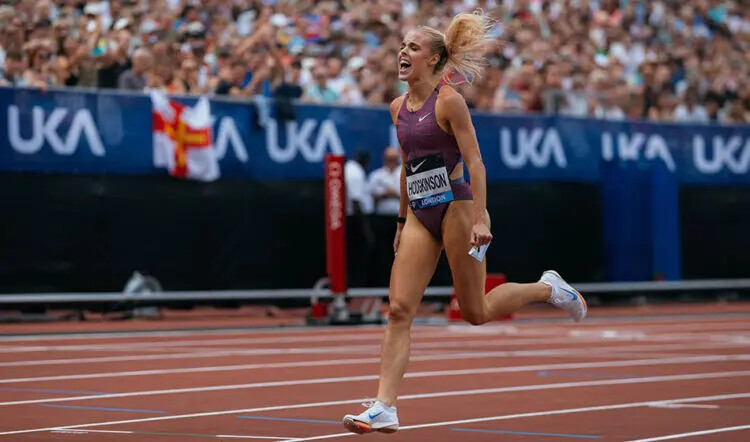
The race is expected to provide a stern examination of Hodgkinson's form. Among those looking to challenge the British star are fellow Briton Jemma Reekie, American duo Sage Hurta-Klecker and Raevyn Rogers, Switzerland's Audrey Werro, South Africa's Prudence Sekgodiso, and Ethiopia's Nigist Getachew.
With several athletes carrying strong credentials and ambitions of their own, the Stockholm showdown promises to be one of the standout women's races of the meeting. The event could also offer an early indication of how the global 800m hierarchy is shaping up as the season gathers momentum.
For Hodgkinson, the objective will be simple: continue building rhythm, sharpen her race fitness, and send another statement to her rivals. But with a deep field assembled in Stockholm, victory is far from guaranteed, setting the stage for what could be a thrilling two-lap battle in one of track and field's most competitive disciplines.
by Erick Cheruiyot for My Best Runs.
Login to leave a comment

Rome Belongs to Lyles: American Star Dominates Elite 100m Field
The men's 100m at the Rome Diamond League delivered exactly the spectacle fans had anticipated, with American sprint king Noah Lyles producing a commanding performance to secure victory in a season-best 9.88 seconds on Thursday night.
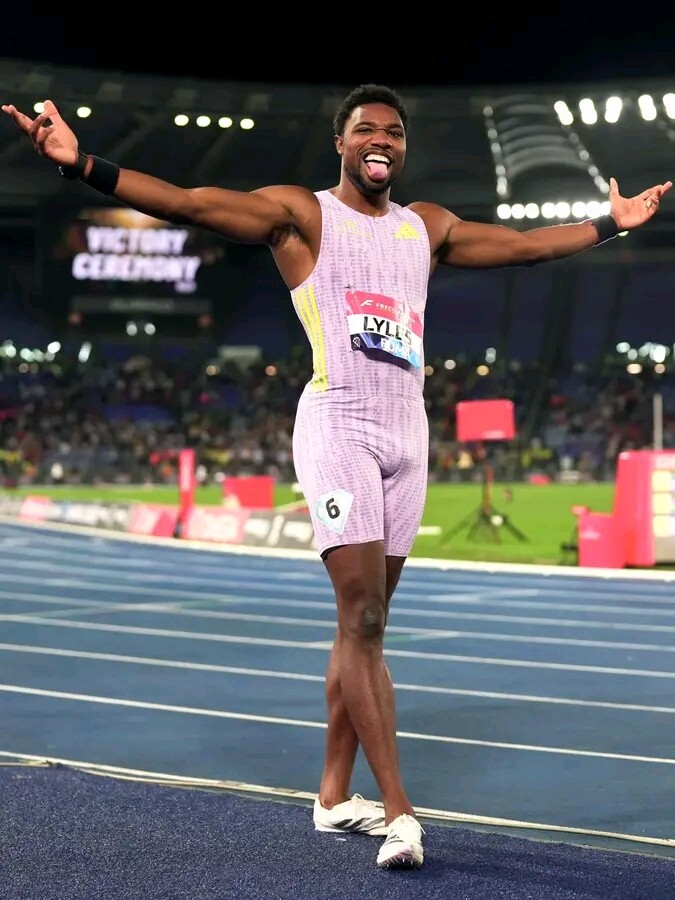
Lyles, the reigning global sprint superstar, showcased his trademark finishing power to pull away from a world-class field and claim his first Diamond League 100m win of the season. His 9.88 clocking underlined his growing form as he continues to build momentum toward the major championships later this year.
Behind him, Cameroon’s Emmanuel Eseme impressed with a strong run of 9.94 seconds to finish second, while Botswana’s Olympic champion Letsile Tebogo crossed the line third in 9.95 seconds after another consistent performance on the international circuit.
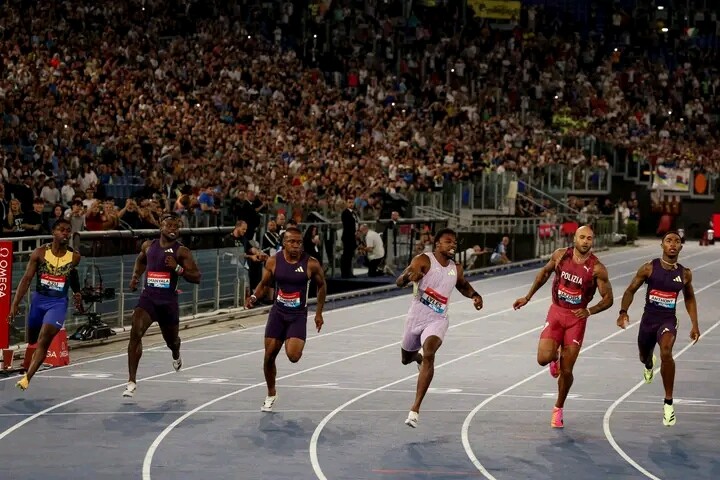
American rising star Jordan Anthony continued his remarkable breakthrough season by finishing fourth in 9.96 seconds, narrowly missing a place on the podium. Home favourite Lamont Marcell Jacobs delighted the Italian crowd with a sub-10-second run of 9.99 seconds to place fifth.
For Kenya's Ferdinand Omanyala, however, it proved to be a frustrating evening. After confidently promising fireworks ahead of the meeting and targeting consistent sub-10-second performances throughout the Diamond League season, Africa's fastest man struggled to find his rhythm. Omanyala finished eighth in 10.11 seconds, well below the standard he had hoped to produce.
South Africa's Akani Simbine took sixth in 10.03 seconds, while Jamaica's Ackeem Blake placed seventh in 10.06 seconds. Great Britain's Jeremiah Azu completed the field in ninth position with a time of 10.12 seconds.
Rome Diamond League 100m Results
1. Noah Lyles (USA) – 9.88 SB
2. Emmanuel Eseme (Cameroon) – 9.94
3. Letsile Tebogo (Botswana) – 9.95
4. Jordan Anthony (USA) – 9.96
5. Lamont Marcell Jacobs (Italy) – 9.99
6. Akani Simbine (South Africa) – 10.03
7. Ackeem Blake (Jamaica) – 10.06
8. Ferdinand Omanyala (Kenya) – 10.11
9. Jeremiah Azu (Great Britain) – 10.12
The result further strengthens Lyles' status as one of the leading contenders in global sprinting this season. With a season-best performance against a high-calibre field, the American sent a powerful statement that he is rounding into peak form at exactly the right time.
by Erick Cheruiyot for My Best Runs.
Login to leave a comment
"Fireworks Incoming": Omanyala Issues Bold Warning Ahead of Rome Diamond League Showdown
Kenya's sprint king Ferdinand Omanyala has sent a powerful message to his rivals ahead of one of the most anticipated 100m races of the season, declaring that fans should expect something special when he steps onto the track at the Rome Diamond League.
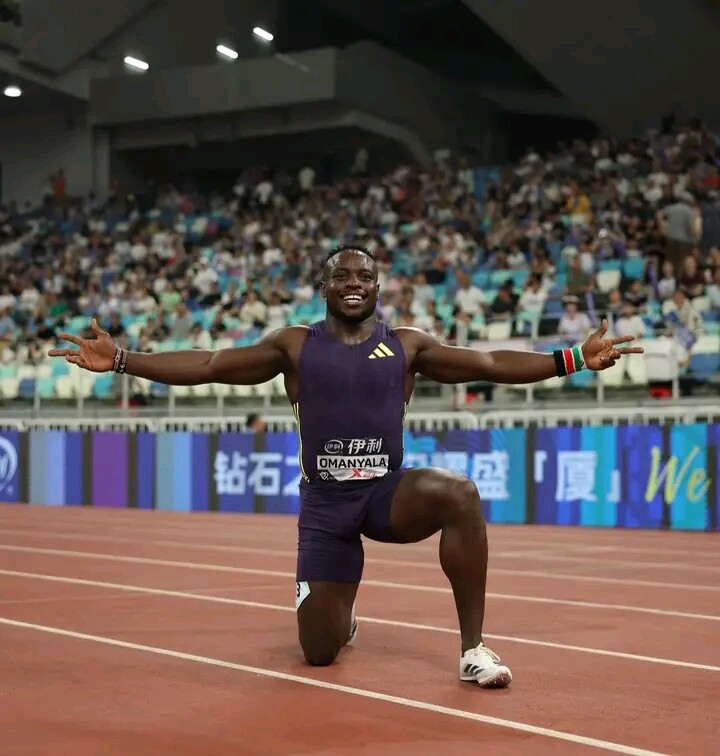
Speaking in an interview with Nation Sport ahead of the prestigious meeting in Rome, the African record holder made it clear that he is entering the race with renewed confidence and determination, insisting that the version of Omanyala the world has seen in previous seasons is no longer the same athlete.
"I am not the same Omanyala they are used to. It will be different. I promise you fireworks. The roof will blow off," he said, underlining his belief that his best performances are still ahead of him.

The Kenyan sprint sensation also reaffirmed his season-long objective of consistently breaking the coveted 10-second barrier, revealing that he is fully focused on delivering sub-10 performances throughout the Diamond League campaign.
His bold remarks have only heightened anticipation for the men's 100m showdown in Rome, where he is set to face an elite field featuring world champion Noah Lyles, Olympic champion Letsile Tebogo, and South African sprint star Akani Simbine.
The race promises to be one of the highlights of the meeting, bringing together some of the fastest men in the world in a contest that could produce exceptional times. For Omanyala, it is another opportunity to showcase his growth, challenge the very best, and strengthen his position among the global sprinting elite.
As the athletes prepare to take their marks, excitement continues to build around the Kenyan star. He has promised fireworks, and with a world-class field standing alongside him, the stage is perfectly set for a memorable night of sprinting in the Italian capital.
Whether his bold prediction comes to life remains to be seen, but one thing is certain: Omanyala is heading into Rome with confidence, ambition, and the belief that his fastest races are still ahead of him.
by Erick Cheruiyot for My Best Runs.
Login to leave a comment
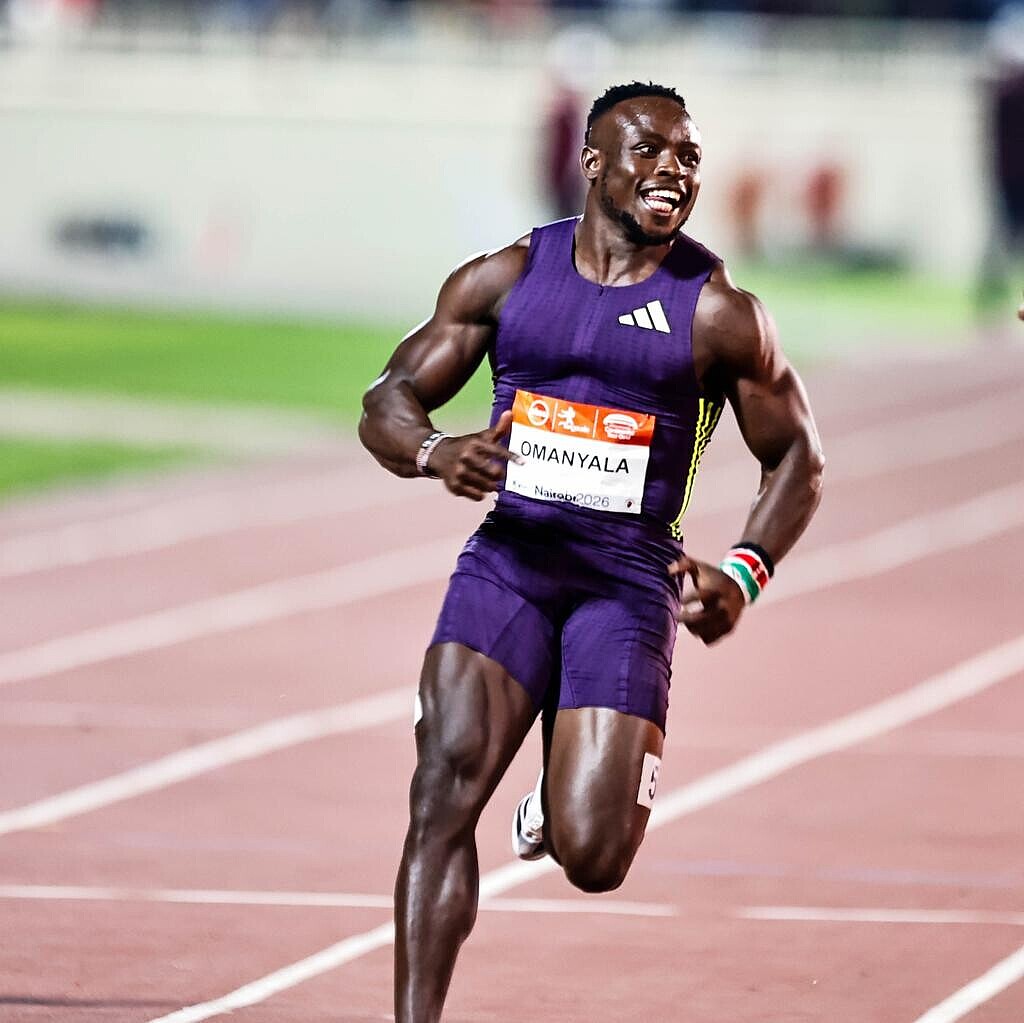
Rome Diamond League Set for a Sprint Showdown as Omanyala, Lyles, Tebogo and Jacobs Collide
The men's 100 metres at the 2026 Rome Diamond League is shaping up to be one of the most anticipated sprint races of the season, with an exceptional field featuring some of the fastest men in the world.
Scheduled for Thursday, June 4, at the iconic Stadio Olimpico in Rome, the race will bring together reigning stars, established champions and emerging talents in a contest that promises fireworks from the moment the gun goes off.
Kenya's Ferdinand Omanyala headlines a world-class lineup that includes American sprint sensation Noah Lyles, Botswana's Olympic champion Letsile Tebogo, Jamaica's explosive Ackeem Blake, South Africa's ever-consistent Akani Simbine and Italy's hometown hero Lamont Marcell Jacobs. With personal bests ranging from 9.77 to 9.97 seconds, the field is packed with athletes capable of producing something special on the Diamond League stage.
Omanyala, the African record holder with a blistering personal best of 9.77 seconds, arrives in Rome eager to continue his strong early-season form and prove he can challenge the very best on the global circuit. The Kenyan star has built a reputation as one of the fastest starters in world sprinting and will be looking to make a statement against an elite field.
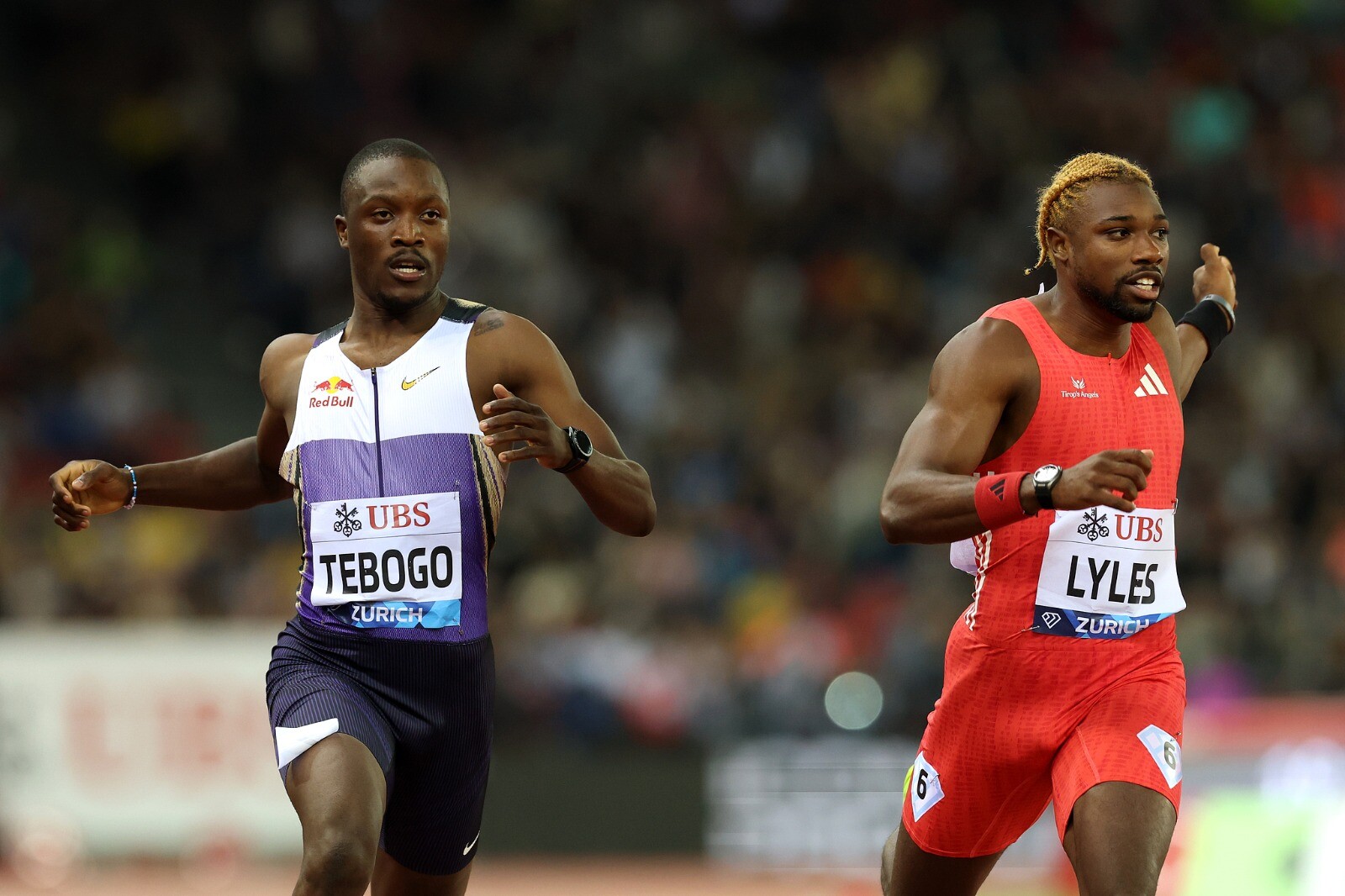
Standing in his way is world champion Noah Lyles, whose personal best of 9.79 seconds places him among the fastest athletes in history. The American remains one of the sport's biggest attractions and will be determined to add another Diamond League victory to his impressive résumé.
The race also marks a major test for Olympic champion Letsile Tebogo. The Botswanan star has rapidly become one of athletics' most exciting talents, while Ackeem Blake continues to establish himself as a serious contender on the international sprint scene.
Adding further intrigue is the presence of Italy's Lamont Marcell Jacobs. Competing on home soil, the Tokyo Olympic champion will enjoy passionate local support as he seeks to deliver a memorable performance in front of the Roman crowd.
South Africa's Akani Simbine, Cameroon's Emmanuel Eseme, Great Britain's Jeremiah Azu and rising American talent Jordan Anthony complete a field that boasts remarkable depth and quality.
Men's 100m Entry List – Rome Diamond League 2026
Ferdinand Omanyala (Kenya) – PB: 9.77
Noah Lyles (USA) – PB: 9.79
Lamont Marcell Jacobs (Italy) – PB: 9.80
Akani Simbine (South Africa) – PB: 9.82
Letsile Tebogo (Botswana) – PB: 9.86
Ackeem Blake (Jamaica) – PB: 9.88
Jordan Anthony (USA) – PB: 9.91
Emmanuel Eseme (Cameroon) – PB: 9.96
Jeremiah Azu (Great Britain) – PB: 9.97
With multiple national record holders, global champions and Olympic medal contenders sharing the same start line, the Rome Diamond League men's 100m could deliver one of the fastest races of the year. For sprint fans around the world, all eyes will be on Rome as a stellar cast battles for supremacy over athletics' blue-riband distance.
by Erick Cheruiyot for My Best Runs.
Login to leave a comment
Sharon Lokedi Returns to Boston Seeking Another Triumph at the 2026 B.A.A. 10K
The city of Boston is set to welcome back one of its most celebrated champions as Kenya’s Sharon Lokedi headlines a world-class field for the 2026 B.A.A. 10K presented by Mass General Brigham Cancer Institute on June 21.
Fresh from another remarkable victory at the Boston Marathon in April, Lokedi returns to the streets of Boston and Cambridge carrying both momentum and confidence as she aims to defend the title she captured in dominant fashion last year.
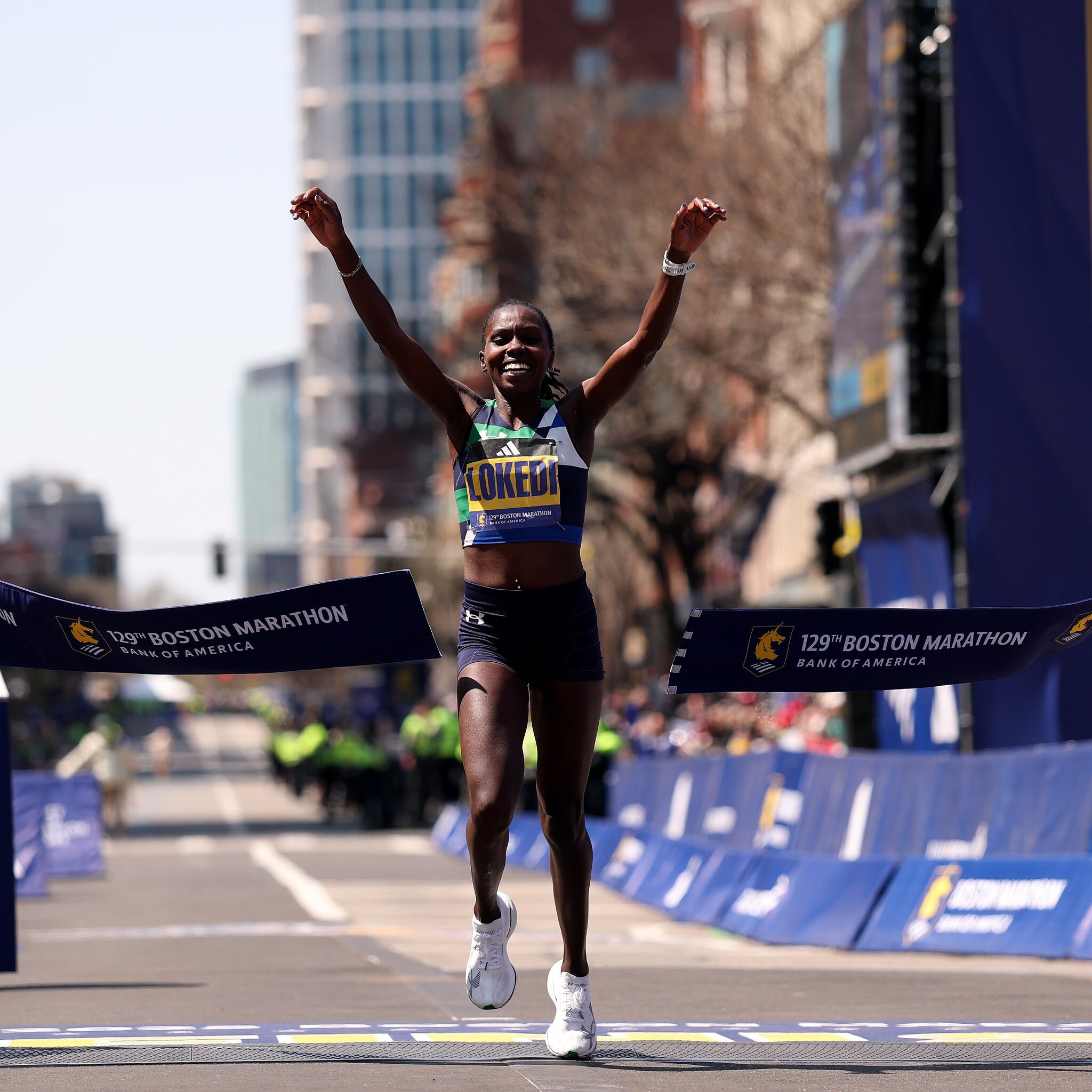
The two-time Boston Marathon champion has developed a special connection with the historic race city. In 2025, she produced a course-record performance of 2:17:22 to win the Boston Marathon before returning this year to claim another victory in 2:18:51, the second-fastest winning time in the event’s storied history. Her success has cemented her status as one of the premier road runners in the world.
Lokedi will be making her first competitive appearance since her marathon triumph and arrives as the reigning B.A.A. 10K champion after clocking 31:39 over the challenging 6.2-mile course in 2025.
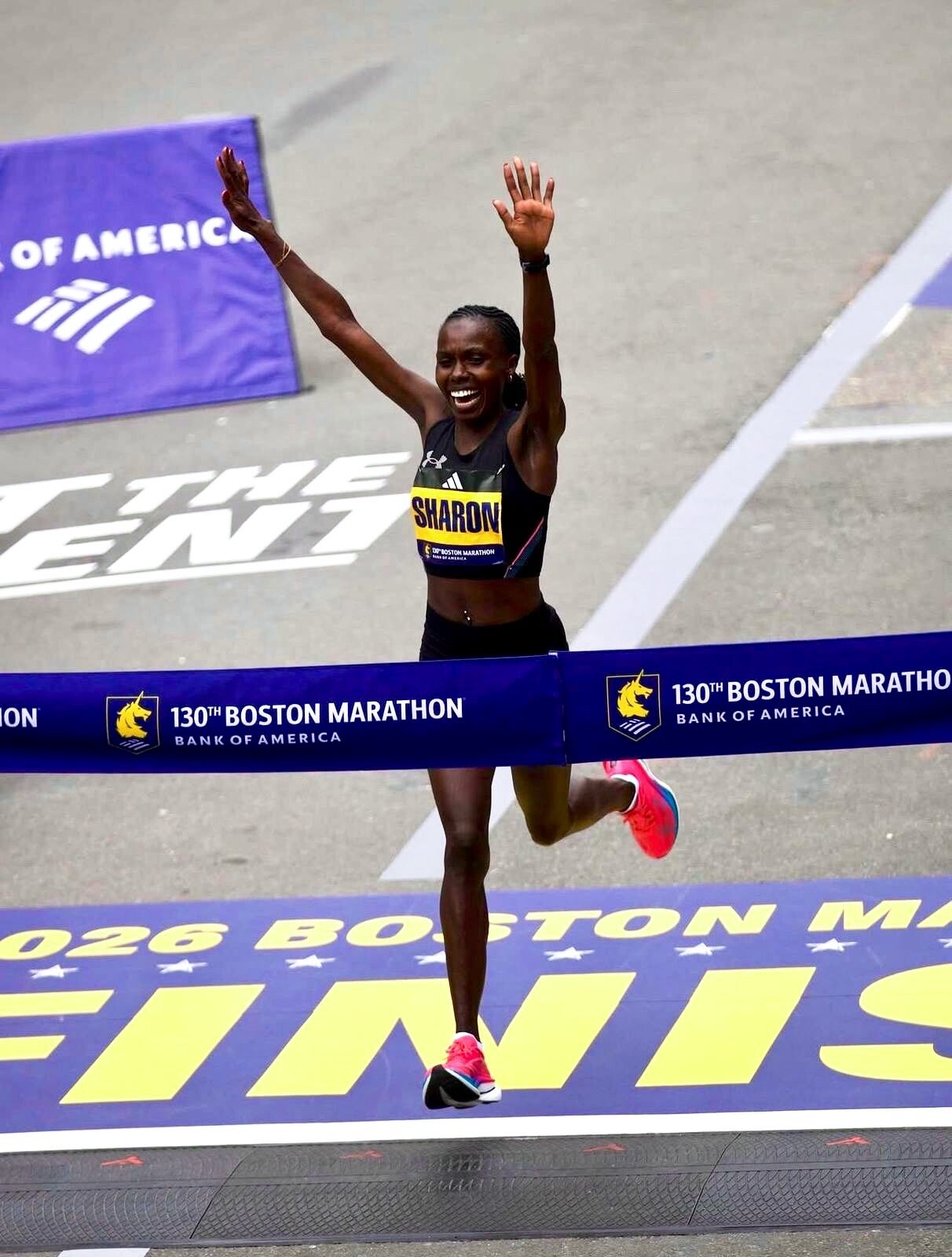
“Boston has become a very special place for me,” Lokedi said ahead of the race. “The atmosphere created by the fans and the community is unlike anywhere else. I’m excited to return and give everything I have to defend my title.”
The women’s race promises to be highly competitive. American Olympian Rachel Smith, who finished second at the Boston 5K in April, leads the domestic challenge. Kenya’s strong contingent includes African 10,000m champion Gladys Kwamboka, former B.A.A. 10K runner-up Stacy Ndiwa, and experienced road racer Viola Cheptoo. British Olympian Jessica Warner-Judd adds further international depth to a field packed with proven performers.
The men’s race is equally impressive, featuring elite athletes from 13 nations.
Ethiopia’s Dawit Seare enters as one of the leading contenders after capturing the 2025 Boston 5K title and bringing the fastest 10K personal best in the field at 27:21. Kenya will be represented by an accomplished group led by Alexander Mutiso, winner of the 2024 London Marathon and runner-up at last year’s New York City Marathon.
Patrick Kiprop also arrives in outstanding form after securing victory at the prestigious BolderBoulder 10K on Memorial Day, while Alex Masai returns looking to continue his strong record in Boston. Masai recently finished ninth at the Boston Marathon and has earned three top-ten finishes at the B.A.A. 10K.
Among the international stars making their mark is South Africa’s Adriaan Wildschutt, who makes his race debut after an impressive season highlighted by victory at the NYC Half Marathon in 59:30. Ethiopia’s Olympic bronze medallist Hagos Gebrhiwet adds further quality to the field, bringing a wealth of championship experience and previous success in Boston.
Canadian national 10K champion Andrew Alexander, two-time U.S. Olympian Hillary Bor, marathon standout Ryan Ford, and reigning USA 25K champion Andrew Colley complete a field stacked with talent and depth.
With defending champions, Olympic finalists, national champions and rising stars all converging on Boston, the 2026 B.A.A. 10K is shaping up to be one of the most competitive editions in recent memory. For Sharon Lokedi, however, the mission is simple: return to the city where she has repeatedly excelled and add another memorable chapter to her growing Boston legacy.
by Erick Cheruiyot for My Best Runs.
Login to leave a comment
B.A.A. 10K
The 6.2-mile course is a scenic tour through Boston's Back Bay. Notable neighborhoods and attractions include the legendary Bull and Finch Pub, after which the television series "Cheers" was developed, the campus of Boston University, and trendy Kenmore Square. ...
more...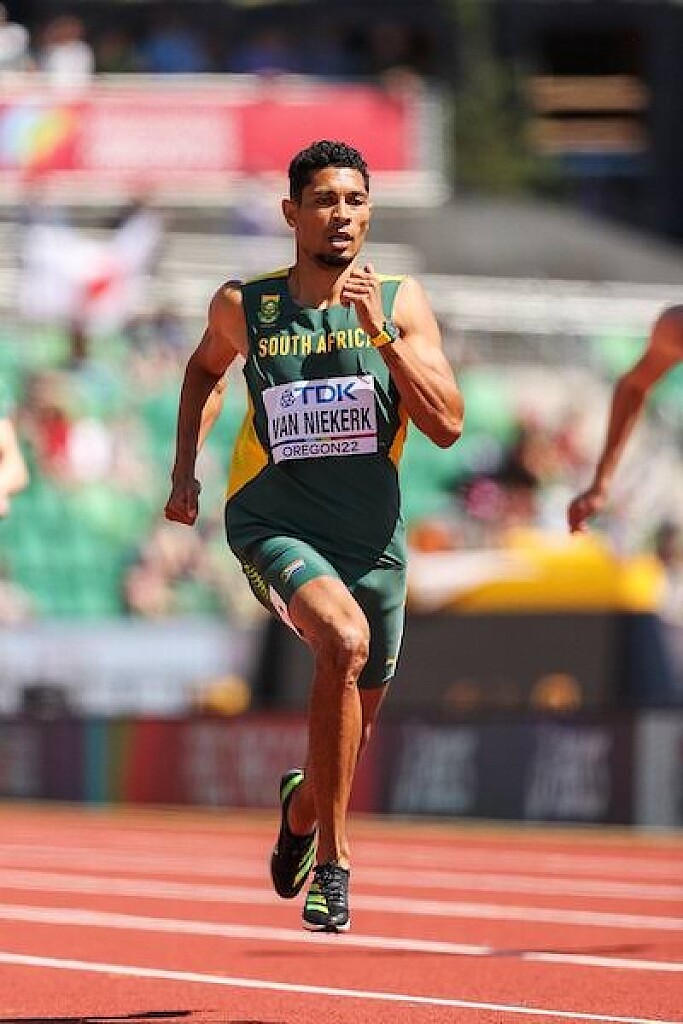
Wayde van Niekerk Withdraws from Rabat Diamond League Due to Ongoing Quad Injury
South African sprint star Wayde van Niekerk has officially withdrawn from the upcoming Rabat Diamond League meeting as he continues to battle a persistent quad injury, raising fresh concerns over the fitness of one of track and field’s most iconic athletes.
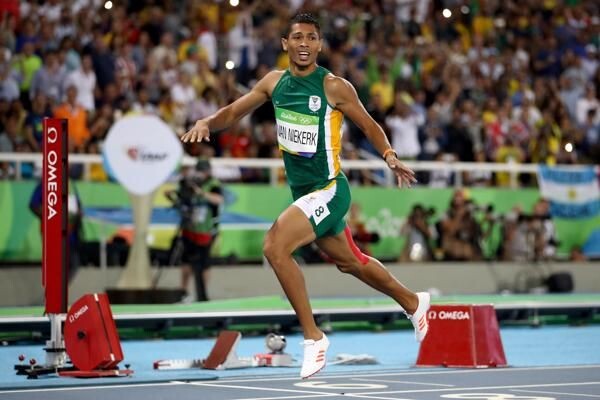
The 33-year-old had been expected to line up in the men’s 400m in Rabat, but the lingering injury has forced him to step away from competition in a bid to avoid further setbacks during the outdoor season.
Van Niekerk remains one of the greatest quarter-milers in athletics history. The South African stunned the world at the 2016 Rio Olympic Games when he stormed to a historic 43.03 seconds, a performance that still stands as the current men’s 400m world record. In addition to his Olympic title, he is also a two-time world champion and a World Championships silver medallist.
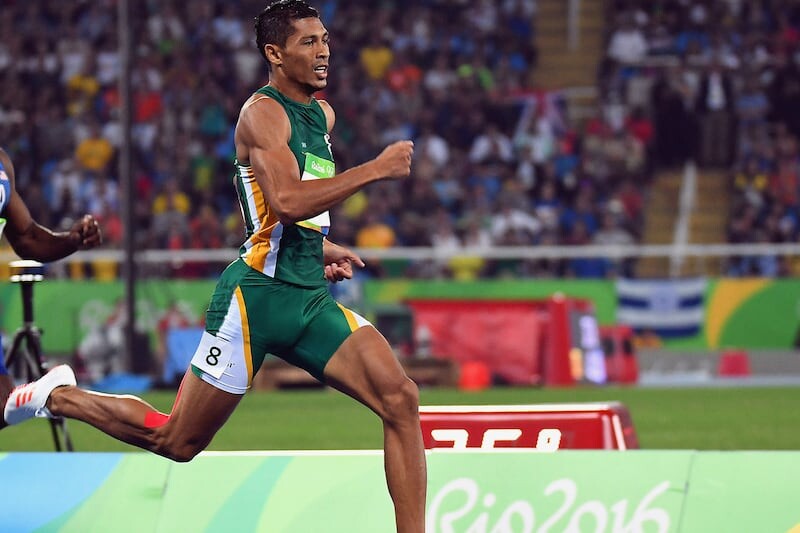
The former global champion has endured a difficult spell with injuries in recent years, preventing him from consistently returning to the dominant form that once made him virtually untouchable over one lap of the track. Although he has shown encouraging signs in recent appearances, fitness issues continue to interrupt his comeback efforts.
His withdrawal is a major disappointment for the Rabat Diamond League, where fans had hoped to see the South African legend test himself against a high-quality international field as the build-up toward the season’s major championships intensifies.
Despite the setback, the decision to pull out appears to be a cautious one focused on protecting his long-term health rather than risking a more serious injury at this stage of the campaign.
The athletics world will now wait for further updates on Van Niekerk’s recovery, with supporters across the globe hoping the Olympic champion can return fully fit and competitive in the coming weeks.
For now, the focus shifts from racing to rehabilitation as one of sprinting’s greatest talents works toward another comeback.
by Erick Cheruiyot for My Best Runs.
Login to leave a comment
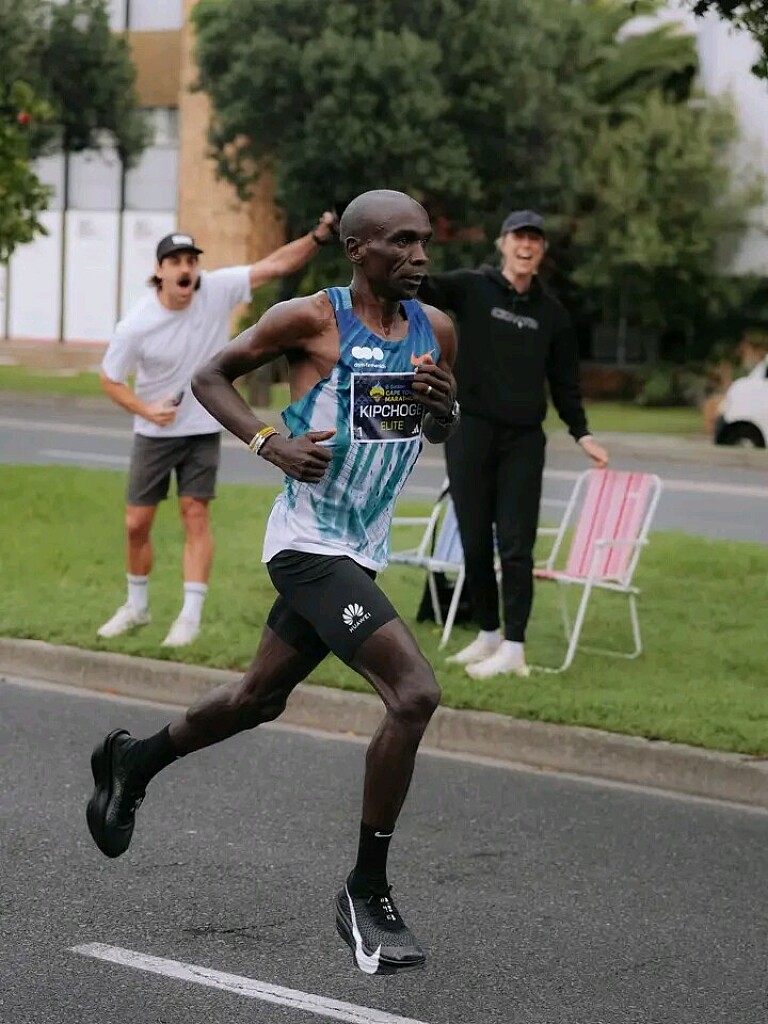
Kipchoge’s Global Journey Continues as Marathon Legend Targets Porto Alegre Glory
At 41 years old, marathon icon Eliud Kipchoge continues to defy time and redefine greatness. After opening his 2026 World Marathon Tour campaign at the Sanlam Cape Town Marathon in South Africa, the Kenyan legend is now preparing for the next stop of his global journey — the Porto Alegre Marathon in Brazil on Sunday, July 12.
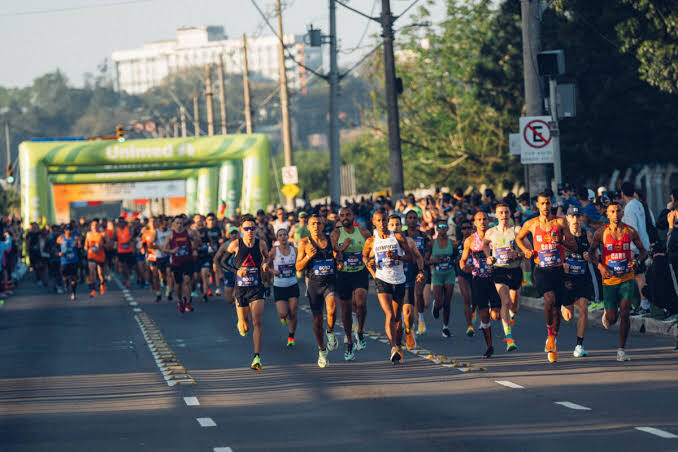
Kipchoge crossed the finish line in Cape Town in 2:13:29, placing 16th overall while maintaining an average pace of 3:09 per kilometre. Although the result may not reflect the dominance that defined many of his peak years, the performance once again highlighted the extraordinary longevity, discipline, and fighting spirit of one of the greatest marathon runners in history.
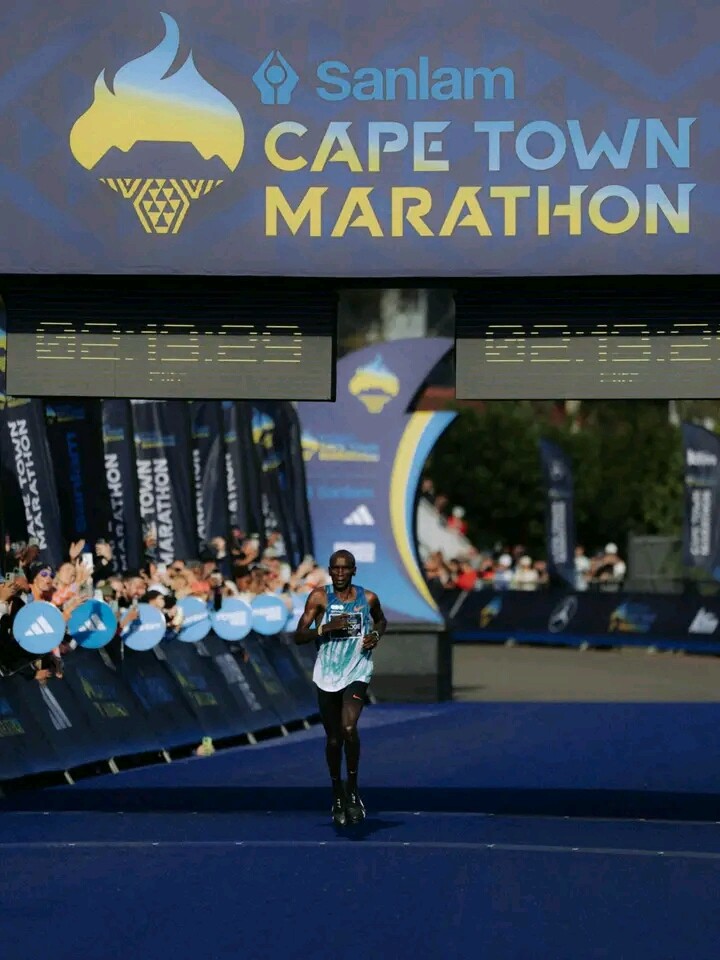
Even at 41, Kipchoge remains one of the most respected and influential figures in world athletics. His presence alone transforms races into global attractions, drawing attention from fans, athletes, and organizers across continents. From his historic unofficial sub-two-hour marathon achievement — a groundbreaking performance that changed the perception of human endurance forever to multiple Olympic and World Marathon Major triumphs, the Kenyan superstar has already secured a legacy few athletes will ever match.
Now, attention shifts to Brazil, where excitement is rapidly building ahead of his appearance at the Porto Alegre Marathon. The race is expected to attract massive international interest as South American fans prepare to witness one of the sport’s greatest icons compete live on their streets.
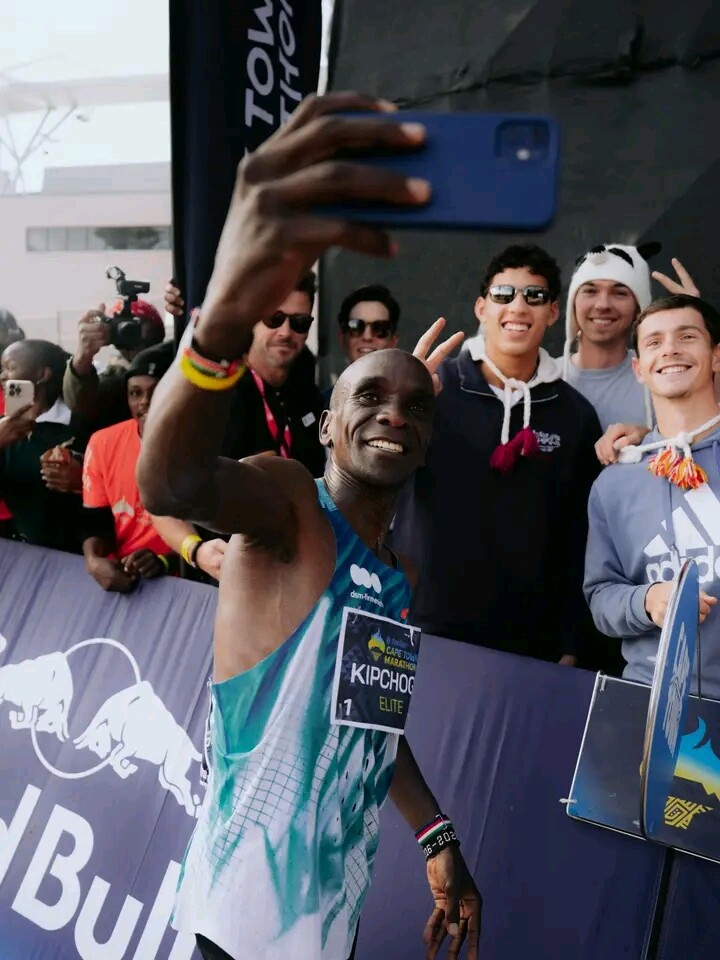
Kipchoge’s enduring philosophy, “No Human Is Limited,” continues to inspire millions around the world. More than a slogan, it has become a symbol of resilience, ambition, and the belief that barriers are meant to be challenged regardless of age or circumstance.
As he continues his 2026 campaign, Kipchoge is proving that greatness is not only measured by victories, but also by consistency, influence, and the courage to keep competing at the highest level. From Cape Town to Porto Alegre, the marathon king’s remarkable journey continues to captivate the athletics world.
by Erick Cheruiyot for My Best Runs.
Login to leave a comment
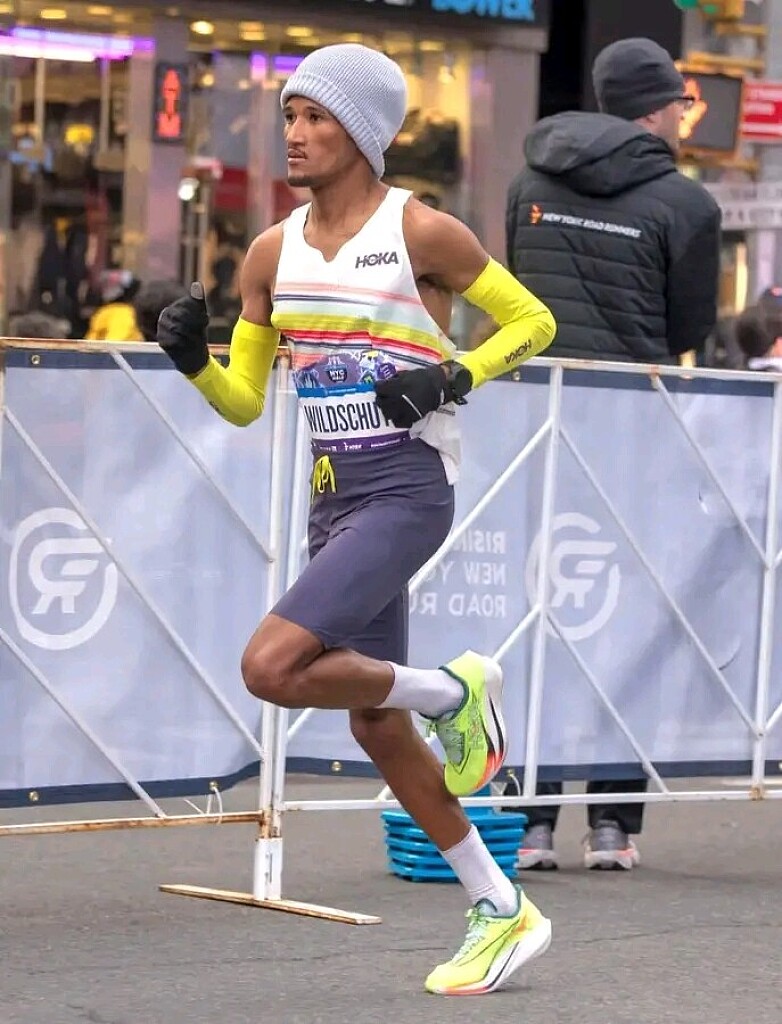
Adrian Wildschutt Discovers New Marathon Possibilities After Memorable Cape Town Pacing Role
South African distance star Adrian Wildschutt walked away from the Cape Town Marathon with far more than just another strong performance. What began as a pacing assignment quickly evolved into a revealing test of endurance, confidence, and future marathon ambitions.
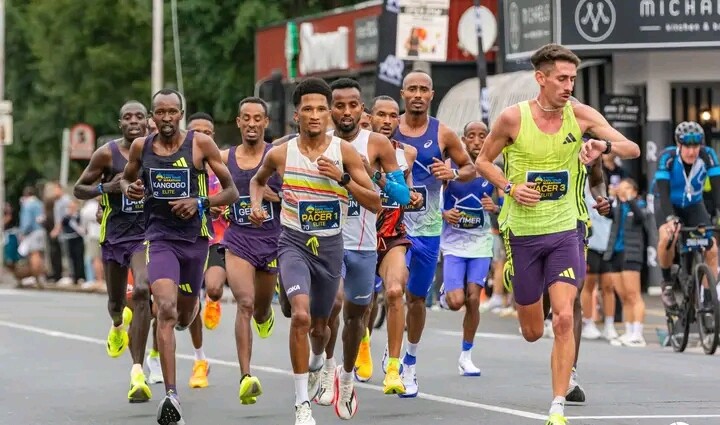
Wildschutt, who holds the South African national record in the half marathon, had initially planned to guide the elite field through the halfway mark at 21 kilometres. However, feeling comfortable and energized in the race atmosphere, he extended his pacing duties to 25km before deciding to continue deeper into the marathon to test himself over the next 10 kilometres.
The session quickly transformed into an eye-opening lesson for one of South Africa’s most exciting distance-running talents.
Reflecting on the experience afterward, Wildschutt admitted he was encouraged by how his body responded despite not having completed a full marathon-specific training block. He moved smoothly through much of the course before the real demands of the distance began to emerge between 33km and 35km — the point where marathons often become a true test of survival.
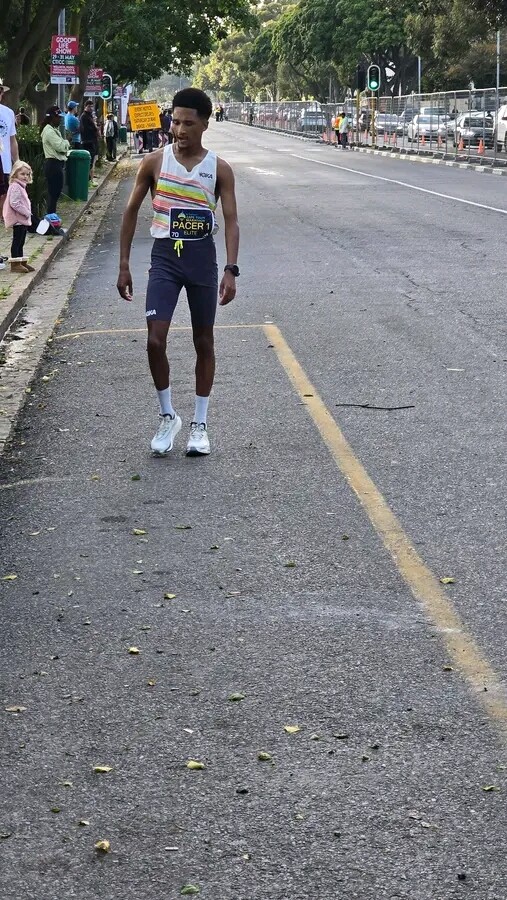
Rather than seeing the fatigue as a weakness, Wildschutt viewed it as confirmation that his marathon potential remains largely untapped.
The outing provided valuable insight into the patience, strength, and endurance required over 42.2 kilometres while reinforcing the belief that, with focused preparation, he could develop into a major force in the marathon scene.
For South African athletics fans, the performance offered another exciting glimpse into the future. Already celebrated for his speed on the track and roads — including his national half marathon record — Wildschutt now appears increasingly drawn toward the marathon challenge.
His comments after the race carried both honesty and optimism — acknowledging the challenge of the distance while hinting at untapped potential still waiting to be explored.
If Cape Town was merely an experiment, it may ultimately be remembered as the first real sign of an athlete preparing for something much bigger in the marathon world.
by Erick Cheruiyot for My Best Runs.
Login to leave a comment
