

Running News Daily
Running News Daily is edited by Bob Anderson and team. Send your news items to bob@mybestruns.com Advertising opportunities available.
Index to Daily Posts · Sign Up For Updates · Run The World Feed
Articles tagged #Lux
Today's Running News
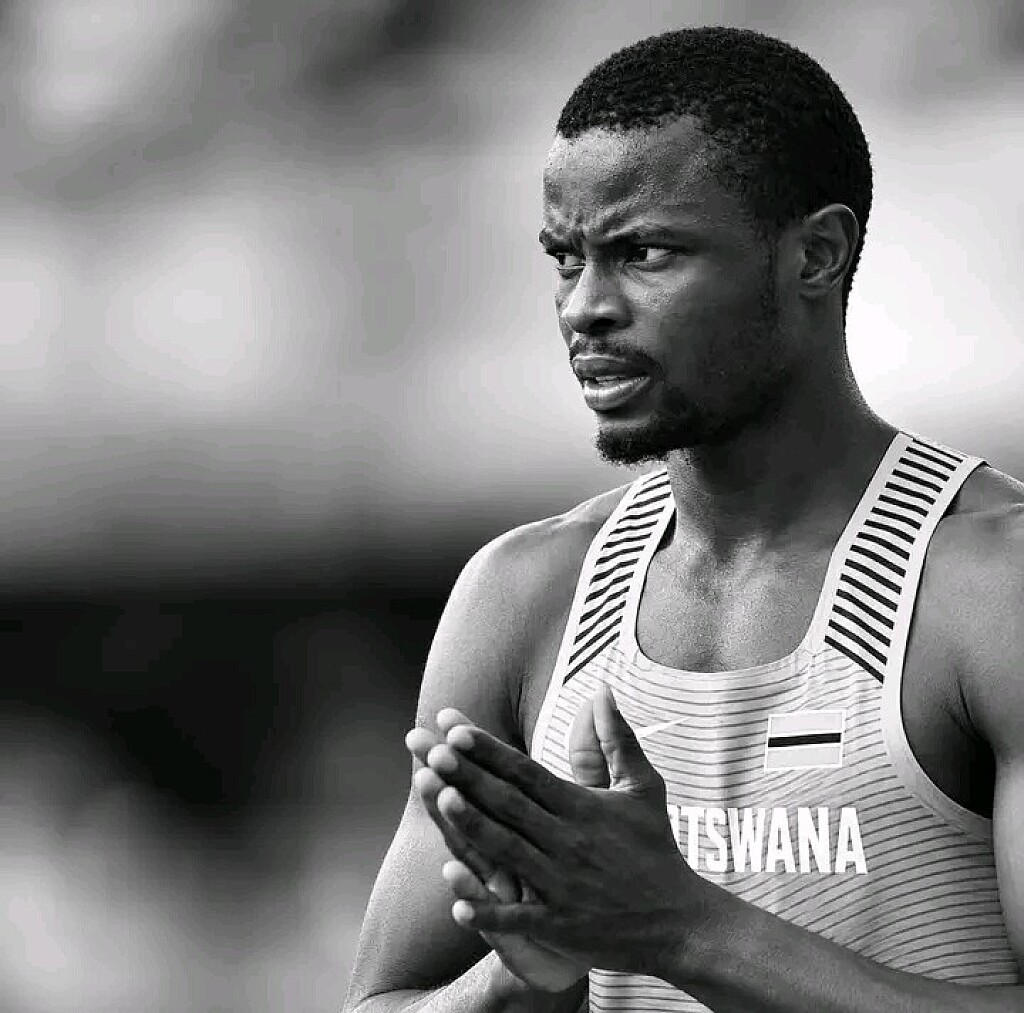


Botswana Athletics Mourns Gaone ‘Lux’ Maotoanong, Commonwealth Games Gold Medallist And Former National Team Sprinter
Botswana’s athletics community is mourning the sudden death of former national team sprinter Gaone Leaname Maotoanong, affectionately known as “Lux,” who represented his country at major international championships and played a significant role in its relay success.
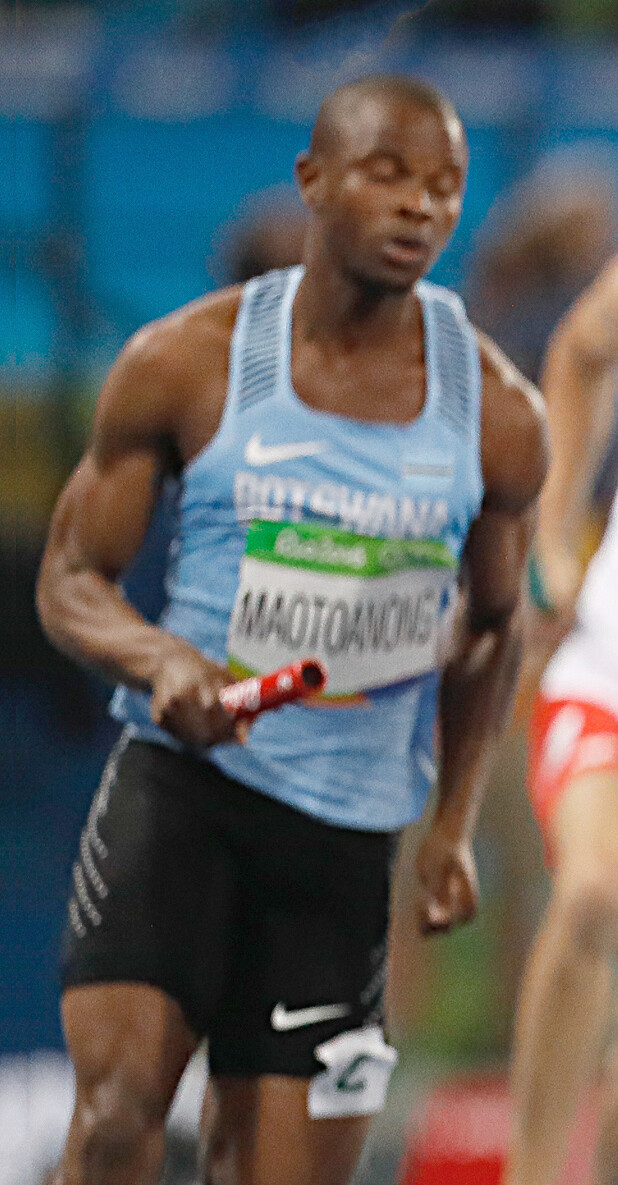
The Botswana Athletics Association (BAA) announced his passing in a bereavement notice issued on October 22, 2026, paying tribute to an athlete whose dedication, talent and commitment to excellence earned him respect across the athletics fraternity. Maotoanong was born in 1991 and died in 2026.
Throughout his career, Maotoanong proudly wore Botswana’s national colours on some of the biggest stages in athletics, contributing to the country’s growing reputation in the men’s 4x400m relay. His international achievements included competing at the Olympic Games, World Athletics Championships, Commonwealth Games, World Athletics Relays and continental championships.
One of the standout moments of his career came at the 2018 Commonwealth Games on the Gold Coast in Australia, where he was part of Botswana’s gold-medal-winning 4x400m relay team. The victory represented a major achievement for the southern African nation and reinforced its standing among the leading relay teams on the continent.
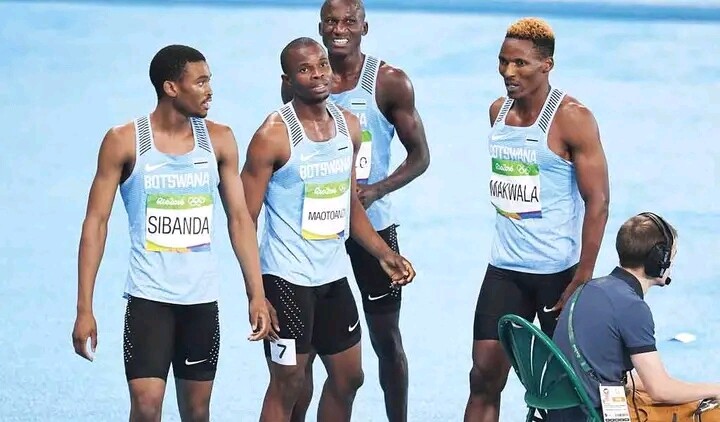
Maotoanong also represented Botswana at the 2016 Rio Olympic Games, where the national 4x400m relay team reached the final and finished fifth. He subsequently featured in the country’s relay squad at the 2019 World Athletics Championships in Doha, Qatar, having also competed at the 2015 edition in Beijing, China.
His experience on the global stage extended to the World Athletics Relays in the Bahamas in 2015 and 2017, where Botswana’s 4x400m relay teams reached the finals. These appearances reflected his place within a generation of athletes helping Botswana establish itself as a consistent presence in international relay competition.
At continental level, Maotoanong enjoyed further success, winning gold in the 4x400m relay at the African Championships in Marrakech, Morocco, in 2014 and again in Durban, South Africa, in 2016. He also helped Botswana secure silver in the relay at the 2015 African Games in Brazzaville, Republic of the Congo.
His achievements were not limited to relay racing. Maotoanong demonstrated his individual ability in the 400m by winning silver at the 2015 World University Games in Gwangju, South Korea, adding another significant accomplishment to his international career.
Beyond his appearances at major championships, he competed at the Commonwealth Games, African Games, African Championships, Diamond League meetings and numerous other international competitions, building a career defined by service to his country and commitment to athletics.
A Legacy Beyond The Track
Maotoanong’s contribution to Botswana athletics extended beyond competition. According to the BAA, he served as a member of the Botswana National Olympic Committee (BNOC) Athletes’ Commission from 2022 to 2025, where he contributed to efforts to advance athletes’ interests and welfare.
The role reflected another dimension of his involvement in sport, demonstrating a commitment to athlete representation and sports development beyond his own performances on the track.
In its tribute, the BAA remembered Maotoanong as an athlete, leader, mentor and friend whose contributions had left a lasting mark on Botswana athletics. The association also extended its condolences to his family, friends, teammates and everyone who had the privilege of knowing him.
His passing represents a profound loss for Botswana’s sporting community, particularly those who shared in the country’s relay achievements and witnessed his dedication to representing the national team. His legacy will remain part of the story of Botswana’s development as a force in African and international athletics.
As tributes emerge, Maotoanong will be remembered not only for the medals and championships he helped his country achieve, but also for his service to fellow athletes and his contribution to the wider sporting fraternity.
Funeral arrangements are expected to be communicated by the Botswana Athletics Association in due course.
Gaone “Lux” Maotoanong’s name will endure in Botswana athletics as a reminder of a career spent representing his country with pride, both on the track and in service to the athletes who followed.
by Erick Cheruiyot for My Best Runs.
Login to leave a comment
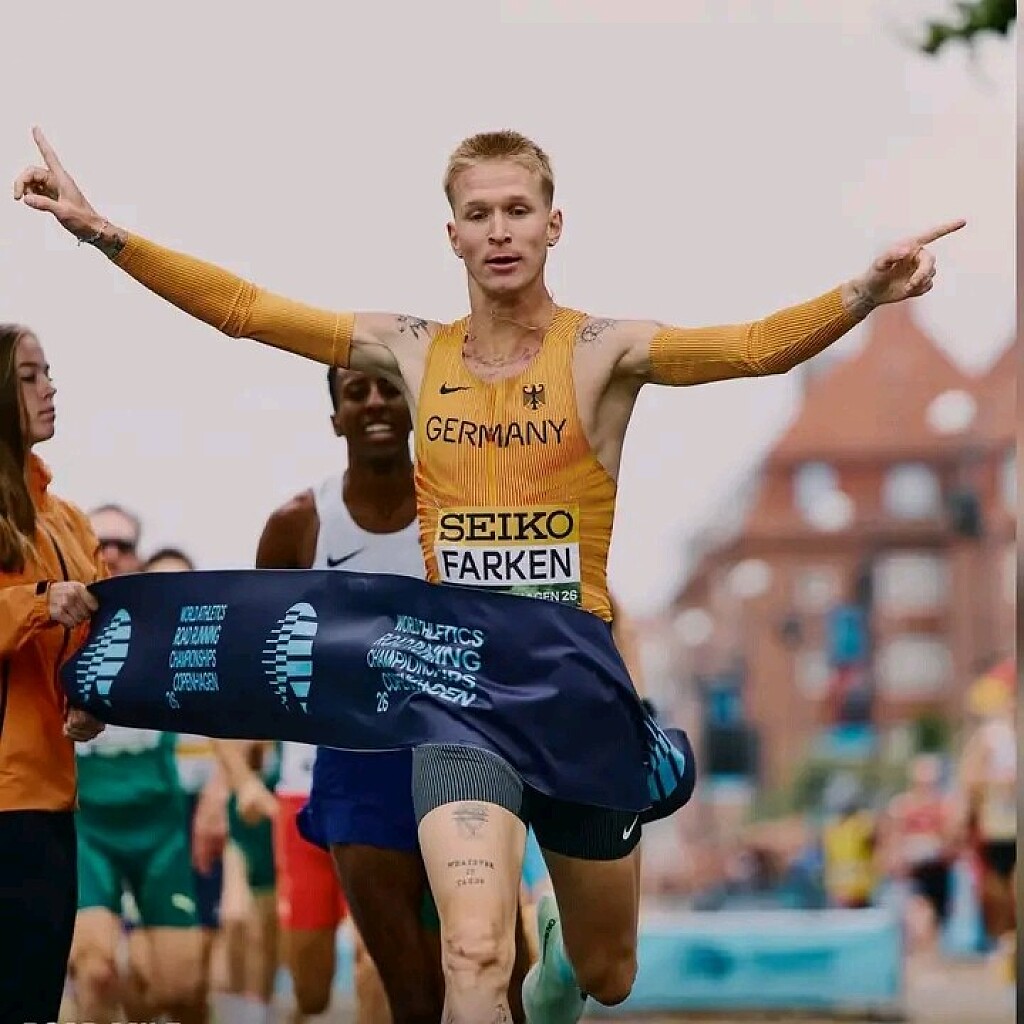
Robert Farken Celebrates Early Birthday With World Road Mile Glory In Copenhagen
Germany’s Robert Farken gave himself an unforgettable early birthday present in Copenhagen on Saturday, producing a devastating late surge to win the men’s Road Mile title at the World Athletics Road Running Championships.
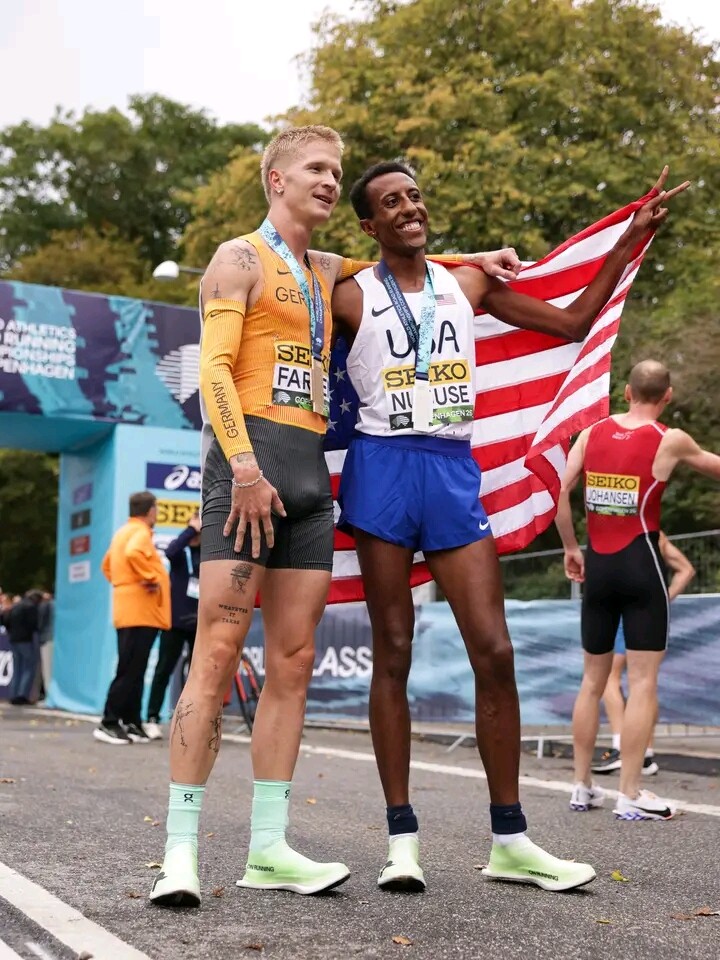
Just one day before his birthday, Farken stormed to victory in a world-leading 3:51.80, timing his finishing move to perfection to edge American star Yared Nuguse in a thrilling battle over the closing stages.
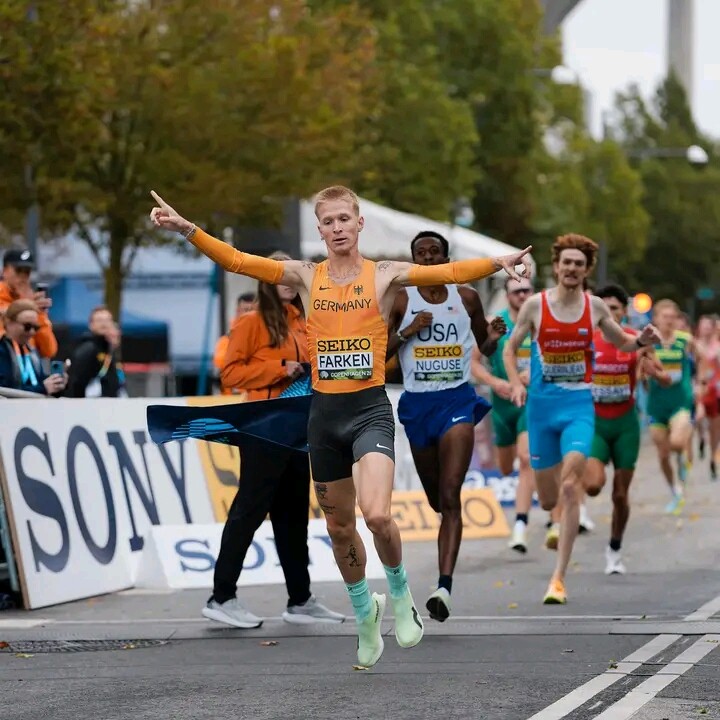
The victory was not only a global road-running title for Farken but also a German road mile record, underlining the quality of his performance on the streets of Copenhagen.
Farken remained composed as the leading contenders battled for position, refusing to make his decisive move too early. With the finish approaching, the German unleashed his acceleration at exactly the right moment, opening a crucial gap on Nuguse and powering through the final metres to secure gold.
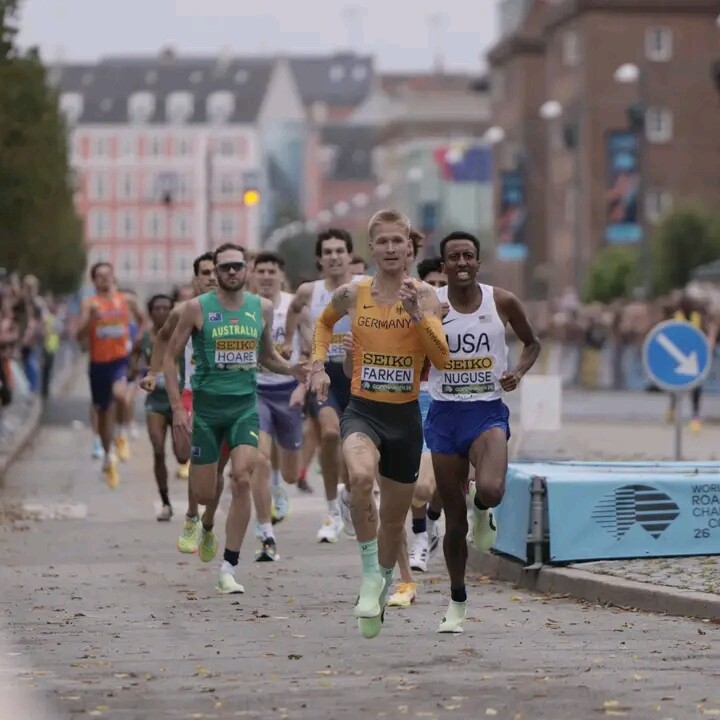
Nuguse, one of the leading contenders in the field, produced a season’s best of 3:52.33 to take the silver medal. The American remained in contention deep into the race but could not match Farken’s final burst.
Luxembourg’s Ruben Querinjean completed the podium in 3:52.83, adding another impressive chapter to his national record. His performance ensured that Luxembourg also left Copenhagen with a record-breaking result.
The victory marked a memorable moment for Farken, who turned the eve of his birthday into a celebration of global road-running success. Rather than waiting for the cake and celebrations, the German middle-distance specialist delivered his present on the road — a world title and a record-breaking performance.
The race also featured two Kenyan athletes. Brian Komen finished 14th, while Kyumbe Munguti placed 25th as the Kenyan representatives battled through a fiercely contested international field.
Men’s Road Mile Results
1. Robert Farken — Germany — 3:51.80
2. Yared Nuguse — USA — 3:52.33
3. Ruben Querinjean — Luxembourg — 3:52.83
Farken’s performance provided a fitting start to his birthday weekend. With the field separated by fractions of a second and the title ultimately decided by the final acceleration, the German showed remarkable patience before producing the decisive move when it mattered most.
One day before turning another year older, Farken had already given himself a gift that will be difficult to forget — world road mile gold in Copenhagen and a world-leading 3:51.80.
by Erick Cheruiyot for My Best Runs.
Login to leave a comment
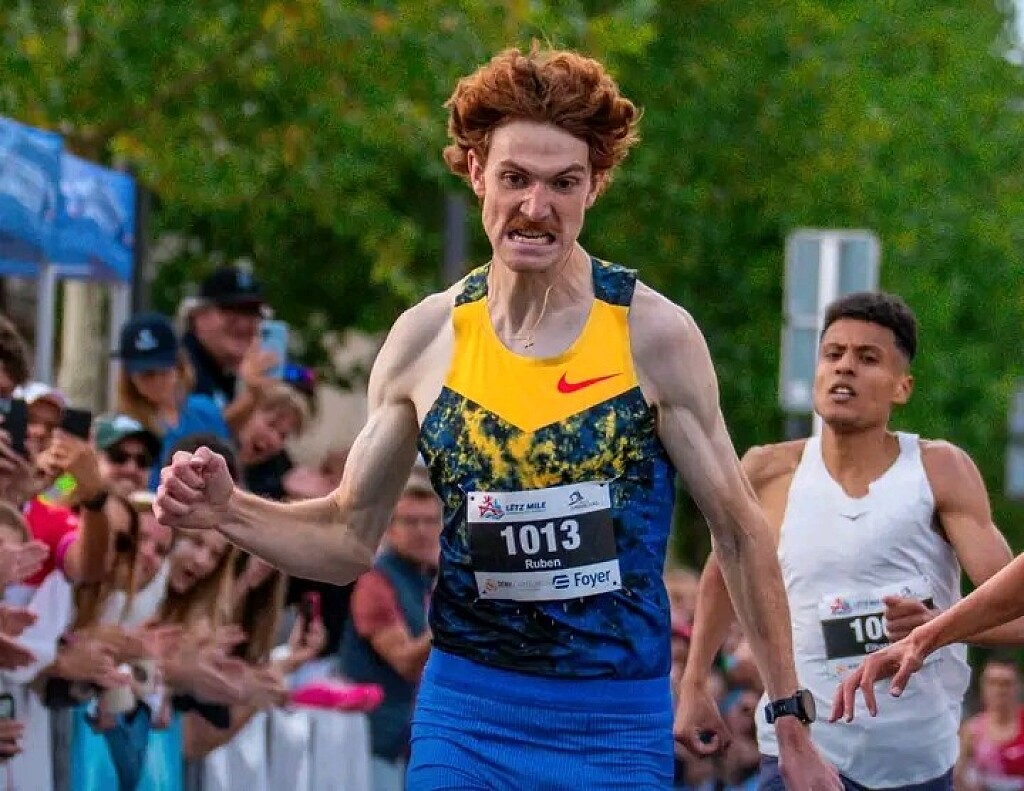
Ruben Querinjean Strikes Again With Another Luxembourg National Record
Ruben Querinjean has added another remarkable chapter to his breakthrough 2026 season, setting a new Luxembourg national record over the road mile at the LËTZ MILE – Luxembourg City Road Mile.
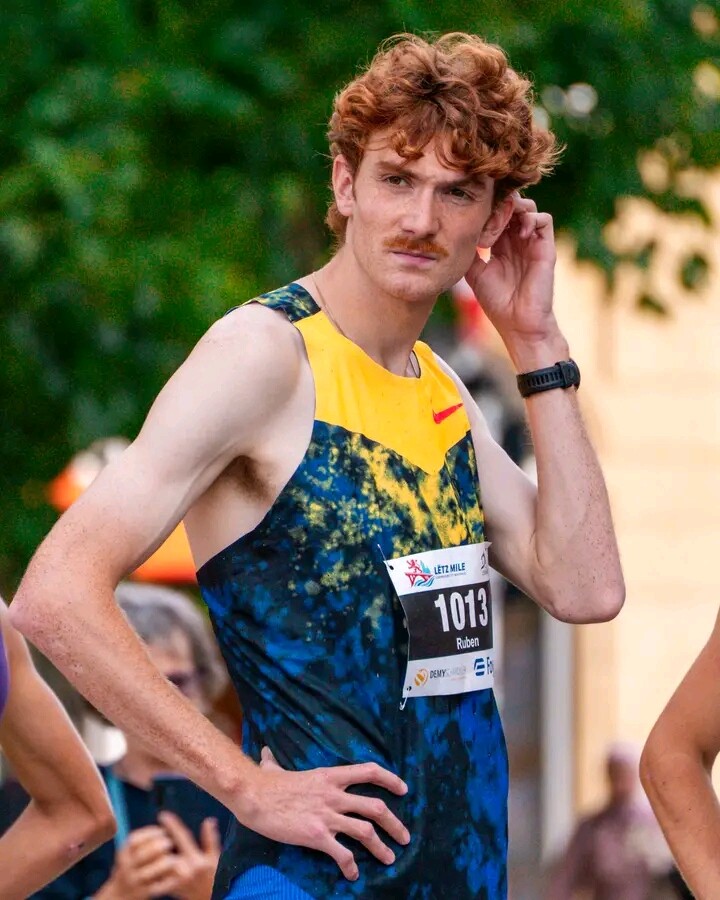
Querinjean stopped the clock at an impressive 4:03.03, producing another standout performance only a few weeks after setting a national record in the 3,000m steeplechase.
The Luxembourg star has been enjoying an outstanding season, establishing himself as one of the country's leading distance runners while continuing to push the national record books into new territory.
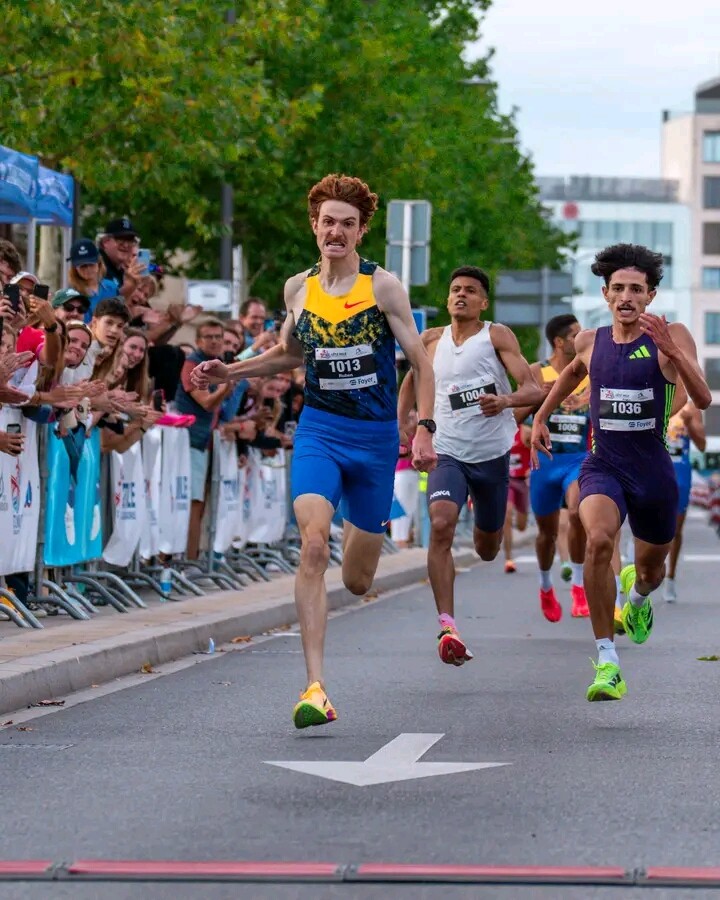
His latest achievement also highlights his versatility. Best known for his performances over the steeplechase barriers, Querinjean has shown that his speed and endurance translate exceptionally well to the roads, with the mile requiring a combination of strength, pace and finishing speed.
The 4:03.03 performance gives Querinjean another national mark to celebrate during a season that has already delivered several major milestones. His continued progression has made him an increasingly prominent figure on the European distance-running scene.
For Luxembourg athletics, performances like this represent an exciting period for the sport. Querinjean's ability to challenge national records across different disciplines is a strong indication of the depth of his talent and the level he is reaching.
With another national record now secured, Querinjean can look ahead with even greater confidence as he continues his impressive 2026 campaign.
Another record. Another milestone. Another unforgettable chapter in Ruben Querinjean's remarkable season.
by Erick Cheruiyot for My Best Runs.
Login to leave a comment
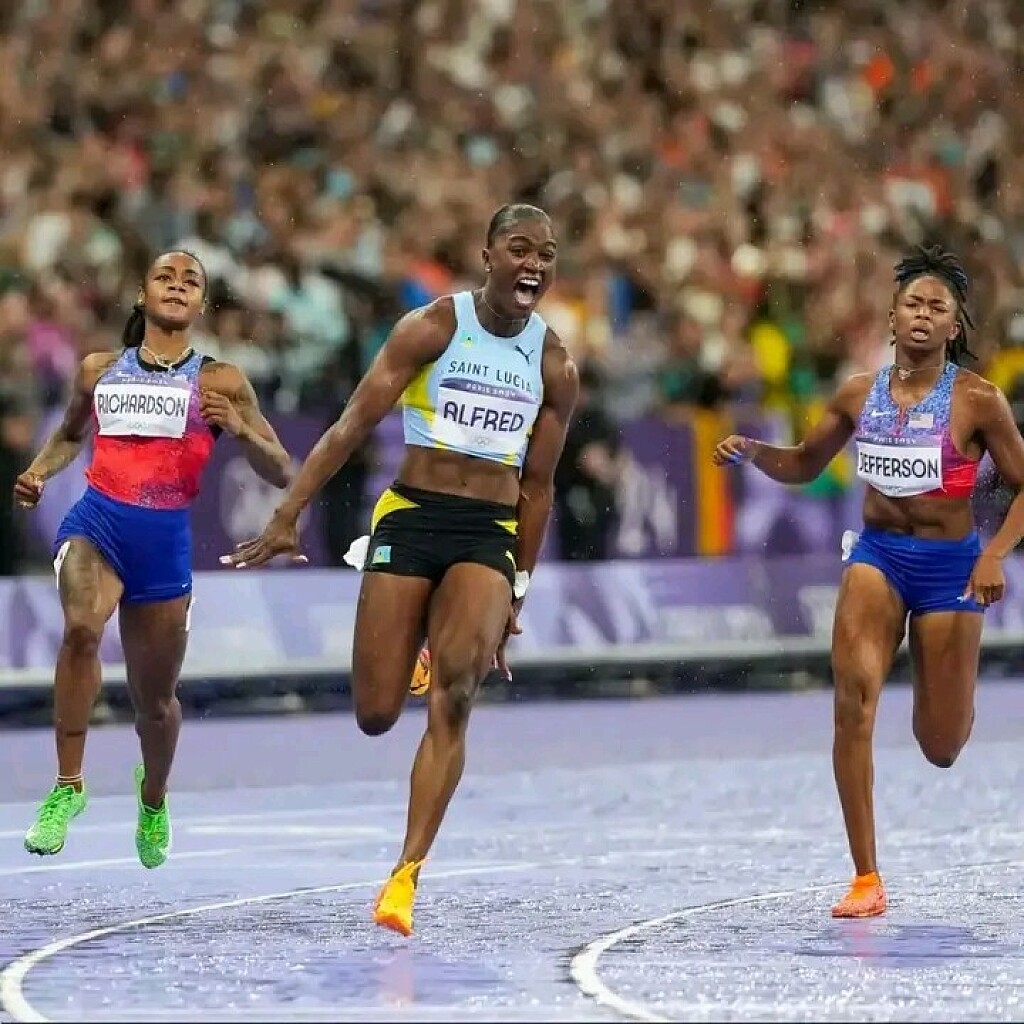
Three Champions, One Crown: Budapest Braces For A Women’s 100m Battle For Supremacy
The women’s 100m at the World Athletics Ultimate Championship in Budapest is shaping up to be one of the most compelling sprint showdowns of the season, with three of the world’s biggest names set to collide in a race where reputation, speed and championship pedigree will all be put to the ultimate test.
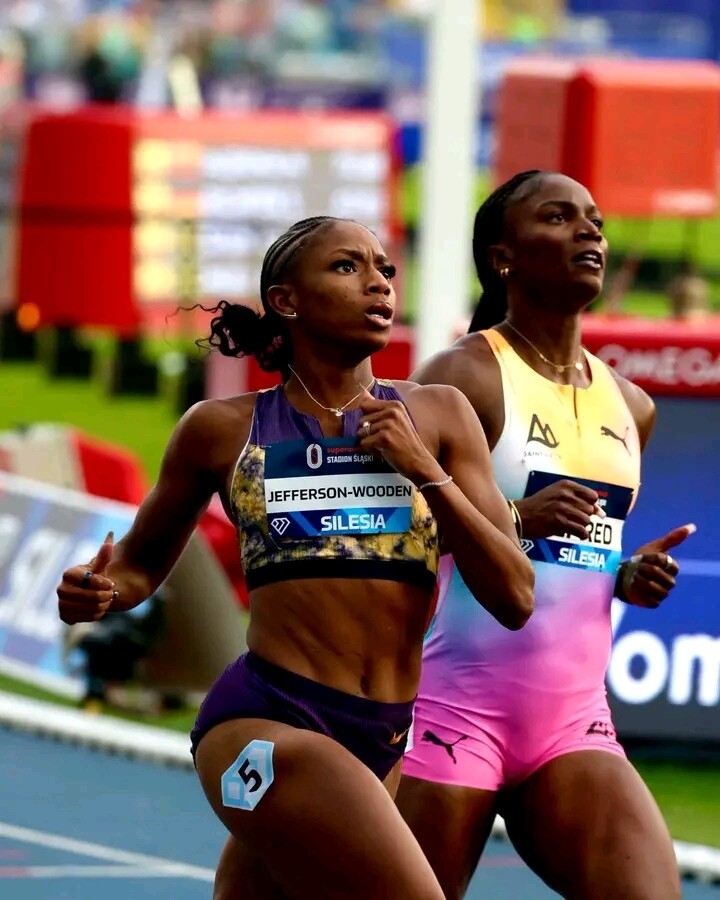
Leading the charge is Saint Lucia’s Julien Alfred, the reigning Olympic champion who established herself as the fastest woman on the biggest stage at the Paris 2024 Games. Alfred’s rise to the summit of global sprinting has been remarkable, and she arrives in Budapest carrying the confidence and prestige that come with an Olympic title.

Standing alongside her will be American sprint star Melissa Jefferson-Wooden, the reigning world champion and one of the most formidable forces in the modern 100m. Her championship credentials have already placed her among the elite, and Budapest presents another opportunity to underline her status against the very best in the world.
Then there is Sha’Carri Richardson, another American powerhouse whose explosive speed and major-championship experience make her impossible to overlook. A former world champion, Richardson has repeatedly demonstrated her ability to thrive under the brightest lights, bringing both raw pace and an unmistakable competitive edge to the starting line.
The presence of three champions transforms the Budapest contest into far more than another 100m race. It is a meeting of athletes who have already conquered the highest levels of the sport and now have another prize to chase: the title of Ultimate champion.
Women’s 100m — Start List
1. Melissa Jefferson-Wooden — United States — 10.70
2. Julien Alfred — Saint Lucia — 10.70
3. Sha’Carri Richardson — United States — 10.77
4. Tina Clayton — Jamaica — 10.85
5. Sade McCreath — Canada — 10.86
6. Jonielle Smith — Jamaica — 10.89
7. Lavanya Williams — Jamaica — 10.90
8. Cambrea Sturgis — United States — 10.92
9. Zoe Hobbs — New Zealand — 10.93
10. Brianna Lyston — Jamaica — 10.94
11. Audrey Leduc — Canada — 10.97
12. Amy Hunt — Great Britain — 10.97
13. Jodean Williams — Jamaica — 10.97
14. Tamari Davis — United States — 10.99
15. Patrizia Van Der Weken — Luxembourg — 11.05
16. Zaynab Dosso — Italy — 11.07
17. Boglárka Takács — Hungary — 11.13
With the world’s attention fixed on the start line, every fraction of a second could prove decisive. Alfred will seek to reaffirm her Olympic supremacy, Jefferson-Wooden will look to demonstrate that her world title was no coincidence, while Richardson will be determined to remind the field of the speed that has made her one of the most recognizable names in global sprinting.
For the spectators, the attraction is obvious. Three champions, three different journeys to the top and just 100 metres separating glory from disappointment.
Budapest is therefore set for a sprinting spectacle in which there will be no room for hesitation. When the gun fires, Olympic glory, world championship pedigree and personal ambition will converge on one track — and only one woman will leave as the Ultimate champion.
by Erick Cheruiyot for My Best Runs.
Login to leave a comment

Brussels 100m Crown Blown Wide Open As Alfred And Jefferson-Wooden Step Aside
The women’s 100m at the 2026 Wanda Diamond League Final in Brussels has been thrown wide open after two of the season’s biggest sprinting stars opted out of the event, dramatically reshaping what had promised to be a blockbuster showdown at King Baudouin Stadium.
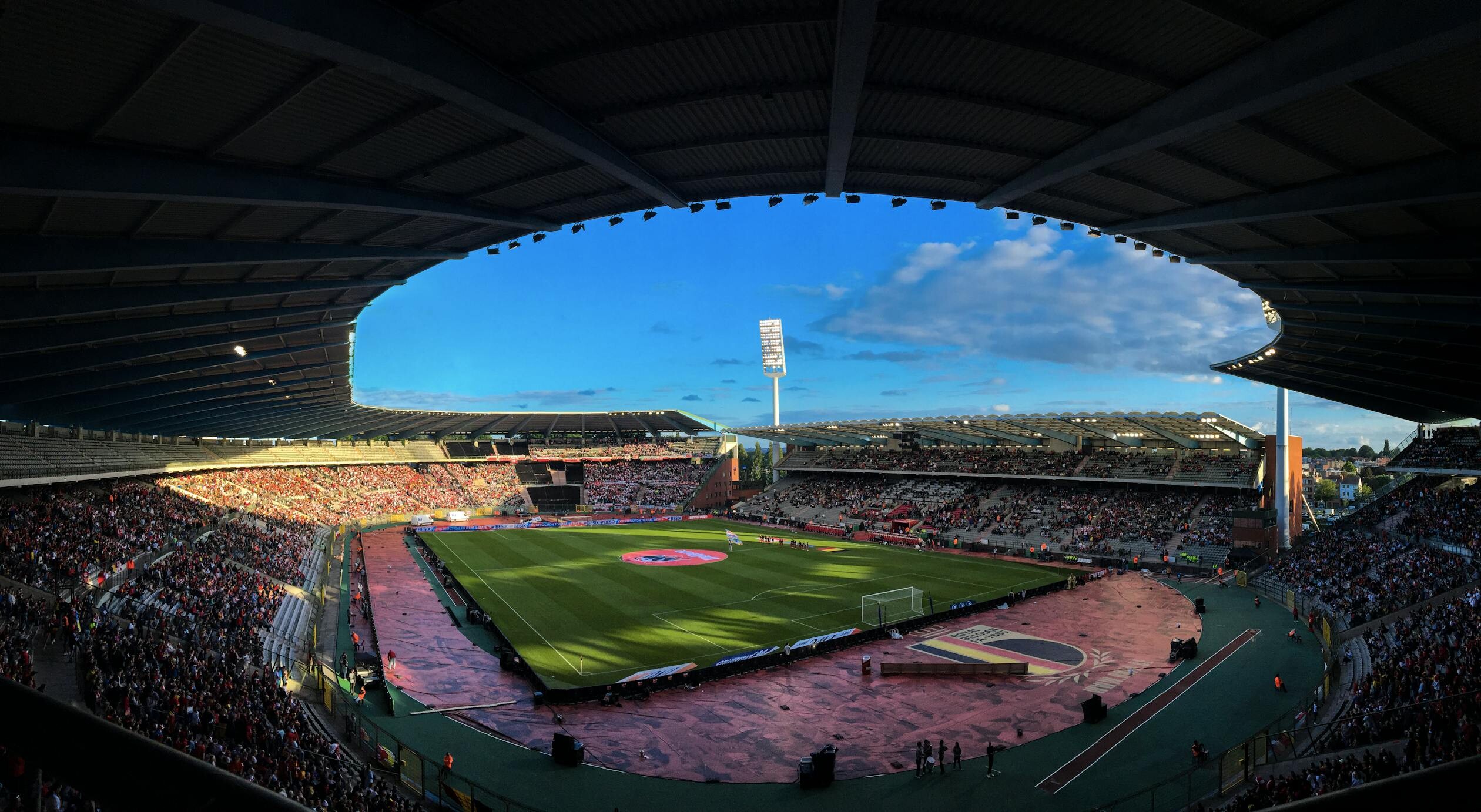
American star Melissa Jefferson-Wooden will not contest the 100m in Brussels, while Olympic champion Julien Alfred of Saint Lucia has chosen to line up in the 200m instead of defending the Diamond League 100m title she won last season.
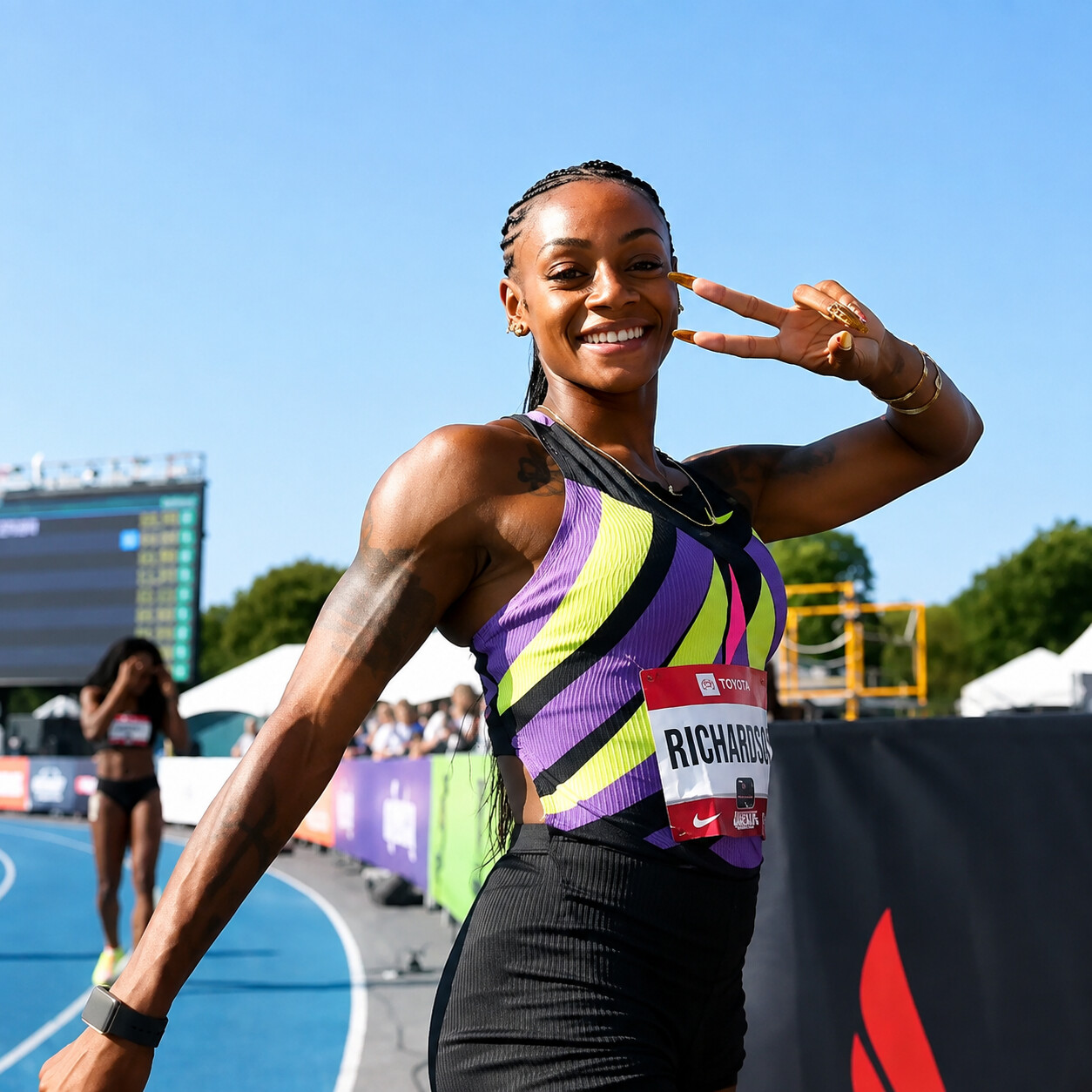
Their absence leaves Sha’Carri Richardson as one of the headline names in a field that suddenly carries an entirely different complexion. The American will arrive in Brussels with a major opportunity to claim the Diamond League trophy, but the battle for victory is far from straightforward.
The timing of Alfred and Jefferson-Wooden’s decisions makes the situation even more intriguing. Only days ago in Zürich, the two produced one of the closest 100m finishes of the season, with Alfred narrowly edging Jefferson-Wooden in a dramatic photo finish. Both were officially credited with 10.70 seconds, while the photo-finish technology separated them by just five thousandths of a second.
Richardson crossed the line third in that fiercely contested race, setting the stage for another potentially fascinating encounter in Brussels. Instead, the withdrawals have removed two of her biggest rivals from the equation and opened the door for a new challenger to emerge.
Richardson now carries considerable attention into the Belgian capital. The former world champion possesses the pedigree and championship experience to seize the moment, but she will need to be at her sharpest against a field containing several athletes capable of producing a major upset.
Jamaica’s Tina Clayton brings considerable international experience and raw speed, while Jonielle Smith gives the Jamaican contingent another dangerous option. Britain’s Amy Hunt will also be looking to make her mark on one of the biggest stages of the Diamond League season.
Italy’s Zaynab Dosso, New Zealand’s Zoe Hobbs and Luxembourg’s Patrizia van der Weken add further depth to the field, while Belgium’s Delphine Nkansa will have the advantage of competing on home soil. Hungary’s Boglárka Takács completes a lineup in which virtually every athlete will see an opportunity to rise to the occasion.
With Alfred moving to the 200m and Jefferson-Wooden absent from the 100m, the Brussels race has lost two of its most anticipated names—but gained something equally compelling: uncertainty.
Richardson may now be the biggest name in the field, yet the Diamond League final has a habit of producing unexpected heroes. One explosive start, one perfectly executed drive phase and one decisive finish could completely change the picture.
The question is no longer simply whether Richardson can win the Diamond League crown. It is whether one of the challengers can seize this unexpected opening and produce the performance of her season.
In Brussels, the 100m crown is there for the taking—and the sprinting world will be watching to see who grabs it.
by Erick Cheruiyot for My Best Runs.
Login to leave a comment
Gold, Diamonds, and a World Record: The Remarkable Story Behind Josh Kerr's Historic Mile
World records are remembered for the numbers on the clock, but sometimes the details surrounding them become part of the legend as well.
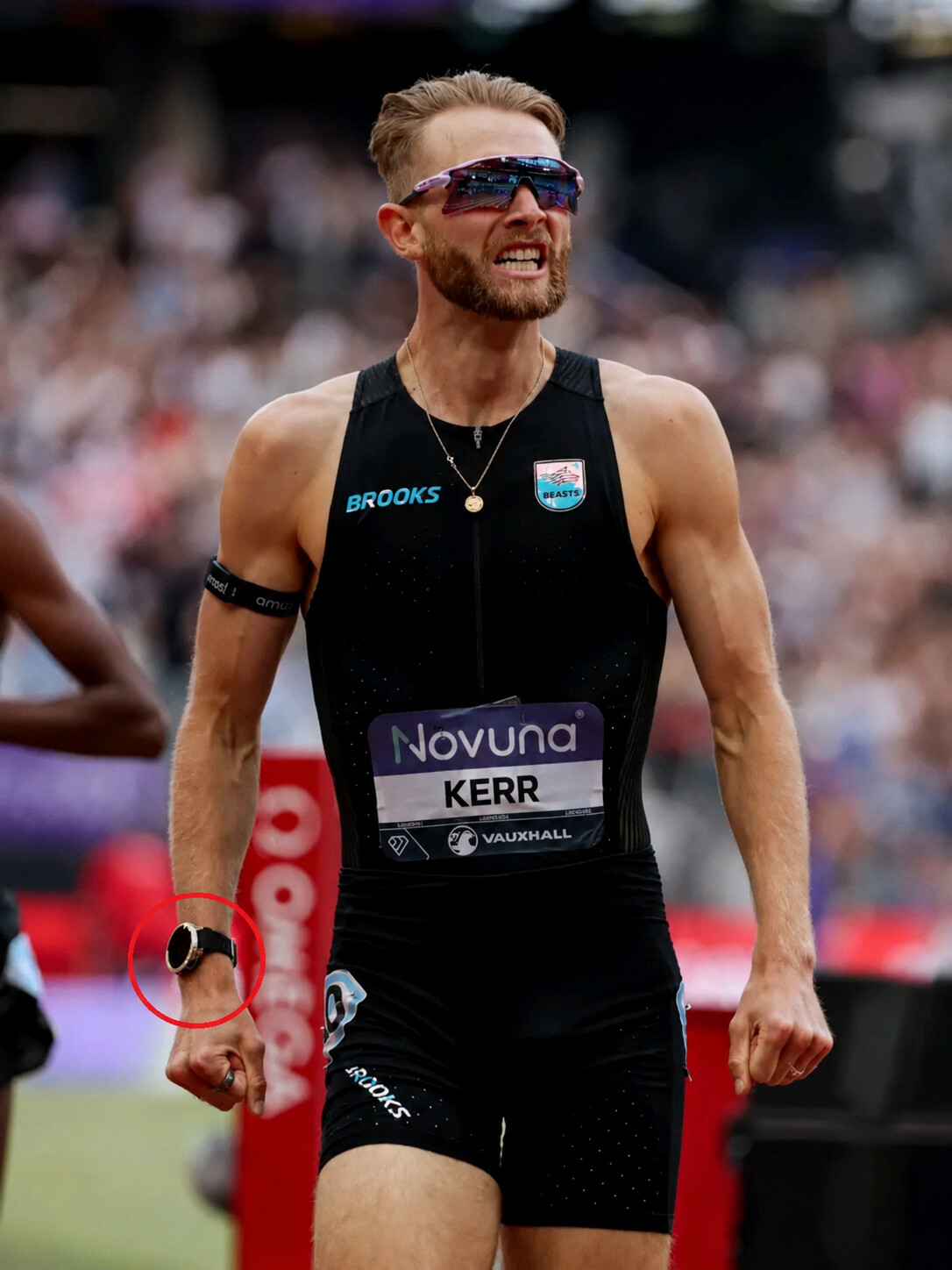
When Josh Kerr produced a breathtaking 3:42.66 to set a new men's mile world record at the London Diamond League on July 18, 2026, he didn't just rewrite one of athletics' most celebrated records. He did it while wearing one of the most exclusive performance watches ever created.
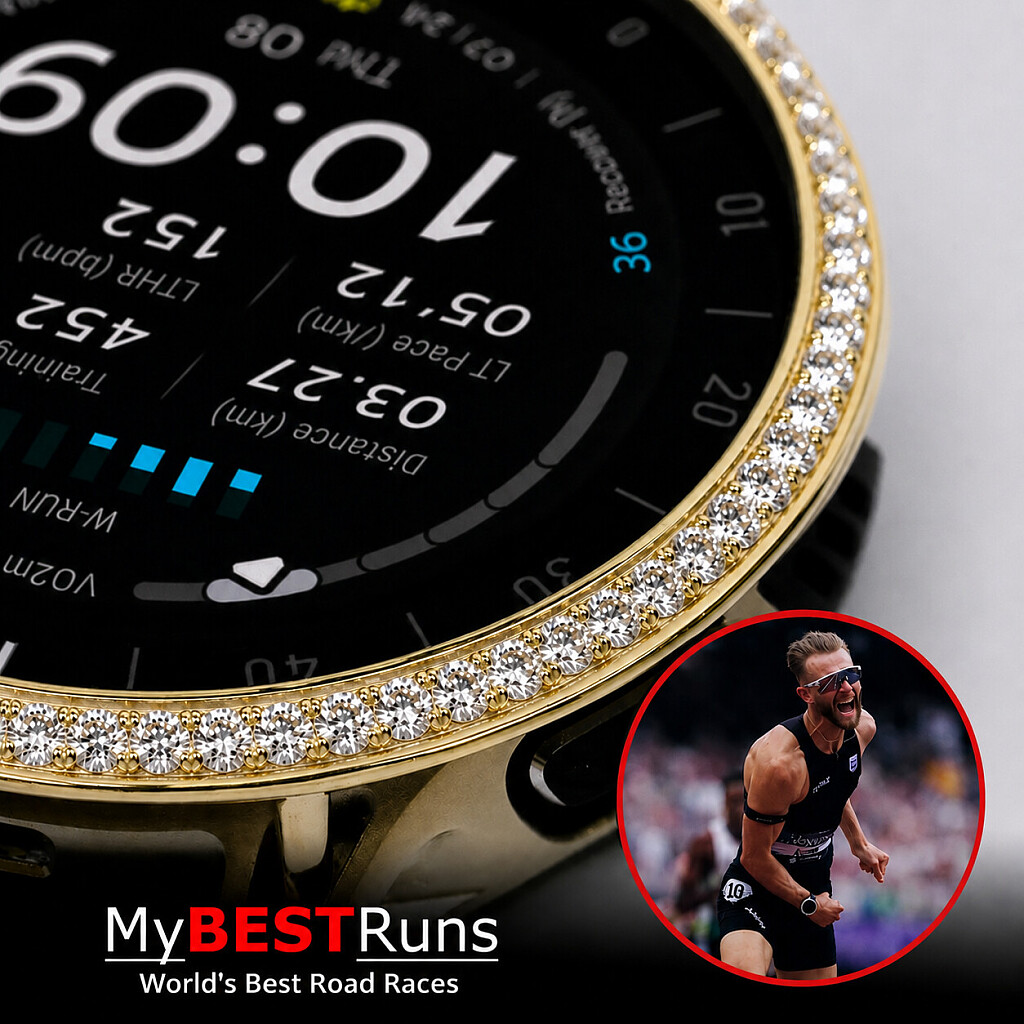
On Kerr's wrist was a one-of-a-kind Amazfit Cheetah 2 Pro, specially commissioned for his ambitious Project 222 campaign. The unique timepiece was designed by jeweller and former elite runner David Perry, combining luxury craftsmanship with cutting-edge sports technology in a way rarely seen in elite athletics.
The watch was impossible to miss. Its solid 10-karat gold-dipped bezel was set with 84 lab-grown diamonds, while the clasp carried a hand-engraved "222"—a tribute to Kerr's quest to become the first athlete in history to complete the mile in 222 seconds (3:42.00).

Although the record stopped just short of that ultimate target, Kerr's 3:42.66 performance was still one of the greatest middle-distance races ever run, lowering the world record and confirming his place among the sport's all-time legends.
The watch, however, was far more than a luxury accessory. Built around Amazfit's advanced sports technology, it captured every crucial detail of Kerr's historic run, providing an extraordinary glimpse into the physiology behind one of athletics' finest performances.
His race unfolded with remarkable consistency. Kerr covered the opening lap in 55.3 seconds, followed with 55.8, accelerated again with another 55.3, and completed the final 409 metres in 56.27 seconds to cross the finish line in world-record time.
The physiological data was equally impressive. Kerr maintained an average heart rate of 178 beats per minute, reached a peak of 188 bpm, and sustained an average cadence of 194 steps per minute throughout the race—evidence of the extraordinary efficiency required to perform at the absolute limits of human endurance.
Every stride, every heartbeat and every split was recorded as history unfolded on the London track.
Elite athletics has entered an era where wearable technology provides athletes and coaches with unprecedented insight into performance. From pacing strategies and recovery to biomechanics and physiological monitoring, modern devices have become powerful tools in the pursuit of excellence. Yet even the most sophisticated technology cannot replace the qualities that define champions.
No amount of gold, diamonds or cutting-edge engineering can substitute for years of disciplined training, exceptional talent, tactical intelligence and the courage to push beyond perceived limits when everything is on the line.
On that unforgettable evening in London, the dazzling watch certainly attracted attention. But when the finish-line clock displayed 3:42.66, it became clear that the greatest masterpiece wasn't the gold or the diamonds—it was the extraordinary athlete wearing them.
by Erick Cheruiyot for My Best Runs.
Login to leave a comment
The Red Book Of Legends: How One Signature Became The Mile's Greatest Tradition
Long before digital records, social media posts, and instant celebrations, the Emsley Carr Mile created a tradition that has quietly preserved the history of one of athletics' most prestigious races. It is a tradition built not on medals or trophies, but on ink, leather, and the signatures of greatness.
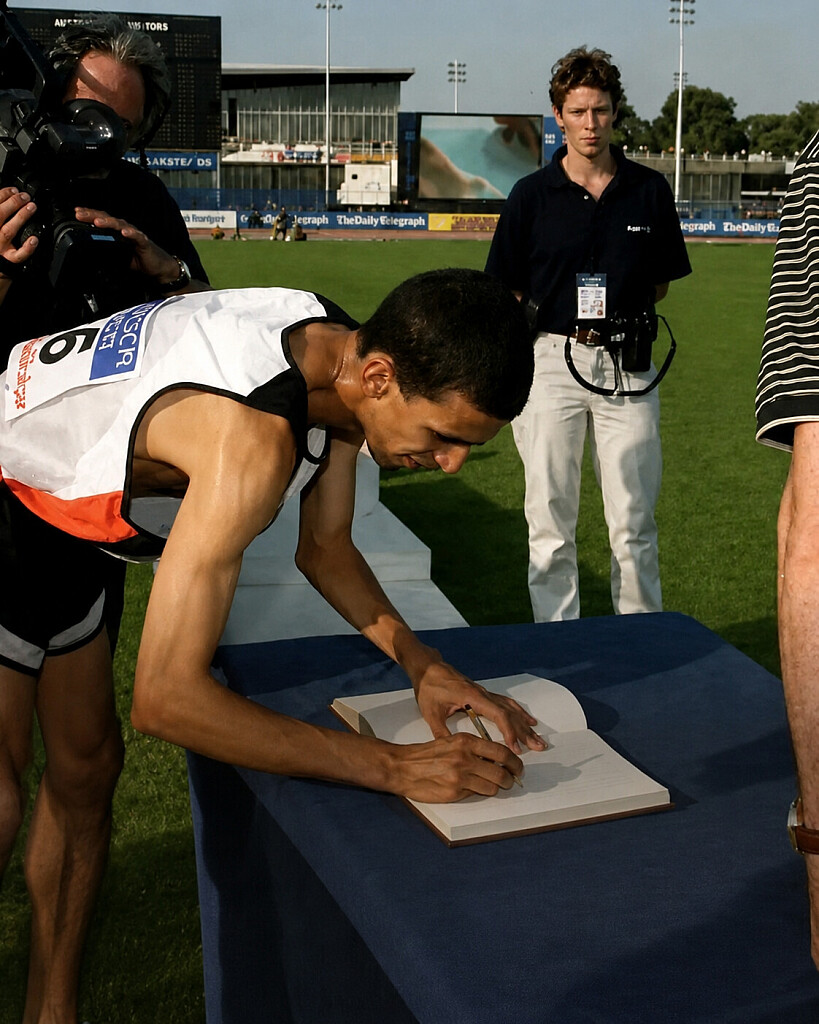
Since the inaugural Emsley Carr Mile in 1953, every champion has been invited to sign the same red leather book—a remarkable archive that has become one of the sport's most treasured historical artifacts.
Bound in luxurious Moroccan leather, the book is far more than a register of winners. It is a living timeline of middle-distance excellence, carrying the names of the athletes who redefined what humanity believed was possible over the mile.
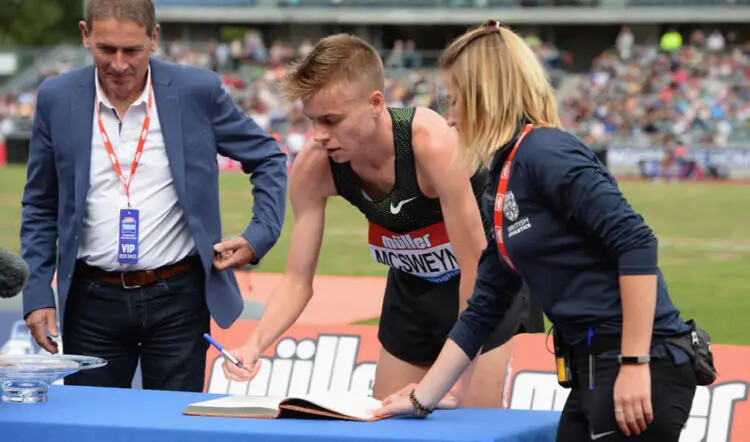
As the pages of the original volume filled, a second volume was introduced in 1980. Yet the tradition never changed. Each year's champion adds another signature, another chapter, another piece of history to a legacy spanning more than seven decades.
Within its pages are some of the greatest names athletics has ever known. Kenyan icon Kip Keino signed it. Steve Ovett left his mark. So did Sebastian Coe, Haile Gebrselassie, and the incomparable Hicham El Guerrouj. Altogether, the book bears the signatures of eleven Olympic champions and seven men who have held the world mile record—a remarkable concentration of sporting greatness.
Yet one name is conspicuously absent.
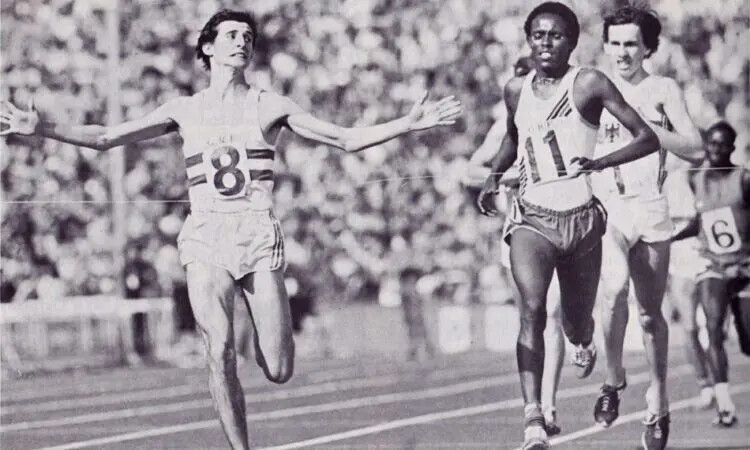
Roger Bannister, the first man to break the four-minute mile, never signed the famous book.
Ironically, the Emsley Carr Mile had originally been established to encourage athletes in their pursuit of the once-impossible four-minute barrier. But by the time the race was held for only the second time, Bannister had already etched his own name into sporting immortality with his historic run at Oxford's Iffley Road in May 1954. His career soon moved in a different direction, and the opportunity to sign the book never came. Decades later, the empty space where his signature might have appeared remains one of the sport's most fascinating "what if" stories.
While legends came and went, one man quietly built a record that still stands unmatched.
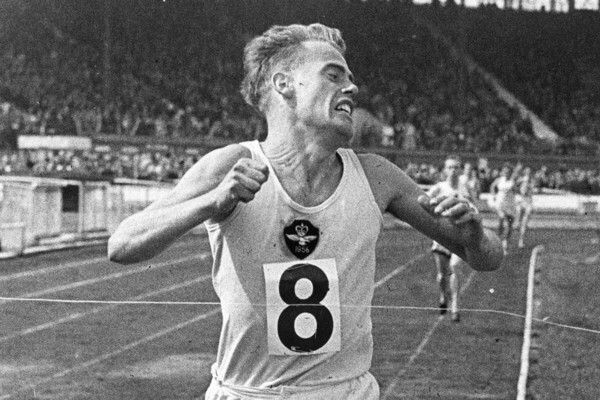
British runner Ken Wood remains the most successful athlete in Emsley Carr Mile history, winning the race four times between 1954 and 1961. Consequently, his signature appears more frequently than any other in the historic volume—a lasting reminder of an athlete whose achievements deserve far greater recognition.
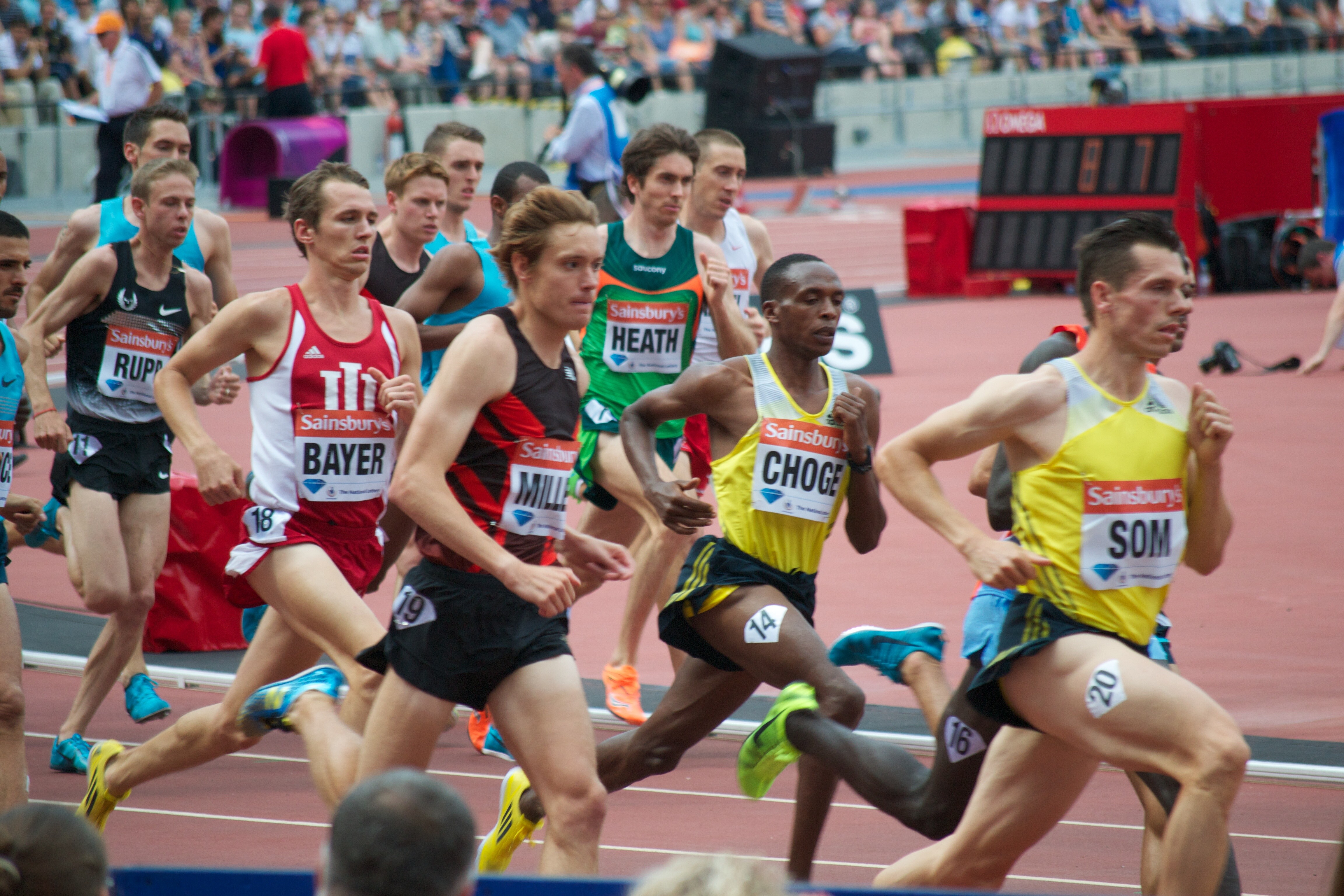
The race itself has journeyed across some of Britain's most iconic athletics venues, moving from White City to Crystal Palace, then Alexander Stadium, and today the London Stadium. Through every relocation, one constant has remained: the red leather book has travelled alongside it, faithfully collecting the signatures of every new champion.
With each passing year, the book grows heavier—not because of its pages, but because of the extraordinary history they contain.
Now, another chapter has been written.
Fresh from producing one of the greatest mile performances ever witnessed, Josh Kerr has added his name to the same legendary book signed by generations of champions before him. His signature now sits alongside the sport's greatest icons, but with one remarkable distinction: the time attached to his victory is faster than any recorded above it.
The names have changed. The venues have changed. The records have fallen.
But the tradition has endured.
For more than seventy years, one red leather book has silently chronicled the evolution of the mile, reminding every new champion that while records may eventually be broken, true sporting legacy is written one signature at a time.
by Erick Cheruiyot for My Best Runs.
Login to leave a comment
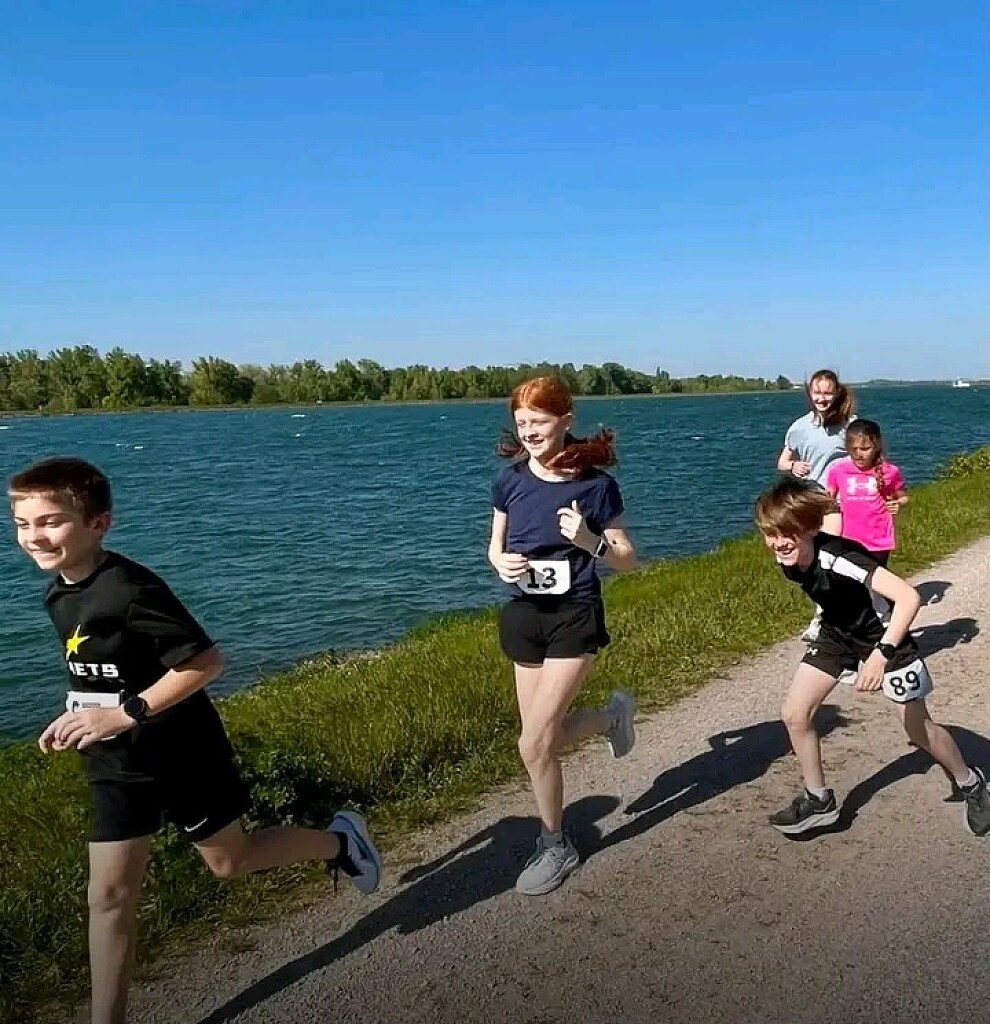
Six Countries, Six 5Ks, One Extraordinary Day: Young Runners Create a World-First Endurance Feat
What does it take to run six competitive 5Ks in a single day across six different countries? For five determined young athletes from Michigan, it took endurance, meticulous planning, and an unwavering passion for running.
In one of the most remarkable distance-running achievements of the year, the group completed a 5-kilometre race in Austria, Liechtenstein, Switzerland, France, Germany, and Luxembourg—all within a single day. Their extraordinary journey has earned them a unique world record, showcasing that age is no barrier to ambition.
The challenge began at 6:00 a.m. in Austria, where the runners lined up for the first of six races. After each 5K, they quickly climbed into a van and travelled across international borders before taking on the next event. The demanding schedule continued from country to country until the final race was completed just before sunset in Luxembourg.
Ranging in age from 10 to 15 years, the young athletes covered a total of 30 kilometres (18.6 miles) of racing while crossing six international borders in less than a day. It was a true test of endurance, resilience, and determination, requiring them to repeatedly recover, refocus, and perform under physically demanding conditions.
More than just a record-breaking adventure, the achievement highlights the power of youthful determination and the limitless possibilities that come with setting bold goals. Completing one 5K is a memorable accomplishment for many runners; completing six in six different nations on the same day is something almost unimaginable.
In a sport filled with incredible performances, this stands out as one of the most original and inspiring running achievements of the year—a celebration of endurance, teamwork, and the adventurous spirit that continues to redefine what is possible.
by Erick Cheruiyot for My Best Runs.
Login to leave a comment
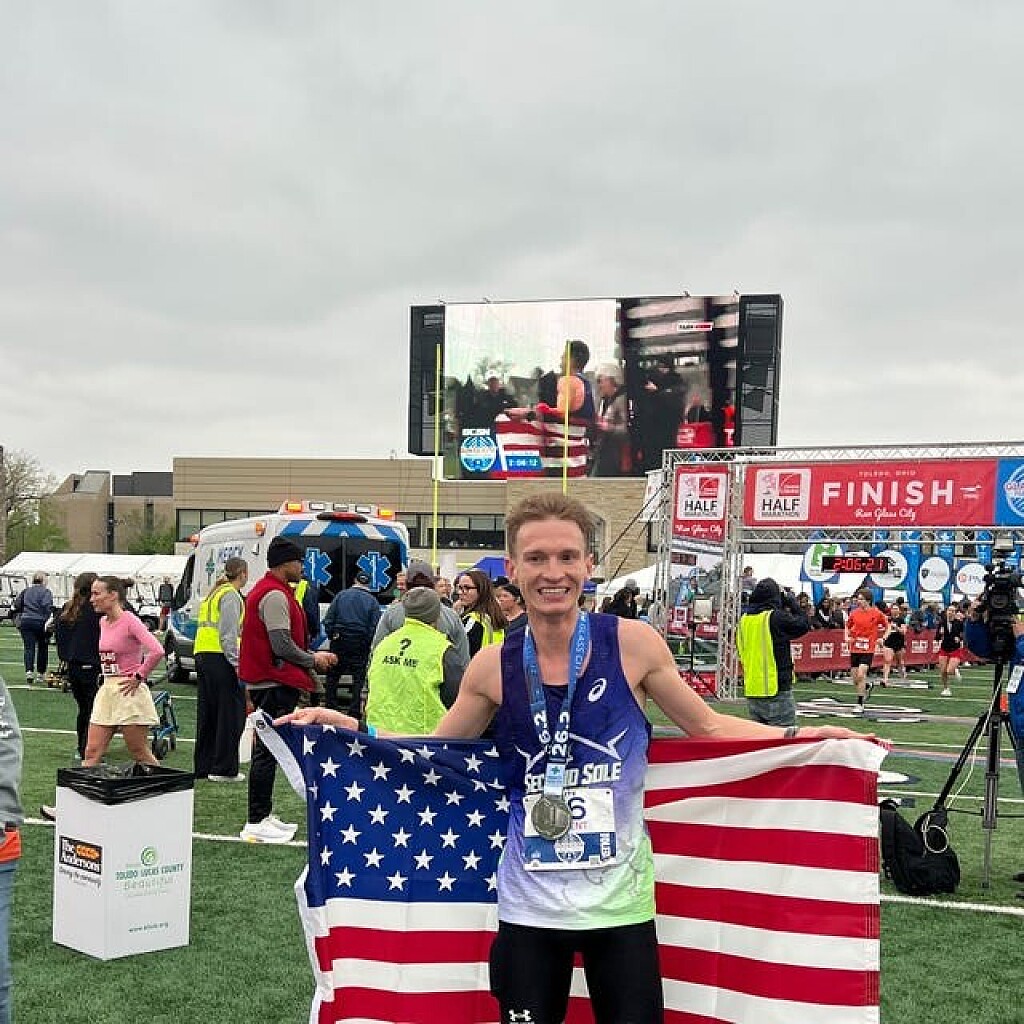
No Coach, No Sponsor, No Limits: Vincent Mauri’s Historic Marathon Debut Shocks America
At a time when elite marathon success is often built around professional coaching teams, corporate sponsorships, altitude camps, and carefully managed race schedules, Vincent Mauri has rewritten the script in the most astonishing way possible.
The 25-year-old American stunned the distance-running world last month when he clocked a breathtaking 2:05:54 in his very first marathon — the fastest marathon debut ever recorded by an American athlete. What made the performance even more extraordinary was not just the time itself, but the unlikely path behind it.
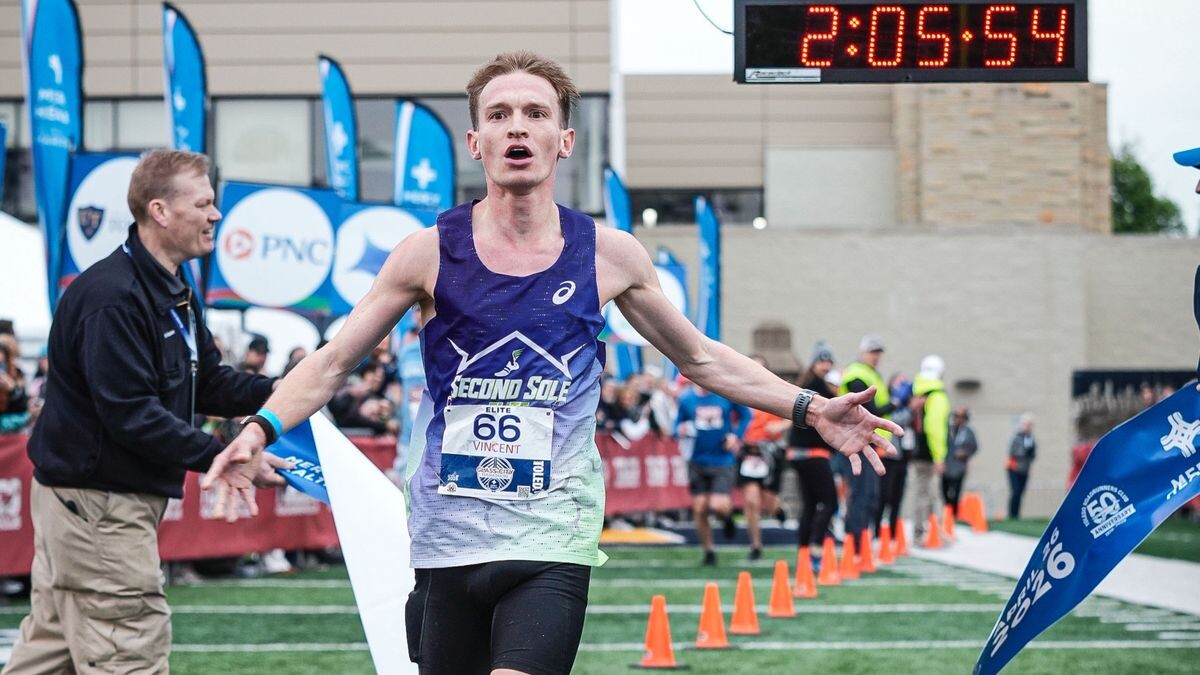
No coach. No sponsor. No major professional backing.
Just relentless discipline, intelligent preparation, and a belief that bordered on fearless.
When Mauri crossed the finish line, disbelief spread almost instantly across social media and running forums. Many initially assumed the result had to be incorrect. A 2:05 marathon is already world-class territory. Producing it on debut, with virtually no public profile entering the race, felt almost unreal.
But the performance was no accident.
Behind the scenes, Mauri had quietly built himself into one of the most dangerous emerging talents in American distance running. While much of the spotlight remained fixed on established stars, he focused on consistency — stacking together weeks of demanding mileage, carefully structured workouts, and meticulous recovery habits without the luxury of a professional support system.
Those close to his training revealed sessions that bordered on outrageous: long runs at near-marathon pace, brutal threshold workouts, and remarkable solo efforts that hinted something special was brewing long before race day arrived.
Yet perhaps the most impressive aspect of Mauri’s rise is the independence with which he achieved it.
In an era where athletes often rely heavily on sports science teams and sponsorship infrastructure, Mauri trusted his own instincts and commitment. He trained largely outside the traditional elite system, proving that raw determination and attention to detail can still compete with the sport’s biggest resources.
His breakthrough has now sparked excitement across American distance running, with many already wondering how fast he can ultimately become. A debut of 2:05:54 immediately places him among the nation’s elite marathoners and signals the arrival of a serious contender on the international stage.
More importantly, Mauri’s story resonates because it feels authentic.
It is the story of an athlete who succeeded before the contracts, before the headlines, and before the spotlight found him. In a sport increasingly shaped by commercial expectations, Vincent Mauri delivered a reminder that extraordinary performances can still emerge from pure grit and self-belief.
America may have just discovered its newest marathon sensation — and he did it entirely on his own terms.
by Erick Cheruiyot for My Best Runs.
Login to leave a comment
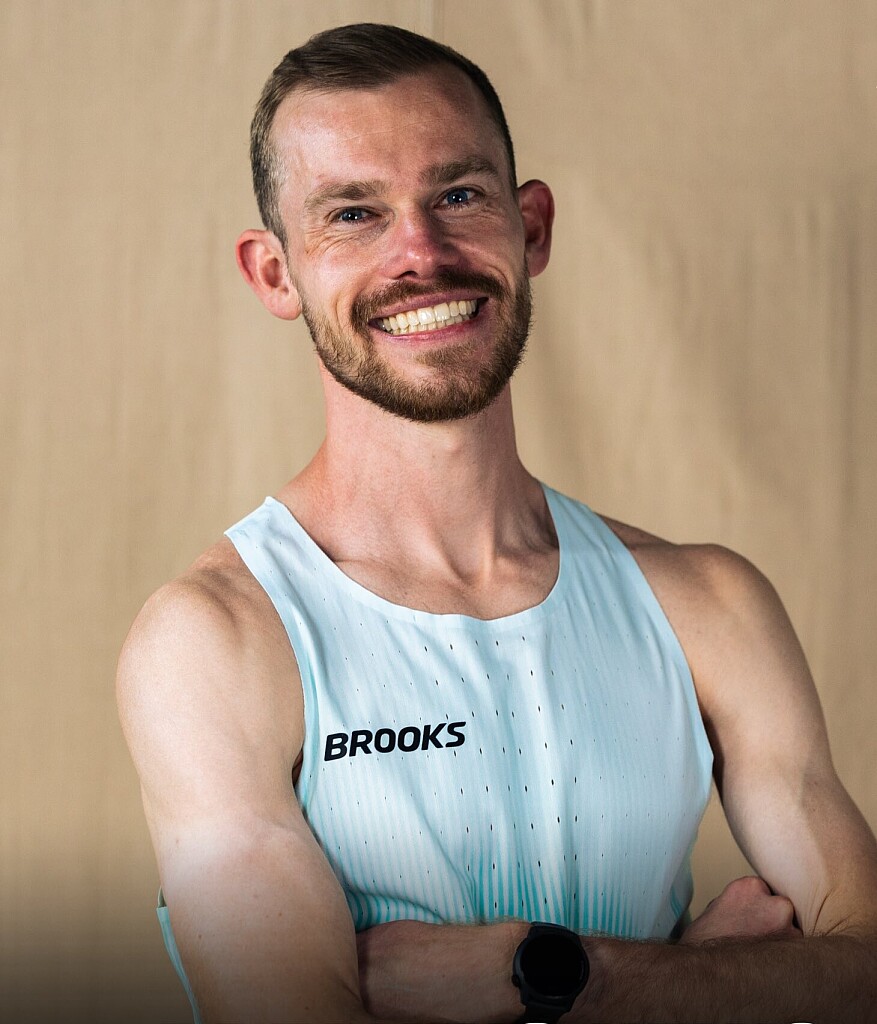
A Bold New Stride: Clayton Young Embraces Brooks Era Ahead of Boston Showdown
After weeks of swirling speculation, American distance star Clayton Young has finally lifted the curtain on his future, officially announcing his partnership with Brooks Running just weeks before the iconic Boston Marathon. The revelation, shared through his social platforms, signals more than just a sponsorship change—it marks the beginning of a deeply personal and carefully orchestrated new chapter, closing the door on his long-standing relationship with ASICS.
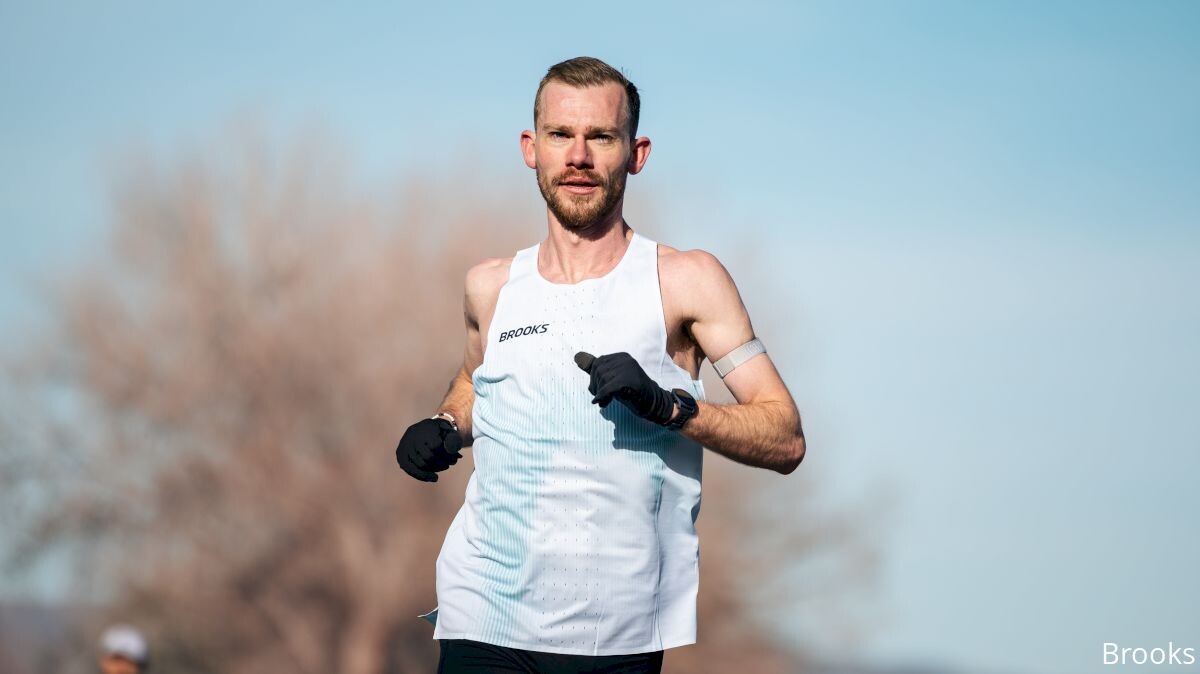
What sets this transition apart is not just the timing, but the manner in which it was handled. In an era where agents often dominate contract negotiations, Young chose a different path—representing himself throughout the entire process. It was a bold, calculated decision that reflects both his confidence and his desire for complete ownership of his career. This was no hurried leap; rather, it was the culmination of years of quiet evaluation, with his previous deal steadily approaching its natural conclusion at the end of 2025.
Behind the scenes, Young immersed himself in a meticulous selection process. He engaged with multiple brands, tested a range of footwear, and scrutinized every detail with a singular focus—performance. Central to his final choice was Brooks’ innovation in racing shoe technology. From trialing prototype models to assessing their responsiveness under controlled conditions, every step pointed toward a partnership grounded in trust and competitive edge. Coming off an 18-week ankle injury, the stakes were even higher. Stability, comfort, and speed were not luxuries—they were necessities. Brooks, it seems, delivered on all fronts.
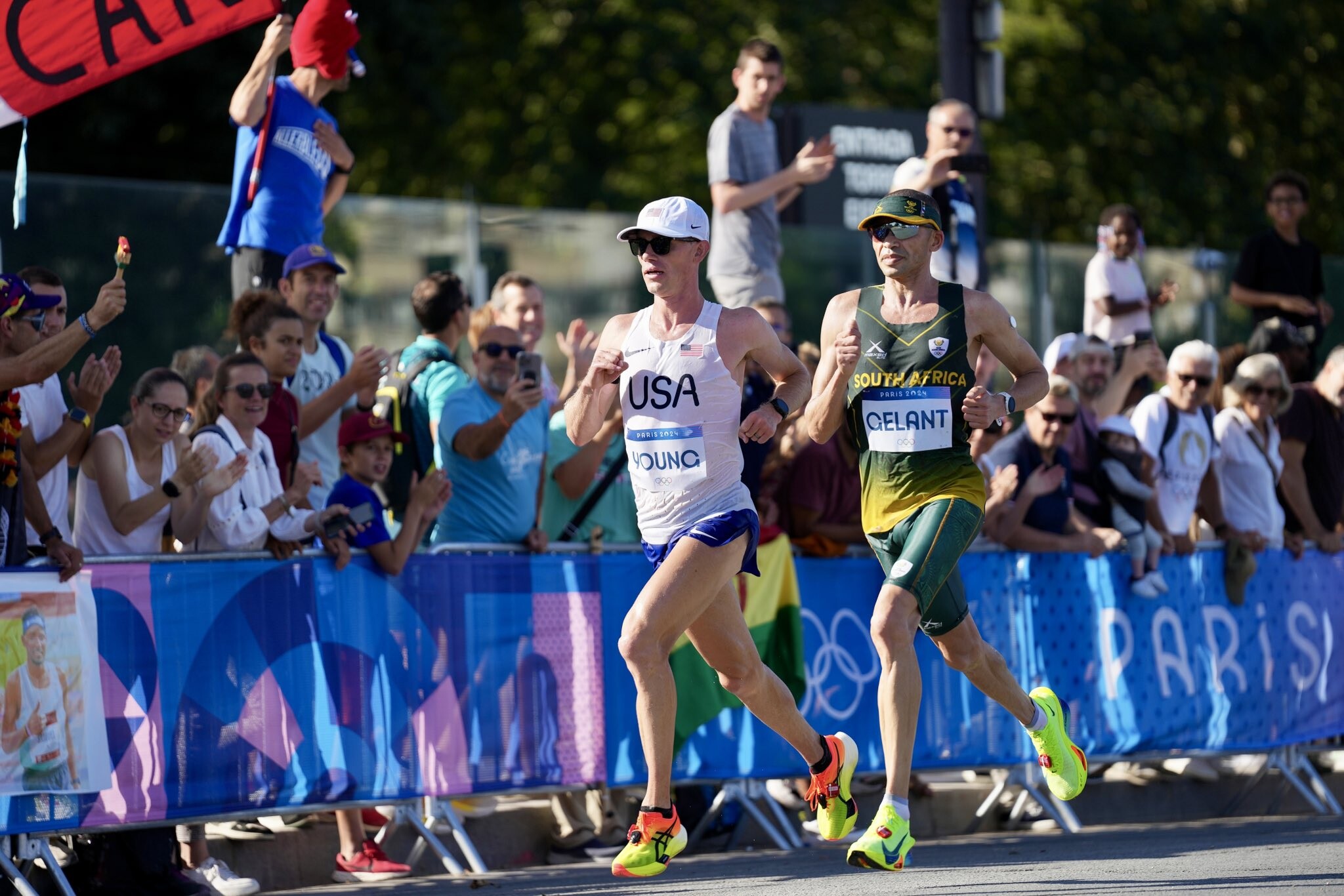
Now, the narrative shifts to the roads of Boston. As the countdown to the Boston Marathon intensifies, Young finds himself in a delicate yet determined phase of rebuilding. His training, once disrupted, is steadily regaining rhythm—each mile a testament to resilience, each session a step closer to peak form. While he has openly acknowledged the uncertainties surrounding his fitness, this announcement carries an unmistakable undertone of belief—belief in his recovery, and belief in the partnership he has chosen.
Boston will represent more than just a race. It will be his first appearance in Brooks colours, and it has set the stage for a powerful test of this new alliance. As he steps onto one of the sport’s most historic courses, Clayton Young has not only turned a new page—he has begun writing a story defined by resilience, independence, and renewed ambition.
by Erick Cheruiyot for My Best Runs.
Login to leave a comment

Boston Marathon
Among the nation’s oldest athletic clubs, the B.A.A. was established in 1887, and, in 1896, more than half of the U.S. Olympic Team at the first modern games was composed of B.A.A. club members. The Olympic Games provided the inspiration for the first Boston Marathon, which culminated the B.A.A. Games on April 19, 1897. John J. McDermott emerged from a...
more...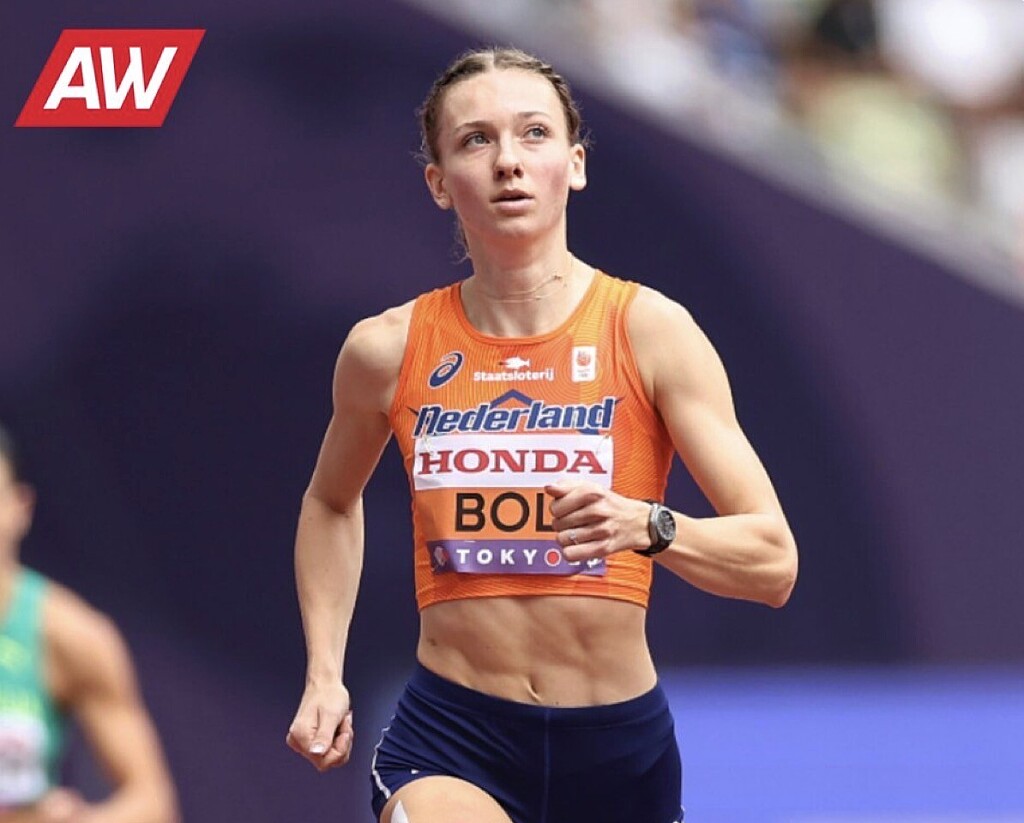
Metz Indoors 2026: Ethiopian Sweep in 3000 m, Femke Bol Breaks Dutch Record in 800 m
METZ, France — February 8, 2026 — The Metz Indoors meeting delivered an early-season showcase of world-class middle-distance running, highlighted by a commanding Ethiopian sweep in the women’s 3000 meters and a national record performance by Dutch star Femke Bol in the 800 meters.
From the opening laps of the 3000 m, Ethiopia’s Birtukan Molla and Shito Gumi asserted control, setting a confident tempo and quickly separating themselves from the field. Gumi led the early stages with a brisk 2:51 opening kilometer, ensuring the race would be decided by strength as well as tactics. A lead pack formed that included fellow Ethiopian Aster Areri and Canada’s Lucia Stafford, while the rest of the field struggled to maintain contact.
Molla remained composed throughout, running efficiently just behind Gumi and conserving energy for the decisive final laps. As the race entered its closing stages, Stafford made a determined attempt to challenge, but the Ethiopian trio responded with authority.
With 300 meters remaining, Molla surged past Gumi and powered down the final straight to secure victory in 8:40.49. Gumi followed in 8:41.18, and Areri completed the sweep in 8:41.75, underlining Ethiopia’s remarkable depth in women’s distance running. Stafford ran a strong race to finish fourth in 8:42.87, narrowly missing the podium in one of the fastest indoor 3000 m races of the season.
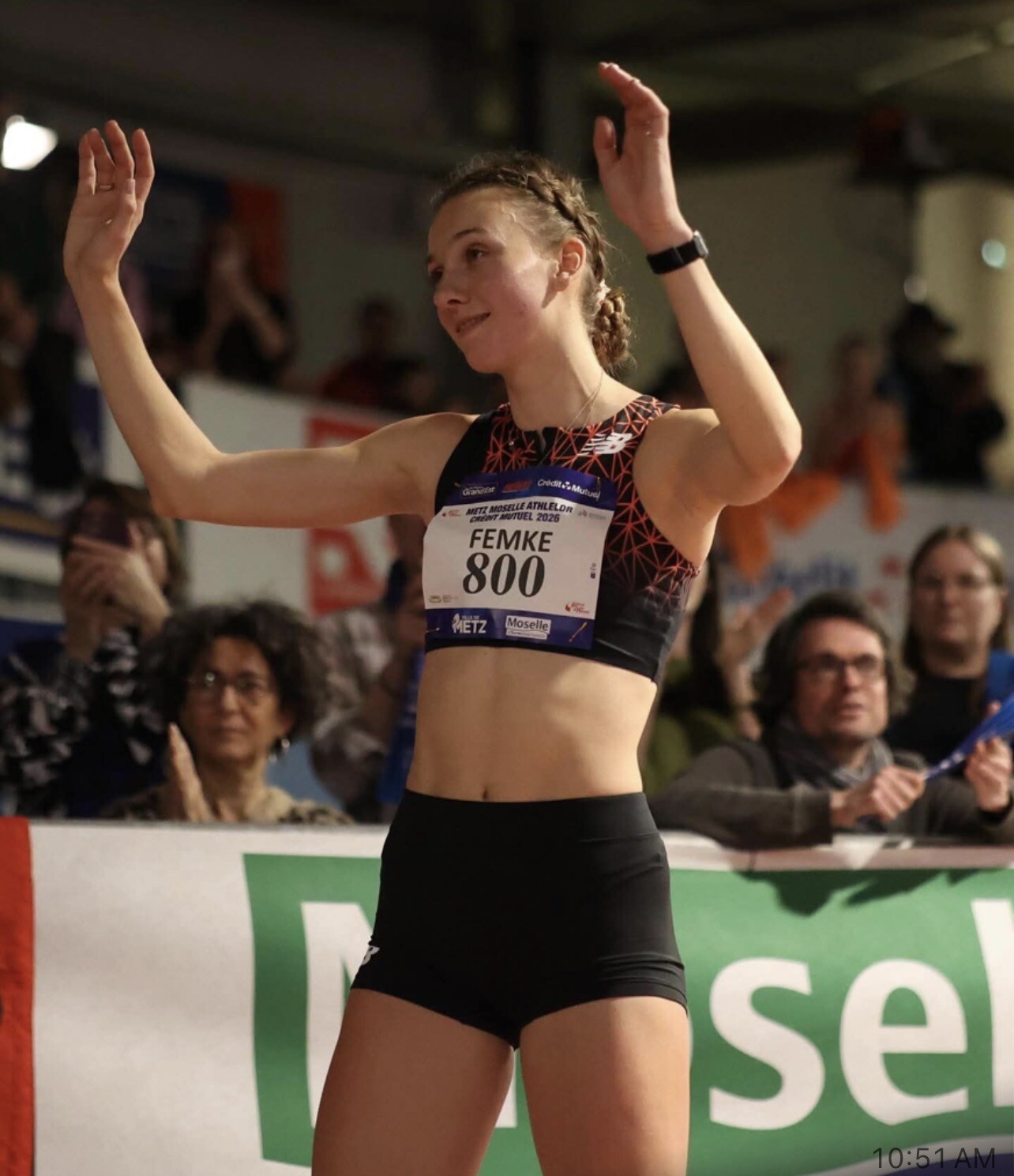
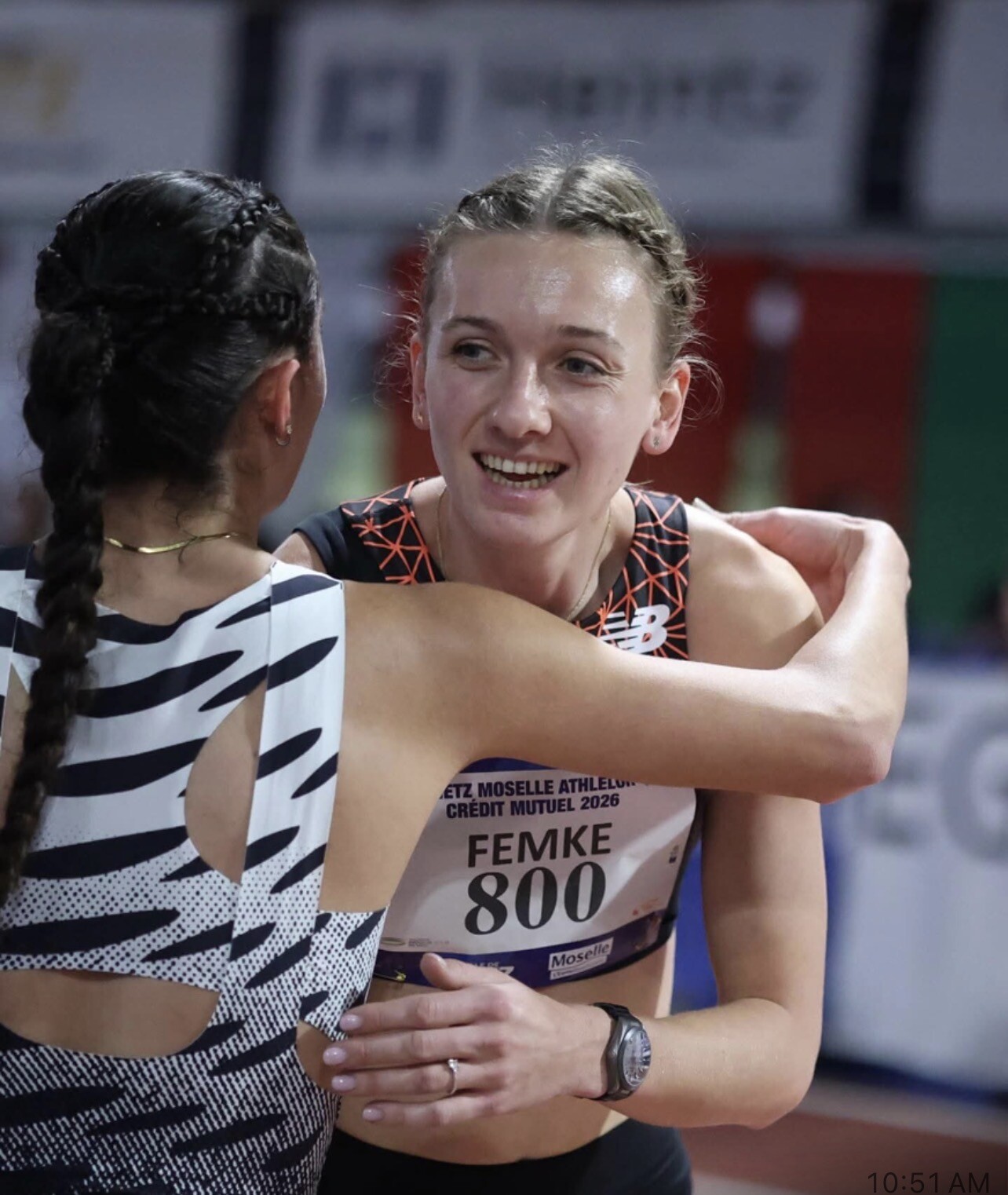
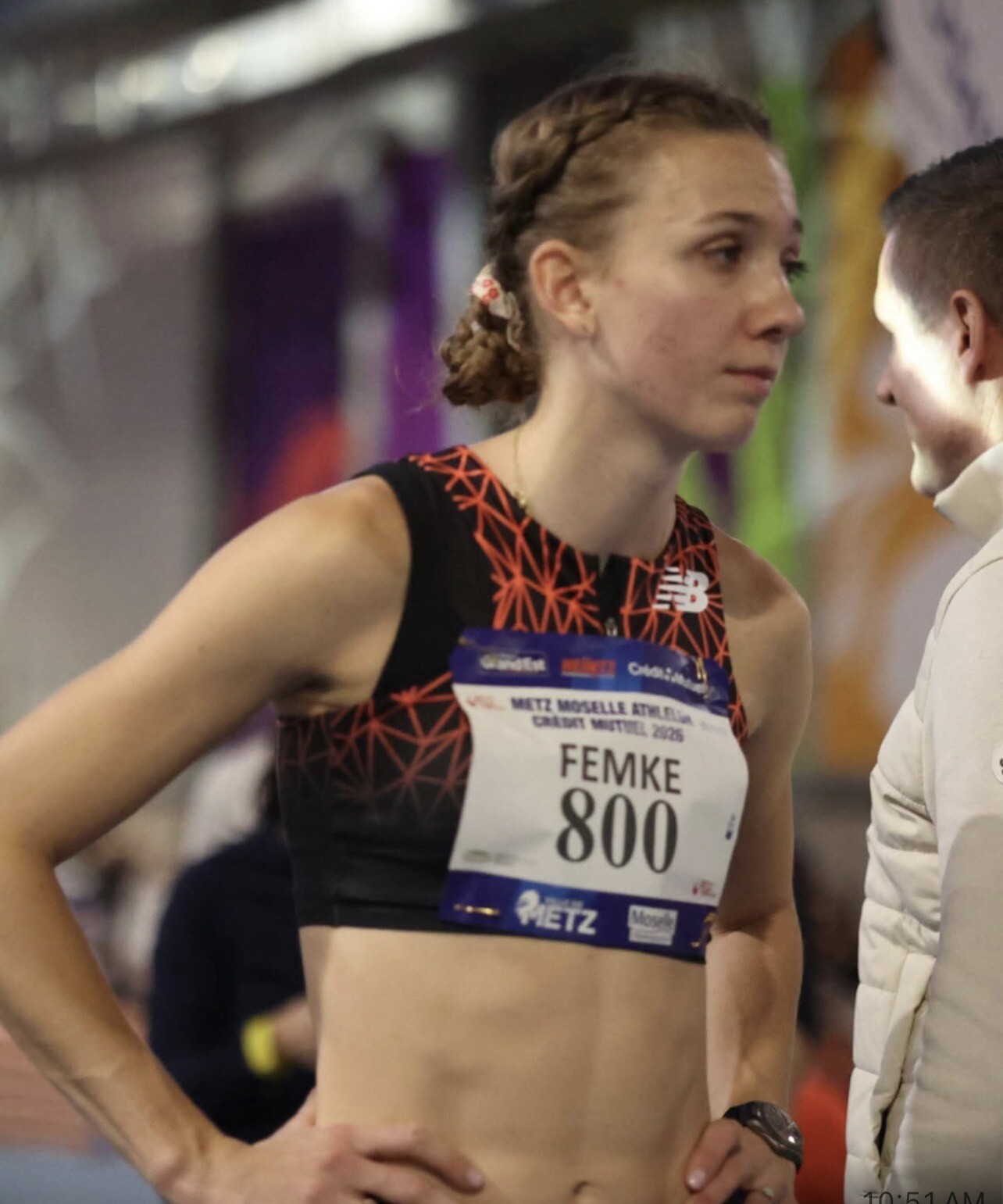
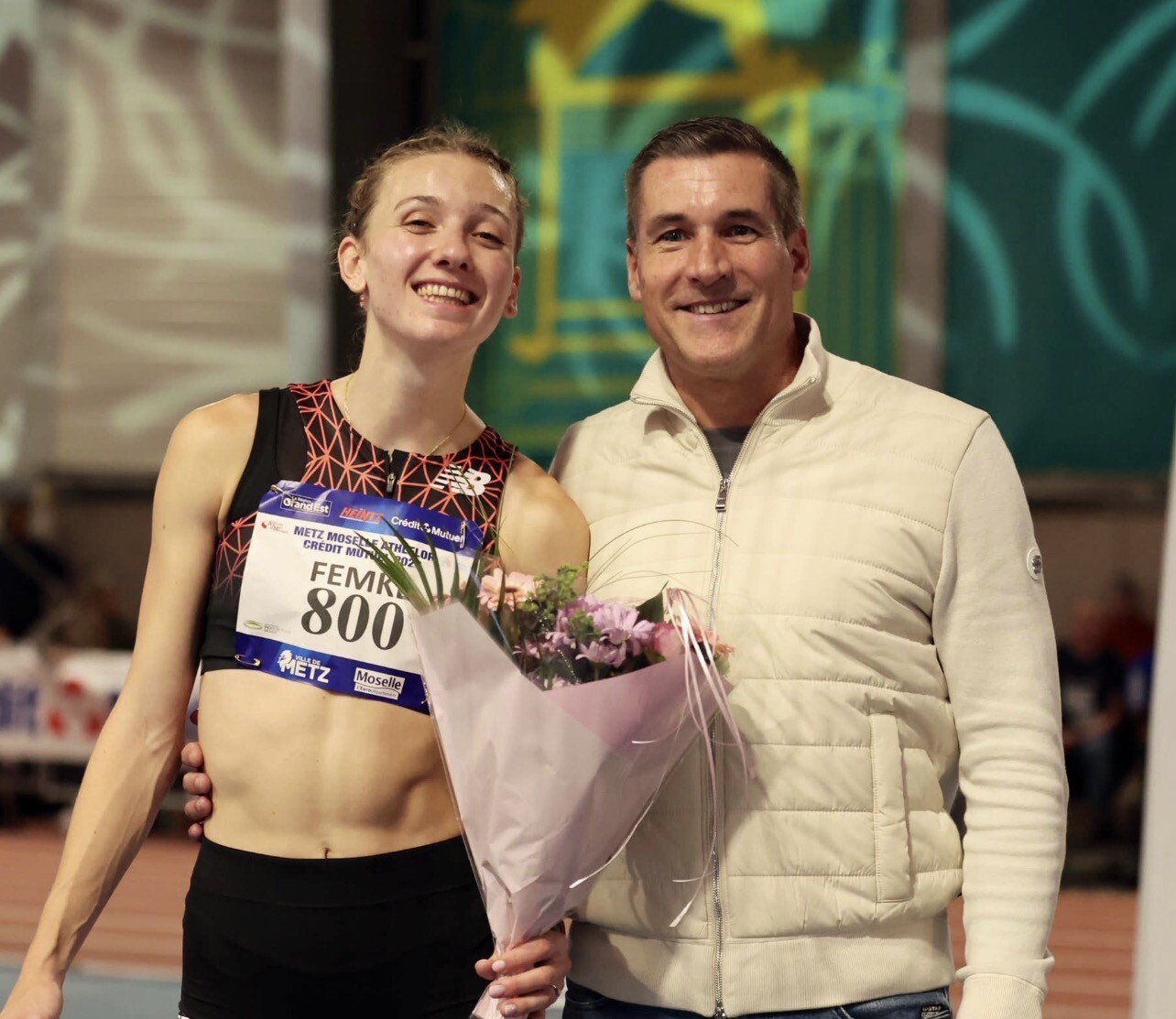
The women’s 800 m provided another highlight of the evening, as Femke Bol demonstrated her range and speed beyond her traditional specialty. Best known as one of the world’s dominant 400 m hurdlers, Bol delivered a breakthrough performance over two laps, winning convincingly in 1:59.07 and setting a new Dutch national record.
Switzerland’s Valentina Rosamilia and Lore Hoffman ran outstanding races, both breaking two minutes with times of 1:59.90 and 1:59.91 respectively, but Bol’s smooth stride and decisive finishing strength proved untouchable. Germany’s Smilla Kolbe and Italy’s Marta Zenoni followed, but the margin reflected Bol’s complete control over the race.
The Metz Indoors meeting continues to establish itself as a key stop on the international indoor circuit, offering athletes the opportunity to test their fitness and set the tone for the season ahead. Ethiopia’s continued dominance in the longer distances and Bol’s emergence as a national-record holder in the 800 m signal that the 2026 indoor season will feature exceptional depth and compelling performances across events.
Women’s 3000 m – Official Results
1. Birtukan Molla (ETH) – 8:40.49
2. Shito Gumi (ETH) – 8:41.18
3. Aster Areri (ETH) – 8:41.75
4. Lucia Stafford (CAN) – 8:42.87
5. Revee Walcott-Nolan (GBR) – 8:49.08 PB
6. Betelhem Olana (ETH) – 8:49.37
7. Cari Hughes (GBR) – 8:57.47
8. Eline Dalemans (BEL) – 8:57.62
9. Veerle Bakker (NED) – 8:58.03 PB
10. Sofia Thogersen (DEN) – 8:58.58
11. Vera Bertemes-Hoffmann (LUX) – 9:04.66 NR
12. Adelle Tracey (JAM) – 9:05.09
Women’s 800 m – Official Results
1. Femke Bol (NED) – 1:59.07 NR
2. Valentina Rosamilia (SUI) – 1:59.90 PB
3. Lore Hoffman (SUI) – 1:59.91 PB
4. Smilla Kolbe (GER) – 2:01.75
5. Marta Zenoni (ITA) – 2:05.35
by Robert Kibet
Login to leave a comment

Dubai’s Boldest Running Idea Yet: A 93-Kilometer Air-Conditioned Tunnel
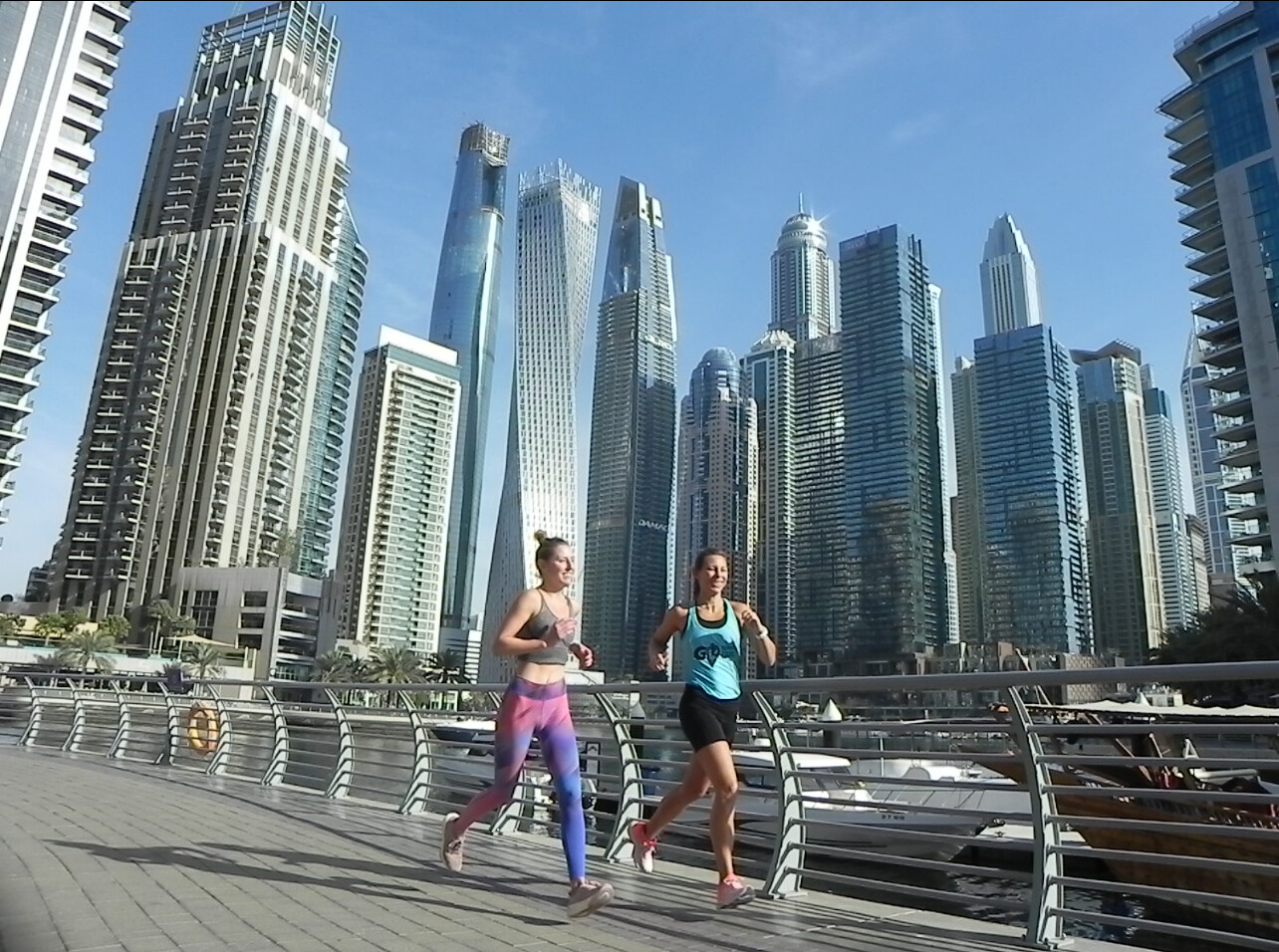
Dubai has never been shy about ambitious ideas. From indoor ski slopes in the desert to record-setting skyscrapers, the city has built a reputation for redefining what is possible. Now it is turning that ambition toward endurance sport with a proposal that has runners around the world paying attention: a 93-kilometer air-conditioned tunnel designed for running.
If built, it would be the longest climate-controlled running corridor ever attempted—an uninterrupted, weather-proof route stretching across large sections of the city.

Why This Matters to Runners

Dubai’s extreme climate is the driving force behind the proposal. For much of the year, outdoor running is limited to early mornings or late evenings, with daytime temperatures frequently exceeding 100°F (38°C) and high humidity compounding the stress on the body.
An enclosed, air-conditioned running tunnel would eliminate those constraints. Runners could train year-round, at any hour, without concern for heat illness, sun exposure, or traffic. For recreational runners, older athletes, and those new to the sport, that kind of consistency could be transformative.
Training Benefits—and Limitations
From a training standpoint, the advantages are clear:

• Stable temperatures
• Predictable, impact-friendly surfaces
• Long, uninterrupted distances
• A fully traffic-free environment
At the same time, running has always been shaped by the elements. Wind, hills, heat, and changing conditions are part of how runners adapt and improve. For competitive athletes, the tunnel would likely serve as a supplement, not a substitute—ideal for recovery runs, high-mileage days, or summer training, but not a replacement for real-world conditions.
What Would Something Like This Cost?
No official cost estimate has been released, but based on comparable large-scale urban infrastructure projects, a realistic figure can be narrowed to a much tighter range than early speculation suggests.
A purpose-built, enclosed running corridor with full climate control—without the complexity of deep metro tunneling—would likely cost between $120 million and $180 million per kilometer.
Applied to a 93-kilometer project, that places the total estimated cost in the range of:
$12 billion to $17 billion (USD)
That estimate includes structural construction, climate control and ventilation systems, lighting, safety infrastructure, and multiple access points—but assumes a design optimized specifically for runners rather than heavy transport use.
Sustainability Will Decide Its Legacy
Cooling nearly 100 kilometers of enclosed space in the desert raises obvious questions about energy use. Dubai officials have suggested renewable energy and advanced efficiency systems would be incorporated, though details remain limited.
Ultimately, the project’s long-term acceptance may hinge as much on sustainability as on ambition.
A Glimpse at the Future of Running Cities
Even if the full 93 kilometers never materialize, the concept itself reflects a broader shift: cities increasingly recognize running infrastructure as a public-health investment, not a luxury.
From protected running paths to car-free zones and illuminated night routes, urban design is evolving. Dubai’s proposal simply pushes that idea to its extreme.
Final Thoughts
A 93-kilometer air-conditioned running tunnel sounds futuristic—but so did many of Dubai’s previous projects before they became reality.
It won’t replace roads, trails, or the need to train in real conditions. But it could redefine what year-round running looks like in extreme climates—and open the sport to thousands who might otherwise never lace up.
For runners, that makes this idea worth watching closely.
by Boris Baron
Login to leave a comment
Ndikumwenayo Stuns Gressier in Thrilling Senior Men’s Cross Country Duel at Lagoa
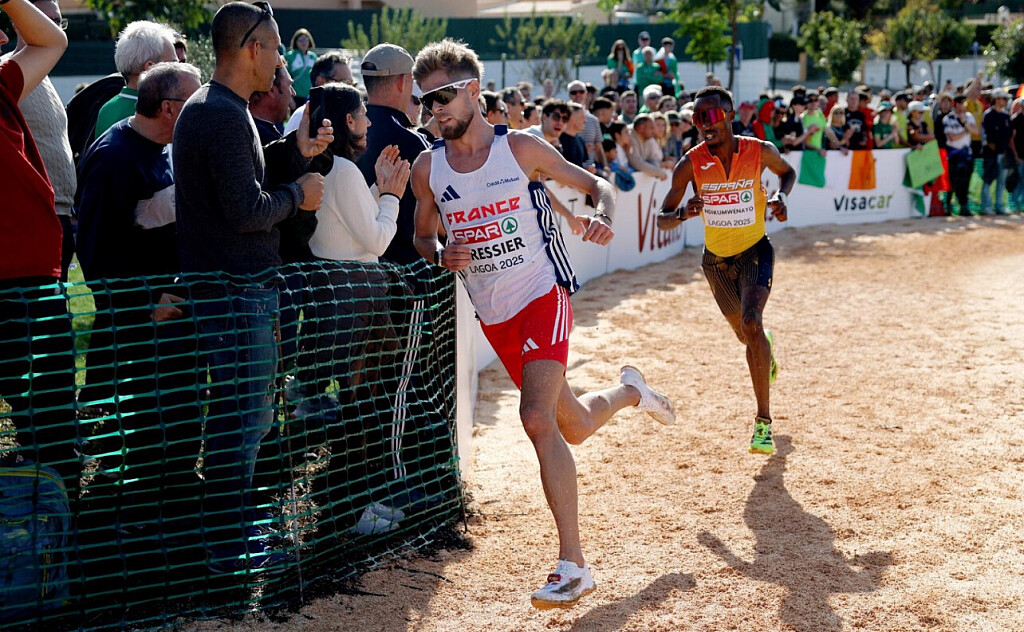
Thierry Ndikumwenayo delivered one of the standout performances of the cross-country season, outkicking France’s world 10,000 m champion Jimmy Gressier to win the senior men’s title at the 31st SPAR European Cross Country Championships in Lagoa, Portugal.
In a race defined by tactics and grit, the Spaniard stopped the clock at 22:05 over the demanding 7.47 km course, finishing just three seconds ahead of Gressier after a dramatic sprint to the line.
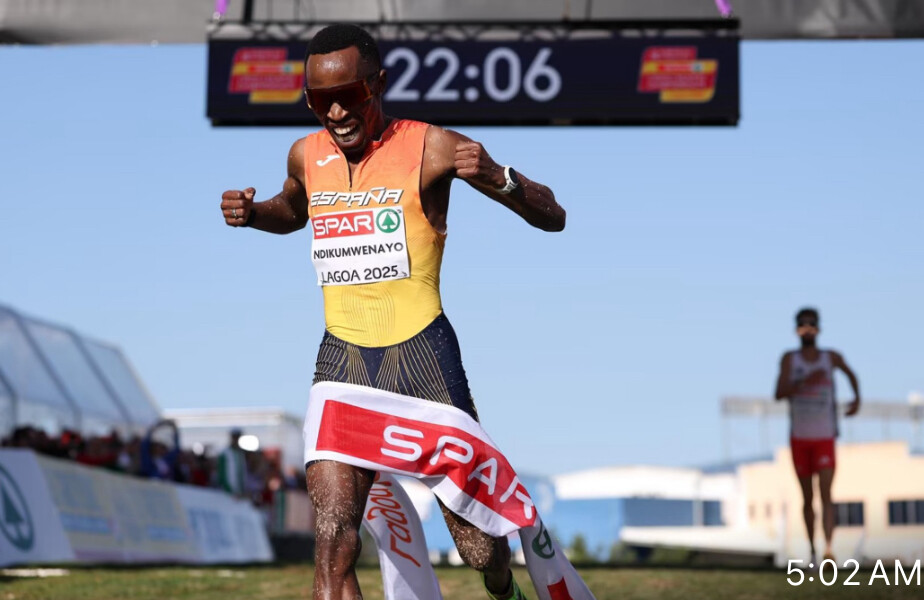
From the opening meters, the course—featuring rolling terrain, sandy stretches, and sharp turns—began to thin the field. By the midpoint, Ndikumwenayo and Gressier had broken clear, forming a two-man lead group that quickly established control. The pair matched each other stride for stride, trading subtle surges while keeping the chasers at bay.
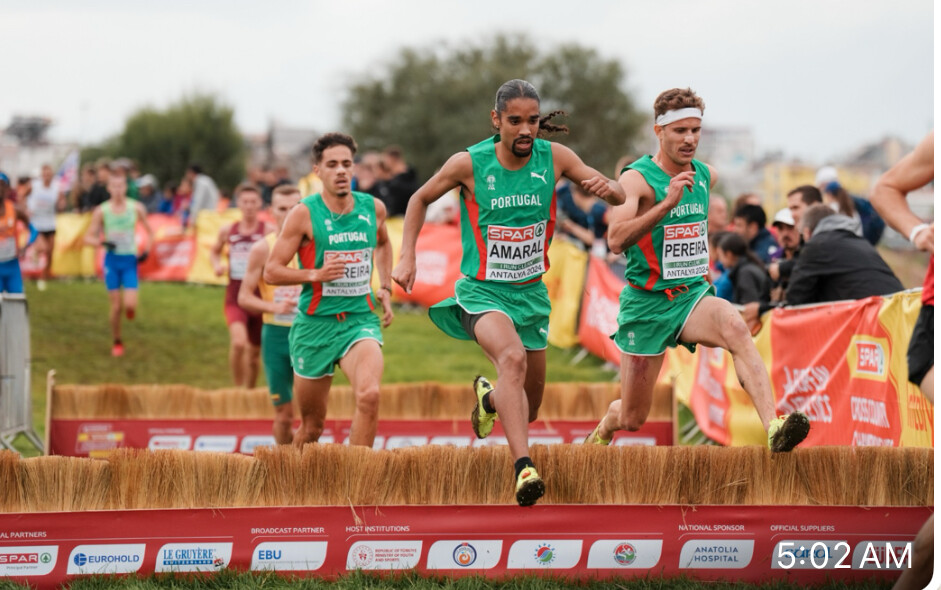
Gressier, 28, arrived in Lagoa riding the momentum of a remarkable 2025 season that included a world title over 10,000 m in Tokyo, European half-marathon gold, and European indoor records at 5,000 m. A European cross-country crown would have capped a year that showcased his range across track, road, and grass.
Ndikumwenayo had other plans. Born in Burundi in 1997 and now racing for Spain, he has steadily evolved into one of Europe’s most complete distance runners. After taking bronze at last year’s championships in Antalya, he arrived in Portugal sharper, stronger, and ready to challenge for gold.
The decisive moment came on the final bend. Gressier, preparing to unleash his trademark finishing kick, briefly lost his footing—just enough hesitation for Ndikumwenayo to strike. The Spaniard surged decisively and held on through the line, sealing a memorable victory in one of the closest finishes of the championships.
Behind the front two, Switzerland’s Dominic Lokinyomo Lobalu claimed bronze in 22:23 after a hard-fought battle, edging Great Britain’s Scott Beattie, who finished fourth in the same time. Ireland’s Jack O’Leary took fifth in 22:25, playing a key role in Ireland securing its first senior men’s team medal at these championships in 25 years.
Spain’s dominance was underlined by strong supporting runs from Abdessamad Oukhelfen (6th) and Aarón Las Heras (9th), giving the nation a comfortable team title and confirming its depth in European cross-country.
Top 10 – Senior Men’s Cross Country
1. Thierry Ndikumwenayo (ESP) — 22:05
2. Jimmy Gressier (FRA) — 22:08
3. Dominic Lokinyomo Lobalu (SUI) — 22:23
4. Scott Beattie (GBR) — 22:23
5. Jack O’Leary (IRL) — 22:25
6. Abdessamad Oukhelfen (ESP) — 22:27
7. Ruben Querinjean (LUX) — 22:28
8. Simon Sundström (SWE) — 22:29
9. Aarón Las Heras (ESP) — 22:30
10. Brian Fay (IRL) — 22:31
Ndikumwenayo’s victory in Lagoa was about more than a narrow margin. It marked the arrival of a runner fully in command of his craft—strong, patient, and fearless when it mattered most. On a course that rewarded toughness and timing, he delivered both, producing one of the defining moments of the 2025 European cross-country season.
by Robert Kibet for My Best Runs
Login to leave a comment
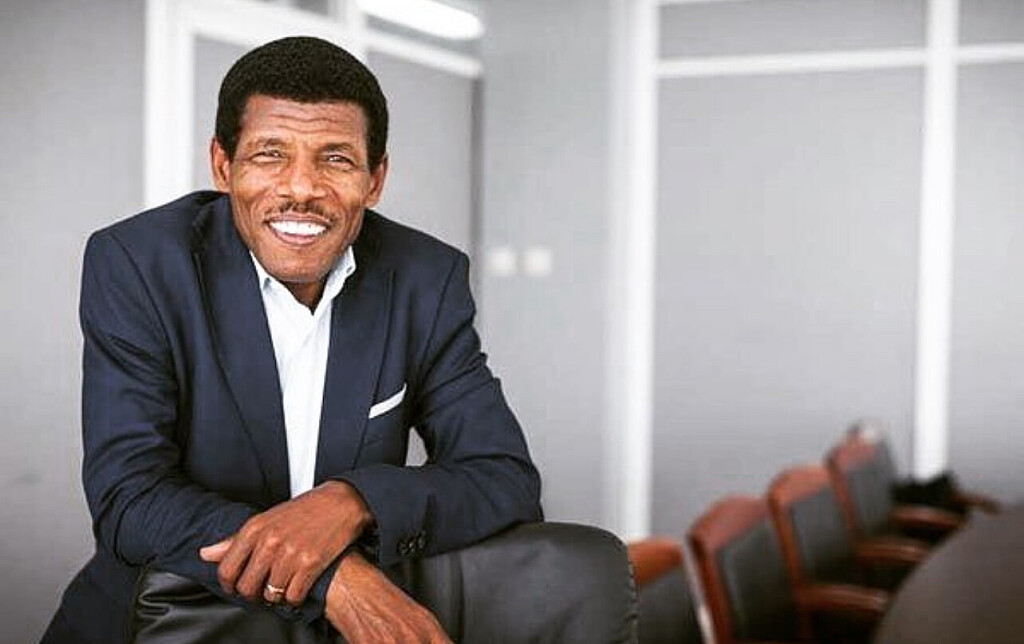
Haile Gebrselassie’s Journey from Track Legend to Business Mogul
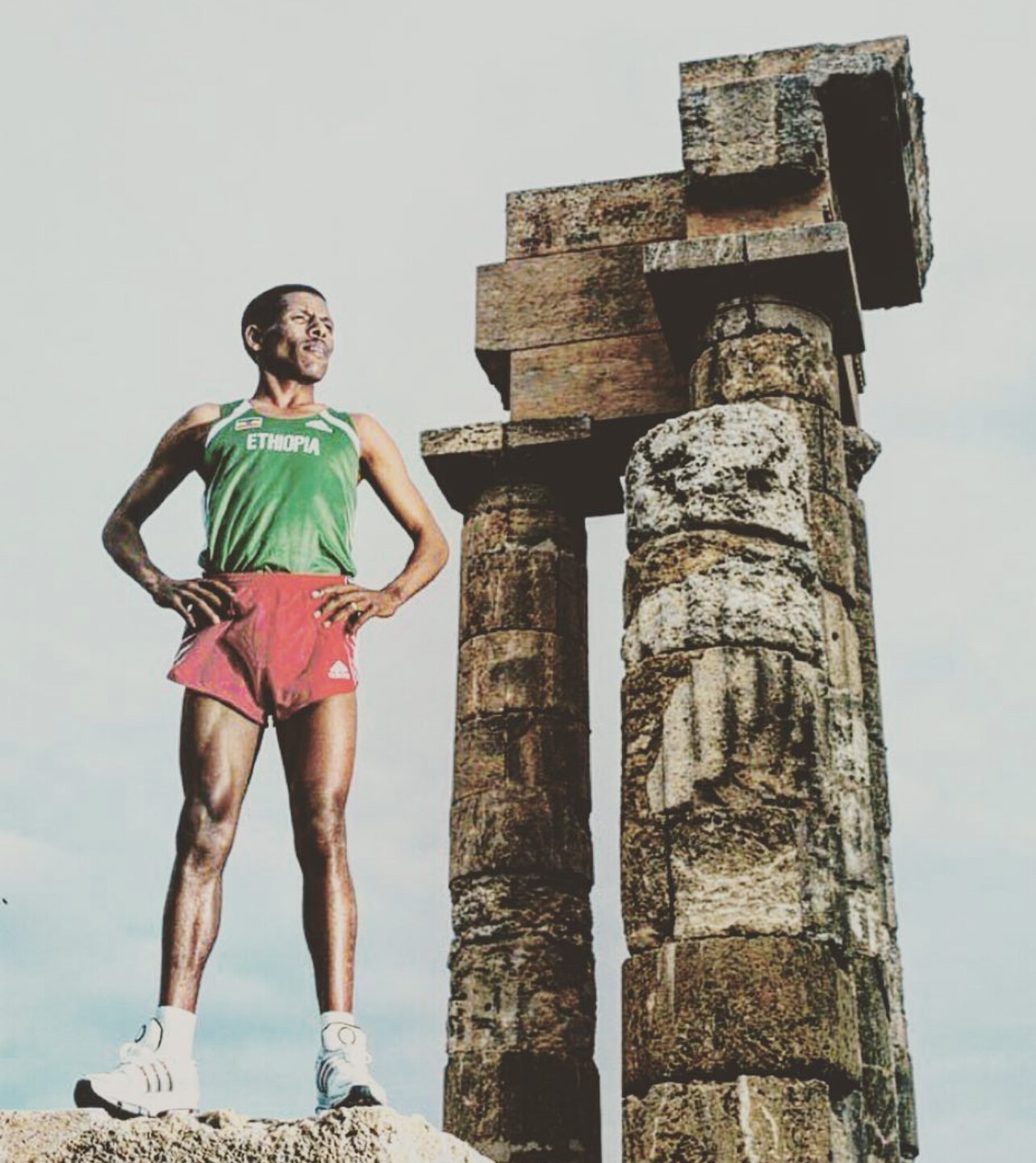
Haile Gebrselassie, renowned for his extraordinary achievements in long-distance running, has seamlessly transitioned into a successful entrepreneur, establishing a diverse business empire that significantly contributes to Ethiopia’s economy.
Athletic Achievements
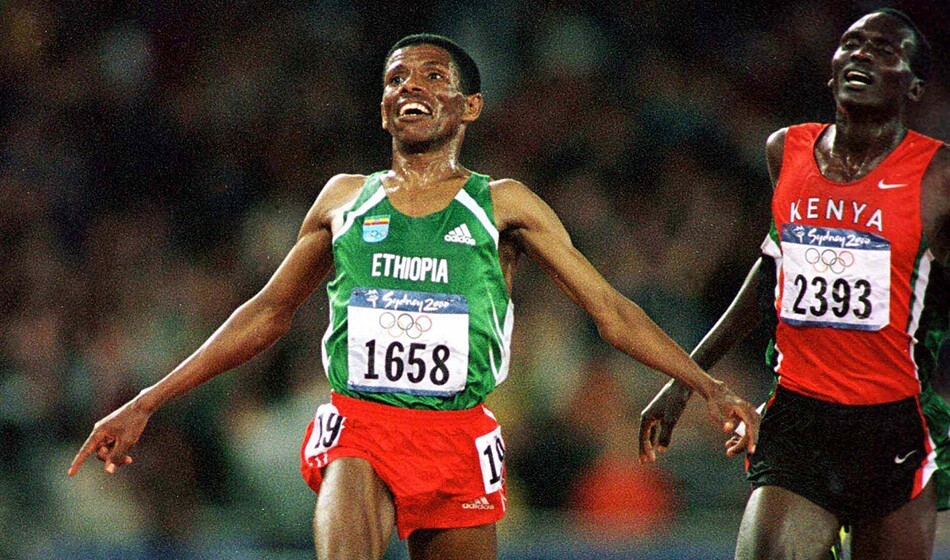
Gebrselassie’s athletic career is adorned with numerous accolades:
• Olympic Gold Medals: He secured gold in the 10,000 meters at both the 1996 Atlanta and 2000 Sydney Olympics.
• World Championships: Gebrselassie clinched four World Championship titles in the 10,000 meters in 1993, 1995, 1997, and 1999.
• World Records: Throughout his career, he set 27 world records across distances ranging from 1,500 meters to the marathon. Notably, he set a marathon world record of 2:03:59 at the 2008 Berlin Marathon.
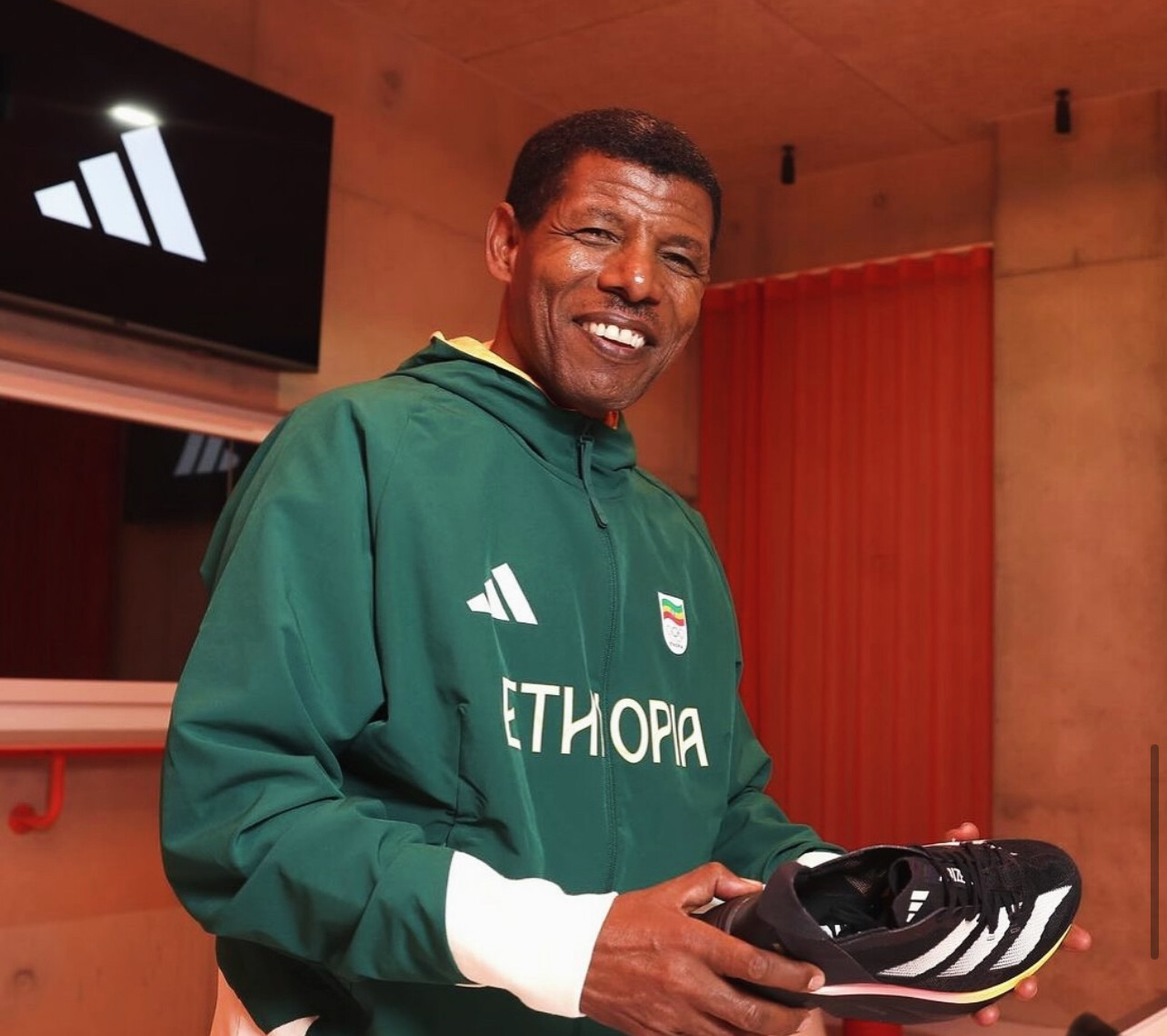
Haile Hotels and Resorts: A Fusion of Hospitality and Athletics

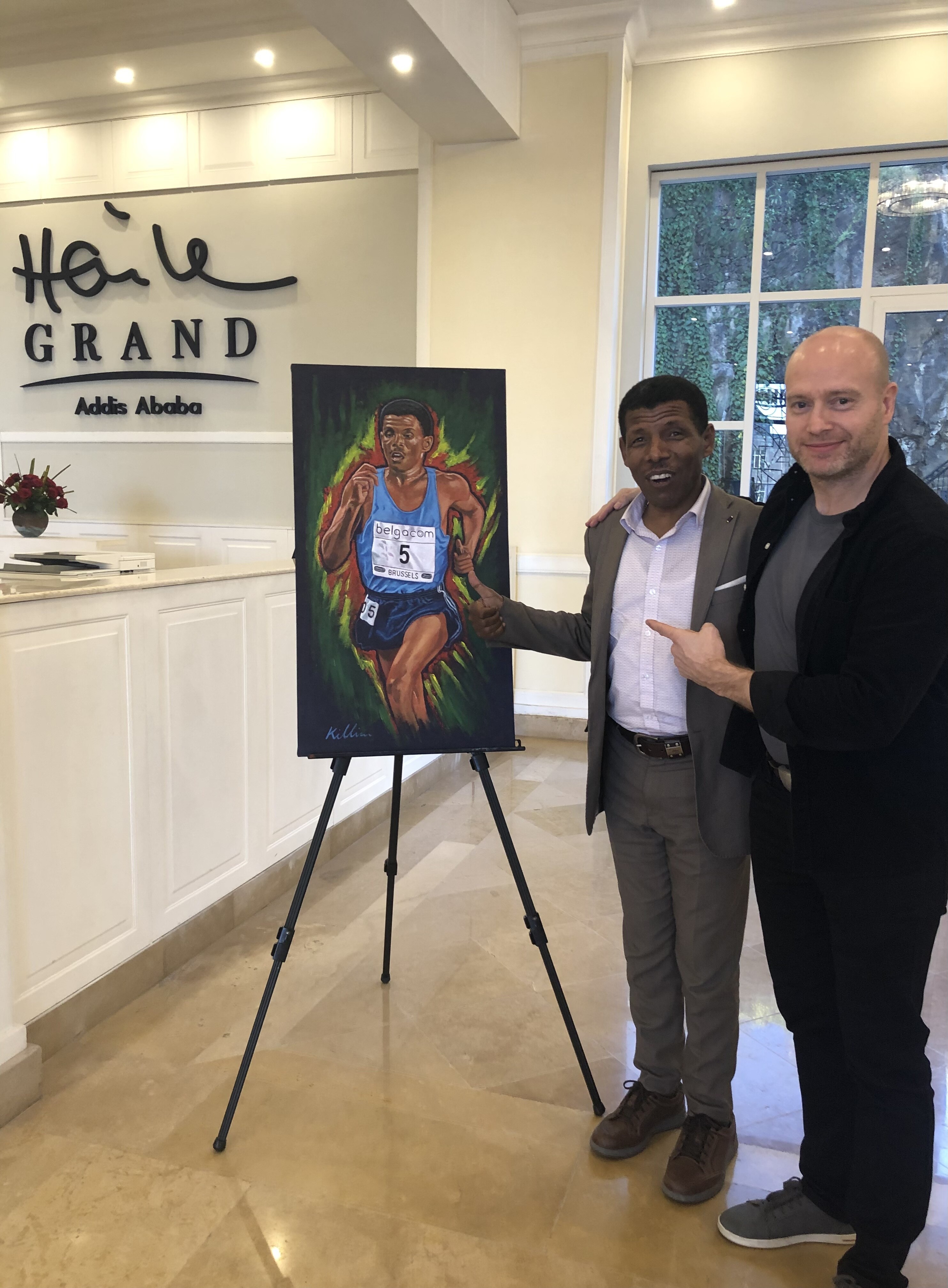
In 2010, Gebrselassie founded Haile Hotels and Resorts, launching the flagship resort in Hawassa. The chain has since expanded to several Ethiopian cities, including Shashemene, Ziway, Arba Minch, Gondar, Adama, and Addis Ababa. These establishments are distinguished by their integration of athletic facilities, reflecting Gebrselassie’s dedication to promoting sports and wellness. Amenities such as state-of-the-art gyms, running tracks, and sports complexes cater to both professional athletes and fitness enthusiasts, embodying a harmonious blend of luxury and athleticism.
Diverse Business Ventures
Beyond hospitality, Gebrselassie has diversified his investments:
• Automotive Industry: He owns Marathon Motors, the exclusive distributor of Hyundai vehicles in Ethiopia. The company has also ventured into assembling electric cars locally, marking a significant step in the nation’s automotive sector.

• Coffee Farming: Gebrselassie owns a coffee farm in the Masha region of Ethiopia. The 1,500-hectare farm, known as Yeppo Village, includes 200 hectares dedicated to conservation forest land. The farm produces organic and Rainforest Alliance–certified coffee, reflecting Gebrselassie’s commitment to sustainable agriculture.
• Real Estate and Education: His investments include real estate projects and the establishment of educational institutions, such as the Ayelech Degefu Memorial School, named in honor of his late mother.
Leadership and Family Involvement
Gebrselassie serves as the Chief Executive Officer (CEO) of Haile and Alem International PLC, the parent company overseeing his diverse business ventures. His wife, Alem Gebrselassie, plays an active role in their joint business endeavors, contributing to the strategic direction and management of their enterprises. The couple’s collaboration extends beyond business, reflecting a partnership deeply rooted in mutual support and shared vision.

Continued Involvement in Athletics
Although Gebrselassie retired from competitive running in 2015, he remains actively involved in the athletic community. He serves as a mentor to emerging athletes and participates in various initiatives aimed at promoting sports in Ethiopia. His enduring commitment to athletics is evident in his business ventures, particularly his hotels, which serve as hubs for athletic training and events.
Haile Gebrselassie’s journey from an illustrious athletic career to a successful businessman exemplifies the potential of leveraging sports fame into impactful entrepreneurship. His ventures not only contribute to economic growth but also foster a culture of health and fitness, reflecting his enduring legacy both on and off the track.
Login to leave a comment
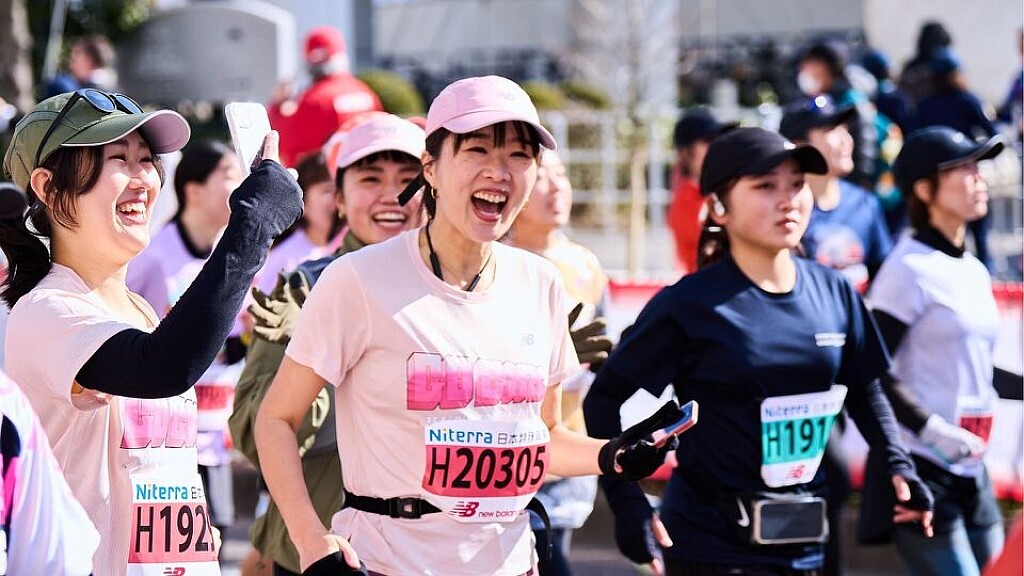
Nagoya Women’s Marathon 2025 opens doors to Kenyan runners
Nagoya Women’s Marathon invites Kenyan runners to join its 2025 race, offering virtual participation and luxurious finisher awards.
Organizers of the Nagoya Women’s Marathon have extended a special invitation to Kenyan runners encouraging them to participate in the highly anticipated 2025 race.
Recognized by Guinness World Records for hosting over 20,000 participants, the event is set to take place in Nagoya, Japan, with an online virtual marathon for international participants unable to travel to the race site.
Registration for the virtual marathon opens on October 18 and will remain available until October 31 allowing 500 entrants to join the race from their home countries.
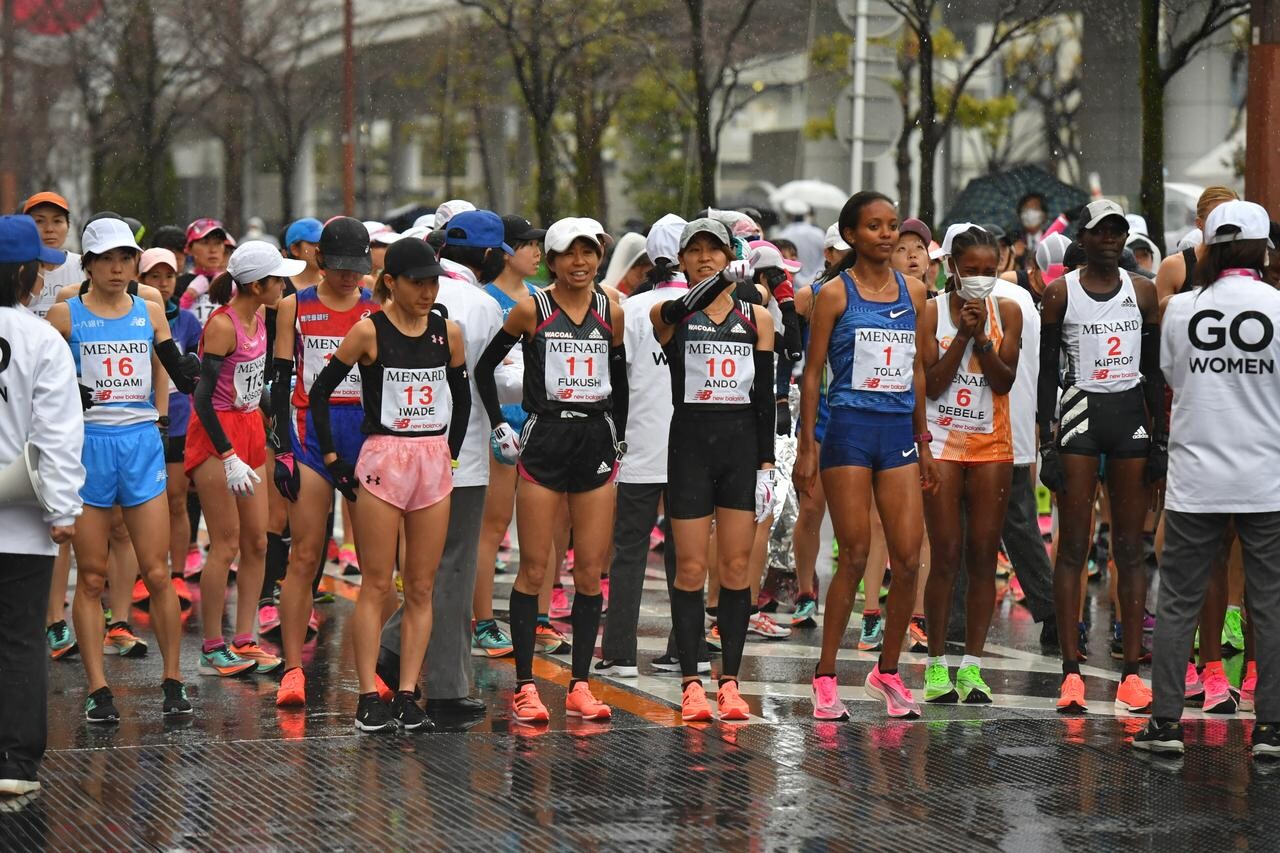
With Kenya’s rich history of marathon champions, the invitation is expected to draw considerable interest.
“We will be delighted to open entries to international runners for Nagoya Women’s Marathon 2025, recognised by Guinness World Records as the largest women’s marathon in the world with over 20,000 participants,” the Marathon’s Race Director said.
“As a sport, running has the ability to bring together people from different countries, backgrounds and cultures, and we look forward to opening our doors to runners from Kenya, which has a world-famous runner community."
Kenyan athletes have long dominated the world stage in distance running, with runners like Brigid Kosgei and Peres Jepchirchir consistently achieving impressive marathon victories.
With this invitation, the organizers of the Nagoya Women’s Marathon hope to add a new level of competition and excitement to the event by allowing Kenyan women to compete alongside elite Japanese and international athletes.
For those who may not be able to make the journey to Japan, the event’s organizers are offering a virtual alternative for 500 women worldwide.
The Nagoya Women’s Online Marathon 2025, which will take place between February 9, 2025, and March 31, 2025, allows runners to complete the full 42.195 kilometers on a smartphone application, providing an opportunity to compete from any location.
“We recognize the importance of sustainability and accessibility in modern sports,” the Race Director explained.
“This virtual race option, born during the travel restrictions of the COVID-19 pandemic, allows women from around the world to engage with the event, even if they cannot physically attend in Nagoya. We believe this alternative offers a world-class platform for women to shine, no matter where they are."
All participants, whether competing in person or virtually, will receive the same prestigious finisher prizes, including a special commemorative tumbler from Baccarat, a French luxury lifestyle brand.
To mark its 260th anniversary, Baccarat has collaborated with the Nagoya Women’s Marathon to provide a unique gift, celebrating the success of every runner.
The elegant tumbler’s design, kept under wraps until now, will be unveiled at the Marathon Expo the day before the race.
The Nagoya Women’s Marathon, launched in 2012, has become a symbol of excellence in women’s running, featuring elite athletes from around the world.
It holds a World Athletics Platinum Label designation, attracting top-tier competitors and fans alike.
Last year, Yuka Ando made headlines by becoming the first Japanese winner in three years, setting a personal best time of 2:21:19.
The organizers are optimistic that the inclusion of Kenyan athletes will add an exciting layer of competition to the race, further elevating its international reputation.
by Festus chuma
Login to leave a comment

Nagoya Women's Marathon
The Nagoya Women's Marathon named Nagoya International Women's Marathon until the 2010 race, is an annual marathon race for female runners over the classic distance of 42 km and 195 metres, held in Nagoya, Japan in early March every year. It holds IAAF Gold Label road race status. It began in 1980 as an annual 20-kilometre road race held in...
more...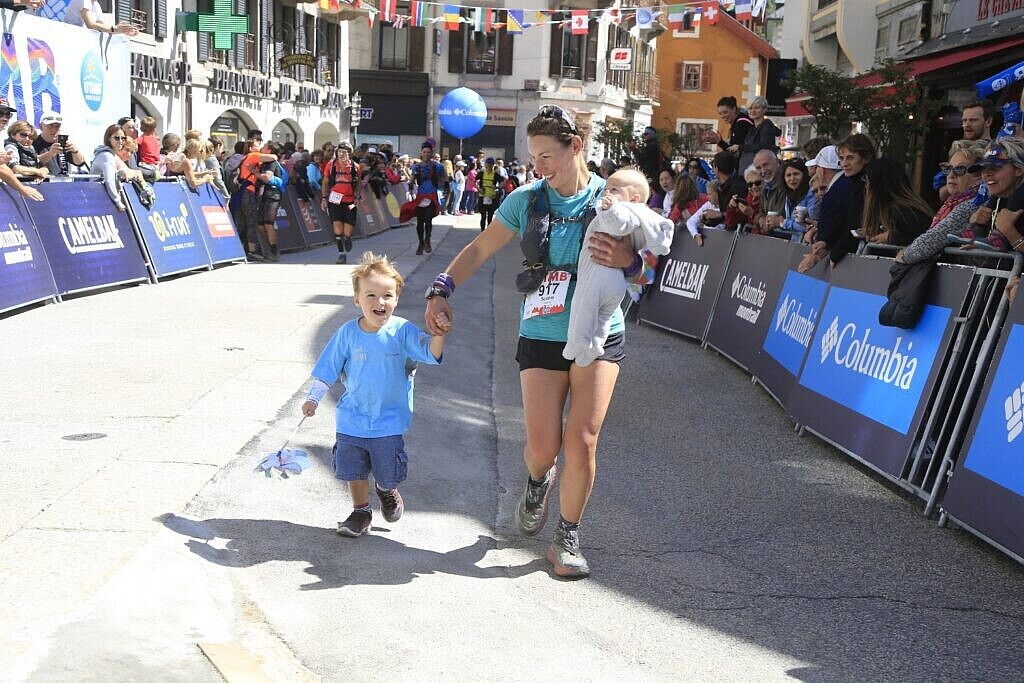
Is UTMB doing enough to support women athletes?
Sophie Power, a British ultrarunner and advocate for women’s participation in the sport, recently shared a disappointing experience during her 150km TDS race. In a social media post, Power detailed how she found no tampons at several aid stations, despite UTMB’s promise. She also encountered male supporters entering the only female toilet at a large aid station, undermining the “safe space” that had been promised.
In 2023, UTMB made strides toward better supporting female athletes by committing to key initiatives such as providing period products at aid stations, establishing female-only toilets and ensuring equal media coverage for the women’s race. While improvements were made in race coverage, Power’s experience highlighted some serious shortcomings the organization needs to tackle. “It is not enough to promise. In fact, it is worse as we rely on those promises,” Power explained. Despite raising concerns with aid station staff, little was done to address the issue during Power’s race.
Why the shortcomings matter
Power’s frustrations highlight a broader issue: women runners rely on promised resources and facilities to ensure they can focus on their performance. When these commitments are not upheld, it becomes more than an inconvenience—it’s a matter of fairness and safety. After 18+ hours of racing (or at any time), having essential period products and private changing spaces should not be a luxury, but a standard. “It is not an excuse to say “it was in the operational plan,” ” Powers said. “It has to be delivered.Tampons can easily be centrally purchased and “no men” signs distributed if aid station volunteers can’t be relied on.”
In her race, the lack of enforcement around female-only spaces became particularly problematic, and when Power approached the man running the aid station the situation was shrugged off. “He said there weren’t enough male toilets and he couldn’t police it. I said these were supporters and they could go outside,” she explained. Power underscored the need for better education and clearer boundaries for all race participants. “Sadly, male athletes need to be briefed about not entering female-only areas too.”
The path forward
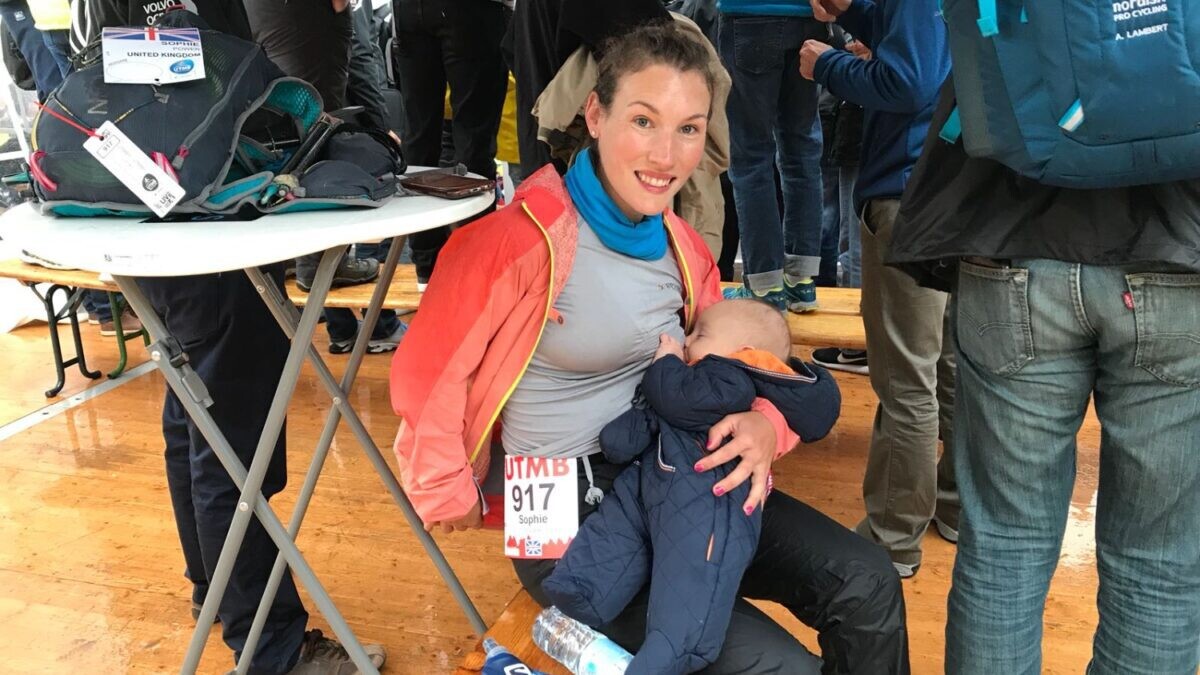
Power’s advocacy extends beyond social media. She is the founder of SheRACES, a nonprofit that works to remove barriers for women in races. SheRACES collaborates with events like UTMB to improve policies that support women, and Power herself is well-known for her remarkable endurance feats (most recently setting a Guinness World Record running across Ireland) including the viral moment when she breastfed her 3-month-old baby during the 106-mile UTMB in 2018. Her foundation pushes for more equitable treatment in races worldwide, ensuring that women’s participation is valued equally.
When asked to comment, UTMB had not responded at the time of publication. However, they did make some immediate changes after the TDS race, such as improving visibility for women athletes at the CCC start line. But the question remains: is that enough, or should UTMB—and the broader ultra-running community—do more to ensure female athletes are supported equally?
by Keeley Milne
Login to leave a comment

North Face Ultra Trail du Tour du Mont-Blanc
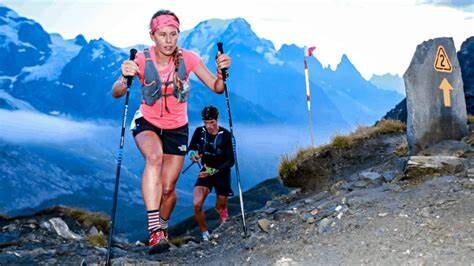
Mountain race, with numerous passages in high altitude (>2500m), in difficult weather conditions (night, wind, cold, rain or snow), that needs a very good training, adapted equipment and a real capacity of personal autonomy. It is 6:00pm and we are more or less 2300 people sharing the same dream carefully prepared over many months. Despite the incredible difficulty, we feel...
more...
Racers prepare for annual Pikes Peak Ascent, Marathon event
Take a deep breath while there’s time. Come this weekend, runners will have to cherish every bit of oxygen they can.
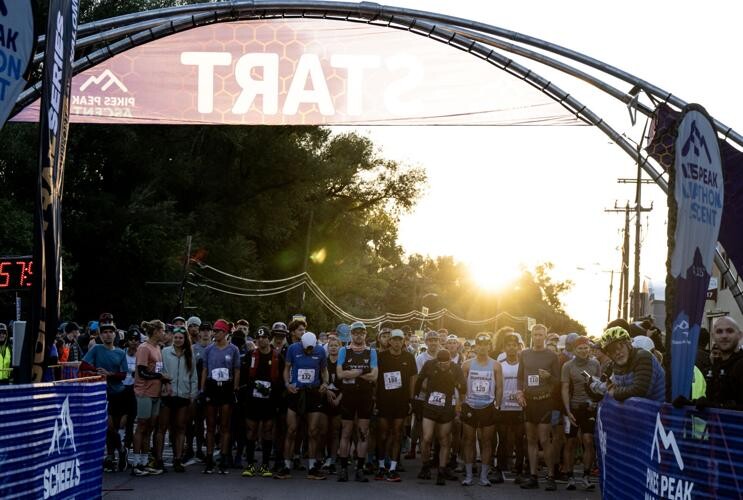
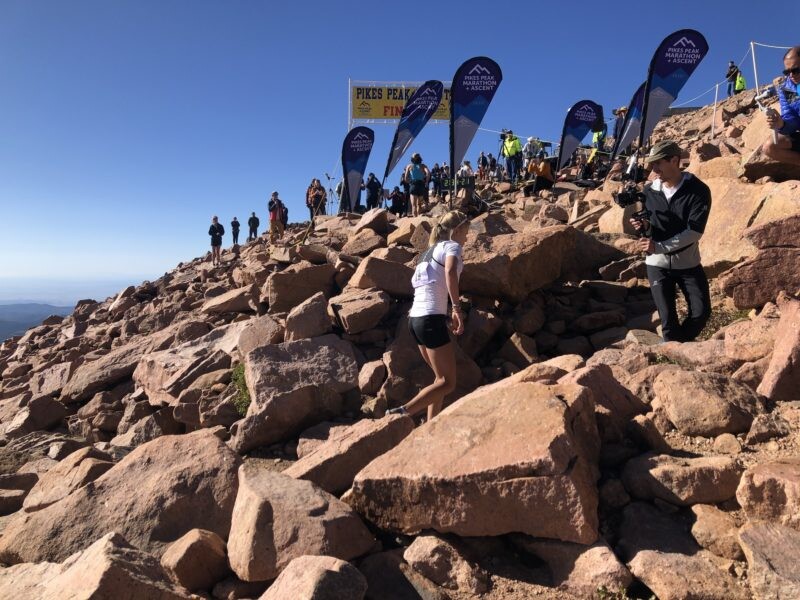
The 69th annual Pikes Peak Ascent and Marathon begin Saturday starting with the romp up Pikes Peak.
Both events have their highest number of participants since 2019 prior to the pandemic and a plethora of new runners will compete in this year’s festivities.
Here are a few items to keep tabs on during the annual event.
Weather
It’s doubtful inclement weather will impact this year’s Pikes Peak Ascent. Saturday’s race, which begins at 7 a.m., typically takes around 7 hours for the final finishers to arrive.
Jordan Linder, Pikes Peak Ascent and Marathon race director, said, “Saturday we’re a-go as normal” since snow is expected later in the day on Pikes Peak, but not during the early portion of the race.
As for Sunday’s Marathon, stay tuned.
“We’re monitoring the weather for Saturday night into Sunday,” Linder said. “We’ll communicate that throughout the weekend for marathoners who may be affected. We’ll communicate that primarily through Facebook. We have Instagram as well and a text feature this year so we can text our registered runners up-to-date information.”
As of Thursday afternoon, Manitou Springs will have a low of 41 degrees and a high of 57 and a 50% chance of participation Sunday.
Participation
Nearly 2,000 runners will race in the Ascent and 916 will compete in the Marathon, which Linder said is the highest total of participants for both events since 2019, prior to the COVID-19 pandemic.
Last year, more than 1,450 racers competed in the Ascent while 673 ran the Marathon. In 2019, nearly 1,700 runners ran up Pikes Peak and 723 signed up for the Marathon.
Linder said they’re grateful to see numbers continue to increase post-pandemic.
“We’re grateful that the sport of running has continued to be at an all-time high and is increasing,” Linder said. “We’re seeing all kinds of different runners out on the trails. What’s most exciting is whether this is their first trail race or first mountain run, all of the runners are exceptional for being courageous enough to start.”
New Pikes Peak Ascent record? (Again?)
Maybe, but Linder said not likely.
Rémi Bonnet broke Matt Carpenter’s 30-year-old record last year and finished the Ascent in 2 hours and 20 seconds.
Bonnet will not participate in this year’s climb up Pikes Peak and in 2023, second place finished more than four minutes behind the Swiss runner.
“We had the luxury of watching the 30-year-old record be broken last year, so that’s probably not happening this year,” Linder said. “Obviously, it’s possible, but Rémi isn’t here to run it or break his record this year.”
Among the slew of runners are Joseph Gray and Seth DeMoor who, throughout the years, have constantly finished in proximity to one another.
In 2019, Gray won the Pikes Peak Ascent at 2:08.59 while DeMoor placed second at 2:12:45.
DeMoor won the Pikes Peak Marathon in back-to-back years from 2020 to 2021 and, in 2024, finished second overall.
During July’s Barr Trail Mountain Race, Gray clocked in at 1:33:10 and had a photo finish to edge out Jonathan Aziz, who won last year's Pikes Peak Marathon.
“You always want to come out and defend your title,” Gray said after his win at the Barr Trail Mountain Race. “It’s more special now being a master’s runner (40 and older) and competing with the young bucks and still being able to get some (wins.)”
by Marcus Hill
Login to leave a comment

Pike's Peak Marathon
A Journey to the Top and Perhaps Back The Pikes Peak Ascent® and Pikes Peak Marathon® will redefine what you call running. Sure, they start out like a lot of races on Any Street, USA. But your first left turn will have you turning in the direction of up! During the next 10 miles, as you gain almost 6,000...
more...
Runners: how to fix your tummy troubles
Have you ever been mid-run, feeling in the flow and bouncing along happily, when suddenly you feel stomach pain and an urgent need for the nearest bathroom? You’re not alone. Exercise-induced gastrointestinal (GI) distress (sometimes referred to as “runner’s tummy”), which may cause cramping, diarrhea and/or nausea, is a common digestive issue experienced by athletes of all ages and abilities, and can significantly impact your ability to perform at your best.
The good news is that, by understanding the reasons behind your struggles and taking simple steps, you can get control of GI issues, keep your digestive tract happy and finish that run without needing a bathroom stop.
Why does it happen?
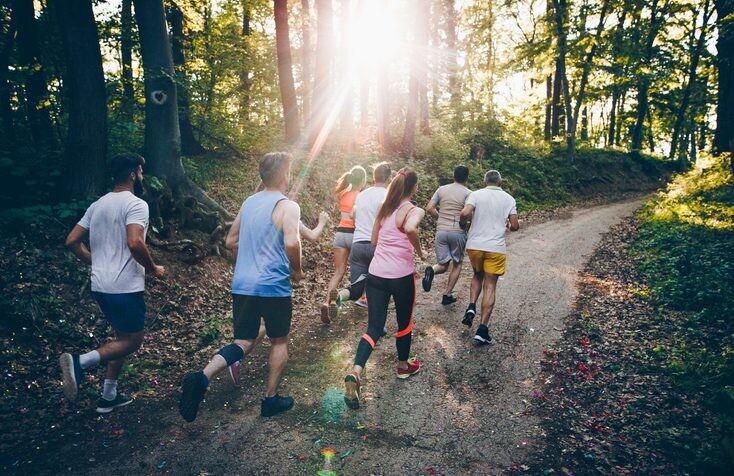
One study found that exercise-induced GI distress was prevalent in 30 to 90 per cent of younger people who ran long distances. The reasons for it vary among individuals (and even among your runs), but here are some common causes:
The impact of high-intensity running can physically jostle the stomach, leading to lower-GI distress, such as diarrhea and bloating.

As you exercise, the gastrointestinal tract changes the way it absorbs and regulates water and electrolytes, especially in hot weather. This means it can prioritize maintaining hydration, which is key, but possibly at the expense of digestion.
Gut hormones that influence digestion, such as leptin and ghrelin, are released in response to exercise. These changes are important for energy availability and performance, but can lead to GI distress.
During exercise, the muscles used to run receive more of the blood supply to meet their higher nutrient and oxygen demands, leaving the gastrointestinal tract with less blood flow. This reduction can lead to delayed gastric emptying, which is the process that moves food into the small intestine from the stomach.
Dehydration can increase the risk of, or worsen, existing symptoms (such as nausea and diarrhea).
Exercise can weaken the lower esophageal sphincter, which prevents acid reflux, possibly leading to heartburn during exercise.
How can I prevent it?
You may need to try different approaches if you regularly experience GI distress on a run.
One strategy is to plan your meals around your runs, to ensure appropriate fuelling. Eating foods that are high in fibre, fat, sugar alcohols or protein right before your run can increase the risk of GI distress, because they take longer to digest. Also, consuming too much sugar in one go, such as a concentrated gel with a sports drink, without prior gut training, can be overwhelming for your digestive system and draw too much water into the gut, leading to diarrhea. (It is best to take gels with water.)
Underfuelling may also be a risk factor. Failing to meet your overall daily energy needs may affect GI transit time, which can lead to digestive issues. So instead of skipping the pre-run snack because you think it is causing the symptoms, you might want to think about increasing your overall energy intake to resolve your tummy issues.
Practise gut training
Just as you would slowly build up mileage, you want to slowly train your gut to handle fuel before and during running. Practise eating snacks before and during your workout, and gradually build it up to your goal level. For example, start with half a banana and slowly increase to the point where you may be able to manage a whole banana on an English muffin with honey (which could be up to 60g of carbohydrates).
Some great snacks to try pre-run:
Graham crackers
Applesauce
Gels or chews
Banana
Dates
Dry cereal
Granola bar
English muffin or toast with jelly
Gummy candy
Lauren Charlton is a competitive distance runner and future sports dietitian who’s passionate about keeping runners in the sport for the long game.
by Lauren Charlton
Login to leave a comment

If Running Uphill Feels Like Torture, Make These Expert-Approved Adjustments
Try these expert-approved tips to make running uphill easier and more enjoyable.
I love to run—but I detest running uphill. When I hit an incline, my legs burn, I get acid reflux, and I often need to take a break to catch my breath. Jogging over hills is so terrible for me that I exclusively map out flat routes and sign up for races with minimal elevation, if any.
As it turns out, there’s a legitimate reason people struggle with hills. Every single one of us has a unique running style, or running fingerprint, as John Mercer, a professor of Kinesiology and Nutrition Sciences at the University of Nevada, Las Vegas, calls it.
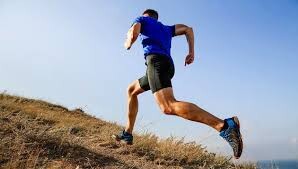
I, for example, have a long, lanky strut while my husband hops up and down like a kangaroo. When you run uphill, your entire running style changes. Maybe you hunch over or flail your arms or stick your butt out. As a result, you engage different muscles that may not be in tip-top shape, such as your hip flexors, hamstrings, and the muscles that support your knee joints.
This, coupled with the fact that you’re now working against more gravity, is why hills can be so brutal. “Instead of just needing to propel yourself horizontally, you’re also essentially climbing a flight of stairs. So, yeah, it is hard,” says Milica McDowell, a certified exercise physiologist and vice president of operations at Gait Happens.
But hills don’t have to be agonizing. There’s a method to the madness of hill running, and if you go about it correctly, you might end up enjoying it.
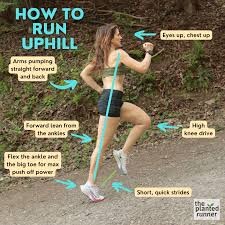
According to McDowell, when you jog up a hill, make sure to strike the ground with the middle or ball of your foot, not your heel. A heel-first approach causes you to lean back, she says, which throws off your center of gravity and acts as a breaking mechanism.
This slows you down, making it tougher to get anywhere because you’re breaking every step, McDowell says. Landing on your mid-foot shifts your center of gravity forward, which propels you up and over the mound. “You want to feel like you’re falling up the hill,” she says.
When I’m on a steep section of a trail, I tend to collapse over my torso to suck in more air, but according to Mercer, this move makes the body work even harder. This is proof that gravity is at play. It can feel like you’re carrying an extra four pounds on a slight incline, Mercer says. But a super steep hill? That can feel like an added ten to 20 pounds of extra weight pulling you down.
The key is to lean forward, but not so much that you’re crunching over your stomach. Look ahead, not down at the ground, and keep your shoulders in front of your hips, Mercer says. Lift your ribcage up and out of your pelvis and engage your core by pulling your belly button back to your spine. This will fix your posture, pull back your center of gravity, and make it less torturous to get up the hill, McDowell says.
Uphill running puts more demands on your joints and muscles, per a 2023 research study, so it might feel like your workout suddenly gets more intense when you reach an incline. One trick is to slow down—assuming you’re not in a timed race.
If you try to stick to your normal pace, the metabolic effort needed to climb the hill will dramatically increase. If you often feel winded when you inch over hills, try walking instead. Mercer says this can help you avoid burning out, so you don’t have to bring your entire workout to a screeching halt to recoup for a few minutes. Don’t be fooled—taking it down a notch when going uphill does not mean you’re getting less of a workout. Because trekking up a hill automatically intensifies the activity, your energy output, even if you’re going slower, is more or less the same as it would be running on a flat path.
At the same time, you should pick up your cadence. Trade in the longer steps for shorter, quicker strides. McDowell recommends upping your step cadence by up to 25 percent. So, if you were taking roughly 100 steps a minute, shoot for 125. But keep this in mind: you’re taking more steps, but you want each step to be shorter and cover less distance, so you’re not full-on sprinting uphill. “It’s the turnover rate of your feet that’s faster, not your whole body speed,” she says.
Taking small, swift steps means your feet spend less time on the ground—which decreases impact forces on your knees, hips, and ankles—and helps you run more efficiently, McDowell says.
Anything you can do to propel your body forward will help you get over the hill, which is why McDowell puts her arms to work. She recommends swinging your arms faster and farther out to take some pressure off of your legs.
“Your arms create momentum, and that momentum is part of the gas pedal that pushes you up the hill,” she says. If you can, swing them 25 percent faster than when you’re going downhill or on a flatter path. “It makes a huge difference,” McDowell says.
When you work out, you suck in oxygen, which provides energy to your muscles. The harder you run—à la trotting up a killer mountain—the more oxygen your body needs. “Your body is like, ‘I need more blood in these muscles, I need more oxygen in these tissues’” McDowell says. But you probably aren’t getting the oxygen you need if you’re short of breath.
The fix? Slow down your breathing. McDowell uses a 2:2 breathing pattern where you inhale for a count of two (or about the time it takes you to take two separate foot strikes), then exhale for two. “That’s going to drive down your breathing rate, which will decrease your heart rate, which helps lower stress,” McDowell says, all while increasing the amount of oxygen in your body.
I always get a bad attitude when I see a hill. I think, “This is going to suck,” and then guess what: it does. So, Mercer says that the best thing you can do is have the right mindset.
Research shows that a positive outlook can improve your performance and help you accomplish your fitness goals (including that daunting hill ahead).
According to a study published in 2019, when Olympic and Paralympic athletes were asked, “To what do you attribute your success?” they didn’t reference how toned their legs were or how they built up their glute muscles. They mentioned their positive mindset—how resilient and hungry they were for the competition. Their advice for other athletes? Believe in yourself and embrace the challenge.
Getting over a hill is a mental game. Accept that your pace will change or that the next 10 minutes might be extra tough. But that’s okay—you’ll get through it.
by Outside Online
Login to leave a comment

This Off-the-Court Oasis Gives These Olympic Athletes an Edge
Just when we thought the Olympic Village was cool, we took a five-minute walk from Stade de France to this oasis for Nike athletes to refuel, relax, and recover
Leo Neugebauer had a grueling schedule at the Paris Olympic Games. As a decathlete, the German multisport athlete , who was a three-time NCAA champion for the University of Texas, competed in the 100-meter dash, long jump, shot put, high jump, 400 meters, 110-meter hurdles, discus throw, pole vault, javelin throw, and 1500 meters over the course of just two days.

But as a Nike athlete, Neugebauer also had a leg up on the competition.
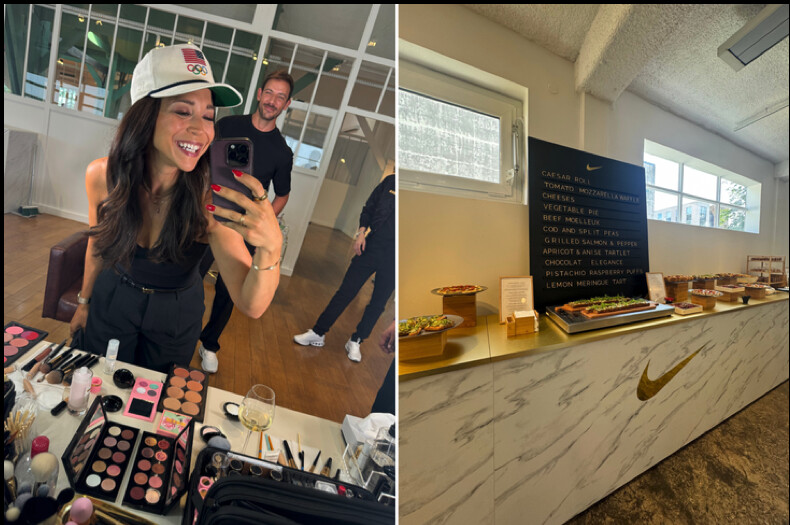
Just a five-minute drive from Stade de France you’ll find the Nike Athlete House. Walk in, past two towering orange statues of Lebron James and Shelly-Ann Fraser-Pryce, and guests are instantly transported into a luxurious, two-floor oasis, complete with swoosh-laden rugs and plush furniture, bright lighting and calm tones reminiscent of your favorite spa, and everything an athlete could need to look and perform their best.
At least that’s the goal, says Tanya Hvizdak, Vice President of Global Women’s Sports Marketing at Nike. Complete with everything from specialty stations for barber, nail, makeup, and tooth gem appointments, to physical therapy and recovery services, plus spaces to unwind with family, and even a nursery—the hospitality locale is on a whole new level from any other Olympic activation the brand has done before.
“What we provide has certainly evolved from this mode of sponsorship to partnership,” Hvizdak says, noting that some athletes stop by the house more than once a day. “We’re listening to the voice of the athlete around what their expectations are and what their needs are.”
“It’s kind of a sanctuary,” adds Tobie Hatfield, Senior Director of Athlete Innovation at Nike. “We want this to be the place where athletes come to get ready for their competition.”
Just Doing It
Nike’s not the only brand to go to great lengths to make their athletes comfortable. Varying in size and offerings, other major players including Puma, Asics, On, New Balance, and Oakley have full-service locations dedicated to their athletes, plus their entourages. Where Nike comes out on top, though, is their proximity to the competition.
Set in the Parisian suburb of Saint-Denis, about a mile and a half north of city limits and five miles north of the Louvre, Stade de France sits quite a ways away from much of the Olympic action at the heart of the city. The Athlete Village is relatively close by, but still a 15- to 20-minute bus ride—assuming bus drivers don’t take any wrong turns, as they’ve been reported to do as athletes stand for up to an hour on cramped buses during the Games.
Relaxing pre-race and recovering immediately after are critical to success on the world stage, something Nike officials readily understand.
“The planning of this space began over three years ago when we were looking at the city, having an understanding of where things like the Athlete Village and track and field were going to be taking place,” says Hvizdak. “The number one priority for us was being in a location that was going to be in close proximity to the athletes.”
The Royal Treatment
While I wasn’t able to time my trip to the house so that I could sit in the Nike x Hyperice boots and vests next to medalists like Jordan Chiles, Sha’Carri Richardson, or Fred Kerley—all whom shared their trips to the space on social media—it’s certainly getting a lot of foot traffic.
The space also offers catering for breakfast and lunch. With reports that the food and conditions in the Athlete Village leave something to be desired, Nike’s culinary staff took it upon themselves to ensure that they had the food game on lock, including tantalizing yet nutritious options like (on the day I visited) grilled salmon and pepper tartlets, vegetable pie, beef moelleux, and noodle salad.
“Something that was requested shortly after we opened was to-go boxes of food,” says Hvizdak, who adds that the meals are definitely a highlight for the folks who come through. “So, we’re now offering takeaway options. Plus, we even changed the hours to stay open later per the athletes’ request.”
And of course—in the true extravagant nature of the space, what’s a good time without a parting gift? Athletes have the option of shopping through the Jacquemus x Nike collection, other new offerings, and to design a hoodie using a new proprietary AI tool on digital tablets—set to potentially launch in-store at a later date.
Neugebauer walked into the Nike House before his competition just to sniff it out. But he was sold after snagging some of the recovery tools to use during his downtime before his daunting 10-event competition.
“I took the Hyperice boots to my hotel room and used them before, during, and after my decathlon,” he says. “The second time I went through the house, I got to do all the fun stuff like customize my own Nike hoodie, it was amazing. And when I heard they had a barber, I was like oh my god, I got a fresh cut., I looked good. I think that’s important. I looked good, and I did good.”
The royal treatment apparently paid off. On August 3, Neugebauer earned the silver medal.
by Outside Online
Login to leave a comment
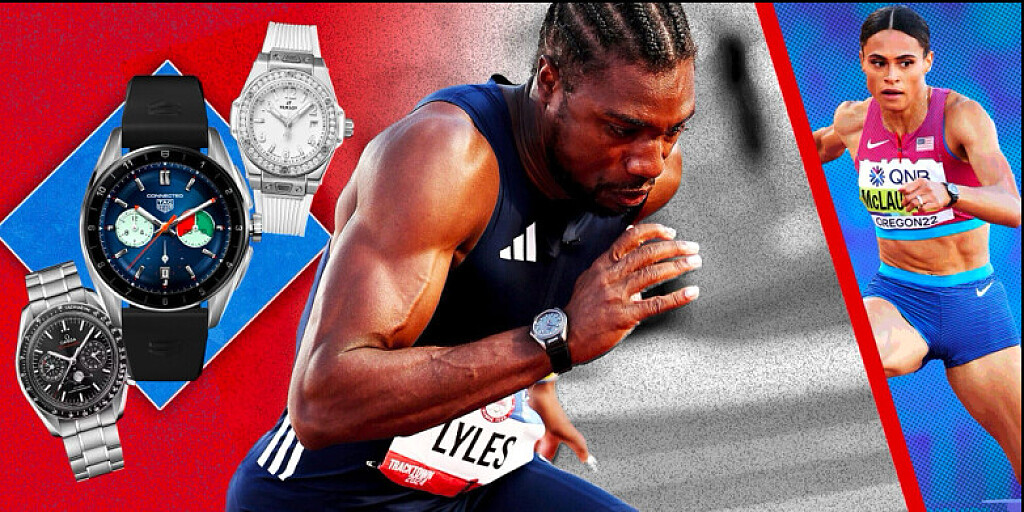
Olympic Track and Field Stars Are Wearing Luxury Watches. Why?
IN TRACK AND FIELD, tenths (and even hundredths) of a second can make or break a race. Performance depends on extremely precise measurements and time rules all. So it makes sense that luxury watch brands would look to those athletes as natural billboards, placing their timepieces on the wrists of some of the sport's top performers.
When Noah Lyles, the fastest man in the world, settled into the blocks for the 200-meter finals at the U.S. Olympic Trials in June, 4.5 million viewers tuning in via NBC and Peacock could see the glint of the sun off what appeared to be a $50,000 Omega watch.
Wearing this type of timepiece during a 19.53-second sprint is clearly a flex, since “there’s no performance reason for [these athletes] to wear luxury watches,” explains Aaron Rapf, the founder and CEO of Advantage Sports Marketing Group, a sports agency that connects brands with athletes.
Runners are no stranger to pricy performance watches (a high-end Garmin can cost upwards of $900), and luxury watch companies are increasingly aligned with elite runners to “connect their company values to the sports landscape—which is one of the last bastions of true culture,” he adds. “If you want to be in a moment where you attract millions of people’s eyeballs at one time, it’s sports.”
These race day cameos are part of a more subtle approach to marketing, says Pierre-Loïc Assayag, CEO and co-founder of Traackr, an influencer marketing software company. “In the past, luxury brands were more focused on the product and the luxury associated with that product,” he says. “Now, these companies are taking the top athletes and putting them in front of their target audience, or one close to it, to demonstrate by proximity that ‘we are the precision brand’ or ‘we are the endurance brand.”
The kind of maneuvering uses a third party—one that’s fast, flashy, and accomplishing amazing feats—to craft an image the brand wants audiences to respond to. And by choosing athletes as brand champions, companies deftly align themselves with the hallmarks of high performance: precision, prestige, innovation, exclusivity, heritage, and craftsmanship.
In the past, those buzzwords were more likely to call to mind country club-esque activities (think: tennis or horseback riding) or auto racing, where the traditional consumer has been very upper class, living a high-cost lifestyle. But as culture skews more towards sport, health, and wellness, leaning into the popularity of running opens companies up to a new class of consumers, says Jessica Quillan, a luxury fashion brand and content strategist. “Track and field seems more accessible, because even though these athletes are performing at a super elevated level, anyone can go out and run,” she explains.
By association, watches become a more accessible form of wearable luxury. You may not wear one to train or on race day like the elite, sponsored atheltes, but a sporty aesthetic can translate into your everyday life; post-run, you can still swap your COROS smartwatch for a sleek, sporty timepiece from a brand like Omega (which happens to sponsor the Diamond League, an annual series of pro track and field competitions). And though you may not be ready to buy a five-figure watch now, these companies are playing the long game; by connecting themselves with major players in sport, they’re hoping to build brand recognition and loyalty among potential future customers.
The Watch Brands Olympic Runners Are Wearing
For those looking to upgrade their Garmin—now or as a future reward for finally achieving that personal best—these are a few of the luxury watches your favorite track and field stars have been sporting.
Two-time Olympic gold medalist Sydney McLaughlin-Levrone, who will represent Team USA in Paris again after breaking her own World Record in the 400-meter hurdles in June, has been sponsored by Tag Heuer since 2021.
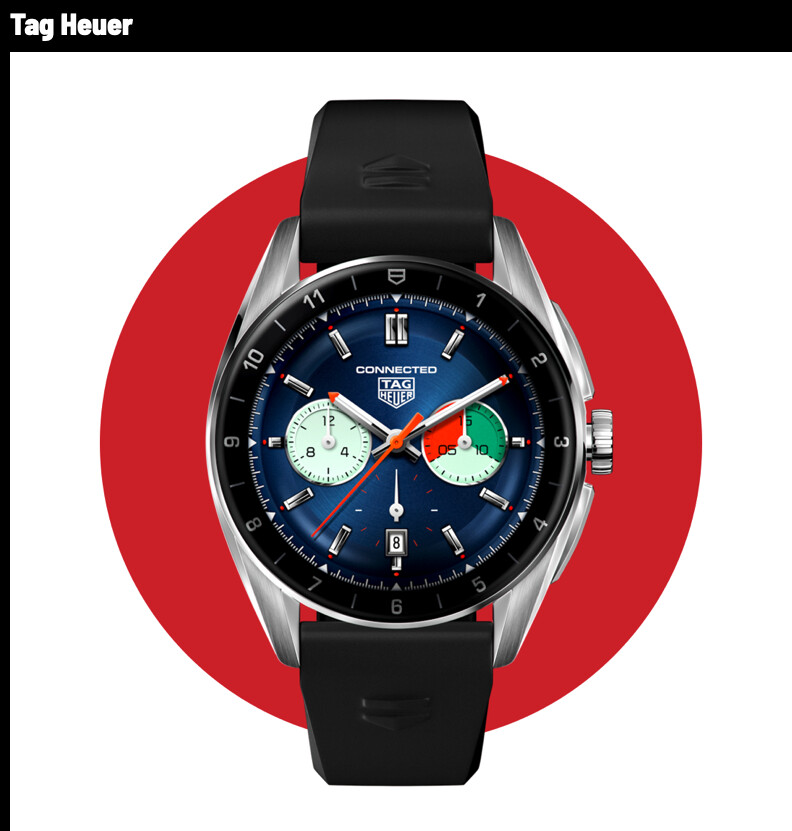
Tag Heuer is often considered the Cadillac of luxury watches, and McLaughlin-Levrone’s preferred watch, the Connected Calibre E4, is closest to the average runner’s GPS smartwatch: It operates on Wear OS by Google; has a 1.28-inch AMOLED display with crisp resolution; houses a heart rate sensor, barometer, and compass; and holds a 24-hour charge, including a one-hour sports session. The basic model, which includes a rubber strap, starts at $1,250.
Olympic bronze medalist Josh Kerr is a double World Champion—in the 1,500-meter and 3,000-meter—which made him a natural representative for Swiss watch brand Longines, the official partner and timekeeper of the 2022 Commonwealth Games in Birmingham. Kerr, who is not currently working with Longines, recently ran a 3:45.34 in the Bowerman Mile, a historic and prestigious race held annually at the Prefontaine Classic in Eugene, OR, to set a new world-leading time in the event and a new British record. Back in 2022, Kerr wore the-limited edition HydroConquest XXII Commonwealth Games, a sporty steel dive watch with an automatic caliber, or engine, one-directional ceramic bezel, luminescent indices and hands, and an anti-reflective coating for crystal clear readability in any situation.
In addition to their Paris 2024 partnership, Omega is the official sponsor of the Diamond League (an annual series of elite track and field competitions) and counts Noah Lyles—one of the biggest personalities in track and field—as an ambassador. Lyles, who earned a bronze medal in the 200-meter race at the 2020 Tokyo Games and has his sights on breaking Usain Bolt’s records in the 100- and 200-meter races, wears Omega’s iconic Speedmaster Moonphase.
This style was introduced in the 1980s, but the latest model—an oversized, steel-on-steel timepiece—was the first to earn a Master Chronometer certification thanks to a self-winding engine designed to withstand temperature fluctuations, water immersion, and electromagnetic frequencies. The timepiece can also hold up to the shock that comes with covering 100 meters in less than 10 seconds (when it's on Lyles's wrist, at least).
Sprinter Dina Asher-Smith is the fastest British woman on record, with two Olympic bronze medals from the 4 x 100-meter relay to her name. She’s also no stranger to luxury partnerships, having previously modeled for Louis Vuitton, Valentino, and Off-White, and has been working with Hublot since 2018. Asher-Smith has promoted a variation on Hublot’s flagship model, the Big Bang One Click, which starts at $14,200.
Its smaller face was designed for slimmer wrists, and uses the brand’s patented “One Click” fastening system so wearers can swap out the straps for other colors or materials. The sporty, semi-skeletonized hands balance out flashiness of the diamonds on the bezel, and a self-winding caliber packs plenty of power into the compact timepiece.
Ahead of what she says will be her final Olympic Games, Jamaican sprinter Shelly-Ann Fraser-Pryce—the most decorated athlete in 100-meter history—announced a partnership with Richard Mille. Fraser-Pryce wears the RM 07-04 Automatic Sport, the first women’s sports watch from the McLaren of watch brands, which retails at $185,000 (it’s the same watch Nafi Thiam, a double Olympic champion from Belgium, wore while setting a new pentathlon world record in 2023). The skeletonized aesthetic is housed in a compact case with rigid finishings for shock-resistance, and the button on the side allows the wearer to switch between winding, neutral, and time setting modes for the crown. While it would be nearly impossible to read during a race, at 36 grams it’s lighter than most standard running watches.
by Men’s Health
Login to leave a comment
Research Confirms Rotating Running Shoes Could Save You From Injuries—Here’s How Your Body Benefits
Having a shoe collection is not a frivolous obsession. Here’s how you could possibly benefit from having more than one pair of running shoes.
Once you’ve found yourself the perfect pair—you know the ones you want to spend every run in—it’s kind of hard to give them up. However, doing so could actually work to your advantage by keeping you healthy and strong for each run.
“These days, a lot of people use one shoe for everything, and that puts you at risk for injury,” says Priya Parthasarathy, D.P.M., spokesperson for the American Podiatric Medical Association and partner at USFAS in Silver Springs, Maryland. Running, walking, and weightlifting all require different demands of your feet, so you’ll want to wear different shoes for these activities, she says. Plus, wearing one shoe for all of your workouts can increase the wear on the shoe, so they won’t last as long as you want.
That’s where having a running shoe rotation becomes very helpful. Research and experts back up this idea, and it’s especially helpful to have a shoe rotation if you’re training for a long distance race like a marathon. Here’s what you need to know in order to build a running shoe rotation that meets all of your needs.
Why do you need a running shoe rotation?
Naturally, running places stress on multiple parts of the body, including muscles, bones, and tendons, which can be good for you provided the stress is not too large or frequent that you can’t recover fast enough, says Andrea Myers, D.P.T., who owns a sports performance practice located in Westport and Ridgefield, Connecticut.
”We know from many research studies that different running shoe properties expose the body to different stressors,” Myers says. “We know that minimalist shoes—those with a low or zero drop, flexible sole, and minimal to no stability features—increase the demands on the ankle, foot, and calf muscles, as compared to shoes with a higher drop, which increase the demands at the knee but reduces the demands at the foot and ankle.”
A carefully crafted shoe rotation can possibly offset some of these demands.
To identify characteristics that might contribute to the development of running related injury, a 2013 research study published in the Scandinavian Journal of Medicine and Science in Sport followed 264 runners over the course of 22 weeks. The study found runners who used more than one shoe, a term which they coined “parallel use,” had a 39 percent lower risk of injury. This suggests having more than one pair of running shoes can help you ward off injury.
The reasoning behind it, if you have a cushioned shoe and you let a shoe sit for 24 to 48 hours, the foam in the shoe can de-compress before your next run, says Parthasarathy.
How many shoes do you need in your rotation?
If you’re just starting out, you don’t have to worry about rotating your running shoes, instead, invest in one good pair of running shoes. Parthasarathy recommends finding a shoe with a flexible toe box, firm heel cup, and removable insoles. The one shoe should overall be comfortable to you.
The seasoned recreational runner who runs three to four miles, three days per week, does not need a rotation of four different shoes either, says Myers. Instead, Myers recommends two pairs of shoes that you can rotate every run.
For marathon runners, racking up 35 to 60-plus miles a week with a variety of workouts (easy, long, and speed runs) on their calendars, Myers recommends keeping a shoe rotation of three to four pairs of shoes. This can include one to two pairs of shoes for easy runs and speed workouts, and one pair of shoes for long runs that can handle a variety of different paces. Your long run shoes can also double as a performance trainer, or a lightweight daily trainer, Myers says.
What types of running shoes can you add to your running shoe rotation?
Here are three different types of shoes you can consider adding to your collection, according to Myers:
Daily Trainer: These shoes are primarily for easy running, but can also handle different paces. you can use them to run strides or up-tempo long runs. Good examples of daily trainers include: the Brooks Ghost 15, Saucony Ride 17 or Guide 17, Nike Vomero 17, or Hoka Clifton 9.
Performance Trainer: Best for speed workouts, performance trainers are lightweight shoes that perform best at faster paces and can double as daily trainers as long as you feel comfortable in wearing them for longer distances. Plus, they tend to be more affordable than top-end race performance shoes. A few styles to consider include: Saucony Endorphin Speed 4, Topo Cyclone 2, Mizuno Wave Rebellion Flash 2, and Brooks Hyperion Max.
Racing Shoes: Commonly referred to now as super shoes, racing shoes tend to be more expensive and less durable, considering some shoes have a life expectancy of about 100 to 150 miles. This is why you shouldn’t do the bulk of your training in super shoes, instead you should take them out for a test run or two to ensure they’ll meet all your comfort needs on race day. Saucony Kinvara Pro, Asics Superblast, Adidas Adizero Prime x 2 Strung, and On Cloudeclipse are a few super shoes to consider.
How to find the right shoe to add to your rotation?
Before adding any a shoe to your rotation, you should consider if the shoe is a good fit for your foot arch (flat arch, high arch, or medium arch), running gait (neutral, pronated, or supinated), shoe size, preferred comfort level, and the terrain (treadmill, pavement, or trail) you’ll run on.
“Building a running shoe rotation, especially if you run on different terrains, is important because the shoe wears in different ways,” says Parthasarathy. Meaning where you run will influence some of the characteristics you look for in a shoe. For example, running on hard pavement will require increased cushioning, whereas trail running calls for more stability and traction, she explains.
If you want to change the type of shoe you’re training in, then the recommendation is to ease into the number of miles you try in the new shoe (i.e., don’t go for a long run in a drastically different shoe).
You may experience some soreness if you transition to a different type of shoe, however, you shouldn't experience pain that lasts for days or interferes with your normal running gait pattern on subsequent runs, Myers adds.
Lastly, you’ll want to get rid of your running shoes every so often due to wear and tear that may go unnoticed. ”We recommend you replace your running shoes, especially if you’re doing long distance running every six months or 300 to 500 miles, depending on how hard you are on them,” says Parthasarathy. If you can fold or bend your shoes in half, it’s often an indication the structure of the shoe and cushioning has been broken down, and it’s time for a change, she adds. As mentioned, the new high performance racing shoes tend to have a shorter shelf life when it comes to mileage.
Who should avoid rotating running shoes?
There’s no need to rotate your running shoes if you’re only running a couple of times a week because you’re likely not racking up enough miles to overstress your tissues, says Myers.
Also, don’t rotate running shoes if you have specific biomechanical or orthopedic needs due to injury, foot structure or shape. For example, runners who have arthritis that affects the big toe, a.k.a, hallux limitus, should prioritize running in shoes that can address this condition, which there are few of, Myers says.
by Runner’s World
Login to leave a comment
Research Confirms Rotating Running Shoes Could Save You From Injuries—Here’s How Your Body Benefits
Having a shoe collection is not a frivolous obsession. Here’s how you could possibly benefit from having more than one pair of running shoes.
Once you’ve found yourself the perfect pair—you know the ones you want to spend every run in—it’s kind of hard to give them up. However, doing so could actually work to your advantage by keeping you healthy and strong for each run.
“These days, a lot of people use one shoe for everything, and that puts you at risk for injury,” says Priya Parthasarathy, D.P.M., spokesperson for the American Podiatric Medical Association and partner at USFAS in Silver Springs, Maryland. Running, walking, and weightlifting all require different demands of your feet, so you’ll want to wear different shoes for these activities, she says. Plus, wearing one shoe for all of your workouts can increase the wear on the shoe, so they won’t last as long as you want.
That’s where having a running shoe rotation becomes very helpful. Research and experts back up this idea, and it’s especially helpful to have a shoe rotation if you’re training for a long distance race like a marathon. Here’s what you need to know in order to build a running shoe rotation that meets all of your needs.
Why do you need a running shoe rotation?
Naturally, running places stress on multiple parts of the body, including muscles, bones, and tendons, which can be good for you provided the stress is not too large or frequent that you can’t recover fast enough, says Andrea Myers, D.P.T., who owns a sports performance practice located in Westport and Ridgefield, Connecticut.
”We know from many research studies that different running shoe properties expose the body to different stressors,” Myers says. “We know that minimalist shoes—those with a low or zero drop, flexible sole, and minimal to no stability features—increase the demands on the ankle, foot, and calf muscles, as compared to shoes with a higher drop, which increase the demands at the knee but reduces the demands at the foot and ankle.”
A carefully crafted shoe rotation can possibly offset some of these demands.
To identify characteristics that might contribute to the development of running related injury, a 2013 research study published in the Scandinavian Journal of Medicine and Science in Sport followed 264 runners over the course of 22 weeks. The study found runners who used more than one shoe, a term which they coined “parallel use,” had a 39 percent lower risk of injury. This suggests having more than one pair of running shoes can help you ward off injury.
The reasoning behind it, if you have a cushioned shoe and you let a shoe sit for 24 to 48 hours, the foam in the shoe can de-compress before your next run, says Parthasarathy.
How many shoes do you need in your rotation?
If you’re just starting out, you don’t have to worry about rotating your running shoes, instead, invest in one good pair of running shoes. Parthasarathy recommends finding a shoe with a flexible toe box, firm heel cup, and removable insoles. The one shoe should overall be comfortable to you.
The seasoned recreational runner who runs three to four miles, three days per week, does not need a rotation of four different shoes either, says Myers. Instead, Myers recommends two pairs of shoes that you can rotate every run.
For marathon runners, racking up 35 to 60-plus miles a week with a variety of workouts (easy, long, and speed runs) on their calendars, Myers recommends keeping a shoe rotation of three to four pairs of shoes. This can include one to two pairs of shoes for easy runs and speed workouts, and one pair of shoes for long runs that can handle a variety of different paces. Your long run shoes can also double as a performance trainer, or a lightweight daily trainer, Myers says.
What types of running shoes can you add to your running shoe rotation?
Here are three different types of shoes you can consider adding to your collection, according to Myers:
Daily Trainer: These shoes are primarily for easy running, but can also handle different paces. you can use them to run strides or up-tempo long runs. Good examples of daily trainers include: the Brooks Ghost 15, Saucony Ride 17 or Guide 17, Nike Vomero 17, or Hoka Clifton 9.
Performance Trainer: Best for speed workouts, performance trainers are lightweight shoes that perform best at faster paces and can double as daily trainers as long as you feel comfortable in wearing them for longer distances. Plus, they tend to be more affordable than top-end race performance shoes. A few styles to consider include: Saucony Endorphin Speed 4, Topo Cyclone 2, Mizuno Wave Rebellion Flash 2, and Brooks Hyperion Max.
Racing Shoes: Commonly referred to now as super shoes, racing shoes tend to be more expensive and less durable, considering some shoes have a life expectancy of about 100 to 150 miles. This is why you shouldn’t do the bulk of your training in super shoes, instead you should take them out for a test run or two to ensure they’ll meet all your comfort needs on race day. Saucony Kinvara Pro, Asics Superblast, Adidas Adizero Prime x 2 Strung, and On Cloudeclipse are a few super shoes to consider.
How to find the right shoe to add to your rotation?
Before adding any a shoe to your rotation, you should consider if the shoe is a good fit for your foot arch (flat arch, high arch, or medium arch), running gait (neutral, pronated, or supinated), shoe size, preferred comfort level, and the terrain (treadmill, pavement, or trail) you’ll run on.
“Building a running shoe rotation, especially if you run on different terrains, is important because the shoe wears in different ways,” says Parthasarathy. Meaning where you run will influence some of the characteristics you look for in a shoe. For example, running on hard pavement will require increased cushioning, whereas trail running calls for more stability and traction, she explains.
If you want to change the type of shoe you’re training in, then the recommendation is to ease into the number of miles you try in the new shoe (i.e., don’t go for a long run in a drastically different shoe).
You may experience some soreness if you transition to a different type of shoe, however, you shouldn't experience pain that lasts for days or interferes with your normal running gait pattern on subsequent runs, Myers adds.
Lastly, you’ll want to get rid of your running shoes every so often due to wear and tear that may go unnoticed. ”We recommend you replace your running shoes, especially if you’re doing long distance running every six months or 300 to 500 miles, depending on how hard you are on them,” says Parthasarathy. If you can fold or bend your shoes in half, it’s often an indication the structure of the shoe and cushioning has been broken down, and it’s time for a change, she adds. As mentioned, the new high performance racing shoes tend to have a shorter shelf life when it comes to mileage.
Who should avoid rotating running shoes?
There’s no need to rotate your running shoes if you’re only running a couple of times a week because you’re likely not racking up enough miles to overstress your tissues, says Myers.
Also, don’t rotate running shoes if you have specific biomechanical or orthopedic needs due to injury, foot structure or shape. For example, runners who have arthritis that affects the big toe, a.k.a, hallux limitus, should prioritize running in shoes that can address this condition, which there are few of, Myers says.
Login to leave a comment
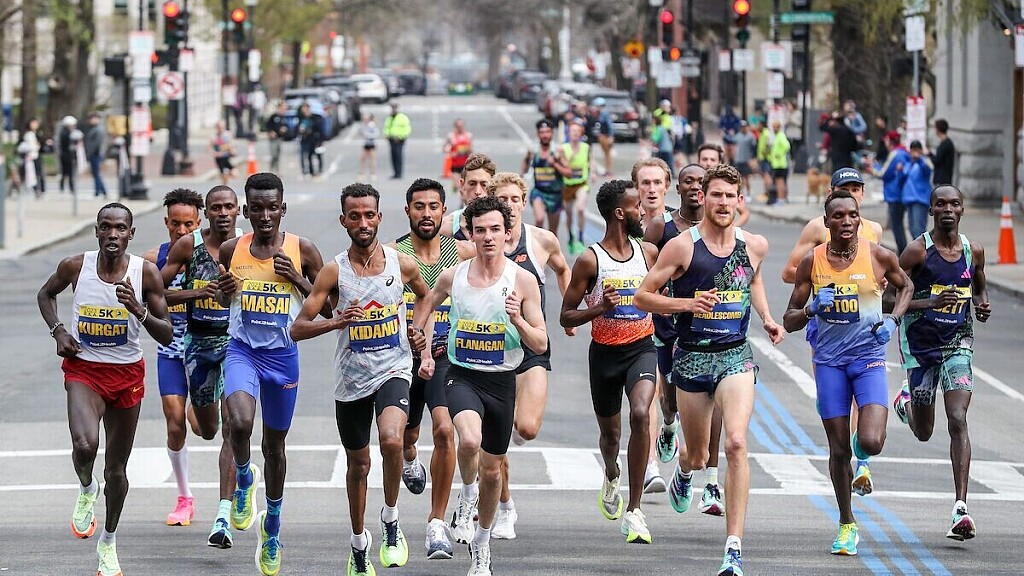
More Than 100 Professional Athletes to Race Boston 5K
Fast fields featuring Olympians, Paralympians, rising stars, and recent B.A.A. event winners will take center stage at the Boston 5K presented by Point32Health and B.A.A. Invitational Mile on Saturday, April 13. The deepest professional field in race history will include more than 100 accomplished athletes from 19 nations, set to square off for prize money and awards in the open, wheelchair, and Para Athletics Divisions.
“More than 40,000 athletes will take part in B.A.A. races across Boston Marathon weekend,” said Jack Fleming, President and Chief Executive Officer of the B.A.A. “Saturday’s Boston 5K and B.A.A. Invitational Mile fields feature some of the fastest American and international stars, many who are aiming to compete at the Olympics and Paralympics in Paris.”
A new champion will be crowned and the stage is set for another close race at the Boston 5K. Ben Flanagan (Canada), Edwin Kurgat (Kenya), and Alex Masai (Kenya) – all top-five finishers a year ago – will return. They were at the front of an exciting finish a year ago that saw the top 13 men come across the line within ten seconds of the winner.
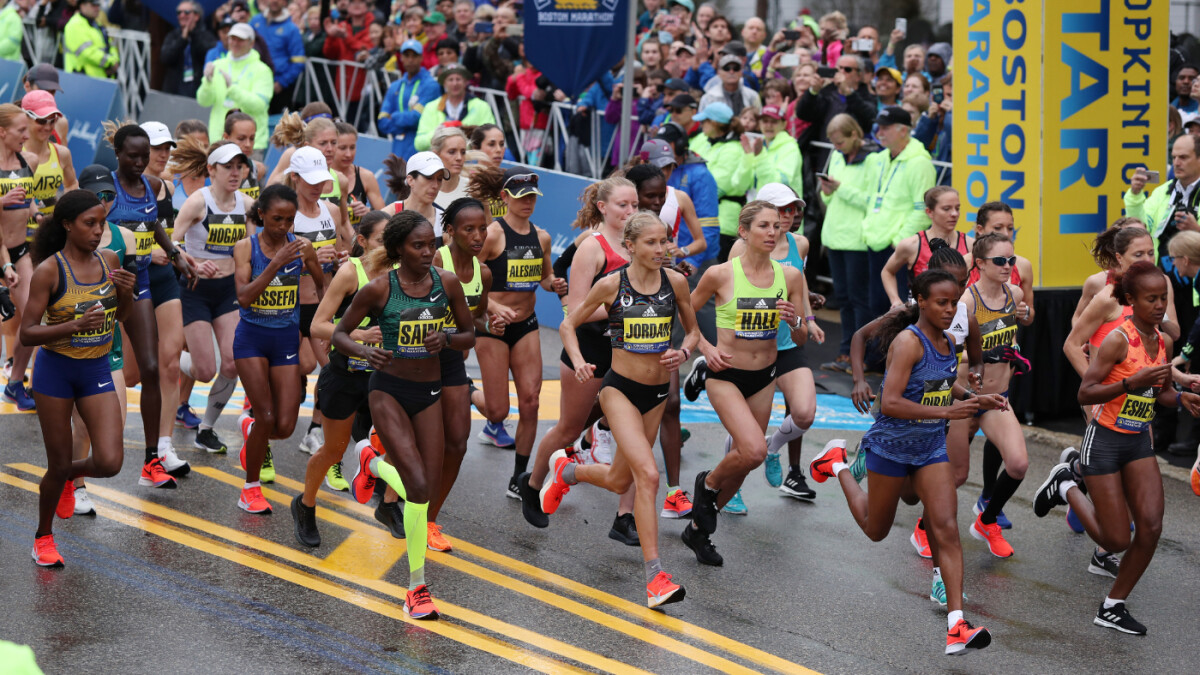
Top Americans Cooper Teare, Zach Panning, and Drew Hunter look to be at the front of the field. Teare is the reigning U.S. club cross country national champion, while Panning led a majority of February’s USA Olympic Team Trials – Marathon and Hunter is a former national champion indoors at 2 miles. B.A.A. High Performance Team members Eric Hamer and Barry Keane will be racing their hometown event.
Also on the start line will be Ben Kigen, an Olympic steeplechase bronze medalist in 2021; Simon Koech, last year’s Diamond League winner in the steeplechase; and Merhawi Mebrahtu, the 5,000m World Junior Championships silver medalist. Ethiopians Getnet Wale and Addisu Yihune are the two fastest men in the field, having gone sub-13:00 on the track for 5,000 meters.
Leading the women’s field is USATF 5K National Champion and B.A.A. High Performance Team member Annie Rodenfels. Joining her are 2024 Team USA Olympic marathoner Dakotah Lindwurm, former American marathon record holder Keira D’Amato, perennial top-American Boston Marathoner Nell Rojas, as well as Team B.A.A. runners Abbey Wheeler, Bethany Hasz Jerde, and Megan Hasz Sailor.
Uganda’s Sarah Chelangat, the Cherry Blossom 10 Mile champion in 2023, and Mercy Chelangat, a former NCAA Cross Country and 10,000m winner, are both entered. Reigning B.A.A. Half Marathon champion Fotyen Tesfay of Ethiopia also comes back to Boston seeking another win.
In the wheelchair division, course record holder and six-time Boston Marathon champion Marcel Hug (Switzerland) will square off against Americans Daniel Romanchuk and Aaron Pike. Brazil’s Vanessa de Souza – the 2018 Boston 5K winner – is the women’s wheelchair division favorite. Perennial Para Athletics Division contenders El Amine Chentouf (T12, vision impairment), Brian Reynolds (T62, lower-limb impairment), and Marko Cheseto (T62, lower-limb impairment) will vie for prize money and podium placings. This will be the largest professional Para Athletics Division field in event history.
Nearly 10,000 participants will take part in the Boston 5K, serving as the first race of the 2024 B.A.A. Distance Medley series.
KRISSY GEAR LOOKS TO REPEAT IN B.A.A. INVITATIONAL MILE
Krissy Gear earned a hard-fought B.A.A. Invitational Mile win last year and now comes in with the target on her back as defending champion. Four of the top five finishers from 2024 return, including Susan Ejore (Kenya), Jazz Shukla (Canada) and Taryn Rawlings (USA). Micaela Degenero, the 2022 NCAA Indoor Mile champion, and 4:23.94 Helen Schlachtenhaufen are entered as well.
Massachusetts high school standout Ellie Shea will take on the professionals. The Belmont High School student-athlete finished 10th at last year’s B.A.A. Invitational Mile.
Massachusetts native and 3:52.94 miler Johnny Gregorek leads the men’s field of competitors. Melkeneh Azize of Ethiopia, the world junior champion at 3000m in 2022, and Harvard’s Vivien Henz, a national champion in Luxembourg, will each make their B.A.A. road racing debuts.
In addition to the professionals, student-athletes from each of the eight cities and towns that make up the Boston Marathon route will compete in a Scholastic Mile and Middle School 1K.
Login to leave a comment

B.A.A. 5K
The B.A.A. 5K began in 2009, and became an instant hit among runners from far and wide. Viewed by many as the “calm before the storm,” the Sunday of Marathon weekend traditionally was for shopping, loading up on carbohydrates at the pasta dinner, and most importantly- resting. But now, runners of shorter distances, and even a few marathoners looking for...
more...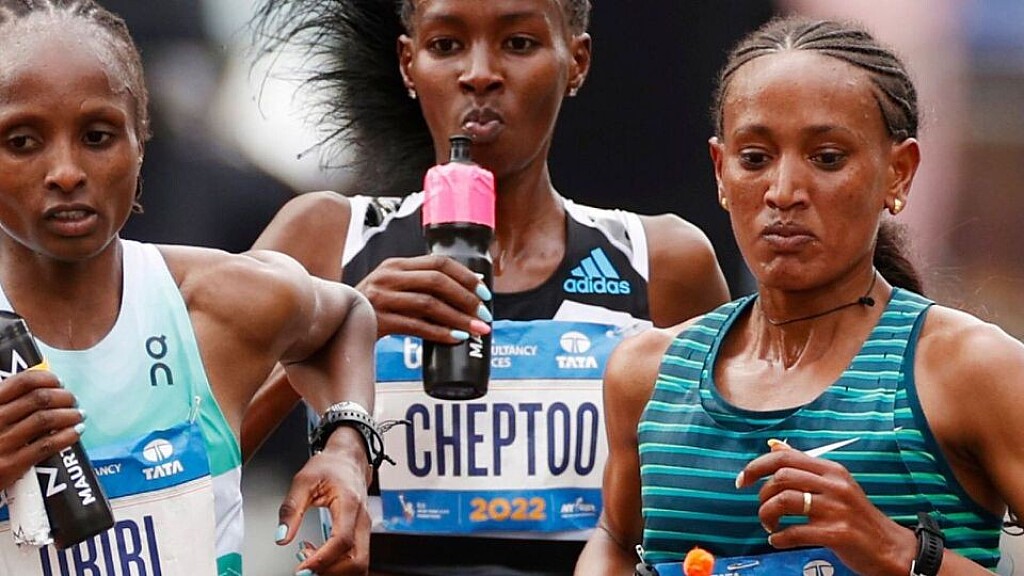
Nagoya Women's Marathon winner to pocket Ksh 35 million
The Nagoya Women's Marathon will be coming up on Sunday offering the highest prize money with the winner set to walk away with Ksh 35 million ($241,500US).
The 2024 Nagoya Women’s Marathon is certainly one of the marathons in the world that offers the highest prize money.
The winner of the race will walk away with more than Ksh 35 million with every finisher also being awarded a beautiful, specially designed pendant from a global luxury jeweller, Tiffany & Co., as a memento of their achievement.
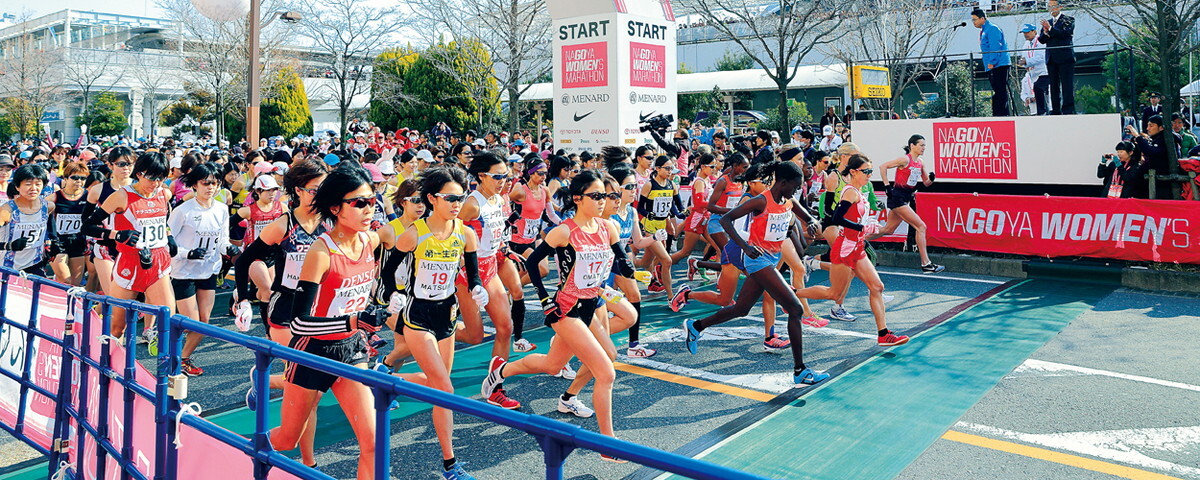
As per the race organisers, the prize money for the subsequent places will be determined separately based on the competition results.
Meanwhile, this year’s field has attracted Gotytom Gebreslase who will have the course record in her sights when she races in the marathon, a World Athletics Platinum Label road race.
The 2022 world champion set her Personal Best time of 2:18:11 when winning that title in Oregon and she went on to secure silver at last year’s World Championships in Budapest.
This will be the Ethiopian’s first marathon since then and she goes into it targeting at least a lifetime best, if not the course record of 2:17:18 set by Kenya’s Ruth Chepngetich in 2022 – that time being the second-fastest-ever women-only marathon behind the 2:17:01 run by Mary Keitany in London in 2017.
“My goal for Sunday is to run under 2 hours and 18 minutes, and if the weather and pacemakers are good, I will try to break the course record of 2:17:18,” she said at the pre-event press conference.
She will face a stern test from Bahrain’s Eunice Chebichii Chumba, who finished seventh in the Olympic Games marathon in Sapporo, and Romania’s Delvine Relin Meringor who ran her national record of 2:20:49 when finishing third in Barcelona a year ago and she went on to place 12th in the Berlin Marathon in 2:23:25.
Violah Cheptoo will be Kenya’s sole representative in the race, hoping to retain the title that was won by Chepng’etich during last year’s edition of the race.
by Abigael Wuafula
Login to leave a comment
Nagoya Women's Marathon
The Nagoya Women's Marathon named Nagoya International Women's Marathon until the 2010 race, is an annual marathon race for female runners over the classic distance of 42 km and 195 metres, held in Nagoya, Japan in early March every year. It holds IAAF Gold Label road race status. It began in 1980 as an annual 20-kilometre road race held in...
more...
This Truck Driver Started Running the Length of One Song—Now He’s Finished 3 Marathons
“My life is totally different today because I have purpose. I also feel 100 times better health-wise.”
I was an amateur boxer as a teenager. I stopped boxing after age 17, and never took care of myself until I was 36 years old. For 19 years, I ate badly and did not exercise, and started to gain weight rapidly after the age of 30 when I became a truck driver.
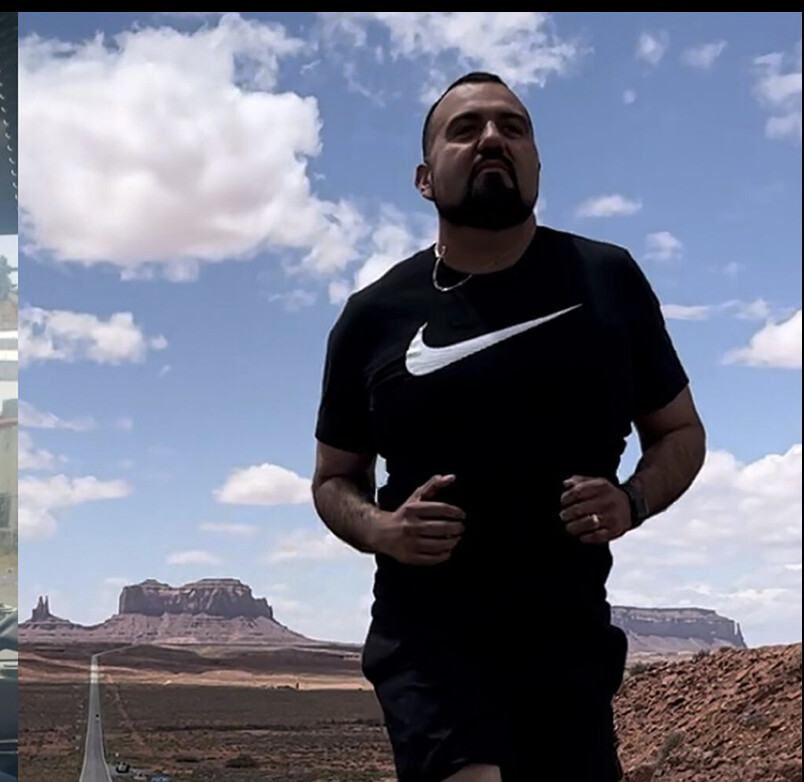
Being a trucker, I ate a lot of truck stop food and fast food and didn’t move much. My life was simple: work, eat, come home to my family, and do it all over again. My struggle was always my diet. I had a food addiction.
I didn’t have any major health problems other than high blood pressure, but I knew I had to make a change as it was only a matter of time before I’d be on medications, and other health issues would catch up to me because of my unhealthy lifestyle.
It started as a New Year’s resolution on January 1, 2022. I was 36 years old and my clothes no longer fit me. I also realized that I couldn’t keep up with my 8-year-old daughter or do anything outside with the family because I was out of shape and tired all the time.
I thought to myself, ‘What kind of example am I showing my daughter?’ So I made a promise to myself and family that in 2022, I was going to take care of myself and set goals. I set a very challenging goal to lose 50 pounds in three months.
I started out by walking in January 2022, and lost 25 pounds in that month alone. In February, I started to implement running with my walks at the local parks in San Antonio, Texas. By March, I joined a gym.
I began walking and running on the treadmill—it was so hard for me to run at first because my legs and calves cramped up often. I couldn’t even run for 30 seconds in January, so in March, my challenge was to try to run the length of the song the gym had playing on the intercom. In April, I completed my first nonstop mile of running—I was so excited to achieve that.
After April, I ran about two miles a day on the treadmill after lifting weights, and met my goal of losing 50 pounds in three months.
My main focus during this time was weight lifting, but one day in late August, I challenged myself after my workout to see if I could run three miles nonstop on the treadmill. To my surprise, I did it. After that, I started to go back to the parks and run.
A buddy at the gym told me about a local 5K in San Antonio. I ran it and fell in love with the race environment. It was there I heard runners talking about the San Antonio Rock ‘n’ Roll Marathon.
It was 11 weeks away, and I told them I would love to run the full marathon. They all chuckled a bit and looked at me like I was crazy. How would a person like me who barely started running have time to prepare for a full marathon in just 11 weeks? Well, I started training for it by following runners on TikTok and finding out what training schedule they followed.
One month later in October, I was running 15 miles nonstop. In December, I completed the San Antonio Rock ‘n’ Roll Marathon in a time of 5 hours and 9 minutes. The feeling of accomplishment was beyond amazing.
After the marathon, I made up my mind: Running was something I would continue. Six months later, in May 2023, I ran the Shiprock Marathon in New Mexico in 4 hours 57 minutes. It was quite an honor to run with the Navajo people at the Navajo reservation. I then ran the San Antonio Rock ‘n’ Roll Marathon again this past December 2023, and my time was 40 minutes faster than the year prior. The next marathon on my list is the Utah Valley Marathon in June 2024.
Today, I run four to five times a week with Saturdays being my long run. My goal is to keep running marathons and to get faster. My ultimate goal is to qualify for Boston. It sounds far-fetched because I’m currently running 4:30 marathon times, but running this distance seemed impossible two years ago.
I work 50 hours a week for a local construction company. While I have the luxury of coming home every night, the days are long. To maintain my healthy lifestyle I pack a lunch everyday—I’m fortunate that my wife prepares these lunches for me. If I didn’t pack my lunch, I’d be eating truck stop food. After work, I go to the gym for strength training, and or run around the local parks. I usually don’t get home until 8:30 at night.
My life is totally different today because I have purpose. I also feel 100 times better health-wise.
These three tips have made my running journey a success:
1. Stay consistent
Stay consistent with running, your workout routine, and diet. Consistency is key. Just start and never give up. It’s going to be difficult, but stick with it and results and progress will come. It’s you versus you. Don’t compare your journey to anyone else’s. It’s your battle.
2. Eat healthy
Diet plays a huge factor on how you fuel for your runs and the right nutrition helps you perform better. I’ve noticed on days I eat bad it really affects my runs. Before this journey, my diet was horrible. All I drank was soda and ate fast food. I’m Hispanic and I love Mexican food, but it isn’t the healthiest. Now I only drink water and black coffee. I stay away from fried food, processed foods, sugar, and flour. I love pasta and chicken Alfredo the day before my long runs. I eat lean meat, chicken breast, lean ground turkey, salmon, and sweet potatoes, along with a lot of fruit and vegetables.
3. Stay confident
You have to believe in yourself. You have to have faith in yourself and the process. Faith over fear. I learned you can do more than you can imagine. The mentality I have now compared to two years ago is night and day.
Adam’s Must-Have Gear
→ Nike Vaporfly Shoes: Of all the shoes I’ve tried, Nike Vaporfly are my go-to race-day shoes. They feel the best and I’ve had my PR with these shoes.
→ GU Running Gels: These work the best for me for fueling on long runs and don’t upset my stomach and give me a great boost.
→ Night Buddy Headlamp: For my early morning or night runs, this headlamp keeps me safe and well lit. It’s a super light headlamp and very bright.
Login to leave a comment
Heinz is Encouraging Runners to Start Fueling with Ketchup but is it a Bad Idea
The average marathoner would need to down over 60 packets to make it to the finish line.
We all have our favorite go-to gels and snacks to keep handy during a long run, but recently, one company has proposed turning to a different kind of packet to refuel during your runs—and you might have a drawer full of them in your kitchen.

Earlier this month, Heinz released an advertisement claiming that “Runners everywhere are using Heinz ketchup packets on their runs.” The ad announces new ketchup-themed running routes available on various running apps. The routes, shaped like the iconic bottle of the famed ketchup, will point out which restaurants in cities like Toronto, Chicago, and New York City carry packets of Heinz, just in case you need to restock during a run.
But is ketchup the best thing to power you through miles? New York-based nutritionist Amy Stephens would like to squash that idea.
“Ketchup packets are not an efficient fuel source for distance runners,” Stephens told Runner’s World. “Too much sodium and not enough carbs.” With just 10 calories and two grams of carbs per packet, Stephens notes that it would take a lot of ketchup to fuel the typical runner’s caloric needs. “Athletes need about 30 to 60 grams of carbs per hour during a long workout,” she says. “That’s 15 packets at a minimum per hour.”
But what about a marathon? The average marathon time, according to RunRepeat, is 4:32:49. That would mean the average runner would need to down at least 60 packets over the course of 26.2 to meet their nutritional needs. That’s a lot of tomato.
“I’ve used a couple [of packets] on a burger, but the thought of eating 60 for a marathon is not appealing,” Stephens said. She noted that while the packets still contain electrolytes like potassium, they don’t make up for the lack of carbohydrates.
Stephens says that while the ease of finding ketchup through running apps sounds appealing, the packets could be a gateway to other, less useful products for a run. “While Heinz promotes the ease of finding packets in fast food chains, you might stop in to grab some ketchup and end up with a burger or fries,” she said.
Additionally, the condiment could have an adverse effect on some runners.
“Ketchup can cause reflux, and many runners are particularly susceptible to GI issues,” Stephens said. “During a hard, sustained effort, the gut has a harder time digesting foods. That’s why gels and sports fuels are specifically designed to contain easily digestible sugars from glucose and fructose.” She added that she wasn’t sure how quickly the body can convert tomato puree and high fructose corn syrup into usable energy.
If you’re looking for alternatives to ketchup but still want to maintain a budget, Stephens recommends packets of honey for a quick boost of energy and, barring that, a quick handful of dates.
by Runner’s World
Login to leave a comment
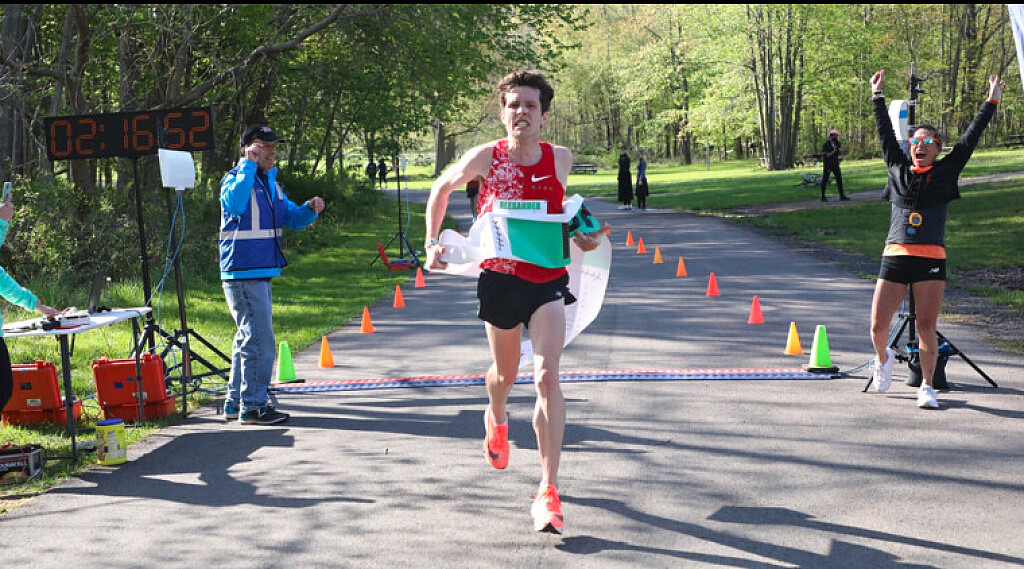
Want to Qualify for the U.S. Olympic Trials? This Race Is Specifically Built for You.
For elite amateur marathoners, qualifying for the Olympic Trials is the ultimate life goal. Bakline’s McKirdy Micro Marathon removes the challenges of running a fast 26.2.
When it comes to trying to run a fast marathon, Zacch Widner knows that bottle service isn’t a luxury but a necessity. No, not tableside bottle service at a nightclub, but the ability for marathon runners to easily identify and grab their own hydration bottles off of a table every 5K or so on course while running at an extremely fast pace.
At the Berlin Marathon on September 23, the 32-year-old aspiring elite runner from Lansing, Michigan, was on the verge of running the race of his life. But because his bottles weren’t readily available at each aid station, he wound up grabbing only one of his eight bottles and suffered the consequences.
Although running the race without optimal calorie and hydration intake led to frequent cramping, he still finished in 2:20:02. That’s the second-best time of his career, but still two minutes short of his goal of breaking the U.S. Olympic Trials men’s qualifying standard of 2:18:00.
Widner is one of dozens of American runners—most of whom work nine-to-five jobs—still hoping to earn the standard (or 2:37:00 for women) by the December 5 deadline, in order to qualify for the U.S. Olympic Trials Marathon on February 3 in Orlando.
For Widner, it’s much more than a personal goal. It’s a commitment to a friend and former teammate. “It was a bummer,” says Widner, who works full-time as an IT analyst for the state of Michigan. “I know I’m capable of running faster. I didn’t capitalize on taking fluids, so when it came to running all out, I just couldn’t do it. I think the stress of it is actually what caused the cramps, because every time I missed a bottle, I just stressed out more…just mentally started destroying me.”
Three weeks later, Widner is ready to take another shot at the OTQ standard, this time at Bakline’s McKirdy Micro Marathon on October 14—a unique elite-only race that will be held about 30 miles north of New York City. Set on a nine-loop course at Rockland Lake State Park, the no-frills race will provide bottle service to each of the 180 entrants who met a stout qualifying standard (2:25 for men, 2:45 for women) to register.
“It’s got everything you need,” he says. “You have a lot of tough, fast runners. You have pacers and a flat course with a well-organized system for everyone’s fluids. I’m ready to go.”
In 2020, when running races were shut down because of COVID-19, athlete agent Josh Cox and Ben Rosario, founder and head coach of the Hoka NAZ Elite team, developed an elite-only marathon in Arizona that gave about 100 athletes from around the world the chance to run a highly competitive race on a USATF-certified course amid the still-pervasive coronavirus.
Known as The Marathon Project, the race was held in Chandler, Arizona, on December 20, 2020. Seven U.S. men ran faster than 2:10, while 12 American women finished under 2:30—the first time that’s ever happened. Martin Hehir, a fourth-year medical student who was coming off weeks treating COVID-19 patients, won the race in a personal best 2:08:59, while Sara Hall was the women’s winner in a personal best of 2:20:32, at the time the second-fastest marathon ever run by an American woman.
Several runners who trained under Flagstaff, Arizona coach James McKirdy and his online platform McKirdy Trained were in the race, and they performed well. He was so impressed by the concept that he quickly went about replicating it by hosting small regional marathons around the U.S. for a wider range of runners in early 2021.
At one of the McKirdy Micro Marathon races held at Rockland State Park, Denver-based runner Alex Burks won the race and lowered his personal best from 2:23:47 to 2:16:52. Dozens more earned personal bests and Boston qualifying (BQ) times.
“We really liked that idea and thought we could develop that concept for the masses, and they went off without a hitch,” McKirdy says. “The athletes had a great time and many runners—I think close to 150—earned a BQ from our races. So when the U.S. Olympic Trials qualifying standards were released two years ago, we felt we had the chops and experience to provide a marathon that would provide full on-course support for runners trying to qualify.”
Bakline’s McKirdy Micro Marathon will be held on a nine-lap, 26.2-mile course that will start with one 2.63-mile partial lap, followed by eight successive laps on a 2.945-mile circuit. Runners can have up to eight hydration bottles that will be set up on a series of well-marked, eight-foot tables 20 feet apart.
While the majority of runners will be aiming for the U.S. Olympic Trials qualifying standards, others are shooting for faster times. McKirdy and co-organizer Heather Knight Pech have enlisted pacers to guide runners to three different goal times for men (2:10:00, 2:11:30, and 2:18:00) and two for women (2:29:30 and 2:37:00).
The men’s field is headlined by Tsegay Tumay, an Eritrean runner with a 2:09:07 personal best who trains in Flagstaff under McKirdy. Tiidrek Nurme is an Estonian runner who is coming off a 31st-place, 2:15:42 at the World Athletics Championships on August 27, in Budapest. American runner Ben Blankenship, who finished eighth in the 2016 Olympic 1,500-meter finals in Rio de Janeiro, is making his marathon debut. Another OTQ hopeful is Hosava Kretzmann, a 29-year-old member of the Hopi Tribe from Flagstaff, Arizona, who finished sixth in his debut at the Los Angeles Marathon earlier this year in 2:19:58.
Among the runners who should be at the front of the women’s race is newly signed Nike athlete Calli Thackery, a British runner who just placed seventh in the half marathon at World Athletics Road Running Championships with a 1:08:56 personal best. American Makenna Myler has a 2:40:45 personal best, but is shooting for the U.S. Olympic Trials Marathon qualifying standard just seven months after giving birth to her son in mid-March. (In 2021, she placed 14th in 10,000 meters on the track in the U.S. Olympic Trials seven months after giving birth to her daughter.) She had originally registered and was onsite for the October 1 Twin Cities Marathon in Minneapolis, but that race was canceled because of extreme heat.
Other runners include Monica and Isabel Hebner, identical twins who most recently competed for the University of Texas, who will be making their marathon debuts with hopes of running in the 2:34-2:35 range, and Maura Lemon, a mother of three from Dayton, Ohio, who owns a 2:42:57 personal best but is aiming for the 2:37 OTQ standard.
Many U.S. runners on the cusp of the OTQ times ran the Chicago Marathon on October 8, while others are waiting until the California International (CIM) Marathon on December 5.
What the McKirdy Micro Marathon aims to do is eliminate the challenges that runners face at other races—difficult travel, congested race expos, crowded race courses, and, perhaps most importantly, a lack of bottle support on the course. Plus, it offers a spectator friendly circuit where family, friends, or coaches can cheer for runners on every loop.
“This gives them that chance to run fast,” Knight Pech says. “There’s still a lot of runners out there—a lot of women and a lot of men—who are sitting on the cusp of the qualifying standards. And they should have the opportunity to be able to swing large and take a moonshot. We believe this race gives them a real chance to get it done here in a way that I don’t think other races offer them.”
While the top three men’s and women’s finishers in the U.S. Olympic Trials Marathon will represent the U.S. at the Paris Olympics, just getting to the Olympic Trials is a lifetime goal for many runners. It’s the deepest and most competitive domestic marathon in the U.S., but it only happens every four years. While a tiny portion of the qualifiers are sponsored professional athletes, most of the runners have already moved on to full-time jobs.
For Widner, there is more at stake than just running a fast time. He’s forever running to honor Jeremiah Hargett, a former teammate at Oakland Community College in suburban Detroit who dealt with ongoing mental challenges. One day back in 2011, Hargett called Widner and told him how much he believed in him as a runner and as a friend, and how they’d both eventually make it to the U.S. Olympic Trials. Sadly, Hargett took his own life the very next day. Widner has more or less dedicated every race to Hargett since then.
Although his best time in the 1,500-meter run (3:53.90) fell well short of the Olympic Trials qualifying standard on the track, Widner hasn’t given up his pursuit for Hargett. Amid the rigors of working full-time for the past eight years, he’s continued to improve as a long-distance runner.
Despite what he calls a disastrous marathon debut at the CIM in 2018—where he went out way too fast and wound up struggling to finish in 2:45:39—he’s still chasing that goal. In 2022, he had a breakthrough race at Grandma’s Marathon in Duluth, Minnesota, lowering his personal best to 2:19:54. In January, he lowered his best time in the half marathon to 1:05:52 in January, but that was still nearly three minutes off the half-marathon OTQ of 1:03:00.
He’s continued to add mileage—he’s averaged about 94 miles per week this year—executed better workouts, and improved his fueling strategy, especially since McKirdy started coaching him in March. Now he’s on the cusp of reaching that magical qualifying mark once again.
But it’s as much for Hargett as it is for him.
“That’s the reason I keep running,” Widner says. “It’s the closest thing to my heart. Every time I run, I think about him and his family. When that happened, mentally, it changed me. After that, I bounced up and started running much better.”
“Running taught me how to be patient, and it is teaching me that life is the exact same way,” Widner adds. “It’s all about being patient, and when things go wrong or things seem to not go the way you were expecting, to just stay relaxed and understand that it could change for the better. I’ve been able to use that for everything in life—all my connections, and then have that thought in my mind to make the Olympic Trials, just like he agreed that we would do together.”
by Outside Online
Login to leave a comment
Back to school: Where to run when kids take back the track
The breezy days of summer are even more carefree for those of us who live near a high school track that’s open to the public. The summer break brings freedom not just to students, but to runners who can pick a lane and do laps whenever they please without fear of gatecrashing a gym class or track meet. For some, open access to a school track is more necessity than luxury—my brother-in-law’s decision to relocate to a small New Brunswick community hinged on a guarantee from the town’s mayor that he’d be able to use the nearby school track (which he got—in writing, no less).
But no matter how welcoming a school is to public track users, the new academic year brings an end of unfettered track access and the need for runners to find an alternate training ground. Here are some things to consider for those wanting to get in their track work without the track.
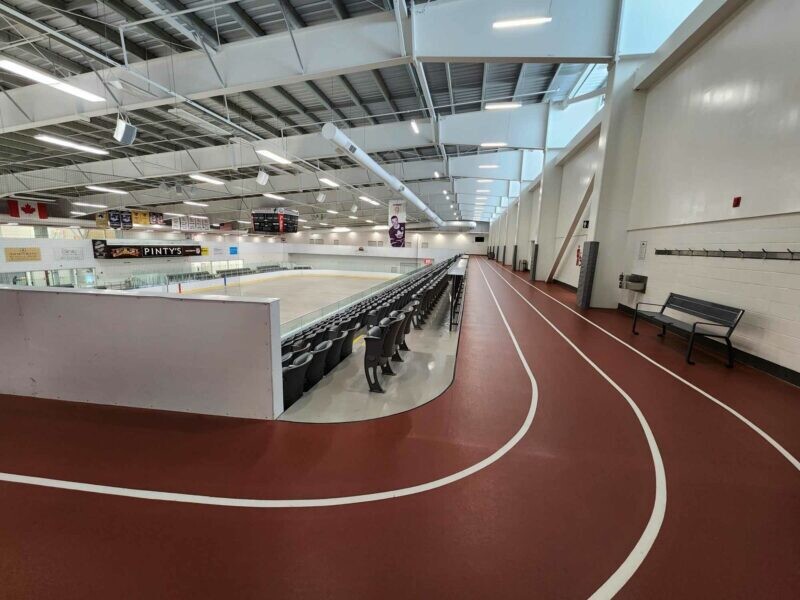
Outdoor alternatives
With autumn—and arguably the year’s most hospitable conditions for outdoor training—ahead, the search for an alternative to the track should begin outdoors. The kind of location you choose—such as a roadway, a pedestrian path in a park, a trail or a parking lot—probably won’t matter as much as the qualities of that location. Some of the characteristics of a good track alternative include:
A (relatively) straight 400m stretch: While a track alternative needn’t be straight—tracks aren’t, after all—a potential training space shouldn’t have any aggressive turns. Having to negotiate sharp, tricky angles during a hard training session can hinder your performance and could easily result in injury. The stretch should be at least 400m to accommodate interval work, but longer stretches (800m or 1,200m) can open up training options that won’t require you to double back. You don’t need a trundle wheel to get a workable read on the distance. Some park pathways have signed markers at regular distance intervals (although these are more often spaced at every 0.25m, which doesn’t fit the 400-meter mould). The more accessible approach for gauging distance is with a GPS watch. Switching your watch’s autolap to 400m instead of 1 km is one option, but for greater ease and consistency, bring a piece of chalk on your run and mark off the 400m distance.
A flat, consistent surface: Similar to choosing a stretch that’s relatively straight, opting for a consistently smooth and flat surface will let you maximize your effort while minimizing the risk of injury. Roads, asphalt paths in public parks and other paved areas such as parking lots are top candidates for a suitable surface, though they may lose out in other areas. If a paved surface isn’t an option, opt for a dirt or grass surface over gravel for stability.
A low-traffic area: High or unpredictable traffic flow is enough to throw a potential track substitute out of contention. A circular roadway that was put in as part of a newer subdivision near where I live looks like it was created with a running-track shaped mould, boasting near-perfect dimensions and a freshly paved surface. But steady traffic on the road and sidewalks spoiled it as a decent option. Another road not far from it, meanwhile, isn’t as smooth or track-shaped, but it makes for a much more productive space for interval work, due to the scarcity of traffic.
Indoor alternatives
The treadmill: Seen by many as the go-to alternative to outdoor running, the treadmill does have some strengths as a track substitute. It does away with the chief safety and performance concerns—there’s no traffic to worry about, the surface is always smooth and consistent and there are no sudden bends in the route. But it falls short of mimicking the track experience. There’s no air resistance, the machine’s motor dictates how quickly you can accelerate, and the reported speed and distance might be inaccurate or inconsistent from one treadmill to the next. And while the monotony of treadmill running can help strengthen mental toughness, it can also dampen motivation.
The indoor track: Not as readily available to most runners, community indoor tracks offer the stability and consistency of the treadmill without tethering you to a machine. A number of community recreational facilities that have been built over the past two decades feature a 200m walking and running track in a mixed-use space—around a skating rink, for example. Indoor tracks are great for interval work—when they’re not busy. Unlike treadmills, indoor arenas can pose considerable traffic concerns, with walkers and runners sharing a limited number of lanes, so it pays to pick your training times during quieter hours.
by Paul Baswick
Login to leave a comment

Expert Strategies for Eating to Boost Energy
YOU SLEPT EIGHT hours, snuck in an early run, and made time to meditate before jumping on your first Zoom call. Still, your brain feels fuzzy all morning. By the time afternoon hits, you’re ready for a long, hard nap. What gives?
Though many factors can influence energy levels, perhaps one of the biggest (and most understated) is your diet, including what you nosh on, how much, and when.
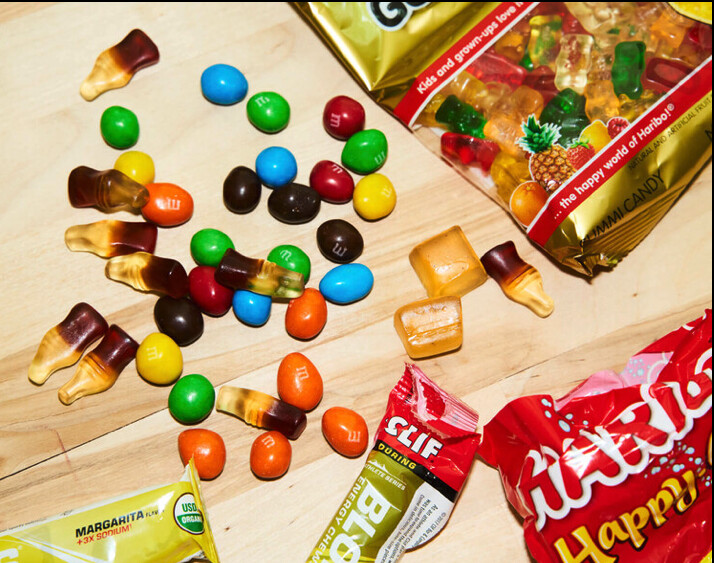
“Everything that we eat can impact how we feel and what we’re able to do throughout the day,” says Amity Lui, MS, RD, a New York City–based sports dietitian who works with runners.
High-quality fueling can mean the difference between navigating life in a fog and consistently crushing your days. Good nutrition can also better your running and overall health, allowing you to exercise with less fatigue, which boosts your performance and decreases risk of injury—all while supporting hormone health, digestion, metabolism, and immune functioning, says sports dietitian Yasi Ansari, MS, RDN, CSSD, spokesperson for the Academy of Nutrition and Dietetics.
In short, there’s a lot to gain from optimizing your eating habits. Here’s what experts recommend.
• Eat often during the day
The trend of intermittent fasting—where people abstain from eating for certain stretches of time—may have health benefits for some, such as those with type 2 diabetes. But what about for runners looking to optimize performance and feel energized? “You really need to have steady fuel throughout the day,” says Selvi Rajagopal, MD, MPH, assistant professor of medicine at Johns Hopkins University School of Medicine. That means no skipping breakfast or “forgetting” to eat lunch.
Rajagopal recommends eating every three to four hours to prevent drastic dips in blood glucose levels, which can lead to plummeting energy levels.
A better bet is to strive for three well-balanced meals spaced throughout the day plus several snacks in between. “Eating consistently is going to make a huge difference,” says Lui, who recommends runners fuel as often as every two hours, or even more frequently if hunger strikes.
• Strive for well-balanced meals and snacks
Carbs are commonly vilified, but they are an essential macronutrient, especially for runners. “Carbohydrates are the number-one source of fuel for endurance runners,” says Ansari, because they get broken down into glucose, which your body prefers to use for energy. Don’t skimp on carbs if you want to avoid fatigue.
At the same time, unless you’re fueling for a run, avoid eating simple carbs by themselves, as that leads to a rapid spike in energy followed by a drop, according to research. Instead, pair carbs with the two other macronutrients: fats and protein. This will help stabilize your blood sugar and provide sustained, steady energy.
Here’s a sample day of balanced fueling, from Rajagopal. Of course, tailor this to your preferences.
Breakfast: Oatmeal with fruit and peanut butter or Greek yogurt
Mid-morning snack: Apple with nut butter or carrots, hummus, and whole-wheat crackers
Lunch: A quinoa, farrow, or brown rice bowl with sweet potatoes, vegetables, and a lean protein, like chicken or canned tuna
Mid-afternoon snack: Cottage cheese or Greek yogurt with granola
Dinner: Half a plate full of veggies, a quarter or third filled with a starchy carb like potatoes, and the last quarter protein
• Refuel after you run–even if you’re not hungry
While the general advice of “eat when you’re hungry, stop when you’re full” can help you eat mindfully, exercise—especially intense exercise—can suppress hunger due to the release of certain hormones and the fact that blood gets diverted from the GI system toward working muscles. In fact, according to a recent poll of nearly 3,000 people on Runner’s World Instagram, 61 percent of respondents said they find it difficult to eat after a long run or hard workout. “It’s really hard to identify if you’re actually hungry immediately after a really hard run,” says Ansari. But waiting to eat can hinder your recovery and lead to a crash in energy, she says. So no matter how you feel postworkout, aim to consume at least a snack within 30 minutes and then follow that up with a full meal within one to two hours later, advises Lui.
If the thought of solid food soon after a hard run makes you queasy, turn to liquid nutrition, like smoothies and protein shakes. Prioritize carbs and protein, and aim for a ratio of 3 grams of carbs to 1 gram of protein following intense training, says Ansari. One of her go-tos is a smoothie with kefir, almond milk, or cow’s milk, 1 cup frozen mango, 1 banana, a scoop of protein powder, and granola or a side of toast and nut butter.
• Load up on micronutrients
High-intensity exercise—ahem, running—can stress your body and lead to feelings of fatigue. However, eating antioxidant-rich foods like fruits, vegetables, and leafy greens in particular can help combat those effects, says Ansari. Antioxidants help to fight free radicals and oxidative stress postrun, aiding in your recovery. To get your dose of these health- and energy-boosting nutrients, incorporate produce into your meals: Eat a cup of fruit at breakfast, have a side salad at lunch, and load up your dinner plate with veggies.
There are several other micronutrients commonly found in fruits and veggies (as well as other foods) worth adding to your plate. While a doctor can help you determine if you have a deficiency and need a supplement, it’s still important to consume foods that contain these nutrients.
Iron: A deficiency in this mineral can lead to fatigue and tiredness, both cognitively and while exercising, says Ansari. Vegan and vegetarian runners may be at increased risk of deficiency, as red meat is one of the best sources of bioavailable iron. Those who menstruate are also at increased risk, says Rajagopal. Increase iron stores by eating leafy greens (spinach, broccoli, and kale), whole grains, nuts, and tofu. Enhance iron absorption by pairing iron-rich foods with those high in vitamin C, such as fruits, bell peppers, and berries, says Lui.
Vitamin B12: Deficiencies can result in fatigue and shortness of breath, says Lui. Vegetarian and vegan runners may be more at risk of low stores, as animal products provide the highest sources. Seek it out in products like meat, fish, and eggs, as well as fortified cereals, whole grains, plant-based milks, and nutritional yeast.
Vitamin D: A deficiency that affects 42 percent of all Americans (not just runners), according to a survey, too little vitamin D can cause fatigue, increased muscle weakness, and pain, says Lui. Eat foods like canned fish, dairy products, and fortified products like plant milks and orange juice. The caveat: It can be hard to get enough vitamin D, says Rajagopal, so you may need a supplement. Again, consult your doctor.
• Avoid making dinner your biggest meal
Dinner is typically the biggest meal of the day, but that doesn’t necessarily support a solid night’s slumber, which is essential for optimal energy. “Most folks sleep better if dinner isn’t the largest meal,” says Rajagopal, explaining that “our bodies don’t digest and metabolize things as quickly in the evening” compared to earlier in the day.
Instead of getting the bulk of your nutrition at dusk, eat consistently throughout the day. Also have dinner about three hours before bed to lower your risk of sleep-harming issues, like acid reflux.
• Have a slumber-inducing evening snack
If you end up feeling hungry between dinner and bed, reach for a small snack an hour or two before snooze time, says Lui, and get strategic about which snack you choose to best support sleep (and thus improve your overall energy). Ansari recommends Greek yogurt with fruit and a side of trail mix—a combo that provides magnesium, a nutrient that in one study of older adults helped them fall asleep faster.
You may also consider foods containing tryptophan, an amino acid that plays a role in the production of serotonin and melatonin, which support the onset of sleep and relaxation, Ansari says. Options include turkey, banana, oats, and tart cherry juice.
WHAT ZAPS YOUR ENERGY
Minimize energy dips by avoiding these foods and habits.
ULTRA-PROCESSED FOODS / Foods high in sugar and low in protein, fat, and fiber can provide an energy jolt if eaten soon before and during a run. But chowing on them in your day-to-day can lead to a rapid spike in energy followed by a slump, says Selvi Rajagopal, MD. Instead, eat snacks that offer macronutrients (carbs, protein, and fat) and fiber, and those low in added sugar, says Rajagopal.
DEHYDRATION / Research shows that as little as 2 percent dehydration can negatively affect performance, says Amity Lui, RD. “Not being adequately hydrated can make the body feel like it’s working harder,” adds Yasi Ansari, RDN. Lui says a good rule of thumb is to check the color of your pee. If it’s the shade of lemonade, you’re hydrated; if it’s akin to apple juice, you need a drink.
SPORTS DRINKS OUTSIDE OF A WORKOUT / Unless you’re hydrating during or after a workout, steer clear of sugary beverages, including sports drinks and hydration aids, says Rajagopal. Instead, consider water with a squeeze of citrus fruit.
UNDERFUELING / When athletes feel fatigued, it can sometimes be because of nutrient deficiencies, but most often, it’s because they simply aren’t eating enough, says Ansari. Research identifies low energy availability as one of the most significant factors associated with illness and injury risk in endurance athletes.
Login to leave a comment
New to Pacing? Three Expert Running Pacers Share Their Best Practices.
acing at long distance running events is common in North America, but it can also be intimidating. Here are seven essential tips from veteran ultra athletes. Emily’s stomach had definitely gone south. She couldn’t keep anything down, vomiting every few steps. Her pacer Buzz Burrell, a fixture in the ultra scene, had encouraged various forms of nutrition and drink with a side of optimism—it’s just a rough patch, aid station’s in a half-mile, the sun will be up soon. After all, that was his job, right? To lend the moral, emotional, and logistical support Emily needed to get to the finish line.
But when the hurling continued, he got out a flashlight and inspected the latest effluent. “It was blackish red, like a stomach lining,” he noticed. “And that’s when I said to my runner: ‘You know, I don’t think we ought to do this.’”
While that scene might be uncommon, it’s an example of the dire scenarios a pacer might encounter during an ultra-distance race. A pacer may need to be prepared to play all sorts of roles in service of helping a runner achieve their goals, even if it means knowing when to call it quits. They can be cheerleaders, drill sergeants, nutritionists, aide-de-camps, trail doctors, raconteurs, and comedians. It’s an art, one that requires close communication between pacer and runner.
While pacing is uncommon in European ultras (it’s not permitted in UTMB races, for example), it is a frequent feature in the U.S. Both on the track and in marathons, pacers are in from the start and step off somewhere halfway, but those who are pacing an ultra usually pick up their runner after the halfway point and accompany them for some or all of the last part of the race.
Some purists argue that the psychological advantage of having clear-thinking, uplifting company in the later stages contravenes the spirit of the endeavor, while others find it a way for friends or family to share in what might otherwise be a time-consuming and self-centered undertaking.
The practice of pacing originated as a safety precaution—race directors didn’t want runners to get lost or collapse out on the trail alone. The 345 percent increase in participation in ultras over the last twelve years guarantees that, while some runners are very experienced, there’s also an influx of neophytes who could benefit from the company of a pacer. And yet, at the same time, there’s a contingent who have never worn a pacer bib.
For those new to pacing, or some of us who have been thrown into the fire to pace a friend without any guidance, here are seven essential insights on the art of pacing from a few of the sport’s veteran pacers. Unsurprisingly, these three pacing pros are also experienced ultrarunners. In fact, it’s been suggested that pacing is an excellent way to learn the tricks of the trade before signing up as a competitor.
After interviewing these three experts, several themes emerged on what to expect when pacing a runner, and how to prepare and execute on your responsibilities:
Buzz Burrell: “You might be trudging along while your runner is throwing up, but I put a different spin on it. As a pacer, I’ve skipped the first 50 miles of the race, which means I’m feeling good, walking into aid stations, eating sandwiches. I haven’t paid a thing for this race! As a pacer, I can enjoy the beauty of the course. This runner might be a dear friend of mine, and I want to help him, but I’m also a free food kind of guy.”
Justin Grunewald: “I think the most common reason is to help someone you care about conquer their demons, and get from point A to point Z. For me, Tyler [Green] is a friend, but he’s also hugely accomplished. I learned so much from him by pacing, I think I could take 30 to 60 minutes off my time from what I learned from pacing.”
Nicole Bitter: “To be a part of a loved one’s attempt at achieving a goal, that’s almost better than if I did it myself. Some people can’t run 100 miles or don’t want to—pacing is a way to share in the experience. A lot of people find fulfillment in pacing, maybe more so than racing.”
BB: “This is critical. It’s not just two friends saying ‘Let’s go for a run together.’ First, discuss goals. Talk about possible scenarios.”
JG: “We talked about Tyler’s objectives. He’d finished second and fourth at States in past years and was completely overlooked as a top finisher this year, so he really wanted to go for it. He had dropped his pacer before, so he wanted someone who could go 32-33 miles. We talked about his intricate cooling routine and how it was going to go at aid stations.”
NB: “It’s critical to understand your runner and what makes them tick. I love to talk when I have a pacer. I want them to tell me funny stories, what happened earlier in the day. Some people don’t want to talk; they’re just in the zone.”
BB: “Be well-fed and well-hydrated, and know when your start time will be. Never become part of the problem; don’t be a liability. Know the pacer rules, like no physical assistance. Usually “muling”—carrying your runner’s food or gear—is not allowed, though it is at Leadville, so be aware of the rules. Know the course, the aid stations, and cut-off times.”
JG: “At Western States, cooling is 15 percent of the race, so everything had to go right at aid stations. Typically, about a half-mile out from an aid station, I’d ask what he wanted to drink. I’d get Coke, ice cubes, water in one bottle, Tailwind in the other.”
NB: “Make sure you and your runner are a good fit, that you’d want to spend some time with this person. Be confident you can cover the distance you’ll be pacing easily. Take care of yourself or you won’t be equipped to pace.”
BB: “It’s unlikely your runner will be feeling great. They may be sick. They may be on a bummer. It might be hot or stormy. I tell first-timers: ‘You feel bad. So does everybody else. This is what it looks like.’”
JG: “They might be too mentally fatigued to know what they need. Tyler told me his arms were numb, which told me he needed electrolytes. Hyponatremia and dehydration are really tricky to differentiate, but, in my experience, they almost always need more electrolytes.”
NB: “Expect the unexpected. You don’t know what could happen. You might not even get the chance to pace if your runner drops out. Keep a positive outlook, and be a problem-solver.”
BB: “The first-time runner needs stability, support, and mild encouragement. Remind them to start eating and drinking 45 minutes into it. Don’t wait until your stomach starts to go. The veteran probably knows this so you can get into actual pacing, behind or in front of them, moderating the ups and downs. For someone who just wants to finish, concentrate on putting one foot in front of the other.”
JG: “Normally, Tyler takes it out slower and picks people off, but this time the theme was ‘no regrets,’ so I reminded him of his objectives, of who he is, of how proud his family will be. He ran in front of me so I wouldn’t distort his view of rocks and roots.”
NB: “It’s nuanced. My husband is competitive so I usually talk about how we need to catch that runner in front of us. The hunt mentality. Or if we need to pick it up, I joke, ‘Wow, are you keeping up with me?’ Some races, like Western States, are dialed in to the tech, and can feed the pacer info on how far ahead or behind their runner is.”
BB: “‘It’ll be fine’ is our mantra, as long as it’s just a mental or emotional low. You can always come back from that. I’ve had runners say, ‘I’m out. I can’t do this.’ I have them sit down, take some deep breaths, let their heart rate come down. Heck, you can take 30 minutes at an aid station, change your socks, and march back out.”
JG: “I told him [Tyler Green] he was looking great. He hit a rough patch, so we focused on hiking 10 steps, running 10 steps. Relentless forward progress. I’d tell him things like, ‘In 800 meters there’s a downhill.’ Late in the race, no one wants to eat, so I kept thinking of what’s going to sound good, to get in some calories.”
NB: “My husband is usually in the zone, not talking, but he enjoys when I tell him stories and point out nice views.”
BB: “Personally, I’m always going to protect my runner’s health first. Finishing is second. There are thousands of stories of people getting through awful circumstances, but I’m not going to encourage them to go on if I think it’s damaging to their health.”
NB: “In the 2016 Western States, my pacer called my day. I had hyponatremia and we didn’t feel it was safe. It’s good to have a close friend make those tough calls.”
Being a good pacer is perfect training for becoming an accomplished ultrarunner. All of our expert pacers routinely switched roles in their many years in the sport. And for those new to the sport, pacing is a great way to dip your toes before actually signing up for a long-distance race. Regardless of whether you ever intend to go the full distance or not, the many roles of the pacer make for a rich, fulfilling experience.
by Outside Online
Login to leave a comment

Do You Need Electrolyte Supplements at Altitude?
Here's what to keep in mind about hydration supplementation at all elevations
When Lara Crawford stopped into her local vitamin and supplement store a few months ago, she was in search of something to alleviate her acid reflux, which causes a burning sensation in her chest and acid regurgitation. But the conversation quickly took a turn when a staff member learned Crawford wasn’t taking electrolyte supplements.

Crawford lives at 9,000 feet in the Colorado Rockies, a place considered to be high altitude. Even after living in the mountains for years, she never saw a need for additional electrolytes. However, the staff member told Crawford those who live at altitude tend to get dehydrated overnight—and suggested she start taking sports salts pills and a daily electrolyte powder.
“I thought those were just for ultra athletes or like serious athletes, but he told me everybody should be taking them,” Crawford says. He spoke so convincingly about their benefits that she decided to give the electrolytes and sports salts a try.
After using the sports salts in the morning and the electrolytes at midday for a few months, she noticed a moderate improvement in her acid reflux. However, the biggest change was in her face: She no longer woke up with dry, puffy eyes.
Spotting the meaningful difference, she wondered if the staff member was right. Was the shift due to her new electrolyte supplements? Maybe these weren’t just for endurance athletes after all. Perhaps even people who only engaged in moderate exercise still needed to supplement with electrolytes at altitude.
Vic Johnson, an Utah-based sports nutritionist who works with outdoor athletes, including ultra runners, cyclists, and triathletes, says that while we do lose more fluids at altitude, there’s nothing special about nighttime.
However, the electrolyte and hydration question, and how much each of us should be consuming each day, is a bit more complicated.
At higher elevations, your body has to work harder to get oxygen, which causes your breathing rate to increase. Since you lose water through respiration, this results in greater fluid loss. The air is also drier at altitude, which makes your sweat evaporate faster and causes additional fluid loss. Each of these factors contribute to your body losing more water than at sea level, requiring you to hydrate more frequently.
However, the longer you stay up in the mountains, the better it gets. Johnson says people who live at altitude are able to adapt to the lack of oxygen. Their bodies become more efficient, producing more red blood cells to carry oxygen through the body, which reduces the amount of fluid lost.
“It’s going to be pretty stressful on your body for a couple of weeks,” Johnson says, referring to spending time at elevation. “That’s the most crucial time to increase fluid intake. Then things will kind of regulate, and you won’t have to compensate quite so much.”
However, even longtime residents of high altitude towns—Crawford has lived at 9,000 feet for 29 years—typically need about a liter to a liter and a half more water per day (about four to six cups) than people living at lower altitudes. But hydration isn’t a one-size-fits-all prescription. Whether you’re in the mountains or at sea level, your fluid intake varies based on the weather, the amount you exercise, and your overall health.
To help his athletes find the amount of hydration they need, Johnson performs a sweat rate test. He starts by weighing them before they exercise. While they work out, he keeps track of the fluids they drink and any urine they lose. After they’ve finished, he weighs them again and plugs each data point into an equation to figure out how many milliliters of sweat per hour they lose. (If you’d like to try this for yourself, use a step-by-step guide to finding out your own sweat rate.)
It’s important to note that even once you’ve figured out your sweat rate, completely replacing your lost liquids isn’t necessarily the goal. It’s not bad to be slightly dehydrated and more hydration isn’t always the solution. For many, drinking to quench your thirst is sufficient. (Those in their 70s or 80s need to monitor their intake a bit more, because our thirst sensation can decrease with age.)
Electrolytes are electrically-charged minerals such as sodium, calcium, magnesium, and potassium that regulate your muscle contractions, keep you hydrated, and balance your pH levels. Every fluid and cell in your body has electrolytes, which aid the function of your nerves, muscles, brain, and heart. Electrolytes also manage the balance of fluids in your body’s cells and are lost through sweat and urine, or if you’re sick, through vomiting and diarrhea.
While electrolytes are essential, Johnson says most of us get all we need from food. “A normal, varied diet should provide you with plenty of electrolytes, even at altitude.” Johnson says, “For the recreational athlete, it’s honestly not that big of an issue.”
If you aren’t engaging in high-output endurance activities lasting longer than three hours, and if you’re eating a nutrient-dense diet with whole grains, legumes, vegetables, fruits, nuts, and seeds, Johnson says you should be getting enough electrolytes without needing additional supplementation. However, endurance athletes who engage in high-output endurance activities lasting longer than three hours have different hydration needs, and may find electrolyte powders and capsules are a good way to stay hydrated and keep their electrolytes balanced.
That doesn’t mean these supplements are the secret to unlocking a new PR. A 2020 study conducted by researchers at Stanford University found that electrolyte supplementation does not improve performance or protect against illnesses caused by a change in sodium levels, including exercise-associated hyponatremia (EAH).
If an endurance athlete wants to take in some sodium, Johnson recommends turning to salty foods, such as pretzels or even a peanut butter sandwich.
“For the most part, when our serum sodium levels drop, the body can usually take care of that and regulate that on its own,” he says.
So, if electrolyte supplementation isn’t really necessary for most people, why did Crawford see a noticeable difference in her face after months of supplementation?
The answer most likely lies in what Crawford took with the powder and capsules.
Before going to the supplement store, Crawford says she struggled to drink enough water. However, while doling out instructions for the supplements, the staff member instructed Crawford to drink a full bottle of water with her morning sports salts capsules (which contain sea salt, magnesium, and potassium) and to mix the flavored electrolyte powder with at least 16 ounces of water later in the day. The supplements provided the structure for her to consume more water, improving her overall hydration and reducing the puffiness in her eyes.
If you live at altitude and find it difficult to drink adequate fluids, a flavored powder might help. For most people, however—including serious athletes—drinking when you’re thirsty is usually enough.
by Outside Online
Login to leave a comment
South African sprinter Luxolo Adams:I want to use Oregon experience in Budapest
South African sprinter Luxolo Adams has said he will be leaning on the 'overwhelming' experience at last year's World Championships in Oregon ahead of this year's showpiece in Budapest.
Adams has been working on his 'mental fitness' after making a maiden appearance at the global show in 2022 where he reached the semifinals of the 200m.
Speaking to the BBC Sports The Warm-Up Track podcast, the 26-year-old said: "Now I know how the world class meet operates."
"I know how to execute my races. Now, when I'm standing in the lane with with a Noah Lyles, I know how to manage my stress levels, I know how to manage all the influences around me. I've got enough experience in store," Adams said.
Adams was the fifth fastest man in the world last year after winning the Paris Diamond League meet. The sprinter has already qualified for Paris Olympic Games.
"Mentally, it was challenging, because it was my first World Champs," he said. "Two or three weeks before, there was a visa issue. Days went by and then we got closer to the meet and we [still] don't have visas.
"We managed to get waivers but when I got there, it was a different type of environment for me. I couldn't know how to interact, I didn't know how to, to move around, and also how to behave because now it's a different type of meet. It's a world class.
"It was overwhelming. I don't know what I was going through but one thing was in my mind: God is not going to place me in a sport whereby I don't have the power or the strength to go through.
by Evans Ousuru
Login to leave a comment

World Athletics Championships Budapest 23
From August 19-27, 2023, Budapest will host the world's third largest sporting event, the World Athletics Championships. It is the largest sporting event in the history of Hungary, attended by athletes from more than 200 countries, whose news will reach more than one billion people. Athletics is the foundation of all sports. It represents strength, speed, dexterity and endurance, the...
more...
What you need to know before running outdoors
You’ve been cooped up watching reruns of “Friends” on the treadmill all winter. So when the temperature pushes 60, you grab your sneakers and jump at the opportunity to get some fresh air while you pound the pavement.
Most of us don’t even think twice about changing up the location of our runs. After all, running is running right?
Not quite, says Michael Conlon, physical therapist, running coach and owner of Finish Line Physical Therapy in New York City. While it’s great to get outdoors, being aware of the subtle differences between running on a treadmill and jogging outside is essential in easing your body through the transition and reducing your risk of injury.
“More experienced runners will probably say it’s harder to stay on a treadmill and do a 10-12 mile run because it’s so boring,” says Conlon. “But taking that out of account, to run outside after being indoors is harder; you have so many other factors: wind, weather, terrain. It’s definitely more difficult and something you’ll have to get used to.”
Here are the key things to be aware of before making the switch.
A Better way to run outdoors
Use the change of seasons as a cue to invest in new sneakers. Exactly how often this needs to be done varies, depending on how much running you do, your body size and the shoe type, says Conlon. “The lighter the shoe, the less durable it typically is. On average, we should get new sneakers every 2-3 months or 200-300 miles, maybe a little more with some heavier, more durable shoes.” Which means if you’ve been running on a treadmill all winter, the change in season might be a great time to invest in a new pair. “You’ll start not only notice the physical wear of the shoe, but feel it,” says Conlon. “It’s almost like riding a bike with a little less air in the tire, you’ll feel a little bit of that resistance, you’ll feel every nook and cranny in the road, like pebbles or debris, you’ll feel your calves working a little harder and that there’s less shock absorption.”
Don’t forget to warm up. It can be easier in a gym setting to remember to warm up, but “make sure you properly warm up the body; include some type of myofascial release/foam rolling, as well as global, three-dimensional functional stretches, not just a static stretch routine,” says Conlon. He also recommends implementing running drills unto the warm-up, which can help you work on your form and posture prior to your workout.
Choose the right terrain. Should you head to the park? Run the track at the local high school? Or simply run around the neighborhood? “In general, most people say the softer surfaces like a dirt trail are easier on the body; they allow the soft tissue structure to absorb more, so there’s less impact on the joints and the bones,” says Conlon. “Concrete is the hardest, asphalt has a little more give and dirt trails are softest.” He also adds that as we age, we may prefer the trails to the concrete sidewalk. “An older person doesn’t have the same elasticity as when they’re younger in terms of the soft tissue structure, so they might like a softer surface,” says Conlon.
Our bodies expend less energy running on a treadmill than running outdoors.
Know that you may be sore, even if you’ve been running all winter. Our bodies expend less energy running on a treadmill than running outdoors. Using the incline feature can help close that gap: Studies show that running on a 1% incline requires a similar amount of energy as running outdoors. But how many of us actually increase the incline every time we hit the treadmill for a jog? Because of that, running outdoors will likely feel harder. Your running terrain makes a difference too: “One thing about trails that people often don’t think about is it’s an unstable surface, if you’re going to be on rocks or having to move around a little bit, a lot of the stabilizers in our hips and ankles are going to work harder so you’ll hear a lot of people say the next day that they’re more sore than usual."
Cut back on intensity at first. Knowing that it will require your body to expend more energy and that many more variables are in flux, Conlon suggests people ease into it. “Everything is constant on a treadmill, outside is much more variable because you have things like wind, weather, terrain, uphill and downhill, and even your own pace is hard to be constant with,” he says. He encourages people to be aware of these variables, start at a conversational pace and focus on building up aerobic capacity. “Running at too hard of an effort and doing too much, too soon are the biggest mistakes we typically see in physical therapy. So if you’re just starting out, run outside every other day so you don’t have two days back to back,” Conlon says. If you’re used to hopping on the treadmill and logging 5 miles in 50 minutes, Conlon suggests starting with a 30-minutes outdoor run. “It doesn’t have to mean cutting back where you’re doing a run/walk program, but just modify a little bit to account for the variability your body isn't used to.”
You may need to adjust your form. “A lot of treadmill runners tend to be heel strikers because the treadmill is basically running you, you’re not running the treadmill,” says Conlon. “So when coming off, it’s good to work on a more efficient foot strike, where you’re landing more in your midfoot or forefoot. You can also do things with cadence: every mile, count how many times your right foot strikes the ground to get an idea of what your cadence is. The ideal cadence is 90 steps per minute.”
Go for time instead of distance. “I am a big advocate for running for time versus miles,” says Conlon. “A body knows time it doesn’t really understand what a mile is. Mentally, it’s also easier. You tell someone to run 3 miles it’s can be overwhelming. You may run a 6-minute pace, I may run a 12-minute pace, so to say 3 miles, that’s a lot more volume for me than it is for you, that’s going to take me 36 minutes versus taking you 18 minutes. Running [for time] keeps everyone on the same stress level. If we’re both running 30 minutes it doesn’t really matter what pace we’re running, we’re still both running for the same amount of time.”
Switch up your variables. We all get into the habit of running certain loops around the neighborhood or heading to the same trail at the park. But Conlon urges athletes to switch up the variables often. “Think about Central Park, if I’m going around that counter clockwise direction, which is what the majority of the runners do, because of the slight slant in the road that goes inward, my right foot is always over pronating, my left foot is under pronating, so it’s nice to change that direction.” He also encourages runners to change surfaces (trade the hiking trail for a track once a week); and change speeds. “Do some sort of speed workout; it takes runners out of the repetitive gait, so their knees are bending a little more and their hips are going deeper into their range of motion. Changing things from workout to workout elongates tissues and helps incorporates other muscle groups that can absorb some of the impact.”
by Brianna Steinhilber
Login to leave a comment
How to conquer your very first 10K
HOW TO PREPARE FOR A 10K RUN FOR THE FIRST TIME
10k runs are super popular because the distance is manageable for most people. Many people choose 10k as their first running event distance. Here are some tips to prepare for the first attempt at a 10k run:
1. CONSISTENCY IS KEY
Ideally, pick a 10k run at least eight weeks away. This gives plenty of time to get in enough running to train the body (especially the legs) to tolerate running for an extended period of time.
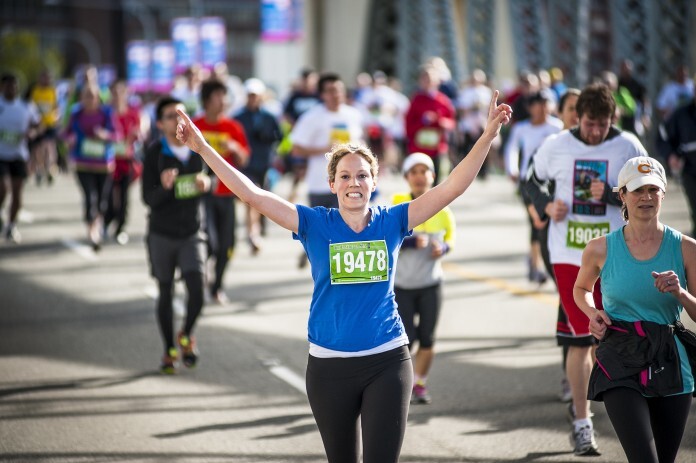
Beginner runners may be running (and walking) for over an hour. Working up to this duration/distance requires running at least three times per week. Speed and duration of the runs are less important than just getting out and running or walking a couple of times a week since polarized training can improve performance for recreational runners. Don’t add more than 15 percent more total distance per week.
2. BUILD UP LONG RUN DISTANCE
Work up to at least 75 percent of the distance (7.5 km) for the long runs. Try to get in a long run once a week or at least every other week. The long runs will help develop the muscular endurance to tolerate running for 10k. They will also help build confidence that the distance is doable.
An easy way to add distance to the long run is to add 500m – 750m to the longest runs usually done. It may not seem like much, but it will add up!
3. DON’T WORRY ABOUT SPEED
One does not burn considerably more calories by running faster. Speedwork like HIIT and other forms of interval training can add too much intensity for new runners to tolerate. If the goal is just to finish the first 10k run, don’t worry about doing hard runs (unless you want to because they’re “fun”). Instead, just make sure to consistently train and avoid injury.
4. TAKE RECOVERY SERIOUSLY TO AVOID INJURY
Beginner runners might be tempted to run through the soreness and pain that comes from training consistently for their first 10k. Knowing when to ignore the pain and push through comes with athletic experience—beginner runners don’t have this luxury.
Novice runners are at a higher risk for injury than others, as noted in The American Journal of Sports Medicine. Here are some indicators that one should stop or drastically reduce training:
Sharp pains that come on suddenly mean stop running immediately or risk getting injured.
Prolonged soreness and swelling are likely from an overuse injury. Get in some RICE (rest, ice, compression, elevation) to reduce swelling and speed up recovery. Don’t keep running on the injury, or it could get much worse.
Sickness symptoms below the neck are not worth continuing to train.
5. FOLLOW A 10K TRAINING PLAN
adidas Running Premium Members can create a training plan suited to their ability level, goal finishing time and race distance. The training plan guides training runs so new runners never run too fast and stay motivated to finish their run strong! Download adidas Running to check out other unique features like Live Cheering!
HOW TO PREPARE FOR A 10K RUN (INTERMEDIATE-ADVANCED)
Intermediate or advanced runners are looking to improve their 10k time. They may also use 10k runs to build speed for a longer event like a half marathon or marathon. 10k is a great distance to build speed and endurance without adding tons of fatigue. It requires good endurance, a high threshold and maybe even a good sprint at the end. In other words, it’s a great distance to develop into a well-rounded runner. Follow these tips to try for a new 10k PR:
1. MASTER PACE CHANGES
Running a faster 10k requires training to run a faster 10k. Plan to include HIIT sessions and other types of interval workouts in the leadup to the race. Long runs with several kilometers run at or slightly above race pace are key workouts for race-specific intensity. Tempo and threshold workouts should be a staple in a quality, intermediate to advanced running plan.
2. STRENGTH TRAINING
Advanced runners and intermediate runners looking to jump to the next level should likely be doing strength training. As found in Medicine and Science in Sports and Exercise, specific strength training can improve running performance. This doesn’t mean going to the gym to bulk up. Instead, bodyweight and functional training are sufficient. Check out adidas Training for a running-specific strength training program alongside a running training plan.
3. RECOVER HARD TO TRAIN HARDER
Intermediate runners might be tempted to skimp on recovery to get in another hard training session. This is what separates intermediate runners from unlocking advanced running performance. Elite runners know when it’s time to take it easy and put their feet up on the couch for an afternoon nap.
4. GET A GOOD TRAINING PLAN
Following a training plan tailored to specific goals and abilities is vital for intermediate to advanced runners. adidas Running even has customizable plans to help achieve a 40-minute 10k. Become a Premium Member and start a plan to set a new PR in just a few weeks!
5. WARM UP
Make sure to warm up properly on race day. Learn how warm-ups can optimize performance and find the perfect warm-up routine.
Consult a medical professional when in doubt.
by Morgan Cole
Login to leave a comment
How to rest, fuel and recover like the marathon world record holder Eliud Kipchoge
Over the years marathon running has become something of an art form. The science of running has also progressed significantly since the days of the St. Louis 1904 Olympic marathon where athletes including the eventual winner Thomas Hicks drank brandy and even strychnine, a form of rat poison, in the belief that they would improve their performance.
Today’s elite marathon runners like Eliud Kipchoge have strict training plans and diets that help them achieve peak performance on race day.
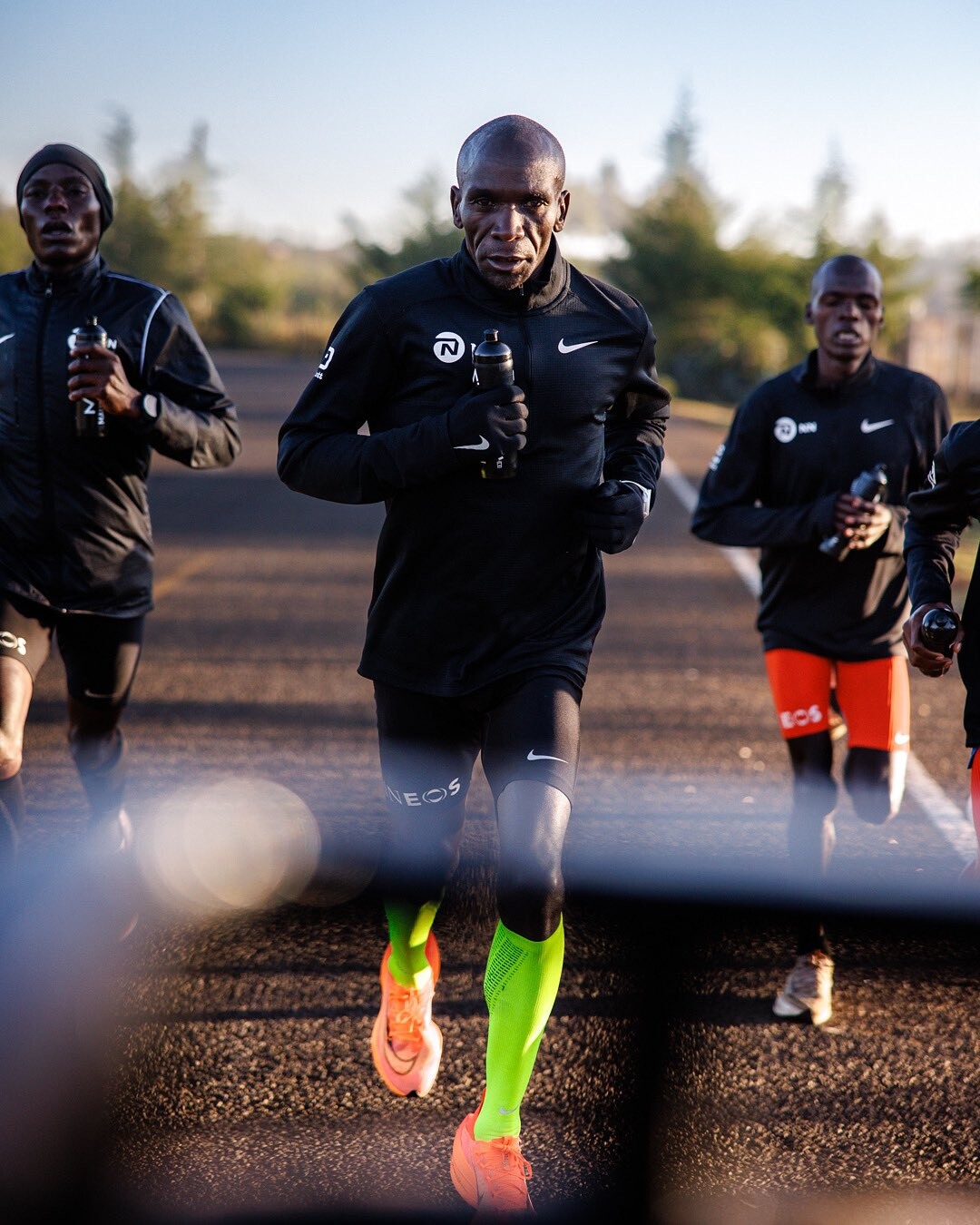
However, one thing that often goes underlooked is the importance of rest, fueling and recovery in marathon training and running.
And whether you’re an elite runner or training for your first big event, there’s no one better to learn from than double Olympic champion and reigning marathon world record holder, Eliud Kipchoge.
How much does Eliud Kipchoge sleep?
While staying in bed is a luxury some can’t afford when they’re training for a marathon, sleep is probably the best way your body has to recover from hard training runs and set yourself up for a successful marathon.
For Kipchoge that means a whopping 10 hours on average - but that doesn’t all come in one big overnight sleep session
“I’m sleeping eight hours during the night and two hours during the day,” the only man to run a marathon in under two hours revealed while training for the Ineos 1:59 Challenge.
And it’s not just Kipchoge who sleeps this much when preparing for race day. NN Running Team coach Addy Ruiter, who has trained Olympic 5,000 and 10,000 metre gold medalist Joshua Cheptegei, revealed that the 10-hour rule is commonplace among elite marathon runners.
“In general the average elite marathon runner would get around eight hours (a night) plus another two hours during the day for a total of 10 hours. During those two hours, an athlete may not always be sleeping but they’ll at least be lying on their beds making sure that they rest.”
While non-elite runners may struggle to find time for a mid-day rest, the principle of getting a good night’s sleep has been well established, with benefits that include muscle repair and the release of growth hormone.
So if you are struggling to keep up with your marathon training plan, more sleep is a good way to get your body in the right shape for another session.
How does Eliud Kipchoge taper before a marathon?
For many people, tapering before a race is key to their marathon day performance. In simple terms, it involves reducing your training for two to three weeks before your race so that you can arrive at the starting line rested and ready to run at your best.
While this works wonders for a lot of runners, Kipchoge does not taper in the traditional sense before his races.
In his training log for the 2017 Berlin Marathon, the Kenyan revealed that just a week out from the race he had run 182 km (113 miles). It was only in the final week when he travelled to Berlin that he lowered his mileage from his weekly average.
For a large part of the marathon running community, simply copying what Kipchoge does would be futile. He takes no days off during training and his rest day - if you can call it that - includes a 20km easy run.
However, it does make you understand that there’s no “one size fits all” solution for marathon running. While two to three weeks at reduced mileage may be best for some, as little as a week can work for others - including the greatest marathon runner to have ever lived.
How does Eliud Kipchoge fuel during a race?
While a runner’s diet leading up to a marathon race can help them get into tip-top shape, what they consume during a race is equally important.
For Kipchoge, that means taking on large amounts of carbohydrates in the form of drink mixes and running gels.
In the build-up to his 2018 marathon, it was revealed that Kipchoge was consuming around 100 grams of carbohydrates per hour in his race, the equivalent of two cups of long-grain brown rice or just over four slices of white bread.
For most athletes, 100 grams would be on the higher side of what their bodies are able to consume, with many non-elite runners staying within the 25-60 grams per hour range.
However, as with many things to do with marathon running, much of this is down to trial, error and indeed training (in this case training your gut to handle the carbohydrate intake). And if in doubt, it is recommended that you speak to a registered nutritionist.
How does Eliud Kipchoge recover from a marathon?
So, your marathon is done and the first thing you want to do is put your feet up and relax to recover from the strenuous effort you’ve just put your body through.
However, as with so many other aspects of his marathon plan, Kipchoge doesn’t follow conventional wisdom.During his training for the Ineos 1:59 challenge, Kipchoge revealed that he runs slowly for four days after a marathon. The main reasons for this are to check whether he has "cured well" and doesn't have any physical injuries that require medical treatment following his race.
After this, however, it’s time to rest. And for Kipchoge that means three weeks of "total" or "active" rest to ensure his body has recuperated before he once again begins training.
As coach Ruiter explains, athletes don’t have to be at their peak all year round - it’s all about resting, fueling and recovering in the right way to be at your very best on race day.
“The elite athletes I work with don’t have to be in peak physical shape the whole year round they just try and peak for competition, which in the case of many marathon athletes is twice a year,” he says. “They then take a post-race rest for three to four weeks to recharge the batteries. Most marathoners would then do two months of basic training followed by a more specific block of three-month training before the marathon.”
by Sean McAlister
Login to leave a comment
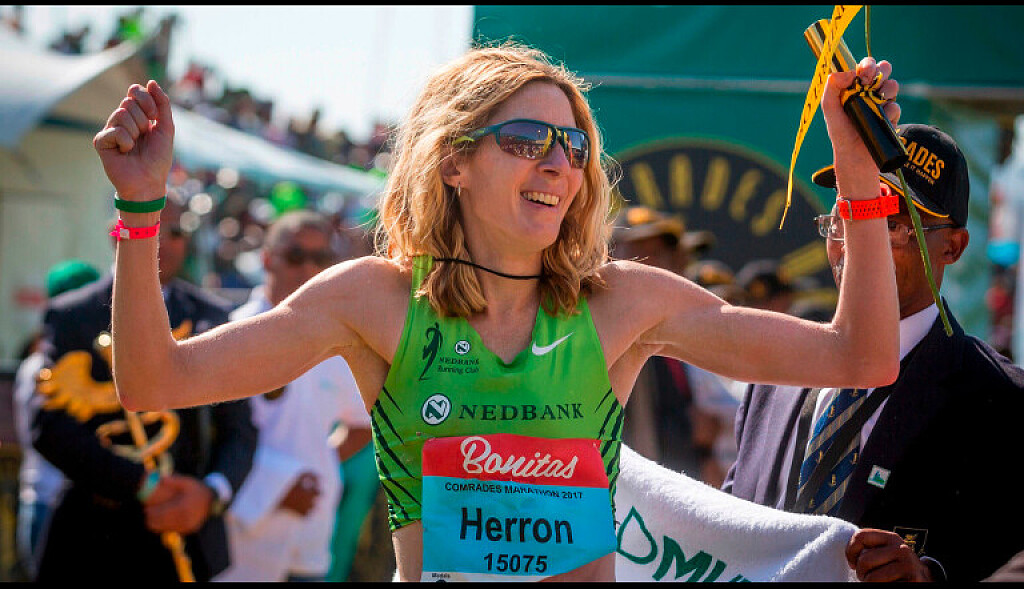
Camille Herron’s Advice: Skip the Long Run
Bones are made of dynamic tissues that need stress, just not too much, says one of the world's best ultrarunners
In January, my social media feeds were filled with the typical new year posts—year-end recaps, reflections and resolutions, and hopes for the coming year. But one tweet caught my eye.
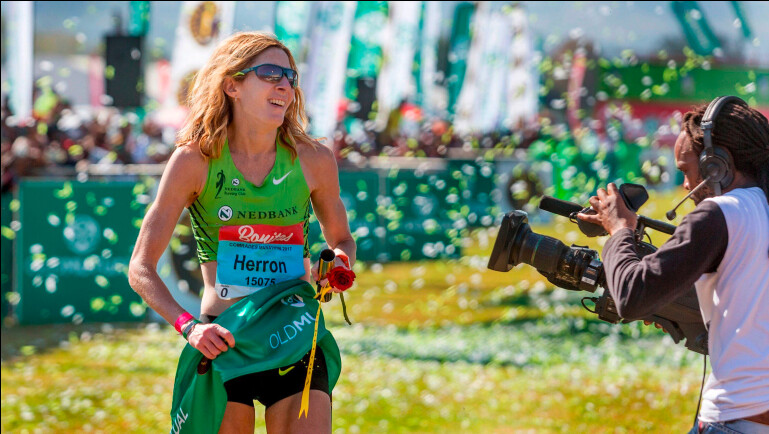
Ultrarunner Camille Herron shared one reason why she thought she was “crushing world records” in her forties: She only does one or two long runs a month (nothing over 22 miles) and she never does back-to-back long runs. Case in point: she ran one easy 20-miler in the lead-up to the Jackpot Ultra Running Festival’s 100-mile race last year, which she won outright. Instead, she focuses on cumulative volume and running frequency.
In her words, “Long runs are overrated.”
In the world of ultrarunning, where there’s a bravado around epic big-mileage days, Herron seems like an anomaly. Among the replies to her tweet, there was curiosity tinged with a side of skepticism. How could an ultra-distance athlete—one who holds world records for 100 miles and for the longest distance covered in 24 hours—run no longer than what you’d typically do in a marathon build-up? Shouldn’t her training mirror what she’d need to do in an ultra?
Karen Troy saw Herron’s tweet too. But her first thought was, “Wow. Someone’s actually trying to do it.” To Troy, who’s a professor of biomedical engineering and the director of the musculoskeletal mechanics lab at Worcester Polytechnic Institute, Herron’s training philosophy reflected what she’d read in scientific journals and seen in the lab related to mechanical stress and bone adaptation. “To me, it really aligned well with a lot of the theory,” she says.
Bone is a dynamic tissue. It changes, adapts, and gets stronger in the same way that muscles do. And in order for them to get stronger, you have to load them.
Bones have a “set point”—akin to the thermostat in your house—for the optimal amount of mechanical stress it wants to experience. Depending on the amount and rate of force transmitted through the bone, bone cells respond by either adding or removing bone. Too much force and the cells build bone to temper the load. Too little force and the cells get rid of bone so that it can sense more load.
Scientists have long been interested in finding the sweet spot between the amount of physical activity that induces adaptation and strengthens bone and the amount that can lead to injury—a fine line that many runners are intimately familiar with. What they’ve found in studies with animals like mice and rats is that, after back-to-back loading cycles, bone cells start to ignore the mechanical stress and stop adapting. Troy says it’s like when you walk into a smelly room. “It smells pretty bad for 10 to 15 minutes, and then you adapt. If you stay in the room, it stops smelling,” she says.
However, just like your nose can become re-sensitized if you leave the smelly room, bone cells do too. Studies have found that bone cells start to pay attention to mechanical stress again after a four-to-eight-hour rest period. When you spread the load over multiple sessions rather than one sustained bout, you gain more bone. (Tendons and ligaments respond similarly.)
The evidence suggests that distance running has diminishing returns when it comes to bone health. Troy hypothesizes that bone may respond to the stress of running over the first half mile or so but then become desensitized to the monotonous, repetitive loading. “You’ll get muscle and cardiovascular adaptations, but your bones aren’t paying attention anymore,” Troy says. “You’re just adding miles and potentially accumulating damage, but you’re not going to add adaptive stimulus that will help the bone become stronger.”
There isn’t a lot of data in people, making Herron an interesting case study. “Humans are made to move frequently,” Herron says. “The body responds to change and dynamic stimuli, so you need to stress the body in different ways.” It’s an approach she believes can work for runners at all levels and distances.
Her training is peppered with frequent, shorter bouts of running. Most days, Herron will run 10 to 15 miles and then doubles back for six or seven miles after a four-to-eight-hour rest period. Over a two-week period, she completes four main workouts—short intervals like 400-meter repeats; long intervals like one-to-three-mile repeats; a progression run, usually incorporated into a long run; and a hill session where she stresses both the uphill and downhill components to load her body eccentrically.
In between workouts, she runs easy and incorporates strides and drills twice a week. She likes to race a marathon or 50K a couple of weeks before a big race as a way to practice her nutrition and stress her body “just enough.”
“You can’t just look at a singular long run or back-to-back long runs. You have to look at the whole picture. Every run is like bricks that add up over time,” she says. Over the years, Herron has played around with her training formula and has cut back on her long runs, emphasizing quality over quantity and running for time rather than just distance. “I’m totally fine doing two hours as my long run,” she says.
It makes sense that Herron’s training is steeped in science. She was pre-med at the University of Tulsa before turning her focus to scientific research, studying the impact of strength training on bone and muscle. In graduate school at Oregon State, she investigated the relationship between mechanical stress and bone recovery for her master’s thesis. By studying bones, maybe she hoped to understand why she experienced multiple stress fractures in high school and college. What she learned shaped how she trains.
But she didn’t put the theory into practice right away. Early in her marathon career, she was still doing long runs up to 26 miles. It wasn’t until she started training at altitude that she began to split up her runs. Her coach (and husband) Conor Holt thought it would help her acclimate to the altitude, but she says, “It was like a rocket to the moon.” She recovered better and felt more spark in her legs.
Sabrina Little, ultrarunner and five-time U.S. National Champion, has also seen the benefits of this style of training. In college, she used to log big miles, a 30-mile run before doubling back for another 20 miles the next day. But once she graduated, she no longer had the luxury of dedicating endless hours to training. She expected to be less prepared for races but a funny thing happened—she performed better. It turns out that running multiple times a day may have other performance-boosting effects too.
“When I set the American record in the 24-hour run, my longest run was maybe 16 or 17 miles,” Little says. She would train in the morning and then come back for a faster session in the afternoon. “Breaking things into shorter blocks was beneficial. I was able to do higher integrity work instead of just long, slow distance,” she says. She thinks it helped her body absorb her training.
Now, as a parent to two young kids, Little definitely doesn’t have long blocks of time, so she practices what she calls “prepositional running”—before things, between things, and after things.
However, both Herron and Little logged many miles before happening upon their current training strategy. “I don’t want to say big days aren’t needed, but it’s hard to say what role they play,” Little says. “There’s a way in which the big races are kind of grandfathered into your legs, like you’re never too far away from your last 50-miler.”
While Herron and Little’s training mirrors research findings, it can’t be considered in isolation.
There are other factors that influence bone health and adaptation aside from mechanical loading—genetics, nutrition, running gait, and how much bone you laid down during your peak bone-building years. Hormonal health matters, too, because bone cells have sex hormone receptors. If your hormone levels are low, Troy says it tips the balance toward bone removal, leaving the tissue more vulnerable to injury.
Whether or not eschewing long, sustained bouts of running is the key to success and injury prevention, there are benefits to fostering the idea that not everyone needs big days on the road or trails.
“Most people have responsibilities and can’t spend all that time outside,” says Little. “People should know there are other possibilities. It could get a broader scope of people participating.”
Login to leave a comment

Here's Why It Feels Like Every Elite Runner Is Changing Sponsors Right Now
Tim Tollefson celebrated the new year shoveling a lot of snow, dreaming about a summer of possibility, and changing his shoes.
After six years with Hoka, Tollefson, 37, the well-known elite American ultrarunner from Mammoth Lakes, California, signed a new multi-year sponsorship deal with Craft. It might seem like a curious move this time of the year, but, in reality, most athlete sponsorship contracts in running are one-year partnerships that end on December 31. That typically gives brands the upper hand in these situations because they can have an easy out whenever an athlete doesn't have a great year of results, or they no longer fit with their marketing goals. It always comes down to the money, though sometimes it's in the athlete's best interests to start fresh, to leverage their recent results and social media platform to find a better deal with a brand that better fits their racing goals.
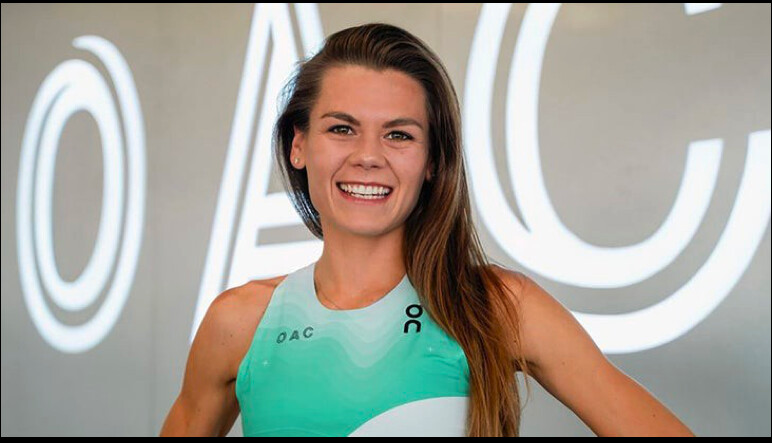

Because there are more brands partnering runners than ever before, and presumably more sponsorship money available, top-tier distance runners who are still at the top of their game-like Tim Tollefson, Allie McLaughlin, Josette Norris, Paige Stoner, David Ribich, Dani Moreno, Erin Clark, Natosha Rogers, Colin Bennie, Dillon Maggard, Camille Herron, and others-have been able to seek out new opportunities to continue their careers with the necessary support.
The terms of the newly signed deals haven't been disclosed, but there is a huge range in pay for professional distance runners-roughly $15,000 on the low end for a partially sponsored trail runner without significant international results, to $300,000 at the high end for a top-tier marathoner with Marathon Majors podium results. Certainly that means some live a life of luxury, while others are forced to work part-time jobs and pinch pennies to get by.
But there are also often signing bonuses, as well as premiums paid for earning appearance fees, major victories, global medals, podium finishes, breaking records, and other incentives, so running faster can be a fast track to a boost in income. However, most athletes are considered independent contractors, and many have to pay for their own healthcare, body work, and travel, depending on the details of their brand partnership.
"You start getting an idea of who's going to be available, for one reason or other, in the last few months of the year, and that's when brands and athletes start talking," said Mike McManus, Hoka's global sports marketing director. "As an athlete, you're as valuable as whatever money anyone wants to give you, but it's a process and all about negotiating. Sometimes you can match the money being offered; sometimes it just doesn't make sense for the partnership."
What Tollefson liked about Craft was similar to what he liked about Hoka six years ago-an upstart brand ready to make an impact in trail racing, its new line of trail shoes, and the trail community overall. Craft sees Tollefson as a runner with name recognition and several significant race wins in the past three years, not to mention a leader in the sport who started the Mammoth Trail Fest last year.
"This [new partnership with Craft] has reignited my deep passion for the sport and has reminded me of the things I want to accomplish," he said. "It's almost like a start-up situation led by passionate people who are excited to make an impact and want to support the people who are along for the journey. Curiosity drives me and I like a challenge. I know I am going to have some lifetime achievements ahead."
More Big Moves in Trail and Ultra
After an extraordinary year of racing on the trails, Allie McLaughlin changed from On to Hoka as her primary sponsor. The charismatic 32-year-old from Colorado Springs won the daunting Mount Marathon race in Alaska, placed among the top five in several Golden Trail Series races, and won both gold and bronze medals in the inaugural World Mountain and Trail Running World Championships in Thailand. She'll be representing the U.S. in this year's World Championships in Austria, in June, while also returning to the OCC 54K race, as part of the Ultra-Trail du Mont-Blanc (UTMB) festival in Chamonix, in August.
"It was really interesting to see how much trail means to them [Hoka], not only with their sponsorship of UTMB, but in general how they're helping push the sport forward," said McLaughlin, who had been with On since 2021. "There are a lot of reasons I like what Hoka is doing, but ultimately, the emphasis they're putting on the team and their athletes is really exciting."
Other trail and ultrarunners who have switched brands include Erin Clark, who finished 7th at last year's CCC, who left Hoka to sign with Nike, even though her partner, Adam Peterman, the 2022 Western States 100 champion and ultrarunning world champion, re-signed with Hoka.
Spanish trail runner Sara Alonso has changed from Salomon to ASICS, while Craft also signed Arlen Glick, a prolific 100-mile specialist from Ohio, and Mimmi Kotka, a Swedish runner with numerous podium finishes in Europe, to its team. Meanwhile, previously unsponsored American trail runners Tabor Hemming (Salomon) and Dan Curts (Brooks) are among those who have signed new deals.
Meanwhile, Dani Moreno, a world-class mountain runner from Mammoth Lakes, California, and Camille Herron, a record-setting ultrarunner from Warr Acres, Oklahoma, are both also leaving Hoka for yet-to-be-announced brands that offered better deals.
Bigger Transitions for Road and Track Runners
For track athletes and marathon runners, a change of shoe brands is often a more involved change, mostly because it often means changing training groups and coaches, too.
For example, Josette Norris, the fifth-place finisher in the 1,500m at the 2022 World Athletics Indoor Championships, not only switched from Reebok to On, but she left Reebok's Virginia-based Boston Track Club, and coach Chris Fox, and moved west to Boulder, Colorado, to join the On Athletics Club under Dathan Ritzenhein.
Similarly, David Ribich, one of the best American mile runners on the track last year, switched from the Seattle-based Brooks Beasts track club to the Nike-backed Union Athletics Club under Pete Julian.
Colin Bennie, the top American finisher in the Boston Marathon in 2021-previously with Reebok but unsponsored last year-signed with the Brooks Beasts but will be training on his own in San Francisco. Dillon Maggard, who was second at the U.S. cross country championships and ninth in 3,000m at the indoor world championships in 2022, is returning to Seattle to train with the Brooks Beasts, after being unsponsored last year. Natosha Rogers, who was a finalist in the 10,000m at last summer's World Athletics Championships in Eugene, Oregon, has changed from Brooks to Puma, but will continue to train on her own in Colorado. Middle-distance runner Cruz Culpepper, after short stints at the University of Washington and the University of Mississippi, gave up his remaining college eligibility to sign with Hoka and its NAZ Elite (NAZ) team.
Last summer, Paige Stoner left the Virginia-based Reebok group and Fox, her longtime coach, to train in Flagstaff, Arizona, partially because she didn't have other marathoners to train with on a regular basis in Charlottesville. She increased her volume last fall training with Sarah Pagano and Emily Durgin and won the U.S. championship at the California International Marathon in December with a course record of 2:26:02, her debut at the distance.
In January, Stoner parlayed that into a new deal with Hoka, as she also joined the Flagstaff-based Northern Arizona Elite and will be training with a group of strong marathoners-including Aliphine Tuliamuk, Alice Wright, Kellyn Taylor, and the recently unretired Stephanie Bruce-under the guidance of coaches Alan Culpepper, Ben Rosario, and Jenna Wreiden.
"I was especially drawn to NAZ because they have proven to be a powerhouse in the marathon, which will likely be my primary focus in the years to come," Stoner said. "I believe the team has all of the tools it takes to compete at the highest level in the sport, and I am eager to begin this new chapter."
Learning the Ropes
For track and road running, the path to success for elite-level, post-collegiate athletes typically includes earning a sponsorship right after the track season in June and joining a sponsored training group and coach. From there, it's all about improving times and placing high in U.S. championship races, with hopes of becoming fast enough to earn a spot in elite track meets in Europe or one of the World Marathon Majors.
But most road and track runners have agents to help smooth out those transitions, whereas most trail runners do not. Plus, trail running is considerably more unstructured, with a greater range of race distances and a lot more unknown variables. That means the challenge of figuring out what opportunities exist on the trails-what races to run, how to train on trails, what gear is needed, how to race considerably longer distances, and how to attract sponsors-often requires them to learn on the fly.
Those are all reasons professional trail runner Andy Wacker recently formed The Trail Team, a non-profit organization that will help guide young runners along the path becoming successful, potentially sponsored trail runners, while also playing a role in boosting the level of competitive trail running in the U.S.
The Trail Team put out a call for candidates to become one of six inaugural team members in 2023. Once selected this spring, those athletes will go through a training camp, receive a stipend, get continued mentorship from Wacker, McLaughlin, Adam Peterman, and Grayson Murphy, and prepare for a variety of U.S. races.
"I've reached out to a lot of young athletes and the main thing I found is they need a mentor," said Wacker, a Salomon-sponsored athlete. "They don't necessarily need a coach-a lot of them have a college coach that they might continue working with-but they need someone who is going to help them with all of their questions and translate everything to trail running.
"It's still really hard to be an individually sponsored athlete, and I think it's hard for a young athlete to get recognition and build their brand, so we're hoping to help with that," he added. "There are more participants and more excitement than ever in trail running, but there are also growing pains. So there are a lot of ways we think we can help so they don't have to figure it out on their own."
Like Wacker, Tollefson is one of those athletes who did have to figure it out on his own. He was a good runner in high school and college, but he never qualified for the state meet and never earned All-American honors. But, with a relentless work ethic, he's become one of the most successful American trail runners of the past decade, having placed second at the CCC 100K in Chamonix, in 2015, and twice placed third in the Ultra-Trail du Mont-Blanc 171K in 2016 and 2017.
Although his personal race plans aren't finalized yet, those deals are allowing him to step away from his career as a physical therapist and become fully immersed in running for the first time in his career.
"All of us athletes are multidimensional; we're more than just a pretty face rocking a bib," Tollefson said. "Everyone has a unique story. I think there are more brands interested in telling those stories, and Craft is definitely one of them. Some people have written me off, but I'm confident my best races are ahead of me. Craft believes in me, and I feel like I need that belief to get the best out of myself."
by Trail Runner Magazine
Login to leave a comment
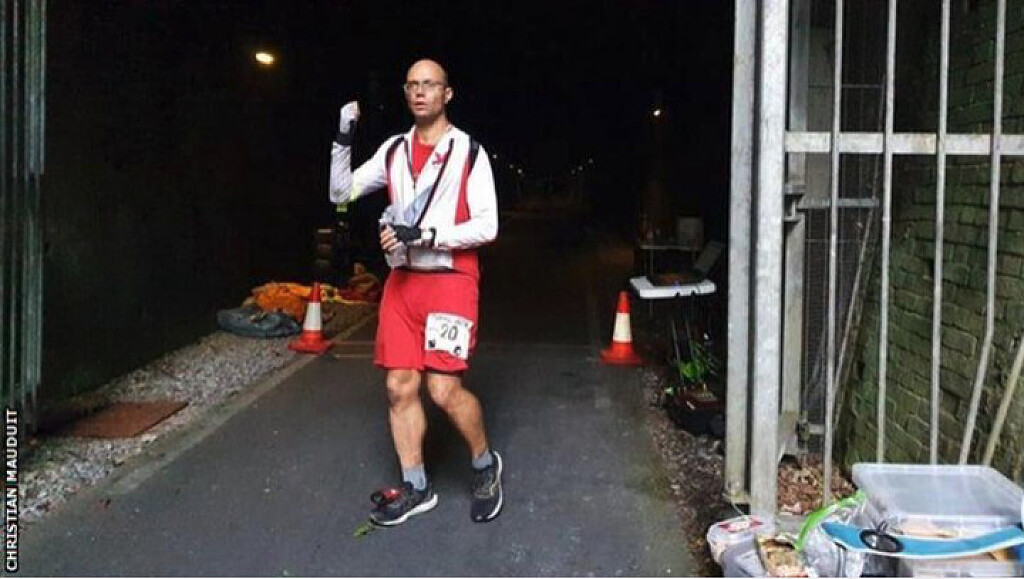
Tunnel Ultra: The mind-bending 200-mile ultra-marathon in the dark
How do you like to spend your weekend off?
Do you put your feet up in front of the TV? Maybe shopping is your way to unwind? Perhaps you're a bit more adventurous and enjoy a stroll in the countryside?
That doesn't quite cut it for some people, who choose to run a 200-mile ultra-marathon in a disused railway tunnel instead.
The Tunnel Ultra is a race like no other. It's easy to find longer events. Some even involve repeating the same loop for days on end. But nowhere else can you take part in a race so twisted that you spend more than two days in darkness doing a one-mile shuttle run 200 times, or so punishing that one runner went temporarily blind - then thanked the race organiser for the privilege.
No outside support is permitted, headphones are banned and runners are not allowed to run side by side. Oh, and there is a strict time limit of 55 hours.
The Tunnel website describes it as "a mind-bending test of extreme endurance and sensory deprivation". It is more health warning than marketing slogan.
"I could be sat on the sofa watching Strictly with the wife and kids. Or do I want to be in a dripping tunnel, tired and miserable, knowing I've got work on Monday?" Guy Bettinson, a 45-year-old programme manager from Cumbria who won the Tunnel in 2020, wonders out loud. "I'd rather waste my weekend putting myself through misery."
"It's so pointless. You're not getting from A to B, which makes it such a massive mental challenge," says Andy Persson, another finisher that year. "If you can push your mind further than you think is possible, it's quite empowering."
Christian Mauduit, a French software engineer who won the 2021 edition, says: "I'm chasing that internal adventure - that meeting with myself. It's like a little kid - they want to see how close they can come to the fire. I'm still that little kid."
Bettinson describes every ultra-marathon start line as a "mid-life crisis anonymous meeting". "We've all got issues," he says. "It's clearly some kind of therapy."
The race takes place in Combe Down Tunnel, a mile south of Bath city centre, and starts at 4pm on a Friday in March. No more than 40 runners make it that far, partly because of a strict - and deliberately opaque - qualification process and largely because the tunnel is not big enough to accommodate many more. "Even the start line is weird," says Mauduit. "You have to stand one behind another in a queue."
Combe Down was restored as a cycle path in 2013 after 47 years under weeds. It is the UK's longest foot tunnel - and the obvious setting for an ultra-marathon if your name is Mark Cockbain.
"I like things that have got an X-factor," says Cockbain, a prolific former ultra-runner who set up the Tunnel in 2019 to add to his brilliant yet brutal portfolio of events as a race organiser. "As soon as I got permission to use the tunnel, it was a no-brainer."
The race is low key in the extreme. A fold-up table outside one end of the tunnel serves as race HQ. There is no shelter or rest area to speak of unless runners have the foresight to bring a camping chair. They must all share a portable toilet which, by the end of the weekend, would not look out of place at a music festival. Refreshments are limited to water and tea, while the most luxurious snacks are Pot Noodles. If you're lucky, they might not be out of date.
"I cut back on delicacies," says Cockbain in the matter-of-fact style for which he has become famous in the ultra-running community. "You can get through any of these races with a bit of water and food. I wanted to make it all about the running."
For Mike Raffan, a 43-year-old IT manager from Aberdeen who finished second in 2021, that's part of the appeal. "It's nice that there isn't any nonsense," he says. "The Tunnel is pure, unadulterated running. You run from one end to the other in a straight line, turn around a traffic cone, come back again, and just keep going. That's it." Persson agrees. "There's no fanfare. If you're looking to be pampered, you've come to the wrong place."
All of which adds up to a notoriously low finish rate. Of the 31 runners who started the inaugural Tunnel, only two completed it, and 13 in total in the three years it has been in existence.
"I don't want there to be no finishers," says Cockbain. "But I do want them to go through hell to get there."
So how exactly do you survive a race that is deliberately designed to break you physically, mentally and emotionally?
In one sense, it is simple. "The only things you have to think about are moving, eating, drinking, sleeping and going to the toilet. That's the limit of your universe," says Max Newton, a fundraising manager from Sheffield who was among the seven finishers in 2020. "All that jazz in real life is nonsense."
"One tactic for me is 100% commitment," says Raffan. Those words carry added weight from someone who ran 182 miles in 42 hours around his back garden three months after open-heart surgery in 2020. During another Cockbain race he continued running in conditions so bleak that his eyeball froze. "I never thought about not finishing the Tunnel. Before the race I told them, 'Do not let me stop unless there's a medical reason for it'."
Mauduit's approach is similar. "I'm asking myself all the complex questions - 'Why am I doing this? Should I go there?' - before the race, in training. During the race I just finish the lap - there's no question."
"You have to be all in. If doubt creeps in, you're gone," says Cockbain. A 50-year-old electronics engineer by trade, he completed 199 marathons and 106 ultras - including some of the toughest in the world, notably five Spartathlons, three Badwaters, a double Badwater and a 300-mile race in the Arctic - before knee problems forced him to stop running in 2011. "I could sit in a corner and hit my head with a spoon for three days if that's what I decided to do."
Bettinson admits the "possibility of failure was a big thing" when he stood on the start line, yet he went on to finish in a scarcely believable 43 hours nine minutes. It remains a Tunnel record by more than six hours and is "up there with some of the all-time greatest ultra achievements", according to Cockbain, not a man given to hyperbole.
Repeatedly running along the same stretch of tarmac throws up a mental challenge rarely found in races of any distance, let alone 200 miles (the total distance is actually 208 because the tunnel is slightly longer than a mile).
"The difficult thing with doing 100 laps is there are 100 chances to stop," says 49-year-old Newton, who also ran a 300-mile lapped ultra last summer. Even if runners quit mid-lap, they must make their way back to the start line. Mauduit agrees that the turnaround point at race HQ is often the most difficult. "Once you're on the course it's easy - everyone can do two miles," he says.
"When you reach the start line again you're facing two choices. One is calling it a day. You will still suffer, your legs will hurt, the pain will follow you for hours, and you have to deal with the fact you gave up. Or you can beat your own personal record in the tunnel and write history. You only have to be motivated for five seconds - just enough time to pick your butt up and get into the tunnel. During the Tunnel I don't do 200 miles; I do two miles 100 times."
A positive mindset is universal - some would argue essential - among those who have completed the race.
"When it's really hurting and I'd rather be in bed, I say to myself, 'I love this tunnel and I can't believe I've got this opportunity'," says Persson, a 57-year-old counsellor from Bristol who once ran 900 miles from Land's End to John O'Groats in 17 days.
"You've got to embrace it - there's no point fighting it or being grumpy. You have to find the bits that make it good," says Newton. Alan Cormack, who finished second in the inaugural Tunnel, adds: "You don't have to worry about weather, mud, navigation. And you don't have to carry a pack."
With no scenery, music or conversation, surely it must be boring? "On these runs you're often very busy," says Mandy Foyster, who staggered over the finish line five minutes inside the time limit in 2021 to become the only female runner to have completed the race. "You don't have time to get bored - you're doing maths in your head and you're so focused on keeping going."
Persson says "my personality likes routine", while Mauduit positively loves it. He once ran 238 miles in 48 hours on a treadmill, but says his favourite events are six-day races. His record is 541 miles.
For Raffan, ultras are his meditation. "People ask what I think about when I'm running. Absolutely nothing. At the best points your mind is empty. When you're in that proper trance state you're not thinking about anything."
Running 200 lengths of the tunnel means running 200 times past a speaker built into the wall at the midway point that resembles a giant eyeball and pumps out classical music on loop all day and night. "There are these little submarine-style windows which glow different colours," says Newton. "It's like super stereo."
Cormack describes it as a screeching violin, which Bettinson claims "adds to the weirdness and psychological torture". Mauduit is more direct: "It drives you nuts."
More psychological torture comes in the form of darkness. There is only dim lighting in the tunnel - which is shared with cyclists and walkers during the day - and even these are switched off between 11pm and 5am.
"Not only are you in the darkness, but you are alone and you have no headphones. It's like a giant meeting with you and your feet," says 47-year-old Mauduit. "All human bodies are conditioned by daylight. In a standard race, when the sun rises you feel great. In the tunnel you have no reference - it's always night."
"It became a very big battle to stay awake," says Foyster, a seasoned ultra-distance athlete whose idea of celebrating her 50th birthday was to cycle between Ben Nevis, Scafell Pike and Snowdon and sleep on the summits of each. "When I got to the end of the tunnel I'd step out in the daylight and just stand there for 10-15 seconds."
Foyster put more thought than most into keeping the so-called sleep monsters at bay - "I had perfume to spray and a Vicks to stick up my nose - anything to stimulate your senses" - but her most valuable tool was a small spray bottle. "When I felt myself falling asleep I sprayed myself in the face with water. That was absolutely fantastic."
Some runners might grab a power nap outside the tunnel - and pray it doesn't rain. Others treat sleep as an inconvenience in a race with an already demanding time limit. A rare few don't even afford themselves the luxury of sitting down.
"If you stop you've got to start again. If you don't stop you don't have to start again. I just kept going," says Bettinson, whose 17 years in the Army have proven an excellent grounding for ultra-running. "I did end up lying down a couple of times, but you're in so much pain by the second night that you can't sleep anyway. And you're just wasting time by not moving."
Raffan pulled out of the 2019 Tunnel after 100 miles to join his wife and daughter at the zoo. It remains his only DNF from more than 50 ultras. When he returned in 2021 he deliberately did not bring a chair. "I ended up sitting on somebody else's, but that was good because whenever they needed it, it forced me to get out."
"I don't trust myself to set an alarm and wake up, so I didn't take the risk," says Mauduit. "The only time I stopped was at the refreshment table or to go to the bathroom."
If sleeping is optional in the Tunnel, hallucinations are all but guaranteed.
"I saw a family of abominable snowmen, a massive slug and I thought I was on the edge of a cliff," says Karl Baxter, who failed to finish the race in 2020 but conquered it with less than an hour to spare the following year.
"Orange blobby monsters kept floating at me out of the darkness," says Foyster, who blames her good friend Baxter for convincing her to sign up for the race. "I wasn't in a tunnel a lot of the time - I was running through Egyptian tombs or over a suspension bridge with deep ravines."
Mauduit recalls: "On the last day it got insanely bad. I was seeing stairs; I was walking on a glass floor. I couldn't escape from it. The hallucinations were an order of magnitude stronger than anything I've ever had before. It was mind-blowing."
Cockbain has seen it countless times. "It's just total carnage," he says. "People are losing their marbles. If they stop for a rest, they can't remember which way they're going."
The effects lasted beyond the race for Persson. "I saw ticker tape, carvings in the wall, and I was convinced there was a glass conservatory with flowers. My wife and daughter picked me up and I was still hallucinating by the time I got home. I've never had that level of it before - it was so extreme."
Training for the race varies wildly between competitors. Bettinson's longest run in the build-up to his victory was a mere 12 miles; Foyster "did a lot of fast walking"; Cormack, who was scared of the dark as a child, favoured night-time runs; and Baxter attempted to simulate the boredom with lengthy treadmill sessions or by running up and down a one-mile stretch of road. He managed 48 of them one day.
Eating and drinking strategies are equally individual, but, given that runners burn about 20,000 calories during the course of the race, hunger triumphs over health. Dentists and doctors, look away now.
Pizzas, chocolate, cake and flat cola fuelled Foyster for nigh on 55 hours. Baxter polished off tube after tube of salt and vinegar crisps, all eaten on the move to save time. Jam sandwiches, flapjacks and Pot Noodles - "they really hit the spot" - kept Newton going. Raffan tucked into supermarket meal deals and butteries - a "really dense, stodgy" Scottish pastry - but describes cold custard as his "secret weapon". Persson's menu of quiche, sausage rolls and overnight oats seems positively gourmet by comparison.
Bettinson is powered by a concoction of Lucozade, pineapple juice and beetroot juice. He also liquifies food and puts it in baby pouches "so it's easy to get down". Because it is impossible to replace the energy you are burning, his plan is "fuel early and then cling on".
As the saying goes, what goes in must come out, although most runners visibly wince when they remember a toilet situation that Newton laughingly describes as "a disgrace".
Bettinson says: "The first time I did the Tunnel it was a little chemical kiddy loo that you'd take camping. It was in a half-collapsed tent with a broken zip. Mark deliberately put it in a puddle, so you had to get your feet wet just to get inside it, and after the first 50 miles it was like a festival loo - you had to hover over the top."
Even if runners can cope with the boredom, darkness and sleep deprivation, pounding tarmac for longer than some weekend breaks last takes an immense physical toll.
"Of course your legs will hurt - you're running 200 miles. What did you think was going to happen?" says Mauduit, a man whose CV also features winning a Deca Ironman - a triathlon consisting of a 23-mile swim, 1,118-mile bike ride and a 262-mile run.
"Everything after 20 miles involves pain," says Bettinson, who admits that theory was tested when his hips were in "absolute agony" 100 miles in. "Anyone can get round it - you just have to want to."
Newton's approach veers towards the spiritual. "In a weird way, if you run through excruciating pain it doesn't hurt any more," he says, with the caveat that this approach doesn't always translate to his partner Anna. "She's worried I'm going to die. She has seen me in a bad state - sometimes it has been a bit messy."
Cockbain has this advice: "The feeling of wanting to give up doesn't last - if you put something in its place."
Runners know better than to expect sympathy from Cockbain, whose stable of events also includes an unsupported 300-mile run from Hull to the south coast as well as a race where pairs of runners in boiler suits are chained together and have 24 hours to cover as much ground as possible. You can sense the disappointment in his voice when he recalls how The Hill, which involved climbing up and down a hill in the Peak District 55 times - equating to 160 miles - in 48 hours had to be scrapped after the pub which doubled as the checkpoint closed down.
Perhaps Bettinson sums up Cockbain best: "Mark has a motivational speech at the start of his races: 'If you're going too slow, speed up.'"
Baxter, a 51-year-old from Norfolk who spent 12 years in the Army and now drives lorries for a living, turned an ankle during his second attempt at the Tunnel. "It came up like an egg. I sat down for 20 minutes and I was going to quit. Mark said, 'A twisted ankle never killed anyone' and told me to carry on. It taught me a lot. Once I got to 150 miles I knew I was going to finish."
Individual motivation comes in different forms, but a common thread among finishers is the time, energy and money they have invested in a race that often few people outside their close circle of family and friends know about. Nobody gets into ultra-running for the glory, least of all those taking part in Cockbain's events.
"My wife is handling all the family by herself, working and having no fun," says Mauduit, who rode his motorbike from Paris to take part in the Tunnel. "I'm having this five-day vacation so I should do something good with that."
Bettinson flips the question on its head. "My why for being there is I chose to be there. I've paid the money, I've done the training, I've turned up. Why on earth wouldn't I finish?"
Foyster, meanwhile, does it for the sheep. Having grown particularly fond of the animals during endurance adventures such as running the width of the UK or cycling the length of it, she now uses ultra-marathons to help raise funds for a sheep sanctuary in Lincolnshire.
"When I was struggling in the Tunnel, my friend sent me videos of the sheep. I'm thinking of them at the tough times," she says. "Some people ask me if I have a coach. I say my coach is a sheep called Bella."
Foyster, who works at an animal sanctuary near Norwich, has run the London Marathon dressed as a sheep and even had a fancy dress costume lined up for the Tunnel, but never got chance to wear it because she was in such bad shape later in the race. What was the outfit? "A sheep dressed up as Darth Vader."
The gruelling nature of Cockbain's races and the derisory finish rate creates a special sort of camaraderie among runners, evident from the dark humour on the start line to the support they offer each other as they push beyond their limits.
"Everyone feels like they're in it together. It doesn't feel competitive," says Newton. Cormack, who runs a cleaning company in Aberdeen, adds: "Nobody cares if you're first or you're 20th." Bettinson says: "Mark's events feel less like a race and more about the entrants against the event as a collective. You're only ever racing against yourself."
Foyster, 56, says she goes into any event with a "1,000% determination to finish it", but her unwavering drive in the Tunnel took her to a place she had never been before.
"After 100 miles my body started to break down," she recalls. "By 150 miles I had adopted my walk-shuffle approach, and in the last 10 miles I completely lost my mind. I kind of went over to the other side.
"At mile 192 I became completely disorientated and started going the wrong way. I thought I was wandering along a quiet country lane. I didn't know who I was or what I was or what I was doing."
In a rare moment of weakness/graciousness (delete depending on the coldness of your heart), Cockbain allowed Foyster's friend to accompany her as she staggered to beat the time limit. He even turned cheerleader on Foyster's final lap.
"At mile 198 my vision went," says Foyster. "I couldn't see anything. I crashed into the wall a few times. I had a broken tooth. I felt like I just needed to collapse on the floor. It was the first time that I'd felt worried about myself physically.
"Mark appeared behind us on a bicycle shouting 'you've got to go faster'. I was running blind - I was running into a white mist. I felt like I was sprinting flat out. I kept running until Karen the timing lady caught me in her arms." Foyster had finished in 54:55, not even time for another lap.
Because she was "in a complete and utter state", Foyster says she did not get to savour the finish line moment. "That's the only bit I regret."
She didn't miss much. "There are only a handful of people there. You get a bit of a clap, Mark shakes your hand and gives you your medal," says Persson. "It's not like you've got people patting you on the head," says 55-year-old Cormack, who then slept on the back seat of his car because he was too tired to put his tent up.
"Mark said a few words - I was so knackered I can't remember what - and I just picked my box up and went to the train station," says Bettinson. "It was a busy weekend and there were a lot of people ready for a day out. There was me, absolutely stinking, wheeling this box and eating bits of scabby old sandwich."
Foyster was so spent that she had to be carried to her hotel room. Baxter, who did some of the carrying, says: "That was just as hard as the last few miles."
"If you finish one of Mark's races you get respect from him. That means a lot," says Newton. Bettinson agrees. "Most of my medals I chuck in the bin. If it's one I'm bothered about I keep it in a drawer. I've kept the Tunnel one."
Cockbain's goal is simple: "All I want is that someone walks away remembering it for the rest of their life. Ultimately we're going to live and die. How are you going to fill up the middle of that? Achievements last forever."
"Races aren't pretty - that is real life," says Foyster. "The Tunnel is the hardest I've pushed myself. I've never needed help like that, so my overwhelming feeling was I was so grateful."
Mauduit, who describes the Tunnel as an "awesome race", adds: "I thank Mark for putting it together. I discovered something new. It was a blast. It all makes sense because it doesn't make sense. It's worth every penny."
Baxter remembers clearly his feelings in the week after the Tunnel. "I was buzzing. I felt on top of the world. I felt invincible." Newton recalls: "When I was telling people about the Tunnel I was talking with a smile on my face."
But what on earth is next for those who have completed one of the most challenging ultra-marathons invented?
Baxter tells a story typical of a certain breed of ultra-runners. "My girlfriend said, 'Is that it?' I said, 'No way. I want to go further.' Plus, no-one has done it twice." He may have company. "I'll be back one day," says Mauduit. "I'm thinking about it."
Cockbain recognises the signs from his own running days. "It's a drug. It's an addiction. It's a never-ending 'what's next?' You never get satisfied."
Even Bettinson, the record holder, says: "My holy grail is I want to finish an event where I know I've given absolutely everything - even if I don't finish. It could be one mile or it could be a thousand miles.
"I'm still chasing that unicorn."
by BBC
Login to leave a comment
Kilian Jornet Won the Biggest Races and Launched His Own Apparel Brand
Heading into the 2022 ultramarathon season, Spanish runner Kilian Jornet hadn't contested a 100-mile race since 2018, when he dropped out of the Ultra-Trail du Mont Blanc (UTMB) following an allergic reaction from a bee sting. In the ensuing years, Jornet, now 35, had two children with his partner, Swedish ultrarunner Emelie Forsberg, and he launched his own trail-running footwear and apparel brand, NNormal. Fatherhood and entrepreneurship didn't slow him down, however; the running world's greatest of all time began the season with a win at Sweden's 100-mile Tjrnarparen Trail Ultra. He then pulled off an audacious double, winning Colorado's Hardrock 100 as well as the UTMB-and set course records in both events. Outside spoke with Jornet about his remarkable year.
OUTSIDE: You've done several 100-mile races in 2022 after a few years running shorter events. Was that a planned break? KILIAN JORNET: In 2019, I wanted to focus on shorter distances, with the Golden Trail Series and an Everest expedition. In 2020, I wanted to spend time with my family. To try something different, I trained mostly on roads. In 2021, the focus was on a trip to the Himalayas and getting fast in short distances, specifically the vertical kilometer.
Your long-term partnership with Salomon ended last year. What made you decide it was time to do your own thing? I've always been a geek when it comes to gear. I had the idea of developing something on my own, but it was more a dream than a project. Then last year, through a mutual friend, I met the Fluxa family, who own Camper shoes, and told them that I wanted to do something in the outdoor space. Since the first conversation, we saw that we shared the same values and vision around social and environmental responsibility. From there things went fast. I'm very grateful for all the years at Salomon, and for all their support and what we did together, but it was time to do something different.
How did the idea for NNormal come about? We thought that the best way to implement our ideas-in terms of products, marketing, and corporate responsibility-was to create our own company. The benefit of cofounding a company is that you don't need to answer to shareholders at the end of the year, so you can develop your mission without any pressure. Of course, you want it to be economically sustainable, but you can always put product and company values at the forefront.
With the exploding popularity of ultrarunning, do you believe there will be more professional athletes in the near future? In the past five years, I've seen many more athletes becoming professional-not just to survive, but earning a good salary. More brands are creating teams with great resources. I think that will continue, and I hope it increases equality and diversity in the sport. Many of the big competitions have fewer female participants than male, and many of the sponsorships are from brands in Western countries. In this regard, brands have a big role to play, not only in equal sponsorship opportunities, but also when it comes to marketing and communication.
Many outdoor apparel brands say that protecting the environment is an important part of their company philosophy. How does NNormal plan to tackle that challenge? At NNormal we want to focus on durability. That means making products that perform well for a long time and are easy to repair. They should also have emotional durability, which means that they look good today and in five years. We want to make collections that are timeless and not designed according to seasonal trends. It's important to have great standards when it comes to the environmental footprint of the materials as well as the production process. Most important, we want to base our business model not on overconsumption but on finding different ways to be economically sustainable.
The running-shoe market is notoriously competitive. What makes you optimistic that NNormal can succeed? The first thing is to define success. Is it to sell a lot, or to have a quality product? We have a great team of footwear developers-we have the experience of Camper for shoe development and comfort, and we have a very talented group for performance footwear. For our first shoe, the Kjerag, we wanted to make something that performs well on different terrain and over different distances. I think our approach of durability, comfort, and versatility will appeal to many athletes. But we'll see what our customers think.
by Trail Runner Magazine
Login to leave a comment
I Run With Nothing But Coffee In My Stomach. Is That Destroying My Insides?
Question: I run super early in the morning and only slug a cup of caffeinated coffee before my run. No food. Is that bad for my stomach?
Caffeine is a hot topic in the world of sports nutrition, and there has been so much research in the recent past about its benefits on exercise and performance. Caffeine is a natural stimulant and can be an effective performance enhancer when consumed by athletes in low to moderate dosages. For both strength and endurance athletes, it may increase muscular strength and power, increase aerobic endurance, increase jumping, sprinting and throwing performance, and enhance alertness. It can also spare glycogen sources, allowing your body to utilize fat as its main fuel source.

But, before we get into running with caffeine, what does drinking a cup of coffee on an empty stomach do? Let's talk about that.
If you're like me, that cup of coffee in the morning jumpstarts your day, in more ways than one. Research has shown that caffeine may stimulate your urge to poop by increasing contractions in your intestines and anal spinchter. These contractions make your digestive tract more active by pushing contents towards your rectum. Caffeine also raises the production of hormones cholecystokinin and gastrin, which have been linked to increased colon activity.
Okay, so we know that coffee may increase your likelihood to poop. Great. But does that mean it is harming your digestive tract at the same time?

The Bitter Truth
Research shows that the bitterness of coffee may be the thing that stimulates the production of stomach acid. Many people believe that this increase in stomach acid can irritate your stomach and cause heartburn, ulcers, nausea, acid reflux, and indigestion.
Some people believe that drinking coffee on an empty stomach can further exacerbate these problems since there is no food in the stomach to help prevent the acid from harming your stomach lining.
However, other research debunks these myths and has shown that the increase in stomach acid doesn't actually appear to cause digestive issues for most people, regardless of whether you drink it on an empty stomach.
So what to do?
First, it's important to pay extra attention to how your body responds to drinking coffee on an empty stomach. While there's no strong correlation between coffee and digestive issues, that doesn't mean that you may not experience these issues. Caffeine affects everyone differently. Some people may even benefit from adding milk to their coffee, as milk helps to increase the pH level, making it less acidic. If you experience stomach discomfort or digestion issues, try pairing your morning cup of joe with some food or a little milk, to see if that helps relieve some of your symptoms. Eating in the morning can be a challenge for some people, so I encourage you to find something that is simple and sounds good, like a piece of toast with nut butter or even last night's leftover pasta.
And this brings me to the most important part: drinking only coffee and not eating before your run.
Should You Run Fasted?
This can be considered fasted running, which involves running on an empty stomach in a depleted state. I am not a fan of fasted running, and I am not afraid to say that loud and clear for all the world to know. Because many people prefer to run in the morning, many runners might be running fasted, even if by accident. This can be dangerous, as energy deficits and low energy availability can cause major health issues.
Many studies have found that even moderate depletion can lower performance in training. Not only that, but food restriction can be a slippery slope for our mental health and may lead to the development of other physical health issues down the line, such as disordered eating, increased likelihood of injury, or hormone imbalance. Caffeine can also suppress appetite, too, which is something athletes need to be aware of. It may indirectly lead to energy deficits if athletes are strictly relying on their hunger cues to fuel.
Remember: Food is fuel. It gives us the energy we need to do the things we love. That's indisputable. Drinking coffee on an empty stomach and then going for a run may not be destroying your insides, but it may destroy your health and performance in the long term, from an energy availability standpoint.
Drinking coffee on an empty stomach and then going for a run may not be destroying your insides, but it may destroy your health and performance in the long term, from an energy availability standpoint.
Here's what I recommend: If going on a morning run, pair your coffee with something for breakfast, even if that something is basic - a piece of toast, a small granola bar, a piece of fruit. If you enjoy drinking coffee with milk, you can add some of that, too, to reduce the acidity.
Pairing a cup of coffee with a carbohydrate-rich breakfast can be a great way to provide a person with all of the energy they need for a run.
As with all things in life, if you enjoy coffee and it doesn't produce any unwanted gastrointestinal distress, then it can be a great part of your morning routine. It may even increase your performance during your morning run.
by Trail Runner Magazine
Login to leave a comment

The Marathon Course For Paris 2024 Is Announced And It’s A Beauty
ThParis, France, is getting ready to welcome the 2024 Olympic Games from July 9 through August 11. Given the late edition of Tokyo 2022 (in 2023), this is a short cycle for both athletes and fans alike.
In the last week, the marathon route for Paris 2024 has been revealed, and it’s going to be a beauty. The route has been described by the organizers as “spectaculaire, exigeant, inspirant” – breathtaking, demanding, inspiring. The marathon course is all of these things, and more. It’s a 26.2 mile (42km) tour around one of the most iconic cities in the world, with a side-serving view of the history and forests lying just outside of its boundaries.

One of the key goals of the Paris 2024 committee is opening up the Olympic and Paralympic experience to the general public. Before the elites take to the streets, Paris will host the Paris 2024 Mass Participation Marathon, allowing a total of 20,024 (get it?) amateur athletes to experience first hand the same course as the Olympic athletes. Another shorter race will take place within the same city limits, taking in all the sites, but packed into a more accessible 10K distance. In line with the Paris 2024 organizers committing to gender equity, entries to both citizen’s races will be spread equally between female and male athletes.
Runners and spectators during the Olympic Games will be treated to some of the classic Parisian landmarks, plus the wooded parks and forests lying between the bustle of the capital and the village of Versailles, home to the eye-opening chateau of the same name.
The course will pass through 9 districts: Paris – Boulogne-Billancourt, Sèvres, Ville d’Avray, Versailles, Viroflay, Chaville, Meudon, and Issy-les-Moulineaux.
Sit back and take an armchair meander through the course before you start planning your trip.Miles 0 – 1.6 / Kilometer: 0 – 3
Starting off at a Parisian classic, the local town hall, the athletes head west. They run parallel to the River Seine, before trotting off to the first landmark of the route at mile 1.6. The Opéra Garnier, at the end of one the classic boulevards in the city, is opulence at its finest. It’s a space for theatrical plays and ballet performances, but think of any print advertisement featuring a Parisian backdrop, and you’ve probably seen it. The exterior is as impressive as the interior, with its famous copper roof, turned green with age, guarded by two enormous gold gargoyles that could be the nightmare of pre-race dreams.

Tourist Tip: While the cafés around the Opéra Garnier might add a “scenery tax” to their beverages, it’s worth the extra euro or two to spend an hour contemplating every detail of this iconic building streetside.Miles 2.5 – 3 / Kilometers 4-5
Housing some of the most important and historical art in Europe, the Louvre is the next stop for marathon runners. They pass by the modern glass pyramid built in front of the imposing building that eases visitors into the museum. It’s a bold juxtaposition of the modern and the historic. As controversial as it was at the time of being built, the French have embraced la pyramide as part of their modern history.
Tourist Tip: Located right next to the Louvre are the urban Jardins du Luxembourg, a formal park to escape the sidewalks and take a stroll à la parisien.Miles 3 – 10 / Kilometers 5-17
Passing along the banks of the River Seine, runners will pass next to the Grand Palais and get a glimpse across the river to the finish line at Les Invalides. They score their first uninterrupted view of La Tour Eiffel on the other side of the bank around kilometer 8. Athletes then follow the classic boulevards and head out on the long, straight journey out of the city.Approx Miles 12.5 – 14 / Kilometers 20 – 23
Just over halfway in the race, the athletes get to experience the playground of Louis XIV and the town and palace of Versailles. The only word to describe this chateau is regal. Its architecture and interior are a showcase of royal opulence, before the French Revolution put an end to the monarchy. With manicured gardens complete with lakes and views of the palace, both runners and spectators will take an extra breath as the marathon route passes by.
Tourist Tip: With an easy train journey from the city on the RER line, you can easily spend a full day taking in the grandeur of the palace and enjoying the street cafés of the town.Approx Miles 15 – 18.5 / Kilometers 24 – 30
Heading out of Versailles on one of the main boulevards, runners get a respite from the urban and enter the Fôret de Meudon, a wooded escape from the city. They should take the time to enjoy the peace and sound of their feet to get ready for the last 7.5 miles of the race.
Tourist Tip: For a breath of fresh air after navigating the bustling city, the Forêt de Meudon is made for a pair of gravel running shoes. There are plenty of running routes you can pre-plan using Gaia GPS.The runners start to head back to Paris, running again parallel to the River Seine, making a turn to its banks at kilometer 34. After a few miles along the river, they turn to run past La Tour Eiffel. Built to celebrate the centenary of the French Revolution (see aforementioned visit to the Château de Versailles), it’s one of the most recognizable national monuments in the world.
Tourist Tip: No visit to Paris is complete without a selfie or group photo at La Tour Eiffel. For word nerds, despite its somewhat phallic presence, ‘La’ Tour Eiffel is actually a feminine word, and not to be confused with masculine ‘Le’ Tour (de France). Visit our partner publication Velo News for all you need to know on that subject.Mile 26.2 / Kilometer 42
After the whirlwind tour of Paris, runners will come into the final few miles and the finish line awaits them at the wide and open esplanade housing a collection of buildings referred to as Les Invalides. The gold-domed enclave welcomes athletes to the finish line. Only one of them will take home gold on race day, but ending the marathon under the golden dome will help shine up the memories the athletes will take back home.
Tourist Tip: Les Invalides is the hub of all things military history in France. The golden dome itself is part of a chapel in the series of buildings, and houses the remains of Napoleon Bonaparte. A final pilgrimage to visit one of the icons of French history is a solid way to end the day.e marathon elites at Paris 2024 will be treated to a slice of history along this iconic course. And 20,024 other lucky athletes will get to experience it too.
Login to leave a comment

Paris 2024 Olympic Games
For this historic event, the City of Light is thinking big! Visitors will be able to watch events at top sporting venues in Paris and the Paris region, as well as at emblematic monuments in the capital visited by several millions of tourists each year. The promise of exceptional moments to experience in an exceptional setting! A great way to...
more...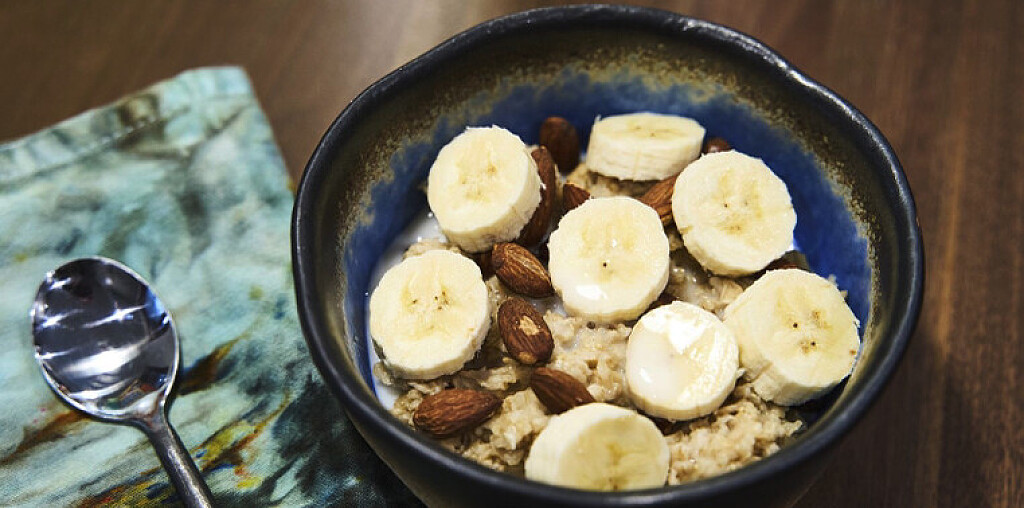
Practicing Your Fuel Stops Should Be a Part of Your Marathon Training Plan—Here’s Why
Focus on nutrition on long run days so you can conquer the miles—without hitting the wall or running to the bathroom.
You train for speed, endurance, and strength before toeing the starting line at a race, gradually building up your distance and pace to make sure you’re ready to take on the miles. But sports dietitians confirm that most runners overlook one vital focus area during training—that is, your gut.
“Your digestive tract isn’t used to running and taking in food at the same time. The constant up-and-down motion of running coupled with the blood flowing away from the gut and toward the working muscles usually results in a wonky stomach,” says marathoner Natalie Rizzo, MS, RD, dietitian and founder of Greenletes in New York City. “But that doesn’t need to be the case. Just like you need to train your muscles to run, you need to train your gut to accept the fuel it needs.”
The more you practice, the better your gut will be able to handle the energy it needs, says Angie Asche, MS, RD, CSSD, a Lincoln, Nebraska-based dietitian and owner of Eleat Sports Nutrition. For any training run longer than an hour, consider giving your race-day nutrition strategy a trial run. That means eating the breakfast you would have on race day and consuming the fueling products you’ll have midrun at structured intervals throughout your miles. Practicing your plan should then help you fine-tune your fueling come race day.
Because we all have different body sizes (and, as a result, energy needs) as well as gastrointestinal (GI) tracts, the best fueling strategy looks different for each person. However, a study published in 2021 in Nutrients and a review published in 2017 in Current Opinion in Gastroenterology recommend that if you notice an upset stomach or diarrhea while running, steer clear of the following items for the two hours prior to and during a run:
Dairy products
Meat
Caffeine
Sugar alcohols and artificial sweeteners
Foods with a higher proportion of fat or protein than carbs
Anything with 5 grams or more of fiber
How to Prepare Your Digestion for Race Day
Pregame with care
Aim for at least 1 gram of carbs per kilogram of body weight in your prerace meal. (For a 180-pound runner, that’s about 82 grams of carbs.) If you have time, the goal is to eat three to four hours before a race lasting two hours or more, aiming for 3 to 4 grams of carbs per kilogram of body weight.
If you have only two hours to eat before heading to the start, go for 2 grams per kilogram of body weight. To help a 180-pound person reach their carb goal in the hours leading up to a race, Megan Robinson, MS, RD, CSSD, sports dietitian in Paoli, Pennsylvania, suggests having a large bagel with nut butter, and a fruit smoothie (made with a large banana, 1 cup of berries, and 1 cup of almond milk) three hours before your run. Then one to two hours prior to the start, consider having a sports drink containing 60 grams of carbs plus 2 ounces of pretzels.
Time it right
Aim for about 30 to 60 grams of carbohydrates for every hour of running after the first 60 minutes. Consider splitting those carbs up so you have a snack at 30-minute intervals. (For reference, 20 ounces of a sports drink, one gel, or one medium banana offers about 30 grams of carbs.)
“That said, the best way to train your gut is to start with a smaller amount of fuel and build up to the amount your body needs,” Rizzo says. “Use long training runs to start with that smaller amount, like 8 ounces of a sports drink, half of a gel, or half of a banana. Once your stomach can tolerate the smaller amount, add in more fuel.” To gradually build up your fuel intake, try to double your midrun snack every two weeks until you reach your end goal.
Stay hydrated
To reduce the risk for an upset stomach, acid reflux, or diarrhea, drink enough water to prevent dehydration, especially with chews or gels. “These all contain a large amount of carbs for their size, and if you do not consume water while ingesting them, it can lead to stomach cramping,” Robinson says. That’s because water moves out of the body and into the intestines to dilute the sugar, and without more H2O, you can get dehydrated or GI distress. As a general guideline, aim for 4 to 8 ounces of water every 15 minutes.
Tune in to what’s not working
Your body will make it clear if your gut isn’t having a good time. Gas, bloating, side stitches, diarrhea, nausea, and upset stomach can all indicate danger. If your stomach feels okay, but you notice that you’re bonking, crank up the carbs before running. “Some runners we work with aim for 4 grams per kilogram body weight four hours prerace,” Asche adds. You can start with that 1 gram of carbs per kilogram of body weight prerace (and make sure to get enough midrun fuel) and see how your final kick feels, adding in more carbs as necessary.
Feed your good gut bacteria
On rest days and on days with short runs, aim to eat gut health-promoting items. “Fermented foods, like yogurt, kefir, miso, sauerkraut, and pickles, are rich in probiotics that help build a healthy gut,” Rizzo says. Fiber can also aid in preventing constipation. Just scale up both fiber and probiotic intake slowly in order to avoid GI distress.
4 Gut-Friendly Fuel Options
While the best fit for your fuel is individualized, those who struggle with GI issues tend to have the best luck with sports supplements that have two types of sugar, like glucose and fructose, rather than just one. “Each type of sugar uses a different receptor in the bloodstream, so the body can absorb both of them quickly without causing any GI issues,” says Rizzo.
If you prefer whole-food options, try orange slices, dried cherries, or dried figs, all of which contain at least two natural sugars. For a packaged product, consider these dual-sugar selections:
by Runner’s World
Login to leave a comment
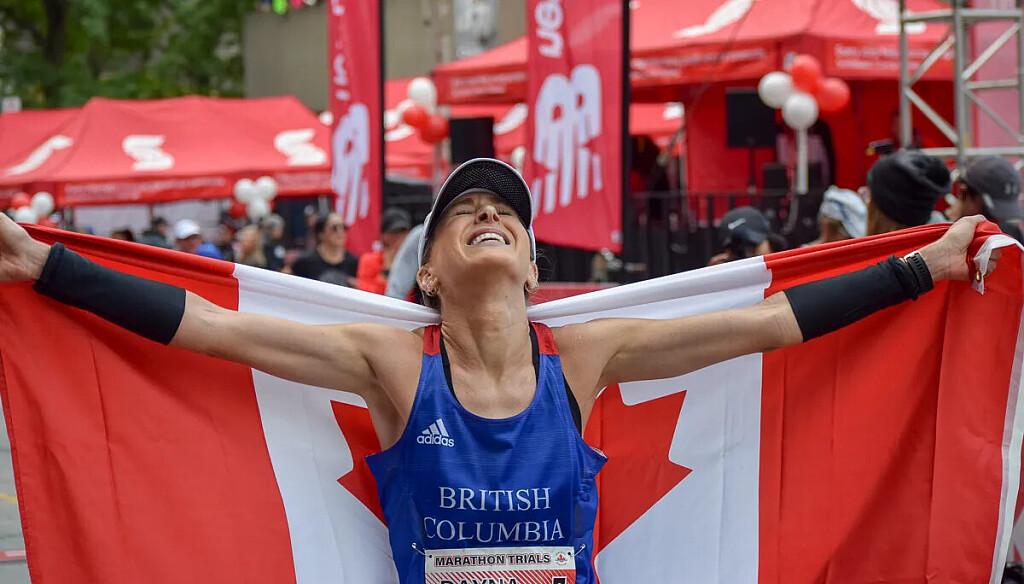
Defending Champion Dayna Pidhoresky Seeks Perfect Race at TCS Toronto Waterfront Marathon
Since winning the 2019 Canadian Olympic trials, Dayna Pidhoresky has encountered mixed fortunes. It is not surprising that the 35-year-old Vancouver resident is seeking a perfect race at this year’s TCS Toronto Waterfront Marathon, the site of her greatest triumph.
“I definitely want to run a personal best,” she says of her return to this World Athletics Elite Label race scheduled for October 16th. “I just want to get the most out of myself on the day. I felt this past spring gave me a lot of confidence, my training went really well.
“I feel like this is the year [in Toronto]. I can just take a little bit more risk and try to empty the tank and hopefully that is something I will have the opportunity to do on the day. I just want to race well, execute well, and leave it all out there.”
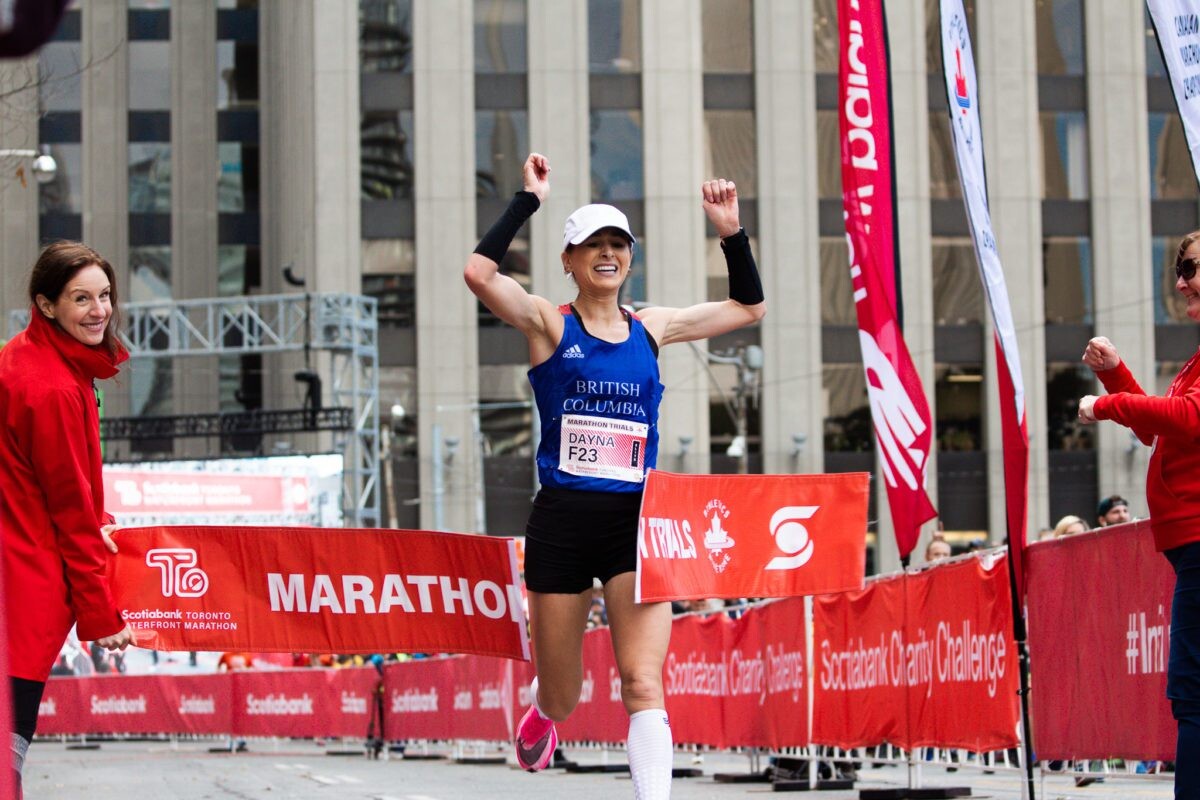
In April 2022, she won the BMO Vancouver Marathon in 2:34:30. Then just four weeks later, finished 6th at the Tamarack Ottawa Marathon. Both races yielded times well off her Olympic qualifying mark from 2019. On that day, three years ago, with the Canadian champion guaranteed an Olympic berth — provided they had made the standard — she came through with a stunning result. Pidhoresky, who is originally from Tecumseh, Ontario, ran a huge personal best time of 2:29:03 which cemented her place in the Tokyo Olympics.
While other athletes chased standards through the remaining qualifying period, Pidhoresky had the luxury of knowing she could train specifically for her dream race. It was not to be, however. In Sapporo, where the marathons and race walks were held, she struggled home 73rd nursing an injury after what she describes as a ‘nightmare.’
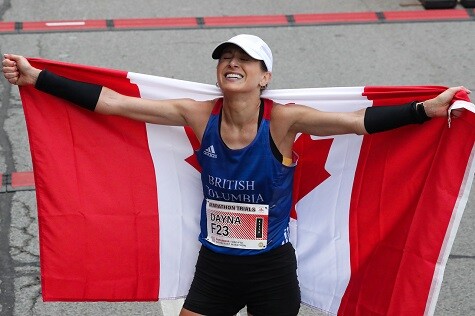
At Team Canada’s pre-Olympic training camp in Gifu, she and her coach and husband, Josh Seifarth, received word that someone on their Vancouver to Tokyo flight had tested positive for Covid.
“We got a call from one of the Athletics Canada guys and he told us we were ‘close contacts’ [of fellow passengers] and that we would have to basically stay in our room the whole time,” she explains. “We weren’t able to leave the room at any point of time, at all. That was about a week. Then I flew to Sapporo where the race was taking place.”
Canadian officials brought a stationary bike to her room during the quarantine, for which she was grateful. When the time came to fly on to Sapporo though, Seifarth was informed he would not be permitted to accompany Pidhoresky. Instead, he flew home to Vancouver.
“We thought it would be normal again and I would be able to interact with the team but I was still considered a ‘close contact’ even when we were in Sapporo,” she continues. “It was mentally draining to be in that situation.
“I was also battling a tendon injury. I was relying on being around my teammates to feel like I was having an Olympic experience. I felt that wasn’t even possible. I was robbed of having an Olympics experience outside of the race itself.”
Currently, her training is going better than in her buildup to the Olympic trials. The anticipation of a great performance is clearly visible in her facial expressions.
“We are definitely ahead of the game right now,” she says with a smile. “At the moment, we are in the 175-185km [weekly volume] range, which for me is more than I have generally averaged. In the past, I would do ten weeks of 160km a week and have maybe a 170km in there. It doesn’t actually feel that different.”
During the spring, she and Josh bought a house near the University of British Columbia which provides immediate access to running trails. Occasionally she meets up with Canadian international Catherine Watkins but most of her long runs are done alone while she listens to running podcasts. One of her favourites, she reveals, is that hosted by triathlete Paula Findlay.
She fills her days with a little photography when time permits, and with some part time work for Seifarth’s company, Visifii.
The addition of Pidhoresky means race director Alan Brookes has been successful in bringing back both Canadian champions, Trevor Hofbauer — who earned his Olympic berth in 2019 as well — and the two overall champions from 2019, as Kenya’s Magdalyne Masai and Philemon Rono will also return. But Pidhoresky is looking for more than defending her 2019 title.
“I am less concerned with placing,” she reveals. “I hope that I can sort of look around and find a good group and we can work together to run fast times together. I would rather run a big PB than feel I am running tactically. Maybe those are one and the same on the day. I just hope I can run to the best of my ability on the day.”
About the TCS Toronto Waterfront Marathon
One of only two World Athletics Elite Label races in Canada, the TCS Toronto Waterfront Marathon is Canada’s premier running event and the grand finale of the Canada Running Series (CRS). Since 2017, the race has served as the Athletics Canada Canadian Marathon Championship and has doubled as the Olympic trials. During the 2021 event, participants raised over $3.08 million for 151 community charities. Using innovation and organization as guiding principles, Canada Running Series stages great experiences for runners of all levels, from Canadian Olympians to recreational and charity runners. With a mission of “building community through the sport of running,” CRS is committed to making sport part of sustainable communities and the city-building process.
by Paul Gains
Login to leave a comment
TCS Toronto Waterfront Marathon
The Scotiabank Toronto Waterfront Marathon, Half-Marathon & 5k Run / Walk is organized by Canada Running Series Inc., organizers of the Canada Running Series, "A selection of Canada's best runs!" Canada Running Series annually organizes eight events in Montreal, Toronto and Vancouver that vary in distance from the 5k to the marathon. The Scotiabank Toronto Waterfront Marathon and Half-Marathon are...
more...
This Siberian Yupik Ultrarunner Is Ready To Take On Leadville
Just 170 miles from Russia, Nome, Alaska is perhaps best known as the finish line for the Iditarod Trail Sled Dog Race. Nome's population is near 3,500, but grows in the summer with an influx of gold dredgers and panners.
Crystal Toolie is a Siberian Yupik ultrarunner from Nome, and is one of five Indigenous runners in this weekend's Life Time Leadville Trail 100 Run presented by La Sportiva. In Nome, Siberian Yupik peoples are from the villages of Gampbell and Savoonga on Saint Lawrence Island (164 miles west), off the coast of Alaska. Even here, they're a relatively small community compared to other Alaska Natives.
Training in Nome harbors unique challenges that develop spades of endurance and strength.
Training in Muskox Country
"It's a very isolated town. This year, we've had a lot more [brown] bears. And we have [musk oxen]," said Toolie. "So if you're a runner and you train outside, you have to be aware of your surroundings." The small but supportive running community in Nome leans on social media to update each other on bear and other wildlife sightings.
"There was one winter when I strictly just ran on the treadmill. It was torturous," said Toolie. "There are other years that no matter what the temperature or if there's a blizzard out, I made sure to get outside and run."
Blizzard conditions are commonplace in remote Alaska, making appropriate gear mandatory. "I would wear regular running shoes but double up on socks and wear cleats, so I don't slip," said Toolie. "Layers, if it's a blizzard. I would wear snow pants and a winter coat. My inner layer will be something that's sweat-wicking, something to cover up my face and hood. Sometimes goggles, sometimes not. And then wear really good gloves."
In addition to layering, Toolie sticks to Nome's limited road system as a safety measure, making it a priority to be visible during runs. Looking to Leadville, she incorporated hiking local mountains into her training.
"This year, I've been able to get out of the road system and get into the mountains, which is great for training for Leadville," said Toolie.
Running Under the Lights
During winter runs, Toolie has nature's headlamp guiding her way. Best seen just outside of the city, the Northern Lights present colorful bands of greens and whites that illuminate the sky. The lights are generated from electrically-charged particles in the earth's magnetosphere colliding with gases, creating energy in the form of light.
Though beautiful, the lights were sometimes frightening to Toolie as a child.
"Our elders would tell us if you're outside late, when you know you're not supposed to be, making noise, the Northern Lights would come down and steal you up," said Toolie. "And so if you whistle or make loud noises, the Northern Lights dance and become more vibrant. It looks like it's coming down."
Nome-St. Lawrence Island Dance Group
Beyond ultrarunning, Toolie is dedicated to preserving the movements of her culture. Several years ago, Toolie reinstated the Indigenous dance group in the area. Toolie's great grandfather, Nick Wongittillin, was the leader of the first Nome dance group, when he passed away, they stopped. "We all wanted our children to be able to learn about our culture, to be able to pass down that tradition," said Toolie.
Composers set the tone on drums (Saguyak) - constructed from tightly stretched walrus stomach linings from the Bering Sea - based on how they're feeling at that moment. The zen-like movements are reminiscent of Qigong from southeast Asia. Toolie and her relatives even have a particular song dedicated by an elder to their running pursuits.
The women wear regalia that is distinguishable from other Alaska Natives in the region. Traditionally, their dress-like garments have three to four red lines sewn at the bottom, symbolic of the Russian Orthodox influence on the culture. The women wear their hair in two braids with beads sewn into them.
The group performs at local events of celebration and mourning, a way to bring the community together. The elders ensure the dances are appropriately conducted so that the integrity of the movements is consistent over time.
Climate Threats and Commercialism
The Town of Nome sits mainly on permafrost (permanently frozen ground). Permafrost is particularly sensitive to increases in air temperature and changes in snow cover, making it especially vulnerable to climate change. Permafrost stores carbon from life buried years ago. As the permafrost thaws, carbon is converted to carbon dioxide and methane, which hasten climate warming. Generally, climate scientists are finding that the Arctic is warming four times as fast as the rest of the world.
"Climate change is a huge topic when you live in our region. We have generations of hunters that know the land like the back of their hand. When scientists study the Arctic in our area, they will seek out the trained hunters and ask them questions because they know that they are observers of that area," Toolie said.
The hunters and families have noticed changing behavior patterns in the region's polar bears.
"We used to see them more frequently. One would always come up to the East End beach, and it would have to be redirected out of town," said Toolie. "I haven't heard of a polar bear going to Nome for years now."
Lately, commercial fishing and cruise liners have affected the lifelines of local families, too. The cruise industry disrupts the area's food system in the waters and creates challenges for the local fishing industry. In some instances, cruise ships have even dumped human waste on Alaska beaches, Toolie explained.
Moreover, commercial fishing overseen by state governments often harms subsistence family fishers in Nome. These residents store fish and other seafood for the winter to feed their families, not to make a profit.
"Subsistence living is rooted in our culture. We have big families that live in one home. To feed them, you need to hunt, fish, and berry pick for survival," said Toolie. Whaling is also part of that equation.
"I think it's just because people don't understand, don't have an understanding that this feeds communities. It's not done in a way that is disrespectful to animals or the earth. In Native culture, we're taught not to over-hunt or over-pick, and we use everything," said Toolie. "We don't waste what we get. And so I think that's something that would be nice for people who are unfamiliar with our culture to learn about."
This year, at Leadville, she will be paced by fellow Native skier and ultrarunner Connor Ryan. Since this is Toolie's first time taking on Leadville, her approach to the race will be to take it easy. "I'm going to take it slow," said Toolie. "And if I feel comfortable, I'm going to take it slower."
by Trail Runner Magazine
Login to leave a comment

Rising inflation has prompted a warning that the budget for the Paris 2024 Olympics and Paralympics is "very tight"
With tomorrow marking two years until the Olympics are due to begin in the French capital, concerns are mounting on preparations from a security and financial point of view.
AFP has reported that the Organising Committee's estimated budget for the Games has risen to €4 billion (£3.4 billion/$4.1 billion), with a source commenting: "Everything is very tight concerning the budget."

According to the unnamed source, the extent of the difficulties are expected to become clearer later this year.
Solideo, the public body charged with overseeing infrastructural projects for Paris 2024, also has a reported budget of €4 billion (£3.4 billion/$4.1 billion).

Inflation in France reached its highest level since 1991 last month, although remains lower than many other European countries.
Consumer prices rose by 5.8 per cent in the 12 months until June.
Tickets for the Games go on sale in December, and one premium partnership slot remains vacant, although it has been reported that there are hopes it could be filled by luxury goods company LVMH.
At the International Olympic Committee Session in Lausanne in May, Paris 2024 President Tony Estanguet conceded that the COVID-19 pandemic and war in Ukraine "caused major breakdowns in production and supply chains", and "generated an inflationary environment which was impossible to anticipate just a few months or weeks ago".
Budgetary issues are expected to be one of the topics examined when French President Emmanuel Macron meets other key Ministers at the Élysée Palace to discuss Paris 2024 today.
A French Presidential official told AFP that the meeting offers an opportunity "to take note of where there are weaknesses".
Concerns over security have escalated since Paris 2024 venue, the Stade de France, held the UEFA Champions League Final in May.
The match was marred by chaotic scenes which led to a delayed kick-off, led to widespread criticism of the French authorities and police, and prompted a warning in a French Senate report earlier this month that the Government and relevant bodies would be required to "draw the necessary lessons".
There are plans for around 600,000 people to watch the Opening Ceremony along the River Seine, but a police source cited in a AFP report warned that it would not be possible to secure the "nearly 7,000 officers" required, with a shortfall in the 24,000 required private security guards another stumbling block.
The Olympics in the French capital are due to run from July 26 until August 11 2024, followed by the Paralympics from August 28 until September 8.
by Patrick Burke
Login to leave a comment
Paris 2024 Olympic Games
For this historic event, the City of Light is thinking big! Visitors will be able to watch events at top sporting venues in Paris and the Paris region, as well as at emblematic monuments in the capital visited by several millions of tourists each year. The promise of exceptional moments to experience in an exceptional setting! A great way to...
more...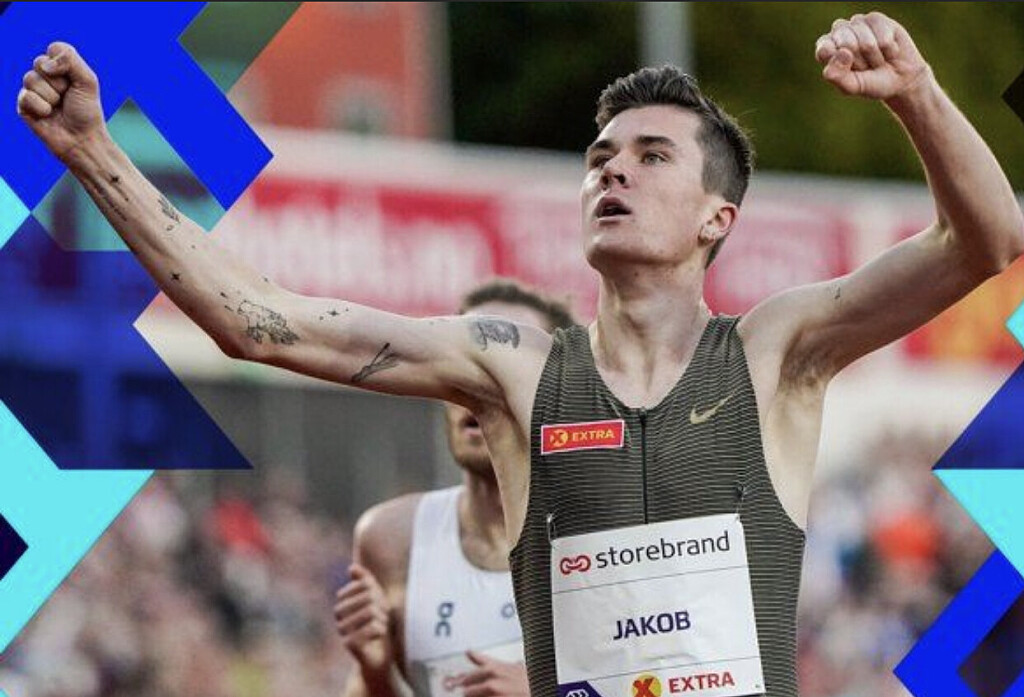
Ingebrigtsen and others in record breaking form in Oslo despite the rain
A Wanda Diamond League record from Jakob Ingebrigtsen (first photo) in the mile, along with meeting records from Mondo Duplantis in the pole vault and Femke Bol in the 400m hurdles brightened a rainy evening at the Bislett Games in Oslo on Thursday (16).
Ingebrigtsen has won almost all there is to win in middle-distance events, but a senior Dream Mile victory in Oslo was one thing missing from the 21-year-old’s resume. In fact, before today no Norwegian man had ever won the prestigious discipline at the Bislett Games.
But, racing in the final individual track event of the night, Ingebrigtsen ensured the 15,000 fans at the Bislett Stadion went home happy as he won the mile in a Norwegian record of 3:46.46, breaking the Wanda Diamond League record in the process.
Paced through the first two laps in 56.01 and 1:53.30, Ingebrigtsen was tracked closely by Australia’s Oliver Hoare and Britain’s Jake Wightman for most of the race. The Olympic 1500m champion never appeared to be under too much strain, though – even when Hoare was attempting to close in on the leader with half a lap left.
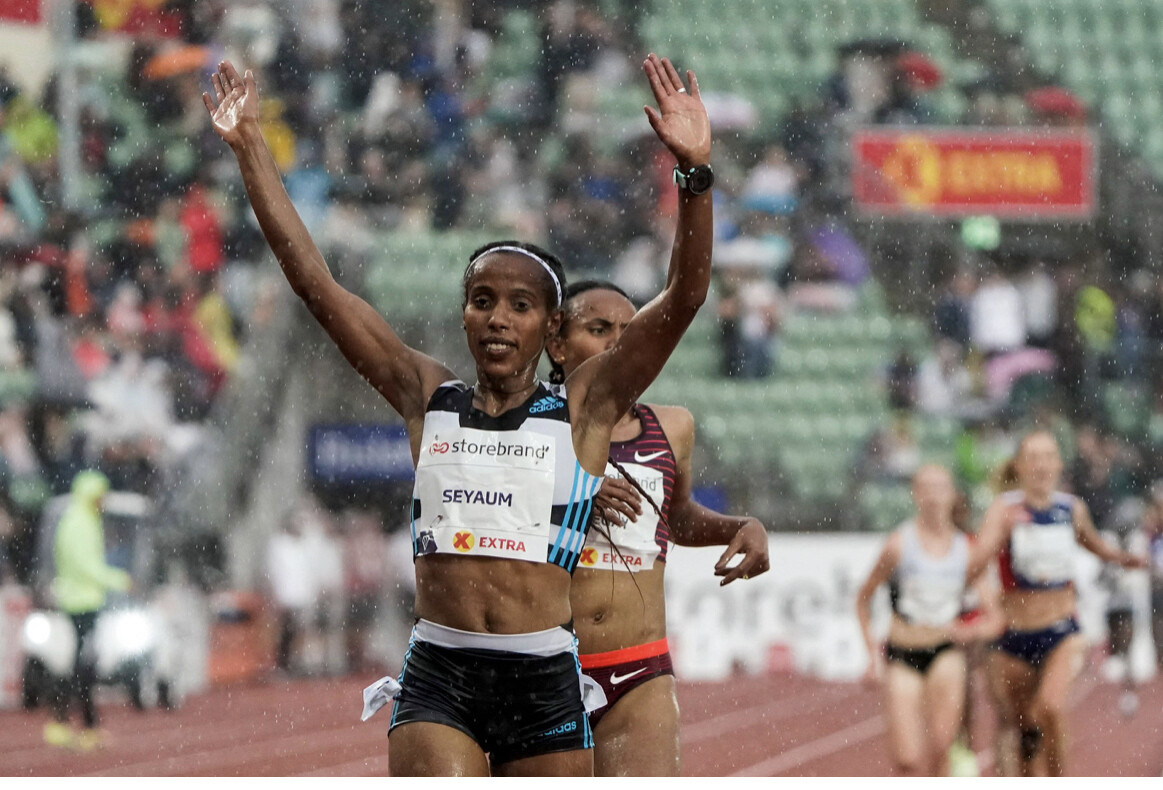
Ingebrigtsen – roared on by the home crowd, many of whom were on their feet – kicked down the home straight and crossed the line in 3:46.46, taking almost a second off his own Norwegian record and moving up to sixth on the world all-time list, just 0.14 shy of Steve Cram’s European record.
Hoare finished second in 3:47.48 to break the Oceanian record and move to 13th on the world all-time list. Wightman was third in a PB of 3:50.30 from fellow Brit Neil Gourley (3:52.91). There was also a national record for Charles Grethen of Luxembourg in fifth (3:53.20).
“I was ready to run fast and was happy to do that and to win,” said the world indoor silver medallist. “Some work needs to be done before the World Championships, but I will work hard to be in better shape there.
“Last year I was sick and couldn't race here, so it was even more special here tonight, as being the first Norwegian to win the Dream Mile. Doing things nobody else has done before is really great.”
Seyaum and Bekele lead Ethiopian 5000m sweeps
Dawit Seyaum may be new to the 5000m, but the former 1500m specialist looked anything but inexperienced as she outkicked her fellow Ethiopians to win a high-quality race.
The opening pace was steady, the first 1000m covered in 2:53.83 and 2000m reached in 5:52.33. Versatile Norwegian runner Karoline Bjerkeli Grovdal then took up the pace in the second half and passed through 3000m in 8:48.65, leading a large lead pack. Grovdal held on to that lead for another 1500 metres, but then Seyaum and compatriots Letesenbet Gidey, Gudaf Tsegay and Almaz Ayana started battling for the lead with one lap to go.
Ayana’s challenge soon faded, leaving Seyaum, Tsegay and Gidey out in front. Seyaum’s kick down the home straight was enough to break free from Tsegay and she won in 14:25.84. Tsegay, the Olympic bronze medallist at this distance, was second in 14:26.69 while world record-holder Gidey was third in 14:26.92. Grovdal held on to fourth place in a Norwegian record of 14:31.07 and USA’s Alicia Monson was fifth in a big PB of 14:31.11.
(Second photo)Dawit Seyaum celebrates her 5000m win at the Wanda Diamond League in Oslo
For just the second time in history, seven women finished inside 14:35 and eight women finished inside 14:40.
There was another Ethiopian 1-2-3 in the men’s 5000m, though this time the 1500m standout was beaten by the 5000m specialist.
The pace was steady though never blazing quick, meaning most of the field was still in contention at the business end of the race. Two-time world indoor champion Samuel Tefera led at 3000m, passing in 7:54.39, but then sat back in the pack to save his legs for a potential fast finish.
He made his way back to the front of the pack in the closing stages, but could not get on level terms with Bekele, who kicked ahead and won in 13:03.51. Tefera held on for second in 13:04.35, just ahead of compatriot Getnet Wale (13:04.48).
Keely Hodgkinson won the battle of the Brits over 800m, getting the better of fellow Olympic silver medallist Laura Muir.
The 20-year-old ran a controlled and assured race and kept her cool in the closing stages to win comfortably in 1:57.71. Muir was second in 1:58.09, ahead of France’s Renelle Lamote (1:58.50) and world champion Halimah Nakaayi of Uganda (1:58.68).
by World Athletics
Login to leave a comment

Instead of braving the elements, take these precautions for a happy and healthy Summer Run Streak
Designed to keep you running through sweaty and busy summer days, the run streak bridges the gap between Memorial Day and July 4. Run at least one mile per day, every day. That’s 36 consecutive days of running.
Find out how a streak can change you, and share your journey with us! Where will you run? How will you make it happen? How will your life change? We want to hear about it! Share your progress and motivate other streakers by “liking” the streak on Facebook. You can also share updates on Twitter and Instagram using the hashtag #RWRunStreak.
Whether you’re starting a new marathon training block or participating in the Runner’s World Run Streak, the summer is a perfect time to get back into running. Longer days, vacation time, and good weather mean more time to get the miles in. But beware—there are simple mistakes that can cause you to burn out (or literally burn yourself to a crisp) before fall marathon season comes around.
Avoid the following mistakes during summer training, including hydration hijinx and shoe snafus. Above all else, keep one thing in mind—your goal is to make it through the Run Streak healthy, happy, and hungry for more.
Mistake #1: Not acclimating to the heat.
In every aspect of training, there’s an adjustment period. Just like you wouldn’t jump from 20 miles per week to 60, or skip from 10 squats to 100 in just a couple of sessions, you shouldn’t dive headfirst into the summer heat.
There are a few different options to build up your heat tolerance. First, you can briefly lower your mileage so you’re not overloading your body and gradually work it back up as you readjust. Or, you can go back and forth between treadmill days and outside running days. Lastly, start your training cycle by running during the coolest part of the day, then each following day, run later and later until you’ve comfortably run during the hottest hours.
Get used to one variable at a time. Don’t try to build your mileage too high when acclimating to the weather. Handle one problem first, then solve the next one. Otherwise, you might end up physically and mentally drained.
Mistake #2: Not checking the weather.
I live in Philadelphia, where the summer temperatures can range from mid-70s to the high 90s. As someone who likes to run after work, that means I need to check the weather, or I might be in for an unpleasant surprise.
But even if you’re a morning runner, it helps to look at a weather report before heading out the door. You might find that the morning dew point is unbearably high for your workout, or that a summer rainstorm will roll through and cool the air down significantly by the afternoon.
In my case, I look ahead of time whether I need to get up a little earlier to squeeze my run in the cool morning instead of slogging through blistering temps—which can potentially be dangerous.
Mistake #3: Not hydrating or refueling.
Katie Kissane, R.D., C.S.S.D. told Runner’s World in a previous article that dehydration heightens the risk of heatstroke and causes muscle cramping when you’re running in hot weather. Therefore, to stay safe in the heat, make sure you’re drinking water throughout the day.
If you’re out for a long run, hydrate during the activity. Stash a bottle somewhere on the route, plan your route around water fountains, or even wear a hydration pack—just make sure to drink up.
However, Kissane explains that just chugging water alone could lead to a separate problem called hyponatremia—low sodium levels in the blood. Hyponatremia leads to dizziness, fatigue, and nausea. Consider bringing a sports drink high in minerals like sodium, calcium, potassium, and magnesium to prevent the symptoms from hampering your run and hurting you in the long term.
Mistake #4: Not wearing sunscreen.
No matter how long your run is, you’re exposing yourself to ultraviolet radiation from the sun. Without precaution, you can suffer from skin aging, eye damage, and even skin cancer, according to the Environmental Protection Agency.
“Americans can reduce risks from sun exposure with continued use of sun protection measures including broad-spectrum sunscreen with SPF values of at least 15,” said acting United States Federal Drug Association (FDA) Commissioner Janet Woodcock, M.D., in a press release from September 2021.
The FDA recommends applying sunscreen 15 minutes before sun exposure and reapplying every two hours, especially when sweating. That means if you’re going for a long run, you might need to stop to reapply. There are sunscreens out there specifically made to be sweat-resistant, so you don’t need to reapply as often, but it’s still good to be safe.
Mistake #5: Not being flexible—and dreading the treadmill.
“On especially hot and humid days, there’s no glory in the Strava post,” says Runner’s World Runner-in-Chief Jeff Dengate. “I’ve had a 15-miler on the schedule that I’ve broken up into three five-mile runs that day, so I still get in the mileage without dying. Don’t be confined by the training plan—sometimes you need to modify it.”
That might even mean running on the treadmill when it’s particularly rough outside. Before you shake your head in disgust, think of it as an opportunity to control all the variables. You can listen to your favorite music or watch a television show, lock into a pace, and enjoy sweet, sweet air conditioning.
Mistake #6: Not wearing summer running gear.
There are a few pieces of gear you should always have around for hot and sunny summer runs.
A good running hat protects your face from the sun. Most are made of moisture-wicking materials to keep your head cool, and some even come with UV protection. Bonus points are that a running hat keeps raindrops out of your eyes on any wet days.
A hat alone won’t keep the sun out of your eyes. You need a pair of sunglasses. While most pairs will work in a pinch, there are great running sunglasses that won’t slip off your sweaty face or bounce up and down from the impact of your stride.
For particularly scalding afternoons, you could purchase a cooling vest—but think of that as more of a luxury than a necessity.
Mistake #7: Ignoring swollen feet.
When you get sized for a new shoe at a local running store, they typically recommend a half-size up because “blood flow increases to deliver oxygen to the muscles,” Paul Langer, DPM, told Runner’s World. “The volume of the muscles temporarily expands.”
When it’s really hot out, Test Editor Morgan Petruny notices that her feet swell even more: “I have to be aware of giving myself more room in my shoes… I often think that I’m a fall, winter, or spring shoe size W9, but a summer size W9.5.”
If you’re not ready to buy another shoe, she recommends loosening your laces, wearing thinner socks, and avoiding the shoes in your repertoire with a tight toe-box.
by Runner’s World
Login to leave a comment
Samsung apologises for advert showing woman running alone at 2am
Samsung has apologised for a recent advert which showed a woman getting up at 02:00 to go for a run through the streets of a city alone.
The advert has been criticised by some women's running groups and safety campaigners for being "unrealistic".
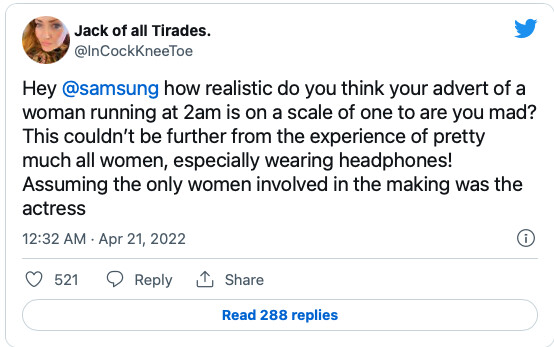
Samsung has told Radio 1 Newsbeat it was never its intention to "be insensitive to ongoing conversations around women's safety."
"We apologise for how this may have been received," it adds.
"The 'Night Owls' campaign was designed with a positive message in mind: to celebrate individuality and freedom to exercise at all hours."
Women's safety group Reclaim These Streets has described it as "tone deaf" in light of the death of Ashling Murphy who was killed on a run in January.
It's for this reason Esther Newman, editor of Women's Running magazine and podcast, says this advert is "not representing the truth".
"Women don't run at that time because we are too scared to," she told Radio 1 Newsbeat.
"It's really shocking. I don't know any woman who would be running at 02:00 in the morning. Certainly not in a city."
According to recent figures from the Office for National Statistics, half of all women have felt unsafe at some point walking alone in the dark.
And running is no exception, according to the views shared online in response to the Samsung advert with some calling it "ridiculous" and "unrelatable".
Samsung replied to some of the comments on social media saying: "We can assure you that the meaning for this advert is for all Galaxy customers/viewers to achieve their health and wellness goals on their own schedules".
But one of the main things that Esther Newman points out is that the lead character is running with headphones on.
"Wearing headphones is a contentious point. Most women runners I know don't wear headphones, and that's during the day, because they are concerned about their safety."
She is keen to point out that her contributors believe "it's a very, very small portion of blokes who make us feel unsafe" but suggests advertisers should focus their attention on how men can make female runners feel more at ease.
'Tone deaf'
Other critics questioned whether enough female production crew were involved in the making of the advert; a point picked up by the women's safety campaign group Reclaim These Streets, which was set up after Sarah Everard's murder.
They told Radio 1 Newsbeat the advert was "totally tone deaf and demonstrates the lack of female decision makers on the campaign, especially in light of Ashling Murphy having been killed on a jog in January."
Cofounder Jamie Klingler added: "It's almost laughable how badly this ad lands."
Run Mummy Run, an online running community, agreed that the portrayal of a woman running at night, in those circumstances, was unrealistic.
They said: "The implication seems to be that a woman has the luxury of this type of freedom with her safety, but sadly this is not the current reality."
by BBC
Login to leave a comment
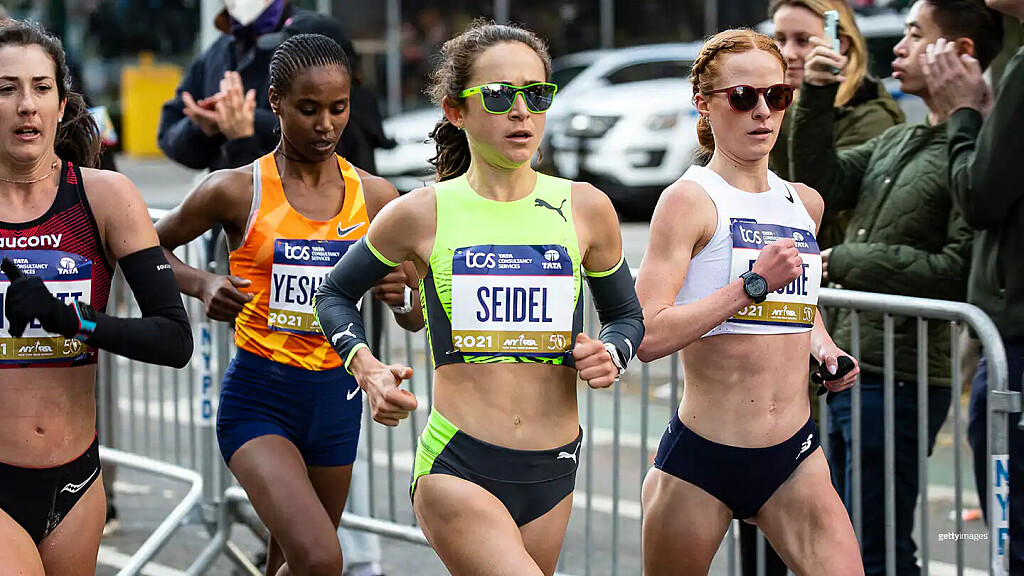
Stop trying to be perfect, you don't have to get everything right all the time
As runners, we like to set big goals and work hard to achieve them. We want to create the perfect training plan, have the perfect build and follow the perfect diet so that we can have that “perfect race.” Today, we’re putting a stop to the madness. Runners, if you want to enjoy and have success in the sport, please — stop trying to be perfect.
The “do what you can” approach
American tennis legend Arthur Ashe once said “Start where you are. Use what you have. Do what you can.” Ashe may not have been a runner, but his advice is applicable to every sport. You may not have access to state-of-the-art facilities, be able to afford the latest-and-greatest super shoes or have the luxury of taking long naps after all of your long runs, but that doesn’t mean you can’t still run well.
Take Olympic decathlon gold medallist, Damian Warner, for example. Thanks to COVID-19 lockdowns, he was unable to access all of his usual training facilities, so he ended up training for the entire year in a make-shift gym with half the equipment he was used to. Despite this, he still managed to set an Olympic record, win the gold medal, and become only the fourth person to ever break the 9,000 point barrier in the decathlon.
A lot of what happens during training and racing is out of your control. Maybe you got the flu part-way through your training cycle and had to take a week off. Perhaps you woke up on race day to crazy winds or pouring rain. When something unexpected happens that derails your training or ruins your shot at a PB, it’s easy to panic, get upset and throw in the towel, but it doesn’t have to be that way.
Take Olympic bronze medallist Molly Seidel. She revealed after the race that in her build-up to the New York City Marathon, she had cracked three ribs. Instead of letting that ruin her race (or giving up entirely), she did however much running she could handle and ended up setting an American course record and placing fourth.
After the race, she said, “It doesn’t have to be perfect going into these things, but if you put your effort out there, if you pour everything you have into this, you’ll find a way.”
Relax and enjoy yourself
It’s important for runners to remember that the reason you put your shoes on every day is that you love the sport. If your drive to get a new personal best is preventing you from enjoying the process, then what’s the point? Instead, try to relax and have fun with it.
by Running Magazine
Login to leave a comment
