

Running News Daily
Running News Daily is edited by Bob Anderson and team. Send your news items to bob@mybestruns.com Advertising opportunities available.
Index to Daily Posts · Sign Up For Updates · Run The World Feed
Articles tagged #Frederick Lorz
Today's Running News
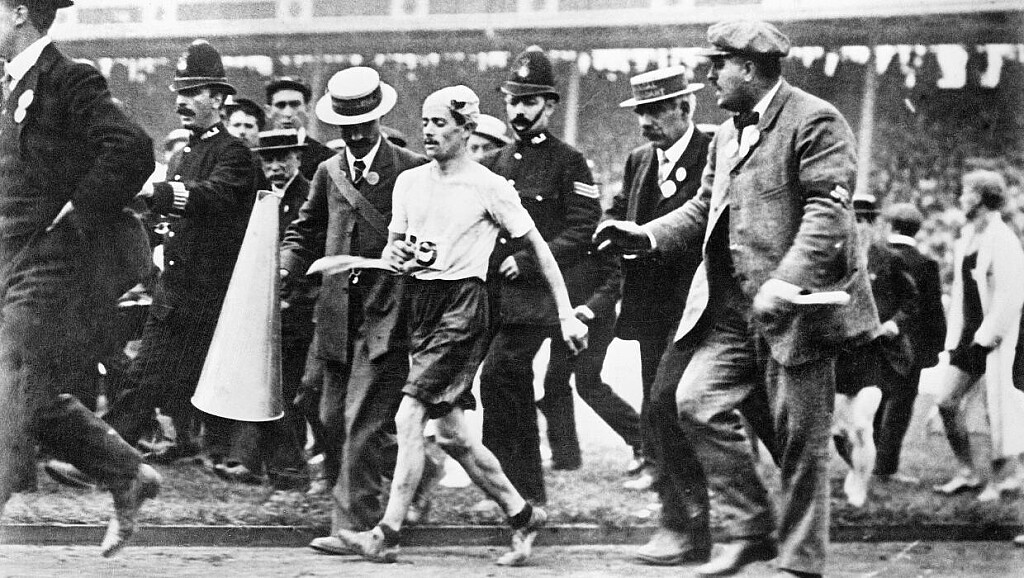


The Strangest Olympic Marathon Ever: Cars, Rotten Apples, Wild Dogs And Strychnine
Few Olympic races have produced a story as bizarre, chaotic and brutal as the marathon at the 1904 Games in St. Louis.
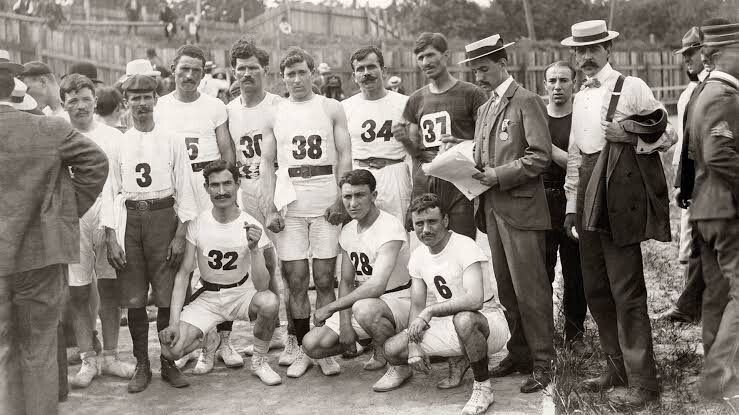
Held on August 30, 1904, the race took place over roughly 40 kilometres in oppressive heat, on dusty country roads where passing automobiles stirred clouds of dust into the air. Water was extremely limited, and the combination of heat, hills, dehydration and poor race organization turned the event into an extraordinary test of survival.
Thirty-two runners started the marathon, but only 14 reached the finish. What happened along the way would eventually make the St. Louis marathon one of the most infamous races in Olympic history.
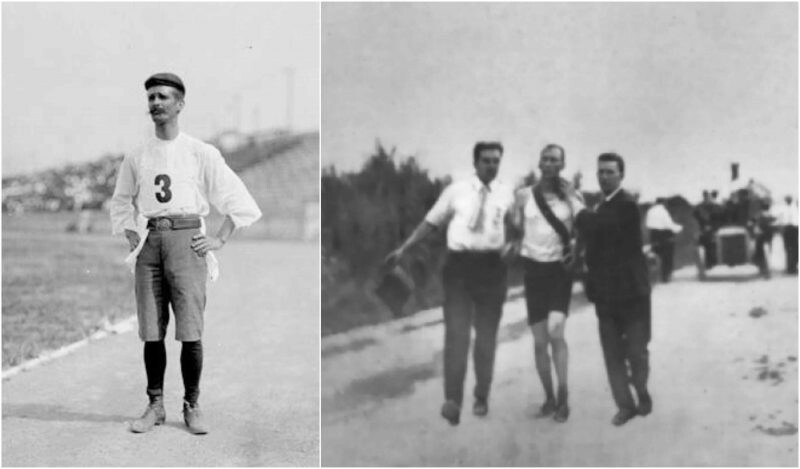
Among the strangest episodes was the story of American runner Frederick Lorz.
Lorz was initially celebrated as the winner after reaching the stadium first in 3:13:00. But the apparent victory quickly collapsed when officials discovered that he had been transported by automobile for a substantial portion of the course after suffering severe cramps. Accounts place the car ride at roughly 11 miles.
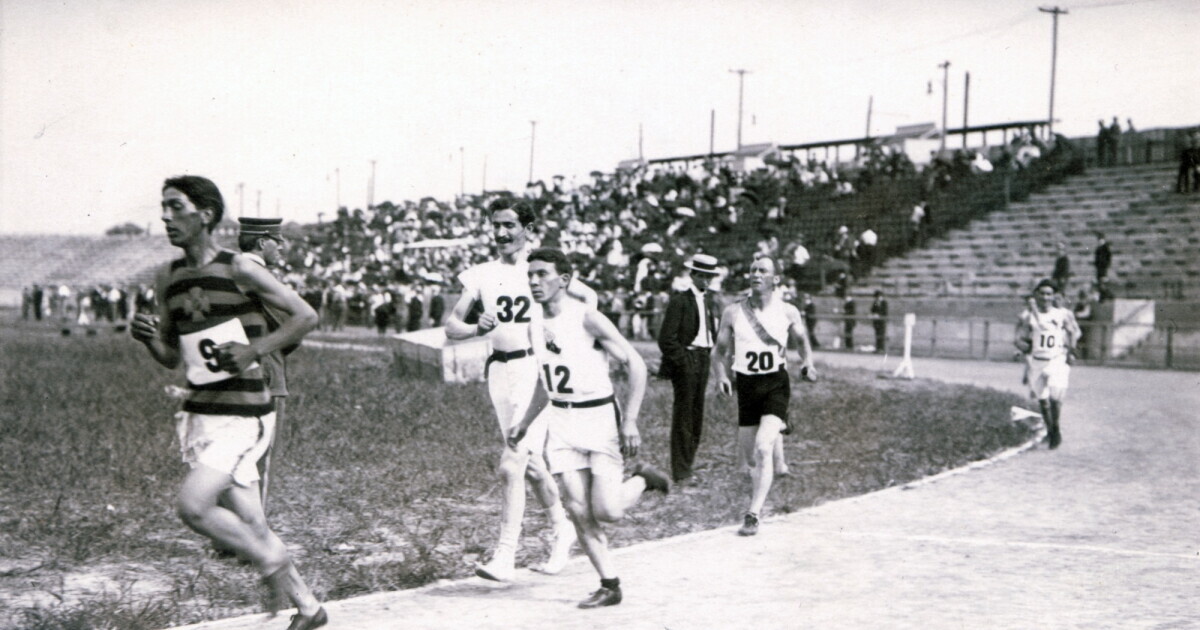
When the automobile eventually broke down, Lorz returned to the road and continued running. He crossed the finish line first, but his deception was uncovered almost immediately and he was disqualified. Lorz later described the incident as a joke rather than an attempt to claim the Olympic title.
That left Thomas Hicks as the official Olympic champion, but his journey to the gold medal was almost as extraordinary.
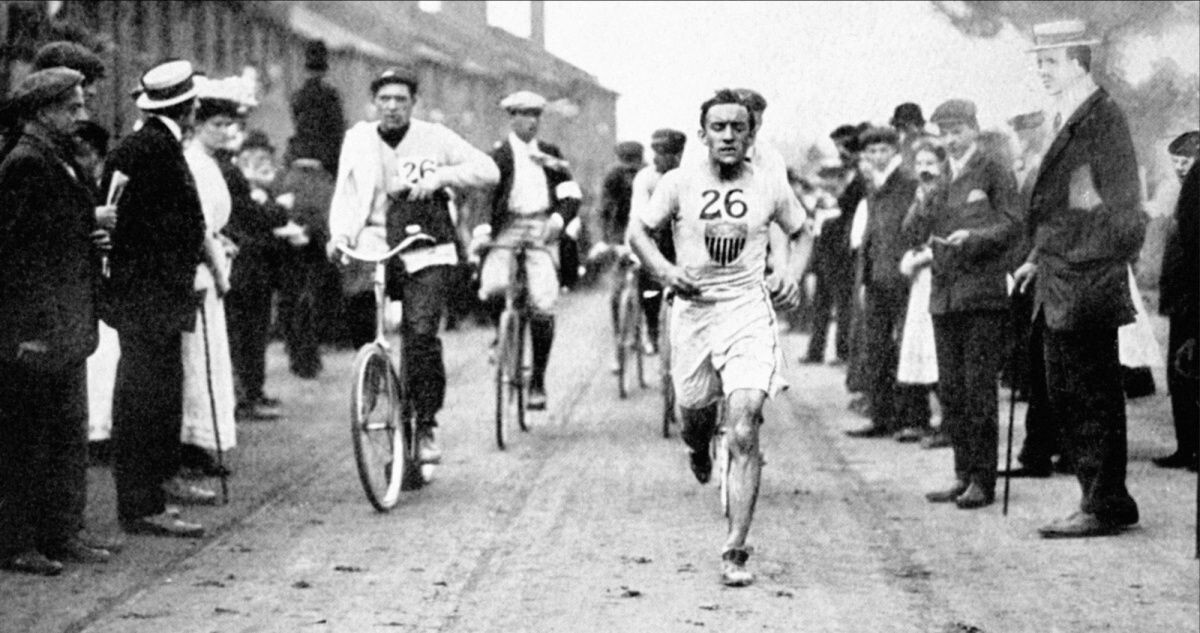
Hicks completed the marathon in 3:28:53, a time that remains the slowest winning performance in Olympic marathon history. Yet the number on the clock tells only part of the story.
As Hicks began to fade badly during the latter stages, his support team gave him a mixture containing strychnine and egg white, followed later by brandy. Strychnine was regarded at the time as a stimulant in very small quantities, although today it is recognized as a highly poisonous substance. There were no modern anti-doping rules at the 1904 Games to prohibit such treatment.
Hicks became increasingly exhausted and reportedly hallucinated during the closing stages. His condition deteriorated so badly that his trainers eventually helped carry him across the finish line while his legs continued moving beneath him.
Afterward, he needed medical attention before he was well enough to leave the stadium. The Olympic Museum records that four doctors were required to attend to him following the race.
Then there was Andarín Carvajal, the Cuban postman whose Olympic debut sounded more like an adventure than a marathon.
Carvajal arrived in St. Louis shortly before the race and had little of the equipment expected of a serious marathon runner. He competed in long trousers and a long-sleeved shirt, with the legs of his trousers cut down to make them more suitable for running.
Despite his unconventional preparation, Carvajal ran remarkably well and stayed among the leading competitors.
But hunger became a problem. Having gone for a long period without proper food, he stopped along the course and ate apples he found. Unfortunately, the fruit was rotten, leaving him with severe stomach cramps. At one point, he lay down beside the road and fell asleep.
Remarkably, he recovered, got back on his feet and continued running. Carvajal eventually finished fourth, an extraordinary result considering the conditions and the obstacles he encountered.
The race also marked an important moment in Olympic history for Africa.
Len Taunyane and Jan Mashiani, two South Africans of Tswana background, became the first Black Africans to compete at the Olympic Games. They were in St. Louis as part of a South African exhibition connected to the World's Fair and entered the marathon almost unexpectedly.
Historical accounts have long described the pair as running barefoot, although surviving photographs indicate that the footwear situation was more complicated, with at least one of them appearing to have shoes. Their names were also recorded inconsistently in contemporary reports.
Taunyane became part of one of the race's most extraordinary stories when he was reportedly chased off the course for about a mile by a wild dog. Despite the incident, he recovered and continued the race.
Taunyane finished ninth, while Mashiani placed 12th, making their appearances significant not only because of the bizarre circumstances but also because they represented an important milestone in Olympic history.
There were other dangers too. The roads were so dusty that the automobiles accompanying the runners created clouds of dust that made an already punishing race even more difficult. One American runner, William Garcia, reportedly collapsed after dust severely affected his throat and stomach, illustrating just how dangerous the conditions had become.
The 1904 St. Louis marathon was therefore unlike almost anything seen in modern distance running.
There were no sophisticated hydration stations, no carefully measured modern course, no sports science teams and no anti-doping regulations. Instead, runners faced extreme heat, dusty roads, limited water and primitive medical practices.
One athlete rode in a car. Another stopped to eat rotten fruit and fell asleep. Two pioneering African competitors endured an extraordinary race, with one reportedly being chased by a dog. And the eventual champion was administered a dangerous stimulant mixture before being helped across the finish line.
More than a century later, the St. Louis marathon remains a remarkable reminder of just how different Olympic distance running once was.
It was a marathon where survival sometimes seemed as important as speed—and where almost every mile produced another unbelievable chapter.
by Erick Cheruiyot for My Best Runs.
Login to leave a comment
