

Running News Daily
Running News Daily is edited by Bob Anderson and team. Send your news items to bob@mybestruns.com Advertising opportunities available.
Index to Daily Posts · Sign Up For Updates · Run The World Feed
Articles tagged #Hobbs Kessler
Today's Running News
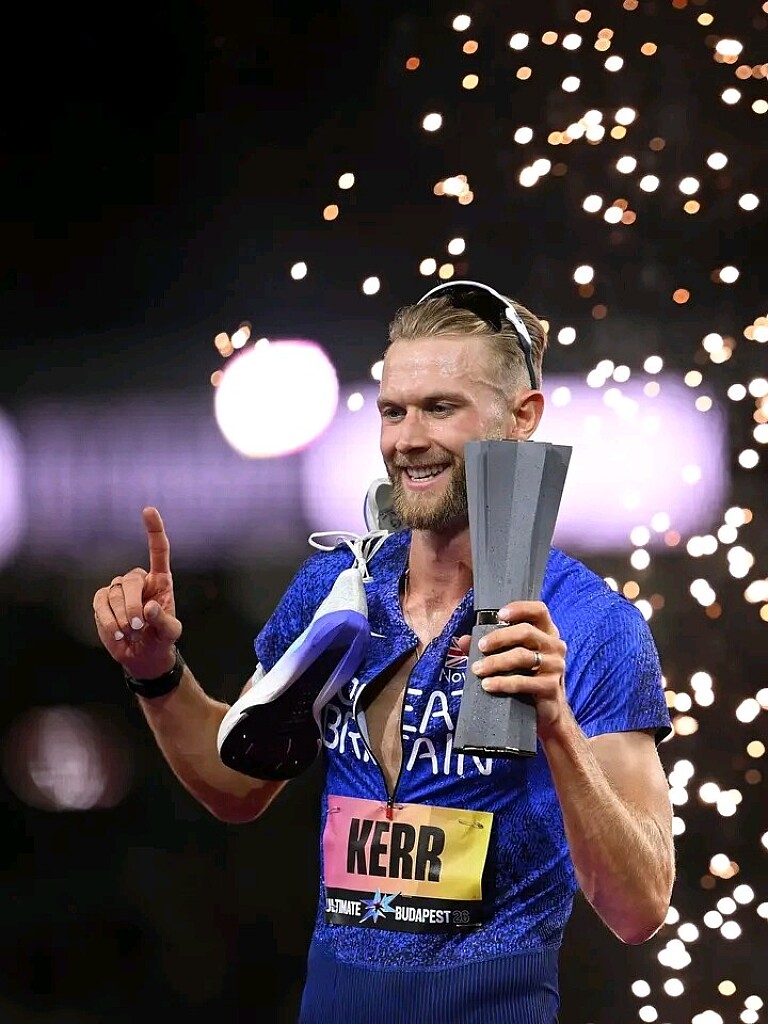


Josh Kerr Does It Again In Budapest As British Star Claims Ultimate 1500m Crown
“I’m not going to lose.” He said it. Then he delivered.
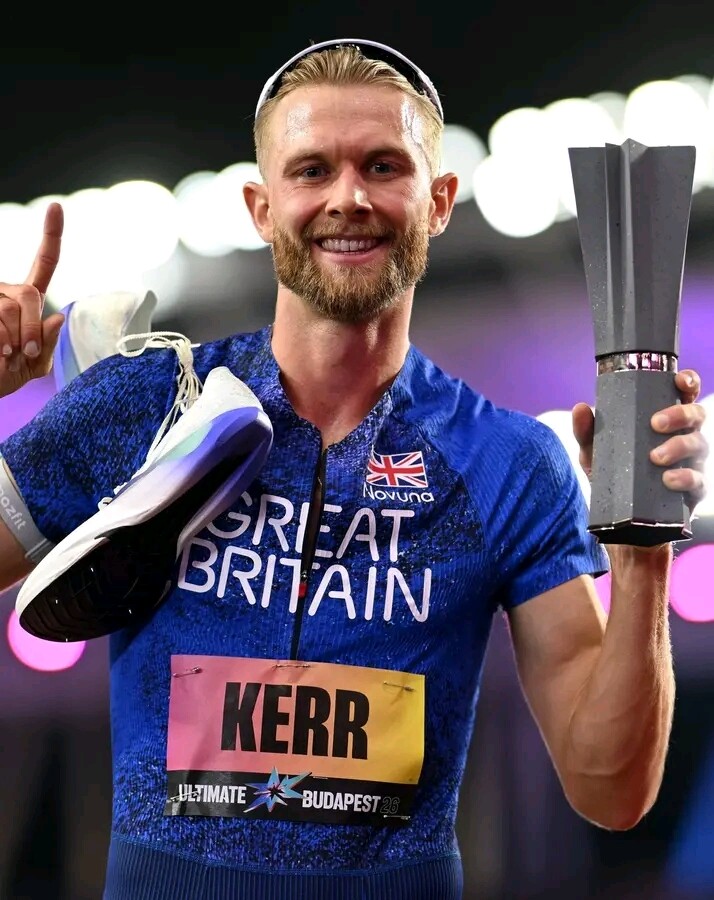
Josh Kerr has conquered Budapest once again, adding another huge title to an extraordinary 2026 season by winning the men’s 1500m at the inaugural World Athletics Ultimate Championship.
The British world mile record-holder produced a superb 3:29.35 to take the Ultimate Championship crown, using a devastating final kick to hold off Australia’s rising star Cameron Myers in the closing stages.
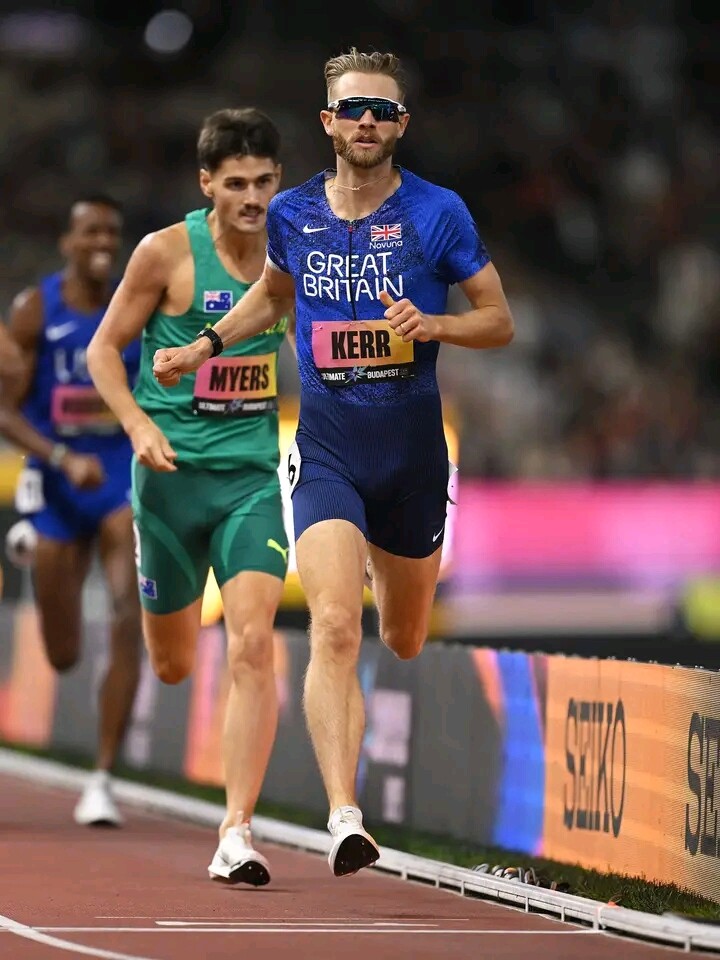
Myers pushed Kerr all the way to the finish, but the British star remained composed under pressure before finding another gear when it mattered most. The Australian crossed the line in 3:29.68 to secure second place, just 0.33 seconds behind the champion.
American Hobbs Kessler completed the podium in 3:30.73, while Olympic champion Cole Hocker finished fourth in 3:30.74, narrowly missing out on a medal by just one hundredth of a second.
For Kerr, the victory carries an added layer of significance because Budapest has already played a defining role in his career.
It was here in 2023 that Kerr produced one of the biggest shocks of that year’s World Championships, stunning Jakob Ingebrigtsen to become the world champion over 1500m. Three years later, he has returned to the same city and conquered it again.
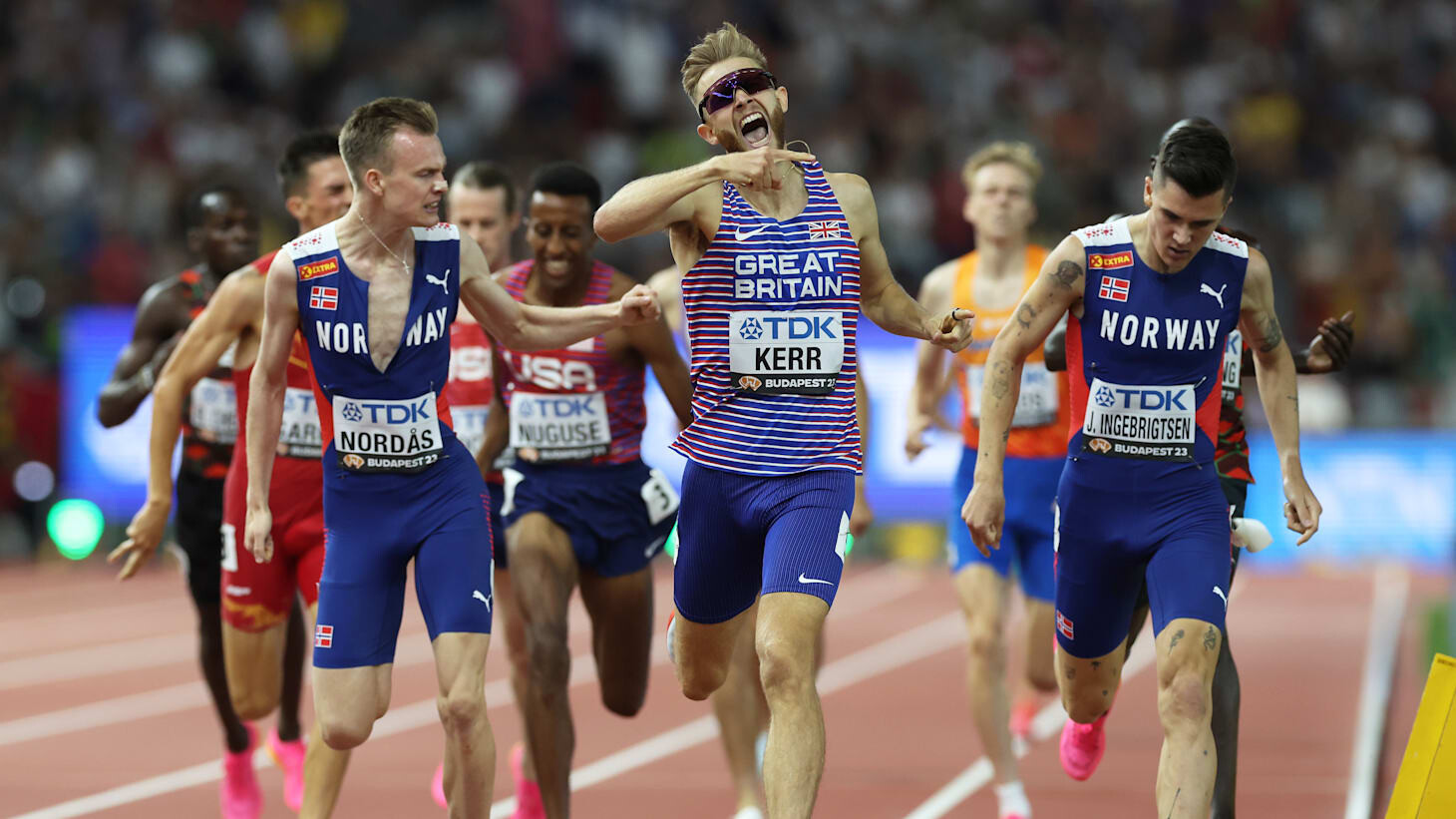
Budapest belongs to Kerr once more.
The British star arrived at the Ultimate Championship after putting together a remarkable 2026 campaign. Among the highlights was his sensational 3:42.66 mile world record in London, where he finally broke a mark that had stood for 27 years.
Kerr also added Commonwealth Games gold to his growing collection of major honours, further establishing himself as one of the dominant middle-distance athletes of his generation.
The Budapest final was expected to provide another chapter in the growing rivalry between Kerr and Ingebrigtsen. However, Ingebrigtsen’s late withdrawal meant the much-anticipated rematch never materialised.
Even without the Norwegian superstar, Kerr had no shortage of formidable opposition. The field featured Olympic champion Cole Hocker, world champion Isaac Nader and Yared Nuguse, while Myers arrived as one of the most exciting young talents in international middle-distance running.
The unique Ultimate Championship format also raised the stakes. With no heats and no second chances, every athlete had only one opportunity to deliver on the biggest stage.
Kerr appeared to embrace that pressure.
Rather than allowing the quality of the field to dictate the race, he stayed patient and waited for the decisive moment. As the final metres approached, the British star unleashed the finishing speed that has become one of his greatest weapons.
Myers fought desperately to stay with him, but Kerr had done enough.
The 3:29.35 winning time was not simply another fast performance. It was another demonstration of Kerr’s championship instincts and his ability to produce when everything is on the line.
For Myers, the silver medal represents another major breakthrough and a strong statement from the young Australian. His 3:29.68 shows that he is increasingly capable of challenging the established stars of the 1500m.
Kessler’s bronze added another impressive result to his career, while Hocker’s fourth-place finish underlined just how competitive the final was, with less than a second separating him from the champion.
Yet the night ultimately belonged to one man.
From the streets of Budapest in 2023 to the Ultimate Championship final three years later, Kerr has once again made the Hungarian capital his stage.
Another big race. Another Josh Kerr victory.
He arrived saying, “I’m not going to lose.”
Then he delivered.
Josh Kerr is the inaugural World Athletics Ultimate Championship 1500m champion — and Budapest belongs to him again.
by Erick Cheruiyot for My Best Runs.
Login to leave a comment
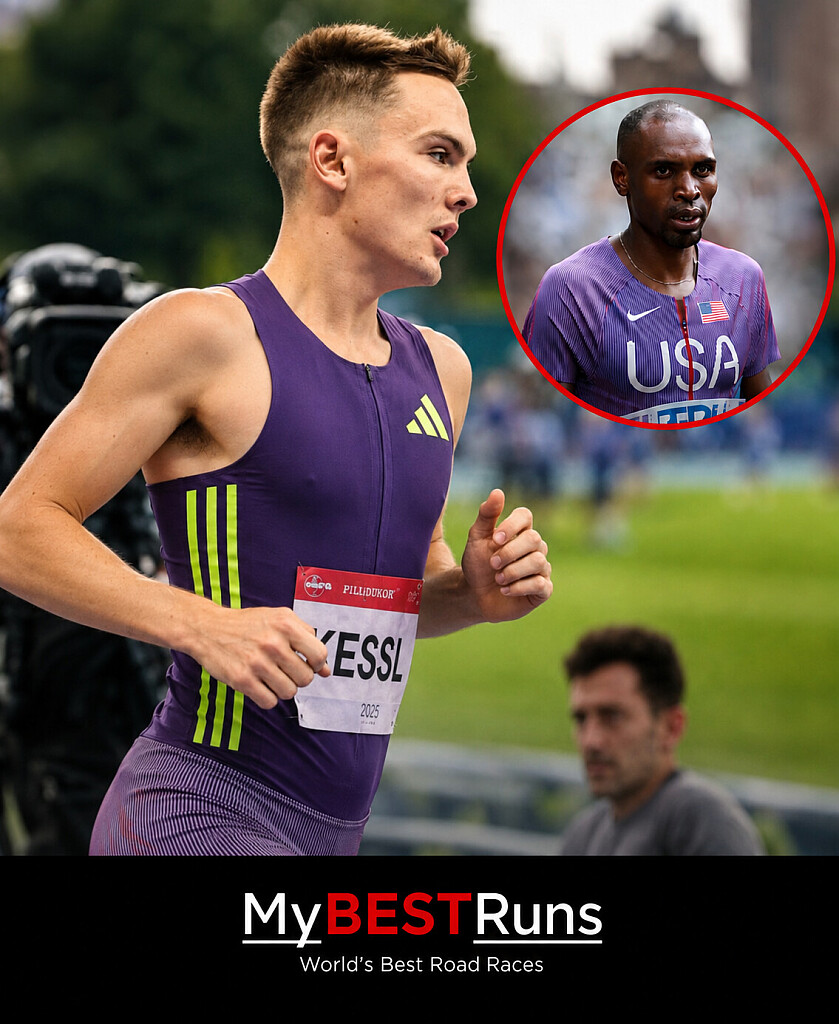
From Fourth to Bronze: Hobbs Kessler Elevated After Koech’s Disqualification
Hobbs Kessler has been officially elevated to third place in the men’s 1,500m from the 2025 U.S. Outdoor Championships, nearly a year after finishing fourth in the original final.
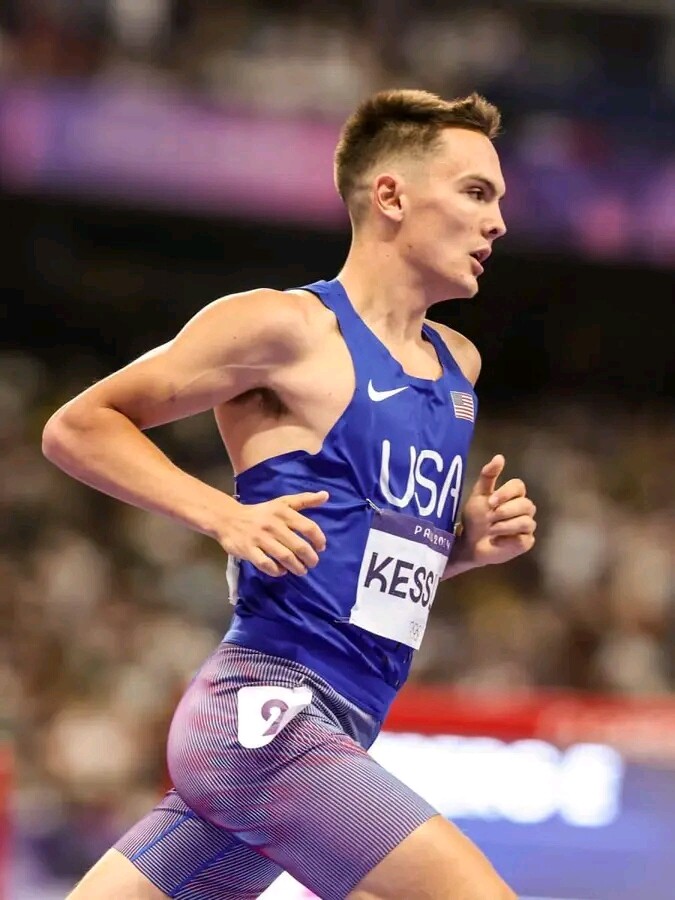
Kessler crossed the line fourth in a tightly contested race won by Jonah Koech. Ethan Strand finished second and Cole Hocker third, with the top three earning places on the U.S. team for the 2025 World Athletics Championships in Tokyo.
The standings have now been revised following USADA’s three-year sanction against Koech. His Athlete Biological Passport showed abnormalities consistent with blood doping, and his results from the specified period were disqualified. Koech did not challenge the case.
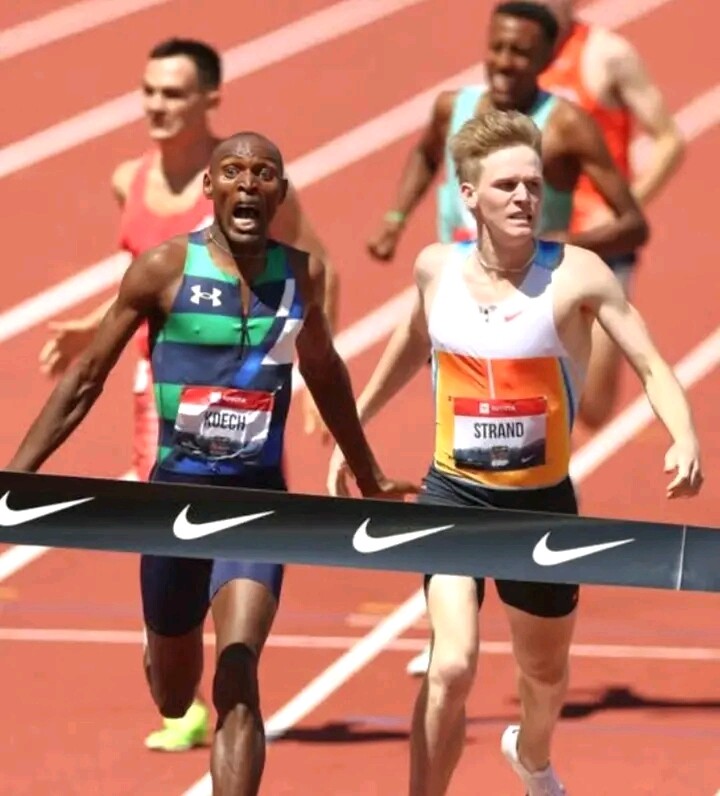
With Koech’s result removed, Strand moves into first place, Hocker rises to second and Kessler is promoted to third.
For Kessler, the revised classification brings an official U.S. championship bronze medal almost eleven months after the race.
However, the change comes long after the 2025 World Championships had already taken place. Kessler was not part of the three-athlete U.S. 1,500m team in Tokyo, and the later adjustment to the results cannot recreate that competition or the circumstances surrounding it.
That is one of the complexities of anti-doping enforcement: results can be corrected and championship records updated after a sanction, but those changes occur after the original competition has passed.
Kessler’s record now reflects a third-place finish, while Koech’s disqualification reshapes the final standings of one of the most closely contested races at the 2025 U.S. Championships.
Koech’s three-year period of ineligibility runs until July 2029.
Nearly a year later, the results have changed — and Hobbs Kessler officially moves from fourth to bronze.
by Erick Cheruiyot for My Best Runs.
Login to leave a comment
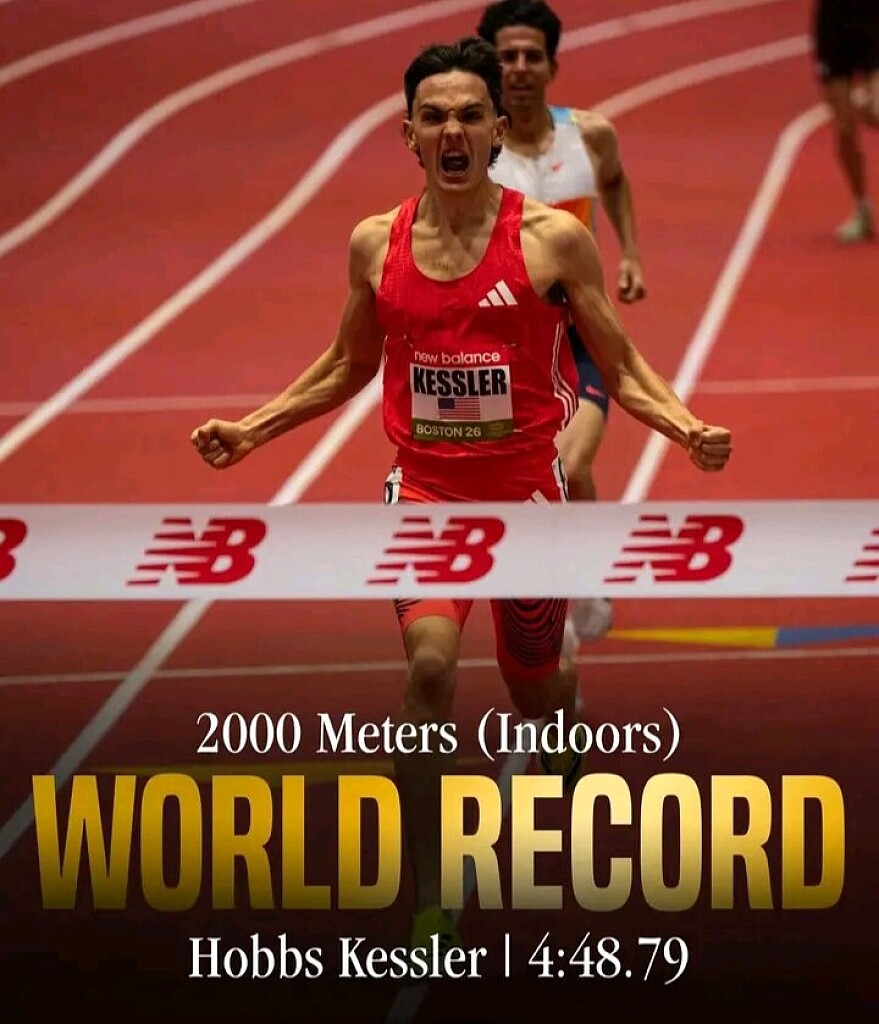
When Time Finally Gave Way: Hobbs Kessler’s 4:48.79 and the Night Indoor History Fell
There are records that feel temporary, and then there are records that begin to feel permanent. For nearly nineteen years, Kenenisa Bekele’s 2000m indoor mark belonged to the second category—a time etched into the sport’s mythology, respected, feared, and largely left untouched. On a charged night at the New Balance Indoor Grand Prix 2026, Hobbs Kessler proved that even the most stubborn pieces of history eventually yield to courage, rhythm, and belief.
From the opening laps inside the packed arena, the race carried a different energy. The pace was honest, relentless, and daring, drawing the field into unfamiliar territory. Kessler, calm and composed beyond his 22 years, stayed patient as the laps unwound, shadowed closely by a deep cast of world-class talent. The moment arrived with one lap remaining. As the bell rang, Kessler shifted gears, surging past fellow American Grant Fisher with a move that felt both explosive and inevitable. There was no panic, no dramatic gesture—just precision, power, and an unbreakable line toward the finish.
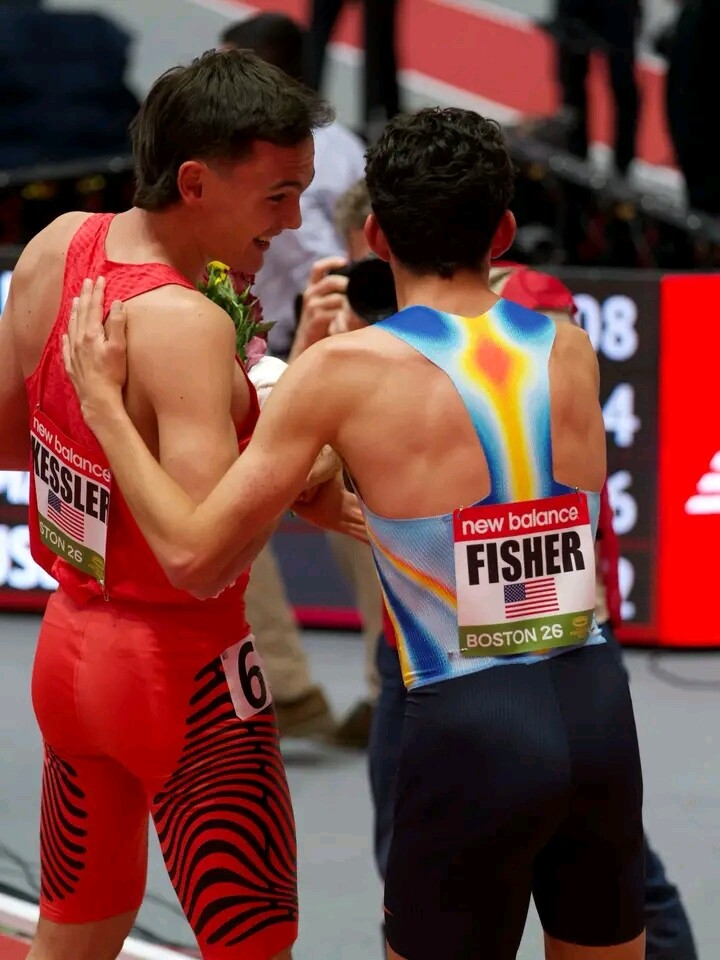
When Kessler crossed the line, the clock delivered the verdict: 4:48.79. Bekele’s long-standing 4:49.99 from 2007 was gone. Not chipped away, not narrowly surpassed—beaten decisively. In the same breath, Kessler claimed the American indoor record as well, eclipsing a mark that had been set just one day earlier by Olympic champion Cole Hocker, a detail that perfectly captured the extraordinary momentum of American middle-distance running.
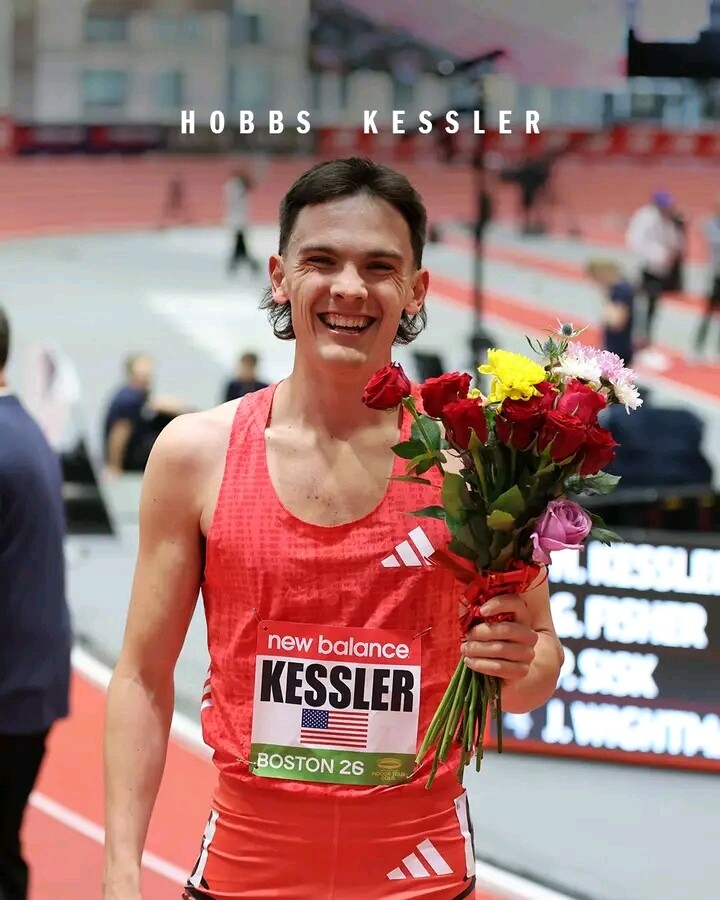
Behind him, Grant Fisher followed in 4:49.48, also inside the old world best, while Belgium’s Pieter Sisk and Great Britain’s Jake Wightman rounded out a race that will be remembered as one of the deepest and fastest in indoor history. Multiple careers were elevated in a single night, but it was Kessler who owned the moment.
The significance of the performance stretches far beyond one race. Kessler’s name now sits above a list populated by giants—Bekele, Haile Gebrselassie, Eamonn Coghlan, Bernard Lagat—athletes who shaped eras and redefined what was possible indoors. To surpass them at just 22 years old is not merely a breakthrough; it is a declaration.
The New Balance Indoor Grand Prix has long been a place where bold athletes chase ambitious ideas. On this night, ambition caught up with history. The record fell, the crowd roared, and time itself seemed to pause in respect.
Some performances win races. Others reshape belief. Hobbs Kessler’s 4:48.79 did both—and in doing so, reminded the world that no record is forever.
by Erick Cheruiyot for My Bestruns.
Login to leave a comment

Track’s Biggest Stars Return to Hayward Field for U.S. Championships
Eugene, Oregon – The stage is set for another electrifying weekend at iconic Hayward Field, as the Toyota U.S.A. Track & Field Outdoor Championships take place this Saturday and Sunday at 4 p.m. ET, airing live on NBC and Peacock.
Some of the sport’s biggest stars will be headlining the meet, including Sydney McLaughlin-Levrone and Noah Lyles, two of America’s premier track and field athletes.
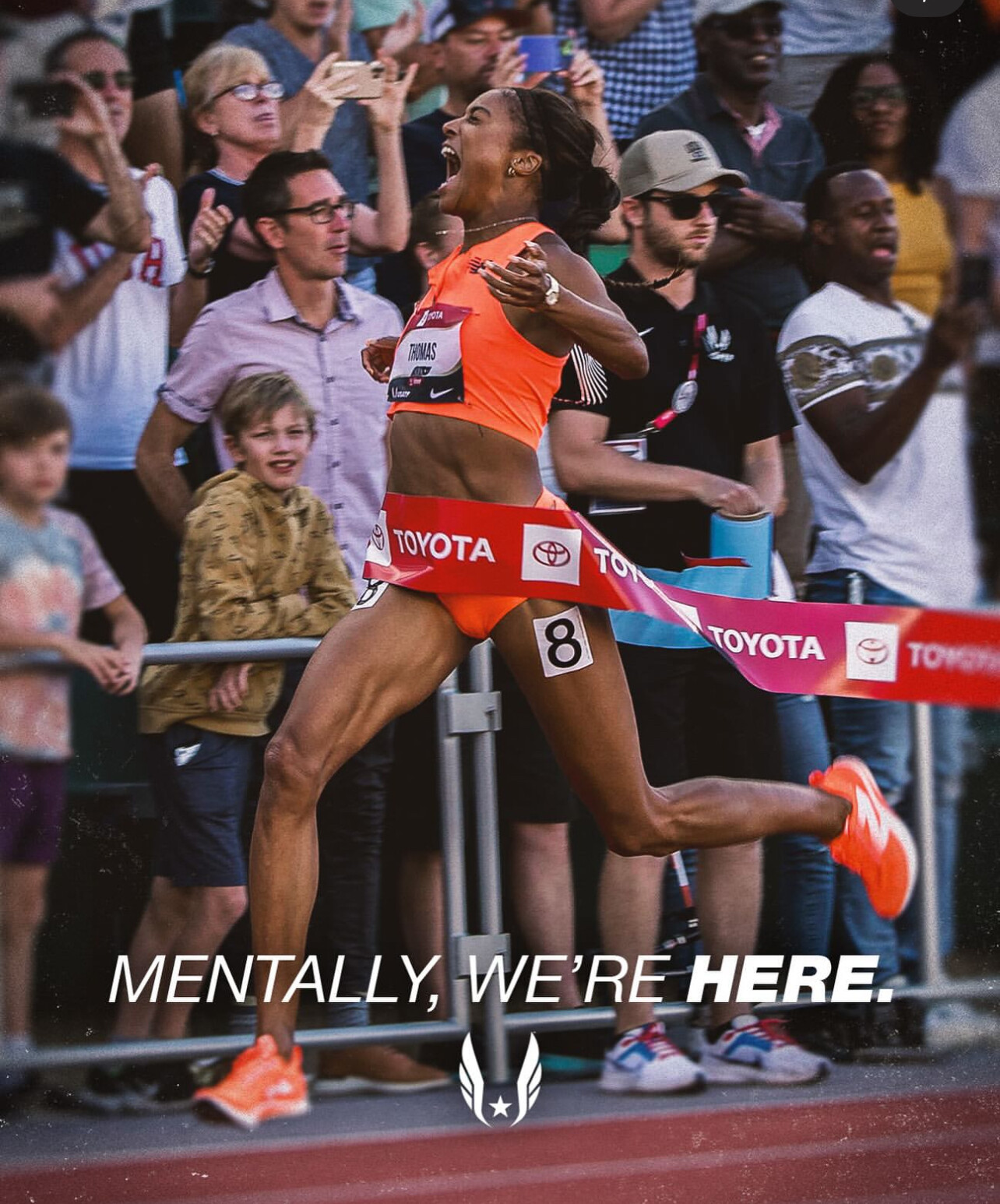
McLaughlin-Levrone, the reigning Olympic and World Champion in the 400m hurdles, is returning to the national spotlight after a strategic training and race schedule this season. Known for her graceful power and impeccable technique, Sydney has already redefined what’s possible in her event—shattering the world record multiple times. Fans are eager to see whether she’ll contest the 400m flat or return to the hurdles in Eugene.
On the men’s side, all eyes are on Noah Lyles, the reigning World Champion in the 100m and 200m. Lyles has made it clear he’s aiming for greatness this year, with both Olympic gold and world records on his radar. His recent performances on the Diamond League circuit suggest he’s peaking at the right time.
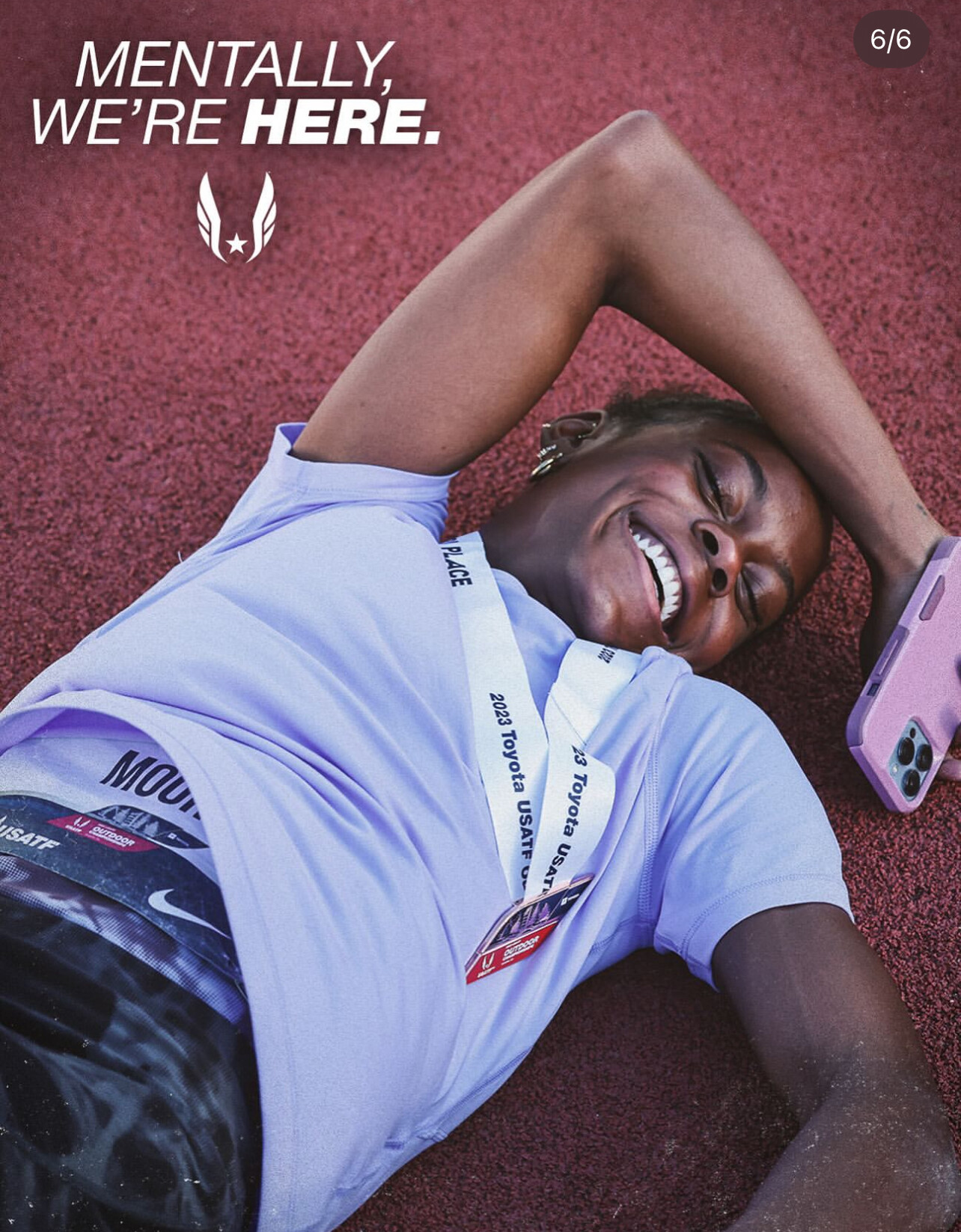
Distance Running Update: Eyes on the 1500m, 5000m, and 10,000m
The distance events promise fierce battles and major implications for Team USA selection.
In the men’s 1500m, all eyes will be on Yared Nuguse, who owns one of the fastest times in American history. He’ll be challenged by Cole Hocker, who famously stormed to an Olympic team spot in 2021, and NCAA standout Hobbs Kessler, who continues to climb the ranks.
The women’s 1500m will feature Nikki Hiltz, Emily Mackay, and Sinclaire Johnson, with Hiltz in standout form after their impressive road mile performances this season.
In the 5000m, American record holder Woody Kincaid will take on Grant Fisher, who’s back after injury and hungry to reclaim his place at the top. The women’s 5000m will include Elise Cranny, Karissa Schweizer, and Parker Valby, in what could be one of the most tactical races of the meet.
The 10,000m has already been contested earlier in the season, but the championship weekend will set the tone for the athletes’ final preparations ahead of international competition.
As always, Hayward Field brings the best out of American distance runners—expect fireworks as the fields chase not only titles, but Olympic dreams.
Catch the action live on NBC and Peacock.
Event: Toyota U.S.A. Track & Field Outdoor Championships
Location: Hayward Field, Eugene, Oregon
Broadcast: Saturday & Sunday at 4 p.m. ET on NBC & Peacock
by Boris Baron
Login to leave a comment

Faith Kipyegon and Jakob Ingebrigtsen Headline Historic 2025 Pre Classic
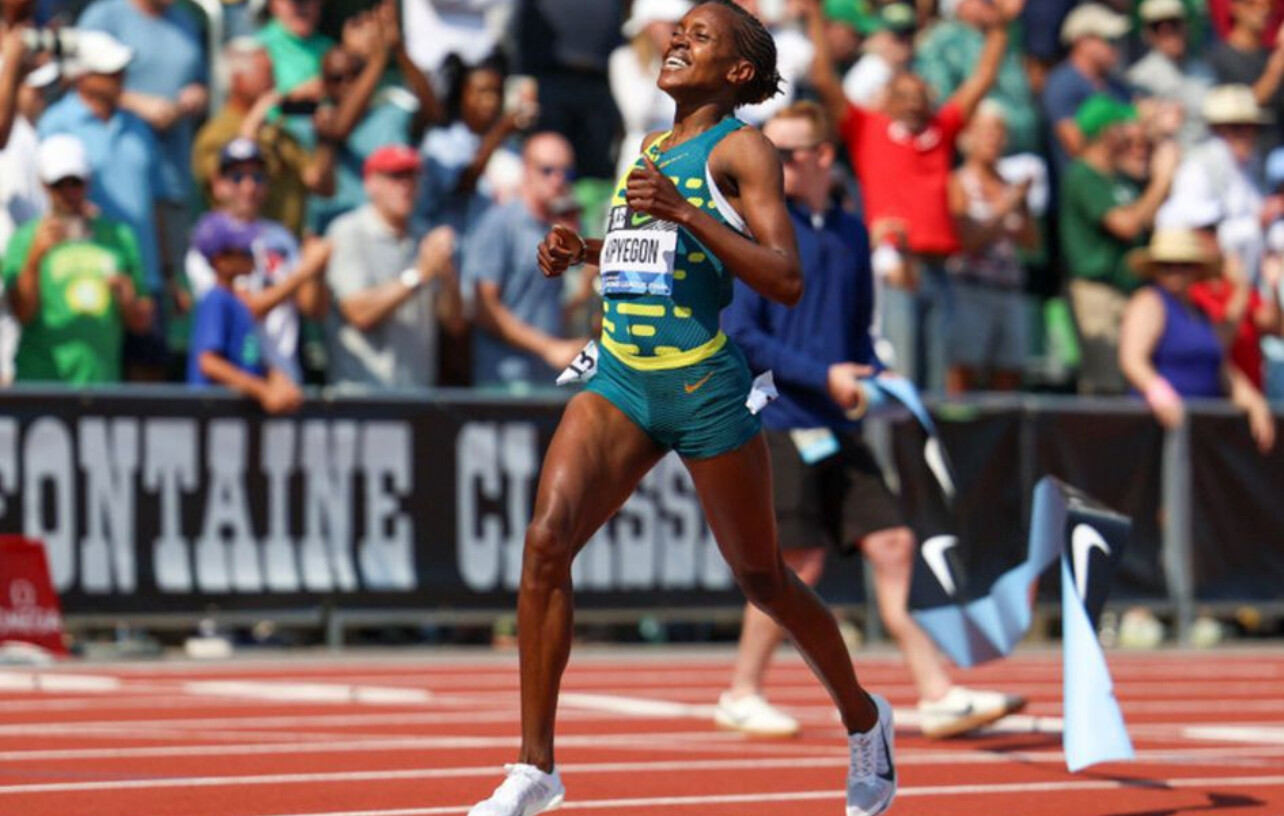
The 50th edition of the Prefontaine Classic, set for July 5 at Hayward Field in Eugene, Oregon, promises to be one of the most exciting track meets of the year. Headlining the event is three-time Olympic gold medalist Faith Kipyegon, who returns to the Pre Classic in search of her seventh career victory in the women’s 1500m.
Kipyegon, the world record holder in both the 1500m (3:49.04) and the mile (4:07.64), shattered the 1500m mark in Paris on July 7, 2024. Now, nearly a year later, she’ll look to reassert her dominance in front of a packed crowd at one of the sport’s most prestigious meets.
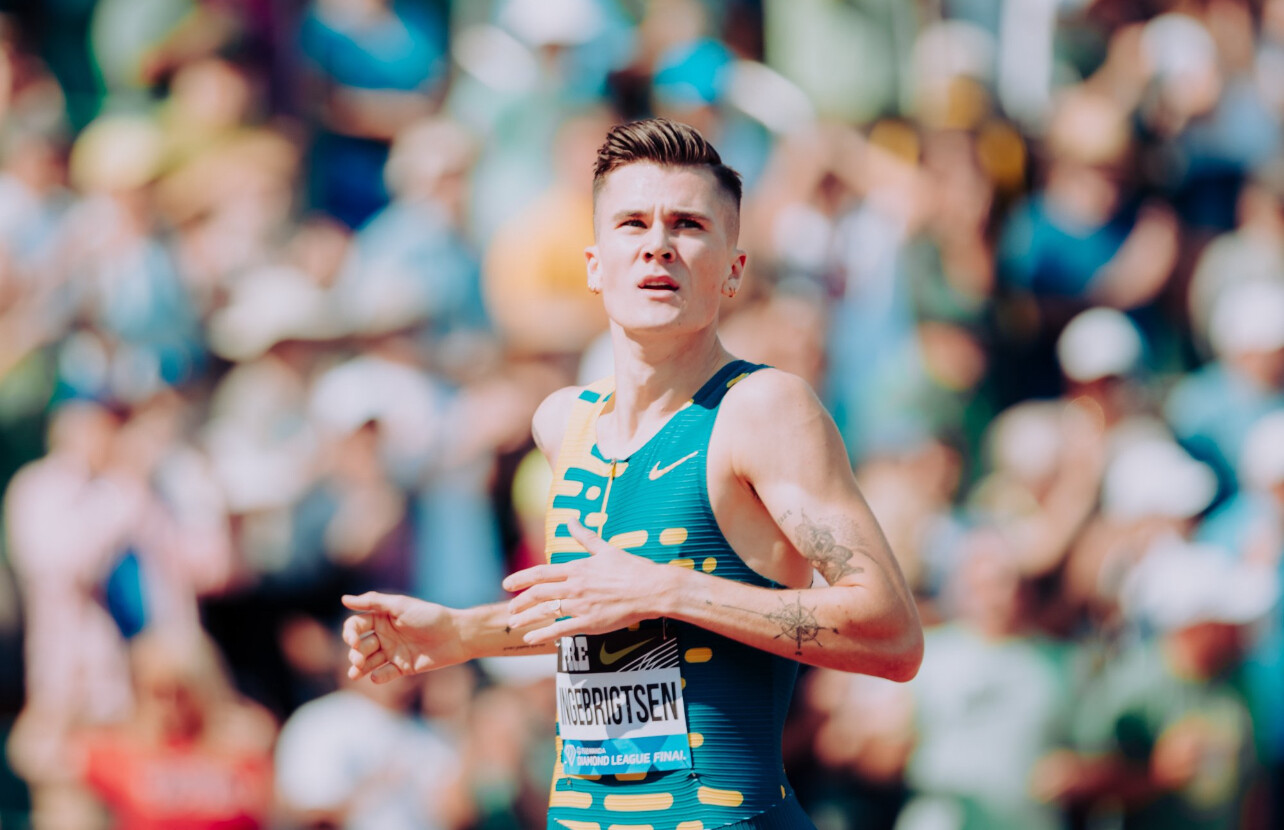
Joining Kipyegon in the 1500m are her fellow 2024 Olympic medalists—silver medalist Jessica Hull of Australia and bronze medalist Georgia Bell of Great Britain. Hull, a former University of Oregon standout, also holds the current world record in the 2000m.
But Kipyegon isn’t the only big name set to thrill fans in Eugene. The men’s Bowerman Mile will feature a stacked lineup that includes:
• Jakob Ingebrigtsen (Norway) – Olympic gold medalist and multiple-time Bowerman Mile champion

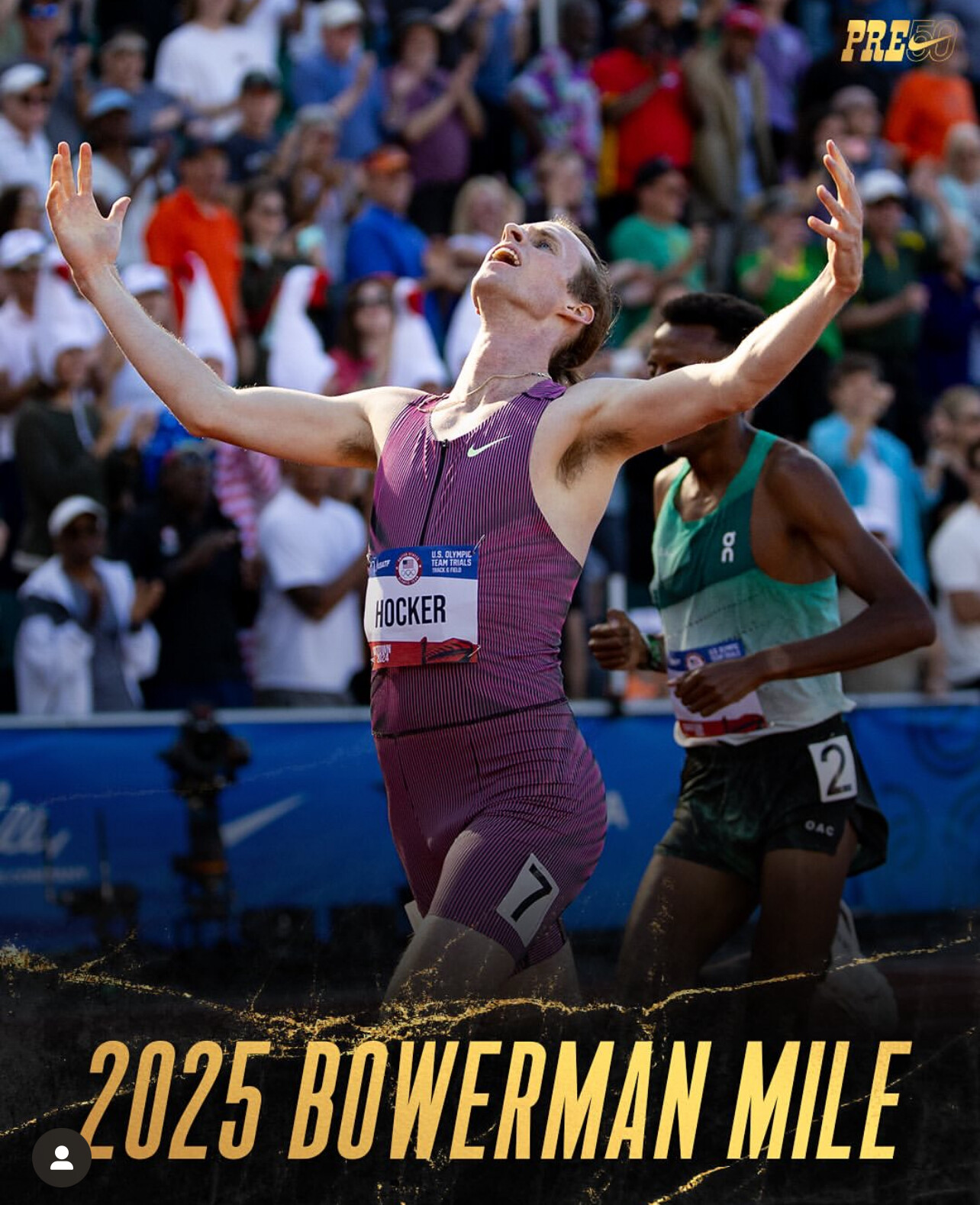
• Cole Hocker (USA) – 2024 Olympic 1500m champion
• Yared Nuguse (USA) – Olympic bronze medalist and former indoor mile world record holder
• Timothy Cheruiyot (Li Kenya) – Former world champion
• Jake Wightman (Great Britain) – 2022 world champion
• Grant Fisher (USA) – Olympic bronze medalist in both the 5000m and 10,000m
• Plus rising stars including Oliver Hoare, Neil Gourley, Azeddine Habz, Hobbs Kessler, Niels Laros, Cameron Myers, Stefan Nillessen, and Reynold Cheruiyot
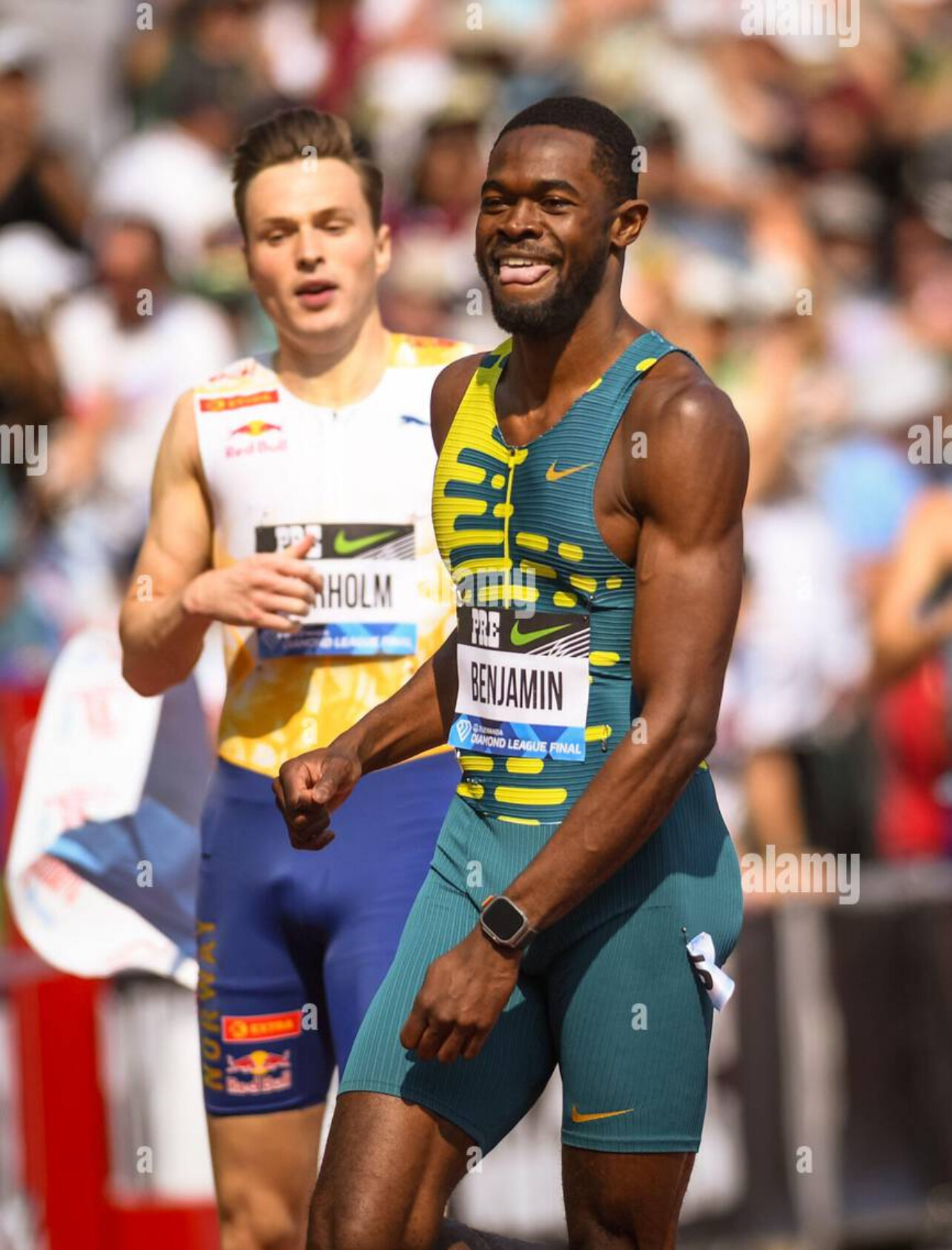
In the men’s 400m hurdles, Olympic silver medalist Rai Benjamin will headline a competitive field that also includes CJ Allen, Trevor Bassitt, Clement Ducos, Malik James-King, Abderrahman Samba, and Assinie Wilson.
The 2025 Prefontaine Classic will feature 14 Diamond League disciplines, including the women’s 800m, 5000m, and 3000m steeplechase—each with world-class fields expected to be announced soon.
As the sport celebrates this milestone edition of the Pre Classic, the meet is shaping up to be not just a tune-up for global championships, but a showcase of track and field at its absolute best.
by Boris Baron
Login to leave a comment

The Evolution of the High School Sub-4 Mile Club
On May 6, 1954, Roger Bannister made history by running the first sub-4-minute mile, clocking 3:59.4 in Oxford, England. His groundbreaking achievement redefined what was possible in middle-distance running, inspiring generations of athletes to chase the elusive mark.
For decades, breaking the 4-minute barrier remained an extraordinary feat, but in recent years, more high school runners in the United States have joined this exclusive club. As of February 2025, 23 American high school boys have accomplished this milestone, with notable additions in 2024 and 2025.
The Latest High School Runners to Break Four Minutes
The most recent athletes to achieve the sub-4-minute mile in high school competition are:
- Drew Griffith – 3:57.72 (May 30, 2024, Festival of Miles, St. Louis, Missouri)
- JoJo Jourdon – 3:59.87 (February 3, 2024, New Balance Indoor Grand Prix, Boston, Massachusetts)
- Zachary Hillhouse – 3:59.62 (June 16, 2024, New Balance Nationals Outdoor, Philadelphia, Pennsylvania)
- Owen Powell – 3:57.74 (February 15, 2025, UW Husky Classic, Seattle, Washington)
These runners continue to prove that the sub-4-minute mile, once thought to be nearly impossible for young athletes, is an achievable milestone with the right combination of talent, training, and opportunity.
Jim Ryun and Alan Webb: The Legends of the High School Mile
Jim Ryun: A Historic Career
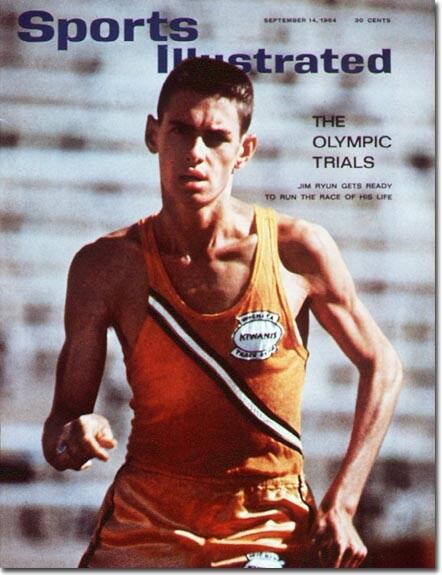
Jim Ryun was the first high school runner to break the 4-minute mile, running 3:59.0 in 1964 as a junior. He later set the national high school record of 3:55.3 in 1965, a time that stood for 36 years.
After his historic high school career, Ryun went on to break the world record in the mile twice—first in 1966, and then again in 1967 when he ran 3:51.1. At 19 years old, he remains the youngest world record holder in the mile to date. His record stood for nine years before being broken in 1975.
Ryun represented the United States in three Olympic Games (1964, 1968, and 1972), winning a silver medal in the men’s 1500m at the 1968 Olympics. His dominance in middle-distance running made him one of the greatest milers in history.
Alan Webb: The New Generation's Record-Breaker
In 2001, Alan Webb broke Ryun’s long-standing high school mile record by running 3:53.43 at the Prefontaine Classic. Webb’s performance redefined expectations for young milers and set a new benchmark for high school runners.
Webb continued his success post-high school and later set the American record in the mile, running 3:46.91 in 2007. This remains one of the fastest mile performances ever by an American.
Despite his success, Webb’s professional career was marked by injuries, including Achilles tendonitis and stress fractures, which affected his consistency. However, his high school and professional achievements cemented his place as one of the greatest milers in U.S. history.
The Complete List of High School Sub-4 Milers
Below is the full list of American high school runners who have broken the 4-minute mile, ranked by their fastest time achieved during high school competition:
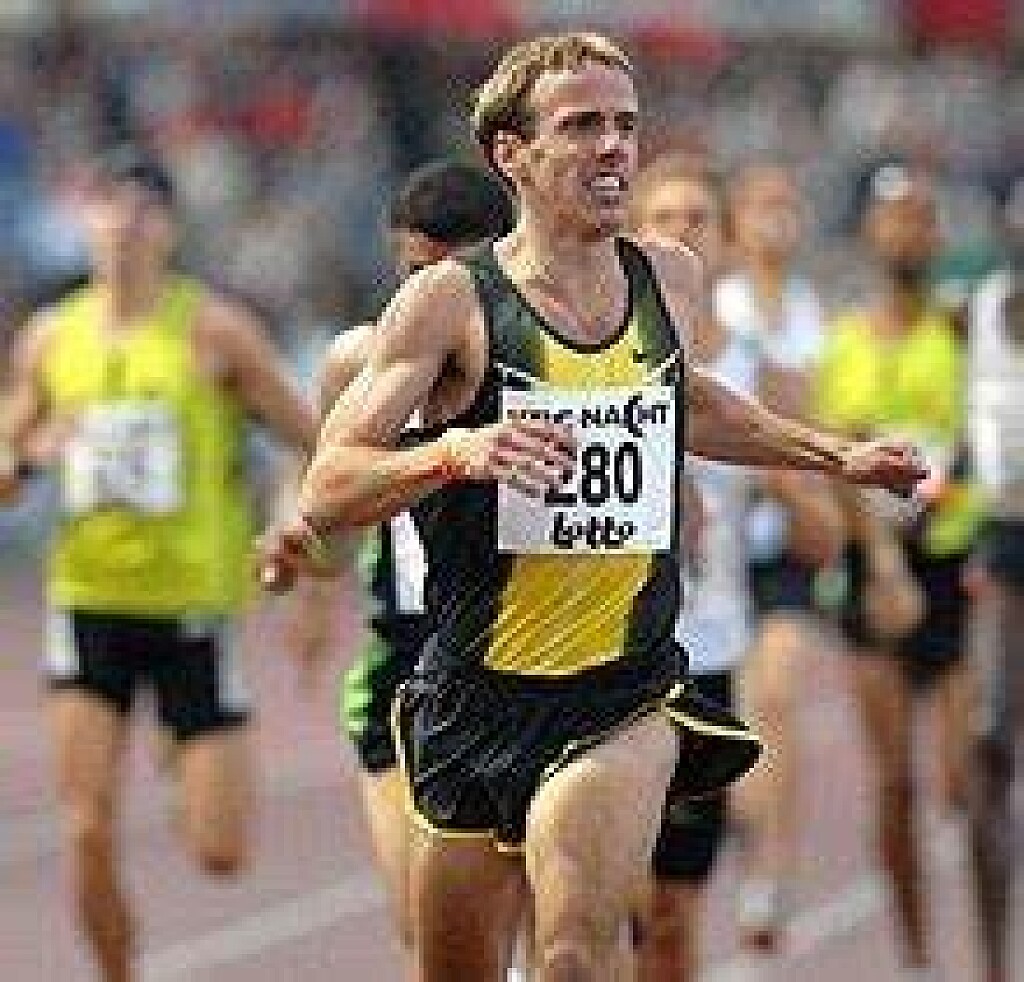
- Alan Webb (first photo) – 3:53.43 (May 27, 2001, Prefontaine Classic, Eugene, Oregon)
- Jim Ryun (second photo) – 3:55.3 (June 27, 1965, AAU Championships, San Diego, California)
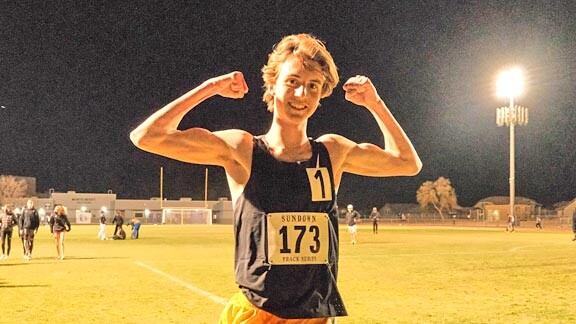
- Colin Sahlman (third photo) – 3:56.24 (May 28, 2022, Prefontaine Classic, Eugene, Oregon)
- Drew Griffith – 3:57.72 (May 30, 2024, Festival of Miles, St. Louis, Missouri)
- Hobbs Kessler – 3:57.66 (February 7, 2021, American Track League Invitational, Fayetteville, Arkansas)
- Drew Hunter – 3:57.81 (February 20, 2016, NYRR Millrose Games, New York City, New York)
- Gary Martin – 3:57.89 (June 2, 2022, Festival of Miles, St. Louis, Missouri)
- Connor Burns – 3:58.83 (June 2, 2022, Festival of Miles, St. Louis, Missouri)
- Tim Danielson – 3:59.4 (June 11, 1966, San Diego Invitational, San Diego, California)
- Reed Brown – 3:59.30 (June 1, 2017, Festival of Miles, St. Louis, Missouri)
- Matthew Maton – 3:59.38 (May 8, 2015, Oregon Twilight Meet, Eugene, Oregon)
- Grant Fisher – 3:59.38 (June 4, 2015, Festival of Miles, St. Louis, Missouri)
- Michael Slagowski – 3:59.53 (April 29, 2016, Jesuit Twilight Invitational, Portland, Oregon)
- Leo Daschbach – 3:59.54 (May 23, 2020, The Quarantine Clasico, El Dorado Hills, California)
- Simeon Birnbaum – 3:57.53 (June 1, 2023, Festival of Miles, St. Louis, Missouri)
- Rheinhardt Harrison – 3:59.33 (June 3, 2022, Golden South Series #2, Tarpon Springs, Florida)
- Marty Liquori – 3:59.8 (June 23, 1967, AAU Championships, Bakersfield, California)
- Lukas Verzbicas – 3:59.71 (June 11, 2011, Adidas Grand Prix, New York City, New York)
- JoJo Jourdon – 3:59.87 (February 3, 2024, New Balance Indoor Grand Prix, Boston, Massachusetts)
- Zachary Hillhouse – 3:59.62 (June 16, 2024, New Balance Nationals Outdoor, Philadelphia, Pennsylvania)
- Owen Powell – 3:57.74 (February 15, 2025, UW Husky Classic, Seattle, Washington)
- Tinoda Matsatsa – 3:58.70 (June 1, 2023, Festival of Miles, St. Louis, Missouri)
- Jackson Heidesch – 3:59.08 (June 1, 2023, Festival of Miles, St. Louis, Missouri)
The Sub-4 Mile Remains an Iconic Benchmark
Roger Bannister’s 1954 breakthrough redefined human potential in distance running, and the high school sub-4-mile club continues to grow. As competition and knowledge improve, the question isn’t whether more young runners will join the club, but just how fast the next generation can go
Login to leave a comment
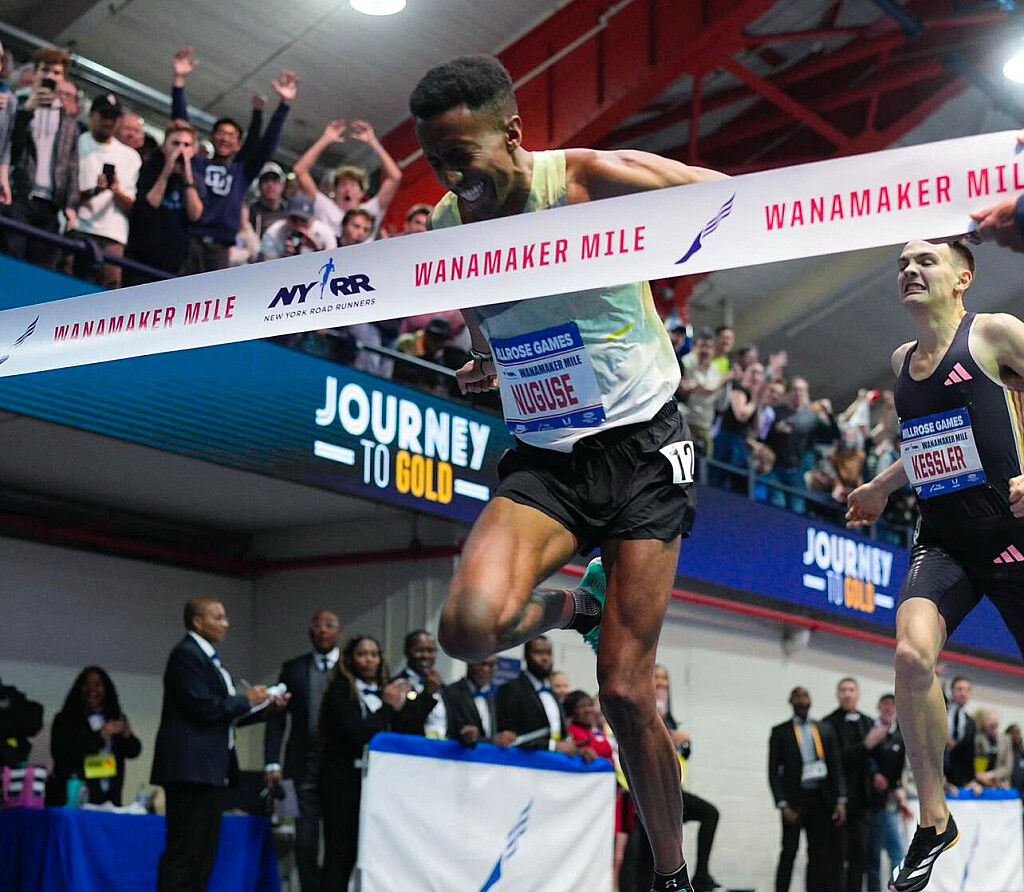
Historic World Records Dominate 2025 Millrose Games
The 117th Millrose Games, held on February 8, 2025, at New York’s Armory—a venue renowned as “The Fastest Track in the World”—delivered an unforgettable spectacle of middle-distance racing. Athletes shattered world records, national marks, and personal bests across events from the 800m to the 3000m, cementing this edition as one of the most electrifying in the meet’s storied history. Below, we break down the standout performances.
Records Fall in Mile, 3000m, and 800m
1. Wanamaker Mile: Yared Nuguse Rewrites History
Yared Nuguse (USA) stormed to a world indoor mile record of 3:46.63, eclipsing Ethiopian Yomif Kejelcha’s 2019 mark (3:47.01) . In a race missing world champion Josh Kerr (withdrawn due to illness), Nuguse led wire-to-wire, splitting 3:31.74 for 1500m—a North American record—before surging past a fierce challenge from Hobbs Kessler (3:46.90, also under the previous WR) . Australian teen Cam Myers stunned with a world U20 record of 3:47.48, while France’s Azeddine Habz (3:47.56) set a national record.
2. Men’s 3000m: Grant Fisher Outduels Olympic Champion
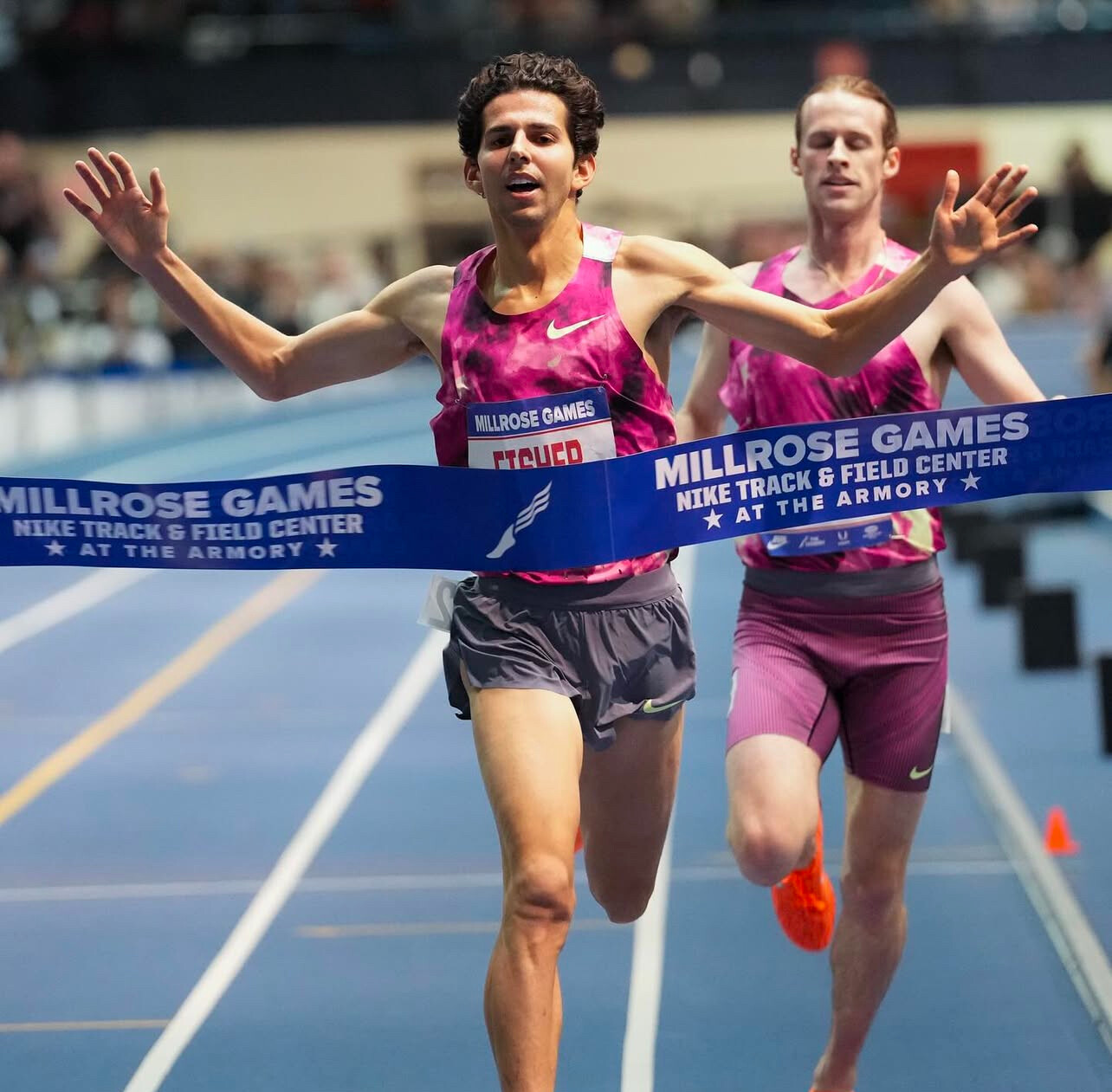
Grant Fisher (USA) and Cole Hocker (USA)—the Olympic 10,000m bronze medalist and 1500m gold medalist, respectively—collided in a tactical masterclass. Fisher’s 7:22.91 broke Lamecha Girma’s world indoor record (7:23.81), with Hocker (7:23.14) also surpassing the old mark . Fisher’s final 200m in 27.50 sealed the win, while France’s Jimmy Gressier (7:30.18) and Australia’s Ky Robinson (7:30.38) set national records .
3. Men’s 800m: Josh Hoey’s American Record Triumph
Josh Hoey (USA) dominated the 800m in 1:43.90, breaking Donovan Brazier’s American indoor record (1:44.21) and holding off Bryce Hoppel (1:44.19 PB) . Sixteen-year-old Cooper Lutkenhaus (1:46.86) smashed the high school record, previously held by Hoey himself .
Women’s Events: Breakthroughs in Mile, 3000m, and 800m

1. Women’s Wanamaker Mile: Georgia Bell’s Tactical Mastery
Georgia Bell (GBR), the Olympic 1500m bronze medalist, edged a stacked field to win in 4:23.35, outkicking Heather MacLean (USA, 4:23.41) and Nikki Hiltz (USA, 4:23.50) . Bell navigated a slow early pace (67.12 for the first quarter-mile) before unleashing a 61.97 final lap, crediting her composure in a “hard and messy” race .
2. Women’s 3000m: Whittni Morgan’s Commanding Victory
Whittni Morgan (USA) surged late to win in 8:28.03, a personal best, ahead of Josette Andrews (USA, 8:29.77) and Sarah Healy (IRL, 8:30.79 NR) . Ethiopia’s Tsigie Gebreselama (8:33.13) and Australia’s Jessica Hull (8:30.91) added depth to a fiercely competitive race .
3. Women’s 800m: Shafiqua Maloney’s Dominance
Shafiqua Maloney (VIN) claimed victory in 1:59.07, fending off a late charge by Addy Wiley (USA, 2:00.14) . Olivia Baker (USA, 2:00.02 PB) and Kaela Edwards (USA, 2:00.14) rounded out the podium in a race showcasing tactical grit .
With world records in the mile (Nuguse) and 3000m (Fisher), plus a slew of national and age-group marks, the 2025 Millrose Games underscored the rising global standard in middle-distance running. As athletes shift focus to outdoor seasons, these performances set the stage for a thrilling 2025 World Championships.
by Boris Baron
Login to leave a comment

NYRR Millrose Games
The Pinnacle of Indoor Track & Field The NYRR Millrose Games, first held in 1908, remains the premier indoor track and field competition in the United States. The 2025 edition will once again bring the world’s top professional, collegiate, and high school athletes to New York City for a day of thrilling competition. Hosted at the New Balance Track &...
more...
Sprint Showdowns and Distance Battles to Take Center Stage at the New Balance Indoor Grand Prix
The New Balance Indoor Grand Prix, a World Athletics Indoor Tour Gold meeting, is set to deliver thrilling track action in Boston on Sunday (Feb 2), with an elite lineup of global gold medalists ready to ignite the indoor season. The competition will serve as a crucial stepping stone towards the World Athletics Indoor Championships Nanjing 25 in March.
Sprints and Hurdles: Lyles and Alfred Lead the Charge
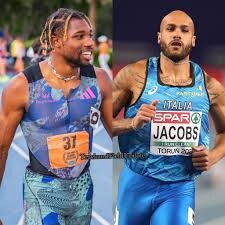
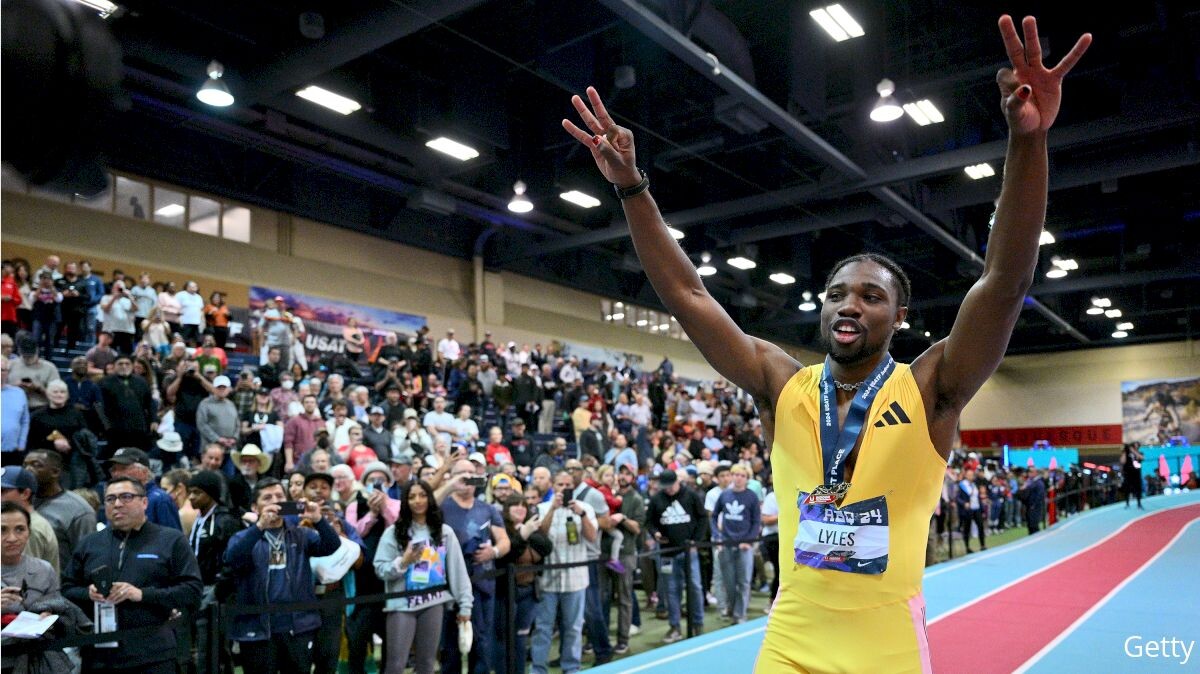
Olympic and world sprint sensation Noah Lyles returns to defend his 60m title, after setting a meeting record of 6.44 last year. Lyles, who claimed 100m gold and 200m bronze at the Olympics, kicked off his season with a 6.62 win in Gainesville last weekend. He will face Trayvon Bromell (USA), Zharnel Hughes (GBR), and 2022 world indoor champion Marcell Jacobs (ITA), who is making his North American indoor debut.
In the women’s 300m, Olympic 100m champion Julien Alfred steps up in distance for her New Balance Indoor Grand Prix debut. After winning world indoor 60m gold in Glasgow, Alfred took 100m gold and 200m silver at the Olympics and ended last season with a Diamond League Final victory. She faces a competitive field including 2019 world 200m champion Dina Asher-Smith (GBR) and USA’s Lynna Irby-Jackson.
The men’s 300m features Olympic 400m hurdles gold medalist Rai Benjamin. A past winner in Boston, Benjamin is set to battle 4x400m relay star Vernon Norwood and Matthew Boling.
The 60m hurdles events promise fireworks, with world record-holder Devynne Charlton (7.65) and Olympic champion Masai Russell renewing their rivalry. Russell edged Charlton in their recent clash in Lubbock, but the Bahamian sprinter leads their head-to-head series 8-2. Joining them are Olympic finalists Ackera Nugent, Grace Stark, and 2018 world indoor silver medallist Christina Clemons.
For the men, world record-holder Grant Holloway (7.27) looks to extend his 10-year unbeaten streak in the 60m hurdles. The Olympic and world champion headlines the field alongside Olympic finalist Freddie Crittenden and 2022 world silver medallist Trey Cunningham.
Middle and Long Distance Races: Olympic Medalists Face Off
The women’s 3000m sees Olympic 1500m silver medalist Jessica Hull (AUS) take on Great Britain’s Olympic bronze medalist Georgia Bell. Hull, the defending champion, set an Oceanian indoor record of 8:24.93 in this event last year. They are joined by USA’s Parker Valby, Emily Mackay, Elise Cranny, Ethiopia’s Melknat Wudu, Italy’s Sintayehu Vissa, and Olympic steeplechase medalist Emma Coburn.
In the men’s 1500m, USA’s Grant Fisher (Olympic 5000m and 10,000m bronze medalist) takes on 2022 world champion Jake Wightman (GBR), Oliver Hoare (AUS), and Josh Hoey, who recently broke the North American 1000m record.
Bryce Hoppel, the reigning world indoor 800m champion, leads the men’s 800m field, while Hobbs Kessler, Cameron Myers, Neil Gourley, and Andrew Coscoran battle in the 3000m.
Other Key Events
Women’s 60m: Mikiah Brisco (USA) and Zoe Hobbs (NZL) lead the field.
Men’s 400m: 2022 world indoor champion Jereem Richards (TTO) races USA’s Quincy Wilson.
Women’s 500m: Dutch 4x400m Olympic champion Lisanne de Witte takes on USA’s Olympic 800m medallist Raevyn Rogers.
Women’s Mile: Heather MacLean (2023 winner) faces Olympic finalist Susan Ejore, Maia Ramsden, and Sage Hurta-Klecker.
With an electrifying lineup of Olympic and world champions, the New Balance Indoor Grand Prix promises high-stakes racing and a preview of the talent heading to Nanjing 25.
by Boris Baron
Login to leave a comment
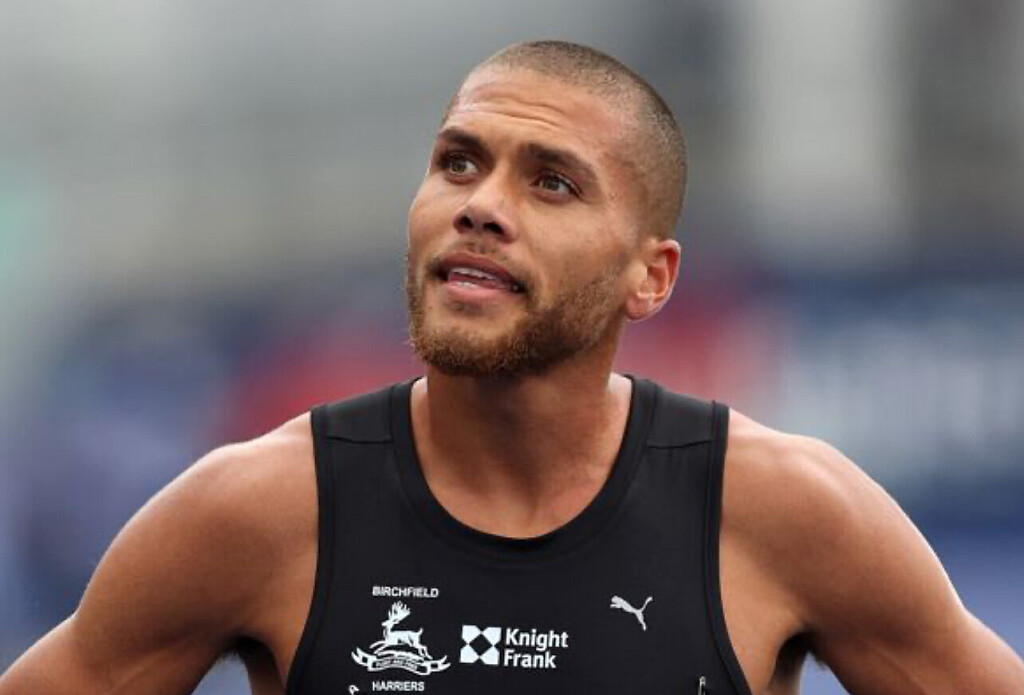
Giles breaks world road mile record in Dusseldorf
Britain’s Elliot Giles won the men’s race at the New Balance KO Meile in Dusseldorf on Sunday (1), smashing the world record with 3:51.3*.
The Olympic 800m semifinalist held off a strong challenge from USA’s Olympic 1500m bronze medallist Yared Nuguse, who finished second in 3:51.9.
Both men were well inside the ratified world record of 3:56.13 set by Hobbs Kessler at the 2023 World Road Running Championships in Riga. They also bettered the mark of 3:54.6 – which is pending ratification – recorded earlier this year by Emmanuel Wanyonyi.
Vincent Keter was third in 3:54.9.
Login to leave a comment
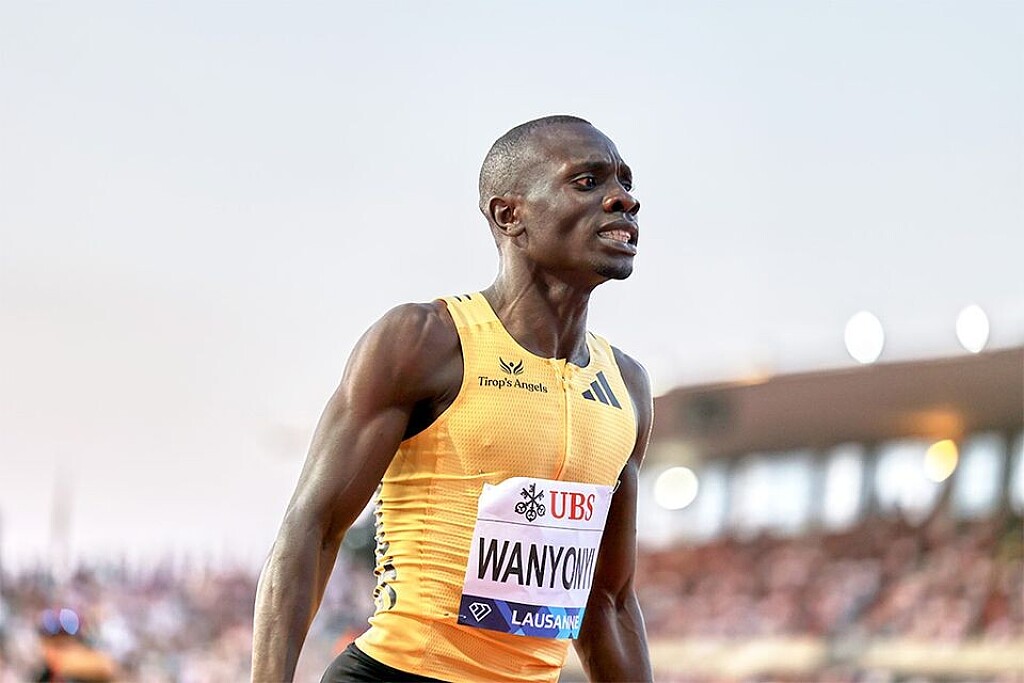
Why David Rudisha believes Emmanuel Wanyonyi is destined to break his 800m world record
Wanyonyi got to within an eighth-hundredth of a second away from equalling David Rudisha's 12-year 800m world record at the Lausanne Diamond League classic on Thursday.
When David Rudisha tipped Emmanuel Wanyonyi as the athlete most likely to break his 12-year-old 800m world record during the Kenyan trials for the Olympic Games at Nyayo National Stadium last June, it wasn’t just a casual remark.
Rudisha’s prediction is now gathering weight, especially after Wanyonyi clocked a blistering 1:41.11 at the Lausanne Diamond League meet in Switzerland on Thursday.
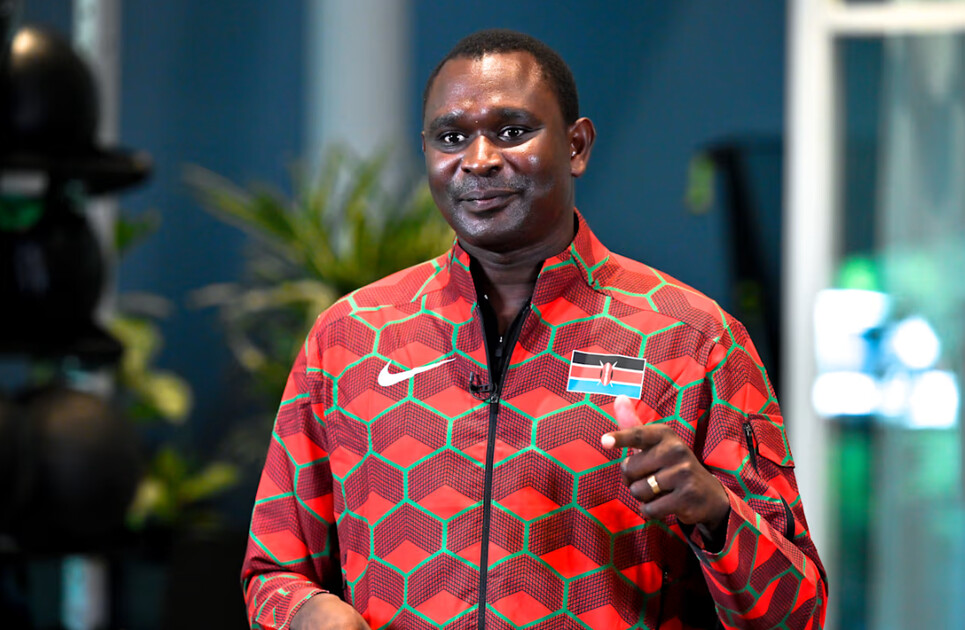
This time not only equaled Wilson Kipketer’s record but also placed Wanyonyi second on the all-time list, just eight hundredths of a second away from Rudisha’s world record of 1:40.91 set at the 2012 London Olympics.
“Wanyonyi is a young talented athlete. He has so much potential, and all he needs to do is fine-tune his craft, and this will see him push his time even lower,” Rudisha had told the media last June.
Rudisha, who knows a thing or two about world records, added, “He always shows his bravery and confidence whenever he steps on the track, and that has been the secret behind his success.
“World records are special. We are looking forward to seeing how the young generation is going to take up the challenge. Of course, there is a lot of innovation, and it improves performances. We believe that world records are there to be broken.”
Wanyonyi’s stunning performance in Lausanne has made him a force to be reckoned with in the world of athletics.
His time of 1:41.11 ties him with Kipketer and positions him as the most serious threat to Rudisha’s reign in the 800m. At just 20 years old, Wanyonyi’s rise to the top has been meteoric, and his determination to succeed mirrors that of Rudisha.
Rudisha himself had an illustrious career, beginning as a decathlete before switching to sprints and later focusing on the 800m in 2005. Just a year later, he won the 800m title at the World U20 Championships in Beijing, clocking 1:47.40.
In 2008, he claimed the African senior title in Addis Ababa with a time of 1:44.20. Then, on August 22, 2010, Rudisha set his first world record in Berlin, running 1:41.09 and breaking Kipketer’s 1997 mark.
Seven days later, he improved his record to 1:41.01 in Rieti. Rudisha continued his dominance by winning the world 800m title in Daegu in 2011, reclaiming it in Beijing in 2015, and becoming the first man since Peter Snell to retain the Olympic 800m title in Rio in 2016.
Now, Wanyonyi is carving out his own legacy. At 20, he became the youngest-ever Olympic 800m champion, leading a race of unprecedented depth in Paris.
He held off Canada’s Marco Arop, the reigning world champion, who briefly took the lead off the final turn before Wanyonyi surged back in the final steps. Arop finished with a North American record of 1:41.20 for silver, while Algeria’s Djamel Sedjati claimed bronze in 1:41.50.
Reflecting on his victory, Wanyonyi said, “It was going to be hard to defend as the only Kenyan in the final. I had a lot of pressure. I spoke to Rudisha yesterday, who told me I would win if I employed my tactics. I decided to run the way he did in London. If I had run a slow race, they would have beaten me.”
Although Wanyonyi didn’t quite match Rudisha’s record, he is keen on having another go at it when the Diamond League moves to Silesia, Poland, this Sunday.
While he has remained modest about his world-record ambitions, saying, “Maybe, but not now,” the Diamond League offers the perfect stage for him to make history. The Wavelight technology, which has been instrumental in helping athletes maintain pace, will also be in use, providing Wanyonyi with every opportunity to push the boundaries.
Wanyonyi is no stranger to breaking records. At 19, he shattered the previous one-mile (1,600m) record of 3:56.13 set by American Hobbs Kessler at the World Road Running Championships in Riga, Latvia, last year.
With Rudisha as his role model and mentor, Wanyonyi is poised to continue his upward trajectory and possibly eclipse the mark set by the man he so deeply admires.
As the athletics world watches, the question on everyone’s mind is not if, but when, Emmanuel Wanyonyi will break the 800m world record. And when that day comes, it will be the culmination of a journey inspired by greatness and driven by the relentless pursuit of excellence.
by Mark Kinyanjui
Login to leave a comment
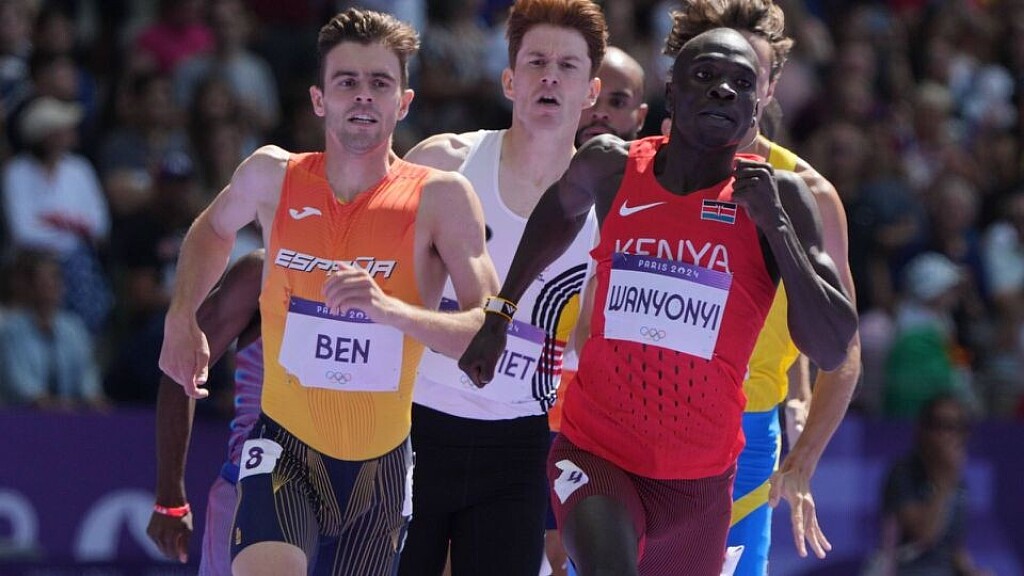
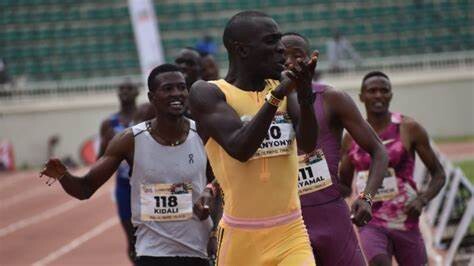
Emmanuel Wanyonyi and Wycliffe Kinyamal flawlessly sail to men's 800m semis as Koitatoi Kidali misses podium
Emmanuel Wanyoyi took a comfortable win in the men's 800m first round with Wycliffe Kinyamal finishing third as Koitatoi Kidali struggled to make an impact and he will be out to bid for a semifinal ticket in the repechage round.
Emmanuel Wanyonyi, Wycliffe Kinyamal and Koitatoi Kidali took to the starting line of the men’s 800m first round and did not fail to impress with their striking runs.
Marco Arop headlined the field and he secured a second position to sail through to the men’s 800m semifinal. He clocked a stunning 1:45.74 to cross the finish line behind Belgium’s Eliott Crestan who won the race in 1:45.51. Australia’s Peyton Craig completed the podium in 1:45.81.
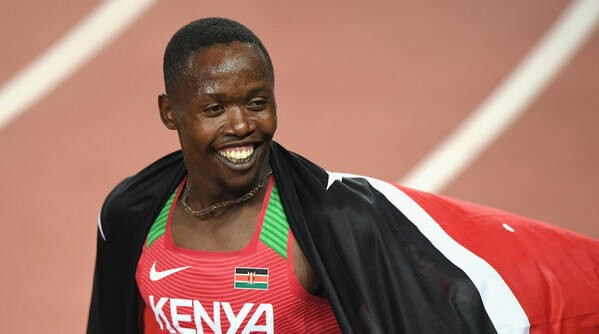
Competing in the second heat, Botswanan sprinter Tshepiso Masalela completed the podium in 1:45.58 as Gabriel Tual won the race in 1:45.13. Mark English of Ireland finished an impressive second in 1:45.15. Kidali finished a distant fifth and will have to contest for the semifinal in the repechage round.
Competing in the third heat, Emmanuel Wanyonyi was flawless as he claimed the win in a time of 1:44.64 ahead of Catalin Tecuceanu who finished second in 1:44.80. Andreas Kramer completed the podium 1:44.93.
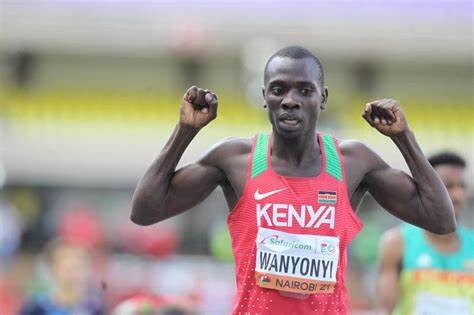
Djamel Sedjati led the qualifiers in the fourth heat as he crossed the finish line in a time of 1:45.84 as Great Britain’s Elliot Giles came in second in a time of 1:45.93. America’s Hobbs Kessler completed the podium in a time of 1:44.93.
Kinyamal sealed the podium competing in the fifth heat as he clocked a stunning 1:45.86 to cross the finish line. Great Britain's Ben Pattison won the race as South Africa's Edmund du Plessis finished a close second.
Heat six saw Spain's Mohamed Attaoui win the race as America's Bryce Hoppel came in second. Great Britain's Max Burgin completed the podium in the race.
Meanwhile, the Kenyan trio has been impressive this season, with Wanyonyi being the stand-out times with his impressive times in the build-up to the Olympics.
The world 800m silver medallist clocked the third fastest time since David Rudisha’s retirement at the Kenyan Olympic trials before Algeria’s Djamel Sedjati obliterated his time at the Diamond League Meeting in Paris.
He struck a world record in the men’s mile road to open his season in fashion. Wanyonyi also struck a win at the Kip Keino Classic.
Kinyamal has had impressive podium finishes in events and was looking to make an impact on the Olympic stage in his debut.
On his part, Kidali was a breakout athlete, making his first national team and he hopes to leave a mark on the Olympic stage. He has showcased his tactical run and is certainly a threat to his opponents going into the semifinal.
by Abigael Wafula
Login to leave a comment

Paris 2024 Olympic Games
For this historic event, the City of Light is thinking big! Visitors will be able to watch events at top sporting venues in Paris and the Paris region, as well as at emblematic monuments in the capital visited by several millions of tourists each year. The promise of exceptional moments to experience in an exceptional setting! A great way to...
more...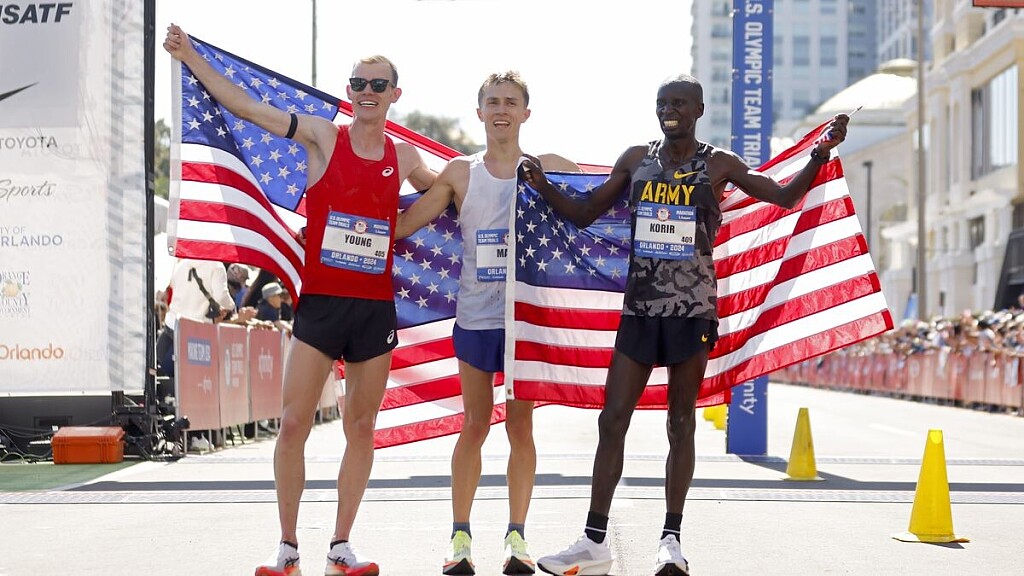
Meet USA men's athletics team for Paris 2024 Olympic Games
Discover Team USA's men's track and field roster for Paris 2024, featuring stars like Noah Lyles and Rai Benjamin aiming for gold.
The Olympics are once again upon us, and Team USA is ready to make a mark at the Paris 2024 Olympic Games.
With a mix of returning medalists and fresh faces, the American men's track and field roster boasts exceptional talent across a variety of events.
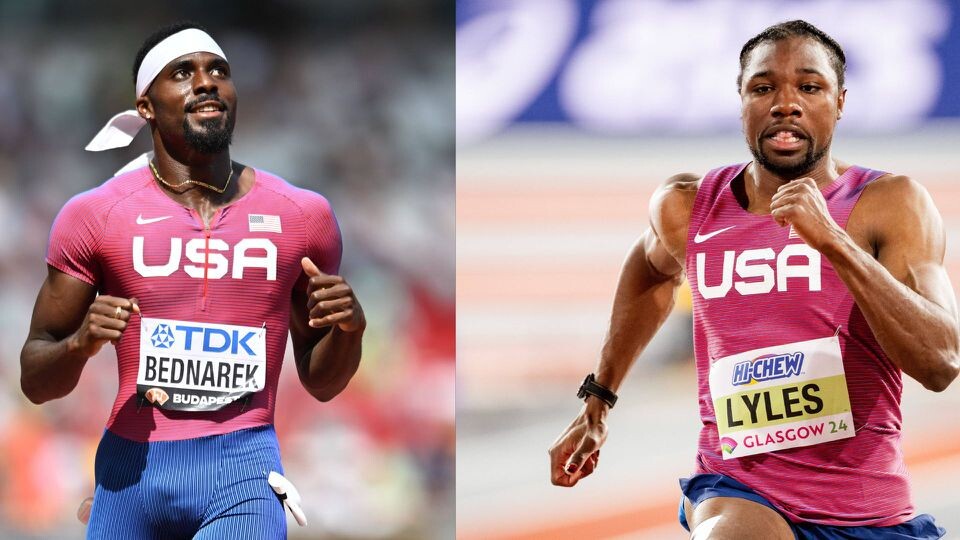
Pulse Sports looks at the athletes representing the United States in each event, highlighting their recent triumphs and expectations for the upcoming games.
100m
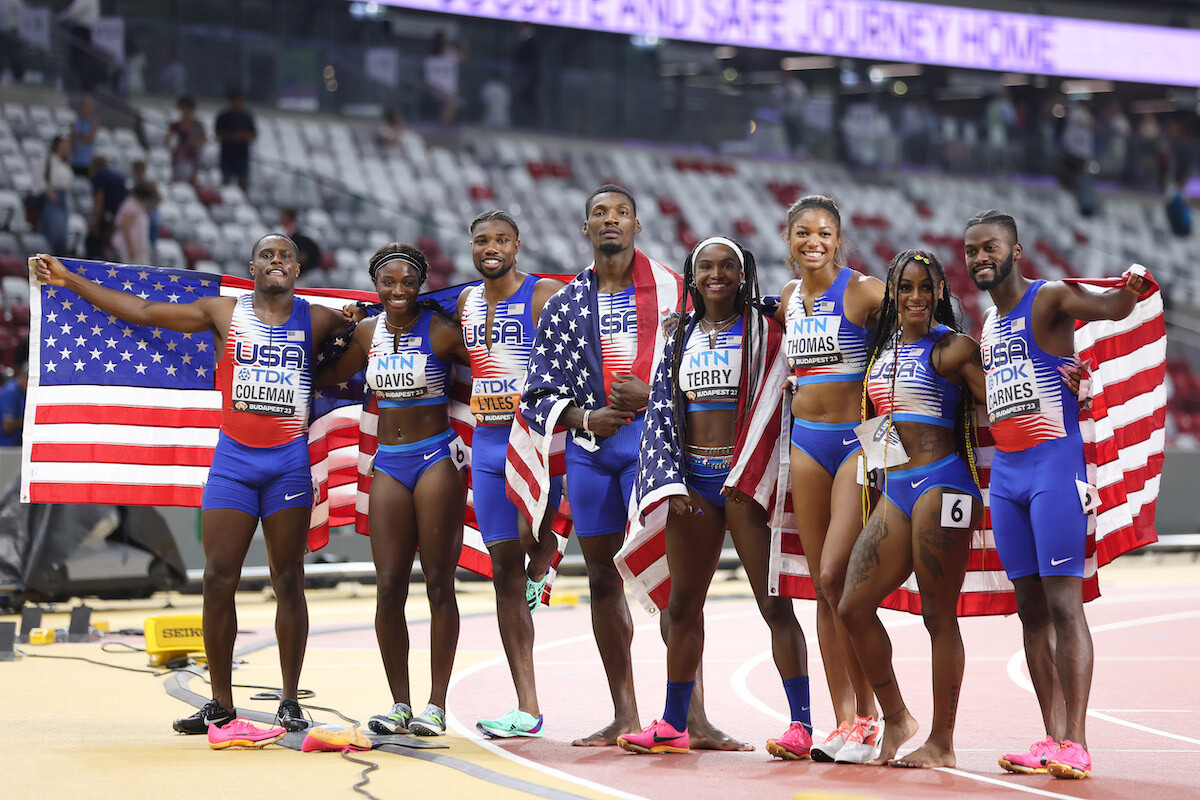
The face of USA track and field Noah Lyles confirmed his top-tier status with a scorching 9.83 seconds in the men’s 100-meter final at the trials.
Alongside him, Kenny Bednarek and Fred Kerley, who previously clinched a silver medal in Tokyo, are all set to bring their explosive speed to the Paris tracks.
This trio’s combination of experience and raw power forms a formidable front for the U.S. in one of the Olympics' most iconic events.
110m hurdles
A familiar name in the hurdles Grant Holloway is eyeing gold after a near miss in Tokyo, where he took home silver.
At the trials, he showcased his readiness by clocking in at 12.86 seconds, a time that would have won him gold in the previous Olympics.
Joining him are Freddie Crittenden and Daniel Roberts, the former making his Olympic debut, and the latter bringing experience from Tokyo, setting up a strong team for this high-stakes event.
200m
Noah Lyles demonstrated his versatility and sheer pace by also clinching the 200-meter at the trials with an impressive 19.53 seconds, narrowly edging out Kenny Bednarek.
With Erriyon Knighton rounding out the team, this event is likely to be a highlight for the U.S., with all three runners previously finishing in the top four at Tokyo 2021 behind Canada’s Andre De Grasse.
400m
Michael Norman returns with hopes of improving on his fifth-place finish in Tokyo.
He is joined by Quincy Hall, whose commanding win at the trials with a time of 44.17 seconds positions him as a strong medal contender.
Chris Bailey rounds out the team bringing fresh energy to the mix.
400m hurdles
Rai Benjamin, who captured silver in Tokyo, solidified his Paris bid with an impressive sub-47-second finish at the trials.
CJ Allen and Trevor Bassitt, both first-time Olympians, will join Benjamin as they aim to convert his previous silver into gold.
800m
Bryce Hoppel returns to the Olympics with an improved trial time that bested his Tokyo performance.
Hobbs Kessler, having already qualified for the 1500m, adds the 800m to his Paris challenges, showcasing his endurance and tactical racing prowess.
Brandon Miller completes the team, ready to make his Olympic debut.
1500m
Cole Hocker, Yared Nuguse, and Hobbs Kessler make up the U.S. team for the 1500-meter race.
All three athletes met the Olympic standard at the trials, demonstrating their readiness and resilience.
This event will test their strategic racing abilities and endurance on the Olympic stage.
5000m
Grant Fisher and Abdihamid Nur are set to represent the U.S. in this challenging race.
Fisher, doubling down after his 10,000m trial win, and Nur, making his Olympic debut, will need to bring their best to contend with the global competition.
10,000m
Grant Fisher leads the U.S. team again in the 10,000m, followed closely by Woody Kincaid and newcomer Nico Young.
This trio having demonstrated strong performances at the trials are prepared to face the long-distance challenge in Paris.
Decathlon
Heath Baldwin, Zach Ziemek, and Harrison Williams represent the U.S. in the decathlon an exhaustive series of ten track and field events that tests versatility and stamina.
Baldwin led the trials, while Ziemek brings experience from his sixth-place finish in Tokyo.
Discus
Andrew Evans and Joseph Brown look to improve the U.S.'s standings in the discus throw, both having shown strong potential at the trials with throws exceeding 65 meters. They aim to transform their trial success into Olympic medals.
Hammer
Daniel Haugh and Rudy Winkler, returning Olympians, have shown significant improvements since Tokyo.
Haugh, in particular, won the hammer throw final at the trials, indicating that he is a strong contender for a medal in Paris.
High Jump
Shelby McEwen and JuVaughn Harrison are set to return to the Olympics, aiming to surpass their previous performances.
Harrison, who finished seventh in Tokyo, looks to leverage his experience for a better outcome in Paris.
Javelin
Curtis Thompson leads the team in the javelin throw, hoping to build on his past Olympic experience.
He is joined potentially by Capers Williamson and Donavon Banks whose participation will depend on the final world rankings.
Marathon
Leonard Korir, Conner Mantz, and Clayton Young have secured their places on the marathon team, each bringing unique strengths and strategies to one of the Olympics' most grueling challenges.
Pole Vault
Chris Nilsen and Sam Kendricks, with past Olympic experiences of highs and lows, aim to dominate the pole vault.
Jacob Wooten joins them, making his first appearance on the Olympic stage.
Shot Put
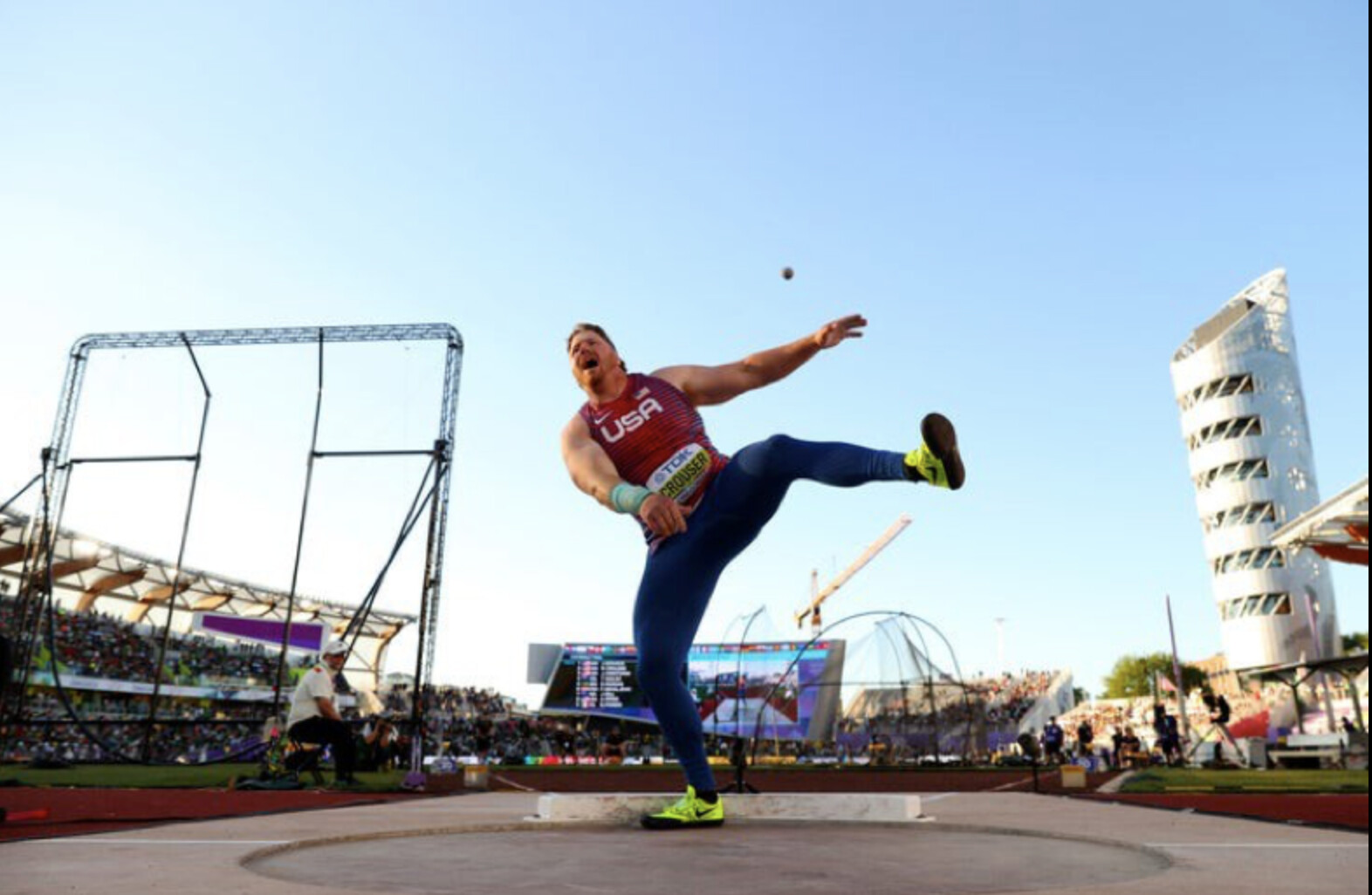
Ryan Crouser, Joe Kovacs, and Payton Otterdahl, all exceeding the 22-meter mark at the trials, form a powerful shot put trio.
Their aim is clear: to return with gold and silver medals.
3000m Steeplechase
Kenneth Rooks and Matthew Wilkinson will tackle the steeplechase, a race combining speed, stamina, and technique.
Both first-timers at the Olympics, they aim to make a significant impact in Paris.
Triple Jump
Donald Scott returns to the triple jump, along with newcomer Salif Mane, who impressed with a 17.52-meter jump at the trials.
Their sights are set on improving their standings and aiming for the podium in Paris.
by Festus Chuma
Login to leave a comment
Paris 2024 Olympic Games
For this historic event, the City of Light is thinking big! Visitors will be able to watch events at top sporting venues in Paris and the Paris region, as well as at emblematic monuments in the capital visited by several millions of tourists each year. The promise of exceptional moments to experience in an exceptional setting! A great way to...
more...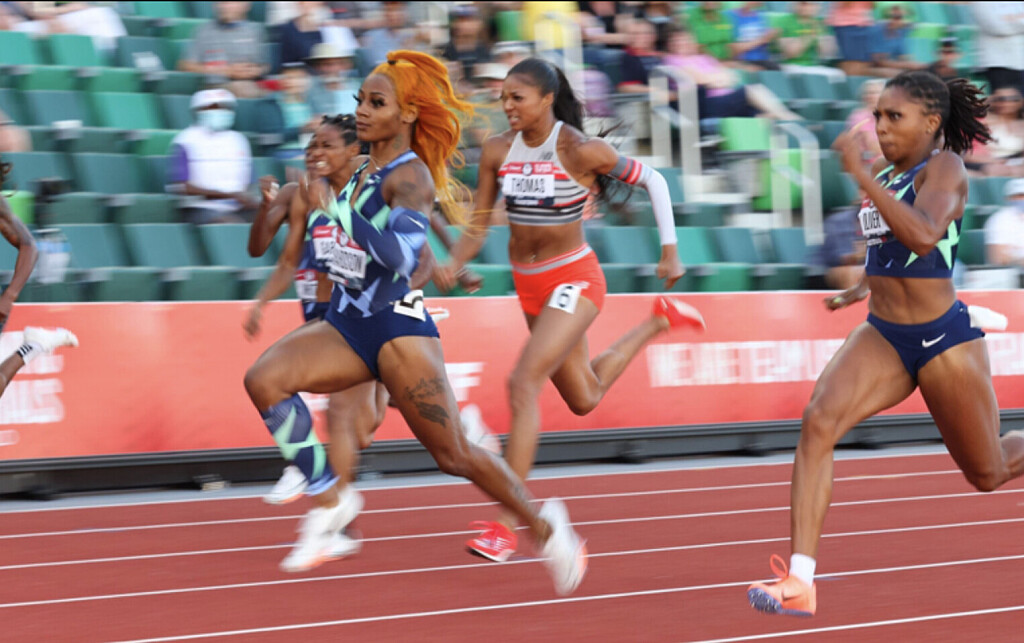
What You Need to Know About the U.S. Track and Field Olympic Trials
From June 21-30, more than 900 runners, throwers, and jumpers will put it all on the line for a chance to compete for Team USA at the Paris Olympics
The U.S. Track and Field Olympic Trials is a showcase of hundreds of America’s best track and field athletes who will be battling for a chance to qualify for Team USA and compete in this summer’s Paris Olympics. For many athletes competing in Eugene, simply making it on to the start line is a life-long accomplishment. Each earned their spot by qualifying for the trials in their event(s). The athlete qualifier and declaration lists are expected to be finalized this week.
But for the highest echelon of athletes, the trials defines a make-or-break moment in their career. Only three Olympic team spots (in each gender) are available in each event, and given the U.S. depth in all facets of track and field—sprints, hurdles, throws, jumps, and distance running events—it’s considered the world’s hardest all-around team to make. How dominant is the U.S. in the world of track and field? It has led the track and field medal count at every Olympics since 1984.
At the trials, there are 20 total events for women and men—10 running events from 100 meters to 10,000 meters (including two hurdles races and the 3,000-meter steeplechase), four throwing events (discus, shot put, javelin, and hammer throw), four jumping events (long jump, triple jump, high jump, and pole vault), the quirky 20K race walking event, and, of course, the seven-event heptathlon (women) and the 10-event decathlon (men).
(At the Olympics, Team USA will also compete in men’s and women’s 4×100-meter and 4×400-meter relays, plus a mixed gender 4×400, and a mixed gender marathon race walk. The athletes competing on these teams will be drawn from those who qualify for Team USA in individual events, along with alternates who are the next-best finishers at the trials.
There’s also the Olympic marathon, but the U.S. Olympic Trials Marathon was held on February 3 in Orlando, Florida, to give the athletes enough time to recover from the demands of hammering 26.2 miles before the big dance in Paris.
Although some countries arbitrarily select their Olympic track and field teams, the U.S. system is equitable for those who show up at the Olympic Trials and compete against the country’s best athletes in each particular event. There’s just one shot for everyone, and if you finish among the top three in your event (and also have the proper Olympic qualifying marks or international rankings under your belt), you’ll earn the opportunity of a lifetime—no matter if you’re a medal contender or someone who burst onto the scene with a breakthrough performance.
The top performers in Eugene will likely be contenders for gold medals in Paris. The list of American stars is long and distinguished, but it has to start with sprinters Sha’Carri Richardson and Noah Lyles, who will be both competing in the coveted 100 and 200 meters. Each athlete won 100-meter titles at last summer’s world championships in Budapest and ran on the U.S. gold-medal 4×100 relays. (Lyles also won the 200) Each has been running fast so far this spring, but more importantly, each seems to have the speed, the skill, and swagger it takes to become an Olympic champion in the 100 and carry the title of the world’s fastest humans.
But first they have to qualify for Team USA at the Olympic Trials. Although Lyles is the top contender in the men’s 100 and second in the world with a 9.85-second season’s best, five other U.S. athletes have run sub-10-second efforts already this season. Richardson enters the meet No. 2 in the U.S. and No. 3 in the world in the women’s 100 (10.83), but eight other Americans have also broken 11 seconds. That will make the preliminary heats precariously exciting and the finals (women’s on June 22, men’s on June 23) must-see TV.
There are five returning individual Olympic gold medalists competing in the U.S. Olympic Trials with the hopes of repeating their medals in Paris—Athing Mu (800 meters), Sydney McLaughlin-Levrone (400-meter hurdles), Katie Moon (pole vault), Vallarie Allman (discus), and Ryan Crouser (shot put)—but there are more than a dozen other returning U.S. medalists from the Tokyo Olympics, as well as many more from the 2023 world championships, including gold medalists Chase Ealey (shot put), Grant Holloway (110-meter hurdles), Laulauga Tausaga (discus), and Crouser (shot put).
The most talented athlete entered in the Olympic Trials might be Anna Hall, the bronze and silver medalist in the seven-event heptathlon at the past two world championships. It’s an epic test of speed, strength, agility, and endurance. In the two-day event, Hall and about a dozen other women will compete in the 100-meter hurdles, high jump, shot put, 200 meters, long jump, javelin throw, and 800 meters, racking up points based on their performance in each event. The athletes with the top three cumulative totals will make the U.S. team. At just age 23, Hall is poised to contend for the gold in Paris, although Great Britain’s Katarina Johnson-Thompson, the world champion in 2019 and 2023, is also still in search of her first Olympic gold medal after injuries derailed her in 2016 and 2021.
If you can find your way to Eugene—and can afford the jacked-up hotel and Airbnb prices in town and nearby Springfield—you can watch it live in person at Hayward Field. Rebuilt in 2021, it’s one of the most advanced track and field facilities in the world, with an extremely fast track surface, a wind-blocking architectural design, and 12,650 seats that all offer great views and close-to-the-action ambiance. Tickets are still available for most days, ranging from $45 to $195.
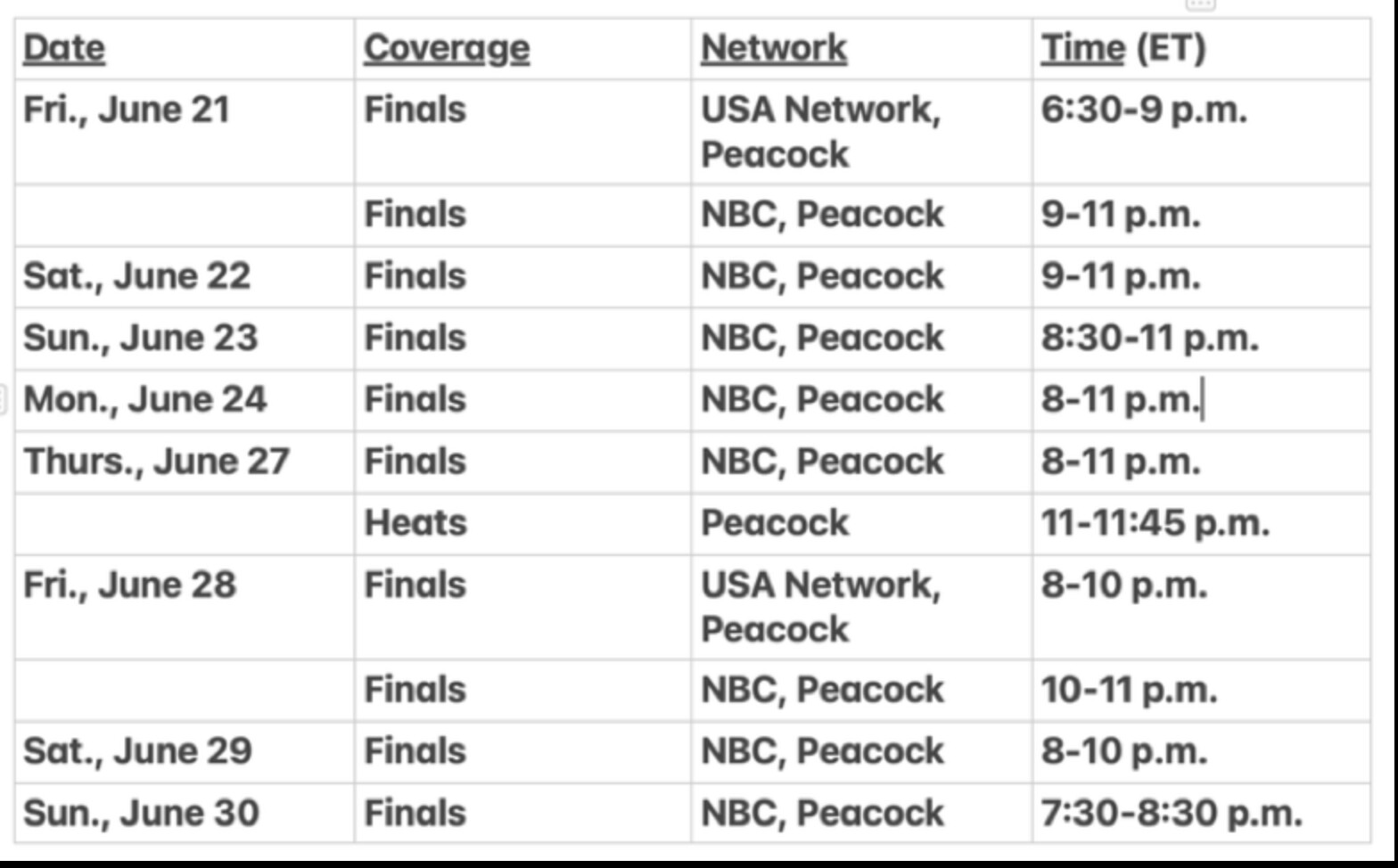
If you can’t make it to Eugene, you can watch every moment of every event (including preliminary events) via TV broadcasts and livestreams. The U.S. Olympic Trials will be broadcast live and via tape delay with 11 total broadcast segments on NBC, USA Network, and Peacock. All finals will air live on NBC during primetime and the entirety of the meet will be streamed on Peacock, NBCOlympics.com, NBC.com and the NBC/NBC Sports apps.
The Olympic Trials will be replete with young, rising stars. For example, the men’s 1500 is expected to be one of the most hotly contested events and the top three contenders for the Olympic team are 25 and younger: Yared Nuguse, 25, the American record holder in the mile (3:43.97), Cole Hocker, 23, who was the 2020 Olympic Trials champion, and Hobbs Kessler, 21, who turned pro at 18 just before racing in the last Olympic Trials. Sprinter Erriyon Knighton, who turned pro at age 16 and ran in the Tokyo Olympics at age 17, is still only 20 and already has two world championships medals under his belt. Plus, the biggest track star from the last Olympics, Sydney McLaughlin-Levrone, is aiming for her third Olympics and third Olympic gold (she won the 400-meter hurdles and was on the winning 4×400 relay in Tokyo), and she’s only 24.
Several young collegiate stars could earn their place on the U.S. team heading to Paris after successful results in the just-completed NCAA championships. Leading the way are double-NCAA champions McKillenzie Long, 23, a University of Mississippi senior who enters the trials ranked sixth in the world in the 100 (10.91) and first in the 200 (21.83), and Parker Valby, a 21-year-old junior at the University of Florida, who ranks fifth in the U.S. in the 5,000 meters (14:52.18) and second in the 10,000 meters (30:50.43). Top men’s collegiate runners include 5,000-meter runner Nico Young (21, Northern Arizona University), 400-meter runner Johnnie Blockburger (21, USC), and 800-meter runners Shane Cohen (22, Virginia) and Sam Whitmarsh (21, Texas A&M).
It’s very likely. Elle St. Pierre is the top-ranked runner in both the 1500 and the 5,000, having run personal bests of 3:56.00 (the second-fastest time in U.S. history) and 14:34.12 (fifth-fastest on the U.S. list) this spring. Although she’s only 15 months postpartum after giving birth to son, Ivan, in March 2023, the 29-year-old St. Pierre is running better and faster than ever. In January, she broke the American indoor record in the mile (4:16.41) at the Millrose Games in New York City, then won the gold medal in the 3,000 meters at the indoor world championships in Glasgow in March.
St. Pierre could be joined by two world-class sprinters. Nia Ali, 35, the No. 2 ranked competitor in the 100-meter hurdles and the 2019 world champion, is a mother of 9-year-old son, Titus, and 7-year-old daughter, Yuri. Quanera Hayes, 32, the eighth-ranked runner in the 400 meters, is the mother to 5-year-old son, Demetrius. Hayes, a three-time 4×400 relay world champion, finished seventh in the 400 at the Tokyo Olympics.
Meanwhile, Kate Grace, a 2016 Olympian in the 800 meters who narrowly missed making Team USA for the Tokyo Olympics three years ago, is back running strong at age 35 after a two-year hiatus during which she suffered from a bout of long Covid and then took time off to give birth to her son, River, in March 2023.
No, unfortunately, there are a few top-tier athletes who are hurt and won’t be able to compete. That includes Courtney Frerichs (torn ACL), the silver medalist in the steeplechase at the Tokyo Olympics in 2021; Alicia Monson (torn medial meniscus), a 2020 Olympian in the 10,000 meters, the American record holder in the 5,000 and 10,000 meters, and the fifth-place finisher in the 5,000 at last year’s world championships; and Joe Klekcer (torn adductor muscle), who was 16th in the Tokyo Olympics and ninth in the 2022 world championships in the 10,000. Katelyn Tuohy, a four-time NCAA champion distance runner for North Carolina State who turned pro and signed with Adidas last winter, is also likely to miss the trials due to a lingering hamstring injury. There is also some doubt about the status of Athing Mu (hamstring), the Tokyo Olympics 800-meter champion, who has yet to race in 2024.
Meanwhile, Emma Coburn, a three-time Olympian, 2017 world champion, and 10-time U.S. champion in the 3,000-meter steeplechase, broke her ankle during her season-opening steeplechase in Shanghai on April 27. She underwent surgery a week later, and announced at the time that she would miss the trials, but has been progressing quickly through her recovery. If both she and Frerichs miss the meet, it will leave the door wide open for a new generation of steeplers—including 2020 Olympian Valerie Constein, who’s back in top form after tearing her ACL at a steeplechase in Doha and undergoing surgery last May.
The U.S. earned 41 medals in track and field at the 2020 Paralympic Games in Tokyo—including 10 gold medals—which ranked second behind China’s 51. This year’s Paralympics will follow the Olympics from August 28-September 8 in Paris.
The 2024 U.S. Paralympic Trials for track and field will be held from July 18-20 at the Ansin Sports Complex in Miramar, Florida, and Paralympic stars Nick Mayhugh, Brittni Mason, Breanna Clark, Ezra Frech, and Tatyana McFadden are all expected to compete.
In 2021 at the Tokyo Paralympics, Mayhugh set two new world records en route to winning the 100 meters (10.95) and 200 meters (21.91) in the T-37 category, and also took the silver medal in the 400 meters (50.26) and helped the U.S. win gold and set a world record in the mixed 4×100-meter relay (45.52). Clark returns to defend her Paralympic gold in the T-20 400 meters, while McFadden, a 20-time Paralympic medalist who also competed on the winning U.S. mixed relay, is expected to compete in the T-54 5,000 meters (bronze medal in 2021).
Livestream coverage of the U.S. Paralympic Trials for track and field will be available on Peacock, NBCOlympics.com, NBC.com, and the NBC/NBC Sports app, with TV coverage on CNBC on July 20 (live) and July 21 (tape-delayed).
Login to leave a comment
Why the "Norwegian Method" Training Craze Is Here to Stay
In a highly anticipated race at the 2024 Prefontaine Classic, Jakob Ingebrigsten pitted his revolutionary "Norwegian method" of training against some of the best milers in the world.
The “Mile of the Century”—of the twentieth century, that is—was a duel between John Landy and Roger Bannister at the 1954 Empire Games in Victoria. The two men were, at the time, the only two sub-four-minute milers in the world: Bannister had beaten Landy to the punch by 46 days, but Landy was the reigning world record holder. Their end-of-season clash was as heavily anticipated as any heavyweight boxing duel. Landy led until the final bend, at which point he famously glanced over his left shoulder at precisely the moment that Bannister surged past on his right.
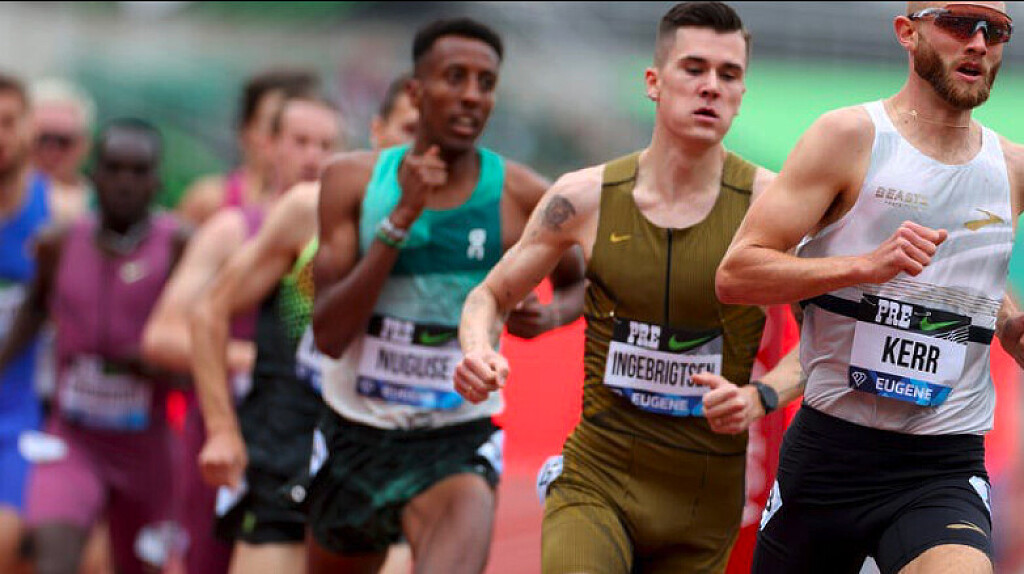
The mile of the current century, at least in terms of pre-race hype and intriguing storylines, took place on Saturday at the Prefontaine Classic track meet in Eugene. It was a gigantic multidimensional grudge match between Jakob Ingebrigsten, the blunt-speaking Norwegian wunderkind who won the 2021 Olympics at the tender age of 20 and whose training methods have sparked wholesale upheaval in the endurance world, and almost every runner who has beaten him or come close to it in recent years—most notably Josh Kerr, the Scotsman who upset him at last summer’s World Championships and has been engaged in an increasingly testy war of words with him ever since.
What gave the race an extra layer of significance, beyond the usual battle for personal supremacy, was that clash of training ideas. Ingebrigtsen is the foremost exponent of what has come to be known as the “Norwegian method” of endurance training. Its hallmark is carefully controlled workout intensities, pushing just hard enough to stimulate adaptation without incurring fatigue that would compromise the next workout. In Ingebrigtsen’s hands, that involves twice-a-week double threshold sessions: workouts like ten times a kilometer with one minute recovery in the morning and evening, with regular ear pricks to check lactate levels and keep the intensity in the right zone, on Tuesdays and Thursdays.
A similar approach has also taken Norwegians to the top of the podium in other sports like triathlon and cross-country skiing, and athletes from other countries have begun emulating it. Norwegian-style training is “the big, sexy thing,” as U.S. miler Hobbs Kessler put it. It might even be “the next step in the evolution of distance running training,” as a group of sports scientists suggested in an academic paper last year (which I wrote about here). It’s very hard to do controlled studies of entire training philosophies, as opposed to specific workouts. So the best litmus test, I suggested, would be clashes on the track leading up to the Paris Olympics. Saturday in Eugene was the first such test.
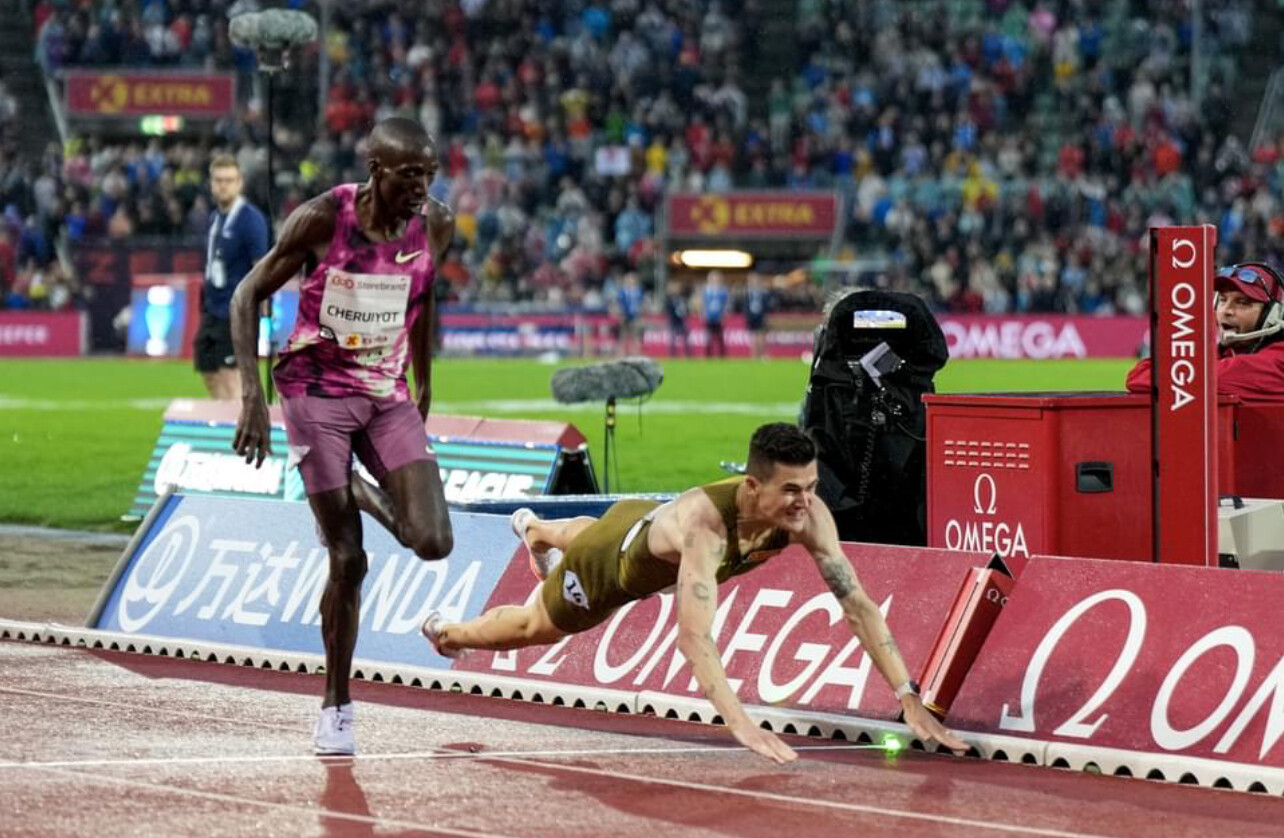
Sexy new things don’t stay sexy and new forever, and it’s fair to say that some of the shine of Norwegian training has worn off since last year. The most notable reputational hit was Kerr’s 1,500-meter win at last summer’s World Championships, kicking past Ingebrigtsen in the final lap after the Norwegian had led most of the race. One loss could be blamed on bad luck, but that made three times in a row: another Scottish runner, Jake Wightman, had outkicked Ingebrigtsen in strikingly similar fashion at the 2022 World Championships, and Ethiopian star Samuel Tefera did the same at the 2022 World Indoor Championships. That starts to look like a systemic flaw in the training approach. While Ingebrigtsen was carefully monitoring his moderate-intensity threshold intervals, Kerr and Wightman and Tefera were presumably ripping off all-out sprints—and they had a racing gear that he seemed to lack.
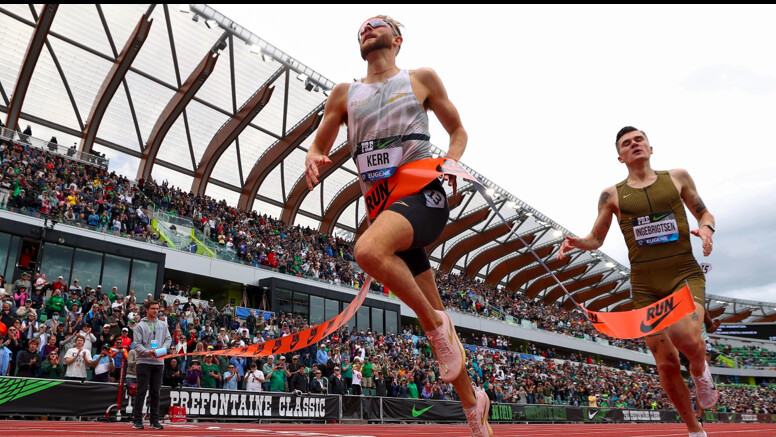
In Eugene, a rabbit led the field through a quick first half-mile. When he stepped off, it was Kenyan runner Abel Kipsang who pushed onward, with Ingebrigtsen following patiently behind. This was already a surprise: Ingebrigtsen is usually the one pushing the pace. Then, with a lap and a half still remaining, it was the fast finisher Kerr who surged into the lead and made an early bid for victory. Each man, it seemed, was playing the other’s game. The last lap ticked by in slow motion, Kerr unable to pull away and Ingebrigtsen unable to close the gap. That’s how it finished: Kerr in 3:45.34, Ingebrigtsen in 3:45.60, and then seven more men under the once-impregnable 3:50 barrier. In 11th place was Cam Myers, a 17-year-old from Australia, with a time of 3:50.15—two seconds faster than Ingebrigtsen himself ran at Pre as a 17-year-old in 2018.
It would be as foolish to give up on Norwegian training based on a few individual losses as it would be to anoint it the “next step” on the basis of a few individual wins. But if Ingebrigtsen keeps losing, that’s going to reinforce doubts about whether his approach is as effective for head-to-head racing as it is for time trials. There are plenty of caveats: for example, an Achilles injury disrupted Ingebrigtsen’s training for several months over the winter. But there are also other questions. What has happened to his older brothers Henrik and Filip? Both were world-class milers in their own right, but both have been struggling in recent years, as have other prominent Norwegian athletes like Olympic triathlon champion Kristian Blummenfeld, raising questions about the sustainability of the Norwegian approach.
And then there’s the fact that, despite all the hype about the mile, the real marquee event at Pre turned out to be the women’s 10,000 meters, where Kenya’s Beatrice Chebet became the first woman to dip under 29 minutes with a world-record clocking of 28:54.14. Kenyan runners (and their Ethiopian rivals) have been at the top for so long that it’s easy to take their dominance for granted. When I was in college in the 1990s, we were all fascinated by “the Kenyan Way.” That was the subtitle of Toby Tanser’s 1997 book, Train Hard, Win Easy. The secret, of course, was that there was no secret. There was a famous (and almost certainly apocryphal) anecdote about a Kenyan coach who was asked what separated his top runners from the merely good ones. All of them had grown up running to and from school each day, he explained; the champions also went home for lunch.
Part of the current fascination with the Norwegian training method is the suggestion that there is, in fact, a secret—a quantifiable formula, expressed in milimoles per liter of lactate in your blood, to optimize your training, rather than simply an admonition to work hard. But that’s a reductive view of what Ingebrigtsen and his Nordic peers are aiming for. The underlying philosophy of Norwegian training is that a harder workout isn’t always a better one, because it will take too long to recover from. This is hardly a new insight, but in the great merry-go-round of training fads, it was perhaps overdue for a resurgence.
In fact, the original Mile of the Century had a similar subtext. Bannister was the light-training amateur who ran on his lunch hour; Landy was a workout hero with “an insatiable appetite for interval running,” as Bannister wrote. “The great contrast in our training methods was not lost of the Press.” Bannister won the race, but it’s Landy’s training approach that proved to be more influential on subsequent generations. As Ingebrigtsen’s final showdown with his rivals in Paris looms, that’s worth remembering: even if he loses, and even if we decide that lactate meters are unnecessarily complicated, we might still have something to learn from his unorthodox training.
by Outside Online
Login to leave a comment
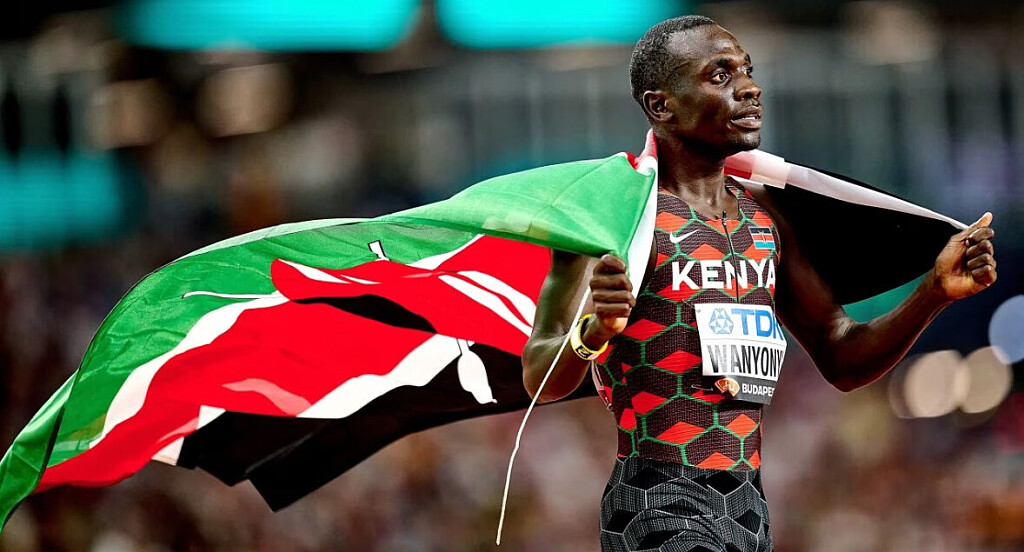
Emmanuel Wanyonyi breaks road mile world record on competitive debut
Teenager Emmanuel Wanyonyi broke the road mile world record in Herzogenaurach, Germany, Saturday.
The 19-year-old set the new record following an incredible run of three minutes 54.56 seconds on what was his competitive debut over the distance.
Wanyonyi is predominantly an 800-meter runner. The Kenyan won the silver medal in the men’s 800m at the 2023 World Athletics Championship held in Budapest, Hungary.
The previous world road mile record was set by American athlete Hobbs Kessler. Kessler’s world record time was 3:56.13.
by CnN
Login to leave a comment

ADIZERO: ROAD TO RECORDS
Adidas HQ in Herzogenaurach, Germany played host to elite adidas athletes competing on a specially designed course around the adidas World of Sport campus across 5km, 10km and 21km distances The course followed a loop of approximately 2.5km on a smooth tarmac surface with a slight elevation on each lap. Conditions were perfect as the first event,...
more...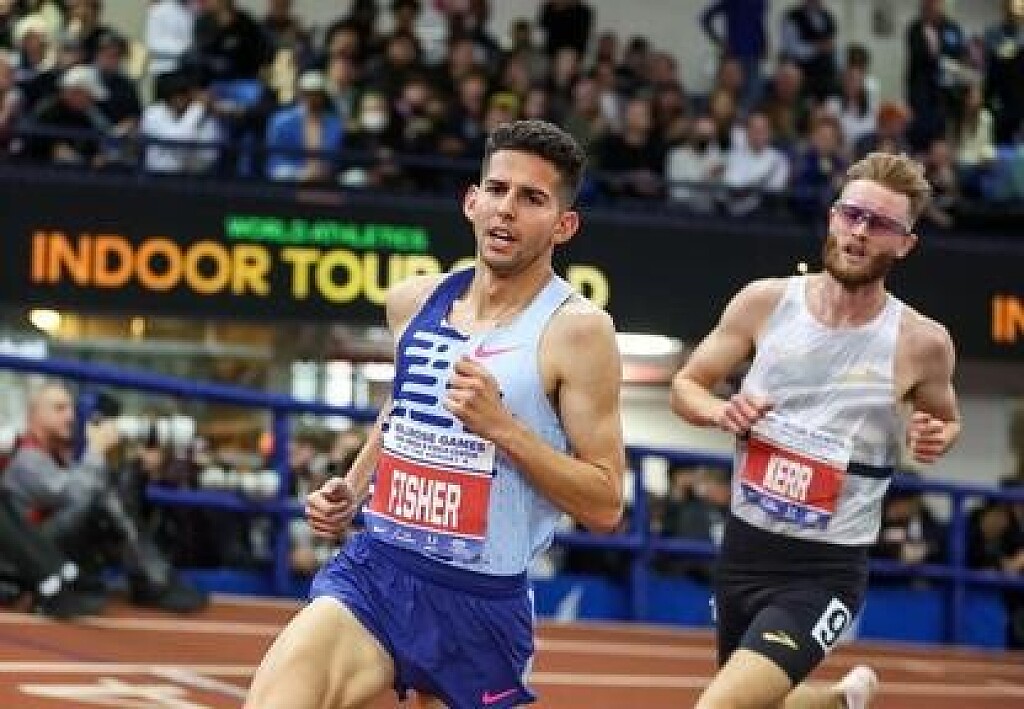
The TEN Preview: Nico Young Debuts, Alicia Monson Chases AR, and Karissa Schweizer Returns
Saturday night’s races at The TEN in San Juan Capistrano, Calif., will play a significant role in determining who gets to represent the United States in the 10,000 meters at this summer’s Olympics in Paris. The 2024 Olympic auto standards are incredibly tough — only three Americans have ever run under the 27:00.00 men’s standard and only five Americans have hit the 30:40.00 women’s standard — and you can count the number of world-class track 10,000-meter races each year on one hand. That’s why Grant Fisher, Nico Young, Woody Kincaid, Joe Klecker, Abdihamid Nur, Alicia Monson, Karissa Schweizer, Emily Infeld, Weini Kelati, and many more will be heading to SoCal Saturday night.
Since its first edition in 2021, The TEN has become the place for Americans to run a fast 10,000. Fisher set the men’s American record here in 2022 while Monson set the women’s American record here in 2023 and will be looking to repeat the feat in 2024.
To watch the main events, you’ll have to stay up late — the top heat of the women’s 10,000 does not start until 11:58 p.m. ET with the men to follow at 12:35 a.m. ET. Before then, we’ll get appetizer with the men’s 1500 (10:05 p.m. ET), which features Olympic medalists Matthew Centrowitz and Evan Jager kicking off their 2024 seasons.
Matthew Centrowitz and Evan Jager have seen it all in running. They both graduated from high school in 2007 and made their first US teams as young guns — Jager as a 20-year-old in 2009, Centro at 21 in 2011. For much of the 2010s, they were among the very best in the world in their events, with Centro bringing home a gold medal from the 2016 Olympics and Jager a silver. Now Centro (34) and Jager (35) are the elder statesmen, trying to fend off a host of younger rivals and make one last Olympic team in Paris.
Both men will run their 2024 outdoor openers in the 1500 on Saturday (Centro did run a 3:59 indoor mile on January 27 while Jager ran the first 4k of a 5k in Boston on February 16 before dropping out). Which means it’s time for one of our favorite games: how fast (or slow) will Centro run?
Throughout his career, Centrowitz has established himself as one of America’s greatest ever milers by delivering when it counts. He made every US team from 2011 through 2021 and won three outdoor medals as well as the 2016 World Indoor title. Yet in the latter years of his career, Centro thrown out some stinkers to begin his seasons before working his way into shape. In 2021, he opened with a 3:40 1500 on March 6 followed by a 1:50 800 on April 10 but ended the year running a 3:49 mile and making the Olympic team. Last year, he went to Australia and ran 1:56 for 800 on February 11 and 4:06 for the mile on February 23 but was running 3:36 for 1500 by May and eventually made the US final (though he only finished 10th).
So if Centro runs poorly here, it’s not cause for total panic. Heck, the fact that both he and Jager — who missed most of the 2023 campaign with a foot injury — are healthy enough to be racing is a promising sign. But the American 1500 scene is also more competitive than when Centro last made a team in 2021. Tactically, there is no better US racer than Centro, but he’s up against a group of young studs that includes three medalists from this year’s World Indoors (Yared Nuguse, Cole Hocker, Hobbs Kessler) and a trio of NCAA champions from the University of Washington (Luke Houser, Joe Waskom, Nathan Green). Nuguse is the oldest of that group at 24 — a full decade younger than Centro. Centrowitz is facing an uphill battle to make Olympic team #4 but if he can run 3:36 or 3:37 here and stay healthy for the next three months, he could still have a shot.
As far as the man most likely to win here, Sweden’s Samuel Pihlström ran 3:35 in February and just finished 8th at World Indoors.
Women’s 10,000 (11:58 p.m. ET): Alicia Monson tries to become the first US woman under 30:00 as Karissa Schweizer returns.
Unlike almost every other athlete in this meet, Alicia Monson already has the Olympic standard thanks to the 30:03 American record she ran here last year. So why is she back for another crack?
Monson laid it all out in an interview with LetsRun.com back in December:
Basically, it was just what can we do that would make me feel the most ready for the Olympics? And I feel like that’s running a sub-30:00 10k. I guess the plan would be to break the American record again, but really it’s how fast can I run to feel the most prepared? Because obviously I’m running against people who can run very fast and [I need to] be prepared to run at a pace that feels easy to them and then kick off of it.
Monson was still with the leaders at the bell at last year’s World Championships and her 5th-place finish was the best of her career in a global final. But she finished nearly four seconds out of the medals and the competition will be fierce in Paris. The last three global 10k champions — Sifan Hassan (29:06 pb), Letesenbet Gidey (29:01 pb), and Gudaf Tsegay (29:29 pb) — occupy three of the top four spots on the all-time 10,000m list. The slowest of them, Tsegay, still has a pb 34 seconds faster than Monson’s.
by Jonathan Gault
Login to leave a comment

The Ten
The world's fastest 10,000m races each year have taken place in a sleepy little coastal town in southern California. More national records were broken in 2022 than any other race on the planet as the best in the western hemisphere launched into rarified zones of time and space. The best return to San Juan Capistrano this year to cap off...
more...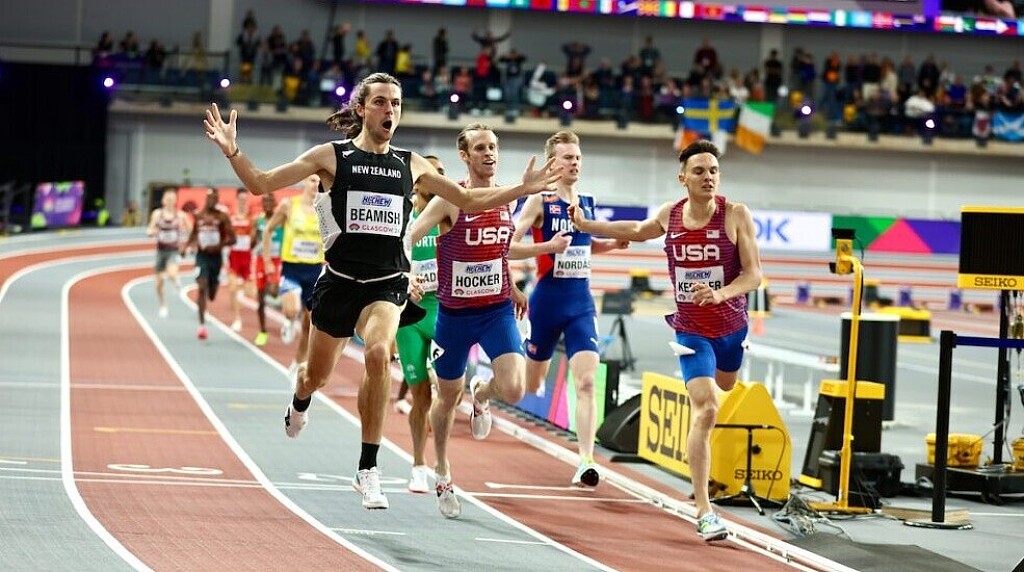
New Zealand’s Geordie Beamish shocks field for gold in men’s 1,500m final
Geordie Beamish of Hawke’s Bay, New Zealand, pulled off an incredible upset to take gold in the men’s 1,500m on the final day of competition at the 2024 World Indoor Championships in Glasgow.
Beamish was not expected to win, with the 1,500m not being his main event. However, he bided his time and entered the final lap in eighth place before surging down the final straight to become New Zealand’s first world indoor champion in the 1,500m event, clocking a personal best of 3:36.54.
“I trusted my closing speed against anyone,” said. Beamish to Canadian Running post-race.
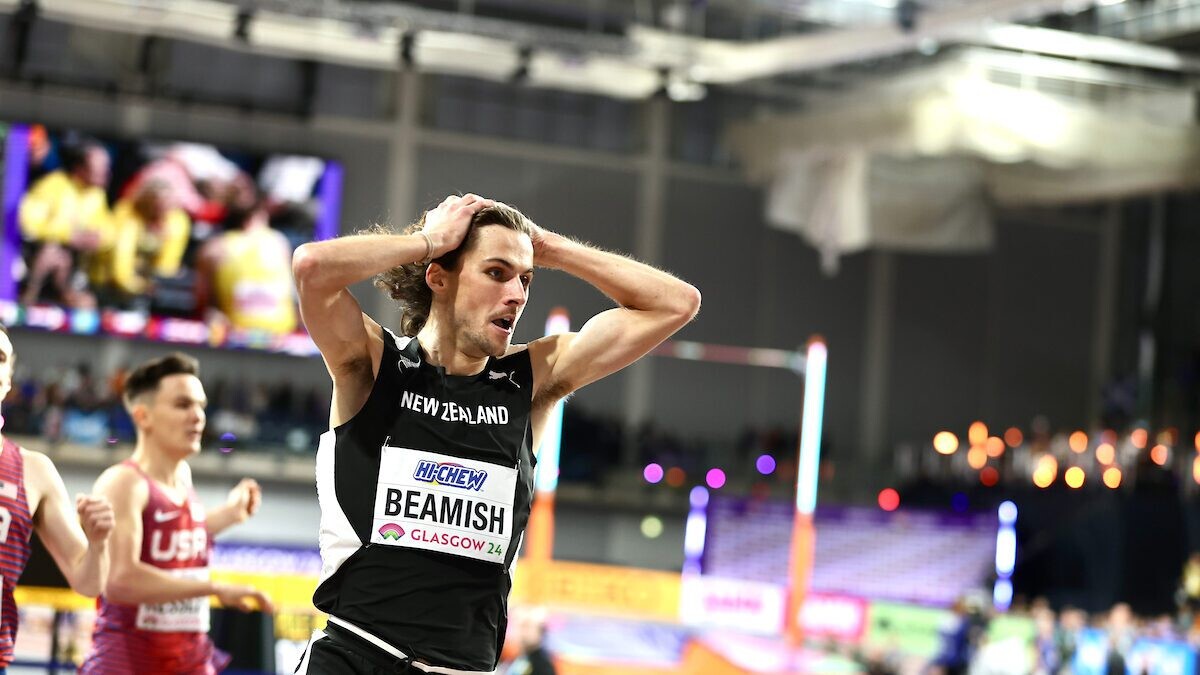
Cole Hocker and Hobbs Kessler of Team USA claimed silver and bronze, respectively, with times of 3:36.69 and 3:36.72.
The door was open for a new champion in the men’s 1,500m with the absence of Jakob Ingebrigtsen due to injury and reigning world (outdoor) champion Josh Kerr, who ran and won the 3,000m distance instead.
When asked if Beamish would run the 1,500m in Paris instead of the steeplechase, he declined. “I don’t think I can run a 1,500m in 3:29,” he said. “I enjoy the steeple a lot, and I think I have my best chance to medal in that event.”
Vancouver’s Kieran Lumb finished 13th in the 1,500m final. “I’m disappointed,” says Lumb. “I felt I was going to really do something special today, and that wasn’t the case.”
Beamish’s medal capped off a day to remember for New Zealand after Hamish Kerr earlier won gold in the high jump. The small Oceanic island nation finished with four medals (two gold, two silver), their most ever at an indoor world championship.
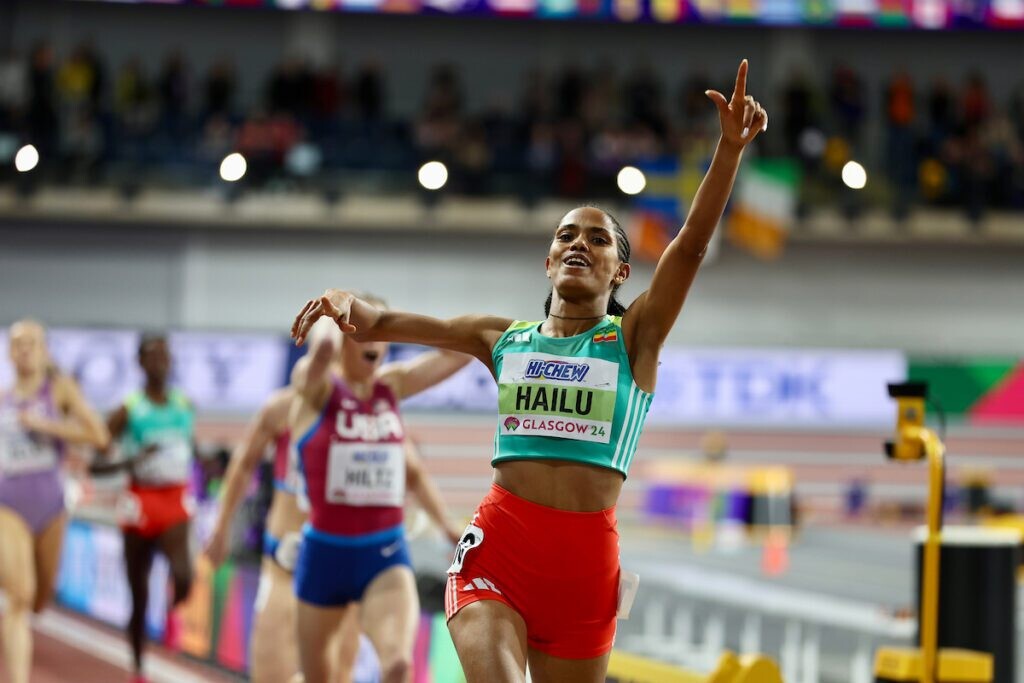
In the women’s 1,500m final, it was Ethiopia’s Freweyni Hailu who came out on top in a time of 4:01.46. This is Hailu’s first global title. Her best finish before Glasgow was a fourth-place finish at the Tokyo Olympics in the same event. Americans Nikki Hiltz and Emily MacKay ran personal bests to win silver and bronze. Canada’s Lucia Stafford finished 11th in 4:08.90.
by Marley Dickinson
Login to leave a comment

World Athletics Indoor Championships
World-Class Competition Lands in Poland: 2026 World Athletics Indoor Championships The 21stWorld Athletics Indoor Championshipsare being held from 20 to 22 March 2026 at theKujawsko-Pomorska Arena ToruńinToruń,BiT City,Kuyavian–Pomeranian,Poland. It is the second time the country has held the event after the2014 editioninSopot. The venue previously hosted the2021 European Athletics Indoor Championships. On 22 March 2023, the World Athletics Council...
more...
Global champions Holloway, Moon and Lyles feature on USA's team for WIC Glasgow 24
The United States has named a team of 57 athletes for the World Athletics Indoor Championships Glasgow 24 on March 1-3.
World and Olympic champions Ryan Crouser and Katie Moon head the men’s and women’s entries respectively. They will be joined by world champions Noah Lyles, Grant Holloway and Chase Jackson (nee Ealey).
Sandi Morris will defend her world indoor pole vault title, while world leaders Tara Davis-Woodhall, Yared Nuguse and Shelby McEwen also feature on the team.
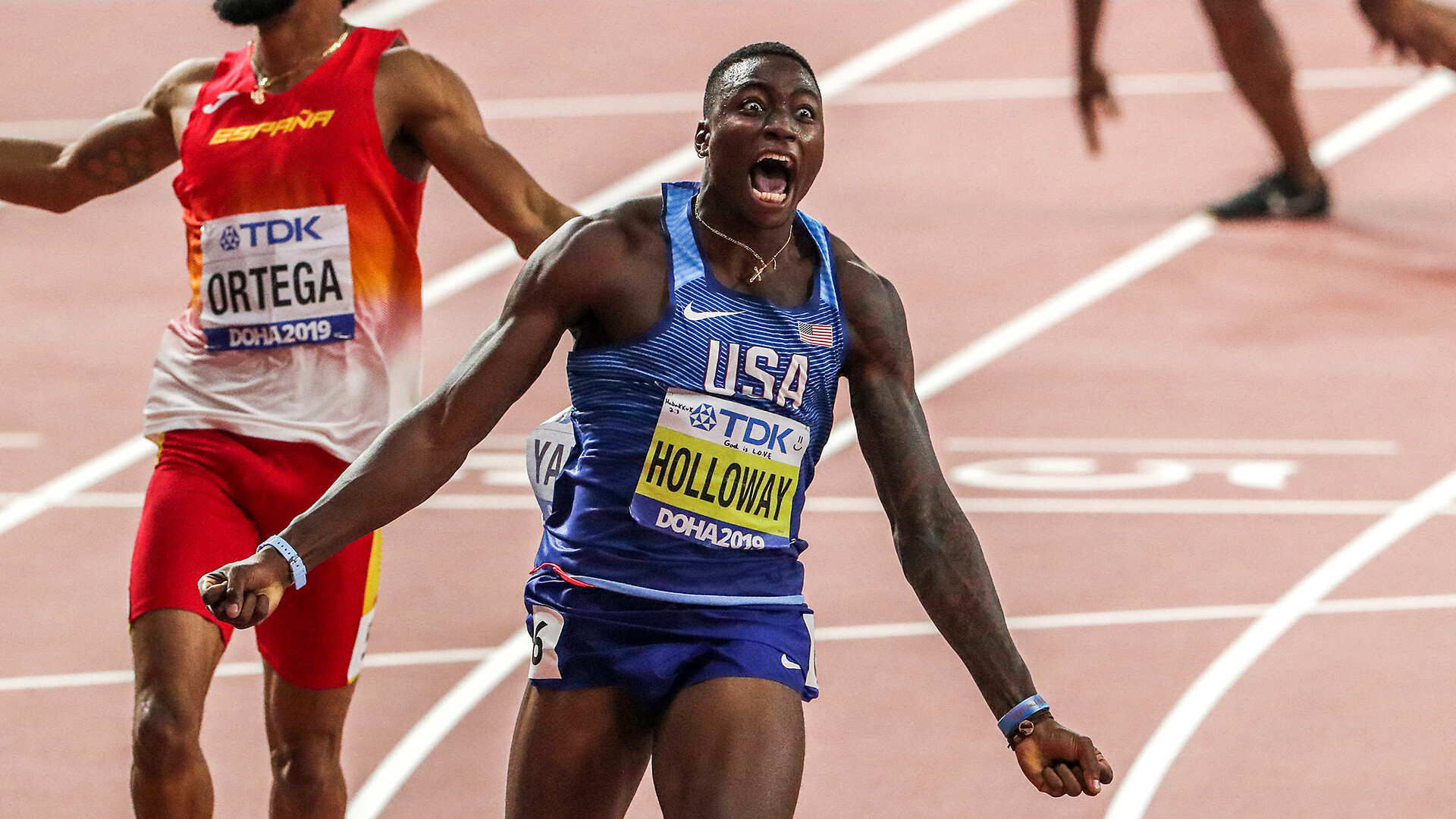
US team for Glasgow
Women
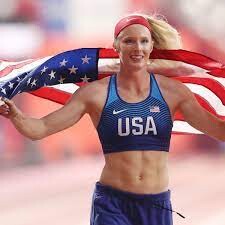
60m: Celera Barnes, Mikiah Brisco, Aleia Hobbs
400m: Talitha Diggs, Alexis Holmes
800m: Addison Wiley, Allie Wilson
1500: Nikki Hiltz, Emily Mackay
3000m: Josette Andrews, Elle St Pierre
60m hurdles: Christina Clemons, Masai Russell
High jump: Vashti Cunningham
Pole vault: Katie Moon, Sandi Morris
Long jump: Tara Davis-Woodhall, Monae' Nichols
Triple jump: Jasmine Moore, Keturah Orji
Shot put: Maggie Ewen, Chase Jackson
Pentathlon: Chari Hawkins
4x400m: Quanera Hayes, Bailey Lear, Na'Asha Robinson, Maya Singletary, Jessica Wright
Men
60m: Christian Coleman, Noah Lyles
400m: Brian Faust, Jacory Patterson
800m: Isaiah Harris, Bryce Hoppel
1500m: Cole Hocker, Hobbs Kessler
300m: Olin Hacker, Yared Nuguse
60m hurdles: Trey Cunningham, Grant Holloway, Cameron Murray
High jump: Shelby McEwen, Vernon Turner
Pole vault: Sam Kendricks, Chris Nilsen
Long jump: Jarrion Lawson, Will Williams
Triple jump: Chris Benard, Donald Scott
Shot put: Ryan Crouser, Roger Steen
Heptathlon: Harrison Williams
4x400m: Chris Bailey, Trevor Bassitt, Matthew Boling, Paul Dedewo, Wil London
by World Athletics
Login to leave a comment
World Athletics Indoor Championships
World-Class Competition Lands in Poland: 2026 World Athletics Indoor Championships The 21stWorld Athletics Indoor Championshipsare being held from 20 to 22 March 2026 at theKujawsko-Pomorska Arena ToruńinToruń,BiT City,Kuyavian–Pomeranian,Poland. It is the second time the country has held the event after the2014 editioninSopot. The venue previously hosted the2021 European Athletics Indoor Championships. On 22 March 2023, the World Athletics Council...
more...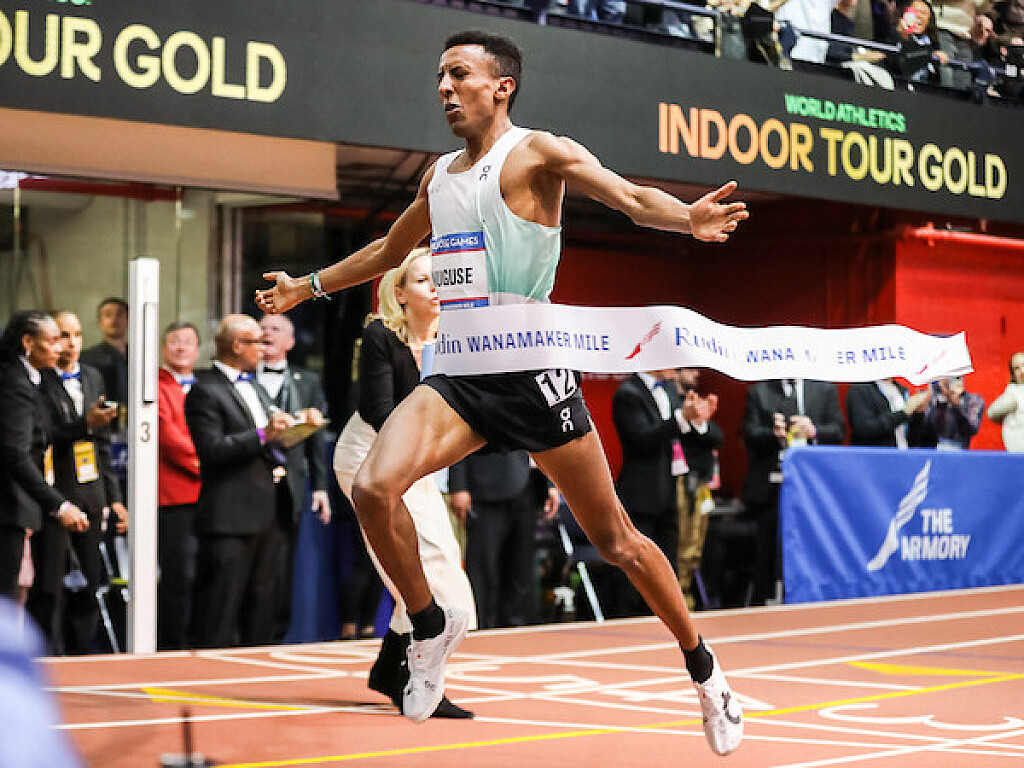
Stellar Field Assembled to Challenge Yared Nuguse in the NYRR Men's Wanamaker Mile
The 116th Millrose Games is now just 19 days away, as the eyes of the global athletics community will once again return to the Nike Track & Field Center at The Armory. As always, the meet will conclude with the NYRR Men’s Wanamaker Mile, a legendary race with over a century of tradition.
The Millrose Games is scheduled to take place on Sunday, February 11th.
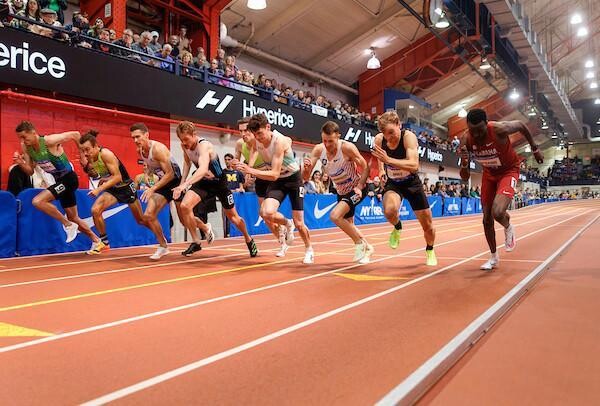
Previously announced as the headliner for this race is defending champion Yared Nuguese, the American record holder in the mile indoors and outdoors. Nuguse has his eyes on the world record of 3:47.01, but he will have to contend with a number of the best athletes in the world if he is to win his second straight Wanamaker title, including two additional 1500m finalists from last summer’s World Championships.
“[The world record] feels like a goal that’s within my grasp of achieving.” said Nuguse. “Not only am I stronger and smarter than I was last year, but I feel like I will be able to attack this race with a lot more confidence to chase the world record. When I went to Millrose for the first time, I was just chasing the American record. So changing that mindset, just seeing how far I’ve come, it feels like a very real possibility at this point.”
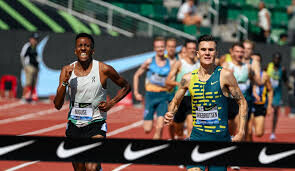
The elite athletes lining up to challenge Nuguse are as follows:
-Mario Garcia Romo was last year’s runner-up, and he is the 2022 1500m champion for Spain and a two-time World Championship finalist.
-Neil Gourley is a three-time British 1500m champion, and he holds the European indoor mile record.
-George Mills placed third in the mile at the Diamond League final, moving up to third on the all-time British list, before also placing second at the NYRR 5th Avenue Mile.
-Hobbs Kessler is the reigning World Road Mile champion, and he also holds the national high school indoor mile record.
-Andrew Coscoran is an Olympian and the Irish record holder over 1500m.
-Adam Spencer of the University of Wisconsin and Australia holds the NCAA 1500m record.
-Sam Prakel is the US Road Mile champion, and he placed fourth nationally in the 1500m.
-Charles Philibert-Thiboutot is a Canadian Olympian and the 2023 NACAC 1500m champion.
The winner of the mile at the Dr. Sander Invitational this Saturday, January 27th will be added to the NYRR Wanamaker Mile field as well.
Stay tuned over the coming weeks before the 116th Millrose Games, as the world-class start lists are finalized. Top athletes already confirmed to compete include Laura Muir, Elle Purrier-St. Pierre, Dina Asher-Smith, Julien Alfred, Alicia Monson, Grant Fisher, Danielle Williams, Josh Kerr, Cooper Teare, Yaroslava Mahuchikh, Christian Coleman, Andre De Grasse, Nia Ali, Chris Nilsen, and KC Lightfoot, with even more Olympians and World Championship medalists still to come.
As always, the Millrose Games will feature the absolute best athletes in the sport, including dozens of Olympians and world champions. The Millrose Games is a World Athletics Indoor Tour Gold meet. With highest-level competition at the youth, high school, collegiate, club, and professional levels, there is truly something for everyone at the Millrose Games.
Tickets can be purchased at https://www.millrosegames.org/
Login to leave a comment
NYRR Millrose Games
The Pinnacle of Indoor Track & Field The NYRR Millrose Games, first held in 1908, remains the premier indoor track and field competition in the United States. The 2025 edition will once again bring the world’s top professional, collegiate, and high school athletes to New York City for a day of thrilling competition. Hosted at the New Balance Track &...
more...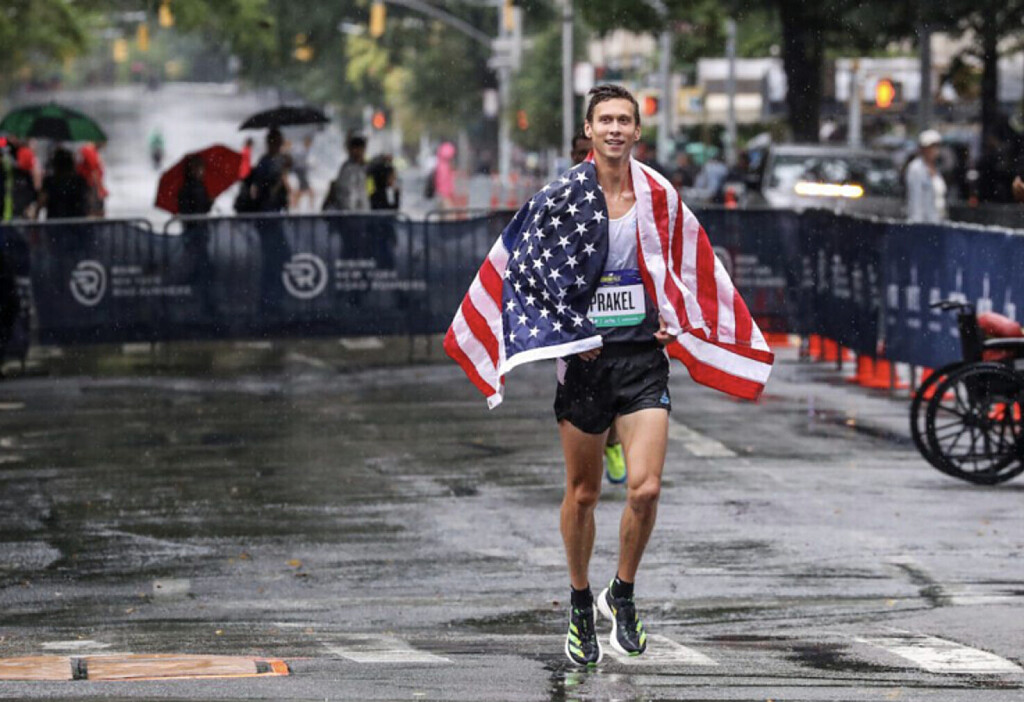
American runner postpones wedding to compete at World Road Running Championships
Last weekend, American middle-distance runner Sam Prakel faced a challenging decision: choosing between love and representing his country at the World Athletics Road Running Championships in Riga, Latvia.
Prakel had originally planned to marry his long-time partner Katie Landwehr on Sept. 30. However, when he received an invite to join Team USA for the World Athletics Road Running Championships on Oct. 1, he made the difficult choice to postpone the wedding.
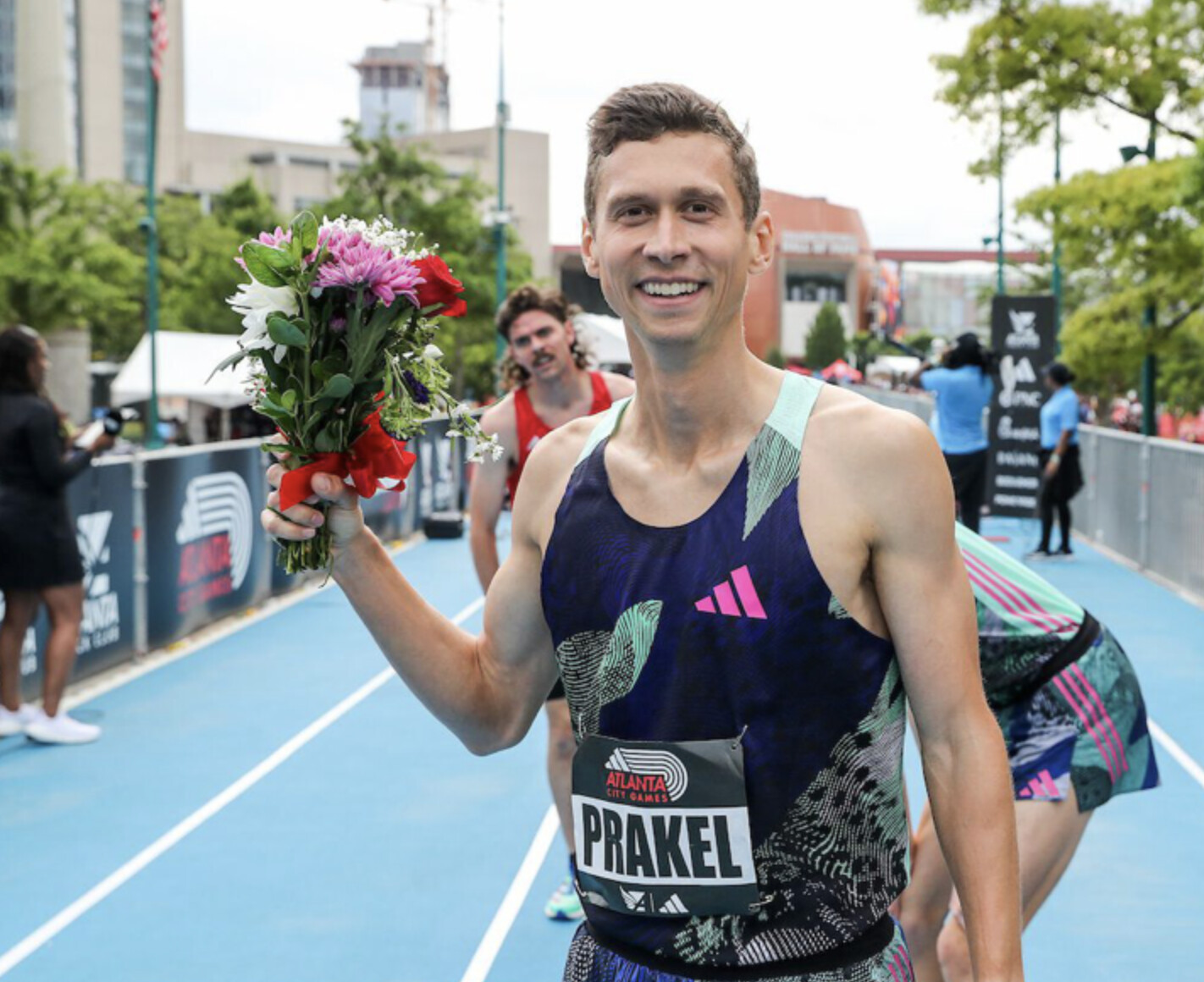
During a pre-race press conference, Prakel shared, “It’s a tremendous honour to represent the U.S. […] they have the world’s best track team. I even had to reschedule my wedding for a week later so I could be here for this event. It’s wonderful to be here and represent the U.S.”
The tough decision appeared to pay off for Prakel as he clinched the bronze in the men’s road mile with a time of 3:56.43, earning a prize of USD $3,500. Prakel finished third, with his compatriot Hobbs Kessler securing gold in his senior national team debut with a time of 3:56.13. Great Britain’s Callum Elson also earned his first world championship medal, narrowly beating Prakel for silver with a time of 3:56.41.
Prakel revealed that he was able to reschedule the wedding for the following week, which raised questions among track fans about why Norway’s Jakob Ingebrigtsen did not make a similar decision, considering the circumstances of winning another world championship medal. Ingebrigtsen married his longtime partner Elisabeth Asserson on Sept. 23 and celebrated their honeymoon in the Maldives the past week.
Perhaps the bonus will help fund an unforgettable wedding and honeymoon for Prakel and his future wife.
by Running Magazine
Login to leave a comment
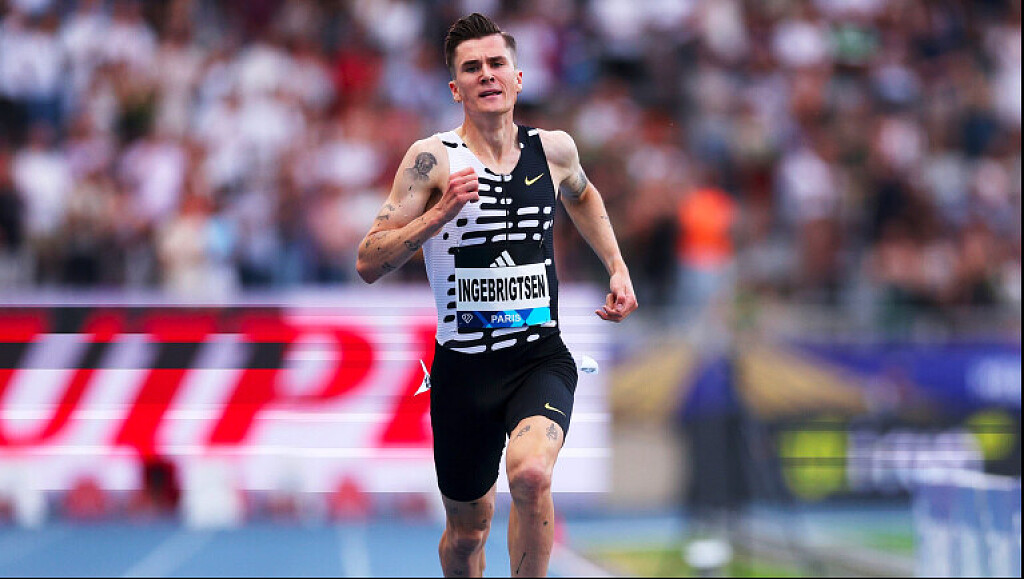
Why Are Runners Suddenly So Fast?
Records are falling and times are dropping. Is it the shoes, or something else?
Consider the Paris Diamond League meet in early June. Jakob Ingebrigtsen smashed the two-mile world best by more than four seconds, becoming just the second man to run back-to-back sub-four-minute miles. Then Faith Kipyegon notched her second world record in a row, outsprinting the reigning record-holder over 5,000 meters just a week after becoming the first woman under 3:50 in the 1,500 meters. Then, to cap the night, Lamecha Girma took down the steeplechase record.
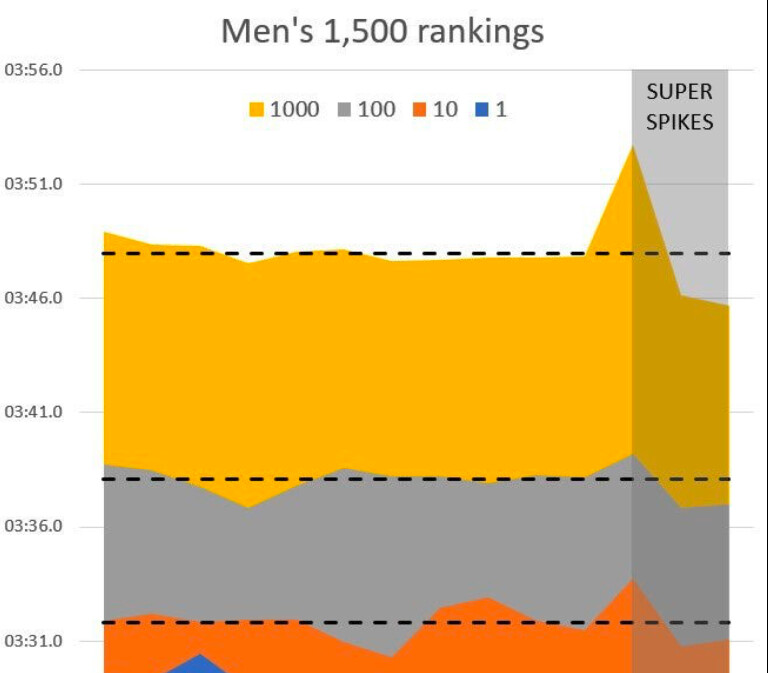
It was a great night—but it was just one of many great nights that track fans have been treated to recently. A week later, at the historic Bislett Games in Oslo, eight men broke 3:30 for 1,500 meters in one race, setting a new record—including Yared Nuguse, who set a new U.S. best. Meet records fell in almost every event. At the collegiate level, an analysis by Oregon-based coach Peter Thompson shows that the number of middle- and long-distance runners hitting elite benchmark times has doubled, tripled, or in some events even quadrupled in the last two years. Earlier in June, four high-school boys broke four minutes for the mile in a single race, matching the total number of people who’d done it in history prior to 2011.
I could go on.
There are two main questions that arise from this buffet of speed. First, is it real? Are runners getting faster across the board, or are we just being fooled by the brilliance of a few individuals and random fluctuations in the depth of different events? Second, if it’s really happening, then why? The easy answer is, “It’s gotta be the shoes” (or, in this case, the super spikes), but does the data really back that up?
I don’t have any definitive answers at this point, but here are my thoughts on some of the possible explanations.
It’s easy to make an anecdotal case that runners are faster than ever. Backing that up with data isn’t quite as straightforward. If you look only at whether the top-ranked time in the world is getting faster or slower from year to year, any trends will depend on whether you happen to have a generational athlete in the event at a given point in time. The effect of an Usain Bolt is bigger than the effect of, say, a new shoe design. Even if you go deeper, the top ten times in any year often come from just one or two races that took place in exceptionally good conditions. So you’re better off looking farther down the list.
For example, here’s some data for the men’s 1,500 meters between 2009 and 2022, drawn from the World Athletics database. I’ve shown the first, tenth, 100th, and 1,000th ranked performers (not performances) for each year. The horizontal dashed lines show the average for 2009 to 2018. The first super spike prototypes had shown up on the circuit by 2019 at latest, and were widely available by 2021. The big spike of slower times in 2020 is because there were so few races due to the pandemic.
The number-one times don’t show any particular trend. The tenth-best times show a dip since 2021, but no bigger than the dip in 2014-2015 (which corresponded to two particularly fast races in Monaco). For the 100th and 1,000th best times, the pre-pandemic data finally starts to look more consistent, which makes the dip since 2021 more telling. The 1,000th-best performer is now 0.9 percent faster than the pre-pandemic average, and the 100th-best is 0.5 percent faster. This is smaller than the 1.3-percent estimate derived from lab testing of super spikes, but in the ballpark.
Here’s comparable data for the women’s 5,000 meters:
Again, the first- and tenth-ranked times fluctuate too much to draw any conclusions. The 100th and 1,000th places do show an apparent drop in the last few years, by 1.9 and 2.0 percent respectively—more than the lab estimate. There are lots of possible explanations for this discrepancy, including that the benefits of super spikes are reduced at faster speeds.
I’ll add one more graph just for context. Supershoes came to road running way back in 2016 (for prototypes) and became widely available by 2018. I think most observers agree that these shoes really have affected road-running times. So what does the comparable data show for, say, men’s marathon times? Here it is:
The data is confounded by the effects of the pandemic, particularly in 2020. Still, the post-supershoe improvement looks fairly similar to the track data. Compared to the 2009 to 2016 average, last year’s times were 0.7 percent faster at tenth, 1.6 percent faster at 100th, and 1.3 percent faster at 1,000th.
The conclusion I take from all this data? It does like there’s something going on, both on the track and on the roads. But it’s way less obvious in the data than I expected. My subjective feeling was that the last few years have seen records broken and times redefined at a totally unprecedented rate. I thought I’d see robust improvement of at least three or four percent. But that scale of change is not there, at least in the events I sampled.
So with that in mind, what explains the changes we do see?
My starting assumption is that any performance improvements we’ve seen in the last few years are because of the shoes. I’m not going to belabor that point here, because I’ve already written plenty on both road supershoes and super spikes.
But I do want to make one key point. The reason my prime suspect is the shoes is that we have direct laboratory evidence that both types of shoes improve running economy, by around 2 percent on the track and at least 4 percent on the roads (and, to complete the circle, lab evidence that improved running economy directly translates to faster race times). It would take some weird and hitherto undiscovered science in order for the shoes not to make us faster. In contrast, the other hypotheses that I’m going to discuss below may be compelling to various degrees, but all rely on some assumptions and guesses and hand-waving.
Here’s a sentence you wouldn’t have read prior to 2018, from Letsrun’s description of Kipyegon’s thrilling 1,500 world record in Florence: “Kipyegon sprinted away from the pacing lights with 200m to go, lengthening her gap from the green lights as she rounded the turn and entered the home straightaway.” I wrote about World Athletics’s introduction of Wavelight pacing lights when Joshua Cheptegei set the 5,000-meter world record in 2020, positing that more even splits could make a notable difference to times. Good pacing has been a hallmark of this year’s records too, all assisted by Wavelight.
Wavelight doesn’t factor in on the roads, but ever since Eliud Kipchoge’s sub-two marathon exhibitions, big-time marathons have devoted more attention to providing top-notch pacers for their elite runners. That has the double benefit of saving the mental effort of setting the pace, and of reducing air resistance. I think good pacing and drafting are both beneficial. But that can’t explain why the 100th and 1,000th performers seem to be getting faster, because Wavelight and paid rabbits are generally reserved for the front of the pack.
Freed from the tyranny of over-frequent racing during lockdowns, runners spent 2020 building up a massive base of endurance that has catapulted them to new levels. It’s even possible that, having learned their lesson, they’ll continue with this more patient approach to training. This theory has the disadvantage of being both unprovable and unfalsifiable. That doesn’t necessarily mean it’s untrue, but if performance levels don’t start regressing to their pre-pandemic means over the next few years, I’ll remain skeptical.
It’s the “big, sexy thing” in endurance training these days, as miler Hobbs Kessler put it in a recent interview: lactate-guided double-threshold training, as popularized by Norwegian Olympic champions Jakob Ingebrigtsen and Kristian Blummenfelt. As I explained in this article, the approach emphasizes high volumes of threshold training with very tight control on the intensity to avoid going too hard. Whether it’s objectively better than other training approaches remains to be seen—but it hasn’t yet been adopted widely enough to make a noticeable impact on the top-1,000 list.
In the past, when I’ve looked at broad trends in performance over time, one of the first factors I’ve considered is changes in drug availability or drug testing. It’s extremely noticeable (though of course not proof of anything) that long-distance track times took off like a rocket shortly after the introduction of EPO in the early 1990s. If you look carefully, you can find what seems to be the performance signature of various drug-related events like the introduction of EPO testing and, more recently, the implementation of athlete biological passports.
Is there something new on the scene over the last few years? Or are we still seeing the effects of pandemic-related disruptions in out-of-competition drug testing? I certainly hope it’s not the case, but you’d have to be amnesiac to discount the possibility entirely. Once again, the best counterargument is that the performance improvements are noticeable even at the 1,000th-best level—though perhaps I’m being naive.
As you can probably tell, I don’t think any of the alternative explanations I’ve offered so far hold water compared to my default assumption that it’s the shoes. But this last category is a little different. If you spend enough time arguing with people about why runners are getting faster, you’ll encounter a number of broad, hand-waving theories that are hard to substantiate but nonetheless sound reasonable.
For example, I can attest to the fact that the Internet has made training knowledge far more widely accessible than it was when I was a young athlete in the 1990s. Ideas and approaches (like the Norwegian model) are endlessly debated and dissected, and any student of the sport is exposed to multiple perspectives. (In contrast, when I arrived at university and found that the workouts were different from those I’d done in high school, I thought the world was ending.) This theory has been offered frequently over the last decade or more as an explanation for steadily improving U.S. high school times. Maybe it’s true more broadly: people everywhere simply know more about the principles of training, and are doing it better (or at least fewer people are doing really stupid training) compared to the past. Even if elite coaching was always pretty good, this creates a wider pyramid of prospective talent feeding into the elite coaches.
I also have the sense that the pendulum has swung away from sit-and-kick racing towards aggressive front-running. After the 2019 world championships, where super spikes first made headlines, I wrote an article about the unusually fast early paces of the races. Jakob Ingebrigtsen, the current king of the 1,500, is notable for running from the front and pushing the pace rather than relying on a finishing sprint—which likely helps explain why he led those seven other men under 3:30 in Oslo. If runners these days are more focused on running fast times rather than trying to win sprint finishes, it stands to reason that times would get faster overall.
And there are plenty of other theories out there—broader support for professional training groups, better nutrition and recovery, the inevitable march of progress, and some that I’ve undoubtedly missed completely. As I said at the top, I don’t know the answers, and I don’t think anyone else does either. Times do seem to be improving, but not as much as I would have guessed based on all the hype about recent record-breaking. The shoes almost certainly play some role—but if there’s some other secret sauce in there, it’ll be fun trying to figure out what it is.
by Outside Online
Login to leave a comment

Hobbs Kessler set the record for the fastest 1500-meter run by an American on U.S. soil as he finished third overall with a time of 3:32.61
Hobbs Kessler has already broken records left and right in his running career and the Ann Arbor native added to that growing list with an eye-popping performance at the Los Angeles Grand Prix on Saturday.
The 20-year-old phenom set the record for the fastest 1500-meter run by an American on U.S. soil as he finished third overall with a time of 3:32.61.
Kessler finished just behind former world champion Timothy Cheruiyot, who won the race at 3:31.47, and U20 world champion Reynold Kipkorir Cheruiyot, who took second in 3:32.01.
He ran a 55.83 in his final lap to past U.S. champion Cooper Teare, who also ran a personal best time of 3:32.74.
Kessler’s finish was the 13th fastest all-time for an American runner and his time is the second best by a U.S. male runner under the age of 21 as Cole Hocker ran 3:31.40 at the 2021 Olympics.
It was a personal best time for Kessler but yet another memorable performance by the former Ann Arbor Skyline standout.
He holds the North American U20 record in the 1500 at 3:34.36 as well as the U.S. high school record in the for the indoor mile with a time of 3:57.66 and was named the Gatorade National Track and Field Athlete of the Year for 2021.
Kessler signed a contract with Adidas and turned professional in 2021. He also won the Boston Athletic Association Invitational Mile in April.
Login to leave a comment
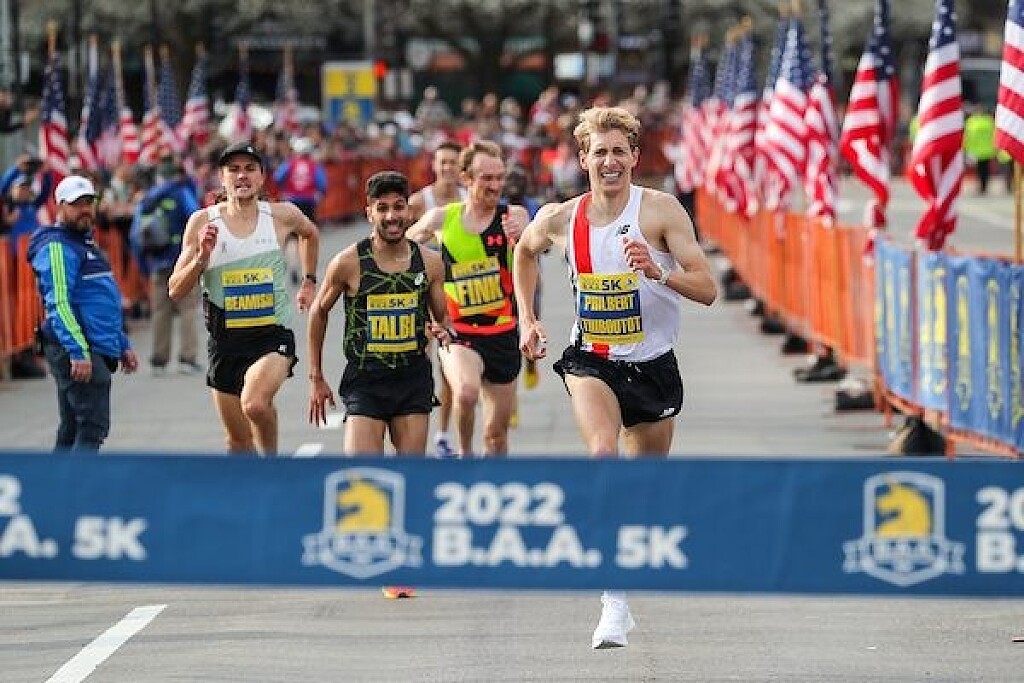
Reigning champions returning for B.A.A. 5K
Global medalists, returning champions and exciting challengers from Massachusetts will headline the Boston Athletic Association's 5K and Invitational Mile, the races which kick off the Boston Marathon weekend.
Both of the races will be held on Saturday, April 15.
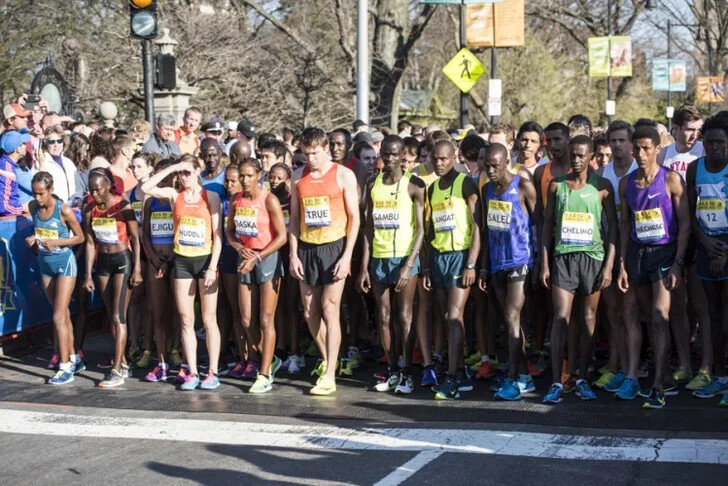
Among the professional athletes entered in the B.A.A. 5K are reigning champions Charles Philibert-Thiboutot of Canada, Marcel Hug of Switzerland and Jenna Fesemyer of the USA. Recently crowned world cross-country champion Beatrice Chebet of Kenya will make her Boston road racing debut in the competition.
The B.A.A. 5K starts and finishes in Boston Common at 8 a.m., featuring 10,000 athletes from 87 countries and all 50 U.S. states.
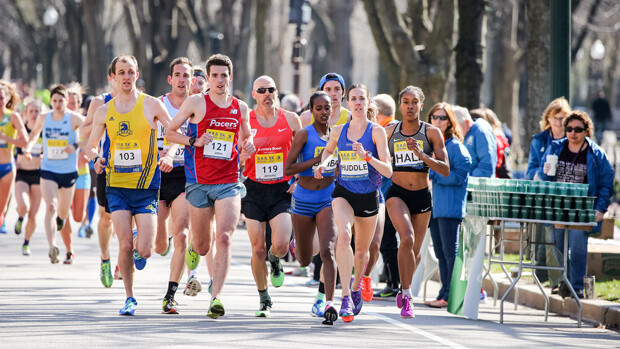
After the 5k, the Invitational Miles will be featured at the historic Boylston Street finish line.
Local Bay State stars Johnny Gregorek of Seekonk, the defending men's champion, and Ellie Shea of Belmont will compete in the three-lap race starting and finishing on Boylston Street.
Also in the field are 2022 B.A.A. Invitational Mile women’s runner-up Taryn Rawlings, 2021 NCAA Cross Country champion Whittni Morgan, and high school sub-four-minute miler Hobbs Kessler, who now runs professionally for Adidas.
“This year’s professional fields blend together experience with up-and-coming stars for the B.A.A. 5K and B.A.A. Invitational Mile,” Mary Kate Shea, B.A.A. Director of Professional Athletes, said. “Participants, spectators, and running enthusiasts will get to witness world-class competition at shorter distances two days before the 127th Boston Marathon.”
Login to leave a comment

B.A.A. 5K
The B.A.A. 5K began in 2009, and became an instant hit among runners from far and wide. Viewed by many as the “calm before the storm,” the Sunday of Marathon weekend traditionally was for shopping, loading up on carbohydrates at the pasta dinner, and most importantly- resting. But now, runners of shorter distances, and even a few marathoners looking for...
more...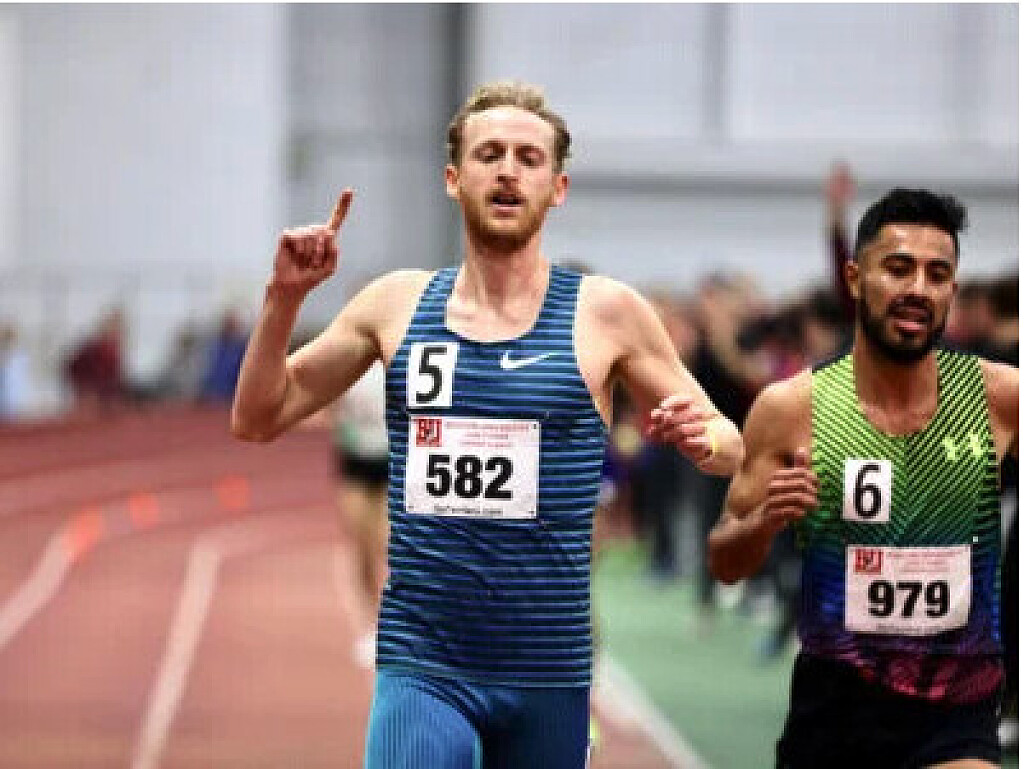
Woody Kincaid (12:51) and Yared Nuguse (7:28) Break American Records on Historic Night in Boston
The Boston University Track & Tennis Center has been hosting meets for 20 years. In that time, it has seen collegiate records, American records, and two world records.Inarguably, it was BU’s fastest night in the men’s 3,000- and 5,000-meter runs. At 5:30 p.m. ET, Yared Nuguse ran 7:28.24 to break Galen Rupp’s 10-year-old American record in the 3,000. Nuguse’s time was also faster than the 7:28.48 outdoor record Grant Fisher set last summer in Monaco.
Barely two hours later, Woody Kincaid used a brilliant 26.27 final lap to run down Joe Klecker and win the men’s 5,000 in 12:51.61, shaving more than two seconds off Fisher’s American indoor record of 12:53.73 set on this track in 2022.
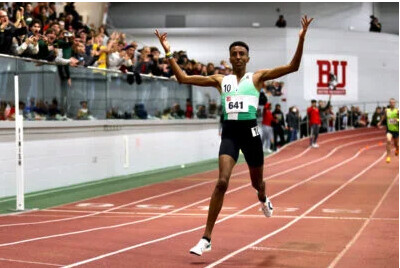
This time last year, no American had ever run 12:51, indoors or out. Now we have to debate whether it was even the best run by an American that day. Heady times for American distance running.
Nuguse and Kincaid weren’t the only men to run fast. Klecker’s 12:54.99 made him the 11th American under 13:00 and moved him to #4 on the combined US indoor/outdoor list. Sam Atkin, unsponsored a year ago, ran 7:31.97 to break Mo Farah’s British record (his time was faster than Farah’s 7:32.62 outdoor record, too). Northern Arizona’s Drew Bosley took almost two seconds off Nuguse’s collegiate record by running 7:36.42. And 19-year-old American Hobbs Kesslerran 7:39.00.
Any of those performances could have been a headline on another day. But tonight belonged to Nuguse and Kincaid, two record breakers entering new phases of their careers.
by Let’s Run
Login to leave a comment
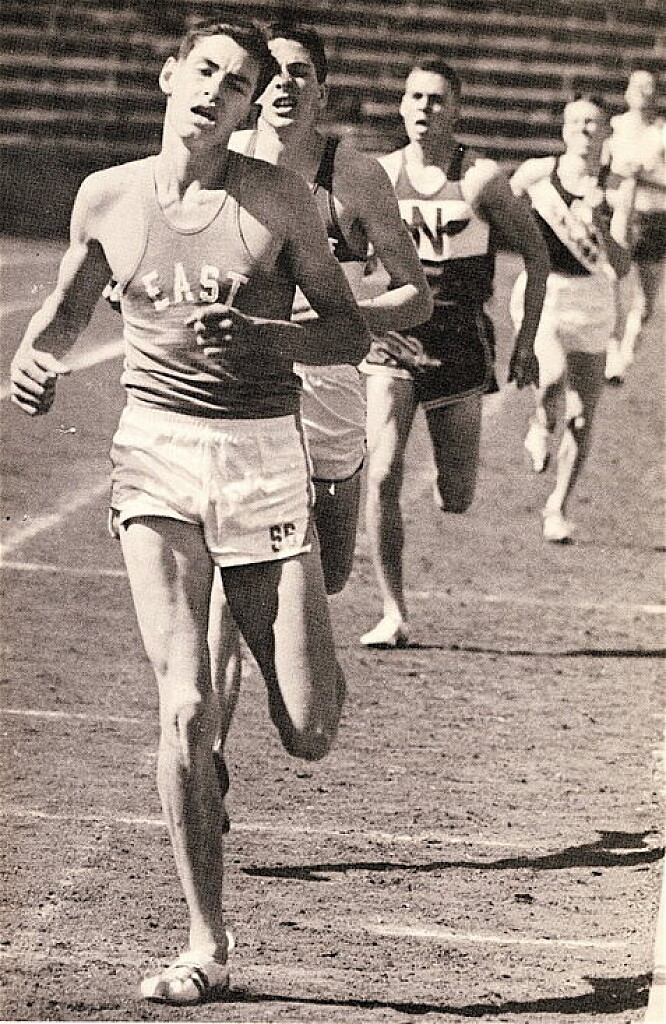
Five high school boys have combined to break the four-minute barrier seven times in 2022 and no one has enjoyed it more than Jim Ryun
Jim Ryun was the first high school boy to break the four-minute barrier in the mile as a Kansas 17-year-old in 1964 and went on to a legendary track and field career that included three Olympic appearances in the 1,500m, a silver medal in the 1968 Mexico City Olympics, and numerous American and world records.
Ryun’s name always surfaces when a high schooler dips under 4 minutes in the mile. And in 2022, his name has been coming up a lot.
Ryun’s career was also in the spotlight earlier this month when he was one of 30 former college track and field athletes inducted into the inaugural class of the USTFCCCA’s Athlete Hall of Fame in conjunction with the NCAA Championships in Eugene, Ore.
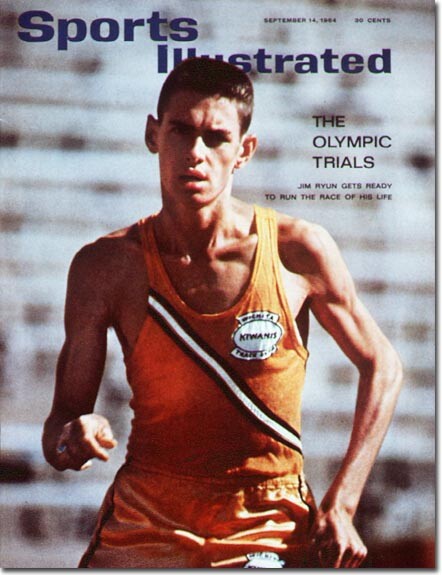
The original 4-minute high school barrier breaker celebrates the resurgence of American high school distance running and says for too long runners were held back in fear of what would happen if they ran under 4 minutes for the mile.
“I think they realize it’s not a barrier that can’t be broken, it’s more of a matter that if you break it,” Ryun said, “will you go on from there, which you can because we’re seeing more and more of them that are doing that.
“It’s not the barrier that it once was, should never have been there. For a long time, there were three of us. Myself, Marty Liquori and Tim Danielson. We were the only (sub) 4-minute milers from high school for years and I think it was the result of people being afraid of that, and coaches saying if you run too fast, too soon you’ll never make it very far.”
Growing up, Ryun often wondered if he would ever be successful in an athletic endeavor. He tried basketball and football and was cut from his church baseball team. At a high school assembly, Bob Timmons, the school’s track and field and cross country coach, encouraged students to run on his cross country team in the fall.
Ryun had never run more than one lap around a track before joining the cross country team, but in one season at Wichita East High School, he went from the last runner on the third-string team to a sixth-place finish at the Kansas state meet.
“Running was so new to me, I didn’t know who the heroes were,” Ryun recalled. “In fact, my first thought was I wanted to be a baseball, football, basketball player. Running, what’s that? So, it took a while. The first book Coach Timmons gave to me was about Emil Zatopek, the great Olympian, so I read that, and it began helping me understand about the sport.”
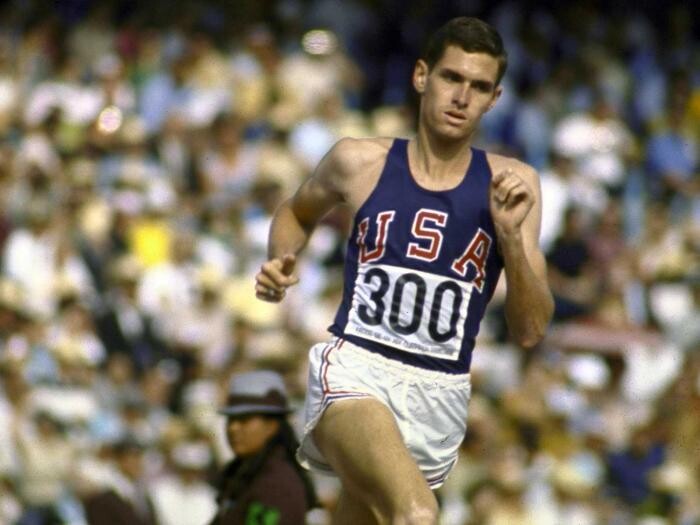
Ryun said Timmons was convinced he could be the first high school runner to break 4 minutes in the mile. That came true on June 5, 1964, when Ryun ran 3 minutes, 59.0 seconds to finish eighth at the Compton Invitational in Los Angeles.
“The goal originally was my coach’s because I was the kid that got cut from the church baseball team, didn’t have great talent and when I started running, I was looking for direction,” Ryun said. "And he began basically teaching me about goals, how to reach goals, and gave me workouts to get there. The night that I ran 4 minutes, 3:59.0, I didn’t sleep that night (before) because I realized that it was his goal.
“But my thought was, what happens if I take ownership, ownership being there’s certain things you as an athlete know you could do like maybe a little extra weightlifting, better eating. It was a transformational moment, because I mean when you finish eighth in a race and become the first kid to run under 4 minutes, that has to change your life – and it did.”
Ryun’s running career took off from there. He made the 1964 U.S. Olympic team in the 1,500m that went to Tokyo and was the last U.S. high school men’s track and field athlete to make the U.S. Olympic team until teenager Erriyon Knighton qualified for the 2020 Tokyo Olympics in the 200m and finished fourth there.
As a high school senior, Ryun broke 4 minutes four more times. His time of 3:58.3 at the 1965 Kansas state meet was the first time 4 minutes was broken in a high school-only meet. On June 4, 1965, Ryun returned to the Compton Relays, the site of his first sub-4-minute mile and ran 3:56.8. A little over three weeks later, he ran 3:55.3 at the U.S. AAU Championships in San Diego and beat New Zealand’s Peter Snell, the 1964 Olympic champion in the 800m and 1,500m.
Ryun, who would stay close to home and attend Kansas University after graduating from high school in 1965, roomed with a former Jayhawks great, Billy Mills, during U.S. training camps leading up to the 1964 Olympics. In Tokyo, Mills stunned the world by becoming the only U.S. athlete to ever win the Olympic 10,000m.
In 1966, Tim Danielson became the second American high schooler to break 4 minutes when he ran 3:59.4. A year later, Marty Liquori ran 3:59.8 to become the third high schooler under 4 minutes.
Ryun and Liquori had illustrious careers after high school, particularly Ryun. At age 19 in 1966, Ryun set two world records, first in the 800m (1:44.9), and then the mile (3:51.3). He was the NCAA indoor mile champion for Kansas in 1967, 1968 and 1969, and the 1967 outdoor NCAA mile champion. In 1967, he set a 1,500m world record of 3:33.1 that stood for seven years.
That same year, he lowered his mile world record to 3:51.1., a mark that stood for almost eight years. Ryun was the last American man to hold the mile world record. He still holds American junior records for the mile (3:51.3) and 2-mile (8:25.1), and his 800m American junior record of 1:44.9 stood for exactly 50 years.
In 2003, ESPN.com ranked Ryun as the greatest U.S. high school athlete of the 20th century, ahead of Tiger Woods, LeBron James, Lew Alcindor (now Kareem Abdul-Jabbar), Wilt Chamberlain, Marion Jones, and others.
After Ryun, Danielson, and Liquori, the 4-minute mile wasn’t broken by a prep athlete again for more than 32 years until Alan Webb ran 3:59.86 at the New Balance Games in New York on Jan. 20, 2001. Sensing something special in Webb, the promoters of the Prefontaine Classic in Eugene, Ore., invited him to run in the Bowerman Mile, the signature event of the meet that has since become a Diamond League event, on May 27, 2001.
Morocco’s Hicham El Guerrouj, still the world record-holder in the 1,500m and mile, won the event in 3:49.92, followed by Kevin Sullivan of Canada and Bernard Lagat, then of Kenya, who later ran for the U.S. They helped pull Webb to a fifth-place finish in 3:53.43, breaking Ryun’s 36-year-old high school record.
“I thought he would. I just didn’t know how much he would break it by," Ryun said. “It was one of those moments in time where he had run well, but he needed somebody to help him get over that finish line, just as I did running under 4 minutes for the first time. You need someone to help set the pace. You can relax a little bit, and he was able to take advantage of that.
“So, there was no real surprise to me. The biggest surprise was that there weren’t more high school boys running under 4 minutes.”
It would be another 10 years before a high schooler would break 4 minutes in the mile. In 2015, Matthew Maton and Grant Fisher, now the U.S. record-holder in the men’s 10,000m, both ran 3:59.38 about one month apart. In 2016, two runners broke 4 minutes, including Drew Hunter, who did it twice in a 15-day span in February indoors, both times in New York.
The 4-minute barrier was broken by high schoolers once in 2017 and again in 2020 during the height of the COVID-19 pandemic. In 2021, Hobbs Kessler ran the fastest high school mile since Webb when he ran 3:57.66 indoors. Kessler later that year broke Ryun’s 1,500m American junior record of 3:36.1 that stood for almost 55 years.
The lack of American high school runners breaking 4 minutes in the mile for decades might be a big reason why U.S. men haven’t enjoyed much Olympic or international success until recently. When Matthew Centrowitz won the men’s 1,500m at the 2016 Rio de Janeiro Olympics, he was the first American man to do so since 1908. At the same Olympics, Clayton Murphy won the bronze medal in the 800m, the first American man to medal in the event since 1992.
And when the World Athletics Championships are hosted on U.S. soil for the first time next month in Eugene, Ore., the defending 800m men’s champion is American Donavan Brazier.
“If you look back in history, you’d see there was a dominance maybe by a country for a time like Great Britain had all those great runners. America at one time was dominant in that area as well,” Ryun said. “So, I think it’s a matter of floating from place to place, and I think it comes down to motivation. How motivated are you?
“Over time you start realizing that motivation has to come down to you be willing to get up, run in all kinds of weather, race all over the world and let those talents be developed that God’s given you. So, it takes time. I think America can come back with dominance, but it also comes down to how motivated you are. I see the Kenyans as very motivated, and America can be just as motivated as you see with these new young runners that are developing quickly.”
That has proven to be the case this season. Seventeen high school runners have broken the 4-minute barrier, and 2022 has been the banner season for it so far with five runners breaking the mark seven times.
“I think a lot of coaches are seeing, too, that kids are just developing a lot faster doesn’t mean you’re going to burn out,” Ryun said. “It means you’ve got great opportunities. Will you decide to keep it going and, in my case, will you take ownership? The coach can only take you so far, but then you have to establish ownership.”
The owner of the fastest prep mile this year is Colin Sahlman, who ran 3:58.81 indoors in February, and, like Webb, was invited to the Bowerman Mile at the Prefontaine Classic. In a field that included 2020 Tokyo Olympic 1,500m gold medalist Jackob Ingebrigtsen, defending World Athletics Championships 1,500m gold medalist Timothy Cheruiyot, and defending 1,500m NCAA outdoor champion Cole Hocker, Sahlman finished 13th in 3:56.24. Of the 14 men who finished the race, seven set personal bests and seven set season bests, including Ingebrigtsen, whose time of 3:49.76 is the fastest in the world this year.
Sahlman’s time moved him to third on the all-time prep list behind Webb and Ryun. Sahlman, who is headed to Northern Arizona University for college, was part of a high school powerhouse at Newbury Park High in Southern California. In 2021, Newbury Park became the first high school team to have four runners break 4:10 for the mile in the same season.
“That mindset has really evolved and developed over these last three to four years,” Sahlman said in a March article in the Los Angeles Times. “It’s just like it’s transformed into something that we never thought was possible. Now we think anything’s possible.”
Gary Martin has also broken 4 minutes twice this year, running 3:57.98 on May 14 and 3:57.89 on June 2 in the Festival of Miles in St. Louis. At the Festival of Miles, Connor Burns ran 3:58.83 to become the first high school junior since Ryun to break 4 minutes. It was also the first time two prep runners broke 4 minutes in the same race.
Those two performances gave the Festival of Miles four prep runners who have broken 4 minutes. That’s where Fisher did in 2015, a feat repeated by Reed Brown a year later.
And one day after Martin and Burns broke 4 minutes, Rheinhardt Harrison ran 3:59.33 in Florida on June 3. On June 15, Simeon Birnbaum added to the list of sub-4 minute runners when he became the second high school junior this season to break the mark with a time of 3:59.51.
Will this high school running resurgence lead to greater U.S. success against international competition and major global championships? Only time will tell.
by Ashley Conklin (World Athletics)
Login to leave a comment
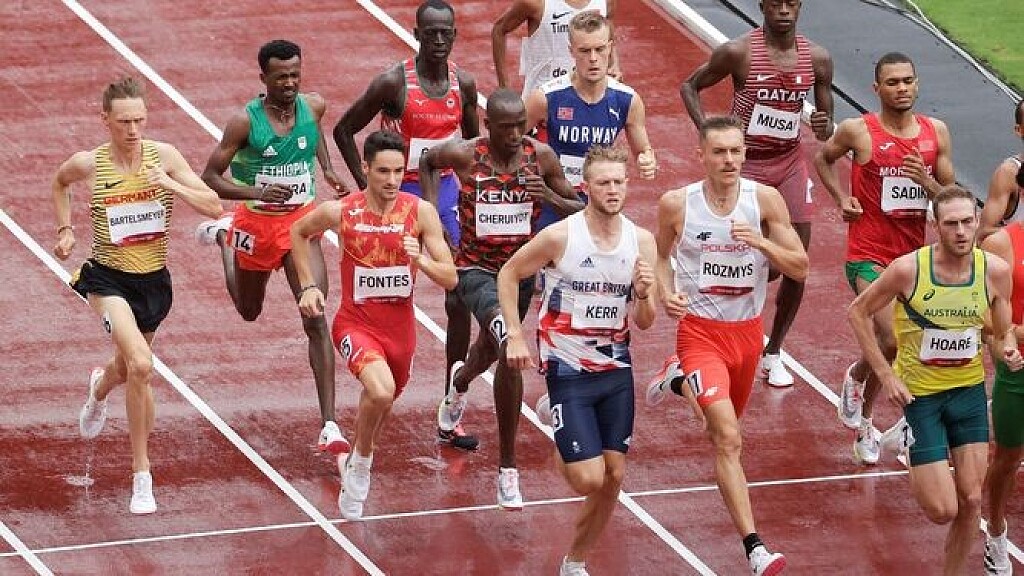
Josh Kerr and Ollie Hoare to clash in men's Millrose mile
Olympic 1500m bronze medalist Josh Kerr and Olympic finalist Ollie Hoare will lead the charge for the WHOOP Men’s Wanamaker Mile at the 114th Millrose Games.
Kerr became Great Britain's second fastest ever 1500m runner with his 3:29.05 medal-winning run in Tokyo. While competing at the University of New Mexico, Kerr was the 2018 NCAA champion in the mile.
“The Wanamaker Mile has always been a staple in my indoor season, there is no race like it,” said Kerr. “I’m rested and ready to get ‘stuck in’ after a successful Olympics.”
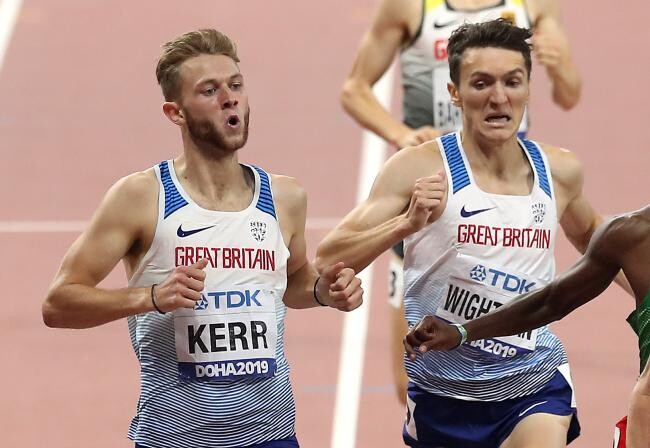
Australia's Hoare, meanwhile, placed second in the 2020 Wanamaker Mile and reached the Olympic final in Tokyo this past summer. He was the 2018 NCAA 1500m champion while at the University of Wisconsin, taking down Kerr in the process.
“The Wanamaker Mile is one of the most prestigious indoor mile races in the world,” said Hoare. “To be able to go and compete again for the third time in this event is a privilege.
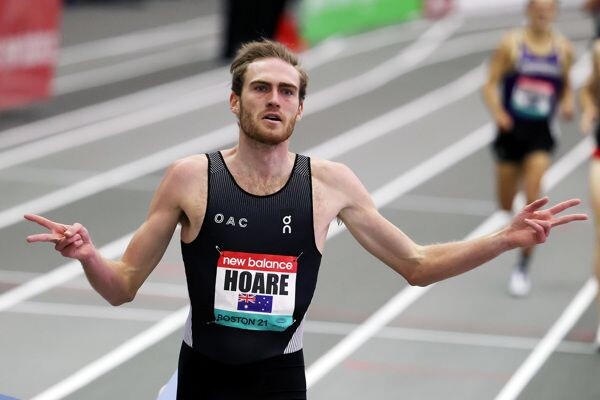
"Coach (Dathan Ritzenhein) and I are happy with where I am right now and I'm confident that I can take on whatever comes at me. Don't be surprised if you see some very fast mile times come out of New York.”
Five-time Olympian Nick Willis of New Zealand will also join the mix. The 38-year-old, who has finished as runner-up at the Wanamaker Mile three times, will be trying for a record 20th consecutive year of running a sub-four-minute mile.
There are talented US runners in the field, led by 2016 Olympic 800m bronze medallist Clayton Murphy, and he will be joined by 18-year-old Hobbs Kessler and world finalist Craig Engels, as well as Ireland's Andrew Coscoran and Canada's Charles Philibert-Thiboutot.
Rounding out the field will be Mario Garcia Romo, Henry Wynne and Colby Alexander.
Other top athletes so far announced for the Millrose Games include 2016 world indoor 60m champion Trayvon Bromell, world 100m hurdles record-holder Kendra Harrison, Olympic shot put champion Ryan Crouser, world shot put champion Joe Kovacs, Olympic 800m champion Athing Mu, Olympic pole vault champion Katie Nageotte and world indoor pole vault champion Sandi Morris.
by World Athletics
Login to leave a comment
NYRR Millrose Games
The Pinnacle of Indoor Track & Field The NYRR Millrose Games, first held in 1908, remains the premier indoor track and field competition in the United States. The 2025 edition will once again bring the world’s top professional, collegiate, and high school athletes to New York City for a day of thrilling competition. Hosted at the New Balance Track &...
more...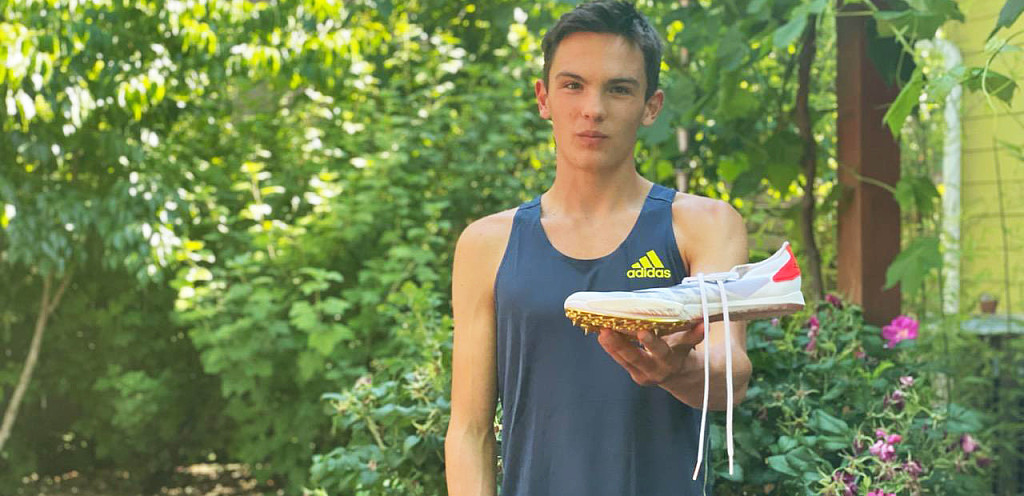
Hobbs Kessler turns pro and has signed with Adidas
American record holder Hobbs Kessler has announced that he is turning pro and signing with Adidas. The 18-year-old from Ann Arbor, Mich., has had an incredible season, breaking the American high school indoor mile record (he ran 3:57.66 in February) and national U20 1,500m record (his 3:34.36 in late May bettered Jim Ryun‘s 55-year-old mark of 3:36.1). Kessler was set to join the track team at Northern Arizona University (NAU) this fall, but he now plans to only attend as a student.
Since his breakout performance in the indoor mile earlier this year, track fans have debated whether Kessler should turn pro. He committed to NAU last fall, but after such an incredible run (and continued success throughout the season), it became clearer and clearer that Kessler already has what it takes to compete as a professional.
In an interview with the website Track and Field News, Kessler said his mind was made up and that, despite his great runs this year, he was sure he would stick to the collegiate route. Then he went to the Portland Track Festival in May, when he ran his American U20 1,500m record, and he started to reconsider his options.
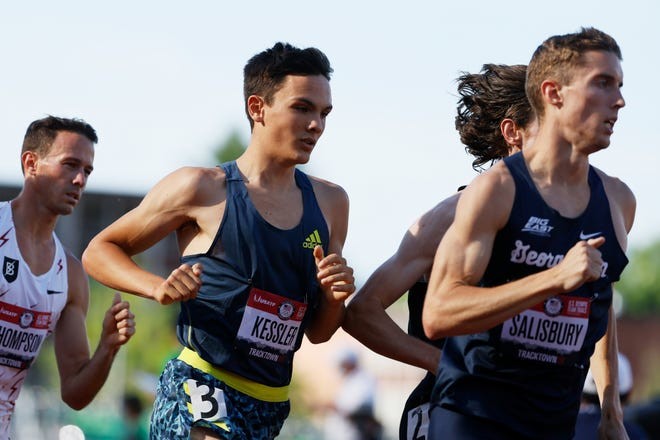
“The 3:34 was the turning point for all of this,” he said. “I’m in a position now that I don’t know that I will be in later, so I’m jumping on the opportunity that I have now and riding my momentum forward.” Kessler said he talked the decision over with multiple people from his family and team, and they all told him that going pro was the right call.
“It’s a bummer to miss out on the college [and] NCAA experience, but the positives outweigh the negatives,” he said. “Now I’m in a good position. My name is hot and I have a really good setup here running-wise and this gives me the ability to stay with my support system.”
When asked about the prospect of turning pro in an interview with the Wall Street Journal, which occurred before his decision to sign with Adidas, Kessler said, “the benefits of going pro would have to outweigh missing the experience of going to college.” While he will be missing out on the NCAA experience, he is still going to attend NAU and live with members of the school track team.
Kessler currently trains in Ann Arbor with former University of Michigan coach Ron Warhurst in a crew with two-time Olympic medallist Nick Willis and other high-profile athletes. Kessler will continue to work with Warhurst as a pro, and he will return to Ann Arbor in the spring and summer when he’s not at school.
Kessler has had a year of many firsts, and he has another coming up on Thursday evening, when he will race the 1,500m at the U.S. Olympic Trials in Eugene, Ore. He qualified for the trials with his run in Portland last month, a result that gives him the fifth-best seed time in the entire field. The first round of the men’s 1,500m kicks off at 6 p.m. PT.
by Ben Snider-McGrath
Login to leave a comment
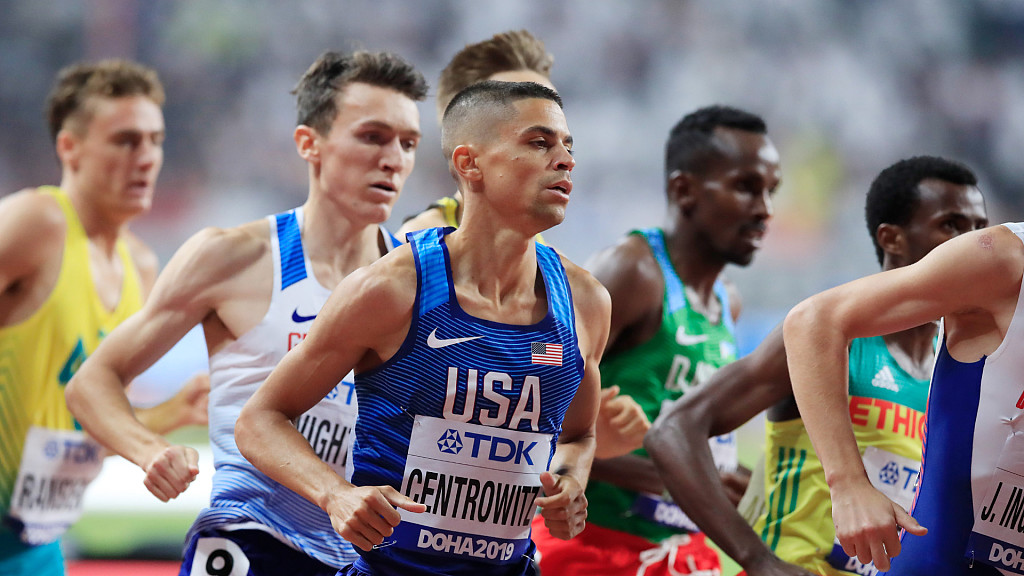
What to Watch For in the U.S.A. Track & Field Olympic Trials
For months, they have trained in relative isolation. They have triple jumped in empty stadiums and chased qualifying standards on high school tracks. You may have heard this before, but the pandemic created challenges for American track and field athletes.
For those who managed to push through the long delay, a meet five years in the making has finally arrived: The U.S. Olympic track and field trials are set to start on Friday afternoon at the University of Oregon’s Hayward Field, a freshly renovated stadium that — barring something else unforeseen — will also host the world championships next year.
But first come the trials. As athletes from across the country bid to compete at the Tokyo Games this summer, here is a look at what to watch over the coming days:
What’s the schedule?
Glad you asked. It is a long meet — 10 days, with two rest days built in the middle — running from Friday through June 27. There are 40 events in all (20 for the women, 20 for the men), with preliminary rounds for most of them. On Friday, for example, there are preliminary rounds in events ranging from the women’s discus to the men’s 800 meters. There are also two finals scheduled for the first day, in the men’s shot put and the men’s 10,000. On Sunday, eight more champions will be crowned, including in the men’s 100. (More on that later.)
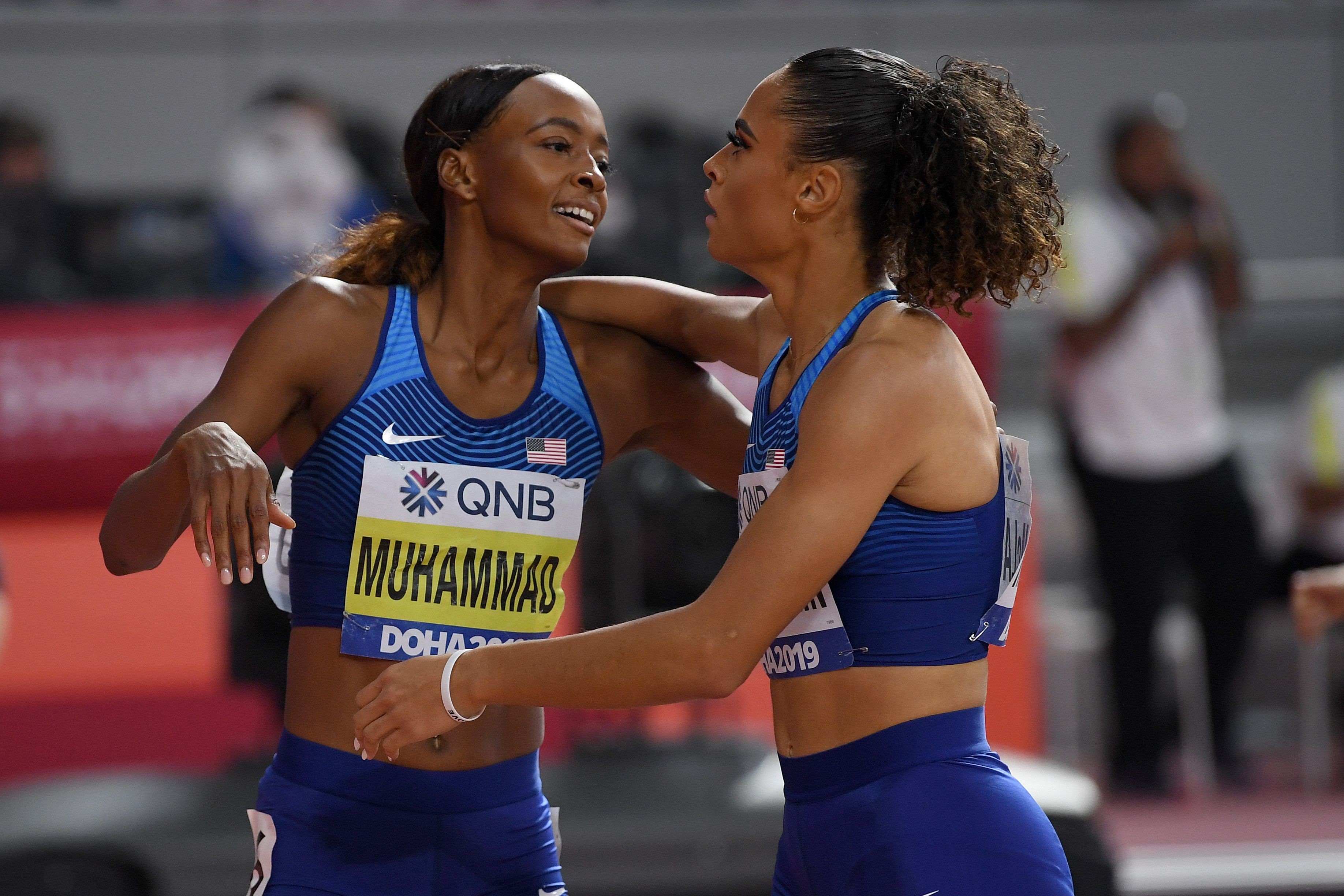
So who gets to go to the Olympics?
The top three finishers in each event qualify, provided they have reached the Olympic standard. If not, they have until July 1 to attain it.
Who are some of the most compelling athletes to watch?
Any list like this has to start with Allyson Felix, the nine-time Olympic medalist who is aiming to compete in her fifth and final Olympic Games. A onetime prodigy who is entered in the 200 and 400 meters, Felix, 35, long ago secured her place as one of the sport’s most revered and respected figures. She has advocated for gender equality since giving birth to her first child in 2018.
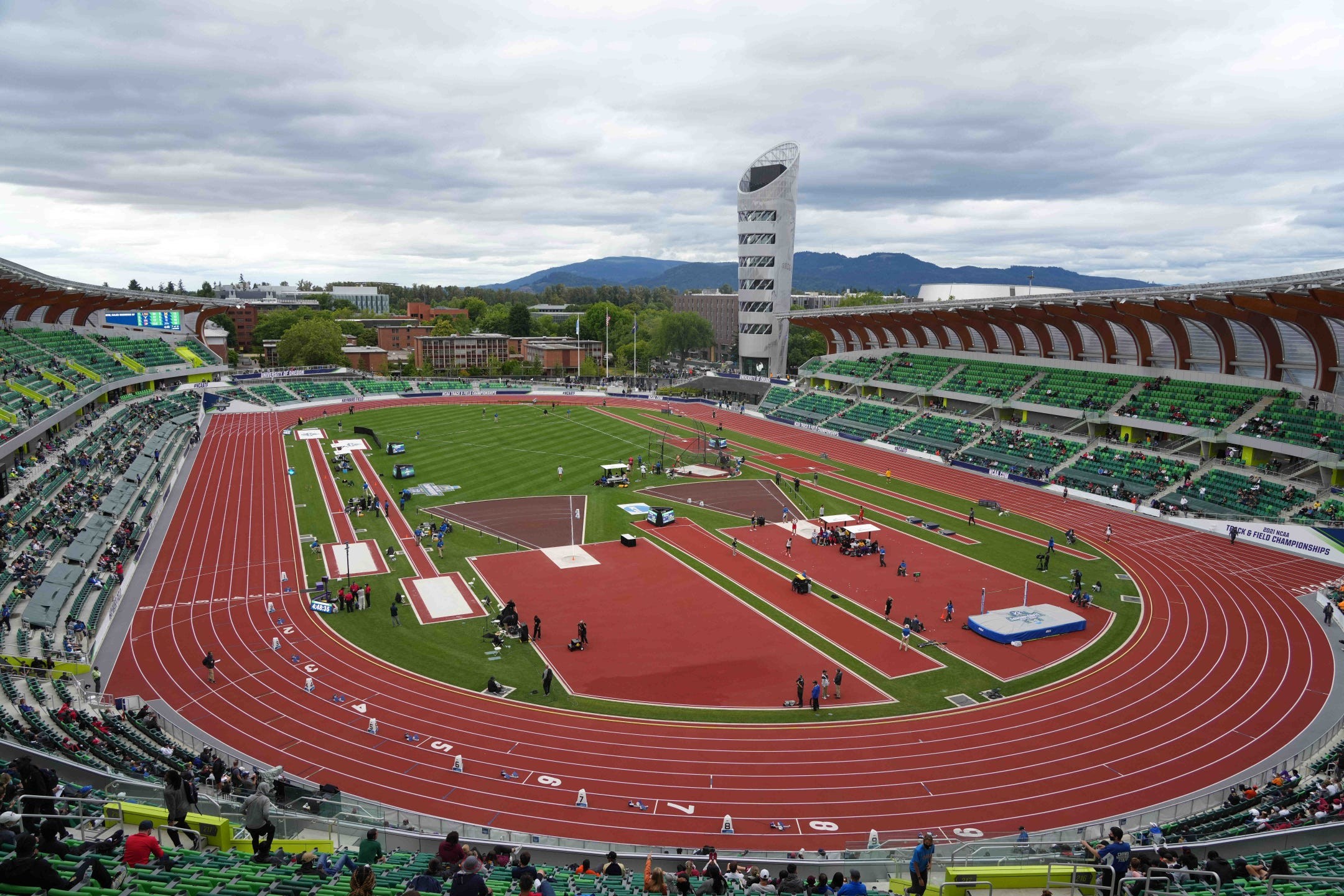
Felix’s retirement will leave a void among the American women, and Sha’Carri Richardsonseems prepared to help fill it. In April, she ran the sixth-fastest 100 in history. Richardson, just 21, is unapologetically brash while consistently coming through with fast times and big performances. She is easy to spot, too: Just look for her colorful hair.
In the women’s 1,500 meters, Elle Purrier St. Pierre is the favorite after a string of convincing victories this season. She grew up on a dairy farm in Vermont, where she would train by running to the Quebec border and back. Her sponsors include Cabot Cheese.
Donavan Brazier is the American record-holder and reigning world champion in the men’s 800. He seems determined after failing to qualify for the Olympics in 2016.
And Sam Kendricks, who has won back-to-back world men’s pole vault championships, is the heavy favorite in Oregon. His toughest competition figures to be in Tokyo, where Mondo Duplantis, who grew up in Louisianabut competes for Sweden, will be waiting. Duplantis, 21, already owns the world record but is seeking his first Olympic gold.
How about a few must-see events?
No, we didn’t forget about Noah Lyles, the world champion in the men’s 200 meters. Lyles wants to double in the 100 and 200 meters in Tokyo, and his 100-meter form has been coming along slowly. He will face a loaded 100-meter field in Eugene, Ore., headlined by the likes of Trayvon Bromell, who has run the fastest time in the world this year, and Justin Gatlin, the five-time Olympic medalist who has twice been suspended for doping. Americans have the six fastest 100-meter times in the world this year — and Lyles is not among them.
The field in the men’s 1,500 is also competitive. Matthew Centrowitz, the 2016 Olympic champion, was injured last year and benefited from the postponement. Craig Engels is the 2019 national champion, but he is equally renowned for his mullet. There is also a group of up-and-comers headlined by Cole Hocker, fresh off an N.C.A.A. title at Oregon, and Hobbs Kessler, the fastest high school miler ever.
The most anticipated showdown, though, could materialize in the women’s 400-meter hurdles. At the 2019 world championships, Dalilah Muhammad, 31, had to break her own world record to outrun Sydney McLaughlin, one of the sport’s rising stars. Muhammad, the Olympic champion in Rio, has been working in recent weeks to return to form after injuring her hamstring. McLaughlin, 21, spent much of the spring fine-tuning her speed and technique while competing in the 100-meter hurdles. If both athletes are healthy, their final — held on the final day of the meet — should be a highlight.
Who’s missing?
The trials got a harsh dose of reality this week when Shelby Houlihan, the American record-holder in the women’s 1,500 meters, was suspended from competing for four years after she had tested positive for an anabolic steroid. Houlihan has maintained her innocence, claiming she ate tainted pork from a food truck. For about eight hours Thursday, it seemed that Houlihan might still be able to run while she appealed the ban, but ultimately the U.S. Olympic & Paralympic Committee stepped in and said that she could not participate in the trials.
Speaking of suspensions, that deep field in the men’s 100 meters is missing an important name: Christian Coleman, who won the 2019 world championship under a cloud of suspicion, and was subsequently suspended for missing a series of drug tests.
Also absent will be Christian Taylor, the two-time Olympic champion in the men’s triple jump. Taylor ruptured his Achilles’ tendon at a meet last month and underwent surgery. He has vowed to make a comeback in time for next year’s world championships.
On the bright side, several American runners will not be at the trials — but only because they have already punched their tickets for Tokyo. We are referring, of course, to the marathoners, whose trials were staged all the way back in the prepandemic era, in February 2020. Galen Rupp, Jacob Riley and the seemingly ageless Abdi Abdirahman, 44,qualified for the men, while Aliphine Tuliamuk, Molly Seidel and Sally Kipyegomade the women’s team. (Rupp, a two-time Olympic medalist, is expected to compete in the 10,000 on Friday, though he told OregonLive.com last month that he would treat the race as a rigorous training run and appears to have no intention of running the track event in Tokyo.)
Is it on television?
NBC and NBCSN will provide live daily coverage of the meet.
by Scott Cacciola (NY Times)
Login to leave a comment
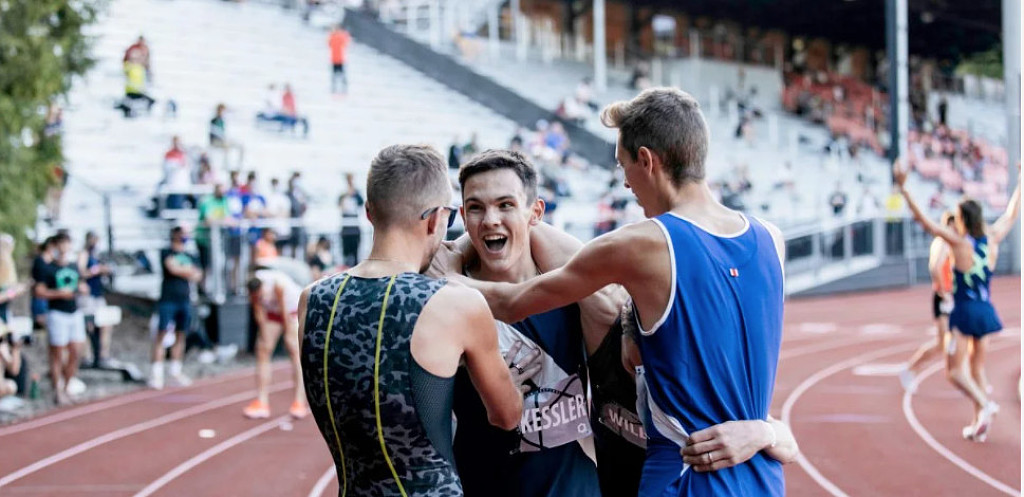
Introducing the Country’s Fastest High Schooler
Hobbs Kessler is taking the running world by storm
Last February, Hobbs Kessler, a 17-year-old senior from Michigan who has committed to run for the University of Northern Arizona next fall, set a new high school record for the indoor mile. His time of 3:57.66 made him only the twelfth American high schooler to break the four-minute barrier since Jim Ryun first did it in 1964. The feat was all the more notable considering that Kessler’s mile PB coming into the race was a comparatively modest 4:08.4, which he ran last summer. As Track and Field News noted, Kessler’s record had come “seemingly out of nowhere.”
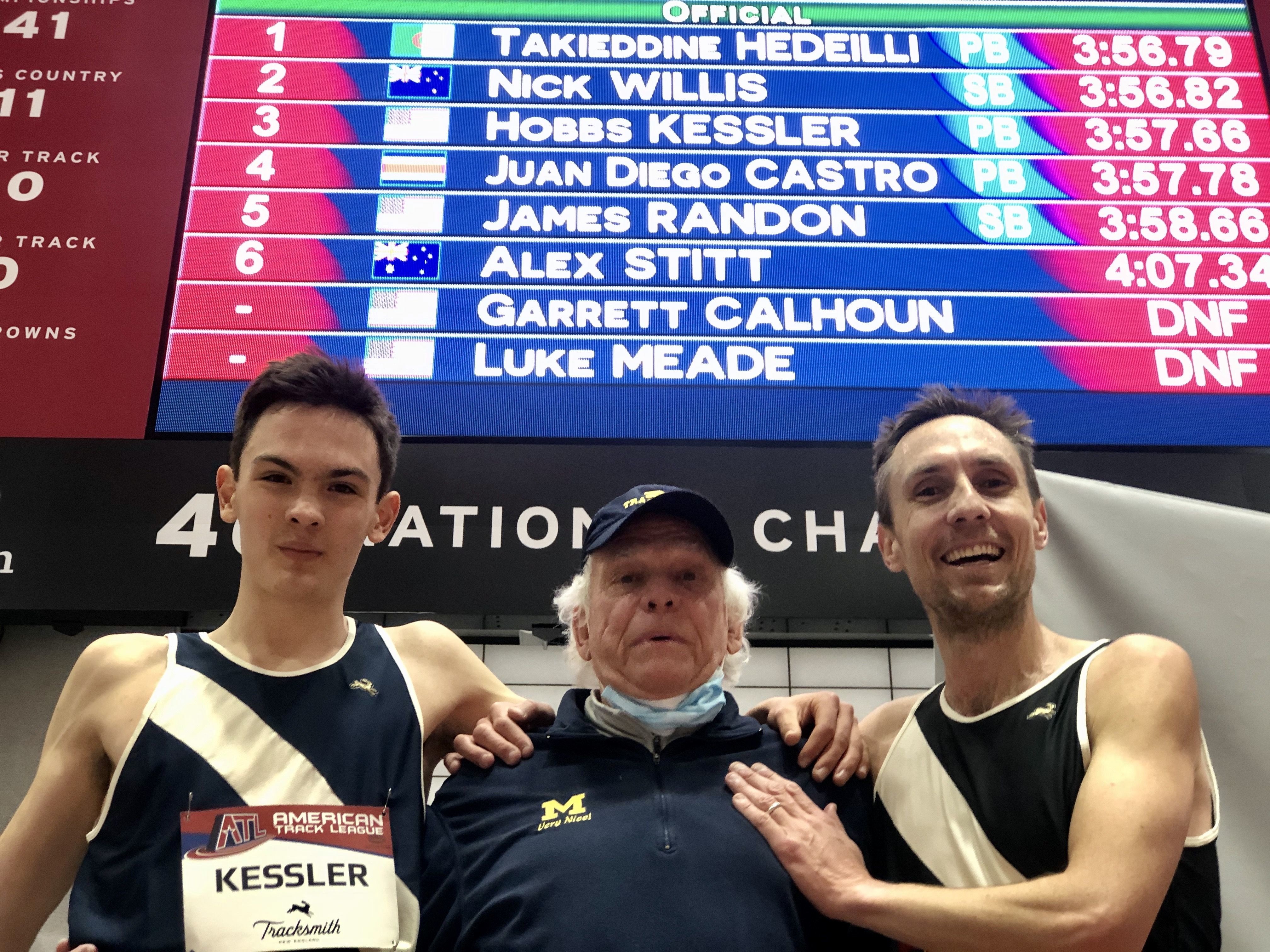
One explanation for Kessler’s sudden arrival into the upper ranks of American middle-distance running is that the pandemic has caused a number of rising stars to train in relative obscurity, with far fewer official meets to document the gradual progression of their talent. (Apparently, Kessler’s 4:08 mile last year was set in a time trial.) No wonder, then, that after his record-breaking run in February, the narrative around Kessler quickly morphed from Who is this guy? to What else is he capable of?
At last weekend’s Portland Track Festival, we found out. In the men’s 1,500-meters, Kessler, now 18, ran 3:34.36 to break Alan Webb’s 20-year-old high school record in the “metric mile” by almost four seconds—an eternity in such a short race. What’s more, Kessler’s time was also quicker than the men’s collegiate 1,500-meter record (3:34.68) and faster than the current Olympic standard (3:35.00). The guy few people had heard of six months ago was suddenly on the shortlist for the greatest U.S. high school runner, ever.
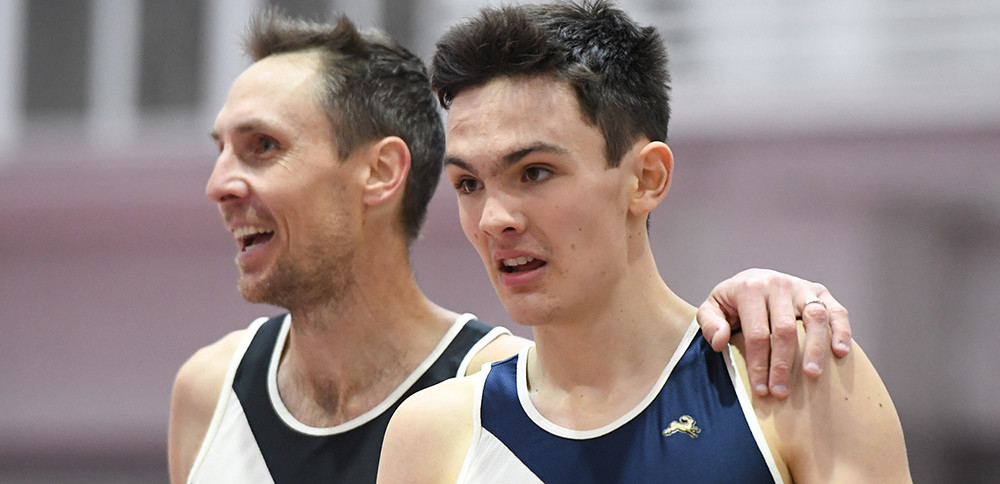
Until recently, track and field wasn’t even Kessler’s primary focus. In 2019, he represented the United States at the IFSC Climbing World Youth Championships. I caught up with Kessler to chat about the miraculous evolution of his young running career, choosing track over climbing, and his plans for the future.
OUTSIDE: Last summer, you cracked 4:10 in the mile for the first time. Less than a year later, you’ve run a 1,500 that converts to a 3:51. Are you shocked by how quickly you’ve progressed in such a short time? Can you still savor the moment?
KESSLER: In early 2020, I just wanted to run 4:13, indoors, in the mile. And then it kind of snowballed from there. I’ve gotten used to shifting my mindset on how I view myself as a runner. As I keep upping it, I always think, “OK, this is the last time,” but it hasn’t been so far. So, it’s been a little crazy in that regard, but I’m really enjoying it. I feel like I’ve been able to adapt my mindset really quickly—a lot faster than my folks. I think they’re still stuck six months back, which is pretty funny.
By “shift in mindset,” I’m guessing you mean a shift in expectations that you have for yourself. Are you worried that you might not be able to live up to your own standards, considering how quickly you’ve progressed?
I guess it can be a double-edged sword. In the winter, before I broke four for the first time, the 60-second-per-lap pace was everything, so that’s what we did all our workouts at. Now that I’m more fit, 57 is the new 60. But it’s all about not viewing it as fast. Because if I thought of 4:10 as fast, then I’d probably be running 4:10. So, you can control some of it with your mind. As far as not living up to expectations, I know that at some point I’m going to take a hit and not be running as well. But this season, I’ve been taking everything in stride and good things have been happening. I’ve never worried that I wasn’t going to run well.
There’s a theory that the bizarre circumstances of the pandemic might have helped some athletes nurture their talent by clearing their racing schedule. Is there any sense in which the events of last year changed your approach to training and racing?
As far as training goes, I would say the pandemic allowed me to just take a block from March 2020 to August to just get stronger. When the season got shut down, my dad switched me over to doing tempos on Tuesdays and hills on Fridays. But I was doing a lot of really fast strides because I wanted to develop my speed. Trying to work on my form. I’m a fairly fresh runner and haven’t been at it that long, so my running form is still very malleable. I didn’t have a race to worry about, so I just ran two big workouts a week and a big long run. I think people are realizing that racing less and training more can yield faster times. I’ve probably only gone all-out five times this year—but when I do decide to go all-out, I put a lot of emphasis on not wasting the opportunity.
I know that you are coached by your father, but also by Ron Warhurst—a legend in the coaching world, who is credited with “inventing” one of the sport’s most famous workouts. Do you have a favorite session that you like to do—perhaps something from Warhurst’s catalog of torture?
Both Ron and my dad have a lot of input in my training, but I’m more on Ron’s program now. I would say that my favorite workout of Ron’s has to be “Michigan,” because it’s his signature thing and you hit pretty much every pace and it can also be adjusted to wherever you’re at.
You’ve qualified for the Olympic Trials in the 1,500 as a high schooler. That’s nuts. But you’re also in a good spot in which there’s no pressure and where, presumably, you can just go and enjoy the experience. How do you plan to approach the Trials and do you have any other running goals for the summer?
After I broke four minutes in the mile, getting to the Trials was really the big goal. So I’m very excited about that race. Originally, I was just viewing it as a great experience where I could learn a lot so that, in three years, I might be in a position to compete for a spot on the team. But now that I’m one of the few people with the Olympic standard, my mindset has changed a bit. My thinking is that, if I’m there, I might as well have a run at the team. It’s a win-win because if I make the Olympic team that would be awesome, but if I don’t, I’m only 18 and will have a lot more attempts at it. I feel like I’m in a very cool spot where there’s no pressure, but I might as well give it a go.
You have an impressive climbing background, but it seems like you’ve decided to prioritize running for now. Was that decision based primarily on the fact that running is where you have the most talent, or was it something else?
I’m definitely prioritizing running, but I wouldn’t say it’s a conscious decision. That’s just the sport that I’ve drifted more towards in the past year or two and it’s what I’m more excited about. It’s not that I decided that I could be more successful at it, so much as that I’ve drifted towards it throughout high school.
Do you feel like the two sports complement each other in some way?
I think climbing really helps running, but running doesn’t really help climbing.
How so?
Well, the big carryover from both—and this does go either way—is that the mental stuff is the same. Race nerves in running and redpoint jitters in climbing. So there it’s the same stuff. In competitive climbing, I had to develop skills to deal with it, which translated directly to my running. But I think running destroys my coordination a little bit for climbing, so it’s hard to do both at the same time. I tried to be really good at both at the same time, but it just wasn’t possible because they started fighting each other a little bit. So I decided to let go of trying to be really good at climbing and to just do it because I enjoy the act of it.
You’ve now run a time that is faster than the NCAA 1,500-meter record. Unsurprisingly, this has fueled speculation that you might decide to go pro and skip college-level racing altogether. Do you think that early success can obscure the fact that running talent still needs to develop gradually?
When I was talking to colleges that was one of the biggest criteria I had. I wanted to make sure they developed me and weren’t just trying to get as much out of me while I was in school. So I’ve kind of had that view. Running aside, if I were to go pro, it would have to create a situation that would be worth missing out on the experience of being in college and being on a team. And I really want that experience. I’m not ready to be done being on a cross-country team. So going pro would have to outweigh that by a significant amount. Everything seems really immediate and important right now, but I have confidence it will even out. Whatever decision I make, I have confidence in the people who have been guiding me so far.
by Outside Online
Login to leave a comment
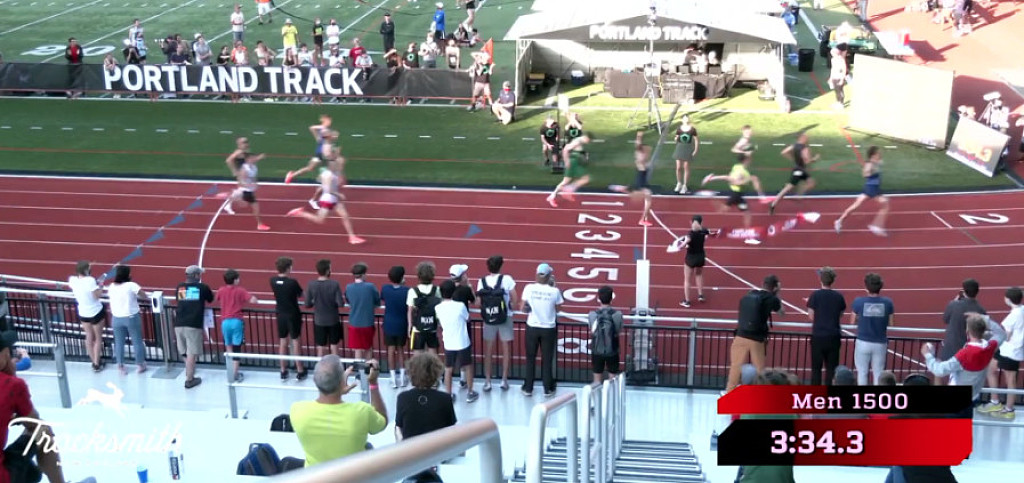
Hobbs Kessler Breaks Alan Webb’s Legendary High School 1500m Record
Runs 3:34.36 to Get Under Olympic Qualifying Standard
In one of the most incredible runs ever by an American high schooler, 18-year-old Hobbs Kessler ran a 3:34.36 1,500m at the Portland Track Festival tonight to obliterate the US high school record. The previous record, 3:38.26, was set by Alan Webb as a 1500 split en route to his legendary 3:53.43 high school mile record at the 2001 Prefontaine Classic.
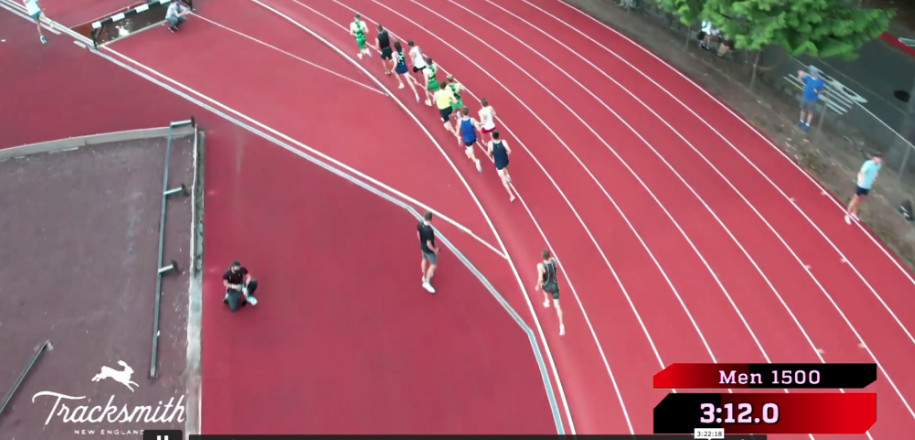
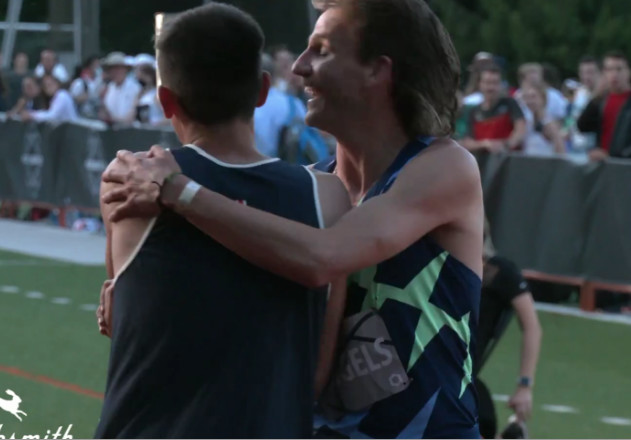
Webb’s 3:53.43 has gone unchallenged for two decades, but according to World Athletics’ scoring tables, Kessler’s 1500 tonight was the superior performance; converting to 3:51.34 for the mile (Webb’s 3:53.43 mile converts to 3:36.30 for 1500). Kessler’s time is also faster than Jim Ryun‘s US U20 1,500 record of 3:36.1 which had stood since 1966.
Kessler, who was last in the lead pack of ten with 200m to go, moved up well the final 100 meters, and threw up his hands just before the finish line as he saw the clock and finished 5th in a race won by reigning US champ Craig Engels in a personal best of 3:33.64. Engels, the 2019 US indoor/outdoor champion and a World Championship finalist, entered tonight with a pb of 3:34.04 — barely faster than what Kessler ran.
Kessler, a senior at Community High School in Ann Arbor, Mich., was already a high school record holder after running 3:57.66 in February to take down the indoor mile record. Now he is, quite simply, one of the best milers in the United States, regardless of age. His time was the third-best by an American in 2021 — only the winner Engels and fourth-placer Henry Wynne (3:34.08) have run faster this year.
How incredible was Kessler’s run? He didn’t just break the US high school record by almost four seconds; he also ran faster than the collegiate record of 3:34.68 set by Notre Dame’s Yared Nuguse two weeks ago. He also hit the Olympic standard of 3:35.00 — one of just seven Americans to have done so during the qualification period.
Kessler’s run was so much faster than any other high schooler has run for 1500 that it is hard to even make comparisons. Webb’s 3:53.43 at Prefontaine, which celebrated its 20th anniversary on Thursday, is the obvious one. Just like Webb, Kessler finished 5th in a field of pros, and just like Webb, Kessler was mowing them down over the final 100 meters.
As impressive as Kessler’s run was tonight, it was not the greatest ever performance by an American U20 athlete. That remains Jim Ryun’s 3:51.3 mile in July 1966 — a world record at the time that would stand for eight years. Ryun was just 19 years old at the time of that race, which came after his freshman year of college.
Kessler is a high school senior. His sometimes training partner, Nick Willis, an Olympic 1500m silver and bronze medallist, was in this race and tried to put it in perspective on the broadcast afterwards, “I became a spectator to the greatest performance ever by a high school miler,” said Willis, noting he himself went out at the pace prescribed for the rabbits for 800, yet was in last place. “It’s like Jim Ryun reincarnated again…He’s such a rookie in terms of running…. He’s so raw.”
by Let’s Run
Login to leave a comment
High school runner crawls across finish line to sub-9 two-mile
Gavin Sherry collapsed right before the finish line and crawled to an 8:57.67
Last weekend, the track world was impressed yet again by another incredible performance by high school phenom Hobbs Kessler, who closed a two-mile race with a 55-second final lap, crossing the finish line in first place in 8:39.04. Given that Kessler was 10 seconds ahead of the second-place finisher, it would have been easy to miss the action that happened behind him, but those who stuck around got to watch as Connecticut runner Gavin Sherry collapsed in the final few metres of the race and crawled to the finish line in 8:57.67.
It looked as though Sherry would cross the line in third place, but his legs gave out just before the finish. While he struggled to get back on his feet, two other athletes passed him and he managed to stumble across the finish line in fifth, before collapsing immediately upon completing the race. While this is likely not the finish the high school senior was looking for, it was a demonstration of the athlete’s grit and determination. Despite his struggle, he was still able to go sub-nine minutes in the race, an impressive time for a high school athlete in and of itself.
You may not have heard of Sherry, but he has been one of the top high school runners in Connecticut for the last couple of years. He boasts an indoor two-mile PB of 8:53, which he set during his first-ever indoor track season as a sophomore last February, and last year he was named the Gatorade Connecticut Boys Cross Country Runner of the Year.
In an interview last year with a local newspaper, Sherry explained that he didn’t feel (at the time) as though he’d pushed himself to his limit, but that trying to find out where that limit is is what he enjoys so much about track.
“To me, that’s why I love the sport,” Sherry said. “It’s really just trying to explore how far you can push yourself before you break. So far I haven’t really had an experience where I’ve broken.”
It appears as though last weekend, he did finally have that experience, but he proved in that moment that he has the ability to push through it. The race may not have been a personal best for Sherry, but with the amount of determination he displayed, he will certainly be one to watch over the coming years.
by Running Magazine
Login to leave a comment
3 Key Reasons Why Records Keep Getting Broken in 2021
It’s not just the shoes. But they certainly help.
The times have been spectacular across the globe.
In Europe, four men broke the previous world half marathon record in December in Valencia, Spain. Earlier this month, Gudaf Tsegay of Ethiopia set a world record for the indoor 1500 meters on February 9, running 3:53.09 at a meet in Liévin, France.
Closer to home, Americans Sara Hall, Keira D’Amato, Martin Hehir, and Noah Droddy reshuffled the list of top 10 Americans in the marathon.
On the track, Donavan Brazier, Bryce Hoppel, Elle Purrier, and Grant Holloway have set American or world records.
High school and college athletes are in on the action, too. Hobbs Kessler set the high school indoor mile record with his 3:57.66, and Cooper Teare of the University of Oregon took almost 2 seconds off the collegiate mile record when he ran 3:50.39. Athing Mu at Texas A&M, who was thought to be an 800-meter runner, has been turning in world-class 400-meter splits and anchored her teammates to a collegiate record in the 4x400 meters.
What’s going on with all these fast times? Yes, there is new shoe technology, but it goes well beyond that for these record-shattering runners.
Shoe technology that changed road racing is now changing track racing
Back in 2017, when Eliud Kipchoge attempted for the first time to break two hours in the marathon on a racetrack in Monza, Italy, he wore a new type of shoe from Nike, the Zoom Vaporfly Elite. The shoes promised a 4 percent efficiency benefit, through a combination of a new type of foam, which was lighter and more responsive than previous foams, and a stiff carbon fiber plate to stabilize the foam and move the foot as it pushes off the ground.
Nike’s innovative design has evolved since 2017 and has been emulated, with varying degrees of success, by other shoe brands, like Saucony and Adidas. Now the same technology—better foam with a stiff plate inside—has moved into track spikes, said Geoff Burns, a post-doctoral fellow at the University of Michigan who is researching biomechanics and sport performance.
“The absolute effect may be a little bit smaller,” he said. “But because of the controlled environment and frequency of racing on a track, it’s much more apparent.”
Burns said that although Nike’s competitors are closing the gap, he hesitates to say that they’ve caught up. He praises Adidas and Saucony road shoes, and Adidas and New Balance for track spikes. “But if I were getting on a starting line, for a marathon or a track race, I would be in the Nike shoes,” he said.
Races are set up in near-perfect conditions
With the pandemic, the traditional lineup of road races and track meets has gone out the window, as race organizers have grappled with how to stage events safely.
In their place, pro runners, needing to race, have turned to time trials. And many of these are set up according to exact specifications.
Take The Ten, a track meet on February 20 in San Juan Capistrano, California. In two 10,000-meter track races, athletes—almost exclusively from the Bowerman Track Club in Portland, Oregon—were paced to try to get the Olympic standard in the event, which is 27:28 for men and 31:25 for women.
In the women’s race, Vanessa Fraser and Courtney Frerichs (the American record holder in the steeplechase), set a perfect pace, running 74- or 75-second laps. Fraser led for the first two miles, Frerichs took over and set the pace through four miles, 16 of the 25 laps. Her teammates could turn off their brains and follow behind. In the end, Elise Cranny won in 30:47 and five women hit the standard, four from Bowerman plus Eilish McColgan of Great Britain. The results of the men’s race were similar: Evan Jager and Sean McGorty paced, Marc Scott won in 27:10, and five runners achieved the Olympic standard.
“We are fortunate to have [teammates] who can pace a race for three or four miles,” said Marielle Hall, a Bowerman runner who finished fifth in 31:21. “That doesn’t happen that often. We’re pretty lucky.”
The Marathon Project, on December 20 in Chandler, Arizona, was similar in some ways. Organizers picked a perfectly flat U-shaped loop. Runners went up one side of a 2.1-mile stretch of road and back down the other. Pacers for the top men and women kept a steady pace through 18 miles. In the end, Martin Hehir ran 2:08:59, and Sara Hall ran 2:20:32. Hehir is now eighth on the list of fastest U.S. marathoners; Hall is second among women.
Athletes have benefited from long training blocks—and now they’re itching to race
In a typical season, many college runners race too frequently. They compete in three seasons—cross country, indoor and outdoor track. They might travel the country every other week, chasing top-level competition and in track, qualifying marks for nationals.
But that’s not the case this year. Last March, just as the pandemic was spreading across the country, the NCAA canceled indoor nationals. (Many athletes were already at the meet.) The outdoor season was quickly called off, and the cross-country season, which was supposed to happen in the fall of 2020, was pushed to winter.
The result? College runners have had long blocks of uninterrupted training time with little or no racing outside of team time trials. They’re eager to race again, and they’re reaping the benefits of the extended period of training.
Pros, too, may have benefitted from less racing than usual. And many have the feeling that finally, now that racing is back in some form, it’s time to run fast, especially in the buildup to the Olympic Trials. “The pent-up demand to have races — that definitely has something to do with it,” said Mark Coogan, coach of Team New Balance Boston, who coached Elle Purrier to a 9:10.28 American record in the two mile on February 13.
In a sense, track athletes have been forced to train as marathoners do, with long blocks of dedicated training toward one event, Burns said. “I think there could be enormous gains to track and field performances by taking the same approach: Hunker down and focus.”
Marielle Hall said that training and limited racing through the pandemic has been “all been just one giant experiment.” Bowerman workouts, designed by head coach Jerry Schumacher, are getting harder. Splits they aim for during interval workouts are faster. They do more reps. “Those kinds of things are constantly evolving, changing to fit people’s new fitness level,” she said. “It looks a lot more effortless than it is.”
by Runner’s World
Login to leave a comment
