

Running News Daily
Running News Daily is edited by Bob Anderson and team. Send your news items to bob@mybestruns.com Advertising opportunities available.
Index to Daily Posts · Sign Up For Updates · Run The World Feed
Articles tagged #World Athletics Ultimate Championship
Today's Running News
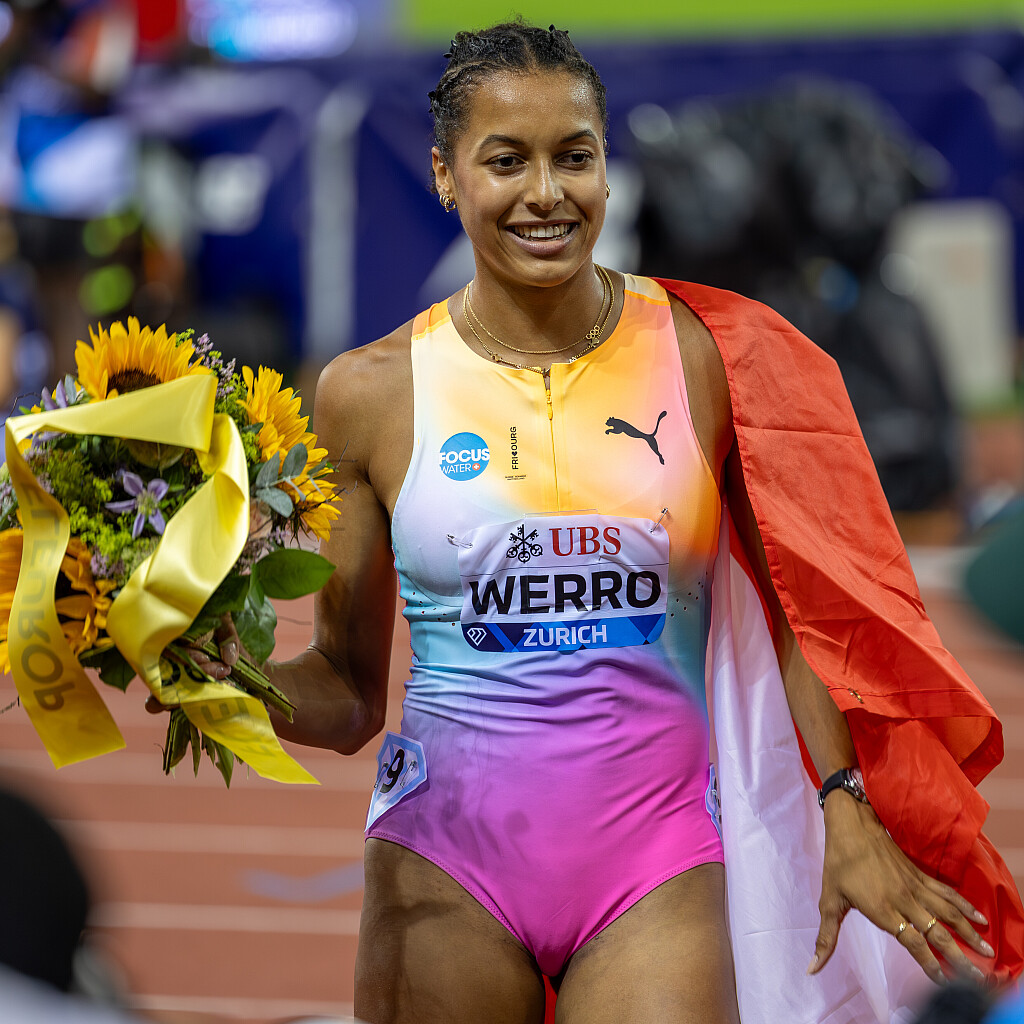


Audrey Werro Earns Double Athlete of the Year Nominations After Record-Breaking 2026 Season
Swiss middle-distance star Audrey Werro has strengthened her reputation as one of the world’s leading 800m runners after earning nominations for both the World Athletics Athlete of the Year and European Athletics Athlete of the Year awards following an outstanding 2026 campaign.
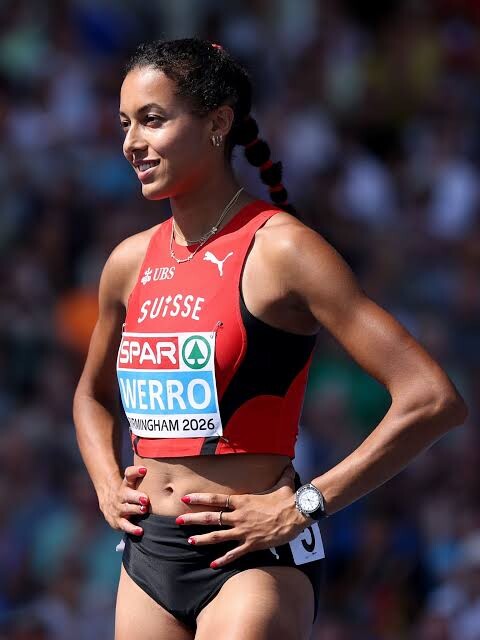
The 22-year-old has enjoyed a remarkable season, combining major championship victories with exceptional performances that have elevated her standing among the sport’s elite. Her achievements have made her a strong contender for international recognition as she continues to establish herself on the global stage.
Werro’s 2026 campaign has been defined by three major victories: the European Athletics Championships 800m title, the Diamond League Final crown and the inaugural World Athletics Ultimate Championship 800m title. Winning across these prestigious competitions has underlined her ability to deliver when the stakes are highest.
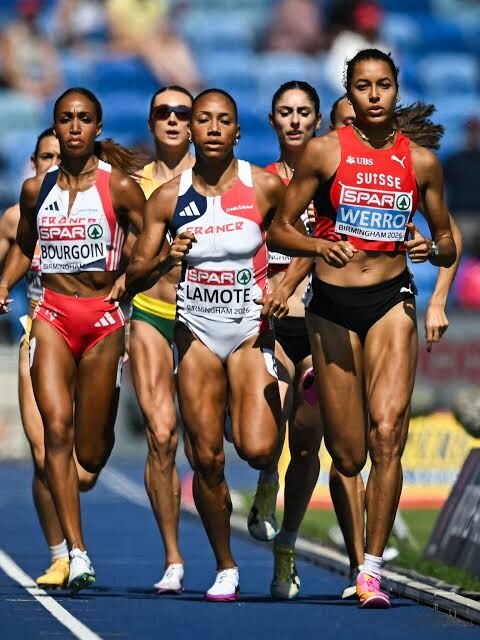
Her performances have been particularly impressive over two laps, where she has demonstrated a powerful combination of speed, endurance and tactical maturity. Against some of the strongest competitors in the world, the Swiss star has repeatedly shown that she belongs among the leading figures in women’s middle-distance running.
One of the defining moments of her season came in Zürich, where Werro thrilled the home crowd with an extraordinary 1:53.70 performance in the 800m. The time was reported as the fastest women’s 800m performance in 43 years and the third-fastest in the event’s history, placing her among a select group of athletes to have reached such an exceptional level.
Werro’s season has also been notable for her sustained assault on the record books. She reportedly broke the Diamond League record three times during the campaign and produced three of the five fastest women’s 800m performances ever recorded, highlighting the remarkable consistency behind her breakthrough year.
Rather than relying on a single standout result, Werro has built her case for the sport’s highest individual honours through a series of performances at the highest level. Her success across European and international competitions has demonstrated both her competitive versatility and her capacity to thrive under pressure.
The dual nominations now offer recognition of a season in which Werro has moved beyond emerging-talent status to become one of the most compelling names in women’s athletics. A victory in either award would represent another major milestone in a career that continues to gather momentum.
With three major titles, a historic performance on home soil and a series of record-breaking displays, Werro has given herself a compelling case for year-end honours. Whether she ultimately claims the title of the world’s best female athlete remains to be seen, but her 2026 season has already established her as one of the outstanding performers of the year.
by Erick Cheruiyot for My Best Runs.
Login to leave a comment
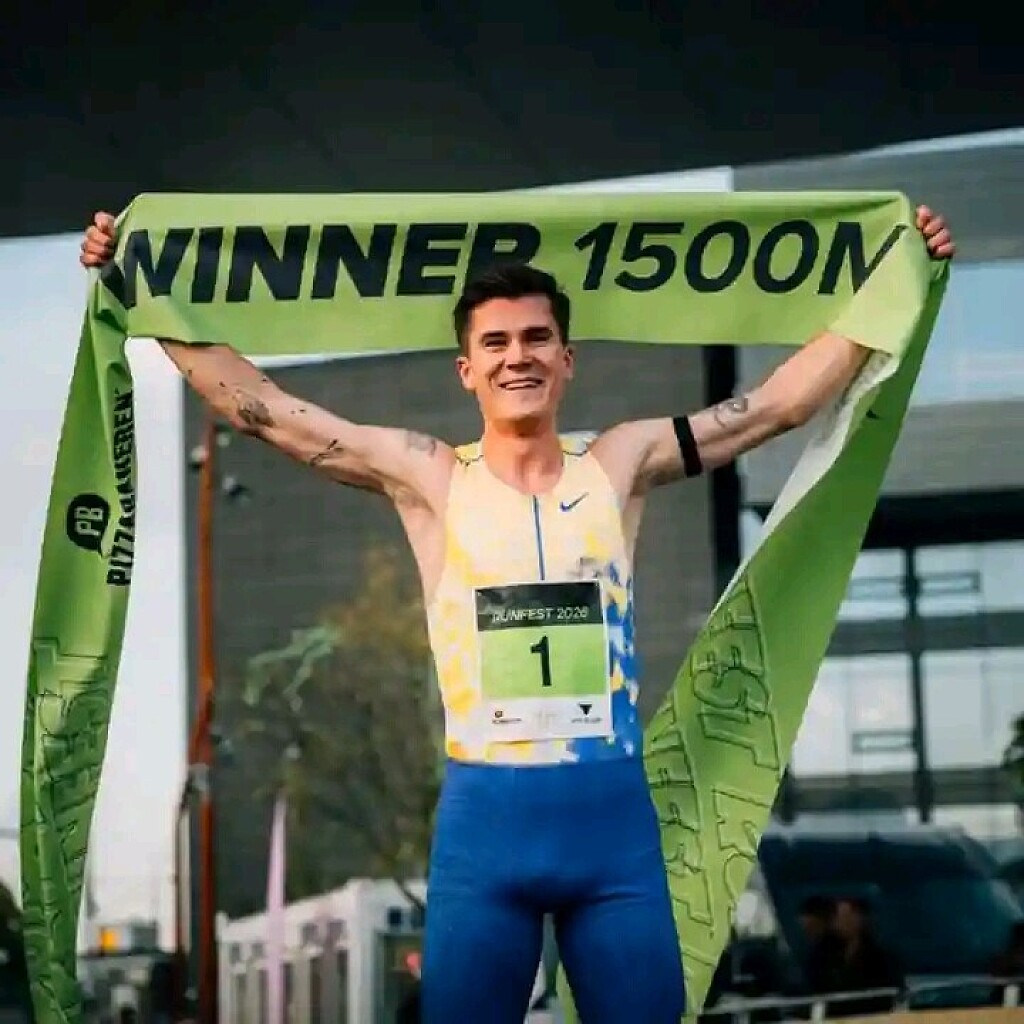
Jakob Ingebrigtsen Caps Comeback Season With Hometown Victory in Sandnes
Jakob Ingebrigtsen brought his remarkable 2026 season to a fitting close on home soil, winning the men’s street 1500m at the inaugural Runfest Norway in Sandnes on Friday.
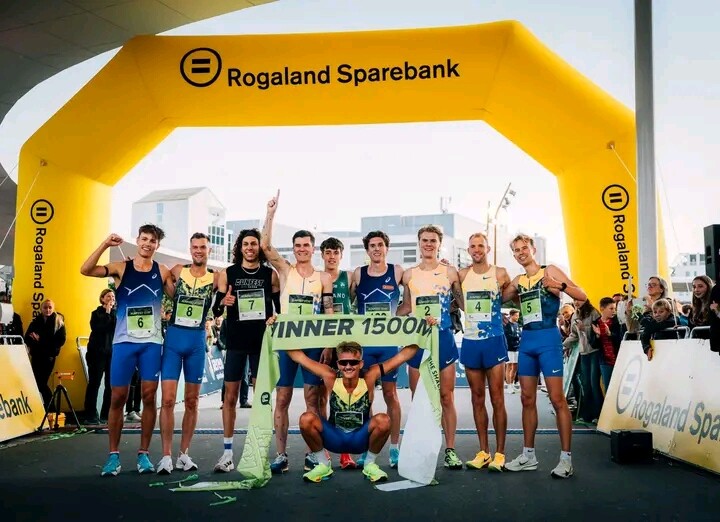
Competing in front of an enthusiastic hometown crowd, the Olympic and world champion took control of the race from the early stages and maintained his authority through the finish, stopping the clock at 3:40.7.
Andreas Fjeld Halvorsen followed in second in 3:43.3, while Sigurd Tveit completed the podium in 3:47.8.
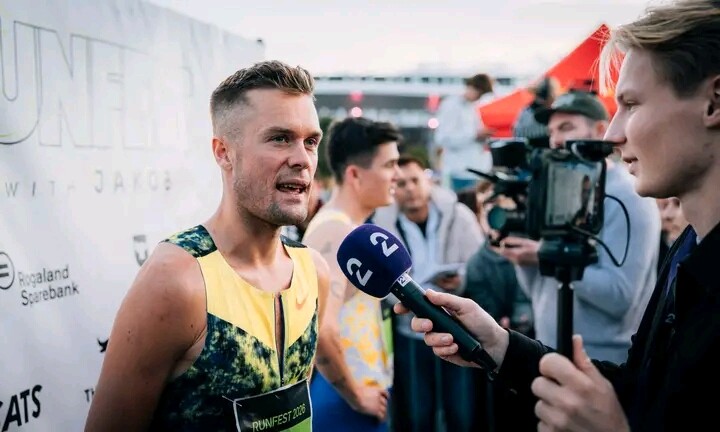
The unusual street race added another dimension to the occasion, with 273 runners taking part on the same road and sharing the course with one of Norway’s most accomplished distance runners. For the recreational participants, it offered a rare opportunity to compete alongside Ingebrigtsen in an event that brought elite athletics and mass participation together.
The victory also provided a fitting final chapter to a season that began with significant uncertainty for Ingebrigtsen. After undergoing major Achilles surgery in February, the Norwegian was forced to miss a substantial portion of the summer campaign as he worked his way back to full fitness.
His return, however, quickly developed into another championship-winning chapter. In Birmingham, Ingebrigtsen captured European 5,000m gold before adding another major title at the inaugural World Athletics Ultimate Championship in Budapest, where he won the 5,000m.
Those performances transformed what could have been a disrupted season into another year defined by championship success and a determined return to the highest level.
Now, with the Sandnes victory added to his 2026 record, Ingebrigtsen closes the year exactly where it began in spirit — overcoming adversity, rebuilding his form and once again competing at the front.
From Achilles surgery in February to major championship victories and finally a 1500m win before his hometown crowd, the Norwegian has given his 2026 season a memorable final scene.
by Erick Cheruiyot for My Best Runs.
Login to leave a comment
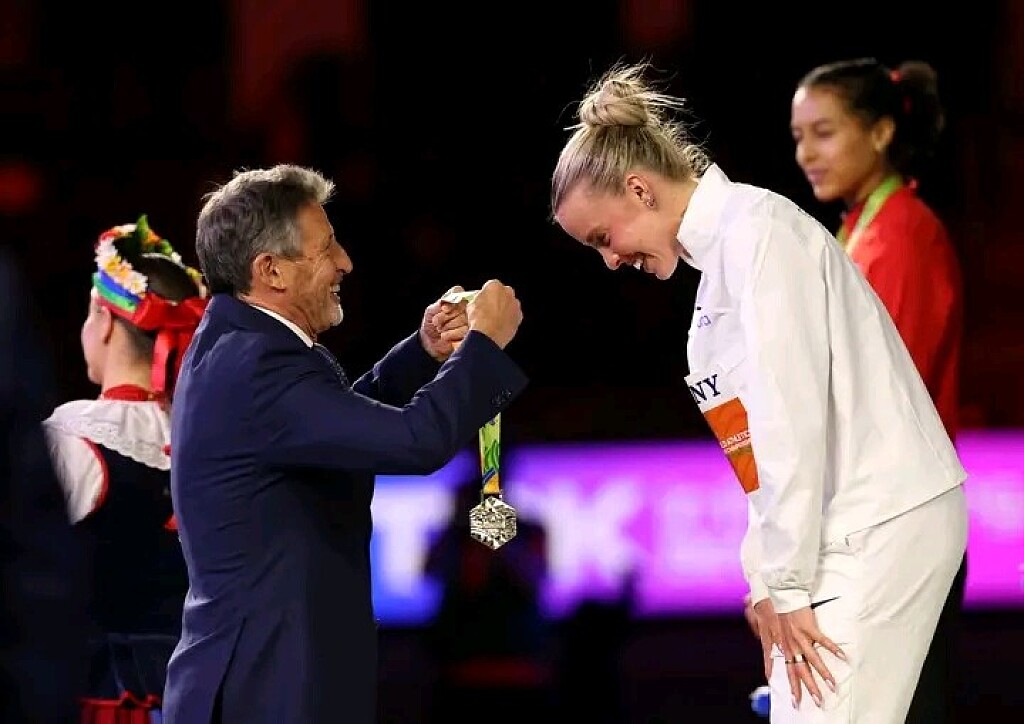
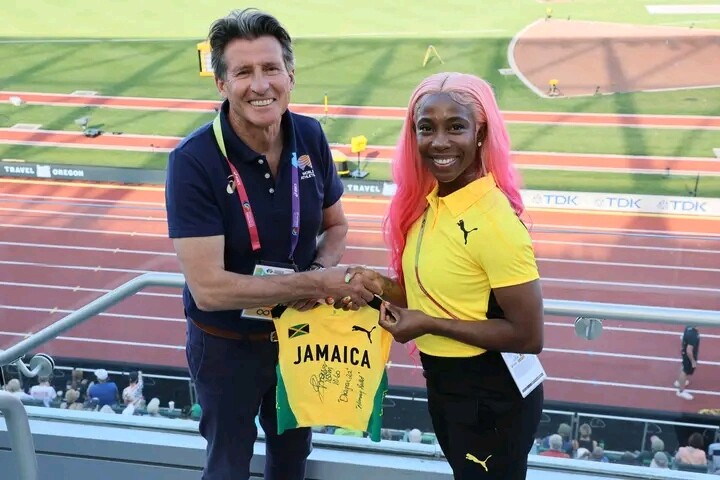
Sebastian Coe At 70: From Yorkshire Prodigy To Olympic Great And World Athletics President
Sebastian Coe turns 70 today, marking seven remarkable decades for a man whose name has become inseparable from some of the greatest moments in middle-distance running.
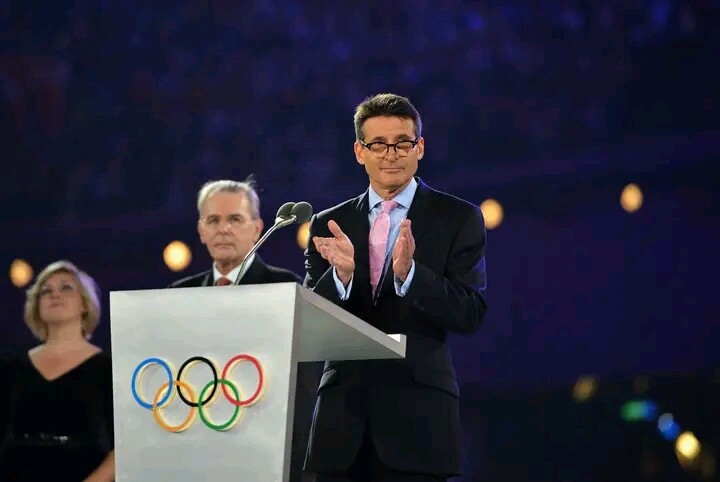
Born on September 29, 1956, Coe grew from a talented youngster in Yorkshire into one of the most influential figures athletics has ever produced — first as an extraordinary competitor on the track and later as a leader at the highest level of the sport.
His journey began long before the Olympic medals and world records. As a teenager, Coe was already attracting attention, and his early appearances in Athletics Weekly offered a glimpse of the remarkable career that was beginning to unfold.
By the late 1970s, he had established himself as one of Britain's brightest middle-distance prospects. His rivalry with Steve Ovett became one of the defining storylines of the era, while Coe's extraordinary combination of speed, tactical intelligence and finishing power allowed him to compete successfully across the 800m, 1500m and mile.
In 1979, Coe announced himself to the world in spectacular fashion. In Oslo, he smashed the 800m world record with 1:42.33, becoming the first man to break 1:43. Just weeks later, he added a world record in the mile with 3:48.53 before ending the season as one of the sport's dominant figures.
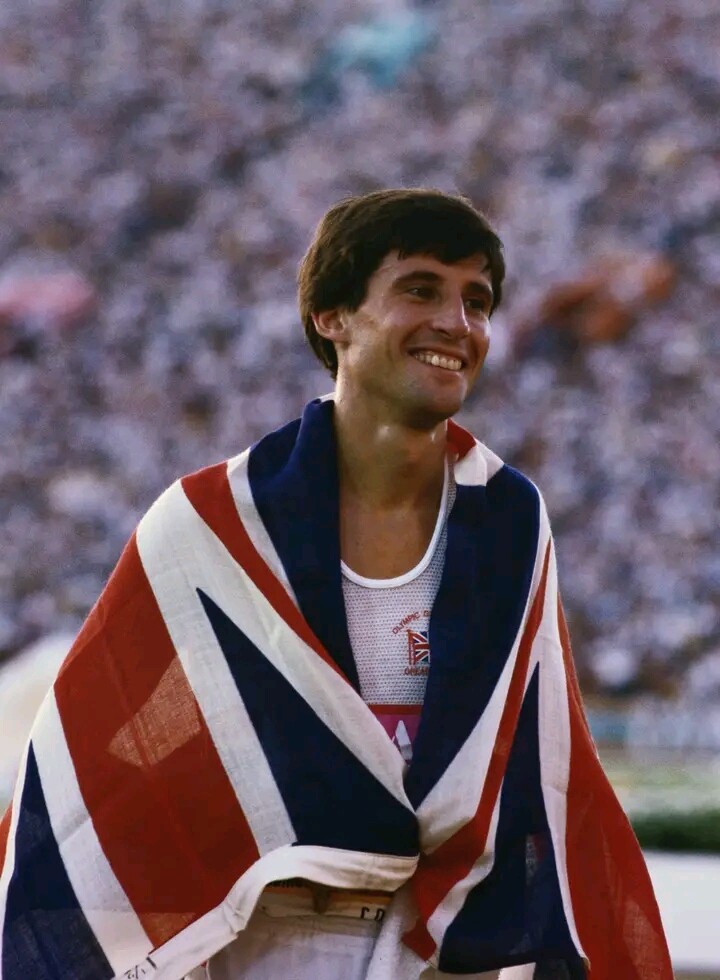
The following years produced even more extraordinary performances.
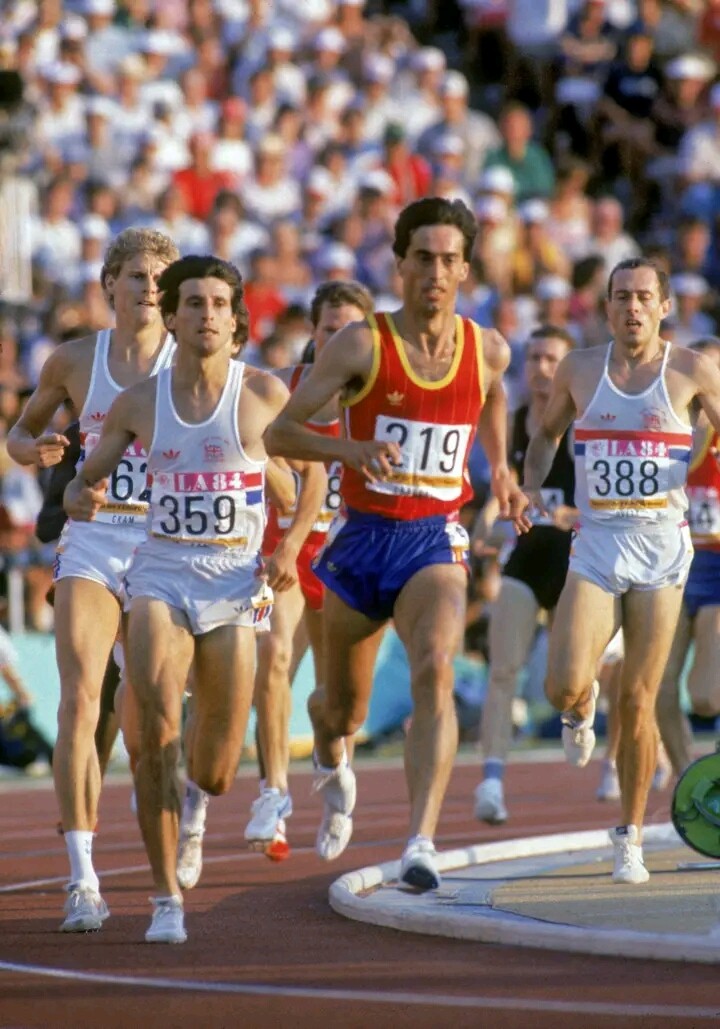
On June 10, 1981, in Florence, Coe lowered his own 800m world record to 1:41.73. The performance was historic. The mark remained untouched for 16 years before Wilson Kipketer equalled it in 1997. It remains one of the most iconic performances in 800m history.
Coe's Olympic career was equally remarkable.
At the 1980 Moscow Olympics, he won gold in the 1500m and silver in the 800m. Four years later in Los Angeles, he repeated that extraordinary combination, again taking 1500m gold and 800m silver.
His second Olympic 1500m victory in 1984 cemented his place among the greats of the event. His personal best of 3:29.77, set in 1986, remains one of the fastest marks of his era. World Athletics lists Coe as a two-time Olympic champion and two-time Olympic silver medallist, with 12 world records accumulated during his career.
His record-breaking career extended beyond the 800m and 1500m. Coe set world records over 800m, 1000m, 1500m and the mile, demonstrating an extraordinary range that was rare even among elite middle-distance specialists.
He also collected major European honours, including the European 800m title in 1986 and the European Indoor 800m crown earlier in his career.
Yet Coe's story did not end when he left competitive athletics.
After retiring from the track in 1990, he moved into public life and sports administration. His leadership role in London's successful bid for the 2012 Olympic and Paralympic Games became one of the most significant chapters of his post-athletics career. He later served as chairman of the London 2012 Organising Committee, helping oversee the preparation and delivery of the Games.
In August 2015, Coe took on perhaps his most influential role yet when he became president of World Athletics. He has since remained at the centre of global athletics, helping guide the sport through changes in competition, governance, commercialisation and athlete-focused initiatives. World Athletics currently lists him as president of the organisation.
Even at 70, Coe's connection with competition remains clear. His comments surrounding the inaugural World Athletics Ultimate Championship in Budapest in 2026 showed the same fascination with head-to-head racing that defined him as an athlete decades earlier.
From a young Yorkshire runner to an Olympic champion, world-record setter, London 2012 leader and now president of World Athletics, Coe's career has crossed almost every level of the sport.
His 1:41.73 may no longer be the world record, but the performance remains a permanent part of 800m history. His Olympic double-double remains extraordinary. And his transition from athlete to administrator has ensured that his influence extends far beyond the races he once dominated.
Seventy years on, Sebastian Coe's legacy is therefore not confined to medals, records or statistics. It is the story of a middle-distance pioneer whose impact has continued long after his final competitive race — and whose name remains firmly woven into the history of athletics.
by Erick Cheruiyot for My Best Runs.
Login to leave a comment
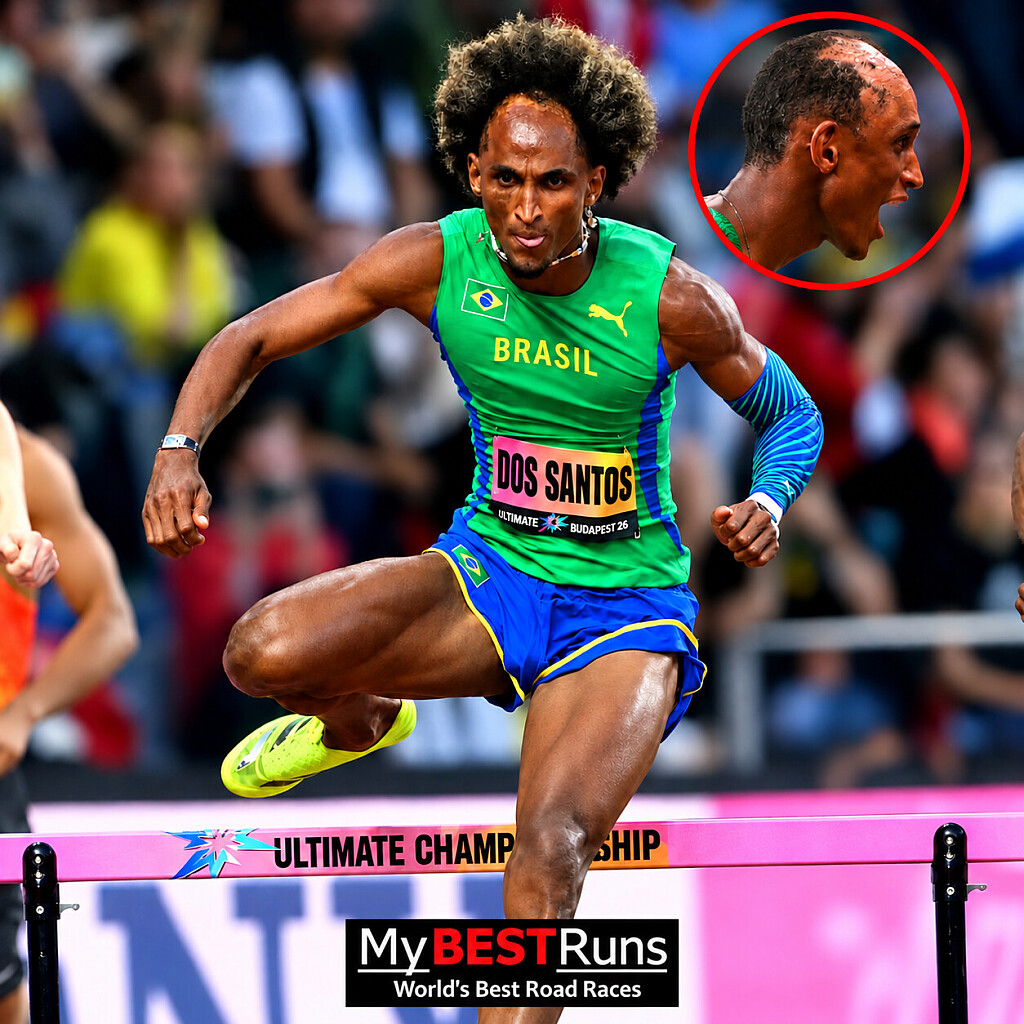
From Childhood Burns to World Records: Alison Dos Santos Turns Scars Into Strength
Alison dos Santos carries visible scars on his forehead and parts of his body, but behind them lies a remarkable story of survival that has become an important part of his journey in athletics.
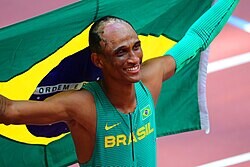
When he was just 10 months old, the Brazilian suffered severe third-degree burns after boiling oil spilled onto him. The accident left permanent scars and could easily have changed the course of his life before it had even begun.
He survived the ordeal, and as he grew older, the scars became a visible reminder of an accident he had endured as a baby. For much of his childhood, they also brought unwanted attention and insecurity. But eventually, athletics gave him something far more powerful: confidence, purpose and an opportunity to define himself through his talent rather than his scars.
That transformation took him all the way to the world's biggest sporting stages.
Dos Santos announced himself among the world's elite 400m hurdlers with an Olympic bronze medal at Tokyo 2020, clocking 46.72 seconds. In 2022, he reached another milestone by becoming world champion, confirming himself as one of the leading figures in an event that had entered an extraordinary era.
Two years later, he added another Olympic bronze medal in Paris, continuing to establish himself among the very best 400m hurdlers on the planet.
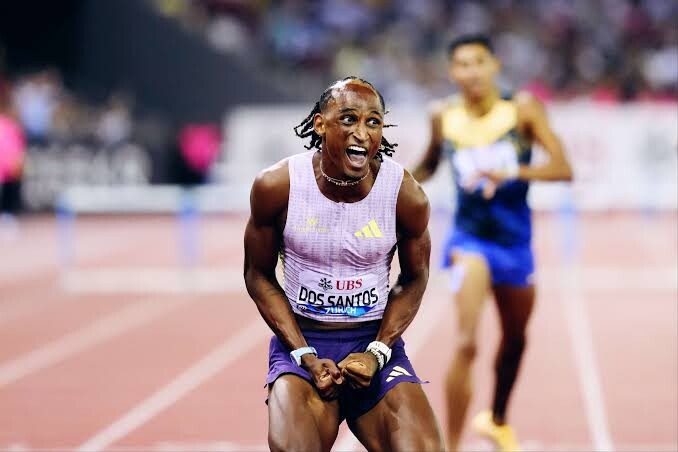
Then came Zürich.
On August 27, 2026, dos Santos delivered the race that changed his place in history. He stormed to 45.80 seconds, breaking Karsten Warholm's five-year-old world record of 45.94 and becoming the first man in history to run under 46 seconds twice.
The moment carried another layer of significance because Warholm was in the race. The Norwegian had established the previous world record in the unforgettable Tokyo Olympic final in 2021, a race in which dos Santos himself had won bronze. Five years later, the Brazilian returned to the same record-breaking narrative — this time as the man rewriting history.
But dos Santos was not finished.
Just over two weeks after his historic run in Zürich, he travelled to Budapest for the inaugural World Athletics Ultimate Championship, where the world's leading 400m hurdlers assembled for another highly anticipated showdown.

On September 13, dos Santos once again stood at the centre of the action. He produced another extraordinary performance, winning the men's 400m hurdles in 45.98 seconds and successfully defending his position at the top of an event filled with heavyweight names.
Rai Benjamin finished second in 46.40, while Warholm took third in 46.78. Dos Santos had once again beaten two of the athletes most closely associated with the modern history of the 400m hurdles.
The 45.98 also made him the first athlete to break 46 seconds twice, while ranking as the third-fastest performance ever recorded in the event at the time. His world record of 45.80 remained firmly at the top.
His latest victory therefore added another remarkable chapter to a season that had already produced a world record and a string of elite performances. Dos Santos has combined speed, consistency and resilience to turn 2026 into one of the defining seasons of his career.
And perhaps that is what makes his story so compelling. The hurdles he clears today are visible to the world, but some of the hardest obstacles he has overcome were faced long before he ever entered a stadium. His scars tell the story of what happened to him as a child; his achievements tell the story of what he chose to become.
The scars never disappeared. Neither did the determination of the boy who survived them.
Today, Alison dos Santos is not defined by the accident that marked his childhood. He is defined by the athlete he became — an Olympic medallist, a world champion, a world-record holder and now the inaugural World Athletics Ultimate champion in the 400m hurdles.
From surviving a devastating accident as an infant to standing on the highest level of his event, Piu has spent his life clearing hurdles — long before he ever started racing over them.
by Erick Cheruiyot for My Best Runs.
Login to leave a comment
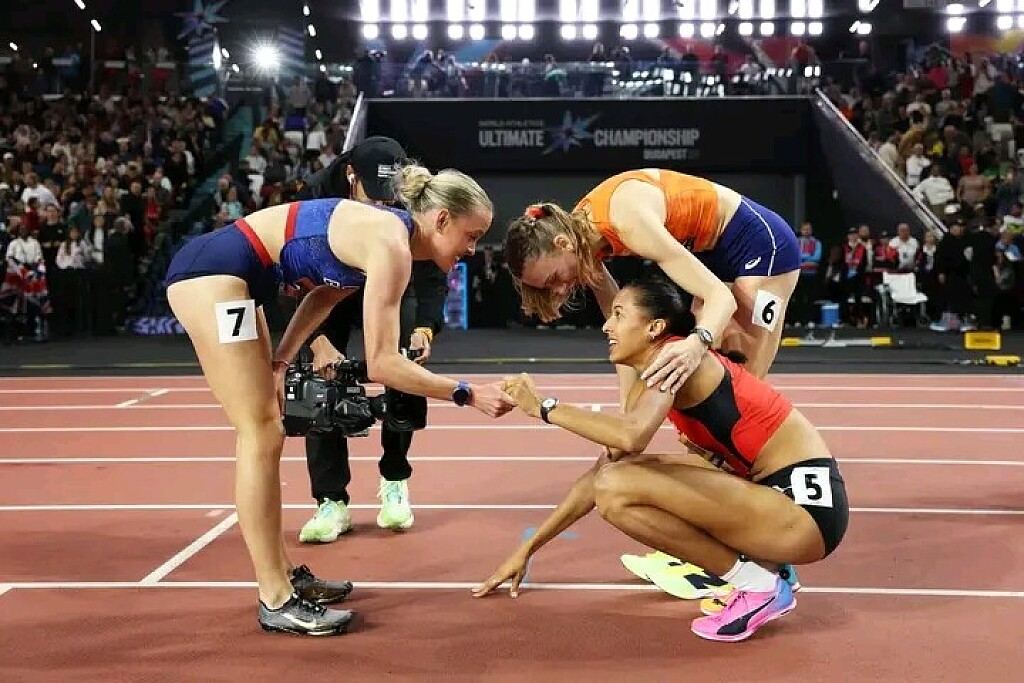
Women’s 800m Delivers A Season For The Ages In 2026
The women’s 800 metres has produced one of the most compelling storylines of the 2026 athletics season, with extraordinary times, fierce rivalries and a remarkable emergence that has transformed the event into one of the most closely followed races on the track.
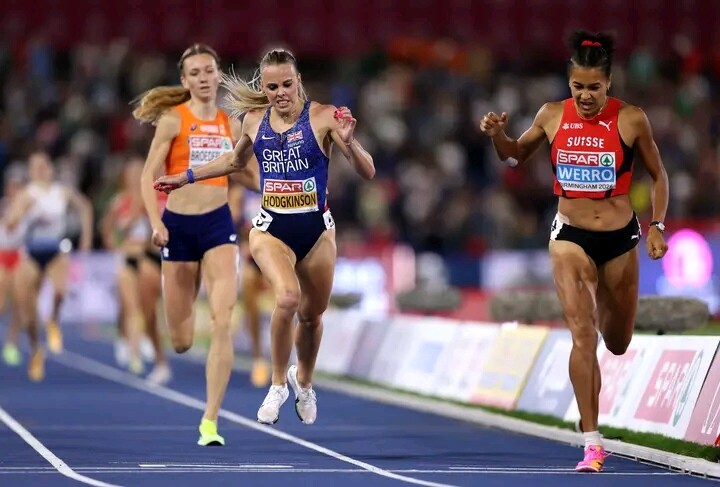
At the centre of it all has been Switzerland’s Audrey Werro, who turned an already competitive event into a breathtaking display of speed and consistency. Werro finished the outdoor season unbeaten and established herself as one of the leading forces over two laps.
Her breakthrough reached another level in Stockholm in June, when she ran 1:53.98 to become only the third woman in history to break 1:54. She later improved to 1:53.80 in Paris before producing an astonishing 1:53.70 in Zurich in August. That performance moved her to third on the all-time list, behind only Jarmila Kratochvilova and Nadezhda Olizarenko.
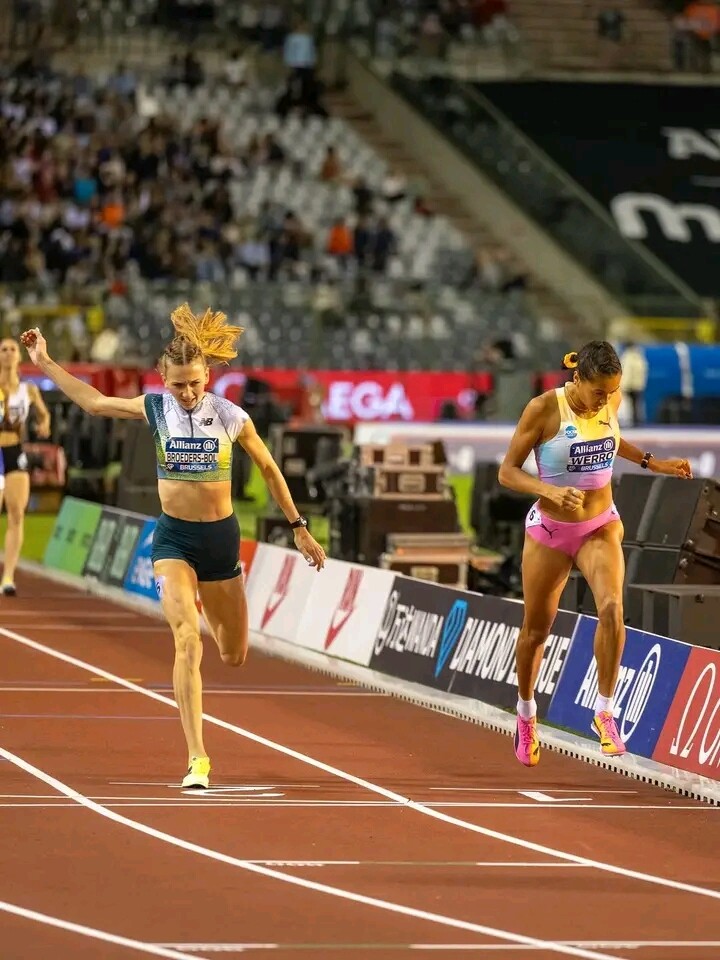
Yet Werro was not the only athlete rewriting the story of the event.
Britain’s Keely Hodgkinson began the year in spectacular fashion by breaking the world indoor 800m record with 1:54.87 in Liévin. She followed that with victory at the World Indoor Championships, winning the title in a championship record of 1:55.30.
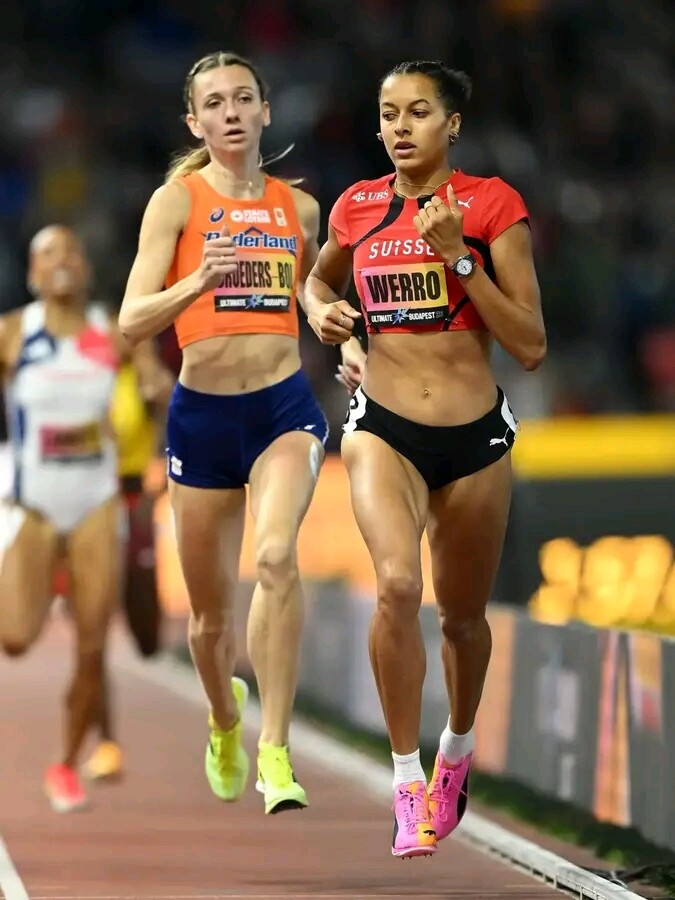
Hodgkinson also produced one of the season’s most memorable outdoor races when she ran 1:54.33 in Stockholm, finishing behind Werro but setting a British record and recording one of the fastest 800m performances ever run by a non-winner. The two athletes pushed each other deep into territory rarely seen in the event.
Then came one of the most unexpected developments of the season: Femke Broeders-Bol’s transformation.
The Dutch star, already a two-time world champion in the 400m hurdles, made the switch to the 800m in 2026 and rapidly established herself among the world’s best. What initially looked like an ambitious experiment quickly became a genuine championship challenge.
Broeders-Bol ran 1:55.54 to take bronze behind Werro and Hodgkinson at the European Championships in Birmingham, matching the Dutch record. She later improved to 1:54.71 in Zurich, becoming one of the fastest women in history at the distance.
The European final provided another glimpse of just how deep the event had become. Werro won in a championship-record 1:54.81, Hodgkinson followed in 1:55.01, while Broeders-Bol took third in 1:55.54.
Their rivalry continued into the inaugural World Athletics Ultimate Championship in Budapest, where the three again shared the spotlight. Werro produced another controlled performance to win the final in 1:55.88, ahead of Hodgkinson in 1:56.26 and Broeders-Bol in 1:56.74.
What made the 2026 women’s 800m particularly remarkable was not simply the number of fast times, but the different storylines unfolding at the same time. Werro’s explosive rise, Hodgkinson’s record-breaking indoor campaign and championship pedigree, and Broeders-Bol’s extraordinary transition from the 400m hurdles created a three-way battle that repeatedly produced world-class racing.
And behind them was an increasingly deep field, making the event far more than a contest between three athletes. With multiple runners capable of breaking two minutes and pushing the leaders, every major championship race carried the possibility of another breakthrough.
For Werro, 2026 became the year she moved from emerging talent to a dominant outdoor force. For Hodgkinson, it was another season of record-breaking performances and championship experience. And for Broeders-Bol, it was the beginning of an entirely new chapter.
Together, they made the women’s 800m one of the defining events of the 2026 season — a year in which records fell, rivalries intensified and the two-lap race produced drama almost every time the gun went off.
by Erick Cheruiyot for My Best Runs.
Login to leave a comment
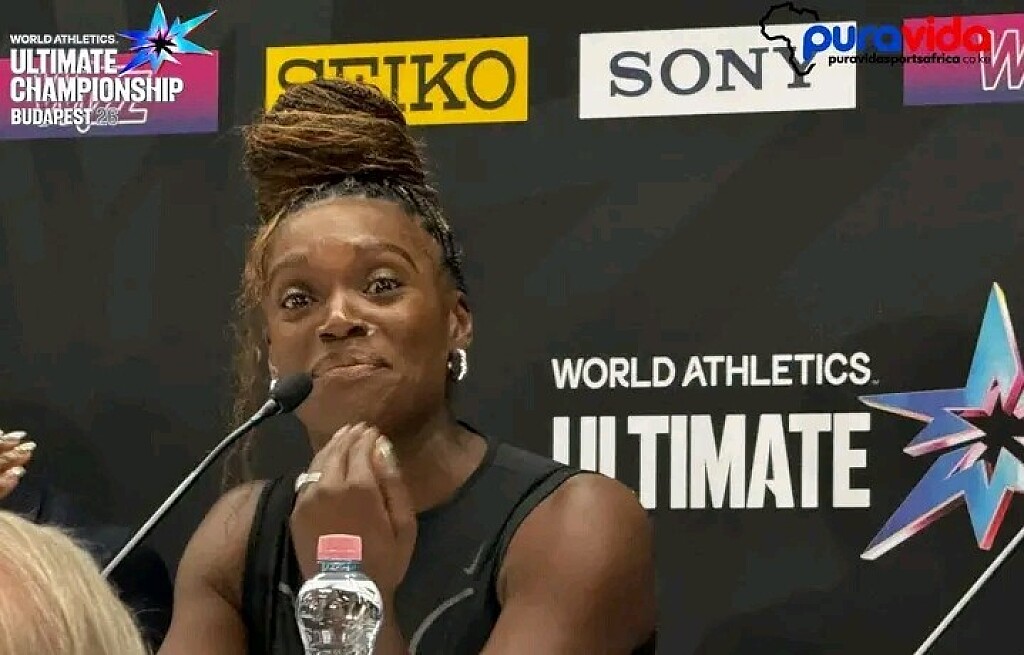
From Olympic Glory To The Microphone: Dawn Harper-Nelson’s Remarkable Second Act In Athletics
Dawn Harper-Nelson has already experienced the highest level of success an athlete can reach. Now, years after establishing herself as one of the finest hurdlers of her generation, the American Olympic champion is carving out an equally compelling identity behind the microphone.
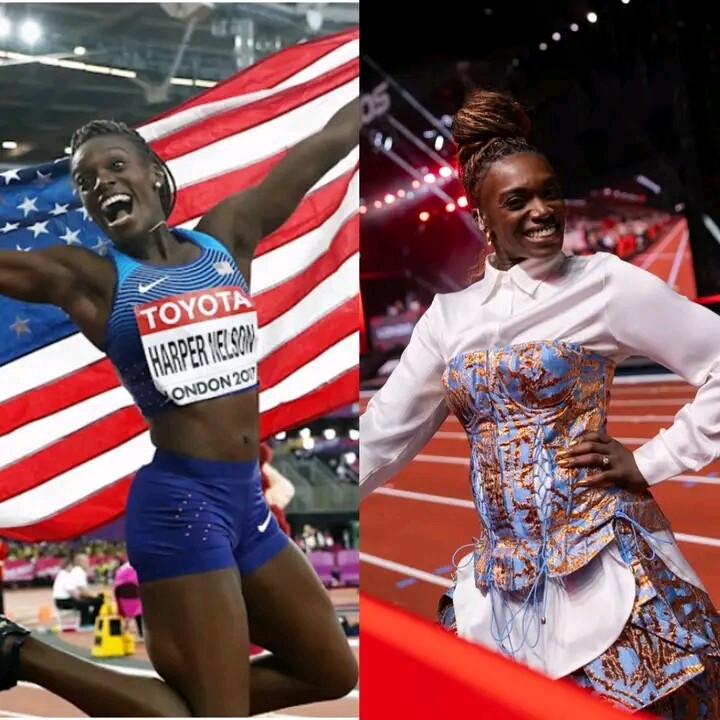
Harper-Nelson won the 100m hurdles gold medal at the 2008 Beijing Olympic Games before returning four years later to claim silver at London 2012. Her career also produced two World Championship medals — bronze in 2011 and silver in 2017 — while her personal best of 12.37 seconds, set in London in 2012, remains a defining mark of her distinguished career.
But her influence on athletics did not end when she stepped away from competitive sport.
In recent years, Harper-Nelson has successfully moved into broadcasting, presenting and athlete-focused media work, bringing with her something that cannot simply be learned in a studio: first-hand experience of competing under immense pressure on the world's biggest stages.
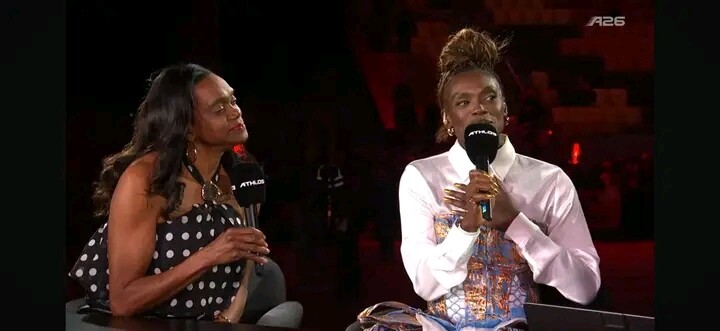
Her transition into media gained further momentum after she worked as an analyst during NBCUniversal's coverage of the Paris 2024 Olympic Games, becoming part of an Emmy-winning broadcast team. She has also worked with USA Track & Field in roles including press moderator, emcee and broadcaster, extending her connection with the sport beyond the competition arena.
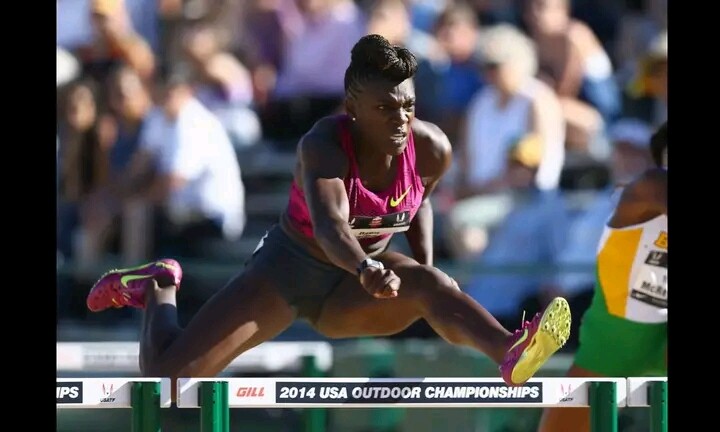
That experience has become particularly visible at some of athletics' newest and most ambitious events.
At the inaugural World Athletics Ultimate Championship in Budapest, Harper-Nelson served as an infield host throughout the three-day competition. World Athletics introduced the event with an emphasis on modern presentation, athlete storytelling and a television-focused experience, making the role of hosts and broadcasters increasingly important in connecting athletes with audiences.
Harper-Nelson was also involved in the championship's innovative pre-event programme, The Day Before, where athletes took part in interviews, content creation and other media opportunities ahead of the competition. Her presence alongside figures such as World Athletics President Sebastian Coe and Olympic sprint legend Usain Bolt underlined the experience she now brings to major athletics productions.
Her connection with ATHLOS has provided another prominent platform. The women's track and field series has developed a presentation style that combines elite competition with entertainment and athlete-focused storytelling, and Harper-Nelson has become one of the recognizable voices helping bring that experience to audiences. She previously hosted ATHLOS's long-jump competition in New York and has continued her association with the event as it expanded internationally to London in 2026.
What makes Harper-Nelson's media career particularly interesting is the perspective she carries from her own competitive journey. She knows the nerves before a major final, the pressure of championship competition, the disappointment of falling short and the discipline required to return stronger.
That background allows her to approach athlete conversations from a position of genuine understanding. Rather than simply describing what happens on the track, she can draw on her own experiences to explore the emotions, preparation and personal stories behind the performances.
Her evolution also reflects a wider change in modern athletics, where former champions are increasingly becoming storytellers, analysts, presenters and ambassadors for the sport. The ability to communicate an athlete's personality and explain the significance of a performance has become an important part of how major competitions reach new audiences.
For Harper-Nelson, the journey from the starting line to the broadcast platform has therefore been more than a career change. It has been a continuation of her relationship with athletics — only this time, she is helping tell the stories rather than creating them through her own performances.
From Olympic champion to accomplished broadcaster and event host, Dawn Harper-Nelson is showing that an athlete's influence does not have to end when the competitive career does. Her second chapter is giving her a new way to remain at the heart of the sport she once dominated on the track.
by Erick Cheruiyot for My Best Runs.
Login to leave a comment
Richardson, Thomas, Hodgkinson And Kazimierska Shine At ATHLOS London
ATHLOS London brought the 2026 athletics season to a spectacular conclusion at StoneX Stadium, with a collection of global stars delivering standout performances across the sprints and middle-distance events.
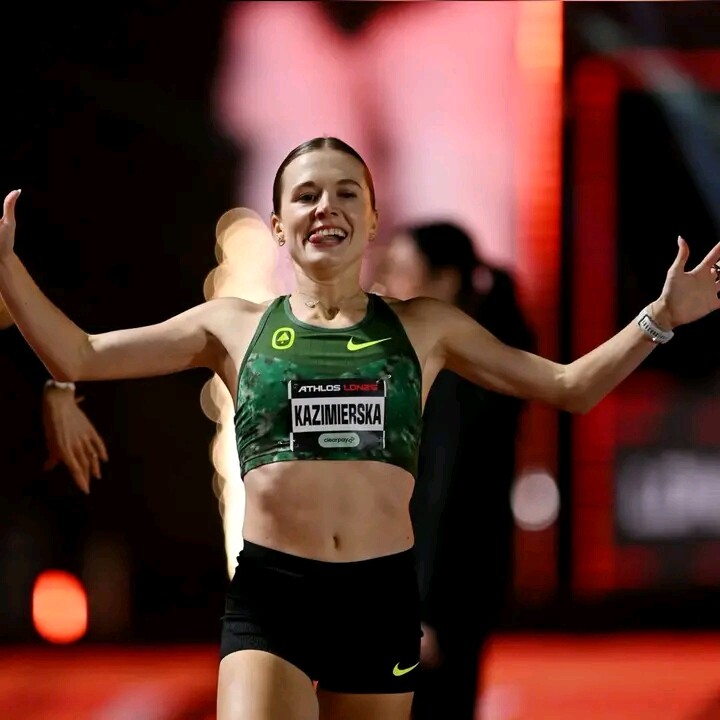
Among the biggest winners was Klaudia Kazimierska, who continued her extraordinary late-season run by claiming the women’s mile title in 4:19.43.
The Polish middle-distance star produced a powerful finishing kick to edge Britain’s Georgia Hunter Bell, who finished second in 4:19.54, while Kenya’s Dorcus Ewoi secured third in 4:19.84.
The victory completed a remarkable sequence for Kazimierska, who has now captured three major titles in succession. Her ATHLOS London triumph followed victories at the Diamond League Final and the inaugural World Athletics Ultimate Championship, giving her a remarkable finish to the 2026 season.
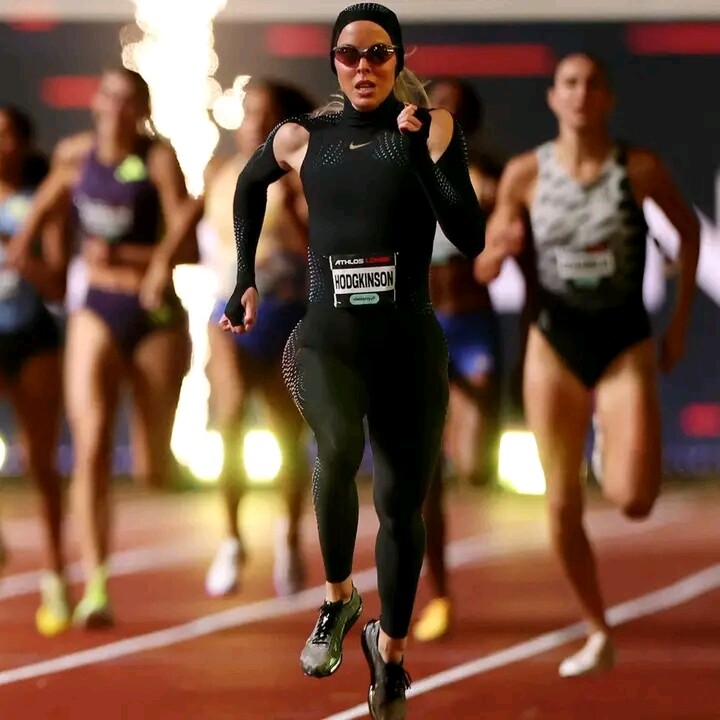
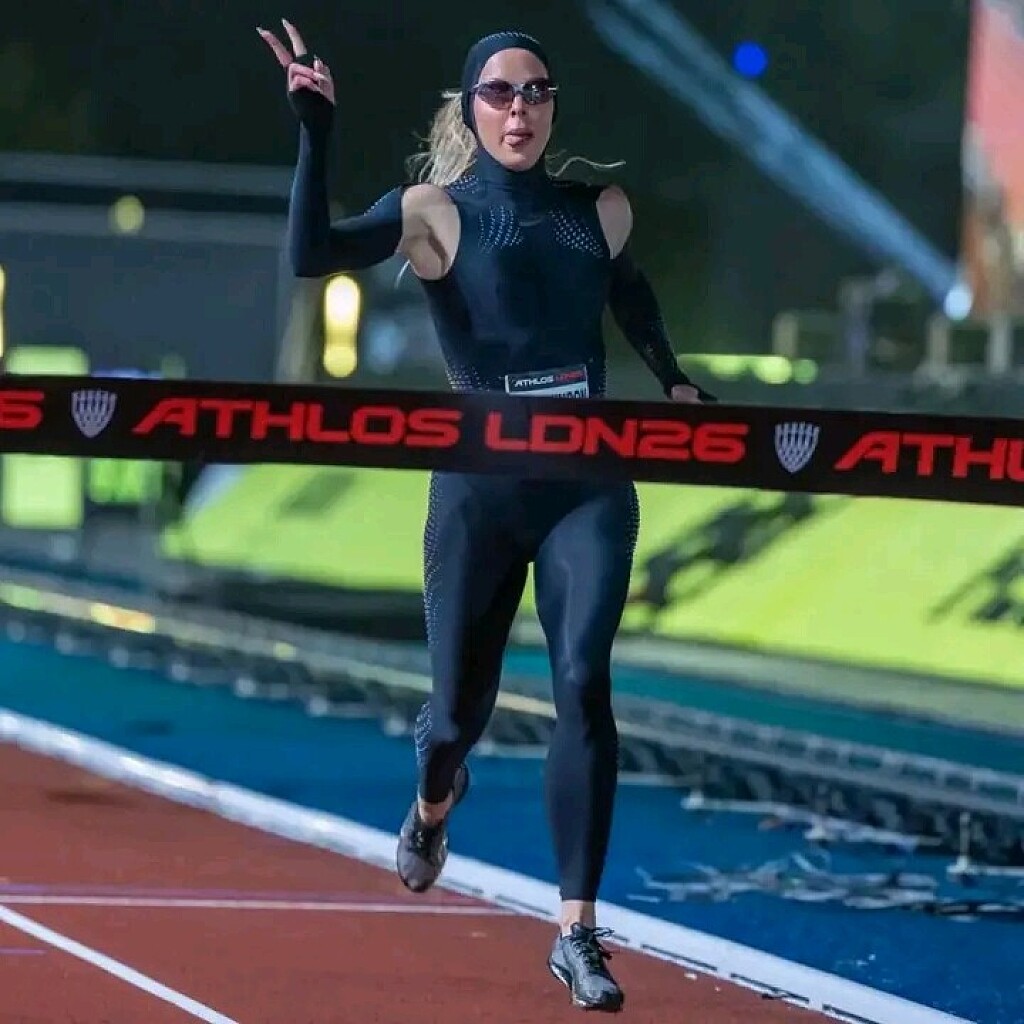
Kazimierska was not the only athlete to leave London with a major title, however, as Keely Hodgkinson produced a dominant performance to successfully defend her ATHLOS London 800m crown.
The British star took command from the opening stages and controlled the race from the front, building a substantial advantage before powering across the line in 1:56.40.
Her performance established a new ATHLOS London meeting record, with Hodgkinson finishing more than two seconds ahead of Switzerland’s Valentina Rosamilia, who ran 1:58.75. France’s Rénelle Lamote was third in 2:00.15.
American Juliette Whittaker finished fourth in 2:00.46, Ireland’s Sophie O’Sullivan was fifth in 2:00.53, and American Raevyn Rogers completed the field in 2:01.12.
The victory provided Hodgkinson with a powerful ending to a turbulent outdoor campaign that had included a canal accident and a hamstring injury, alongside silver-medal finishes at the European Championships and the World Athletics Ultimate Championship.
She also attracted attention with her specially designed Nike racing suit, a futuristic full-length black hooded design with an open back, created with mobility and aerodynamics in mind, complemented by Nike sunglasses.
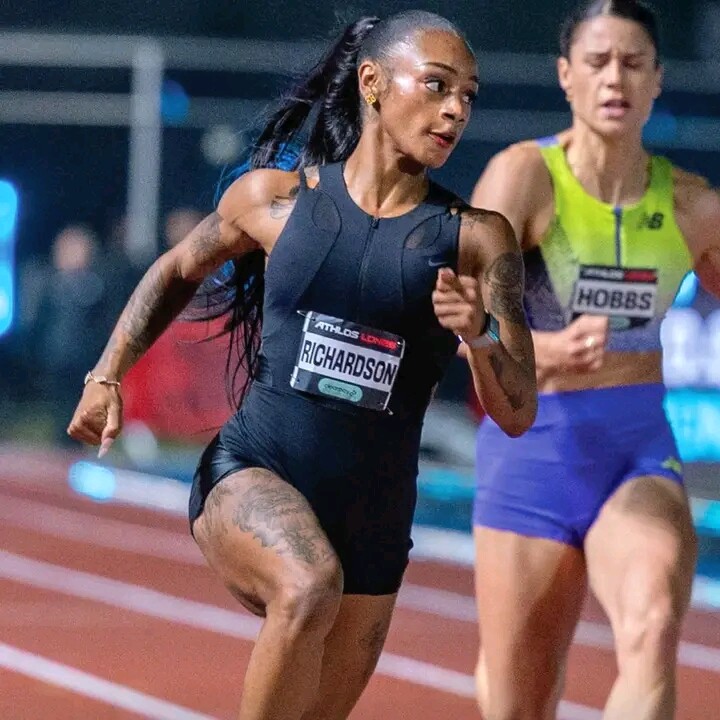
The sprint programme added even more star power to the night with Sha’Carri Richardson producing a meeting-record performance of her own in the women’s 100m.
Richardson stormed to victory in 10.80 seconds, with no wind assistance, to take the ATHLOS London title. New Zealand’s Zoe Hobbs finished second in 11.19, while American Anavia Battle claimed third in 11.25.
Britain’s Imani Lansiquot crossed fourth in 11.35, narrowly ahead of compatriot Daryll Neita, who clocked 11.36, while Canada’s Sade McCreath finished sixth in 11.47.
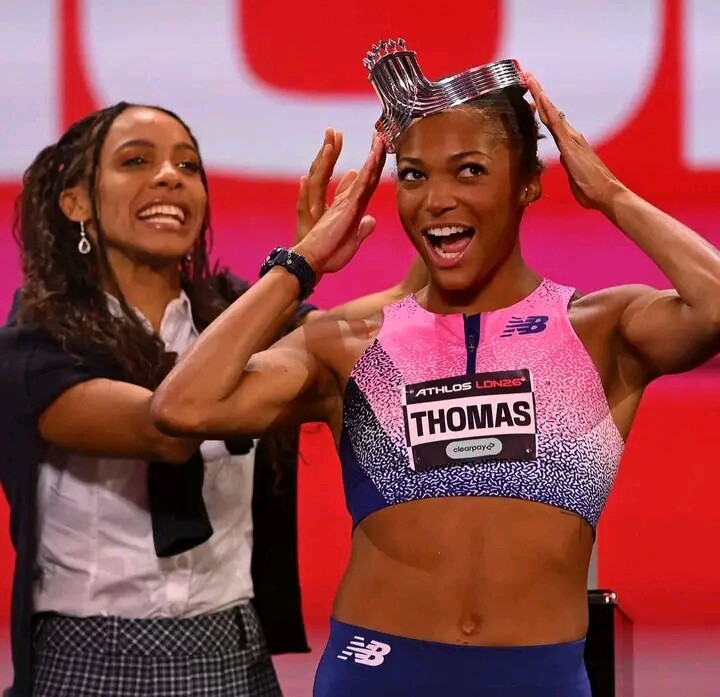
The American sprint success continued in the women’s 200m, where Gabby Thomas added another major title to her collection with a composed victory in 22.13 seconds.
Thomas held off fellow Americans Kayla White and Anavia Battle in a tightly contested final. White finished second in 22.40, while Battle, who had already secured third in the 100m, completed another podium appearance by taking bronze in 22.43.
Thomas’s victory further highlighted the depth of American sprinting at ATHLOS London, as the Olympic and world-level star produced another big-stage performance to close out her season with the 200m crown.
With Richardson and Thomas dominating the sprint headlines, Hodgkinson controlling the 800m and Kazimierska producing another decisive victory over the mile, ATHLOS London delivered an evening packed with major champions and fast performances.
For Kazimierska, the night completed an extraordinary run of three consecutive major titles. For Hodgkinson, it was a statement finish in front of her home crowd. Richardson and Thomas, meanwhile, ensured the American sprint contingent also left London with major victories.
ATHLOS London therefore closed the 2026 season in emphatic fashion, with several of the sport’s biggest names providing performances that will stand among the memorable moments of the year.
Login to leave a comment
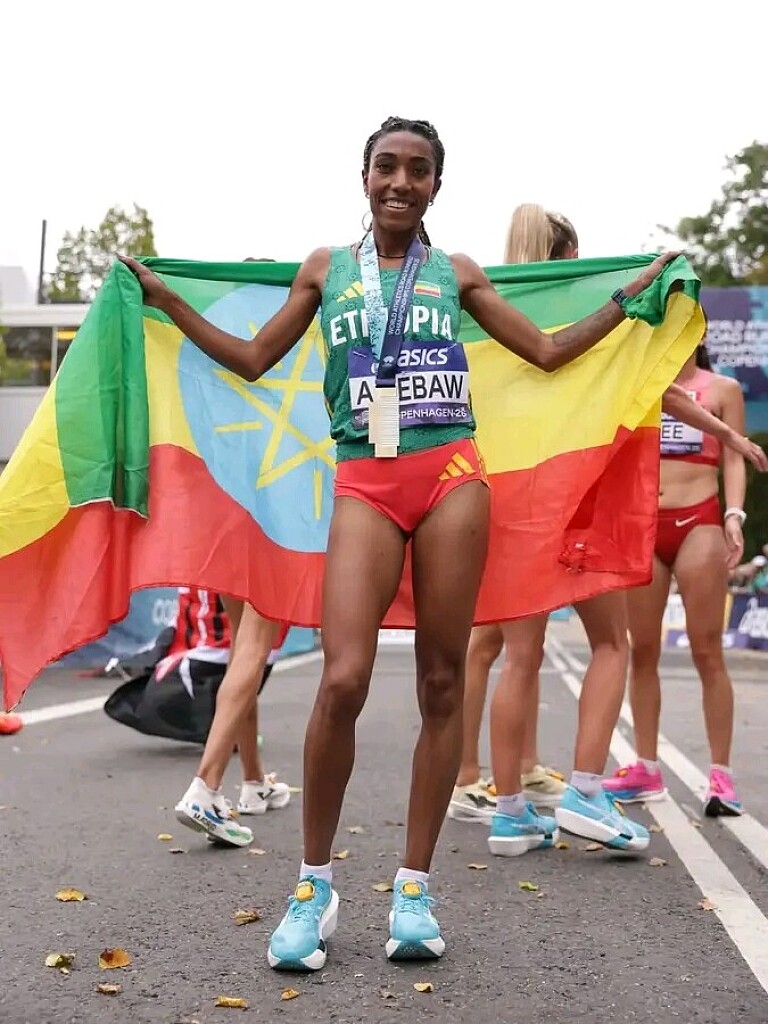
Likina Amebaw Completes Remarkable Six-Day Double With World 5km Road Title In Copenhagen
Ethiopia’s Likina Amebaw produced another outstanding performance on the global stage on Saturday, September 19, 2026, winning the women’s 5km title at the World Athletics Road Running Championships in Copenhagen, Denmark.
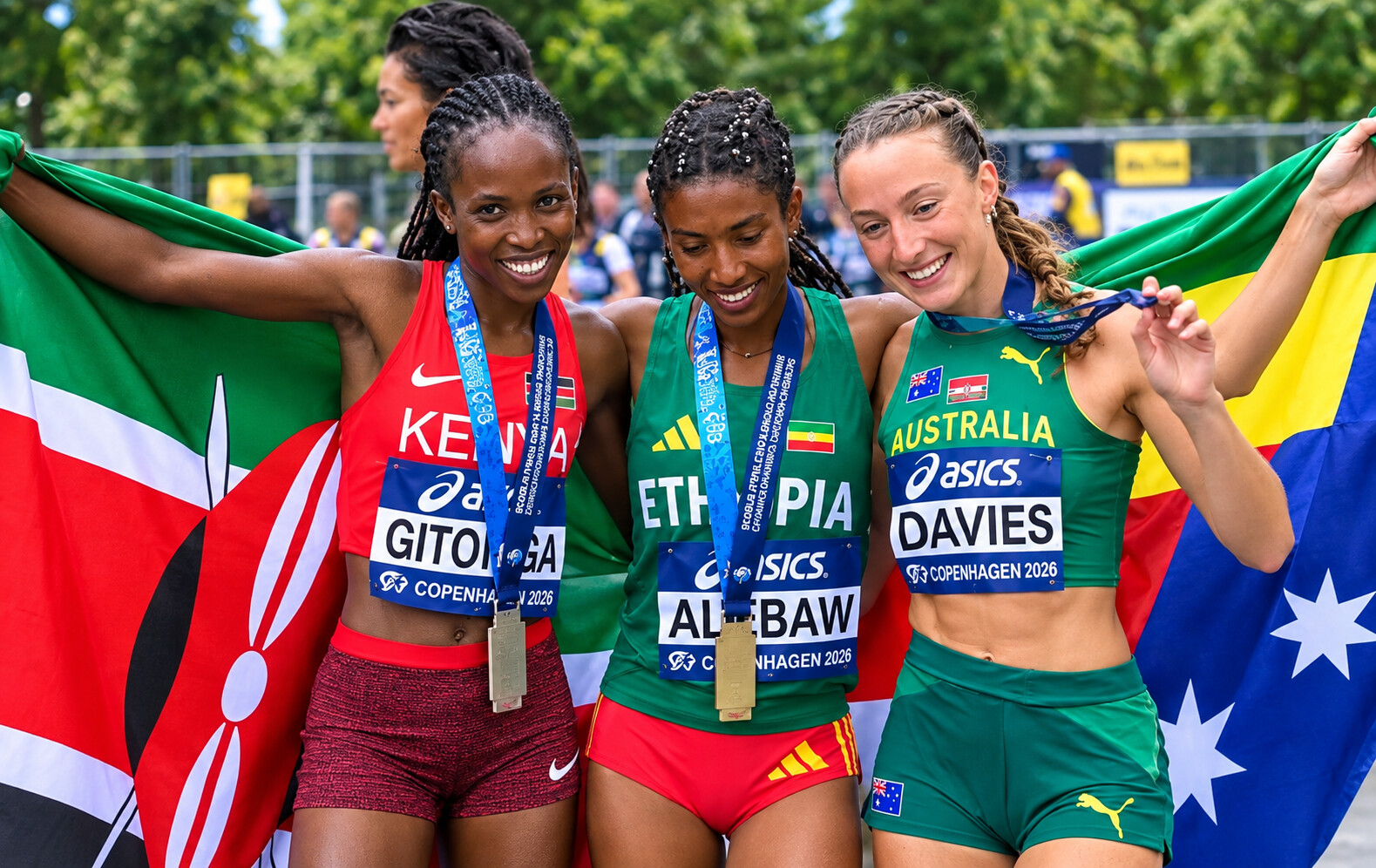
Amebaw stormed to gold in 14:41, adding another global title to her remarkable season just six days after winning the women’s 5000m at the inaugural World Athletics Ultimate Championships in Budapest.
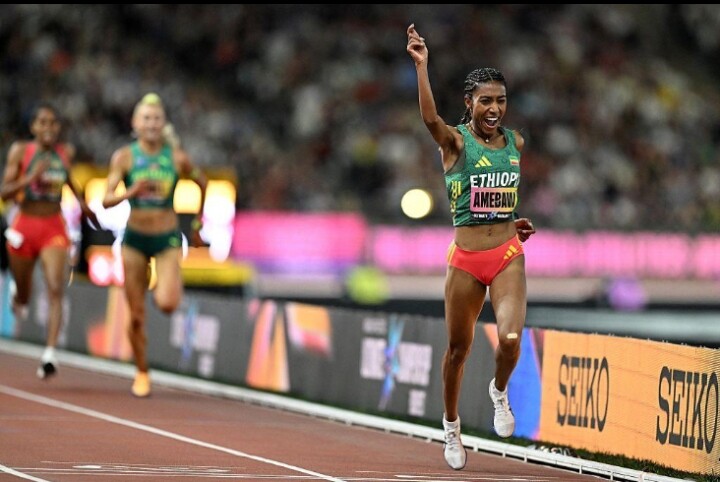
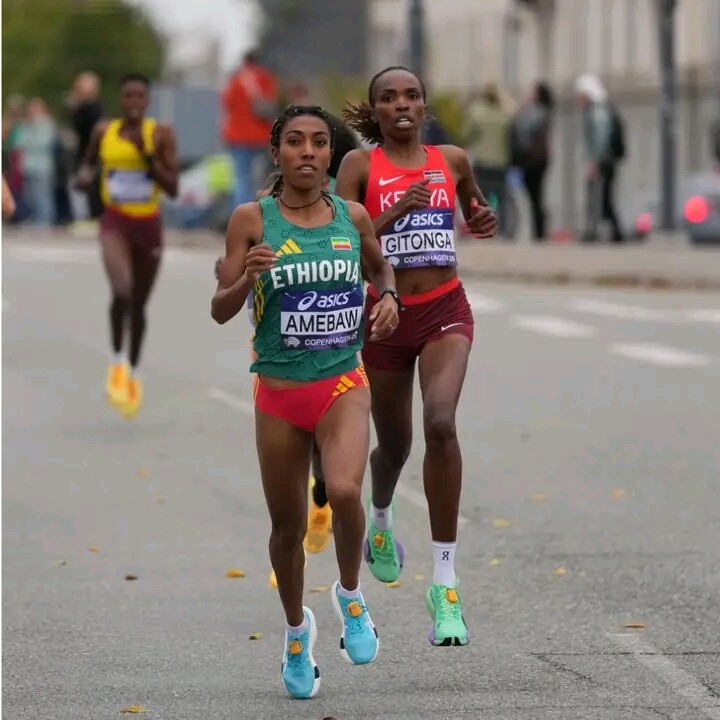
The Ethiopian distance star once again demonstrated her ability to deliver when it matters most, producing a commanding performance over the fast Copenhagen course to claim the world 5km road title.
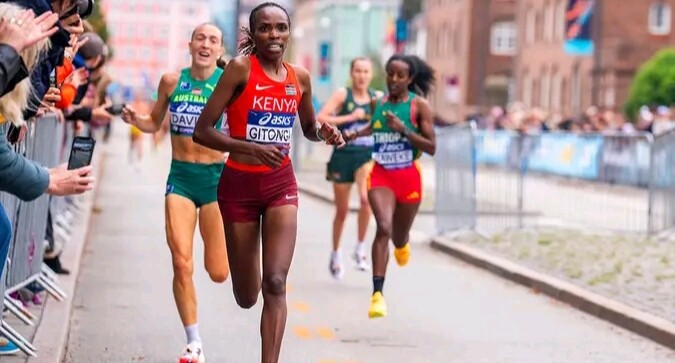
Kenya’s Caroline Makandi Gitonga delivered a brilliant performance to secure the silver medal in 14:48, giving Kenya a place on the global podium. Gitonga stayed firmly in contention throughout the race before crossing the finish line just seven seconds behind the newly crowned champion.
Australia’s Rose Davies completed the podium in 14:50, taking bronze and setting an Australian area record in an impressive display of front-running and determination.
The result also saw several athletes produce notable performances behind the leading trio, with Marta Garcia recording 14:59, Georgia Griffith running 15:01, Samiya Hassan Nour finishing in 15:04, Hannah Gapes clocking 15:06 and Hannah Nuttall stopping the clock at 15:08, while Mirriam Cherop followed in 15:09 and Allie Ostrander in 15:10.
With two global titles secured within just six days, Likina Amebaw has turned an extraordinary week into a defining chapter of her 2026 season.
Women’s 5km Top 10 Results — Copenhagen 2026
1. Likina Amebaw — Ethiopia — 14:41
2. Caroline Makandi Gitonga — Kenya — 14:48
3. Rose Davies — Australia — 14:50 — Area Record
4. Marta Garcia — Spain — 14:59 — PB
5. Georgia Griffith — Australia — 15:01 — PB
6. Samiya Hassan Nour — Djibouti — 15:04
7. Hannah Gapes — Australia — 15:06 — PB
8. Hannah Nuttall — Great Britain — 15:08 — PB
9. Mirriam Cherop — Kenya — 15:09 — PB
10. Allie Ostrander — USA — 15:10 — PB
The Copenhagen race was fiercely contested, with the leading athletes pushing the pace over the flat and fast 5km course. Amebaw, however, had the strength to separate herself from her rivals and hold on for another major championship victory.
What makes her achievement even more remarkable is the short turnaround between her two titles. Winning a world 5000m championship in Budapest and returning only six days later to triumph over 5km on the roads of Copenhagen is a remarkable demonstration of endurance, recovery and championship racing ability.
For Ethiopia, Amebaw’s victory adds another major international success to a season already filled with impressive performances. For Kenya, Gitonga’s silver medal provides another strong result on the world stage and confirms her ability to compete among the best road runners in the world.
With two global titles secured within just six days, Likina Amebaw has turned an extraordinary week into a defining chapter of her 2026 season.
by Erick Cheruiyot for My Best Runs.
Login to leave a comment
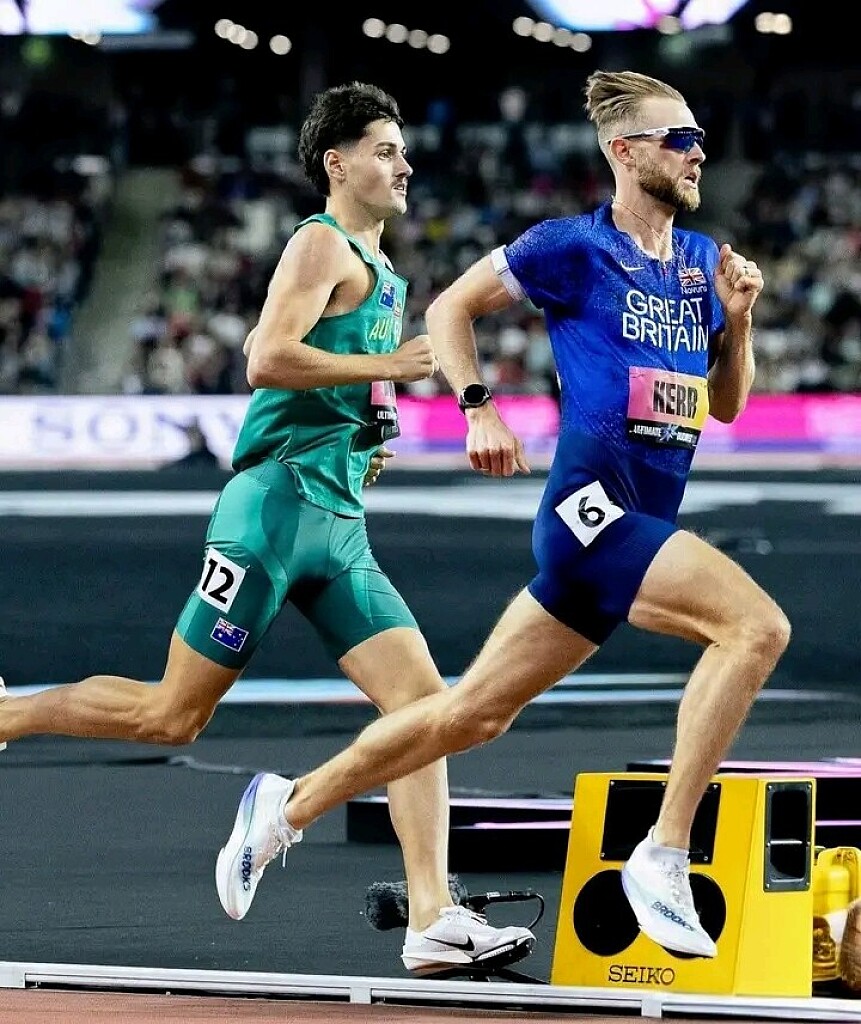
Cameron Myers Takes A Bold Step Into The 1500m Future With Josh Kerr As His Benchmark
Australian youngster Cameron Myers may have taken an important step toward establishing himself among the next generation of 1500m stars after sharing the track with world-record holder Josh Kerr at the World Athletics Ultimate Championship in Budapest.
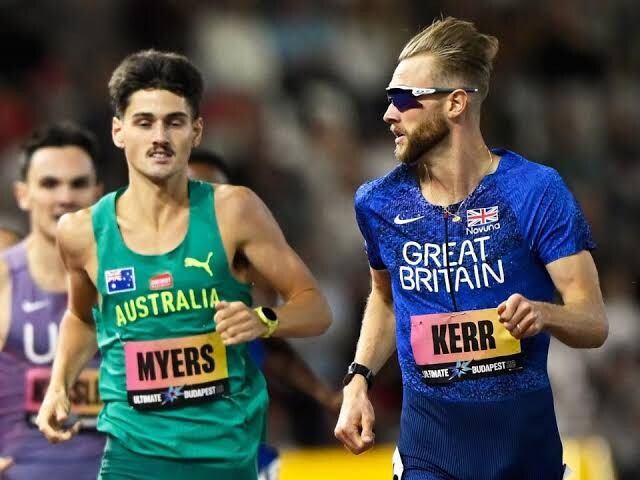
Myers arrived at the high-profile race with plenty of promise already surrounding his name, but competing directly against one of the world's leading middle-distance runners offered him a different kind of test. Rather than being intimidated by the occasion, the young Australian embraced the challenge and showed that he is willing to measure himself against the very best.
As the race entered its decisive stages, Myers remained firmly in contention. With 200 metres remaining, he believed he had a genuine opportunity to challenge Kerr, setting the stage for a dramatic finish between experience and emerging talent.
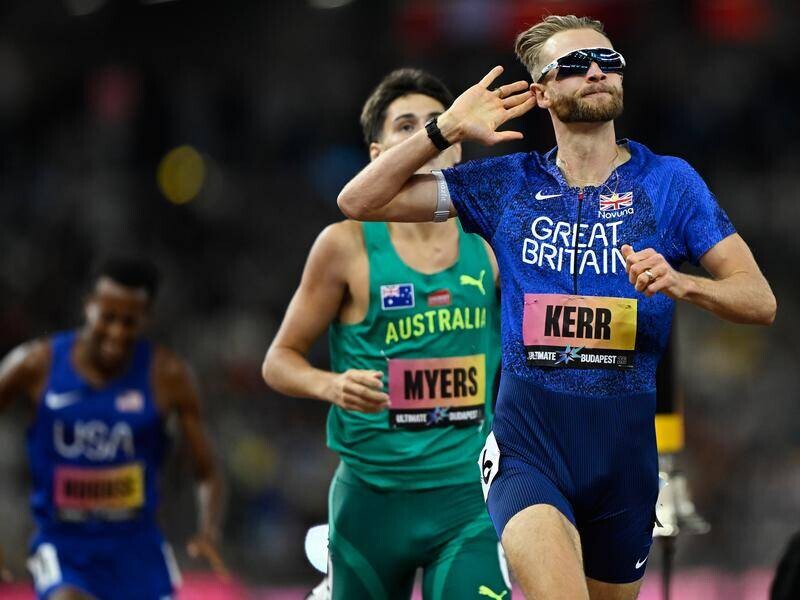
However, Kerr demonstrated exactly why he has established himself at the top of the event. When the race reached its final 60 metres, the British star unleashed his trademark finishing speed and began to pull away, ultimately denying Myers the chance to fight for victory all the way to the line.
For Myers, though, the significance of the race went beyond the final result. The experience gave him a valuable glimpse of the level he hopes to reach in the coming years and, perhaps more importantly, strengthened his belief that he can eventually compete with athletes of Kerr's calibre.
“It was exciting to race him. He was just too strong and that shows why he is a world record holder. I think that's where I want to go in the future,” Myers said.
Those words underline the ambition of an athlete who is still at the beginning of his senior journey. Instead of viewing Kerr's late surge simply as a defeat, Myers appeared to see it as a lesson — a first-hand demonstration of the strength, confidence and finishing ability required to succeed at the highest level.
The Australian now knows exactly what separates him from one of the world's elite 1500m runners. That knowledge could prove invaluable as he continues to develop, gain experience and sharpen his own finishing speed.
Myers' journey is therefore one worth watching closely. He has already shown that he is prepared to line up alongside established champions, and his willingness to learn from those encounters could become one of the defining features of his progression.
For now, Josh Kerr remains the benchmark Myers wants to reach. But if the young Australian continues developing at his current trajectory, today's challenger could eventually become tomorrow's target for the rest of the 1500m field.
Cameron Myers has already seen the level he wants to reach. The next chapter will be about closing the gap.
by Erick Cheruiyot for My Best Runs.
Login to leave a comment
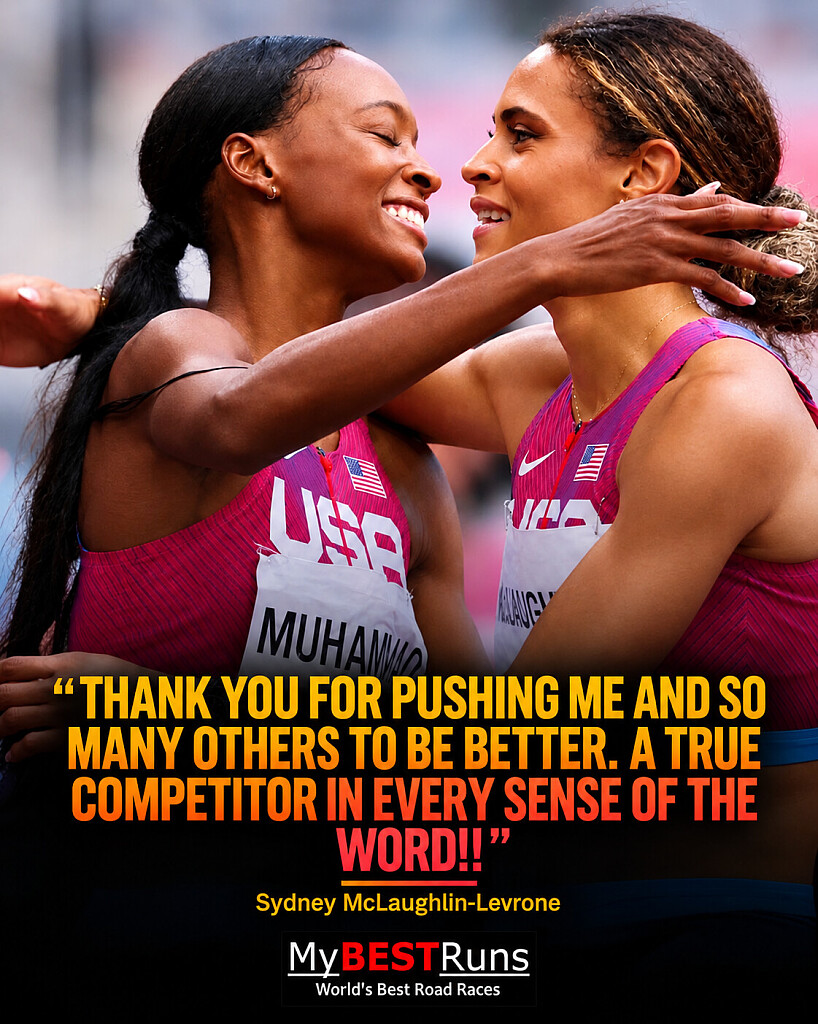
Sydney McLaughlin-Levrone Pays Emotional Tribute As Dalilah Muhammad’s Legendary Career Comes To An End
Some rivalries create champions. Others change an entire sport.
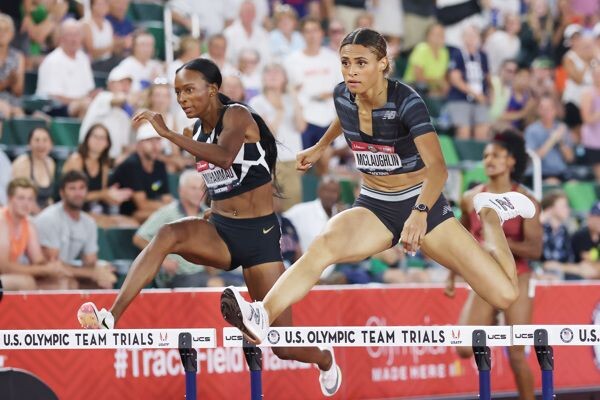
For Sydney McLaughlin-Levrone and Dalilah Muhammad, their extraordinary rivalry did both.
As Muhammad took the final 400m hurdles race of her remarkable career at the World Athletics Ultimate Championship Budapest 26, McLaughlin-Levrone paid tribute to the woman who helped push her to another level — not only as a competitor, but as one of the athletes who helped redefine what was possible in the event.
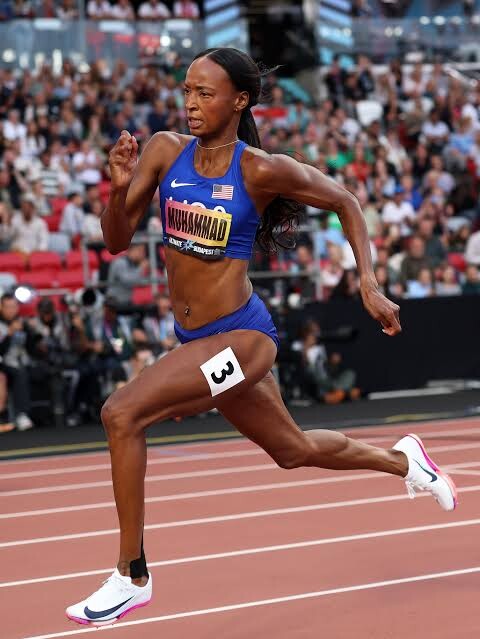
“Dalilah, you truly did just change the game for all of us.”
Those words carry particular weight because few athletes understand Muhammad’s impact better than McLaughlin-Levrone.
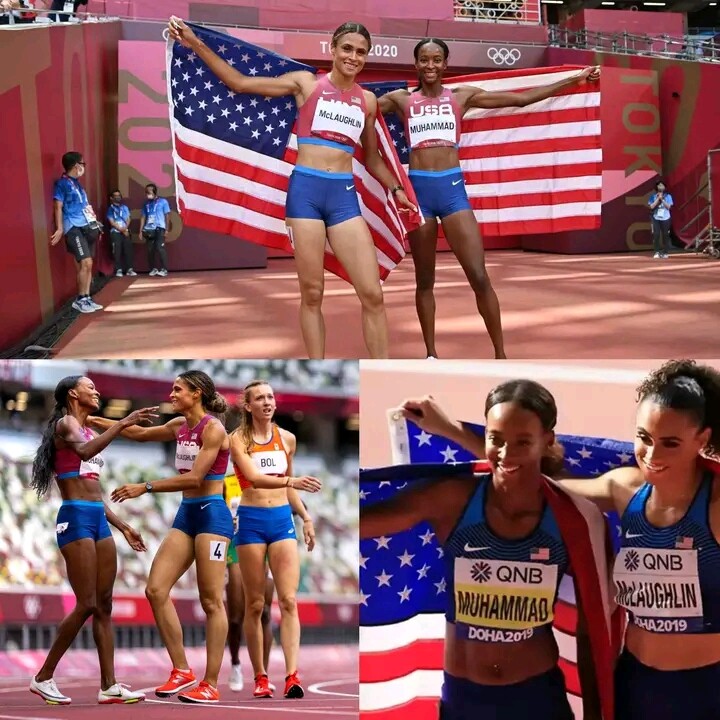
Their rivalry became one of the defining stories of modern women’s athletics. In 2019, Muhammad broke a world record that had stood for almost 16 years, clocking 52.20 seconds at the US Championships. Later that year, she lowered it again to 52.16 while winning the world title in Doha, with McLaughlin-Levrone finishing second in 52.23.
But Sydney was not content to simply chase Muhammad.
She kept coming.
At the Tokyo Olympics, McLaughlin-Levrone broke the world record with 51.46 seconds to win gold, while Muhammad followed closely in 51.58. Their performances demonstrated how dramatically the event had evolved in just a few years.
McLaughlin-Levrone continued to push the limits, eventually taking the world record down to 50.68 seconds in 2022 before producing an astonishing 50.37 at the Paris 2024 Olympics.
Yet behind those numbers was something more meaningful than a succession of records.
There was respect.
Muhammad had established a standard that forced McLaughlin-Levrone to chase something greater, while McLaughlin-Levrone’s rise helped create another level of competition for everyone following them.
That is the essence of “iron sharpens iron.”
One athlete pushes.
The other responds.
And the sport moves forward.
Their relationship also extended beyond individual competition. They represented the United States together and shared Olympic success as teammates, including the American women’s 4x400m relay gold medal at Tokyo 2020.
Now, years after their most memorable battles, Muhammad has taken her final bow.
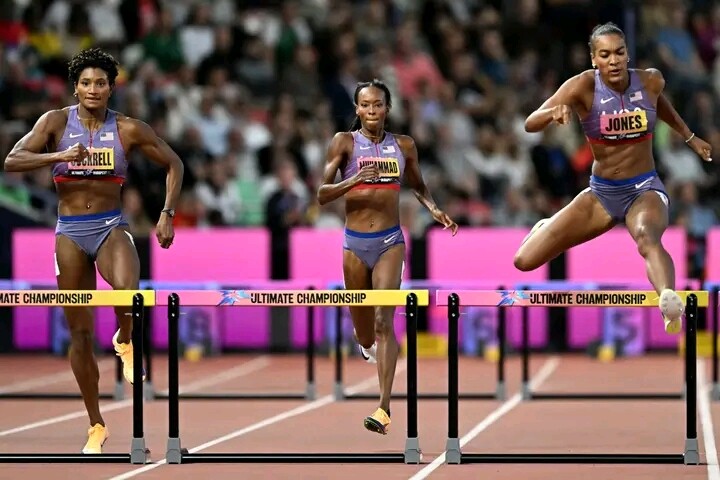
At the inaugural World Athletics Ultimate Championship in Budapest, the former Olympic champion and world record-holder finished fourth in 53.11 seconds, just 0.02 behind fellow American Anna Cockrell.
Jasmine Jones won the title in a season-best 52.45 seconds, with Emma Zapletalová taking second in 52.68 and Cockrell finishing third in 53.09.
For Jones, the victory represented the biggest breakthrough of her career. After finishing fourth at the Paris 2024 Olympics and claiming silver at the 2025 World Championships, she finally reached the top of a major international podium.
And there was something particularly fitting about Muhammad sharing her final race with an athlete from a younger generation.
The baton was not literally being passed, but the symbolism was impossible to miss.
Muhammad helped establish a new standard.
McLaughlin-Levrone took that standard even higher.
And now athletes such as Jones are beginning to write their own stories in an event transformed by those who came before them.
For Muhammad, the legacy goes far beyond medals and world records. She became one of the defining figures in the history of the women’s 400m hurdles, helping elevate the event through years of extraordinary competition.
That is why McLaughlin-Levrone’s tribute feels so much bigger than a farewell.
“Thank you for pushing me and so many others to be better. A true competitor in every sense of the word!!”
There was a time when Sydney was chasing Dalilah.
Then Sydney became the athlete everyone else had to chase.
But their story was never simply about one athlete replacing another. It was about competition creating excellence — about two extraordinary athletes raising the standard until the impossible began to look achievable.
Muhammad pushed the door open.
McLaughlin-Levrone ran through it.
And now a new generation is stepping forward.
As Muhammad leaves the track for the final time, the records will remain in the history books and the medals will become part of her remarkable legacy. But perhaps her greatest contribution will be found in the athletes she inspired, challenged and helped make better.
One pushed.
One answered.
Both changed the game.
That is what iron sharpens iron truly means.
And for one unforgettable era, Dalilah Muhammad and Sydney McLaughlin-Levrone showed the world exactly what happens when two great competitors refuse to let each other settle for ordinary.
by Erick Cheruiyot for My Best Runs.
Login to leave a comment
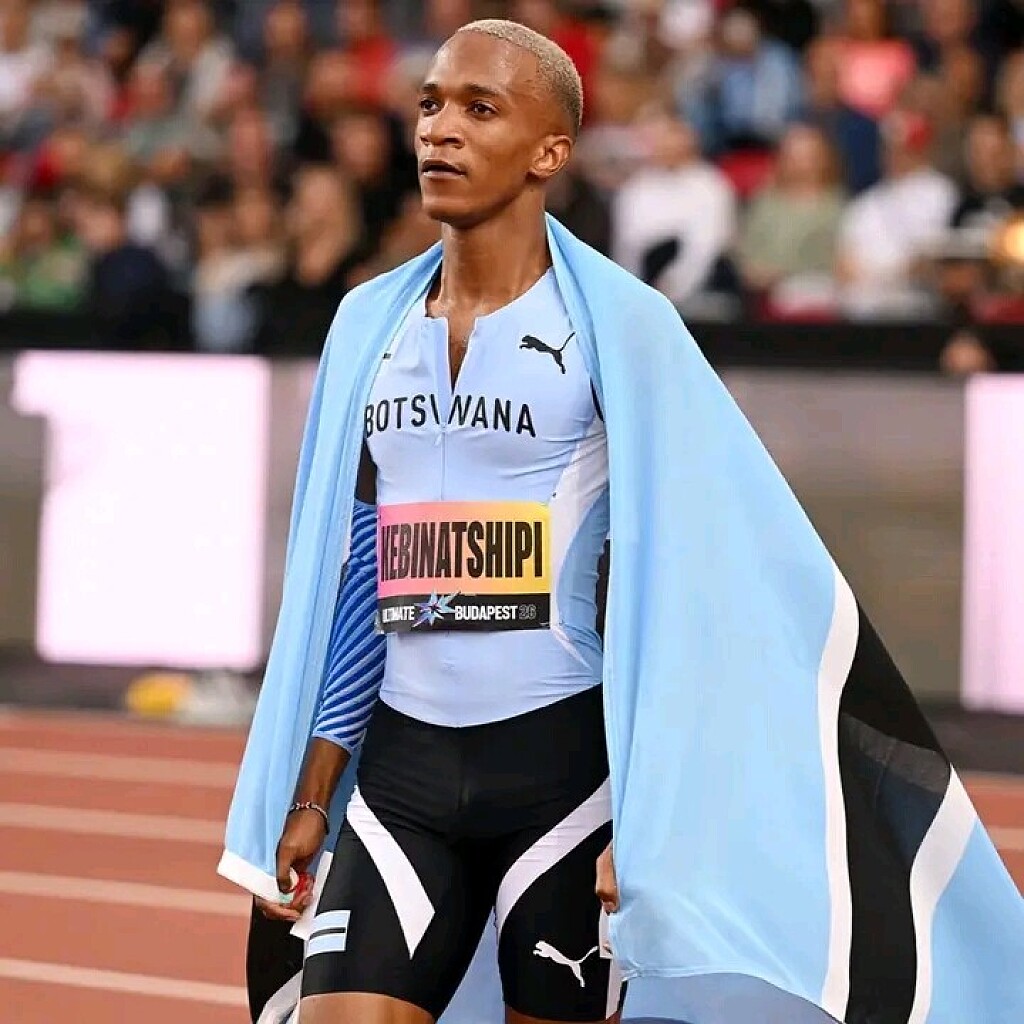
Collen Kebinatshipi Has Wayde Van Niekerk’s 43.03 World Record In His Sights
Botswana’s Collen Kebinatshipi has made it clear that Wayde van Niekerk’s legendary 400m world record is already part of his long-term ambitions.
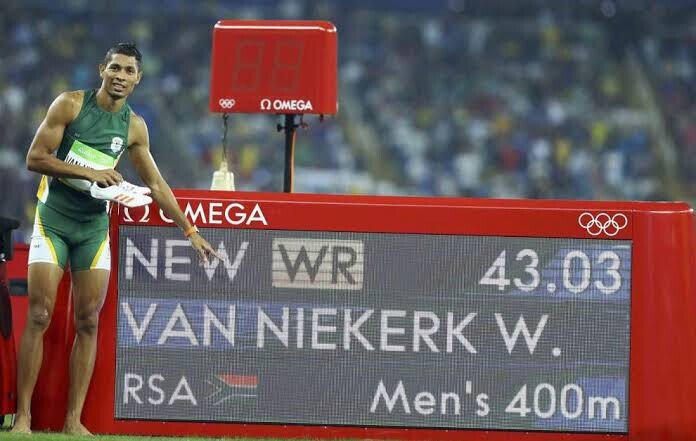
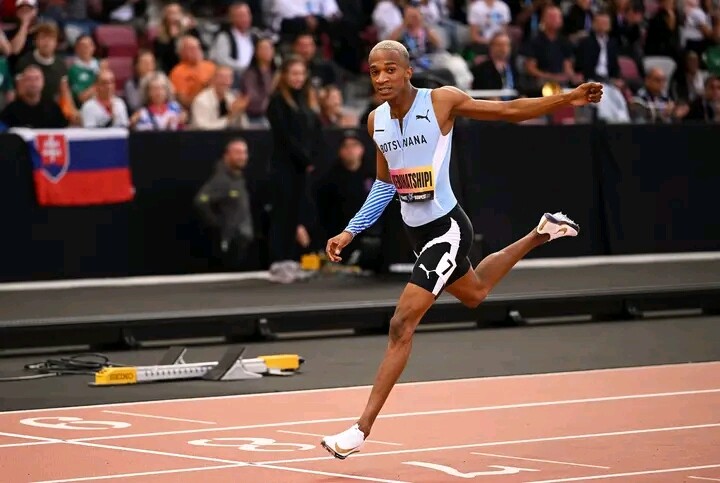
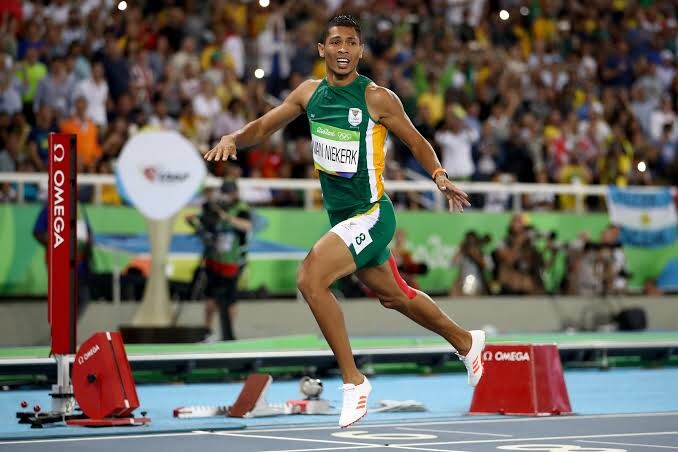
The 22-year-old capped a remarkable 2026 campaign in spectacular fashion at the World Athletics Ultimate Championships in Budapest, storming to a stunning national record of 43.39 seconds to win the men’s 400m title. The performance moved him to fifth on the world all-time list and left him just 0.36 seconds behind Van Niekerk’s 43.03 world record, set at the Rio 2016 Olympic Games.
But for Kebinatshipi, the chase is not simply a distant dream. The Botswana star admitted after his Budapest triumph that the world record is something he regularly thinks about.
“I would be lying if I said no. Obviously it’s always running through my mind,” Kebinatshipi said.
His ambition is already shaping the way he views the next stage of his career. When asked when serious world-record discussions could become realistic, the 22-year-old pointed towards the Los Angeles 2028 Olympic Games, suggesting that the biggest target could come into focus by then.
What makes the prospect particularly intriguing is that Kebinatshipi does not believe he has reached his physical or technical peak.
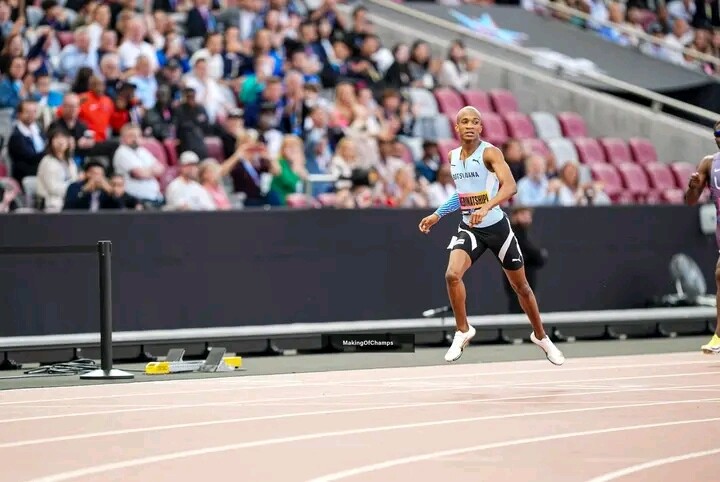
The Botswana star has identified his back straight as an area where he still wants to improve. Even after producing a sensational 43.39 in Budapest, he believes there is more work to be done, while he has also acknowledged that he is still developing physically.
That leaves an exciting question hanging over the next few seasons: how fast can Kebinatshipi become when those improvements begin to come together?
His Budapest performance was already extraordinary. He attacked the race with confidence from the opening stages, built a commanding advantage and held his form all the way to the finish to stop the clock at 43.39.
The victory capped a season in which Kebinatshipi has repeatedly demonstrated that he belongs among the world’s elite 400m runners. Before Budapest, he had already established himself as one of the most consistent performers in the event, including a 43.40 clocking in Brussels.
Then came Budapest — and an even faster performance.
His 43.39 placed him level with the legendary 43.39 recorded by Michael Johnson in 1995 and firmly established him among the fastest 400m runners in history.
And perhaps that is what makes his world-record ambition so fascinating. Kebinatshipi is not talking about chasing 43.03 from a position of uncertainty. He has already run 43.39 at just 22 years old, while openly acknowledging that there are still technical and physical areas he wants to develop.
Van Niekerk’s record has stood since August 14, 2016. For a decade, 43.03 has remained the ultimate benchmark in the one-lap event. Now, a new generation is beginning to look directly at that barrier.
Kebinatshipi is only 0.36 seconds away.
Whether the record eventually falls remains a question for the future, but one thing is already clear: 43.03 is no longer just a number in the record books for Collen Kebinatshipi — it is a target.
by Erick Cheruiyot for My Best Runs.
Login to leave a comment
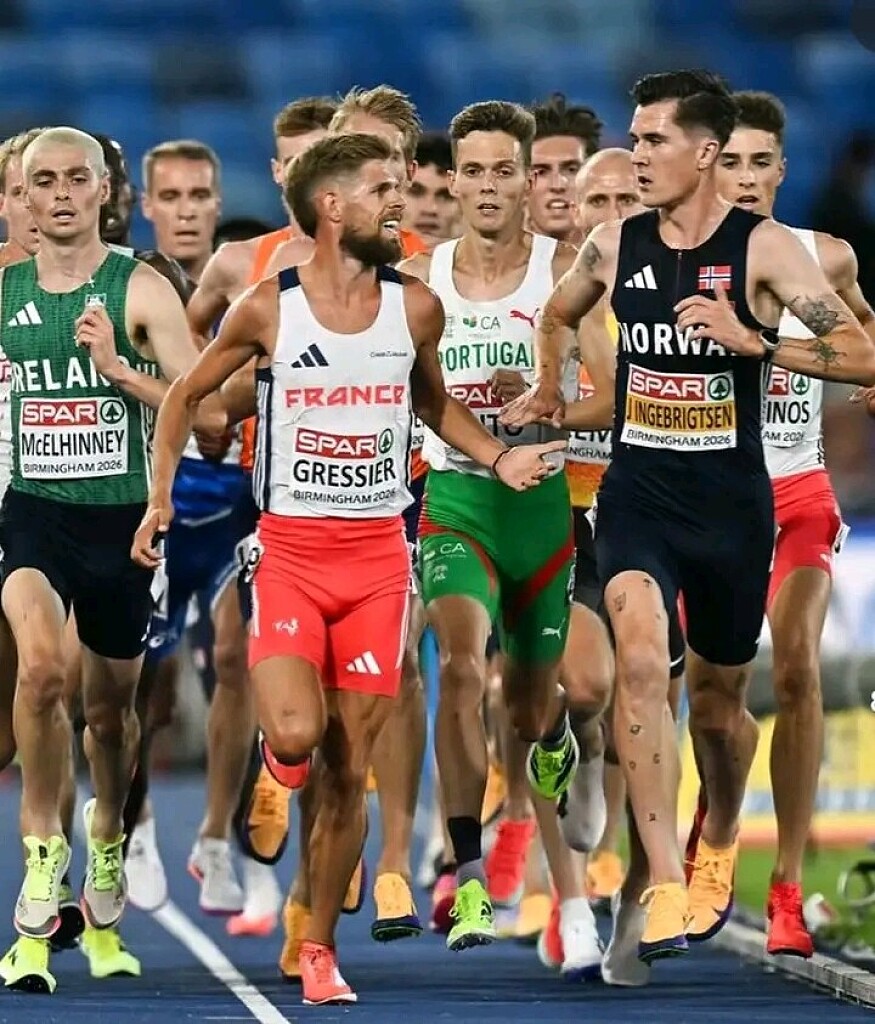
Jakob Ingebrigtsen And Jimmy Gressier Set For First-Ever Road Showdown In Copenhagen
COPENHAGEN — Two of the biggest names in modern distance running are about to take their rivalry onto unfamiliar territory.
Norway’s Jakob Ingebrigtsen and France’s Jimmy Gressier are set to meet for the first time on the roads when the men’s 5km at the World Athletics Road Running Championships gets underway in Copenhagen on Saturday, September 19.
The highly anticipated clash brings together two athletes with very different paths to the start line, but an equally strong appetite for another global title.
Ingebrigtsen arrives in Denmark as the reigning Olympic 5000m champion and a four-time European 5000m champion. He has also just added the inaugural World Athletics Ultimate Championship 5000m title to his collection, producing a powerful 12:59.24 performance in Budapest only days ago.
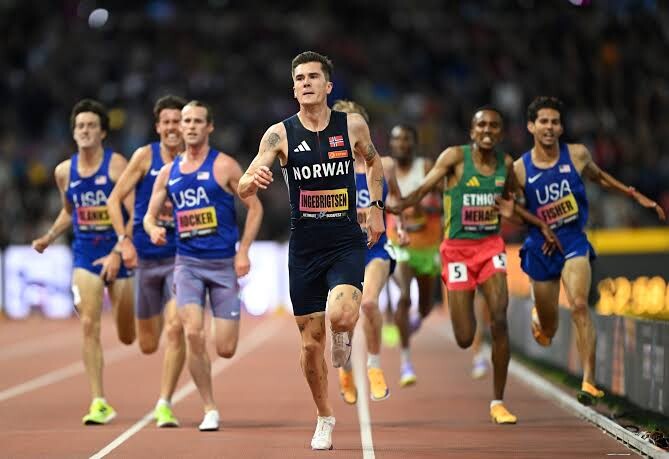
The Norwegian has already conquered some of the biggest stages in track and field. Now, Copenhagen presents a new challenge: winning a global title on the roads.
His road-racing experience over 5km is limited, however. World Athletics notes that Ingebrigtsen has raced the distance only once before, clocking 13:28 in Stavanger in 2020. He also raced his first and, so far, only half marathon in Copenhagen in 2024.
Standing in his way is a man who has already proved that he belongs among the very best road racers in the world.
Gressier enters Copenhagen as the reigning world 10,000m champion and the fastest man on the 5km entry list. In April, the Frenchman stormed to a European record of 12:51 in Lille, moving within just two seconds of the world record. Only Ethiopia’s Berihu Aregawi and Yomif Kejelcha have ever run faster over the distance.
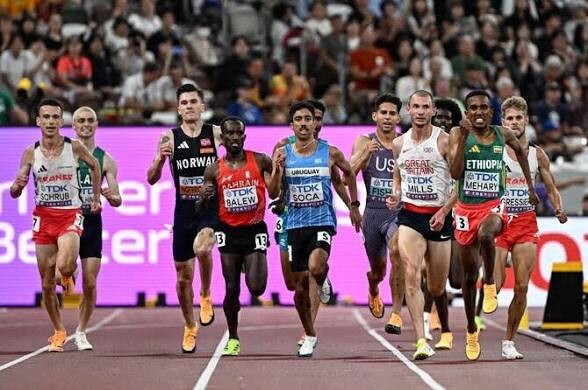
That performance also came with a warning for the rest of the field.
Ethiopia’s Addisu Yihune finished second behind Gressier in Lille in 12:54, a mark that places him fifth on the world all-time list. The two will meet again in Copenhagen, adding another major storyline to an already loaded championship race.
And Gressier is not stopping after one race.
The French star is entered for both the 5km on Saturday afternoon and the men’s half marathon on Sunday morning. With the 5km scheduled for 2:40 p.m. and the half marathon at 9:45 a.m. the following day, he will have only around 19 hours between the two championship races.
It is an extraordinary test of versatility. First comes a five-kilometre battle likely to demand close to all-out speed from the opening stages. Then, before a full day has passed, Gressier will have to return to the start line for 21.1 kilometres against a field packed with established road specialists.
Yet the 29-year-old is no stranger to the half marathon. He won the European half marathon title in 2025 in 59:45 and finished fifth at the 2023 World Road Running Championships in Riga in 59:46.
The 5km field, meanwhile, extends well beyond the headline names.
Kenya’s Mathew Kipsang arrives as the reigning Commonwealth 5000m champion, while Australia’s Ky Robinson, Burundi’s Egide Ntakarutimana, Norway’s Narve Gilje Nordås and Portugal’s José Carlos Pinto are among the other athletes capable of making the race highly competitive.
Copenhagen is therefore preparing for much more than a simple Ingebrigtsen-Gressier duel.
It is a meeting between a track superstar testing himself on the roads and a world champion who has already demonstrated extraordinary speed over the distance. Add Yihune’s 12:54, Kipsang’s championship pedigree and a deep international field, and the ingredients are there for a fiercely contested world title.
For Ingebrigtsen, the question is whether his world-class track speed and devastating finishing ability can translate seamlessly onto the roads.
For Gressier, the challenge is whether he can turn his remarkable 12:51 into a world championship crown — while keeping enough in reserve for the half marathon less than 24 hours later.
One thing is certain: when the gun fires in Copenhagen, the roads will provide a completely new chapter in the careers of two athletes who have already conquered some of the biggest stages in the sport.
And this time, there will be nowhere to hide.
Jakob Ingebrigtsen versus Jimmy Gressier.
Track royalty meets road-running firepower.
Copenhagen is ready.
by Erick Cheruiyot for My Best Runs.
Login to leave a comment
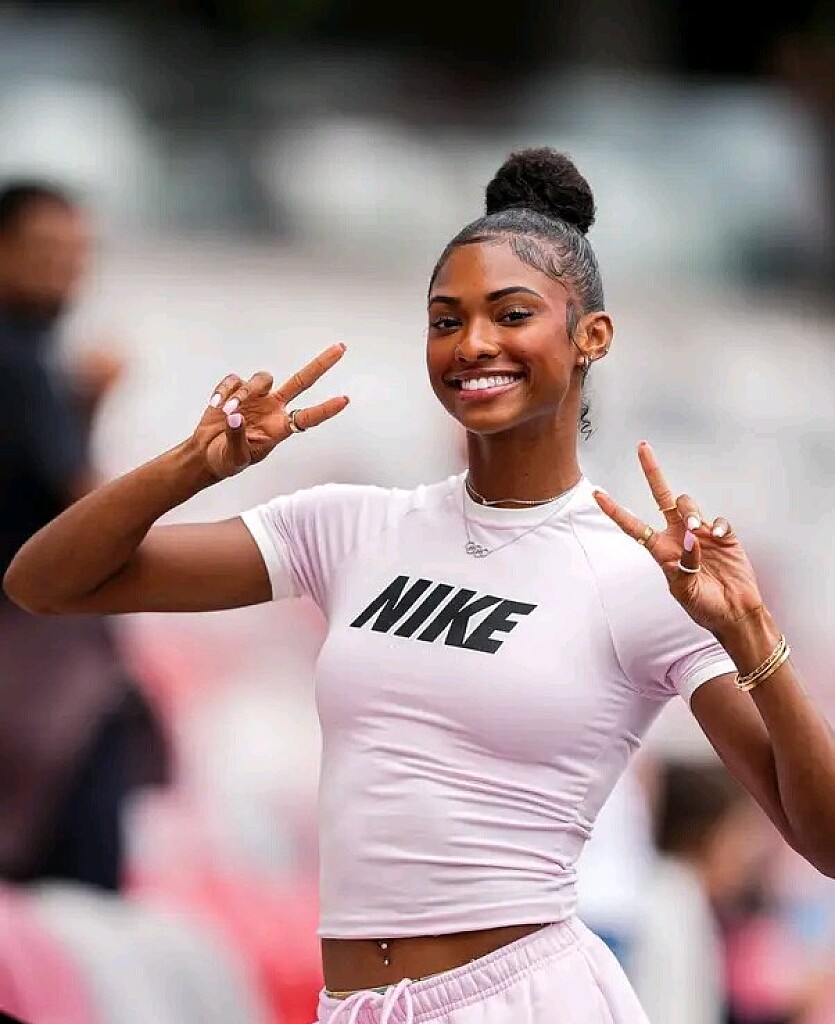
Masai Russell Ends Perfect 2026 Season After 14 Straight Wins
Masai Russell has called time on a remarkable 2026 campaign, withdrawing from ATHLOS London and ending a season in which the Olympic champion won every race she contested.
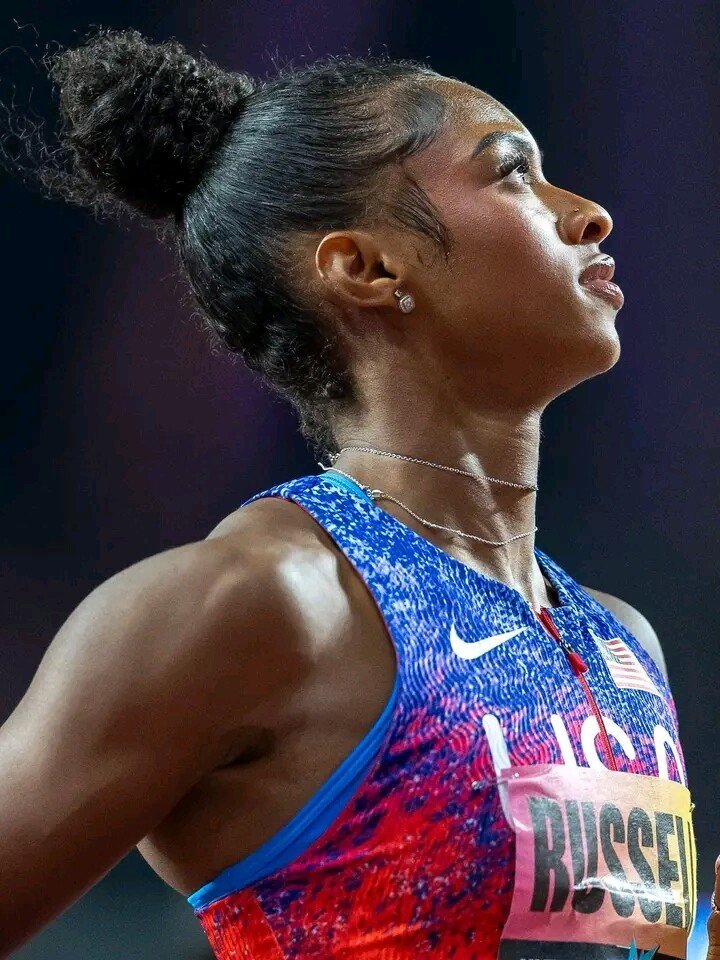
The American hurdler confirmed the decision on September 15, just days before ATHLOS London’s September 18 meeting at StoneX Stadium. Russell said she and her team believe stepping away is the right decision for her body as they turn their attention to what comes next.
“I'm grateful for everyone who has supported me throughout this year,” Russell said in her message to fans, before signing off with a promise to return to the track in 2027.
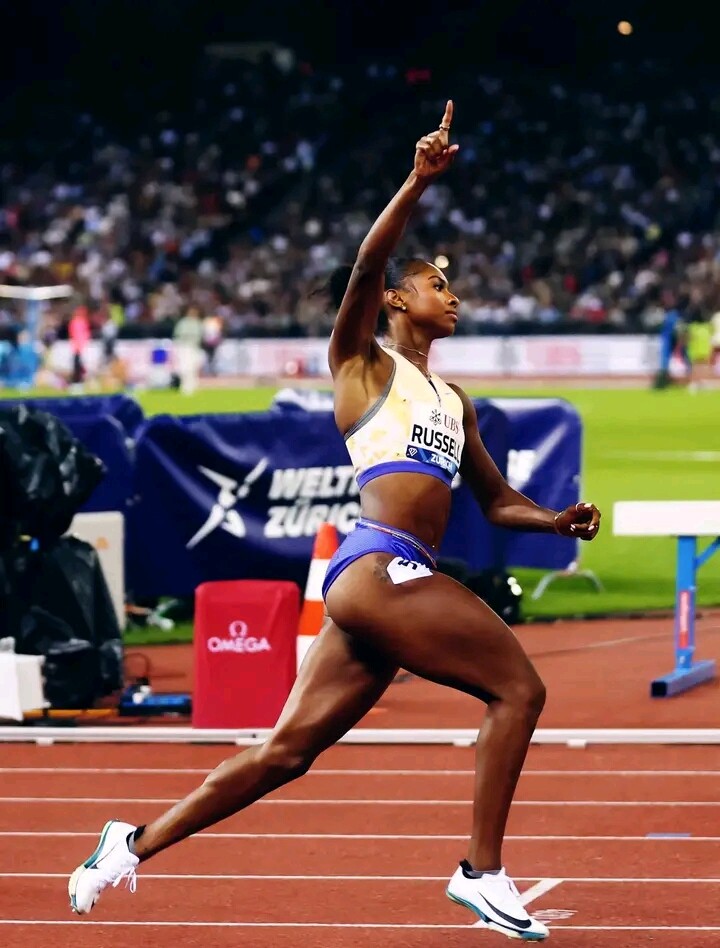
It brings an extraordinary season to a close: 14 races, 14 victories and an unbeaten record in 2026.
Russell’s season reached another level in August when she produced one of the defining performances of the year at the Weltklasse meeting in Zurich. The Olympic champion stormed to 12.09 seconds in the 100m hurdles, breaking Tobi Amusan’s world record of 12.12 and becoming the fastest woman ever over the barriers.
The performance was not a one-off. Russell followed her world-record run by winning the Diamond League Final in Brussels in 12.20 seconds before heading to Budapest for the inaugural World Athletics Ultimate Championship.
In Budapest, she completed her perfect season in style, winning the 100m hurdles in 12.22 seconds ahead of Nigeria’s Tobi Amusan and the Netherlands’ Nadine Visser. The victory was Russell’s 14th of the year and secured her unbeaten record for 2026.
Her withdrawal means fans will not get to see the world-record holder compete at ATHLOS London, where she had originally been announced among the star-studded field. The event takes place at StoneX Stadium on Friday, September 18, as ATHLOS makes its first international appearance.
For Russell, however, the decision closes the chapter on a season that has already placed her among the defining figures of the 2026 athletics campaign.
She has collected Olympic, Diamond League and World Athletics Ultimate Championship success, while adding a world record that erased one of the most significant marks in women's sprint hurdles.
And perhaps most remarkably, she did it without losing a single race.
Now Russell turns her attention to recovery, preparation and whatever comes next.
After a year of 14 wins from 14 races, a world record and an unbeaten streak, the next time Masai Russell steps onto the track will be in 2027 — with the 12.09 world-record holder entering a new season carrying an entirely different level of expectation.
by Erick Cheruiyot for My Best Runs.
Login to leave a comment
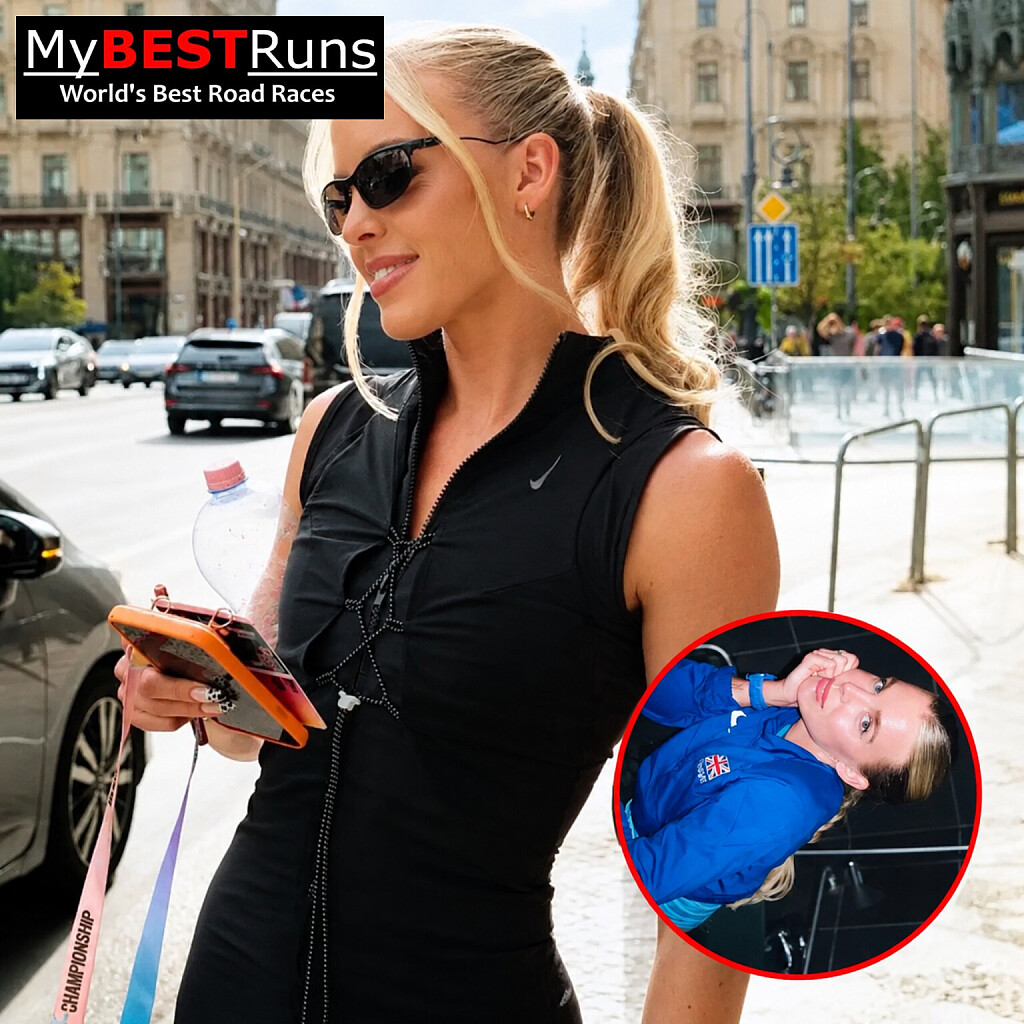
No Rest for Keely Hodgkinson! Olympic Champion Set for Homecoming Showdown at ATHLOS London
Keely Hodgkinson is wasting no time putting the finishing touches to her long and demanding 2026 season.
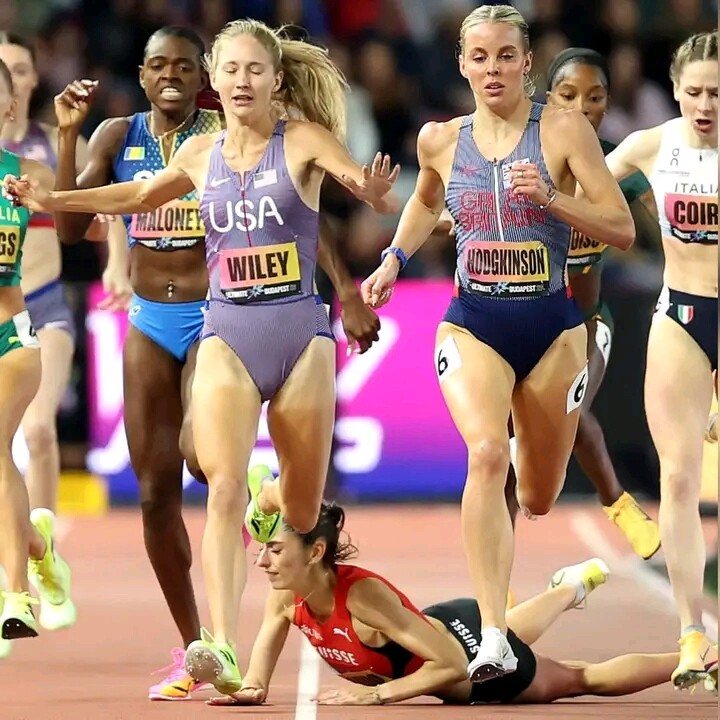
Just days after battling to a runner-up finish behind Audrey Werro in the women’s 800m at the inaugural World Athletics Ultimate Championship in Budapest, the British Olympic champion is preparing to lace up once again — this time in front of her home crowd.

Hodgkinson is set to return to the 800m at ATHLOS London on Friday, September 18, 2026, at StoneX Stadium, where she will defend the title she won at the event last year.
The quick turnaround underlines just how relentless Hodgkinson’s season has been. After months of elite competition, travel and intense racing, the 24-year-old now faces one final assignment before bringing her 2026 campaign to a close.
Budapest provided another fiercely contested race for Hodgkinson. She was unable to finish the season’s Ultimate Championship with victory, as Switzerland’s Werro produced a superb performance to claim the 800m crown, leaving Hodgkinson to settle for second.
But there will be little time to dwell on the result.
The homecoming at StoneX Stadium offers Hodgkinson an opportunity to respond immediately and potentially end her season on a high. With the British fans expected to turn out in force, the atmosphere should provide an extra source of motivation for one of the country’s biggest athletics stars.
Hodgkinson has already established herself as one of the defining 800m runners of her generation, and another victory in London would add a fitting final chapter to a season that has demanded enormous consistency and resilience.
The question now is whether she can summon one last burst of brilliance after such a gruelling campaign.
With the Olympic champion back on British soil, all eyes will be on Hodgkinson as she takes on the 800m one more time in 2026.
No rest. No easy finish. Just one final race — and a home crowd waiting to see Keely Hodgkinson deliver one more unforgettable performance.
by Erick Cheruiyot for My Best Runs.
Login to leave a comment
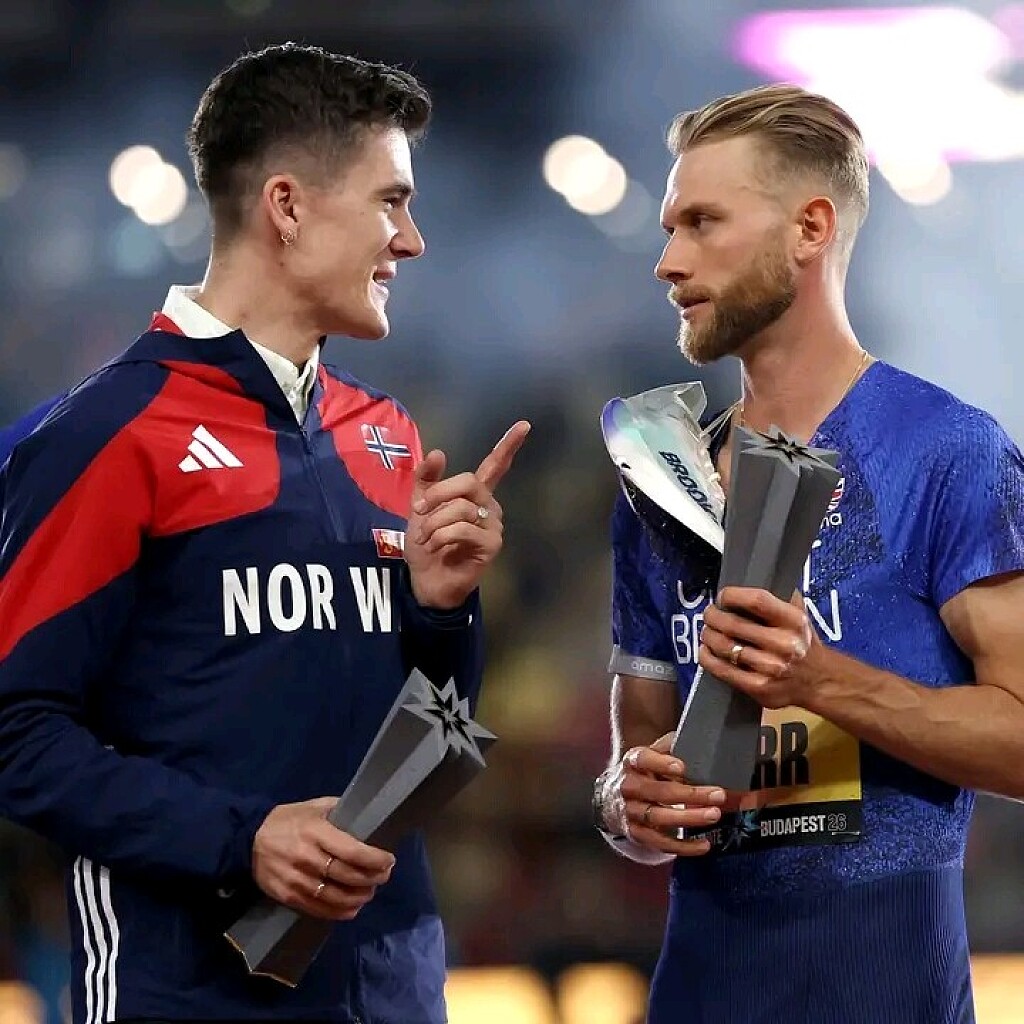
Jakob Ingebrigtsen And Josh Kerr Shared A Light Moment After Budapest Triumphs
Jakob Ingebrigtsen and Josh Kerr may be among the fiercest rivals in modern middle-distance running, but their encounter at the World Athletics Ultimate Championship in Budapest produced a lighter and more humorous moment between two of the sport’s biggest stars.
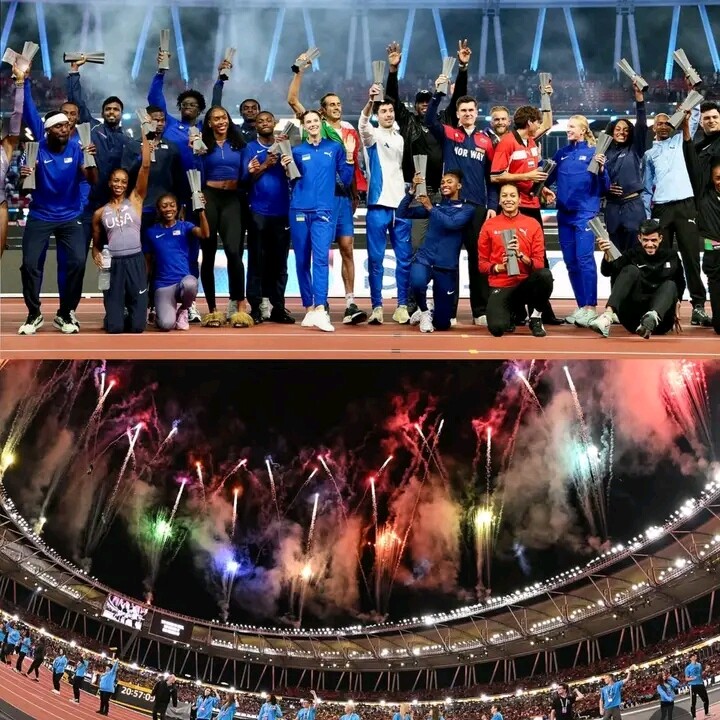
After Kerr secured the men’s 1500m title, he was placed alongside Ingebrigtsen during the final-night presentations. The Norwegian had already captured the 5000m crown, powering to victory in 12:59.24 with a characteristic late surge to complete his Budapest campaign on a high.
The moment was particularly intriguing given the history between the two athletes. Their rivalry has delivered some of the most memorable 1500m battles of recent years, with Kerr famously defeating Ingebrigtsen to claim the world title in Budapest in 2023.
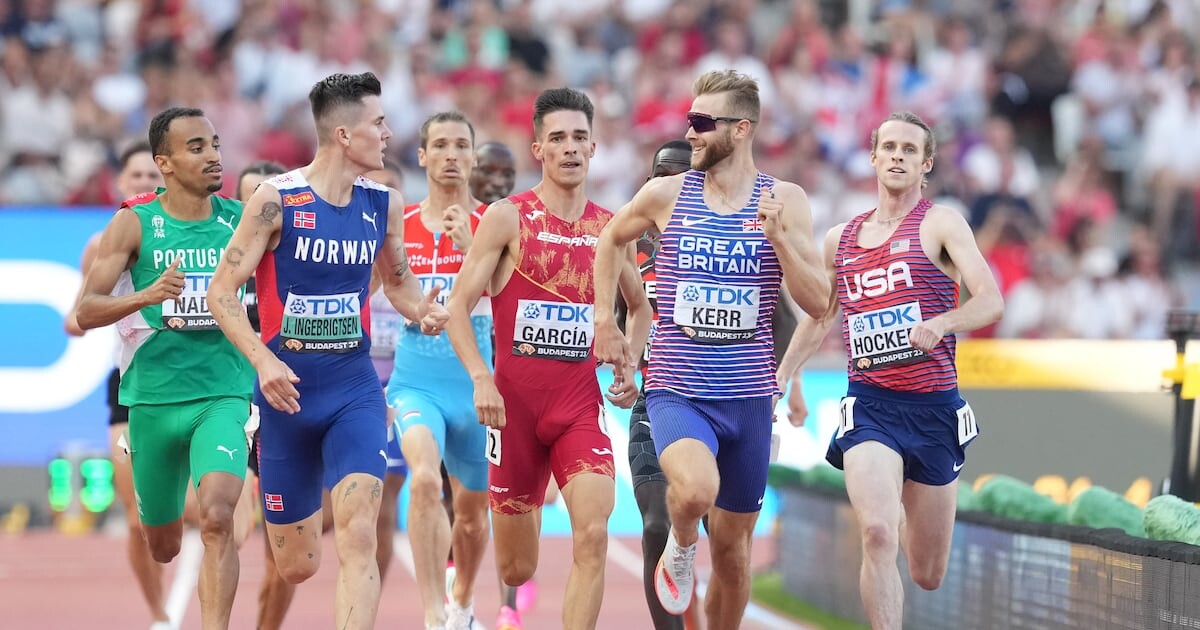
Ingebrigtsen had initially been expected to feature in the 1500m as well, potentially setting up another highly anticipated showdown with Kerr. However, the Norwegian ultimately withdrew from the event, leaving Kerr to take centre stage and add another major title to his résumé.
With the two champions eventually standing side by side during the closing presentations, Kerr was asked what he had said to his long-time rival.
His response was short, cheeky and perfectly timed:
“I said he was a great 5km runner.”
The playful comment carried an obvious hint of their long-running rivalry, particularly given that both athletes have repeatedly battled for supremacy over 1500m while Ingebrigtsen has also established himself as one of the world’s leading 5000m runners.
The light-hearted mood continued on social media, where Ingebrigtsen shared a playful exchange highlighting his sense of humour away from the track.
A comment praising him read: “Jakob, you are so funny and amazing in your post-race interviews..”
Ingebrigtsen responded with his trademark confidence and humour: “I know. It is almost unbelievable.”
He then reflected on his Budapest experience, writing: “Thank you Ultimate Athletics Championship See you next year”
For Ingebrigtsen, Budapest ended with another major 5000m triumph and a memorable interaction with one of his biggest rivals. For Kerr, the Ultimate Championship delivered another 1500m title and yet another chapter in an already remarkable career.
What has so often been a fierce rivalry on the track was replaced, at least for one memorable moment, by humour and a touch of mutual respect between two champions.
Different victories, different paths — but two of the sport’s biggest stars sharing the same stage in Budapest.
by Erick Cheruiyot for My Best Runs.
Login to leave a comment
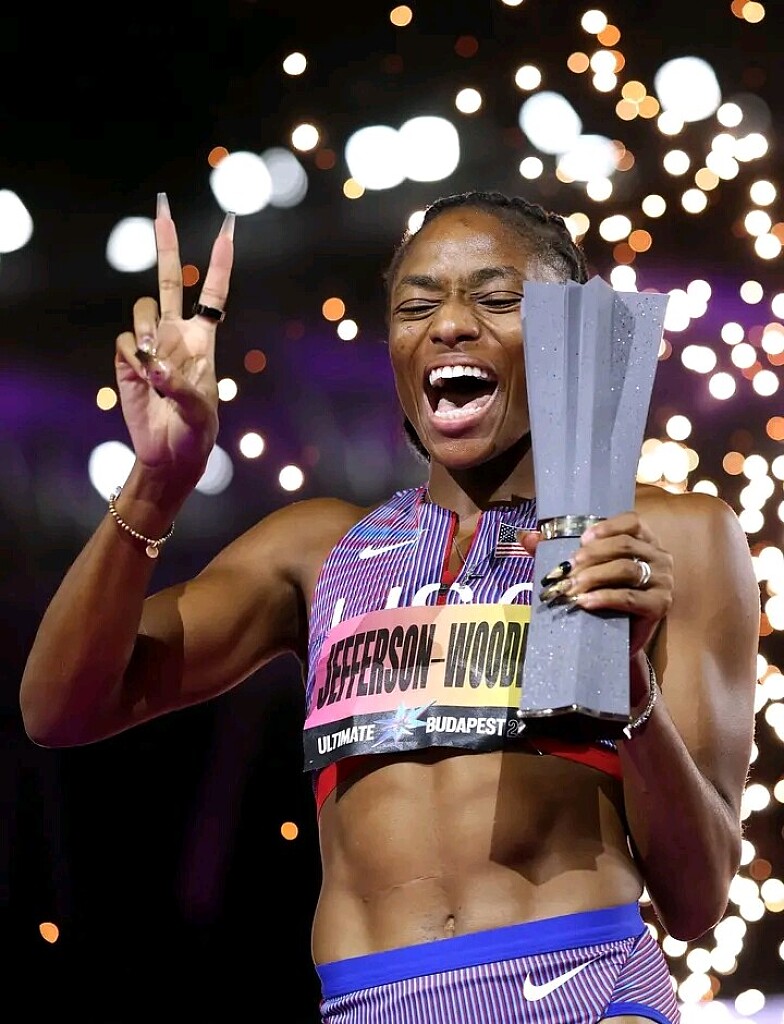
Melissa Jefferson-Wooden Storms Into History With Stunning 200m Victory In Budapest
Melissa Jefferson-Wooden has once again demonstrated why she is becoming one of the defining forces in women’s sprinting, delivering a breathtaking performance to win the 200m at the inaugural World Athletics Ultimate Championship in Budapest.
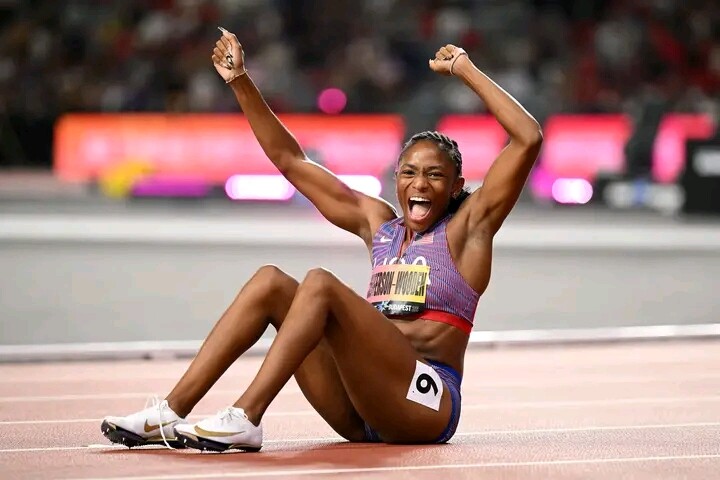
The American powered to victory in 21.47 seconds, producing one of the fastest performances in history despite facing a 0.6m/s headwind. She finished well clear of Olympic champion Gabby Thomas, who clocked 21.77, while Kayla White secured third place in 21.93.
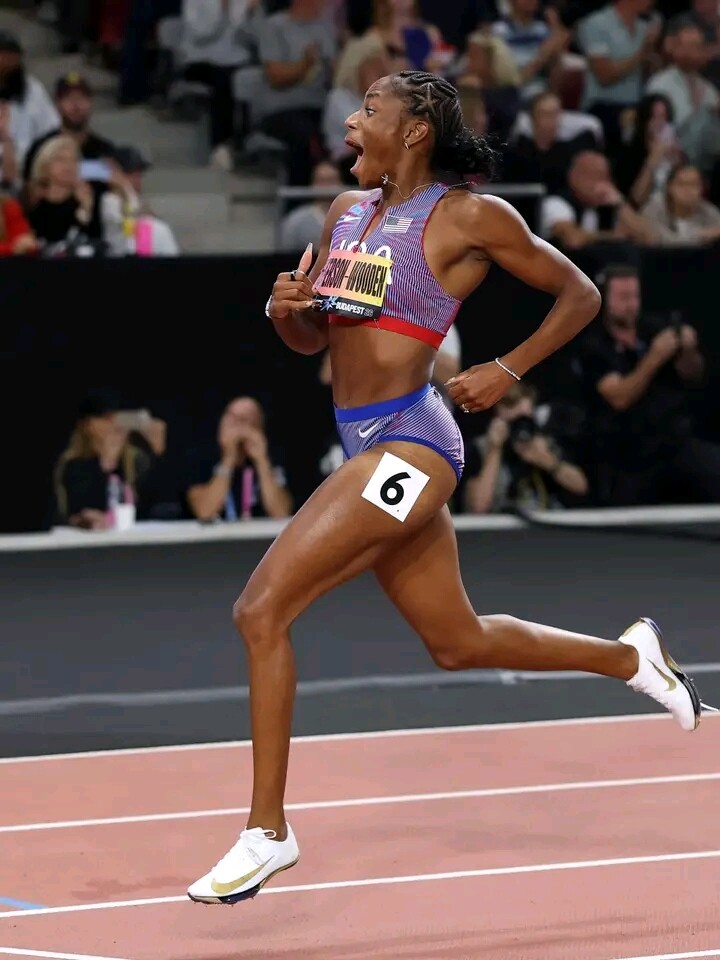
But Jefferson-Wooden’s latest triumph was about far more than another championship title. It was a performance that placed her among the fastest women ever to compete over the distance.
Her 21.47 seconds moved her to No. 3 on the all-time women’s 200m list, behind only legendary American sprinter Florence Griffith-Joyner, whose world record of 21.34 has stood since 1988, and Jamaica’s Shericka Jackson, who ran 21.41 in 2023.
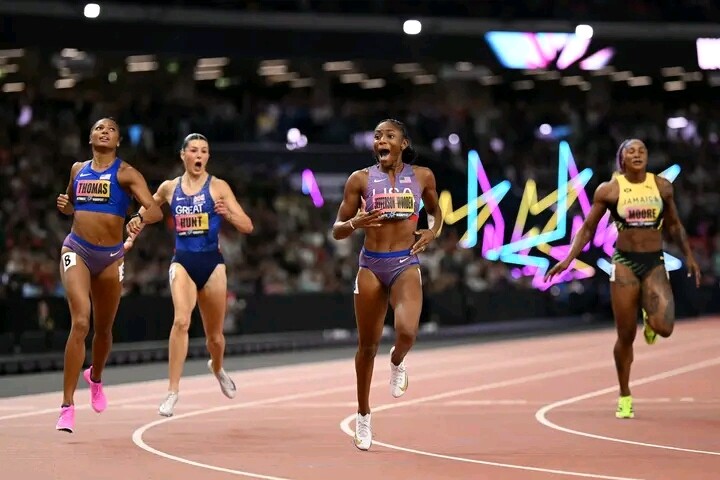
The result also pushed several celebrated names further down the rankings. Julien Alfred’s 21.51 from 2026 now sits fourth, while Elaine Thompson-Herah’s 21.53 from 2021 ranks fifth.
The significance of Jefferson-Wooden’s achievement becomes even greater when the conditions are considered. Running into a headwind makes a sprint performance more difficult, yet she still produced the third-fastest 200m ever recorded, underlining the extraordinary speed and execution behind her victory.
A Sensational Sprint Double
The Budapest triumph also completed a remarkable 100m and 200m double.
Just one night earlier, Jefferson-Wooden stormed to the 100m title in 10.62 seconds. She returned to the track with the same confidence and determination, once again delivering when the pressure was greatest.
The double adds another major achievement to a championship career that has rapidly gathered momentum. Jefferson-Wooden arrived in Budapest as the reigning world champion in both the 100m and 200m after completing the sprint double at the 2025 World Championships in Tokyo.
Now, she has added the inaugural Ultimate Championship double to her growing collection of major victories.
$300,000 Reward For Budapest Dominance
Jefferson-Wooden’s extraordinary weekend also comes with a substantial financial reward. With $150,000 awarded to each individual event winner, her victories in the 100m and 200m earn her a total of $300,000 from the championship.
Yet the money is almost secondary to what she has achieved on the track.
In an era filled with Olympic champions, world champions and record-setting talents, Jefferson-Wooden is separating herself through consistency, championship composure and an extraordinary ability to deliver on the biggest stages.
Her latest 21.47 seconds does more than add another title to her résumé. It places her directly among the fastest women the sport has ever seen over 200m.
Florence Griffith-Joyner remains at the summit. Shericka Jackson sits second. But Melissa Jefferson-Wooden is now firmly at No. 3—and judging by the extraordinary trajectory of her career, the American may not be finished climbing.
From Tokyo to Budapest, Jefferson-Wooden is no longer simply chasing sprinting history.
She is becoming part of it.
by Erick Cheruiyot for My Best Runs.
Login to leave a comment
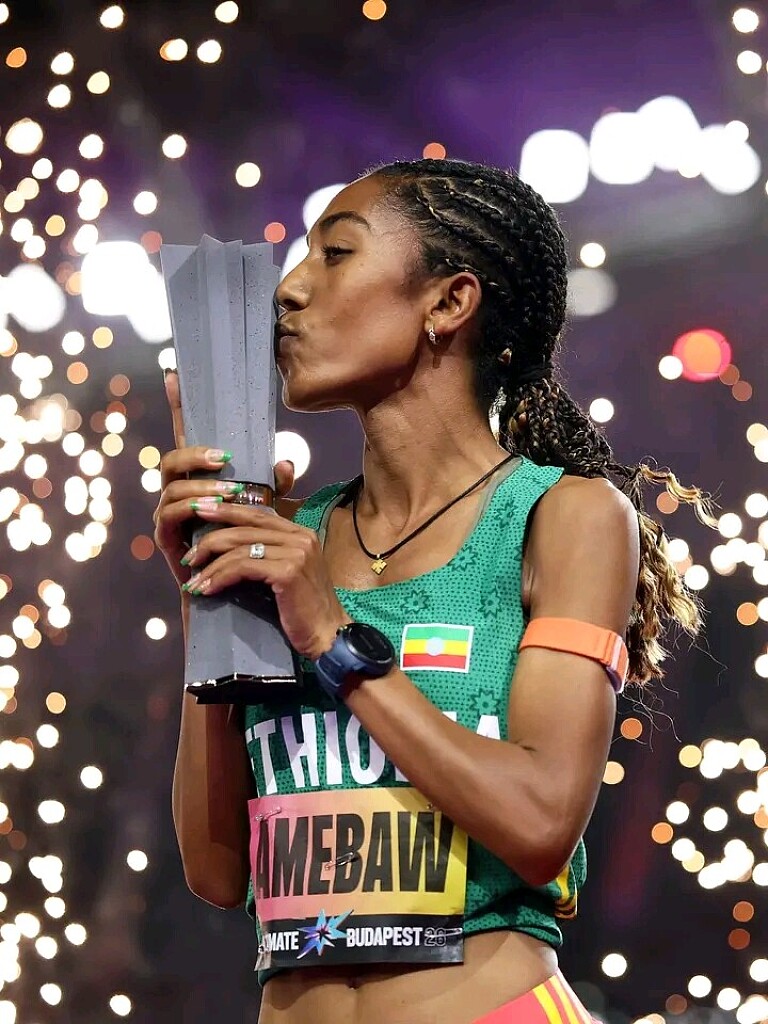
Likina Amebaw Completes Ethiopian Masterclass With First Global Title In Budapest
Likina Amebaw has written her name into the history books in Budapest, producing a commanding performance to win the women’s 5000m at the inaugural World Athletics Ultimate Championship and claim the first global title of her career.
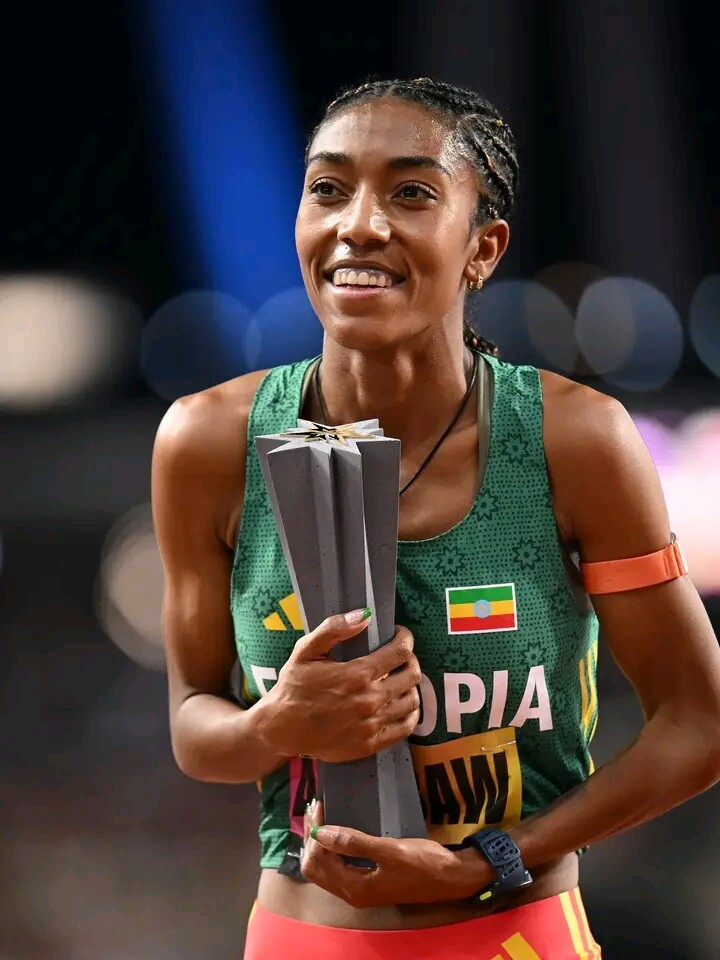
The Ethiopian world leader delivered when it mattered most, stopping the clock at 14:30.36 to secure the Ultimate Championship crown and cap a remarkable breakthrough season with a major international triumph.
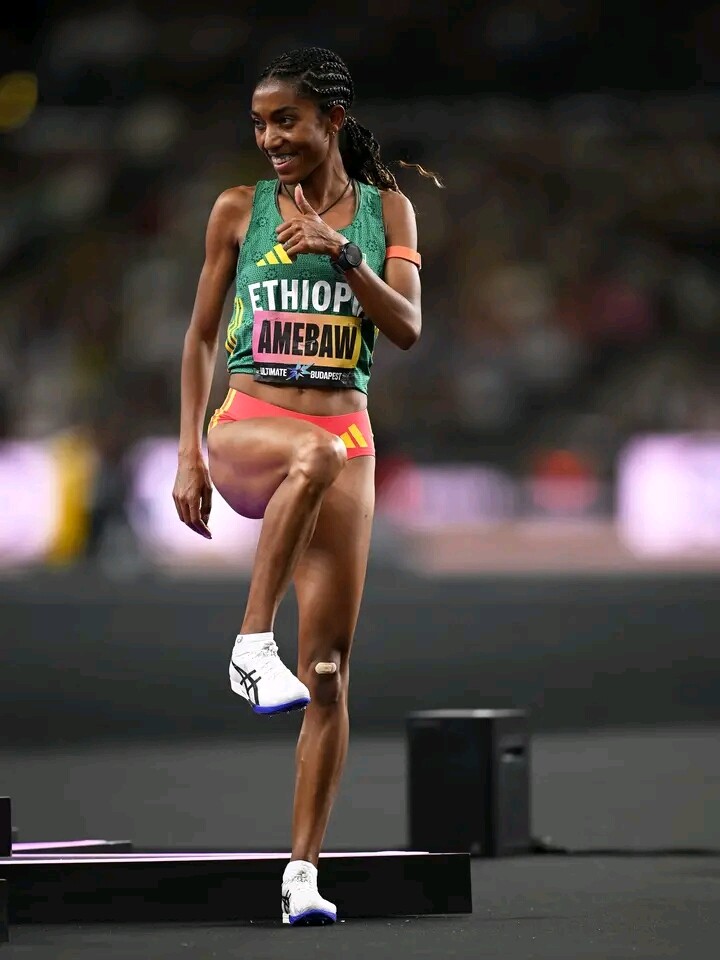
Amebaw did not leave the title to a final-lap sprint. As the race entered its decisive stages, the Ethiopian gradually separated herself from the chasing pack, moving clear at the front before steadily stretching her advantage with every lap.
Once she established daylight between herself and her rivals, Amebaw ran with increasing authority. Her rhythm remained relentless as the pressure shifted entirely onto the chasing group, while the world leader continued to extend her advantage and effectively turned the championship final into a solo pursuit of the finish line.
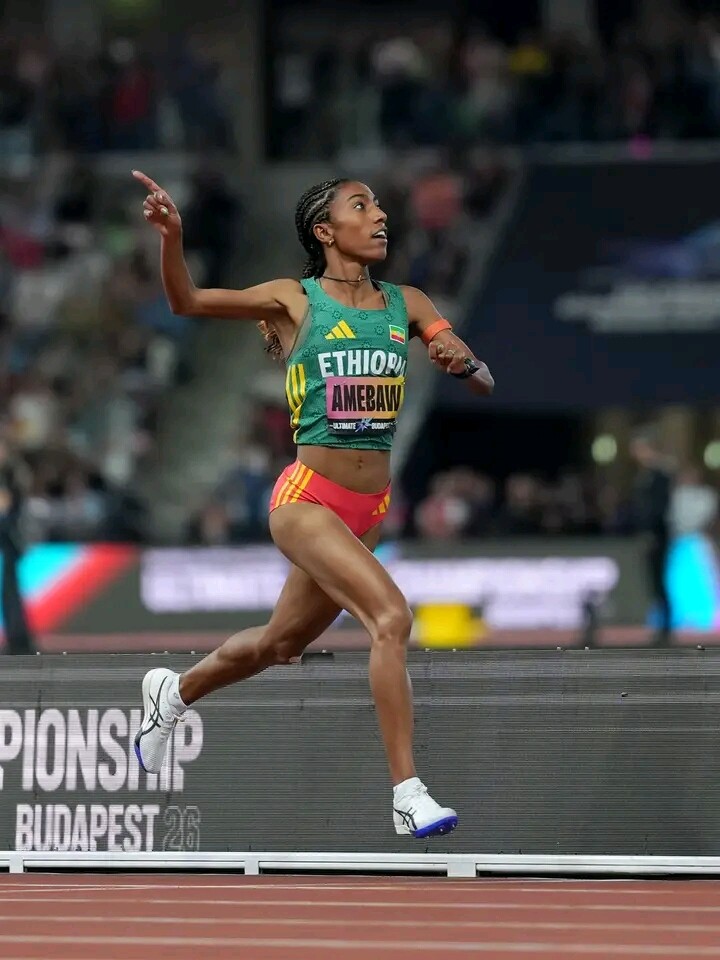
Behind her, Australia’s Jessica Hull produced a superb performance to secure second place in 14:32.39, a personal best. Hull fought all the way through the closing stages and produced a gutsy final surge toward the line, but Amebaw had already created too much separation for the Australian to challenge for the title.
Hull’s performance nevertheless earned her a deserved second positon and prevented what could have been an Ethiopian clean sweep of the leading positions.
The depth of Ethiopia’s women’s 5000m strength was on full display in Budapest, with four Ethiopian athletes finishing inside the top five. Amebaw led the way, while Fantaye Belayneh finished third in 14:32.62, Freweyni Hailu took fourth in 14:32.76, and Aleshign Baweke completed the Ethiopian presence in the top five with 14:32.86.
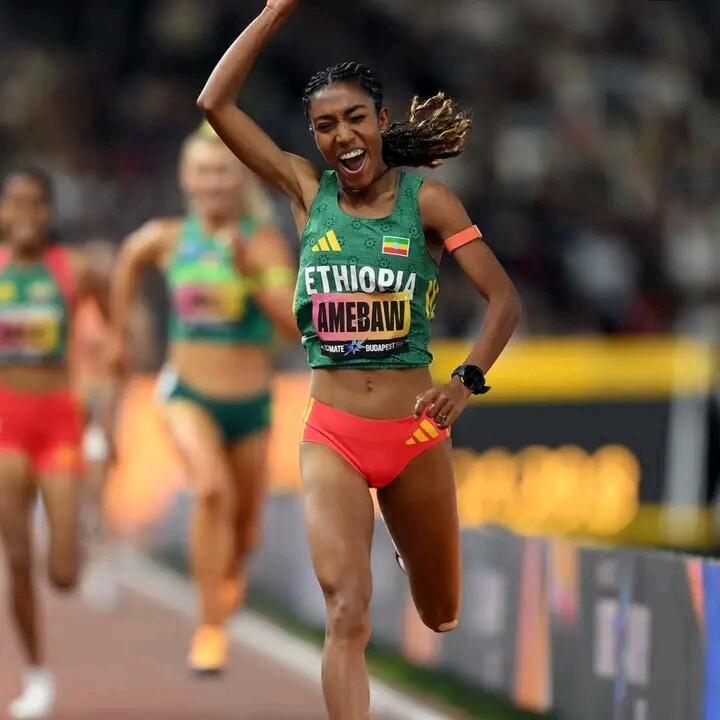
The Ethiopian contingent remained heavily represented near the front throughout the race, producing another powerful demonstration of the country’s extraordinary strength over 5000m.
But the night belonged to Amebaw.
After establishing herself as the world leader, she arrived in Budapest carrying the expectations that come with being the athlete to beat. Rather than allowing the pressure to dictate her race, she remained composed, waited for the decisive moment and then made a move that completely changed the complexion of the contest.
Her 14:30.36 was enough to crown her the women’s 5000m Ultimate Champion and transform a season of outstanding performances into a breakthrough global triumph.
For Ethiopia, the result was another emphatic statement of its depth and enduring influence in women’s distance running. Four athletes inside the top five underlined the extraordinary talent available in the country and its ability to dominate the sharp end of championship racing.
For Amebaw, however, the significance is deeply personal. She came to Budapest as the world leader and leaves as a global champion.
The first global title is now in the books. The first major crown has been secured.
Likina Amebaw is the Ultimate Champion.
by Erick Cheruiyot for My Best Runs.
Login to leave a comment
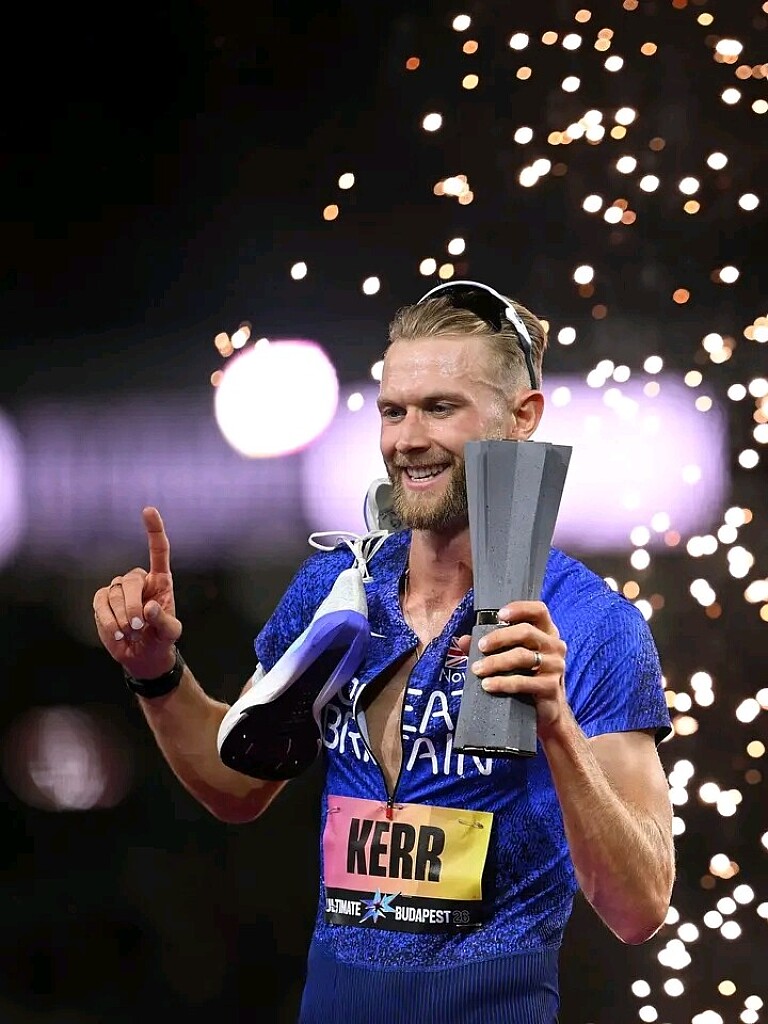
Josh Kerr Does It Again In Budapest As British Star Claims Ultimate 1500m Crown
“I’m not going to lose.” He said it. Then he delivered.
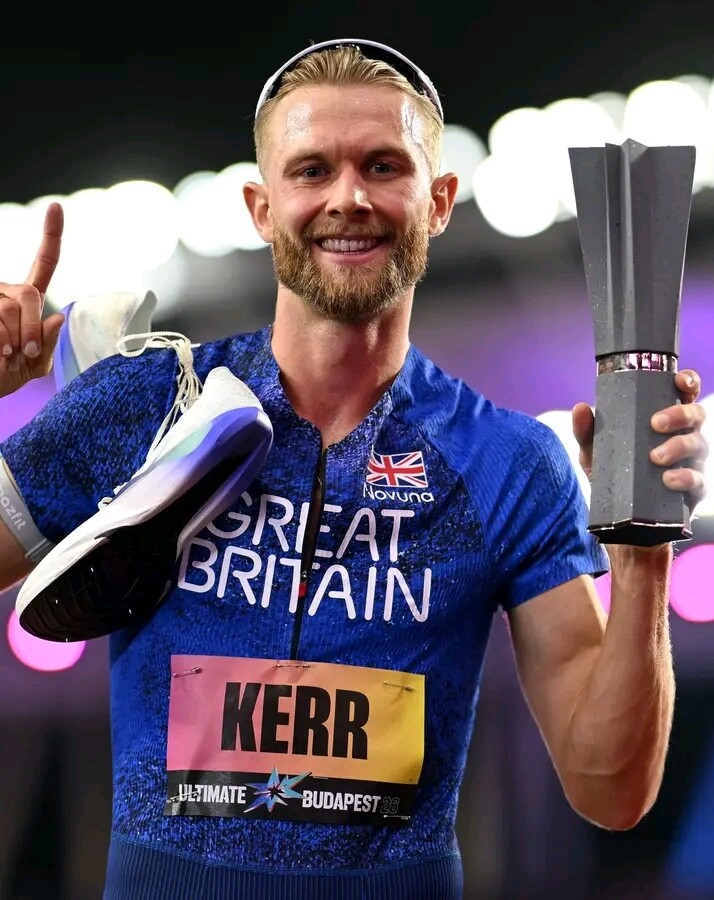
Josh Kerr has conquered Budapest once again, adding another huge title to an extraordinary 2026 season by winning the men’s 1500m at the inaugural World Athletics Ultimate Championship.
The British world mile record-holder produced a superb 3:29.35 to take the Ultimate Championship crown, using a devastating final kick to hold off Australia’s rising star Cameron Myers in the closing stages.
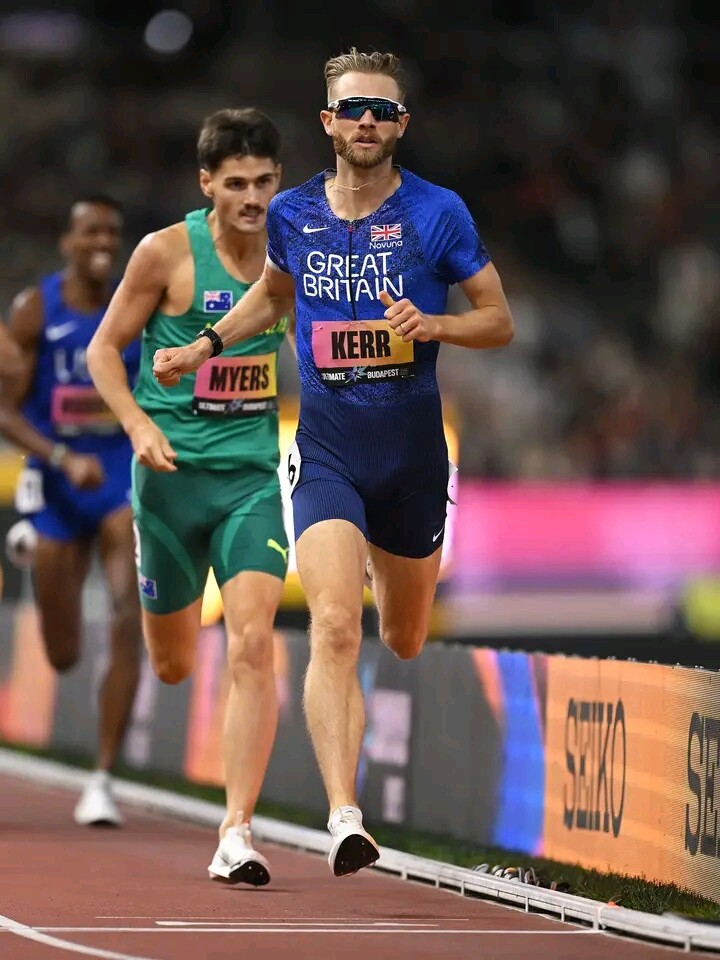
Myers pushed Kerr all the way to the finish, but the British star remained composed under pressure before finding another gear when it mattered most. The Australian crossed the line in 3:29.68 to secure second place, just 0.33 seconds behind the champion.
American Hobbs Kessler completed the podium in 3:30.73, while Olympic champion Cole Hocker finished fourth in 3:30.74, narrowly missing out on a medal by just one hundredth of a second.
For Kerr, the victory carries an added layer of significance because Budapest has already played a defining role in his career.
It was here in 2023 that Kerr produced one of the biggest shocks of that year’s World Championships, stunning Jakob Ingebrigtsen to become the world champion over 1500m. Three years later, he has returned to the same city and conquered it again.
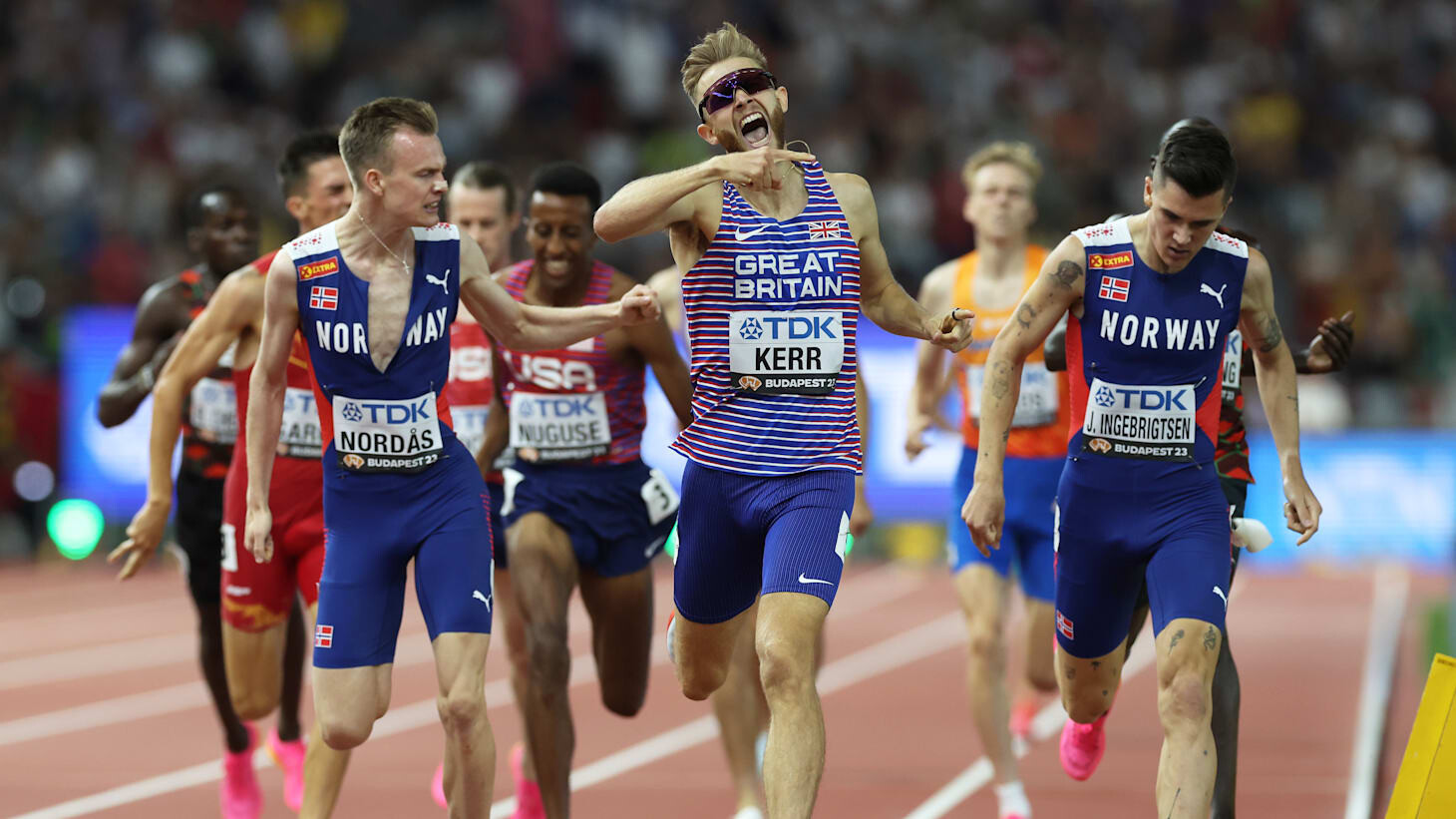
Budapest belongs to Kerr once more.
The British star arrived at the Ultimate Championship after putting together a remarkable 2026 campaign. Among the highlights was his sensational 3:42.66 mile world record in London, where he finally broke a mark that had stood for 27 years.
Kerr also added Commonwealth Games gold to his growing collection of major honours, further establishing himself as one of the dominant middle-distance athletes of his generation.
The Budapest final was expected to provide another chapter in the growing rivalry between Kerr and Ingebrigtsen. However, Ingebrigtsen’s late withdrawal meant the much-anticipated rematch never materialised.
Even without the Norwegian superstar, Kerr had no shortage of formidable opposition. The field featured Olympic champion Cole Hocker, world champion Isaac Nader and Yared Nuguse, while Myers arrived as one of the most exciting young talents in international middle-distance running.
The unique Ultimate Championship format also raised the stakes. With no heats and no second chances, every athlete had only one opportunity to deliver on the biggest stage.
Kerr appeared to embrace that pressure.
Rather than allowing the quality of the field to dictate the race, he stayed patient and waited for the decisive moment. As the final metres approached, the British star unleashed the finishing speed that has become one of his greatest weapons.
Myers fought desperately to stay with him, but Kerr had done enough.
The 3:29.35 winning time was not simply another fast performance. It was another demonstration of Kerr’s championship instincts and his ability to produce when everything is on the line.
For Myers, the silver medal represents another major breakthrough and a strong statement from the young Australian. His 3:29.68 shows that he is increasingly capable of challenging the established stars of the 1500m.
Kessler’s bronze added another impressive result to his career, while Hocker’s fourth-place finish underlined just how competitive the final was, with less than a second separating him from the champion.
Yet the night ultimately belonged to one man.
From the streets of Budapest in 2023 to the Ultimate Championship final three years later, Kerr has once again made the Hungarian capital his stage.
Another big race. Another Josh Kerr victory.
He arrived saying, “I’m not going to lose.”
Then he delivered.
Josh Kerr is the inaugural World Athletics Ultimate Championship 1500m champion — and Budapest belongs to him again.
by Erick Cheruiyot for My Best Runs.
Login to leave a comment
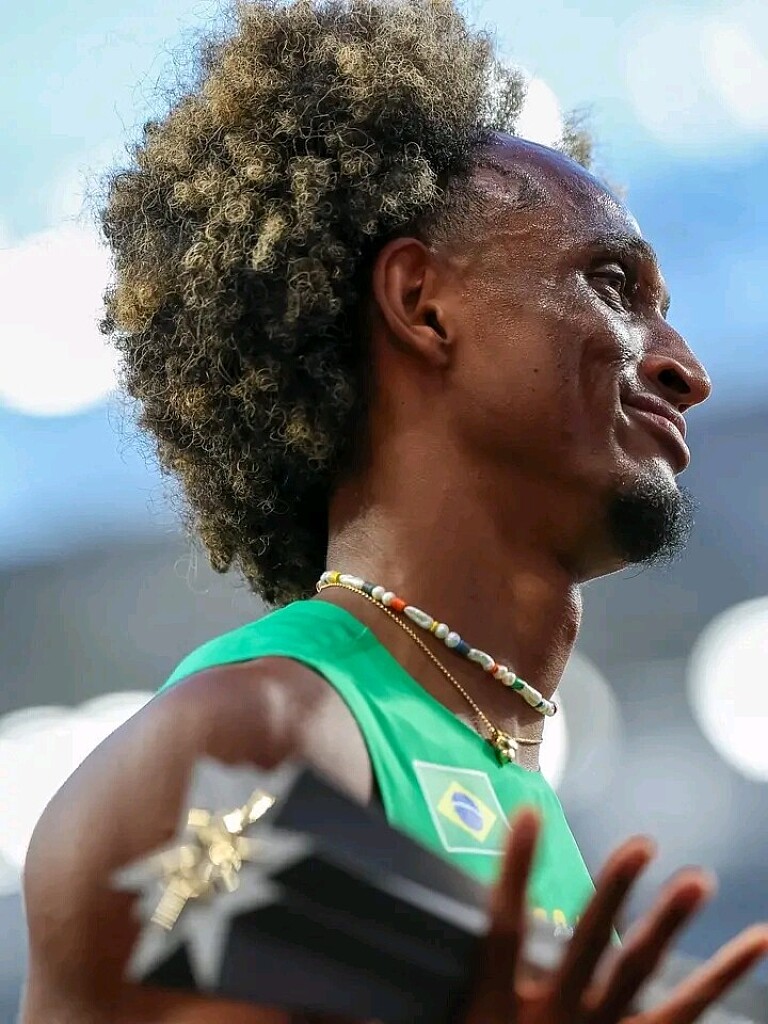
Alison Dos Santos Roars Again! World Record Holder Claims Ultimate 400m Hurdles Crown
Alison dos Santos has finished his season in spectacular fashion, adding the World Athletics Ultimate Championship title to an extraordinary run of form that has seen the Brazilian repeatedly produce performances at the highest level.
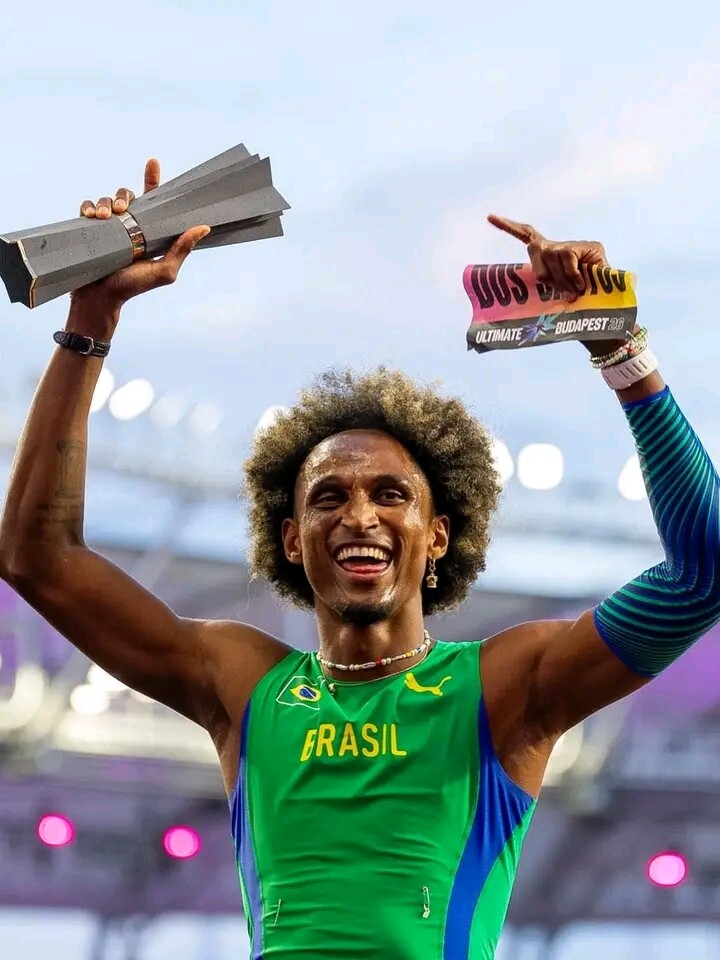
The world record holder stormed to victory in the men's 400m hurdles in Budapest, clocking a stunning 45.98 seconds to secure the ultimate crown and cap a memorable campaign in style.
Dos Santos entered the championship full of confidence after winning the Diamond League Trophy last weekend. His latest triumph came only a few weeks after his historic 45.80 world record in Zürich, making his Budapest performance another remarkable sub-46-second run.
The Brazilian once again displayed his trademark combination of speed, rhythm and control between the barriers. Although he could not quite reproduce his world-record time, his 45.98 was more than enough to defeat two of the biggest names in the event.
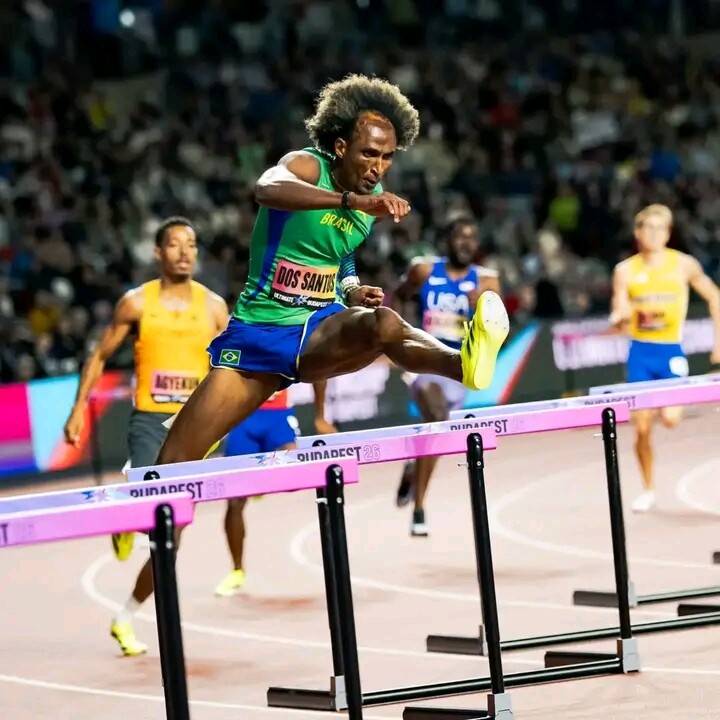
Rai Benjamin pushed hard throughout the race and finished second in 46.40 seconds, while Norwegian superstar Karsten Warholm secured third place in 46.78. The result once again highlighted the extraordinary depth and quality of a 400m hurdles event that has been dominated by these three giants in recent years.
For Dos Santos, however, the night belonged entirely to him. He not only walked away with the Ultimate Championship gold medal but also became the first man to record two sub-46-second performances over the 400m hurdles, underlining just how exceptional his current form has been.
His 45.80 world record in Zürich had already sent shockwaves through athletics, but returning a few weeks later to run 45.98 against Benjamin and Warholm shows that his record-breaking performance was no one-off.
Instead, Dos Santos has established a level of consistency rarely seen in the event. He has combined championship pressure with extraordinary speed, finishing his season as the Diamond League champion and now the Ultimate champion.
The Brazilian's latest victory is a fitting conclusion to a season in which he has continued to strengthen his reputation as one of the greatest 400m hurdlers of his generation.
From the world record in Zürich to the Diamond League Trophy and now the Ultimate Championship crown, Dos Santos has delivered a season-ending statement that will be difficult for his rivals to ignore.
What a way for the world record holder to finish the season — roaring across the line in 45.98 seconds and leaving Budapest with another major title to his name.
by Erick Cheruiyot for My Best Runs.
Login to leave a comment
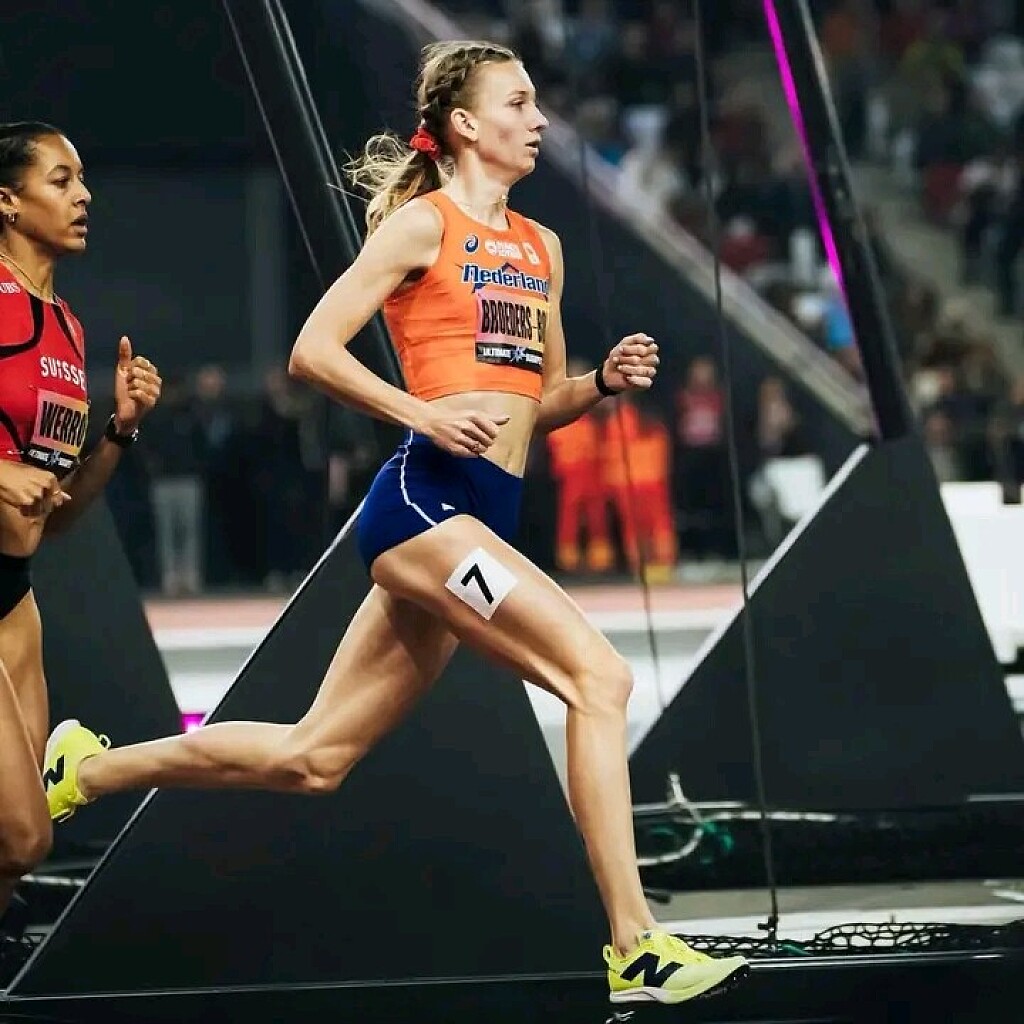
Femke Bol’s 800m Learning Curve Continues With Budapest Podium
Femke Bol may have walked away from Budapest with a third positon, but the Dutch star left the inaugural World Athletics Ultimate Championship with something potentially even more valuable — another lesson in mastering the tactical demands of the 800m.
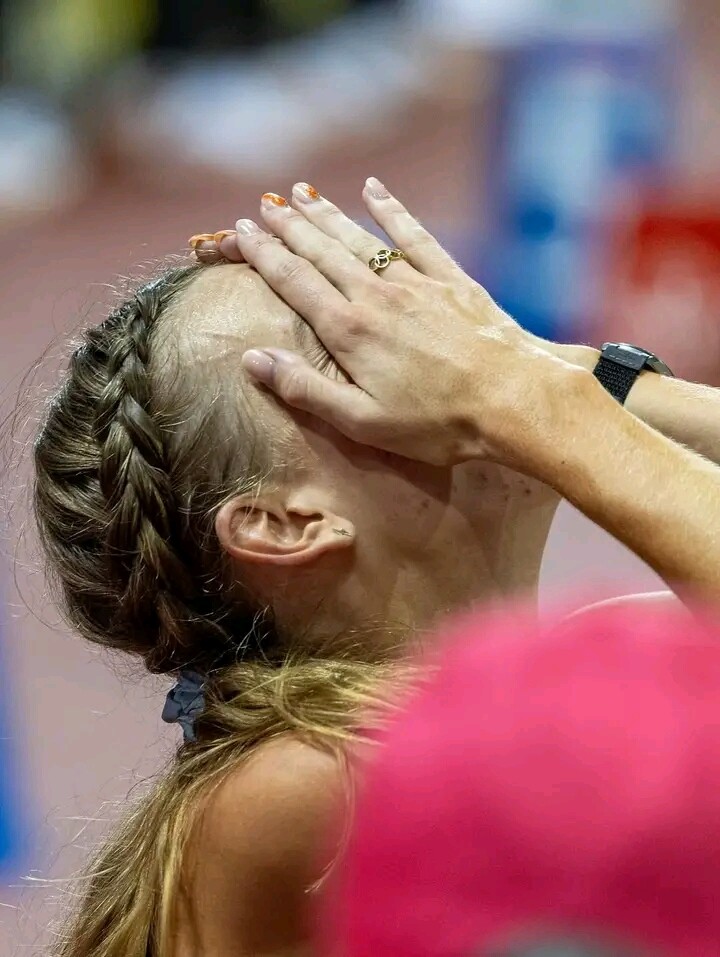
Bol, who only made the permanent transition to the two-lap event earlier this year after building her reputation as one of the world’s finest 400m hurdlers, finished third in a fiercely contested women’s final in 1:56.74.
Switzerland’s Audrey Werro claimed the title in 1:55.88, holding off Britain’s Keely Hodgkinson, who finished just 0.12 seconds behind in 1:56.00, while Bol completed the podium.
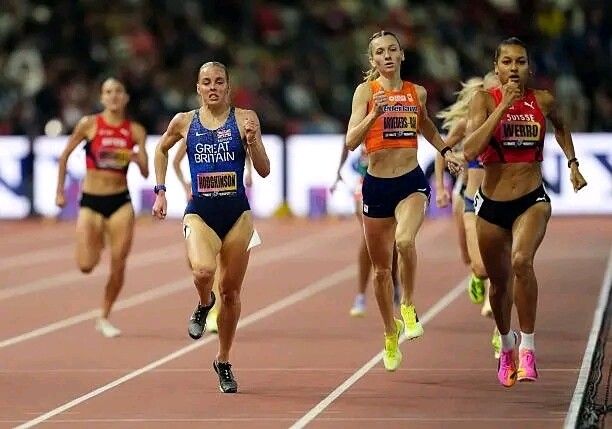
For Bol, however, the result was less about disappointment and more about understanding what she still needs to develop as an 800m runner.
The Dutchwoman has already demonstrated that she possesses the speed and endurance required for the event. What she is discovering now is that racing two laps at the highest level is not simply about running fast — sometimes, it is about knowing when not to run fast.
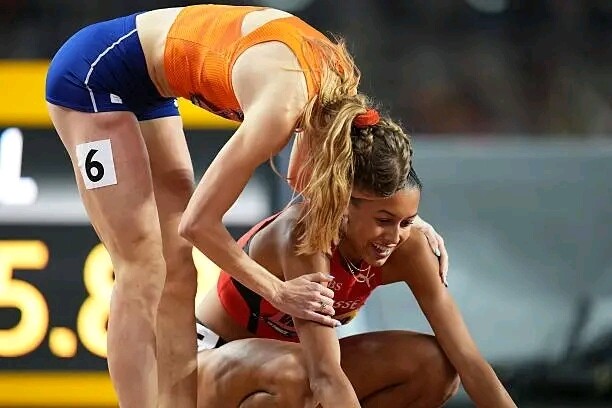
That was particularly evident in Budapest.
Werro controlled the early stages of the final intelligently, reaching the halfway point in 57.74 seconds. The relatively measured opening forced the athletes into a tactical battle, where positioning, patience and the ability to accelerate sharply over the closing stages became just as important as raw fitness.
Bol admitted that this type of race remains a learning experience for her.
“When we go fast, I finish with the same strength as when we go slow,” she explained, highlighting the confidence she has in her ability to handle a fast pace.
But she also recognised the challenge created by a slower opening.
“When we go slow, I don't have enough acceleration,” Bol acknowledged, while describing the Budapest final as an important opportunity to learn.
That difference is understandable given her background.
As a former 400m hurdles specialist, Bol has spent much of her career developing rhythm, strength and speed endurance over a demanding one-lap event. She is accustomed to establishing her race pattern early and relying on her powerful stride and finishing strength.
The 800m requires another layer of racing intelligence.
Athletes must constantly judge pace, protect their position, respond to moves and remain prepared for a sudden change of speed. A runner can be physically ready for a fast finish but still find themselves boxed in or too far from the front when the decisive move comes.
For Bol, that tactical education is happening at remarkable speed.
Despite only fully embracing the 800m this season, she has already produced consecutive performances in the 1:54 range, established herself among the world’s leading two-lap runners and reached major championship finals.
Her Budapest bronze therefore represents another significant step in a rapidly developing chapter of her career.
Rather than exposing a weakness that could hold her back, the final revealed an area where Bol still has room to grow.
And that could be an ominous prospect for her future rivals.
If Bol can combine the formidable strength and speed that made her a dominant force in the 400m hurdles with the tactical awareness required for championship-style 800m racing, she could become an even more dangerous competitor over two laps.
The Budapest final may have belonged to Werro, with Hodgkinson narrowly taking second positon and Bol settling for third place but the Dutch star's transition is clearly far from complete.
At 800m, Bol is still learning.
And if this season is any indication, she may be learning very quickly.
by Erick Cheruiyot for My Best Runs.
Login to leave a comment
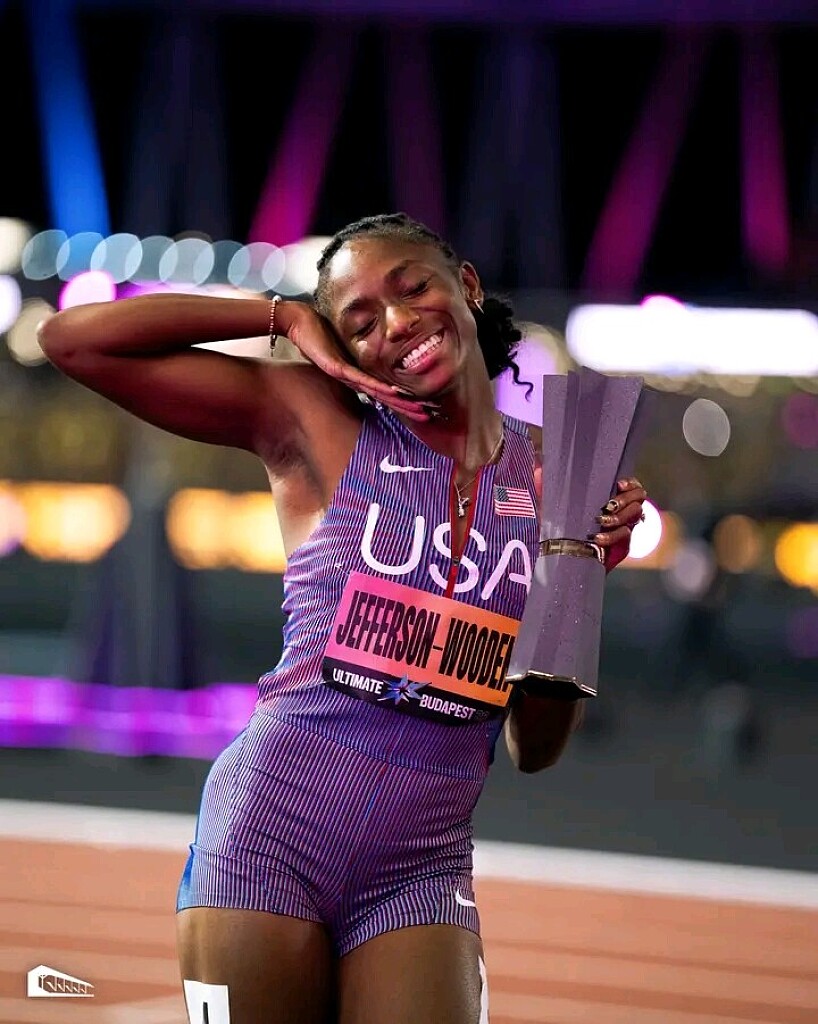
Melissa Jefferson-Wooden Blazes To 10.62 World Lead And Ultimate Championship Glory
Melissa Jefferson-Wooden delivered a sensational performance in Budapest, storming to victory in the women’s 100m at the inaugural World Athletics Ultimate Championship in a breathtaking 10.62 seconds.
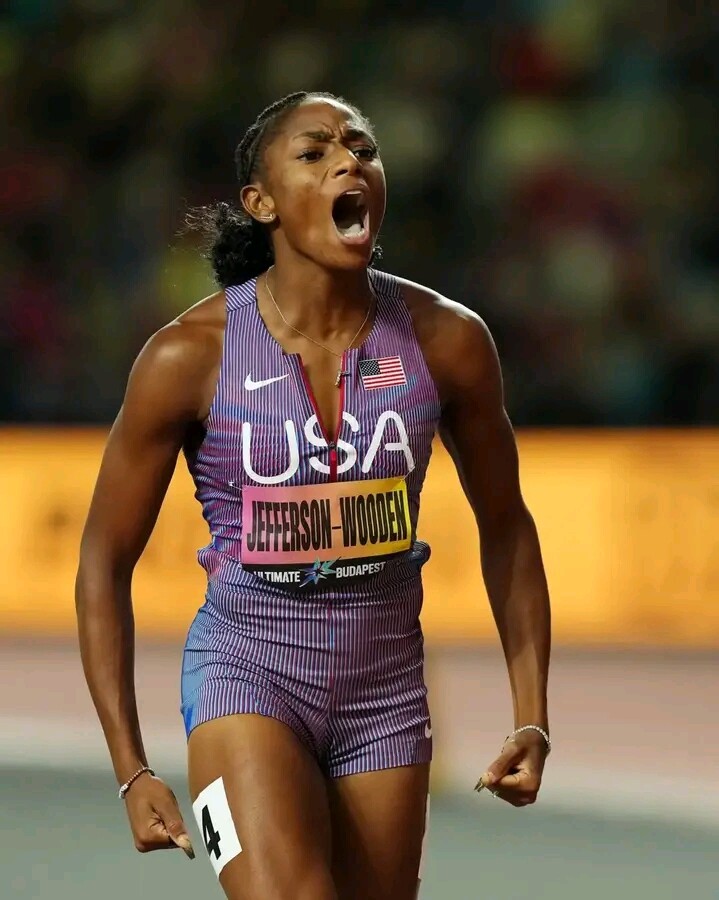
The American produced a superb display of acceleration and composure to claim the World Ultimate Championship title while recording the fastest women’s 100m time in the world this year. Her 10.62 mark underlined her exceptional form and placed her firmly at the top of the global sprinting hierarchy.
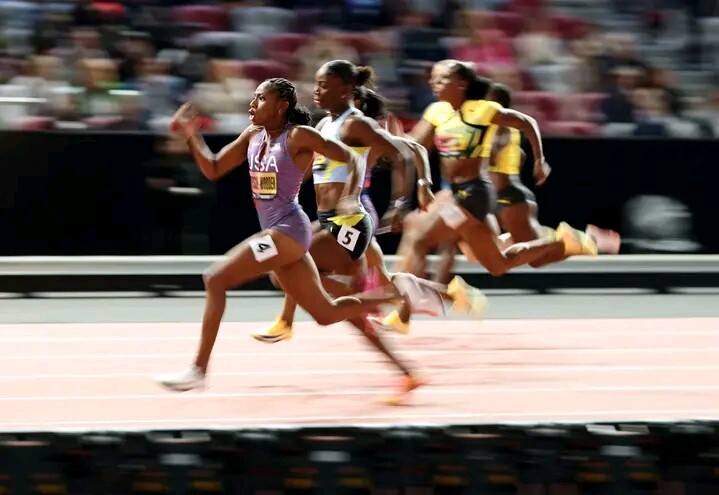
Jefferson-Wooden controlled the race through the decisive stages and maintained her form all the way to the finish to secure a statement victory against a field packed with championship pedigree. She crossed the line ahead of Olympic champion Julien Alfred, who clocked 10.74 seconds with a -0.2 m/s wind, while Sha’Carri Richardson took third in 10.76.
Women’s 100m Final
1. Melissa Jefferson-Wooden — 10.62
2. Julien Alfred — 10.74 (-0.2 m/s)
3. Sha’Carri Richardson — 10.76
The victory was especially significant given the quality of the opposition. Jefferson-Wooden held her nerve against Alfred and Richardson, two of the most accomplished sprinters of the current generation, to produce the fastest performance in the world this year when it mattered most.
Alfred once again demonstrated her consistency at the highest level by taking silver, while Richardson completed an all-star podium in a race that brought together three of the biggest names in women’s sprinting.
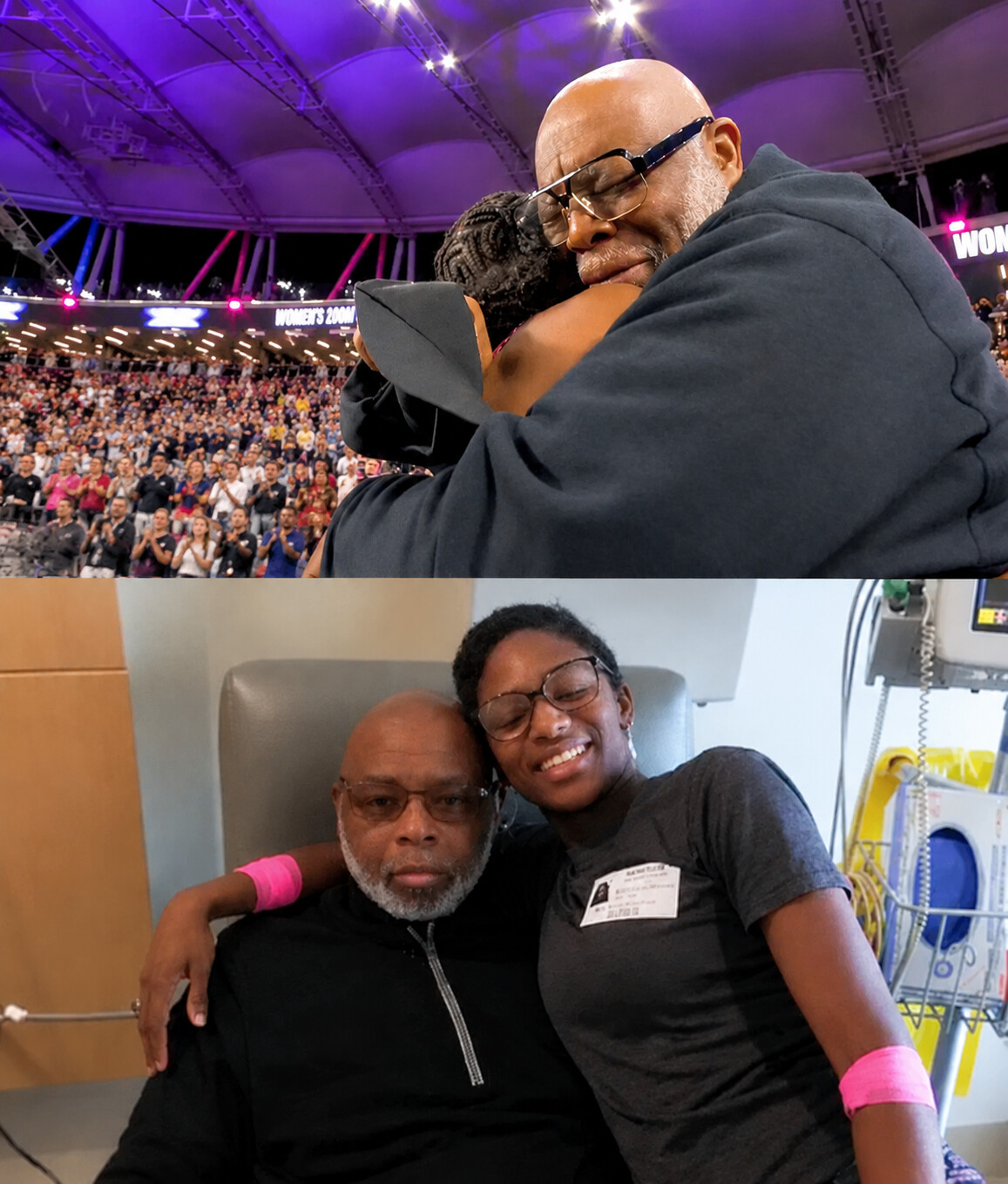
But beyond the time, the title and the celebration, one of the most touching moments came after the race when Jefferson-Wooden embraced her father, Melvin, in an emotional celebration.
Their moment carried a deeply personal meaning. When Melissa was just 17 years old, she donated her stem cells to help her father undergo a bone marrow transplant after he was diagnosed with myelodysplastic syndrome. Years later, the two shared an unforgettable embrace in Budapest after she had become the World Ultimate Champion.
For Jefferson-Wooden, however, the evening was about far more than a medal. It was the culmination of an extraordinary journey, now highlighted by a world-leading 10.62 seconds on one of the biggest stages in athletics.
With the Ultimate Championship title secured and her father by her side, Jefferson-Wooden leaves Budapest with more than being an ultimate champion. She leaves with momentum, confidence and a powerful statement of intent — turning a high-profile showdown into one of the defining sprint performances of her season.
by Erick Cheruiyot for My Best Runs.
Login to leave a comment
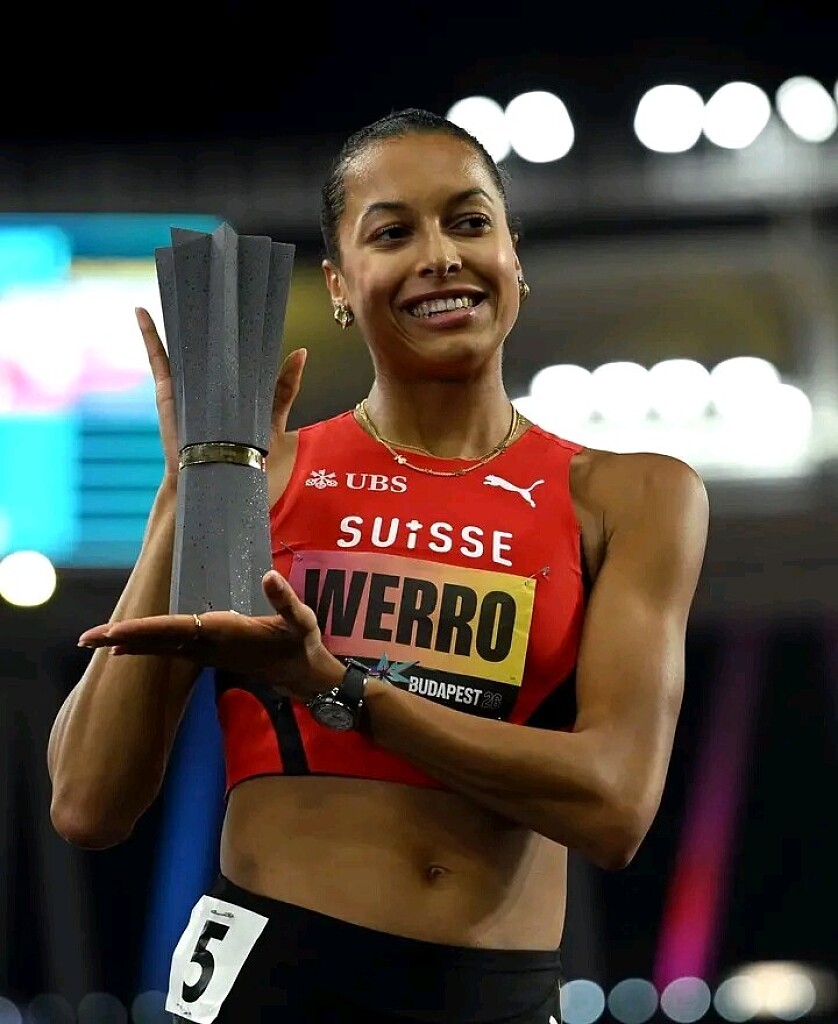
Audrey Werro Rules The 800m As Swiss Star Claims Ultimate Championships Crown
Audrey Werro has added another major title to her extraordinary season, storming to victory in the women’s 800m at the inaugural World Athletics Ultimate Championships in Budapest.
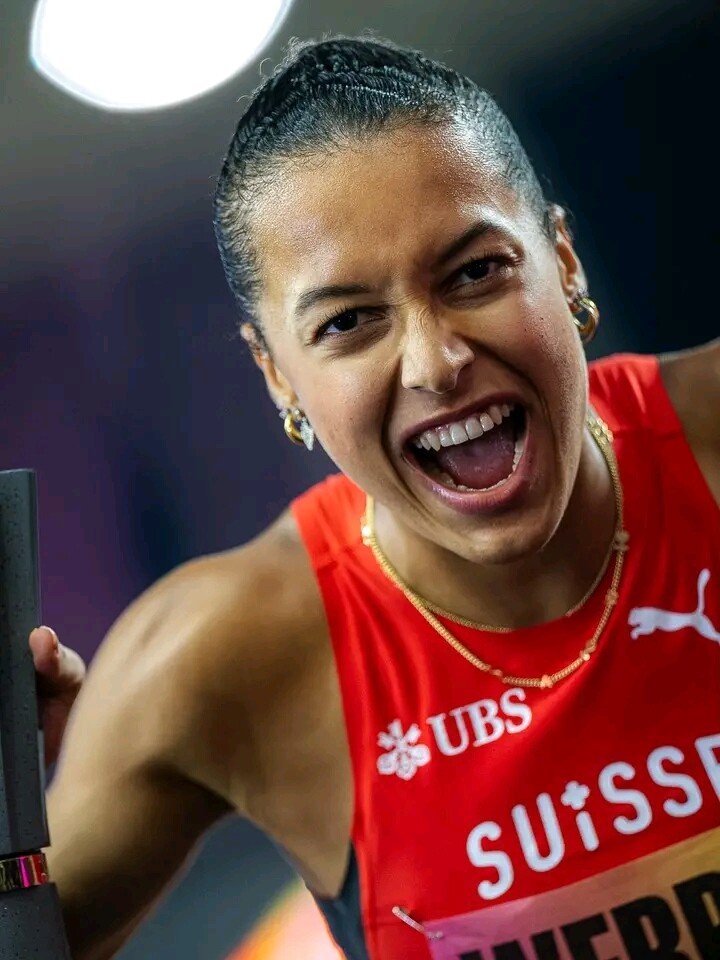
The Swiss star delivered a commanding performance, taking control from the opening gun and refusing to surrender the lead as she powered through an absorbing battle against two of the biggest names in the event.
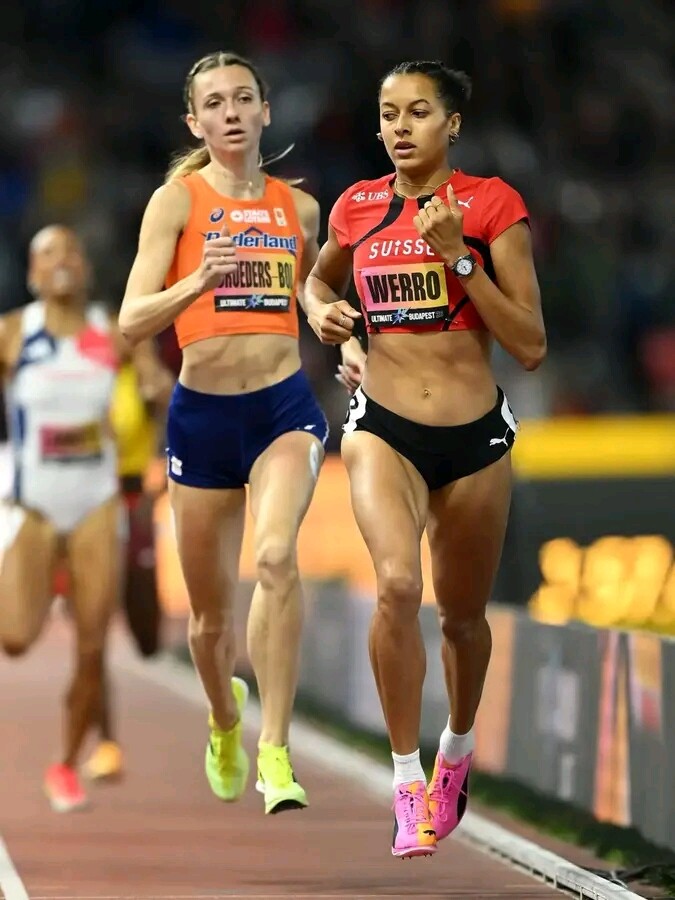
Werro stopped the clock at 1:55.88 to become the Ultimate Championships 800m champion, producing another statement performance on one of the sport’s newest and most prestigious stages.
Behind her, Great Britain’s Keely Hodgkinson fought her way to second in 1:56.26, while the Netherlands’ Femke Broeders-Bol completed the podium in 1:56.74.
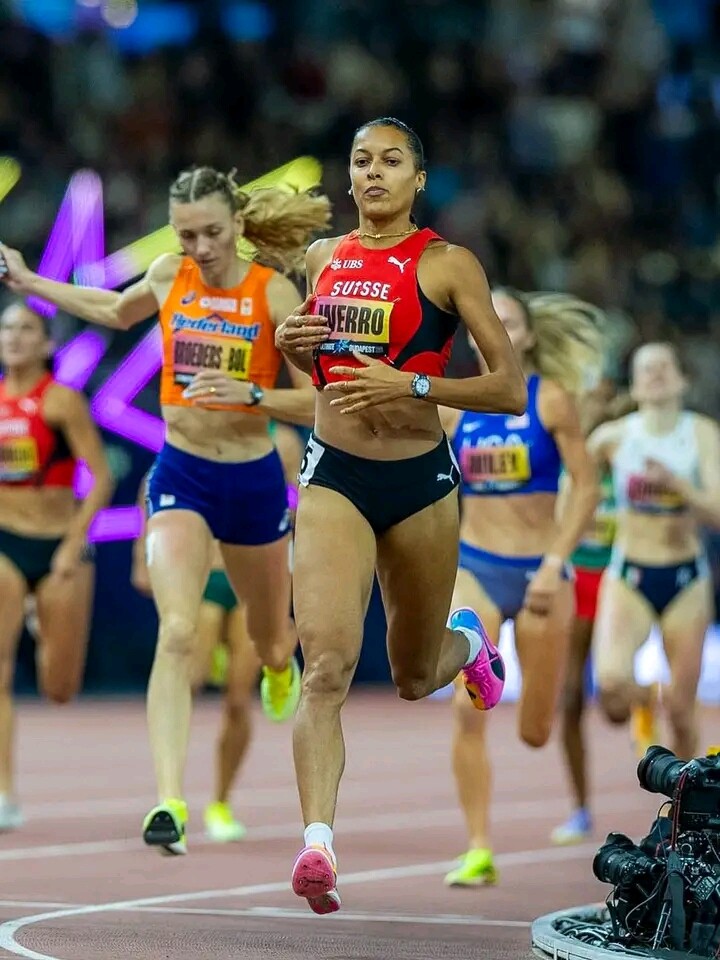
The result once again brought together the same formidable trio that featured on the podium at the European Championships, but Werro again proved to be the athlete who could rise above the challenge when it mattered most.
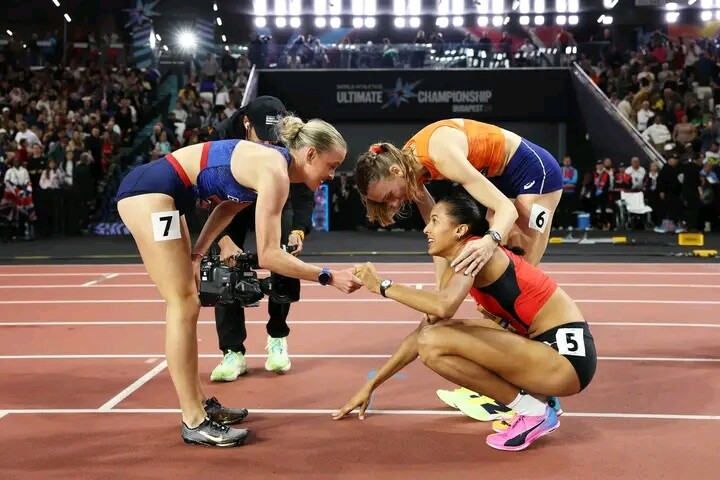
Her Budapest triumph is the latest chapter in a season that has already included records, a successful Diamond League Trophy defence and European Championship gold. Now, she can add the Ultimate Championships crown to a growing list of accomplishments.
Werro’s consistency has been particularly impressive in an 800m event packed with elite talent. Rather than simply relying on a fast finish, the Swiss athlete showed her authority by taking the initiative from the beginning and maintaining enough strength and composure to hold off Hodgkinson and Broeders-Bol all the way to the line.
The victory also underlined the remarkable depth of the women’s 800m, with three athletes separated by less than a second at the finish. Hodgkinson’s 1:56.26 and Broeders-Bol’s 1:56.74 showed just how fiercely contested the race was, but Werro’s decision to dictate the pace ultimately gave her the decisive advantage.
For Werro, this was more than another medal. It was another opportunity to demonstrate that her rise is no passing moment. On a stage featuring established champions and elite rivals, she once again produced the performance required to claim the biggest prize.
For Hodgkinson, the silver medal adds another major podium finish, while Broeders-Bol once again demonstrated her ability to compete with the very best over two laps.
But the spotlight in Budapest belonged unmistakably to Werro.
With another championship crown secured, the Swiss star has strengthened her claim as the athlete setting the standard in women’s 800m running. This is Audrey Werro’s era — and the rest of the field is chasing.
by Erick Cheruiyot for My Best Runs.
Login to leave a comment
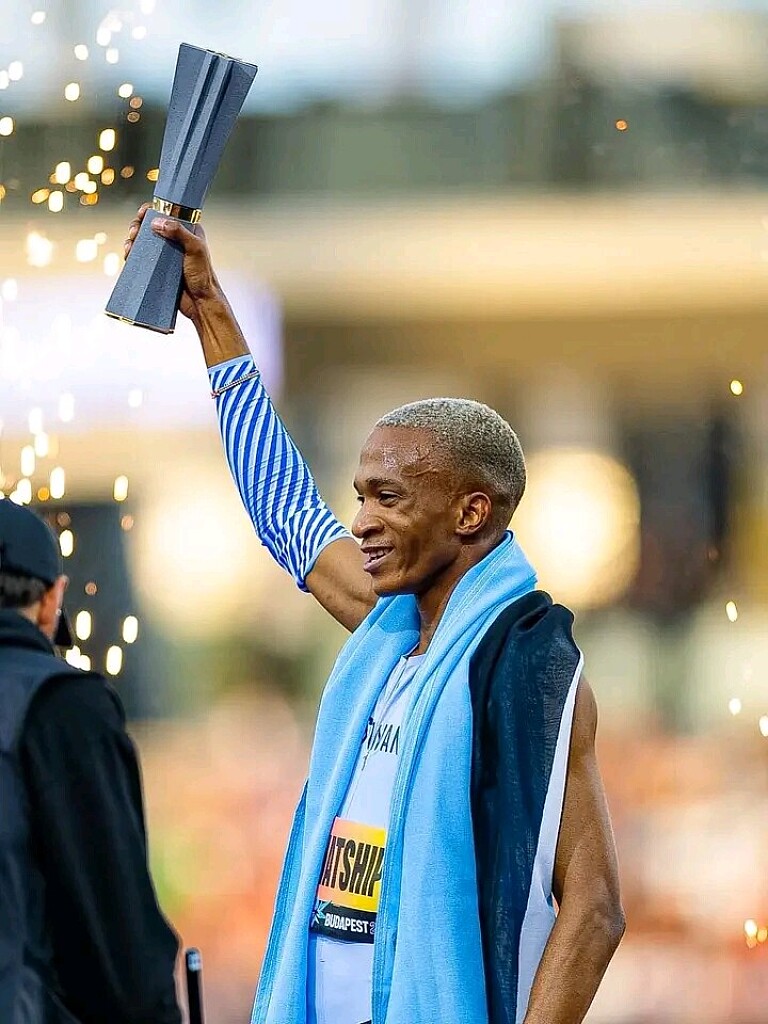
Collen Kebinatshipi Does It Again! 43.39 Makes Botswana Star Fifth All-Time.
Busang Collen Kebinatshipi has delivered another sensational performance, storming to victory in the men’s 400m at the inaugural World Athletics Ultimate Championship in Budapest.
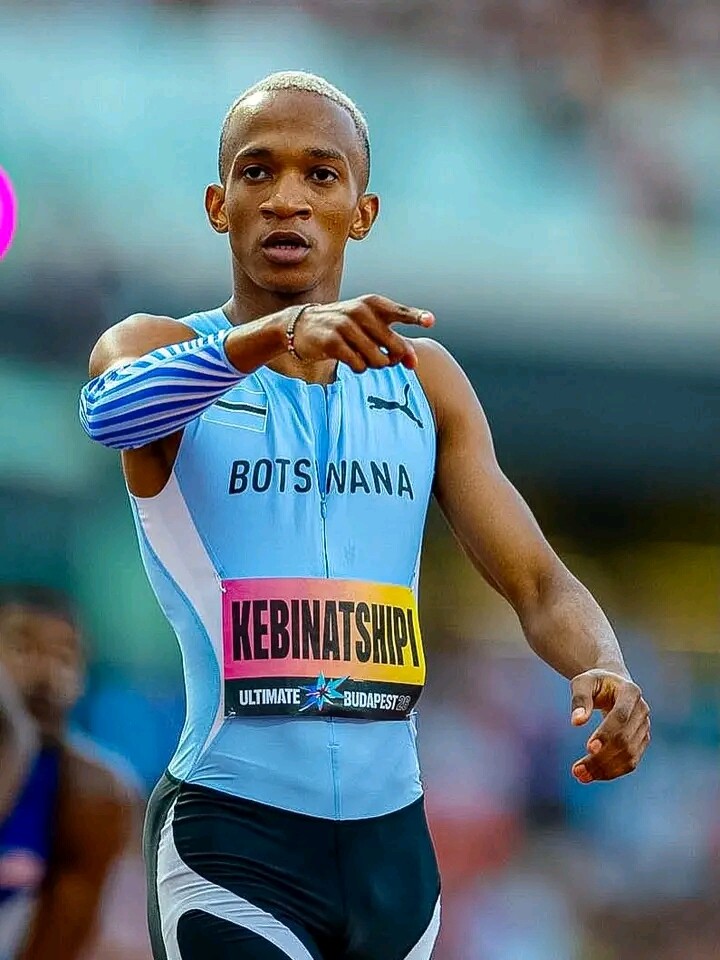
The reigning world champion stopped the clock at an astonishing 43.39 seconds, smashing his own Botswana national record and moving to fifth on the world all-time list.
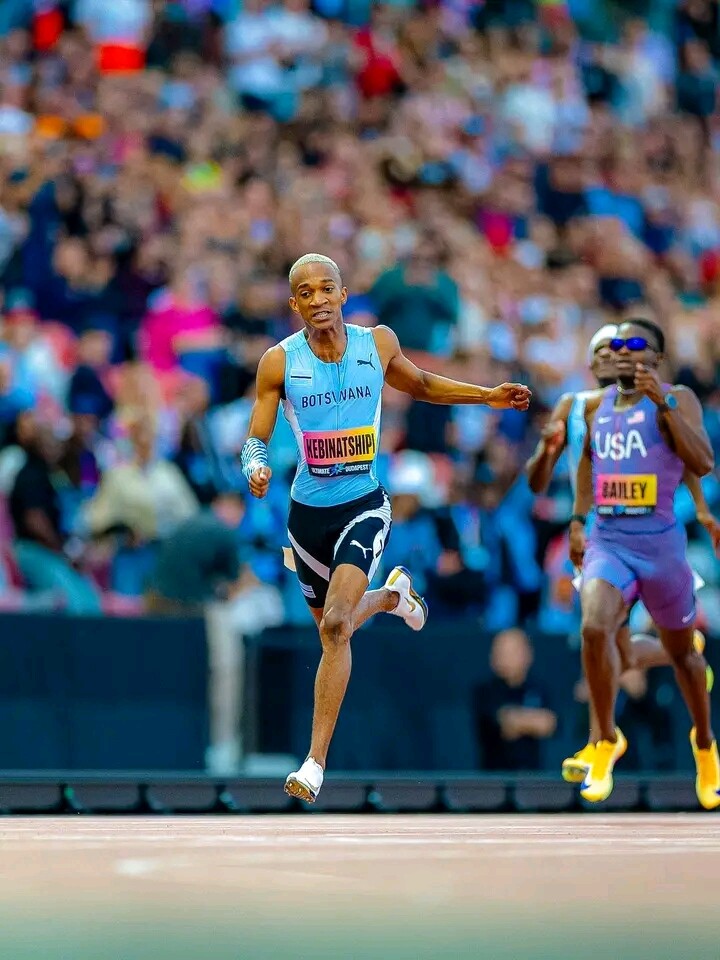
Kebinatshipi produced a commanding finish to pull away from his rivals and secure the Ultimate Championship title. American star Rai Benjamin finished second in 44.15, while Jereem Richards of Trinidad and Tobago completed the podium in 44.23.
Men’s 400m
1. Busang Collen Kebinatshipi — 43.39 NR
2. Rai Benjamin — 44.15
3. Jereem Richards — 44.23
The performance is even more remarkable considering that Kebinatshipi had already rewritten the Botswana record just one week ago in Brussels, where he ran 43.40. In Budapest, he lowered that mark by another 0.01 seconds to establish a new national record of 43.39.
That improvement has also propelled the 22-year-old into rare territory. His latest time now ranks him fifth fastest in history over 400m, placing him among an extraordinary group of athletes who have broken the 43.40 barrier.
Kebinatshipi's victory also caps an extraordinary season for the Botswana star. After establishing himself as a global champion, he has continued to demonstrate that he belongs among the very best one-lap runners in the world.
And there is a major reward for his historic night in Budapest: Kebinatshipi walks away as the Ultimate Champion and $150,000 richer.
From another national record to a place among the five fastest 400m runners ever, Kebinatshipi has turned an already remarkable season into something truly special.
Botswana has its latest sprinting superstar — and Kebinatshipi is showing that his ceiling may be even higher than anyone imagined.
by Erick Cheruiyot for My Best Runs.
Login to leave a comment
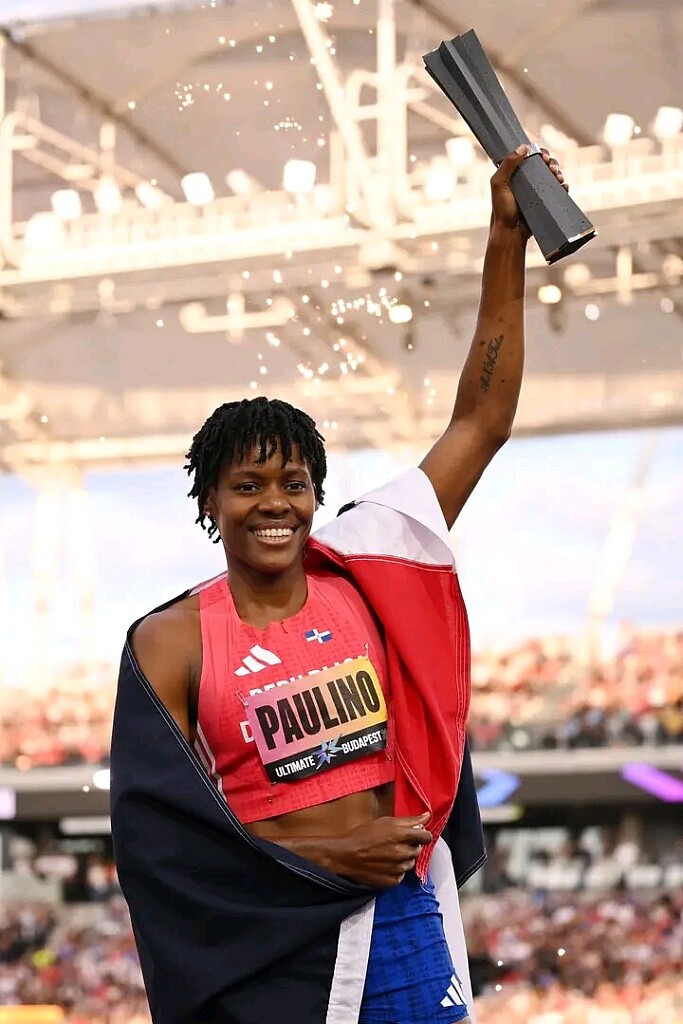
Marileidy Paulino Strikes Again To Rule The One-Lap Showdown In Budapest
Marileidy Paulino once again proved why she is the undisputed queen of the one-lap event, powering to victory in the women’s 400m at the inaugural World Athletics Ultimate Championship in Budapest.
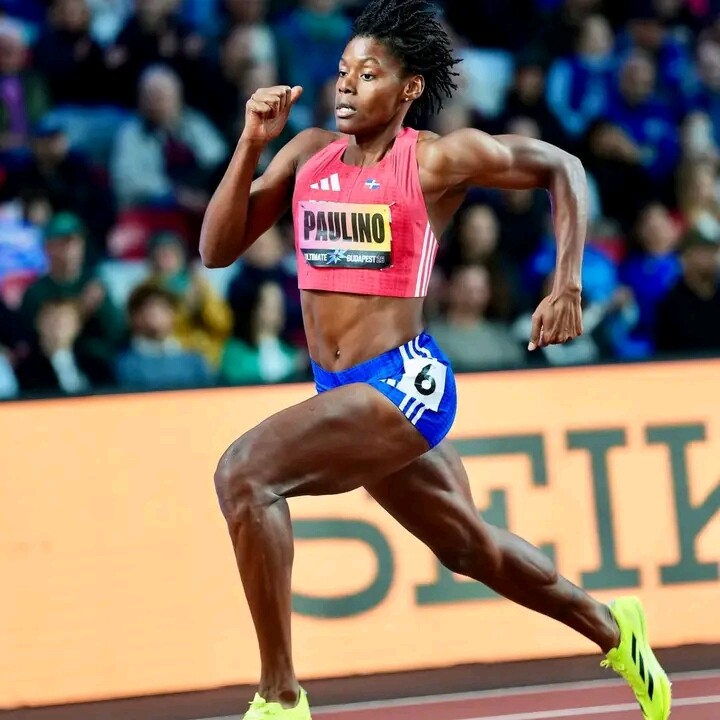
The Dominican Republic superstar produced a sensational 49.07 seconds to claim gold, pulling decisively away in the final straight and holding off a fiercely competitive field to extend her remarkable unbeaten run.
Paulino delivered her trademark combination of controlled speed and devastating finishing strength. She remained firmly in contention through the opening stages before unleashing her decisive move down the home straight, where she quickly opened a gap on her closest challengers.
Norway’s Henriette Jæger mounted a strong challenge but could not match Paulino’s finishing speed, crossing the line second in an impressive 49.28. Jamaica’s Nickisha Pryce completed the podium after clocking 49.56, ensuring that three of the world’s leading 400m talents occupied the medals.
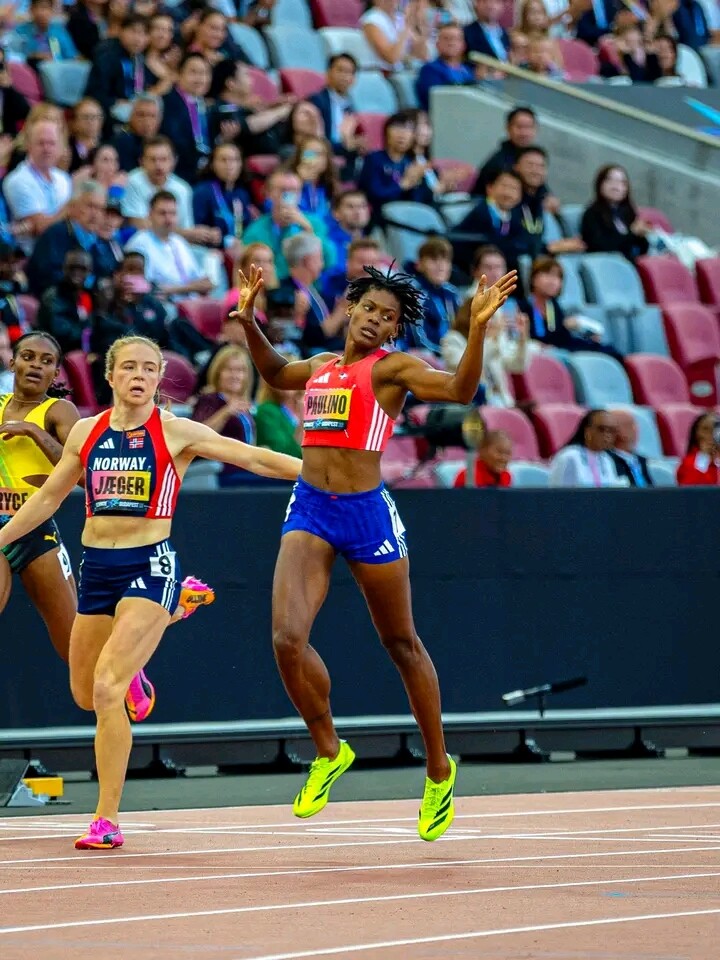
The result once again underlined Paulino’s extraordinary consistency at the highest level. She entered Budapest as the world leader after running 48.48 in Paris in June, a performance that also set a Diamond League record. She subsequently remained unbeaten throughout her Diamond League campaign, closing the circuit with a meeting-record 48.64 in Brussels.
Budapest has also become a special venue in Paulino’s career. Three years ago, at the same National Athletics Centre, she captured her first individual world title, marking the beginning of another dominant chapter in her career. She later added Olympic gold in Paris in 2024, further establishing herself among the defining 400m athletes of her generation.
The inaugural World Athletics Ultimate Championship has brought together the sport’s biggest stars in a new winner-takes-the-spotlight format, with Olympic and world champions, Diamond League winners and leading performers competing for ultimate honours.
For Paulino, the occasion once again ended with Ultimate Crown on her arms.
With 49.07 seconds, she did more than win another major 400m title. She delivered another statement of authority, powering through the final straight with the confidence and speed that have made her one of the most dominant figures in modern women’s athletics.
Marileidy Paulino remains unbeaten, remains relentless and, once again, remains the queen of the one lap.
by Erick Cheruiyot for My Best Runs.
Login to leave a comment
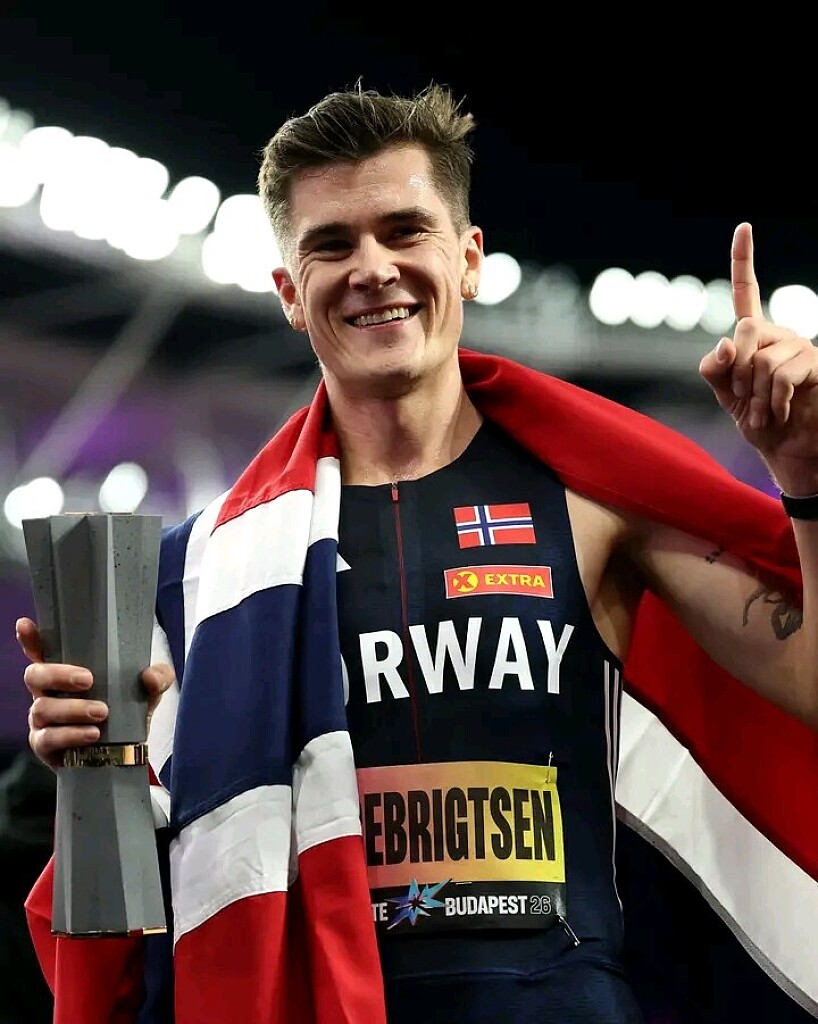
Jakob Ingebrigtsen Withdraws From Budapest 1500m After Stunning 5000m Victory: “Fitness Cannot Be Faked”
Jakob Ingebrigtsen has made a major decision regarding the remainder of his World Athletics Ultimate Championship campaign, confirming that he will withdraw from the men’s 1500m in Budapest despite producing a sensational performance to win the 5,000m title.
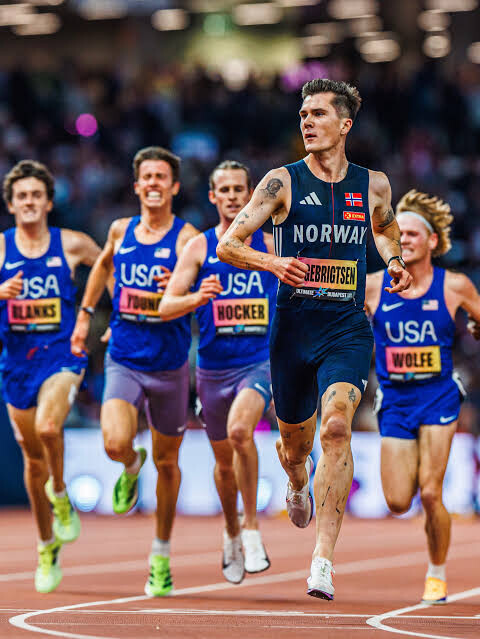
The Norwegian superstar stormed to victory in the inaugural Ultimate Championship 5,000m on Friday night, clocking a season-best 12:59.24 and delivering a devastating finishing kick to defeat Olympic 5,000m champion Cole Hocker and American Parker Wolfe.
Ingebrigtsen’s final 100 metres was arguably the defining moment of the race. The Olympic champion produced a remarkable 12.60-second closing 100m, powering away from the field to secure the $150,000 winner’s prize and underline just how far his fitness has progressed since returning from Achilles surgery.
The victory was particularly significant after what has been an extremely difficult period for the 25-year-old. Earlier in the season, Ingebrigtsen faced serious uncertainty over whether he would even be able to compete at the highest level again. His return has gradually gathered momentum, and his performance in Budapest offered perhaps the clearest indication yet that the Norwegian is rediscovering his formidable racing ability.
But rather than risk pushing his recovering body further, Ingebrigtsen has now opted to step away from the 1500m.
The decision means the highly anticipated showdown with British rival Josh Kerr will not take place in Budapest after all. The two stars had been expected to renew one of the biggest rivalries in modern middle-distance running in the 1500m final.
Instead, Ingebrigtsen is looking beyond the immediate opportunity and towards the bigger picture.
“I’m thinking about 2027… Fitness cannot be faked,” the Norwegian said, signalling that protecting his long-term condition has become more important than chasing another major victory only days after his return to peak-level competition.
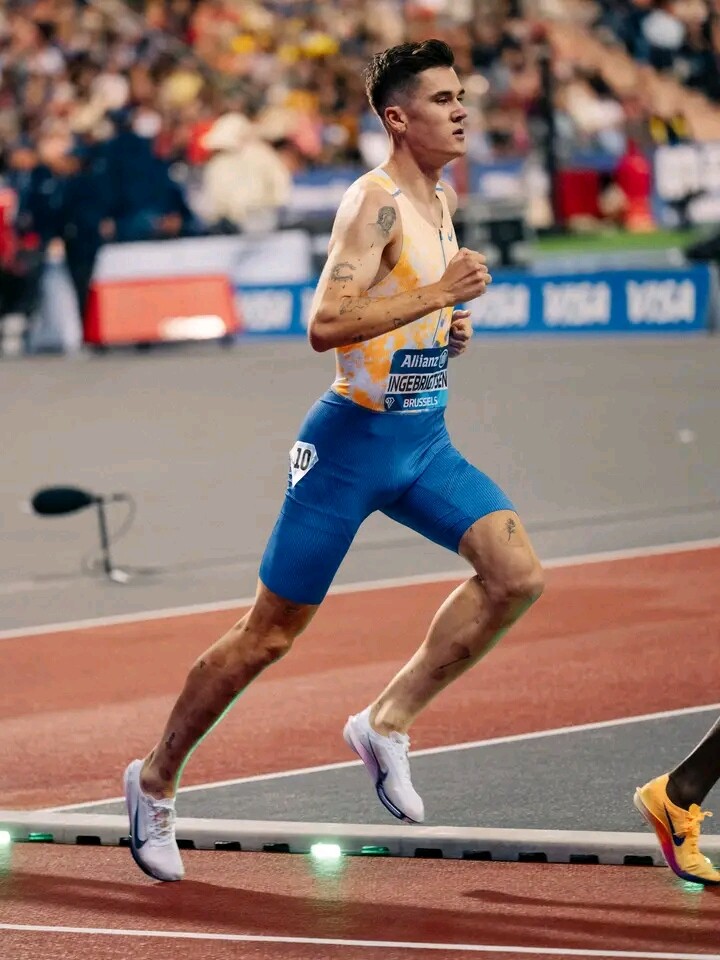
The decision comes just one week after an emotionally charged Diamond League Final in Brussels, where Ingebrigtsen finished fourth in the 1500m behind Australia’s Cameron Myers, Kenya’s Phanuel Kipkosgei Koech and American Ethan Strand.
After that race, Ingebrigtsen delivered a fiery assessment of his rivals and questioned the tactics surrounding the pacemaking, particularly involving Hocker. He later acknowledged that there had been “a little too much adrenaline and emotion” when microphones were placed in front of him immediately after the race.
Yet his latest decision shows that beneath the emotion and competitive intensity lies a longer-term strategy.
Ingebrigtsen has already demonstrated that he can compete at an elite level again. His 12:59.24 in Budapest was not simply a victory — it was a statement that the Norwegian remains capable of producing a world-class finish even after months of injury rehabilitation.
Now, however, he is choosing not to gamble with that progress.
For a runner who has spent much of the year fighting his way back from injury, another 1500m race could have offered enormous rewards but also carried unnecessary risk. By withdrawing, Ingebrigtsen is effectively prioritising longevity over one more opportunity for immediate glory.
His message is clear: the comeback is underway, but it will not be rushed.
The 5,000m victory has given Ingebrigtsen confidence, momentum and perhaps, most importantly, proof that his body can once again handle elite competition.
Now comes the harder part — knowing when to stop.
With 2027 already firmly in his sights, the Norwegian has chosen recovery over risk. And after everything he has endured, that could ultimately prove to be one of the most important decisions of his comeback.
Jakob Ingebrigtsen is not walking away from the sport. He is protecting his future in it.
by Erick Cheruiyot for My Best Runs.
Login to leave a comment
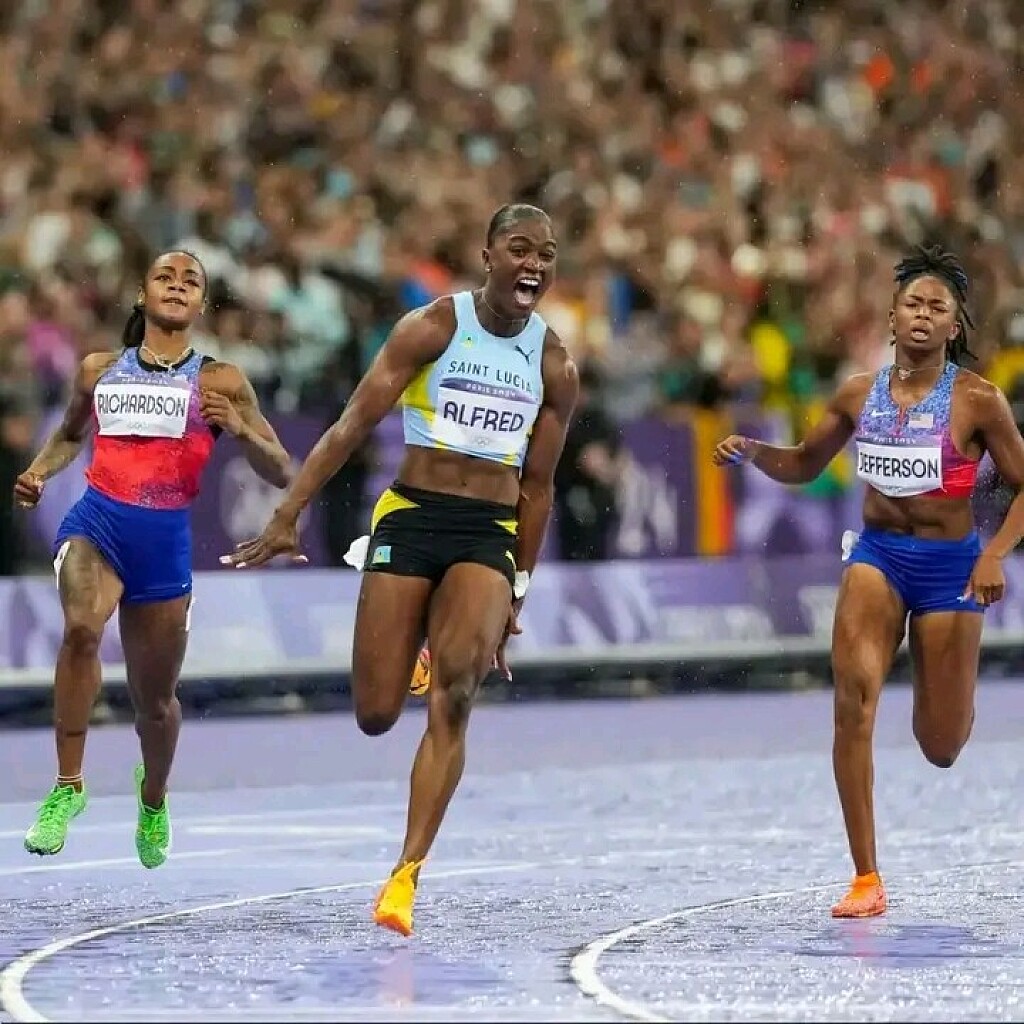
Three Champions, One Crown: Budapest Braces For A Women’s 100m Battle For Supremacy
The women’s 100m at the World Athletics Ultimate Championship in Budapest is shaping up to be one of the most compelling sprint showdowns of the season, with three of the world’s biggest names set to collide in a race where reputation, speed and championship pedigree will all be put to the ultimate test.
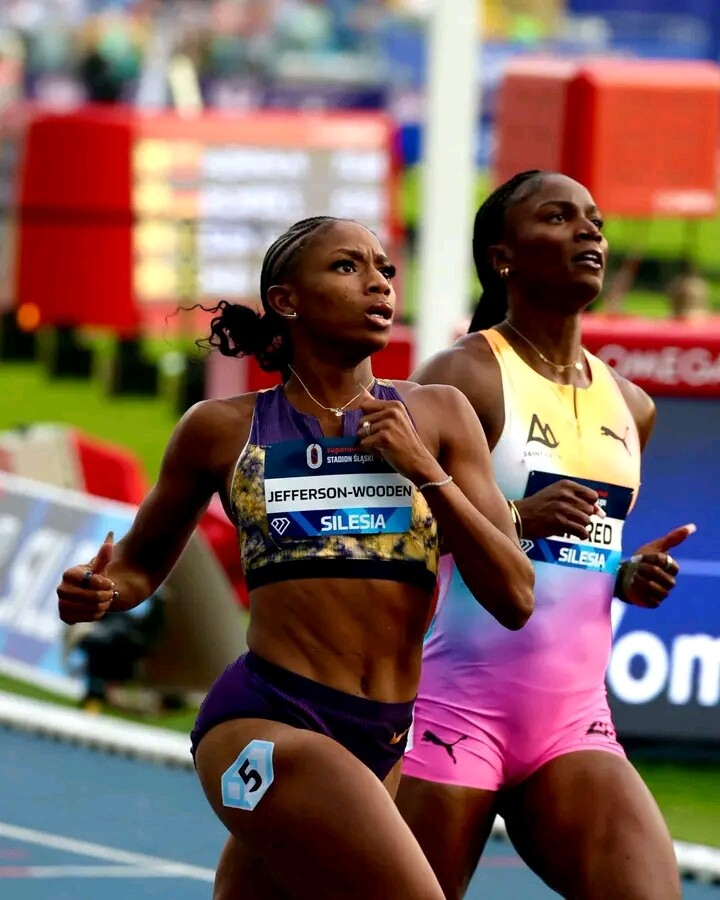
Leading the charge is Saint Lucia’s Julien Alfred, the reigning Olympic champion who established herself as the fastest woman on the biggest stage at the Paris 2024 Games. Alfred’s rise to the summit of global sprinting has been remarkable, and she arrives in Budapest carrying the confidence and prestige that come with an Olympic title.
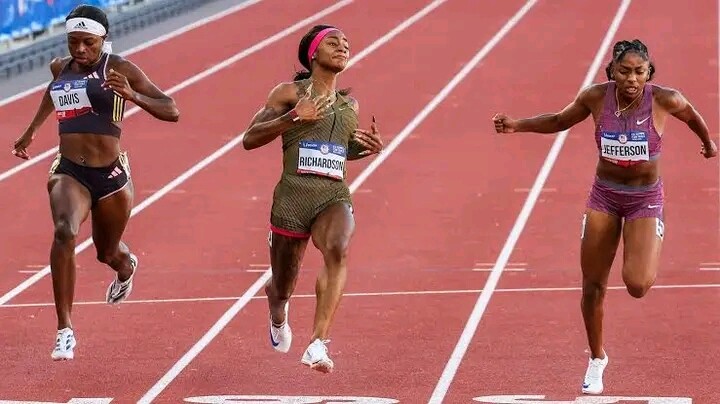
Standing alongside her will be American sprint star Melissa Jefferson-Wooden, the reigning world champion and one of the most formidable forces in the modern 100m. Her championship credentials have already placed her among the elite, and Budapest presents another opportunity to underline her status against the very best in the world.
Then there is Sha’Carri Richardson, another American powerhouse whose explosive speed and major-championship experience make her impossible to overlook. A former world champion, Richardson has repeatedly demonstrated her ability to thrive under the brightest lights, bringing both raw pace and an unmistakable competitive edge to the starting line.
The presence of three champions transforms the Budapest contest into far more than another 100m race. It is a meeting of athletes who have already conquered the highest levels of the sport and now have another prize to chase: the title of Ultimate champion.
Women’s 100m — Start List
1. Melissa Jefferson-Wooden — United States — 10.70
2. Julien Alfred — Saint Lucia — 10.70
3. Sha’Carri Richardson — United States — 10.77
4. Tina Clayton — Jamaica — 10.85
5. Sade McCreath — Canada — 10.86
6. Jonielle Smith — Jamaica — 10.89
7. Lavanya Williams — Jamaica — 10.90
8. Cambrea Sturgis — United States — 10.92
9. Zoe Hobbs — New Zealand — 10.93
10. Brianna Lyston — Jamaica — 10.94
11. Audrey Leduc — Canada — 10.97
12. Amy Hunt — Great Britain — 10.97
13. Jodean Williams — Jamaica — 10.97
14. Tamari Davis — United States — 10.99
15. Patrizia Van Der Weken — Luxembourg — 11.05
16. Zaynab Dosso — Italy — 11.07
17. Boglárka Takács — Hungary — 11.13
With the world’s attention fixed on the start line, every fraction of a second could prove decisive. Alfred will seek to reaffirm her Olympic supremacy, Jefferson-Wooden will look to demonstrate that her world title was no coincidence, while Richardson will be determined to remind the field of the speed that has made her one of the most recognizable names in global sprinting.
For the spectators, the attraction is obvious. Three champions, three different journeys to the top and just 100 metres separating glory from disappointment.
Budapest is therefore set for a sprinting spectacle in which there will be no room for hesitation. When the gun fires, Olympic glory, world championship pedigree and personal ambition will converge on one track — and only one woman will leave as the Ultimate champion.
by Erick Cheruiyot for My Best Runs.
Login to leave a comment
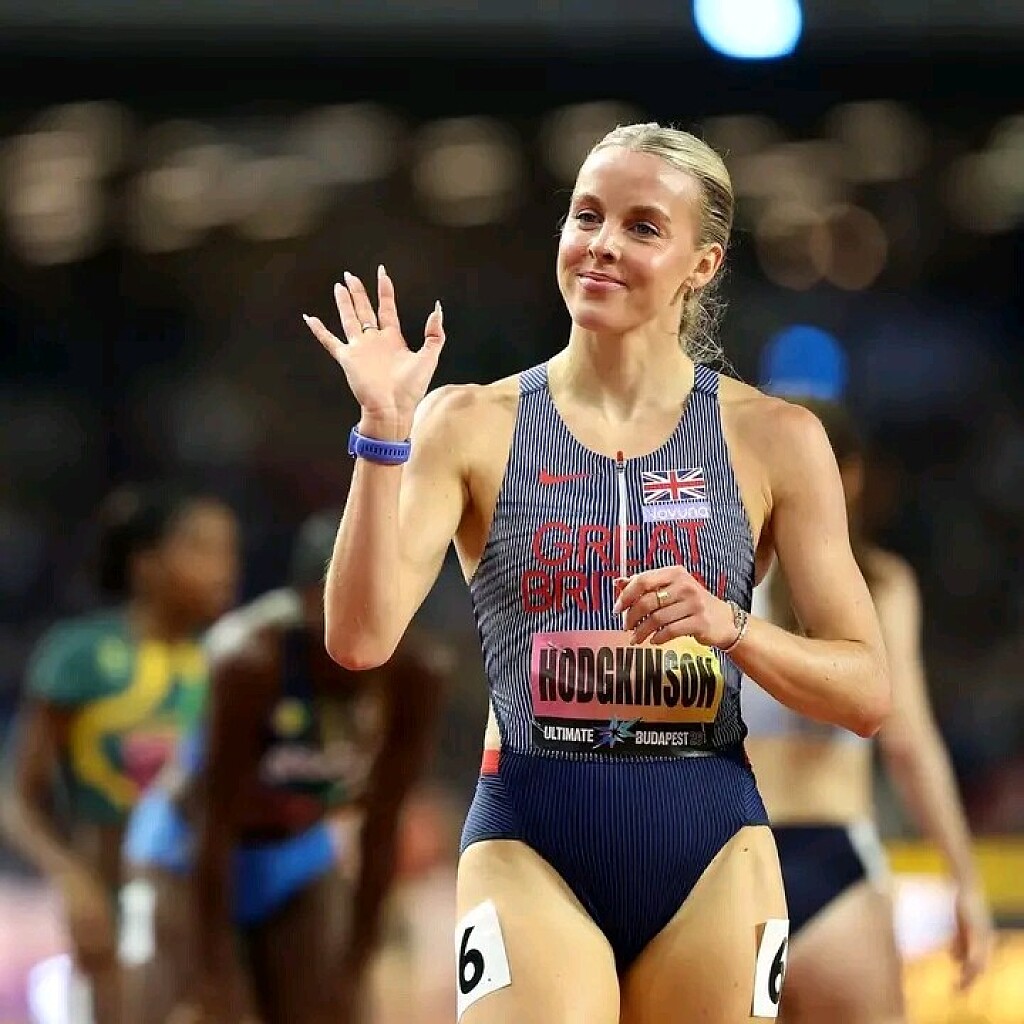
Keely Hodgkinson Strikes First In Budapest As Olympic Champion Leads 800m Finalists
Keely Hodgkinson made a powerful return to the track at the World Athletics Ultimate Championship in Budapest on September 11, storming to victory in the opening women’s 800m semifinal in 1:57.57 to record the fastest time across both semifinals and immediately establish herself as the athlete to beat in the final.
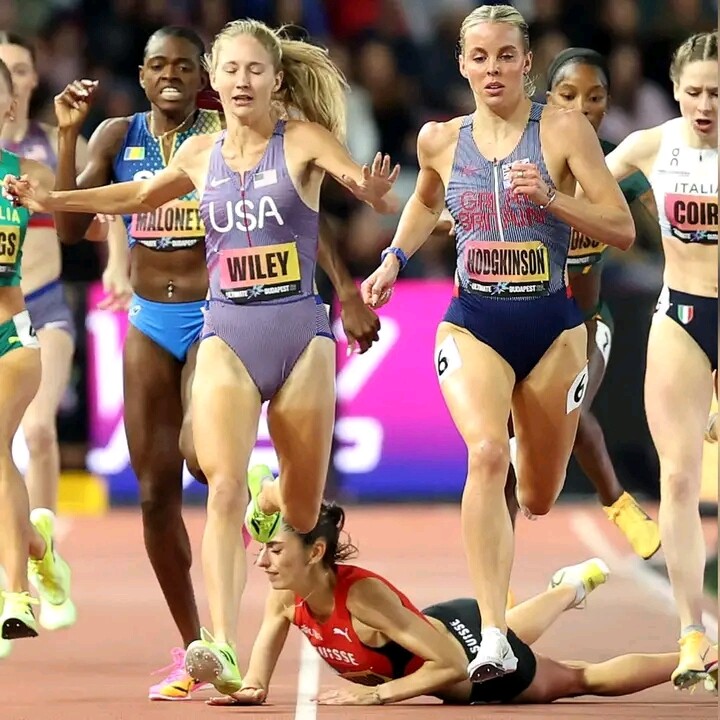
The British Olympic champion looked composed from the opening metres, taking control of the race before gradually increasing the pressure as the finish approached. Hodgkinson produced a decisive surge over the final 200 metres, pulling clear of her rivals and crossing the line comfortably in 1:57.57.
Addison Wiley of the United States followed in 1:58.14, while Australia’s Sarah Billings secured third in 1:58.37. Italy’s Eloisa Coiro also produced a strong performance to finish fourth in 1:58.48, ensuring that the opening semifinal was packed with sub-two-minute performances.
For Hodgkinson, the performance was particularly significant given the circumstances surrounding her return. She had not raced since winning silver at last month’s European Championships and subsequently missed the closing Diamond League meetings, including the Brussels Final, because of hamstring discomfort.
There was little evidence of any lingering problem in Budapest. Hodgkinson appeared relaxed and confident throughout the race, before shifting gears when it mattered most and delivering a performance that immediately put the rest of the field on notice.
The race also contained a dramatic twist in the closing stages when Switzerland’s Veronica Vancardo suffered a heavy fall following contact with Coiro. Despite the setback, Vancardo recovered and eventually crossed the finish line in 2:16.75.
Officials subsequently reviewed the incident and advanced Vancardo to the final, giving her a place in the championship race despite finishing well outside the automatic qualifying positions. Her advancement added another layer of drama to an already eventful night in Budapest.
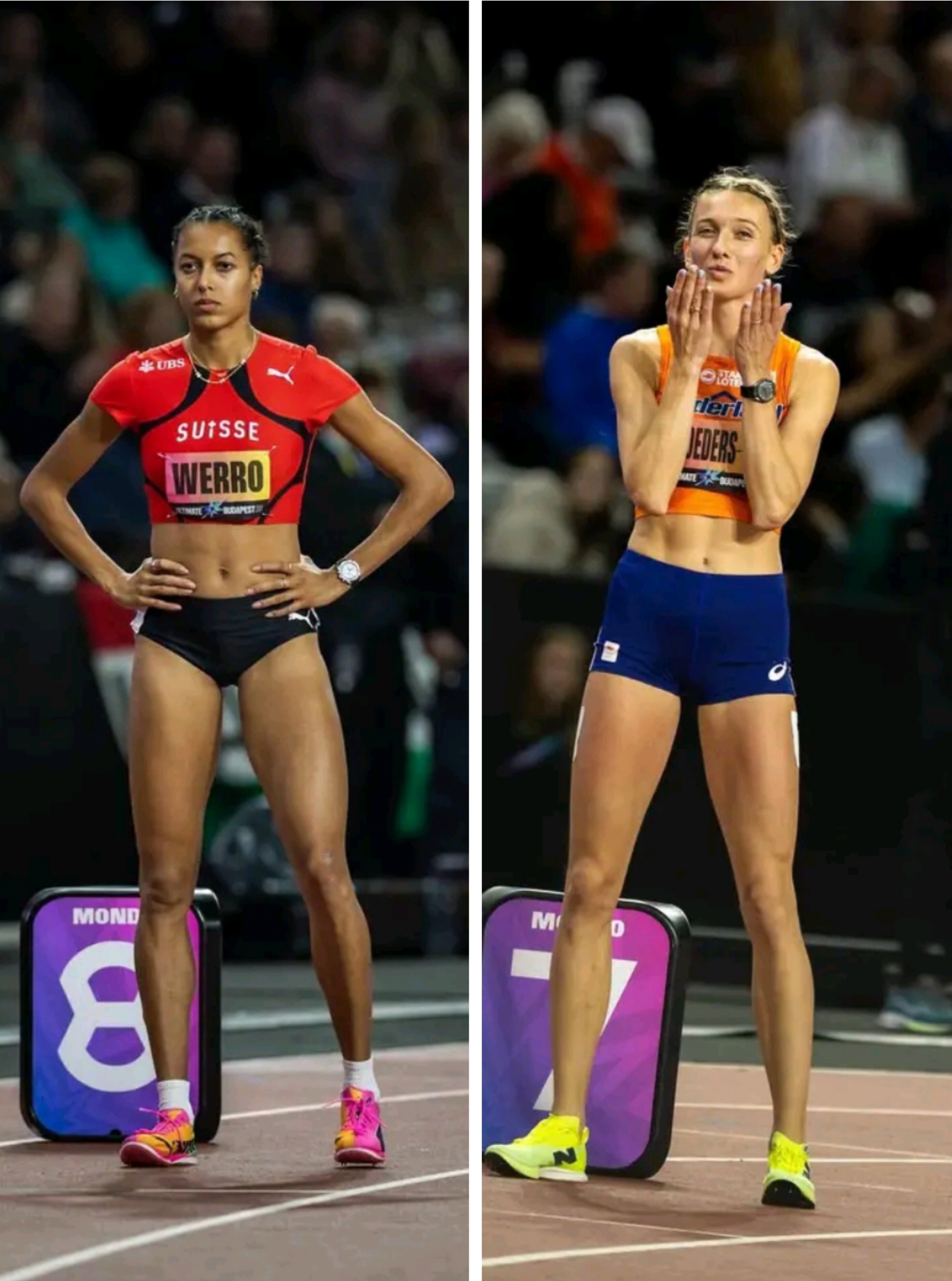
The second semifinal produced another impressive performance as Switzerland’s Audrey Werro controlled the race and delivered a strong finish to win in 1:59.05. Femke Broeders-Bol of the Netherlands followed closely in 1:59.19 after leading much of the contest.
The qualification picture then became clear, with nine athletes securing places in the women’s 800m final. Hodgkinson leads the field with 1:57.57, followed by Wiley at 1:58.14 and Billings at 1:58.37.
Coiro qualified in 1:58.48, while Werro and Broeders-Bol advanced with 1:59.05 and 1:59.19 respectively. Ethiopia’s Nigist Getachew clocked 1:59.69, Switzerland’s Valentina Rosamilia ran 1:59.78, and Vancardo completed the finalists after her advancement in 2:16.75.
Wiley’s qualification is also notable because she is the only American to advance to the Budapest final, adding further significance to her impressive 1:58.14 performance.
With Hodgkinson producing the fastest semifinal time, Werro looking increasingly dangerous and Broeders-Bol once again proving her ability to remain in contention, the final is shaping up to be one of the most anticipated 800m races of the championship.
Hodgkinson has already struck the first blow in Budapest. But with the medals now at stake, Werro, Broeders-Bol and the rest of the finalists will have the opportunity to turn the tables when it matters most.
The Olympic champion has made her intentions clear: she is back, she is healthy enough to race at championship pace, and she wants the Budapest crown.
The stage is now set for a thrilling women’s 800m final, where Hodgkinson will attempt to turn her semifinal dominance into gold. Who will be crown the Ultimate Champion in Budapest — Hodgkinson, Werro or Broeders-Bol? Or the table will turn?
by Erick Cheruiyot for My Best Runs.
Login to leave a comment

Masai Russell Reigns Supreme in Budapest as American Claims Ultimate Championship Crown
Masai Russell has added another major achievement to her remarkable 2026 season, powering to victory in the women’s 100m hurdles at the inaugural World Athletics Ultimate Championship in Budapest.
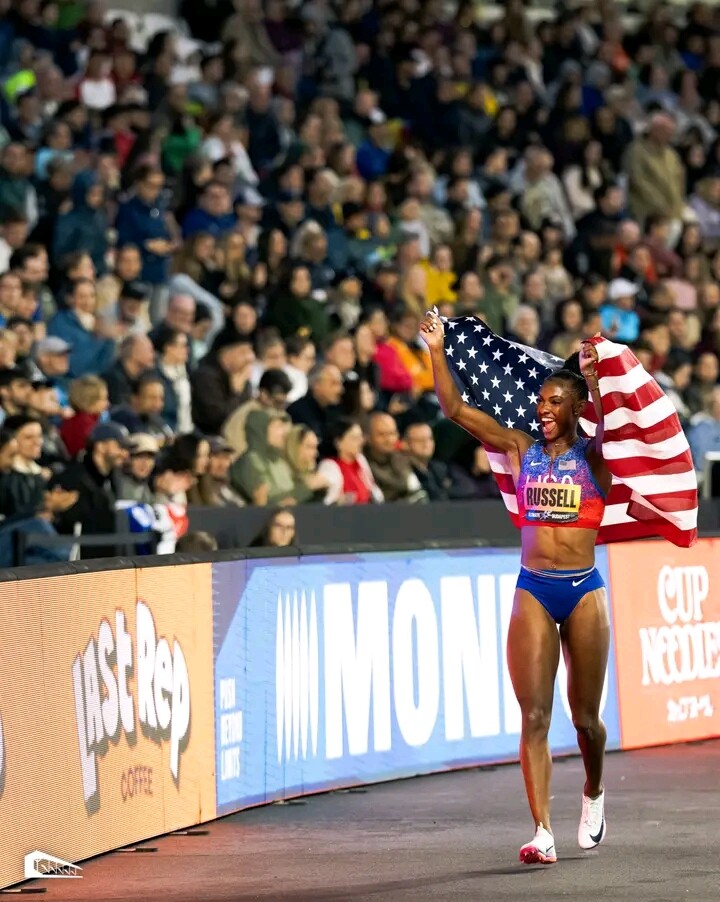
The American produced a brilliant 12.22 seconds to capture the Ultimate Championship title, once again demonstrating her ability to deliver when the pressure is at its highest.
Russell controlled the race from the opening hurdles, attacking each barrier with precision before powering down the home straight to secure a convincing victory. Her performance confirmed why she has been one of the most dominant hurdlers in the world this season.
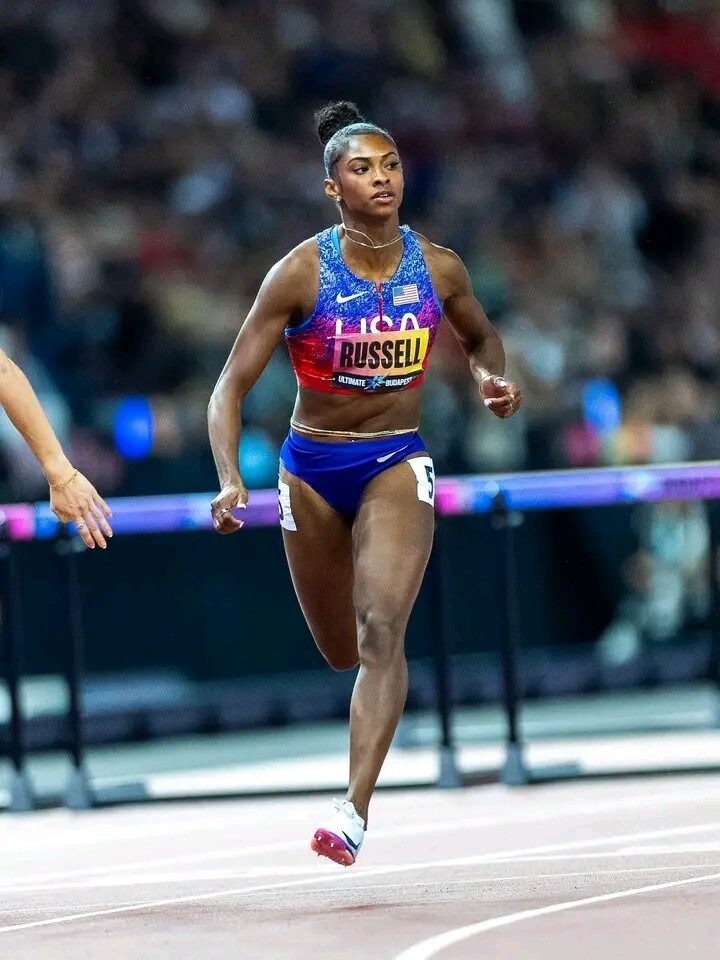
Nigeria’s Tobi Amusan, a former world-record holder and one of the most experienced athletes in the field, mounted a strong challenge but had to settle for second positon in 12.34 seconds.
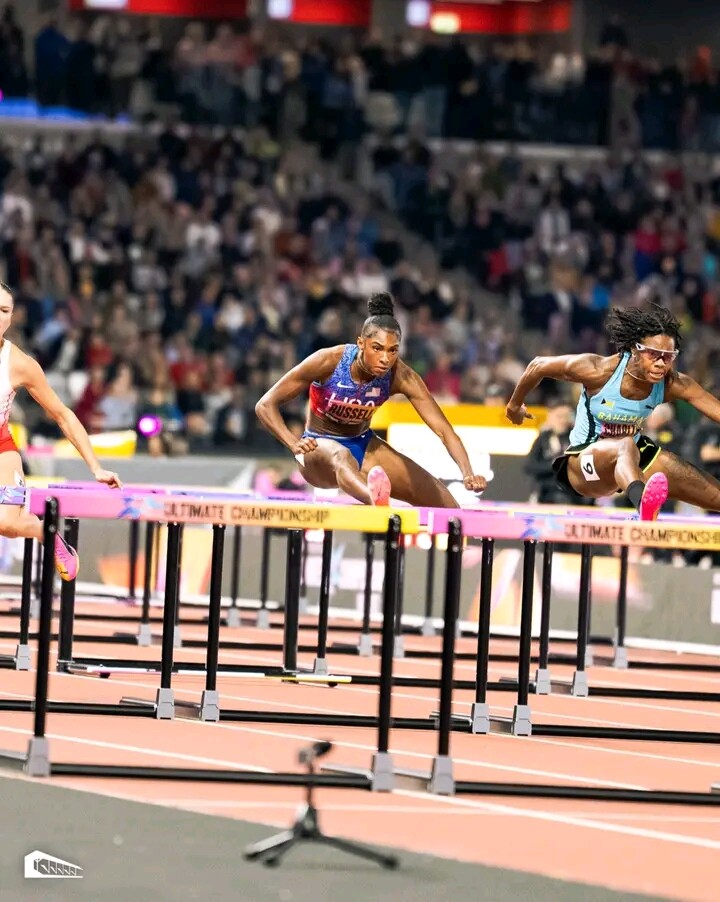
The bronze medal went to the Netherlands’ Nadine Visser, who crossed the line in 12.39 seconds after another impressive championship performance.
Women’s 100m Hurdles Final
1. Masai Russell — United States — 12.22
2. Tobi Amusan — Nigeria — 12.34
3. Nadine Visser — Netherlands — 12.39
Beyond the medals and times, the race produced one of the most memorable images of the championship.
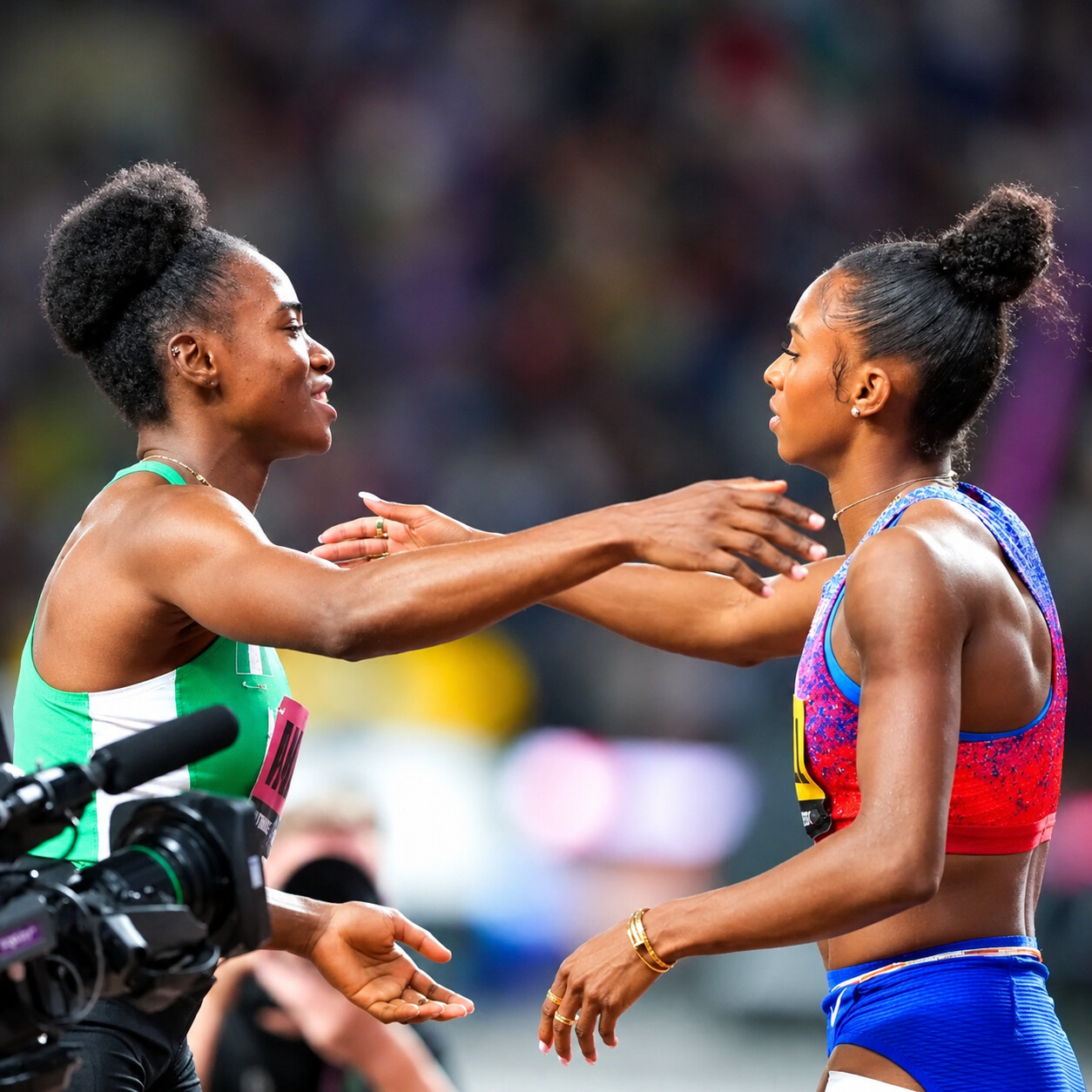
Moments after Russell secured the title, she shared a warm embrace with Amusan, creating a striking scene of mutual respect between two athletes who have played major roles in the evolution of women’s sprint hurdling.
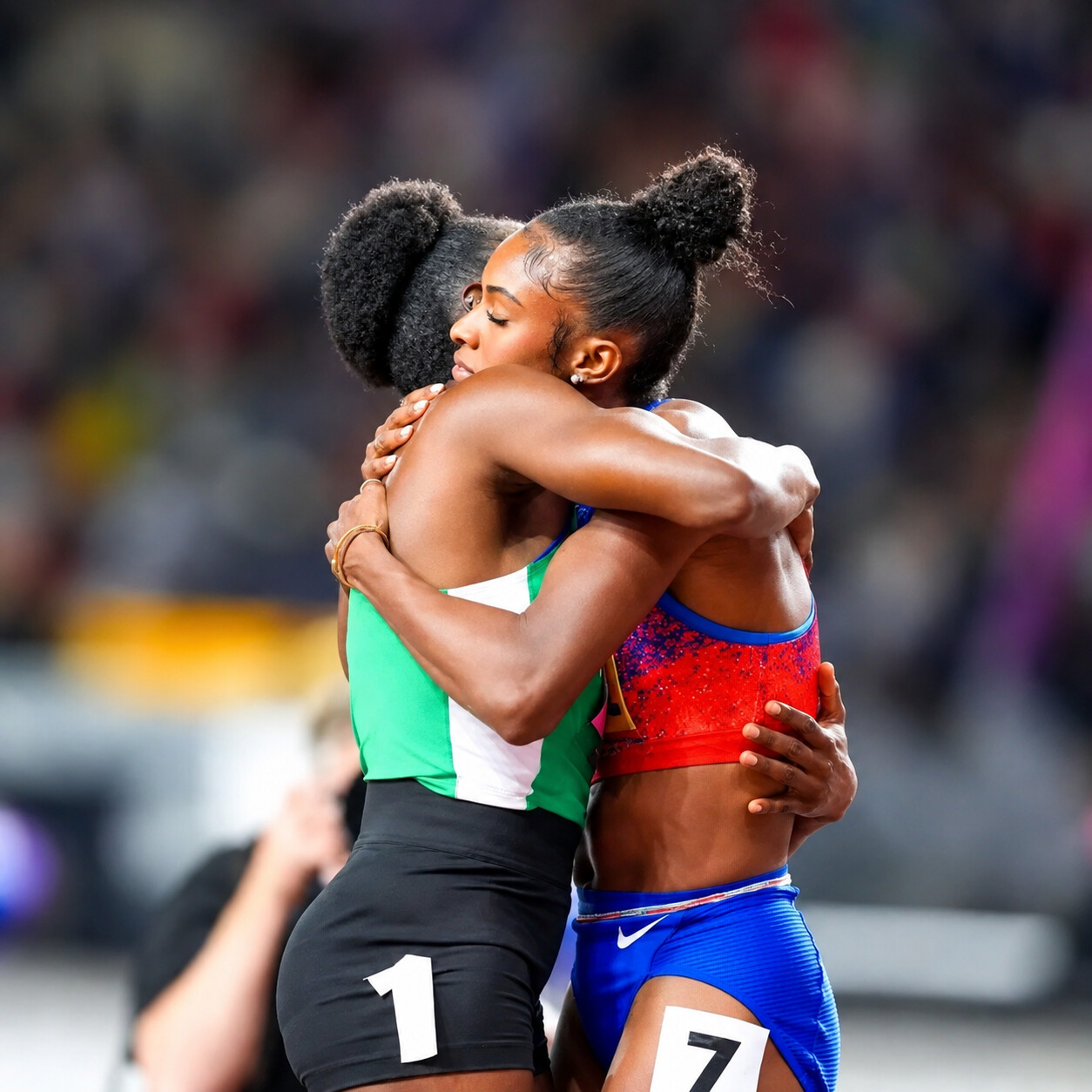
There was no love lost between the former world-record holder and the athlete who has now taken over the top spot. Amusan’s journey helped redefine the event, while Russell has emerged as the new generation’s leading force.
The embrace offered a fitting reminder that elite sport is not only about rivalry and competition. Behind the starting line are athletes who understand the sacrifice, pressure and dedication required to reach the highest level.
For Amusan, the silver medal represents another podium finish at the highest level, while Visser continues to underline her credentials among the world’s elite hurdlers.
But the night belonged to Russell.
With another major title secured and her confidence soaring, the American has made it increasingly difficult for anyone to challenge her position at the top of women’s sprint hurdling.
And perhaps the most fitting image of the night came after the race — the former world-record holder embracing her successor as Russell celebrated becoming the inaugural Ultimate Champion.
Budapest has crowned its first Ultimate Champion, and Masai Russell has once again shown that when the biggest moment arrives, she is ready to answer.
by Erick Cheruiyot for My Best Runs.
Login to leave a comment

Jakob Ingebrigtsen Completes Remarkable Comeback With Ultimate 5000m Gold
Eleven months away from racing. Achilles surgery. Just six weeks of serious training.
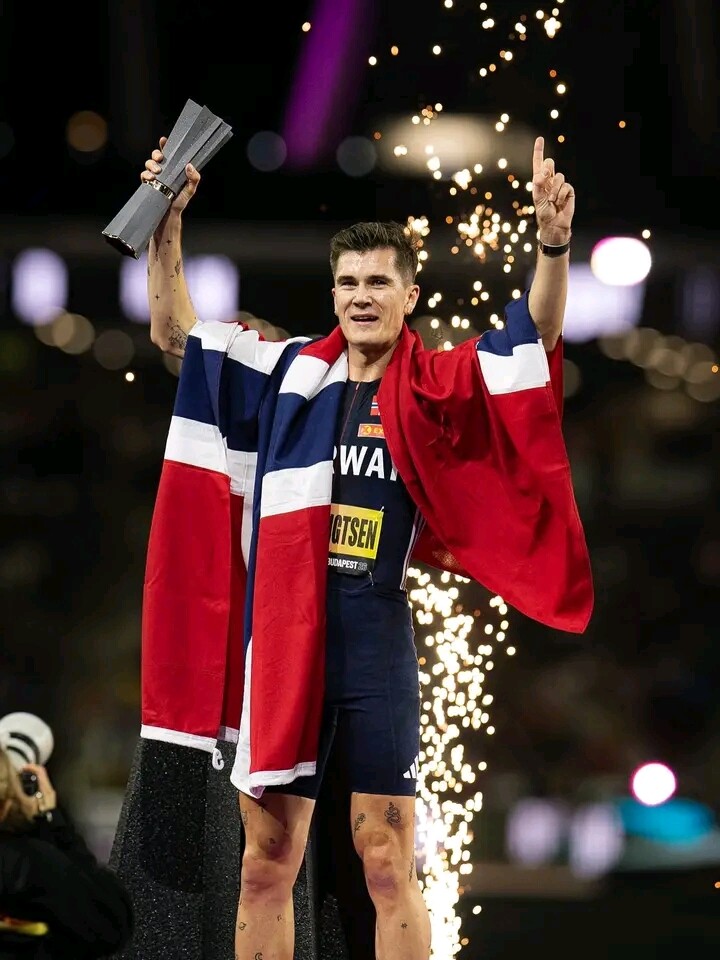
Now, Jakob Ingebrigtsen is an Ultimate Champion.
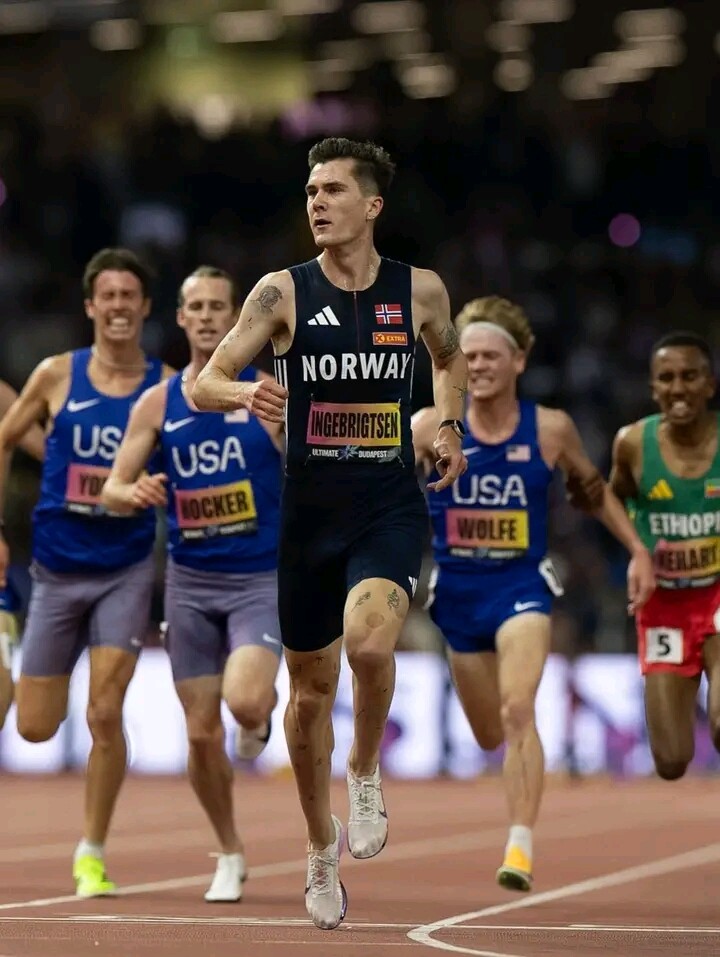
The Norwegian star delivered a stunning performance in Budapest, winning the men’s 5000m at the inaugural World Athletics Ultimate Championship in 12:59.24.
It was a race that demanded patience, tactical intelligence and a perfectly timed finish—qualities Ingebrigtsen has repeatedly demonstrated throughout his career.
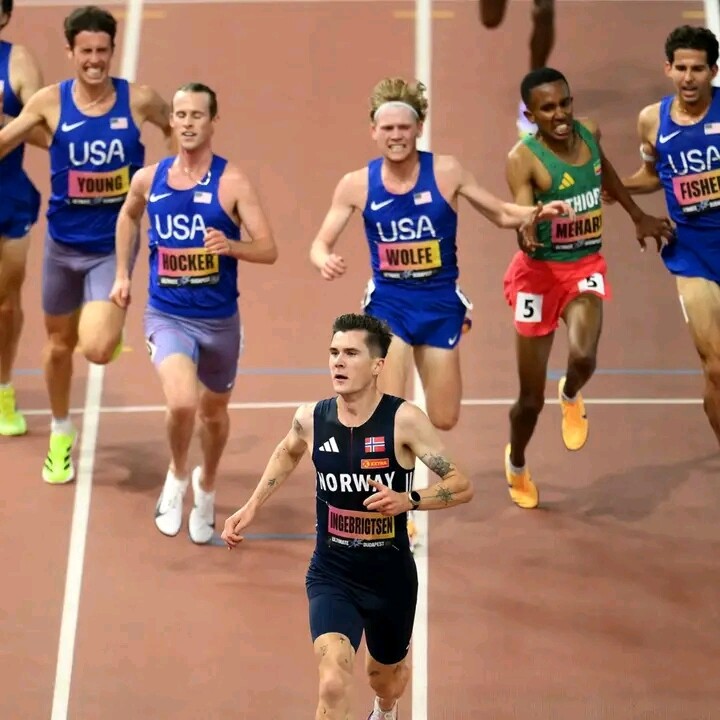
Rather than forcing the pace from the front, Ingebrigtsen stayed towards the back of the field and waited as the race unfolded. He remained composed while the leading group battled for position, conserving his energy for the moment that mattered most.
That moment came in the final straight.
Ingebrigtsen unleashed his trademark finishing speed, powering past his rivals and holding off a determined challenge from American star Cole Hocker to secure the gold medal.
Hocker finished second in 13:00.05, while fellow American Parker Wolfe took third in 13:00.13. The result gave Ingebrigtsen another major title in a season that began with serious questions about how quickly he could return to his best.
His comeback has been extraordinary.
After nearly 11 months away from competition and a spell on the sidelines following Achilles surgery, Ingebrigtsen returned to racing with limited preparation. Just six weeks of serious training stood between him and his return to the highest level.
Yet he has already transformed that uncertainty into success.
The victory in Budapest also adds another fascinating chapter to his rivalry with Hocker. The American, who has established himself among the world's leading middle-distance runners, will get another opportunity to challenge Ingebrigtsen when the pair meet again in the 1500m later this weekend.
The 5000m may belong to Norway, but the rivalry is far from over.
For Ingebrigtsen, the message from Budapest is clear: the long road back has not weakened his competitive instincts. If anything, it has made his return even more impressive.
He waited. He watched. He chose his moment.
And when it was time to strike, Jakob Ingebrigtsen did what Jakob Ingebrigtsen does best—he finished the job.
by Erick Cheruiyot for My Best Runs.
Login to leave a comment
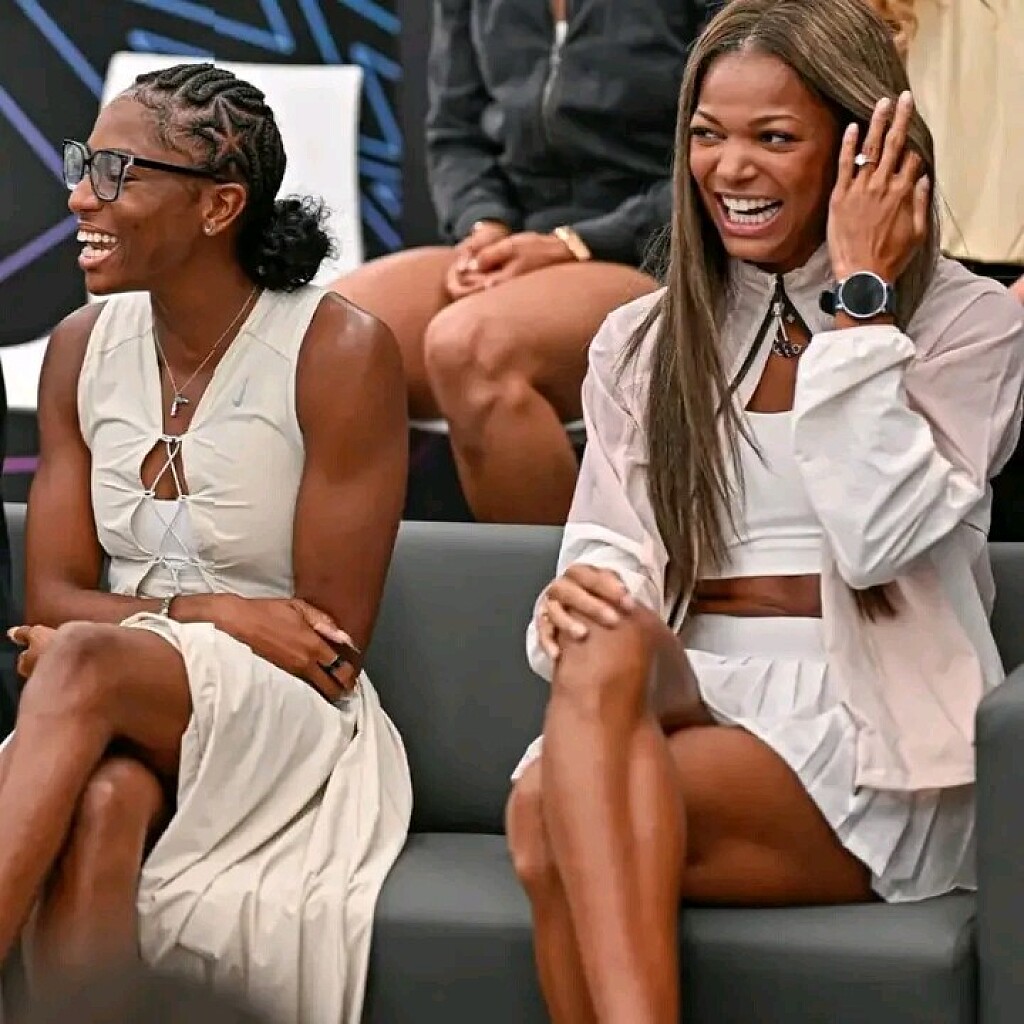
Thomas vs Jefferson-Wooden: Olympic Champion and World Champion Set for Budapest Showdown
The stage is set for one of the most anticipated clashes of the inaugural World Athletics Ultimate Championship in Budapest, with Olympic champion Gabby Thomas and reigning world champion Melissa Jefferson-Wooden drawn into the same women’s 200m semifinal.
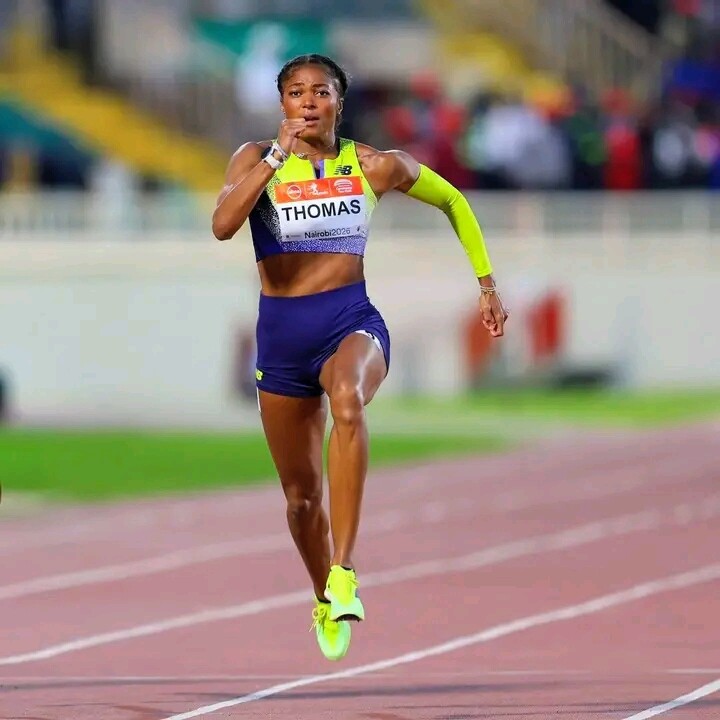
The American stars will go head-to-head in Semifinal 2 after the lane draw placed Jefferson-Wooden in Lane 6 and Thomas directly alongside her in Lane 7, setting up a mouthwatering encounter between two of the biggest names in the event.
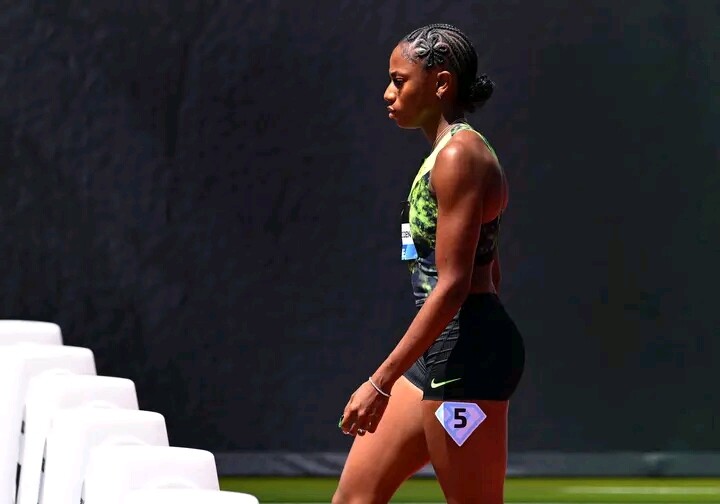
The semifinal will also feature Ireland’s Rhasidat Adeleke in Lane 3, while Jenna Prandini occupies Lane 4. Hungary’s Boglárka Takács will start in Lane 1, with Lavanya Williams in Lane 2, Fabienne Hoenke in Lane 5, Kayla White in Lane 8 and Australia’s Torrie Lewis in Lane 9.
All eyes, however, will be on the two Americans.
Thomas arrives with an Olympic title to her name and a reputation for delivering on the biggest stages, while Jefferson-Wooden carries the confidence of a reigning world champion. With both athletes lining up shoulder-to-shoulder, there will be little room for error when the gun goes.
The Budapest showdown adds another chapter to an increasingly compelling rivalry in the women’s 200m. Thomas has consistently established herself among the event’s elite, while Jefferson-Wooden has emerged as one of the sport’s most dangerous championship performers.
Now, they will have to share the same straight.
With a place in the final at stake, the semifinal promises to be one of the standout races of the championship. The Olympic champion and world champion are on a collision course—and Budapest is ready to find out who will blink first.
by Erick Cheruiyot for My Best Runs.
Login to leave a comment

Melissa Jefferson-Wooden Chases Another Historic Sprint Double in Budapest
Melissa Jefferson-Wooden is ready to take on one of the biggest challenges of the inaugural World Athletics Ultimate Championships: conquering both the 100 metres and 200 metres against two of the strongest sprint fields in the world.
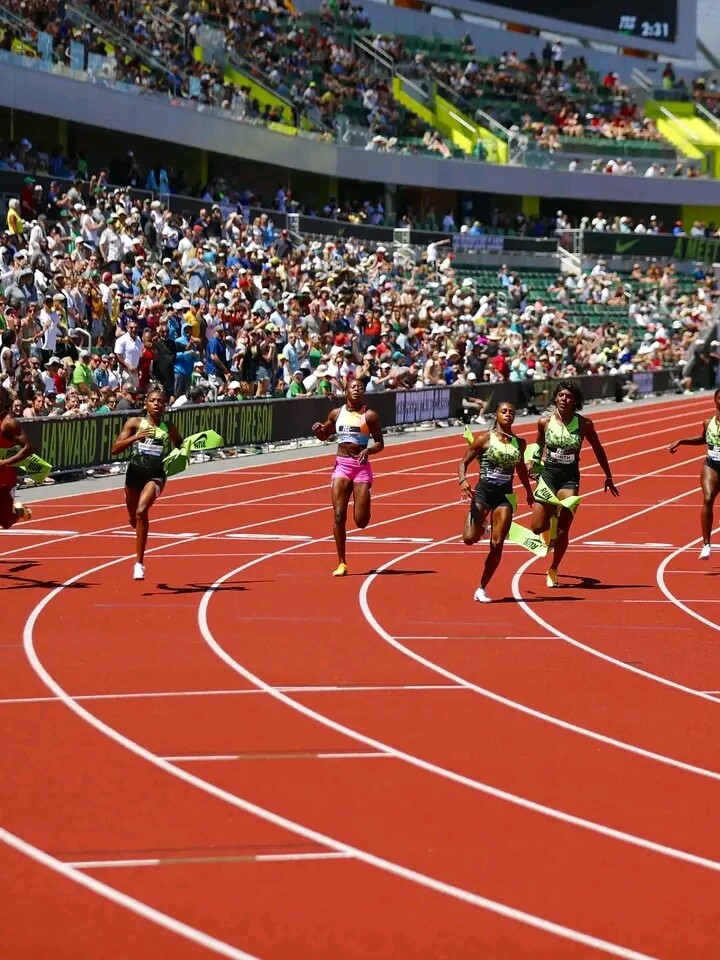
The American sprint star has officially entered both events for the three-day championship in Budapest, Hungary, taking place from September 11 to 13. After producing one of the most remarkable performances of the 2025 World Athletics Championships in Tokyo, Jefferson-Wooden now arrives in Budapest with another opportunity to prove that she is the dominant force in women's sprinting.
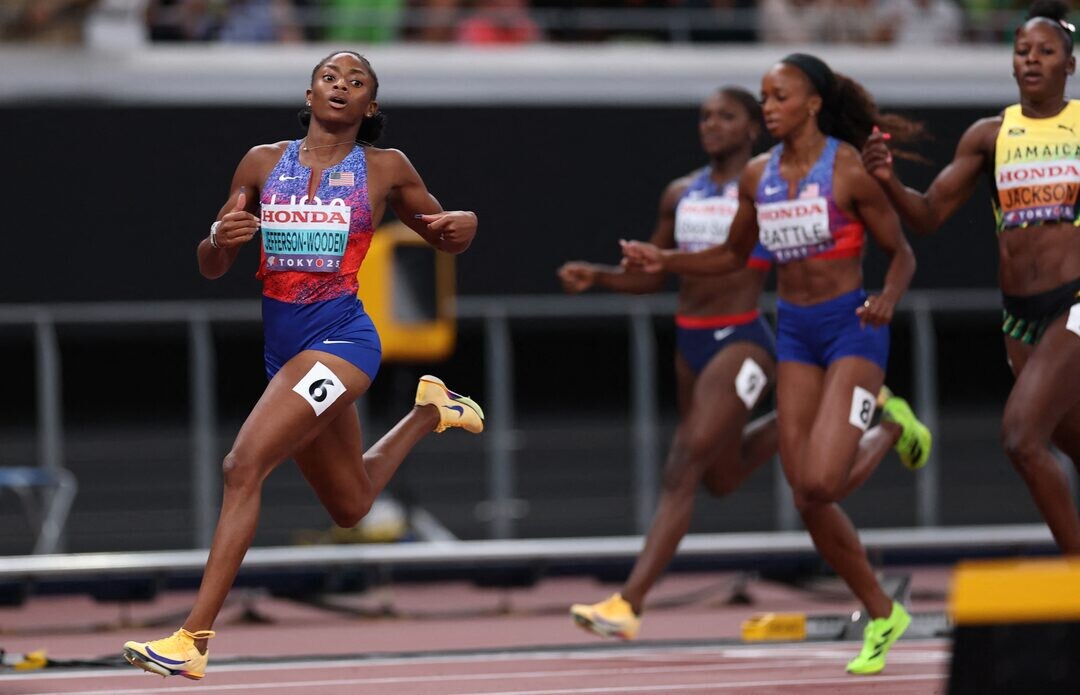
Her first major test will come in the women's 100m, where she will renew her rivalry with Saint Lucia's Olympic champion Julien Alfred. The two women currently share the 2026 world lead at 10.70 seconds following their thrilling clash in Zurich, setting the stage for what could be one of the most anticipated races of the entire Ultimate Championships.
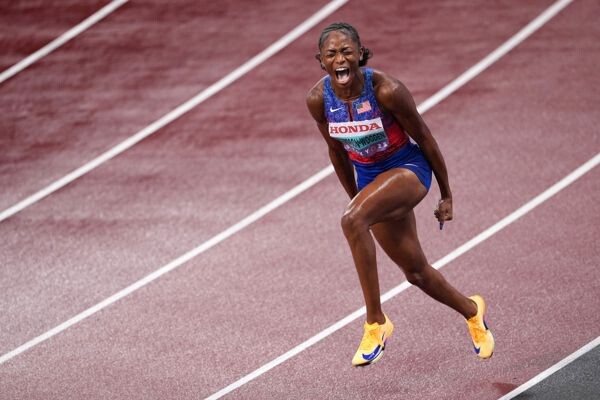
The women's 100m final is scheduled for Saturday, September 12, and Jefferson-Wooden will enter with the confidence of a reigning world champion. But Alfred's presence ensures that there will be no room for error when the world's fastest women line up in Budapest.
Then comes the second challenge.
Just 24 hours later, Jefferson-Wooden will turn her attention to the 200m, where she will face another formidable opponent in Olympic champion Gabby Thomas. Jefferson-Wooden is the reigning U.S. champion over the distance and has produced a season-best of 21.69 seconds, while her outstanding form has placed her among the world's elite in the event.
The 200m represents the second half of a demanding double, and the women's final will take place on Sunday, September 13. The championship format means the world's best sprinters will have little opportunity to ease into the competition, making the physical and mental demands of contesting both events even more significant.
Jefferson-Wooden, however, has already demonstrated that she can handle history-making pressure.
At the 2025 World Athletics Championships in Tokyo, she completed a spectacular sprint treble, winning the 100m, 200m and 4x100m relay. Her 100m victory came in a championship record of 10.61 seconds, underlining the extraordinary level she reached during that unforgettable championship campaign.
Now Budapest offers the American another chance to build on that legacy.
The 100m will bring the explosive showdown with Julien Alfred. The 200m will present a different challenge against Olympic champion Gabby Thomas and another world-class field. Winning either event would be a major achievement. Winning both would further strengthen Jefferson-Wooden's growing claim as one of the defining sprinters of her generation.
She has already swept the global stage once.
Now, at the inaugural World Athletics Ultimate Championships, Melissa Jefferson-Wooden is going for another double.
Can the American sprint queen conquer both Budapest showdowns and add another unforgettable chapter to her remarkable career?
by Erick Cheruiyot for My Best Runs.
Login to leave a comment
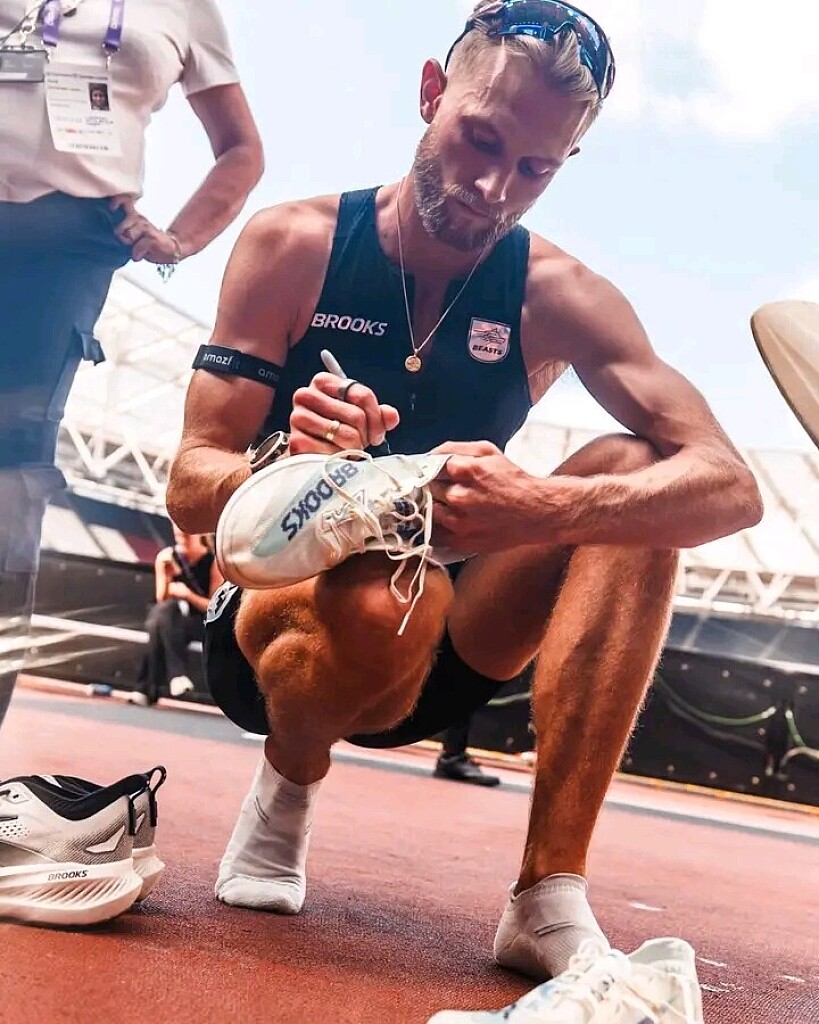
“I Wouldn’t Want to Race Me Right Now”: Josh Kerr Issues a Bold Warning Ahead of Ultimate Championship
Josh Kerr is heading into the World Athletics Ultimate Championship with confidence at an extraordinary level—and his latest comments suggest his rivals have every reason to take notice.
The Scottish middle-distance star, who recently made history by breaking the mile world record in London with a remarkable 3:42.66, believes he may now be in even better shape than he was on the day of that historic performance.
Speaking to BBC Sport, Kerr delivered a statement that perfectly captures his current mindset:
“I wouldn’t want to race me right now.”
It is a bold declaration, but Kerr has given himself plenty of reasons to believe it.
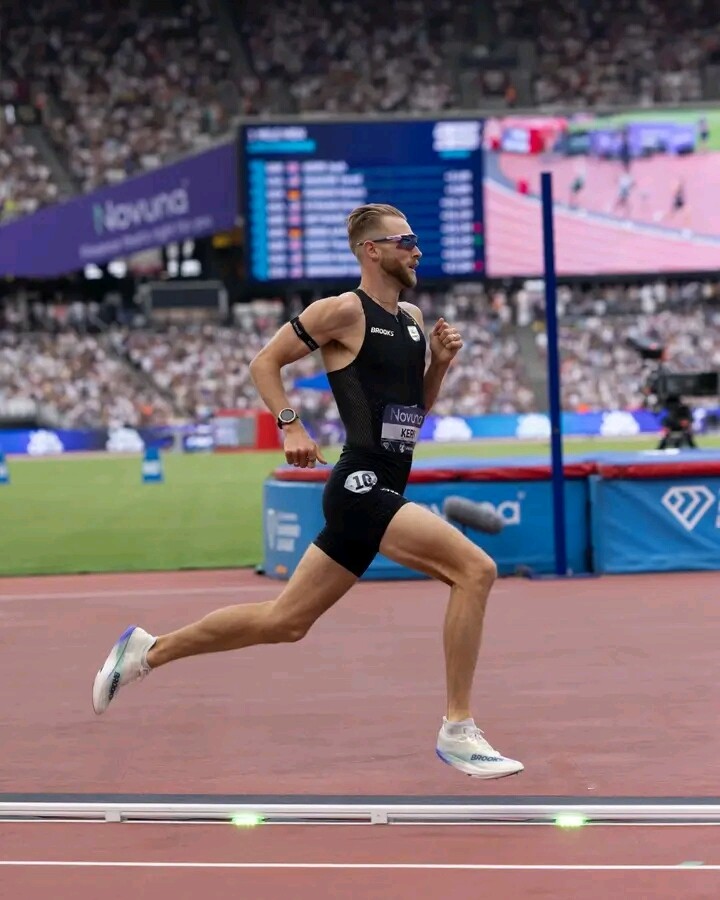
Following his ambitious Project 222 challenge and his Commonwealth gold medal success, the focus now shifts back to his specialist event—the 1500 metres. And this time, there will be no opportunity to ease into the competition.
The World Athletics Ultimate Championship presents a completely different challenge: one race, no heats and no second chances. Everything will be decided in a single, high-pressure showdown against what could be the strongest 1500m field Kerr has faced this year.
For an athlete who has already conquered major championships, broken one of the sport's most prestigious world records and continued to push the boundaries of middle-distance running, Kerr appears to be arriving at exactly the right moment.
Perhaps the most worrying sign for his rivals is not simply his recent success—but his belief that his form has continued to improve.
If Kerr truly is stronger now than when he ran 3:42.66 in London, the Ultimate Championship could produce something very special.
The confidence is unmistakable. The form appears to be there. And with only one race standing between Kerr and another major statement, the rest of the field has been put on notice.
Josh Kerr likes exactly where he is right now—and judging by his words, he is ready to make sure everyone else knows it.
by Erick Cheruiyot for My Best Runs.
Login to leave a comment
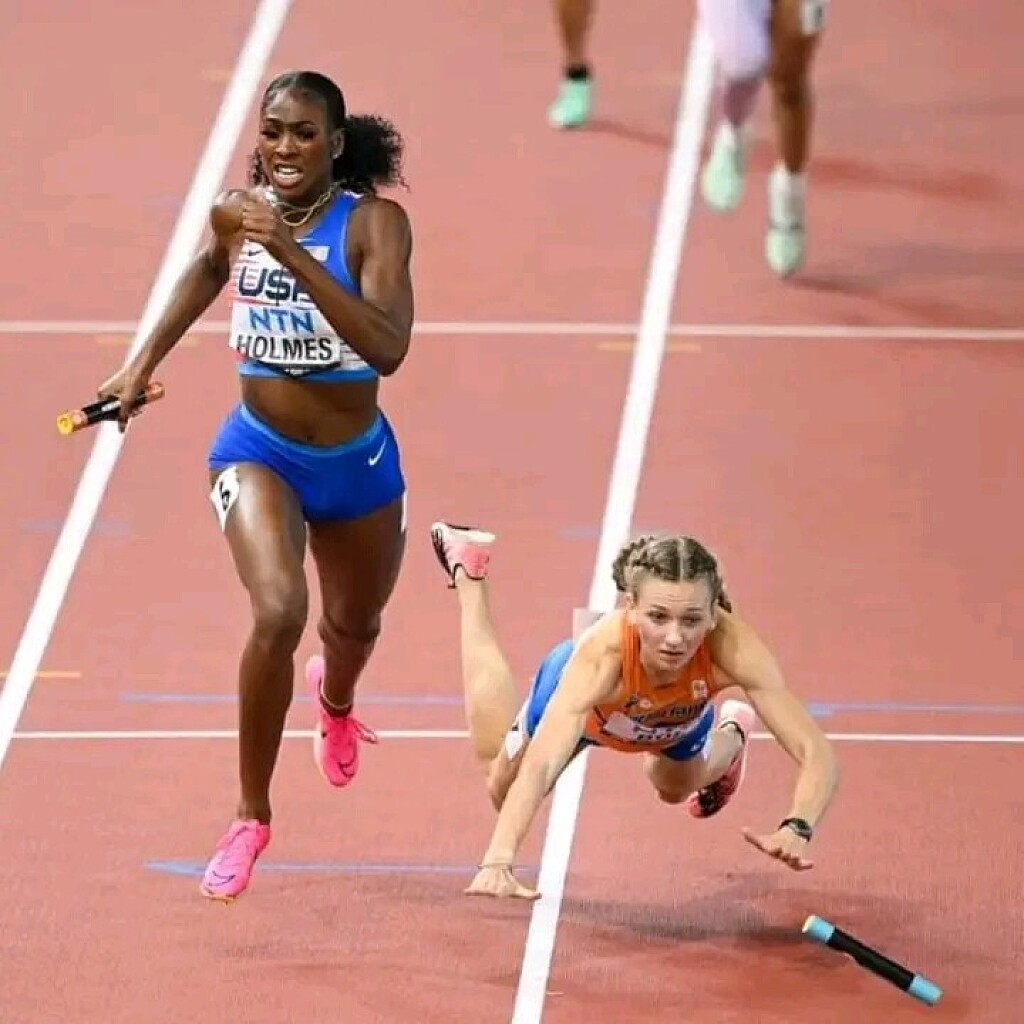
Femke Bol Returns To Budapest: From One Of Her Darkest Moments To A New 800m Challenge
For Femke Bol, Budapest is more than just another stop on the athletics calendar. It is a place where heartbreak once threatened to define her championship campaign — only for the Dutch star to respond with one of the most memorable comebacks of her career.
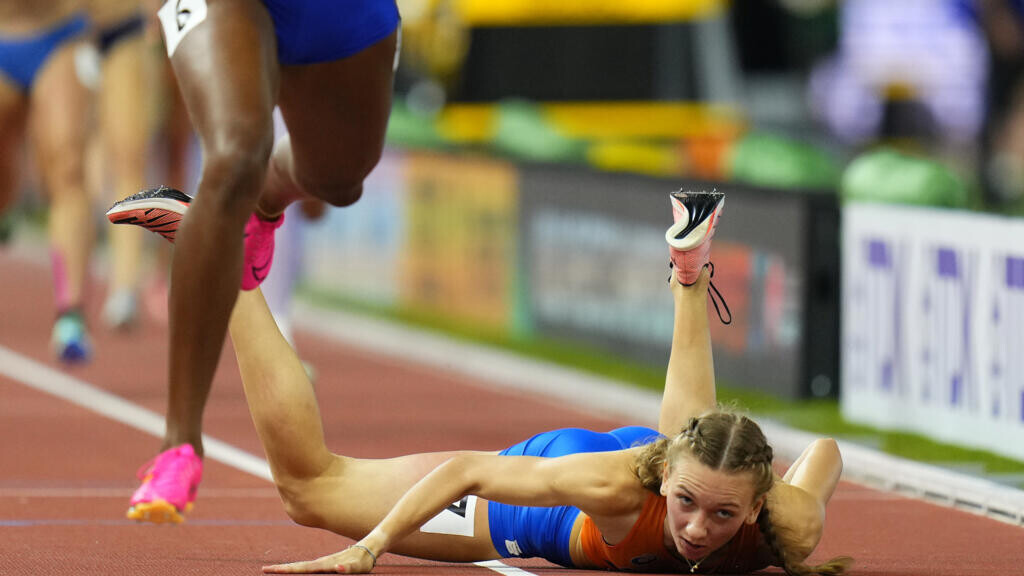
Three years ago, at the 2023 World Athletics Championships, Bol arrived in Budapest as one of the biggest names in the 400m hurdles. Yet her championships began with a painful collapse.
Anchoring the Netherlands in the mixed 4x400m relay on the opening night, Bol was within sight of victory when she fell just metres before the finish line. The Netherlands were disqualified, and what had looked like a near-certain gold medal disappeared in one devastating moment.
But Bol did not allow the disappointment to consume her.
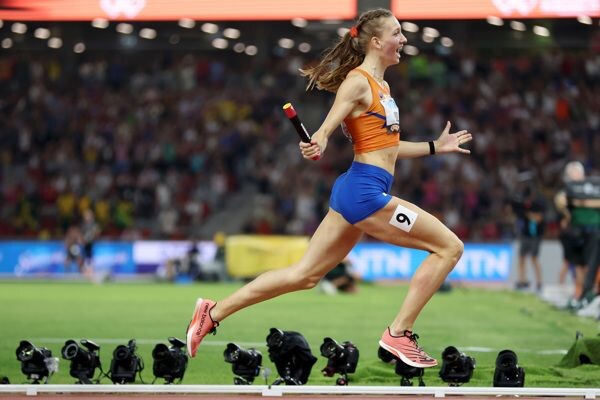
Six days later, she returned to the track for the 400m hurdles final and delivered an emphatic response. Running with remarkable composure, she stormed to victory in 51.70 seconds, finishing more than a second clear of American Shamier Little to claim her first individual global title.
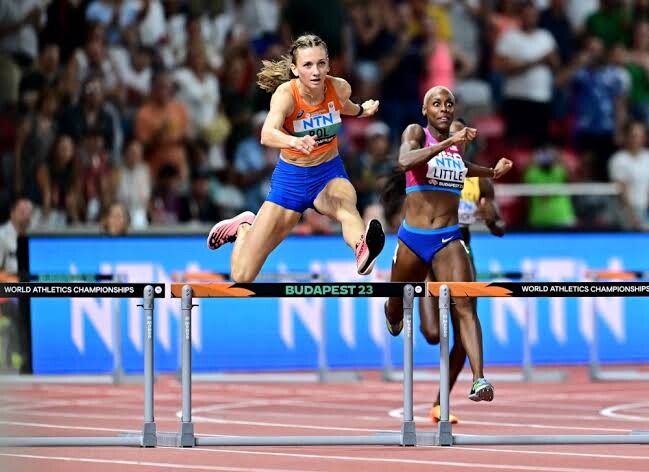
Then came the final track race of those championships — and another extraordinary chapter.
In the women’s 4x400m relay, Bol received the baton for the Netherlands with the Jamaican and British teams ahead. The deficit grew to roughly 10 metres down the back straight, but instead of surrendering, she began to hunt.
By the home straight, Bol had transformed the race.
She swept past Great Britain and then Jamaica to bring the Netherlands home in 3:20.72, securing a second world title in Budapest and completing one of the most remarkable redemption stories of the championships.
Now, Bol is heading back to the same city — but this time, her challenge is completely different.
There will be no hurdles standing in her way.
Instead, she will line up for the women’s 800m at the inaugural World Athletics Ultimate Championship in Budapest, where she will face two of the strongest middle-distance runners in the world: Olympic champion Keely Hodgkinson of Great Britain and Swiss sensation Audrey Werro. The three are among the headline names in a formidable 800m field for the September 11–13 championship.
And this is no longer the same Bol who first experimented with the event.
The Dutch star has made a significant transition to the 800m this season, steadily improving as she has gained experience over the two-lap distance. Her 2026 best stands at 1:55.41, placing her among the leading contenders heading into Budapest.
Yet the challenge could hardly be tougher.
Werro has been the revelation of the 2026 season. The Swiss star leads the world with 1:53.80, a mark that ranks among the fastest performances ever recorded. She also defeated Hodgkinson and Bol at the European Championships in Birmingham, winning in 1:54.81 as Hodgkinson took silver in 1:55.01 and Bol finished third in 1:55.54.
Hodgkinson, meanwhile, remains one of the defining figures of the event. The Paris Olympic champion has already run 1:54.33 this season and will arrive in Budapest determined to reclaim the winning momentum against a rival who has repeatedly pushed her to the limit.
The latest meeting between Werro and Bol only adds more intrigue. At the Diamond League Final in Brussels, Werro prevailed in 1:54.75, but Bol pushed her all the way to the line, finishing just 0.06 seconds behind in 1:54.81.
That makes Budapest particularly fascinating.
Bol is no longer returning simply as the hurdler who once conquered the Hungarian capital. She is coming back as an ambitious 800m runner, testing herself against an Olympic champion and the world leader in an event that demands speed, tactical intelligence and endurance in equal measure.
For Bol, Budapest carries memories of a fall, a first global individual title and an unforgettable relay victory.
Now she has the opportunity to create another memory.
This time, there are no barriers to clear and no baton to chase.
There is only 800 metres — two laps in which Bol will have to match the pace, strength and finishing speed of Werro and Hodgkinson.
She has already shown what she can do when Budapest gives her a second chance.
The question now is whether she can turn that history into another triumph.
by Erick Cheruiyot for My Best Runs.
Login to leave a comment
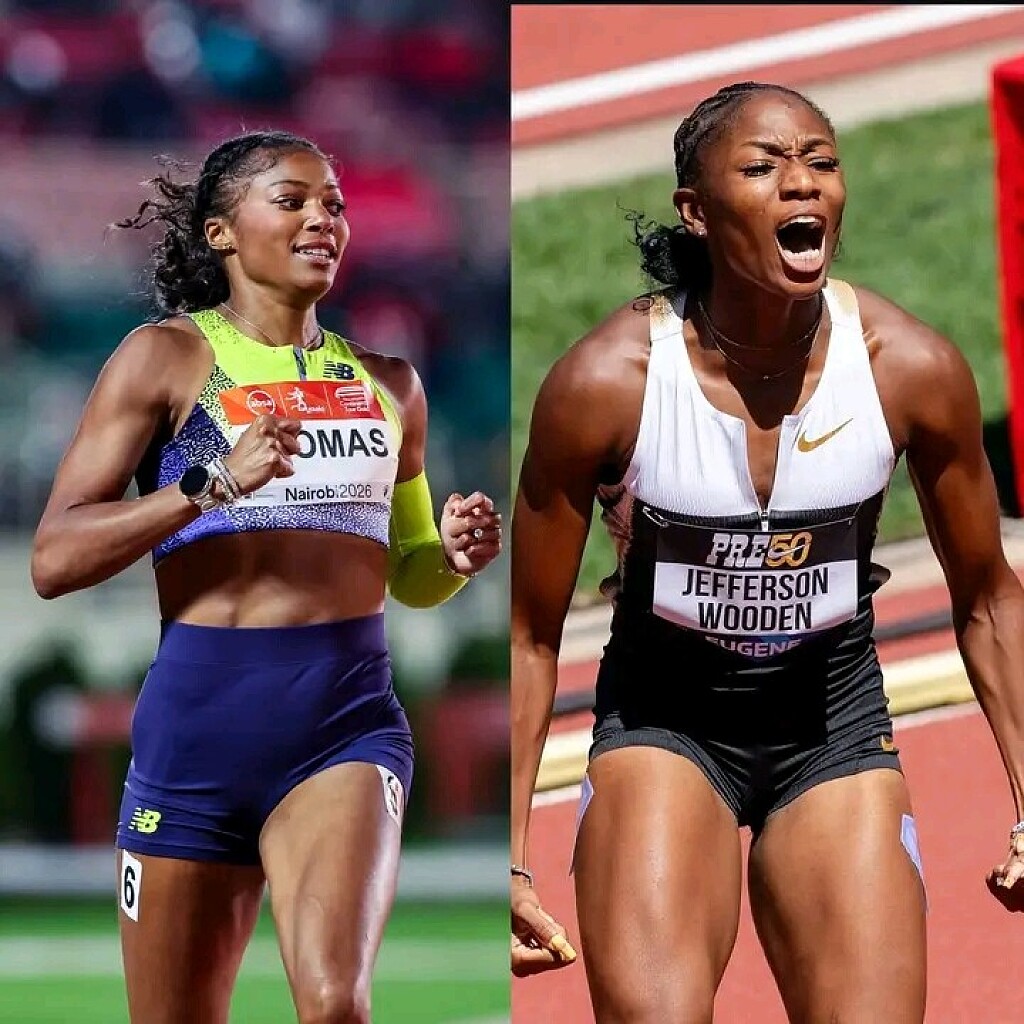
Thomas vs Jefferson-Wooden: Budapest Braces for a 200m Blockbuster
BUDAPEST — Two American sprint giants, two extraordinary résumés and barely a hundredth of a second separating them on the 2026 world list. The stage is set for a mouthwatering women’s 200m showdown at the inaugural World Athletics Ultimate Championship in Budapest.
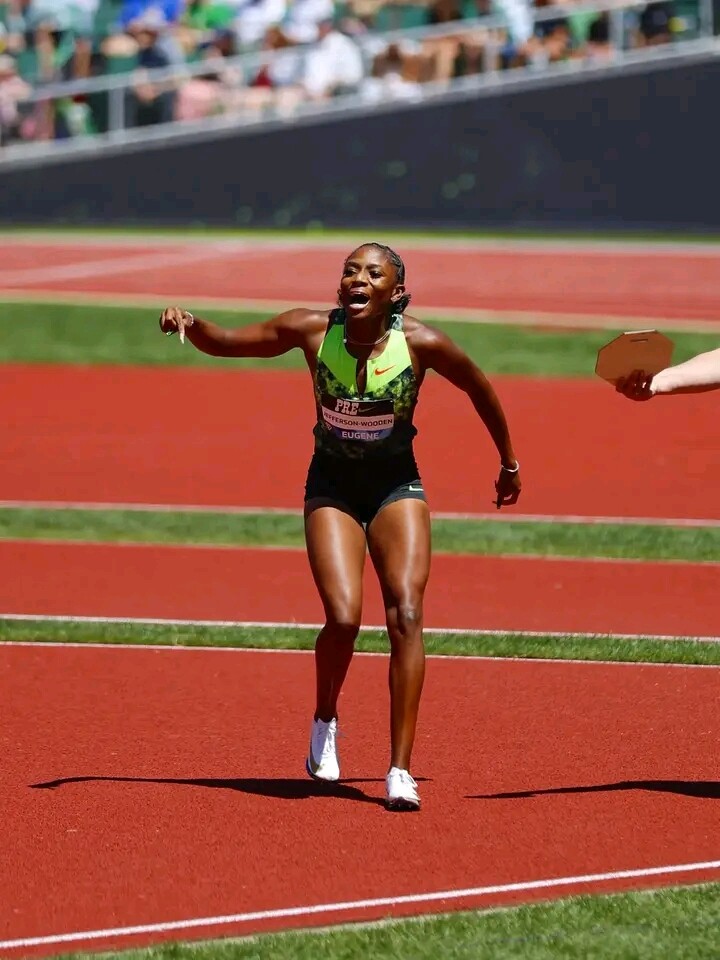
When the world’s best athletes gather in Hungary from 11–13 September for athletics’ newest global showcase, the women’s 200m promises to be one of the meeting’s headline attractions. And at the centre of the drama will be Melissa Jefferson-Wooden and Gabby Thomas — two champions arriving with formidable credentials and something to prove.
Jefferson-Wooden enters Budapest with perhaps the greater momentum.
The reigning world champion produced another statement performance at the U.S. Championships in July, powering to the national 200m title in 21.69 seconds with a legal +1.0m/s wind. The performance was only 0.01 seconds outside the 21.68 she ran to win the world title in Tokyo last year, confirming once again that she remains one of the most formidable 200m sprinters on the planet.
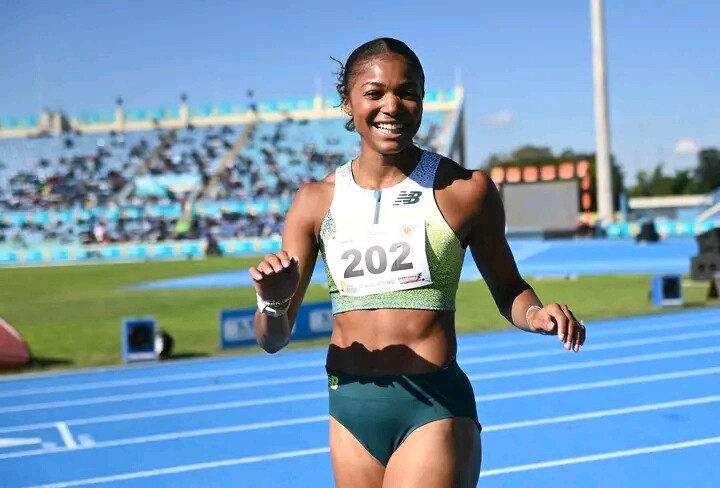
Thomas, however, is no stranger to the biggest stages.
The reigning Olympic 200m champion has built her reputation on championship racing, delivering when the pressure is greatest. Earlier this season, she clocked 21.70 seconds in College Station — just one hundredth behind Jefferson-Wooden’s season-leading mark at the U.S. Championships. The two Americans currently sit third and fourth on the 2026 world list, separated by the smallest possible margin.
And that tiny gap makes this matchup all the more intriguing.
21.69 versus 21.70.
On paper, there is almost nothing between them. But the 200m is rarely decided by the season’s fastest time alone. The bend, the transition into the straight, the ability to maintain speed over the final 50 metres and, above all, the capacity to execute under championship pressure could determine who walks away with the Ultimate Championship trophy.
There is another twist that could add an entirely new layer of strategy before either athlete even takes a starting position.
THE LANE DRAFT CHANGES EVERYTHING
World Athletics has introduced a new lane-draft concept specifically for the 200m at the Ultimate Championship.
On 10 September, the day before competition begins, the athletes will select their preferred semifinal heat and lane in live world-ranking seed order. Rather than leaving lane allocation entirely to a traditional draw, the new format puts the decision directly into the athletes’ hands.
That means the tactical battle begins before the starting gun.
Which athlete wants the inside lane? Who prefers a wider lane to attack the bend? Will a leading contender choose to position herself alongside a dangerous rival — or deliberately keep her distance?
Those decisions could become part of the story long before the final.
And with the women’s 200m semifinals and final scheduled for 13 September, Budapest could be heading towards a spectacular finale to the inaugural Ultimate Championship.
Jefferson-Wooden arrives as the reigning world champion, armed with blistering speed and the confidence of another 21-second performance. Thomas arrives as the Olympic champion, a proven championship performer with years of experience competing at the highest level.
Neither needs an introduction.
Neither is likely to give an inch.
The difference between them this season is just 0.01 seconds.
But in Budapest, history will not be decided by the rankings.
It will be decided over one explosive half-lap.
Melissa Jefferson-Wooden vs Gabby Thomas.
World champion vs Olympic champion.
21.69 vs 21.70.
And when the fastest women in the world line up under the Budapest lights, one question will remain:
Who will become the first-ever Ultimate Champion of the women’s 200m?
by Erick Cheruiyot for My Best Runs.
Login to leave a comment
Noah Lyles Ends 2026 Season Due to Injury, Sprint Star to Miss Budapest Championships
Noah Lyles has made the difficult decision to bring his 2026 season to an early end, with an injury forcing the American sprint star to step away from competition for the remainder of the year.
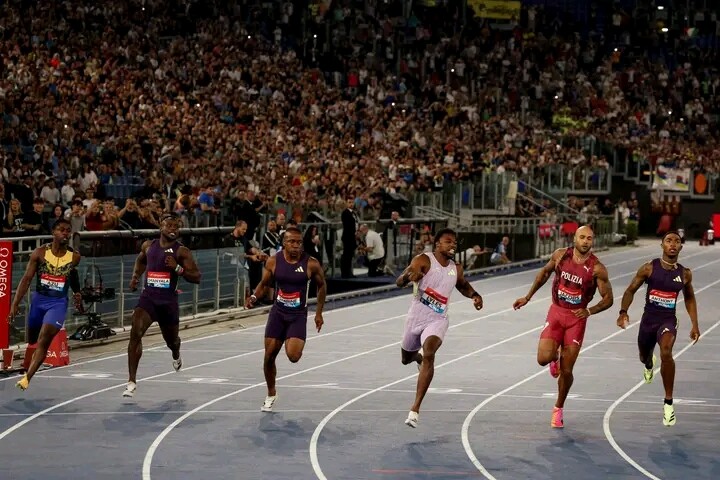
Lyles announced the decision on Friday, revealing that the problem he suffered during the U.S. Outdoor Championships in New York has continued to affect his training and recovery. The injury, which initially appeared manageable, flared up during rehabilitation, ultimately leading him to shut down his season rather than risk a more serious setback.
Lyles had arrived at the U.S. championships in spectacular form. He powered to victory in the men's 100m at Icahn Stadium in a world-leading 9.79 seconds, matching his personal best and once again demonstrating why he remains one of the most formidable sprinters in the world.
However, his championships took an unfortunate turn in the men's 200m final. Lyles pulled up after suffering a strain in his left hamstring, leaving him unable to maintain his usual pace. He eventually crossed the finish line in 50.88 seconds.
The injury has proved more troublesome than initially expected. During his rehabilitation, the problem flared up again, preventing Lyles from progressing as planned. Rather than risk worsening the injury, the 29-year-old has chosen to prioritize his recovery and bring his 2026 campaign to a close.
The decision means Lyles will miss the inaugural World Athletics Ultimate Championships in Budapest, scheduled for September 11–13. The Budapest 2026 event would have provided another major opportunity for the American to compete against the world's best, but he will now be forced to watch from the sidelines.
Despite the disappointment, Lyles can look back on a season that once again showcased his extraordinary ability. His world-leading 9.79-second performance in the 100m was a powerful reminder of his speed, while his decision to step away reflects the importance of protecting his long-term career.
With the 2027 World Championships and the 2028 Los Angeles Olympic Games on the horizon, Lyles' priority now shifts from racing to recovery, rehabilitation and rebuilding his fitness.
It is certainly not the ending he would have wanted for his 2026 campaign. But sometimes, the most important race is the one that comes after the setback — the race back to full health.
For now, Noah Lyles' 2026 season is over. The next chapter is recovery, rebuilding and preparing for an even bigger return.
by Erick Cheruiyot for My Best Runs.
Login to leave a comment
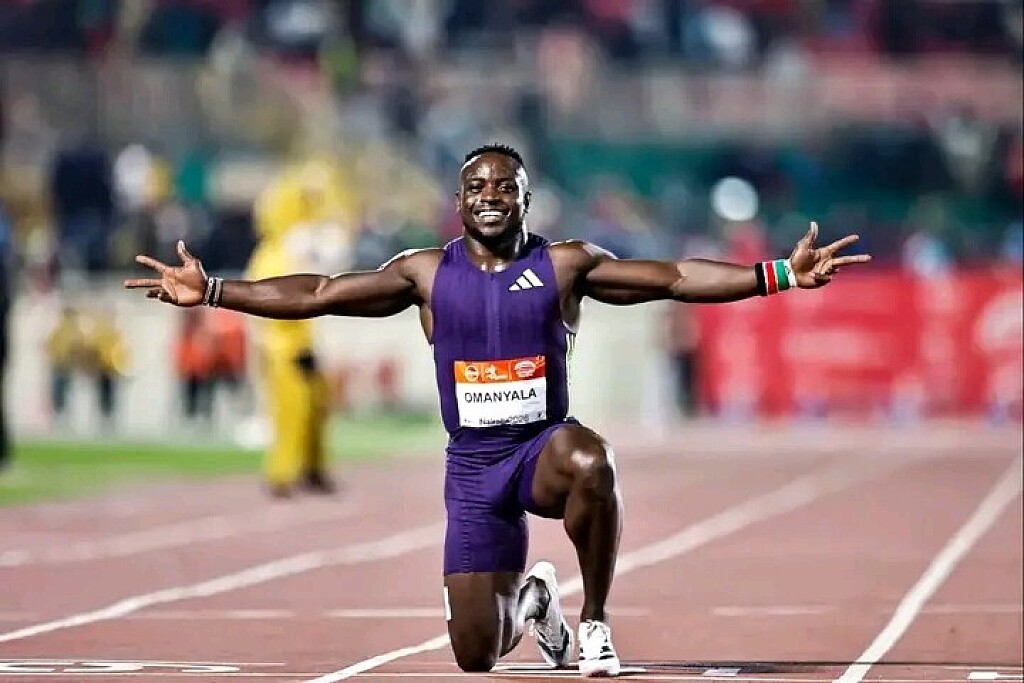
Ferdinand Omanyala’s 2026 Season Ends At The Worst Possible Moment
Ferdinand Omanyala’s 2026 season has come to an abrupt and heartbreaking end, just as the Kenyan sprint star appeared to be building momentum for a memorable finish to his campaign.
The African 100m record-holder has been forced to withdraw from the remainder of the season after suffering a stress fracture to the calcaneus, the heel bone of his left foot. The injury means Omanyala will miss the final two major competitions that were expected to bring his 2026 campaign to a spectacular conclusion — the Wanda Diamond League Final in Brussels and the inaugural World Athletics Ultimate Championship in Budapest.
For an athlete who had worked hard to rebuild his season, the timing could hardly have been more frustrating.
Omanyala revealed that he sustained the injury around two weeks before the Commonwealth Games. Despite the problem, he attempted to manage the discomfort and continue competing. But with the season reaching its most important stage, the Kenyan has now made the difficult decision to step away from competition and give his body the recovery time it needs.
It is a painful ending, but it should not overshadow what had otherwise been a highly encouraging campaign.
Throughout 2026, Omanyala repeatedly demonstrated that his speed remains among the best in the world. One of the standout moments came in Xiamen, where he stormed to victory in the 100m in 9.94 seconds. It was his fastest performance of the season and another powerful reminder of the explosive speed that has made him one of Africa’s most prominent sprinting figures.
His consistency was just as impressive. Omanyala produced five consecutive sub-10-second performances, maintaining a level of speed that very few sprinters can sustain across an extended period. His performances also pushed him into third place in the Diamond League 100m standings, putting him firmly among the leading contenders heading towards the series finale.
That makes his absence from Brussels particularly frustrating.
Omanyala had earned his place among the world’s best, but instead of lining up under the lights for another major showdown, he will now begin the long process of recovery.
The injury had already complicated his Commonwealth Games campaign. Having been carrying the problem into the championships, Omanyala was unable to produce the performance he wanted and failed to progress to the 100m final. Now, with the remaining major competitions of the season also ruled out, his year has officially come to an early conclusion.
There will be no final Diamond League appearance in Brussels. There will be no opportunity to compete at the World Athletics Ultimate Championship in Budapest. And there will be no chance to give his 2026 season the dramatic ending that his earlier performances had promised.
But sometimes an athlete’s most important decision is knowing when to stop.
A stress fracture is not an injury worth gambling with for the sake of another race. At this stage of his career, protecting his long-term health and allowing the injury to heal properly is far more important than forcing his way onto the track for one final appearance.
And when the disappointment fades, Omanyala will have plenty to be proud of.
A 9.94-second season best. Five consecutive sub-10-second performances. A Diamond League victory. Third place in the Diamond League 100m standings. Most importantly, another season in which he showed that he remains capable of competing with the very best sprinters on the planet.
Those achievements cannot be erased by the injury.
For Kenyan athletics, his absence from the final stages of the season is undoubtedly a major disappointment. Omanyala has become one of the most recognizable faces of Kenyan sprinting, carrying the country’s ambitions into a discipline where Kenya has traditionally had less international influence.
But this is not the end of his story.
It is simply an unexpected pause.
For now, the starting blocks can wait. The crowds can wait. The stopwatch can wait.
Omanyala’s next race is the race back to full fitness.
If he gives his body the time and patience it needs, the Kenyan star can return with something still to prove and, perhaps, another chapter of his remarkable sprinting journey waiting to be written.
The 2026 season may have ended sooner than Ferdinand Omanyala wanted, but his story on the track is far from over.
by Erick Cheruiyot for My Best Runs.
Login to leave a comment
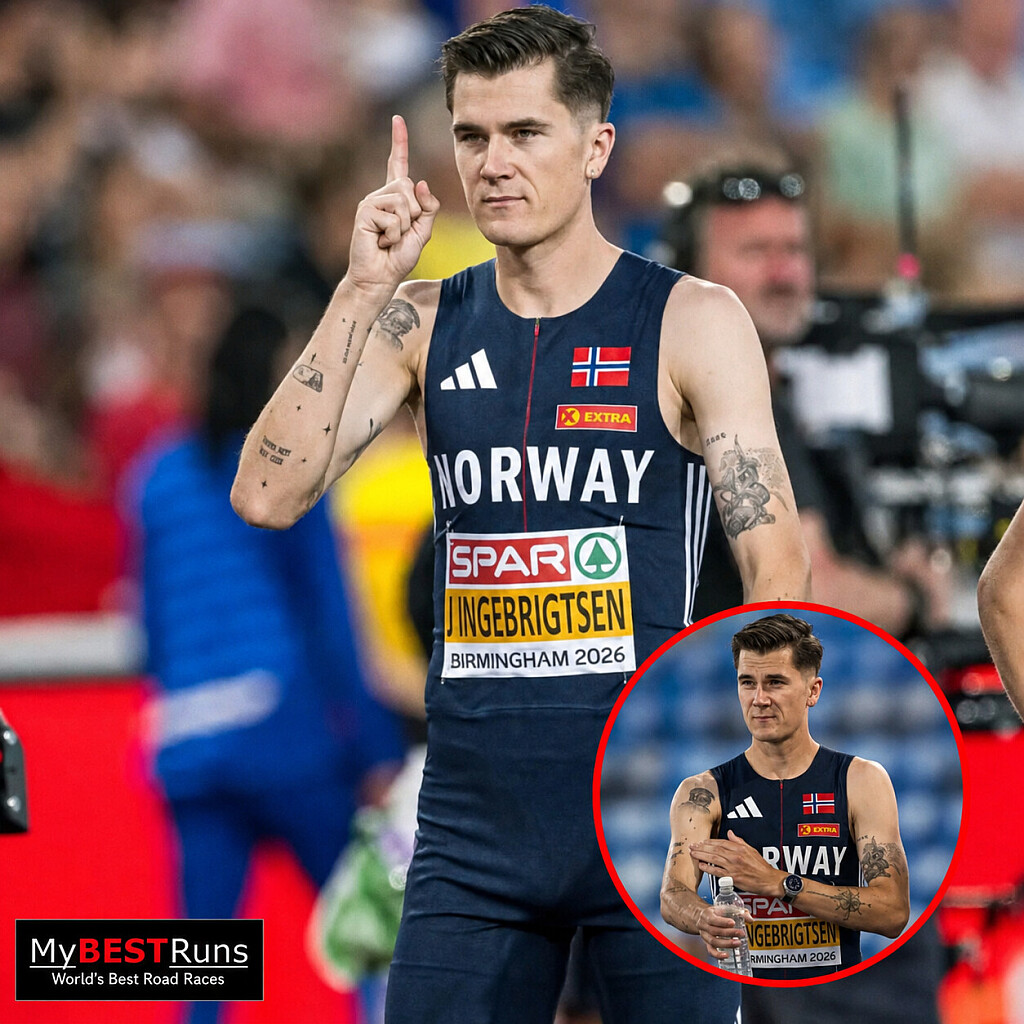
Jakob Ingebrigtsen Heads To Brussels: A Champion Searching For His 1500m Magic
Jakob Ingebrigtsen is heading to Brussels — and the Norwegian superstar arrives with something to prove.
The two-time Olympic champion has been confirmed for the men’s 1500m at the Allianz Memorial Van Damme on September 4, the opening night of the 2026 Wanda Diamond League Final. With Brussels bringing together the world’s elite for the final battle of the Diamond League season, Ingebrigtsen’s presence immediately adds another layer of intrigue to an already spectacular meeting.
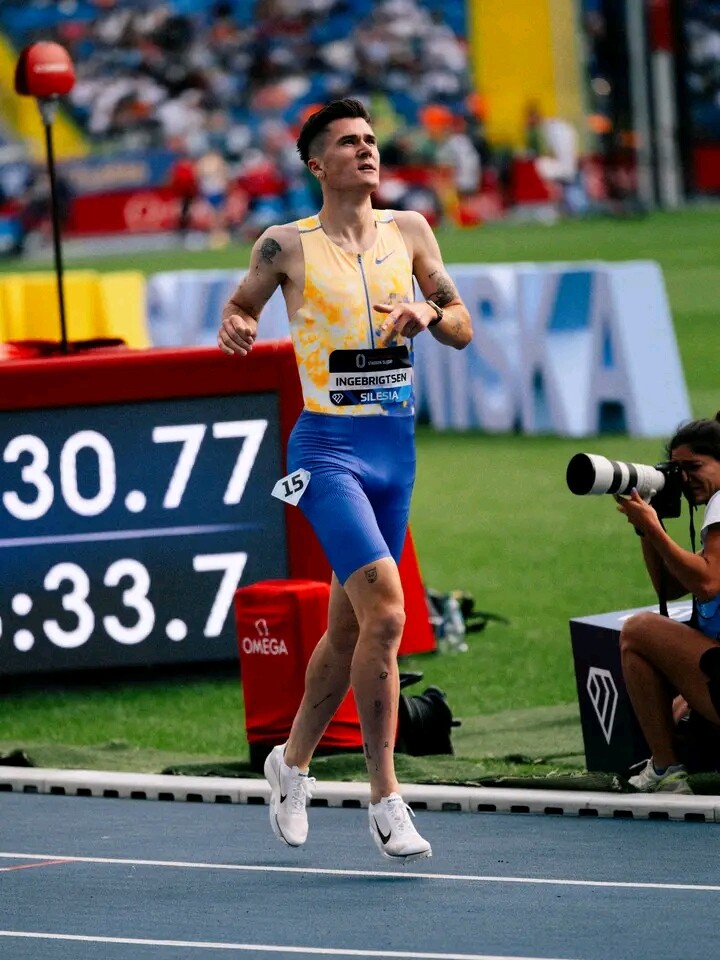
For Ingebrigtsen, however, this is about much more than another Diamond League appearance. It is another important step in a comeback that began under some of the most difficult circumstances of his career.
The Norwegian spent almost 11 months away from competition after an Achilles injury required surgery earlier this year. When he finally returned at the European Championships in Birmingham, there were legitimate questions about how quickly he could rediscover the form that had made him one of the most feared middle-distance runners in the world.
He answered them emphatically.
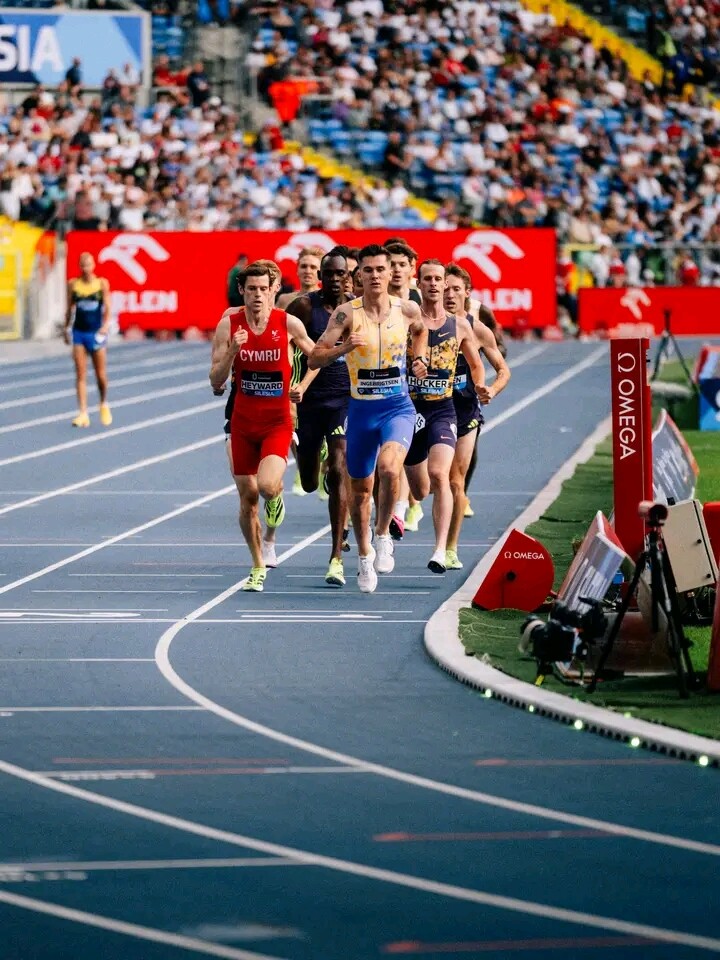
In his first race of 2026, Ingebrigtsen produced a trademark finishing burst to win the European 5000m title in 13:15.29, securing an extraordinary fourth consecutive European crown in the event. The victory also extended his record as the most successful male athlete in European Athletics Championships history.
But the 1500m has presented a very different challenge.
Ingebrigtsen returned to Diamond League competition over 1500m in Silesia on August 23, finishing fourth in 3:31.19. Four days later in Zürich, he was fifth in 3:32.16. Those performances were far from disastrous for an athlete still rebuilding his racing sharpness, but they also revealed that the explosive rhythm that once made him almost untouchable over 1500m is still being recovered.
Now comes Brussels.
The Belgian capital provides Ingebrigtsen with his third Diamond League 1500m race of the season and perhaps his most intriguing opportunity yet to show how far his comeback has progressed.
There is history here, too. In 2024, Ingebrigtsen won the Brussels Diamond League 1500m in 3:30.37, beating Timothy Cheruiyot and Cole Hocker in a world-class field.
Two years later, he returns to the same stage under completely different circumstances.
This time, he is not arriving as the untouchable favourite who has dominated every major 1500m challenge. He is arriving as a champion rebuilding himself — race by race, lap by lap, and with his body still demanding patience after a serious Achilles setback.
That is precisely what makes Friday night so compelling.
Brussels is the opening night of a two-day Diamond League Final, with the Allianz Memorial Van Damme serving as the season-ending championship meeting for the series. For Ingebrigtsen, it represents another opportunity to turn encouraging signs into a definitive statement.
Can he rediscover the speed?
Can he unleash the devastating final 300 metres that has become his trademark?
And, most importantly, can he once again look like the Jakob Ingebrigtsen who has ruled the 1500m and 5000m on the biggest stages?
There is another chapter waiting beyond Brussels.
The World Athletics Ultimate Championship in Budapest, scheduled for September 11–13, promises another major showdown, with Ingebrigtsen expected to face fierce opposition including Britain’s Josh Kerr. The rivalry between the two has already produced some of the most compelling middle-distance battles of recent years.
But before Budapest, there is Brussels.
One race. One final Diamond League stage. One more opportunity for Ingebrigtsen to remind the athletics world that his comeback is not simply about returning to competition — it is about returning to the very top.
The Norwegian has already shown that the championship instinct remains intact.
Now, he needs the 1500m speed to come back.
And if Jakob Ingebrigtsen finds that missing gear in Brussels, the rest of the middle-distance world may have a serious problem.
by Erick Cheruiyot for My Best Runs.
Login to leave a comment
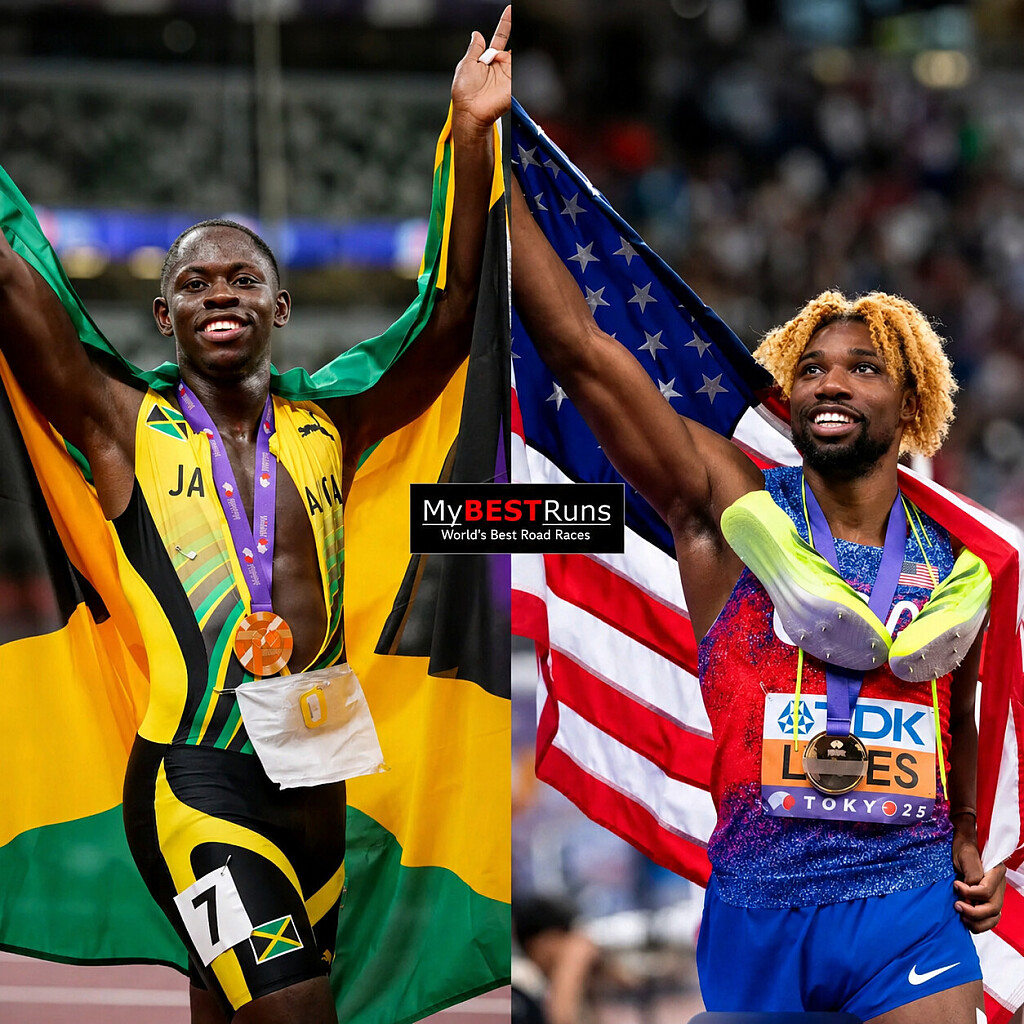
SEVILLE vs LYLES: The Ultimate 100m Showdown Is Coming to Budapest
Budapest is preparing for a sprinting spectacle unlike any other as Jamaica’s Oblique Seville and American superstar Noah Lyles prepare to renew one of the most intriguing rivalries in men’s 100m on the biggest stage of the inaugural World Athletics Ultimate Championship, set for September 11–13, 2026.

This is more than another race. It is a collision between two global champions who have already established themselves among the leading figures of the modern sprinting era. Seville enters the showdown as the reigning world champion, while Lyles arrives with the credentials of an Olympic champion, setting up a mouthwatering battle for supremacy over athletics’ blue-riband distance.
Both sprinters have earned automatic places in Budapest as designated “Ultimate Stars”, a reward for their previous global gold-medal success. That means they will not need to navigate the qualification route like many of their rivals. Instead, the spotlight will immediately fall on the two superstars when they step onto the track in Budapest.
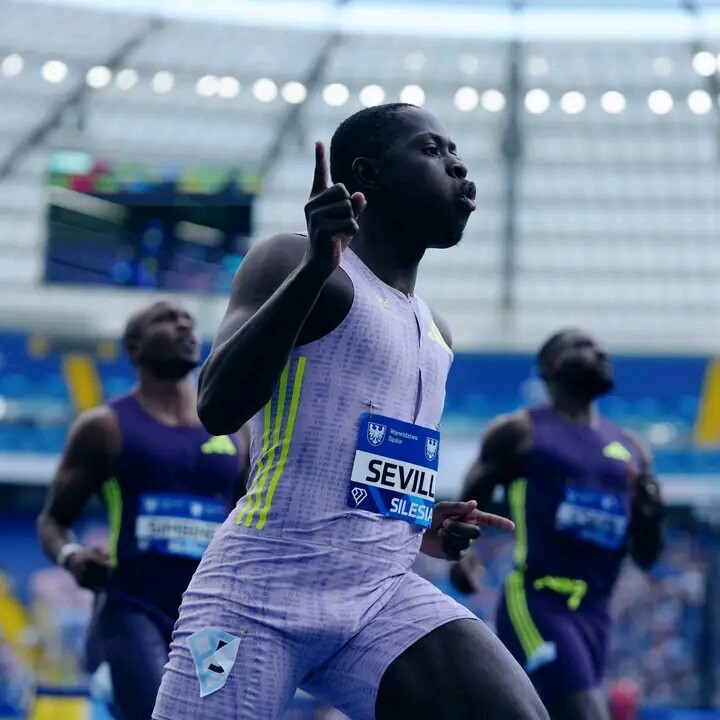
For Seville, the championship represents another opportunity to demonstrate that his rise to the top of the 100m was no coincidence. The Jamaican has developed into a formidable championship sprinter, combining explosive acceleration with the composure required to deliver when the pressure is at its highest. Now, he faces perhaps his most glamorous challenge yet against one of the most decorated sprinters of his generation.
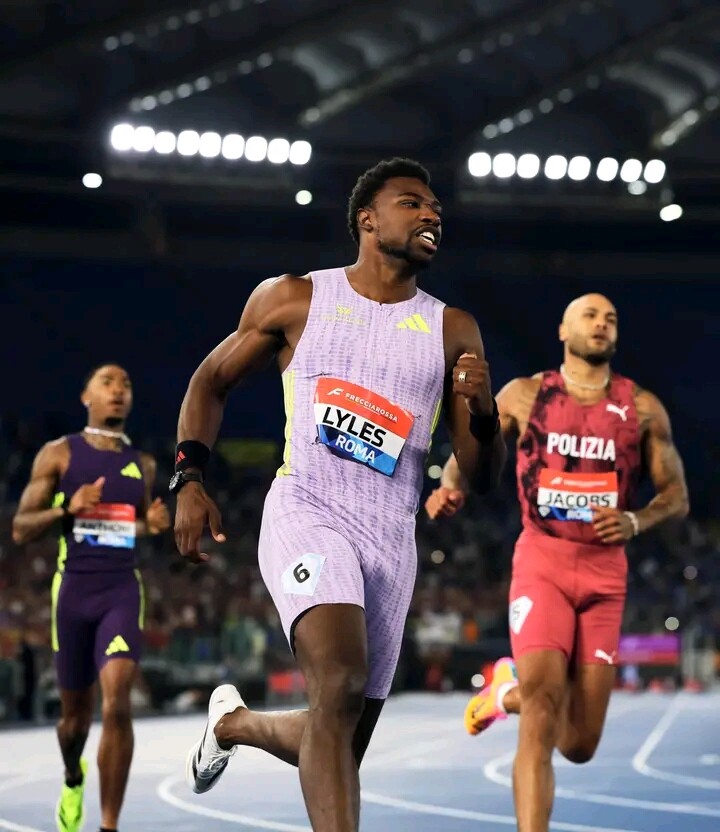
Lyles, meanwhile, brings a résumé built on championship success, confidence and an ability to thrive under the brightest lights. The American has become one of the sport’s biggest personalities, but his ambitions extend far beyond the spotlight. In Budapest, he will be chasing another major victory and the chance to add the Ultimate Championship crown to his growing collection of global honours.
And there is plenty more at stake than bragging rights.
The three-night Budapest finale will bring together the world’s elite athletes, with the winner of each event set to receive a massive US$150,000 prize and, more importantly, the distinction of becoming an Ultimate Champion.
That combination of prestige and prize money should make the 100m one of the most eagerly anticipated races of the entire championship. With Seville representing Jamaica and Lyles carrying American hopes, every fraction of a second could decide who walks away as the ultimate sprint king.
The rivalry now moves to a new stage, with two champions arriving in Budapest carrying different strengths, different personalities and the same burning ambition: to be the man standing when the fastest race of the night is over.
Seville or Lyles? Jamaica’s reigning world champion or America’s Olympic champion?
When the blocks are set and the gun fires in Budapest, who will have the speed, composure and finishing power to claim the Ultimate 100m crown — Oblique Seville or Noah Lyles? The debate starts now.
by Erick Cheruiyot for My Best Runs.
Login to leave a comment

Athletics Must Remain Number One” — Coe’s Final Challenge As The Race For His Successor Heats Up
The battle for the future of world athletics is already taking shape, but outgoing World Athletics President Sebastian Coe has made one message unmistakably clear: athletics must remain at the heart of the Olympic Games.
Speaking ahead of the Diamond League meeting in Zurich, Coe said he remains highly optimistic about the sport’s future and insisted that athletics must protect its position as the leading sport of the Olympic movement.

“There are only two truly global sports, one is football and one is athletics. We must maintain our position as the number one Olympic sport,” Coe said.
The 69-year-old Briton is approaching the final year of his presidency after first taking charge of the global governing body in 2015. He was re-elected for a third term in 2023, which, under World Athletics’ term limits, is his final mandate.
Coe will leave office in 2027, when the next World Athletics president is elected at the Elective Congress in Beijing, immediately before the 2027 World Athletics Championships. The new president will serve a four-year term covering 2027–2031.
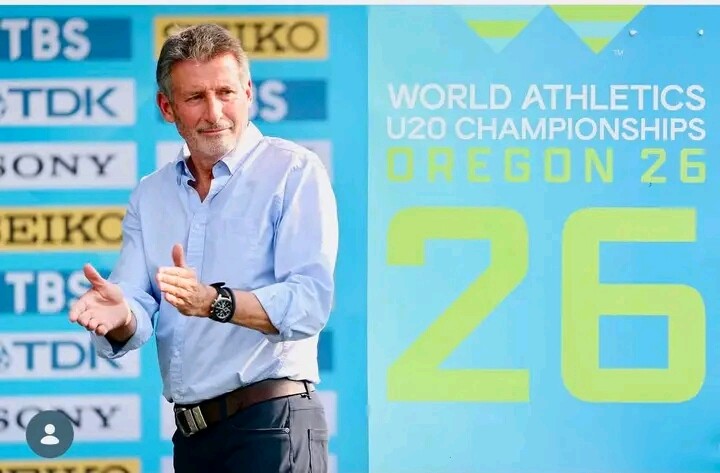
And the succession battle is already gathering momentum.
Among the candidates declared eligible so far are prominent figures from within the sport’s leadership, including World Athletics Vice-Presidents Adille Sumariwalla of India, Raul Chapado of Spain and Ximena Restrepo of Colombia. The current list also includes Yuko Arimori of Japan, Hatem Fouda of Egypt, Ivan Garcia of Uruguay, Jean Gracia of France and Kenya’s Jackson Tuwei.
Restrepo brings a particularly distinguished competitive background to the contest. The Colombian won Olympic bronze in the women’s 400 metres at Barcelona 1992 and became the first woman elected as a World Athletics Vice-President in 2019.
For Coe, however, the final chapter of his presidency is not simply about preparing for his departure. He says his priority over the next year is to continue strengthening the sport so that his successor inherits an organisation capable of growing even further.
“I've never been more optimistic about the future of the sport,” Coe said, adding that whoever succeeds him will inherit “a very much stronger sport” than the one he took over in 2015.
His presidency has coincided with significant changes across the sport, including governance reforms, commercial development and efforts to make athletics more innovative and globally engaging. The launch of the new World Athletics Ultimate Championship in Budapest this September is another example of the organisation’s attempt to create a shorter, high-stakes competition featuring many of the world’s leading athletes.
But the next president will inherit an enormous responsibility.
Athletics is the foundation of the Olympic Games, producing some of the most iconic moments in Olympic history and bringing together athletes from virtually every corner of the world. The challenge for Coe’s successor will be to preserve that unique position while making the sport more commercially powerful, more accessible to younger audiences and even more compelling in an increasingly competitive global sporting landscape.
Coe believes the opportunity is there.
As he prepares to hand over the presidency in 2027, his challenge to the next generation of World Athletics leadership is clear: protect the sport’s Olympic identity, keep pushing its boundaries and make sure athletics remains the heartbeat of the Games.
The question now is not whether Coe will leave a significant mark on athletics, but who will have the vision, influence and leadership required to carry the sport into its next era.
Who do you think should lead World Athletics after Sebastian Coe?
by Erick Cheruiyot for My Best Runs.
Login to leave a comment

Noah Lyles And Letsile Tebogo Set For Another Blockbuster Showdown In Budapest
NOAH LYLES VS LETSILE TEBOGO — ANOTHER CHAPTER AWAITS!
The rivalry between American sprint superstar Noah Lyles and Botswana’s Olympic champion Letsile Tebogo is set to take centre stage once again, with the two global stars heading to Budapest for the inaugural World Athletics Ultimate Championship from September 11–13, 2026.
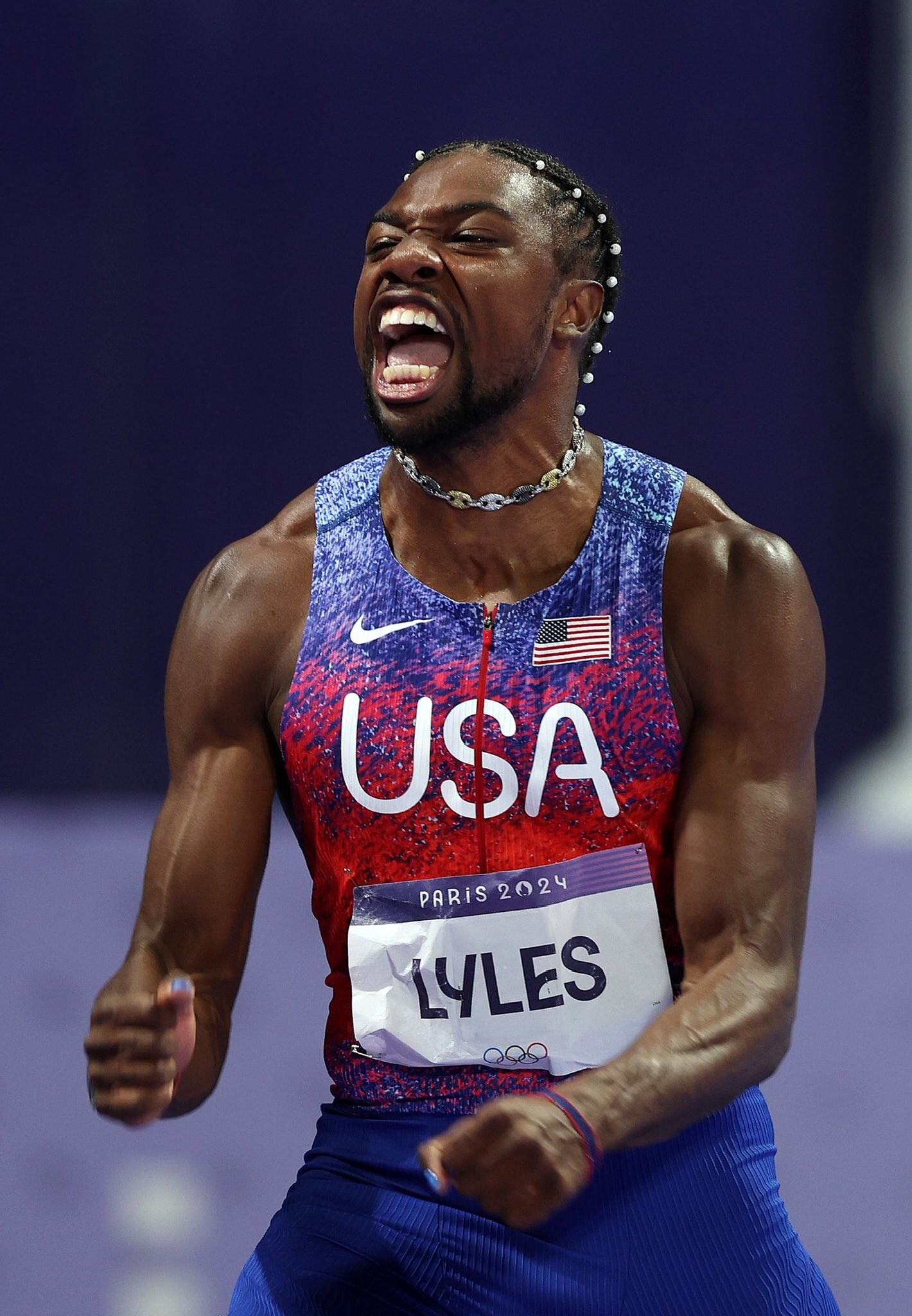
Both Lyles and Tebogo have been named among the event’s Ultimate Stars, adding even more star power to a championship designed to answer one of athletics’ biggest questions: who is the best of the best? World Athletics has assembled Olympic champions, world champions, Diamond League winners and the leading performers of the season for a three-day season finale at Budapest’s National Athletics Centre.
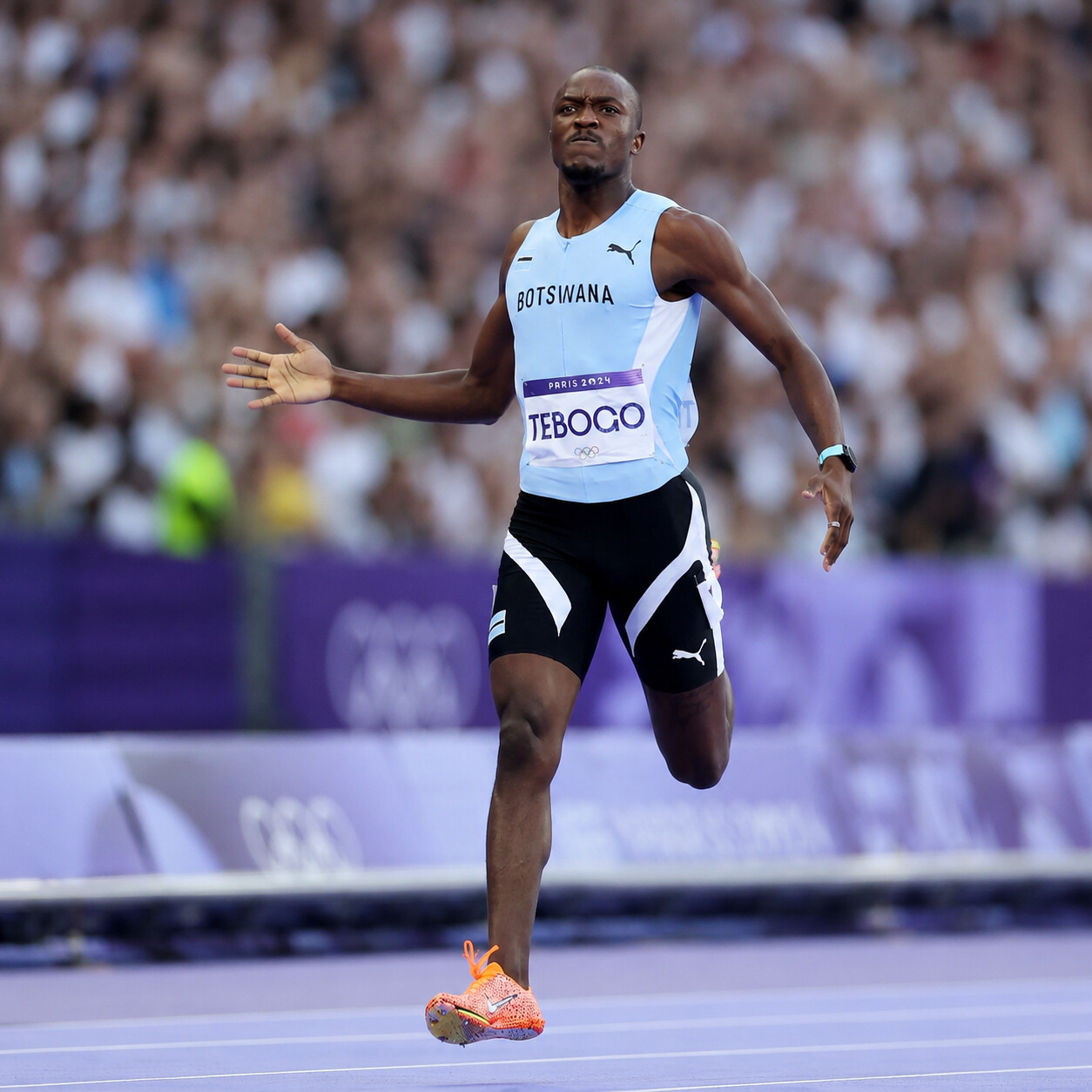
And when the men’s 200m takes centre stage on Sunday, September 13, the possibility of another Lyles-Tebogo showdown promises to be one of the most anticipated moments of the entire championship. The event’s format features semifinals before the final, with the top four athletes from each semifinal advancing.
Their rivalry already carries plenty of history.
At the Paris 2024 Olympic Games, Tebogo produced a magnificent performance to win the men’s 200m in an African record of 19.46, becoming Botswana’s first Olympic champion in any sport. Lyles, who had entered the Games as the reigning world champion and one of the favourites, finished third in 19.70, taking bronze.
The story did not end in Paris.
At the 2025 World Championships in Tokyo, Lyles and Tebogo renewed their battle over the half-lap distance, with Lyles beating the Olympic champion in Monaco before edging him again at the Diamond League Final in Zürich. World Athletics noted that the Zürich margin was just 0.02 seconds, highlighting just how closely matched the two sprinting giants had become.
Now, Budapest offers another opportunity for the pair to settle the score on one of the sport’s biggest new stages.
Lyles enters the Ultimate with a personal best of 19.31 seconds, while Tebogo owns a 19.46 best — the African record he produced in his historic Olympic triumph. The 2026 season has already shown that neither man can afford a moment of hesitation, with Tebogo continuing to establish himself as one of the world's leading 200m specialists and Lyles remaining a formidable force across the sprints.
But this will be about much more than another race between two famous names.
The Ultimate Championship carries a record US$10 million prize pot, the largest ever offered at a single track and field event. Individual champions will receive US$150,000, while every athlete who competes is guaranteed prize money.
That combination of prestige, money and rivalry makes Budapest a fitting stage for the next instalment of one of modern sprinting’s most compelling matchups.
Lyles brings the experience, personality and championship pedigree. Tebogo brings the confidence of an Olympic champion and the explosive speed that has already carried him to the top of the 200m world.
When the gun fires in Budapest, there will be nowhere to hide and no room for mistakes.
Noah Lyles or Letsile Tebogo — who will seize the Ultimate crown?
by Erick Cheruiyot for My Best Runs.
Login to leave a comment
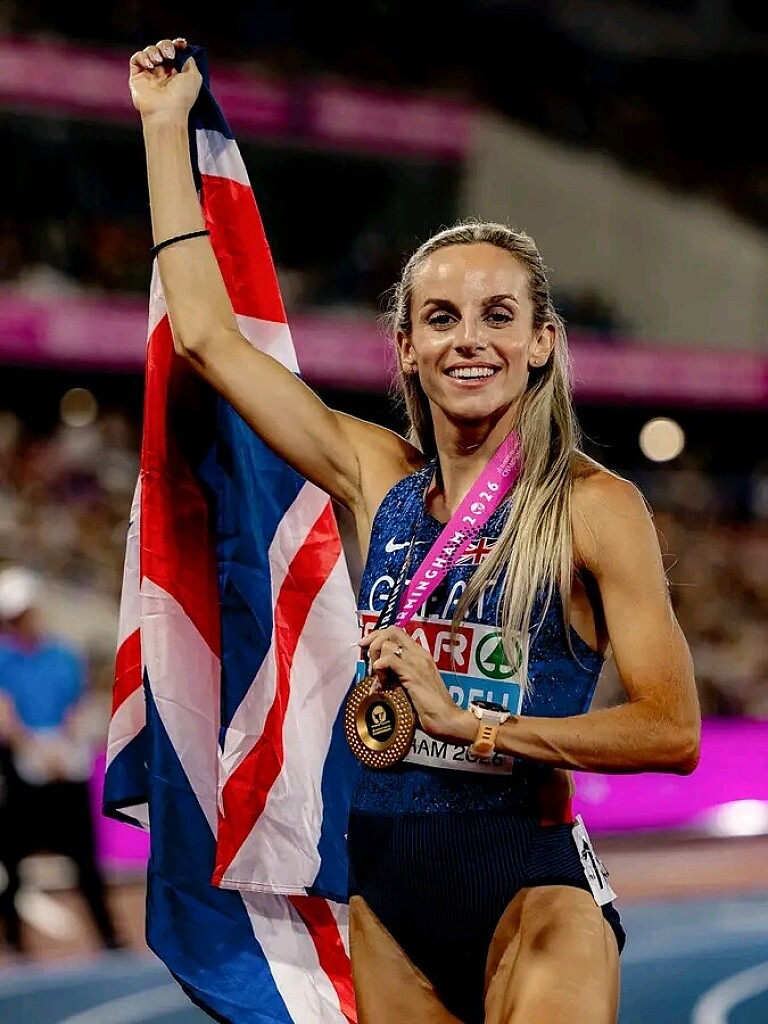
Georgia Hunter Bell Completes a Golden Hat-Trick in Birmingham
Georgia Hunter Bell is turning the 2026 season into a remarkable display of consistency, composure and championship brilliance.
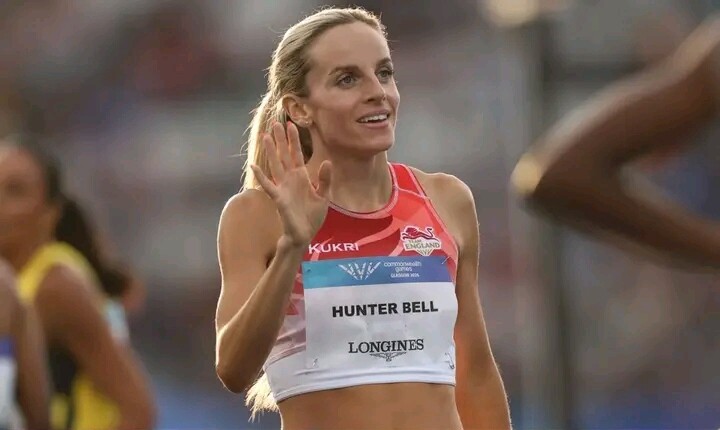
The British middle-distance star added another major title to her growing collection in Birmingham, producing a perfectly judged tactical performance to win the women’s 1500m at the European Athletics Championships in 4:07.78.
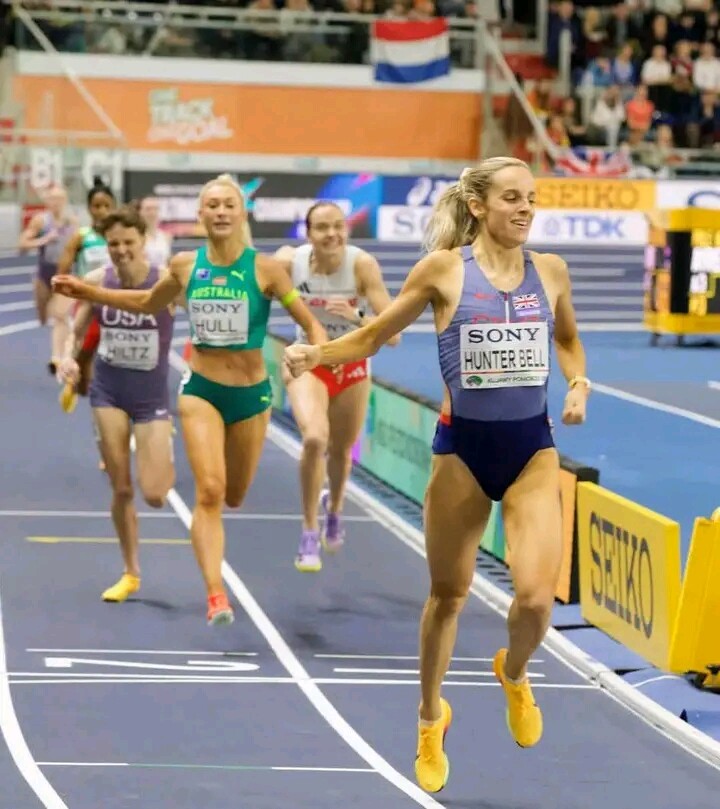
It was her third major championship gold of the season, underlining just how exceptional her campaign has become. Rather than relying on a blistering early pace, Hunter Bell remained patient through the tactical opening stages before making her decisive move when the race began to unfold.
Her latest triumph follows her victory in the 1500m at the World Athletics Indoor Championships in Toruń, Poland, and her Commonwealth Games success over 800m in Glasgow. Three major championships, three gold medals — across two different distances — is a remarkable achievement.
The European title also highlighted Hunter Bell’s versatility. She has repeatedly demonstrated that she can adapt to different race scenarios, whether the pace is aggressive from the gun or the championship demands patience, positioning and a perfectly timed finish.
Now, with three major titles already secured, attention turns to the final piece of what could become an extraordinary championship clean sweep: the World Athletics Ultimate Championship in Budapest, Hungary.
If Hunter Bell can add another victory there, she would complete one of the most impressive major-championship campaigns of the season — a golden run built not only on speed, but on intelligence, resilience and an ability to deliver when the stakes are highest.
Georgia Hunter Bell has already made 2026 a season to remember. One more major title could make it truly unforgettable.
by Erick Cheruiyot for My Best Runs.
Login to leave a comment

Nairobi Makes History the Prize as Kenya Bids to Bring 2029 World Athletics Championships to Africa
Nairobi has formally entered the race to host the 2029 World Athletics Championships, placing Kenya at the centre of a historic contest that could bring the sport’s premier global track and field event to African soil for the first time.
Nairobi has formally submitted its bid to host the 2029 World Athletics Championships, with the Kenyan capital facing competition from London, Rome and Munich. Four cities are now in contention for one historic decision, with World Athletics expected to announce the successful host after the inaugural World Athletics Ultimate Championships conclude in Budapest next month.
For Nairobi, however, this is about far more than securing another major sporting event. A successful bid would break a decades-long geographical barrier: despite Africa’s enormous influence on global athletics, the World Athletics Championships have never been staged on the continent.
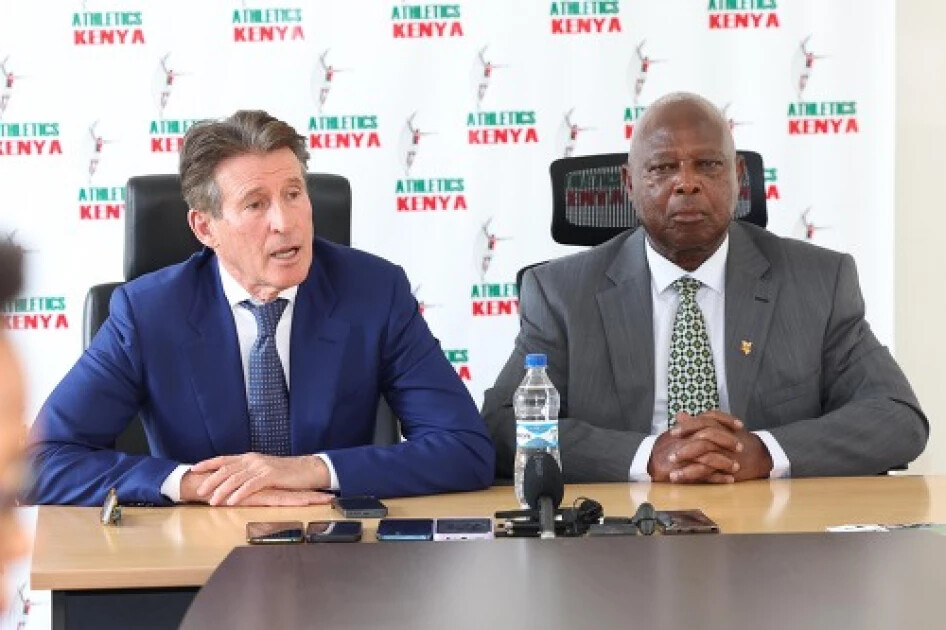
A Nairobi victory would bring the World Athletics Championships to Africa for the first time in the event’s 50-year history and stage the global showpiece at an altitude of approximately 1,800 metres. The proposed venue is Moi International Sports Center Kasarani Stadium, which has a capacity of 48,063, while the Kenyan government has committed full backing for infrastructure, security and event delivery. Kenya’s athletics credentials are equally compelling, with 17 current world records and 72 World Championships gold medals, making it the second-most successful nation in championship history.
The significance of Nairobi’s bid is amplified by Kenya’s extraordinary place in the history of the sport. The country has produced generations of world-class distance runners and currently holds 17 recognised world records across middle- and long-distance events.

Kenya is also the second-most successful nation in World Athletics Championships history by gold medals, with 72 titles after the 2025 edition. At the Tokyo 2025 championships, Kenya claimed five gold medals, including victories by Beatrice Chebet in the 5,000m and 10,000m.
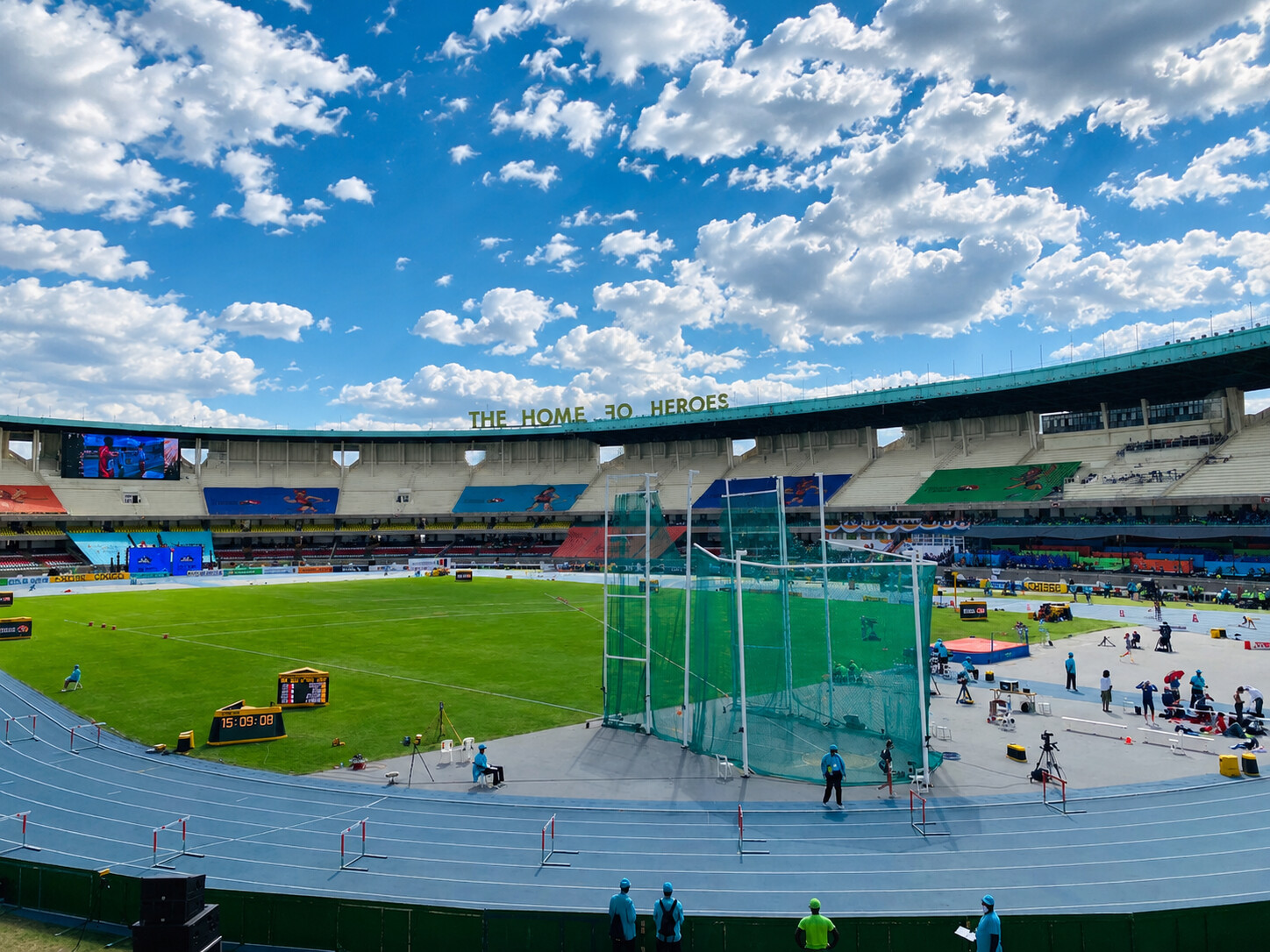
The country also has recent experience staging major international athletics competitions. Nairobi hosted the 2017 World U18 Championships and the 2021 World U20 Championships, while Kenya previously staged the 2007 World Cross Country Championships in Mombasa and the 2010 African Athletics Championships in Nairobi.
A Nairobi victory would therefore carry a powerful symbolism: the athletes who have helped define modern distance running on African soil could finally compete for world titles at home, in front of a Kenyan crowd.
The competition, however, will be formidable. London is seeking a return to the city that hosted the highly successful 2017 World Championships, while Rome and Munich bring their own strong European sporting traditions and established event infrastructure.
Yet Nairobi offers something none of its rivals can match — the opportunity to open an entirely new chapter in the history of the championships.
The World Athletics Championships have travelled across Europe, Asia, North America and the Middle East, but Africa has remained the missing continent on the event’s hosting map. Kenya’s bid seeks to change that.
With the formal bid now submitted and the final presentation and defence completed, Nairobi’s campaign enters its decisive phase. September will determine whether the championships finally make their long-awaited debut on African soil.
Four cities. One host. One potentially historic decision.
In September, World Athletics will decide whether the world’s greatest track and field athletes will converge on Nairobi in 2029 — and whether Africa will finally get its moment on the biggest stage of all.
by Erick Cheruiyot for My Best Runs.
Login to leave a comment

Ultimate Clash Reloaded: Paris Olympic 1500m Medalists Set for Another Epic Battle in Budapest
The rivalry that captivated the athletics world in Paris is about to be reignited on one of the sport's biggest new stages.
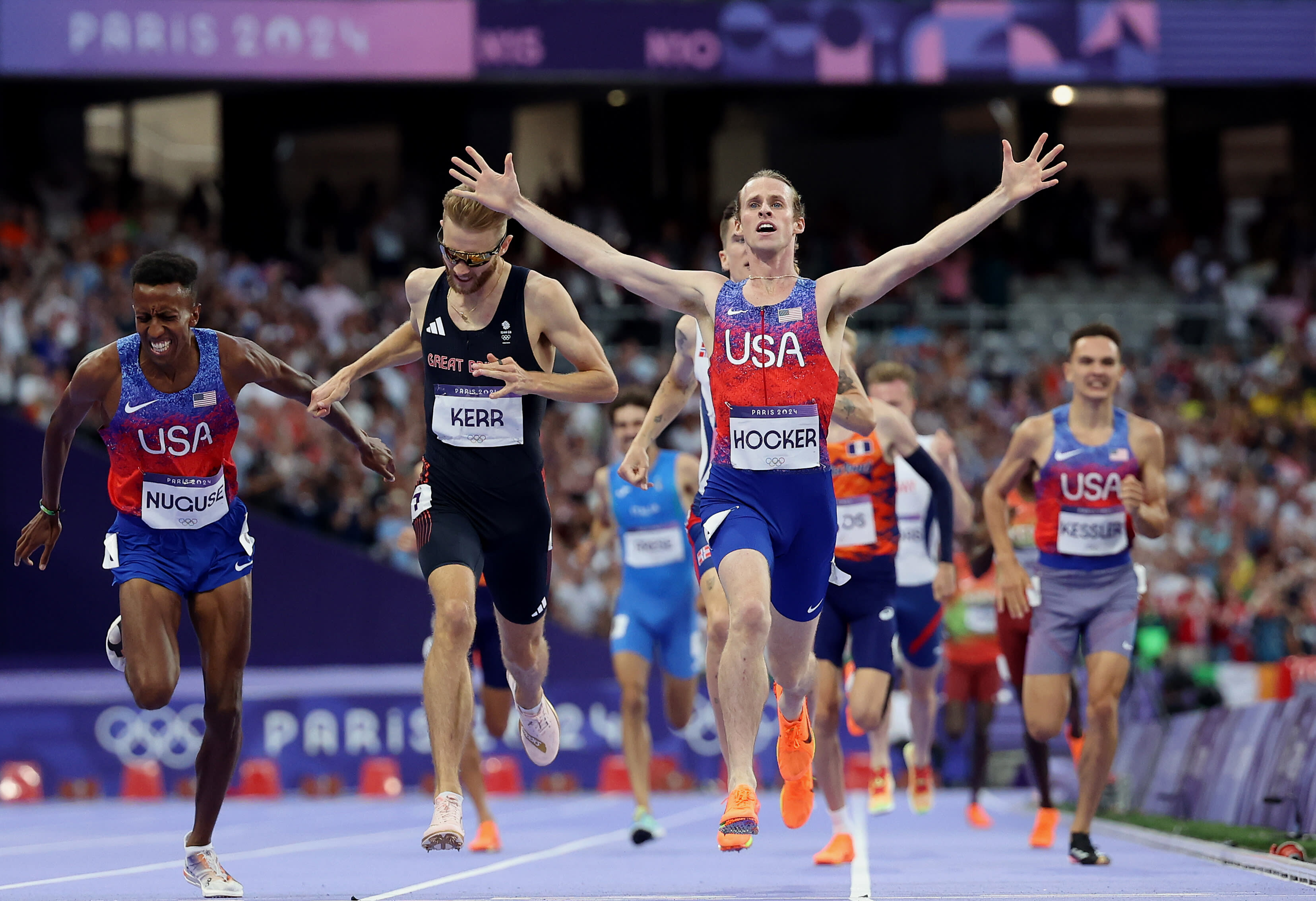
More than two years after producing one of the greatest Olympic 1500m finals in history, Olympic champion Cole Hocker, world mile record holder Josh Kerr, and Olympic bronze medalist Yared Nuguse are set to face each other once again at the inaugural World Athletics Ultimate Championships in Budapest, Hungary, from September 11–13, 2026.
Their unforgettable showdown at the Paris Olympics stunned fans across the globe. Hocker stormed to Olympic gold in a remarkable 3:27.65, smashing the Olympic record in a race that redefined what was thought possible over 1500 metres. Kerr claimed silver after another fearless performance, while Nuguse completed an extraordinary American one-two-three finish by securing the bronze medal.
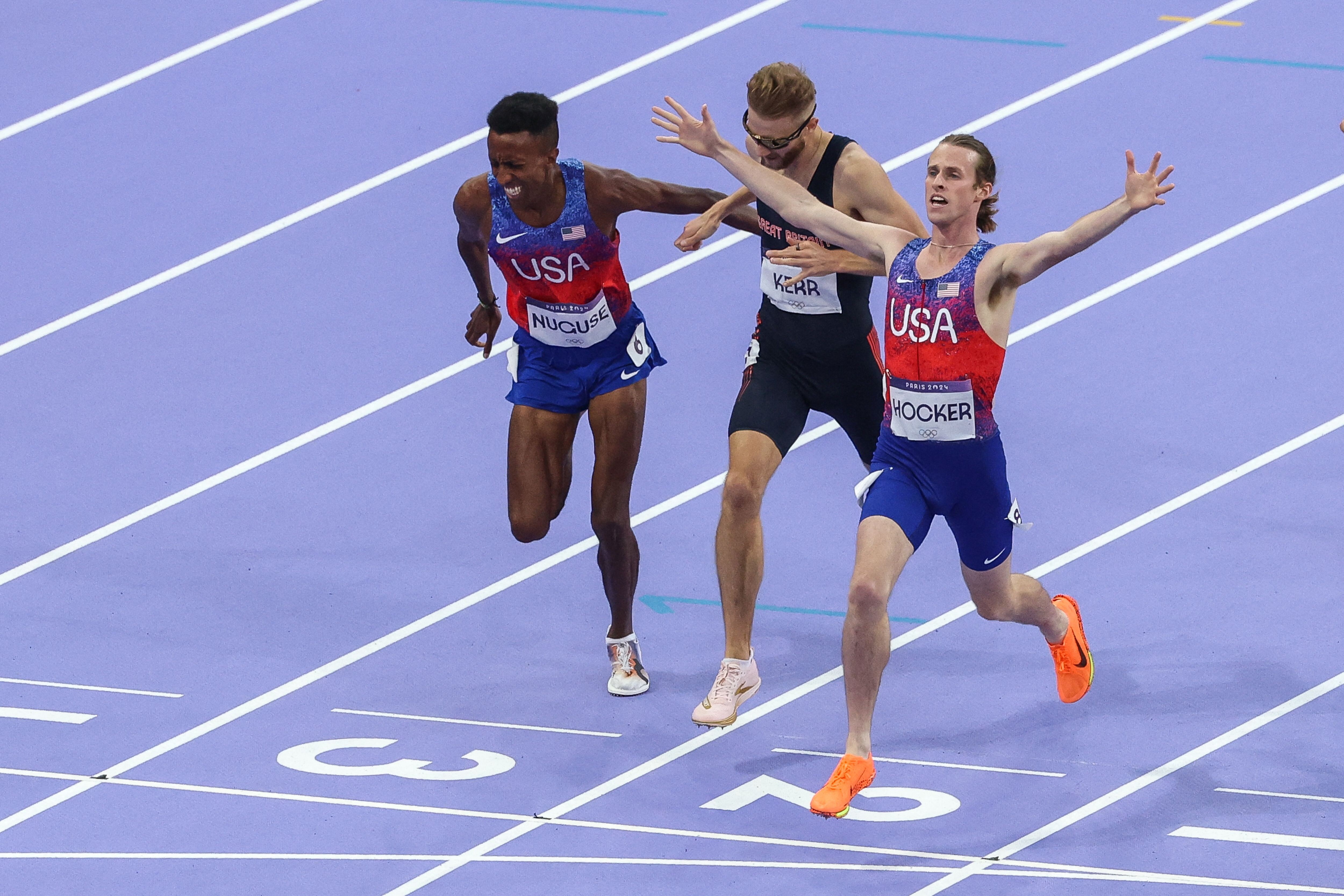
Now, the three medalists return to centre stage with even more at stake.
Hocker arrives in Budapest carrying the confidence of an Olympic champion determined to prove that his triumph in Paris was no one-off. Kerr, meanwhile, enters the championship in arguably the finest form of his career after recently rewriting history in London with a sensational 3:42.66 mile, breaking a world record that had stood for 27 years. For Nuguse, the Ultimate Championships present another opportunity to transform Olympic bronze into the biggest victory of his career.
Unlike traditional global championships, there will be no qualifying rounds, no tactical heats and no margin for error. The men's 1500m will be contested as a straight final featuring only 12 of the world's finest athletes, ensuring every lap is run at championship intensity from the opening gun.
The stakes extend well beyond prestige. The winner will collect a staggering US$150,000 from the event's US$10 million prize fund, adding even greater incentive to what is already shaping up to be one of the most eagerly anticipated races of the year.
The venue itself adds another fascinating chapter to the story. Budapest's National Athletics Centre was where Kerr claimed his world title in 2023, giving the British star fond memories of the track. Hocker will be aiming to reinforce his Olympic dominance, while Nuguse hopes this will finally be the race where he climbs to the top of the podium.
With three proven championship performers, contrasting racing styles and little separating them on talent, the men's 1500m promises to be one of the headline attractions of the inaugural World Athletics Ultimate Championships.
The Olympic champion, the reigning world mile record holder and the Olympic bronze medalist are ready to write the next chapter of one of middle-distance running's greatest modern rivalries.
Budapest awaits. The only question left is: who will emerge as the Ultimate Champion?
by Erick Cheruiyot for My Best Runs.
Login to leave a comment

A Titanic Women's 800m Showdown Awaits As Budapest Prepares For A Race To Remember
The countdown to the inaugural World Athletics Ultimate Championship has already ignited excitement across the athletics world, but few events promise as much drama as the women's 800 metres. With a field packed full of world-class talent, Budapest is set to host what could become one of the most memorable two-lap races of the 2026 season.
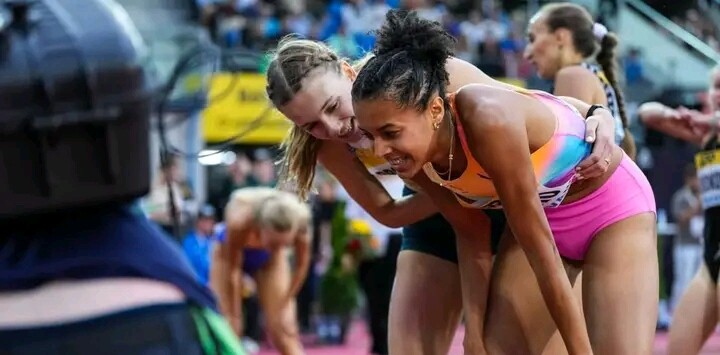
Scheduled for September 11–13 at the National Athletics Centre in Budapest, Hungary, the championship will bring together the sport's finest athletes while offering a record-breaking prize fund of US$10 million. Among the headline attractions is an extraordinary women's 800m lineup that blends raw speed, championship experience, fearless racing and tactical brilliance.
Leading the conversation is Switzerland's Audrey Werro, whose remarkable rise has established her among the world's elite. Producing sensational performances throughout the season, Werro has continued to rewrite expectations with her aggressive racing style and exceptional finishing strength, making her one of the favourites heading into Budapest.
Standing in her way is Great Britain's Olympic champion Keely Hodgkinson, one of the most accomplished 800m runners of her generation. Renowned for her flawless race management, devastating finishing kick and ability to thrive under pressure, Hodgkinson remains a formidable championship competitor capable of delivering when the stakes are highest.
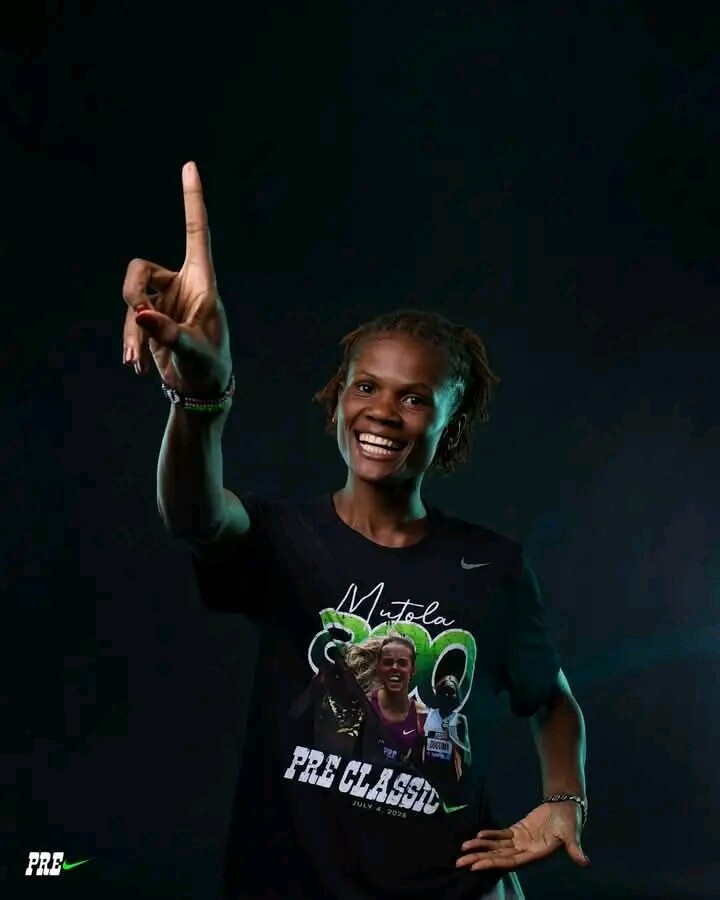
Kenya's Lilian Odira also enters the championship carrying enormous confidence as the reigning world champion. Having already demonstrated her ability to conquer major finals against elite opposition, Odira possesses the composure and resilience needed to challenge for another global title on one of athletics' biggest stages.
Adding even greater intrigue is Dutch superstar Femke Bol, whose transition from the 400m hurdles to the 800m has captured global attention. Already one of the sport's biggest names, Bol has shown remarkable adaptability and endurance, emerging as a genuine contender capable of upsetting the established specialists.
Completing this exceptional lineup is Great Britain's Georgia Bell Hunter, whose consistency throughout the season has firmly established her among the world's best. Her string of impressive sub-1:55 performances has demonstrated both speed and maturity, ensuring she will be a serious threat in any tactical or fast-paced final.
With every major contender arriving in outstanding form, the women's 800 metres promises far more than a battle for gold. It represents a clash of contrasting racing philosophies—fearless front-running, calculated tactics, explosive finishing speed and championship experience—all converging in one unforgettable contest.
As the inaugural World Athletics Ultimate Championship approaches, anticipation continues to build for what could become one of the defining races of the year. When the athletes take their places on the start line in Budapest, only one will leave wearing the crown, but the journey to that finish line promises a spectacle worthy of the global stage.
by Erick Cheruiyot for My Best Runs.
Login to leave a comment
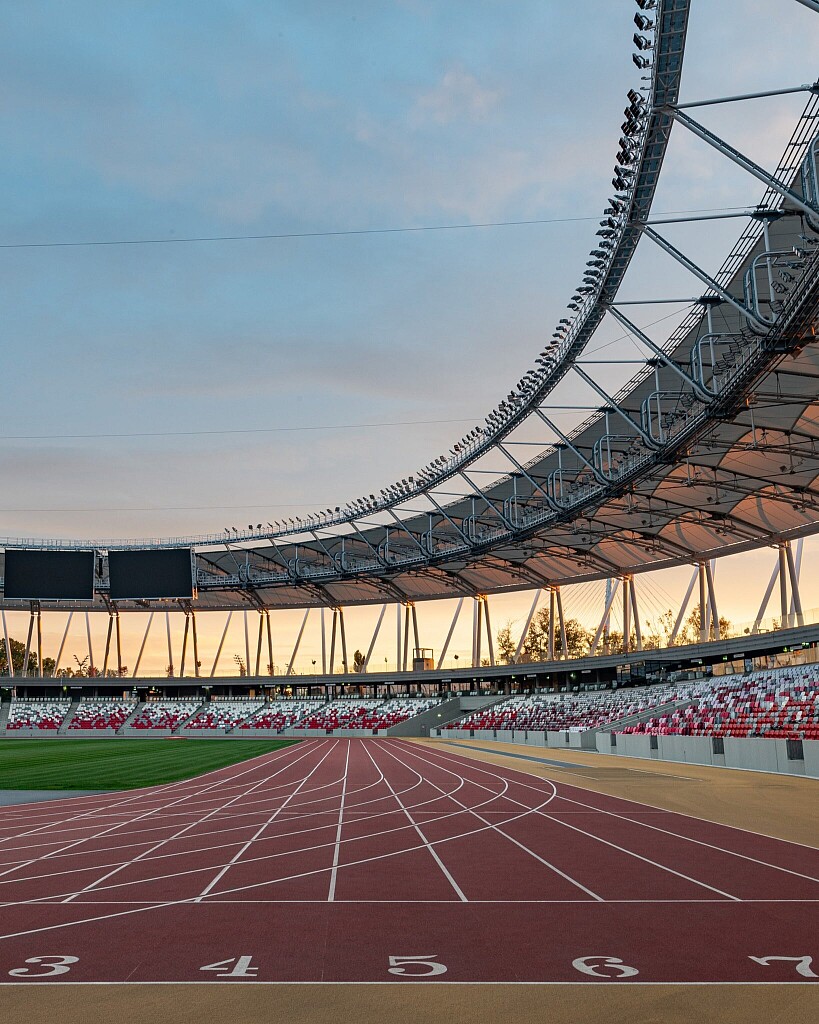
Budapest Set to Ignite the Athletics World with Historic Ultimate Championship
The city of Budapest is once again preparing to stand at the centre of global athletics as it readies itself to host one of the most anticipated spectacles of the 2026 season — the inaugural World Athletics Ultimate Championship from September 11 to 13.
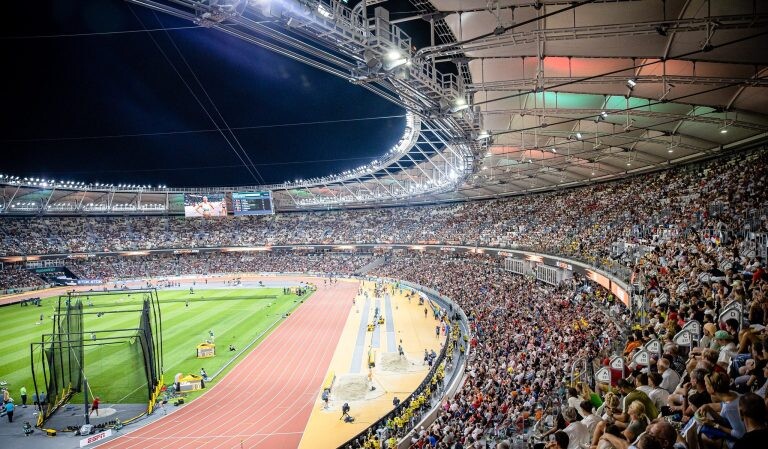
After delivering a breathtaking and unforgettable edition of the World Athletics Championships Budapest 23, the Hungarian capital is now set to welcome the sport’s biggest stars for a brand-new championship designed to bring together only the very best in the world. The atmosphere that captivated fans in 2023 is expected to return with even greater intensity as Budapest transforms into the ultimate battleground for elite athletics.

The newly introduced championship promises a rare collision of champions, featuring Olympic gold medallists, reigning world champions and Diamond League winners all competing head-to-head for the prestigious title of “Ultimate Champion” in their respective events. With pride, legacy and global supremacy on the line, every race, jump and throw is expected to carry extraordinary significance.
From explosive sprint showdowns to dramatic distance battles and field event duels, the competition is already generating massive excitement across the athletics community. The event is designed to elevate the sport to another level by assembling only the finest performers of the season in one high-stakes championship atmosphere.
Budapest has rapidly established itself as one of the world’s premier athletics destinations, and the return of the sport’s biggest names to the iconic National Athletics Centre is expected to deliver another unforgettable chapter in track and field history. Fans across the globe are now counting down to what could become one of the defining events of the modern athletics era.
by Erick Cheruiyot for My Best Runs.
Login to leave a comment
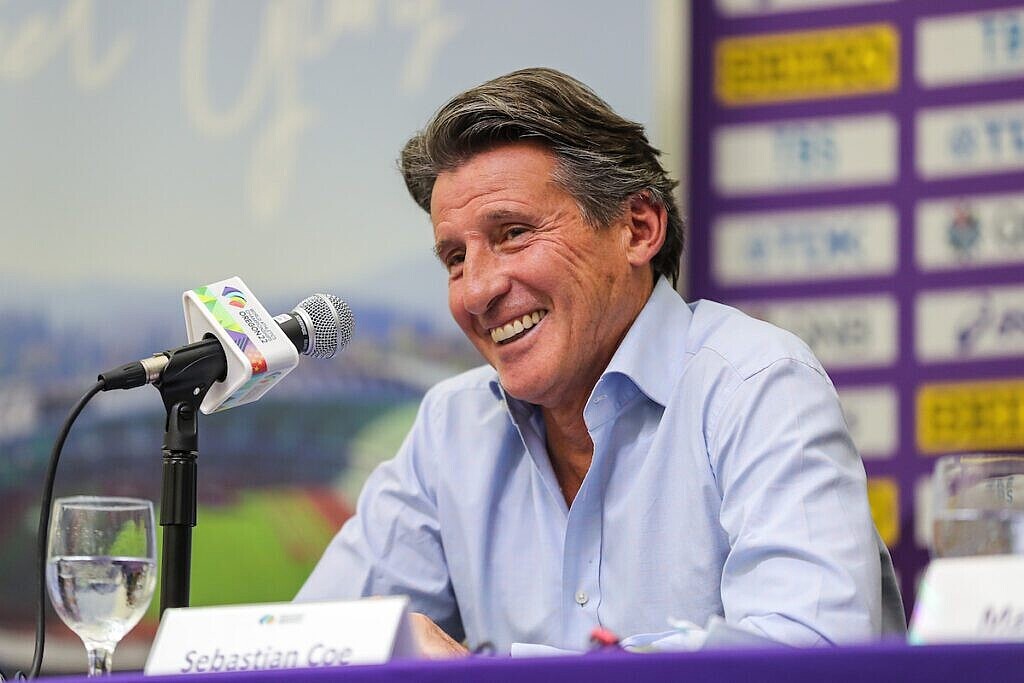
World Athletics announces new ultimate championship event in 2026
"We want to feature the biggest stars and make it a must-watch global sporting event," said World Athletics president Sebastian Coe.
On Monday, World Athletics unveiled plans for a new biennial event to take place during non-world championship/Olympic years, and serving as a lucrative end-of-season finale. The World Ultimate Championships will be a revolutionary global event designed to redefine the athletics calendar and crown the best of the best in athletics. This ultimate championship will bring together world champions, Olympic champions, Diamond League winners and the year’s top-performing athletes to compete for the top prize of USD $150,000.
In Sept. 2026, Budapest will play host to the inaugural World Ultimate Championships, a three-day event boasting a $10 million prize purse. This “best vs. best” competition will feature the top 16 athletes from the 2026 season competing in a track semi-finals and finals format, while the top eight athletes in field events (throwing and jumping) will battle it out in the field finals. Each event winner will pocket USD $150,000—the highest amount of prize money offered at a track and field championship—with additional prize money distributed to the eight finalists. This substantial financial incentive aims to elevate the sport and attract the world’s top athletes.
World Athletics President Sebastian Coe said in a press release: “This is about the best of the best; only 400 athletes from about 70 countries. We want this to look different, we want this to feel different (than a World Championships).” Coe’s vision for the World Athletics Ultimate Championship is to deliver high action and excitement for fans. “We want to feature the biggest stars and make it a must-watch global sporting event.”
Designed to captivate millions of television viewers worldwide, the championship will feature a compact three-day athletics schedule, with each evening session lasting under three hours. The format includes semi-finals and finals for track events, and straight finals for field events, ensuring a thrilling and fast-paced competition. According to World Athletics, athletes will not compete for their sponsors, but instead for their national teams, adding an extra layer of pride and excitement to the competition.
The press release reveals that the ultimate event will include the traditional sprint disciplines, middle and long-distance races, relays, jumps and throws. The future hosts beyond the inaugural World Athletics Ultimate Championship in Budapest have not been announced.
by Marley Dickinson
Login to leave a comment
