

Running News Daily
Running News Daily is edited by Bob Anderson and team. Send your news items to bob@mybestruns.com Advertising opportunities available.
Index to Daily Posts · Sign Up For Updates · Run The World Feed
Articles tagged #2030
Today's Running News
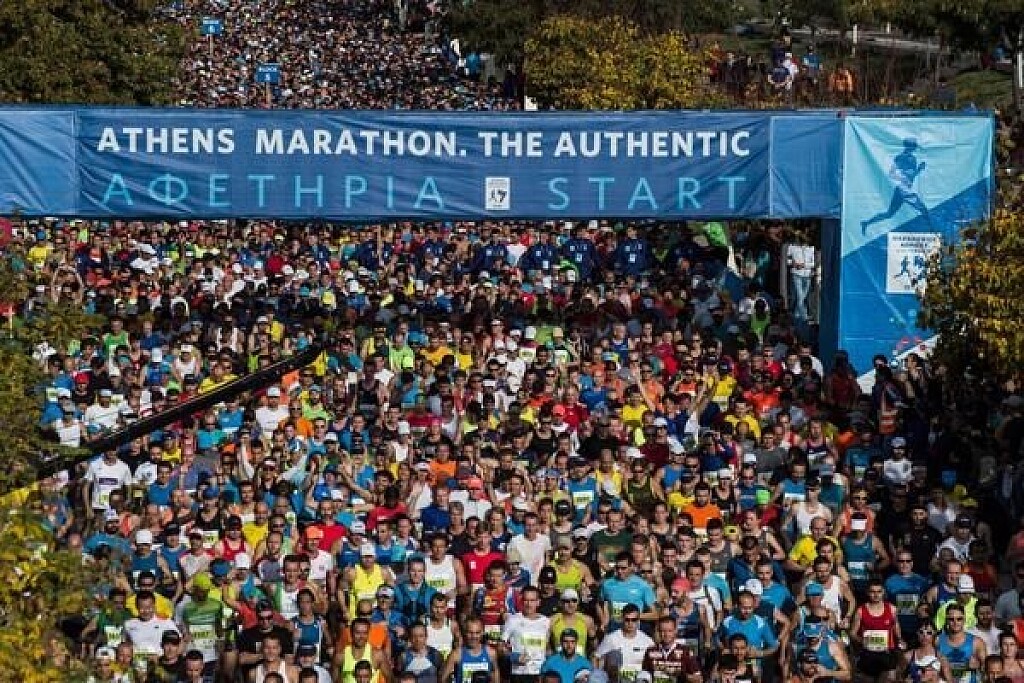


A New Era Begins: World Athletics Unveils Standalone Marathon Championships from 2030
In a bold and transformative move, World Athletics has laid out a visionary roadmap that will reshape the future of distance running. At the heart of this strategy is the introduction of a standalone World Marathon Championships, set to debut in 2030—marking a historic shift for one of the sport’s most iconic disciplines.
For decades, the marathon has been a cornerstone of the World Athletics Championships, embodying endurance, tradition, and global prestige. However, under the new structure, the event will make its final appearances within the Championships in 2027 and 2029 before stepping into its own spotlight. From 2031 onward, road races—including the marathon—will no longer feature in the World Championships program.
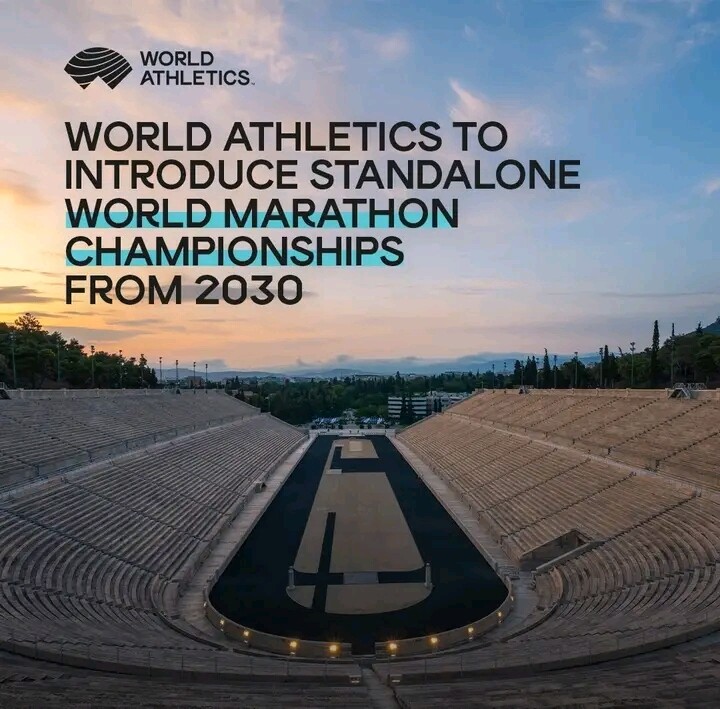
Instead, the newly established World Marathon Championships will stand as an annual spectacle, designed to elevate the discipline to unprecedented heights. In a unique format, elite men’s and women’s races will alternate each year, maintaining the rhythm of top-level competition while creating a more focused and commercially vibrant platform for the sport’s biggest stars.
This evolution is not happening in isolation. World Athletics has emphasized that the championship is being built in close collaboration with key stakeholders who have helped turn the marathon into a global phenomenon—from race organizers to commercial partners. While further details of these partnerships are yet to be revealed, the intention is clear: to create an event that reflects both the heritage and the modern dynamism of road running.
Meanwhile, the World Athletics Road Running Championships will continue as a separate annual competition, ensuring that shorter road distances retain their own global stage.
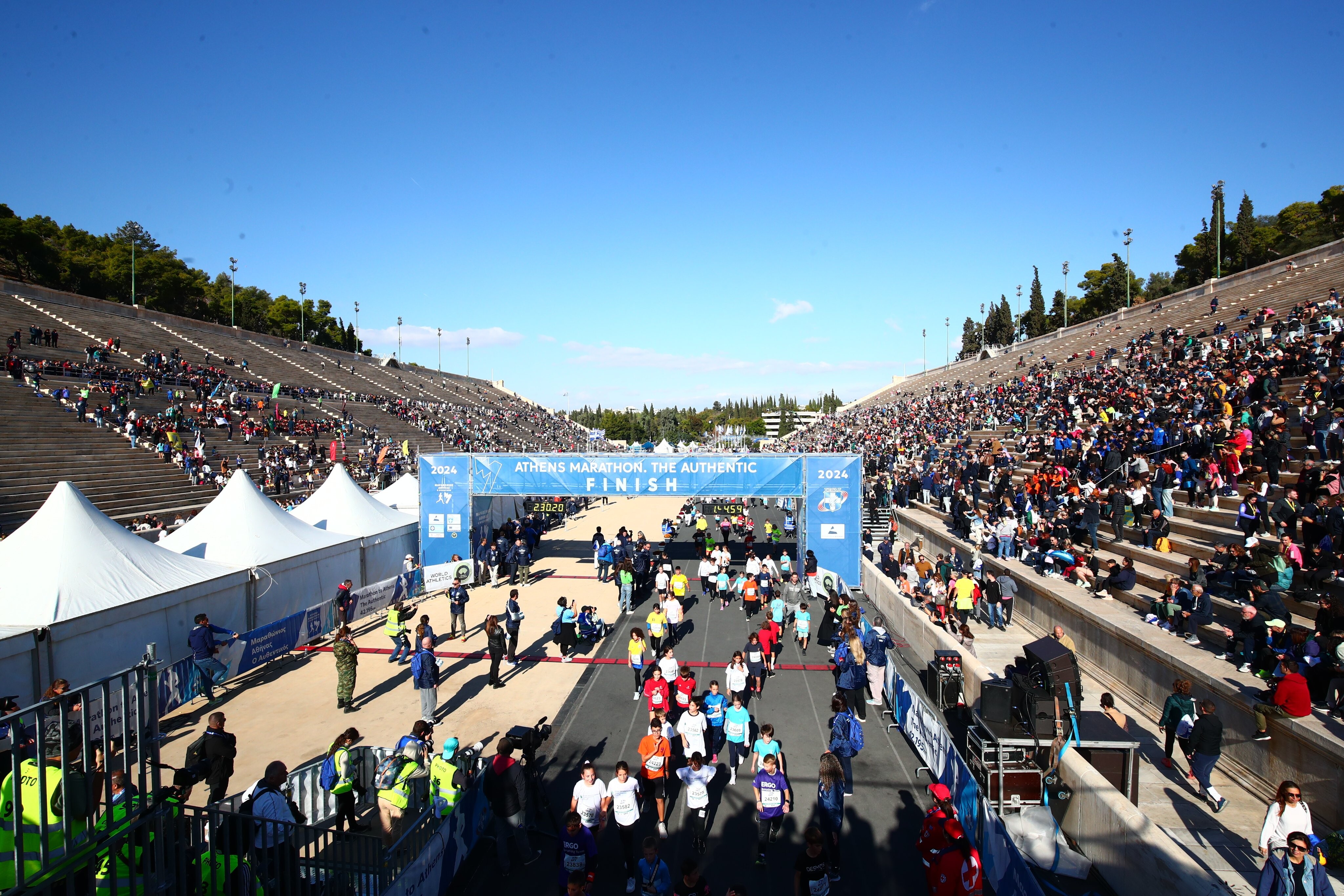
Adding a layer of historical significance to this new chapter, the ancient city of Athens has emerged as the preferred host for the inaugural edition in 2030. Widely regarded as the spiritual home of the marathon, Athens offers a symbolic and cultural resonance that aligns perfectly with the ambitions of the new championship. The Athens Marathon The Authentic—already steeped in legend—has further strengthened its case by attaining Elite Label status, reinforcing its credentials on the global stage.
If confirmed, Athens would not only host a new competition but also bridge the ancient origins of the marathon with its modern evolution, creating a powerful narrative that celebrates both legacy and progress.
This strategic shift signals more than just a structural change—it represents a reimagining of how the marathon is experienced, celebrated, and elevated worldwide. By giving the event its own dedicated platform, World Athletics is betting on a future where the marathon stands taller than ever, commanding global attention in a way never seen before.
by Erick Cheruiyot for My Best Runs.
Login to leave a comment
A New Global Chapter: World Athletics Awards 2028 and 2030 Championships to Asia’s Rising Cities
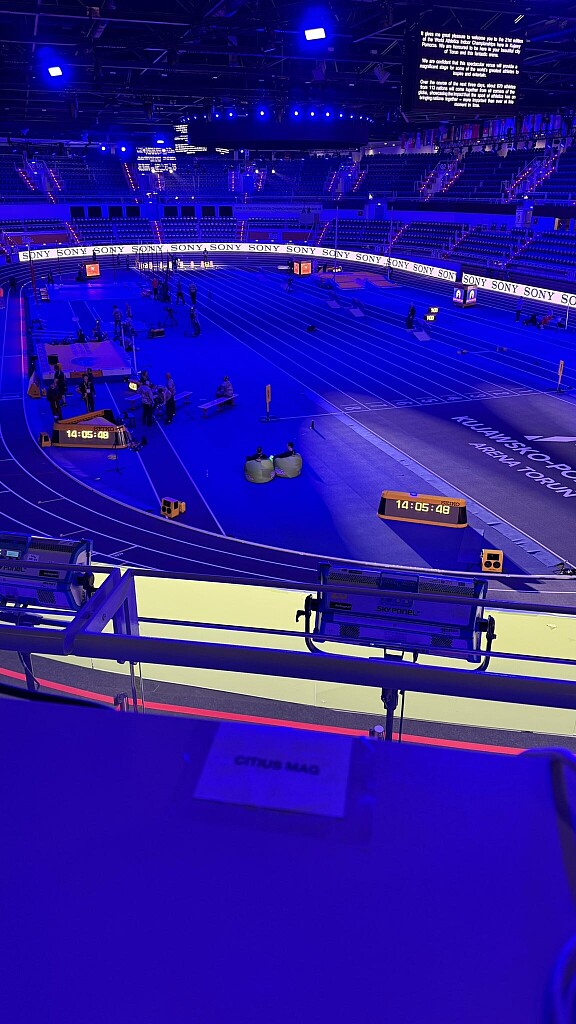
In a landmark decision that underscores the continued globalization of athletics, the World Athletics Council, during its 240th meeting in Toruń, officially confirmed the host cities for three major upcoming championships—each reflecting the sport’s expanding footprint and growing appeal across Asia.

India, Kazakhstan, and China have emerged as the chosen hosts for prestigious global events, signaling both trust in their organizational capabilities and recognition of their increasing influence in the athletics world.

The eastern Indian state of Odisha has been awarded the 2028 World Athletics Indoor Championships. Known for its passionate support of sport and its rapidly developing infrastructure, Odisha continues its rise as a prominent destination on the international athletics calendar. This selection builds on India’s broader ambition to establish itself as a global sporting hub.
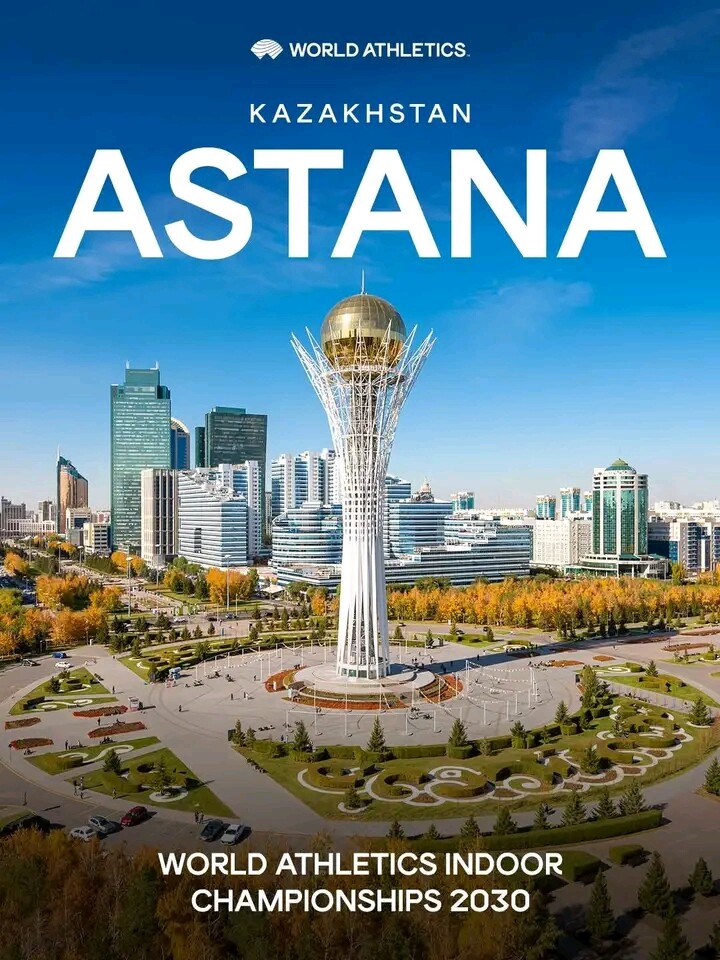
Two years later, the spotlight will shift to Central Asia, where Astana will host the 2030 edition of the same championships. Astana’s modern facilities and strategic vision position it as an exciting new frontier for indoor athletics, promising a unique blend of elite competition and cultural vibrancy.

Meanwhile, the 2028 World Athletics Race Walking Team Championships have been awarded to Hefei. The Chinese city, already familiar with hosting international competitions, is expected to deliver a technically sound and highly competitive event in one of athletics’ most demanding disciplines.
These selections reflect more than logistical planning—they represent a deliberate shift toward inclusivity and global reach. By bringing premier competitions to diverse regions, World Athletics continues to inspire new generations of athletes while strengthening the sport’s worldwide community.
As the road to 2028 and 2030 begins, anticipation will steadily build. New stadiums will come alive, new heroes will emerge, and new stories will be written—each step, stride, and finish line contributing to the ever-evolving legacy of athletics.
by Erick Cheruiyot for My Best Runs.
Login to leave a comment
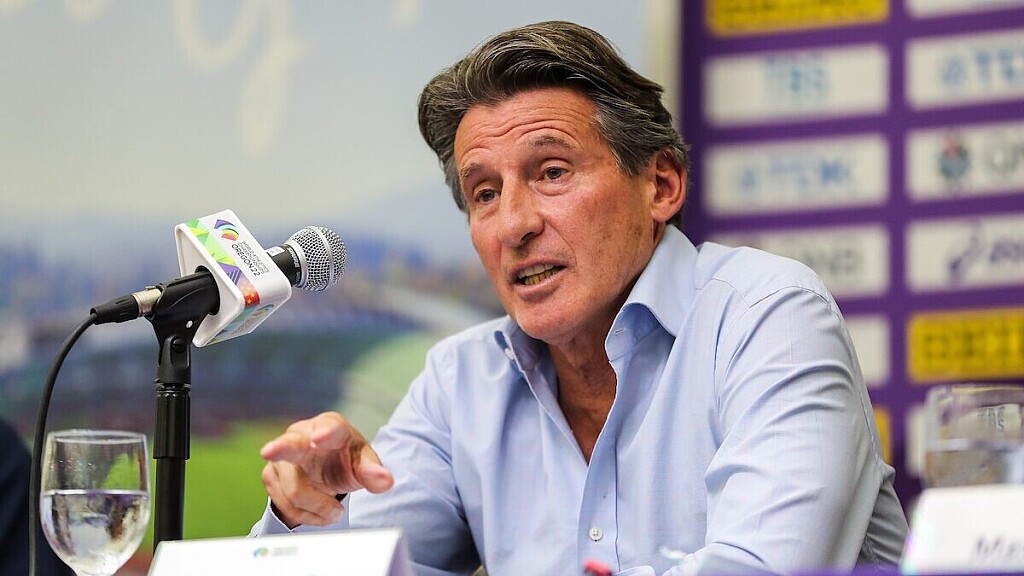
World Athletics president pushing cross country for 2030 Olympics
It’s no secret that World Athletics president Seb Coe has ambitions to take over the International Olympic Committee (IOC) president position in the organization’s 2025 election. He looks to succeed Thomas Bach, who has served as president of the IOC for 12 years. Coe’s presidential manifesto pledges a clean and fair Olympics, and potentially the addition of some traditional summer and fall sports to the Winter program—including cross country.
During Coe’s year-end meeting with the media, he alluded to the need for the Winter Olympics to become “more accessible and open to new ideas.” The highest participation for the Winter Games was 93 countries at the 2018 Games in PyeongChang, South Korea, whereas the Paris 2024 Summer Games saw athletes from over 200 nations.
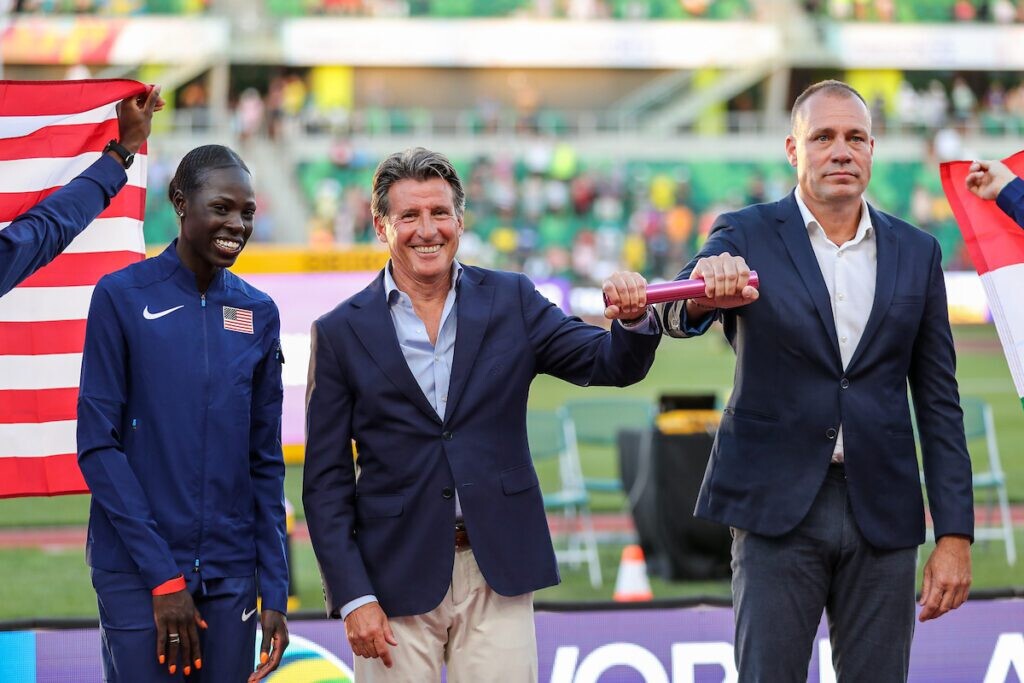
To expand the global audience, Coe believes the addition of fall or indoor sports into the Winter program could attract athletes and viewers from regions of the world that might not have snow. Cross country (running) and cyclo-cross (cycling) are at the forefront of this push, offering the opportunity to expand the Winter Games without straying too far from its profile or mission.
Cross country has faltered on the World Athletics calendar since the pandemic. The 2023 championships held in Bathurst, Australia, were too late in the season (February, two months after the cross-country season), which made it a lengthy commitment of time and travel for any athlete. The 2024 meet, originally scheduled for Croatia on Feb. 10-11, was reassigned to Serbia on March 30 when it emerged that Croatia was not ready to host. Although Serbia did all it could on six months’ notice, the event was heavily criticized for its course, spectator-friendly experience, and timing, as it was held (again) well after the cross-country season.
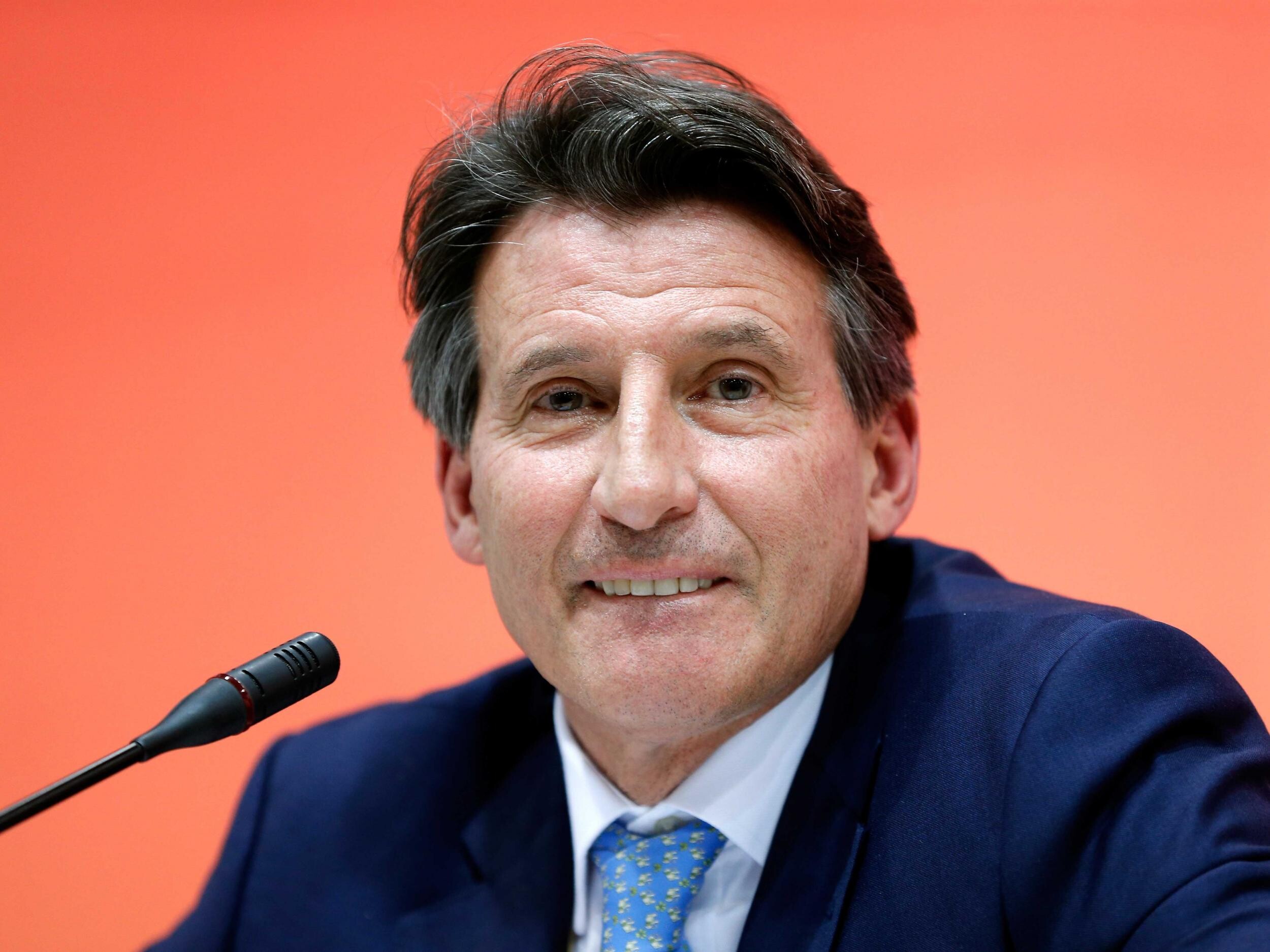
Coe has made it clear, on multiple occasions, that he believes there is a place for cross country in the professional running calendar, but there needs to be a way to make it more attractive to fans. “I’m a great adherent of cross country, and I think it’s a really important part of the endurance paradigm,” said Coe. “But it needs help… it needs space.”
The program for the 2026 Winter Olympics in Milan-Cortina D’Ampezzo, Italy is already set, but Coe is targeting the inclusion of the two sports by the 2030 and 2034 Olympics, which were awarded to the French Alps and Salt Lake City earlier this year.
If Coe is elected as the next president of the IOC in March 2025, he will vacate his current position as the head of World Athletics. The 68-year-old has served as World Athletics president since 2015 and was re-elected to a third (and final) four-year term in 2023. Coe was a two-time Olympic gold medalist during his own career and delivered the immensely popular London Olympics as chairman of the local organizing committee.
by Marley Dickinson
Login to leave a comment

Geneva Marathon winner disqualified for doping
The athlete claimed he did not know what EPO or furosemide were and had no idea how they both ended up in his body.
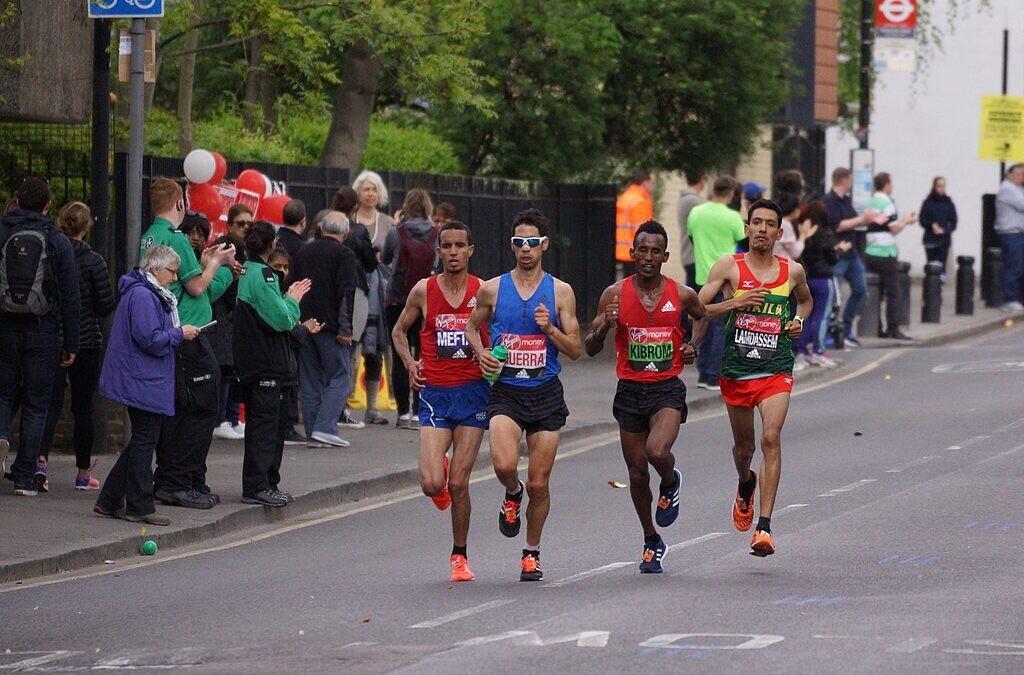
The winner of the 2024 Generali Geneva Marathon in Switzerland, Kibrom Weldemicael has been given a six-year doping ban after testing positive for two substances. Weldemicael was provisionally suspended just days before he was supposed to run at the 2024 Paris Olympics for Eritrea, now, the 37-year-old will be unable to compete until 2030, and his marathon win will be annulled.
According to the Athletics Integrity Unit, Weldemicael provided an in-competition urine sample after his win at May’s Geneva Marathon in 2:09:57. Three months later, a WADA laboratory in Cologne, Germany found an adverse finding in his May 5 sample for the presence of erythropoietin (EPO) and furosemide.
EPO enhances the blood’s oxygen-carrying capacity by increasing red blood cell production, which can improve endurance and performance in long-distance runners. Furosemide is a diuretic (often referred to as a “water pill”), which helps the body get rid of excess salt and water by increasing urine production. The drug is typically used to lose weight quickly or to mask the use of other performance-enhancing drugs. EPO and furosemide are both prohibited substances on the WADA 2024 Prohibited List.
According to the AIU, Weldemicael was notified of the adverse finding in person at the Paris Olympics, where he was preparing to run for Eritrea in the men’s marathon. He was given a provisional suspension on Aug 9, after failing to file a written submission on why the suspension should not be imposed. A week later, the athlete provided an explanation saying he had not taken EPO, and said his red blood cell count was high because he had been training in high-altitude locations for his entire career. He also requested a test of his B sample.
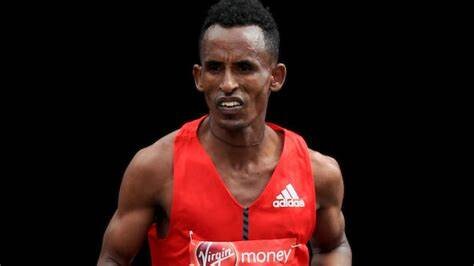
Weldemicael failed to pay for the cost of the B sample test by the deadline, waiving his right to the analysis. He later claimed he did not know what EPO or furosemide were, had not taken either and was unable to explain the presence of both in his body.
The AIU said they reviewed the athlete’s explanation and it was clear he had committed an ADRV (Anti-Doping Rule Violation).
The 37-year-old, who ran his marathon personal best of 2:07:25 this year, will be ineligible to compete until May 2030. His result from the 2024 Geneva Marathon will be disqualified, but his win from Maratón BP Castellón in Spain in February will stand. His best performance at a major marathon was his eighth-place finish at the 2015 London Marathon.
by Marley Dickinson
Login to leave a comment

Harmony Geneva Marathon
The Harmony Geneva Marathon for Unicef is arguably one of the most picturesque city marathons in Europe and unquestionably one of the fastest. The course takes in the countryside nestled between mountains and the shore of Lake Geneva before finishing in the heart of the city in front of the famous Jet d’Eau. Thousands of runners from more than 120...
more...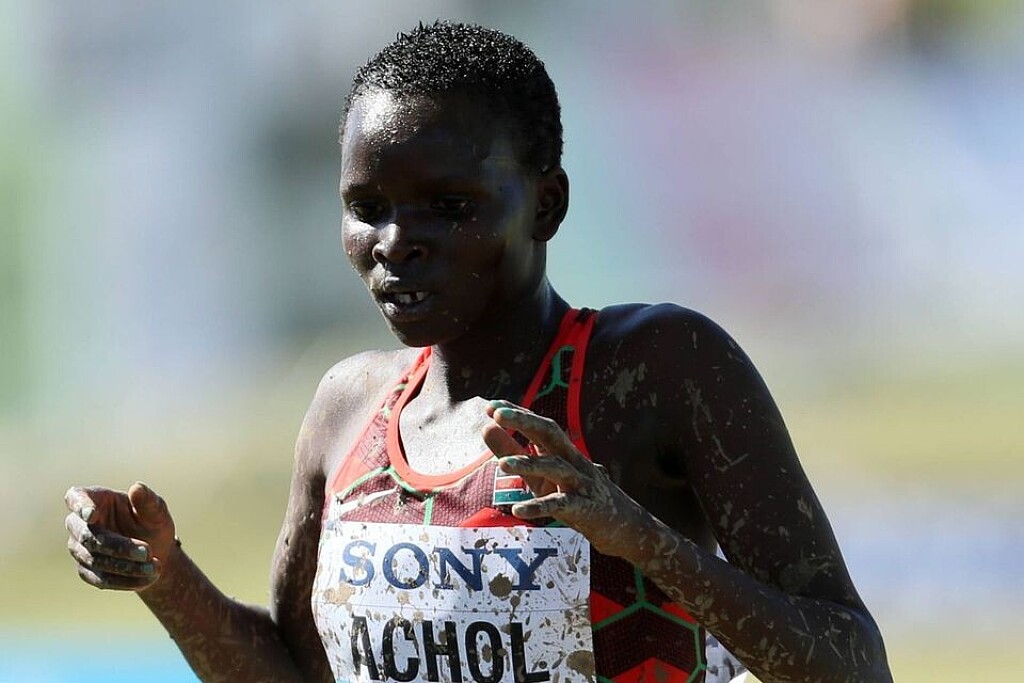
Emmaculate Anyango: Kenya’s long-distance prodigy handed six-year doping ban
Emmaculate Anyango, who has been one of Kenya’s emerging athletes, has suffered a major blow after receiving a six-year ban over multiple doping violations.
Kenya’s long-distance sensation Emmaculate Anyango has been handed a six-year doping ban by the Athletics Integrity Unit (AIU) over multiple anti-doping violations.
The AIU announced Anyango’s doping ban on Friday, having provisionally suspended her in October, for the presence and use of a prohibited substance (Testosterone and EPO).

However as per AIU’s latest statement, the athlete was found to have cheated on four occasions between February and June 2024, her first, second and third urine samples revealing the presence of banned substance Metabolites while her fourth urine and blood sample revealed the presence of EPO.
The athlete failed to prove that she used the substances deliberately, having defended herself by claiming that she did not know how they ended up in her body. In her defence, Anyanyo claimed that she visited several hospitals in Eldoret after falling ill and that she fainted on multiple occasions and did not know what was injected into her system.

She also presented documents that failed to prove that she knowingly doped, which left her facing the mandatory four-year doping ban, and an extra two for Aggravating Circumstances as a result of her use of multiple banned substances.
The athlete was given an opportunity to accept responsibility, which would have seen her ban reduced by one year, but she failed to do this during the stipulated period, leaving the AIU with no choice but to slap her with the lengthy ban.
It is a major blow to the career of the 24-year-old, who will be 30 and beyond her prime by the time her ban ends in September 2030, having started making waves in 2024.
The Sirikwa Classic Cross-country champion was awarded the Sports Personality of the Month award for February by the Sports Journalists Association of Kenya (SJAK) after coming close to breaking the world 10km world record in January.
She recorded the second fastest 10km time in history when she clocked 28:57 in Valencia, Spain, improving Ethiopian Yalemzerf Yehualaw’s world record (29.14) but unfortunately for her, compatriot Agnes Ngetich won the race in a better time of 28.46.
Her career now appears to be over following the lengthy ban with her results from February 3, 2024 also scrapped.
by Joel Omotto
Login to leave a comment
Plans underway to add World Championships marathons to World Marathon Majors
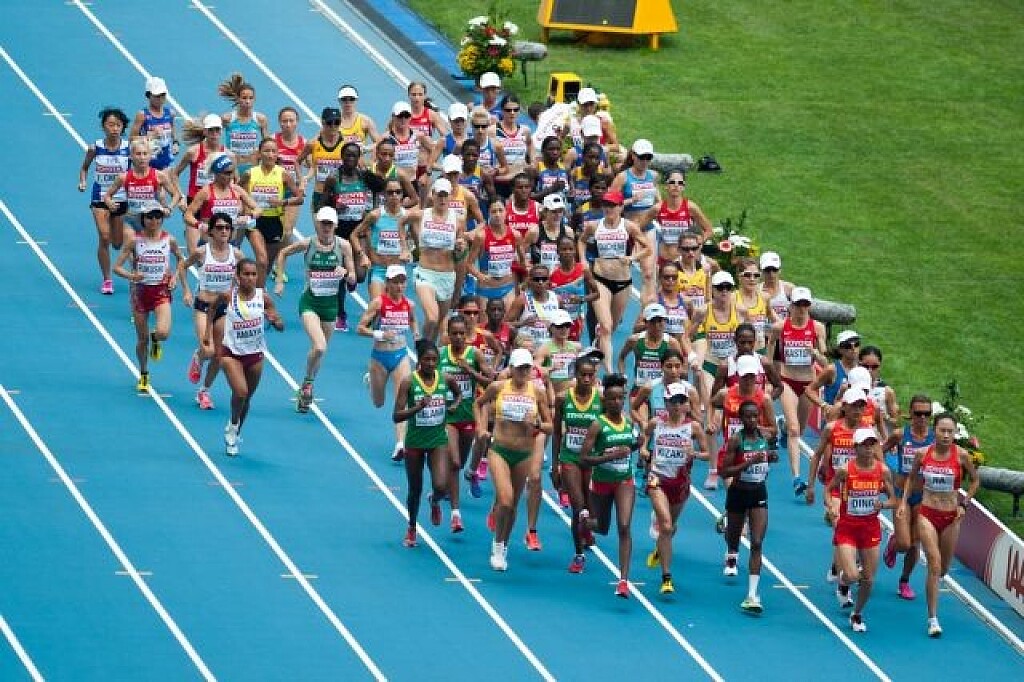
World Athletics president Sebastian Coe has disclosed that plans are underway to add World Championships marathons to World Marathon Majors.
World Athletics president Sebastian Coe says discussions are underway to comprise the World Championships marathons into World Marathon Majors.
As reported by Athletics Weekly, Coe noted that he has been in discussions with the WMM organizers about weaving the world championship road races into their big-city event programmes.

“The issue for us is really about how we can create those opportunities. A lot of athletes are also looking at the world championships and thinking that Chicago or New York is around the corner and asking themselves whether they should be running the worlds when they can earn good money on the roads a few weeks later.
"Maybe we can reduce the marathon to a half-marathon at the world championships which would at least take some of the athlete welfare issues away and would allow them to do it in the build-up to a marathon majors event,” he added.
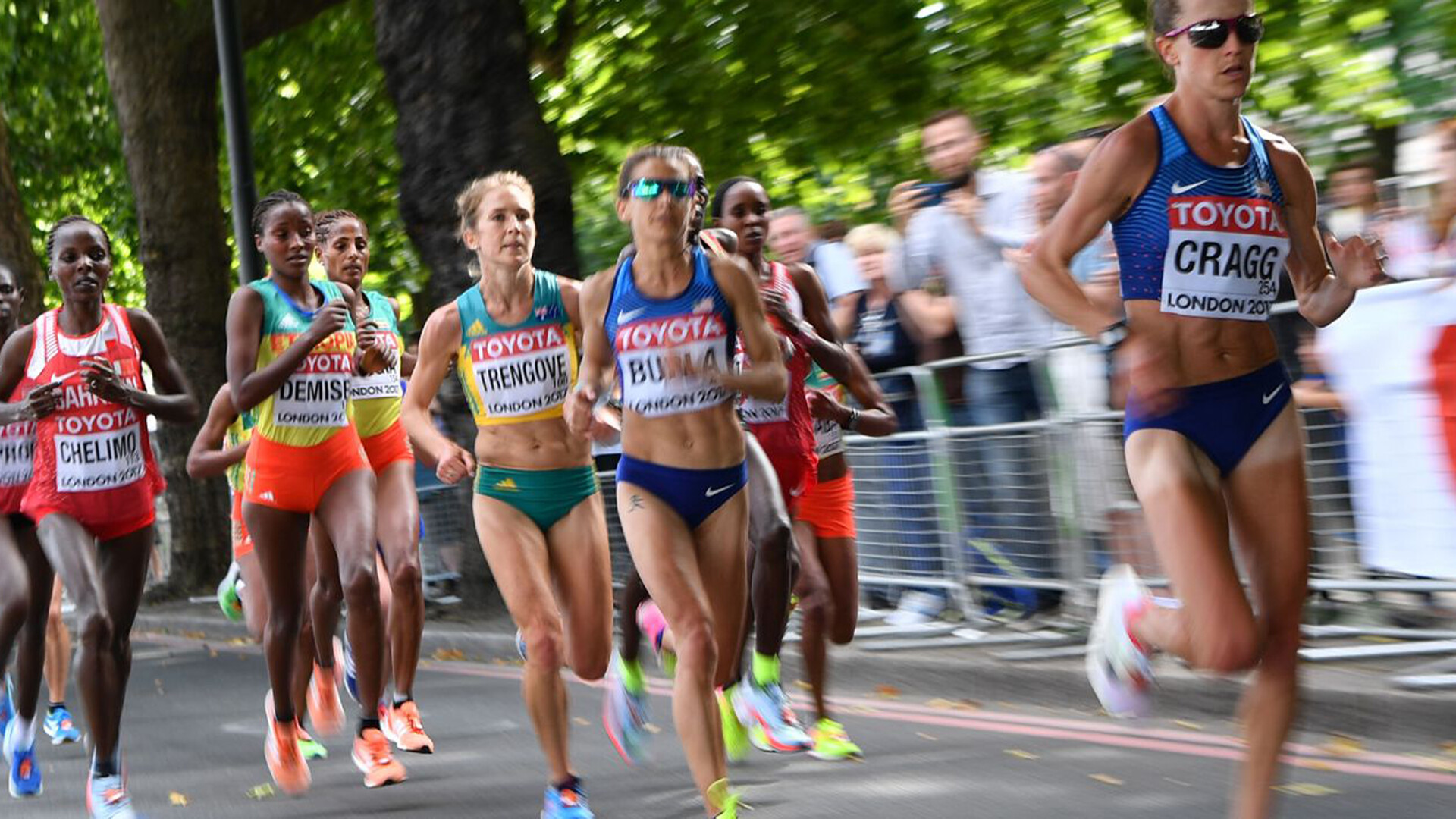
The president also explained that he finds it difficult to see an end to the global warming crisis any time soon and will be keen to put measures in place that will provide the best outcome for athletes and fans.
“In light of global warming and the inability of governments to use anything other than ‘BS’ in this space then it’s going to be down to the sport to try to figure out how they navigate their way through this.
"We’ve found 76% of our athletes already said that global warming has had a profound impact on their competition and training programmes.
"I think it’s inevitable that sport will globally have to look at rejigging the calendar because there won’t be any immediate respite from this problem and we’re further from the 2030 targets than we’ve ever been, whatever anyone tells us at COP 28!” she said.
by Abigael Wuafula
Login to leave a comment

Banned Kiwi Olympian Zane Robertson arrested in sexual assault probe
Two-time New Zealand Olympian Zane Robertson, who is serving an eight-year suspension for anti-doping rule violations, was arrested last week in a sexual assault probe at his home in Kenya, where police say they found an unlicensed AK-47 assault rifle and 23 rounds of ammunition.
Robertson—who holds New Zealand’s records in the marathon (2:08:19), half-marathon (59:47) and 10K (27:28), was visited by police at his home in the town of Iten on Sept. 20 to question him about a sexual assault complaint made against the 33-year-old, according to Kenya’s Standard newspaper.

Tom Makori, sub-county police commander, told the Standard authorities arrived at the house to arrest the runner for questioning in a sexual assault investigation, after a woman claimed she was victimized by Robertson at a house party the previous day. “The suspect has been living in Kenya for several years. He has bought land and built his residence. Our preliminary investigations indicate that the AK-47 in his possession was unlicensed,” Makori said.
“Police had gone to arrest him for questioning in relation to a sexual assault complaint, but he declined to open the door. Later, after the police gained entry, they discovered that he was in possession of a gun,” he added.
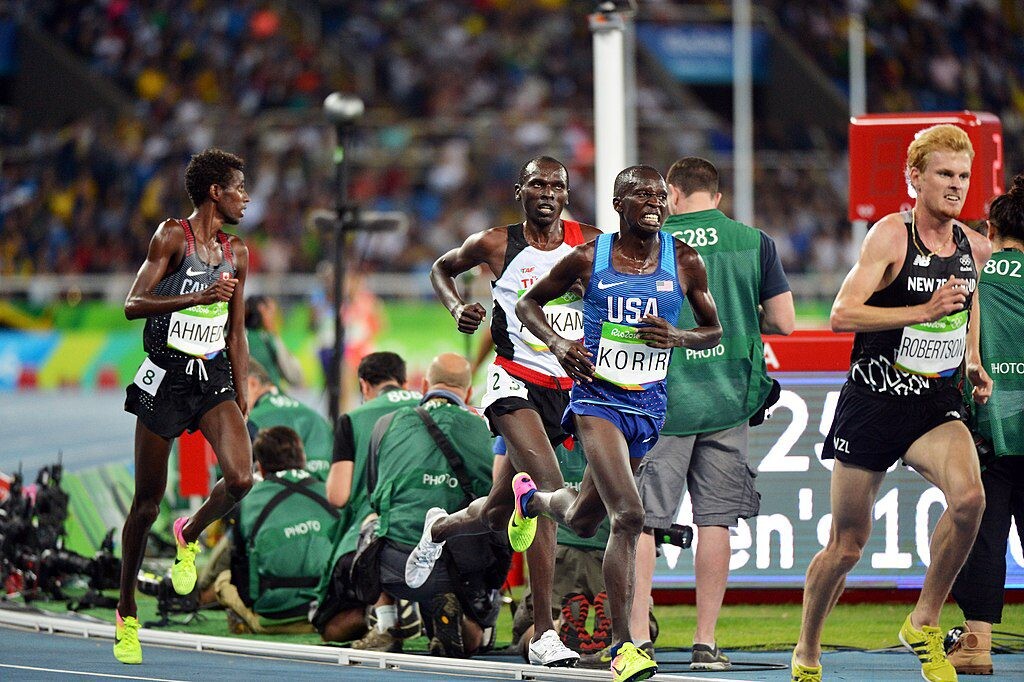
Police had not released an update on when, or if, Robertson will be officially charged in connection with either the sexual assault probe or the weapons arrest. “We may seek more time to conclude investigations,” said Makori.
The arrest comes exactly one year to the day that the Sports Tribunal of New Zealand provisionally suspended Robertson for anti-doping rule violations.
In May 2022, Robertson tested positive for erythropoietin (EPO) during the Greater Manchester Run—a finding later confirmed by B-sample testing. He breached the rules for the presence and use or attempted use of the prohibited substance and for tampering, or attempted tampering, with any part of the doping control process. His attempt to submit fraudulent documents to defend himself led to another charge.
In March, the Sports Tribunal of New Zealand handed Robertson an eight-year suspension for the violations, making him ineligible to compete until September 2030. However, Robertson announced his retirement from professional running a month before receiving the suspension.
In addition to breaking national records, the now-disgraced runner had distinguished himself by winning bronze in the men’s 5,000m at the 2014 Commonwealth Games in Glasgow. He finished 12th in the 10,000m at the 2016 Summer Olympic Games in Rio and 36th in the 2020 Tokyo Olympic marathon, in 2:17:04.
by Paul Baswick
Zane Robertson
Login to leave a comment
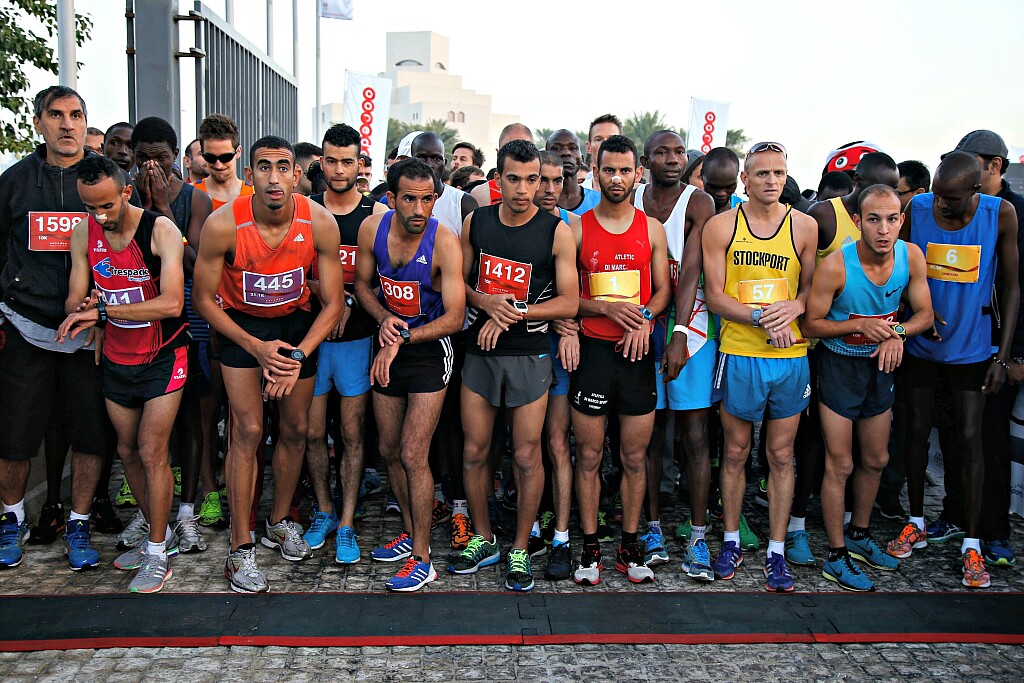
Around 8,000 runners gear up for Ooredoo Doha Marathon
Over 20,000 runners have taken on the challenge of the Doha Marathon by Ooredoo, and this year, many intent to join them.
Around 8,000 runners are preparing for the much-awaited Ooredoo Marathon, scheduled to start in less than a week’s time.

Qatar’s most popular marathon, held annually since 2013, is finally coming back with yet another exciting challenge for all running enthusiasts in Doha. And as usual, the prize it holds is worth the effort.
“We’re rightfully proud that the Doha Marathon by Ooredoo is consistently one of the most popular events on Doha’s calendar year after year, but this pride must be shared with our invaluable sponsors, without whom we would be unable to present the race,” said Moza Khalid al-Muhannadi, director CSR, Sponsorship and Media at Ooredoo, at a press conference.
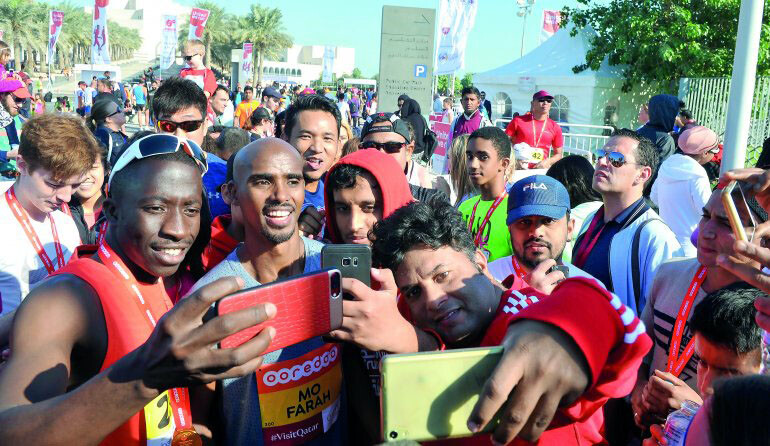
“We look forward to putting on yet another incredible event for Doha and for everyone taking part. Best of luck in the race.”
Some participants have told Doha News that the event, set to kick off on January 20, serves as a great motivation for them to improve their physical abilities and stamina to compete. Every year, it is a stronger challenge to be better.
“I participated two years ago for the first time and since then I always look forward to it. This year I even planned my workouts in a way that would make me faster and stronger to finish the full marathon,” Al Jazi, a two-time participant, said.
“I ran a lot of marathons abroad, but this one is different. You almost know everyone around you and it is such a warm, supportive environment. I can’t wait to reach the finish line.”
Others have praised Qatar’s efforts to organise such events that encourage sports and an active lifestyle. Over the past years, the Gulf state has focused extensively on promoting sports and physical activity as part of its 2030 vision.
World-class facilities have been built, major tournaments have been hosted, and various events have been taking place on an almost monthly basis, with great turnout from the community.
Qatar also holds Sports Day in high regards, declaring it an official national holiday to promote being active. Ooredoo marathon, on the other hand, is one of the most prominent national running event in the country.
“Every year I encourage more people to join me, and despite how hard it is, they all love it and come back. It’s one of those things that make you feel rewarded, and pushes you to achieve more and more,” Mohammed Hanni, a physical fitness instructor, told Doha News.
“I’ve been training a lot, so I’m very excited to hopefully break my own record this year.”
Start, end and timing
For this year, Al Jazi, as well as other runners, will start at Parade Pavilion, The Amir’s Grandstand in Al Corniche, and proceed to Katara, Lusail, and back to Al Corniche after the race.
The full marathon will begin at 6.15am, and the half marathon will follow at 7am. Starting at 8.30am, the 10km category will kick off, while the 5km will start at 9.30am.
Finally, at 10.30am, the 1-kilometer category for children will begin.
The 2023 marathon bags a total price of approximately QAR 1 million for all categories, and everyone who finishes their category will receive a medal to mark the achievement.
Special prizes will be awarded to Qatari entrants in each category.
Al-Muhannadi also disclosed that there would be a raffle with an SUV up for grabs. All competitors in the 5km, 10km, 21km, and 42km categories who cross the finish line will be entered into a raffle to win a Volkswagen T-Roc.
by Menatalla Ibrahim
Login to leave a comment

Ooredoo Doha Marathon
The Ooredoo Doha Marathon was created to bring the community together, inspire healthier lifestyles, and contribute to impactful charitable causes in Qatar. This annual event is a celebration of fitness, unity, and giving back, attracting participants of all ages and abilities. All proceeds from entry fees are donated to a variety of local charities, ensuring that every step taken supports...
more...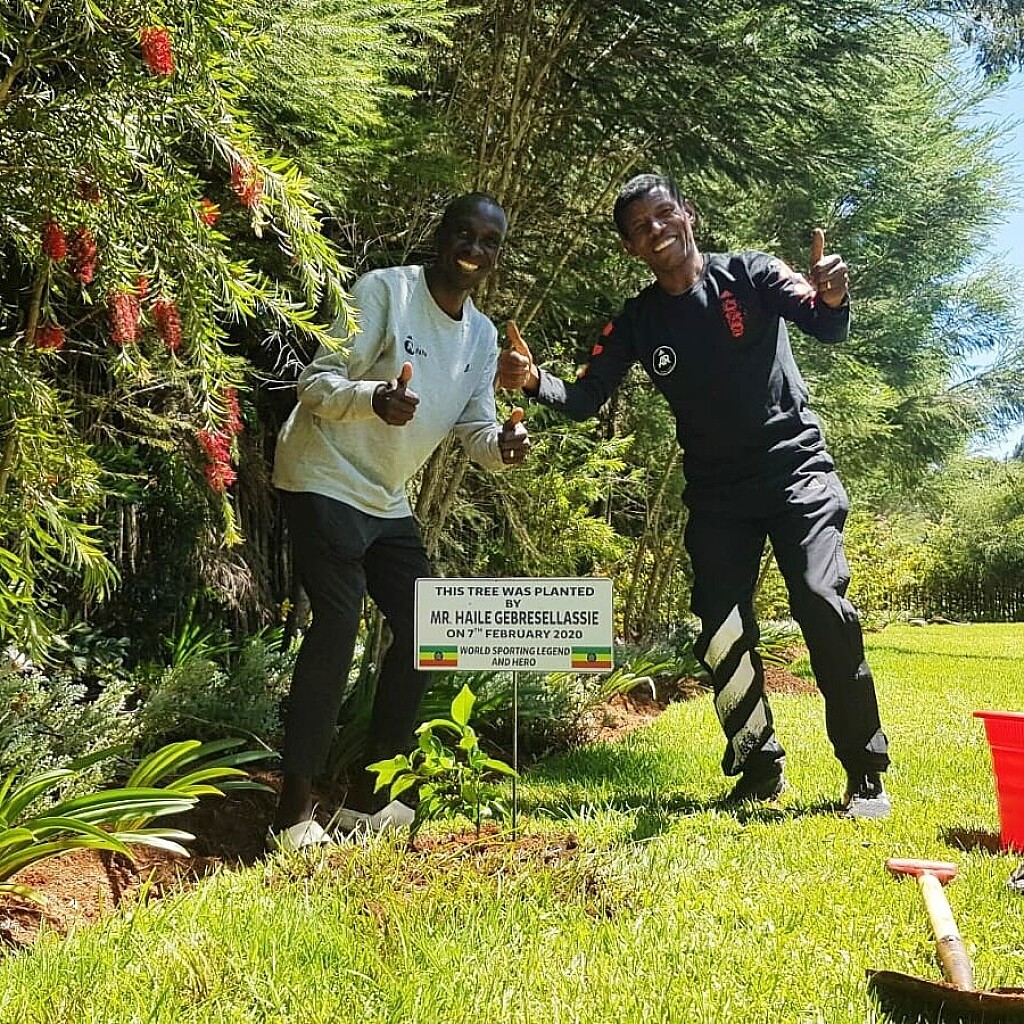
You cannot perform well in a polluted environment Says Eliud Kipchoge
Protecting the environment is a priority for many in 2023, and athletes like Eliud Kipchoge are leading the way.
In 2020, the Kenyan double Olympic gold medalist and world record holder adopted 50 hectares of forest land in the Kaptagat Forest near where he spends most of the year training at high altitude.
“If you train in a polluted environment, then you cannot perform,” marathon great Kipchoge told the BBC from his homeland.
“Kaptagat Forest made a huge difference in my career. I’ve been here for the last 20 years and without this forest, and staying in the area, I think that I could not be where I am today.”
“I realized that the only way to perform and to actually enjoy running is by training in a good place, breathing clean air.”
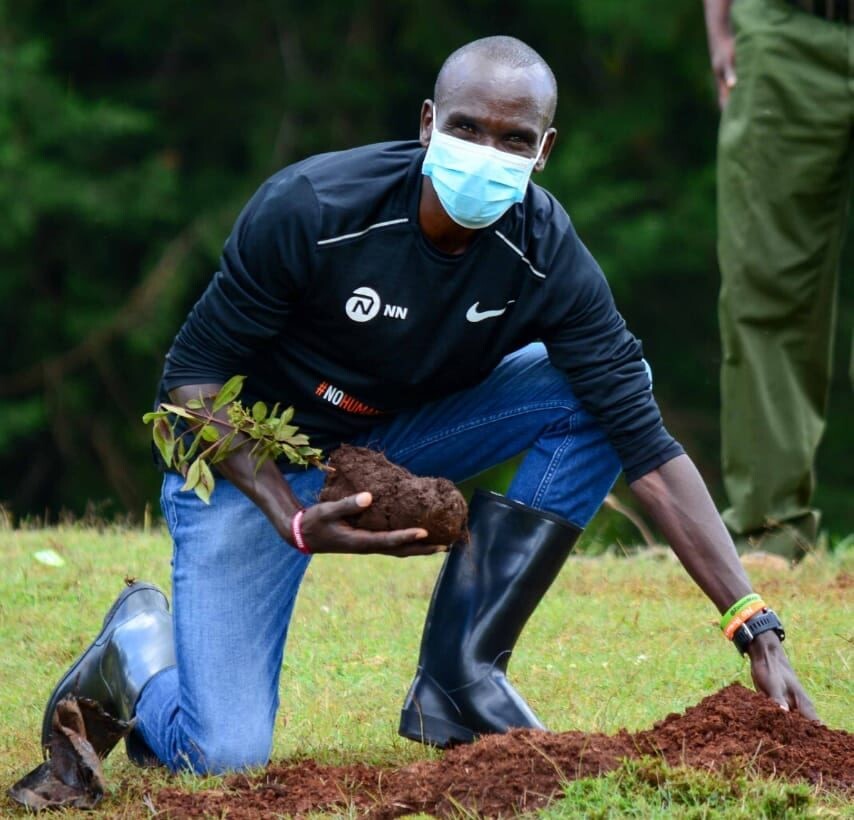
A year later, the distance-running great decided to create a foundation that focused on education and the environment, including planting trees.
To date, Kipchoge has adopted 130 hectares of forest, and claims that it’s ‘just the start’.
His wider goals include adopting a forest in every country in which he would plant indigenous trees.
Kipchoge revealed the principles he employs in his daily routine in order to help protect the environment, in an interview with Olympics.com for Earth Day 2022:
“Every day is Earth day for me,” Kipchoge told Olympics.com.
“I have improved my lifestyle to help fight climate change. I walk more, I minimize my water usage and I always try to encourage others to plant a tree on an important day or anniversary.
"My daily green effort is walking. I walk as much as I can instead of driving everywhere, so I can minimize my emissions."
Creating Africa’s Olympic Forest
Protecting the environment is also an area of focus for the International Olympic Committee (IOC).
In 2021, the IOC started an initiative to grow 590,000 native trees across approximately 90 villages in Mali and Dakar 2026 Youth Olympic Games host nation Senegal.
The Olympic Forest is an important element of the IOC’s strategy to address climate change, which includes cutting emissions in line with the Paris Agreement, and reducing the impact of the organisation’s footprint. With an end-goal to become climate positive, the IOC is set to cut its emissions 30 percent by 2024 and 50 percent by 2030, and compensate more than its remaining emissions.
While planting trees will help to protect the environment, the project also aims to create wider social and economic benefits for communities in Mali and Senegal that are heavily impacted by droughts and floods.
Login to leave a comment
You’re Tracking Miles. This Brand Is Tracking Sustainability Goals.
The sneaker industry has a role to play in climate change. New Balance is trying to reduce its climate impact with a holistic program.
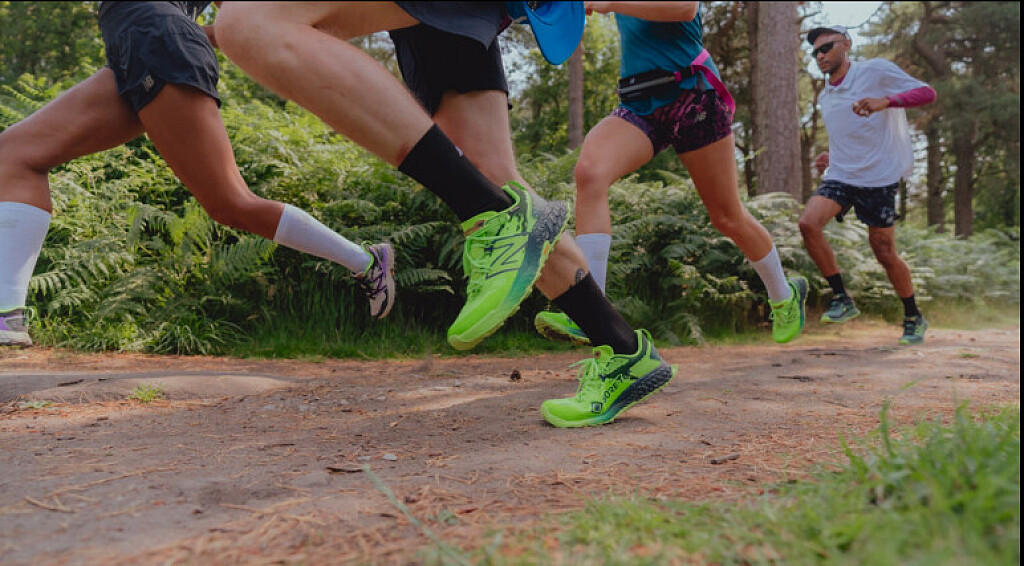
Avid runners and hikers know how to put their shoes to work. It’s common for high-mileage dynamos to retire multiple pairs of sneakers each year. Exercise science experts recommend replacing running shoes every 300 to 500 miles to ensure your muscles and joints are properly supported while you run. While that new-shoe feeling is first class, it comes at a cost—more waste generated and more energy needed to make new materials and new products. Sneaker giant New Balance isn’t willing to accept this waste as just a necessary reality of the industry. Instead, the company has set some admirable sustainability goals to address the ways its products contribute to the problem.

Sustainability isn’t a new priority for New Balance; the company has long prioritized efforts to be more environmentally responsible. But the New Balance team is keenly aware of the current climate change reality. “We have an extremely small window of time to take action,” says John Stokes, the company’s director of sustainability. “It depends on what we do in the next seven to eight years. The time is now, and we literally can’t act fast enough.”
Stokes heads up an internal department that focuses on understanding how the business’s decisions affect much more than just the bottom line. From this understanding, the team develops strategies for more sustainable business practices and frequently reassesses what efforts will have the most impact.
Environmental conservation and advocacy is a key part of the sustainability mission at New Balance. The company extends its reach by working with 1% for the Planet, a global network of businesses pledging to give 1 percent of gross sales to environmentally focused entities.
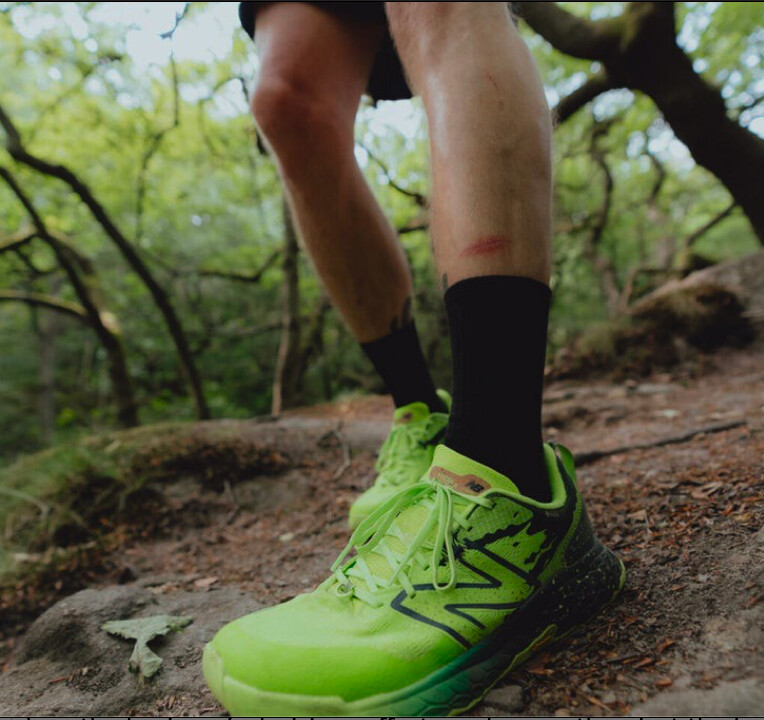
For New Balance, that means 1 percent of MSRP from every sale of the Fresh Foam X Hierro series (the Hierro v7, Hierro Mid, and Hierro v7 GTX) in the United States is donated to organizations focused on climate advocacy and protecting public lands, including Protect Our Winters and the Trust for Public Land.
The Hierro sneakers were a natural fit for this relationship as they are a beloved trail shoe for many outdoor enthusiasts. Stokes and his team hope to add more shoes and apparel to this program in the coming years.
Carbon emissions are a key metric when it comes to evaluating sustainability. Most of New Balance’s carbon footprint can be attributed to three things: materials used to make products, energy consumption in factories, and transportation of products from factory to market. “There’s really no singular aspect that makes a product more sustainable,” Stokes says. “It’s pretty holistic, and we’re trying to address all of those major impact areas.” New Balance had previously committed to cutting its carbon emissions by 30 percent by 2030, but in 2021, the company signed on to the Business Ambition for 1.5C, and it recently submitted an even more aggressive target that is 1.5C-aligned. The company also has some specific goals it plans to reach by 2025, all of which contribute to its overall climate goals:
The whole company is in on this sustainability mission. “There’s more energy and interest right now than ever before,” Stokes says.
New Balance demonstrates the value of taking a sustainability idea and running with it. In addition to developing more sustainable design and production practices, New Balance is pushing the limits of how long a running shoe can truly last. The company is currently testing cleaning and repair services in the UK and Japan. The hope is that if these services are scalable, they can help to extend the life of New Balance shoes worldwide. Until then, New Balance is adding more at-home care instructions to its website to help you maintain your shoes. Yes, you’ll still need to replace your running shoes when the old ones wear out, but taking good care of your shoes can extend their life. The most sustainable shoe is one that already exists. Stokes also suggests we rethink the paradigm that shoes only last a certain number of miles. That number will vary for everyone—If your shoes are still working for you, keep using them.
While there’s currently no way to recycle New Balance sneakers, the possibility is certainly on Stokes’s radar. Design and Innovation teams are looking at ways to make the construction and materials of New Balance shoes more recycling-friendly in the future.
Independent since 1906, New Balance empowers people through sport and craftsmanship to create positive change in communities around the world.
by Outside
Login to leave a comment

Exercise can help prevent fatty liver disease, new research suggests. Here’s why that’s a big deal.
Running and strength training are two activities that may prevent a condition known as non-alcoholic fatty liver disease (NAFLD), new research shows.
This may be due to the fact that exercise aids in lowering inflammation in your body and builds lean muscle mass that can help replace fat—both factors in the cause of NAFLD.
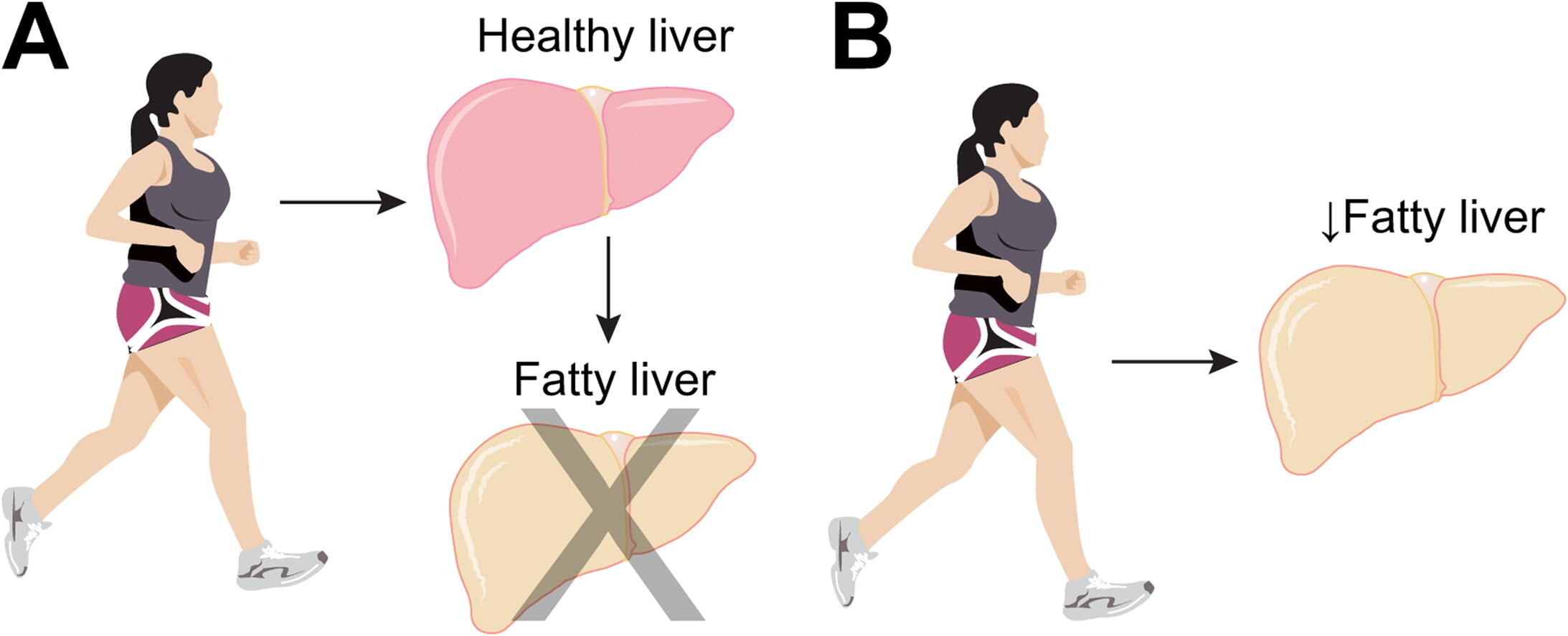
Running is beneficial for your heart, brain, and muscles—and new research suggests your liver could see the advantages as well.
A condition known as metabolic liver disease or non-alcoholic fatty liver disease (NAFLD) involves fat deposits in the liver that increase over time and negatively impair your mitochondria (which play a role in turning the energy we get from food into energy our cells can use). That can impact how you metabolize carbohydrates, lipids, and proteins, and can lead to organ damage if not addressed.
A recent study in the journal Molecular Metabolism suggests that exercise can change mitochondrial function enough to reduce development of fatty liver deposits. Researchers fed mice a high-calorie diet to prompt liver fat development, then had some of them do treadmill training for six weeks. At the end of that time, those who’d been running showed more regulated liver enzymes and better mitochondrial activity.
Previous studies on people have shown the same connection between better liver function and regular exercise. For instance, a 2016 randomized clinical trial on those with NAFLD showed that vigorous and moderate exercise improved liver health markers. And commentary in 2018 in Gene Expression noted that exercise increases fatty acid oxidation and prevents mitochondrial damage in the liver.
Although preventing NAFLD might seem less important than other warding off other health risks like cardiovascular disease, cancer, or dementia, the condition’s prevalence rate indicates that it’s a major health problem—and it could get worse. When the disease shifts to a more severe form, it’s called nonalcoholic steatohepatitis (NASH), and it causes liver swelling and damage.
According to the American Liver Association, about 1 in 4 people have NASH and most are between the ages of 40 and 60. Up to a quarter of those with the condition develop cirrhosis, late-stage scarring in the liver that may require a transplant.
A 2018 study estimates that NAFLD will increase by 21 percent from 2015 to 2030, while NASH is expected to rise by 63 percent in the same timeframe. Those researchers anticipate that deaths due to these liver conditions will increase by 178 percent by 2030.
“The good news is that lifestyle changes can make a big difference, both for preventing NAFLD, as well as controlling or even reversing the condition if you have it,” Jeff McIntyre, NASH program director for the Global Liver Institute, told Runner’s World.
He said that in addition to regular activity like running, other lifestyle strategies include avoiding foods with added sugar—a potentially major cause of liver inflammation, he said —and incorporating strength training into your routine, since lean muscle mass can help replace fat.
“There are no approved medications yet for NASH or for NAFLD, so the main strategy for prevention and treatment is exercise and nutrition,” he said. “Plus, you’ll benefit other aspects of your body at the same time, like your cardiovascular system and cognitive health. So movement really is medicine.”
by Runner’s World
Login to leave a comment
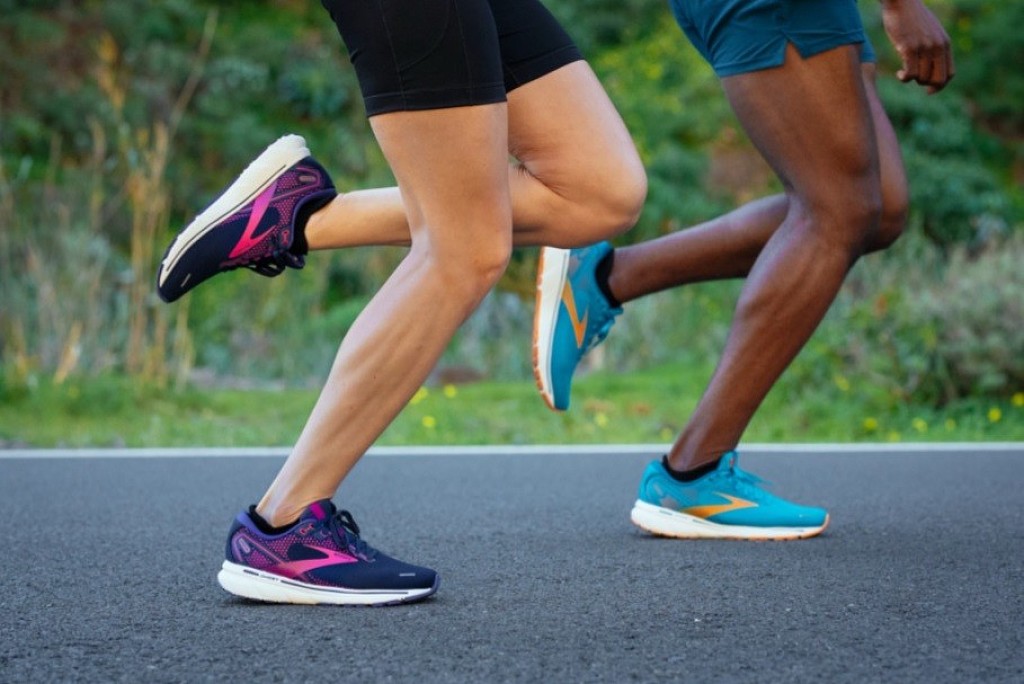
Brooks announces its new sustainability strategy, launching a carbon-neutral running shoe
Brooks Running has announced its new planet strategy that will take immediate responsibility for the impact the brand has on the environment. With its science-backed plan, the brand is committing to achieve net-zero carbon emissions by 2040, starting by launching its first carbon-neutral running shoe, the Ghost 14.
In 2020, Brooks Running joined the Climate Pledge and has committed to reaching the Paris Agreementgoal of net-zero carbon emissions 10 years early, by 2040. David Kemp, Senior Manager of Corporate Responsibility, says the company believes climate change demands “urgent and universal action” and they must “participate on a global scale.”
“Because more than 150 million people run outside and enjoy the planet during their runs, it’s critical that we take responsibility for our impact on the planet,” he adds.
Climate action: a timeline

Brooks’ emissions reduction strategies were recently approved by the Science Based Targets Initiative, which supports companies with science-based target setting and developing a clear path towards decarbonization. The brand is putting a strong focus on working toward the creation of a circular product, which is a product that has no need for virgin resources and is designed with the end of their life in mind. Brooks is also placing a strong emphasis on eliminating manufacturing waste to landfills. Their plan is as follows:
July 1 2021: Introduce the brand’s first carbon-neutral shoe, the Ghost 14. TheGhost is Brooks’ highest-volume footwear franchise, moving forward all Ghost products will be carbon neutral. In addition to reducing the product’s environmental impact by incorporating recycled materials, Brooks will purchase carbon offsets from projects that meet strict criteria that make a meaningful difference in addressing climate change.
2022: the brand will launch a take-back program, which will be the first step to enable fully circular shoes and apparel in the years to come.
2023: Brooks aims to convert all sockliner top cloths to dope dyed ( a low-impact dyeing technique that can reduce carbon emissions by as much as 90 per cent). Brooks will also move to 100% recycled polyester in footwear and new apparel materials.
2024: all lining materials in footwear will be dope dyed and 100 per cent of the nominated apparel fabrics sourced from Asia will be bluesign® approved.
2025: all assembly factories will be converted to renewable energy. Brooks will reach the milestone of zero footwear manufacturing waste to landfill, incineration, and the environment. In addition, all DNA Flash and DNA Loft midsoles will contain 10 per cent recycled content, and all outsoles will contain 10 per cent recycled content. Simultaneously, all nylon in Brooks apparel will be recycled yarn and all Run Bras will contain a minimum of 20 per cent recycled or bio-based content with 100 per cent of the polyester being created from recycled yarn.
2027: all high-volume material factories will be converted to renewable energy and 100% offootwear textiles will be dyed using a low-impact dyeing process.
2030: all materials in Brooks product will contain a minimum of 50% recycled or renewablecontent, with all upper materials containing 100% recycled or renewable content.
This is an aggressive timeline, but Kemp says transparency will hold the brand accountable for reaching its targets. “The finish line of this marathon is a long way off,” he says, “but we are committed to positive change and we will be transparent about how far we’ve come and where we can do better.”
by Brittany Hambleton
Login to leave a comment

IOC to plant forest in Africa to offset carbon emissions
The announcement is part of the International Olympic Committee's goal of hosting a future carbon-positive Games.
In January 2021, the International Olympic Committee (IOC) announced its plan to become climate positive by 2024, with the goal of reducing its carbon emissions by 45 per cent by 2030. On Wednesday, the organization revealed that it has committed to planting an “Olympic forest” to offset more than 100 per cent of the carbon emissions created by the Olympic Games.
The Olympic forest will be back by the United Nations as a part of the Great Green Wall initiative to restore the Sahel region in Africa, between the Saharan desert and the Sudanian savanna. According to Inside the Games, experts are expecting the population in that area to grow significantly in the coming years, and this forest will create biodiversity and improve food security in the region.

The IOC claims that both the upcoming Tokyo Olympics and the Beijing Olympics are on track to being carbon-neutral, and they are looking to host climate-positive Games in the future as a part of their Olympic Agenda 2020+5.
by Brittany Hambleton
Login to leave a comment

Tokyo 2020 Olympic Games
Fifty-six years after having organized the Olympic Games, the Japanese capital will be hosting a Summer edition for the second time, originally scheduled from July 24 to August 9, 2020, the games were postponed due to coronavirus outbreak, the postponed Tokyo Olympics will be held from July 23 to August 8 in 2021, according to the International Olympic Committee decision. ...
more...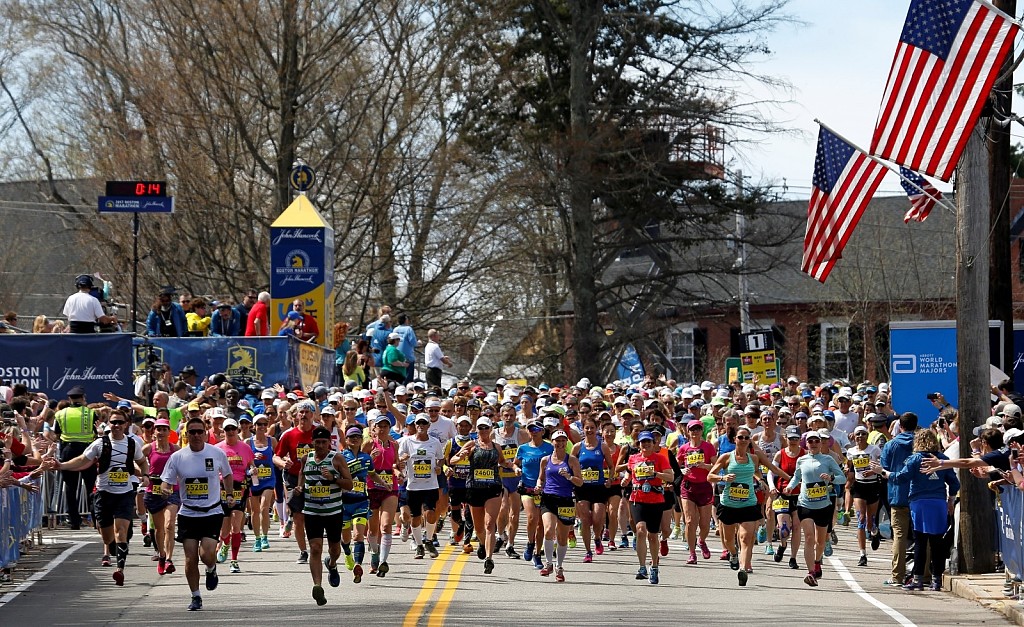
Adidas and Boston athletic asocciation extend official sponsorship through 2030
The Boston Athletic Association (B.A.A.) announced today that the organization has extended its longstanding official sponsorship with adidas through 2030. The Patriots’ Day announcement marks more than 40 years of partnership between the athletic organizations.
“adidas has been an official sponsor of the Boston Marathon for more than three decades, and we are delighted to extend our partnership, furthering our dedication to community initiatives as well as athletic performance,” said Tom Grilk, President and C.E.O of the B.A.A. “adidas has supported all aspects of our organization, from mass participatory events to the B.A.A.’s running club and High Performance team. Our collective missions align in the promotion of health and fitness, and this extension solidifies our combined commitment to the sport and running in the community.”
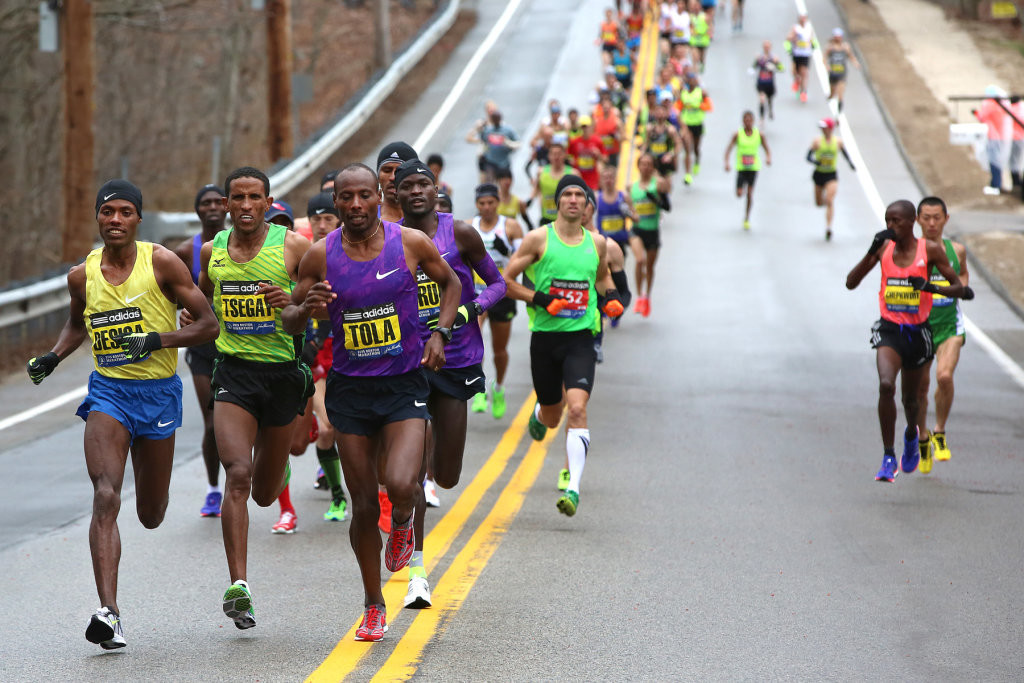
adidas has been a sponsor of the Boston Marathon since 1989, increased its support to include the B.A.A. Running Club in 1991, and since 1994 has sponsored all B.A.A. running events, clinics and youth programming, and initiatives including the B.A.A. 5K, the B.A.A. 10K, and the B.A.A. Half Marathon. Together, the B.A.A. and adidas have developed year-round programming designed to promote health and fitness among Boston-area youth, which has yielded participation from more than 35,000 students.
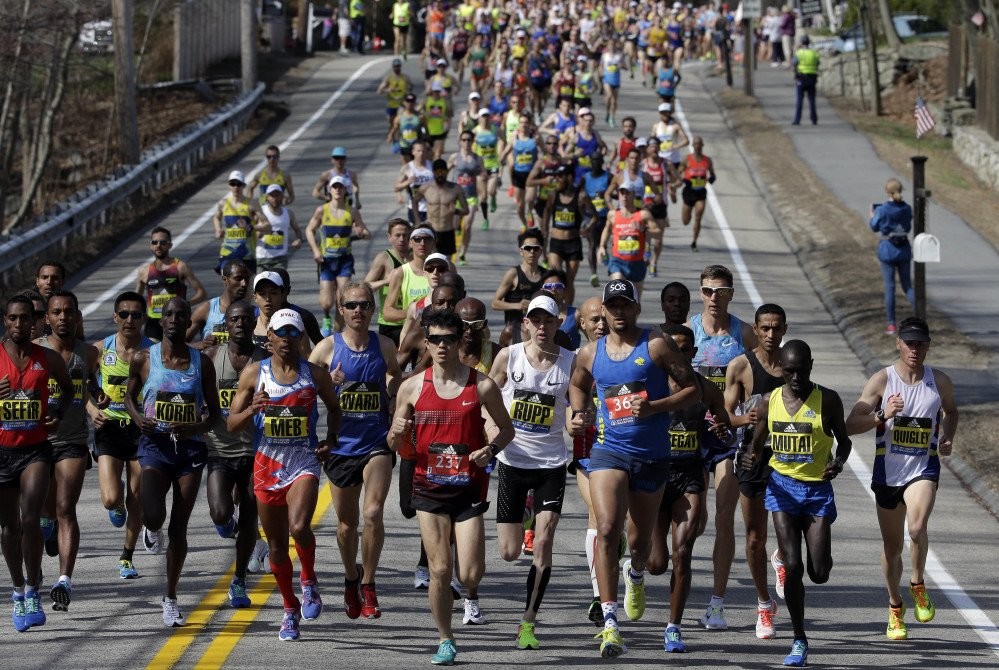
“Adi Dassler founded adidas inspired from the passion for running and for supporting and enhancing athletic performance. Our partnership with the B.A.A. allows us to bring to life our belief, that through sport we have the power to change lives,” said Alberto Uncini Manganelli, General Manager of adidas Running, Global.
In addition to being the official athletic footwear, apparel, and accessory sponsor of the Boston Marathon, adidas will continue to support all of the B.A.A.’s road races, the organization’s running club and High Performance Team, and many youth events. The B.A.A. and adidas are committed to developing new community initiatives, programs, and events that provide opportunities for athletes and runners of all abilities.
“The B.A.A. and Boston Marathon are synonymous with athletic excellence for the athletes, and a role model for touching people in their journey of physical and mental betterment, and driving a positive impact to communities. In this journey we are extremely proud to support the B.A.A. and athletes from across the globe with their pursuit of athletic achievement and we look forward to advancing our commitment to and celebration of the running community,” said Uncini Manganelli.
The B.A.A. and adidas announced the sponsorship extension on Patriots’ Day, the traditional date of the Boston Marathon and America’s most historic running day. In honor of Patriots’ Day, the B.A.A. and adidas have unveiled the 2021 adidas Boston Marathon Celebration Jacket, which is a badge of honor for runners worldwide. The smooth woven construction includes a breathable mesh lining and reflective details shine bright through low-light conditions. The product is made with Primeblue, a high-performance recycled material made in part with Parley Ocean Plastic. For the 125th anniversary, the jacket’s design focuses on the traditional Boston Marathon colors of blue and yellow. Special elements, including a special edition 125th Boston Marathon logo, are highlighted in a gold metallic embroidery to celebrate the anniversary year. The 125th Boston Marathon Celebration Jackets will be available for purchase beginning on Friday, May 7.
adidas is a global leader in the sporting goods industry. Headquartered in Herzogenaurach/Germany, the company employees more than 62,000 people across the globe and generated sales of €19.8 billion in 2020.
Registration for the 125th Boston Marathon opens Tuesday, April 20 at 10:00AM ET, through the B.A.A.’s online platform Athletes’ Village. Registration for qualified athletes will remain open through 5:00PM ET on April 23. The selection process will remain consistent with prior years: applications and qualifying times submitted between April 20 and April 23 will be verified and ranked by the B.A.A. based on the amount of time an athlete has run under their respective qualifying standard. Applicants will be notified of acceptance or non-acceptance once the B.A.A. has verified all applications in early May.
Login to leave a comment

Boston Marathon
Among the nation’s oldest athletic clubs, the B.A.A. was established in 1887, and, in 1896, more than half of the U.S. Olympic Team at the first modern games was composed of B.A.A. club members. The Olympic Games provided the inspiration for the first Boston Marathon, which culminated the B.A.A. Games on April 19, 1897. John J. McDermott emerged from a...
more...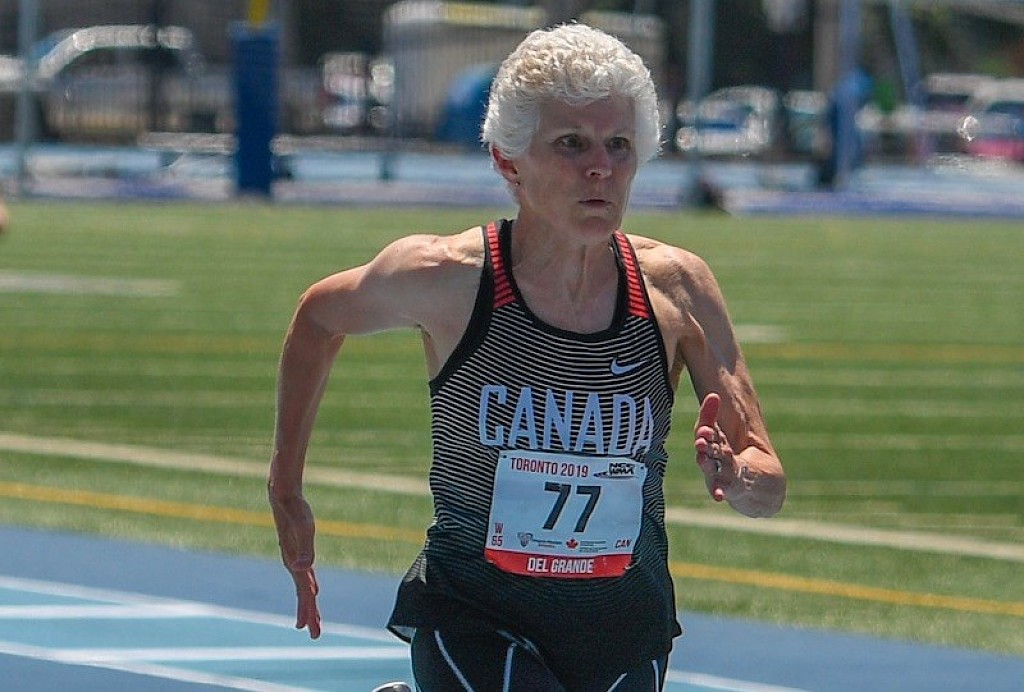
Karla Del Grande, 67, has been named female athlete of the decade by World Masters Athletics
Toronto’s Karla Del Grande, a 67-year-old sprinter with multiple masters world records to her name, has been named the Female Athlete of the Decade (2010 to 2019) by World Masters Athletics (WMA).
Nominated alongside five other women who have run, jumped and thrown their way into the WMA record books, Del Grande was selected as the best of them all, adding yet another accolade to her already lengthy resume.
As outlined on the WMA website, to be nominated for the Athlete of the Decade awards, athletes had to have broken a WMA record and won a WMA Championship in at least two different age groups in the previous decade. Del Grande checked these boxes many times over, as she set a whopping nine world records (five outdoor, four indoor) between 2010 and 2019 and won multiple gold medals at the world championships.
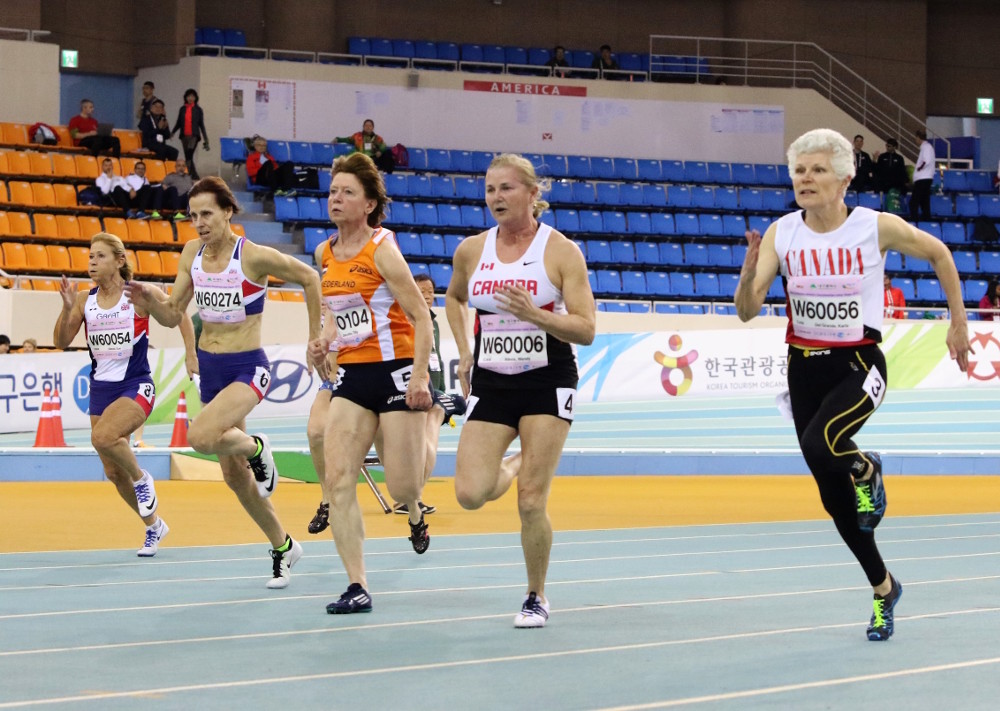
Competing outdoors in the 2010s, Del Grande set the 100m and 200m world records in the W60 and W65 categories, and she added a W65 400m world best as well. Indoors, she ran to 60m (W60), 200m (W60 and W65) and 400m (W65) world records.
Additionally, Del Grande owns an incredible 17 Canadian indoor masters records and 12 national outdoor records, some of which date back to the early 2000s when, at the age of 49, she first began competing in masters athletics.
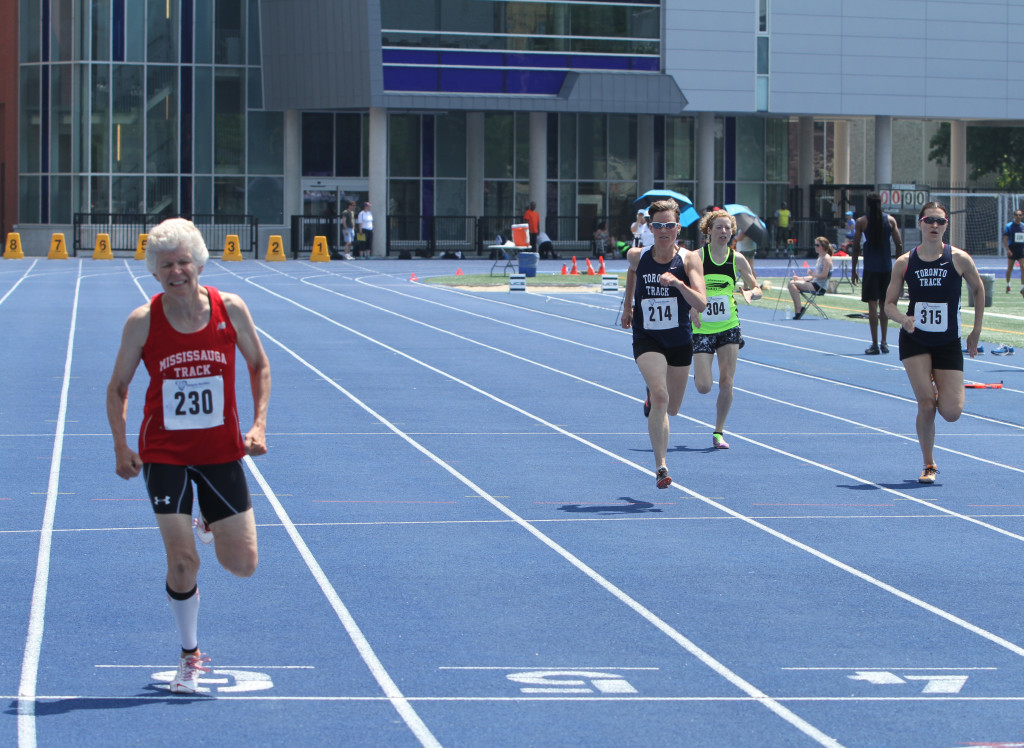
This is not the first time Del Grande has been honoured as a masters athlete. In 2018 and 2019, the WMA named her the Female Sprint Athlete of the Year, and again in 2019, the NCCMA (North American, Central American and Caribbean Masters Athletics) gave her overall Female Athlete of the Year honours. She has also been inducted into the Ontario and Canadian Masters Athletics Halls of Fame.
At 67, Del Grande still has a few years left in the W65 division to better her own world records, and while the 2020s have only just started, it shouldn’t be a surprise if she’s nominated for Athlete of the Decade once again come 2030.
by Ben Snider-McGrath
Login to leave a comment

In a recent IOC Sustainability Session, Seb Coe discussed the importance of having a "the collaboration of sport and science"
Climate change and sustainability are a couple of the most talked about issues in the world today. No matter where you are, this conversation is relevant, and the matter was recently covered in a virtual meeting featuring the International Olympic Committee (IOC) and a number of international sporting federations. World Athletics (WA) was among the federations present on the call, and organization president Seb Coe delivered the day’s closing remarks.
In a WA article recapping the “IOC Sustainability Session,” Coe touched on how important it is for all international sporting federations to join the fight against climate change, noting that “sustainability does really have to sit at the heart of pretty much everything that we do” as organizations.

“We are witnessing around us irreversible changes,” Coe said on the call. “The only way that those changes can be addressed through our own portfolio [as sport federations] is the collaboration of sport and science.” Coe discussed the World Athletics Sustainability Strategy, which was released in April. This is a 10-year plan that aligns with the Sustainable Development Goals (SDGs) of the United Nations (UN). The UN introduced these 17 SDGs to its member states in 2015, announcing the organization’s hopes to accomplish each one by the year 2030.
The SDGs focus on humanitarian issues, matters of equality and climate action, and both the IOC and WA have pledged to join in the push toward reaching these goals. The WA Sustainability Strategy states that the federation will work to “Establish itself as a sustainability leader in sport,” with a focus “across six dimensions.” Included in these dimensions is climate change and WA’s plan to decrease its yearly carbon output by 10 per cent each year over the next decade. This would mean that WA would become carbon neutral as an entire federation (which includes all WA events and member organizations) by 2030.

“We really want to do this to push forward on the United Nations Sustainable Development Goals,” Coe said in his speech to other sport federation representatives. “We think we can make a real difference here, both in awareness of the issues, but also in recognizing some of our own fragilities across our supply chains, particularly in the delivery of our events.”
Coe added that he and the WA team are aware that this “will be an ambitious journey, but at the end of that we want to be best in class in the delivery of sustainable events — because that is what the world is now going to demand of us.”
by Ben Snider-McGrath
Login to leave a comment
Sapporo switch could come back to haunt IOC
The clash between the International Olympic Committee (IOC) and the Tokyo Metropolitan Government (TMG) over the marathon and race walk move to Sapporo played out last week as if it were scripted.
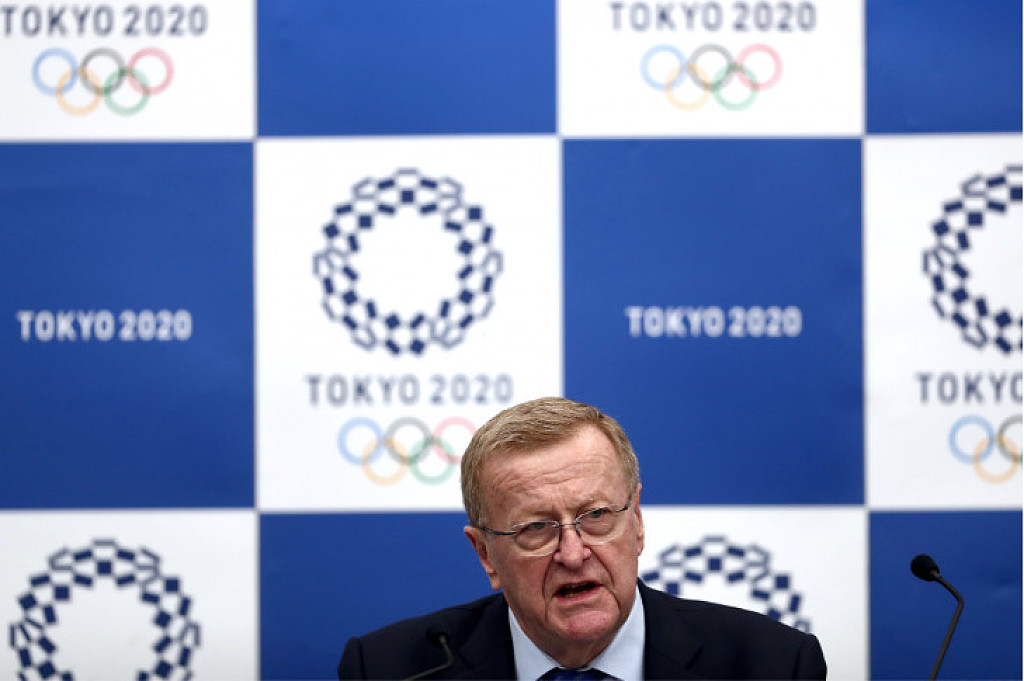
IOC Coordination Commission chair John Coates came cast as peacemaker. The Australian showered the TMG and Tokyo 2020 with praise for their preparations, while lauding the achievements of the Japanese team and organisers at the Rugby World Cup.
Tokyo Governor Yuriko Koike performed impressively in her role, defending locals against foreign influence and insisting she would not pay for the mess created by the IOC. A victory on both counts.
The decision to move the events to Sapporo was never going to change. Even if the TMG had the option to keep the races, it would have been a risk to overrule the IOC’s warnings about heat on the off chance a major incident occurred involving an athlete.
The decision is a sad one, with Tokyo missing out on the opportunity to showcase the city’s landmarks to a worldwide audience and offer the residents of the capital city the chance to watch one of Japan’s favoured events for free.
Maybe, the IOC decision is the right one. Even if we set aside previous Olympic marathon and race walks being held under similar conditions, and the fact the IOC did not rush to protect the health of athletes when a year before Rio 2016 sailors and rowers were falling ill amid the pollution of Guanabara Bay.
If we take the view of Canadian race walker Evan Dunfee - one I share - that the IOC took the decision to protect their brand and avoid negative press, it could still be a fair reason to move the events.
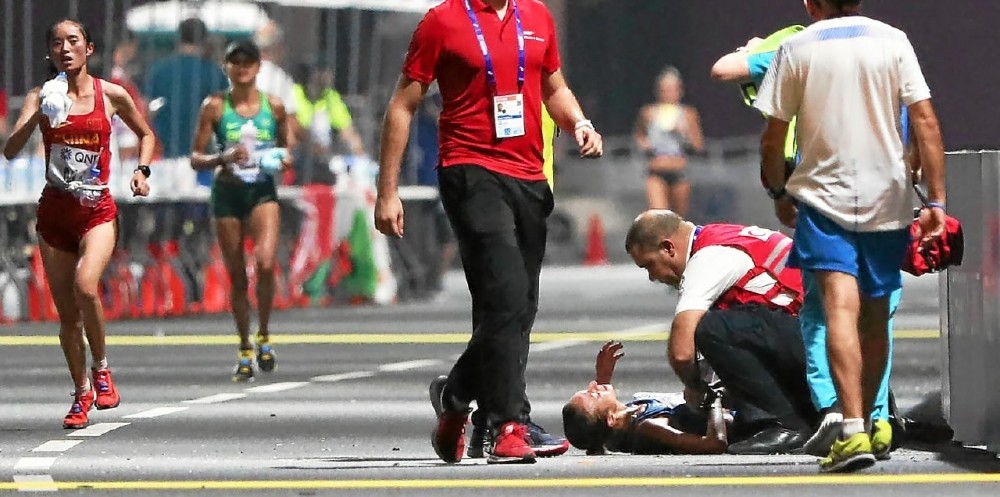
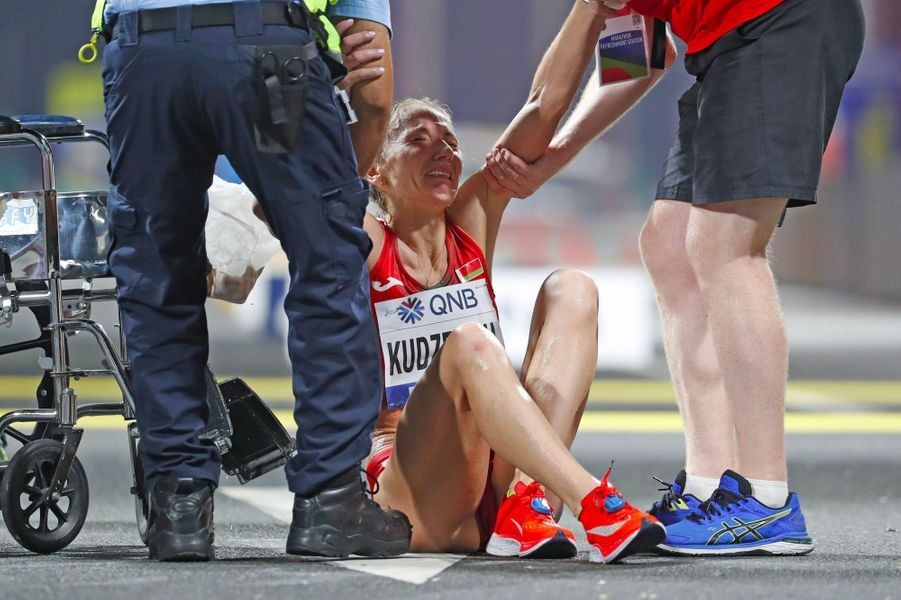
Would it be a good thing for the sport of athletics to see athletes wheeled away from a course requiring medical attention, as they were at the World Championships in Doha, even if they are ultimately okay? Sure, athletes will push beyond their limits anyway, but it seems reasonable to try to mitigate risks.
It was suggested here that the looped course in Doha made it easier for athletes to receive medical support. Where the city circuit touring the sights of Tokyo would see resources more spread out.
The five Ps of "proper preparation preventing poor performance" apply here, with athletes having the responsibility to tailor their training to the conditions. But, equally, organisers could not respond by saying an athlete should have prepared better if something went awry.
A key question is whether the IOC should be the ones making this call, rather than an International Federation or medical experts.
There is little doubt, though, that the IOC has handled this badly.
Managing to annoy athletes, politicians and residents of a city at the same time is impressive - even for the IOC.
This is problematic for the IOC in both the short and long-term.
The most pressing issue is that there is no course in Sapporo yet for either the marathon and race walks, while financing remains unclear.
Athletes and National Olympic Committees will be required to adapt plans, which is likely to see additional support staff required to be brought to Sapporo, with the associated costs involved.
Currently, there is no concrete plan as to who picks up the cost of the move, other than knowing that the Tokyo Government will not be doing so. I wonder whether Sapporo’s hopes of the hosting the Winter Olympics in 2030 could enjoy a boost should they bail the IOC out of a hole here.
The IOC has agreed to examine and verify the money already spent by the TMG on heat countermeasures, such as special paving. Although the IOC has promised it will not walk away from obligations, there appeared to be a suggestion the Paralympic and proposed "Olympic Celebration Marathon" could be used to say Tokyo has received a legacy for their investment.
The TMG’s anger at the lack of consultation may just be a short-term issue. A sympathetic view is that the IOC realised the only way to force the switch to Sapporo was the take extreme action and give Tokyo no choice but to conform, given they knew organisers would fight tooth and nail otherwise.
The IOC may have decided it is better to take the heat now than at Games time - excuse the pun. The decision could yet leave them marinating in their own words for some time to come, given what it exposes about the IOC’s relationship with host cities.
If we rewind little over a year, the IOC dispatched Olympic Games executive director Christophe Dubi to Calgary to convince locals to support their 2026 Winter bid. The visit came at a time when the Winter Olympic bid race appeared to be threatening to collapse completely, with anti-Olympics campaigners driving the message that the IOC cannot be trusted.
I wrote at the time that Dubi had delivered a strong display for the IOC, where he fronted up on previous mistakes and insisted changes had been made. The message was clear: the IOC will act as a partner with host cities and work the Games concept around them.
"What has changed in the IOC from 2014 is our approach to the way we do the bidding, organise the Games and manage legacies," he said. "It is all about partnership, it is all about flexibility and finding the right solution for the hosts.
"The Games cannot impose to a city anymore; the Games adapt to a city.
"It means over the last two years, we had to look at our Host City Contract, every single article to make sure that flexibility is reflected in every single article. Every requirement has to live to local creativity to play.
"We do not have the final solution, we have local solutions."
It is hard to reconcile these words with this latest decision taken by the IOC.
Is taking a unilateral decision without consulting the host city really acting in partnership with them? Is taking free events from a host against their will not the IOC imposing its will on city? Is moving an event 800 kilometres from the host city really a local solution?
When asked about whether the decision was the IOC dictating to a host city, Coates suggested the Sapporo switch did not clash with their rhetoric.
"We have a Host City Contract and the Olympic Charter leaves a clear authority for the IOC to take decisions like this where it is necessary," he said. "I do not think that is at odds with the Agenda 2020 reforms in terms of flexibility.
"If you suddenly become aware of something, you have got to have the right to respond to that, as has happened here where we have had to act very quickly because of the experience of Doha."
While Coates and the IOC might believe that, the past couple of weeks will serve as evidence for critics that the leopard has not changed its spots.
The IOC claim they are a joint party with a host city, but their actions suggest that these are our Games, not yours.
After all, an Organising Committee repeatedly hailed as being the best prepared in Olympic history has been rewarded by being left scrambling for the past two weeks, unable to provide answers to a scenario they did not create.
Anti-Olympics campaigners will point to one of Japan’s most powerful politicians being overruled about a decision in her own city. Koike’s own quotes will be used as warnings for future hosts.
"We are receiving angry opinions about what being a host city really implies," she said earlier this week. "We consider it an unprecedented turn of events for the IOC to take such a proposal with no consultation or discussion with the host city beforehand."
The IOC may be right to move the marathon and race walk events.
However, I wonder whether their handling of the switch will have a wider impact than the decision itself.
by Michael Pavitt
Login to leave a comment
Tokyo 2020 Olympic Games
Fifty-six years after having organized the Olympic Games, the Japanese capital will be hosting a Summer edition for the second time, originally scheduled from July 24 to August 9, 2020, the games were postponed due to coronavirus outbreak, the postponed Tokyo Olympics will be held from July 23 to August 8 in 2021, according to the International Olympic Committee decision. ...
more...