

Running News Daily
Running News Daily is edited by Bob Anderson and team. Send your news items to bob@mybestruns.com Advertising opportunities available.
Index to Daily Posts · Sign Up For Updates · Run The World Feed
Articles tagged #2021
Today's Running News



Five Years On, Agnes Tirop’s Light Still Shines in the World of Athletics
Five years after the tragic death of Agnes Jebet Tirop, the Kenyan distance-running star remains a powerful symbol of sporting excellence, unfulfilled potential and the urgent fight against gender-based violence.
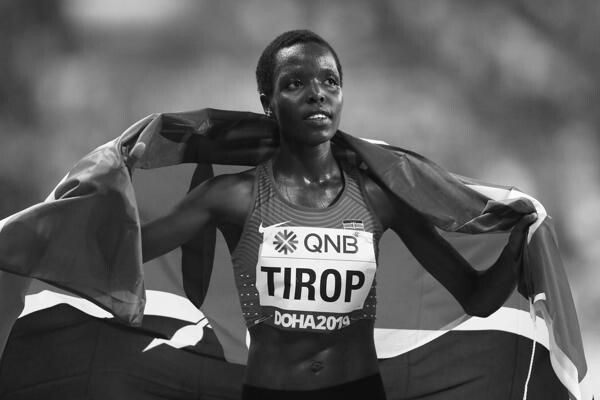
On October 13, 2021, the athletics world was plunged into mourning following the death of Tirop, who was found at her home in Iten, Kenya, at just 25 years old. Her life was cut short at a time when her career was flourishing, leaving behind a legacy that continues to resonate with athletes, fans and the wider community.
For Kenya, a country whose identity is deeply intertwined with distance-running success, Tirop represented a remarkable generation of female athletes taking the sport to new heights. Her achievements on the track, across country and on the roads had already secured her place among the country's outstanding distance runners.
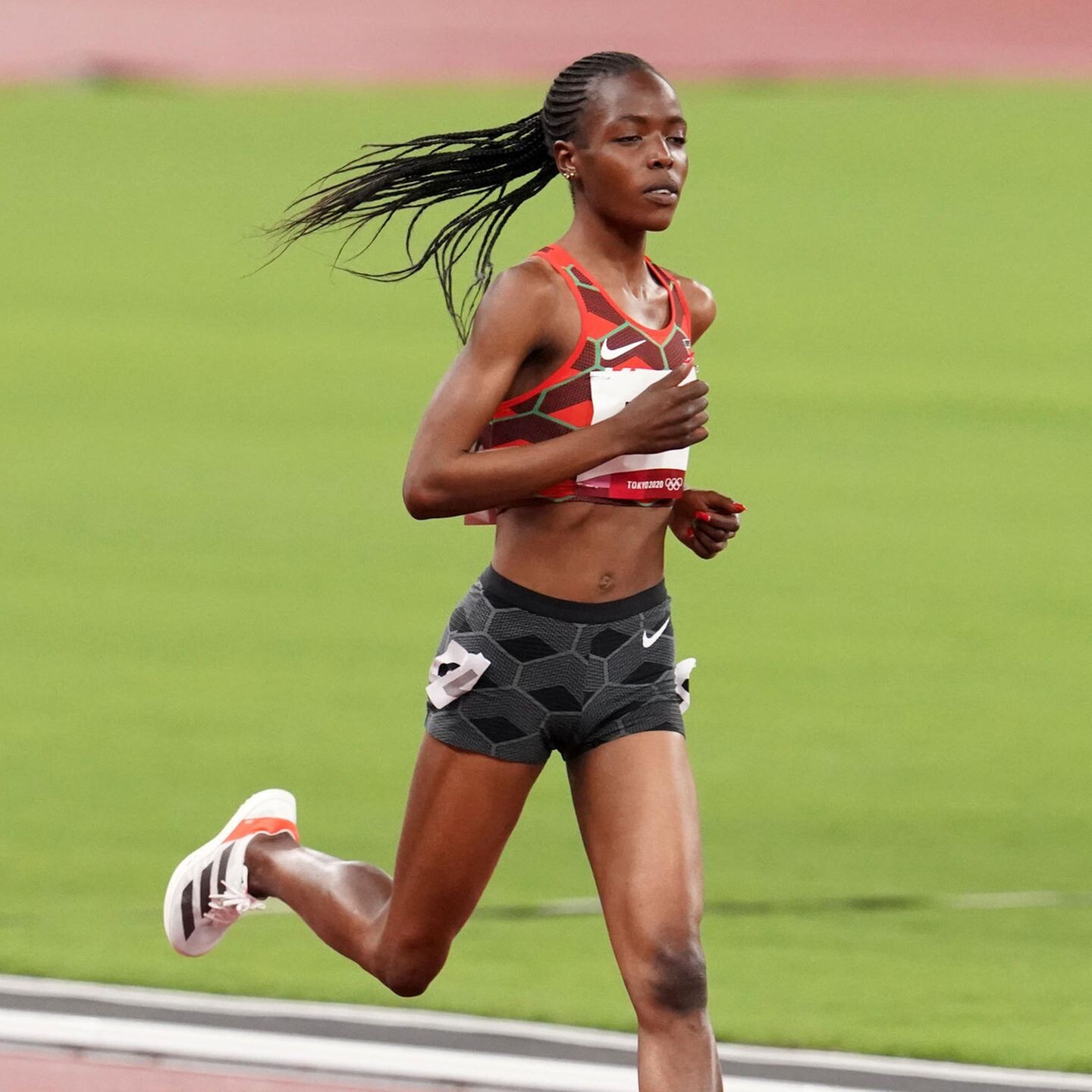
Five years later, the sadness of her loss remains inseparable from the extraordinary story of what she accomplished in her short but memorable career.
A Champion Who Rose to the Top at 19
Tirop announced herself on the global stage in spectacular fashion at the 2015 World Athletics Cross Country Championships in Guiyang, China. At only 19, she won the senior women's race, becoming the youngest champion in the event since Zola Budd in 1985.
Her victory demonstrated not only her natural ability but also the composure and determination that would become defining features of her running career.
She subsequently established herself among the world's leading track athletes, winning bronze medals in the women's 10,000 metres at the 2017 World Athletics Championships in London and the 2019 edition in Doha.
Those back-to-back podium finishes confirmed her consistency at the highest level and underlined her ability to compete against the strongest distance runners in the world.
Tirop also demonstrated considerable versatility at the Tokyo 2020 Olympic Games, held in 2021, where she finished fourth in the women's 5,000 metres. Although she narrowly missed the podium, her performance reinforced her reputation as one of Kenya's most accomplished emerging distance-running talents.
A World Record That Made History
Just weeks before her death, Tirop delivered one of the defining performances of her career.
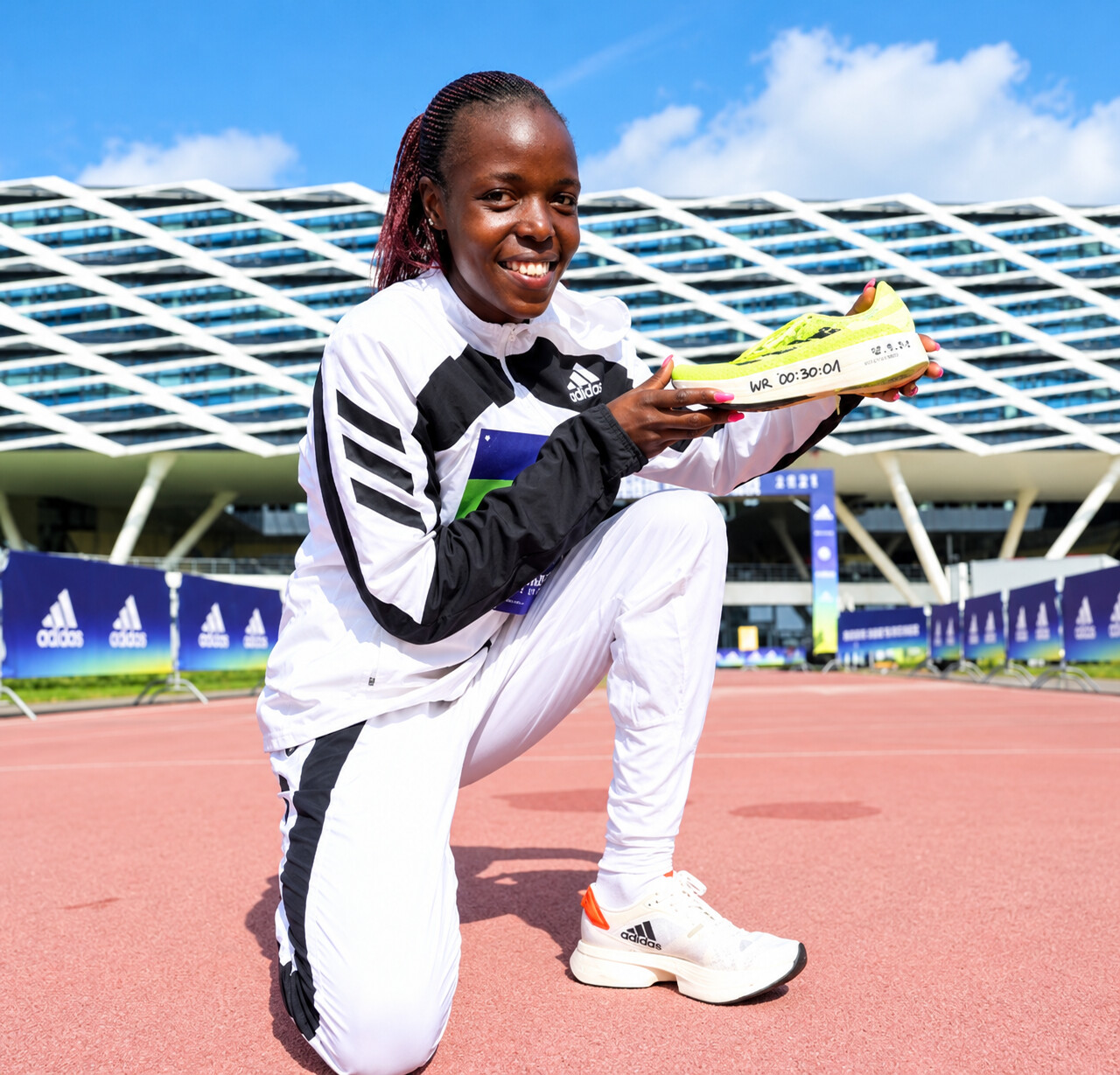
On September 12, 2021, she clocked an astonishing 30:01 to win the women's 10km road race at the adizero Road to Records event in Herzogenaurach, Germany.
Her performance broke the then women's-only world record by 28 seconds, establishing a new benchmark for the distance. The record was subsequently ratified by World Athletics. It was aremarkable achievement that placed her name among the legends of distance running. Although her record has since been broken, the greatness of her achievement remains untouched, and no change in the record books can diminish the extraordinary talent, courage and determination she displayed that day. Time may bring new champions and faster performances, but it can never erase the mark she left on athletics.
In a race that demanded patience, tactical awareness and an exceptional finishing effort, Tirop broke away from compatriot Sheila Chepkirui during the closing stages and powered towards the finish line.
The performance was a remarkable demonstration of her endurance and competitive instinct. It also offered a glimpse of what might have followed had she been given more years to develop her career.
Her final competitive appearance came on October 3, 2021, when she finished second in a 10km race in Geneva, Switzerland. Ten days later, the world learned of her death.
The timing made the tragedy particularly difficult to comprehend: an athlete who had just rewritten the record books and was still competing at the highest level was suddenly gone.
A Tragedy That Reached Far Beyond Sport
Tirop's death was not simply the loss of an elite athlete. It also brought renewed international attention to violence against women and the need to create safer environments in which women and girls can live, train and pursue their ambitions.
Her story became a painful reminder that medals, records and international recognition cannot shield someone from violence in their private life.
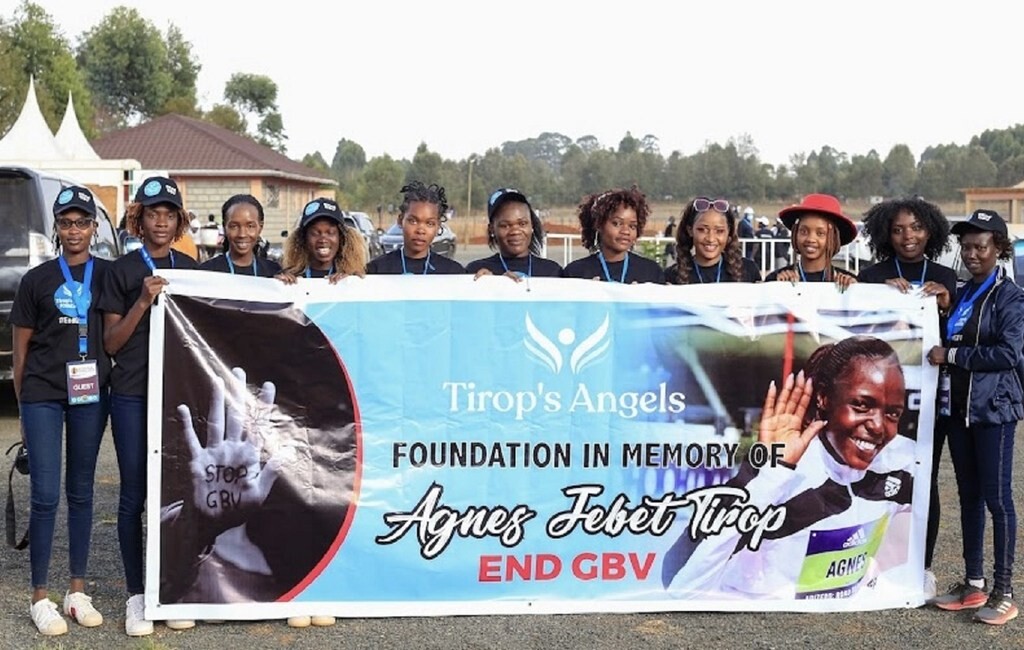
In the years since her death, her name has continued to feature in efforts to promote women's empowerment, athlete welfare and the prevention of gender-based violence. Initiatives associated with her legacy, including Agnes Tirop Angels, reflect the continuing determination to transform grief into meaningful action.
Her story remains especially significant within athletics, where the pursuit of excellence must go hand in hand with respect for athletes' safety, dignity and wellbeing.
Five Years Later, Her Legacy Endures
For young runners who dream of representing Kenya on the international stage, Tirop's career remains an example of what dedication, talent and courage can achieve.
She rose from a promising young athlete to a world champion, a two-time World Championships medallist and a world-record holder. She excelled across different distances and surfaces, leaving an impressive body of achievements before reaching her 26th birthday.
Yet her legacy cannot be measured by statistics alone. It also lies in the conversations her death continues to inspire, the women whose safety must be protected and the determination to ensure that sporting success is never separated from human dignity.
Five years on, Agnes Tirop is remembered not only for the records she set or the medals she won, but also for the future that was taken from her.
Her achievements remain part of Kenya's rich athletics history, while her story continues to call for a world in which women can pursue their dreams without fear of violence.
Agnes Tirop's life was tragically short, but her impact reaches far beyond the finish line. Her achievements will remain in the record books, her memory will endure in the hearts of athletics fans, and her legacy will continue to inspire generations to come.
by Erick Cheruiyot for My Best Runs.
Login to leave a comment
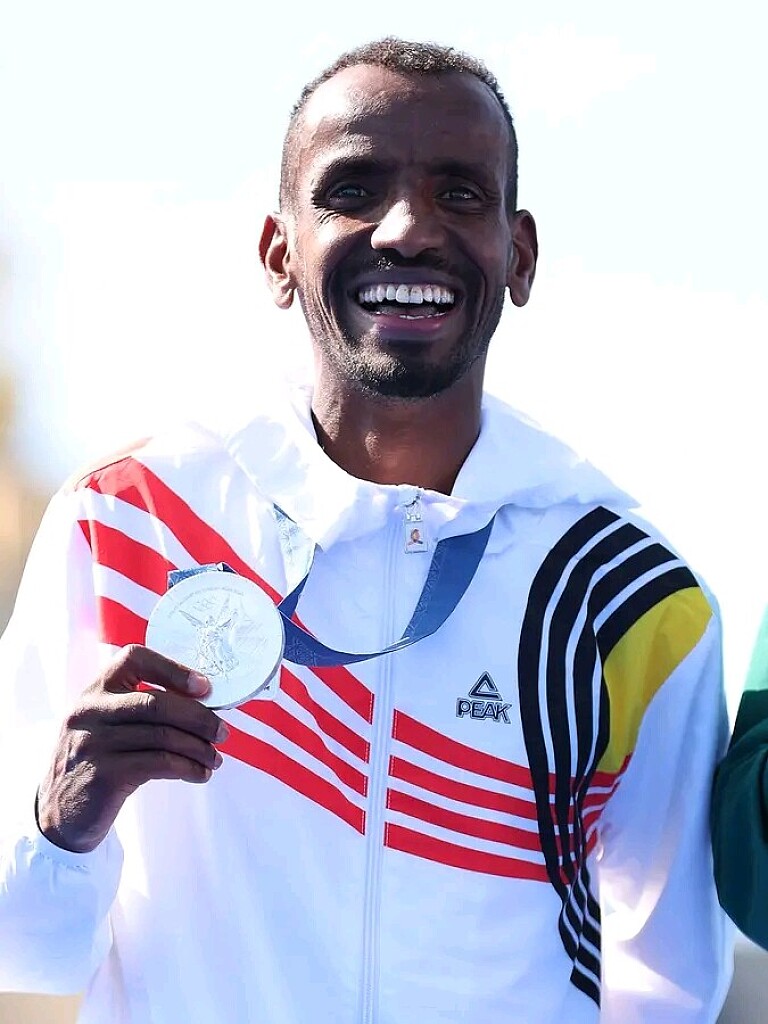
Bashir Abdi Withdraws From Chicago Marathon After Calf Injury
Belgian marathon star Bashir Abdi has been forced to withdraw from the 2026 Chicago Marathon after suffering a calf injury during his final training session in Flagstaff, Arizona.
The two-time Olympic marathon medallist confirmed on Monday that a small tear in his calf has ruled him out of Sunday’s race, bringing an untimely end to months of preparation for one of the biggest marathons of the year.
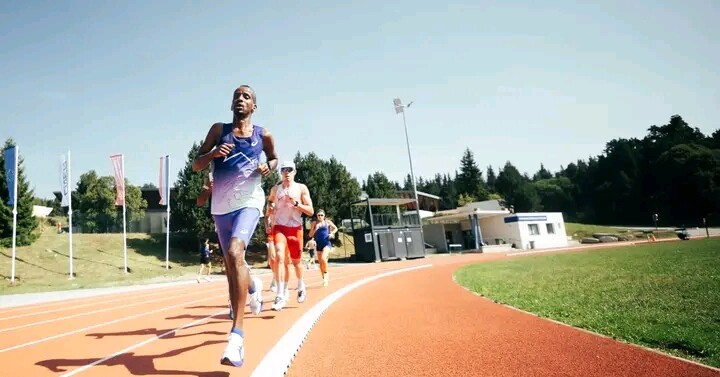
“Unfortunately, I will not be participating in the Chicago Marathon this weekend,” Abdi announced. “During my last training session in Flagstaff, I suffered a small tear in my calf.”
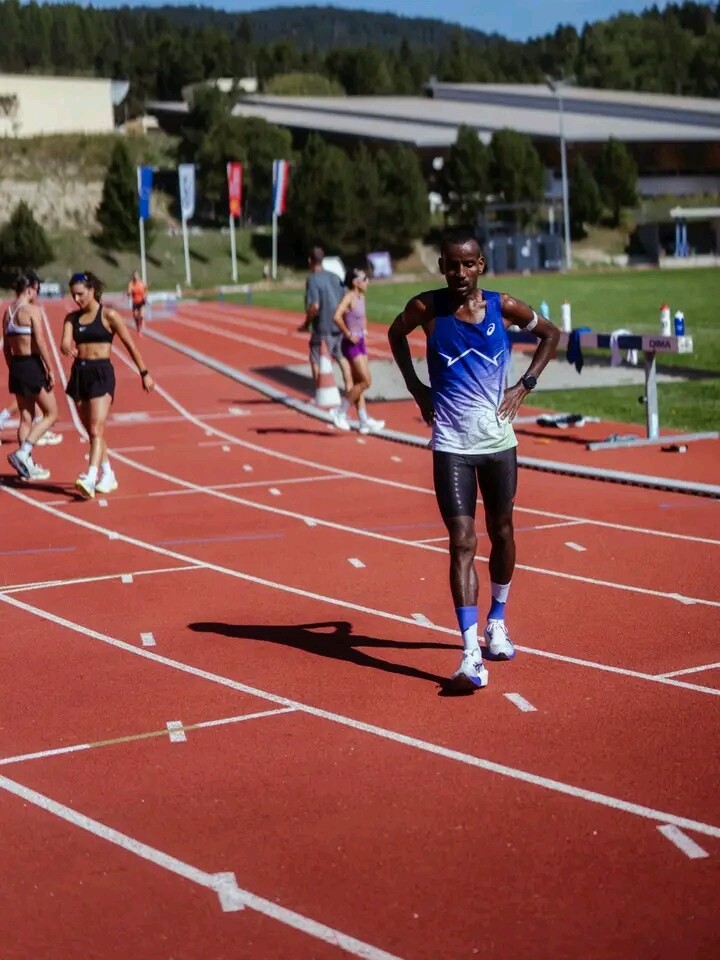
The 37-year-old stressed that the injury is not considered serious, but explained that it is significant enough to prevent him from safely taking his place on the start line. After consulting with his coach and medical team, the decision was made to avoid taking unnecessary risks.
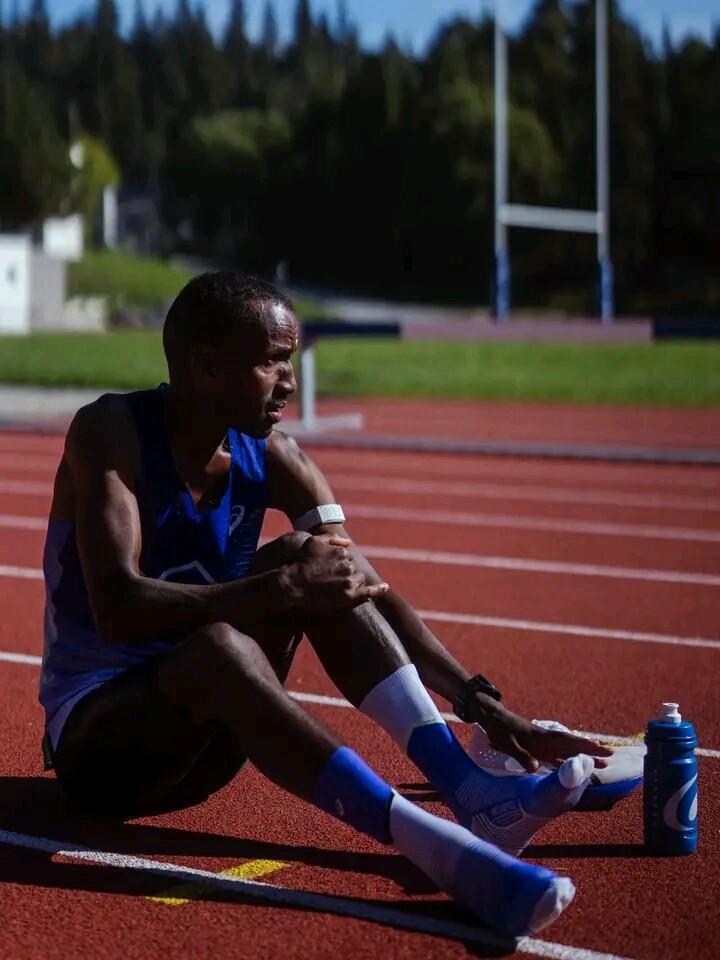
“It’s not a major injury, but enough to keep me from the start line. After consulting with my coach and medical team, we decided not to take any risks,” Abdi said.
The withdrawal is a major disappointment for Abdi, who had been listed among the elite contenders for the 48th edition of the Bank of America Chicago Marathon. The race is scheduled for October 11 and is expected to feature more than 55,000 finishers.
Abdi arrived at the Chicago buildup with an impressive marathon résumé. He won Olympic silver in Paris in 2024 after previously taking bronze at the Tokyo Olympics in 2021, establishing himself as one of the most accomplished marathoners of his generation.
He is also the European marathon record-holder, having clocked 2:03:36 in Rotterdam in 2021 to become the first European athlete to break the 2:04 barrier.
His 2026 season had shown that he remained capable of competing at the highest level. In April, Abdi finished third at the Rotterdam Marathon in 2:04:19, behind Ethiopia’s Guye Adola and Tesfaye Deriba.
For Abdi, the immediate priority is now recovery rather than forcing a return before he is ready. Missing Chicago will undoubtedly be frustrating after months of preparation, but protecting his long-term career is the more important decision.
The Belgian remains determined to move forward, with his focus now shifting toward rehabilitation and preparing for his next opportunity to race.
For one of Europe’s greatest marathoners, Chicago may be off the calendar—but the pursuit of more history continues.
by Erick Cheruiyot for My Best Runs.
Login to leave a comment
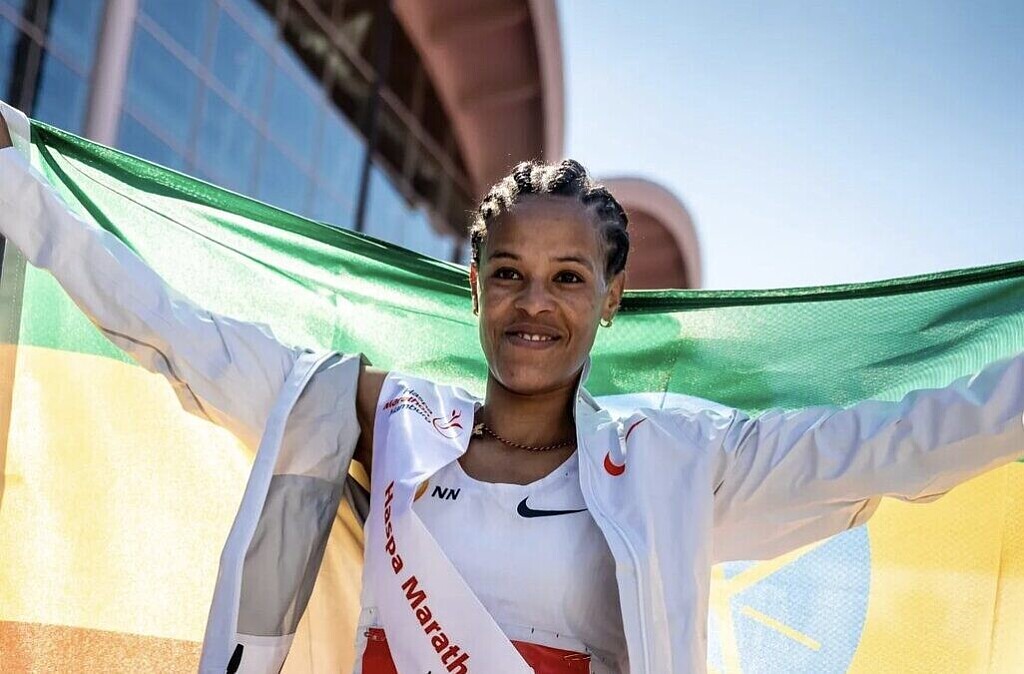
Valencia Half Marathon 2026 Set for Star-Studded Women’s Battle as Yehualaw, Gebreselama and Gitonga Head Elite Field
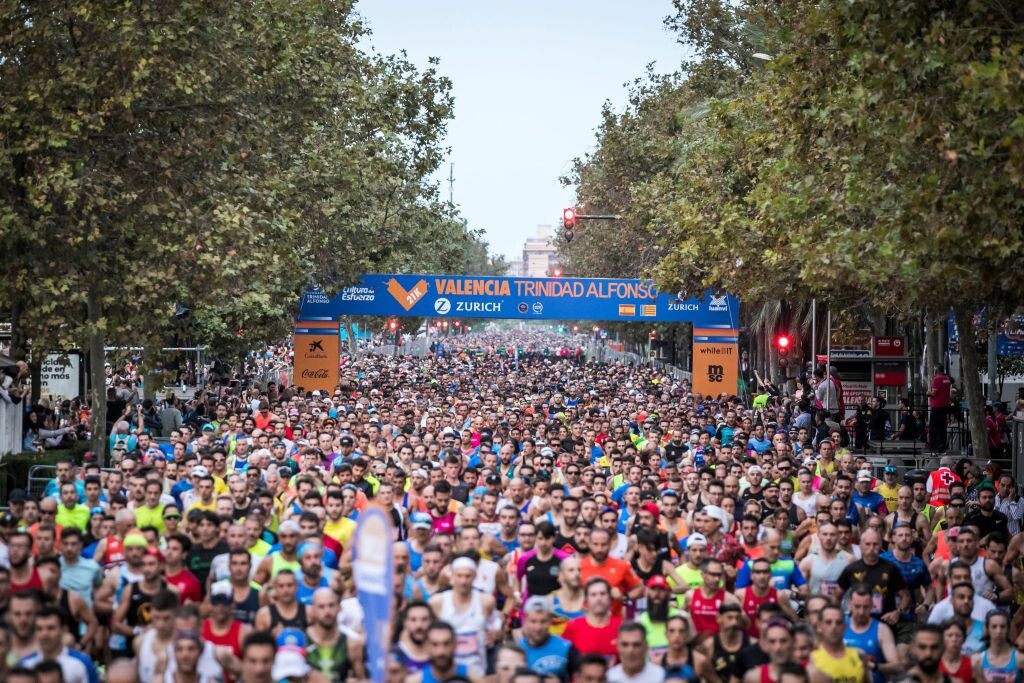
The Valencia Half Marathon 2026 is shaping up to be one of the most anticipated women’s road races of the season, with a deep international field set to assemble in Valencia, Spain, on Sunday, October 25.
Leading the announced line-up are Ethiopia’s Yalemzerf Yehualaw, Tsigie Gebreselama and Kenya’s Caroline Gitonga, with a strong group of athletes from Kenya, Ethiopia, Germany and Spain adding considerable depth to the race.
Yehualaw arrives with a listed personal best of 1:03:51, placing her among the fastest athletes in the field. The Ethiopian has considerable experience in Valencia, having finished second in the 2021 edition in 1:03:51 when compatriot Letesenbet Gidey set the then-world record of 1:02:52.
Gebreselama is also listed at 1:04:21, while Ethiopia’s Ftaw Zerai enters with 1:05:12. Their presence gives Ethiopia a formidable challenge at the front of the women’s race and sets the stage for a potentially fast contest from the opening kilometres.
Kenya will be strongly represented as well. Daisilah Jerono has a listed best of 1:05:21, followed by Veronica Loleo at 1:05:35 and Caroline Gitonga at 1:06:16. Loleo is particularly familiar with Valencia, having finished third in the 2025 race in 1:05:46.

Germany’s Konstanze Klosterhalfen, listed at 1:05:41, adds another major international name to the field. Meanwhile, Spain’s hopes will be carried by Carla Gallardo, Laura Luengo and Irene Sánchez-Escribano, who are listed at 1:08:30, 1:08:50 and 1:09:10 respectively.
Valencia Half Marathon 2026 — Women’s Elite Field
1. Yalemzerf Yehualaw (Ethiopia) — 1:03:51
2. Tsigie Gebreselama (Ethiopia) — 1:04:21
3. Ftaw Zerai (Ethiopia) — 1:05:12
4. Daisilah Jerono (Kenya) — 1:05:21
5. Veronica Loleo (Kenya) — 1:05:35
6. Mizam Alem (Ethiopia) — 1:05:38
7. Konstanze Klosterhalfen (Germany) — 1:05:41
8. Caroline Gitonga (Kenya) — 1:06:16
9. Carla Gallardo (Spain) — 1:08:30
10. Laura Luengo (Spain) — 1:08:50
11. Irene Sánchez-Escribano (Spain) — 1:09:10
The quality of the field is particularly significant given Valencia’s reputation as one of the fastest half-marathon venues in the world. The race has produced both the women’s and men’s world records, with Gidey running 1:02:52 in 2021 and Yomif Kejelcha clocking 57:30 in 2024.
With several athletes already possessing credentials around or below the 1:06 mark, the women’s race could develop into a high-quality battle over the 21.0975-kilometre distance. The depth behind the leading trio also means the outcome could depend on pacing, positioning and how the contenders respond when the race reaches its decisive stages.
For the Spanish athletes, racing on home roads provides an opportunity to challenge a powerful African contingent, while the Kenyan and Ethiopian runners will arrive with ambitions of competing for the leading positions.
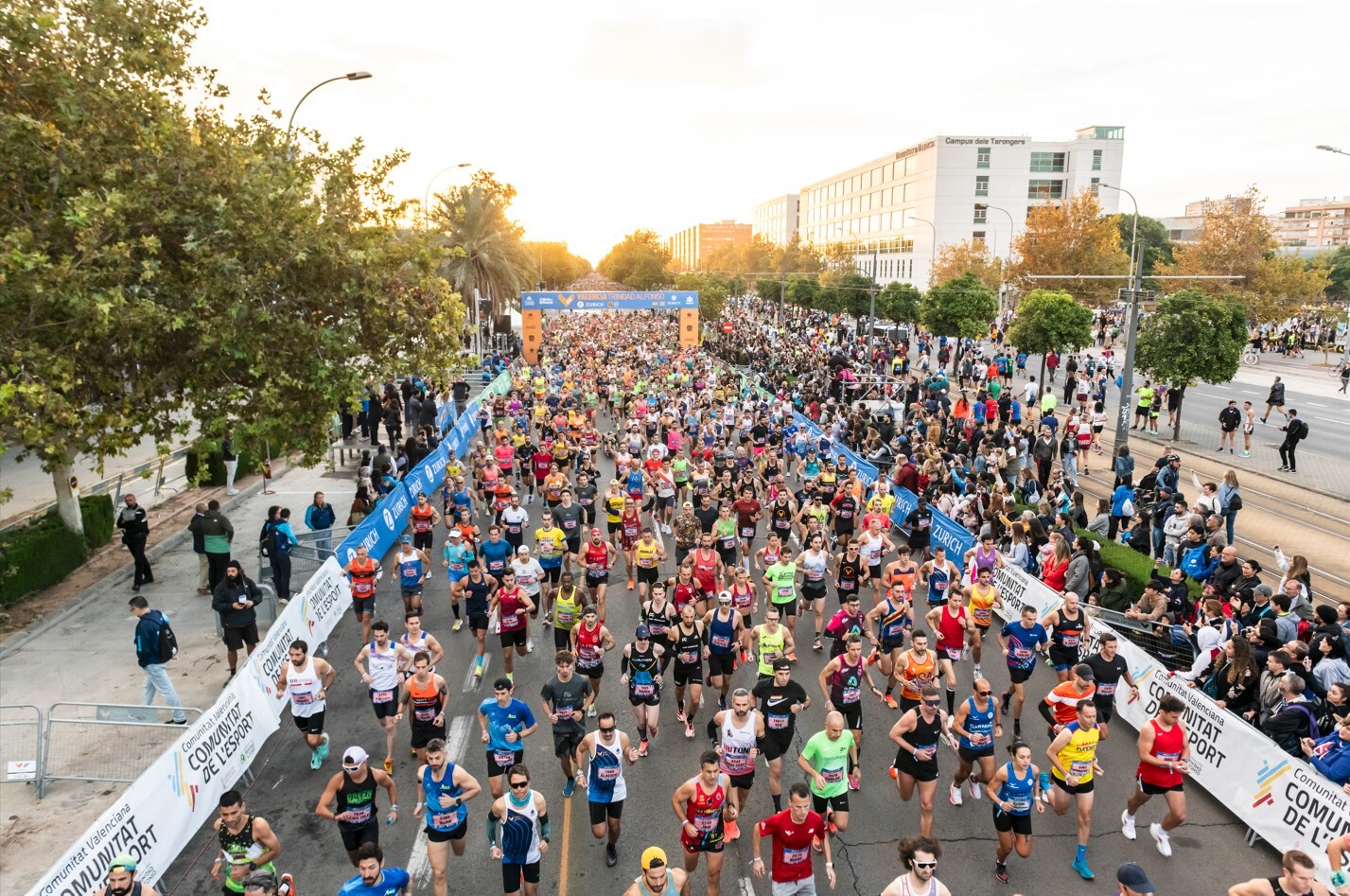
The Valencia Half Marathon 2026 will take place on October 25, bringing together an international elite field alongside thousands of mass-participation runners on the fast streets of Valencia.
by Erick Cheruiyot for My Best Runs.
Login to leave a comment

Valencia Half Marathon
The Trinidad Alfonso Valencia Half Marathon has become one of the top running events in the world. Valencia is one of the fastest half marathon in the world. The race, organized by SD Correcaminos Athletics Club, celebrated its silver anniversary in style with record participation, record crowd numbers, Silver label IAAF accreditation and an atmosphere that you will not find...
more...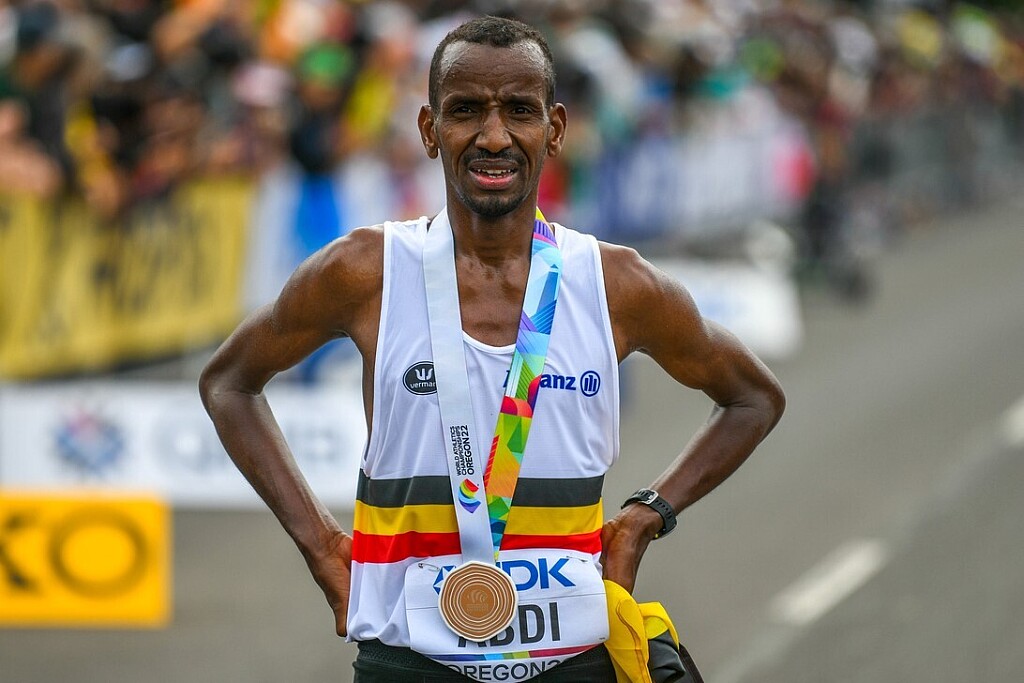
Bashir Abdi Joins Chicago Marathon Field As Alex Masai Withdraws 19 Days Before The Race
The Bank of America Chicago Marathon has delivered another major shake-up to its elite field, with European marathon record-holder Bashir Abdi joining the lineup just 19 days before race day, while Kenya’s Alex Masai has withdrawn from the October 11 showdown.

The latest update saw 16 athletes added and six withdrawn from the men’s and women’s elite fields, but Abdi’s arrival is undoubtedly the headline development.
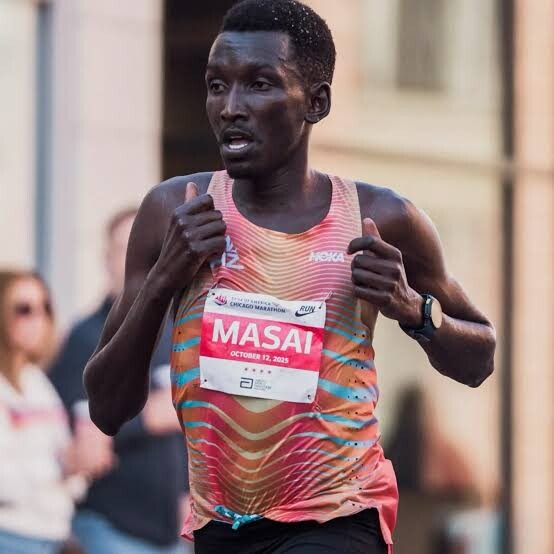
The 37-year-old Belgian owns the European marathon record of 2:03:36, set at the Rotterdam Marathon in 2021, and the mark still stands as the continental record.
Abdi also brings an impressive championship pedigree to Chicago. He won Olympic bronze at the Tokyo 2020 Games before upgrading to silver at the Paris 2024 Olympics, cementing his status as one of Europe’s leading marathoners of his generation.
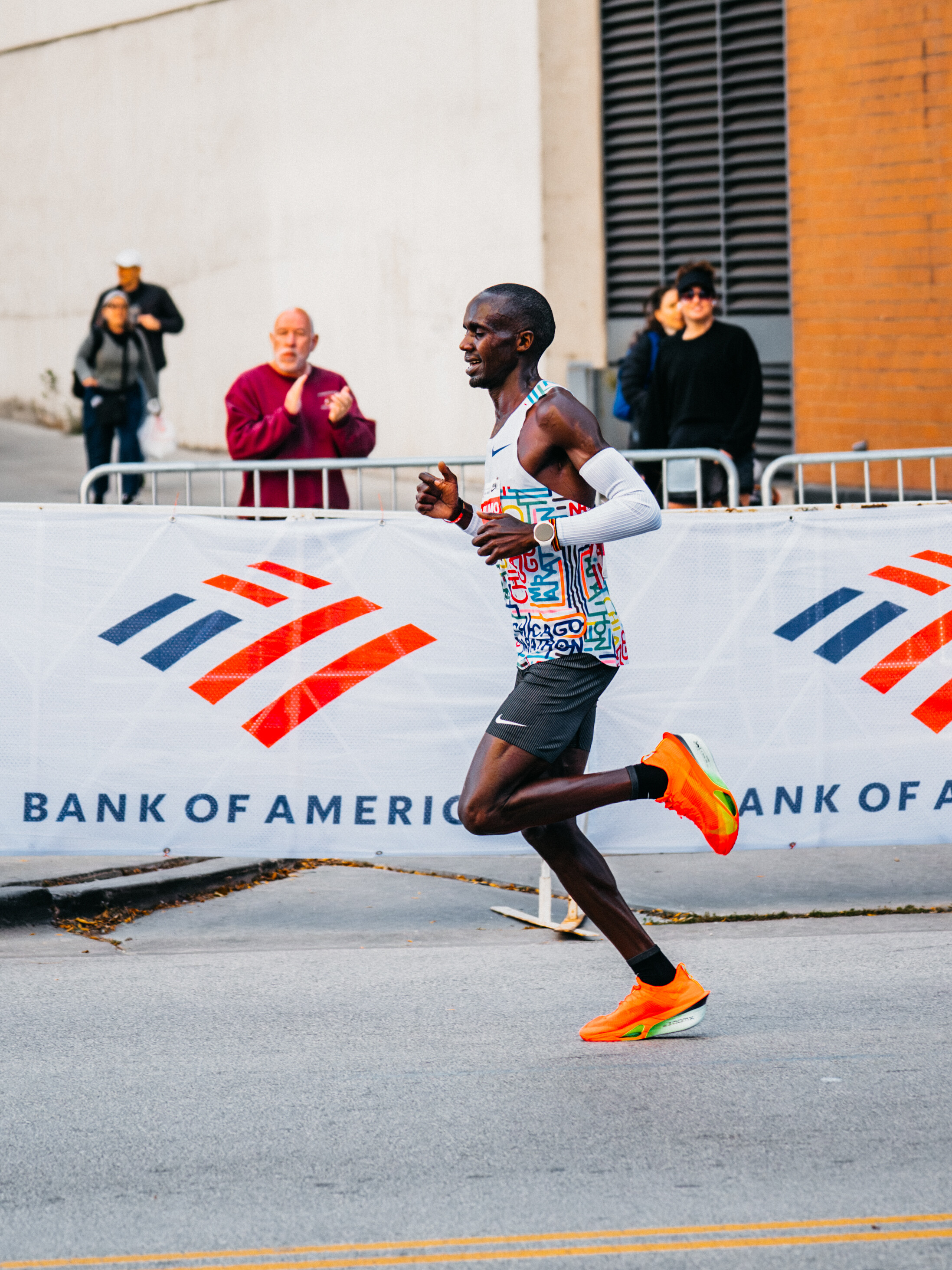
The Belgian is also familiar with the streets of Chicago. He finished 10th in last year’s race in 2:07:08, in a marathon won by Uganda’s Jacob Kiplimo in a spectacular 2:02:23.
Kiplimo returns this year to defend his Chicago title, adding another fascinating dimension to an already stacked men's field.
Masai’s withdrawal, meanwhile, removes one of last year’s podium finishers. The Kenyan finished third in 2:04:37 in 2025, behind Kiplimo and Amos Kipruto, and his absence changes the complexion of a race that had been expected to feature a number of familiar contenders from last year.
Chicago has been billing its 2026 elite lineup as one of the deepest in the race’s 48-year history, and the addition of a European record-holder this close to race day only strengthens that narrative.
Kiplimo remains the defending champion, but he will face a formidable group of challengers, with six men in the field having already broken 2:04.
Abdi’s late arrival adds another proven championship performer and record-holder to the mix, while Masai’s withdrawal removes a major Kenyan contender from the equation.
The latest changes also highlight how fluid elite marathon fields have become. Unlike in the past, when major-race lineups were largely settled months before the starting gun, today's biggest marathons can continue to evolve right up until race week.
And Chicago has certainly done so.
With just 19 days remaining, the defending champion is back, a European record-holder has entered the battle, and one of last year’s podium finishers is gone. The stage is set for another fascinating chapter on the streets of Chicago.
by Erick Cheruiyot for My Best Runs.
Login to leave a comment

Bank of America Chicago
Running the Bank of America Chicago Marathon is the pinnacle of achievement for elite athletes and everyday runners alike. On race day, runners from all 50 states and more than 100 countries will set out to accomplish a personal dream by reaching the finish line in Grant Park. The Bank of America Chicago Marathon is known for its flat and...
more...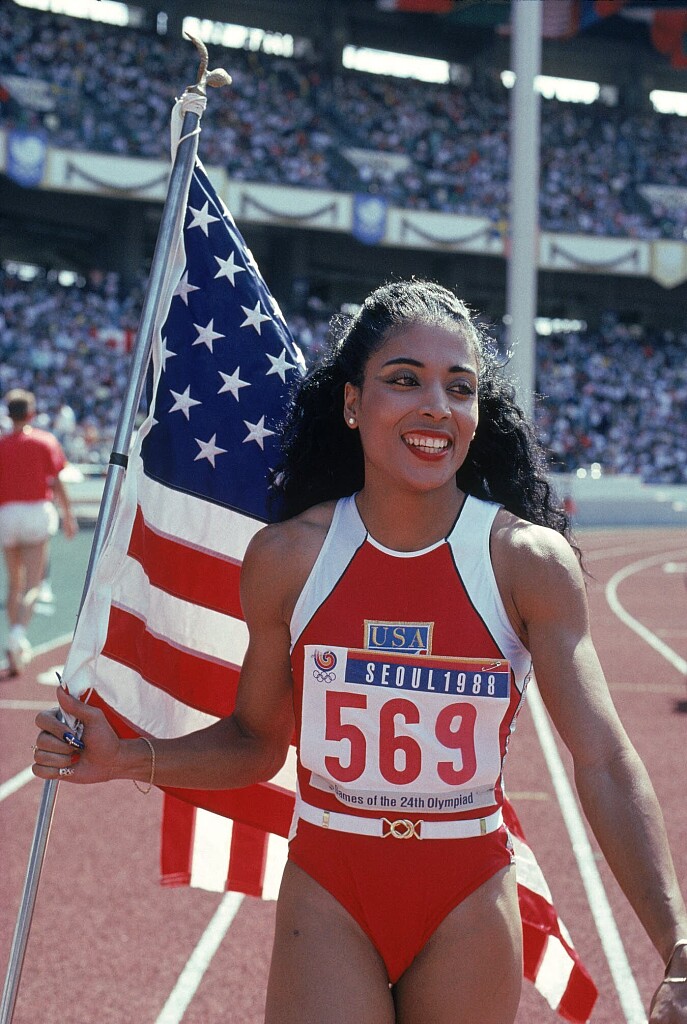
Florence Griffith-Joyner’s 21.34 Still Stands 38 Years Later
Thirty-eight years ago, Florence Griffith-Joyner produced a performance in Seoul that would go on to become one of the most enduring records in athletics history.
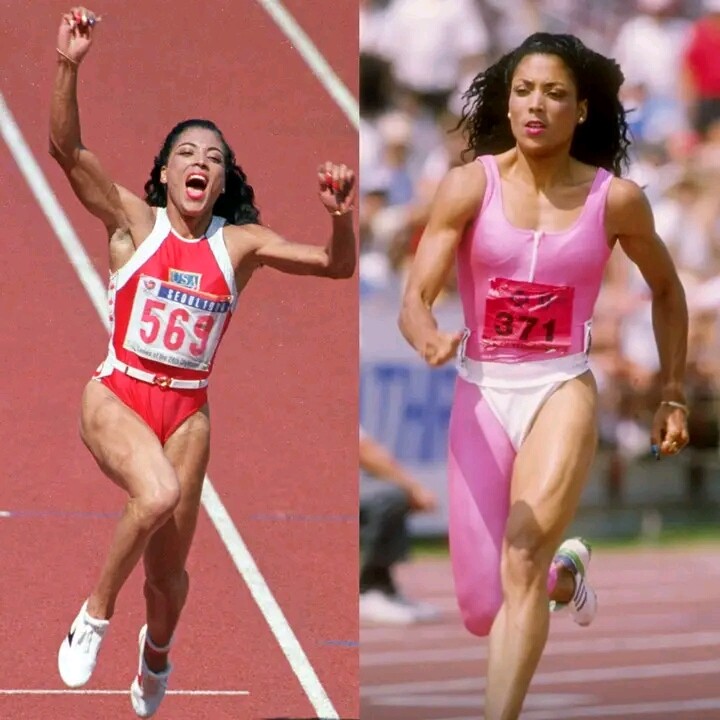
On September 29, 1988, the American sprint sensation lined up for the women’s 200m final at the Olympic Stadium in Seoul, South Korea, carrying the confidence of an athlete who had already announced herself as one of the stars of the Games.
What followed was extraordinary.
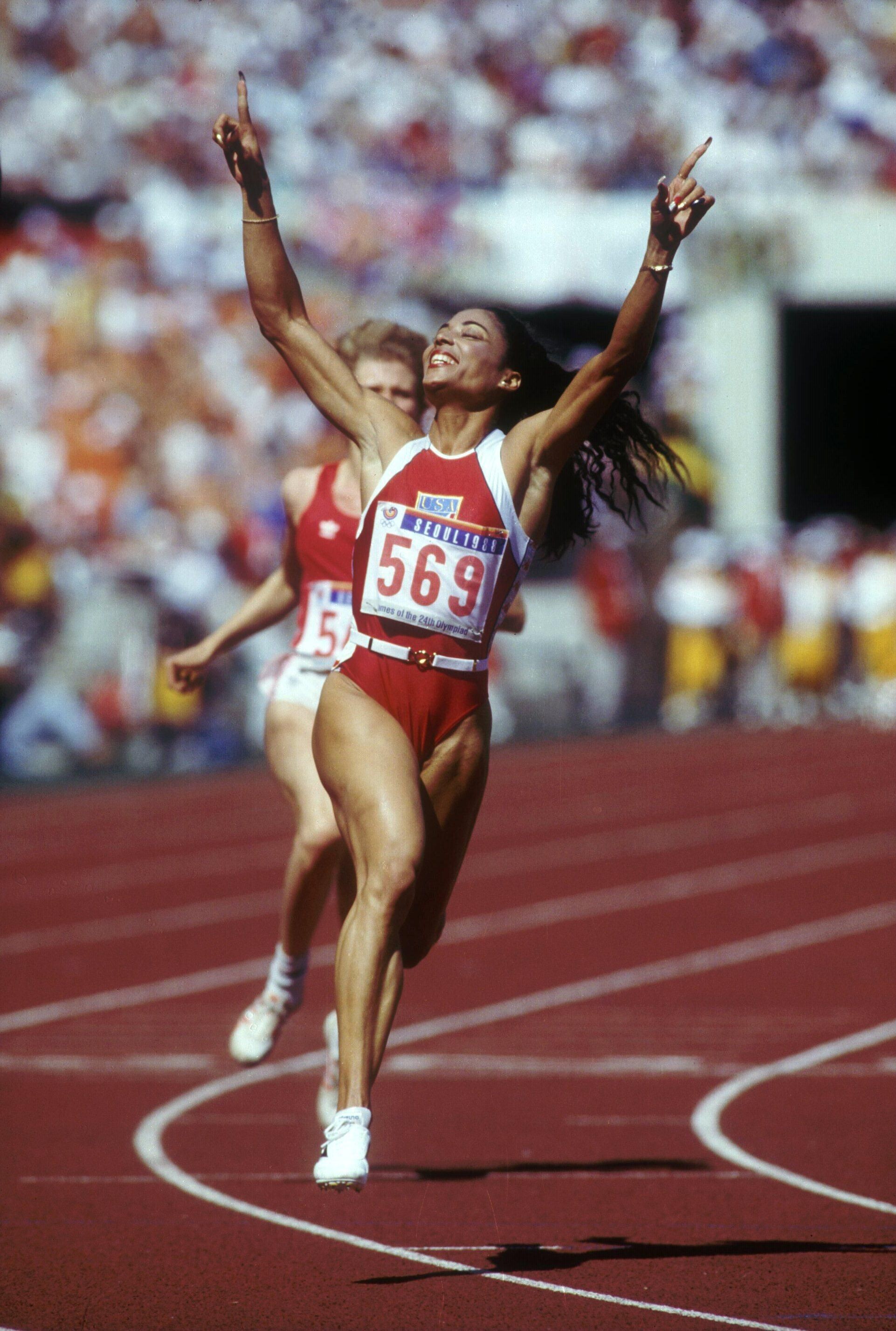
Griffith-Joyner stormed around the bend before unleashing an astonishing finish, stopping the clock in 21.34 seconds with a legal following wind of +1.3 m/s. The performance secured Olympic gold and shattered the world record she had set earlier that same day in the semifinal, when she ran 21.56.
It was not simply another Olympic victory. It was a performance that immediately entered sprinting folklore.
The 21.34 remains the women’s 200m world record, 38 years after it was established. World Athletics continues to list Griffith-Joyner at the top of the all-time rankings, with her mark standing ahead of every performance that has followed.
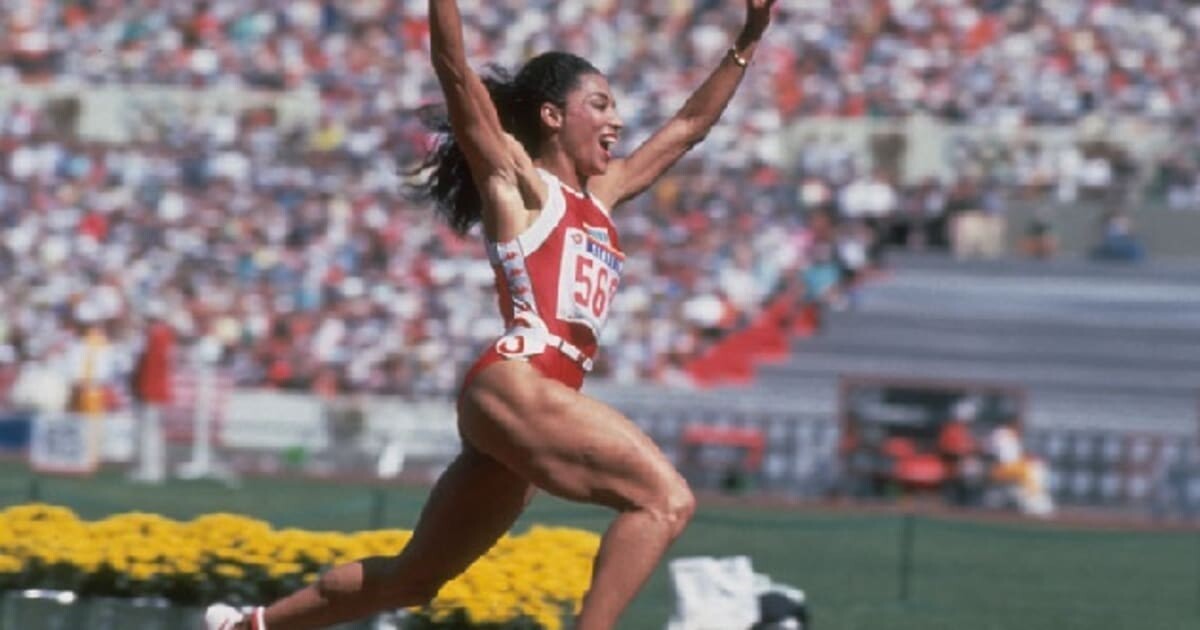
And there have been some remarkable attempts to take it down.
Jamaica’s Shericka Jackson came closer than anyone in recent years, running 21.41 to win the world title in Budapest in 2023 — just seven hundredths of a second away from Griffith-Joyner’s legendary mark. Elaine Thompson-Herah ran 21.53 in Tokyo in 2021, while Gabrielle Thomas has gone 21.61.
Yet 21.34 has continued to stand.
Griffith-Joyner’s Seoul campaign was remarkable beyond the 200m record. She won three Olympic sprint gold medals at the Games and established herself as one of the defining athletes of the 1988 Olympics. World Athletics records her as a three-time Olympic champion and the current world-record holder in both the 100m and 200m.
Her career also left behind an unmistakable visual legacy. The long, flowing nails, striking racing outfits and explosive sprinting made Flo-Jo one of the most recognisable figures the sport has ever produced.
But decades later, it is the number 21.34 that continues to command attention.
Generations of Olympic champions and world-class sprinters have come and gone. The event has evolved, training methods have advanced and the level of women’s sprinting has continued to rise. Still, Griffith-Joyner’s Seoul masterpiece remains untouched.
38 years. One legendary record. Still standing.
And with a new generation of elite 200m sprinters continuing to push the boundaries, the question remains fascinating: how much longer can Florence Griffith-Joyner’s 21.34 survive?
by Erick Cheruiyot for My Best Runs.
Login to leave a comment
Guye Adola Rewrites His Berlin Story With Stunning 2:02:50 Victory
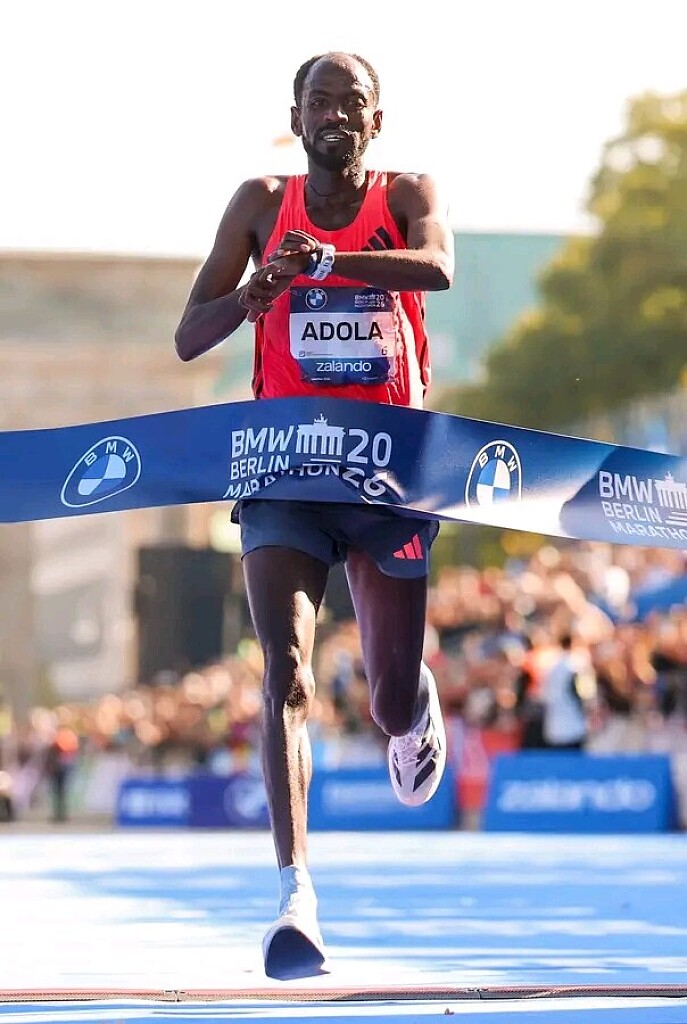
Ethiopia’s Guye Adola has produced a perfectly judged performance to win the 2026 BMW Berlin Marathon, returning to the streets where his marathon career began to claim his second Berlin title in a sensational 2:02:50.
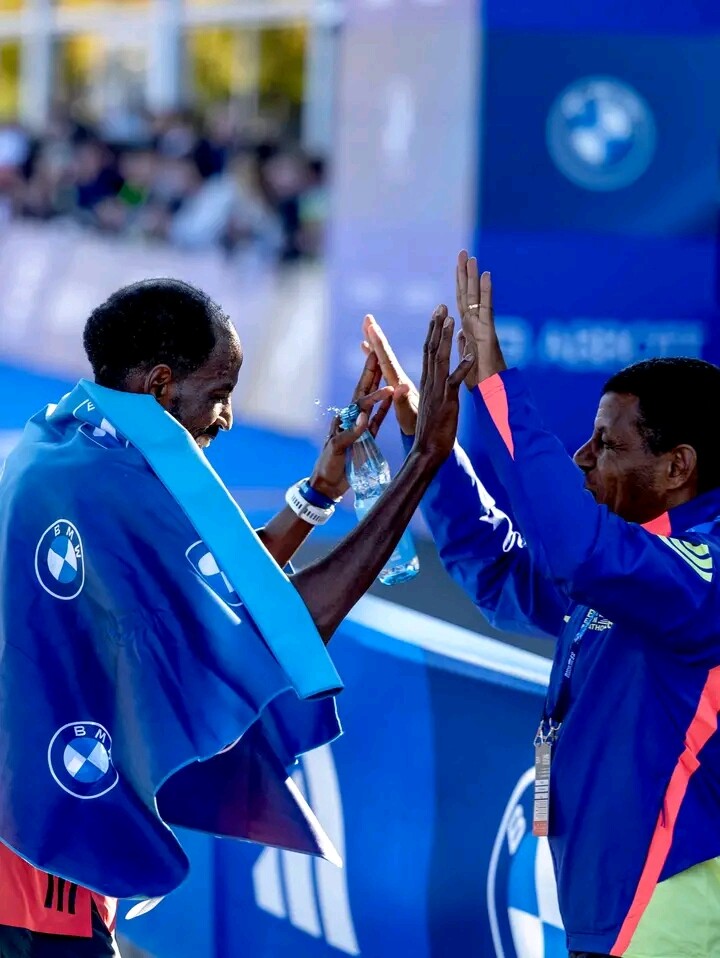
The 35-year-old Ethiopian controlled the race brilliantly before making his decisive move in the closing stages, crossing the finish line clear of compatriot Gemechu Dida Diriba, who finished second in 2:03:19. Adola’s winning margin was 29 seconds, underlining just how strongly he finished.
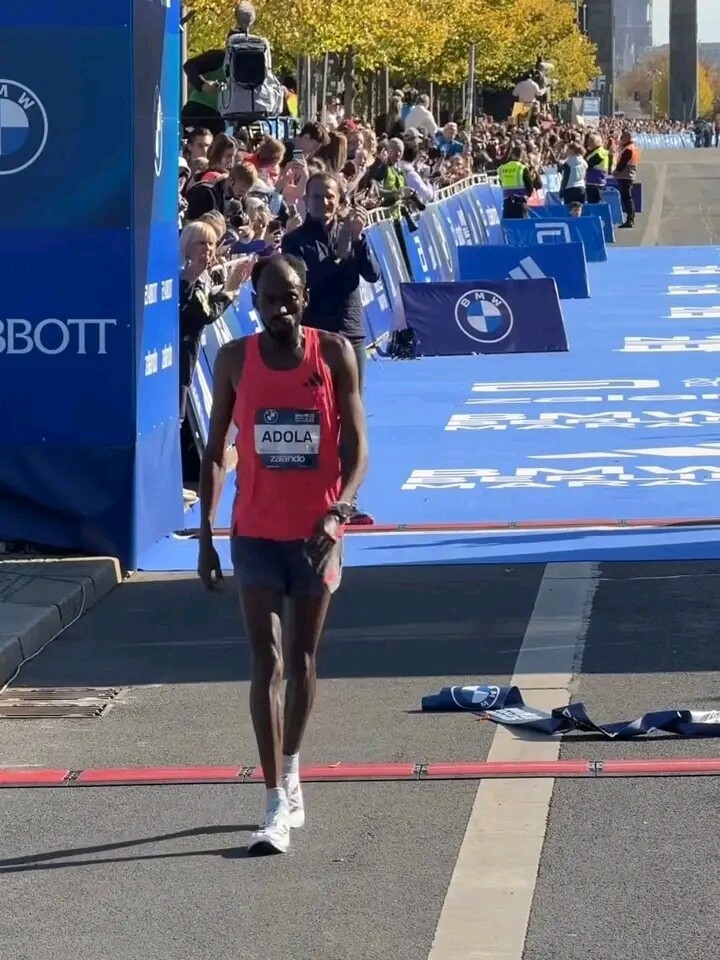
The victory adds another memorable chapter to Adola’s long association with Berlin. He first won the prestigious race in 2021, and five years later he returned to the German capital to produce the fastest marathon of his career.
Adola arrived in Berlin in excellent form after winning the Rotterdam Marathon in April in 2:03:54. That performance had placed him just eight seconds outside the personal best of 2:03:46 he had carried since his remarkable marathon debut in Berlin in 2017.
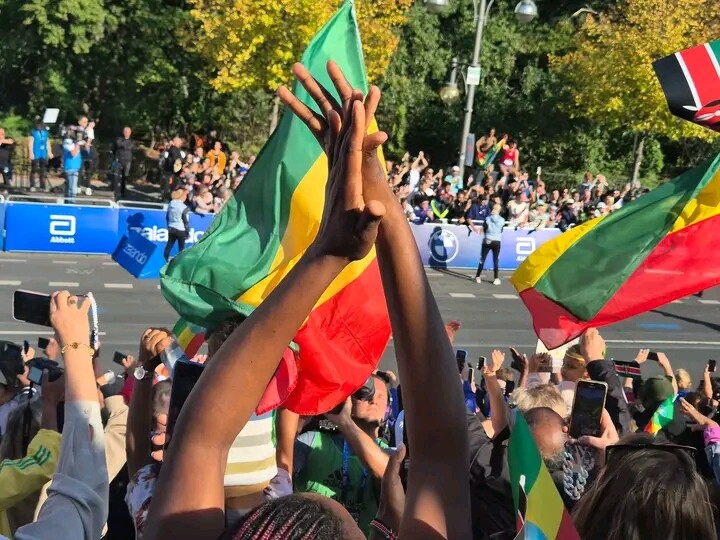
That debut remains one of the most memorable first appearances over the marathon distance. Adola stayed ahead of Eliud Kipchoge deep into the race before the Kenyan eventually overtook him. Adola finished second in 2:03:46, just 14 seconds behind Kipchoge, producing the fastest marathon debut at the time.
For years, that performance remained the benchmark of his career.
Even when Adola returned to Berlin in 2021 and won the race, he could not improve his debut mark. His breakthrough finally came in Rotterdam this April, when he clocked 2:03:54 — a sign that another major performance could be approaching.
On Sunday, he delivered it.
With world record holder Sabastian Sawe and legendary Ethiopian Kenenisa Bekele both missing the race through injury, the men’s contest was wide open. The pacemakers were set up for an attempt at Eliud Kipchoge’s 2:01:09 course record, but the leading group reached halfway in 1:01:01, already outside record pace.
The race gradually began to break apart as the kilometres passed.
By 30 kilometres, three Ethiopians had established themselves at the front — Adola, Olympic 10,000m champion Selemon Barega and Gemechu Dida.
Then came the decisive move.
After 35 kilometres, Adola increased the pace and began creating daylight between himself and the chasing group. Nobody could respond as the experienced Ethiopian steadily extended his advantage.
This time, there would be no late comeback.
Adola remained composed through the final kilometres before powering toward the finish in 2:02:50, taking an extraordinary 56 seconds off his previous personal best.
Gemechu Dida followed in 2:03:19 to secure an Ethiopian one-two, while Tanzania’s Gabriel Gerald Geay, the fastest athlete on the start list with a 2:03:00 personal best, completed the podium in 2:03:59.
Although Kipchoge’s course record survived for another year, Adola had achieved something equally significant for his own career — he had transformed his long-standing Berlin story into a new chapter.
From finishing second to Kipchoge on his marathon debut in 2017, to winning the race in 2021, and now returning five years later to run 2:02:50, Adola has repeatedly found his best moments on the streets of Berlin.
At 35, the Ethiopian has shown that experience, patience and perfectly timed aggression can still produce extraordinary results at the highest level of marathon running.
Top 10 — 2026 Berlin Marathon Men’s Results
1. Guye Adola (Ethiopia) — 2:02:50
2. Gemechu Dida Diriba (Ethiopia) — 2:03:19
3. Gabriel Gerald Geay (Tanzania) — 2:03:59
4. Getaneh Molla (Ethiopia) — 2:04:55
5. Selemon Barega (Ethiopia) — 2:04:58
6. Asefa Boki (Ethiopia) — 2:05:32
7. Andamlak Belihu (Ethiopia) — 2:05:55
8. Shura Kitata (Ethiopia) — 2:06:04
9. Yuhei Urano (Japan) — 2:06:09
10. Tadu Abate (Ethiopia) — 2:07:16
For Guye Adola, this was more than another marathon victory. Berlin is where his marathon story began, where he once pushed Kipchoge to the limit, and where he has now returned to produce the biggest performance of his career. His 2:02:50 victory not only gives him a second Berlin crown but also proves that, nine years after his stunning debut, his story at the Brandenburg Gate is still being written.
by Erick Cheruiyot for My Best Runs.
Login to leave a comment

BMW Berlin Marathon
The story of the BERLIN-MARATHON is a story of the development of road running. When the first BERLIN-MARATHON was started on 13th October 1974 on a minor road next to the stadium of the organisers‘ club SC Charlottenburg Berlin 286 athletes had entered. The first winners were runners from Berlin: Günter Hallas (2:44:53), who still runs the BERLIN-MARATHON today, and...
more...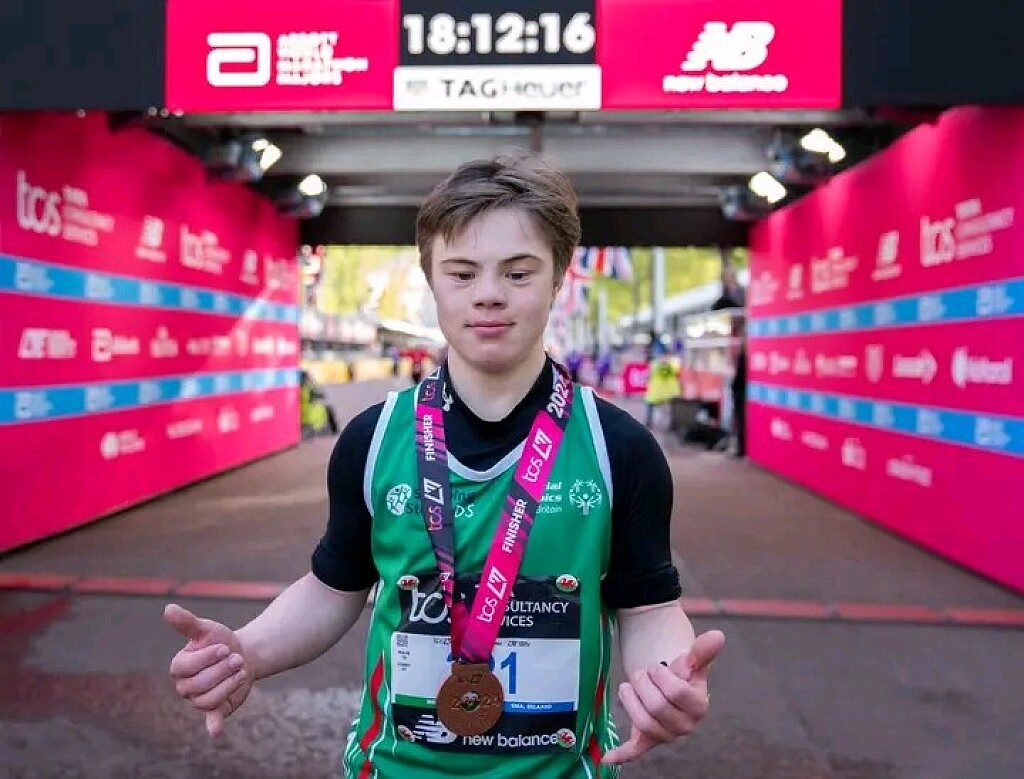
From Being Told He Might Never Walk to Making Marathon History: Lloyd Martin’s Remarkable Journey
Lloyd Martin’s journey to the finish line of the London Marathon is far more than a story about completing 26.2 miles. It is a story of determination, family support and refusing to allow other people’s expectations to define what is possible.
Born with Down syndrome and a hole in his heart, Lloyd faced serious uncertainty from the beginning of his life. His family was warned that he might never walk, talk or become independent, according to his mother, Ceri Hooper. Those early concerns, however, did not become the limits of Lloyd’s future.
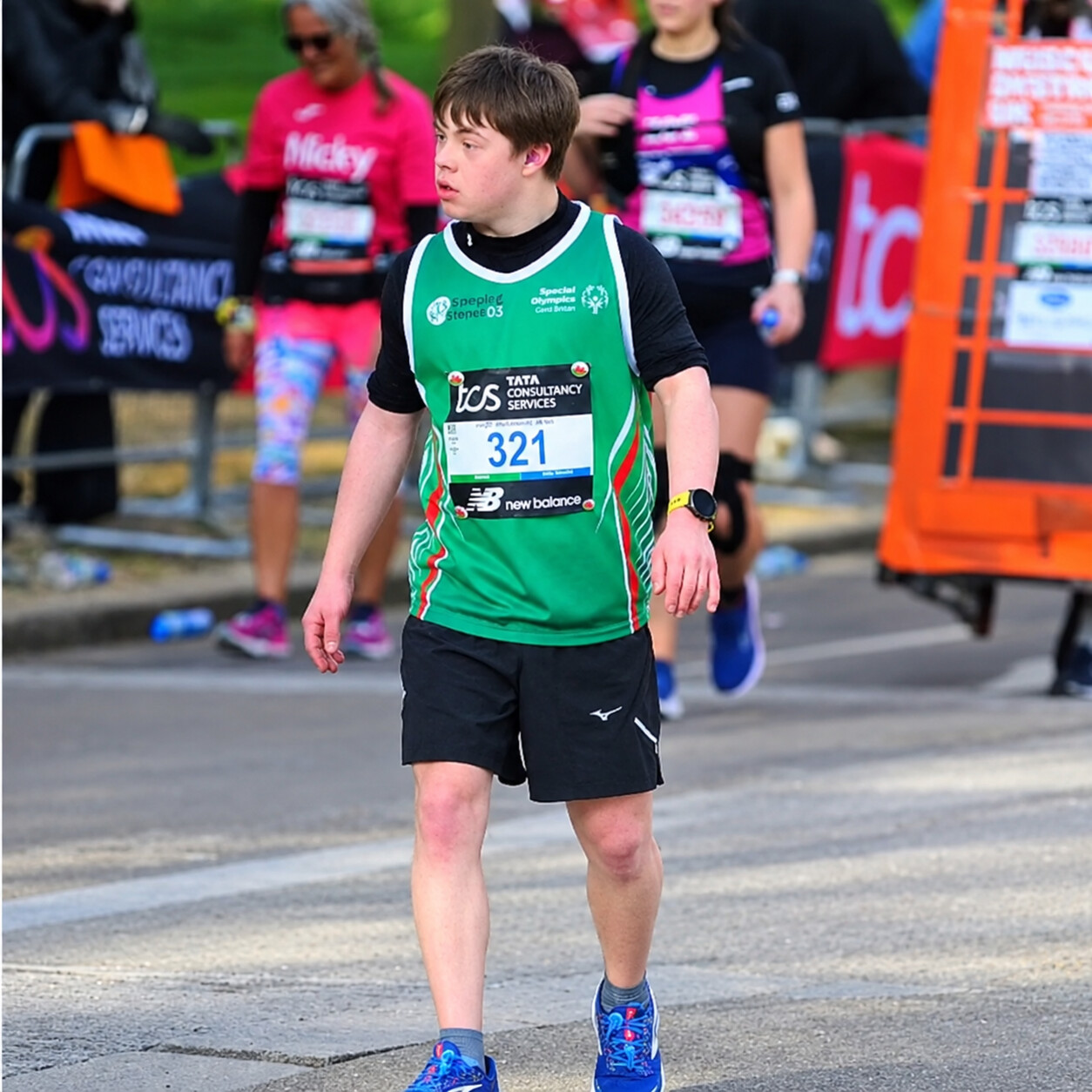
In 2021, Lloyd underwent surgery on his knees, adding another difficult chapter to his journey. Yet he continued to embrace sport and eventually developed a passion for running, initially taking part in regular 5K parkrun events.
When the opportunity to take on the iconic TCS London Marathon arrived, the challenge was enormous. Before beginning his marathon preparation, Lloyd had never run beyond the 5K distance. His mother then designed a five-month training programme, gradually increasing his long runs while ensuring that he trained safely and enjoyed the experience.
On 21 April 2024, at just 19 years old, Lloyd stood on the London Marathon start line with a remarkable goal: to finish the race and make history.
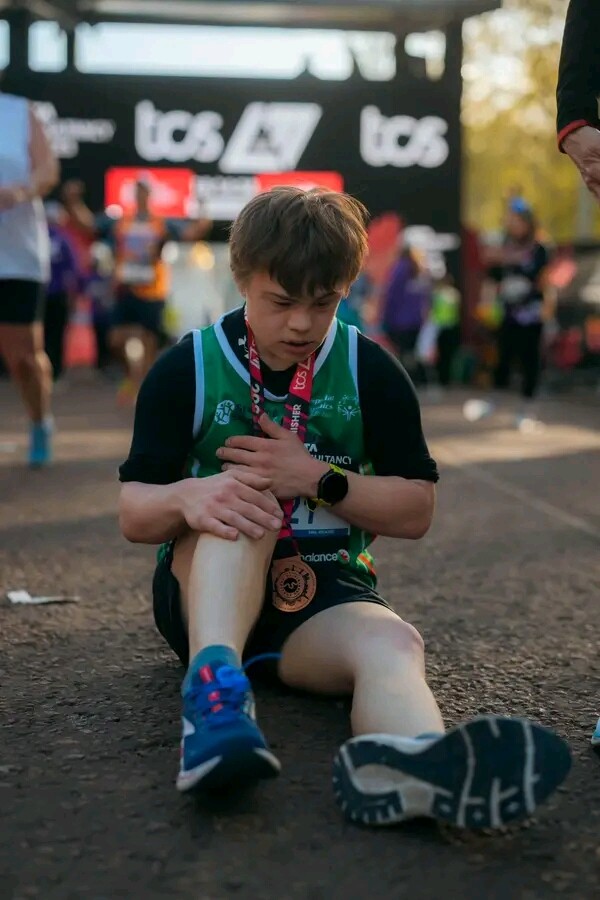
He did exactly that.
Lloyd completed the 26.2-mile course in 6:46:10, crossing the finish line alongside his mother and guide runner, Ceri. His performance earned him a Guinness World Records title as the youngest person to complete a marathon in the II2 category (male).
For Ceri, who is herself an experienced marathon runner, the achievement carried an especially powerful meaning. She had been beside Lloyd throughout his preparation, accompanying him through countless training sessions and helping him build the endurance required for the biggest running challenge of his young life.
But running is only one part of Lloyd’s sporting story.
He is also an accomplished gymnast and footballer through Special Olympics Great Britain. His sporting journey has continued to grow since his marathon breakthrough, and later in 2024 he added another Guinness World Records title by becoming the youngest male in the II2 category to complete a half marathon, finishing the Great North Run in 2:39:09.
Lloyd’s London Marathon achievement also became a platform for fundraising. Through his marathon campaign, he raised money for causes close to his heart, including Special Olympics Great Britain and Stepping Stones DS. His story has since continued to inspire people well beyond the marathon course.
What makes Lloyd’s story particularly powerful is the distance between the predictions made at the beginning of his life and the achievements he has gone on to accomplish.
There was a time when his family was warned that he might never walk. Years later, he was not only walking but running, competing in sport, completing marathons and entering the Guinness World Records.
His 6:46:10 finish in London was therefore about much more than a finishing time. It represented years of encouragement, training, perseverance and a family's belief in what Lloyd could achieve.
From facing uncertainty at birth to becoming a Guinness World Records holder at 19, Lloyd Martin has built a remarkable sporting story—one step, one kilometre and one challenge at a time.
His journey is a powerful reminder that a starting point does not have to determine the destination.
by Erick Cheruiyot for My Best Runs.
Login to leave a comment
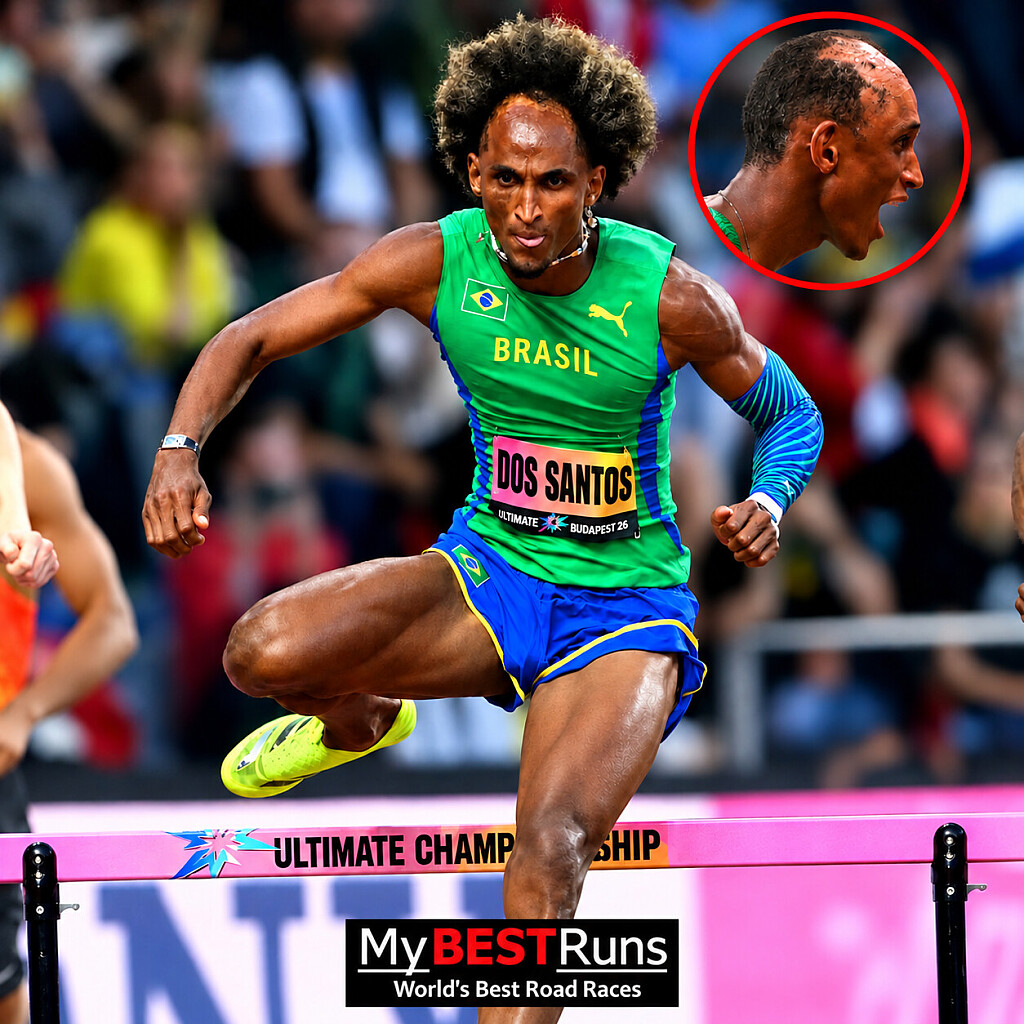
From Childhood Burns to World Records: Alison Dos Santos Turns Scars Into Strength
Alison dos Santos carries visible scars on his forehead and parts of his body, but behind them lies a remarkable story of survival that has become an important part of his journey in athletics.

When he was just 10 months old, the Brazilian suffered severe third-degree burns after boiling oil spilled onto him. The accident left permanent scars and could easily have changed the course of his life before it had even begun.
He survived the ordeal, and as he grew older, the scars became a visible reminder of an accident he had endured as a baby. For much of his childhood, they also brought unwanted attention and insecurity. But eventually, athletics gave him something far more powerful: confidence, purpose and an opportunity to define himself through his talent rather than his scars.
That transformation took him all the way to the world's biggest sporting stages.
Dos Santos announced himself among the world's elite 400m hurdlers with an Olympic bronze medal at Tokyo 2020, clocking 46.72 seconds. In 2022, he reached another milestone by becoming world champion, confirming himself as one of the leading figures in an event that had entered an extraordinary era.
Two years later, he added another Olympic bronze medal in Paris, continuing to establish himself among the very best 400m hurdlers on the planet.
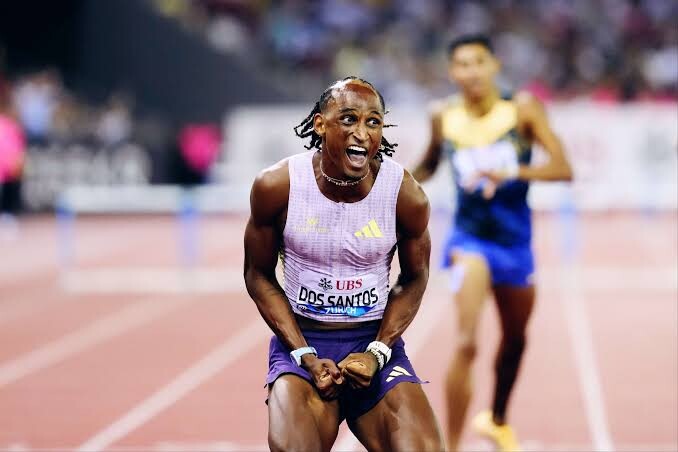
Then came Zürich.
On August 27, 2026, dos Santos delivered the race that changed his place in history. He stormed to 45.80 seconds, breaking Karsten Warholm's five-year-old world record of 45.94 and becoming the first man in history to run under 46 seconds twice.
The moment carried another layer of significance because Warholm was in the race. The Norwegian had established the previous world record in the unforgettable Tokyo Olympic final in 2021, a race in which dos Santos himself had won bronze. Five years later, the Brazilian returned to the same record-breaking narrative — this time as the man rewriting history.
But dos Santos was not finished.
Just over two weeks after his historic run in Zürich, he travelled to Budapest for the inaugural World Athletics Ultimate Championship, where the world's leading 400m hurdlers assembled for another highly anticipated showdown.

On September 13, dos Santos once again stood at the centre of the action. He produced another extraordinary performance, winning the men's 400m hurdles in 45.98 seconds and successfully defending his position at the top of an event filled with heavyweight names.
Rai Benjamin finished second in 46.40, while Warholm took third in 46.78. Dos Santos had once again beaten two of the athletes most closely associated with the modern history of the 400m hurdles.
The 45.98 also made him the first athlete to break 46 seconds twice, while ranking as the third-fastest performance ever recorded in the event at the time. His world record of 45.80 remained firmly at the top.
His latest victory therefore added another remarkable chapter to a season that had already produced a world record and a string of elite performances. Dos Santos has combined speed, consistency and resilience to turn 2026 into one of the defining seasons of his career.
And perhaps that is what makes his story so compelling. The hurdles he clears today are visible to the world, but some of the hardest obstacles he has overcome were faced long before he ever entered a stadium. His scars tell the story of what happened to him as a child; his achievements tell the story of what he chose to become.
The scars never disappeared. Neither did the determination of the boy who survived them.
Today, Alison dos Santos is not defined by the accident that marked his childhood. He is defined by the athlete he became — an Olympic medallist, a world champion, a world-record holder and now the inaugural World Athletics Ultimate champion in the 400m hurdles.
From surviving a devastating accident as an infant to standing on the highest level of his event, Piu has spent his life clearing hurdles — long before he ever started racing over them.
by Erick Cheruiyot for My Best Runs.
Login to leave a comment

Femke Bol and Ben Broeders Celebrate Their Love in Dream Sardinia Wedding Weekend
After another memorable chapter in her athletics career, Dutch star Femke Bol has found another beautiful reason to celebrate away from the track.

Bol and Belgian pole vaulter Ben Broeders have marked their marriage with a spectacular wedding celebration in Sardinia, Italy, surrounded by family, friends and fellow athletes.
The couple had already exchanged vows earlier this year, tying the knot in a private civil ceremony in Amersfoort on February 21, 2026. The intimate occasion was kept largely away from the spotlight before the couple later shared their happiness with the public.
Months later, they gathered their closest loved ones for a larger celebration on the Italian island, turning the occasion into a memorable wedding weekend filled with sunshine, elegant white outfits, laughter and unforgettable moments.
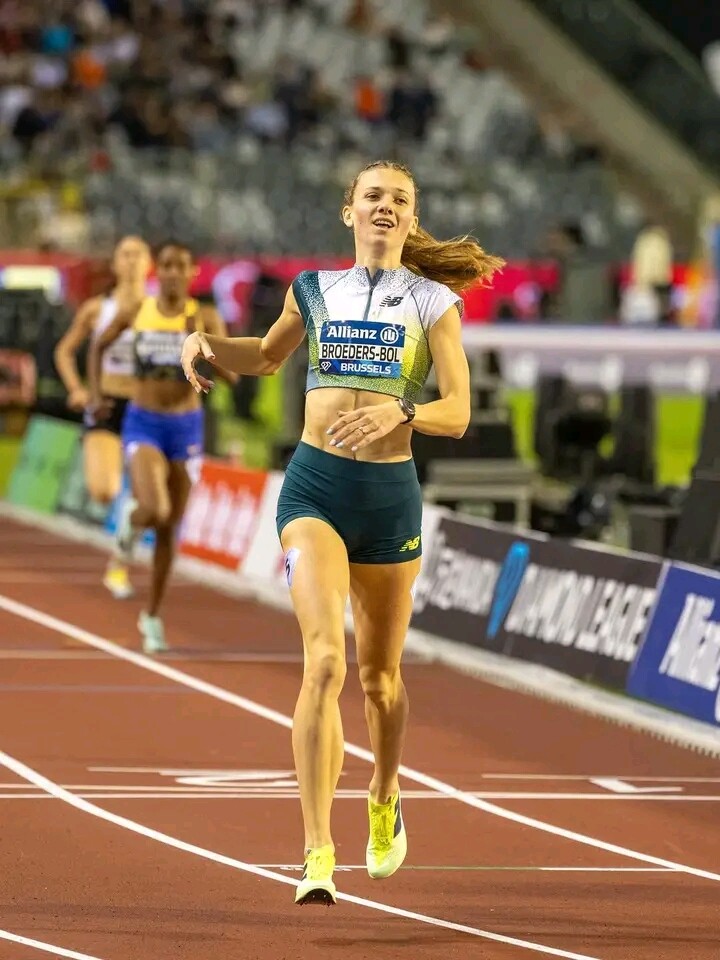
The celebrations took place at the historic Tenuta Sella & Mosca near Alghero, offering a stunning setting for the newlyweds and their guests. Surrounded by the beauty of Sardinia, Bol and Broeders were able to enjoy a more relaxed celebration after years of life shaped by demanding training schedules and international competition.
Bol shared a series of photographs from the special weekend, offering fans a glimpse into the celebrations and the moments she shared with Broeders, their families and friends. Reflecting on the occasion, she described it simply as “the best weekend of our lives.”
The wedding brought together several familiar faces from the athletics community, reflecting the strong connection the couple share with the sport. Broeders has built a respected career as a Belgian pole vaulter, while Bol has become one of the most recognisable stars in international athletics.
Their relationship has developed alongside their sporting careers, with the couple becoming romantically involved around 2021. They announced their engagement in 2025 before taking the next step in their relationship with their civil wedding earlier this year.
For Bol, the celebrations provide a deeply personal highlight to a year that has already brought significant moments in her remarkable career. Away from the pressure of major championships, packed stadiums and the pursuit of medals, Sardinia offered the athlete an opportunity to pause and celebrate something much closer to home.
For Broeders, the occasion was equally special, marking the beginning of a new chapter with his partner while surrounded by the people who have supported them throughout their journey. Their wedding weekend brought together the sporting and personal worlds that have shaped their lives over the years.
From competing under the brightest stadium lights to celebrating beneath the Sardinian sun, Bol and Broeders have now opened a new chapter together — one that extends far beyond athletics.
After years of chasing performances, medals and personal ambitions, the couple now have another journey to share, this time side by side as husband and wife.
From the track to forever, Femke Bol and Ben Broeders have given themselves a beautiful reason to celebrate.
by Erick Cheruiyot for My Best Runs.
Login to leave a comment
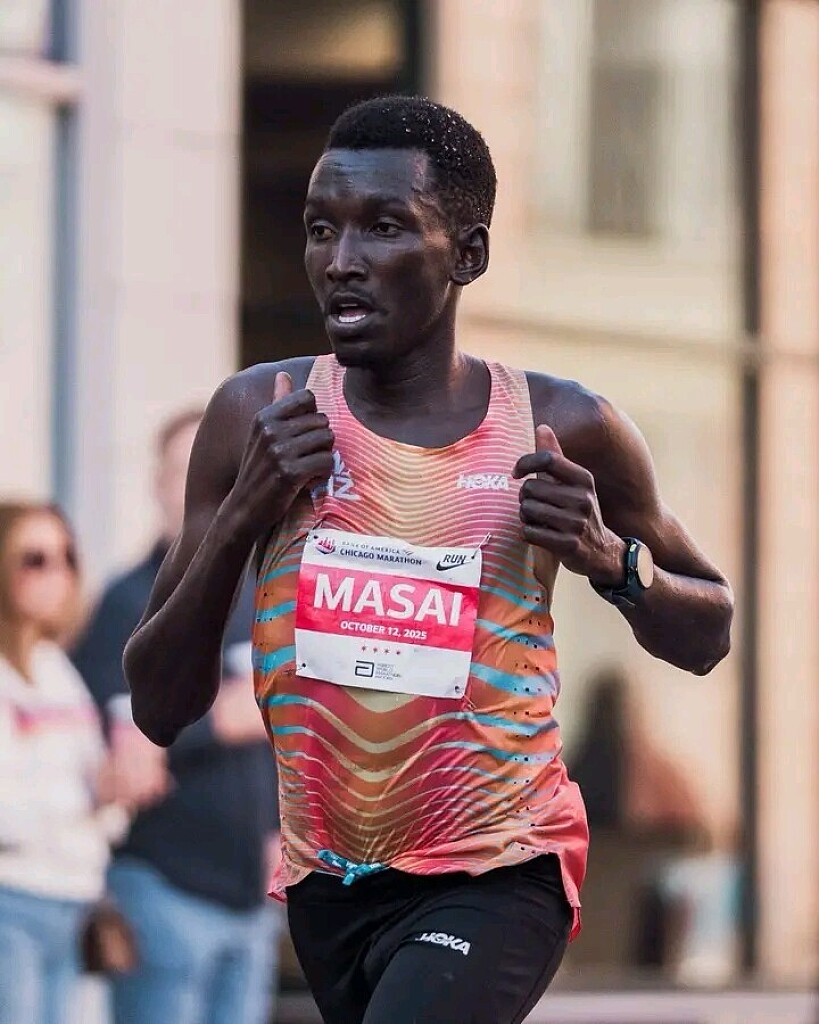
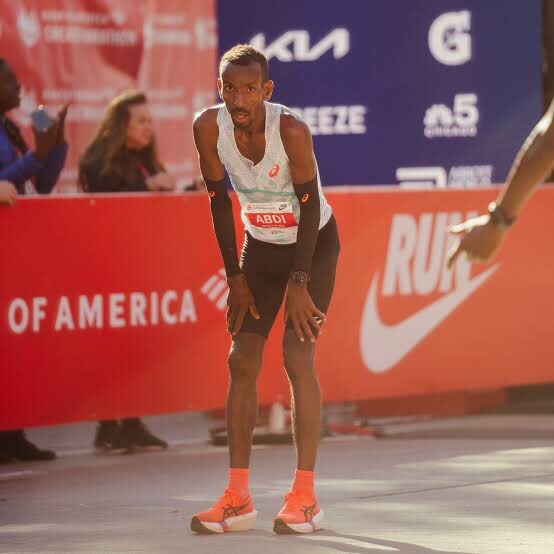
Bashir Abdi Added to Chicago Marathon as Alex Masai Withdraws
Bashir Abdi has been added to the elite men’s field for the 2026 Bank of America Chicago Marathon, while Kenya’s Alex Masai has withdrawn from the October 11 race.
Masai finished third in the 2025 edition in a personal-best 2:04:37, making his withdrawal a notable change to the field. He will no longer line up alongside some of the world’s leading marathoners, including defending champion Jacob Kiplimo of Uganda.
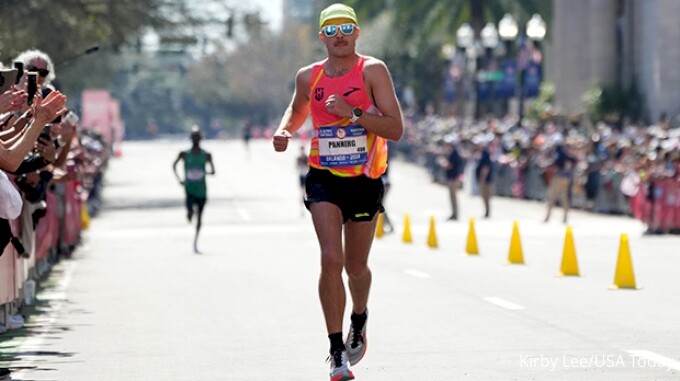
Masai joins Americans Zach Panning, who has a 2:09:16 personal best, Jacob Thomson (2:09:51) and Felicia Pasadyn (2:35:17) on the withdrawal list.
On the other side of the update, Abdi strengthens an already competitive men’s lineup. The Belgian is a two-time Olympic medalist, having won bronze in Tokyo and silver in Paris, and owns the European marathon record of 2:03:36, set in Rotterdam in 2021.
Abdi also knows the Chicago course well, having finished 10th in last year’s race in 2:07:08. His return gives him another opportunity to make a stronger statement on one of the world’s major marathon stages.
Norway’s Sondre Nordstad Moen has also been included in the updated field. Moen previously held the European marathon record after running 2:05:48 in Fukuoka in 2017, before Abdi lowered the mark four years later.
The American contingent has also been strengthened with the additions of Matt Richtman, Nathan Martin, Brian Shrader, Ben Rosa and Frank Lara, while Cole Sprout is set to make his marathon debut.
Sara Vaughn is among the notable women’s additions. She returns to Chicago after recording her personal-best 2:23:24 at the 2023 edition.
The 2026 Chicago Marathon will be held on Sunday, October 11, with the elite field continuing to take shape ahead of race day.
by Erick Cheruiyot for My Best Runs.
Login to leave a comment
Bank of America Chicago
Running the Bank of America Chicago Marathon is the pinnacle of achievement for elite athletes and everyday runners alike. On race day, runners from all 50 states and more than 100 countries will set out to accomplish a personal dream by reaching the finish line in Grant Park. The Bank of America Chicago Marathon is known for its flat and...
more...
Sha’Carri Richardson: From Teenage Sensation to a Champion Who Rewrote Her Own Story
At just 19, Sha’Carri Richardson looked like a star destined to take over the sprinting world.
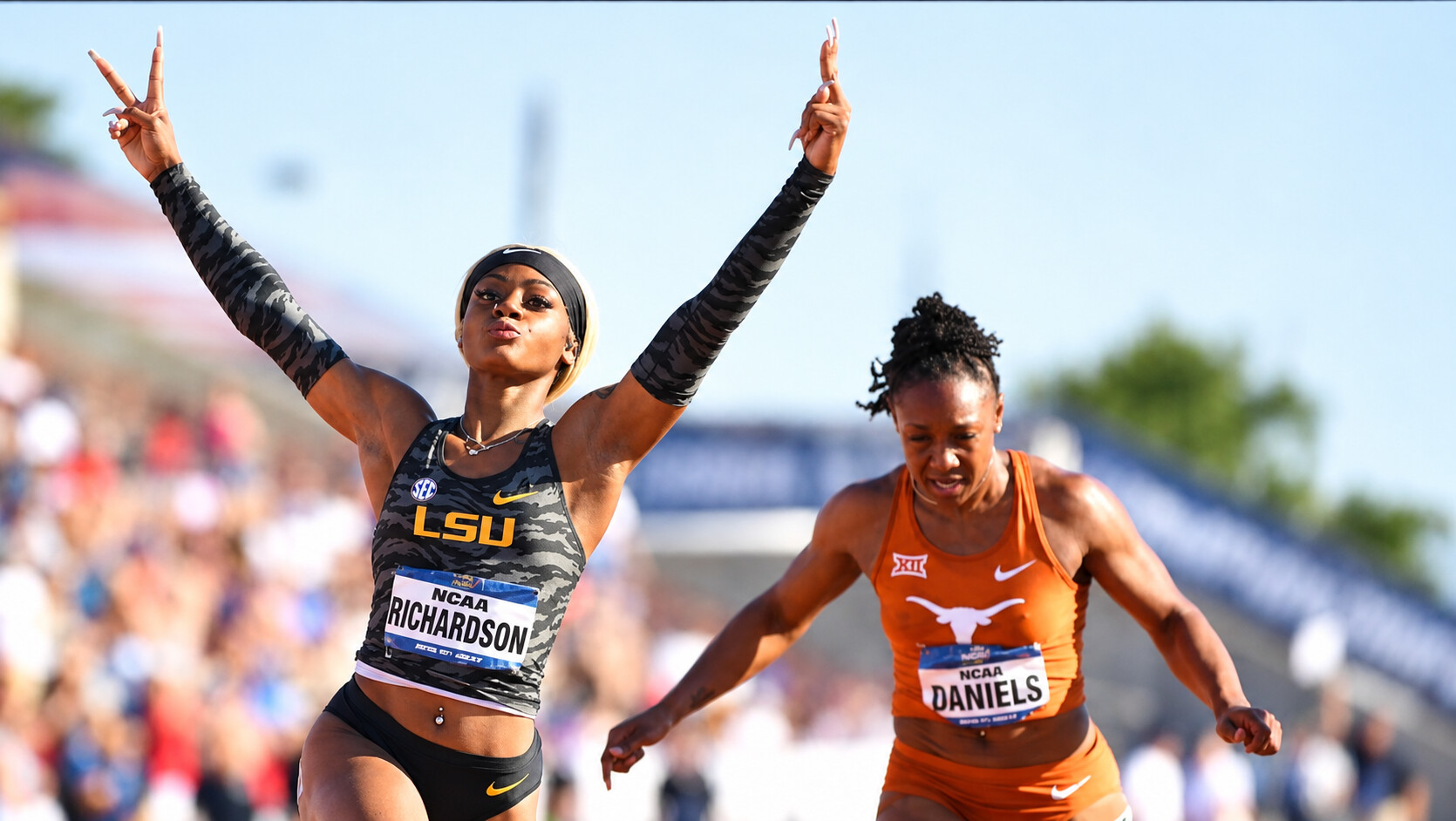
The speed was undeniable. In 2019, she announced herself on the collegiate stage with a 10.75-second NCAA record in the 100 metres, combining explosive acceleration with a fearless personality and a distinctive style that made her impossible to ignore.
She was young, confident and unapologetically herself.
But the road to becoming a champion was about to become far more complicated than anyone could have imagined.
In 2021, Richardson won the women’s 100m at the U.S. Olympic Trials in 10.86 seconds and appeared set for her Olympic debut.
Then everything changed.
A positive test for THC resulted in a one-month suspension, which ultimately ruled her out of the Tokyo Olympic 100m. USADA confirmed that Richardson accepted the sanction, which began on June 28, 2021.
The episode came at an especially difficult moment in her life. Richardson had publicly spoken about grieving the death of her biological mother and the emotional circumstances surrounding that period.
For an athlete who had seemed destined for Olympic glory, Tokyo became a painful chapter instead.
But it did not become the final chapter.
Richardson returned to the track with something to prove — not simply to the critics, but to herself.
The comeback became a championship story
In 2023, Richardson transformed her comeback into one of the defining performances of her career.
At the World Championships in Budapest, she won the 100m world title in 10.65 seconds, setting a championship record and defeating a field that included some of the greatest sprinters of her generation. World Athletics lists 10.65 as Richardson’s legal personal best, recorded on August 21, 2023.
She did not stop there.
Richardson also helped the United States win the women’s 4x100m relay gold in Budapest, adding another world title to a season that had completely changed the narrative surrounding her career.
The teenager who had once been celebrated for her raw talent was now a world champion.
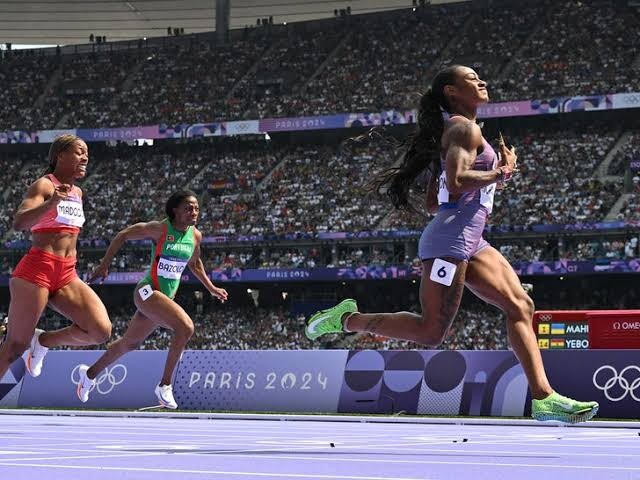
Paris brought Olympic medals
A year later, Richardson arrived at the Paris 2024 Olympics carrying expectations of another major championship performance.
She delivered.
Richardson won silver in the individual 100m and then anchored the United States to gold in the women’s 4x100m relay. World Athletics records her as an Olympic champion and Olympic silver medallist.
The Olympic gold was particularly significant.
After missing Tokyo, Richardson had returned to the biggest stage in the sport and left Paris as an Olympic champion.
Her journey had gone from disappointment to the highest step of the podium.
2026: Still winning, still evolving
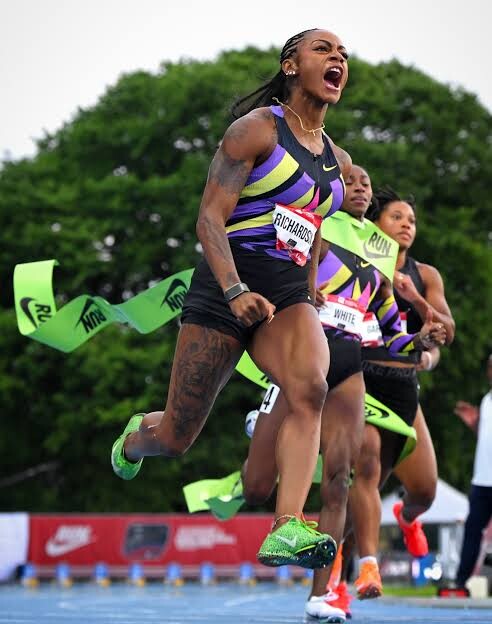
Richardson's story continued into 2026, and she closed the season in emphatic fashion at ATHLOS London.
On September 18 at StoneX Stadium, she won the 100m in 10.80 seconds with no wind assistance, finishing well clear of New Zealand's Zoe Hobbs, who ran 11.19. The performance was also an ATHLOS meeting record.
It was another reminder that Richardson remains one of the defining personalities of modern sprinting.
But the most compelling part of her journey cannot be measured entirely in seconds.
It is the evolution behind the performances.
The young sprinter who entered the global spotlight with enormous confidence has experienced public criticism, disappointment, grief, triumph and the enormous pressure that comes with being one of the world's most recognizable athletes.
Through it all, she has continued to shape her identity on her own terms.
Her story is no longer simply about speed.
It is about resilience, reinvention and the ability to return after a moment that could have permanently changed the direction of a career.
From a teenage sensation running 10.75 to a world champion running 10.65.
From missing the Tokyo Olympics to winning Olympic gold in Paris.
From one of the most difficult periods of her young career to becoming an established global sprint star.
Sha’Carri Richardson did not simply return to the track.
She returned with a different perspective, a bigger résumé and a story that belongs to her.
And perhaps that is the most powerful transformation of all: not becoming someone different, but growing into a stronger version of the person she always wanted to be.
by Erick Cheruiyot for My Best Runs.
Login to leave a comment
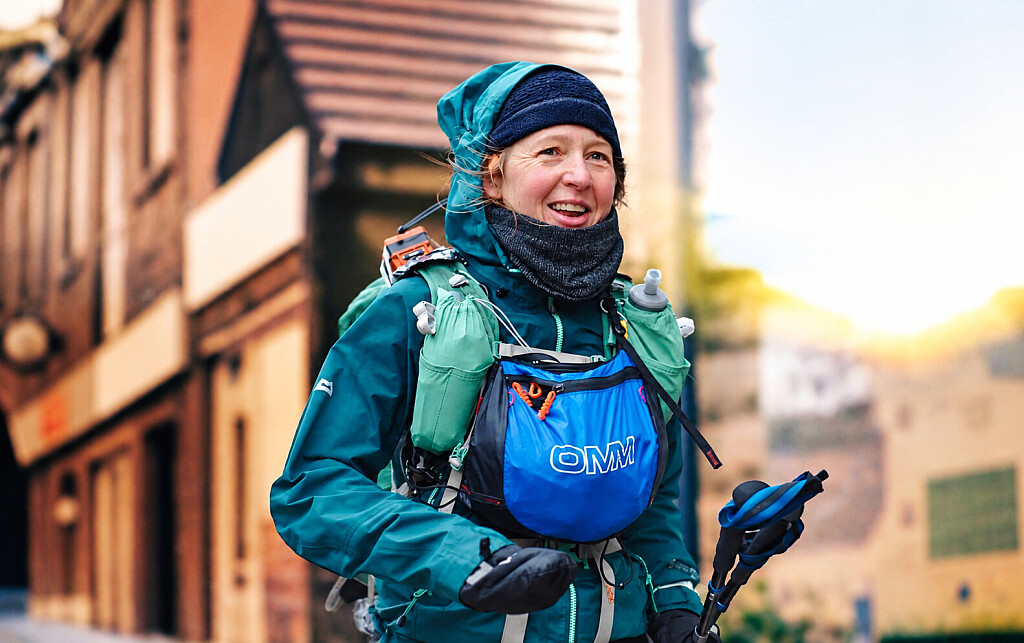
Lucy Gossage Makes History With First Sub-Three-Day Women’s Pennine Way Run
British ultrarunner and oncologist Lucy Gossage has etched her name into the history of British ultrarunning, becoming the first woman on record to complete the 268-mile Pennine Way in under three days.
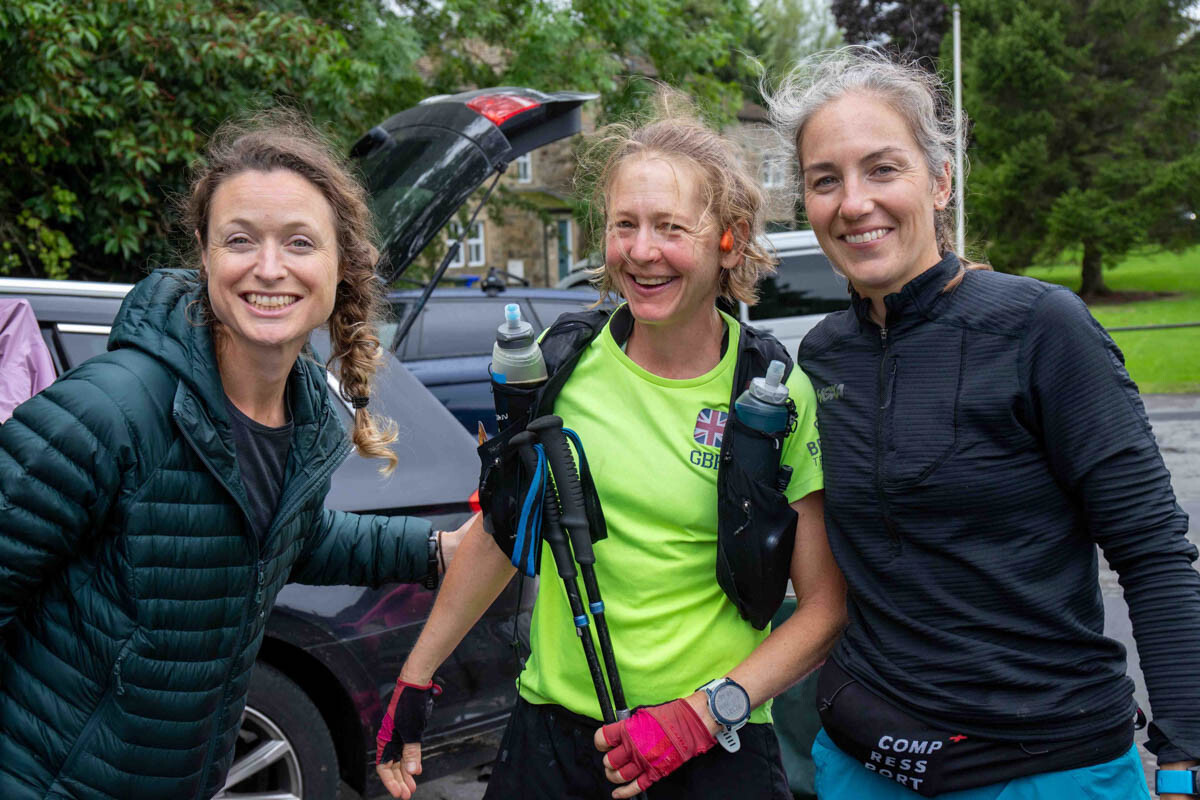
Gossage reached the finish at Edale early Monday morning after an extraordinary 70 hours, 47 minutes and 15 seconds on England’s oldest National Trail. Her journey began at 8 a.m. on Friday at Kirk Yetholm on the Scottish border, with the challenge taking her south through some of the Pennine Way’s toughest and most remote terrain before finally arriving in Derbyshire.
By the time Gossage crossed the line, most people were only beginning their Monday morning. She had already spent almost 71 hours moving through darkness, daylight, changing weather and relentless fatigue to achieve a milestone that had never before been reached in the women’s field.
Her performance also represents a major improvement on the previous women’s best. Anna Troup’s 72:46:37, set in August 2021, had stood as the benchmark for the fastest known women’s time on the route. Gossage lowered it by almost two hours. Before Troup, Sabrina Verjee held the women’s mark with 74:28:46, recorded in 2020.
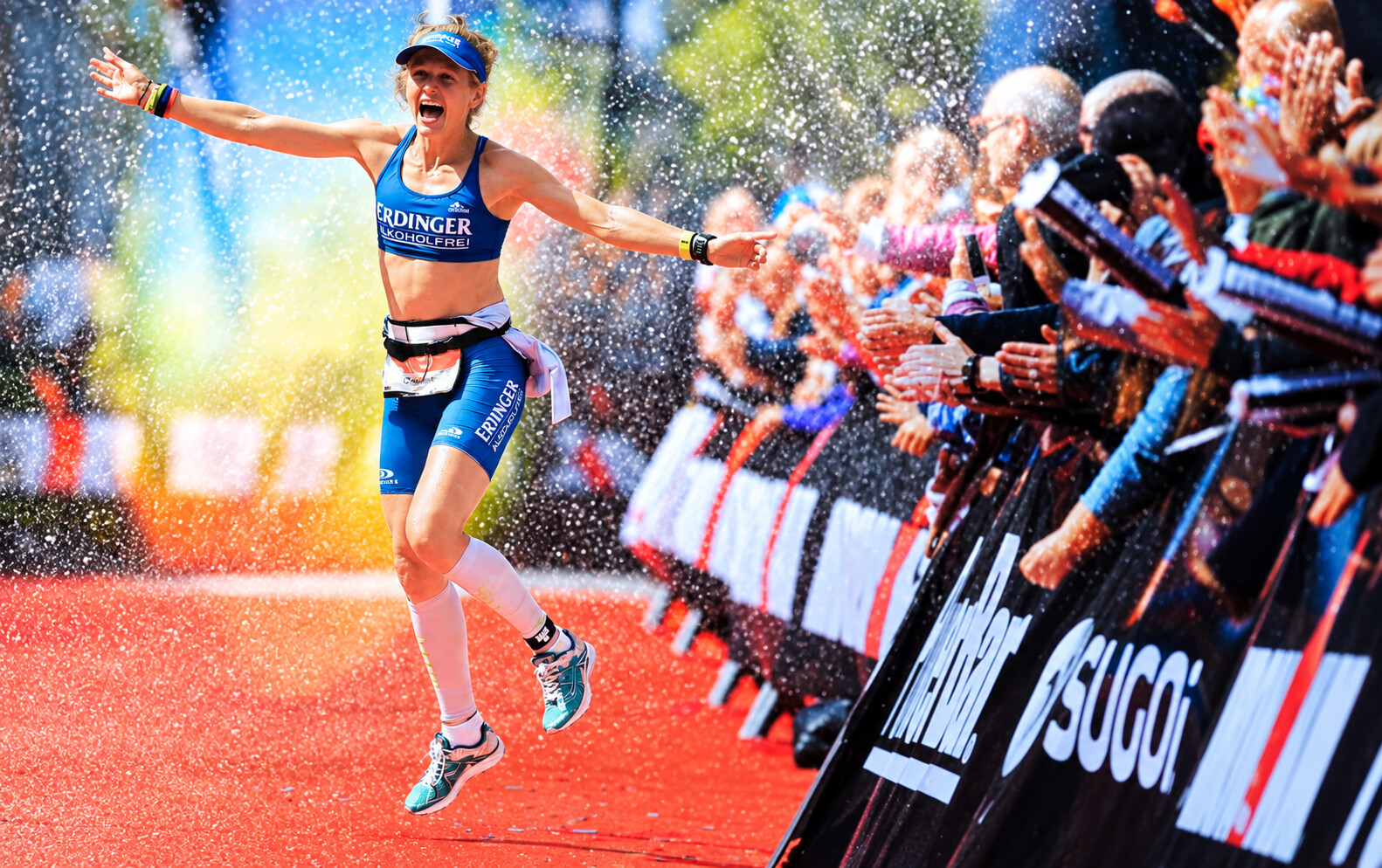
What makes Gossage’s achievement even more remarkable is that the Pennine Way challenge was not originally part of her September plans.
She had entered the Northern Traverse, but when that race was cancelled, Gossage quickly changed direction and turned her attention to the Pennine Way. Rather than allowing the disappointment to derail her plans, she transformed it into an opportunity to chase one of the most demanding endurance records in Britain.
And this was far from her first encounter with the legendary trail.
Earlier this year, Gossage demonstrated her familiarity with the route by winning the Winter Spine, the brutal 268-mile January race that follows the Pennine Way. She completed that winter challenge in 87:41:38, battling freezing conditions and some of the harshest terrain the trail can offer.
Her recent record-breaking run adds another major achievement to an already remarkable endurance résumé. In June 2025, she won the South Downs Way 100 in a course-record 16:30:35, further underlining her ability to combine speed, resilience and tactical patience over ultra-distance races.
The Pennine Way, however, demanded something different. Covering 268 miles on foot is an immense challenge under any circumstances, but completing it in barely three days leaves almost no room for recovery, sleep or mistakes. Gossage had to keep moving through successive nights while managing fatigue and the physical toll of one of Britain's most demanding long-distance trails.
At the finish, the magnitude of what she had accomplished had not yet fully sunk in.
“Too tired to know what to think yet,” Gossage said, before adding a heartfelt tribute to the people who helped her through the challenge: “Other than that I have amazing friends.”
Those friends, along with her own extraordinary endurance, played a crucial role in a journey that has now secured Gossage a place in Pennine Way history.
Seventy hours, 47 minutes and 15 seconds after setting off from Scotland, Lucy Gossage had done what no woman on record had done before — conquered the 268-mile Pennine Way in less than three days.
by Erick Cheruiyot for My Best Runs.
Login to leave a comment
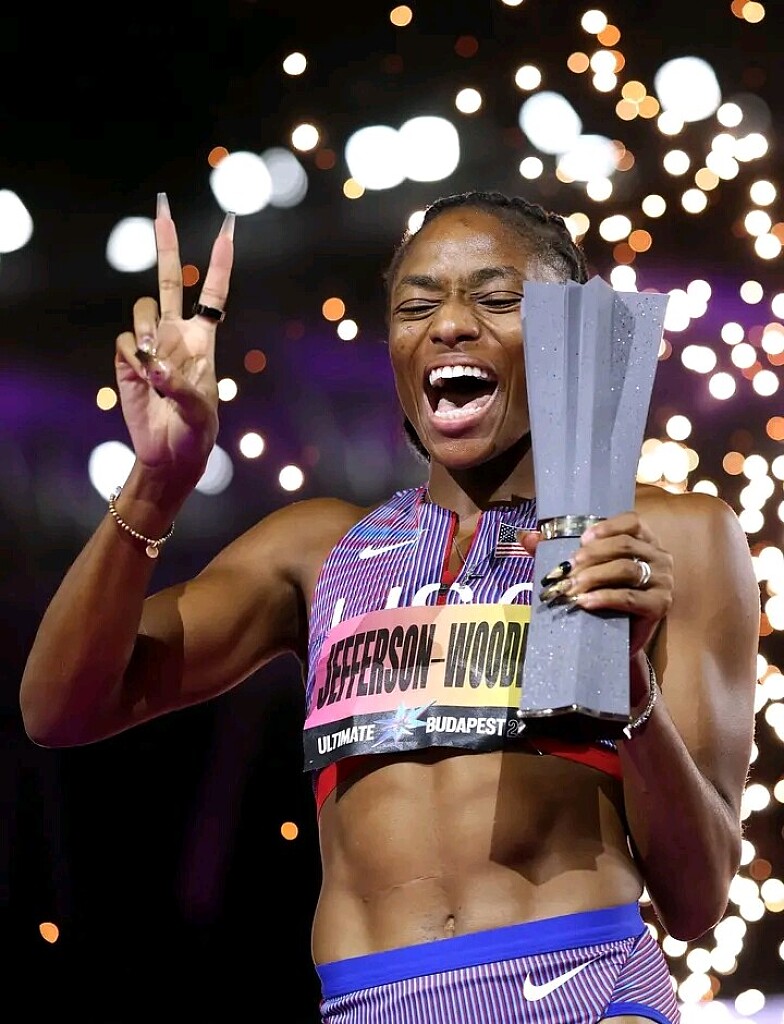
Melissa Jefferson-Wooden Storms Into History With Stunning 200m Victory In Budapest
Melissa Jefferson-Wooden has once again demonstrated why she is becoming one of the defining forces in women’s sprinting, delivering a breathtaking performance to win the 200m at the inaugural World Athletics Ultimate Championship in Budapest.
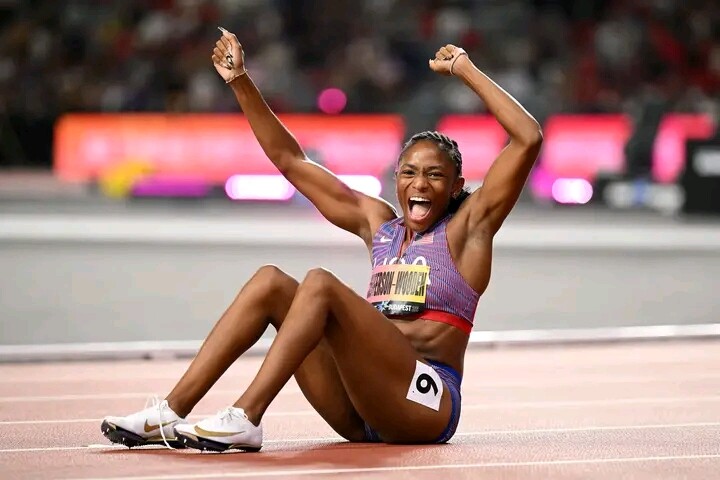
The American powered to victory in 21.47 seconds, producing one of the fastest performances in history despite facing a 0.6m/s headwind. She finished well clear of Olympic champion Gabby Thomas, who clocked 21.77, while Kayla White secured third place in 21.93.
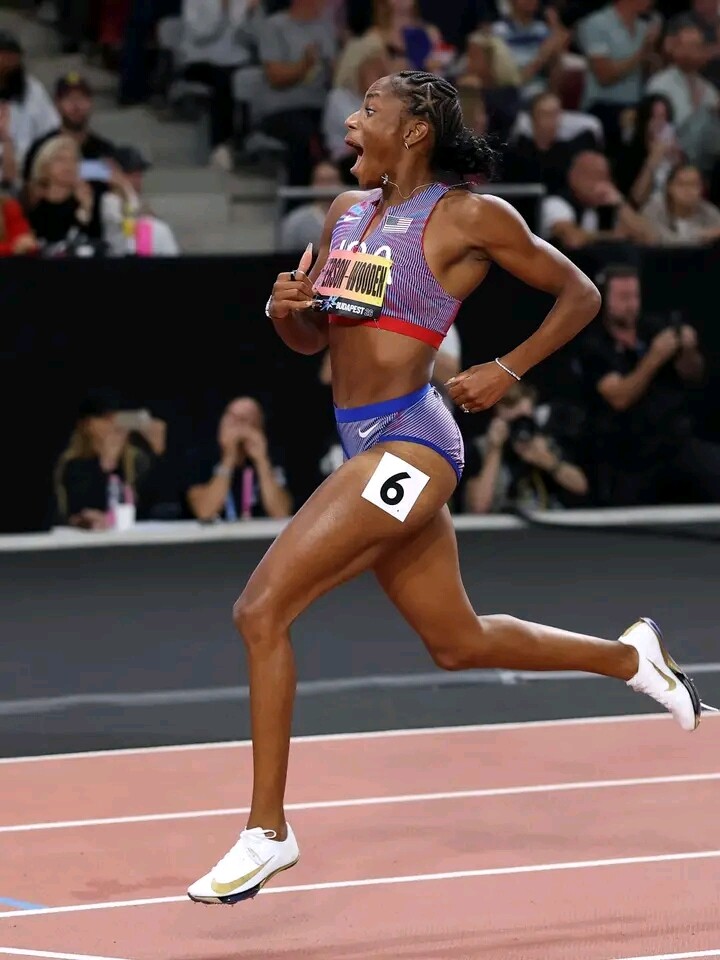
But Jefferson-Wooden’s latest triumph was about far more than another championship title. It was a performance that placed her among the fastest women ever to compete over the distance.
Her 21.47 seconds moved her to No. 3 on the all-time women’s 200m list, behind only legendary American sprinter Florence Griffith-Joyner, whose world record of 21.34 has stood since 1988, and Jamaica’s Shericka Jackson, who ran 21.41 in 2023.
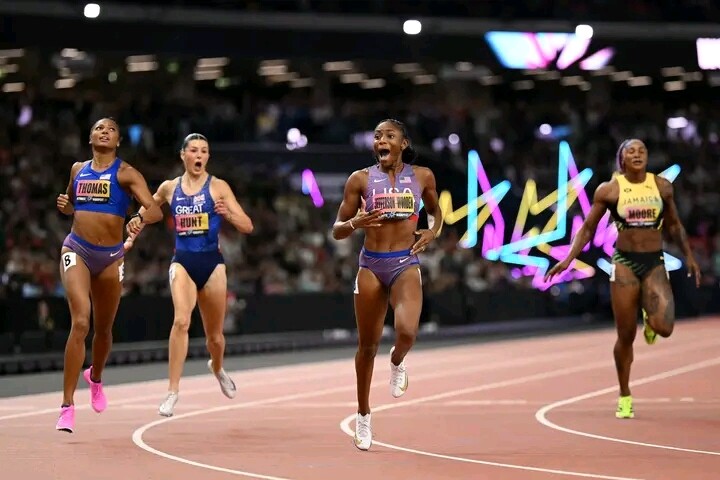
The result also pushed several celebrated names further down the rankings. Julien Alfred’s 21.51 from 2026 now sits fourth, while Elaine Thompson-Herah’s 21.53 from 2021 ranks fifth.
The significance of Jefferson-Wooden’s achievement becomes even greater when the conditions are considered. Running into a headwind makes a sprint performance more difficult, yet she still produced the third-fastest 200m ever recorded, underlining the extraordinary speed and execution behind her victory.
A Sensational Sprint Double
The Budapest triumph also completed a remarkable 100m and 200m double.
Just one night earlier, Jefferson-Wooden stormed to the 100m title in 10.62 seconds. She returned to the track with the same confidence and determination, once again delivering when the pressure was greatest.
The double adds another major achievement to a championship career that has rapidly gathered momentum. Jefferson-Wooden arrived in Budapest as the reigning world champion in both the 100m and 200m after completing the sprint double at the 2025 World Championships in Tokyo.
Now, she has added the inaugural Ultimate Championship double to her growing collection of major victories.
$300,000 Reward For Budapest Dominance
Jefferson-Wooden’s extraordinary weekend also comes with a substantial financial reward. With $150,000 awarded to each individual event winner, her victories in the 100m and 200m earn her a total of $300,000 from the championship.
Yet the money is almost secondary to what she has achieved on the track.
In an era filled with Olympic champions, world champions and record-setting talents, Jefferson-Wooden is separating herself through consistency, championship composure and an extraordinary ability to deliver on the biggest stages.
Her latest 21.47 seconds does more than add another title to her résumé. It places her directly among the fastest women the sport has ever seen over 200m.
Florence Griffith-Joyner remains at the summit. Shericka Jackson sits second. But Melissa Jefferson-Wooden is now firmly at No. 3—and judging by the extraordinary trajectory of her career, the American may not be finished climbing.
From Tokyo to Budapest, Jefferson-Wooden is no longer simply chasing sprinting history.
She is becoming part of it.
by Erick Cheruiyot for My Best Runs.
Login to leave a comment
From 1:07:01 To 56:51: The Extraordinary Evolution Of The Half Marathon World Record
The history of the men’s half marathon world record is a remarkable journey through more than six decades of distance running, tracing the sport’s transformation from club-level competition to an era of extraordinary professional speed.
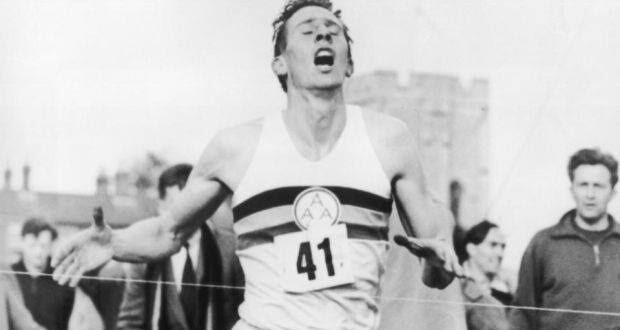
The story began in the spring of 1960 in Romford, Essex, where British club runner Brian Hill-Cottingham ran 21.0975 kilometres in 1:07:01, setting the fastest officially recorded time at the distance at the time.
For years, the record progressed slowly. British and American runners dominated much of the early history, with improvements often measured in seconds rather than dramatic leaps. Ron Hill lowered the mark to 1:05:44 in 1965, while Derek Clayton took it down to 1:03:22 in 1967. Through the 1970s and 1980s, the barrier continued to fall as athletes from different nations gradually pushed the limits of what was possible over 21.1 kilometres.
Then came the breakthrough that changed the character of the event.
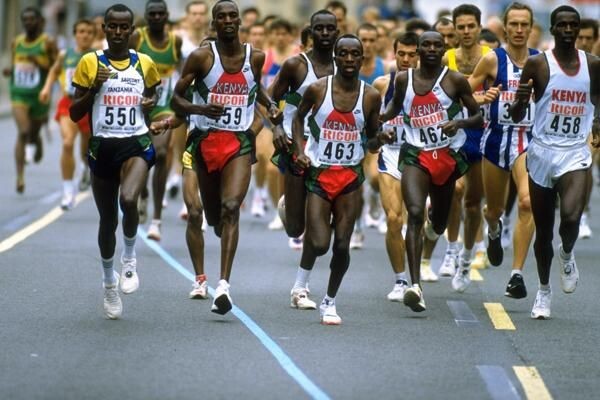
In 1993, Kenya’s Moses Tanui became the first man to break the one-hour barrier, running 59:47 in Milan. It was a landmark moment for road running. The half marathon was no longer simply another distance on the racing calendar; it had become an event worthy of specialised preparation and elite-level ambition.
Kenya subsequently established a remarkable presence in the record progression. Paul Tergat lowered the record to 59:17 in 1998 before eventually pushing it below 59 minutes with a 59:06 mark later that year. Eritrea’s Zersenay Tadese and Kenya’s Sammy Wanjiru continued the progression in the 2000s, with Wanjiru taking the record to 58:33 in 2007.
Tadese reclaimed the record in 2010 with 58:23, but the most dramatic developments were still to come.
In 2018, Kenya’s Abraham Kiptum ran 58:18, only for countryman Geoffrey Kamworor to lower the standard to 58:01 in 2019. A year later, another Kenyan, Kibiwott Kandie, produced one of the greatest breakthroughs in the event’s history, becoming the first man to break 58 minutes with 57:32 in Valencia.
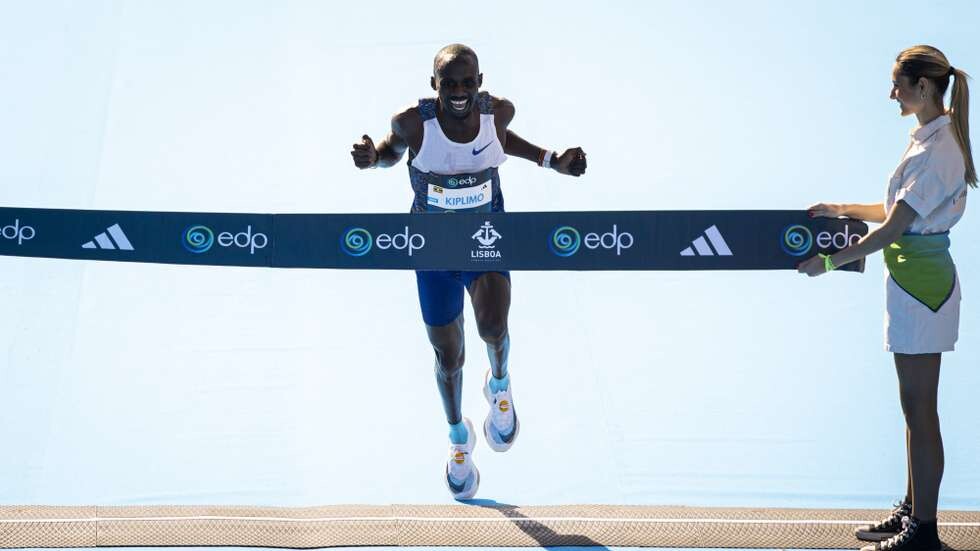
Uganda’s Jacob Kiplimo then entered the record books, running 57:31 in Lisbon in 2021. Ethiopia’s Yomif Kejelcha lowered it by another second to 57:30 in Valencia in 2024.
And then, in 2026, the record progression became a breathtaking battle between two of the finest distance runners of their generation.
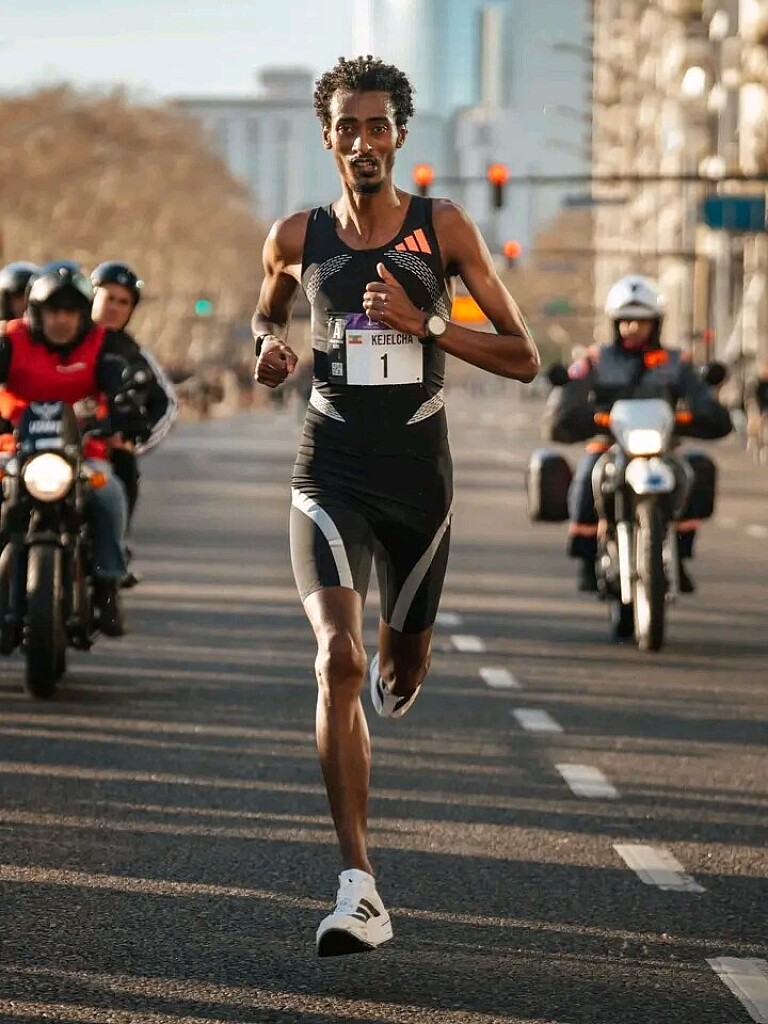
Kiplimo reclaimed the world record in Lisbon with 57:20, taking 10 seconds from Kejelcha’s mark. But Kejelcha responded with an extraordinary performance in Buenos Aires on 23 August 2026, stopping the clock at 56:51.
The improvement was staggering—29 seconds faster than Kiplimo’s previous record.
Kejelcha’s 56:51 means he averaged approximately 2:42 per kilometre for the entire 21.0975-kilometre distance, a pace that would have seemed almost unimaginable when Hill-Cottingham first established the record at 1:07:01 in 1960.
From 1:07:01 to 56:51, the progression tells the story of an event that has undergone a remarkable transformation. Training has become more sophisticated, competition has intensified, courses have become faster, and generations of athletes have continued to challenge the boundaries of human endurance and speed.
What began as a record set by a British club runner on a spring day in Essex has evolved into one of the most fiercely contested records in modern distance running.
And with Kiplimo and Kejelcha pushing each other to unprecedented heights, the question is no longer whether the half marathon can go faster.
The question is: how low can the world record ultimately go?
by Erick Cheruiyot for My Best Runs.
Login to leave a comment

26 Years Later, Vivian Cheruiyot Returns To Sydney As A Kenyan Distance-Racing Legend
Twenty-six years ago, a 17-year-old Vivian Cheruiyot arrived in Sydney carrying the dreams of a young Kenyan athlete and the promise of a remarkable future.
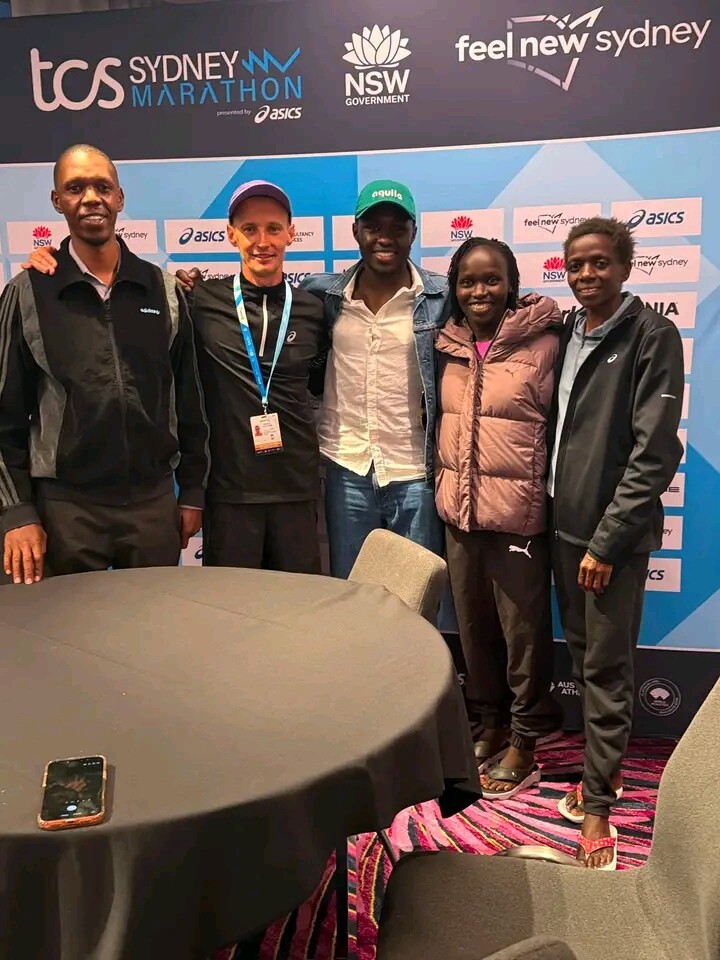
Today, she returns to the same Australian city as something far greater — an Olympic champion, four-time world champion, world cross-country champion, London Marathon winner, Laureus Sportswoman of the Year and one of Kenya’s most accomplished distance runners.
At 42, Cheruiyot will line up for the TCS Sydney Marathon on Sunday, August 30, completing an extraordinary full circle in a career that has stretched across more than two decades and transformed her from a teenage Olympian into one of the defining figures of her generation.
When Cheruiyot first competed in Sydney at the 2000 Olympic Games, few could have imagined the heights she would eventually reach. Still only 17, she advanced to the 5000m final and finished 14th — an experience that became the first chapter of an Olympic journey that would eventually span four Games.
The years that followed brought an extraordinary collection of victories.
Cheruiyot became world 5000m champion in 2009, then produced one of the greatest championship performances of her career in Daegu in 2011, winning both the 5000m and 10,000m titles while also claiming World Cross Country gold earlier that year. She added another world 10,000m title in Beijing in 2015, taking her tally to four senior world championships.
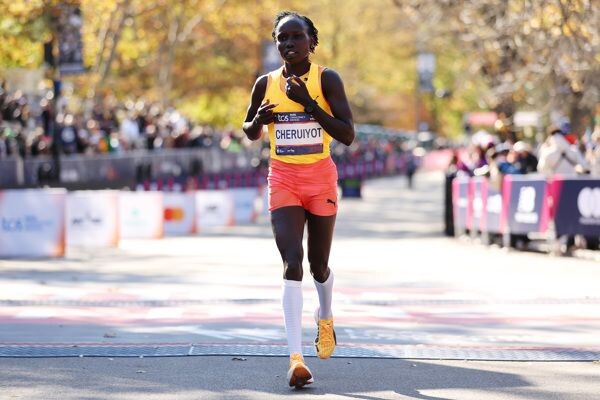
But the Olympic gold medal remained the one prize missing from her collection.
That changed dramatically in Rio in 2016.
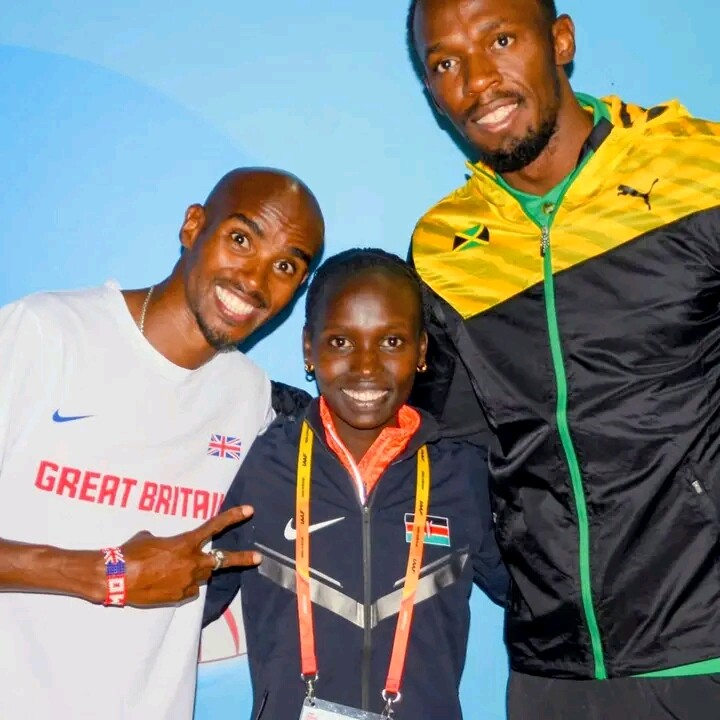
After winning silver in the 10,000m, Cheruiyot returned to the track for the 5000m final and delivered a masterclass in championship racing. She surged away from Ethiopia’s Almaz Ayana in the closing stages to win Olympic gold in 14:26.17, finally completing the collection of major titles she had chased for so many years.
“I said I want to win,” Cheruiyot recalled after that historic victory. “This was my fourth Olympics and I’ve been dreaming about this since the very start.”
Her brilliance was not confined to the track.
After moving into marathon running, Cheruiyot established herself among the world’s best over 42.195km. She finished fourth in her London Marathon debut in 2017 before returning the following year to produce a stunning victory in 2:18:31 — a performance that placed her fourth on the world all-time list at the time and remains her marathon personal best.
She also finished runner-up in the New York City Marathon in 2018 and second in London in 2019, further demonstrating that her extraordinary competitive instinct had successfully followed her from the track to the roads.
Away from competition, Cheruiyot’s story has also evolved with her life. She became a mother, welcomed her daughter Arielle in 2021 and returned to competitive racing in 2023. In 2024, she claimed third place at the New York City Marathon, followed by fifth at the 2025 London Marathon.
Now Sydney offers her another opportunity to write her name into the city’s sporting history.
“I look back on my career with pride. I was able to win almost everything and have been at the top for a long time,” Cheruiyot said ahead of her return.
She also remembers the extraordinary generation in which she competed — an era that included global icons such as Usain Bolt, Tirunesh Dibaba and Meseret Defar.
“I was running in a great era and had a close-up view of athletes like Usain Bolt setting the world alight,” she reflected.
Yet perhaps the most remarkable aspect of Cheruiyot’s return is not simply the passage of time, but her willingness to keep challenging herself.
She arrives in Sydney having put considerable work into rebuilding her fitness, knowing that the marathon demands something entirely different from the explosive championship races that defined her track career.
“I am very excited to go back to Sydney,” she said. “It has been 26 years since I was there, and a lot has changed in my life since then. I hope to have a good run — I have put in a lot of work to regain fitness and hope my body will stand up to the 42km.”
Twenty-six years ago, Sydney introduced the world to a fearless Kenyan teenager chasing an Olympic dream.
Now, the same city welcomes back a woman who went on to conquer the track, cross country and marathon — and to leave an indelible mark on Kenyan athletics.
From teenage Olympian to Olympic champion. From world champion to marathon winner. From rising talent to mother and enduring icon.
Vivian Cheruiyot has come full circle — and Sydney is once again the stage.
by Erick Cheruiyot for My Best Runs.
Login to leave a comment

Sydney Marathon
The Sydney Marathon is a marathon held annually in Sydney, Australia. The event was first held in 2001 as a legacy of the 2000 Summer Olympics, which were held in Sydney. In addition to the marathon, a half marathon, 9 kilometres (5.6 mi) "Bridge Run", and a 3.5 kilometres (2.2 mi) "Family Fun Run" are also held under the banner...
more...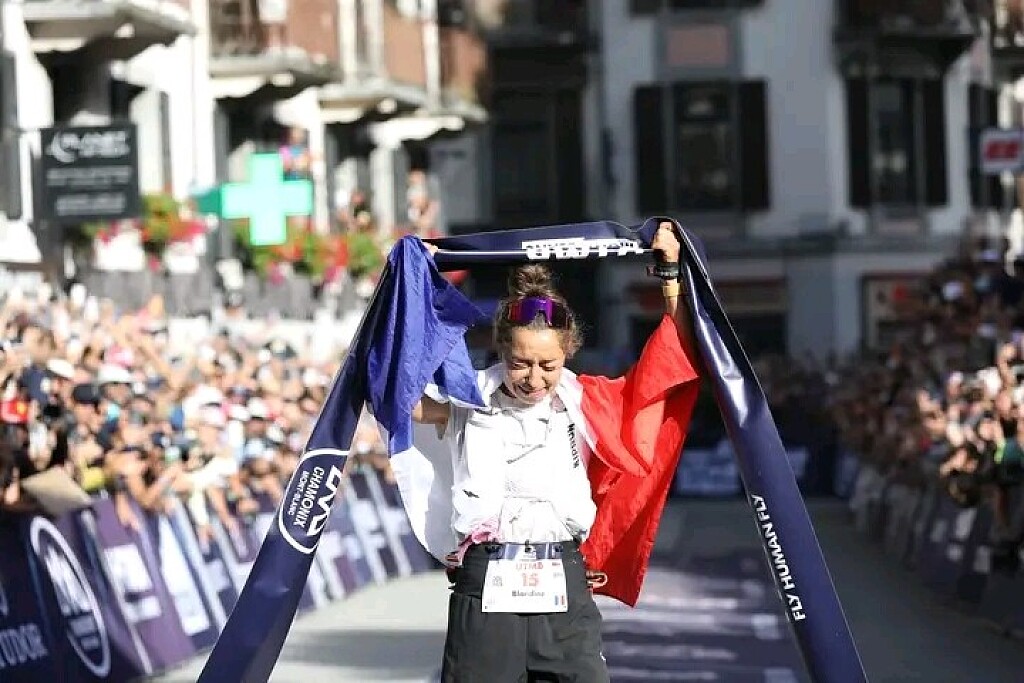
Blandine L’hirondel Creates French Magic In Chamonix With Historic UTMB Triple Crown
Pure goosebumps in Chamonix.
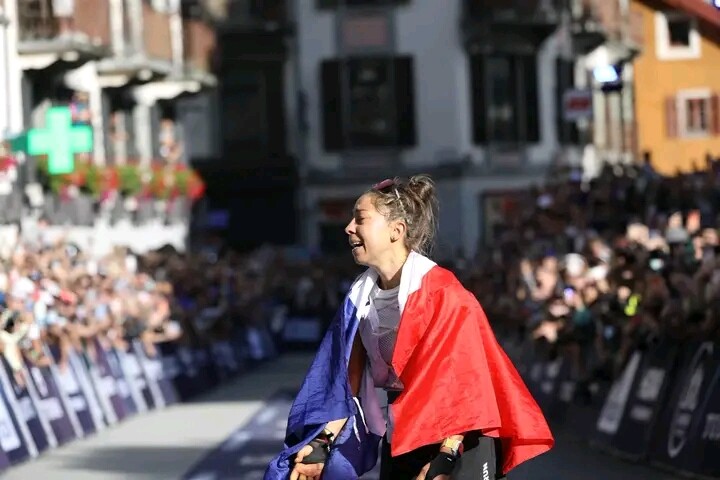
Blandine L’Hirondel has conquered the 2026 UTMB Mont-Blanc in extraordinary fashion, completing one of the rarest achievements in trail running while becoming the first woman ever to break the 22-hour barrier on the iconic 100-mile course.
The French star stopped the clock at a sensational 21:54:49, smashing the previous women’s course record and etching her name into the history of the sport.
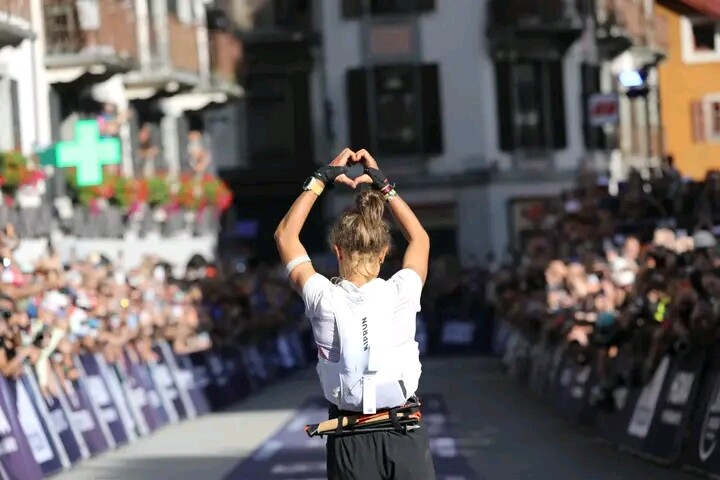
The scale of her performance becomes even clearer when placed alongside the recent record progression. L’Hirondel’s 21:54:49 eclipsed Katie Schide’s 22:09:31 from 2024, Ruth Croft’s 22:56:23 from 2025, Courtney Dauwalter’s 23:29:14 from 2023, and Schide’s 23:15:12 from 2022.
Most significantly, L’Hirondel became the first woman to run under 22 hours at UTMB.
But this was about far more than a number on the clock.
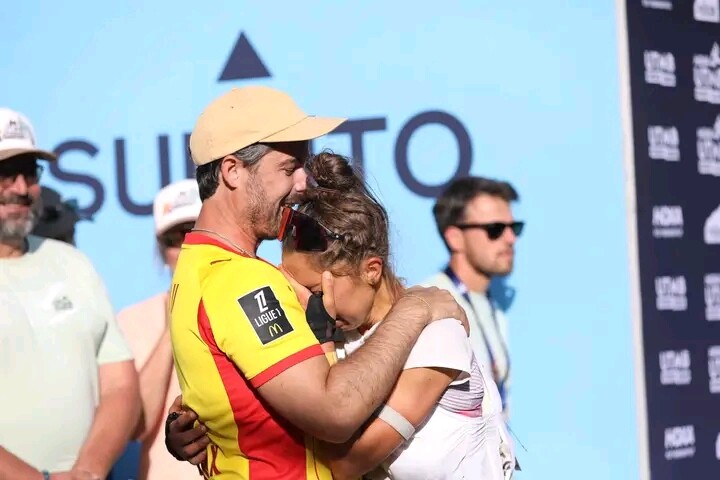
L’Hirondel’s victory was forged through a monumental battle of endurance, pain and determination. In the final kilometres, with exhaustion taking hold, the Frenchwoman suffered several heavy falls. Each time, she picked herself up and continued her relentless charge toward Chamonix.
Nothing was going to take the finish line away from her.
As she finally entered the streets of Chamonix, the home crowd erupted. Surrounded by roaring support, L’Hirondel fought back the emotion, raised her arms and crossed the finish line in 21:54:49, completing an unforgettable victory.
Falling down. Getting back up. Winning. That is trail running.
The achievement becomes even more remarkable because L’Hirondel has now completed a rare UTMB Mont-Blanc triple crown, winning all three of the event’s iconic races: the OCC, CCC and UTMB.
She first triumphed at the OCC in 2021, followed by victory in the CCC in 2022, before finally claiming the ultimate prize at UTMB.
With this achievement, L’Hirondel becomes only the third athlete in history — and the second woman — to complete the OCC, CCC and UTMB sweep.
It is a feat that demands extraordinary versatility, consistency and resilience across different distances and challenges. L’Hirondel has now conquered all three.
Her road to this moment had not been straightforward.
She finished third on her first UTMB appearance in 2023 and returned in 2024 to place fifth. But she kept coming back, determined to go one step further.
In 2026, everything came together.
With patience early in the race, resilience through the toughest sections and an extraordinary fighting spirit when her body was crying out for rest, L’Hirondel produced the performance of her life.
And she did it on home soil.
Ten years after Caroline Chaverot became the last French woman to win UTMB, L’Hirondel has brought the title back to France — and done so by breaking a barrier no woman had ever breached before.
From OCC to CCC to UTMB, Blandine L’Hirondel has completed a journey that very few athletes can even dream of making.
The triple crown is complete.
The 22-hour barrier is broken.
The women’s course record is hers.
And beneath the towering peaks of Mont-Blanc, in front of a roaring Chamonix crowd, L’Hirondel has written another unforgettable chapter in the history of trail running. 21:54:49, a historic triple crown and a record that now belongs to her — a truly remarkable moment for France and a breathtaking triumph on the world’s biggest trail-running stage.
by Erick Cheruiyot for My Best Runs.
Login to leave a comment
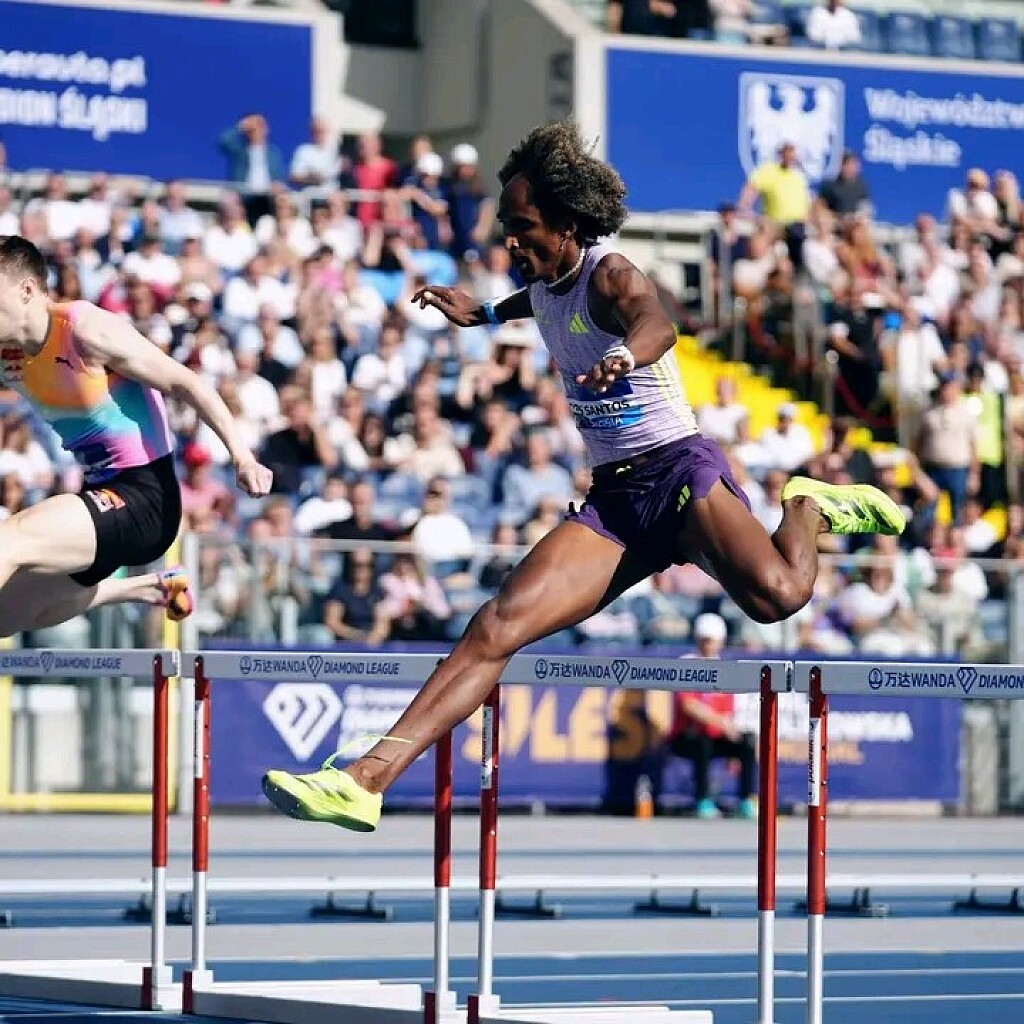
Is This the Greatest Era in Men’s 400m Hurdles History? Dos Santos Takes the Event to Another Level
The men’s 400m hurdles may be experiencing the greatest era in its history, and the numbers now make the argument almost impossible to ignore.
Brazilian superstar Alison dos Santos has taken the event to another level, storming to a sensational 45.80 world record in Zurich and moving to the summit of the all-time performance list.
But perhaps even more remarkable than the world record itself is what it has done to the historical rankings.
Every one of the 10 fastest performances in men’s 400m hurdles history is now owned by just three athletes: Alison dos Santos, Karsten Warholm and Rai Benjamin.
That extraordinary statistic perfectly captures the dominance of the current generation and highlights just how dramatically the event has evolved over the past few years.
Following his stunning performance in Zurich, dos Santos now sits at the top of the all-time list with 45.80, followed by Norway’s Karsten Warholm at 45.94, the time he ran in his historic world-record performance at the Tokyo Olympics in 2021.
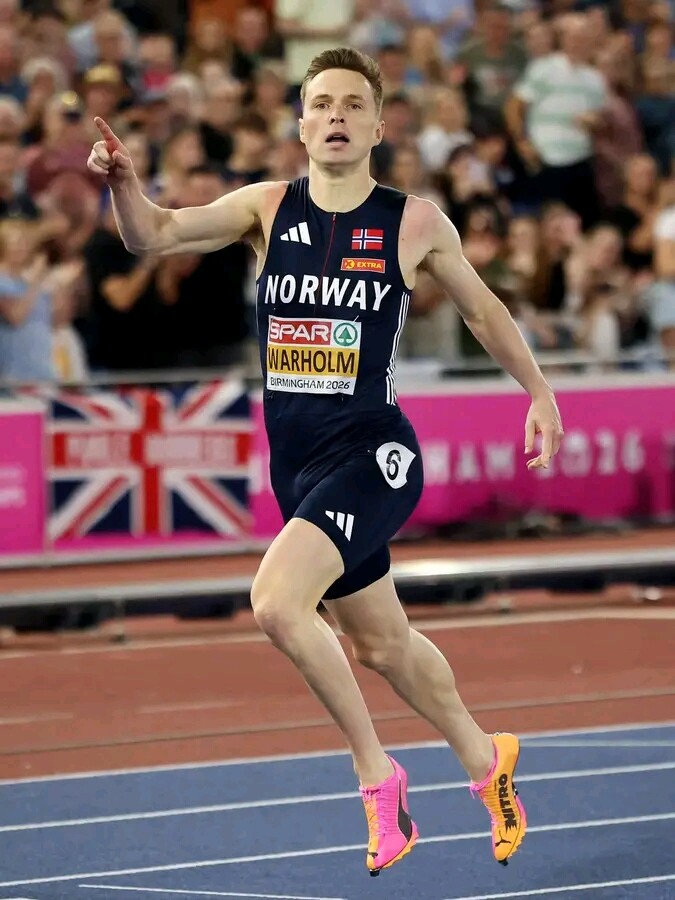
American star Rai Benjamin occupies third with 46.17, also from that unforgettable Tokyo final. Warholm is fourth with 46.28 from 2025, while dos Santos is fifth with his 46.29 from 2022.
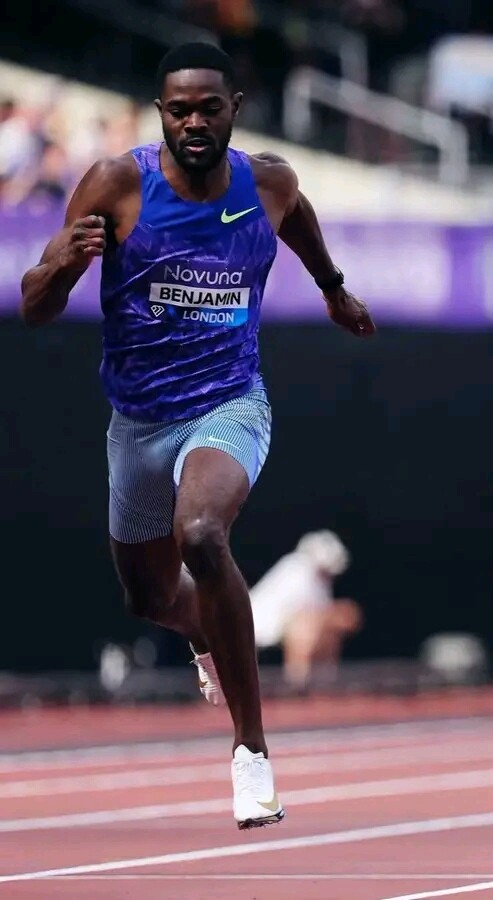
Benjamin appears again in sixth and seventh with 46.46 performances from 2024, while dos Santos takes eighth with 46.48 in 2026. Warholm completes the list with 46.51 from 2023 and 46.52 from 2023.
The distribution is extraordinary. Dos Santos owns three of the 10 fastest performances, Warholm owns four, while Benjamin owns the remaining three.
No other athlete has managed to break into the top 10.
That level of concentration at the very top of an event is a remarkable reflection of the era these three athletes have created.
At the centre of it all is dos Santos, whose 45.80 in Zurich has established a completely new benchmark. The Brazilian's performance did more than secure another historic victory; it pushed the boundaries of what is considered possible over one lap and 10 barriers.
Warholm had previously rewritten the history books in Tokyo when he clocked 45.94, becoming the first man to break the 46-second barrier and finally lowering Kevin Young’s legendary 46.78 world record, which had stood since the 1992 Barcelona Olympics.
Benjamin finished behind Warholm in Tokyo in 46.17, producing a performance that would itself have been considered extraordinary in almost any other era. Dos Santos completed the podium in 46.72, but his bronze medal would eventually prove to be just another chapter in his rise towards the summit.
The Tokyo final remains one of the most spectacular races in Olympic athletics history, but it also marked the beginning of an extraordinary period in which Warholm, Benjamin and dos Santos would repeatedly challenge the limits of the event.
Warholm has four performances inside the current top 10, including his 45.94 world record from Tokyo. Dos Santos has three, highlighted by his new global mark, while Benjamin also has three performances among the 10 fastest ever recorded.
Their remarkable consistency has transformed the 400m hurdles from an event once dominated by isolated historic performances into one defined by sustained excellence and intense rivalry.
For nearly three decades, Kevin Young’s 46.78 appeared almost untouchable. Then Warholm broke through. Benjamin immediately showed that the new standard could be challenged, and dos Santos emerged as another athlete capable of running at an astonishing level.
Now, times below 46 seconds are no longer viewed as an unimaginable frontier. They have become the territory occupied by the very best athletes of this generation.
And dos Santos has just moved that frontier even further.
His 45.80 has given the event a new target, but with Warholm and Benjamin still among the world's elite, the story may not be finished.
The question is no longer whether this generation is exceptional.
It is whether we are witnessing the greatest collection of men's 400m hurdlers ever assembled.
Three athletes now own every position in the all-time top 10.
Ten performances have been produced by just dos Santos, Warholm and Benjamin.
And at the very top stands Alison dos Santos, whose breathtaking 45.80 in Zurich has pushed the men’s 400m hurdles into territory that once seemed impossible.
Three superstars. Ten historic performances. One extraordinary era.
by Erick Cheruiyot for My Best Runs.
Login to leave a comment
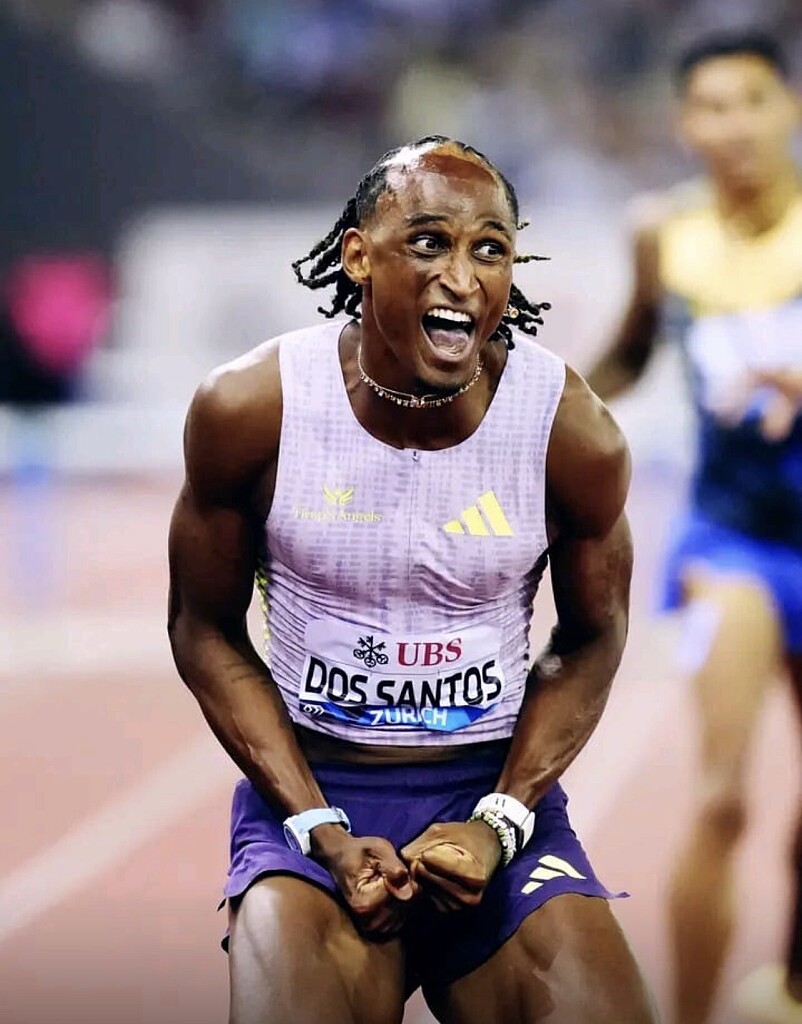
Alison dos Santos Makes History in Zurich, Smashing Warholm’s 400m Hurdles World Record
45.80 seconds. A new world record. A new chapter in the history of the 400m hurdles.
Brazilian star Alison dos Santos produced a breathtaking performance at the Zurich Diamond League on Thursday, storming to 45.80 seconds to shatter the men’s 400m hurdles world record and dethrone one of the greatest records in modern athletics.
Dos Santos delivered a sensational run at Weltklasse Zürich, becoming the first athlete to break the barrier set by Norway’s Karsten Warholm, whose legendary 45.94-second world record had stood since his spectacular victory at the Tokyo 2020 Olympic Games in 2021.
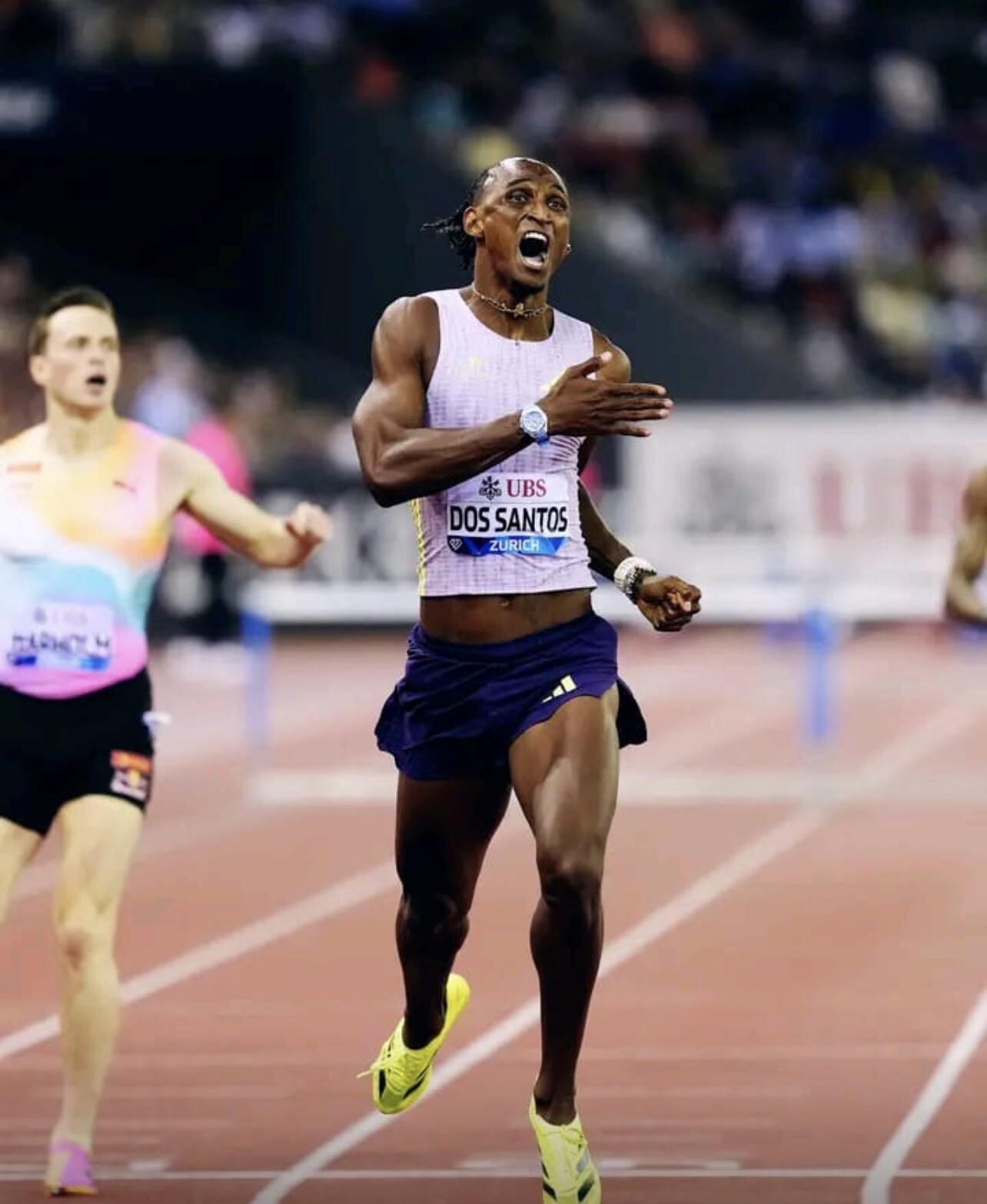
The Brazilian was in complete control from the opening stages, attacking the hurdles with remarkable speed and precision before powering down the final straight. The clock stopped at 45.80, sending shockwaves through the stadium and rewriting the record books.
Warholm, the former world-record holder and one of the sport’s most dominant figures, had to settle for second place in 46.69 seconds. Nigeria’s Ezekiel Nathaniel completed the podium in 47.50.

The result adds another extraordinary chapter to the rivalry between Dos Santos and Warholm. The pair have repeatedly pushed each other to new levels, but this time Dos Santos delivered the defining blow, taking down a record that had become synonymous with Warholm’s name.
The 26-year-old Brazilian has now cemented himself among the greatest 400m hurdlers in history. A world champion in 2022 and a two-time Olympic bronze medallist, Dos Santos has spent years chasing the sport’s very best — and in Zurich, he finally claimed its most coveted record.
His breakthrough is even more remarkable given that he entered the Zurich meeting with a personal best of 46.29 seconds in the 400m hurdles. His previous 2026 best had been 46.43, set just days earlier in Silesia, where he also defeated Warholm.
Now, the record belongs to Brazil.
Alison dos Santos — 45.80 seconds.
A new world record, a historic victory and a performance that will be remembered as one of the defining moments of the 2026 athletics season.
by Erick Cheruiyot for My Best Runs.
Login to leave a comment

From Sprinting Into History to Running Toward Forever: Usain Bolt Gets Engaged to Kasi Bennett
Usain Bolt has added another unforgettable milestone to an extraordinary life — and this time, there was no finish line, stopwatch or Olympic medal involved.

The Jamaican sprinting icon is officially engaged to his longtime partner, Kasi Bennett, after turning his 40th birthday celebration into a deeply personal and romantic moment in Kingston.

Bolt popped the question on Friday, August 21, during his birthday celebrations at One Belmont, where family and close friends gathered to mark the milestone. The eight-time Olympic champion got down on one knee in front of Bennett and asked her to become his wife, transforming an already special evening into a celebration of love and commitment.
And Bolt certainly did not arrive empty-handed.
Bennett was presented with a spectacular five-carat diamond engagement ring, with reports describing the centre stone as pear-shaped. Images from the occasion captured the emotional aftermath as the couple embraced, while Bennett later gave fans a glimpse of the unforgettable moment on social media.
The proposal marks a significant new chapter in a relationship that has lasted for more than a decade.
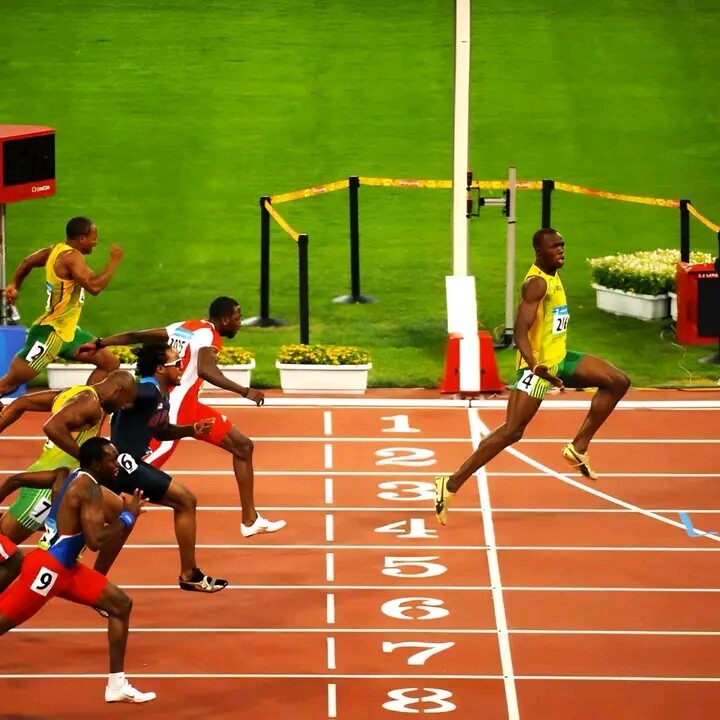
Bolt and Bennett began dating in 2013, eventually becoming one of Jamaica's most recognisable sporting couples. Their relationship became more widely known around the 2016 Rio Olympics, but much of their family life has remained away from the constant glare of the spotlight.
Together, they have built a family of their own, raising three children — daughter Olympia Lightning and twin sons Thunder and Saint Leo. Olympia was born in 2020, while the twins arrived in 2021.
Before the surprise proposal, Bennett had already marked Bolt's 40th birthday with a heartfelt tribute, celebrating not simply the global superstar known for rewriting sprinting history, but the partner and father behind the legend.
She described him as her love, her home and her forever, while expressing pride in the life they have created together.
For Bolt, whose career was defined by spectacular moments under the world's brightest lights, this may be one of his most meaningful victories yet.
He conquered the 100 metres. He dominated the 200 metres. He collected eight Olympic gold medals and established himself as one of the greatest athletes the world has ever seen.
Now, at 40, the world's most famous sprinter has made another decisive move — this time toward forever.
After 13 years together and three children, Usain Bolt and Kasi Bennett are officially taking their love story to its next chapter.
From breaking records to making memories, the fastest man in history has finally found a race he wants to take all the way to the finish.
by Erick Cheruiyot for My Best Runs.
Login to leave a comment
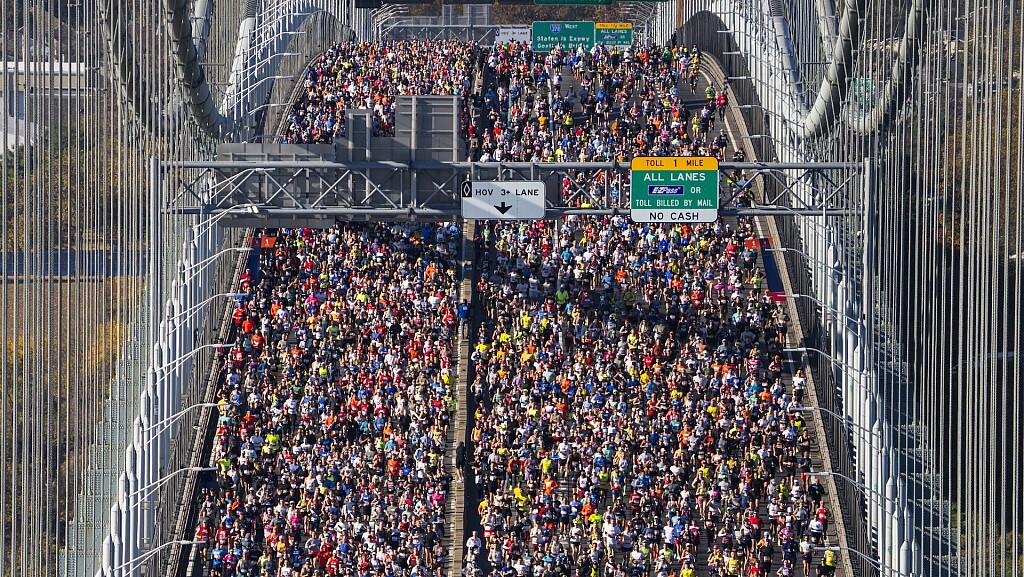
Three Rising Distance Stars Ready to Make Their Marathon Debuts at the 2026 New York City Marathon
The next generation of marathon talent will take centre stage on the streets of New York this November, with Weini Kelati of the United States, Andreas Almgren of Sweden and Kenya’s Patrick Kiprop all set to make their marathon debuts at the 2026 TCS New York City Marathon on November 1.
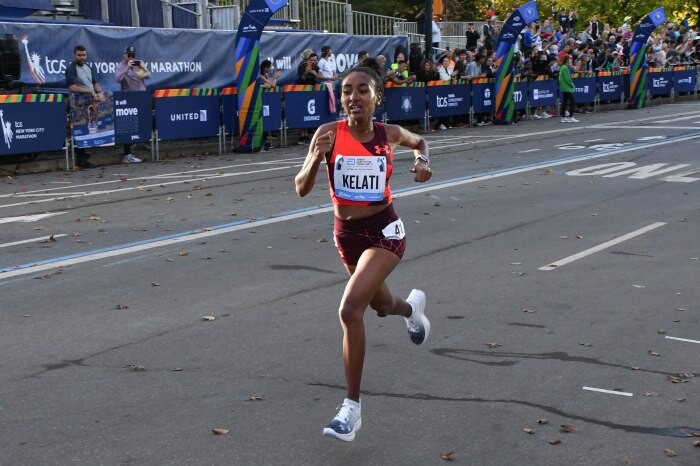
All three arrive in New York with impressive credentials built across track, cross country and shorter road races, creating one of the most intriguing groups of marathon debutants in this year’s field.
Kelati will enter the 26.2-mile challenge after establishing herself as one of America’s leading distance runners. The U.S. Olympian owns a 1:06:04 half-marathon personal best, an American record, and has already demonstrated the combination of endurance and speed required to compete at the highest level. Her transition to the marathon will be closely watched as she begins a new chapter in her career on one of the sport’s biggest stages.

Almgren brings perhaps even more explosive speed to his first marathon. The Swedish star owns a remarkable 58:41 half-marathon personal best, a national and European record at the time it was achieved, while his track résumé includes world-class performances over 3,000m and 5,000m. His ability to sustain that extraordinary speed over 42.195 kilometres will be one of the central questions surrounding his New York debut.
Then there is Patrick Kiprop, who will carry Kenya’s hopes into his first marathon after building an impressive reputation during a decorated collegiate career in the United States.
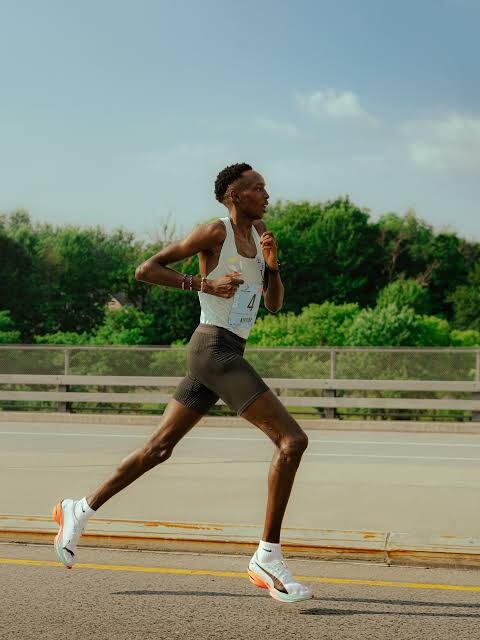
Kiprop enjoyed a standout spell with the Arkansas Razorbacks, collecting five First-Team NCAA All-America honours across cross country, indoor and outdoor track. He became a two-time NCAA South Central Region Cross Country champion in 2022 and 2023 before adding an SEC Outdoor 5,000m title in 2024 and a silver medal in the 10,000m.
He also etched his name into Arkansas history by breaking the university’s 5,000m school record. His American collegiate journey began at Fresno Pacific University, where he was named the Sunbird Male Newcomer of the Year in 2021 before transferring to Arkansas.
Following his collegiate success, Kiprop made the transition to professional running and joined the On Athletics Club Global, placing himself within one of the sport’s leading international training environments. His attention has increasingly shifted toward road racing, with the half marathon becoming an important bridge toward the marathon.
Kiprop has already shown that his speed can translate successfully to the roads, winning the professional division at the prestigious Bolder Boulder 10K. Now, New York presents a considerably bigger challenge and an opportunity to discover how his considerable distance-running ability translates to the full marathon.
For Kelati, Almgren and Kiprop, November 1 will represent more than simply another race. It will be the beginning of their marathon careers.
The New York City Marathon is notoriously demanding, combining multiple bridges, relentless changes in rhythm and a difficult closing stretch through Manhattan. Add enormous crowds and the pressure of a global audience, and the course provides an unforgiving introduction to 42.195 kilometres.
Yet that is precisely what makes these three debuts so fascinating.
Kelati arrives with American-record speed. Almgren brings European-record-level half-marathon credentials and extraordinary track ability. Kiprop brings a decorated NCAA background, Kenyan distance-running pedigree and growing experience on the roads.
None of them needs to prove that they possess speed. New York will determine whether they can transform that speed into marathon strength.
With an already star-studded 2026 field, the arrival of these three rising stars adds another compelling storyline to race day.
The future of marathon running is coming to New York—and on November 1, Kelati, Almgren and Kiprop will discover what they can do over 26.2 miles.
by Erick Cheruiyot for My Best Runs.
Login to leave a comment

TCS New York City Marathon
The first New York City Marathon, organized in 1970 by Fred Lebow and Vince Chiappetta, was held entirely in Central Park. Of 127 entrants, only 55 men finished; the sole female entrant dropped out due to illness. Winners were given inexpensive wristwatches and recycled baseball and bowling trophies. The entry fee was $1 and the total event budget...
more...
Hayward Field Gets Another Olympic Trials: Eugene To Host 2028 Team USA Selection
The road to Los Angeles 2028 will once again run through Eugene, Oregon.
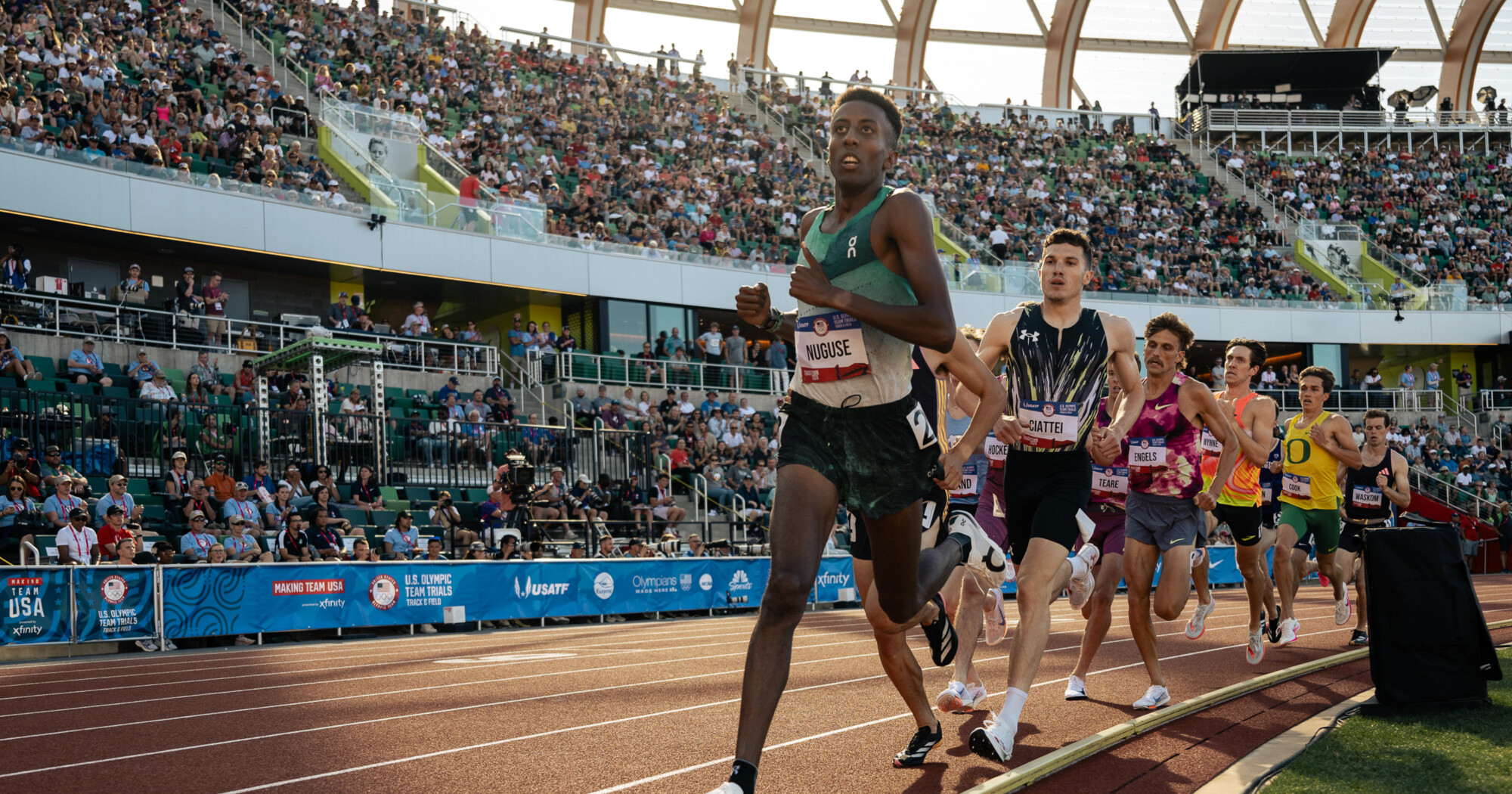
USA Track & Field and the U.S. Olympic and Paralympic Committee have announced that the 2028 U.S. Olympic Team Trials – Track & Field will return to Hayward Field from June 17–22, 2028, giving Eugene the distinction of hosting the prestigious selection meet for a sixth consecutive Olympic cycle.
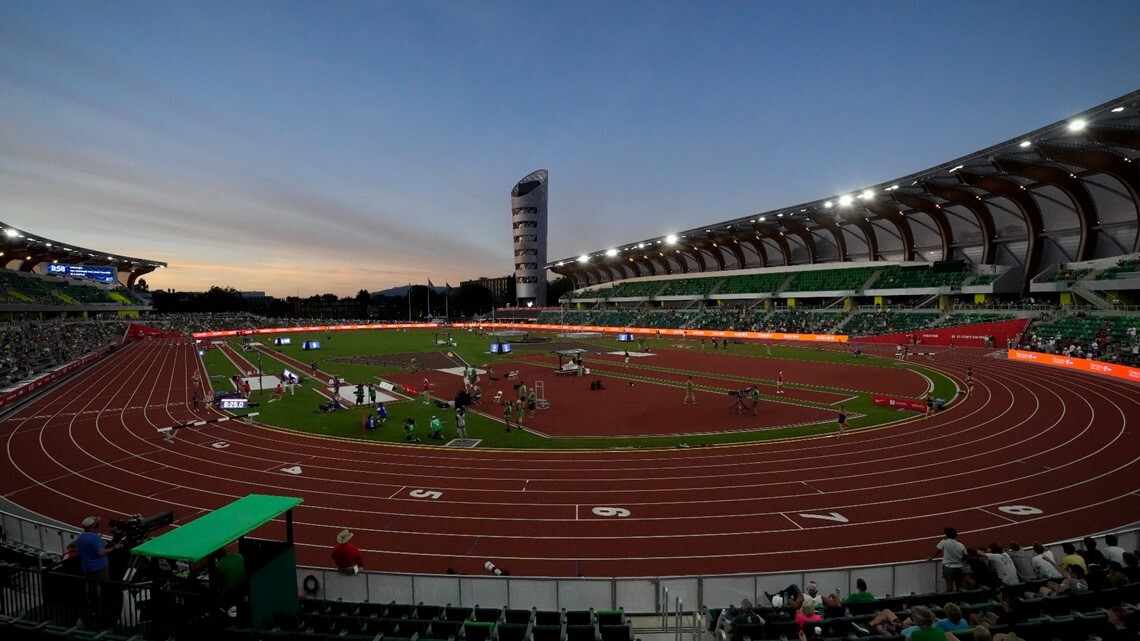
For a venue that has become synonymous with American track and field, the announcement represents another chapter in Hayward Field’s remarkable Olympic Trials legacy. Eugene previously hosted the Trials in 2008, 2012, 2016, 2021 and 2024, and will now stage the event once again as America’s finest athletes battle for places on the U.S. team headed to the 2028 Los Angeles Olympic Games.
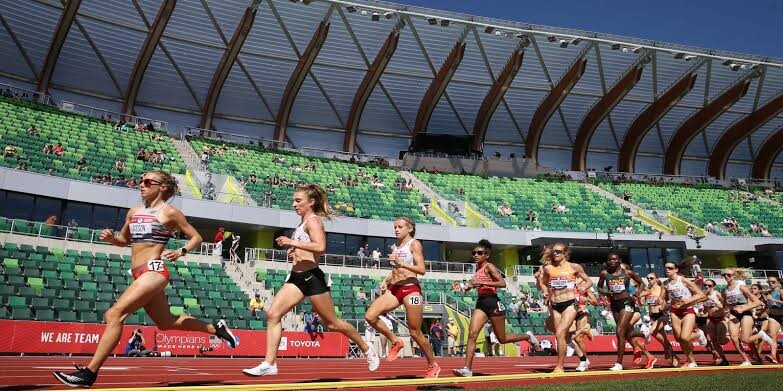
The 2028 edition will also introduce a significant change to the traditional format. Instead of the eight-day competition used at recent Trials, the main track and field meet will be compressed into six consecutive days, reflecting athlete feedback and the need for a more efficient selection process with the Olympic Games beginning less than a month later.
The men’s and women’s 10,000 meters, along with the decathlon and heptathlon, will not be contested as part of the main six-day Trials. Their Olympic team selection will take place earlier in the spring, with the dates and locations to be announced separately.
That scheduling adjustment is particularly important because athletes selected in Eugene will have only a short window to recover, prepare and travel before track and field competition begins at the Los Angeles Olympics. The LA28 track and field programme is scheduled for July 15–24 at the Los Angeles Memorial Coliseum.
Eugene’s return also reinforces its extraordinary status within American athletics. Few venues in the world carry the same history, atmosphere and emotional connection to track and field as Hayward Field, where Olympic dreams have been decided repeatedly over the past two decades.
And while the spotlight will ultimately be on the athletes who make Team USA, the road to Los Angeles will begin with another unforgettable week in TrackTown USA — where careers can be transformed, dreams can be fulfilled and the smallest margins can decide who wears the American colors on the Olympic stage.
The countdown to Los Angeles 2028 has officially gained another major milestone. Hayward Field is ready to welcome America’s best once again.
by Erick Cheruiyot for My Best Runs.
Login to leave a comment

Michael Roeger’s Long Road Back to the Marathon World Record — and Now Sydney Awaits
On August 30, approximately 35,000 runners will line up at Miller Street in North Sydney for the 2026 TCS Sydney Marathon. Among them will be an athlete who already owns a piece of marathon history: Michael Roeger, the Australian T46 marathon world-record holder and one of the most remarkable endurance athletes of his generation.
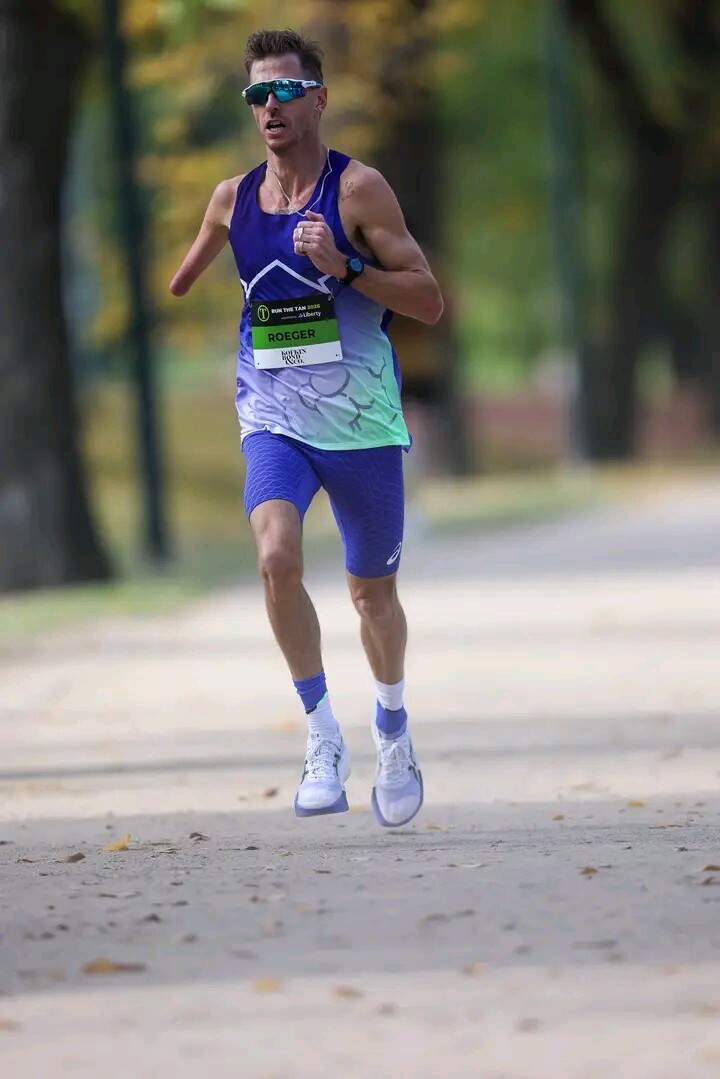
At 38, Roeger returns to the marathon with a career shaped by persistence, reinvention and an extraordinary ability to keep moving forward whenever circumstances have threatened to derail him.
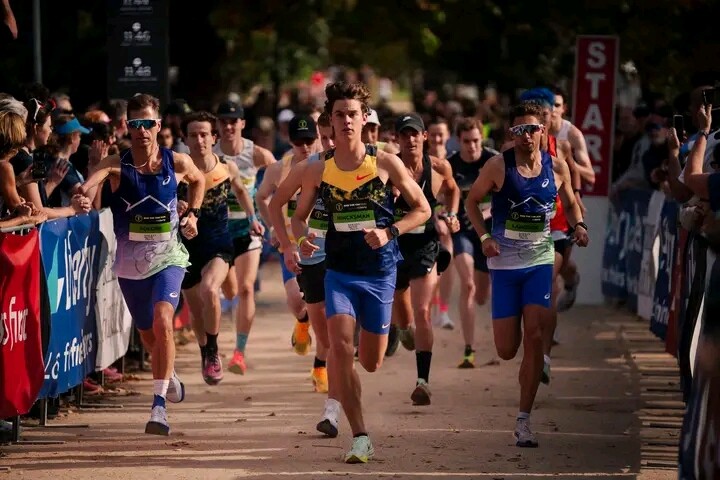
Sydney is a fitting stage for the next chapter. The marathon, now part of the Abbott World Marathon Majors, takes runners through some of the city's most recognisable landmarks, beginning in North Sydney, crossing the Harbour Bridge and eventually finishing near the Opera House. For Roeger, however, this is about far more than another marathon.
He is returning to the distance in the city where he set the fastest T46 marathon ever recorded.
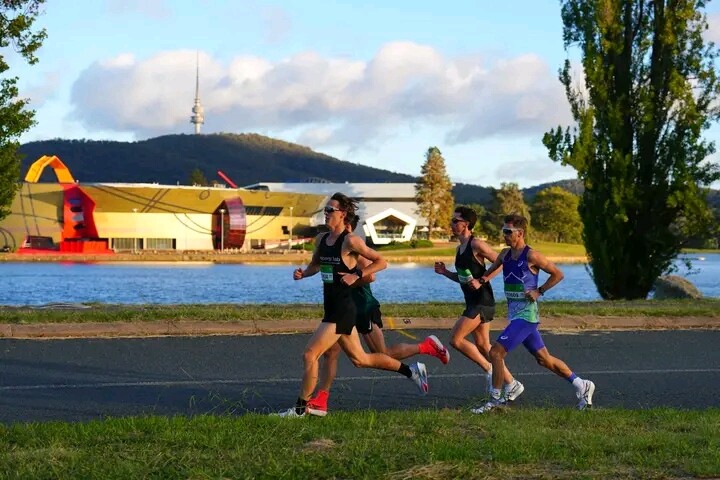
Roeger grew up in Langhorne Creek, a small South Australian community about 55 kilometres south of Adelaide. Born without the lower half of his right arm, he discovered Para athletics after Paralympian Neil Fuller visited his school when Roeger was 12.
What began as an introduction to sport eventually developed into a career spanning five Paralympic Games, world championships, major medals and multiple world records.
His T46 classification covers athletes with an arm amputation or comparable upper-limb difference. Yet describing Roeger's performances simply through his classification fails to capture the complexity of what he has achieved.
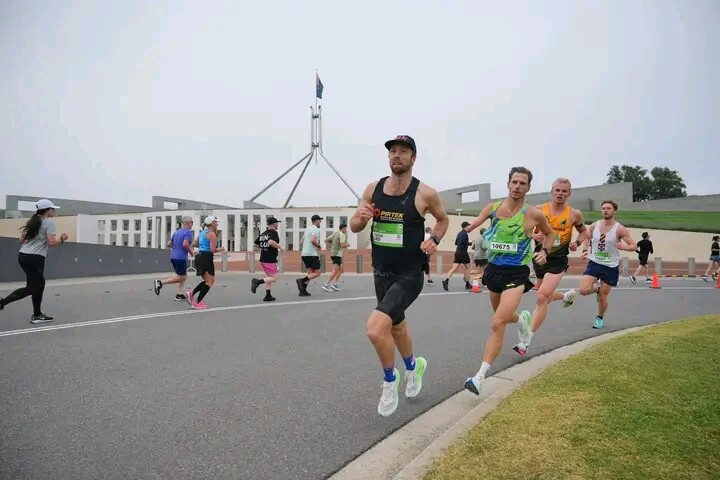
Running is an intricate coordination of the entire body. The arms contribute to balance, rhythm and control, helping the torso manage the rotational forces created by every stride. Over 42.195 kilometres, maintaining efficient movement is an enormous physical and technical challenge.
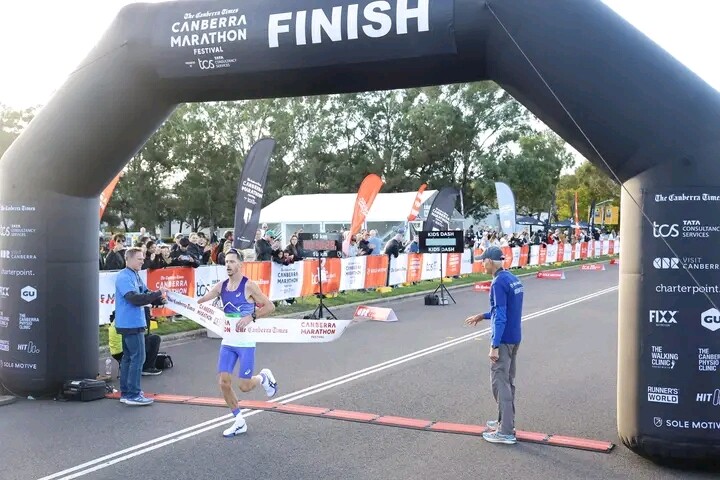
Roeger's marathon performances therefore represent much more than a number attached to a classification. They are elite endurance performances in their own right.
His transition to the marathon was remarkably rapid. Roeger made his marathon debut at the Melbourne Marathon in October 2018, running 2:23:31. The performance was faster than the existing T46 world record at the time, although it was not ratified as a world record because the race did not have the necessary status.
Six months later, he returned to the distance at the 2019 London Marathon, where the World Para Athletics Marathon Championships were staged within the race.
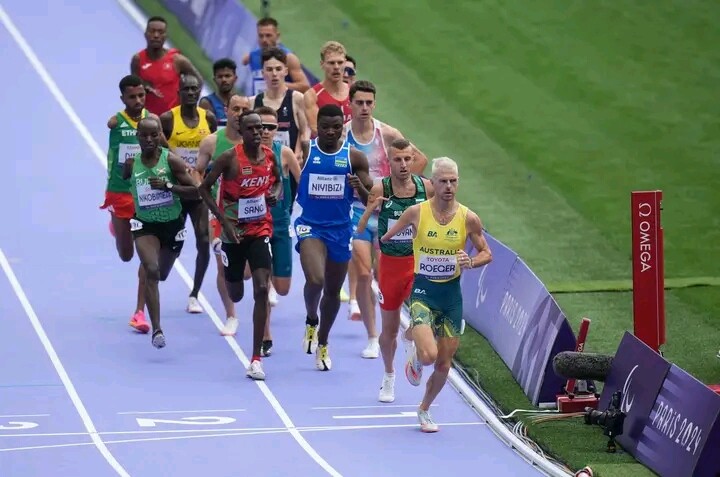
This time, everything came together.
Roeger won the T46 world title in 2:22:51, lowering the ratified world record and establishing himself as the world's leading marathoner in the classification. Even when cramp began to trouble him during the closing stages, he held on to become a world champion.
The progression continued.
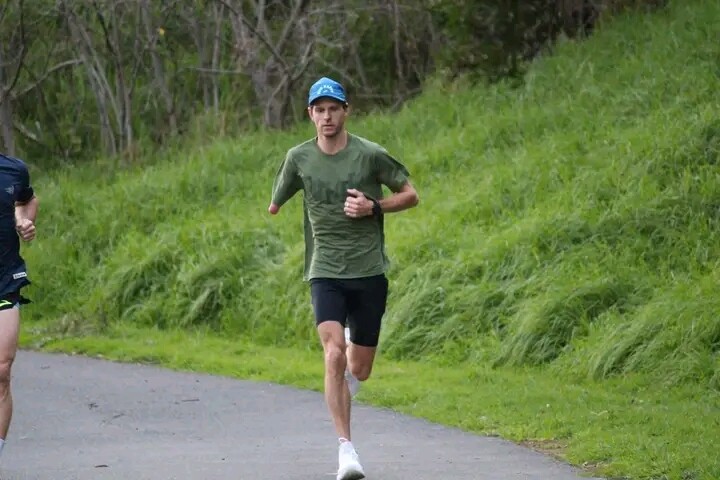
At the 2020 Chevron Houston Marathon, Roeger ran 2:19:33, becoming the first ambulant Para athlete to break the 2:20 barrier and once again lowering his own world record.
But his most significant breakthrough came back in Australia.
On April 25, 2021, Roeger lined up in Sydney for the Athletics Australia Tokyo Qualifying Marathon. He produced the fastest marathon of his career, crossing the finish line in 2:18:53.
That performance remains the T46 marathon world record.
The progression is remarkable. From 2:23:31 in Melbourne to 2:22:51 in London, 2:19:33 in Houston and finally 2:18:53 in Sydney, Roeger repeatedly moved the benchmark forward.
It was almost five minutes of improvement across four marathon performances.
But the record is only one part of the story.
Roeger's career has never followed a smooth upward trajectory. At the 2008 Beijing Paralympic Games, aged only 20, he contested the 800m, 1500m and 5000m T46 events, with seventh place in the 1500m his best finish.
Four years later in London, he arrived with genuine medal ambitions. Instead, gastrointestinal bleeding struck on the eve of the T46 800m. He still started the race but was forced to withdraw after one lap.
Rio 2016 finally delivered a Paralympic medal, with Roeger winning bronze in the 1500m. That success helped convince him to move towards the longer distances and eventually make the marathon his primary focus.
Then came another major setback.
Six weeks before the Tokyo 2020 Paralympic Games, Roeger suffered a stress fracture in his lower leg, destroying much of his preparation for the marathon. Despite the injury, he travelled to Tokyo and made the start line.
He finished sixth in 2:34:45, a time far outside the level he had demonstrated before the Games.
For most athletes, such a setback could have marked the end of the road. For Roeger, it became another chapter in a career defined by adaptation.
Before the Paris 2024 Paralympic Games, another obstacle emerged when the T46 marathon was removed from the programme. The event in which Roeger had become a world-record holder was no longer available at the Games.
His only remaining distance was the 1500m.
So he adapted once again.
Roeger returned to the track and competed in Paris, ultimately adding another Paralympic medal to his collection with silver in the T46 1500m.
Now the marathon is calling again.
The 2026 TCS Sydney Marathon will provide a very different challenge from the flat courses on which many of the world's fastest marathon times are produced. The route begins in North Sydney, crosses the Sydney Harbour Bridge and winds through the city before finishing at the Opera House.
The course features substantial elevation changes, with approximately 313 metres of climbing across the 42.195 kilometres. It is a course that rewards strength, patience and the ability to maintain efficient form when the legs are already carrying the fatigue of a long marathon.
For Roeger, that challenge will be amplified by the quality of the field around him.
The Australian elite field includes a strong collection of domestic marathoners, while the international men's race features considerable depth, with numerous athletes holding personal bests below 2:10.
Roeger will therefore not be lining up in isolation as a Para athlete. He will be part of a major international marathon field, surrounded by runners pursuing national titles, personal bests and elite honours.
That is also central to the way he has approached his career.
Roeger has long resisted the idea that Para athletes should be viewed as fundamentally separate from their able-bodied counterparts. His philosophy has been simple: once the starting gun goes, the competition is about running.
That attitude has helped him move comfortably between Para athletics and open elite competition, and Sydney 2026 offers another opportunity to do exactly that.
His partnership with coach Dr Philo Saunders has been particularly important throughout his career, helping him develop into a world-class athlete across multiple distances.
Yet perhaps the most impressive part of Roeger's story is not any individual medal or record.
It is the number of times he has had to begin again.
From a small South Australian town to five Paralympic Games. From disappointment in Beijing and London to a medal in Rio. From the track to the marathon. From a devastating injury before Tokyo to a world-record performance. From losing his marathon event before Paris to returning to the 1500m and winning another Paralympic medal.
Every time the route has changed, Roeger has found another way forward.
Now, at 38, he is returning to the marathon once more.
And there could hardly be a more fitting destination than Sydney.
It is the city where he produced his 2:18:53 world record in 2021. Five years later, he will return to the same city carrying the experience of a career that has tested his resilience at almost every turn.
The world record is already in his name.
On August 30, Michael Roeger will have another chance to show the world what remains in the legs of the man who refused to let setbacks define the limits of his career.
by Erick Cheruiyot for My Best Runs.
Login to leave a comment
Sydney Marathon
The Sydney Marathon is a marathon held annually in Sydney, Australia. The event was first held in 2001 as a legacy of the 2000 Summer Olympics, which were held in Sydney. In addition to the marathon, a half marathon, 9 kilometres (5.6 mi) "Bridge Run", and a 3.5 kilometres (2.2 mi) "Family Fun Run" are also held under the banner...
more...
Nairobi Makes History the Prize as Kenya Bids to Bring 2029 World Athletics Championships to Africa
Nairobi has formally entered the race to host the 2029 World Athletics Championships, placing Kenya at the centre of a historic contest that could bring the sport’s premier global track and field event to African soil for the first time.
Nairobi has formally submitted its bid to host the 2029 World Athletics Championships, with the Kenyan capital facing competition from London, Rome and Munich. Four cities are now in contention for one historic decision, with World Athletics expected to announce the successful host after the inaugural World Athletics Ultimate Championships conclude in Budapest next month.
For Nairobi, however, this is about far more than securing another major sporting event. A successful bid would break a decades-long geographical barrier: despite Africa’s enormous influence on global athletics, the World Athletics Championships have never been staged on the continent.

A Nairobi victory would bring the World Athletics Championships to Africa for the first time in the event’s 50-year history and stage the global showpiece at an altitude of approximately 1,800 metres. The proposed venue is Moi International Sports Center Kasarani Stadium, which has a capacity of 48,063, while the Kenyan government has committed full backing for infrastructure, security and event delivery. Kenya’s athletics credentials are equally compelling, with 17 current world records and 72 World Championships gold medals, making it the second-most successful nation in championship history.
The significance of Nairobi’s bid is amplified by Kenya’s extraordinary place in the history of the sport. The country has produced generations of world-class distance runners and currently holds 17 recognised world records across middle- and long-distance events.

Kenya is also the second-most successful nation in World Athletics Championships history by gold medals, with 72 titles after the 2025 edition. At the Tokyo 2025 championships, Kenya claimed five gold medals, including victories by Beatrice Chebet in the 5,000m and 10,000m.
The country also has recent experience staging major international athletics competitions. Nairobi hosted the 2017 World U18 Championships and the 2021 World U20 Championships, while Kenya previously staged the 2007 World Cross Country Championships in Mombasa and the 2010 African Athletics Championships in Nairobi.
A Nairobi victory would therefore carry a powerful symbolism: the athletes who have helped define modern distance running on African soil could finally compete for world titles at home, in front of a Kenyan crowd.
The competition, however, will be formidable. London is seeking a return to the city that hosted the highly successful 2017 World Championships, while Rome and Munich bring their own strong European sporting traditions and established event infrastructure.
Yet Nairobi offers something none of its rivals can match — the opportunity to open an entirely new chapter in the history of the championships.
The World Athletics Championships have travelled across Europe, Asia, North America and the Middle East, but Africa has remained the missing continent on the event’s hosting map. Kenya’s bid seeks to change that.
With the formal bid now submitted and the final presentation and defence completed, Nairobi’s campaign enters its decisive phase. September will determine whether the championships finally make their long-awaited debut on African soil.
Four cities. One host. One potentially historic decision.
In September, World Athletics will decide whether the world’s greatest track and field athletes will converge on Nairobi in 2029 — and whether Africa will finally get its moment on the biggest stage of all.
by Erick Cheruiyot for My Best Runs.
Login to leave a comment
Sabastian Sawe Set for Another Historic Berlin Marathon as Elite Field Takes Shape
World record holder Sabastian Sawe is set to return to the BMW Berlin Marathon on September 27, where the Kenyan superstar will defend his title and attempt to add another remarkable chapter to his already extraordinary marathon career.
Sawe arrives in Berlin with unprecedented confidence after his sensational 1:59:30 performance in London, which made him the first athlete to officially break the two-hour barrier in the marathon. That landmark achievement has elevated expectations for his return to the German capital, where he will once again line up on one of the fastest marathon courses in the world.
The Kenyan won the 2025 Berlin Marathon in 2:02:16 despite warm conditions, demonstrating his ability to produce a world-class performance even when circumstances are far from ideal. This time, he returns as the defending champion and world-record holder, with the famously flat Berlin course providing another opportunity to test the limits of what is possible over 42.195km.
Berlin has a remarkable history of producing record-breaking performances, and Sawe's presence immediately raises the possibility of another extraordinary race. The question now is whether the 31-year-old can go beyond his own 1:59:30 world record and take the marathon to an even higher level.
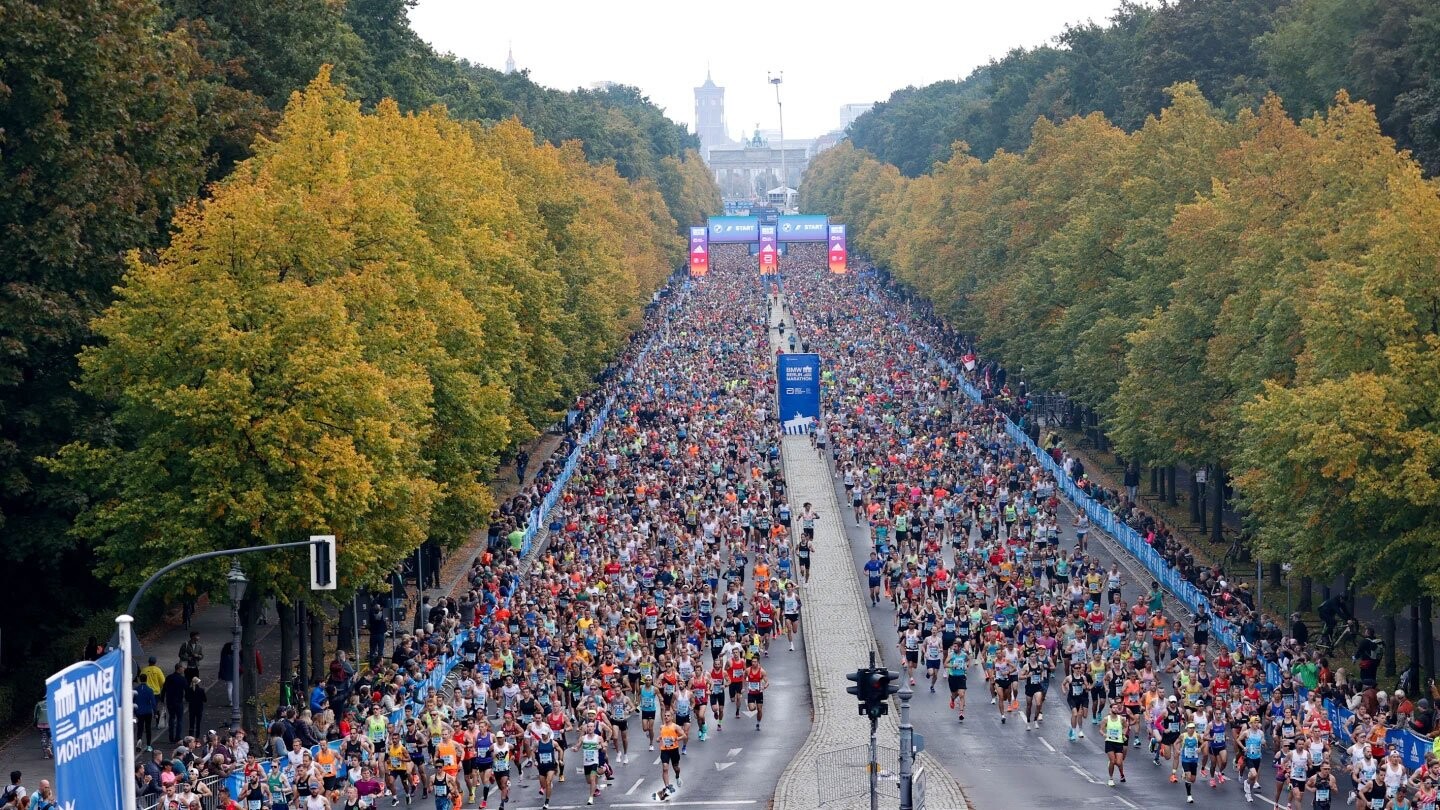
However, Sawe will face formidable opposition.
Tanzania’s Gabriel Geay has joined the elite field, bringing a personal best of 2:03:00 set in Valencia in 2022. The 29-year-old Tanzanian record holder established himself among the world’s leading marathoners with that performance and further underlined his credentials by finishing runner-up at the 2023 Boston Marathon.
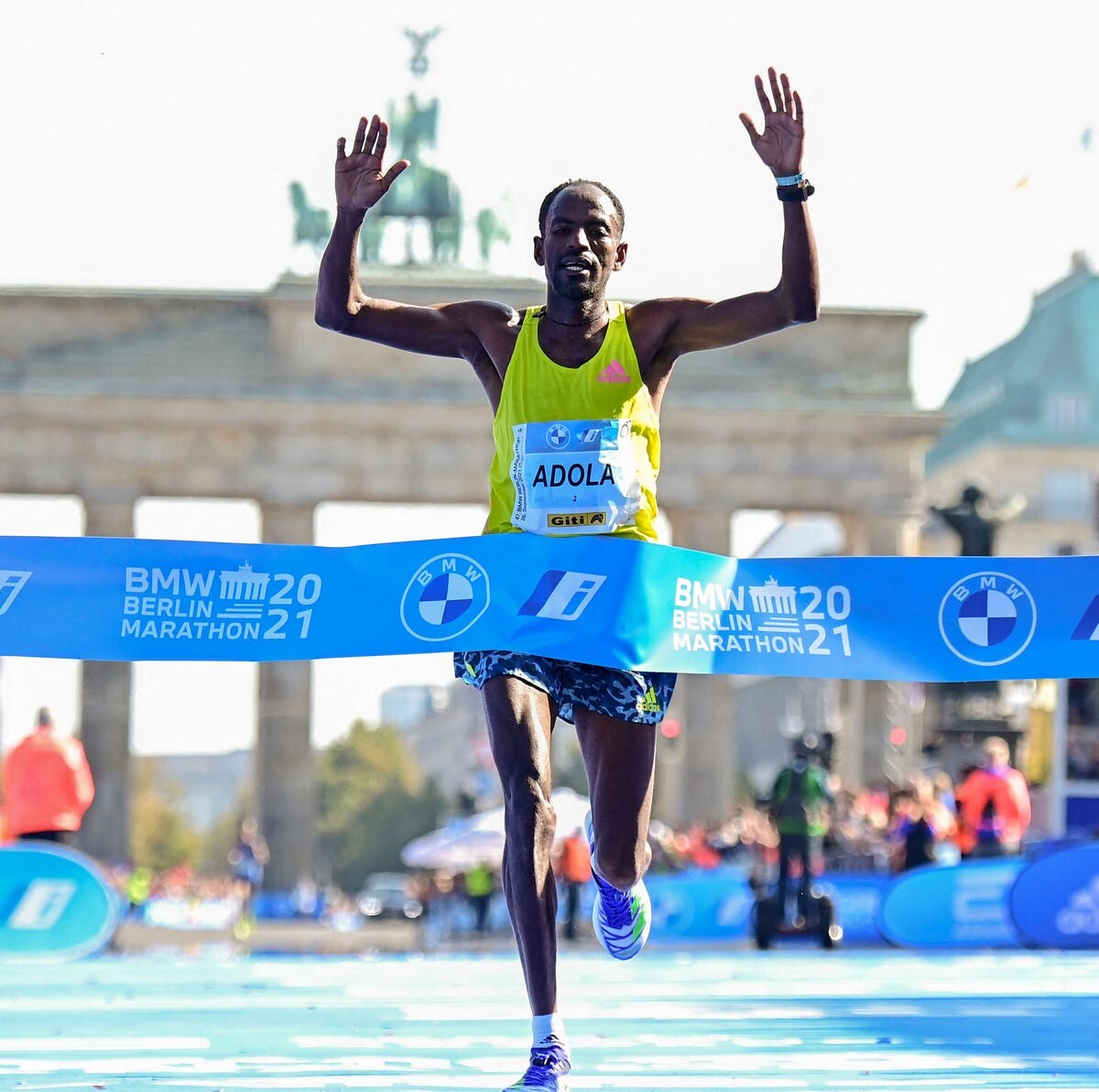
Ethiopia’s Guye Adola will also return to Berlin, the scene of some of the most memorable moments of his marathon career. In 2017, Adola stunned the athletics world on his marathon debut, pushing Eliud Kipchoge deep into the race before finishing second in a remarkable 2:03:46. Four years later, on September 26, 2021, Adola returned to Berlin and claimed victory in 2:05:45, adding another significant chapter to his association with the iconic German marathon. Now, after his recent return to top form, he will once again line up on the streets where he has already made history.
Now 35, Adola has endured injury setbacks in recent years, but his victory at the Rotterdam Marathon in 2:03:54 this spring proved that he remains a major force on the international marathon circuit.
The addition of Geay and Adola adds further quality to a field already packed with athletes capable of running at an extraordinary pace. With Sawe leading the charge, Berlin is shaping up to deliver another thrilling battle among some of the world's finest marathoners.
The depth of the field extends well beyond the leading contenders, with Ethiopia boasting an imposing group of marathoners. Getaneh Molla (2:03:34), Shura Kitata (2:03:59), Dejene Hailu (2:04:15), Selemon Barega (2:05:00), Taresa Tolosa (2:05:17), Tadu Abate (2:05:38), Asefa Boki (2:05:40) and Andamlak Belihu (2:06:40) will all bring proven credentials and the ambition to challenge for fast times in Berlin.
Japan, meanwhile, has assembled a particularly deep contingent, led by Kenya Sonota (2:05:59), Tsubasa Ichiyama (2:06:00), Kyoto Hirabayashi (2:06:14), Yuhei Urano (2:06:23), Hidekazu Hijikata (2:06:26), Yusuke Nishiyama (2:06:31), Naoki Koyama (2:06:33), Kazuya Nishiyama (2:06:45), Daisuke Uekado (2:06:54) and Shin Kimura (2:07:34). China’s Jie He (2:06:57) and Kenya’s Richard Yator (2:07:36) complete a remarkably deep field, setting the stage for a race where the battle for victory could be accompanied by a long list of outstanding personal performances.
For Sawe, though, the challenge goes beyond defending his Berlin crown. Having already broken the two-hour barrier, he now has an opportunity to chase an even more remarkable achievement on a course renowned for producing marathon history.
Can Sabastian Sawe lower his own 1:59:30 world record in Berlin on September 27?
The countdown is on, and if the conditions are right, the defending champion could once again have the marathon world watching every step.
by Erick Cheruiyot for My Best Runs.
Login to leave a comment
BMW Berlin Marathon
The story of the BERLIN-MARATHON is a story of the development of road running. When the first BERLIN-MARATHON was started on 13th October 1974 on a minor road next to the stadium of the organisers‘ club SC Charlottenburg Berlin 286 athletes had entered. The first winners were runners from Berlin: Günter Hallas (2:44:53), who still runs the BERLIN-MARATHON today, and...
more...
At 40, François D'Haene Reclaims the GR20 Crown with a Historic Sub-30-Hour Run
Age is often seen as the greatest opponent in endurance sports. Yet for François D'Haene, it has become another challenge to conquer.
The legendary French trail runner has once again etched his name into the history books after setting a new supported Fastest Known Time (FKT) on the iconic GR20 in Corsica. Covering approximately 160 kilometers across one of Europe's most demanding mountain trails, D'Haene completed the route in an astonishing 29 hours, 46 minutes and 20 seconds, becoming the first athlete ever to break the elusive 30-hour barrier.

The GR20 stretches diagonally across the Mediterranean island of Corsica from Calenzana in the north to Conca in the south. Renowned for its unforgiving terrain, the route features around 12,000 meters of cumulative elevation gain, with steep ascents, rocky ridges and highly technical descents that have earned it a reputation as Europe's toughest long-distance hiking and trail-running route.
D'Haene began his remarkable journey at 4:30 a.m. on Wednesday, July 8, and reached Conca at 10:16 a.m. the following morning, maintaining an extraordinary pace across nearly 30 hours of relentless climbing and descending. Throughout the effort, a rotating team of pacers accompanied him in accordance with supported FKT guidelines, helping him maintain his rhythm across the brutal mountain course.
His performance erased the previous supported record of 30 hours, 25 minutes, set by Corsican trail specialist Lambert Santelli in 2021. In doing so, D'Haene shaved nearly 40 minutes off a mark many believed would stand for years.
What makes the achievement even more extraordinary is the story behind it. D'Haene first claimed the GR20 record in 2016, running 31 hours and 6 minutes. Several years later, Santelli eclipsed that performance on home soil. Rather than leaving the record behind, D'Haene returned a decade later—not simply to reclaim it, but to redefine what was thought possible.
At 40 years old, he proved that experience, resilience and meticulous preparation can be just as powerful as youthful speed. While many elite endurance athletes begin to slow with age, D'Haene continues to raise the standard, delivering one of the most impressive performances of his already legendary career.
His latest triumph adds another remarkable chapter to a résumé that already includes four Ultra-Trail du Mont-Blanc (UTMB) victories, four Diagonale des Fous titles, and the Hardrock 100 counterclockwise course record. Those accomplishments alone secured his place among trail running's all-time greats. This historic return to the GR20 only strengthens that legacy.
Breaking the 30-hour barrier on one of the world's most unforgiving mountain routes is more than just another record—it is a powerful reminder that greatness is measured not only by talent, but by the willingness to return, evolve and achieve what once seemed impossible.
François D'Haene did exactly that, turning back the clock and once again proving that true champions never stop rewriting history.
by Erick Cheruiyot for My Best Runs.
Login to leave a comment

From Marathon Miles to a University Degree: Chinese Graduate Stuns Ceremony With 70+ Medals Earned Through Running
For most graduates, a university degree is the defining symbol of years of dedication and sacrifice. For 24-year-old Jin Yanwei, however, that achievement shared the spotlight with another remarkable testament to perseverance—more than 70 marathon medals that helped shape his journey to graduation.

On June 23, during the graduation ceremony at Xi'an Traffic Engineering Institute in Shaanxi Province, China, Jin walked across the stage to receive his degree like every other student. But moments later, he returned carrying a shoulder pole weighed down by over 70 marathon medals, with several more draped around his neck. The unexpected display left the audience in awe, drawing thunderous applause before the striking moment quickly captured the attention of millions online.

What many in the hall did not know was that Jin's success had been built not only in lecture rooms but also on roads and race courses across China. Although he was not a sports major, he transformed his passion for distance running into a source of financial support throughout his university years.
Jin completed his first marathon in 2021, a milestone that sparked an extraordinary commitment to endurance racing. Over the following years, he regularly competed in marathons and other long-distance events, using prize money and race incentives to help cover his educational expenses. What began as a personal challenge gradually became a practical way to finance his studies while pursuing his academic goals.
His achievements were no accident. They were the product of relentless discipline and consistency. Jin maintained a demanding training schedule, averaging around 15 kilometres every day and covering between 350 and 400 kilometres each month. In the past two years alone, he has run an astonishing 7,835 kilometres, a distance that reflects countless hours of dedication, resilience, and self-belief.
The image of Jin standing proudly in his graduation gown, balancing a shoulder pole overflowing with marathon medals, has since become a powerful symbol of determination. Every medal represented another finish line crossed, another challenge conquered, and another step towards securing both his education and his future.
Jin Yanwei's story is a powerful reminder that success is often built one step at a time. His graduation was not only the celebration of academic achievement but also the culmination of thousands of kilometres, unwavering commitment, and the courage to turn passion into purpose. In the end, those marathon miles delivered far more than medals—they helped carry him all the way to his university degree.
by Erick Cheruiyot for My Best Runs.
Login to leave a comment
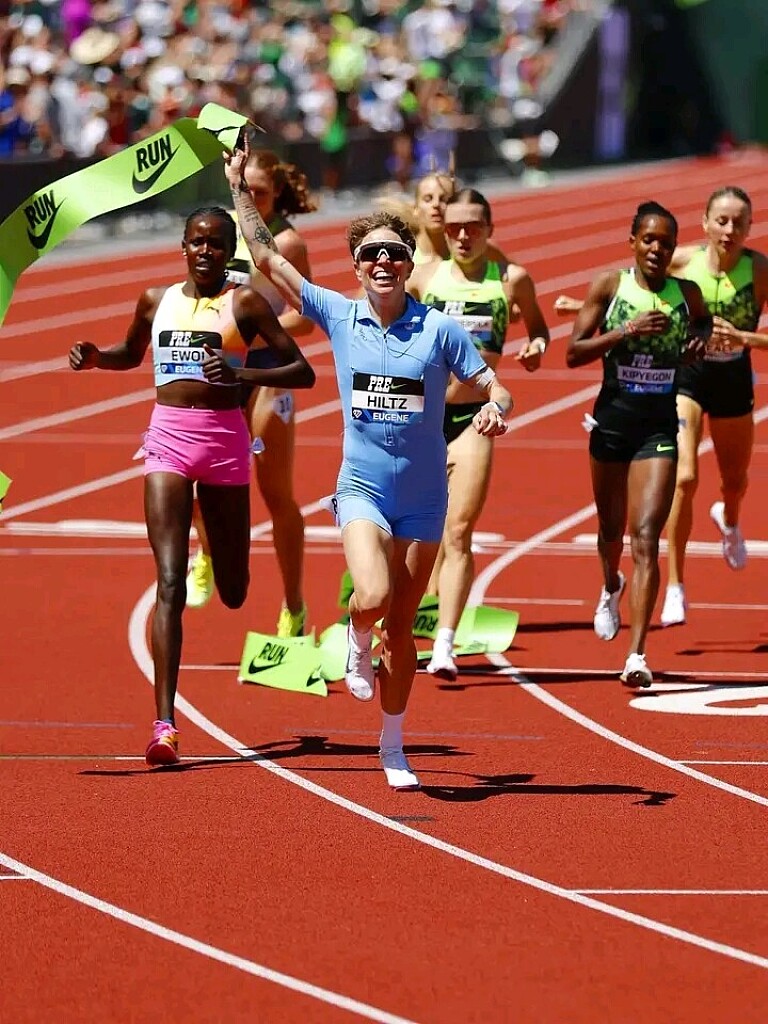
Faith Kipyegon's Five-Year Unbeaten Run Ends as Nikki Hiltz Shatters Meet Record at Prefontaine Classic
One of the biggest shocks of the 2026 athletics season unfolded at Hayward Field as Kenya's middle-distance queen, Faith Kipyegon, suffered her first defeat over the 1500m/mile on the track since the 2021 Rome Diamond League, bringing an end to an extraordinary unbeaten streak that had lasted nearly five years.
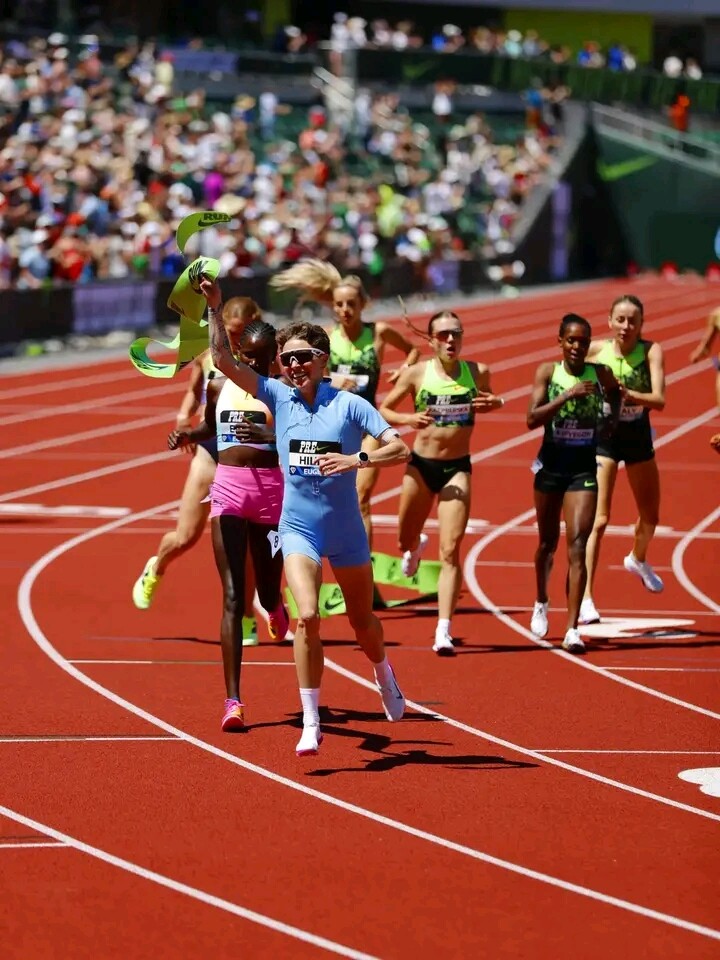
The athlete who ended that remarkable run was American star Nikki Hiltz, who produced the race of a lifetime to win the women's mile in a world-leading 4:17.49. Backed by a roaring home crowd, Hiltz timed the race to perfection before unleashing a decisive finishing kick to secure one of the most significant victories of her career.
The victory carried even greater significance as Hiltz also erased a 38-year-old Prefontaine Classic meet record, adding another historic milestone to an unforgettable evening at Hayward Field.
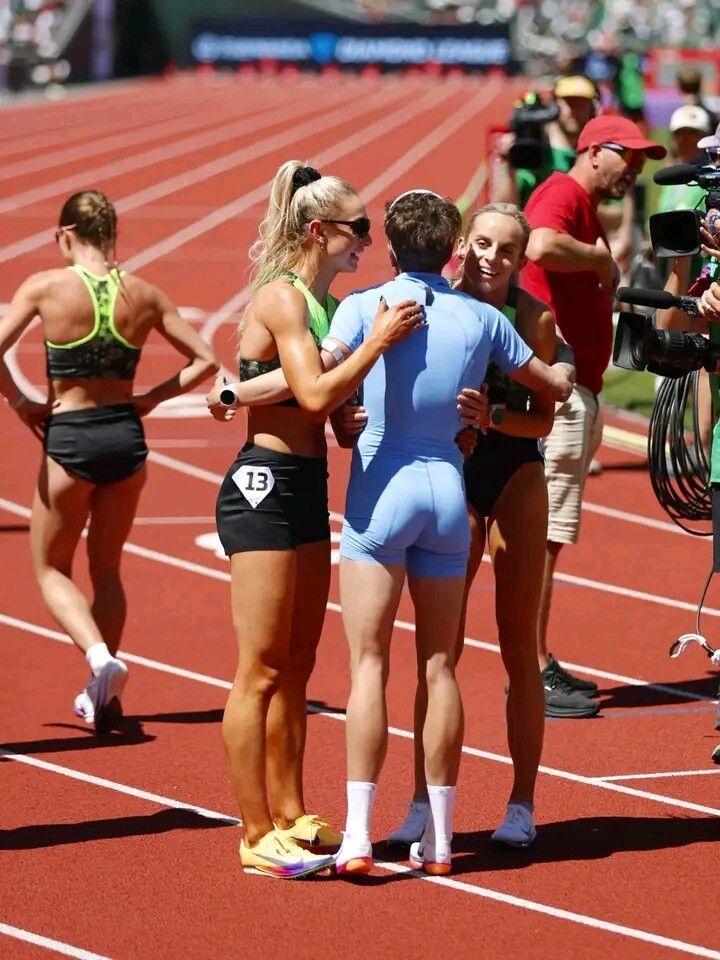
Kenya still had reason to celebrate as Dorcus Ewoi delivered an exceptional performance to finish second in 4:17.62, proving she belongs among the world's elite middle-distance runners.
Kipyegon, widely regarded as the greatest female middle-distance runner in history, battled bravely over the final lap but could not produce her trademark finishing burst. She crossed the line third in 4:17.80, a rare result for the five-time world champion and multiple Olympic gold medalist.
The remarkable depth of the race was evident throughout the field. Poland's Klaudia Kazimierska placed fourth in 4:17.90, narrowly ahead of Australia's Jessica Hull, who finished fifth in 4:18.03. Emily Mackay, Sarah Healy, and Georgia Hunter Bell completed a world-class lineup in one of the fastest mile races of the season.
While Kipyegon's third-place finish will undoubtedly generate headlines, it does little to diminish a legacy built on years of unmatched consistency and dominance. Every great champion eventually faces defeat, and the Kenyan icon has repeatedly shown an extraordinary ability to respond with even greater performances.
For Nikki Hiltz, however, this was far more than just another Diamond League victory. Ending Kipyegon's unbeaten run, setting a world-leading time, and breaking a meet record that had stood for nearly four decades is a defining statement ahead of the season's major championships.
The result has injected fresh excitement into women's middle-distance running, serving as a reminder that even the sport's greatest champions can be challenged. As the championship season approaches, the battle for global supremacy has suddenly become far more open—and far more compelling.
by Erick Cheruiyot for My Best Runs.
Login to leave a comment
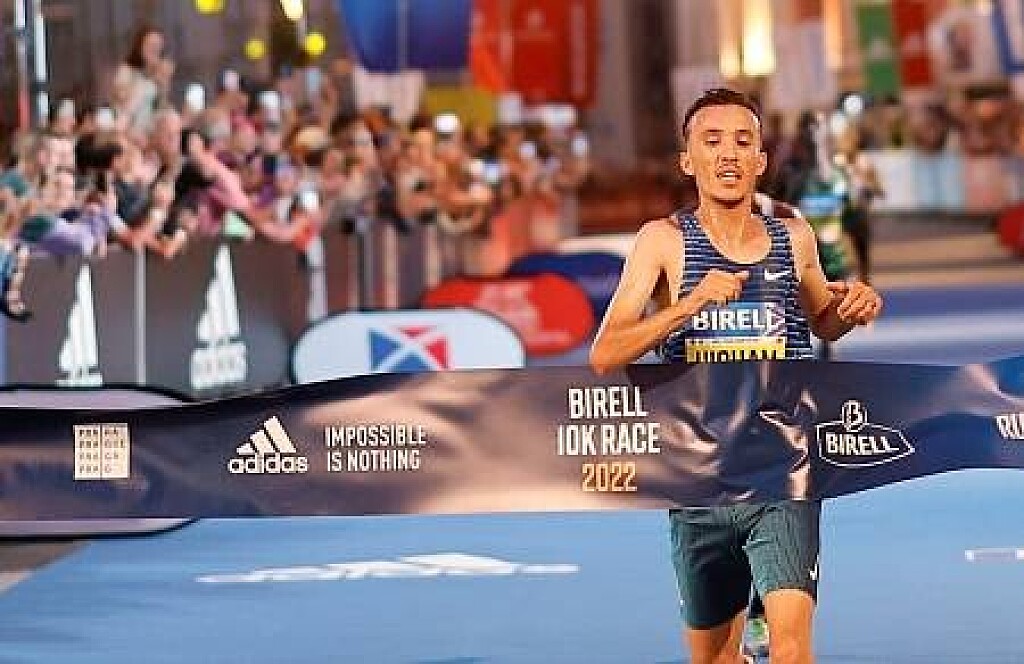
Top European and African Stars Headline tRUNsylvania International 10K Cluj
One of Eastern Europe’s strongest road races takes center stage this Sunday (June 28) as the tRUNsylvania International 10K Cluj, powered by Joma, brings together an exceptional field of elite athletes from Europe and Africa in Cluj-Napoca, Romania.
Run on a fast four-lap circuit through the city’s vibrant center, with the start and finish inside Cluj Arena, the race features numerous athletes capable of producing world-class performances.
Morocco’s Hicham Amghar leads the men’s field with a personal best of 27:09, set when he won the tRUNsylvania 10K in Brașov two years ago. He will face a deep international lineup that includes Norway’s European 10,000-meter silver medalist Zerei Kbrom Mezngi (27:39), France’s Mehdi Frere (27:44), Dutch marathon standout Filmon Tesfu (27:45), Spain’s Juan Antonio Perez (27:45), Kenya’s Moses Cheruiyot (27:51), Italy’s former national marathon record holder Eyob Faniel (28:10), Algeria’s Abderrazak Charik (28:12), Eritrea’s Seare Weldezghi (28:14), the Netherlands’ Noah Schutte (28:19), Spain’s Yago Rojo (28:21), and Australia’s James Whelan (28:26).
Several of Europe’s top runners will also be chasing qualifying standards for the 2026 European Athletics Championships, adding even more significance to the competition.
The women’s race is equally impressive and may prove to be the highlight of the day.
Uganda’s Joy Cheptoyek, the World Cross Country Championships silver medalist, headlines the field with an outstanding personal best of 30:03. Kenya’s Jackline Chepkoech, the 2021 World Under-20 3,000-meter steeplechase champion, will make her highly anticipated 10K road debut after recording an impressive 8:57.35 on the track.
Belgium’s reigning national 10K champion Julie Voet enters with a 31:54 best, while Ireland’s Fiona Everard follows closely at 31:58. The international field also includes France’s Ines Hamoudi (32:20), Ethiopia’s Meselech Alemayehu (32:20), Spain’s Beatriz Alvarez (32:21 on the track), Ireland’s Niamh Allen (32:25), Israel’s Maor Tiyouri (32:29), Türkiye’s Nursena Ceto (32:34), Hungary’s Lilla Bohm (32:41), and Spain’s Cristina Espejo (32:52).
With championship qualifying marks on the line, a fast course, and one of the deepest international fields ever assembled for a road race in Romania, the tRUNsylvania International 10K Cluj is set to deliver exciting competition and fast times from start to finish.
by Boris Baron
Login to leave a comment
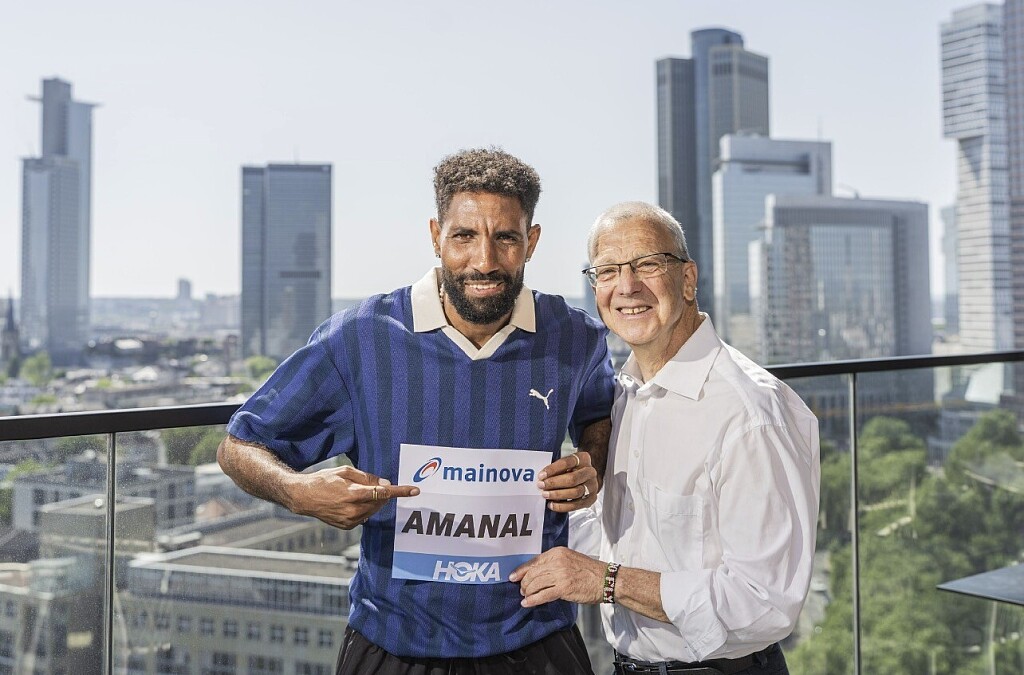
German Record Holder Amanal Petros Targets Frankfurt and Eyes European Record
Amanal Petros will headline the Mainova Frankfurt Marathon on October 25 with ambitious goals in mind, including another German record and possibly even the European record.
Fresh off his dramatic silver medal performance at last year’s World Championships in Tokyo — where he narrowly missed the gold medal by the slimmest of margins — Petros confirmed at a Frankfurt press conference that he will compete in this year’s race. Earlier, fellow German stars Samuel Fitwi and Richard Ringer, the 2022 European marathon champion, also announced they will race in Frankfurt.
The Mainova Frankfurt Marathon, a World Athletics Elite Label Road Race, is already experiencing strong demand. Organizers are planning to raise the event capacity to 20,000 runners.
Petros, Fitwi, and Ringer are currently the three fastest German marathoners in history, making this a rare and historic matchup. Since German reunification in 1990, the only previous occasion where the top three German marathoners competed in the same race was at the 2024 Olympic Games in Paris.
Since Paris, all three have elevated their performances even further. Petros owns the German record at 2:04:03. Fitwi clocked 2:04:45 in Hamburg earlier this year, while Ringer ran 2:04:47 in Boston — though that mark is not eligible for record purposes due to the course layout — leaving his official best at 2:05:46.
“We are delighted and proud that an exceptional athlete like Amanal Petros will run the Mainova Frankfurt Marathon,” said Race Director Jo Schindler. “The fact that the three strongest German marathon runners are competing together and against each other here is an absolute dream scenario. It is a historic moment in the history of the event.”
Now 31, Petros has become one of Germany’s most accomplished distance runners. Born in Eritrea before fleeing to Germany as a teenager, he has rewritten the national marathon record four times — in 2020, 2021, 2023, and 2025 — more than any other German marathoner in history. He also became the first German athlete to simultaneously hold the national records for 10K, half marathon, and marathon.
Frankfurt will mark Petros’s first marathon on German soil since capturing world championship silver. Before that, he, Fitwi, and Ringer are all expected to compete at the European Championships marathon in Birmingham this August.
“Frankfurt fits very well into my schedule this year,” said Petros. “The course at the European Championships will be difficult, so this will not be a fast race. The Mainova Frankfurt Marathon then offers me the chance to run a very good time.”
Petros added that the three German stars are likely to work together during the race rather than focus on defeating one another.
“Richard, Samuel and I will certainly support each other during the race. It is not primarily about beating each other — we get on far too well for that. Together we want to produce something special in Frankfurt,” he said.
And that “something special” could be historic.
“If we have good weather conditions a German record would be great. But if everything really comes together, I would like to go for the European record.”
That mark currently belongs to Bashir Abdi at 2:03:36 — just 27 seconds faster than Petros’s national record.
Login to leave a comment

Mainova Frankfurt Marathon
Frankfurt is an unexpectedly traditional and charming city, with half-timbered buildings huddled in its quaint medieval Altstadt (old city), cosy apple wine taverns serving hearty regional food, village-like neighbourhoods filled with outdoor cafes, boutiques and street art, and beautiful parks, gardens and riverside paths. The city's cache of museums is second in Germany only to Berlin’s, and its nightlife...
more...
Wanza Shines Bright as Kenyan Women Dominate 5000m at Kip Keino Classic
Diana Wanza announced herself in emphatic fashion at the 2026 Kip Keino Classic, producing a beautifully controlled performance to claim victory in the women’s 5000m and underline her growing status in Kenyan distance running.
On a lively afternoon in Nairobi, Wanza judged her race to perfection. Calm through the early stages and decisive when it mattered most, she surged clear to cross the line in a personal best of 15:28.91, rewarding the home crowd with one of the standout distance displays of the meeting.
Her triumph led a commanding Kenyan sweep of the podium, with Mercy Chepkemoi finishing second in 15:49.85, while Dorcus Chepkwemoi secured third place in 15:55.20 after a strong closing effort.
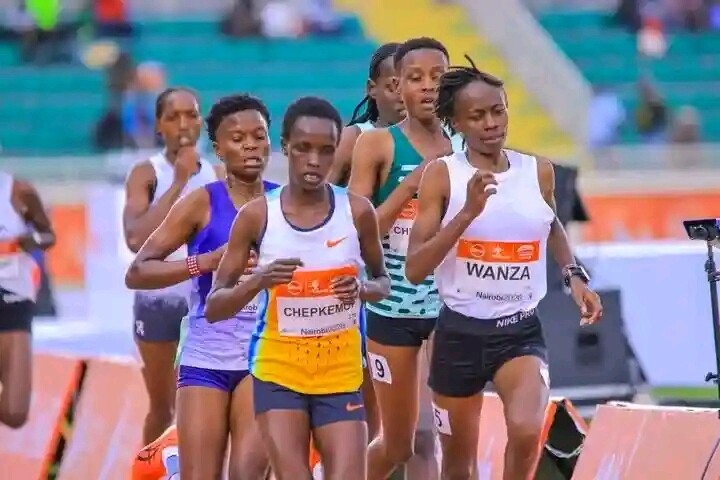
The depth of local talent was equally impressive, as Joyline Chepkemoi narrowly missed the podium in fourth with 15:55.40, followed by Emmaculate Jepkosgei in fifth at 16:01.75. Joan Chepkirui placed sixth in 16:07.26, while Betty Chepngeno celebrated a personal best of 16:11.12 in seventh. Alice Chemtai completed the top eight in 16:21.23.
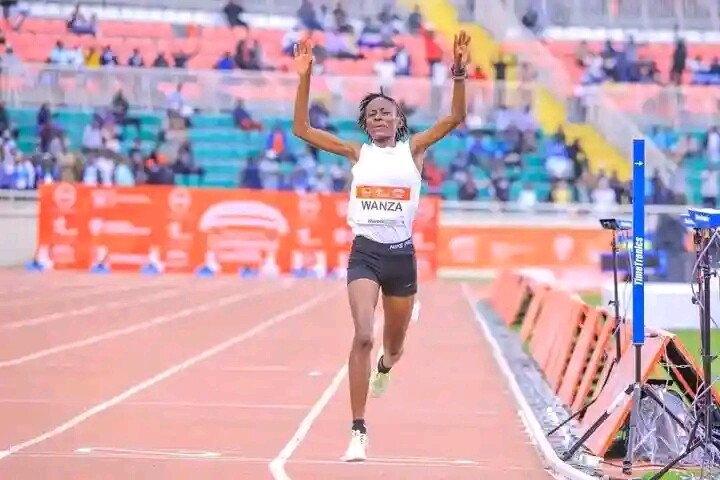
Wanza’s rise also carries a story of patient development and disciplined preparation. She is a former alumna of the Kenyan Athletics Training Academy, where she sharpened her talent while balancing life as a student at Kenyatta University back in 2021 and 2022. During that period, she combined academic responsibilities with the demanding routine required to grow as a competitive athlete.
Her journey from academy athlete to Kip Keino Classic champion reflects the value of structured mentorship and perseverance. The foundations laid during her university years are now beginning to bear fruit on the national stage, as she transforms promise into elite performance.
Wanza’s victory was not only a personal milestone but also a reminder of Kenya’s enduring strength in women’s distance running. With world champion Beatrice Chebet expected to return to competition soon, the prospect of Wanza and Chebet racing together offers an exciting glimpse into what could become a formidable partnership for Kenya on the global stage.
If this performance was any indication, Diana Wanza is no longer simply a promising name—she is rapidly becoming a serious force.
by Erick Cheruiyot for My Best Runs.
Login to leave a comment
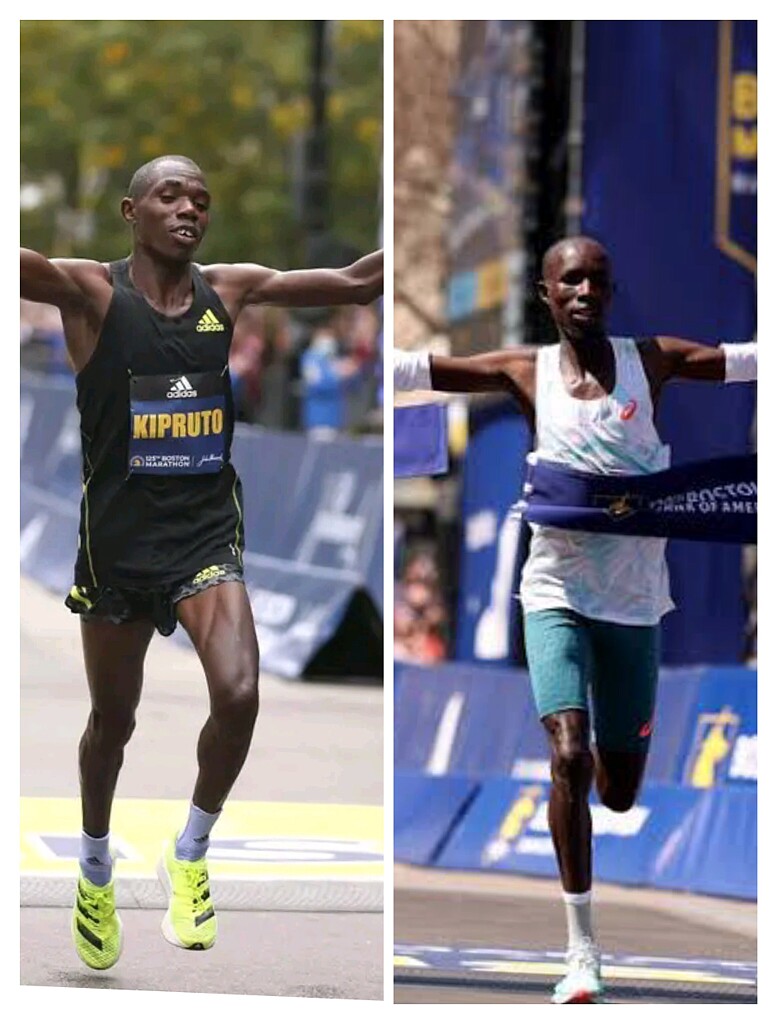
Boston Collision Course: John Korir and Benson Kipruto Ready to Ignite a Marathon Classic
The streets of Boston are bracing for a contest worthy of marathon history as two of Kenya’s finest distance stars prepare to clash in one of the most anticipated races of the season. Defending champion John Korir will return to the iconic course with unfinished ambition, but standing in his path is a man who knows exactly how to win here—former champion Benson Kipruto.
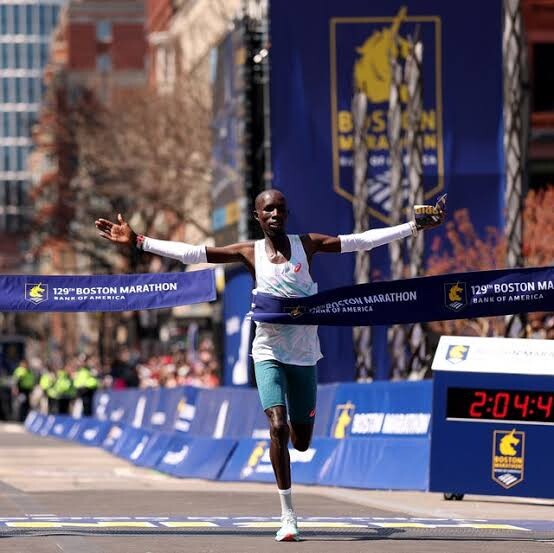
On paper, the matchup could hardly be closer. Their personal bests are separated by only eight seconds, a razor-thin margin at the highest level of marathon racing. Korir owns a lifetime best of 2:02:24, while Kipruto has gone even faster with 2:02:16. In a race measured over 42.195 kilometers, such a difference is almost invisible.
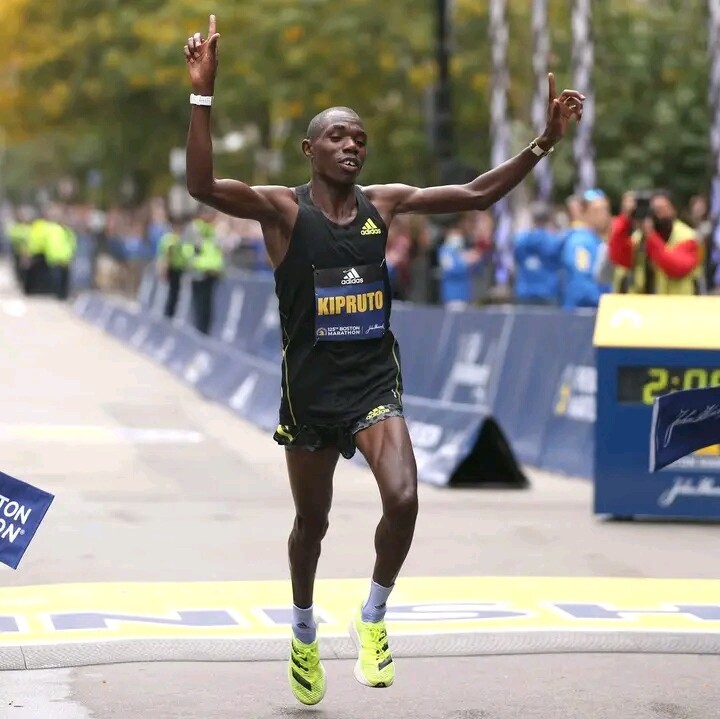
Yet statistics only tell part of the story.
Korir arrives in Boston carrying the momentum of a remarkable run of form. His recent victories in Valencia 2025, Boston 2025, and Chicago 2024 have elevated him into the sport’s elite bracket. Powerful, composed, and tactically sharp, he has become one of the most dangerous men in championship-style racing. Returning as defending champion adds another layer of pressure—but also confidence.
Kipruto, however, is no stranger to the grandest stages. His résumé speaks with authority: triumphs in New York 2025, Tokyo 2024, Chicago 2022, and, most importantly for this occasion, Boston 2021. That previous success on the demanding Boston course could prove invaluable. He understands its rhythm, its unpredictability, and the moment when patience must give way to attack.
This is more than a race between two fast men. It is a collision of momentum versus experience, title defense versus redemption, present dominance versus proven mastery.
Boston has never been a course that rewards numbers alone. Its rolling terrain, shifting weather, and legendary late-race challenges often crown the athlete with the sharpest instincts rather than the quickest personal best. Strength, courage, and timing will matter just as much as speed.
When the leaders reach the decisive miles, reputations will mean nothing. One athlete will fight to defend his throne. The other will chase a second crown. And somewhere between the opening stride and the finish line on Boylston Street, a new chapter of Boston Marathon drama will be written.
by Erick Cheruiyot for My Best Runs.
Login to leave a comment

Boston Marathon
Among the nation’s oldest athletic clubs, the B.A.A. was established in 1887, and, in 1896, more than half of the U.S. Olympic Team at the first modern games was composed of B.A.A. club members. The Olympic Games provided the inspiration for the first Boston Marathon, which culminated the B.A.A. Games on April 19, 1897. John J. McDermott emerged from a...
more...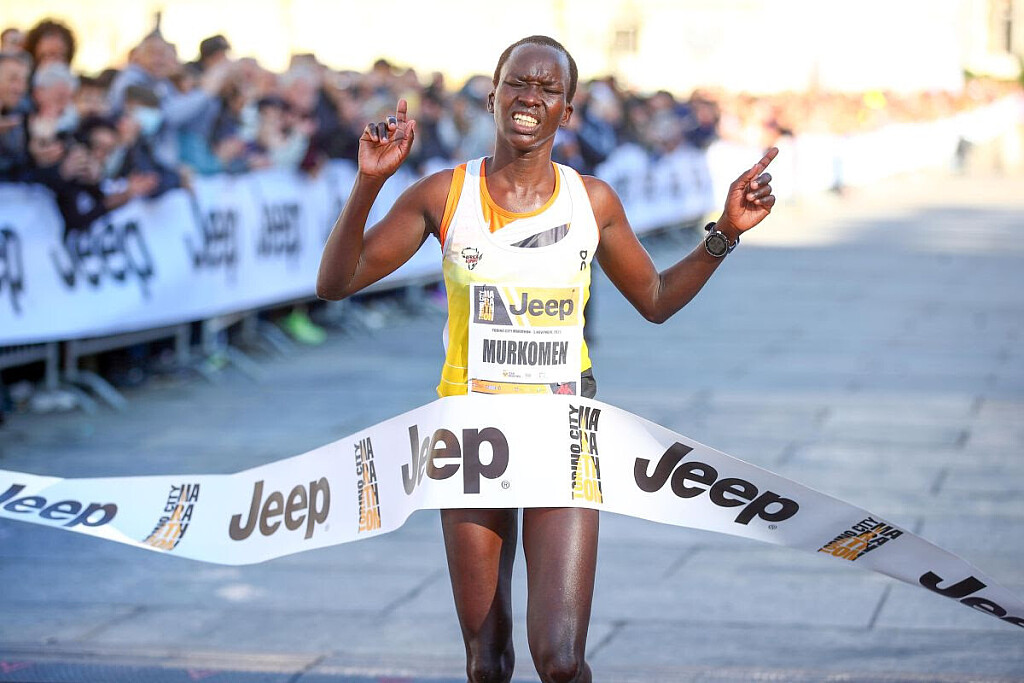
Enschede Set for a Marathon Masterclass as Elite Fields Target History
The historic streets of Enschede are once again preparing for a spectacle of endurance, speed, and legacy as the 2026 Enschede Marathon returns this Sunday, April 12. Revered as the oldest marathon in the Netherlands, the race blends tradition with world-class competition, and this year’s elite line-up promises nothing short of electrifying action.
From the first stride, the men’s race is expected to ignite at a relentless tempo. Kenya headlines the field with remarkable depth, spearheaded by Gevin Kerich, whose personal best of 2:06:52 places him among the fastest entrants. Close behind are fellow Kenyans Bygeon Kiprono (2:07:22) and Kiprop Kimutai (2:08:03), forming a formidable trio capable of dictating the pace from the outset.
Yet, the challenge will not go unanswered. Ethiopia’s Abebe Tilahun enters the contest with a strong 2:07:50 credential, determined to disrupt Kenya’s anticipated dominance and inject tactical intrigue into the race.
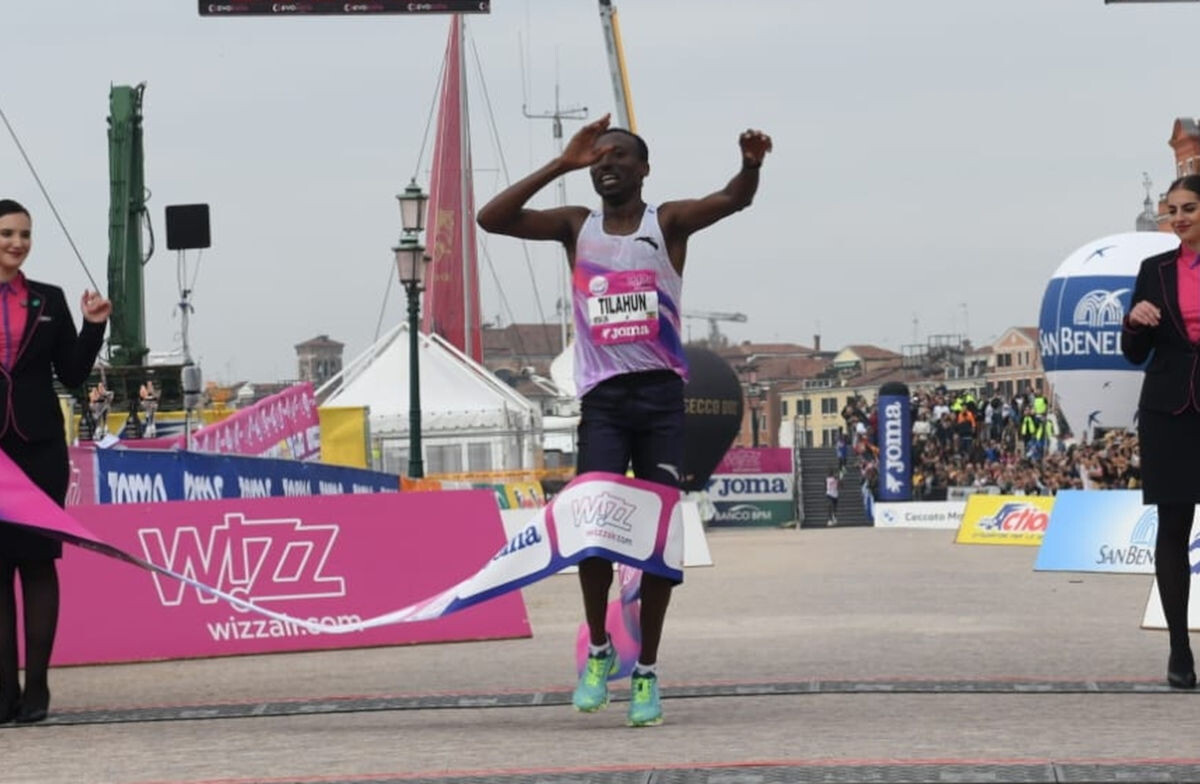
Hovering over the men’s field is the towering benchmark of 2:04:30, the course record set in 2021 by marathon icon Eliud Kipchoge. While that mark remains daunting, the depth and quality assembled this year suggest a fearless pursuit of fast times.
The women’s race, meanwhile, shapes up as a finely balanced duel defined by precision and resilience. Kenya’s Dorine Murkomen leads the entries with a personal best of 2:27:09, but she is closely shadowed by Ethiopia’s Tsehay Gebre at 2:27:22—setting the stage for a compelling head-to-head battle.
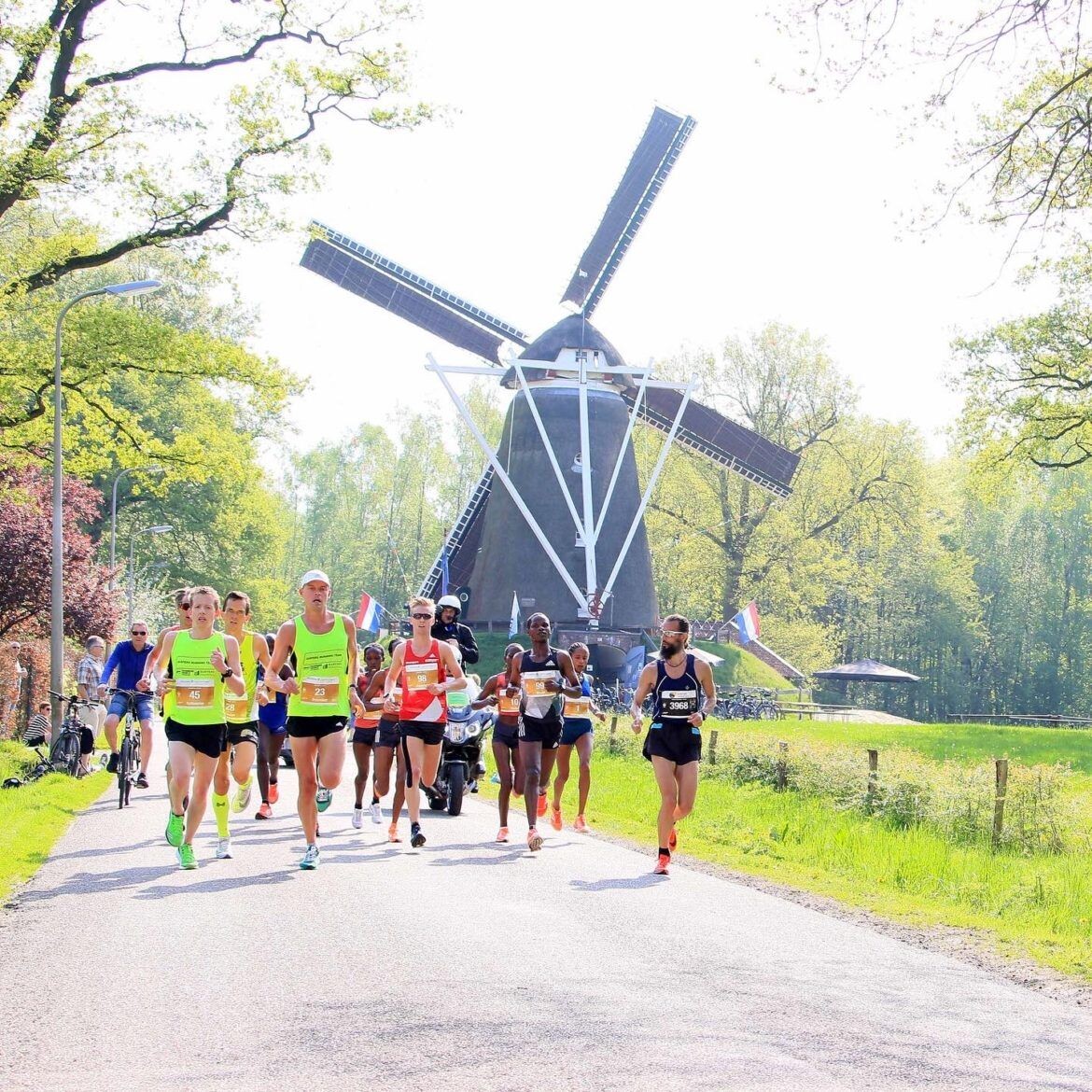
Adding further depth are Selam Fente (2:28:22) and Hilda Cheboi (2:28:31), both of whom possess the strength and racing intelligence to challenge for podium positions if the pace intensifies.
Standing as the ultimate target is the women’s course record of 2:21:10, set in 2022 by Maurine Chepkemoi—a mark that demands not only speed, but near-perfect execution.
With the race set to begin at 10:00 AM local time in Enschede, anticipation is building for a morning that could deliver both tactical drama and fast times. Whether the athletes can edge closer to the historic standards set by Kipchoge and Chepkemoi remains to be seen—but one thing is certain: Enschede is ready to witness another chapter in marathon excellence unfold.
by Erick Cheruiyot for My Best Runs.
Login to leave a comment

Enschede Marathon
Experience the oldest marathon in Western Europe! We write about August 1946. The European Athletics Championships were held in Olso and the I.A.A.F. conference had taken place. During that conference, an agreement was made to hold an athletics competition between the Netherlands and Czechoslovakia in Enschede in July 1947. Saturday July 12, 1947 was the big day: 51 participants took...
more...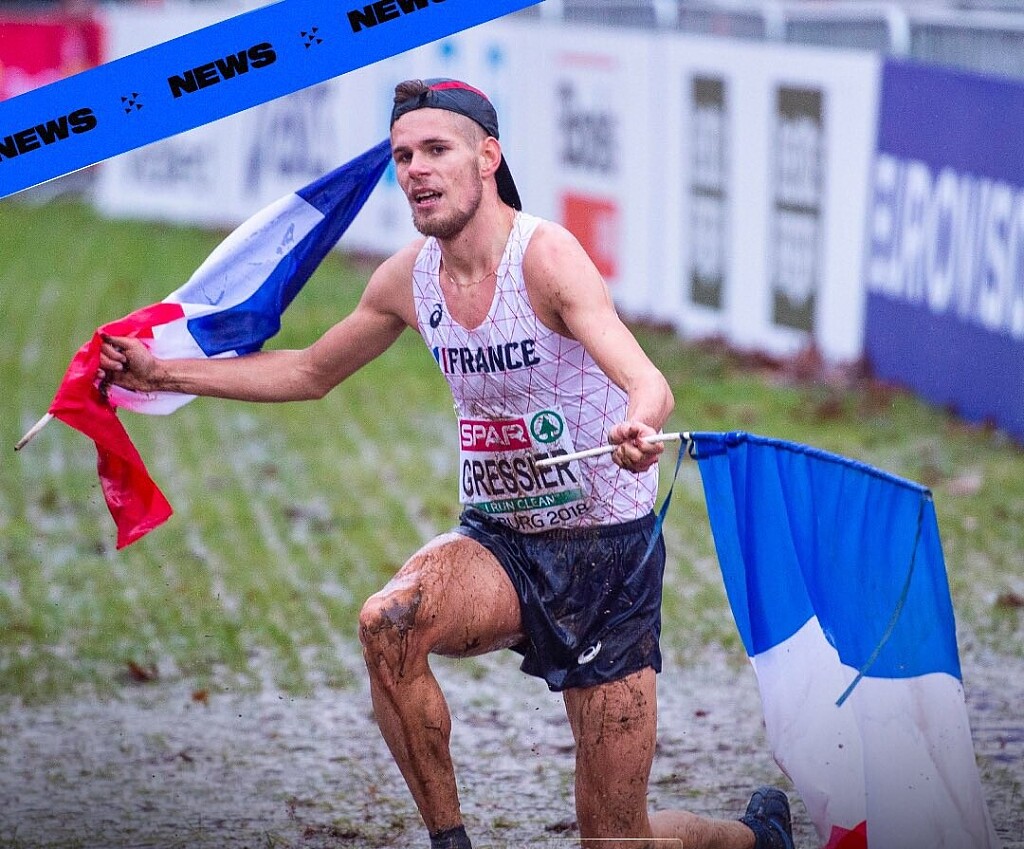
Lille Awaits a 5km Showdown as Speed Meets Strategy at the Urban Trail
All eyes now turn to Lille, where the Urban Trail Lille 5km is set to deliver a compelling blend of speed, tactics, and international class. Known for its fast yet technical course, the race has quickly grown into a magnet for elite distance runners, and this year’s edition promises nothing less than a thrilling contest.
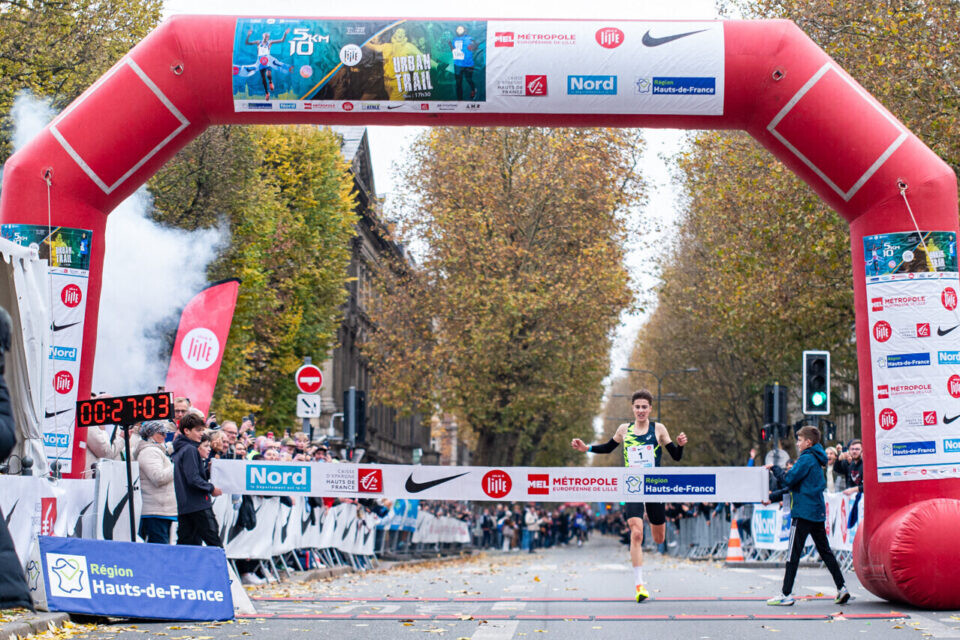
Leading the charge on home soil is France’s standout duo, Jimmy Gressier and Yann Schrub—two athletes who have redefined European distance running in recent seasons. Both bring impressive credentials, including European records across the 5km and 10km distances, and their presence alone guarantees a high-caliber race. For Gressier in particular, Lille holds special significance, having already produced some of his finest performances.
Hovering over the event is the benchmark of 12:49—the world best set by Ethiopia’s Berihu Aregawi in 2021. While records are never a certainty, especially on an urban trail course that demands more than just raw speed, the mark provides a powerful reference point. If the pace is right and conditions align, the possibility of something special cannot be ruled out.
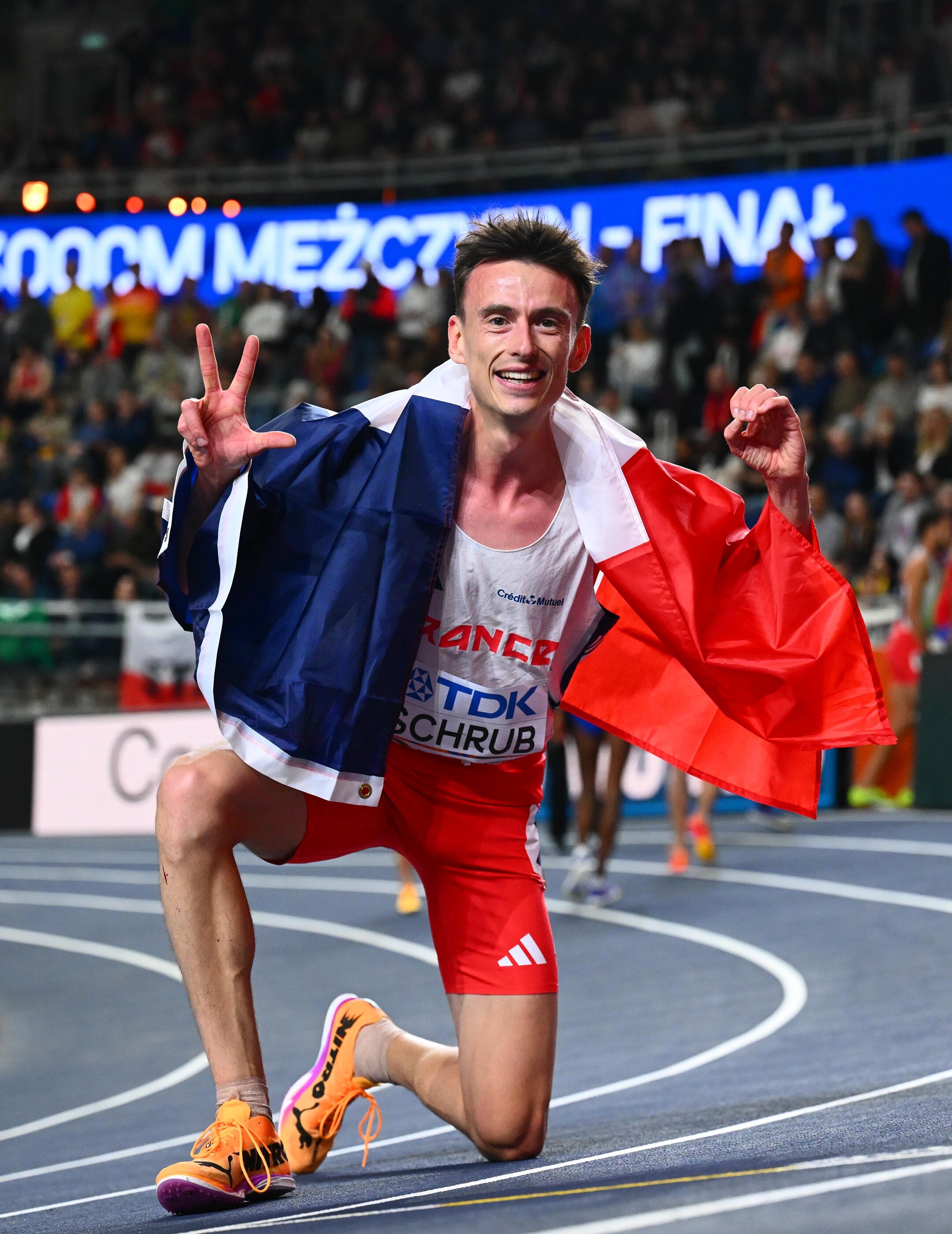
However, this is far from a two-man race. The field is stacked with accomplished international contenders, each capable of influencing the tempo and outcome. In a race where positioning, pacing, and timing are just as critical as endurance, even the smallest tactical decision could prove decisive.
As Lille prepares to host this electrifying contest, anticipation continues to build. With national pride, personal ambition, and global standards all converging on the same start line, the Urban Trail Lille 5km is shaping up to be more than just a race—it’s a test of precision, courage, and elite racing instinct.
by Erick Cheruiyot for My Best Runs.
Login to leave a comment
Breaking Barriers Across Three Frontiers: The Rare Triple of Middle- and Long-Distance Greatness
In the demanding world of distance running, versatility at the highest level is almost mythical. Speed specialists dominate the shorter races, while endurance kings reign supreme over longer distances. Yet, a select group of extraordinary athletes have managed to blur those boundaries—delivering world-class performances across three iconic events: the 1500m, 3000m, and 5000m.
To run under 3:30 in the 1500m, under 7:30 in the 3000m, and under 13:00 in the 5000m is not just a statistical milestone—it is a testament to a rare fusion of speed, stamina, tactical intelligence, and longevity. Across decades of elite competition, only eight men in history have achieved this remarkable “triple crown” of distance running.
The story begins with Saïd Aouita, the Moroccan trailblazer who set the standard in 1989. Aouita’s revolutionary range redefined what was possible, proving that an athlete could dominate from the metric mile to the longer track events with equal authority.
Years later, Kenya’s Daniel Komen elevated the benchmark in 1997, combining raw power and relentless pace to cement his place among the sport’s most feared competitors. His performances remain etched in athletics history as a symbol of controlled aggression and precision.
Algeria’s Ali Saïdi-Sief followed in 2001, showcasing a seamless blend of endurance and finishing speed, while another Moroccan icon, Hicham El Guerrouj, added his name in 2003. El Guerrouj, widely regarded as one of the greatest middle-distance runners of all time, embodied elegance and dominance, conquering distances with unmatched fluidity.
Kenya continued its proud tradition through Augustine Choge in 2009, a quiet yet consistent force whose versatility often flew under the radar, and Bernard Lagat in 2010. Lagat’s inclusion was particularly remarkable, highlighting not only his range but also his longevity, as he remained competitive across generations.
The modern era has witnessed a resurgence of this rare versatility. Norway’s Jakob Ingebrigtsen joined the elite list in 2021, redefining contemporary distance running with his fearless front-running style and relentless pursuit of fast times. That same year, Spain’s Mohamed Katir matched the feat, further proving that the boundaries between speed and endurance continue to be pushed.
What unites these eight athletes is not just their times, but their ability to transcend specialization in an era that increasingly demands it. Each performance reflects years of meticulous training, tactical brilliance, and an unwavering commitment to excellence.
In a sport often defined by margins of seconds, this sub-3:30, sub-7:30, sub-13:00 combination stands as one of the purest indicators of all-around greatness. It is a benchmark that few can approach—and even fewer can conquer.
As athletics continues to evolve, the question remains: who will be next to join this exclusive club? For now, these eight names stand alone, guardians of one of the sport’s most demanding and prestigious achievements.
by Erick Cheruiyot for My Best Runs.
Login to leave a comment
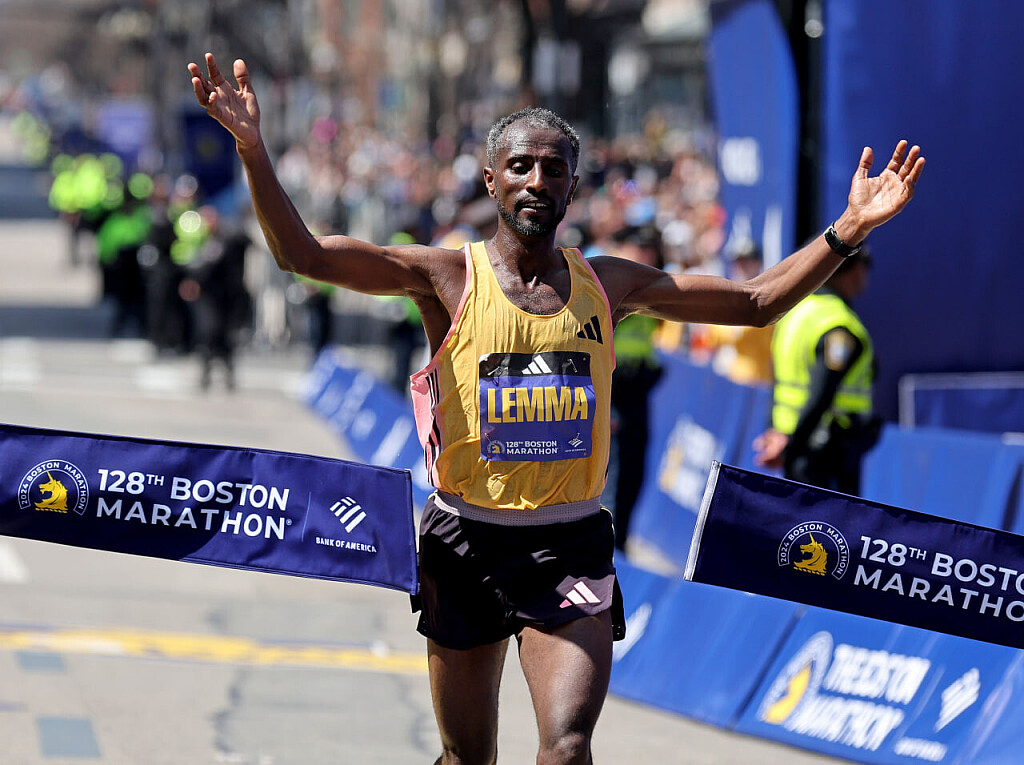
Elite Shake-Up in Boston—But the Firepower Remains Intact
With just three weeks remaining until the iconic Boston Marathon 2026 takes center stage on April 20, the race narrative has already been dramatically rewritten. What once appeared to be a deep and stable elite lineup is now shifting rapidly, as a wave of high-profile withdrawals reshapes both the men’s and women’s fields.
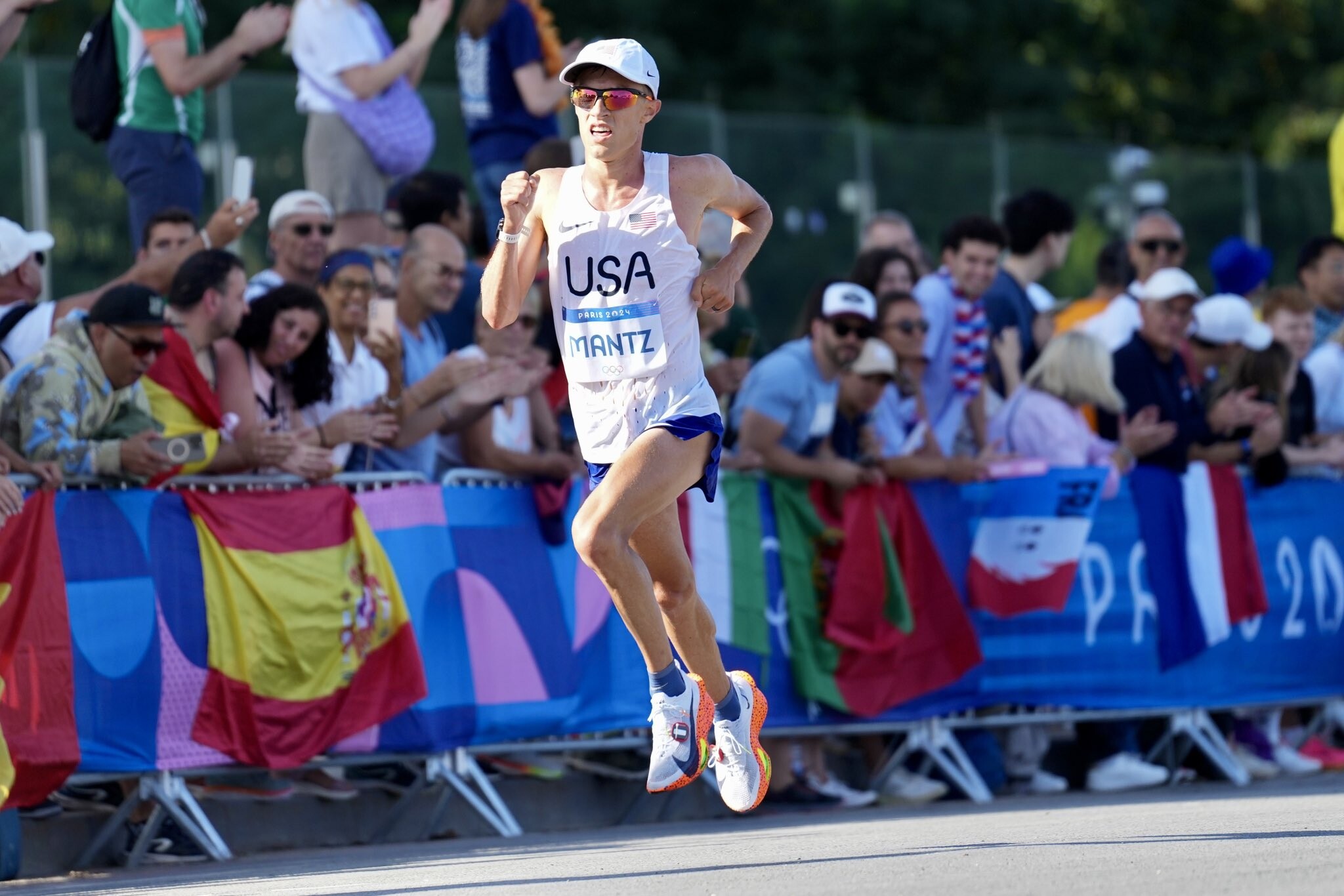
The most notable development is the withdrawal of American record holder Conner Mantz. Once considered a leading home contender, Mantz confirmed he will not compete after struggling to regain full fitness following a sacral stress fracture and other setbacks. His decision reflects a long-term focus—choosing patience over risking a return before peak condition.
The shake-up does not end there. Kenyan legend Vivian Cheruiyot has also officially pulled out, dealing a significant blow to the women’s race. She is joined on the withdrawal list by American marathon star Keira D'Amato, Tanzania’s Magdalena Shauri, and U.S. distance runner Biya Simbassa.
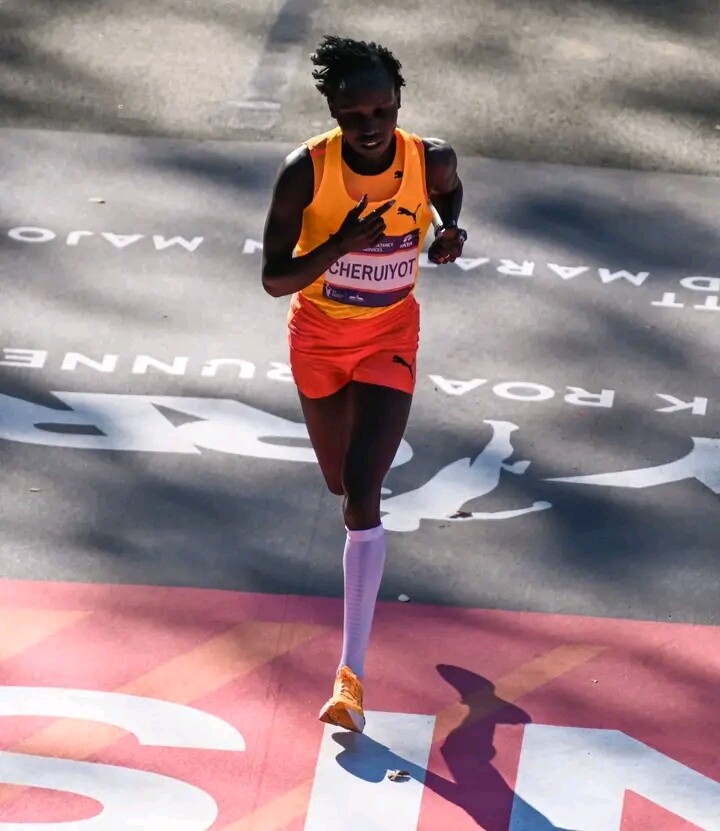
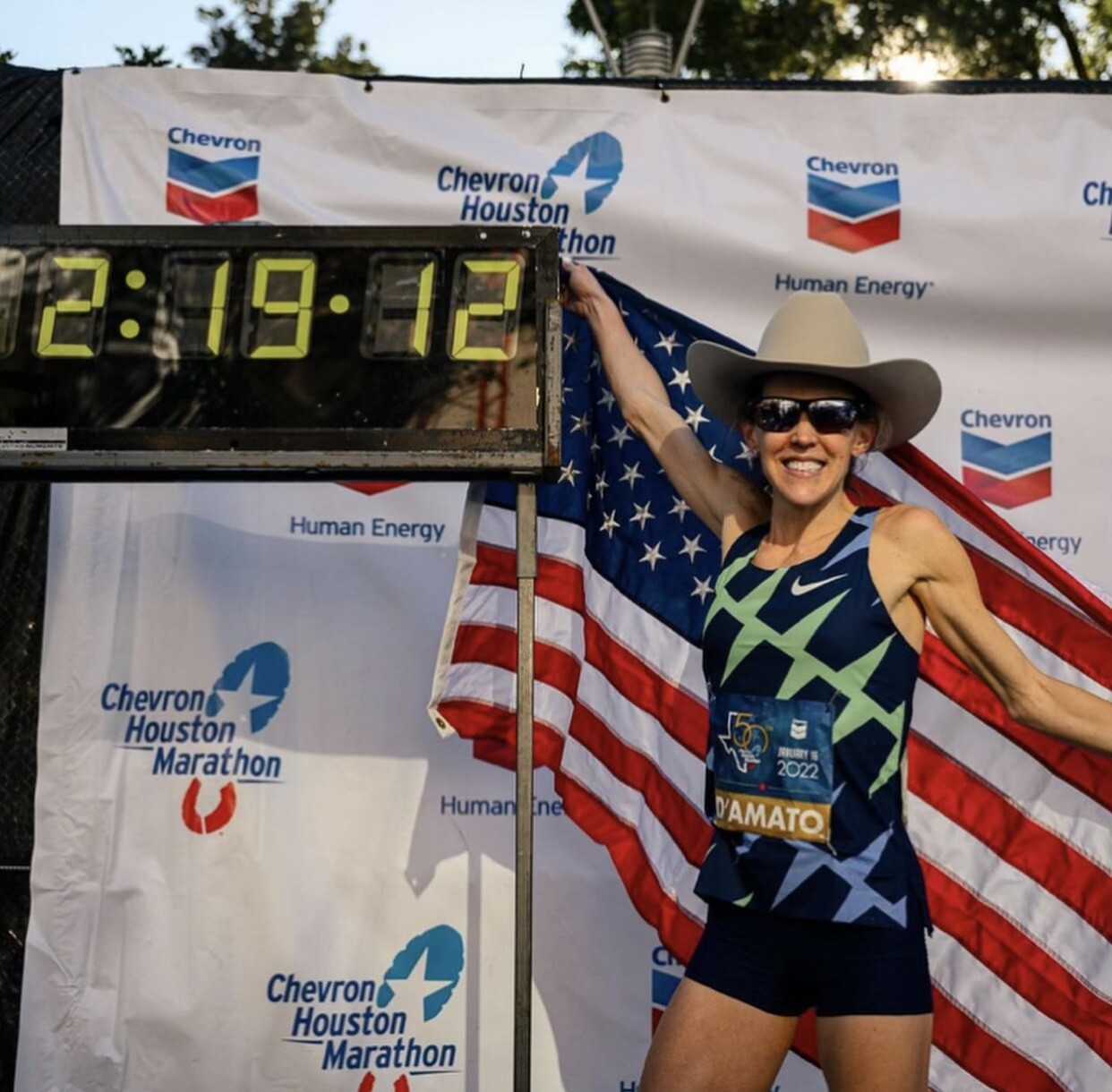
This cluster of late exits has thinned the field’s depth and removed several experienced contenders, leaving both races more open and tactically unpredictable.
Yet amid the withdrawals, a new force has emerged. Ethiopia’s Milkesa Mengesha has been added late to the men’s field, bringing with him a formidable personal best of 2:03:17. His inclusion injects fresh intensity into the race and positions him as a serious contender capable of disrupting the established order.
With Mantz no longer in the picture, the men’s race now leans heavily on proven champions. Kenya’s Benson Kipruto—the 2021 Boston winner and reigning New York City Marathon champion—returns with confidence and experience. Standing opposite him is Ethiopia’s Sisay Lemma, the defending champion determined to hold onto his title on Boston’s demanding course.
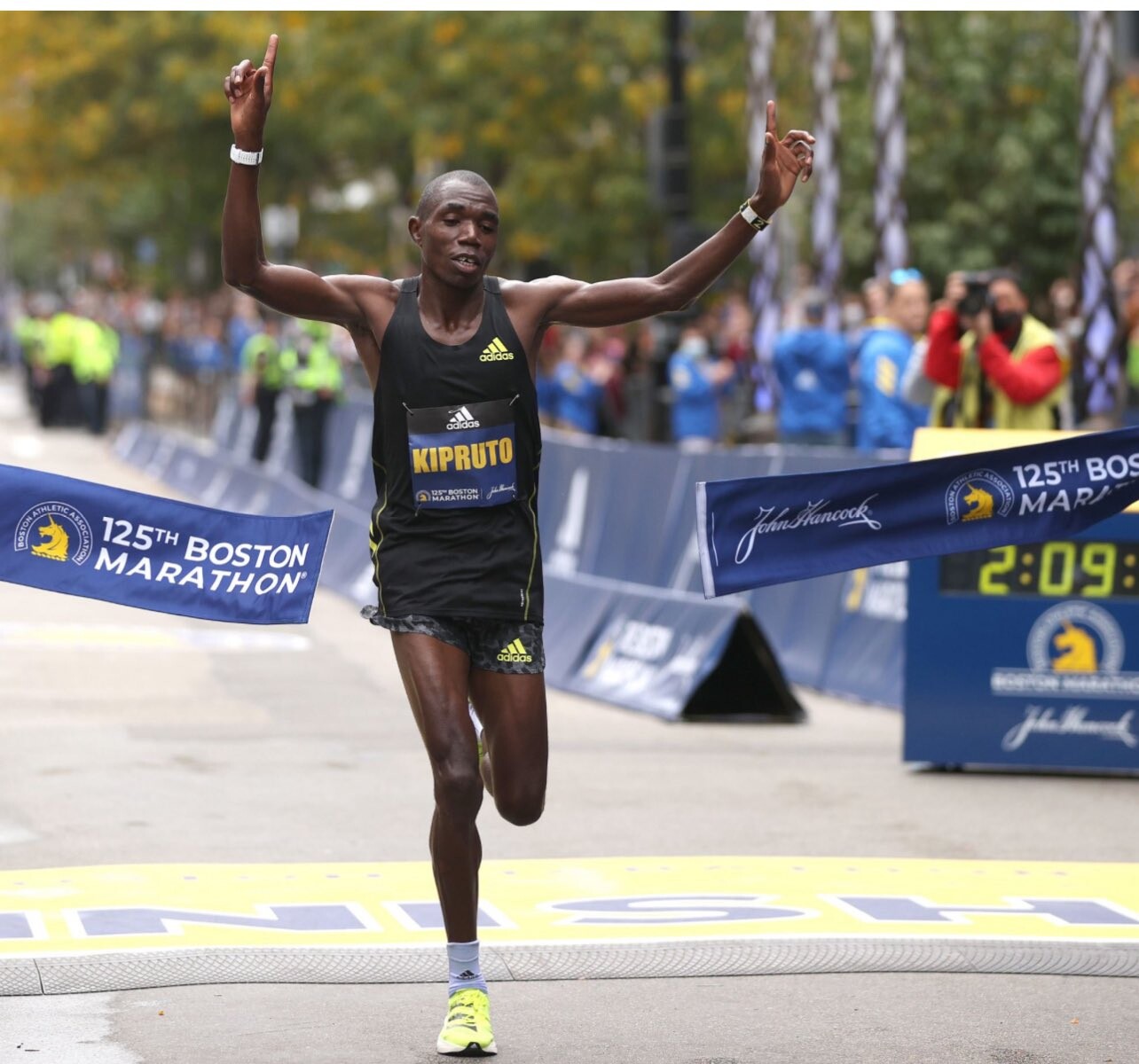
What once seemed like a straightforward clash of elite names has evolved into something far more compelling. The withdrawals have not diminished the race—they have transformed it. With gaps to fill and opportunities emerging, the 2026 edition now promises a battle defined by resilience, tactics, and the unexpected.
As Boston prepares for another unforgettable Patriots’ Day, anticipation continues to build. The script has changed—but the stakes may be higher than ever.
by Erick Cheruiyot for My Best Runs.
Login to leave a comment
Boston Marathon
Among the nation’s oldest athletic clubs, the B.A.A. was established in 1887, and, in 1896, more than half of the U.S. Olympic Team at the first modern games was composed of B.A.A. club members. The Olympic Games provided the inspiration for the first Boston Marathon, which culminated the B.A.A. Games on April 19, 1897. John J. McDermott emerged from a...
more...
Chasing the Holy Grail: Jimmy Gressier Targets 5km World Record in Lille
French distance star Jimmy Gressier is preparing to ignite the roads of Lille once again—this time with history firmly in his sights. The reigning world 10,000m champion will line up at the Urban Trail de Lille on April 4, aiming not just for victory, but for his first-ever world record.
Lille has already proven to be fertile ground for Gressier’s brilliance. It was here, just last year, that he stormed to a European 5km record of 12:57, announcing himself as one of the most formidable road runners of his generation. Now, he returns to the same streets with a far more ambitious target: the world record of 12:49, set by Ethiopia’s Berihu Aregawi in Barcelona in 2021.
This attempt marks Gressier’s first competitive outing since the World Cross Country Championships in Tallahassee on January 10. In the months since, he has retreated to altitude in South Africa, immersing himself in disciplined, high-volume training designed to sharpen both endurance and speed. The result, by his own admission, is a body primed for something extraordinary.
Gressier’s approach reflects a level of focus that borders on obsession—a necessary ingredient when chasing times that sit at the very edge of human performance. His routine is stripped of distraction and defined by precision: meticulous nutrition, early nights, relentless hydration, and an unwavering mental commitment to the craft.
“I want to break the world record for the road 5km,” Gressier revealed. “I don’t know if I’ll succeed, but I know I’ll do everything I can to reach the very top. Nothing else can distract me. That’s my mindset. I’m chasing the holy grail.”
The challenge ahead is immense. Aregawi’s 12:49 stands as one of the most demanding benchmarks in road running, requiring not only supreme fitness but near-perfect race execution. Yet Gressier’s trajectory suggests he is ready to test those limits. His blend of aggressive racing, aerodynamic efficiency, and fearless ambition makes him a genuine threat to the record.
As the Urban Trail de Lille approaches, anticipation continues to build. For Gressier, this is more than a race—it is a statement of intent, a bold declaration that he belongs among the sport’s record-breakers. Whether or not the clock yields, one thing is certain: he will leave everything on the road in pursuit of greatness.
by Erick Cheruiyot for My Best Runs.
Login to leave a comment

Lille Urban Trail 10 KM
The Lille Urban Trail is an annual world-class race taking place in Lille. Professional runners, friends wishing to stretch their legs: the Lille Urban Trail welcomes people of all levels for nighttime events to discover the city's most beautiful monuments. Every year in November, the schedule of outings in Lille sees the arrival of one of the most anticipated races...
more...
Five-Year Ban Rocks Kenyan Athletics as Albert Korir Sanctioned in Major Doping Case
The integrity of global athletics has once again come under sharp focus following a decisive ruling by the Athletics Integrity Unit (AIU), which has handed Kenyan long-distance runner Albert Korir a five-year ban for anti-doping violations. The sanction, confirmed after multiple positive tests, underscores the sport’s uncompromising stance against the use of performance-enhancing substances.
According to the AIU’s official findings, Korir was found to have used CERA (Continuous Erythropoietin Receptor Activator), a prohibited substance designed to boost endurance by increasing red blood cell production. The violation falls under World Athletics Anti-Doping Rules 2.1 and 2.2, covering both the presence and use of a banned substance. Samples collected in Kenya in October 2025 repeatedly returned positive results, leaving little room for dispute.
The disciplinary outcome is significant. Korir will serve a five-year period of ineligibility, effective from January 8, 2026, through January 7, 2031. In addition, all of his competitive results from October 3, 2025, onward have been disqualified, resulting in the forfeiture of titles, medals, and any prize money earned during that period.
In its ruling, the AIU acknowledged that Korir admitted to the violations at an early stage of the process. This cooperation led to a reduction of the sanction from a potential six-year ban to five years. However, the body emphasized that the seriousness of the offense warranted a lengthy suspension, reinforcing its commitment to protecting clean competition.
The case also confirmed that Korir did not possess a Therapeutic Use Exemption (TUE), eliminating any possibility that the substance had been used for legitimate medical purposes. This further solidified the grounds for the sanction and highlighted the strict regulatory framework governing elite athletics.
This development arrives amid growing concern over repeated doping cases, particularly within endurance running. Each new violation not only damages individual reputations but also casts a shadow over the credibility of the sport as a whole. For Kenya, a nation synonymous with distance running excellence, such incidents present an ongoing challenge in maintaining trust and preserving its rich athletic legacy.
The AIU, operating as the independent body responsible for enforcing anti-doping measures under World Athletics, continues to intensify its efforts globally. Its message remains clear: fairness is non-negotiable, and any breach of the rules will be met with firm and transparent action.
Albert Korir had built a strong reputation on the global stage through consistent high-level performances, highlighted by his victory at the New York City Marathon in 2021, a title he retained despite later scrutiny. He also claimed wins at the Ottawa Marathon in both 2019 and 2025, underlining his competitiveness across major city races. Earlier, he finished runner-up in New York in 2019 and returned in 2023 to secure third place with a personal best of 2:06:57, demonstrating steady progression at the elite level. However, his initially recorded third-place finish at the 2025 New York City Marathon was later nullified following his disqualification, casting a shadow over an otherwise impressive career marked by podium finishes and international victories.
As the sport moves forward, cases like this serve as both a warning and a reminder—true greatness in athletics is built not only on performance, but on integrity.
by Erick Cheruiyot for My Best Runs.
Login to leave a comment
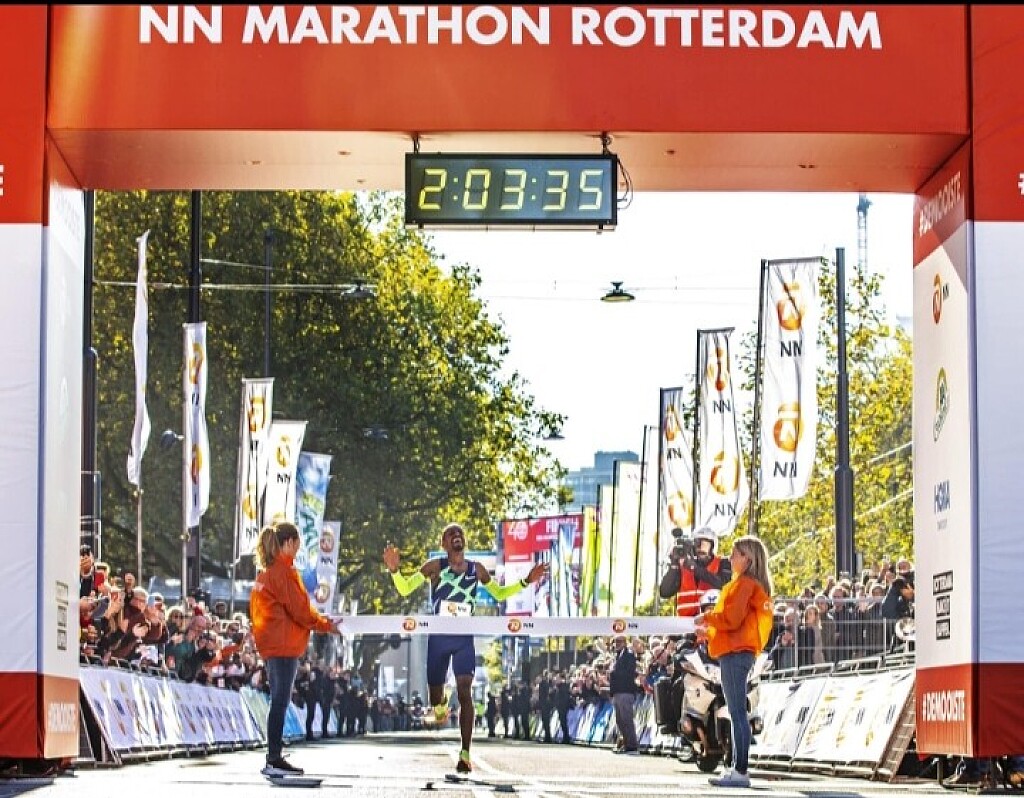
Abdi’s Relentless Pursuit: A Record Under Threat in Rotterdam
The streets of Rotterdam are once again set to stage a compelling narrative of ambition, resilience, and legacy as Bashir Abdi returns to the Rotterdam Marathon on April 12 with history firmly in his sights.
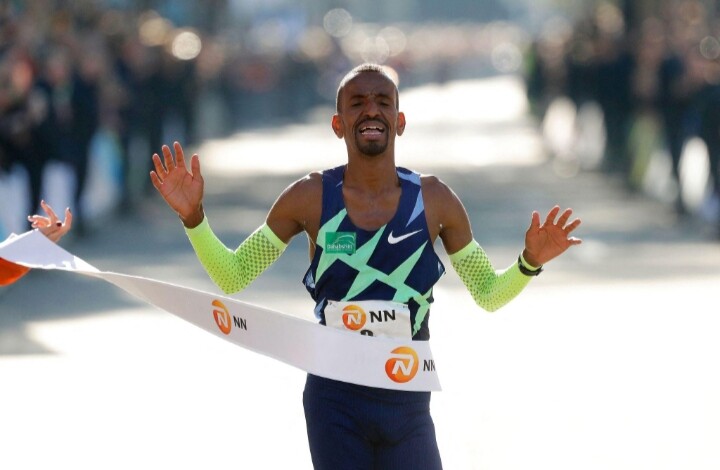
A two-time Olympic marathon medallist, Abdi is no stranger to the grandeur of this race. It was here, in 2021, that he etched his name into European athletics history by clocking a stunning 2:03:36 — a performance that still stands as the European record. Now, at 37, the Belgian star is not merely defending his legacy; he is chasing its evolution.
“I feel many athletes are getting close to that record,” Abdi admitted, acknowledging the rising tide of elite marathon running. “If I want to hold on to it for a few more years, I have to go faster. Whether it's for this edition or another time, I don't know. But my ambition is to break that European record.”
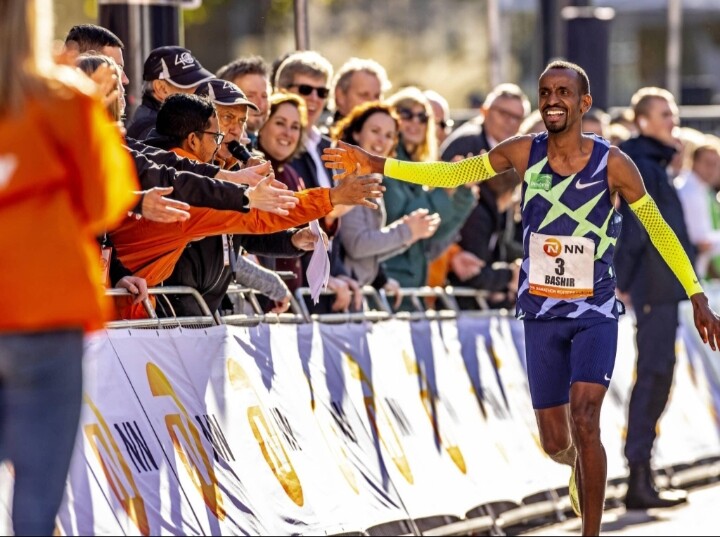
That statement alone sets the tone for what could be one of the most intriguing races of the season. In an era where marathon standards are relentlessly improving, records are no longer safe—they are targets.
Abdi’s journey back to Rotterdam, however, has not been without turbulence. The 2025 season proved to be a frustrating chapter, derailed by injury and marked by unfulfilled potential. For an athlete of his calibre, it was a rare setback—but perhaps also a necessary pause.
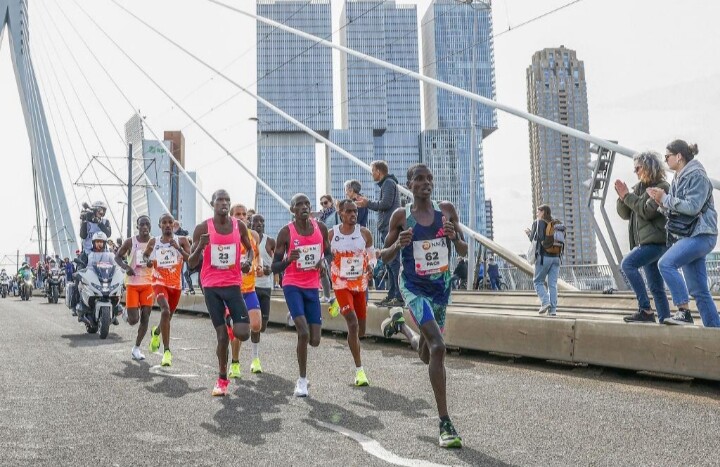
Now, the signs of resurgence are unmistakable.
Earlier this month, Abdi reignited belief with a commanding performance on home soil in Gent, where he clocked a national record of 59:28 over the half marathon distance. The run was more than just a statistic—it was a statement. A signal that the engine is once again firing, and that Rotterdam may yet witness another chapter of brilliance.
As the marathon approaches, anticipation continues to build. Will Abdi defy time and raise his own bar once more? Or will the chasing pack close in on the mark he so brilliantly set?
In Rotterdam, the clock will tell—but one thing is certain: Bashir Abdi is not finished writing his story.
by Erick Cheruiyot for My Best Runs.
Login to leave a comment

NN Rotterdam Marathon
The marathon has been the biggest one-day sporting event in the Netherlands for many years in a row with over 35000 athletes professionals inclusive. The world's top athletes will at the start on the bustling coolsingel, alongside thousands of other runners who will also triumph,each in their own way.The marathon weekend is a wonderful blend of top sport and festival. ...
more...
Emma Bates Says She Was Dropped by Sponsor During Pregnancy
American marathoner Emma Bates says she has been dropped by her longtime nutrition sponsor UCAN after revealing she is pregnant.
Bates, who owns a personal best of 2:23:18, had been with the Connecticut-based company for nearly four years. During that time, she delivered some of the strongest performances of her career, including a runner-up finish at the 2021 Chicago Marathon and multiple appearances as the top American woman at the Boston Marathon.
According to Bates, the sponsorship ended following news of her pregnancy—a situation that has once again raised questions about how female athletes are supported during one of the most important phases of their lives.
UCAN, however, tells a different story.
“We’re proud of the three-year partnership we had with Emma Bates and the many accomplishments we achieved together,” the company said in a statement. “The partnership decisions were made in September 2025 as part of regular business planning and prior to any knowledge of her pregnancy.
“We made an effort to continue working with Emma under a new agreement, but Emma ultimately chose not to move forward with that option. We’ve always supported—and will continue to support—athletes at all stages of life, including pregnancy and motherhood.”
The differing accounts leave open questions about what changed—and when.
In recent years, the issue of maternity protections in professional running has gained increased attention, with several high-profile athletes speaking out about contract terms, reduced pay, or lost sponsorship during pregnancy.
Bates, one of the most consistent American marathoners of her generation, now finds herself at the center of that ongoing conversation.
Her next chapter—both as an athlete and soon-to-be mother—will be closely followed across the sport.
by Boris Baron for My Best Runs
Login to leave a comment
NYC HALF MARATHON 2026 – ELITE MEN READY TO LIGHT UP CENTRAL PARK
The first rays of dawn slice through the towering skyline of New York City, and the streets surrounding Central Park, the iconic venue of the NYC Half Marathon 2026, hum with anticipation. On Sunday, March 15, 2026, fans and runners alike converge on the city’s most famous park, flags waving and cameras clicking, hearts racing in sync with the city’s heartbeat. Volunteers adjust barricades, photographers focus their lenses, and the world’s fastest men stretch with a mix of calm and tension—the calm before the storm. From the leafy loops of Central Park to the bridges spanning the East River, the city seems to hold its breath, ready to witness history.

The air is thick with excitement. Coaches give last-minute instructions; elite athletes exchange polite nods and steely glances, each calculating pace, strategy, and the perfect moment to strike. Sirens echo faintly in the distance, signaling the approaching race vehicles, while the smell of morning coffee mixes with the cool March air. Somewhere high above, the first light glints off glass towers, reflecting the golden promise of competition. In this city of dreams, ambitions, and grit, every step matters—and the men’s elite field of the NYC Half Marathon 2026 is about to prove it.
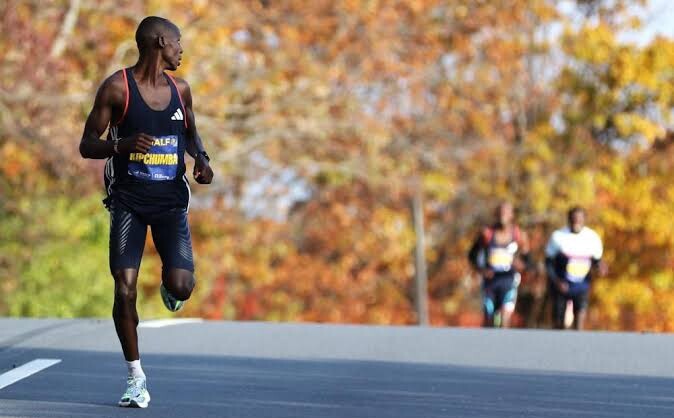
Race Schedule – Men’s Elite
Date & Venue: Sunday, March 15, 2026 – Central Park, New York City, USA
New York (EDT): 7:00 AM
Kenya (EAT): 2:00 PM (+7 hours from NYC)
Japan (JST): 8:00 PM (+13 hours from NYC)
Thailand (ICT): 6:00 PM (+11 hours from NYC)
Australia Sydney/Melbourne (AEDT): 10:00 PM (+15 hours from NYC)
USA Pacific (PDT): 4:00 AM (−3 hours from NYC)
Champions, Contenders, and Rising Stars
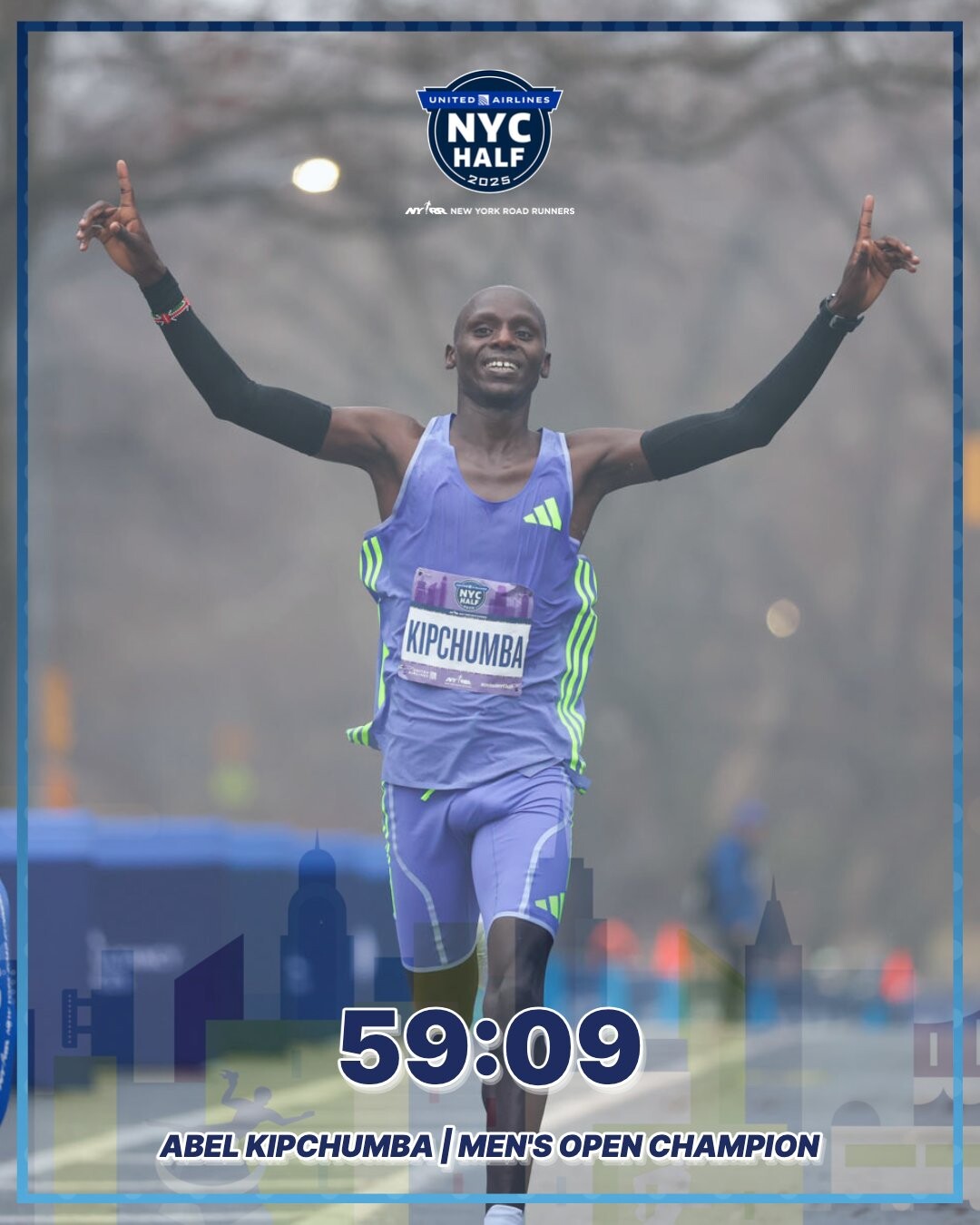
At the heart of this high-stakes drama is Abel Kipchumba of Kenya, last year’s champion, whose lightning-fast 58:07 PB from Valencia 2021 has runners and fans alike holding their breath. Kipchumba returns to defend his crown, but the field has grown stronger, faster, and hungrier than ever.
Challenging him will be Daniel Ebenyo of Kenya, bronze medalist at the 2026 World Cross Country Championships, Grant Fisher of the United States, two-time Olympic bronze medalist making his half marathon debut, and Rory Linkletter of Canada, Canada’s national record holder. Each brings a unique blend of speed, endurance, and tactical cunning that could turn any mile into a decisive moment.
Team USA brings an extraordinary depth of talent, including Galen Rupp, Ryan Ford, Alex Maier, Zouhair Talbi, and Joe Klecker, promising a race filled with high stakes, strategic surges, and perhaps a new record etched into the streets of Manhattan.
Men’s Elite Field – NYC Half Marathon 2026
Athlete
Country
PB / Notable Performance
1. Abel Kipchumba
Kenya
58:07 (Valencia 2021)
2. Daniel Ebenyo
Kenya
59:04 (Manama 2022)
3. Adriaan Wildschutt
South Africa
59:13 (Valencia 2025)
4. Patrick Kiprop
Kenya
59:14 (Houston 2026)
5. Mohammed El Youssfi
Morocco
59:21 (Houston 2026)
6. Alex Maier
United States
59:23 (Houston 2026)
7. Galen Rupp
United States
59:47 (Ostia 2018)
8. Ryan Ford
United States
59:48 (Houston 2026)
9. Sondre Nordstad Moen
Norway
59:48 (Valencia 2017)
10. Rory Linkletter
Canada
59:49 (Houston 2026)
11. Patrick Dever
United Kingdom
1:00:11 (Houston 2025)
12. Zouhair Talbi
United States
1:00:41 (NYC Half 2024)
13. Rui Aoki
Japan
1:00:45 (Ageo 2025)
14. Shunsuke Kuwata
Japan
1:00:48 (Ageo 2025)
15. Tsegay Tuemay Weldlibanos
Eritrea
1:00:50 (Houston 2018)
16. Alex Masai
Kenya
1:00:51 (Houston 2026)
17. Jack Rowe
United Kingdom
1:00:53 (Copenhagen 2025)
18. Joe Klecker
United States
1:01:06 (Houston 2025)
19. Peter Lynch
Ireland
1:01:15 (Houston 2025)
20. Camren Todd
United States
1:01:23 (Houston 2026)
21. Hendrik Pfeiffer
Germany
1:01:28 (Larne 2025)
22. Benjamin Preisner
Canada
1:02:25 (Houston 2025)
23. Jacob Thomson
United States
1:02:26 (Riga 2023)
24. Joel Reichow
United States
1:02:30 (Duluth 2023)
25. Max Turek
Canada
1:02:45 (Boston 2024)
26. Haftu Knight
United States
1:02:47 (Chicago 2025)
27. Matthew Leach
United Kingdom
1:02:57 (Houston 2020)
28. Nick Hauger
United States
1:03:06 (NYC Half 2025)
29. Kieran Tuntivate
Thailand
1:03:19 (South Shields 2025)
30. Turner Wiley
United States
1:04:04 (Hardeeville 2021)
31. Owen Ritz
United States
1:04:34 (RBC Brooklyn Half 2024)
32. Evan Sherman
United States
1:04:51 (Indianapolis 2025)
33. Charlie Lawrence
United States
1:05:07 (Houston 2022)
34. Grant Fisher
United States
Debut
35. Gulveer Singh
India
Debut
The starting gun cracks through the morning calm. The elite men surge forward, every stride a blend of power, precision, and daring. The NYC Half Marathon 2026 at Central Park unfolds like a living story—each mile a chapter, each sprint a dramatic twist. Legends may rise, records may fall, but one thing is certain: Manhattan will witness an unforgettable morning of speed, endurance, and sheer determination.
by Erick Cheruiyot for My Best Runs.
Login to leave a comment

United Airlines NYC Half-Marathon
The United Airlines NYC Half takes runners from around the city and the globe on a 13.1-mile tour of NYC. Led by a talent-packed roster of American and international elites, runners will stop traffic in the Big Apple this March! Runners will begin their journey on Prospect Park’s Center Drive before taking the race onto Brooklyn’s streets. For the third...
more...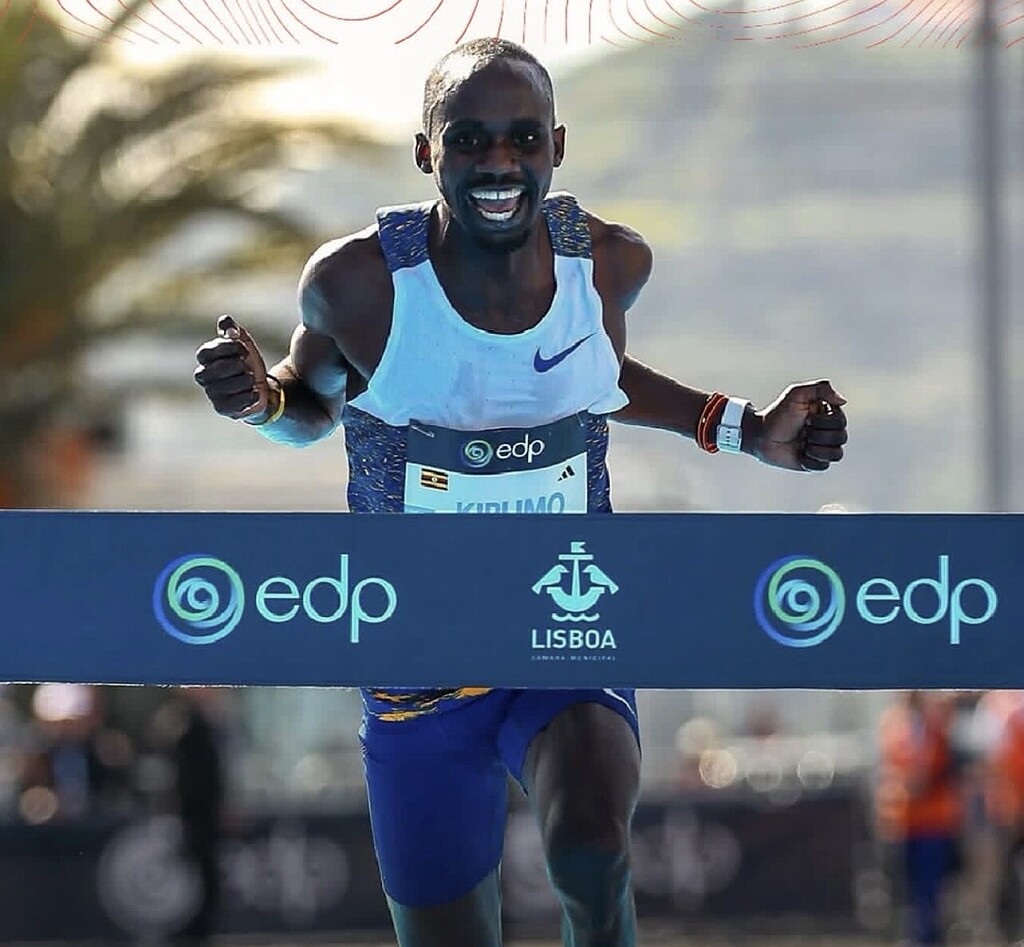
Jacob Kiplimo Rewrites History Again with Stunning Half Marathon World Record in Lisbon
The streets of Lisbon witnessed another unforgettable chapter in distance running as Uganda’s phenomenal star Jacob Kiplimo produced a breathtaking performance to set a new half marathon world record of 57:20 at the Lisbon Half Marathon in Portugal.
Running with remarkable control and relentless pace, Kiplimo turned the race into a historic moment for global road running. From the early kilometres he looked comfortable at record speed, gradually pulling away from the field and leaving little doubt that something extraordinary was unfolding on the fast Portuguese course.
As he surged down the finishing stretch, the clock confirmed what spectators had begun to realize—Kiplimo had rewritten history once again. His 57:20 not only secured victory but also smashed the official world record recognized by World Athletics, further cementing his place among the greatest half-marathon runners the sport has ever seen.
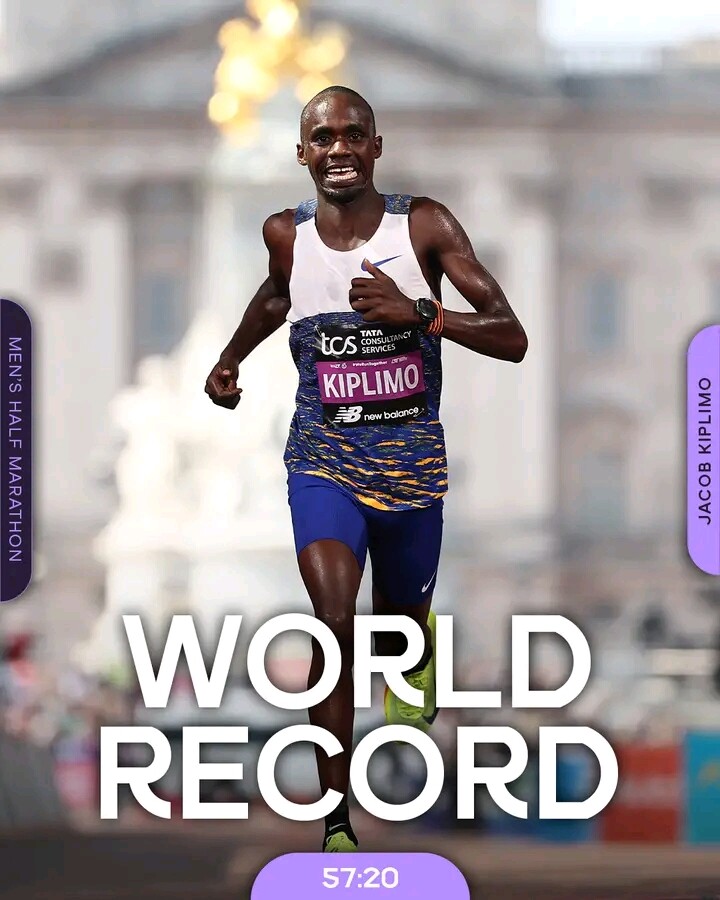
The achievement carried extra significance for the Ugandan star. Just a year earlier, he had run a stunning 56:42 in Barcelona—the fastest half marathon ever recorded—but the mark was never ratified, leaving a lingering debate in the sport. In Lisbon, however, Kiplimo removed any doubt with a definitive, record-breaking run.
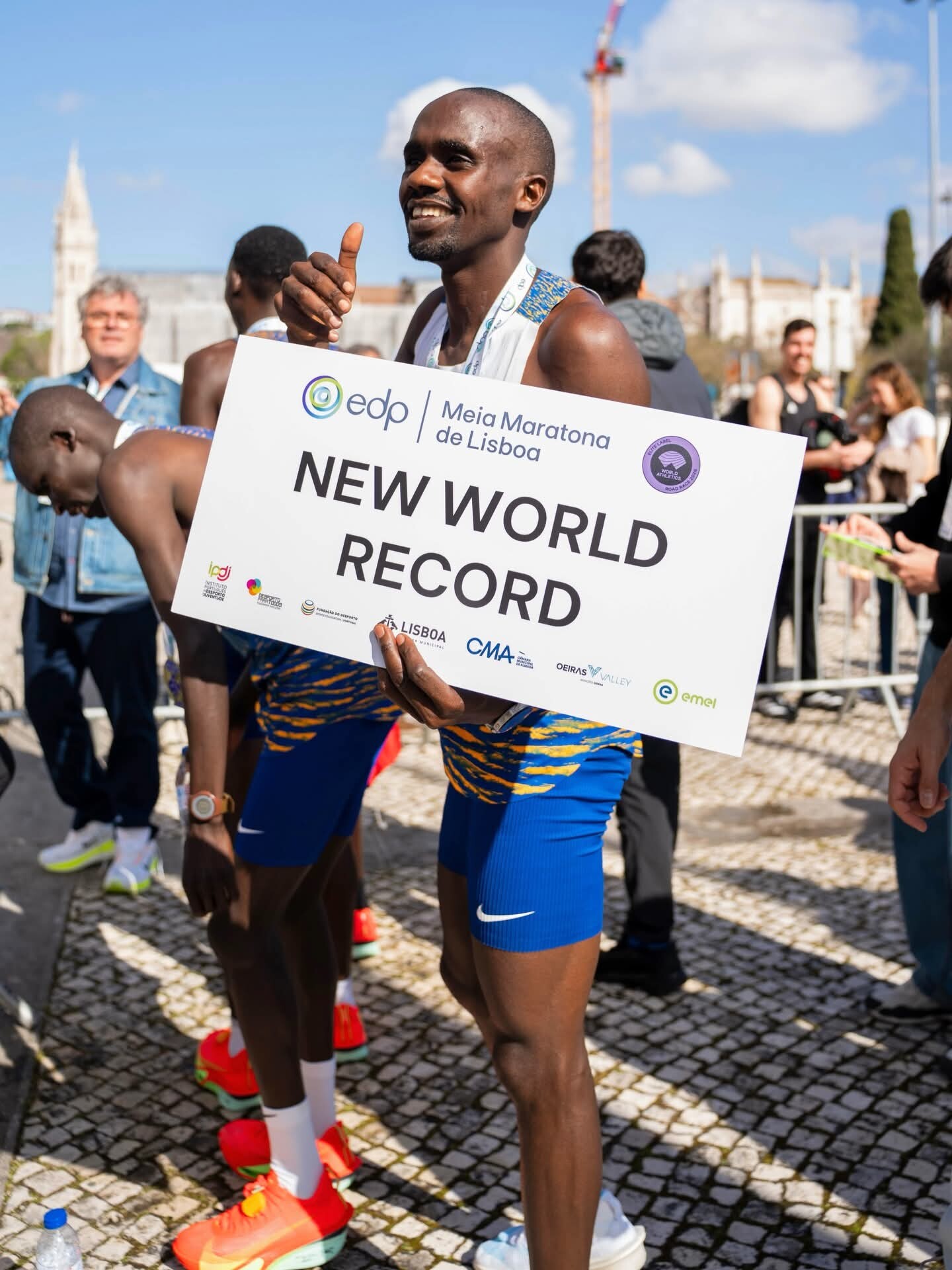
Fittingly, the Portuguese course has become part of his remarkable legacy. It was here in 2021 that he first stunned the athletics world with a 57:31 world record, and now he has returned to push the limits even further. Three extraordinary races across the years now define Kiplimo’s half-marathon dominance—each performance reinforcing his reputation as one of the sport’s most relentless competitors.
Behind the record-breaking champion, the race produced a series of impressive performances from some of the world’s best road runners, highlighting the depth and intensity of the elite field.
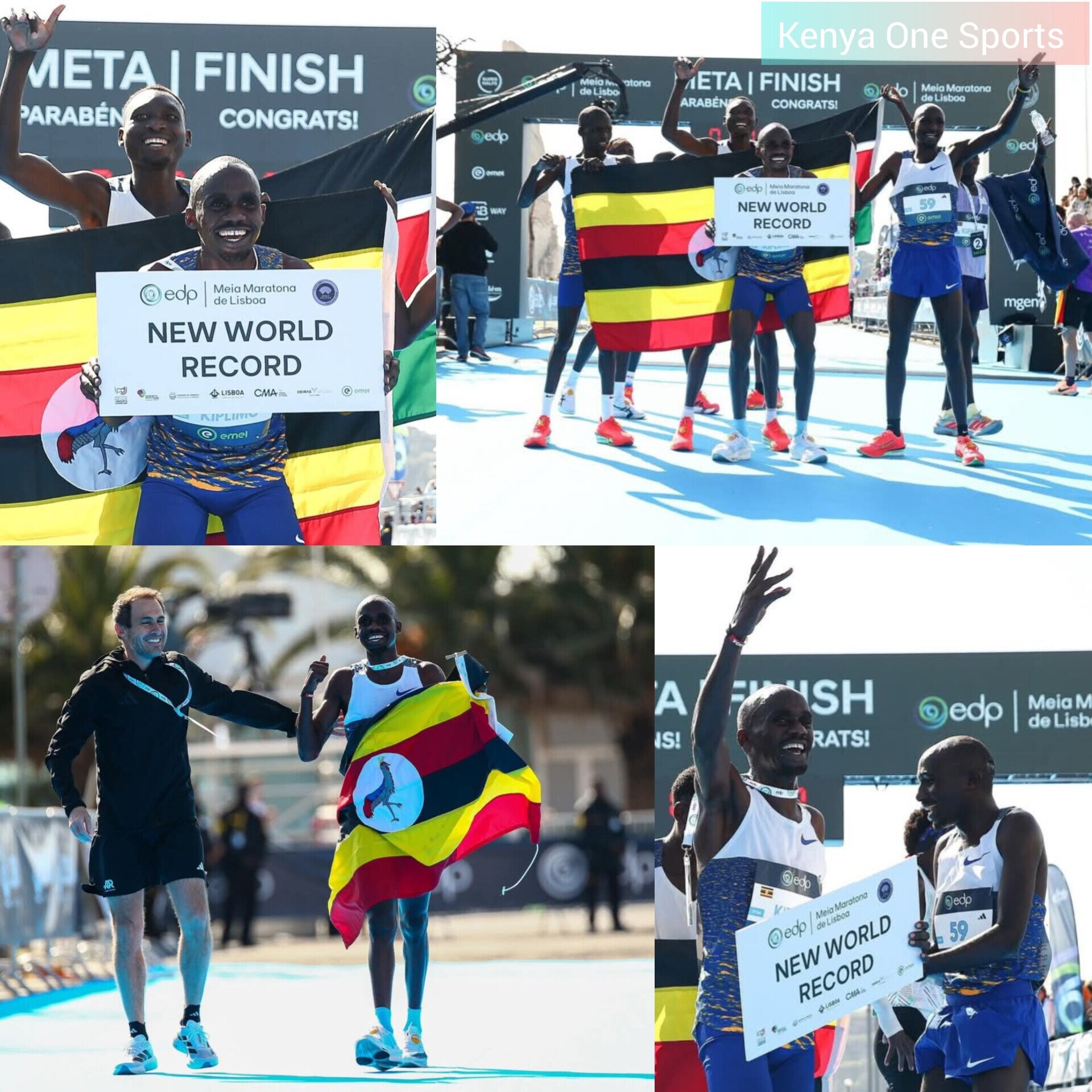
Top 10 Finishers – 2026 Lisbon Half Marathon
1. Jacob Kiplimo (Uganda) — 57:20 WR
2. Nicholas Kipkorir (Kenya) — 58:08
3. Gilbert Kipkosgei Kiprotich (Kenya) — 58:59
4. Benard Langat (Kenya) — 59:31
5. Mohamed Ismail (Djibouti) — 59:45
6. Oscar Chelimo (Uganda) — 1:00:12
7. Stanley Waithaka Mburu (Kenya) — 1:00:17
8. Esau Kipkorir Kemboi (Kenya) — 1:00:19
9. Egide Ntakarutimana (Burundi) — 1:00:34
10. Célestin Ndikumana (Burundi) — 1:00:34
As the celebrations fade and the records settle into the history books, one thing remains clear—Jacob Kiplimo is redefining what is possible in distance running. With courage, rhythm, and a relentless will to chase greatness, he continues to stretch the limits of human endurance. And with the legendary London Marathon looming on the horizon, the world now watches with anticipation, wondering just how much further this extraordinary runner can carry the sport into a new era of speed and brilliance.
by Erick Cheruiyot for My Best Runs.
Login to leave a comment

EDP HALF MARATHON OF LISBON
EDP Lisbon Half Marathonis an annual internationalhalf marathoncompetition which is contested every March inLisbon,Portugal. It carries World Athletics Gold Label Road Racestatus. The men's course record of 57:31 was set byJacob Kiplimoin 2021, which was the world record at the time. Kenyanrunners have been very successful in the competition, accounting for over half of the total winners, withTegla Loroupetaking the...
more...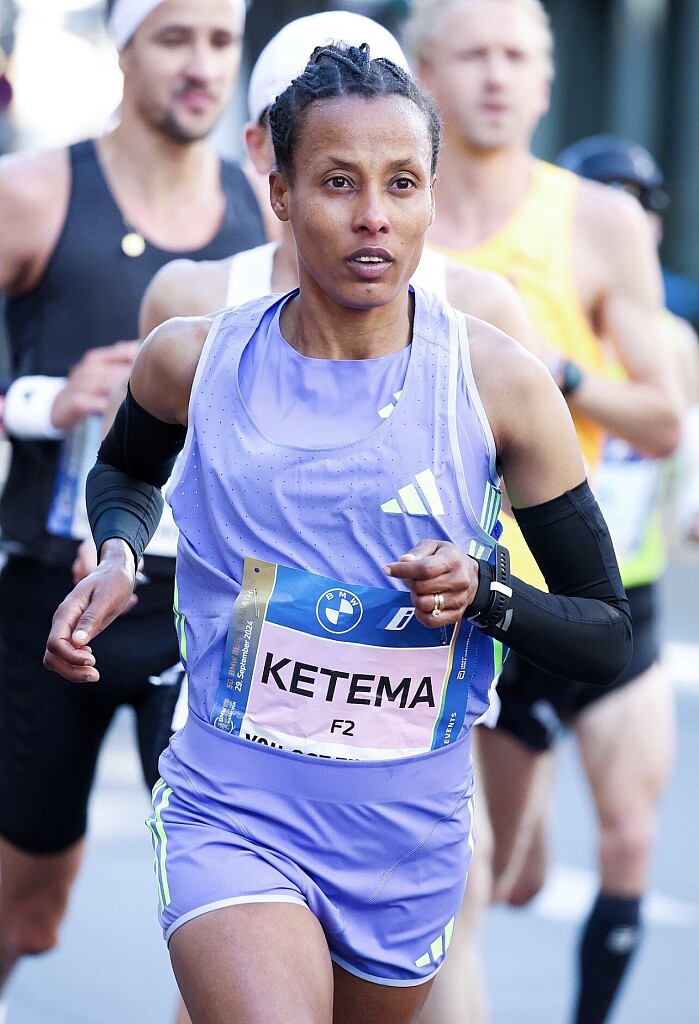
Fast Women Ready to Light Up Hamburg Marathon as Ethiopian Stars Headline 40th Edition
The women’s race at the 40th edition of the Haspa Marathon Hamburg, set for April 26, is shaping up to be a fast one. A powerful Ethiopian trio—Tigist Ketema, Degitu Azimeraw, and Sichala Kumeshi—headline the elite field for Germany’s biggest spring marathon.
Organizers expect a massive turnout for the anniversary edition. 20,000 runners are entered in the marathon, and when the shorter distance races held during the same weekend are included, a record total of 46,000 athletes will take part in the Hamburg running festival.
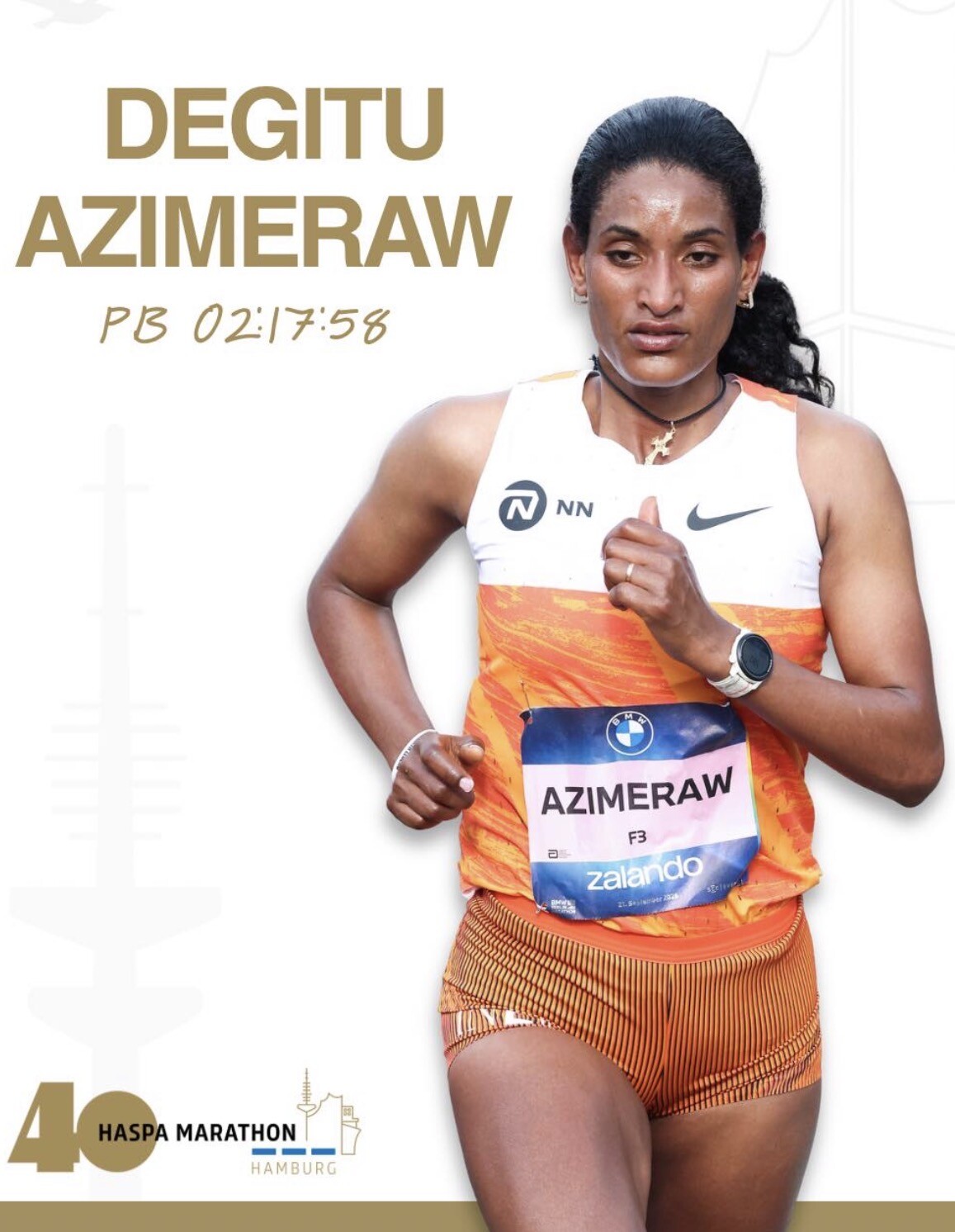
Ethiopia’s Strong History in Hamburg
Ethiopian runners have dominated the women’s race in recent years. In 2022, Yalemzerf Yehualaw set the course record with a stunning 2:17:23. That mark nearly fell again last year when Workenesh Edesa won in 2:17:55, the second-fastest time in race history.
With Ketema, Azimeraw, and Kumeshi on the start line this year, another Ethiopian victory—and perhaps another run at the course record—appears likely.
Tigist Ketema Returns After Breakthrough Seasons
At just 27 years old, Tigist Ketema has already established herself among the fastest marathoners in the world.
She made a sensational debut at the Dubai Marathon in January 2024, winning with a course record of 2:16:07—an unofficial world record for a debut marathon and, at the time, the eighth-fastest performance ever.
Later that year she confirmed her status by winning the Berlin Marathon in 2:16:42.
Ketema competed at the 2025 World Championships marathon in Tokyo, but difficult hot and humid conditions forced her to drop out. After that disappointment, Hamburg presents a perfect opportunity for the Ethiopian star to return to top form.
Degitu Azimeraw’s Consistent Excellence
Another major contender is Degitu Azimeraw, who has built one of the most consistent marathon careers in recent years.
Azimeraw won her debut at the 2019 Amsterdam Marathon in 2:19:26, immediately establishing herself as a world-class performer. Since then she has run under 2:20 four times.
Her best performance came at the 2021 London Marathon, where she finished runner-up with a personal best of 2:17:58.
After taking time away from competition to give birth, the 27-year-old returned impressively in 2024, winning the Barcelona Marathon in 2:19:52.
Kumeshi Returns to Familiar Roads
Sichala Kumeshi may have the advantage of experience on the Hamburg course.
The 30-year-old first ran the race in 2023, finishing in 2:26:53. But it was in 2025 when she truly made her mark in Hamburg, placing third with a personal best of 2:19:53, her first time breaking the 2:20 barrier.
Kumeshi has already shown strong form this season, running a half marathon personal best of 1:06:53 in Houston in January.
With confidence from that performance and familiarity with the course, she returns to Hamburg aiming for an even bigger result.
A Historic Edition
The 40th Haspa Marathon Hamburg promises to be one of the most exciting editions in the race’s history. With record participation numbers and a world-class women’s field led by three of Ethiopia’s top marathoners, the stage is set for another memorable race through the streets of one of Europe’s great running cities.
by Race News Service
Login to leave a comment

Haspa Marathon Hamburg
The HASPA MARATHON HAMBURG is Germany’s biggest spring marathon and since 1986 the first one to paint the blue line on the roads. Hamburcourse record is fast (2:05:30), the metropolitan city (1.8 million residents) lets the euphoric atmosphere spill over and carry you to the finish. Make this experience first hand and follow the Blue Line....
more...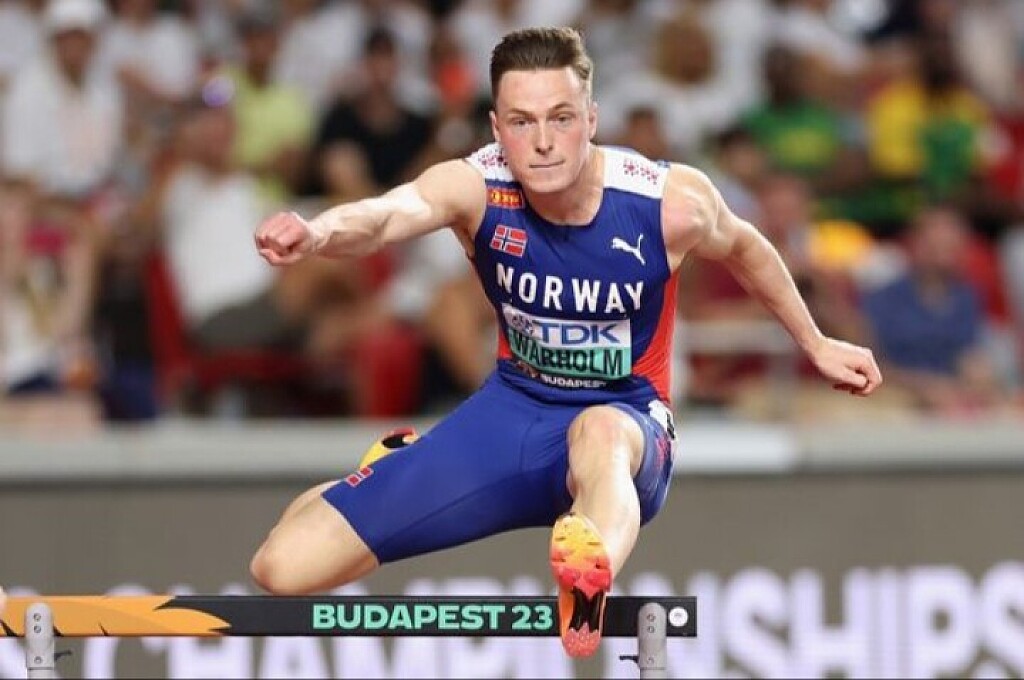
Karsten Warholm: The Man Who Smashed the 400m Hurdles Into a New Dimension
On February 28, 1996, in the quiet Norwegian town of Ulsteinvik, a champion was born. Over the years, Karsten Warholm has transformed himself into one of the most dominant and electrifying athletes of his generation — an Olympic champion, multiple-time world champion, European king, and the world record holder in the 400 meters hurdles.
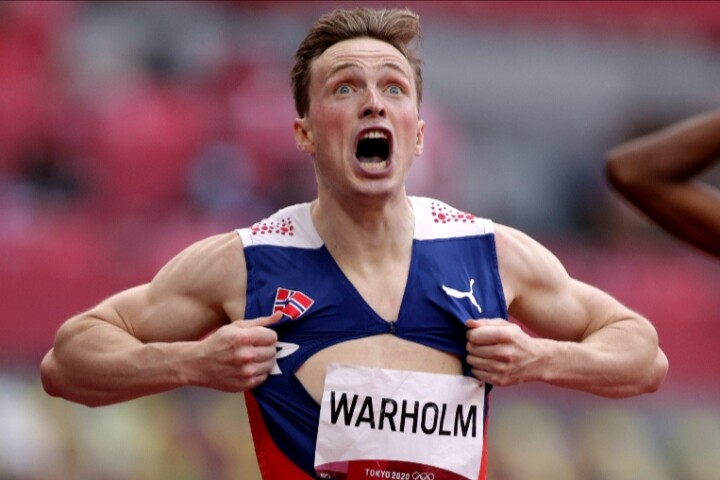
Warholm’s journey did not begin with hurdles alone. As a teenager, he displayed remarkable versatility in the combined events. In 2013, he became World Junior Champion in the octathlon in Donetsk, showcasing an unusual blend of speed, strength, and technical precision. The following year, he competed in the decathlon at the World Junior Championships in Eugene, finishing tenth against the best young athletes in the world. By 2015, he had already claimed double silver at the European Junior Championships in Eskilstuna — in both the 400 meters and the decathlon — a clear sign that he possessed rare, multidimensional talent.
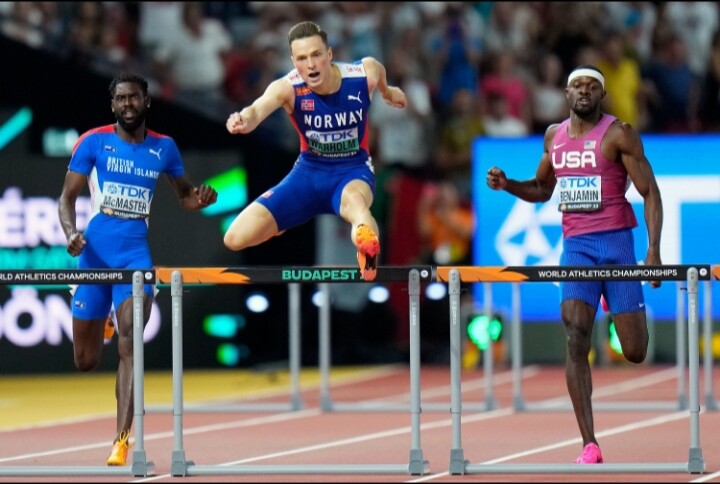
His early senior years hinted at something greater. He reached the semifinals of the 400m hurdles at the Rio 2016 Olympic Games, gaining valuable experience on the biggest stage. But it was in 2017 that the world truly took notice. At the World Championships in London, the young Norwegian stunned the field by winning gold in the 400m hurdles. Fearless from the gun and relentless between the barriers, he introduced a bold, attacking style that would become his trademark.
From that breakthrough moment, his rise accelerated. He secured European gold in Berlin in 2018 and claimed the European indoor 400m title in Glasgow in 2019, equaling the long-standing European indoor record of 45.05. Later that same year, he added another global crown at the World Championships in Doha, firmly establishing himself as the dominant force in his event.
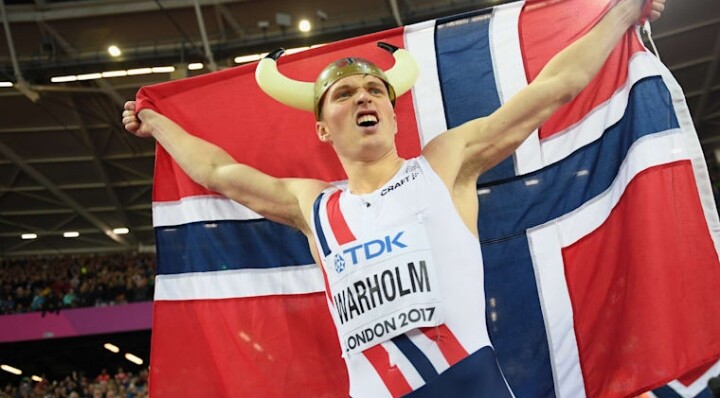
Then came August 3, 2021 — a date forever etched in athletics history. At the Olympic Games in Tokyo, Warholm produced one of the greatest performances the sport has ever witnessed. In a race of breathtaking intensity, he surged to Olympic gold and shattered the world record in the 400m hurdles with an astonishing 45.94 seconds. It was not just a victory; it was a redefinition of human possibility over barriers.
Champions are measured by how they respond to setbacks, and Warholm proved his resilience. After finishing seventh at the 2022 World Championships in Eugene, he returned stronger, reclaiming world gold in Budapest in 2023 with a commanding 46.89. In 2024, he added Olympic silver in Paris, European gold in Rome, and World Indoor silver in Glasgow, reinforcing his consistency at the highest level.
Beyond the hurdles, his athletic profile remains extraordinary. He has run 10.47 for 100 meters, 21.09 for 200 meters, and 44.87 for 400 meters. He holds the Norwegian record in the 300 meters at 32.49 and has cleared 2.05 meters in the high jump and leapt 7.66 meters in the long jump. Indoors, he has clocked 20.91 for 200 meters, equaled the European 400m record of 45.05, and set a world best of 34.26 in the 300m hurdles. Few specialists in modern athletics combine such speed, power, and technical mastery.
From a small coastal town to the pinnacle of global sport, Karsten Warholm has carried Norwegian athletics into a new era. His career is defined not only by medals and records but by courage, intensity, and an uncompromising will to push beyond limits. As he celebrates another year, one truth stands firm — the Viking of the 400m hurdles is not simply competing against rivals; he is racing against history itself, and more often than not, he wins.
by Erick Cheruiyot for My Best Runs.
Login to leave a comment
Keely Hodgkinson The Young Superstar Leading a New Era in the 800 Meters
Few athletes in track and field have risen as quickly—or as convincingly—as Britain’s Keely Hodgkinson. Still in her early twenties, she has already won Olympic gold, broken records, and established herself as the woman to beat in one of the sport’s most demanding events.
The 800 meters has always required a rare mix of speed, strength, and racing instinct. Hodgkinson seems to have all three.
Early Life and Family Support
Keely Nicole Hodgkinson was born on March 3, 2002, in the north of England and grew up in Atherton, Greater Manchester. Sport was part of her life from the beginning. Her parents were active and supportive, encouraging her to explore athletics at a young age.
She joined a local athletics club as a child and quickly showed unusual talent. By her mid-teens she was already competing at the national level and winning junior titles.
Her family has remained a steady presence throughout her rise. Hodgkinson often speaks about the importance of that support system during the years when her career accelerated from promising junior to global star.
A Teenager on the Olympic Stage
Hodgkinson first captured worldwide attention at the Tokyo Olympic Games in 2021. At just 19 years old she ran fearlessly in the women’s 800 meters final, finishing second and winning the silver medal.
Her time of 1:55.88 set a new British record and made her one of the youngest athletes ever to medal in the event.
The performance signaled that a new force had arrived in middle-distance running.
Olympic Champion
Three years later she returned to the Olympic stage in Paris 2024 and took the next step.
Running with confidence and control, Hodgkinson won the Olympic gold medal in the 800 meters, becoming one of Britain’s great modern champions and the first British woman in decades to claim the title.
It was a moment that confirmed her place among the elite of global athletics.
Breaking the Indoor World Record
In February 2026 Hodgkinson delivered another historic performance.
At the World Indoor Tour meeting in Liévin, France, she ran 1:54.87, breaking the long-standing indoor 800-meter world record.
The performance was widely viewed as one of the greatest indoor middle-distance runs ever.
What made it even more remarkable was how controlled it looked. Hodgkinson ran aggressively but smoothly, maintaining form all the way through the final straight.
The Coach Behind the Champion
A key figure in Hodgkinson’s success has been her coach, former British international Jenny Meadows, herself a world-class 800-meter runner.
Their partnership has helped shape Hodgkinson’s development both physically and mentally. Meadows understands the tactical demands of the event and has helped guide Hodgkinson through the pressures that come with being one of the world’s top athletes.
Together they have built a training approach focused on speed, endurance, and smart racing.
Life Away From the Track
Despite her rapid rise, Hodgkinson has remained grounded. She still spends much of her time in the Manchester area, close to family and longtime friends.
Away from competition she enjoys music, fashion, and spending time with those closest to her. Like many athletes of her generation, she connects with fans through social media but keeps her private life relatively low-key.
Teammates and competitors often describe her as relaxed and approachable off the track—but fiercely competitive once the race begins.
One of the Faces of Modern Athletics
In recent years Hodgkinson has become one of the most recognizable figures in track and field. Her performances have drawn large audiences and renewed attention to the women’s 800 meters.
She represents a new generation of athletes who combine elite performance with personality and confidence.
For young runners watching around the world, she has quickly become a role model.
The Future
At an age when many middle-distance runners are still learning their event, Hodgkinson already owns Olympic gold, global medals, and one of the fastest times ever run.
The outdoor world record—long considered untouchable—now seems within reach.
If her progress continues, the coming years could see her move from superstar to legend.
For now, Keely Hodgkinson remains exactly what the sport needs: a fearless racer who makes every 800 meters must-watch.
by Bob Anderson for My Best Runs
Login to leave a comment
Ethiopian Brilliance in Liévin: Gudaf Tsegay’s 3:53.09 and the Night the 1500m Indoors Was Redefined
On February 9, 2021, inside the electric arena of the Meeting Hauts-de-France Pas-de-Calais in Liévin, Gudaf Tsegay delivered one of the most breathtaking performances the sport has ever witnessed. In a race that demanded both audacity and precision, the Ethiopian star stormed to a staggering 3:53.09 in the women’s 1500 meters indoors — a world record that did more than lower a time; it reshaped the limits of possibility.
The previous mark of 3:55.17, set in 2014 by fellow Ethiopian great Genzebe Dibaba, had long stood as a symbol of middle-distance excellence. On that winter evening in France, Tsegay did not merely edge it — she dismantled it.
From the crack of the gun, the pace was ferocious. Guided by a bold pacemaker through a searing opening lap of 58.97 seconds, Tsegay settled into a rhythm that balanced aggression with control. She crossed 800 meters in 2:05.94 and powered through 1000 meters in 2:37.36, her stride smooth, her cadence relentless. By the time the bell rang, the race had transformed from competition into exhibition.
The final lap was a masterclass in controlled fury. With approximately 30 seconds over the last 200 meters, Tsegay accelerated into history, separating herself completely from the field. Behind her, Britain’s Laura Muir clocked 3:59.58 — an outstanding performance in its own right — yet finished more than six seconds adrift. That margin alone underscored the magnitude of Tsegay’s dominance.
Indoor 1500-meter racing is unforgiving. The tighter bends, the confined straights, and the tactical positioning demand technical mastery as much as physical brilliance. To run 3:53.09 under such conditions requires supreme aerobic strength, fearless pacing, and the composure to sustain near-perfect splits. On that night, Tsegay possessed all three.
As the Liévin meeting returns once again, the question lingers in the rafters of the arena: who dares to approach 3:53.09? Records are meant to be challenged, but some performances transcend statistics. They become reference points in history — moments when the sport advances in a single, luminous leap.
In Liévin, Gudaf Tsegay did exactly that. She did not just break a world record. She redefined excellence indoors — and left the rest of the world chasing her shadow.
by Erick Cheruiyot for My Best Runs.
Login to leave a comment
Kenya's Kering Conquers Lagos as Dinke Extends Ethiopia’s Reign at the Access Bank Marathon
The streets of Lagos pulsed with energy on Saturday morning as thousands lined the route of the 11th edition of the Access Bank Lagos City Marathon, but it was Kenya’s Ezra Kipchumba Kering who ultimately silenced the noise with a commanding performance over 42 gruelling kilometres. Running with poise and tactical precision, Kering surged to victory in 2:11:55, mastering the humid coastal conditions to etch his name into the race’s growing legacy.
The marathon commenced at Orca Shopping Mall along Ahmadu Bello Way in Eko Atlantic City with a sharp 6:30 a.m. flag-off, the first light of dawn casting long shadows over the elite field. From the outset, the tempo was uncompromising. Kering settled into a disciplined rhythm before asserting control in the decisive stages, separating himself from the pack and striding confidently toward the finish line at Eko Atlantic, Victoria Island. His triumph reaffirmed Kenya’s enduring strength in the global marathon scene.
While the international stars dominated the podium, Nigeria celebrated its own heroics through Boyi Nyango, who emerged as the first Nigerian man across the line. Clocking 2:25:32, Nyango delivered a spirited performance that ignited home support and underscored the nation’s growing distance-running ambitions.

In the women’s contest, Ethiopia’s Meseret Dinke once again demonstrated why Lagos has become familiar territory. She crossed the finish line in 2:37:36, securing victory with composed authority. Her latest win not only adds another chapter to her personal success story but also extends Ethiopia’s remarkable dominance in the women’s race — now six consecutive editions claimed by Ethiopian athletes.
Dinke’s relationship with Lagos is one of sustained excellence. She previously captured the title in 2019 with a time of 2:48:02 and returned triumphantly in 2021, elevating her performance to 2:28:51. Her consistency over the years highlights both resilience and mastery of the course. Other recent Ethiopian champions have kept that tradition alive, building an unbroken chain of success that continues to define the women’s narrative in the city.
Fittingly, this year’s marathon unfolded on Valentine’s weekend, adding a poetic layer to the spectacle. While much of the world exchanged roses and heartfelt promises, Lagos embraced a different kind of romance — the fierce love for competition, the rhythm of pounding footsteps against asphalt, and the silent vows athletes make to themselves at the start line. Along the shimmering coastline of Eko Atlantic, it was not candlelight dinners that captured hearts, but courage, endurance, and the raw beauty of human determination — a reminder that passion, in its purest form, often reveals itself on the road to greatness.
by Erick Cheruiyot for My Best Runs.
Login to leave a comment

Access Bank Lagos City Marathon
“The IAAF and AIMS have a special interest in the Access Bank Lagos City Marathon so if you see their top officials at the third edition, don’t be surprised. Lagos is one of the few marathons in the world that got an IAAF Label after just two editions. This is a rare feat. The event had over 50,000 runners at...
more...
Lisbon Half Marathon 2026: Kiplimo Returns to Defend His Legacy
The streets of Lisbon are set for another historic chapter as Uganda’s Jacob Kiplimo returns to the EDP Lisbon Half Marathon on March 8, 2026 — the very race where he once produced a performance that stunned the world.
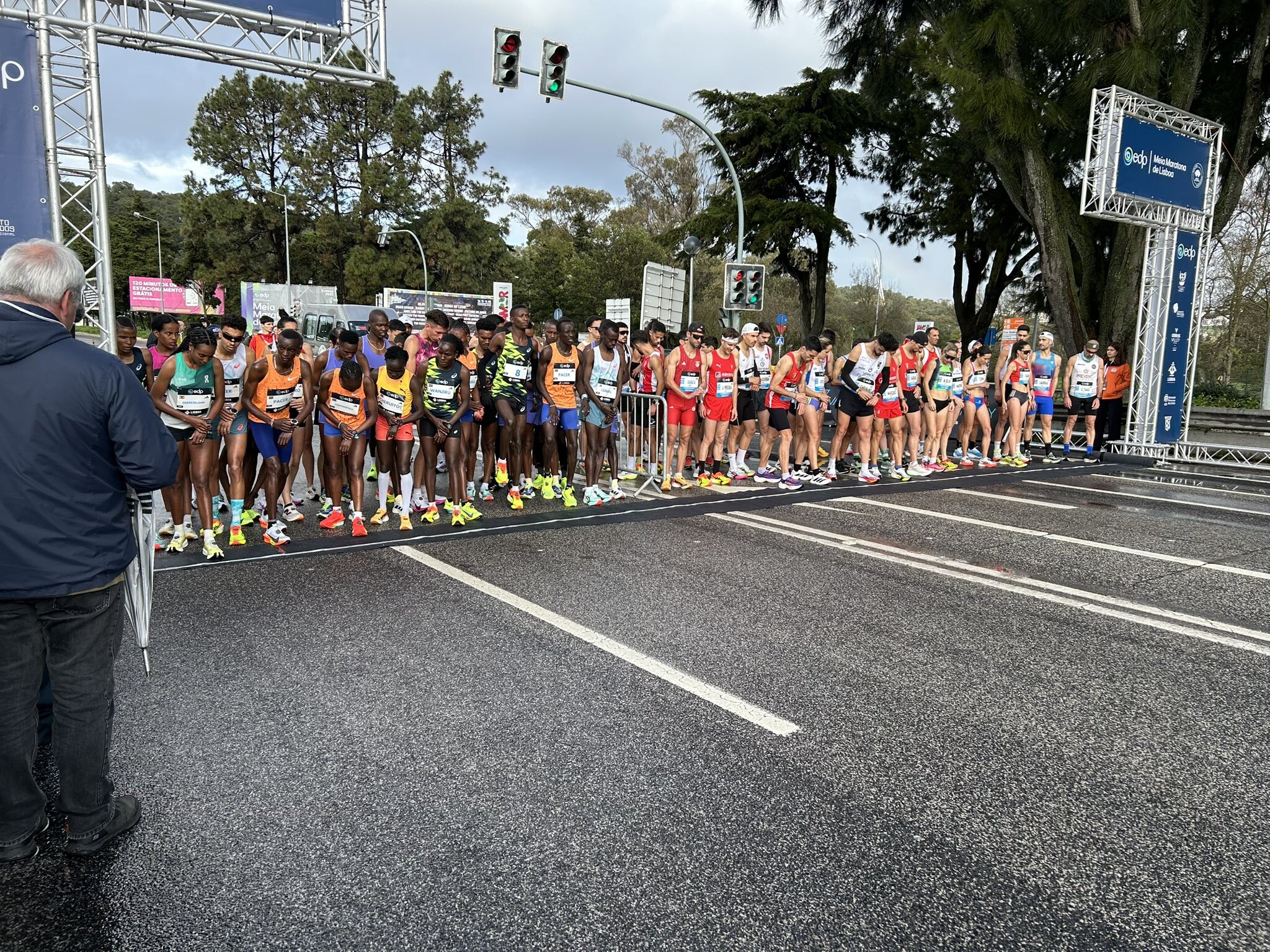
It was on these very streets in November 2021 that Kiplimo produced a sensational 57:31, setting a world record and establishing the Lisbon course mark in emphatic fashion. Although the global record has since been lowered, his performance remains one of the greatest ever witnessed over the distance and continues to define Lisbon’s modern racing history.
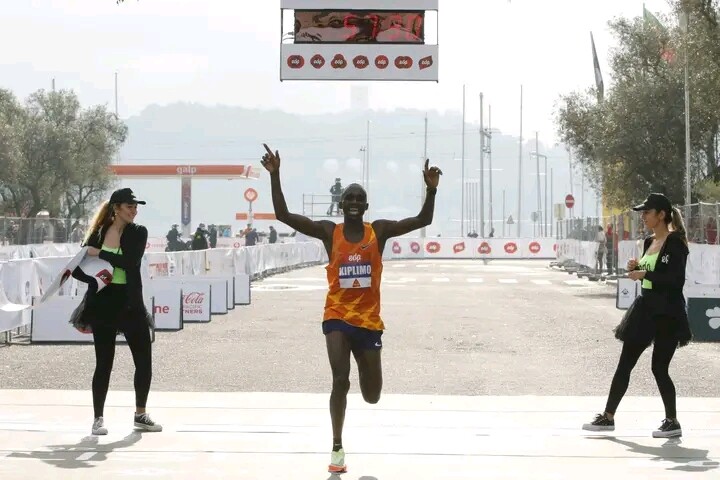
Lisbon holds a special place in his career. The flat, fast course and electric atmosphere provided the perfect stage for brilliance, but it was Kiplimo’s relentless rhythm and fearless pacing that transformed the race into a landmark moment in global athletics. His 57:31 remains the standard by which performances on that course are measured, and his return immediately raises expectations of something extraordinary.
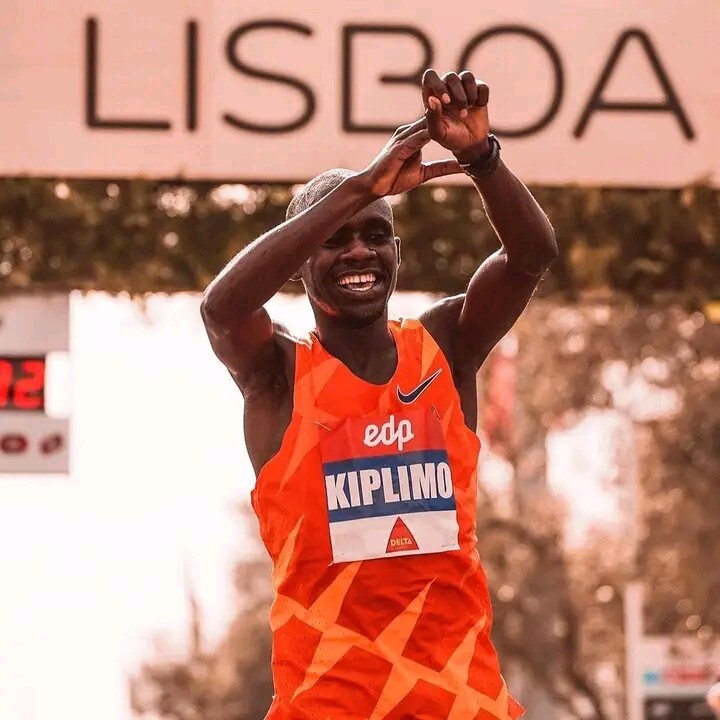
He will arrive in Portugal carrying powerful momentum. Last season showcased his remarkable range and maturity as an athlete. In Barcelona, he blazed to 56:42 in the half marathon, reaffirming his dominance over the distance. He then stepped confidently onto the marathon stage, clocking 2:03:37 in his London debut before conquering Chicago in 2:02:23 to secure a major marathon victory. Those performances revealed not only speed, but tactical intelligence and endurance — qualities that now make him a constant threat in any race he enters.
Already in 2026, Kiplimo has underlined his supremacy by reclaiming the World Cross Country title. That triumph was more than a medal; it was a declaration that his foundation remains strong and his competitive edge sharper than ever. Cross country success often fuels road excellence, and the timing of that victory suggests he is building toward another major statement performance.
As the Lisbon Half Marathon approaches, anticipation is steadily building. Elite contenders will line up with ambition, but the spotlight naturally falls on the Ugandan star whose name is permanently etched into the race’s history. He understands the course, the tempo it demands, and the courage required in the closing kilometers. Experience and confidence now blend with peak condition.
Whether he targets another record or simply asserts control over a world-class field, one certainty remains: when the starting gun fires in Lisbon, the energy will shift. The city will once again become the arena for one of distance running’s most captivating figures.
Jacob Kiplimo is returning to familiar ground — and whenever he does, history tends to follow.
by Erick Cheruiyot for My Best Runs.
Login to leave a comment
EDP HALF MARATHON OF LISBON
EDP Lisbon Half Marathonis an annual internationalhalf marathoncompetition which is contested every March inLisbon,Portugal. It carries World Athletics Gold Label Road Racestatus. The men's course record of 57:31 was set byJacob Kiplimoin 2021, which was the world record at the time. Kenyanrunners have been very successful in the competition, accounting for over half of the total winners, withTegla Loroupetaking the...
more...
New York City Returns to the National Spotlight as Icahn Stadium Named Host of 2026 U.S. Outdoor Championships
For the first time in more than three decades, New York City will once again stand at the center of American track and field. USA Track & Field has officially announced that the 2026 U.S. Outdoor Championships will be held at Icahn Stadium from July 23–26, bringing the nation’s top athletes to one of the sport’s most historic and iconic settings.
This announcement marks a significant shift for the championships, which in recent years have been closely associated with Eugene, Oregon. Since 2021, Eugene—home of Hayward Field—has served as the primary stage for the national championships, reinforcing its reputation as TrackTown USA. Now, the move to New York signals both a return to the sport’s roots and a renewed commitment to expanding track and field’s visibility in major metropolitan centers
Icahn Stadium, located on Randall’s Island, is no stranger to elite competition. The venue has hosted numerous international meets, including Diamond League events, and has earned a reputation for producing fast times and memorable performances. Its IAAF Class 1 certification and world-class facilities make it a fitting location for the country’s premier outdoor championship.
The 2026 championships will also carry major significance beyond national titles. The meet will serve as a key proving ground for American athletes preparing for future global competitions, with many using the event to establish momentum heading into the 2027 World Championships cycle.
New York City has a rich but underappreciated history in U.S. track and field. The last time the city hosted a national outdoor championship was in 1991 at Downing Stadium, making the 2026 event a historic return after 35 years. Bringing the championships back to New York reconnects the sport with one of the world’s great athletic capitals and offers a powerful opportunity to inspire a new generation of athletes and fans.
Meanwhile, Eugene’s role remains firmly intact. USA Track & Field has confirmed that the 2027 U.S. Outdoor Championships will return to Eugene, where the team for the 2027 World Championships in Beijing, China, will be selected. This dual-city approach reflects the sport’s growing national footprint while honoring both tradition and innovation.
For athletes, the 2026 championships in New York will represent more than a national competition—it will be an opportunity to perform on one of the sport’s biggest domestic stages, in front of a diverse and passionate audience. For fans, it will be a rare chance to witness America’s best runners, jumpers, and throwers competing in the heart of one of the world’s most dynamic cities.
The return of the U.S. Outdoor Championships to New York City marks a historic moment—one that connects past and present, celebrates the sport’s national reach, and reminds the world that track and field belongs on the biggest stages.
by Bob Anderson for My Best Runs
Login to leave a comment
From Village Paths to the Open Road: Habtom Samuel’s Houston Half Marathon Debut
The University of New Mexico Lobo takes his first steps into professional road racing, carrying years of endurance, resilience, and determination.
Running Was Life Before the Track
Before Habtom Samuel ever set foot on a formal track, he was running to school—seven kilometers each way—books in hand, racing the clock to arrive on time. Growing up in Debresina, a small village in Eritrea, running was not a sport. It was part of daily life. It was necessity. And in its quiet way, it revealed a talent that would one day carry him onto the international stage.
Samuel’s childhood, like that of many young athletes in rural Africa, blended joy with hardship. The second-born of eight siblings, he learned responsibility early, helping his family and neighbors with farming and daily chores. Life was often difficult, but it shaped a resilience that continues to define him today.

Discovery and Early Talent
Running emerged naturally from routine—long walks to school, informal football matches with friends, and sprints home when village responsibilities made him late. Endurance came long before structure.
“I noticed I could run long distances without getting tired,” Samuel recalls. “That’s when I realized running was something special for me.”
Those unplanned miles built a foundation well before formal training arrived. His breakthrough came in 2021 at the World Athletics U20 Championships in Nairobi, where he earned a bronze medal in the 3000 meters. The race was tactical and fast, stacked with Kenya’s top under-20 athletes. Samuel managed surges carefully, conserving energy before finishing strongly. The podium confirmed more than talent—it confirmed belief.
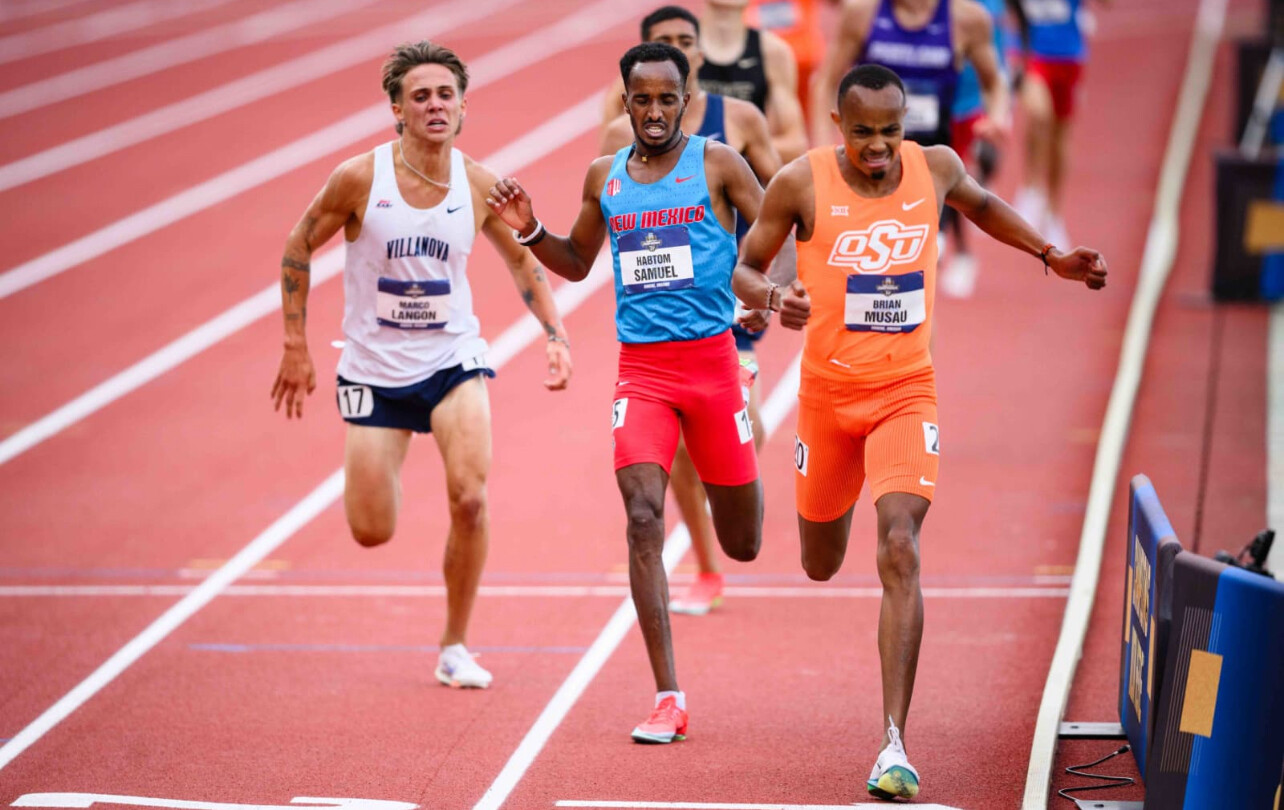
Just one month later, he lined up at the Absa Kip Keino Classic against an elite senior field. Finishing fourth, ahead of several seasoned competitors, he left motivated rather than discouraged. “Running with elite athletes showed me I belonged,” he says. “It made me believe I could do even better.”
A New Life with the Lobos
That belief carried Samuel thousands of miles to the University of New Mexico. He was searching not just for competition, but for growth—athletically and personally. Adjusting to a new language, culture, and academic system during his freshman year was challenging, but he found support within the Lobo program.
Wearing the Lobo uniform and competing for a team rooted in tradition and values fuels him daily—on the track, in cross country, and in the classroom.
Academically, Samuel explored public health and exercise science, drawn by a desire to understand the human body. When prerequisites prevented formal entry into exercise science, he found his stride in Liberal Arts and Integrative Studies. “It allows me to take a variety of classes and keep growing academically and personally,” he explains.
Motivation Drawn From the Past
During the hardest training days, Samuel looks backward to move forward.
“I think about where I come from,” he says. “I went through many struggles as a child and always dreamed of a better life. When I look at where I am now, I feel proud. Many people never get these opportunities, and that pushes me to work harder. This is my moment. I feel lucky—but luck means nothing without hard work.”
Debuting on the Roads
This weekend marks another turning point: Samuel’s debut at the Chevron Houston Half Marathon.
Until now, his focus has been cross country and track. Road racing remained unexplored—until winter break offered the opportunity to step outside the collegiate circuit and test himself against seasoned professionals.
The half marathon represents more than a distance change. It is a test of endurance, pacing, strategy, and mental resolve.
“What excites me most is standing on the start line with top professionals,” he says. “I want to see how fast I can run in my debut and what I can learn.”
He approaches the race with curiosity rather than pressure—an opportunity to learn, adapt, and understand his potential beyond the oval.
Looking Ahead: Lessons Beyond the Finish Line
Samuel’s Houston debut marks an important milestone. It allows him to explore a new distance, apply lessons learned from village paths, cross-country courses, and track races, and take a measured step toward a possible professional future on the roads.
More than times or placements, Samuel hopes to be remembered for how he races—and how he lives.
“I want people to remember me as someone who was never afraid to challenge himself,” he says. “As a person, I hope to be remembered for staying hopeful, working hard, and turning every opportunity into something positive.”
From the paths of Debresina to the roads of Houston, Habtom Samuel’s journey as a Lobo is a story of endurance, courage, and gratitude—a reminder that every mile carries a story, and every challenge offers a chance to grow.
by Robert Kibet for My Best Runs
Login to leave a comment

Aramco Houston Half Marathon
The Chevron Houston Marathon provides runners with a one-of-a-kind experience in the vibrant and dynamic setting of America's fourth-largest city. Renowned for its fast, flat, and scenic single-loop course, the race has earned accolades as the "fastest winter marathon" and the "second fastest marathon overall," according to the Ultimate Guide to Marathons. It’s a perfect opportunity for both elite athletes...
more...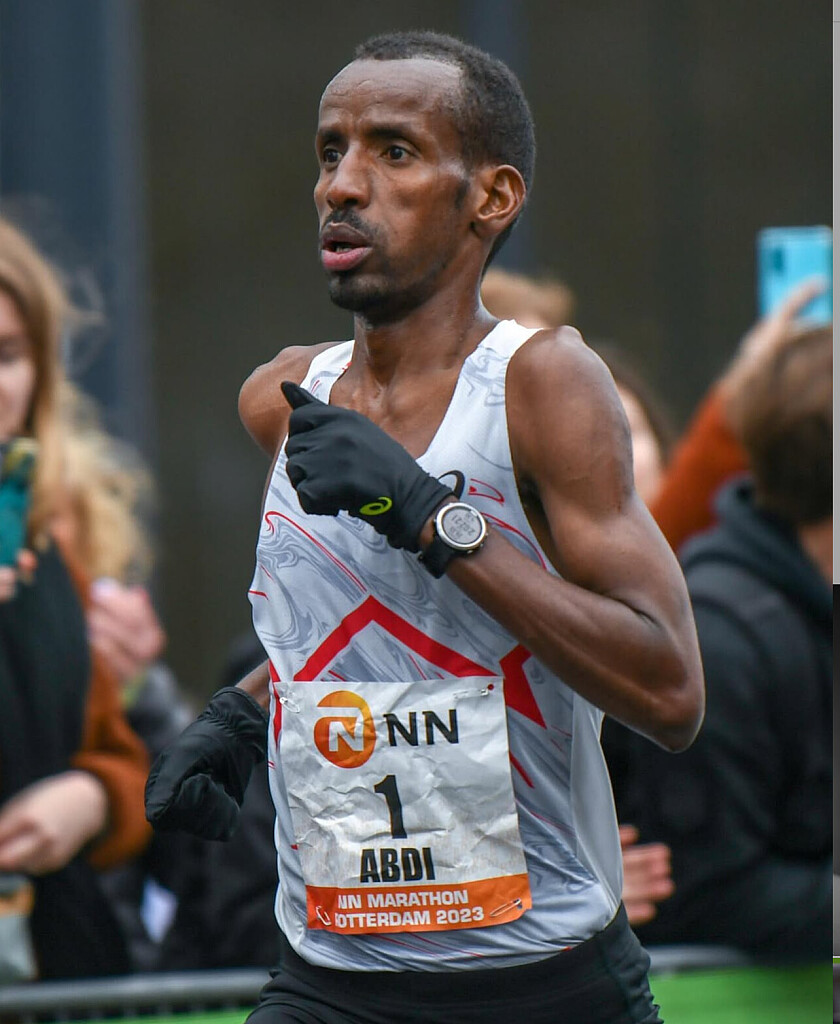
Bashir Abdi Targets European Record and Third Rotterdam Crown in 2026
After an injury-disrupted 2025 season, Bashir Abdi, who represents Belgium, is resetting his sights on a bold and ambitious 2026 campaign—one centered on Rotterdam, records, and redemption.
The two-time Olympic marathon medalist has confirmed his intention to return to the NN Rotterdam Marathon on April 12, where he will seek an unprecedented third victory and renew his pursuit of the European marathon record.
“It’s a special marathon,” Abdi told Sporza.be. “I’ve already run 14 marathons, four of which were here in Rotterdam. It won’t be easy to win here, as there will be a strong field. But I’m especially looking forward to running with a good feeling.”
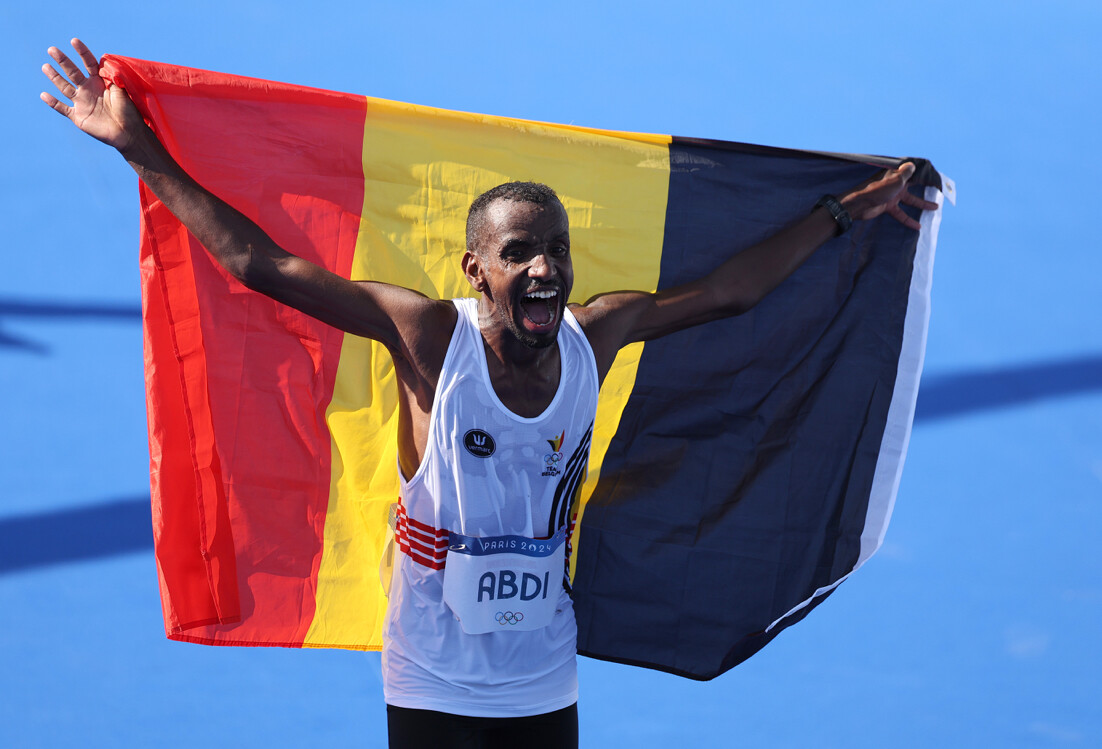
That “good feeling” has been central to Abdi’s career—one built on patience, consistency, and an unusually long peak for a modern elite marathoner.
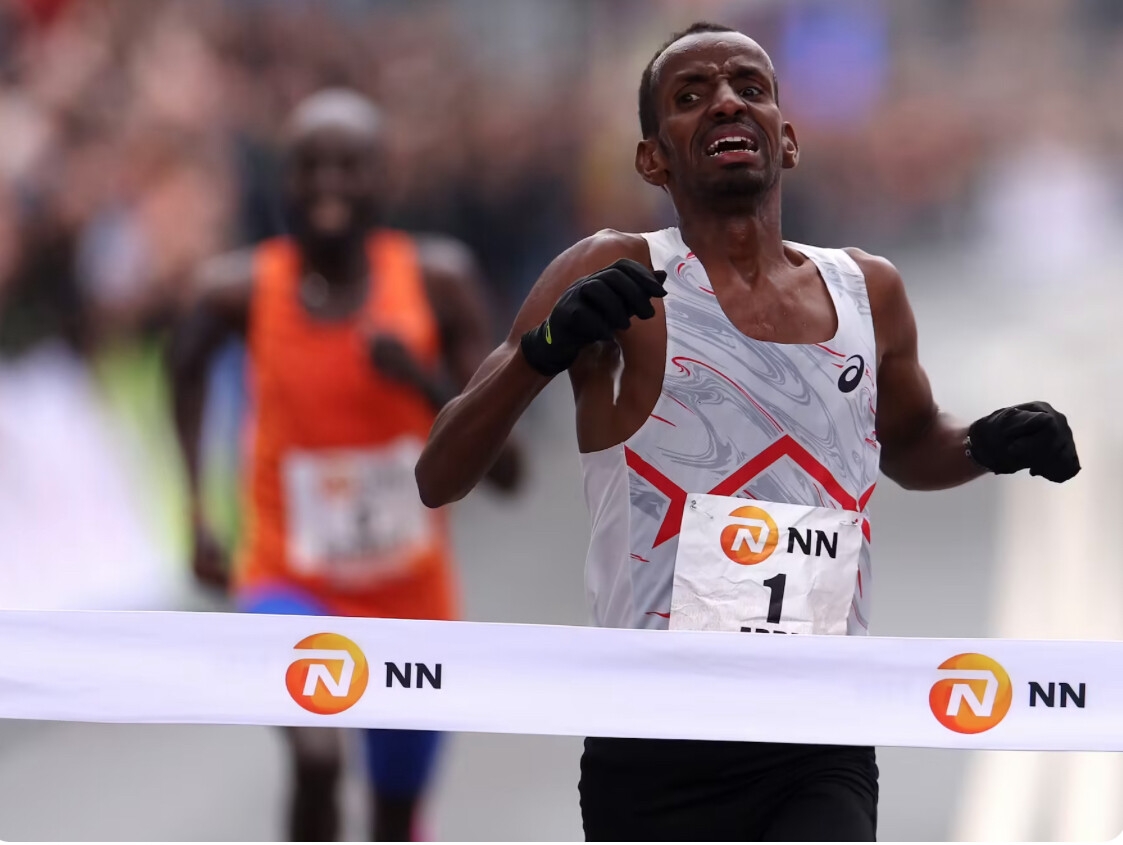
Born in Somalia, Abdi moved to Belgium as a child and later emerged as one of Europe’s most reliable championship performers. While many of his contemporaries built their reputations on a single breakthrough race, Abdi distinguished himself through durability across courses, conditions, and competitive formats. He has repeatedly delivered on the biggest stages, including Olympic Games, World Championships, and major city marathons.
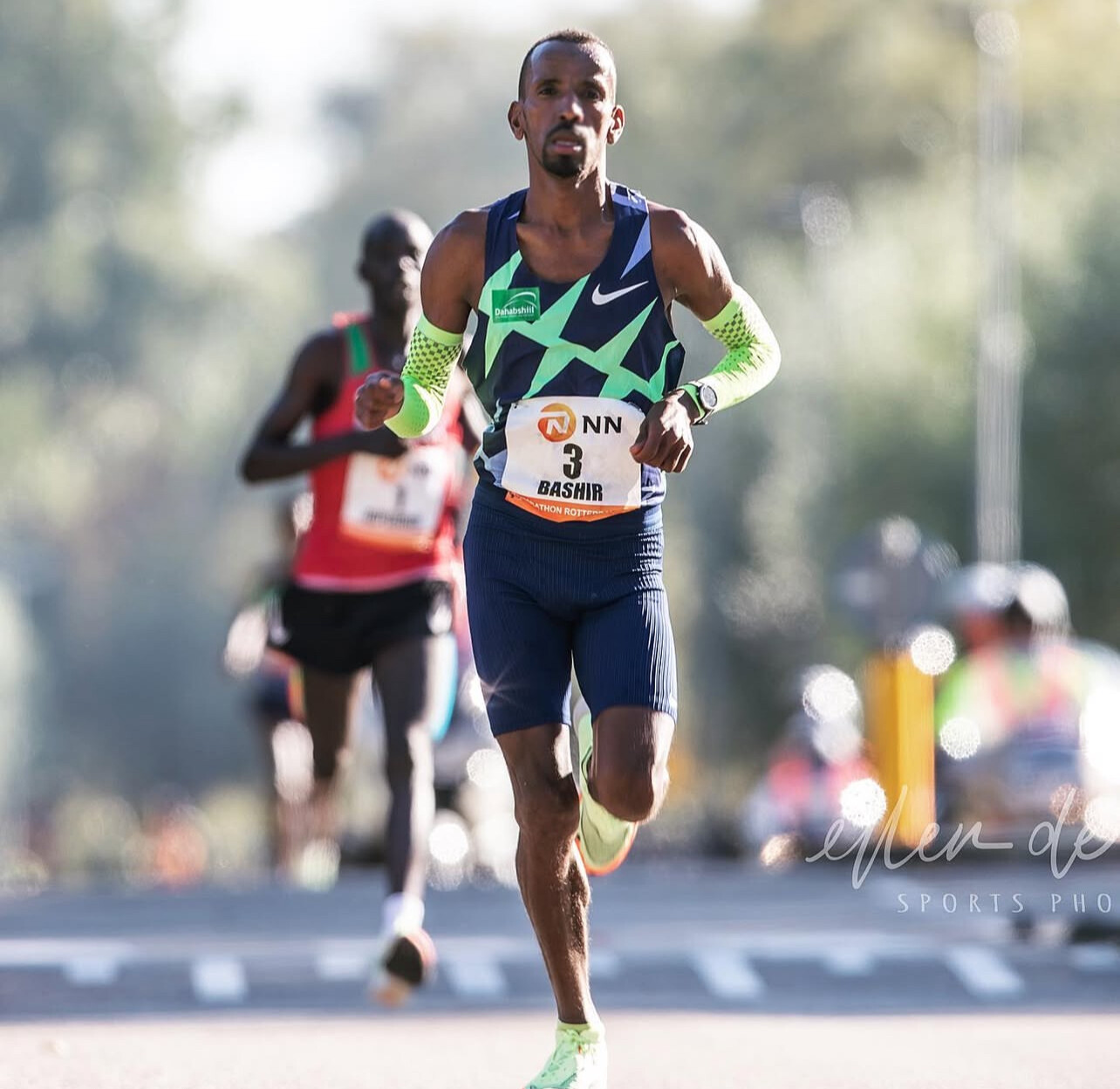
In 2021, just two months after winning Olympic bronze in Tokyo, Abdi produced the defining performance of his career in Rotterdam, winning in 2:03:36 to set a European marathon record. The run confirmed him not only as a medal contender, but as a time-trialist capable of matching the world’s fastest marathon specialists.
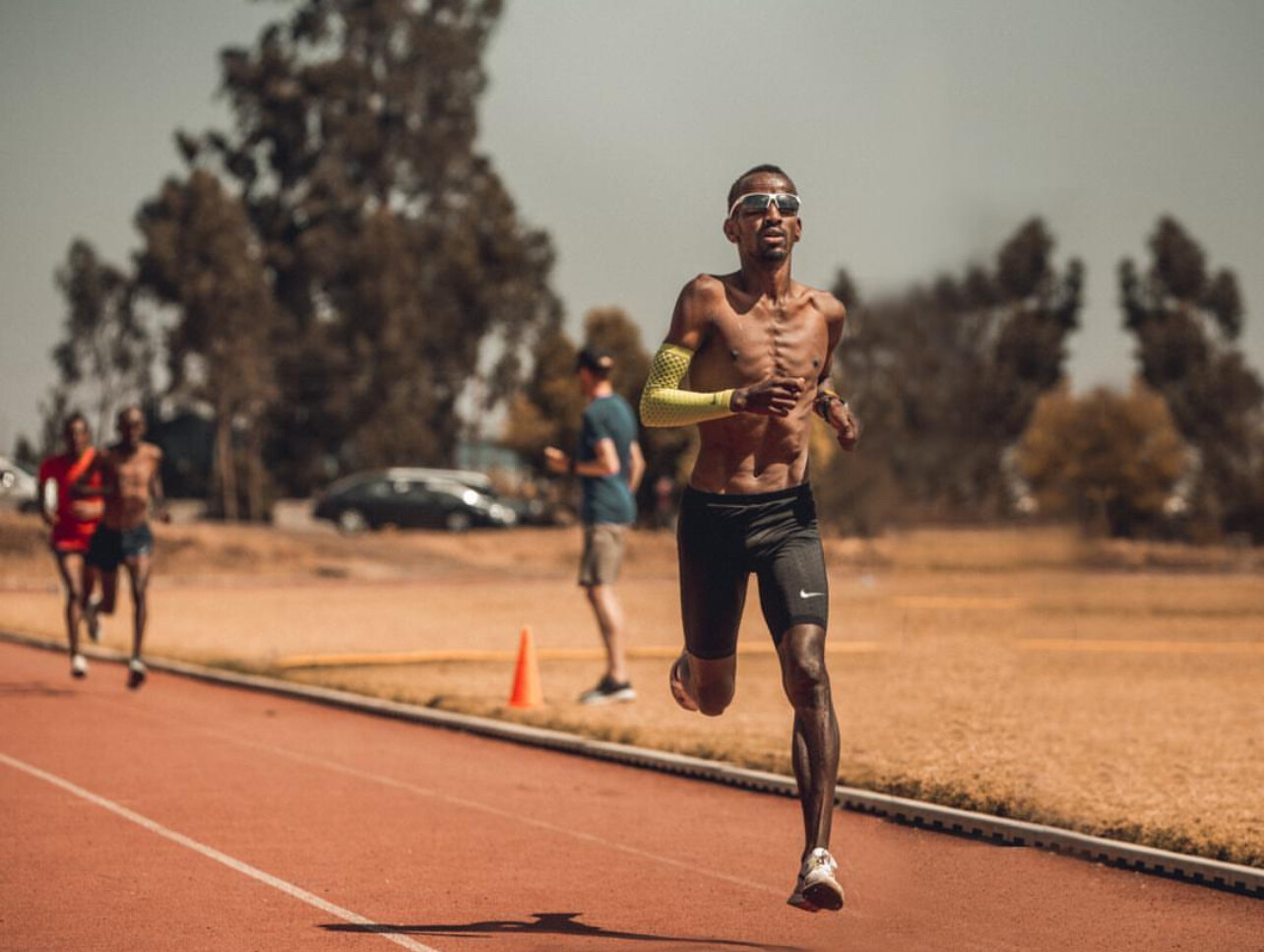
Two years later, he returned to Rotterdam and nearly surpassed his own mark, winning again in 2:03:47—just 11 seconds shy of the European record. That performance reinforced his unique connection to the course and his ability to execute under pressure.
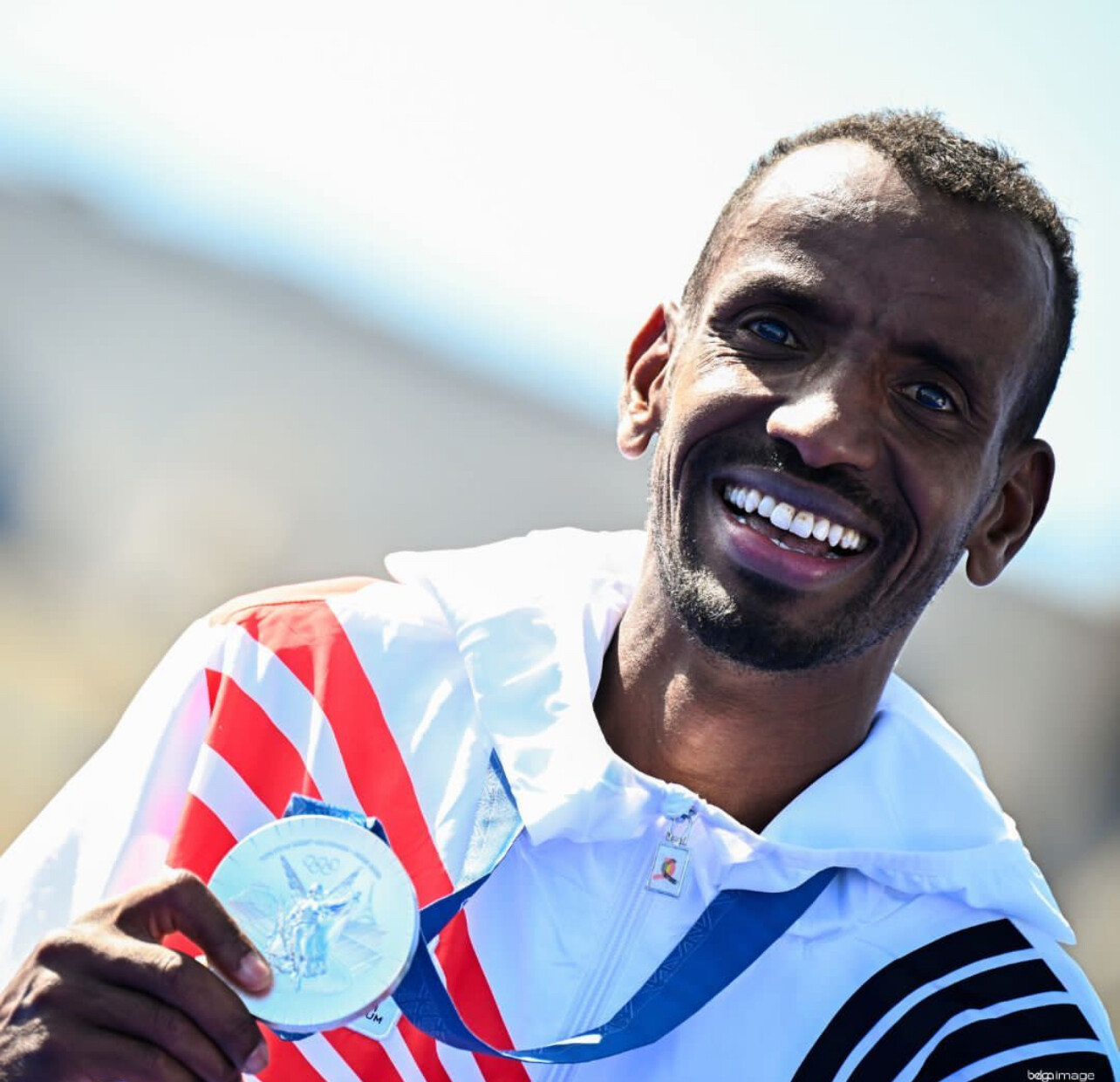
Now 36, Abdi is acutely aware that the margins are tightening.
“I feel many athletes are getting close to that record,” he said. “If I want to hold on to it for a few more years, I have to go faster. Whether it’s in this edition or another time, I don’t know. But my ambition is to break that European record.”
Ahead of Rotterdam, Abdi will test his form in familiar surroundings at the Gent Half Marathon on March 8, using the race as a barometer after a year that never fully came together physically. For a runner whose success has been built on rhythm and continuity, regaining health may be the most important victory of all.
A Course Built for History
Rotterdam’s reputation as one of the world’s fastest marathon courses is long established.
In 1985, Portugal’s Carlos Lopes set a world record of 2:07:12 there. Three years later, Ethiopia’s Belayneh Dinsamo lowered the mark to 2:06:50—a time that stood for a decade. In the women’s race, Tegla Loroupe rewrote history in 1988 with a world record of 2:20:47, ending Ingrid Kristiansen’s long reign.
It is into this lineage of record-breaking performances that Abdi has firmly placed himself—and where he hopes to return once more in 2026.
Bashir Abdi’s 10 Fastest Marathon Performances
• 2:03:36 – 1st, 2021 Rotterdam Marathon
• 2:03:47 – 1st, 2023 Rotterdam Marathon
• 2:04:32 – 3rd, 2023 Chicago Marathon
• 2:04:49 – 2nd, 2020 Tokyo Marathon
• 2:05:19 – 3rd, 2022 London Marathon
• 2:05:23 – 4th, 2022 Rotterdam Marathon
• 2:06:14 – 5th, 2019 Chicago Marathon
• 2:06:47 – 2nd, 2024 Olympic Games (Paris)
• 2:06:48 – 3rd, 2022 World Athletics Championships (Eugene, Oregon)
• 2:07:03 – 7th, 2019 London Marathon
by Boris Baron
Login to leave a comment
NN Rotterdam Marathon
The marathon has been the biggest one-day sporting event in the Netherlands for many years in a row with over 35000 athletes professionals inclusive. The world's top athletes will at the start on the bustling coolsingel, alongside thousands of other runners who will also triumph,each in their own way.The marathon weekend is a wonderful blend of top sport and festival. ...
more...