

Running News Daily
Running News Daily is edited by Bob Anderson and team. Send your news items to bob@mybestruns.com Advertising opportunities available.
Index to Daily Posts · Sign Up For Updates · Run The World Feed
Articles tagged #150m
Today's Running News



Sprint Royalty: Noah Lyles And Usain Bolt Share A Special Moment At FIFA World Cup Semifinal
Some moments transcend sport, reminding fans that greatness recognizes greatness.

That was the scene during the FIFA World Cup semifinal between Spain and France, where American sprint star Noah Lyles and Jamaican icon Usain Bolt delighted fans with a memorable courtside encounter. Lyles seized the opportunity to snap a selfie with the fastest man in history, creating a picture that instantly resonated across the sporting world.
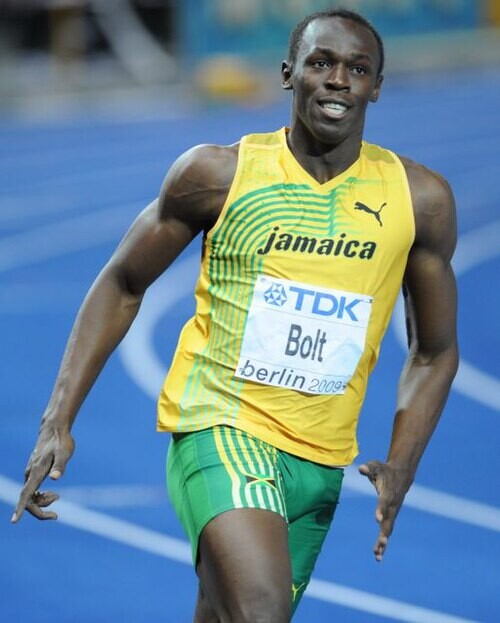
While football commanded the spotlight on the pitch, two of track and field's biggest names stole a memorable moment off it. The photograph brought together two athletes whose careers have helped shape different eras of sprinting—Bolt, the undisputed legend who redefined speed with his eight Olympic gold medals and world records in the 100m and 200m, and Lyles, the world record holder in 150m and modern-day sprint sensation carrying the sport into a new generation.
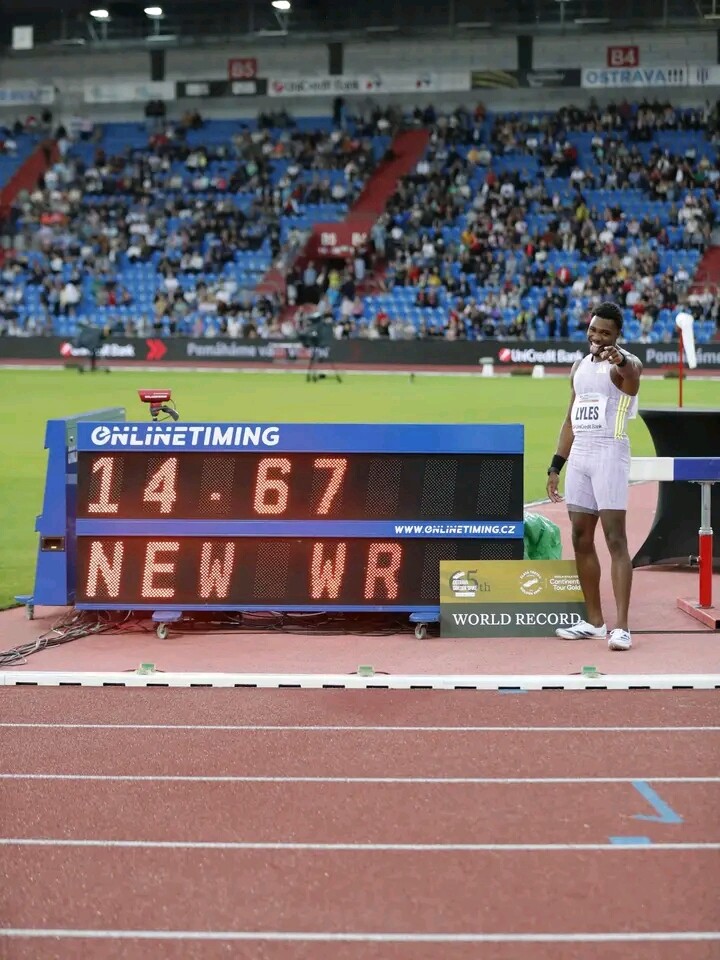
For Lyles, the selfie represented more than a simple photograph. It symbolized respect for the man who inspired countless young sprinters around the globe, including many of today's elite athletes. Bolt's dominance transformed athletics, while Lyles has emerged as one of the sport's biggest personalities, combining world-class performances with charisma and confidence.
The meeting served as a powerful reminder of the bond that exists among champions. Although they belong to different competitive eras, both have become global ambassadors for athletics, drawing new audiences to the sport through their achievements and larger-than-life presence.
As Spain and France battled for a place in the World Cup final, fans were equally captivated by the sight of sprinting royalty sharing a light-hearted moment. It was a celebration of excellence, mutual admiration, and the enduring legacy of athletics.
When legends meet, the result is more than just a selfie—it becomes a timeless image that connects generations of greatness.
by Erick Cheruiyot for My Best Runs.
Login to leave a comment
Gout Gout: The Teenage Sprint Sensation Poised to Rewrite Athletics History
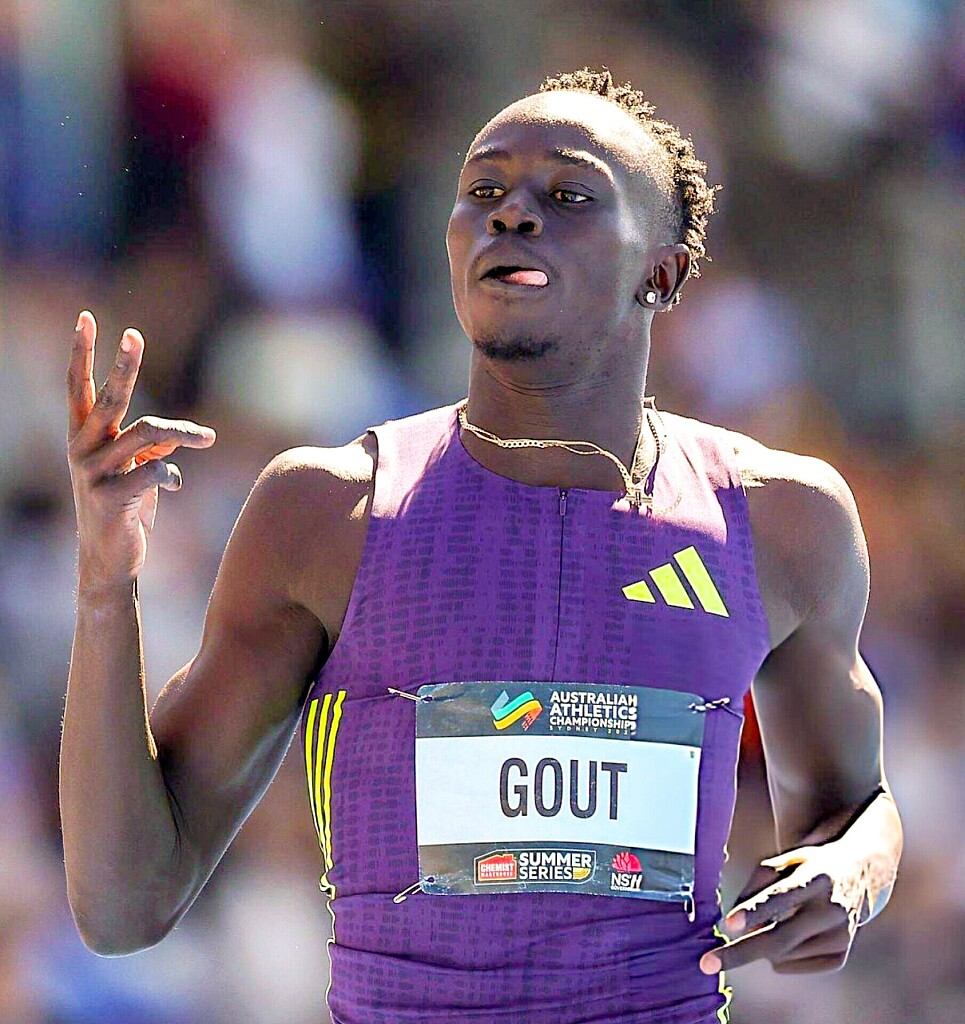
Remember the name Gout Gout.
At just 18 years old, the Australian sprint prodigy is already commanding global attention and fueling conversations about the future of track and field. In a sport constantly searching for its next superstar, Gout is rapidly emerging as one of the brightest talents the world has seen in years.
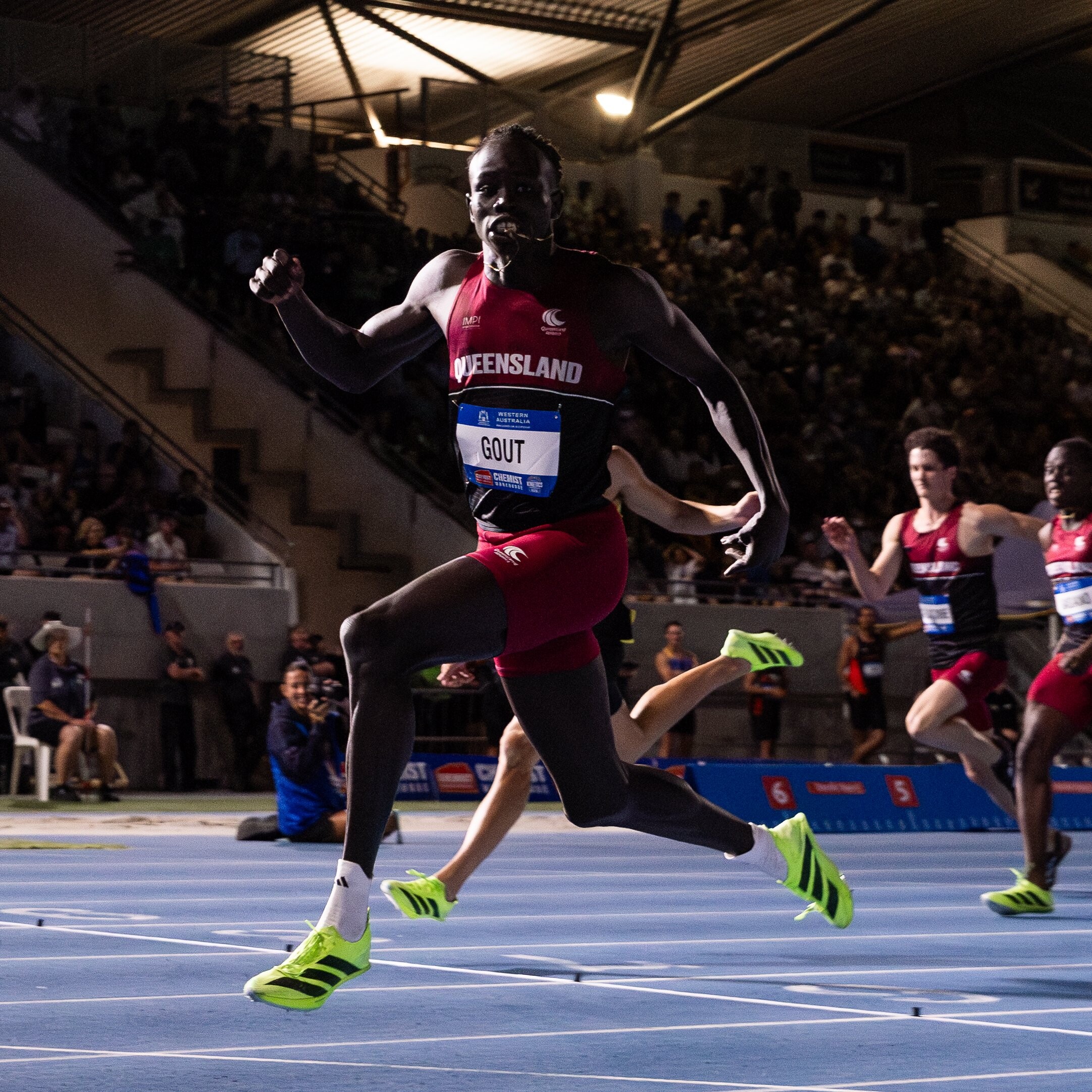
His latest statement came at the prestigious Ostrava Golden Spike meeting, where he stepped onto the track alongside some of sprinting's biggest names, including reigning world champion Noah Lyles. Far from being overwhelmed by the occasion, the teenager delivered a composed and confident performance, finishing third in the 150m in 14.96 seconds against two of the fastest athletes on the planet.
Yet impressive as that performance was, it is not the result that has the athletics community buzzing most.
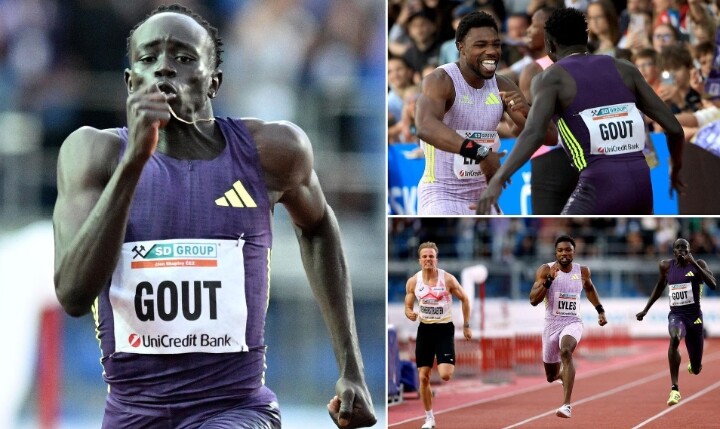
Earlier this year, Gout stunned the sprinting world by clocking an astonishing 19.67 seconds for 200m, setting a new world Under-20 record. The performance instantly elevated him from promising prospect to genuine phenomenon.
What makes the achievement even more remarkable is the historical context. At the same age, Gout was faster than sprint legend Usain Bolt. Comparisons to the Jamaican icon are inevitable, not because records demand them, but because the raw numbers are impossible to ignore.
Of course, Gout's journey is only beginning. Like any young athlete, he still has room to grow, refine his craft, and gain valuable experience at the highest level. The road from teenage sensation to global champion is rarely straightforward.
But there is no denying the extraordinary potential that lies within him.
His speed, composure, and ability to perform under pressure have already marked him out as one of athletics' most exciting young stars. More importantly, he possesses the kind of talent that inspires belief that a new era of sprinting may be on the horizon.
The sport has always thrived on rivalries that capture the imagination of fans across the globe. With established champions such as Noah Lyles currently leading the way, the emergence of Gout Gout adds an intriguing new chapter to sprinting's future.
The next great rivalry may already be taking shape.
And one of its leading figures is still only a teenager.
For now, the message is simple: remember the name Gout Gout. The future is arriving faster than anyone expected.
by Erick Cheruiyot for My Best Runs.
Login to leave a comment
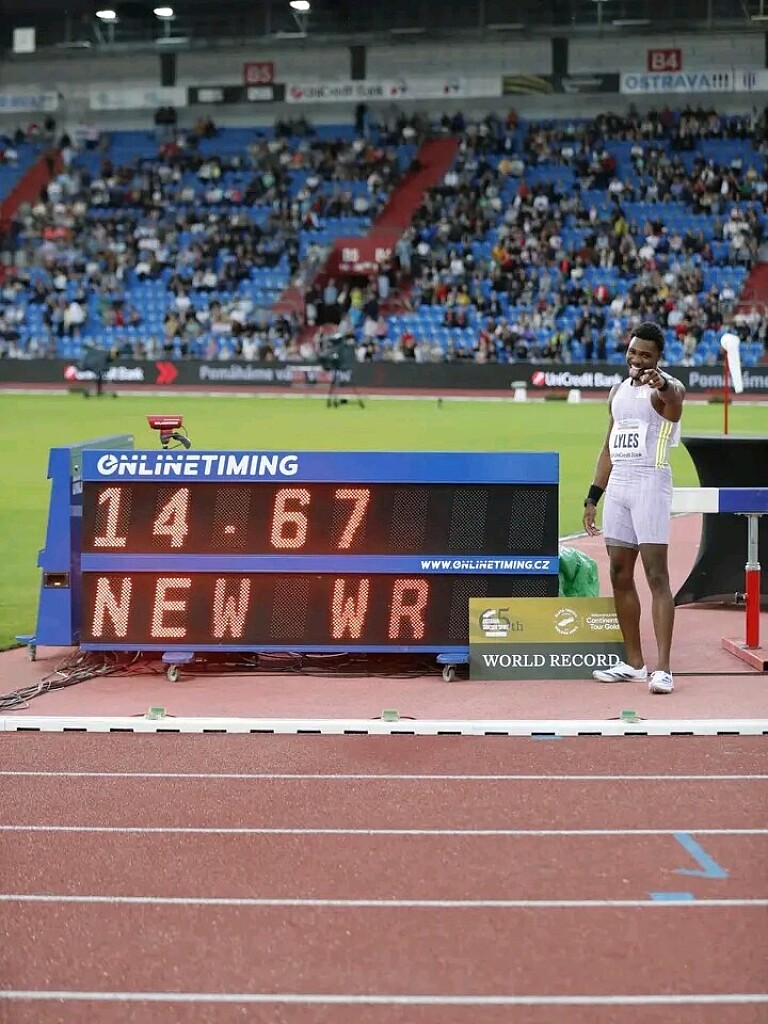
Noah Lyles Makes History With Blazing 150m World Record In Ostrava
Noah Lyles has once again rewritten the sprinting history books, delivering a stunning performance in the 150m at the Ostrava Golden Spike meet as he stormed to a new world record of 14.67 seconds.
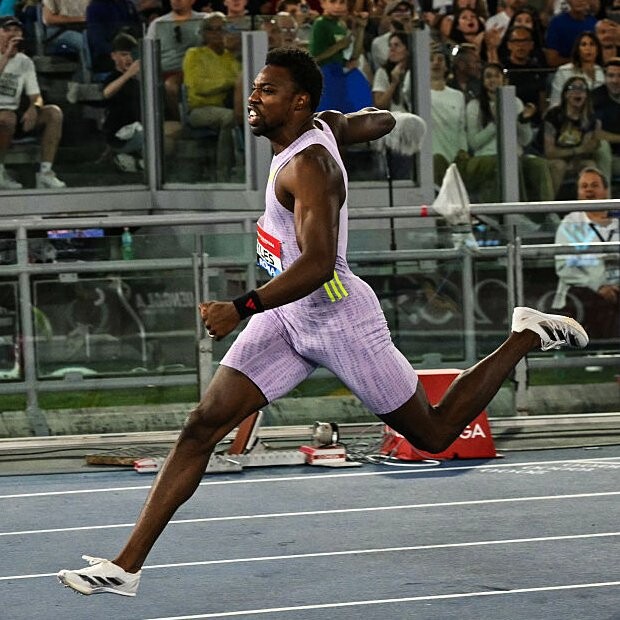
The American sprint superstar produced a flawless display of speed and power, stopping the clock at 14.67 (0.0) to break the previous world best mark of 14.92 set by Jamaica’s Kishane Thompson.
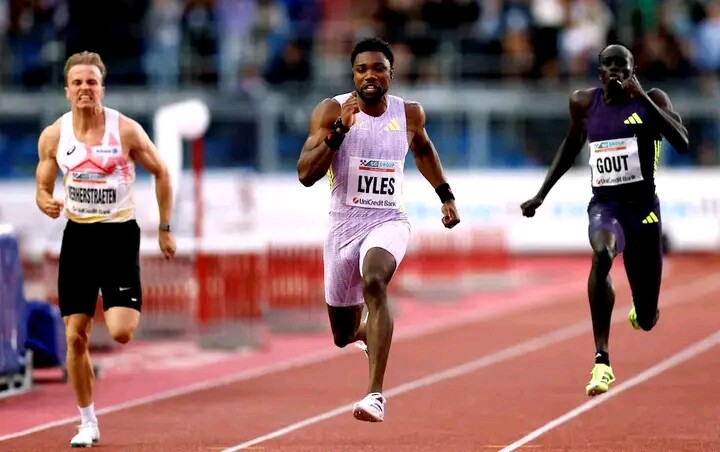
Lyles’ victory came in a high-quality field that saw South Africa’s Sinesipho Dambile push him all the way, finishing second in an impressive 14.78 seconds. Australia’s teenage sensation Gout Gout continued to show why he is regarded as one of the sport’s brightest young talents, completing the podium with a remarkable 14.96.
The 150m race, which combines the explosive acceleration of the 100m with the speed endurance required for the 200m, provided another opportunity for Lyles to showcase his rare sprinting ability.
Known for his dominance over 200m and his Olympic success, Lyles continues to expand his legacy with performances that underline his status as one of the greatest sprinters of his generation.
The record-breaking run in Ostrava adds another historic chapter to Lyles’ career and sends a powerful message ahead of the major international competitions ahead.
by Erick Cheruiyot for My Best Runs.
Login to leave a comment
Record-Breaking Performances Shine at Czech Indoor Gala in Ostrava
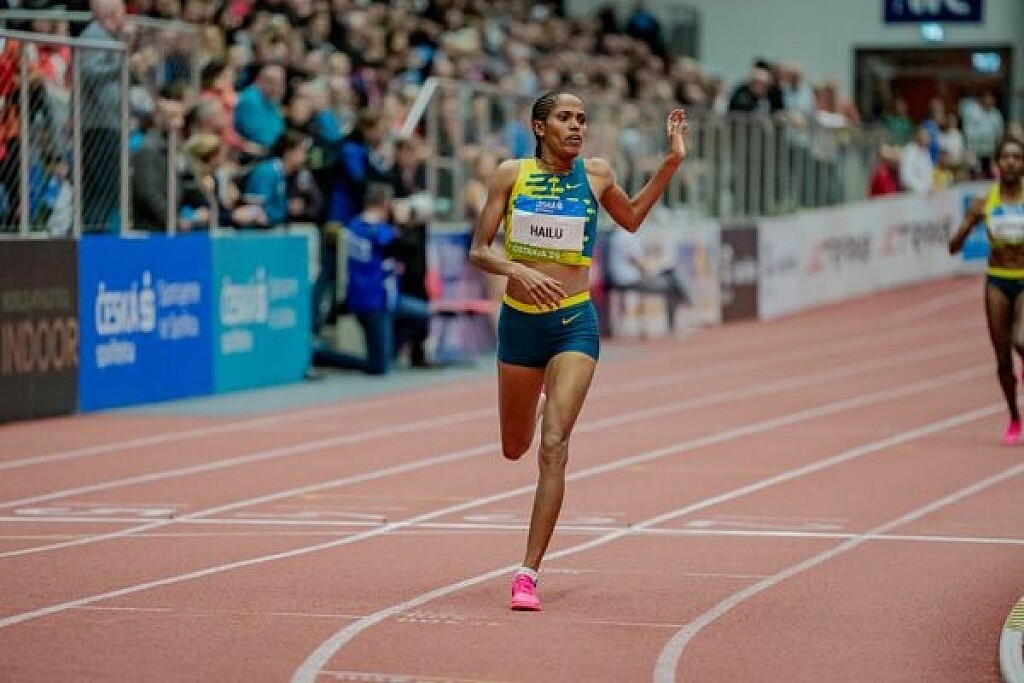
World indoor 1500m champion Freweyni Hailu delivered one of the fastest 3000m performances of all time at the Czech Indoor Gala—the fourth World Athletics Indoor Tour Gold meeting of the season—held in Ostrava on Tuesday (4).
Competing in just the third 3000m race of her career, the Ethiopian 23-year-old dominated with an 8:24.17 season opener, moving her to eighth on the world all-time list. Following a 2:52.08 split at 1000m and hitting 2000m in 5:45.8, Hailu surged over the final five laps, closing the last kilometre in 2:39 to secure victory.
Portugal’s Salome Afonso, who ran with Hailu in the early stages, finished second in a personal best of 8:39.25, followed closely by Kenya’s Purity Kajuju Gitonga in 8:39.36. Great Britain’s 18-year-old Innes FitzGerald shattered the European indoor U20 record by over 10 seconds, running 8:40.05 to claim fourth place.

The men’s 800m also saw a standout performance, with Belgium’s Eliott Crestan breaking the 1:45 barrier indoors for the first time, clocking a national record of 1:44.69 in his season debut. The world indoor bronze medallist improved on his previous best of 1:45.08 from last year’s World Indoor Championships in Glasgow, securing 12th place on the world all-time list. Italy’s Catalin Tecuceanu finished second in 1:45.35, while Algeria’s Slimane Moula, making his indoor debut, took third in 1:45.50.
In the women’s 800m, Gabriela Gajanova emerged victorious in 2:02.16, overtaking world indoor bronze medallist Noelie Yarigo in the final 150m as Yarigo faded in the closing stretch.
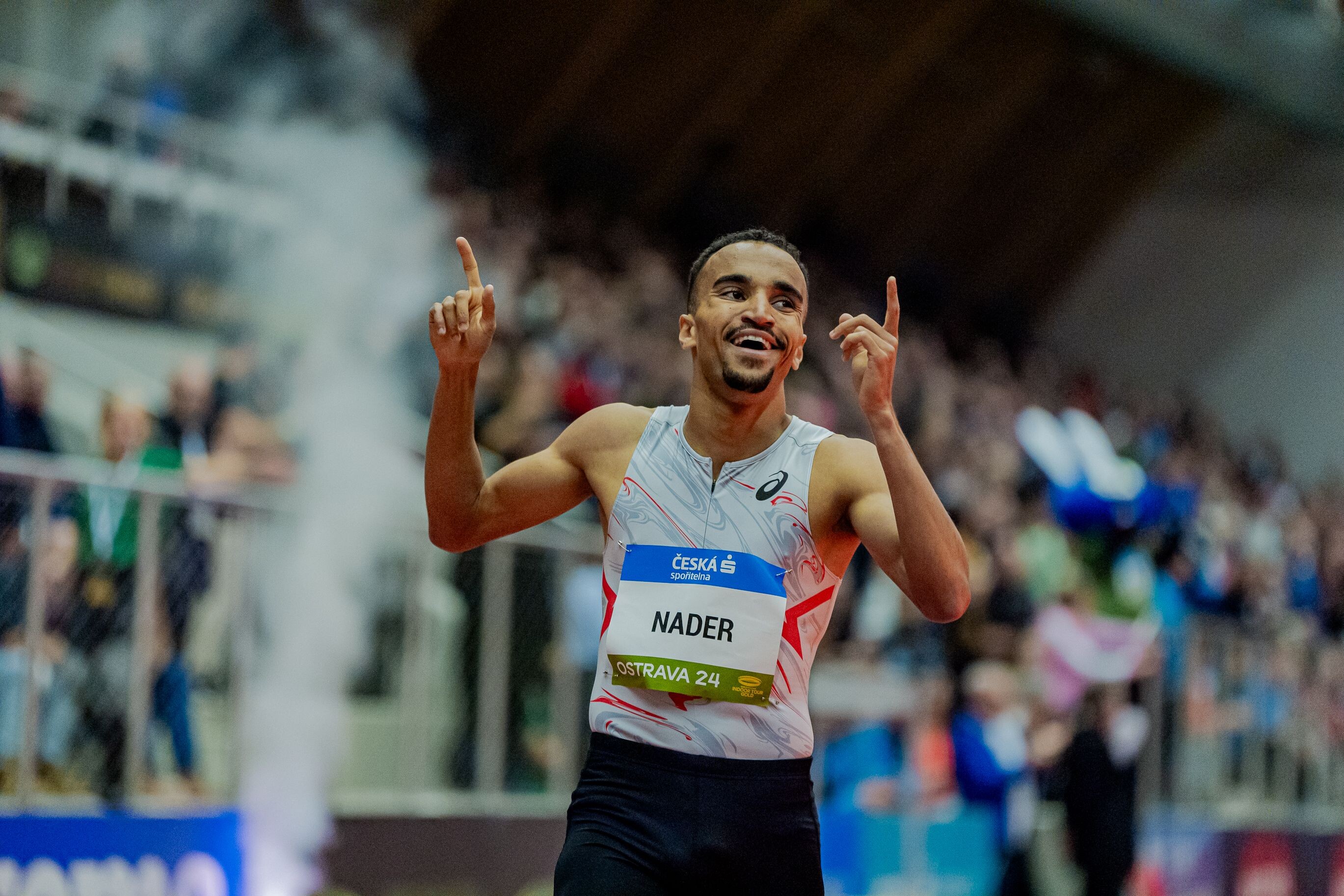
Meanwhile, Portugal’s Isaac Nader continued his dominance in Ostrava, setting his second consecutive meeting record with a 3:54.17 mile after breaking the 1500m record last year. He surged past Great Britain’s Elliot Giles in the home straight, with Giles finishing second in 3:54.62 in his first indoor race since 2022. Sweden’s Samuel Pihlstrom also made history, running a Swedish indoor record of 3:54.78 to place third.
With multiple meeting records shattered and world-leading times set, the Czech Indoor Gala in Ostrava reaffirmed its status as a premier stop on the World Athletics Indoor Tour Gold circuit.
Login to leave a comment

McColgan 10km record ruled out due to Great Scottish Run short course
British and European record of 30:18 set in Glasgow will no longer stand after Great Scottish Run course is found to be 150 meters short.
Runners who tackled 10km in the Great Scottish Run on October 2 have found that their times are invalid after the course was discovered to be 150m short. These include Eilish McColgan, who set a British record of 30:18.
The apologetic organizers say runners who did the event in Glasgow this month can have a 10% discount on their entry to the event next year.

It was McColgan’s final race of a busy and successful 2022 season. She is now on holiday in Egypt and was told of the news by Great Scottish Run organizers – the Great Run Company – before their chief executive, Paul Foster, put out a statement saying: “We were recently made aware of a discrepancy with the 10km course at this year’s Great Scottish Run. Following an internal investigation, we have established it was 150m short.
“The shortfall in the distance was wholly due to human error. An area of the course was not laid out in line with the previously agreed plans.

“This error had a marginal knock on to the half-marathon but it was within tolerance and the course on the day was valid.”
At the same Great Scottish Run event in 2016 Callum Hawkins’ Scottish half-marathon record of 60:24 was also ruled out after the route was found to be 149.7m short of the full 13.1-mile distance.
On this month’s event, Foster continued: “We are extremely disappointed that this happened at the 10km on what was an incredibly positive return to the city for the Great Scottish Run following the pandemic.
“This error invalidates Eilish McColgan’s European and British 10km records that were believed to have been set that day. We have been in touch with Eilish directly and to apologize.
“We will be reviewing our internal processes to ensure we cannot make this mistake again.
“We know we’ve let out customers down on this occasion. There are no excuses for this happening and we’re very sorry. We’ll be in touch with everyone who took part in the 10km offering a 10% discount into the 2023 event.”
by Jason Henderson
Login to leave a comment

Great Scottish Run
Experience the inspiring atmosphere of Scotland’s biggest running event and achieve something great this autumn. This spectacular weekend of running is a celebration of sport that is suitable for the whole family and is televised live on the BBC. The Bank of Scotland Great Scottish Run half marathon welcomes thousands of runners to the city of Glasgow every year. The...
more...
Four effective running workouts to increase speed and endurance
Most people don’t approach running as they do strength training. They just set out on unplanned jogs around the block, throw in some sprints, and call it a day.
But targeted running workouts geared toward your fitness goals—training for a marathon, growing faster, getting fitter—make a world of a difference.
To help you become more methodical with your runs, we asked Gena Bradshaw, P.T., an assistant track and field coach and Life Time Fitness trainer, to suggest five training mainstays every runner should have in his workout regimen. Each workout is designed to train a different energy system to help you improve endurance, speed, and power. Plus, there’s a prescription for runners who are just starting out, and those who are more experienced.
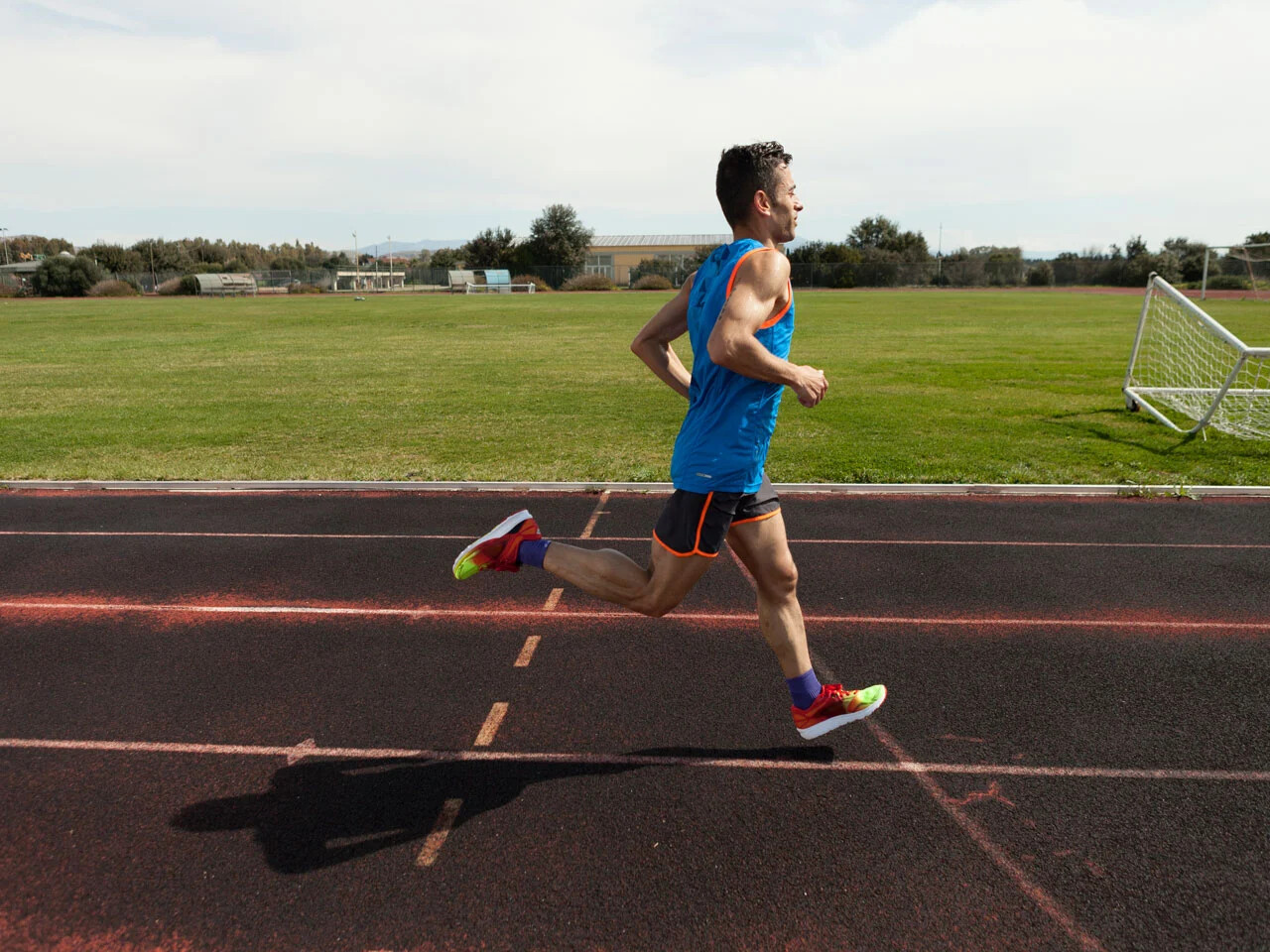
Before each workout, though, remember to start with a dynamic warmup. “Warmups minimize your risk of injury, increase heart rate, raise blood flow to your muscles, and help you burn more calories mid-workout,” Bradshaw says.
Go for a comfortable 5- to 8-minute jog, then complete these drills to neurologically prime your body for your workout. Mark 20 yards. Focus on nailing the proper form for each drill, and increasing your speed as you progress.
Walking lunges

Carioca
Knee hugs
Ankle pulls
High knees
Butt kicks
Straight-leg kicks
Lateral shuffle
Also, make sure you cool down post-workout. Jog to flush the lactic acid out of your legs, and stretch while your muscles are still warm. Foam rolling will also help reduce soreness, and keep your muscles from getting knotted.
Ready to hit the ground running? Give these running workouts a try.
1. Explosive hill sprints
Why it works: Hill workouts help develop power by working your “alactic” energy system—your source of quick sprinting energy, Bradshaw says. They’re meant to be an all-out effort. “Form is crucial; you should be thinking about hands pumping cheek to cheek, and your knees driving up,” Bradshaw says. “Your arms set the pace. If you can’t move your arms, you’ll slow down significantly.”
How to do a hill workout: Sprint for 10-20 seconds up an incline outdoors or on a treadmill grade that’s comfortable but challenging, Bradshaw says. You don’t need to find the steepest hill around—it can be a gradual incline. Then, as you get stronger and more able to truck through these, you can increase the incline. Considering how intense this (and other hill sprint workouts like it) is, only do one or two of these sessions per week. Beginners start with just one.
Beginner: Complete 3-5 reps. “Remember, this is pure explosiveness, so it should be difficult,” Bradshaw says. You can always increase the time for fewer reps, too. Completely recover between reps. Take about 3-5 minutes in between.
Advanced: Complete 5-6 reps, taking 3-5 minutes rest in between each rep.
2. Interval workout
Why it works: “Intervals are meant to help increase stamina (and should not be conducted at max effort), so you’ll take less recovery time and increase the number of reps,” Bradshaw says. The big challenge is holding your pace for the entire workout, she adds. As you become more conditioned, jog rather than walk to get an active recovery between intervals. “Remember to maintain good form: shoulders down and back, chest up, and breathe,” Bradshaw says. “This will help you run more efficiently, and help you progress each week.”
How to do an interval workout: This routine is known as “ladders”. Try to incorporate one or two sessions per week.
Beginner:– run 50 meters– walk/jog 50 meters– run 100 meters– walk/jog 50 meters– run 150 meters– walk/jog 50 meters– run 200 meters– walk/jog 50 meters– run 250 meters– walk/jog 50 meters
Advanced: Complete the same workout above, only go “up and down” the ladder. Once you run 250 meters, work your way back down (200m, 150m, 100m, 50m).
3. Short and long sprints
Why it works: “Short sprints (generally 55-200 meters) help develop speed and power, while long sprints (200-400 meters) help develop speed endurance,” Bradshaw says. Both are important, but you’ll benefit more from one over the other depending on your end goal. “Are you training for a specific event or race?” Bradshaw says, “or are you training to get into the best shape of your life?” Longer sprints are advantageous for those training for 10Ks, half marathons, even triathlons, whereas short sprints are best for torching calories, and adding muscle, strength, and power to your lower body. Note: Don’t do a hill workout the day before you complete a short-sprint workout.
How to do a short-sprint workout: Do 2-3 sessions per week (depending on your end goal).
Beginner: Complete 6-8 sprints of 100 meters at 75%-80% effort. (“This means you can utter a few words, but can’t maintain a conversation,” Bradshaw says.) Recover for 50-60 seconds between reps.
Advanced: Complete 8-10 sprints of 100 meters at 80-85% effort. At this intensity, you’re pushing very hard, but not going as fast/hard as you can. Recover for 45 seconds in between reps.
How to do a long-sprint workout: For long sprints that’ll tap into your speed endurance, do 2-3 sessions per week.
Beginner: Complete 3 sprints of 300 meters at 75% effort. Recover for 3 minutes between sprints.
Advanced: Do two sets, each 3 sprints of 300 meters at 75% effort. Recover for 2-3 minutes between sprints, and 5 minutes between sets.
4.- Long-distance run
Why it’s effective: “Long-distance runs are intended to increase your aerobic capacity, which is the maximum amount of oxygen consumed by your body during exercise,” Bradshaw says. They also encourage your body to burn more fat for fuel (which is why distance runners tend to be skinny).
How to do a long run: Long runs should comprise 20% of your overall mileage for the week. This can be 1 session per week. Your mileage should increase by approximately 10% per week, and the pace should be around 70% of your max. “This is purely aerobic, meaning if you can’t hold a conversation, you’re going too hard,” Bradshaw says. “You should be able to hold this pace for an extended period of time, completely steady.”
Beginner: Complete 1 mile at a slower pace, maybe even starting off with a continuous 10- to 15-minute walk/jog. Your goal should be to work up from that mile. Go for time instead of miles to start.
Advanced: Complete 5 miles. Just keep your runs continuous and progressive each week.
by Brittany smith
Login to leave a comment

Improve your explosiveness with this sprint workout, canadian indoor 400m record holder Lauren Gale gives tips on how to build your speed
Although sprinting and long-distance running are different disciplines, there is obviously some crossover. Both require explosive strength and power, whether to pass someone or when sprinting to the finish line. Working on your explosiveness can also reduce your risk of injury during activities that involve high power outputs with quick acceleration, as in middle-distance running or sprint events.
Canadian indoor 200m and 400m record holder and sprinter for Colorado State University Lauren Gale correlates a lot of her success with explosive work on and off the track. “When you are training for explosiveness, the goal is to build your lactate threshold,” Gale says. (Lactate threshold refers to the point at which lactic acid begins to accumulate in the blood during strenuous efforts, surpassing the body’s ability to flush/recycle it for energy production.)
The workout

Two to three sets of 300m, 150m, 80m, all off 90 seconds’ rest, with five minutes between sets
Before you start the workout, make sure you do a proper 10- to 20-minute warm-up with dynamic stretching. Each rep should be done at close to an all-out sprint pace, with 90 seconds of standing rest between reps and five minutes of standing rest between sets.
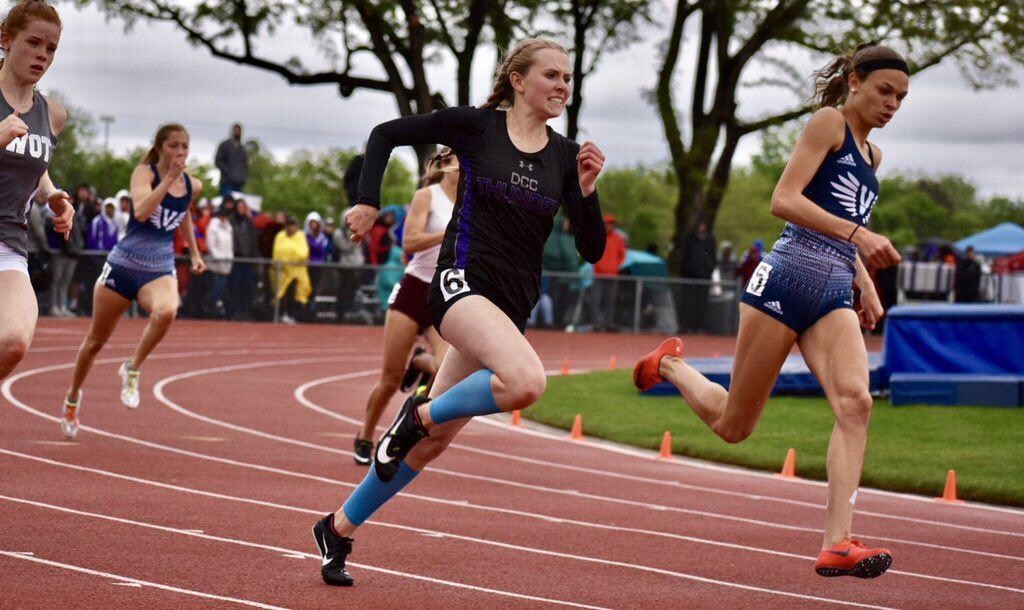
“The short rest mixed with the longer sprint reps will help build your speed for longer distances,” says Gale.
The purpose of this workout is to develop explosive power from your lower body. Each rep requires you to explode to top speed from a standstill position (like racing off the blocks), and you begin to accelerate by driving your lower body into the ground.
by Marley Dickinson
Login to leave a comment

The Anatomy of a Perfect Marathon Taper
5 facts about reducing training load and maintaining fitness as your marathon approaches. Plus, a proven 4-week marathon taper plan.
Fall marathons are looming, and tens of thousands of runners are finally preparing to toe the line to see just what they can do after all these months of waiting. A big piece of success lies in the final stages of preparation where you execute the marathon taper, a stage of training when you back off and try to walk the tightrope between going into the race well-rested, but not so rested that you go stale.
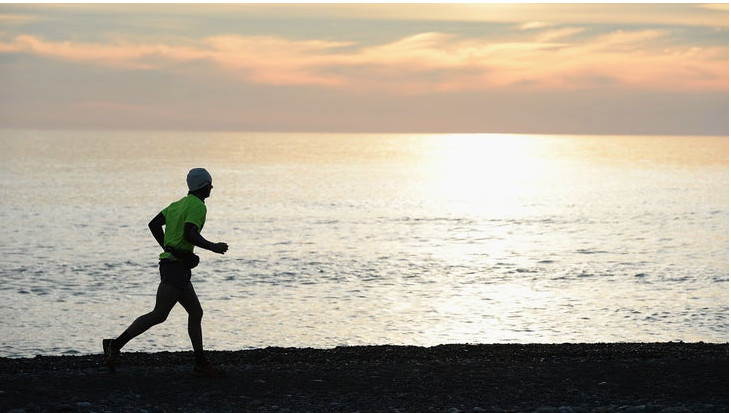
Going stale occasionally happens, but most runners err in the opposite direction by not trusting the marathon taper process, trying to do too much when they should be resting. It’s a mistake that can make the difference between a PR and a disappointment.
Luckily, there are a few basic principles you can remember when the fears we all face about being lazy or missing training tempt you to do too much.
5 Facts About the Marathon Taper
1. Tapering works.
A 2007 study led by Laurent Bosquet, then at the University of Montreal, Canada, found that a taper can speed you up by more than 5.6 percent. That’s the difference between a 3:20 marathon and a 3:31 marathon. Note, however, that 5.6 percent benefit is an extreme case. You shouldn’t expect to get that much, but trust that proper tapering will result in a better time.
2. In the final days, extra training won’t help.
The hay is in the barn and your goal is to rest, while not letting your “training” hay go moldy. It’s too late to try to make up for lost training earlier in your training cycle, and if you try to do that, all you can do is to blow your taper…and with it, your race.
3. The ideal taper comes from reducing volume, but not intensity.
You need to do some speedwork during the taper in order to keep all your energy and neuromuscular systems sharp. This means a mix of everything from strides to aerobic work. What you don’t need is to push any of these to the max.
4. It works best by cutting down progressively, not all at once.
Bosquet’s paper found that the ideal taper eventually cut down total volume by 40-60 percent by the final week, including speed workouts. In the ideal taper, you run as many days a week as you normally do (maybe with one or two extra, judiciously timed, rest days), but reduce volume in everything from workouts to long runs, as well as your weekly total mileage.
5. Don’t sweat it if you make minor errors.
“Let’s say you’re scheduled to go six miles at 7:00 pace,” says Thom Hunt, a former American 10K red-holder who now coaches at Cuyamaca College in San Diego. “If you run 6½ at 6:45, you’re not going to blow the whole thing.” Hunt was talking specifically about 5K/10K tapers but the same applies to the marathon. In fact, it probably doesn’t matter all that much if you get lost on what’s supposed to be an 8-mile run ten days before the race and accidentally wind up running, say, 11 miles. The stress of fretting about the error will probably cost you more than the error itself.
The Four-Week Marathon Taper
You won’t find much talk in the literature about tapers longer than 2-3 weeks. That’s largely, Bosquet says, because it’s hard to get enough runners to consent to tapers longer than 14 days to conduct a meaningful study.
But a 1996 French study of swimmers found benefits from a 28-day taper, something I find very interesting because I’ve long prescribed a four-week marathon taper.
Not that it’s what most people conventionally think of as a taper, because it begins, four weeks out, with an extremely tough workout. It then returns to normal baseline in volume with reduced intensity for one week, followed by a 21-day progressive taper. If you prefer, you could think of it as a final push, followed by a taper.
Here’s how the four-week marathon taper works:
• 28-29 Days Before the Race
On Saturday, even if the race is on Sunday, because there’s another workout next Tuesday, and you need at least three days to recover, do a long run of 20–22 miles, finishing with 13–18 miles at marathon pace. That’s a wide range, I realize; being more specific depends on your experience. For a seasoned marathoner doing at least 70 miles per week on average over the past few months, hold the marathon pace part for 16–18 miles. For lower-mileage runners and new marathoners, drop down to 13. This is not only a major workout, but a critical test of your marathon goal. If you can’t hit your target pace, it probably needs to be adjusted.
• 27-21 Days Before the Race
Workout days:
Tuesday: Do a normal speedwork session, IF you’re recovered from the long/fast run 3 days ago. If sore or fatigued, reduce intensity and or volume.
Friday: Do a tempo run. Normal volume.
Sunday: Go long, reducing intensity to easy. Do 20-22 miles max. The marathon is now 20-21 days away.
Total weekly volume: Normal.
• 20-14 Days Before the Race
Workout days:
Tuesday: Normal speed workout.
Friday: Tempo. Slightly reduced volume (maybe by 10-15 percent).
Sunday: 16 miles, ending with 50-60 percent as many marathon-pace miles as two weeks ago. This should not be super-hard.
Total weekly volume: 10 percent below normal.
• 13-7 Days Before the Race
Workout days:
Tuesday: Normal workout adjusted to about 2/3 of total volume.
Friday: Tempo. Reduced to about half of normal volume.
Sunday: 10-12 easy.
Total weekly volume: At least 20 percent below normal.
• Final week (assuming Sunday race)
Workout days:
Tuesday: 6-8 x 600m @ tempo pace (no faster than 12K pace) with 20-25 sec recovery between reps. Plus, up to 4 x 150m, fast but relaxed. Stop while still turning over quickly without stress.
Wednesday, Thursday, Friday: Two days easy. Take one day off.
Saturday: 20–30 min. easy, with 4 x 100m strides. 20 minutes is enough for most runners to feel warmed up and striding smoothly.
Sunday: Race.
Total weekly volume: For the last 7 days before the race (counting the long run last Sunday), 50 percent of normal.
Other Tapers
Not that this is the only way to do it. Hunt says, “If there was one way, we would have had a form years ago about what to do, and just follow that.” But even top runners with the best coaching follow a variety of tapering patterns.
Lindsey Scherf, for example, who holds the world record for the indoor marathon, does a quite different taper, though the overall effect is remarkably similar. Rather than tapering progressively from 2–3 weeks out, she finds that she’s done best by taking the big drop in mileage (50 percent) three weeks ahead of the race, then returning to 85 percent of normal for the remaining two weeks. “I inject rest, but then return to a non-overtraining routine where I know I’m in a good rhythm,” she says.
The real key, Hunt says, is to allow your body to rest and be physically (and mentally) relaxed, focused, and ready to go on race day. To this end, he stresses that it’s important to make sure that your final long run isn’t too long. “You need to keep it short enough that you’re not breaking down the body.”
And, he says, the key thing is to trust the processes: “Getting a 100 mile per week runner to go down to half of that mentally freaks them out.” Cutting back from 50s to 20s is no less stressful.
“Each athlete is different,” Hunt says. “But you still have to follow the general physiological principles.”
Scherf concurs, adding an interesting note: Try out the taper before race week.
We’ve all been told never to do anything in an important race that we’ve not tested in training. Usually, that’s discussed in terms of nutrition, hydration, footwear, or clothing that might unexpectedly chafe. But why not also apply it to your taper, Sherf suggests, testing it on a less important (and presumably shorter) race beforehand, just to see how your body reacts.
After all, Bosquet’s study found that the ideal taper ranged from a 40 percent to 60 percent cutback. 40 to 60% is also a wide range, so Scherf is onto something when she says you need to find what part of that range works for you. “Not every runner responds the same way,” she says.
The key takeaway from Bosquet’s study, however, is that 40–60% is a lot more than most mileage-obsessed runners want to do. Don’t be one of them: Trust the taper, and run your best marathon.
by Podium Runner
Login to leave a comment
Runners face potential contract reductions for failing to race in 2020
A possible explanation for the slow times from world-class runners at Monday's High Performance Invitational
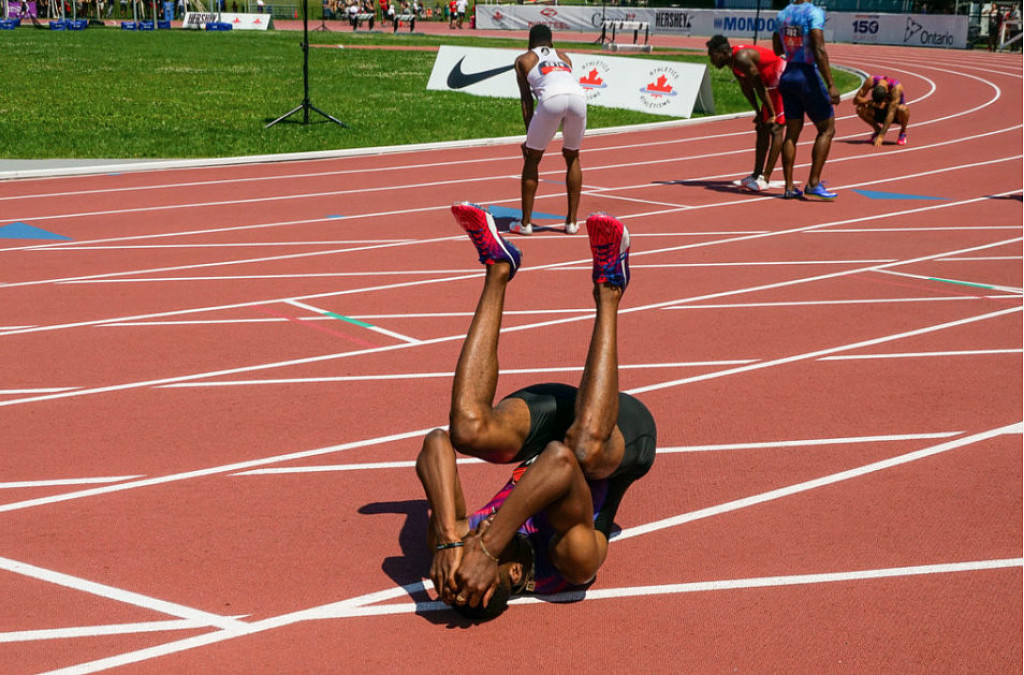
On Monday, a group of runners came together to run the AP Ranch High Performance Invitational in Fort Worth, Texas. This meet produced some extremely impressive results, including Michael Norman’s world-leading 100m time of 9.86. However, following Norman’s strong mark, he ran a series of very slow times in off-distances like the 250m, 60m and 150m. While many runners are taking this season to explore some new running distances, few are completing three or more in a day. Educated members of the running community speculated on Twitter that this unorthodox compilation of events and times is to fulfill athlete contracts, which can stipulate that runners must race in at least 10 World Athletics-sanctioned competitions during the contract year, or face pay reductions.

Norman’s impressive 100m mark garnered some serious attention (as everyone is a little racing-news starved). But once fans checked the meet results, they saw the odd combination of events that followed and the comparably slow finishing times associated with those off distances. For example, Norman’s 250m finishing time of 34.82 was basically a jog, and is slower than his 300m personal best (while running 50m shorter). Kori Carter, a sprinter and jumper, wore five different outfits that day, sharing a picture on Instagram captioned, “5 meets. 5 lerwks. 1 day.”
With most athletes competing in four to five indoor races a year (or fewer, considering that the indoor season was cut short due to COVID-19), 10 races is a very lofty goal for 2020.
All of the athletes who raced in the Fort Worth invitational are either unattached, Nike or Jordan Brand (a Nike affiliate) runners. While we can’t be certain that this was the motive for their strange mix of events and yo-yoing results, it seems likely that these runners are making an effort to fulfill obligations to their employer.
n a contract obtained by Canadian Running through a former Nike athlete who signed in 2018 (who requested anonymity), there is a section for reductions based on number of performances alone. It reads, “If ATHLETE does not, for any reason, compete in at least ten (10) IAAF-sanctioned competitions [now WA] during a Contract Year, NIKE may, in its sole discretion, reduce Base Compensation as follows:
Number of IAAF competitions that ATHLETE competed in and the reduction:
Less than 6 50%
6 or 7 35%
8 or 9 25%”
Like any other job, failure to perform results in penalties. Running is no different. However, the circumstances that runners (like everyone else) have faced in 2020 are extraordinary. While those getting paid to train and compete should make every effort to continue doing so, racing is a fickle business these days. For example, Quebec is the only Canadian province where sanctioned track events are taking place, and they’re not able to offer events over 400m until August 1.
by Running Magazine
Login to leave a comment
Noah Lyles’s world record tease
It looked like Noah Lyles had set a 200m world record, but it turned out he ran a little short
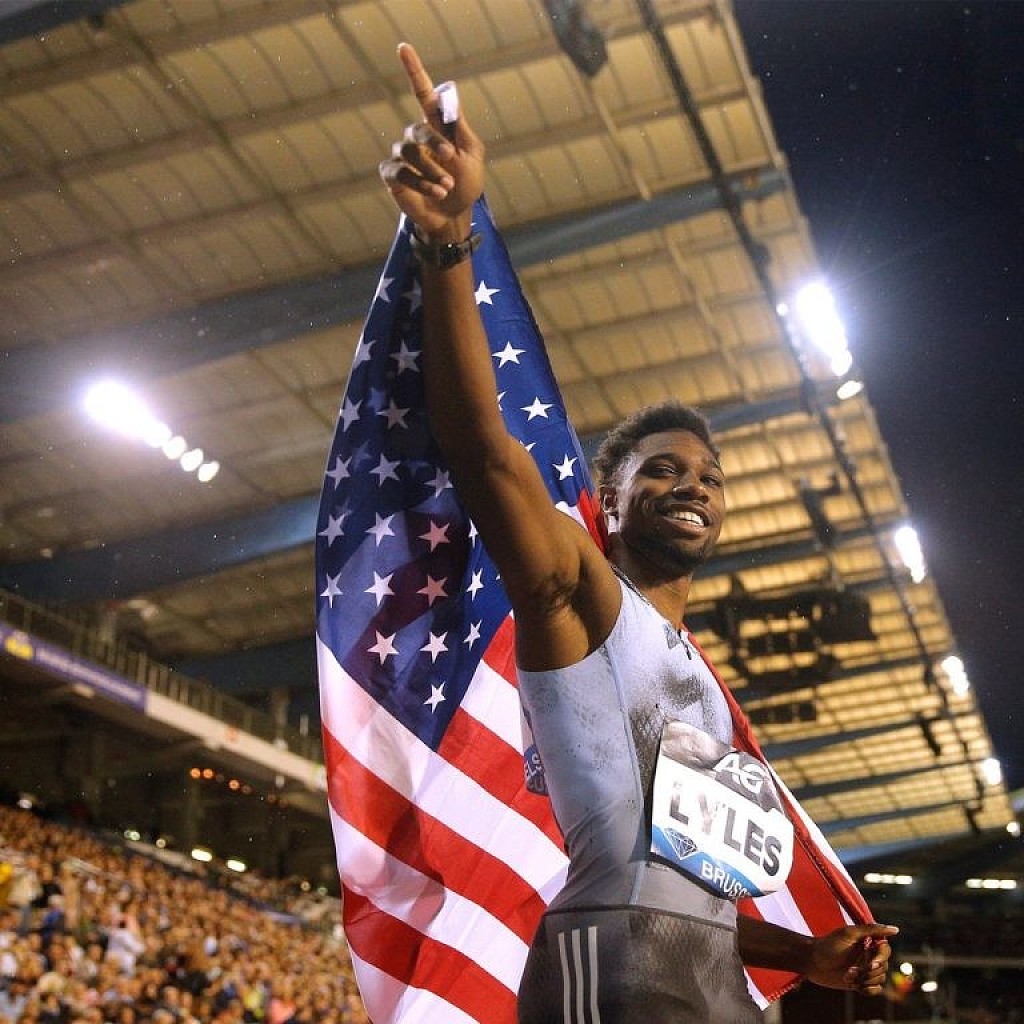
The second modified event of the 2020 Diamond League schedule, the Inspiration Games, was held on Thursday, and the penultimate event of the day, the men’s 200m, produced a lot of drama. Current 200m world champion Noah Lyles was one of three competitors lining up for the race, and he dominated, crossing the line in 18.91 seconds, absolutely smashing Usain Bolt‘s world record of 19.19. Except… it turned out that he’d run in the wrong lane and only covered 185m. For a few minutes, though, Lyles set the track world on fire.

World record tease
When Lyles first crossed the line and everyone still believed he had broken the world record, there was talk on track Twitter that it had been a wind-aided run and wouldn’t count as an official record. Even if it had been wind-aided, that would still be an incredible run. He wouldn’t have just beaten Bolt’s record, he would have obliterated it. Unfortunately for everyone (Lyles, the track world and whoever put him in the wrong lane), there was a mistake and he ran 15m short. Once everything was sorted out, Lyles tweeted, “You can’t be playing with my emotions like this … Got me in the wrong lane.” We think it’s safe to assume that he was not amused by the error.
De Grasse and Felix
Lyles’s run and all of the confusion that came with it stole the show on Thursday, but there were some other great (and legit) race results before that mishap occurred. Canada’s Andre De Grasse raced the 100-yard dash against Jimmy Vicaut of France and Olympic 110m hurdles champion Omar McLeod of Jamaica, grabbing the win in 9.68. This time equates to about a 10.59 100m run, which is far off his personal best at the distance. Still, a win is a win, and De Grasse continues to show he’s in good shape as the world creeps back toward a regular racing schedule.
Another big result came from U.S. Olympic champion Allyson Felix, who won the 150m race and set her PB at the distance with a time of 16.81. She upset pre-race favourite Shaunae Miller-Uibo of the Bahamas for the win. Felix ran alone in Walnut, Calif., while Miller-Uibo raced in Florida and the third competitor, Swiss world championship 200m bronze medallist Mujinga Kambundji, raced in Zurich. After the race, Felix said it was “very strange” racing alone on the track. “It feels sort of like practice, but not even that, because there are no teammates.”
2020, the year of off-distance racing
Since races slowly began to return, there have been a lot of irregular, off-distance events being contested. At the Impossible Games in June, Karsten Warholm set the 300m hurdle world record and the Ingebrigtsen brothers ran a 2,000m race. Thursday saw the men’s 100-yard and women’s 150m races, as well as a women’s 300m hurdle event. Who knows, maybe the Diamond League will end up adopting some of these rare events and using them in the official 2021 schedule.
by Running Magazine
Login to leave a comment

Allyson Felix notched a pair of impressive victories to highlight the Inspiration Games
The Zurich Diamond League organisers' entertaining and innovative answer to the global coronavirus pandemic that brought together 30 athletes competing in seven venues across two continents on Thursday (9).
Felix, competing in Walnut, California, near Los Angeles, kicked off the meeting with a solid victory in the 150m and brought it to its conclusion with her anchor leg on the victorious squad in the closing 3x100m relay. All without another competitor on the track.
Felix’s immediate reaction to this first in her storied career?

"Very strange,” she said, with a wide smile. “It’s kind of like practice but not really, with no teammates.”
Running alone, she said, “It's hard to challenge yourself. But I love this sport so any chance to get out here and run. I'm all about that.”

Action on the tracks kicked off with the women's 150m, with Swiss star Mujinga Kambundji competing in Zurich, Olympic 400m champion Shaunae Miller-Uibo in Bradenton, Florida, 8000 kilometres and six time zones west, and Felix, another 4000 kilometres to her west.
With track configurations and the camera angles on the synchronized stream varying slightly, it was difficult to follow who was leading until moments before the three approached the finish line. Felix crossed hers first in 16.81, well clear of Miller-Uibo who stopped the clock in 17.15. Kambundji clocked 17.28.
Oddly enough, even as they raced from tracks on opposite coasts of the United States, the winds in their respective races were nearly identical. Felix battled a 2.6 m/s headwind and Miller-Uibo a 2.5.
Felix returned to the track to team with Candace Hill and Tianna Bartoletta to collect another dominant victory in the meet-capping 3x100m relay, the trio clocking 32.25 ahead of a Swiss team that clocked 32.50 in Zurich and a Dutch squad that clocked 32.94 in Papendal.
"This is fun," Felix said. "I can't wait until we can do it in person."
Conversely, the men's 100yd was the day’s only on-site face-off, with Jimmy Vicaut of France, Canadian Andre de Grasse and Olympic 110m hurdles champion Omar McLeod meeting on the Bradenton track where they faced a 3.4m/s headwind. For the first half, it was an evenly matched affair until de Grasse, running in the middle of the track, and Vicaut, running on the inside, broke away. De Grasse closed best to nab the narrow victory in 9.68, 0.04 ahead of Vicaut. McLeod was a distant third in 9.87.
by World Athletics
Login to leave a comment
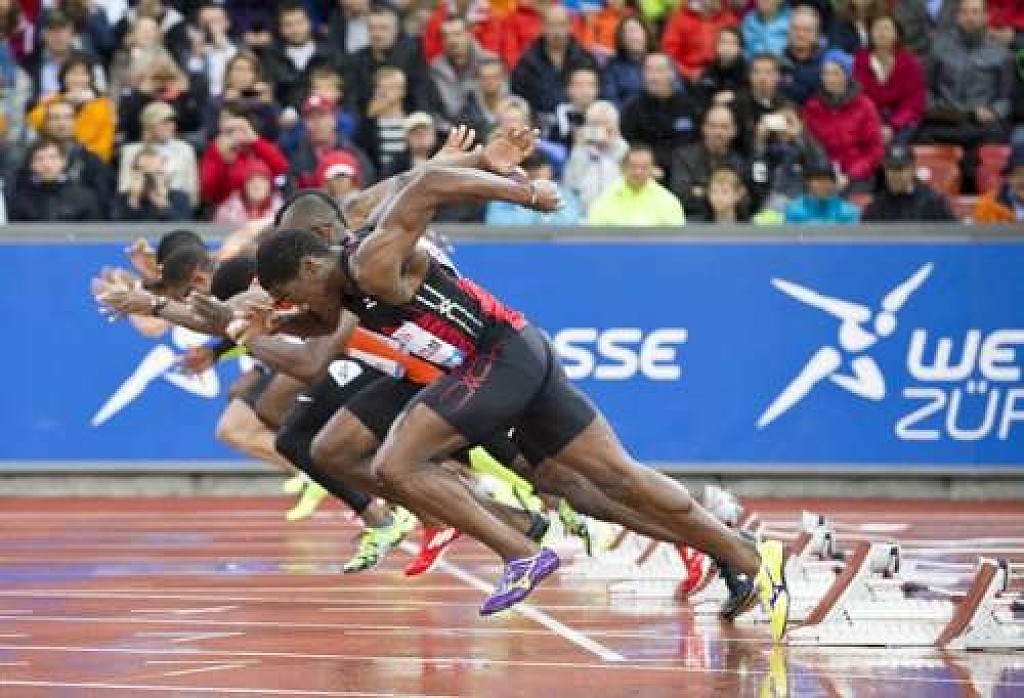
Today is the 2020 Inspiration Games, a virtual meet held in place of the Weltklasse Zürich Diamond League
The meet will see competitors go head-to-head in real time, while actually competing across the world. It’s one of the most sophisticated time trials ever. If you’re one of the many running fans who has been seriously missing competition, you can get your track fix today by tuning in at 1:35 p.m. ET to check out all of the action.

The only Canadian competing today is 2019 World Championship bronze medallist Andre De Grasse, who will be running the 100-yard dash. He’s run one race so far this season, hitting 10.15 in a 100m run last week at a meet in Clermont, Fla.

The schedule (ET).- 1:35 p.m. Pole Vault Men Entries, 1:35 Pole Vault Women Entries, 2:05 Triple Jump Men Entries, 2:10 150m Women Entries, 2:27 100 yards Men Entries, 2:41 300mH Women Entries, 3:06 200m Men Entries, 3:20 3x100m Women Entries.
How to watch.- Canadian spectators can tune in via Facebook or YouTube. The first event begins at 1:35 p.m. and will run through 3:30 p.m. As track (and road racing) slowly returns to a state or normalcy, Canadian Running will be doing a weekend recap covering all of the action from the week before. We’ll look at road and track TT results, bringing you the most impressive runs from around the world.
by Madeleine Kelly
Login to leave a comment
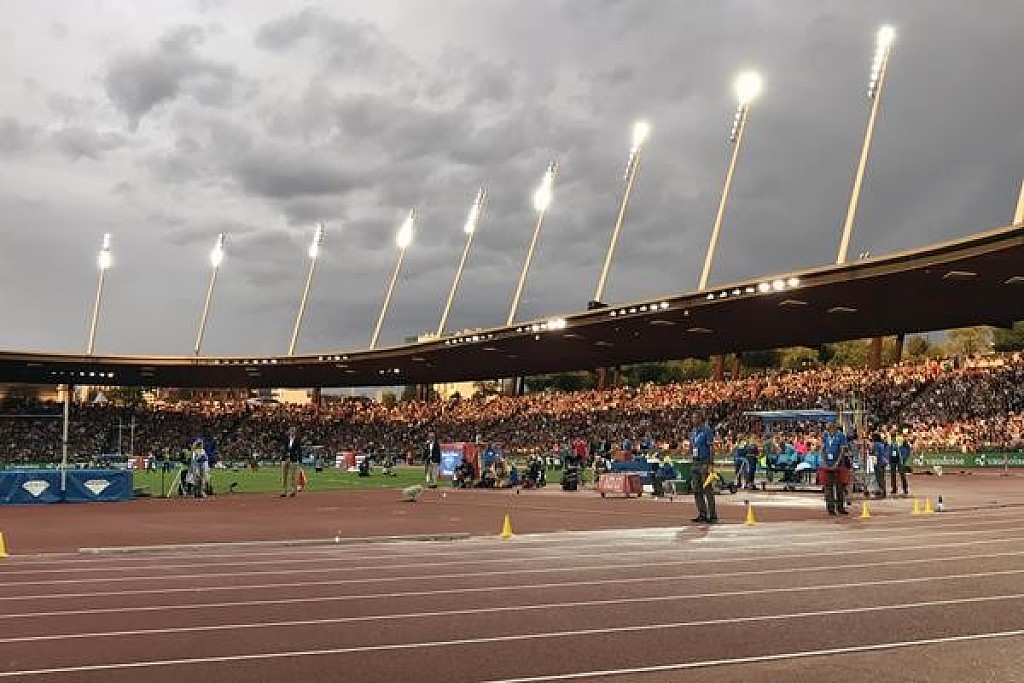
World-class athletics at Weltklasse – and across the globe – at Zurich’s Inspiration Games
With Weltklasse Zurich unable to go ahead as planned this year, innovation-driven meeting organisers have instead launched the 'Inspiration Games', a border-spanning Wanda Diamond League exhibition event to be held on 9 July.
The 'Weltklasse Zurich Inspiration Games' will see 30 track and field superstars compete across eight disciplines in an innovative team event spanning seven stadiums and three continents. The aim is not only to provide live sport for athletics fans across the world, but also to inspire the next generation.

As host of the Wanda Diamond League Final, Weltklasse had expected to welcome the world's biggest athletics stars to Zurich this year. But with this year's edition cancelled due to the ongoing coronavirus crisis, Swiss fans will now have to wait until 2021 and 2022 for the three-day series finale to return to the city.
Instead, Zurich plans to take itself to the world on 9 July, by hosting an innovative new live team event, with dozens of athletes competing simultaneously in different venues across the globe.
"We want to offer fans what they have long been yearning for: a world class live athletics event," said meeting director Christoph Joho.
Three-way clashes
The innovative format will see the world's best athletes line up in a series of three-way clashes between Europe, the USA and the rest of the world. In the 150m, for example, Bahamian Olympic 400m champion and 200m Diamond League champion Shaunae Miller-Uibo will take on US star and six-time Olympic champion Allyson Felix and Switzerland's world bronze medallist Mujinga Kambundi. While Kambundji will burst out of the blocks in Zurich, Felix will compete in Walnut, California, and Miller-Uibo in Miramar, Florida.
Innovative broadcasting
The format, developed in co-peration with World Athletics, the Wanda Diamond League, Swiss Timing and broadcaster SRG SSR, will also showcase traditional athletics from a completely new angle thanks to a unique, specially designed broadcast to be produced by SRG SSR and beamed out across the world.
"To simultaneously broadcast three different venues in each discipline will certainly be a technical challenge," said Karin Nussbaumer, SRG SSR's national coordinator. "Time delays will have to be corrected so that everything is synchronised for the viewer. It is highly demanding to organise such a broadcast."
Inspiration
Yet overcoming challenges is precisely what the Inspiration Games are about, says meeting director Andreas Hediger. The event will be the second part of Weltklasse's 'Inspiration Series', which began with the nationwide 'OneMillionRun' event involving 80,000 Swiss residents in May.
"Both projects are about giving a positive signal and overcoming hurdles," said Hediger. "National and international stars such as Kambundji, Miller-Uibo and Felix are important role models in this respect. They can show the youngsters just how far you can go if you never stop improving, dreaming and believing in yourself."
by World Athletics
Login to leave a comment

World 200m champion Noah Lyles and multi-medal winning fellow American Allyson Felix will headline an ambitious track and field meet on July 9
Organizers of the Zurich Diamond League, cancelled because of the coronavirus pandemic, will host the televised 90-minute live event.
World 200m champion Noah Lyles and multi-medal winning fellow American Allyson Felix will headline an ambitious track and field meet on July 9 that sees athletes competing in eight disciplines at seven venues across the globe.
"We would like to present a live event at Weltklasse Zurich level even this year. Therefore, we have been looking for creative ideas and working on new formats," said co-meeting director Christoph Joho.

There will be eight three-way competitions, four for men and four for women, pitching Europe against the United States and the rest of the world.

There is a women's 150m race featuring six-time Olympic champion Felix, Bahamian Olympic 400m gold medallist Shaunae Miller-Uibo and Switzerland's 200m world bronze medallist Mujinga Kambundji. Kambundji will run in Zurich, Felix in California and Miller-Uibo in Florida.
"This new format will hopefully give the fans something fun to look forward to during a time that has been really difficult for everyone," said Felix.
Lyles is slated to run the 200m, while a rarely-run 100 yards sees Canada's multi-world and Olympic medal-winning sprinter Andre de Grasse up against Jamaica's Olympic 110m hurdles champion Omar McLeod and Frenchman Jimmy Vicaut.
American world record holder and current world 400m hurdles champion Dalilah Muhammad will compete in a hurdles race over 300m, while Greece's Ekaterini Stefanidi goes up against American Sandi Morris in the women's pole vault.
The men's triple jump features American world champion Christian Taylor and Pedro Pablo Pichardo, the Cuban-born two-time world silver medallist competing for Portugal.
Login to leave a comment
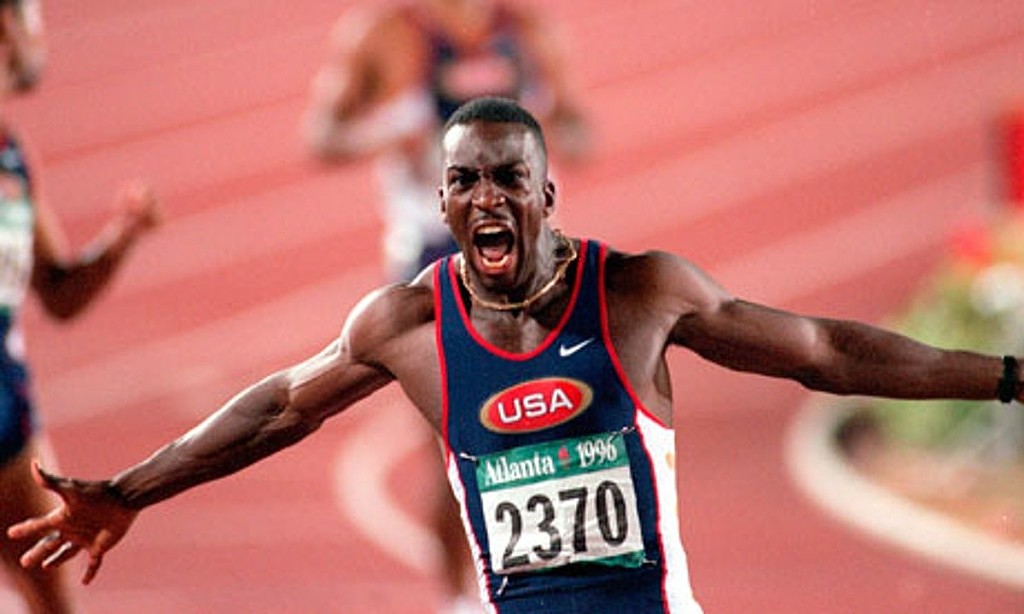
Michael Johnson Expected to make a full recovery, from a mini-stroke
Login to leave a comment

ASICS have unveiled the world’s first running track to train the mind, the blackout Track in London
Login to leave a comment
