

Running News Daily
Running News Daily is edited by Bob Anderson and team. Send your news items to bob@mybestruns.com Advertising opportunities available.
Index to Daily Posts · Sign Up For Updates · Run The World Feed
Articles tagged #1:53.28
Today's Running News
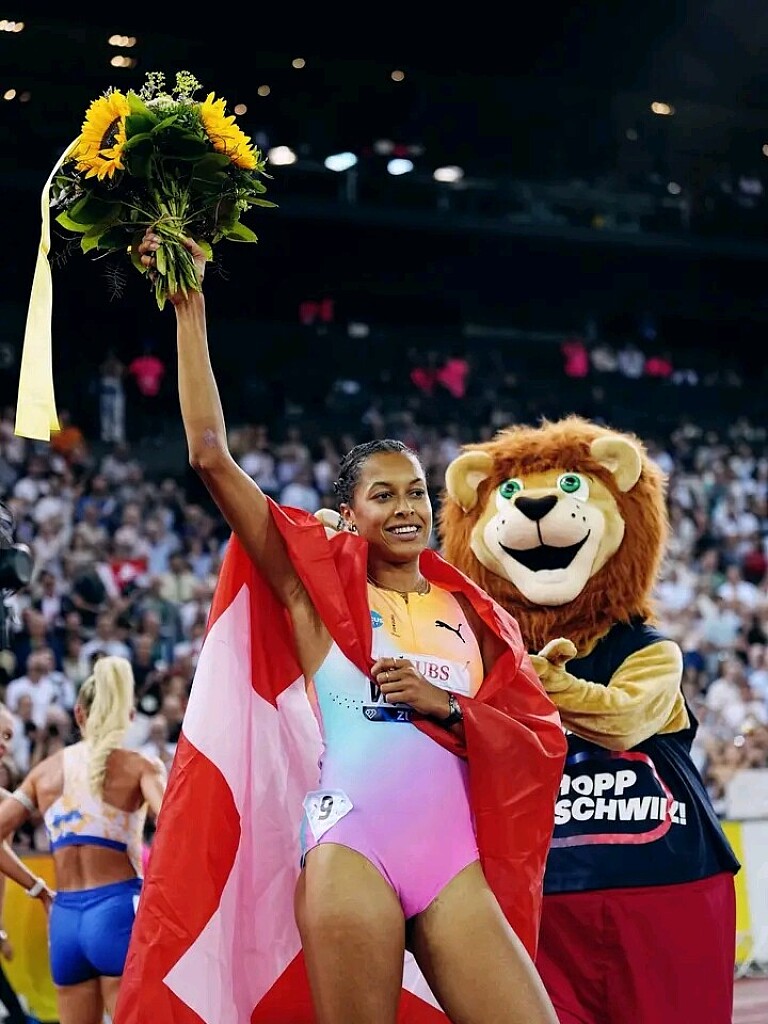


Audrey Werro Chases History In Bellinzona After Moving Within 0.42 Seconds Of The 800m World Record
Audrey Werro’s extraordinary 2026 season has entered another fascinating chapter, with the Swiss middle-distance star now within striking distance of one of athletics’ most enduring world records.
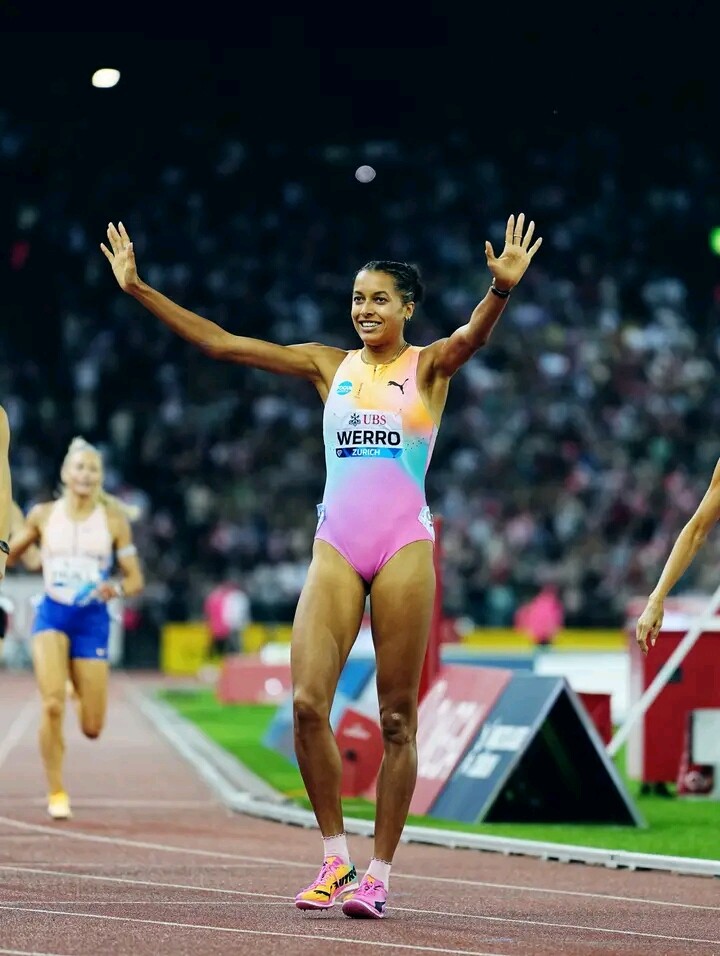
Just two days after producing a sensational 1:53.70 Swiss record at the Zürich Diamond League, Werro is set to return to action at the Gala dei Castelli in Bellinzona, where anticipation is building around the possibility of another historic performance.
Her display in Zürich was a statement of intent. Werro delivered one of the fastest 800m races ever recorded, lowering her Swiss record and moving to third on the all-time world list, behind only Jarmila Kratochvílová’s legendary 1:53.28 world record set in 1983 and Nadezhda Olizarenko’s 1:53.43 recorded in 1980.
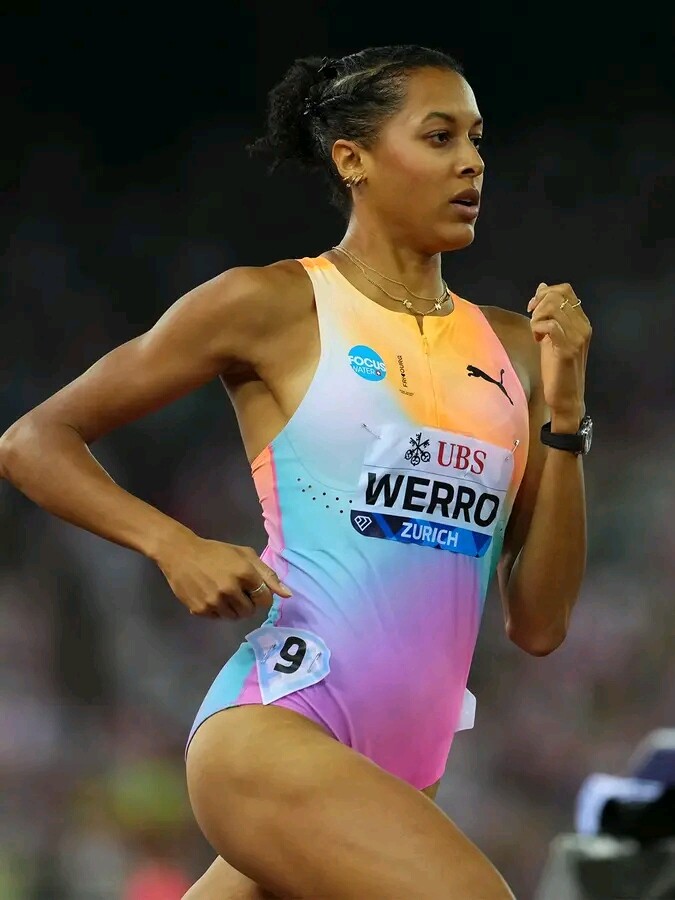
What makes Werro’s rise even more remarkable is the consistency of her performances at an extraordinary level. Earlier this season, she ran 1:53.98 in Stockholm, becoming only the third woman in history to break the 1:54 barrier. She then improved to 1:53.80 in Paris before producing her latest masterpiece of 1:53.70 in Zürich.
In the space of just a few months, Werro has transformed herself from an emerging European star into one of the fastest 800m runners the world has ever seen.
Her current progression is remarkable: 1:53.98 in Stockholm, 1:53.80 in Paris and 1:53.70 in Zürich. Each performance has brought her closer to a record that has survived for more than four decades.
Werro’s confidence is also being fuelled by her championship success. The Swiss star recently captured the European 800m title in Birmingham in 1:54.81, demonstrating that her spectacular form is not limited to Diamond League competition.
Now, all eyes turn to Bellinzona.
The target is unmistakable — 1:53.28.
Werro needs to improve by just 0.42 seconds on her Zürich performance to erase Kratochvílová’s 43-year-old world record. While 0.42 seconds may appear to be a small margin, breaking a record of such longevity requires an exceptional combination of speed, endurance, tactics and perfect execution.
A pacemaker is expected to help establish a demanding tempo, potentially giving Werro the conditions required to launch another assault on the record.
The 22-year-old has already demonstrated that she can repeatedly run at speeds that have historically been reserved for the very greatest 800m athletes. Her progression from 1:53.98 to 1:53.80 and then 1:53.70 suggests that another breakthrough may not be beyond her reach.
Bellinzona therefore promises to be more than another race on Werro’s schedule. It could become another defining moment in the rapid rise of a young athlete who is now challenging one of the oldest records in the sport.
The world record stands at 1:53.28.
Audrey Werro is 0.42 seconds away.
History is no longer a distant possibility. It is beginning to look increasingly within reach.
by Erick Cheruiyot for My Best Runs.
Login to leave a comment
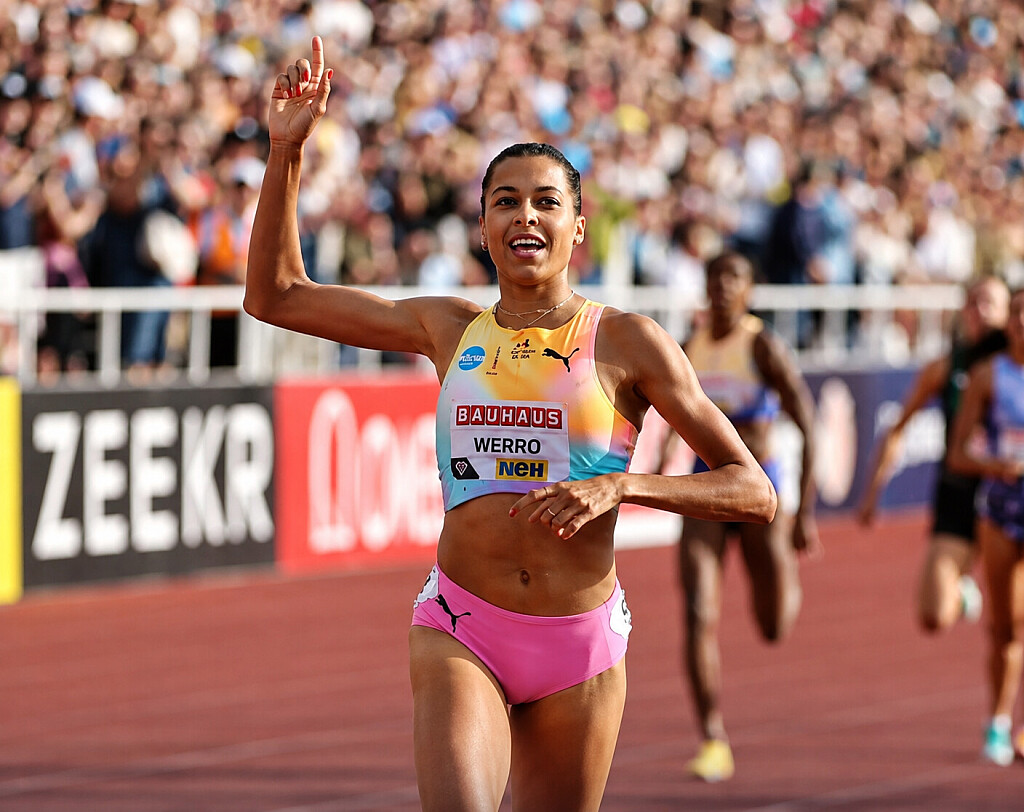
Audrey Werro Heads to Birmingham With History in Her Sights as Europe’s 800m Elite Prepare for a Blockbuster Showdown
Audrey Werro will arrive at the 2026 European Athletics Championships in Birmingham carrying more than just the hopes of Switzerland. The 22-year-old middle-distance star has established herself as the woman to beat in the women’s 800m, and she will enter Alexander Stadium with a world-leading time, extraordinary momentum and a realistic opportunity to chase one of athletics’ longest-standing records.
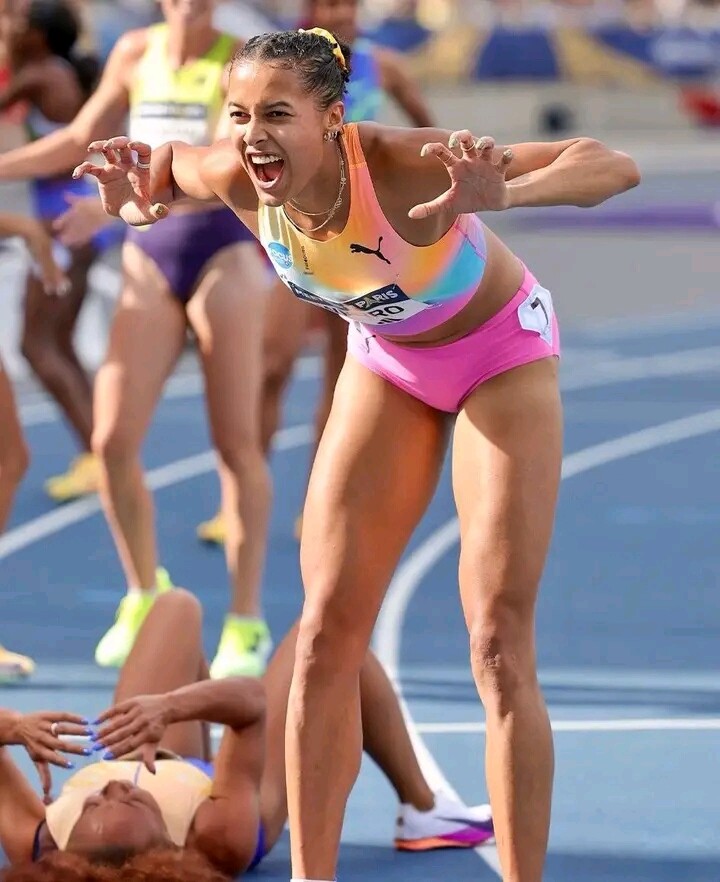
The European Championships will be held in Birmingham from August 10 to 16, with the women’s 800m among the events expected to command enormous attention.
Werro has already produced one of the defining performances of the 2026 season. At the Paris Diamond League on June 28, she stormed to 1:53.80, becoming only the third-fastest woman in history over 800m and moving within 0.52 seconds of Jarmila Kratochvílová’s world record of 1:53.28, which has stood since 1983.
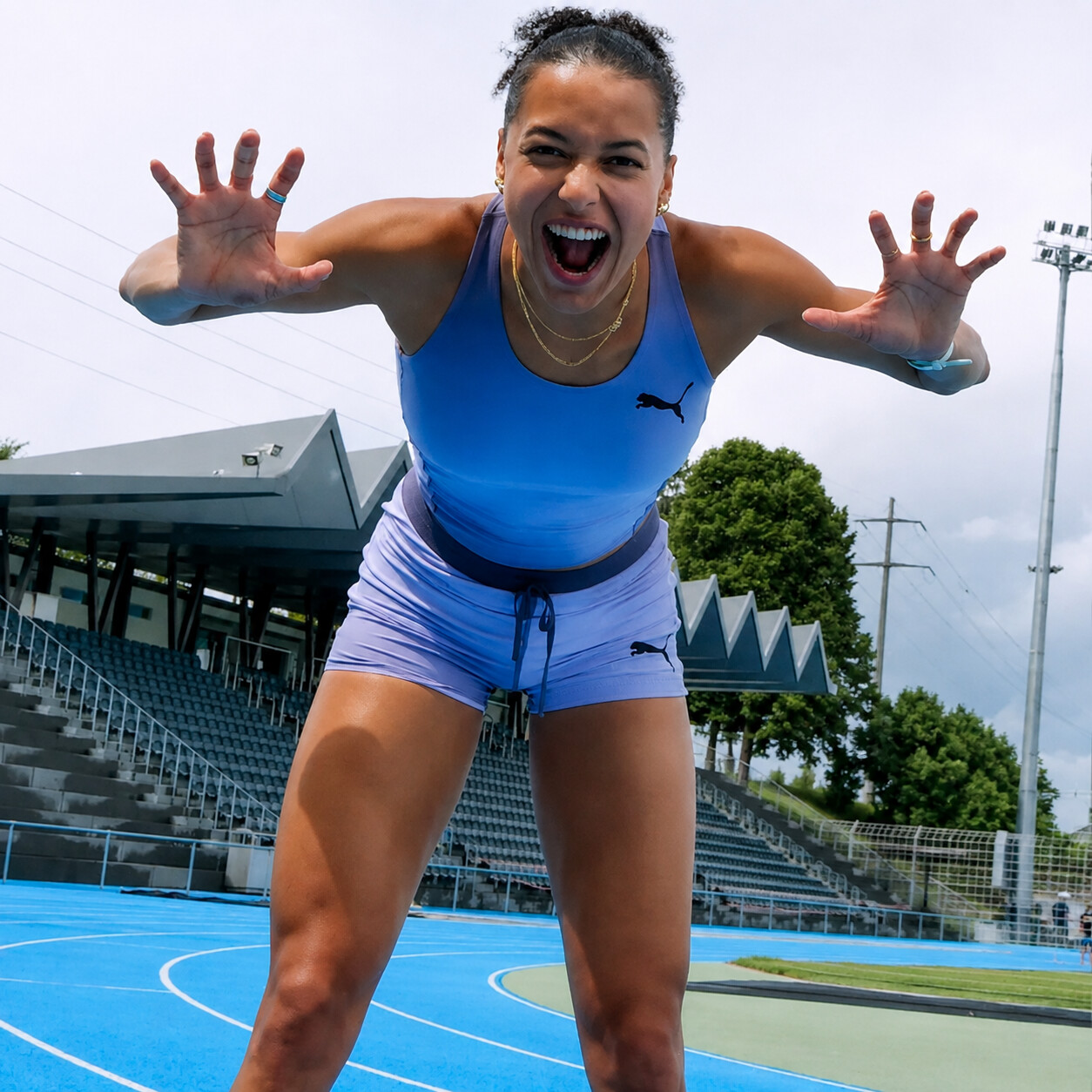
Even more remarkable is that Paris was not an isolated performance.
Earlier in June, Werro stunned Olympic champion Keely Hodgkinson in Stockholm, producing 1:53.98 to claim another Diamond League victory. Hodgkinson followed in a personal best of 1:54.33, setting the stage for what could become one of the defining rivalries of the championship.
The numbers underline just how extraordinary the 2026 women’s 800m season has become.
Werro leads the world with 1:53.80, followed by Hodgkinson at 1:54.33. Femke Broeders-Bol has made a spectacular transition to the two-lap event, running 1:55.60 in Paris, while France’s Anaïs Bourgoin followed with a national record of 1:55.65. Britain’s Georgia Hunter Bell has also broken 1:56, clocking 1:55.93 in Birmingham earlier in the season.
That depth makes Birmingham particularly intriguing. Werro may be the fastest woman in the world this year, but she will not be racing in isolation. Hodgkinson brings Olympic and European championship pedigree, Broeders-Bol possesses exceptional finishing speed after moving across from the 400m hurdles, while Bourgoin and Hunter Bell have demonstrated that they are capable of staying in the conversation when the pace becomes ferocious.
Werro’s remarkable form has extended beyond the 800m. On June 23 in Biel, she ran 1:22.85 for 600m, the fastest mark on the 2026 world list for the event.
Her development has been equally impressive over the longer sprint distance. Werro owns a 400m personal best of 51.03, highlighting the speed reserve behind her increasingly dominant 800m performances.
The Swiss star has therefore arrived at a fascinating point in her career. She is no longer simply a promising young athlete. After being named European Athletics’ 2025 Women’s Rising Star and winning the European U23 title, Werro has now moved firmly into the senior elite.
And Birmingham could provide the biggest stage yet for her growing reputation.
The question is no longer whether Werro can run under 1:54. She has already done it twice this season. The question now is whether she can find the fractions required to move from an extraordinary performance to something historic.
The world record of 1:53.28 is only 0.52 seconds away.
With the European title on the line, Hodgkinson seeking another major championship triumph and a rapidly improving field ready to challenge for the podium, the women’s 800m could become one of the races of the entire Birmingham championships.
For Werro, however, the objective is simple: arrive ready, execute the perfect two laps and see just how close she can get to history.
Birmingham awaits. And Audrey Werro has already shown that she is ready.
by Erick Cheruiyot for My Best Runs.
Login to leave a comment

European Athletics Champioships
The27thEuropean Athletics Championshipswill be held from 10 to 16 August 2026 at theAlexander StadiuminBirmingham, United Kingdom.[1] This is the first time that a British city will have staged the European Athletics Championships although Birmingham has hosted many high-profile events, including the2007 European Athletics Indoor Championships, the2003and2018 IAAF World Indoor Championshipsand the2022 Commonwealth Games. Alexander Stadium was renovated between 2019 and...
more...
Forty-Three Years of Greatness: Is Jarmila Kratochvílová's Legendary 800m World Record Finally Ready to Fall?
Some world records define an era. Others transcend generations. Jarmila Kratochvílová's astonishing 1:53.28 in the women's 800 meters belongs firmly in the latter category.
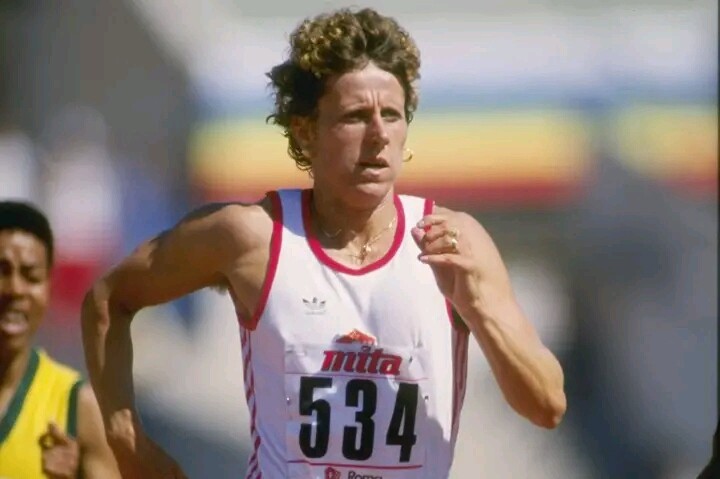
On July 26, 1983, in Munich, the Czech star delivered one of the most extraordinary performances the sport has ever witnessed, setting a world record that has now survived for an incredible 43 years. It remains the longest-standing individual track world record in athletics, a remarkable achievement in an era when advances in training, sports science, nutrition, and competition have seen countless other records disappear.
What makes Kratochvílová's feat even more extraordinary is that she was not primarily an 800-meter runner. She built her reputation as a dominant 400-meter specialist and only entered the two-lap race as a fitness test after recovering from leg cramps. What began as an experiment quickly turned into history.
After charging through an aggressive opening lap, Kratochvílová maintained her relentless pace all the way to the finish, crossing the line in an astonishing 1:53.28. It was a performance so far ahead of its time that generations of elite middle-distance runners have spent more than four decades trying—and failing—to erase it from the record books.
The longevity of the mark is no accident. Running 800 meters at world-record pace demands one of the rarest combinations in athletics: the explosive speed of a world-class 400-meter runner blended with the endurance, strength, and tactical intelligence of an elite middle-distance athlete. Few athletes in history have possessed that unique balance.
Even today, Kratochvílová sits comfortably atop one of the strongest all-time rankings in athletics history:
1. Jarmila Kratochvílová (Czech Republic) – 1:53.28 (July 26, 1983)
2. Nadezhda Olizarenko (Soviet Union) – 1:53.43 (July 27, 1980)
3. Audrey Werro (Switzerland) – 1:53.80 (June 28, 2026)
4. Pamela Jelimo (Kenya) – 1:54.01 (August 29, 2008)
5. Caster Semenya (South Africa) – 1:54.25 (June 30, 2018)
For many years, Kratochvílová's record was widely viewed as virtually untouchable. That perception, however, is beginning to change.
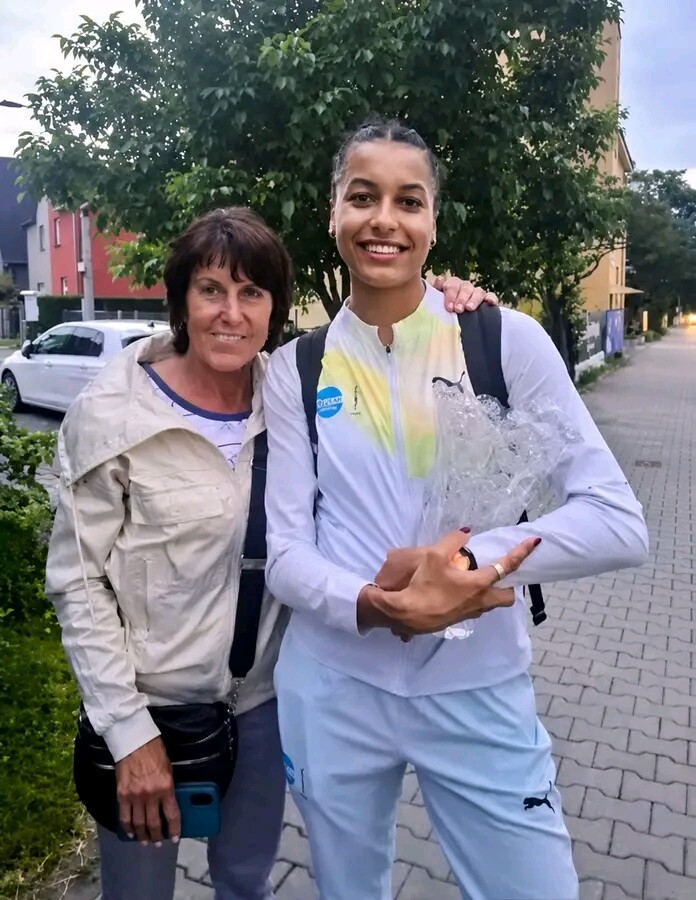
Swiss sensation Audrey Werro has reignited the conversation after producing a breathtaking 1:53.80 in Paris, moving into third place on the all-time list. Her performance was not only one of the fastest ever recorded but also the closest anyone has come to the world record in decades. At just the beginning of what promises to be a long career, Werro has demonstrated that the impossible may finally be within reach.
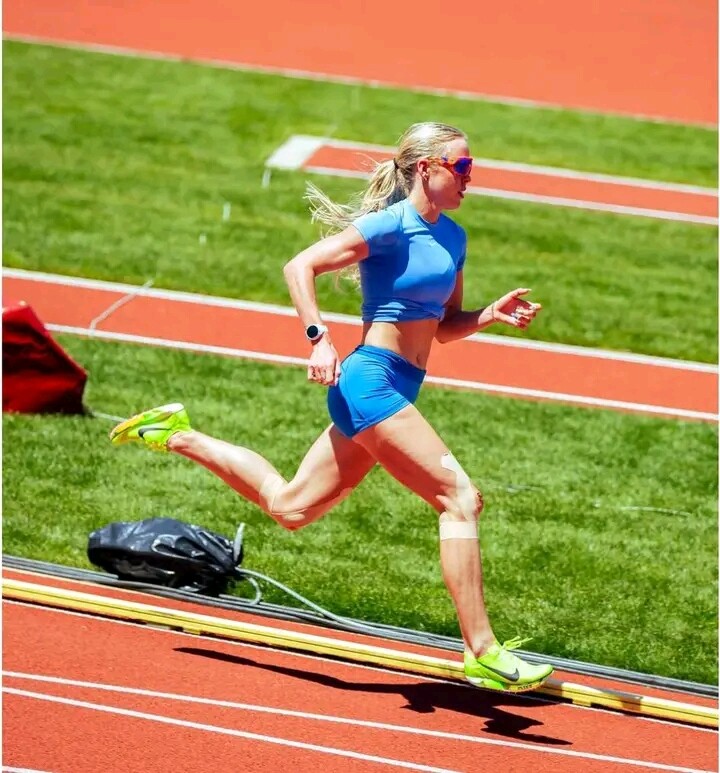
Great Britain's Keely Hodgkinson also remains one of the most compelling candidates. Already an Olympic champion and one of the most consistent performers of her generation, Hodgkinson reinforced her credentials by setting the world indoor short-track record of 1:54.87. Her combination of speed, racing intelligence, and consistency suggests that an outdoor assault on the world record cannot be ruled out.
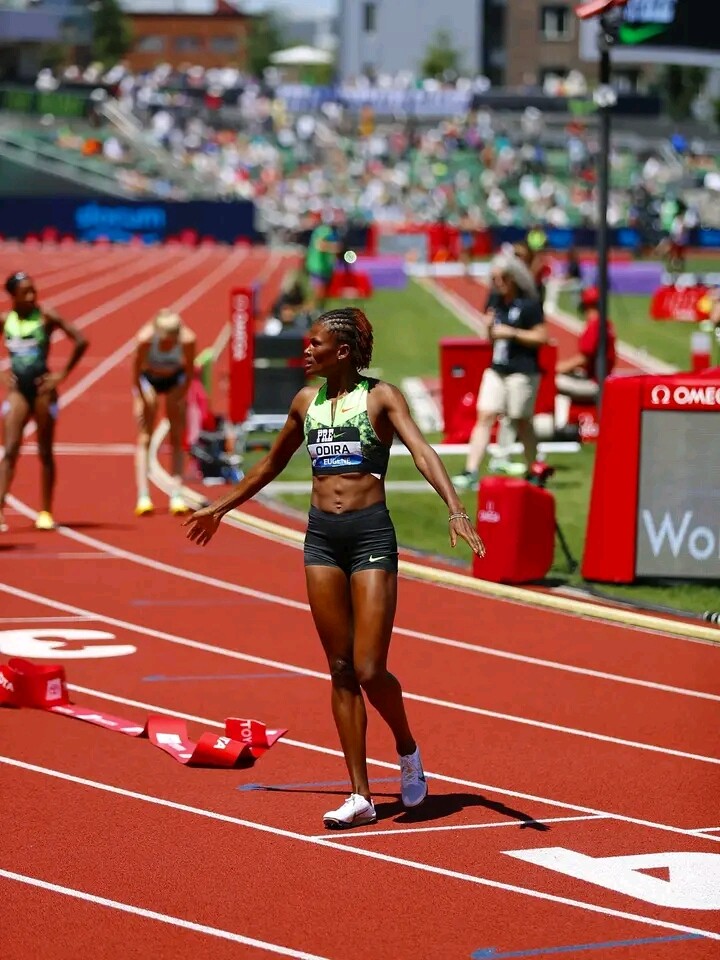
Kenya's Lilian Odira has also emerged as a genuine threat. The reigning world champion owns a personal best of 1:54.62, ranking her among the fastest women in history. She has already eclipsed Kratochvílová's long-standing championship record and continues to showcase an exceptional finishing kick that makes her dangerous in any race. If the pace is right, few athletes possess a stronger blend of championship experience and raw talent.
For 43 years, the athletics world has watched wave after wave of exceptional runners attempt to chase down one of sport's most iconic performances. Olympic champions, world champions, and record holders have all fallen short.
Yet the landscape feels different today. A new generation led by Audrey Werro, Keely Hodgkinson, and Lilian Odira is pushing the women's 800 meters to unprecedented depths. Their performances suggest that one of athletics' oldest and most celebrated records is no longer beyond imagination.
Whether Kratochvílová's 1:53.28 survives another season or another decade remains one of the sport's most fascinating questions. What is certain is that a record once considered untouchable is finally facing its most serious challenge in more than four decades.
The countdown may have already begun.
by Erick Cheruiyot for My Best Runs.
Login to leave a comment
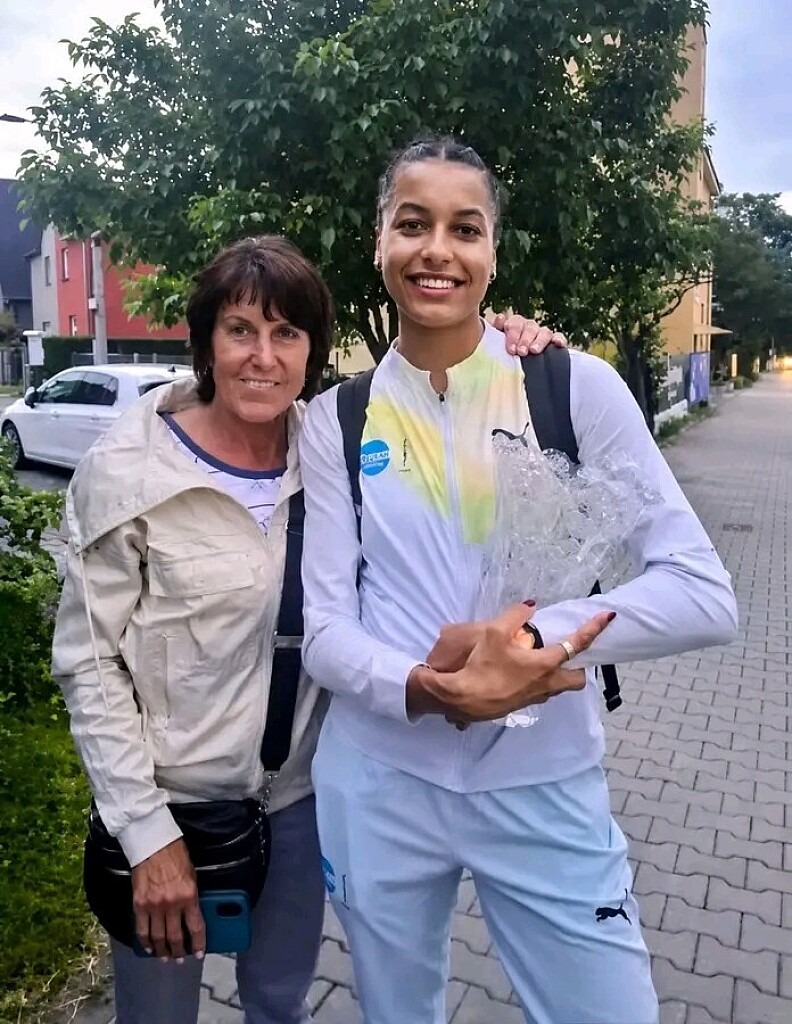
Audrey Werro's Rapid Rise Brings Jarmila Kratochvílová's Historic 800m World Record Into Focus
The women's 800 metres has entered one of its most fascinating chapters in years as rising Swiss sensation Audrey Werro edges ever closer to one of athletics' most enduring records.
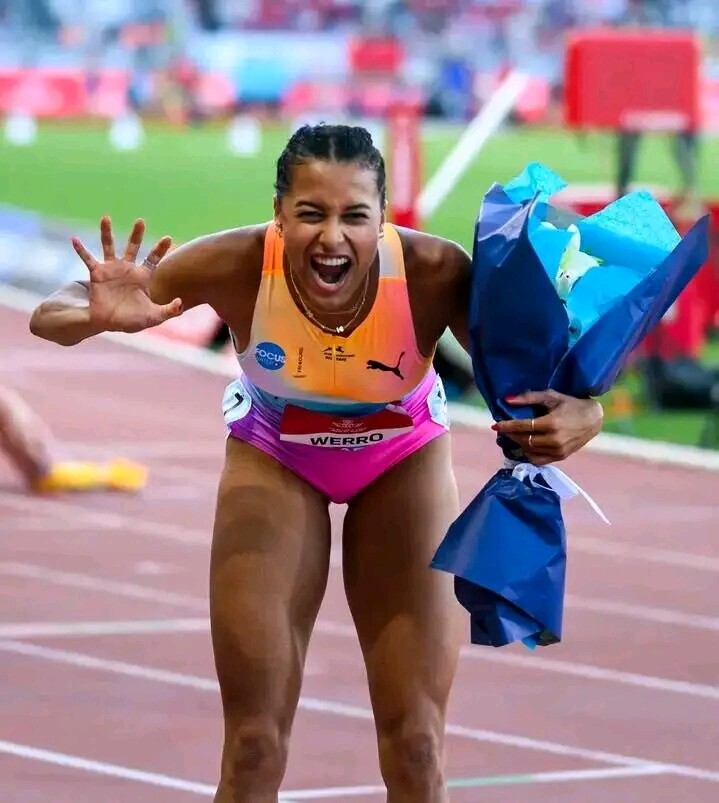
Standing between Werro and history is the remarkable mark of 1:53.28, set by Jarmila Kratochvílová in 1983—a performance that has remained untouched for more than four decades and continues to rank among the oldest world records in track and field.
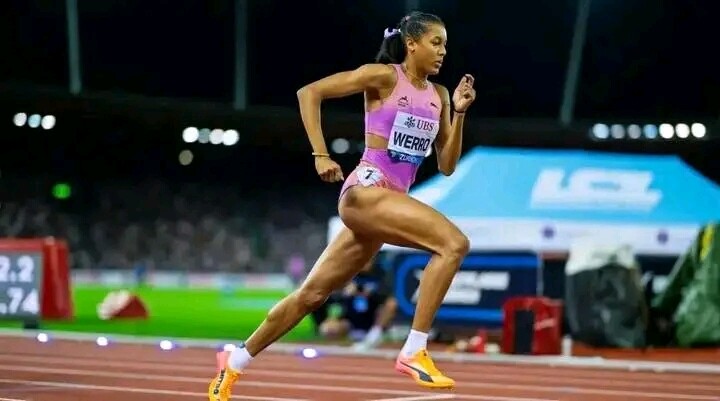
Werro's charge toward history gathered even greater momentum with a breathtaking victory at the Paris Diamond League, where she stormed to a sensational 1:53.80. The performance not only secured the win but also shattered the Diamond League record and meeting record, while establishing a new world-leading time and a Swiss national record. It was a statement performance that confirmed her status as one of the most exciting middle-distance athletes of her generation.
The talented Swiss runner has combined exceptional speed with tactical maturity and remarkable consistency, transforming what once seemed an untouchable world record into a genuine subject of discussion. Every race further strengthens the belief that she possesses the talent and confidence to challenge one of athletics' most enduring marks.
Although Kratochvílová's legendary record still stands, Werro's remarkable progression has reignited anticipation around the women's 800m. Her fearless racing style and relentless improvement have breathed new life into an event that has waited decades for an athlete capable of threatening history.
Whether the historic 1:53.28 falls this season or in the years ahead remains uncertain. What is undeniable, however, is that Audrey Werro has placed herself firmly on the doorstep of greatness, ensuring that every appearance on the track will be watched with growing excitement as the athletics world waits to see whether one of its oldest records can finally be rewritten.
by Erick Cheruiyot for My Best Runs.
Login to leave a comment
Audrey Werro Targets History with Bold World 800m Record Attempt in Paris
The stage is set for what could become one of the most memorable nights in women's middle-distance running.
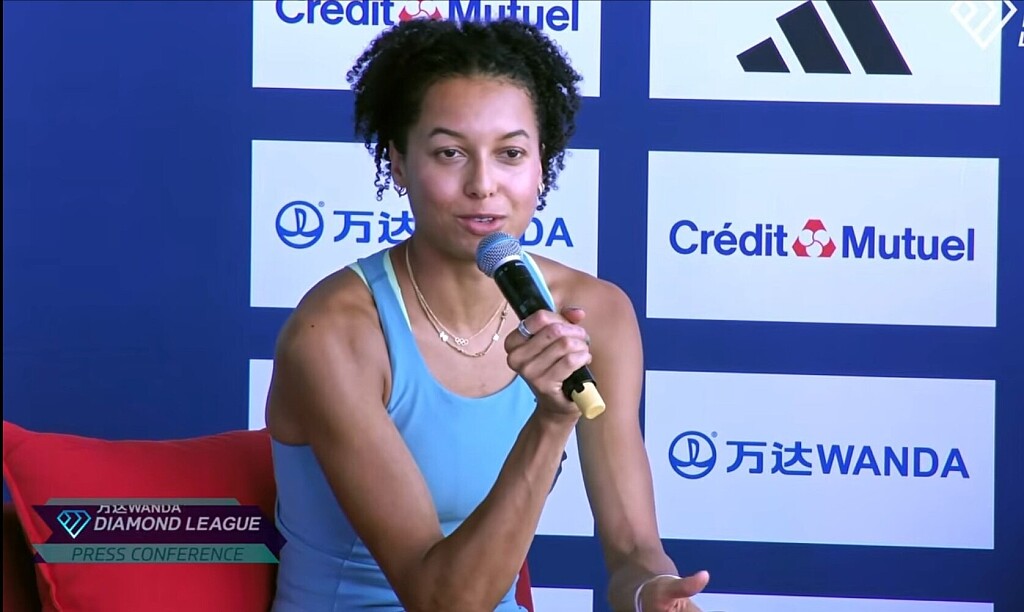
Swiss sensation Audrey Werro will head to the Paris Diamond League on 28 June 2026 with one objective—an all-out assault on the women's 800m world record. Fresh off her stunning 1:53.98 performance in Stockholm, Werro has made her ambitions unmistakably clear by requesting the stadium's green wavelights to be set at 1:53.28 pace, matching the current global mark.
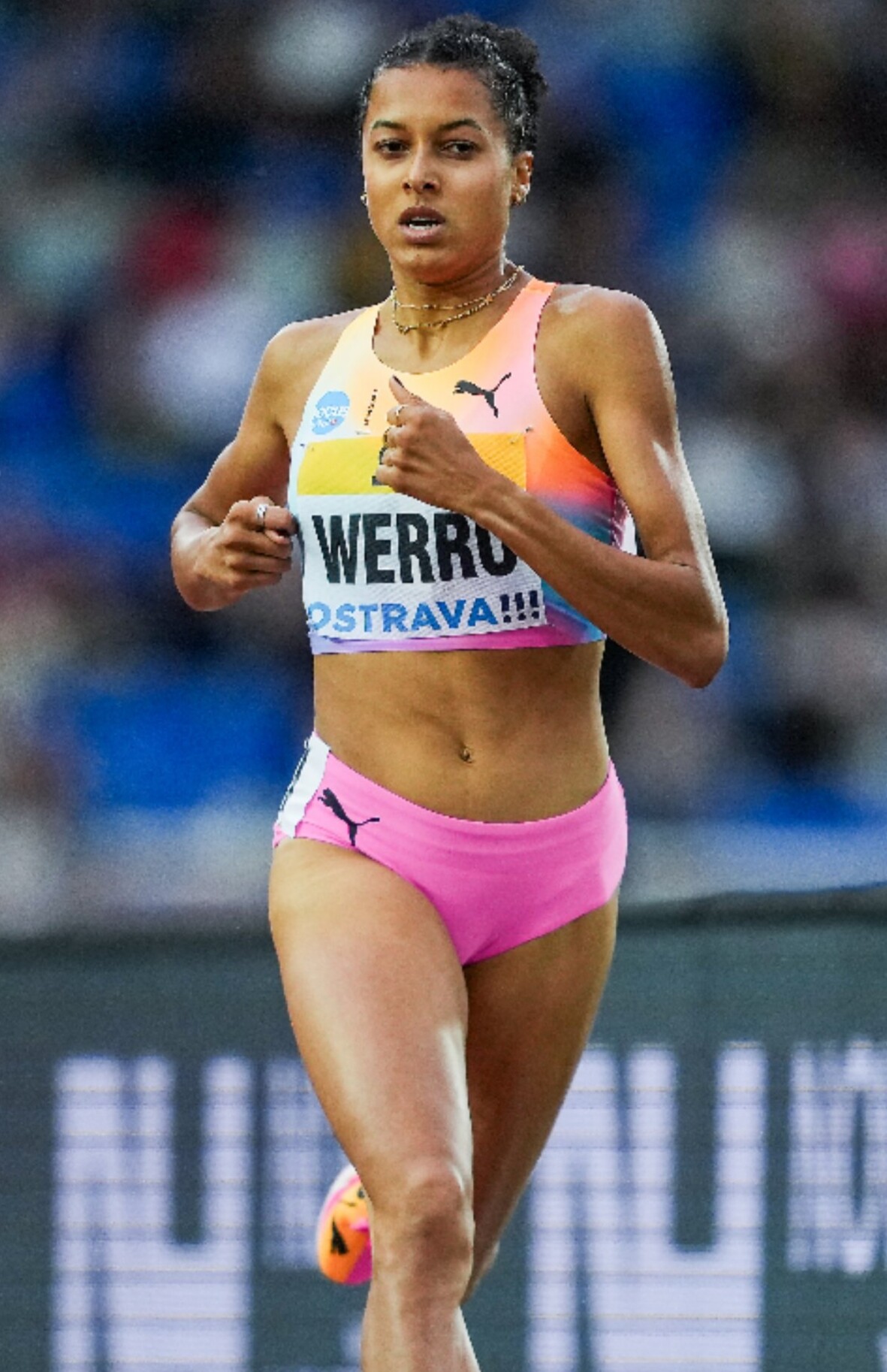
To keep that record attempt on schedule, the designated pacemaker is expected to lead the field through 400 metres in a blistering 55.50 seconds. Werro's preferred pacing strategy also calls for 27.0 seconds at 200m, 55.50 at 400m, and 1:24.50 at 600m, leaving just one final lap of sustained brilliance between her and athletics history.
The challenge is immense. The 1:53.28 world record has stood untouched for more than four decades, having been set by Jarmila Kratochvílová of former Czechoslovakia on 26 July 1983. It remains one of the longest-standing world records in track and field, making Werro's pursuit all the more captivating.
The 22-year-old has every reason to believe she can threaten the mark. Her breakthrough 1:53.98 in Stockholm made her only the third woman in history to break the 1:54 barrier, while her European-best 1:22.85 over 600m confirmed she is enjoying the finest form of her career.
With Paris renowned for producing fast middle-distance races, ideal pacing, elite competition, and world-class conditions, the ingredients are in place for a genuine world record attempt. Every split will matter, every stride will count, and the athletics world will be watching as Werro tests the limits of one of the sport's most enduring records.
Whether the record finally falls or survives another challenge, Audrey Werro's fearless pursuit of greatness promises to be one of the defining moments of the 2026 Diamond League season.
by Erick Cheruiyot for My Best Runs.
Login to leave a comment
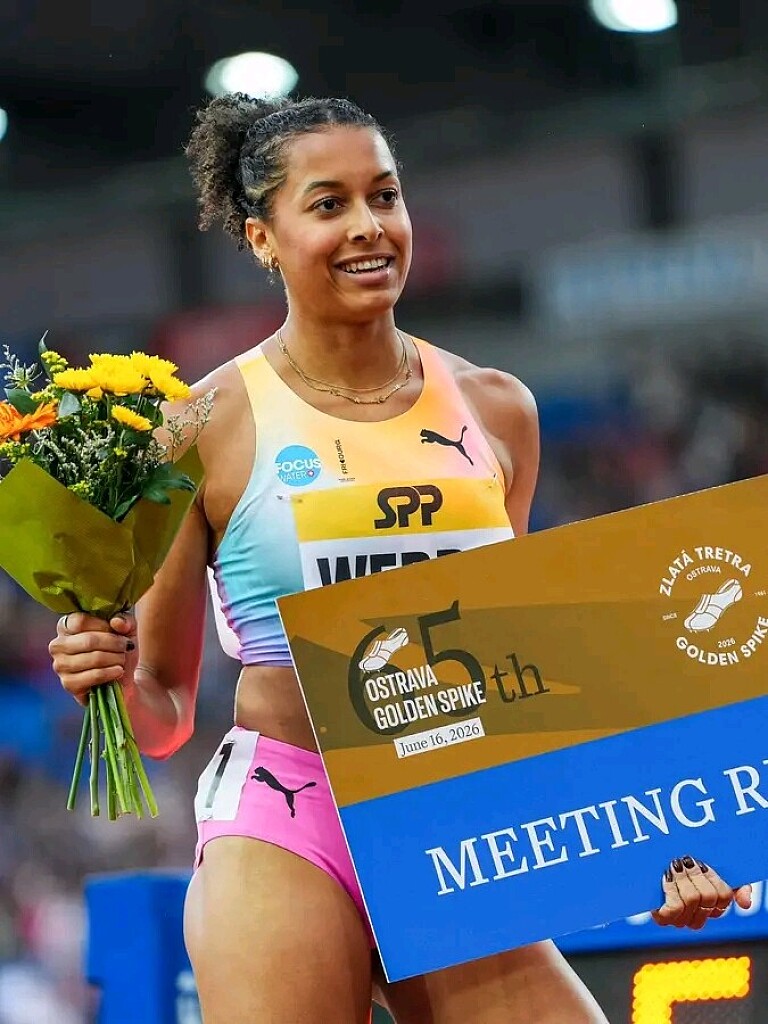
Audrey Werro Delivers Another Statement Run as 800m World Record Watch Intensifies
Audrey Werro continues to announce herself as one of the most exciting talents in global middle-distance running after producing another breathtaking 800m performance in Ostrava.
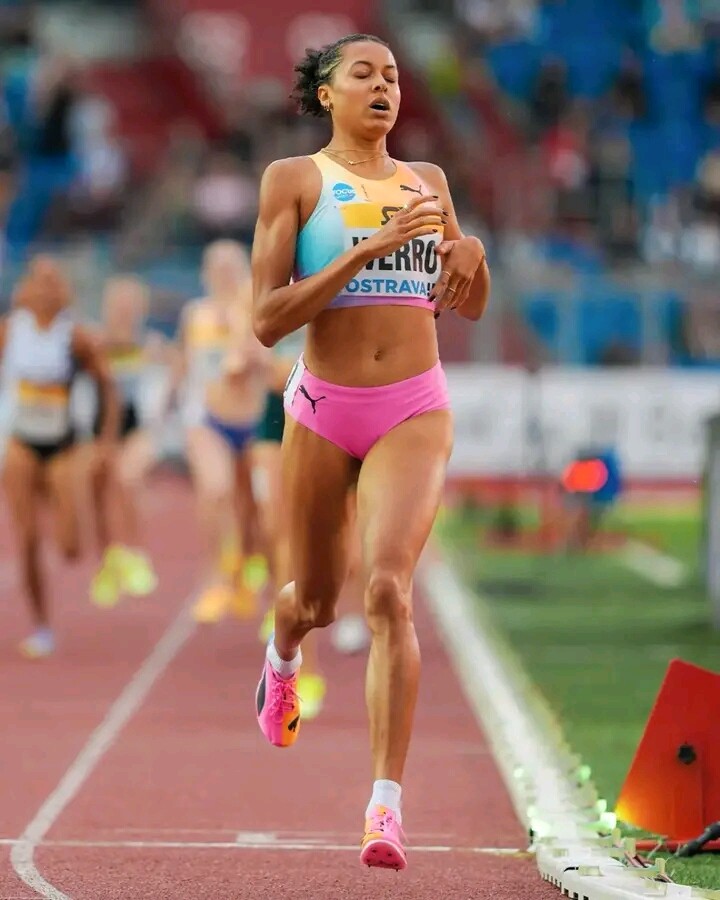
The Swiss star stormed to victory in 1:54.45, delivering a commanding display that once again placed her among the fastest women ever over the distance. Werro stayed composed through the early stages before making her decisive move in the final 200 metres, creating separation from a world-class field and powering home for a dominant win.
The race was set up at a furious pace, with the pacemaker taking the athletes through 400m in 55.8 seconds. Femke Bol’s sister, Femke Broeders-Bol, who has stepped up from the 400m hurdles this season, showed her growing strength by staying in contention alongside Werro deep into the race.
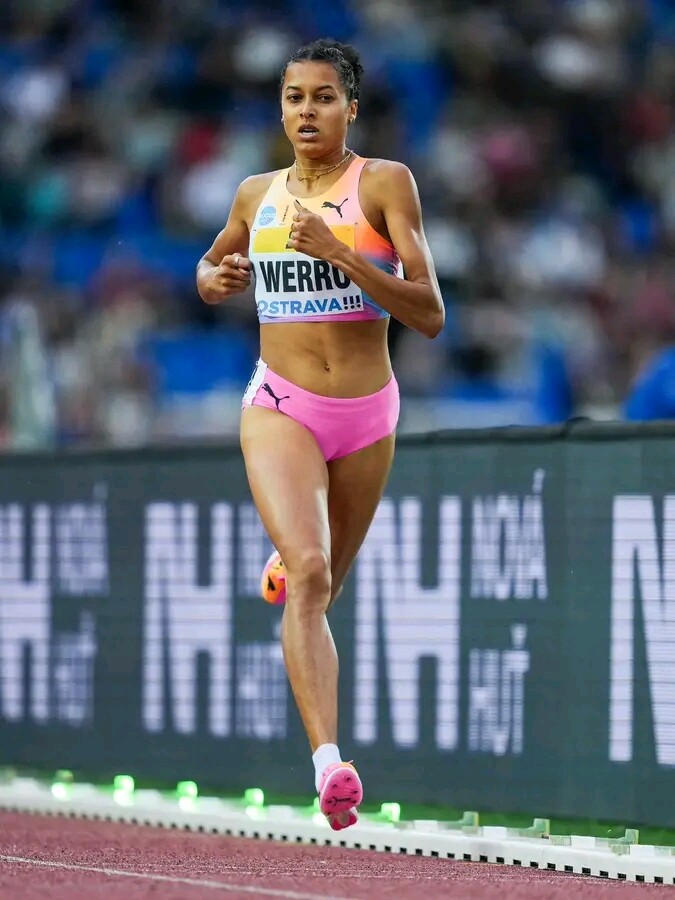
Broeders-Bol held on impressively until the final 200m before Werro shifted gears and pulled away. The Dutch athlete crossed the line second in a remarkable 1:57.13, moving to No.3 on the Dutch all-time 800m rankings with one of the best performances of her career.
The quality of the race was further highlighted by the depth of the field, as all eight finalists broke the two-minute barrier in a remarkable display of women’s 800m strength.
Werro’s performance has once again raised the question of whether the legendary world record could finally be under threat. Jarmila Kratochvílová’s long-standing mark of 1:53.28 from 1983 remains untouched, but with the current generation producing performances of this level, the historic record appears more vulnerable than it has in years.
Ostrava delivered a moment that showcased the incredible evolution of the women’s 800m, with Werro leading the charge and proving that history may soon be within reach.
by Erick Cheruiyot for My Best Runs.
Login to leave a comment
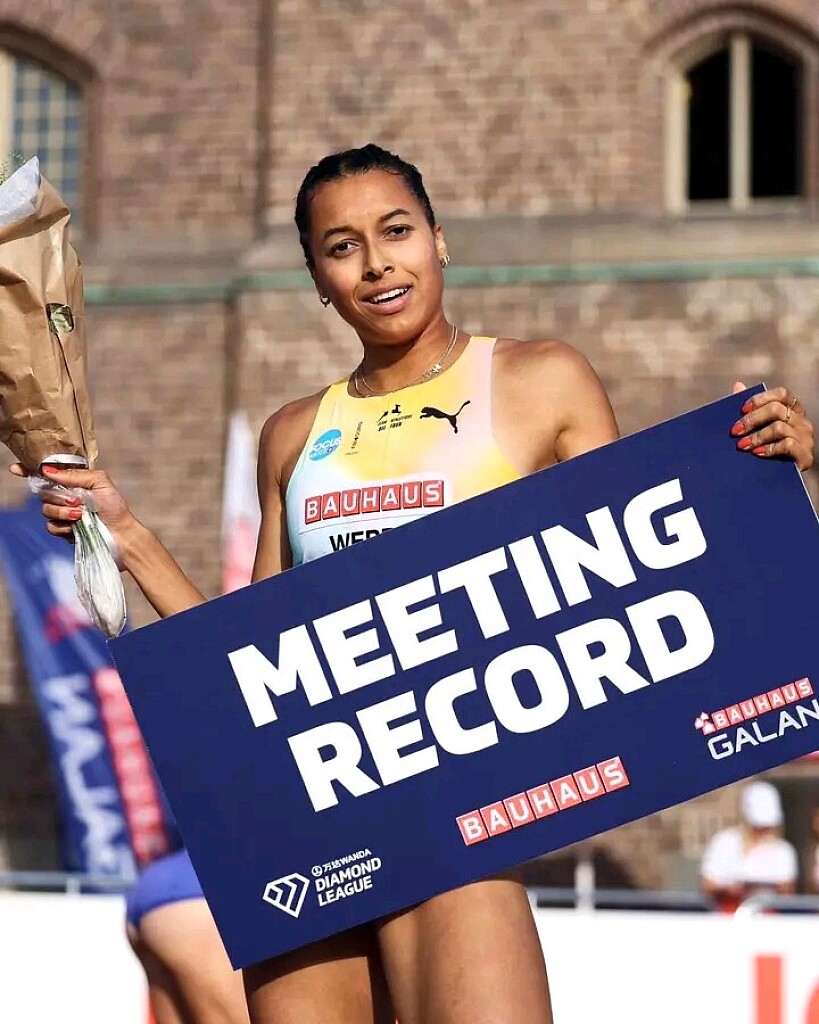
STOCKHOLM SHOCKWAVE: AUDREY WERRO BLASTS 1:53.98 IN ONE OF THE FASTEST 800M RACES EVER RUN
Stockholm delivered pure middle-distance history as the Wanda Diamond League witnessed a truly extraordinary women’s 800m—one that will be remembered as one of the fastest races in the event’s modern era.
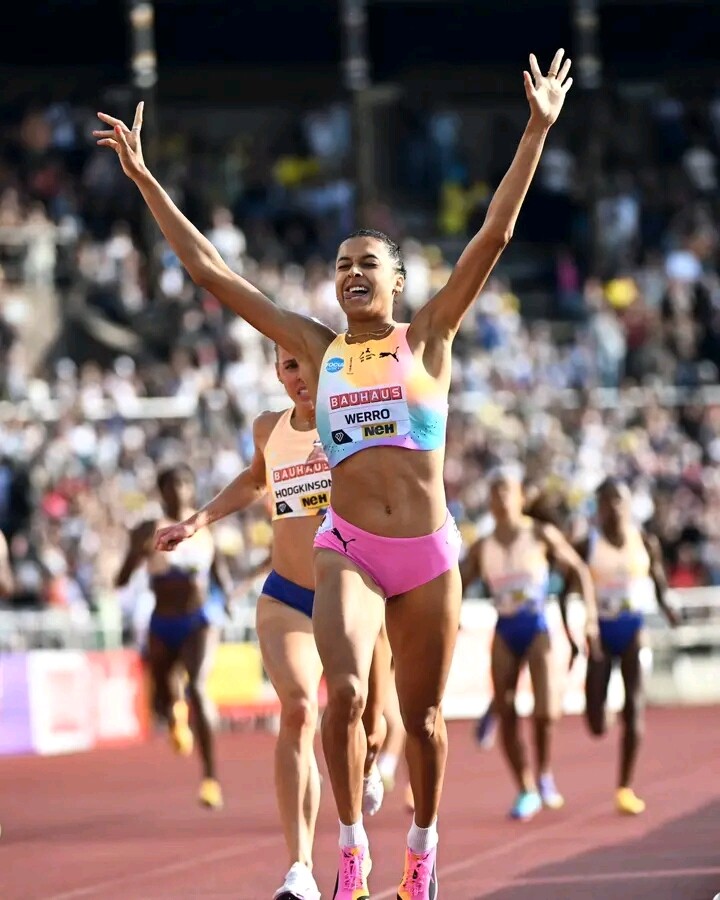
Switzerland’s rising star Audrey Werro produced the performance of her life, storming to victory in a breathtaking 1:53.98, a world-leading mark and a national record. In doing so, she became the third-fastest woman in history over 800m, coming within just 0.70 seconds of the legendary world record of 1:53.28 set by Jarmila Kratochvílová in 1983.
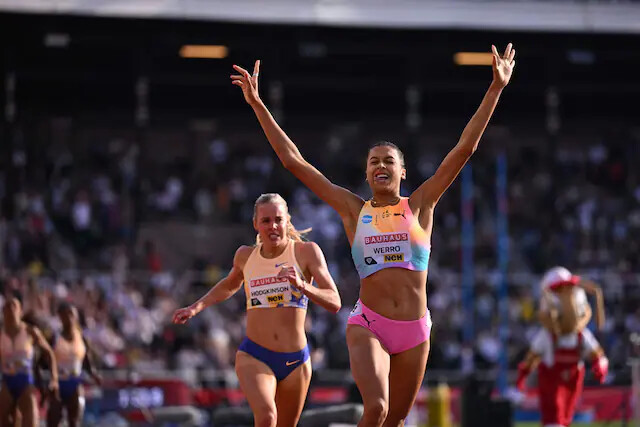
It was a fearless, perfectly timed run—controlled early, explosive down the back straight, and devastating in the final 200 metres as Werro pulled away in a finish of historic quality.
Right behind her, Keely Hodgkinson from Great Britain once again proved her consistency at the very highest level. The British star delivered a sensational 1:54.33, setting a new British national record and securing her place as the third-fastest woman in history. Despite finishing second, her performance was another statement of world-class dominance in a golden era for women’s 800m running.
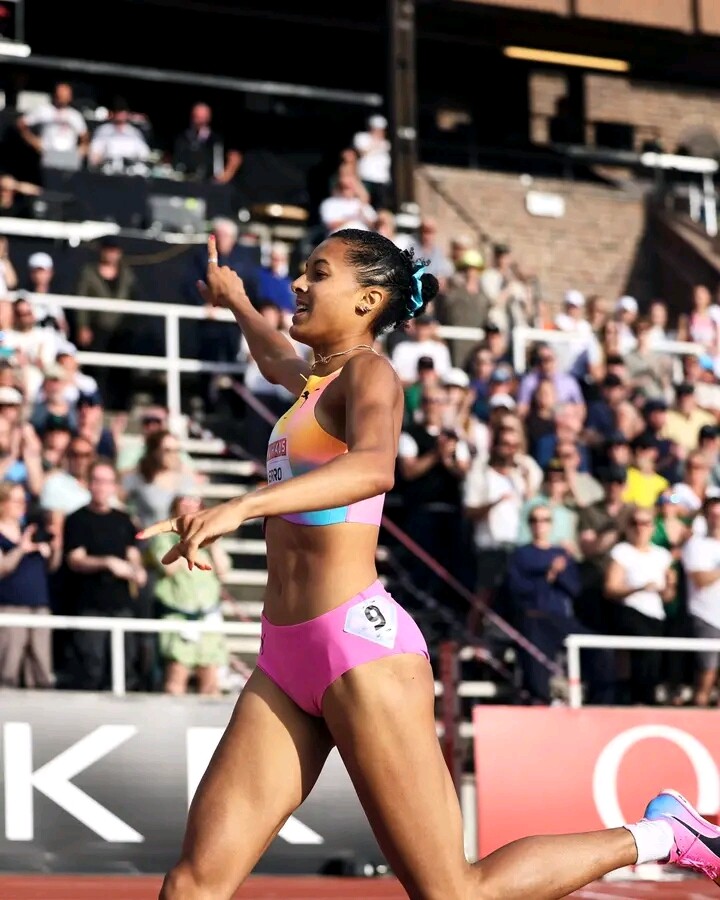
Behind the leading duo, the rest of the field produced high-quality performances in a race where almost every athlete was pushed to season’s or personal best levels.
Official Results – Women’s 800m (Stockholm DL)
1. Audrey Werro — Switzerland — 1:53.98 (WL, NR)
2. Keely Hodgkinson — Great Britain — 1:54.33 (NR)
3. Roisin Willis — United States — 1:57.56 (PB)
4. Anaïs Bourgoin — France — 1:57.68
5. Prudence Sekgodiso — South Africa — 1:57.70
6. Anna Wielgosz — Poland — 1:57.92 (PB)
7. Raevyn Rogers — United States — 1:57.94 (SB)
8. Sage Hurta-Klecker — United States — 1:58.26
9. Nigist Getachew — Ethiopia — 1:58.59
10. Pernille Karlsen Antonsen — Norway — 1:58.82 (PB)
11. Gabriela Gajanová — Slovakia — 2:02.88
DNF. Rachel Klopfenstein (Pacer)
From start to finish, the race unfolded at an unforgiving pace, with the front pack shredding expectations and rewriting the limits of women’s 800m running. Multiple athletes dipped under 1:58, highlighting just how exceptional the conditions and competition were.
As the dust settles in Stockholm, one question now rises above the rest: are we witnessing the beginning of a new era where the long-standing world record from 1983 finally comes under serious threat?
If this race is any indication, history may not only be under pressure—it may already be closing in.
by Erick Cheruiyot for My Best Runs.
Login to leave a comment
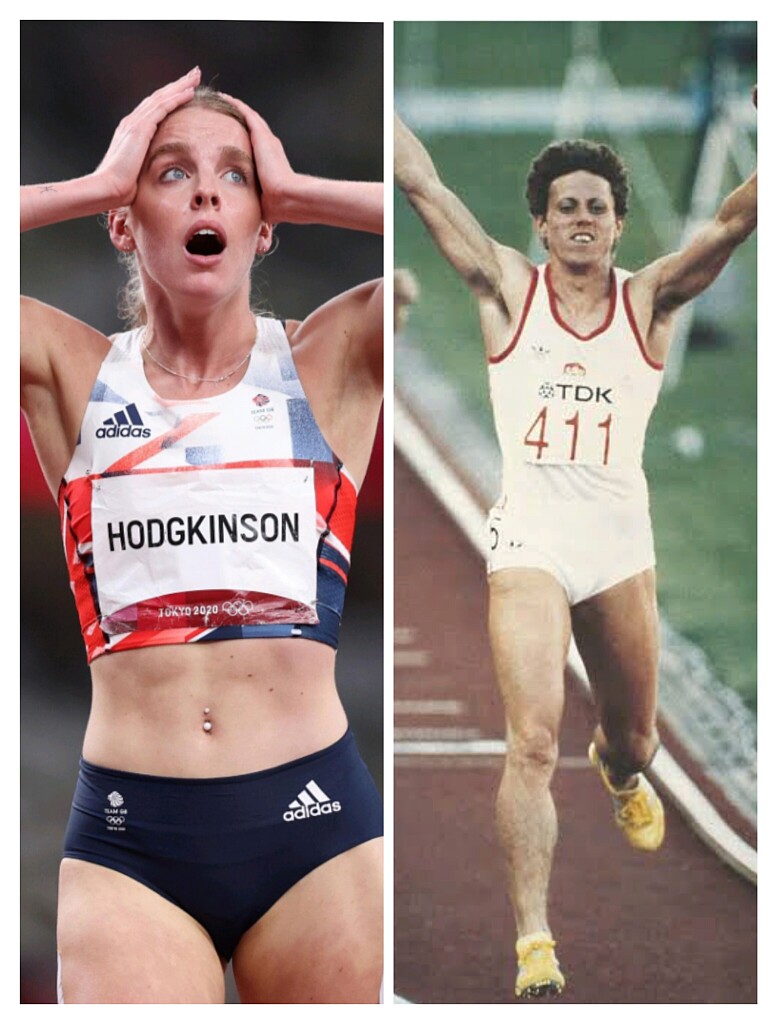
Beyond the Two-Hour Dream: Where Athletics’ Next Great Barriers Truly Lie
For generations, athletics has been defined not just by victories, but by the breaking of barriers that once seemed beyond human reach. From Roger Bannister redefining the limits of the mile to Eliud Kipchoge pushing the marathon into uncharted territory, the sport has thrived on moments where disbelief gives way to possibility.
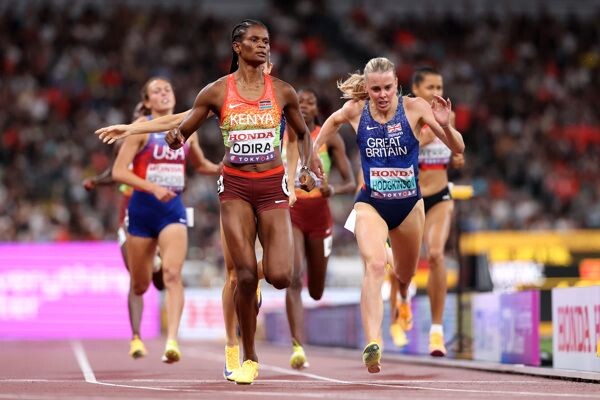
Now that the elusive sub-two-hour marathon has been conquered—albeit under controlled conditions—the question naturally arises: what “impossible” feats remain?
On the men’s side, the landscape feels markedly different. The mythical thresholds that once captured the public imagination have largely been crossed. What remains are performances of extraordinary refinement rather than revolution. A 10,000 metres run under 26 minutes, a 5,000 metres dipping to 12:30, or an 800 metres brushing against the 1:40 barrier—these are astonishing achievements by any standard. Yet they lack the simple, almost poetic clarity of a round-number milestone. They are understood best by insiders, appreciated deeply by purists, but perhaps less capable of gripping the wider world in the same way.
Take the legacy of David Rudisha, whose 1:40.91 in the 800 metres already borders on perfection. To go significantly beyond it would be monumental, but not necessarily transformative in the public imagination. It is progress, not paradigm shift.
The narrative shifts, however, when attention turns to the women’s side—where the sport’s next defining frontiers may well emerge.
Foremost among them is the tantalising prospect of a sub-four-minute mile. At present, it exists firmly in the realm of speculation, yet history cautions against dismissing such ambitions. Before Bannister, the four-minute mile was widely considered unattainable. Today, with athletes like Faith Kipyegon consistently redefining excellence in the 1500 metres and mile, the once-unthinkable begins to inch toward plausibility. Even a performance approaching 4:02 would shift the psychological landscape, transforming fantasy into a credible pursuit.
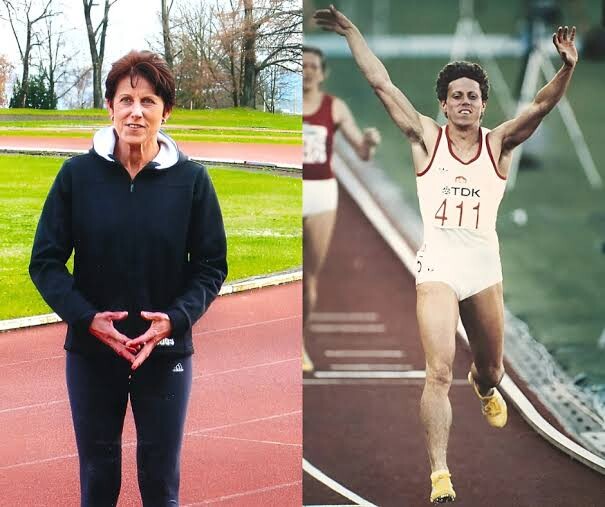
Then there is perhaps the most enigmatic mark in all of athletics: the women’s 800 metres world record. Set at 1:53.28 by Jarmila Kratochvílová in 1983, it stands as a relic of another era—unyielding, controversial, and seemingly immune to progress. While other events have evolved, this record has resisted even the closest of challenges. In fact, approaching within a second of it has become a rarity, elevating even a 1:54 performance into the realm of the extraordinary.
This enduring anomaly creates a paradox: in an age of rapid advancement, the women’s 800 metres has become one of the sport’s last true “barriers”—not defined by a round number, but by the sheer improbability of surpassing a time frozen in history.
Taken together, these realities suggest that athletics may be entering a new phase. The era of clean, universally understood milestones may be giving way to a subtler narrative—one where greatness is measured not only by breaking symbolic thresholds, but by pushing the limits of human performance in increasingly nuanced ways.
And yet, if history has taught us anything, it is that today’s impossibility often becomes tomorrow’s inevitability.
Perhaps the next moment that stops the world will not come from the familiar battlegrounds of men’s distance running, but from the evolving, unpredictable theatre of women’s middle-distance events. Somewhere between ambition and audacity, the next great barrier is waiting—not just to be broken, but to redefine what we believe the human body can achieve.
by Erick Cheruiyot for My Best Runs.
Login to leave a comment
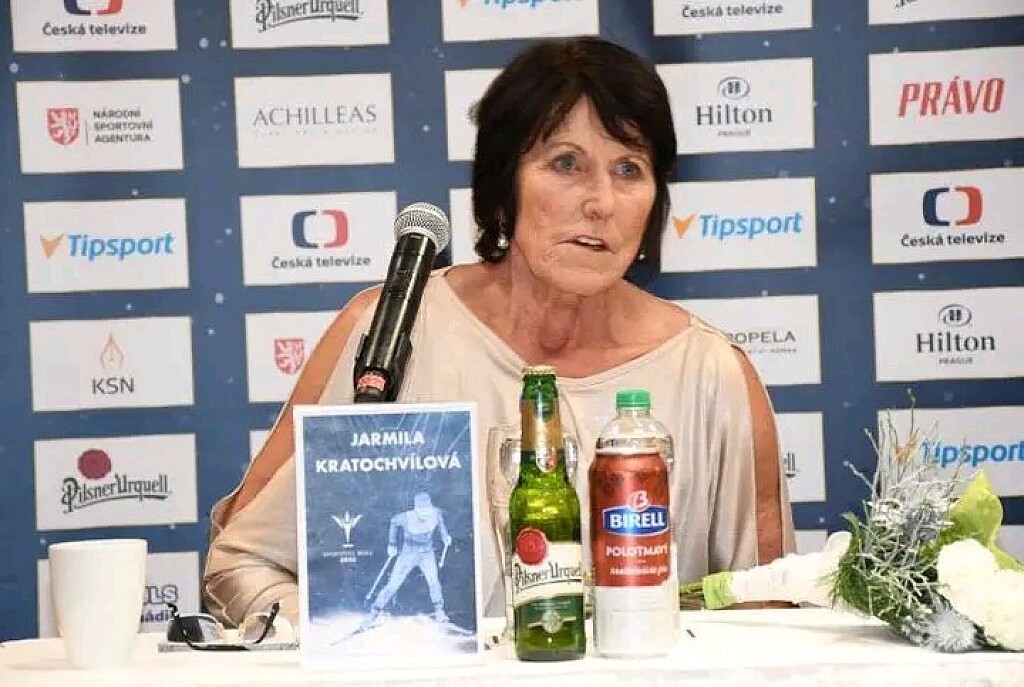
Jarmila Kratochvílová and the 800m Record That Time Could Not Touch
Some records are broken within months. Others survive for years. Then there are the rare marks that outlive generations and become part of sporting mythology. Few achievements in athletics carry that aura more powerfully than the women’s 800 metres world record of 1:53.28, set by Jarmila Kratochvílová on July 26, 1983, in Munich.
More than four decades later, the astonishing performance still stands untouched, making it one of the oldest and most remarkable world records in track and field. In an era where training science, technology, and competition standards have advanced dramatically, that number continues to resist every challenge.
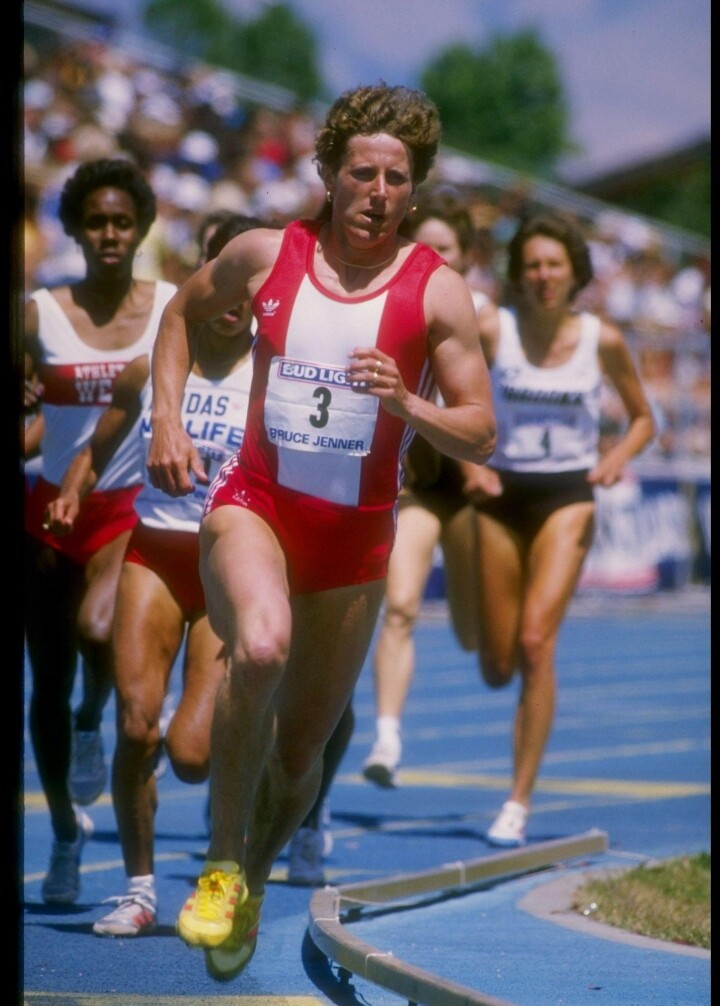
What makes the feat even more extraordinary is the story behind it. Kratochvílová was primarily known as a 400-metre specialist, not an 800-metre star. Her appearance in Munich came after a late change of plans caused by injury, and she was not even expected to headline the event. Yet when the gun fired, she produced one of the finest races ever seen.
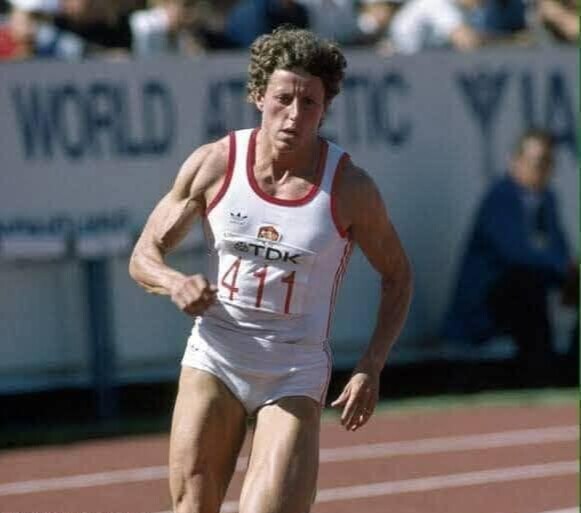
She passed the opening lap in a fearless 56.1 seconds, surged through 600 metres in 1:26.3, and still found another devastating finish over the final bend and straight. Crossing the line in 1:53.28, she did far more than win a race—she created a benchmark that would challenge every generation to come.
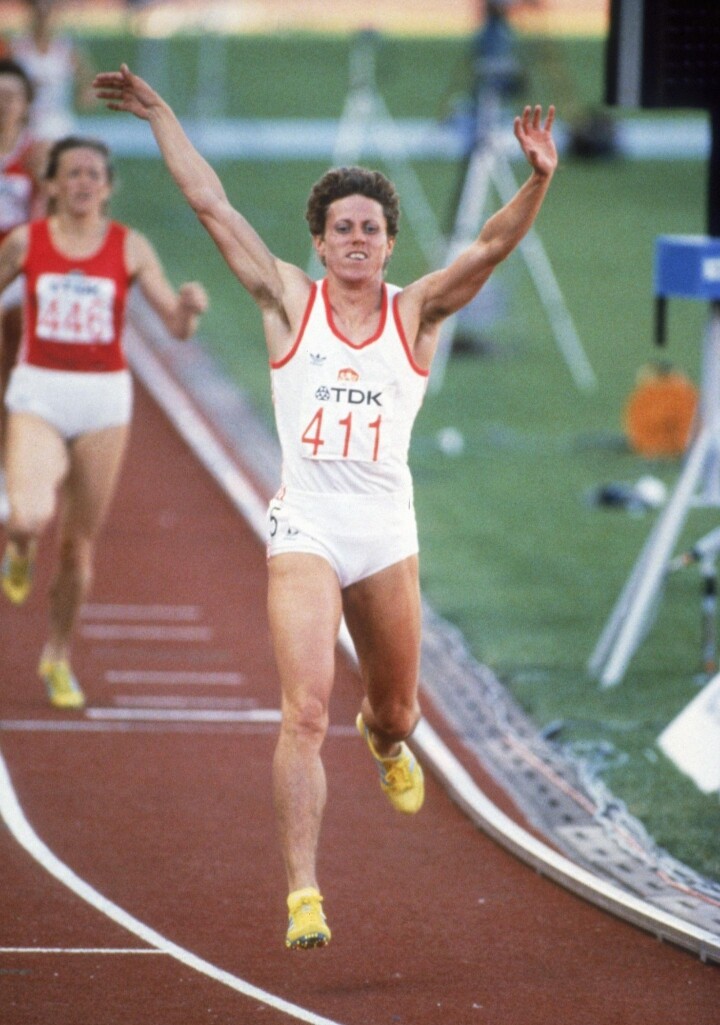
That unforgettable evening crowned a sensational 1983 campaign. Weeks later, at the first-ever World Championships in Helsinki, Kratochvílová completed a rare and historic double by winning gold in both the 400 metres and the 800 metres. She also ran 47.99 for the 400m that season, becoming the first woman in history to break the 48-second barrier. Only a select few athletes, including Marita Koch, have since joined that elite company.
Her rise had already been confirmed earlier when she claimed Olympic silver in the 400 metres at the 1980 Summer Olympics. Many believed even greater Olympic success awaited her, but history intervened. The boycott of the 1984 Summer Olympics denied her the chance to compete on sport’s biggest stage once again.
Even after leaving competition, Kratochvílová continued shaping the sport. As a coach, she guided Ludmila Formanová to the 800m world title in 1999, proving her knowledge and influence extended well beyond her own racing career.
Her record has not escaped controversy or debate. In 2017, World Athletics proposed stricter standards for the ratification of older world records, raising questions over marks set before modern testing systems. Yet the 1:53.28 remained official, preserving one of the sport’s most famous milestones.
As of 2026, athletes continue to chase history. Among the strongest modern contenders is Keely Hodgkinson, whose rise has renewed belief that the seemingly impossible may one day fall. But until that moment arrives, Kratochvílová’s run in Munich remains the gold standard.
Whether it survives another season or another generation, one truth is certain: Jarmila Kratochvílová did not simply set a world record—she created a legend that time itself has struggled to defeat.
by Erick Cheruiyot for My Best Runs.
Login to leave a comment
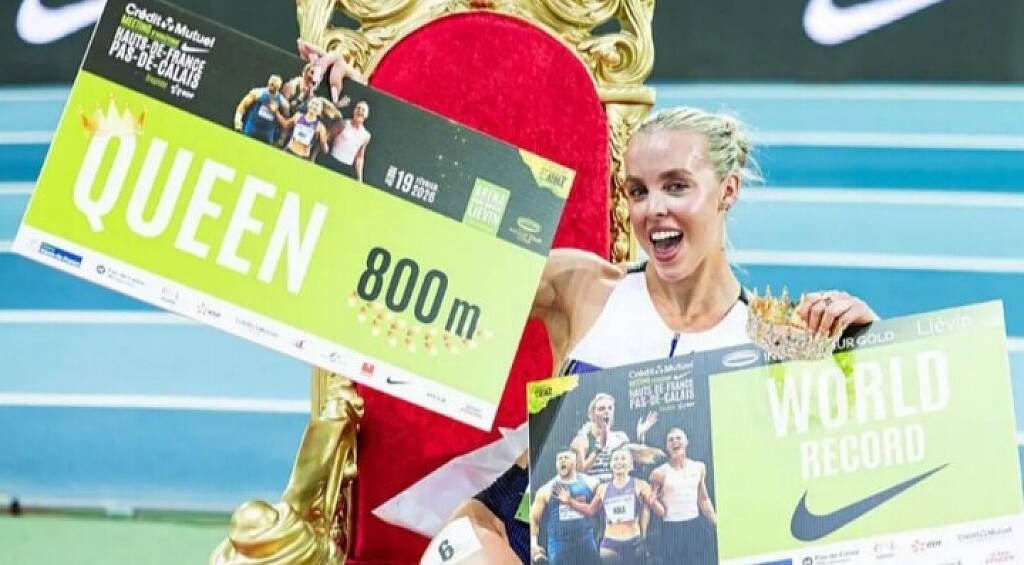
Forty-Three Years on the Clock: Is 1:53.28 Finally Ready to Fall?
For more than four decades, one number has hovered over women’s middle-distance running like a mountain peak few dare to climb: 1:53.28.
Set in 1983 by Jarmila Kratochvílová in Munich, it remains the oldest world record still standing in women’s track and field. Generations have come and gone. Champions have risen, medals have been won, but the clock has stubbornly refused to yield.
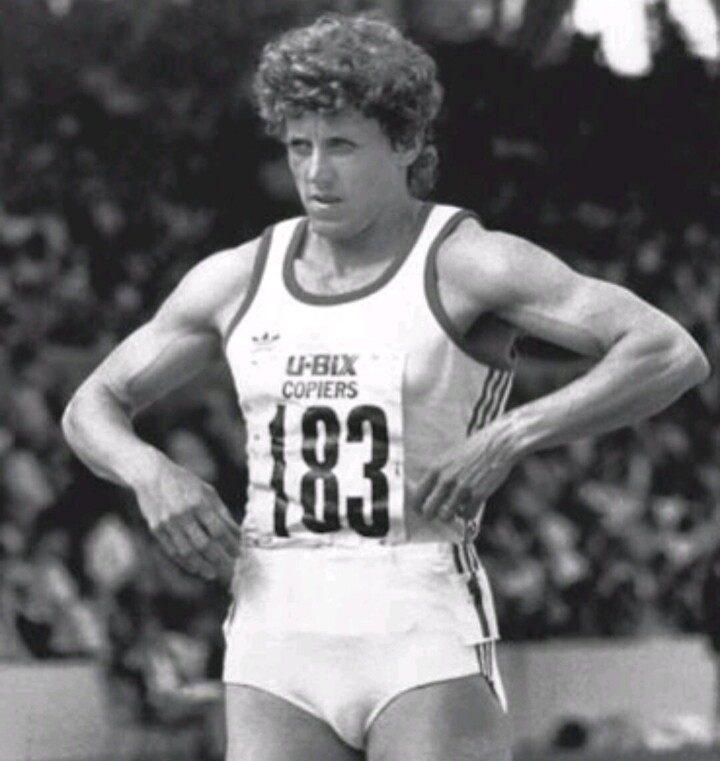
Now, the question feels sharper than ever: is that 43-year-old record finally under serious threat?
Just a week after rewriting history indoors, Keely Hodgkinson has shifted her focus to the ultimate prize — the outdoor 800m world record. Her recent indoor world record was not just a victory; it was a statement. A declaration that the margins are closing and that the impossible may simply be waiting for the right moment.
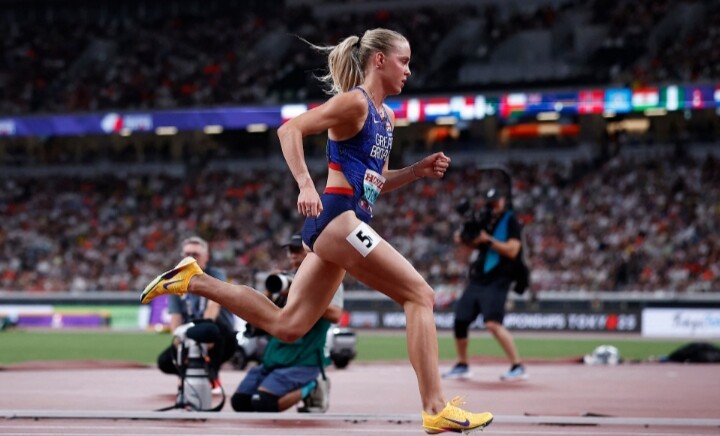
For years, Hodgkinson has hovered tantalisingly close to the barrier. The 1:54s have become familiar territory — controlled, composed, almost routine for an athlete who has built her career on remarkable consistency at the highest level. Olympic and world medals have confirmed her place among the elite, but the stopwatch keeps whispering that there is still more.
“We’ve been saying for years now,” she admitted, “and I think I’ve just been tipping on those 1:54s and at some point a 1:53 is going to come.”
That belief no longer sounds hopeful. It sounds calculated.
Hodgkinson is careful to protect what she already owns. She has made it clear that medals — earned through championship battles and tactical brilliance — mean more than a time on a scoreboard. Yet even she recognises the magnitude of what breaking 1:53.28 would represent.
“Now I do really believe that we can break it,” she said. “I think the outdoor 800m record would be like ‘cemented GOAT.’ I do really believe it’s possible.”
That phrase — cemented GOAT — captures the scale of the challenge. This is not simply about running fast. It is about redefining the boundaries of women’s middle-distance running. It is about erasing a mark that has survived eras, technologies, and entire generations of talent.
What makes this moment different is momentum. Hodgkinson is no longer chasing from a distance; she is knocking on the door. Her strength through 600 metres, her composure under pressure, and her devastating final drive suggest an athlete entering her prime with unfinished business.
Records do not fall because they are old. They fall because someone arrives who is fearless enough to believe the clock can be beaten.
For 43 years, 1:53.28 has stood untouched — a relic of another era. But with Hodgkinson’s confidence rising and her form sharper than ever, the barrier feels less mythical and more mathematical.
Is 1:53.28 finally under threat?
For the first time in decades, the answer does not feel like nostalgia.
It feels like anticipation.
by Erick Cheruiyot for My Best Runs.
Login to leave a comment
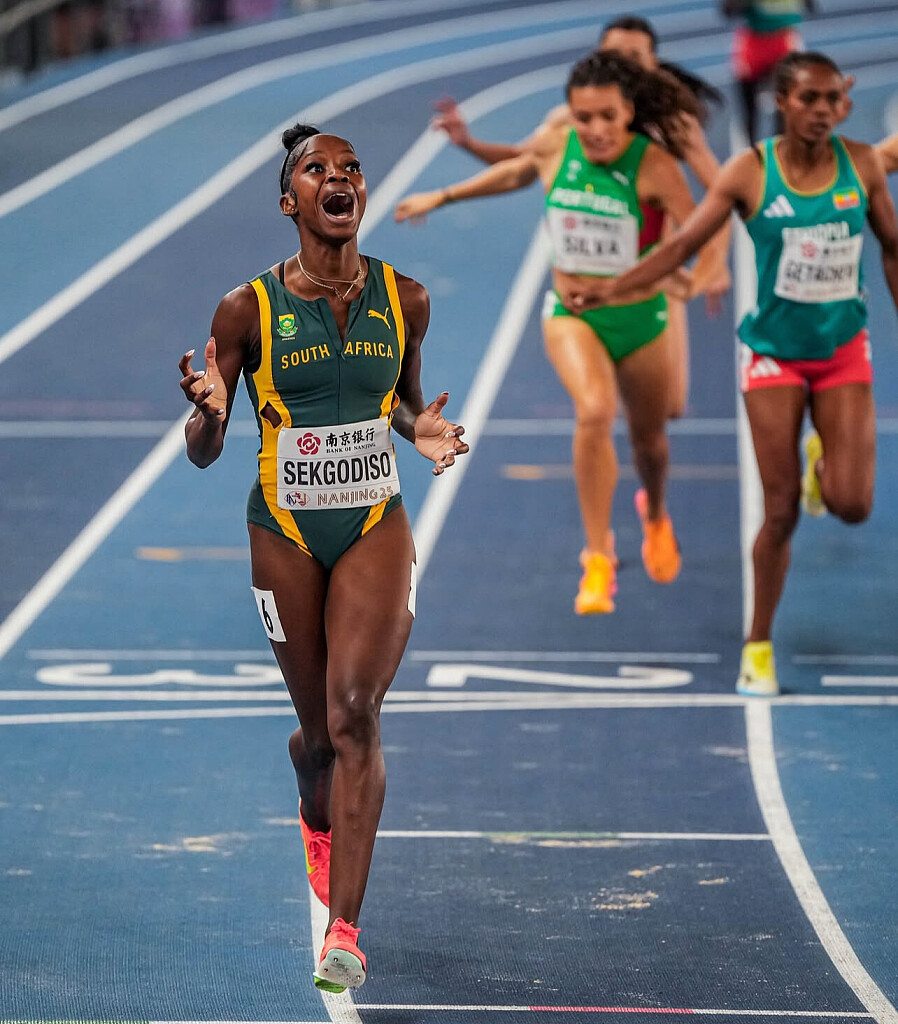
South Africa's Prudence Sekgodiso Closes in on 800m World Lead
Prudence Sekgodiso of South Africa is charging toward the top of the global women’s 800m leaderboard with a sizzling time of 1:57.16, recorded in the 2025 season. As of July 4, this places her second on the current world list—trailing only Ethiopia’s Duguma, who leads with 1:56.64.
Sekgodiso’s breakthrough has sent waves through the athletics world, as seen in a recent viral post by SuperSport celebrating her ascent. The 800m is one of the most fiercely contested events in track and field, and Sekgodiso’s consistency and fearless racing style are positioning her as a serious medal contender ahead of the Paris World Championships and potentially the Olympics.
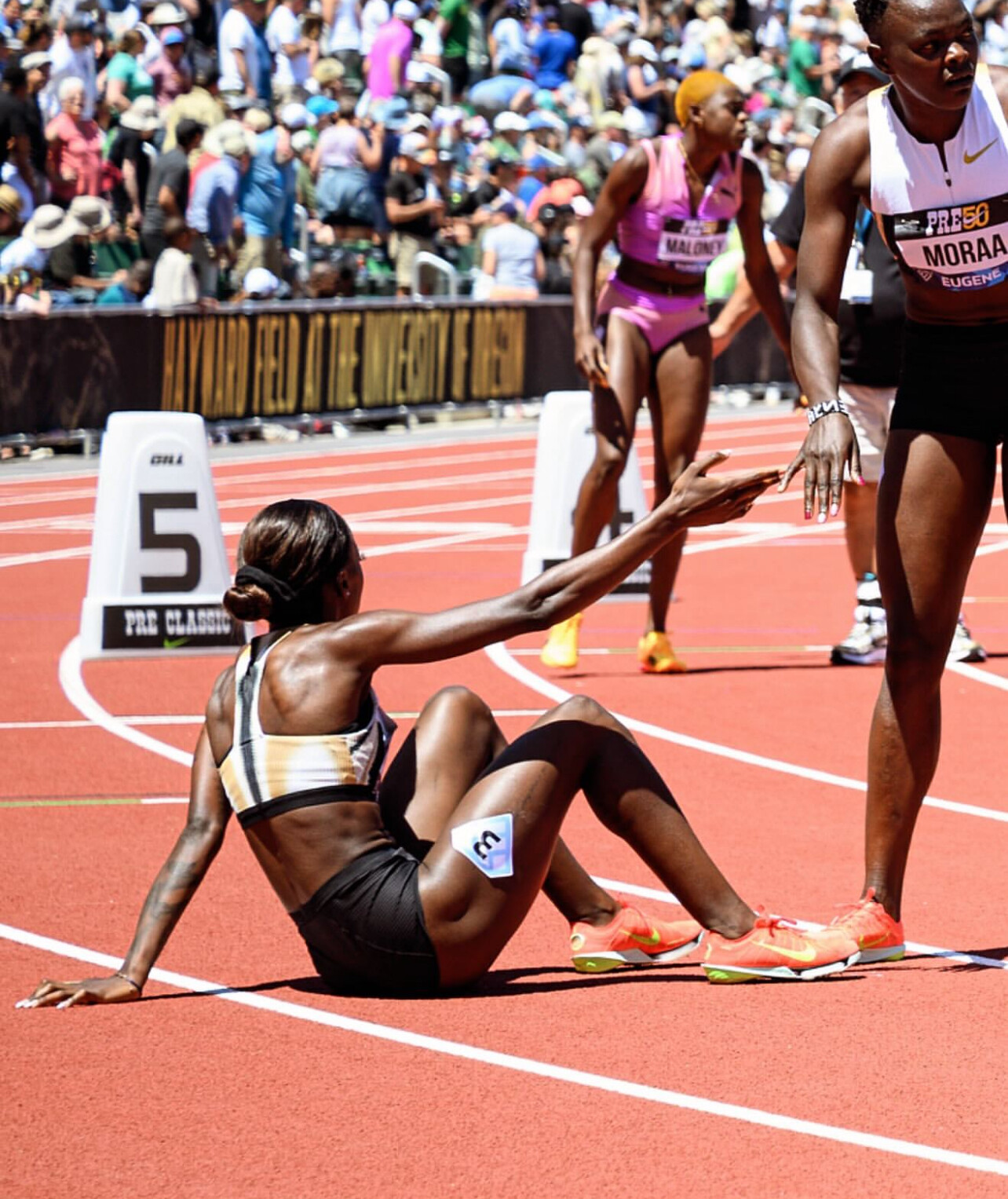
? Top 10 Women’s 800m Times in 2025 (as of July 4):
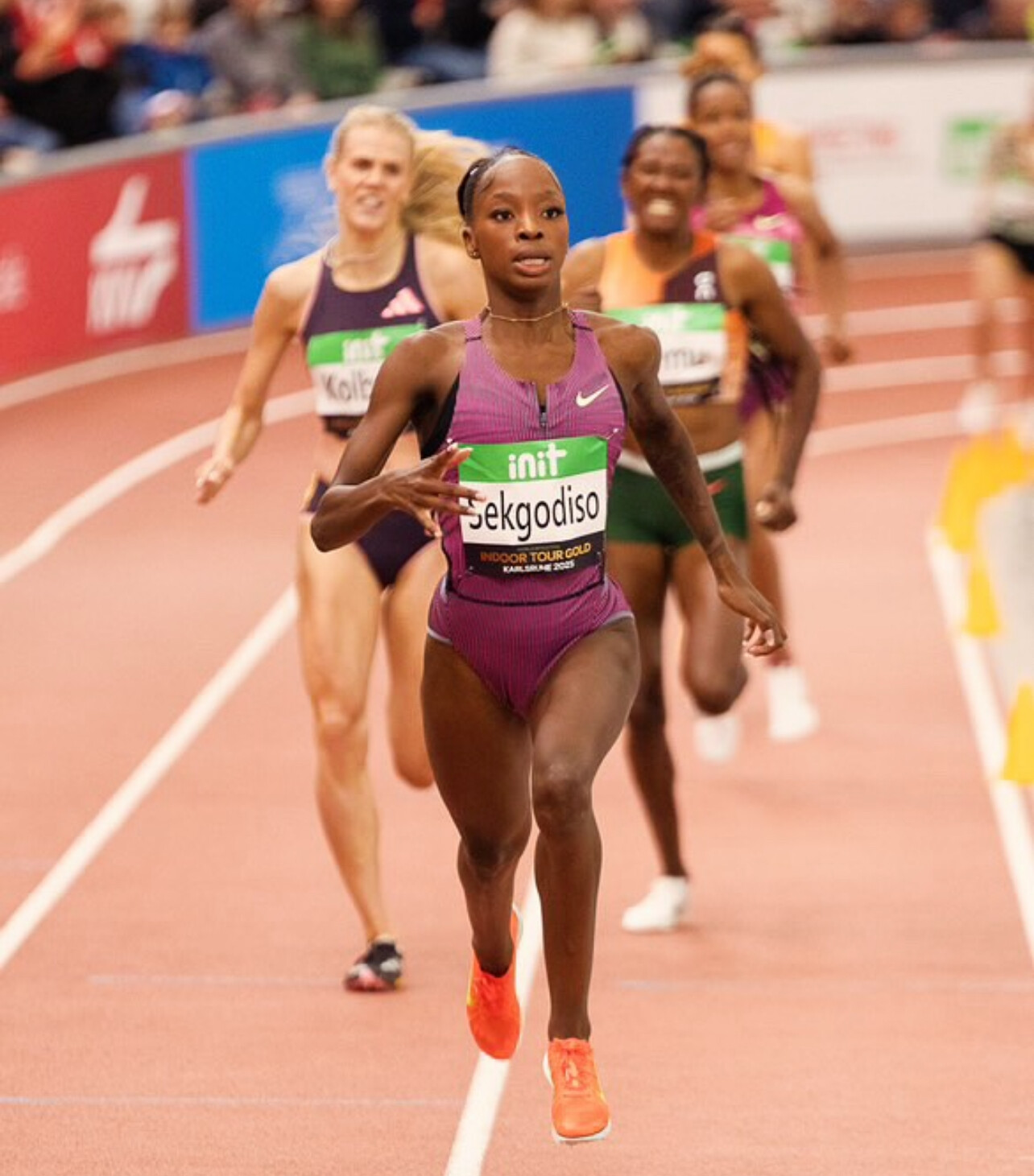
1. 1:56.64 – Duguma
2. 1:57.16 – Sekgodiso
3. 1:57.25 – Werro
4. 1:57.49 – Nowe
5. 1:57.55 – Wiley
6. 1:57.66 – Bell
7. 1:57.81 – Bourgoin
8. 1:57.83 – Billings
9. 1:57.83 – Moraa
10. 1:58.00 – Maloney
How Sekgodiso Measures Up Historically:
The women’s 800m world record still stands at 1:53.28, set by Jarmila Kratochvílová of Czechoslovakia in 1983—a mark that has stood for over 40 years and is widely considered one of the most unbreakable in athletics. Only a handful of women have ever run under 1:55, including:
• Jarmila Kratochvílová (CZE) – 1:53.28 (1983)
• Nadezhda Olizarenko (URS) – 1:53.43 (1980)
• Pamela Jelimo (KEN) – 1:54.01 (2008)
• Caster Semenya (RSA) – 1:54.25 (2018)
Prudence Sekgodiso's 1:57.16 may not yet challenge these all-time performances, but it signals her potential to enter the elite sub-1:56 territory—especially with major races still ahead this season.
South Africa’s Next Middle-Distance Icon?
Following in the footsteps of Caster Semenya, Sekgodiso has reignited South Africa’s presence in the women’s 800m. At just 22 years old, she combines speed, endurance, and confidence, and her upward trajectory is undeniable.
As she continues her climb, all eyes will be on her next race. With every lap, Prudence Sekgodiso is narrowing the gap—not just between herself and the world leader, but also between today’s stars and history’s greats.
by Boris Baron
Login to leave a comment
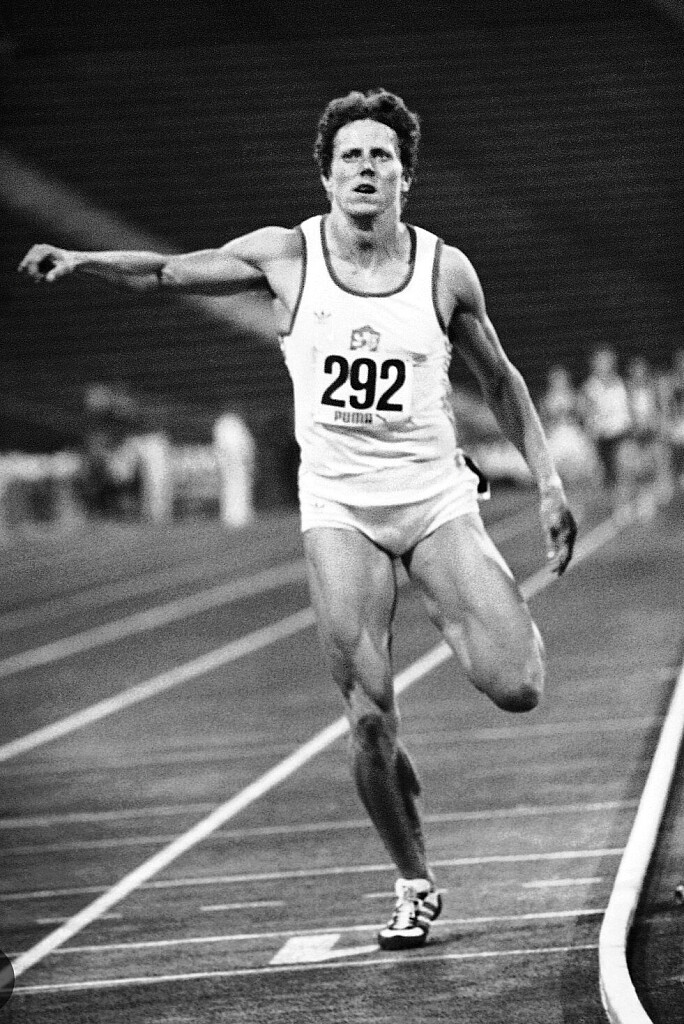
The Untouchable Record: Jarmila Kratochvílová’s 800m Mark Still Stands 42 Years Later — But Should It?
In the fast-evolving world of athletics, records are made to be broken — except, it seems, for one. On July 26, 1983, in Munich, Czechoslovakia’s Jarmila Kratochvílová ran an astonishing 1:53.28 in the women’s 800 meters. Four decades later, that time remains the oldest unbroken individual world record in track and field history.
It has withstood super spikes, altitude training, hyper-focused coaching, and the world’s most gifted middle-distance runners. Olympic champions like Caster Semenya and Athing Mu have come close, but none have truly threatened it. Which begs the question — how did a performance like this come to be? And should it still be recognized?
A Record Born in a Different Era
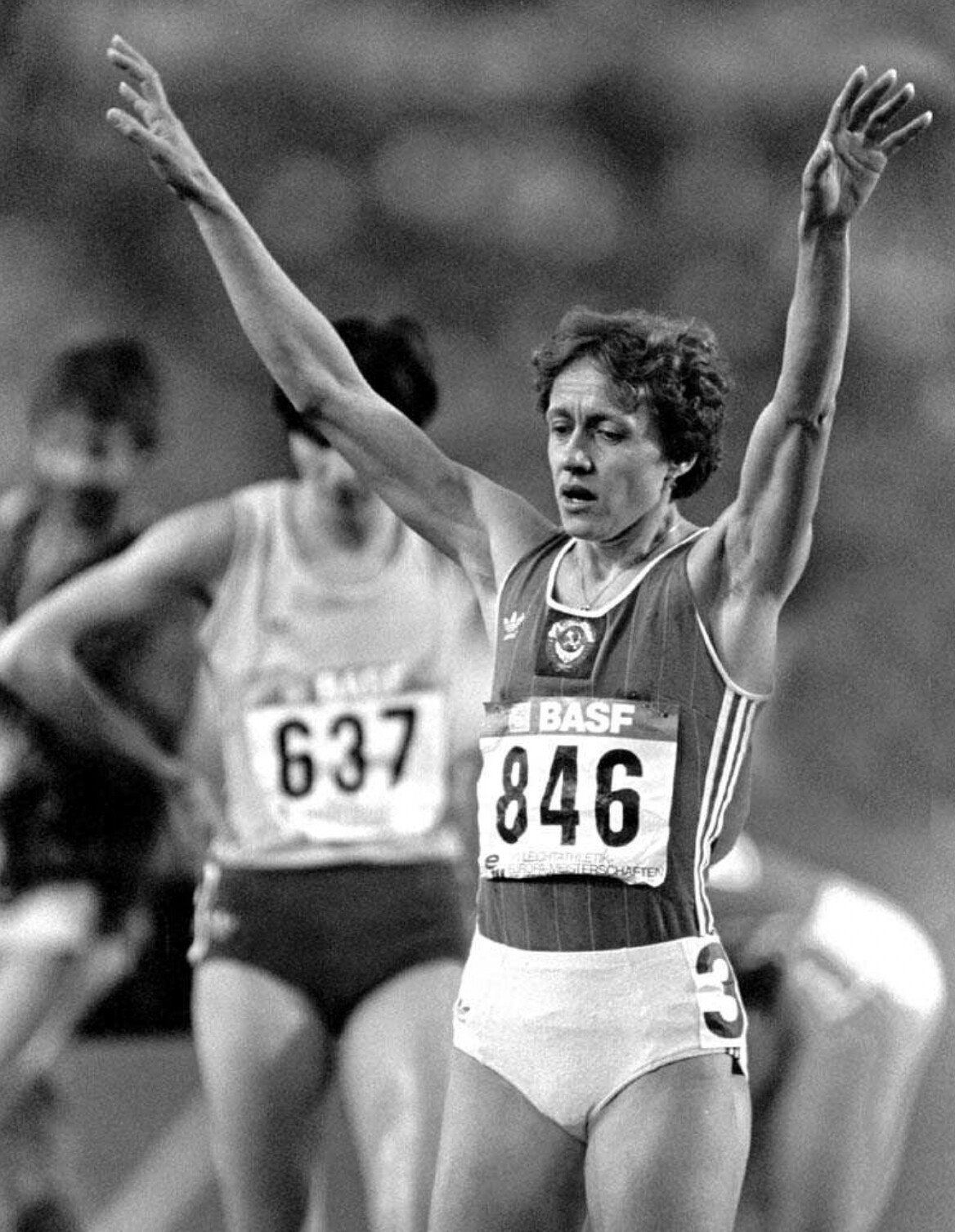
Kratochvílová’s performance came at a time when Eastern Bloc nations, including Czechoslovakia, were deep into state-sponsored sports programs. In that era, the line between elite preparation and banned enhancement was often blurred. Many athletes from that period, particularly from East Germany and the Soviet Union, have since admitted or been linked to systemic doping programs.
While there has been no formal proof that Kratochvílová used banned substances, the context raises suspicions. Her physical appearance — muscular, powerful, and more commonly compared to male counterparts than to female contemporaries — only added to the speculation. Combined with her unprecedented strength over both 400m and 800m distances, critics argue that the performance is not only unmatched, but possibly unnatural.
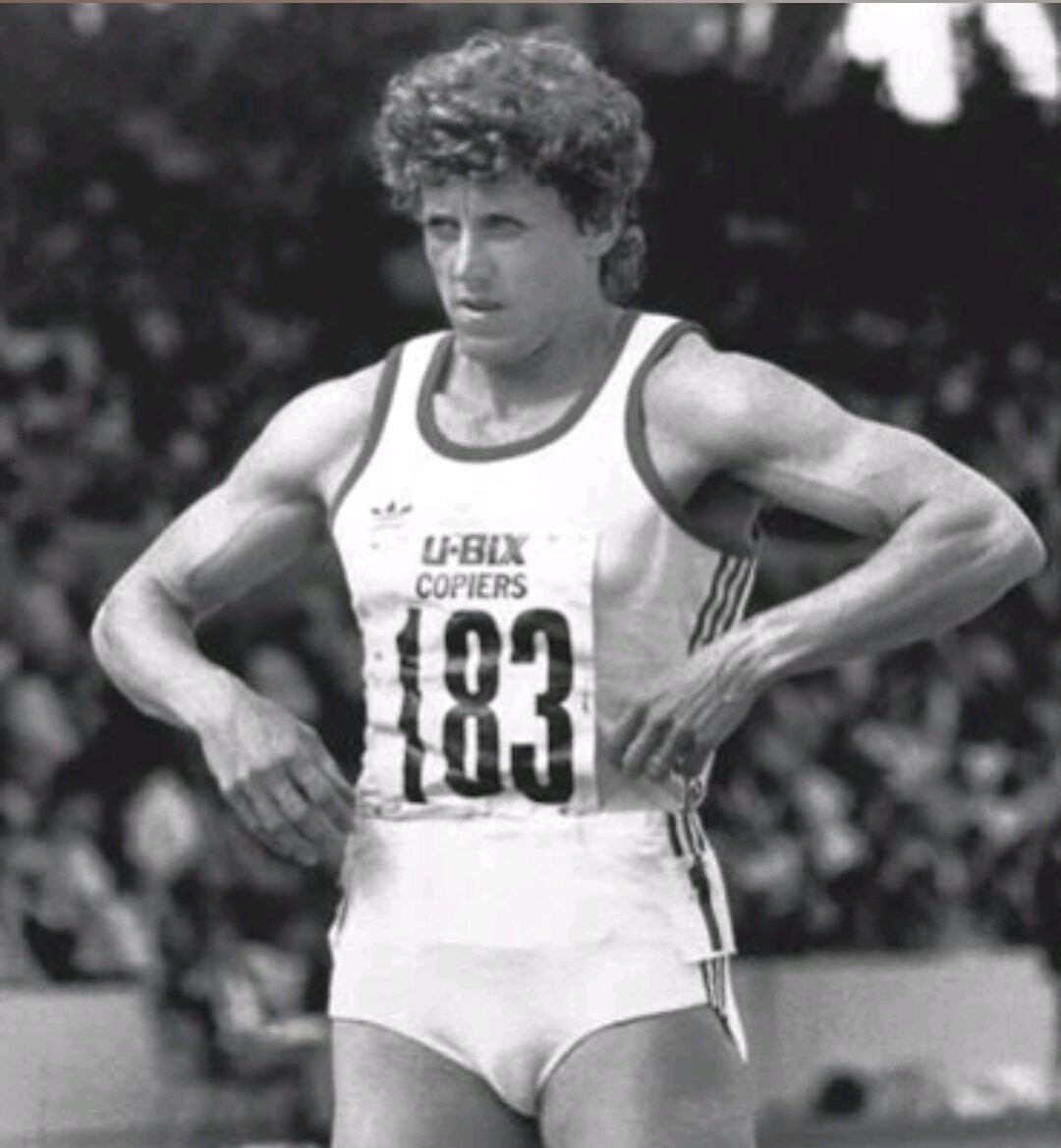
Why the Doubts Persist
• Performance Gap: Her time is still more than a second faster than most modern Olympic champions — a massive difference at the elite level.
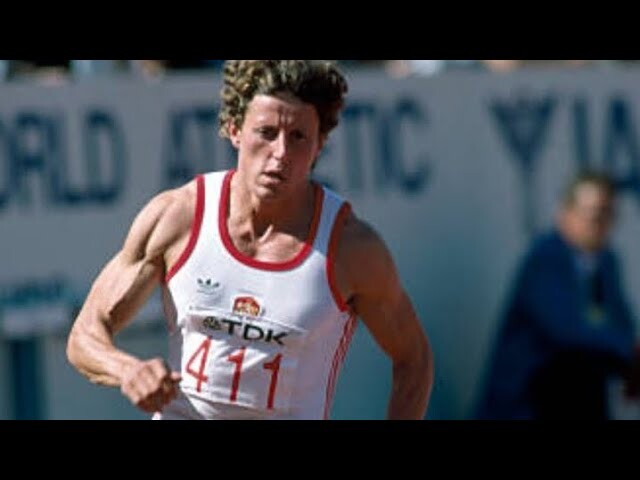
• Era of Doping: Kratochvílová competed during a time when drug testing was primitive and records were often set under questionable conditions.
• Physique & Speculation: Her highly muscular build and deep voice led some to question if she should have been eligible to compete in the women’s category — though gender testing at the time did not flag her.
• Lack of Longevity: After 1983, Kratochvílová’s presence at major championships waned. Some suggest this could point to the unsustainable nature of her peak performance.
Arguments for Letting It Stand
Supporters of the record, including Kratochvílová herself, insist that the performance was clean and the result of hard work and unconventional training. She famously avoided standard intervals and instead focused on long sessions in heavy shoes and rugged conditions. No positive test exists, and the record has survived decades of scrutiny by World Athletics.
Moreover, some point out that breaking a record doesn’t validate its legitimacy — it simply reflects the evolution of training, equipment, and talent pools. If no one has broken it yet, perhaps it’s just one of those rare, generational performances that transcends time.
Should It Be Removed?
There have been proposals — including from World Athletics — to reset all pre-2005 records due to the lack of out-of-competition drug testing during earlier decades. The suggestion faced pushback, especially from record holders who never failed a test.
But the debate continues. Some believe Kratochvílová’s 1:53.28 represents a performance that belongs to a different set of rules — and therefore shouldn’t be part of the same record book as today’s achievements. Others see it as an enduring symbol of what the human body (with or without help) once accomplished.
Final Thought
Whether you view Jarmila Kratochvílová’s 800m world record as a miraculous outlier or a relic of a flawed system, one thing is certain: it has become the ultimate benchmark. Until someone runs faster — cleanly and unquestionably — the debate will rage on. And with every passing year, this 1983 run becomes less of a record and more of a legend.
by Boris Baron
Login to leave a comment
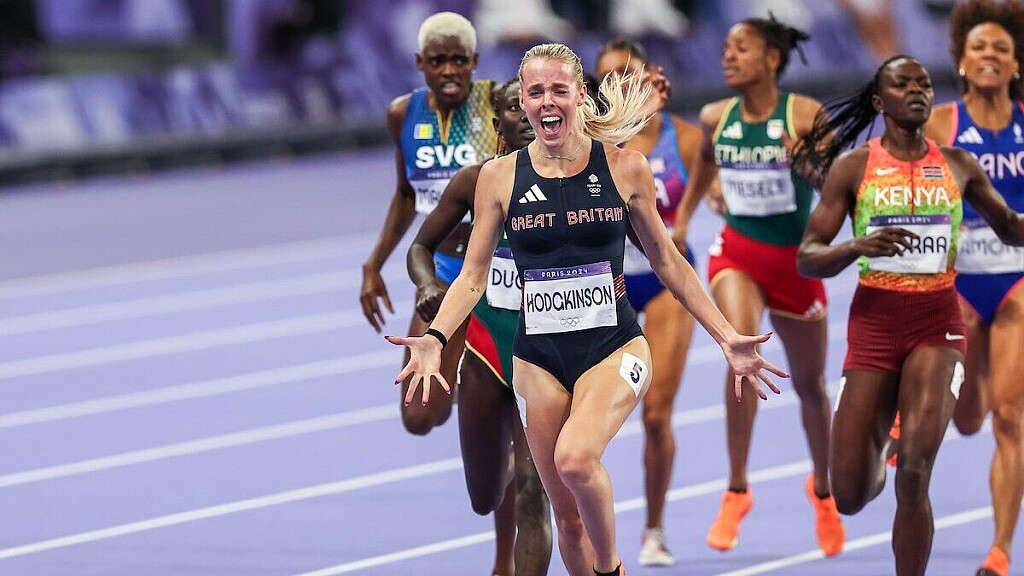
Olympic champion to challenge 41-year-old 800m world record
Launching your own track meet and naming it after yourself is one thing–but Great Britain’s 800m Olympic champion Keely Hodgkinson didn’t stop there. On Wednesday, British Athletics revealed that the inaugural Keely Klassic track meet, set for Feb. 15 in Birmingham, will conclude with Hodgkinson trying to break the 800m world record, which has stood for 41 years.
The record of 1:53.28, set by Czechoslovak athlete Jarmila Kratochvílová in 1983, is the longest-standing world record in athletics. Hodgkinson would need to run more than a second faster than her personal best (1:54.61) to even come close to taking it down. The run will mark Hodgkinson’s season opener and first race back from an injury that cut her 2024 season short.
At the Keely Klassic, Hodgkinson promises “a unique, immersive experience that will combine elite competition with an electrifying atmosphere” and extends the meeting invitation to Great Britain’s world-class track and field athletes.
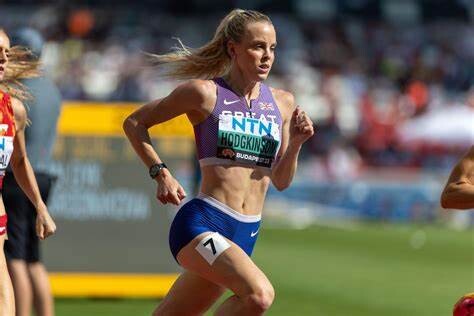
The unveiling comes less than a day after Tuesday’s BBC Sports Personality of the Year (SPOTY) ceremony, where Hodgkinson took centre stage. The 22-year-old is the first track athlete to win since Mo Farah won in 2017, and the first female track athlete to win since 2004. Her win also marks the fourth consecutive year that a woman has won the award–the longest streak in history.
“I’m actually in a bit of shock,” Hodgkinson said upon accepting the trophy. “I’m actually more excited for my coach, to be honest, because I wouldn’t be where I am without his guidance, [which] I’ve had since I was 17.”
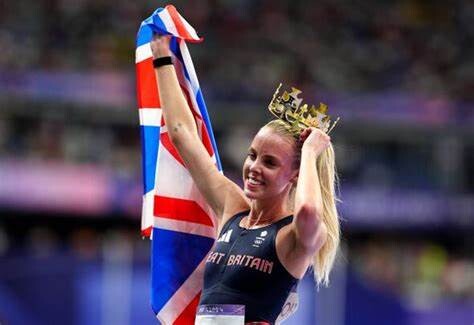
“This year has been absolutely incredible for me,” she continued. “I achieved everything I set out to do on the outdoor track, which is kind of rare, so I’m grateful to be in this position.”
Olympic triathlon champion Alex Yee was also a contender for the award.
Hodgkinson’s coaches, Trevor Painter and Jenny Meadows, were awarded Coach(es) of the Year. Along with the Olympic 800m champion, the pair coaches Olympic 1,500m bronze medallist Georgia Bell.
Mondo Duplantis wins Sport Star of the Year
Pole vaulting legend Mondo Duplantis was also acknowledged at the event, winning World Sport Star of the Year. The Swedish-American world record holder was pitted against fellow sports icons, including gymnast Simone Biles, WNBA player Caitlin Clark and Olympic marathon champion Sifan Hassan.
“So sorry that I can’t be in attendance tonight–I’m back here in the States right now, training for the up and coming season. I know I’m in great company–the biggest legends of all time in sports have won this award. This really means a lot to me.”
by Cameron Ormond
Login to leave a comment
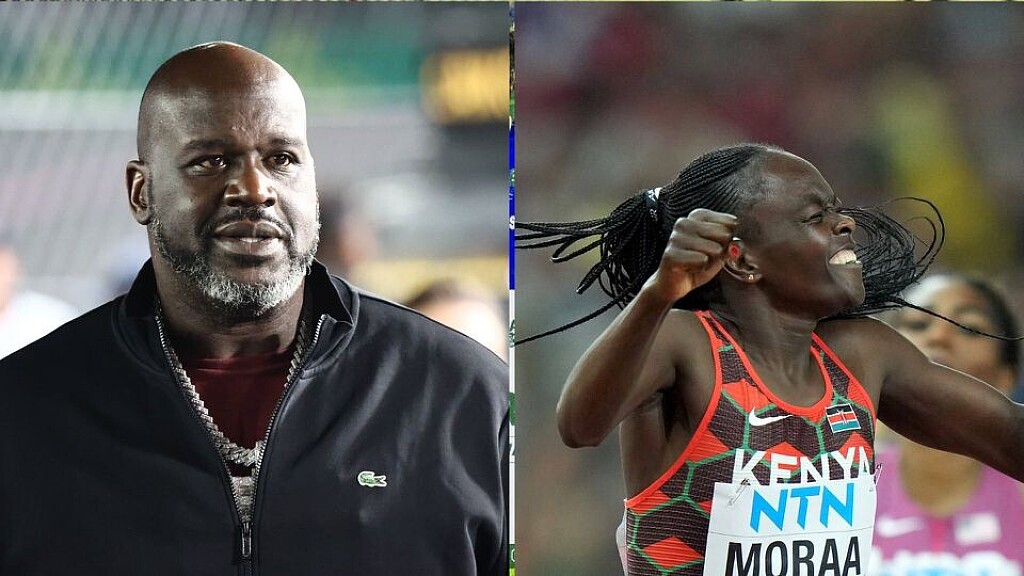
Mary Moraa has returned to training for a grueling 2024 season and is using one of NBA legend Shaquille O'Neal's famous quotes to motivate her
Reigning world 800m champion Mary Moraa is surely on a mission to make history this year as she eyes the Olympic Games in Paris, France scheduled for July 26 to August 11.
As she burns the midnight oil to ensure she makes her dreams come true, Moraa is not leaving her fans out of the mix as she keeps updating them on what she is up to.
In her recent Facebook post, she shared a video of her training at the Nyayo National Stadium and captioned the video with one of NBA legend Shaquille O'Neal’s famous quotes.
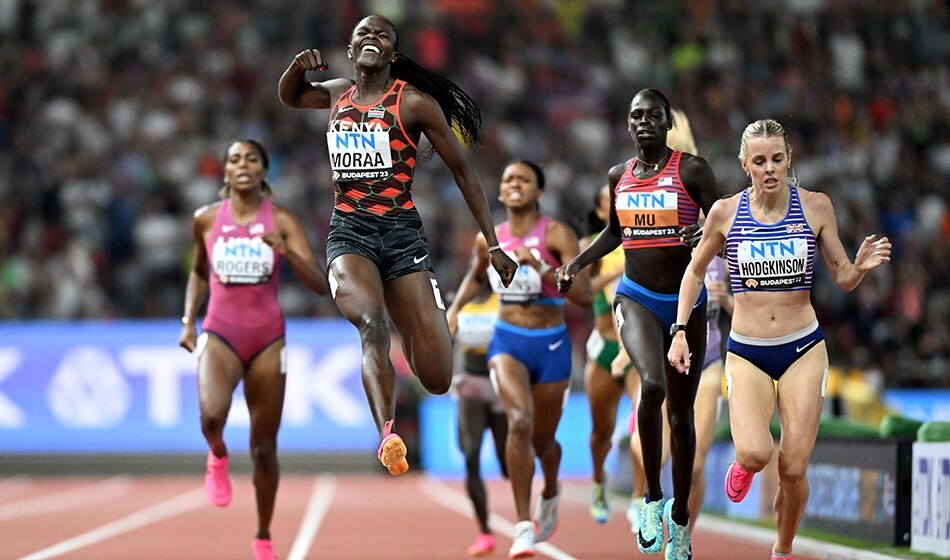
The Commonwealth Games champion said: “Excellence is not a singular act but a habit. You are what you do repeatedly.”
She also added other two photos after returning to training and captioned them saying: “I really enjoyed my first track training session this season with my training regime.”
O’Neal was one of the greatest basketball players and centers of all time and Moraa recognizing him means she is on the right track.
Meanwhile, Kisii Express has made it clear that she wants to clock 1:53, the women’s 800m world record, and she is surely putting in the work.
The world record has surely stood the test of time and the world is banking on Moraa to shatter it. It was set by Jarmila Kratochvílová back in 1983.
On July 26, the Czech athlete took to the Olympiapark Meeting in Munich’s Olympic Stadium and shattered the 800m world record, clocking 1:53.28 to win the race.
by Abigael Wuafula
Login to leave a comment
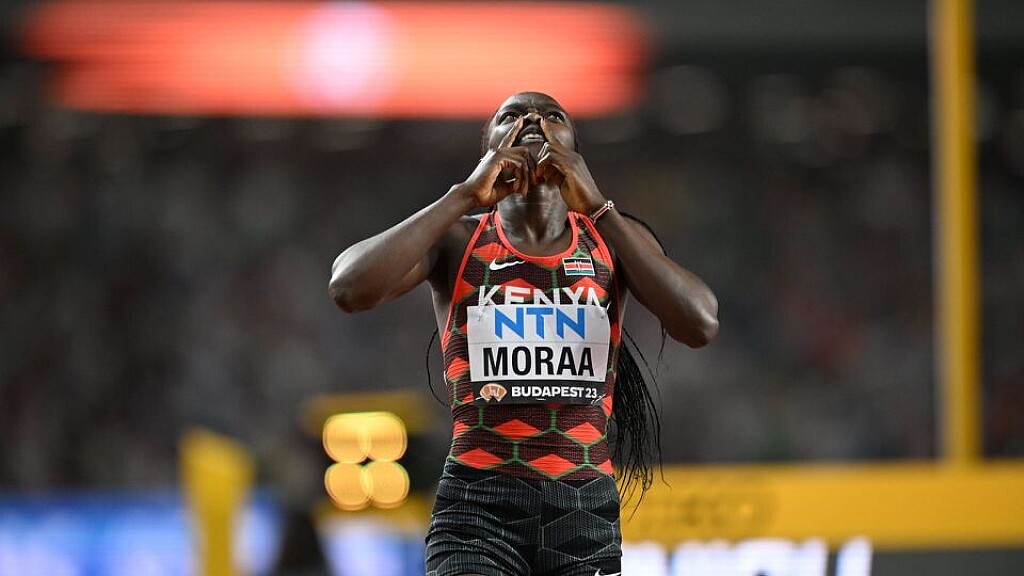
Mary Moraa dreaming of breaking 800m world record soon
Mary Moraa has promised that she will attack the 800m world record very soon.
Reigning World 800m champion Mary Moraa has promised to go for the 800m world record very soon.
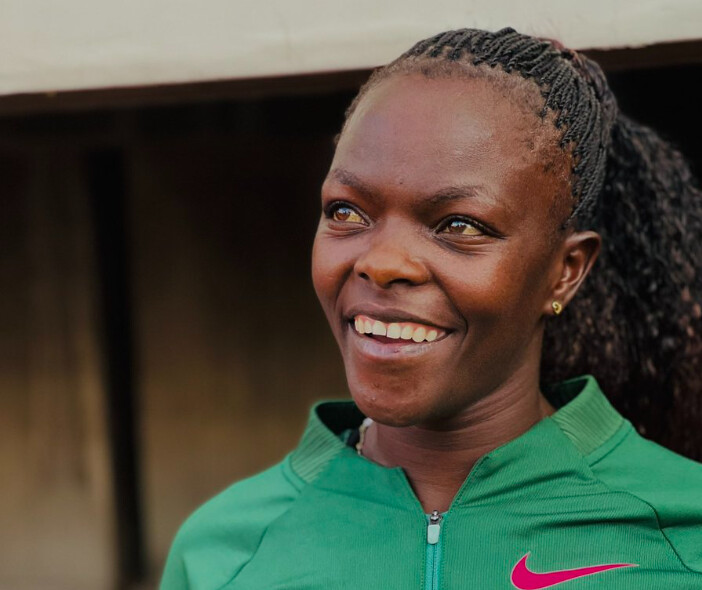
In a post on her Facebook page, Moraa shared a throwback photo of herself and double world record holder Faith Kipyegon. She was in awe of Kipyegon’s record-breaking spree and noted that she is an inspiration to many people.
She said: “When you step out in style with the world's middle distance track finest Faith Kipyegon. A great inspiration. Hii 800m World Record tutavunja siku moja...hivi karibuni (We shall one day break this 800m world record…very soon).”
The women’s world record over the 800m stands at 1:53.28 and was set by Jarmila Kratochvílová 40 years ago.
She clocked the time on July 26, 1983, at the Olympiapark Meeting in Munich’s Olympic Stadium and has remained to be the oldest outdoor world record in the book.
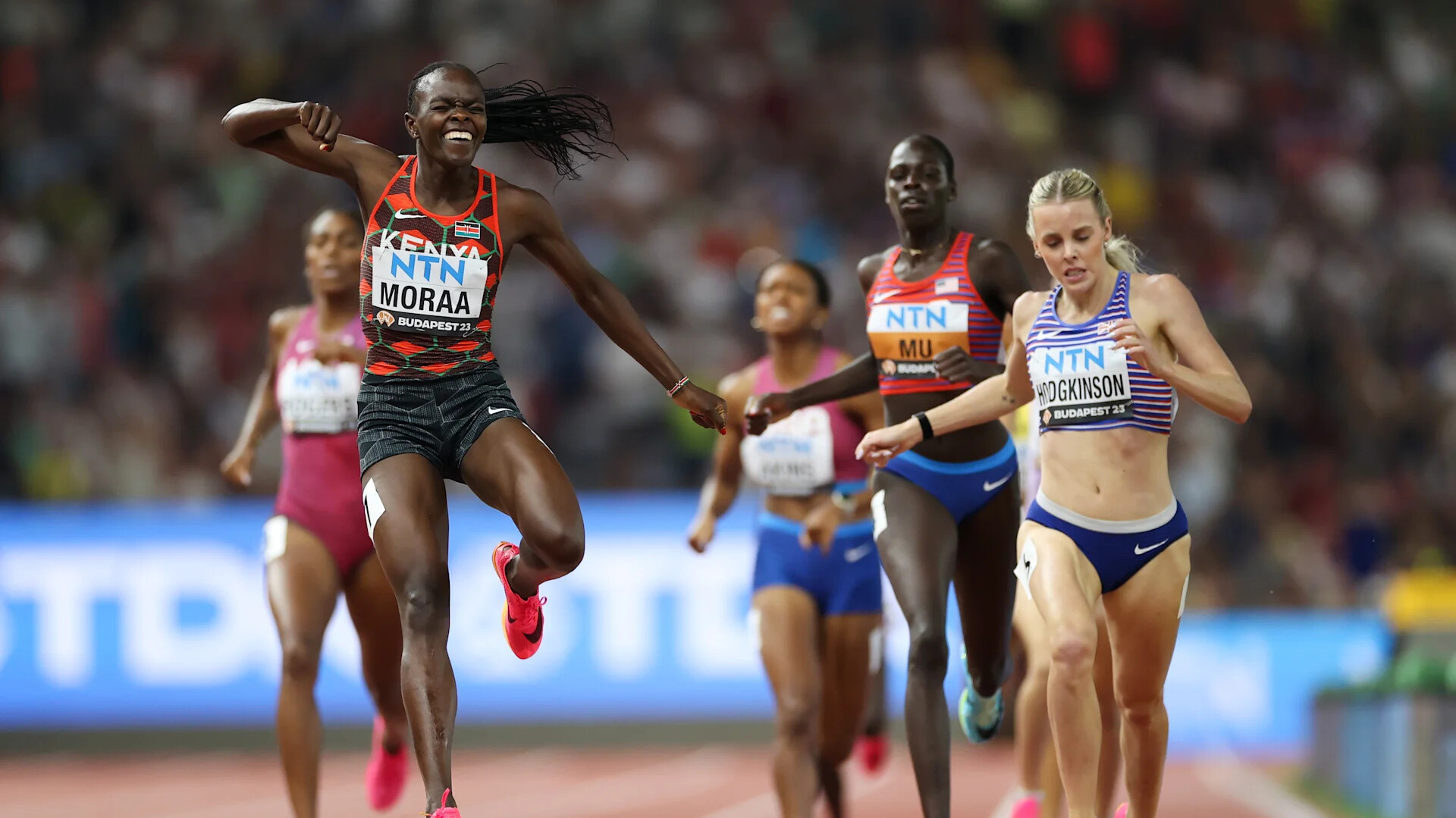
On her part, Moraa’s Personal Best time currently stands at 1:56.03, a time she clocked to win the race at the World Championships in Budapest, Hungary.
By winning the title, she became just but the third Kenyan woman to win the 800m on the global stage. She comes after Janeth Jepkosgei and Eunice Sum who won the titles in 2007 and 2013 respectively.
She has also been banked on severally to break the 800m world record and affirming her fans that she would surely go for it is a sign of light at the end of the tunnel.
The reigning Commonwealth Games champion is gearing up for the Olympic Games in Paris, France next year where she hopes to extend her winning streak. This season, she only lost one 800m race, the Prefontaine Classic.
by Abigael Wuafula
Login to leave a comment
10 Reasons to Start Following Track and Field This Year
The 2023 season should be full of record-breaking performances from the sport’s biggest stars. Here are the most important things to know.
Track is back, and if the results from the indoor season and early outdoor meets are any indication, it should be another year of eye-popping results around 400-meter ovals this summer.
Why is track and field relevant to the average recreational runner?
Perhaps you’re running some of the same distances in your training and racing. Or maybe you have a connection to some of the events from your youth, days in gym class or on the playground. From a human performance perspective, no sport showcases the all-out speed, red-line endurance, max power, dynamic agility, and meticulous bodily control as track and field does.
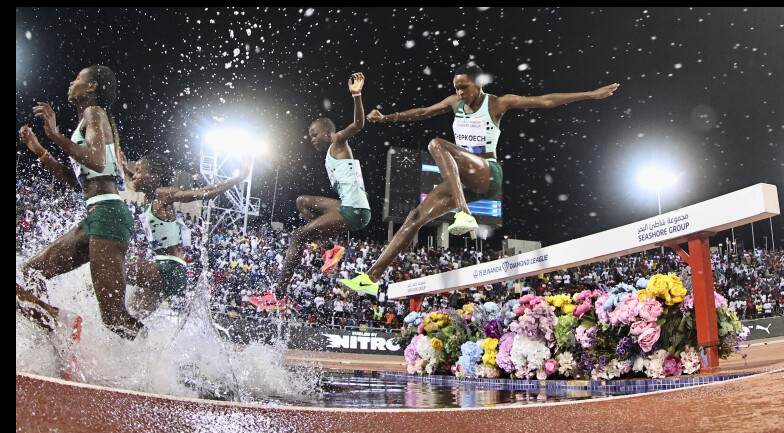
Here’s a primer on the most awe-inspiring athletes and events of this summer’s track season. Because, come on: with a sport that includes events as multifaceted as the pole vault, as primal as the shot put, and as wild as the 3,000-meter steeplechase—a 1.8-mile race with 28 fixed barriers to hurdle and seven water pits to jump—what’s not to like?
One of the many things that makes track and field so special is that it’s one of the most diverse sports on the planet, both culturally and athletically.
Last summer, athletes from a record 29 different countries earned medals in the 25 different running, jumping, and throwing events at the World Athletics Championships in Eugene, Oregon.
At the highest level, there are athletes of all shapes and sizes from every culture and socioeconomic background. While there certainly are racial and cultural stereotypes that need dissolving and vast inequality among competing countries, from a performance point of view the sport is largely meritocratic, based on the time or distance achieved in a given competition.
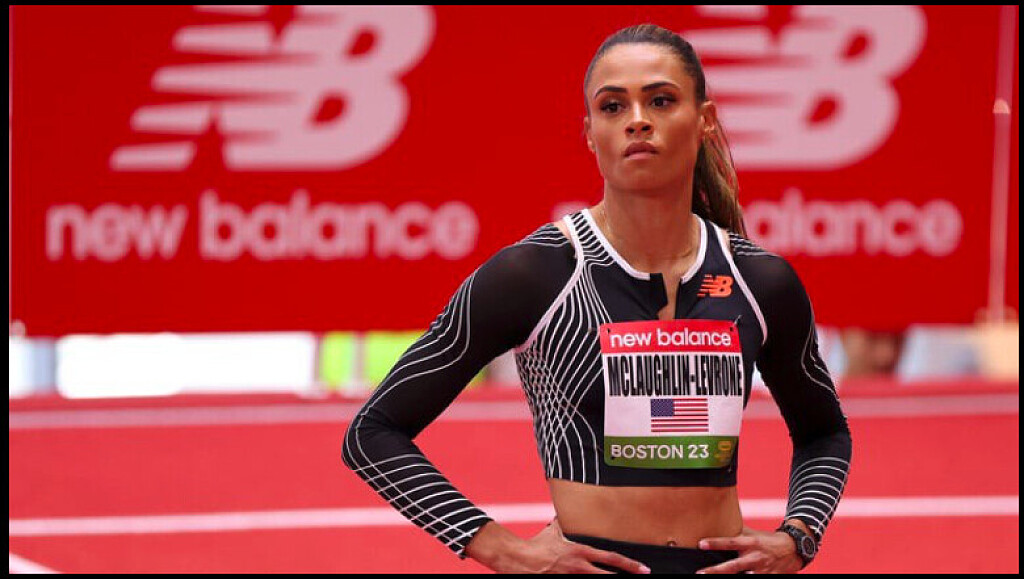
Watching American Sydney McLaughlin-Levrone masterfully win the 400-meter hurdles in a world-record time last summer in front of a deafening crowd at Hayward Field in Eugene was a riveting experience. It was vastly different than watching Grenada’s Anderson Peters win the javelin world title with a career-best throw of 90.54 meters on his final attempt to beat India’s Neeraj Chopra, but both had edge-of-your-seat excitement, athletic excellence, and cultural significance.
One of the knocks against track and field in recent years is that it hasn’t done enough to attract casual fans the way professional football, basketball, hockey, and soccer have. Following the On Track Fest, the USATF Los Angeles Grand Prix on May 26-27 in Los Angeles is trying to up the ante by combining a mix of elite-level competition, an interactive fan festival, and top-tier musical performances.
Billed as the one of the deepest track meets ever held on U.S. soil, it will feature a star-studded 400-meter face-off featuring Americans Michael Norman, the reigning world champion, and Kirani James, a three-time Olympic medalist from Grenada, and a women’s 100-meter hurdles clash with world champion Tobi Amusan of Nigeria, Olympic silver medalist Keni Harrison of the U.S., and Olympic gold medalist Jasmine Camacho-Quinn of Puerto Rico.
Saturday’s action will be broadcast live on NBC Sports from 4:30 P.M. to 6 P.M. ET and be followed by a concert event called the Legends Jam, which will include appearances from some legendary athletes and be headlined by Grammy-winning singer Judith Hill.
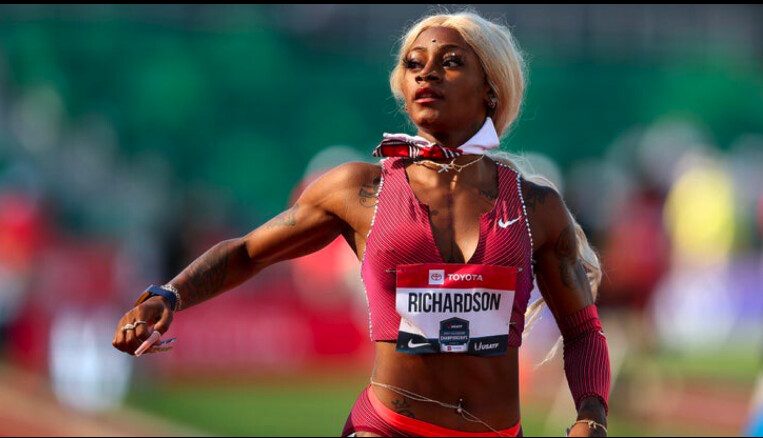
American sprint sensation Sha’Carri Richardson will be racing the 100-meter dash at the USATF Los Angeles Grand Prix. You probably remember her for her perceived failures more than the astounding times she’s actually achieved on the track.
Two years ago, the sprinter from Dallas blew away the field in the 100-meter dash at the U.S. Olympic Trials with a 10.86 effort, but then she was famously suspended after testing positive for cannabis (which is on the World Anti-Doping Agency’s list of banned substances) and missed the Tokyo Olympics as a result. (She admitted using the drug to cope with the pressure of qualifying for the Olympics while also mourning the recent death of her biological mother.)
Then last year, despite strong early season performances, Richardson failed to make the finals of the 100-meter or 200-meter at the U.S. championships, so she missed out on running in the first world championships held on American soil.
This year, the 23-year-old sprinter appears to be locked in and better than ever, posting a world-leading 10.76 100-meter time on May 5 in Doha (she also ran an eye-popping 10.57 with an over-the-limit tailwind on April 9 in Florida) and posted the second-fastest time in the 200-meter (22.07) on May 13 at a meet in Kenya.
If she keeps it all together, expect Richardson to finally contend with elite Jamaican sprinters Shericka Jackson and Shelly-Ann Fraser-Pryce in the 100 and 4×100-meter relay in August at the World Athletics Championships in Budapest, Hungary.
A few years ago, American sprinter Fred Kerley was on his way to becoming one of the world’s best 400-meter runners. But he wanted more than that. What he really had his heart set on was becoming the world’s fastest man, a moniker that goes with the most dominant sprinter in the 100-meter dash.
Ignoring doubters, Kerley retooled his training and earned the silver medal in the 100-meter at the Tokyo Olympics (.04 seconds behind Italy’s Marcell Jacobs) and then continued his ascent last year by winning the U.S. championships (in 9.76, the sixth-fastest time in history) and world championships (9.86).
The 28-year-old from San Antonio, Texas, also became one of just two other runners (along with American Michael Norman and South African Wayde van Niekerk) to ever run sub-10 seconds in the 100-meter, sub-20 seconds in the 200-meter, and sub-44 seconds in the 400-meter. So far this year, Kerley has two of the four fastest 100-meter times of the season, including a speedy 9.88 on May 21 in Japan.
After trading barbs on social media this spring, Kerley and Jacobs are expected to face off in an epic 100-meter showdown on May 28 at a Diamond League meet in Rabat, Morocco, marking the first time the Olympic gold medalist and the world champion in the men’s 100m face off since the 2012 Olympic final, when Jamaican Usain Bolt beat countryman Yohan Blake. American Trayvon Bromell, the silver medalist at last year’s world championships, is also in the field, so it should be an extraordinary tilt.
If you’re a gambler, bet on Kerley to win that one and eventually get close to Bolt’s 9.58 world record. (To do so, he’ll be running faster than 26 miles per hour!) But don’t count out Kenya’s Ferdinand Omanyala, the early world leader (9.84), or fellow American sub-9.9 guys Bromell, Norman, Christian Coleman, and Noah Lyles at the 2023 World Athletics Championships on August 20, in Budapest. Depending on which three Americans join Kerley (who has an automatic qualifier) at the world championships, it’s actually quite likely the U.S. could sweep the top four spots in the 100 in Budapest.
If you’ve ever wanted to see the world’s top track and field stars competing live in the U.S., this is the year to do it. The May 26-27 USATF Los Angeles Grand Prix meet and June 3-4 Portland Track Festival are part of what might be the mosst compelling outdoor track season ever held on U.S. soil.
If you’re looking for an athlete to marvel at, start with Sydney McLaughlin-Levrone, the gold medalist in the 400-meter hurdles at the Olympics in 2021 and World Athletics Championships last summer. She’s been one of the sport’s rising stars since she was a teenager and yet she’s only 23. Her trajectory is still rising—especially since she moved to Los Angeles to train under coach Bob Kersee. Driven by her strong faith, McLaughlin-Levrone is the personification of hard work, grace and competitiveness.
This year she’ll temporarily step away from her primary event to show off her pure sprinting prowess when she opens her season in a “flat” 400-meter race at the Diamond League meet in Paris on June 9. Her personal best in the 400-meter is 50.07 seconds, set when she was a freshman at the University of Kentucky, but she clocked a speedy 50.68 while running over hurdles, en route to a world-record setting win at last summer’s world championships.
Her best 400-meter split as part of a 4×400-meter relay is 47.91, so it’s within reason to think she could be one of several runners to challenge the long-standing world record of 47.60 set in 1985 by East German Marita Koch. Because McLaughlin-Levrone has an automatic qualifier to the world championships in the 400-meter hurdles, she will likely run the open 400-meter at the U.S. championships and decide after the meet which one she’ll focus on.
American 800-meter ace Athing Mu has looked unbeatable for the past several years as she won Olympic gold in the event at the Tokyo Olympics and last year’s world championships. In fact, she has been unbeatable, having won 13 straight races since she dropped out of a mile race at the Millrose Games in January 2022. Going back to 2020 (when she was a senior in high school) and 2021 (during her one season at Texas A&M), she’s finished first in 51 of her past 53 races (relays included), with her only loss being a narrow runner-up finish to Kaelin Roberts in the 400-meter at the 2021 NCAA indoor championships.
Mu, who is also coached by Kersee and trains with McLaughlin-Levrone, seems to be the most likely athlete to challenge the women’s 800-meter world record of 1:53.28, set in 1983 by the Czech Republic’s Jarmila Kratochvílová. It’s the longest standing record in track and field, and only two runners have come within a second of it in the past 15 years. Her personal best of 1:55.04 is an American record and the eighth-fastest time in history. She’s still only 20 years old, so she has many years to keep improving and other historic opportunities ahead of her.
Mu said earlier this year she’d like to try a 400-800-meter double at an Olympics or world championships if the schedule permits—it’s only been done once successfully by Cuba’s Alberto Juantorena at the 1976 Games—but her coach has said she might attempt a 800-1,500-meter double next year at the Paris Olympics.
This year, Mu will run the 1,500 meters at the USATF Championships in July, but will likely defend her 800-meter title at the world championships in Budapest, as well as potentially running on the U.S. women’s 4×400-meter relay and the mixed-gender 4×400-meter relay (with McLaughlin-Levrone) for an opportunity to win three gold medals in a single championships.
With apologies to quarterback extraordinaire Patrick Mahomes, gymnastics all-arounder Simone Biles, and skiing superstar Mikela Shiffrin, pole vaulter Armand Duplantis just might be the most dynamically talented athlete in the world. That’s because he’s the world’s most dominant athlete (and has set six world records) in arguably the most demanding discipline, not only in track and field but quite possibly in any sport. No sport discipline involves such a dynamic combination of speed, power, precision and agility, and Duplantis, who is only 23, is already the greatest of all-time.
Prove me wrong or watch him set his latest world record (6.22 meters or 20 feet, 5 inches) at an indoor meet on February 25 in Clermont-Ferrand, France. That’s the equivalent of vaulting onto the roof of a two-story building, and in his case, often with room to spare.
Duplantis, who grew up in Lafayette, Louisiana, to athletic parents with Swedish and Finnish heritage, represents Sweden in international competitions. He started pole vaulting at age three, set his first of 11 age-group world-best marks at age seven, and won an NCAA title in 2019 as a freshman competing for LSU before turning pro.
All indications are that North Carolina State junior Katelyn Tuohy could become the next American running star. All she has done since she was young is win races and break records.
After winning the NCAA outdoor 5,000-meter a year ago, she won the NCAA cross country title in November. During the indoor track season this past winter, she set a new collegiate mile record (4:24.26) and won both the 3,000-meter and 5,000-meter title at the NCAA indoor championships in March. On May 7, the 21-year-old from Thiells, New York, broke the NCAA outdoor 5,000-meter record by 17 seconds, clocking 15:03.12 at the Sound Running On Track Fest.
Tuohy will be running both the 1,500-meter and 5,000-meter at the NCAA East Regional May 24-27 in Jacksonville, Florida, with the hopes of eventually advancing to the finals of both events at the June 7-10 NCAA Division I championship meet in Austin, Texas.
University of Arkansas junior Britton Wilson is a top collegiate star who is ready for prime time at the pro level. She won the 400-meter in a world-leading and collegiate record time of 49.13 in mid-May at the SEC Championships, where she also won the 400-meter hurdles (53.23) in a world-leading time. The 22-year-old from Richmond, Virginia, was the runner-up in the 400-meter hurdles at last year’s U.S. championships and fifth in the world championships, and could contend for a spot on Team USA in either event at the July 6-9 U.S. championships.
Kerley and Lyles are expected to square off in a 200-meter race at the USATF New York Grand Prix meet on June 24 at Icahn Stadium on Randall’s Island in New York City. There are also two high-level Puma American Track League meets in Tennessee—the Music City Track Carnival June 2 in Nashville and the Ed Murphey Classic August 4-5 in Memphis—and two Under Armour Sunset Tour meets organized by Sound Running on July 22 in Los Angeles and July 29 in Baltimore.
The best U.S. meet of the year, though, will be the USATF Outdoor Championships held July 6-9 in Eugene, Oregon, where American athletes will be vying for top-three finishes to earn a chance to compete for Team USA at the 2023 World Athletics Championships August 19-27 in Budapest.
The U.S. season will culminate with the September 16-17 Pre Classic in Eugene, Oregon, a two two-day meet that will double as the finals of the international Diamond League circuit and should include many of the top athletes who will be representing their countries in next summer’s Paris Olympics. (And if you want to see the country’s top high school athletes run unfathomable times for teenagers, check out the Brooks PR Invitational on June 14 in Seattle, Washington.)
At the June 2 Diamond League meet in Rome, Italy, the men’s field in the 5,000-meter run will have what might be the fastest field ever assembled, with 13 runners who have personal best times of 12:59 or faster.
The field will be headlined by Joshua Cheptegei of Uganda, who lowered the world record to 12:35.36 in Monaco three years ago. (That’s a pace of 4:03 per mile!). But it will also include Kenya’s Jacob Krop (12:45.71) and Nicholas Kipkorir (12:46.33), Ethiopia’s Yomif Kejelcha (12:46.79), American Grant Fisher (12:46.79), Canadian Mohammed Ahmed (12:47.20), and Guatemalan-American Luis Grijalva (13:02.94), among others. With a big prize purse at stake and pacesetters ramping up the speed from the start, it should be a race for the ages.
by Outside Online
Login to leave a comment
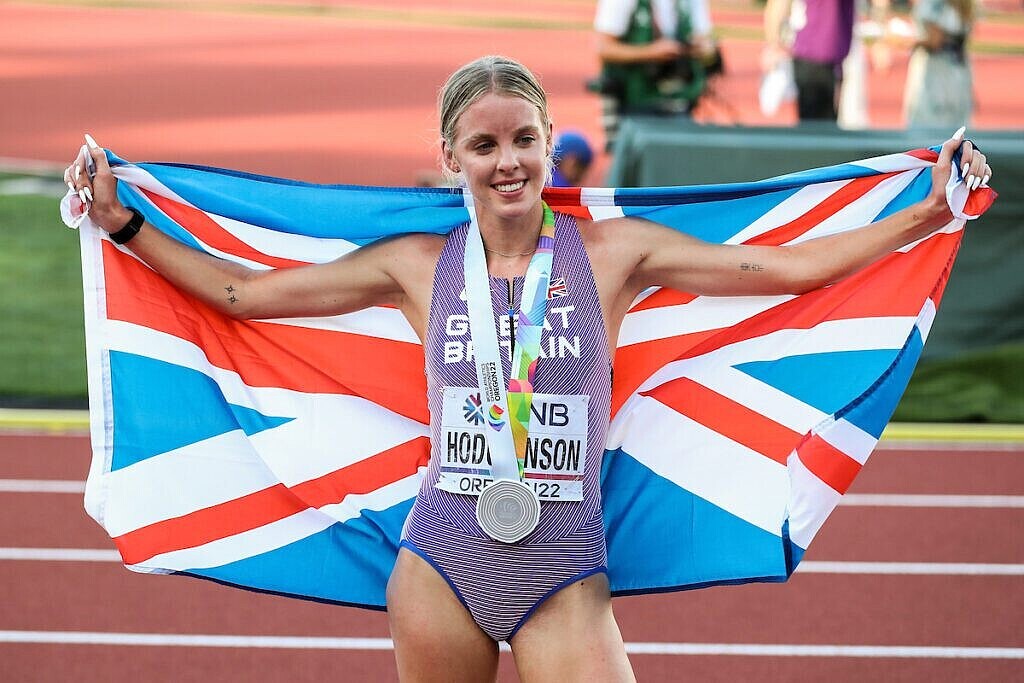
Keely Hodgkinson runs 19 consecutive sub-two-minute 800m
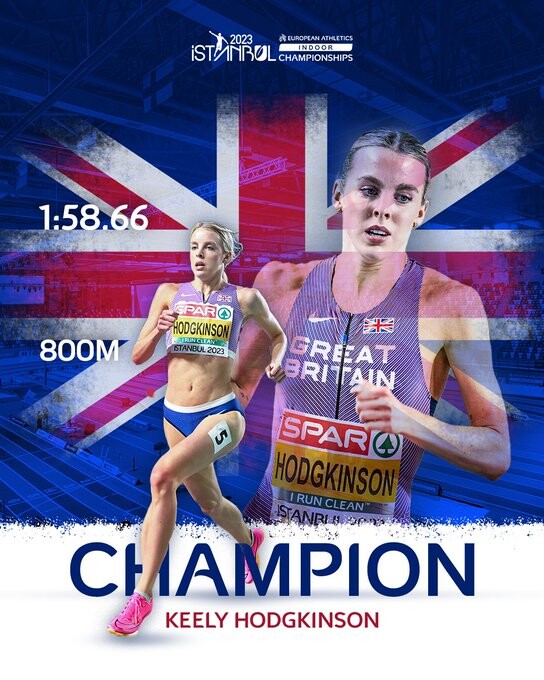
British 800m star Keely Hodgkinson won gold at the European Indoor Championships on Sunday, defending the title she first won in 2021. On top of adding yet another medal to her resume, Hodgkinson extended an extremely impressive (but potentially overlooked) streak of now 19 straight sub-two-minute 800m races (not including heats). This is an incredible run of form and it has helped Hodgkinson win multiple titles and honors in her still-young career.
Going sub-two
Running a sub-two-minute 800m is not an easy feat. In fact, only nine Canadian women have broken the two-minute barrier, which shows just how hard it is to do. Yet Hodgkinson has done that, race after race, dating back to June 2021. That was her breakout season, and seeing as it was an Olympic year, it couldn’t have come at a better time for her.
At the start of that season in January, Hodgkinson broke two minutes for the first time, running 1:59.03 at an indoor meet in Austria. She didn’t break two minutes again during the indoor season, but she carried that momentum into her following races and won her first European title at the indoor championships. She then kicked off her outdoor season with a 1:58.89 result in Czechia, and over the next seven finals she raced in 2021, she only once failed to break two minutes.
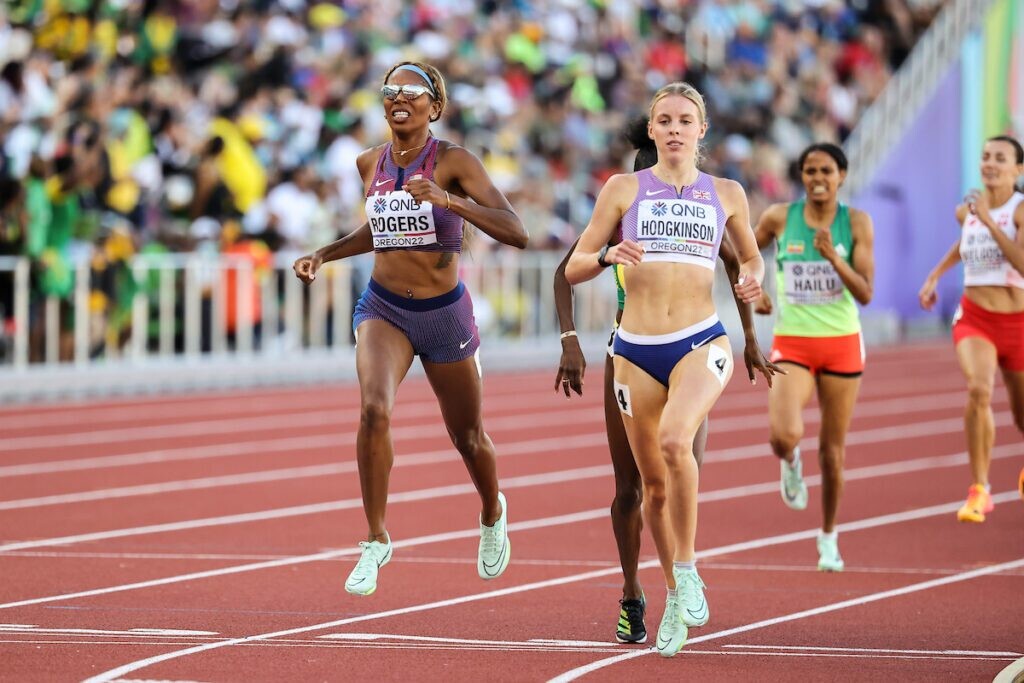
Later that year, Hodgkinson won silver at the Olympics, where she not only continued her then-new streak of sub-two performances, but also set a British record with her blazing 1:55.88 result in the finals. In 2022, her streak carried her to another silver medal, this time at the World Athletics Championships, and the outdoor European crown to match her indoor title from 2021. Hodgkinson has won every race she has run so far this year, with four sub-two results so far.
A tough streak
Hodgkinson’s streak is unprecedented in the 800m, and even the other all-time greats have failed to match her numbers. Athing Mu, the 20-year-old American who won gold ahead of Hodgkinson at the Olympics and World Athletics Championships, has only run four straight sub-two-minute results in her career. Granted, she’s young and still has plenty of time to add a longer streak to her resume, but Hodgkinson is young, too.
American Ajee Wilson owns two world championship bronze medals in the 800m and won the Diamond League 800m title in 2019, but her longest streak of sub-two runs only reached 13. This is still a super impressive tally, but it’s still pretty far below Hodgkinson’s streak, which could grow even longer over the next few months.
Two-time Olympic gold medalist Caster Semenya made it to 16 sub-two results in a row stretching from 2017 to 2019, but that’s where her streak ended (of course, Semenya may have been able to carry this streak on had she not been barred from racing the 800m). Finally, there’s the 800m world record holder, Jarmila Kratochvílová, who had a lifetime PB of 1:53.28. Even she couldn’t match Hodgkinson’s amazing streak, as her longest lasted for just 10 races.
Hodgkinson is truly a special talent, and she continues to prove that in every race she enters. It will be exciting to see her move forward with her career and to see how long she can keep her streak going before she runs north of two minutes once again.
Login to leave a comment
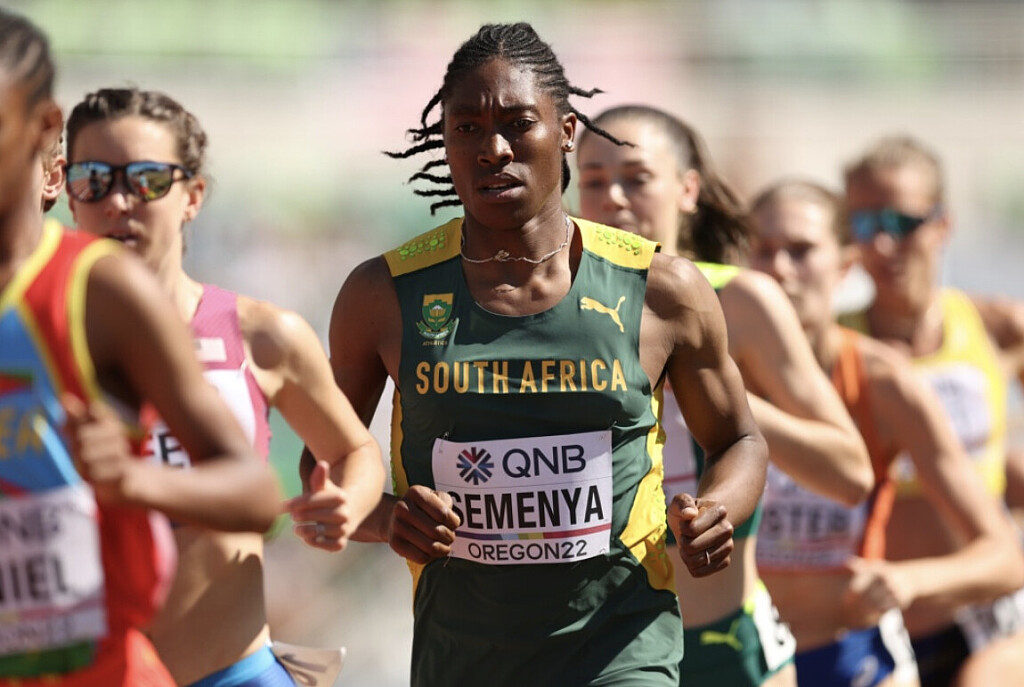
Caster Semenya unnoticed at World Championships The South African Olympic champion fails to advance in the 5,000 meters in Oregon – her first major international competition since 2017
How many times had South Africa’s Caster Semenya charged onto the Hayward Field homestretch seemingly in a different race than the rest of the pack, the sport’s most storied stadium rocking as Semenya raced into the deafening roar?
How many times had American track and field’s most knowledgeable fans, most passionate crowd stood in appreciation of the two-time Olympic, three-time World 800-meter champion?
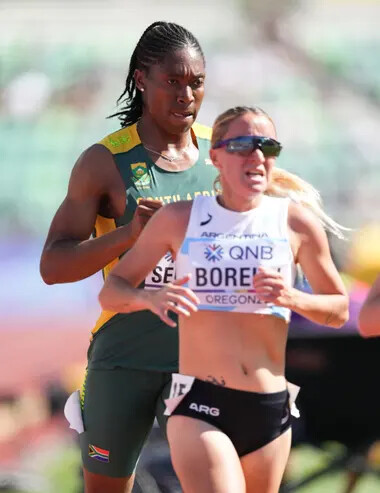
On a scalding hot afternoon at the World Championships on Wednesday, Semenya labored through the final meters of her 5,000-meter heat in front of a half-empty stadium, largely ignored or unnoticed even in a place that calls itself Tracktown U.S.A.
Semenya, one of the most compelling and controversial athletes of her generation, has fallen so far off the sport’s radar since 2019 that the most well-known of her fellow competitors on Wednesday didn’t even realize she was in the competition.
“Caster?” asked Sifan Hassan, the Olympic 5,000 and 10,000 champion from the Netherlands, who ran in a later heat on Wednesday.
“Caster Semenya ran the 5,000?” Hassan asked again. “ I had no idea. I didn’t even know she was here. Did she make it?”
Semenya, running in her first major international competition since winning the 2017 Worlds 800 title, did not advance to the final, finishing 13th in her heat, running 15 minutes, 46.12 seconds, nearly a minute off the winning time of Gudaf Tsegay of Ethiopia (14:52.69).
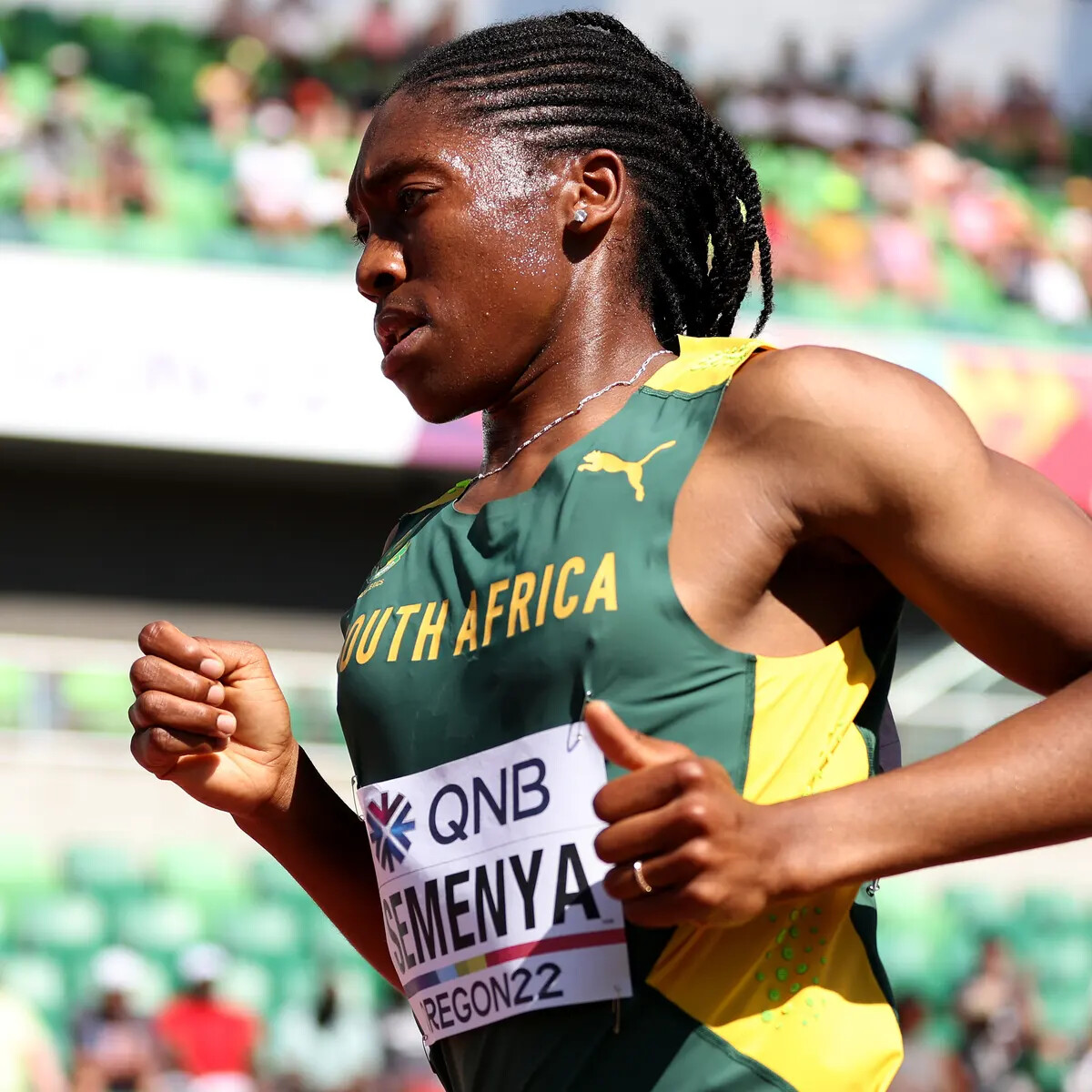
“Cooking,” Semenya said after the race, referring to the heat. She declined to answer reporters’ questions.
Under different circumstances, the sport would be obsessing over the prospect of a showdown between Semenya, 31, and Athing Mu, the 20-year-old Olympic champion from the U.S. in Sunday’s 800 final and whether the pair could challenge the world record of 1:53.28 that was set by Czechoslovakia’s Jarmila Kratochvilova in 1983.
Instead, Semenya, who was assigned female at birth, raised as a girl and identifies as a woman has not raced the 800 in meets sanctioned by World Athletics, the sport’s international governing body, because of her refusal to submit to the organization’s guidelines regarding intersex athletes.
Under the World Athletics guidelines athletes in events from the 400 to the mile – in other words, Semenya’s events – are required to take hormone suppressing drugs to reduce their testosterone to below 5 nanomoles per liter for at least six months before being allowed to compete internationally.
Semenya has an intersex condition called Differences in Sexual Development (DSD) or 46, XY that because of differences in sex development that causes male and female traits and a testosterone level higher than the typical female range. She is not transgender.
“I am a woman and I am a world-class athlete,” Semenya said in 2019, shortly before the Prefontaine Classic, her final 800. “The IAAF will not drug me or stop me from being who I am.”
Semenya had found herself unwittingly in the center of controversy almost from the moment she emerged on the world stage a decade earlier.
She won her first Worlds title in 2009 as an 18-year-old, a victory that prompted Russia’s Mariya Savinova to suggest the South African was a man.
“Just look at her,” Savinova said.
While the results of Semenya’s sex test were supposed to be confidential they were leaked to Australia’s Daily Telegraph. Semenya has internal testes but no ovaries or womb, the newspaper reported quoting the test report.
“She is a woman, but maybe not 100 percent,” IAAF secretary general Pierre Weiss said at the time, doing nothing to discourage the headline writers at New York’s Daily News who blared that the World champion “is a woman … and a man.”
Semenya began taking a hormone suppressant drug. She finished second to Savinova at both the 2011 Worlds and 2012 Olympics.
“The IAAF used me in the past as a human guinea pig to experiment with how the medication they required me to take would affect my testosterone levels,” she said in 2019. “Even though the hormonal drugs made me feel constantly sick the IAAF now wants to enforce even stricter thresholds with unknown health consequences.
“I will not allow the IAAF to use me and my body again. But I am concerned that other female athletes will feel compelled to let the IAAF drug them and test the effectiveness and negative health effects of different hormonal drugs. This cannot be allowed to happen.”
Semenya was awarded the 2012 Olympic gold medal in 2017, two years after the World Anti-Doping Agency recommended that Savinova receive a lifetime ban for doping and her results dating to July 2010 be disqualified.
Given the event’s suspect history, the irony of World Athletics now demanding she dope to level the playing field is not lost on Semenya.
“I’m not going to do that,” she told the Orange County Register after the 2019 Prefontaine meet. “I’m a very clean athlete. I believe in the clean sport. I believe in the equal opportunities. At the end of the day, this is a woman’s sport, this is a man’s sport. If they’re going come (at) me with that nonsense then why do you lead?”
Semenya challenged World Athletics guidelines with the Court of Arbitration for Sport. A three-member CAS panel in June 2019 said the World Athletics policy was “discriminatory” toward athletes with DSD but two of the panel members, nevertheless agreed with the World Athletics that policy was “necessary, reasonable and proportionate” to counter advantages DSD athletes have over other female competitors. Semenya and other female athletes with DSD should be considered “biological males” World Athletics told CAS.
Switzerland’s Supreme Court rejected Semenya’s appeal in September 2020. She filed an appeal with the European Court of Human Rights in February 2021.
While Semenya fell short in her bid to reach the Olympic 200-meter qualifying standard last year, the success of other intersex athletes has raised further questions about the World Athletics policy.
by Scott Reid
Login to leave a comment

World Athletics Championships Budapest23
Budapest is a true capital of sports, which is one of the reasons why the World Athletics Championships Budapest 2023 is in the right place here. Here are some of the most important world athletics events and venues where we have witnessed moments of sporting history. Throughout the 125-year history of Hungarian athletics, the country and Budapest have hosted numerous...
more...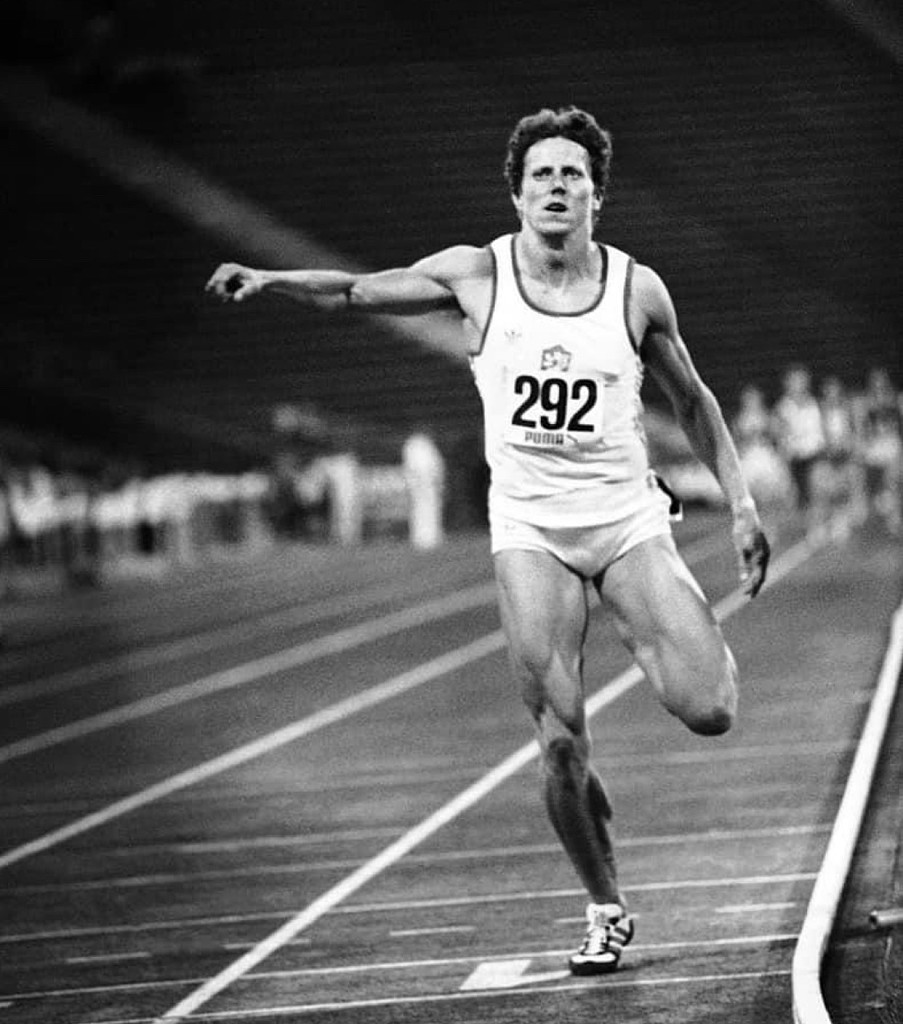
Will this world record ever be broken? Maybe in another 100 years!
38 years ago Czech runner Jarmila Kratochvilova set the still standing world record of 1:53.28 over 800 meters for women. Is this record legitimate and will it ever be broken? Dave Ross asked on FB.
In 1983, Kratochvílová broke the 800 m world record with a time of 1:53.28. At the World Championships shortly afterwards, she set a world record of 47.99 seconds to win the 400 m.
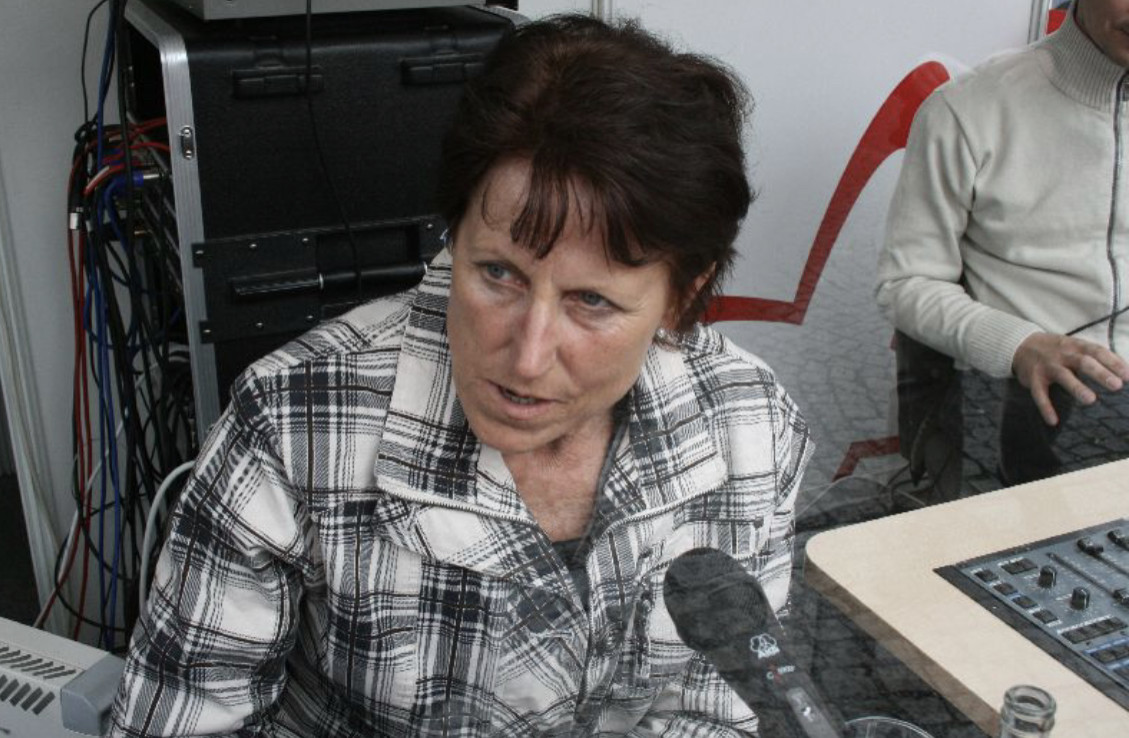
Kratochvílová's 1983 400-metre world record of 47.99 seconds stood for two years until it was broken by her great rival Marita Koch in 1985. Koch's 400-metre world record of 47.60 seconds still stands as of 2021. Koch and Kratochvílová are the only women who have broken the 48 second barrier in a 400-metre laned race.
Her 800-metre world record is the longest standing track record in men or women's athletics, and was described by 1996 Olympic champion Svetlana Masterkova as ".. very fast. It's impossible for women to run so fast. It will last for 100 years."
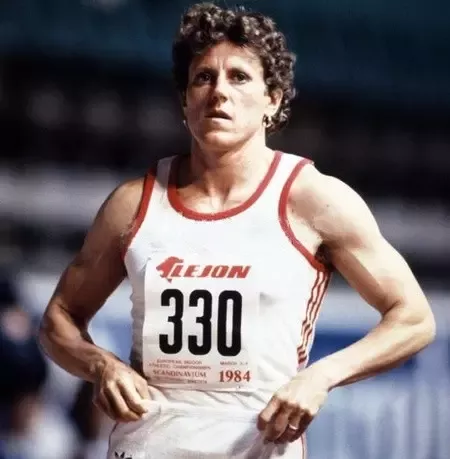
Kratochvílová was a late developer, not breaking 53 seconds for the 400 metres until she was 27, and she was 32 when she set her world records.
Her remarkably fast times and her atypical muscular physique spawned rumors of illegal drug use.
Kratochvílová has maintained her innocence, and although in 2006 the Prague newspaper Mladá fronta DNES claimed to have uncovered a doping program run by Czechoslovakia's Communist government, there was no link to Kratochvílová despite her being her country's highest profile athlete.
She and her coach of 20 years, Miroslav Kvac, maintain that it was rigorous training and high doses of vitamin B12 that account for her records, a claim treated with scepticism by several anti-doping campaigners. In 2017, she criticized a proposal by European Athletics to remove suspicion about drug-taking by voiding all world records set before 2005.
Login to leave a comment
