

Running News Daily
Running News Daily is edited by Bob Anderson and team. Send your news items to bob@mybestruns.com Advertising opportunities available.
Index to Daily Posts · Sign Up For Updates · Run The World Feed
Articles tagged #Paris Diamond League
Today's Running News
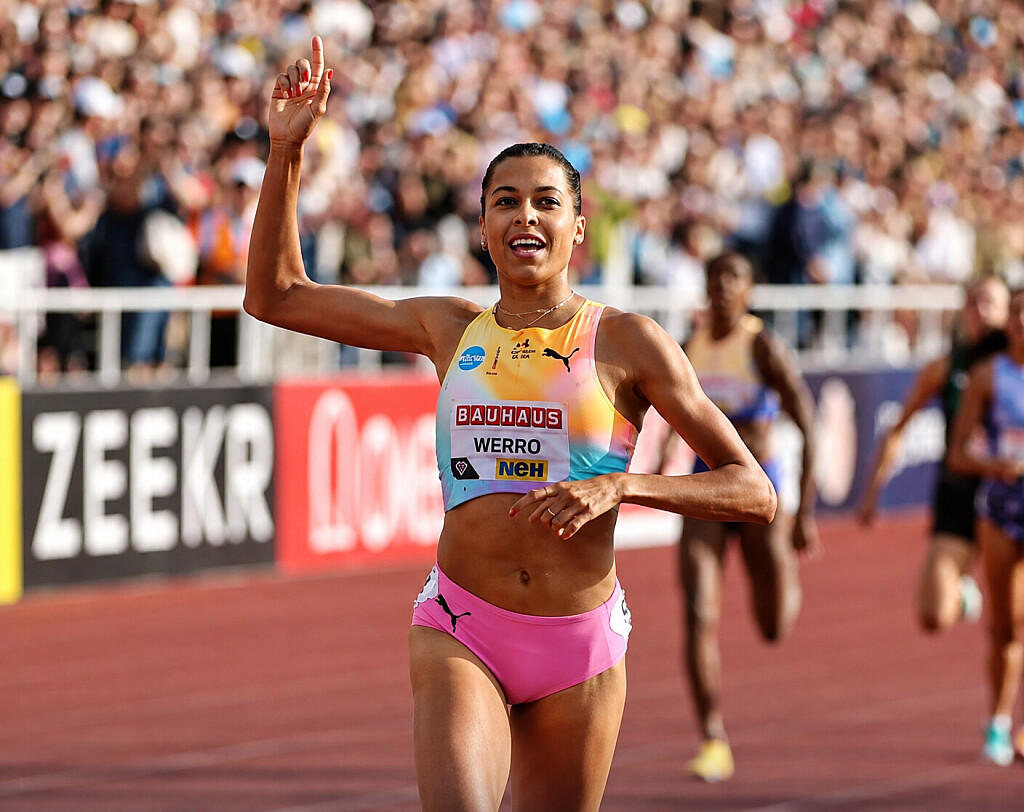


Audrey Werro Heads to Birmingham With History in Her Sights as Europe’s 800m Elite Prepare for a Blockbuster Showdown
Audrey Werro will arrive at the 2026 European Athletics Championships in Birmingham carrying more than just the hopes of Switzerland. The 22-year-old middle-distance star has established herself as the woman to beat in the women’s 800m, and she will enter Alexander Stadium with a world-leading time, extraordinary momentum and a realistic opportunity to chase one of athletics’ longest-standing records.
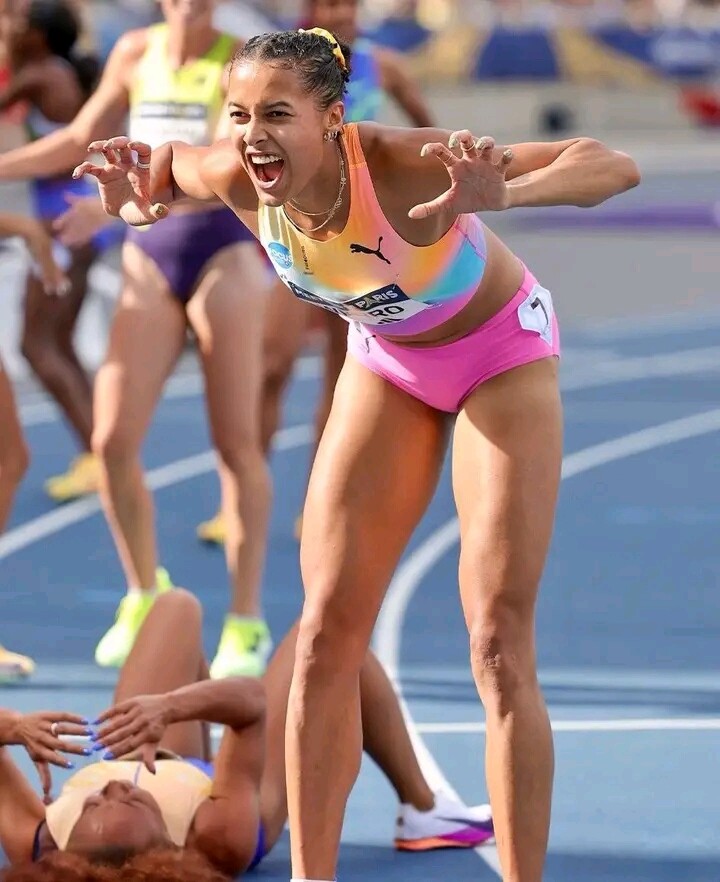
The European Championships will be held in Birmingham from August 10 to 16, with the women’s 800m among the events expected to command enormous attention.
Werro has already produced one of the defining performances of the 2026 season. At the Paris Diamond League on June 28, she stormed to 1:53.80, becoming only the third-fastest woman in history over 800m and moving within 0.52 seconds of Jarmila Kratochvílová’s world record of 1:53.28, which has stood since 1983.
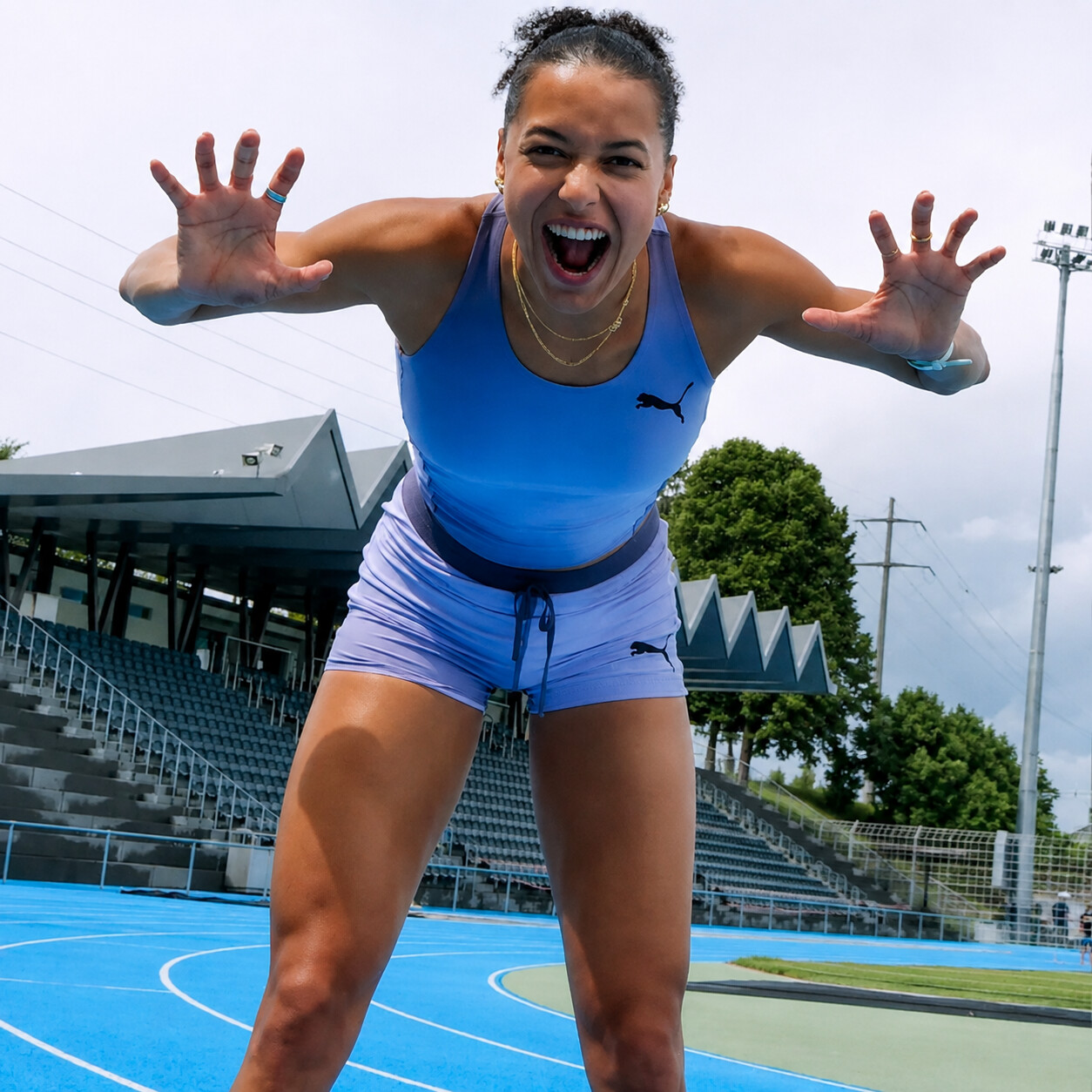
Even more remarkable is that Paris was not an isolated performance.
Earlier in June, Werro stunned Olympic champion Keely Hodgkinson in Stockholm, producing 1:53.98 to claim another Diamond League victory. Hodgkinson followed in a personal best of 1:54.33, setting the stage for what could become one of the defining rivalries of the championship.
The numbers underline just how extraordinary the 2026 women’s 800m season has become.
Werro leads the world with 1:53.80, followed by Hodgkinson at 1:54.33. Femke Broeders-Bol has made a spectacular transition to the two-lap event, running 1:55.60 in Paris, while France’s Anaïs Bourgoin followed with a national record of 1:55.65. Britain’s Georgia Hunter Bell has also broken 1:56, clocking 1:55.93 in Birmingham earlier in the season.
That depth makes Birmingham particularly intriguing. Werro may be the fastest woman in the world this year, but she will not be racing in isolation. Hodgkinson brings Olympic and European championship pedigree, Broeders-Bol possesses exceptional finishing speed after moving across from the 400m hurdles, while Bourgoin and Hunter Bell have demonstrated that they are capable of staying in the conversation when the pace becomes ferocious.
Werro’s remarkable form has extended beyond the 800m. On June 23 in Biel, she ran 1:22.85 for 600m, the fastest mark on the 2026 world list for the event.
Her development has been equally impressive over the longer sprint distance. Werro owns a 400m personal best of 51.03, highlighting the speed reserve behind her increasingly dominant 800m performances.
The Swiss star has therefore arrived at a fascinating point in her career. She is no longer simply a promising young athlete. After being named European Athletics’ 2025 Women’s Rising Star and winning the European U23 title, Werro has now moved firmly into the senior elite.
And Birmingham could provide the biggest stage yet for her growing reputation.
The question is no longer whether Werro can run under 1:54. She has already done it twice this season. The question now is whether she can find the fractions required to move from an extraordinary performance to something historic.
The world record of 1:53.28 is only 0.52 seconds away.
With the European title on the line, Hodgkinson seeking another major championship triumph and a rapidly improving field ready to challenge for the podium, the women’s 800m could become one of the races of the entire Birmingham championships.
For Werro, however, the objective is simple: arrive ready, execute the perfect two laps and see just how close she can get to history.
Birmingham awaits. And Audrey Werro has already shown that she is ready.
by Erick Cheruiyot for My Best Runs.
Login to leave a comment

European Athletics Champioships
The27thEuropean Athletics Championshipswill be held from 10 to 16 August 2026 at theAlexander StadiuminBirmingham, United Kingdom.[1] This is the first time that a British city will have staged the European Athletics Championships although Birmingham has hosted many high-profile events, including the2007 European Athletics Indoor Championships, the2003and2018 IAAF World Indoor Championshipsand the2022 Commonwealth Games. Alexander Stadium was renovated between 2019 and...
more...
WORLD RECORD FORM MEETS WORLD-LEADING SPEED IN LONDON
The stage is set for one of the most eagerly anticipated middle-distance races of the season as three of the world's fastest 800m stars prepare to collide at the London Diamond League on Saturday, 18 July 2026. With Olympic glory, world-leading performances, national records and personal pride all on the line, the British capital is ready for a race that could redefine the event this season.
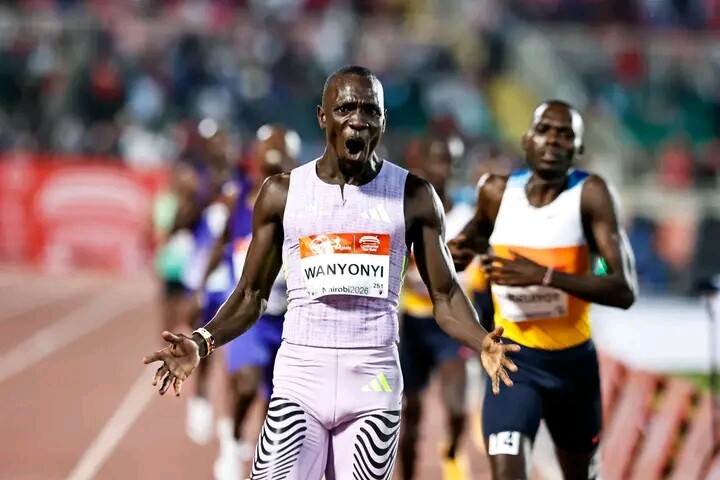
Leading the charge is Kenya's Emmanuel Wanyonyi, the reigning Olympic champion, who arrives in London riding an extraordinary wave of confidence. The 21-year-old has been virtually unstoppable in recent weeks and reminded the world of his exceptional talent when he produced a sensational 2:11.83 over 1,000m at the Monaco Diamond League on 10 July, smashing a world record that had stood for nearly three decades.
Now Wanyonyi returns to a track where he created unforgettable memories a year ago, storming to victory in a meeting-record 1:42.00. His mission this weekend is straightforward but far from easy—defend his London crown against the strongest field assembled this year.
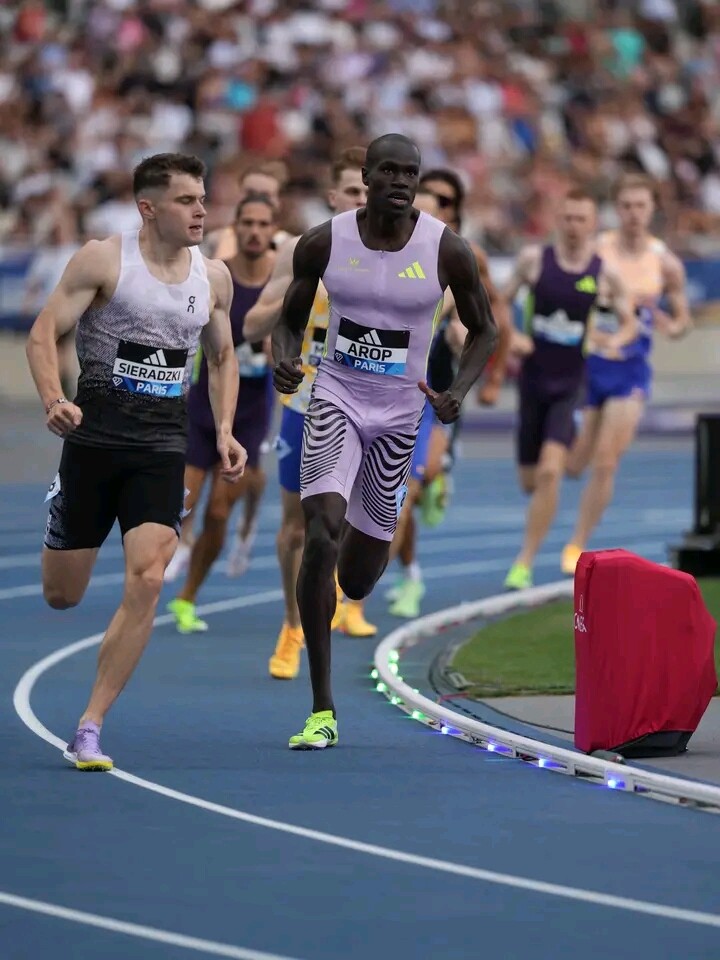
Standing in his way is Canada's Marco Arop, who has looked every bit the athlete capable of dominating the global 800m scene. The Olympic silver medallist currently owns the fastest two-lap performance in the world this season after an emphatic 1:41.84 victory at the Paris Diamond League in late June. Combining blistering speed with remarkable strength over the closing stages, Arop has established himself as one of Wanyonyi's greatest rivals.
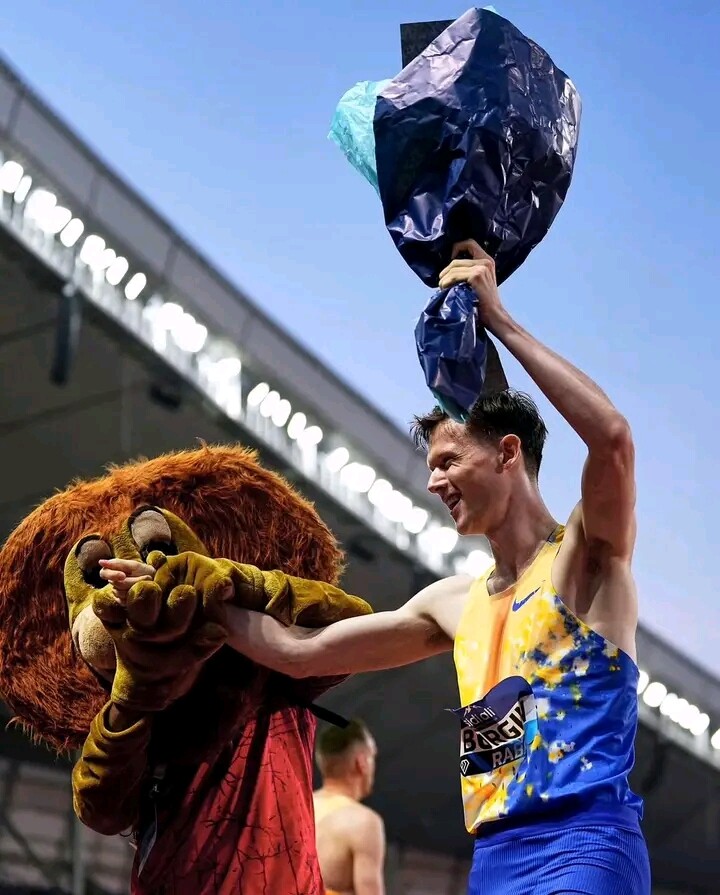
Adding another fascinating dimension is Great Britain's Max Burgin, who will enjoy the full backing of a passionate home crowd. Burgin already proved earlier this season that Wanyonyi can be beaten, producing a stunning upset in Rabat where he claimed victory in 1:42.98. Returning to compete on home soil, he now has an even greater target in sight—Sebastian Coe's British record of 1:41.73, a mark that has stood as one of the nation's most iconic athletics achievements for decades.
But the battle extends well beyond the headline trio.
The race features one of the deepest fields of the Diamond League season, with American star Bryce Hoppel, former world champion Jake Wightman, Australian standout Peter Bol, Ireland's experienced Mark English, Britain's Ben Pattison, Norway's Tobias Grønstad, Ireland's rising talent Cian McPhillips, and Poland's Patryk Sieradzki all capable of influencing the outcome.
With so much quality assembled on one start line, there will be little room for hesitation. Every tactical decision, every move through the bell lap and every stride over the final 200 metres could determine who emerges victorious.
London has witnessed countless unforgettable 800m battles over the years, but this edition promises something truly special. A reigning Olympic champion chasing another statement victory. The world's fastest man of the season determined to confirm his dominance. A home favourite inspired by the roar of the crowd and chasing history.
When the starter's gun fires, reputations will matter little. For two laps, only courage, speed and perfectly judged tactics will decide the champion.
The countdown is over. London is ready for another classic, and the men's 800 metres promises to be nothing short of spectacular.
by Erick Cheruiyot for My Best Runs.
Login to leave a comment
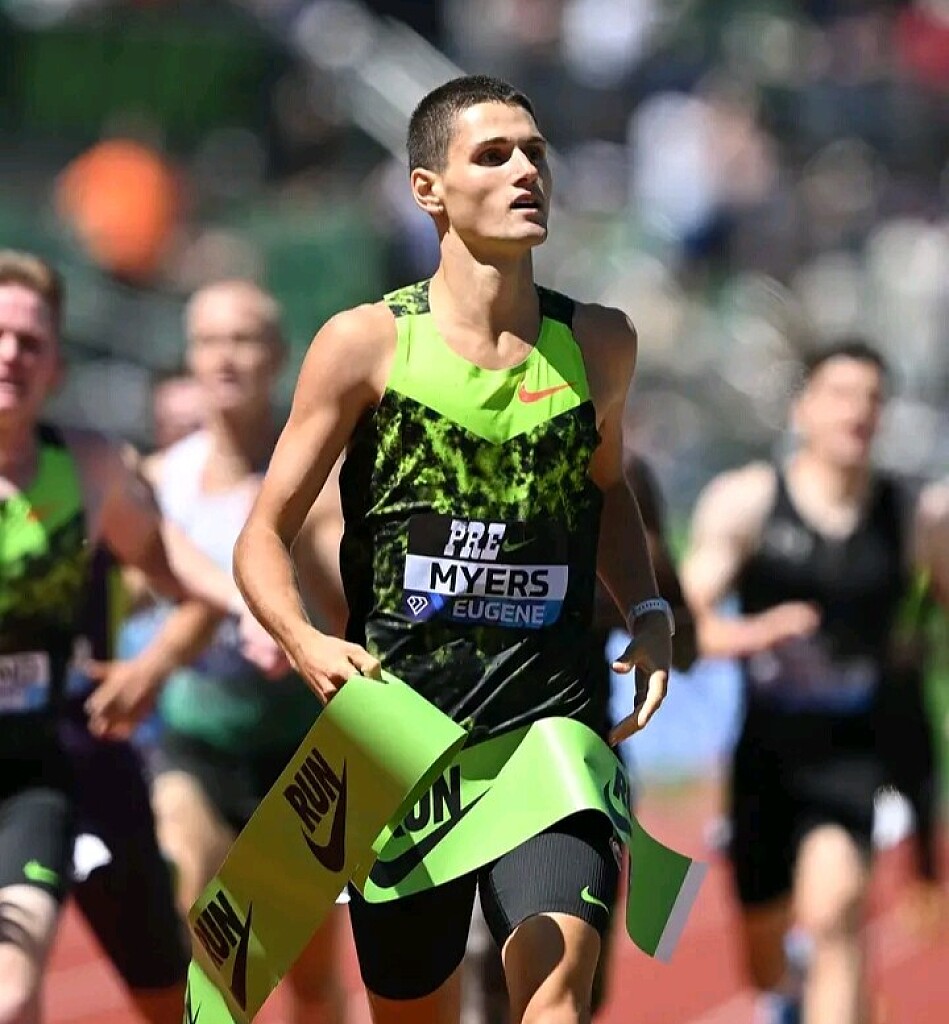
Cameron Myers Rewrote Australian History with Record-Breaking Bowerman Mile Victory
At just 20 years old, Cameron Myers is rapidly becoming one of the brightest stars in global middle-distance running.
The young Australian delivered the performance of his career at the prestigious Bowerman Mile in Eugene, Oregon, producing a fearless front-running display to clock a sensational 3:46.06—the fastest mile in the world this year. The remarkable run not only earned him victory but also shattered the Australian national record, set a new Oceania record, and firmly established him among the sport's elite.
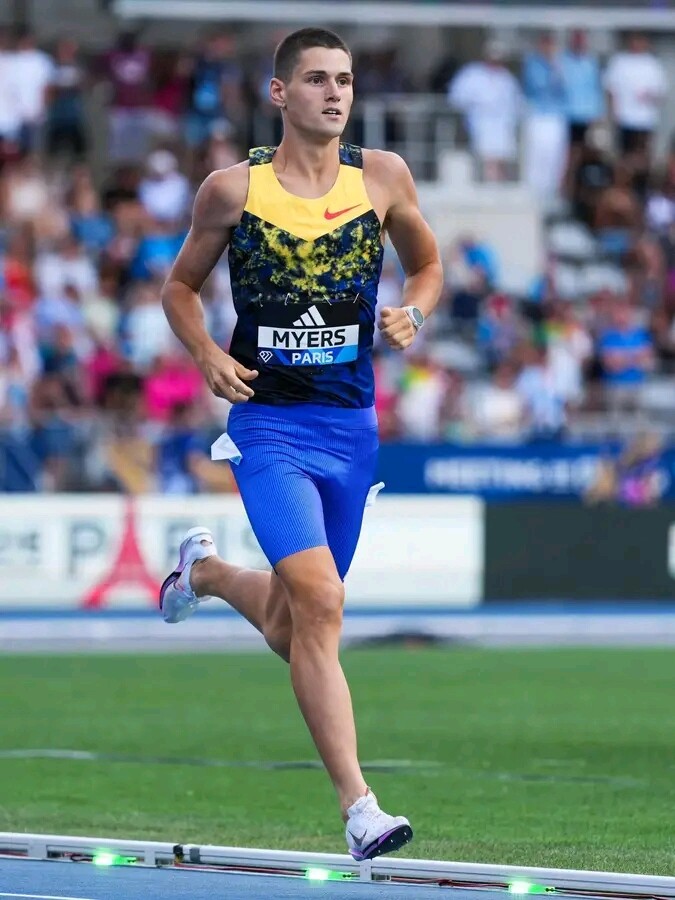
In a race packed with world-class talent, Myers showed maturity well beyond his years. As the pacemaker stepped aside during the third quarter of the race, the Australian immediately seized control. Rather than waiting for others to dictate the pace, he confidently moved to the front, maintained his rhythm through the bell lap, and unleashed a composed finishing kick that none of his rivals could answer.
American star Yared Nuguse crossed the line second in a season's best 3:46.61, while Ethan Strand claimed third in 3:46.97. Despite racing on home soil, the North American record holder and the rest of the field were unable to reel in the determined Australian, who never relinquished the lead once he took command.
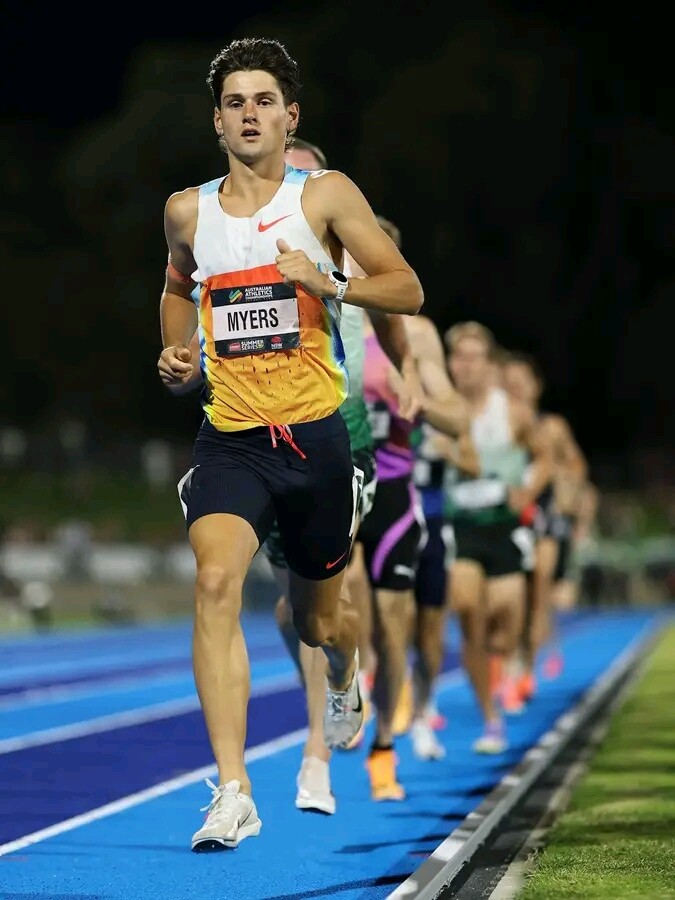
The victory crowns an extraordinary fortnight for Myers.
Only 13 days earlier, he had stormed to 3:28.00 at the Paris Diamond League, breaking the Australian 1500-metre record. Now, with the national mile record also under his name, Myers has become the holder of Australia's two most prestigious middle-distance records before celebrating his 21st birthday.
His latest performance also secured another piece of history. Myers is now the youngest man ever to run under 3:47 for the mile, a milestone that highlights both his exceptional talent and remarkable composure under pressure.
The Bowerman Mile has long been regarded as one of the sport's most iconic races, producing countless unforgettable performances over the past five decades. Many of the greatest milers in history have left their mark on Hayward Field, and Cameron Myers has now added his name to that distinguished legacy.
What makes his rise even more remarkable is not simply the records themselves, but the speed at which they are arriving. Achievements that often take athletes years—sometimes an entire career—to accumulate are coming to Myers within weeks.
At only 20 years old, Cameron Myers is no longer just one of Australia's most promising prospects. He has become a genuine global contender, and if his current trajectory is any indication, the best chapters of his remarkable journey are still to come.
by Erick Cheruiyot for My Best Runs.
Login to leave a comment
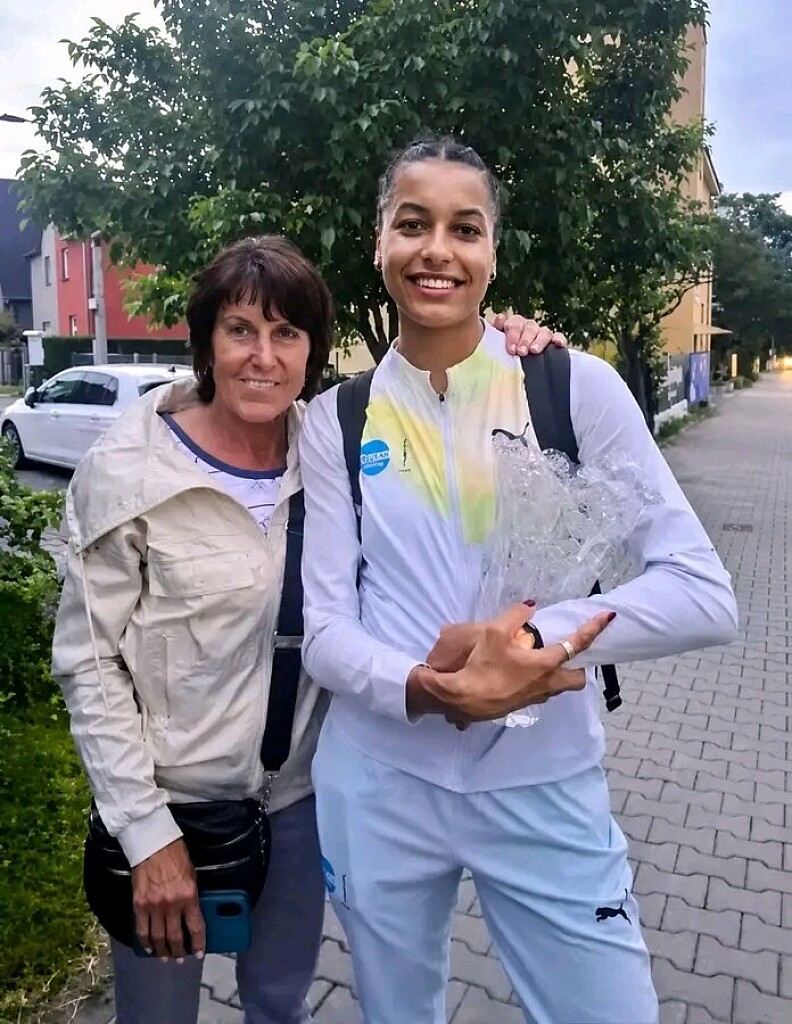
Audrey Werro's Rapid Rise Brings Jarmila Kratochvílová's Historic 800m World Record Into Focus
The women's 800 metres has entered one of its most fascinating chapters in years as rising Swiss sensation Audrey Werro edges ever closer to one of athletics' most enduring records.
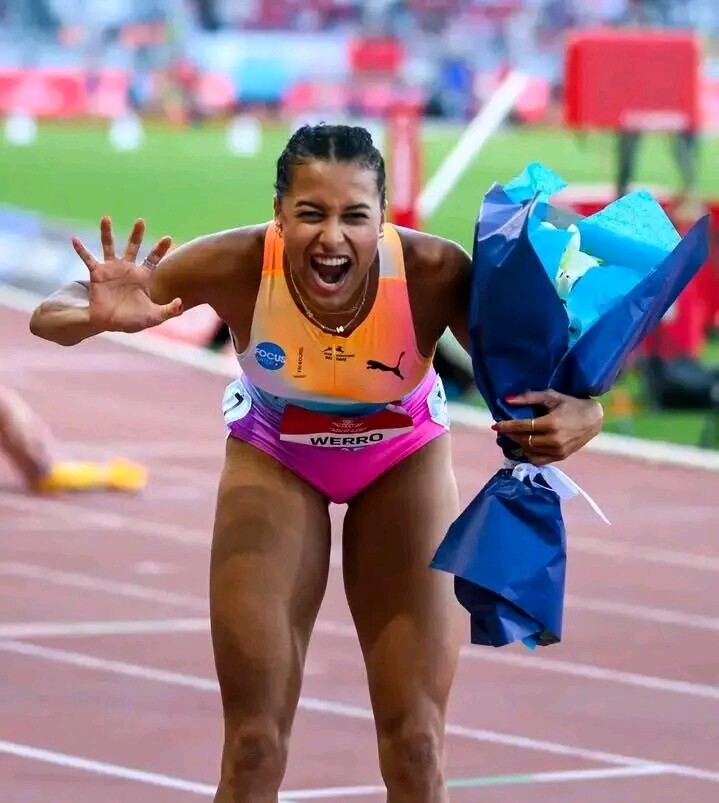
Standing between Werro and history is the remarkable mark of 1:53.28, set by Jarmila Kratochvílová in 1983—a performance that has remained untouched for more than four decades and continues to rank among the oldest world records in track and field.
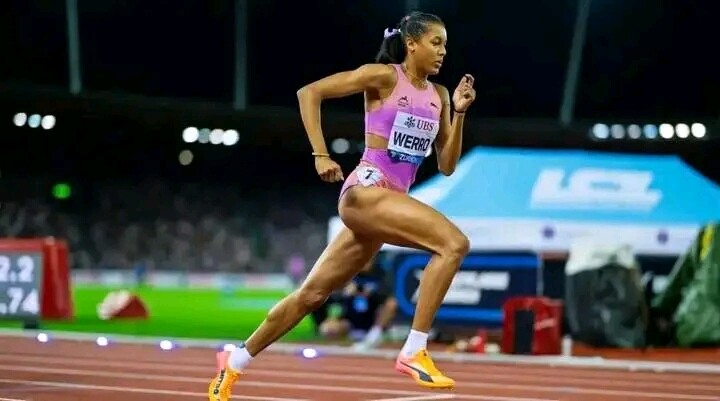
Werro's charge toward history gathered even greater momentum with a breathtaking victory at the Paris Diamond League, where she stormed to a sensational 1:53.80. The performance not only secured the win but also shattered the Diamond League record and meeting record, while establishing a new world-leading time and a Swiss national record. It was a statement performance that confirmed her status as one of the most exciting middle-distance athletes of her generation.
The talented Swiss runner has combined exceptional speed with tactical maturity and remarkable consistency, transforming what once seemed an untouchable world record into a genuine subject of discussion. Every race further strengthens the belief that she possesses the talent and confidence to challenge one of athletics' most enduring marks.
Although Kratochvílová's legendary record still stands, Werro's remarkable progression has reignited anticipation around the women's 800m. Her fearless racing style and relentless improvement have breathed new life into an event that has waited decades for an athlete capable of threatening history.
Whether the historic 1:53.28 falls this season or in the years ahead remains uncertain. What is undeniable, however, is that Audrey Werro has placed herself firmly on the doorstep of greatness, ensuring that every appearance on the track will be watched with growing excitement as the athletics world waits to see whether one of its oldest records can finally be rewritten.
by Erick Cheruiyot for My Best Runs.
Login to leave a comment
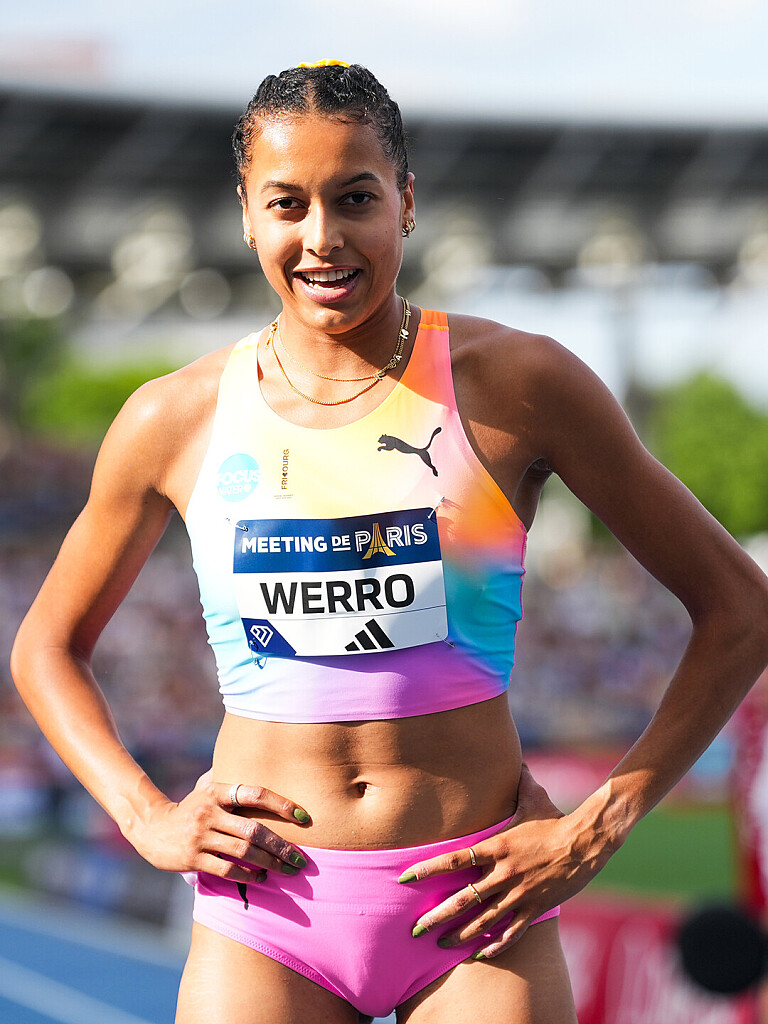
Audrey Werro Shifts Focus to 400m Ahead of European Championships
Swiss middle-distance sensation Audrey Werro is set for an intriguing change of pace as she lines up in the women's 400 metres tomorrow evening at the Fribourg meeting in Switzerland, using the race as the final step in her preparations for the upcoming European Athletics Championships.
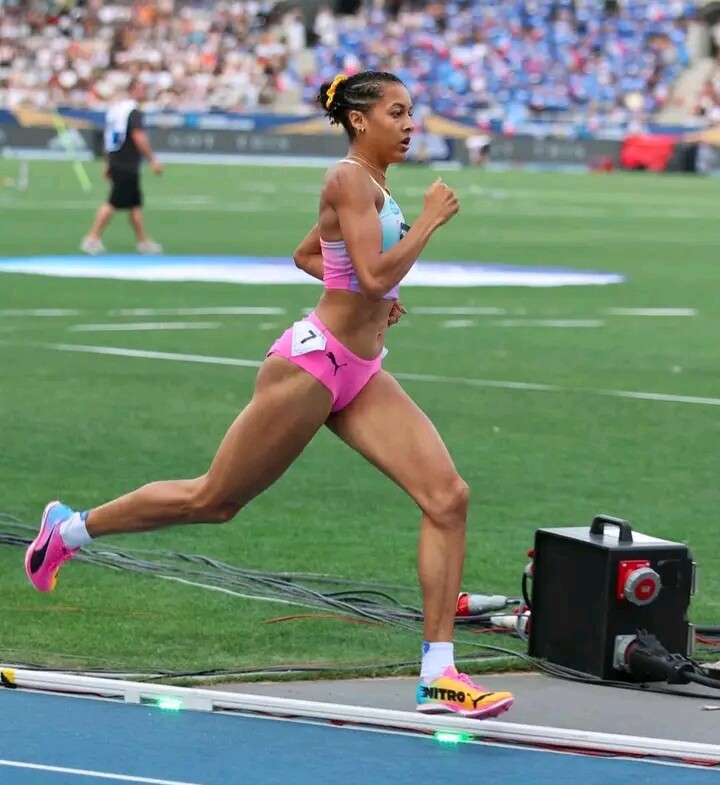
The appearance comes just days after Werro produced one of the finest performances of her career at the Paris Diamond League, where she stormed to a remarkable 1:53.80 in the 800 metres. Following that breakthrough run, the Swiss star confirmed that the Fribourg meeting would be her final competitive outing before turning her full attention to the continental championships.
Although best known for her exploits over 800 metres, Werro has also demonstrated impressive speed over one lap. She owns a personal best of 51.03 seconds in the 400 metres, a mark she achieved at this very meeting last year, making her return to Fribourg particularly significant.
The race offers more than just another opportunity to compete. It provides Werro with a valuable chance to sharpen her raw speed, improve race rhythm, and fine-tune her form before one of the biggest championships of the season.
With confidence soaring after her career-defining performance in Paris and a return to a venue where she has previously excelled, all eyes will be on Audrey Werro as she takes on the 400 metres in what promises to be an important final test before she begins her quest for European glory.
by Erick Cheruiyot for My Best Runs.
Login to leave a comment
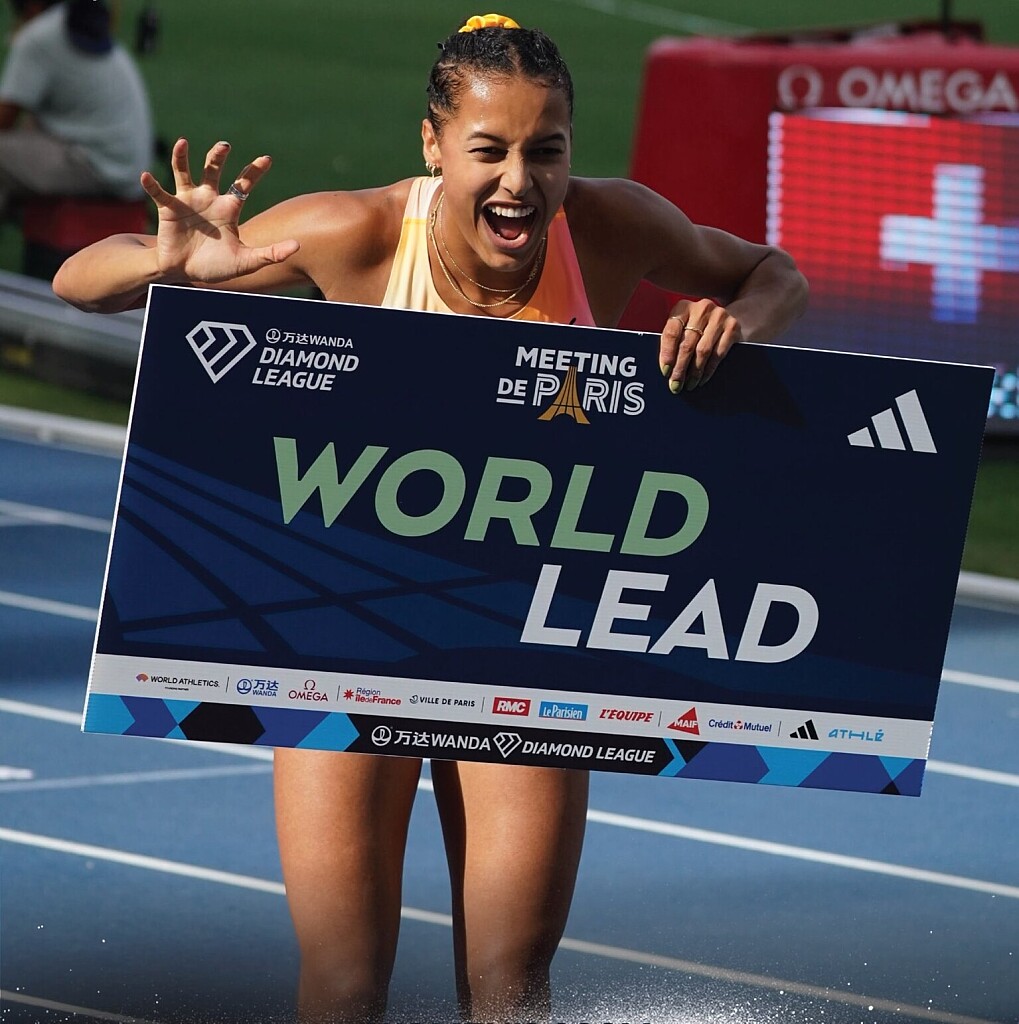
AUDREY WERRO MAKES HISTORY AGAIN WITH STUNNING PARIS DIAMOND LEAGUE TRIUMPH
Swiss middle-distance sensation Audrey Werro continues to redefine the limits of women's 800m running after producing another breathtaking performance at the Paris Diamond League, storming to victory in a remarkable 1:53.80.
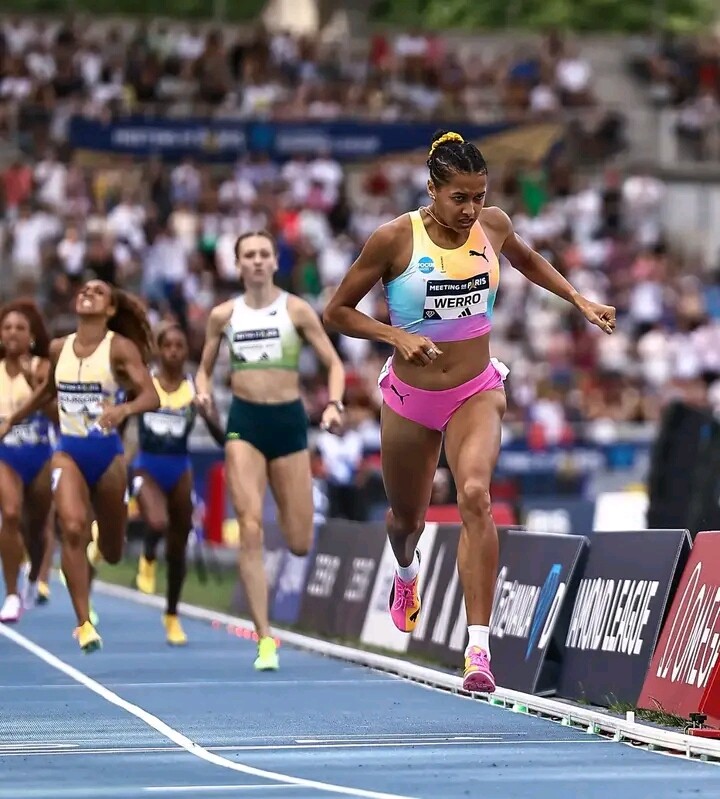
The 22-year-old delivered a perfectly judged race from start to finish, lowering her own Diamond League record while moving to third on the all-time world list. More significantly, Werro etched her name even deeper into athletics history by becoming the first woman ever to break the 1:54 barrier on more than one occasion—an extraordinary milestone that underlines her growing dominance in the event.

With another world-class performance added to her rapidly expanding résumé, Werro has firmly established herself as the woman to beat this season. Her consistency at a level once thought almost unattainable is transforming the landscape of women's middle-distance running and fueling excitement about what could come next.
Behind the Swiss star, the race also produced outstanding performances from her rivals. Dutch athlete Femke Broeders-Bol continued her impressive rise over two laps, smashing her personal best with a superb 1:55.60 to finish second.
The home crowd was then sent into celebration as France's Anaïs Bourgoin produced the race of her life, clocking a national record of 1:55.65 to secure third place and cap off a memorable evening in Paris.
The women's 800m once again proved to be one of the highlights of the Diamond League season, but the evening ultimately belonged to Audrey Werro. With history continuing to fall at her feet, the Swiss star is rapidly building a legacy that could redefine one of athletics' most prestigious events.
by Erick Cheruiyot for My Best Runs.
Login to leave a comment
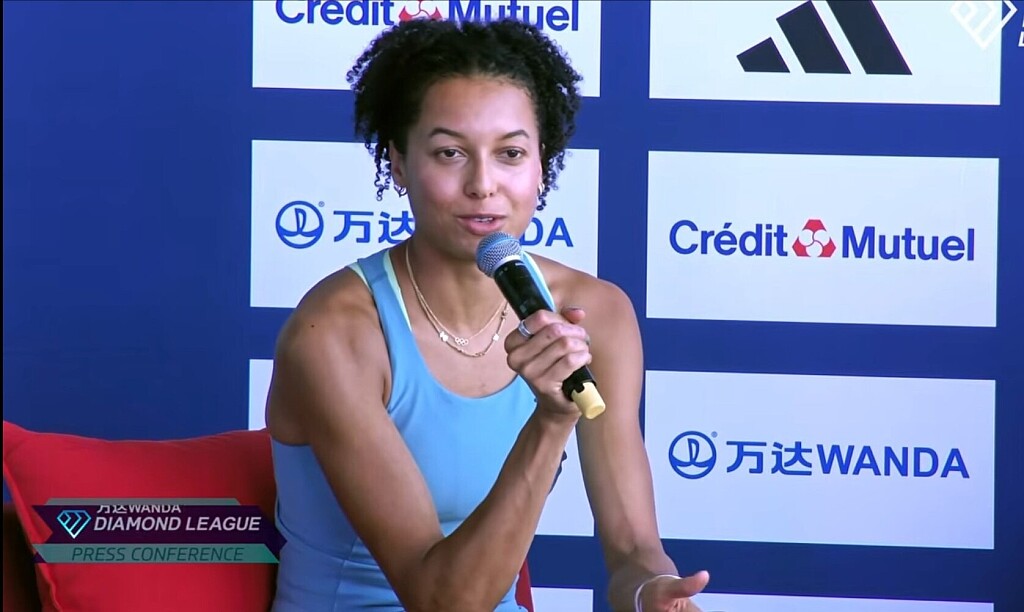
Audrey Werro Targets History with Bold World 800m Record Attempt in Paris
The stage is set for what could become one of the most memorable nights in women's middle-distance running.
Swiss sensation Audrey Werro will head to the Paris Diamond League on 28 June 2026 with one objective—an all-out assault on the women's 800m world record. Fresh off her stunning 1:53.98 performance in Stockholm, Werro has made her ambitions unmistakably clear by requesting the stadium's green wavelights to be set at 1:53.28 pace, matching the current global mark.
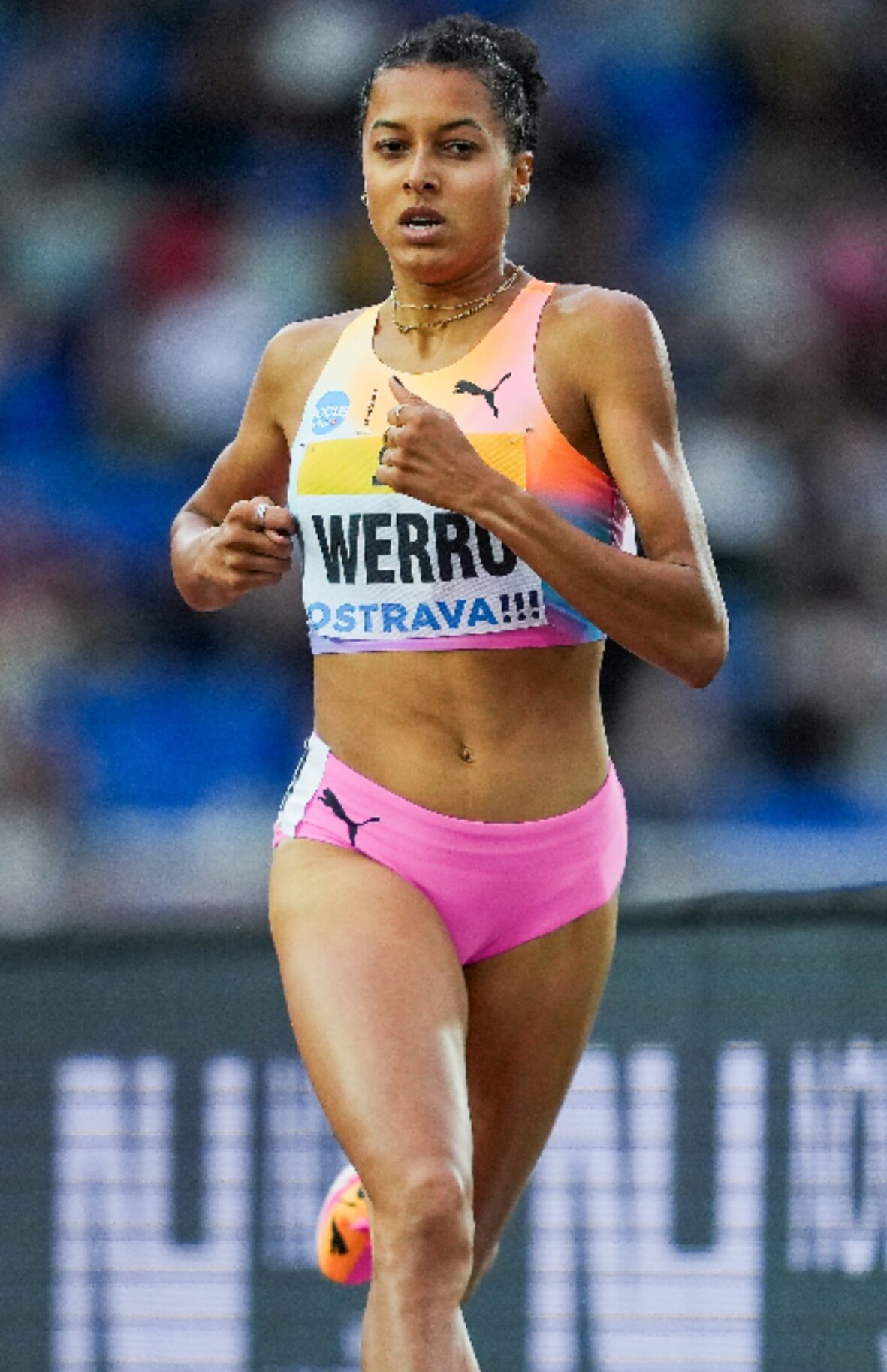
To keep that record attempt on schedule, the designated pacemaker is expected to lead the field through 400 metres in a blistering 55.50 seconds. Werro's preferred pacing strategy also calls for 27.0 seconds at 200m, 55.50 at 400m, and 1:24.50 at 600m, leaving just one final lap of sustained brilliance between her and athletics history.
The challenge is immense. The 1:53.28 world record has stood untouched for more than four decades, having been set by Jarmila Kratochvílová of former Czechoslovakia on 26 July 1983. It remains one of the longest-standing world records in track and field, making Werro's pursuit all the more captivating.
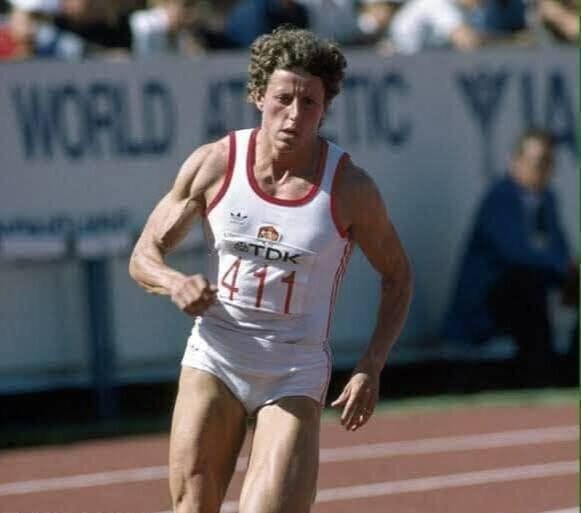
The 22-year-old has every reason to believe she can threaten the mark. Her breakthrough 1:53.98 in Stockholm made her only the third woman in history to break the 1:54 barrier, while her European-best 1:22.85 over 600m confirmed she is enjoying the finest form of her career.
With Paris renowned for producing fast middle-distance races, ideal pacing, elite competition, and world-class conditions, the ingredients are in place for a genuine world record attempt. Every split will matter, every stride will count, and the athletics world will be watching as Werro tests the limits of one of the sport's most enduring records.
Whether the record finally falls or survives another challenge, Audrey Werro's fearless pursuit of greatness promises to be one of the defining moments of the 2026 Diamond League season.
by Erick Cheruiyot for My Best Runs.
Login to leave a comment

Audrey Werro and Femke Broeders-Bol Set for Another 800m Showdown at Paris Diamond League
The women's 800 metres is shaping up to be one of the standout events at the Paris Diamond League as two of Europe's most exciting middle-distance talents, Audrey Werro and Femke Broeders-Bol, prepare to renew their growing rivalry.
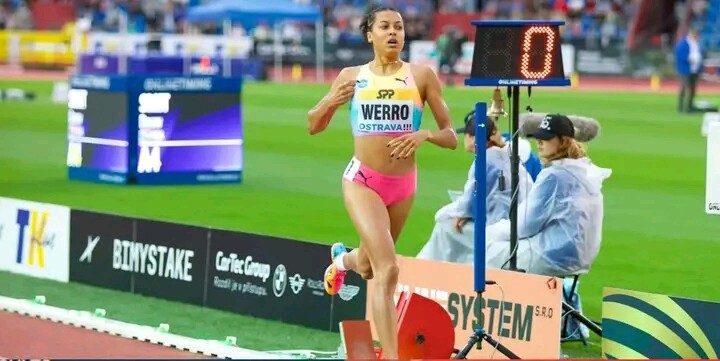
Their latest meeting comes just weeks after an entertaining battle at the Ostrava Golden Spike on June 16, where Switzerland's Werro produced a sensational performance to storm to victory in 1:54.45. Broeders-Bol crossed the finish line in 1:57.13 after another competitive outing, setting the stage for another fascinating duel in the French capital.

Werro arrives in Paris carrying outstanding form and growing confidence. The Swiss sensation has continued to lower her personal best this season, raising eyebrows once again by clocking a blistering 1:53.98 in Stockholm. The performance further established her as one of the fastest women in the world this year and underlined her emergence as a genuine medal contender on the international stage.
Broeders-Bol, meanwhile, has also enjoyed an impressive campaign. The Dutch star showcased her consistency by claiming victory at the FBK Games in Hengelo, where she stopped the clock at 1:57.41. While her season's best trails Werro's remarkable times, her championship experience and tactical racing make her a dangerous competitor capable of upsetting any field.
With both athletes enjoying strong seasons, Paris offers another opportunity to test themselves against elite opposition in one of the Diamond League's most anticipated middle-distance races. Werro will be aiming to continue her remarkable run of form and strengthen her status among the world's leading 800m runners, while Broeders-Bol will be eager to close the gap and reverse the outcome from Ostrava.
As the world's best assemble in Paris, all eyes will once again be on Werro and Broeders-Bol. Their contrasting strengths, recent performances, and competitive spirit promise another thrilling chapter in what is quickly becoming one of the most intriguing rivalries in women's middle-distance running.
by Erick Cheruiyot for My Best Runs.
Login to leave a comment

Paris Diamond League Cleared to Proceed Despite Heatwave as Organisers Introduce Major Safety Measures
The Paris Diamond League will go ahead as scheduled on Sunday at Charléty Stadium, despite concerns over the intense heatwave gripping the French capital. Following consultations with the Paris Police Prefecture, the French Athletics Federation (FFA) confirmed that the meeting has been approved to proceed under an adapted operational format designed to protect the health and safety of everyone attending while preserving the elite competition.
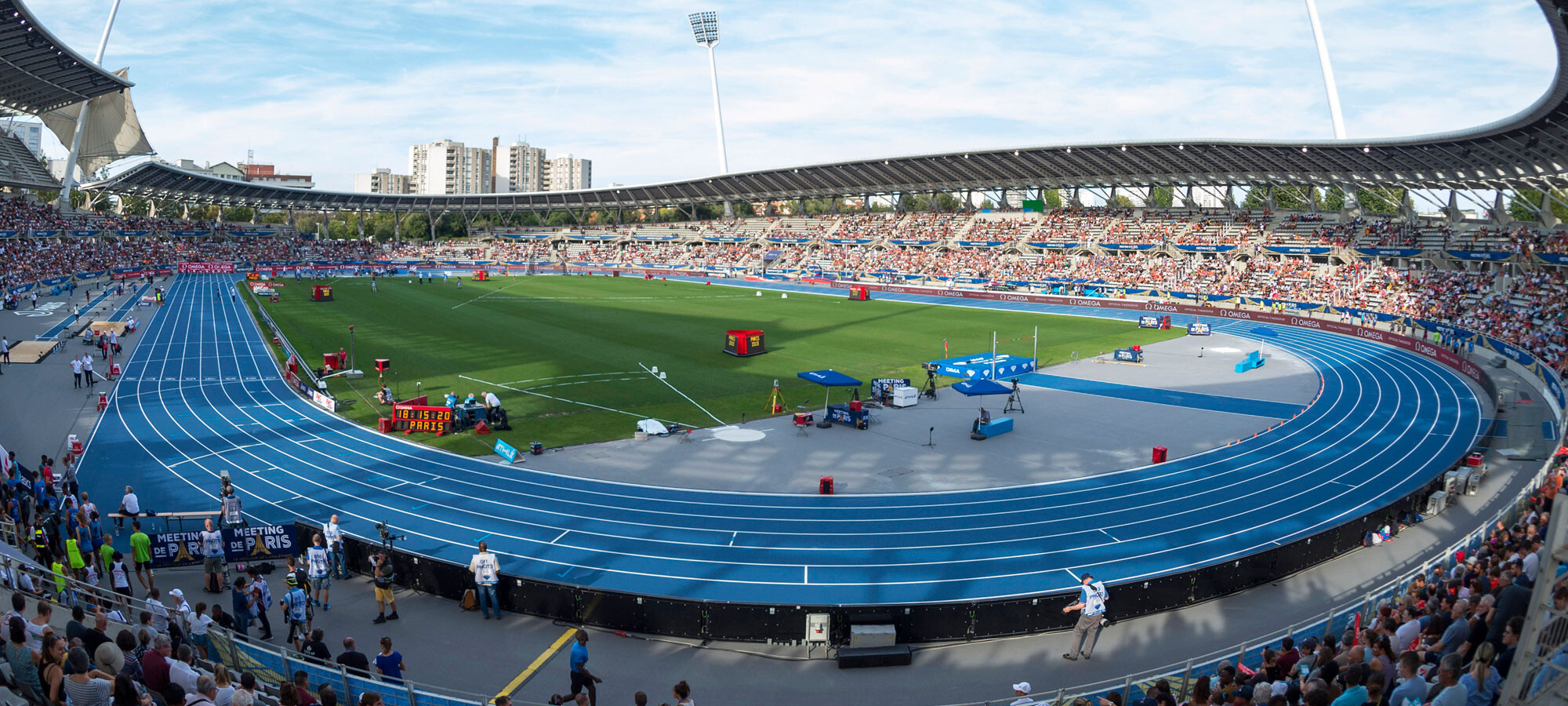
The decision comes as red weather warnings remain in effect across parts of Europe, with Paris forecast to experience extreme temperatures of between 39°C and 40°C (102°F–104°F). The exceptional heat has prompted authorities to implement the highest level of weather vigilance, forcing organisers to strike a careful balance between delivering one of the season's premier athletics meetings and safeguarding the well-being of athletes, officials, volunteers, and spectators. Rather than cancelling the event, organisers have opted for a comprehensive heat-management strategy designed to minimise health risks while ensuring the elite competition can proceed safely.
While the elite international programme remains fully intact, organisers have introduced a series of significant adjustments to reduce the risks associated with the extreme weather conditions. All club competitions, licensed member events and regional athletics competitions have been cancelled, allowing the focus to remain solely on the Diamond League's professional programme.
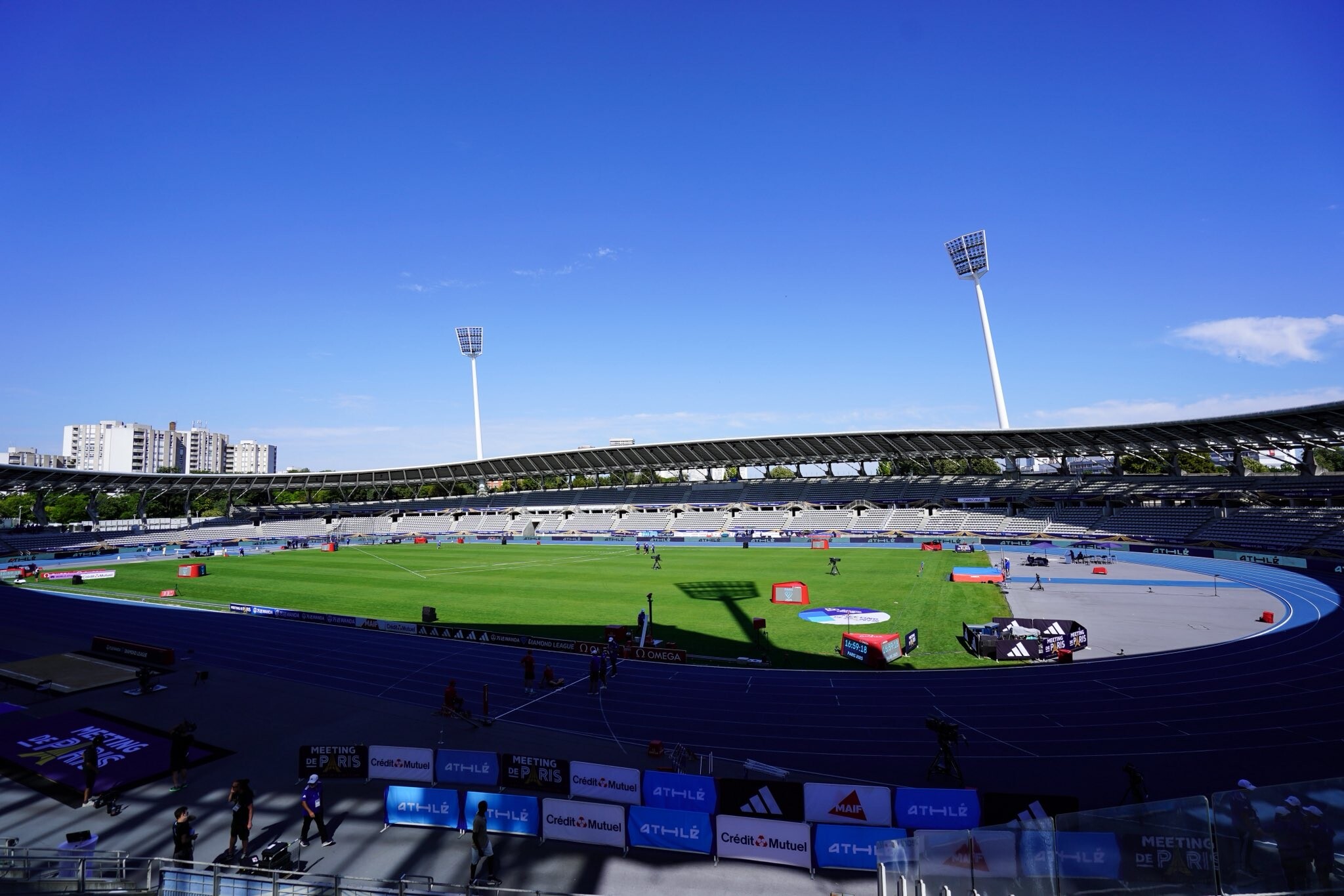
To further limit exposure during the hottest hours of the day, stadium gates will open at 4:15 p.m., later than originally planned, while the competition timetable has been revised to better accommodate the prevailing conditions without affecting the headline events.
Organisers have also substantially strengthened on-site health and safety measures. Medical and emergency response teams have been reinforced, with additional drinking water stations and misting points installed throughout the venue to help spectators and athletes stay cool. More shaded areas have been created across the stadium, while enhanced public communication campaigns will encourage fans to remain hydrated, seek shade whenever possible and remain alert to the risks posed by the intense heat.
Despite the extraordinary weather conditions, the world's leading athletes are still expected to compete in one of the most anticipated meetings of the 2026 Diamond League season. The decision to maintain the elite programme reflects organisers' confidence that the enhanced safety measures will allow the competition to proceed responsibly while ensuring the welfare of everyone inside Charléty Stadium remains the highest priority.
Sunday's meeting will therefore take place in an adapted format—not as a scaled-back event, but as a carefully managed showcase of world-class athletics, demonstrating how elite sport can successfully adapt to increasingly challenging weather conditions without compromising athlete safety or the quality of competition.
by Erick Cheruiyot for My Best Runs.
Login to leave a comment
Paris Diamond League Men's 5000m: Global Distance Stars Set for a High-Stakes Clash in the French Capital
The countdown to the 2026 Paris Diamond League is almost over, and one of the most anticipated events on the programme is the men's 5000m. Scheduled for Sunday, June 28, the race has assembled an impressive international field featuring established champions, emerging talents, and national record holders, setting the stage for what could become one of the fastest 5000m races of the season.

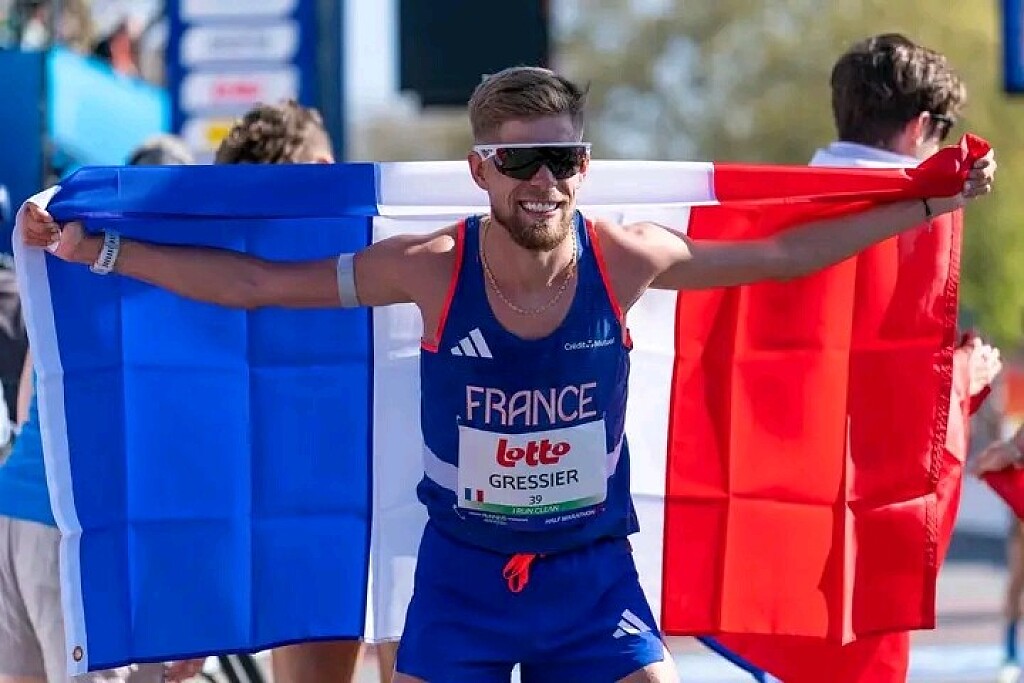
France's Jimmy Gressier will carry the hopes of the home crowd as he headlines the event. Renowned for his fearless front-running style and relentless pace, Gressier will be eager to produce another memorable performance on home soil against one of the deepest fields assembled this year.
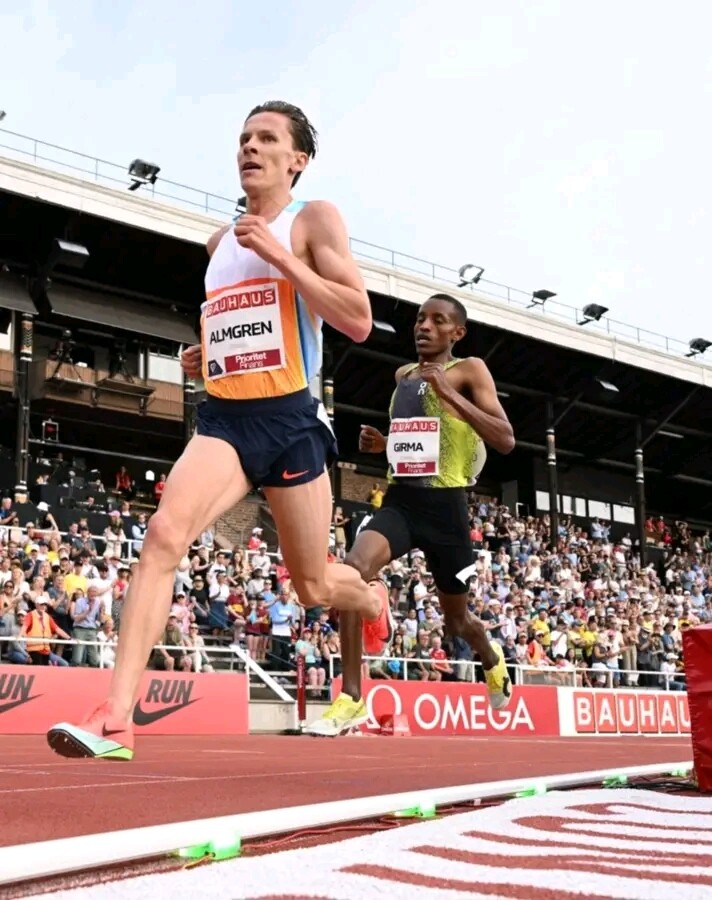
The race also features Sweden's Andreas Almgren, whose remarkable rise over the longer distances has made him one of Europe's strongest contenders. Eritrea's Saymon Amanuel, Ethiopia's Getnet Wale, Kuma Girma, Lamecha Girma, Khairi Bejiga, and Addisu Yihune further strengthen an already formidable lineup, bringing world-class credentials and proven championship experience.
Kenya enters the contest with a talented quartet comprising Cornelius Kemboi, Frankline Kibet, Mathew Kipchumba Kipsang, and Jacob Krop. With Kenya's rich tradition in distance running, the four athletes will be looking to assert themselves against a field packed with elite competitors and continue the country's dominance on the global stage.
The international flavour of the race extends even further with competitors from the United States, Germany, Spain, Mexico, Burundi, Uruguay, Bahrain, and the Netherlands, highlighting the Diamond League's status as the premier meeting point for the world's finest track athletes.
With so many athletes capable of producing sub-13-minute performances, fans can expect an aggressive pace from the opening laps. Whether the race develops into a tactical championship-style battle or an all-out assault on the clock, every indication points to a thrilling spectacle under the Paris lights.
As the Diamond League season gathers momentum, Sunday's men's 5000m promises more than just valuable points—it offers athletes a golden opportunity to test themselves against world-class opposition, build confidence ahead of major championships, and perhaps deliver one of the standout performances of the year.
The stage is set. The field is loaded. Paris is ready for another unforgettable moment of distance running.
by Erick Cheruiyot for My Best Runs.
Login to leave a comment
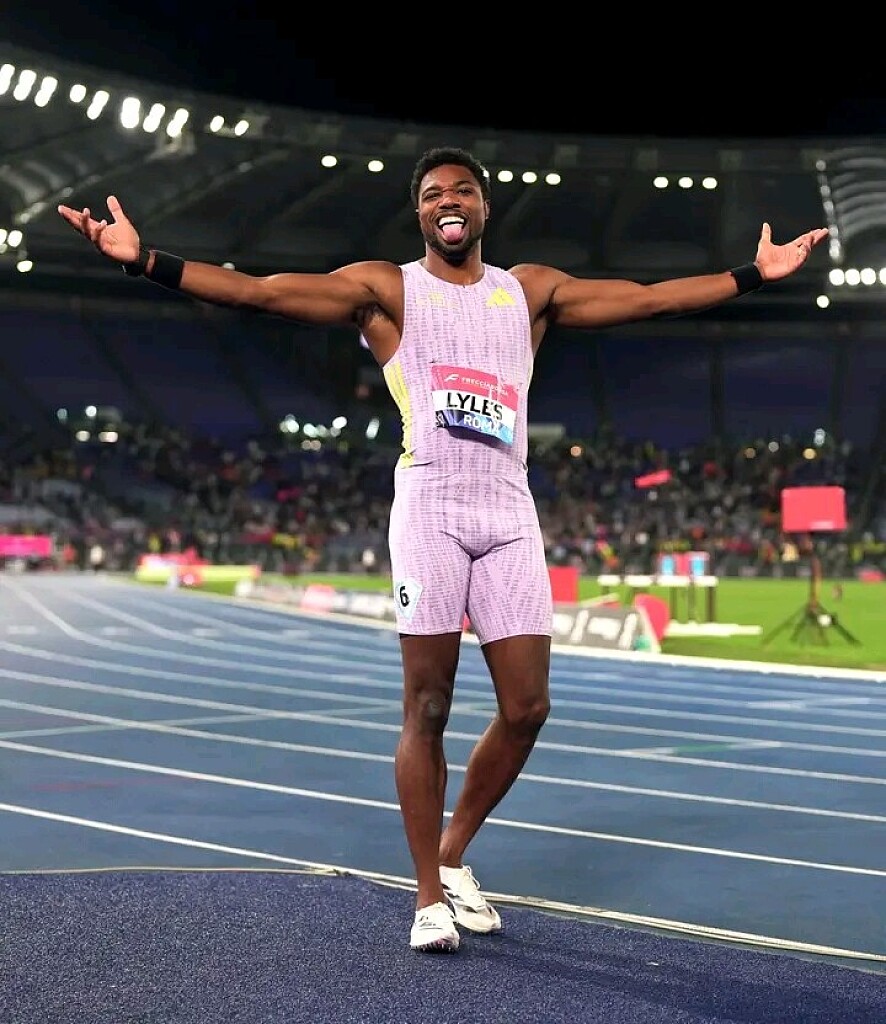
Sprint Titans Set for Paris Showdown as Noah Lyles Returns to Familiar Ground
Just one week after rewriting history with a sensational world-record performance over 150 metres, Noah Lyles is set to return to Paris, the city where some of his most memorable career moments were forged. The American sprint superstar will headline a blockbuster men's 100m field at the Paris Diamond League on June 28, promising one of the most captivating races of the season.
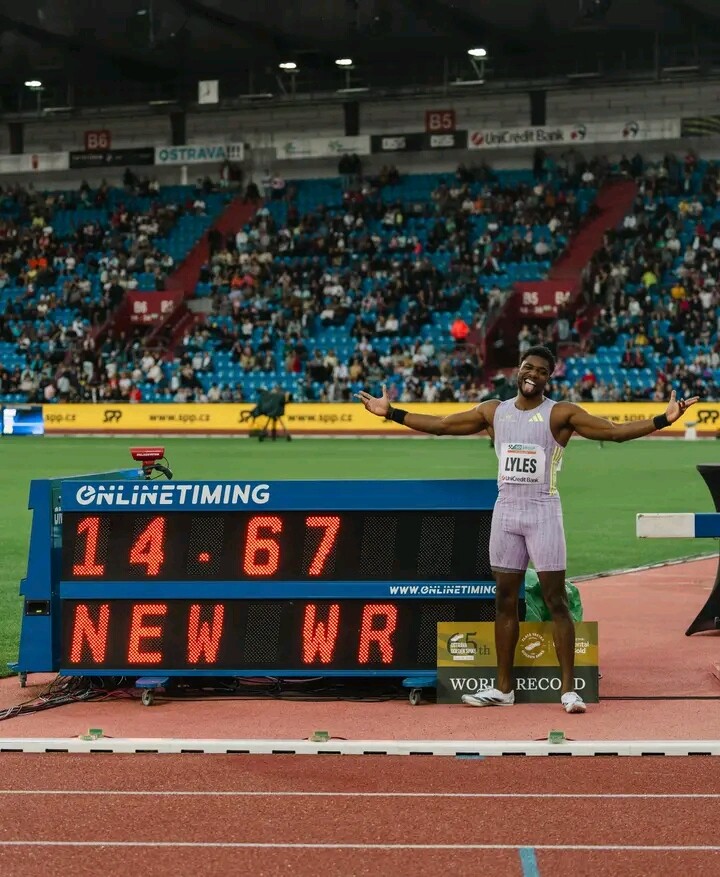
Paris has earned a reputation as one of the fastest tracks in world athletics, and Lyles will be hoping the magic returns once again as he steps back onto the same stage that witnessed his Olympic triumphs. Carrying the momentum of his recent world-record achievement, the reigning global sprint king arrives as the man everyone will be chasing.
Yet victory will be far from guaranteed.
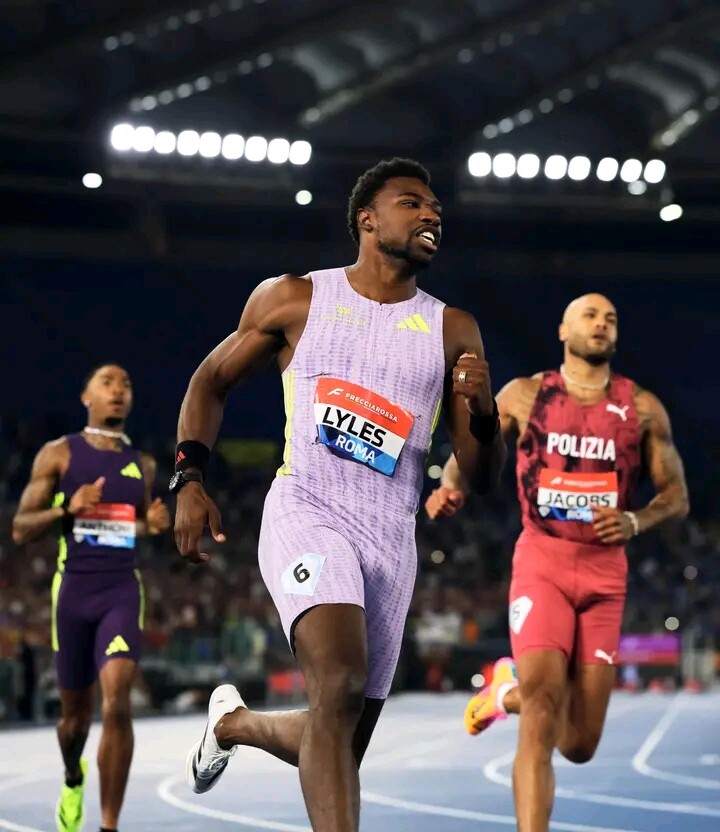
The men's 100m field is loaded with world-class talent, bringing together Olympic champions, Diamond League winners, continental record holders and emerging stars in what promises to be a battle from the gun to the finish line.
Kenya's Ferdinand Omanyala, Africa's fastest man, will be eager to use his trademark explosive start to challenge the favourite. South Africa's Akani Simbine, one of the most consistent performers on the international circuit, arrives in exceptional form and remains a serious contender for victory. Italy's Olympic champion Lamont Marcell Jacobs adds further championship pedigree, while American speedsters Trayvon Bromell and rising star Jordan Anthony strengthen an already formidable field.
Great Britain's Jeremiah Azu and Cameroon's Emmanuel Eseme complete a lineup capable of producing fireworks on one of athletics' quickest stages.
Official Men's 100m Start List – Paris Diamond League
1. Noah Lyles (United States)
2. Jordan Anthony (United States)
3. Emmanuel Eseme (Cameroon)
4. Trayvon Bromell (United States)
5. Akani Simbine (South Africa)
6. Lamont Marcell Jacobs (Italy)
7. Ferdinand Omanyala (Kenya)
8. Jeremiah Azu (Great Britain)
With the World Championships drawing closer, every race carries added significance. Paris offers athletes a chance not only to collect valuable Diamond League points but also to send a statement to their rivals ahead of the season's biggest tests.
For fans, the ingredients could hardly be better: a world-record holder at the peak of his powers, a lightning-fast track, and a field packed with elite sprinters capable of producing something special. The result is a race that has all the makings of one of the standout moments of the Diamond League campaign.
On June 28, the spotlight will once again shine on Noah Lyles. But against a field this strong, the road to victory will demand nothing less than brilliance.
by Erick Cheruiyot for My Best Runs.
Login to leave a comment
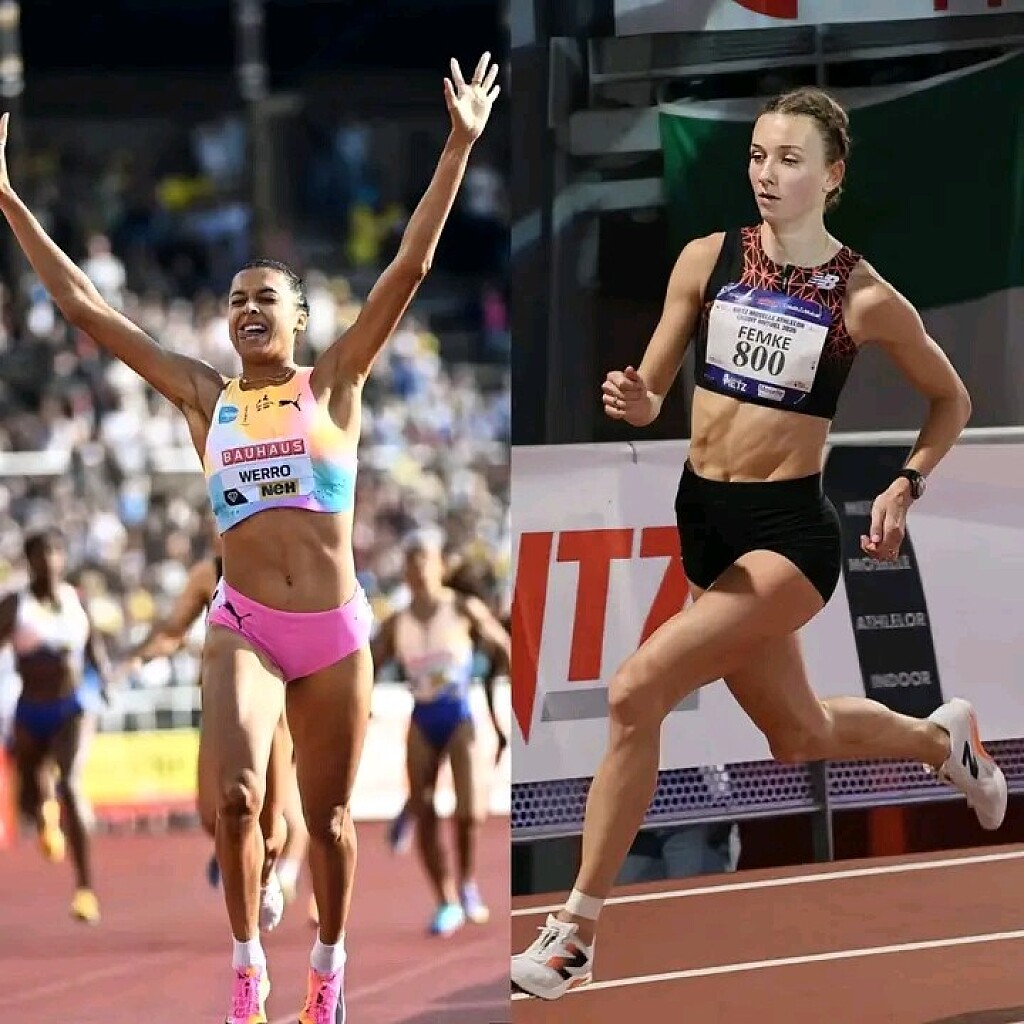
Paris Showdown: Broeders-Bol and Werro Set to Ignite the Women's 800m
Something special is brewing in Paris, and athletics fans around the world should take notice.
The women's 800m at the Paris Diamond League on June 28 is shaping up to be one of the most intriguing middle-distance clashes of the season, as Dutch star Femke Broeders-Bol steps back onto the start line to face Swiss sensation Audrey Werro in what promises to be a fascinating battle of speed, strength, and ambition.
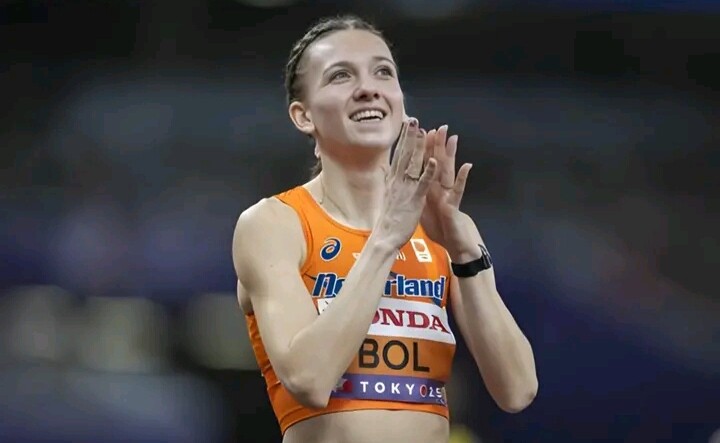
Broeders-Bol, already established as one of the sport's premier athletes and a two-time world champion in the 400m hurdles, continues to explore new territory in the 800m. Her debut over the distance at the Ostrava Golden Spike turned plenty of heads, as she powered to an impressive 1:57.13, immediately signaling that she could become a serious force beyond the hurdles.
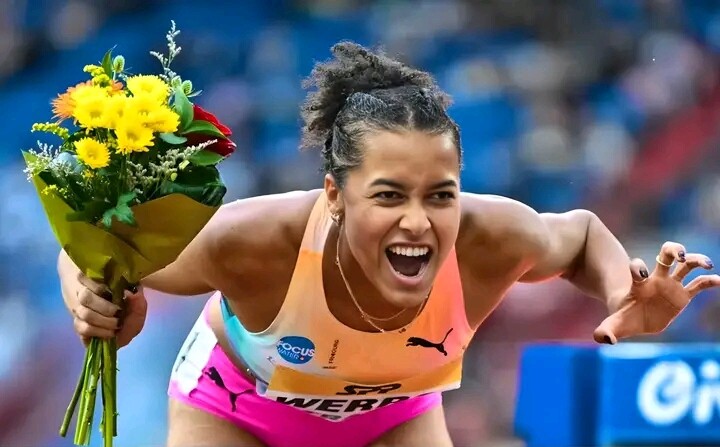
Awaiting her in Paris is a woman who has been rewriting expectations all season. Werro arrives with tremendous momentum after producing a stunning 1:53.98, the third-fastest women's 800m performance in history. The Swiss star has emerged as one of the hottest names in global athletics, combining fearless front-running with exceptional finishing speed.
While the race brings together athletes from different disciplines and backgrounds, the storyline is impossible to ignore. One competitor is testing the limits of her versatility and attempting to prove she belongs among the world's best middle-distance runners. The other is riding a wave of historic form and looking to further cement her status as the woman to beat in 2026.
The atmosphere at Charléty Stadium is expected to be electric, with fans eager to witness whether Broeders-Bol can continue her remarkable transition into elite 800m racing or whether Werro's record-breaking form will once again steal the spotlight.
Whatever the outcome, this is far more than just another Diamond League race. It is a meeting of two athletes at pivotal moments in their careers, bringing together proven championship pedigree and emerging historical greatness on one of athletics' biggest stages.
June 28. Paris. Broeders-Bol versus Werro.
The women's 800m just became one of the must-watch races of the year.
by Erick Cheruiyot for My Best Runs.
Login to leave a comment
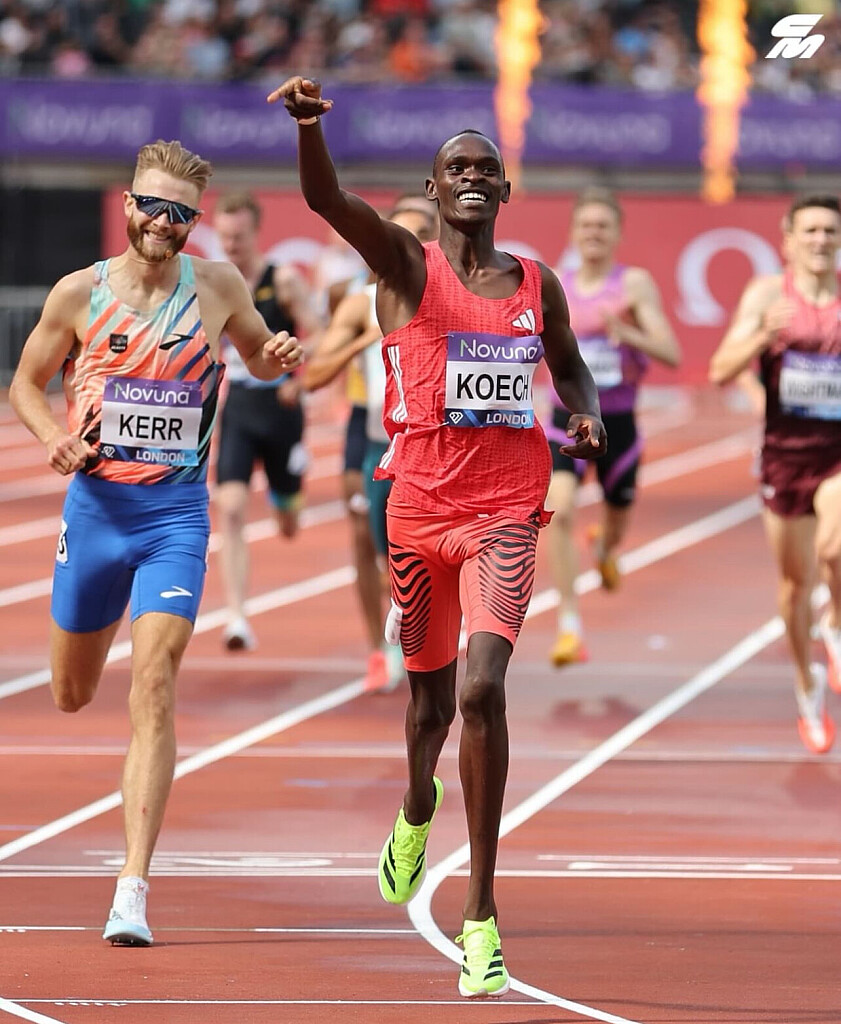
HISTORIC SEASON FOR PHANUEL KOECH
At just 18 years old, Phanuel Koech has made history—becoming the first Kenyan ever to run under 3:29 for the 1500m twice in a single season.
✅ Paris Diamond League: 3:27.72
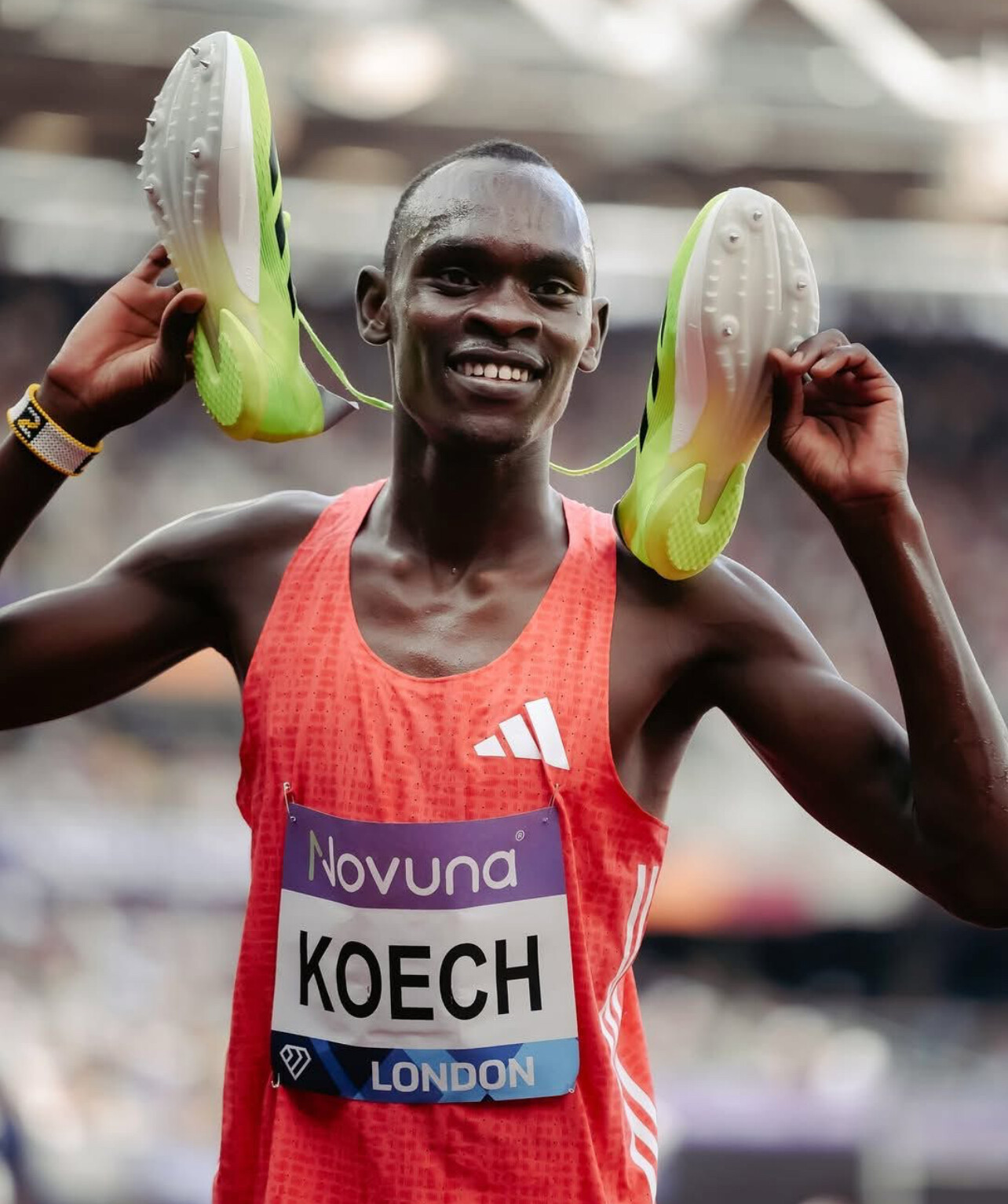
✅ London Diamond League: 3:28.82
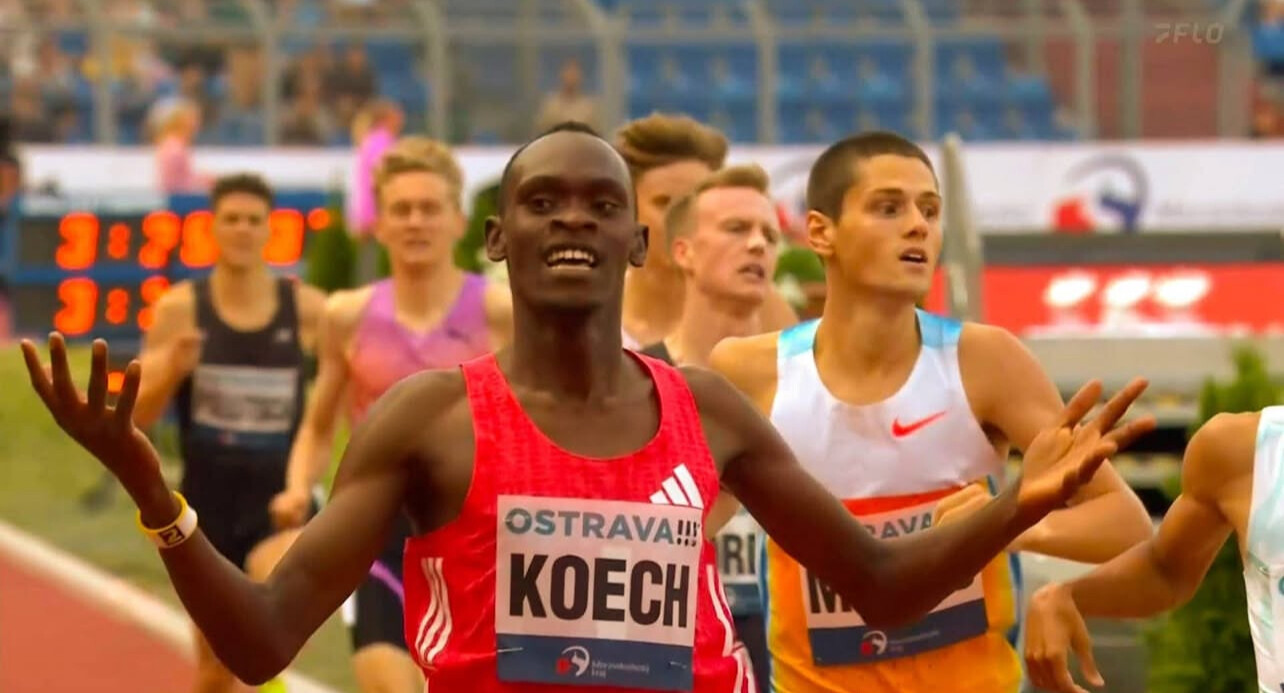
With his 3:27.72 performance in Paris, Koech now ranks as the 4th fastest Kenyan of all time, behind only Bernard Lagat, Asbel Kiprop, and Silas Kiplagat.
He is also the fastest junior (U20) in the history of the 1500m.
Next up:
2025 World Athletics Championships Trials
Sports Complex
July 22, 2025
Kenya’s middle-distance future looks brighter than ever.
by Boris Baron
Login to leave a comment
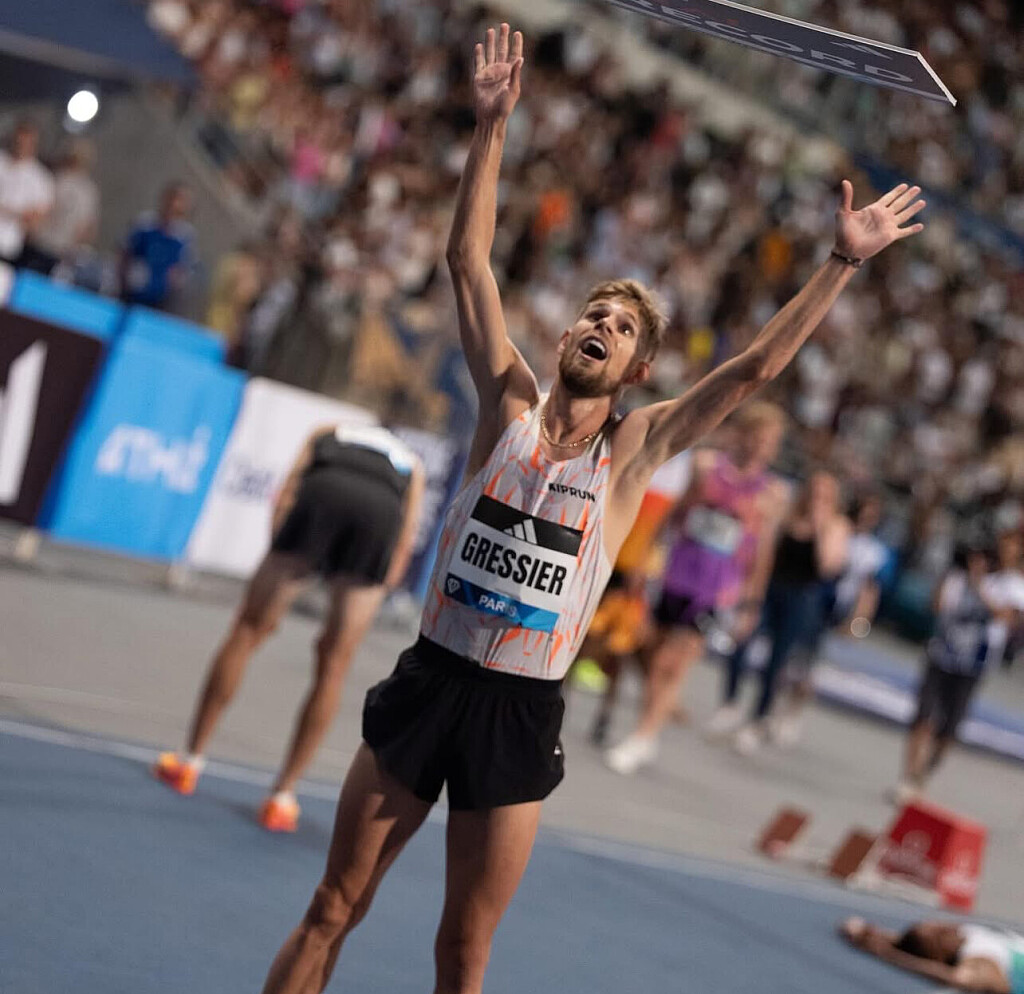
Jimmy Gressier Breaks French 5000m Record at Paris Diamond League
Paris, June 20, 2025 – In front of an electric home crowd at the Wanda Diamond League Meeting de Paris, Jimmy Gressier delivered the race of his life. The 28-year-old French distance star shattered his own national record in the 5000m, crossing the line in 12:51.59 to finish fourth in a stacked international field.
This performance not only marked a personal best for Gressier, but also cemented his place among the world’s elite, as one of only a handful of Europeans to run under 12:52 in the event.
“I might not be at 100%, but I didn’t want to miss out on being part of the celebration,” Gressier said before the race. That mindset paid off.
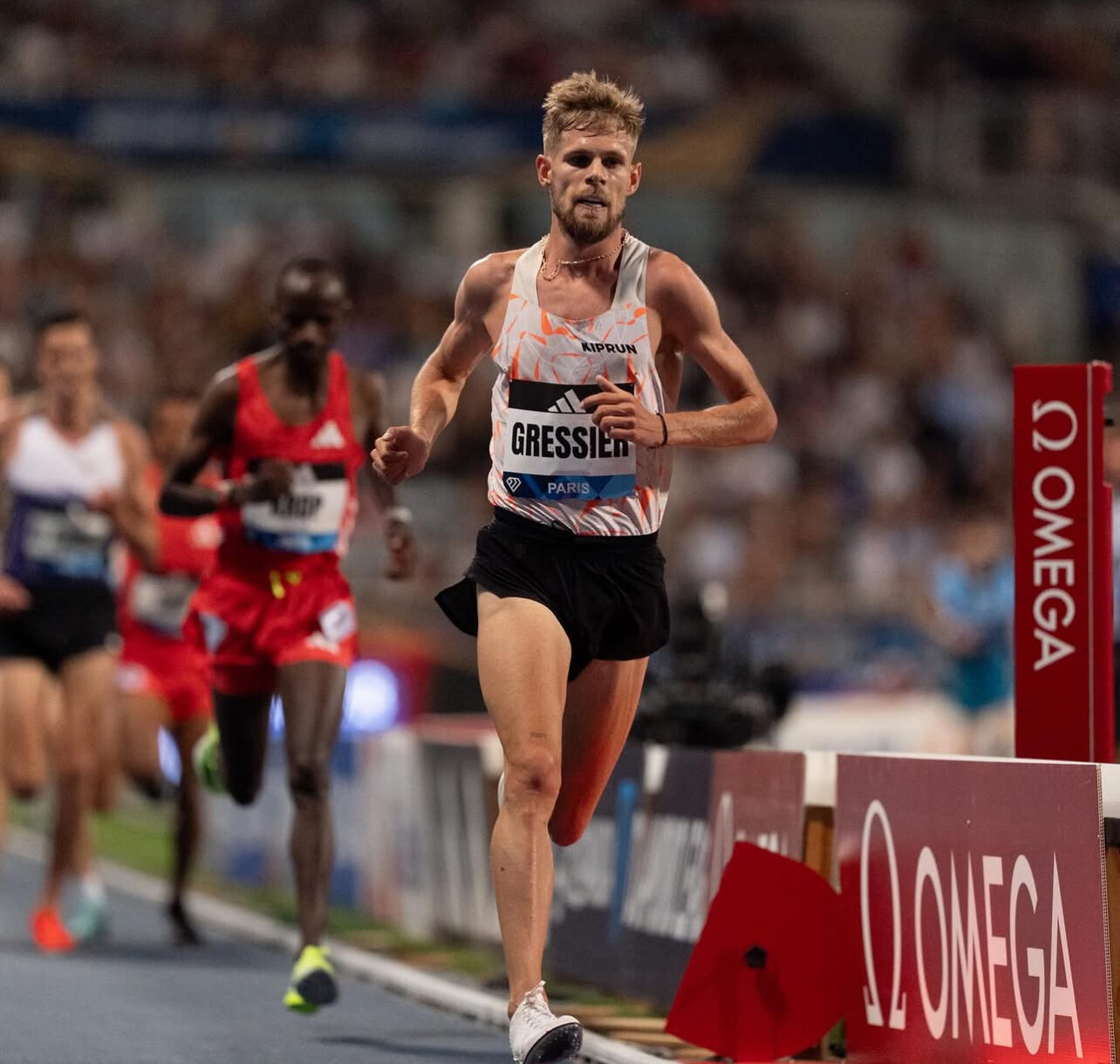
Racing Against the Best in the World
The race was won by Ethiopia’s Yomif Kejelcha, who clocked 12:47.84, followed closely by America’s Graham Blanks in 12:48.16 and Kenya’s Jacob Krop in 12:49.71. Gressier held his own against the top-tier field, surging in the final laps to break his previous French record of 12:54.92 (set indoors in 2024) by more than three seconds.
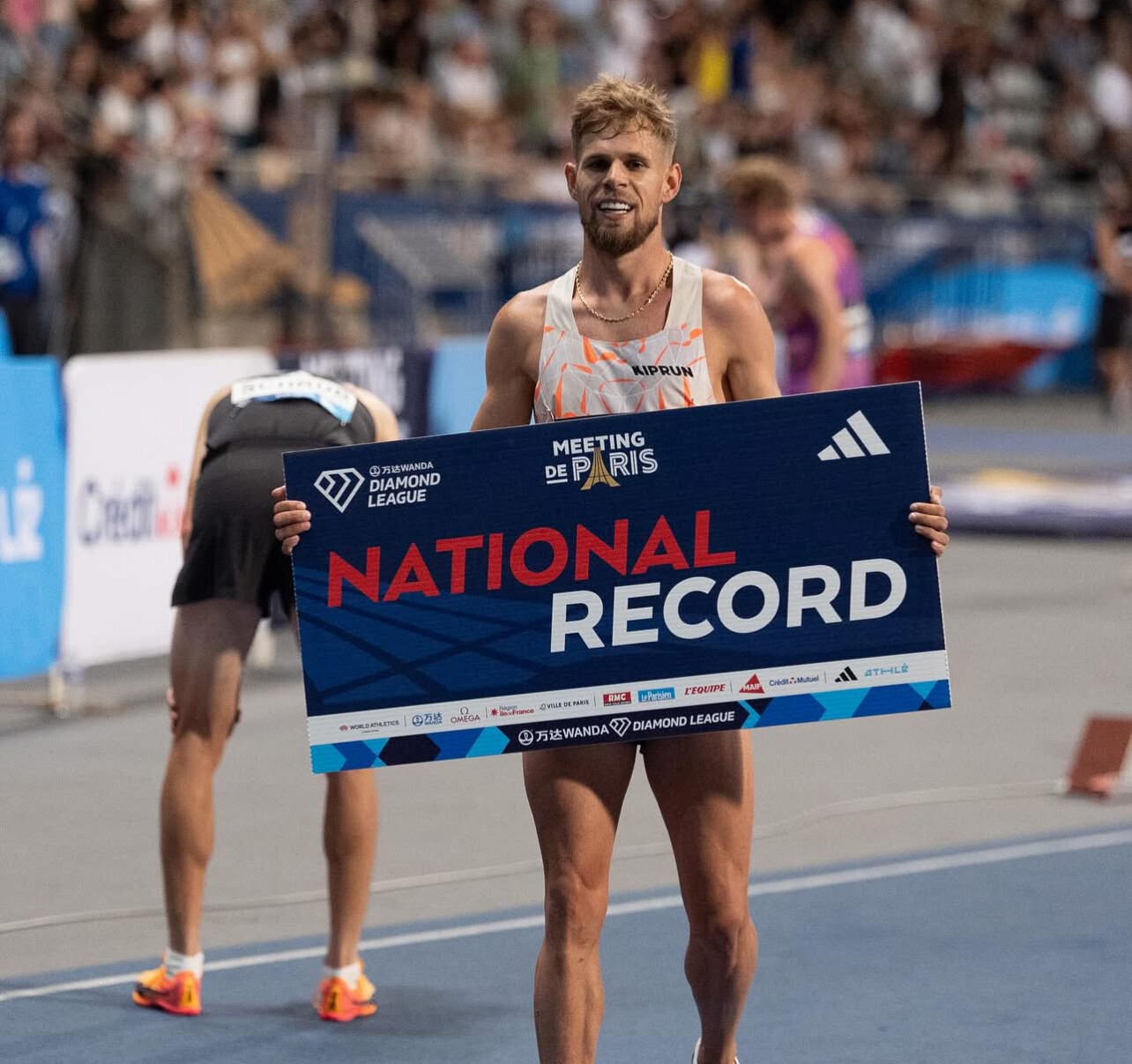
His fourth-place finish came with style and grit, as he crossed the line visibly elated, later holding up a large sign reading “National Record” to the roaring approval of the French fans at Stade Charléty.
A Milestone on the Road to Tokyo
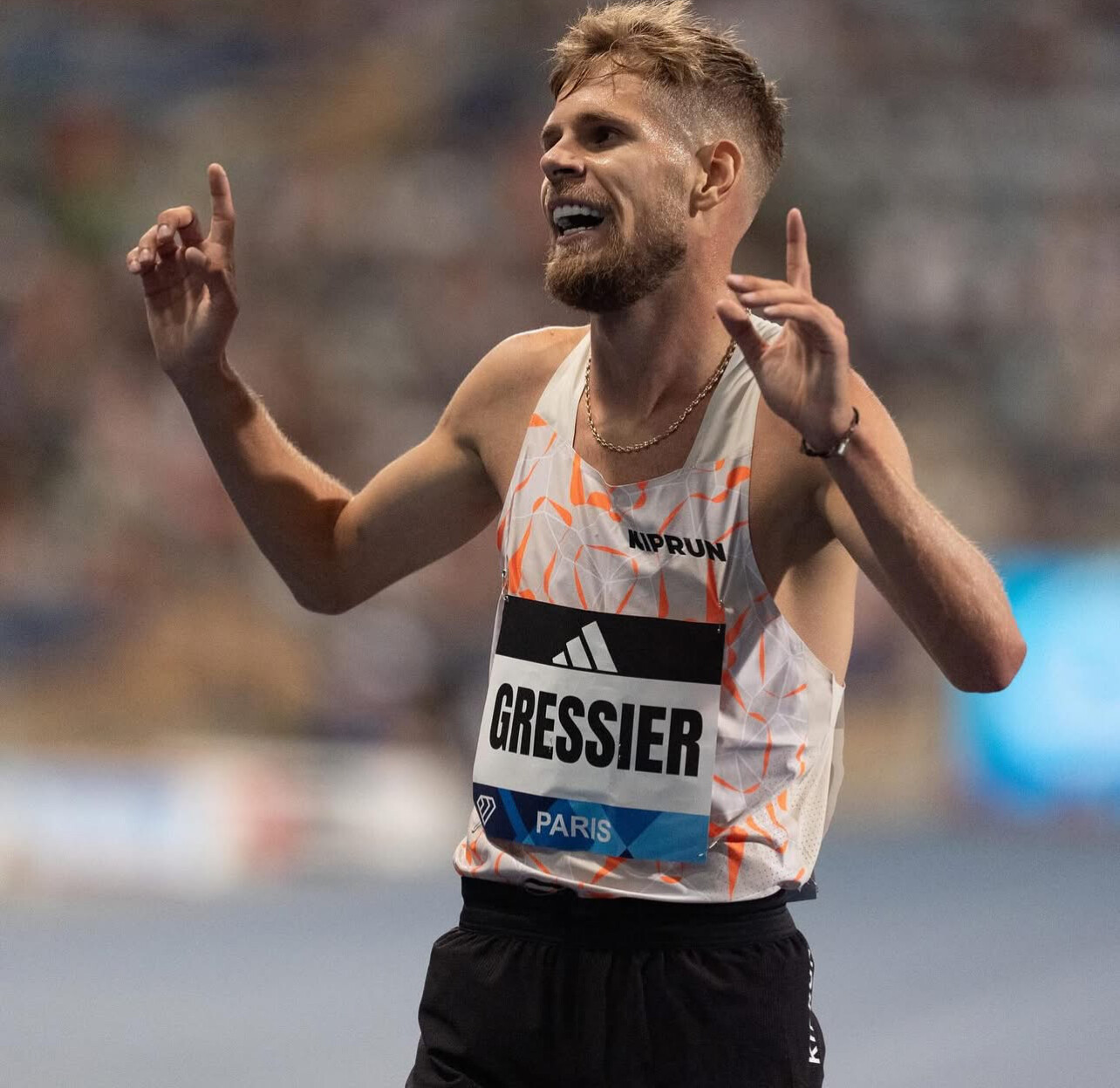
Gressier’s record-setting run is a timely confidence boost ahead of the upcoming World Championships in Tokyo. A consistent performer on the European road and cross-country circuits, he now proves he can contend with the world’s best on the track as well.
Already the European 5 km road record holder and a multi-time national champion, Gressier is building one of the most versatile résumés in distance running today. His strength across surfaces and distances—from indoor tracks to rolling road courses—positions him as a serious contender for a medal on the global stage.
“Breaking the national record by over three seconds against this level of competition shows I’m on the right path,” Gressier said after the race.
What’s Next for Gressier?
With this new national record under his belt, Gressier’s focus now shifts to Tokyo, where the French star hopes to translate his breakthrough into a podium finish. He remains committed to a robust training block under longtime coach Dinielle Arnaud, with fine-tuning to be done before the biggest race of his life.
The Rise of French Distance Running
Gressier’s performance isn’t just personal—it’s symbolic. For French athletics, his record represents a resurgence in elite distance running. With Paris having hosted the Olympics just a year earlier, the momentum behind the sport in France is real. Gressier’s run serves as inspiration to a new generation of French runners aiming to follow in his fast footsteps.
Jimmy Gressier’s 12:51.59 at the 2025 Paris Diamond League is more than a national record—it’s a bold message to the world. He’s not just running with the best—he’s becoming one of them.
by Boris Baron
Login to leave a comment
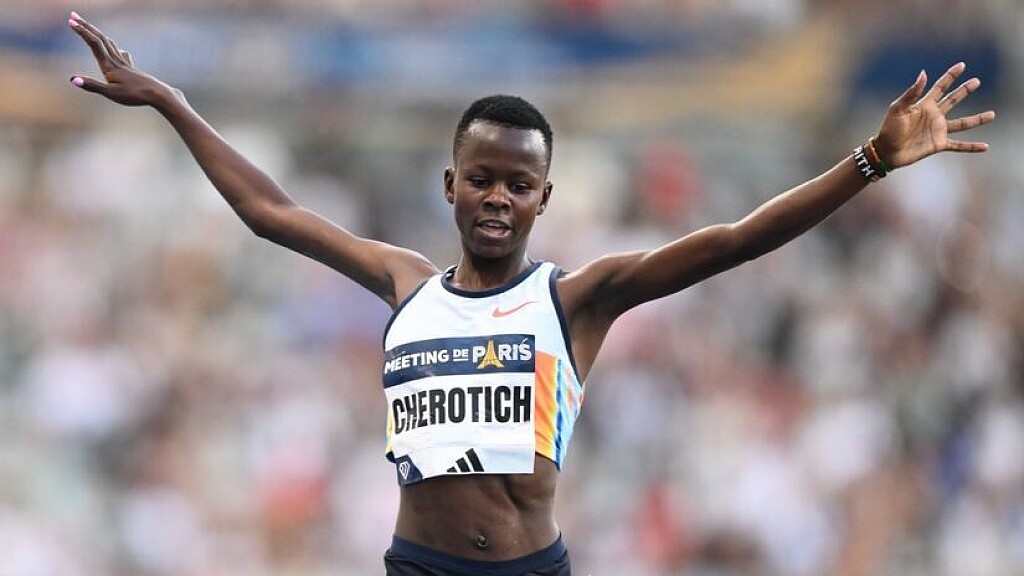
Faith Cherotich’s 8:53 Breakthrough: 6th-Fastest Steeplechase Ever—Now She’s Targeting Gold in Tokyo
Faith Cherotich is rewriting the women’s 3000m steeplechase narrative. The 20-year-old Olympic and World bronze medalist exploded onto the senior stage this year, slashing over 11 seconds off her personal best and firmly establishing herself among the all-time greats. With the World Championships set for Tokyo in 2025, she’s made it clear—she’s not done yet.

Olympic Roots, Meteoric Rise
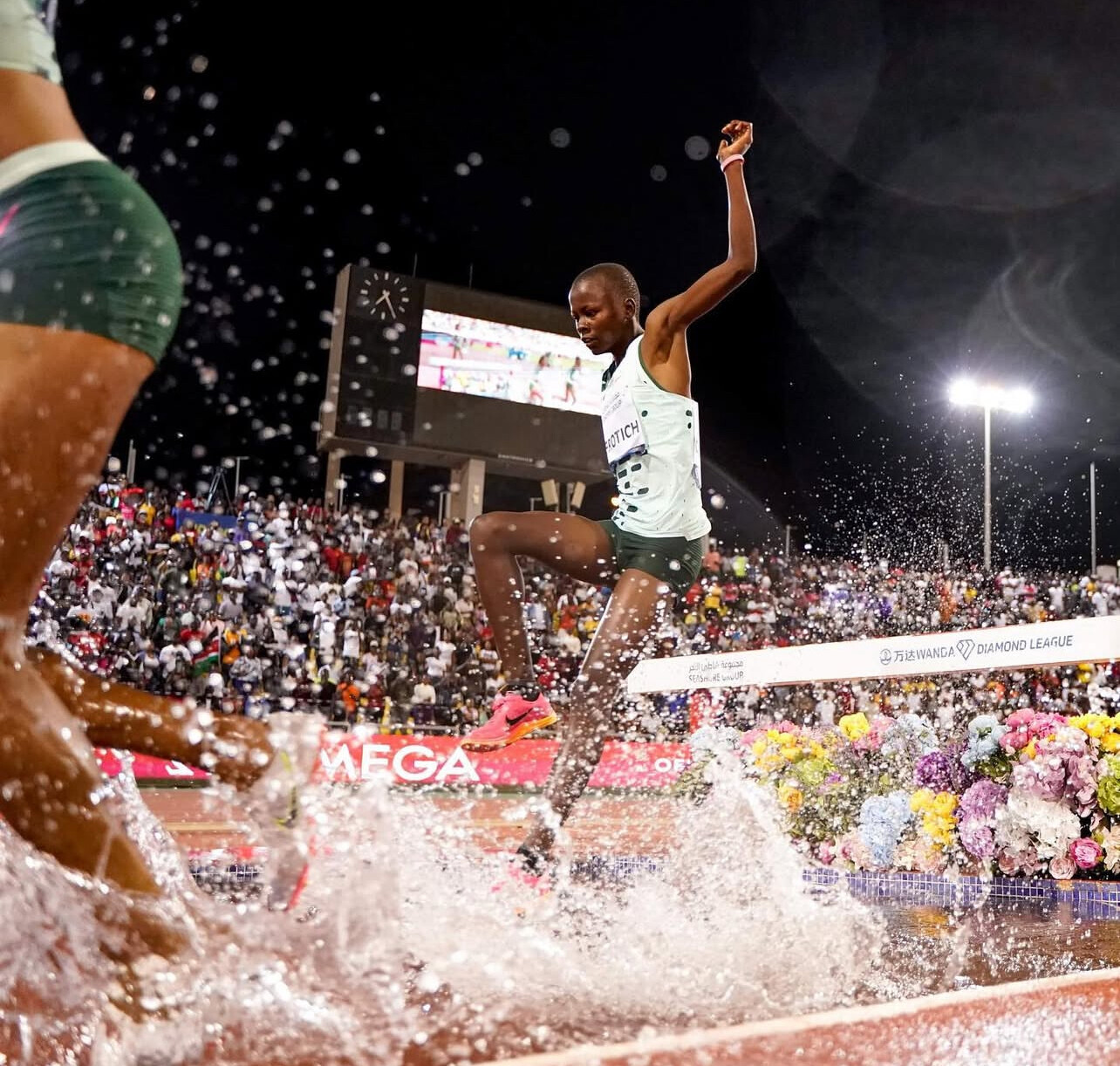
Cherotich made her Olympic debut in Paris 2024, earning bronze in 9:04.24 behind Winfred Yavi and Peruth Chemutai. Just a year later, she’s running nearly 11 seconds faster.
At the 2023 World Championships in Budapest, she finished second in 9:00.69, already hinting at her vast potential. But 2025 has been a different level altogether.
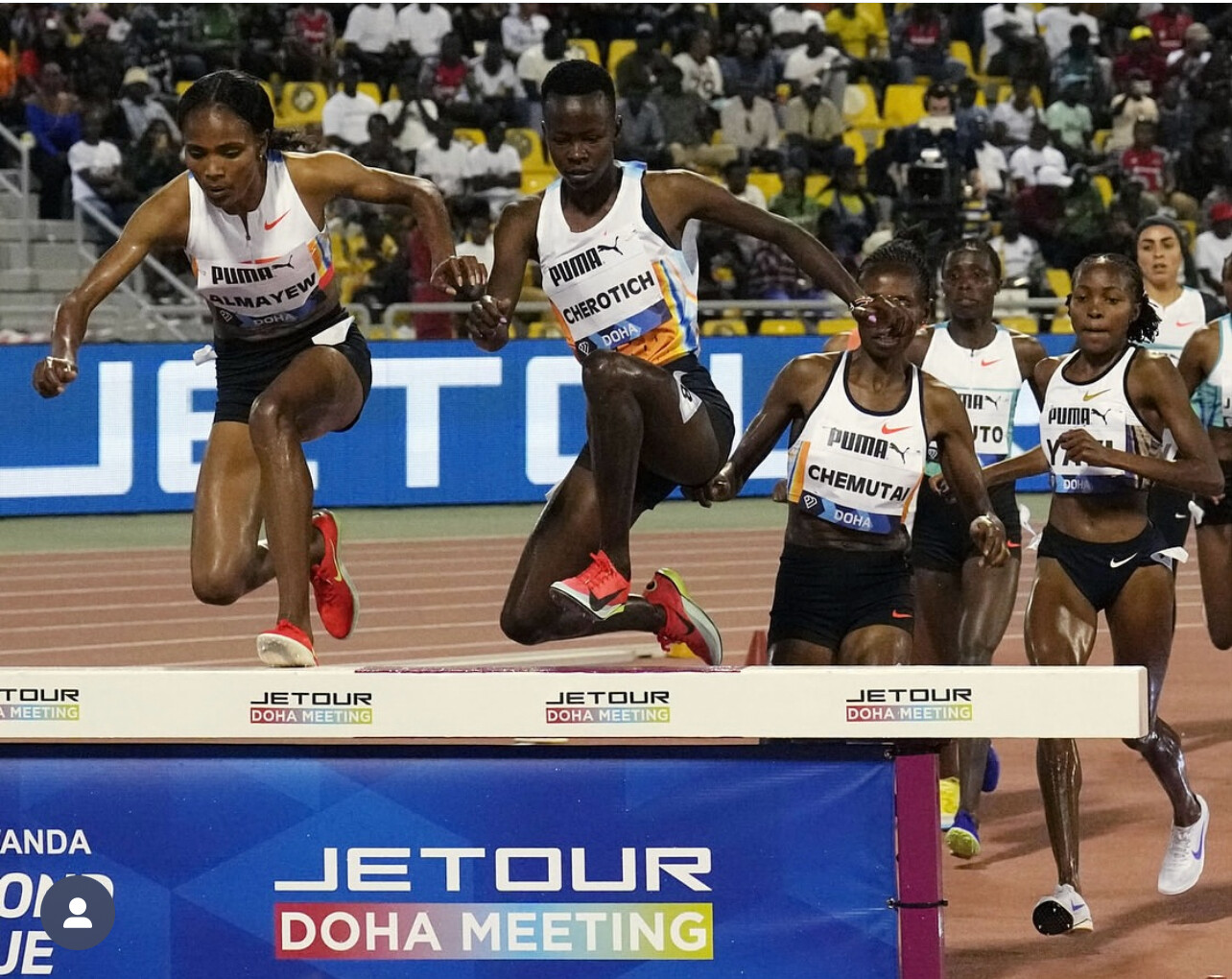
Diamond League Domination
Cherotich’s progression this season has been remarkable:
• Doha Diamond League – 9:05.08
• Oslo Diamond League – 9:02.60 (meet record)
• Paris Diamond League – a stunning 8:53.37, now the world lead for 2025 and the 6th-fastest time in history
In Paris, she confidently shadowed 2020 Olympic champion Peruth Chemutai before surging ahead for the win.
“I am happy to have run a PB,” Cherotich said after the race. “It was not an easy race… after a few laps I got confident enough to take the lead and knew I could manage the race and win.”
All-Time Rankings & World Record Watch
• Fastest time ever: 8:44.32 — Beatrice Chepkoech (2018)
• Second-fastest: 8:44.39 — Winfred Yavi (Rome, 2024)
• Cherotich: Now #6 all-time with 8:53.37
Her consistency, combined with tactical growth, has vaulted her into serious world title contention
Focused on Tokyo 2025
With the World Championships returning to Tokyo, Cherotich is more motivated than ever:
“My target this season is to win the world title… I want to run good races… I am going to fight and do all my best to achieve my goal… It will be a different result this time in Tokyo.”
She currently leads the Diamond League standings by 10 points over rival Yavi and has shown she can beat any competitor on the day.
✅ Performance Summary
|
Meet |
Time |
Result |
|
Paris DL |
8:53.37 |
1st – PB, WL |
|
Oslo DL |
9:02.60 |
1st – MR |
|
Doha DL |
9:05.08 |
1st |
|
Budapest Worlds (2023) |
9:00.69 |
2nd – Silver |
|
Paris Olympics (2024) |
9:04.24 |
3rd – Bronze |
Cherotich isn’t just winning races—she’s chasing history. With the world title in her sights and her confidence growing with every lap, all roads now lead to Tokyo.
by Boris Baron
Login to leave a comment
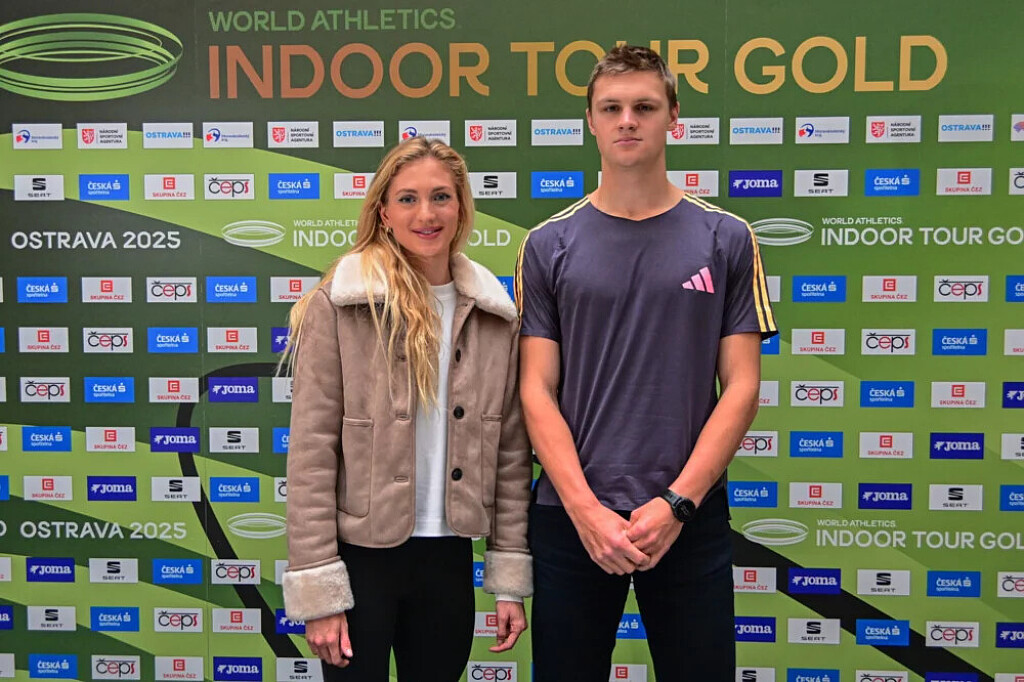
Anticipation Builds for Middle-Distance Showdowns at 2025 Czech Indoor Gala
The Czech Indoor Gala, scheduled for February 4, 2025, in Ostrava, is set to feature thrilling middle-distance races, particularly in the men’s 800 meters and the women’s 3000 meters.
Men’s 800 Meters:
Czech national record holder Jakub Dudycha will compete on home soil. As a junior, he set a national U20 indoor record of 1:47.42 at the Czech Indoor Gala, later improving it to 1:47.12. Outdoors, he advanced to the semi-finals at the European Championships in Rome, clocking a time under 1:45, and subsequently set a new Czech senior record of 1:44.82 in Bydgoszcz. Dudycha has expressed his ambition to break the national indoor record this season.
He will face formidable international competitors, including Belgium’s Eliott Crestan, who is the sixth fastest European in history with a national record of 1:42.43 set at the Paris Diamond League meeting. Crestan is a bronze medallist from both the European and World Indoor Championships. Another strong contender is Catalin Tecuceanu, representing Italy since 2022, who secured European bronze in Rome and boasts personal bests of 1:45.00 indoors and 1:43.75 outdoors.
Women’s 3000 Meters:
Kristiina Sasínek Mäki, a Tokyo Olympics finalist, will compete in the 3000 meters. She has been training under Swiss coach Louis Heyer and is eager to showcase her progress. However, she will face stiff competition from African athletes. Ethiopia’s Freweyni Hailu, the 1500m world indoor champion from Glasgow 2024, returns after setting a meeting record in the mile at last year’s Czech Indoor Gala. Joining her is compatriot Sembo Almayew, the junior world record holder in the steeplechase and World U20 champion, as well as Norah Jeruto, the World 3000m steeplechase champion from the 2022 Eugene Championships, now representing Kazakhstan.
The Czech Indoor Gala, part of the World Athletics Indoor Tour Gold series, continues to attract top-tier talent, ensuring a night of exceptional athletic performances in Ostrava.
Login to leave a comment
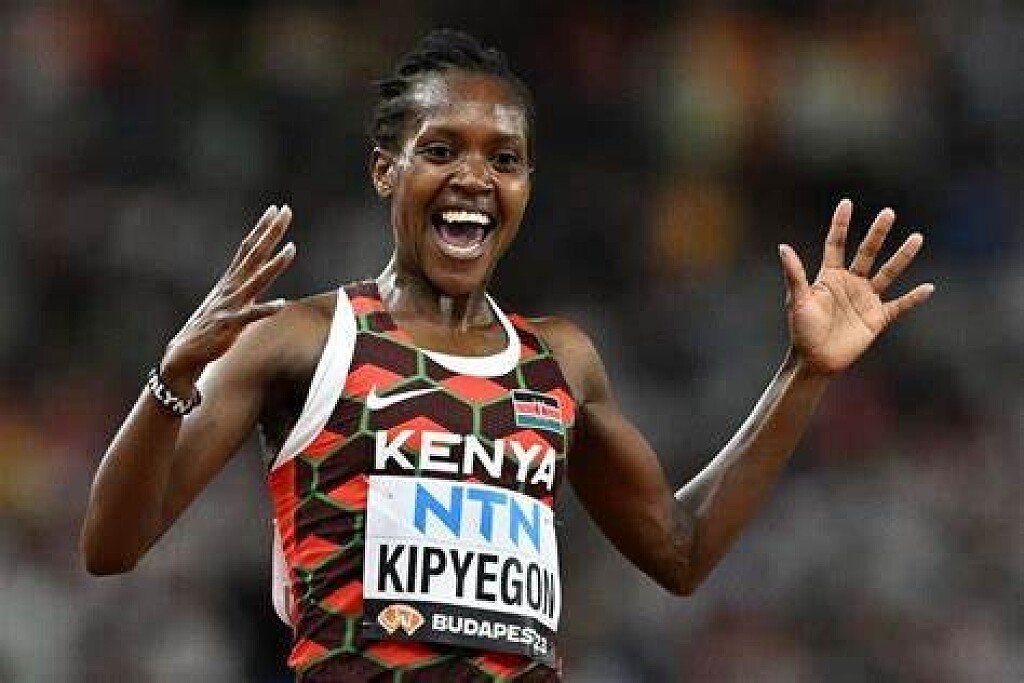
Kenya’s Faith Kipyegon receives honorary doctorate degree
The back-to-back-to-back Olympic 1,500m champion was given an honorary doctor degree in Education on Wednesday.
It has been a monumental year for Kenya’s Faith Kipyegon, who in August became the first female athlete in Olympic history to win three consecutive gold medals in a single track discipline. On Wednesday, her achievements were celebrated in her home country when she received an honorary doctorate degree in education from the University of Eldoret.

“I am greatly honoured to receive an honorary doctorate degree in education from the University of Eldoret,” Kipyegon shared on Instagram, signing off as “Dr. Faith Kipyegon.”
Honorary doctorates are typically awarded to individuals who have made exceptional contributions in their fields. Kipyegon’s recognition highlights her trailblazing career in women’s distance running, where she has inspired countless athletes by returning to elite competition and breaking records after giving birth to her daughter in 2018.
Kipyegon’s 2024 season
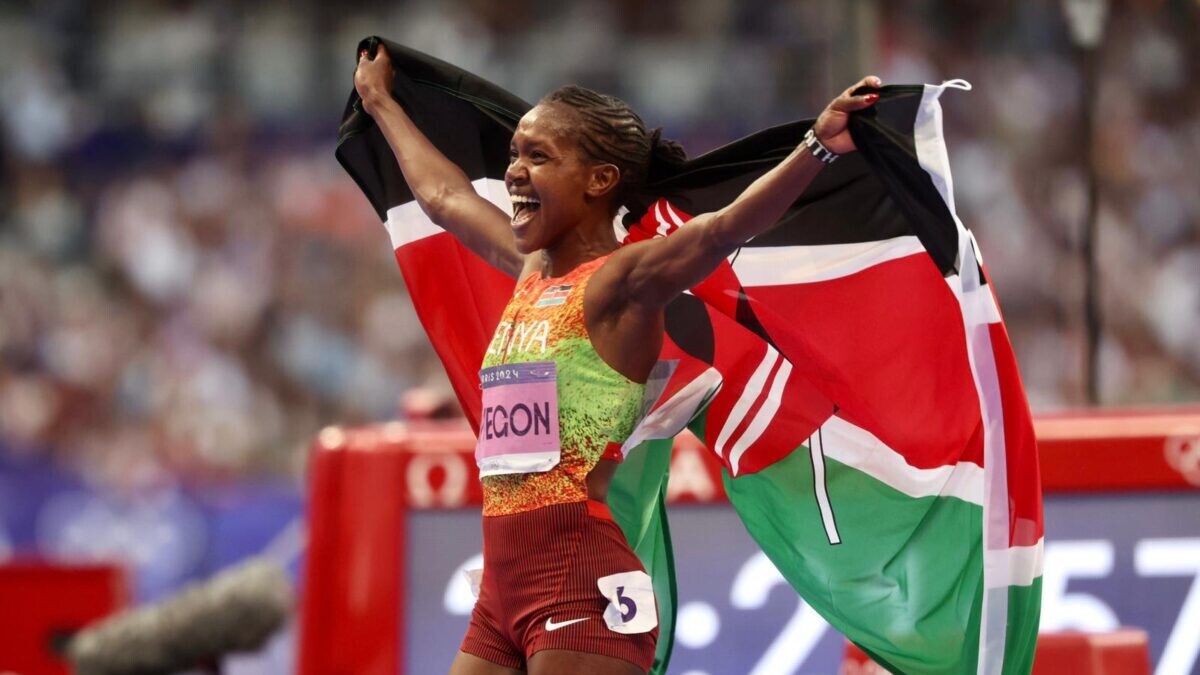
This year has been one of the most successful of Kipyegon’s career. At the Paris Diamond League in July, the 30-year-old broke her own world record in the 1,500m, running 3:49.04. The following month, she defended her Olympic 1,500m title at the Stade de France, setting a new Olympic record of 3:51.29.
Kipyegon also earned a silver medal in the 5,000m, an event she contested for the first time at the Olympics. Initially disqualified for an obstruction involving Ethiopian runner Gudaf Tsegay, Kipyegon was reinstated after a successful appeal. Her compatriot, Beatrice Chebet, won gold in the event.
Accolades and recognition
Kipyegon was among six nominees for the Women’s Track Athlete of the Year award by World Athletics, a title she won in 2023. Additionally, she was shortlisted for the Laureus World Sports Award for Sportswoman of the Year, an honour recognizing the year’s greatest female athlete. This year, the award was won by Spanish footballer Aitana Bonmatí.
by Marley Dickinson
Login to leave a comment
Steeplechaser recovering well after horrific fall in Olympic final, coach says
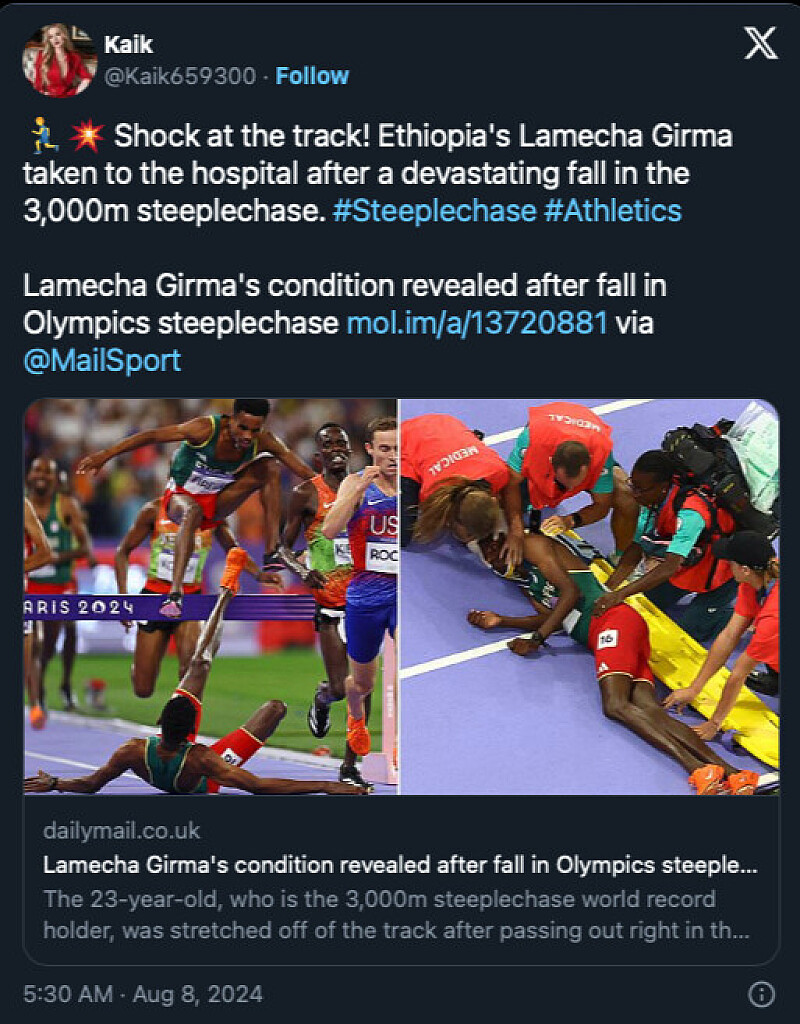
On Thursday, the coach of Tokyo Olympic steeplechase silver medallist and world record holder Lamecha Girma announced on Twitter that the athlete is in good condition after a horrific fall during the men’s 3,000m steeplechase final Wednesday evening.
In a dramatic last lap, Girma tripped while going over the second-last barrier, falling hard and appearing to lose consciousness. He lay motionless on the track as the other runners finished the race. The Ethiopian was then carried off the track on a stretcher and transported to hospital, where he spent the night.
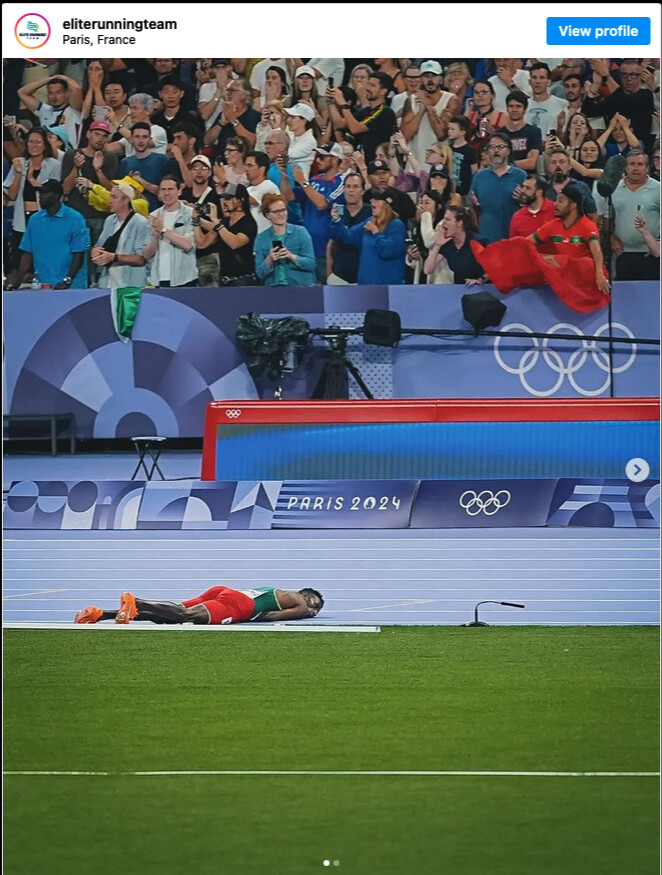
Girma is the world record holder in the event at just 23; he broke the previous record at the 2023 Paris Diamond League, making him one of the favourites heading into the Olympic final. Sadly, it was not to be.
The Elite Running Team announced on Thursday that Girma did not sustain any severe head injuries during the fall, but that he will continue to undergo further scans and examinations before being discharged from the hospital.
Girma’s fall fit right in to the series of disasters occurring at the Stade de France on day seven of athletics. In round one of the men’s 5,000m, viewers and spectators saw six men hit the ground during the first heat. Shortly after, runners in the second heat barely avoid a collision with a wandering cameraman.
“Morocco’s Soufiane El Bakkali wins back-to-back Olympic men’s steeplechase gold” — Canadian Running Magazine
Paris 2024 organizers have told media they will stay in close contact with the Ethiopian National Olympic Committee for updates on Girma’s condition, and wished him a swift recovery.
by Running Magazine
Login to leave a comment
Faith Kipyegon ready for historic 1,500m Olympics hat-trick
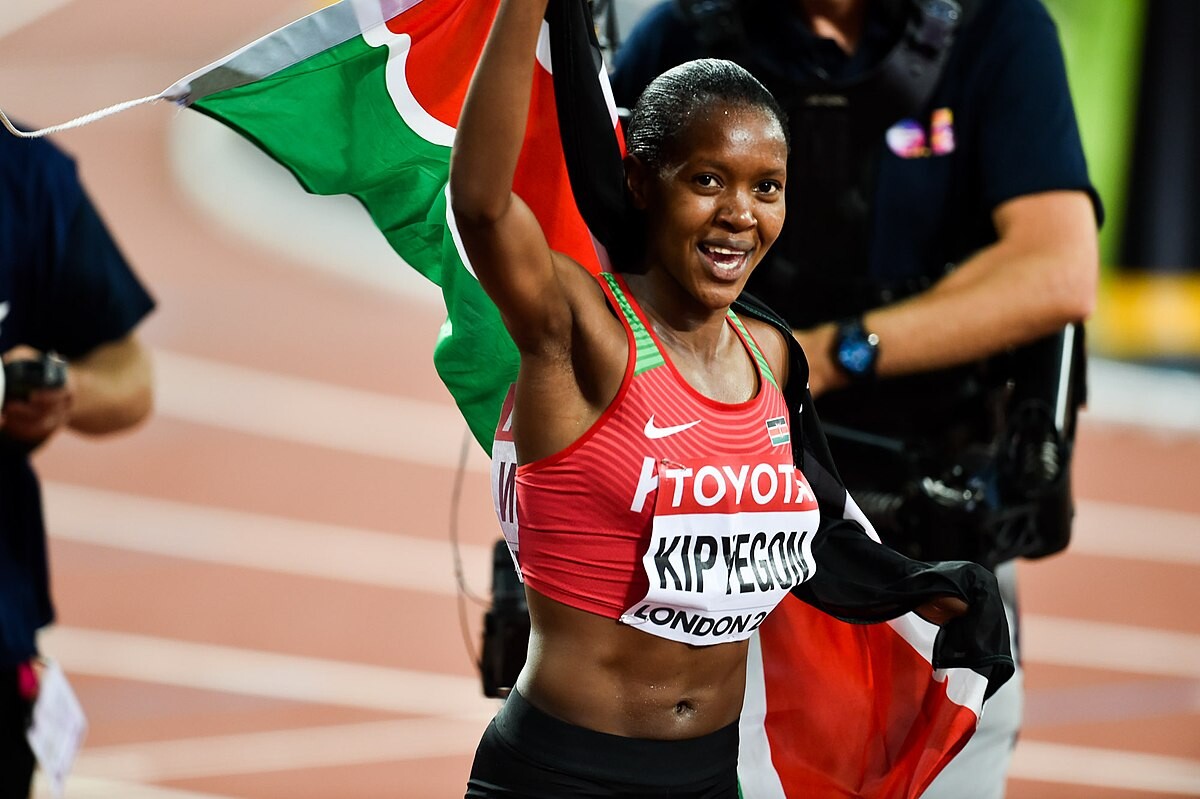
Two-time 1,500 Olympic champion Faith Kipyegon will be seeking to become the first woman to win three titles in the same individual track event at the Olympics, when she lines up in the semifinals of the race on Thursday at the Stade de France.
The defending champion clocked (4:00.74) to finish fourth in heat two, behind winner Ethiopia’s Diribe Welteji (3:59.73), Britain’s Georgia Bell (4:00.290 and USA’s Nikki Hiltz (4:00.42) yesterday.
The heats came barely 12 hours after Kipyegon successfully appealed to overturn her disqualification from the 5,000m after a mid-race altercation with Ethiopia’s Gudaf Tsegay in which both narrowly missed crashing onto the track.
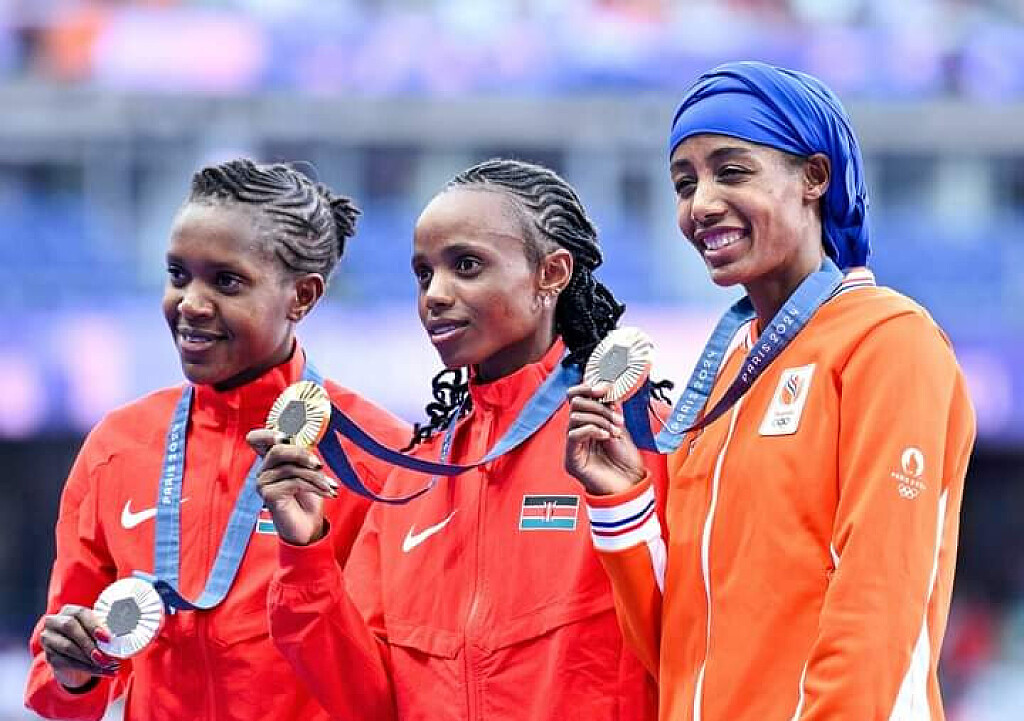
Kipyegon grabbed silver in 14:29.60, finishing ahead of the Netherlands’ Sifan Hassan (14:30.61) as compatriot Beatrice Chebet grabbed gold in (14:28.56).
However, the track queen will have to be mentally fit in Thursday’s semis, to reach Saturday’s finals, following a drama packed Monday night 5,000m race finals.
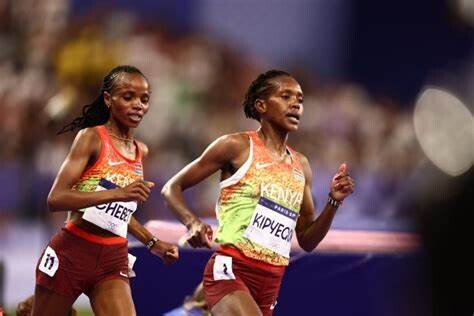
“I feel fresh and ready for the semis, I am Faith and I participate in a good way and I believe in myself. It was a good race a lot of pushing up and down but all in all, it is finished and I focus on the 1,500m semis,” Kipyegon said.
Kipyegon who didn’t manage to talk to journalists after Monday’s drama didn’t want to dwell much on the matter.
“I just went to the village and took a nap knowing that I had another race the next morning. I was not disappointed but this is another distance altogether, I really thank Kenyans for the support and prayers as we continue pushing in the 1,500m,” Kipyegon said.
Having put Monday’s drama behind her, she goes to the semis not having lost in the 1,500m since 2021, with the historical third Olympic title beckoning.
The world champion must beat three of the five fastest 1,500m runners in history, including her Ethiopian rival Tsegay and Austraila’s Jessica Hull, to reach her dreams.
She will fly the Kenyan flag alongside compatriots Susan Ejore and Nelly Jepchirchir who also qualified for the semis.
The Kenyan star ended her 2023 track campaign with a 1,500m win at the Wanda Diamond League final in Eugene on 26 Aug 2023.
She ran 3:53.98 in the 1,500m and 14:46.28 for 5,000m in Nairobi, during the Kenyan Olympic trials.
Faith warmed up for the Olympics by breaking the world 1,500m record again at the Paris Diamond League meeting on July 7, 2024 after clocking 3:49.04
Poland’s Anita Wlodarczyk is the only woman in the history of the games to ever claim a threepeat, as well as possessing the two fastest performances of all time in the hammer throw.
by George Ajwala
Login to leave a comment

Paris 2024 Olympic Games
For this historic event, the City of Light is thinking big! Visitors will be able to watch events at top sporting venues in Paris and the Paris region, as well as at emblematic monuments in the capital visited by several millions of tourists each year. The promise of exceptional moments to experience in an exceptional setting! A great way to...
more...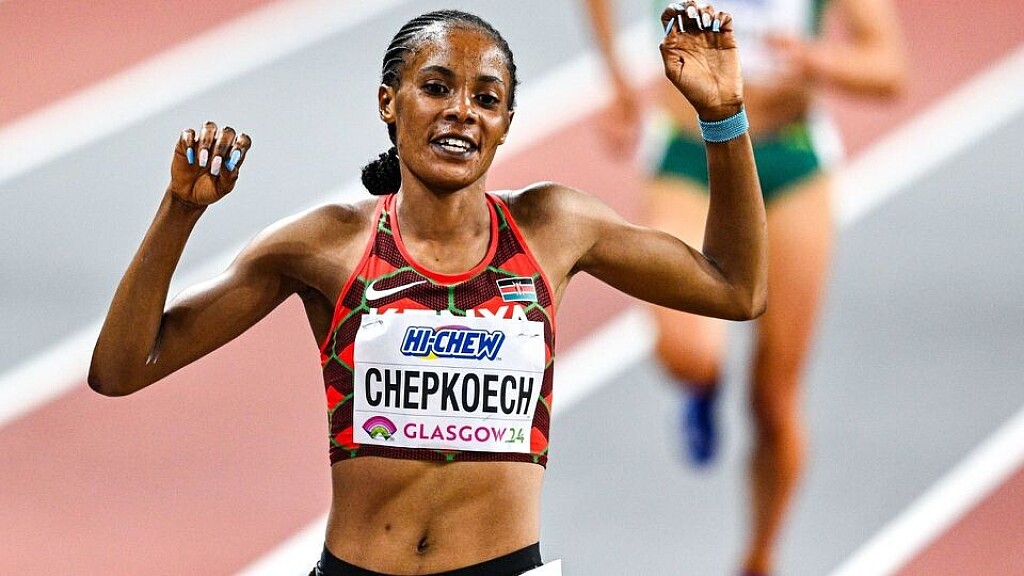
Chepkoech believes she will be lucky at the Olympics on her third attempt
The third time is the charm. This is what 2019 World 3,000m steeplechase champion Beatrice Chepkoech is banking on as she braces up for a podium finish at the Olympic Games in Paris.
Chepkoech narrowly missed the podium in Rio 2016, finishing fourth (9:16.05) and placed seventh (9:16.33) in Tokyo 2021.
Tokyo saw Uganda's Peruth Chemutai (9:01.45), USA's Courtney Frerichs (9:04.79) and Hyvin Kiyeng (9:05.39) seal the podium while Rio Olympics top spots went to Bahrain’s Ruth Jebet (8:59.72), Kiyeng (9:07.12) and USA's Emma Coburn (9:07.63).
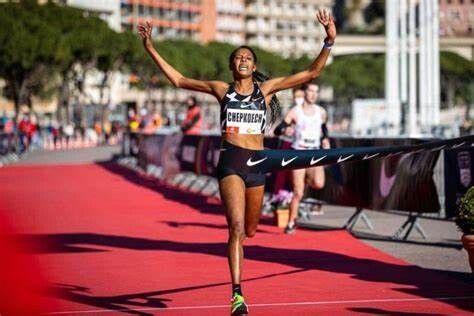
After heartbreaks in Rio and Tokyo, the 33-year-old is laser-focused on clinching the elusive Olympic medal.
“I have missed the podium in my last two Olympic appearances but I am optimistic on my third attempt. I will secure a podium finish,” Chepkoech revealed.

She also highlighted the importance of an Olympic medal to add to her rich trophy cabinet. “It is everybody’s dream to win an Olympic medal. I will be more than happy if I secure a podium in Paris,” she added.
Chepkoech’s impressive resume includes the 2019 world title in Doha, where she set a course record of 8:57.84 while leading Coburn (9:02.35) and Germany’s Gesa Felicitas (9:03.30) to the podium.
She also holds the African title having clocked 9:15.61 in Accra last year with Chemutai (9:16.07) and Ethiopia’s Lomi Muleta (9:26.63) sealing the podium.
Chepkoech is a bronze medallist in the 3,000m at the World Indoor Championships in Glasgow. She finished third in 8:22.68 behind Ethiopia’s Gudaf Tsegay (8:21.13) and USA’s Elle Purrier (8:20.87).
Despite strong competition from World Champion Winfred Yavi and Uganda’s Chemutai at the Paris Olympics, Chepkoech remains unfazed.
“Anything can happen in Paris, I can’t say I fear anyone. I am going to run my race and do my very best,” she stated.
Yavi edged out Chepkoech at the 2023 Championships in Budapest beating her to the title in 8:54.29 with Chepkoech settling for second in 8:58.98 and Faith Cherotich (9:00.69) sealing the podium.
Chemutai beat her to the Prefontaine Classic title on May 25, clocking 8:55.09 with Chepkoech clocking 8:56.51. At the Paris Diamond League earlier this month, Chepkoech finished ninth place in 9:27.21.
Yavi (9:03.68), Alice Finot (9:05.01) and Britain’s Elizabeth Bird (9:09.07) claimed the podium.
Chepkoech has been honing her skills at the Nyayo Stadium, where she has been training three times a week ahead of Paris.
“Training has been intense but rewarding. I do training on Monday, Wednesday and Friday and I have been focusing on my weaknesses to ensure peak form in Paris,” she shared.
In Paris, she will be joined by world U20 champions Jackline Chepkoech (2021) and Faith Cherotich (2022). The duo have been intensifying their training in Eldoret.
Chepkoech highlighted that training alone has been lonely but reiterated her desire to put in more effort.
“The other athletes are training in Eldoret so I am alone. It’s a challenge but I have to do my best to be ready for the Olympics,” Chepkoech stated.
She further highlighted the importance of having her coach along with the assigned coaches from the National Olympics Committee of Kenya.
“Training with my coach has been good because we can strategise on the areas we see weaknesses. It was a good initiative from the federation to have me train with my coach along with the assigned coaches,” she revealed.
by Teddy Muley
Login to leave a comment
Paris 2024 Olympic Games
For this historic event, the City of Light is thinking big! Visitors will be able to watch events at top sporting venues in Paris and the Paris region, as well as at emblematic monuments in the capital visited by several millions of tourists each year. The promise of exceptional moments to experience in an exceptional setting! A great way to...
more...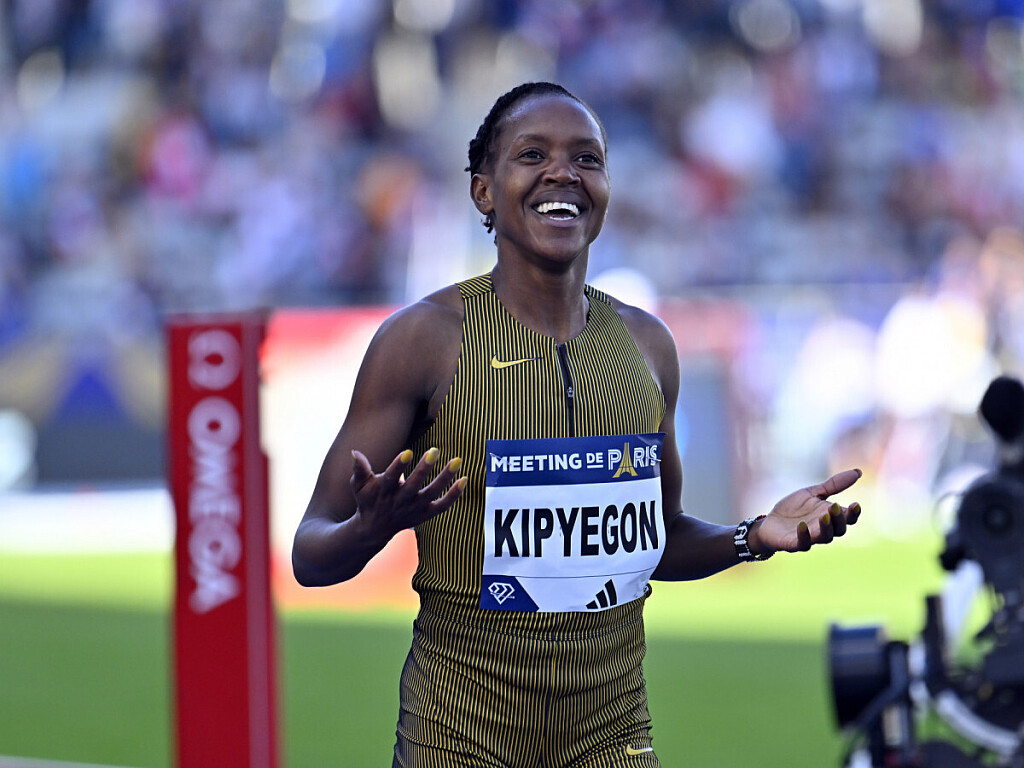
Faith Kipyegon shares two reasons behind her record-breaking 1500m display at Paris Diamond League
Kipyegon reveals two reasons behind her record-breaking display at the Paris Diamond League, despite it only being her second race of the season which has been hindered by injuries.
Faith Kipyegon has offered an insight into the factors that have been fueling her seemingly nonchalant ability to dominate races.
Kipyegon, who launched her Diamond League season in Paris on Sunday, took the world by surprise as she shattered her own record in the 1500m, running 3.49.04, some seven microseconds faster than when she broke the record again in Monaco a year ago.
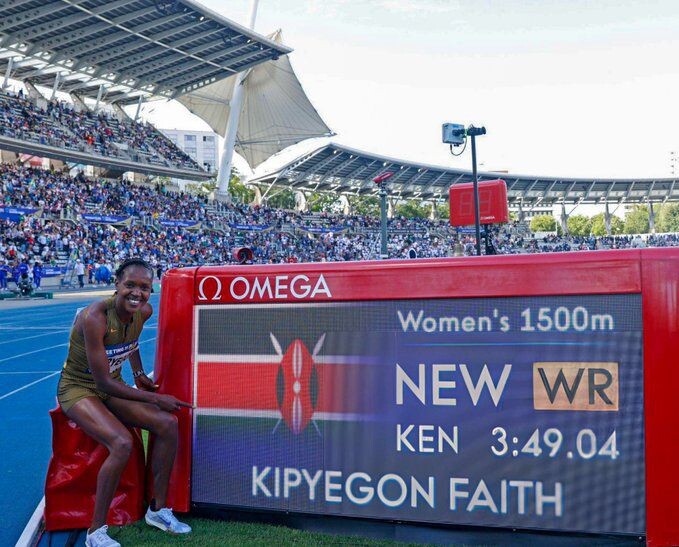
Kipyegon showcased why she is a force to be reckoned with as she eyes a historic third consecutive Olympic gold in the 1500m.
Speaking to Citius Mag, Kipyegon revealed the two crucial factors fueling her dominant display: belief in her training and the competitive push from fellow athletes.
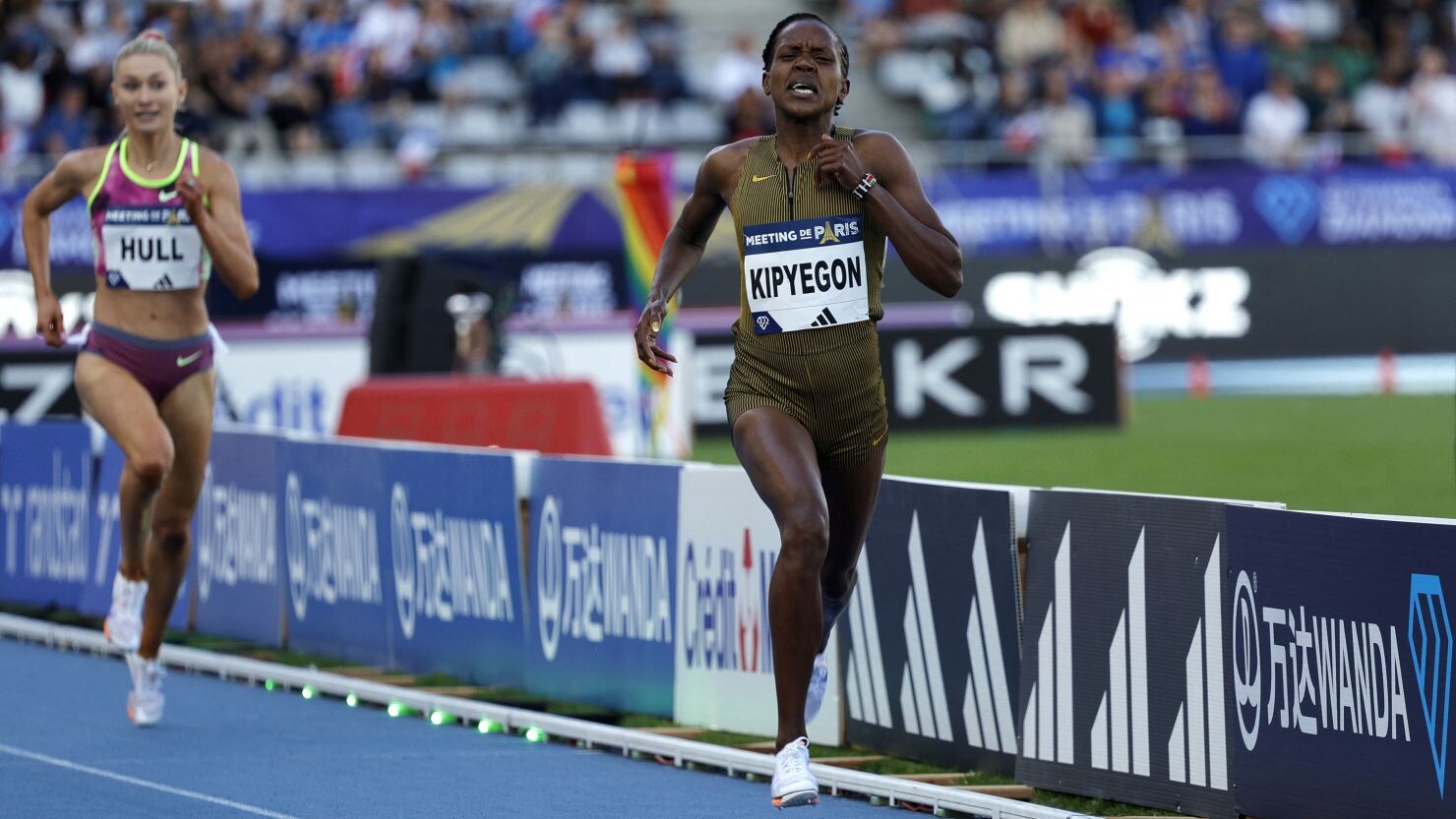
1. Unwavering Belief in Training
Kipyegon attributed her record-breaking performance to her confidence in the rigorous training she underwent. Despite the long absence from the track, her belief in the hard work and preparation was unwavering.
“I think it is all about believing in the training I have done so far. After I asked my coach what was possible in Paris, he told me, ‘Yeah, everything is possible, you never know, the training you have done (could reap reward),” Kipyegon explained.
This confidence propelled her to execute her race strategy flawlessly, leading to her remarkable finish. “I came here and just believed in myself, executed it just to see what was possible. I came here and ran a world record in my first Diamond League classic of the season,” she added.
2. Competitive Push from Jessica Hull
Another significant factor in Kipyegon’s stellar performance was the intense competition from Australian runner Jessica Hull. Hull’s relentless pressure throughout the race kept Kipyegon on her toes, ultimately pushing her to new heights.
Hull's impressive time of 3:50.83 not only set a new Australian record but also became the fifth quickest ever run by a female athlete. Reflecting on the race, Kipyegon expressed her admiration for Hull’s performance.
“I was like, who is following me? But I turned back and saw Jessica Hull behind me. It was really feeling great to push each other towards the finish line. I am really really happy for her,” Kipyegon said.
Hull’s presence and competitiveness provided Kipyegon with the energy and drive needed to break her own world record.
by Mark Kinyanjui
Login to leave a comment
Ethiopia’s Gudaf Tsegay sets 5,000m world record at Prefontaine Classic
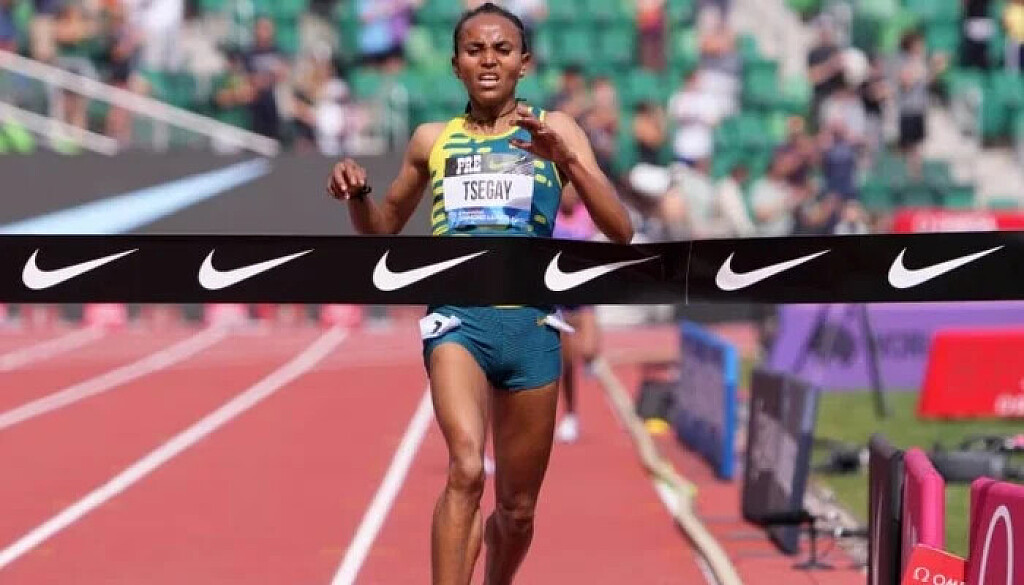
On Sunday afternoon at the Diamond League Final in Eugene, Ore., world 10,000m champion Ethiopia’s Gudaf Tsegay almost achieved the unthinkable: breaking the women’s 5,000m world record in 14:00.20—nearly becoming the first woman in history to run a 5K under 14 minutes.
Tsegay surpassed the previous 5,000m world record of 14:05.20 by five seconds, which was set by her rival Faith Kipyegon earlier this year at the Paris Diamond League. Tsegay battled with world cross-country champion Beatrice Chebet until the final three laps when the Ethiopian pulled ahead.
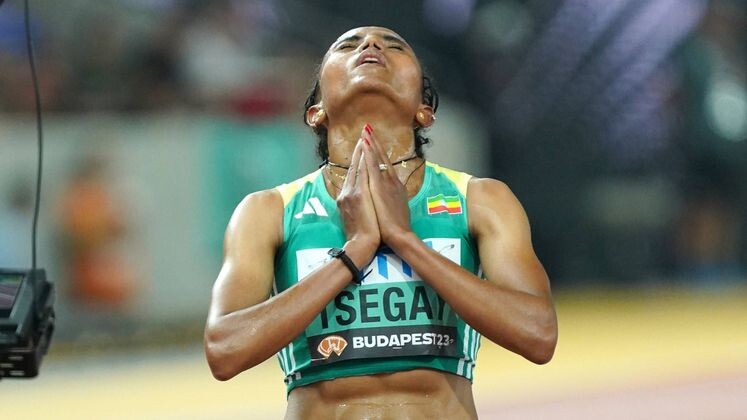
The pace for the 5,000m final was set for 14:00 flat, with the pacers taking Tsegay and Chebet through 3,000m in 8:26.03. Tsegay threw down a 2:09 final 800m to shake off Chebet and become the first woman to threaten the 14-minute 5K barrier.
Chebet finished second behind Tsegay in 14:05.92, the third-fastest time in history. Ethiopia’s Ejgayehu Taye rounded out the Diamond League 5,000m final podium in 14:21.52. Kipyegon chose to run the 1,500m on Saturday and did not enter the women’s 5,000m at the Prefontaine Classic.
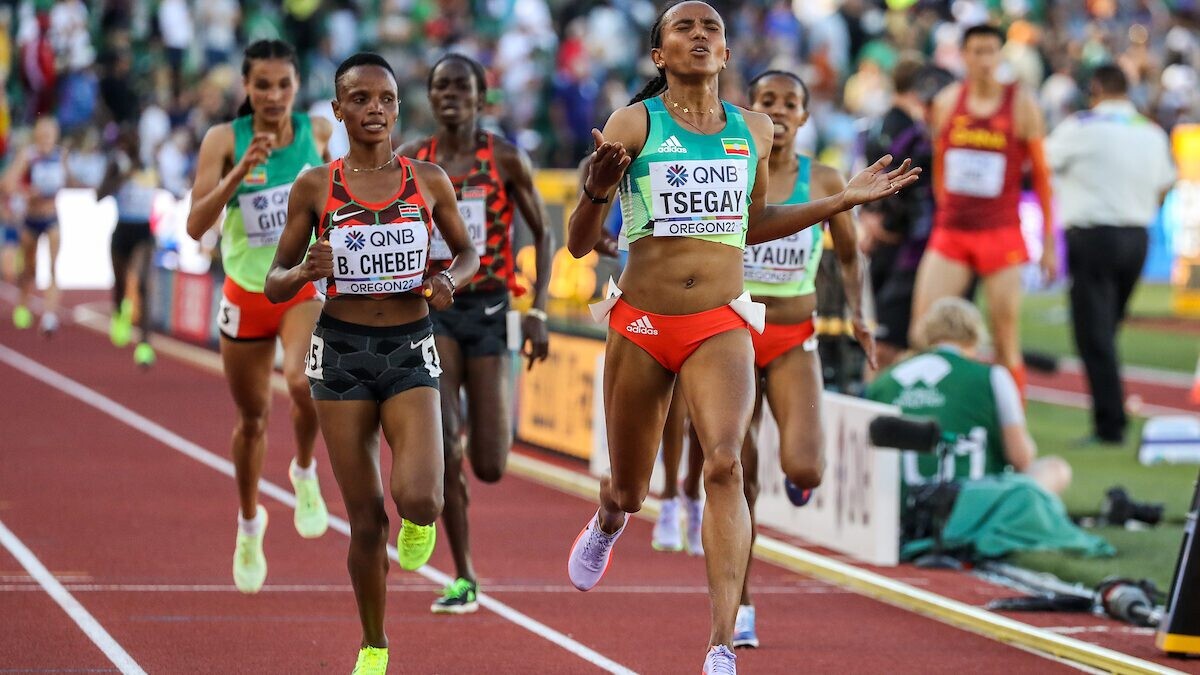
Tsegay had an up-and-down 2023 season, winning the world 10,000m title in Budapest, then finishing a disappointing 13th place in the world 5,000m final several days later.
This is the second world record of Tsegay’s career. In 2021, she ran an indoor 1,500m world record of 3:53.09 in northern France.
by Marley Dickinson
Login to leave a comment

Prefontaine Classic
The Pre Classic, part of the Diamond League series of international meets featuring Olympic-level athletes, is scheduled to be held at the new Hayward Field in Eugene. The Prefontaine Classicis the longest-running outdoor invitational track & field meet in America and is part of the elite Wanda Diamond League of meets held worldwide annually. The Pre Classic’s results score has...
more...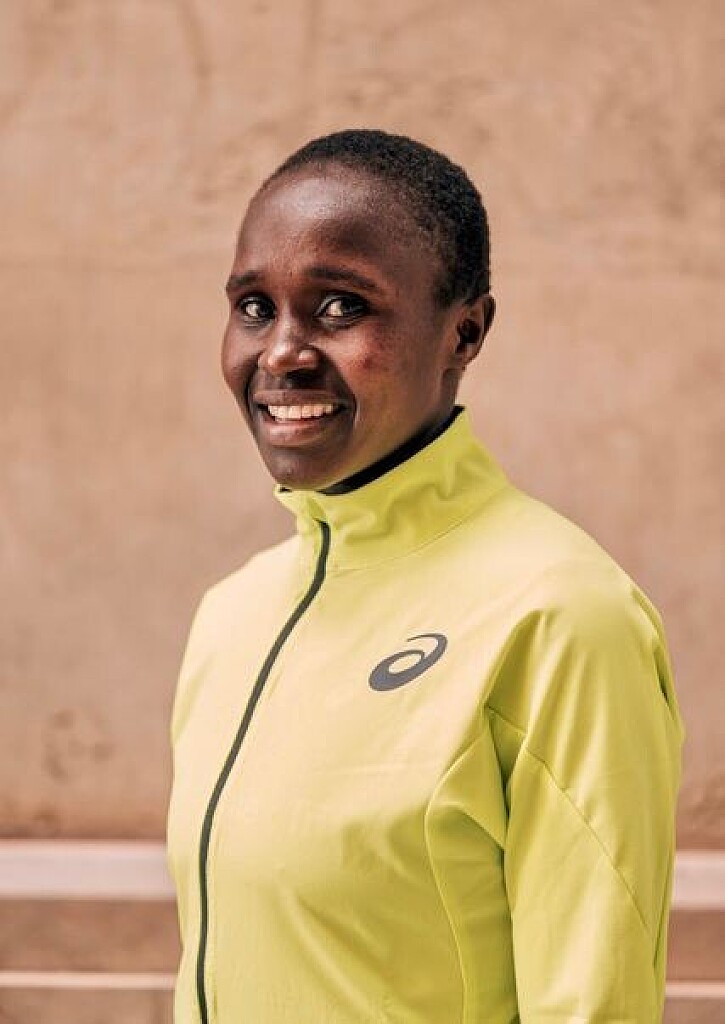
Sharon Kemboi looking to prove herself at TCS Toronto Waterfront Marathon
Sharon Kemboi might not be well known on the world athletics stage at the moment but there’s a solid chance the Kenyan will have a major impact on the TCS Toronto Waterfront Marathon on October 15.
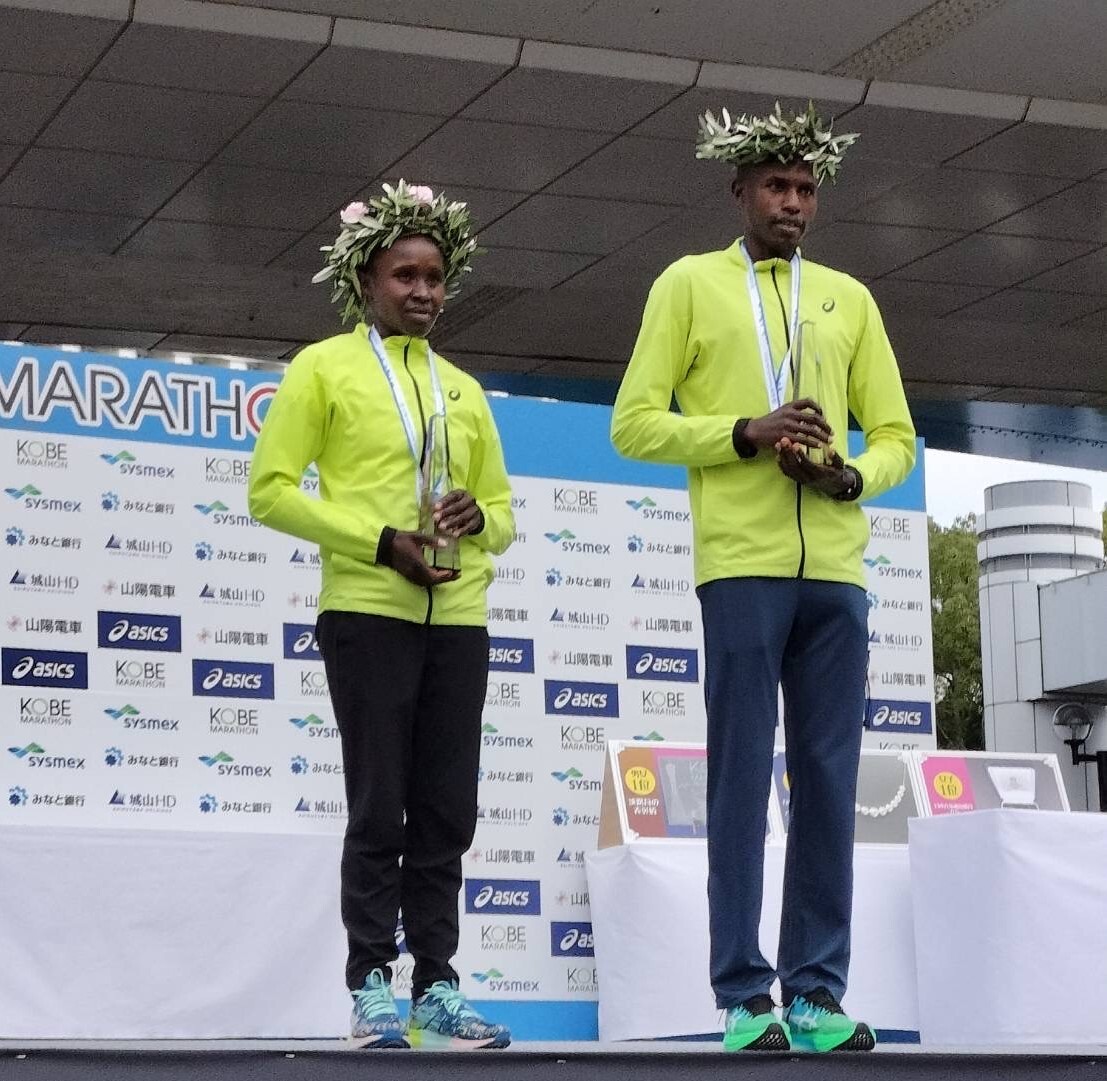
For a start, the 30-year-old Asics athlete from the town of Iten raced only in Kenya until 2022. And she has only one marathon race to her credit winning the 2022 Kobe Marathon in Japan last November in a time of 2:29:13. That saw her end the year as the 241st fastest woman of the year, hardly a world beater. Yet, to dismiss her as a contender in this World Athletics Elite Label race would be foolish.
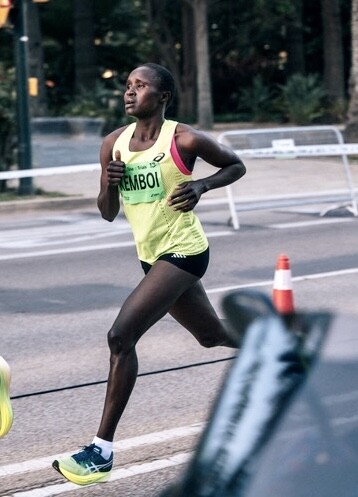
Last year Kemboi ran two world-class half marathons in Spain finishing second both times. Her personal best of 1:07:28 in Madrid followed by a strong 1:08:08 clocking two weeks later in Malaga indicates a time on Toronto Waterfront’s fast course nearer 2:22 is possible. The course record remains 2:22:16 by Magdalyne Masai – also from Kenya – set in 2019.
“The Kobe marathon course was a hard course, it is not easy. The course is so hard,” Kemboi says during a video call from her home in Iten. “I will try to run 2:25 or faster in Toronto. I want to run my personal best.
“I am training with Antonina Kwambai. She won last year in Toronto (2:23:20). She told me about Toronto and also I used to watch the Toronto races on YouTube. She told me the course is not so hard and she said she really enjoyed it.”
A few hours prior to her overseas video call Kemboi and Kwambai along with their training partners, Immaculate Chemuta, who is a Ugandan training in Kenya, and Gladys Chepkurui, had run a 30 kilometres time trail paced by three male pacemakers and under the watchful eye of coach Thomas Portzinger. The Austrian native has worked with Kemboi for close to three years now and with Kwamboi for nearer seven. Pacemakers are often employed for special sessions. Training for Toronto Waterfront is progressing well.
Clearly, she is taking her running seriously now after showing promise as a high school runner at Chepkongony Church of Christ Secondary School near Eldoret.
“When I ran in high school I ran at the national level in the 5,000m and 10,000m. And then I got married and had two kids. Then I started training again,” she offers.
“I wanted to be like (2016 Olympic 5000m champion) Vivian Cheruiyot when I was in high school. I did not meet her but I used to watch the races she ran. I watched her Olympic races on YouTube.”
It was during her time at high school that she met her husband Lawrence Kemboi Kipsang who attended a boy’s school in Marakwet which is very close to her home village of Kendur.
A world-class 3,000m steeplechaser, he has a best time of 8:11.26 in the event. In 2022 he was a much sought after pacemaker on the European circuit and helped Ethiopia’s Lamecha Girma beat the world 3,000m steeplechase record at the Paris Diamond League meet. The husband and wife will occasionally run together.
“We have a house helper who watches our children when we go training,” she reveals. “They are 7 and 4 and their names are Adele Jelegat and Adriana Jerop.”
Unlike many other Kenyan distance runners, she does not stay in a training camp but instead meets up for training sessions in Iten with her mates. The town of Iten is well known as a haven for distance runners from many nations. With a balance in training and family life Kemboi is very content with her fortunes.
Once again TCS Toronto Waterfront Marathon is a World Athletics Elite Label race meaning the competition she will face is sure to be of the highest standard. Kemboi welcomes the challenge. This, after all, will be her opportunity to continue her successful transition from the half marathon to the marathon and shine on the world stage.
by Paul Gains
Login to leave a comment

TCS Toronto Waterfront Marathon
The Scotiabank Toronto Waterfront Marathon, Half-Marathon & 5k Run / Walk is organized by Canada Running Series Inc., organizers of the Canada Running Series, "A selection of Canada's best runs!" Canada Running Series annually organizes eight events in Montreal, Toronto and Vancouver that vary in distance from the 5k to the marathon. The Scotiabank Toronto Waterfront Marathon and Half-Marathon are...
more...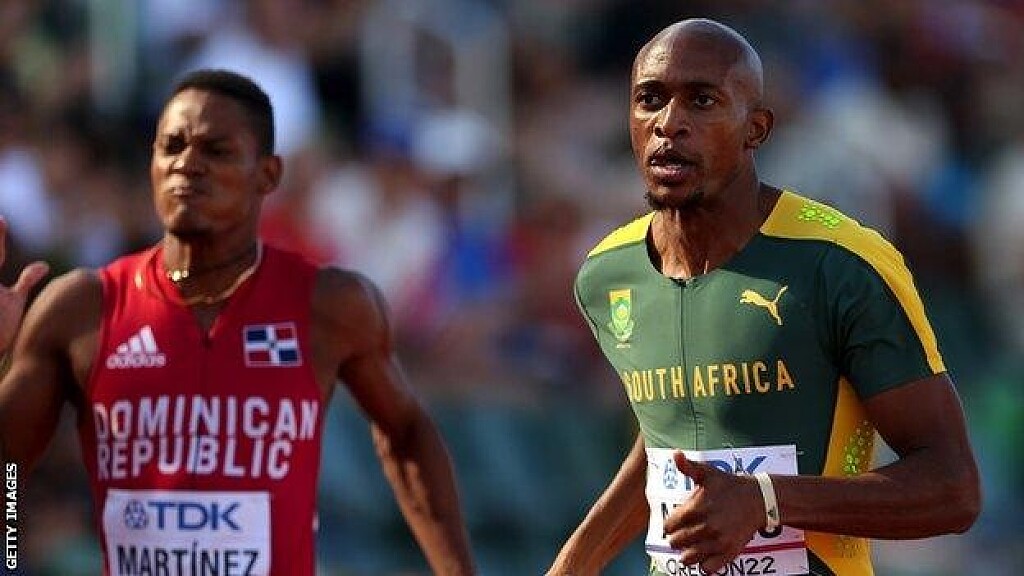
South African sprinter Luxolo Adams:I want to use Oregon experience in Budapest
South African sprinter Luxolo Adams has said he will be leaning on the 'overwhelming' experience at last year's World Championships in Oregon ahead of this year's showpiece in Budapest.
Adams has been working on his 'mental fitness' after making a maiden appearance at the global show in 2022 where he reached the semifinals of the 200m.
Speaking to the BBC Sports The Warm-Up Track podcast, the 26-year-old said: "Now I know how the world class meet operates."
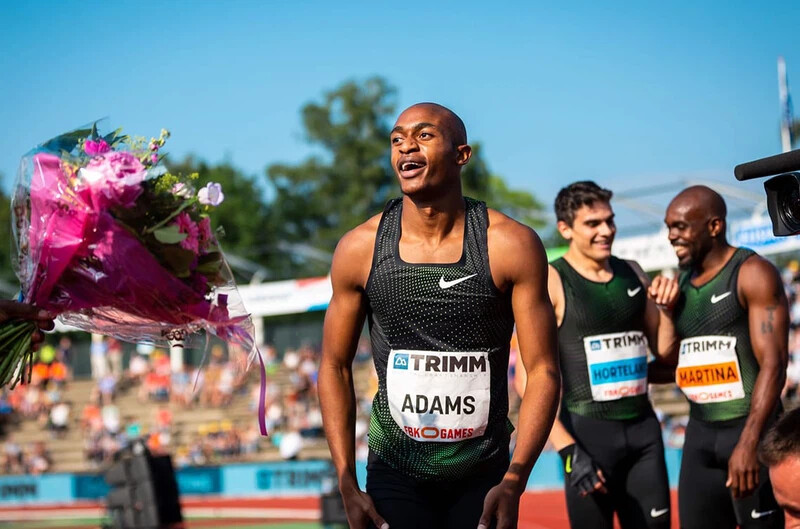
"I know how to execute my races. Now, when I'm standing in the lane with with a Noah Lyles, I know how to manage my stress levels, I know how to manage all the influences around me. I've got enough experience in store," Adams said.
Adams was the fifth fastest man in the world last year after winning the Paris Diamond League meet. The sprinter has already qualified for Paris Olympic Games.
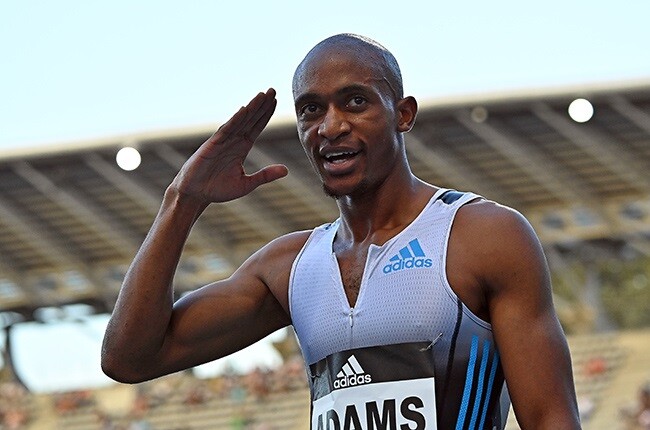
"Mentally, it was challenging, because it was my first World Champs," he said. "Two or three weeks before, there was a visa issue. Days went by and then we got closer to the meet and we [still] don't have visas.
"We managed to get waivers but when I got there, it was a different type of environment for me. I couldn't know how to interact, I didn't know how to, to move around, and also how to behave because now it's a different type of meet. It's a world class.
"It was overwhelming. I don't know what I was going through but one thing was in my mind: God is not going to place me in a sport whereby I don't have the power or the strength to go through.
by Evans Ousuru
Login to leave a comment

World Athletics Championships Budapest 23
From August 19-27, 2023, Budapest will host the world's third largest sporting event, the World Athletics Championships. It is the largest sporting event in the history of Hungary, attended by athletes from more than 200 countries, whose news will reach more than one billion people. Athletics is the foundation of all sports. It represents strength, speed, dexterity and endurance, the...
more...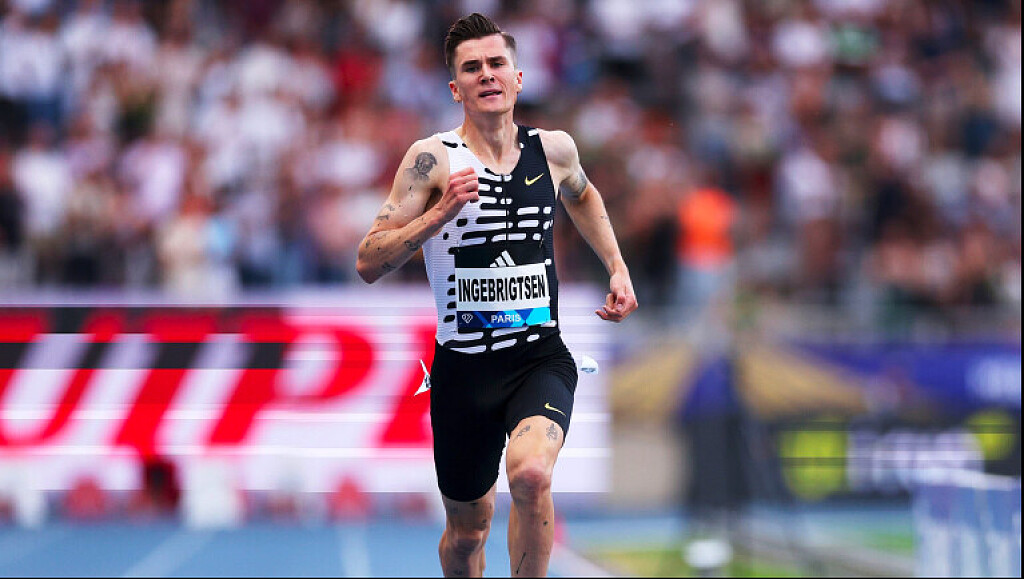
Why Are Runners Suddenly So Fast?
Records are falling and times are dropping. Is it the shoes, or something else?
Consider the Paris Diamond League meet in early June. Jakob Ingebrigtsen smashed the two-mile world best by more than four seconds, becoming just the second man to run back-to-back sub-four-minute miles. Then Faith Kipyegon notched her second world record in a row, outsprinting the reigning record-holder over 5,000 meters just a week after becoming the first woman under 3:50 in the 1,500 meters. Then, to cap the night, Lamecha Girma took down the steeplechase record.
It was a great night—but it was just one of many great nights that track fans have been treated to recently. A week later, at the historic Bislett Games in Oslo, eight men broke 3:30 for 1,500 meters in one race, setting a new record—including Yared Nuguse, who set a new U.S. best. Meet records fell in almost every event. At the collegiate level, an analysis by Oregon-based coach Peter Thompson shows that the number of middle- and long-distance runners hitting elite benchmark times has doubled, tripled, or in some events even quadrupled in the last two years. Earlier in June, four high-school boys broke four minutes for the mile in a single race, matching the total number of people who’d done it in history prior to 2011.
I could go on.
There are two main questions that arise from this buffet of speed. First, is it real? Are runners getting faster across the board, or are we just being fooled by the brilliance of a few individuals and random fluctuations in the depth of different events? Second, if it’s really happening, then why? The easy answer is, “It’s gotta be the shoes” (or, in this case, the super spikes), but does the data really back that up?
I don’t have any definitive answers at this point, but here are my thoughts on some of the possible explanations.
It’s easy to make an anecdotal case that runners are faster than ever. Backing that up with data isn’t quite as straightforward. If you look only at whether the top-ranked time in the world is getting faster or slower from year to year, any trends will depend on whether you happen to have a generational athlete in the event at a given point in time. The effect of an Usain Bolt is bigger than the effect of, say, a new shoe design. Even if you go deeper, the top ten times in any year often come from just one or two races that took place in exceptionally good conditions. So you’re better off looking farther down the list.
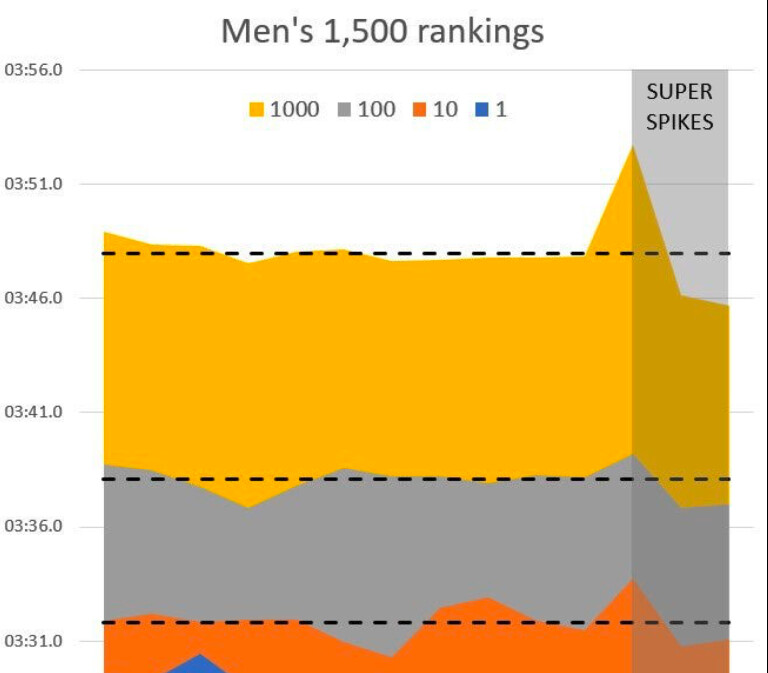
For example, here’s some data for the men’s 1,500 meters between 2009 and 2022, drawn from the World Athletics database. I’ve shown the first, tenth, 100th, and 1,000th ranked performers (not performances) for each year. The horizontal dashed lines show the average for 2009 to 2018. The first super spike prototypes had shown up on the circuit by 2019 at latest, and were widely available by 2021. The big spike of slower times in 2020 is because there were so few races due to the pandemic.
The number-one times don’t show any particular trend. The tenth-best times show a dip since 2021, but no bigger than the dip in 2014-2015 (which corresponded to two particularly fast races in Monaco). For the 100th and 1,000th best times, the pre-pandemic data finally starts to look more consistent, which makes the dip since 2021 more telling. The 1,000th-best performer is now 0.9 percent faster than the pre-pandemic average, and the 100th-best is 0.5 percent faster. This is smaller than the 1.3-percent estimate derived from lab testing of super spikes, but in the ballpark.
Here’s comparable data for the women’s 5,000 meters:
Again, the first- and tenth-ranked times fluctuate too much to draw any conclusions. The 100th and 1,000th places do show an apparent drop in the last few years, by 1.9 and 2.0 percent respectively—more than the lab estimate. There are lots of possible explanations for this discrepancy, including that the benefits of super spikes are reduced at faster speeds.
I’ll add one more graph just for context. Supershoes came to road running way back in 2016 (for prototypes) and became widely available by 2018. I think most observers agree that these shoes really have affected road-running times. So what does the comparable data show for, say, men’s marathon times? Here it is:
The data is confounded by the effects of the pandemic, particularly in 2020. Still, the post-supershoe improvement looks fairly similar to the track data. Compared to the 2009 to 2016 average, last year’s times were 0.7 percent faster at tenth, 1.6 percent faster at 100th, and 1.3 percent faster at 1,000th.
The conclusion I take from all this data? It does like there’s something going on, both on the track and on the roads. But it’s way less obvious in the data than I expected. My subjective feeling was that the last few years have seen records broken and times redefined at a totally unprecedented rate. I thought I’d see robust improvement of at least three or four percent. But that scale of change is not there, at least in the events I sampled.
So with that in mind, what explains the changes we do see?
My starting assumption is that any performance improvements we’ve seen in the last few years are because of the shoes. I’m not going to belabor that point here, because I’ve already written plenty on both road supershoes and super spikes.
But I do want to make one key point. The reason my prime suspect is the shoes is that we have direct laboratory evidence that both types of shoes improve running economy, by around 2 percent on the track and at least 4 percent on the roads (and, to complete the circle, lab evidence that improved running economy directly translates to faster race times). It would take some weird and hitherto undiscovered science in order for the shoes not to make us faster. In contrast, the other hypotheses that I’m going to discuss below may be compelling to various degrees, but all rely on some assumptions and guesses and hand-waving.
Here’s a sentence you wouldn’t have read prior to 2018, from Letsrun’s description of Kipyegon’s thrilling 1,500 world record in Florence: “Kipyegon sprinted away from the pacing lights with 200m to go, lengthening her gap from the green lights as she rounded the turn and entered the home straightaway.” I wrote about World Athletics’s introduction of Wavelight pacing lights when Joshua Cheptegei set the 5,000-meter world record in 2020, positing that more even splits could make a notable difference to times. Good pacing has been a hallmark of this year’s records too, all assisted by Wavelight.
Wavelight doesn’t factor in on the roads, but ever since Eliud Kipchoge’s sub-two marathon exhibitions, big-time marathons have devoted more attention to providing top-notch pacers for their elite runners. That has the double benefit of saving the mental effort of setting the pace, and of reducing air resistance. I think good pacing and drafting are both beneficial. But that can’t explain why the 100th and 1,000th performers seem to be getting faster, because Wavelight and paid rabbits are generally reserved for the front of the pack.
Freed from the tyranny of over-frequent racing during lockdowns, runners spent 2020 building up a massive base of endurance that has catapulted them to new levels. It’s even possible that, having learned their lesson, they’ll continue with this more patient approach to training. This theory has the disadvantage of being both unprovable and unfalsifiable. That doesn’t necessarily mean it’s untrue, but if performance levels don’t start regressing to their pre-pandemic means over the next few years, I’ll remain skeptical.
It’s the “big, sexy thing” in endurance training these days, as miler Hobbs Kessler put it in a recent interview: lactate-guided double-threshold training, as popularized by Norwegian Olympic champions Jakob Ingebrigtsen and Kristian Blummenfelt. As I explained in this article, the approach emphasizes high volumes of threshold training with very tight control on the intensity to avoid going too hard. Whether it’s objectively better than other training approaches remains to be seen—but it hasn’t yet been adopted widely enough to make a noticeable impact on the top-1,000 list.
In the past, when I’ve looked at broad trends in performance over time, one of the first factors I’ve considered is changes in drug availability or drug testing. It’s extremely noticeable (though of course not proof of anything) that long-distance track times took off like a rocket shortly after the introduction of EPO in the early 1990s. If you look carefully, you can find what seems to be the performance signature of various drug-related events like the introduction of EPO testing and, more recently, the implementation of athlete biological passports.
Is there something new on the scene over the last few years? Or are we still seeing the effects of pandemic-related disruptions in out-of-competition drug testing? I certainly hope it’s not the case, but you’d have to be amnesiac to discount the possibility entirely. Once again, the best counterargument is that the performance improvements are noticeable even at the 1,000th-best level—though perhaps I’m being naive.
As you can probably tell, I don’t think any of the alternative explanations I’ve offered so far hold water compared to my default assumption that it’s the shoes. But this last category is a little different. If you spend enough time arguing with people about why runners are getting faster, you’ll encounter a number of broad, hand-waving theories that are hard to substantiate but nonetheless sound reasonable.
For example, I can attest to the fact that the Internet has made training knowledge far more widely accessible than it was when I was a young athlete in the 1990s. Ideas and approaches (like the Norwegian model) are endlessly debated and dissected, and any student of the sport is exposed to multiple perspectives. (In contrast, when I arrived at university and found that the workouts were different from those I’d done in high school, I thought the world was ending.) This theory has been offered frequently over the last decade or more as an explanation for steadily improving U.S. high school times. Maybe it’s true more broadly: people everywhere simply know more about the principles of training, and are doing it better (or at least fewer people are doing really stupid training) compared to the past. Even if elite coaching was always pretty good, this creates a wider pyramid of prospective talent feeding into the elite coaches.
I also have the sense that the pendulum has swung away from sit-and-kick racing towards aggressive front-running. After the 2019 world championships, where super spikes first made headlines, I wrote an article about the unusually fast early paces of the races. Jakob Ingebrigtsen, the current king of the 1,500, is notable for running from the front and pushing the pace rather than relying on a finishing sprint—which likely helps explain why he led those seven other men under 3:30 in Oslo. If runners these days are more focused on running fast times rather than trying to win sprint finishes, it stands to reason that times would get faster overall.
And there are plenty of other theories out there—broader support for professional training groups, better nutrition and recovery, the inevitable march of progress, and some that I’ve undoubtedly missed completely. As I said at the top, I don’t know the answers, and I don’t think anyone else does either. Times do seem to be improving, but not as much as I would have guessed based on all the hype about recent record-breaking. The shoes almost certainly play some role—but if there’s some other secret sauce in there, it’ll be fun trying to figure out what it is.
by Outside Online
Login to leave a comment
2023 US Outdoor Track and Field Championships preview from Chris Chavez
Last night was the deadline for athletes to declare their event for the 2023 U.S. Outdoor Track and Field Championships, which will take place in Eugene from July 6-9. At USAs, athletes are allowed to enter multiple events and then make a decision about which event(s) they wish to contest once entries are in, which allows those who’ve achieved multiple qualifiers to be strategic about where they want to concentrate their efforts. The top three in each event who meet the qualifying standards for the World Athletics Championships will go on to represent the United States in Budapest in August.
Reigning World champions have a “bye” to the next year’s Worlds, which means the country they represent gets to send four athletes, not three. Similarly, reigning Diamond League and World Athletics Continental Tour champs earn a bye, but if there is both a World and other champion in the same event, their country still only gets to send one extra athlete.
These complex rules lead many American World champions to make interesting choices about what events they wish to contest at USAs and how hard they want to push while still in the middle of the championship season.
MEN’S SPRINTS
– 100m world champion Fred Kerley has the bye to the world championships and will only run the 200m. Last year, he qualified for the World Championships in the 200m with a third place finish behind Noah Lyles and Erriyon Knighton. He injured his quad in the semifinal of the 200m and was unable to run the 4x100m relay for Team USA. Kerley has a season’s best of 19.92 from his win at the Doha Diamond League.
– 200m world champion Noah Lyles has the bye to the world championships and will only run the 100m. He ran a season's best of 9.95 in his outdoor opener in April. The last time he ran the 100m at a U.S. Championship, he finished seventh at the 2021 U.S. Olympic Trials final.
– 400m world champion Michael Norman is declared for the 100m and 200m at the U.S. Championships. He ran a wind-aided 10.02 (+3.0m/s wind) at the Mt. SAC Relays in April. He has not raced since a last place finish in the 200m at the Doha Diamond League in 20.65 on May 5.
WOMEN’S SPRINTS
– Sha’Carri Richardson is running the 100m and 200m. She is looking to qualify for her first World championship team. Her season’s best of 10.76 from her victory at the Doha Diamond League is the second-fastest performance in the world this year. Her season’s best of 22.07 from the Kip Keino Classic at altitude in Nairobi is No. 4 on the world list.

Only Gabby Thomas’ 22.05 from the Paris Diamond League is faster this year by an American woman. Richardson, the 2019 NCAA champion, attempted the double at USAs in both 2019 and 2022, where her highest finish was 8th in the 100m in 2019. She has yet to make a U.S. final in the 200m.
– Reigning U.S. champion Abby Steiner is only running the 200m despite qualifying in both the 100m and the 400m as well. She just ran her season’s best of 22.19 to win the NYC Grand Prix.
– As previously announced, 400m hurdles Olympic champion, World champion and world record holder Sydney McLaughlin-Levrone is running the flat 400m. She plans to make a decision after the U.S. Championships whether she will run the flat 400m (if she qualifies) or defend her 400m hurdles title in Budapest.
– NCAA record holder Britton Wilson, who ran 49.14 to become No. 4 on the U.S. all-time list, will only run the 400m and not the 400m hurdles. She hurdled at last year’s World championships and participated in the 4x400m relay.
MEN’S DISTANCE
– This year’s men’s steeplechase team should have a new look. 2016 Olympic silver medalist Evan Jager is not entered in the steeplechase. He has raced just once this outdoor season. Hillary Bor, the reigning U.S. champion who also owns the fastest steeplechase time by an American this year in 8:11.28, broke his foot earlier this spring and will miss the U.S. Championships. This is the first U.S. team he has missed since 2015. The top returner is Benard Keter, who made the Olympic team in 2021 and the World team in 2022, but he is only the fifth-fastest entrant by seed time.
– For the first time, 2021 U.S. 5000m champPaul Chelimo is entered in both the 5000m and the 10,000m. Chelimo, the 3x global medalist at 5000m, has typically only focused on the shorter event, but after his 27:12.73 performance at the Night of the 10,000m PBs in the U.K. earlier this season, he has decided to contest both events. He’s seeded No. 4 by qualifying time in both events behind Grant Fisher, Woody Kincaid, and Joe Klecker (all also double-entered).
WOMEN’S DISTANCE
– 800m Olympic and world champion Athing Mu entered the 1500m, as previously announced with coach Bobby Kersee. She has the bye to the world championships in the 800m. Her personal best of 4:16.06 is well outside the automatic standard of 4:05.00 and was achieved outside the qualifying window for the championships, but USATF rules allow for significant discretion in accepting entries from the Sports Committee chair.
– Josette Norris and On Athletics Club coach Dathan Ritzenhein have decided to focus solely on the 5000m. Norris ran 14:43.36 at Sound Running’s Track Fest in early May. That’s the second-fastest time by an American woman on the year behind her teammate and training partner Alicia Monson’s 14:34.88 at the Paris Diamond League. Monson is entered in both the 5000m and 10,000m after choosing to only contest the 10,000m last year.
– NC State’s NCAA record holder Katelyn Tuohy will only run the 5000m. Tuohy qualified for NCAAs in both the 1500m and the 5000m but ended up only running the 1500m after an uncharacteristically disappointing performance in the final.
– The Bowerman Track Club’s Elise Cranny has declared for the 1500m, 5000m and the 10,000m. The first round of the women’s 1500m is 19 minutes before the final of the 10,000m on Day 1 of the competition, so Cranny will likely scratch one or more events at a later point.
by Chris Chavez (Citius magazine)
Login to leave a comment

USATF Outdoor Championships
The 2026 Toyota USATF Outdoor and Para National Championships will be held at Icahn Stadium in New York City fromJuly 23-26, 2026, marking the first time the event is hosted in New York. The event will serve as a premier track and field competition, featuring top U.S. athletes at the Randall's Island Park venue. USATF+3 Key Details for 2026...
more...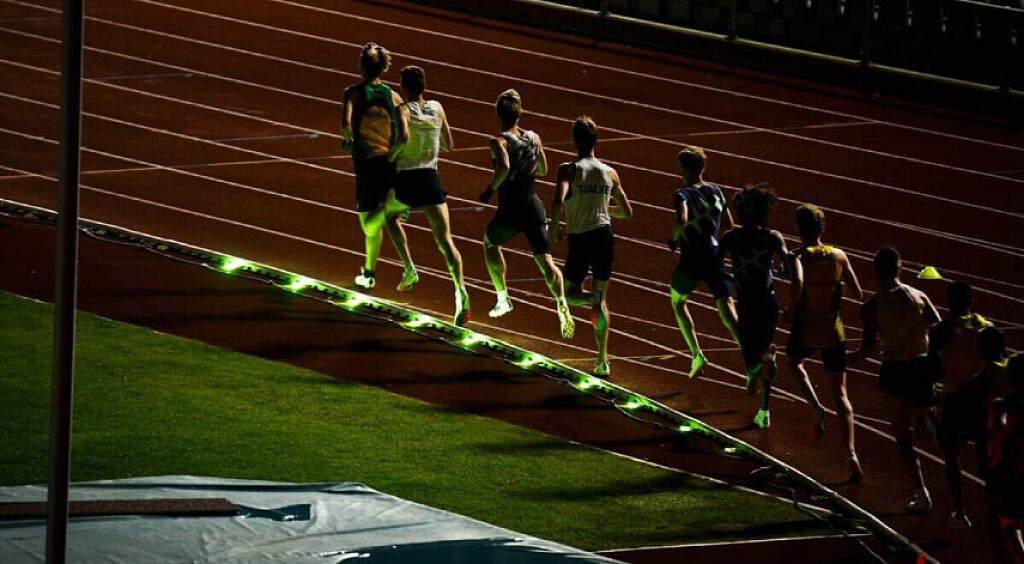
Is Wavelight technology good for the sport?
Last week at the Paris Diamond League, we witnessed one of the most extraordinary single-day spectacles in the history of the sport. Over the course of two hours, two world records and a world best were shattered; the races were nothing short of spectacular, particularly when Faith Kipyegon skilfully closed the gap on the Wavelight during the final two laps, leaving Ethiopia’s Letesenbet Gidey in the dust and achieving the seemingly impossible: a new women’s 5,000m world record.
The question of whether Wavelights are beneficial for the sport remains subjective, with opinions among track fans varying. On one hand, they enhance the performance and make races more engaging for spectators at the track or watching from home. On the other hand, they provide a precise pacing strategy for elite athletes, potentially facilitating faster times and diminishing the traditional element of intense competition.What is Wavelight technology?
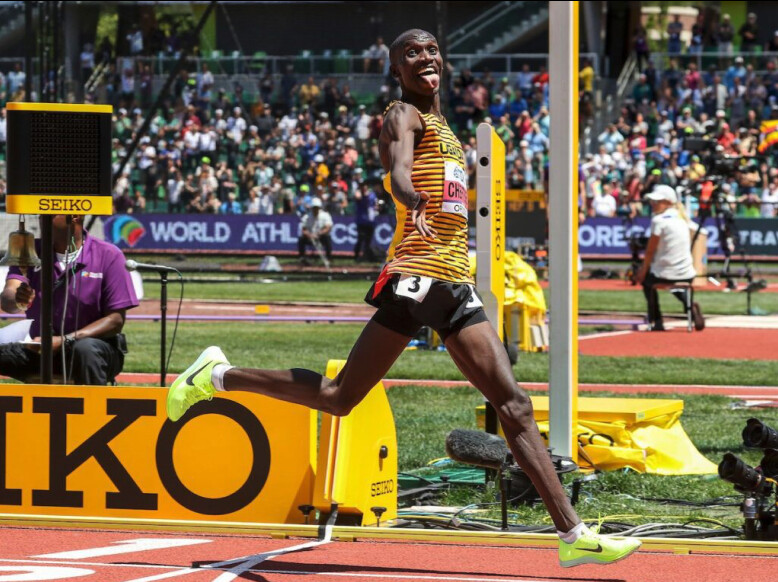
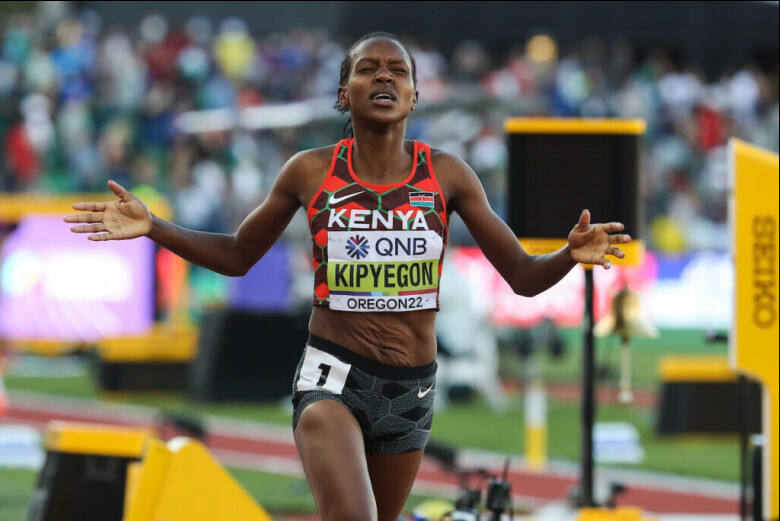
Wavelight technology, named for the Mexican Wave, was introduced by World Athletics in 2019. It serves as a tool for athletes and spectators, offering assistance with pacing and providing a visual representation of the race’s progression. A wave of lights appears along the inside edge of the track, moving at the desired pace for the race. Typically used in distance events like the 800m, 1,500m, or 5,000m, these lights are programmed to signify specific benchmarks, such as world championship standards, meeting records or world record times.Pros
People are drawn to track and field events to witness athletes breaking records, and Wavelight can serve as a valuable tool for athletes to gauge their paces and attempt to break records. A notable example: at the Paris Diamond League on June 9, where Jakob Ingebrigtsen of Norway and Lamecha Girma of Ethiopia ran ahead of the lights to set new records in their respective races. In Girma’s case, the lights pushed and challenged him throughout the 3,000m steeplechase, with Girma narrowly staying ahead in the final 100m to break the previous world record by one second.
Girma’s reliance on the lights became evident as his pace dropped off after 1,000m, and he had to dig deep to maintain the pace set by the flashing lights. Without them, it is unlikely he would have achieved the record.Track and field has faced challenges since the departure of Usain Bolt in 2017, with the sport seeking its next superstar. The success of major events like the World Championships and the Olympic Games significantly increases the sport’s popularity.
World Athletics recognizes the importance of world or national records in the Diamond League circuit, which contribute to increased viewership. The implementation of Wavelight technology allows athletes to run faster and challenge these record times, catering to the audience’s desire for exciting and fast-paced performances.While not every race will produce record-breaking times, Wavelight enhances the potential for thrilling performances that captivate viewers and generate greater interest in the sport.
Cons
When Ingebrigtsen shattered Daniel Komen’s two-mile record, which had stood for 26 years, my immediate thought was how fast Komen could have run with today’s technology. Komen had pacers guide him through the first 2,000m before running the final kilometre alone against the clock. Similarly, Ingebrigtsen had pacers until around the 2,000m mark, but they gradually dropped off, leaving him with a lead of 10-15 metres over the lights.
Depending on the race style or purpose, I believe Wavelight can have a positive impact on the sport. But they also detract from what track and field is fundamentally about—the world’s best athletes competing against one another. Watching a Diamond League event where one athlete outpaces the rest of the field by 15 to 20 seconds in the 3,000m steeplechase does not benefit the sport. While celebrating superstars is important, track and field legends like Komen, Kenenisa Bekele, Genzebe Dibaba and David Rudisha never had events specifically set up for them to chase world records.
They achieved their records in the heat of competition, racing against other competitors. This is where I believe Wavelight technology crosses a line.A compelling comparison was published in Track & Field News in 2020, analyzing the current and former 10,000m world records—Joshua Cheptegei’s record with pace lights versus Bekele’s record without them. The analysis revealed that Cheptegei maintained much more even splits than Bekele, with a variance of less than a second (0.8s) between his kilometres, which is truly remarkable. In contrast, Bekele’s variance was five times greater, with a difference of nearly five seconds between his fastest and slowest kilometres.I am not suggesting that Wavelights are ruining the sport of track and field, but I believe their use should be limited to specific situations, such as aiming for world standards or being present only during the final lap or two of distances ranging from 1,500m to 10,000m.
By implementing such limits, World Athletics can strike a balance between using technology for pacing assistance and preserving the essence of competitive racing.
by Running Magazine
Login to leave a comment
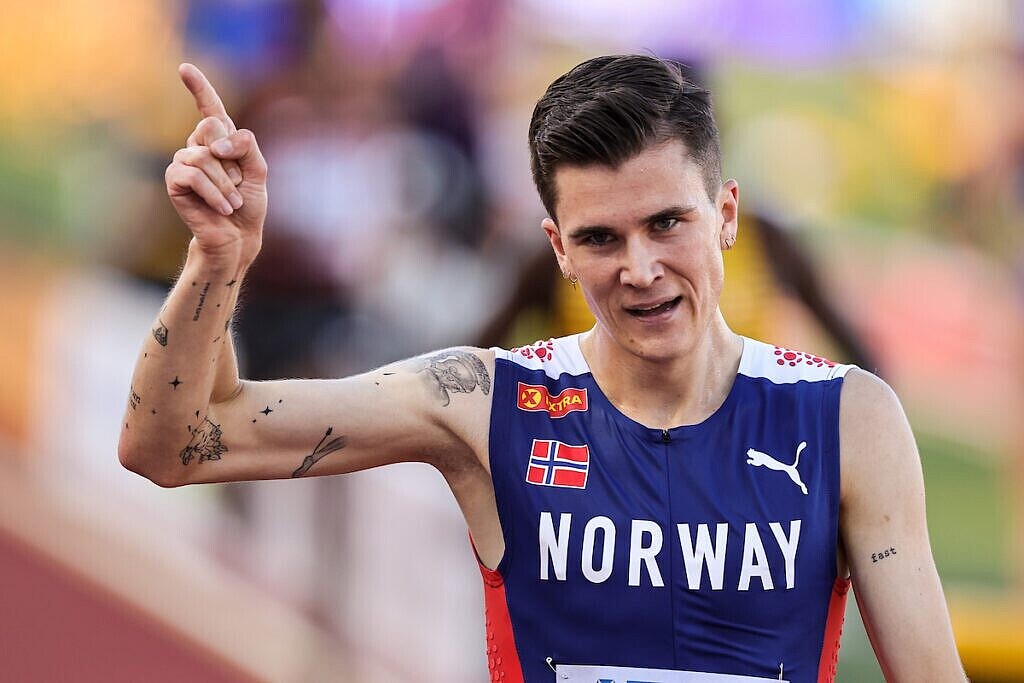
Jakob Ingebrigtsen to chase his national record at Oslo Diamond League
At the Paris Diamond League last week, the incredible Norwegian athlete and Olympic 1,500m champion Jakob Ingebrigtsen achieved a remarkable two-mile world best. On Thursday evening (afternoon for viewers in North America), the 22-year-old superstar will be competing in his home country, aiming to challenge his national record of 3:28.32 at the Oslo Diamond League.
Jakob’s WR bid
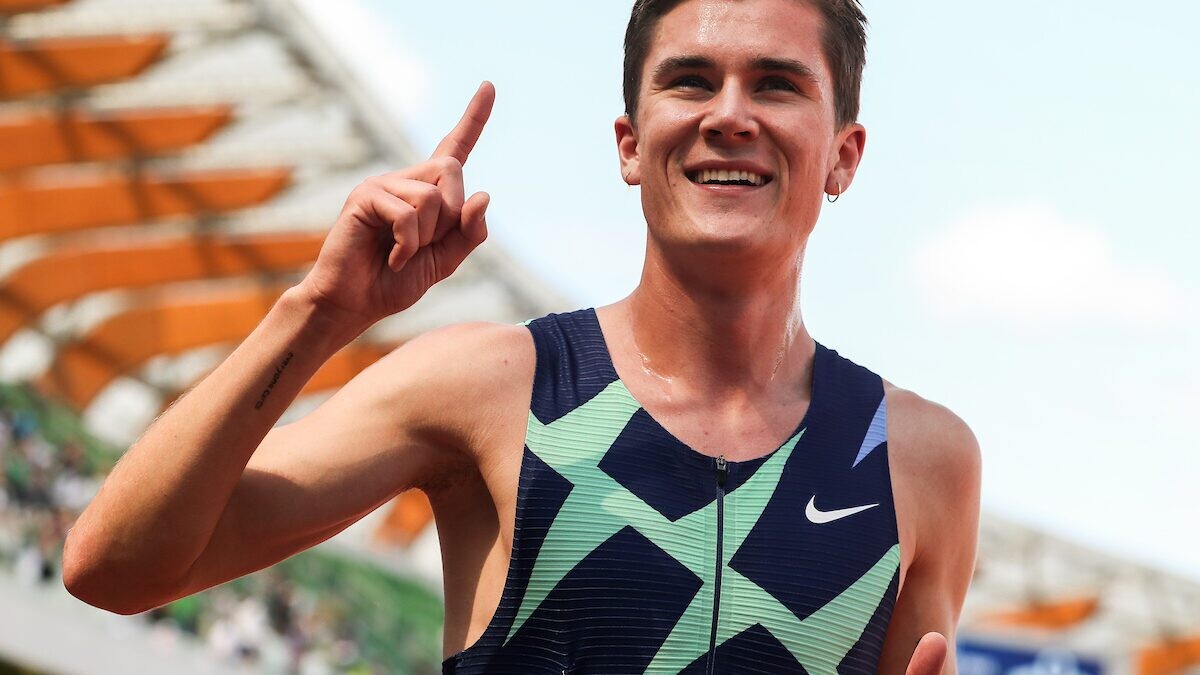
Ingebrigtsen headlines a deep men’s 1,500m field, featuring the silver and bronze medallists from Tokyo 2020, Kenya’s Timothy Cheruiyot and Josh Kerr of Great Britain. Other notable athletes are American Yared Nuguse and Mohamed Katir, who came off a Spanish national record performance over 5,000m in Florence two weeks ago, taking the win in 12:50.79.
During the pre-race press conference, Ingebrigtsen put his confidence on display and said he’s eager to chase a personal best and even take a shot at Hicham El Guerrouj’s 1,500m world record of 3:26.00 “If I break the world record Thursday, I deserve a statue,” said Ingebrigtsen. The Bislett Games meet director responded: “If you do it, I’ll personally set up a statue outside Bislett [Stadium].”
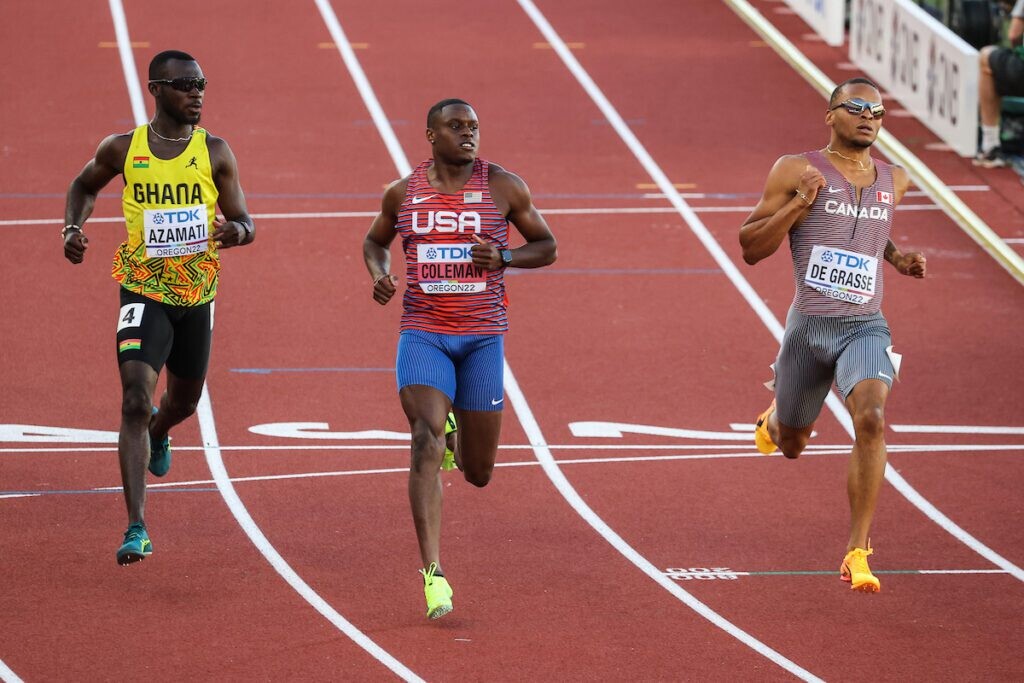
Although there has been a lot of world record talk from Ingebrigtsen and the media, the Wavelight pace in the 1,500m will be set to the meeting record of 3:29.12, going through 800m in 1:52 and the first kilometre in 2:19. Ingebrigtsen will have to close the final 500m in 66 seconds and a sub-53-second final lap if he hopes to take down the world record.
Canadians in Oslo
Two prominent Canadian athletes are competing at Oslo Diamond League Thursday. Olympic 200m champion Andre De Grasse looks to get his season back on track in the men’s 200m. The last year hasn’t been easy for De Grasse, changing coaches, battling injury and a slow start to the 2023 season. In his first three 200m race of the season, he has struggled to dip under the world championship standard mark of 20.24 seconds, a time he has frequently sailed under over the last two seasons. In his first Diamond League race in Doha on May 5, his turnover in the final 70 metres wasn’t there, and he faded to sixth in 20.35. It’s been three weeks since his last race, and he will come into Oslo as one of the favourites on paper, having the second-fastest personal best in the field after the young American, Erriyon Knighton.
Canadian mile and 1,500m record holder Gabriela DeBues-Stafford had a successful outing in her Diamond League return in Florence two weeks ago. After a full year off due to injury, the 27-year-old Olympic finalist ran to a season’s best 4:03.64 over 1,500m. She will come into the Oslo Diamond League as the top-ranked woman in the mile event. This race in Oslo should be more tactical and better suited for DeBues-Stafford’s racing style than the 1,500m in Florence, which resulted in a new world record for Faith Kipyegon.
Two other athletes who will be a tough test for DeBues-Stafford are Jessica Hull, who recently set an Australian record of 3:57.29 in Florence, and Ethiopian rising star Birke Haylom, who ran a giant personal best of 3:57.66 for third place at the Rabat Diamond League. DeBues-Stafford’s mile best is 4:17.87 from Monaco Diamond League in 2019, but any result under 4:23 for her would be a step in the right direction as she continues to prepare for the 2023 World Athletics Championships later this summer.
by Marley Dickinson
Login to leave a comment
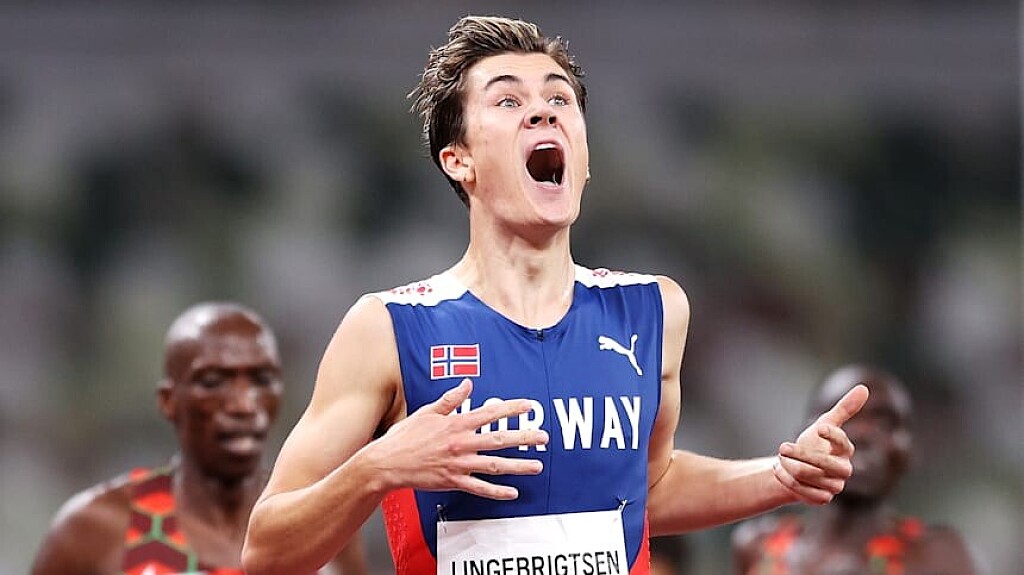
Going for the Two mile world record on June 9th
Jakob Ingebrigtsen doesn’t like talking about world records. But many others in the world of athletics are doing just that as the Norwegian prepares to compete in the non-Olympic distance two-mile event at the 2023 Paris Diamond League on 9 June.
Everything is set up for Ingebrigtsen to attempt to beat Daniel Komen’s time of 7:58.61 - a record that has stood since 1997. Not only will an elite field of pacers set the tempo, but the athletes racing will also have the benefit of Wavelight technology, which uses lights on the inside of the track to show the pace of the world record in real time.
If Ingebrigtsen breaks the record, he will have succeeded where many other of the world’s most celebrated distance runners have failed.
Mo Farah, Eliud Kipchoge and Joshua Cheptegei are just some of the big name athletes to have attempted the distance yet failed to beat Komen’s mark, with the nearest time an 8:01.08 set by the great Ethiopian Haile Gebrselassie less than two months before Komen’s historic run.
Login to leave a comment
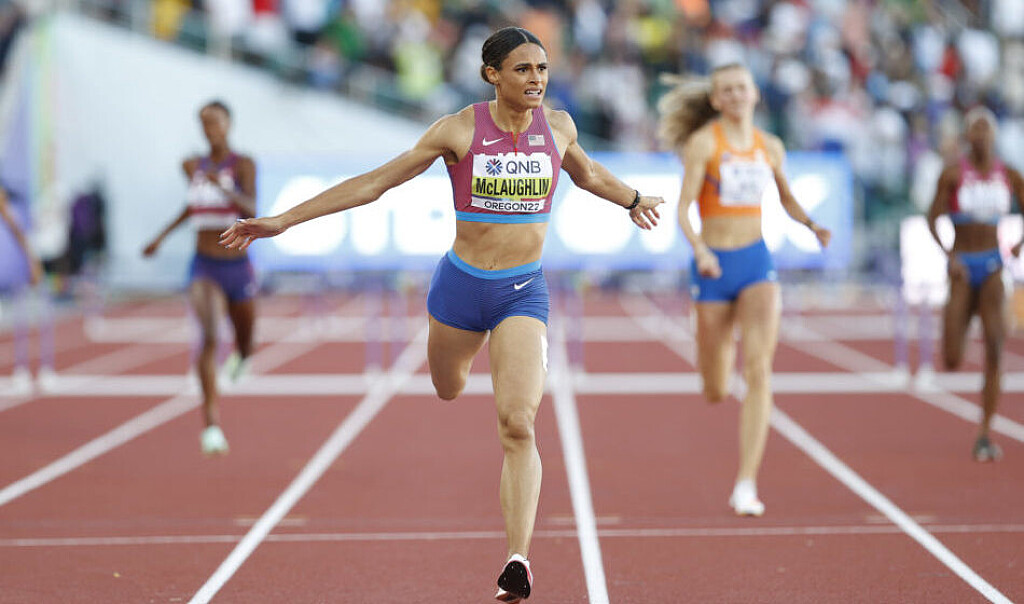
Sydney McLaughlin-Levrone to return to the track at Paris Diamond League
Sydney McLaughlin-Levrone, the current world-record holder in the women’s 400m hurdles, will return to the track at the Paris Diamond League meeting on June 9. On Monday, Paris Diamond League event organizers announced that McLaughlin-Levrone will race in the women’s 400m, an event she has not run in two years.
At 23, the American athlete achieved two remarkable feats at the last two major championships. At the 2020 Tokyo Olympics, McLaughlin-Levrone won gold in both the 400m hurdles and 4x400m relay, breaking her hurdles world record in 51.64 seconds. A year later, at the 2022 World Championships in Eugene, Ore., she smashed her record again in 50.68 seconds, becoming the first woman to go under the 51-second barrier.
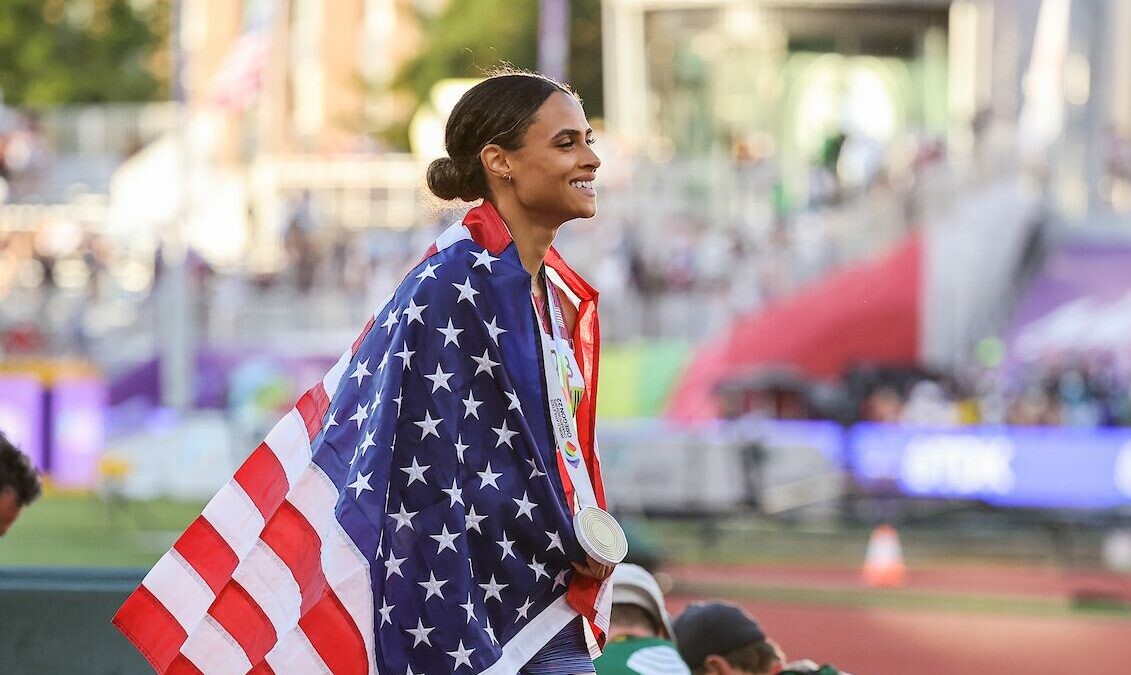
For two years, U.S. track fans have speculated if generational talent McLaughlin-Levrone could challenge the American 400m record of 48.70 seconds held by Sanya Richards-Ross. McLaughlin-Levrone’s last 400m came at the 2021 Bryan Clay Invitational, where she won the race in 51.16 seconds. She has a one-lap personal best of 50.07 seconds from 2018.
McLaughlin-Levrone has only raced once this season, an indoor 60m race at the 2023 Boston New Balance Grand Prix in February. She was initially scheduled to return at the USATF Los Angeles Invitational meet on May 27, but her coach Bobby Kersee withdrew her last week, citing hamstring soreness.
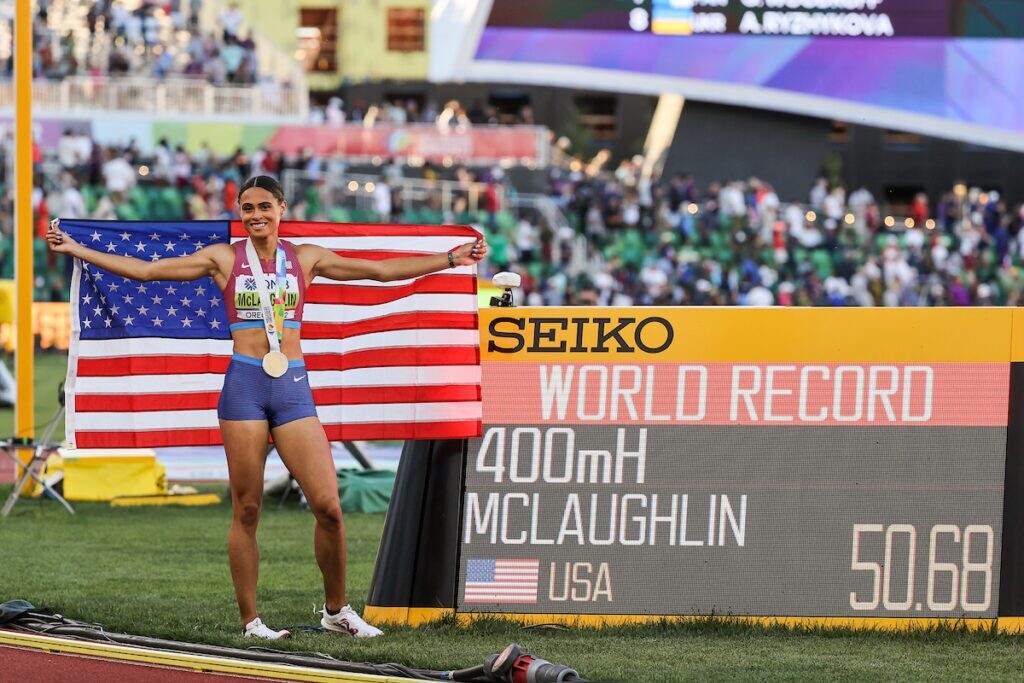
At the June 9 Paris Diamond League meeting, McLaughlin-Levrone will share the track with Marileidy Paulino of the Dominican Republic, the silver medallist in the 400m from the 2020 Tokyo Olympics. This will be the first time McLaughlin-Levrone has competed at a European Diamond League event since 2019.
Login to leave a comment
Five-time European champion Mahiedine Mekhissi announces his retirement at the age of 37
One of the greatest European steeplechasers in history Mahiedine Mekhissi from France has announced his retirement from athletics at the age of 37.
In an illustrious decade-long spell, Mekhissi won medals at three successive Olympic Games between 2008 and 2016 and titles at five consecutive editions of the European Athletics Championships between 2010 and 2018.
But in recent years, Mekhissi has struggled with leg and foot injuries and hasn’t completed a 3000m steeplechase since winning gold for the fourth time at the 2018 European Athletics Championships in Berlin.
“I have stopped because the will is no longer there. I no longer have the desire to train. I felt that this was the right moment to stop. Put simply, if I ran, it would be to become world champion, Olympic champion, to win medals and break records.
“To achieve those objectives, if you don’t have the will, there is no point in continuing. The desire is no longer there and I wanted to move on, to do something else with my life,” said Mekhissi as quoted by L’Equipe.
But despite being primarily renowned for his exploits in major championships, Mekhissi has also held the European record in the 3000m steeplechase for just over nine years, clocking 8:00.09 on home soil in the Paris Diamond League in 2013.
The mercurial Frenchman’s career was not without its controversies either. Mekhissi was famously disqualified at the 2014 European Athletics Championships after winning the 3000m steeplechase for taking off his vest and waving it in celebration as he came down the home straight for the last time.
But Mekhissi kept his win streak at the European Athletics Championships intact by returning to win a tactical and scrappy 1500m final on the last day of the championships with a devastating sprint. Even though he eased off in the last 20 metres, his last lap was still timed at 52.17.
"This is a discipline which I have never contested in a championships before and I won it with style," said Mekhissi, who is still the last non-Ingebrigtsen to win the 1500m title at the European Athletics Championships.
Aside from his Olympic and European triumphs, Mekhissi also won bronze medals in the 3000m steeplechase at the 2011 and 2013 World Athletics Championships.
He also demonstrated his versatility by winning the 1500m title at the 2013 European Athletics Indoor Championships in Gothenburg while his last medal came on the mud in Tilburg in 2018, helping France to team silver in the mixed relay at the SPAR European Cross Country Championships.
Mekhissi's ten fastest 3000m steeplechase races
8:00.09 Paris (2013)
8:02.09 Paris (2011)
8:02.52 Brussels (2010)
8:03.23 Brussels (2014)
8:06.60 Eugene (2013)
8:06.98 Hengelo (2009)
8:07.45 Sotteville (2014)
8:07.86 World Championships, Moscow (2013)
8:07.87 European Championships, Barcelona (2010)
8:08.15 Brussels (2016).
Login to leave a comment

Two-time European 800m champion Selina Rutz-Büche retires from running, citing long COVID
Two-time European 800m champion and Swiss 800m record holder Selina Rutz-Büchel announced her retirement on social media Wednesday, citing long COVID.
Rutz-Büchel is a two-time European indoor champion in the 800m, winning titles in 2015 and 2017. During her 12-year career, she held a personal best of 1:57.95 for the two-lap event, which she set at the Paris Diamond League in 2015. She represented Switzerland at the 2016 Olympic Games and the 2017 and 2019 World Athletics Championships.
According to Swiss Athletics, she was infected with the the coronavirus in April 2021, but since then has not been able to return to her training routine. Initially, the symptoms were severe, and in the last year and a half, she has not been able to make the progress she had hoped.
In April 2022, Rutz-Büchel, 31, gave birth to her daughter, but her state of health post-coronavirus “overtaxed her body and did not allow her to train,” she explained to Swiss Athletics.

“Due to ongoing health issues (long Covid), I have decided to retire from elite sports,” Rutz-Büchel wrote on her Instagram. “I am grateful to look back on a wonderful time when I was allowed to put sport at the center of my life. A heartfelt thank you to all the lovely people who accompanied and supported me on my way.”
Rutz-Büchel is not the only professional runner who has shared their struggles with the virus. Earlier this year, Australian Olympic 1,500m finalist Stewart McSweyn was forced to withdraw from the World Indoor Championships in Belgrade, Serbia, after a long bout with COVID-19. It took McSweyn, 27, several months to get over the respiratory effects of the virus. He returned to form at July’s World Athletics Championships in Eugene, Ore., where he placed ninth in the 1,500m final.
Canadian record holder and Olympic 200m champion Andre De Grasse also struggled to make a comeback post-virus. He came down with the illness before the 2022 Canadian Track and Field Championships in June and was not able to fully regain his fitness in time for the World Athletics Championships in July; he dropped out of the 200m, citing shortness of breath. However, De Grasse came back to run the anchor leg for the 4x100m relay team, helping Canada earn their first world championship gold in the event since 1997.
One major question runners ask post-Covid is how long it will take to get back their fitness and feel normal again. Dr. Mark Wurfel, a pulmonologist at the University of Washington Chest Clinic, says the answer is “frustratingly vague”: “It’s important to recognize up front that it will take some time for your body to recover. Your time back to fitness will depend on how long you were out of training, the severity of your illness, and what lingering symptoms you have.”
Rutz-Büchel wrote that she hopes to stay in the sport as a coach and trainer, but is looking forward to spending more time with her family.
by Marley Dickinson
Login to leave a comment
Ingebrigtsen to launch another 1500/5000m double attempt in Munich 2022
Norway’s Jakob Ingebrigtsen will be heavily involved in the Munich 2022 European Athletics Championships, part of the wider multisport European Championships, as he defends the 1500m and 5000m titles he won as a 17-year-old at the Berlin 2018 European Athletics Championships.
The Olympic 1500m champion and world 5000m champion will not, however, face the either of his brothers Filip and Henrik who are both injured nor the Brit who unexpectedly beat him to the world 1500m title in Eugene last month, Jake Wightman.
The latter is concentrating on the 800m in Munich – the event he originally planned to do at the Birmingham 2022 Commonwealth Games until he was nudged back to the longer distance because of the number of friends and family who had bought tickets for the final last Saturday when he won bronze in a high quality final in 3:30.53.
With a personal best of 1:44.18 from 2020, Wightman has a realistic chance of adding another European medal to the bronze he won over 1500m in Berlin four years ago – and his victory over 1000m at the Monaco Diamond League meeting on Wednesday night in 2:13.88, ninth fastest of all-time, will have done his confidence no harm at all.
France’s Benjamin Robert has the fastest 2022 time of all entrants – the 1:43.75 he clocked in winning at the Paris Diamond League on 18 June in boisterous fashion, squeezing in between the two leaders with enough physicality to be disqualified before being reinstated on appeal. If things get physical in Munich, Robert is unlikely to come off second best.
Tony van Diepen is also well acquainted with the hurly-burly of the track having been a part of the Dutch teams that won 4x400m silver at the Tokyo 2020 Games and mixed 4x400m silver at the World Championships in Oregon.
Individually, van Diepen has won European indoor silver in 2021 and bronze in 2019 over 400m and has a best 800m time of 1:44.14 set this year in Paris after M. Robert had burst past him at the Stade Charlety.
Robert’s compatriot Gabriel Tual, seventh in last year’s Olympic final, is third fastest on this year’s European list with 1:44.23, set in – you’ve guessed it – Paris. But the French team will be without the popular Pierre-Ambroise Bosse, the 2017 world champion, due to injury.
Poland’s Patryk Dobek has run 1:44.59 this year and even though he exited in the heats at the World Athletics Championships, he can also draw upon the experience of winning bronze at last year’s Olympics in Tokyo.
Other medal prospects include Sweden’s Andreas Kramer (1:44.59), Ireland’s Mark English (1:44.76), fellow Brits Ben Pattison (1:44.60) and Kyle Langford (1:44.61), Spain's reigning world indoor champion Mariano Garcia (1:45.12) and the very experienced former two-time world medallist Amel Tuka from Bosnia and Herzegovina (1:46.15) whose lifetime best of 1:42.57 dates back to 2015.
Aside from Bosse, another notable absentee will be the three-time reigning champion Adam Kszczot from Poland who retired at the start of the year.
Ingebrigtsen's path to double gold is clearer although not without challenges
With Wightman elsewhere, Ingebrigtsen will surely feel happier about the prospect of his 1500m defence, but he will still face a field full of Spanish and British medal threats.
Second on this year’s European list with 3:30.20, Spain’s Mario Garcia will be looking to give the Norwegian wonderboy another run for his money after finishing fourth - two places behind Ingebrigtsen - in Oregon.
The Brits dominate the 2022 European list with six athletes in the top nine and despite the absence of Wightman and Olympic bronze medallist Josh Kerr, Jake Heyward (3:31.08), Neil Gourley (3:32.93) and Matt Stonier (3:32.50) form a trio with clear medal-winning ability.
But Ingebrigtsen, who ran 3:29.47 to take world silver, and ran an Olympic and European record of 3:28.32 at the Tokyo 2020 Games, should have enough to cover any challenge in both events.
In the 5000m, it might be the athlete who appears second from last on the entry-list in terms of season's bests who could provide the biggest challenge to Ingebrigtsen. That athlete is Spain’s Mohammed Katir who won a bronze medal behind Ingebrigtsen in the 1500m at the World Athletics Championships in Oregon and will be focusing solely on the longer event in Munich.
Katir, 24, has a modest season's best of 13:43.61 from the Spanish Championships but he showed what he can do over the longer distance by running a national record of 12:50.79 in Rome last summer in the same race where Ingebrigtsen broke the European record with 12:48.65.
Another strong potential challenger is the experienced Spaniard Adel Mechaal, who was fifth in the Olympic 1500m final last year and set a 5000m personal best of 13:06.02 in Oslo in June. Mechaal didn't make it through to the final of the World Athletics Championships but that wasn't too surprising as he had only just recovered from an untimely bout of coronavirus which forced him to miss the 1500m.
In both the 5000m and 10,000m, watch out for Italy’s Yemaneberhan Crippa, 25, who has been a star performer in numerous European competitions, winning bronze at the 2019 European Cross Country Championships and the European 10,000m Cup in the same year.
Crippa has the fastest time among the entrants based on season’s best performances in the 10,000m with 27:16.18 ahead of another showboating, talented figure in Jimmy Gressier of France – he of the famous faceplant as he won the 2018 European U23 cross country title. This didn’t stop him from walking through the line to win the same title the following year, demonstrating just how much time he had to spare.
There weren’t quite the same histrionics at the SPAR European Cross Country Championships in Dublin last December but Gressier let his running do the talking and he came away with his first senior medal in a race where Ingebrigtsen ruled triumphant once again.
Gressier will be focusing solely on the 10,000m in Munich and the Frenchman is the second fastest performer this year with 27:24.51 which he set at the European 10,000m Cup on home soil in Pacé in May when he ran away from the field for the individual title.
Login to leave a comment
European Athletics Champioships
The27thEuropean Athletics Championshipswill be held from 10 to 16 August 2026 at theAlexander StadiuminBirmingham, United Kingdom.[1] This is the first time that a British city will have staged the European Athletics Championships although Birmingham has hosted many high-profile events, including the2007 European Athletics Indoor Championships, the2003and2018 IAAF World Indoor Championshipsand the2022 Commonwealth Games. Alexander Stadium was renovated between 2019 and...
more...
109 Olympians & World Champions Facing Doping Proceedings
Login to leave a comment
Shelby Houlihan surges past three contenders to win the 1500m while Semenya placed sixth
Login to leave a comment
