

Running News Daily
Running News Daily is edited by Bob Anderson and team. Send your news items to bob@mybestruns.com Advertising opportunities available.
Index to Daily Posts · Sign Up For Updates · Run The World Feed
Articles tagged #2019
Today's Running News



Mary Kitlowski’s 26.2-Mile Triumph: Finishing New York With Just 34% Lung Capacity
For most marathon runners, completing 26.2 miles is a test of endurance, preparation and mental strength. For Mary Kitlowski, it was something far greater — a battle against the limitations imposed by a rare and progressive lung disease.
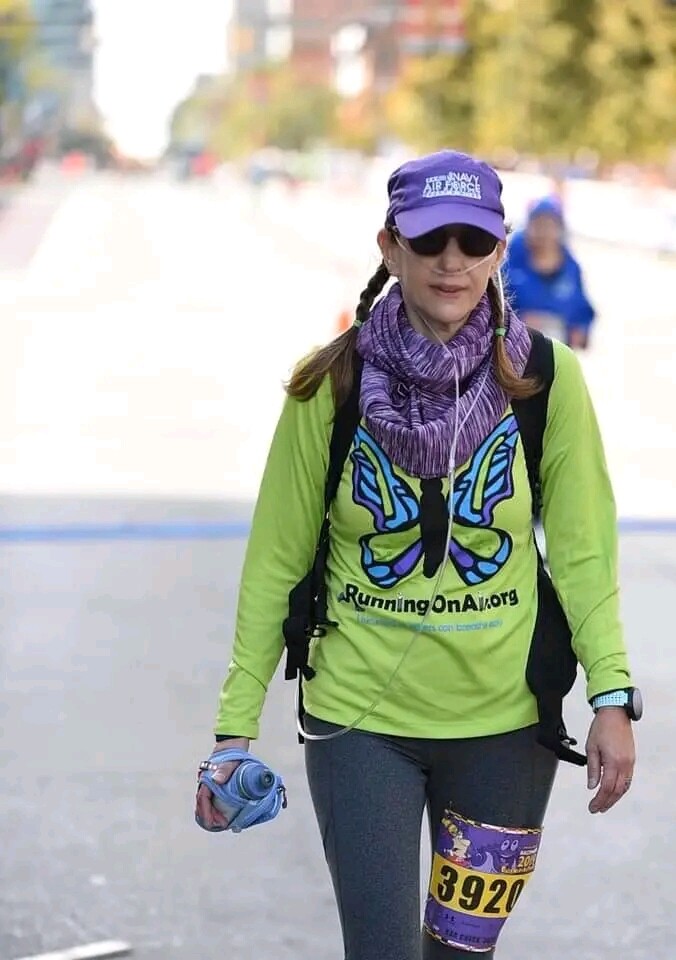
In 2019, Kitlowski finally crossed the finish line of the New York City Marathon after years of determination and preparation. What made the achievement extraordinary was not simply the distance she covered, but the circumstances under which she covered it: Mary was living with primary ciliary dyskinesia (PCD), a rare genetic disorder that had caused significant lung damage, and she required supplemental oxygen during exertion. At the time, reports stated that she had only about 34 percent lung capacity.
Her journey to New York had already included heartbreak.
Two years earlier, in 2017, Mary had attempted the marathon for the first time. But an infection had left her struggling before race day, and she was ultimately forced to stop at mile 18 — just over eight miles from the finish. Rather than allowing that experience to define her, she returned to training with an even greater determination to complete what she had started.

The challenge was unlike that faced by most marathoners.
Mary competed with a portable oxygen concentrator strapped to her, carrying equipment that helped her breathe during exertion. The device weighed around six pounds, while additional batteries were needed because its power would not last throughout the entire marathon. Her husband, Ed, stayed alongside her and carried the extra batteries as they made their way through New York’s five boroughs.
And this was never simply about completing a race.
Mary had become an advocate for people living with lung disease and those who depend on supplemental oxygen. Through her Running On Air initiative, she sought to challenge the perception that needing oxygen should prevent someone from being active, pursuing goals or living an ambitious life. Her marathon became another powerful platform for that message.
On November 3, 2019, after years of preparation and a previous attempt that ended at mile 18, Mary finally completed the 26.2-mile journey.
Her official finishing time was 9 hours, 50 minutes and 26 seconds. She completed the marathon as part of an effort to raise awareness for rare diseases and the National Organization for Rare Disorders, turning every step into a statement about resilience and possibility.
Mary’s achievement was never about how quickly she could reach the finish line. It was about reaching it at all.
With a portable oxygen concentrator on her back, spare batteries carried by her husband and lungs functioning at only a fraction of normal capacity, she walked and ran her way across New York — refusing to let her medical condition decide the boundaries of her life.
Her story is a reminder that sometimes the most remarkable marathon victories are not measured by medals, records or finishing positions.
Sometimes, the victory is simply refusing to stop
by Erick Cheruiyot for My Best Runs.
Login to leave a comment
Istanbul Assembles Its Fastest Elite Field Ever as 50th Anniversary Approaches
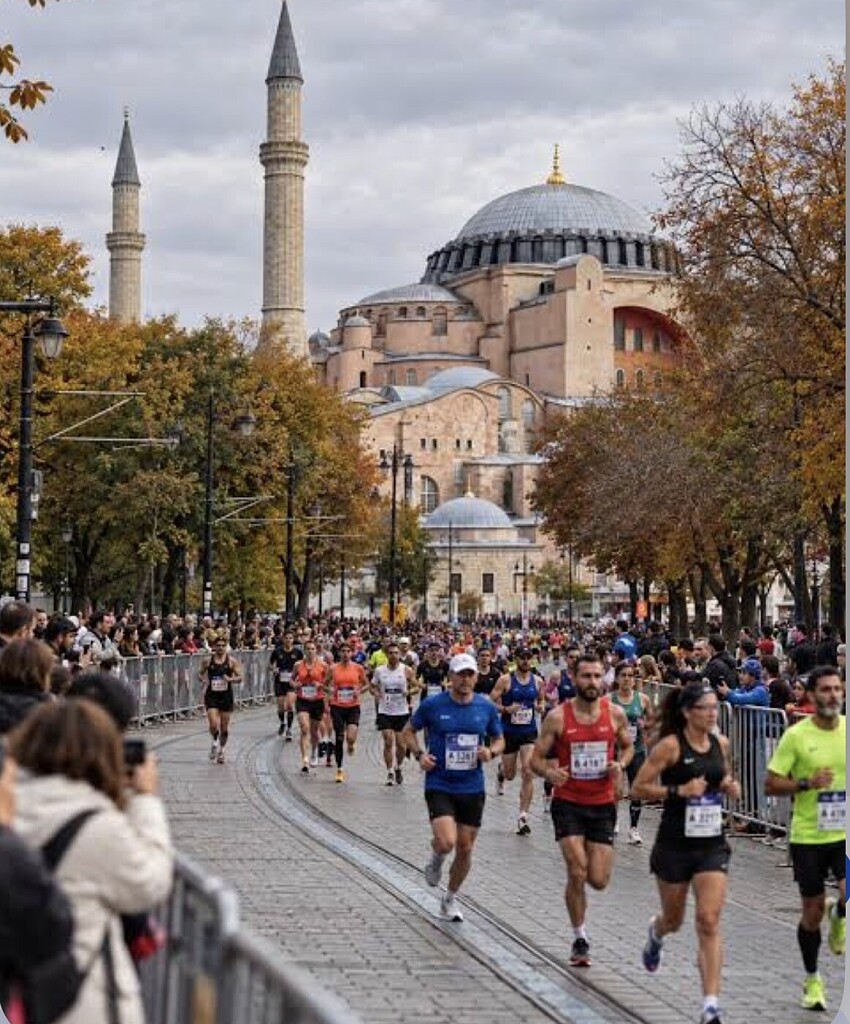
The Türkiye Is Bankasi Istanbul Marathon is building toward its golden anniversary with a field worthy of the occasion. With two years remaining until its 50th edition, organizers have assembled the fastest elite lineup in the event’s history for Sunday’s 48th running.
Four men bring personal bests under 2:06, while three women have broken 2:20—a first for a race that has never previously featured a woman with a sub-2:20 personal best.
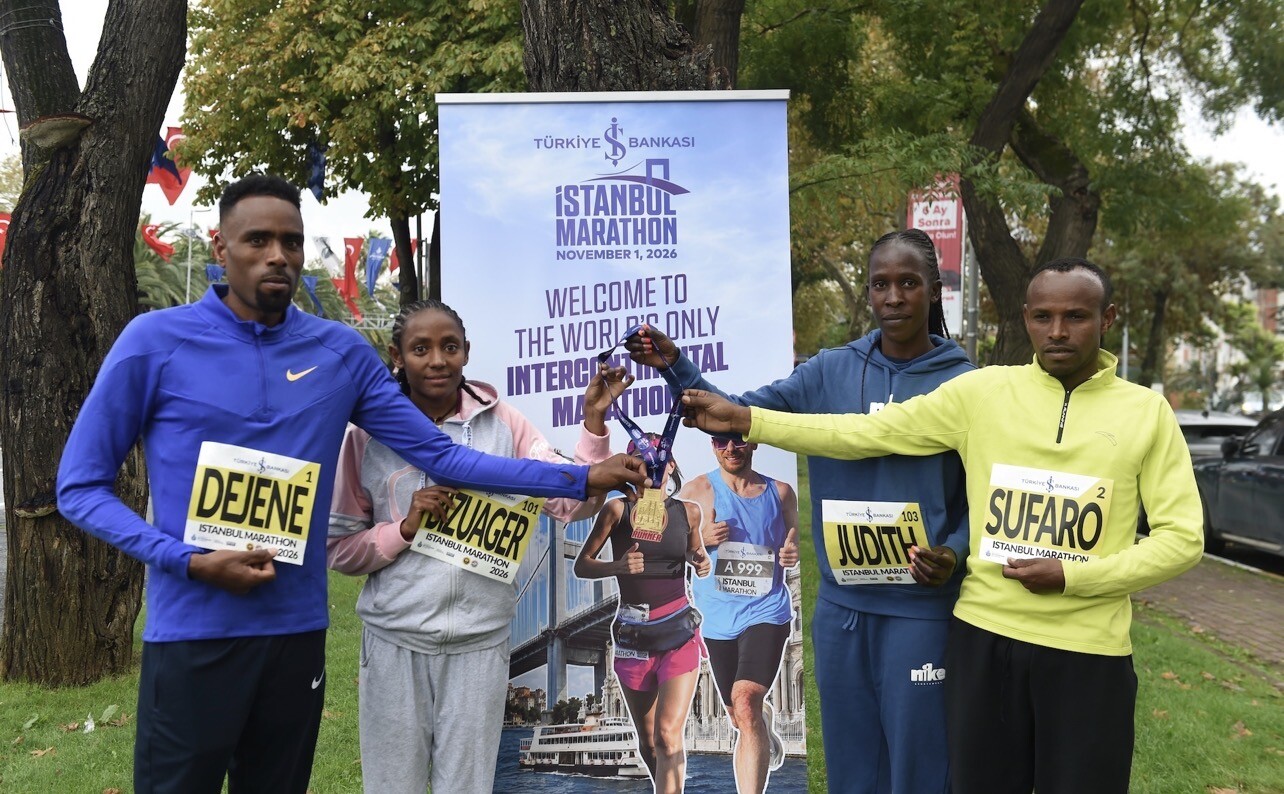
The world’s only intercontinental marathon takes runners from Asia to Europe. Türkiye’s largest marathon is also a World Athletics Gold Label Road Race, combining elite competition with one of the sport’s most distinctive settings.

“An exciting race awaits us in both the men’s and women’s categories. Including races at shorter distances the Türkiye Is Bankasi Istanbul Marathon will bring together over 45,000 participants from 143 different countries. We are proud to host such a celebration of sports,” said Race Director Bilge Donuk.

Women’s Race: Korir Leads a Record-Setting Field
Kenya’s Judith Korir, the 2022 World Championships marathon silver medalist, leads the women’s field with a personal best of 2:18:20. Ethiopia’s Azmera Abreha follows at 2:18:33, with compatriot Kasanesh Baze bringing a best of 2:19:39.
Eritrea’s Dolshi Tesfu adds further depth with her 2:20:40 best. Turkish record holder Sultan Haydar, who ran 2:21:27 in Valencia three years ago, returns to Istanbul, where she finished third in 2013.
The strength of the field leaves defending champion Bizuager Aderra only ninth on the list by personal best. The Ethiopian won last year in 2:26:19, which remains her fastest marathon.
But Aderra is focused on defending her title.
“I will try to win again. I am ready and I have trained well in Addis Ababa,” said the 30-year-old. “The final section of the course is not easy. It is probably an advantage to know it.”
For Korir, Sunday offers an opportunity to reestablish herself after an extended injury setback. She enjoyed outstanding seasons in 2022 and 2023, winning the 2022 Paris Marathon, earning world silver in Eugene and finishing fourth in London in 2:18:43. She returned to London the following year and placed sixth.
“I got a hamstring injury which hampered me for around two years,” Korir said.
She finished eighth at this spring’s Milano Marathon in 2:26:48, a result that fell short of her expectations and prompted a change.
“After the Milano race I changed my set-up and moved my training base from Iten to Kaptagat, where I have strong training partners,” said Korir, who usually returns to Iten on weekends to see her husband and 13-year-old son.
“I am in good form now and look forward to Sunday.”
Men’s Race: Four Sub-2:06 Runners Target Istanbul Glory
Ethiopia’s Sufaro Woliyi heads the men’s field with a personal best of 2:04:35, set in Seoul this spring. Compatriot Amdework Walelegn follows at 2:04:50, ahead of Kenya’s Philimon Kipchumba at 2:05:35 and Ethiopia’s Dejene Debela at 2:05:46.
Istanbul also welcomed four sub-2:06 men two years ago, but this year’s leading quartet brings faster personal bests.
Debela combines speed with valuable course experience. The Ethiopian won in Istanbul two years ago and finished runner-up last year. His personal best dates to the 2019 Chicago Marathon.
“Compared to last year I am in much better form,” said Debela, who has not raced this year while recovering from injury. “The problem was that I got a muscle injury and it took long to recover.”
He believes the course record of 2:09:44, set in 2019, could be within reach.
“I am in the shape to run sub 2:10 in Istanbul. But a major factor is the weather. If conditions are fine we should break it,” Debela said.
Woliyi also knows what it takes to contend on Istanbul’s challenging course. He finished third last year, just 14 seconds behind Kenya’s Rhonzas Kilimo.
“My training went very well, I am in the best shape of my life. I hope that this time I will be the number one,” said Woliyi, who lives and trains in Asala, Ethiopia.
His breakthrough performance in Seoul makes him the fastest entrant, but his rivals’ experience and the demands of the course promise a competitive race.
Türkiye’s Hüseyin Can will also be one to watch. He helped push the pace last year and was rewarded with fifth place and a then-personal best of 2:10:58. He returns having improved to 2:10:03.
How to Watch
The marathon starts at 9:00 a.m. local time Sunday, with a livestream available through the official race website.
Elite Runners with Personal Bests
MEN:
Sufaro Woliyi ETH 2:04:35
Amdework Walelegn ETH 2:04:50
Philimon Kipchumba KEN 2:05:35
Dejene Debela ETH 2:05:46
Silas Too KEN 2:06:32
Douglass Kiprugut KEN 2:06:40
Francis Langat KEN 2:07:29
Benard Kipkorir KEN 2:08:12
Vincent Ronoh KEN 2:08:32
Shadrack Kenduiywo KEN 2:09:56
Hüseyin Can TUR 2:10:03
Samuel Lomoi KEN 2:10:21
Paul Tiongik KEN 2:10:25
Yavuz Agrali TUR 2:10:41
Gemechu Yadesa ETH 2:10:54
WOMEN:
Judith Korir KEN 2:18:20
Azmera Abreha ETH 2:18:33
Kasanesh Baze ETH 2:19:39
Dolshi Tesfu ERI 2:20:40
Sultan Haydar TUR 2:21:27
Veronicah Maina KEN 2:24:14
Alemtsehay Asefa ETH 2:24:42
Flomena Chepkiach KEN 2:25:41
Bizuager Aderra ETH 2:26:19
Everlyn Kemboi KEN Debut
Diribe Alemu ETH Debut
Meaza Asefa ETH Debut
by Race News Service
Login to leave a comment
N Kolay Istanbul Marathon
At the beginning, the main intention was simply to organise a marathon event. Being a unique city in terms of history and geography, Istanbul deserved a unique marathon. Despite the financial and logistical problems, an initial project was set up for the Eurasia Marathon. In 1978, the officials were informed that a group of German tourists would visit Istanbul the...
more...
World Athletics Gives Running A New Home As Jakob Larsen Takes Charge Of A Powerful New Department
World Athletics has given running a new home — and placed one of the sport’s most experienced event leaders at the heart of it.
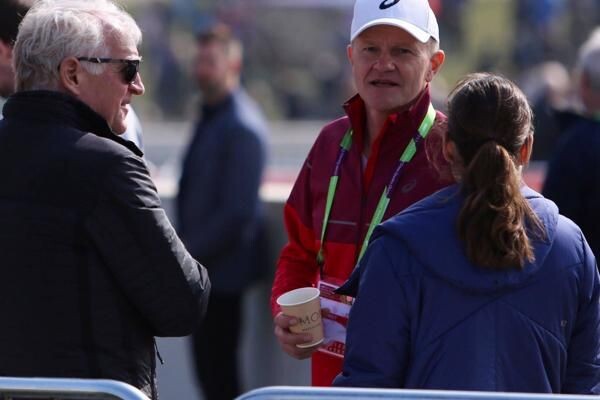
The global governing body has established a standalone Running & Mass Participation department, a major organisational move designed to give greater focus to the rapidly expanding running ecosystem. At its helm is Jakob Larsen, a veteran sports executive whose résumé already includes some of the most significant running events staged under the World Athletics banner.
Larsen arrives with 25 years of experience across international sport and has played a central role in developing and delivering major championships. His previous work includes the 2014 World Half Marathon Championships in Copenhagen, the 2019 World Cross Country Championships in Aarhus and, most recently, the inaugural World Athletics Ultimate Championship in Budapest.
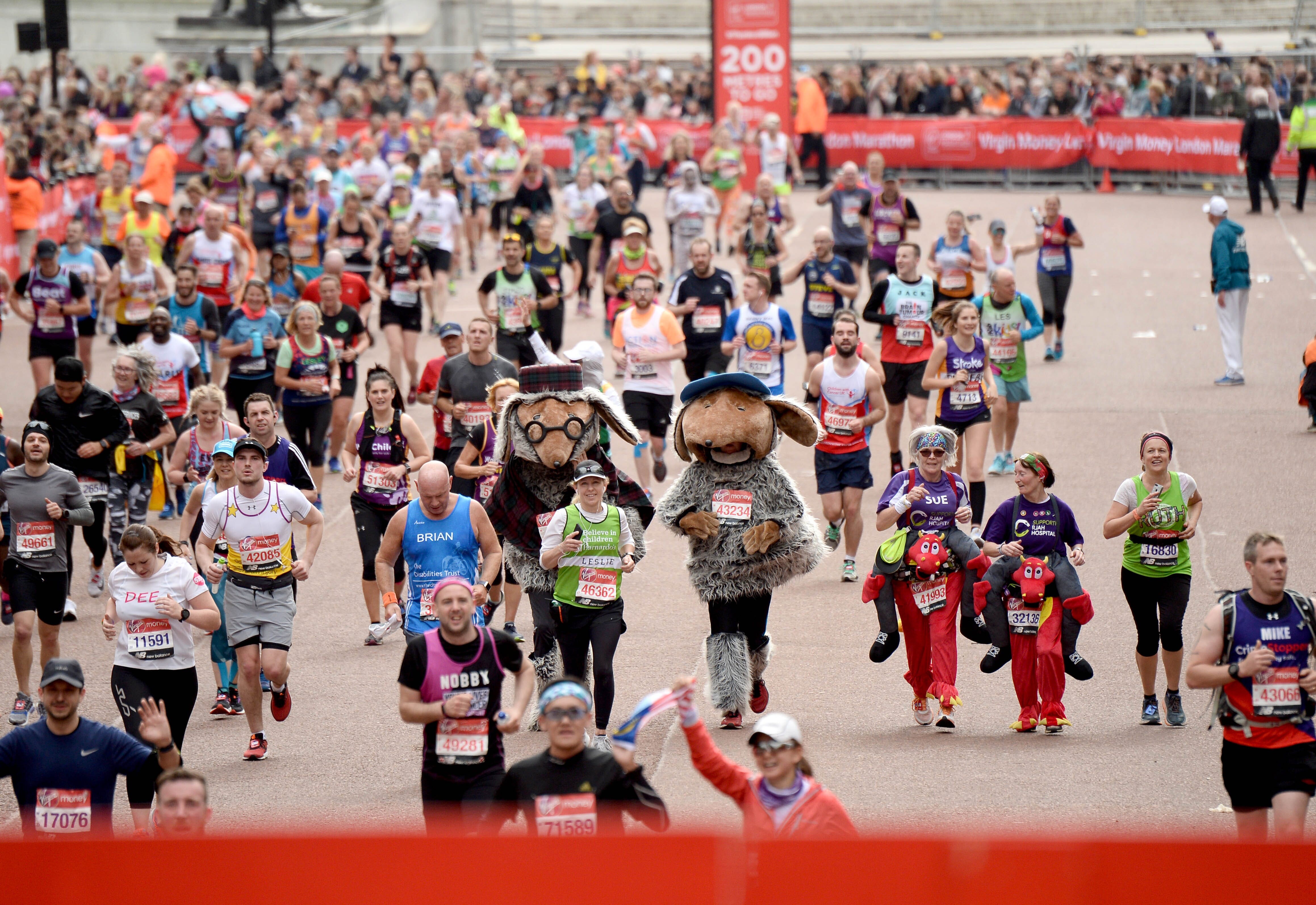
Those experiences give Larsen a particularly strong platform for his new assignment. Rather than building the running side of the sport from the ground up, he inherits a global movement that is already enormous — one that stretches from elite marathoners chasing world records to mass-participation runners filling city streets across the world.
The new department will have responsibility for a broad portfolio covering World Athletics’ road running and marathon activities, cross country, mountain and trail running, the World Athletics Label Road Races programme, regulation, technical and educational services, and the development of new partnerships across technology, data and the wider running industry.
That portfolio also includes the newly established RUN X™ World Treadmill Championship, reflecting how far the definition of competitive running is continuing to expand beyond the traditional racecourse.
The scale of the road-running network alone underlines the importance of the move. The World Athletics Label Road Races calendar features races across continents, ranging from major marathons and half marathons to shorter international road races. The programme includes some of the biggest names in the sport, from Boston and London to Chicago, Berlin, Tokyo and New York.
For World Athletics, the decision is therefore about much more than changing an organisational chart. It signals recognition that running has developed into one of the sport’s most powerful global platforms, connecting elite competition with millions of recreational and mass-participation runners.
And with Larsen now leading the new department, World Athletics is placing that responsibility in the hands of someone who has already demonstrated an ability to build major events, manage complex international projects and understand where the future of running may be heading.
The challenge now is to bring all those strands together — elite road racing, mass participation, championships, trail and mountain running, technology and new forms of competition — under one coordinated vision.
Running has never been bigger. Now, World Athletics is giving it the organisational structure to match.
by Erick Cheruiyot for My Best Runs.
Login to leave a comment
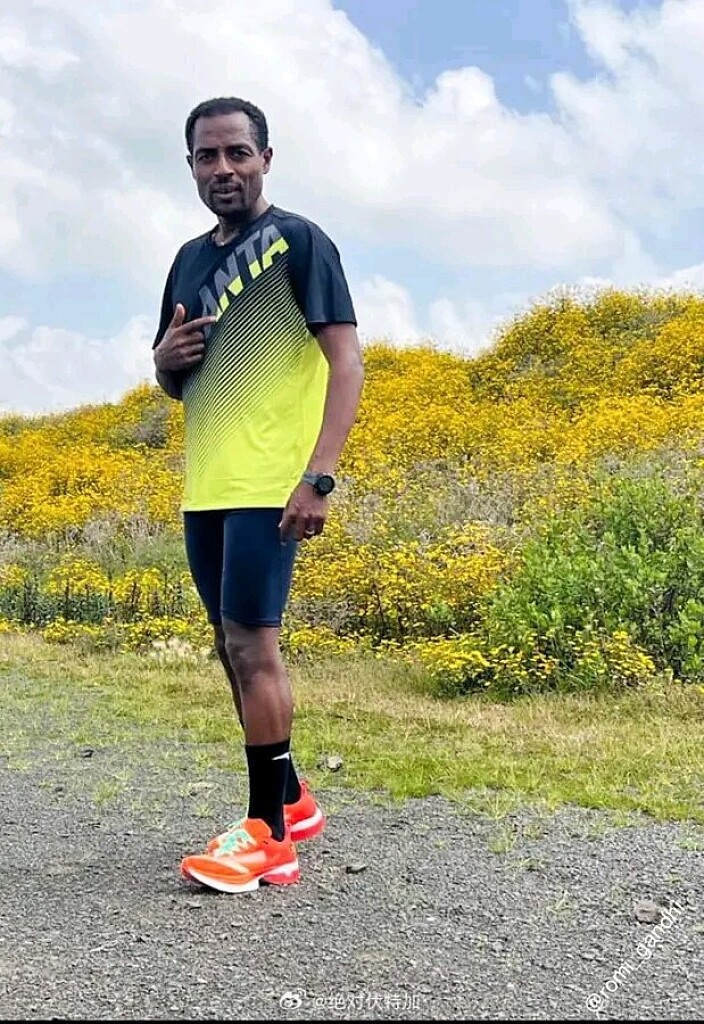
At 44, Kenenisa Bekele Refuses To Let Time Have The Final Word
At an age when most elite distance runners have long stepped away from the highest level of competition, Kenenisa Bekele continues to challenge the limits of longevity. At 44, the Ethiopian distance-running icon remains willing to line up against a new generation of younger athletes, even as injuries and difficult races have made the latest chapter of his remarkable career increasingly demanding.
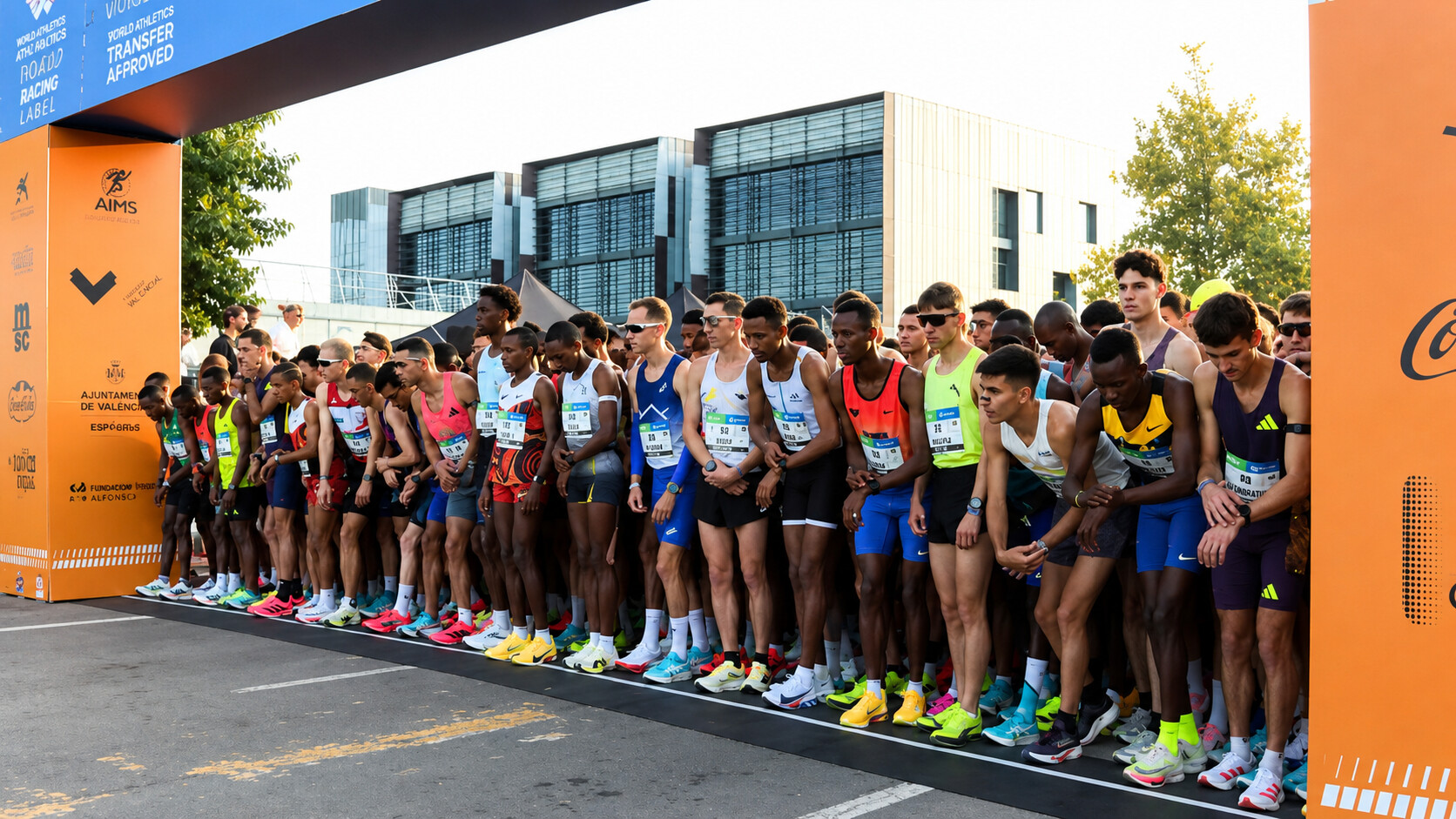
Bekele’s recent journey has been a mixture of extraordinary resilience and frustrating setbacks. His 2024 campaign demonstrated both sides of that story. At the London Marathon in April, he produced one of the greatest performances ever recorded by a masters athlete, running 2:04:15 for second place behind Alexander Mutiso Munyao. The performance established a world record for the M40 age category and showed that, even beyond his 40th birthday, Bekele could still operate at a breathtaking level.
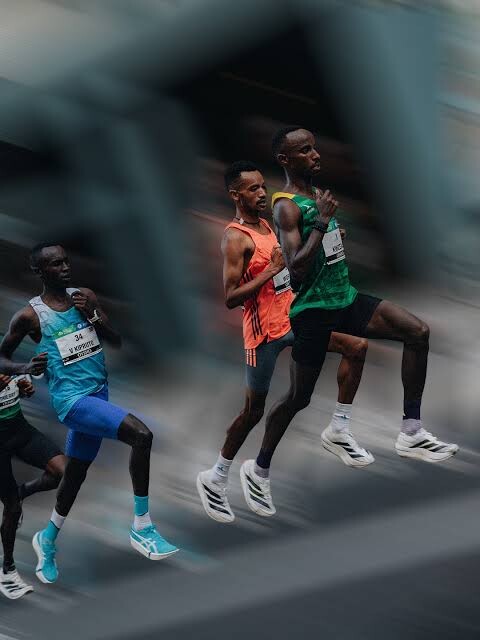
A few months later, however, the Olympic marathon in Paris offered a very different challenge. Bekele finished 39th in 2:12:24 after struggling with a hamstring problem during the race. He later explained that he felt the hamstring stretch around 15 kilometres, yet he continued to the finish rather than joining the growing list of athletes who abandoned the brutal Olympic course.
The setbacks continued into 2025, when Bekele recorded a DNF at the TCS New York City Marathon. Then came another obstacle in 2026. His highly anticipated return to the Berlin Marathon was halted after he suffered a left Achilles tendon injury in training only days before the race, forcing him to withdraw.
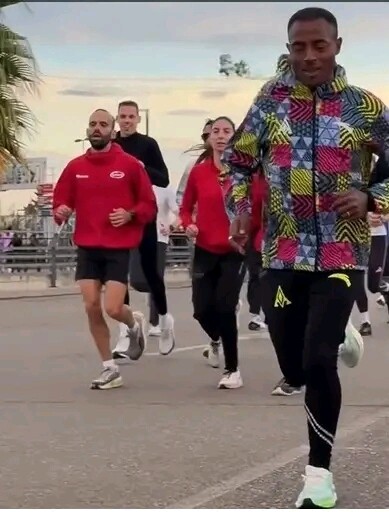
Rather than allowing another setback to end the conversation, Bekele returned to competition at the Valencia Half Marathon on October 25, 2026. The target was ambitious: breaking the 60-minute barrier for the first time in his career while pursuing the M40 world record of 59:53.
But the clock proved unforgiving. Bekele recorded 14:38 through the opening 5 kilometres before eventually dropping out of the race.
For an athlete whose career has been defined by extraordinary victories, records and comebacks, another DNF may look like a painful statistic. But judging Bekele solely by his most recent results would overlook the extraordinary body of work that has made him one of the greatest distance runners in history.
In December 2023, at 41, he ran 2:04:19 to finish fourth at the Valencia Marathon, setting a world masters record at the time. Four months later, he went even faster in London, producing the remarkable 2:04:15 that remains his M40 world record.
And his legacy extends far beyond the marathon. Bekele is a three-time Olympic champion, winning the 10,000 metres at Athens 2004 before completing the 5,000m and 10,000m double at Beijing 2008. He also collected five World Championship gold medals and 11 World Cross Country Championship titles.
His 2:01:41 victory at the 2019 Berlin Marathon remains one of the most extraordinary marathon performances ever produced. Although it is no longer the second-fastest marathon in history—as faster performances have since been recorded—it remains among the all-time great marks and currently sits seventh on the World Athletics all-time list.
That is what makes Bekele’s current journey so compelling. The 44-year-old is no longer competing simply to add another ordinary result to his résumé. Every appearance represents another test of how far experience, determination and an extraordinary athletic foundation can carry an athlete against the relentless passage of time.
Valencia did not deliver the sub-60 performance he was chasing. The Achilles injury disrupted his Berlin comeback. New York ended without a finish. Yet none of those moments can erase what Bekele has already achieved—or the remarkable fact that he continues to stand on start lines against athletes who are sometimes more than a decade younger.
Perhaps that is the most enduring part of Kenenisa Bekele’s story. Records eventually fall, races eventually become difficult, and the body eventually demands a price. But the competitive spirit that carried him from Olympic glory to world records has never disappeared.
At 44, Bekele may no longer be chasing the same version of himself who dominated the track and conquered Berlin. Instead, he is fighting a different battle—the battle to discover just how much of that greatness still remains.
And as long as Kenenisa Bekele keeps answering the starting gun, the running world will keep watching.
by Erick Cheruiyot for My Best Runs.
Login to leave a comment
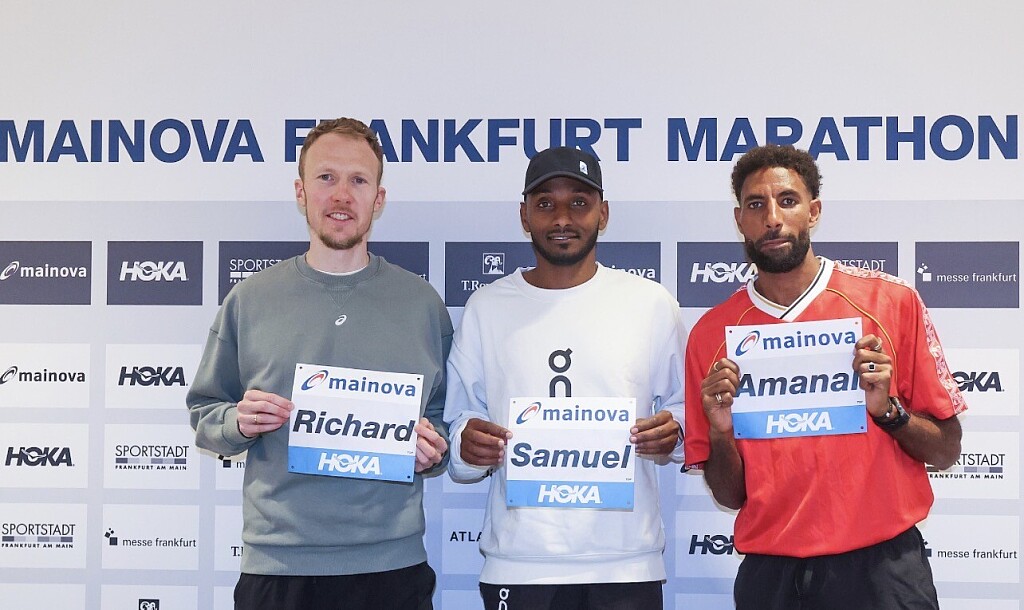
Records in Sight as Frankfurt Assembles Its Fastest Men’s Field
Petros leads Germany’s top marathoners, Zeineba Yimer targets the women’s course record, and Kenya’s Mark Kiptoo chases an age-group milestone at Sunday’s Mainova Frankfurt Marathon.
The Mainova Frankfurt Marathon could deliver a series of record performances on Sunday, October 25—if the weather cooperates.
The 43rd edition brings together the fastest men’s field in the event’s history, with German and European records potentially within reach. Both course records—2:03:42 for men and 2:17:25 for women—could come under pressure, while a promising German debut and an M50 world-best attempt add further interest.
Conditions will play a decisive role. Rain, cold and strong winds could derail ambitious pacing plans. If the weather settles, Frankfurt’s flat course could provide the setting for an exceptional day.
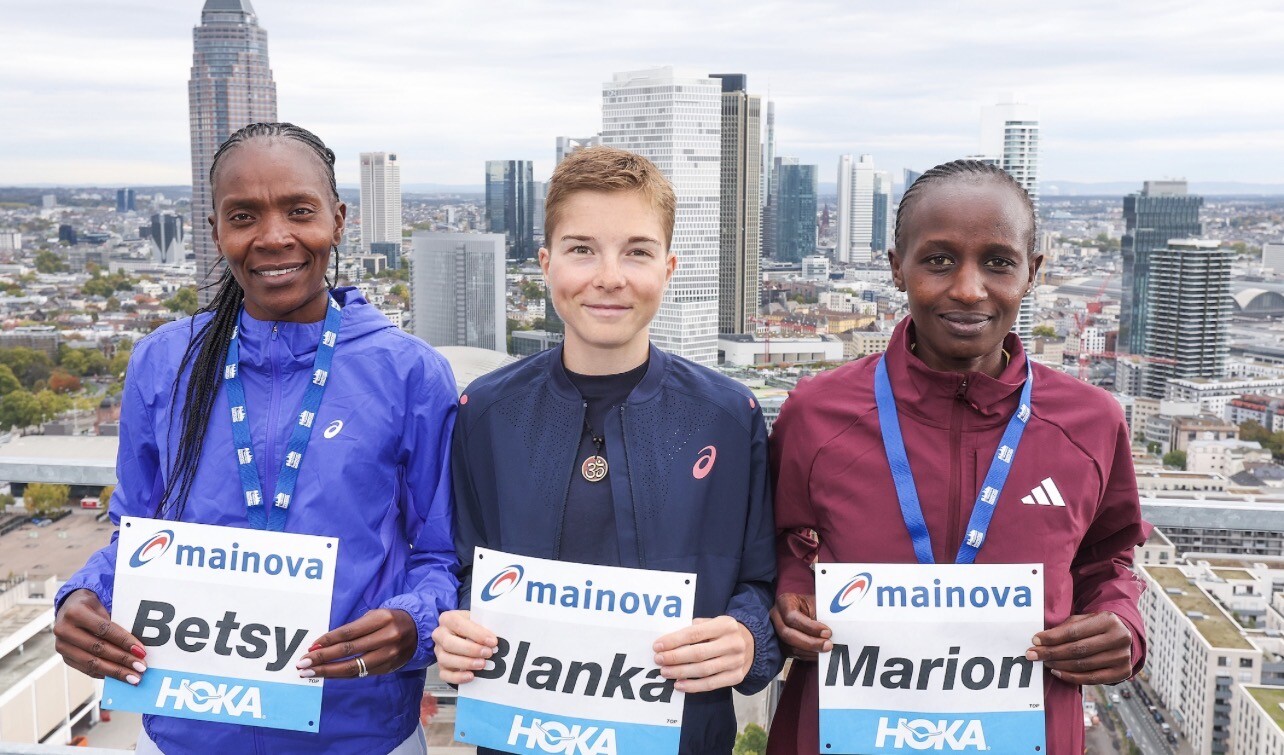
Organizers have reported a record 19,720 entries from 128 nations. The occasion also marks the final race for Jo Schindler as race director.
“We are absolutely delighted with this record number of entries. Over the past 25 years, we have taken the Mainova Frankfurt Marathon to a whole new level in every aspect,” Schindler said.
Germany’s Best Take Center Stage
Leading the men’s field is Amanal Petros, the German record-holder at 2:04:03, who won the European marathon title in Birmingham in August. He arrives with ambitions that could extend beyond his own national mark to the European record of 2:03:36.
“My training in Kenya went very well. If the weather is on my side, it could happen,” Petros said. “I have been dreaming of breaking the European record for several years now.”
A European record would also take him under Wilson Kipsang’s Frankfurt course record of 2:03:42, set in 2011.
Petros will face a strong domestic challenge from Samuel Fitwi, whose 2:04:45 runner-up finish in Hamburg in April is the fastest German performance this year.
“If the weather is good, the German record is within reach on the flat course in Frankfurt. I am well prepared and definitely want to beat my personal best,” Fitwi said.
Richard Ringer, the 2022 European marathon champion, completes the leading German trio. His record-eligible personal best is 2:05:46, although he ran 2:04:47 at Boston this spring on its non-record-eligible course.
Ringer plans a more measured approach after overcoming a muscle problem following the European Championships.
“I do not expect to be running right at the front on Sunday and will probably go with a second group,” he said.
Biwott Returns With Winning Ambition
The German contenders will have plenty of international competition.
Ethiopia’s Andualem Belay brings a personal best of 2:04:44, while Kenya’s Benard Biwottreturns to the scene of his breakthrough. Biwott won his marathon debut in Frankfurt in 2024 in 2:05:54, then improved to 2:05:25 while winning the 2025 Paris Marathon.
“My aim is to win on Sunday. I think I can achieve a time of around 2:04:00,” Biwott said.
Another Kenyan, Mark Kiptoo, could deliver one of the day’s most compelling performances. Now 50, the 2014 Frankfurt champion is targeting the M50 world best of 2:19:29, set by South Africa’s Titus Mamabolo in Durban in 1991.
Kiptoo has already made masters history in Frankfurt, running 2:07:50 here in 2018.
Yimer Targets the Women’s Course Record
Ethiopia’s Zeineba Yimer leads the women’s field with a personal best of 2:18:47, set while finishing third in Barcelona this spring
The 28-year-old is seeking a turnaround after stomach problems forced her out of the Berlin Marathon four weeks ago. Her ambitions include challenging the Frankfurt course record of 2:17:25, set by Hawi Feysa in 2024.
“Now I want to make the most of the flat course in Frankfurt and set a personal best. I have also got my sights set on the course record and want to break that mark as well,” Yimer said.
American Betsy Saina, who has run 2:19:17, returns from a maternity break and is targeting a halfway split of 70:00.
Kenya’s Marion Kibor, who improved to 2:21:12 in Hamburg this spring, also hopes to break 2:20. Ethiopia’s Meskerem Assefa, the 2018 Frankfurt champion, returns with the 2:20:36 personal best she set during that victory.
Dörfel Runs on Instinct in Marathon Debut
Germany’s Blanka Dörfel adds an intriguing debut to the women’s race.
The 24-year-old ran a half-marathon personal best of 68:08 in Mainz this spring and intends to trust her feel for the pace as she moves up to the marathon.
“I will be running without a watch and will trust my instincts,” Dörfel said.
Her half-marathon performance suggests the potential for a strong debut. The German women’s debut benchmark is 2:23:57, set by Melat Kejeta in Berlin in 2019.
Elite Runners with Personal Bests
MEN
Amanal Petros GER 2:04:03
Andualem Belay ETH 2:04:44
Samuel Fitwi GER 2:04:45
Richard Ringer GER 2:04:47
Benard Biwott KEN 2:05:25
Haimro Alame ISR 2:06:04
Antenayehu Dagnachew ETH 2:06:55
Jiregna Geleta ETH 2:06:57
Derara Hurisa ETH 2:08:09
Jirata Dinki ETH 2:08:18
Abe Gashahun ETH 2:08:35
Lemawork Ketema AUT 2:10:44
WOMEN
Zeineba Yimer ETH 2:18:47
Betsy Saina USA 2:19:17
Meskerem Assefa ETH 2:20:36
Siranesh Yirga ETH 2:21:08
Marion Kibor KEN 2:21:12
Janet Ruguru KEN 2:23:00
Mehret Gemeda ETH 2:23:29
Milicent Jelimo KEN 2:24:19
Obse Abdeta ETH 2:27:14
Martina Strähl SUI 2:28:07
Selam Fente ETH 2:28:22
Aselef Amare ETH 2:28:47
Blanka Dörfel GER Debut
by Race News Service
Login to leave a comment

Mainova Frankfurt Marathon
Frankfurt is an unexpectedly traditional and charming city, with half-timbered buildings huddled in its quaint medieval Altstadt (old city), cosy apple wine taverns serving hearty regional food, village-like neighbourhoods filled with outdoor cafes, boutiques and street art, and beautiful parks, gardens and riverside paths. The city's cache of museums is second in Germany only to Berlin’s, and its nightlife...
more...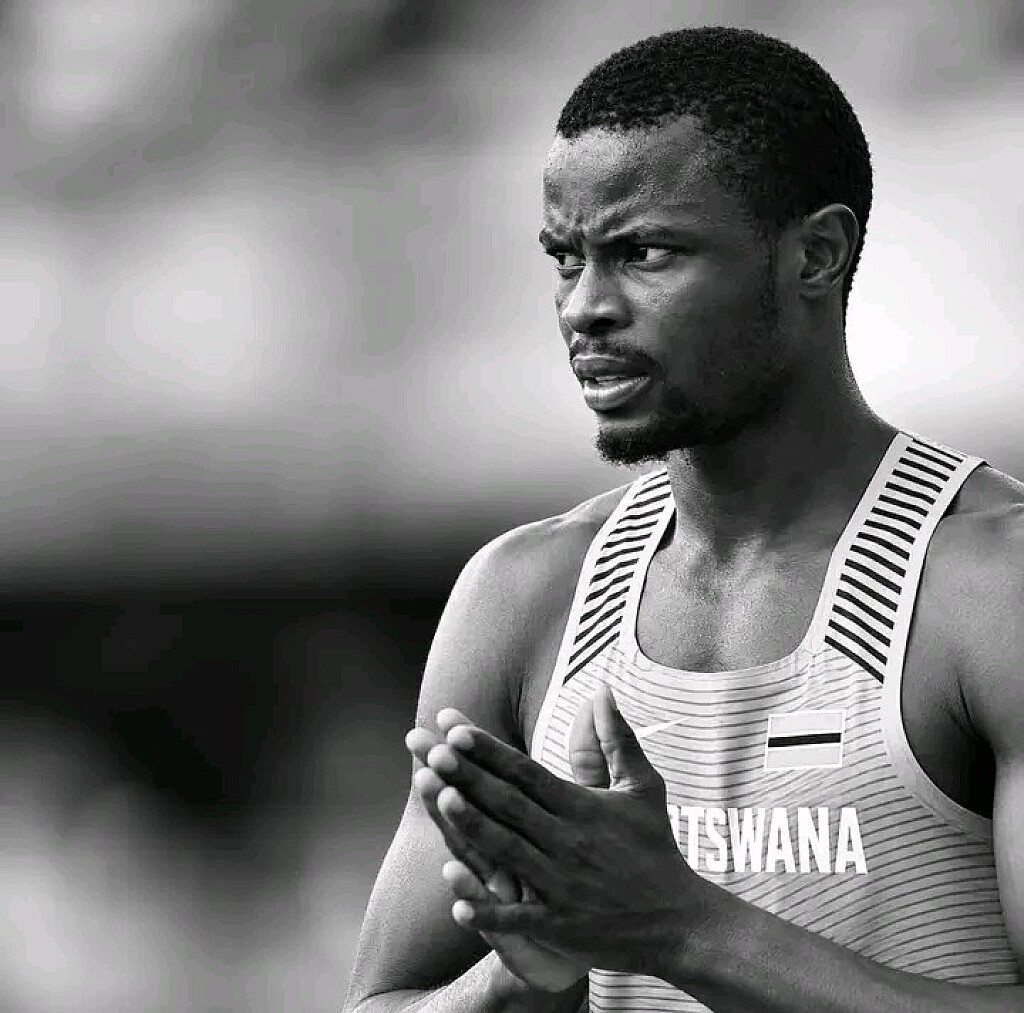
Botswana Athletics Mourns Gaone ‘Lux’ Maotoanong, Commonwealth Games Gold Medallist And Former National Team Sprinter
Botswana’s athletics community is mourning the sudden death of former national team sprinter Gaone Leaname Maotoanong, affectionately known as “Lux,” who represented his country at major international championships and played a significant role in its relay success.
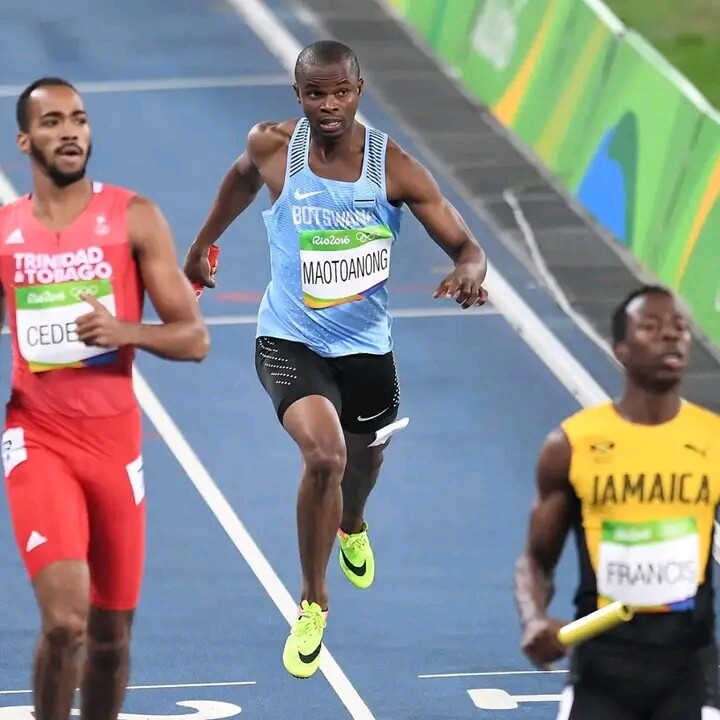
The Botswana Athletics Association (BAA) announced his passing in a bereavement notice issued on October 22, 2026, paying tribute to an athlete whose dedication, talent and commitment to excellence earned him respect across the athletics fraternity. Maotoanong was born in 1991 and died in 2026.
Throughout his career, Maotoanong proudly wore Botswana’s national colours on some of the biggest stages in athletics, contributing to the country’s growing reputation in the men’s 4x400m relay. His international achievements included competing at the Olympic Games, World Athletics Championships, Commonwealth Games, World Athletics Relays and continental championships.
One of the standout moments of his career came at the 2018 Commonwealth Games on the Gold Coast in Australia, where he was part of Botswana’s gold-medal-winning 4x400m relay team. The victory represented a major achievement for the southern African nation and reinforced its standing among the leading relay teams on the continent.
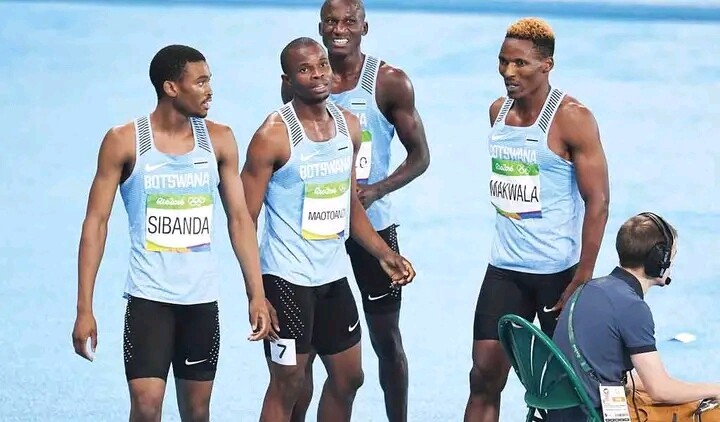
Maotoanong also represented Botswana at the 2016 Rio Olympic Games, where the national 4x400m relay team reached the final and finished fifth. He subsequently featured in the country’s relay squad at the 2019 World Athletics Championships in Doha, Qatar, having also competed at the 2015 edition in Beijing, China.
His experience on the global stage extended to the World Athletics Relays in the Bahamas in 2015 and 2017, where Botswana’s 4x400m relay teams reached the finals. These appearances reflected his place within a generation of athletes helping Botswana establish itself as a consistent presence in international relay competition.
At continental level, Maotoanong enjoyed further success, winning gold in the 4x400m relay at the African Championships in Marrakech, Morocco, in 2014 and again in Durban, South Africa, in 2016. He also helped Botswana secure silver in the relay at the 2015 African Games in Brazzaville, Republic of the Congo.
His achievements were not limited to relay racing. Maotoanong demonstrated his individual ability in the 400m by winning silver at the 2015 World University Games in Gwangju, South Korea, adding another significant accomplishment to his international career.
Beyond his appearances at major championships, he competed at the Commonwealth Games, African Games, African Championships, Diamond League meetings and numerous other international competitions, building a career defined by service to his country and commitment to athletics.
A Legacy Beyond The Track
Maotoanong’s contribution to Botswana athletics extended beyond competition. According to the BAA, he served as a member of the Botswana National Olympic Committee (BNOC) Athletes’ Commission from 2022 to 2025, where he contributed to efforts to advance athletes’ interests and welfare.
The role reflected another dimension of his involvement in sport, demonstrating a commitment to athlete representation and sports development beyond his own performances on the track.
In its tribute, the BAA remembered Maotoanong as an athlete, leader, mentor and friend whose contributions had left a lasting mark on Botswana athletics. The association also extended its condolences to his family, friends, teammates and everyone who had the privilege of knowing him.
His passing represents a profound loss for Botswana’s sporting community, particularly those who shared in the country’s relay achievements and witnessed his dedication to representing the national team. His legacy will remain part of the story of Botswana’s development as a force in African and international athletics.
As tributes emerge, Maotoanong will be remembered not only for the medals and championships he helped his country achieve, but also for his service to fellow athletes and his contribution to the wider sporting fraternity.
Funeral arrangements are expected to be communicated by the Botswana Athletics Association in due course.
Gaone “Lux” Maotoanong’s name will endure in Botswana athletics as a reminder of a career spent representing his country with pride, both on the track and in service to the athletes who followed.
by Erick Cheruiyot for My Best Runs.
Login to leave a comment
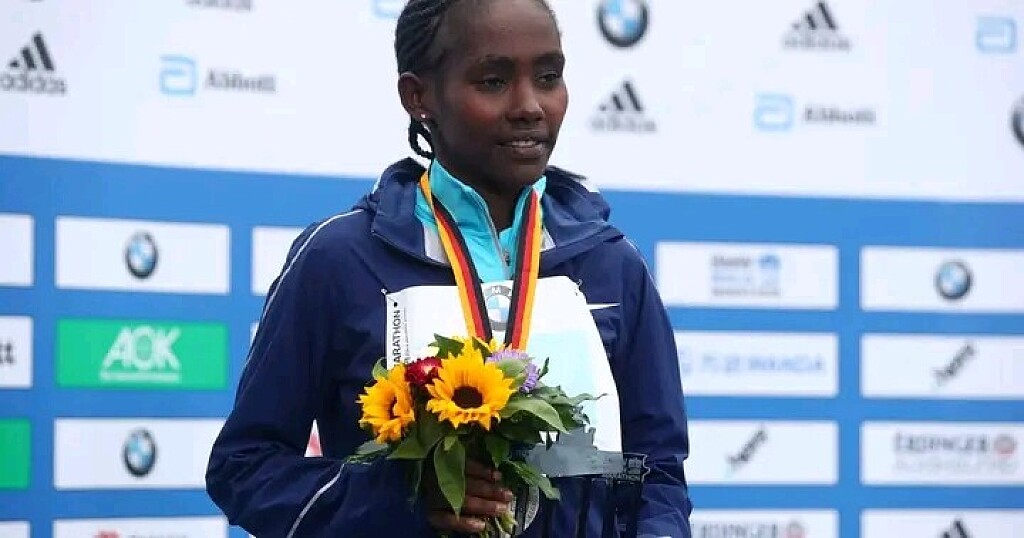
Ruti Aga Handed Six-Year Ban For Doping And Forged Medical Document In Tampering Case
Ethiopian marathon star Ruti Aga has been handed a six-year suspension by the Athletics Integrity Unit (AIU) after testing positive for methylprednisolone and being found guilty of tampering with an anti-doping investigation by submitting a forged medical document.
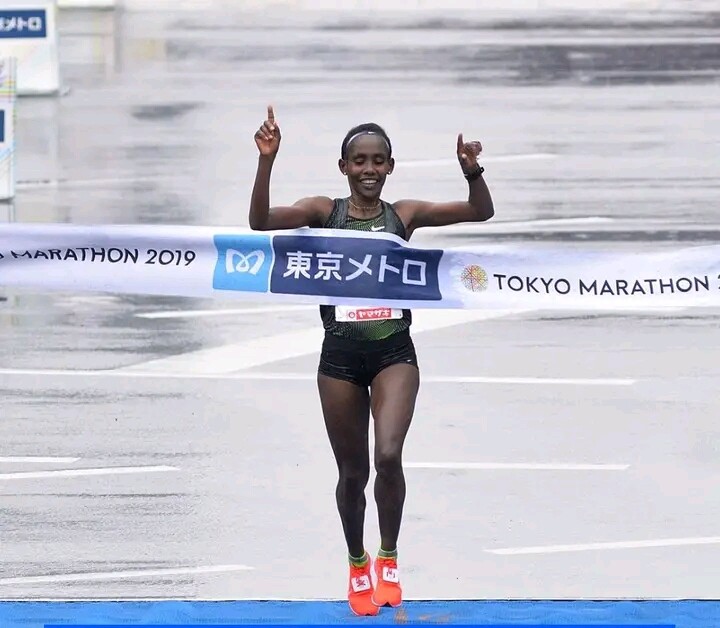
The former Tokyo Marathon champion tested positive for the prohibited substance after winning the Meishan Renshou Half Marathon in China on March 15, 2026, in a time of 1:08:04. At the time, Aga was ranked 11th in the world, reflecting her standing among the leading marathon runners internationally.
Methylprednisolone is a glucocorticoid classified under Class S9 of the World Anti-Doping Agency’s Prohibited List. It is prohibited in competition, and its detection prompted an investigation into the circumstances surrounding its use.
However, the case became considerably more serious when investigators examined Aga’s explanation for the substance’s presence in her sample. The Ethiopian athlete said she had taken the medication as part of treatment for a knee injury and submitted a prescription that she claimed had been issued by a medical clinic.
According to the AIU’s findings, the clinic named in the document did not exist. The individual identified as the prescribing doctor was a family member who was not registered to practise medicine. When questioned, the family member reportedly said they had used an old prescription pad from a former workplace.
That workplace subsequently confirmed that the individual had never worked there and that the prescription pad did not belong to the institution. The AIU, working with the Ethiopian Anti-Doping Authority, established that the medical document was forged.
The investigation also found that Aga had provided false information during an AIU interview on April 21, 2026, before submitting the disputed medical document on May 4. The findings resulted in a separate tampering charge in addition to the original anti-doping violation.
The AIU imposed a two-year suspension for the presence and use of a specified substance and a further four years for tampering with the investigation. The combined penalties resulted in a six-year ban, with Aga ineligible to compete until September 10, 2032, when she will be 38 years old.
The sanction marks a major setback for a runner whose career has included victories and podium finishes at some of the world's most prestigious road races.
Aga won the Tokyo Marathon in 2019, following a series of outstanding performances on the World Marathon Majors circuit. Between 2016 and 2019, she collected six podium finishes at the major marathons, including second-place finishes in Berlin in 2017 and 2018, second place in Tokyo in 2018, third place in Berlin in 2016 and third place in New York City in 2019.
She has not competed at a World Marathon Major since 2022, but continued to achieve success elsewhere on the international road-running circuit.
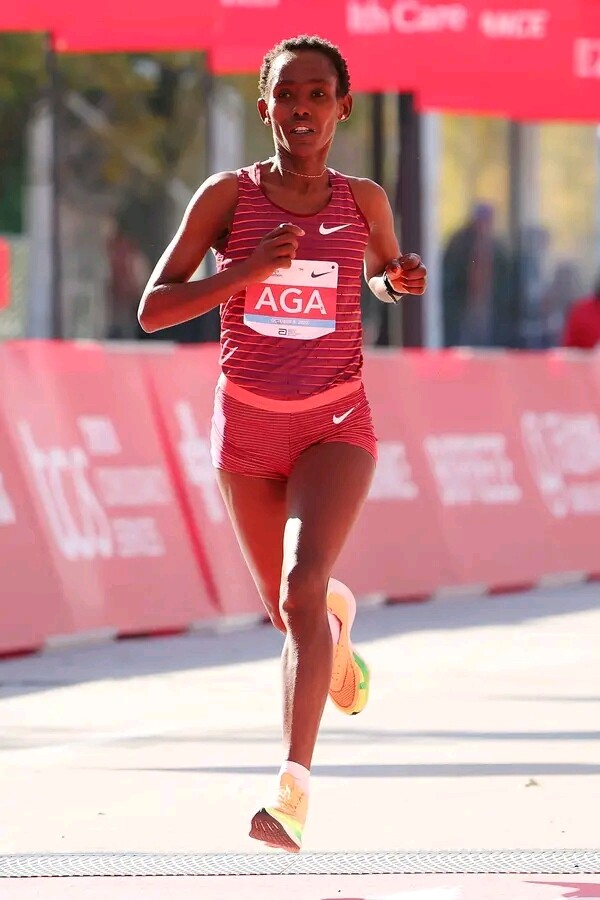
Between 2023 and 2026, Aga recorded five marathon victories across Dongying, Daegu, Xiamen and Hangzhou, including back-to-back wins at the Xiamen Marathon in 2025 and 2026. She also finished runner-up twice in Dubai and once in Sydney, maintaining a strong presence in elite marathon competition.
Her personal best of 2:18:09 further underlines the level at which she has competed throughout her career.
Despite those achievements, the six-year suspension places her future in the sport in serious doubt. If she returns when the ban expires in September 2032, Aga will be 38 and will have spent six years away from competition under the sanction.
The case also serves as a reminder that anti-doping proceedings extend beyond laboratory results. Athletes are expected to comply with anti-doping rules throughout an investigation, and attempts to mislead investigators or submit forged evidence can result in additional sanctions beyond those imposed for the original violation.
For Aga, the ruling brings a difficult chapter to a career that once saw her among the world's leading marathon runners, with her Tokyo victory and years of international success now overshadowed by one of the most consequential disciplinary cases of her career.
by Erick Cheruiyot for My Best Runs.
Login to leave a comment
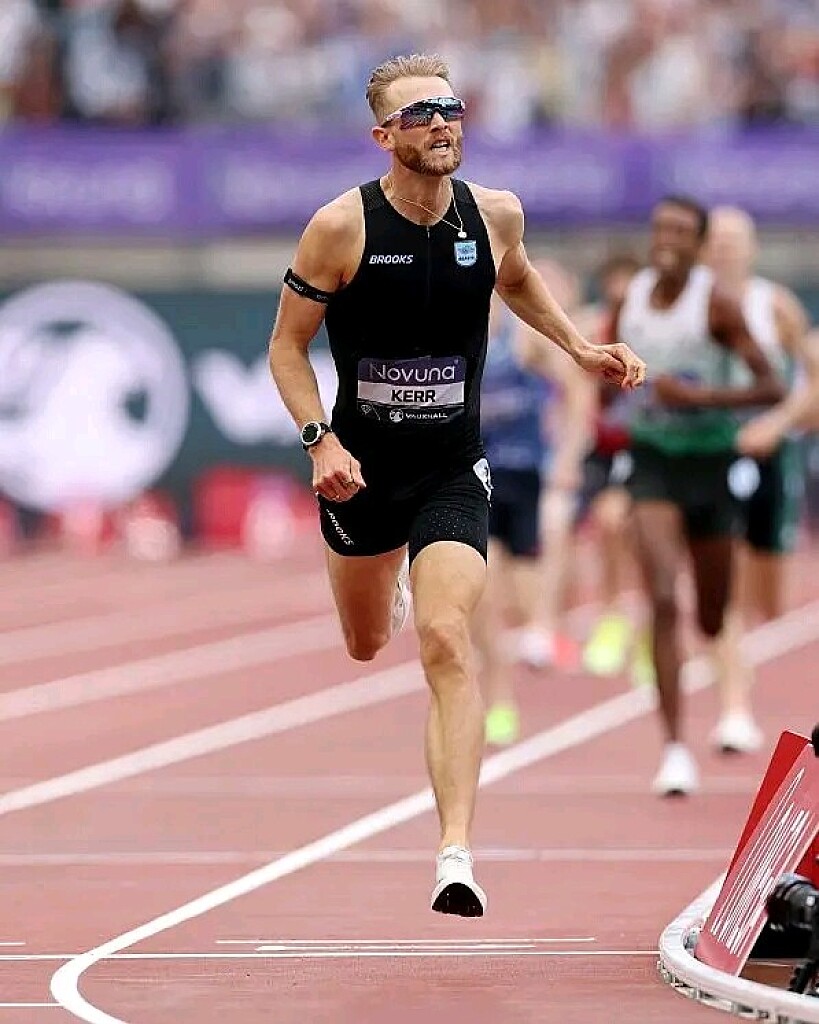
Josh Kerr Returns To Murrayfield As A World Champion To Deliver Scotland’s Match Ball Against New Zealand
Scottish athletics star Josh Kerr is preparing for a memorable return to his sporting roots when he delivers the match ball ahead of Scotland’s highly anticipated clash against New Zealand in the Nations Championship on November 7, 2026, at Murrayfield Stadium.

For the Edinburgh-born middle-distance runner, the occasion represents far more than a ceremonial appearance before an international rugby match. It brings him back to a stadium closely connected to his childhood dreams, his family’s sporting heritage and his lifelong admiration for Scottish rugby.
Kerr, 29, has established himself as one of the leading figures in world athletics, winning major championship titles and rewriting the record books. Yet, long before he became an internationally recognised runner, he grew up in a family where rugby occupied a special place.
His father, John Kerr, represented Scotland A, while his older brother, Jake Kerr, earned a senior Scotland cap in 2019. Growing up surrounded by the sport, Josh once dreamed of representing Scotland himself in front of a packed Murrayfield crowd.
Although his career ultimately took a different direction, his achievements on the track have now created an opportunity to return to the famous stadium in an extraordinary way.
Describing the occasion as a “huge honour,” Kerr will take centre stage before Scotland face the formidable challenge of the All Blacks, one of international rugby’s most celebrated teams.
The fixture carries considerable significance for the hosts, who will be seeking their first-ever victory over New Zealand. With Murrayfield expected to provide an electric atmosphere, Kerr’s involvement adds another personal story to an occasion steeped in sporting tradition.
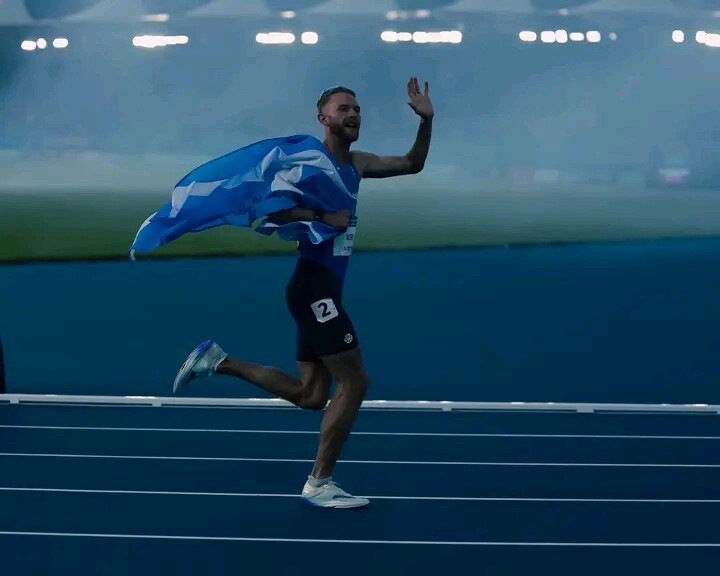
His appearance also comes after a remarkable season in which he has continued to demonstrate his versatility and competitive strength at the highest level of athletics.
Kerr won the men’s 3,000 metres at the World Athletics Indoor Championships in Poland before producing a historic performance in London, where he set a mile world record of 3:42.66. He later claimed victory in the 1,500 metres at the Ultimate Championship in Budapest, further underlining his status among the world’s elite middle-distance runners.
His world mile record carries a particularly interesting connection to New Zealand, the homeland of legendary runner John Walker, who held the previous world record for several years during the golden era of middle-distance running.
Walker’s achievements helped establish the mile as one of athletics’ most prestigious events, and Kerr’s ascent to the top of the same record books has created a remarkable link between two generations of champions.
Reflecting on that achievement, Kerr said: “To now hold that same record is something I’m incredibly proud of.”
The connection adds another layer of sporting significance to his appearance before Scotland take on the All Blacks. Although the two sports demand different skills, both celebrate the same qualities of determination, courage and the pursuit of excellence.
Murrayfield itself has witnessed numerous unforgettable occasions throughout its history. Among them is the emotional match-ball delivery by the late Doddie Weir in 2017, a moment recently voted the greatest in the stadium’s 100-year history. Weir, the former Scotland international who became a prominent campaigner for motor neurone disease awareness, left a lasting legacy that extended well beyond rugby.
Kerr’s appearance will provide another opportunity to celebrate the connection between sporting achievement and personal history, although his own story is distinct from Weir’s extraordinary legacy.
For the Edinburgh-born runner, the significance lies in returning to a place he once associated with a dream of representing his country in rugby. Instead, he will arrive as a world champion in another discipline, carrying the accomplishments of an exceptional athletics career.
From winning global titles to breaking the mile world record, Kerr has already created a lasting place for himself in Scottish sporting history. His visit to Murrayfield offers a different kind of milestone, bringing together his family’s rugby heritage and his own success on the international stage.
When Scotland welcome New Zealand on November 7, Kerr will not be lining up for a race or chasing another record. He will instead deliver the match ball before thousands of supporters, celebrating the sport that helped shape his childhood while representing a country whose colours he has carried to the summit of world athletics.
Sometimes, a sporting journey does not lead to the destination first imagined. For Josh Kerr, however, it has brought him back to Murrayfield with a world record, championship gold and a lifetime of memories behind him.
by Erick Cheruiyot for My Best Runs.
Login to leave a comment
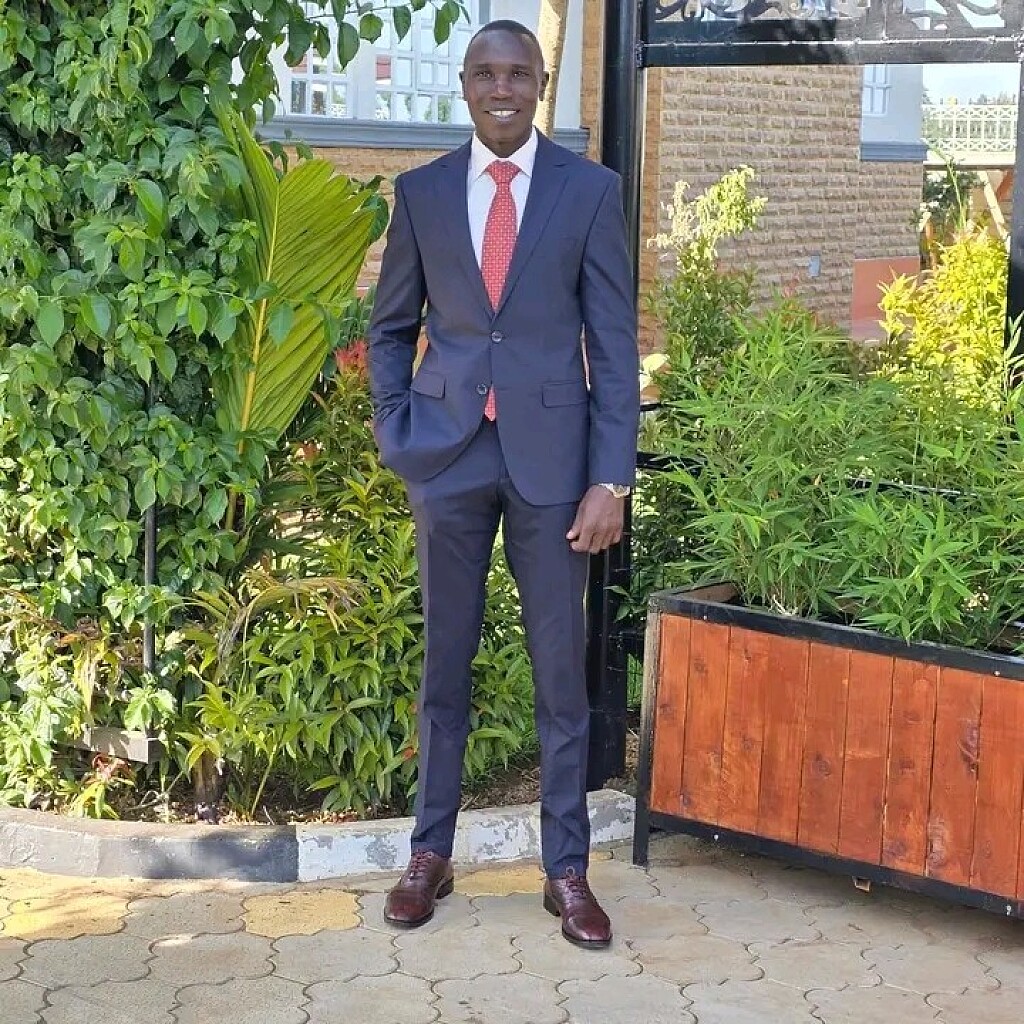
Geoffrey Kamworor: The Lawyer He Never Became, The Distance Running Legend He Was Born To Be
Long before he conquered world cross-country championships, dominated the half-marathon distance and lifted the New York City Marathon trophy, Geoffrey Kamworor was a young Kenyan student with an ambitious dream that had little to do with running: becoming a lawyer.
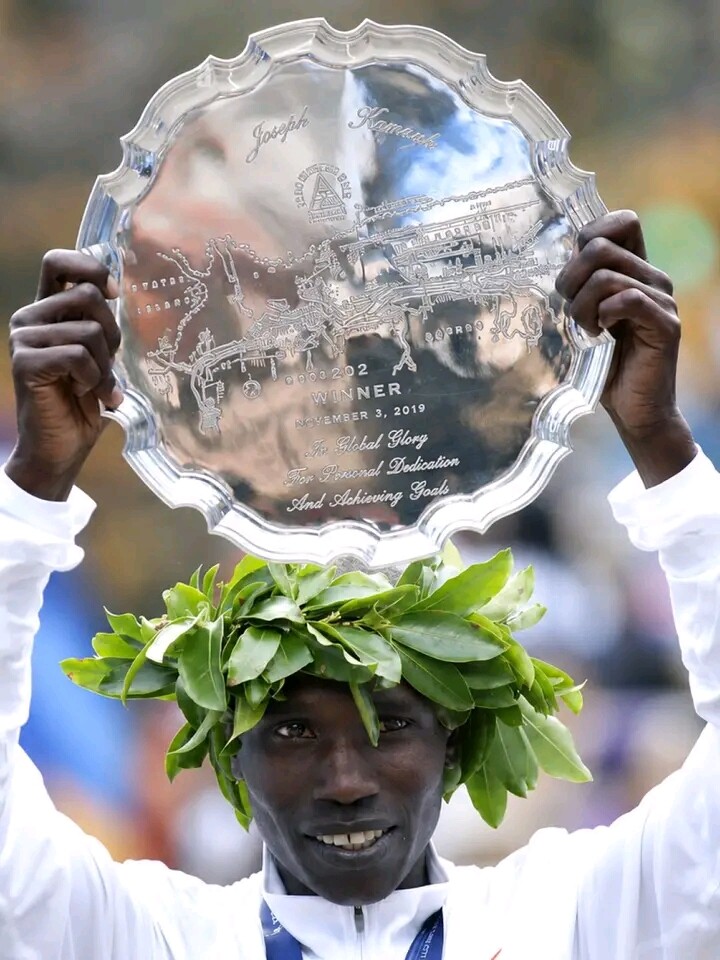
Growing up in Keiyo South, Kamworor developed the discipline that would later define his extraordinary athletic career. His daily routine involved running approximately five kilometres to school and another five kilometres back home. What might have seemed like an ordinary journey for a schoolboy was quietly laying the foundation for a future in international distance running.
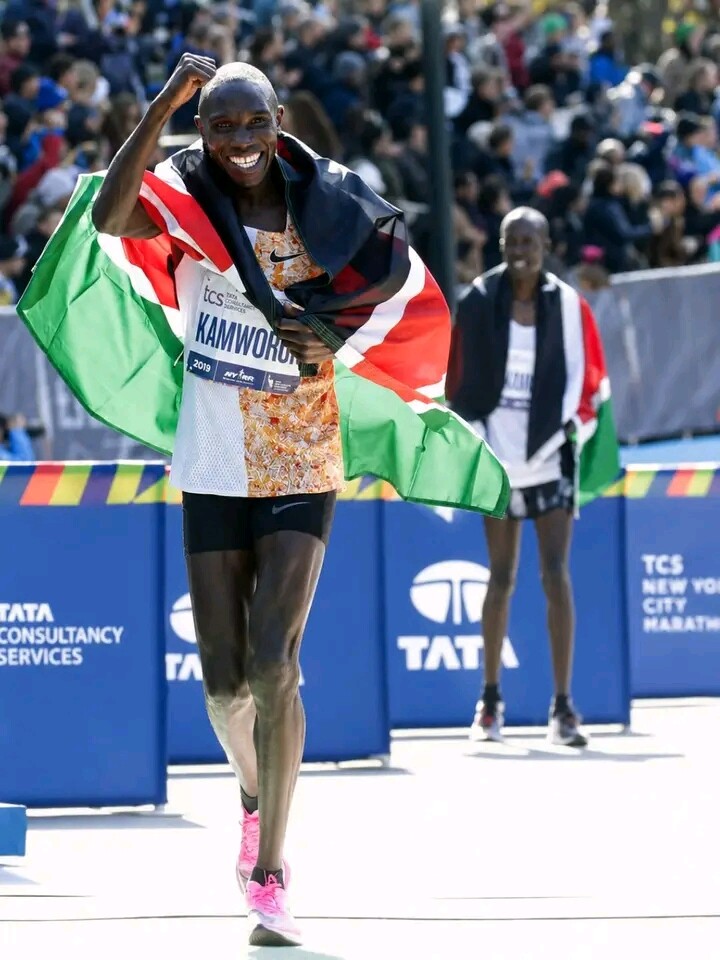
He attended Chepsamo Primary School before proceeding to Lelboinet Secondary School, where he combined his education with a growing passion for athletics. At the time, his ambitions extended beyond the track and roads. He wanted to pursue a career in law, and that dream eventually brought him an opportunity to study at a college in the United States.
However, the young Kenyan faced a defining decision: follow the academic path he had envisioned or commit himself fully to the sport that was beginning to reveal his remarkable potential. Kamworor chose athletics, a decision that would ultimately place his name among the most accomplished distance runners of his generation.
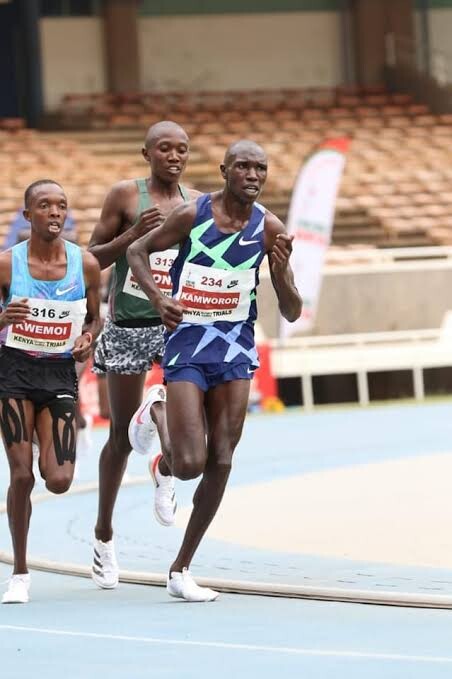
His transformation from a promising schoolboy into an international contender began gathering momentum in 2010, when he joined the GSC training camp in Kaptagat. His development accelerated rapidly, and within a short period, an opportunity to compete in Finland exposed him to a higher level of international competition.
Still only 17, he reportedly competed nine times during that trip, demonstrating an impressive ability to adapt to the demands of competitive racing. Breaking the eight-minute barrier for 3,000 metres was an early indication of the talent that would eventually carry him to the highest levels of distance running.
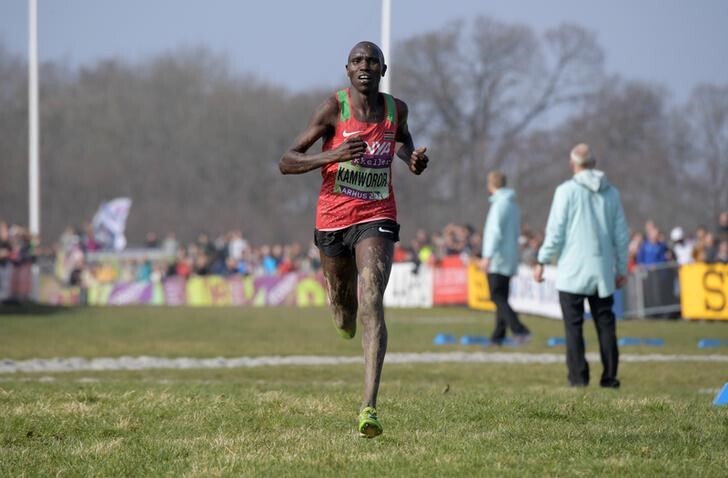
His breakthrough on the international stage followed in March 2011, when he captured the junior men's title at the World Cross Country Championships in Punta Umbría, Spain. That victory announced the arrival of a young athlete whose future would extend far beyond the junior ranks.
Kamworor was not simply a runner with speed. He possessed the endurance, tactical intelligence and competitive determination required to succeed across different distances and racing surfaces. As his career developed, those qualities became the hallmarks of an athlete capable of challenging the world's best.
Cross country became one of the foundations of Kamworor's international success. In 2015, he won the senior men's title at the World Cross Country Championships in Guiyang, China, confirming his status as one of the leading distance runners in the world. Two years later, he returned to the top of the podium in Kampala, Uganda, defending his senior world cross-country crown in front of a home crowd. Winning consecutive senior world titles placed him in an elite category and demonstrated his remarkable command of the demanding discipline.
On the roads, however, Kamworor established an equally impressive legacy. He won the World Half Marathon Championships in Copenhagen in 2014, Cardiff in 2016 and Valencia in 2018, becoming a three-time champion at the distance. His achievements reflected a rare combination of strength, speed and race management, enabling him to prevail against formidable international opposition.
The half marathon became one of his signature events, but Kamworor's ambitions were never confined to a single discipline. He continued to demonstrate his versatility on the track, winning silver in the men's 10,000 metres at the 2015 World Athletics Championships in Beijing, China. From the grass of cross-country courses to the roads of major international races and the track of a global championship, he repeatedly demonstrated that his talent could flourish wherever the competition took him.
Among Kamworor's most memorable achievements are his victories at the New York City Marathon in 2017 and 2019. Winning one of the world's most celebrated marathons requires exceptional endurance, but winning it twice demands much more: tactical patience, resilience and the ability to navigate a demanding course against a deep international field.
Kamworor demonstrated those qualities in both victories, establishing a special connection with the New York race and adding the marathon to an already remarkable collection of honours. His success in the American city also illustrated his ability to move successfully between distances. An athlete celebrated for his cross-country and half-marathon dominance had shown that he could also conquer the 42.195-kilometre marathon, one of the most demanding challenges in road racing.
Now, as he sets his sights on another New York campaign, the Kenyan star has an opportunity to strengthen his legacy further. A third men's open-division victory would place him among a very select group of athletes to have won the prestigious race three times. Such a milestone would be more than another addition to his trophy cabinet; it would reinforce the story of a runner whose competitive range has extended across nearly every major discipline in distance running.
Behind Kamworor's achievements lies a training environment built around discipline, consistency and high-level competition. Working under the guidance of renowned coach Patrick Sang, he has trained alongside some of Kenya's most celebrated athletes, including marathon great Eliud Kipchoge and middle- and long-distance superstar Faith Kipyegon.
Sharing a training environment with athletes of such calibre provides a demanding daily standard. Yet Kamworor has built his own identity through a career defined by major championship victories and sustained success across different racing distances. His journey has also included difficult periods and setbacks, reminding the running world that even the most accomplished champions must continually work to return to their best. His longevity at the elite level reflects the importance of patience, dedication and the willingness to keep pursuing new goals.
For aspiring athletes in Kenya, his story offers an important lesson: extraordinary achievements are often built through ordinary routines repeated consistently over many years. Those five-kilometre journeys to school and back were not glamorous. They did not come with cheering crowds, television cameras or medals. Yet they formed part of the foundation of a career that would eventually take him to the world's biggest running stages.
Kamworor's story is ultimately about a choice that changed the direction of his life. The young student who once imagined himself arguing cases in a courtroom instead built his reputation by answering the toughest questions on the running track and roads. His achievements speak for themselves: world cross-country titles, three world half-marathon crowns, a global 10,000-metre silver medal and two New York City Marathon victories.
He may never have pursued the legal career he once envisioned, but his athletic record tells a compelling story of ambition, sacrifice and extraordinary accomplishment. His pursuit of another New York triumph offers a fresh chapter in a career that has already crossed the boundaries between cross country, track and road racing.
For Geoffrey Kamworor, the courtroom was a dream he left behind. The world of distance running became the stage on which he built his name. And while the law lost a prospective lawyer, athletics gained a champion whose achievements have helped define an era of Kenyan distance running.
by Erick Cheruiyot for My Best Runs.
Login to leave a comment

TCS New York City Marathon
The first New York City Marathon, organized in 1970 by Fred Lebow and Vince Chiappetta, was held entirely in Central Park. Of 127 entrants, only 55 men finished; the sole female entrant dropped out due to illness. Winners were given inexpensive wristwatches and recycled baseball and bowling trophies. The entry fee was $1 and the total event budget...
more...
Five Years On, Agnes Tirop’s Light Still Shines in the World of Athletics
Five years after the tragic death of Agnes Jebet Tirop, the Kenyan distance-running star remains a powerful symbol of sporting excellence, unfulfilled potential and the urgent fight against gender-based violence.
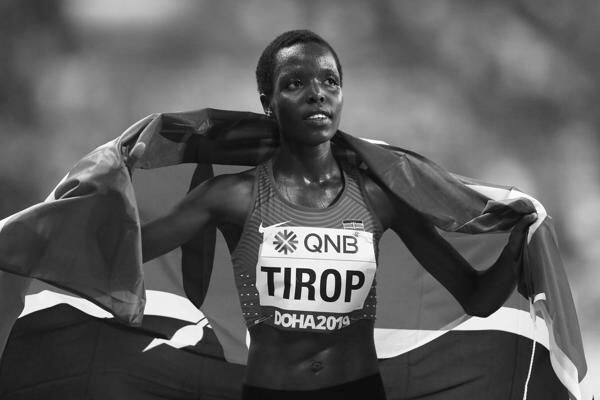
On October 13, 2021, the athletics world was plunged into mourning following the death of Tirop, who was found at her home in Iten, Kenya, at just 25 years old. Her life was cut short at a time when her career was flourishing, leaving behind a legacy that continues to resonate with athletes, fans and the wider community.
For Kenya, a country whose identity is deeply intertwined with distance-running success, Tirop represented a remarkable generation of female athletes taking the sport to new heights. Her achievements on the track, across country and on the roads had already secured her place among the country's outstanding distance runners.
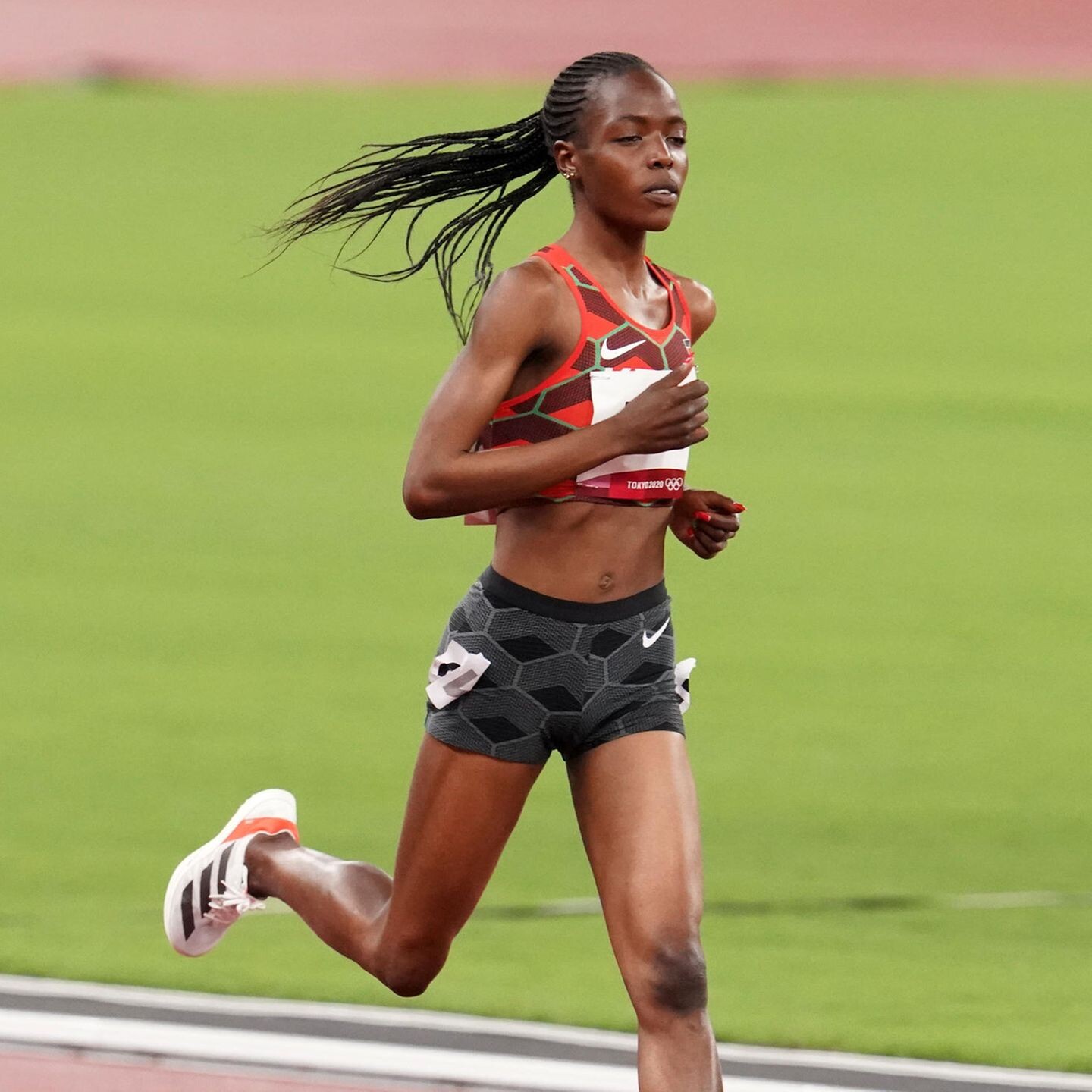
Five years later, the sadness of her loss remains inseparable from the extraordinary story of what she accomplished in her short but memorable career.
A Champion Who Rose to the Top at 19
Tirop announced herself on the global stage in spectacular fashion at the 2015 World Athletics Cross Country Championships in Guiyang, China. At only 19, she won the senior women's race, becoming the youngest champion in the event since Zola Budd in 1985.
Her victory demonstrated not only her natural ability but also the composure and determination that would become defining features of her running career.
She subsequently established herself among the world's leading track athletes, winning bronze medals in the women's 10,000 metres at the 2017 World Athletics Championships in London and the 2019 edition in Doha.
Those back-to-back podium finishes confirmed her consistency at the highest level and underlined her ability to compete against the strongest distance runners in the world.
Tirop also demonstrated considerable versatility at the Tokyo 2020 Olympic Games, held in 2021, where she finished fourth in the women's 5,000 metres. Although she narrowly missed the podium, her performance reinforced her reputation as one of Kenya's most accomplished emerging distance-running talents.
A World Record That Made History
Just weeks before her death, Tirop delivered one of the defining performances of her career.
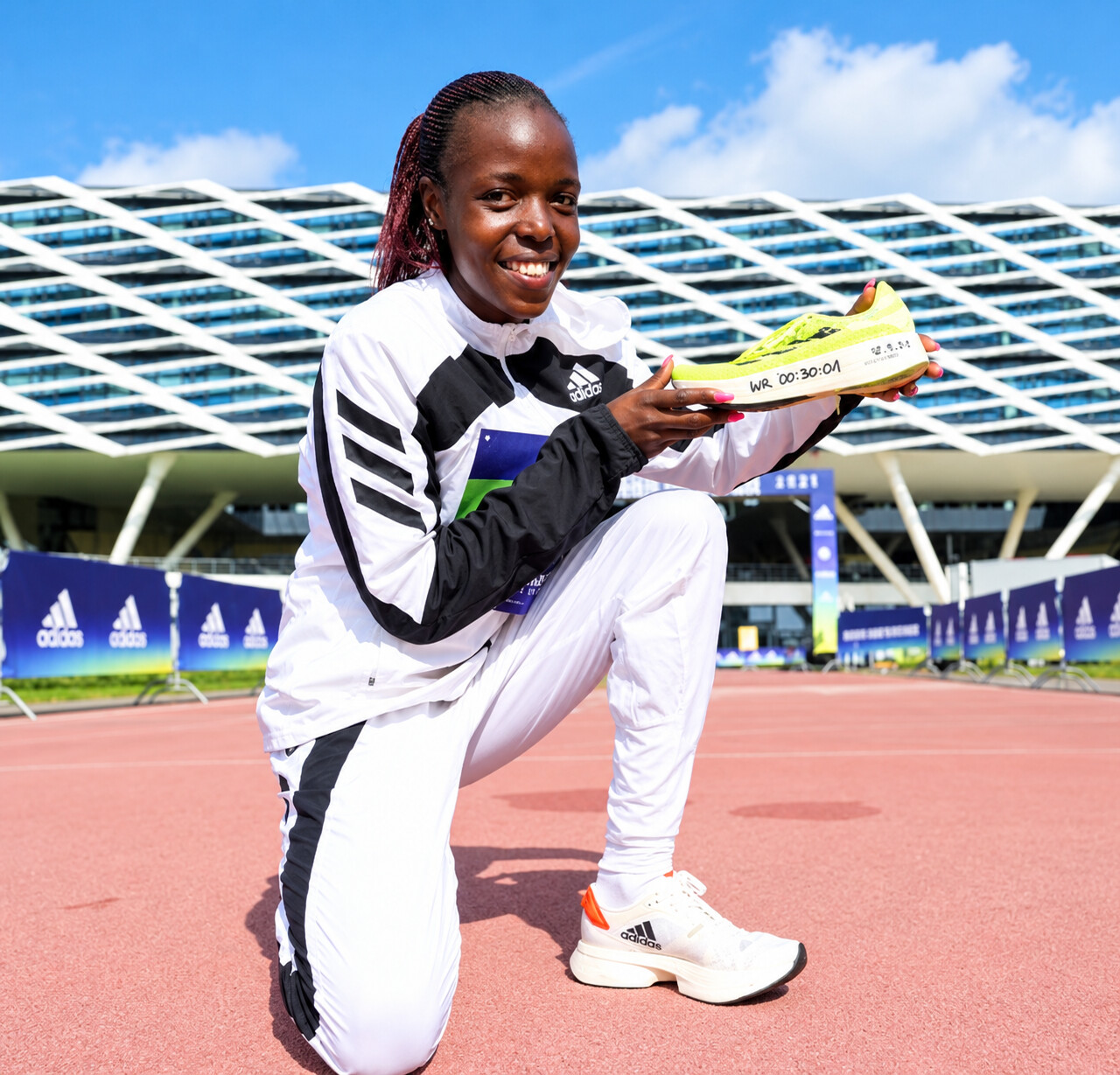
On September 12, 2021, she clocked an astonishing 30:01 to win the women's 10km road race at the adizero Road to Records event in Herzogenaurach, Germany.
Her performance broke the then women's-only world record by 28 seconds, establishing a new benchmark for the distance. The record was subsequently ratified by World Athletics. It was aremarkable achievement that placed her name among the legends of distance running. Although her record has since been broken, the greatness of her achievement remains untouched, and no change in the record books can diminish the extraordinary talent, courage and determination she displayed that day. Time may bring new champions and faster performances, but it can never erase the mark she left on athletics.
In a race that demanded patience, tactical awareness and an exceptional finishing effort, Tirop broke away from compatriot Sheila Chepkirui during the closing stages and powered towards the finish line.
The performance was a remarkable demonstration of her endurance and competitive instinct. It also offered a glimpse of what might have followed had she been given more years to develop her career.
Her final competitive appearance came on October 3, 2021, when she finished second in a 10km race in Geneva, Switzerland. Ten days later, the world learned of her death.
The timing made the tragedy particularly difficult to comprehend: an athlete who had just rewritten the record books and was still competing at the highest level was suddenly gone.
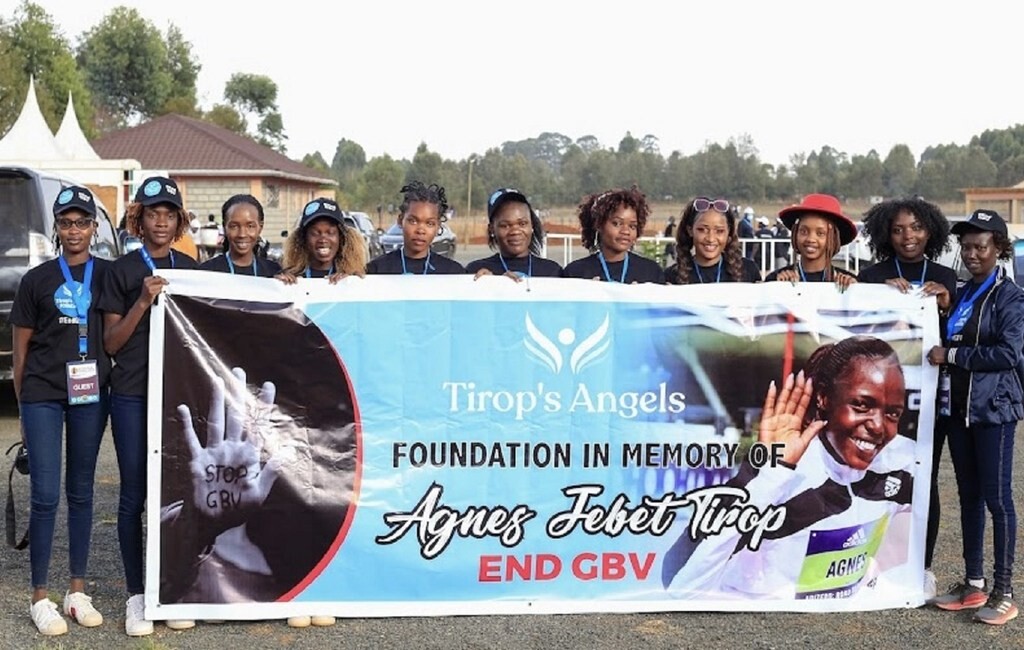
A Tragedy That Reached Far Beyond Sport
Tirop's death was not simply the loss of an elite athlete. It also brought renewed international attention to violence against women and the need to create safer environments in which women and girls can live, train and pursue their ambitions.
Her story became a painful reminder that medals, records and international recognition cannot shield someone from violence in their private life.
In the years since her death, her name has continued to feature in efforts to promote women's empowerment, athlete welfare and the prevention of gender-based violence. Initiatives associated with her legacy, including Agnes Tirop Angels, reflect the continuing determination to transform grief into meaningful action.
Her story remains especially significant within athletics, where the pursuit of excellence must go hand in hand with respect for athletes' safety, dignity and wellbeing.
Five Years Later, Her Legacy Endures
For young runners who dream of representing Kenya on the international stage, Tirop's career remains an example of what dedication, talent and courage can achieve.
She rose from a promising young athlete to a world champion, a two-time World Championships medallist and a world-record holder. She excelled across different distances and surfaces, leaving an impressive body of achievements before reaching her 26th birthday.
Yet her legacy cannot be measured by statistics alone. It also lies in the conversations her death continues to inspire, the women whose safety must be protected and the determination to ensure that sporting success is never separated from human dignity.
Five years on, Agnes Tirop is remembered not only for the records she set or the medals she won, but also for the future that was taken from her.
Her achievements remain part of Kenya's rich athletics history, while her story continues to call for a world in which women can pursue their dreams without fear of violence.
Agnes Tirop's life was tragically short, but her impact reaches far beyond the finish line. Her achievements will remain in the record books, her memory will endure in the hearts of athletics fans, and her legacy will continue to inspire generations to come.
by Erick Cheruiyot for My Best Runs.
Login to leave a comment
From Kipchoge’s Impossible Dream to Sawe’s Historic Reality: Kenya Redefines Marathon Running
Seven years after Eliud Kipchoge challenged the limits of human endurance in Vienna, fellow Kenyan Sabastian Sawe has transformed that extraordinary vision into a landmark achievement in competitive marathon running, becoming the first man to complete the 42.195-kilometre distance in under two hours under record-eligible race conditions.
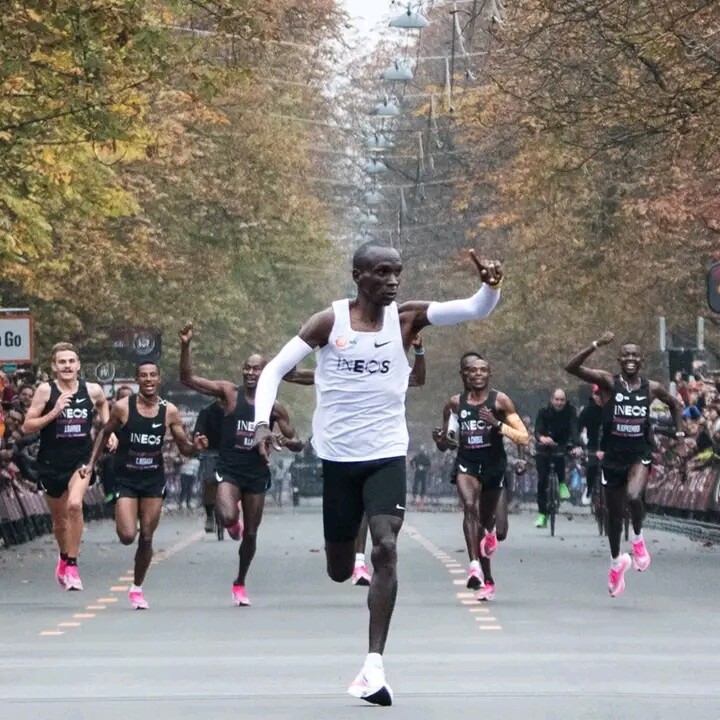
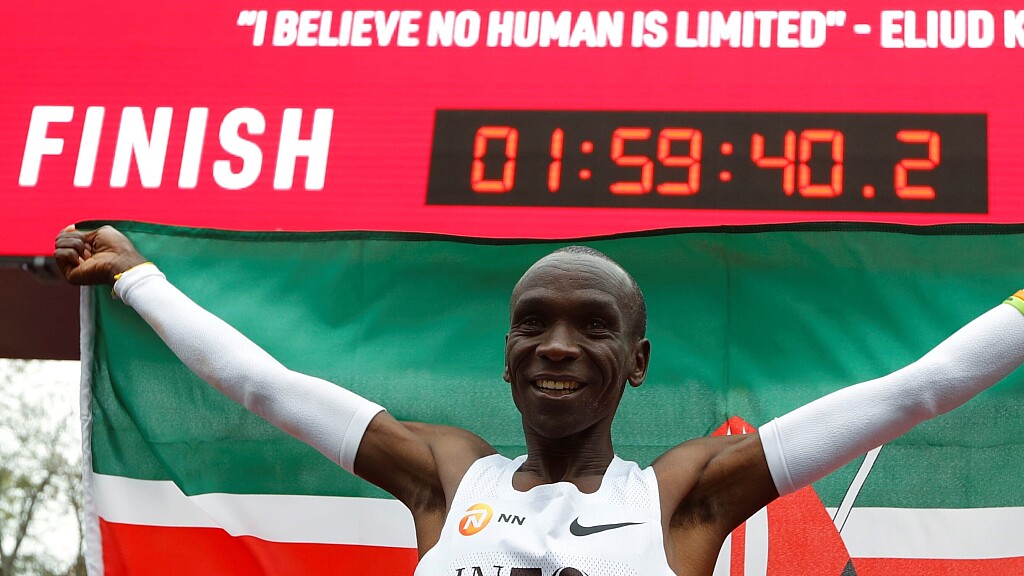
On October 12, 2019, Kipchoge etched his name into sporting history when he completed the INEOS 1:59 Challenge in Vienna, Austria, in an astonishing 1:59:40.2. Although the performance could not be recognised as an official world record because of the controlled conditions under which it was staged, it demonstrated that the seemingly impossible barrier was within human reach.
Kipchoge’s achievement carried a powerful message that resonated far beyond athletics: “No human is limited.” His words became a symbol of determination, ambition and the courage to challenge established boundaries.
However, the dream of breaking two hours in an official marathon remained unfinished.
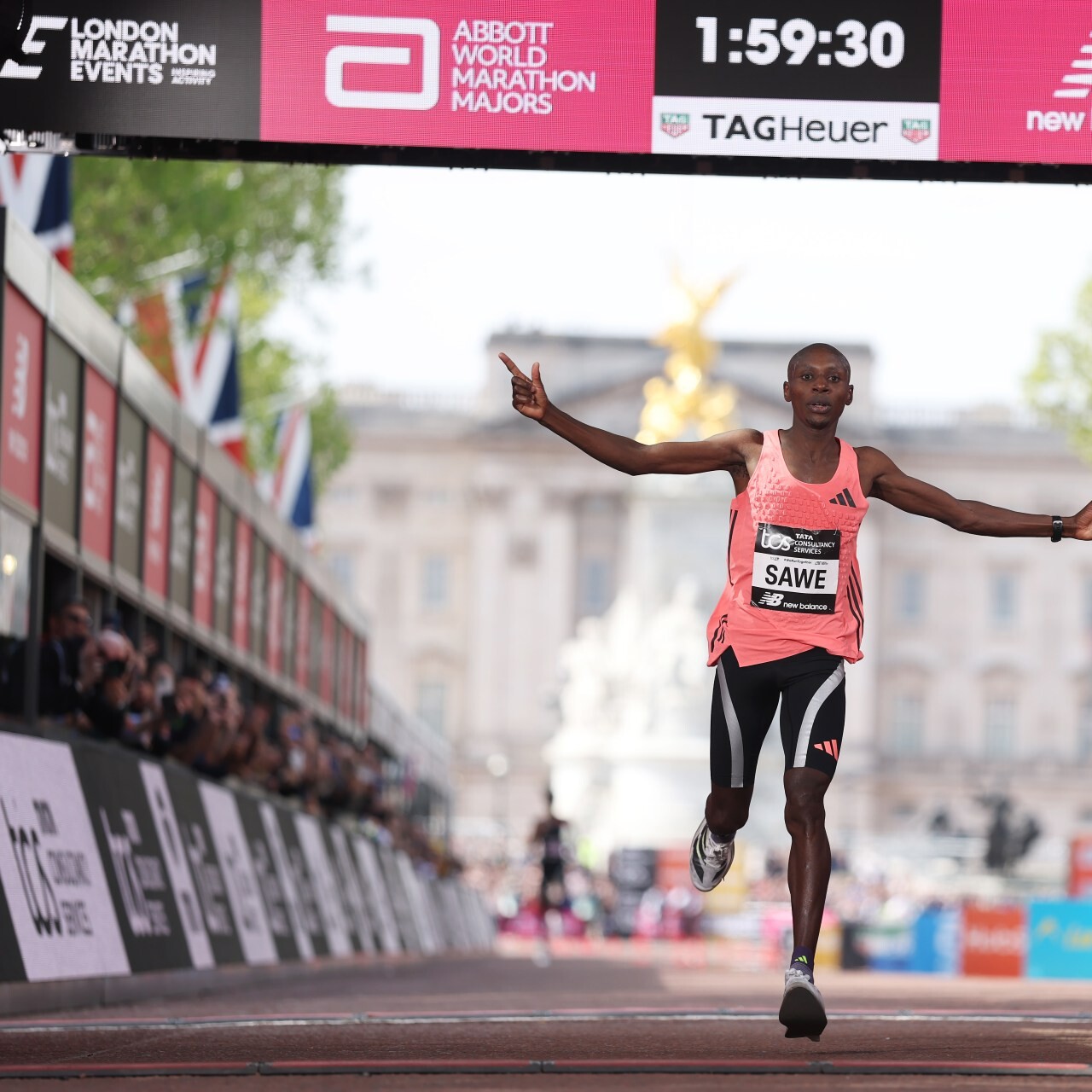
That changed on April 26, 2026, when Sawe delivered a breathtaking performance at the TCS London Marathon, stopping the clock at 1:59:30 to claim victory and establish a new men's marathon world record. The Kenyan took an astonishing 65 seconds off the previous record of 2:00:35, set by the late Kelvin Kiptum at the 2023 Chicago Marathon.
Sawe’s achievement was historic not simply because he ran faster than Kipchoge’s celebrated Vienna time, but because he accomplished the feat in an official, competitive marathon eligible for world-record recognition. The distinction elevated his performance into an entirely new chapter of distance-running history.
Remarkably, Sawe was not the only athlete to challenge the two-hour barrier that day. Ethiopia’s Yomif Kejelcha finished second in 1:59:41, becoming the second man to run under two hours in a competitive marathon. Uganda’s Jacob Kiplimo completed the podium in 2:00:28, also finishing inside Kiptum’s previous world record.
The extraordinary results underlined how dramatically the boundaries of marathon running have shifted in a sport where even a few seconds can separate an athlete from immortality.
For Kenya, Sawe’s triumph represents another defining moment in a remarkable tradition of distance-running excellence. From the groundbreaking achievements of Kipchoge to Kiptum’s world-record performance and now Sawe’s sub-two-hour marathon, Kenyan athletes have continued to shape the evolution of the sport.
Yet the connection between Kipchoge and Sawe goes beyond nationality. Kipchoge demonstrated that the marathon distance could be covered in less than two hours under specially controlled conditions. Sawe carried that vision into open competition, where the challenge had to be conquered within the demands of an official race.
Their achievements tell a compelling story of how sporting dreams can inspire future generations to pursue what once appeared unattainable.
On October 12, 2026, exactly seven years after Kipchoge’s landmark run in Vienna, the anniversary offers a powerful opportunity to reflect on how far marathon running has progressed. What began as a demonstration of human potential has become an officially recognised world-record achievement.
Kipchoge opened the door to a new era of possibility. Sawe ran through it and changed marathon history forever.
One dream. Two Kenyan legends. A new definition of human endurance.
The message remains as powerful as ever: No human is limited.
by Erick Cheruiyot for My Best Runs.
Login to leave a comment
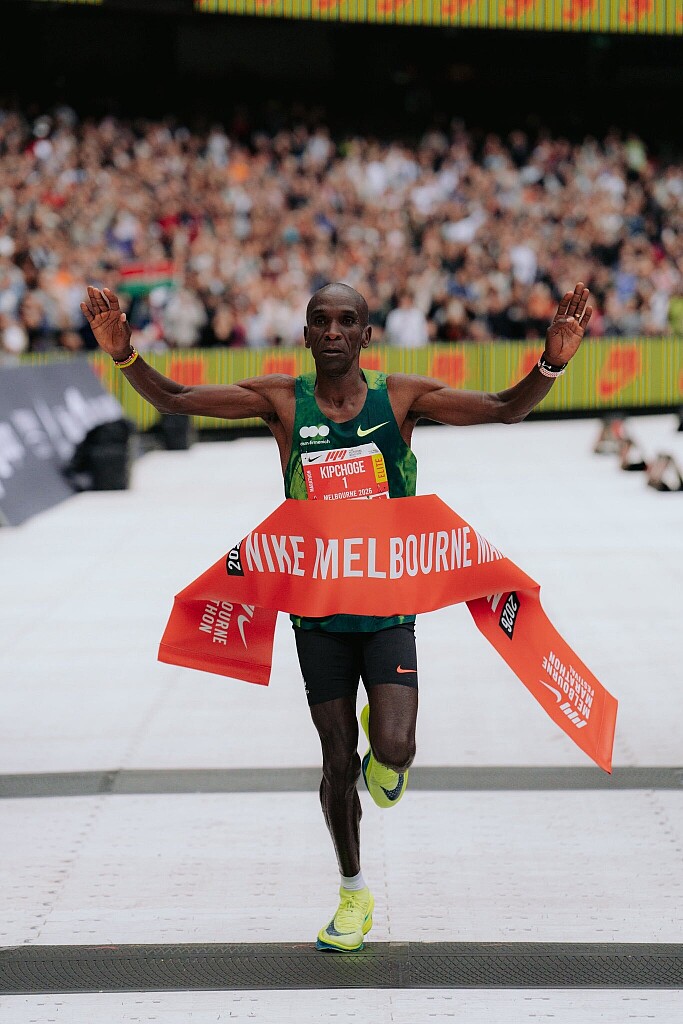
Eliud Kipchoge Conquers Melbourne With Course-Record 2:09:10 Victory
MELBOURNE, Australia — Kenyan marathon great Eliud Kipchoge added another memorable chapter to his illustrious career on Sunday, October 11, 2026, winning the Nike Melbourne Marathon Festival in a course-record time of 2:09:10
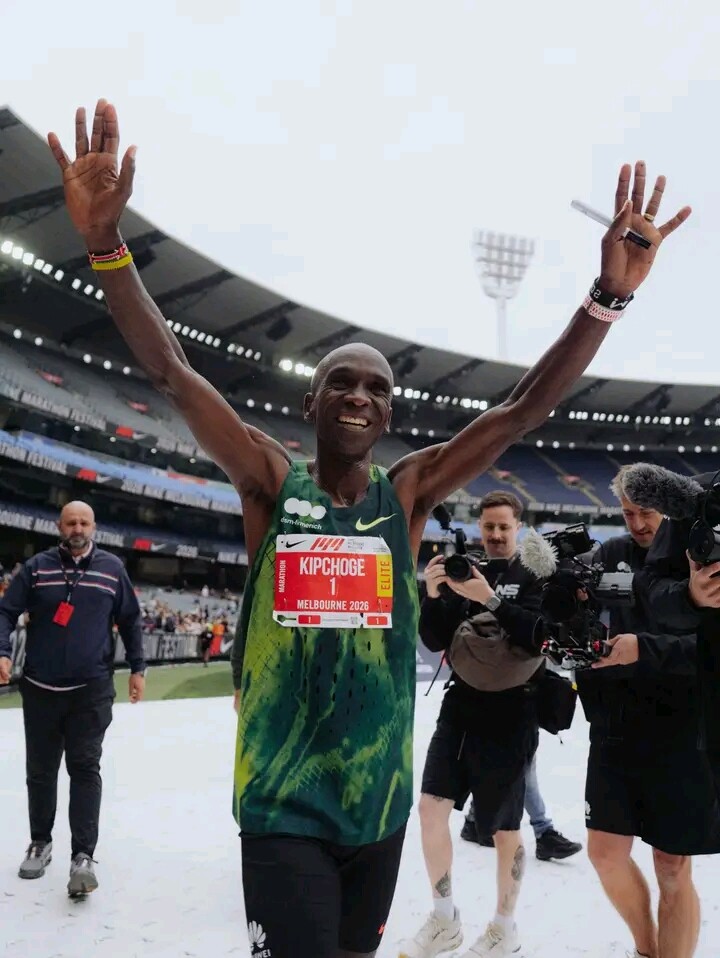
The victory further underlined the 41-year-old's enduring class and competitive spirit as he continues his ambitious global project, Eliud’s Running World, a three-year journey aimed at completing a marathon on every continent.
Kipchoge's performance delivered another milestone in a career defined by extraordinary consistency, historic achievements and an unwavering commitment to pushing the boundaries of distance running. His Melbourne triumph marked the 17th marathon victory of his career, adding another prestigious result to a remarkable record on the roads.
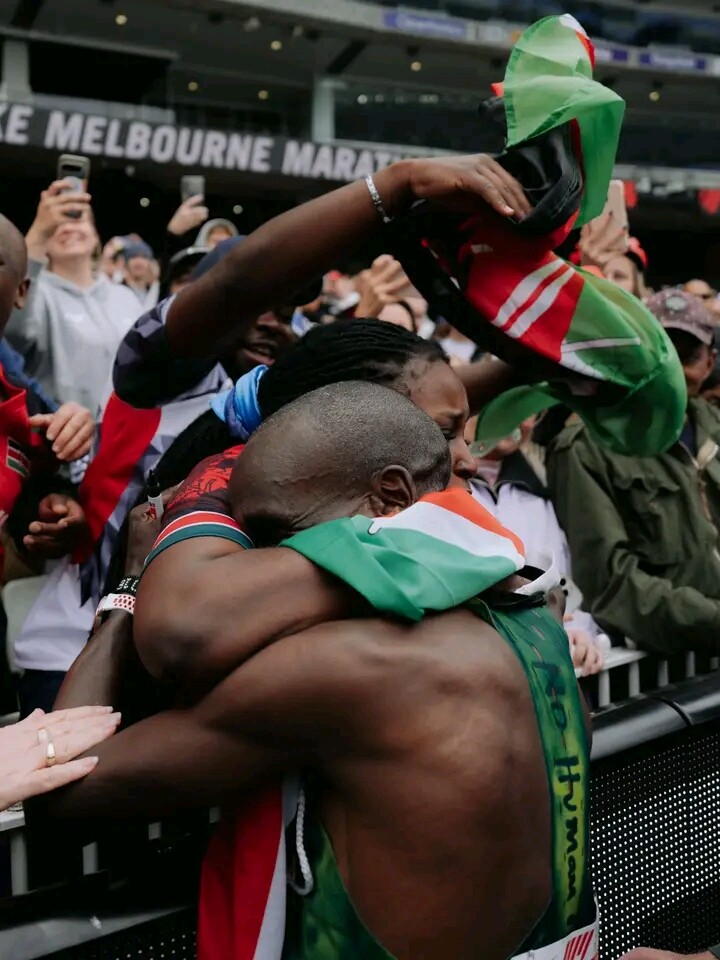
Kipchoge's Melbourne triumph was particularly significant as it marked his return to the top of the marathon podium three years after his previous marathon victory in Berlin in 2023. At 41, the Kenyan legend demonstrated that experience, discipline and an enduring passion for running can continue to produce exceptional performances at the highest level. His course-record time of 2:09:10 was a powerful reminder of his remarkable longevity in a sport that demands extraordinary physical and mental strength.
Australia's Thomas Do Canto finished second in 2:10:35, while compatriot Reece Edwards took third in 2:14:33, completing an all-Australian finish behind the Kenyan champion. For Kipchoge, the victory represented more than another achievement in his decorated career; it was another opportunity to inspire runners of all ages and reinforce his belief in the unifying power of the sport. His Melbourne success added fresh momentum to his global running tour and reaffirmed his status as one of the most influential marathon runners in history.
The Kenyan star broke away from his rivals in the closing stages of the 42.195-kilometre race before crossing the finish line inside the iconic Melbourne Cricket Ground (MCG). His official finishing time of 2:09:10 set a new course record, improving the previous mark of 2:09:12 established by Timothy Ronoh in 2022.
Melbourne represented the third stop on Kipchoge's ambitious Eliud's Running World journey. The project began with the Sanlam Cape Town Marathon in South Africa in May, followed by the NB42K Porto Alegre Marathon in Brazil in July. His latest appearance took the initiative to Oceania, bringing one of the greatest figures in distance-running history to Melbourne's passionate running community.
Kipchoge's Melbourne appearance was about much more than chasing another victory. The Kenyan legend embraced the city's running culture, sharing the course with runners of different abilities and inspiring the next generation through his presence. His course-record performance provided a fitting highlight to a day that celebrated the power of running to bring people together, with enthusiastic spectators lining the route and the spectacular finish at the Melbourne Cricket Ground adding to the occasion.
Reflecting on the experience, Kipchoge expressed his pride in winning a new race record while continuing his global mission to inspire runners and communities around the world. He also praised the tremendous support he received throughout the race, describing the atmosphere in Melbourne as an unforgettable experience that went beyond the competition itself.
“Today was such a special day, not only running my third World Tour, but also winning in a new race record. It makes me proud to run with the younger generation and inspire the running community in Melbourne. Today was about more than sport. It was about the energy of the city, the huge support along the race route, running alongside so many other runners, and a stunning finish at the MCG. No words can describe that feeling. Thank you, Melbourne.”
The two-time Olympic marathon champion has built a legacy through his remarkable achievements, including becoming the first man to complete a marathon in under two hours during the INEOS 1:59 Challenge in 2019, although that performance was not eligible for an official world record.
At 41, Kipchoge continues to demonstrate his love for the sport, using his global journey to promote running as a force for unity, inspiration and positive change across communities and continents.
His Melbourne victory was therefore more than another addition to his impressive collection of marathon wins. It was a statement of continued competitiveness and a celebration of a career that has helped shape modern marathon running.
With four continental stops remaining on his seven-continent mission, Kipchoge's journey is far from over. His latest triumph in Australia has provided another compelling chapter in the story of a champion whose influence extends well beyond the finish line.
by Erick Cheruiyot for My Best Runs.
Login to leave a comment

Melbourne Marathon
Be a part of Australia’s largest marathon and race alongside marathon legends. Circle around Albert Park Lake, Flinders Street Station, pass the St Kilda beach foreshore and cross the finish line at the MCG to cheers from supporters, family and friends. The Nike Melbourne Marathon is a competitive, adrenaline-filled race for those experienced in marathon running who want to set...
more...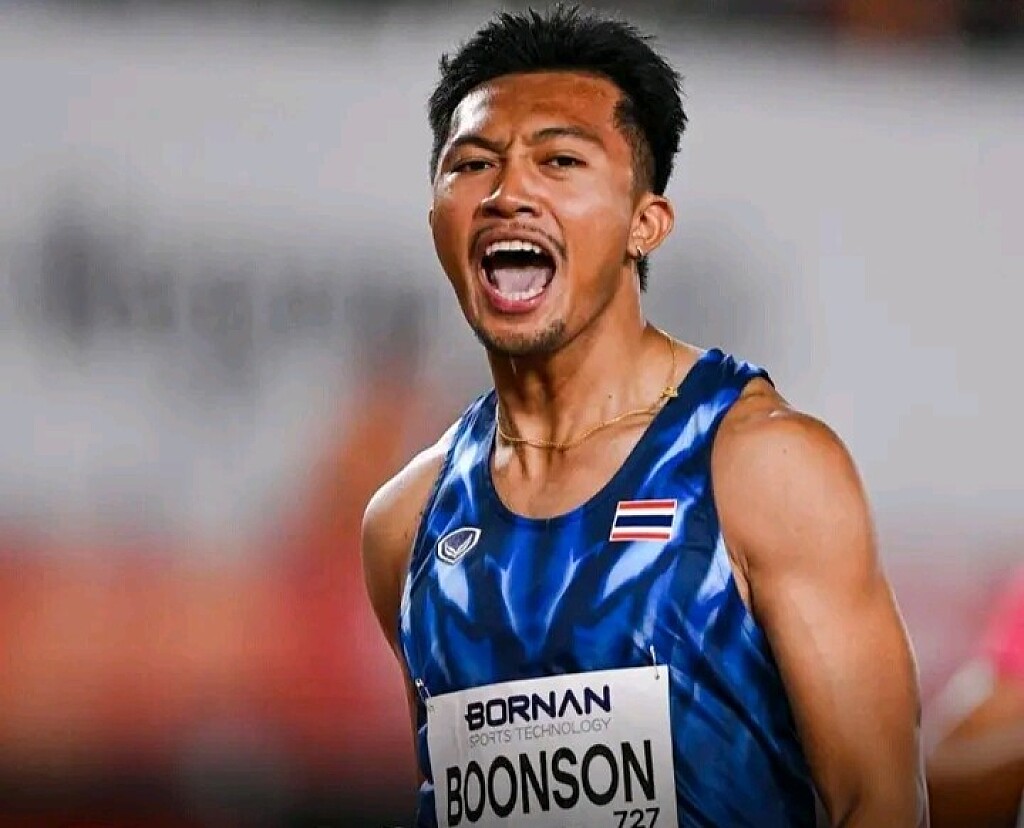
Puripol Boonson Completes Asian Games Sprint Double With Historic 19.88 Asian Record
Thailand’s Puripol Boonson has delivered a spectacular performance at the 2026 Asian Games in Nagoya, completing the men’s 100m and 200m sprint double while etching his name into Asian athletics history.
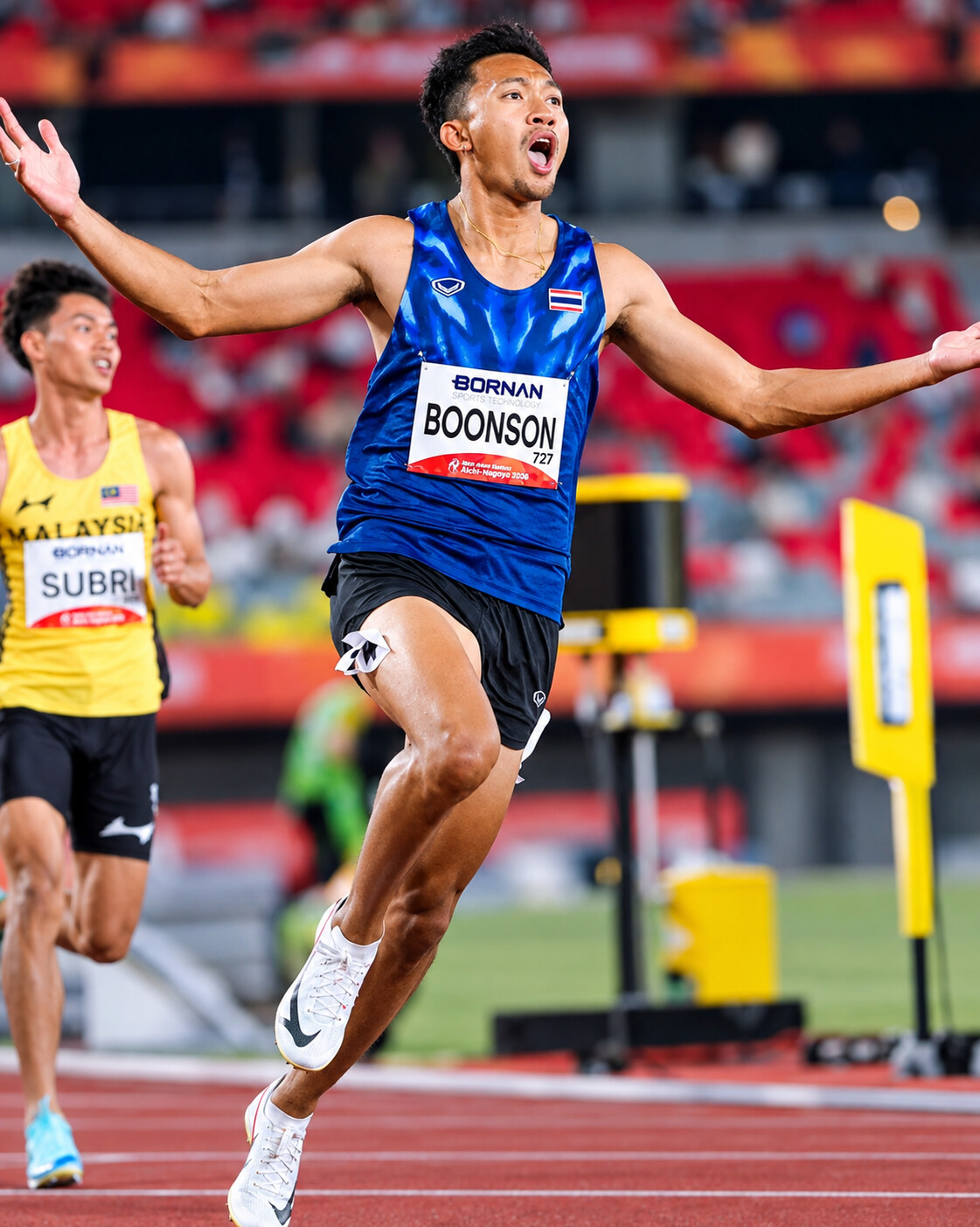
The 20-year-old produced the performance of his young career in the 200m final, powering to 19.88 seconds in drizzling rain to claim gold, set a new Thai national record and match the Asian record.
Boonson’s remarkable run came with a slight headwind of -0.3 m/s, making the performance even more impressive under the wet conditions.
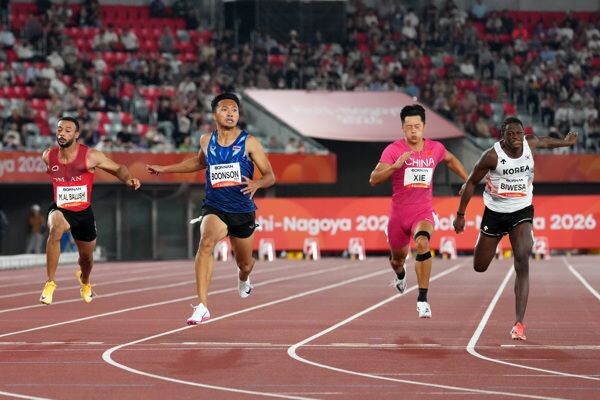
The Thai sprinter had already captured the 100m title earlier in the Games, and he returned to the track with the opportunity to complete the prestigious sprint double. He delivered in emphatic fashion, combining championship composure with world-class speed.
His winning time equalled the Asian record established by China’s Xie Zhenye in 2019, when Xie clocked 19.88 seconds at the London Diamond League. The mark had stood alone for seven years, with no other Asian athlete able to match it.
Until Boonson.
With his 19.88, Boonson also became only the third Asian man in history to break the 20-second barrier in the 200m, joining an exclusive group at the very top of the continent’s sprinting hierarchy.
China’s Youwen Huang produced a strong run for silver in 20.45 seconds, while Japan’s Soshi Mizukubo completed the podium with 20.56 seconds.
Boonson’s achievement carries enormous significance for Thailand as well. His victory makes him the country’s latest sprint sensation and adds another major milestone to a career that has developed rapidly over the past few seasons.
The 200m triumph also completed a remarkable double: 100m gold, 200m gold and a share of the Asian record.
What makes the performance particularly striking is that Boonson achieved the 19.88 in a championship final, where the primary objective is winning rather than chasing the clock. Yet he managed to combine both objectives, securing the gold medal while producing the fastest performance of his career.
At just 20 years old, Boonson now owns a 9.90-second personal best in the 100m and a 19.88-second personal best in the 200m. His latest performance suggests that Asia’s sprinting landscape is entering an exciting new chapter.
For seven years, Xie Zhenye’s 19.88 stood untouched at the top of the Asian rankings.
Now, Boonson stands beside him.
And with the Thai star still so young, the question is no longer whether he can match the Asian record — he already has.
The next challenge is to go one step further and make the record his alone.
Two finals. Two gold medals. A national record. An Asian record. Puripol Boonson has turned the Asian Games into a defining chapter of his young career.
by Erick Cheruiyot for My Best Runs.
Login to leave a comment
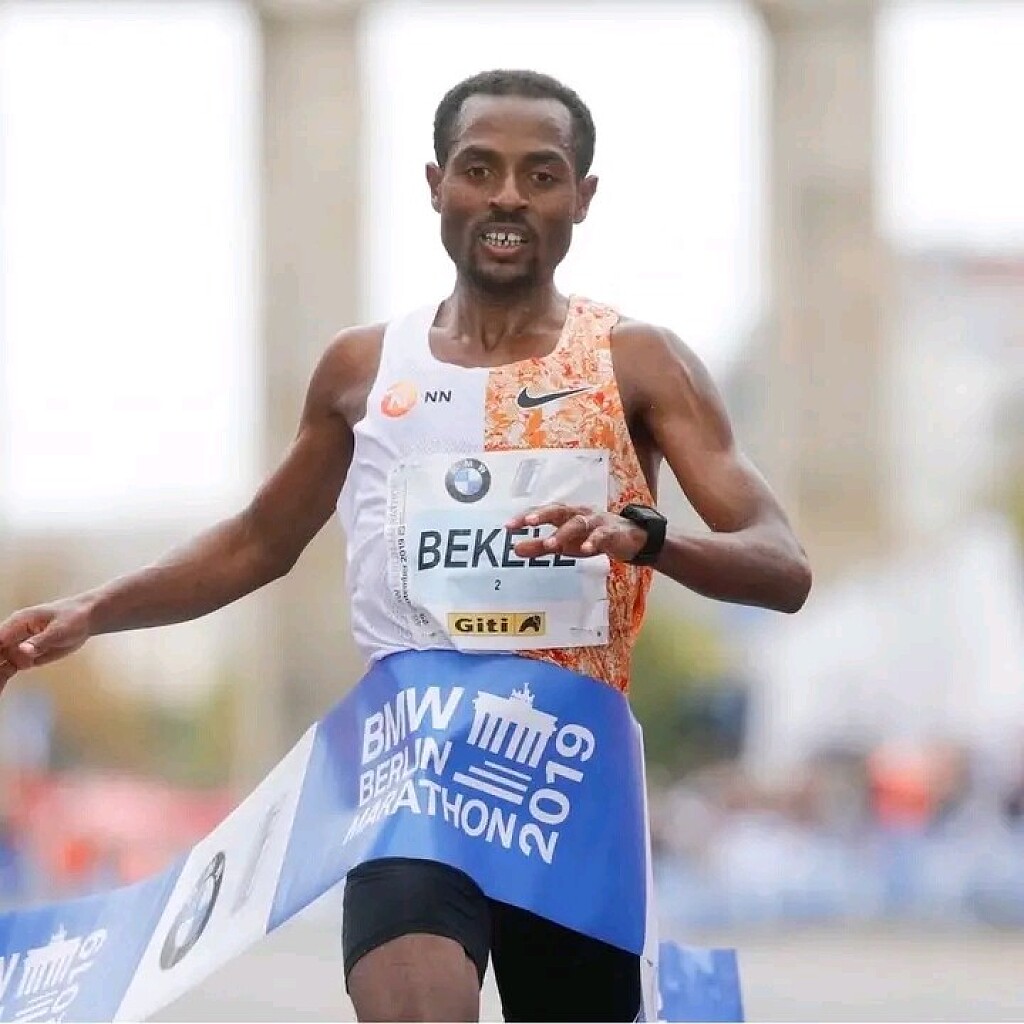
Kenenisa Bekele Withdraws From Berlin Marathon After Achilles Injury
Kenenisa Bekele’s much-anticipated return to the BMW Berlin Marathon has been abruptly cancelled after the Ethiopian distance-running legend suffered an injury to his left Achilles tendon during one of his final training sessions.
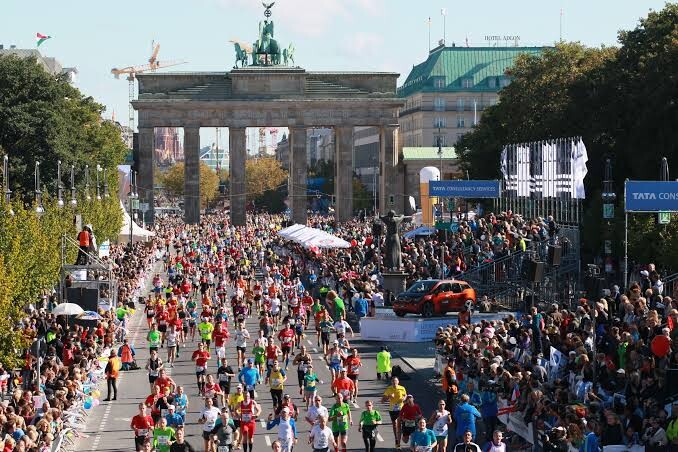
The 44-year-old Bekele was due to return to competitive action on Sunday, September 27, after being added to the elite field only last week. His late inclusion had generated enormous excitement, with fans looking forward to seeing one of the greatest distance runners in history back on one of the courses where he has produced some of his most memorable performances.
However, the injury has forced Bekele to withdraw just days before the race.
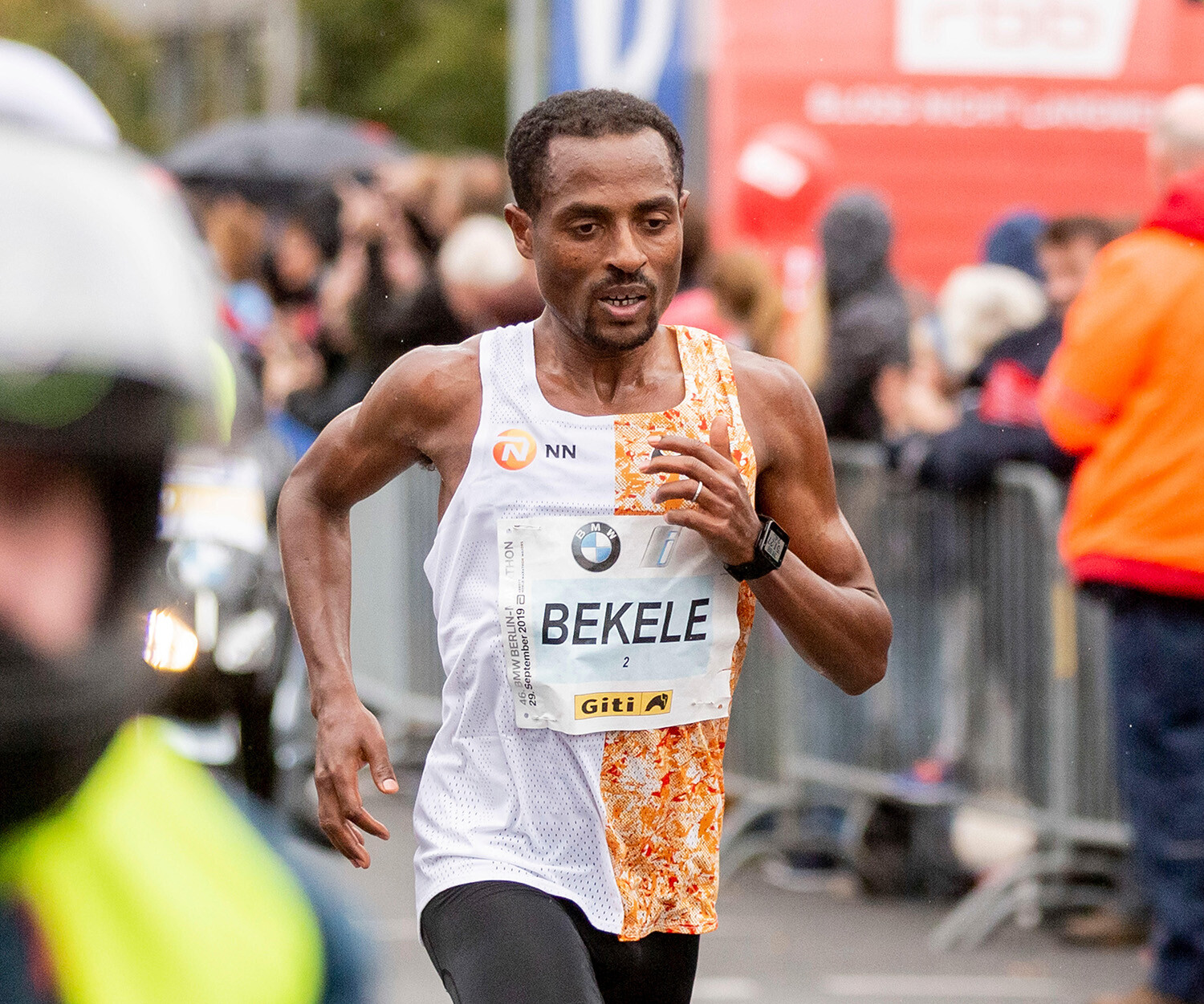
Bekele has a remarkable history in Berlin, having won the marathon twice. In 2016, he stormed to victory in 2:03:03 before returning three years later to produce one of the greatest marathon performances of his career, clocking 2:01:41 in 2019. That performance left him just two seconds short of Eliud Kipchoge’s then-world record of 2:01:39.
His 2:01:41 remains one of the fastest marathon performances ever recorded, and Berlin has long been a special stage in Bekele’s extraordinary career.
This year’s appearance was also expected to mark another chapter in his remarkable longevity. Bekele entered the race as a 44-year-old and had been targeting another strong performance after previously setting a masters marathon world record of 2:04:15 at the 2024 London Marathon, a mark he established at the age of 41.
Instead, his preparations have ended in disappointment.
Bekele has not completed a marathon since the Paris 2024 Olympic Marathon, where he finished 39th in 2:12:24. He subsequently entered the 2025 New York City Marathon but did not finish.
His withdrawal is another frustrating setback for a legendary athlete whose career has repeatedly been interrupted by injuries but who has continued to produce extraordinary performances well beyond the age at which many elite distance runners have retired.
For now, Berlin will have to wait for another Bekele appearance.
The Ethiopian legend will not be on the start line this Sunday, but his legacy on the Berlin streets remains firmly etched in marathon history.
by Erick Cheruiyot for My Best Runs.
Login to leave a comment

BMW Berlin Marathon
The story of the BERLIN-MARATHON is a story of the development of road running. When the first BERLIN-MARATHON was started on 13th October 1974 on a minor road next to the stadium of the organisers‘ club SC Charlottenburg Berlin 286 athletes had entered. The first winners were runners from Berlin: Günter Hallas (2:44:53), who still runs the BERLIN-MARATHON today, and...
more...
Tigst Assefa, Rosemary Wanjiru And Gabriel Geay Headline A Star-Studded Berlin Marathon
With just three days remaining until the BMW Berlin Marathon, anticipation is building for another spectacular edition of one of the world’s fastest marathon races.
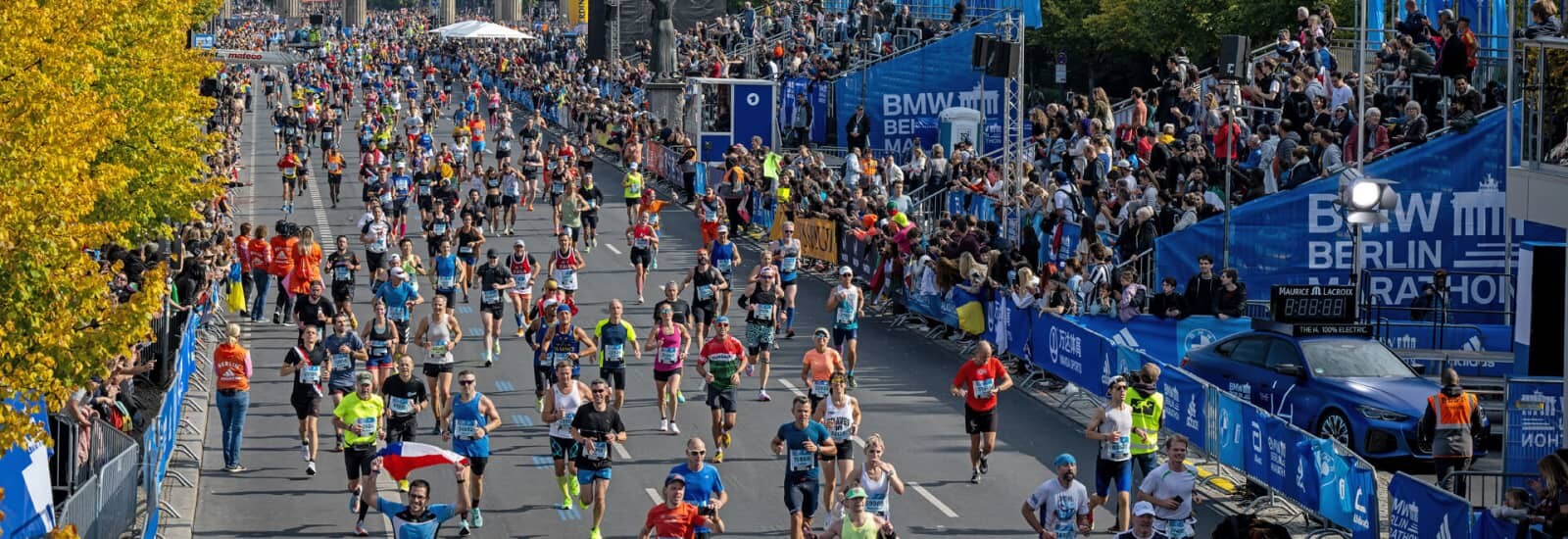
The 52nd edition of the race will take place on Sunday, September 27, with a deep international field set to take on the famously fast streets of the German capital.
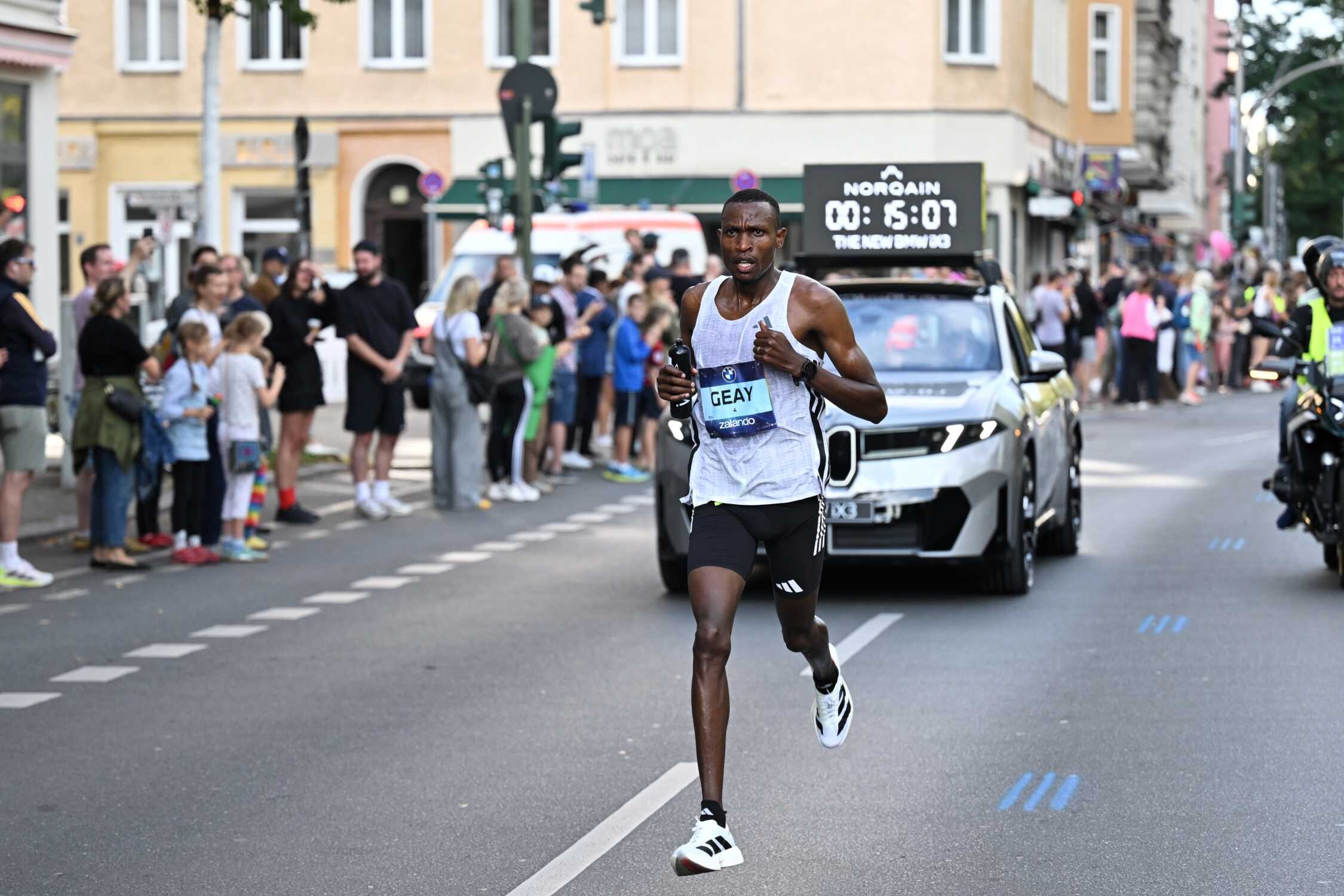
Tanzania’s Gabriel Geay is among the leading names in the men’s race, bringing a personal best of 2:03:00 to Berlin. His mark, set in Valencia in 2022, places him among the fastest marathoners in the elite field. However, Ethiopia’s legendary Kenenisa Bekele has since been added to the field with a 2:01:41 personal best, meaning Geay is not the fastest entrant on paper.
The men’s field also features Getaneh Molla (2:03:34), Guye Adola (2:03:46), Shura Kitata (2:03:59), Kenya’s Erick Sang (2:04:30) and Olympic 10,000m champion Selemon Barega (2:05:00), setting the stage for an exceptionally deep contest.
For Bekele, however, this return to Berlin carries a significance that goes far beyond the start list. The last time the Ethiopian legend stood on the Berlin start line was in 2019, when he ran 2:01:41—just two seconds outside the then-world record of 2:01:39. Had he gone two seconds faster, Bekele would have become the only athlete in history to simultaneously hold the world records for the 5,000 metres, 10,000 metres and marathon.
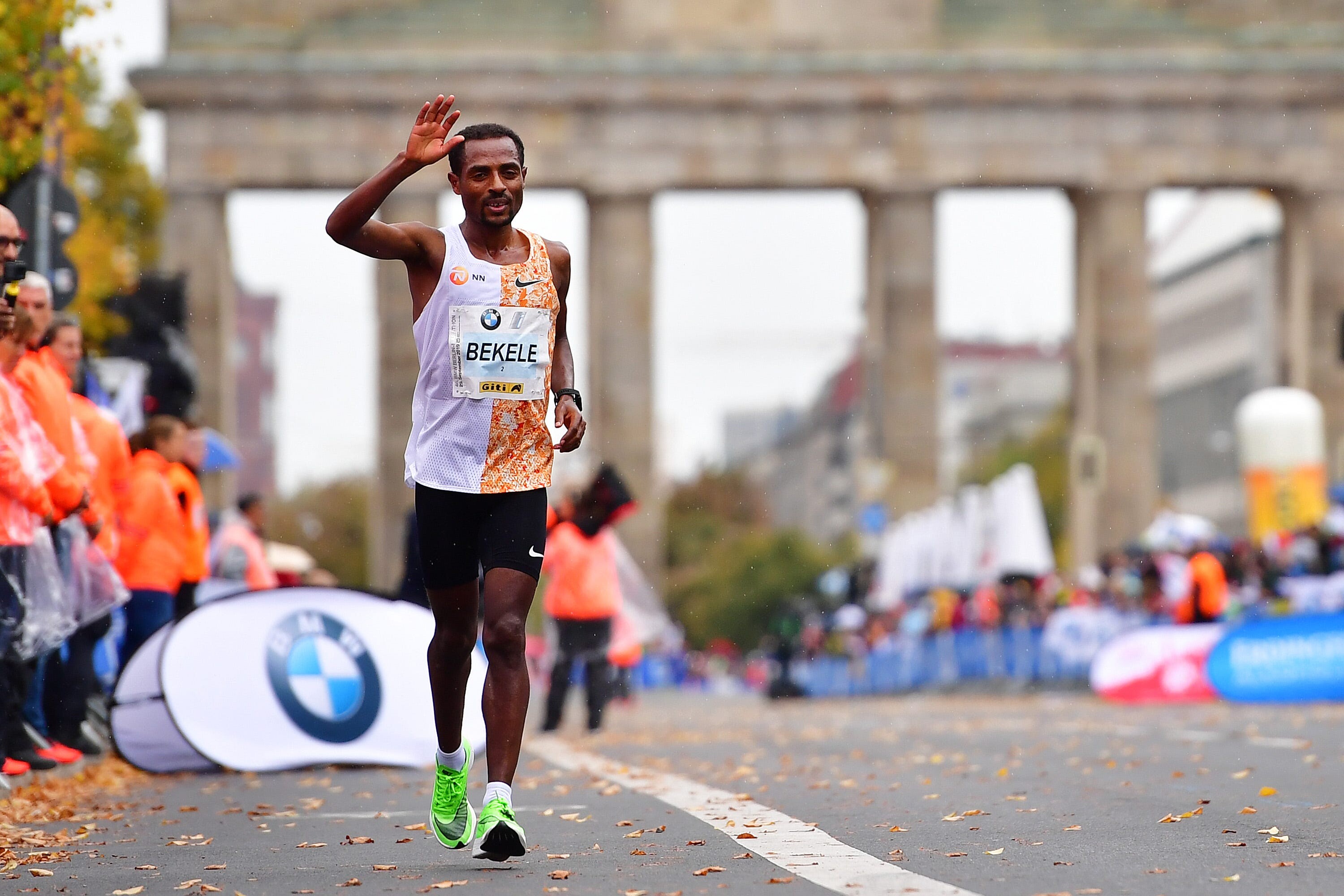
Bekele returns to Berlin on Sunday at the age of 44. His most recent race was the New York City Marathon in November, where he did not finish. Berlin, however, holds a special place in his marathon career. He claimed his first Berlin Marathon victory in 2016 and has won the race twice. He also owns the masters world record of 2:04:15, set in London last year.
He will not be the favourite in this year’s race, particularly after Sabastian Sawe was ruled out with a stress fracture. Adola, Molla, Kitata and Geay lead the field on paper, but Bekele’s presence adds another layer of intrigue to a race already packed with established marathon talent.
For Bekele, Berlin is more than another marathon. It is the course where he came closer than anyone to achieving a piece of distance-running history that remains untouched. Some athletes retire from the sport. Some retire toward one course. Bekele is running the second kind of retirement.
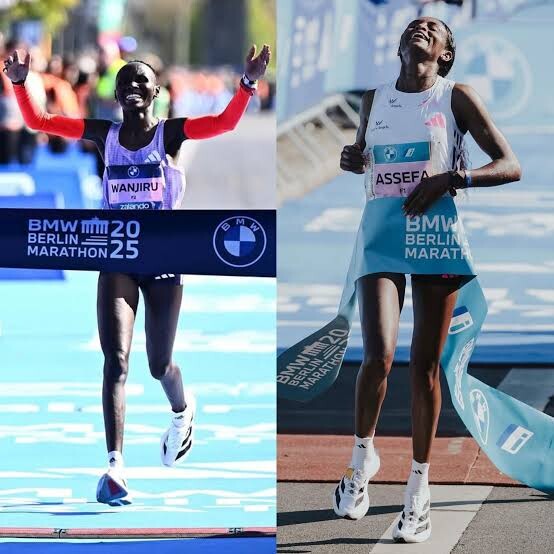
In the women’s race, all eyes will be on Tigst Assefa as the Ethiopian superstar returns to the course where she produced one of the most remarkable marathon performances in history. Assefa clocked 2:11:53 in Berlin in 2023, setting a world record at the time and establishing a course record that still stands.
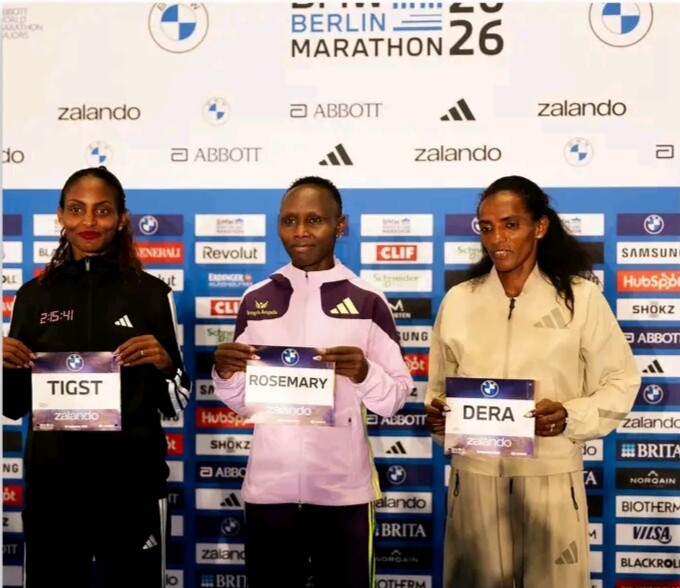
Assefa, a two-time Berlin Marathon champion, will face defending champion Rosemary Wanjiru, who returns to the German capital looking to retain her title. Wanjiru won the 2025 edition in 2:21:05 after previously finishing second in Berlin in 2022 in 2:18:00. Her personal best of 2:16:14 came at the 2023 Tokyo Marathon.
Wanjiru’s challenge will be particularly intriguing given the depth of the Ethiopian contingent. Bedatu Hirpa enters with a 2:18:27 personal best, followed by Dera Dida at 2:18:32, Zeineba Yimer at 2:18:47, Bosena Mulatie at 2:19:00, Misgane Alemayehu at 2:19:08 and Bekelech Gudeta at 2:19:39.
Kenya will also have another strong presence through Evaline Chirchir, whose 2:20:33 personal best places her among the leading women on the start list.
The Berlin Marathon’s reputation for producing fast times adds another layer of intrigue to an already stacked field. With a flat course, long stretches of uninterrupted running and a history of world records, the German capital has consistently provided elite athletes with the ideal conditions to test the limits of marathon performance.
Beyond the headline names, the race will also offer an opportunity for several contenders to make their mark on one of the biggest stages in road running. With experienced marathoners and ambitious challengers sharing the start line, the battle for the podium is expected to unfold at a demanding pace from the opening kilometres through the final stages of the race.
With Assefa returning to the scene of her historic 2023 run, Wanjiru arriving as the defending champion and a deep international cast lining up across both races, Berlin is once again set for a weekend of world-class marathon racing.
Three days out, the stage is set. The fast Berlin streets are waiting.
by Erick Cheruiyot for My Best Runs.
Login to leave a comment
BMW Berlin Marathon
The story of the BERLIN-MARATHON is a story of the development of road running. When the first BERLIN-MARATHON was started on 13th October 1974 on a minor road next to the stadium of the organisers‘ club SC Charlottenburg Berlin 286 athletes had entered. The first winners were runners from Berlin: Günter Hallas (2:44:53), who still runs the BERLIN-MARATHON today, and...
more...
Sha’Carri Richardson: From Teenage Sensation to a Champion Who Rewrote Her Own Story
At just 19, Sha’Carri Richardson looked like a star destined to take over the sprinting world.
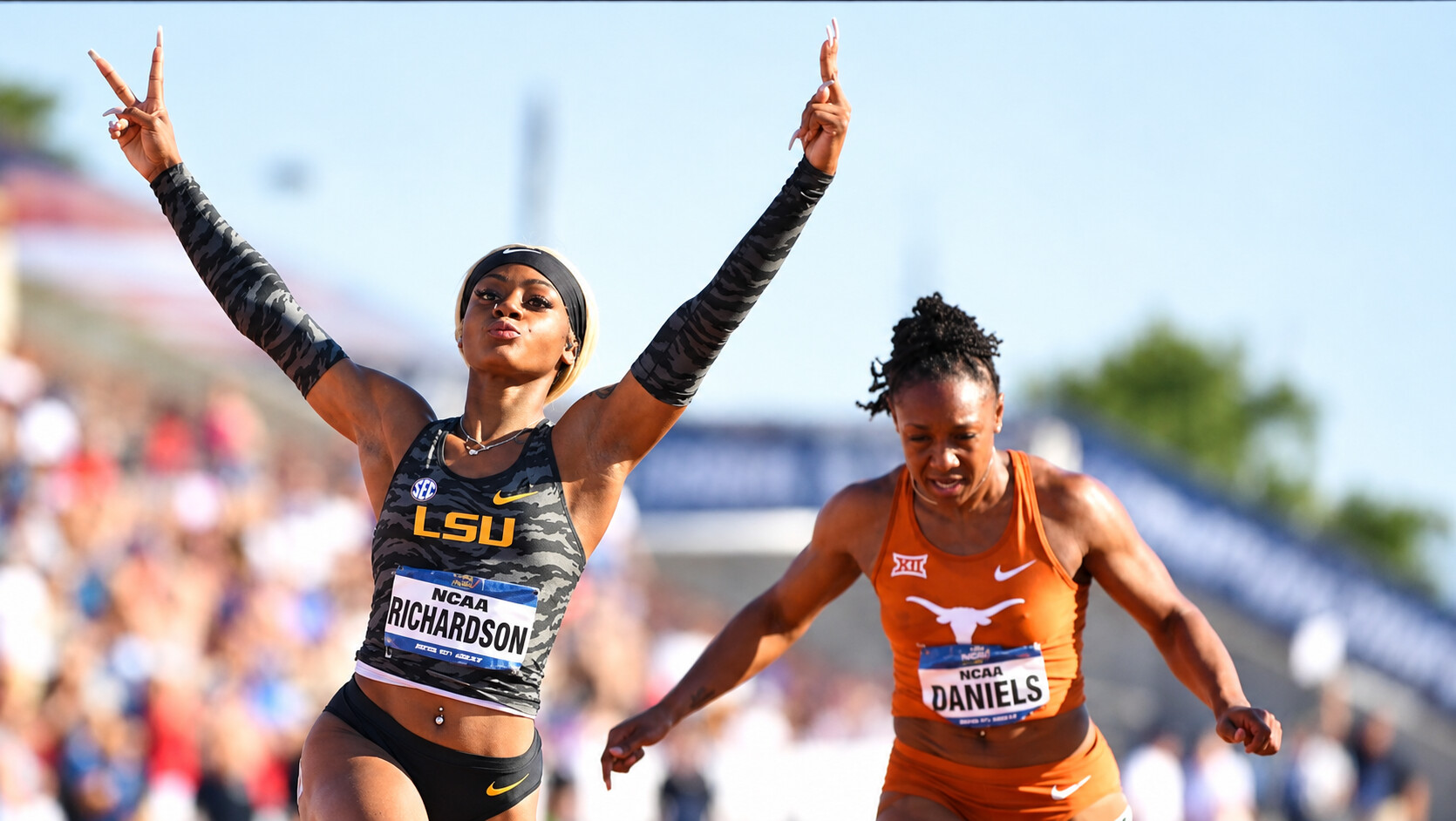
The speed was undeniable. In 2019, she announced herself on the collegiate stage with a 10.75-second NCAA record in the 100 metres, combining explosive acceleration with a fearless personality and a distinctive style that made her impossible to ignore.
She was young, confident and unapologetically herself.
But the road to becoming a champion was about to become far more complicated than anyone could have imagined.
In 2021, Richardson won the women’s 100m at the U.S. Olympic Trials in 10.86 seconds and appeared set for her Olympic debut.
Then everything changed.
A positive test for THC resulted in a one-month suspension, which ultimately ruled her out of the Tokyo Olympic 100m. USADA confirmed that Richardson accepted the sanction, which began on June 28, 2021.
The episode came at an especially difficult moment in her life. Richardson had publicly spoken about grieving the death of her biological mother and the emotional circumstances surrounding that period.
For an athlete who had seemed destined for Olympic glory, Tokyo became a painful chapter instead.
But it did not become the final chapter.
Richardson returned to the track with something to prove — not simply to the critics, but to herself.
The comeback became a championship story
In 2023, Richardson transformed her comeback into one of the defining performances of her career.
At the World Championships in Budapest, she won the 100m world title in 10.65 seconds, setting a championship record and defeating a field that included some of the greatest sprinters of her generation. World Athletics lists 10.65 as Richardson’s legal personal best, recorded on August 21, 2023.
She did not stop there.
Richardson also helped the United States win the women’s 4x100m relay gold in Budapest, adding another world title to a season that had completely changed the narrative surrounding her career.
The teenager who had once been celebrated for her raw talent was now a world champion.
Paris brought Olympic medals
A year later, Richardson arrived at the Paris 2024 Olympics carrying expectations of another major championship performance.
She delivered.
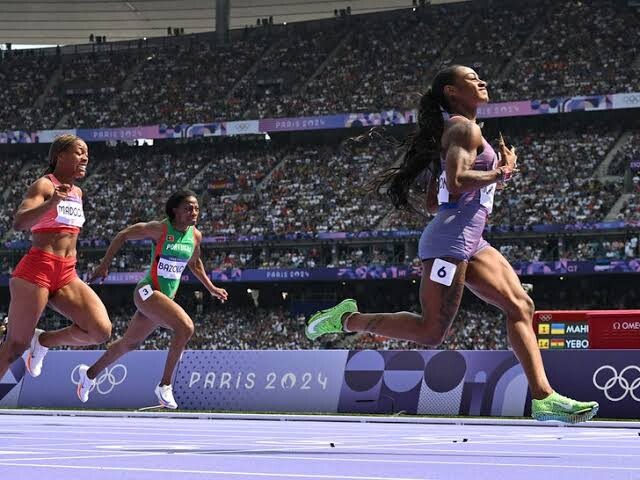
Richardson won silver in the individual 100m and then anchored the United States to gold in the women’s 4x100m relay. World Athletics records her as an Olympic champion and Olympic silver medallist.
The Olympic gold was particularly significant.
After missing Tokyo, Richardson had returned to the biggest stage in the sport and left Paris as an Olympic champion.
Her journey had gone from disappointment to the highest step of the podium.
2026: Still winning, still evolving
Richardson's story continued into 2026, and she closed the season in emphatic fashion at ATHLOS London.
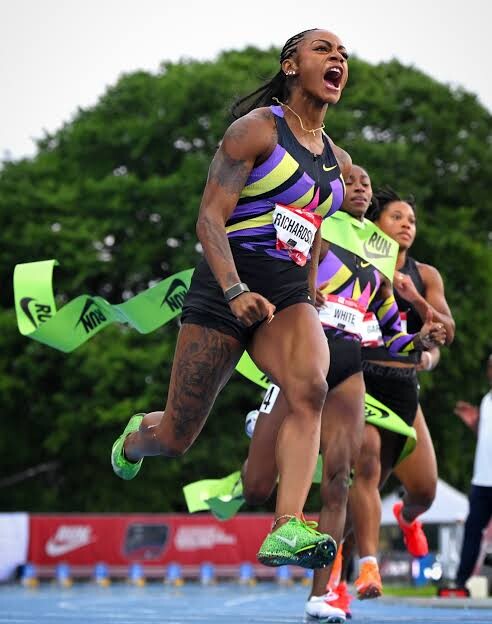
On September 18 at StoneX Stadium, she won the 100m in 10.80 seconds with no wind assistance, finishing well clear of New Zealand's Zoe Hobbs, who ran 11.19. The performance was also an ATHLOS meeting record.
It was another reminder that Richardson remains one of the defining personalities of modern sprinting.
But the most compelling part of her journey cannot be measured entirely in seconds.
It is the evolution behind the performances.
The young sprinter who entered the global spotlight with enormous confidence has experienced public criticism, disappointment, grief, triumph and the enormous pressure that comes with being one of the world's most recognizable athletes.
Through it all, she has continued to shape her identity on her own terms.
Her story is no longer simply about speed.
It is about resilience, reinvention and the ability to return after a moment that could have permanently changed the direction of a career.
From a teenage sensation running 10.75 to a world champion running 10.65.
From missing the Tokyo Olympics to winning Olympic gold in Paris.
From one of the most difficult periods of her young career to becoming an established global sprint star.
Sha’Carri Richardson did not simply return to the track.
She returned with a different perspective, a bigger résumé and a story that belongs to her.
And perhaps that is the most powerful transformation of all: not becoming someone different, but growing into a stronger version of the person she always wanted to be.
by Erick Cheruiyot for My Best Runs.
Login to leave a comment
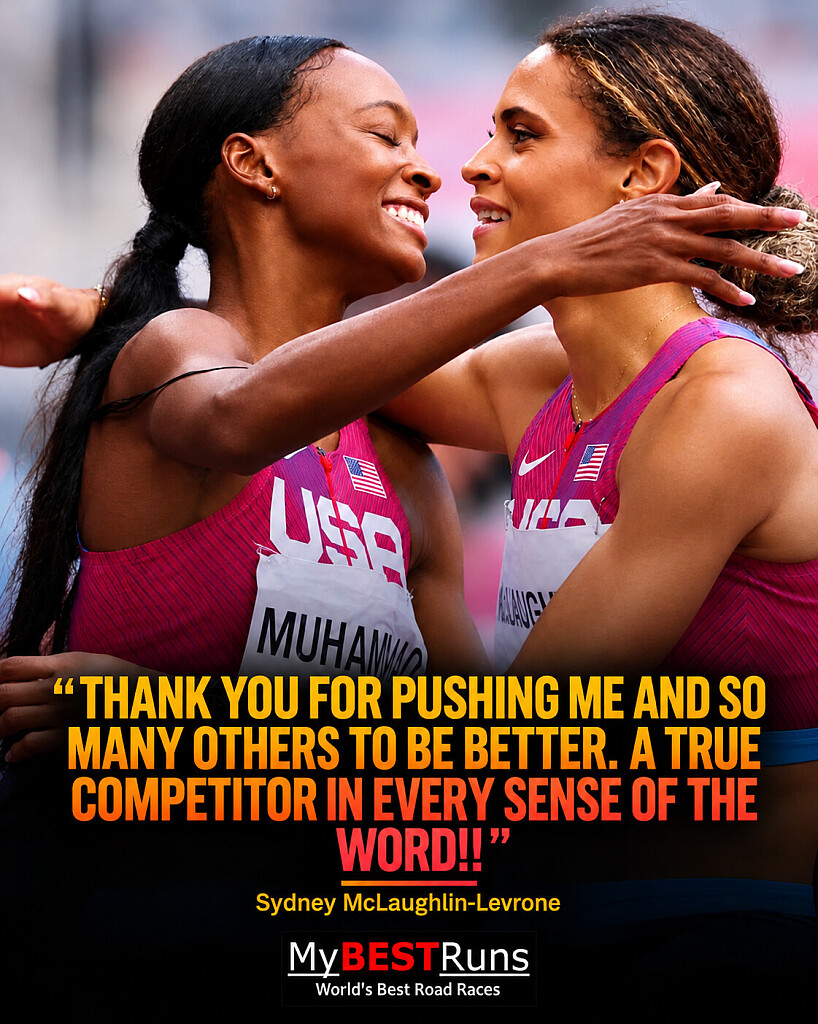
Sydney McLaughlin-Levrone Pays Emotional Tribute As Dalilah Muhammad’s Legendary Career Comes To An End
Some rivalries create champions. Others change an entire sport.
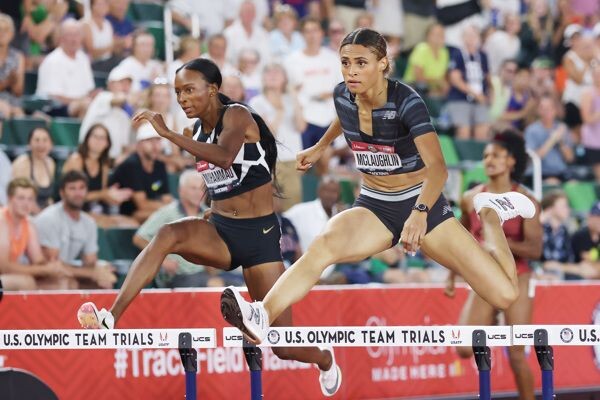
For Sydney McLaughlin-Levrone and Dalilah Muhammad, their extraordinary rivalry did both.
As Muhammad took the final 400m hurdles race of her remarkable career at the World Athletics Ultimate Championship Budapest 26, McLaughlin-Levrone paid tribute to the woman who helped push her to another level — not only as a competitor, but as one of the athletes who helped redefine what was possible in the event.
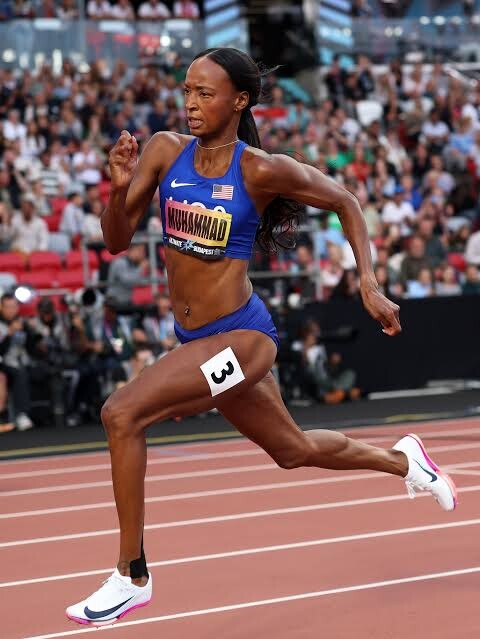
“Dalilah, you truly did just change the game for all of us.”
Those words carry particular weight because few athletes understand Muhammad’s impact better than McLaughlin-Levrone.
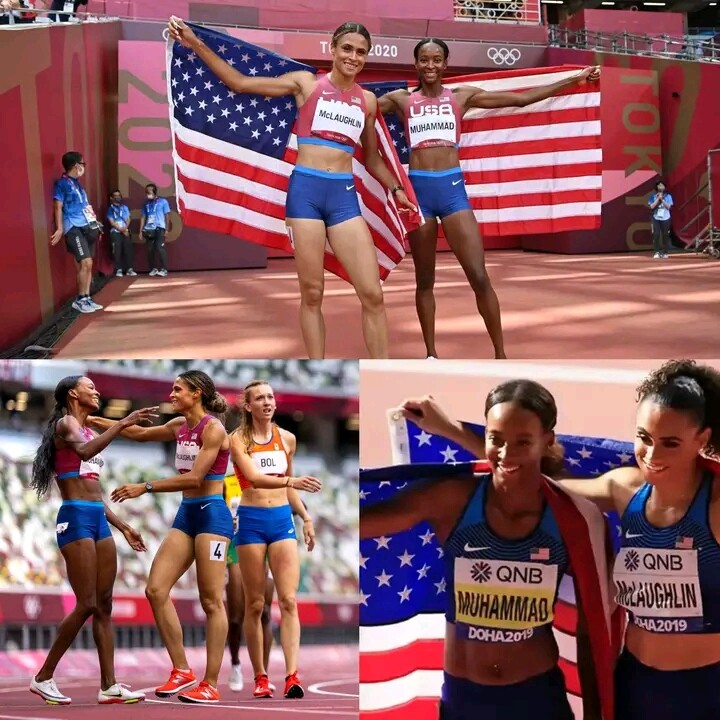
Their rivalry became one of the defining stories of modern women’s athletics. In 2019, Muhammad broke a world record that had stood for almost 16 years, clocking 52.20 seconds at the US Championships. Later that year, she lowered it again to 52.16 while winning the world title in Doha, with McLaughlin-Levrone finishing second in 52.23.
But Sydney was not content to simply chase Muhammad.
She kept coming.
At the Tokyo Olympics, McLaughlin-Levrone broke the world record with 51.46 seconds to win gold, while Muhammad followed closely in 51.58. Their performances demonstrated how dramatically the event had evolved in just a few years.
McLaughlin-Levrone continued to push the limits, eventually taking the world record down to 50.68 seconds in 2022 before producing an astonishing 50.37 at the Paris 2024 Olympics.
Yet behind those numbers was something more meaningful than a succession of records.
There was respect.
Muhammad had established a standard that forced McLaughlin-Levrone to chase something greater, while McLaughlin-Levrone’s rise helped create another level of competition for everyone following them.
That is the essence of “iron sharpens iron.”
One athlete pushes.
The other responds.
And the sport moves forward.
Their relationship also extended beyond individual competition. They represented the United States together and shared Olympic success as teammates, including the American women’s 4x400m relay gold medal at Tokyo 2020.
Now, years after their most memorable battles, Muhammad has taken her final bow.
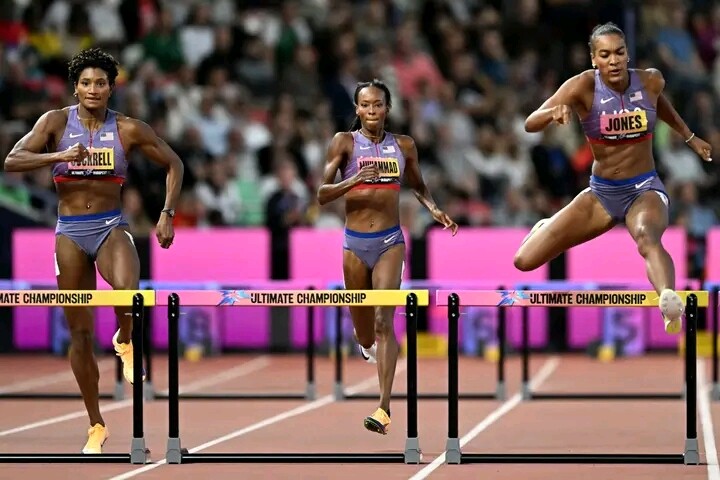
At the inaugural World Athletics Ultimate Championship in Budapest, the former Olympic champion and world record-holder finished fourth in 53.11 seconds, just 0.02 behind fellow American Anna Cockrell.
Jasmine Jones won the title in a season-best 52.45 seconds, with Emma Zapletalová taking second in 52.68 and Cockrell finishing third in 53.09.
For Jones, the victory represented the biggest breakthrough of her career. After finishing fourth at the Paris 2024 Olympics and claiming silver at the 2025 World Championships, she finally reached the top of a major international podium.
And there was something particularly fitting about Muhammad sharing her final race with an athlete from a younger generation.
The baton was not literally being passed, but the symbolism was impossible to miss.
Muhammad helped establish a new standard.
McLaughlin-Levrone took that standard even higher.
And now athletes such as Jones are beginning to write their own stories in an event transformed by those who came before them.
For Muhammad, the legacy goes far beyond medals and world records. She became one of the defining figures in the history of the women’s 400m hurdles, helping elevate the event through years of extraordinary competition.
That is why McLaughlin-Levrone’s tribute feels so much bigger than a farewell.
“Thank you for pushing me and so many others to be better. A true competitor in every sense of the word!!”
There was a time when Sydney was chasing Dalilah.
Then Sydney became the athlete everyone else had to chase.
But their story was never simply about one athlete replacing another. It was about competition creating excellence — about two extraordinary athletes raising the standard until the impossible began to look achievable.
Muhammad pushed the door open.
McLaughlin-Levrone ran through it.
And now a new generation is stepping forward.
As Muhammad leaves the track for the final time, the records will remain in the history books and the medals will become part of her remarkable legacy. But perhaps her greatest contribution will be found in the athletes she inspired, challenged and helped make better.
One pushed.
One answered.
Both changed the game.
That is what iron sharpens iron truly means.
And for one unforgettable era, Dalilah Muhammad and Sydney McLaughlin-Levrone showed the world exactly what happens when two great competitors refuse to let each other settle for ordinary.
by Erick Cheruiyot for My Best Runs.
Login to leave a comment
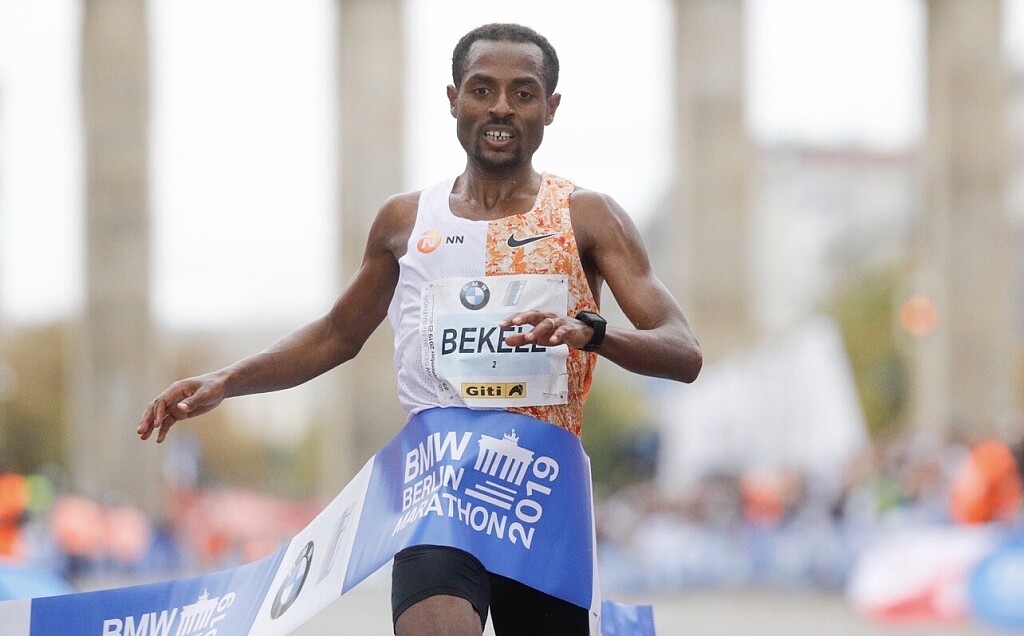
Kenenisa Bekele Returns to Berlin; Alisa Vainio Added to Elite Field
Kenenisa Bekele will run the BMW BERLIN-MARATHON on September 27, race organizers announced today. It will be the legendary Ethiopian’s first race of the year. At 44, Bekele may no longer be among the favorites for victory, but a strong performance remains possible.
Bekele has won the BMW BERLIN-MARATHON twice during his remarkable career, narrowly missing the world record on both occasions. In 2016, he crossed the line in 2:03:03, and in 2019, he clocked 2:01:41. Had he been just two seconds faster seven years ago, he would have become the first runner in history to hold the world records for 5,000 meters, 10,000 meters and the marathon simultaneously.

His return brings one of the greatest distance runners of all time back to Berlin. Bekele’s achievements on the track and in cross-country are extraordinary. He held the world records for 5,000 meters (12:37.35) and 10,000 meters (26:17.53) for approximately 15 years—longer than any other runner in history.
Bekele won 5,000-meter gold at the 2008 Olympic Games and the 2009 World Championships. Over 10,000 meters, he won Olympic gold in 2004 and 2008, along with world titles in 2003, 2005, 2007 and 2009. He also earned 11 individual gold medals at the World Cross Country Championships.
Two and a half years ago, at 41, Bekele nearly produced another extraordinary victory. He led during the closing stages of the London Marathon before finishing second in 2:04:15, setting a world masters record for the 40-plus age group that still stands. He was subsequently selected for the 2024 Olympic Games but finished 39th in Paris. Berlin offers him the opportunity to complete his first marathon since those Games.
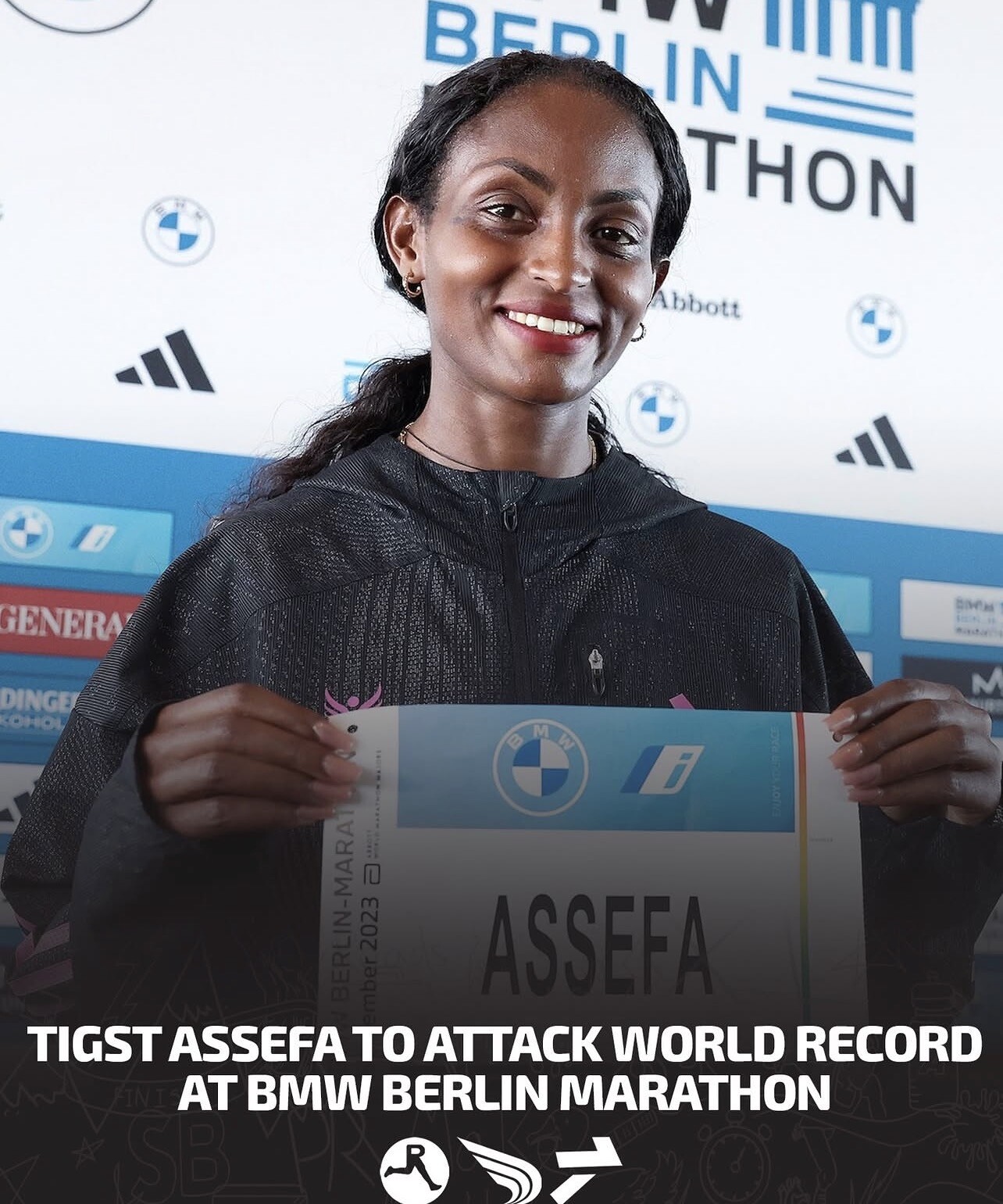
European Champion Alisa Vainio Joins the Field
The women’s elite field has also received a strong late addition: European marathon champion Alisa Vainio.
A month ago, the Finnish runner claimed gold at the European Championships in Birmingham with a commanding performance, setting a championship record of 2:22:26.
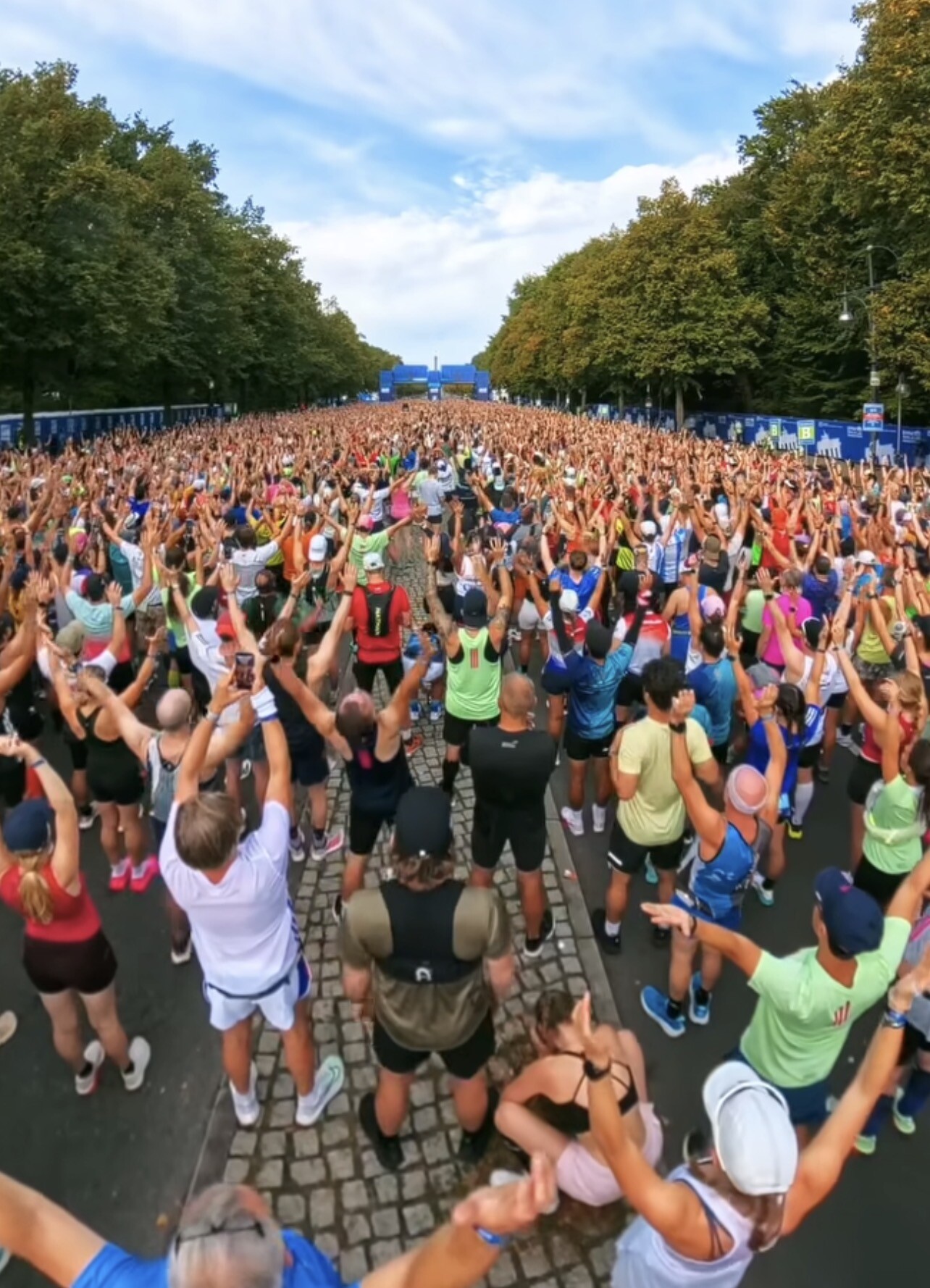
Last year, Vainio was the top European finisher at the World Championships in Tokyo, placing fifth. She then went on to set three consecutive Finnish national records, improving to 2:20:39 with her victory in Seville in February.
That performance made her the fastest Nordic women’s marathon runner in history, surpassing the 2:21:06 set by Norway’s former world record-holder Ingrid Kristiansen.
Fastest Runners on the Start List
Men
|
Athlete |
Country |
Personal Best |
|
Kenenisa Bekele |
ETH |
2:01:41 |
|
Gabriel Geay |
TAN |
2:03:00 |
|
Getaneh Molla |
ETH |
2:03:34 |
|
Guye Adola |
ETH |
2:03:46 |
|
Shura Kitata |
ETH |
2:03:59 |
|
Erick Sang |
KEN |
2:04:30 |
|
Selemon Barega |
ETH |
2:05:00 |
|
Taresa Tolosa |
ETH |
2:05:17 |
|
Tadu Abate |
ETH |
2:05:38 |
|
Asefa Boki |
ETH |
2:05:40 |
|
Kenya Sonota |
JPN |
2:05:59 |
|
Tsubasa Ichiyama |
JPN |
2:06:00 |
|
Kiyoto Hirabayashi |
JPN |
2:06:14 |
|
Yuhei Urano |
JPN |
2:06:23 |
|
Hidekazu Hijikata |
JPN |
2:06:26 |
Women
|
Athlete |
Country |
Personal Best |
|
Tigst Assefa |
ETH |
2:11:53 |
|
Rosemary Wanjiru |
KEN |
2:16:14 |
|
Bedatu Hirpa |
ETH |
2:18:27 |
|
Dera Dida |
ETH |
2:18:32 |
|
Zeineba Yimer |
ETH |
2:18:47 |
|
Bosena Mulatie |
ETH |
2:19:00 |
|
Misgane Alemayehu |
ETH |
2:19:08 |
|
Bekelech Gudeta |
ETH |
2:19:39 |
|
Evaline Chirchir |
KEN |
2:20:33 |
|
Alisa Vainio |
FIN |
2:20:39 |
|
Deshun Zhang |
CHN |
2:20:53 |
|
Gadise Mulu |
ETH |
2:20:59 |
|
Eebbisee Addunyaa |
ETH |
by Race News Service
Login to leave a comment
BMW Berlin Marathon
The story of the BERLIN-MARATHON is a story of the development of road running. When the first BERLIN-MARATHON was started on 13th October 1974 on a minor road next to the stadium of the organisers‘ club SC Charlottenburg Berlin 286 athletes had entered. The first winners were runners from Berlin: Günter Hallas (2:44:53), who still runs the BERLIN-MARATHON today, and...
more...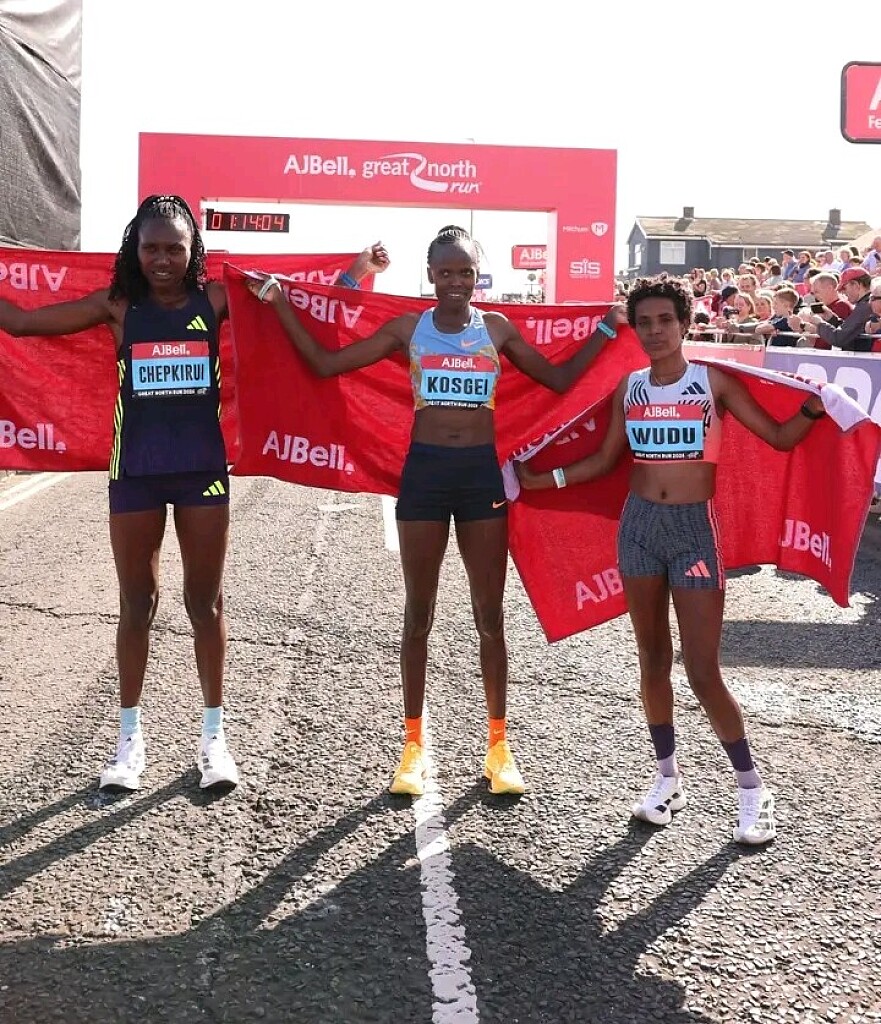
Brigid Kosgei Claims Second Great North Run Title In Kenyan 1-2 Finish
Brigid Kosgei returned to the top at the AJ Bell Great North Run on Sunday, September 13, delivering a commanding performance to win the women’s half marathon and lead Kenya to a memorable one-two finish.
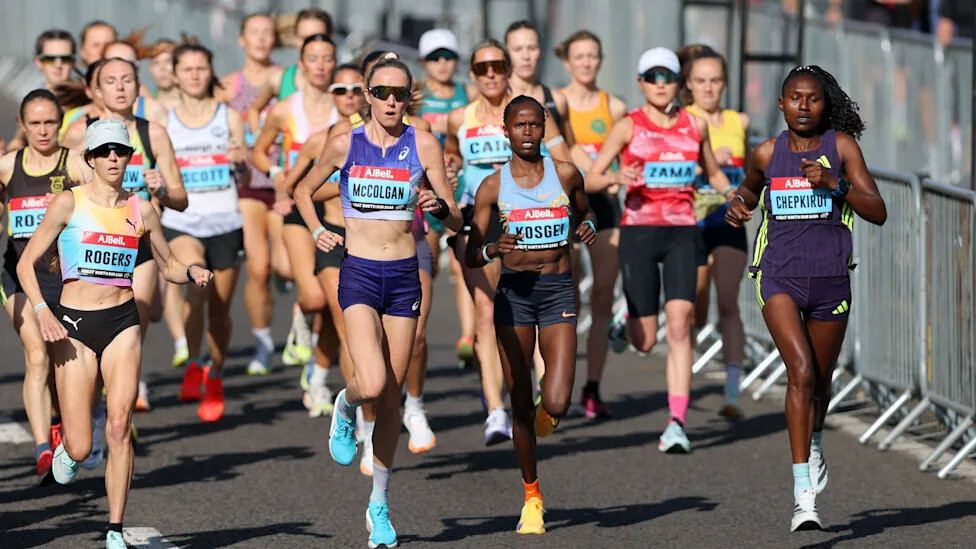
The former marathon world-record holder crossed the line in 1:06:15, securing her second Great North Run title after previously winning the prestigious race in 2019.
Fellow Kenyan Sheila Chepkirui who was battling to defend the title finished second in 1:06:19, completing a memorable Kenyan one-two at one of the world’s most celebrated half-marathons.
Behind the leading Kenyan pair, Ethiopia’s Melknat Wudu produced an impressive run to claim third in 1:09:37. Wudu was the first athlete outside the Kenyan duo to reach the finish and comfortably secured a place on the podium, highlighting the strong international quality of the women’s field.
Japan’s Honami Maeda finished just six seconds behind Wudu to take fourth in 1:09:43, while Great Britain’s Amy-Eloise Neale was the leading home athlete in fifth with 1:10:27.
American Natosha Rogers followed in sixth in 1:11:44, with Britain’s Annabel Grummow seventh in 1:12:37 and Nancy Scott completing the top eight in 1:12:51.
For Kosgei, the victory adds another prestigious achievement to an already remarkable distance-running career. Returning to the Great North Run winner’s circle six years after her first triumph, she once again demonstrated her ability to deliver on one of the biggest stages in the half marathon.
Chepkirui’s runner-up finish made the occasion even more significant for Kenya, as the two athletes combined to secure the top two positions. Wudu’s third-place performance completed an international podium and ensured the race featured a strong representation from three of the sport’s leading distance-running nations.
Women’s Top 8 Finishers
1. Brigid Kosgei — Kenya — 1:06:15
2. Sheila Chepkirui — Kenya — 1:06:19
3. Melknat Wudu — Ethiopia — 1:09:37
4. Honami Maeda — Japan — 1:09:43
5. Amy-Eloise Neale — Great Britain — 1:10:27
6. Natosha Rogers — United States — 1:11:44
7. Annabel Grummow — Great Britain — 1:12:37
8. Nancy Scott — Great Britain — 1:12:51
The 2026 Great North Run therefore ended with Kosgei back on top, Chepkirui alongside her in second and Wudu completing a high-quality international podium. For Kosgei and Kenya, it was a particularly memorable day, combining individual success with a commanding one-two finish and reinforcing the country’s enduring strength in elite distance running.
by Erick Cheruiyot for My Best Runs.
Login to leave a comment

Great North Run
Great North Run founder Brendan Foster believes Britain is ready to welcome the world with open arms after the launch of the event's most ambitious plan to date. The Great World Run campaign seeks to recruit one runner from every country in the United Nations – 193 in total – to take part in the iconic half marathon in...
more...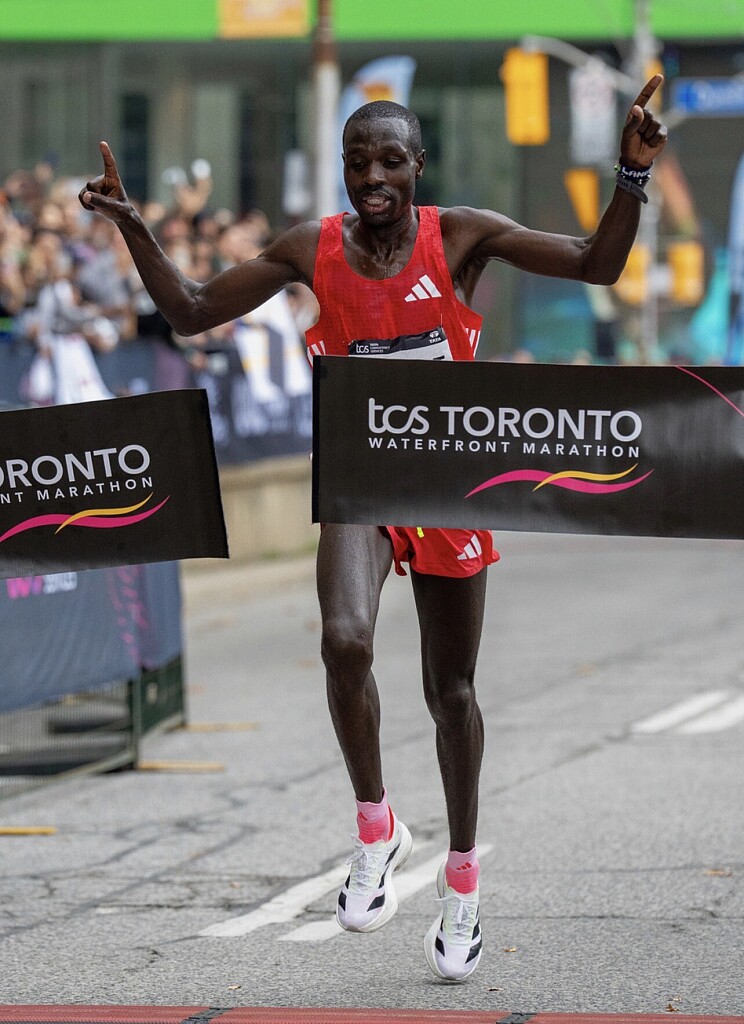
Leonard Langat to Defend his TCS Toronto Waterfront Marathon Title
Leonard Langat arrived in Toronto for last year’s TCS Toronto Waterfront Marathon largely unheralded. But after winning this World Athletics Elite Label race he left with both the respect of his competitors and the $25,000 CDN first place prize money to his credit.
The 30-year-old Kenyan will defend his title on October 18.
A year ago his winning time of 2:08:04 had been hampered by uncharacteristically strong winds coming off Lake Ontario but the fact he beat athletes with much faster personal best times was an indication of his potential. Indeed, at the 2026 Cape Town Marathon this May he finished 4th in a new personal best of 2:05:26.
“About last year, I was happy because I ran well. I am happy to come back to Toronto,” he says while sitting alongside his coach, Josphat Bett, following a training session. “I loved the city of Toronto. I loved the beauty and the people I met there.
“I want to improve my time and try to win the race again. I will try to defend my title because the training (this year), we have improved, and increased the mileage.”
The Toronto Waterfront Marathon course record of 2:05:00 was set in 2019 by his countryman Philemon Rono. It seems natural to draw a line between his personal best and that record. Could he beat Rono’s time on the streets of Canada’s biggest city?
“If the weather is good that day I will try to improve my personal best,” is all he will allow - apparently not wanting get ahead of himself.
Langat is represented by Volare Sports Management, a Dutch based firm specializing in distance running. He trains with a group of about twenty athletes under coach Josphat Bett’s program in the town of Keringet. Another large Volare group which includes athletes such as Fanny Kiprotich (who will also run this year’s Toronto Waterfront), the 2026 Vienna Marathon winner, is based in Iten the ‘Home of Champions’ three and a half hours away.
Bett was himself a world class runner with a personal best of 26:48.99 for the 10,000m and also took home the 2014 Commonwealth Games silver medal in that event. He remembers being approached by Langat when the latter keenly observed Bett and his training partners running past his village.
“I am a runner and he was interested in running,” Bett remembers with a smile. “He loved the way we were training and he asked ‘How can I start to run?’. So I gave him a training program to start. Now it has been about ten years.”
With money earned from running Langat has begun preparing for life after his running career comes to an end. He and his wife, Sharon Chesang, have two children, 4-year-old Emmanuel Kipkoech and a 2-year-old daughter Dorcas Chebet. Although Volare has a camp where many of the athletes live during the week he prefers to go home after training sessions.
“I want to be a farmer for cattle, a dairy farmer,” he explains. “I bought five acres of land and I have five cows.”
A successful title defence would mean increased financial stability for his family’s future. There is also a bonus of $10,000 CDN for breaking the course record. Although he seems hesitant to talk about the record he’d be a good bet to dip below 2:05:00 under the right conditions.
"In Cape Town after 40km, after taking water, I lost the steps of the leading group,” he admits.
Clearly the race video supports his contention as he slowed to grab a bottle while the other three contenders opened up a gap. Ethiopia’s Mohamed Esa won that race in 2:04:55 with the 2022 TCS Toronto Waterfront champion, Yihunilign Adane, second in 2:04:59. What might have been is not something he dwells upon.
Defending a title is never easy. Langat can no longer slip under the radar as his performances have been watched around the world. His TCS Toronto Waterfront Marathon victory, alone, had 140,000+ views last year in 75 countries. And he will face a strong field including his compatriot Noah Kipkemboi who finished in second place just 24 seconds behind him last year.
But Langat’s confidence will be high making for compelling battle along the streets of Toronto.
by Paul Gains
Login to leave a comment
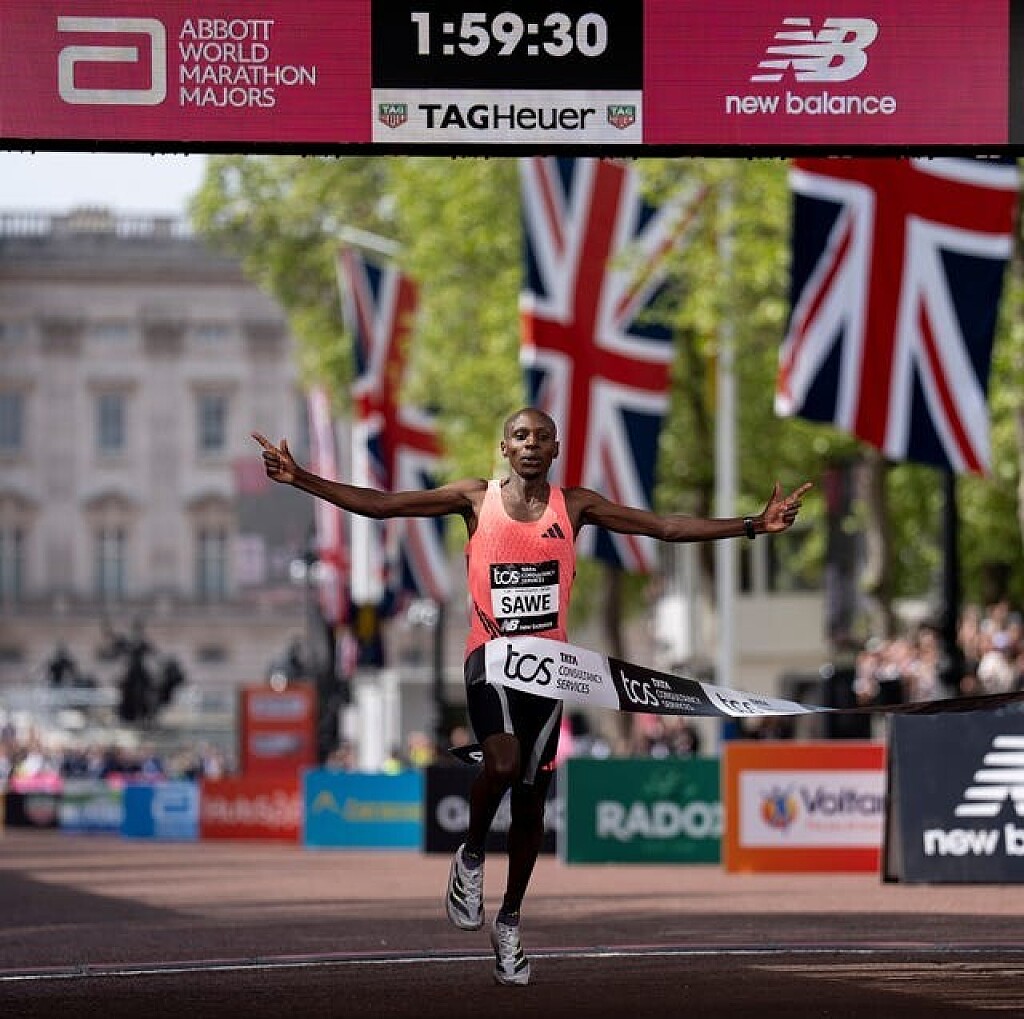
2026: The Year Distance Running’s Impossible Records Began to Fall
Distance running has witnessed extraordinary seasons before, but 2026 is producing something that feels almost unprecedented.
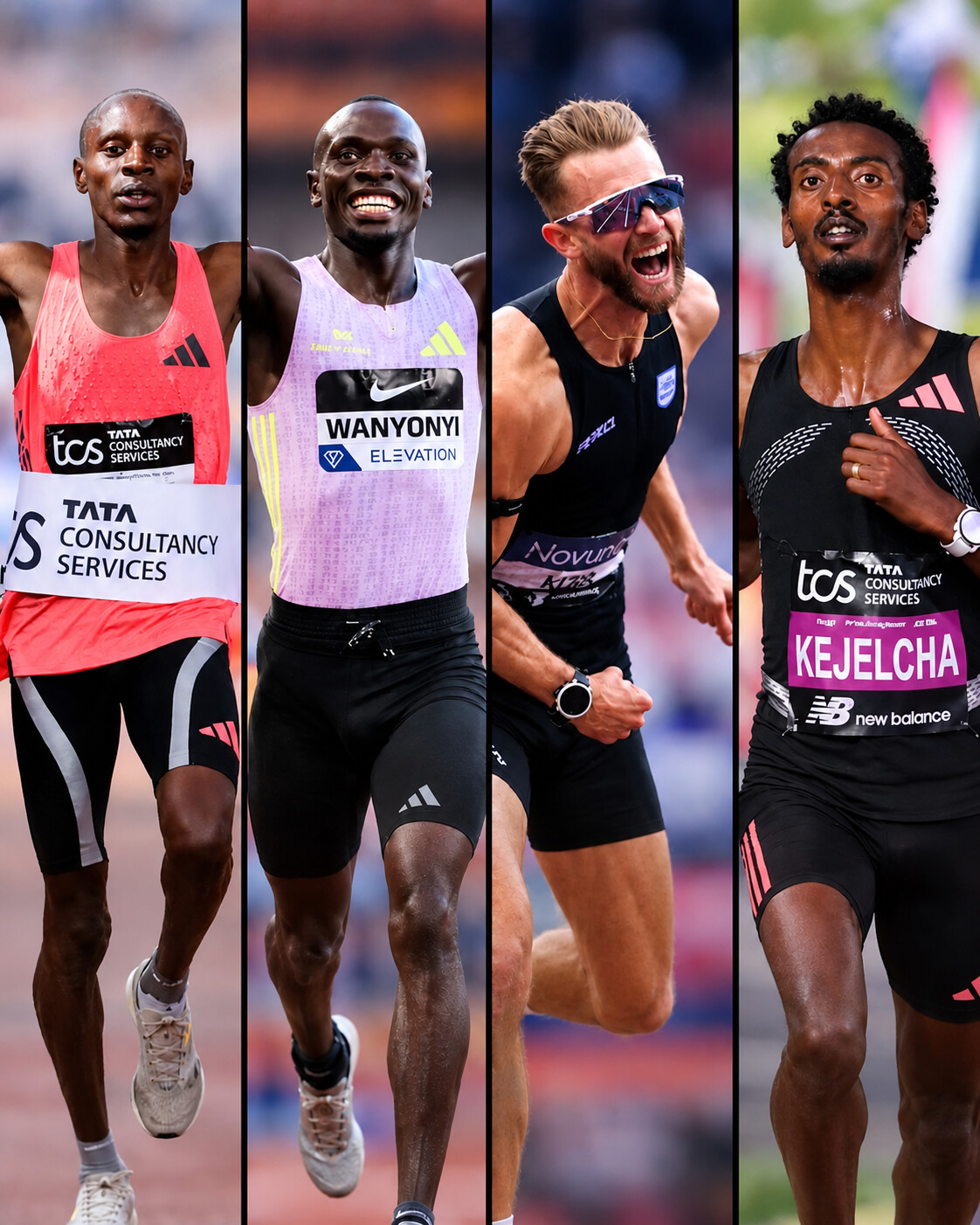
Records that had survived for decades, marks that appeared untouchable and performances that had defined entire generations of athletes are falling at a remarkable rate. In the space of just four months, four historic world records were rewritten, creating one of the most astonishing stretches the sport has ever seen.
And with four months still remaining in 2026, the question is no longer whether this has been an exceptional year.
It is just how much further the boundaries can be pushed.
The extraordinary sequence began on April 26 at the London Marathon, where Sabastian Sawe delivered one of the defining performances in the history of the event. The Kenyan crossed the finish line in a breathtaking 1:59:30, becoming the first athlete to run a marathon under two hours in officially recognised, record-eligible conditions.
Eliud Kipchoge had famously broken the two-hour barrier in Vienna in 2019, proving that such a performance was humanly possible, but the specially organised conditions—including rotating pacemakers and a pace car—meant the time could not be recognised as an official world record.
Sawe's performance was different.
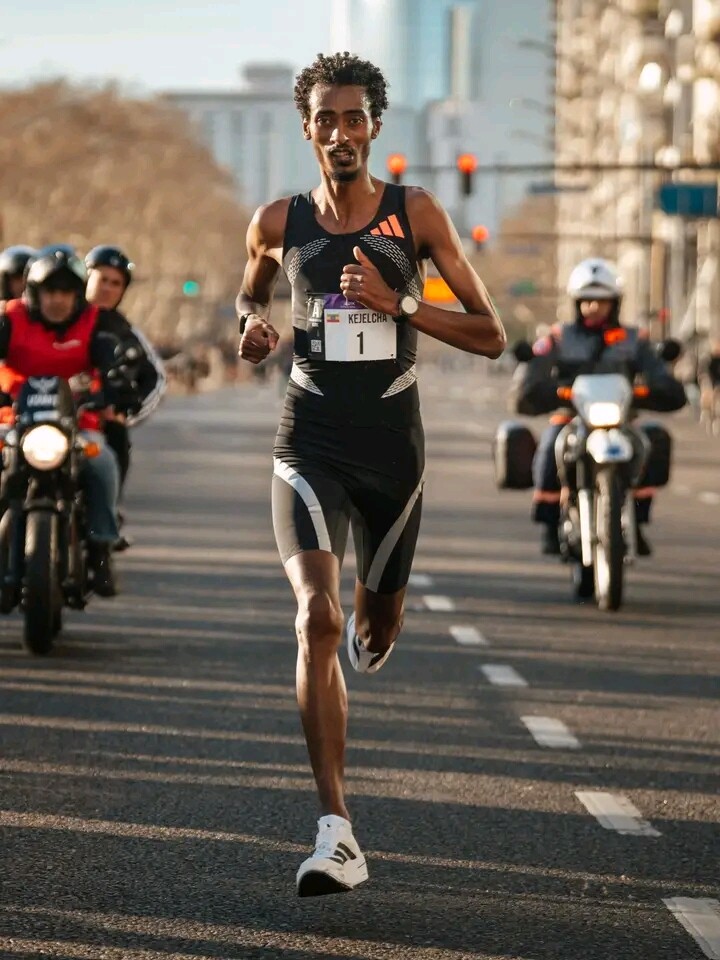
His 1:59:30 came in a conventional elite marathon race, and the historic morning became even more extraordinary as Ethiopia's Yomif Kejelcha finished in 1:59:41, while Uganda's Jacob Kiplimo clocked 2:00:28. In one astonishing race, three athletes went faster than the previous world-record standard.
Then came Monaco.
On July 10, Emmanuel Wanyonyi stepped into completely unfamiliar territory when he lined up for his first-ever 1000m race. What followed was nothing short of spectacular. The Kenyan middle-distance star stormed to 2:11.83, smashing a world record that had belonged to Noah Ngeny since 1999.
The previous mark had stood for 27 years, having been set four years before Wanyonyi was even born. Yet on his debut over the distance, Wanyonyi made history look effortless, while Britain's Jake Wightman also produced a superb performance to move into fifth place on the all-time list.
Just eight days later, London delivered another historic moment.
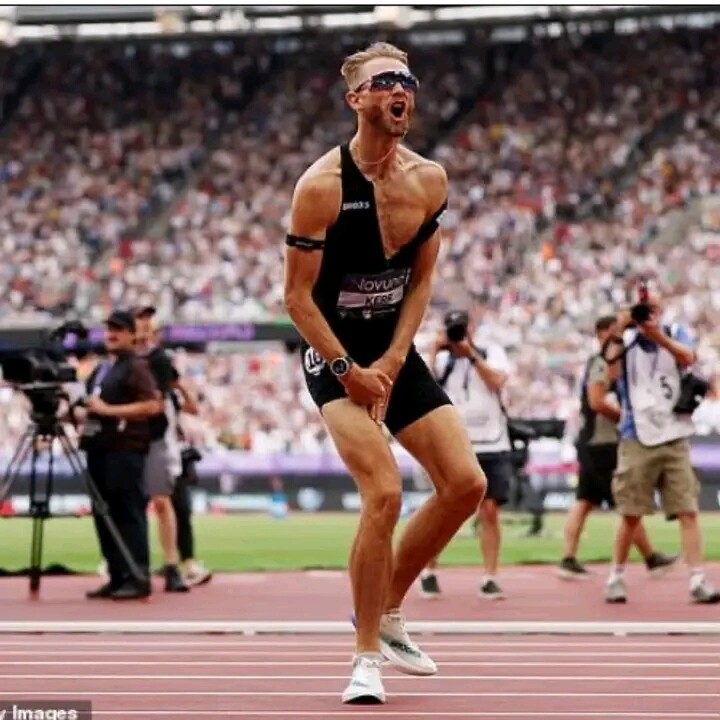
Josh Kerr had spoken openly about his ambitious mission, calling it “Project 222.” On the track, however, ambition turned into reality. The British star produced a stunning 3:42.66 for the mile, finally surpassing Hicham El Guerrouj's legendary 3:43.13 world record.
For decades, El Guerrouj's mark had stood as one of athletics' most iconic standards—a performance that appeared almost immune to the passing of time. Kerr changed that, producing a run that instantly secured its place among the greatest mile performances ever witnessed.
And then, in Buenos Aires on August 23, Yomif Kejelcha returned to the centre of the distance-running world.
Having already played a major role in London's historic marathon, the Ethiopian produced another extraordinary performance, this time over the half marathon. Kejelcha clocked 56:51, becoming the first man in history to break 57 minutes for the distance under valid record conditions.
What made the performance even more remarkable was the manner in which it unfolded. Kejelcha was running alone from around the 7km mark, with no rival beside him and no dramatic sprint finish required. He simply continued driving forward, producing one of the most dominant record-breaking performances ever seen on the roads.
Four historic records.
Four months.
A marathon barrier that had long been considered impossible in official competition. A 1000m record that had survived for 27 years. A mile record that had belonged to one of the greatest middle-distance runners in history. And a half-marathon performance that carried the event into completely new territory.
Distance running is living through a year unlike almost anything the sport has experienced before.
The most remarkable part?
2026 is not over yet.
With four months still remaining, the athletes of this extraordinary era may not be finished rewriting history.
by Erick Cheruiyot for My Best Runs.
Login to leave a comment
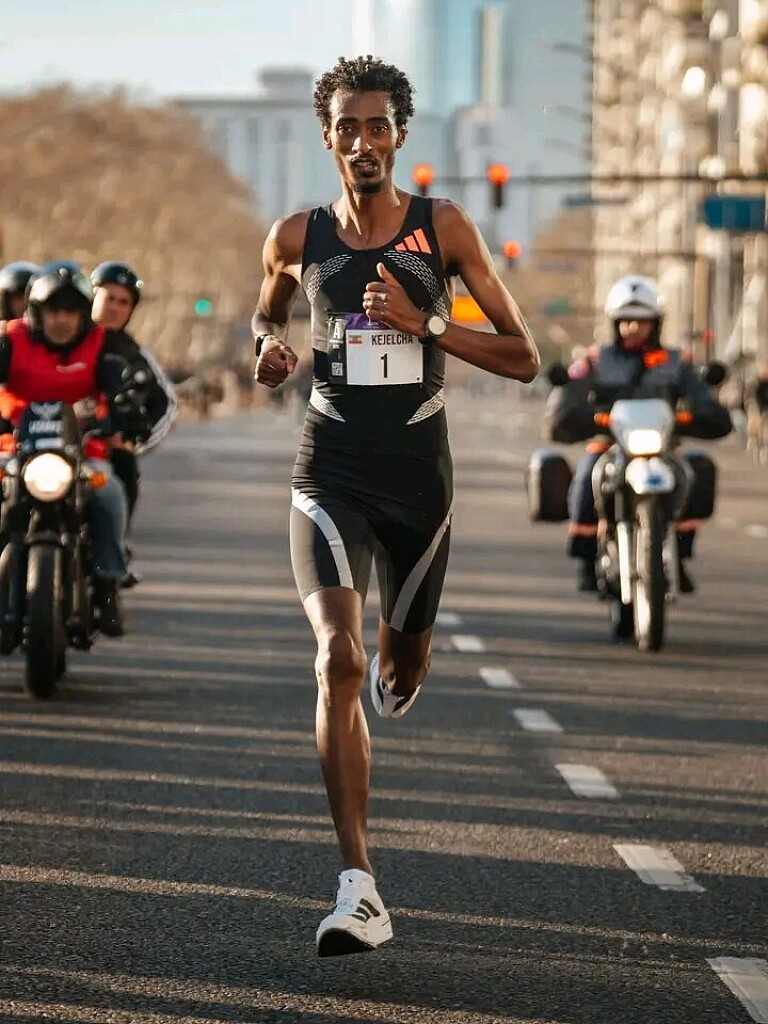
From 1:07:01 To 56:51: The Extraordinary Evolution Of The Half Marathon World Record
The history of the men’s half marathon world record is a remarkable journey through more than six decades of distance running, tracing the sport’s transformation from club-level competition to an era of extraordinary professional speed.
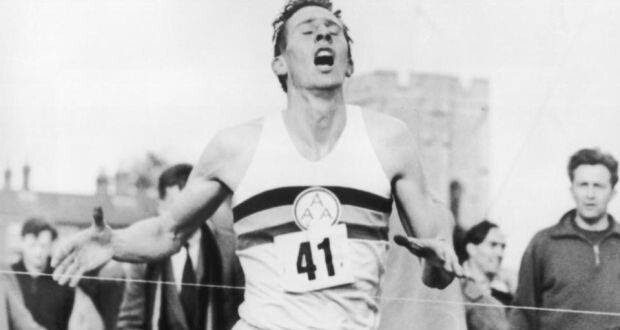
The story began in the spring of 1960 in Romford, Essex, where British club runner Brian Hill-Cottingham ran 21.0975 kilometres in 1:07:01, setting the fastest officially recorded time at the distance at the time.
For years, the record progressed slowly. British and American runners dominated much of the early history, with improvements often measured in seconds rather than dramatic leaps. Ron Hill lowered the mark to 1:05:44 in 1965, while Derek Clayton took it down to 1:03:22 in 1967. Through the 1970s and 1980s, the barrier continued to fall as athletes from different nations gradually pushed the limits of what was possible over 21.1 kilometres.
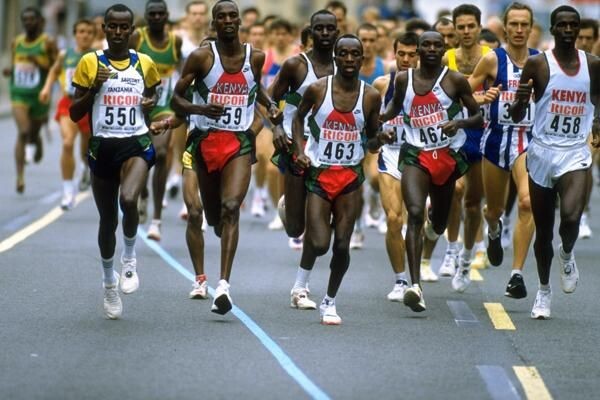
Then came the breakthrough that changed the character of the event.
In 1993, Kenya’s Moses Tanui became the first man to break the one-hour barrier, running 59:47 in Milan. It was a landmark moment for road running. The half marathon was no longer simply another distance on the racing calendar; it had become an event worthy of specialised preparation and elite-level ambition.
Kenya subsequently established a remarkable presence in the record progression. Paul Tergat lowered the record to 59:17 in 1998 before eventually pushing it below 59 minutes with a 59:06 mark later that year. Eritrea’s Zersenay Tadese and Kenya’s Sammy Wanjiru continued the progression in the 2000s, with Wanjiru taking the record to 58:33 in 2007.
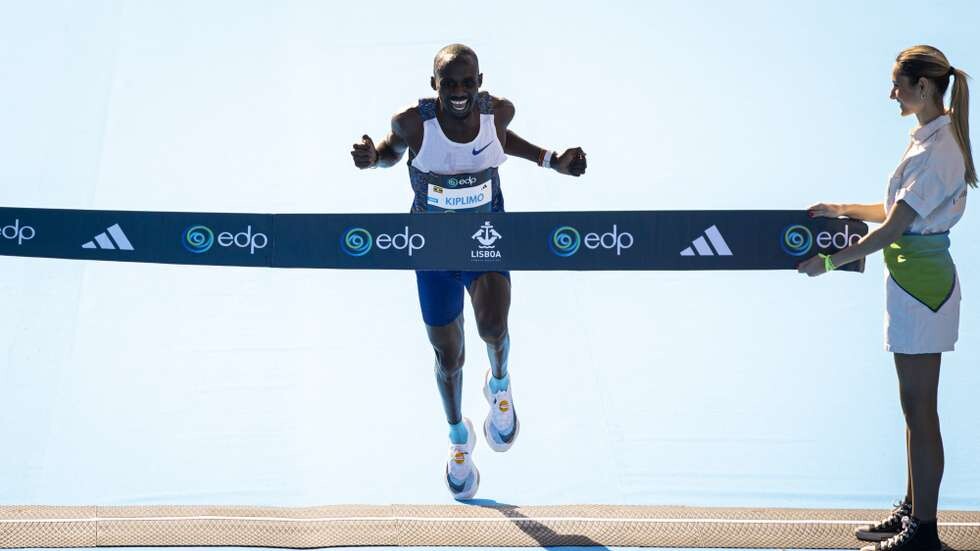
Tadese reclaimed the record in 2010 with 58:23, but the most dramatic developments were still to come.
In 2018, Kenya’s Abraham Kiptum ran 58:18, only for countryman Geoffrey Kamworor to lower the standard to 58:01 in 2019. A year later, another Kenyan, Kibiwott Kandie, produced one of the greatest breakthroughs in the event’s history, becoming the first man to break 58 minutes with 57:32 in Valencia.
Uganda’s Jacob Kiplimo then entered the record books, running 57:31 in Lisbon in 2021. Ethiopia’s Yomif Kejelcha lowered it by another second to 57:30 in Valencia in 2024.
And then, in 2026, the record progression became a breathtaking battle between two of the finest distance runners of their generation.
Kiplimo reclaimed the world record in Lisbon with 57:20, taking 10 seconds from Kejelcha’s mark. But Kejelcha responded with an extraordinary performance in Buenos Aires on 23 August 2026, stopping the clock at 56:51.
The improvement was staggering—29 seconds faster than Kiplimo’s previous record.
Kejelcha’s 56:51 means he averaged approximately 2:42 per kilometre for the entire 21.0975-kilometre distance, a pace that would have seemed almost unimaginable when Hill-Cottingham first established the record at 1:07:01 in 1960.
From 1:07:01 to 56:51, the progression tells the story of an event that has undergone a remarkable transformation. Training has become more sophisticated, competition has intensified, courses have become faster, and generations of athletes have continued to challenge the boundaries of human endurance and speed.
What began as a record set by a British club runner on a spring day in Essex has evolved into one of the most fiercely contested records in modern distance running.
And with Kiplimo and Kejelcha pushing each other to unprecedented heights, the question is no longer whether the half marathon can go faster.
The question is: how low can the world record ultimately go?
by Erick Cheruiyot for My Best Runs.
Login to leave a comment
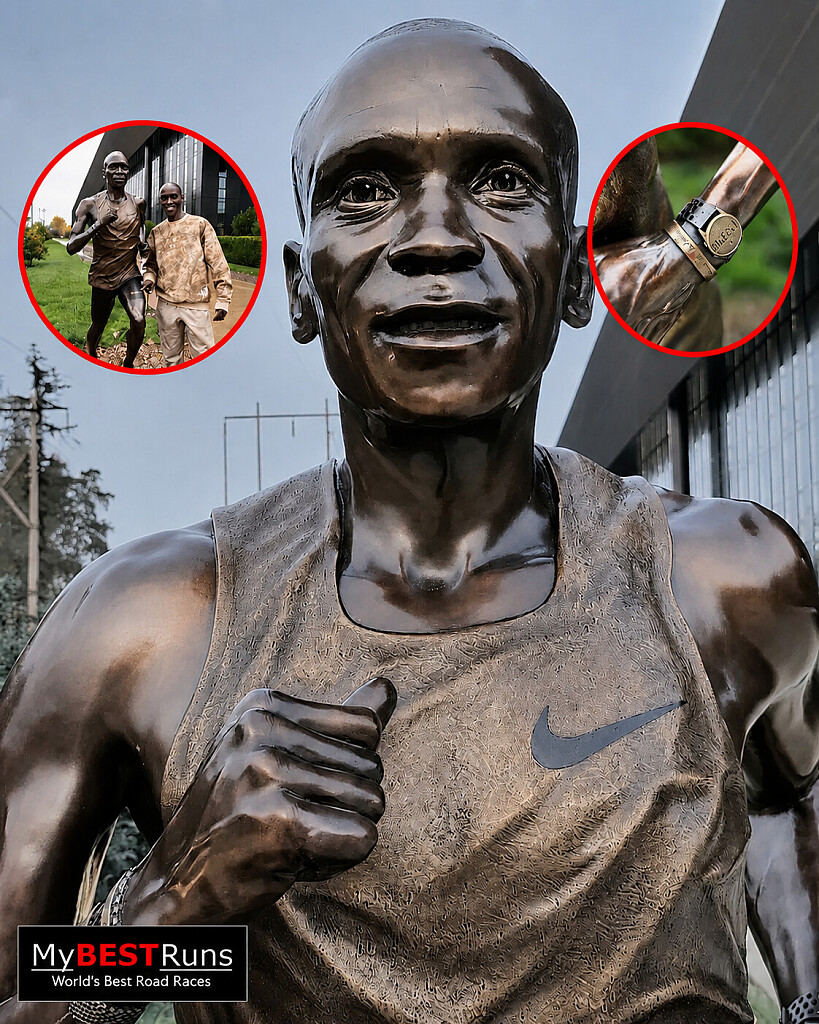
The Statue That Predicted History: How Kipchoge’s ‘No Human Is Limited’ Became Reality
Inside Nike’s World Headquarters in Beaverton, Oregon, a bronze figure stands frozen in motion.
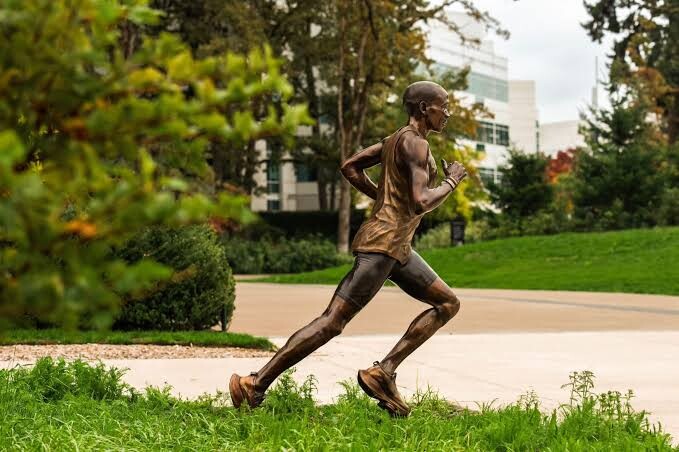
It is Eliud Kipchoge — captured in his unmistakable running posture, every detail carefully sculpted to resemble the Kenyan marathon legend at full stride. But this is more than a statue. It is a permanent reminder of a barrier that once seemed beyond human reach.
Created by Oregon artist Alison Caswell and commissioned by Nike, the life-size bronze sculpture was unveiled in October 2023 as part of the company’s celebration of its 20-year partnership with Kipchoge. Nike described the statue as a tribute to his signature gait and unique running style.
Look closely, however, and the sculpture tells an even deeper story.
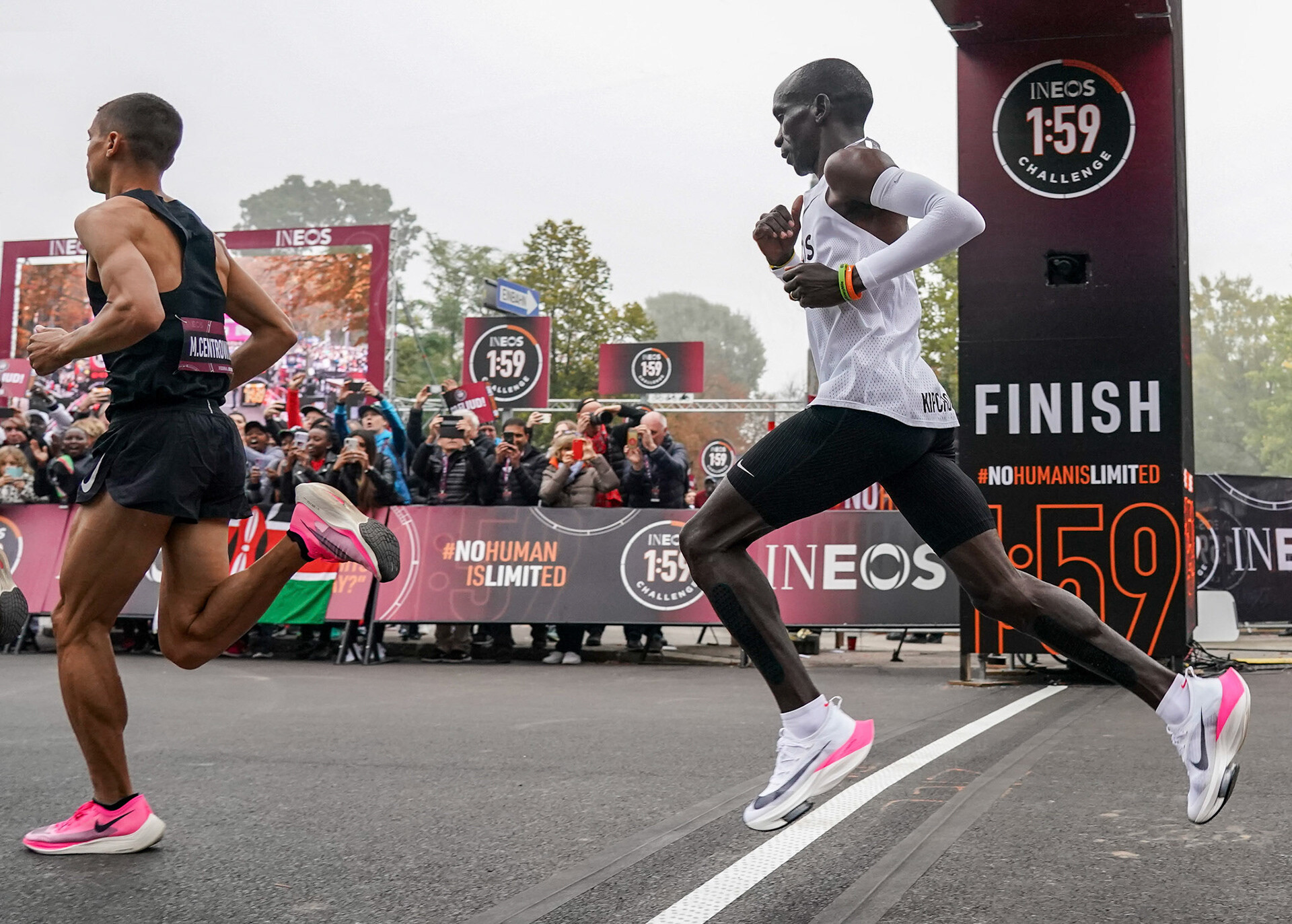
The watch on Kipchoge’s wrist displays 1:59:40, recalling the extraordinary morning of October 12, 2019, when he became the first person to run the marathon distance in under two hours during the INEOS 1:59 Challenge in Vienna.
His official recorded time was 1:59:40.2.
The achievement came under specially controlled conditions, with 41 pacemakers rotating in formations around him and extensive logistical support designed specifically for the attempt. Because it was not a standard record-eligible marathon, the performance was not recognized as an official world record. But its significance went far beyond the record books.
On the statue's left wrist is another detail that carries perhaps even greater meaning.
The wristband bears Kipchoge's famous philosophy:
“No human is limited.”
Those four words became synonymous with his pursuit of the impossible. In Vienna, they were no longer simply a slogan. Kipchoge had demonstrated that a boundary which had appeared almost untouchable could, under the right circumstances, be broken.
Four years later, the bronze figure remained in place at Nike's headquarters — but the marathon world had changed dramatically.
In October 2023, Kelvin Kiptum lowered the official men's marathon world record to 2:00:35 in Chicago, bringing the sport closer than ever to the barrier Kipchoge had already conquered unofficially in Vienna.
Then came April 26, 2026.
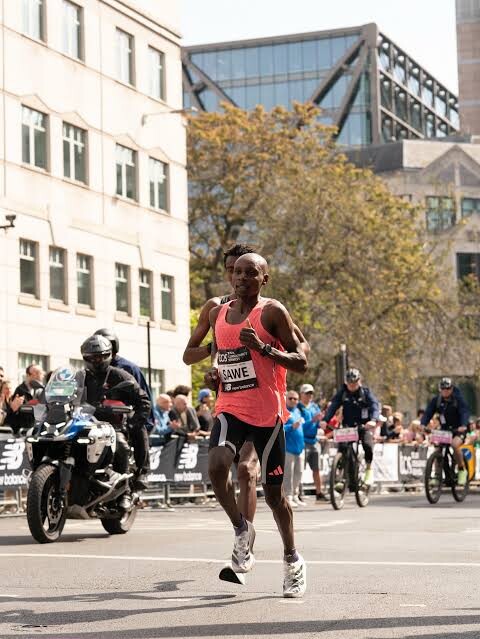
On the streets of London, Kenya's Sabastian Sawe entered territory that had previously belonged only to Kipchoge's extraordinary exhibition achievement.
Sawe won the London Marathon in 1:59:30, becoming the first man to officially complete a record-eligible marathon in under two hours. He also erased Kiptum's world record by 65 seconds. World Athletics subsequently ratified the performance as the official men's marathon world record.
And remarkably, Sawe did it in an ordinary competitive marathon — not on a specially designed course, not with rotating pacemakers, and not under the unique conditions of the 2019 INEOS challenge.
The symbolism is difficult to miss.
When Nike unveiled Kipchoge's statue in 2023, the 1:59:40 engraved on its wrist represented a moment when humanity had first stepped beyond the two-hour marathon barrier.
Today, that number represents something different.
It is no longer the fastest anyone has ever run 42.195 kilometres.
Instead, it has become part of the history that led to something even greater: the first officially recognized sub-two-hour marathon.
Kipchoge opened the door in Vienna.
Kiptum pushed the official world record closer.
And Sawe eventually walked — or rather, ran — through the door.
The bronze statue in Beaverton has not moved. Its watch still points to 1:59:40, and its wristband still carries the words “No human is limited.”
But the meaning of those words has grown.
What once looked like a statement of belief now reads like a prediction.
The statue was built to celebrate what Kipchoge had already achieved.
History has since given it another purpose: to remind the world that yesterday's impossible can become tomorrow's starting point.
by Erick Cheruiyot for My Best Runs.
Login to leave a comment
No GPS, No Problem: Cristhian Pacheco Wins Mexico City Marathon With A $22 Casio
Cristhian Pacheco arrived at the Mexico City Marathon with a remarkably simple piece of equipment on his wrist — and left with one of the biggest victories of his career.
The Peruvian Olympian won the 43rd edition of the Mexico City Marathon on August 30 in 2:10:03, defeating Ethiopia’s Anbesa Lencho Tefaye by more than a minute. Balew Yihunie Derseh completed the men’s podium in 2:11:58.
But it was not only Pacheco’s victory that caught attention.
Photographs from the race appeared to show the 33-year-old wearing a Casio F-91W, one of the most basic digital watches on the market. The inexpensive watch is a striking contrast to the sophisticated GPS devices commonly seen on the wrists of elite marathoners.

There was no GPS route, no live pace screen, no heart-rate monitor and no collection of advanced running metrics. The watch essentially provides the basics: timekeeping, an alarm, a backlight and a stopwatch.
And even that stopwatch is hardly designed with a two-hour marathon in mind.
Its stopwatch function runs for less than an hour before resetting — meaning Pacheco’s winning marathon lasted more than twice as long as the watch’s maximum stopwatch display.
Yet none of that mattered.
Pacheco relied on something considerably more valuable than technology: preparation, experience and an understanding of the demanding Mexico City course.
He remained with the leading group through roughly 25 kilometres before making his decisive move. The altitude and undulating terrain eventually began to take their toll, particularly during the closing stages.
Pacheco later explained that the section beyond 32 kilometres was especially difficult, with the combination of slopes and altitude leaving his legs increasingly heavy. His training, however, had prepared him for precisely that moment.
He held his form when others began to fade and powered clear to claim the victory in 2:10:03.
The performance was also significant because Pacheco is no ordinary marathoner. The Huancayo-born athlete is a three-time Olympian and owns a personal best of 2:07:38. He also holds the Pan American marathon record of 2:09:31, set in Lima in 2019, and won Pan American Games marathon gold in Santiago in 2023.
His Mexico City victory added another major title to an already distinguished career.
The race itself attracted around 30,000 runners, with the 42.195-kilometre course taking competitors from the Ciudad Universitaria area through some of the Mexican capital’s most recognisable avenues before finishing at the Zócalo.
Pacheco’s winning time was not fast enough to threaten the course record of 2:08:23, set by Bolivia’s Héctor Garibay in 2023, but the victory was never really about chasing a record. It was about executing a difficult race at altitude and outlasting a strong international field.
And then came the irony.
For winning the race, Pacheco was awarded $50,000 along with a Garmin smartwatch — a sophisticated piece of technology capable of providing exactly the kind of data his humble Casio does not.
So, on a day when elite running technology was everywhere, the marathon champion apparently needed little more than a simple digital watch and years of hard training.
The Casio may not have told Pacheco his pace, heart rate or position on the course.
It did not need to.
Pacheco already knew how to run.
by Erick Cheruiyot for My Best Runs.
Login to leave a comment

Athletics Must Remain Number One” — Coe’s Final Challenge As The Race For His Successor Heats Up
The battle for the future of world athletics is already taking shape, but outgoing World Athletics President Sebastian Coe has made one message unmistakably clear: athletics must remain at the heart of the Olympic Games.
Speaking ahead of the Diamond League meeting in Zurich, Coe said he remains highly optimistic about the sport’s future and insisted that athletics must protect its position as the leading sport of the Olympic movement.

“There are only two truly global sports, one is football and one is athletics. We must maintain our position as the number one Olympic sport,” Coe said.
The 69-year-old Briton is approaching the final year of his presidency after first taking charge of the global governing body in 2015. He was re-elected for a third term in 2023, which, under World Athletics’ term limits, is his final mandate.
Coe will leave office in 2027, when the next World Athletics president is elected at the Elective Congress in Beijing, immediately before the 2027 World Athletics Championships. The new president will serve a four-year term covering 2027–2031.

And the succession battle is already gathering momentum.
Among the candidates declared eligible so far are prominent figures from within the sport’s leadership, including World Athletics Vice-Presidents Adille Sumariwalla of India, Raul Chapado of Spain and Ximena Restrepo of Colombia. The current list also includes Yuko Arimori of Japan, Hatem Fouda of Egypt, Ivan Garcia of Uruguay, Jean Gracia of France and Kenya’s Jackson Tuwei.
Restrepo brings a particularly distinguished competitive background to the contest. The Colombian won Olympic bronze in the women’s 400 metres at Barcelona 1992 and became the first woman elected as a World Athletics Vice-President in 2019.
For Coe, however, the final chapter of his presidency is not simply about preparing for his departure. He says his priority over the next year is to continue strengthening the sport so that his successor inherits an organisation capable of growing even further.
“I've never been more optimistic about the future of the sport,” Coe said, adding that whoever succeeds him will inherit “a very much stronger sport” than the one he took over in 2015.
His presidency has coincided with significant changes across the sport, including governance reforms, commercial development and efforts to make athletics more innovative and globally engaging. The launch of the new World Athletics Ultimate Championship in Budapest this September is another example of the organisation’s attempt to create a shorter, high-stakes competition featuring many of the world’s leading athletes.
But the next president will inherit an enormous responsibility.
Athletics is the foundation of the Olympic Games, producing some of the most iconic moments in Olympic history and bringing together athletes from virtually every corner of the world. The challenge for Coe’s successor will be to preserve that unique position while making the sport more commercially powerful, more accessible to younger audiences and even more compelling in an increasingly competitive global sporting landscape.
Coe believes the opportunity is there.
As he prepares to hand over the presidency in 2027, his challenge to the next generation of World Athletics leadership is clear: protect the sport’s Olympic identity, keep pushing its boundaries and make sure athletics remains the heartbeat of the Games.
The question now is not whether Coe will leave a significant mark on athletics, but who will have the vision, influence and leadership required to carry the sport into its next era.
Who do you think should lead World Athletics after Sebastian Coe?
by Erick Cheruiyot for My Best Runs.
Login to leave a comment

26 Years Later, Vivian Cheruiyot Returns To Sydney As A Kenyan Distance-Racing Legend
Twenty-six years ago, a 17-year-old Vivian Cheruiyot arrived in Sydney carrying the dreams of a young Kenyan athlete and the promise of a remarkable future.
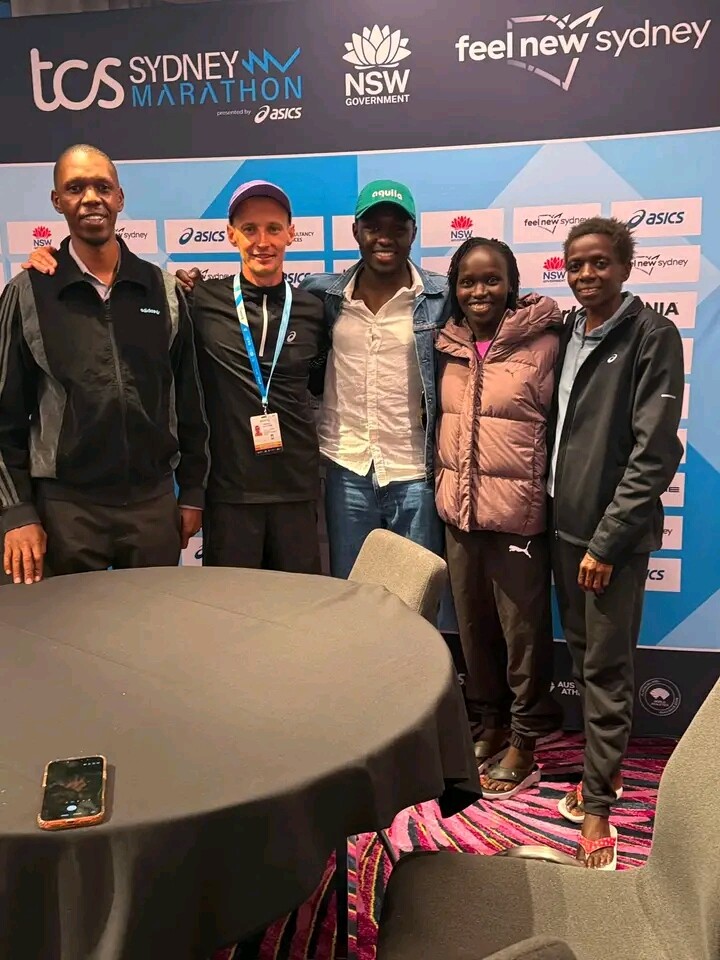
Today, she returns to the same Australian city as something far greater — an Olympic champion, four-time world champion, world cross-country champion, London Marathon winner, Laureus Sportswoman of the Year and one of Kenya’s most accomplished distance runners.
At 42, Cheruiyot will line up for the TCS Sydney Marathon on Sunday, August 30, completing an extraordinary full circle in a career that has stretched across more than two decades and transformed her from a teenage Olympian into one of the defining figures of her generation.
When Cheruiyot first competed in Sydney at the 2000 Olympic Games, few could have imagined the heights she would eventually reach. Still only 17, she advanced to the 5000m final and finished 14th — an experience that became the first chapter of an Olympic journey that would eventually span four Games.
The years that followed brought an extraordinary collection of victories.
Cheruiyot became world 5000m champion in 2009, then produced one of the greatest championship performances of her career in Daegu in 2011, winning both the 5000m and 10,000m titles while also claiming World Cross Country gold earlier that year. She added another world 10,000m title in Beijing in 2015, taking her tally to four senior world championships.
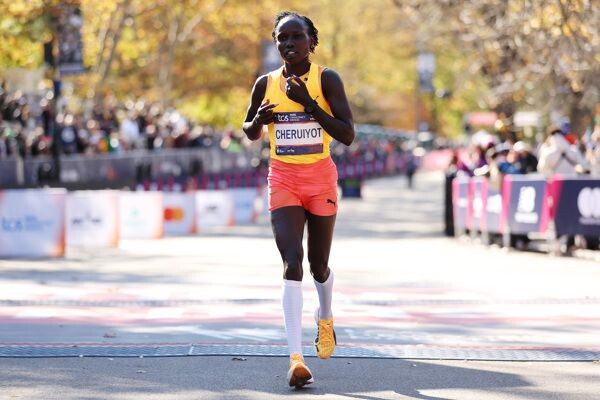
But the Olympic gold medal remained the one prize missing from her collection.
That changed dramatically in Rio in 2016.
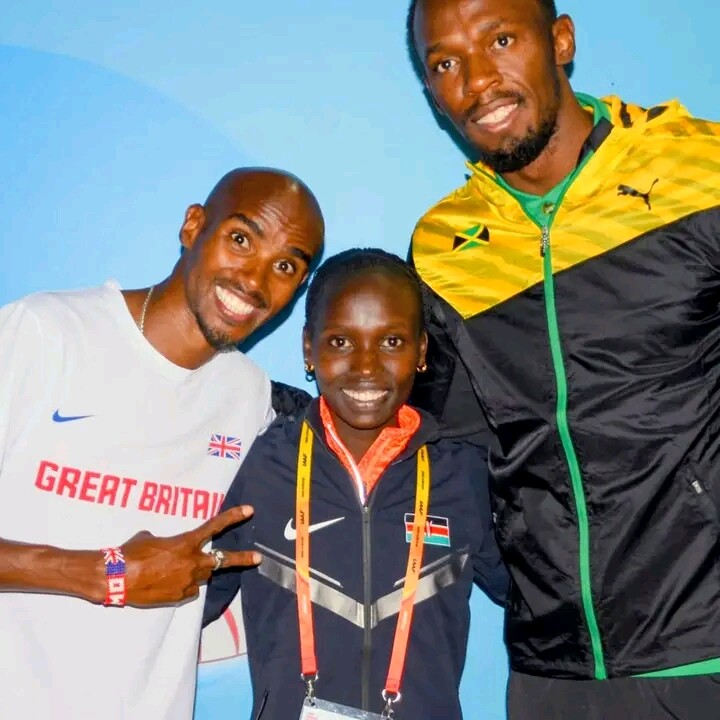
After winning silver in the 10,000m, Cheruiyot returned to the track for the 5000m final and delivered a masterclass in championship racing. She surged away from Ethiopia’s Almaz Ayana in the closing stages to win Olympic gold in 14:26.17, finally completing the collection of major titles she had chased for so many years.
“I said I want to win,” Cheruiyot recalled after that historic victory. “This was my fourth Olympics and I’ve been dreaming about this since the very start.”
Her brilliance was not confined to the track.
After moving into marathon running, Cheruiyot established herself among the world’s best over 42.195km. She finished fourth in her London Marathon debut in 2017 before returning the following year to produce a stunning victory in 2:18:31 — a performance that placed her fourth on the world all-time list at the time and remains her marathon personal best.
She also finished runner-up in the New York City Marathon in 2018 and second in London in 2019, further demonstrating that her extraordinary competitive instinct had successfully followed her from the track to the roads.
Away from competition, Cheruiyot’s story has also evolved with her life. She became a mother, welcomed her daughter Arielle in 2021 and returned to competitive racing in 2023. In 2024, she claimed third place at the New York City Marathon, followed by fifth at the 2025 London Marathon.
Now Sydney offers her another opportunity to write her name into the city’s sporting history.
“I look back on my career with pride. I was able to win almost everything and have been at the top for a long time,” Cheruiyot said ahead of her return.
She also remembers the extraordinary generation in which she competed — an era that included global icons such as Usain Bolt, Tirunesh Dibaba and Meseret Defar.
“I was running in a great era and had a close-up view of athletes like Usain Bolt setting the world alight,” she reflected.
Yet perhaps the most remarkable aspect of Cheruiyot’s return is not simply the passage of time, but her willingness to keep challenging herself.
She arrives in Sydney having put considerable work into rebuilding her fitness, knowing that the marathon demands something entirely different from the explosive championship races that defined her track career.
“I am very excited to go back to Sydney,” she said. “It has been 26 years since I was there, and a lot has changed in my life since then. I hope to have a good run — I have put in a lot of work to regain fitness and hope my body will stand up to the 42km.”
Twenty-six years ago, Sydney introduced the world to a fearless Kenyan teenager chasing an Olympic dream.
Now, the same city welcomes back a woman who went on to conquer the track, cross country and marathon — and to leave an indelible mark on Kenyan athletics.
From teenage Olympian to Olympic champion. From world champion to marathon winner. From rising talent to mother and enduring icon.
Vivian Cheruiyot has come full circle — and Sydney is once again the stage.
by Erick Cheruiyot for My Best Runs.
Login to leave a comment

Sydney Marathon
The Sydney Marathon is a marathon held annually in Sydney, Australia. The event was first held in 2001 as a legacy of the 2000 Summer Olympics, which were held in Sydney. In addition to the marathon, a half marathon, 9 kilometres (5.6 mi) "Bridge Run", and a 3.5 kilometres (2.2 mi) "Family Fun Run" are also held under the banner...
more...
The Final 1:59 D-Max: Eliud Kipchoge Celebrates a Legacy of Breaking Limits
Eliud Kipchoge has marked another memorable chapter in his remarkable journey after receiving the 159th and final Isuzu D-Max 1:59 Limited Edition vehicle, completing a unique partnership that celebrates one of the greatest achievements in marathon history.
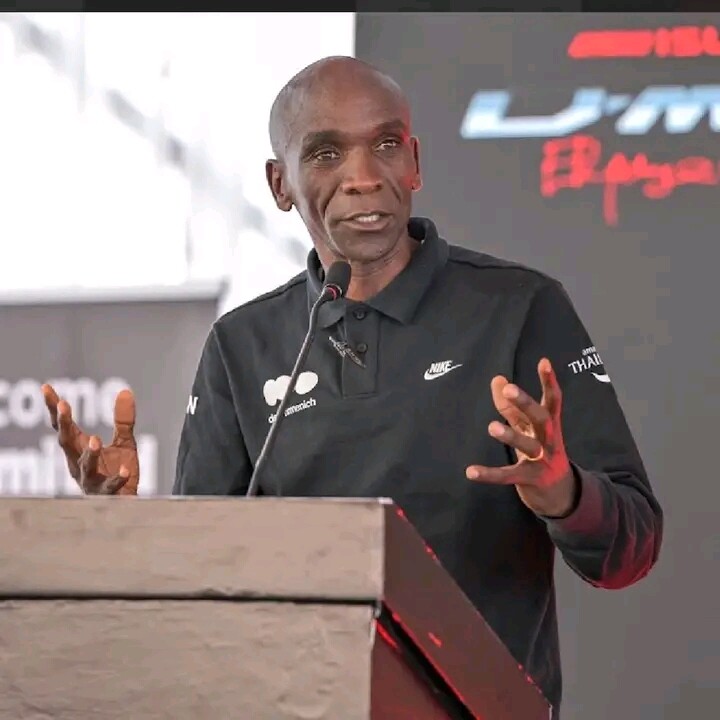
The legendary Kenyan marathoner expressed his appreciation to his Isuzu East Africa family after taking delivery of the final vehicle in a special series of just 159 units produced to commemorate his historic sub-two-hour marathon achievement.

Each of the limited-edition D-Max vehicles carries Kipchoge’s name and signature, transforming the collection into more than a series of exclusive vehicles. It represents a story built around ambition, discipline, perseverance and the belief that seemingly impossible goals can be achieved through commitment and trust in the process.
The inspiration for the special edition dates back to October 12, 2019, when Kipchoge made history in Vienna, Austria, becoming the first person to run a marathon distance in under two hours in a controlled event. He completed the 42.195-kilometre distance in 1:59:40.2, a landmark moment that redefined the boundaries of human endurance.
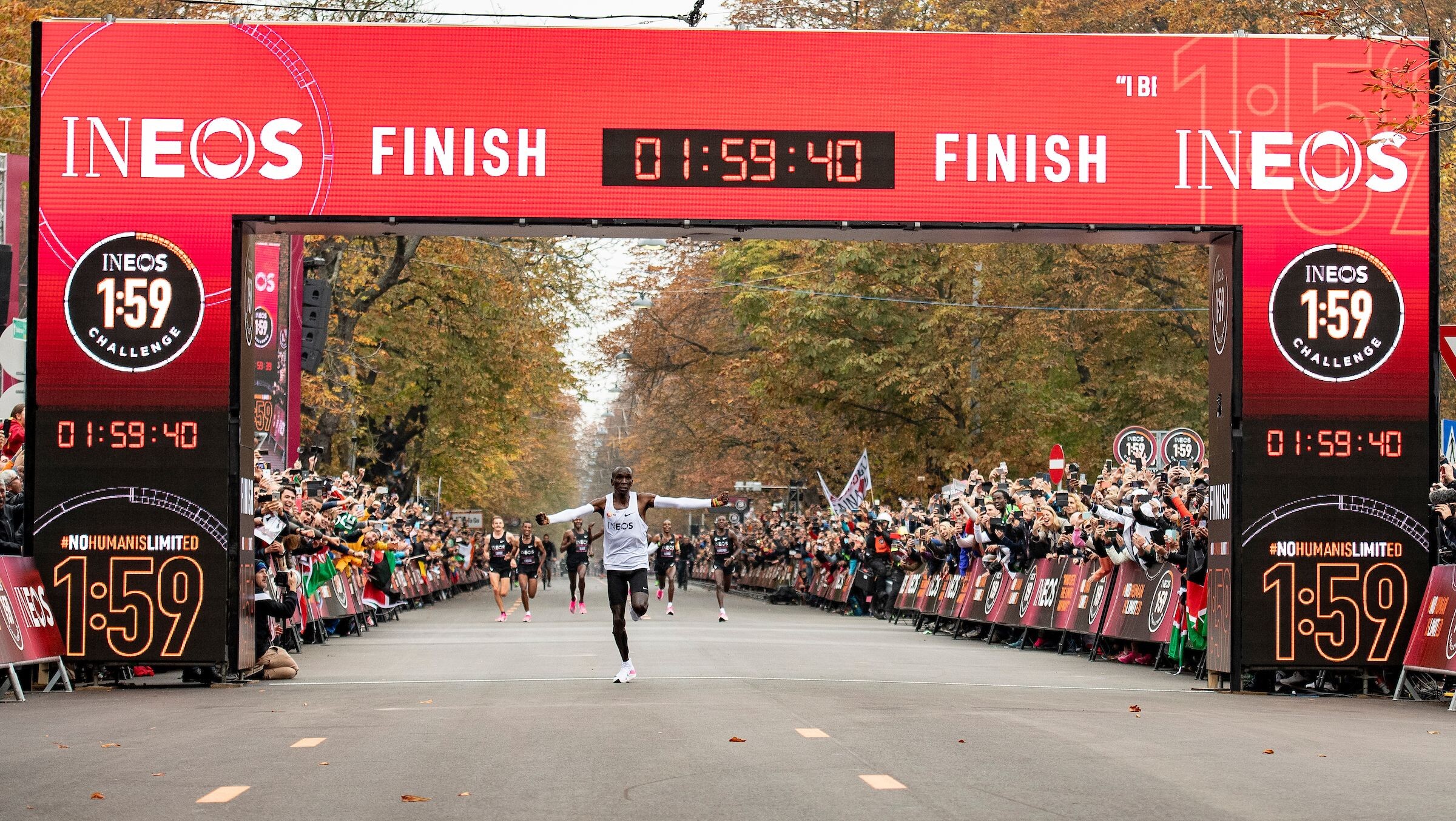
What began with that extraordinary morning in Vienna has since evolved into a lasting legacy on Kenyan roads, with 159 limited-edition vehicles now representing a shared connection between Kipchoge and their owners.
For Kipchoge, the final D-Max is therefore not simply the last vehicle to leave the production line. It is a symbolic conclusion to a story that connects his historic achievement with the values that have defined his career.
The number 159 carries particular significance, linking the limited production run to the historic 1:59 achievement while giving each owner a small piece of the story.
As he received the final unit, Kipchoge reflected on the journey from the streets of Vienna to the roads of Kenya, describing the 159 vehicles as a story shared by 159 owners who believe in the possibilities that emerge when people remain committed to their goals and trust the process.
The final D-Max consequently becomes another tangible reminder of a philosophy Kipchoge has carried throughout his career: no human is limited by the boundaries we initially believe exist.
From a historic morning in Vienna to a limited-edition collection spread across Kenya, the 1:59 legacy continues to inspire far beyond the marathon course.
by Erick Cheruiyot for My Best Runs.
Login to leave a comment
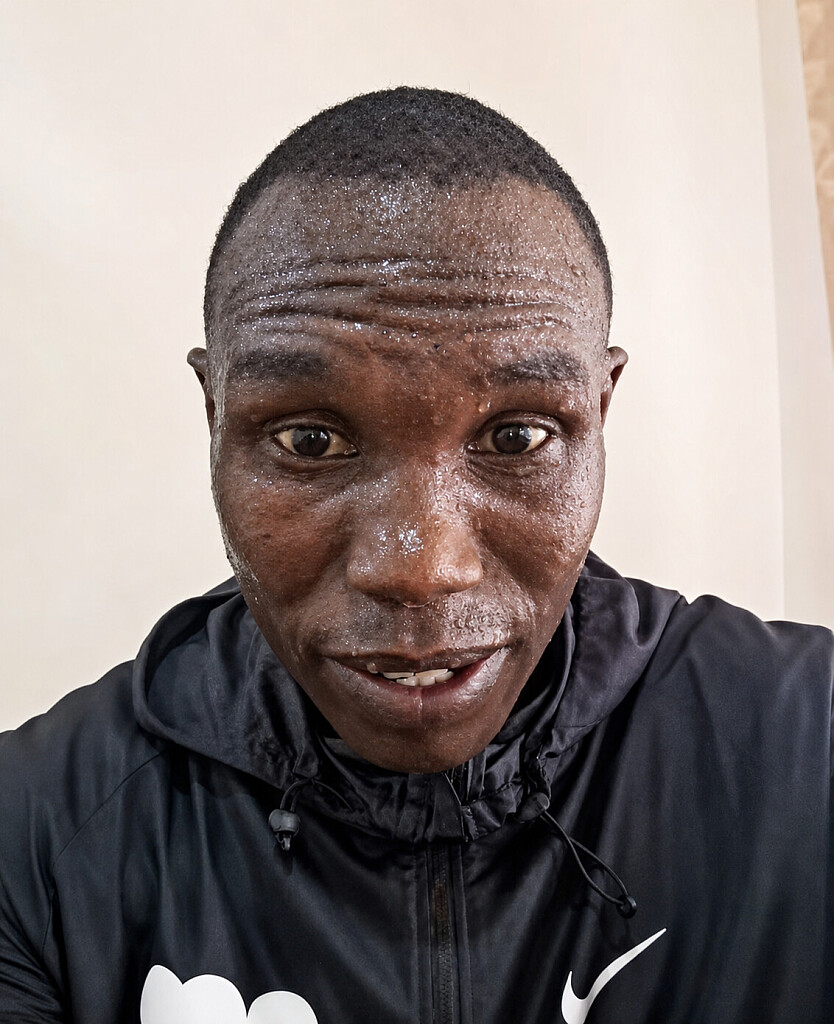
Geoffrey Kamworor Eyes New York Hat-Trick as Kenyan Star Chases Another Major Triumph
Two-time New York City Marathon champion Geoffrey Kamworor is set for another assault on the Big Apple, with the Kenyan distance-running star targeting a historic third victory when the Abbott World Marathon Majors race returns on November 1.
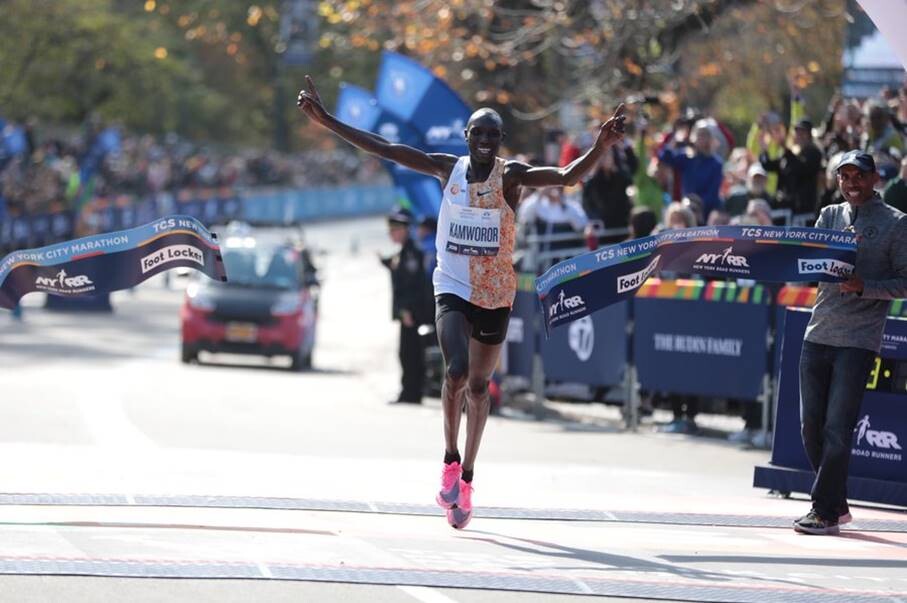
For Kamworor, New York represents much more than another marathon. It is a course where he has already enjoyed some of the defining moments of his illustrious career, and where he will now seek to add another prestigious title to a remarkable collection of achievements.
The 33-year-old has developed a special relationship with the New York course since making his debut there in 2015. On that occasion, he finished runner-up in 2:10:48 behind compatriot Stanley Biwott, who won in 2:10:34.
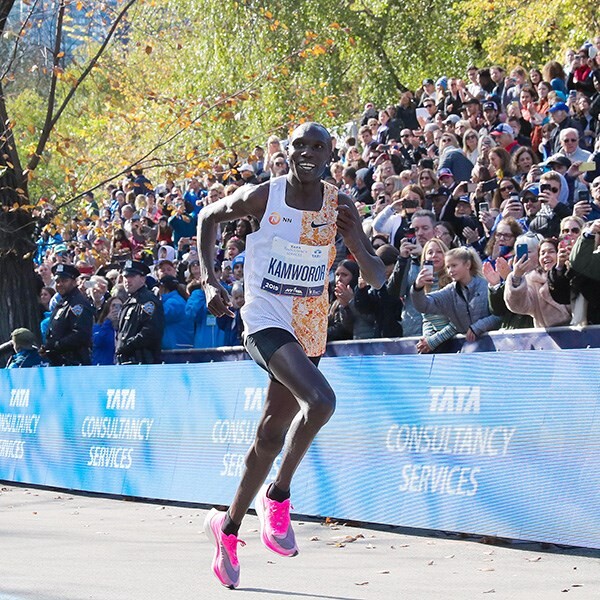
Two years later, Kamworor went one step further.
In 2017, he produced a composed performance to claim his first New York Marathon crown, crossing the finish line in 2:10:53. He held off fellow Kenyan and former world record-holder Wilson Kipsang, who finished just three seconds behind in 2:10:56, while Ethiopia's Lelisa Desisa took third in 2:11:32.

Kamworor returned the following year hoping to defend his title but had to settle for third place. Desisa triumphed in 2:05:59, ahead of Shura Kitata in 2:06:01, while Kamworor clocked 2:06:26.
But the Kenyan refused to stay away from the top for long.
In 2019, he reclaimed the New York crown in emphatic fashion, winning in 2:08:13. Albert Korir followed in second in 2:08:36, with Ethiopia's Girma Bekele completing the podium in 2:08:38.
Those two victories remain Kamworor's only Abbott World Marathon Majors titles, making New York a particularly significant venue in his career.
His latest appearance in the race, however, ended without another podium finish. Returning in 2024, Kamworor placed fifth in 2:08:50 as the Netherlands' Abdi Nageeye won in 2:07:39. Kenya's Evans Chebet was second in 2:07:45, while Albert Korir took third in 2:08:00.
Now, Kamworor is eager to return to the city where he has already tasted victory twice.
“I am very excited to be going back to New York,” Kamworor said, expressing his anticipation ahead of another demanding battle through the streets of the world's most famous city.
For the Kenyan star, the race offers a unique combination of sporting pressure and an atmosphere unlike any other.
“It's always an incredible experience to run the biggest marathon in the world. I'm really looking forward to feeling the energy of the crowd again,” he added.
Kamworor's challenge will be to arrive in New York at his best after a mixed campaign in 2026.
He began the year in spectacular fashion, winning the Ras Al Khaimah Half Marathon on February 14. The Kenyan clocked an impressive 58:14, finishing ahead of Bahrain's Birhanu Balew, who ran 58:23, and compatriot Gideon Rono, who crossed the line in 58:38.
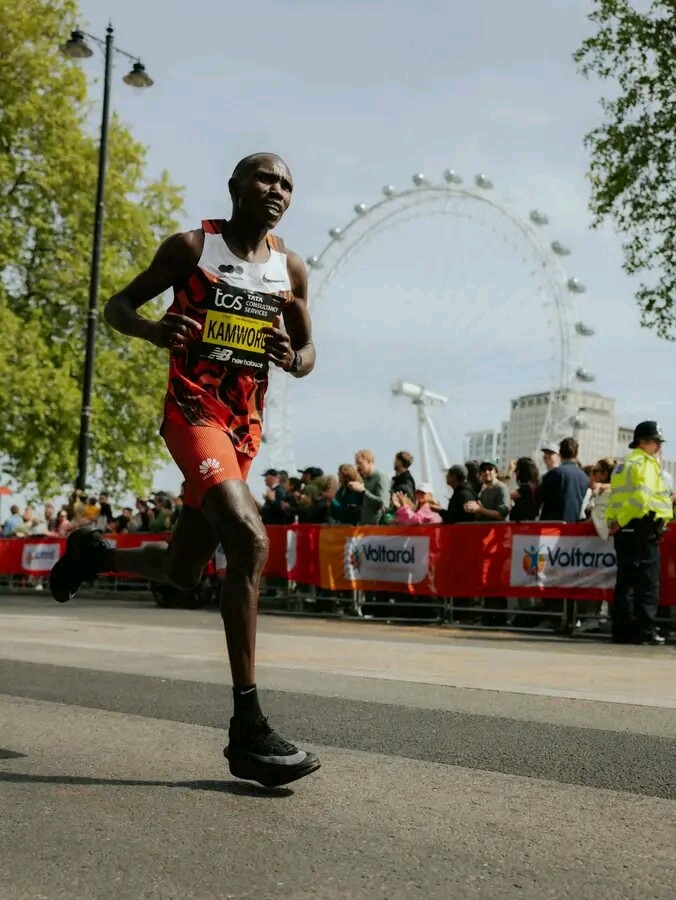
His London Marathon campaign on April 26 proved considerably tougher. Kamworor finished eighth in 2:05:38 in a historic race dominated by Sebastian Sawe, who produced a sensational 1:59:30 to become the first man to break the two-hour barrier in a marathon. Ethiopia's Yomif Kejelcha was second in 1:59:41, while Uganda's Jacob Kiplimo finished third in 2:00:28.
Kamworor will therefore arrive in New York with both experience and motivation on his side. He knows exactly what the course demands, having already navigated its hills, turns and relentless closing stages on multiple occasions.
Beyond the marathon, his career is decorated with major international honours across several disciplines.
Kamworor is a three-time world half marathon champion, winning his first title in Copenhagen in 2014 before successfully defending his crown in Cardiff in 2016 and completing his remarkable hat-trick in Valencia in 2018.
He has also established himself as one of Kenya's finest cross-country runners. He won the world junior cross-country title in Punta Umbria in 2011 before becoming a senior world champion in Guiyang in 2015 and Kampala in 2017. He added a bronze medal at the 2019 World Cross Country Championships in Aarhus.
That versatility has long been one of Kamworor's greatest strengths. From cross country to the half marathon and now the marathon, he has repeatedly demonstrated the endurance, tactical intelligence and competitive resilience required to succeed at the highest level.
Yet New York remains unfinished business.
With two victories already secured and another opportunity waiting on November 1, Kamworor has a chance to strengthen his legacy on one of the sport's most iconic stages.
A third triumph would not only give him a coveted New York hat-trick but would further cement his status as one of Kenya's most accomplished distance runners of his generation.
The Big Apple has already given Kamworor some of the proudest moments of his career. Now, the Kenyan star is returning with one clear ambition — to conquer New York once again.
by Erick Cheruiyot for My Best Runs.
Login to leave a comment
TCS New York City Marathon
The first New York City Marathon, organized in 1970 by Fred Lebow and Vince Chiappetta, was held entirely in Central Park. Of 127 entrants, only 55 men finished; the sole female entrant dropped out due to illness. Winners were given inexpensive wristwatches and recycled baseball and bowling trophies. The entry fee was $1 and the total event budget...
more...
Débora Simas Runs 866.21 Kilometres in Seven Days to Shatter the Women’s Treadmill Record
For seven relentless days, Débora Simas turned a treadmill inside a bustling shopping mall in Florianópolis, Brazil, into the stage for an extraordinary feat of endurance.
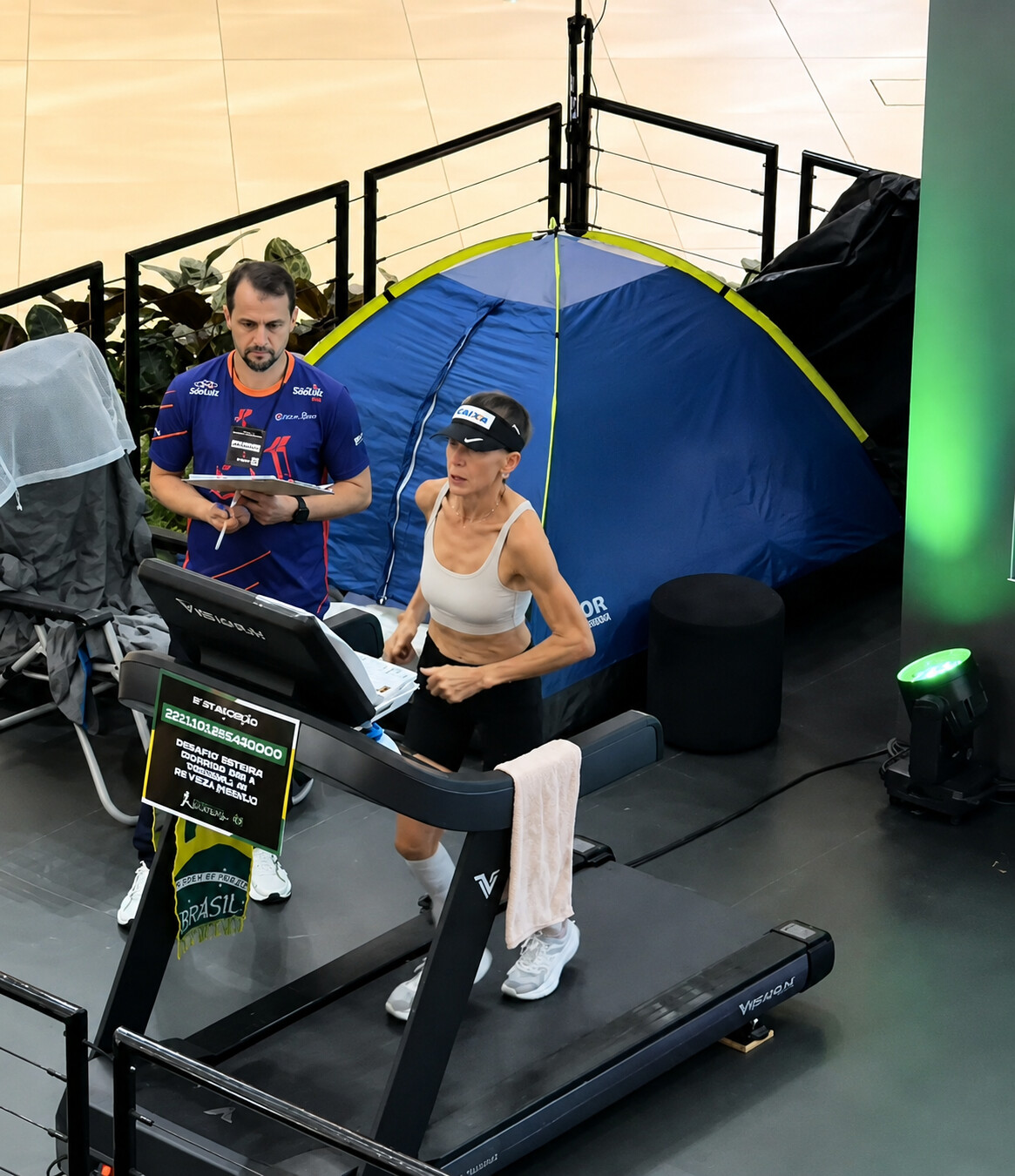
When the clock reached 168 hours at midday on Sunday, the 55-year-old ultramarathoner had covered an astonishing 866.21 kilometres — approximately 538 miles. That distance put her more than 20 kilometres beyond the previous Guinness World Records benchmark of 846.16 kilometres, set by New Zealand’s Emma Timmis in June 2024.

The achievement was the culmination of a challenge that demanded far more than simply running. For an entire week, Simas had to manage the relentless combination of physical fatigue, sleep deprivation, nutrition, recovery and the mental strain of repeatedly stepping back onto the treadmill.

Her temporary home was a tent positioned behind the treadmill, where she grabbed short periods of sleep and attended to essential recovery needs. Food, medical attention and other necessities had to be carefully fitted around the demands of the attempt, while a private bathroom inside the shopping centre provided the only place where she could briefly step away from the public eye.
This was not Simas’s first encounter with the unforgiving nature of seven-day treadmill running. In 2019, she completed 800.61 kilometres over the same 168-hour period at the Beiramar Shopping centre, setting a Brazilian and South American record at the time. Her return seven years later was driven by a very different ambition: to go beyond the world’s best mark.
The preparation behind the attempt was equally remarkable. Simas reportedly spent two years preparing for the challenge while balancing two jobs, often training largely on her own. Every kilometre of that preparation ultimately became part of a much bigger test of patience, resilience and belief.
There were moments during the seven days when the body threatened to take control. At one stage, a severe cramp placed the attempt in jeopardy and forced members of her support team to intervene. Yet Simas recovered and continued, refusing to let one difficult moment derail an effort that had taken years to build.
Her final distance of 866.21 kilometres represents an average of about 123.7 kilometres per day, or roughly 5.15 kilometres every hour across the full 168-hour period. That figure includes the periods when she was required to stop for essential needs, making the scale of the accomplishment even more striking.
Simas now has the number that matters most: 866.21 kilometres. However, there is an important distinction between breaking the previous mark and having the Guinness title officially ratified. Guinness World Records notes that records can change before they are immediately reflected online, and official recognition depends on the verification process.
For Simas, though, the significance of the achievement goes far beyond a number on a leaderboard. Her journey was a battle against exhaustion, discomfort and the powerful urge to stop — a test in which mental strength became just as important as physical endurance.
“I had to face the sleepiness, the pain, the exhaustion, and moments when my head had to be stronger than my body,” she said.
After 168 hours, the treadmill finally fell silent. Débora Simas stepped away having transformed seven days of relentless running into one of the most remarkable endurance performances of her career — and, pending official verification, a new women’s world-best mark for distance covered on a treadmill in one week.
by Erick Cheruiyot for My Best Runs.
Login to leave a comment
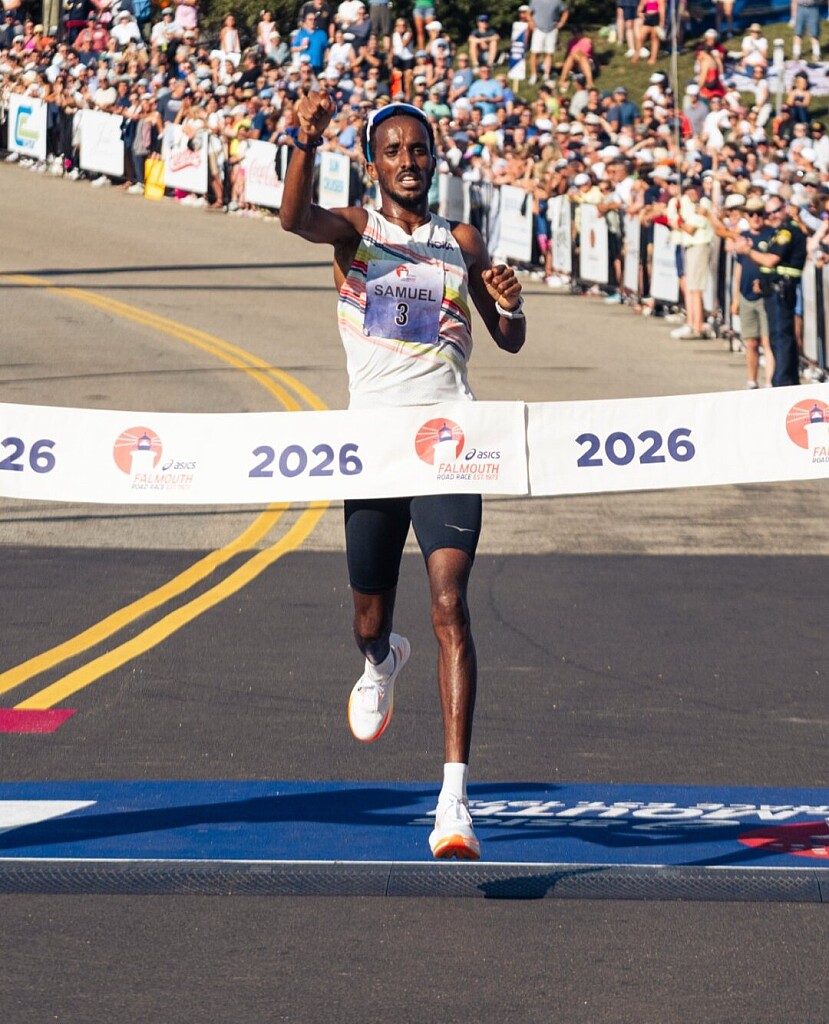
Habtom Samuel Makes Falmouth History With A Record-Breaking Sub-31-Minute Victory
History was made on Sunday morning, August 16, 2026, as Eritrea’s Habtom Samuel produced a breathtaking performance at the Falmouth Road Race, becoming the first athlete in the event’s history to break the 31-minute barrier.
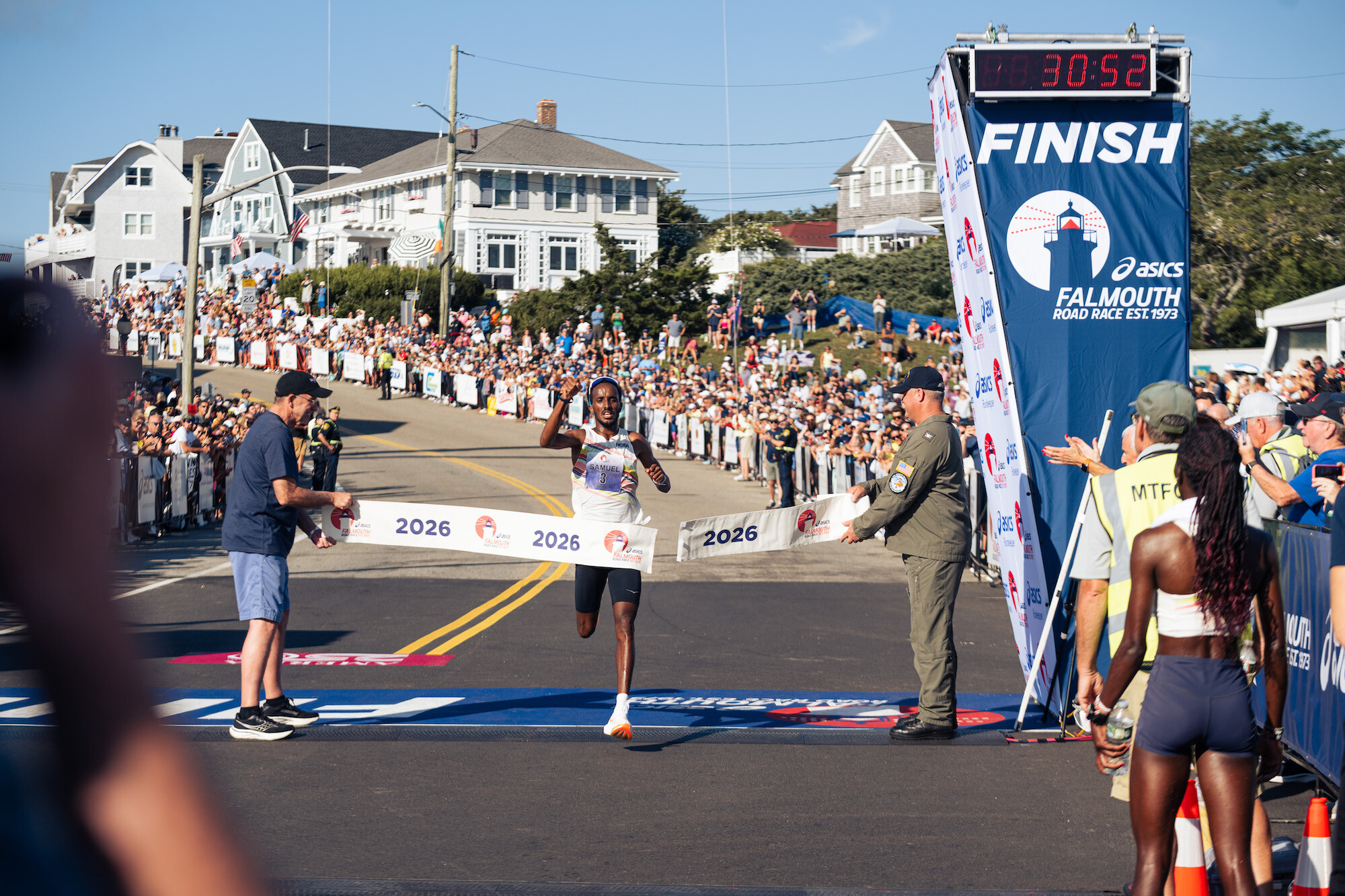
The 22-year-old Samuel, competing in his first Falmouth Road Race and only his second professional road race, turned an already remarkable debut into a piece of history. The former University of New Mexico standout completed his transition to the professional ranks following an undefeated collegiate season and has now opened his professional career with two victories.
The men’s race unfolded at a ferocious pace from the opening miles, with the leaders threatening the long-standing course record almost immediately. By the fifth mile, the contest had narrowed to a two-man duel between Samuel and Kenya’s Edwin Kurgat.
The pair remained together from the end of Surf Drive until around the turn onto Falmouth Heights Road, matching each other stride for stride as the race entered its decisive stages.
Then Samuel found another gear.
With roughly a mile remaining, the Eritrean surged decisively away from Kurgat and never looked back. He powered toward the finish with authority, creating an 11-second winning margin and stopping the clock in 30:54.
His performance shattered the previous course record of 31:08 and made him the first athlete ever to dip under 31 minutes at Falmouth.
The record had stood for more than two decades. Kenya’s Gilbert Okari first established the 31:08 mark in 2004, while compatriot Wesley Kiptoo equalled it in 2023. Samuel’s extraordinary run finally moved the benchmark into a new era.
“Breaking this course record in this amazing historical road race is awesome,” Samuel said. “I’m so proud of myself and I’m glad to be the first person able to run under 31 minutes.”
Samuel’s victory also continues a remarkable start to his professional career. After completing an undefeated campaign at the University of New Mexico, he made his road-racing debut at the Beach to Beacon 10K in Maine in July, where he immediately claimed victory. His Falmouth triumph now makes it two wins from two professional road races.
Kurgat, meanwhile, produced a performance that would have been enough to win every previous edition of the Falmouth Road Race. The 2019 champion crossed the line in a remarkable 31:04, finishing comfortably inside the former course-record mark despite being unable to match Samuel’s decisive late surge.
The American men also delivered a memorable battle behind the leading pair.
Zouhair Talbi, the American course-record holder at the Boston Marathon, and Conner Mantz, the American record holder in both the half marathon and marathon, spent much of the race locked together as they battled for the top American position.
Talbi ultimately prevailed, finishing third overall in 31:17 and setting a new American course record for the Falmouth course. It marked his best finish at the race, improving on last year’s fifth-place result.
Mantz followed closely in 31:19, also running faster than the previous American course record.
The result was a spectacular morning on Cape Cod, with the race producing a new overall course record, a historic first sub-31-minute performance and four men finishing faster than the previous 31:08 benchmark.
But above them all stood Samuel, whose remarkable surge in the final stages transformed a closely fought road race into one of the defining performances in Falmouth Road Race history.
by Erick Cheruiyot for My Best Runs.
Login to leave a comment

Falmouth Road Race
The Falmouth Road Race was established in 1973 and has become one of the premier running events of the summer season. Each year the race draws an international field of Olympians, elite runners and recreational runners out to enjoy the scenic 7-mile seaside course. The non-profit Falmouth Road Race organization is dedicated to promoting health and fitness for all in...
more...
Michael Roeger’s Long Road Back to the Marathon World Record — and Now Sydney Awaits
On August 30, approximately 35,000 runners will line up at Miller Street in North Sydney for the 2026 TCS Sydney Marathon. Among them will be an athlete who already owns a piece of marathon history: Michael Roeger, the Australian T46 marathon world-record holder and one of the most remarkable endurance athletes of his generation.
At 38, Roeger returns to the marathon with a career shaped by persistence, reinvention and an extraordinary ability to keep moving forward whenever circumstances have threatened to derail him.
Sydney is a fitting stage for the next chapter. The marathon, now part of the Abbott World Marathon Majors, takes runners through some of the city's most recognisable landmarks, beginning in North Sydney, crossing the Harbour Bridge and eventually finishing near the Opera House. For Roeger, however, this is about far more than another marathon.
He is returning to the distance in the city where he set the fastest T46 marathon ever recorded.
Roeger grew up in Langhorne Creek, a small South Australian community about 55 kilometres south of Adelaide. Born without the lower half of his right arm, he discovered Para athletics after Paralympian Neil Fuller visited his school when Roeger was 12.
What began as an introduction to sport eventually developed into a career spanning five Paralympic Games, world championships, major medals and multiple world records.
His T46 classification covers athletes with an arm amputation or comparable upper-limb difference. Yet describing Roeger's performances simply through his classification fails to capture the complexity of what he has achieved.
Running is an intricate coordination of the entire body. The arms contribute to balance, rhythm and control, helping the torso manage the rotational forces created by every stride. Over 42.195 kilometres, maintaining efficient movement is an enormous physical and technical challenge.
Roeger's marathon performances therefore represent much more than a number attached to a classification. They are elite endurance performances in their own right.
His transition to the marathon was remarkably rapid. Roeger made his marathon debut at the Melbourne Marathon in October 2018, running 2:23:31. The performance was faster than the existing T46 world record at the time, although it was not ratified as a world record because the race did not have the necessary status.
Six months later, he returned to the distance at the 2019 London Marathon, where the World Para Athletics Marathon Championships were staged within the race.
This time, everything came together.
Roeger won the T46 world title in 2:22:51, lowering the ratified world record and establishing himself as the world's leading marathoner in the classification. Even when cramp began to trouble him during the closing stages, he held on to become a world champion.
The progression continued.
At the 2020 Chevron Houston Marathon, Roeger ran 2:19:33, becoming the first ambulant Para athlete to break the 2:20 barrier and once again lowering his own world record.
But his most significant breakthrough came back in Australia.
On April 25, 2021, Roeger lined up in Sydney for the Athletics Australia Tokyo Qualifying Marathon. He produced the fastest marathon of his career, crossing the finish line in 2:18:53.
That performance remains the T46 marathon world record.
The progression is remarkable. From 2:23:31 in Melbourne to 2:22:51 in London, 2:19:33 in Houston and finally 2:18:53 in Sydney, Roeger repeatedly moved the benchmark forward.
It was almost five minutes of improvement across four marathon performances.
But the record is only one part of the story.
Roeger's career has never followed a smooth upward trajectory. At the 2008 Beijing Paralympic Games, aged only 20, he contested the 800m, 1500m and 5000m T46 events, with seventh place in the 1500m his best finish.
Four years later in London, he arrived with genuine medal ambitions. Instead, gastrointestinal bleeding struck on the eve of the T46 800m. He still started the race but was forced to withdraw after one lap.
Rio 2016 finally delivered a Paralympic medal, with Roeger winning bronze in the 1500m. That success helped convince him to move towards the longer distances and eventually make the marathon his primary focus.
Then came another major setback.
Six weeks before the Tokyo 2020 Paralympic Games, Roeger suffered a stress fracture in his lower leg, destroying much of his preparation for the marathon. Despite the injury, he travelled to Tokyo and made the start line.
He finished sixth in 2:34:45, a time far outside the level he had demonstrated before the Games.
For most athletes, such a setback could have marked the end of the road. For Roeger, it became another chapter in a career defined by adaptation.
Before the Paris 2024 Paralympic Games, another obstacle emerged when the T46 marathon was removed from the programme. The event in which Roeger had become a world-record holder was no longer available at the Games.
His only remaining distance was the 1500m.
So he adapted once again.
Roeger returned to the track and competed in Paris, ultimately adding another Paralympic medal to his collection with silver in the T46 1500m.
Now the marathon is calling again.
The 2026 TCS Sydney Marathon will provide a very different challenge from the flat courses on which many of the world's fastest marathon times are produced. The route begins in North Sydney, crosses the Sydney Harbour Bridge and winds through the city before finishing at the Opera House.
The course features substantial elevation changes, with approximately 313 metres of climbing across the 42.195 kilometres. It is a course that rewards strength, patience and the ability to maintain efficient form when the legs are already carrying the fatigue of a long marathon.
For Roeger, that challenge will be amplified by the quality of the field around him.
The Australian elite field includes a strong collection of domestic marathoners, while the international men's race features considerable depth, with numerous athletes holding personal bests below 2:10.
Roeger will therefore not be lining up in isolation as a Para athlete. He will be part of a major international marathon field, surrounded by runners pursuing national titles, personal bests and elite honours.
That is also central to the way he has approached his career.
Roeger has long resisted the idea that Para athletes should be viewed as fundamentally separate from their able-bodied counterparts. His philosophy has been simple: once the starting gun goes, the competition is about running.
That attitude has helped him move comfortably between Para athletics and open elite competition, and Sydney 2026 offers another opportunity to do exactly that.
His partnership with coach Dr Philo Saunders has been particularly important throughout his career, helping him develop into a world-class athlete across multiple distances.
Yet perhaps the most impressive part of Roeger's story is not any individual medal or record.
It is the number of times he has had to begin again.
From a small South Australian town to five Paralympic Games. From disappointment in Beijing and London to a medal in Rio. From the track to the marathon. From a devastating injury before Tokyo to a world-record performance. From losing his marathon event before Paris to returning to the 1500m and winning another Paralympic medal.
Every time the route has changed, Roeger has found another way forward.
Now, at 38, he is returning to the marathon once more.
And there could hardly be a more fitting destination than Sydney.
It is the city where he produced his 2:18:53 world record in 2021. Five years later, he will return to the same city carrying the experience of a career that has tested his resilience at almost every turn.
The world record is already in his name.
On August 30, Michael Roeger will have another chance to show the world what remains in the legs of the man who refused to let setbacks define the limits of his career.
by Erick Cheruiyot for My Best Runs.
Login to leave a comment
Sydney Marathon
The Sydney Marathon is a marathon held annually in Sydney, Australia. The event was first held in 2001 as a legacy of the 2000 Summer Olympics, which were held in Sydney. In addition to the marathon, a half marathon, 9 kilometres (5.6 mi) "Bridge Run", and a 3.5 kilometres (2.2 mi) "Family Fun Run" are also held under the banner...
more...
History Made in Death Valley: Max Jolliffe Shatters Badwater 135 Course Record with Stunning Sub-21-Hour Triumph
Ultrarunning witnessed one of its greatest days on Tuesday as Max Jolliffe delivered a breathtaking performance to win the 2026 Badwater 135, rewriting the history books with a phenomenal 20:53:46 finish. In doing so, he became the first athlete ever to complete the legendary race in under 21 hours, setting a remarkable new benchmark in one of the most demanding endurance events on the planet.

Jolliffe's extraordinary run erased the long-standing course record of 21:33:01, established by Yoshihiko Ishikawa in 2019. His new mark slashed nearly 40 minutes from a record many believed would stand for years, highlighting just how exceptional his performance was.

The Badwater 135 is widely regarded as the world's toughest foot race. Covering 135 miles (217 kilometers), the brutal course begins in the scorching depths of Death Valley, the hottest place on Earth, before climbing thousands of feet through relentless desert terrain toward Mount Whitney. Competitors battle blistering temperatures, unforgiving elevation changes, physical exhaustion, and mental fatigue in a race where simply reaching the finish line is considered a remarkable achievement.
Against those punishing conditions, Jolliffe produced a run that will be remembered as one of the finest displays in ultramarathon history. Maintaining an astonishing pace from start to finish, he conquered the extreme heat and relentless course with remarkable strength and consistency, ultimately achieving what no runner had ever done before.

The historic day was made even more memorable in the women's race, where Carmen Maria Perez also etched her name into the record books. After battling relentlessly throughout the grueling 135-mile journey, Perez crossed the finish line in 21:05:32, setting a new Badwater 135 women's course record. Her remarkable performance showcased extraordinary resilience and determination, making it a landmark achievement in the history of the race.
With both the men's and women's course records falling on the same day, the 2026 Badwater 135 will be remembered as one of the most extraordinary editions ever staged. Witnessing two record-breaking performances on one of the world's most unforgiving endurance courses is a rare feat, underscoring just how exceptional this year's competition proved to be.
The 2026 edition will now be remembered not only for producing champions, but for redefining the limits of human endurance. Max Jolliffe and Carmen Maria Perez have each secured their place in Badwater history, delivering unforgettable performances that will inspire the ultrarunning community for years to come.
by Erick Cheruiyot for My Best Runs.
Login to leave a comment

Badwater 135
Recognized globally as "the world’s toughest foot race," this legendary event pits up to 90 of the world’s toughest athletes runners, triathletes, adventure racers, and mountaineers against one another and the elements. Badwater 135 is the most demanding and extreme running race offered anywhere on the planet. Covering 135 miles (217km) non-stop from Death Valley to Mt. Whitney, CA, the...
more...
Brigid Kosgei Returns to the Course Where She Redefined Women's Marathon Running
Seven years after producing one of the most extraordinary performances the marathon has ever witnessed, Brigid Kosgei is heading back to the streets where she etched her name into athletics history. The Kenyan distance-running icon will return to the Bank of America Chicago Marathon on October 11, 2026, rekindling memories of her breathtaking triumph in 2019 that transformed the sport forever.
Chicago was the stage where Kosgei delivered a performance for the ages, crossing the finish line in an astonishing 2:14:04 to erase Paula Radcliffe's 16-year-old women's marathon world record. That unforgettable run remains one of the greatest achievements in long-distance running and cemented her place among the finest marathoners in history.
Her return comes at the perfect moment. Kosgei arrives in exceptional form after capturing victory at the 2026 Tokyo Marathon, where she stormed to a course-record 2:14:29, proving she is once again among the world's most dangerous marathon competitors. With renewed confidence and outstanding fitness, she will be aiming to conquer Chicago for another memorable chapter in her remarkable career.
However, victory will be anything but straightforward. The 2026 women's race features one of the deepest and strongest marathon fields ever assembled, setting the stage for a spectacular battle between some of the sport's biggest names.
Defending champion Hawi Feysa returns determined to protect her Chicago crown after establishing herself among the world's elite. Ethiopia's Sutume Kebede and Megertu Alemu add further strength to an already formidable lineup, while Kenya's Brillian Kipkoech, Loice Chemnung, Joan Kilimo, Magdalyne Masai, and Mary Ngugi Cooper ensure the East African rivalry will be as fierce as ever.
Another athlete attracting enormous attention is Boston Marathon champion Sharon Lokedi, who will make her highly anticipated Chicago Marathon debut. Having already proven herself on the biggest stages, Lokedi adds another exciting dimension to a race packed with championship pedigree and world-class talent.
The international field is equally impressive, with Ethiopia's Degitu Azimeraw and Fantu Worku joining Japan's Yuka Ando, Australia's Isobel Batt-Doyle, and American standouts Sara Hall, Susanna Sullivan, Des Linden, and Natosha Rogers in pursuit of marathon glory.
With a former world-record holder returning to her most historic venue, a defending champion eager to retain her title, and several major marathon winners chasing one of the sport's most prestigious crowns, the 2026 Bank of America Chicago Marathon promises to deliver a thrilling contest from start to finish. Every indication suggests this could become one of the most memorable women's marathon races in recent history.
As the countdown to October 11 continues, anticipation is rapidly building. Can Brigid Kosgei recreate the magic that changed marathon history, or will a new champion rise on the streets of Chicago? One thing is certain—the world will be watching as an exceptional field battles for one of road running's most coveted titles.
by Erick Cheruiyot for My Best Runs.
Login to leave a comment

Bank of America Chicago
Running the Bank of America Chicago Marathon is the pinnacle of achievement for elite athletes and everyday runners alike. On race day, runners from all 50 states and more than 100 countries will set out to accomplish a personal dream by reaching the finish line in Grant Park. The Bank of America Chicago Marathon is known for its flat and...
more...
He Thought He Was Running A 5K—He Finished As The 10K Champion: The Astonishing Story Of 9-Year-Old Kade Lovell
Sport has a remarkable way of producing moments that no scriptwriter could ever imagine. On September 21, 2019, one simple mistake transformed an ordinary children's road race into one of the most unforgettable stories in distance running.
Nine-year-old Kade Lovell of St. Cloud, Minnesota, arrived at the St. Francis Franny Flyer in Sartell expecting to compete in the 5-kilometre race. Like any young athlete, his goal was straightforward—cover the 3.1-mile course, cross the finish line, and celebrate another successful outing.

Instead, fate had something far more extraordinary in store.
Partway through the race, a volunteer accidentally directed Kade onto the 10K course rather than the 5K route. Trusting the instruction, the young runner continued without hesitation, unaware that he had just doubled the distance he was supposed to run.

At the finish area, his mother, Heather Lovell, waited anxiously for her son to appear. As the minutes ticked by, concern quickly turned into panic. When Kade failed to reach the 5K finish, she feared he had become lost or, worse, suffered an injury. Race officials were alerted, and a search began as everyone tried to locate the missing youngster.
Then came the astonishing news.
Officials informed Heather that Kade wasn't missing at all.
He was leading the 10K race.
Running well beyond the distance he had planned to cover, Kade displayed remarkable composure and endurance as he powered through the longer course. Near the turnaround point, he realized something wasn't right, but by then he had already committed to the route and simply kept running.
What followed stunned everyone watching.
Kade crossed the finish line in 48:17.4, not merely completing his first-ever 10-kilometre race but winning it outright. He finished approximately one minute ahead of the second-place finisher, a 40-year-old woman, claiming the overall title against a field of much older and more experienced runners.
The young champion later summed up the incredible achievement with the innocence only a child could deliver.
"I accidentally won it."
Those four words perfectly captured one of road running's most remarkable stories.
Although Heather's first reaction was frustration and relief after believing her son had disappeared, those emotions quickly gave way to immense pride once she learned what had actually happened.
The result was no mere stroke of luck. Kade had been running competitively from a very young age and trained consistently, giving him the fitness and confidence to handle a challenge far greater than anyone expected that day.
What began as a routine 5K became an unforgettable display of courage, resilience, and youthful determination. A wrong turn unexpectedly led Kade Lovell into the 10K race, but his talent carried him all the way to the top of the podium.
Sometimes, the greatest victories aren't the ones we plan—they're the ones we discover by refusing to stop when the road suddenly becomes longer than expected.
by Erick Cheruiyot for My Best Runs.
Login to leave a comment
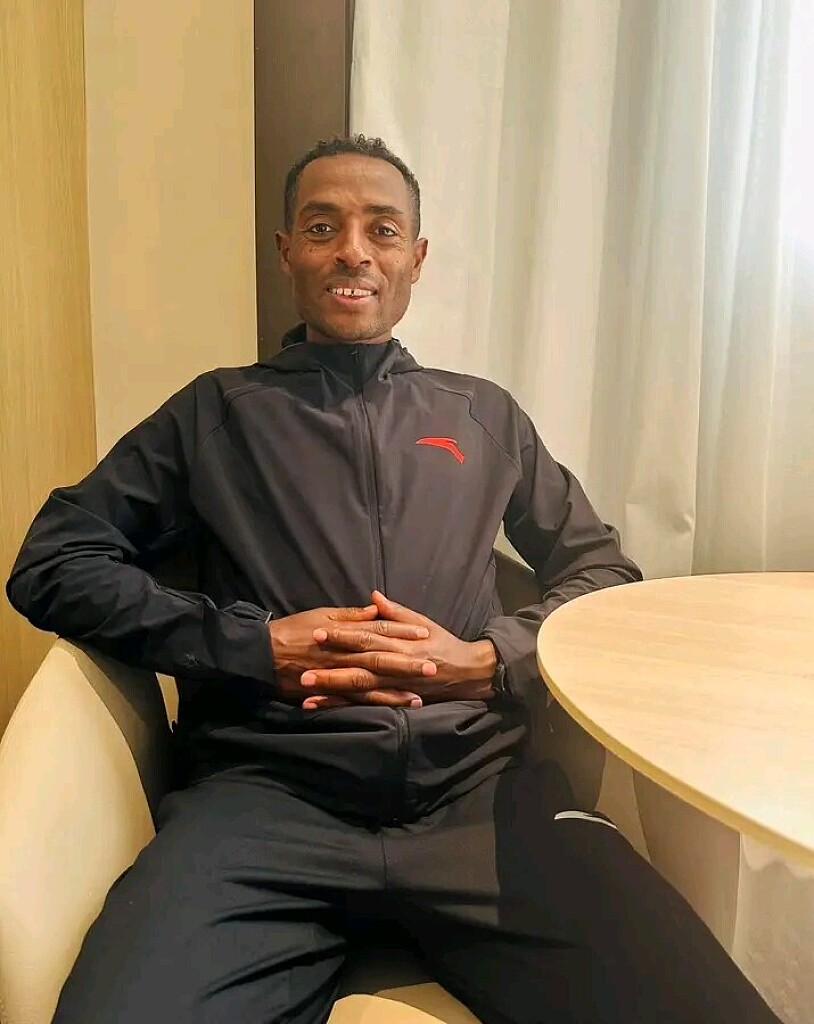
Kenenisa Bekele: The Legend Who Never Stopped Learning
In an era where athletic careers often fade long before the fourth decade of life, Kenenisa Bekele continues to challenge expectations. The Ethiopian icon has spent more than two decades redefining excellence, proving that greatness is not measured solely by records but by the relentless desire to keep evolving.
The 2024 season marked Bekele's fifteenth year as a professional marathon runner, another remarkable chapter in a career that has already secured its place among the greatest in athletics history. Long before conquering the roads, Bekele ruled the track with unmatched authority. He held the world record over 5,000 metres from 2004 until 2020 and the 10,000 metres world record from 2005 to 2020, dominating an era with a combination of tactical brilliance, devastating finishing speed, and extraordinary endurance.
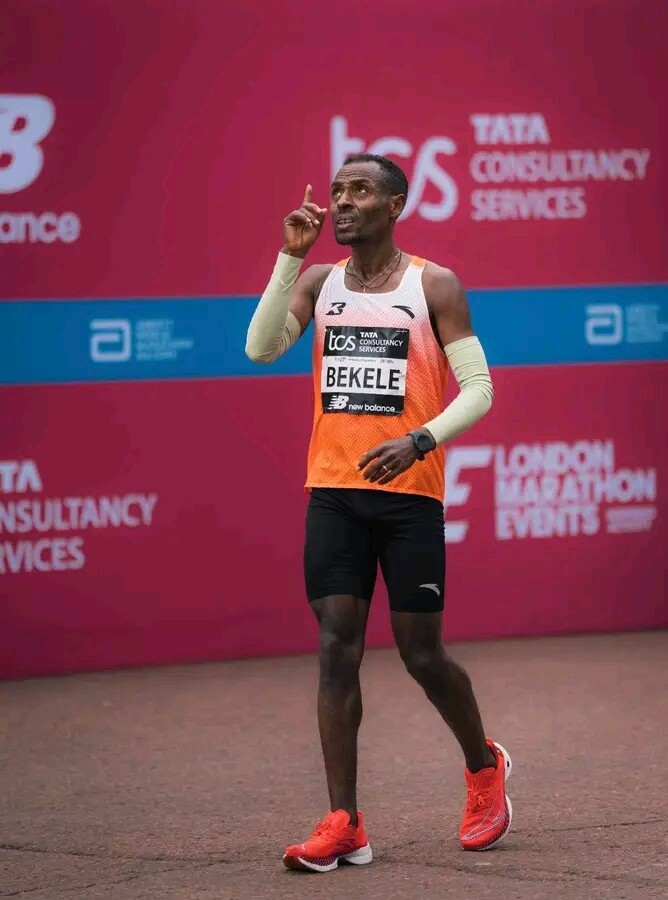
When he made the transition to the marathon in 2014, many wondered whether his brilliance on the track would translate to the roads. Bekele answered those doubts in spectacular fashion. His unforgettable 2:01:41 performance at the 2019 Berlin Marathon remains one of the fastest marathons ever run, cementing his status among the greatest marathoners the sport has ever witnessed.
By 2024, the mission had naturally evolved. Rather than chasing world records, Bekele focused on competing for podium finishes at the sport's biggest races. Even as younger athletes emerged with fresh legs and growing reputations, the Ethiopian veteran continued to demonstrate that experience, discipline, and intelligence can still compete with youth at the highest level.
What makes Bekele's longevity even more extraordinary is how rare it is in elite distance running. Most world-class runners reach their peak in their late twenties before gradually slowing in their thirties. Yet Bekele has continued to produce world-class performances well into his forties, still capable of running marathons in the low 2:03 range at an age when many former champions have long since retired.
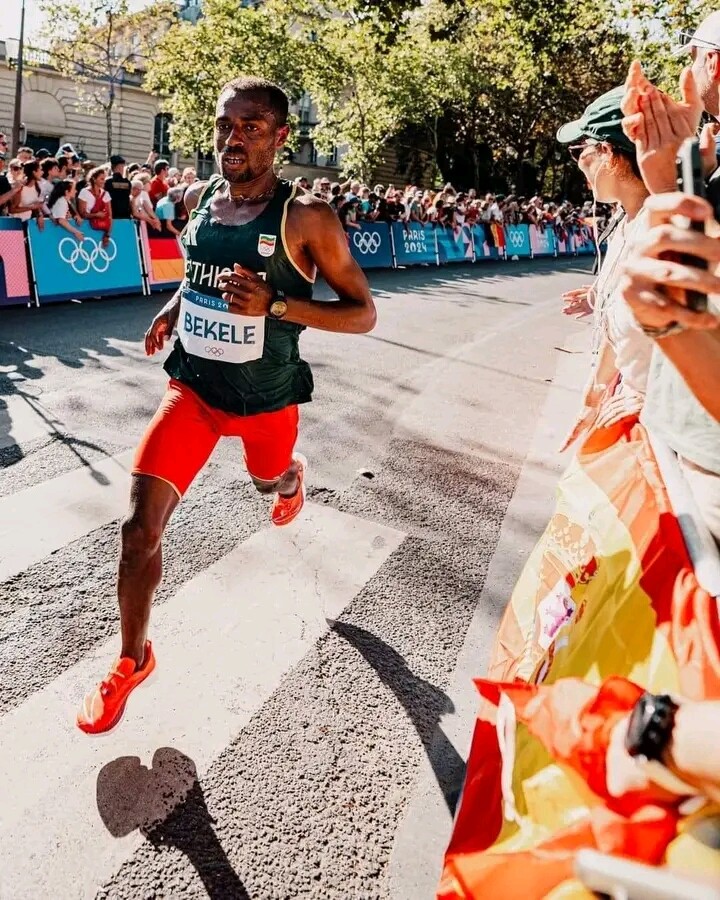
His remarkable durability has not come by accident. Over recent years, Bekele has reshaped his preparation with a greater emphasis on recovery, smarter workload management, and highly targeted marathon-specific training. Instead of relying on overwhelming mileage, his approach has become increasingly strategic, carefully building each season around the demands of the World Marathon Majors while allowing his body the recovery required to remain competitive.
Perhaps the greatest lesson from Bekele's career is not found in the medals or the records but in his mindset.
Despite achieving virtually everything the sport has to offer, Bekele has never believed he has mastered distance running completely. He continues to study training methods, exchange ideas with coaches and fellow athletes, and search for the smallest improvements that could make the difference on race day. His willingness to remain a student of the sport, even after becoming one of its greatest teachers through example, has become one of the defining characteristics of his enduring success.
That humility is what separates legends from champions. Records may eventually fall, rivals may come and go, and generations may change, but an athlete who never stops learning always finds new ways to remain relevant.
Kenenisa Bekele's story is no longer simply about speed. It is about resilience, adaptation, and an unwavering commitment to excellence. Every season serves as another reminder that true greatness is not built on past achievements alone, but on the courage to keep improving, regardless of age or accomplishment.
As athletics continues to evolve, Bekele remains a living testament that the pursuit of excellence has no finish line. For one of the greatest distance runners the world has ever known, every race is still another lesson, every season another opportunity to grow, and every step another chapter in a legacy that continues to inspire generations across the globe.
by Erick Cheruiyot for My Best Runs.
Login to leave a comment

Olympic Triathlon Champions Alex Yee and Cassandre Beaugrand Take on Track's Biggest Test at Monaco Diamond League
The world's finest triathletes are stepping into unfamiliar territory on Friday night as Olympic champions Alex Yee of Great Britain and Cassandre Beaugrand of France trade swim caps and bicycles for spikes, taking on some of the fastest distance runners on the planet at the Monaco Diamond League.

The appearance of the reigning Paris Olympic triathlon champions at one of athletics' most prestigious meetings is a rare crossover between two elite endurance disciplines. While both have built their reputations through the demanding combination of swimming, cycling, and running, Monaco offers a completely different test—one where there is nowhere to hide against the world's best specialist distance runners.

For Yee, the meeting marks his long-awaited return to the Diamond League, his first appearance on the circuit since 2019. The Olympic champion will line up in a world-class men's 5,000 metres carrying a personal best of 13:13.89, eager to measure his progress against an elite field after shifting much of his focus toward longer-distance running.
The Briton's endurance credentials have grown significantly since his Olympic triumph. Earlier this year, he stunned the distance-running world by clocking an outstanding 2:06:38 at the Valencia Marathon, becoming the second-fastest British marathon runner in history. That performance demonstrated that his running ability extends far beyond the final leg of a triathlon and established him as a genuine force over the longer distances.
Beaugrand's appearance in the women's 3,000 metres carries even deeper personal significance. The French star will compete in Monaco, where she spent her childhood racing for local club AS Monaco, making her Diamond League debut at the venue a dream years in the making. Returning to the same track where her athletic journey began adds an emotional dimension to one of the biggest races of her career.
Her transition to pure running has been equally remarkable. Over the past year, Beaugrand has rewritten the French record books, setting a national record of 30:52 for the 10km road race before lowering the French 5,000-metre record to 14:40.77. Those performances have confirmed that she possesses the speed to challenge world-class specialists, even if Monaco presents her toughest examination yet.
Neither athlete will enjoy an easy introduction to the Diamond League.
Beaugrand faces one of the strongest women's fields assembled this season, featuring Kenyan legend Faith Kipyegon, world indoor champion Nadia Battocletti, world leader Freweyni Hailu, and world record holder Agnes Ngetich. Every lap promises relentless pace against athletes who have made track racing their sole focus.
Yee's challenge is equally formidable. His rivals include French distance star Jimmy Gressier, world silver medallist Isaac Kimeli, and several of the world's leading 5,000-metre specialists, ensuring that every position will have to be earned.
While neither Olympic triathlon champion enters Monaco as the favourite, both arrive with exceptional running pedigrees that have already blurred the line between multisport excellence and elite distance running. Their presence adds a fascinating storyline to an evening renowned for producing fast times and unforgettable performances.
As the lights shine on Stade Louis II, all eyes will be on whether two Olympic triathlon champions can prove they belong among the world's fastest track athletes. Regardless of the outcome, their bold decision to embrace one of the sport's toughest stages is another reminder that true endurance champions are never afraid to test their limits.
by Erick Cheruiyot for My Best Runs.
Login to leave a comment

WORLD CHAMPION BEATRICE CHEBET CELEBRATES HER GREATEST VICTORY YET — MOTHERHOOD
Kenyan athletics superstar and world champion Beatrice Chebet has officially entered a beautiful new chapter in her life after welcoming a baby boy.

The 26-year-old track sensation, born on 5 March 2000, has built a remarkable legacy as one of the greatest distance runners of her generation. Chebet is a world record holder in the 5000m, 10,000m and road 5km, with a career decorated by historic victories on the biggest stages.
She made history at the 2024 Summer Olympics by winning gold medals in both the 5000m and 10,000m, before achieving the same remarkable double at the 2025 World Athletics Championships. Her medal collection also includes a 5000m silver medal at the 2022 World Athletics Championships and bronze at the 2023 World Athletics Championships.
Beyond the track, Chebet has also dominated cross country, becoming a three-time world champion after winning the junior title in 2019 and senior titles in 2023 and 2024. She has also claimed major 5000m victories at the 2018 World U20 Championships, 2022 Commonwealth Games and the 2022 African Championships in Athletics.
Now, the Kenyan star is celebrating a different kind of milestone — becoming a mother.
Sharing the joyful news, Chebet introduced her newborn son with a heartfelt message filled with love and excitement:
“Tiny hands, tiny feet, and a love so big! A beautiful new chapter begins. Welcome to our world our sweet little baby boy!”
The arrival of her son marks a special moment away from competition, as the world champion embraces motherhood while carrying the pride of a nation that has watched her achieve greatness.
Messages of congratulations have poured in from fans and the athletics community, celebrating the new chapter for one of Kenya’s most successful athletes.
As Beatrice Chebet adds motherhood to her list of remarkable achievements, the champion now begins a new journey filled with love, joy, and unforgettable moments with her baby boy.
by Erick Cheruiyot for My Best Runs.
Login to leave a comment
Monaco Beckons: Olympic Triathlon Champions Dare to Dream on the Track
The boundaries between endurance sport and elite track racing are about to be pushed to new heights.
On July 10, the Monaco Diamond League will host one of the most intriguing storylines of the season as reigning Olympic triathlon champions Alex Yee and Cassandre Beaugrand step away from the swim-bike-run arena and onto one of athletics' most prestigious stages.
It is a rare sight to see Olympic triathlon gold medalists testing themselves against specialist track athletes, but both champions have embraced the challenge, adding a fascinating dimension to an already world-class meeting.
For Yee, the men's 5,000m presents an opportunity to explore just how far his running talent can take him. The British star, who captured Olympic gold in Paris, will be making his first Diamond League appearance since London in 2019, where he ran 13:29. Since then, he has significantly elevated his credentials on the track, lowering his personal best to an impressive 13:13 last year in Belgium.
Monaco, however, is a different level altogether. The famous meeting has built a reputation as one of the fastest distance-running venues in the world, where athletes routinely dip under the coveted 13-minute barrier. Yee understands the magnitude of the task ahead, joking on social media that he may have "bitten off more than he can chew," while embracing the challenge with the enthusiasm that has become his trademark.
For Beaugrand, the occasion carries a special emotional significance. The French Olympic champion grew up on the Côte d'Azur and spent her formative years training with the Monaco athletics club. As a young athlete, she competed in children's races held during the Diamond League meeting before staying behind to watch the sport's biggest stars perform under the lights.
Now, she returns not as a spectator, but as an Olympic champion preparing to race in the women's 3,000m. The event is expected to feature some of the world's finest runners, including Kenyan superstar Faith Kipyegon, making the experience all the more remarkable. Reflecting on her upcoming appearance, Beaugrand admitted it felt surreal, describing it as a genuine "pinch me" moment.
Her confidence will be strengthened by a remarkable year on the track. In April, she set a French women's 10km record of 30:52, before following it up in May with a French 5,000m record of 14:40.77. Those performances have confirmed what many suspected: Beaugrand's talent extends far beyond triathlon and places her among the most versatile endurance athletes in the world.
The presence of both reigning Olympic triathlon champions at the same Diamond League meeting is exceptionally rare. It represents a unique collision of disciplines, bringing together athletes who have conquered one of sport's toughest events and now seek to test themselves against the very best track specialists.
Monaco has long been a stage for record-breaking performances and unforgettable moments. This year, alongside the pursuit of fast times and world-class competition, the spotlight will also shine on two Olympic champions willing to venture beyond their comfort zones in pursuit of a new challenge.
Whether they are chasing personal bests, national records, or simply the thrill of competition, Yee and Beaugrand have already made Monaco one of the most anticipated meetings of the Diamond League season. On July 10, the world will discover just how far Olympic triathlon greatness can carry them on the track.
by Erick Cheruiyot for My Best Runs.
Login to leave a comment

Adaejah Hodge Storms Into History With Stunning 10.63 NCAA Sprint Masterclass
Adaejah Hodge has announced herself as one of the fastest women the sport has ever seen, producing a breathtaking performance at the NCAA Track and Field Championships to clock an astonishing 10.63 seconds in the women's 100 metres.
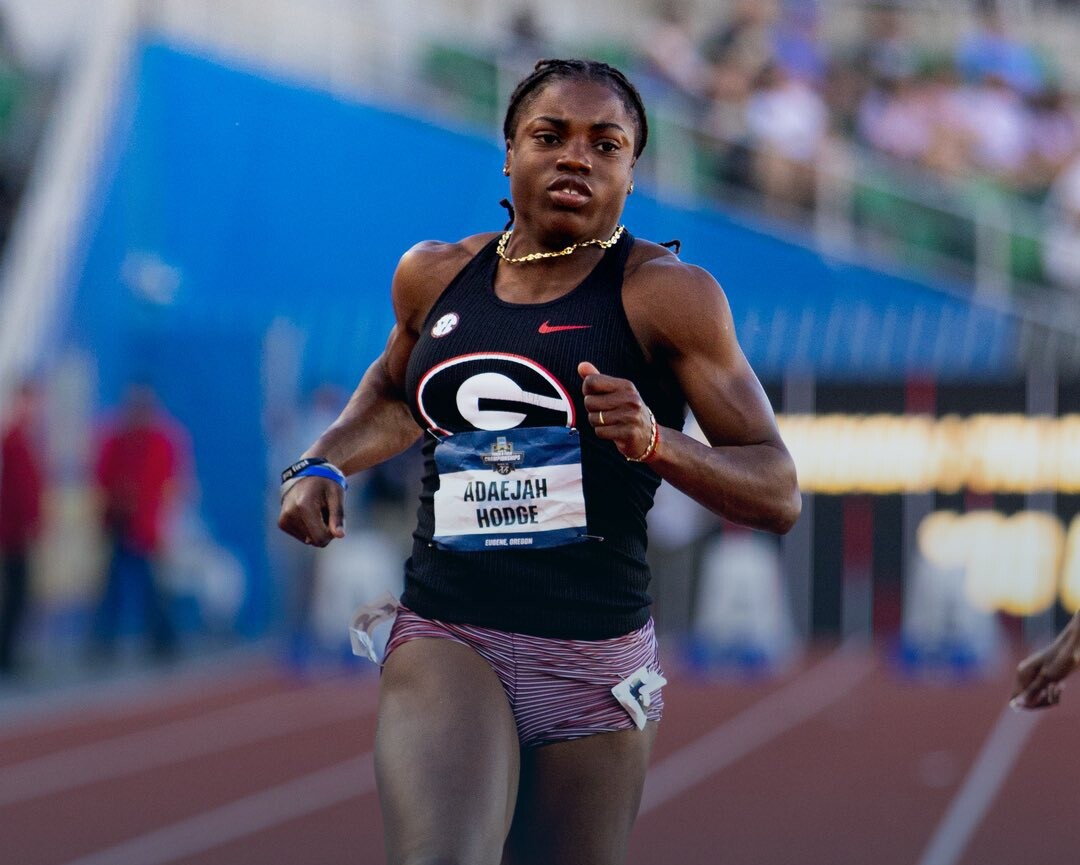
The 20-year-old sprinter's remarkable run elevated her into rare company, making her the fifth-fastest woman in history and placing her performance among the greatest ever recorded over the distance. Her 10.63 stands as the ninth-fastest time of all time and rewrites the NCAA record books, eclipsing the collegiate mark of 10.75 set by Sha'Carri Richardson in 2019.

Hodge's performance was more than just a record-breaking run—it was a statement. Displaying exceptional acceleration and composure under pressure, she delivered a race that will be remembered as one of the defining moments of the collegiate athletics season. The time instantly established her as a major force on the global sprinting stage and highlighted her immense potential heading into the next phase of her career.
What makes the achievement even more remarkable is the journey that preceded it.
In 2024, Hodge was handed a 17-month ban by the Athletics Integrity Unit (AIU) after testing positive for the prohibited substances GW501516 sulfone and GW501516 sulfoxide. By the time the AIU publicly announced the sanction, however, she had already completed the suspension period.
Importantly, the AIU stated that its investigation found no evidence that Hodge had knowingly ingested the banned substances. The case was therefore viewed differently from instances involving intentional doping, with the governing body acknowledging the circumstances surrounding the violation.
Since returning to competition, Hodge has focused on rebuilding her career and allowing her performances on the track to tell the story. Her record-breaking run at the NCAA Championships now represents a dramatic chapter in that comeback.
Few athletes have faced such scrutiny at such a young age, and even fewer have responded with a performance of this magnitude. Yet Hodge did exactly that, producing a time that not only shattered a long-standing collegiate record but also placed her among the fastest women ever to sprint 100 metres.
With history already made and her best years potentially still ahead, Adaejah Hodge has transformed herself from a promising talent into one of the most compelling figures in world athletics. Her stunning 10.63 was not merely a victory—it was a performance that reverberated across the sport and ensured her name will be etched into the record books for years to come.
by Erick Cheruiyot for My Best Runs.
Login to leave a comment
From Helsinki to Beijing: The Incredible Transformation of Marathon Qualification Standards
The road to the World Athletics Championships marathon has never been more unforgiving. What was once an attainable global benchmark for many international runners has now evolved into an exclusive club reserved for only the fastest athletes on the planet. Over the last two decades, the qualification standards for the championships marathon have dropped dramatically, reflecting the explosive evolution of elite distance running across the world.
Back in Helsinki 2005, male athletes could secure qualification with a time of 2:18:00, while women needed 2:45:00 to earn a place on the starting line. The standards remained unchanged at the Osaka 2007 Championships, maintaining an era where consistency and endurance were enough to compete on the world stage.
However, the landscape of marathon running slowly began to transform between 2009 and 2017. Qualification times fluctuated between 2:16 and 2:19 for men, while women’s standards ranged from 2:38 to 2:45. Even then, the shift toward faster racing had already begun, driven by deeper international competition and advancements in sports science.
The major turning point arrived in 2019 during the Doha World Championships. World Athletics introduced a new qualification structure, replacing the old “A” and “B” standards with a unified direct-entry system supported by world rankings. At the same time, the standards became significantly tougher, dropping to 2:16:00 for men and 2:37:00 for women.
What followed was an unprecedented acceleration in elite marathon performances.
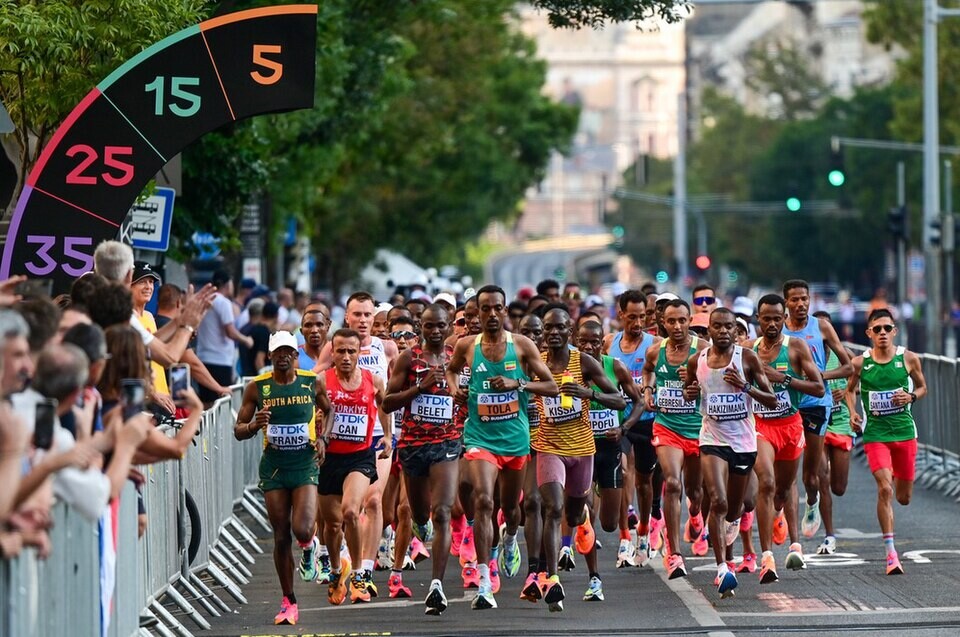
By the time the championships moved to Eugene in 2022 and Budapest in 2023, the entry standards had tightened even further to 2:14:30 for men and 2:33:30 for women. These were no longer simply elite times — they were becoming world-class requirements.
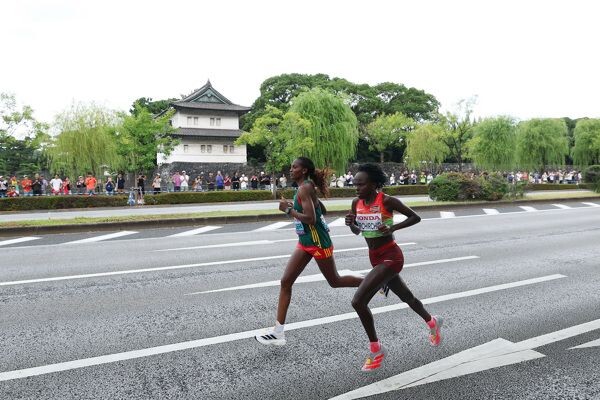
Then came the astonishing leap for Tokyo 2025 and Beijing 2027.
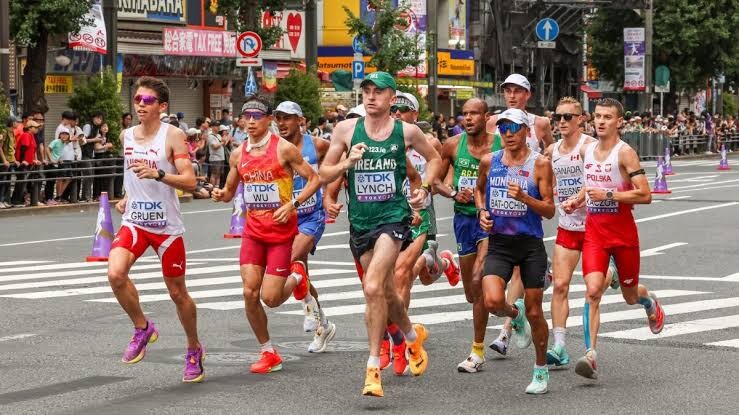
World Athletics pushed the standards to a staggering 2:06:30 for men and 2:23:30 for women — marks that place athletes among the very best marathoners globally. In today’s era, running a national-class performance is no longer enough; athletes must now deliver near-podium level times simply to qualify.
The dramatic drop in standards reflects far more than just faster athletes. Modern marathon running has been reshaped by revolutionary shoe technology, improved pacing systems, advanced nutrition strategies, scientific training methods, altitude preparation, and the growing depth of competition worldwide. The sport has entered a high-speed era where records fall rapidly and expectations continue to rise.
For many athletes, the new standards represent both inspiration and pressure. Qualification now demands extraordinary precision, consistency, and near-perfect execution over 42.195 kilometres. Every second matters more than ever before.
Yet despite the increasing difficulty, the evolution also highlights the remarkable progress of human performance. Marathon running is no longer merely about endurance — it has become a showcase of innovation, tactical intelligence, and extreme athletic excellence.
The World Championships marathon has evolved from a global competition into one of the most selective endurance events in athletics history, and the future suggests the standards may only continue to get faster.
by Erick Cheruiyot for My Best Runs.
Login to leave a comment
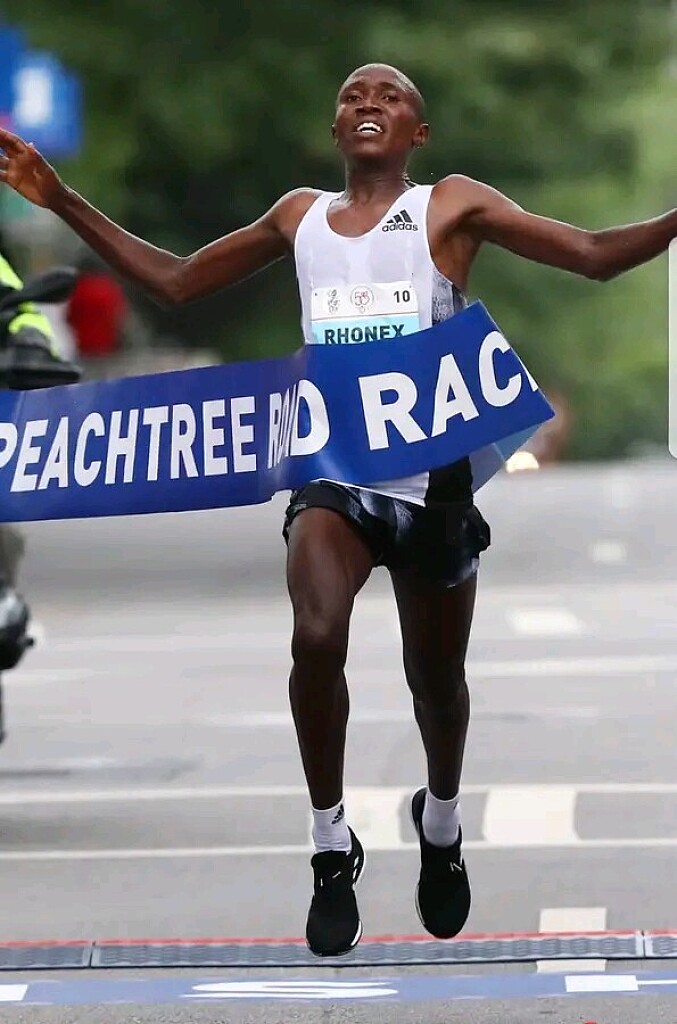
Rhonex Kipruto Wins Partial Appeal as CAS Cuts Ban, but Doping Offence Still Confirmed
Kenyan long-distance runner Rhonex Kipruto has secured a partial legal victory after the Court of Arbitration for Sport reduced his suspension by one year. Yet despite the shorter sanction, the tribunal upheld the central finding that he committed an anti-doping rule violation through blood manipulation.
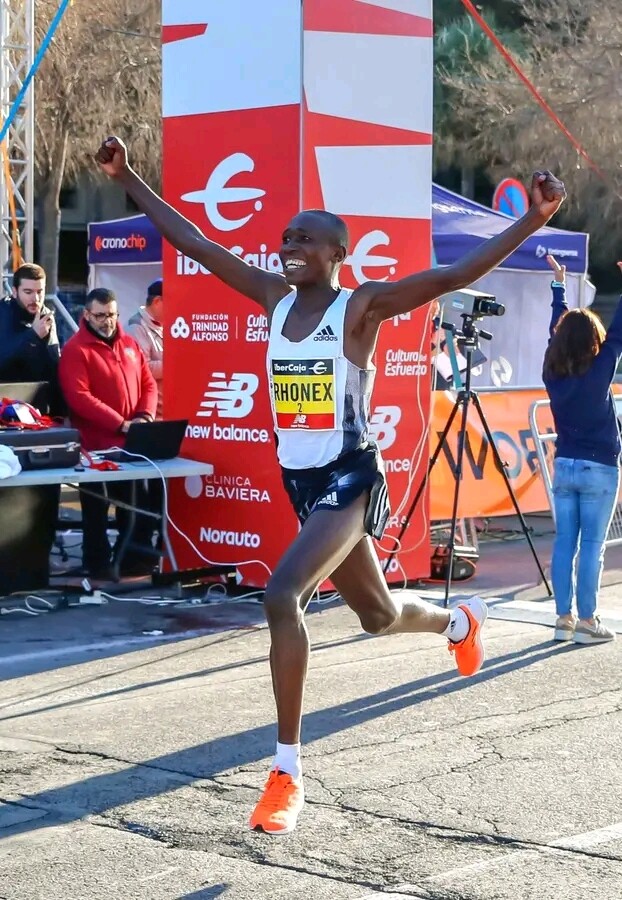
The ruling marks the latest chapter in one of athletics’ most high-profile disciplinary cases. Kipruto had originally been handed a six-year ban in May 2024 by the Athletics Integrity Unit after abnormalities in his Athlete Biological Passport were judged to be consistent with blood doping. Following his appeal, that penalty has now been reduced to five years.
While the revised decision offers Kipruto an earlier route back to competition, it does not erase the sporting consequences already attached to the case. His results during the affected period remain disqualified, including the loss of his road 10km world record and the bronze medal he earned in the men’s 10,000m at the 2019 World Athletics Championships.
The downfall has been dramatic for an athlete once celebrated as one of Kenya’s brightest distance talents. Kipruto rose quickly through the ranks with fearless front-running performances and remarkable speed on both road and track, earning global admiration and the reputation of a future champion.
Instead, his name has become tied to a case that has drawn significant attention across the sport. The CAS decision may soften the length of the punishment, but it firmly reinforces the original conclusion that a serious violation occurred.
For Kipruto, the path ahead is about more than simply counting down the remaining years of his suspension. Any eventual comeback will require renewed discipline, restored credibility, and the difficult task of rebuilding a legacy that once seemed destined for greatness.
by Erick Cheruiyot for My Best Runs.
Login to leave a comment
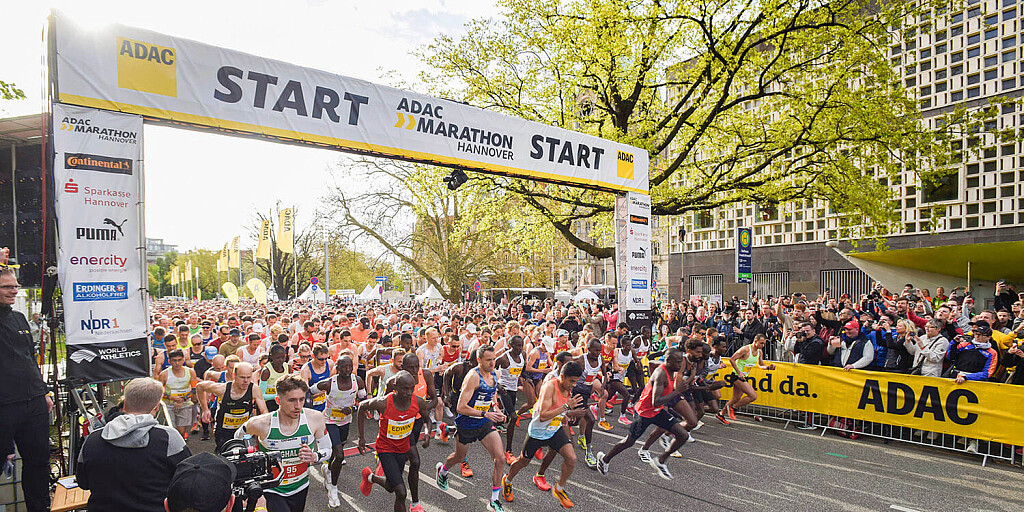
Hannover Awaits a Classic: Elite Fields Set for a High-Speed Marathon Showdown
The historic streets of Hannover are braced for a spectacle this Sunday, April 12, as one of Europe’s most exciting road races—the Hannover Marathon—returns with a stacked elite field and the promise of blistering times. With a blend of homegrown German stars and seasoned international contenders, the stage is perfectly set for a day of drama, speed, and possibly record-breaking performances.
A Fierce German Rivalry Headlines the Women’s Race
The spotlight in the women’s race shines brightly on Germany’s finest trio, each arriving in peak form and eager to assert dominance on home soil. Fabienne Königstein leads the charge with an outstanding personal best of 2:22:17, positioning her as a serious contender not only for victory but also for the course record.
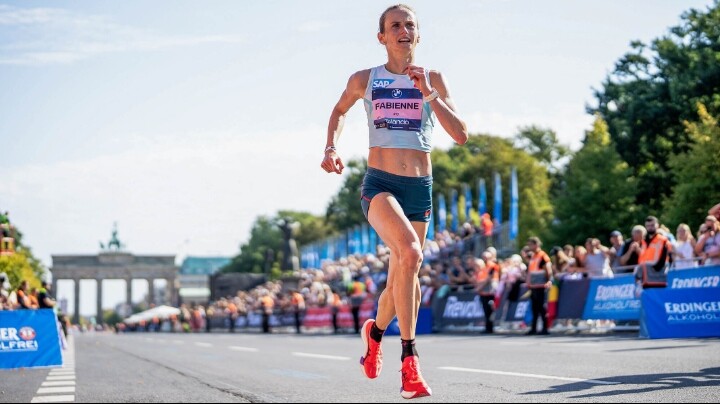
But the path to glory will be anything but straightforward. Domenika Mayer (2:23:16) and Laura Hottenrott (2:24:32) are both capable of matching Königstein stride for stride, setting up what promises to be a thrilling all-German duel.
The benchmark they will be chasing remains the 2:23:50 course record set by Rakel Haile in 2019—a mark that now looks increasingly vulnerable given the quality of this year’s field.
Adding an international edge is Ethiopia’s Almaz Negede (2:27:14), a determined competitor who could disrupt the German script and seize her own moment of glory.
Men’s Race: Eyes Fixed on the Clock
In the men’s contest, the narrative revolves around speed—and one man stands at the center of it. Ethiopia’s Deribe Robi arrives as the standout favorite, boasting a remarkable personal best of 2:05:58. That time places him comfortably beneath the current course record of 2:06:05, set in 2023 by Germany’s Amanal Petros.
If conditions align, Robi has both the pedigree and pace to rewrite the record books.
Yet the race is far from a one-man affair. Morocco’s Mohcin Outalha (2:06:49), Israel’s Godadaw Belachew (2:07:45), and Uganda’s Ben Chelimo Somikwo (2:08:03) bring depth and danger to the field, ensuring that any lapse in pace could be swiftly punished.
Race Against Time
The marathon will begin at 9:00 AM local time in Hannover, offering ideal morning conditions that could encourage aggressive racing from the outset.
With elite athletes in top form and records within reach, this year’s Hannover Marathon carries all the ingredients of a classic. Whether it’s a triumphant home victory in the women’s race or a record-shattering run in the men’s field, fans can expect a gripping contest from start to finish.
As the countdown begins, one question lingers: will Hannover witness history once again?
by Erick Cheruiyot for My Best Runs.
Login to leave a comment

ADAC Hannover Marathon
It is not only the gripping competition that makes the marathon in Hannover so captivating, but also the exceptionally attractive side programme.With numerous samba bands and musicians accompanying the athletes along their sightseeing tour through the city, a feel-good mood is guaranteed on the course. The city will be transformed with a mix of musical entertainment, shows and activities that...
more...
A Life in Service to Clean Sport: Sir Craig Reedie’s Lasting Legacy
The global athletics community has been struck by a profound sense of loss following the passing of Sir Craig Reedie at the age of 84. As reported by World Athletics, Reedie’s death marks the end of an era defined by steadfast leadership, unwavering integrity, and a lifelong commitment to safeguarding the spirit of sport.
Reedie’s influence extended far beyond administrative titles; he was a central figure in shaping the ethical and organizational foundations of modern sport. His most prominent role came as President of the World Anti-Doping Agency between 2014 and 2019, where he became a leading voice in the global fight against doping. Under his stewardship, the agency strengthened its mission to preserve fairness, reinforcing the principle that victory must be earned through discipline and honesty rather than illicit means.
His contributions were equally significant within the International Olympic Committee, where he served as Vice President. In 2009 he became the first Briton to have a seat on the International Olympic Committee board since 1961. In this capacity, Reedie played a key role in guiding Olympic policy and governance during a period of increasing global scrutiny and change. His calm authority and diplomatic skill helped navigate complex challenges while maintaining the Olympic movement’s core values.
Closer to home, Reedie left an indelible mark on British sport. As Chairman of the British Olympic Association between 1992 and 2005, he was instrumental in advancing the nation’s Olympic ambitions. His leadership also extended to the organizational framework of the London 2012 Olympic Games, where he served as a board director. The success of those Games, widely regarded as one of the most memorable in modern Olympic history, stands as a testament to the vision and dedication of figures like Reedie working behind the scenes.
Yet beyond titles and achievements, Reedie will be remembered for the principles he championed. He believed deeply in the unifying power of sport—its ability to transcend borders, inspire generations, and uphold values of respect and fairness. His work in anti-doping, in particular, reflected a conviction that the credibility of competition must never be compromised.
As tributes continue to pour in from across the sporting world, Reedie’s legacy remains firmly intact. He was not merely an administrator, but a guardian of sport’s integrity—one who dedicated his life to ensuring that the playing field remained level for all. In mourning his passing, the world of athletics also celebrates a life that helped define what sport ought to stand for at its very best.
by Erick Cheruiyot for My Best Runs.
Login to leave a comment
Lyles Returns to Paris: The Sprint King Eyes Another Chapter of Glory
Back where history once bent to his will, Noah Lyles is poised to ignite Paris once more. The Olympic champion is set to headline the 100m at the upcoming Diamond League meeting Paris 2026 on June 28, returning to the very city where he carved his name into global athletics folklore.
Paris is no ordinary stop on the circuit for Lyles—it is sacred ground. It was here, under the bright lights and mounting pressure, that he delivered one of the defining performances of his career during the 2024 Summer Olympics, rising to the summit of the sprinting world. Now, he comes back not just as a champion, but as a showman with unfinished business.
The stage will be the historic Stade Charléty, a venue where Lyles has built an aura of invincibility. Undefeated at this arena, his past performances here remain a testament to both speed and dominance. In 2023, he blazed to a stunning 9.97 seconds in the 100m, reaffirming his elite status. Years earlier, in 2019, he lit up the track with a scintillating 19.65 seconds over 200m—one of the fastest times ever recorded at the venue.
Those performances are not just statistics; they are statements. They speak of a sprinter who thrives in Paris, who feeds off its energy, and who transforms expectation into execution with ruthless precision.
As the Diamond League caravan rolls into the French capital, anticipation builds around what version of Lyles will emerge. Will it be the tactician, measured and composed? Or the electrifying performer who commands both track and crowd with equal authority?
One thing is certain—Paris remembers. And Noah Lyles is ready to reload.
With the world watching and the stakes rising once again, the city of lights prepares for another spectacle. If history is any indication, when Lyles steps onto that track, brilliance is never far behind.
by Erick Cheruiyot for My Best Runs.
Login to leave a comment
On This Day: Fabián Roncero Rewrote History with a 59:52 That Shook Europe
On April 1, 2001, long before sub-60-minute half marathons became a benchmark of global excellence, Fabián Roncero delivered a performance that redefined European distance running.
Racing through the fast streets of Berlin, the Spanish star produced a stunning 59:52, becoming not only the European record holder but also setting a new Spanish national record. Clocking an average pace of 2:50 per kilometer, Roncero broke through a barrier that, at the time, seemed almost unreachable for European athletes.
His run was more than just a victory against the clock—it was a statement. In an era dominated by East African distance runners, Roncero’s performance stood as a symbol of belief and possibility for European athletics. He was no longer just among the best; he had become a pioneer.
What makes this achievement even more remarkable is its longevity. Roncero’s European record stood firm for 18 years, a testament to its quality and the magnitude of the run. It wasn’t until February 8, 2019, that Kaan Kigen Özbilen finally edged past it with 59:48 in Ras Al Khaimah.
On the national stage, the record proved even more enduring. For 22 years, Roncero remained Spain’s benchmark in the half marathon, his name synonymous with excellence. That chapter eventually closed on October 23, 2023, when Carlos Mayo ran 59:39, shaving 13 seconds off the historic mark.
Yet records alone do not define legacy. Roncero’s achievement marked a turning point—he became the first Spanish athlete in history to break the 61-minute barrier, opening the door for future generations to dream bigger and run faster.
Today, 25 years on, that race in Berlin still resonates. It wasn’t just about the time on the clock—it was about courage, ambition, and rewriting what was believed to be possible.
by Erick Cheruiyot for My Best Runs.
Login to leave a comment
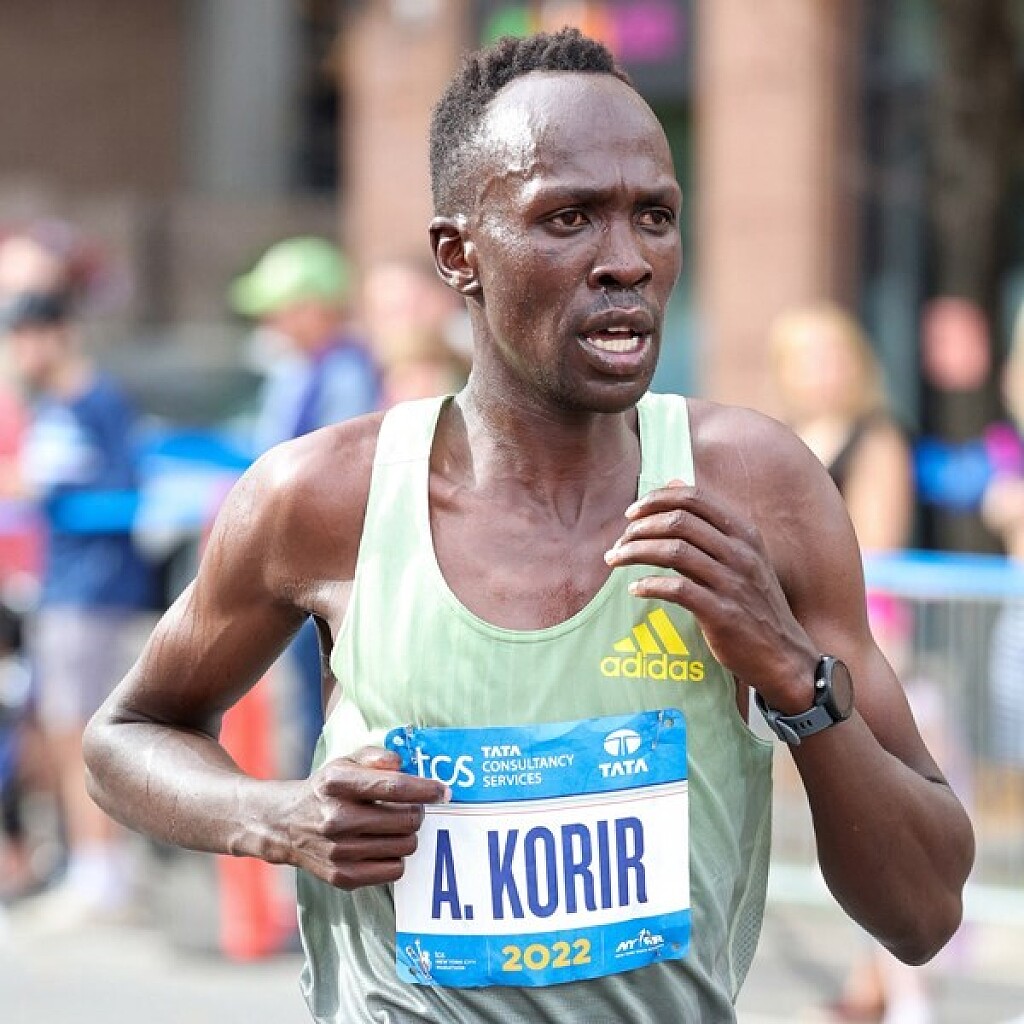
Five-Year Ban Rocks Kenyan Athletics as Albert Korir Sanctioned in Major Doping Case
The integrity of global athletics has once again come under sharp focus following a decisive ruling by the Athletics Integrity Unit (AIU), which has handed Kenyan long-distance runner Albert Korir a five-year ban for anti-doping violations. The sanction, confirmed after multiple positive tests, underscores the sport’s uncompromising stance against the use of performance-enhancing substances.
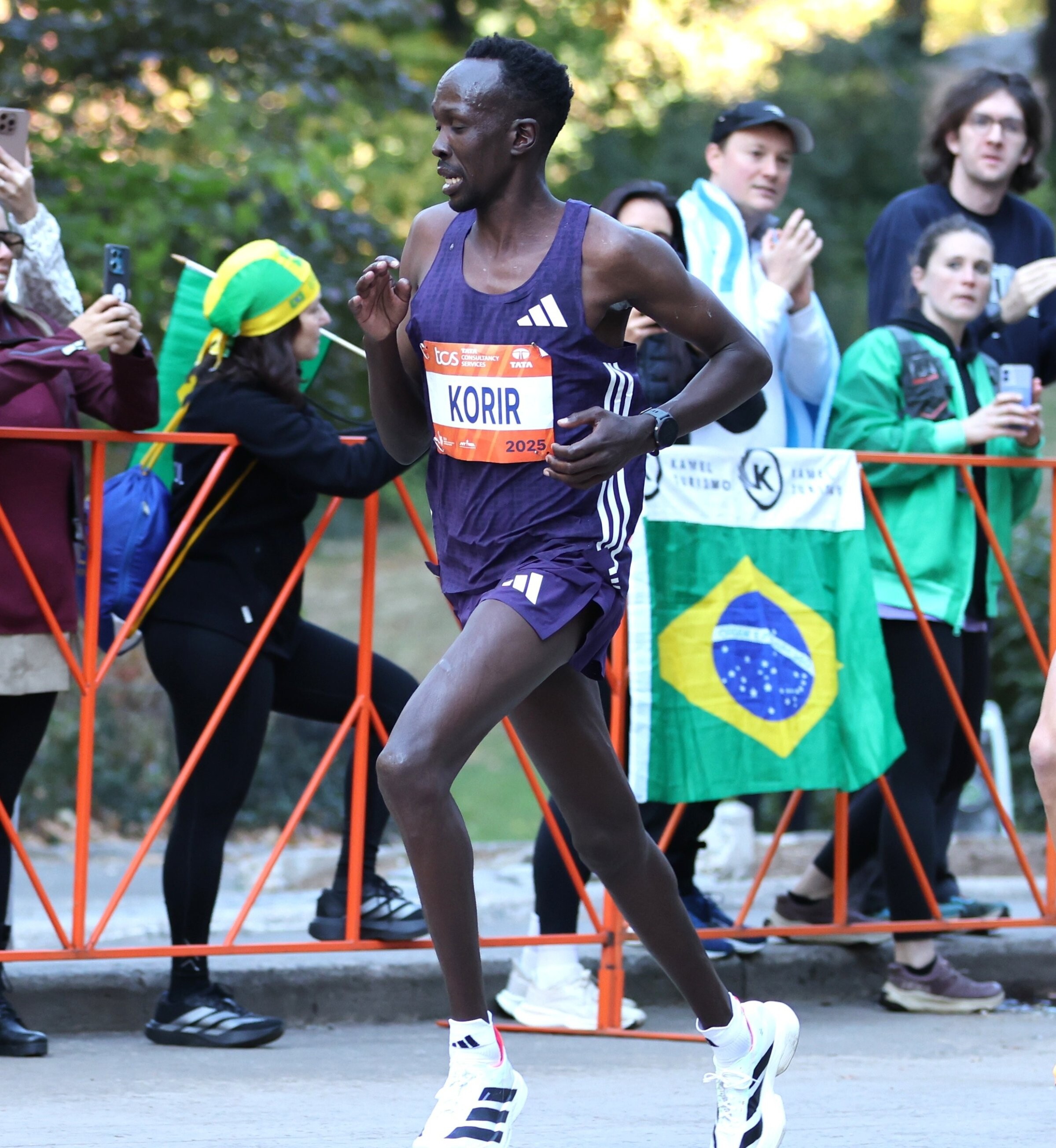
According to the AIU’s official findings, Korir was found to have used CERA (Continuous Erythropoietin Receptor Activator), a prohibited substance designed to boost endurance by increasing red blood cell production. The violation falls under World Athletics Anti-Doping Rules 2.1 and 2.2, covering both the presence and use of a banned substance. Samples collected in Kenya in October 2025 repeatedly returned positive results, leaving little room for dispute.
The disciplinary outcome is significant. Korir will serve a five-year period of ineligibility, effective from January 8, 2026, through January 7, 2031. In addition, all of his competitive results from October 3, 2025, onward have been disqualified, resulting in the forfeiture of titles, medals, and any prize money earned during that period.
In its ruling, the AIU acknowledged that Korir admitted to the violations at an early stage of the process. This cooperation led to a reduction of the sanction from a potential six-year ban to five years. However, the body emphasized that the seriousness of the offense warranted a lengthy suspension, reinforcing its commitment to protecting clean competition.
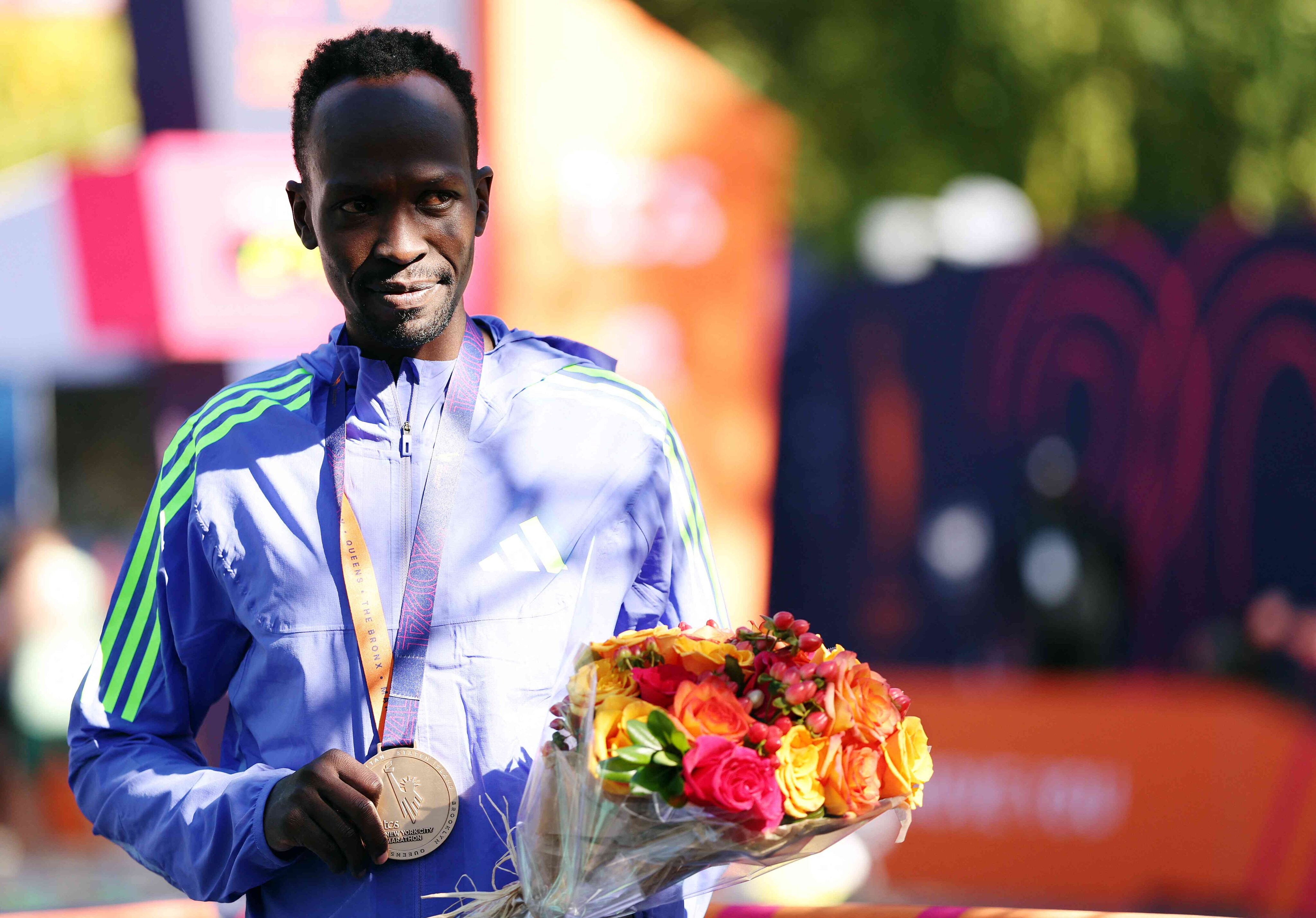
The case also confirmed that Korir did not possess a Therapeutic Use Exemption (TUE), eliminating any possibility that the substance had been used for legitimate medical purposes. This further solidified the grounds for the sanction and highlighted the strict regulatory framework governing elite athletics.
This development arrives amid growing concern over repeated doping cases, particularly within endurance running. Each new violation not only damages individual reputations but also casts a shadow over the credibility of the sport as a whole. For Kenya, a nation synonymous with distance running excellence, such incidents present an ongoing challenge in maintaining trust and preserving its rich athletic legacy.
The AIU, operating as the independent body responsible for enforcing anti-doping measures under World Athletics, continues to intensify its efforts globally. Its message remains clear: fairness is non-negotiable, and any breach of the rules will be met with firm and transparent action.
Albert Korir had built a strong reputation on the global stage through consistent high-level performances, highlighted by his victory at the New York City Marathon in 2021, a title he retained despite later scrutiny. He also claimed wins at the Ottawa Marathon in both 2019 and 2025, underlining his competitiveness across major city races. Earlier, he finished runner-up in New York in 2019 and returned in 2023 to secure third place with a personal best of 2:06:57, demonstrating steady progression at the elite level. However, his initially recorded third-place finish at the 2025 New York City Marathon was later nullified following his disqualification, casting a shadow over an otherwise impressive career marked by podium finishes and international victories.
As the sport moves forward, cases like this serve as both a warning and a reminder—true greatness in athletics is built not only on performance, but on integrity.
by Erick Cheruiyot for My Best Runs.
Login to leave a comment
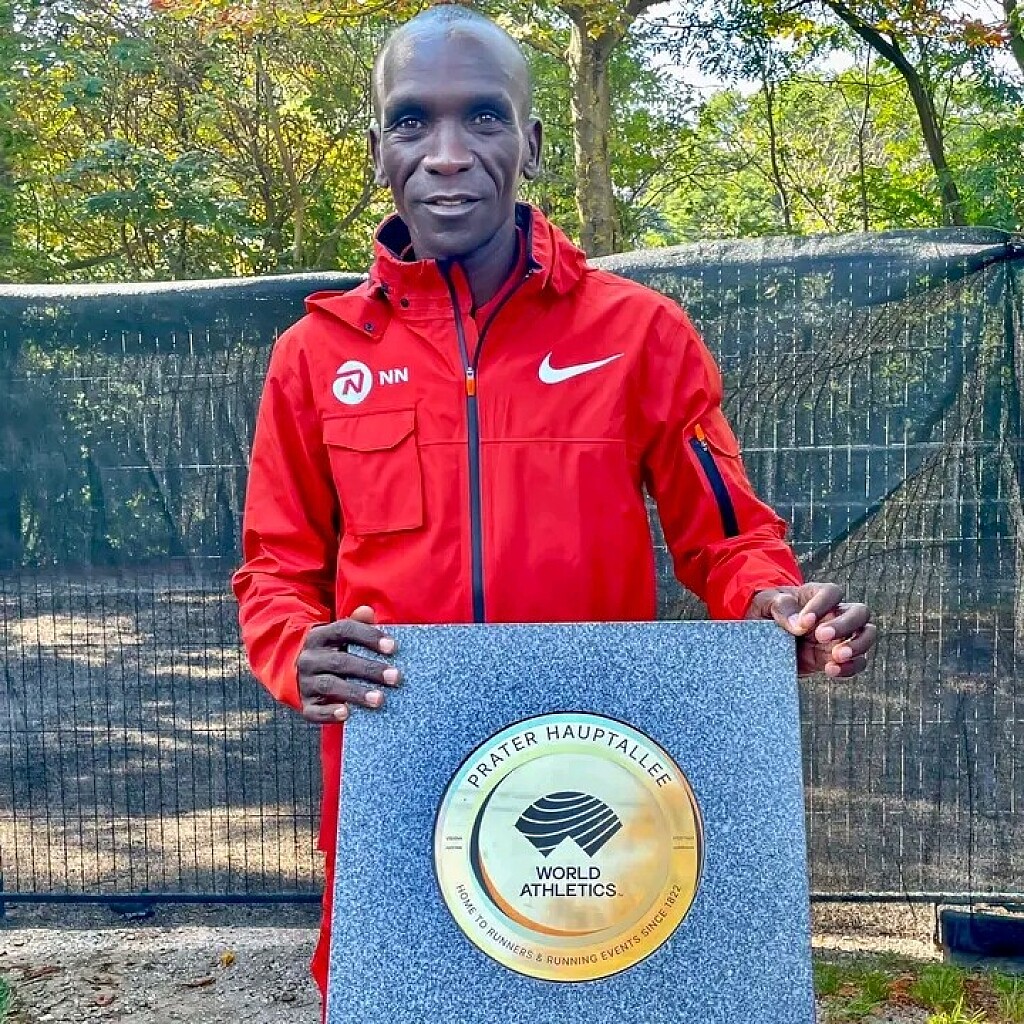
Where History Breathes: Kipchoge Returns to Vienna’s Sacred Road
In the quiet elegance of Vienna’s Prater, where chestnut trees line a road that has witnessed one of the greatest moments in human endurance, Eliud Kipchoge stood once again—this time not in motion, but in reflection. The Kenyan legend posed beside the World Athletics Heritage Plaque, a symbol that immortalizes the very ground where history was rewritten.
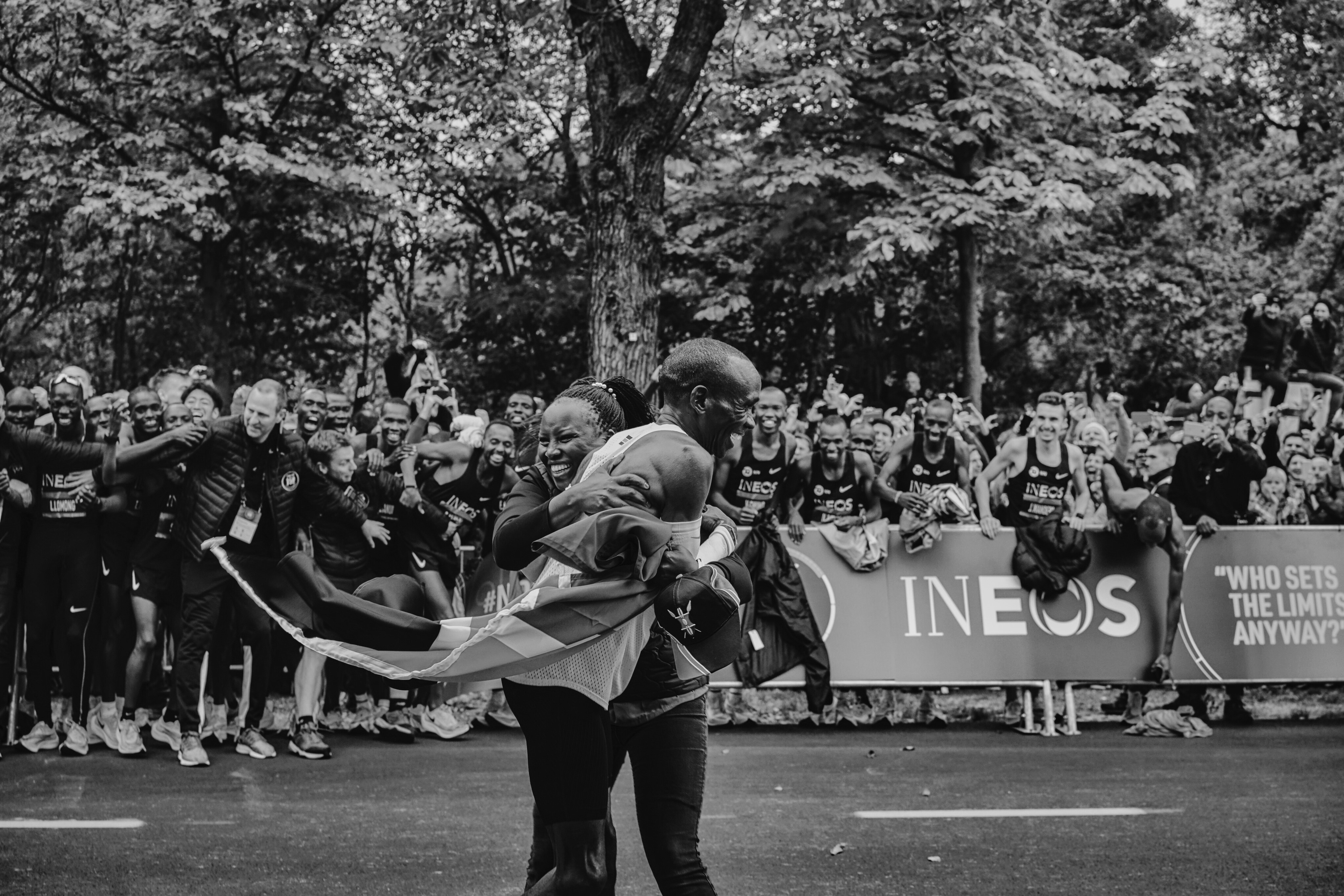
The Prater Hauptallee, a long, straight boulevard in Vienna, is no ordinary stretch of road. In 2019, it became the stage for the extraordinary during the INEOS 1:59 Challenge, when Kipchoge achieved what had long been considered beyond human limits—running a marathon in under two hours. Clocking an astonishing 1:59:40, he didn’t just break a barrier; he redefined possibility itself.
Though the performance was not ratified as an official world record due to controlled conditions, its significance transcended regulations. It was a moment that united science, precision, and human willpower in perfect harmony. The road beneath his feet that day has since been recognized as a site of global athletic importance.
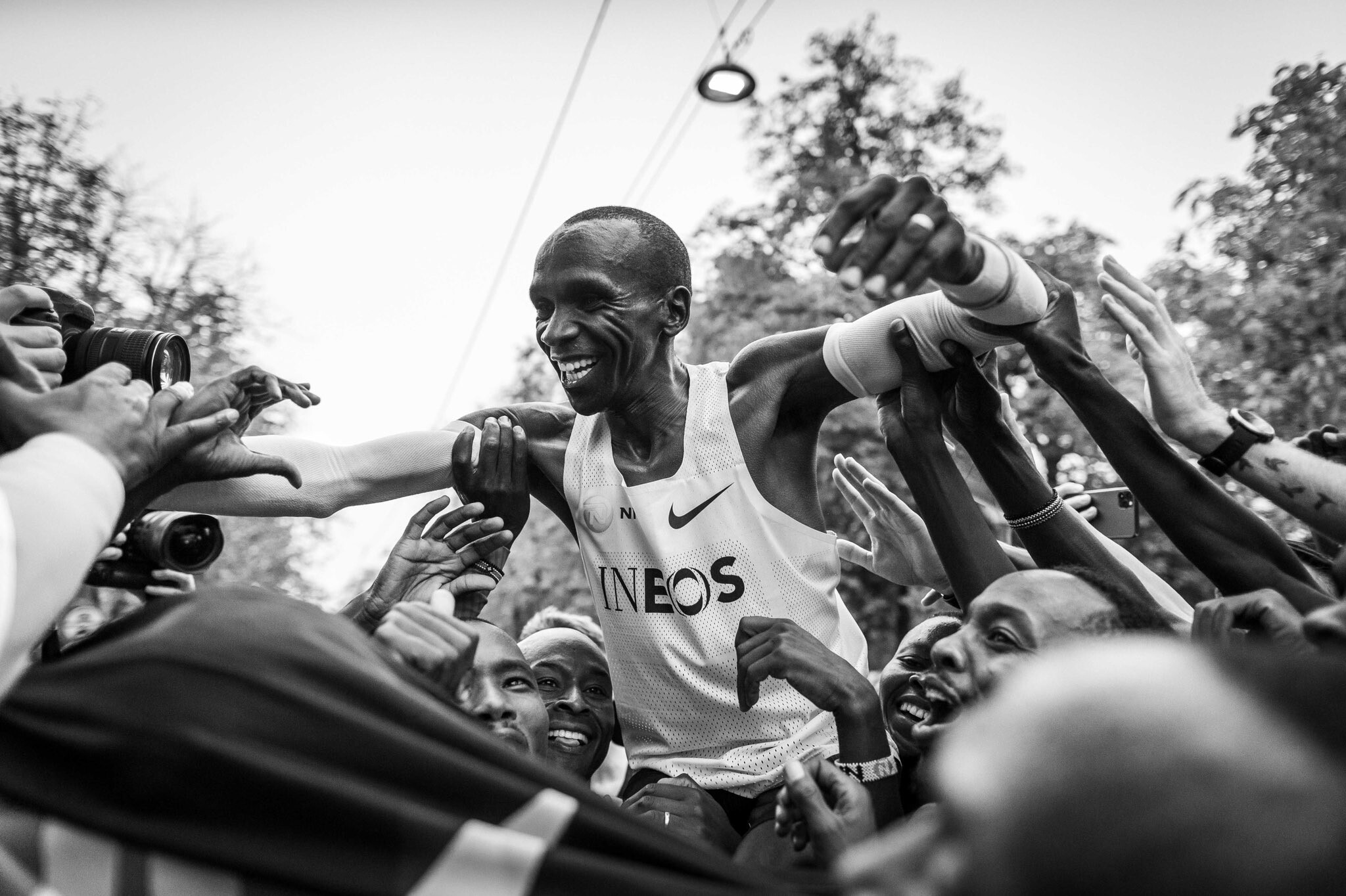
In 2022, World Athletics awarded the Prater Hauptallee its prestigious Heritage Plaque, officially acknowledging it as a landmark in the history of sport. And now, years later, Kipchoge’s return to that same location feels almost poetic—a reunion between a man and the path that carried him into immortality.
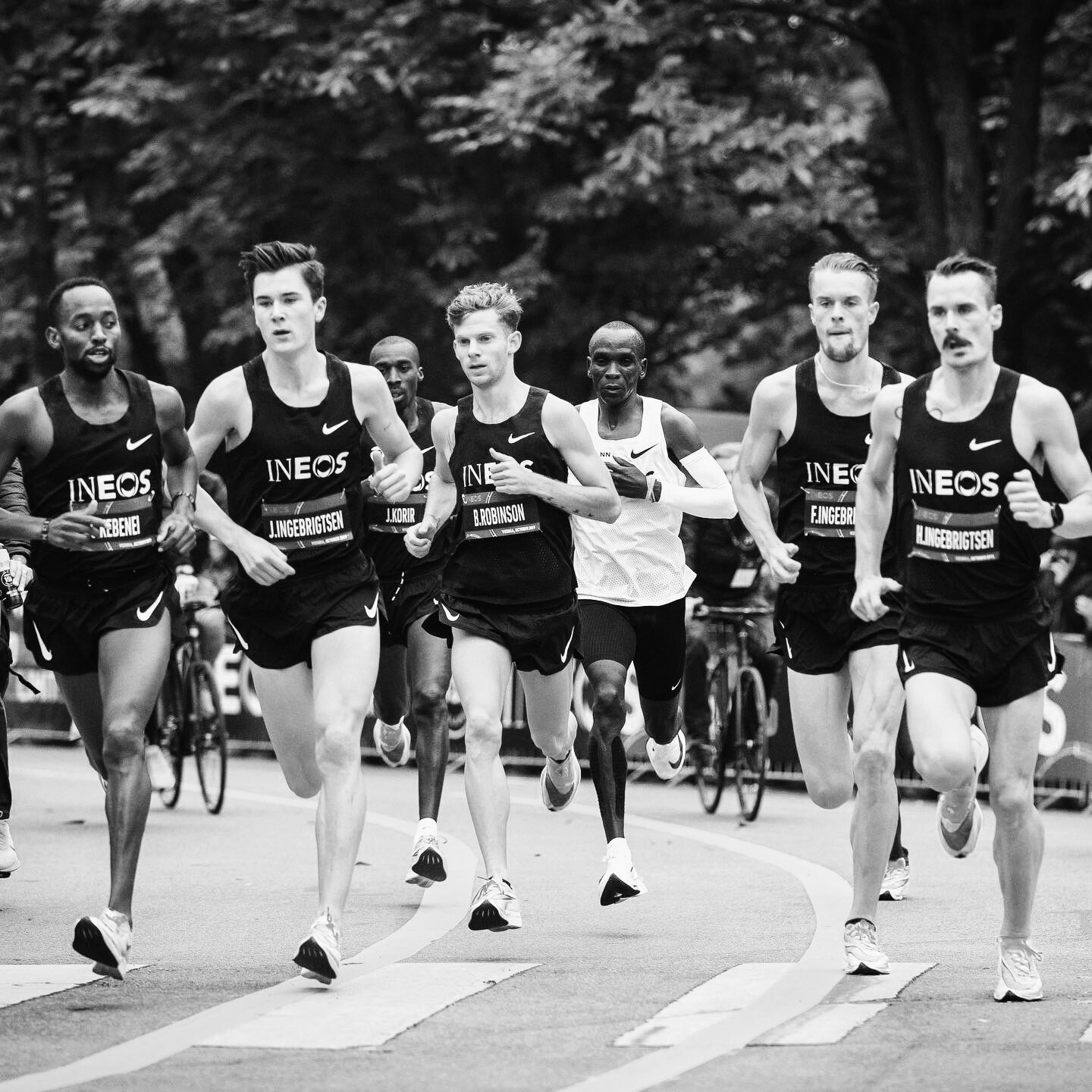
There is something deeply symbolic about the image: Kipchoge, calm and composed, standing still on the very ground where he once moved faster than any human ever had over 42.195 kilometers. It is a reminder that greatness is not only about speed, but also about legacy.
For Kipchoge, whose philosophy has always centered on discipline, humility, and mental strength, the moment is less about celebration and more about reflection. “No human is limited,” he famously said—a mantra that echoed across the world after that historic run. Today, that message feels just as powerful, etched not only in memory but now in the very soil of Vienna.
As athletes and dreamers continue to chase their own limits, the Prater stands as a quiet witness—a place where the impossible was made real. And at its heart remains Kipchoge, not just as a champion, but as a symbol of what humanity can achieve when belief meets relentless pursuit.
by Erick Cheruiyot for My Best Runs.
Login to leave a comment
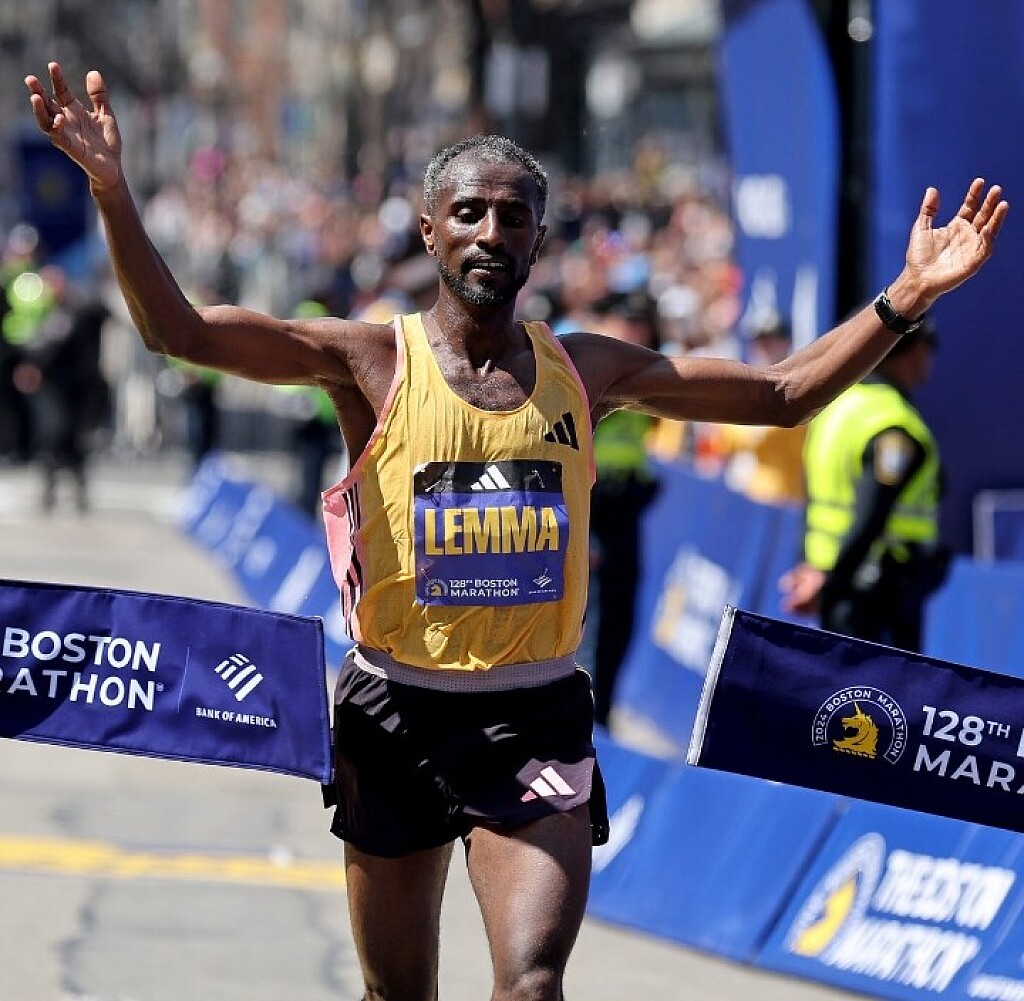
Sisay Lemma Headlines Powerful Elite Field as Seoul Marathon 2026 Promises High-Speed Showdown
The stage is set for a thrilling contest at the Seoul Marathon as a world-class men’s field prepares to race through the streets of the South Korean capital on Sunday, March 15, 2026. With a deep lineup featuring some of the fastest marathoners on the planet, the race is expected to deliver a captivating battle between seasoned champions and emerging contenders.

The marathon will begin at 7:30 a.m. local time in Seoul (KST). Fans around the world will tune in at different hours to follow the action: 1:30 a.m. in Kenya and Ethiopia (EAT), 11:30 p.m. on Saturday in Central Europe (CET), 3:30 p.m. Saturday on the U.S. West Coast (PST), and 9:30 a.m. Sunday in Australia’s east coast (AEDT) across Oceania.
Leading the field is Ethiopian marathon star Sisay Lemma, who enters the race as one of the clear favorites. With an impressive personal best of 2:01:48, Lemma has established himself among the world’s elite marathoners and arrives in Seoul with the kind of form capable of producing a very fast race.
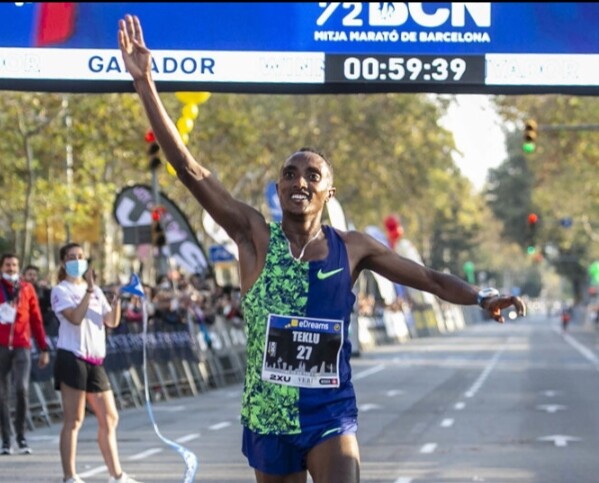
Standing in his path is defending champion Haftu Teklu, who returns determined to defend the title he captured last year. Teklu, whose personal best stands at 2:04:42, proved his strength on these roads before and will be eager to repeat that success.
Another major threat is Getaneh Molla, the winner of the prestigious Dubai Marathon in 2019. Molla’s outstanding 2:03:34 personal best highlights his ability to sustain an aggressive pace, making him one of the most dangerous competitors in the field.
Also in Ethiopia’s strong contingent is Tsegaye Getachew, known for consistent results across Europe, including strong performances at the Amsterdam Marathon and the Lisbon Marathon. With a personal best of 2:04:18, he remains firmly within striking distance of the leading contenders.

Kenya’s challenge will be spearheaded by experienced runners such as Sammy Kirop and Nick Kitundu, both capable of competing for podium positions. Their presence is reinforced by a strong Kenyan lineup that includes Enock Kinyamal, Gilbert Kibet, Collins Kipkurui, Edmond Kipngetich, and Felix Kipkoech, forming a deep and competitive squad.
Another intriguing entrant is Ethiopian athlete Haftamu Abadi, who enjoyed an impressive season last year with victories at the Vienna City Marathon and the Ljubljana Marathon. His appearance in Seoul marks his first marathon race in Asia, adding another layer of excitement to the elite contest.
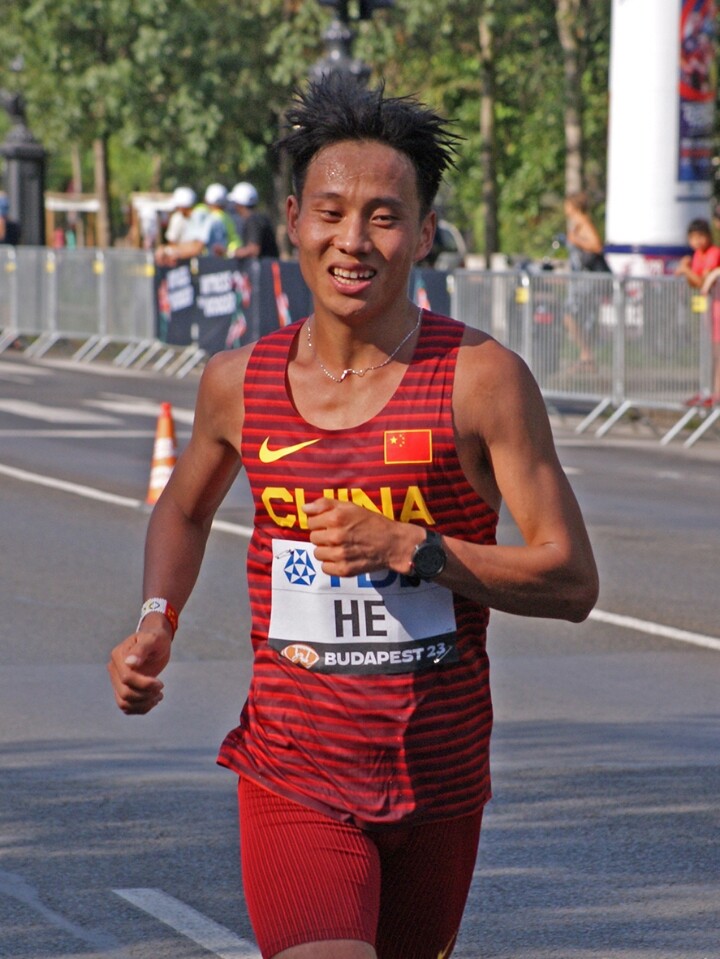
The race also highlights the growing global reach of marathon running, with athletes such as Japan’s Daisuke Uekado and China’s Jie He representing the host region.
With proven champions, hungry challengers, and a course historically known for fast times, the 2026 Seoul Marathon promises a gripping contest from start to finish. As the world’s elite converge on Seoul, the question remains: who will seize the moment and conquer one of Asia’s most prestigious marathons?
by Erick Cheruiyot for My Best Runs.
Login to leave a comment

Seoul International Marathon
The only marathon hosted in the heart of the Korean capital. Seoul marathon is the oldest marathon race hosted in Asia andis one of the fastestmarathon in the world. First held in 1931, Seoul marathon is the oldest marathon eventcontinuously held in Asia, and the second oldest in the world followingthe Boston Marathon. It embodies modern history of Korea, also...
more...
“I Was Down to My Knees” — Kipchoge Opens Up on Cruel Rumours After Kiptum’s Fatal Crash
The death of marathon world record holder Kelvin Kiptum sent shockwaves through the global athletics community in February 2024. Tributes poured in from across the world as athletes, officials and fans mourned the loss of one of distance running’s brightest talents.
But for fellow Kenyan legend Eliud Kipchoge, the tragedy was followed by an intensely painful personal ordeal — a wave of online rumours that falsely attempted to link him to the accident that claimed Kiptum’s life.
A tragic night in Elgeyo-Marakwet
Kiptum, who held the marathon world record at the time, died on February 11, 2024, following a road accident in the Kaptagat area of Elgeyo‑Marakwet County in western Kenya.
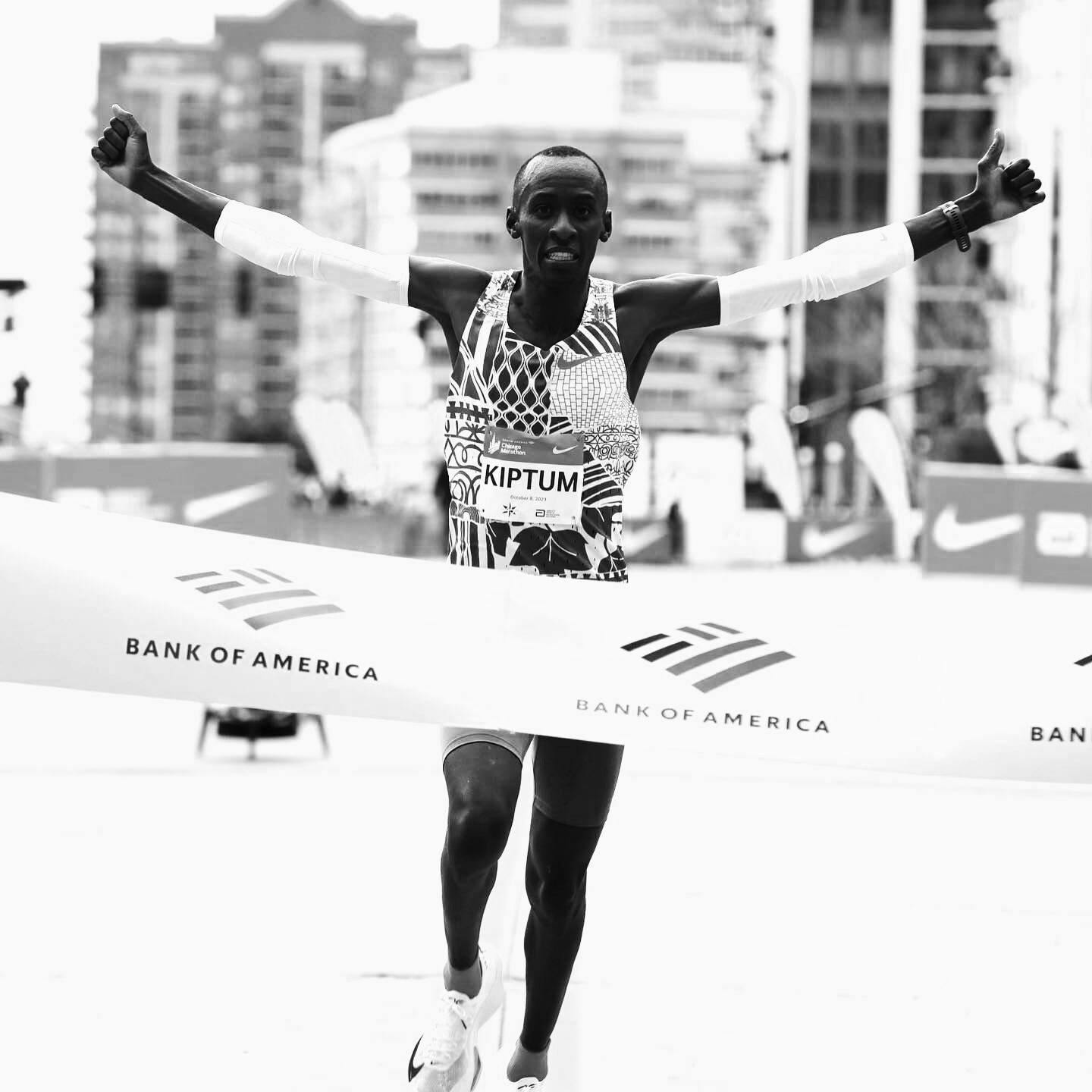
He was travelling with his Rwandan coach Gervais Hakizimana, who also lost his life in the crash. The devastating incident brought an abrupt end to a career that had risen at breathtaking speed.
Only months earlier, Kiptum had stunned the athletics world at the Chicago Marathon, clocking a remarkable 2:00:35 to set a new marathon world record — a performance that cemented his status as one of the most extraordinary long-distance talents of his generation.
The moment Kipchoge heard the news
In a deeply emotional interview shared on the Engage Talk YouTube platform, Kipchoge recalled the moment he first learned of the tragedy.
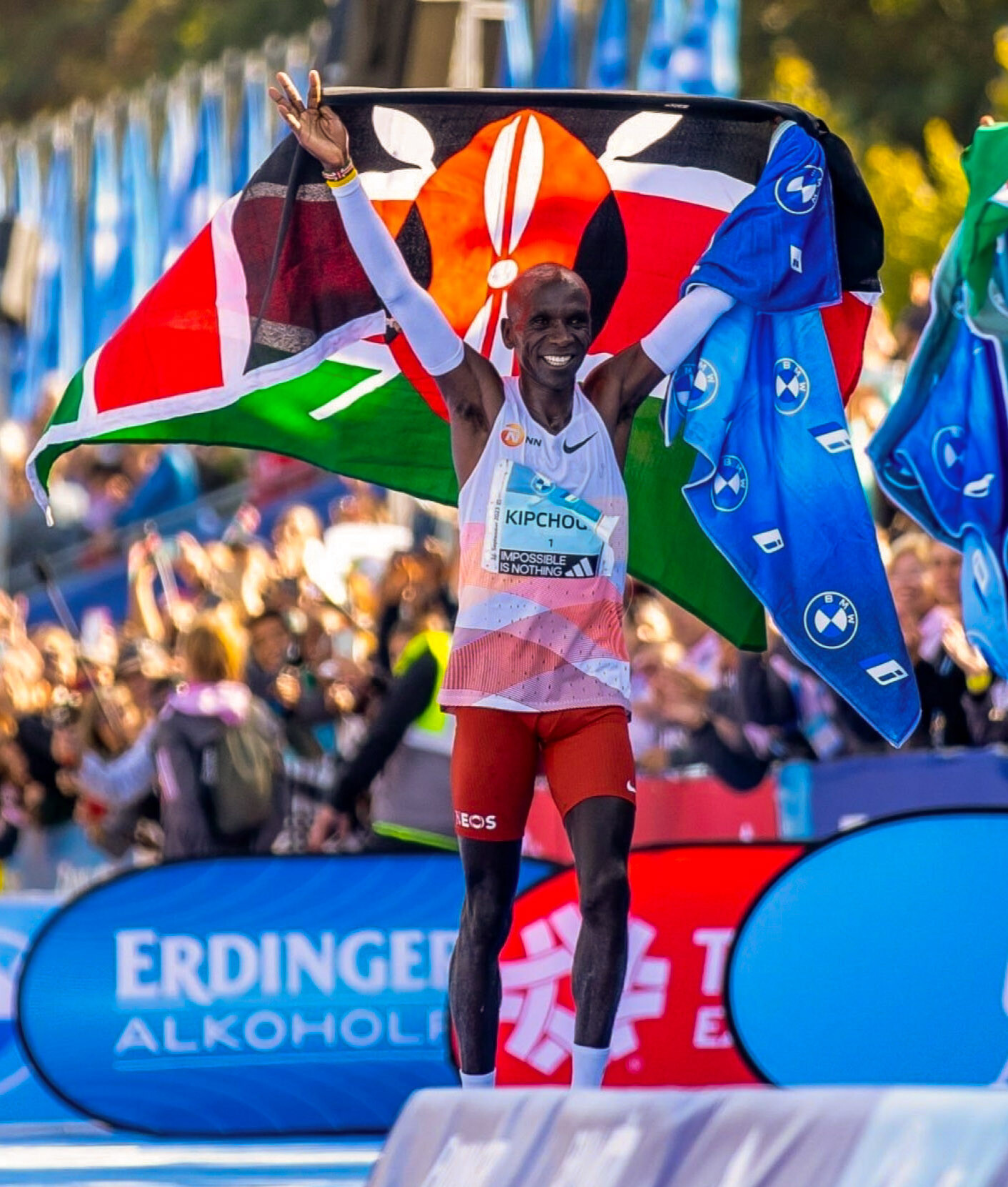
The two-time Olympic marathon champion explained that he had just returned home from a training session when someone at the gate informed him that Kiptum had died in a road accident. Shocked by the news, he immediately checked his phone — only to discover a different kind of storm unfolding online.
Within hours of the crash, social media had become flooded with baseless rumours accusing Kipchoge of being somehow connected to the incident.
The accusations, he said, left him devastated.
“Social media was everywhere saying Eliud killed Kiptum in a road accident. I was really down… down to my knees,” Kipchoge said during the interview.
Threats and fear for his family
The false claims quickly escalated into a wave of online hostility, with Kipchoge revealing that threats were directed not only at him but also at members of his family.
For safety reasons, the family was forced to change parts of their daily routine. Kipchoge explained that his sons had previously cycled to school, a normal routine in their community, but the arrangement had to be altered after the threats emerged.
He also expressed disappointment that some of the accusations circulating online took on an ethnic tone — something that deeply troubled the athlete, who has long spoken publicly about unity and national harmony in Kenya.
Silence from many, support from a few
The episode also revealed an unexpected reality for one of the most celebrated athletes in the world.
Despite having millions of followers across social media platforms, Kipchoge said only a small number of people reached out to check on him during the difficult period.
It was a stark reminder, he noted, that genuine support often comes from close relationships rather than public admiration.
A career defined by greatness
Kipchoge’s legacy in distance running remains unmatched. He won Olympic marathon gold medals at the 2016 Rio Olympics and the 2020 Tokyo Olympics, cementing his place among the greatest marathon runners in history.
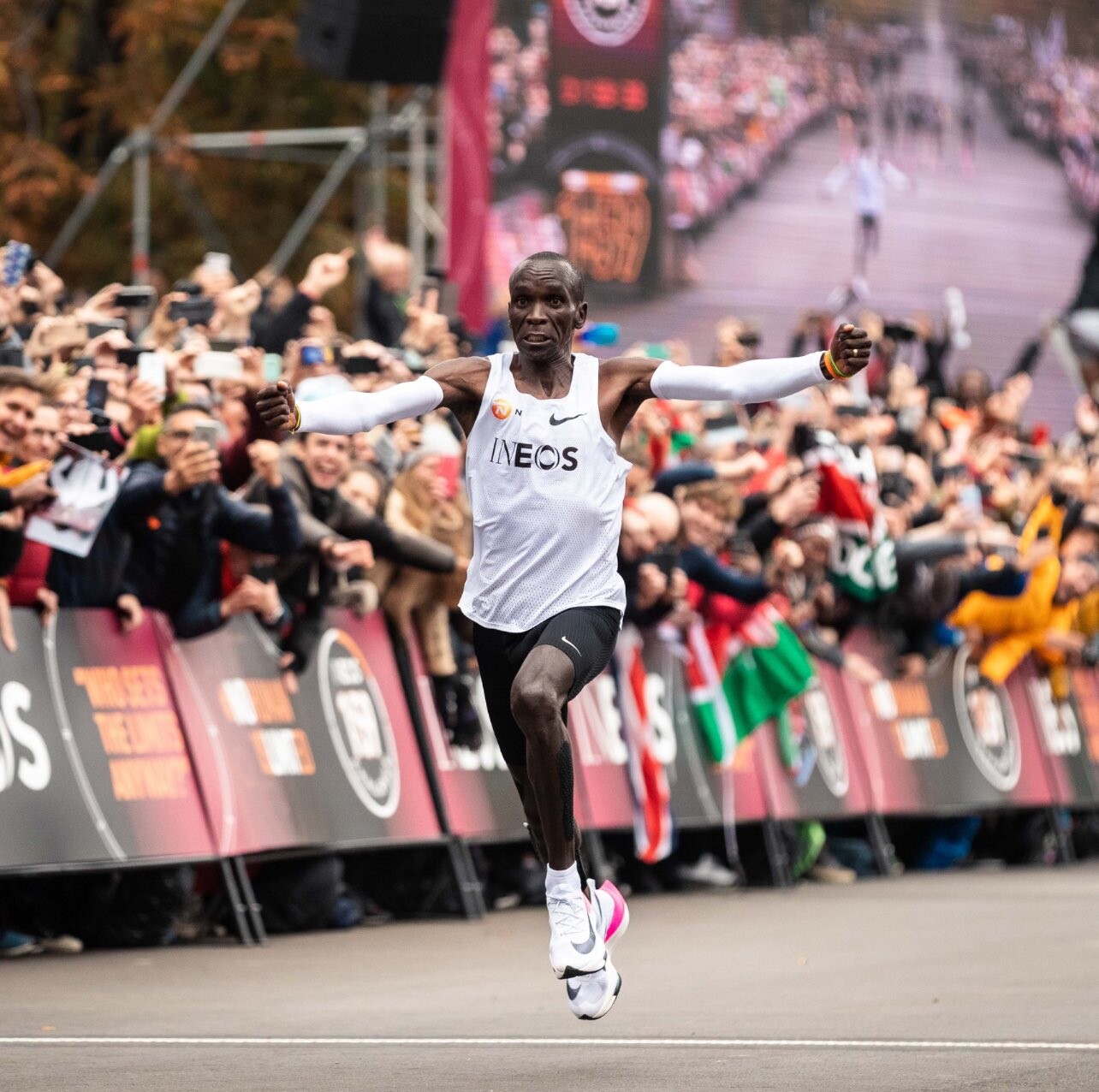
In 2019, he also achieved one of the most iconic moments in sport by becoming the first person to run a marathon distance in under two hours during the INEOS 1:59 Challenge in Vienna, completing the run in 1:59:40 during the special exhibition event.
A painful lesson in resilience
Looking back, Kipchoge described the aftermath of Kiptum’s death as one of the most emotionally testing moments of his life.
The experience, he said, reinforced the importance of resilience and the value of strong personal relationships when navigating moments of crisis.
While the loss of Kelvin Kiptum remains a deep wound for the athletics world, Kipchoge’s reflections reveal another side of the tragedy — the unseen emotional toll that misinformation and online hostility can inflict, even on the strongest of champions.
by Erick Cheruiyot for My Best Runs.
Login to leave a comment
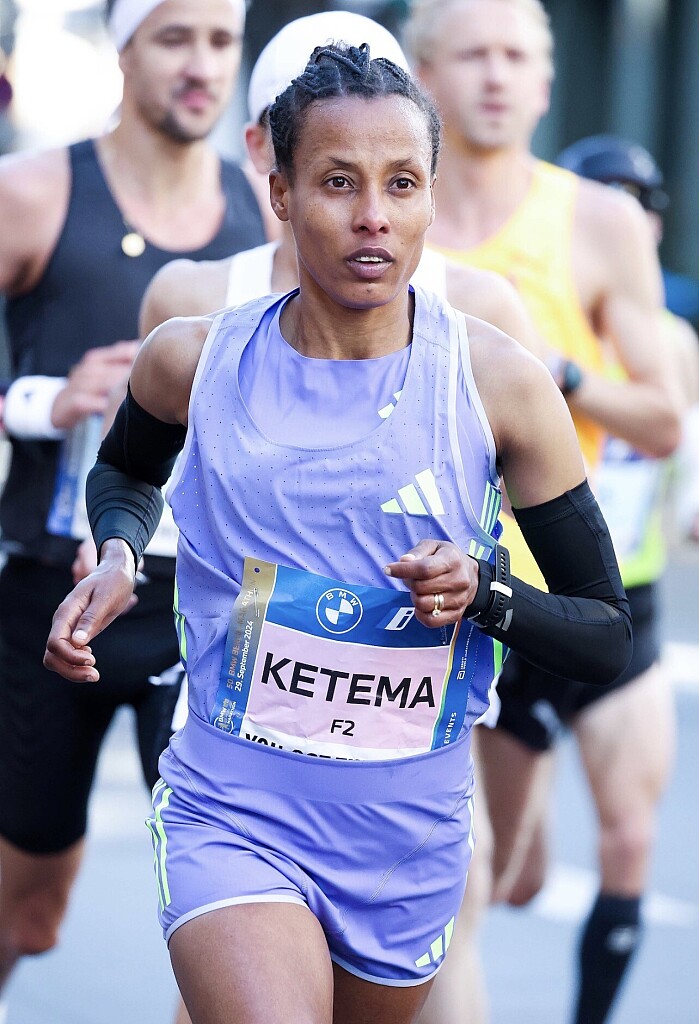
Fast Women Ready to Light Up Hamburg Marathon as Ethiopian Stars Headline 40th Edition
The women’s race at the 40th edition of the Haspa Marathon Hamburg, set for April 26, is shaping up to be a fast one. A powerful Ethiopian trio—Tigist Ketema, Degitu Azimeraw, and Sichala Kumeshi—headline the elite field for Germany’s biggest spring marathon.
Organizers expect a massive turnout for the anniversary edition. 20,000 runners are entered in the marathon, and when the shorter distance races held during the same weekend are included, a record total of 46,000 athletes will take part in the Hamburg running festival.
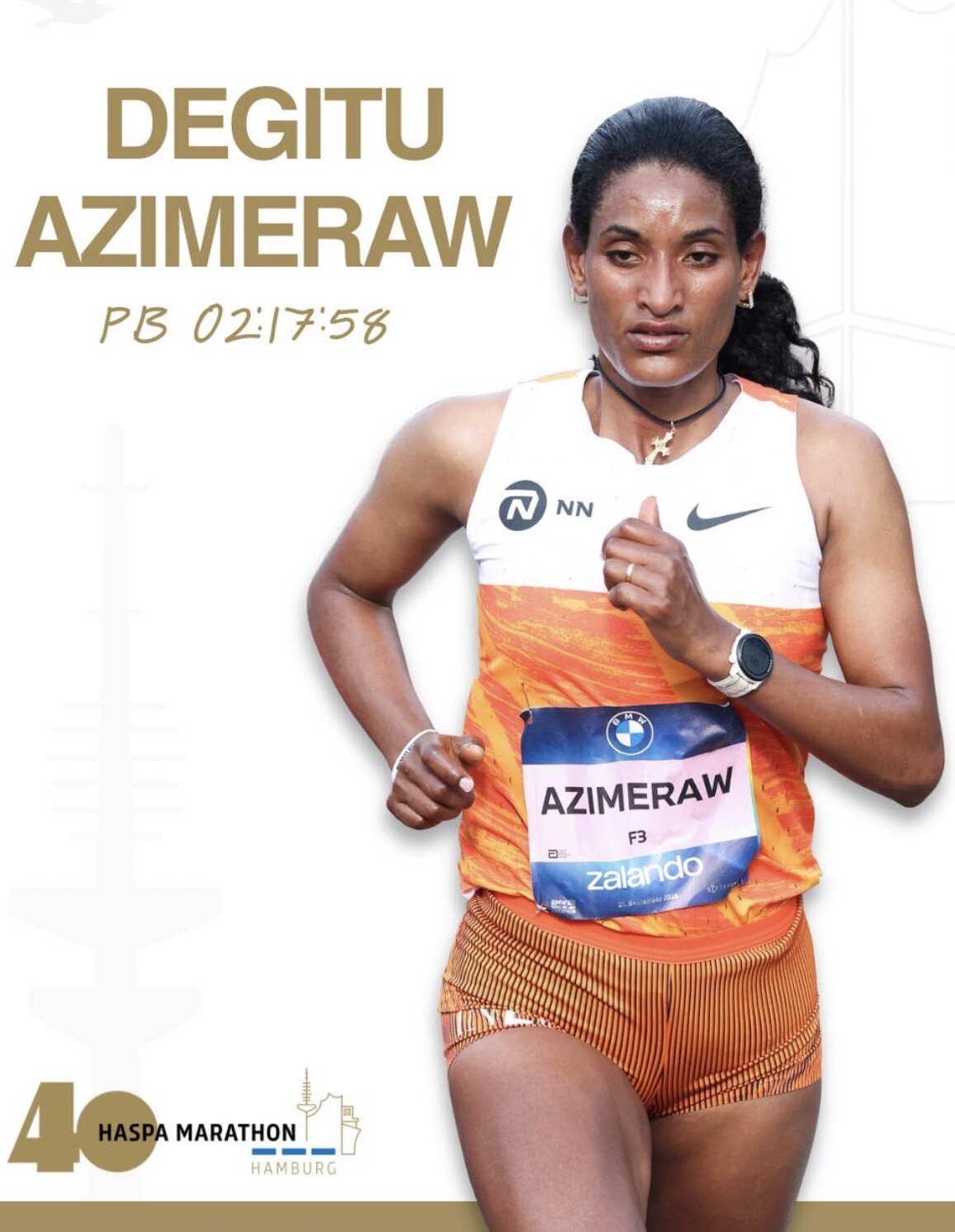
Ethiopia’s Strong History in Hamburg
Ethiopian runners have dominated the women’s race in recent years. In 2022, Yalemzerf Yehualaw set the course record with a stunning 2:17:23. That mark nearly fell again last year when Workenesh Edesa won in 2:17:55, the second-fastest time in race history.
With Ketema, Azimeraw, and Kumeshi on the start line this year, another Ethiopian victory—and perhaps another run at the course record—appears likely.
Tigist Ketema Returns After Breakthrough Seasons
At just 27 years old, Tigist Ketema has already established herself among the fastest marathoners in the world.
She made a sensational debut at the Dubai Marathon in January 2024, winning with a course record of 2:16:07—an unofficial world record for a debut marathon and, at the time, the eighth-fastest performance ever.
Later that year she confirmed her status by winning the Berlin Marathon in 2:16:42.
Ketema competed at the 2025 World Championships marathon in Tokyo, but difficult hot and humid conditions forced her to drop out. After that disappointment, Hamburg presents a perfect opportunity for the Ethiopian star to return to top form.
Degitu Azimeraw’s Consistent Excellence
Another major contender is Degitu Azimeraw, who has built one of the most consistent marathon careers in recent years.
Azimeraw won her debut at the 2019 Amsterdam Marathon in 2:19:26, immediately establishing herself as a world-class performer. Since then she has run under 2:20 four times.
Her best performance came at the 2021 London Marathon, where she finished runner-up with a personal best of 2:17:58.
After taking time away from competition to give birth, the 27-year-old returned impressively in 2024, winning the Barcelona Marathon in 2:19:52.
Kumeshi Returns to Familiar Roads
Sichala Kumeshi may have the advantage of experience on the Hamburg course.
The 30-year-old first ran the race in 2023, finishing in 2:26:53. But it was in 2025 when she truly made her mark in Hamburg, placing third with a personal best of 2:19:53, her first time breaking the 2:20 barrier.
Kumeshi has already shown strong form this season, running a half marathon personal best of 1:06:53 in Houston in January.
With confidence from that performance and familiarity with the course, she returns to Hamburg aiming for an even bigger result.
A Historic Edition
The 40th Haspa Marathon Hamburg promises to be one of the most exciting editions in the race’s history. With record participation numbers and a world-class women’s field led by three of Ethiopia’s top marathoners, the stage is set for another memorable race through the streets of one of Europe’s great running cities.
by Race News Service
Login to leave a comment

Haspa Marathon Hamburg
The HASPA MARATHON HAMBURG is Germany’s biggest spring marathon and since 1986 the first one to paint the blue line on the roads. Hamburcourse record is fast (2:05:30), the metropolitan city (1.8 million residents) lets the euphoric atmosphere spill over and carry you to the finish. Make this experience first hand and follow the Blue Line....
more...