

Running News Daily
Running News Daily is edited by Bob Anderson and team. Send your news items to bob@mybestruns.com Advertising opportunities available.
Index to Daily Posts · Sign Up For Updates · Run The World Feed
Articles tagged #lawyer
Today's Running News
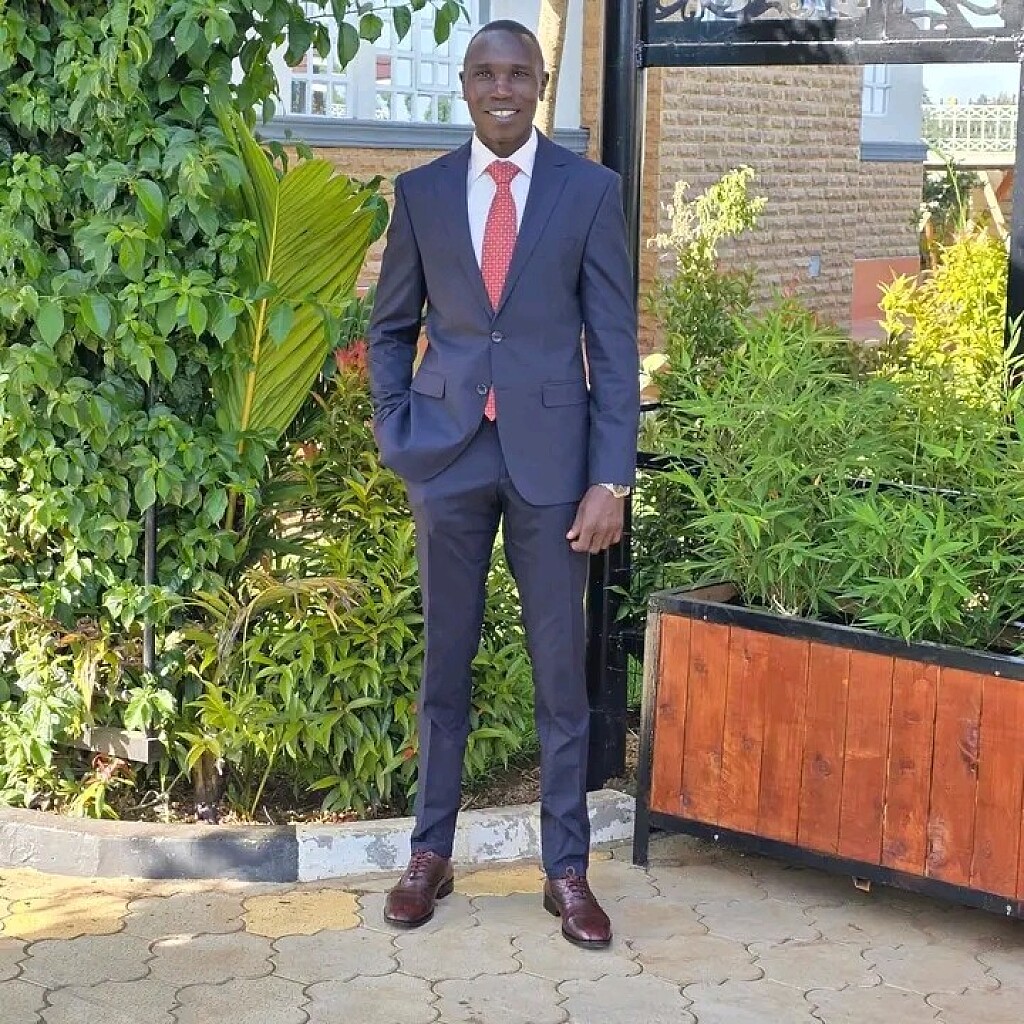


Geoffrey Kamworor: The Lawyer He Never Became, The Distance Running Legend He Was Born To Be
Long before he conquered world cross-country championships, dominated the half-marathon distance and lifted the New York City Marathon trophy, Geoffrey Kamworor was a young Kenyan student with an ambitious dream that had little to do with running: becoming a lawyer.

Growing up in Keiyo South, Kamworor developed the discipline that would later define his extraordinary athletic career. His daily routine involved running approximately five kilometres to school and another five kilometres back home. What might have seemed like an ordinary journey for a schoolboy was quietly laying the foundation for a future in international distance running.
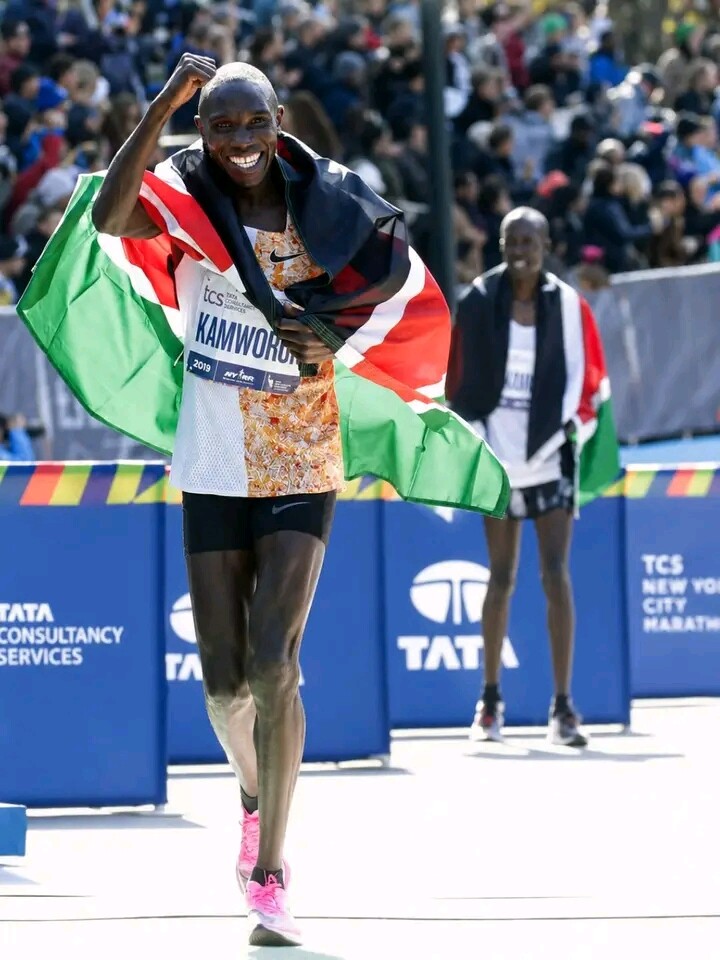
He attended Chepsamo Primary School before proceeding to Lelboinet Secondary School, where he combined his education with a growing passion for athletics. At the time, his ambitions extended beyond the track and roads. He wanted to pursue a career in law, and that dream eventually brought him an opportunity to study at a college in the United States.
However, the young Kenyan faced a defining decision: follow the academic path he had envisioned or commit himself fully to the sport that was beginning to reveal his remarkable potential. Kamworor chose athletics, a decision that would ultimately place his name among the most accomplished distance runners of his generation.
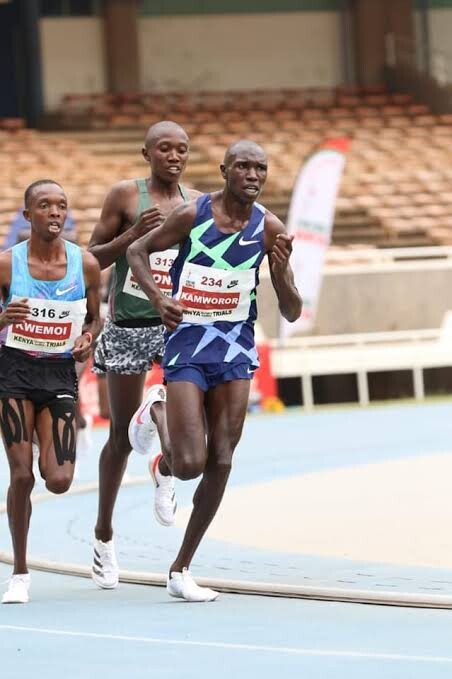
His transformation from a promising schoolboy into an international contender began gathering momentum in 2010, when he joined the GSC training camp in Kaptagat. His development accelerated rapidly, and within a short period, an opportunity to compete in Finland exposed him to a higher level of international competition.
Still only 17, he reportedly competed nine times during that trip, demonstrating an impressive ability to adapt to the demands of competitive racing. Breaking the eight-minute barrier for 3,000 metres was an early indication of the talent that would eventually carry him to the highest levels of distance running.
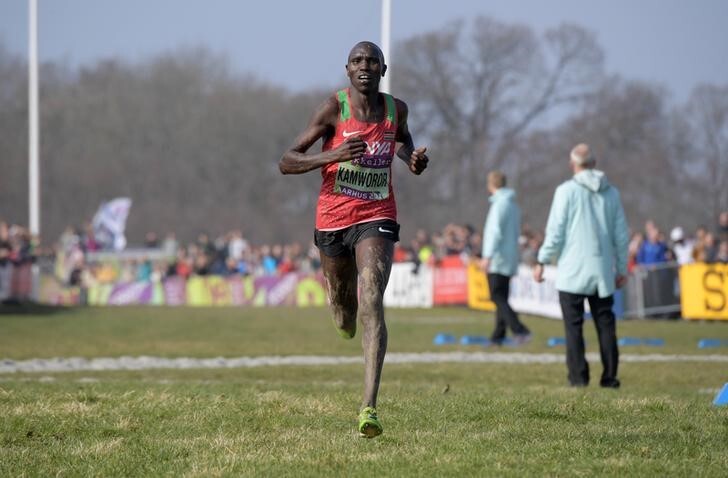
His breakthrough on the international stage followed in March 2011, when he captured the junior men's title at the World Cross Country Championships in Punta Umbría, Spain. That victory announced the arrival of a young athlete whose future would extend far beyond the junior ranks.
Kamworor was not simply a runner with speed. He possessed the endurance, tactical intelligence and competitive determination required to succeed across different distances and racing surfaces. As his career developed, those qualities became the hallmarks of an athlete capable of challenging the world's best.
Cross country became one of the foundations of Kamworor's international success. In 2015, he won the senior men's title at the World Cross Country Championships in Guiyang, China, confirming his status as one of the leading distance runners in the world. Two years later, he returned to the top of the podium in Kampala, Uganda, defending his senior world cross-country crown in front of a home crowd. Winning consecutive senior world titles placed him in an elite category and demonstrated his remarkable command of the demanding discipline.
On the roads, however, Kamworor established an equally impressive legacy. He won the World Half Marathon Championships in Copenhagen in 2014, Cardiff in 2016 and Valencia in 2018, becoming a three-time champion at the distance. His achievements reflected a rare combination of strength, speed and race management, enabling him to prevail against formidable international opposition.
The half marathon became one of his signature events, but Kamworor's ambitions were never confined to a single discipline. He continued to demonstrate his versatility on the track, winning silver in the men's 10,000 metres at the 2015 World Athletics Championships in Beijing, China. From the grass of cross-country courses to the roads of major international races and the track of a global championship, he repeatedly demonstrated that his talent could flourish wherever the competition took him.
Among Kamworor's most memorable achievements are his victories at the New York City Marathon in 2017 and 2019. Winning one of the world's most celebrated marathons requires exceptional endurance, but winning it twice demands much more: tactical patience, resilience and the ability to navigate a demanding course against a deep international field.
Kamworor demonstrated those qualities in both victories, establishing a special connection with the New York race and adding the marathon to an already remarkable collection of honours. His success in the American city also illustrated his ability to move successfully between distances. An athlete celebrated for his cross-country and half-marathon dominance had shown that he could also conquer the 42.195-kilometre marathon, one of the most demanding challenges in road racing.
Now, as he sets his sights on another New York campaign, the Kenyan star has an opportunity to strengthen his legacy further. A third men's open-division victory would place him among a very select group of athletes to have won the prestigious race three times. Such a milestone would be more than another addition to his trophy cabinet; it would reinforce the story of a runner whose competitive range has extended across nearly every major discipline in distance running.
Behind Kamworor's achievements lies a training environment built around discipline, consistency and high-level competition. Working under the guidance of renowned coach Patrick Sang, he has trained alongside some of Kenya's most celebrated athletes, including marathon great Eliud Kipchoge and middle- and long-distance superstar Faith Kipyegon.
Sharing a training environment with athletes of such calibre provides a demanding daily standard. Yet Kamworor has built his own identity through a career defined by major championship victories and sustained success across different racing distances. His journey has also included difficult periods and setbacks, reminding the running world that even the most accomplished champions must continually work to return to their best. His longevity at the elite level reflects the importance of patience, dedication and the willingness to keep pursuing new goals.
For aspiring athletes in Kenya, his story offers an important lesson: extraordinary achievements are often built through ordinary routines repeated consistently over many years. Those five-kilometre journeys to school and back were not glamorous. They did not come with cheering crowds, television cameras or medals. Yet they formed part of the foundation of a career that would eventually take him to the world's biggest running stages.
Kamworor's story is ultimately about a choice that changed the direction of his life. The young student who once imagined himself arguing cases in a courtroom instead built his reputation by answering the toughest questions on the running track and roads. His achievements speak for themselves: world cross-country titles, three world half-marathon crowns, a global 10,000-metre silver medal and two New York City Marathon victories.
He may never have pursued the legal career he once envisioned, but his athletic record tells a compelling story of ambition, sacrifice and extraordinary accomplishment. His pursuit of another New York triumph offers a fresh chapter in a career that has already crossed the boundaries between cross country, track and road racing.
For Geoffrey Kamworor, the courtroom was a dream he left behind. The world of distance running became the stage on which he built his name. And while the law lost a prospective lawyer, athletics gained a champion whose achievements have helped define an era of Kenyan distance running.
by Erick Cheruiyot for My Best Runs.
Login to leave a comment

TCS New York City Marathon
The first New York City Marathon, organized in 1970 by Fred Lebow and Vince Chiappetta, was held entirely in Central Park. Of 127 entrants, only 55 men finished; the sole female entrant dropped out due to illness. Winners were given inexpensive wristwatches and recycled baseball and bowling trophies. The entry fee was $1 and the total event budget...
more...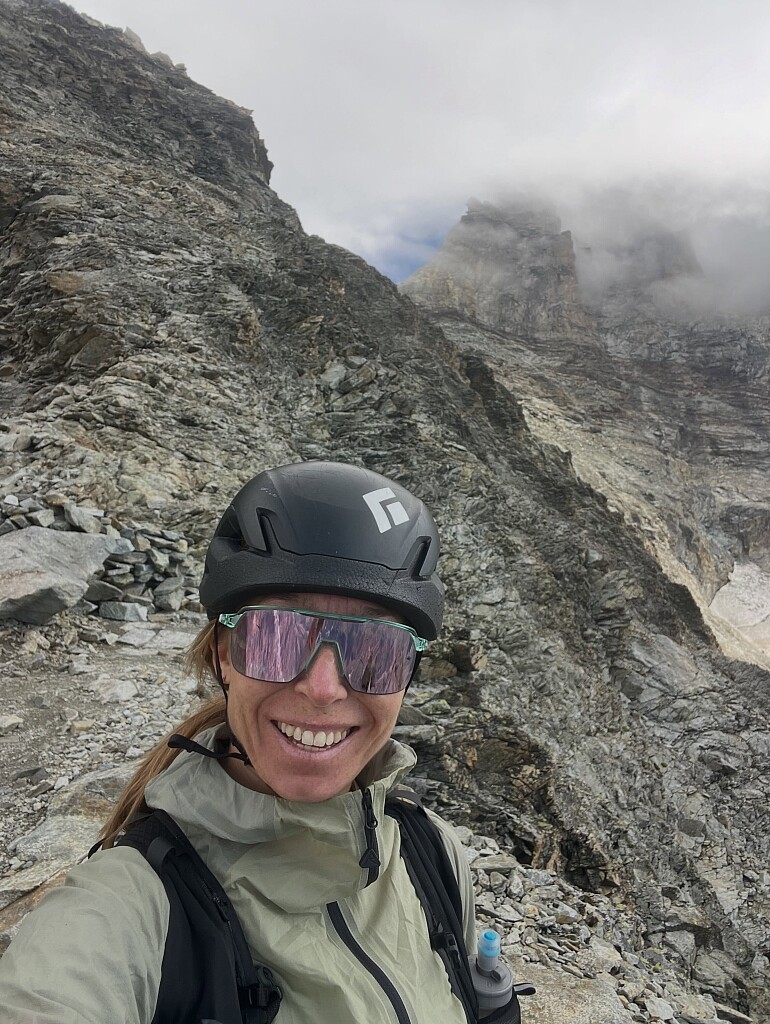
Lost on the Matterhorn: Search Continues for Canadian Trail Runner Kalie McCrystal
The dedicated helicopter search for 38-year-old Canadian mountain runner and lawyer Kalie McCrystal has been suspended after an intensive operation failed to find any trace of her on the Matterhorn in Italy.
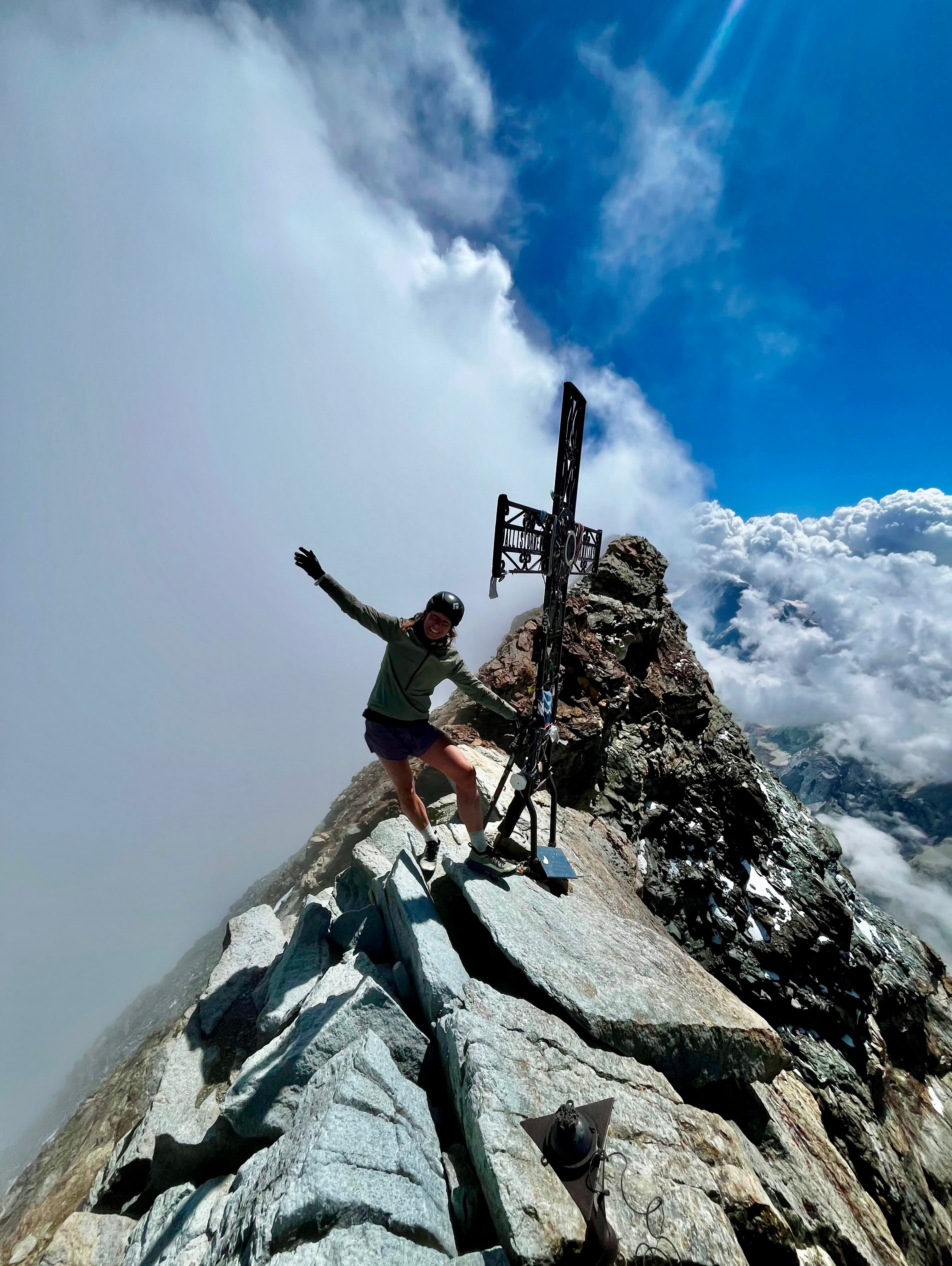
McCrystal, from Squamish, British Columbia, was last seen on Tuesday, September 1, at around 3,830 metres above the Jean-Antoine Carrel Hut on the Italian side of the Matterhorn. A mountain guide reportedly saw her continuing towards the summit at a fast pace, with McCrystal telling the guide that she was training for an attempt to break the mountain's ascent-and-descent record.
The disappearance has triggered a major search operation across one of the Alps' most challenging environments. Rescue teams conducted repeated helicopter sweeps of the Matterhorn, examining steep cliffs, narrow gullies and other difficult sections of the route on both the Italian and Swiss sides.
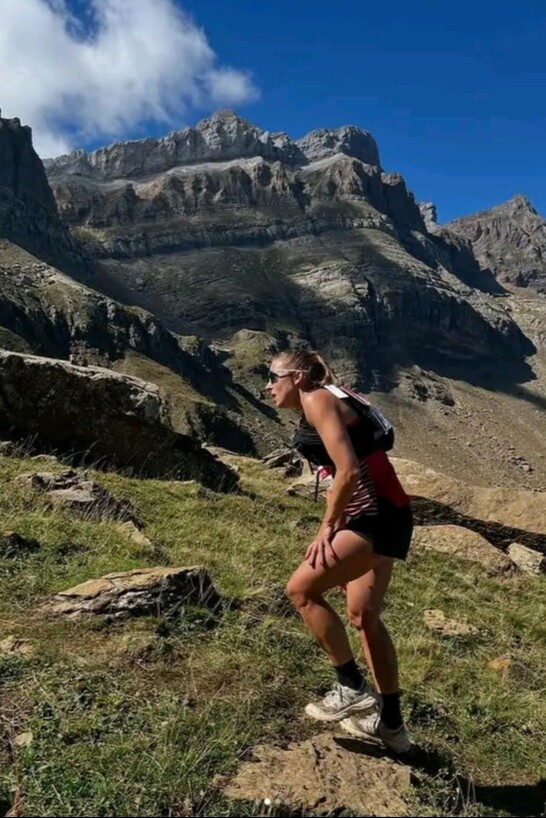
A large air ambulance was initially deployed before rescuers switched to a smaller helicopter that could operate closer to the mountain's hazardous rock faces and couloirs. Despite the closer and repeated searches, however, no sign of McCrystal was found.
Authorities also deployed a helicopter-mounted RECCO detector, a technology designed to locate compatible rescue reflectors that can sometimes be incorporated into outdoor clothing or equipment. No signal was detected. Attempts to locate McCrystal through her cellphone also failed to produce a result.
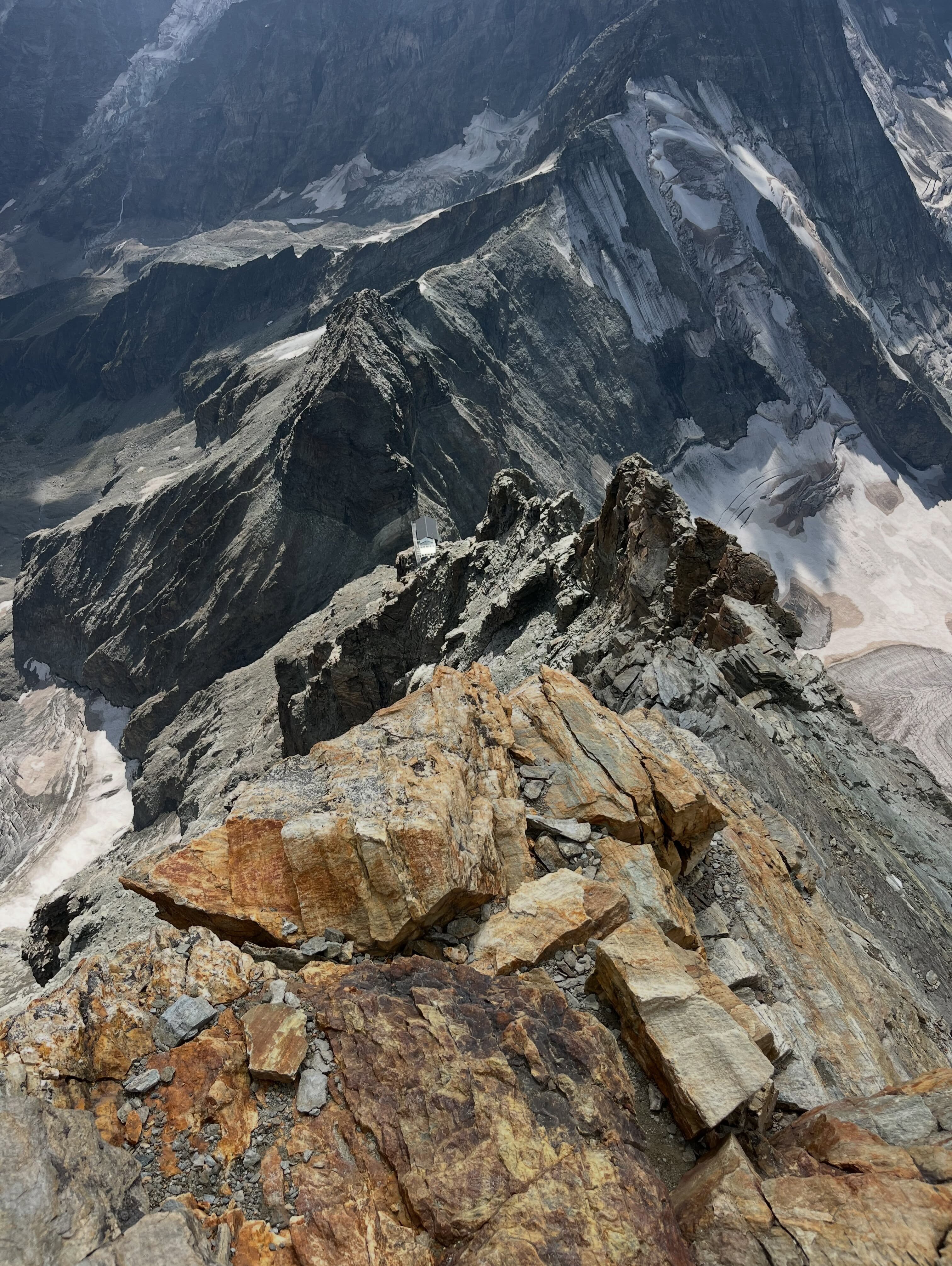
McCrystal had been staying near Cervinia, Italy, as she prepared for a record attempt via the Lion Ridge, the principal Italian route up the Matterhorn. Rising to 4,478 metres, the iconic peak straddles the border between Switzerland and Italy and is renowned for its steep, exposed and technically demanding terrain.
For McCrystal, the planned challenge represented another ambitious chapter in an already impressive mountain-running career. An experienced skyrunner and mountaineer, she has built a reputation for tackling some of the world's most demanding mountain races and routes.
Earlier this year, she won Argentina's 4 Refugios Non-Stop, covering approximately 40 kilometres with 3,350 metres of elevation gain.
Her preparation for the Matterhorn had also included a remarkable solo effort. Just weeks before her disappearance, McCrystal completed a solo ascent and descent of the Matterhorn from Zermatt via Switzerland's Hörnli Ridge in 6:47:33, according to the Fastest Known Time database. Only 10 days later, she competed in Italy's demanding Trofeo Kima skyrunning race.
Her previous experience on the Matterhorn highlights how familiar she was with high-altitude alpine terrain. Athletics Canada describes McCrystal as an experienced skyrunner and mountaineer with extensive knowledge of technical and high-altitude mountain environments. Her planned record attempt was therefore the latest in a series of demanding challenges undertaken at the highest level of mountain running.
Although the dedicated helicopter operation has now been suspended, the search for McCrystal has not completely ended. Mountain guides who regularly climb the Matterhorn are continuing to remain alert for any possible signs, while rescuers are awaiting additional information from police that could potentially lead to a new, more targeted search.
Athletics Canada has also appealed to the media to help raise awareness of McCrystal's disappearance and support the ongoing efforts to locate her.
The news has left the Canadian mountain-running community, as well as many international athletes and supporters who have followed McCrystal's achievements, deeply concerned. Her family is working directly with mountain-rescue services as efforts to determine her whereabouts continue.
At this difficult time, thoughts remain with Kalie McCrystal's family, friends, teammates and everyone involved in the search, with the mountain-running community continuing to hope for answers and her safe return.
by Erick Cheruiyot for My Best Runs.
Login to leave a comment
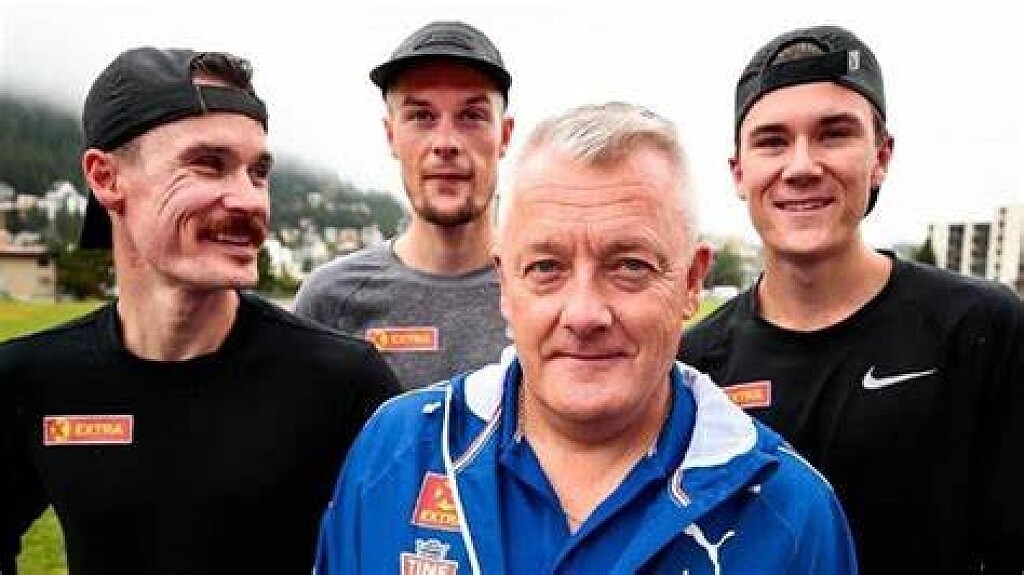
Father of Ingebrigtsen brothers faces charges involving champion Jakob
The father and former coach of Jakob Ingebrigtsen will stand trial next year on charges of alleged physical abuse against the Norwegian two-time Olympic gold medalist, lawyers for Gjert Ingebrigtsen said on Friday.
Norwegian police earlier this year pressed charges against the elder Ingebrigtsen, and his lawyer said in a statement at that time that they involved only one of his children while other charges were dismissed.

The charges will now extend to incidents involving Jakob, 24, who took the gold medal in the 5,000 meters in Paris this summer, his lawyer Mette Yvonne Larsen told Reuters.
"He is now charged with having abused two of his seven kids ... We had expected that this would happen," she said.

Gjert's lawyers, John Christian Elden and Heidi Reisvang, said in a statement: "Gjert Ingebrigtsen maintains what he has said all along, that he does not admit criminal guilt for the offenses he has been charged with and that he has never subjected any of his children to either physical or mental abuse."
Jakob accused his father of several incidents of abuse, according to Norwegian media, including slapping him twice in 2008 and kicking him in the stomach after he fell off a scooter in 2009.
There were also numerous incidents of verbal abuse and threats in 2015 and 2016, according to Jakob, who said in one incident that his father assaulted him for between 15 and 30 minutes.
The Times reported that, according to the indictment, Gjert allegedly threatened to beat Jakob "to death."
Jakob and his brothers, Filip and Henrik, accused their father of physical violence and abusive behavior in a Norwegian newspaper column last year. The elder Ingebrigtsen has repeatedly denied the claims.
Gjert Ingebrigtsen announced in 2022 that he was stepping down as coach not long after Jakob won gold in the 1,500 meters in Tokyo, prompting widespread speculation over their rift.
Jakob Ingebrigtsen finished third in his much-anticipated showdown with Brit Josh Kerr in the 1,500 meters in Paris this summer as American Cole Hocker took an unexpected gold medal. However, Ingebrigtsen did win gold in the 5,000 meters.
by Reuters
Login to leave a comment
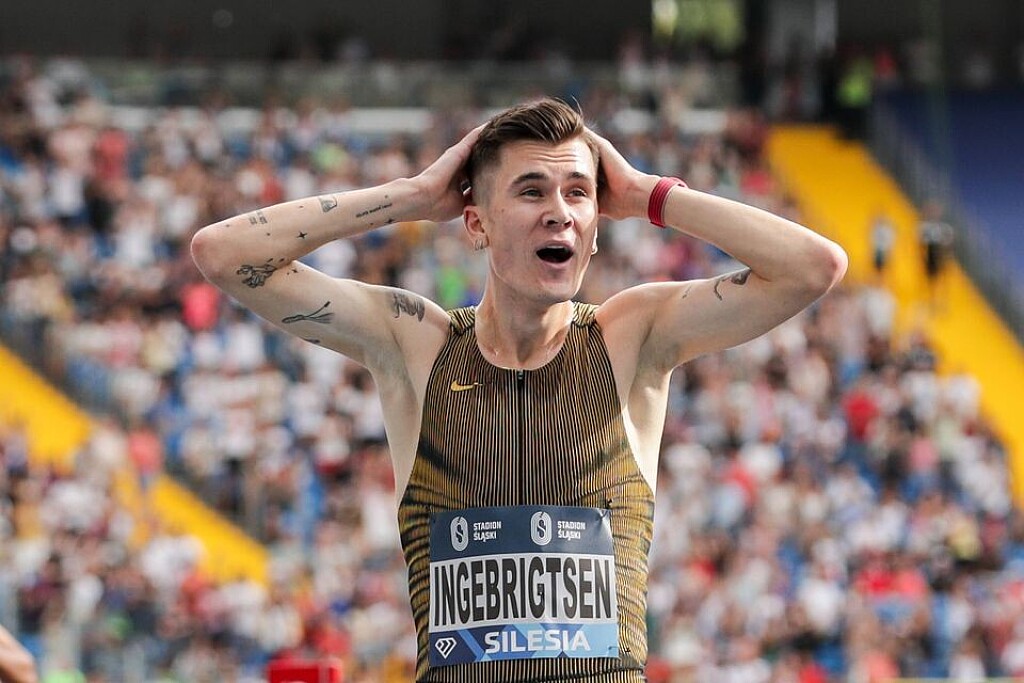
Newly-crowned world record holder in four-hour police interrogation over feud with his father
The Olympics champion, who set a new world record at the weekend, had to endure a long grilling exercise by Norwegian authorities in a case where his father is accused of abuse.
Newly-crowned world 3,000m record holder Jakob Ingebrigtsen was interrogated by police in Norway over a case where his father Gjert Ingebrigtsen has been accused of mistreating his children.

Jakob Ingebrigtsen was grilled for four hours in Stavanger on Wednesday, his lawyer Mette Yvonne Larsen, saying it was in relation to the case of violence against a family member involving his father that took place between 2018 and 2022.
"There has been follow-up of his previous interrogations and timing of events. It has gone very smoothly,” Larsen told Norwegian media.
"Are there plans for new interrogations? Since he has now been in three long interrogations, and that there will be a subsequent reading of these, I do not think it will be relevant to re-examine him.”
When Gjert Ingebrigtsen was charged with mistreatment of one of his children, the police dropped the cases against several of the other children but the decision was overturned following an appeal by Jakob Ingebrigtsen.
The hearings would be postponed until August after the athlete sought ample time to rest and prepare for the Paris 2024 Olympics in July.
He went on to win gold in the 5,000m, after a disappointing fourth place finish in the 1,500m, and announced his intentions of finishing the season strongly by lowering the 3,000m world record at the Silesia Diamond League in Poland last weekend.
The 23-year-old smashed the 3,000m world record of 7:20.67 set by Kenya’s Daniel Komen in 1996, setting a new mark of 7:17.55, in the Polish city.
Gjert Ingebrigtsen, the father and former coach of Jakob Ingebrigtsen, was charged with one count of physical abuse against a family member by Norwegian authorities.
In October 2023, brothers Henrik, Filip and Jakob Ingebrigtsen came forward with claims of physical violence and abusive behavior by their father and former coach, who has denied all the allegations.
by Joel Omotto
Login to leave a comment

Teen sprinter sues Gatorade over doping ban that cost him an Olympic spot
The fastest high school sprinter in history is suing Gatorade, claiming the company gave him a fraudulently certified product that contained a banned substance and led to his four-year banishment from track and field, costing him a chance to compete in the Paris Olympics.
Issam Asinga, the Surinamese teenager who set the under-20 world record in the 100 meters, said that when Gatorade honored him as its high school track and field athlete of the year in July 2023, it provided a gift basket that included Gatorade Recovery Gummies. In a lawsuit filed Wednesday, the 19-year-old Asinga claims those gummies are the reason he later tested positive for the banned substance GW1516, which led to a four-year ban this May and stripped him of his record. The suit further claims the company took measures to protect its reputation, damaging Asinga’s in the process.
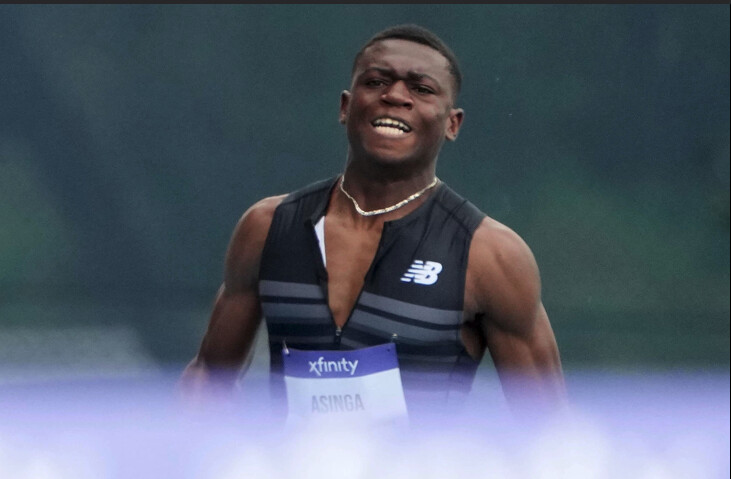
Asinga filed suit in the Southern District of New York against Gatorade and Pepsi Co., its parent company. He is seeking, according to the lawsuit, to “recoup the millions of dollars he has lost in economic opportunities, as well as compensation for the devastating emotional harm he has suffered.”
In an emailed statement, a Gatorade spokesperson said: “The product in question is completely safe and the claims made are false. … Gatorade products are FDA compliant and safe for athlete consumption, which was validated by the findings of the Athletics Integrity Unit investigation.”
Were he eligible, Asinga could have competed for Suriname at the Paris Olympics, earning potentially millions on a sponsorship deal. Instead, he is banned from the Games and lost his endorsement opportunity. The suspension also will prohibit him from training with or competing his college teammates at Texas A&M, and despite support from his coaches, Asinga believes he could lose his scholarship.
“You’re either guilty or you’re not,” Asinga said in a Zoom interview alongside his lawyers. “I know I’m not, so I’ve got to chase my dream. I’ve got two Olympian parents; I was born to run. Am I going to destroy my dream because of something I didn’t do, or am I going to keep fighting until the end?”
‘I was honored when they told me to get tested’
Asinga grew up in Atlanta, went to a St. Louis boarding school, lived a couple of years in his mother’s native Zambia, went to high school in Florida and currently attends Texas A&M. He is the son of track and field Olympians: His mother, Ngozi, competed for Zambia, and his father, Tommy, once served as the flag bearer for Suriname.
By the summer of 2023, Asinga had become one of the world’s most promising track athletes. That April, he stunned the track world by beating world champion Noah Lyles in a 100-meter race in Florida with a wind-aided time of 9.83 seconds.
Asinga chose to compete under the flag of Suriname. In a Zoom interview Wednesday, as he described the effect of his son’s suspension on his home country, Tommy began to cry.
“I felt like I had more of an opportunity to make a difference running for Suriname,” Issam Asinga said. “In Suriname, the one thing that’s holding them back is the facilities. They don’t have someone who can make that difference. I can use whatever I do in my track career to help better this country.”
Gatorade named him its 2023 Florida boys’ track and field player of the year and invited him to a July 11 ceremony in Los Angeles. One month before the ceremony, according to the lawsuit, Asinga took a drug test that came back clean.
“I was honored when they told me to get tested,” Asinga said. “I was like, ‘Okay, bet!’ That’s how I know I’m going somewhere.”
At a gathering the day before the awards ceremony, Gatorade gave Asinga and other athletes a gift bag that included cherry-flavored Gatorade Recovery Gummies. The container was stamped as “NSF Certified for Sport.” NSF is an independent public health organization.
According to the lawsuit, Asinga’s mother texted Issam’s coach, Gerald Phiri, a photo of the ingredient label and asked, “Is this ok to eat[?]”
When Ngozi showed him a picture of the Gatorade logo, Phiri wrote back: “Oh yea these are both fine. Gatorade doesn’t make products that are against sporting rules.”
For the next two weeks, according to the lawsuit, Asinga took two gummies after his workouts. The Athletics Integrity Unit (AIU), the drug-testing arm of World Athletics, tested him again July 18.
Asinga stopped taking the gummies “on or around” July 25, according to the lawsuit. On July 28, Asinga ran the 100 meters in 9.89 seconds at a meet in São Paulo, Brazil. This time, the wind was legal: He had broken the under-20 world record. The AIU tested him again on that day, and that July 28 test would come back clean.
On Aug. 9, 2023, the AIU informed Asinga he had failed the July 18 drug test. Picograms of GW1516 had been detected in his urine. When Asinga received the call, he said, he dropped to his knees in shock.
“It was devastating,” Asinga said. “It was the worst day of my life.”
Known as cardarine, GW1516 was originally developed as a potential treatment for obesity and alters how the body metabolizes fat, according the U.S. Anti-Doping Agency. It is illegal for use in food or medication. The U.S. Anti-Doping Agency notes in its handbook, “athletes should be aware, however, that dietary supplements may be contaminated with this compound.”
Asinga and his lawyer, Paul Greene, who specializes in defending athletes accused of performance-enhancing drug use, compiled a list of foods and supplements he had consumed that could be tested for GW1516. They included the Gatorade gummies.
“We kind of laughed it off,” Asinga said. “It was the last thing I would have thought this source would have been in. This brand is something I’ve looked up to my whole life. Gatorade is a part of sports.”
Asinga sent the gummies to the same lab, according to the lawsuit. On Oct. 26, 2023, according to the lawsuit, the lab notified the AIU that “preliminary findings” concluded the Gatorade gummies had been contaminated with GW1516.
When a company produces a dietary supplement that requires certification, it makes them in numbered lots so each lot can be tracked in case of contamination. By federal regulation, it must keep samples of each lot.
According to the lawsuit, further testing at the Utah lab confirmed not only the GW1516 contamination in the gummies Asinga had supplied; it also showed the same baseline concentration of GW1516 that had been detected in Asinga’s drug test. The chemical codes matched. The lab provided those analytical results to the AIU.
According to the AIU decision, the lab noted “two unusual aspects.” There was a “large discrepancy in the findings between the two containers of the Gatorade Recovery Gummies” and the contamination was present on the surface of the gummy rather than uniformly distributed.
The lab concluded “it was not possible to rule out deliberate adulteration of the product after it was opened,” the decision read.
Asinga’s lawyers said it defies belief that Asinga could have adulterated the gummies.
“All of them would have had to have been dipped individually in a formula that would have been watered to a trillionth of a gram,” Greene said. “An 18-year-old kid living in a dorm would have had to have done that. It’s almost laughable that that’s what he was accused of doing.”
According to the lawsuit, Asinga again contacted Gatorade and requested a sealed bottle from the 22092117150234 lot.
According to the lawsuit, Gatorade instead sent a bottle of recovery gummies to the AIU from a different lot. That lot had been tested by NSF and was accurately labeled as such, according to the lawsuit. The NSF, in a a public notice issued in early June, said the container in Asinga’s case came from an allotment it had not tested.
“They did a bait-and-switch,” said Alexis Chardon, the lawyer representing Asinga in court. “They said, ‘We don’t have a sealed supplement of the one we gave Issam. But we have this other one. Why don’t you take this one?’ That one was NSF tested. And then they let that lie fester.”
“Gatorade fully complied with the Athletics Integrity Unit investigation, including producing evidence that was accepted by the AIU that the gummies were not contaminated with the banned substance in their original ruling,” a Gatorade spokesperson said in an emailed statement.
When the AIU tested the gummies from that container, the results came back clean, according to the lawsuit. Once the AIU received those tests, it handed down its four-year ban to Asinga.
“Gatorade created, fed, and encouraged the false narrative that Issam was given ‘clean’ gummies and therefore Issam had adulterated the ones he got tested,” the lawsuit reads.
Attempting to restore a reputation
On June 14, less than two weeks after the NSF released its public notice about Gatorade, Asinga received what he hoped would be a breakthrough: A representative from the AIU called Greene and told him Gatorade had found and sent a sealed bottle from the same lot as Asinga’s bottle of recovery gummies. If that bottle was tainted with GW1516, it would be pivotal to overturning Asinga’s suspension.
The tests came back negative, according to the lawsuit.
Feeling “confused,” according to the lawsuit, Asinga contacted other athletes from the 2023 awards ceremony and found one who had a similar bottle of recovery gummies. When that bottle was tested for GW1516, according to the lawsuit, it also came back negative.
“For a while, it looked like we dug ourselves in deeper,” Chardon said.
According to the lawsuit, Asinga’s team had one more idea: On June 26, they asked for his original recovery gummies to be retested. They wondered whether the GW1516 had become undetectable over the previous six months.
On July 5, according to the lawsuit, the results came back: The gummies that once had tested positive now returned a negative result.
“Gatorade’s delay had cost Issam the possibility of proving contamination in a sealed container from the same lot he had ingested, robbing him of the possibility of ever meeting the AIU’s gold standard test for showing innocent ingestion of a banned substance,” the lawsuit reads.
In a statement, Gatorade said it “spent those months looking for the specific lot number in the field and, once sourced, immediately provided the product to the AIU.”
Because GW1516 is illegal, Greene said, scant testing has been done on it. Greene is hoping to organize lab tests that can prove GW1516 could become undetectable over the six months. He hopes to use that finding in his Court of Arbitration for Sport appeal later this year.
The lawsuit against Gatorade made Wednesday “one of the first days I can say I’m actually taking a deep breath and let it out a little bit,” Ngozi said. “As a parent, it’s so overwhelming. You never in a million years expect your child to be fighting for his character and his integrity because of something he didn’t do.”
Over the past month, Asinga lost his final glimmer of hope that he could run in the Paris Olympics. He has remained optimistic that he will sprint next year for Texas A&M. He has cried and felt depressed at times. Over the winter, he stopped practicing for several days and wondered whether track was worth it. He still believes he will prevail.
“It hurts,” Asinga said. “There’s been some bad days. The clouds might be over us. But they’re going to have to clear eventually.”
Login to leave a comment
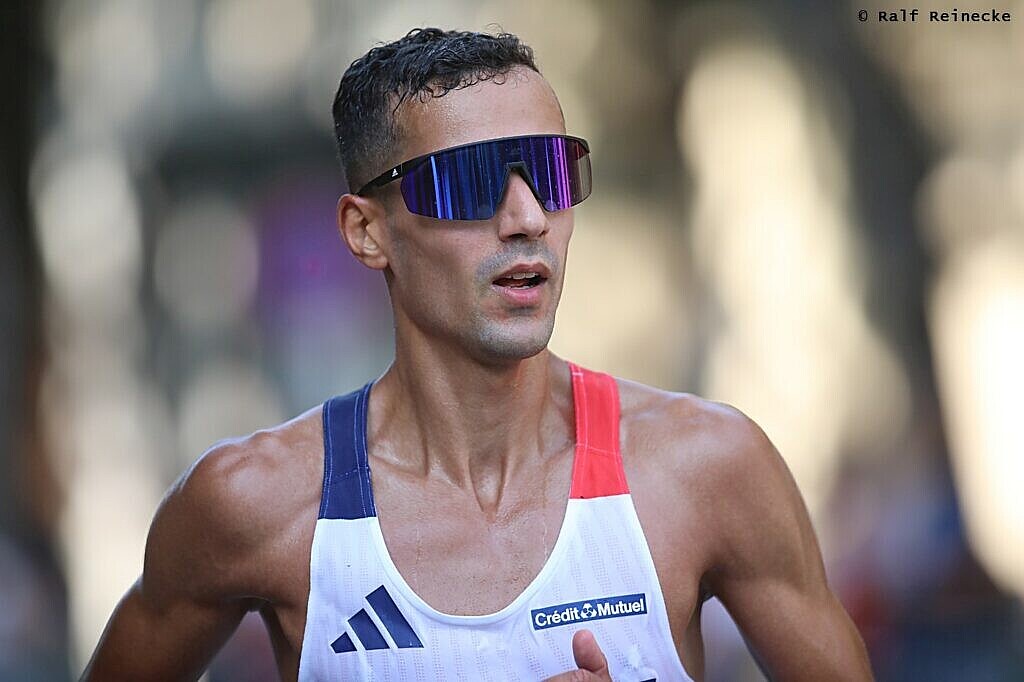
French marathoner named to Olympic team gets two-year doping ban
2:05 marathoner Mehdi Frère has been handed a two-year suspension for missing three doping tests within a year.
French marathon runner Mehdi Frère, recently named to France’s Olympic team for the men’s marathon, has been banned for two years for breaching anti-doping rules, his lawyer told Agence France-Presse (AFP) on Tuesday. Frère’s suspension is due to a whereabouts offence (missing three doping tests within one year).
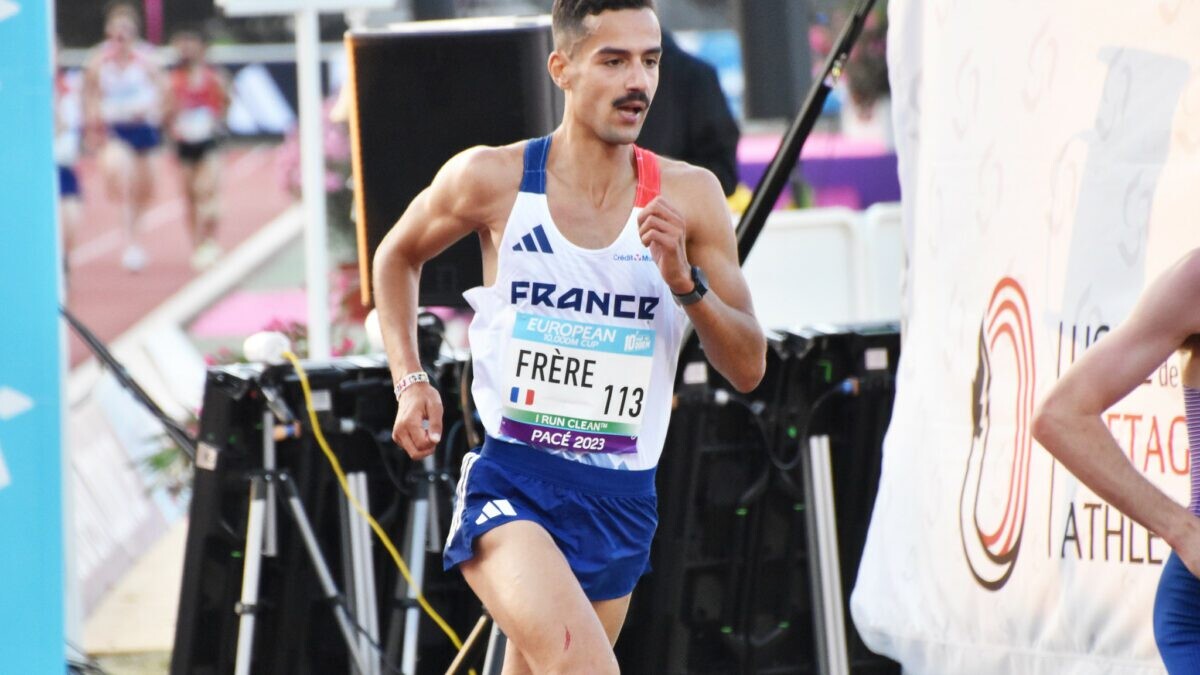
Frère’s personal best of 2:05:43 makes him the second-fastest marathoner in French history and the ninth-fastest European. He set this time at the 2023 Valencia Marathon, where he finished ninth. In May, Frère was named to the French Olympic marathon team alongside Morhad Amdouni and Nicolas Navarro. The Fédération Française d’Athlétisme (FFA) has opted for a conditional selection of Frère (instead of selecting another athlete) during the appeal process.
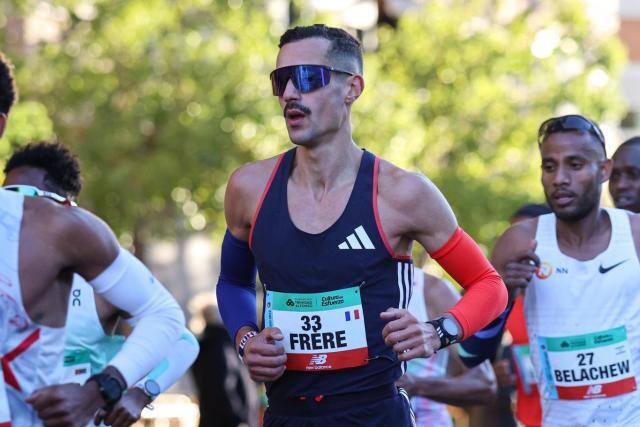
According to the AFP, Frère plans to appeal the ban at the Court of Arbitration for Sport (CAS) and believes a decision before the Olympics is possible. “We’ll be able to refer the matter to the Court of Arbitration for Sport as part of an accelerated procedure, to obtain an arbitration award by July 26, the opening day of the Olympics,” his lawyer told AFP.
During the appeal process, Frère is ineligible to compete, and he could face a longer ban if he loses the appeal. The men’s marathon is scheduled for Aug. 10, the penultimate day of the Paris 2024 calendar.
Frère is the latest recipient of a whereabouts suspension, which has affected some of the most high-profile distance runners this year. Spanish distance runner Mohamed Katir was suspended earlier this year, also for a whereabouts offence. Katir launched an appeal, then admitted to the wrongdoing, accepting a two-year ban–meaning he won’t be competing for his country at the Paris 2024 Olympics.
by Marley Dickison
Login to leave a comment

Paris 2024 Olympic Games
For this historic event, the City of Light is thinking big! Visitors will be able to watch events at top sporting venues in Paris and the Paris region, as well as at emblematic monuments in the capital visited by several millions of tourists each year. The promise of exceptional moments to experience in an exceptional setting! A great way to...
more...
The Issam Asinga Case: Evil Coverup or Did The Fastest High School Sprinter Ever Test Positive For Drugs After Eating Gatorade Gummies?
Six weeks ago, 19-year-old Issam Asinga, the fastest teen sprinter in world history, was handed a four-year ban from the sport of track & field after testing positive for the banned substance GW1516. Asinga’s positive sample came in July 2023, just days before he ran 9.89 seconds to become, at the time, the youngest person in history to break 10 seconds for 100 meters. Asinga, who had been provisionally suspended since August 2023 by the Athletics Integrity Unit (AIU), appealed the decision to the AIU’s disciplinary tribunal, who ruled against him and upheld the four-year suspension on May 27.
Until then, the details of Asinga’s case had been kept secret. Now they are public, and potentially explosive.
Asinga, who maintains his innocence, blamed the positive test on contaminated Gatorade gummies he received at the company’s National Athlete of the Year ceremony in Los Angeles last summer, where he was honored as high school track & field athlete of the year. Asinga has already appealed his case to the Court of Arbitration for Sport, where it is expected to be heard later this year. He is also mulling whether to launch a civil suit against Gatorade because the gummies in question falsely carried an NSF Certified for Sport label, which signified that the product did not contain any prohibited substances. NSF has made a public statement saying the gummies from Asinga’s lot number were not NSF Certified and the NSF Certified mark was being used without authorization.
“They distributed a supplement that wasn’t NSF Certified for Sport that had a banned substance in it,” said Asinga’s lawyer Paul Greene. “That’s violation of product liability law, negligence, implied warranty, New York state consumer protection law. I mean, it’s bad. He had the possibility of getting endorsement and NIL deals that were going to be in the millions of dollars and he lost all that as a result of this. He also lost out on the chance to compete in the World Championships and the Olympics.”
The AIU, however, was not satisfied that the gummies were the source of Asinga’s positive test, and its disciplinary tribunal agreed.

Incredible 2023 high school season
Asinga’s is one of the highest-profile doping cases in recent years. After running personal bests of 10.44 seconds in the 100m and 20.76 in the 200m as a junior in 2022 at Principia High School in Missouri, Asinga transferred to Montverde Academy in Florida for his senior year, where he improved enormously and produced one of the greatest seasons ever by a high school sprinter.
During the 2023 indoor season, Asinga won national high school titles in the 60m (6.59) and 200m (20.48) at New Balance Nationals, tying the national record in the former event (he ran 6.57 in the semis) and breaking the national record in the latter. Outdoors, Asinga ran a wind-aided 9.83 in the 100m to defeat Noah Lyles, who would go on to win the world title in that event four months later. Asinga, who was born in the US but represents Suriname internationally, then ran 19.97 in the 200m in April (#2 all-time among US high schoolers) and 9.89 in July to win the South American 100m title in Sao Paulo, Brazil. The latter time ranked Asinga in a tie for ninth in the world in 2023. It was also a world U20 record and was the first time a US high school athlete had broken the fabled 10-second barrier.
Now that world U20 record has been stripped as Asinga finds him at the center of controversy. The 43-page decision in his case released by the AIU presents only two possible versions of events.
Option A: An 18-year-old was caught doping barely a month after being added to the international testing pool. Then he or someone in his camp tried to cover up his doping by manipulating evidence and defaming Gatorade, one of the world’s largest sports nutrition companies.
Option B: One of the greatest sprint talents in history was unjustly banned after consuming a tainted supplement given to him by one of the most famous brands in sports.
Neither picture is particularly rosy for the sport of track & field, but one of them must be true. After reviewing the evidence, the AIU and its disciplinary tribunal is clear which version it believes: Option A. As a result, Asinga is banned from competition until 2027 barring a successful appeal to CAS.
Background: Asinga enters the testing pool
Most high school track athletes, even elite ones, are rarely drug-tested. But by the spring of 2023, Asinga was running so fast it was becoming clear he could be a factor at that summer’s World Championships in Budapest. He was added to the World Athletics Testing Pool on June 1.
Asinga was tested on June 11 and returned a negative result. He was tested again out-of-competition on July 18 (in his training base of Clermont, Fla.) and again at the South American championships on July 28. The July 18 sample tested positive for GW1516, a banned substance that modifies how the body metabolizes fat and has been found to cause cancer. Specifically, Asinga’s sample tested positive for low levels of two metabolites of GW1516 — a metabolite is a substance produced when the body breaks down a specific drug. In this case, Asinga’s urine contained the GW1516 sulfone metabolite (at a concentration of 0.2 nanograms per milliliter in both his A sample and B sample) and the GW1516 sulfoxide metabolite (at a concentration of 0.5 ng/mL in his A sample and 0.4 ng/mL in his B sample).
On August 9, Asinga was informed of his positive test and provisionally suspended from competition. Shortly after, in an effort to prove his innocence, he began sending his supplements to be tested for contamination at the Sports Medicine Research and Testing Laboratory (SMRTL), a WADA-accredited lab in Salt Lake City. The first supplement Asinga sent, melatonin gummies, tested negative. Asinga then sent a larger set of supplements, including Airborne and Skratch Lab Hydration packets as well as Gatorade Immune Support Gummies and Gatorade Recovery Gummies, two new products he had received at the Gatorade National Athlete of the Year ceremony on July 10.
All of the supplements tested negative for GW1516 except the Gatorade Recovery Gummies. In December, SMRTL informed the AIU that of the five gummies tested, four were positive for GW1516. That much, the parties agree on. From there, the narratives diverge.
Contaminated during manufacturing or as part of a coverup?
Asinga said he began taking the Recovery Gummies shortly after the ceremony on July 10 — initially two per day, then less consistently before traveling to Brazil for the South American championships on July 25. He said he did not take any gummies to Brazil. Asinga declared the gummies as a supplement on the doping control form for his July 18 test and said he had no concerns about the gummies because the container carried the NSF Certified for Sport label.
Greene said the AIU was initially reluctant to share the results of the SMRTL analysis with Asinga because it viewed the test results of products from an opened container as unreliable. (LetsRun.com reached out to the AIU for comment on June 2 but had not received an answer as of publication).
“Normally, SMRTL’s process and the AIU’s process is if there is a preliminary finding in a supplement, they don’t initially just tell the athlete straight away,” Greene said. “They try to go and find their own sealed version and test that too and then go to confirmation testing.”
But neither SMRTL nor the AIU could find a sealed version from the same lot number as Asinga’s gummies. So, after several weeks, the AIU relented and shared the news that the Gatorade Recovery Gummies had tested positive for GW1516. Asinga said he felt he was on his way to clearing his name.
“I was like okay, boom,” Asinga told LetsRun.com. “When I got that message, I was like, okay, finally we’re going to move forward.”
But the AIU did not agree with Asinga’s assessment and hinted at something far more sinister. In the disciplinary tribunal hearing, which took place over Zoom on April 30, Martial Saugy, former director of the WADA-accredited lab in Lausanne, Switzerland, served as an expert witness for the AIU and noted that the exterior of the gummies contained much higher concentrations of GW1516 than the interior of the gummies.
“I cannot see how these results would be consistent with a contamination during the manufacture of the gummies,” Saugy said. “These results point to an adulteration of the gummies at a later stage.”
Another key point: Asinga had opened both containers of gummies before sending them to SMRTL. And in SMRTL’s analysis, it noted a “large discrepancy” between the concentration levels of GW1516 between the containers. The two gummies tested from the first container each featured a concentration of at least 610 ng of GW1516 per gummy. Meanwhile of the three gummies tested from the second container, the highest concentration of GW1516 was 1.5 ng per gummy, and one of the gummies did not test positive for GW1516 at all.
This fact left open the possibility for manipulation; to be satisfied of his innocence, the AIU demanded to see a positive test from a separate, sealed container of gummies from the same lot number as Asinga’s.
Separate lot numbers bring questions
This is where things get complicated. The lot number printed on Asinga’s gummy containers was 22092117150234. NSF has issued a statement saying this lot number was not NSF Certified and the NSF Certified mark was being used without authorization. As part of the case, the Lausanne lab did test a sealed container of Gatorade Recovery Gummies, which tested negative. But that container was from a different lot number — lot 22092117150213, which was one of the lots that did receive NSF certification.
The gummies were not manufactured directly by Gatorade, but rather by a company contracted by Gatorade called Better Nutritionals, who manufactured the gummies for Gatorade at its plant in Gardena, Calif. As part of its case, the AIU called a former Better Nutritionals employee as a witness who testified that, for all intents and purposes, lots 22092117150234 and 22092117150213 were identical. This witness, referred to only as Witness B in the decision, made the following argument:
Witness B said lots 22092117150213 and 22092117150234 were part of the same batch of 20,000 jars’ worth of gummies cooked on the same day. That batch of 20,000 jars was separated into two lots: 7,500 jars (lot 22092117150213) would enter the marketplace immediately without the NSF Certified for Sport logo, of which a few would be sent to NSF for testing. The remaining 12,500 jars (aka lot 22092117150234, which included the gummies Asinga received) would be held back and given the NSF Certified logo predicated on NSF testing on lot 22092117150213.
Before NSF testing had been completed, lot 22092117150213 entered the marketplace without the NSF Certified logo.
By October 4, the 12,500 jars from lot 22092117150234 had been labeled NSF Certified. On October 18, Better Nutritionals received confirmation that lot 22092117150213 had been granted NSF certification, which was confirmed on the NSF website.
As proof that the two lots were part of the same batch, Witness B noted that the first six digits of the lot number, which refer to the cook date, were identical: 220921, or September 21, 2022. Furthermore, Witness B said the seventh digit refers to the specific production line used at the factory. Again, both were the same — 1, referring to the first production line.
Witness B said it would not be feasible to produce two separate batches on the same day, noting that a batch with 20,000 jars’ worth of gummies would take roughly 19 hours to complete with a minimum of eight hours to clean the production line between batches.
Witness B and another witness from Better Nutritionals (Witness A) noted there was no logical source for contamination as GW1516 is not an ingredient of any of the other products manufactured in the Gardena plant.
To simplify: one lot of 7,500 jars (lot 22092117150213) was NSF Certified but did not bear the NSF label. Another lot of 12,500 jars (lot 22092117150234) was not NSF Certified but did bear the NSF label, and that is the lot Asinga’s gummies came from. Better Nutritionals claims the two lots were cooked as one large batch of 20,000 jars, and as a result, the fact that one lot was NSF Certified means that both lots should be considered NSF Certified.
To represent him in his appeal, Asinga hired Greene, the sports lawyer who previously represented Jarrion Lawson, Shelby Houlihan, Peter Bol, and many others in their high-profile doping cases. Greene said he does not buy Witness B’s argument.
“There’s no such thing as two lots of the same,” Greene told LetsRun.com. “They’re not the same. Every lot is separate according to NSF and according to FDA rules.”
After it was informed of Asinga’s positive test by the AIU, the NSF conducted its own investigation and issued the following public notice on June 4:
Gatorade® Immune Support Gummies (citrus; lot number 22091937150233) and Gatorade® Recovery Gummies (cherry; lot number 22092117150234), manufactured by Better Nutritionals LLC, have been found in the public domain bearing the NSF Certified for Sport® Mark without authorization. These specific lot numbers, for these products, have not been tested, evaluated or certified by NSF and are not authorized to use the NSF certification mark or make any claims of NSF certification.
Furthermore, Greene noted that Witness B was terminated for cause by Better Nutritionals in December 2022 — the same month Better Nutritionals filed for bankruptcy.
Asinga asked a representative at Gatorade for a sealed container from lot 22092117150234 — the lot from which Assinga’s gummies came — but was informed that Gatorade Recovery Gummies had been discontinued for “manufacturing reasons” (Witness A said the gummies were discontinued because Better Nutritionals went bankrupt). The AIU and SMRTL also requested sealed containers from the same lot, yet Gatorade/Better Nutritionals only made containers from lot 22092117150213 available. Greene says that makes no sense. If the two lots are identical, Greene argues, why not send one from the same lot number as Asinga’s?
“Somehow they had several sealed versions from the 7,500 lot but nothing from the 12,500 lot,” Greene said. “I find it hard to believe they don’t have anything out there and it was an intentional choice to withhold it. It had to be. Why else wouldn’t they give us one from both? What’s the difference?”
If Gatorade has no sealed version, Greene says, they are in violation of FDA regulations, which state that supplement manufacturers must hold reserve samples from each lot they produce.
by Jonathan Gault
Login to leave a comment
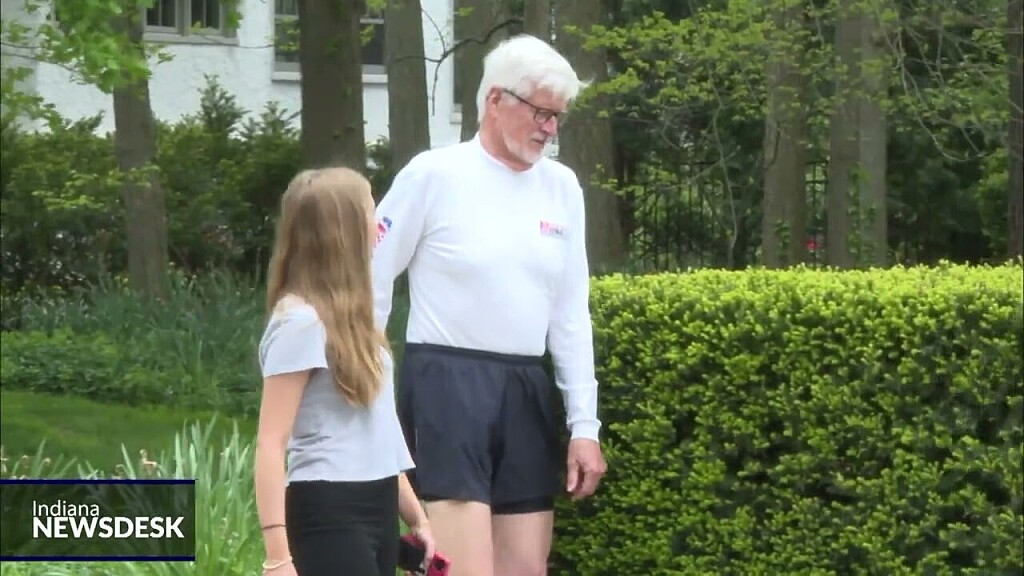
Meet the 85-year-old man who’s run every OneAmerica 500 Festival Mini-Marathon
For most people, running just one marathon is a big achievement.
But for 85-year-old Eugene Lausch, running in his 48th mini-marathon Saturday will be just another accomplishment.
The retired lawyer has run more OneAmerica 500 Festival Mini Marathons than nearly everyone in the field. Of the approximate 200,000 runners, Lausch is one of only six who have participated every year since the marathon’s start in 1977.
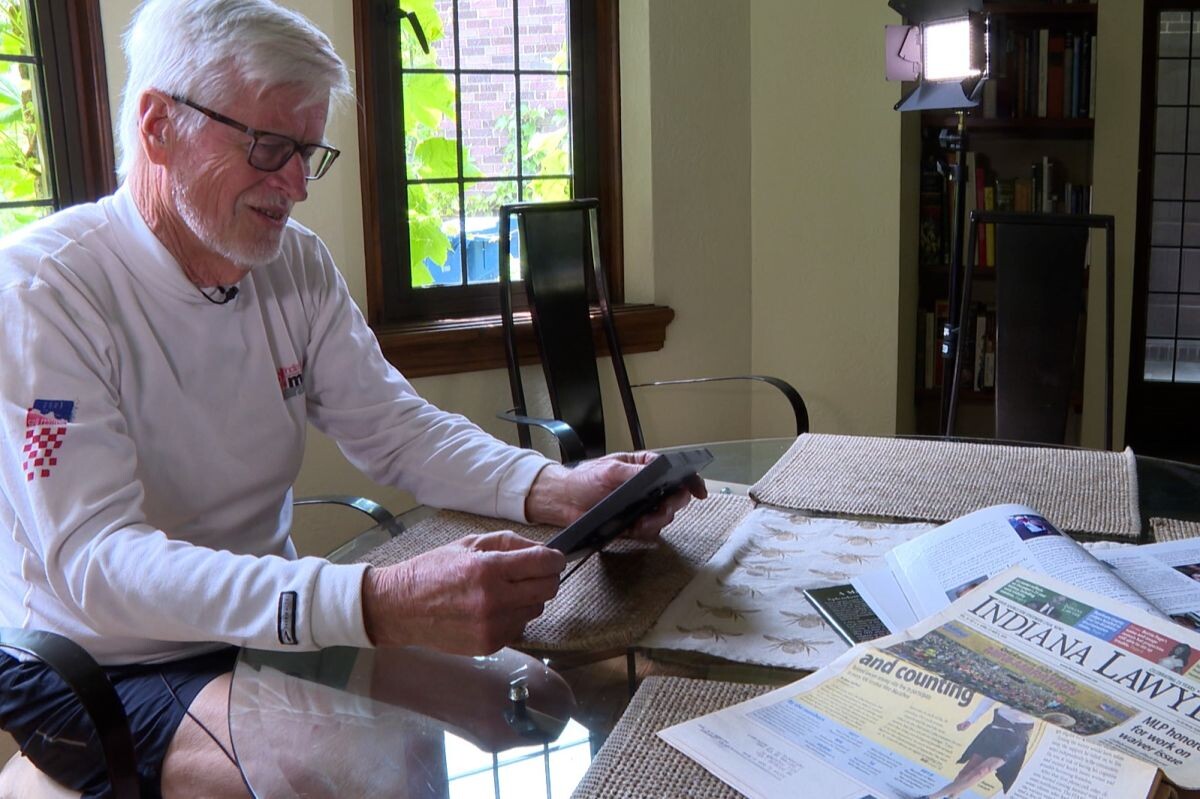
It’s a hobby that came to him almost by accident.
“I desperately wanted to be an athlete when I was a boy and, like every Hoosier lad, I wanted to be a basketball player, but I don't have good hand-eye coordination,” Lausch said.
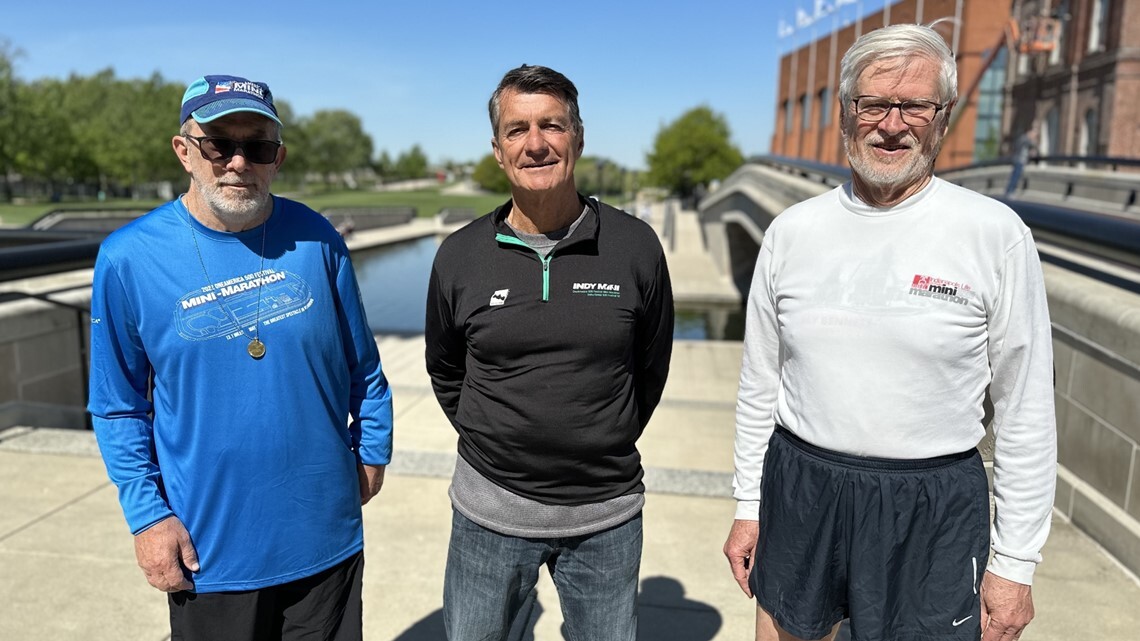
And since basketball requires a great deal of hand-eye coordination, he settled on running.
And, obviously, the hobby has stuck around.
As a student at Indiana Central University, now known as the University of Indianapolis, Lausch ran track. He went on to compete in the Indianapolis-Scarborough Peace Games and later coached track at the St. Richard Episcopal School in Indianapolis.
But his passion for marathons began in 1977, after being inspired by Olympian Frank Shorter. In the early seventies, Shorter became the first American runner in decades to win the Olympic marathon.
“That was an inspiration for a lot of people, including me,” Lausch said.
And 48 years later, he’s still going.
To keep fit, his regime is simple.
“I walk 23 miles a week,” he said. “Also, I do a considerable amount of outside activity and gardening that I think helps keep me fit.”
And even though Lausch is in better shape than most 85-year-olds, it hasn't always been easy.
In 2019, Laush was hit by a car while crossing the street.
“A car, which I never saw, knocked me down and broke my left hip,” Lausch said. “It was determined pretty quickly that my hip was fractured.”
The doctors told Lausch what he was already expecting, that he couldn't participate in the mini-marathon.
His ongoing streak would have been ruined if it were not for community members, including his granddaughter Claudia.
Several of the runners from St. Richard Episcopal School and Claudia pushed Lausch in a homemade cart for a portion of the mini-marathon that year.
“I must say that it's a bummer to have to be hit by a car and have your hip broken, but I was really buoyed up by the outpouring support,” Lausch said. “I think I really figured out what the Mini was all about.
“I don't think I really understood it before that it is less about winning. It's more about taking the assets you have and making the best of your circumstances.”
What was once a disaster turned into one of Lausch’s fondest memories associated with the marathon.
Lausch’s wife, Carolyn, and their two sons used to join him during the marathon. But now, Lausch runs by himself.
“I'm really happy about being able to continue to run, but I ended up not knowing very many people now who run the mini,” he said.
But even though he may not know everyone, people seem to know him. After his accident in 2019, several people came up to him to wish him well, he said.
“That was very heartening. I appreciated it a great deal,” Lausch said.
For now, Lausch will be walking the mini-marathon. He plans to continue to do it until he reaches 50 straight races in 2026.
by Grace Marocco
Login to leave a comment

OneAmerica 500 Festival Mini-Marathon
The mission of the 500 Festival is to produce life-enriching events and programs while celebrating the spirit and legacy of the Indianapolis 500 and fostering positive impact on the city of Indianapolis and state of Indiana. As an organization providing multiple events and programs, many of which are free to attend and impact over 500,000 people annually, our mission to...
more...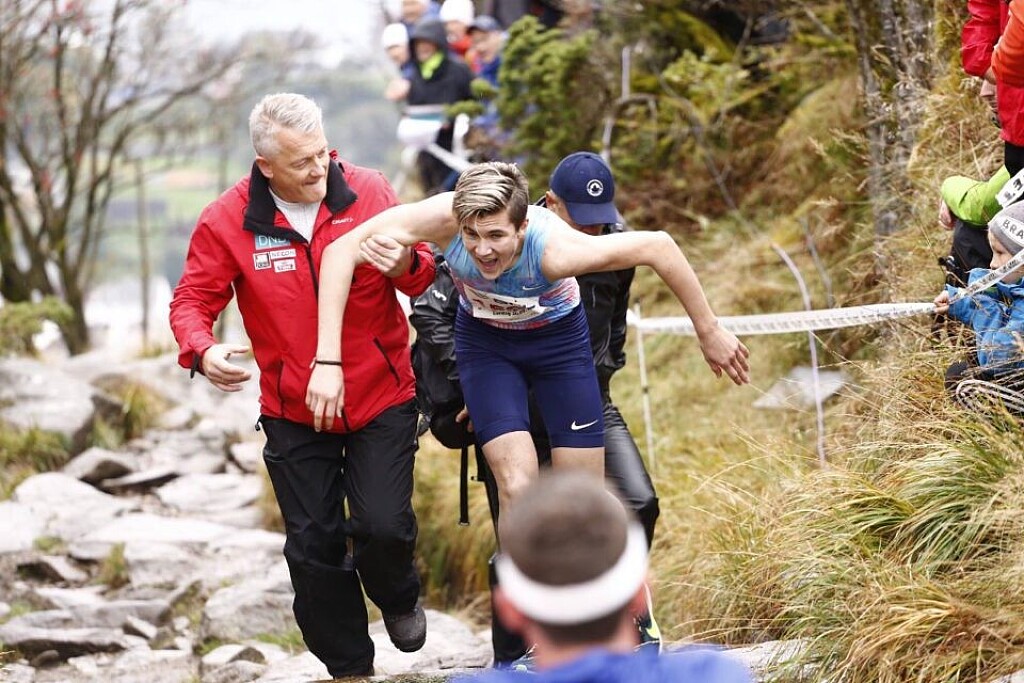
Jakob Ingebrigtsen’s father could face six years in prison for physical abuse
Gjert Ingebrigtsen has been charged by Norwegian police with one count of physical abuse after allegedly hitting one of his seven kids in the face with a wet towel in 2022.
On Monday, Norwegian police announced that Gjert Ingebrigtsen, father and former coach of 1,500m Olympic champion Jakob Ingebrigtsen, faces charges of domestic violence against a family member. Gjert could face up to six years in prison if found guilty.
In October 2023, Jakob, 23, and his older brothers Henrik, 33, and Filip, 31, who are also Olympic-level athletes, told the Norwegian newspaper VG that their father, who had coached them until 2022, had been physically violent.
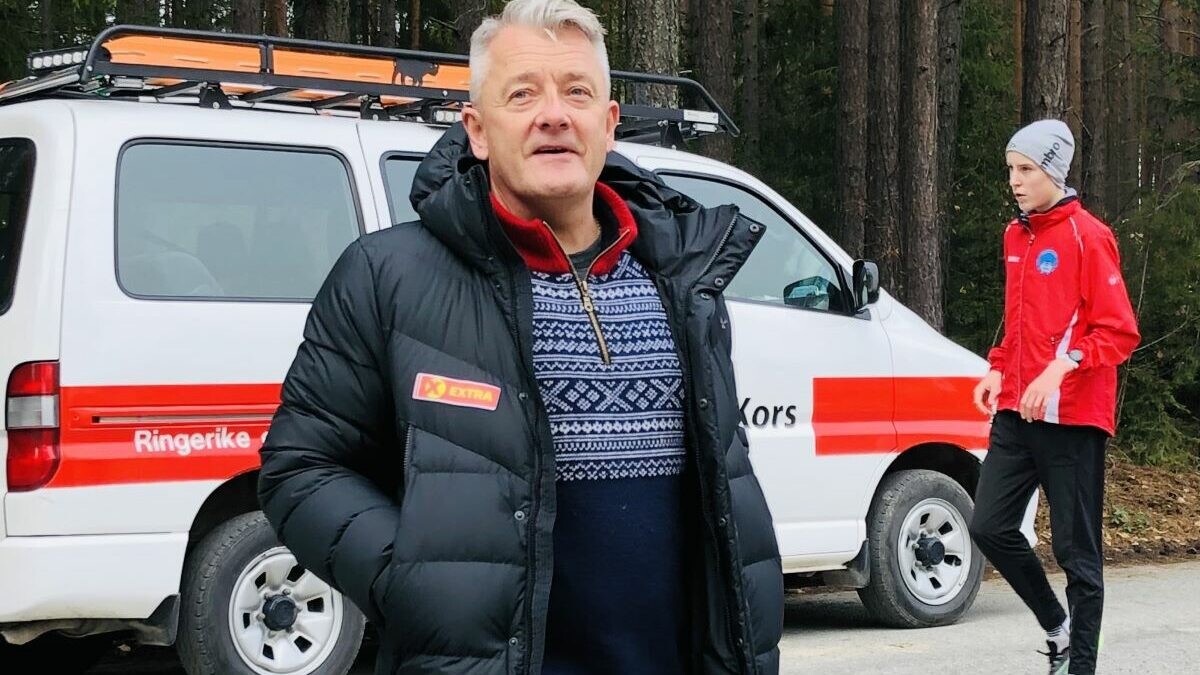
The 58-year-old denied the allegations, but Norwegian police, who had been investigating the case, said on Monday that Gjert had been charged with one count of physical abuse. According to a report in VG, the alleged abuse took place between 2018 and early 2022 and included threats, coercion and hitting one of his seven kids in the face with a wet towel.
Gjert Ingebrigtsen’s lawyer, John Christian Elden, told VG that his client disagrees with the presentation of the events and does not admit any criminal wrongdoing.

The police did not disclose the name of the child to the public. If found guilty, Ingebrigtsen could be facing up to six years in prison. No date for a trial has been set.
Gjert Ingebrigtsen was named the Norwegian sports coach of the year in 2018 after Jakob, Henrik, and Filip all won medals at the European Championships that year. The family had also been the subject of a TV documentary series, “Team Ingebregtsen,” aired by public broadcaster NRK for the five years leading up to the Tokyo Olympics.
Jakob is one of the biggest international stars in track and field, and was coached by his father since he began running. He broke ties with his father in 2022, and has been coached by his brother Henrik since then.
Gjert Ingebrigtsen recently started coaching another Norwegian runner, Narve Gilje Nordås, who won bronze in the men’s 1,500m behind Ingebrigtsen in Budapest. Gjert Ingebrigtsen was told by the Norwegian sports federation that he would not be allowed to be part of the Norwegian coaching staff at the 2024 Paris Olympics. He was also denied accreditation for the 2023 World Athletics Championships in Budapest, where Jakob won gold in the 5,000m and silver in the men’s 1,500m.
by Marley Dickinson
Login to leave a comment
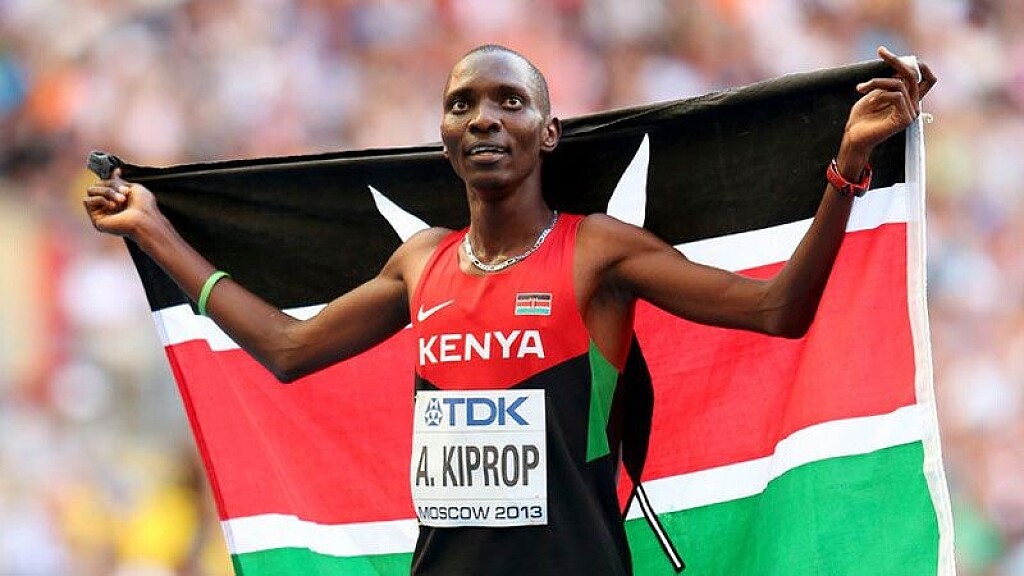
Adamant Asbel Kiprop proclaims innocence six years after doping furore
More than five years later, Olympic champion Asbel Kiprop still insists on his innocence and he strongly believes he was framed.
More than five years later, three-time World champion Asbel Kiprop still insists that he is innocent and did not deserve to be banned for a doping offense.
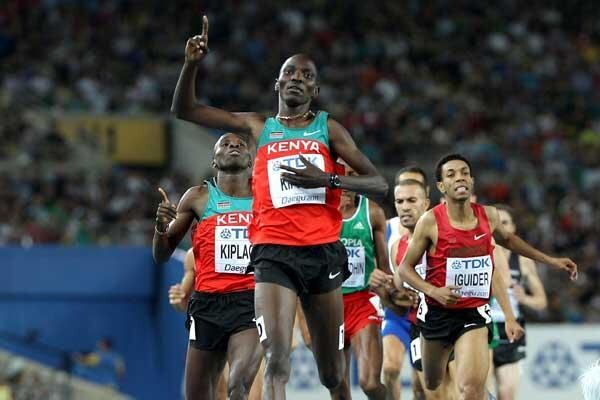
Kiprop shared on his Facebook page, lamenting about the turn of events that saw him land on the wrong side of the Athletics Integrity Unit.
He wrote: “In 2017 Alone I was Tested 19 Times; 3 times in the week of November, that beget a Mysterious AAF of 27th November.”

Meanwhile, the 2008 Olympic champion was handed a four-year ban by the AIU after he tested positive for EPO in an out-of-competition test in Kenya in November 2017. Kiprop's suspension was backdated to February 3, 2018, when he was provisionally suspended.
Kiprop fought for his freedom since he explained that he was innocent. On April 12, 2018, Kiprop’s lawyer posted a statement on Facebook that noted that the positive test resulted from a contaminated sample or was flawed.
Since the time of the ban, Kiprop has been vocal about his innocence and insisted that he did not commit any doping offense.
"The decision is not only a blow to me, but it is not good for the sport of athletics. I have been insisting that I did not dope.
"I will continue to maintain my innocence, even if this decision now means I will not be eligible to run again for the next four years,” Kiprop told AFP.
In his defense, Kiprop told investigators that he was provided with advanced notice about the drug test ahead and later made a payment to doping control officials.
It was determined that the advanced notice and the payment did not cause the adverse analytical finding of EPO in Kiprop's drug sample.
by Abigael Wuafula
Login to leave a comment
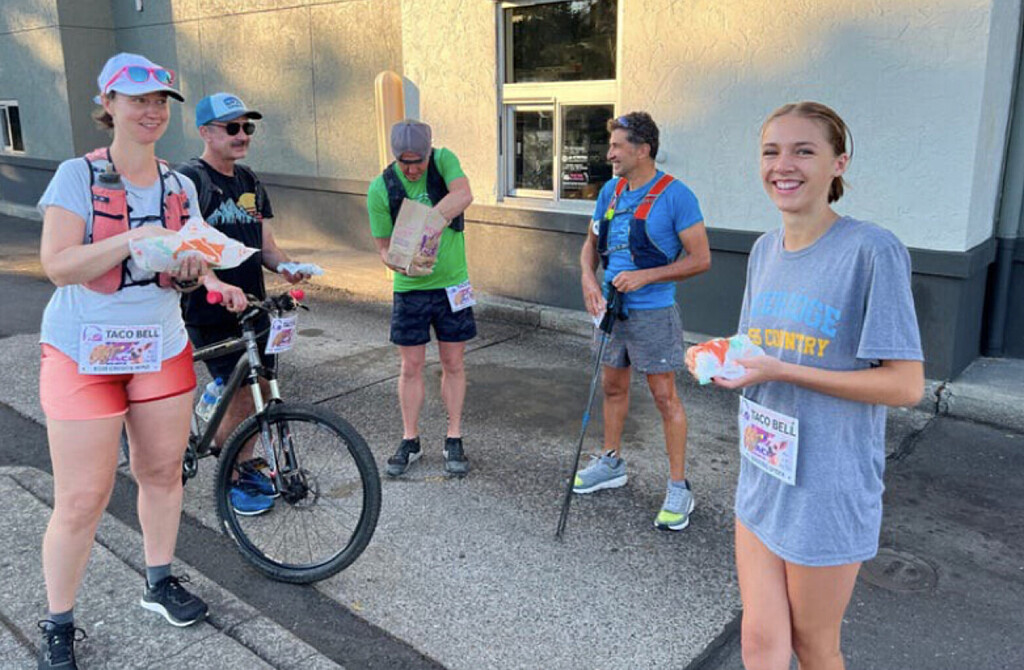
The ‘Taco Bell 50K’ Requires Strong Legs—and a Stronger Stomach
Every fall, a group of Denver runners celebrates National Taco Day by running 31 miles using the fast food Mexican chain as aid stations
Imagine you’re 12 miles into a running race and you arrive at an aid station, where, instead of refueling with energy gels, you’re required to eat a 540-calorie Taco Bell Crunchwrap Supreme.
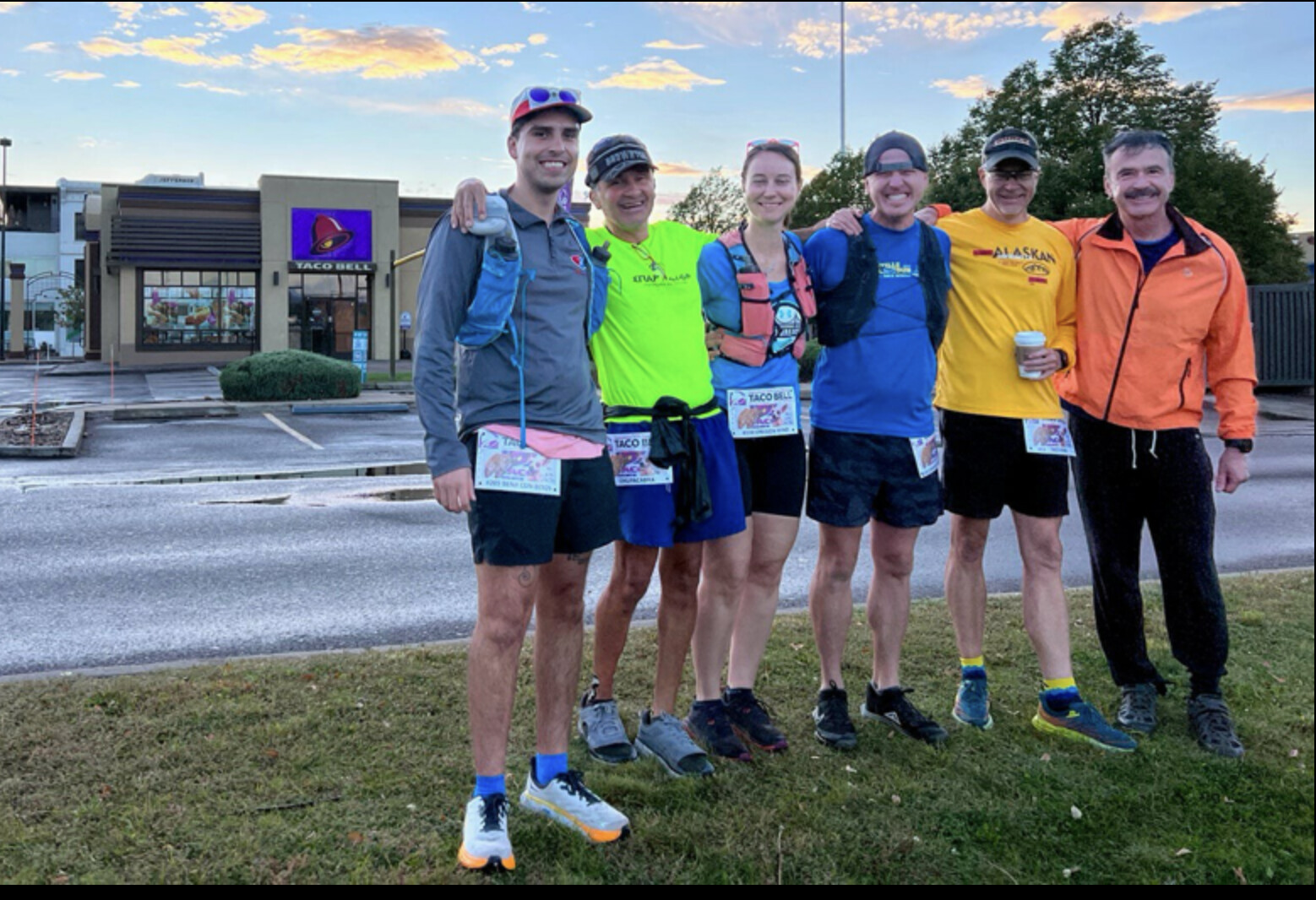
Yes, that’s one of the mid-race snacks you’ll need to consume if you want to be an official finisher of a bizarre and spirited, 31-mile run through the greater Denver area.
Welcome, if you dare, to the annual Taco Bell 50K Ultramarathon.
What started as an offhand suggestion on a Saturday morning training run has now become a stupid and fun gastro-intensive ultra-distance event with 10 “aid station” stops at various Taco Bell restaurants. But, as silly as it seems, it’s all about sharing the community of running, says founder Dan Zolnikov.
Held every October for the past six years, and loosely coinciding with National Taco Day (yes, that’s a thing), it’s an unconventional and entirely unsanctioned fun run that has several ridiculous rules—a.k.a. the semi-optional Taco Bell 50K Commandments that are printed on the back of the event’s race bibs—including the need to eat something from the Taco Bell menu at every stop.
While that could mean consuming something small at most of the restaurant visits—like, say, an order of Nacho Fries or Cinnamon Twists—the fourth and eighth aid stations demand a higher level of gastrointestinal fortitude. At those stops, participants must opt for one of the larger and more calorie-intensive “Supreme” menu items, such as a Crunchwrap Supreme, Burrito Supreme, or Nacho Cheese Doritos Locos Tacos Supreme.
“I always tell people it’s fun until the fourth stop,” says Zolnikov, a Denver lawyer and avid ultrarunner who started the event in 2018. “Most of those that are new to it are like, ‘Wait, I’ve gotta eat a Chalupa Supreme or a Crunchwrap Supreme and then keep running for almost 20 more miles?’ And we laugh and say, ‘Yep! That’s what we do.’ Honestly, that’s when a lot of people are like, ‘I think I’m just going to go home.’”
Running the Taco Bell 50K is what many ultrarunners call out-of-the-ordinary Type 2 fun—something that conceptually sounds fun before and afterwards, but in actuality is not quite that fun while it’s happening. But word has gotten out and it’s been compelling enough to have grown to a record 40 participants this year. There’s no entry fee, but each runner is expected to pay for their own food.
While the Taco Bell chain of 7,000 Mexican-themed fast food restaurants isn’t a sponsor of the event—and the event organizers explicitly remind participants of that—a Denver-based Taco Bell franchise group agreed to open one of its locations early this year to accommodate the 7 A.M. start and welcome runners with free breakfast burritos, thanks, in part, to the persistent prodding of Jason Romero, one of the event’s original instigators.
Not just a zany group run, the Taco Bell 50K is rooted in ultrarunning lore and takes cues from some of the country’s most famous races. Not only does the course alternate between clockwise and counterclockwise every other year—a la Colorado’s Hardrock 100—it also requires runners to keep their Taco Bell food wrappers as an ode to how runners need to tear a page out of hidden books on the Barkleys Marathon course.
While Leadville 100 luminary Ken Chlouber has famously motivated runners for 40 years by saying “You’re better than you think you are, you can do more than you think you can,” Romero says the motto of the Taco Bell 50K is that “you’re hungrier than you think you are, and you can eat more than you think you can.”
How does a convoluted event like the Taco Bell 50K get started in the first place? At a farmer’s market, of course.
During long Saturday morning training runs in the spring of 2016, Zolnikov and running buddy Mike Oliva developed a habit of refueling by eating fresh, Colorado-grown or locally crafted food at Denver farmer’s markets. On one run, Oliva randomly stopped to use a bathroom at a Taco Bell and suggested to Zolnikov they should consider changing their route the next weekend and make Taco Bells their impromptu aid stations.
“As soon as he said it, we laughed but then there was this awkward, five-minute silence between the two of us,” Zolnikov recalls. “We were just kind of jogging along and not really saying anything, but he said it so it was out there. I think we realized it was a stupid idea, but, as ultrarunners, we kind of wanted to do it. So I asked him, ‘Do you want to do that next week?’ And he was like, ‘No dude, just forget I said anything. Let’s just forget it.’”
Although the idea never conjured up mouth-watering excitement, the odd craving to do it never went away. The banter about the idea continued on their Denver running Facebook group, as well as at weekly training runs of the Denver chapter of Achilles International, a running club in which runners with disabilities are guided on weekly training runs and weekend races.
Oliva started that group in 2013, and it has met for weekly runs at Denver’s Washington Park every Monday night for the past 10 years, developing an easy-going camaraderie between guides and runners.
“This talk about running to Taco Bells went on for about two years, and finally I got sick of hearing the trash talk, and just said, ‘That’s it, we’re doing it,” says Romero, 53, a regular Achilles runner who is legally blind. “And as soon as I said it, it kind of got silent. But I’m not about talking, I’m about doing. So I said, ‘You put together a course and we’re going to do this.”
Within a few days Zolnikov had plotted out a course using Google Maps and Strava, connecting nine Taco Bells in the Denver metropolitan area in a 31.52-mile loop. (To make it an even 10 aid stations, the event starts and finishes at the same Taco Bell on the southwest side of the city.) And then, a few weeks later, in October 2018, seven courageous runners gave it a go and five finished in about seven and a half hours. (The other two tapped out, waving the white napkin of surrender midway through the route.)
Although it was mostly a celebratory season-ending fun run among a core group of friends for the first few years, it has garnered more interest as word of mouth spread. A few of the Achilles runners have joined in the fun every year.
“It’s not a glamorous route,” says Ben Garrett, who took over as race director after running the Taco Bell 50K for the first time in 2022. “It’s kind of what you’d call an urban ultra through the ‘scenic’ parts of Denver.”
Garrett, a 25-year-old structural engineer, was training for his first marathon when he was cajoled into joining the Taco Bell 50K—despite never having run more than 16 miles. He joined willingly and finished, giving him a boost of confidence heading into the Disney World Marathon three months later.
“It was great to know I could run that far before my marathon, especially knowing I had a stomach of steel after that,” Garrett says with a laugh. “But it also inspired me to run more. After my first marathon, I did another marathon and then a couple of 50Ks. Now I’m hooked for life.”
There are no winners, and there are no prizes. Instead over the years, runners have piled on extra gastrointestinal challenges for extra satiation.
There’s the Baja Blast Challenge, which entails only imbibing two liters of Mountain Dew Baja Blast during the run, and then there’s the Diablo Challenge, which consists of oozing a packet of Taco Bell’s next-level hot and spicy Diablo Sauce on every single food item throughout the run. (By the way, two of the more precarious event rules state that no Pepto Bismal, Alka Seltzer, Pepcid AC or Mylanta will be allowed on the course, and the bathroom stops are only allowed at the Taco Bell restaurants.)
As if consuming 1,500 calories during the run wasn’t enough, some runners have added their own challenges—such as devouring a Voodoo Doughnut during the middle of it—and many runners engage in the Diablo Shooter Challenge, which is simply sucking down a packet of the restaurant’s fiery hot sauce to conclude the run. But to be fair, one of the forgiving commandments is the notion that every runner can take a mulligan and skip eating at one of the stops.
“It’s just meant to be a fun run,” says Denver runner Bill Garner, who has participated in five of the six Taco Bell 50Ks. “It’s the one ultra where you’re just really out there for the camaraderie. I don’t really feel like anybody’s racing, although I’m sure somebody’s going to show up one year and try to run it all-out. But for most of us, it’s a big camaraderie run.”
It is mostly about the community spirit that pervades running, but for Garner, the Taco Bell 50K inspired him to run farther and pursue new running goals. Prior to participating in the first event in 2018, the 53-year-old cybersecurity technology specialist and strict vegetarian primarily ran marathons and half marathons on the roads. Since then, his focus has become ultra-distance races on trails, and believe it or not, he typically relies on cold Taco Bell bean-and-cheese burritos in his aid station resupplies.
“It’s the perfect ultra fuel,” says Garner, who consumed numerous Taco Bell delicacies enroute to finishing the Kansas Rails to Trails 100-miler in 2019.
“I thought these ultrarunners were crazy, and I jumped into this because it was crazy, but then it changed my life,” he says. “I had never run an ultramarathon before I did the Taco Bell run, and I definitely learned that, if you just keep eating, you can keep going. That’s what ultras are all about.”
A few years ago, Portland, Oregon, runner Bobi Jo Ousnamer befriended several Colorado runners in an online forum while training for the Pikes Peak Marathon. They told her about the Taco Bell 50K and asked her to come out and run it in 2019, but she couldn’t fit it into her schedule because she was training for her first 100-miler.
However, she made it out for the 2020 edition, amid the Covid-19 pandemic. (That year, a small group of runners ran through Taco Bell drive-thrus to order their food because the inside dining areas weren’t open.) During the run, she admitted she had devised her own Taco Bell 50K course in Portland. That immediately sparked interest in doing Denver and Portland events on back-to-back days, which they finally pulled off in 2022 on the day of the Portland Marathon.
That event included stops at seven Taco Bells and a marathon aid station a friend organized on her front lawn, where they devoured homemade breakfast tacos. Calling it the Double Deuce Challenge, it included 62 miles and 18 taco stops in two cities in less than 36 hours.
“I made the mistake of mentioning to Jason Romero that I had created a Portland course and he was like, ‘Oh my God, we’re doing a double!’” says Ousnamer, 34, who works as a juvenile public defender in Portland. “So for the fifth anniversary, he announced that we’d be doing this double. I think we all thought he was kind of joking, but as the months went on, he was like, ‘All right, I’ve got a plane ticket so we’re doing this.’ The Taco Bells are not as close together as the Denver ones and it’s hillier in Portland, so it was a bit of a bigger challenge. We were definitely feeling it on day two.”
Although the Taco Bell 50K has always meant to have been a low-key, end-of-the-season celebration for local runners, it’s continued to gain notoriety and to push the envelope of what’s possible. Runners in Texas and New Jersey have reached out about developing something similar, as have a couple of running clubs in Europe. Although the event details were typically only posted on Facebook when Zolnikov managed it, Garrett upped its visibility and inclusivity by developing an informational website with a link to the Strava map of the course.
Will the Taco Bell 50K continue to grow?
“Honestly, I never wanted to see it start to begin with, but it’s kind of turned into this force of nature that’s bigger than me and bigger than Jason, and it’s become its own thing now,” Zolnikov says. “People can use it for whatever they want it to be, and if someone wants to get bragging rights for racing through it as fast as they can, go for it. My thing has always been about getting together and running, and, OK, ‘Let’s do this kind of dumb thing, and let’s have fun doing it.”
by Outside Online
Login to leave a comment
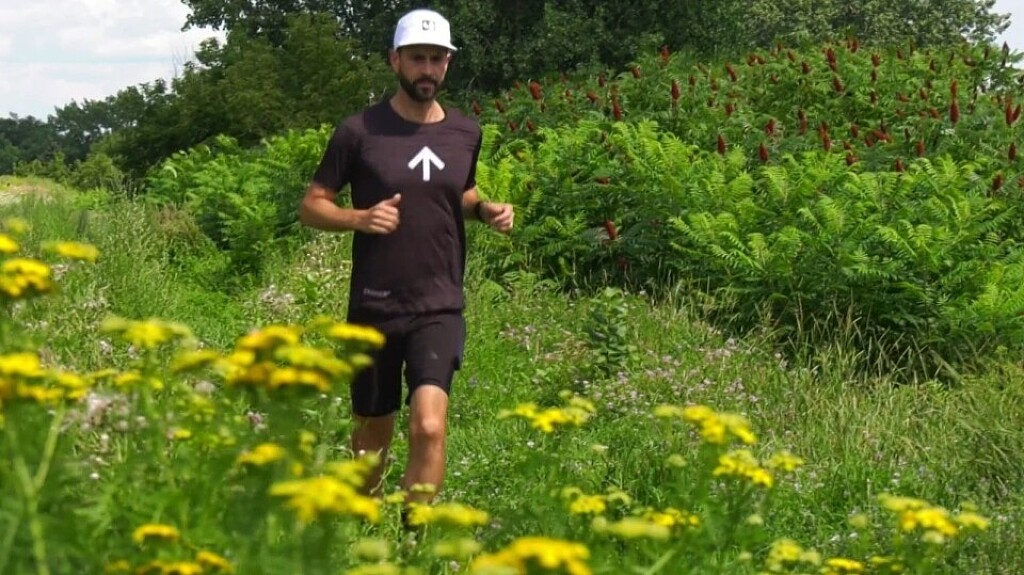
Montreal runner Anthony Battah completes 4,500-km trek to Mexico along monarch butterfly migration path
After three months of meeting fierce challenges and even fiercer supporters while running in three countries, Anthony Battah on Wednesday completed his 4,500-kilometer trek from his hometown of Montreal to central Mexico, a journey mapped out along the migratory path of the monarch butterfly that helped bring attention to the endangered pollinators’ plight.
Battah, a 39-year-old ultrarunner and a lawyer by trade, is celebrating the end of his journey in Mexico’s Michoacán region, home to the Monarch Butterfly Biosphere Reserve where the insects spend the winter after migrating from Canada along the eastern United States.

Setting out from Montreal’s Insectarium on July 29, Battah covered an average of 50 km a day to successfully reach his goal of arriving at his planned destination by Nov. 1. He was supported in his effort—which he dubbed the Ultra-Trail Monarch (UTM) project—by his wife, Nancy Lapointe, and their daughter Laurance, who followed Battah in an RV.
Safely meeting his mileage target and destination meant the family had to revise the route of the Mexico portion of his run, however. In an Instagram post from St. Antonio, near the Mexican border, on Oct. 14, Battah wrote that, in recent weeks, he and his wife had “been waved too many red flags. Our initial plan to run from the US-Mexican border to Michoacán is currently too risky for our family’s safety. These warnings are coming from all sides, most notably from people & organizations in or closely related to Mexico.
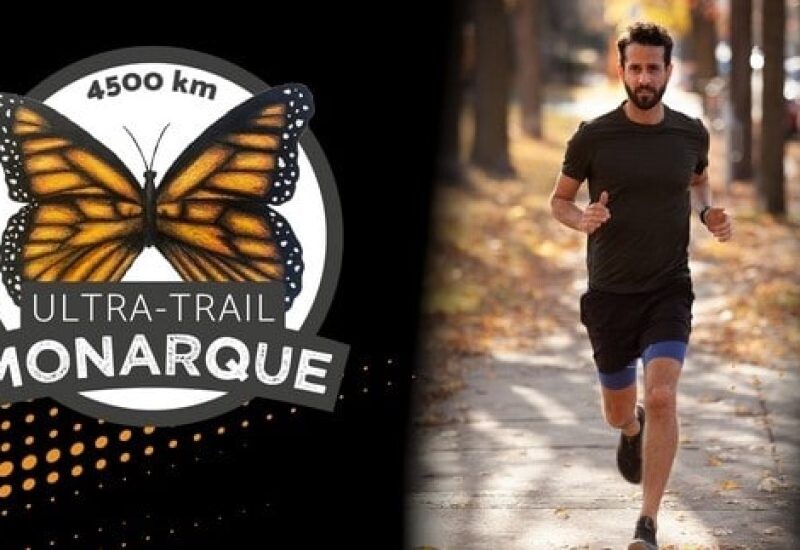
“With regret, and immense respect for the Mexican people, we have cooked up a plan B that will allow us to accomplish our objective: run crazy distances, in all 3 North American countries, in order to attract attention and in turn raise awareness to the importance of protecting our planet and its biodiversity,” he added.
“Plan B” saw the family fly to Mexico City, where Battah continued to run daily ultra distances for two weeks before making the final four-day push into the Michoacán region.
In addition to receiving warm welcomes from local well-wishers in the final kilometers of his journey, Battah also received fierce support from local law enforcement during the run’s home stretch. On the eve of his finish, Battah posted a video on Instagram showing two armed officers running alongside him, and police vehicle escorts clearing their way.
“I was expecting some assistance, but this is next level,” he wrote. “The communities are so generous, making sure the UTM finishes on a high note! Muchas Gracias.” Chimed one commenter: “They take the protection of monarchs in Mexico seriously!”
During his 96-day run , Battah planted milkweed and flowers rich in nectar to create “aid stations” for future generations of monarch butterflies, and encouraged supporters to do the same. Through the Ultra-Trail Monarch project, he hopes to raise $4.5 million—or $1 per meter he ran—to “help serious organizations dedicated to protecting the monarch and biodiversity.”
“I want us to do something significant to protect biodiversity and the environment,” Battah told the Montreal Gazette before beginning his journey. “If I’m capable of running 4,500 kilometers to reach the center of Mexico, surely everyone has the capacity to join forces and do a little bit more.”
The monarch butterfly is now classified as an endangered species by the Committee on the Status of Endangered Wildlife in Canada. According to The Nature Conservancy, the insect is an important pollinator that plays a vital role in the health of many ecosystems across North America.
by Paul Baswick
Login to leave a comment

Ingebrigtsen brothers speak out against their father and former coach
The Ingebrigtsen brothers have been involved in a long-standing conflict with their father and former coach, Gjert Ingebrigtsen. Earlier this week, the tension reached a high point when the Norwegian Athletics Association denied Gjert accreditation for major championships in the upcoming year, including the World Indoor Athletics Championships and the Paris Olympics.
Last year, the brothers revealed that Gjert would no longer coach his sons, Jakob, Filip and Henrik, for health reasons. Later it came out that Gjert was not granted accreditation at the 2023 World Championships in Budapest and did not attend Jakob’s wedding in September, and Norwegian media dove into the feud.
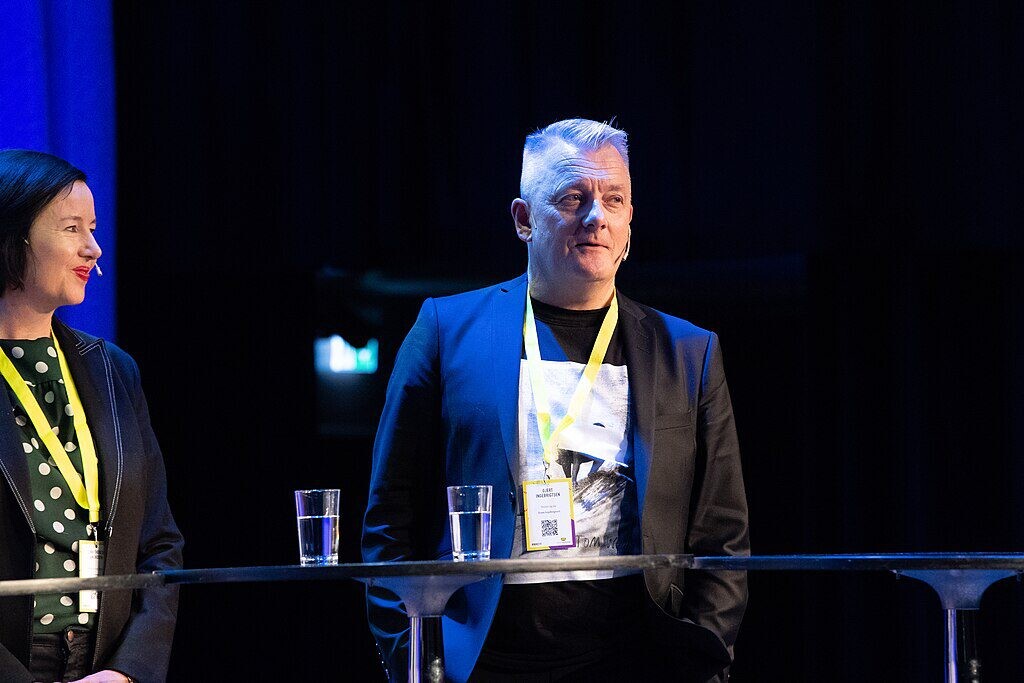
The Ingebrigtsen brothers have been involved in a long-standing conflict with their father and former coach, Gjert Ingebrigtsen. Earlier this week, the tension reached a high point when the Norwegian Athletics Association denied Gjert accreditation for major championships in the upcoming year, including the World Indoor Athletics Championships and the Paris Olympics.
Last year, the brothers revealed that Gjert would no longer coach his sons, Jakob, Filip and Henrik, for health reasons. Later it came out that Gjert was not granted accreditation at the 2023 World Championships in Budapest and did not attend Jakob’s wedding in September, and Norwegian media dove into the feud.
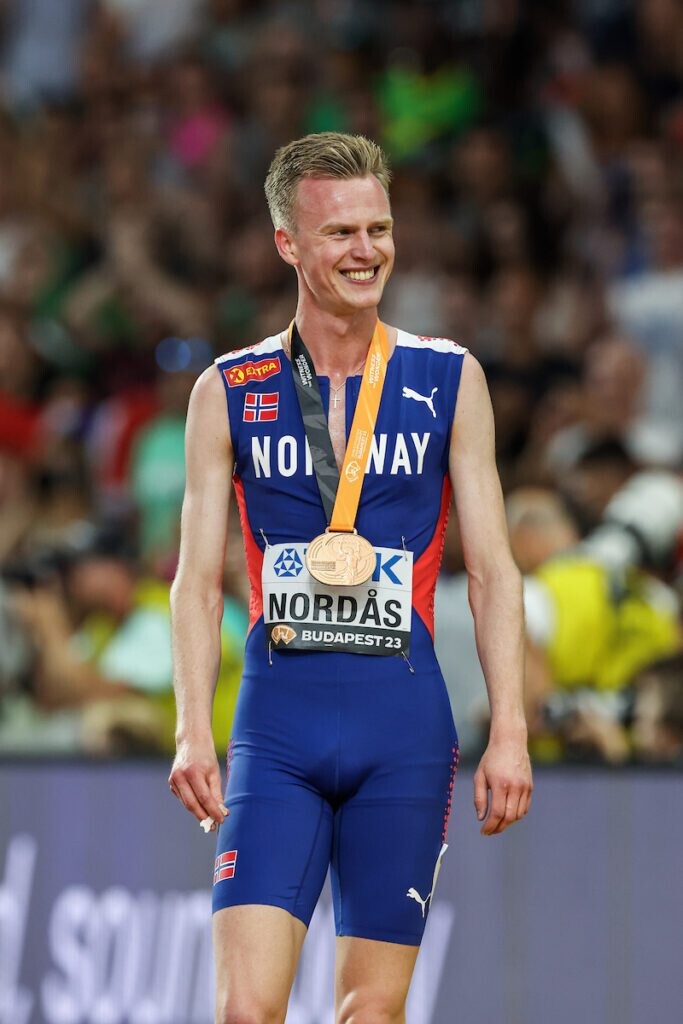
“We should have helped stop the situation earlier,” the brothers wrote on VG. “The fact that we didn’t weighs on us. Two years ago, we had enough. The situation we have been through in the family has taken an enormous toll. In the midst of this, we have tried to perform, but the joy of playing sports is gone.”
The brothers asked the Norwegian Athletics Association for safety from Gjert and not to be put in situations where they may see or have to face their father. “We do not have the capacity or desire to deal with him. Not now,” said Henrik.
“On the basis of Jakob, Philip and Henrik’s statements today, we promise to provide a safe environment and a healthy performance environment for our athletes,” the Norwegian Athletics Federation wrote in a response to their statement.
Gjert is still very much associated with Norwegian athletics as the coach of high-profile middle-distance runner Narve Gilje Nordås, who won bronze in the men’s 1,500m at the world championships in Budapest, finishing on the heels of his compatriot, Jakob Ingebrigtsen, and the new world champion, Great Britain’s Josh Kerr.
Gjert responded to these claims through his lawyer on Thursday, denying the allegations of violence:
“The statements they make are baseless. I have never used violence against my children. That I have had weaknesses as a father, and to a great extent been a coach, is a realization I have also come to – albeit far too late.
“I’m far from perfect as a father and husband, but I’m not violent. First and foremost, this is a tragic situation for my family–we have reached the point where we are spreading false accusations against each other in the media. It makes me deeply unhappy. How we’re going to get past this, I don’t know, but we’ve got to try.”
The brothers concluded their statement by saying that they want to get back to the joy of playing sports and representing Norway “with the flag on their chest” without the shadow of their family conflict. “There are many people who want to talk to us about this matter. We don’t want that. This case has cost too much already, and now we want to move on,” they wrote.
by Marley Dickinson
Login to leave a comment
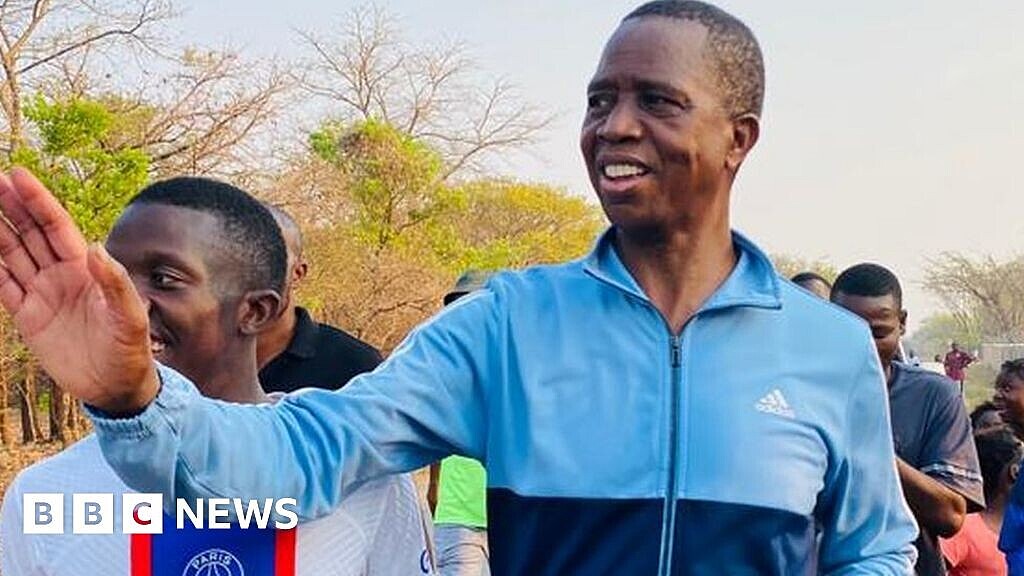
Police in Zambia ban former president from running in public
Police in Zambia have warned ex-president Edgar Lungu against going for runs in public, telling the former leader of the south-central African country that his workouts constitute “political activism” and are breaking the law.
Lungu, 66, who served as the country’s president from 2015 to 2021, has been told by police that the regular Saturday runs he has been holding with members of the public and supporters of his Patriotic Front party should be considered political events, and that he will need to obtain law enforcement’s permission before setting out on any similar group runs in the future.
According to the BBC, police in the capital of Lusaka—where Lungu has been venturing out on his runs—said the Patriot Front’s failure to notify them of “public gatherings or demonstrations … amounts to a breach of the law. This is to ensure public safety.” The statement added a “procession of a former head of state should be done with his security detail and devoid of political activism.”
However, Lungu’s lawyer, Makebi Zulu, told the BBC that police were overstepping their bounds by demanding he ask their permission to go running in public, and that any further action taken by police would be met with a legal response.

“Mr. Lungu has been jogging since time immemorial and his motivation has never been to contravene the law,” said Zulu.
The lawyer further told AFP that “it’s the police who are violating the law. No law states that you require a police permit for such events.” He also seemed to hint that political rivals are involved in the police crackdown on Lungu’s runs, saying “this is a recipe for anarchy and the police should stop listening to politicians.”
Lungu announced his retirement from political life after losing the 2021 presidential election to Hakainde Hichilema of the United Party for National Development. The group runs and other recent public appearances by the former leader has fuelled speculation that Lungu may be making a play for the presidency in the country’s general election in 2026.
by Paul Baswick
Login to leave a comment
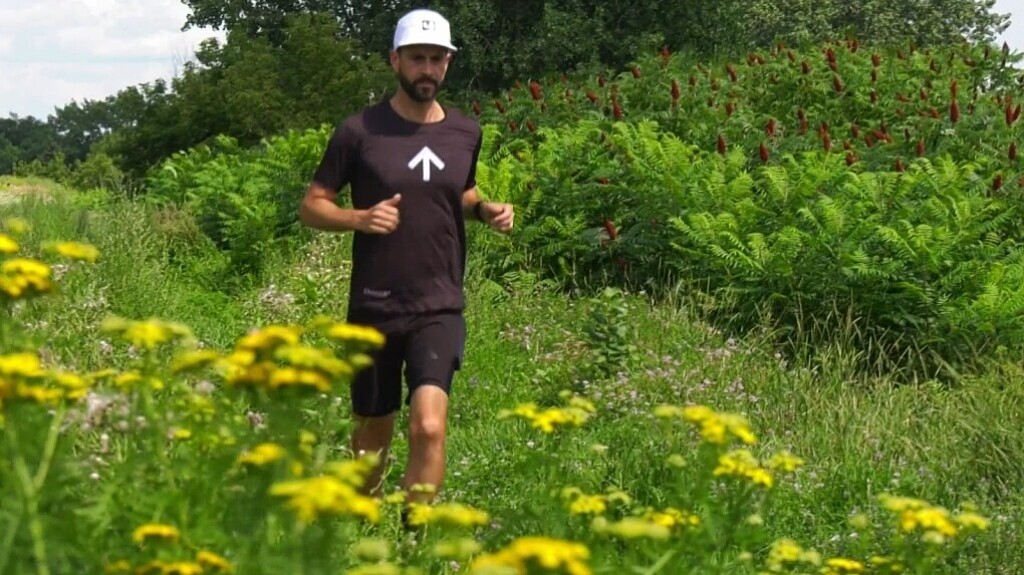
Montreal runner Anthony Battah, following 4,500-km monarch butterfly migration path to Mexico
Montreal lawyer Anthony Battah has completed the Canadian leg of a planned 4,500-km run from Montreal to central Mexico, a cross-continental journey along the migratory path of the monarch butterfly aimed at protecting the insect’s population.
Battah, who kicked off his Ultra-Trail Monarch campaign July 29 from Montreal’s Insectarium, finished the Canadian stretch of his run (more than 900 km) Wednesday, when he crossed the Ambassador Bridge from Windsor, Ont., into Detroit.
The runner is being supported on his run by his wife and daughter, who are following the 39-year-old in an RV along his route through the United States to the Monarch Butterfly Biosphere Reserve in Mexico’s Michoacán region. Battah’s goal is to run about 50 km a day, which would see him arrive at the biosphere—where the monarchs spend the winter—by Nov. 1.
The monarch butterfly is now classified as an endangered species by the Committee on the Status of Endangered Wildlife in Canada. According to The Nature Conservancy, the insect is an important pollinator that plays a vital role in the health of many ecosystems across North America.
“I have this ability to run very long distances. I stumbled on the story of the monarch and it touched me,” Battah told the Montreal Gazette in the lead-up to his run. “I saw in that an opportunity to challenge myself, but also to inspire people to do something in their own areas of interest.”

According to the Ultra-Trail Monarch website, Battah will plant milkweed and flowers rich in nectar to create “aid stations” for future generations of monarch butterflies.
In addition to encouraging others to plant milkweed and other flowers to help the migrating insects thrive, Battah hopes to raise $4.5 million—or $1 per meter he plans on running—to “help serious organizations dedicated to protecting the monarch and biodiversity.”
“I want us to do something significant to protect biodiversity and the environment,” Battah said. “If I’m capable of running 4,500 kilometers to reach the center of Mexico, surely everyone has the capacity to join forces and do a little bit more.”
Battah’s run is the latest campaign to use ultra running to bring attention to the plight of the monarch butterfly. In 2019, the first Monarch Ultra Relay was held from Peterborough, Ont., to the Cerro Pelón butterfly sanctuary in Mexico’s Sierra Madre mountains. Throughout the 47-day journey, 44 ultrarunners volunteered to run segments of 50K to 100K, following the monarch butterfly’s migration route.
by Paul Baswick
Login to leave a comment
World championship silver medalist suspended for evading doping test
On Monday morning, the Athletics Integrity Unit (AIU) announced the provisional suspension of Jamaican 400m runner and 2022 world championship silver medalist Christopher Taylor for evading and refusing to submit to a sample collection, stemming from an incident in November 2022.
Taylor, an Olympic and World Championships finalist in the men’s 400m, may face a four-year ban if he is found guilty; he has not competed since Aug. 30, 2022. At the 2022 World Championships, he anchored the Jamaican 4x400m team to a silver medal.
The suspension
According to the Jamaica Observer, Taylor was contacted in November by anti-doping officials, who had turned up to conduct a test at his home in Kingston, Jamaica (the location he had indicated on his whereabouts form). When the officials arrived, Taylor was at the Norman Manley International Airport in Kingston, waiting to catch a flight to the U.S.
If an athlete is not where they say they are when anti-doping officials show up, it counts as a missed test. Typically, a first or second offence does not carry any penalty, but if an athlete misses three tests during a 12-month period, that constitutes a whereabouts violation, resulting in an automatic period of ineligibility.
However, in Taylor’s case, he is believed to have violated WADA Anti-Doping Code Article 2.3, which speaks to purposely “evading, refusing or failing to submit to sample collection,” resulting in a mandatory two- or four-year ban. If Taylor can establish that the rule violation was not intentional, the period of ineligibility may be reduced.
Taylor’s case
Sports lawyer Paul Greene, who has previously represented high-profile athletes, Shelby Houlihan and Peter Bol, has been representing Taylor. In the interview with the Jamaica Observer, Greene says that upon discovering that Taylor was at the airport, the doping control officer tracked him down, but Taylor refused to test because he didn’t want to miss his flight. Taylor assumed this would simply count as one of an allowable three whereabouts violations, and Greene claims Taylor would have consented to the test if he’d known his behaviour would be interpreted as an attempt to avoid being tested.
Before being notified of the suspension, Greene admitted there are some grey areas in the interpretation of rules differentiating a whereabouts failure from an attempt to evade testing, and that Taylor could either avoid any penalty or be slapped with a multi-year ban.
by Running Magazine
Login to leave a comment
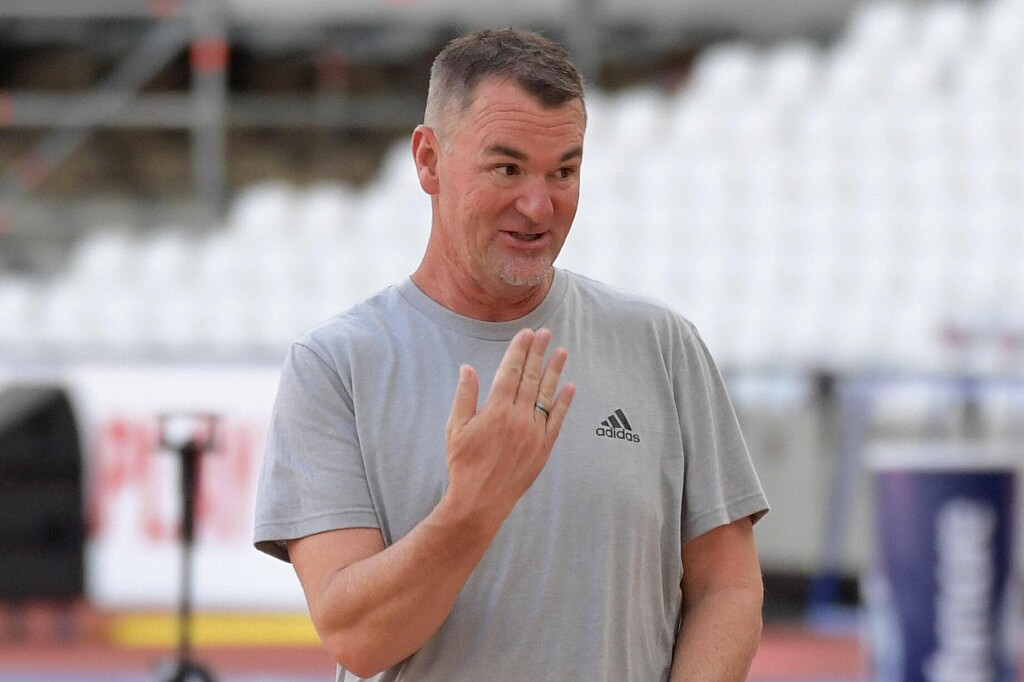
Sprint coach Rana Reider gets probation for sexual misconduct
On May 10, U.S. Center for SafeSport has resolved the case with high-profile sprint coach Rana Reider. Reider, who is Andre De Grasse’s former coach, admitted to having an intimate but consensual relationship with an 18-year-old female athlete, and that this presented a power imbalance. He was not found in violation of any other sexual misconduct claims for which he was under investigation.
A statement by Reider’s lawyer, Ryan Stevens, said the American coach will be placed on one-year probation by SafeSport and ordered to take an online course on SafeSport Education. Reider will be allowed to continue his elite-level coaching of sprinters and jumpers.
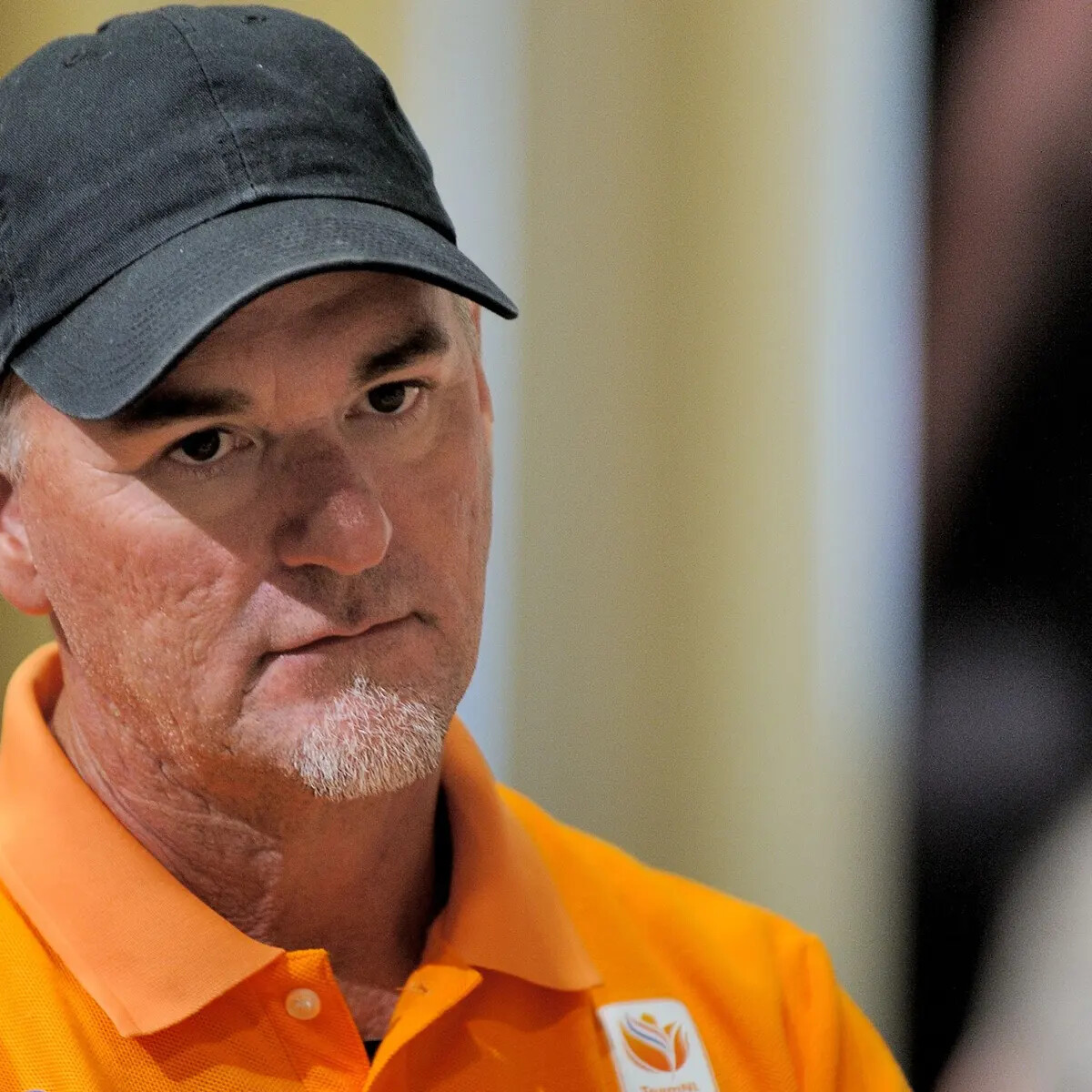
The 52-year-old, who had been the subject of an 18-month investigation into multiple complaints of sexual misconduct, was formally sanctioned by the U.S. Center for SafeSport on Wednesday. All other claims are now administratively closed, according to the statement.
The violation occurred in 2014 when Reider was 44 and had an affair with a young athlete he was coaching at the 2014 World Junior Championships in Eugene, Ore.
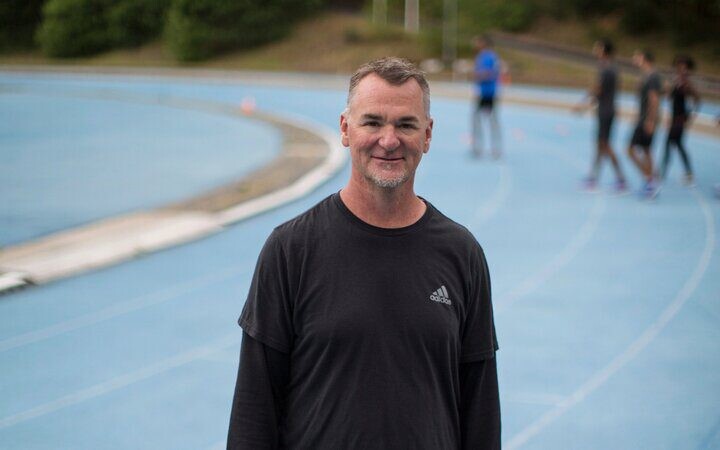
“From the beginning, we demanded this case to be properly vetted,” said Stevens. “Rana was candid and co-operative. His stellar reputation in track and field is now restored.”
Reider previously coached high-profile athletes with his Tumbleweed Track Club in Jacksonville, Fla., including the 200m Olympic gold medallist De Grasse,in addition to U.S. sprinter Trayvon Bromell, disgraced sprinter Blessing Okagbare and British sprinters Adam Gemili and Daryll Neita (who won bronze in the women’s 4x100m relay at Tokyo 2020).
During Reider’s investigation and Okagbare’s doping scandal, De Grasse, Bromell and Neita all changed coaches heading into the 2023 season. De Grasse is now coached by Irish sprint coach John Coghlan in Orlando, Fla., training alongside his wife, U.S. hurdler Nia Ali.
by Marley Dickinson
Login to leave a comment
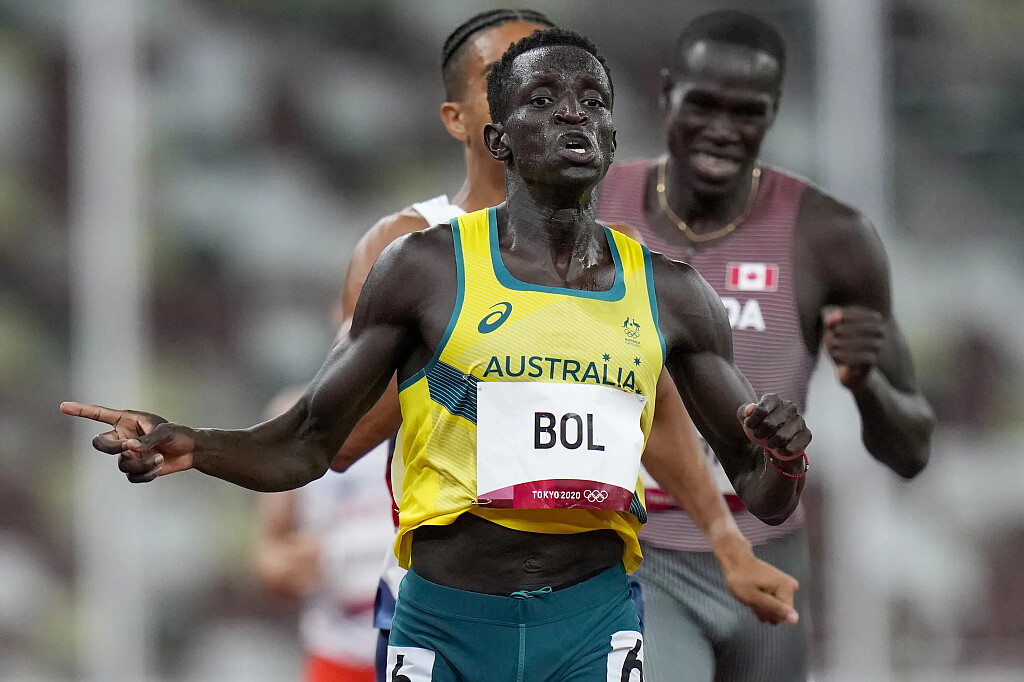
Peter Bol’s positive doping test revealed as “blunder” by Sports Integrity Australia
After two long months, the Peter Bol EPO-doping saga has concluded. Two independent laboratories have cleared the Australian 800m runner of using the banned substance, noting a “catastrophic blunder” in testing from Sports Integrity Australia (SIA).
In January, the 29-year-old faced a four-year suspension after he returned a positive result for the banned substance erythropoietin (EPO) from a urine sample taken in October. Upon further investigation, according to Sports Integrity Australia, neither of Bol’s A nor B samples showed the presence of EPO in his urine: “Only naturally occurring, endogenous erythropoietin was present during both tests.”
Bol said in an interview with Australia’s 9News that the entire process from the SIA was nothing but unfair to him. “To accuse me of doping without scientific proof… it’s tough, but deep down, I knew I was innocent,” said Bol.
He became a household name in Australia at the 2020 Tokyo Olympics after breaking two national records in qualifying to reach the men’s 800m final, where he finished fourth. At the 2022 Commonwealth Games in Birmingham, U.K., he won silver in the 800m behind Kenya’s Wyclife Kinyamal.

Pleading innocence
Bol hired a lawyer and throughout the process, stressed his innocence on social media, saying he would do whatever was necessary to clear his name. “I told everyone that I was innocent and asked everyone in Australia to believe me and let the process play out,” Bol wrote on Twitter.
Bol voluntarily handed over his laptop, iPad and phone to the SIA to help prove his innocence and paid $1,200 to have his B-sample tested.
Subjective testing
During the investigation process, a group of Norwegian scientists raised their doubts about Peter Bol’s positive A-sample, saying the testing for EPO by the World Anti-Doping Agency remains subjective, especially in cases such as Bol’s, which delivered a “borderline” positive result.
According to the Sydney Herald, his legal team sent a letter to SIA demanding an end to the investigation.
The letter includes two independent expert analyses of Bol’s sample from October last year “never showed the presence of any synthetic EPO” and that “inexperience and incompetence at the Australian Sports Drug Testing Laboratory (ASDTL) led to an incorrect determination” of his positive A-sample.
Last month, the SIA lifted Bol’s suspension, allowing him to return to training after the B-sample tested by the World Anti-Doping Authority (WADA) returned an atypical finding.
Bol said he does not intend to sue SIA for damages, although his legal costs are around $50,000.
“I want SIA to see this situation as an opportunity to improve,” he said to Sydney Herald. “Not me trying to fight them. We’ve been transparent the whole time. They should be the same. What my family has gone through should never happen, but it did happen, and we want people to be held accountable.”
by Marley Dickinson
Login to leave a comment
Kara Goucher accuses Alberto Salazar of sexual assault in new memoir
Two-time U.S. Olympian and 2007 world championship silver medallist Kara Goucher alleges in her new book The Longest Race, published Tuesday, that she is the woman behind the sexual assault allegations against Alberto Salazar that resulted in his lifetime coaching ban by the U.S. Center for SafeSport in 2021.
In 2004, Goucher became the first woman to join the Nike-sponsored Oregon Project, led by Salazar, after a storied collegiate career at the University of Colorado, which saw her win three individual NCAA championships (two in track and once in cross country). In her book, she says she wanted to go to the Olympics, and that Salazar said he would help her get there.

Salazar was one of the best marathoners in the world in the early 1980s, winning the New York City Marathon three times and Boston once. He also set the American record over the 5,000m and 10,000m on the track in 1982.
Goucher reveals that she was impressed by how personable he was, and his knowledge of the sport. “Salazar went above and beyond for his athletes,” Goucher told ABC News in an interview. “He was giving personal massages to his athletes, something I’ve never seen before […] I just thought it was normal.”
The 44-year-old retired runner, who was in her late 20s at the time, recalls Salazar touching her inappropriately during a massage at a hotel in Rieti, Italy. “It felt wrong,” Goucher expressed. “I didn’t tell anyone at the time.”
Goucher claims the same scenario happened again while the two were in Lisbon, competing at the 2009 Lisbon Half Marathon.
She ended up leaving the NOP in 2011 and did not talk about the alleged assault until she was questioned by lawyers on doping allegations against Salazar as part of a U.S. Anti-Doping Agency (USADA) probe in 2017.
In 2019, Salazar was suspended for four years by USADA for doping violations. And in 2021, the famed coach was banned for life by U.S. SafeSport for sexual misconduct. The U.S. Center for SafeSport is an independent not-for-profit that reviews allegations of sexual misconduct and can impose sanctions.
In the book, Goucher says she testified about the alleged touching in front of a U.S. Safe Sport panel and confirmed that her allegations were used as the basis for Salazar’s lifetime ban.
Salazar told ABC News in a statement that any claim made against him for sexual assault is categorically untrue. “I have never sexually assaulted Mrs. Goucher and never would have done so. The accusation is deeply hurtful, abhorrent and contrary to my fundamental beliefs as a husband, father and Catholic.”
Goucher said she is appreciative of Salazar’s guidance, but at the end of the day, “he should not be coaching.”
Her book The Longest Race was released on March 14.
by Marley Dickinson
Login to leave a comment

Could Year-Round Heat Training Improve Performance?
Hemoglobin is measured in every blood panel, a major determinant of athletic potential staring us right in the face.
Hemoglobin is a protein in red blood cells that carries oxygen to working muscles. It's a load-bearing pillar of athletic performance and aerobic development, influenced by genetics, iron levels, training history, altitude, and stress. Hemoglobin is so important that endurance sports have faced existential crises from athletes trying to hijack their physiologies through illegal, immoral performance-enhancing drugs like EPO, which stimulates red blood cell production and increases hemoglobin levels.

A disturbing 2013 study in the PLOS One journal found that 4 weeks of EPO injections increased hemoglobin mass by 19.7%, which corresponded to a 6% improvement in 3k time trials with no training changes. That study was funded by the World Anti-Doping Association, which seems similar to the DARE program conducting a study on whether or not heroin feels good. Interestingly, that study also tried to optimize for iron levels to improve hemoglobin mass increases, having athletes take 100 mg of elemental iron a day (550% of the recommended daily value). Unethical, arguably evil use of EPO and blood doping has risked ruining Olympic endurance sports over the last 30 years, and it all gets back to that simple biomarker. Increased hemoglobin mass improves oxygen transport during exercise and thus has a profound impact on performance.
Cheating to raise hemoglobin mass is both vile and dangerous. But what if I told you that there are healthy, legal interventions that can improve hemoglobin mass? You can tell they are healthy because they often correspond with reduced stress and improved cardiovascular function-think optimizing iron intake, balancing stress, and living at altitude. You can tell they are legal because the interventions work over longer time horizons and only budge hemoglobin mass by a couple percent at most. It's the difference between feeling good after eating a serving of dark chocolate versus feeling good after snorting a bunch of cocaine.
New Study on Heat Exposure and Hemoglobin Mass
A 2022 study in the Scandinavian Journal of Medicine and Science in Sports asked a fascinating question: how does heat training via heat suits affect hemoglobin mass in elite athletes? To evaluate the question, the study split 25 elite cross-country skiers into a heat group and a control group that were matched for intensity and duration of training. We're not just talking normal athletes, but national and international competitors at the pointy end of human performance. So any changes in hematological variables would be coming on top of relatively optimized physiologies.
Participants in both groups completed normal training in the AM. In the PM, the heat group did 50 minutes of low-intensity indoor cycling on a stationary bike 5 times a week for the 5-week intervention. But there was a very hot twist. They were wearing a "wool layer on both the upper and lower body, a wool hat, nylon rain jacket, down jacket, and nylon pants with poor evaporative capacity." While they followed the study instructions well, they fully ignored Nelly's instructions, because it got hot in there and they put on all their clothes. We need a follow-up study to test whether they do, in fact, want scrubs.
Despite the added double sessions in the heat, there was no difference between the groups in training duration or intensity across the 5 weeks. Now is the time when we take a step back to hypothesize what we think happens next. The participants' baseline attributes are relevant to your guesses. The heat group had a starting point hemoglobin of 16.1 g/dl and hematocrit of 45.7%, already very high (likely due to some combination of training and genetics). For comparison, in that dastardly EPO study, the end point for hemoglobin levels was 15.2 g/dl even after the 20% increase from undergoing the Armstrong protocol. Moving a pebble with a bulldozer is one thing. But this study was looking at moving a boulder with a finger flick. Could a flick of heat exposure with low-intensity training move that boulder?
The answer: a resounding yes. The boulder didn't move far, but it left an unmistakable trail, kind of like one of those mysterious moving rocks in Death Valley. And any movement of hematological variables through healthy means at this elite level of performance is a BIG FREAKING DEAL.
Relative to the control group, the heat group's hematocrit increased by 1.58% and hemoglobin mass increased by 30 grams. While there was no change in the performance metrics tested, those blood changes should have beneficial impacts on performance and recovery over longer time horizons.
So, Should I Just Hit the Sauna?
Here is where things get complicated, interesting, and frankly, a bit annoying. A 1997 study in the International Journal of Sports Medicine found no hemoglobin mass changes with 4 weeks of training in hot environments between 19 C and 32 C, with numerous studies over the years showing small or negligible changes. That is contrasted by a 2022 study in Medicine and Science in Sports and Exercise that found 2.4-2.6% increases in hemoglobin mass from training in a heat suit or heat chamber (see also this 2020 study in the journal Experimental Physiology and this 2019 study in Frontiers of Physiology showing hemoglobin mass increases from heat acclimation protocols). And now is where we have to start questioning the exact mechanism at play, which will help determine how you put these findings into practice.
One theory is that with heat exposure, the body increases plasma volume (the liquid content in the blood), reducing hematocrit (the percentage of red blood cells within a blood sample) through dilution. As the kidneys sense an offset, the body increases natural EPO production to raise hematocrit levels to baseline, but with a higher denominator from the increased plasma volume, thus increasing the numerator: red blood cells and total hemoglobin mass. In that formulation, even after the plasma volume goes down later, the body will be left with more hemoglobin mass to play with.
If the driver is just the plasma volume-hematocrit-hemoglobin mass pathway (for more, the "critmeter" theory is outlined in this 2003 conference paper), it shouldn't take heat suits or heat chambers to spur the adaptations. We should have seen them in the 1997 study, or other studies finding increased plasma volume from training interventions. Maybe it doesn't have to just be kinda hot, it needs to be REALLY hot. As the authors of the main 2022 study, we are looking at say: "The rate of EPO synthesis is mainly regulated by the hypoxiainducible factor (HIF) system, which, however, also has been shown to stabilize with increased heat shock protein expression." (Check out this 2005 research article in Physiological Genomics to go deep on the subject.) Heat shock proteins that incite the HIF system may require higher temperatures than normal training in warm ambient air.
Context and Implications of Heat Training
And that's just the tip of the iceberg (the hotberg?). A recent study on the topic of natural EPO synthesis made me concerned, and it has nothing to do with heat at all. Published online in November 2022 in the American Journal of Physiology, Endocrinology, and Metabolism, it found that post-exercise ingestion of exogenous ketones increased natural EPO production by 20% over a control group. While the mechanism is uncertain, it's possible that post-exercise ketones incite the HIF system, which may be part of the reason why it's reported that more than 60% of the Tour de France peloton takes them.
I'm bringing up that preliminary study on ketones to illustrate why I'm such a proponent of heat for athletes probing the margins of performance physiology: studies seem to indicate that it's a natural, healthy way to increase hemoglobin mass and improve performance without probing the gray areas of what else incites the HIF system. Heat exposure has been practiced by some cultures for centuries, with plenty of positive impacts that have nothing to do with endurance performance (though based on the recent success of sauna-loving Norwegians, maybe there's a connection there too).
There are tons of unanswered questions that will be addressed by future studies. How do these adaptations unfold over longer time horizons, as plasma volume stabilizes? Will it work with passive heat exposure, like the sauna or a hot bath? Could it be counterproductive in athletes with limitations on hemoglobin production, like those with low iron stores or naturally low genetic setpoints? Would it be less effective at altitude? Could there be hormonal impacts that reduce the efficacy over time, or prevent it from working in female athletes at all? That last question is the biggest, since all of the studies I have seen do not include female participants, likely because the menstrual cycle causes blood volume fluctuations beyond those seen from the interventions.
Conclusion: So, How Much Heat Training Do I Need?
The longer I coach, the more I support year-round heat exposure because these study findings seem to be backed up in the training data for athletes Megan and I coach, even for performance in temperate conditions. I think there might also be a health benefit in winter, with increased blood volume assisting with healing and recovery at a time when blood volume can naturally contract by more than 10%.
My very loose suggestion: talk to a doctor. After the doctor approves, consider a background heat stimulus year-round if you enjoy it (possibly conducted in a manner that can spur heat shock proteins, though always being safe). Examples include a sauna, hot bath, hot tub, or heat suit. Don't overdo it-heat is a major stress, and it can be dangerous. Please be careful.
I personally like to aim for 2 heat exposures a week, with one on my rest day and the other one whenever I have time, usually consisting of 15-25 minutes in the sauna or hot bath (getting out whenever my heart rate gets above 120, and being extra careful in hot baths since I seem more sensitive to them). A typical week when not doing specific heat training for a hot event might look like this:
The jury is still out on whether the hemoglobin mass increases from heat training seen in studies will apply to everyone (or anyone in the real world who isn't doing 50-minute bike sessions in their entire wardrobe). So most of all, consider this intervention if it's FUN, a way to add a bit more sweat to your day, and only if it's approved by your doctor, lawyer, family, and life insurance salesperson.
There are some cool adaptations at the limits of our physiology. And the coolest part about heat: you may be able to explore some of those adaptations while soft pedaling in a couple layers of clothes, sitting on a wood bench, or taking a relaxing bath.
by Trail Runner Magazine
Login to leave a comment
Ethiopians And Kenyans Lead Elite Field at Historic 50th Honolulu Marathon
Athletes from Ethiopia and Kenya lead the elite field for the historic 50th edition of the Honolulu Marathon, scheduled for Sunday, December 11. Founded in 1973, and historically one of the five largest marathons in the United States based on finishers, this year's race will have its first full elite athletes program since 2019, paying prize money three-deep for both men and women: $25,000-10,000-5,000. The race will be run on its traditional course starting at Ala Moana Beach Park, making a loop through Downtown, wrapping around Diamond Head, going out along the Kalanianaole Highway to Hawaii Kai, then returning to Waikiki to finish in Kapiolani Park just after sunrise.
The race was held virtually in 2020 because of the pandemic, and had only a limited elite athlete program in 2021. Organizers are excited to have athletes this year who are strong enough to challenge the course records which were both set by Kenyans: 2:08:00 (2:07:59.02) by Titus Ekiru in 2019 and 2:22:15 by now world record holder Brigid Kosgei in 2017.
"We are excited to welcome top professional athletes to attack our incredible course records for the 50th anniversary race," said Honolulu Marathon Association President Dr. Jim Barahal. "At its core the Honolulu Marathon is an athletic competition, whether against others or against oneself, and we are excited to see what transpires on December 11."
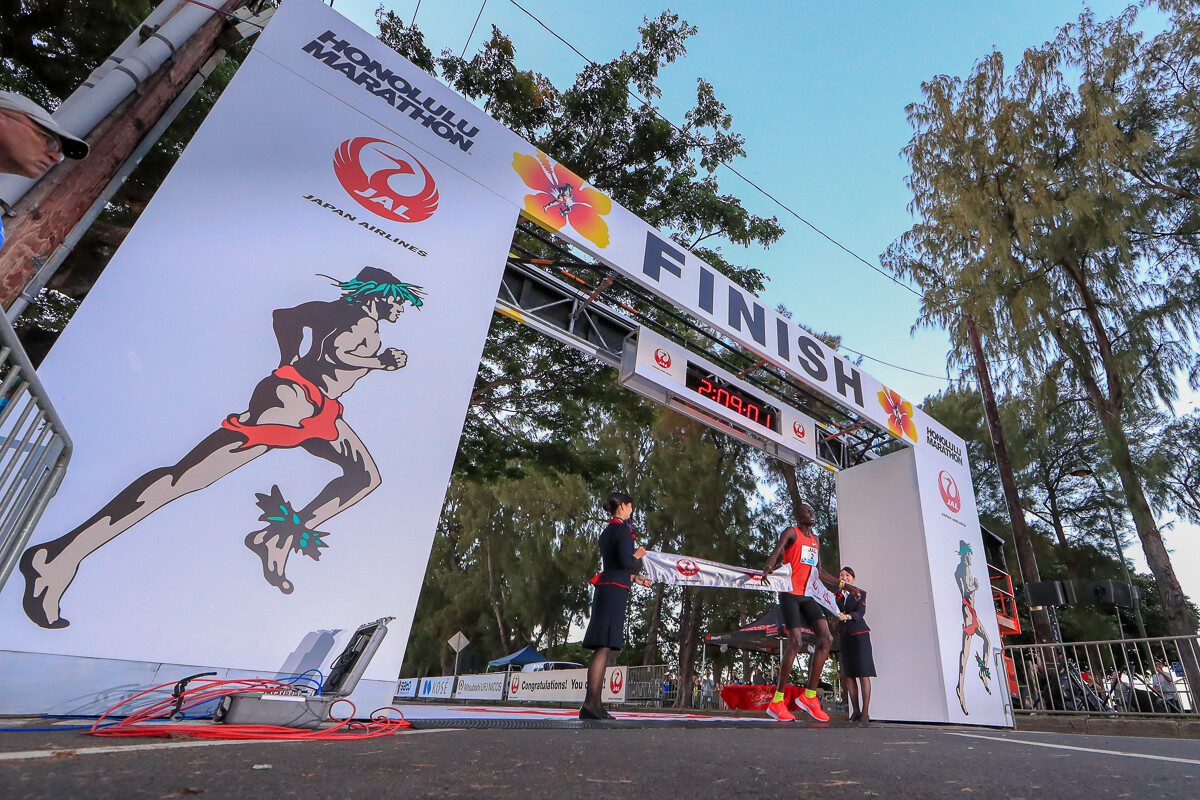
Shifera Tamru is the leading entrant from Ethiopia. The 24 year-old has a personal best of 2:05:18 (Dubai, 2019) and has three marathon wins and five podium finishes in eight starts. He won the 2022 Daegu Marathon in Korea last April in 2:06:31, and was most recently fifth at the Bank of America Chicago Marathon in October in 2:07:53. He'll be running the Honolulu Marathon for the first time.
His top rival is likely to be the Kenyan veteran Stanley Biwott, the 2015 TCS New York City Marathon champion who has a personal best of 2:03:51 (London 2016). Biwott, 36, has not completed a marathon since 2018 when he was fourth at the Abu Dhabi Marathon. He returned to racing after a long layoff earlier this year, clocking a 1:01:57 half-marathon in Padova, Italy. He has completed a total of 13 career marathons with four wins and eight podium finishes. Like Tamru, this will be his first run in Honolulu.
The other top contenders on the men's side are Asefa Mengstu of Ethiopia (2:04:06 personal best, Dubai, 2018) and Barnabas Kiptum of Kenya (2:04:17, Milano, 2021). Both men are veterans. Mengstu has completed 13 career marathons with 4 wins and 7 podium finishes. Kiptum has completed 18 marathons in 20 starts with 3 wins and 13 podium finishes. Neither man has ever run the Honolulu Marathon.
Two strong Ethiopian athletes lead the women's field. Abebech Afework (2:23:33 personal best, Dubai, 2015) and Bere Ayalew (2:22:52, Eindhoven, 2022) will both be making their Honolulu Marathon debuts. Afework, 31, is the more experienced athlete. She has completed 20 marathons in 21 starts, and has racked up three wins and seven podium finishes. She is coming back from a DNF at the Lisbon Marathon in October. Ayalew, 23, has only run four marathons. However, she's made the podium at all four including a second place finish at the Eindhoven Marathon in October of this year where she ran her personal best. Both athletes will be making their Honolulu Marathon debuts.
Reigning Honolulu Marathon champion, Lanni Marchant of Canada, is also in the field. The 38 year-old, who ran both the 10,000m and the marathon at the 2016 Rio Olympics, won last year's race in 2:41:25 on very limited training after finishing 11th at the TCS New York City Marathon a month before In her long marathon career, which began in 2011, Marchant has completed 15 marathons and made the podium three times. A criminal appeal lawyer based in Denver, she is the former Canadian record holder with a 2:28:00 personal best.
"It was a struggle out there," Marchant said after last year's race. "I dehydrated quick. Those last few miles I really had to find my purpose for running. I just got myself across the finish line."
Rounding out the elite field is Mai Ito of Japan. The 38 year-old --who competed in the 2016 Olympic Marathon and both the 2011 and 2015 World Championships Marathons-- has completed all 15 marathons she has started. Her personal best of 2:24:42 was set in Nagoya in 2015. This will be her first run ever at the Honolulu Marathon.
by David Monti
Login to leave a comment

Honolulu Marathon
The Honolulu Marathon’s scenic course includes spectacular ocean views alongside world-famous Waikiki Beach, and Diamond Head and Koko Head volcanic craters.The terrain is level except for short uphill grades around Diamond Head. ...
more...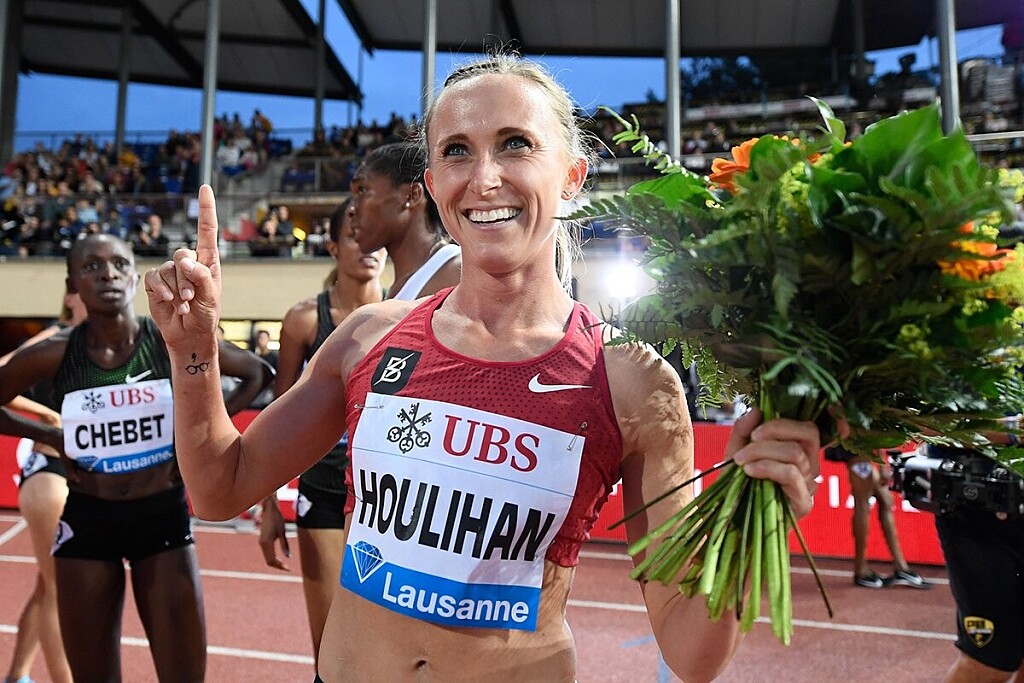
An Olympian, a burrito, a failed drug test: Former ASU runner Shelby Houlihan looks to rebound after doping ban
On a cloudy, characteristically cool December night in Beaverton, Oregon, Shelby Houlihan, the American record holder in the 1,500 and 5,000 meters, accompanied Courtney Frerichs, the Olympic silver medalist in the steeplechase, and Frerichs’ sister, Lindsey, to an authentic Mexican food truck near her home.
The three ordered carne asada burritos and returned to Houlihan’s house to eat and watch “The Bachelorette.”

The next morning, on Dec. 15, 2020, the former Arizona State standout was given a random drug test. Weeks later, in mid-January, Houlihan was notified in an email from the Athletics Integrity Unit (AIU) that her urine sample revealed the presence of 19-norandrosterone (19-NA), a metabolite produced by the substance nandrolone – an anabolic steroid prohibited by the World Anti-Doping Agency (WADA).
She was issued a provisional suspension, which set off a cascade of events that led to a four-year ban, knocked her out of the U.S. Olympic Trials leading up to the Tokyo Olympics and will bar her from competing until January 2025 when she will be almost 32.
It is, Houlihan said, “an athlete’s worst nightmare.”
Houlihan, 29, has lost the financial support of Nike. She also saw former teammate Gabriela DeBues-Stafford leave the club rather than risk sanctions because of the Bowerman Track Club continued relationship with Houlihan.
Houlihan said her initial response to the positive test was “shock and disbelief.” She wondered, “How am I going to explain (the presence of a banned substance) when I don’t even know where it came from myself?”
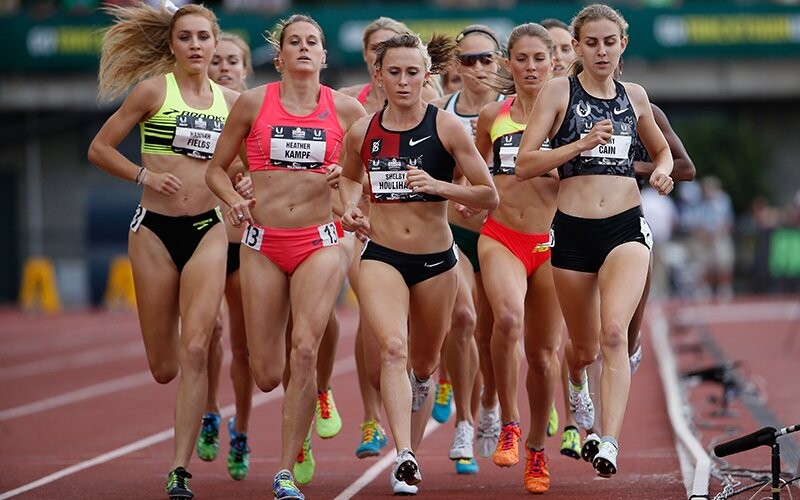
Houlihan was at a high-altitude training camp in Flagstaff when she received the email.
“I opened up my phone to an email that was urgent, confidential and … it was this lab report of scientific words that I could not read,” Houlihan told Cronkite News.
The Sioux City, Iowa, native said she read the email over about 10 times and had to Google which substance triggered the positive test, because she had never heard of nandrolone.
Then she called Jerry Schumacher, her coach at BTC, the professional Nike club that Houlihan had trained with since graduating from ASU in 2015.
“I’m just sobbing and trying to tell him what’s going on, but crying too hard,” Houlihan said.
The long road
Today, Houlihan lives alone in Portland and said she has relied on her former BTC teammates, her boyfriend and her family for support. She does odd jobs, including food delivery, and continues to train with the hope of returning to competition at an elite level.
It is not a situation she envisioned growing up in Sioux City, Iowa, surrounded by runners, including her mother, Connie, and her uncle, Bob Prince, who competed in college.
After winning several state titles at Sioux City East High School, Houlihan continued her success at Arizona State, where she won the NCAA 1,500 meters in 2014 and finished as a 12-time All-American, the second-most in program history.
She holds five school records: the outdoor 800 and 1,500 meters, and the indoor 800, mile and 3,000.
That success set the stage for 2016 Summer Olympics, where she finished 11th in the 5,000 meters and was the highest-placing U.S. runner in the race.
She also finished fourth in the 1,500 meters and set the American record at the 2019 World Outdoor Championships.
More Olympic success felt inevitable.
Shock and disbelief
Elise Cranny, a close friend and former Bowerman teammate of Houlihan’s, remembers that news of the positive test “didn’t really sink in” at first.
“I came back to the house, and I was like, ‘Man, something is very off … something is not right,’” said Cranny, who was living with Houlihan during the camp. “I think the initial reaction from everyone was disbelief, and like, ‘Oh, this is something that’s going to get figured out’ because it’s seriously wrong.”
Schumacher and Houlihan called attorney Paul Greene to “just try to figure out a game plan” and investigate further what could have happened.
The first step was a pregnancy test because nandrolone can be found in pregnant women. After she determined she wasn’t pregnant, Houlihan compiled a log of everything she ate the week before the test. She scoured text messages, bank statements, food receipts and iPhone locations to determine everything she had consumed.
“I was able to piece it together pretty well,” Houlihan said. “And then, ultimately, we just felt like the food truck the night before had to be the most likely source.”
Houlihan wouldn’t name the establishment that served her the burrito because she doesn’t “want to mess with any lawsuit.” However, she isn’t blaming the food truck.
“I don’t think they did anything wrong,” Houlihan said. “I think it just kind of happened.”
While Houlihan and her BTC teammates frequently ate at that food truck, she recalls that she received her order more quickly than usual, and the foil-wrapped burrito was unlabeled.
Houlihan believes she may have been mistakenly given a burrito containing offal (pig organ meat), which can contain nandrolone.
She remembers the meat in the burrito being finely chopped and that grease pooled in the foil. She said it seemed more rich than the burritos she had eaten there before, so much so that she was unable to finish it despite being very hungry after eating little else that day.
“We knew (nandrolone) can be found in pig offal, and we knew that I ate at a food truck that served pig offal 10 hours before (the test),” she said. “And we knew that when you ingest it, it can be at its highest levels 10 hours after ingestion, and that’s the exact kind of time frame that I had eaten that.
“And so as unlikely as all of those things were, it just seemed like the only thing that we could say, ‘All right, this makes some sense,’ and that’s really the only thing that we had to go on.”
Houlihan was the only one among the three who ate at the food truck who was tested.
A search for answers
She provided a hair sample that was examined by a toxicologist and it showed no trace of nandrolone. She also passed a polygraph examination that concluded she was not lying when asked if, at any time, she knowingly or intentionally ingested nandrolone.
Houlihan’s urine tests taken Nov. 22, 2020, Jan. 23, 2021, and Feb. 4, 2021– before and after the positive test – all were negative. She also had her vitamins and supplements analyzed by a lab.
The previous urine tests and the lab report convinced Houlihan that it’s unlikely the positive result was triggered by a supplement or vitamin she was taking. She is still being randomly tested and all of her ensuing tests have come back clean.
She believes that given “the information that we have right now, (the burrito) is the only thing that kind of makes any type of logical sense.”
Houlihan hired a private investigator to trace its sources of meat, but the effort was unsuccessful.
The private investigator found that the food truck owner purchased 30 pounds of pork stomach in a frozen batch from Iowa Beef Processors in September of 2020. However, the owner had no box or label from the meat used in December that could be traced to its processing plant.
And the investigator couldn’t determine whether the owner used pork from a castrated or uncastrated boar. Houlihan’s attorney argued it must have been uncastrated boar meat that triggered her positive test.
When the AIU officially charged Houlihan four months later, the U.S. Olympic Trials, scheduled for June 18-27, were fast approaching. Houlihan decided to go straight to the Swiss-based Court of Arbitration for Sport (CAS) to avoid missing the trials.
The CAS rejected Houlihan’s explanation of what happened and banned her from the sport for four years on June 11, 2021.
Houlihan’s ban lasts until Jan. 13, 2025. She missed last summer’s Tokyo Olympics, the 2022 World Athletics Championships in Oregon, and she’ll miss next year’s World Athletics Championships in Budapest and the 2024 Paris Olympics.
The CAS’s three-member panel found that Houlihan’s “explanation that the 19-NA in her sample resulted from her consumption of the meat of an uncastrated boar simply cannot be accepted. The explanation presupposes a cascade of factual and scientific improbabilities, which means that its composite probability is (very) close to zero.”
Lacking evidence
The panel said that Houlihan failed to prove that the burrito she ate contained boar offal.
“First, the athlete would have had to have been served pork at the food truck despite ordering beef,” the court said. “Second, the pork consumed would not have been ‘normal’ pork product ordered by the food truck, but uncastrated boar. Third, uncastrated boar enters the food chain through completely different channels than pork.”
The panel said that the polygraph result and Houlihan’s hair sample were not “sufficient for the Athlete to rebut the presumption that the ADRV (anti-doping rule violation) was intentional.”
The court also said the concentration of nandrolone in Houlihan’s urine was “2-3 times higher than the highest values reported in the scientific literature after the ingestion of much more significant quantities of meat of mature (uncastrated) boar.”
On June 14, 2021, Houlihan publicly announced she tested positive for nandrolone and would not be competing at the upcoming Olympic Trials. Because Houlihan hadn’t been racing, many thought she was battling injuries instead of serving a provisional suspension.
“And at the end of the day, the panel didn’t think it was probable enough, which is unfortunate,” Houlihan said. “But yeah, I mean, that’s the only thing that we really have as an explanation. I hope at some point, maybe some more information pops up, and maybe it’s something else entirely. I don’t know. But it would be great to have an answer at some point.”
In May, Houlihan appealed the suspension to the Swiss Federal Tribunal.
She lost. It was her last opportunity.
The hardest part to watch, Crany said, “is her getting renewed hope through the appeal process or through different things, and then seeing her kind of have that life back in her eyes again, just for it to come crashing down.”
At one point, Houlihan was offered a reduced sentence – a three-year ban instead of four years – if she admitted guilt.
She refused.
“I never even considered that to be an option, because I knew I didn’t take (nandrolone) intentionally,” Houlihan said. “And I wasn’t going to admit to something that I didn’t do. At least I fought for myself and tried to do the right thing. But taking accountability for something that I didn’t do, it’s definitely not on the table for me.”
Houlihan thinks the system is flawed because the doping agency never had to prove she took a banned substance.
“There was obviously something in my system and I understand that I have a responsibility for what’s in my body,” Houlihan said. “But I think knowing that I never intentionally put it there and (I’m) still having to serve a four-year ban is definitely a flaw in the system. I don’t feel like they did their due diligence in trying to figure out what the truth was. It was just at the end of the day I couldn’t, beyond a reasonable doubt, prove where it came from.”
Houlihan said she believes the burden of proof should be shifted and “split 50-50 between the doping agency and the athlete.” While she believes that she should have to prove what triggered the positive test, she also believes the doping agency should have to prove that she intentionally cheated.
“Just even the playing field a little bit,” Houlihan said. “If you’ve ingested something, it’s almost impossible to try to figure out where that is. Because you’re getting notified a month or two later, I don’t have the source anymore. So it’s just a really impossible task to try to figure out. And I think it’s pretty flawed that if you can’t figure it out, it’s just an automatic four-year ban, and you’re treated like a doper.”
A new normal
Houlihan’s life today includes strong family and friend support.
Cranny said she had a lot of conversations with BTC teammates to make sure Houlihan felt supported.
“What you initially think of is her mental health and someone’s life being completely ripped out from under them and not being able to do what you love to do and what she feels like she’s been born and made to do,” Cranny said. “In the beginning, you worry about her being by herself, and making sure that she has people around her and she feels supported.”
Shelby’s mother, Connie Houlihan, who lives in Phoenix, said she is worried about the mental toll on her daughter.
“You’re afraid of suicide,” Connie Houlihan said. “You know, everything’s a possibility … with depression and with something that critical that they took away from her. You don’t know. Of course, you’re scared to death.”
Connie said a couple of Shelby’s sisters went to be with Shelby right away because they didn’t want her alone. Shelby wouldn’t let her parents come visit, however, because, Connie said, “she was so overcome.”
“I think, if we would have flown there right away, she would have … this is the way she explained it to me, ‘That it would have made it all too real.’
“She was really struggling dealing with it,” Connie said. “She was crying all the time. But I think that was the hardest part for us that we couldn’t just jump on a plane and go and be with her because we respected her decision.”
Chloe Houlihan, one of Shelby’s five sisters, said her sister remained “very resilient through everything.” She said she has tried to be someone Shelby “can talk to when she’s kind of struggling.”
Shelby no longer trains with her BTC teammates, something which Chloe said has been difficult and “a little bit isolating” for her sister.
Until May, Houlihan was paying Schumacher to coach her as an independent athlete, but she confirmed she’s now training entirely by herself – using six years of past training logs as a reference.
“We just felt it was best to maybe cut ties for a little bit,” Houlihan said. “I think there was just a lot of publicity going on around me and him still working together. There was just a lot of scrutiny, I think.”
Some of that publicity and scrutiny was fueled by DeBues-Stafford’s decision to leave BTC because of Houlihan.
A two-time Canadian Olympian who placed fifth in the 1,500 at the Tokyo Olympics, DeBues-Stafford announced in April she left BTC due to Houlihan’s continued ban involvement with BTC at the time.
“Fundamentally, I left the Bowerman Track Club because, despite my best efforts, I was unable to verify that the club was not in violation of World Athletics anti-doping regulations,” DeBues-Stafford said in an interview conducted via email.
DeBues-Stafford was concerned that Houlihan was working out “under the guidance of” the three BTC coaches (Schumacher, Shalane Flanagan and Pascal Dobert) at the same location and times that other BTC athletes were working out while under the supervision of the same coaches.
“While we never did a rep together, there was still what felt to me like an unnecessarily risky proximity between both men’s and women’s teams and an athlete serving a ban,” DeBues-Stafford said.
According to DeBues-Stafford, Houlihan would also use the private gym – built at Schumacher’s residence for BTC athletes to use – at the same time BTC athletes were there under staff supervision.
“Shelby would drive to the Nike campus up to four times a week at the team’s regular time and the starting point for our regular daily runs together so she could run with us,” DeBues-Stafford said. “If she arrived before us, she would wait for BTC athletes at the meeting spot to see if any BTC athletes arrived so she could run with us. These sometimes included long runs. She also ran with the team on a regular basis at altitude camp in Flagstaff.”
Houlihan said she and her attorney inquired about the rules of her ban and were told that she couldn’t go to any practices or work out with anyone on the team, but if she happened to bump into them and they were running at the same place, then she could run with them.
“My attempts to discuss my concerns with team staff were rebuffed, as were the earlier and more sustained efforts of other teammates,” DeBues-Stafford said.
BTC did not receive independent legal advice on the issue, DeBues-Stafford said. She also said Houlihan shared accommodations with a full-time member of BTC staff during the Flagstaff camp, and those accommodations were used for organized BTC athlete support activities.
“When I asked if Shelby’s lawyer had explicitly asked the AIU about her using the same gym as BTC and about how to handle the altitude trip, I did not get a clear response,” DeBues-Stafford said.
DeBues-Stafford said she “independently sought answers,” and reached out to an anti-doping organization to verify that BTC’s collective behavior was within the rules and that there was no liability on anyone other than Houlihan.
According to DeBues-Stafford, “the anti-doping organization could not guarantee that the actions of BTC and Shelby did not constitute a violation, and could not guarantee that other athletes and support staff couldn’t face repercussions either.”
She said the anti-doping agency cited two rules in the World Anti-Doping code and advised her to leave BTC and submit an official anonymous tip to the AIU.
A trying time
While Schumacher and some of Houlihan’s other teammates knew about her positive test in January of 2021, DeBues-Stafford did not learn about Houlihan’s positive test until a couple of days before the team publicly announced the ban about six months later.
“Learning this news in mid-June almost derailed my Olympics,” DeBues-Stafford wrote in an Instagram post in April. “It was a small miracle that I showed up in Tokyo in shape to run sub-four (minutes) twice in 48 hours and place fifth.”
Houlihan said she was “surprised” and felt “blindsided and hurt and confused” by DeBues-Stafford’s social media posts because DeBues-Stafford had not told her about her concerns.
“I never knew that that was a problem for her,” Houlihan said. “And I’m not sure why she didn’t reach out to me. I reached out to her after I read her posts.”
Houlihan said she apologized to DeBues-Stafford for being affected by her situation.
“I think she just felt like she didn’t want to add to what I was going through by bringing it to me, which I don’t agree with, personally,” Houlihan said. “I felt like I would have rather had that conversation with her and I would have been more than glad to try to help that situation for her in any way, instead of what ended up happening. I think that was a lot worse – what ended up happening – than her just coming and talking to me about it.”
DeBues-Stafford has since moved to Victoria, B.C. and is now coached by Trent and Hilary Stellingwerff.
“When I told Jerry (Schumacher) I was leaving BTC due to the lack of separation between Shelby and the group, he asked if I really wanted to leave, given he was thinking of possibly no longer coaching Shelby if she lost her appeal at the Swiss Federal Tribunal,” Debues-Stafford said.
Debues-Stafford said Houlihan was still driving to the Nike campus and running with BTC when Debues-Stafford left Portland on March 31.
“Growing fear over the team potentially breaking rules, coupled with frustration at the lack of action by the team left me in an awful and unsustainable headspace,” DeBues-Stafford said. “I left altitude camp early at the end of February to get some breathing space and made my decision to leave the team.”
A powerful influence
Cranny said she misses running with Houlihan and credits her for pushing her to succeed.
“I think of her all the time when I’m racing now,” Cranny said. “She’s a huge reason why I feel like I am where I am right now in my own running. She just really opened my eyes to the importance of not limiting yourself and putting yourself in it.”
Although BTC could look a lot different, Houlihan would still like to eventually come back to the group once her ban is up.
“I definitely would like to rejoin Bowerman,” Houlihan said. “That’s like my family, basically. I’ve been a part of that group since I went pro in 2015 and I know those athletes so well. And I know that that training environment is great for me.”
Cranny also wants Houlihan to rejoin BTC and said she can’t picture her former teammate anywhere else
“It feels like this is her family,” Cranny said. “I feel like everyone here is really supportive of her, really close friends with her. So I hope (she rejoins BTC). That’s something that we’ve definitely talked about as a team is wanting to work out with her again once the ban is up.”
When asked if she thinks she can still compete at the elite level once the ban is up, Houlihan said, “I guess that’s one thing that we’re just gonna have to find out.”
Houlihan is no longer a member of BTC nor being paid by Nike. She spent $250,000 in legal fees fighting her ban without any financial support from the Beaverton-based shoe and apparel giant.
“They said that they support me, and they believe in me, but as far as financially, I haven’t really received any support from them in that way,” Houlihan said.
Houlihan lost her six-figure professional contract with Nike and hasn’t had a paycheck in over a year. Her Nike deal also gave her the opportunity to earn performance-based bonuses on top of her base compensation, income that is also gone.
Houlihan’s mom called the entire process “an injustice” and said it wouldn’t make sense for her daughter to jeopardize her Nike contract by doping.
“Why would somebody with a contract that she had and the money that she was making, why would she cheat?” Connie said. “She had a contract (with Nike) through the (Tokyo and Paris) Olympics like, why would you cheat?”
Houlihan said Nike hasn’t offered her a job, either.
“I’ve been doing some food delivery things like DoorDash and stuff, just to try to make a little money on the side, but yeah, just trying to get by.”
Houlihan continues to train but admits it is difficult.“It’s been really challenging, to be honest,” Houlihan said.
As she trains alone, without her former coaches and teammates for support and motivation, Houlihan said she sometimes stops halfway through a workout or doesn’t always finish it at all. She finds it more difficult to hit her targeted times.
“I think it’s easy to do that when I’m having a great time and I’m having fun, and I’m finding joy in running,” Houlihan said. “But a lot of the things that make it fun aren’t really there for me right now.”
by David Veenstra (Cronkite News)
Login to leave a comment
Four things you should do if you get hit by a car while you are running
Getting hit by a car while running can be a traumatic experience. If you are lucky, you will only suffer minor injuries. However, some people are not so lucky and end up with serious injuries or even die as a result of being hit by a car. In this post, we will discuss four things you should do if you are hit by a car while jogging. Keep reading to find more!
No Win, No Fee Agreement

You should always have this type of agreement with your personal injury lawyer. This means that if you do not win your case, you will not have to pay any legal fees. This is important because it allows you to pursue your case without having to worry about the financial risk. Having a No Win, No Fee agreement means that your lawyer will only get paid if you win your case, so they will be more motivated to get you the best possible outcome. This way, you can focus on your recovery without worrying about the financial burden. Also, make sure to ask about any other fees that may be associated with the case, such as filing fees or expert witness fees.

Get a Police Report
The second thing you need to do is get a police report. A police report will document the accident and will be helpful if you decide to file an insurance claim or personal injury lawsuit. The police report will also help to establish who was at fault for the accident. The police report should consist of the names and contact information of any witnesses, the name and contact information of the driver, and a description of the accident. If you decide to file a lawsuit, the police report will be used as evidence. Also, you will need to collect the evidence at the scene of the accident. This includes taking photos of the damage to your vehicle and any injuries you sustained. You should also get the contact information of any witnesses who saw the accident. Additionally, it is important to be ready in case the other driver tries to flee the scene. If you are able, get the license plate number of the other vehicle. What’s more, try to stay calm and do not argue with the other driver. It is important to get their insurance information so that you can file a claim and get compensated for the damages.
Get Medical Treatment
The third thing you need to do is get medical treatment. Even if you think your injuries are minor, it is important to get checked out by a doctor. Some injuries, such as whiplash, may not be immediately apparent but can still cause long-term damage. Getting prompt medical treatment will also help to document your injuries and will be important if you decide to file an insurance claim or personal injury lawsuit. Also, be sure to keep all of your medical records and bills as they will be important if you do decide to file a claim or lawsuit. Document all the days that you did not go to work due to the injury as well. This will be used to calculate your lost wages.
Consult with a Personal Injury Lawyer
The fourth and final thing you need to do if you are hit by a car while jogging is to consult with a personal injury lawyer. A personal injury lawyer will be able to tell you whether or not you have a case and how much your case is worth. They will also be able to guide you through the legal process and help you get the best possible outcome. If you decide to file a lawsuit, your lawyer will handle all of the paperwork and will represent you in court. Additionally, your lawyer will be able to negotiate with the insurance companies on your behalf. Keep in mind that most personal injury lawyers work on a contingency basis, which means they will only get paid if you win your case. So, you will not have to pay anything upfront.
If you or someone you know has been hit by a car while jogging, it is important to take action in order to protect your rights. Be sure to follow the four steps outlined in this blog post and contact a personal injury lawyer as soon as possible. With the help of a lawyer, you can get the compensation you deserve. We hope this blog post was useful. Thank you for reading and good luck!
by Colorado Runner
Login to leave a comment

Life Stress, Work Stress, Training Stress-Your Body Can't Tell the Difference
Jen Yoshida was used to telling people that running two miles a day is what got her through law school. "Once the run was over, I would tell myself that the hard part of the day was over. It made the difference between feeling optimistic about the day and maybe fearing what was coming next."
Yoshida was frustrated then that she didn't getting the same mental or physical boost once she was a practicing intellectual property lawyer and had added swimming and biking to become a triathlete.
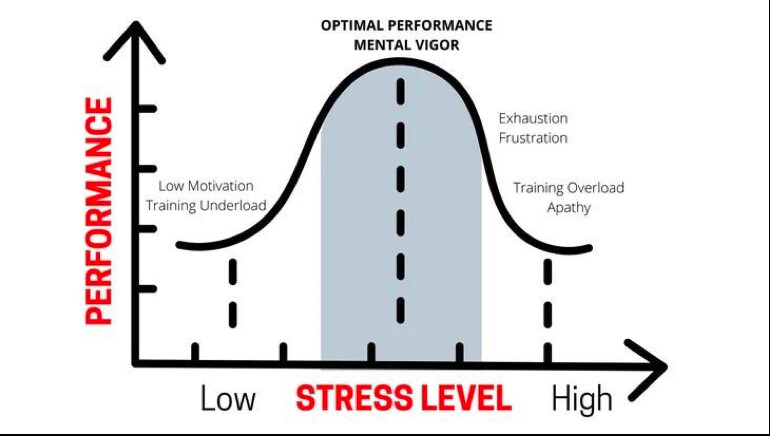
"Work is so much more stressful now, so I should be fine with my increased training, right? I thought I was meeting one big challenge with another. Exercise is good for mental health, so I assumed more exercise would be better."
Yoshisa was confused when her increased training schedule wasn't making her more able to confront work-related stress, plus she was running out of steam during workouts. "I was exhausted at work and my fuse was getting shorter. When I completely forgot a meeting with a client, that was the last straw. I knew something had to change."
Except for the few elites among us, most athletes must perform extraordinary balancing acts between work, family, relationships, sleep, nutrition, finances, and training. All of these aspects of life incur stress, but many of us assume that the physical stress from training is different from the psychological stress incurred from everything else.
We have been told that exercise is an excellent stress-reliever, without context or qualifiers, and therefore assume that there is a never-ending dose-response. If some exercise is good for mental health, then why wouldn't more be better? It's All Stress to Your Brain and Body
Whether it's because you've got a huge work project to complete, are going through a tough time in your relationship, or ran a tune-up marathon last weekend, the stress that you are experiencing is all the same. We might be surprised to know that it doesn't matter if one type of stress is more enjoyable than the other or if you perceive one to be "healthier" than the other.
Research shows that all forms of stress are additive and, taken together, will alter the functioning of the body to compensate for the total load. Those compensations can look like anything from fatigue from a few days of pushing your limits, all the way up to osteoporosis from a combination of high stress and low progesterone resulting from months or years of overdoing it.
Those compensations can also look like snapping at your partner out of nowhere or even feeling deep depression or pervasive anxiety. Most of us may be able to connect those feelings with family or work stress but are unlikely to connect that with our training. In fact, many of us will double down on training, thinking that we are doing the right thing to cope or because we are in need of escape.
In those moments, we are not thinking about the research that demonstrates the huge amount of physical stress that training causes because we do not perceive the activity to be psychologically stressful. Unfortunately, our perception is not reality.Stress: The Vicious Cycle vs. the Optimal Curve
Adding more training to manage stress is like adding more wood to a fire you're trying to extinguish. In a review article, John S. Raglin, a professor in the psychology department at Indiana University, Bloomington and a pioneer in groundbreaking studies of mood and endurance sport, clearly states that increasing exercise can also increase stress and negatively affect mental health.
He notes that intention is irrelevant since stress increases either through necessary training or an abuse of training and his overall body of work points to a trend toward greater mood disturbance with increasing amounts of exercise. If we continue to increase overall stress by increasing training, research shows that this chronic physical and mental stress without adequate recovery can cause disruption of the hypothalamic-pituitary-adrenocortical (HPA) axis leading to dysfunction of the endocrine system and yes, overtraining syndrome.
The Yerkes-Dodson CurveHarder to accept is the fact that there is an optimal level of training and life stress for each body. The Yerkes-Dodson curve above illustrates the fact that zero stress will not result in positive gains, but huge amounts of stress will also not result in positive gains. Research shows that the idea of there being a "sweet spot" where stress on the system results in excellent performance without causing overwhelming detriment is fundamental to almost everything we do.
For example, we know that zero water causes dehydration and too much water causes hyponatremia, but we are well-hydrated and healthy somewhere in the middle. We can apply this logic to everything we do and everything around us-there is a perfect amount for everything in nature. However, we must learn to accept the same logic when it comes to stress. There is a perfect amount of training and life stress for every body and mind, where we are alert, engaged, energetic, and thriving. We just have to find it.
Training Doesn't Subtract from Stress Load-but Rest Does
But, isn't exercise a stress reliever? Multiple studies show that exercise certainly does provide a certain amount of stress relief, but it's important to understand that this research is typically conducted for the general population of the USA, which tends to be quite sedentary. Therefore, the study populations are non-athletes and designed to convince people that 20-30 minutes of low-level aerobic exercise 5 times per week is a good idea for general health.
These studies are not designed to address the stress relief needs of high-performing, high-volume athletes trying to fit fifteen hours of training on top of a full-time job.The solution is to take a look at which stresses we have control over and which we do not. We then need to take control by making adjustments, some of which may require us to battle with our own deeply held assumptions about our relationship with training.
For example, we likely can't change our work responsibilities, school schedule, or certain family commitments. However, we can probably do our best to get a bit more sleep, try some time-saving tactics like meal-prepping, and yes, we can skip a workout. We have to challenge the assumptions that we can't cope without training, that training is the only remedy, and that skipping or cutting a session short will detrimentally affect our performance. On the days when we need to decrease the pressure, the best training we can do is no training at all.
While there is no evidence that taking a bit of physical rest will increase stress and promote disease in athletes, there is plenty of evidence that increasing training can do all of that and more.
If you find yourself unable to back off given the clear evidence that you might be heading for trouble, a mental health care practitioner can help you get control before you burn out. Finding and respecting your own sweet spot will ensure that you get to enjoy your runs - for life.
by Trail Runner Magazine
Login to leave a comment
Craig Engels, Running’s Most Committed Party Animal, Returns to Nike—and Running Fast
Craig Engels explains what he can about his new four-year deal and heads to Millrose Games in good shape.
Craig Engels, the fun-loving 1500-meter runner who never misses a party, inked a new deal with Nike in the early days of 2022. It’s a four-year agreement, taking him through 2026.
But he went through a lot of soul-searching before he decided to return to running at a high level.
Engels, 27, finished fourth by half a second in the 1500 meters last June at the U.S. Olympic Track and Field Trials, just missing the team bound for Tokyo.
In the days afterward, he was adrift. “Everything I worked towards [was] over,” he told Runner’s World during one of several recent interviews. “I didn’t know what to do with myself. Which—I don’t know what emotion that is. It wasn’t sadness. More like, what do I do?”
He spent the rest of the summer racing on the track and road circuit in the U.S. He helped pace men who were trying to break 4:00 in the mile, and he encouraged facial hair growth. And still, he raced at a high level, although neither Engels nor his coach, Pete Julian, would say that his training resembled what it was before the Trials.
“We had to change things up,” Julian told Runner’s World last September, “had to piece together workouts in between to keep him so he could at least finish a mile. That’s what Craig needed at the moment.”
On August 14, he finished second at a mile in Falmouth, Massachusetts, clocking 3:53.97. Six days later he finished second again in the international mile at the Prefontaine Classic in Eugene, Oregon, in 3:55.41.
That runner-up finish at Pre came as a result of a premature celebration. He waved to the crowd at the top of the home stretch, but Geordie Beamish of New Zealand sailed by him with a few meters to go.
They hugged it out on the track and then took a victory lap.
“That’s Craig,” Julian said. “He makes mistakes along the way, it’s why he’s so damn popular. I’ve never seen anybody do something as dumb as wave to the crowd and then get beat and still get to take a victory lap. Pretty classic, right? There’s one guy in the world who can do that, and that’s Craig.”
After Pre, Engels shut down his season. In the fall, he returned to the University of Mississippi to finish the final semester of classes he needed to complete his MBA.
While Engels was in Oxford, Mississippi, he trained with Ole Miss cross-country coach Ryan Vanhoy, who had coached him in college, and the Ole Miss team. They logged high mileage and did a lot of long strength-based workouts. Meanwhile, Engels pondered his future.
Engels flirted with retirement, and Julian said Engels was sincere in his questioning, asking himself: “Is this something that I want to do?”
Running the Numbers
As Engels got back into shape and finished his classes, he began the process of negotiating a new contract. Initially, he tried to do it alone. He said he parted ways with his first agent, Ray Flynn, via email between rounds of the 1500 at the Olympic Trials.
Reached by text message, Flynn said, “It’s all good with Craig and I. Happy to see him doing well.”
Engels said he had long struggled with the role of agents in pro running and the fee they charge—15 percent of everything, including sponsorship deals, appearance fees, and prize money—for negotiating what often turns out to be a single contract with a shoe company.
“A lot of these agents were athletes,” Engels said. “I don’t know how they possibly sleep at night, taking 15 percent. NFL agents are capped out at three [percent].”
But as Engels talked to shoe company executives and weighed various offers and training situations, he realized he needed someone to review the contracts—“the lawyer jargon,” he calls it. “I was getting a little stressed,” he said.
So he hired Mark Wetmore as his agent, who also represents Engels’s teammate Donavan Brazier, among others. Wetmore immediately increased the value of the offers Engels had started negotiating on his own behalf.
Engels signed with Nike again. At the end of the four-year deal, he’ll have run professionally for 9 years, and he said it will be his last contract.
The terms of the deal are private—Engels had to sign a nondisclosure agreement, as most athletes do, which also limits the knowledge athletes have about their value in the market.
All he could say about it? “I definitely had some great offers on the table, which led to a very good contract for myself.”
Engels said if it were up to him, he’d post the details of his contract on Instagram to his 97,000 followers. Such knowledge would only help other runners, he says, while the current system benefits agents.
The Athlete Changes the Coach
Engels also returned to train with Julian and his team, recently named the Union Athletics Club (UAC). The club is headquartered in Portland, Oregon, but between altitude stints, training camps, and races, they’re rarely there for long.
He is now doing the bulk of his workouts with Charlie Hunter, who is on the UAC, and Craig Nowak, who trains with the group but isn’t officially on the roster. The group has been training in San Luis Obispo, California—team member Jordan Hasay’s hometown—and enjoying sunny skies and warm weather, and preparing to race the Millrose Games. Engels is entered in the mile.
“I’m in pretty good shape, yeah,” he said. “I don’t want to talk too much before it happens. I’m in pretty good shape.”
After Millrose, UAC hosts an indoor meet in Spokane, Washington, the Lilac Grand Prix, on February 11. The U.S. indoor championships are back in Spokane two weeks after that.
Julian, for one, is glad to count Engels on the roster. He told Runner’s World that Engels has “completely changed” the way he coaches.
“He’s made me realize that making [something] enjoyable and working hard don’t have to be separated, don’t have to be mutually exclusive,” Julian said. “The two things can exist. And we can be really great. But by being able to enjoy ourselves and being able to have some fun. To not take ourselves as seriously, but at the same time, take what we’re doing very seriously. You can do both.”
That’s a startling admission from Julian, who was a longtime assistant coach to Alberto Salazar. He was viewed as in relentless pursuit of every advantage for his athletes. Salazar is now banned from coaching Olympians permanently by SafeSport and serving a four-year ban for anti-doping offenses.
“[Engels has] made me realize that, hey, we can add some color to our lives,” Julian continued. “We’re not curing pediatric cancer here. We’re running around in half tights on a 400-meter circle. Coming from my own background, I’ve had to realize that, too, [with] my own coaching the last four or five years. You know what? Everyone needs to chill out a little bit. Let’s quit trying to eat our own and actually try to promote the sport and race really, really fast.”
One small way that Engels has changed the team? He prefers FaceTime to phone calls. Julian said Engels likes to see people, likes to smile at them. The FaceTime habit has spread throughout the group, so now, anytime anybody communicates on the team, it’s always by FaceTime. “That started from Craig,” he said.
Critics of Engels—who is an unabashed beer drinker, hot-tub soaker, RV driver, and mullet wearer—don’t see the work that he does, his coach says. And they don’t see how hard he tries.
“He did everything he could to make that Olympic team,” Julian said. “He’s done everything he can to make the sport better. He puts forth an amazing effort and he tries to win. But he’s not a robot, either.”
by Runner’s World
Login to leave a comment
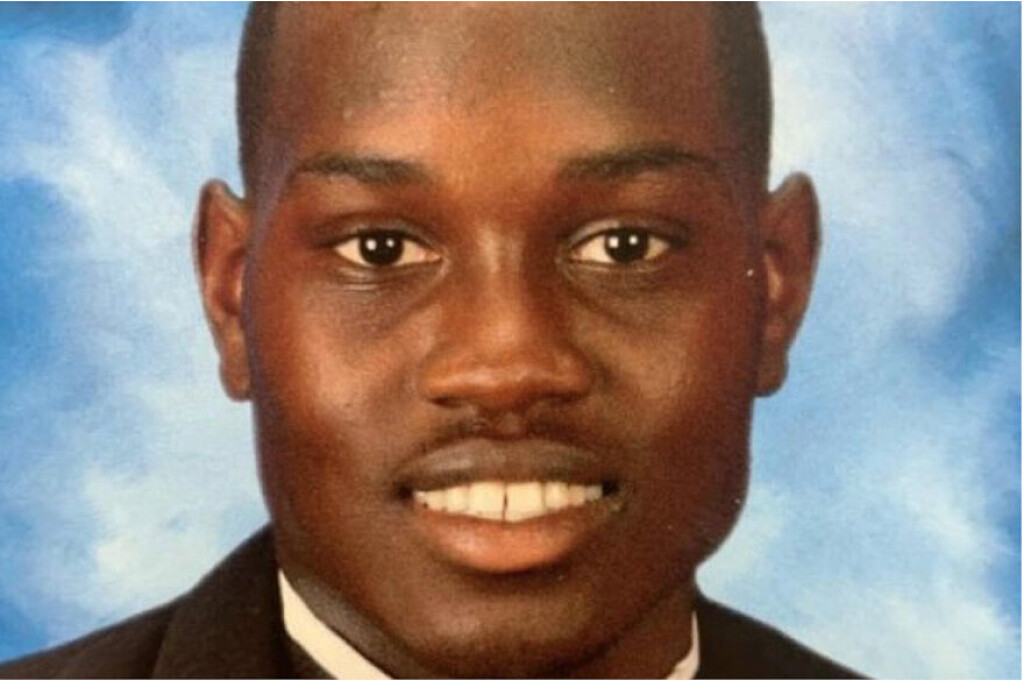
Two of Ahmaud Arbery's killers sentenced to life in prison without parole
Travis McMichael and his father, Gregory McMichael, who murdered Ahmaud Arbery while he was running near his home in Brunswick, Ga., have been sentenced to life in prison without parole. William “Roddy” Bryan, Jr., who joined the McMichael’s in the chase for Arbery, received life in prison with the possibility of parole.
The 25-year-old Arbery was stalked, ambushed and shot to death while out for a jog on Feb. 23, 2020, but it wasn’t until Bryan’s cellphone video of the murder emerged two months later that the case gained international attention. The video sparked a public outcry, but charges against the three men were not brought until more than a year later.
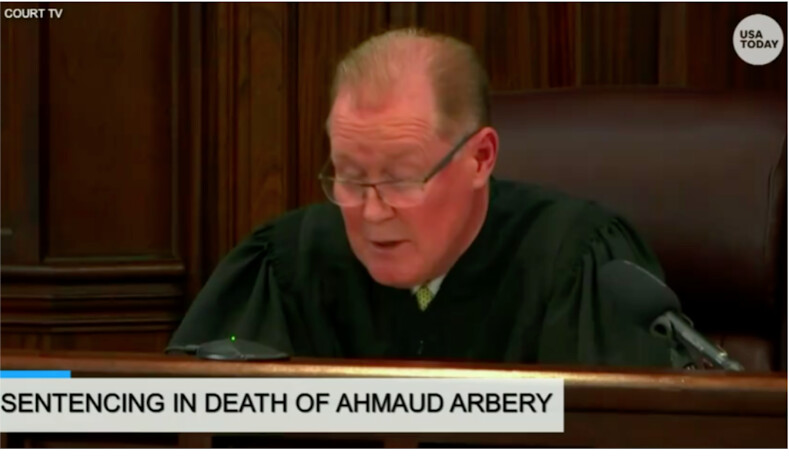

The sentence follows the verdicts the three men were charged with during November’s trial, which lasted eight days, and 23 witnesses were called. Travis McMichael was the only defendant to testify. During sentencing, McMichael’s lawyer Bob Rubin pushed for innocence, “Do we still need, want a person like (Travis) McMichael behind bars? He thought he was helping their community.”
McMichael, 35 (who fired the shots that killed Arbery), his father, Gregory McMichael, 65, and William “Roddy” Bryan, Jr., 52, were charged with malice murder, four counts of felony murder, two counts of aggravated assault and one count each of false imprisonment and criminal attempt to commit a felony back in November. (Although Travis McMichael pulled the trigger, in the state of Georgia, accomplices can be charged with murder; Bryan faced the same charges as the McMichaels).
The defence pleaded that the McMichaels suspected Arbery of being a burglar and that they were attempting to make a citizen’s arrest when they grabbed their guns and chased him down in their truck.
The two men will be in prison for the rest of their lives.
by Running Magazine
Login to leave a comment
High-profile coach Rana Reider will be investigated for sexual misconduct
According to a report in The Guardian, Florida-based coach Rana Reider is the subject of multiple complaints of sexual misconduct, and is about to be investigated by the U.S. Center for SafeSport.
Reider’s roster of high-profile clients includes 200m Olympic gold medallist Andre De Grasse, in addition to British sprinters Adam Gemili and Daryll Neita (who won bronze in the women’s 4x100m relay at Tokyo 2020). The report claims UK Athletics has instructed its athletes to cut ties with Reider.
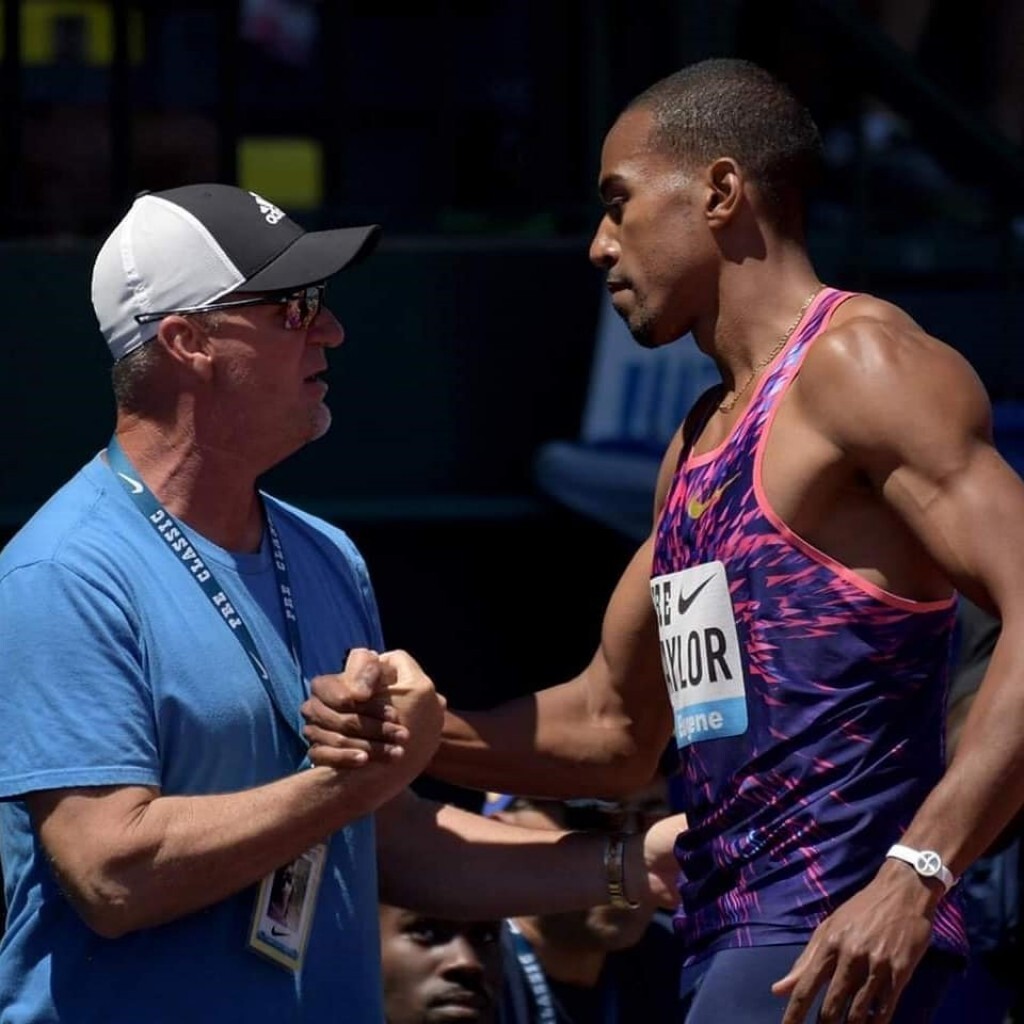
Sources say that Reider is also a coach to Blessing Okagbare, the Nigerian sprinter who was sent home from Tokyo after testing positive for human growth hormone.
The report says that Reider’s lawyer claims his client had not been notified of any investigation and protests that the allegations have not been tested or proven.
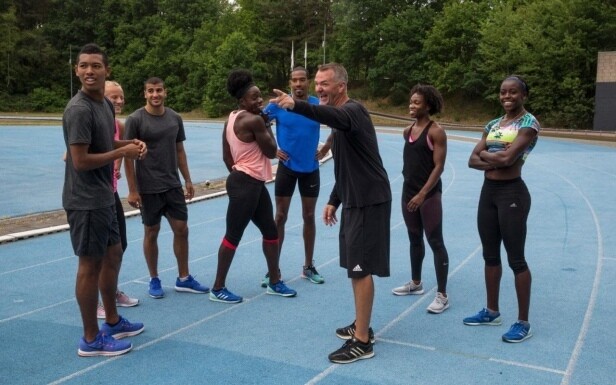
Gemili, 28, was the first British man to sub-10 over 100m and sub-20 over 200m. According to the report, he has been coached by Reider since 2017. He won gold in the 4x100m relay at the 2017 World Championships, and silver in 2019. At Tokyo 2020, he got injured during the heats in the 200m (his only event) and did not advance.
The U.S. Center for Safepsort is an independent body that handles investigations and complaints into abuse and misconduct in Olympic sports. In July 2021, SafeSport issued a lifetime ban on U.S. coach Alberto Salazar for sexual and emotional misconduct.
by Marley Dickinson
Login to leave a comment
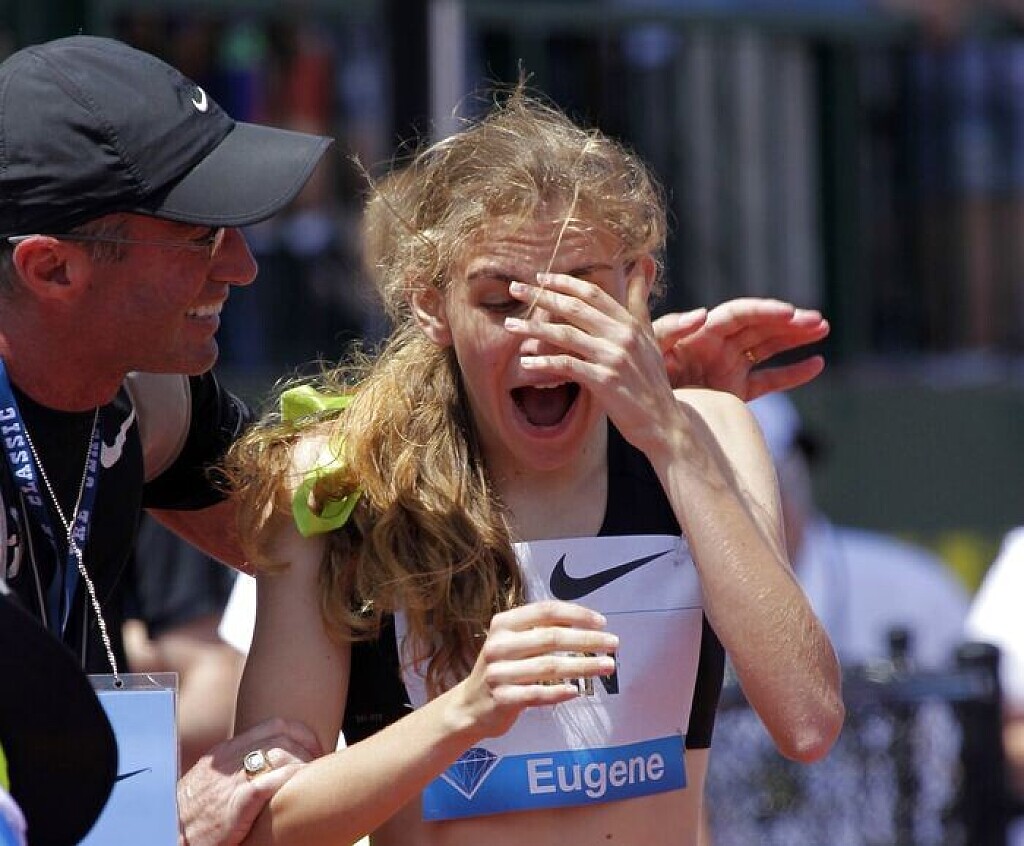
Mary Cain sues Alberto Salazar and Nike for $20 million over alleged abuse
Mary Cain, the promising distance runner whose career fizzled after what she has described as four miserable years at the Nike Oregon Project, has filed a $20 million lawsuit against her former coach, Alberto Salazar, and their employer, Nike.
Cain accused Salazar of emotionally abusing her when she joined the team as a 16-year-old. The lawsuit portrays Salazar as an angry control freak who was obsessed with Cain’s weight and didn’t hesitate to publicly humiliate her about it.
That, she said, took a toll on her physical and mental health. Nike was aware, the lawsuit alleges, but failed to intervene.
Nike did not return messages. Salazar could not be reached but has previously denied abuse allegations, and he has said neither Cain nor her parents had raised concerns while she was part of the program.
In the lawsuit filed Monday in Multnomah County Circuit Court, Cain alleges Salazar on several occasions required her to get on a scale in front of other people and would then criticize her.

“Salazar told her that she was too fat and that her breasts and bottom were too big,” the lawsuit alleges.
Salazar took to policing Cain’s food intake, she said. At times, Cain was so hungry, she said, she stole Clif Bars from teammates.
Cain went to her parents for support. She alleges Salazar eventually tired of the parental interference.
“He prevented Cain from consulting with and relying on her parents, particularly her father, who is a doctor,” said Kristen West McCall, a Portland lawyer representing Cain.
By 2019, Cain says she was deeply depressed, had an eating disorder, generalized anxiety and post-traumatic stress syndrome. She also was cutting herself.
Darren Treasure, Nike’s in-house sports psychology consultant, knew of Cain’s distress, the lawsuit alleges. But he’s accused in the complaint of doing nothing about it, other than to share this “sometimes intimate and confidential information … with Salazar.”
Nike did nothing to intervene, Cain alleges.
“Companies are responsible for the behavior of their managers,” McCall said. “Nike’s job was to ensure that Salazar was not neglecting and abusing the athletes he coached.”
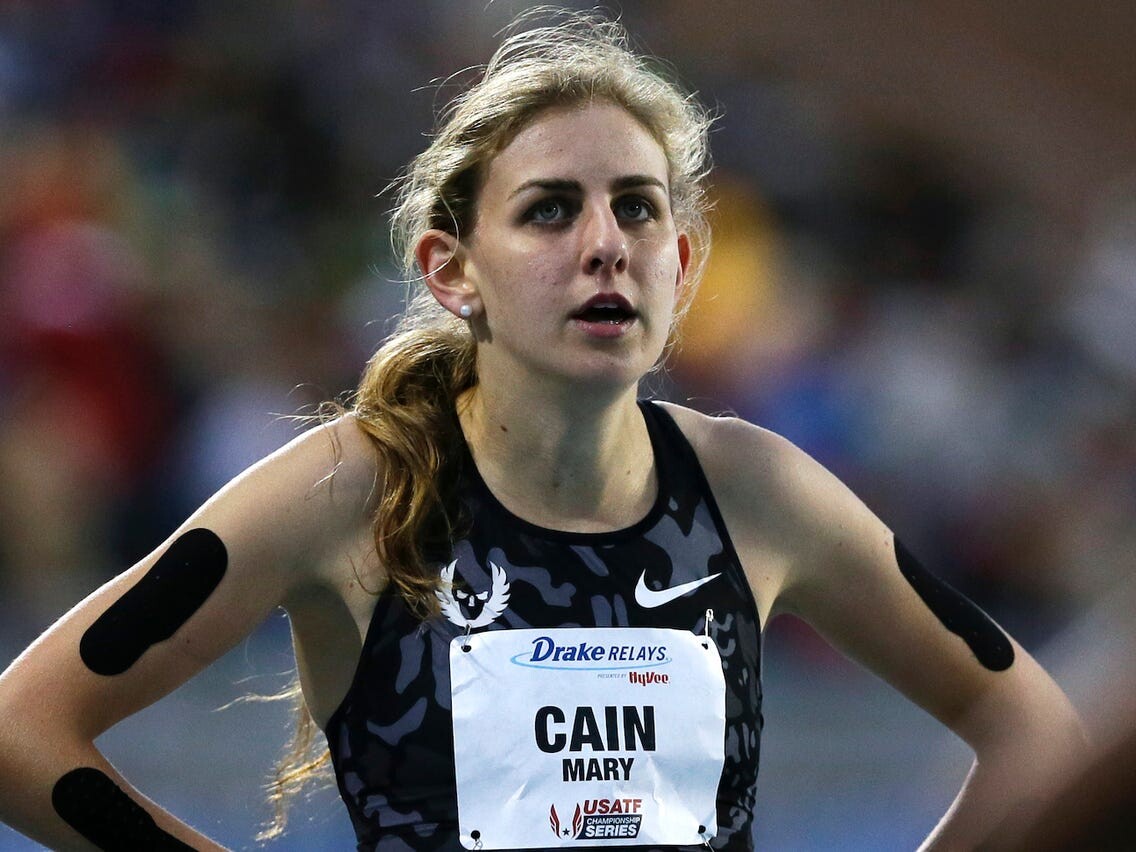
McCall added: “Nike was letting Alberto weight-shame women, objectify their bodies, and ignore their health and wellbeing as part of its culture. This was a systemic and pervasive issue. And they did it for their own gratification and profit.”
Nike athletes generally sign non-disclosure statements that strictly prohibit them from revealing any sensitive corporate secrets. Cain smashed the Nike code of silence two years ago when The New York Times published her wrenching account of her years at Nike.
Due in part to a protracted series of injuries, Cain never lived up to her superstar-in-the-making expectations. But when she was 16, after a brilliant high school running career, she was a hot commodity in distance running circles.
In 2012, she opted to skip college and go straight to Beaverton to run for Salazar. Salazar, himself a legendary runner, helped found the Nike Oregon Project to make American distance runners competitive with the rest of the world.
Salazar has had some big successes, particularly with Galen Rupp, the Portland kid who has become one of the world’s best marathoners. On Aug. 5, 2012, two Salazar athletes — Mo Farah and Rupp — finished one-two in the 10,000 at the Olympic Games in London.
His program also has been dogged by allegations that he pushed the use of performance-enhancing drugs.
The Nike Oregon Project was disbanded in 2019 after the U.S. Anti-Doping Agency accused Salazar of three violations. The agency banned him from the sport for four years.
Salazar appealed to the Court for Arbitration for Sport. Last month, the court upheld Salazar’s ban from the sport and some of USADA’s findings. It ruled that Salazar attempted an “intentional and orchestrated scheme to mislead” anti-doping investigators when he tampered with evidence.
The court reduced the duration of his ban from four to two years.
Salazar added: “Mary at times struggled to find and maintain her ideal performance and training weight.” Nike added that Cain had requested to be allowed back on the team after she left.
Salazar said this to Sports Illustrated:
My foremost goal as a coach was to promote athletic performance in a manner that supported the good health and well-being of all my athletes. On occasion, I may have made comments that were callous or insensitive over the course of years of helping my athletes through hard training. If any athlete was hurt by any comments that I have made, such an effect was entirely unintended, and I am sorry. I do dispute, however, the notion that any athlete suffered any abuse or gender discrimination while running for the Oregon Project.”
by Jeff Manning
Login to leave a comment
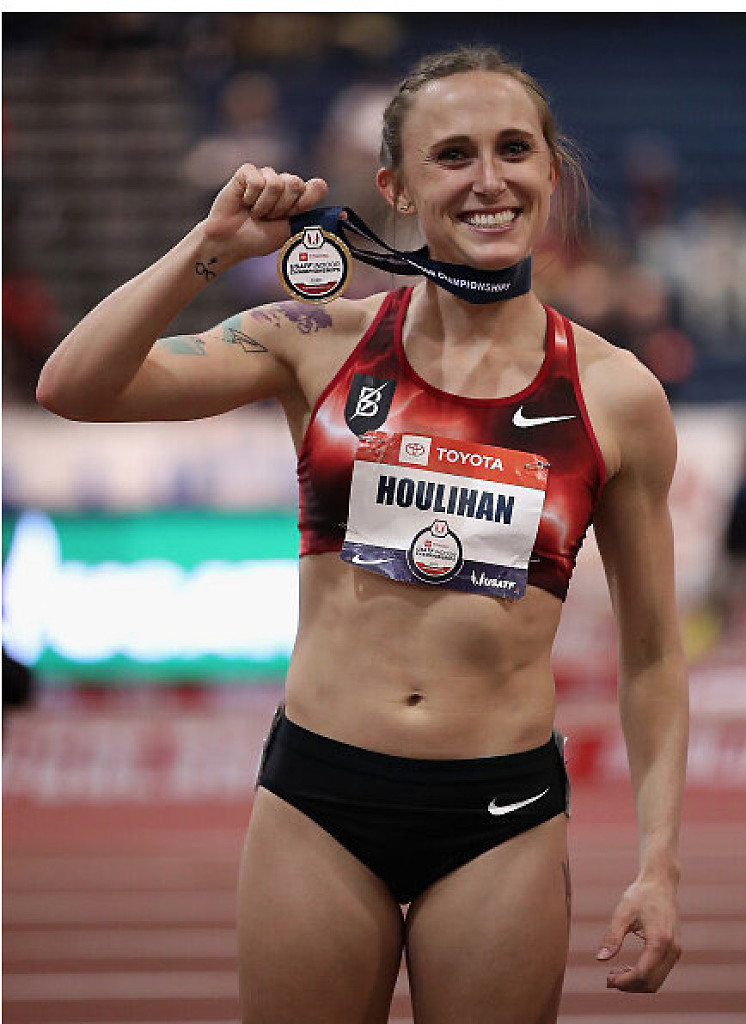
Time for Shelby Houlihan to come clean
Two things ought to happen now that the Court of Arbitration for Sport has issued a technically detailed but, in the end, common-sense ruling in the matter of Shelby Houlihan, the American distance runner, banning her for four years for nandrolone — through January 2025 — while thoroughly rejecting the ridiculous burrito defense.
One, Houlihan ought to come clean.

What most likely happened?
We don’t and won’t know until Houlihan admits whatever it was. But, see paragraph 128 of this very thorough 44-page ruling, citing the head of the Montreal anti-doping lab, Christiane Ayotte, who notes that oral precursors of nandrolone can readily be bought on the internet, even on Amazon, and that a chemical signature very much like the one Houlihan tested for was obtained five years ago when that very lab tested a product it had bought called “Nor-Andro Max.â€
Two, all the journalistic sheep who wanted to believe, who maybe still want to believe despite the overwhelming evidence against Houlihan, that there was no way, just no way, a white American distance runner affiliated with the Bowerman Track Club could test positive — all these people, and the readers they misled, ought to take a crash course in Doping 101 and the things people will say and do, meaning anything and everything, to avoid getting busted.
This entire saga, truthfully, has been pathetic.
This burrito defense has, from the get-go, stretched the bounds of credulity, and anyone who bought it — even for a second — needs to undergo a real-world moron test.
Do you also believe pigs can fly? (‘Pigs’ used advisedly here.) Do you think Abraham Lincoln is a vampire slayer? Are you super-confident you can beat up a grizzly bear?
Almost every single facet of Houlihan’s defense was — is — absurd.
To be clear: not blaming Houlihan’s lawyers for aggressively scheming up any and every avenue possible. That’s what they’re there for.
But the three-judge panel went to great length — again, 44 pages — to refute, carefully, virtually everything about it.
For instance:
Houlihan took a lie detector test.
She was asked, did you at any time knowingly ingest nandrolone? And answered no. She was also asked, did you intentionally ingest the drug nandrolone? And said, no.
But as the panel pointed out, here’s what she wasn’t asked: did you take doping substances at the material time?
Houlihan also submitted to hair analysis. All involved agreed that it proved that nandrolone injections could be excluded. But, the panel found, that analysis failed to take into account oral (so we’re all on the same page here, something you eat or drink) precursors of nandrolone, such as “19-nor-DHEA†and “nor-Andro.â€
Which is why it boggles the mind, truly, that an outlet such as Women’s Running would, in the second paragraph of its account of this ruling, prattle on this way:
“CAS decided that although Houlihan was a credible witness and brought ‘compelling character witness evidence in support of her defense,’ she failed to establish the source of the nandrolone that was detected in her urine.â€
This is the second paragraph?!
Who cares if Shelby Houlihan is or is not a nice person and can or cannot get through a lie detector when asked certain questions? That’s all but irrelevant when it comes to the science in this case. As for her “compelling character witness evidence?†Ha! That’s a complete misread of what is what. Offering statements or testifying on her behalf were, among others, her former boyfriend, Matthew Centrowitz, gold medalist in the men’s 1500 at the Rio 2016 Olympics, Courtney Frerichs, the surprise silver medalist in the women’s steeplechase a few weeks ago in Tokyo, and Karissa Schweizer, who competed in Tokyo in both the women’s 5k (11th) and 10k (12th), and if you don’t think the Athletics Integrity Unit took careful observation of who was in Houlihan’s inner circle, maybe you seriously do believe pigs can fly.
The first paragraph of the Women’s Running story, what in journalism circles is called the lede, also noted — accurately — the CAS observation that Houlihan’s explanation was “possible but unlikely.â€
As if that were justification.
Everything in life is possible.
But here’s what CAS also said, and be mindful that the burden of proof in this matter was on Houlihan, and so if this were a math contest, she had to get to 50.1, but instead her defense “presupposes a cascade of factual and scientific improbabilities, which means that its composite probability is (very) close to zero.â€
Herewith the cascade:
— Houlihan ordered a carne asada — that is, a steak — burrito at a food truck in Beaverton, Oregon, near Portland. For her defense to work, she would have had to have been served and eaten pork.
The entire defense rests on this premise. A wrong order. Which she then ate. But that’s not all.
— Because the pork would have not been ‘normal’ pork but, per the Houlihan defense, uncastrated boar.
— Except uncastrated boar gets into the U.S. food chain through completely different channels than pork. So for uncastrated boar to end up in the normal pork food chain, the boar must have been a specimen with undescended testicles. This is called ‘cryptorchid.’
At this point, this is already verging on bizarre if not crazy stupid. Undescended testicled boar. OK.
— Except there’s more. The cryptorchid is (or was) of a “small minority of uncastrated boars that — in addition — must have had elevated androgen levels.†That would be “abnormal†for 6-month-old pigs.
— More still. The pork product Houlihan allegedly ate, despite ordering steak, is pork stomach. Follow along here because this gets into butcher-level stuff. When people eat pork stomach, that stomach is stripped of the inner layer; only the outer muscle remains. Houlihan’s assertion was that uncastrated boars have elevated androgen levels. Except those are not found in the muscle. Those levels are found only in specific parts — the kidneys, testes or liver. Pork stomach, the panel said, has one of the lowest androgen levels.
— More science. The nandrolone metabolite levels in Houlihan’s urine were two to three times higher than the highest values in the literature after eating much more significant quantities of mature (uncastrated) boar — a product different from the alleged cryptorchid in question, which would have been slaughtered at six months.
— Agriculturally speaking, the carbon isotope signature of the metabolite in her urine was “fundamentally inconsistent†with the largely corn-based diet of commercial pigs in the United States.
— Finally, an expert witness said the chance of a cryptorchid ending up in the normal supply chain in the United States is “far less†than one in 10,000.
Beyond which, see paragraph 104 on page 30, and come on now, there’s this:
“The fact that IBP/Tyson (the plant where the food truck in Beaverton bought the pork meat from) does not operate a boar kill plant. Thus, it is ‘near zero chance’ that any boar meat would get mixed with conventional fresh pork products.â€
All this leaves the obvious question, doesn’t it:
if the slaughterhouse doesn’t operate a boar kill plant, and thus there’s essentially no chance of boar meat getting in the food chain with pork other than, hmm, aliens dropping in from Galaxy Starchaser Nebula X9 to surreptitiously teleport it in there and so the food truck had a “near zero†chance of having boar meat on the night in question and, besides, Houlihan ordered a steak burrito, anyway — what really happened here?
Time for Shelby Houlihan to come clean.
She likely will dodge this opportunity until after the Swiss Federal Tribunal issues the final no-go — understand that the SFT takes up procedural matters, not substantive, so her chance of success there is, again, “near zero†— but she would do the right thing, now, by coming clean.
Time, too, for her supporters, defenders and enablers to see the light. It’s tough when your purported heroes get tagged for doping. But before all of you go out and buy Floyd Landis’ book about how he didn’t cheat to win the Tour de France — oops.
Some of us have been down this road before. This burrito defense — this was creative, indeed. But that didn’t make it any smarter, or better.
Pigs don’t fly. That’s the truth.
Login to leave a comment
Caster Semenya's lawyers demand World Athletics drop controversial testosterone rules that forced South African to abandon her attempts to defend her 800m Olympics Title
Caster Semenya's laywers have fresh hope that World Athletics' controversial testosterone laws will be ditched after the governing body's scientists admitted the findings that helped trigger the rules 'could have been misleading'.
Semenya was not able to defend her double Olympic 800m title in the Tokyo Games due to rules prohibiting athletes with differences of sexual development from competing unless they take hormone-lowering medication.
World Athletics are now facing calls to scrap the regulations after their scientists admitted some findings were 'on a lower level of evidence'.
The 2017 findings noted a performance increase in females with high testosterone levels.
But the British Journal of Sports Medicine has now released a 'correction' to the findings, leading campaigners to argue the rules should be ditched.
In the new report, Stephane Bermon, director of World Athletics' Health and Science Department, and his predecessor Pierre-Yves Garnier, wrote: 'To be explicit, there is no confirmatory evidence for causality in the observed relationships reported. We acknowledge that our 2017 study was exploratory.'
They add: 'With this in mind, we recognise that statements in the paper could have been misleading by implying a causal inference.
'Specifically, 'Female athletes with high fT [testosterone] levels have a significant competitive advantage over those with low fT in 400 m, 400 m hurdles, 800 m, hammer throw, and pole vault.'
'This statement should be amended to: 'High fT levels in female athletes were associated with higher athletic performance over those with low fT in 400 m, 400 m hurdles, 800 m, hammer throw, and pole vault.'
'This is very significant new information,' Semenya's lawyer Gregory Nott, of Norton Rose Fulbright, told Telegraph Sport.
'We are in the midst of the European Court of Human Rights case and will be discussing with our London QC and the whole legal team how to introduce the information into the proceedings.
'World Athletics have recently given notice of their wish to intervene in the European Court of Human Rights proceedings and we would hope that they will now support setting aside the regulations.
'It is more than surprising that World Athletics did not reveal this evidence before the recent Tokyo Olympics and allow Caster to defend her 800m title.'
Semenya spoke of her disappointment at not being able to compete in Tokyo after losing her appeal to Switzerland's Federal Supreme Court in September last year.
'I am very disappointed. I refuse to let World Athletics drug me or stop me from being who I am,' she said.
by Lewis Steele
Login to leave a comment
Alberto Salazar gets lifetime ban for sexual, emotional misconduct
Alberto Salazar, the 1982 Boston Marathon champion from Wayland and once a prominent Nike coach of some of the world’s top distance runners, was permanently barred from participating in track and field Monday by the US Center for SafeSport, which cited Salazar for sexual and emotional misconduct.
Salazar, 62, has 10 business days to request an appeal through arbitration of the ruling made by SafeSport, a nonprofit founded in 2017 to protect athletes from sexual, physical and emotional abuse.
The decision Monday was the latest stage of a humiliating fall for Salazar, who was suspended for four years in September 2019 by the United States Anti-Doping Agency for violating rules governing banned substances. He is appealing that suspension to the Court of Arbitration for Sport, the Swiss-based equivalent of a Supreme Court for international sports.
The SafeSport charges were not detailed Monday. In January 2020, the organization temporarily barred Salazar from participating in track and field after elite female runners who formerly trained under him, including Mary Cain, Amy Yoder Begley and Kara Goucher, described what they said were years of psychological and verbal abuse by the coach.
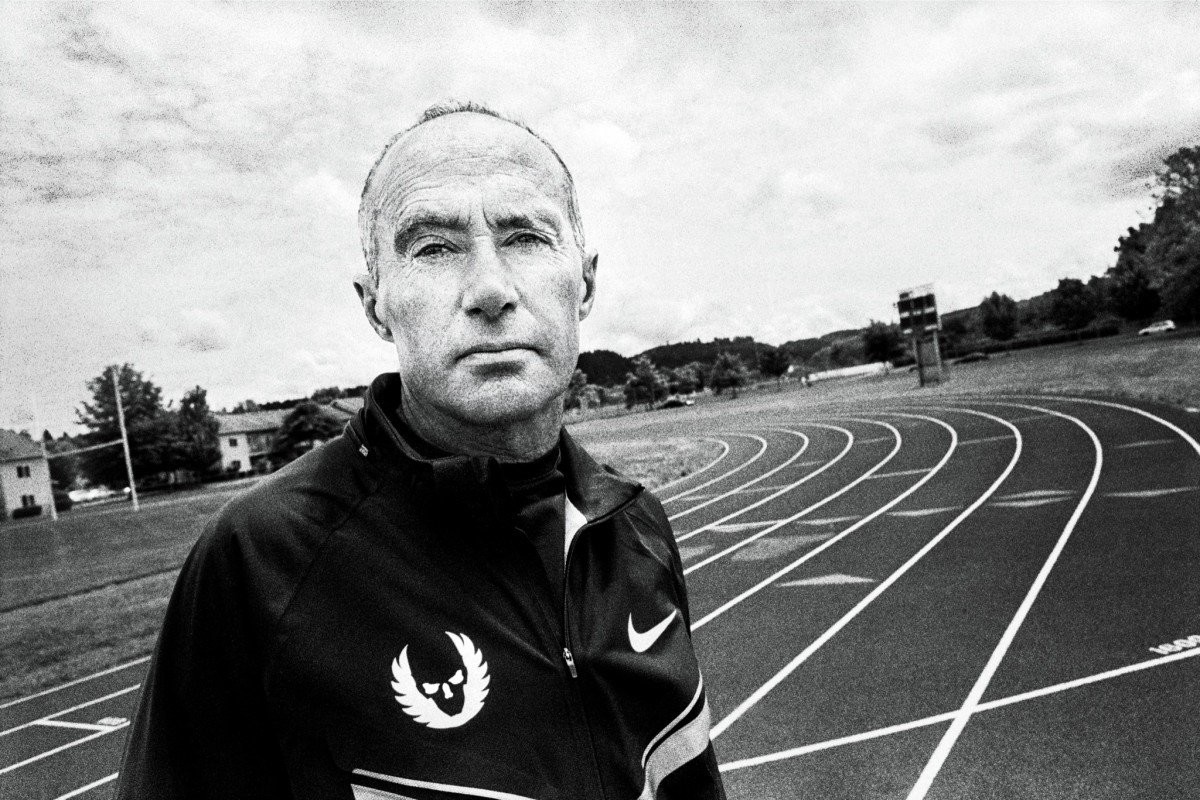
Neither Salazar nor his lawyer immediately responded to requests for comment Monday. Salazar has previously denied all accusations of misconduct.
In a 2019 video produced by the Opinion department of The New York Times, Cain, a former high school phenom from New York who is now 25, accused Salazar of shaming her in front of others on the Nike Oregon Project team — which has since been disbanded — when she did not reach weight targets. She said that her low weight caused her to miss her period for three years, leading to lower levels of estrogen and five broken bones.
Cain also said that she had suicidal thoughts and had cut herself, but that no one at Nike “really did anything or said anything.”
Yoder Begley, a 2008 Olympian, tweeted in 2019 that she was removed from the Oregon Project after a disappointing showing in the 10,000 meters at the 2011 United States track and field championships.
“I was told I was too fat and ‘had the biggest butt on the starting line,’ " Yoder Begley wrote.
Goucher, another American Olympian who once trained with the Nike Oregon Project, told The Times that after being cooked meager meals by an assistant coach, she often ate more in the privacy of her room, nervous that she would be heard opening the wrappers of energy bars she furtively consumed.
Salazar replied to Cain’s 2019 video in a statement to The Oregonian newspaper: “Neither of her parents nor Mary raised any of the issues that she now suggests occurred while I was coaching her. To be clear, I never encouraged her, or worse yet, shamed her, to maintain an unhealthy weight.”
Cain acknowledged at the time that she had sought to train again with Salazar, seeking an apology, closure and his approval. But she described their relationship as poisonous, saying, “I was the victim of an abusive system, an abusive man.”
Salazar told Sports Illustrated in 2019 that his “foremost goal” was to promote athletic performance in line with the good health and well-being of his athletes, but he acknowledged, “On occasion, I may have made comments that were callous or insensitive.”
by Jere Longman
Login to leave a comment

Record-holding British medal Oliver Dustin hope could be banned from Tokyo 2020 Olympic Games after cocaine is found in in-competition sample
A top British runner who broke a record held by World Athletics boss and two-time Olympic champ Sebastian Coe last month has reportedly provided a drugs test sample containing small traces of cocaine, threatening his Tokyo place.
Briefly the holder of the world-leading outdoor 800m time for the year after breaking Coe's record for under-23s, Oliver Dustin booked his place on the British team for Tokyo 2020 with another impressive run in Manchester less than three weeks ago.

The 20-year-old has not raced since and has consulted lawyers after returning an adverse analytical finding for traces of a cocaine metabolite following an in-competition test in France, according to The Times.
French anti-doping authorities are said to be managing the matter, with a claim that the sample has been contaminated one of the options open to Dustin in what would be a long process, the report said.
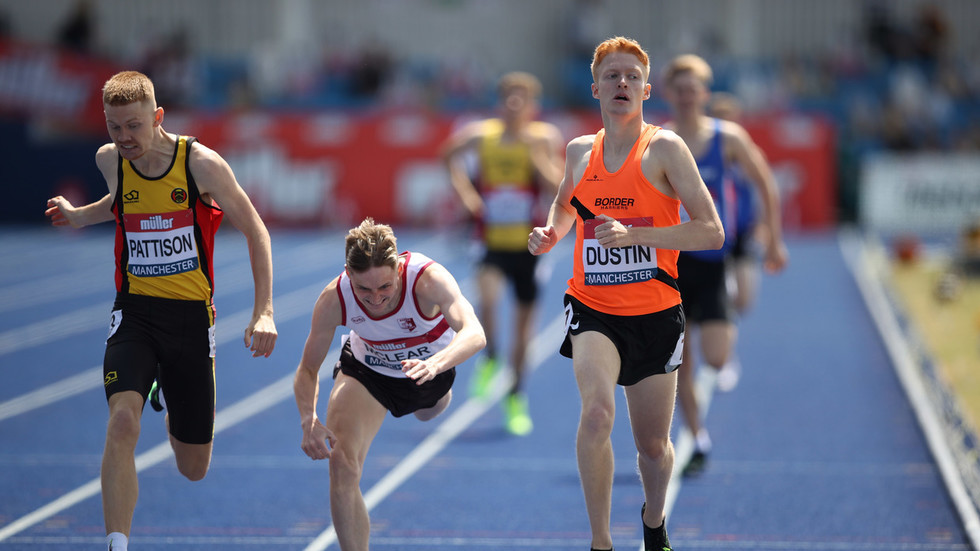
Dustin could still compete at the olympics at the Olympics if he accepts responsibility, can prove the cocaine was ingested out of competition and was then ordered to serve a one-month ban while agreeing to take an education course.
The latest World Anti-Doping Agency (WADA) rules say: “If the athlete can establish that any ingestion or use occurred out-of-competition and was unrelated to sport performance, then the period of ineligibility shall be three months' ineligibility.
“In addition, the period of ineligibility calculated... may be reduced to one month if the athlete or other person satisfactorily completes a Substance of Abuse treatment program approved by the Anti-Doping Organization with Results Management responsibility.”
America's top female sprinter, Sha’Carri Richardson, received a four-week ban earlier this month after testing positive for cannabis, keeping her out of the Olympics because her positive test emerged after she won her country's trials over 100m.
The Times said that UK Athletics had declined to comment, while Dustin’s agent, Stephen Haas, described the news of a positive test as “not factual at this point” and offered no further comment.
Writing after securing his place at the Olympics with a second-placed finish after a thriller in Manchester, the European Athletics U20 Championships gold medalist in 2019 told his thousands of social media followers: "See you in Tokyo.
by Olympics
Login to leave a comment
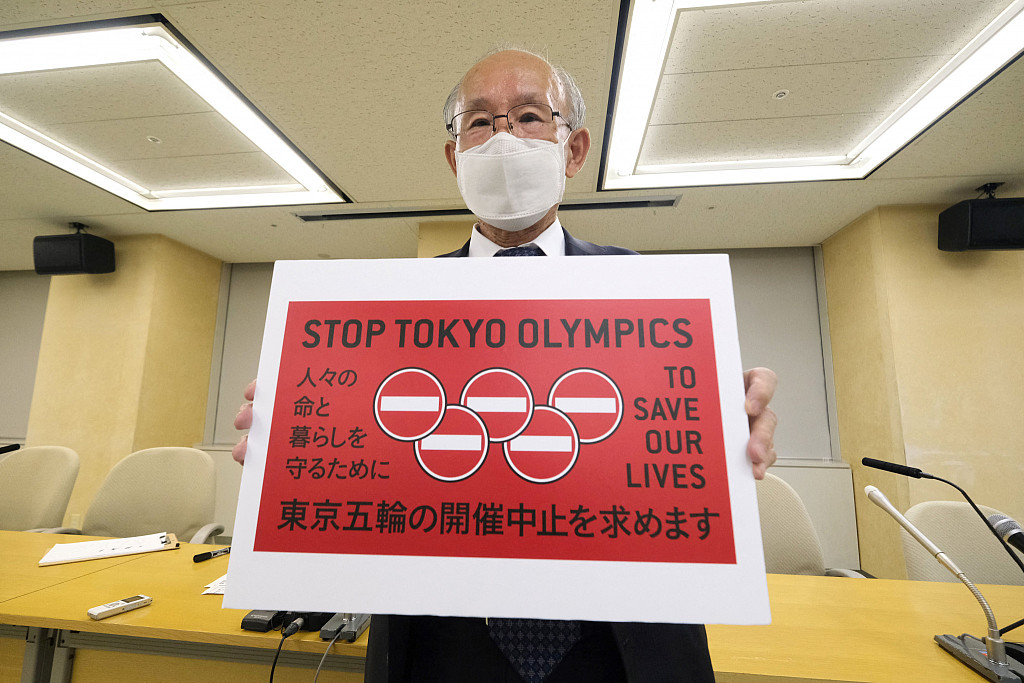
Petition to cancel Tokyo 2020 Olympics submitted with 350,000 signatures
A petition calling for the cancellation of the Tokyo 2020 Olympic Games has been submitted to organisers, having reached 350,000 signatures in just nine days.
The submission of the petition comes amid rising COVID-19 cases in Japan, while concerns over the fate of the Games have grown due to Japan's low vaccination rate, the spread of new variants and the state of emergency in place in Tokyo and other prefectures.

"Stop Tokyo Olympics" campaign organiser and former Tokyo Governor candidate Kenji Utsunomiya said the Games, due to open on July 23, should only be held when Japan can welcome athletes and foreign visitors with little restriction.
"We are not in that situation and therefore the Games should be cancelled," Utsunomiya said.
"Precious medical resources would need to be diverted to the Olympics if it's held."
Utsunomiya, who is also a lawyer, finished second in last year's Tokyo gubernatorial election behind incumbent Yuriko Koike after winning over 800,000 votes.
The petition was also submitted to Tokyo Governor Koike.
Tokyo is to remain under a state of emergency until at least the end of the month due to rising COVID-19 cases.
Japan recorded 7,058 new cases of COVID-19 yesterday, close to the daily high of 7,855 from January 9.
Another 101 deaths related to the virus were also reported in the Olympic and Paralympic host country yesterday.
When asked about the petition, Koike said she would work towards a "safe and secure" Olympics.
"Though there is a global pandemic, it is important to hold safe and secure Tokyo 2020 Games," she said, according to Reuters.
High-profile Japanese athletes like Masters golf champion Hideki Matsuyama and women's tennis great Naomi Osaka have expressed their concerns with the Olympics going ahead during the COVID-19 pandemic.
To date, Japan has reported over 658,000 COVID-19 cases, resulting in the deaths of at least 11,165 people.
Login to leave a comment
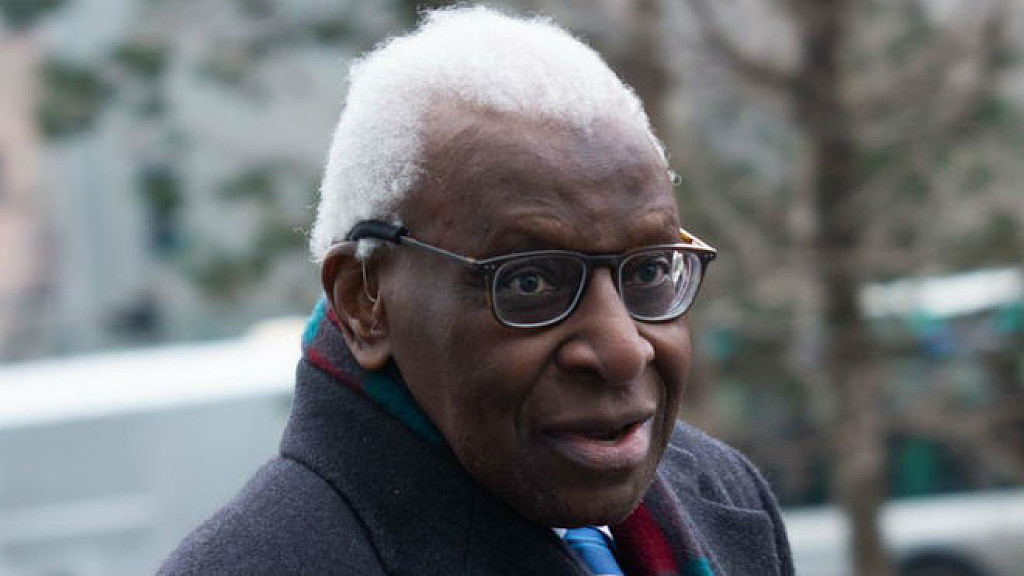
Disgraced former world athletics head Lamine Diack returned home to Senegal after released
Disgraced former world athletics head Lamine Diack returned home to Senegal late Monday after a local soccer club paid a bond of just over $600,000 to allow him to leave France.
Diack, the president of world athletics from 1999-2015, was convicted in Paris in September on multiple charges of corruption during his tenure, some of it related to the Russian doping scandal. He was sentenced to four years in prison, with two of those years suspended.

But French justice authorities said Diack, who is 87, was unlikely to spend any time in jail because of his age. He had been held under house arrest in France since 2015.
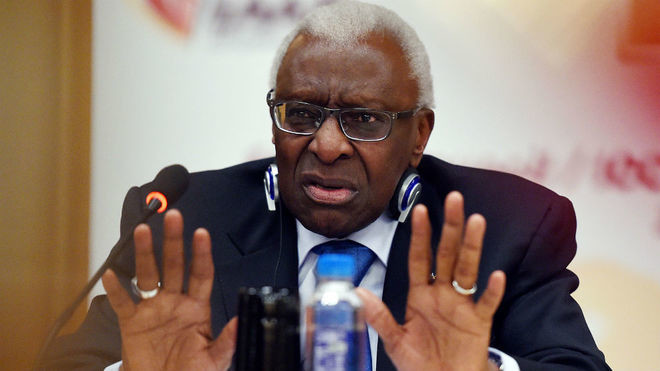
The bond is related to a separate case against him.
Simon Ndiaye, a lawyer for Diack, said he was allowed to leave France after posting bail in a case involving alleged bribery in the buildup to the vote for the host city for the 2016 Olympics.
Diack was handed preliminary charges in that case and his passport was confiscated, but a French judge lifted the ban on him leaving the country on condition he pay 500,000 euros and continue to answer court summons, Ndiaye told The Associated Press.
"He was relieved, moved and happy to be able to return to his country and his family,'' Ndiaye said. "But it remains a legal case that affects him. He finds it unfair. He continues to deny wrongdoing in both cases.''
Diack appeared frail as he walked through the airport after arriving in Dakar. He wore a smart blue suit but used a walking stick and was helped by a family member. He did not make any comments.
The bond money was raised by a soccer club in Senegal that Diack once led, according to Ndiaye and an official with the club. Youssou Dial, vice president in charge of finance at Jaraaf de Dakar, said the club raised the money by selling off some of its properties.
Diack was president of Jaraaf in the 1970s and in the late 1990s and 2000s.
His conviction in France last year marked a spectacular fall from grace for a man who was head of World Athletics, then known as the IAAF, for nearly two decades and was an influential figure in the world of Olympic sports.
Diack was found guilty of being part of a scheme that squeezed 3.2 million euros ($3.8 million) in bribes out of Russian athletes suspected of doping. The hush money allowed the athletes, who should have been suspended, to keep competing. Diack was also found guilty on breach of trust charges but acquitted of money laundering.
His son, Papa Massata Diack, who worked as an IAAF marketing consultant, was also convicted and was sentenced to five years in jail in his absence. The judge said $15 million was funneled to the younger Diack's companies from various contracts negotiated by the IAAF while his father was in charge.
Papa Massata Diack lives in Senegal, which refused to extradite him to France for the trial. Both Diacks have appealed their convictions.
Four others were found guilty on charges related to corruption or receiving bribes in the scandal. They were former IAAF treasurer Valentin Balakhnichev, former IAAF doping official Gabriel Dolle, former IAAF lawyer Habib Cisse, and Russian coach Alexei Melnikov.
by Associated Press
Login to leave a comment
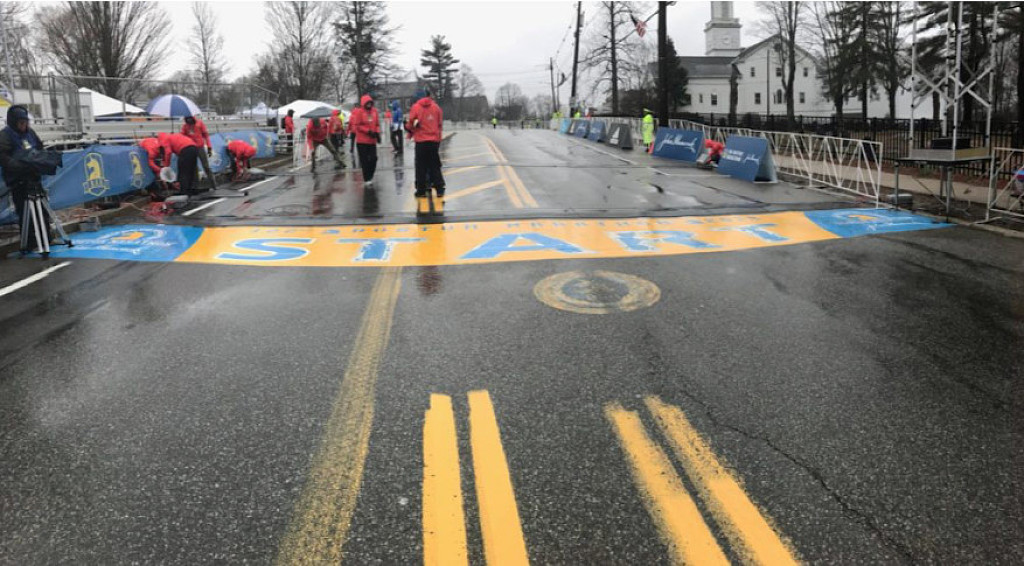
U.S. Supreme Court to reconsider death penalty in Boston bomber case
It was announced on Monday that the U.S. Supreme Court will review the case of Dzhokhar Tsarnaev, one of the two men who set off explosives at the finish line of the Boston Marathon in 2013. Tsarnaev, now 27, was convicted in 2015 and sentenced to death, but that decision was overturned by a federal appeals court in July 2020. Now, the Supreme Court will review the case once more, and Tsarnaev’s death sentence could be reinstated.
During his trial, Tsarnaev’s lawyers did not try to prove their client was innocent, and they openly accepted that he and his brother, Tamerlan, had detonated a pair of bombs at the marathon finish line. These explosions killed three people and injured hundreds of others.
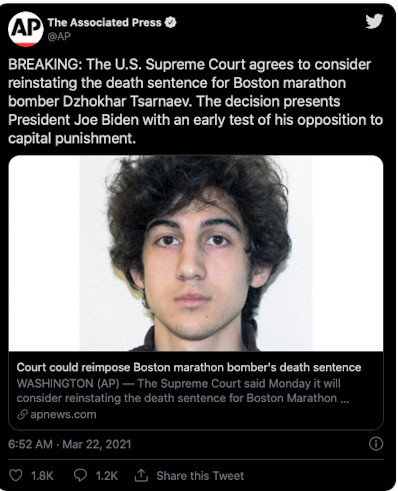
Instead of trying to prove his innocence, Tsarnaev’s lawyers simply argued that he was not as guilty as Tamerlan, whom the lawyers claimed to have orchestrated most of the attack. Tamerlan, who was 26 at the time, died a few days after the bombing in a shootout with police.
This approach did not work out for Tsarnaev’s team, and he was given the death penalty. This sentence was overturned, however, when a federal appeals court decided that the judge presiding over Tsarnaev’s original trial had not ensured (or at least not attempted to ensure) that the jury would be unbiased in reaching their verdict.
After the appeal, the court said Tsarnaev would still spend the rest of his life in prison for his “unspeakably brutal acts” in Boston in 2013. As of Monday, that is no longer necessarily Tsarnaev’s fate, and the Supreme Court is likely to hear his trial later in 2021.
by Running Magazine
Login to leave a comment
World Athletics Council opens Tokyo 2020 door for Russian athletes
World Athletics Council today agreed to reinstate the Authorised Neutral Athlete (ANA) scheme, suspended since last March, allowing individual Russian competitors to qualify for this summer’s scheduled Tokyo 2020 Games.
The scheme - which allows Russian athletes who meet anti-doping criteria to take part in international competition - was suspended in March last year following the latest scandal involving the Russian Athletics Federation (RusAF), which has been banned since November 2015 following the revelations of state-sponsored doping.
Rune Andersen, the World Athletics' Russia Taskforce chairman, said that Russian athletes would be able to apply for ANA status immediately, but there will be a cap of 10 athletes for the next Olympics and at World Athletics Championships.
He added that this was dependent on RusAF continuing to satisfy the requirements agreed for their eventual return.
RusAF faced expulsion from World Athletics last year for obstructing an anti-doping investigation into world indoor high jump champion Danil Lysenko and failing to pay outstanding fines.
After missing its July 1 payment deadline RusAF stood on the brink, but a last-minute intervention by Russian Sports Minister Oleg Matytsin, who made an "unconditional" offer to pay the outstanding fine of $6.31 million (£4.52 million/€5.28 million), saved them.
On March 1 this year a final plan for the reinstatement of the RusAF was unanimously approved by the World Athletics Council following the recommendation of Andersen.
World Athletics President Sebastian Coe warned at the time that the initial approval was "not the end but the beginning of a long journey, with an incredible amount of work for RusAF to do to rebuild trust."
Reflecting upon the original creation of the ANA scheme earlier this month in a Sports Law Q&A podcast, Coe told British lawyer Jonathan Taylor: "I didn’t for all sorts of reasons want to visit the sins of the parents upon the children in our Russia challenge.
"What in simple terms does that mean?
"If I could identify clean athletes that were untainted but in a tainted system then my responsibility was to try and find a construct that would allow them to compete.
"That’s where we got our Authorised Neutral Athletes from, and many of them have maintained international competition in the last few years.
"They don’t have the panoply of uniforms and national anthems but most of them are just relieved to be competing."
One Russian track and field athlete was able to compete at the Rio 2016 Olympics under the recently instituted ANA scheme - long jumper Darya Klishina.
by Mike Rowbottom
Login to leave a comment
Sebastian Coe claims he went out of his way to keep competitive options open for differences in sexual development athletes
World Athletics President Sebastian Coe has defended the decision his Federation took over athletes with differences in sexual development (DSD), claiming he had sought to keep competitive options open in the female category even though a different alternative may have been open to him.
The World Athletics rules, which went into effect in 2019, cap athlete testosterone levels in women’s events from the 400 metres through the mile for athletes with DSD such as South Africa’s Olympic 800m champion Caster Semenya.
World Athletics said that no female athletes would have a level above the cap - five nanomoles per litre - unless they had a DSD or a tumour, and that in the case of athletes in the DSD category testosterone-suppressing medication would need to be taken in order to bring levels into the agreed range.
Semenya has lost appeals at the Court of Arbitration for Sport and the Federal Supreme Court of Switzerland against the World Athletics regulations over the past two years.
But earlier this month the South African Government’s Department of Sport, Arts and Culture pledged R12 million (£576,600/$803,000/€671,500) to help her appeal to the European Court of Human Rights against her testosterone ruling.
Speaking in a Sports Law Q&A podcast, Coe told British lawyer Jonathan Taylor: "If I’m being hard-nosed about it, if I’d stuck simply to the definitions around biology then I would probably have got support for preventing those athletes from competing at all in a female category,
"I didn’t want to do that."
Coe added: "So finding the right level of controllable testosterone over a period that allowed them to compete at those distances was for me absolutely in alignment with every philosophy, every principle that I went into the sport for.
"But then you get the next challenge about human rights.
"I am very acutely conscious of human rights.

"But the question I then ask is whose human rights are we talking about here?
"Are we talking about the millions of girls that enter athletics and want to feel that they are competing at least on a level footing, do I have a concern about them?
"Yes I do.
"But I also wanted to preserve that in a way that didn’t stigmatise and cause hurt to other athletes.
"It was a difficult decision to make.
"The easier decision would frankly have been to have sat there and done nothing at all, which if I’m being honest is where pretty much the most of sport has gone now.
"We have a similar challenge around transgender and our policy there was in large part driven and in alignment with what we have done around DSD.
"So you don’t come into any sport at the level I chose to get elected at and think you are going to make a lot of friends.
"You do have to do what you think is in the best interests of the sport and possibly that judgement is made way beyond the term that you are serving."
Referring to the decision taken in 2016 to ban Russian athletes competing in the wake of the scandal over organised doping in that country, Coe added: "I know that the approach we took about Russia didn’t leave us in a position of unalloyed joy with other sporting organisations out there.
"When we all went to the Rio Games you could feel the icy blast about what we’d done.
"But I don’t want athletics to ever be on the wrong side of history."
by Mike Rowbottom
Login to leave a comment
Semenya has received financial backing in bid to overturn World Athletics' ruling
Two-time Olympic gold medalist Caster Semenya has received a significant financial boost in her bid to overturn World Athletics' rules to allow her to compete in her favored events at this year’s Tokyo 2020 Games.
The South African Government’s Department of Sport, Arts and Culture has pledged R12 million (£576,600/$803,000/€671,500) to help Semenya appeal to the European Court of Human Rights against her testosterone ruling, according to newspaper The South African.
The funding pledge comes after Athletics South Africa asked the department to support Semenya’s quest to defend her 800 meters Olympic title.
Semenya is hoping to reverse a rule that would force her to take testosterone-suppressing medication to compete in her best events.
The World Athletics’ rules, which went into effect in 2019, cap athlete testosterone levels in women’s events from the 400m through the mile for athletes with differences of sexual development (DSD).
World Athletics said that no female athletes would have a level above the cap - five nanomoles per litre - unless they had a DSD or a tumor.

Semenya has lost appeals at the Court of Arbitration for Sport and the Federal Supreme Court of Switzerland against the World Athletics regulations over the past two years.
Last month South Africa’s Government confirmed it was planning to appeal to the European Court of Human Rights.
Yesterday, Sports Minister Nathi Mthethwa pledged to help fund Semenya’s efforts when answering parliamentary questions.
"The department has also been approached by the Department of International Relations and Co-operation (DIRCO) after they received a letter from the Commission for Gender Equality, which expressed interest in the matter and requested support from the Government to co-ordinate solidarity against World Athletics Female Athletes Classification Regulations," Mthethwa said in a report by The South African.
Mthethwa also said the Government had communicated with DIRCO to sponsor a resolution at the Human Rights Council.
"The hope that the appeal at the European Court of Human Rights may be successful is largely informed by this development and as a Government renowned for the protection and promotion of human rights, we should take an interest in the matter, moreover because our own shining star, Ms Semenya, is being targeted," added Mthethwa.
World Athletics has consistently said the rules are necessary to ensure female athletes can participate on fair and equal terms.
Semenya will be supported by a legal team led by Norton Rose Fulbright lawyers Gregory Nott and Patrick Bracher in Johannesburg, as well as Christina Dargham in Paris.
London based barristers Schona Jolly and Claire McCann, and Toronto-based lawyers James Bunting and Carlos Sayao are also part of Semenya’s legal team.
"I hope the European Court will put an end to the longstanding human rights violations by World Athletics against women athletes," said Semenya.
"All we ask is to be allowed to run free, for once and for all, as the strong and fearless women we are and have always been."
by Geoff Berkeley
Login to leave a comment
A Year After Ahmaud Arbery’s Death, Thousands of Miles Are Run in His Name
The #FinishTheRun event raised more than $226,000 for the 2:23 Foundation.
“A Black man should be able to go for a jog without fearing for his life,” President Joe Biden tweeted on Tuesday, February 23.
On that day, one year before, 25-year-old Ahmaud Arbery was shot and killed while out running in Brunswick, Georgia. Three men await trial for his murder. But last year it took more than two months for his murder to become national news—a fact that remains disturbing.
That’s just one reason why those who seek justice for Arbery are staying active, using their miles to continue to draw attention to his name and to the greater issue of racism and gun control in America.
Thousands of runners across the United States and the world, took part in #FinishTheRun, a week-long challenge asking runners to run 2.23 miles in Arbery’s name. Runners were finishing the run that Arbery could not.
The run was hosted by the 2:23 Foundation—a nonprofit created by Jason Vaughn, Arbery’s high school football coach, and Demetris Frazier, Arbery’s cousin, committed to fighting systemic injustices. Proceeds of the challenge went toward a 2:23 Foundation scholarship fund that helps to provide young men and women the opportunity to become future lawyers, local leaders, policymakers, social engineers, and other social justice-based career paths.

The foundation had a goal to raise $223,000 by the end of the year, but it has already surpassed that goal, raising $226,000 after just the first day of the #FinishTheRun event. That total was significantly boosted by a donation of $22,300 from Saucony.
“Every dollar from this virtual run is going toward scholarships for black and brown people in our community,” the 2:23 Foundation relayed in a statement. The foundation’s credibility came under question, because the organization is not endorsed by Arbery’s mother. “It will be a managed, transparent fund that will include Mr. Arbery as a key decision maker on who receives the disbursements of those funds.”
Here are just some of the runners and groups that have run 2.23 miles in Arbery’s memory:
Running to Protest
The Running to Protest group was founded by filmmaker Coffey in the wake of the Black Lives Matter protests in the summer of 2020. The group joined forces with Everytown Athlete Council member and Olympian Race Imboden to host a 2.23-mile event; athletes ran while wearing masks through New York’s West Village, to honor Arbery and raise awareness for gun prevention.
“If you are Black, like Mr. Arbery, you are ten times more likely to be shot while you are running in the street,” Imboden told the crowd of about 100 runners. “Black Americans are disproportionally impacted by gun violence. They experience nearly 10 times the homicide rates, 15 times the gun assaults and three times the fatal police shootings of white Americans.”
Stay Home Stay Motivated
Stay Home Stay Motivated was created in March 2020 as a way to connect homes together in pursuit of wellness in all forms. New York-based Jenny Beaudry Westin, who created the group, did her miles on her Peloton, but encouraged the rest of the group to take part in their own way, virtually.
“We ran, walked, and rode last year as a community in Ahmaud's memory and as our community has grown, there was an even bigger opportunity this year to honor his memory, keep the conversation going, and honor the importance of wellness across the Black community,” Westin said.
Antiracist Run Club
The Bay area-based group, formerly known as SF Runners for Equality, uses running as a common denominator to enact change for today’s racial injustices.
“Ahmaud Arbery was murdered while out on a routine run, a hobby everyone in this group is passionate about,” Shelby Rhodes said. “We often compare the idea of long distance running to the work on Anti-Racism, and we'll keep fighting as a group.”
The group’s Ayako Sawanobori organized for 27 members to run virtually.
Black Runners of the GTA
“I am a solo runner and run alone in Toronto, Canada, so safety is on my mind a lot,” said Melanie Murzeau, who founded the group to bring Black runners of the Greater Toronto Area into the larger running community.
“The death of Admaud Abery was the driving force in me creating a virtual space to normalize and humanize diverse running and to fight against stereotypes and to have people address their own bias so other BIPOC solo runners feel included.”
Members ran virtually, with Murzeau encouraging them to stay informed: “I believe knowing the laws and policies is one way a BIPOC individual can advocate for themselves.”
Latinas Running
Through Latinas Running, Kim Rodriguez aims promote diversity and body positivity in running. Living in Georgia, like the late Arbery did, she encouraged her followers to run in his memory too.
“These deaths are not justifiable, but neither is our silence. It's on us to confront and dismantle systemic racism in America,” she posted. Rodriguez urges her followers to speak up, be an ally, donate and join virtual efforts possible. “Every little step matters.”
by Runner’s World
Login to leave a comment
Caster Semenya has filed an application to the European Court of Human Rights in a final bid to overturn rules preventing her from defending her Olympic 800m title
The double Olympic and three-time world champion last year saw her appeal to Switzerland’s supreme court dismissed against a Court of Arbitration for Sport ruling in 2019 that upheld controversial World Athletics rules for female runners with differences of sexual development (DSD).
Those rules prevent Semenya and other DSD athletes competing internationally at distances from 400 meters to the mile unless they lower their levels of testosterone through medication or surgery - something Semenya says she will not do.
On Thursday, the South African confirmed an application has now been filed to the European Court of Human Rights, as she continues to try different routes to have the regulations overturned following two appeal failures.
“I hope the European court will put an end to the longstanding human rights violations by World Athletics against women athletes,” said Semenya.

“All we ask is to be allowed to run free, for once and for all, as the strong and fearless women we are and have always been.”
Semenya’s team of lawyers, who span South Africa, France, Britain and Canada, said: “While the timeline of the application remains to be determined by the court, Caster remains ever hopeful that she will soon be allowed to return to the starting line in the 800m at international competition.
“Caster’s indomitable spirit continues to be a source of inspiration to all those fighting alongside her for the equality and dignity of women throughout the world.”
Even if the court disagrees with both the Court of Arbitration for Sport and Switzerland’s supreme court by ruling that World Athletics’ regulations should be overturned, it seems highly unlikely such a decision would be made before the upcoming Tokyo Games given the short time frame.
Last year, Semenya announced her intention to try and compete over 200m - a distance for which she would not need to take any medication - in Japan, although she ranked just 165th in the world in 2020 despite many leading athletes skipping the year due to the coronavirus pandemic.
Speaking when Semenya initially announced her intention to take the case to the European Court of Human Rights last year, World Athletics said: “For many years World Athletics has fought for and defended equal rights and opportunities for all women and girls in our sport today and in the future.
“Throughout this long battle, World Athletics has always maintained that its regulations are lawful and legitimate, and that they represent a reasonable, necessary and proportionate means of ensuring the rights of all female athletes to participate on fair and equal terms.
by Bem Bloom
Login to leave a comment

Rodchenkov Anti-Doping Act officially passed into law
The U.S. bill to criminalize doping has officially been passed into law despite objections from WADA
On December 4, the U.S. officially signed the Rodchenkov Anti-Doping Act into law. This new law will allow American prosecutors to investigate doping at international events in which Americans are participants, sponsors, or broadcasters. Violators will face up to 10 years in prison, as well as fines of $250,000 for individuals and $1 million for organizations.
This comes less than one month after the bill was passed through the U.S. Senate, amid heavy criticism from the World Anti-Doping Agency (WADA). In a statement released on November 17, the agency expressed its concern that some important elements of the Act may have unintended consequences, and that its extraterritorial nature might undermine the global fight against doping.
“No nation has ever before asserted criminal jurisdiction over doping offences that occurred outside its national borders – and for good reason,” the Agency said. It is likely to lead to overlapping laws in different jurisdictions that will compromise having a single set of anti-doping rules for all sports and all Anti-Doping Organizations under the World Anti-Doping Code (Code).”
Additionally, WADA wants to know why the act excludes large areas of U.S. sports, including college and professional leagues. These leagues consist of nearly half a million athletes and yet were removed from the bill without explanation.
Despite this controversy, the law has officially been passed. Some prominent voices in the fight against doping are considering this a victory, including Jim Walden, the lawyer representing Grigory Rodchenkov, the Russian whistle-blower for whom the act is named. Walden says that it is now up to the Department of Justice to cooperate with the U.S. Anti-Doping Agency (USADA) and international law enforcement partners to develop an effective program that creates zero tolerance for doping in sport.
“Dopers should be on clear notice: there is a new sheriff in town, so cheat at your own peril,” he said in a statement.
It is important to note that this law is aimed not at individuals who are cheating, but at larger doping schemes. Walden is considering the Rodchenkov Anti-Doping Act a monumental step in the fight for clean sport, and is hoping that other countries will partner with the U.S. on cross-border law enforcement to protect the rights of clean athletes and the integrity of sport.
by Running Magazine
Login to leave a comment

Two-time Olympic 800m champion Caster Semenya takes a new step in appeal
Two-time Olympic 800m champion Caster Semenya‘s lawyer said her team will take her case to the European Court of Human Rights, hoping to reverse a rule that would force her to take testosterone-suppressing measures to compete in her best events.
“We will be taking World Athletics to the European Court of Human Rights, and public support goes a long way to help show how the rules from World Athletics are against public interest,” Greg Nott said in a statement Tuesday. “With growing support from institutions and bodies across the globe, we remain hopeful that World Athletics will see the error it has made and reverse the prohibitive rules which restrict Ms. Semenya from competing.”

In the last two years, Semenya lost appeals through the Court of Arbitration for Sport and the Federal Supreme Court of Switzerland.
Semenya said she refused “to let World Athletics drug me or stop me from being who I am,” in a press release in September, after losing her Swiss court appeal. “Excluding female athletes or endangering our health solely because of our natural abilities puts World Athletics on the wrong side of history. I will continue to fight for the human rights of female athletes, both on the track and off the track, until we can all run free the way we were born. I know what is right and will do all I can to protect basic human rights, for young girls everywhere.”
The World Athletics rule, which went into effect in 2019, caps athlete testosterone levels in women’s events from the 400m through the mile for athletes with differences of sexual development (DSD). World Athletics said that no female athletes would have a level above the cap — five nanomoles per liter — unless they had a DSD or a tumor.
“Throughout this long battle, World Athletics has always maintained that its regulations are lawful and legitimate, and that they represent a fair, necessary and proportionate means of ensuring the rights of all female athletes to participate on fair and equal terms,” World Athletics said in a statement after the Swiss court ruling. “It has rejected the suggestion that they infringe any athlete’s human rights, including the right to dignity and the right to bodily integrity.”
Last March, Semenya announced she switched to the 200m, a distance outside of the new testosterone-cap rule, to pursue Tokyo Olympic qualification. Her personal-best 200m time is shy of automatic Olympic qualification.
Semenya is undefeated at 800m since the start of 2016. She and the other two Rio 800m medalists have said they are affected by the new rule.
by OlympicTalk
Login to leave a comment

lawyer of Caster Semenya is preparing to approach the European Court of Human Rights to challenge the ban
The lawyer of South Africa’s Olympic 800m champion Caster Semenya, barred from certain races unless she takes hormone suppressants, has told AFP he is preparing to approach the European Court of Human Rights to challenge the ban.
Two-time Olympic gold medalist Semenya has differences of sexual development (DSD), a condition that causes her body to produce elevated testosterone levels.
The World Athletics governing body in 2018 banned Semenya and other DSD athletes from races between 400 metres and a mile unless they take hormone-suppressing drugs.
Semenya, 29, unsuccessfully challenged those rules at the Court of Arbitration for Sport (CAS).
She then turned to Switzerland’s Supreme Court, which dismissed the appeal last month.
“It didn’t come as a complete surprise,” Semenya’s lawyer Gregory Nott said in an interview on Wednesday, noting that Swiss federal court cases were “very difficult to win”.
“As usual in Caster’s being, she took it very strongly and very well,” he recalled. “She is also up for further fighting.”
Nott said a legal team was preparing the paperwork to take the case before the European court (ECHR) — a process that would take “a few more months”.
Semenya would then decide whether to proceed or not, he added.
“We are merely the horse and she is the jockey, so we listen to what Caster has to say,” said Nott. “She has a mind of her own.”
In its judgement, the Swiss court concluded that the CAS decision “cannot be challenged”.
“Fairness in sport is a legitimate concern,” the court said, adding that the ECHR also attached “particular importance to the aspect of fair competition”.
by Agence France Presse
Login to leave a comment
World Athletics incurred $17.4m loss in 2019, despite RusAF payment
World Athletics registered a loss of $17.42m (€14.71m/£13.58m) in 2019, further eating into its cash reserves in the year before the Covid-19 pandemic struck the sports industry.
Although revenues at the organisation increased by 13 per cent on the previous year to $51.1m, this was outstripped by expenditure for the same period, which stood at $67.8m.
The losses could have been worse had the organisation not received a one-off payment of $3.38m from the Russian Athletics Federation as part of the sanctions imposed on the country for breaching the sport’s anti-doping rules. The bottom line was also helped by expenditure being down 5.5 per cent on the previous year due to having held just three World Athletics Series events versus five in 2018.
The figures continue an unenviable sequence of losses for the organisation, leaving it with cash reserves of $34.3m at the end of its four-year funding cycle. This was a significant decrease on 2018, when reserves stood at $45.25m, and 2017, when they were declared at $64.8m, leaving the impression of a federation that is consistently spending beyond its means.
Broadcast rights revenue in 2019 totalled $14.7m, while commercial rights revenue was $18m.
A global federation would expect to balance the books over a four-year cycle but the organisation is also reported to have incurred a $20.3m loss in 2017, the year the World Athletics Championships were held in London.
SportBusiness understands the federation has historically aimed to never to exceed a $10m loss in any financial year, the equivalent of the amount it receives each year in funding from the International Olympic Committee.
The steep downward trajectory becomes more troubling given the accounts refer to the period before Covid-19 laid waste to sports events around the world and threatened the cash flows of most global sports federations.
The postponement of the Tokyo 2020 Olympics means the athletics federation is facing an additional one-year wait for the $40m it receives every quadrennial from the International Olympic Committee and it remains to be seen what kind of event will be delivered and if the IOC’s sponsors and broadcasters will demand rebates.
World Athletics is one of several IFs to receive a portion of $63m in emergency loans and donations from the IOC to see them through the crisis. The Association of Summer Olympic International Federations (ASOIF) said in June that it does not anticipate international federations will face bankruptcy thanks to a combination of financial support and reserves being put in place.
In its latest accounts, World Athletics make a commitment to stem the outflow of money from its reserves from 2020 onwards saying: “to safeguard the organisation, the new Executive Board has agreed that the organisation should hold reserves of $25m at all times, which amounts to approximately 50 per cent of the organisation’s annual revenue”.
In his introduction to the annual report World Athletics president Sebastian Coe suggests the organisation will try to achieve this by controlling its costs and striking new commercial partnerships.
“A root-and-branch review of all HQ expenditure during 2018 and 2019 led to HQ staff freezes and excess costs cut from across the organisation,” he said. “The benefits of many of these decisions will be seen from 2020 onwards.”
A World Athletics spokesperson said there had been no cuts to athlete programmes in 2020 and the organisation did not anticipate reducing spending in this area in 2021 or 2022. World Athletics said it delivered US$17.2m in new grant funding directly to member federations over the four-year cycle.
Dentsu renegotiations
Coe said a new sponsorship deal with Qatar National Bank and a renegotiation of the federations’ 10-year global media and marketing partnership with Japanese marketing agency Dentsu had helped to plug revenue shortfalls left by other sponsors leaving the sport.
As reported previously by SportBusiness, the original 10-year deal with Dentsu, agreed unilaterally by former president Lamine Diack, and covering the global media and marketing rights – excluding Japan and Europe – to the World Athletics Series, was the source of some consternation for those who inherited the deal at the organisation.
In a written exchange with a French judge investigating the previous regime, the federation’s own lawyer Régis Bergonzi complained that the money accruing to the global federation was calculated “solely on the money actually received by Dentsu” and there was effectively nothing in the contract to prevent the agency from declaring whatever it wanted when calculating the profit share.
The agreement also stipulated that profit share revenues were only payable to World Athletics at the end of the 10-year contract, harming the federation’s cash flows and adding to the sense that the contract that was heavily weighted in the agency’s favour. The deal is understood to have been the reason Olivier Gers resigned as chief executive of the organisation in 2018, citing its ‘pre-existing commercial framework’.
The new leadership at the governing body, mandated by the World Athletics Council, renegotiated the 2020-29 contract in 2018, sometime after Gers left, even though it was not due to expire until 2029. The latest accounts shed new light on this renegotiation and reveal that Dentsu now has to make a profit share payment every two years “based on the surplus realised each year by the event related to these rights”. This led to a recognition of a contract asset of $8.4m as of January 1, 2018 which was paid during the 2018 financial year.
The federation had also previously complained about the opacity of the original Dentsu agreement which prevented it from auditing the sums involved in the sponsorship and broadcast deals signed by the agency. But a World Athletics spokesperson said the federation had secured some significant concessions in the renegotiation.
“As part of the renegotiated deal with Dentsu, there is greater transparency as it relates to sponsorship incomes received. Unlike the past, there is no deduction for expenses incurred by Dentsu to source these partnerships from the profit share pool,” the spokesperson said. “Profit share calculation is based on contracted party revenues that are validated between Dentsu and ourselves. While not formally audited, the calculation is also reviewed by [accountants] EY before they sign off on our accounts.”
The report said the Japanese agency concluded 10-year renewals with TDK, Asics and Seiko at an uplift of 10 per cent to their previous deals and renewed the organisation’s equipment supplier partnership with Mondo through to 2023. TBS, a World Athletics official media partner, were also extended in 2019 for a further 10 years.
The publication of the financial report also marks a new chapter of transparency for World Athletics and the first occasion it has sought to comply with International Financial Reporting Standards. Previously, the media has been left to parse leaked financial statements such as the 2018 set of accounts revealed by the Sports Examiner in June this year.
Coe said the appointment of former DuPont executive Vineesh Kochhar as the organisation’s new chief financial officer would bring a new discipline of corporate financial management. He added that new chief executive Jon Ridgeon would also help to drive revenues and manage expenditure.
The president said of the results: “These 2019 consolidated financial accounts come at the end of a tough and turbulent four years for our sport. Four years of extensive reforms across the sport have been driven by our Council and implemented by our Member Federations, Area Associations and Head Office.
“I will not pretend this has been easy. Tough decisions have been taken by everyone at all levels of the sport, but I believe we have emerged stronger, more resilient and ready to build and grow the sport at every entry point.”
This story was corrected at 14.51 BST. The original story said World Athletics received $6.31m from RusAF in 2019 related to doping sanctions but the actual figure was $3.38m. The governing body received a further $6.31m from the Russian federation in August this year that will be recognised in next year’s accounts.
Login to leave a comment
Olympic champ Caster Semenya couldn`t defend 800m title in Tokyo without taking medication
Two-time Olympic champion Caster Semenya lost her long legal battle Tuesday against track and field's rules that limit female runners' naturally high testosterone levels.
Switzerland's supreme court said its judges dismissed Semenya's appeal against a Court of Arbitration for Sport ruling last year that upheld the rules drafted by track's governing body affecting female runners with differences of sex development.
The 71-page ruling means Semenya cannot defend her Olympic 800-meter title at the Tokyo Games next year — or compete at any top meets in distances from 400 metres to the mile — unless she agrees to lower her testosterone level through medication or surgery.
The 29-year-old South African repeatedly said she will not do that and reiterated her stance in a statement through her lawyers Tuesday.
"I am very disappointed by this ruling, but refuse to let World Athletics drug me or stop me from being who I am," Semenya said. "Excluding female athletes or endangering our health solely because of our natural abilities puts World Athletics on the wrong side of history."
The Swiss Federal Tribunal said Semenya's appeal "essentially alleges a violation of the prohibition of discrimination."
In a May 2019 verdict, the sport court's three judges had said in a 2-to-1 ruling the discrimination against Semenya was "necessary, reasonable and proportionate" to maintain fairness in women's track. Testosterone is a hormone that strengthens muscle tone and bone mass, and is a doping product if injected or ingested.
The panel of five federal judges said it was limited to examining "whether the CAS decision violates fundamental and widely recognized principles of public order. That is not the case."
Semenya's "guarantee of human dignity" was also not compromised by the CAS ruling, the judges decided.
"Implicated female athletes are free to refuse treatment to lower testosterone levels. The decision also does not aim to question in any way the female sex of implicated female athletes," the federal court said.
It's unclear what Semenya will choose to do next. She could compete in the 100 or 200 or at distances longer than the mile but she has never had the success in those events that she has had over two laps.
However, she had already switched her training this year to 200, hinting that she was prepared to lose in court.
Greg Nott, Semenya's long-time lawyer in South Africa, said her international team of lawyers was "considering the judgment and the options to challenge the findings in European and domestics courts."
Any appeal to the European Court of Human Rights would likely not receive a judgment until after the Tokyo Olympics open next July.
Tuesday's judgment also came at a financial cost to Semenya and South Africa's track federation, which joined her appeal. Each was ordered to pay 7,000 Swiss francs ($7,600 US) to the court and 8,000 Swiss francs ($8,700) toward World Athletics' legal costs.
by Graham Dunbar, Gerald Imray
Login to leave a comment

Tokyo 2020 Olympic Games
Fifty-six years after having organized the Olympic Games, the Japanese capital will be hosting a Summer edition for the second time, originally scheduled from July 24 to August 9, 2020, the games were postponed due to coronavirus outbreak, the postponed Tokyo Olympics will be held from July 23 to August 8 in 2021, according to the International Olympic Committee decision. ...
more...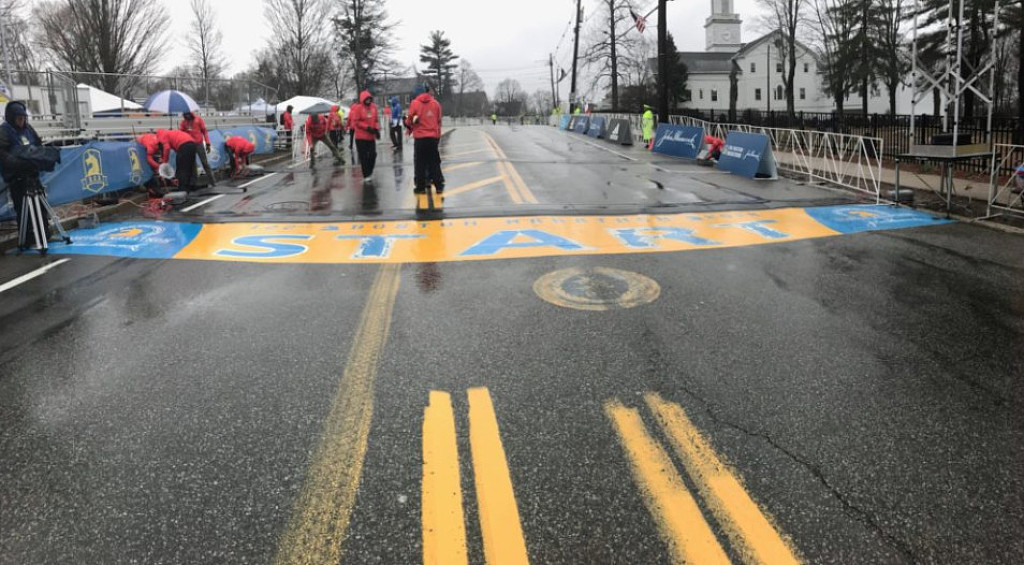
Boston bomber’s death sentence overturned
According to multiple reports, on Friday Justice O. Rogeriee Thompson of the 1st U.S. Circuit Court of Appeals in Boston overturned the death sentence meted out to Dzhokhar Tsarnaev, the now-27-year-old who was convicted for his part in the 2013 bombings at the Boston Marathon, which killed three people at the scene including eight-year-old Martin Richard, and injured hundreds of others. (Tsarnaev’s brother, Tamerlan, died in a shootout with police three days after the bombings, after killing MIT police officer Sean Collier.) Tsarnaev will face a new trial to determine what sentence he should receive.
The Globe and Mail reported today that Tsarnaev, who was 20 at the time of the bombings and whose trial concluded in 2015, is in prison in Florida, and quoted Thompson as saying, “Make no mistake: Dzhokhar will spend his remaining days locked up in prison, with the only matter remaining being whether he will die by execution.”

Some members of the public demonstrated against the death penalty outside the court on June 24, 2015, the day of Tsarnaev’s sentencing.
The report quotes Thompson saying the trial judge erred in accepting certain jury members’ claims that despite massive publicity surrounding the case, they could impartially assess the evidence presented. At the time, his lawyers argued the case should not have been heard in Boston.
The race was halted after the two bombs, contained in backpacks, detonated near the finish line on Boylston Street at 2:49 p.m. on April 15, 2013.
by Running Magazine
Login to leave a comment
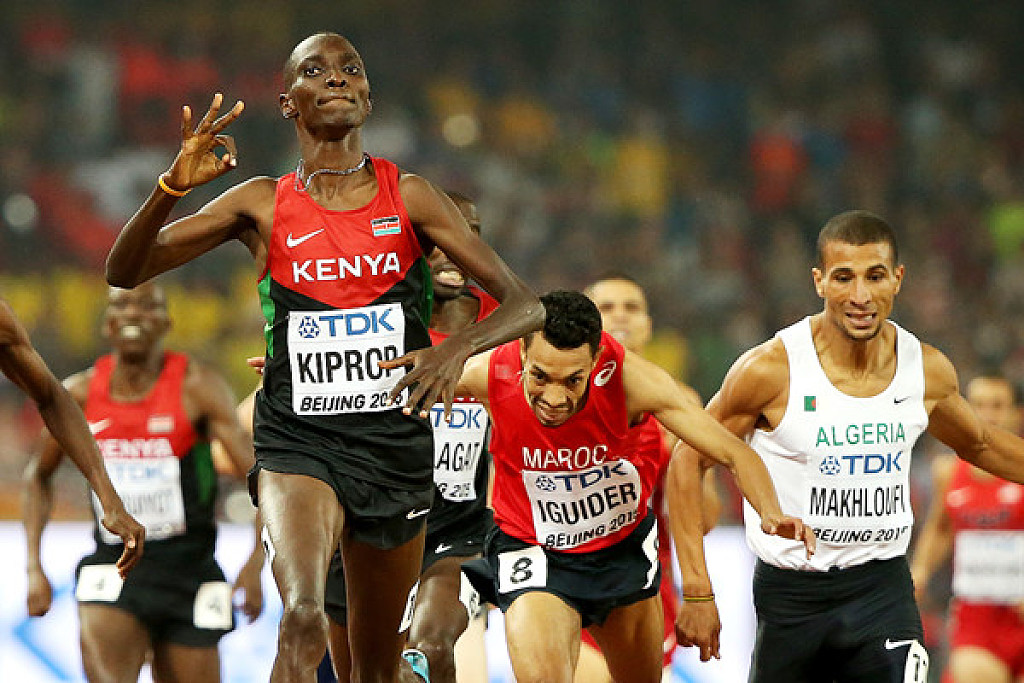
Kenya's Asbel Kiprop said, Someone badly wanted to bring me down, but Asbel promises to clean his name
His name Asbel means determined.
And determination is the driving force behind three-time World 1,500 meters champion Asbel Kiprop in his quest to unravel the truth behind his doping saga.
The 2008 Beijing Olympic Games 1,500m champion, who is now serving a four-year ban for a doping offence, believes getting to the bottom of the saga will enable him to leave a legacy in athletics, one that will not only expose what he terms “corrupt athletics systems” but will also enable him to defend the game and clean athletes.
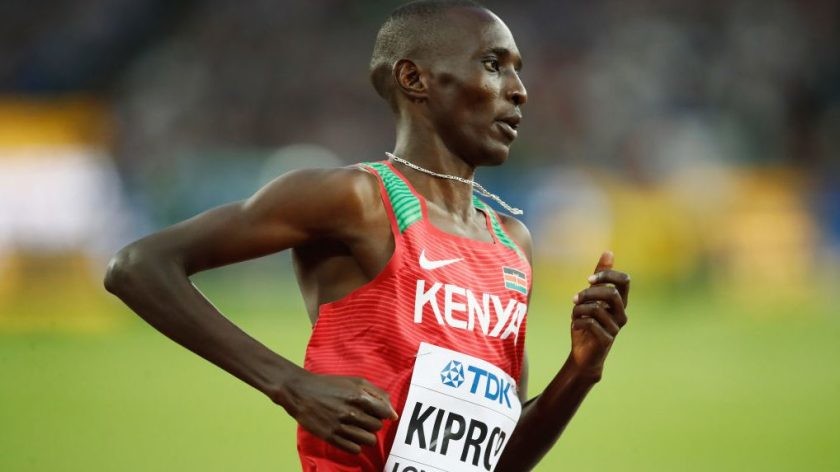
After clearing his name, former African Games and Africa 1,500m champion Kiprop, hopes to compete for Kenya again, perhaps at the 2022 World Championships in Oregon, or just for a short season.
Kiprop, 30, was provisionally suspended on May 2, 2018 after he tested positive for banned performance-enhancing substance Erythropoietin (EPO) in an out-of-competition test in November 2017.
Kiprop, the 2007 World Under-20 Cross Country champion, maintained his innocence but he was eventually found guilty of using EPO and was handed a four-year doping ban in April last year.
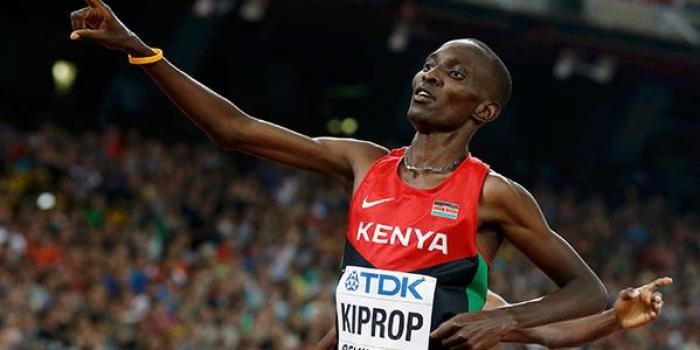
Kiprop will be eligible to compete by February 2022.
“I strongly believe there was an error somewhere that World Athletics and Athletes Integrity Unit (AIU) must really still look at and rectify. I won’t even be looking at compensation but to clear my name,” Kiprop told Grace Msalame in an NTV lifestyle show ‘Unscripted.’
“Even if I finish the ban, I will not relent in my quest to find the truth. I will not allow the truth to die even if it will take me a decade or more. I will fight to clear my name. I also don’t want to go down on record as being the person who ruined Kenya’s rich athletics heritage,” said Kiprop, who said that he is back in training read to make a return to athletics, his beloved sport.
Kiprop, who has hinted at hiring a European lawyer who is also a known scientist to pursue his case to the end, said he would like to hang his spikes honorably.
“I never planned to end my athletics career this way, and that is why I am so determined,” said Kiprop, who is now based at Police Training College, Kiganjo. “I know it will be hard for me to return strongly to the level where I was, but I have a point to prove since I still have the energy to run.”
Kiprop said he didn’t have enough money to appeal his four-year ban through his former lawyer Katwa Kigen.
“By the time I was ready to appeal my ban, AIU told me I was time-barred and that is why I believe there is hope with my new scientist lawyer,” the lanky athlete said.
But who would have loved to bring Kiprop down and end his illustrious athletics career?
Kiprop believes that from the way AIU handled his case, he is the victim of a complicated web. He believes someone wanted to fix him after he had defended his Rosa and Associati management from doping allegations back in 2014.
by Ayumba Ayodi
Login to leave a comment
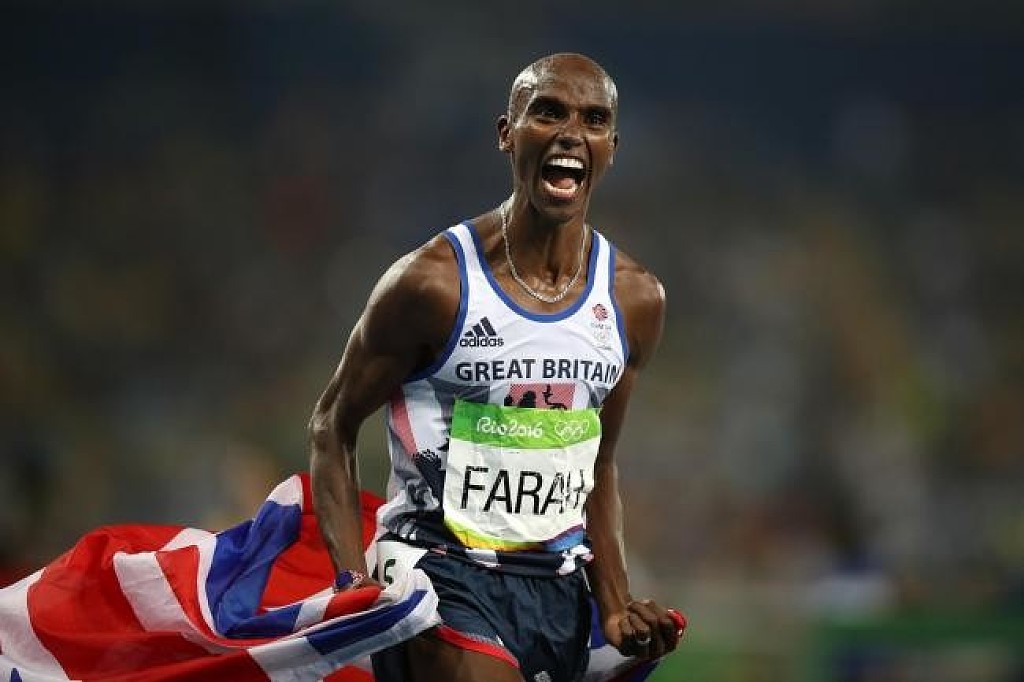
Mo Farah is facing fresh allegations that he repeatedly denied receiving a controversial supplement via injection to United States Anti-Doping Agency (Usada) officials ahead of the 2014 London Marathon
The allegations have been made after BBC Panorama claimed to have received new evidence regarding Farah’s use of L-carnitine, a performance-enhancing supplement that is legal in limited doses.
A documentary on the allegations will be screened on Monday night, in which it is claimed that Farah was injected with L-carnitine in April 2014, a week before he finished eighth in the London Marathon.
It is alleged that Farah was injected with the supplement by the then UK Athletics doctor Robin Chakraverty, who it appears failed to record it properly.
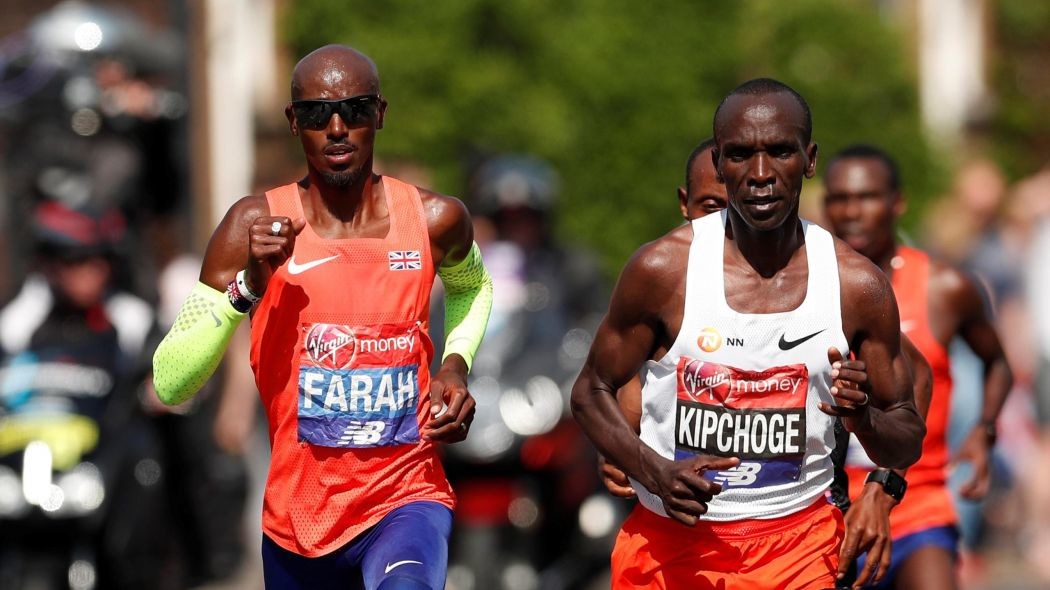
Farah and his team were summoned by the Digital, Culture, Media and Sport select committee to attend a Combatting Doping in Sport inquiry after the Sunday Times first revealed the L-carnitine infusion, where Dr Chakraverty insisted the volume administered to Farah was 13.5ml, well short of the 50ml legal limit. There is no evidence that any World Anti-Doping Agency (Wada) rules were broken.
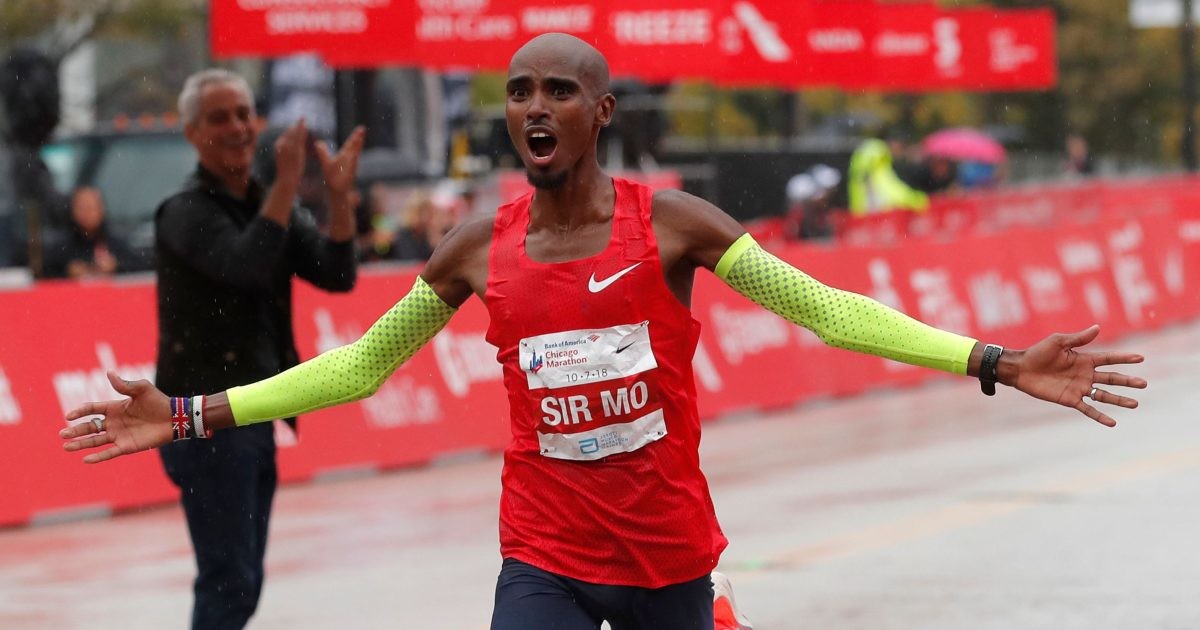
However, according to the BBC, Farah “repeatedly denied” having L-carnitine injected when quizzed by Usada officials who travelled to London in 2015 to speak to the Olympic champion’s team as part of their investigation into his disgraced former trainer Alberto Salazar, who has since been banned from the sport for four years for anti-doping offences.
Farah declined to speak to BBC Panorama regarding the new allegations, while Salazar has rejected the findings by US arbitrators and has appealed his four-year ban.
The investigation has also uncovered emails between Fudge, former UK Athletics performance director Neil Black and Dr Chakraverty in which they question whether the use of L-carnitine is in the “spirit of the sport”, and claimed they would have preferred to have trialled the use of the supplement first given it was not readily available in the UK in its concentrated form. As a result, Fudge had to travel to Switzerland to meet a contact of Salazar’s who was able to supply it for use just two days before the Marathon on 11 April.
In response to the BBC’s claims, Farah’s lawyers sent a letter that read: "It is not against (Wada rules) rules to take (L-carnitine) as a supplement within the right quantities.
"The fact some people might hold views as to whether this is within the 'spirit' of the sport is irrelevant.
"Mr Farah … is one of the most tested athletes in the UK, if not the world, and has been required to fill in numerous doping forms. He is a human being and not robot.
by Jack de Menezes
Login to leave a comment

TCS London Marathon
Since its inaugural edition on March 29, 1981, the TCS London Marathon has grown into one of the world's most prestigious road races, blending elite competition with an extraordinary charitable legacy. Founded by former Olympic champion and journalist Chris Brasher alongside Welsh athlete John Disley, the event has been staged every year and has been held in the spring annually...
more...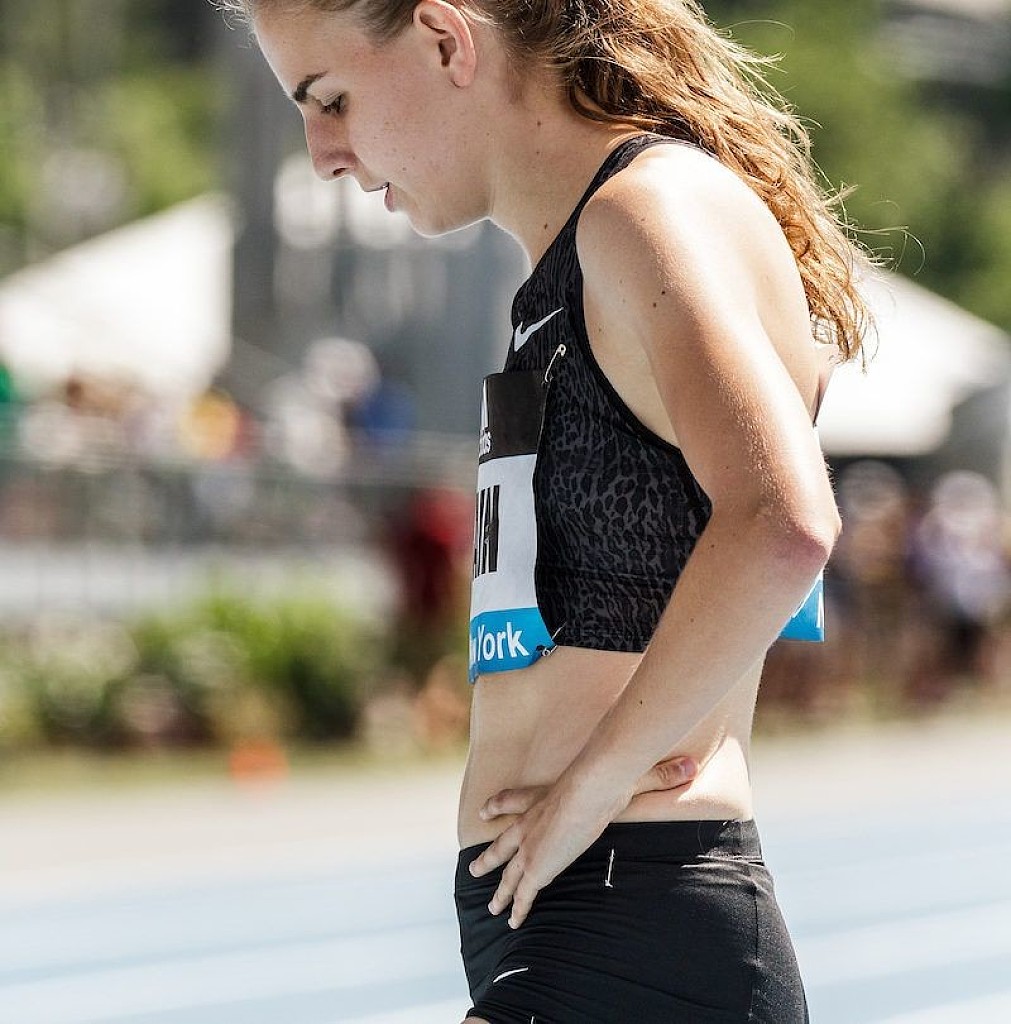
Nike’s Investigation of the Oregon Project is Complete
After Mary Cain alleged emotional abuse as an athlete under Alberto Salazar’s coaching, Nike conducted an internal probe of the professional running group.
Nike said on Monday that it is planning to take multiple actions to better support its female professional athletes, following an internal investigation into the now-defunct professional running group, the Oregon Project.
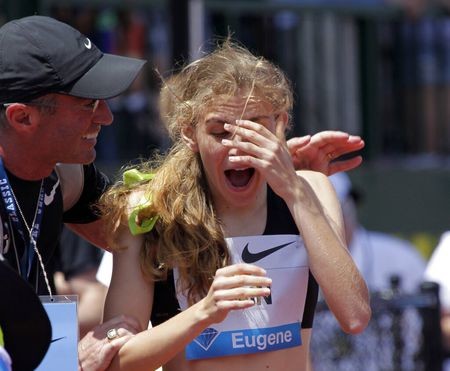
The company started the probe in November after former Oregon Project athlete Mary Cain went public with a New York Times op-ed piece about her experiences as a young track star under coach Alberto Salazar, who is currently serving a four-year ban from the sport for doping violations. (Salazar denies the charges and is appealing them—Nike said in an email to Women’s Running on Monday that “we support Alberto in his decision to appeal and wish him the full measure of due process that the rules require.”)
Cain joined the Oregon Project as a teen phenom, foregoing NCAA eligibility in 2013 to sign a pro contract with Nike. She moved from Bronxville, New York, to Portland, Oregon, at age 17, as a national high school record holder—the youngest athlete to ever represent the U.S. in a world-championships competition, where she raced the 1500 meters.
In the documentary, titled “I Was the Fastest Girl in America, Until I Joined Nike,” she described the pressure that Salazar and the all-male Oregon Project staff put on her to become thinner in order to perform better. Cain said she was weighed in front of her teammates and publicly shamed by Salazar for not hitting the goals he demanded—allegations that were later corroborated by former members of the group.
Now 23 years old, Cain said while training with the Oregon Project and during a period afterward, she suffered five stress fractures and didn’t menstruate for three years, which are symptoms of RED-S (relative energy deficiency in sport), a syndrome of insufficient caloric intake, with symptoms that can include excessive fatigue, amenorrhea, and decreased bone density. It can have serious long-term health effects like cardiovascular disease, infertility, and osteoporosis. Before she left Oregon to return home in 2015, she said she felt so isolated and trapped that she had suicidal thoughts and cut herself.

After the New York Times piece was published, Salazar denied any abuse or gender discrimination at the Oregon Project and added, “I may have made comments that were callous or insensitive over the course of years of helping my athletes through hard training.”
In the email to Women’s Running on Monday, Nike said the results of the internal investigation will not be made public, but “we are using the findings to identify areas where we can do better in supporting female athletes.” It was not confirmed who was involved in leading the investigation or who participated in it.
The initiatives that Nike identified include:
• Investing in scientific research into the impact of elite athlete training of girls and women
• Increasing the number of women coaches in sports
• Hiring a vice president of global women’s sports marketing in the coming weeks to have “strategic oversight” of Nike’s female athletes
• Creating an athlete think tank to help the company understand the opportunities and challenges faced by female athletes
• Partnering with Crisis Text Line, a free, confidential text messaging service for people to ask for help when in crisis
During a phone interview with Women’s Running on Monday, Cain said she was contacted in the fall by phone and email by a Nike lawyer, but opted not to participate in the probe because some of the people involved were Nike employees whose participation in it made her feel uncomfortable.
“There was no real transparency in the process, so I became very frustrated with the fact that there was no clear-cut person in charge, it was Nike investigating Nike, and seemingly some of the people involved in the process were investigating themselves,” she said.
Upon hearing the actions that Nike—the biggest sponsor of the sport’s governing body, U.S.A. Track & Field (a deal that goes through 2040 with an estimated value of $500 million)—wants to take as a result of the findings, Cain said she supports anything that promotes women’s health and opportunities in sports.
“It’s great to push money and push opportunity into the future—I whole-heartedly support that,” she said. “But the vagueness and no ability to see the report makes me worried that they’re hiding behind gestures that will almost make people forget the issues.”
Runners and other athletes have identified with Cain’s experiences since she shared them, creating a public conversation about the destructive culture underlying sports, where antiquated training philosophies perpetuated by a male-dominated coaching profession often result in eating disorders and worse for athletes.
“I have this renewed love of the sport that I only really found in the last few months because I do have so much hope in what women’s sports can and will become—so anything that’s generating interest and investment and research, I’m all for,” Cain said. “What I hope can happen through some of this work is that Nike can start hearing more voices.”
Still, Cain is hesitant to put too much stock in the proposed initiatives.
“It looks both weak and cowardly that as a corporation they won’t release what they found,” she said. “There’s a certain point where people would have a lot more respect for them as a broader institution and respect what they’re now trying to do if they also admitted what they did wrong. I can’t look at a future brightly if I can’t see them reflecting on their past.”
Since November, Cain has returned to training after about three years away, with the goal of making the U.S. Olympic Track & Field Trials in June. She most recently raced the 3,000 meters on Saturday at the Armory in New York, finishing in 9:24.38.
In December, she told Women’s Running that advocating for women’s sports and healthy coaching practices is her new dream.
“Due to lack of education and inappropriate societal norms, many people have a poor understanding of how to address topics such as women’s cycles, weight, and training appropriately,” Cain said. “My goal is now to create educational programs that coaches and athletes must take on these subjects.”
Login to leave a comment
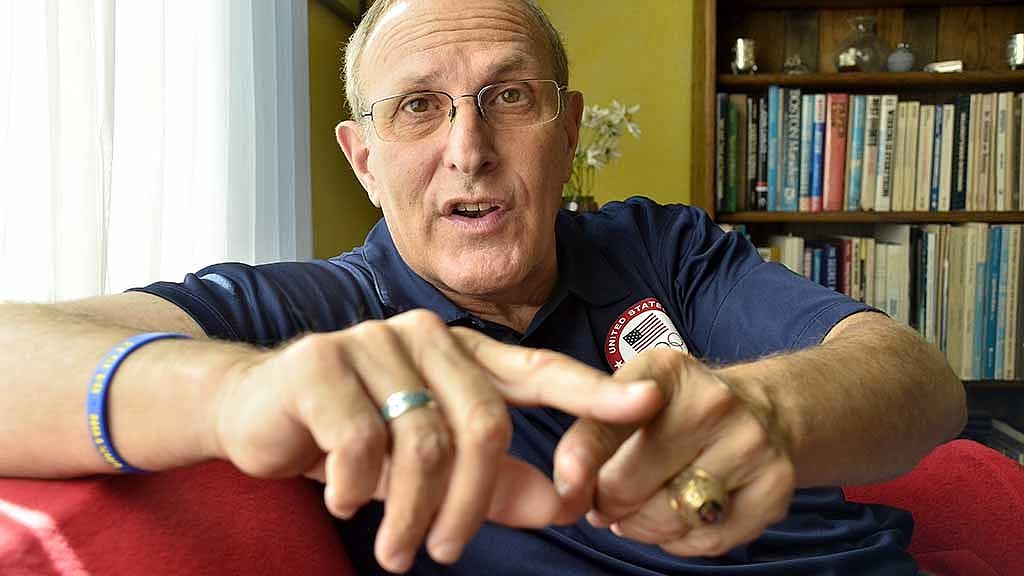
Tracy Sundlun settles Lawsuit against the Rock N Roll Marathon Series he co-founded
Tracy Sundlun, the former track coach who helped create the Rock ‘N’ Roll Marathon Series, has settled his breach-of-contract lawsuit against the company he co-founded.
The deal with Competitor Group Inc. was quietly reached recently in San Diego federal court, where the case was moved after being filed last January in San Diego Superior Court.
Sundlun, 67, sued CGI for $146,000 — the amount he says he was owed in a severance agreement after being let go by the international firm in July 2016.
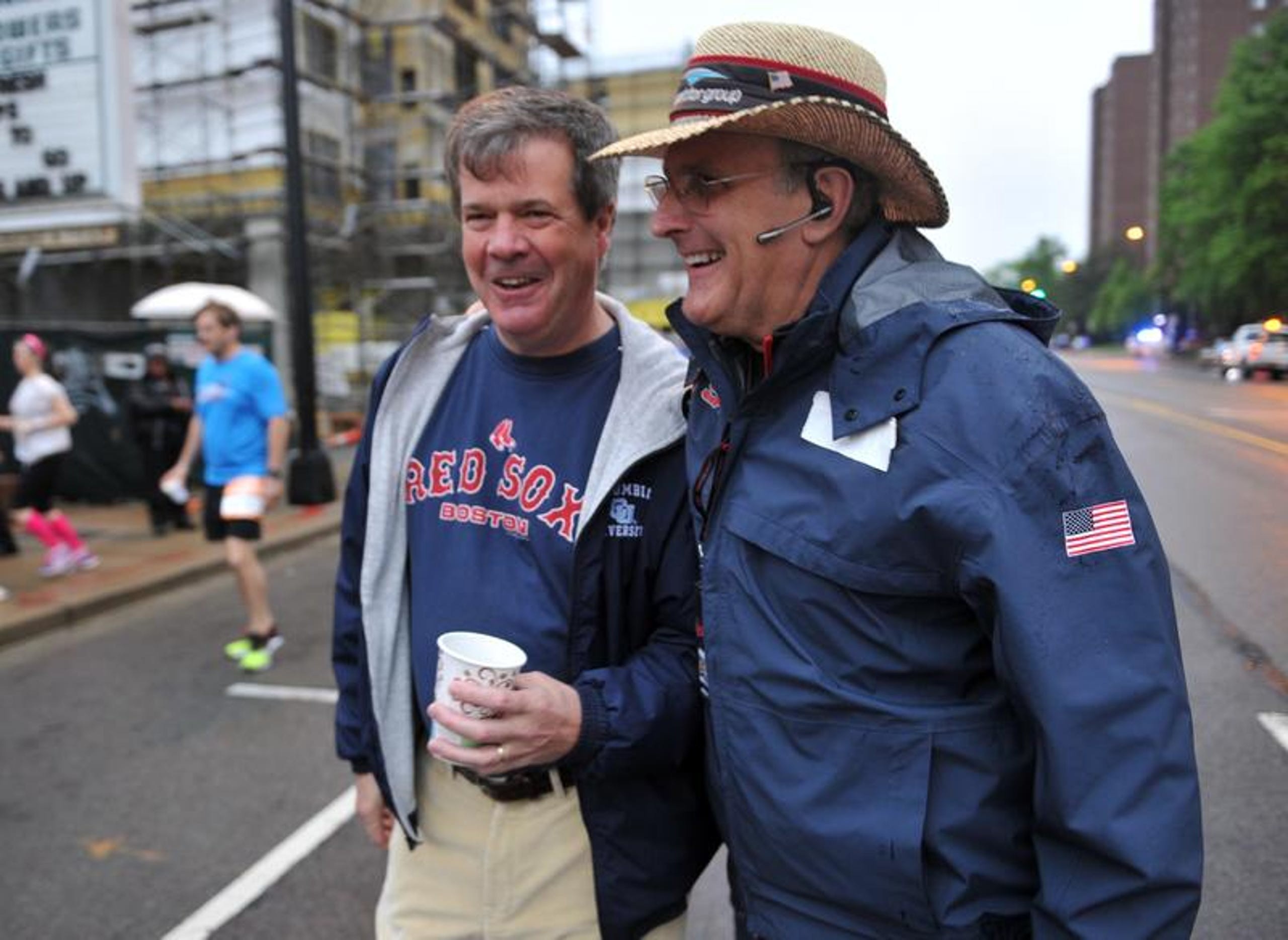
The Santee resident known as “Mr. Marathon” had been senior vice president of Competitor Group, which has changed ownership of the years. CGI is now a part of Ironman-operator World Triathlon Corp., a unit of Chinese-based Wanda Sports Group.
On Tuesday, Sundlun lawyer David Greifinger said: “The case has settled and the terms are confidential. Neither Tracy nor I can make any comment.”
CGI and World Triathlon Corp. didn’t immediately respond to requests for comment.
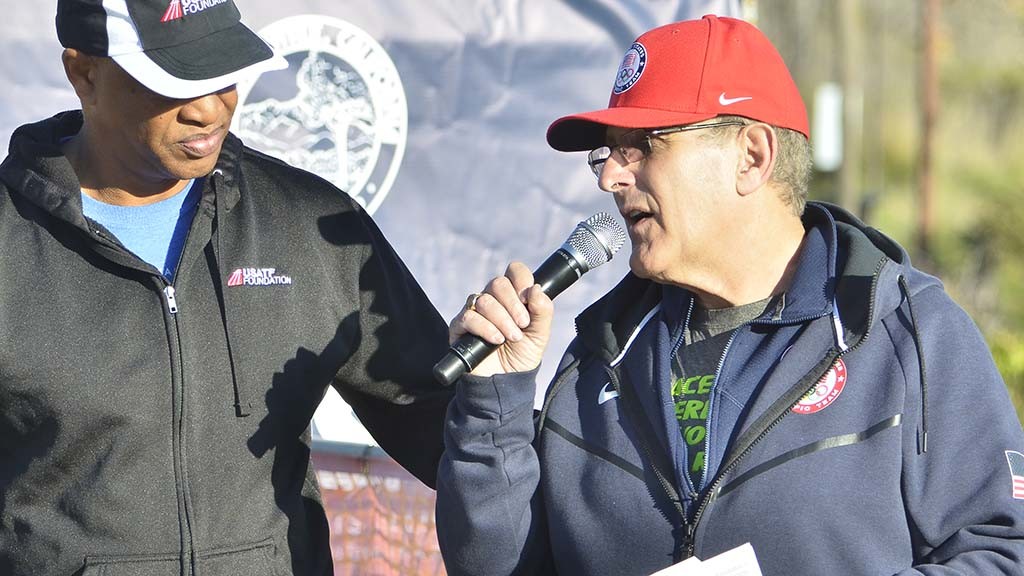
Lawyers for CGI said in court filings that Sundlun was denied his severance because he violated its terms. They said he disparaged the company in a Times of San Diego story that appeared in November 2016. Sundlun denies any disparagement.
CGI alleged that Sundlun slammed the company when he said “the elite-athlete budget has been cut again” and “I just know that … [the elite-athlete budget] just keeps getting cut.”
In the run-up to a possible trial before Judge Linda Lopez, CGI lawyers issued a subpoena to freelance writer Ken Stone, a Times of San Diego contributor represented pro bono by Dan Gilleon of San Diego.
Along with a request for documents, the CGI lawyers set a deposition date for Stone. (Only previously published documents were provided.) But with both parties agreeing not to call Stone as a witness, the deposition order was dropped.
On Dec. 11, the same day as the canceled deposition, the case was settled in Lopez’s court.
Sundlun declined to comment on the case against his employer of nearly 20 years.
With Tim Murphy, Sundlun helped grow Elite Racing — organizer of the original Rock ‘N’ Roll Marathon in San Diego and the Carlsbad 5000. (Elite essentially became the events arm of CGI in December 2007.)
In May 2017, Sundlun told Times of San Diegothat CGI owed him well over $160,000 and hadn’t been reimbursed for all his business expenses. He also said he was owed $2,000 monthly COBRA health insurance payments.
Among personal mementos yet to be returned, he said at the time, was private correspondence with his daughter and files related to his friendship with basketball great Wilt Chamberlain. (Sundlun coached Wilt’s Wonder Women, an outgrowth of the La Jolla Track Club.)
On May 12, 2017, Sundlun filed a complaint against CGI with the state Department of Fair Employment and Housing and the U.S. Equal Employment Opportunity Commission.
Greifinger said then that CGI was using the Times story as an excuse not to pay 38 weeks’ severance on his $200,000-a-year salary, plus other benefits.
“That doesn’t justify their not paying him,” he said. “(They) unilaterally backed out of the settlement agreement.”
Originally based in Mira Mesa, CGI moved to Sorrento Valley in March 2017.
But after being acquired in June 2017 by Ironman (owned by Chinese billionaire Wang Jianlin), CGI’s staff shrank from over 200 to about 20.
Former CGI president and CEO Josh Furlow — who let Sundlun go in 2016 — was himself fired in January.
“Somebody had to be the fall guy” for corporate losses, said an industry veteran who didn’t want to be named.
On Dec. 12, Magistrate Judge Lopez ordered both sides to file a joint motion for dismissal of the case by Feb. 10, 2020.
Sundlun is a member of the Running USA Hall of Champions and the National High School Track and Field Hall of Fame.A U.S. track team manager at the 2016 Rio Olympics, he continues to be active in the sport.
Next month, he’ll be a race director of the U.S. Olympic Team Trials in the 50-kilometer men’s race walk, again being staged in Santee.
by Times of San Diego
Login to leave a comment
