

Running News Daily
Running News Daily is edited by Bob Anderson and team. Send your news items to bob@mybestruns.com Advertising opportunities available.
Index to Daily Posts · Sign Up For Updates · Run The World Feed
Articles tagged #Sydney
Today's Running News
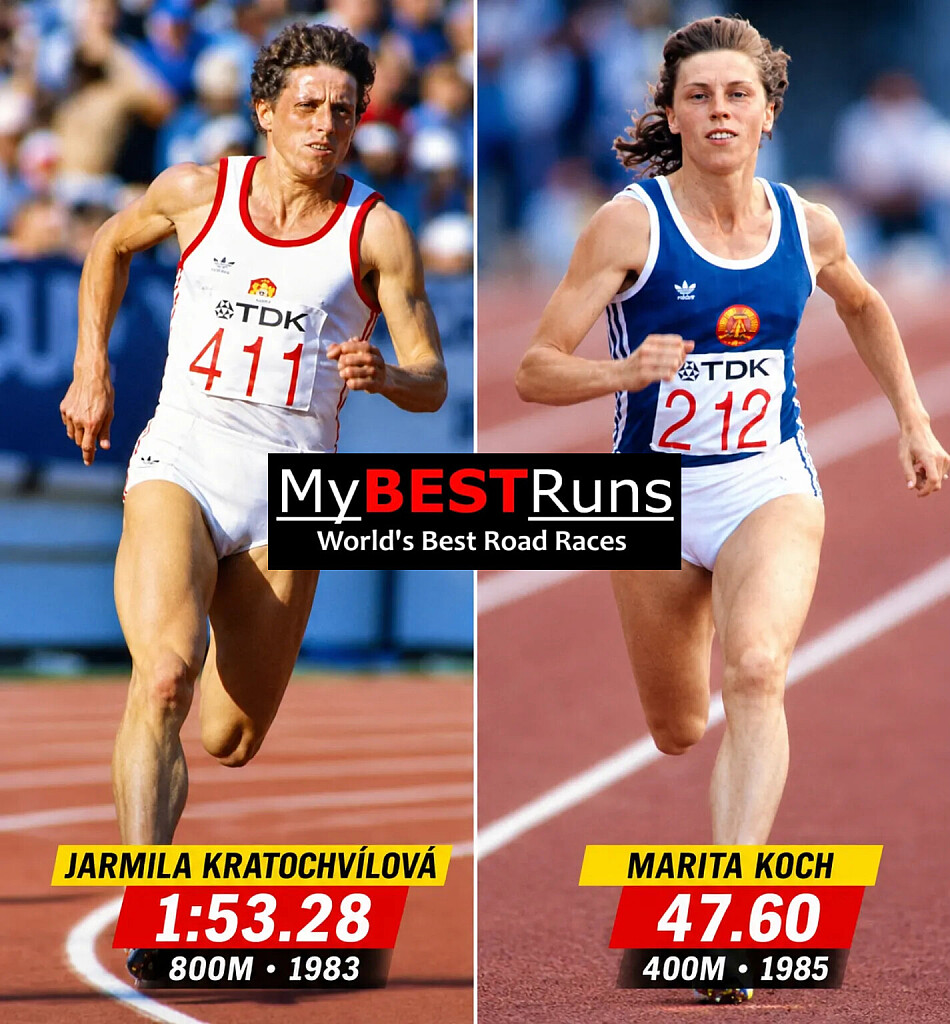


Four Decades On, Two Legendary Women’s World Records Remain Untouchable As A New Generation Closes In
Some world records are broken within a few years. Others survive generations, becoming extraordinary milestones that challenge even the most talented athletes in history.
In women's athletics, two performances from the 1980s continue to stand above the rest. More than four decades after they were achieved, Jarmila Kratochvílová's 800m world record of 1:53.28 and Marita Koch's 400m world record of 47.60 remain untouched, despite enormous advances in training, sports science, nutrition, recovery and competition technology.
What makes these records particularly remarkable is that today's generation is finally beginning to approach performances that once appeared almost impossible to challenge.
The first of these historic achievements belongs to former Czechoslovakian middle-distance star Jarmila Kratochvílová, who produced one of the greatest performances ever witnessed in women's athletics.
On July 26, 1983, at an athletics meeting in Munich, Germany, Kratochvílová stormed to an astonishing 1:53.28 in the women's 800m. Her performance established a new world record, replacing the previous mark and setting a standard that has now survived more than 43 years.
Despite countless attempts by some of the greatest middle-distance runners the sport has produced, nobody has managed to run faster. It remains the longest-standing individual outdoor world record in athletics.
The second extraordinary achievement came from East Germany's Marita Koch, who established the women's 400m world record with a breathtaking performance of 47.60 in Canberra, Australia, on October 6, 1985.
Koch's remarkable speed and consistency over one lap of the track produced a time that has remained the world record for more than 41 years. Even as generations of world champions, Olympic medallists and outstanding quarter-milers have emerged, her mark has continued to resist every challenge.
However, the conversation surrounding these two historic records has become increasingly interesting in recent years, with modern athletes beginning to produce performances that bring them closer to the long-standing benchmarks.
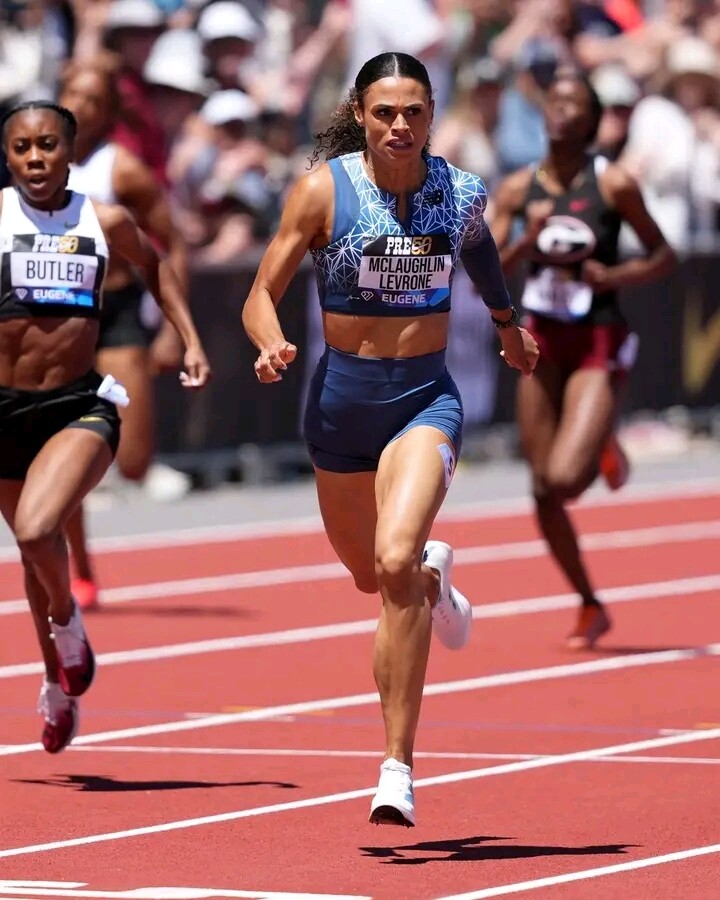
On the women's 400m circuit, American superstar Sydney McLaughlin-Levrone has emerged as one of the most serious challengers to Koch's record.
At the 2025 World Athletics Championships in Tokyo, McLaughlin-Levrone delivered a magnificent performance to win the world title in 47.78, moving into second place on the all-time list.
Dominican Republic's Marileidy Paulino was equally impressive, taking silver in 47.98. Their performances made history as the first occasion on which two women had broken the 48-second barrier in the same race.
McLaughlin-Levrone's 47.78 left her just 0.18 seconds outside Koch's world record, bringing a performance that had stood for four decades into sharper focus than ever before.
The women's 800m has also witnessed a remarkable resurgence, with Switzerland's Audrey Werro emerging as one of the biggest challengers to Kratochvílová's legendary mark.
Werro produced a stunning 1:53.70 at the Weltklasse Zürich meeting on August 27, 2026, setting a Swiss national record and moving to third on the all-time list. Her performance brought her within just 0.42 seconds of the world record.
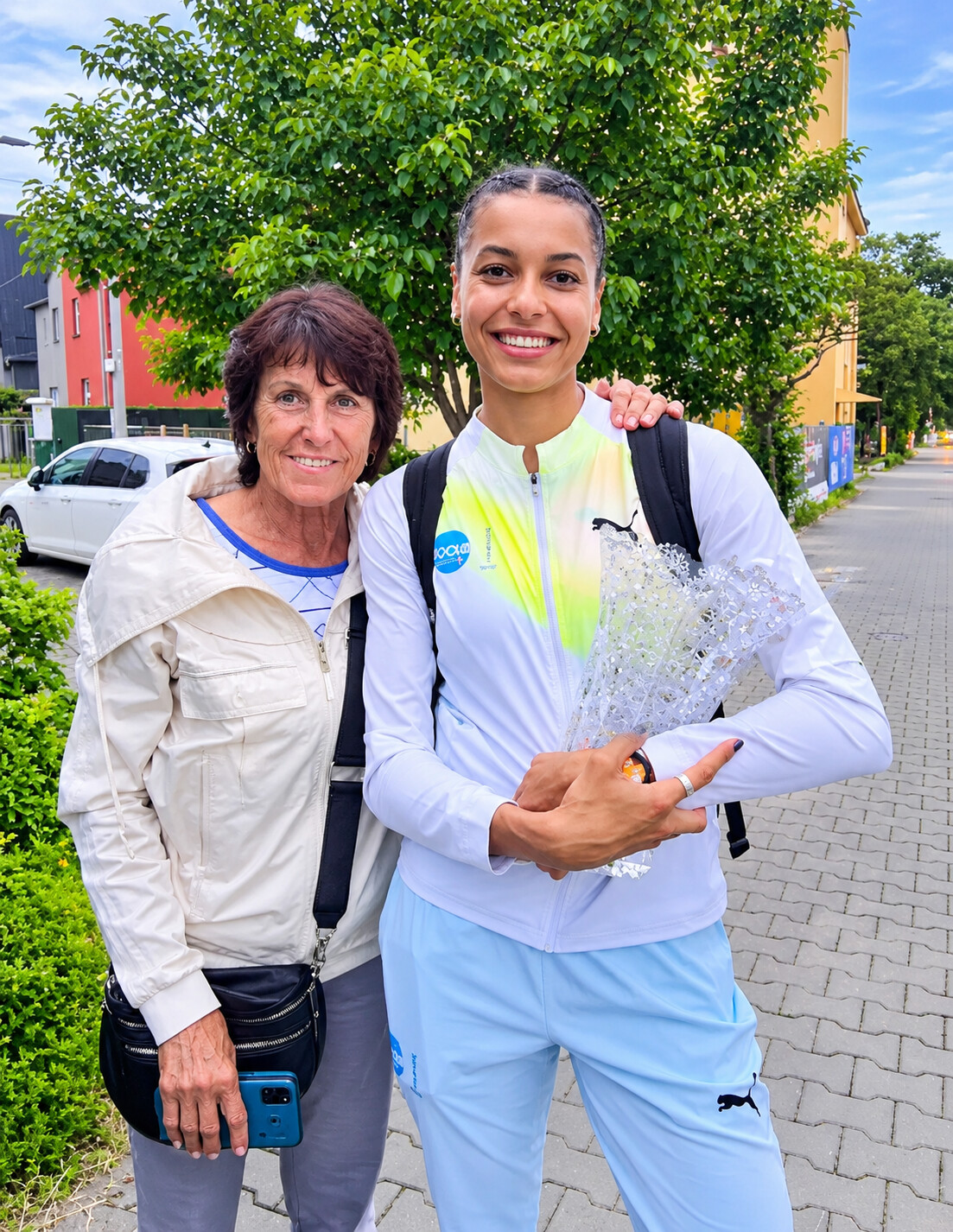
At just 22 years old, the Swiss star has demonstrated that the gap between the modern generation and the historic benchmark is becoming increasingly narrow.
Britain's Olympic champion Keely Hodgkinson has also strengthened the challenge. She clocked an outdoor personal best of 1:54.33 in Stockholm in June 2026 before producing a sensational 1:54.87 to break the women's indoor 800m world record in Liévin, France, in February.
Although the indoor and outdoor records are separate, Hodgkinson's achievements underline the extraordinary level of competition currently developing in women's middle-distance running.
Beyond the performances themselves, however, these two records carry a complicated historical background.
Both were established during the Cold War era, when state-sponsored doping programmes, particularly in parts of Eastern Europe, raised serious questions about the integrity of international athletics.
The East German sporting system, in particular, has faced extensive historical scrutiny over its use of performance-enhancing substances. Consequently, Koch's record has remained part of a wider debate about the athletics environment in which some of the era's greatest performances were produced.
Kratochvílová's achievements have also attracted scrutiny over the years. However, historical concerns about the sporting systems of that period should not automatically be treated as proof of individual wrongdoing. Neither athlete has been found guilty of a doping violation, and both records remain officially recognised by World Athletics.
What makes the longevity of these performances even more fascinating is how dramatically athletics has evolved since the 1980s.
Today's athletes benefit from sophisticated training programmes, advanced sports medicine, improved recovery methods, nutritional science, biomechanical analysis and modern competition equipment. The introduction of advanced running footwear has also transformed aspects of the sport.
Yet, despite all these developments, two performances produced more than four decades ago continue to occupy the highest positions in the record books.
Kratochvílová's 1:53.28 and Koch's 47.60 have become much more than historical statistics. They represent two of the most formidable challenges in women's athletics, constantly reminding modern champions of the extraordinary standards required to rewrite sporting history.
With McLaughlin-Levrone getting closer in the 400m and Werro producing increasingly impressive performances over 800m, the possibility of seeing either record fall has become an increasingly exciting prospect.
The question is no longer simply how long these records can survive, but whether the current generation has the extraordinary ability to finally bring two of athletics' most enduring records to an end.
Will Koch and Kratochvílová's legendary marks finally fall, or will they remain standing for another generation?
by Erick Cheruiyot for My Best Runs.
Login to leave a comment
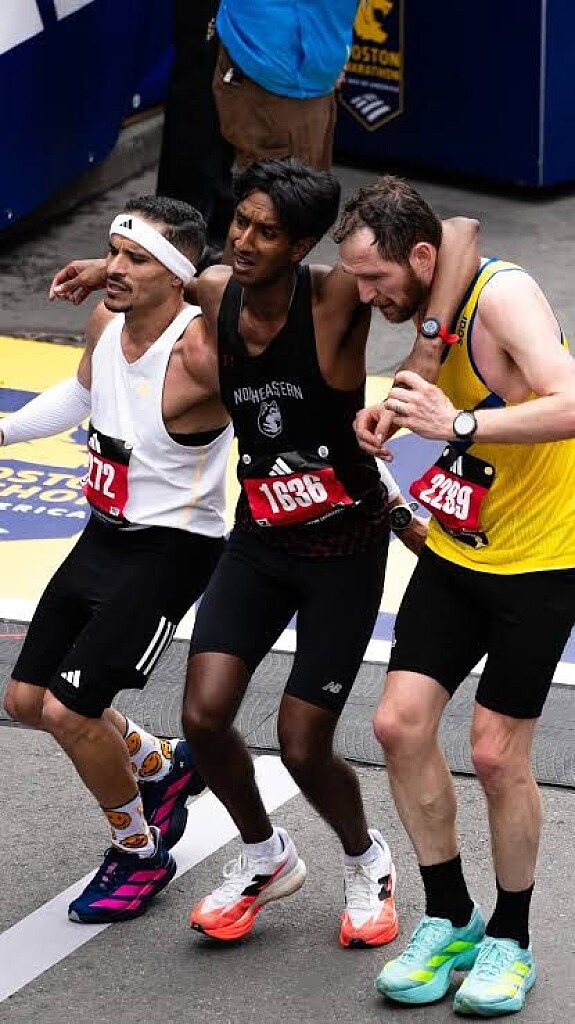
Boston Marathon Runners Aaron Beggs And Robson De Oliveira Win World Athletics Fair Play Award After Helping Fallen Stranger
Two runners have received one of athletics' most meaningful honours after demonstrating that compassion and sportsmanship can matter far more than personal achievements or finishing times.
Aaron Beggs and Robson De Oliveira have been named the recipients of the 2026 World Athletics Fair Play Award after putting their own Boston Marathon ambitions aside to help a fellow competitor who had collapsed near the finish line.
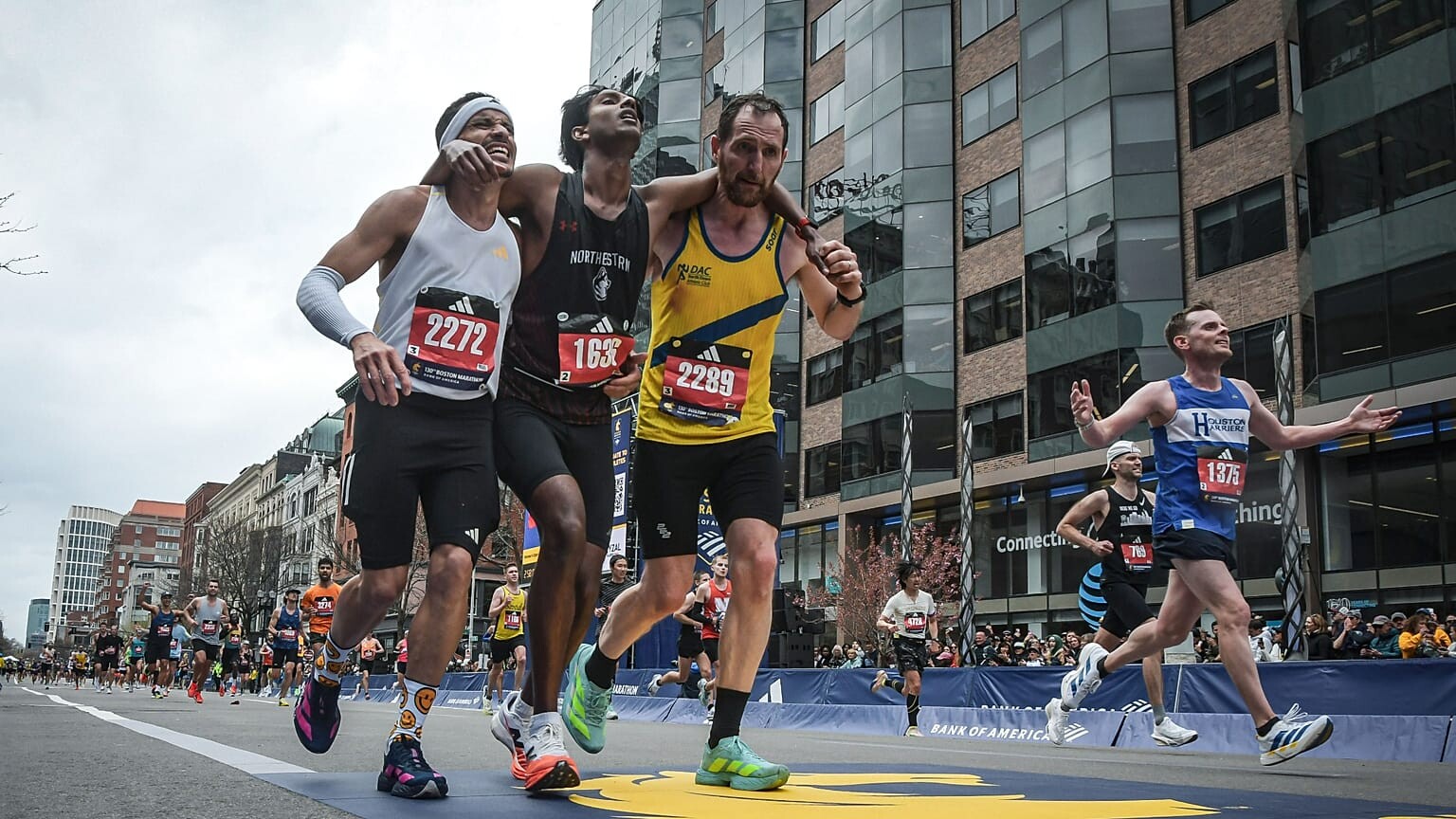
Their remarkable act of kindness captured the true spirit of distance running, reminding the sporting world that the greatest moments in a race are not always measured by medals, records or personal bests.
The incident unfolded during the 2026 Boston Marathon, when Ajay Haridasse collapsed approximately 200 metres from the finish after struggling with exhaustion. He fell to the ground and was unable to continue without assistance.

Beggs, a runner from Northern Ireland, was the first to stop and help Haridasse back to his feet. However, when it became clear that the exhausted competitor could barely remain upright, Brazilian runner De Oliveira joined him. The two runners positioned themselves on either side of Haridasse, supporting him with their arms as they helped him make his way towards the finish line.
In doing so, both men sacrificed the opportunity to achieve personal bests, choosing instead to ensure that another runner could complete his marathon. Their intervention was captured on camera and quickly attracted widespread admiration from the athletics community.
Their actions eventually earned them a place among the three finalists for the 2026 International Fair Play Award. They were shortlisted alongside Kenyan distance runner Irine Cheptai, who demonstrated remarkable generosity by sharing her water with Australian Paralympic athlete Michael Roeger during the Sydney Marathon, and pole-vaulting stars Mondo Duplantis and Emmanouil Karalis, recognised for their mutual respect and friendship despite competing against each other.
The winners were determined through a combination of public voting on World Athletics' social media platforms and votes from an expert jury. Beggs and De Oliveira ultimately emerged as the overall winners, receiving the recognition ahead of some of the biggest names in international athletics.
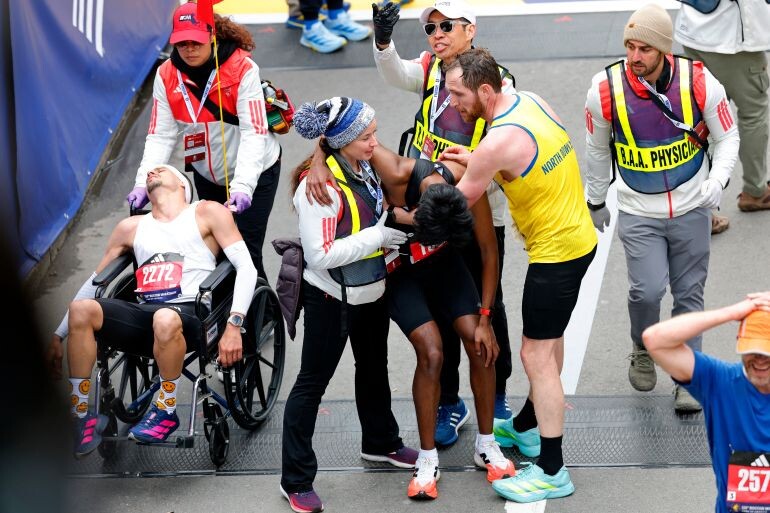
For Beggs and De Oliveira, the award recognises something far greater than a sporting achievement. Both runners have emphasised that Haridasse deserves equal recognition for his determination to finish despite the physical difficulties he experienced.
Reflecting on the experience, Beggs admitted that winning the prestigious recognition was something he had never anticipated, particularly given the calibre of athletes they were competing against.
"It is so surreal to win this award," said Beggs. "When we first learnt about the nomination, never in a million years did I think we would win it, being up against world-class elite athletes."
He also explained that helping Haridasse was an instinctive decision rather than something he had to think twice about. Beggs attributed his response to the values instilled in him through his upbringing, personal experiences and time in the British Army.
"When I went to help Ajay, it was natural instinct. Without even thinking about it, I ran over to help him. In that moment I just knew I had to help my fellow runner," he explained.
Beggs also acknowledged that the courage Haridasse displayed in fighting to complete the marathon was equally deserving of recognition, emphasising that the award should not overshadow the determination of the runner they helped.
"Three strangers, three different continents, now friends for life," Beggs added, reflecting on the unexpected friendship created by the incident.
De Oliveira shared similar sentiments, revealing that he knew he needed assistance when he saw Haridasse struggling and that Beggs' presence made the rescue possible.
"During that race, I knew I wouldn't have the strength to do it alone. But when I saw Aaron, I knew he was the answer to my prayer," said De Oliveira.
The Brazilian runner also explained that sacrificing a personal best was an easy decision because the circumstances demanded something more important than a finishing time.
"As for giving up my personal best, I knew that a time was just a number. Showing empathy and helping Ajay was the right thing to do in that moment," he said.
He further praised Haridasse for his resilience, insisting that the exhausted competitor deserved just as much credit for finding the strength to continue towards the finish line.
World Athletics President Sebastian Coe praised their intervention, describing their willingness to assist another competitor despite the demands of their own race as an outstanding example of genuine sportsmanship.
"I am delighted that our sport continues to recognise these public moments of fair play and camaraderie," Coe said. "To help another runner in this way, while dealing with the effects of their own endeavours, is the mark of true sportsmanship."
The International Fair Play Committee (CIFP), which partnered with World Athletics in presenting the award, also celebrated the significance of the recognition. Its president, Sunil Sabharwal, highlighted the importance of acknowledging athletes who demonstrate outstanding character alongside sporting excellence.
"Sport celebrates those who push the boundaries of human performance. Fair play celebrates those who elevate the standards of human behaviour," Sabharwal said.
The International Fair Play Committee was established in 1963 by UNESCO and leading international sports governing bodies. Recognised by the International Olympic Committee, the organisation has spent more than six decades promoting sporting integrity and celebrating individuals whose actions place respect, friendship and humanity above winning at all costs.
Its partnership with World Athletics dates back to the 2003 World Athletics Championships in Paris, with 13 awards having been presented through the collaboration.
The latest recognition further underlines the importance of sportsmanship in a sport where athletes routinely dedicate years to chasing seconds, personal records and major championships. Beggs and De Oliveira have demonstrated that sometimes the most valuable contribution a runner can make is not improving their own performance, but helping someone else achieve their goal.
Their story has also brought attention to a fundamental aspect of marathon running: although thousands of athletes line up chasing qualifying times, personal records and victories, the sport is built on a shared experience that often brings complete strangers together.
For Beggs and De Oliveira, the Boston Marathon will forever be remembered for a decision that cost them precious seconds but earned them worldwide respect. Their achievement is a powerful reminder that sometimes the most important victory in sport comes from helping somebody else reach the finish line.
by Erick Cheruiyot for My Best Runs.
Login to leave a comment

Boston Marathon
Among the nation’s oldest athletic clubs, the B.A.A. was established in 1887, and, in 1896, more than half of the U.S. Olympic Team at the first modern games was composed of B.A.A. club members. The Olympic Games provided the inspiration for the first Boston Marathon, which culminated the B.A.A. Games on April 19, 1897. John J. McDermott emerged from a...
more...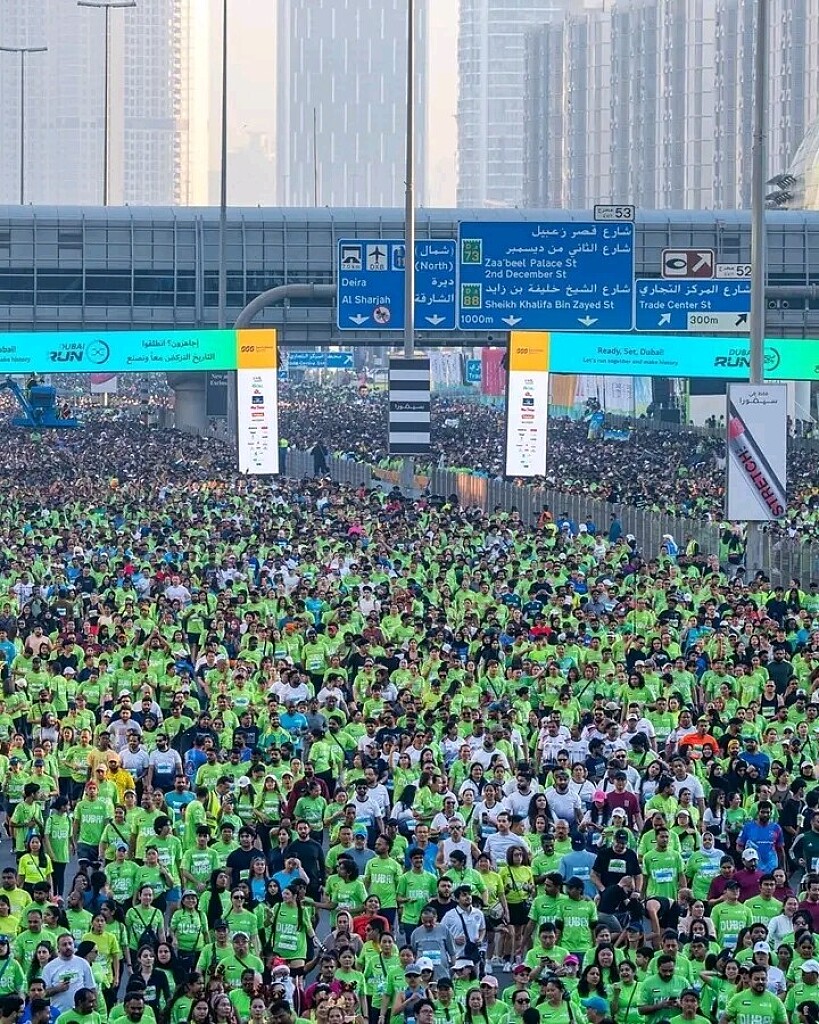
Running Is Taking Over The World! Dubai Run 2026 Attracts More Than 310,000 Participants As The Global Running Revolution Reaches New Heights!
Running is rapidly becoming one of the world's most powerful social and lifestyle movements, and the latest edition of Dubai Run 2026 has provided another remarkable illustration of just how far the sport has grown.

More than 310,000 participants reportedly took to the streets of Dubai, transforming the city's major roads into a spectacular celebration of fitness, togetherness and community spirit. The extraordinary turnout reflects a growing global appetite for running, with people from different nationalities, ages and fitness levels embracing an activity that continues to unite millions across the world.

What makes this running revolution particularly fascinating is that the appeal of the sport is no longer defined exclusively by competition, personal bests or podium finishes. Increasingly, people are discovering running as a way to build friendships, strengthen social connections, improve their health and become part of something bigger than themselves.
The remarkable growth of Dubai Run becomes even more impressive when viewed against its humble beginnings. Launched in 2019 as part of the Dubai Fitness Challenge, the event welcomed approximately 70,000 participants in its inaugural edition. Seven years later, it has grown into one of the world's largest community running events, attracting more than 310,000 participants in 2026. Its extraordinary journey reflects Dubai's commitment to promoting an active and healthier lifestyle while demonstrating how running can bring together people from all walks of life through a shared passion for fitness and well-being.
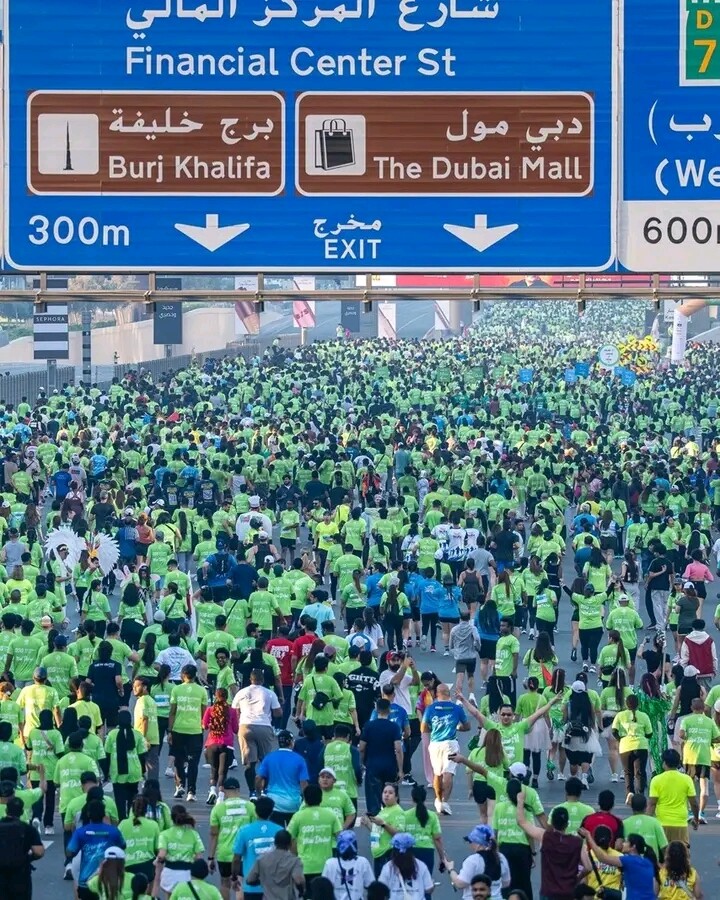
One of the biggest driving forces behind this transformation is the explosive growth of running clubs. From Nairobi to Dubai, London to New York, organised running communities are attracting people who want more than just another workout. They provide opportunities to meet new people, develop friendships, share experiences and find motivation through collective participation. For many, the connections created along the running routes have become just as important as the kilometres covered.

Another reason behind running's growing popularity is its accessibility. Unlike many sporting activities that require expensive equipment, specialised facilities or extensive preparation, running has a relatively low barrier to entry. A suitable pair of running shoes, a safe place to run and the willingness to get started are often enough. Whether someone is chasing an Olympic dream or simply taking their first steps towards a healthier lifestyle, running offers an opportunity for almost everyone.
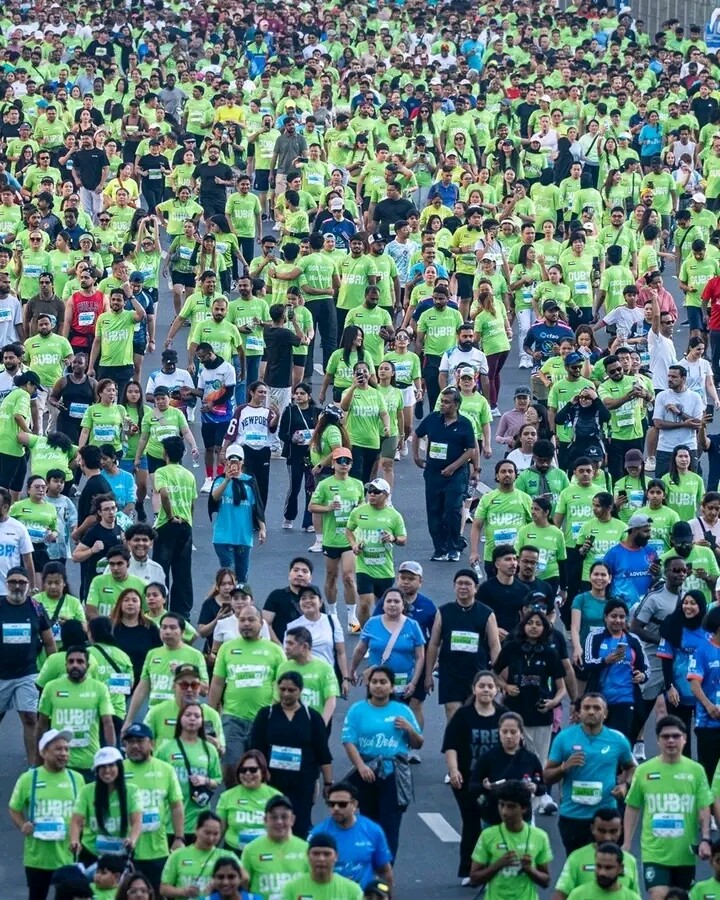
Events such as Dubai Run also demonstrate how the sport is moving beyond the traditional boundaries of competitive athletics. Elite runners share the roads with recreational athletes, families, beginners and people who simply want to enjoy the experience. There is no requirement to run at a particular pace or achieve a specific time. The real achievement is showing up, participating and being part of a collective experience.
Beyond its social appeal, running continues to attract people because of its contribution to physical and mental well-being. Regular participation can improve cardiovascular fitness, build endurance, support overall health and help people manage everyday stress. For many runners, it has also become a valuable opportunity to disconnect from the pressures of daily life, spend time outdoors and enjoy the mental clarity that comes with physical activity.
Perhaps the most beautiful aspect of this movement is its inclusivity. Running creates opportunities for people regardless of age, nationality, background, experience or ability. Everyone has a place, whether they complete a marathon in world-class time, jog around their neighbourhood or walk a few kilometres alongside friends and family.
From the streets of New York, Berlin, London, Tokyo, Sydney, Nairobi and other cities to the spectacular roads of Dubai and beyond, one message is becoming increasingly clear: running is no longer simply a sport; it is a global movement connecting people through a shared passion for fitness, friendship and healthier living.
The future of running should not be measured only by world records, championship medals or the speed of the fastest athletes. It should also be measured by the number of lives inspired, communities strengthened and people encouraged to take their first steps towards an active lifestyle.
And if more than 310,000 participants at Dubai Run 2026 are anything to go by, the running revolution is only getting bigger.
THE WORLD IS NOT JUST RUNNING FASTER. IT IS RUNNING TOGETHER!
by Erick Cheruiyot for My Best Runs.
Login to leave a comment

Nike Secures Chicago Marathon Partnership Through 2036 In Major Eight-Year Extension As Running Takes Centre Stage In Its Global Ambitions!
Nike has reaffirmed its long-term commitment to one of the world's most prestigious road races, extending its partnership with the Bank of America Chicago Marathon through 2036 in a significant eight-year agreement that further strengthens its presence in global distance running.
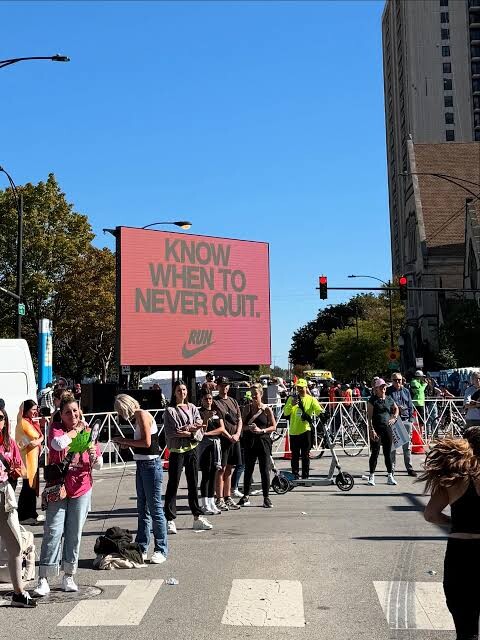
The announcement, made on Thursday, confirms that Nike will continue as the marathon's official footwear and apparel partner for another eight years beyond the existing agreement, which was signed in 2022 and had been scheduled to run through 2028.
The extended partnership also encompasses two other major events on Chicago's running calendar: the Shamrock Shuffle and the Chicago 13.1. However, neither Nike nor the race organisers disclosed the financial terms of the renewed agreement.
The relationship between Nike and the Chicago Marathon dates back to 2008, making it a partnership spanning nearly three decades by the time the new agreement expires. Over the years, the American sportswear giant has played a central role in the event's identity, supplying official race merchandise, apparel and training resources to thousands of participants preparing for the iconic 26.2-mile challenge.
Nike's contribution extends beyond footwear and clothing, with the company also providing the marathon's official training programme. This year's edition alone featured approximately 58,000 official marathon T-shirts, highlighting the scale of the partnership and the commercial significance of one of the world's largest marathon events.

The extension is particularly notable given Chicago's unique position among the Abbott World Marathon Majors. It remains the only one of the eight major races with Nike as its official footwear and apparel partner. Adidas has partnerships with Boston, Berlin and Cape Town, while New Balance is associated with London and New York, and ASICS with Tokyo and Sydney.
Interestingly, the renewed agreement comes shortly after Nike experienced a difficult competitive outing on the very course where it maintains such a prominent commercial presence.
At the 2026 Chicago Marathon, Adidas-sponsored athletes dominated both elite races, with Kenya's Amos Kipruto claiming the men's title and Ethiopia's Hawi Feysa winning the women's competition. Both athletes competed in Adidas' Adios Pro Evo 3 racing shoes.
Nike's strongest results came through third-place finishers Milkesa Mengesha in the men's race and Brigid Kosgei in the women's competition, both wearing the brand's Apex racing shoe.
The timing of the announcement also carries significance for Nike's broader business strategy. It comes just two days after the company's investor day, where running was identified as one of the key sporting categories that will underpin its future growth and renewed ambitions.
By securing its Chicago partnership through 2036, Nike is demonstrating that its commitment to distance running extends well beyond individual race victories, with a clear emphasis on maintaining strong relationships with major events, athletes and the global running community.
With Chicago continuing to attract elite international competitors and tens of thousands of recreational runners, the extended agreement ensures that Nike will remain closely connected to one of the sport's most celebrated marathon stages for years to come.
The 49th edition of the Bank of America Chicago Marathon is scheduled for October 10, 2027, as the city prepares to welcome another enormous field of runners to its streets.
by Erick Cheruiyot for My Best Runs.
Login to leave a comment

Bank of America Chicago
Running the Bank of America Chicago Marathon is the pinnacle of achievement for elite athletes and everyday runners alike. On race day, runners from all 50 states and more than 100 countries will set out to accomplish a personal dream by reaching the finish line in Grant Park. The Bank of America Chicago Marathon is known for its flat and...
more...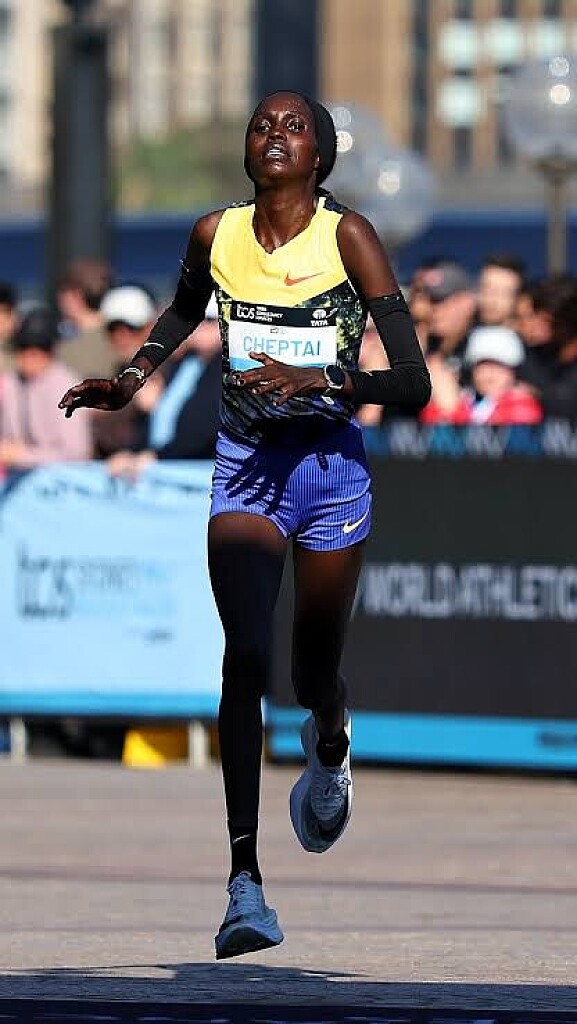
Irine Cheptai Set To Be Crowned Sydney Marathon Champion After Peres Jepchirchir Receives Three-Year Doping Ban!
Kenyan distance running is set for a significant shake-up following the Athletics Integrity Unit's (AIU) decision to hand Peres Jepchirchir a three-year suspension for an anti-doping rule violation, paving the way for compatriot Irine Cheptai to be officially recognised as the 2026 TCS Sydney Marathon women's champion.
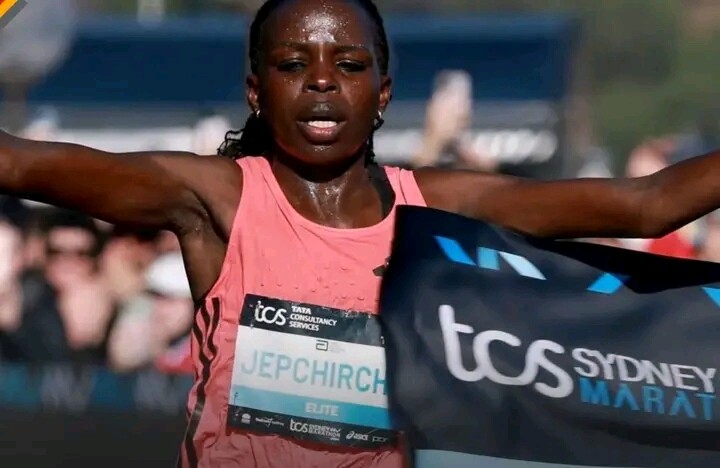
Cheptai, who finished behind Jepchirchir in the women's race, is now in line to claim the prestigious title after Jepchirchir accepted her disqualification from this year's competition. The change will mark a major milestone in Cheptai's marathon career, potentially giving her the first Abbott World Marathon Majors victory of her career.
The official results, however, will not be amended immediately. Under the established anti-doping procedures, a 30-day appeal period must first expire and the decision become final and binding before the revised podium is confirmed.
The revised standings will see Cheptai crowned in 2:22:11, with Ethiopia's Shure Demise Ware promoted to second place in 2:22:33 and compatriot Haven Hailu Desse moving into third in 2:22:57.
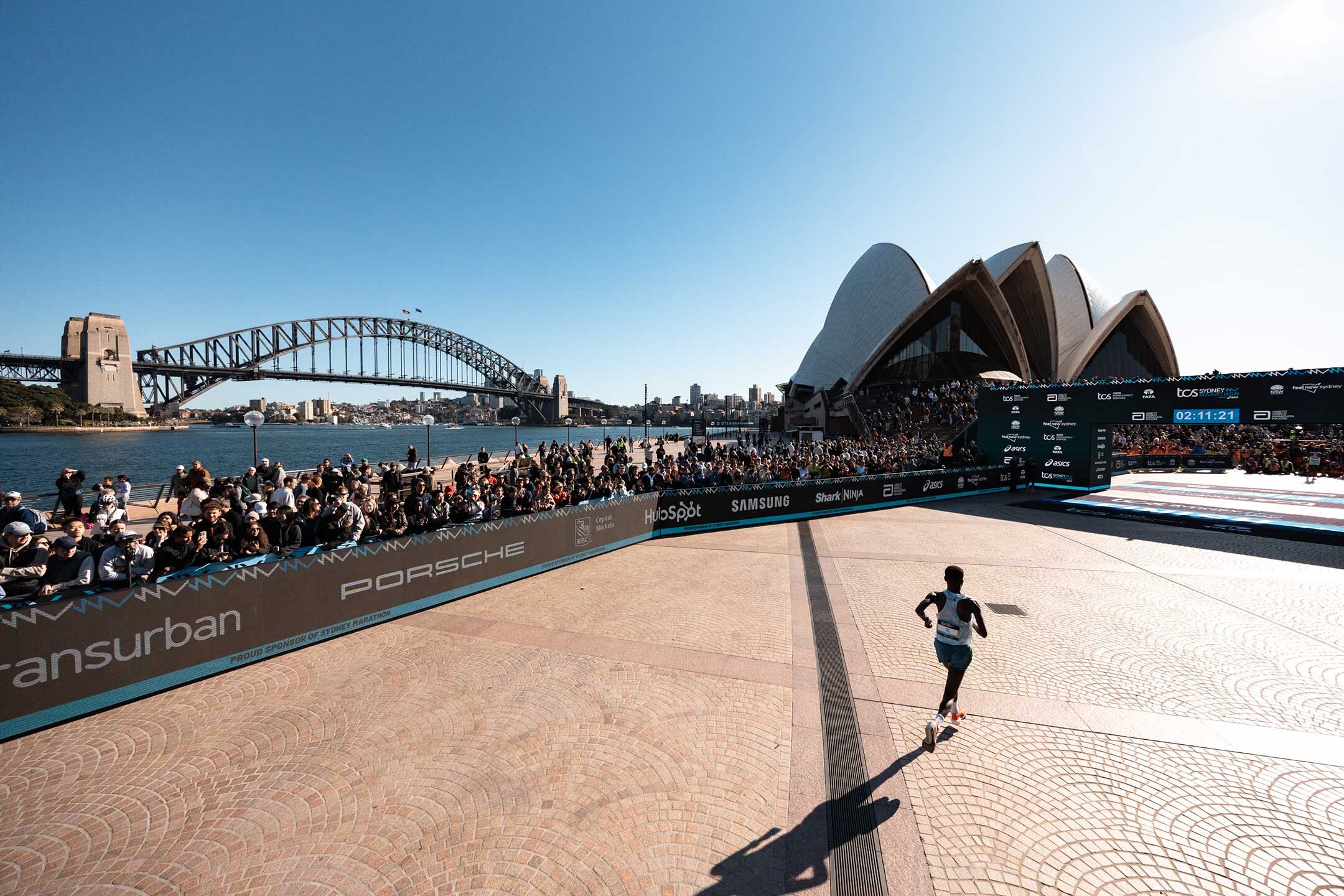
The AIU's investigation followed an adverse analytical finding for erythropoietin (EPO) in an out-of-competition sample collected in Kenya before the Sydney race. Interestingly, a separate sample collected from Jepchirchir on race day in Sydney tested negative for EPO, highlighting the importance of testing outside competition in identifying doping violations that might otherwise go undetected.
The Sydney Marathon organisers also confirmed that Jepchirchir will be permanently barred from competing at the TCS Sydney Marathon and all eight Abbott World Marathon Majors under the series' rules. She will also be ineligible for future Majors prize money and series points.
Beyond the change to the podium, Cheptai's anticipated victory carries an additional significance. During the race, she demonstrated remarkable sportsmanship by handing her drink to Australian Paralympic athlete Michael Roeger at approximately the 30km mark. Her gesture earned her a place among the finalists for World Athletics' 2026 International Fair Play Award.
TCS Sydney Marathon Race Director Wayne Larden emphasised that the case demonstrates the importance of the organisers' commitment to protecting clean competition through additional out-of-competition testing conducted in partnership with other Abbott World Marathon Majors events.
The development sends a strong message across international distance running that anti-doping measures remain essential in protecting athletes who compete fairly and ensuring that victories are earned through hard work, dedication and talent.
For Cheptai, the anticipated promotion represents a memorable breakthrough on one of the sport's biggest stages, while reinforcing the importance of integrity and fair play in elite athletics.
by Erick Cheruiyot for My Best Runs.
Login to leave a comment
Sydney Marathon
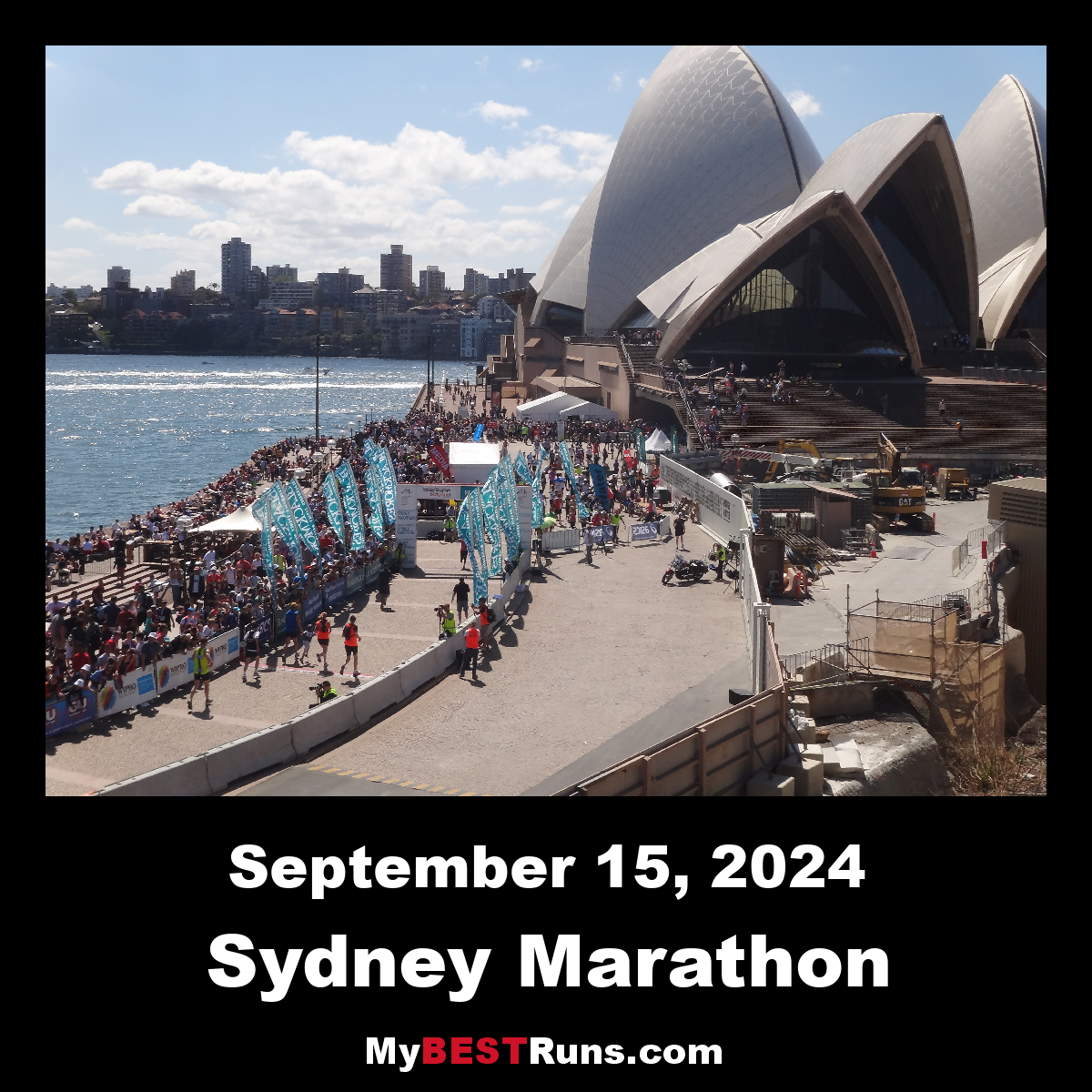
The Sydney Marathon is a marathon held annually in Sydney, Australia. The event was first held in 2001 as a legacy of the 2000 Summer Olympics, which were held in Sydney. In addition to the marathon, a half marathon, 9 kilometres (5.6 mi) "Bridge Run", and a 3.5 kilometres (2.2 mi) "Family Fun Run" are also held under the banner...
more...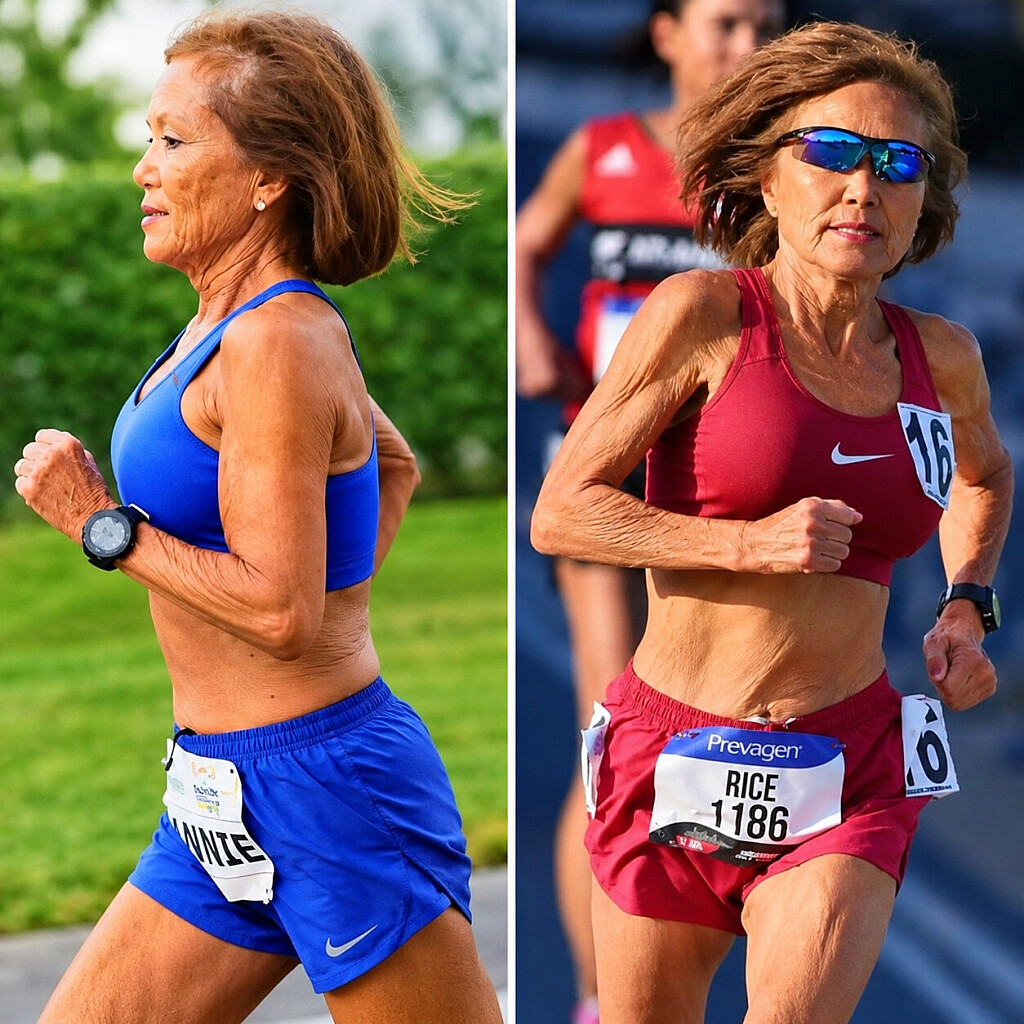
From Weight-Loss Runner To Endurance Legend! 78-Year-Old Jeannie Rice Astonishes Scientists With Extraordinary Physiology And World-Record Marathon Performances!
What began as a simple attempt to shed a few extra pounds has evolved into one of the most extraordinary longevity stories in the history of distance running.
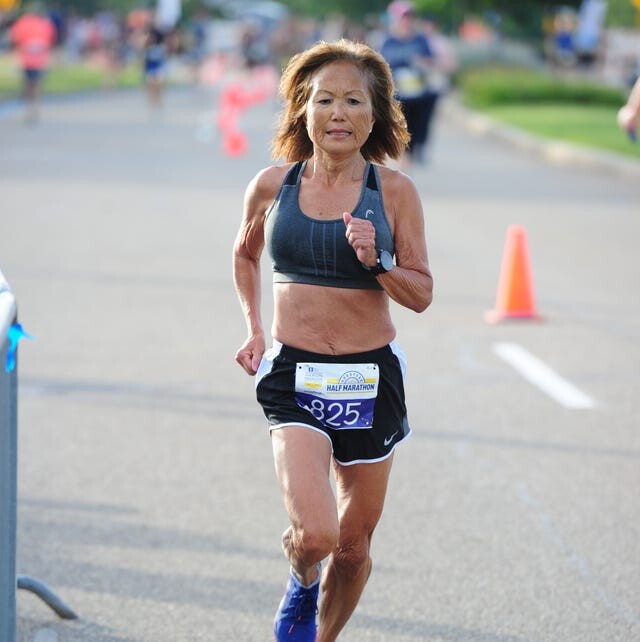
At 78, American distance-running sensation Jeannie Rice continues to challenge conventional beliefs about ageing, athletic performance and the limits of human endurance. More than four decades after taking up running, she remains remarkably competitive, with an extraordinary collection of marathon records and physiological characteristics that have left exercise scientists fascinated.
Rice was 35 when she first started running in 1983. Her motivation was hardly extraordinary: she simply wanted to lose some weight after returning from a vacation. Little did she know that those initial steps would eventually take her across the world's greatest marathon courses and establish her as one of the most remarkable masters athletes of all time.
Today, she has completed more than 135 marathons and accumulated an estimated 100,000-plus miles of running. Yet her achievements are not simply a testament to experience and determination. Scientific investigations into her physiology have revealed an aerobic capacity rarely associated with someone of her age.
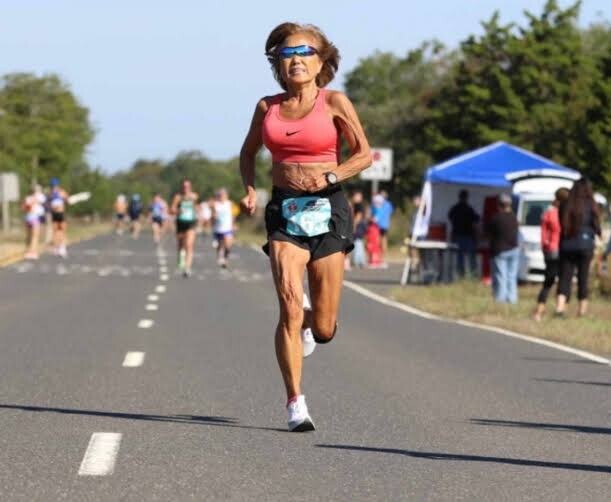
A study published in the Journal of Applied Physiology in 2025 examined Rice's remarkable physical capabilities, uncovering findings that help explain how she continues to run at such an extraordinary level.
One of the most striking discoveries was her VO₂ max, recorded at approximately 47.9 millilitres of oxygen per kilogram of body weight per minute. This represents the highest value reported in the study for a woman aged 75 or older, placing her aerobic capacity in territory comparable to that of an average young adult woman.
For perspective, the average VO₂ max reported for women aged 75–79 is approximately 28.1 mL/kg/min. Rice's result is therefore exceptionally high for her age group.
Researchers also recorded a maximum heart rate of 180 beats per minute, an astonishing figure for a 77-year-old athlete at the time of testing. This is considerably higher than conventional age-based predictions, demonstrating just how individual physiological responses can differ from standard expectations.
Another fascinating discovery concerned her ability to sustain a high proportion of her aerobic capacity during marathon running. Her fractional utilisation was estimated at approximately 88 per cent, highlighting her extraordinary ability to maintain demanding efforts over long distances.
Interestingly, her running economy was not exceptionally high. Researchers found that her oxygen cost of running was relatively ordinary, suggesting that her outstanding performances are driven more by her remarkable aerobic capacity and ability to sustain it than by an unusually efficient running stride.
Beyond the laboratory findings, Rice's competitive record tells an equally extraordinary story.
She holds remarkable women's marathon age-group world-record performances, including 3:24:48 in the 70–74 category, achieved at the 2019 Berlin Marathon, and 3:33:27 in the 75–79 category, recorded at the 2024 London Marathon.
Her achievements extend well beyond the marathon distance, with numerous age-group records across track and road competitions.
In another remarkable milestone, Rice became the first runner reported to have won her age category at all seven Abbott World Marathon Majors, completing the extraordinary collection with victory in Sydney in 2025.
Her continued success is particularly impressive considering that she has largely followed her own approach to training, relying on consistency, discipline, experience and an intimate understanding of her body rather than complicated training systems.
Despite her international recognition, Rice remains refreshingly grounded. She has often described herself as an ordinary person who simply enjoys running, while continuing to demonstrate that remarkable athletic performances are not exclusively reserved for younger generations.
Her story is a powerful reminder that age does not necessarily dictate what the human body can achieve. It also challenges the assumption that competitive running must come to an end after a certain birthday.
She never began running with the ambition of becoming a world-record holder, a scientific phenomenon or an international endurance icon. She simply wanted to lose a few pounds.
More than 40 years later, Jeannie Rice has turned that modest decision into an extraordinary sporting legacy, inspiring runners around the world to keep moving, keep believing and never underestimate the possibilities that lie ahead.
Sometimes, the most remarkable journeys begin with the simplest of steps.
by Erick Cheruiyot for My Best Runs.
Login to leave a comment
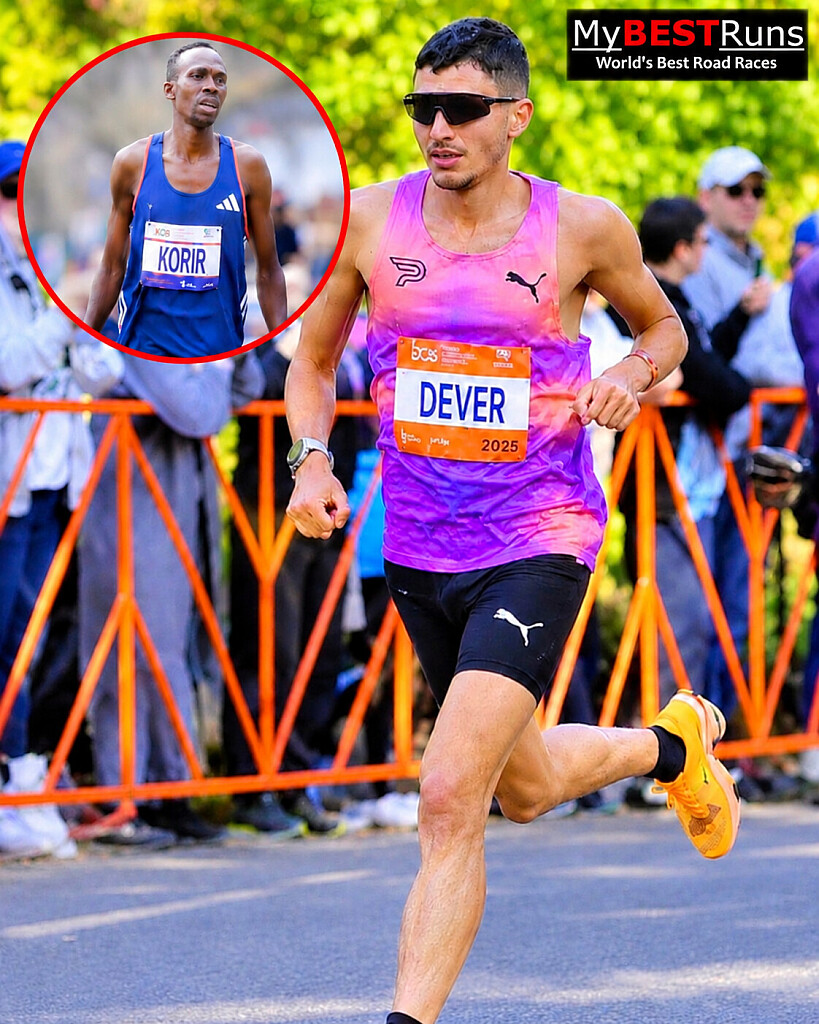
Patrick Dever finally receives New York City Marathon podium reward after Albert Korir’s doping ban
British distance runner Patrick Dever has finally received the recognition and financial reward he deserved after finishing on the podium at the 2025 New York City Marathon, nearly a year after crossing the finish line.
Dever, who made an impressive marathon debut in New York last November, has officially been promoted to third place following the disqualification of Kenyan athlete Albert Korir. The British runner received his podium trophy just three days before the 2026 edition of the prestigious race, bringing a lengthy wait for recognition to an end.
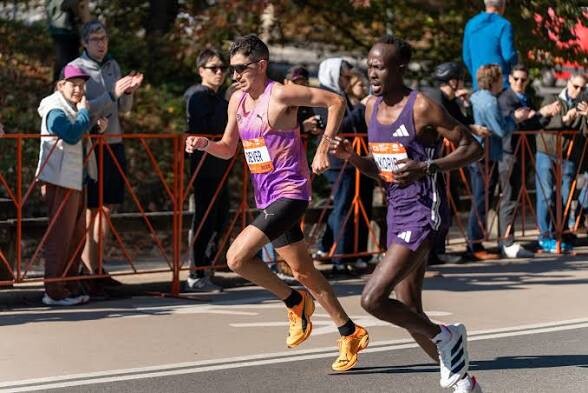
At the 2025 race, Dever initially finished fourth in 2:08:58, narrowly missing the podium by just one second behind Korir. However, the standings were subsequently revised after the Kenyan athlete received a five-year suspension for anti-doping violations involving CERA, a prohibited blood-boosting substance related to EPO.
The Athletics Integrity Unit announced the sanction in March 2026 after three samples collected in October 2025 tested positive for the prohibited substance. Korir's results were disqualified from October 3, 2025, onwards, meaning his third-place finish in New York was also annulled.
The revised standings brought Dever a significant financial reward. Under the New York City Marathon's prize structure, third place carries $40,000, while fourth place receives $25,000. Following the disqualification, New York Road Runners, the race organisers, paid Dever the additional $15,000 difference.
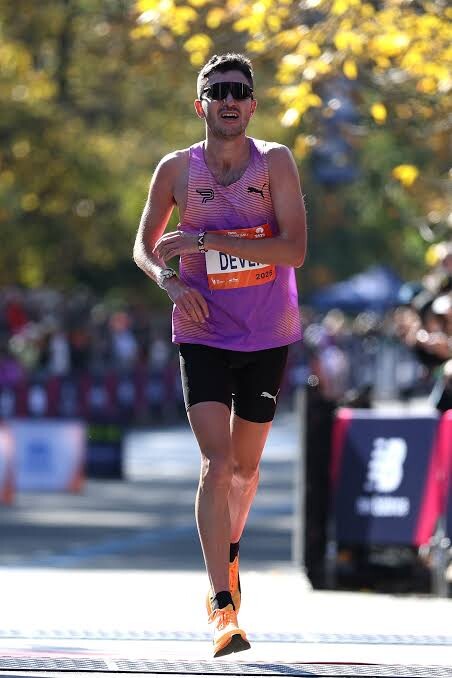
His sponsor, Puma, also honoured his newly acquired podium position by paying him the third-place bonus stipulated in his contract. The development represented an important financial and professional reward for the British athlete, whose performance had initially gone without the recognition associated with a top-three finish.
However, Dever's experience also highlights a wider problem in professional athletics: athletes promoted after doping disqualifications do not always receive the prize money attached to their revised positions.
Under World Athletics regulations, forfeited prize money is redistributed to athletes who would have earned it had the disqualified competitor not participated. However, the money must first be recovered from the sanctioned athlete, unless the race organisers decide to make the payment themselves. Consequently, clean athletes can sometimes wait years for financial rewards they earned through their performances.
Ethiopian distance runner Buzunesh Deba experienced a similar situation following the 2014 Boston Marathon. Originally finishing second, Deba was later elevated to the women's champion after Kenya's Rita Jeptoo was disqualified following an anti-doping violation involving EPO.
Deba's achievement was officially recognised, but receiving the financial rewards associated with the victory became a lengthy process. In 2024, the Boston Athletic Association introduced a payment programme for athletes affected by historical doping disqualifications. Deba was awarded a total of $103,000, covering her first-place prize, course-record bonus and additional compensation from another revised result.
Her case demonstrated how athletes who compete cleanly can suffer financially even after being officially recognised as champions.
Attention has now shifted to the 2026 Sydney Marathon, where another potential change to the women's standings has emerged following the provisional suspension of Kenyan marathon star Peres Jepchirchir.
Jepchirchir claimed the women's title in Sydney on August 30, delivering an impressive performance to secure victory in 2:18:31. However, on October 23, she was provisionally suspended by the Athletics Integrity Unit following an adverse analytical finding for EPO in a sample collected in Kenya before the competition.
The development has raised questions about the eventual outcome of the women's race, particularly for compatriot Irine Cheptai, who finished second in 2:22:11. Should Jepchirchir ultimately receive a ban and have her Sydney result annulled, Cheptai would stand to be promoted to the women's champion.
Nevertheless, a provisional suspension is not a final doping ban. Jepchirchir remains entitled to due process and an opportunity to challenge the allegation. Her Sydney victory therefore remains subject to the outcome of the anti-doping proceedings.
If the result is eventually overturned, the question of prize money will become another important issue. Whether Cheptai receives the financial reward attached to the championship, and how quickly she receives it, will depend on how the Sydney Marathon organisers handle the situation.
Dever's delayed recognition and Deba's long wait for compensation underline the importance of protecting clean athletes beyond simply correcting race results. When doping violations are discovered, the consequences should not end with disqualifying the offending athlete. Those who competed fairly should also receive the recognition and financial rewards they rightfully earned.
Ultimately, Patrick Dever's story is about much more than an additional $15,000. It is a reminder that doping can take away opportunities, podium celebrations and financial rewards from innocent competitors.
Clean athletes deserve more than a revised finishing position. They deserve the recognition and rewards that should have been theirs from the beginning.
by Erick Cheruiyot for My Best Runs.
Login to leave a comment

Three-Time Olympian Suzy Favor Hamilton Reveals Devastating Stage 4 Cancer Diagnosis In Courageous Message Of Hope!
Former American middle-distance running star Suzy Favor Hamilton has shared heartbreaking news about her health, revealing that she has been diagnosed with stage 4 neuroendocrine cancer (NET), a rare form of cancer that can be difficult to detect.
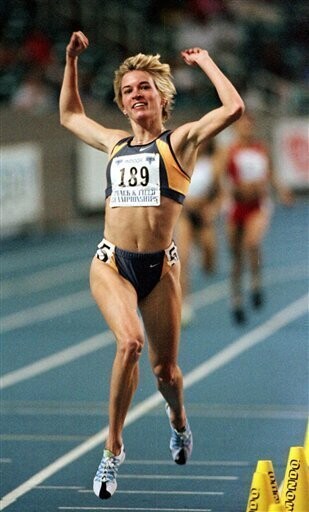
The 58-year-old former Olympian made the announcement on November 10, coinciding with World NET Cancer Day, disclosing that she received the diagnosis earlier this year after the disease had already spread.
However, amid the difficult news, there is a reason for optimism. Favor Hamilton has undergone surgery at UCLA, where doctors successfully performed a debulking procedure to remove as much of the cancer as possible. She is also continuing to receive medical care.
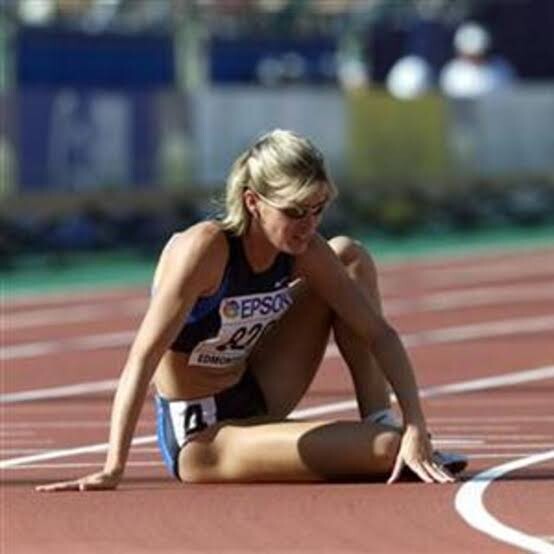
Sharing an update on her condition, the former American track star expressed gratitude to her medical team and offered an encouraging outlook on the road ahead.
"So far my cancer looks slower-growing, and after a successful debulking surgery by the amazing doctors at UCLA, they expect I still have many good years ahead. I plan to make the most of them!" she wrote.
Beyond sharing her personal battle, Favor Hamilton hopes her experience will help raise awareness about neuroendocrine tumours, commonly known as NETs. These cancers develop from neuroendocrine cells and can be particularly challenging to identify because their symptoms may resemble those of other medical conditions.
Her decision to speak publicly is also a reminder of the importance of listening to one's body, taking persistent or unusual symptoms seriously and seeking medical attention when something does not feel right. She is encouraging people to remain proactive about their health, ask questions and continue seeking answers when concerns remain unresolved.
While her latest announcement marks an unexpected and deeply personal chapter, Favor Hamilton has already experienced an extraordinary journey in athletics, establishing herself as one of America's most accomplished middle-distance runners.
During her collegiate career at the University of Wisconsin, she won an impressive nine individual NCAA track and field championships, including four consecutive outdoor 1500m titles. She also collected 23 Big Ten championships and earned 14 All-American honours.
On the international stage, she proudly represented the United States at three Olympic Games, making appearances at Barcelona 1992, Atlanta 1996 and Sydney 2000. She competed in the 1500m at Barcelona and Sydney, while taking on the 800m at the Atlanta Games.
Her professional career was equally distinguished, with seven U.S. national championships to her name, including multiple indoor and outdoor titles in the 1500m.
Now, the former track and field star faces a challenge far removed from the familiar battles of the athletics arena. Yet, her determination to share her story and encourage others demonstrates a willingness to turn a deeply personal experience into something that could make a difference in other people's lives.
As messages of support continue to reach her, the athletics community will be hoping for the very best for Favor Hamilton as she navigates treatment and the journey ahead.
by Erick Cheruiyot for My Best Runs.
Login to leave a comment
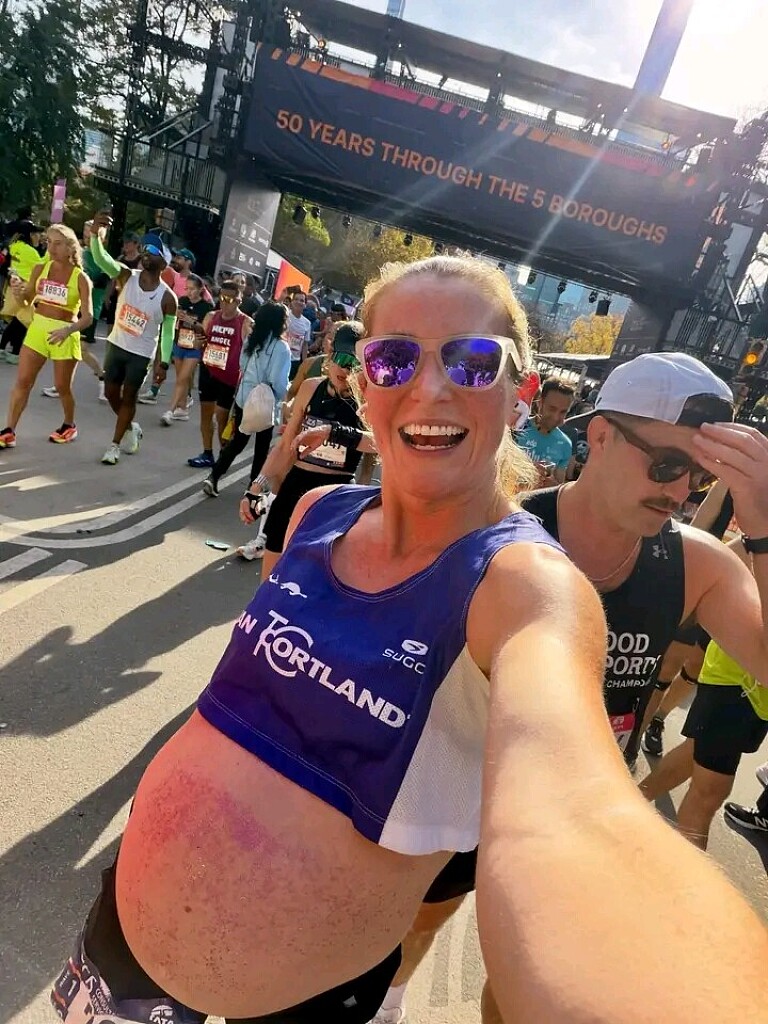
Seven World Marathon Majors In One Year! Deirdre Keane Completes Extraordinary 2026 Challenge At 34 Weeks Pregnant!
What began as an ambitious challenge to conquer all seven Abbott World Marathon Majors in a single calendar year turned into one of the most remarkable and emotional marathon journeys of 2026 for Deirdre Keane.
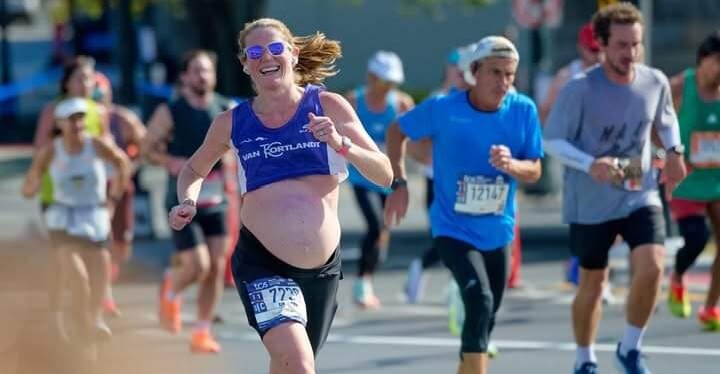
Keane set out with a clear objective: complete the seven prestigious marathon races across the world, from Tokyo to Boston, London, Sydney, Berlin, Chicago and New York. However, an unexpected discovery after her third marathon transformed the challenge into something far more extraordinary. She was pregnant!
Even more surprising, she had already completed two of the seven marathons while unknowingly carrying her baby. Her pregnancy was discovered after the third race, meaning that what initially appeared to be a straightforward year of marathon racing had suddenly become a very different personal journey.
Rather than simply walking away from the challenge, Keane adapted her approach, adjusting her training and running pace as her pregnancy progressed. Each subsequent marathon presented a new experience, requiring careful consideration of her changing circumstances.

Her journey began at the Tokyo Marathon in Japan, where she clocked an impressive 3:16 before becoming pregnant. She returned to the start line at the Boston Marathon, also recording 3:16 at five weeks pregnant, although she was not yet aware of her condition. At the London Marathon, she crossed the finish line in 3:38 at six weeks pregnant, still unaware that she was expecting.
After discovering the pregnancy, the remaining four races became an entirely different chapter of her adventure. She completed the Sydney Marathon in 4:05 at 25 weeks, followed by Berlin in 4:01 at 29 weeks. Chicago came next, where she recorded 3:58 at 31 weeks pregnant.
The final destination was the legendary New York City Marathon, where Keane achieved the remarkable milestone of completing all seven World Marathon Majors in the same year. At 34 weeks pregnant, she crossed the finish line in 4:06, bringing an unforgettable global marathon adventure to a close.
Her achievement was not measured by finishing times alone. Behind every race was a deeply personal story, particularly her connection to her late father, who introduced her to running and became one of the most important influences in her life.
There was an especially emotional dimension to her New York appearance. She completed the final marathon on what would have been her father's 75th birthday. Remarkably, her father had also run his final New York City Marathon 25 years earlier, creating a touching connection between two generations of runners.
Reflecting on a year that unfolded very differently from her original plans, Keane captured her feelings in a heartfelt message: "Not quite the year I had planned, but I wouldn't change a thing."
From Tokyo to New York, her seven-race journey became a story of unexpected discoveries, personal memories and a challenge that took on an entirely new meaning along the way.
Seven World Marathon Majors. Seven finish lines. One extraordinary year. And with a new addition to her family on the way, Deirdre Keane may have an even more special finish-line celebration ahead.
The remarkable achievement has added another unforgettable chapter to the 2026 marathon season, with Deirdre Keane completing all seven Abbott World Marathon Majors despite an unexpected pregnancy. Her journey has captured attention for its extraordinary circumstances, personal significance and emotional connection to her late father. As she prepares to welcome her baby, her story stands out as one of the most memorable marathon journeys of the year.
by Erick Cheruiyot for My Best Runs.
Login to leave a comment
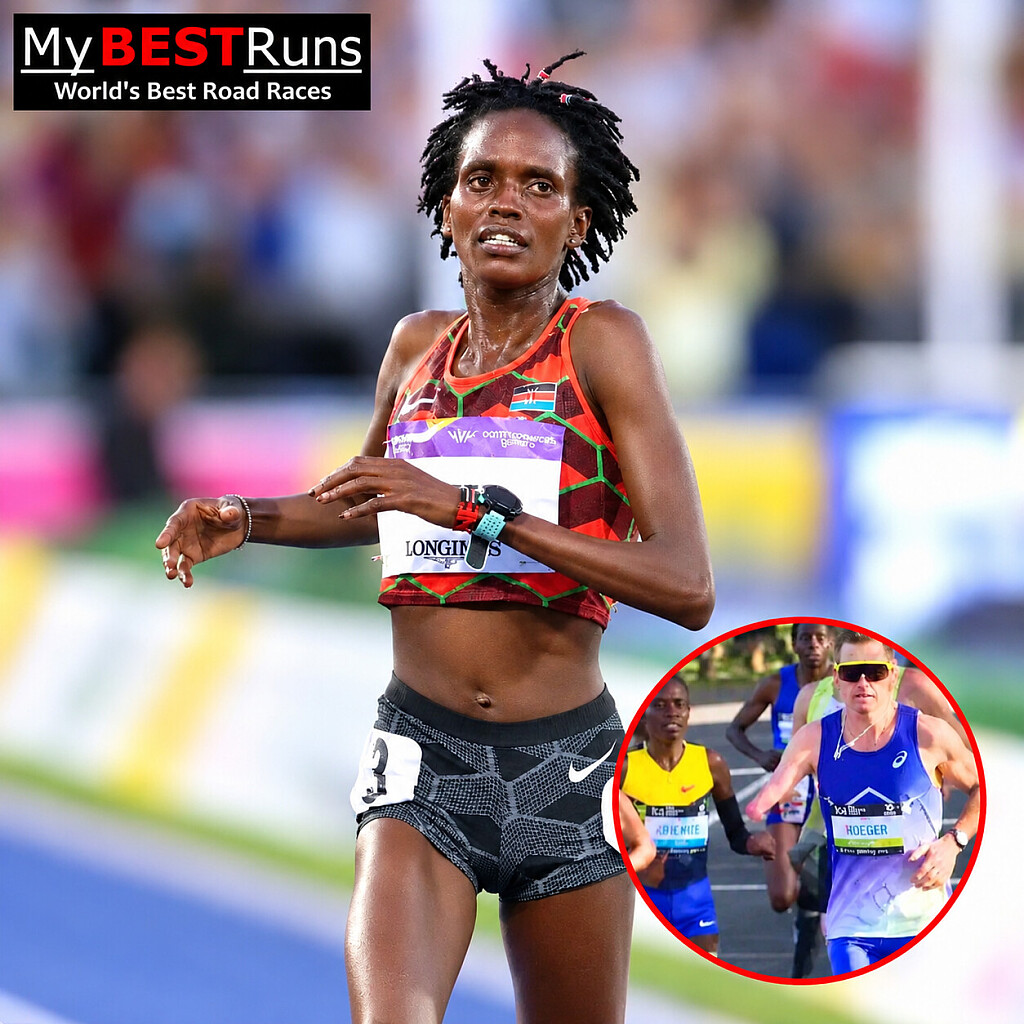
Irine Cheptai Earns World Athletics Fair Play Award Nomination After Heartwarming Gesture At Sydney Marathon!
Kenyan distance-running star Irine Cheptai has earned international recognition for a remarkable act of kindness and sportsmanship that demonstrated the true spirit of athletics, securing her place among the three finalists for the prestigious 2026 World Athletics International Fair Play Award.
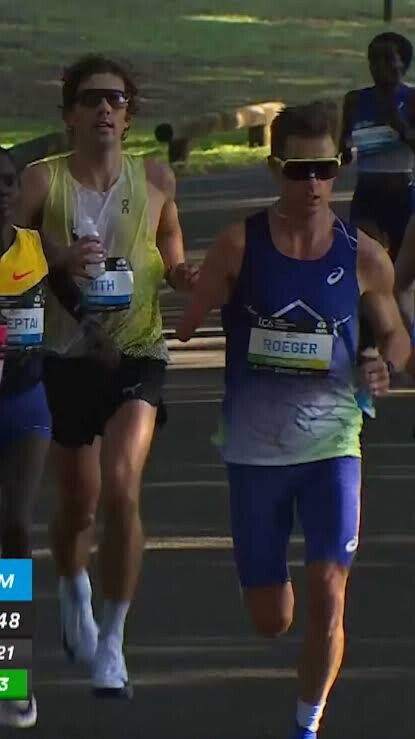
Cheptai's nomination follows a memorable moment during the Sydney Marathon, where she put competition aside to help Australian Paralympic marathoner Michael Roeger, offering a powerful reminder that humanity and respect can be just as important as winning.
The incident happened at approximately the 30-kilometre mark, when Roeger encountered difficulties accessing the hydration stations positioned along the right-hand side of the course. Born without his lower right arm, the Australian athlete faced an additional challenge collecting drinks while maintaining his rhythm during the demanding race.
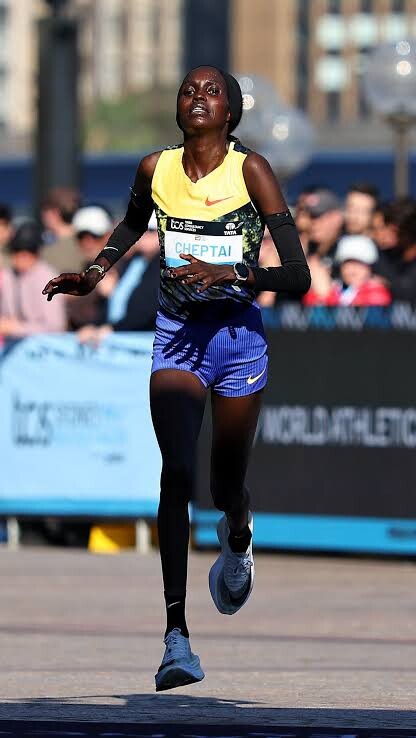
Noticing his situation, Cheptai responded without hesitation by sharing her own water bottle with him. It was a simple but extraordinary gesture, particularly in the closing stages of a marathon when every second, every movement and every ounce of energy can make a difference.
What made the moment even more special was that both athletes were competing at an exceptionally high level. Roeger went on to finish in 2:18:36, establishing a new T46 marathon world record, while Cheptai delivered an outstanding performance to finish second in the women's race in 2:22:11.
Although the Sydney Marathon produced impressive performances and memorable results, Cheptai's selfless intervention became one of the defining stories of the event. Her actions demonstrated that sporting excellence is not measured exclusively by finishing times, medals or records, but also by the values athletes demonstrate when faced with opportunities to help others.
Being named among the three finalists for the World Athletics International Fair Play Award is a fitting recognition of a moment that resonated far beyond the marathon course.
For Cheptai, the gesture may have lasted only a few seconds, but its message carries much greater significance. In a sport where athletes push their physical and mental limits in pursuit of personal glory, she showed that compassion and competitive spirit can exist side by side.
Sometimes, the most memorable moments in sport are not about who finishes first, but about who chooses to make a difference along the way.
Irine Cheptai has reminded the athletics world that true champions are recognised not only by what they achieve, but also by how they treat others.
by Erick Cheruiyot for My Best Runs.
Login to leave a comment

Naoko Takahashi: The Olympic Champion Who Continues To Inspire Runners Beyond The Finish Line!
Winning an Olympic gold medal and setting world records can define an extraordinary athletic career, but for Japan’s Naoko Takahashi, greatness extends far beyond the achievements recorded in history books. Her influence on the sport continues through the encouragement, kindness and genuine connection she shares with runners of all abilities.
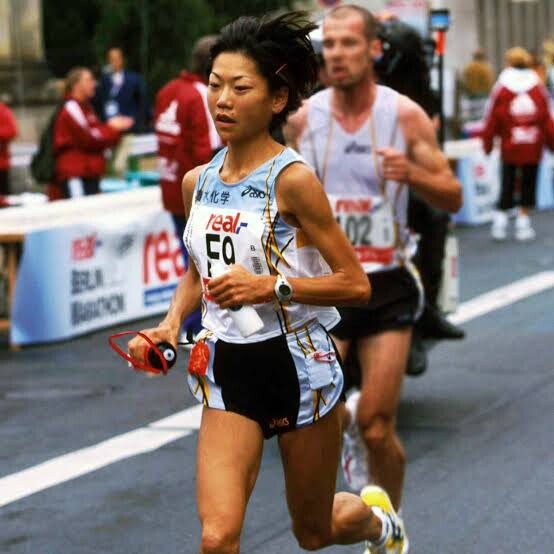
Takahashi became a national sporting hero when she captured the women’s marathon gold medal at the 2000 Sydney Olympic Games, becoming the first Japanese woman to win Olympic gold in athletics. Her remarkable career reached another historic milestone in September 2001, when she won the Berlin Marathon in 2:19:46, becoming the first woman in history to break the 2:20 barrier. It was a landmark performance that elevated women's marathon running to another level.
However, one of the most beautiful aspects of Takahashi's legacy is the way she continues to give back to the running community long after her greatest competitive achievements.

A familiar and welcome presence at numerous road races across Japan, the Olympic champion regularly makes herself available to ordinary participants. Whether attending race expos, posing for photographs, participating in opening ceremonies or cheering along the course, she brings the same enthusiasm to recreational runners that she once displayed on the world's biggest athletic stages.
Her involvement often goes much further than simply appearing as a special guest. She has been known to join runners during the opening kilometres, encourage participants throughout their races and return to the finish area to celebrate their achievements. On some occasions, she even offers a helping hand to struggling participants who are fighting to complete their marathons before the official cut-off time.
It is a powerful reminder that the true spirit of marathon running cannot be measured by finishing times, medals or world records alone.
For many participants, simply completing 42.195 kilometres represents months of preparation, personal sacrifices and overcoming challenges. Having an Olympic champion take the time to encourage them can turn an already unforgettable experience into something truly special.
Takahashi understands that every runner has a different journey. While elite athletes compete for championships and records, thousands of ordinary runners take to the roads to challenge themselves, achieve personal goals and discover what they are capable of accomplishing.
Her willingness to celebrate those individual victories reflects a beautiful side of athletics that deserves recognition.
Naoko Takahashi may forever be remembered as the woman who conquered the Olympic marathon in Sydney and broke the historic 2:20 barrier in Berlin, but her continued contribution to grassroots running demonstrates that sporting greatness is also about the lives an athlete touches.
A champion who once made history for her country and continues making a difference for runners everywhere. That is a legacy worth celebrating!
by Erick Cheruiyot for My Best Runs.
Login to leave a comment
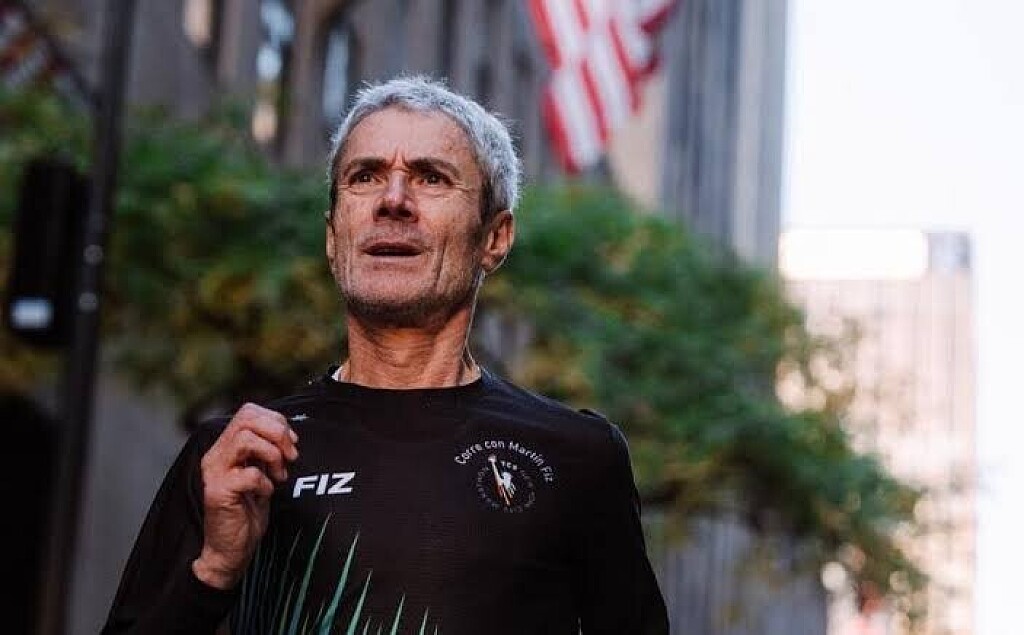
Martín Fiz Bids Farewell To The Marathon At 63 After An Extraordinary Career Spanning Three Decades
Spanish marathon legend Martín Fiz has brought an extraordinary chapter of his athletics career to a close, completing his final marathon at the 2026 TCS New York City Marathon on November 1, at the age of 63.
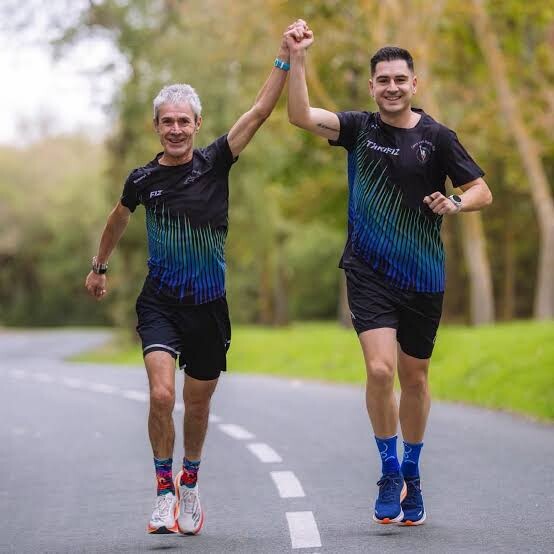
The 1995 World Marathon Champion crossed the finish line in 3:01:13, bringing an emotional end to a remarkable journey spanning three decades and 42 marathon appearances. His final outing was made even more special by sharing the experience with his son, Álex Fiz, who was making his marathon debut. The father-and-son duo crossed the finish line together, turning the occasion into an unforgettable family moment.
Born on March 3, 1963, Fiz has enjoyed one of the most remarkable careers in Spanish distance-running history. His decision to retire from the marathon distance marks the end of a competitive journey that took him from international championship glory to extraordinary achievements in masters athletics.
New York was a particularly fitting destination for his farewell. It was in the same city that Fiz competed in his first major commercial marathon in 1996. Thirty years later, he returned to the streets of the Big Apple for marathon number 42, this time alongside his son.
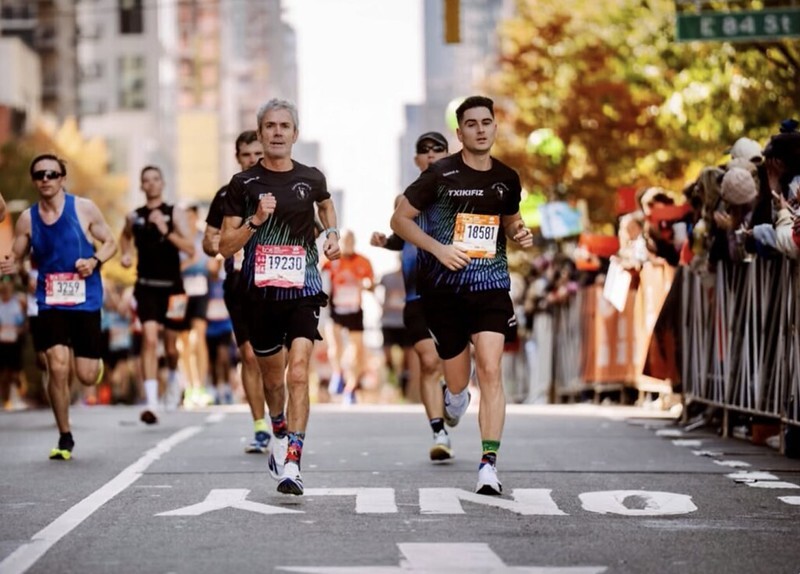
The two had initially hoped to break the three-hour barrier, but several stops to greet relatives and take photographs along the course meant they finished just over the target. Nevertheless, the stopwatch was never the priority. Their greatest achievement was completing the 42.195-kilometre challenge together and sharing the finish-line moment hand in hand.
"I've been married to the marathon for 30 years. But now the time has come to make way for the youngsters," Fiz was quoted as saying in Spanish media, reflecting on his decision to step away from the distance.
Fiz's name is permanently etched in athletics history. He first reached the continental summit by winning the European Marathon Championship in Helsinki in 1994 before producing an even greater achievement the following year.
At the 1995 World Athletics Championships in Gothenburg, Sweden, he captured the men's marathon gold medal, becoming one of the most celebrated distance runners of his generation. He subsequently added a silver medal at the 1997 World Championships in Athens, further establishing his reputation among the world's finest marathoners.
His achievements also extended to the Olympic stage. At the 1996 Atlanta Olympic Games, Fiz narrowly missed the podium, finishing fourth in the marathon. He later represented Spain at the 2000 Sydney Olympic Games, where he finished sixth.
During his elite career, he recorded an impressive personal best of 2:08:05 at the 1997 Lake Biwa Marathon in Japan, a performance that underlined his exceptional ability during the golden era of Spanish distance running.
However, Fiz's remarkable story did not end when he stepped away from elite professional competition in 2001. Instead, he continued competing in masters athletics, demonstrating that age did not have to become a barrier to ambition, achievement or sporting excellence.
One of his most extraordinary accomplishments came in the over-50 category, where he became the first athlete to win all six World Marathon Majors: Tokyo, Boston, London, Berlin, Chicago and New York.
That remarkable achievement placed him in a unique position in marathon history and inspired countless veteran runners around the world to continue pursuing ambitious goals regardless of age.
His final appearance in New York was therefore about much more than another finish time. It represented the celebration of a lifetime dedicated to athletics, the memories created along the way and the opportunity to pass his passion for running to the next generation.
Although Fiz has officially said goodbye to the marathon distance, he has made it clear that he has no intention of abandoning competitive running altogether. The Spanish legend is already looking towards possible new challenges over the half-marathon and 10-kilometre distances.
From European Championship gold to World Championship glory, Olympic appearances and historic masters achievements, Martín Fiz has built a legacy that extends far beyond medals, records and finishing times.
His final marathon was not about chasing another victory or breaking another barrier. It was about celebrating an extraordinary journey that began three decades ago and ending it in the most meaningful way possible: alongside his son.
At 63, Fiz has reminded the running world that greatness is not measured only by speed or age, but also by longevity, passion, consistency and the courage to keep challenging oneself.
A world champion once, an inspiration forever.
¡Gracias, Martín Fiz!
by Erick Cheruiyot for My Best Runs.
Login to leave a comment

One Year Ago: Eliud Kipchoge Completed His Seven-Major Marathon Journey
One year ago today, Eliud Kipchoge added another remarkable chapter to an already extraordinary marathon career.
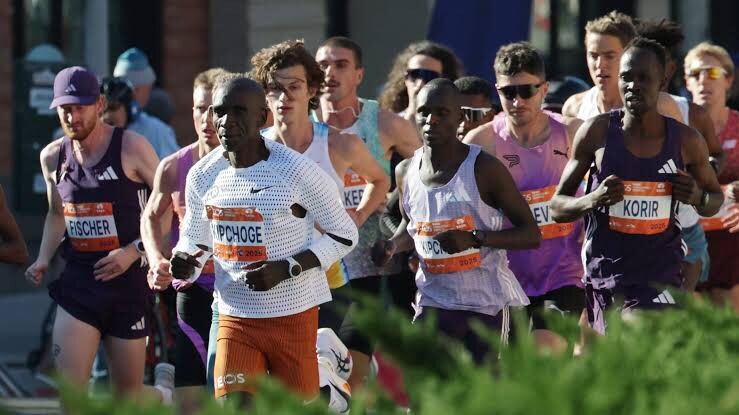
On November 2, 2025, the Kenyan marathon icon completed the TCS New York City Marathon, becoming a member of the exclusive Abbott World Marathon Majors Seven Star Hall of Fame after racing all seven of the sport’s major marathon events.
It was more than simply another marathon finish. It was the culmination of a journey that had taken Kipchoge across the world, from Tokyo to Boston, London to Berlin, and from Sydney and Chicago to the streets of New York.
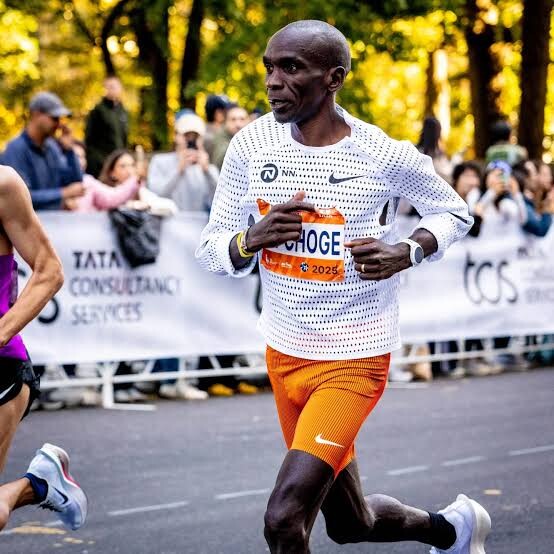
Each race represented a different challenge, but together they formed a remarkable collection of experiences that reflected the qualities that have defined Kipchoge throughout his career: consistency, discipline, patience, humility and an extraordinary commitment to excellence.
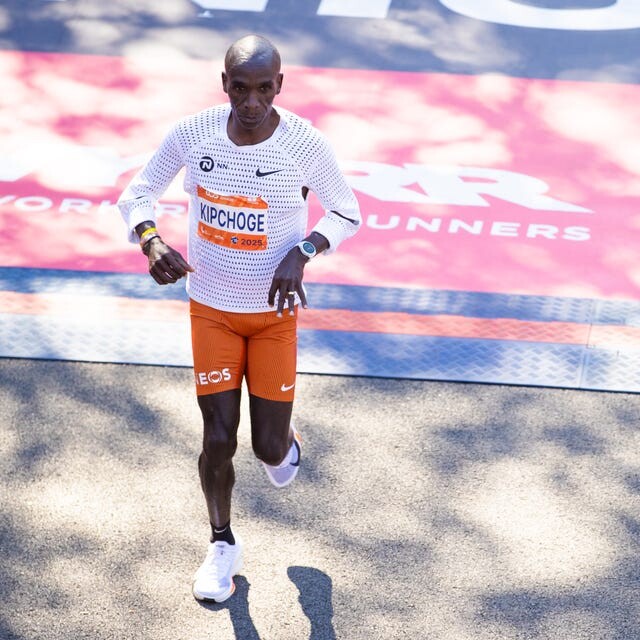
For more than a decade, Kipchoge has transformed the marathon landscape. He became the first man to break two hours over the distance in a controlled exhibition in 2019, established himself as one of the greatest marathoners in history and built a legacy that extends far beyond his victories and records.
Completing all seven Abbott World Marathon Majors added another prestigious milestone to that legacy.
The Seven Star Medal is reserved for runners who have completed the full World Marathon Majors series, and Kipchoge’s achievement carries particular significance because of everything he has accomplished on those same iconic courses.
A year later, the significance of that journey has not faded. Instead, it stands as another reminder of the extraordinary longevity and determination of a champion who has spent his career proving that limits are often only the boundaries we place on ourselves.
From the roads of Kenya to the biggest marathon stages on the planet, Eliud Kipchoge has continually inspired generations of runners with one simple philosophy:
NO HUMAN IS LIMITED.
One year on, his name remains firmly etched in marathon history — not only as a champion, but as an athlete whose journey has helped redefine what is possible in distance running.
Eliud Kipchoge — seven majors completed, a lifetime legacy secured.
by Erick Cheruiyot for My Best Runs.
Login to leave a comment
Shocking Development: Peres Jepchirchir Provisionally Suspended Over EPO Finding As Sydney Marathon Title Hangs In The Balance
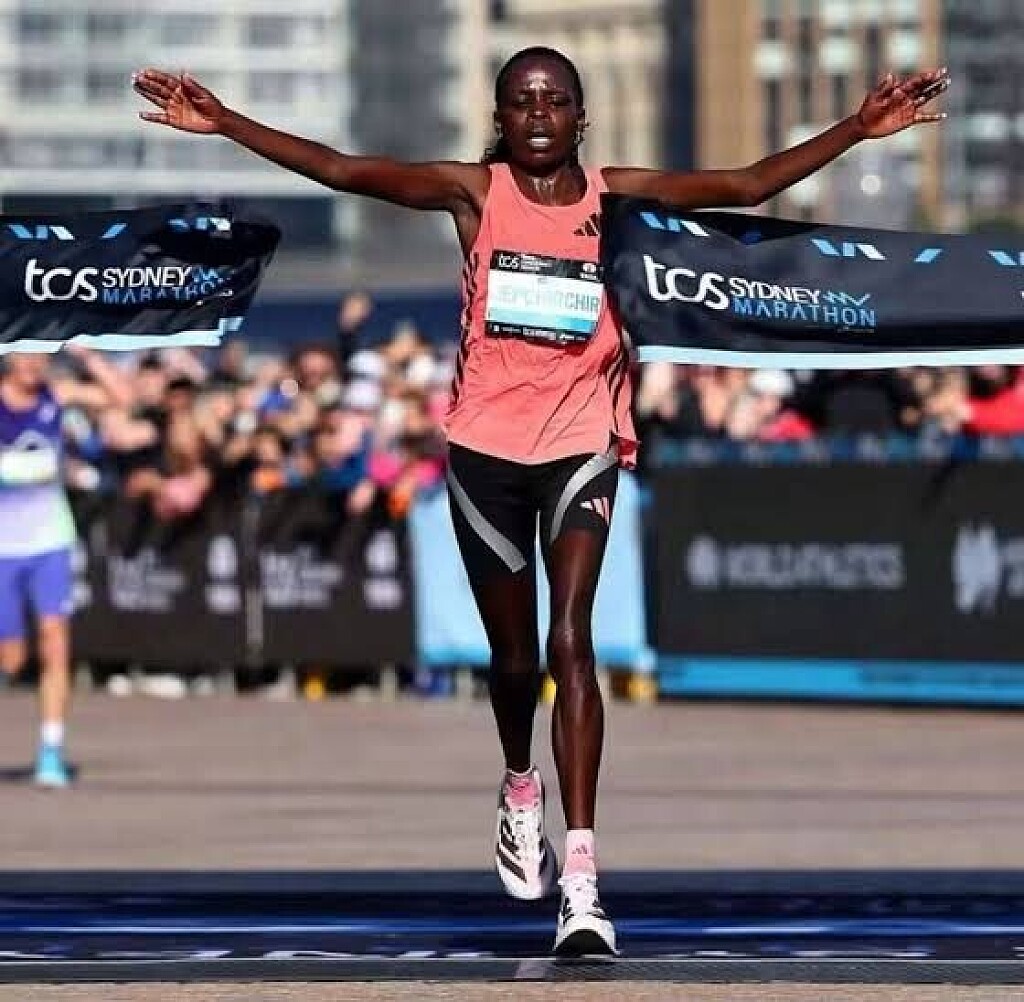
Kenyan distance running has been rocked by a major development after Peres Jepchirchir, the reigning world marathon champion and 2021 Olympic gold medallist, was provisionally suspended by the Athletics Integrity Unit (AIU) following an adverse analytical finding for erythropoietin (EPO).
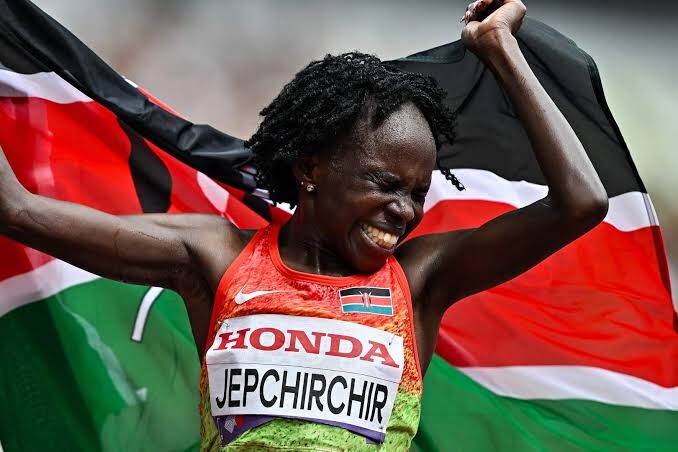
The 33-year-old reportedly tested positive for the prohibited substance in an out-of-competition sample collected in Kenya before the Sydney Marathon on August 30, 2026. The development has cast uncertainty over the future of one of the most accomplished female marathon runners of her generation, whose impressive career includes Olympic gold, a world championship title and victories at three of the sport's most prestigious marathons.
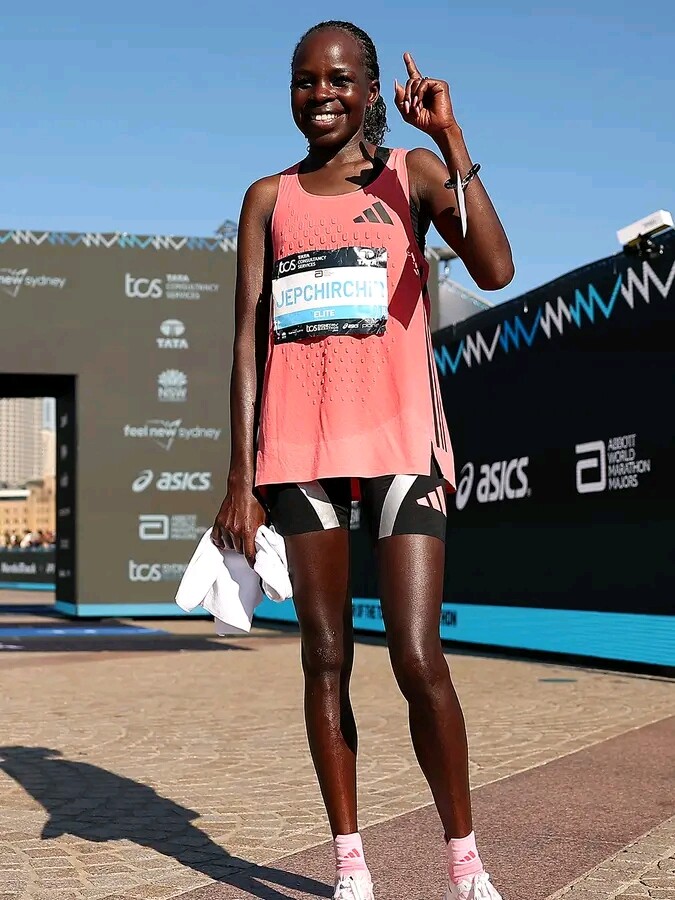
Jepchirchir returned to marathon competition in Sydney after a stress fracture forced her to withdraw from the London Marathon in April. Her comeback initially appeared to be another triumphant chapter in her career, as she stormed to victory in 2:18:31, finishing 3:40 ahead of compatriot Irine Cheptai.
However, the reported adverse analytical finding has placed that achievement under scrutiny, with the possibility that her Sydney victory could eventually be annulled depending on the outcome of the anti-doping proceedings.
Under anti-doping rules, results can be disqualified from the date of an adverse analytical finding or another applicable date determined under the regulations. If the relevant results are annulled, Jepchirchir could lose the Sydney Marathon title, which would have given her victories at four different World Marathon Majors, following her previous triumphs in New York, Boston and London.
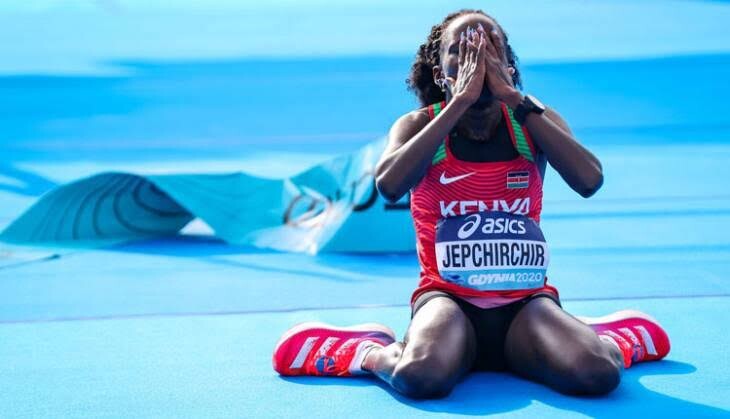
EPO is a prohibited substance that stimulates red blood cell production, increasing the blood's capacity to transport oxygen to working muscles. Its performance-enhancing potential makes it particularly significant in endurance sports, including marathon running.
The substance is prohibited under anti-doping regulations, and a confirmed violation can carry serious consequences. Under the World Anti-Doping Code, a first violation involving a non-specified substance such as EPO generally carries a four-year period of ineligibility when the applicable conditions are met, although the final sanction depends on the circumstances of the case.
Jepchirchir's provisional suspension, however, is not a final sanction and does not itself establish that an anti-doping rule violation has been conclusively proven. The case must proceed through the relevant process, during which the athlete has the opportunity to exercise her rights under the applicable rules.
As of the information available, Jepchirchir has not commented publicly on the matter.
The Sydney Marathon has also acknowledged the seriousness of the situation while emphasising the importance of a fair process. In a statement, the event said Jepchirchir “is entitled to due process, and we will make no further comment on the case until that process has concluded.”
The case has attracted considerable attention because of Jepchirchir's standing in international athletics. She won Olympic marathon gold at the Tokyo Games in 2021 before claiming victory at the New York City Marathon later that year. In 2022, she conquered the Boston Marathon, adding another prestigious title to her growing collection.
Her success continued in 2024 when she won the London Marathon, becoming one of the few women to capture victories at New York, Boston and London. She subsequently reached another career milestone at the 2025 World Athletics Championships in Tokyo, where she won the women's marathon title by just two seconds in a dramatic finish against Ethiopia's Tigst Assefa.
Jepchirchir has also established herself among the fastest women in marathon history. Her personal best of 2:14:43 places her ninth on the all-time women's marathon list, underscoring the level of performance that has defined her career.
Beyond the immediate implications for her Sydney victory, the case could have wider consequences if an anti-doping rule violation is ultimately established. The World Marathon Majors' rules provide for lifetime exclusion from the series for athletes who receive a doping-related ban of three months or longer, meaning a sufficiently lengthy sanction could jeopardise Jepchirchir's future participation in all eight events.
For an athlete who has built her reputation through success on the sport's biggest stages, such an outcome would represent a significant setback. Nevertheless, any consequences for her results, eligibility or future participation will depend on the applicable rules and the final outcome of the proceedings.
The development also renews attention on Kenya's ongoing efforts to protect the integrity of distance running. The country has produced generations of exceptional marathon runners, but high-profile anti-doping cases continue to raise difficult questions about clean competition and the responsibility of athletes, coaches and support personnel.
For now, the focus remains on the AIU's proceedings and the evidence surrounding the reported finding. Jepchirchir's provisional suspension marks a serious moment in her career, but the distinction between an adverse analytical finding and a final ruling remains essential as the case moves forward.
Once celebrated for her Olympic triumph, world championship glory and victories in the world's most prestigious marathons, the Kenyan star now faces an uncertain period as the anti-doping process unfolds. The eventual outcome will determine whether her latest Sydney success remains part of her remarkable record or becomes one of the most consequential episodes of her career.
by Erick Cheruiyot for My Best Runs.
Login to leave a comment
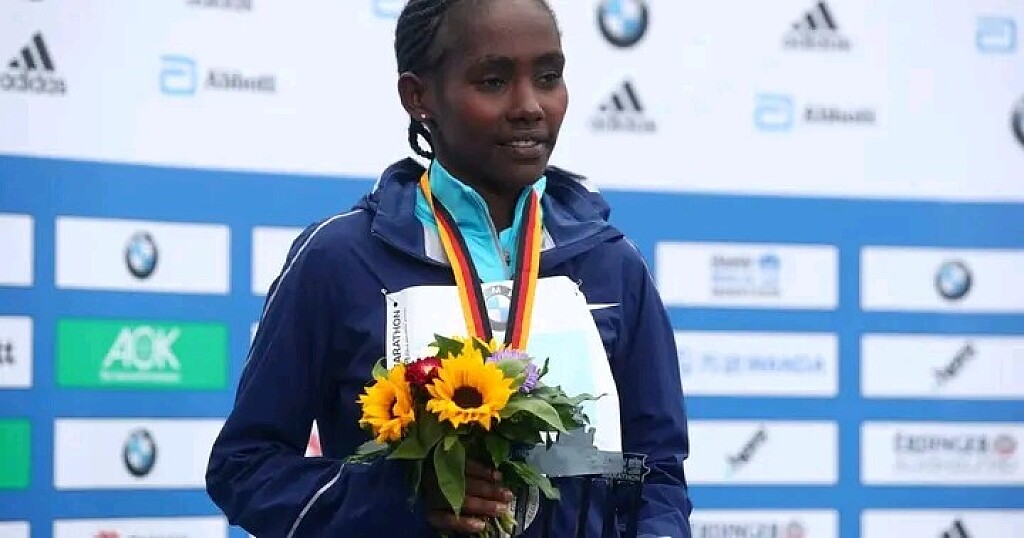
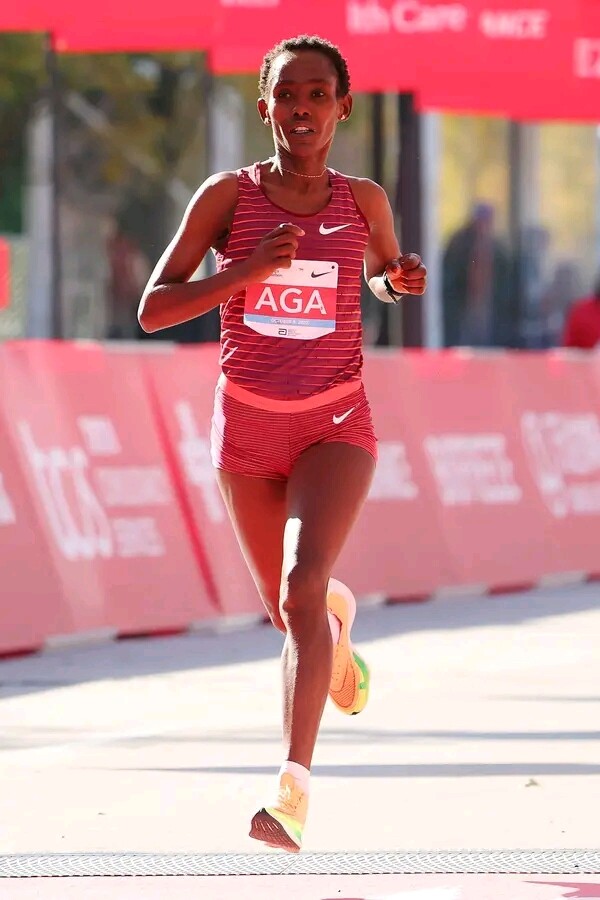
Ruti Aga Handed Six-Year Ban For Doping And Forged Medical Document In Tampering Case
Ethiopian marathon star Ruti Aga has been handed a six-year suspension by the Athletics Integrity Unit (AIU) after testing positive for methylprednisolone and being found guilty of tampering with an anti-doping investigation by submitting a forged medical document.
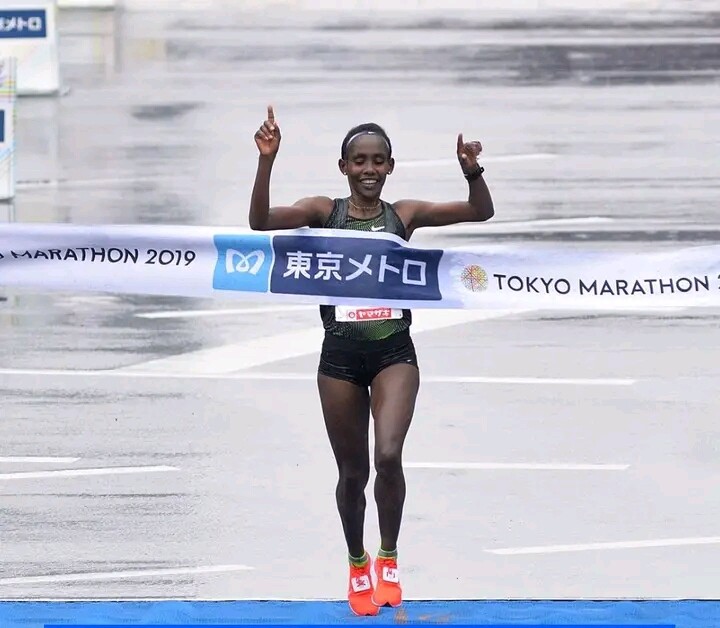
The former Tokyo Marathon champion tested positive for the prohibited substance after winning the Meishan Renshou Half Marathon in China on March 15, 2026, in a time of 1:08:04. At the time, Aga was ranked 11th in the world, reflecting her standing among the leading marathon runners internationally.
Methylprednisolone is a glucocorticoid classified under Class S9 of the World Anti-Doping Agency’s Prohibited List. It is prohibited in competition, and its detection prompted an investigation into the circumstances surrounding its use.
However, the case became considerably more serious when investigators examined Aga’s explanation for the substance’s presence in her sample. The Ethiopian athlete said she had taken the medication as part of treatment for a knee injury and submitted a prescription that she claimed had been issued by a medical clinic.
According to the AIU’s findings, the clinic named in the document did not exist. The individual identified as the prescribing doctor was a family member who was not registered to practise medicine. When questioned, the family member reportedly said they had used an old prescription pad from a former workplace.
That workplace subsequently confirmed that the individual had never worked there and that the prescription pad did not belong to the institution. The AIU, working with the Ethiopian Anti-Doping Authority, established that the medical document was forged.
The investigation also found that Aga had provided false information during an AIU interview on April 21, 2026, before submitting the disputed medical document on May 4. The findings resulted in a separate tampering charge in addition to the original anti-doping violation.
The AIU imposed a two-year suspension for the presence and use of a specified substance and a further four years for tampering with the investigation. The combined penalties resulted in a six-year ban, with Aga ineligible to compete until September 10, 2032, when she will be 38 years old.
The sanction marks a major setback for a runner whose career has included victories and podium finishes at some of the world's most prestigious road races.
Aga won the Tokyo Marathon in 2019, following a series of outstanding performances on the World Marathon Majors circuit. Between 2016 and 2019, she collected six podium finishes at the major marathons, including second-place finishes in Berlin in 2017 and 2018, second place in Tokyo in 2018, third place in Berlin in 2016 and third place in New York City in 2019.
She has not competed at a World Marathon Major since 2022, but continued to achieve success elsewhere on the international road-running circuit.
Between 2023 and 2026, Aga recorded five marathon victories across Dongying, Daegu, Xiamen and Hangzhou, including back-to-back wins at the Xiamen Marathon in 2025 and 2026. She also finished runner-up twice in Dubai and once in Sydney, maintaining a strong presence in elite marathon competition.
Her personal best of 2:18:09 further underlines the level at which she has competed throughout her career.
Despite those achievements, the six-year suspension places her future in the sport in serious doubt. If she returns when the ban expires in September 2032, Aga will be 38 and will have spent six years away from competition under the sanction.
The case also serves as a reminder that anti-doping proceedings extend beyond laboratory results. Athletes are expected to comply with anti-doping rules throughout an investigation, and attempts to mislead investigators or submit forged evidence can result in additional sanctions beyond those imposed for the original violation.
For Aga, the ruling brings a difficult chapter to a career that once saw her among the world's leading marathon runners, with her Tokyo victory and years of international success now overshadowed by one of the most consequential disciplinary cases of her career.
by Erick Cheruiyot for My Best Runs.
Login to leave a comment
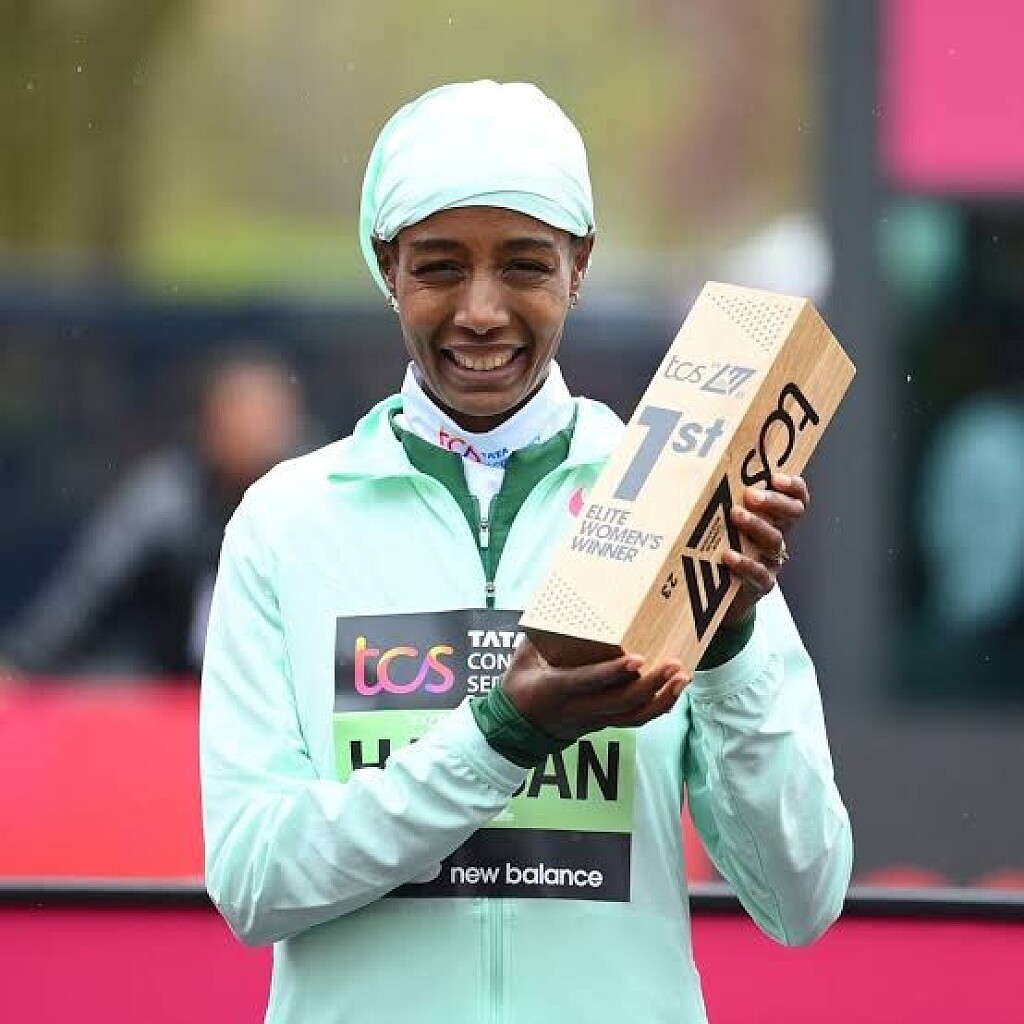
Sifan Hassan Withdraws From 2026 New York City Marathon As Illness Disrupts Her Preparation
Olympic marathon champion Sifan Hassan of the Netherlands has officially withdrawn from the 2026 TCS New York City Marathon after illness disrupted her preparations, ending hopes of seeing the versatile distance-running star return to one of the world’s most prestigious road races this autumn.
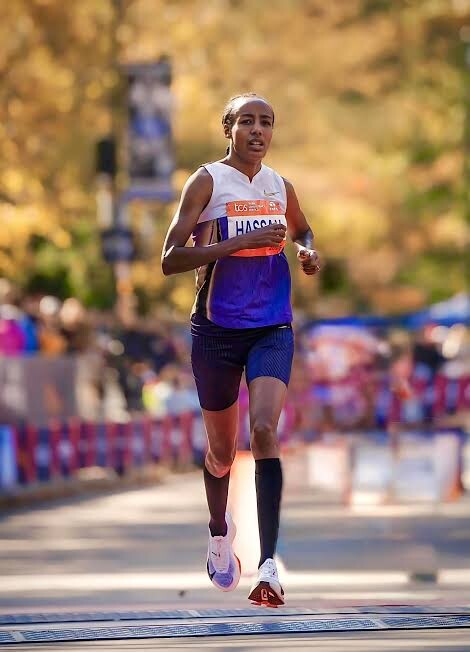
Hassan announced her decision on social media, explaining that sickness had slowed her training and left her short of the level of preparation she had hoped to achieve ahead of the November 1 race. The withdrawal is a setback for the Dutch star, who had been looking forward to returning stronger after her previous appearance in New York.
“I was so excited to come back stronger, but a sickness slowed down my training and I’m not where I wanted to be. Sometimes, things just don’t go as planned,” Hassan wrote.
Despite her disappointment, the Olympic champion also sent her best wishes to the athletes preparing to compete in New York, demonstrating her support for the wider running community even as she steps away from the competition.
Hassan, who holds a personal best of 2:13:44, ranks fifth on the women’s all-time marathon list. Her extraordinary range across track and road running has established her as one of the most versatile athletes of her generation, capable of competing at the highest level from shorter distances to the marathon.
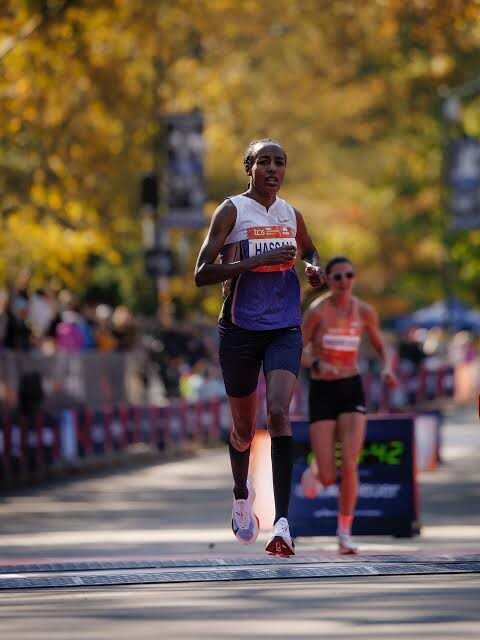
Her marathon career has already produced several memorable achievements. Hassan has won the London Marathon and Chicago Marathon, claimed victory at the Sydney Marathon, and secured Olympic marathon gold at the Paris 2024 Games. Those accomplishments underline her ability to adapt to different courses, race conditions and competitive challenges.
The withdrawal from New York follows another interruption to her 2026 campaign. Hassan previously pulled out of the London Marathon because of an Achilles injury, and the latest illness has further disrupted her plans for the season. With her training affected, stepping aside from New York allows her to prioritise her recovery rather than compete without the preparation she considers necessary.
Hassan’s absence will be a significant talking point in the build-up to the New York City Marathon, which takes runners through all five boroughs of the city before finishing in Central Park. The demanding course and deep international field regularly produce compelling racing, and her withdrawal creates an opportunity for other leading contenders to strengthen their ambitions.
Although the precise implications for the women’s elite field will depend on the final start list, the race remains an important opportunity for leading East African athletes and top American runners to challenge for victory. Without Hassan on the starting line, attention will turn to the athletes capable of taking advantage of the opportunity and delivering a memorable performance on the streets of New York.
For Hassan, however, the priority is no longer the immediate challenge of another marathon. The Dutch star has built her reputation through resilience, adaptability and a willingness to take on some of the toughest challenges in distance running. Recovering fully and returning to structured training will be essential as she considers her next competitive objectives.
At 33, Hassan already has an exceptional record that includes Olympic glory and victories at some of the world's most prestigious marathons. While her withdrawal is disappointing for fans who hoped to see her compete in New York again, it does not diminish the achievements that have made her one of the defining distance runners of her era.
The running world will now wait for news of her recovery and next racing plans. For the moment, Hassan’s message is clear: sometimes, even the best-laid preparations do not go according to plan, and knowing when to step back is part of an athlete’s journey.
The 2026 TCS New York City Marathon is scheduled for November 1. Hassan’s withdrawal removes one of the most accomplished names from the anticipated women’s field, but the race will continue to bring together elite athletes from around the world for another major contest over the five-borough course.
by Erick Cheruiyot for My Best Runs.
Login to leave a comment

TCS New York City Marathon
The first New York City Marathon, organized in 1970 by Fred Lebow and Vince Chiappetta, was held entirely in Central Park. Of 127 entrants, only 55 men finished; the sole female entrant dropped out due to illness. Winners were given inexpensive wristwatches and recycled baseball and bowling trophies. The entry fee was $1 and the total event budget...
more...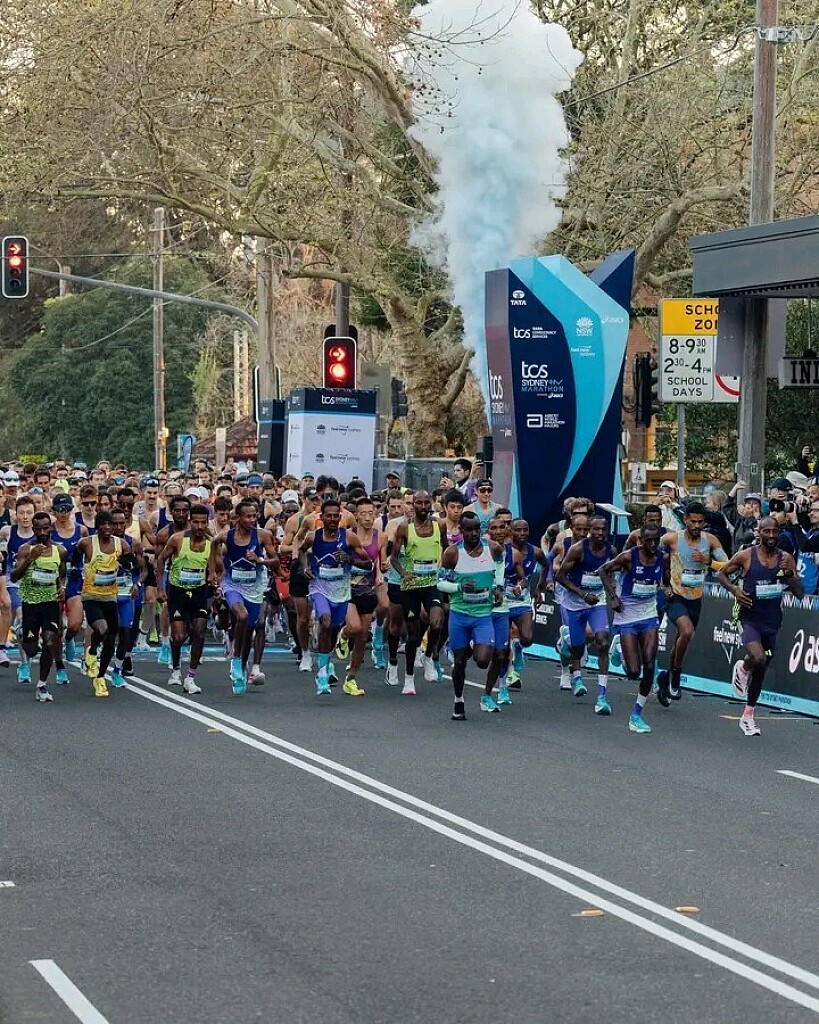
2027 Sydney Marathon Ballot Opens as Runners Worldwide Set Their Sights on Australia’s Iconic Race
The road to one of the world’s most spectacular marathon experiences has officially begun, with entries now open for the 2027 TCS Sydney Marathon presented by ASICS. Runners from across the globe can now submit their applications for a chance to participate in Australia’s largest marathon, an event that combines world-class distance running with the unforgettable scenery of Sydney.
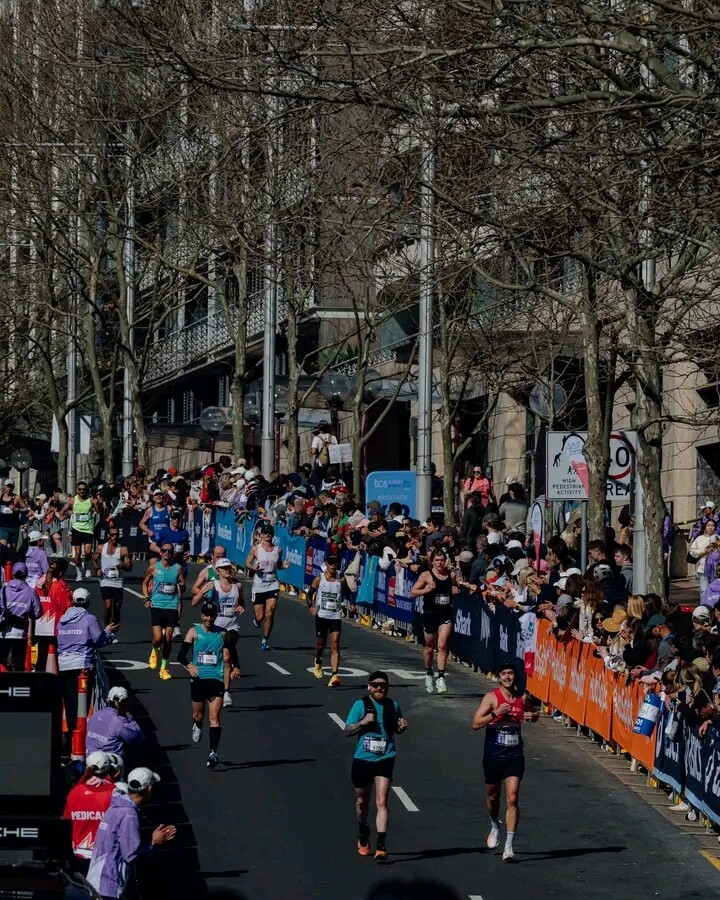
Scheduled for Sunday, August 29, 2027, the race promises to bring together thousands of runners, from passionate recreational athletes to experienced marathoners, for a memorable journey through one of Australia’s most celebrated cities.
More than a test of endurance, the Sydney Marathon offers participants an opportunity to experience the city’s distinctive atmosphere, vibrant culture and internationally recognised landmarks. The highlight for many runners will be the chance to cross the finish line beneath the iconic sails of the Sydney Opera House, creating a lasting memory at the end of months of preparation and training.
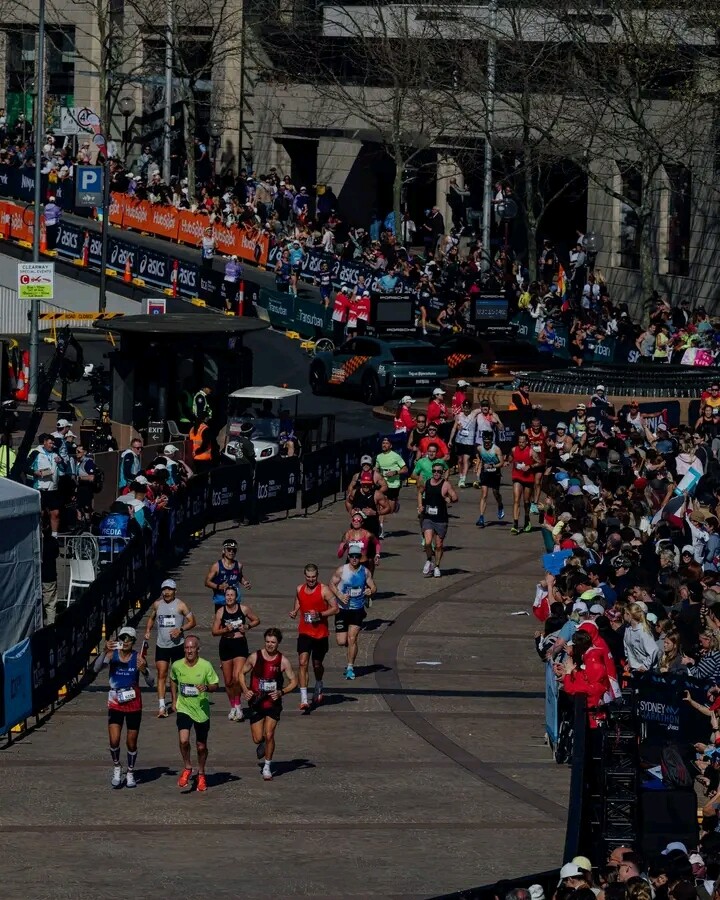
For international participants, the appeal extends well beyond race day. From exploring Sydney’s streets and waterfront to soaking up the atmosphere surrounding the event, the marathon offers an experience that combines sporting ambition with travel and cultural discovery.
Ballot Applications Open Until October 19
Runners hoping to secure a place in the 2027 edition must submit their applications before the ballot closes on Tuesday, October 19, 2026, at 10:00 a.m. Australian Eastern Daylight Time (AEDT).
Unlike a conventional first-come, first-served registration system, the marathon uses a random ballot to allocate places. This means applicants have an equal opportunity in the draw, regardless of when they submit their applications during the ballot period.
Athletes are therefore encouraged to complete their applications before the deadline, ensure that their contact details are accurate and familiarise themselves with the event's important dates.

Applicants will be notified of the outcome on November 3, 2026. Successful applicants will have their registered bank cards charged, with confirmation emails sent afterwards. Runners should ensure that the email addresses provided during registration are correct and check their junk or spam folders if they cannot find the notification.
The organisers have also clarified that they will not respond to individual enquiries about ballot application status between the opening of the ballot and the announcement of results. All ballot outcomes are final, and applicants are encouraged to consult the official frequently asked questions for further guidance.
Duo teams and participants competing in non-elite racing wheelchairs are subject to separate application procedures and should not apply through the general ballot.
An Opportunity to Be Part of Sydney’s Marathon Story
With the ballot now open, runners have the opportunity to begin planning for an event that brings together international participation, personal achievement and the excitement of marathon racing in a world-famous destination.
For those who secure a place, the journey will begin long before the starting gun sounds. Training schedules, long-distance runs and months of preparation will eventually lead to race day, when the streets of Sydney become the stage for thousands of individual stories of determination and achievement.
The 2027 TCS Sydney Marathon is scheduled for August 29, with ballot applicants expected to receive their results on November 3, 2026. Anyone who has not received a notification is advised to wait until after November 6 before contacting the organisers.
For athletes dreaming of racing in Australia, the opportunity to take part in Sydney’s celebrated marathon begins with a ballot application. The race may last only a few hours, but the journey to the starting line—and the memories created along the way—can last a lifetime.
by Erick Cheruiyot for My Best Runs.
Login to leave a comment
Sydney Marathon
The Sydney Marathon is a marathon held annually in Sydney, Australia. The event was first held in 2001 as a legacy of the 2000 Summer Olympics, which were held in Sydney. In addition to the marathon, a half marathon, 9 kilometres (5.6 mi) "Bridge Run", and a 3.5 kilometres (2.2 mi) "Family Fun Run" are also held under the banner...
more...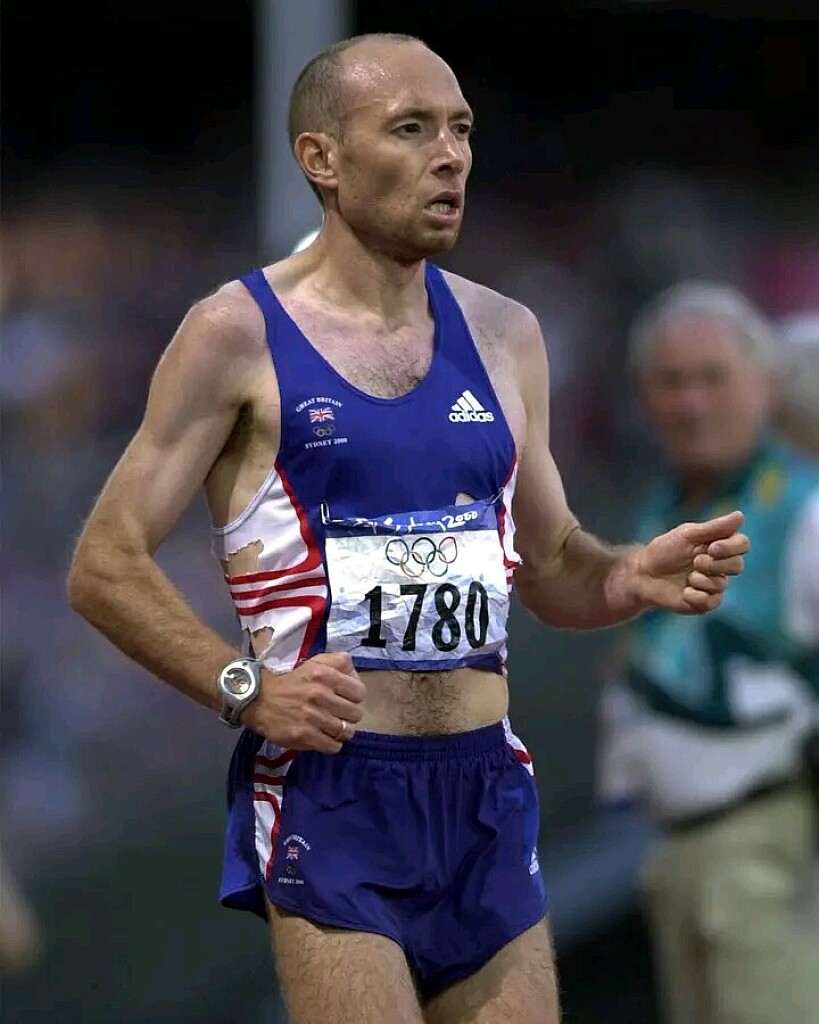
Jon Brown’s Olympic Marathon Heartbreak: Two Fourth-Place Finishes Four Years Apart
Twenty-six years ago yesterday, Jon Brown produced one of the most memorable Olympic marathon performances of his career, narrowly missing out on a medal for Great Britain at the Sydney 2000 Games.
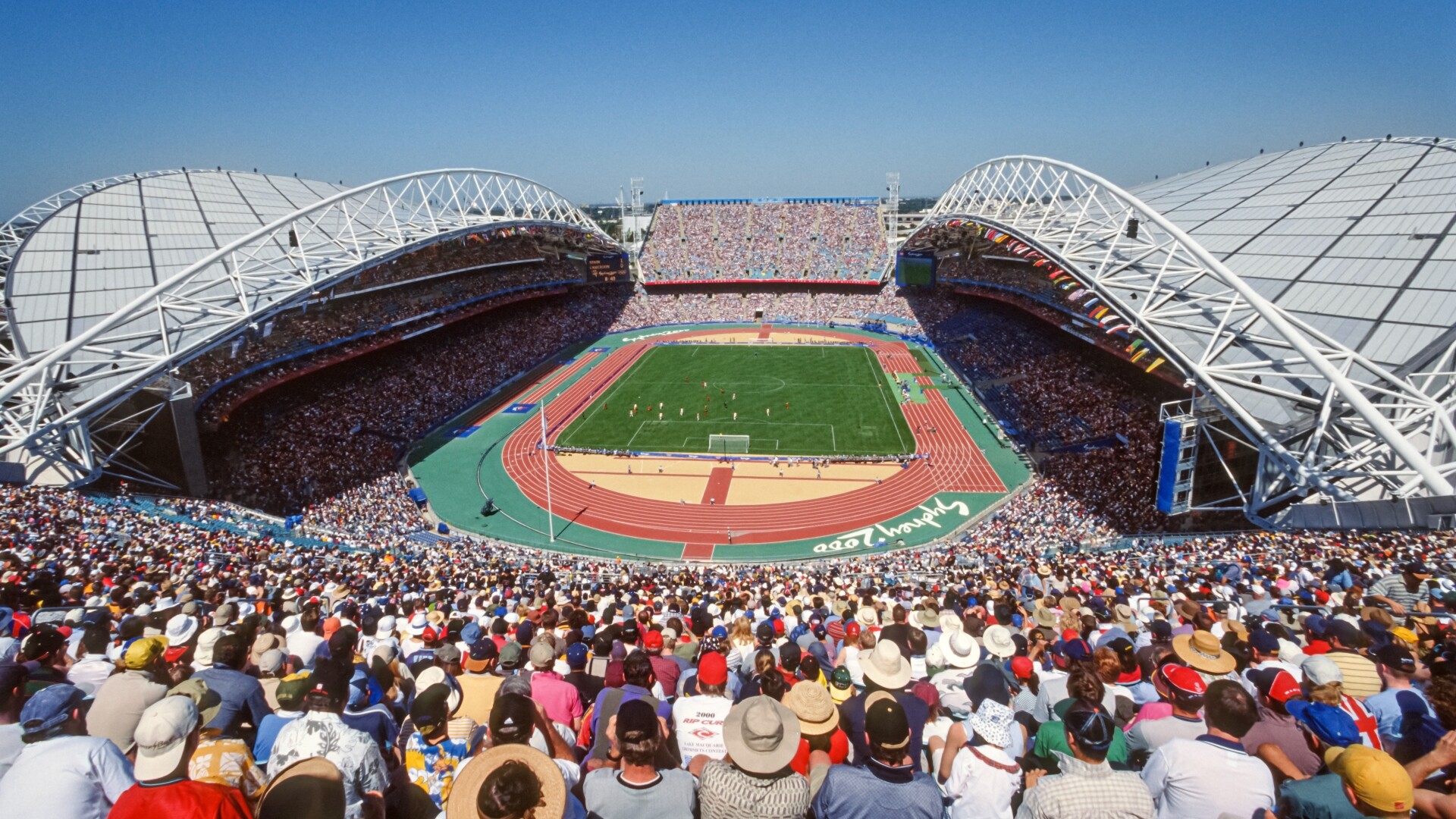
Brown delivered a determined run through the streets of Sydney, crossing the finish line in 2:11:17 to secure fourth place in a fiercely contested Olympic marathon.
The British distance runner came agonisingly close to the podium, finishing just seven seconds behind Ethiopia’s Tesfaye Tola, who claimed the bronze medal in 2:11:10.
For Brown, Sydney was a painful near-miss, but it would also mark the beginning of an extraordinary chapter in his Olympic career.
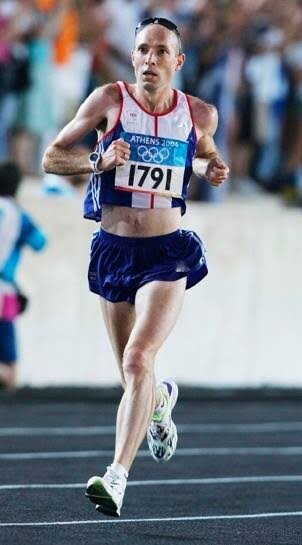
Four years later, at the Athens 2004 Olympic Games, Brown once again found himself within touching distance of an Olympic medal. He completed the marathon in 2:12:26, once again finishing fourth.
His performance in Sydney was particularly impressive given the unique demands of an Olympic marathon. Unlike major city marathons where athletes often have the clock and course records as primary targets, the Olympic race is shaped by tactics, national pride and the pressure of competing on the world's biggest sporting stage.
Brown remained firmly among the leading contenders in Sydney and was ultimately separated from a bronze medal by just seven seconds — a tiny margin after 42.195 kilometres of racing.
His return to the Olympic stage in Athens four years later added another remarkable dimension to his story. To reproduce a fourth-place finish at consecutive Olympic Games required extraordinary consistency, resilience and the ability to perform under immense pressure.
Although the medals continued to elude him, Brown's back-to-back fourth-place finishes established him as one of the most consistent marathoners of his generation. Few athletes experience the heartbreak of finishing just outside the medals once at an Olympics, let alone doing so again four years later.
Two Olympic marathons, two fourth-place finishes and two agonisingly close encounters with the podium — Brown's Olympic record may not include a medal, but it remains a remarkable testament to his longevity and competitiveness at the highest level of distance running.
His story is also a reminder of the brutal margins that define elite sport. After more than two hours of racing, the difference between Olympic glory and fourth place in Sydney came down to just seven seconds.
For Jon Brown, those seven seconds became part of Olympic history — while his performances in Sydney and Athens ensured that his name would remain firmly etched among Britain's outstanding marathoners.
by Erick Cheruiyot for My Best Runs.
Login to leave a comment
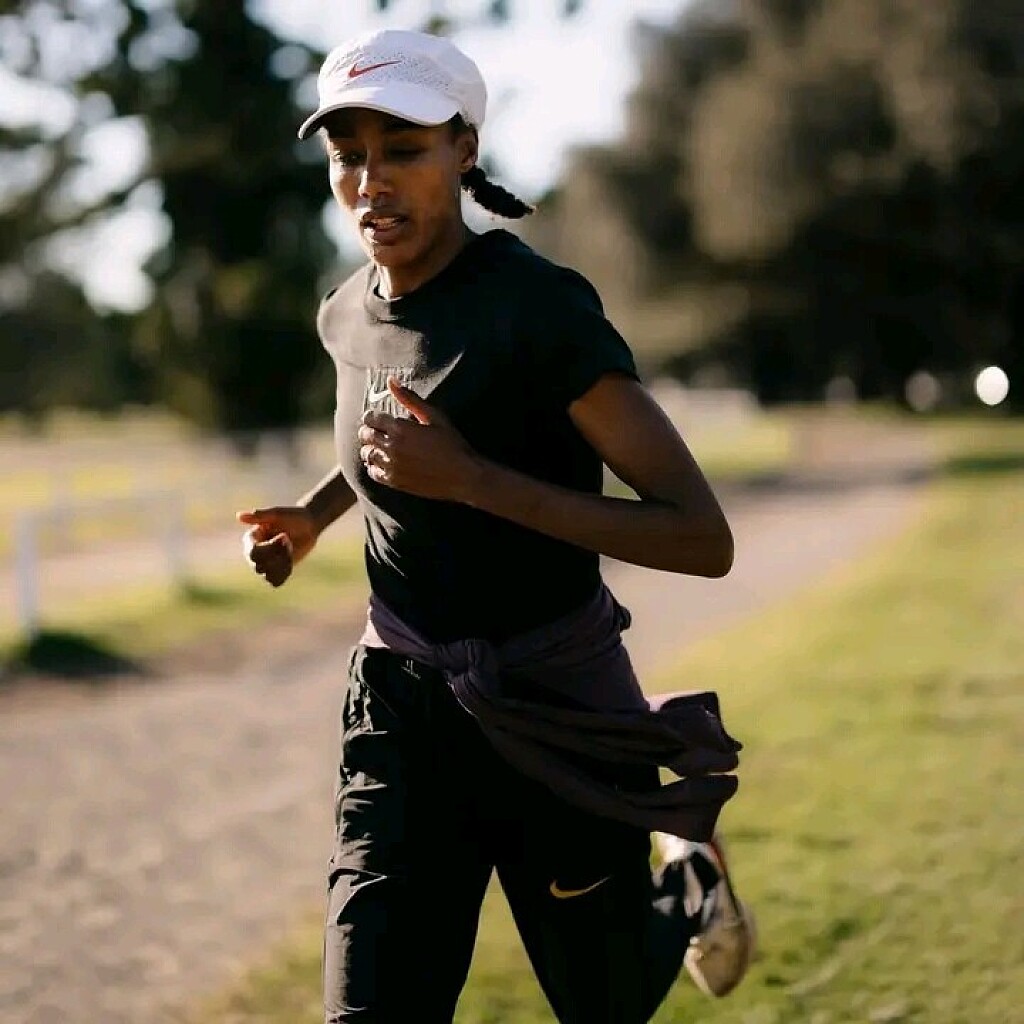
Sifan Hassan Returns To New York With Experience, Recovery And A Point To Prove
Sifan Hassan will return to the streets of New York City on November 1 with something she did not have during her difficult debut last year — experience of one of the most demanding marathon courses in the world.
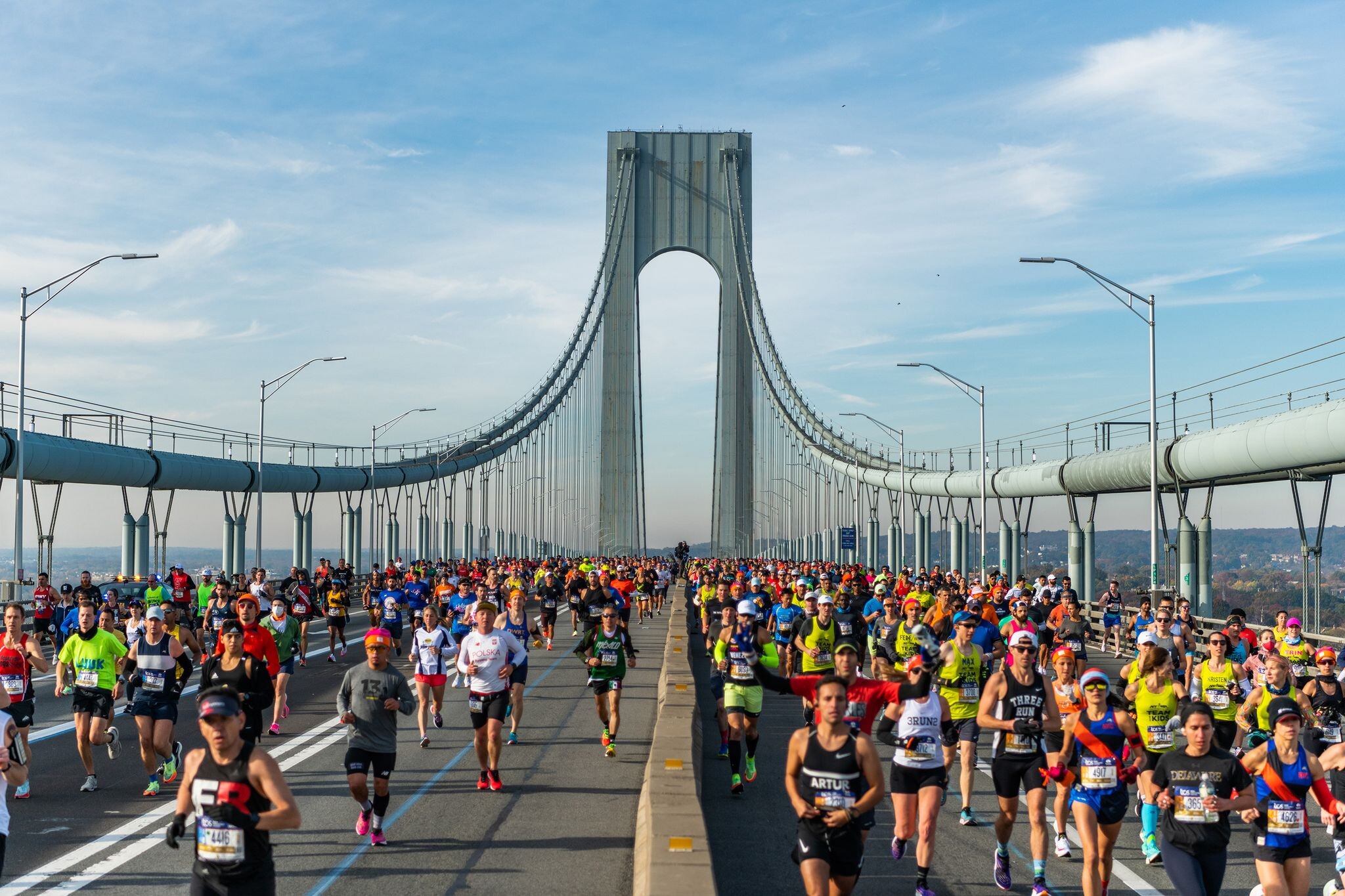
The Dutch Olympic marathon champion is set to make her second appearance at the TCS New York City Marathon, where she will face another formidable international field led by defending champion Hellen Obiri, fellow Kenyan Sheila Chepkirui and former world champion Edna Kiplagat.
Hassan's first encounter with New York in 2025 proved to be a far tougher assignment than the three-time Olympic champion might have hoped. She finished sixth in 2:24:43 after struggling during the second half of the race, with her New York debut coming only weeks after her victory at the Sydney Marathon.
The demanding schedule left Hassan facing a difficult recovery, and New York's succession of bridges, climbs and sharp changes in rhythm exposed the challenge of arriving at the race without enough marathon-specific preparation.
This time, however, the circumstances are different.
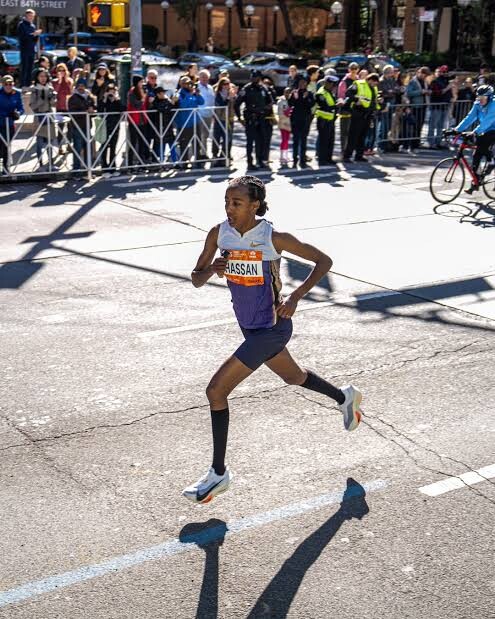
Hassan has had considerably more time to recover and prepare for the marathon, while she has also been managing an Achilles problem that disrupted her 2026 season. Rather than rushing back into competition, she has used the year to recover and build towards her longer-term goals.
Most importantly, Hassan now knows what awaits her when the race moves through New York's five boroughs.
She has already experienced the relentless bridges, the demanding climbs and the atmosphere created by huge crowds lining the streets. That knowledge could prove valuable when the race enters its decisive stages, particularly on a course where pacing and patience are just as important as raw marathon speed.
Hassan will also arrive with one of the fastest personal bests in the field. Her 2:13:44 national record makes her the quickest woman entered for the 2026 race, although New York's challenging layout means personal-best times do not necessarily tell the whole story.
Standing across the starting line will be a powerful Kenyan challenge.
Obiri returns as defending champion after producing one of the most impressive performances in the history of the race last year. She stormed to victory in 2:19:51, breaking the long-standing New York City Marathon course record, and has since lowered her marathon personal best to 2:15:53 in London.
Chepkirui will also return after finishing third in New York last year. The 2024 champion owns a 2:17:29 personal best, while Kiplagat brings enormous experience to the field, having won major marathons in New York, Boston and London as well as world championship gold.
The international field also includes Ethiopia's Gotytom Gebreslase, Kenya's Viola Cheptoo and Mercy Chelangat, Uruguay's Julia Paternain, Germany's Fabienne Königstein and a strong American contingent led by Jess McClain, Fiona O'Keeffe and marathon debutant Weini Kelati.
For Hassan, however, this race is about more than the names on the start list.
New York gave her a difficult introduction to its unique demands in 2025. She now returns with a clearer understanding of the course, more marathon experience and a preparation cycle designed to put her in a different position when the race reaches its closing stages.
She has already conquered the marathon on the biggest Olympic stage. She has also run 2:13:44, one of the fastest times ever recorded by a woman.
Now, New York offers another test.
The streets that humbled Hassan last year will once again be waiting for her. But this time, she will not be discovering them for the first time.
On November 1, Hassan will have another opportunity to find out just how different New York can look when you return knowing exactly what lies ahead.
And with Obiri, Chepkirui, Kiplagat and a deep international field standing in her way, the second chapter promises to be every bit as compelling as the first.
by Erick Cheruiyot for My Best Runs.
Login to leave a comment
TCS New York City Marathon
The first New York City Marathon, organized in 1970 by Fred Lebow and Vince Chiappetta, was held entirely in Central Park. Of 127 entrants, only 55 men finished; the sole female entrant dropped out due to illness. Winners were given inexpensive wristwatches and recycled baseball and bowling trophies. The entry fee was $1 and the total event budget...
more...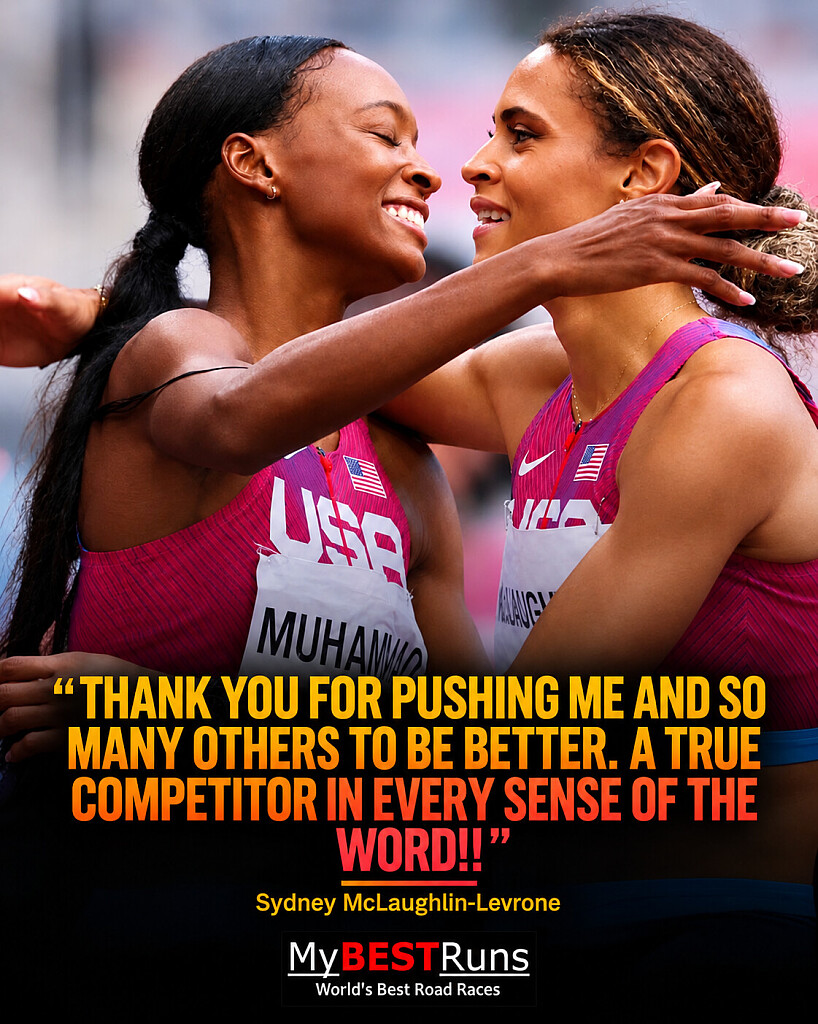
Sydney McLaughlin-Levrone Pays Emotional Tribute As Dalilah Muhammad’s Legendary Career Comes To An End
Some rivalries create champions. Others change an entire sport.
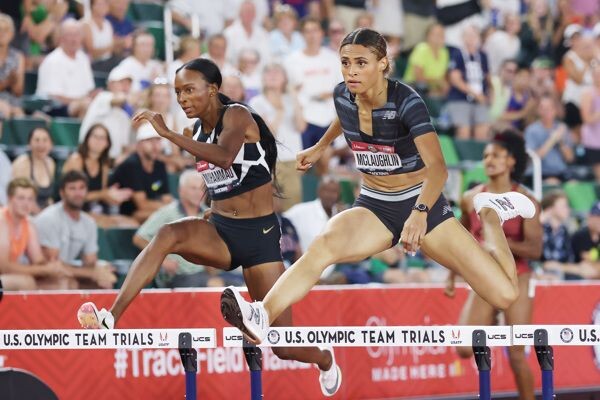
For Sydney McLaughlin-Levrone and Dalilah Muhammad, their extraordinary rivalry did both.
As Muhammad took the final 400m hurdles race of her remarkable career at the World Athletics Ultimate Championship Budapest 26, McLaughlin-Levrone paid tribute to the woman who helped push her to another level — not only as a competitor, but as one of the athletes who helped redefine what was possible in the event.
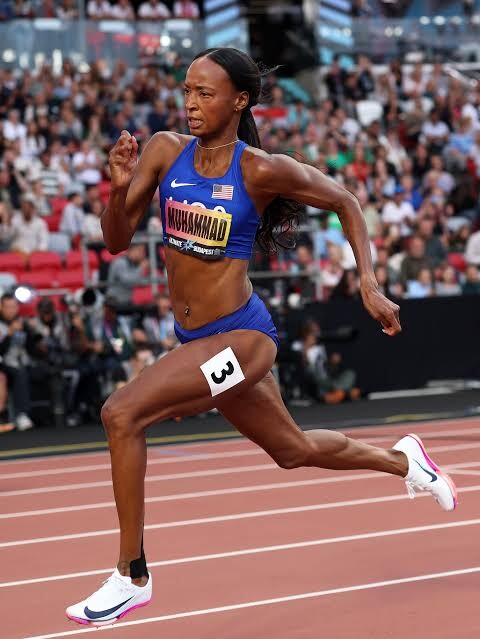
“Dalilah, you truly did just change the game for all of us.”
Those words carry particular weight because few athletes understand Muhammad’s impact better than McLaughlin-Levrone.
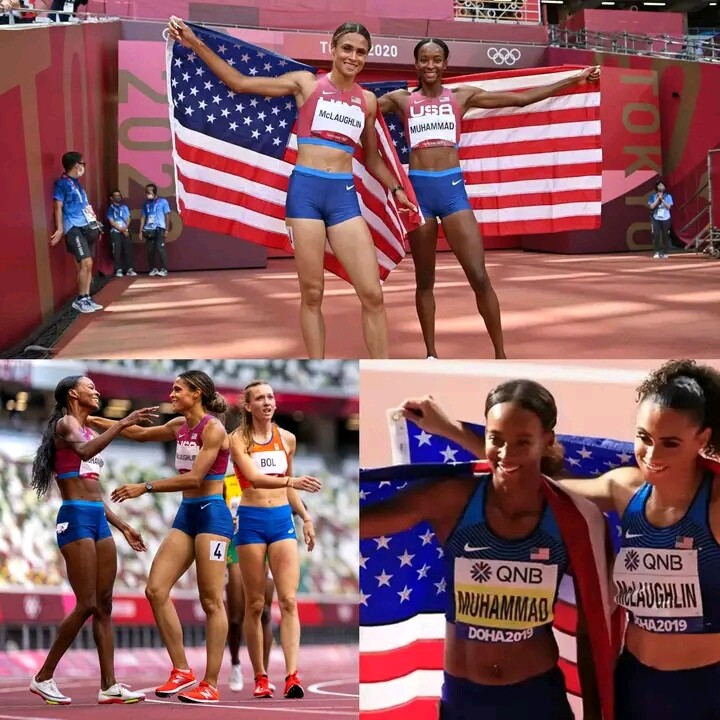
Their rivalry became one of the defining stories of modern women’s athletics. In 2019, Muhammad broke a world record that had stood for almost 16 years, clocking 52.20 seconds at the US Championships. Later that year, she lowered it again to 52.16 while winning the world title in Doha, with McLaughlin-Levrone finishing second in 52.23.
But Sydney was not content to simply chase Muhammad.
She kept coming.
At the Tokyo Olympics, McLaughlin-Levrone broke the world record with 51.46 seconds to win gold, while Muhammad followed closely in 51.58. Their performances demonstrated how dramatically the event had evolved in just a few years.
McLaughlin-Levrone continued to push the limits, eventually taking the world record down to 50.68 seconds in 2022 before producing an astonishing 50.37 at the Paris 2024 Olympics.
Yet behind those numbers was something more meaningful than a succession of records.
There was respect.
Muhammad had established a standard that forced McLaughlin-Levrone to chase something greater, while McLaughlin-Levrone’s rise helped create another level of competition for everyone following them.
That is the essence of “iron sharpens iron.”
One athlete pushes.
The other responds.
And the sport moves forward.
Their relationship also extended beyond individual competition. They represented the United States together and shared Olympic success as teammates, including the American women’s 4x400m relay gold medal at Tokyo 2020.
Now, years after their most memorable battles, Muhammad has taken her final bow.
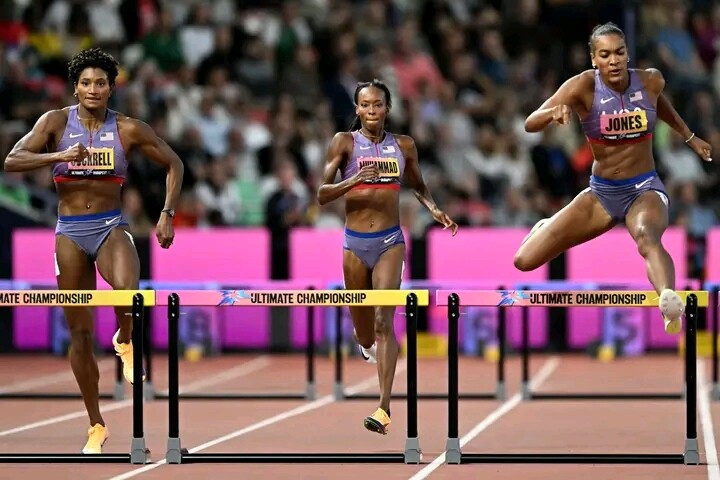
At the inaugural World Athletics Ultimate Championship in Budapest, the former Olympic champion and world record-holder finished fourth in 53.11 seconds, just 0.02 behind fellow American Anna Cockrell.
Jasmine Jones won the title in a season-best 52.45 seconds, with Emma Zapletalová taking second in 52.68 and Cockrell finishing third in 53.09.
For Jones, the victory represented the biggest breakthrough of her career. After finishing fourth at the Paris 2024 Olympics and claiming silver at the 2025 World Championships, she finally reached the top of a major international podium.
And there was something particularly fitting about Muhammad sharing her final race with an athlete from a younger generation.
The baton was not literally being passed, but the symbolism was impossible to miss.
Muhammad helped establish a new standard.
McLaughlin-Levrone took that standard even higher.
And now athletes such as Jones are beginning to write their own stories in an event transformed by those who came before them.
For Muhammad, the legacy goes far beyond medals and world records. She became one of the defining figures in the history of the women’s 400m hurdles, helping elevate the event through years of extraordinary competition.
That is why McLaughlin-Levrone’s tribute feels so much bigger than a farewell.
“Thank you for pushing me and so many others to be better. A true competitor in every sense of the word!!”
There was a time when Sydney was chasing Dalilah.
Then Sydney became the athlete everyone else had to chase.
But their story was never simply about one athlete replacing another. It was about competition creating excellence — about two extraordinary athletes raising the standard until the impossible began to look achievable.
Muhammad pushed the door open.
McLaughlin-Levrone ran through it.
And now a new generation is stepping forward.
As Muhammad leaves the track for the final time, the records will remain in the history books and the medals will become part of her remarkable legacy. But perhaps her greatest contribution will be found in the athletes she inspired, challenged and helped make better.
One pushed.
One answered.
Both changed the game.
That is what iron sharpens iron truly means.
And for one unforgettable era, Dalilah Muhammad and Sydney McLaughlin-Levrone showed the world exactly what happens when two great competitors refuse to let each other settle for ordinary.
by Erick Cheruiyot for My Best Runs.
Login to leave a comment
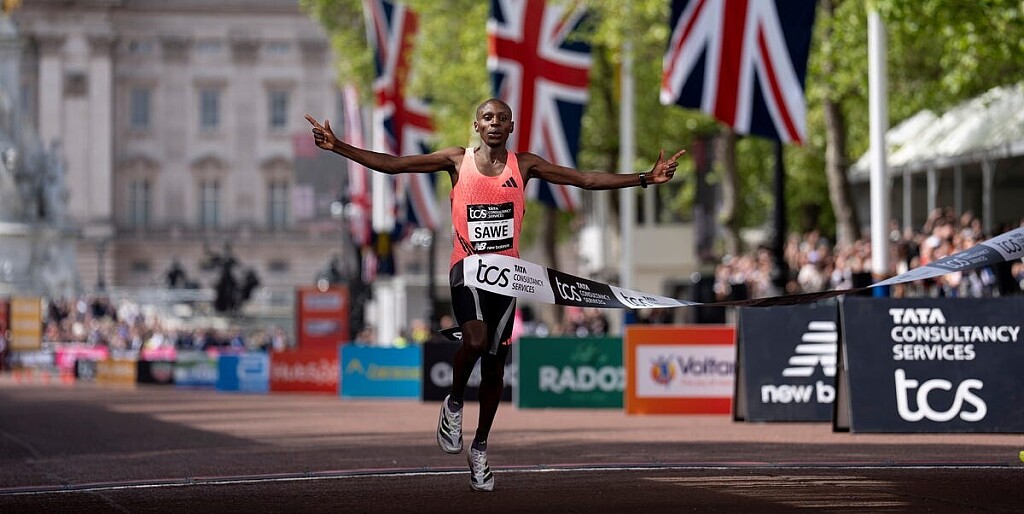
Marathon Majors Course Records: Where Speed, History And The Course Collide
The world’s biggest marathons are united by prestige, elite fields and unforgiving 26.2-mile battles, but their course records tell very different stories. From Tokyo to Sydney, each course has its own character, while London and Chicago have become synonymous with extraordinary speed.
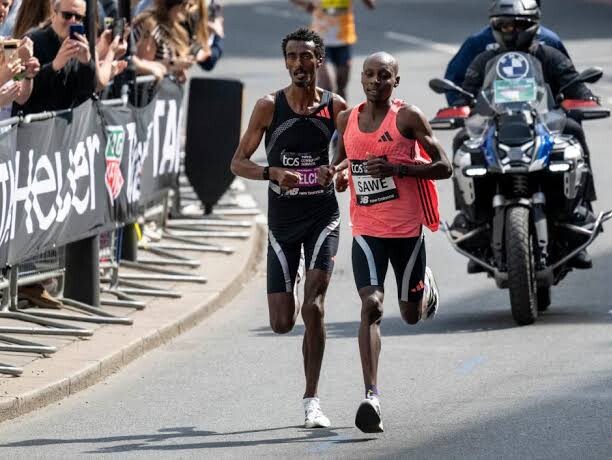
At the top of the men’s list stands the London Marathon, where Kenya’s Sabastian Sawe produced one of the greatest performances in road-running history. Sawe clocked 1:59:30 in April 2026, becoming the first athlete to officially break the two-hour barrier in a marathon. His performance also lowered the world record from Kelvin Kiptum’s previous mark of 2:00:35.
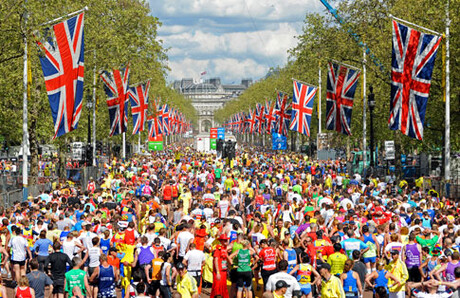
Chicago, meanwhile, owns one of the most remarkable records in women’s marathon history. Kenya’s Ruth Chepngetich ran 2:09:56 in 2024, becoming the first woman to break the 2:10 barrier. The performance remains a landmark in the event’s history and gives Chicago a special place among the fastest marathon courses in the world.
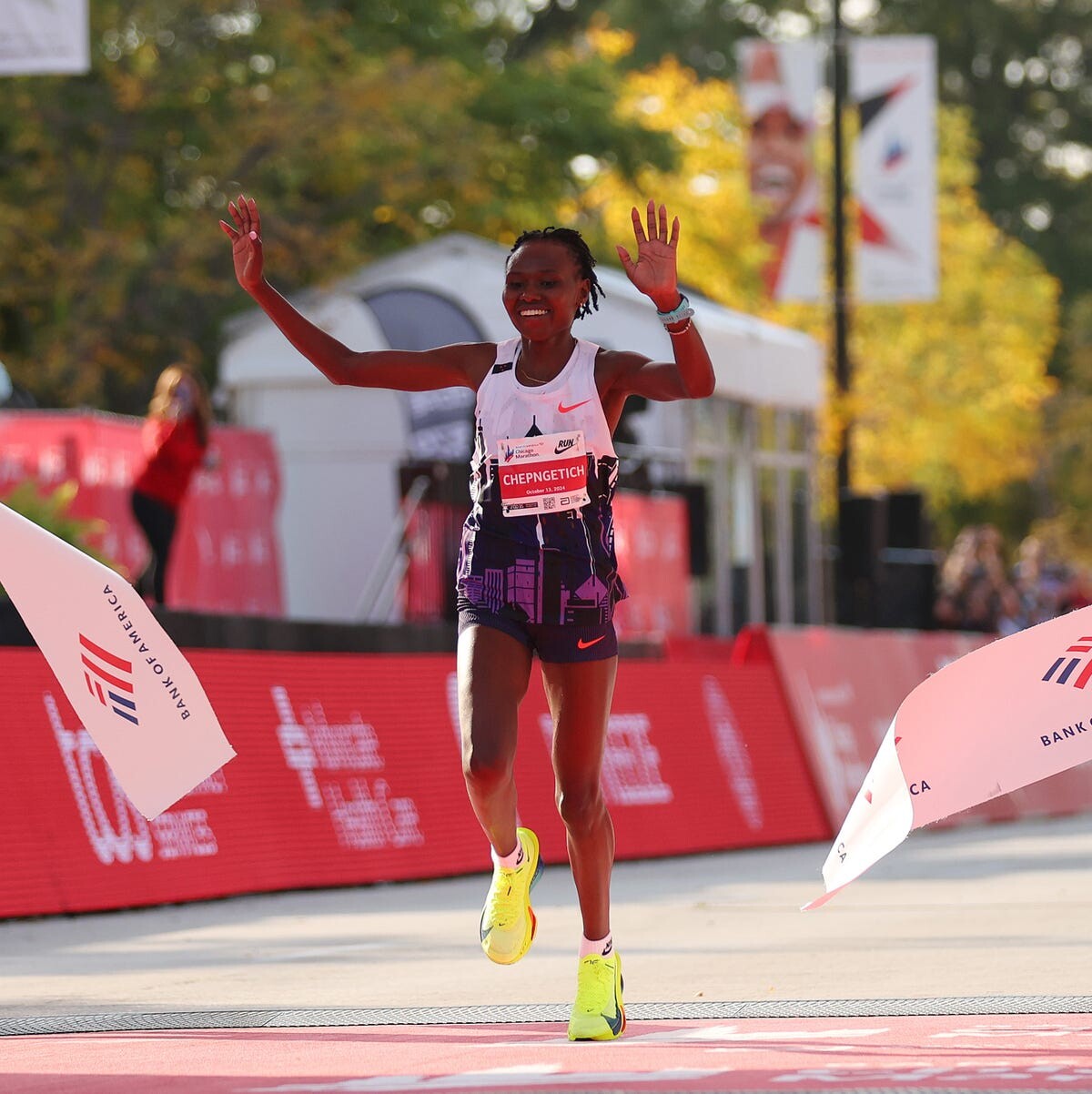
The men’s Chicago record is 2:00:35, set by the late Kelvin Kiptum in 2023. That performance stood as the world record until Sawe’s extraordinary 1:59:30 in London in 2026.
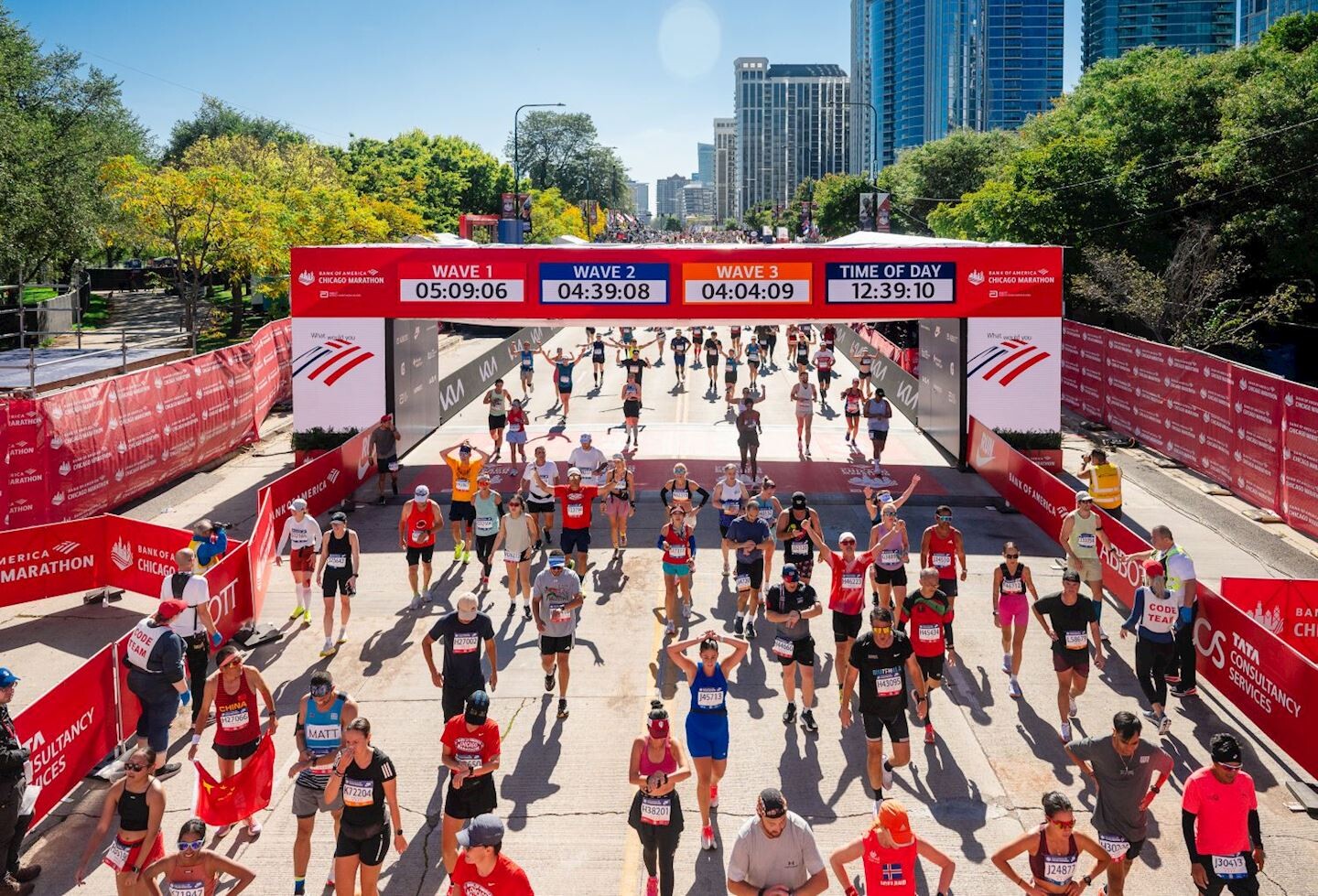
Then there is Berlin, perhaps the most celebrated world-record factory in marathon history. Kenya’s Eliud Kipchoge holds the men’s course record at 2:01:09, while Ethiopia’s Tigist Assefa owns the women’s mark at 2:11:53. Berlin has hosted numerous men’s world records over the years, underlining its reputation as one of the fastest marathon courses on the planet.
The elevation figures help explain why the courses produce such different performances. Berlin has relatively modest elevation changes, creating a fast and rhythm-friendly route. Other Majors present considerably greater challenges.
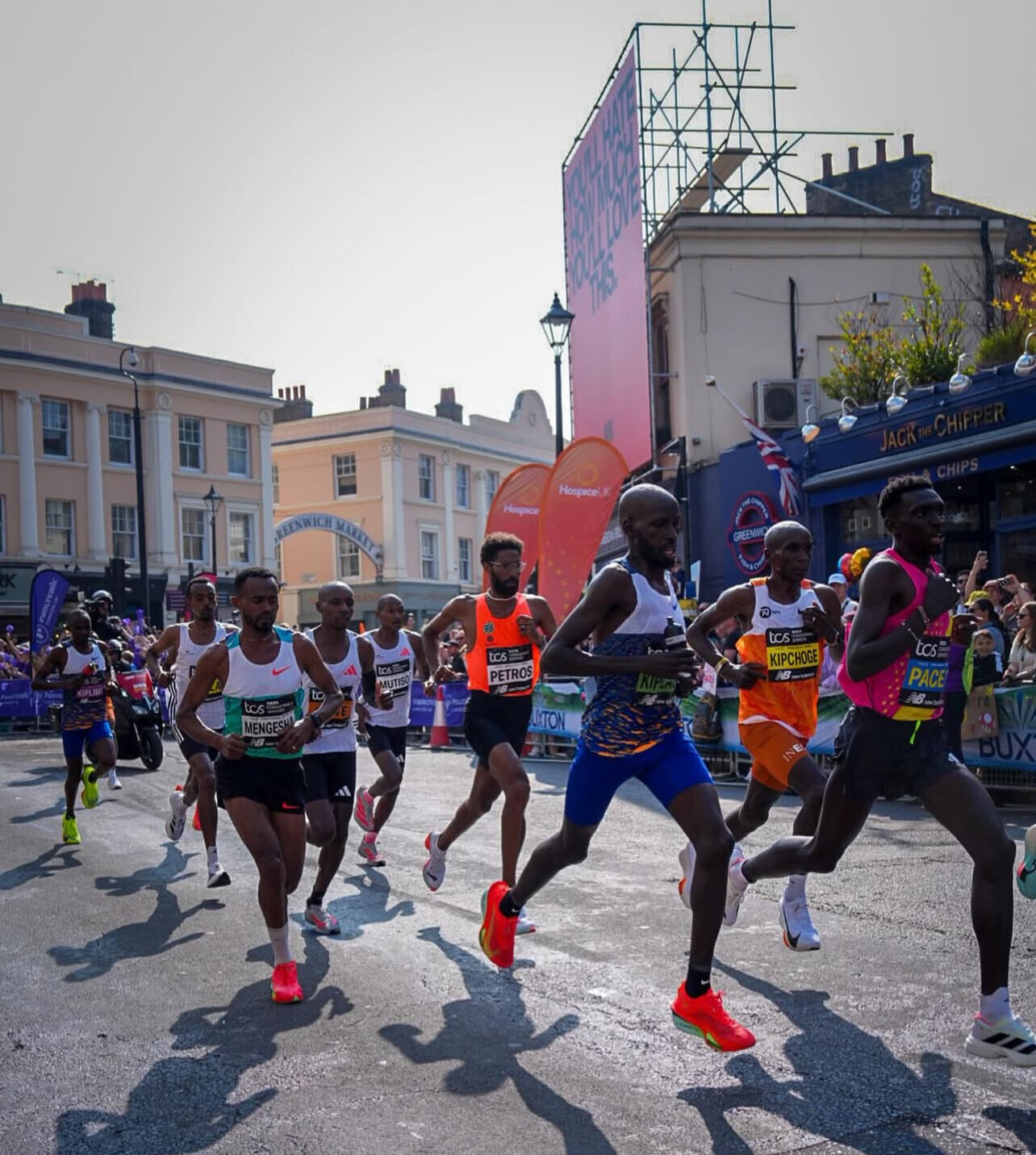
Boston, for example, climbs 248 metres but descends 388 metres. Its famous point-to-point layout and net downhill profile make it exceptionally fast in places, but its course does not qualify for official world-record purposes because the elevation drop exceeds the limit permitted by World Athletics.
New York City is a completely different proposition. With approximately 246 metres of climbing, it is among the toughest Major Marathon courses, demanding strength and tactical patience rather than simply raw speed. Its records therefore carry a different kind of significance, earned on a course that tests athletes through bridges, climbs and a demanding closing stretch into Central Park.
Tokyo offers another fast but distinctive challenge, with Benson Kipruto holding the men’s course record in 2:02:16. Brigid Kosgei’s 2:14:29 remains the women’s course record, illustrating the exceptional standard required to rewrite the record books in the Japanese capital.
And then there is Sydney, the newest addition to the Abbott World Marathon Majors family. Its course has already produced outstanding performances, with Addisu Gobena’s 2:04:42 listed as the men’s course record and Sifan Hassan’s 2:18:22 as the women’s mark in the graphic. With its demanding elevation profile, those performances underline just how quickly the Sydney course has established itself among the world’s major marathon stages.
What makes these records fascinating is that they cannot be judged by the clock alone. A 2:01 on a fast, record-legal course is a completely different achievement from a 2:04 on a demanding route, while Boston’s unique course rules mean that even exceptionally fast performances cannot enter the official world-record conversation.
For decades, marathon greatness was largely measured by who could run fastest. Today, the Majors show that where the time is run can be almost as important as the time itself. From Sawe’s historic sub-two-hour breakthrough in London to Chepngetich’s barrier-breaking run in Chicago and Berlin’s remarkable record history, these performances represent different chapters of marathon history—and the next chapter could be written at any Major.
by Erick Cheruiyot for My Best Runs.
Login to leave a comment
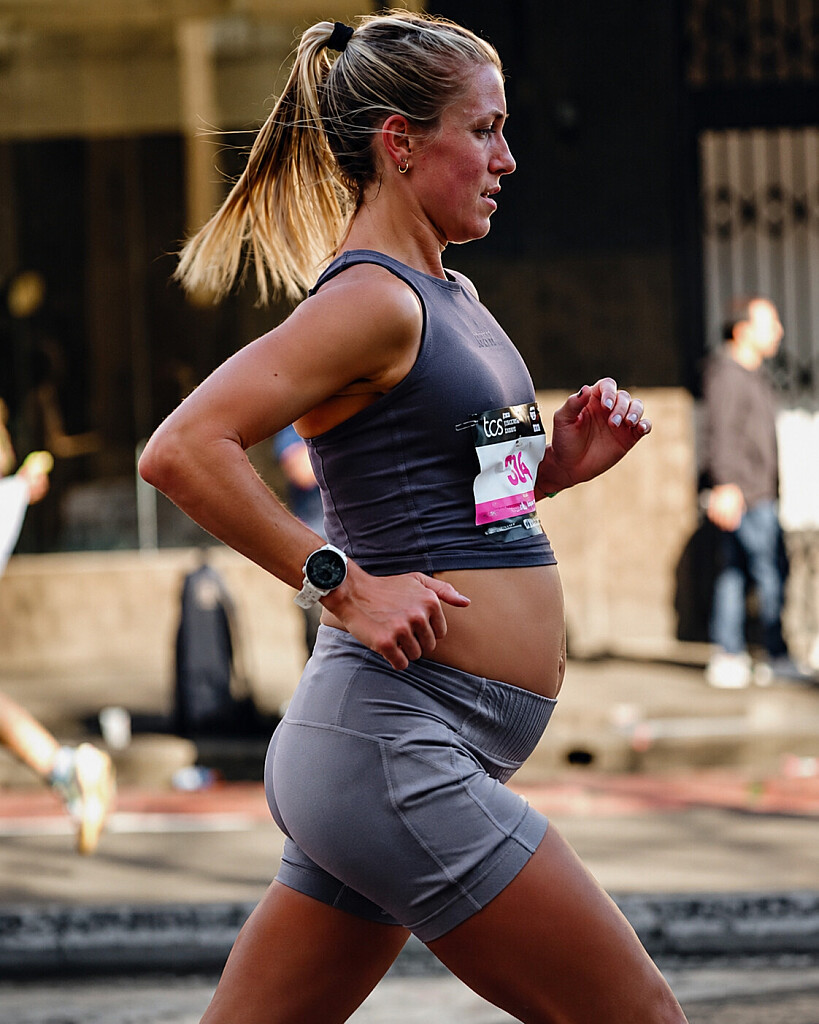
Ali Anderson Defies the Odds to Run Sub-3 Marathon at 32 Weeks Pregnant in Sydney
Ali Anderson produced one of the most remarkable performances of the Sydney Marathon on Sunday, becoming one of the rare women to break three hours for the marathon while 32 weeks into pregnancy.
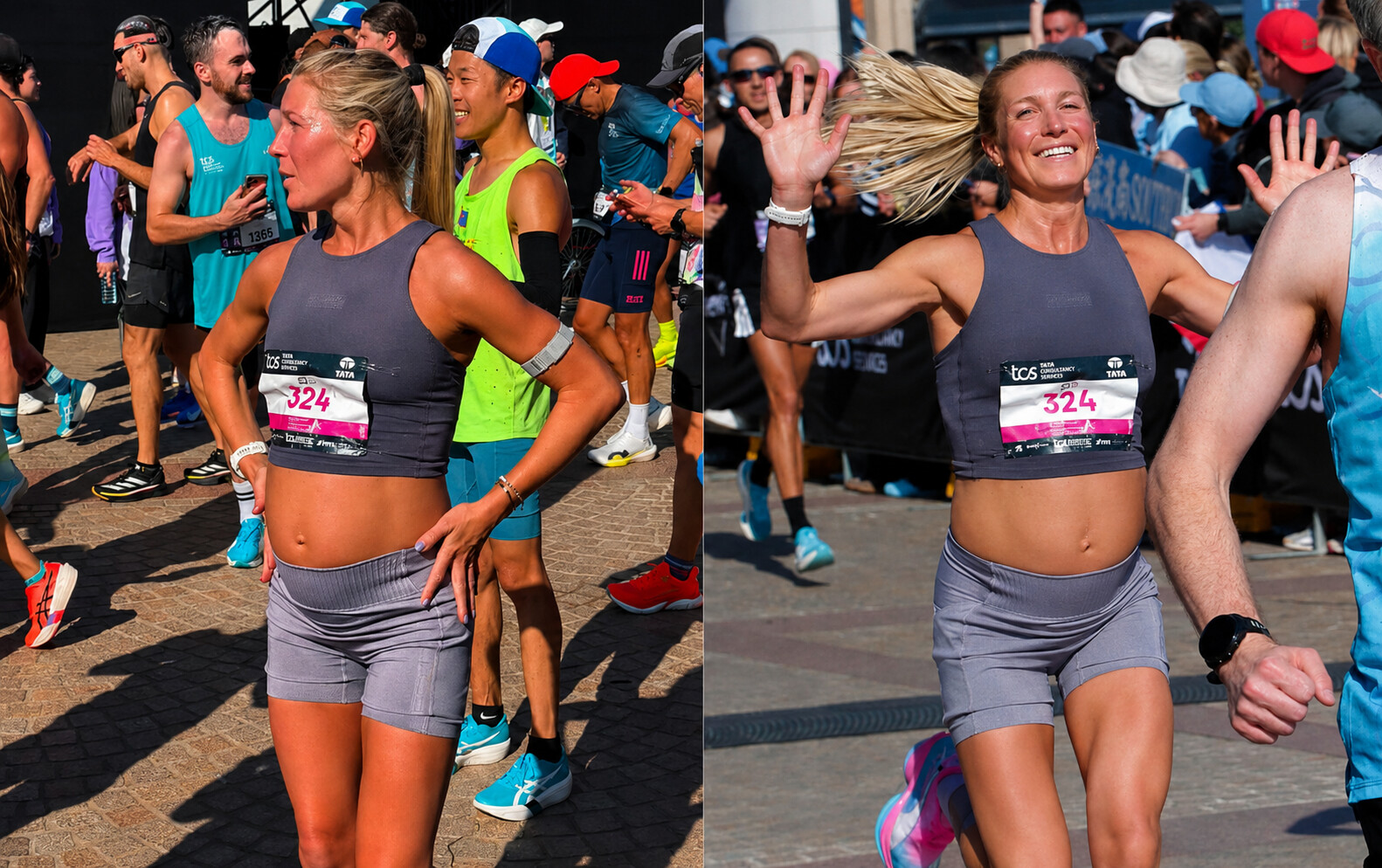
The 29-year-old American from Oklahoma crossed the finish line in 2:59:43, completing the 26.2-mile journey from North Sydney to the Sydney Opera House with just 17 seconds to spare under the three-hour barrier. Her performance came as part of a record field of around 40,000 runners and marked her seventh marathon, as well as her fourth World Marathon Major.
Anderson had entered the Sydney Marathon before discovering she was pregnant. Rather than withdraw, she decided to continue preparing for the race after consulting her doctor, who told her there was no medical reason to stop her normal training, provided she was no longer pursuing a personal-best effort.

The Sydney performance was particularly striking when compared with her previous marathon earlier in the year. At the Boston Marathon in April, Anderson was just 13 weeks pregnant when she clocked a spectacular 2:41:58, establishing her personal best. Nineteen weeks later in Sydney, the physical demands of late pregnancy were naturally reflected in her pace, but she still managed to produce a sub-three-hour performance.
Her Boston average pace was approximately 6:11 per mile, compared with around 6:52 per mile in Sydney — a difference of roughly 41 seconds per mile. Yet despite the slower pace and the additional demands of carrying a pregnancy into the third trimester, Anderson maintained enough control to finish inside three hours.
Speaking after the race, Anderson acknowledged that the hills felt considerably tougher because of her increased weight, but said she felt good throughout the marathon and was careful not to push herself beyond her limits.
“I'm obviously heavier, so the hills were a little bit more intense. But I felt really good, and I wasn't pushing too hard,” she said.
There was also another challenge that required careful planning: bathroom stops. With pregnancy adding an extra logistical consideration to an already demanding marathon, Anderson had to manage her race differently from a conventional marathon preparation and execution.
Her decision to race came after seeking medical advice. Anderson said her doctor reassured her that she could continue running, while making it clear that the objective should not be chasing another personal best.
Her performance also comes against a growing body of evidence suggesting that exercise during pregnancy can be safe for many women when appropriately managed. Research has generally found reassuring outcomes for continued physical activity during pregnancy, although evidence specifically examining competitive marathon racing in late pregnancy remains much more limited. Individual medical circumstances can vary significantly, making professional medical guidance essential.
Anderson also had the option of postponing her Sydney Marathon entry. The event's rules allowed pregnant runners to defer their places to 2027, 2028 or 2029 with a doctor's letter. She chose not to take that route.
The Sydney Marathon was therefore more than another race on Anderson's résumé. It became a test of how she could adapt her ambitions to an extraordinary stage of her life — maintaining her passion for distance running while putting performance goals into perspective.
Her original plans extended beyond Sydney. She had another marathon scheduled for December and had hoped to pursue the 2:37:00 qualifying standard for the U.S. Olympic Marathon Trials. Her Boston personal best of 2:41:58 currently leaves her 4 minutes and 58 seconds outside that mark.
For now, however, Anderson's achievement in Sydney stands on its own.
A 2:59:43 marathon is impressive under any circumstances. Doing it at 32 weeks pregnant makes Anderson's Sydney Marathon one of the most extraordinary distance-running stories of the year.
by Erick Cheruiyot for My Best Runs.
Login to leave a comment
Sydney Marathon
The Sydney Marathon is a marathon held annually in Sydney, Australia. The event was first held in 2001 as a legacy of the 2000 Summer Olympics, which were held in Sydney. In addition to the marathon, a half marathon, 9 kilometres (5.6 mi) "Bridge Run", and a 3.5 kilometres (2.2 mi) "Family Fun Run" are also held under the banner...
more...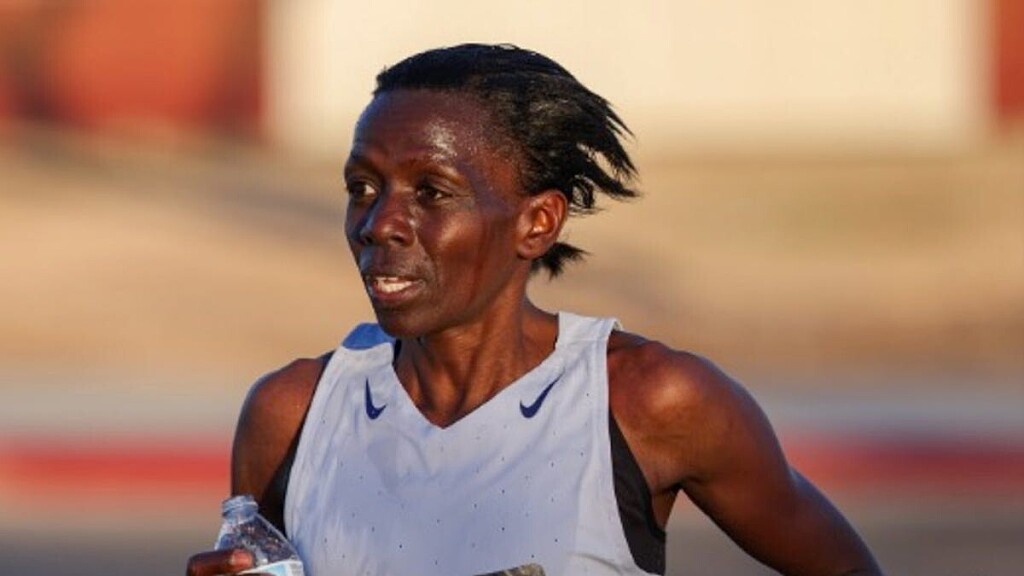
Priscah Cherono Turns Back The Clock In Sydney With A Historic Marathon Performance
At 46, Priscah Cherono showed that age is no barrier to racing with the world’s best.
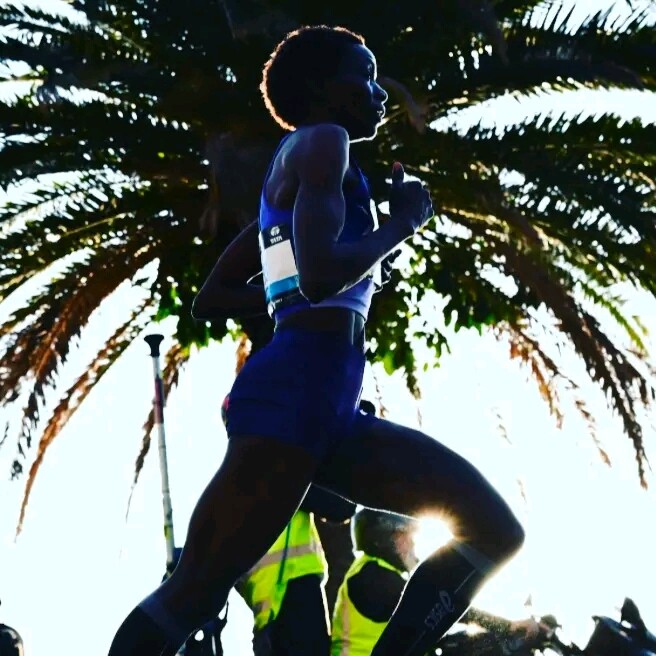
The Kenyan veteran produced a remarkable performance at the Sydney Marathon, taking the race by the horns from the early stages and, for a remarkable stretch, leading the entire professional women’s field.
Cherono moved into the lead before 5km and by 10km had opened a gap of around 16 seconds on her closest challengers. Rather than settling into the pack, she continued to dictate the pace, remaining at the front until close to the 28km mark.
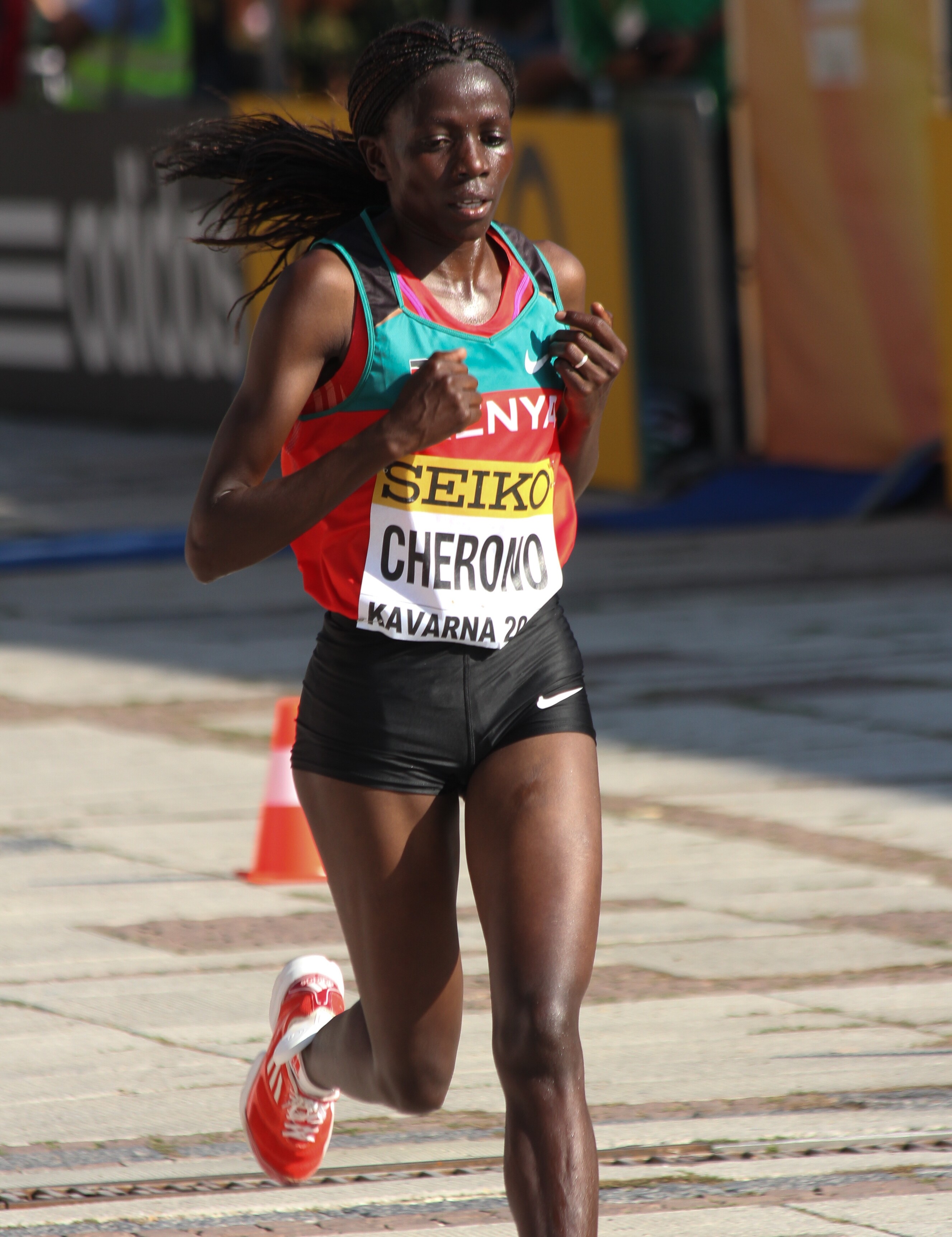
Then came the most eye-catching moment of her race.
Cherono reached halfway in 67:59, an extraordinary split that works out to roughly 5:11 per mile. It was around 36 seconds faster than her previous standalone half-marathon best, underlining just how aggressively she had approached the opening half of the race.
Her halfway split was also just seven seconds outside the masters world record for the half marathon.
Inevitably, such a demanding opening came at a cost. Cherono struggled to maintain the same rhythm after halfway, covering the second half in approximately 75:50. She eventually slipped down the standings but refused to give up, crossing the finish line in 2:23:49 for sixth place.
And that finish was historic.
Cherono’s time established a new marathon world best for women aged 46 and over, improving on the previous mark of 2:25:07, set by fellow Kenyan Edna Kiplagat last year.
But Cherono’s Sydney story is about far more than one record.
Her athletics journey stretches back three decades. In 1996, at just 16 years old, she won the Kenyan junior 5000m title. That same year, she travelled to Sydney for the World Junior Championships and finished eighth in the 5000m.
Thirty years later, she returned to the same city — this time as a 46-year-old marathoner — and found herself leading a major international marathon against a field filled with younger elite athletes.
That is what makes her performance so remarkable.
Cherono did not simply run a fast marathon for her age. She went to the front, took control of the race, attacked the pace and dared to challenge the clock before eventually paying the price for her ambition.
She may have faded in the closing kilometres, but her boldness produced something far more valuable than a conservative finish: a place in the history books.
From a teenage athlete competing in Sydney in 1996 to a record-breaking masters marathoner dominating the opening half of the Sydney Marathon three decades later, Cherono’s career has come full circle in extraordinary fashion.
The question is simple: if you were 46 and leading a major marathon at halfway on record-setting pace, would you keep pushing for greatness — or back off and protect the finish?
by Erick Cheruiyot for My Best Runs.
Login to leave a comment
Sydney Marathon
The Sydney Marathon is a marathon held annually in Sydney, Australia. The event was first held in 2001 as a legacy of the 2000 Summer Olympics, which were held in Sydney. In addition to the marathon, a half marathon, 9 kilometres (5.6 mi) "Bridge Run", and a 3.5 kilometres (2.2 mi) "Family Fun Run" are also held under the banner...
more...
Ethan Shuley Battles to 2:08:34 as Top American at the Sydney Marathon
American marathoner Ethan Shuley delivered another impressive performance on the international stage at the 2026 Sydney Marathon, clocking 2:08:34 to finish 13th overall and emerge as the top American in the men's race.
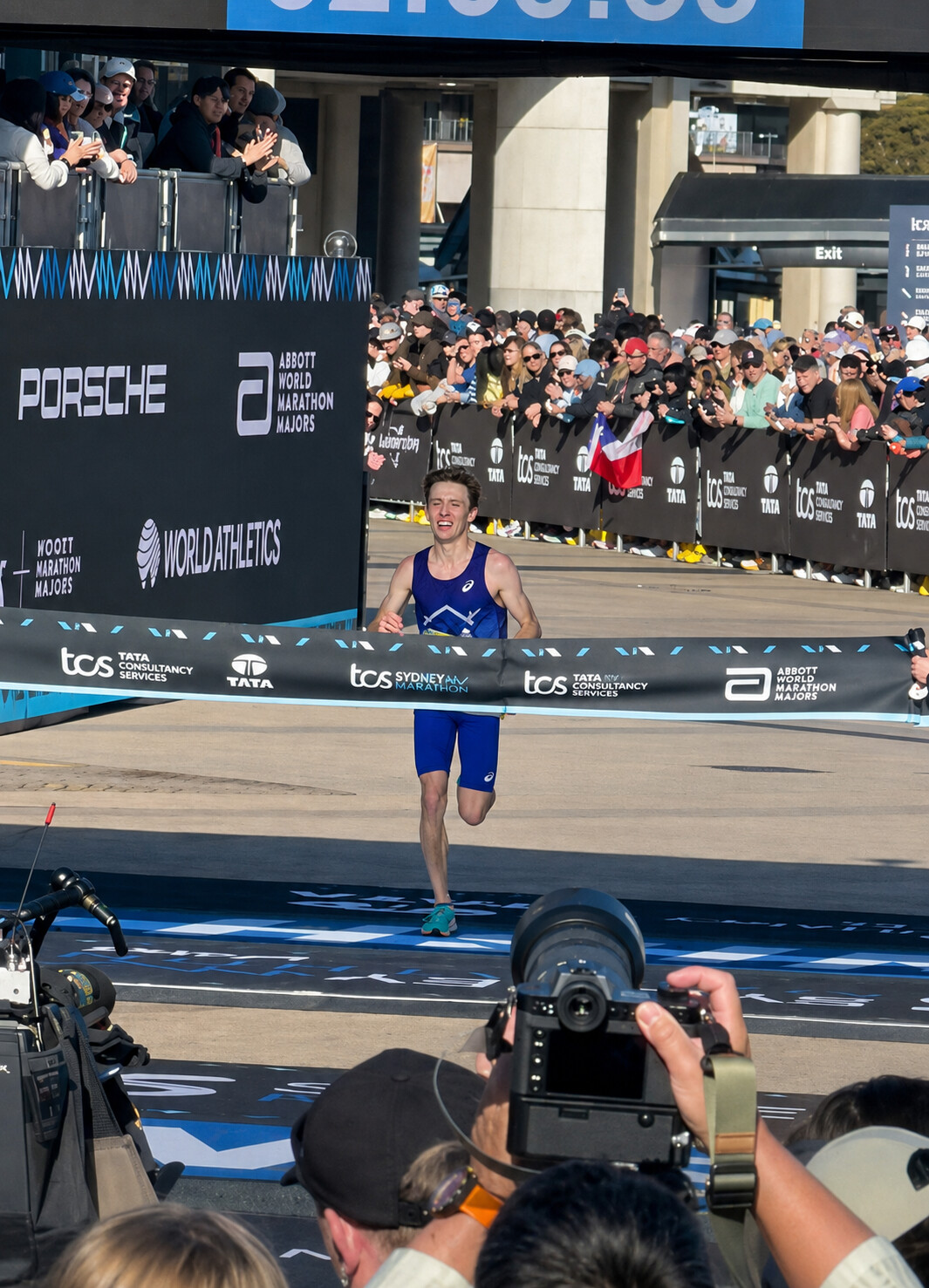
Competing against a deep international field, Shuley faced the demanding 42.195km Sydney course and produced a determined performance from start to finish. His official result placed him 13th among the elite men and confirmed him as the highest-finishing American in the race.
After crossing the finish line, Shuley was candid about the challenge presented by the course, saying: “This is probably the hardest course I’ve done.” His reaction reflected the physical toll of a route known for its rolling terrain and demanding climbs.
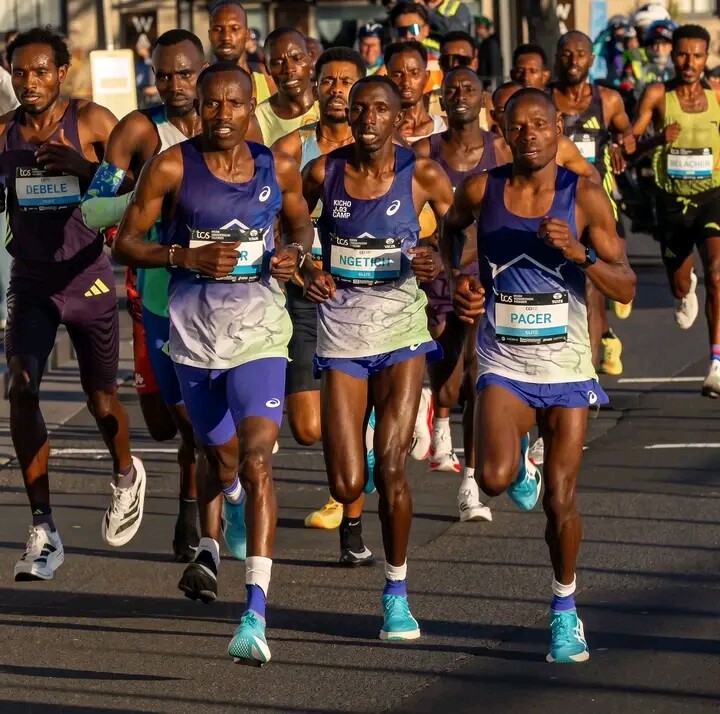
Although the race did not produce a new personal best, Shuley once again demonstrated his ability to compete strongly at the highest level. Earlier this year, he made a major breakthrough by running 2:07:14 at the Osaka Marathon, establishing himself among the leading American marathoners.
His 2:08:34 performance in Sydney adds another important result to an already impressive 2026 campaign. Delivering such a strong time on a challenging course against world-class opposition further highlighted both his resilience and growing consistency over the marathon distance.
For Shuley, the result was about more than simply finishing as the top American. It was another statement that his rise in the marathon is continuing. With his breakthrough performances now being followed by consistent results on the global stage, Ethan Shuley is increasingly establishing himself as one of the American marathoners to watch in the years ahead.
by Erick Cheruiyot for My Best Runs.
Login to leave a comment
Sydney Marathon
The Sydney Marathon is a marathon held annually in Sydney, Australia. The event was first held in 2001 as a legacy of the 2000 Summer Olympics, which were held in Sydney. In addition to the marathon, a half marathon, 9 kilometres (5.6 mi) "Bridge Run", and a 3.5 kilometres (2.2 mi) "Family Fun Run" are also held under the banner...
more...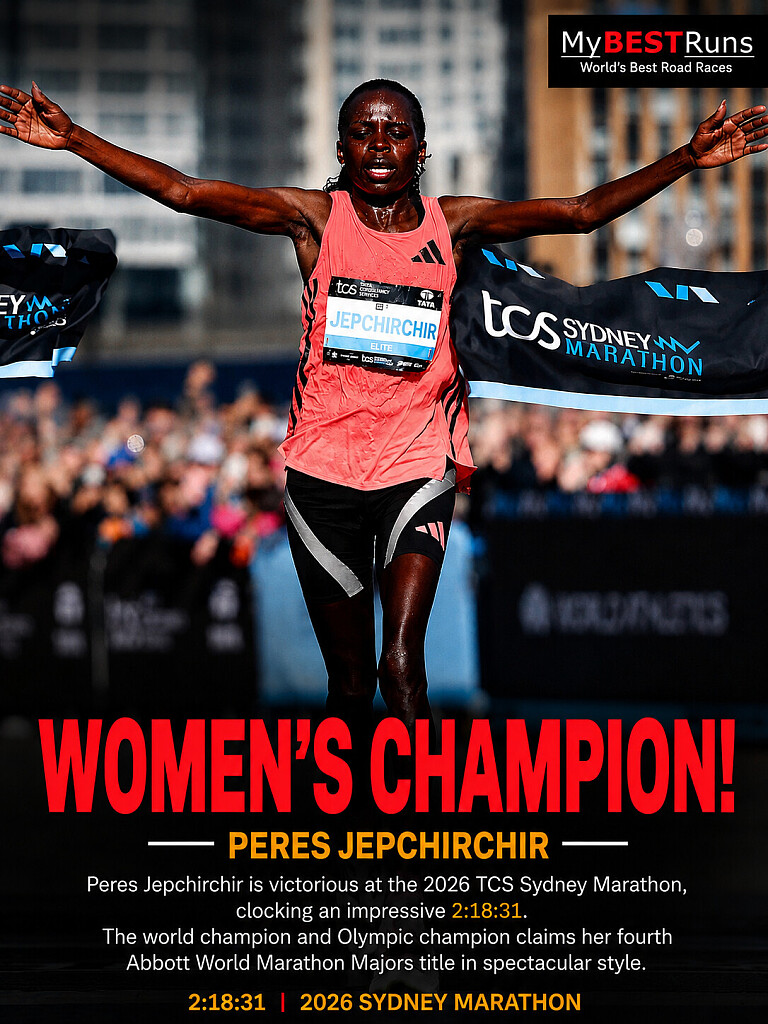
Peres Jepchirchir Conquers Sydney As World Champion Claims Fourth Major Marathon Crown
Kenya’s Peres Jepchirchir has added another prestigious chapter to her remarkable marathon career, claiming victory at the TCS Sydney Marathon presented by ASICS in an impressive 2:18:31.
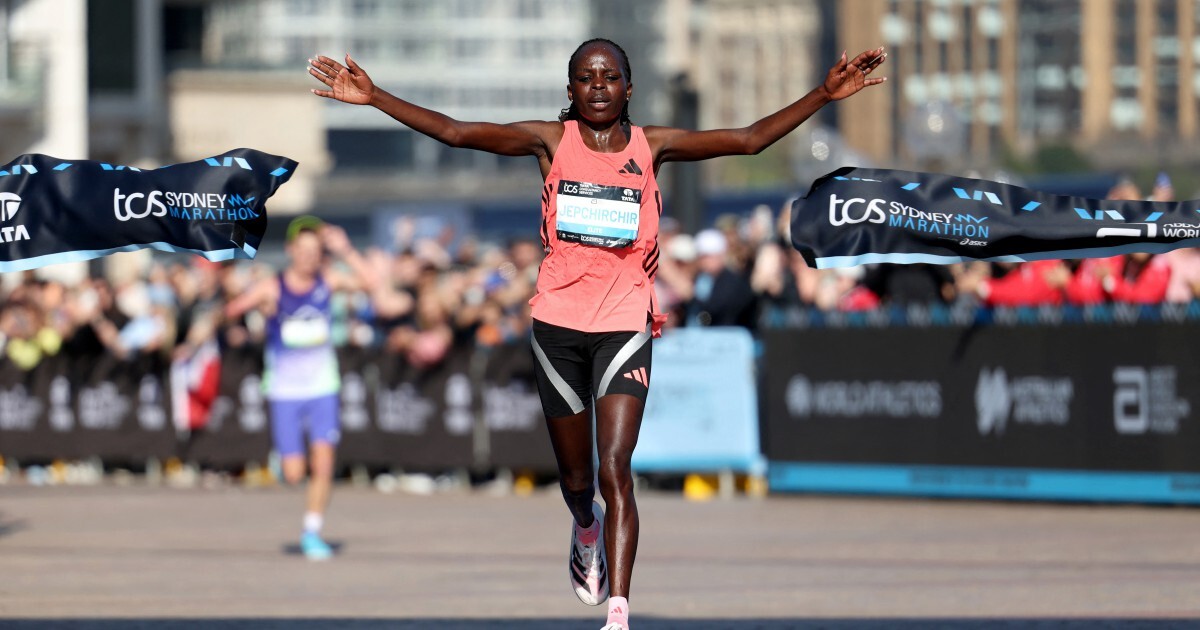
The reigning world champion and former Olympic champion produced a commanding performance on the streets of Sydney, securing another major victory and further strengthening her reputation as one of the most accomplished marathoners of her generation.
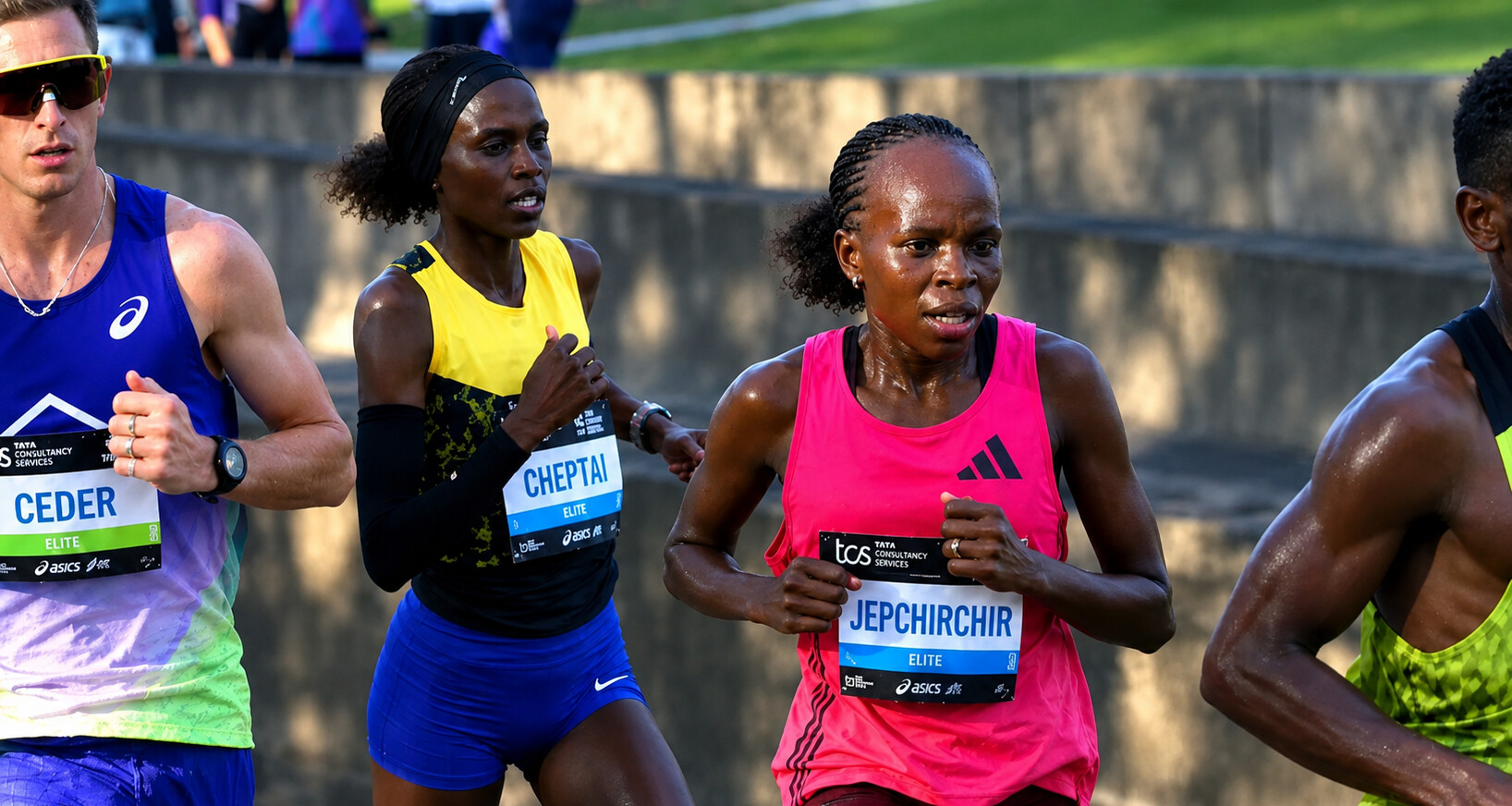
Jepchirchir’s winning time was just nine seconds shy of Sifan Hassan’s Sydney course record of 2:18:22, set at the 2025 edition. Although the record remained intact, the Kenyan once again demonstrated her ability to perform with precision and confidence on one of the sport’s biggest stages.
She won the race with a performance defined by patience, poise and remarkable composure. Rather than being drawn into unnecessary battles in the early stages, Jepchirchir appeared to run with confidence, gradually asserting her authority as the kilometres passed. Her rhythm remained smooth and controlled, her focus unwavering, and when the decisive moments arrived, she had the strength and composure to take command. It was a victory crafted with intelligence, executed with elegance and finished with the unmistakable authority of a true champion.
More significantly, the triumph marks Jepchirchir’s fourth Abbott World Marathon Majors victory. She had previously conquered New York, Boston and London, and her Sydney success now adds another prestigious Major title to an already extraordinary résumé.
Behind the champion, compatriot Irine Cheptai completed an impressive Kenyan one-two, crossing the finish line in 2:22:11. Ethiopia's Shure Demise secured the final place on the podium with a strong run of 2:22:32, as Kenya and Ethiopia once again demonstrated their extraordinary depth in elite women's marathon running.
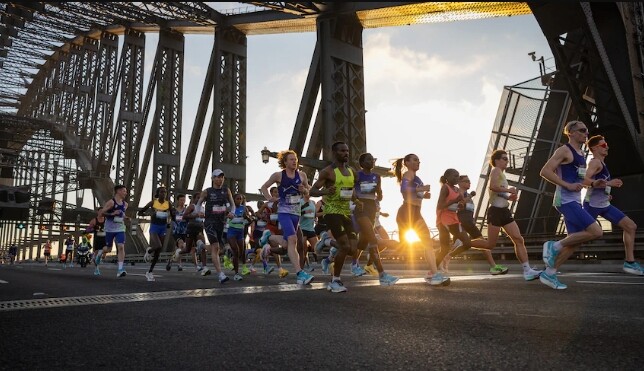
Ethiopia's Haven Hailu finished fourth in 2:22:56, followed by compatriot Meseret Abebayehu in fifth with 2:23:40. Kenya's Priscah Cherono took sixth place in 2:23:49, narrowly ahead of Uganda's Stella Chesang, who clocked 2:23:51 for seventh.
The race also featured a notable performance from home favourite Ellie Pashley, who battled her way into the top 10. The Australian finished ninth in 2:28:27, giving the home crowd a strong athlete to celebrate in an elite field dominated by East African runners.
2026 Sydney Marathon – Top 10 Women's Results
1. Peres Jepchirchir (Kenya) – 2:18:31
2. Irine Cheptai (Kenya) – 2:22:11
3. Shure Demise (Ethiopia) – 2:22:32
4. Haven Hailu (Ethiopia) – 2:22:56
5. Meseret Abebayehu (Ethiopia) – 2:23:40
6. Priscah Cherono (Kenya) – 2:23:49
7. Stella Chesang (Uganda) – 2:23:51
8. Fikrte Wereta (Ethiopia) – 2:25:18
9. Ellie Pashley (Australia) – 2:28:27
10. Aberu Ayana (Ethiopia) – 2:28:29
For Jepchirchir, Sydney represents far more than another race victory. It is another demonstration of the consistency, resilience and championship mentality that have defined her career. From Olympic glory to world championship success and now another Major triumph, she continues to strengthen her place among the most accomplished marathoners of her era.
The Sydney Marathon has rapidly established itself as one of the most significant races on the global marathon calendar, and Jepchirchir’s victory adds another memorable chapter to its growing history.
As the champion crossed the finish line beneath Sydney’s iconic skyline, she celebrated another remarkable achievement in a career that continues to evolve with every major challenge.
From Olympic champion to world champion, from New York and Boston to London and now Sydney, Peres Jepchirchir continues to turn the world’s greatest marathons into stages for her brilliance. Sydney has a new champion, and another extraordinary chapter has been added to the story of one of marathon running’s finest competitors.
Four Abbott World Marathon Majors conquered. One extraordinary legacy still being written.
From Jepchirchir's dominant victory to another fiercely competitive East African showdown and Pashley's determined top-10 finish on home soil, the 2026 Sydney Marathon delivered a memorable showcase of world-class women's distance running. And at the centre of it all stood Peres Jepchirchir—once again wearing the crown.
by Erick Cheruiyot for My Best Runs.
Login to leave a comment
Sydney Marathon
The Sydney Marathon is a marathon held annually in Sydney, Australia. The event was first held in 2001 as a legacy of the 2000 Summer Olympics, which were held in Sydney. In addition to the marathon, a half marathon, 9 kilometres (5.6 mi) "Bridge Run", and a 3.5 kilometres (2.2 mi) "Family Fun Run" are also held under the banner...
more...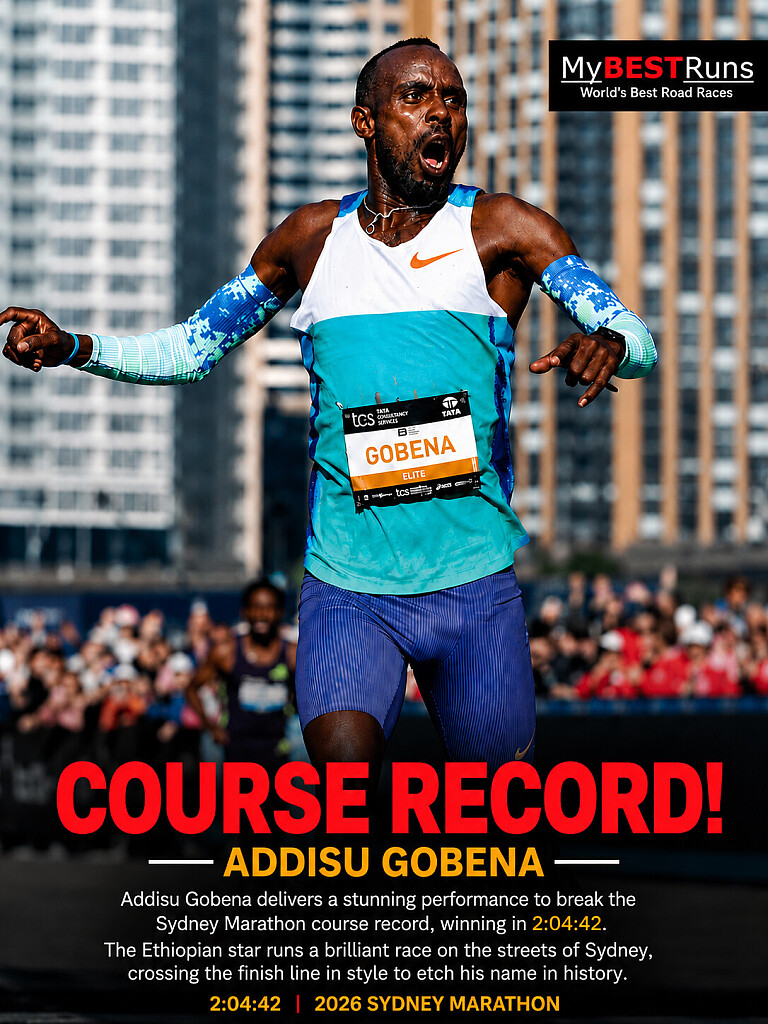
Addisu Gobena Edges Epic Sydney Marathon Thriller as Course Record Falls and Ramakongoana Makes History
Addisu Gobena has completed a remarkable transformation from javelin thrower to marathon champion, returning to Sydney one year after finishing runner-up and this time producing a spectacular victory in a new course-record time of 2:04:42.
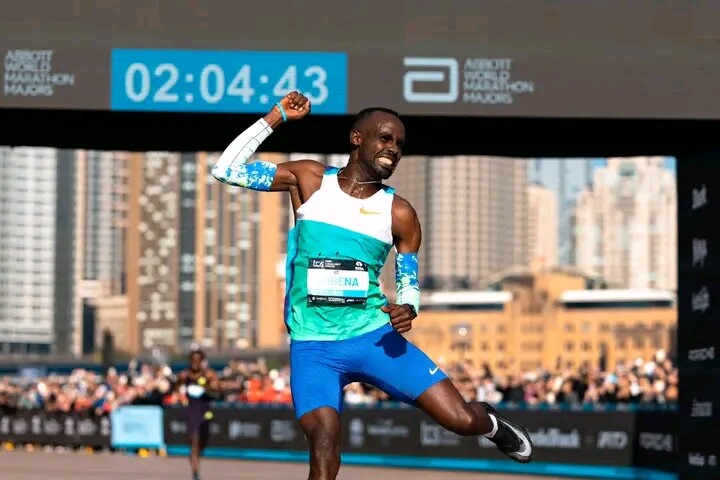
The 21-year-old Ethiopian delivered a performance to remember at the 2026 Sydney Marathon, breaking away from a fiercely competitive field and crossing the finish line in 2:04:42 to claim the men's title.
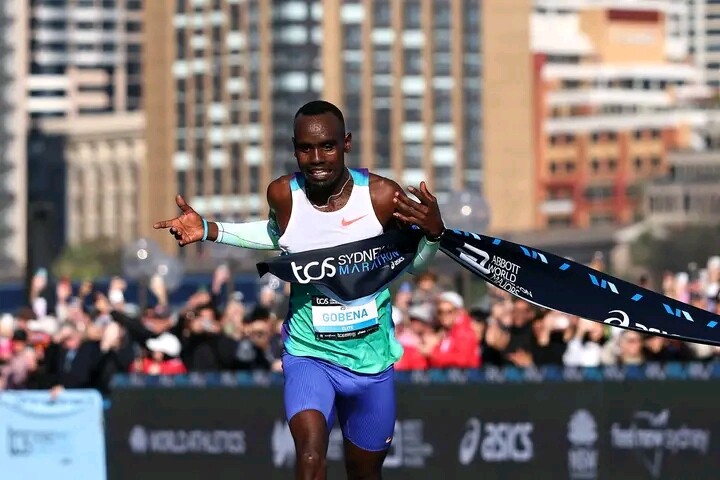
In the process, Gobena obliterated the previous course record of 2:06:06, improving it by 1 minute and 24 seconds. The result represents another extraordinary step in the rapid rise of an athlete whose path to marathon success is anything but conventional.
Gobena was still competing as a javelin thrower until 2023 before turning his attention fully towards distance running. What followed has been an astonishing transformation. Within a remarkably short period, the young Ethiopian progressed from the field-event sector to the highest level of road racing, developing into a formidable marathoner.
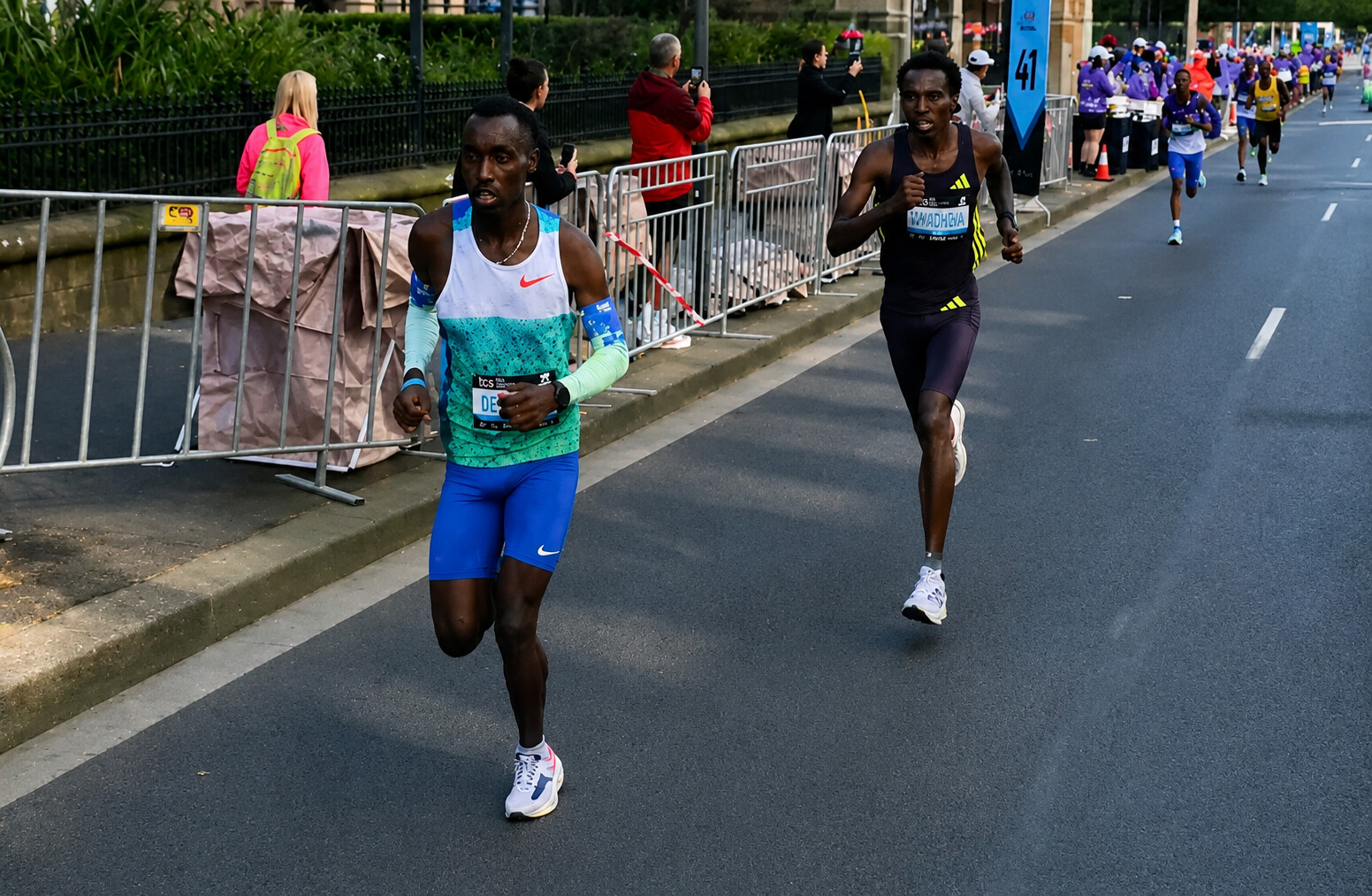
His breakthrough came at the 2024 Dubai Marathon, where he won on his marathon debut in 2:05:01. He then continued to establish himself among Ethiopia's promising young distance runners, eventually returning to Sydney in 2025, where he finished second behind compatriot Hailemaryam Kiros.
That runner-up finish clearly left unfinished business.
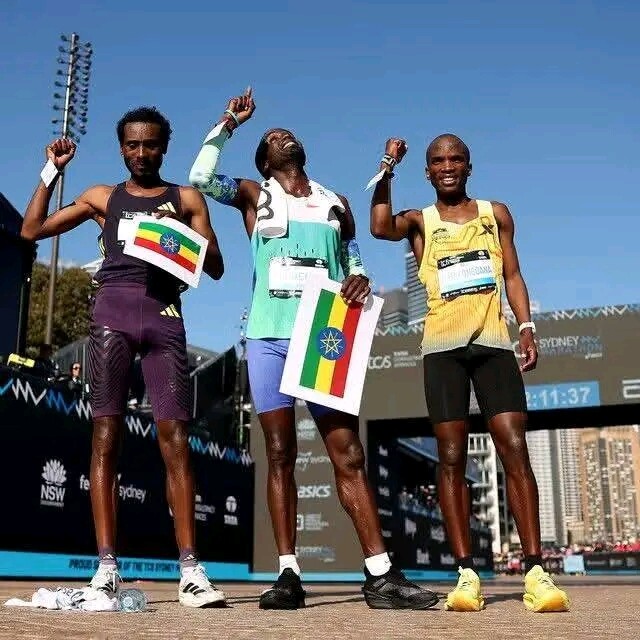
One year later, Gobena returned to the streets of Sydney with a different objective — and this time, he finished the job. His 2:04:42 not only secured the victory but also rewrote the course record in emphatic fashion.
The battle behind him was equally extraordinary.
Fellow Ethiopian Chimdessa Debele Gudeta produced a phenomenal run to finish second in 2:04:46, just four seconds behind Gobena. Behind them, Tebello Ramakongoana of Lesotho delivered another outstanding performance, taking third place in 2:04:57 and setting a new national record. His achievement was particularly remarkable as he finished on the same time as fourth-placed Alphonce Simbu of Tanzania, underlining just how extraordinary the battle for the podium had become.
The depth of the elite field was evident throughout the race, with the top five athletes all breaking 2:05. Ethiopia's Jemal Mekonnen took fifth in 2:04:59, while compatriot Hailemaryam Kiros followed in sixth with 2:05:16.
Kenya's Vincent Ngetich produced a strong performance to finish seventh in 2:05:27, while Ethiopia continued its impressive presence in the leading positions. Kenyan athletes Kennedy Kimutai and Gilbert Kibet also finished inside the top 10.
Australian hopes were led by Andrew Buchanan, who delivered a commendable home performance to finish 16th in 2:10:14.
2026 Sydney Marathon – Top 10 Men's Results
1. Addisu Gobena (Ethiopia) – 2:04:42 – Event Record
2. Chimdessa Debele Gudeta (Ethiopia) – 2:04:45
3. Tebello Ramakongoana (Lesotho) – 2:04:57 – National Record
4. Alphonce Simbu (Tanzania) – 2:04:57
5. Jemal Mekonnen (Ethiopia) – 2:04:59
6. Hailemaryam Kiros (Ethiopia) – 2:05:16
7. Vincent Ngetich (Kenya) – 2:05:27
8. Dawit Wolde (Ethiopia) – 2:06:41
9. Kennedy Kimutai (Kenya) – 2:06:50
10. Gilbert Kibet (Kenya) – 2:07:13
For Gobena, the significance of the victory goes far beyond a medal and a course record. Just a few years ago, his athletic ambitions were centred on throwing the javelin. Today, he stands at the top of one of the world's major marathon stages, having produced a performance that places his name firmly among the sport's emerging stars.
His Sydney story has also come full circle. Last year, he had to settle for second. This time, he returned stronger, faster and determined to seize the moment.
From the javelin runway to 42.195 kilometres of marathon glory, Addisu Gobena has written one of the most remarkable chapters of his young career — and at only 21, his best may still be ahead of him.
Sydney witnessed marathon racing of the very highest quality, with records falling, national pride soaring and the podium decided by the narrowest of margins. Gobena ultimately claimed the biggest prize, but the 2026 Sydney Marathon will be remembered for the extraordinary depth and intensity of a race that delivered one of the most thrilling finishes in the event's history.
by Erick Cheruiyot for My Best Runs.
Login to leave a comment
Sydney Marathon
The Sydney Marathon is a marathon held annually in Sydney, Australia. The event was first held in 2001 as a legacy of the 2000 Summer Olympics, which were held in Sydney. In addition to the marathon, a half marathon, 9 kilometres (5.6 mi) "Bridge Run", and a 3.5 kilometres (2.2 mi) "Family Fun Run" are also held under the banner...
more...
26 Years Later, Vivian Cheruiyot Returns To Sydney As A Kenyan Distance-Racing Legend
Twenty-six years ago, a 17-year-old Vivian Cheruiyot arrived in Sydney carrying the dreams of a young Kenyan athlete and the promise of a remarkable future.
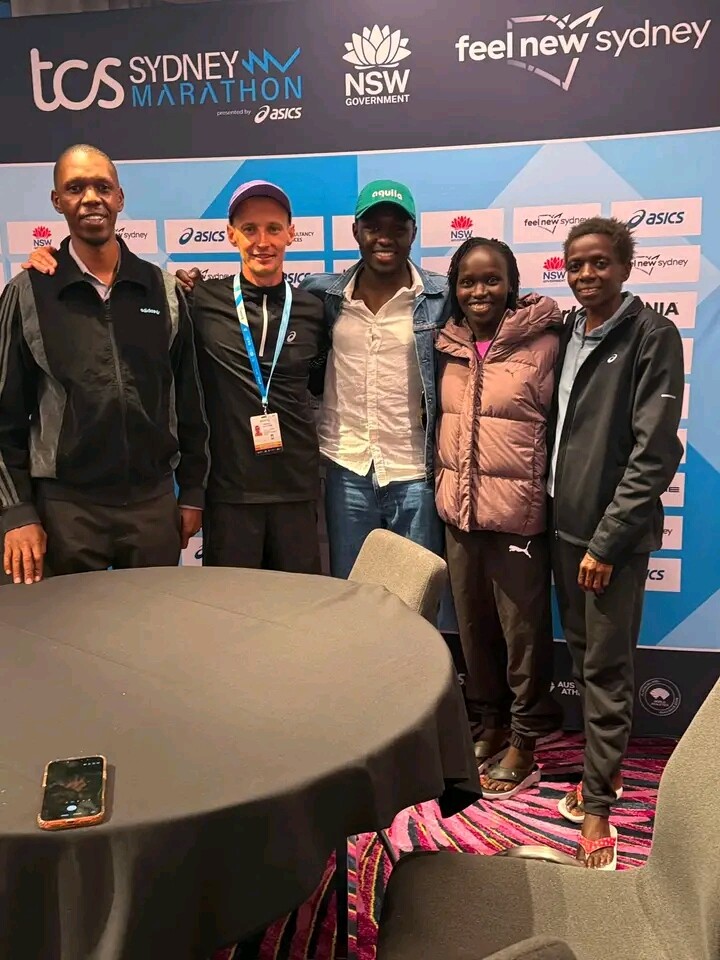
Today, she returns to the same Australian city as something far greater — an Olympic champion, four-time world champion, world cross-country champion, London Marathon winner, Laureus Sportswoman of the Year and one of Kenya’s most accomplished distance runners.
At 42, Cheruiyot will line up for the TCS Sydney Marathon on Sunday, August 30, completing an extraordinary full circle in a career that has stretched across more than two decades and transformed her from a teenage Olympian into one of the defining figures of her generation.
When Cheruiyot first competed in Sydney at the 2000 Olympic Games, few could have imagined the heights she would eventually reach. Still only 17, she advanced to the 5000m final and finished 14th — an experience that became the first chapter of an Olympic journey that would eventually span four Games.
The years that followed brought an extraordinary collection of victories.
Cheruiyot became world 5000m champion in 2009, then produced one of the greatest championship performances of her career in Daegu in 2011, winning both the 5000m and 10,000m titles while also claiming World Cross Country gold earlier that year. She added another world 10,000m title in Beijing in 2015, taking her tally to four senior world championships.
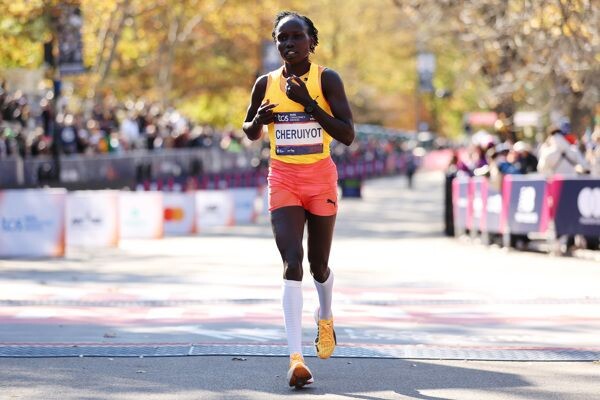
But the Olympic gold medal remained the one prize missing from her collection.
That changed dramatically in Rio in 2016.
After winning silver in the 10,000m, Cheruiyot returned to the track for the 5000m final and delivered a masterclass in championship racing. She surged away from Ethiopia’s Almaz Ayana in the closing stages to win Olympic gold in 14:26.17, finally completing the collection of major titles she had chased for so many years.
“I said I want to win,” Cheruiyot recalled after that historic victory. “This was my fourth Olympics and I’ve been dreaming about this since the very start.”
Her brilliance was not confined to the track.
After moving into marathon running, Cheruiyot established herself among the world’s best over 42.195km. She finished fourth in her London Marathon debut in 2017 before returning the following year to produce a stunning victory in 2:18:31 — a performance that placed her fourth on the world all-time list at the time and remains her marathon personal best.
She also finished runner-up in the New York City Marathon in 2018 and second in London in 2019, further demonstrating that her extraordinary competitive instinct had successfully followed her from the track to the roads.
Away from competition, Cheruiyot’s story has also evolved with her life. She became a mother, welcomed her daughter Arielle in 2021 and returned to competitive racing in 2023. In 2024, she claimed third place at the New York City Marathon, followed by fifth at the 2025 London Marathon.
Now Sydney offers her another opportunity to write her name into the city’s sporting history.
“I look back on my career with pride. I was able to win almost everything and have been at the top for a long time,” Cheruiyot said ahead of her return.
She also remembers the extraordinary generation in which she competed — an era that included global icons such as Usain Bolt, Tirunesh Dibaba and Meseret Defar.
“I was running in a great era and had a close-up view of athletes like Usain Bolt setting the world alight,” she reflected.
Yet perhaps the most remarkable aspect of Cheruiyot’s return is not simply the passage of time, but her willingness to keep challenging herself.
She arrives in Sydney having put considerable work into rebuilding her fitness, knowing that the marathon demands something entirely different from the explosive championship races that defined her track career.
“I am very excited to go back to Sydney,” she said. “It has been 26 years since I was there, and a lot has changed in my life since then. I hope to have a good run — I have put in a lot of work to regain fitness and hope my body will stand up to the 42km.”
Twenty-six years ago, Sydney introduced the world to a fearless Kenyan teenager chasing an Olympic dream.
Now, the same city welcomes back a woman who went on to conquer the track, cross country and marathon — and to leave an indelible mark on Kenyan athletics.
From teenage Olympian to Olympic champion. From world champion to marathon winner. From rising talent to mother and enduring icon.
Vivian Cheruiyot has come full circle — and Sydney is once again the stage.
by Erick Cheruiyot for My Best Runs.
Login to leave a comment
Sydney Marathon
The Sydney Marathon is a marathon held annually in Sydney, Australia. The event was first held in 2001 as a legacy of the 2000 Summer Olympics, which were held in Sydney. In addition to the marathon, a half marathon, 9 kilometres (5.6 mi) "Bridge Run", and a 3.5 kilometres (2.2 mi) "Family Fun Run" are also held under the banner...
more...
Sydney Marathon 2026: World Champions, Record Hunters And A Star-Studded Showdown
SYDNEY, AUSTRALIA — August 30, 2026
Sydney is preparing for a spectacular morning of marathon racing as reigning world champions Peres Jepchirchir of Kenya and Alphonce Simbu of Tanzania headline a world-class elite field at the TCS Sydney Marathon on Sunday, August 30.
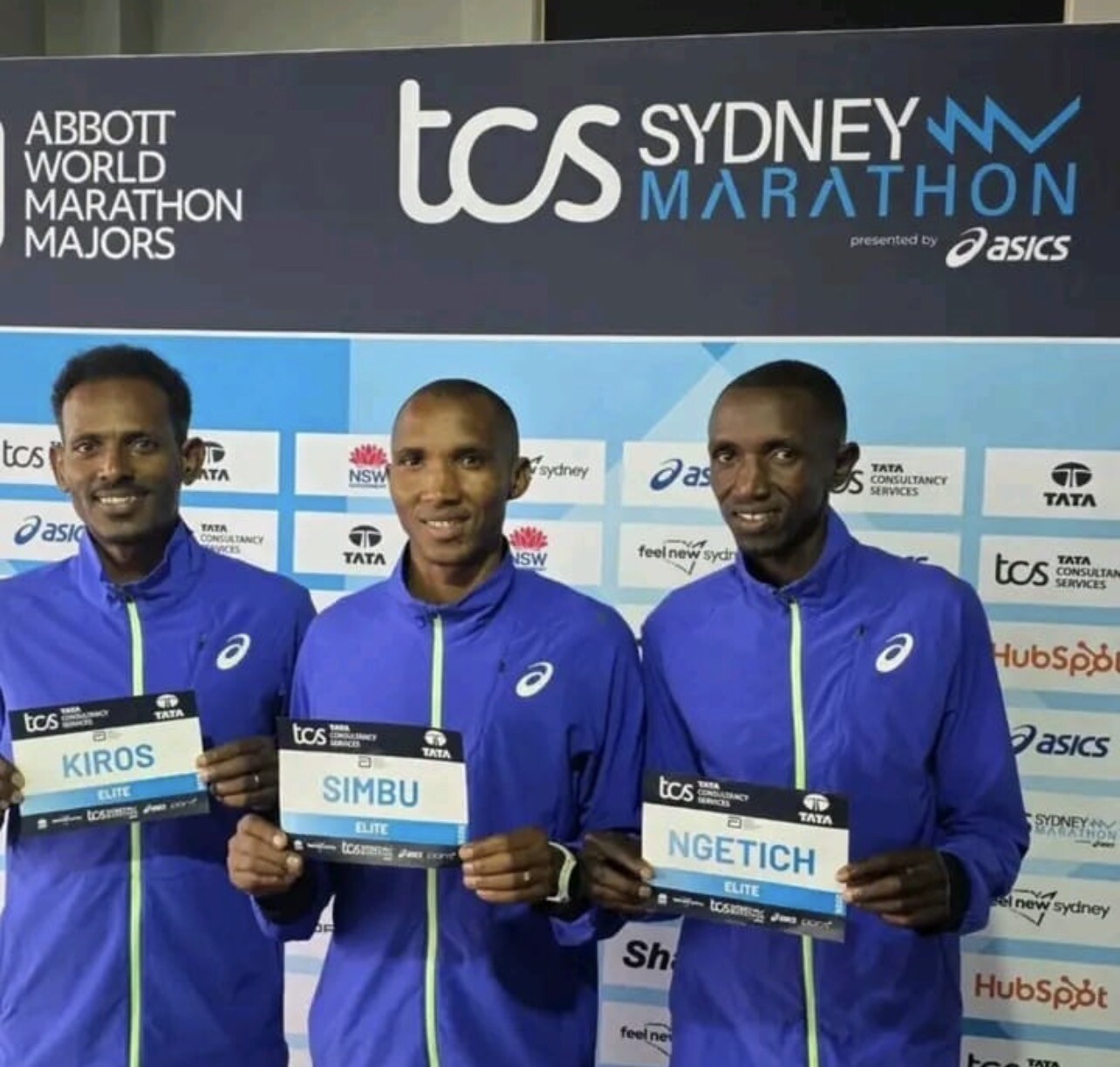
The race is set to provide another defining moment for Australian distance running, with more than 40,000 participants expected to take on the streets of Sydney and a remarkable collection of elite athletes competing for victory on one of the world's newest Abbott World Marathon Majors.
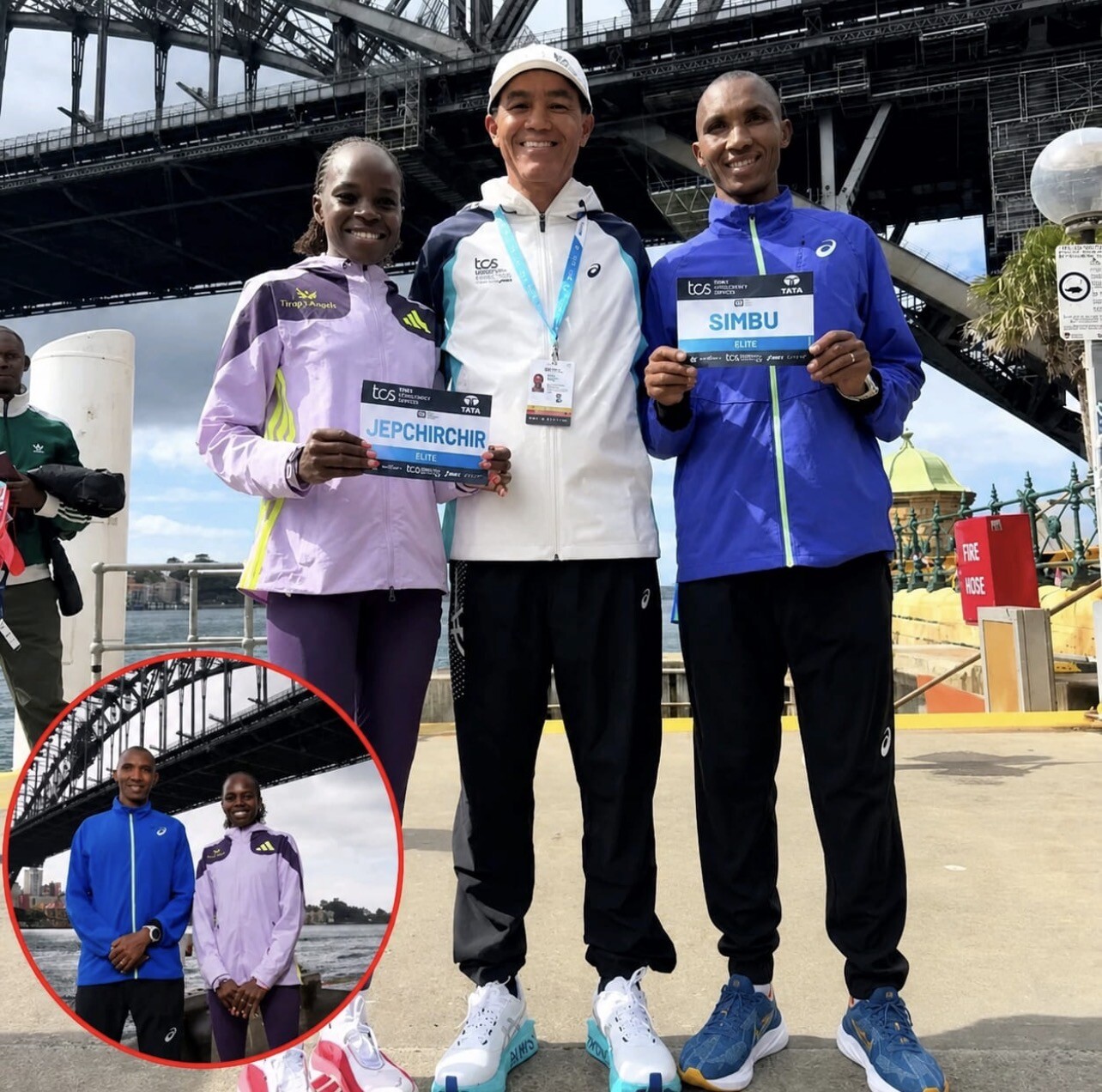
Jepchirchir and Simbu will bring an added layer of prestige to the occasion as the reigning women's and men's world marathon champions. Their presence ensures that the spotlight will be firmly fixed on Sydney as some of the world's finest distance runners battle for one of the most coveted titles on the international marathon calendar.

There will also be records in the crosshairs. The men's course record stands at 2:06:06, while the women's benchmark is 2:18:22, meaning the quality of the field has created genuine anticipation that both marks could come under threat.
In the men's race, Simbu arrives with considerable confidence and an ambitious target. The Tanzanian produced one of the most dramatic finishes of the 2025 World Athletics Championships in Tokyo, holding off Germany's Amanal Petros to claim the world title. With a personal best of 2:02:47, Simbu has the speed, championship experience and belief to challenge the very best, and he has made no secret of his desire to attack Sydney's course record.
However, standing in his way is an elite group led by Ethiopia's Sisay Lemma, whose outstanding 2:01:48 personal best makes him the fastest entrant in the field. A former London and Boston Marathon champion, Lemma brings a wealth of experience at the highest level and will be one of the principal threats to Simbu's ambitions.
Kenya will also have a strong presence, with Timothy Kiplagat and Vincent Ngetich adding further firepower to an already formidable men's lineup.
Perhaps the most intriguing storyline, however, belongs to Ethiopian track star Hagos Gebrhiwet, who is set to make his highly anticipated marathon debut. A former Olympic 5,000m medallist and one of the world's fastest track distance runners, Gebrhiwet has already shown extraordinary endurance over shorter distances, including a 57:41 half-marathon personal best. His transition to the marathon will be closely watched, with fans eager to discover whether his world-class track speed can be converted into success over 42.195 kilometres.
The depth of the men's field is remarkable. No fewer than 25 athletes have broken 2:10, while 19 have already recorded times faster than Sydney's existing course record, setting the stage for a race that could develop into a battle of extraordinary pace and tactics.
The women's contest promises just as much drama, with Jepchirchir leading the way. The Kenyan superstar arrives in Sydney as the reigning world champion and Olympic champion, carrying a 2:14:43 personal best, the fastest among the women entered.
Yet victory will not come easily. Jepchirchir faces a powerful Kenyan challenge from Irine Cheptai, who owns a 2:17:51 personal best and has already established herself as a major force on the international marathon circuit.
Tanzania's Magdalena Shauri, the country's national record holder with a personal best of 2:18:03, will provide another serious threat, while the experienced Vivian Cheruiyot of Kenya adds further championship pedigree to an already impressive women's field.
Ethiopian stars Shure Demise and Haven Hailu, alongside Uganda's Stella Chesang, will also be looking to make their mark as the race unfolds through Sydney's iconic streets.
The setting could hardly be more spectacular. Starting in North Sydney, the marathon takes runners across the famous Sydney Harbour Bridge before heading towards the unforgettable finish at the Sydney Opera House. With the city providing a breathtaking backdrop, the race has all the ingredients for another historic chapter in its rapid rise on the global marathon scene.
For the elite athletes, however, the beauty of Sydney will quickly become secondary once the gun goes off.
The champions will be chasing victory. The record hunters will be chasing history. And for Gebrhiwet, an entirely new chapter of his career will begin.
Two reigning world champions. Multiple sub-2:05 contenders. A world-class women's field. A highly anticipated marathon debut. And course records that could be under serious threat.
Everything is in place for an unforgettable Sunday in Sydney.
Will Alphonce Simbu turn his ambition into a new course record?
Can Sisay Lemma's 2:01:48 experience carry him to victory?
Will Hagos Gebrhiwet announce himself as a future marathon superstar?
And can Peres Jepchirchir add the Sydney Marathon crown to her already extraordinary list of achievements?
Sydney is ready.
The champions have arrived. The records are waiting. The stage is set for a spectacular showdown.
by Erick Cheruiyot for My Best Runs
Login to leave a comment
Sydney Marathon
The Sydney Marathon is a marathon held annually in Sydney, Australia. The event was first held in 2001 as a legacy of the 2000 Summer Olympics, which were held in Sydney. In addition to the marathon, a half marathon, 9 kilometres (5.6 mi) "Bridge Run", and a 3.5 kilometres (2.2 mi) "Family Fun Run" are also held under the banner...
more...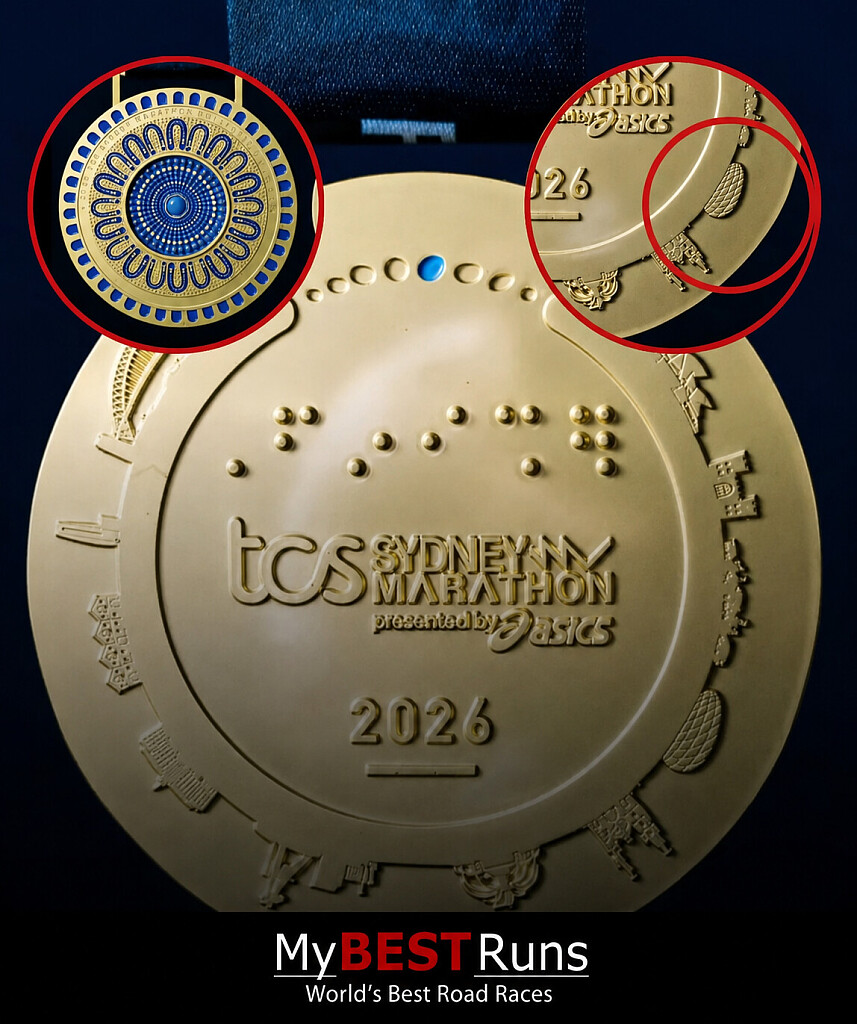
Sydney Marathon’s Medal Blunder: How Munich’s Allianz Arena Ended Up in a Sydney Souvenir
The Sydney Marathon was meant to celebrate one of Australia’s most iconic cities. Instead, its 2026 finisher’s medal has unexpectedly brought a little piece of Munich into the spotlight.
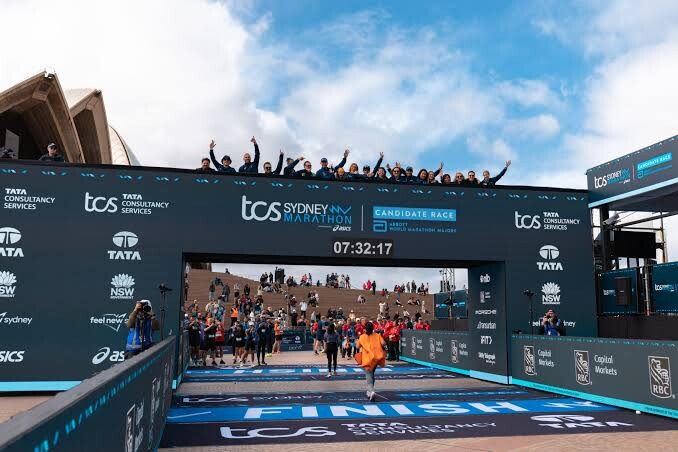
The back of the medal features a collection of landmarks designed to represent Sydney and the 42.2-kilometre journey runners will take through the city, including the Sydney Opera House and Sydney Harbour Bridge. But alongside those unmistakably Australian symbols is a rather surprising addition: Munich’s Allianz Arena.
The stadium was supposed to represent Sydney’s Allianz Stadium in Moore Park. Instead, the medal designers somehow used the distinctive home of Bayern Munich in Germany.
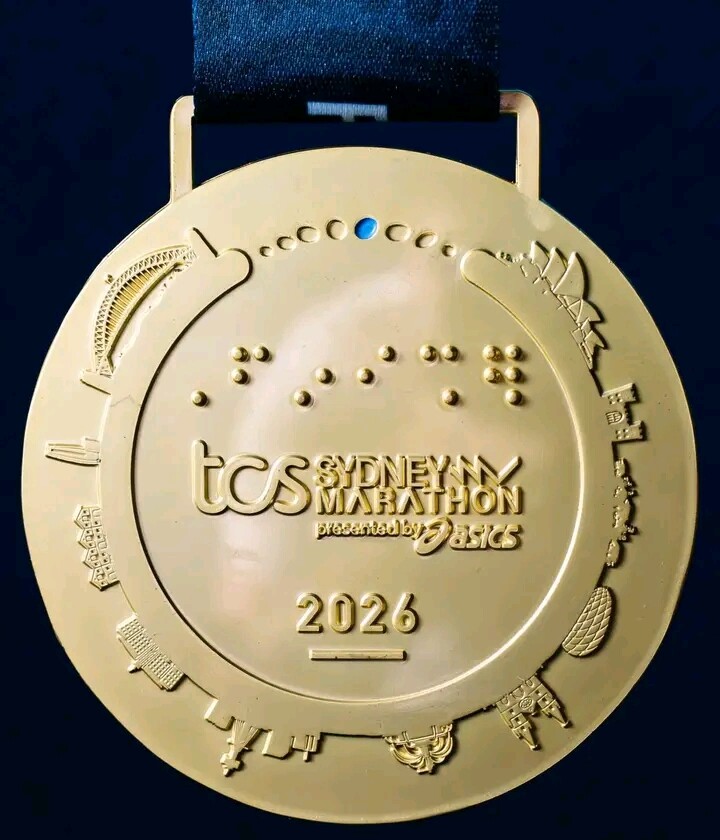
The mistake was spotted shortly after the medal was unveiled and quickly spread across social media before attracting international media attention. With the race now just days away, there is no time to redesign and replace the medals already produced for the event.
Organisers have acknowledged the mistake, describing it as an “unfortunate error” and making clear that the medals will still be presented to runners on race day.
Rather than attempting to hide the blunder, Sydney Marathon has chosen to embrace the unexpected twist, saying the medal is now “a little more unique.” Their response ended on a light-hearted note: “You noticed. We noticed. We’re human.”
And while the incorrect stadium may have created an embarrassing moment for the organisers, it has also given the 2026 medal something no previous Sydney Marathon medal has had — a story of its own.
That story will be carried around the necks of approximately 40,000 runners when the Sydney Marathon takes place on Sunday, August 30.
The timing could hardly be more significant for the race. Sydney is only in its second year as an Abbott World Marathon Major, having joined the prestigious series in 2024 alongside Tokyo, Boston, London, Berlin, Chicago and New York. The event has rapidly established itself as one of the world’s most sought-after marathons, with more than 123,000 runners entering the ballot for the 2026 race, a 56 percent increase from the previous year.
For those 40,000 successful entrants, the medal will ultimately represent something far more important than a design mistake. Behind every medal is months of preparation, early mornings, long training runs, sacrifices and the determination required to cover 42.2 kilometres.
And when the runners finally reach the finish line at the Sydney Opera House, they will receive a medal that was intended to tell the story of Sydney — but accidentally tells a small story about Munich too.
What began as an embarrassing design error may now become one of the most memorable quirks in Sydney Marathon history. Years from now, runners may look back at their 2026 medals not simply as souvenirs of finishing one of the world’s major marathons, but as unusual collector’s pieces from the year Sydney accidentally put Munich on its medal.
A Sydney marathon. A Munich stadium. One unforgettable medal.
by Erick Cheruiyot for My Best Runs.
Login to leave a comment
Sydney Marathon
The Sydney Marathon is a marathon held annually in Sydney, Australia. The event was first held in 2001 as a legacy of the 2000 Summer Olympics, which were held in Sydney. In addition to the marathon, a half marathon, 9 kilometres (5.6 mi) "Bridge Run", and a 3.5 kilometres (2.2 mi) "Family Fun Run" are also held under the banner...
more...
Michael Roeger’s Long Road Back to the Marathon World Record — and Now Sydney Awaits
On August 30, approximately 35,000 runners will line up at Miller Street in North Sydney for the 2026 TCS Sydney Marathon. Among them will be an athlete who already owns a piece of marathon history: Michael Roeger, the Australian T46 marathon world-record holder and one of the most remarkable endurance athletes of his generation.
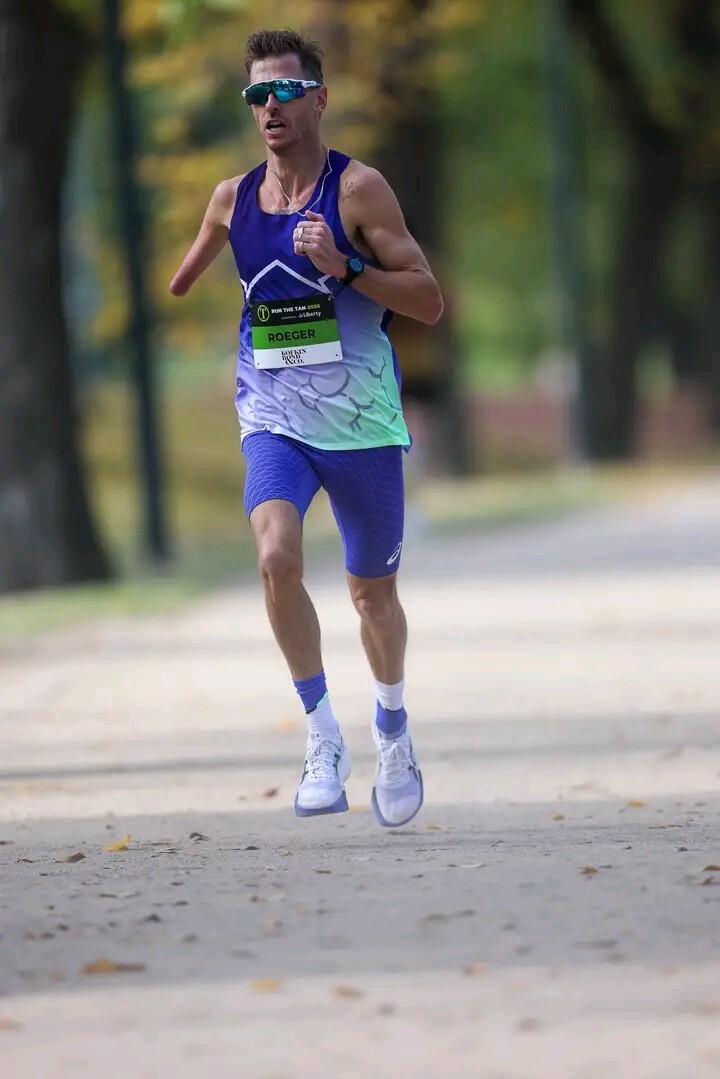
At 38, Roeger returns to the marathon with a career shaped by persistence, reinvention and an extraordinary ability to keep moving forward whenever circumstances have threatened to derail him.
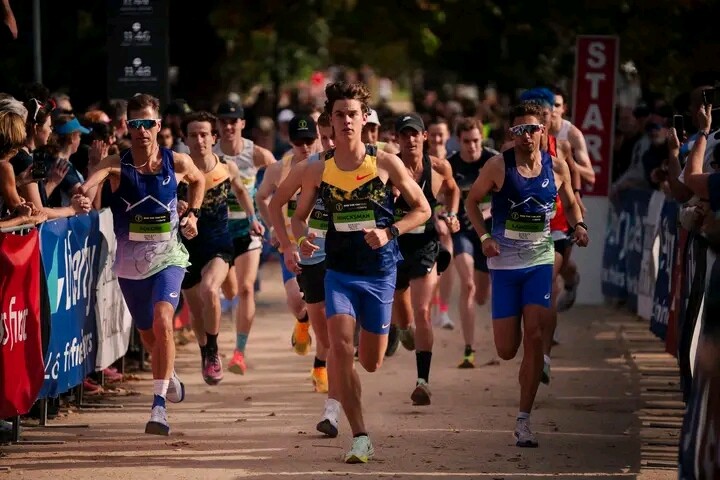
Sydney is a fitting stage for the next chapter. The marathon, now part of the Abbott World Marathon Majors, takes runners through some of the city's most recognisable landmarks, beginning in North Sydney, crossing the Harbour Bridge and eventually finishing near the Opera House. For Roeger, however, this is about far more than another marathon.
He is returning to the distance in the city where he set the fastest T46 marathon ever recorded.
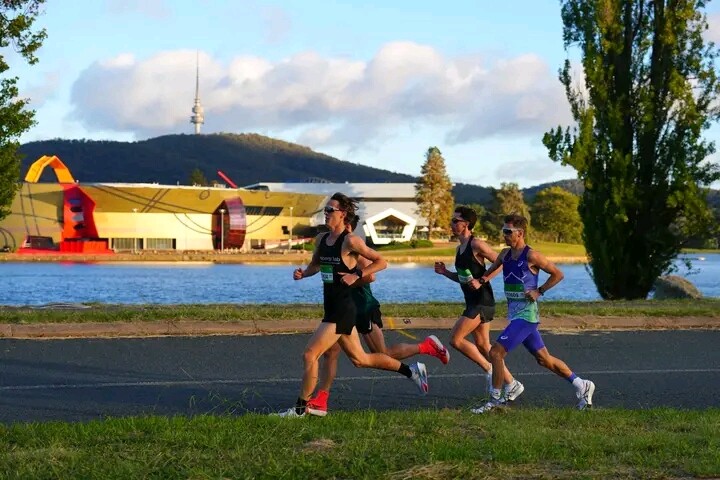
Roeger grew up in Langhorne Creek, a small South Australian community about 55 kilometres south of Adelaide. Born without the lower half of his right arm, he discovered Para athletics after Paralympian Neil Fuller visited his school when Roeger was 12.
What began as an introduction to sport eventually developed into a career spanning five Paralympic Games, world championships, major medals and multiple world records.
His T46 classification covers athletes with an arm amputation or comparable upper-limb difference. Yet describing Roeger's performances simply through his classification fails to capture the complexity of what he has achieved.
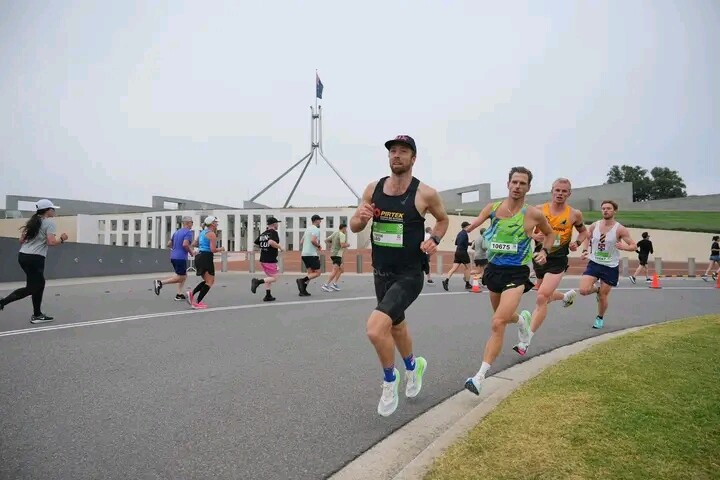
Running is an intricate coordination of the entire body. The arms contribute to balance, rhythm and control, helping the torso manage the rotational forces created by every stride. Over 42.195 kilometres, maintaining efficient movement is an enormous physical and technical challenge.
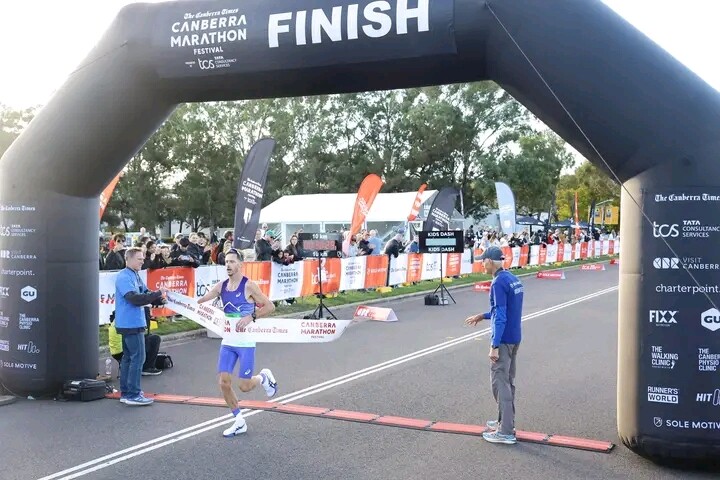
Roeger's marathon performances therefore represent much more than a number attached to a classification. They are elite endurance performances in their own right.
His transition to the marathon was remarkably rapid. Roeger made his marathon debut at the Melbourne Marathon in October 2018, running 2:23:31. The performance was faster than the existing T46 world record at the time, although it was not ratified as a world record because the race did not have the necessary status.
Six months later, he returned to the distance at the 2019 London Marathon, where the World Para Athletics Marathon Championships were staged within the race.
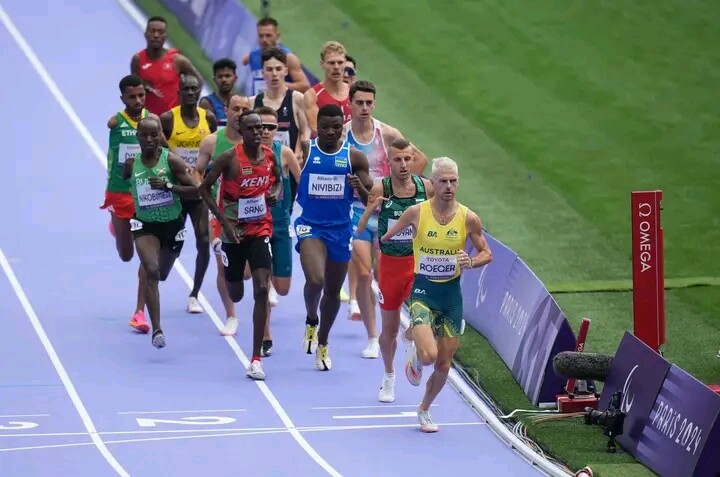
This time, everything came together.
Roeger won the T46 world title in 2:22:51, lowering the ratified world record and establishing himself as the world's leading marathoner in the classification. Even when cramp began to trouble him during the closing stages, he held on to become a world champion.
The progression continued.
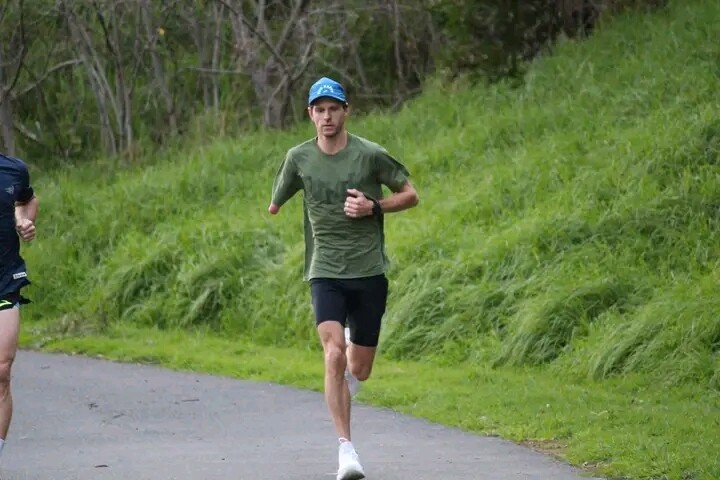
At the 2020 Chevron Houston Marathon, Roeger ran 2:19:33, becoming the first ambulant Para athlete to break the 2:20 barrier and once again lowering his own world record.
But his most significant breakthrough came back in Australia.
On April 25, 2021, Roeger lined up in Sydney for the Athletics Australia Tokyo Qualifying Marathon. He produced the fastest marathon of his career, crossing the finish line in 2:18:53.
That performance remains the T46 marathon world record.
The progression is remarkable. From 2:23:31 in Melbourne to 2:22:51 in London, 2:19:33 in Houston and finally 2:18:53 in Sydney, Roeger repeatedly moved the benchmark forward.
It was almost five minutes of improvement across four marathon performances.
But the record is only one part of the story.
Roeger's career has never followed a smooth upward trajectory. At the 2008 Beijing Paralympic Games, aged only 20, he contested the 800m, 1500m and 5000m T46 events, with seventh place in the 1500m his best finish.
Four years later in London, he arrived with genuine medal ambitions. Instead, gastrointestinal bleeding struck on the eve of the T46 800m. He still started the race but was forced to withdraw after one lap.
Rio 2016 finally delivered a Paralympic medal, with Roeger winning bronze in the 1500m. That success helped convince him to move towards the longer distances and eventually make the marathon his primary focus.
Then came another major setback.
Six weeks before the Tokyo 2020 Paralympic Games, Roeger suffered a stress fracture in his lower leg, destroying much of his preparation for the marathon. Despite the injury, he travelled to Tokyo and made the start line.
He finished sixth in 2:34:45, a time far outside the level he had demonstrated before the Games.
For most athletes, such a setback could have marked the end of the road. For Roeger, it became another chapter in a career defined by adaptation.
Before the Paris 2024 Paralympic Games, another obstacle emerged when the T46 marathon was removed from the programme. The event in which Roeger had become a world-record holder was no longer available at the Games.
His only remaining distance was the 1500m.
So he adapted once again.
Roeger returned to the track and competed in Paris, ultimately adding another Paralympic medal to his collection with silver in the T46 1500m.
Now the marathon is calling again.
The 2026 TCS Sydney Marathon will provide a very different challenge from the flat courses on which many of the world's fastest marathon times are produced. The route begins in North Sydney, crosses the Sydney Harbour Bridge and winds through the city before finishing at the Opera House.
The course features substantial elevation changes, with approximately 313 metres of climbing across the 42.195 kilometres. It is a course that rewards strength, patience and the ability to maintain efficient form when the legs are already carrying the fatigue of a long marathon.
For Roeger, that challenge will be amplified by the quality of the field around him.
The Australian elite field includes a strong collection of domestic marathoners, while the international men's race features considerable depth, with numerous athletes holding personal bests below 2:10.
Roeger will therefore not be lining up in isolation as a Para athlete. He will be part of a major international marathon field, surrounded by runners pursuing national titles, personal bests and elite honours.
That is also central to the way he has approached his career.
Roeger has long resisted the idea that Para athletes should be viewed as fundamentally separate from their able-bodied counterparts. His philosophy has been simple: once the starting gun goes, the competition is about running.
That attitude has helped him move comfortably between Para athletics and open elite competition, and Sydney 2026 offers another opportunity to do exactly that.
His partnership with coach Dr Philo Saunders has been particularly important throughout his career, helping him develop into a world-class athlete across multiple distances.
Yet perhaps the most impressive part of Roeger's story is not any individual medal or record.
It is the number of times he has had to begin again.
From a small South Australian town to five Paralympic Games. From disappointment in Beijing and London to a medal in Rio. From the track to the marathon. From a devastating injury before Tokyo to a world-record performance. From losing his marathon event before Paris to returning to the 1500m and winning another Paralympic medal.
Every time the route has changed, Roeger has found another way forward.
Now, at 38, he is returning to the marathon once more.
And there could hardly be a more fitting destination than Sydney.
It is the city where he produced his 2:18:53 world record in 2021. Five years later, he will return to the same city carrying the experience of a career that has tested his resilience at almost every turn.
The world record is already in his name.
On August 30, Michael Roeger will have another chance to show the world what remains in the legs of the man who refused to let setbacks define the limits of his career.
by Erick Cheruiyot for My Best Runs.
Login to leave a comment
Sydney Marathon
The Sydney Marathon is a marathon held annually in Sydney, Australia. The event was first held in 2001 as a legacy of the 2000 Summer Olympics, which were held in Sydney. In addition to the marathon, a half marathon, 9 kilometres (5.6 mi) "Bridge Run", and a 3.5 kilometres (2.2 mi) "Family Fun Run" are also held under the banner...
more...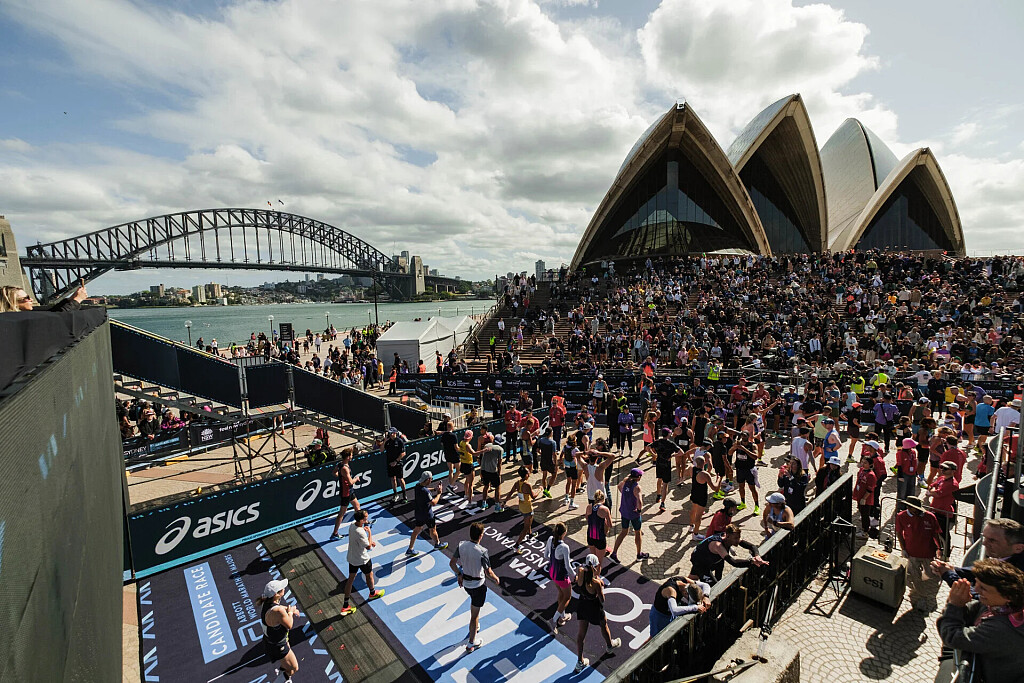
Sydney Marathon Turns Race Week Into a Citywide Celebration as Run Perks Opens the Event to Everyone
The TCS Sydney Marathon is no longer content to be a one-day spectacle reserved for those wearing race bibs. In 2026, the event is extending its reach across the Harbour City, turning marathon week into a citywide celebration that runners, spectators, residents and visitors can all enjoy.
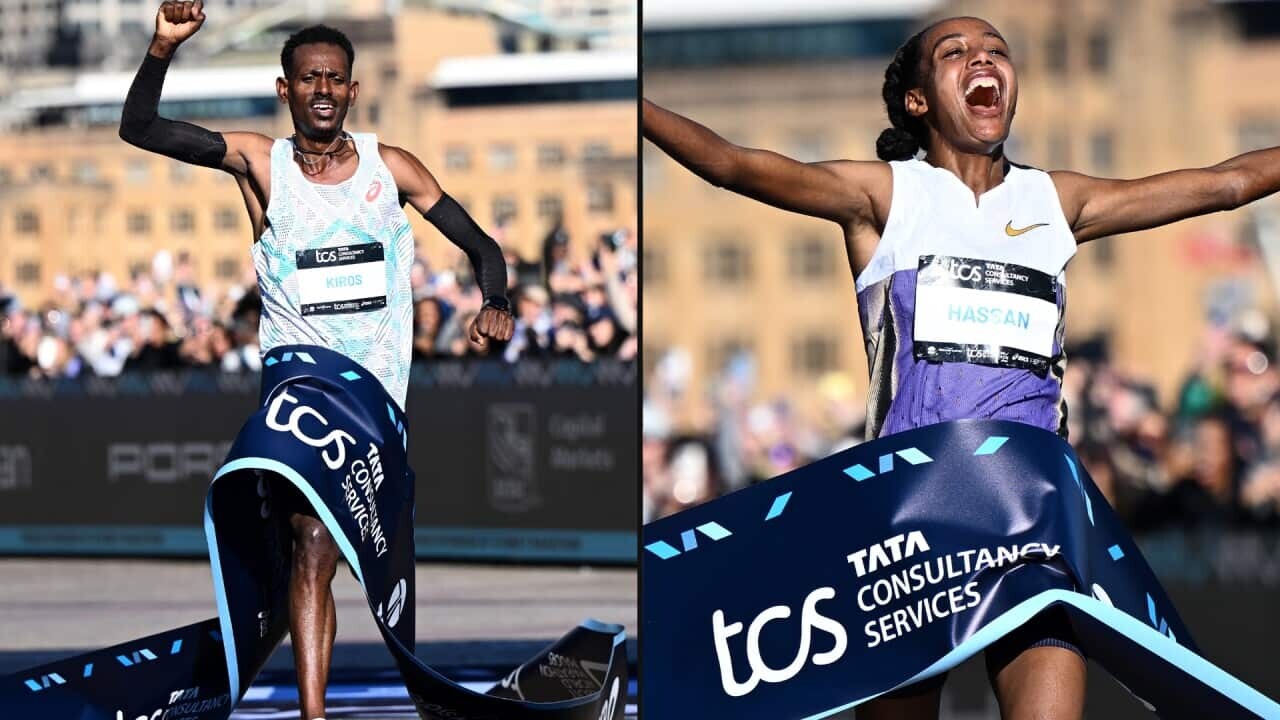
The fourth edition of the marathon’s Run Perks program will run from Tuesday, August 25, through Monday, August 31, surrounding race day on Sunday, August 30, with Medal Monday following on August 31.
The initiative brings restaurants, pubs, cafés and tourism operators into the marathon experience, offering a wide range of special deals designed to encourage people to explore Sydney while supporting local businesses. Offers are listed through the official TCS Sydney Marathon app, with location-aware features helping users discover participating venues closest to them.
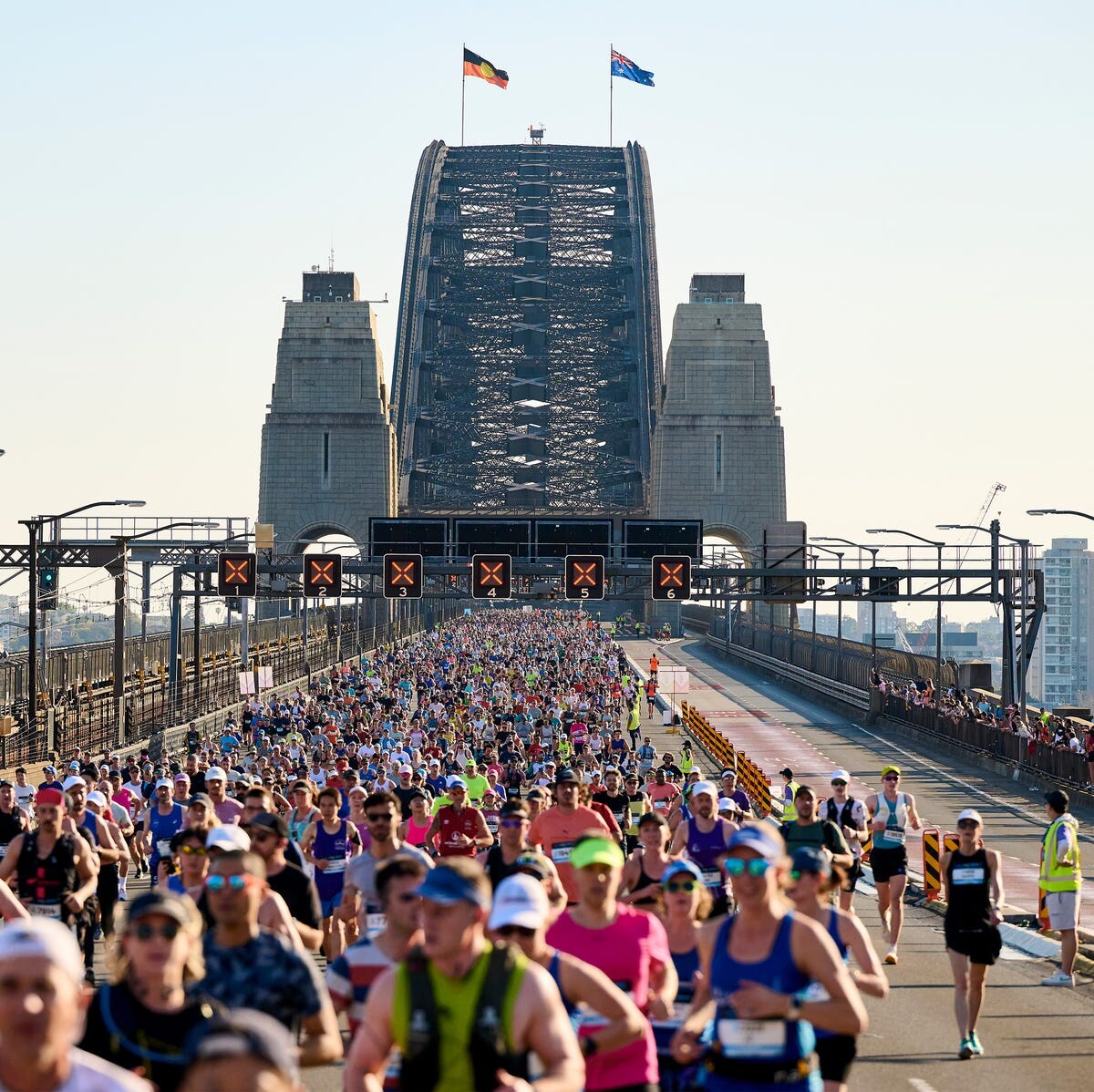
What makes Run Perks particularly appealing is that the benefits are not exclusively reserved for competitors. While some individual offers are specifically aimed at marathon participants, many are available to the wider marathon community, meaning you do not necessarily need a race bib or finisher’s medal to take part in the broader race-week experience.
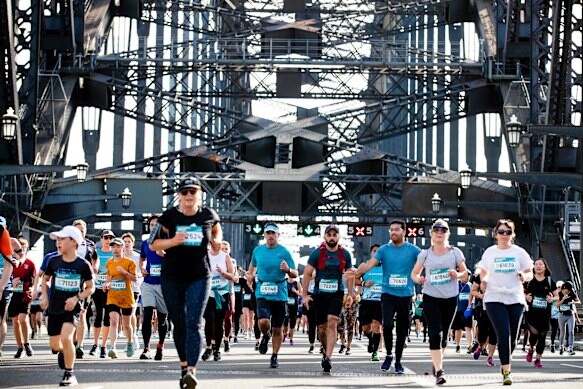
The deals range from straightforward food and drink specials to experiences designed to help visitors discover more of Sydney. Among the offerings are $20 schnitzels at The Glenmore Hotel, a $25 pizza-and-beer deal at The Australian Heritage Hotel, and a $19 lunch special at 4 Doors Down. Other venues are offering coffee deals, discounts on meals, tours and attractions across the city.
There are also race-specific opportunities for those taking part in the marathon. Some businesses are offering post-race incentives for finishers who present their medals or proof of participation, while others are extending discounts to spectators, support crews and the wider marathon community.
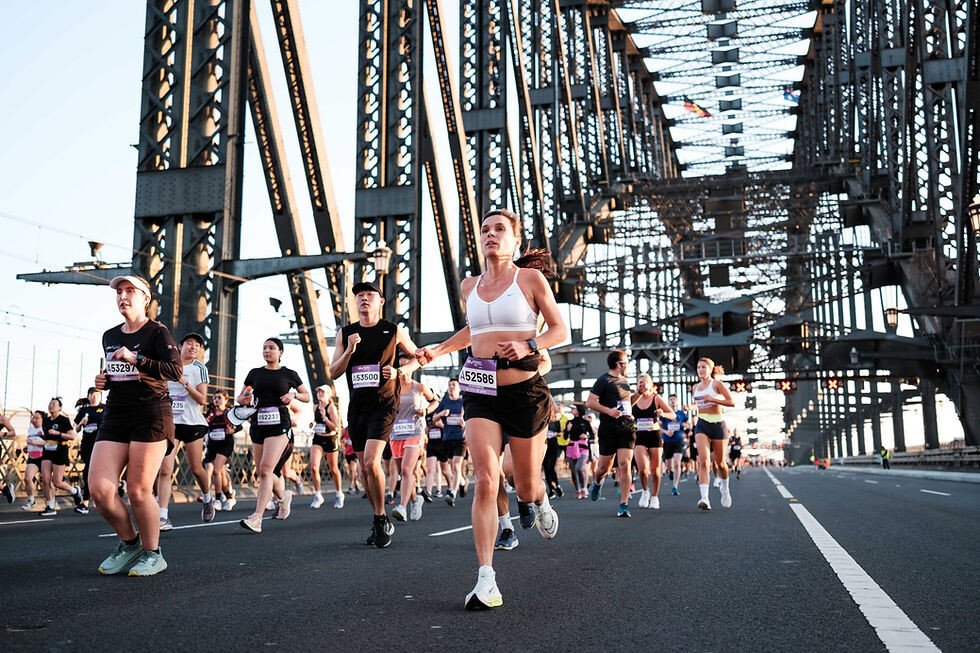
The concept reflects a broader shift in how Sydney is embracing its marathon. After making history as the seventh Abbott World Marathon Major, the TCS Sydney Marathon is becoming increasingly intertwined with the identity, tourism and business life of the city itself. The 2026 edition is expected to attract more than 40,000 participants, building on the 32,963 finishers recorded in 2025.
That scale gives Run Perks significance beyond a collection of discounts. Thousands of runners and their families will spend several days in Sydney, while spectators and residents will encounter the event throughout the city. By encouraging people to eat locally, visit attractions and experience different parts of Sydney, the marathon is helping turn the economic and social impact of race week into something that extends well beyond the course.
The timing is also important. Sydney is still establishing itself as one of the world’s major marathon destinations, having entered the Abbott World Marathon Majors in 2025. The 2026 event represents its second year as a Major and comes with ambitions for an even larger field and an even greater international profile.
And that is perhaps the most interesting part of Run Perks: the marathon is becoming less about what happens between the start and finish lines and more about what happens throughout the entire city.
From a coffee before sunrise to a post-race meal, an afternoon exploring The Rocks or an evening enjoying one of Sydney’s many restaurants and pubs, race week is being woven into the everyday rhythm of the city.
The official marathon app remains the best source for the latest participating venues, opening hours, redemption requirements and individual offer conditions, as these vary from business to business.
With more than 40,000 participants expected on August 30, Sydney is preparing for much more than another marathon. It is preparing for a week in which the entire city gets a chance to move, celebrate, explore and benefit from the energy of one of the world’s fastest-growing major marathons.
Sydney Marathon may have a start line and a finish line, but in 2026, its footprint stretches far beyond both.
by Erick Cheruiyot for My Best Runs.
Login to leave a comment
Sydney Marathon
The Sydney Marathon is a marathon held annually in Sydney, Australia. The event was first held in 2001 as a legacy of the 2000 Summer Olympics, which were held in Sydney. In addition to the marathon, a half marathon, 9 kilometres (5.6 mi) "Bridge Run", and a 3.5 kilometres (2.2 mi) "Family Fun Run" are also held under the banner...
more...
Australian Athletics Mourns Rising Middle-Distance Talent Natasha Ward, Dead at 21
Australian athletics is mourning the heartbreaking loss of promising middle-distance runner Natasha Ward, who has died at the age of 21, bringing an abrupt end to a career that had shown remarkable promise on both the track and in academia.

The news was confirmed on Thursday in a joint statement released by NSW Athletics and the Sutherland District Athletics Club in Sydney. No cause of death was disclosed.
Ward had established herself as one of the emerging talents in Australian middle-distance running, competing primarily in the 400m, 800m and 1,500m. Her journey began with impressive performances as a junior athlete, including a medal-winning run in the 1,500m at the New South Wales All Schools Championships.
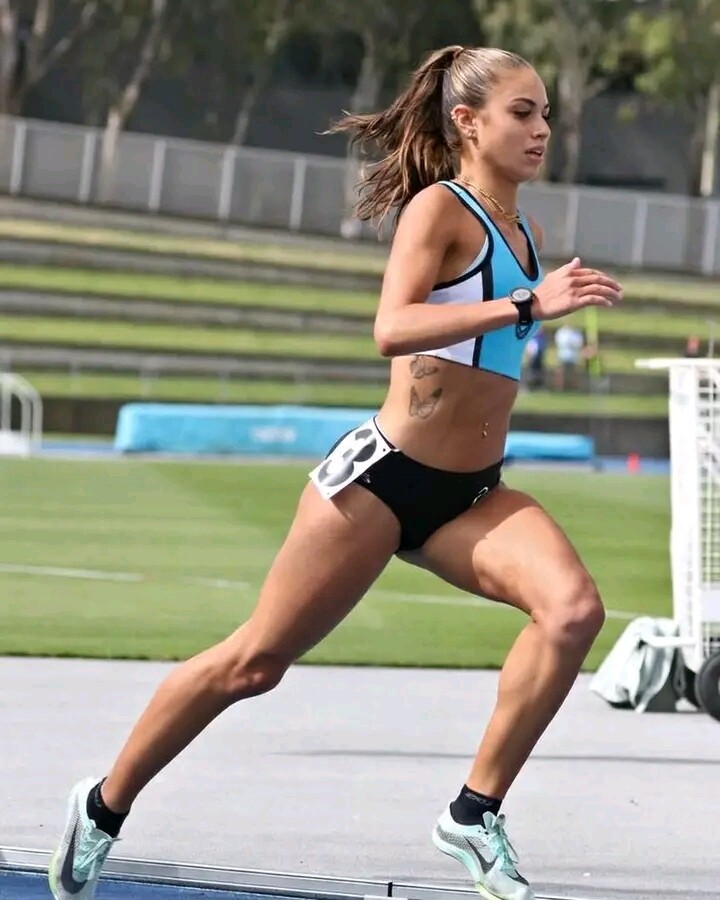
She continued to build on that success at university level, claiming a medal in the 1,500m at the 2023 UniSport Nationals before returning this year to earn bronze in the 800m. Her steady progression also saw her compete at the 2024 Australian Athletics Championships, lining up against some of the nation's leading middle-distance stars, including Morgan Mitchell and Claudia Hollingsworth.
Away from competition, Ward was equally dedicated to her future beyond athletics. She was studying Exercise and Sports Science at Macquarie University in Sydney, combining her academic ambitions with an unwavering commitment to the sport she loved.
Her club remembered her not only as a gifted athlete but also as a teammate who always put others first. Whether representing the club in its summer and winter relay competitions or volunteering to fill in when teams were short of runners, Ward earned admiration for her generosity, reliability and infectious enthusiasm.
In a heartfelt tribute, NSW Athletics and the Sutherland District Athletics Club described her as a cherished member of the athletics community.
"Beyond her achievements on the track, Natasha was a greatly loved member of our community. Her kindness and joy touched everyone fortunate enough to know her, and her magnetic smile and warm personality have left a permanent mark on Australian athletics. Our thoughts are with Natasha's family, friends, and everyone who had the privilege of knowing her."
Ward's passing comes only weeks after Australian sprint athlete Jemma Stapleton, 25, died in a road accident while on holiday in Thailand. Authorities have indicated there is no connection between the two tragedies.
As tributes continue to pour in from across Australia's athletics community, Natasha Ward will be remembered not only for the medals she won and the races she ran, but also for the warmth, humility and positivity she brought to everyone around her. Her loss leaves a profound void in Australian athletics, with many believing she had only begun to reveal the full extent of her potential.
by Erick Cheruiyot for My Best Runs.
Login to leave a comment

Sydney Vaught and Woody Kincaid Reign Supreme as New U.S. 10,000m Champions Crowned
Sydney Vaught announced herself as America's newest national champion with a poised and tactical victory in the women's 10,000 meters at the USATF Outdoor Championships, claiming her first senior national title in a race that demanded patience, precision, and perfect timing.
Competing under the lights at New York City's Icahn Stadium, the former University of Arkansas standout mastered a slow-burning championship contest before producing the decisive move when it mattered most. Vaught crossed the finish line in 33:30.60, capping a performance built on tactical awareness rather than raw pace.
Unlike record-chasing races that unfold at relentless speed, this championship final evolved into a battle of positioning and race intelligence. The conservative early tempo kept the field tightly packed for much of the contest, leaving the outcome to be decided over the closing laps. Vaught remained composed throughout, refusing to be drawn into unnecessary surges while carefully conserving energy for the decisive moments.
When the race finally ignited, she responded with authority. Displaying impressive strength and confidence, Vaught surged clear of her rivals in the closing stages to secure a memorable victory and the biggest triumph of her professional career.
The national crown represents another significant milestone for the former Arkansas Razorback, whose steady progression through the American distance-running ranks has now culminated in a USATF outdoor title. Winning a championship in such a tactical race highlights not only her physical ability but also her growing maturity and composure on the national stage.
The men's 10,000m championship delivered an equally compelling contest, with Woody Kincaid reclaiming his place atop American distance running. The experienced racer outkicked Olympic bronze medalist Grant Fisher in a thrilling sprint to the finish, capturing his third career U.S. outdoor 10,000m title—and his first since 2023.
Kincaid stopped the clock in 30:13.66 after executing his race plan to perfection, remaining patient throughout the tactical affair before unleashing his trademark finishing speed over the final meters. His decisive kick proved too strong for Fisher, allowing the veteran to add another national crown to an already distinguished career.
For Kincaid, the victory marked a return to the summit of the U.S. championships, reaffirming his reputation as one of America's most formidable championship racers. His ability to deliver under pressure once again demonstrated why he remains one of the country's elite distance runners.
Together, Vaught and Kincaid emerged as the standout winners of the opening 10,000-meter finals at the USATF Outdoor Championships, each producing composed tactical performances to secure national gold. While Vaught celebrated a breakthrough first title, Kincaid reinforced his legacy with another championship triumph, setting the stage for an exciting season ahead for American distance running.
by Erick Cheruiyot for My Best Runs.
Login to leave a comment

USATF Outdoor Championships
The 2026 Toyota USATF Outdoor and Para National Championships will be held at Icahn Stadium in New York City fromJuly 23-26, 2026, marking the first time the event is hosted in New York. The event will serve as a premier track and field competition, featuring top U.S. athletes at the Randall's Island Park venue. USATF+3 Key Details for 2026...
more...
Linda Botková Rewrites History: The 16-Year-Old Who Produced One Of The Greatest Junior Hurdle Performances Ever
Track and field has witnessed the emergence of another extraordinary teenage phenomenon.
At just 16 years old, Czech sensation Linda Botková produced one of the greatest under-18 performances in the history of the women's 400m hurdles, storming to the European Athletics U18 Championship title in Rieti, Italy, with a breathtaking 55.19 seconds. It was far more than a gold-medal-winning run—it was a performance that rewrote the record books and firmly established her as one of the brightest young stars in global athletics.
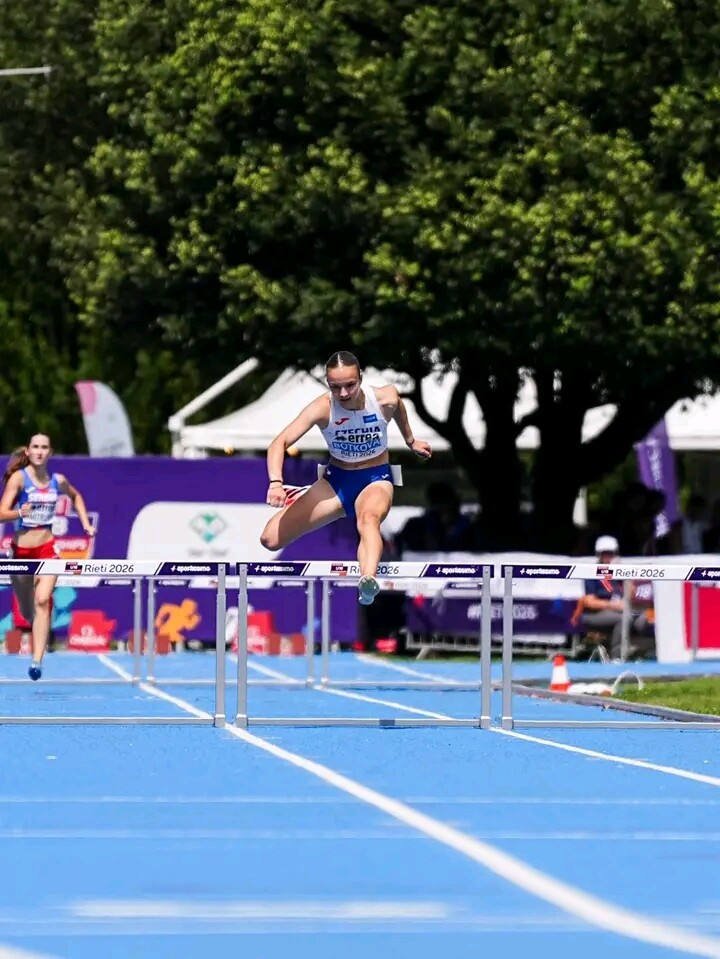
From the gun, Botková displayed remarkable maturity, attacking each hurdle with confidence, precision, and outstanding rhythm. She controlled the race from start to finish before unleashing a powerful sprint over the closing metres to cross the line in a stunning new personal best.
The significance of her performance extends well beyond the championship. Her sensational 55.19 not only earned her the European U18 crown but also produced an astonishing collection of milestones. She shattered the European Under-20 record, set a new European Under-18 best, established a new championship record, and remarkably lowered that championship record in all three rounds of the competition. The time also became the world Under-18 leading performance of the season, a new Czech Under-18 national record, and the second-fastest performance ever recorded by an Under-18 athlete.
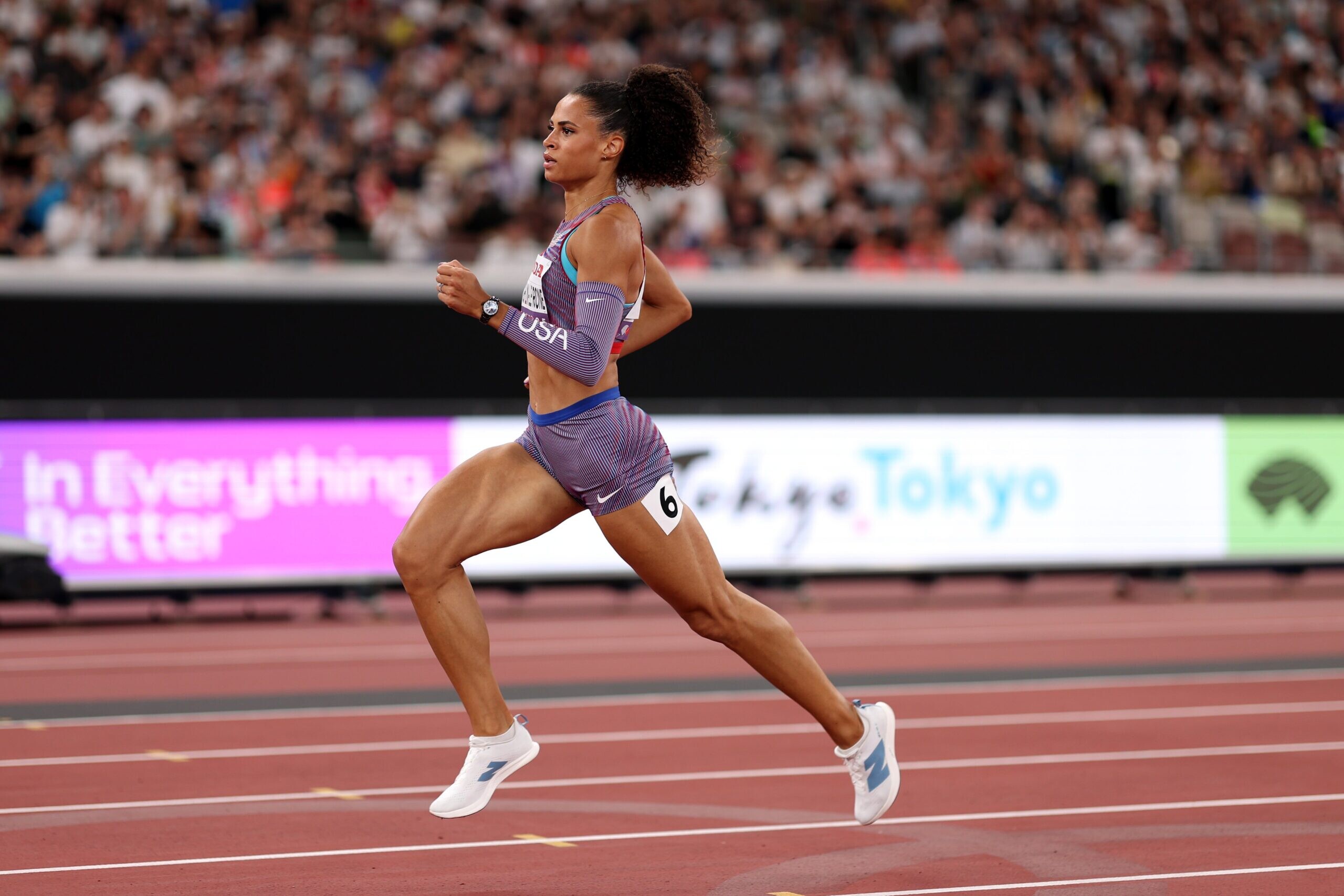
Only world record holder and Olympic champion Sydney McLaughlin-Levrone has ever run faster at the same age—a remarkable statistic that underscores just how exceptional Botková's achievement truly is.
Producing such a performance at only 16 years old, while still developing physically and technically, speaks volumes about her immense talent, discipline, and competitive maturity. It is a race that has instantly elevated her from a promising prospect to one of the most exciting young athletes in world track and field.
For Czech athletics, Botková's triumph represents the arrival of a potential global superstar. For the rest of the athletics world, it is a powerful reminder that a new generation is already pushing the boundaries of what seemed possible.
Winning European Under-18 gold was a remarkable achievement. Doing so in 55.19 seconds, while rewriting multiple records and becoming the second-fastest Under-18 400m hurdler in history, transformed the race into one of the greatest junior performances the event has ever witnessed.
by Erick Cheruiyot for My Best Runs.
Login to leave a comment
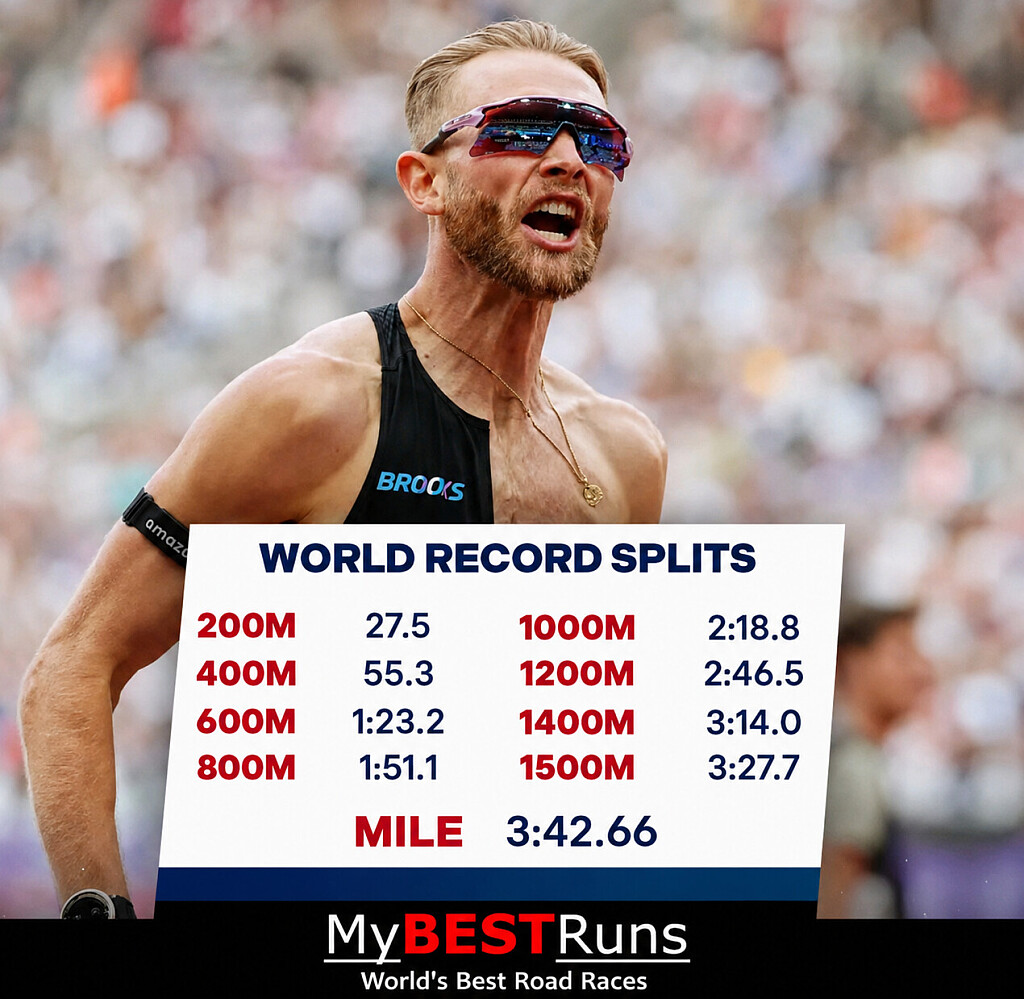
Josh Kerr Restores Britain's Mile Crown With a Historic World Record on Home Soil
Forty-one years after Great Britain last celebrated a men's mile world record, Josh Kerr has written a magnificent new chapter in the sport's rich history.
Competing before a passionate home crowd in London, Kerr delivered the performance of a lifetime, storming to a sensational 3:42.66 to erase one of athletics' longest-standing records. It was more than just a personal triumph—it marked the return of the mile world record to the nation that has shaped some of the greatest middle-distance runners the sport has ever known.
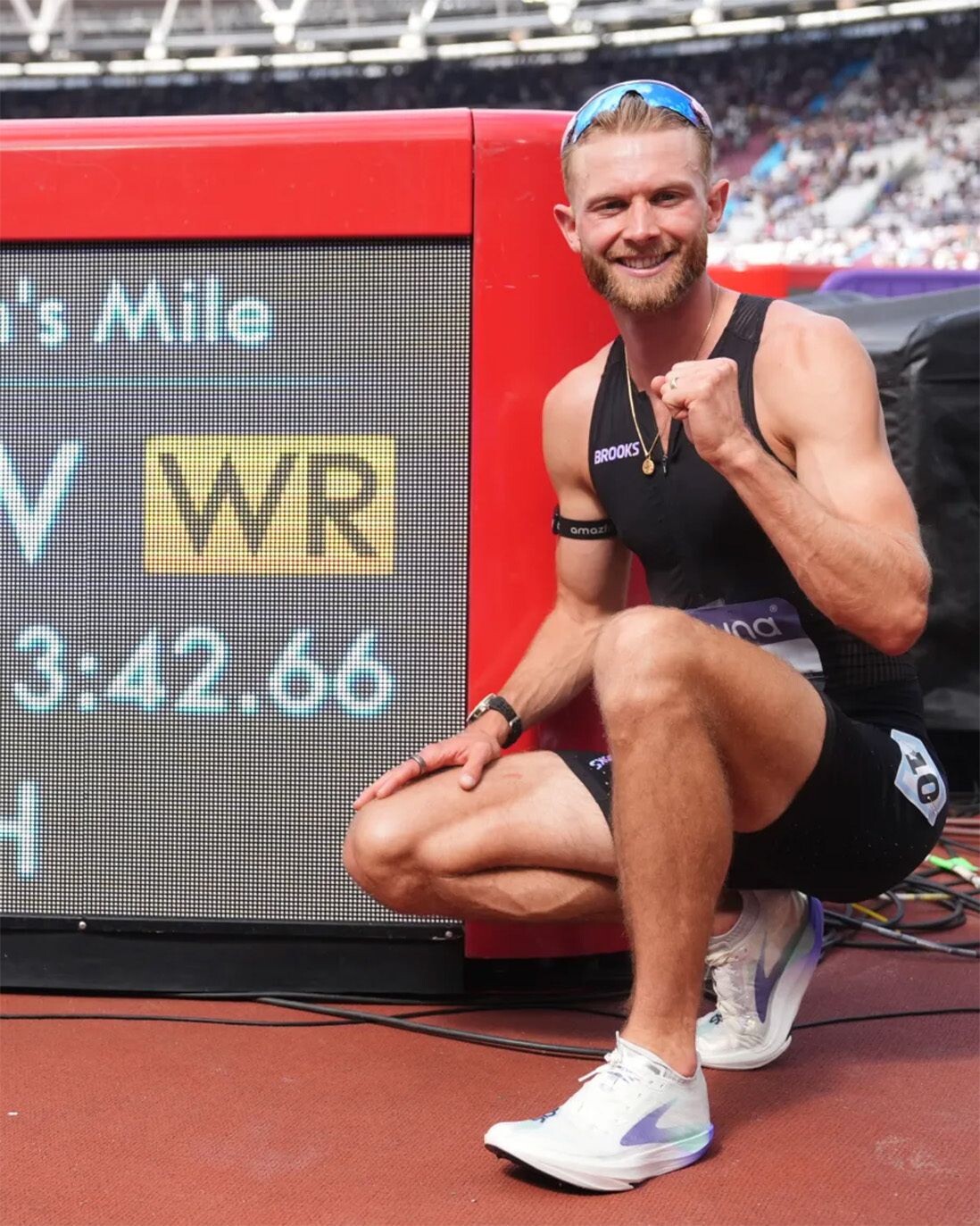
With that unforgettable run, Kerr became the seventh British man to hold the men's mile world record, joining a legendary lineage that stretches back nearly nine decades. His achievement places him alongside icons such as Sydney Wooderson, Roger Bannister, Derek Ibbotson, Sebastian Coe, Steve Ovett and Steve Cram—names forever woven into the history of British athletics.
For generations, Great Britain stood at the forefront of mile running. Wooderson first established the country's dominance in 1937 before Bannister forever changed athletics by becoming the first man to break the four-minute barrier in 1954. The baton was then carried by Ibbotson, Coe, Ovett and Cram, whose fierce rivalry elevated the event to extraordinary heights during the late 20th century.
Since Steve Cram's world record of 3:46.32 in 1985, Britain had waited more than four decades for another athlete capable of reclaiming the crown. Many exceptional runners emerged during that period, but none managed to rewrite the record books—until Josh Kerr.
The Scottish star embraced the enormous expectations surrounding his ambitious Project 222 with remarkable composure. Every split demonstrated the precision required to chase history. He opened with 27.5 seconds at 200m, reached 400m in 55.3, passed 600m in 1:23.2, and hit 800m in 1:51.1, perfectly positioning himself for a relentless second half.
Rather than fading, Kerr accelerated. He covered 1000m in 2:18.8, reached 1200m in 2:46.5, passed 1400m in 3:14.0, and crossed 1500m in a blistering 3:27.7 before producing one final surge over the closing 109 metres to stop the clock at an astonishing 3:42.66. It was a masterclass in pacing, endurance and finishing speed—proof that every stride had been meticulously planned.
Roared on by thousands of supporters inside London's packed stadium, Kerr transformed years of sacrifice, discipline and unwavering belief into one of the greatest performances ever witnessed in middle-distance running. He didn't simply attack the record—he dismantled it with authority.
Kerr's achievement is about far more than breaking a world record. It reconnects Great Britain with one of its proudest athletics traditions and signals the beginning of a new era for the iconic mile. His unforgettable run reminds the world that even the longest-standing records can fall when extraordinary talent meets fearless ambition.
On a magical evening in London, Josh Kerr didn't just rewrite the record books—he brought the mile world record back home and secured his place among the greatest middle-distance runners in history.
by Erick Cheruiyot for My Best Runs.
Login to leave a comment

Olympic Champion Sydney McLaughlin-Levrone Welcomes First Child, Beginning a Beautiful New Journey
Sprint and hurdles superstar Sydney McLaughlin-Levrone has entered an exciting new chapter in her remarkable life, welcoming her first child with husband Andre Levrone. The four-time Olympic champion and women's 400m hurdles world record holder announced the birth of their daughter, Savannah Michelle Levrone, who was born on Sunday, July 12, 2026.

The couple shared the joyful news with an emotional message celebrating the arrival of their daughter and expressing gratitude to everyone who supported them throughout the pregnancy. Sydney described Savannah as "our blessing and our joy," while expressing excitement and faith for the future that lies ahead for their growing family.

The announcement marks a deeply personal milestone for one of the most accomplished athletes of her generation. Renowned for redefining the women's 400m hurdles through a succession of record-breaking performances, McLaughlin-Levrone now embraces a new role beyond the track as a mother.
The timing of the announcement adds another layer of significance. Just days earlier, Sydney reflected on the 10th anniversary of qualifying for her first Olympic Games at only 16 years old—a breakthrough that launched one of the most decorated careers in modern athletics. Ten years later, her journey has come full circle with another life-changing milestone, underscoring that her greatest moments continue to extend beyond sporting success.
The arrival of Savannah Michelle Levrone has been met with an outpouring of congratulations from athletes, fans, and the wider sporting community, who have celebrated the couple as they begin this new chapter together. As Sydney McLaughlin-Levrone steps into motherhood, the athletics world will undoubtedly continue to follow her inspiring journey—both on and off the track.
by Erick Cheruiyot for My Best Runs.
Login to leave a comment
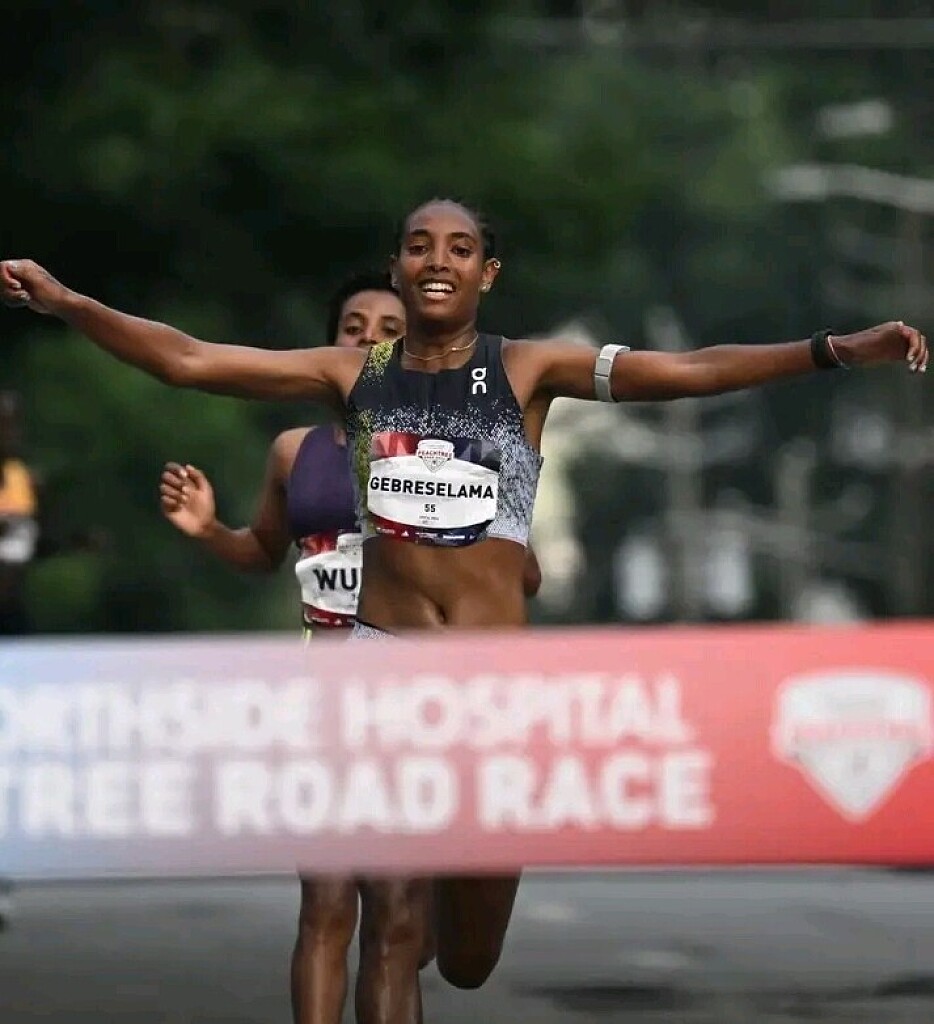
Tsigie Gebreselama Wins Thrilling Peachtree Road Race Showdown as Ethiopia Shines in Atlanta
Ethiopia's Tsigie Gebreselama produced a sensational finishing sprint to capture the women's title at the 57th Peachtree Road Race on Saturday, July 4, 2026, delivering one of the most dramatic finishes in the event's recent history.
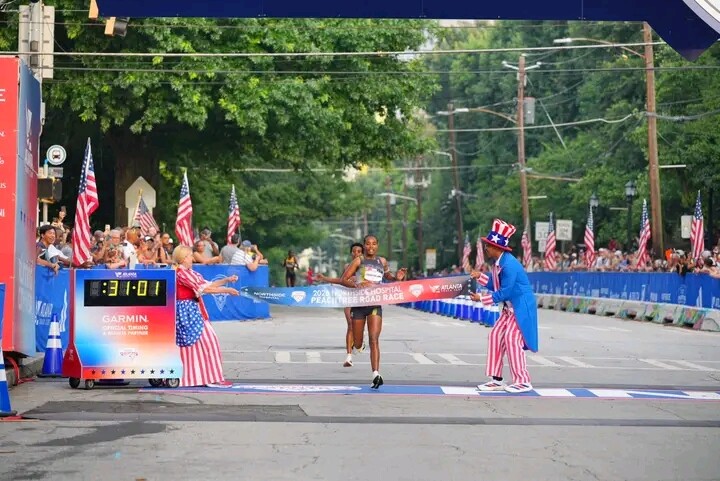
Competing on the iconic streets of Atlanta during the United States' Independence Day celebrations, Gebreselama timed her decisive move to perfection, edging compatriot Melknat Wudu in the closing metres to secure victory in 31:02. Just one second separated the two Ethiopian stars, with Wudu crossing the line in 31:03 after an intense battle from start to finish.
Kenya's Irine Cheptai completed the podium with a strong run of 31:11, while fellow Kenyans Gladys Kwamboka Mong'are (31:36), Stacy Chepkemboi Ndiwa (31:55), Maurine Jepkoech Chebor (31:55), and Selah Jepleting Busienei (31:56) ensured a commanding East African presence among the leading finishers. Ethiopia's Gela Degefa placed eighth in 31:57, ahead of American Sydney Vaught (32:18) and South Africa's Glenrose Xaba (32:20), who rounded out the top ten.
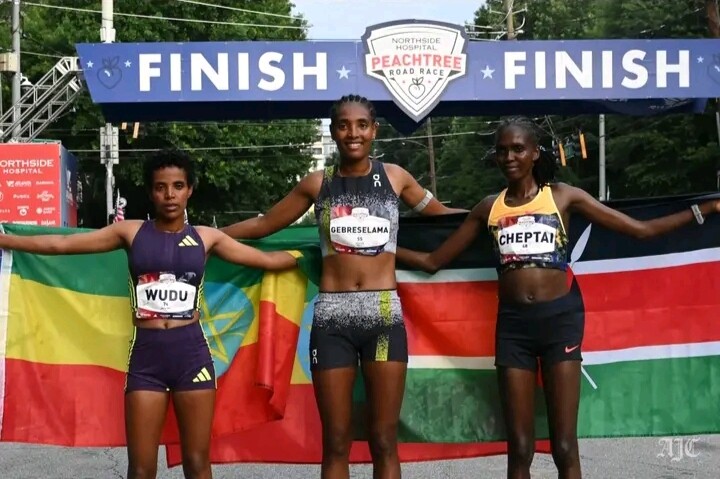
The women's race lived up to its billing, featuring relentless pace, tactical positioning, and an electrifying sprint finish that had spectators on their feet. Gebreselama's composure in the final metres proved to be the difference, as she claimed one of the most prestigious road racing victories on the American calendar.
Held annually on Independence Day, the Peachtree Road Race once again transformed Atlanta into a celebration of endurance, community, and world-class athletics. Tens of thousands of runners took to the famous 10-kilometre course, while elite athletes battled for victory in front of enthusiastic crowds lining the streets from Buckhead to Piedmont Park.
Top 10 Women's Results
1. Tsigie Gebreselama (Ethiopia) – 31:02
2. Melknat Wudu (Ethiopia) – 31:03
3. Irine Cheptai (Kenya) – 31:11
4. Gladys Kwamboka Mong'are (Kenya) – 31:36
5. Stacy Chepkemboi Ndiwa (Kenya) – 31:55
6. Maurine Jepkoech Chebor (Kenya) – 31:55
7. Selah Jepleting Busienei (Kenya) – 31:56
8. Gela Degefa (Ethiopia) – 31:57
9. Sydney Vaught (United States) – 32:18
10. Glenrose Xaba (South Africa) – 32:20
Gebreselama's victory added another memorable chapter to the rich history of the Peachtree Road Race, capping off a spectacular Independence Day celebration with a performance defined by courage, patience, and a breathtaking finishing kick. It was a fitting finale to one of the world's most celebrated road races and a reminder of the exceptional depth of women's distance running on the global stage.
by Erick Cheruiyot for My Best Runs.
Login to leave a comment

AJC Peachtree Road Race
The AJC Peachtree Road Race, organized by the Atlanta Track Club, is the largest 10K in the world. In its 48th running, the AJC Peachtree Road Race has become a Fourth of July tradition for thousands of people throughout the metro Atlanta area and beyond. Come kick off your Fourth of July festivities with us! If you did not get...
more...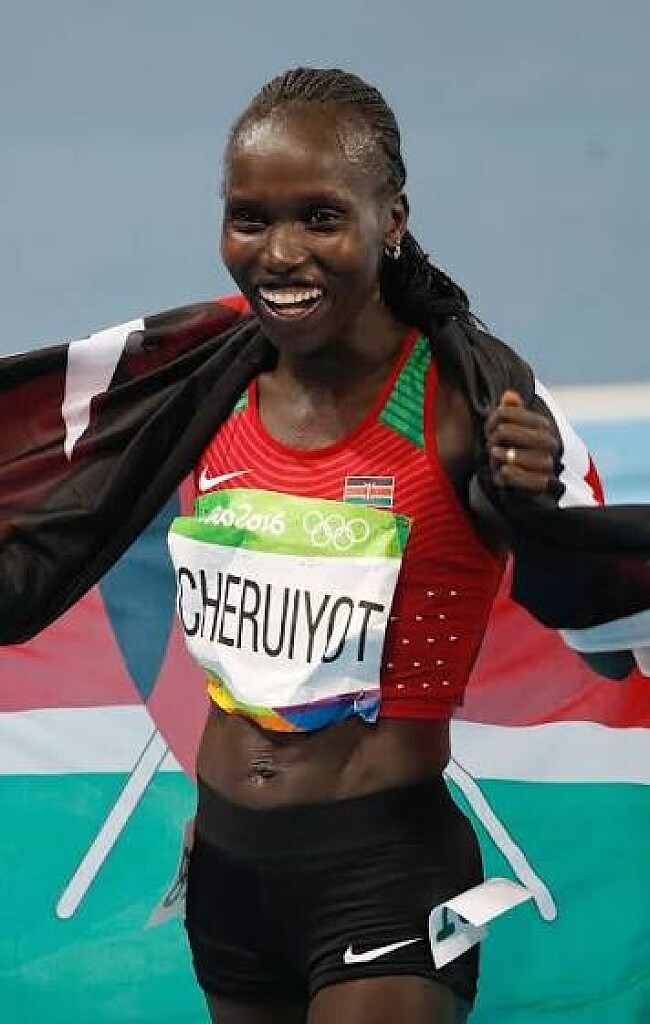
Olympic Legend Vivian Cheruiyot Set for 2026 Sydney Marathon Showdown
Kenyan distance-running icon Vivian Cheruiyot is set to add another exciting chapter to her glittering career after confirming her participation in the 2026 Sydney Marathon, scheduled for August 30 in Australia.
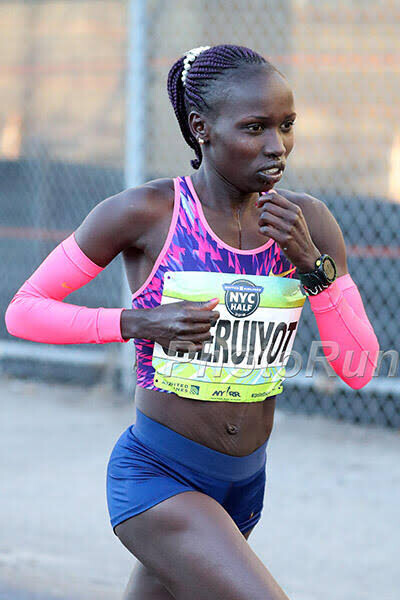
The 42-year-old marathon star, who owns a personal best of 2:18:31, will line up against one of the strongest women's marathon fields ever assembled in Australia. Awaiting her is a mouthwatering showdown with fellow Kenyan and Olympic marathon champion Peres Jepchirchir, promising fans a battle between two of the sport's finest competitors.
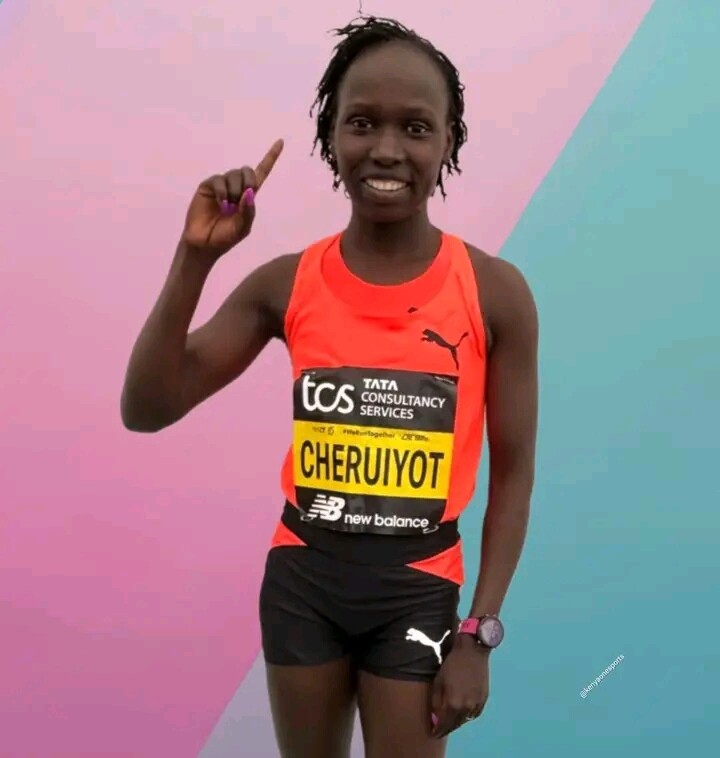
Cheruiyot arrives in Sydney with one of the most decorated résumés in the history of distance running. Across four Olympic Games, she has amassed an extraordinary collection of medals, winning Olympic gold in the 5,000m and silver in the 10,000m at the 2016 Rio Games, where she also set a new Olympic record in the 5,000m. She previously claimed silver in the 5,000m and bronze in the 10,000m at the 2012 London Olympics, cementing her place among Kenya's greatest track athletes.
Her success extends well beyond the Olympic stage. Cheruiyot is a multiple-time world champion, capturing the 5,000m world title in 2009 and 2011, while also completing a memorable long-distance double by winning the 10,000m world crown in 2011 before reclaiming the event's global title in 2015. She also earned silver in the 5,000m at the 2007 World Championships and has enjoyed success indoors with a silver medal in the 3,000m at the 2010 World Indoor Championships.
In addition to her global championship triumphs, Cheruiyot dominated the 2010 season by securing the Commonwealth Games, African Championships, Continental Cup, and Diamond League titles over 5,000 metres, further highlighting her remarkable consistency and versatility.
Although now competing in the marathon, Cheruiyot continues to prove that class and determination know no age. Her experience, tactical brilliance, and championship pedigree make her one of the standout names in an elite field packed with world-class talent.
With the Sydney Marathon continuing to establish itself as one of the world's premier road races, all eyes will be on Vivian Cheruiyot as the legendary Kenyan seeks to produce another memorable performance on Australian soil.
by Erick Cheruiyot for My Best Runs.
Login to leave a comment
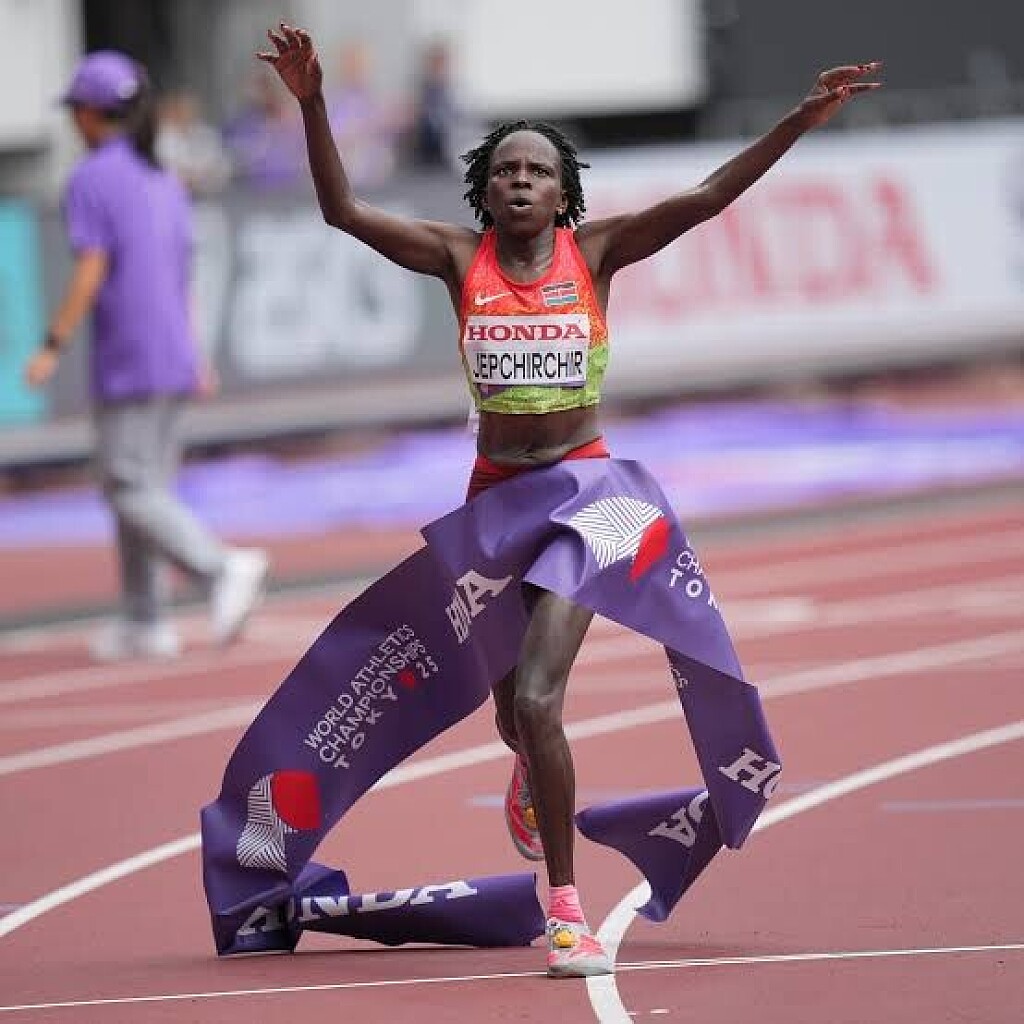
Sydney Set for a Historic Showdown as Record-Breaking Women's Elite Field Assembles
The TCS Sydney Marathon presented by ASICS is set to deliver one of the most captivating marathon spectacles of the year, with the strongest women's elite field ever assembled on Australian soil preparing to battle for glory.
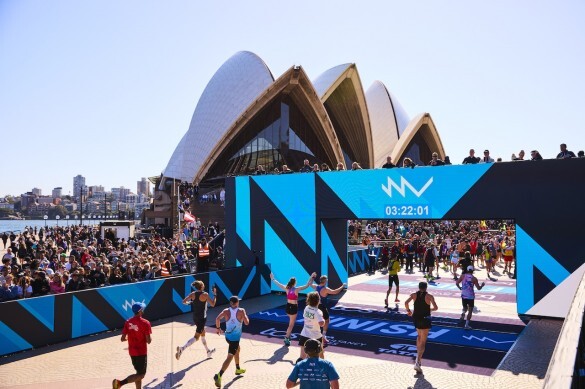
Headlining the star-studded lineup is reigning World Marathon Champion Peres Jepchirchir Ngeno, whose remarkable personal best of 2:14:43 makes her the fastest athlete in the field. The Kenyan arrives as one of the sport's most accomplished marathoners and will carry the weight of expectation as she leads an exceptionally deep and competitive international field.
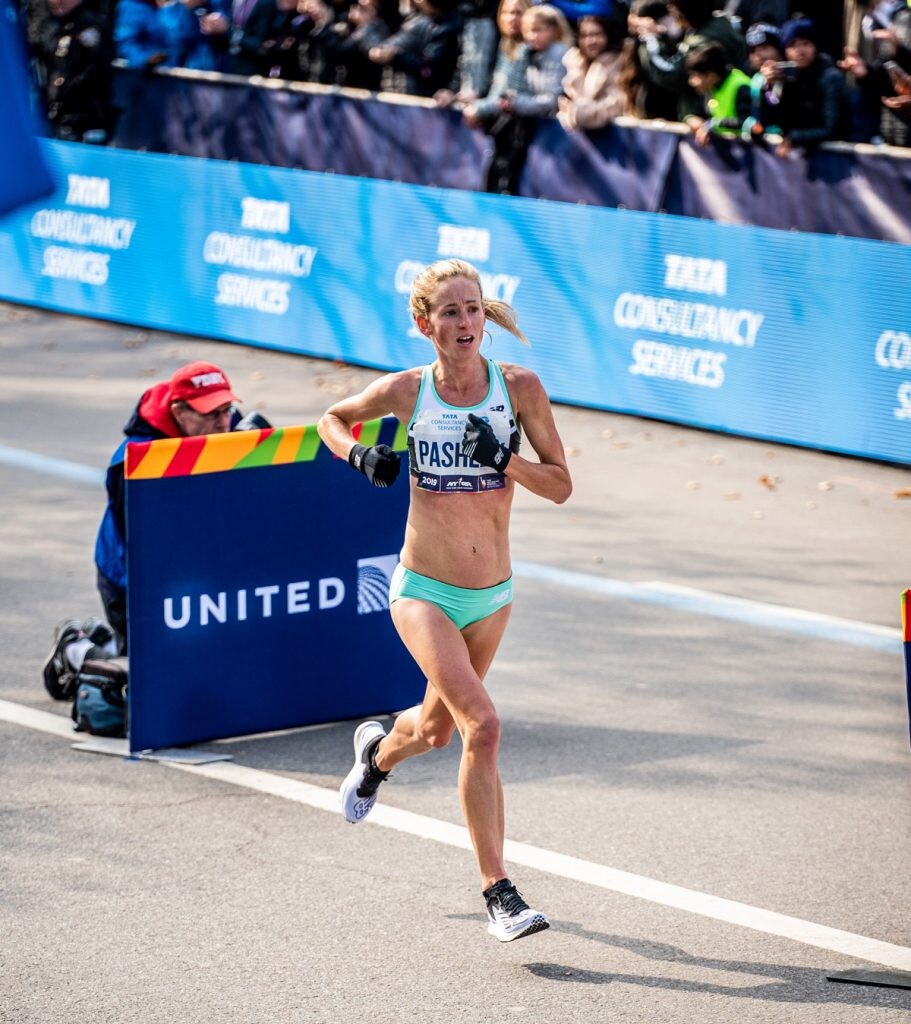
Kenya's challenge extends far beyond its world champion. Irine Cheptai (2:17:51), Vivian Cheruiyot (2:18:31), Sharon Chelimo (2:19:33), Joyce Tele (2:19:50), Jackline Cherono (2:21:14) and Priscah Cherono (2:25:17) add tremendous depth, reinforcing the nation's reputation as the dominant force in women's marathon running.
Ethiopia will be equally formidable, boasting an impressive squad led by Ruti Aga (2:18:09), Shure Demise (2:18:34), Haven Hailu (2:19:09), Meseret Abebayehau (2:19:50), Aberu Ayana (2:20:20), Waganesh Mekasha (2:20:26), Azmera Gebru (2:20:48) and Fikrte Wereta (2:21:32). With such remarkable depth, Ethiopia has every opportunity to challenge for victory and dominate the podium.
The international flavor continues with Magdalena Shauri of Tanzania (2:18:03), Uganda's Stella Chesang (2:18:26), American-based Biruktayit Degefa (2:21:34), France's Melody Julien (2:25:01), Morocco's Kaoutar Farkoussi (2:25:12), Japan's Mizuki Nishimura (2:25:54) and Australia's leading hopes Ellie Pashley (2:26:21), Caitlin Scott (Adams) (2:30:26) and Rebecca Lowe (2:30:50).
With multiple women boasting personal bests under 2:20, the race promises relentless pace from the opening kilometres. The combination of proven championship pedigree, world-class experience and emerging talent sets the stage for what could become the fastest and most competitive women's marathon ever contested in Australia.
As the TCS Sydney Marathon presented by ASICS continues to cement its status among the world's premier marathons, the 2026 edition is shaping up to be a defining moment in the event's history. Fans can expect a fierce contest where every second will matter and marathon excellence will be on full display.
by Erick Cheruiyot for My Best Runs.
Login to leave a comment
Sydney Marathon
The Sydney Marathon is a marathon held annually in Sydney, Australia. The event was first held in 2001 as a legacy of the 2000 Summer Olympics, which were held in Sydney. In addition to the marathon, a half marathon, 9 kilometres (5.6 mi) "Bridge Run", and a 3.5 kilometres (2.2 mi) "Family Fun Run" are also held under the banner...
more...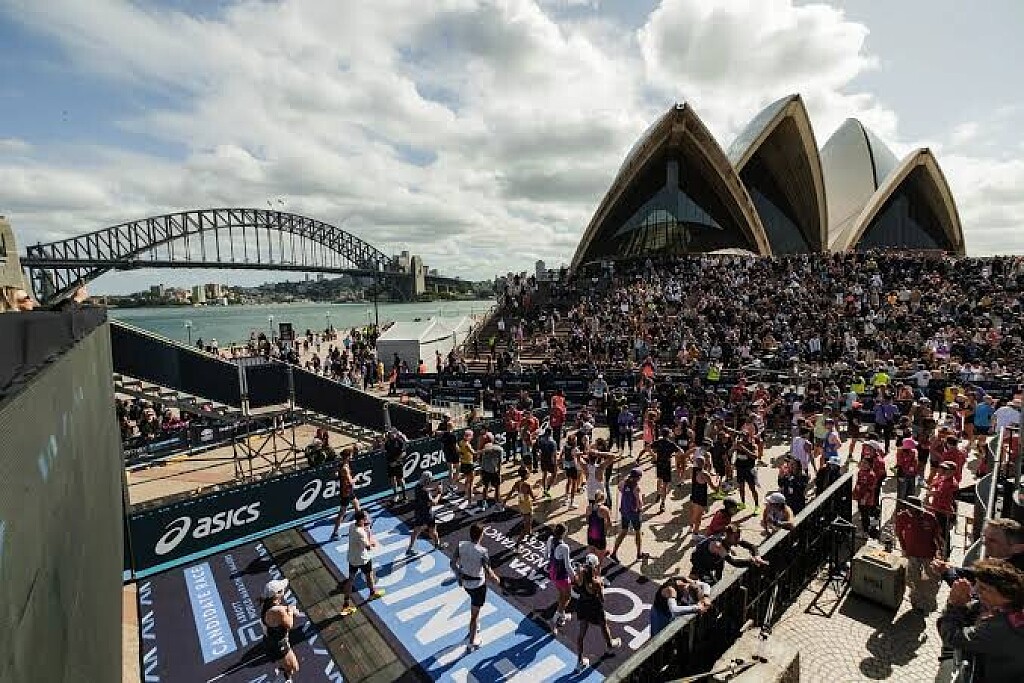
Sydney Marathon Unveils Strongest Elite Field in Australian History as 14 Men Boast Sub-2:05 Personal Bests
The 2026 TCS Sydney Marathon presented by ASICS has raised the bar ahead of its biggest edition yet, unveiling the deepest men's elite field ever assembled on Australian soil. With an astonishing 14 athletes holding personal bests under the 2:05 barrier, this year's race is shaping up to be one of the fastest and most competitive marathons of the season.
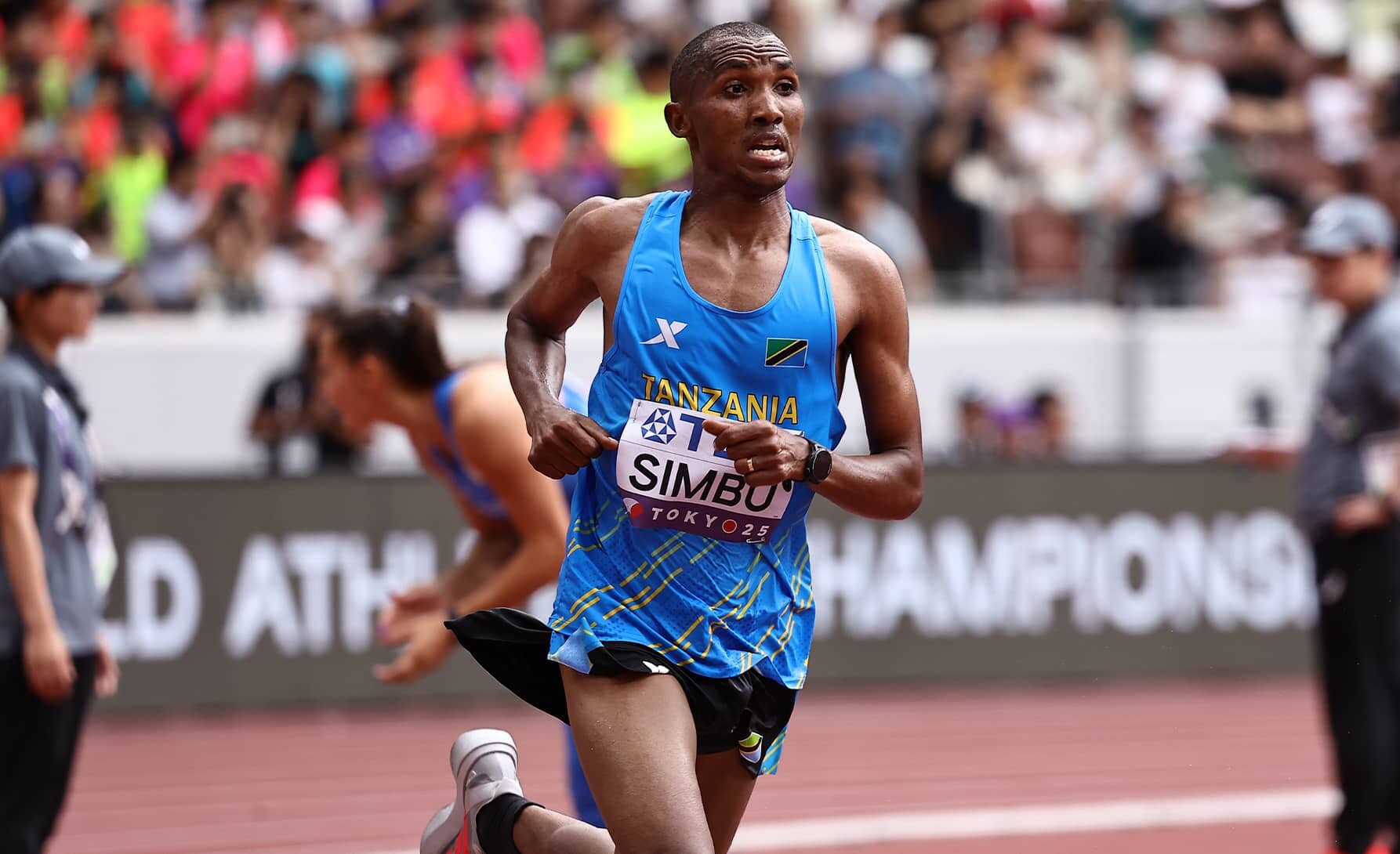
Leading the star-studded lineup is reigning marathon world champion Alphonce Felix Simbu of Tanzania, whose outstanding personal best of 2:02:47 makes him one of the leading contenders for victory. Simbu arrives in Sydney as one of the sport's most accomplished marathoners and is expected to spearhead an elite battle unlike anything previously seen in Australia.
Also among the favourites is Ethiopian standout Sisay Lemma, the fastest man in the field with a remarkable 2:01:48 personal best. Kenya will be strongly represented by Timothy Kiplagat (2:02:55) and Vincent Ngetich (2:03:13), while Ethiopia brings exceptional depth through athletes including Dawit Wolde, Leul Gebresilase, Seifu Tura, Chalu Deso, Addisu Gobena, Chala Regassa, Belay Tilahun, and Melaku Belachew.
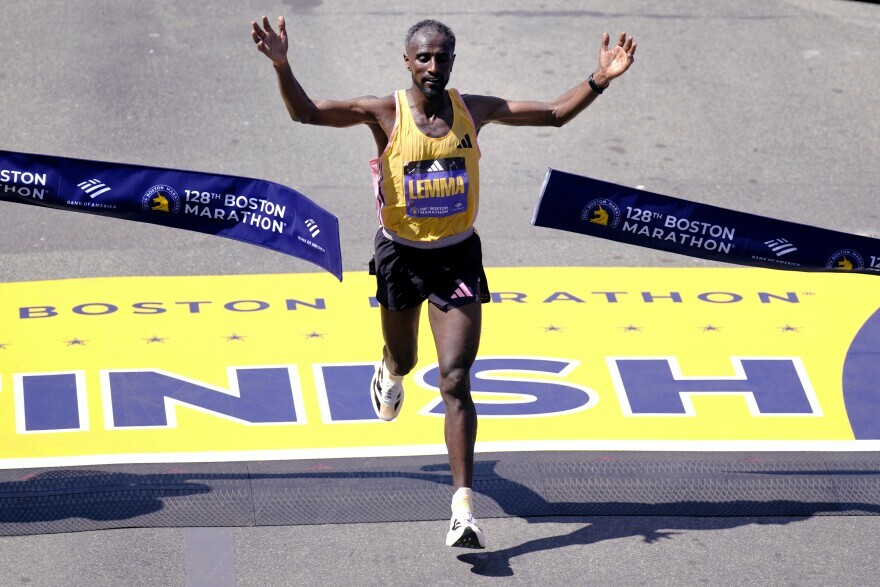
South Africa's Tebello Ramakongoana, Djibouti's Ibrahim Hassan, and Australia's leading marathoners, including Andy Buchanan, headline a truly international field featuring elite athletes from Africa, Oceania, North America, and Asia.
The quality of the field is underlined by an extraordinary statistic—14 men have already broken 2:05 for the marathon, a level of depth never before seen at an Australian marathon. With so many proven performers capable of running world-class times, the race promises relentless pace from the opening kilometres to the finish.
As the Sydney Marathon continues to cement its place among the world's premier road races, the 2026 edition marks another major milestone in its rapid rise. With a world champion, multiple athletes with personal bests close to the 2:02 mark, and unprecedented depth across the field, fans can expect an unforgettable contest on the streets of Sydney.
All eyes will now be on race day to see whether this historic field can deliver equally historic performances in what is poised to become one of the most memorable marathons ever staged in Australia.
by Erick Cheruiyot for My Best Runs.
Login to leave a comment
Sydney Marathon
The Sydney Marathon is a marathon held annually in Sydney, Australia. The event was first held in 2001 as a legacy of the 2000 Summer Olympics, which were held in Sydney. In addition to the marathon, a half marathon, 9 kilometres (5.6 mi) "Bridge Run", and a 3.5 kilometres (2.2 mi) "Family Fun Run" are also held under the banner...
more...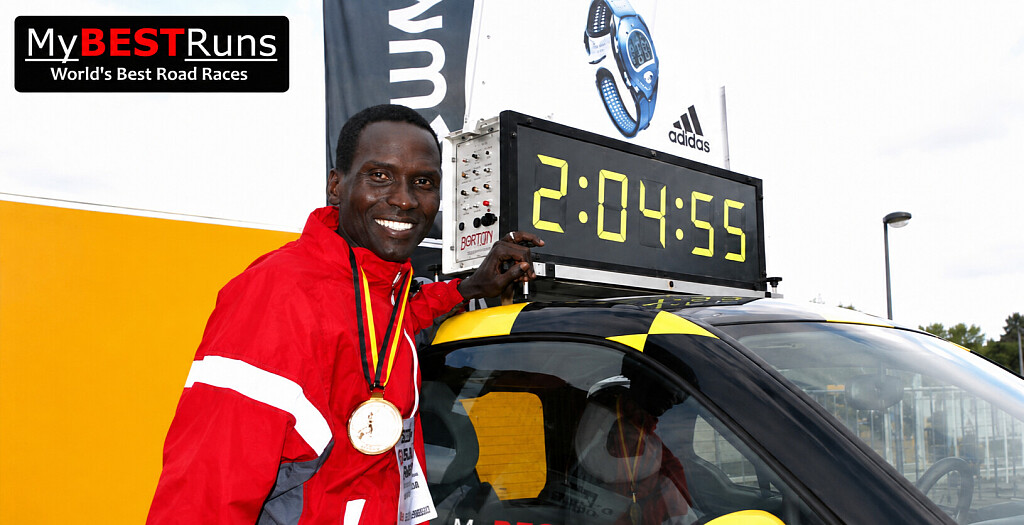
Paul Tergat: The Kenyan Legend Who Redefined Distance Running
On June 17, the athletics world celebrated the birthday of one of the greatest distance runners ever to grace the sport—Kenya’s Paul Kibii Tergat. Born in Baringo County, Kenya, on June 17, 1969, Tergat built a career that transcended generations, leaving an enduring legacy on the track, the roads, and the cross-country circuit.
Few athletes in history have demonstrated such remarkable versatility and consistency across multiple disciplines. Whether battling through muddy cross-country courses, chasing medals on the track, or rewriting records on the marathon stage, Tergat established himself as one of the most complete distance runners the world has ever seen.
His dominance in cross-country remains one of the sport’s most extraordinary achievements. Between 1995 and 1999, Tergat captured an unprecedented five consecutive World Cross Country Championship titles, a feat that showcased not only his endurance but also his unmatched competitive spirit. From Durham to Cape Town, Turin, Marrakech, and Belfast, he conquered every challenge placed before him, cementing his status as the undisputed king of cross-country running.
Tergat’s brilliance extended to the half marathon, where he claimed back-to-back World Half Marathon Championship titles in Palermo, Italy, in 1999 and Veracruz, Mexico, in 2000. His ability to excel over varying distances highlighted the exceptional range that made him a global icon.
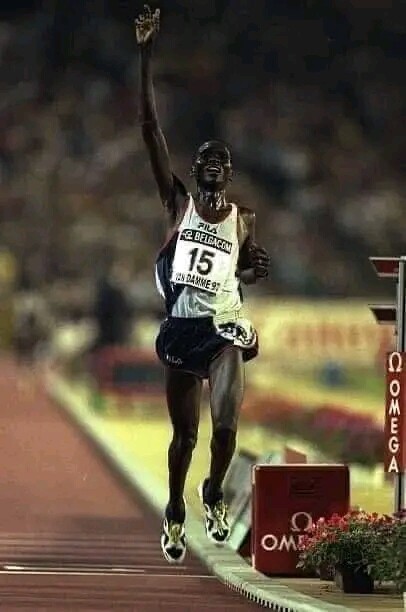
On the track, Tergat was a fierce competitor who regularly challenged the greatest runners of his era. He earned Olympic silver medals in the 10,000 meters at the Atlanta 1996 and Sydney 2000 Games, narrowly missing gold on both occasions. He also collected three World Championship medals over 10,000 meters, proving his consistency at the highest level of international competition.
Yet perhaps Tergat’s most historic contribution came on the roads. In 2003, at the Berlin Marathon, he became the first man in history to run the marathon in under 2 hours and 5 minutes, clocking a groundbreaking world record of 2:04:55. The performance marked a defining moment in distance running and opened a new chapter in the pursuit of marathon excellence.
His personal bests remain a testament to his extraordinary talent:
• 3,000m – 7:28.70
• 5,000m – 12:49.87
• 10,000m – 26:27.85
• Half Marathon – 59:17
• Marathon – 2:04:55
Beyond the medals and records, Tergat inspired a generation of athletes across Kenya and the world. His relentless determination, humility, and commitment to excellence transformed him into far more than a champion runner—he became a symbol of what is possible through hard work and perseverance.
Today, Paul Tergat’s name remains woven into the fabric of athletics history. From his reign as the king of cross-country to his revolutionary marathon achievements, his legacy continues to inspire runners pursuing greatness on every surface and over every distance.
by Erick Cheruiyot for My Best Runs.
Login to leave a comment
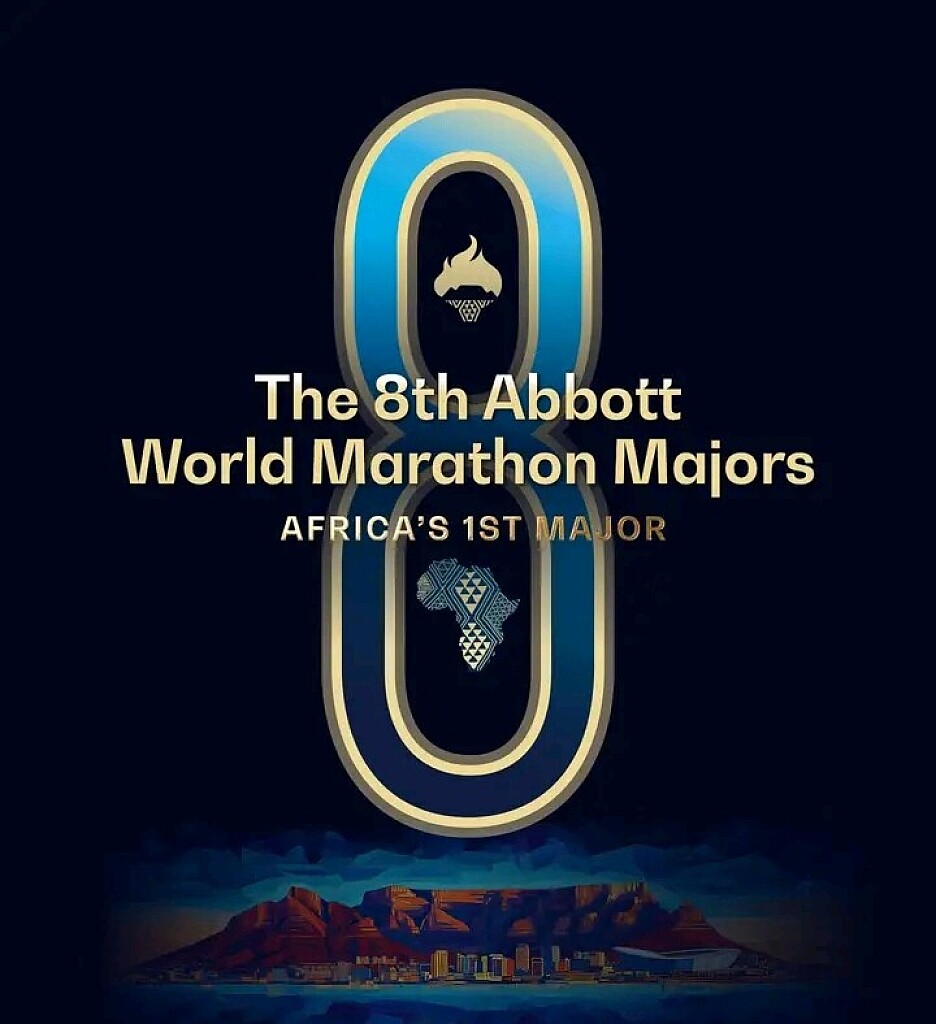
Africa Makes History as Sanlam Cape Town Marathon Earns World Marathon Major Status
CAPE TOWN, South Africa — A landmark chapter in global distance running has been written, with the Sanlam Cape Town Marathon officially securing its place among the world's most prestigious road races. Following a rigorous assessment process, the event has been awarded Abbott World Marathon Majors status, becoming the eighth race in the renowned series and the first ever on African soil.
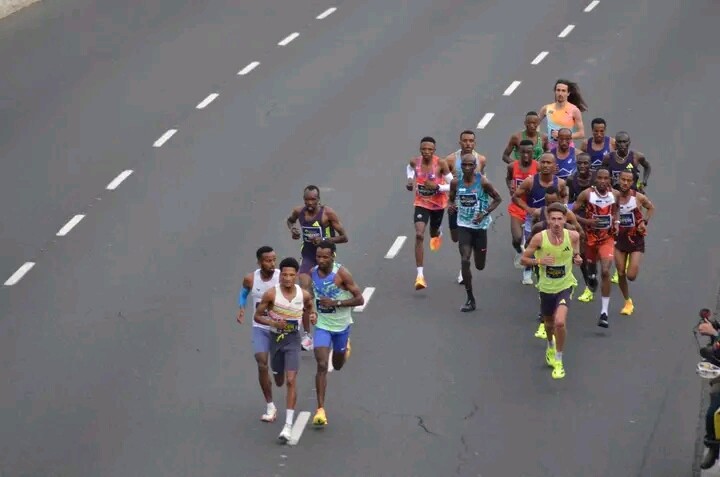
The announcement marks a historic breakthrough not only for South Africa but for the entire African continent, which has long been recognized as the heartbeat of distance running. For decades, African athletes have dominated marathon racing around the world. Now, Africa finally has a Major of its own.
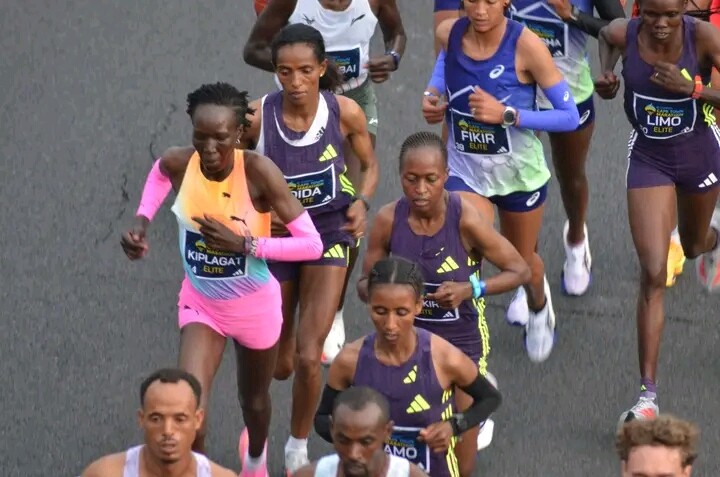
Beginning with the 2027 edition, scheduled for 22–23 May, the Sanlam Cape Town Marathon will join an elite group of races that includes Tokyo, Boston, London, Sydney, Berlin, Chicago, and New York City. The achievement elevates Cape Town into one of the most celebrated destinations in global marathon running and cements Africa's place at the highest level of the sport.
The journey to Major status has been years in the making, driven by relentless commitment from race organizers, athletes, volunteers, sponsors, running clubs, and supporters who believed in the vision of bringing a World Marathon Major to Africa. Through continuous improvements in race organization, international standards, athlete experience, and community engagement, the event steadily built a reputation worthy of the sport's grandest stage.
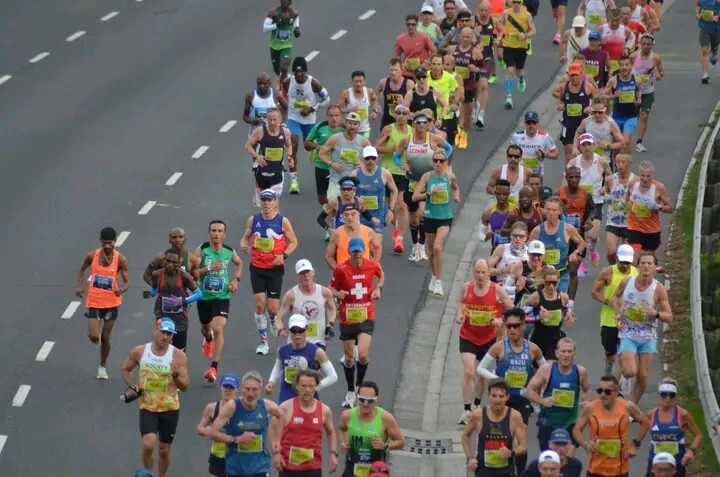
For many within the running community, the moment represents far more than the success of a single race. It is a victory for an entire continent whose passion for athletics has inspired generations. From elite champions to recreational runners, countless individuals have contributed to turning what once seemed an ambitious dream into reality.
The elevation of the Sanlam Cape Town Marathon is expected to boost international participation, tourism, and investment while providing a powerful platform to showcase Africa's culture, landscapes, and sporting excellence to a global audience.
As the countdown begins to May 2027, celebrations are already underway across the running world. The message resonating from Cape Town to every corner of Africa is clear: history has been made.
Africa's first Abbott World Marathon Major has arrived, and a new era for distance running has officially begun.
by Erick Cheruiyot for My Best Runs.
Login to leave a comment

Cape Town Marathon
The Sanlam Cape Town Marathon is a City Marathon held in Cape Town, South Africa, which is sponsored by Sanlam, the City of Cape Town and Vital Health Foods. The marathon is held on a fast and flat course, starting and finishing in Green Point, near the Cape Town Stadium. Prior to existing in its current format, the Cape Town...
more...
New Names, New Standards: Record Ratifications Mark a Historic Chapter in Athletics
The global athletics record book has officially welcomed a new group of record-breakers after World Athletics ratified a series of outstanding performances that reshaped the sport across road running, race walking, and indoor competition.
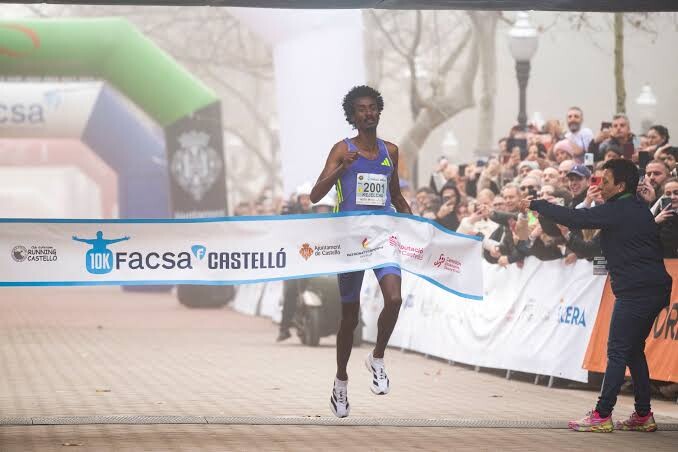
Among the newly confirmed marks is Ethiopian distance star Yomif Kejelcha’s world 10km record of 26:31, a performance that now stands as the fastest officially recognized time ever run over the distance on the roads.
Kejelcha produced the remarkable run in Castellón, Spain, on February 16, 2025. His record was elevated to official status following the annulment of the previous world best of 26:24, set by Kenya’s Rhonex Kipruto in 2020. Kipruto's result was removed from the record books after sanctions related to anti-doping rule violations led to the cancellation of his performances.
The recognition further strengthens Kejelcha’s place among the greatest road runners of his generation. Already the holder of the world half marathon record of 57:30, achieved in Valencia in 2024, the Ethiopian now owns world records at both 10km and half marathon distances.
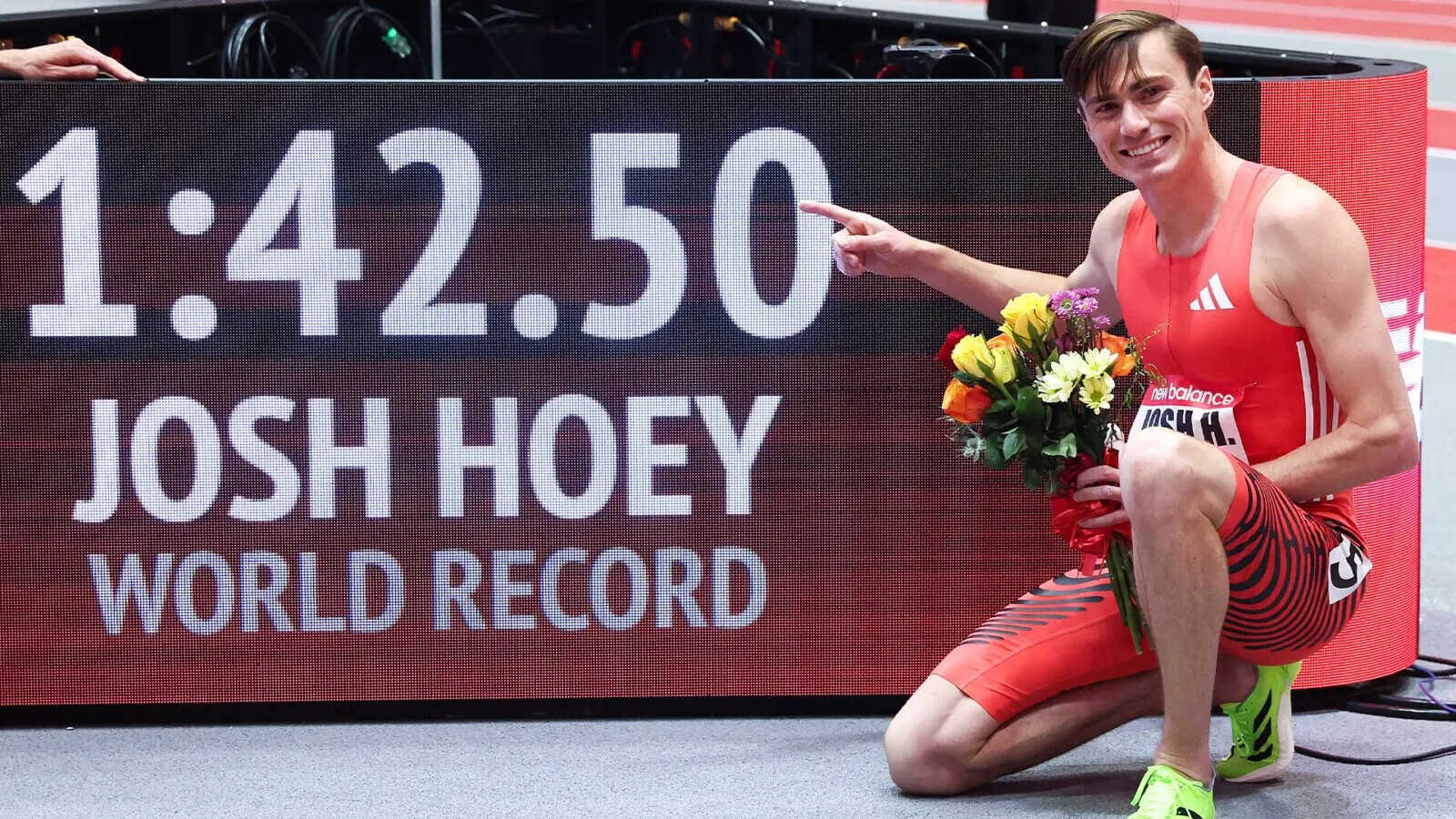
Another athlete celebrating official recognition is American middle-distance sensation Josh Hoey. The 26-year-old delivered a stunning performance at the New Balance Indoor Grand Prix in Boston on January 24, 2026, clocking 1:42.50 for the 800m on the short track.
His run erased one of indoor athletics’ most enduring records, surpassing the legendary 1:42.67 set by Wilson Kipketer in Paris in 1997. Hoey’s breakthrough performance marked a defining moment in his career and signaled the arrival of a new force in global middle-distance running.
In race walking, Japan’s Toshikazu Yamanishi etched his name into history by becoming the first official world record holder in the half marathon race walk. Competing in Kobe on February 15, 2026, the two-time world champion covered the distance in 1:20:34, comfortably bettering the inaugural world-record standard of 1:21:30 established by World Athletics.
Yamanishi’s achievement comes at a significant time for the discipline, following the introduction of the half marathon and marathon as official senior road race walking events. His performance now serves as the benchmark for a new era in race walking.
The next generation of athletics stars also received official recognition as three world U20 records were ratified.
Ethiopia’s Saron Berhe continued her rapid rise by setting a world U20 1500m short-track record of 4:01.23 in Ostrava. The 18-year-old eclipsed the previous mark held by fellow Ethiopian Lemlem Hailu and further confirmed her status as one of the brightest young talents in distance running.
American teenager Cooper Lutkenhaus also made history when he stormed to a world U20 short-track 800m record of 1:44.03 in Winston-Salem. His remarkable season later reached even greater heights when he became the youngest athlete ever to win a world championship title in the 800m, capturing gold at the World Indoor Championships.
Meanwhile, Australian sprint prodigy Gout Gout continued his meteoric ascent by smashing the world U20 200m record. The 18-year-old sprinted to a breathtaking 19.67 seconds at the Australian Championships in Sydney, lowering the previous global junior mark and announcing himself as one of the sport’s most exciting young stars.
With their records now officially ratified, Kejelcha, Hoey, Yamanishi, Berhe, Lutkenhaus, and Gout have secured their places in athletics history. Their achievements not only redefine the limits of performance but also provide a glimpse into a future where barriers continue to fall and new generations of athletes push the sport into uncharted territory.
by Erick Cheruiyot for My Best Runs.
Login to leave a comment
Paul Tergat Backs Kenya’s Ambitious Bid to Host World Athletics Championships
Kenyan athletics icon Paul Tergat has thrown his weight behind Kenya’s ambitious campaign to host the World Athletics Championships in 2029 describing the nation as the true heartbeat of global distance running.
In a passionate message shared on X Space, the former marathon world record holder called on the international athletics community to experience the culture, heritage, and unmatched talent that have made Kenya one of the most dominant forces in the history of the sport.
“Kenya is inviting the world to experience running at its source,” Tergat said. “From the soil that produces legends, from communities where athletics is lived, breathed, and passed through generations.”
His remarks arrive at a time when Kenya is intensifying efforts to secure hosting rights for one of athletics’ most prestigious global events — a move that would mark a historic milestone for both the country and the African continent.
Few figures embody Kenya’s running excellence more than Tergat himself. The legendary distance runner became the first Kenyan man to set a marathon world record after producing a groundbreaking performance of 2:04:55 at the Berlin Marathon 2003. His record stood until 2007 and cemented his place among the greatest marathoners in history.
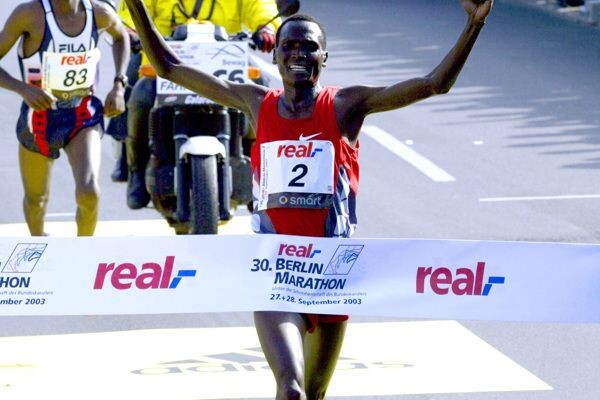
Before conquering the roads, Tergat had already established an extraordinary legacy in cross country running. Between 1995 and 1999, he achieved one of the sport’s rarest feats by winning five consecutive World Cross Country long-race titles, dominating an era filled with elite competition.
On the track, Tergat was renowned for his unforgettable rivalry with Ethiopian great Haile Gebrselassie. The Kenyan star captured Olympic silver medals in the 10,000m at both the 1996 Atlanta Games and the 2000 Sydney Olympics, while also earning silver medals at the 1997 and 1999 World Championships. Many of those races were decided in dramatic final laps, with Tergat and Gebrselassie pushing each other to historic performances.
His success extended beyond the track and marathon scene. Tergat claimed back-to-back IAAF World Half Marathon titles in 1999 and 2000 before later winning the prestigious 2005 New York City Marathon, further solidifying his reputation as one of the most versatile distance runners of his generation.
Away from competition, Tergat has remained deeply influential in Kenyan sport and athletics administration. He previously served as President of the National Olympic Committee of Kenya (NOC-K) and founded the Sports Personality of the Year Awards (SOYA), an initiative that continues to celebrate and recognize sporting excellence across the country.
For decades, Kenya has remained synonymous with excellence in middle- and long-distance running, producing generations of champions who have rewritten world records, conquered Olympic podiums, and elevated the nation’s reputation on the global sporting stage. From the high-altitude training camps of the Rift Valley to packed road races across the world, Kenyan athletics has evolved into more than just sport — it is part of the country’s identity.
Tergat believes hosting the championships would offer the world an opportunity to witness firsthand the environment that shapes elite athletes. Beyond the competition itself, he emphasized the cultural significance of Kenyan running communities, where young athletes grow up inspired by local heroes and where endurance running is deeply woven into everyday life.
The bid also represents Africa’s growing desire to host more major international sporting events. While African athletes have consistently dominated global athletics for generations, the continent has rarely been given the opportunity to stage the sport’s biggest championships. Kenya’s proposal is therefore seen as both symbolic and transformative for athletics worldwide.
Tergat’s endorsement adds significant weight to the campaign. Widely regarded as one of the greatest distance runners in history, the Kenyan legend remains a respected voice within international athletics circles. His support reflects the confidence many within the sport have in Kenya’s ability to deliver a memorable and globally impactful championship.
If successful, the championships would not only showcase elite competition but also spotlight Kenya’s rich sporting heritage, passionate fans, and deep-rooted connection to athletics — offering the world a chance to experience the birthplace of countless running legends.
by Erick Cheruiyot for My Best Runs.
Login to leave a comment
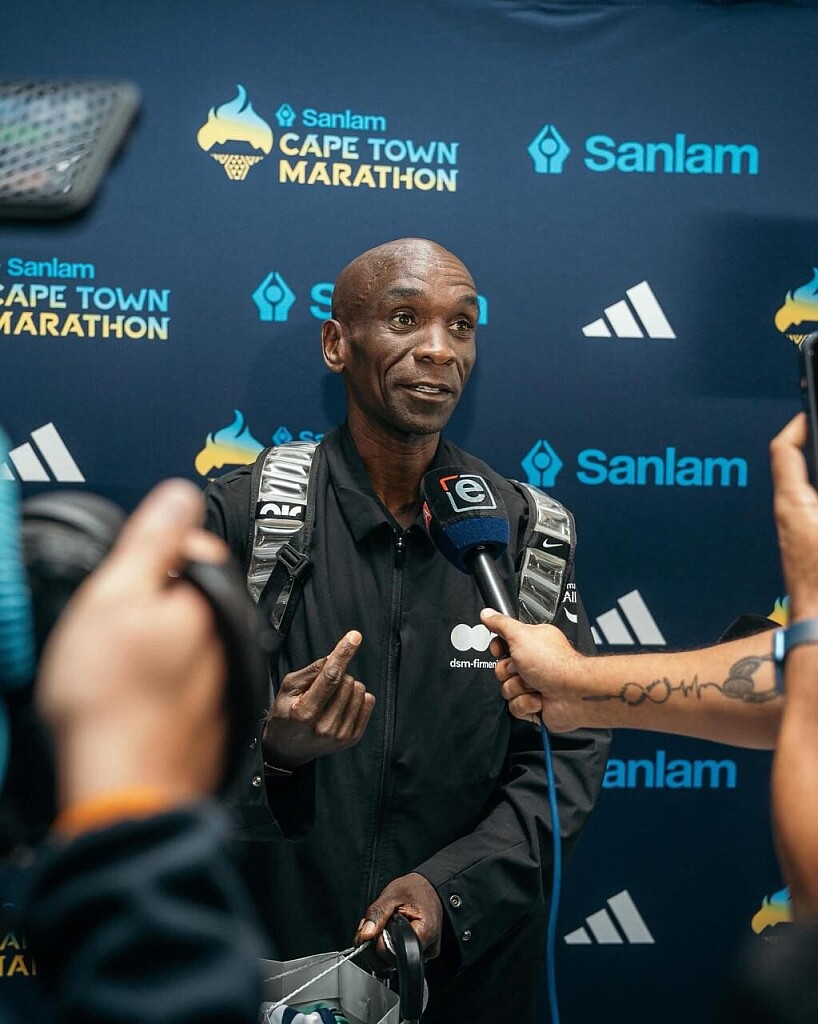
Kipchoge Backs Cape Town’s Historic Bid to Bring a World Marathon Major to Africa
Marathon icon Eliud Kipchoge has thrown his full support behind Cape Town’s ambitious campaign to become Africa’s first-ever Abbott World Marathon Major, describing the bid as a transformational moment for distance running across the continent. He is set to participate in Sanlam Cape Town marathon on May 24th, 2026.
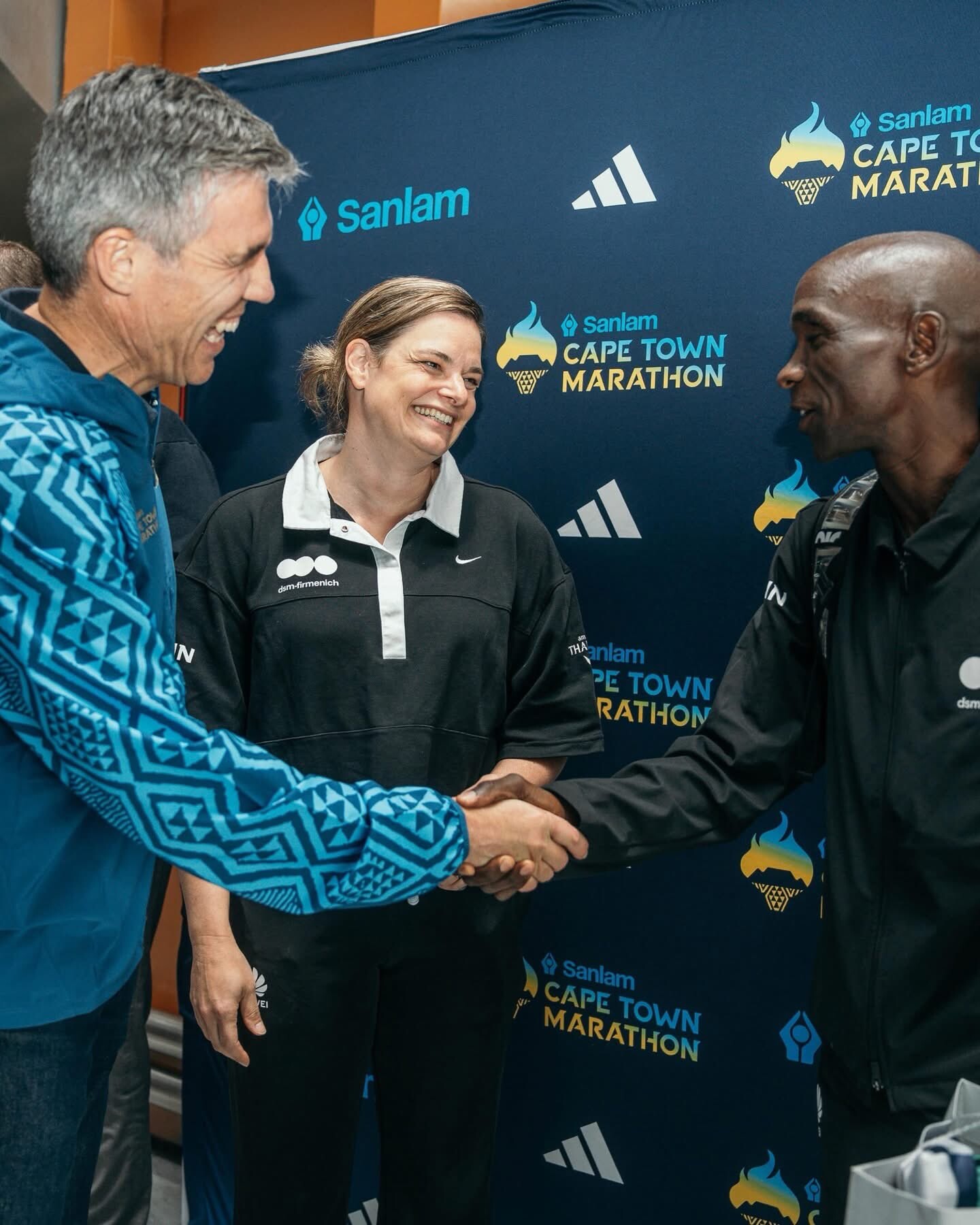
The two-time Olympic marathon champion arrived in Cape Town as part of his global marathon tour spanning seven continents, but his presence in South Africa carried far deeper significance than a ceremonial visit. For Kipchoge, the possibility of an African city joining the prestigious World Marathon Majors series represents a long-overdue recognition of the continent that has shaped the modern era of distance running.
Speaking passionately about the vision behind the bid, Kipchoge emphasized that Africa has supplied generations of world-class runners, inspired millions through athletics, and consistently dominated the marathon scene, yet has never hosted one of the sport’s most celebrated marathon events.
He believes Cape Town now has the opportunity to change that narrative forever.
The Abbott World Marathon Majors currently features some of the most iconic races in global athletics, including events in Tokyo, Boston, London, Berlin, Chicago, Sydney and New York City. Cape Town’s inclusion would mark a historic breakthrough, positioning Africa at the center of elite marathon racing while opening new pathways for athletes, tourism, investment, and sporting development across the continent.
Kipchoge described the bid as more than just a race application, calling it a movement capable of inspiring an entirely new generation of African runners. According to the Kenyan legend, bringing a Major marathon to African soil would give young athletes tangible proof that the sport’s biggest stages are no longer distant dreams located overseas, but opportunities that can exist at home.
The marathon great also praised Cape Town’s scenery, culture, and growing international reputation as key strengths in the city’s campaign. With its breathtaking coastal routes, iconic landmarks, and passionate running community, Cape Town has increasingly emerged as one of the world’s most attractive long-distance racing destinations.
For many within global athletics, Kipchoge’s endorsement adds enormous credibility to the bid.
Few voices carry greater influence in marathon running than the Kenyan superstar, whose career has redefined human endurance. Beyond his Olympic triumphs and major marathon victories, Kipchoge became the first man in history to run a marathon in under two hours during the groundbreaking INEOS 1:59 Challenge — a feat that elevated him beyond sport and into global sporting folklore.
His support now places additional international attention on Cape Town’s push to make history.
Should the bid succeed, it would represent a monumental victory not only for South Africa, but for the entire African athletics community. It would finally bring one of marathon running’s highest honors to the continent that has produced countless champions and reshaped the global identity of endurance racing for decades.
As Kipchoge continues his journey across the seven continents, his message from Cape Town remains powerful and unmistakable: Africa’s time on marathon running’s grandest stage may finally have arrived.
by Erick Cheruiyot for My Best Runs.
Login to leave a comment
Cape Town Marathon
The Sanlam Cape Town Marathon is a City Marathon held in Cape Town, South Africa, which is sponsored by Sanlam, the City of Cape Town and Vital Health Foods. The marathon is held on a fast and flat course, starting and finishing in Green Point, near the Cape Town Stadium. Prior to existing in its current format, the Cape Town...
more...
Cameron Myers: The Relentless Rise of Australia’s Middle-Distance Prodigy
At just 19, Cameron Myers is redefining what it means to be a teenage force in global athletics. In an era brimming with emerging talent, the Australian prodigy has quietly—but emphatically—established himself as one of the most formidable middle-distance runners on the planet.
While headlines may drift toward other rising stars, Myers remains unfazed by the noise. His focus is unwavering, rooted not in publicity but in performance. Those closest to him describe an athlete driven by execution rather than attention—a competitor who thrives beyond the spotlight.
That mindset was on full display at the Australian National Championships in Sydney, where Myers delivered a masterclass across two demanding disciplines. In the 1500 metres, he dismantled a world-class field with astonishing authority. Facing a lineup in which half the competitors had already dipped below 3:36, Myers surged to the front early and never relinquished control. By the final lap, the race was effectively over.
He crossed the line in a blistering 3:29.85—an extraordinary mark that not only placed him within touching distance of Ollie Hoare’s national record, but also etched his name into history as the first athlete ever to break the 3:30 barrier on Australian soil. Remarkably, this feat surpasses even the achievements of legends such as Hicham El Guerrouj, the world record holder, who never achieved such a time in Australia.
What made the performance even more compelling was the context: no pacemakers, no tactical shelter—just raw, front-running brilliance. Analysts have since suggested it may stand as one of the fastest 1500m races run outside a major championship this century, particularly given the absence of pacing assistance.
Yet Myers was far from finished.
Less than 24 hours later, he returned to the track and delivered another statement—this time over 5000 metres. Demonstrating remarkable endurance and recovery, he surged to victory while obliterating his personal best by an astonishing 20 seconds. It was a performance that underlined not just versatility, but an elite capacity to dominate across distances.
Though Sydney’s modern track surface may have offered marginal gains, it does little to explain the consistency Myers has shown across continents. Earlier in the year, he produced the fastest indoor mile ever recorded by a teenager in Seattle, further reinforcing his rapid progression. He also clocked an impressive 3:30.42 to win the 1500m at the prestigious Maurie Plant Meet—a performance that hinted at what was to come.
Speaking after his historic 1500m run, Myers revealed that even greater performances may lie ahead. He acknowledged that without pacers, he was unable to fully express his current form—a striking admission considering the magnitude of what he had just achieved.
In a sport where hype often precedes substance, Cameron Myers represents the inverse: a rare talent whose results speak louder than any narrative. As he continues to sharpen his craft, the global athletics stage may soon have no choice but to centre its attention firmly on him.
by Erick Cheruiyot for My Best Runs.
Login to leave a comment
Cameron Myers Ignites Sydney with a Stunning 1500m Masterclass
There appears to be no ceiling to the rise of Cameron Myers. The Australian teenage prodigy once again exceeded expectations, delivering a breathtaking performance to successfully defend his national title at the Australian Athletics Championships in Sydney.
At just 19 years old, Myers produced a performance of rare quality and composure, surging to victory in a blistering 3:29.85—a time that stands among the fastest recorded globally this season. In doing so, he not only retained his 1500m crown but further cemented his growing reputation as one of the most formidable young middle-distance runners in the world.
The race itself unfolded as a demonstration of tactical precision and supreme confidence. Up against a competitive field, Myers dictated the tempo with authority before unleashing a decisive finishing kick that left his rivals trailing. Oliver Hoare secured second place in 3:32.66, while Adam Spencer followed in 3:34.23. Both athletes delivered commendable season’s best performances, yet neither could come close to matching Myers’ brilliance on the day.
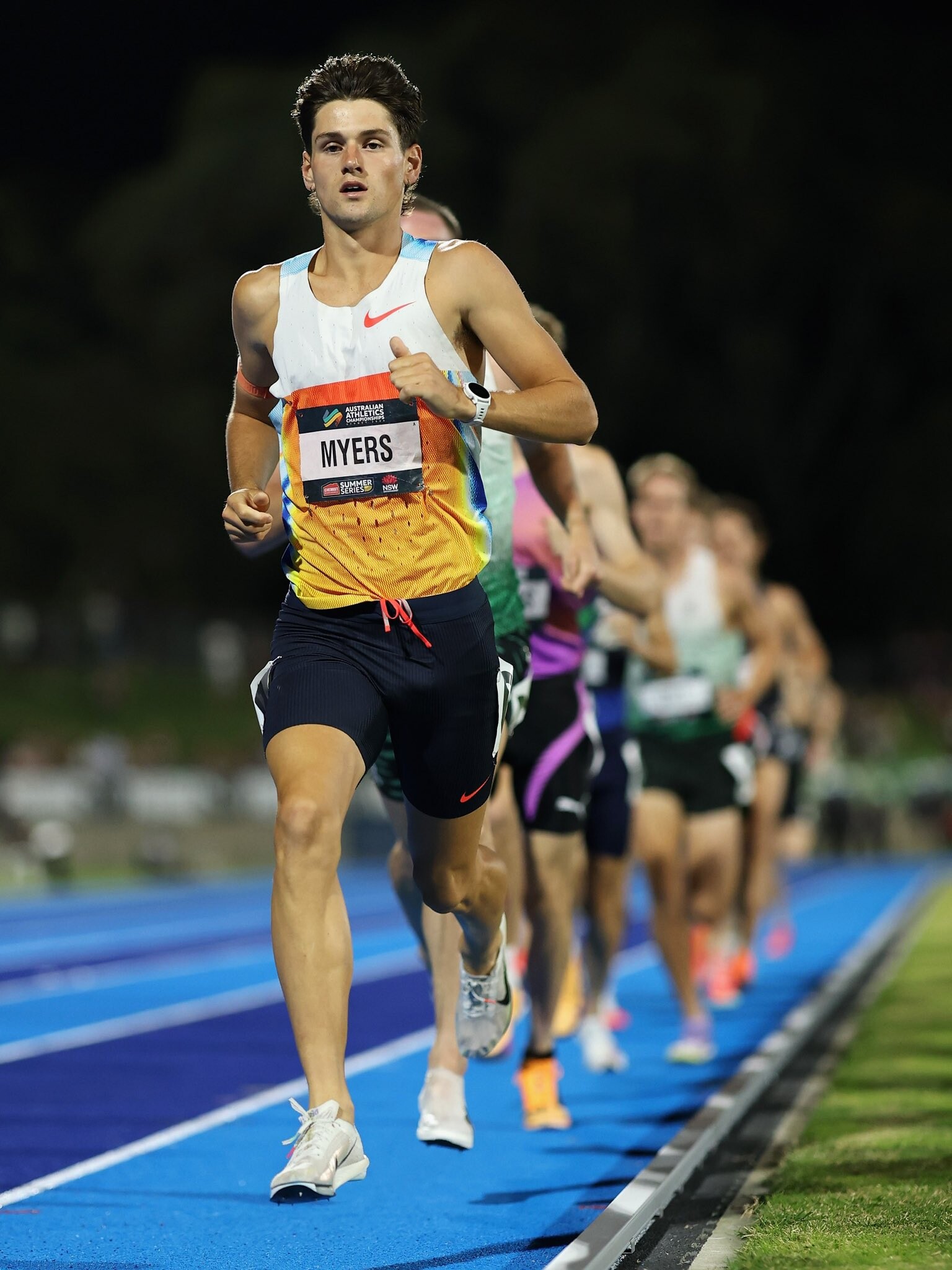
What makes the performance even more striking is its proximity to his personal best of 3:29.80, set in Ostrava last year. He now edges ever closer to the Australian national record of 3:29.41, also held by Hoare since 2023. With such fine margins separating him from history, it is clear that Myers is rapidly closing in on a landmark breakthrough.
This was more than a routine title defence—it felt like a statement of intent. Myers is no longer a promising talent on the rise; he is establishing himself firmly among the sport’s elite. Blending tactical intelligence with explosive speed and remarkable maturity, he is forging a path that few at his age have managed to tread.
As the global season gathers pace, attention will inevitably turn toward the young Australian. If his current trajectory is anything to go by, it is no longer a matter of whether Cameron Myers will reach the summit of middle-distance running—but when.
by Erick Cheruiyot for My Best Runs.
Login to leave a comment
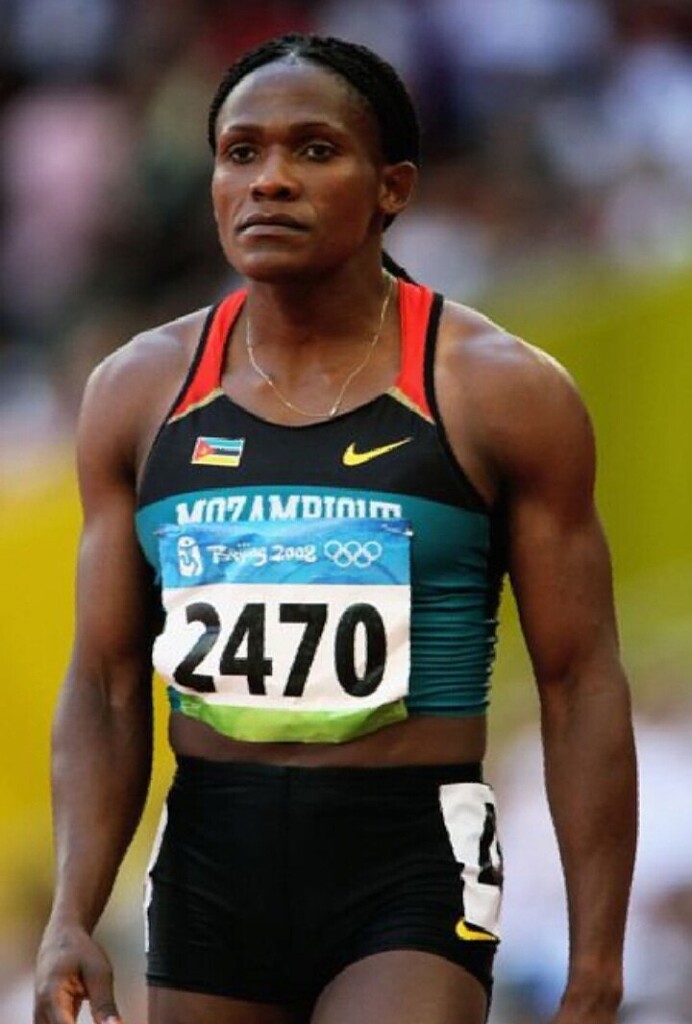
Golden Strides: The Enduring Reign of Maria de Lurdes Mutola
“Did you know?” It’s a simple question—yet in the story of Maria de Lurdes Mutola, it opens the door to one of the most commanding legacies in middle-distance running history.
Often celebrated as Mozambique’s “Golden Girl,” Mutola’s name became synonymous with excellence in the 800 metres. Her defining triumph came at the 2000 Sydney Olympics, where she powered to Olympic gold with authority and composure. But that victory was not an isolated moment of brilliance—it was the centerpiece of a career built on sustained dominance.

For over a decade, Mutola ruled the 800 metres with remarkable consistency. She was not merely a champion; she was a standard. Multiple world titles, repeated Grand Prix victories, and an unshakable presence on the global stage cemented her as one of the greatest to ever compete in the event. Each race she entered carried an expectation—not of participation, but of mastery.
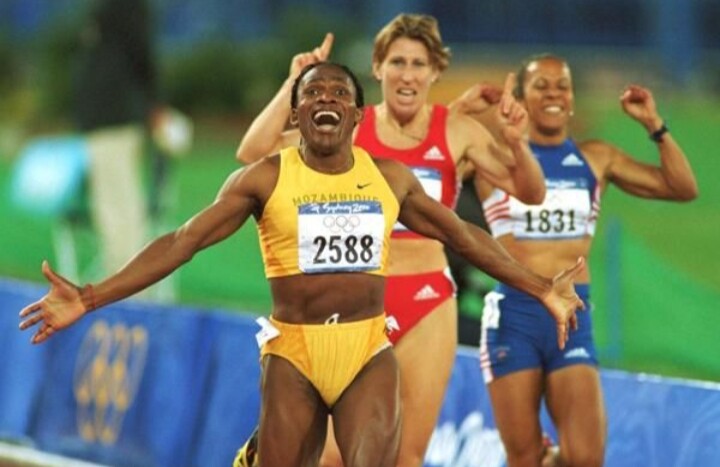
What makes her story even more compelling is the depth of its impact. Beyond medals and podium finishes, Mutola redefined what was possible for African women in athletics. She emerged at a time when representation was limited, yet through sheer determination and discipline, she carved out a path that others could follow. Her success became a powerful narrative of resilience—proof that greatness can rise from anywhere and speak to everywhere.
As International Women’s Month continues, Mutola’s legacy resonates far beyond the track. She remains more than a sporting icon—a lasting symbol of courage, longevity, and transformative influence.
In every stride, Maria de Lurdes Mutola carried the weight of expectation—and turned it into inspiration. Her journey is not just remembered; it continues to move, to empower, and to redefine the limits of ambition.
by Erick Cheruiyot for My Best Runs.
Login to leave a comment
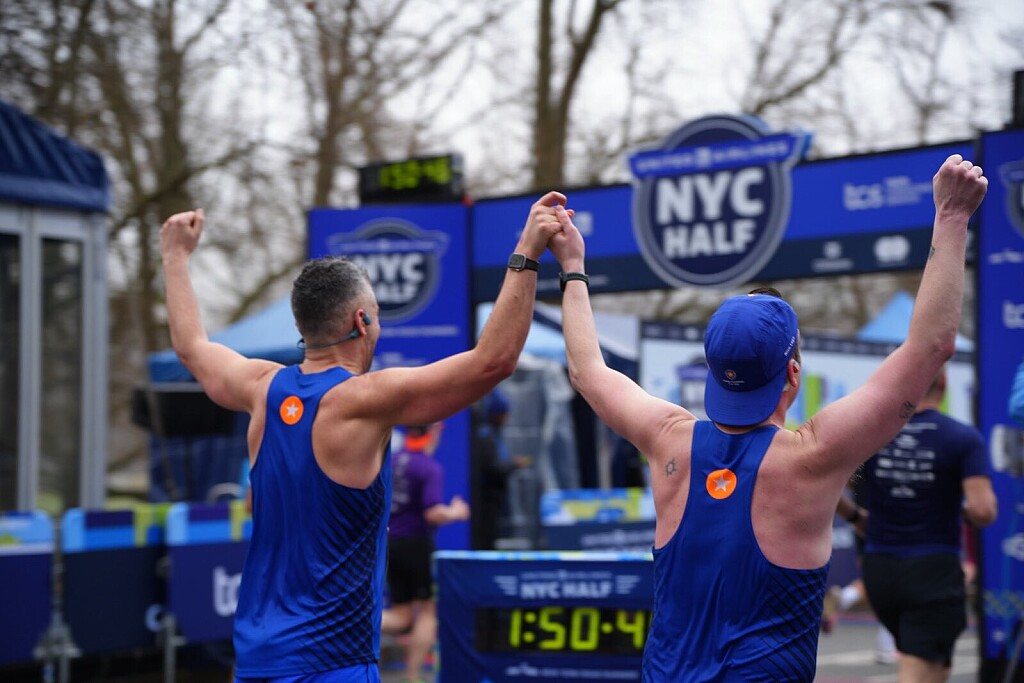
NYC HALF MARATHON 2026 – ELITE MEN READY TO LIGHT UP CENTRAL PARK
The first rays of dawn slice through the towering skyline of New York City, and the streets surrounding Central Park, the iconic venue of the NYC Half Marathon 2026, hum with anticipation. On Sunday, March 15, 2026, fans and runners alike converge on the city’s most famous park, flags waving and cameras clicking, hearts racing in sync with the city’s heartbeat. Volunteers adjust barricades, photographers focus their lenses, and the world’s fastest men stretch with a mix of calm and tension—the calm before the storm. From the leafy loops of Central Park to the bridges spanning the East River, the city seems to hold its breath, ready to witness history.

The air is thick with excitement. Coaches give last-minute instructions; elite athletes exchange polite nods and steely glances, each calculating pace, strategy, and the perfect moment to strike. Sirens echo faintly in the distance, signaling the approaching race vehicles, while the smell of morning coffee mixes with the cool March air. Somewhere high above, the first light glints off glass towers, reflecting the golden promise of competition. In this city of dreams, ambitions, and grit, every step matters—and the men’s elite field of the NYC Half Marathon 2026 is about to prove it.
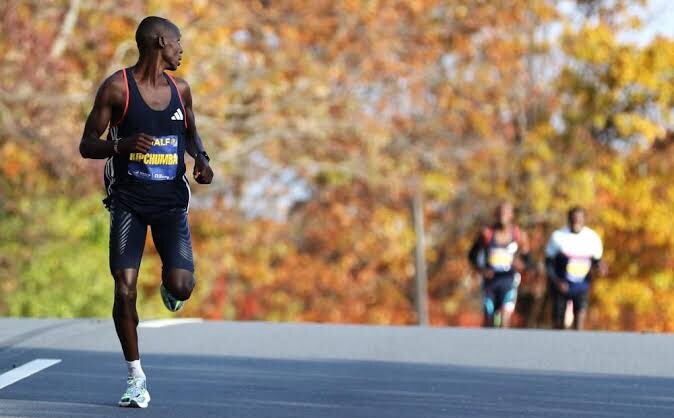
Race Schedule – Men’s Elite
Date & Venue: Sunday, March 15, 2026 – Central Park, New York City, USA
New York (EDT): 7:00 AM
Kenya (EAT): 2:00 PM (+7 hours from NYC)
Japan (JST): 8:00 PM (+13 hours from NYC)
Thailand (ICT): 6:00 PM (+11 hours from NYC)
Australia Sydney/Melbourne (AEDT): 10:00 PM (+15 hours from NYC)
USA Pacific (PDT): 4:00 AM (−3 hours from NYC)
Champions, Contenders, and Rising Stars
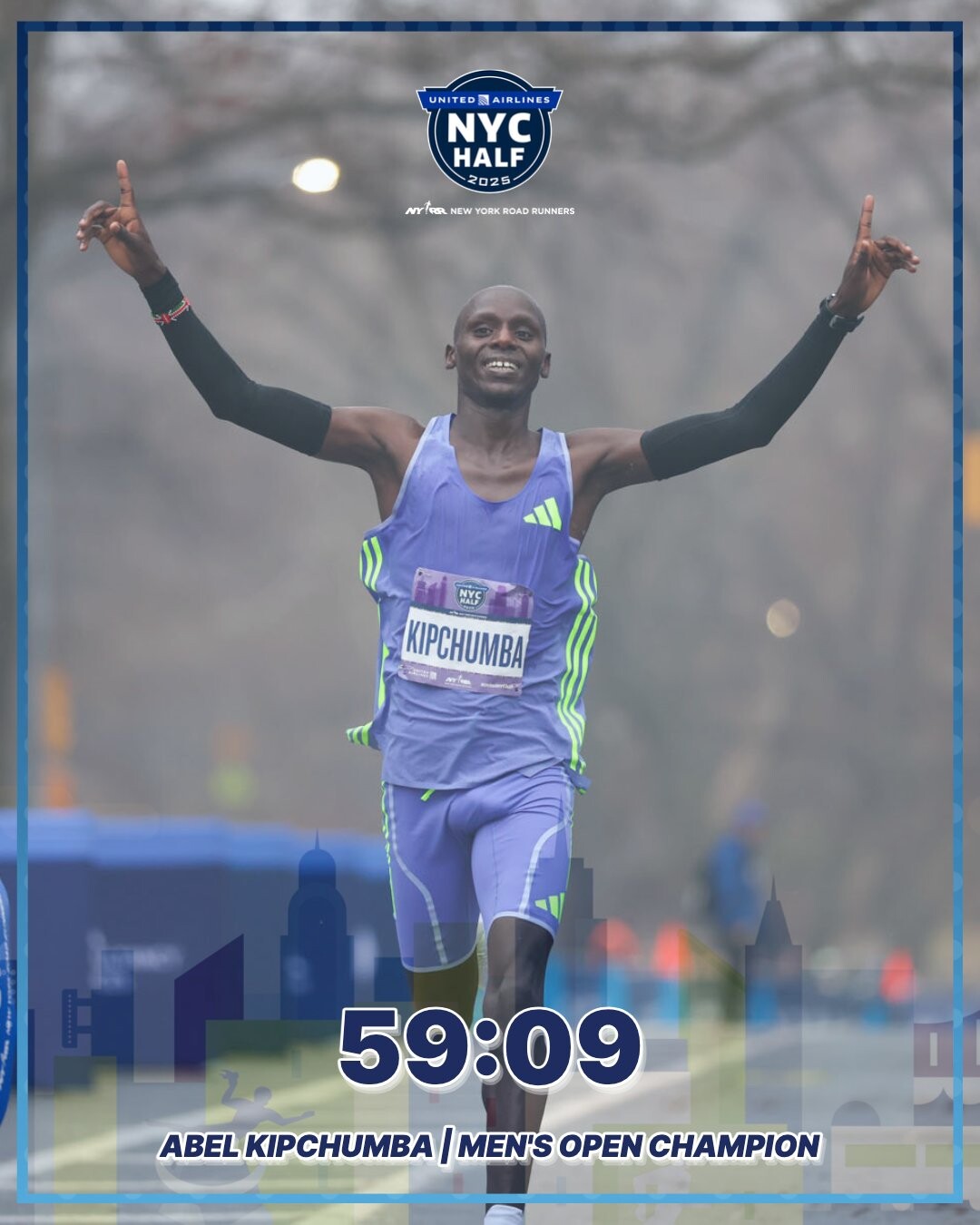
At the heart of this high-stakes drama is Abel Kipchumba of Kenya, last year’s champion, whose lightning-fast 58:07 PB from Valencia 2021 has runners and fans alike holding their breath. Kipchumba returns to defend his crown, but the field has grown stronger, faster, and hungrier than ever.
Challenging him will be Daniel Ebenyo of Kenya, bronze medalist at the 2026 World Cross Country Championships, Grant Fisher of the United States, two-time Olympic bronze medalist making his half marathon debut, and Rory Linkletter of Canada, Canada’s national record holder. Each brings a unique blend of speed, endurance, and tactical cunning that could turn any mile into a decisive moment.
Team USA brings an extraordinary depth of talent, including Galen Rupp, Ryan Ford, Alex Maier, Zouhair Talbi, and Joe Klecker, promising a race filled with high stakes, strategic surges, and perhaps a new record etched into the streets of Manhattan.
Men’s Elite Field – NYC Half Marathon 2026
Athlete
Country
PB / Notable Performance
1. Abel Kipchumba
Kenya
58:07 (Valencia 2021)
2. Daniel Ebenyo
Kenya
59:04 (Manama 2022)
3. Adriaan Wildschutt
South Africa
59:13 (Valencia 2025)
4. Patrick Kiprop
Kenya
59:14 (Houston 2026)
5. Mohammed El Youssfi
Morocco
59:21 (Houston 2026)
6. Alex Maier
United States
59:23 (Houston 2026)
7. Galen Rupp
United States
59:47 (Ostia 2018)
8. Ryan Ford
United States
59:48 (Houston 2026)
9. Sondre Nordstad Moen
Norway
59:48 (Valencia 2017)
10. Rory Linkletter
Canada
59:49 (Houston 2026)
11. Patrick Dever
United Kingdom
1:00:11 (Houston 2025)
12. Zouhair Talbi
United States
1:00:41 (NYC Half 2024)
13. Rui Aoki
Japan
1:00:45 (Ageo 2025)
14. Shunsuke Kuwata
Japan
1:00:48 (Ageo 2025)
15. Tsegay Tuemay Weldlibanos
Eritrea
1:00:50 (Houston 2018)
16. Alex Masai
Kenya
1:00:51 (Houston 2026)
17. Jack Rowe
United Kingdom
1:00:53 (Copenhagen 2025)
18. Joe Klecker
United States
1:01:06 (Houston 2025)
19. Peter Lynch
Ireland
1:01:15 (Houston 2025)
20. Camren Todd
United States
1:01:23 (Houston 2026)
21. Hendrik Pfeiffer
Germany
1:01:28 (Larne 2025)
22. Benjamin Preisner
Canada
1:02:25 (Houston 2025)
23. Jacob Thomson
United States
1:02:26 (Riga 2023)
24. Joel Reichow
United States
1:02:30 (Duluth 2023)
25. Max Turek
Canada
1:02:45 (Boston 2024)
26. Haftu Knight
United States
1:02:47 (Chicago 2025)
27. Matthew Leach
United Kingdom
1:02:57 (Houston 2020)
28. Nick Hauger
United States
1:03:06 (NYC Half 2025)
29. Kieran Tuntivate
Thailand
1:03:19 (South Shields 2025)
30. Turner Wiley
United States
1:04:04 (Hardeeville 2021)
31. Owen Ritz
United States
1:04:34 (RBC Brooklyn Half 2024)
32. Evan Sherman
United States
1:04:51 (Indianapolis 2025)
33. Charlie Lawrence
United States
1:05:07 (Houston 2022)
34. Grant Fisher
United States
Debut
35. Gulveer Singh
India
Debut
The starting gun cracks through the morning calm. The elite men surge forward, every stride a blend of power, precision, and daring. The NYC Half Marathon 2026 at Central Park unfolds like a living story—each mile a chapter, each sprint a dramatic twist. Legends may rise, records may fall, but one thing is certain: Manhattan will witness an unforgettable morning of speed, endurance, and sheer determination.
by Erick Cheruiyot for My Best Runs.
Login to leave a comment

United Airlines NYC Half-Marathon
The United Airlines NYC Half takes runners from around the city and the globe on a 13.1-mile tour of NYC. Led by a talent-packed roster of American and international elites, runners will stop traffic in the Big Apple this March! Runners will begin their journey on Prospect Park’s Center Drive before taking the race onto Brooklyn’s streets. For the third...
more...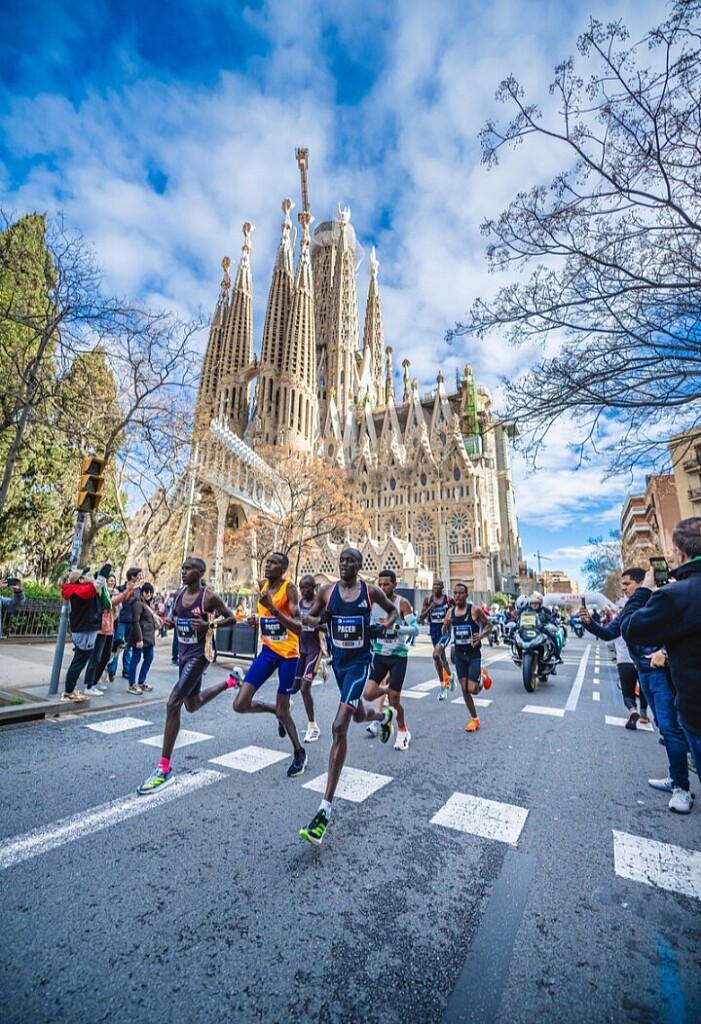
Kenyan and Ethiopian Stars Set for Showdown at the Zurich Barcelona Marathon
The stage is set for a thrilling contest at the Barcelona Marathon, where a deep and competitive men’s elite field will line up on Sunday, March 15 in the heart of Barcelona, Spain. With several athletes boasting personal bests well under 2:06, the race promises a high-quality battle between some of the finest marathoners from Kenya, Ethiopia, Türkiye, and Uganda.
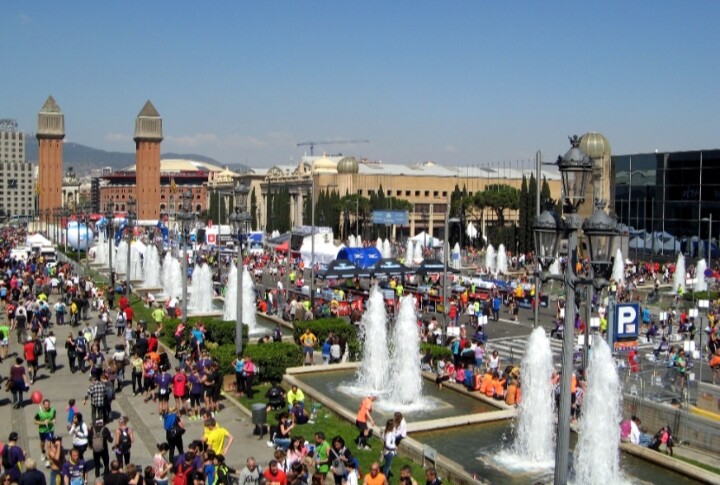
The race is scheduled to start at 8:30 a.m. local time in Barcelona, Spain (Central European Time), ensuring fans across the globe can follow the action at different moments of the day. In East Africa, viewers in Kenya, Ethiopia, and Uganda will tune in at 10:30 a.m. East Africa Time, while audiences in London can watch from 7:30 a.m.. Across the Americas, the race begins at 3:30 a.m. in New York, 2:30 a.m. in Chicago, 1:30 a.m. in Denver, and 12:30 a.m. in Los Angeles, while fans in São Paulo will follow the event at 4:30 a.m.. In Asia, the start corresponds to 11:30 a.m. in Dubai, 1:00 p.m. in New Delhi, 2:30 p.m. in Bangkok, and 3:30 p.m. in both Beijing and Singapore, before reaching 4:30 p.m. in Tokyo. In Oceania, viewers will follow later in the day, with the race starting at 3:30 p.m. in Perth, 6:30 p.m. in Sydney, and 8:30 p.m. in Auckland, underscoring the truly global reach of one of Europe’s most celebrated road races.
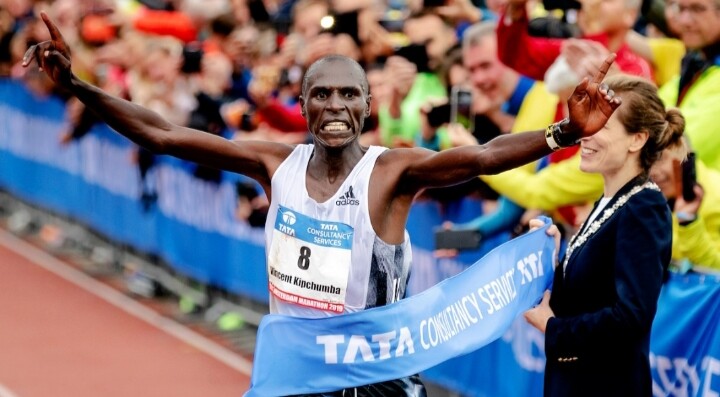
Leading the field is Vincent Kipchumba, the Kenyan star who owns a personal best of 2:04:28. Known for his consistency on the global marathon circuit, Kipchumba arrives in Barcelona as one of the major contenders for victory. Close behind on paper is Turkish international Kaan Kigen Özbilen, whose impressive 2:04:16 lifetime best makes him the fastest man in the lineup. His experience and tactical awareness could make him a serious threat if the pace turns aggressive.
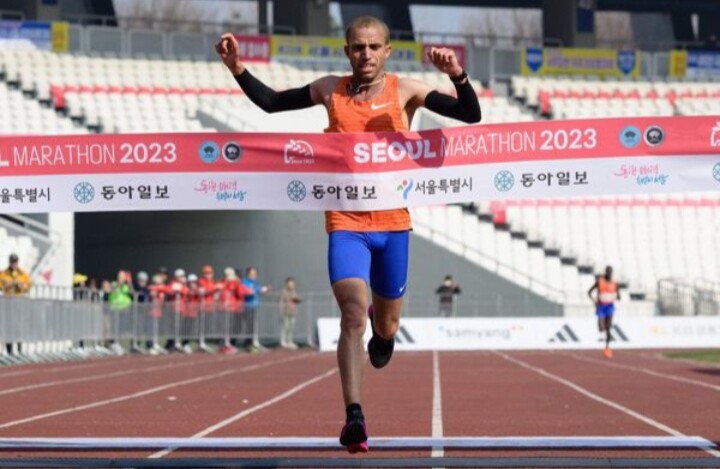
Ethiopia will also bring formidable firepower through Amedework Walelegn, the talented marathoner with a personal best of 2:04:50. Walelegn has shown the ability to perform strongly in major races and will be eager to challenge the Kenyan dominance that often defines major road races.
Kenya’s depth in marathon running is once again on display with several athletes capable of producing breakthrough performances. Among them are Philemon Kiptoo Kipchumba (2:05:35) and Kenneth Keter (2:05:33), both of whom possess the experience and endurance required to thrive in a fast European marathon. Meanwhile, Ethiopia’s Antanayehu Dagnachew (2:06:55) will be looking to deliver a strong run against a competitive field.
The race also features a solid group of athletes with personal bests hovering around the 2:06–2:07 range, including Mosee Kipngetich Kemet (2:06:47), Melaku Belachew (2:06:30), and Zablon Chumba (2:07:11). Their presence ensures the pace could remain honest deep into the race, potentially setting the stage for a dramatic finish through Barcelona’s iconic streets.
Further down the start list, runners such as Timothy Kiphorir (2:07:52), Perrick Mdoshi (2:07:17), Abel Chelangat (2:08:49), Jonathan Korir (2:09:51), and Haile Desta (2:10:41) will also be aiming to seize the opportunity for personal bests or podium surprises in what is expected to be a fast and competitive race.
With elite athletes from East Africa once again forming the backbone of the field, the Zurich Barcelona Marathon promises a compelling clash of endurance, strategy, and speed. If the pace unfolds as expected, fans could witness a thrilling contest that highlights the continuing global appeal and competitive depth of marathon running.
by Erick Cheruiyot for My Best Runs.
Login to leave a comment

Zurich Marato Barcelona
The race is a favorite among both professional athletes and amateur runners, offering a unique running experience in and around Zurich. The scenic course follows the shores of Lake Zurich for much of the route, making it not only a thrilling sports event but also a visually stunning one. The start and finish lines are located at the upper lake...
more...