

Running News Daily
Running News Daily is edited by Bob Anderson and team. Send your news items to bob@mybestruns.com Advertising opportunities available.
Index to Daily Posts · Sign Up For Updates · Run The World Feed
Articles tagged #Oregon
Today's Running News
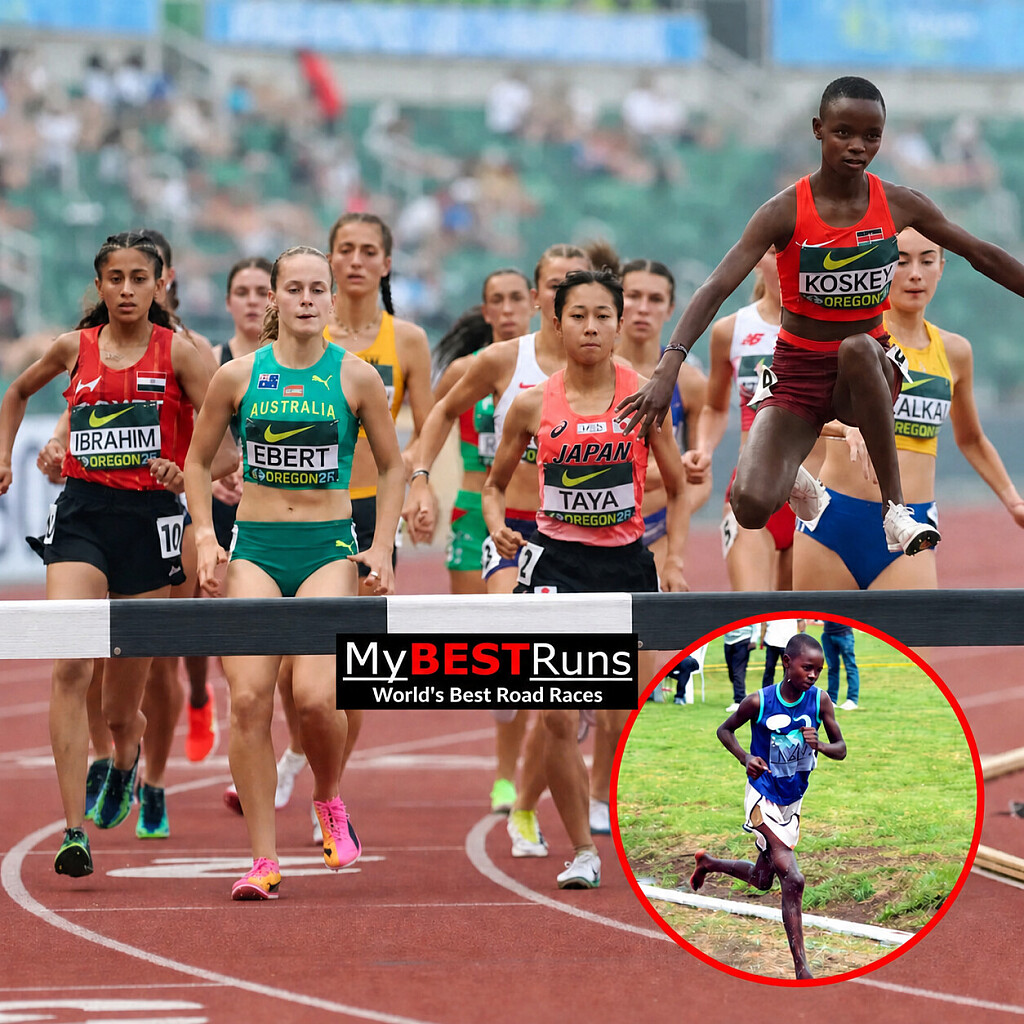


From Barefoot Dreams To The World Stage: Mercy Kosgei’s Remarkable Rise
From running barefoot on a school track in Kenya to competing on the international stage and signing a landmark deal with a global sportswear brand, Mercy Chepngeno Kosgei’s journey is a powerful story of determination, talent and unwavering belief.
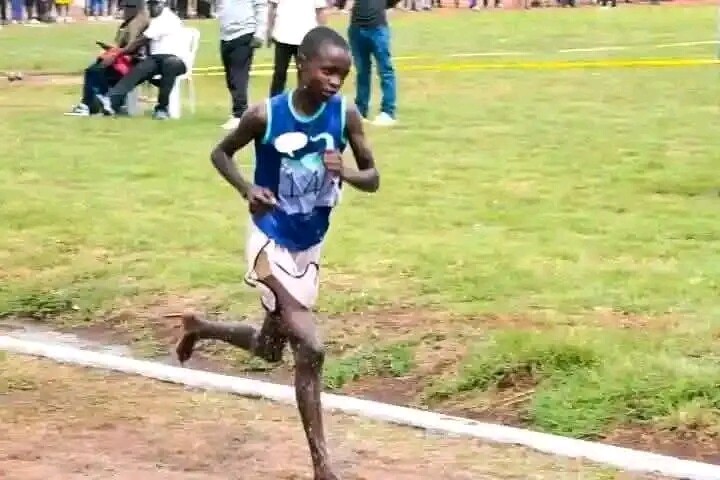
In March 2024, then just 17 years old, Kosgei captured widespread attention when she won the 3,000m steeplechase at the Rift Valley Regional Secondary Schools Championships in Nandi — without a pair of racing shoes on her feet.
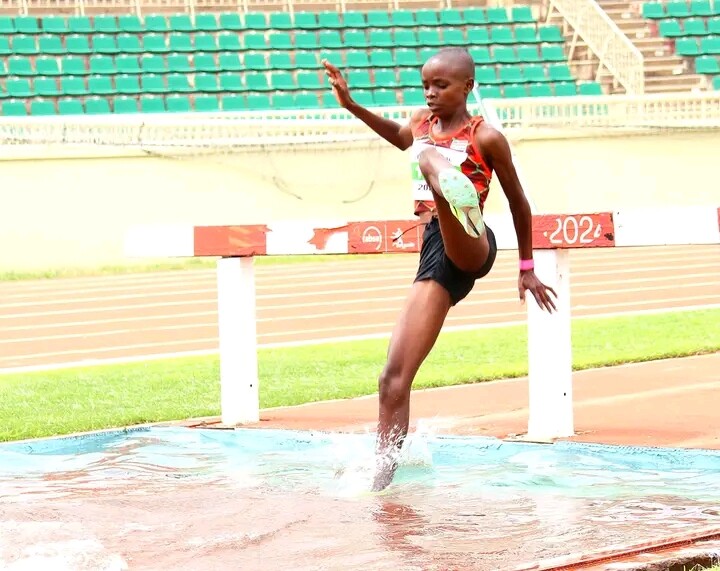
What could have been seen as a simple race became the beginning of something much bigger. Her barefoot victory quickly drew attention, shining a spotlight on a young athlete whose talent was already far greater than the resources available to her.
But the viral moment was only the opening chapter.

Kosgei continued to develop rapidly, proving that her success was not built on one extraordinary performance. In 2025, she claimed silver at the African U20 Championships in Nigeria, establishing herself among the continent’s promising young middle- and long-distance athletes.
She took another major step forward in 2026. At the Thika Weekend Meet, Kosgei produced a memorable double, winning both the 1,500m and 3,000m steeplechase.
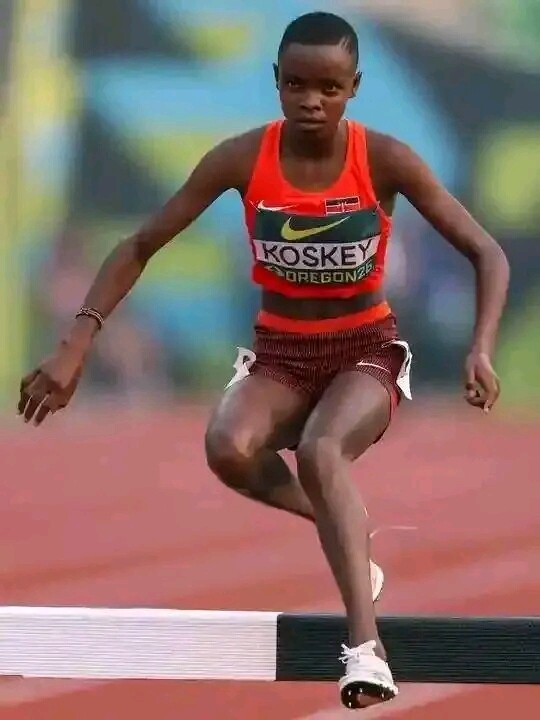
Her progress continued at the African Championships in Accra, where she secured silver in the steeplechase and lowered her personal best to an impressive 9:30.47.
Later in the year, she reached an even bigger stage, representing Kenya at the World Athletics U20 Championships in Eugene, Oregon — another significant milestone in a career that has developed at remarkable speed.
Away from the track, February 2026 brought another defining moment. Kosgei signed a Name, Image and Likeness (NIL) agreement with Swiss sportswear company On, marking a major breakthrough for the young Kenyan and placing her among a new generation of athletes attracting international attention at an early stage of their careers.
Yet behind the medals, contracts and international appearances is a young woman who remains grounded in her ambitions beyond athletics.
Hailing from Lesirwo village in Kericho County, Kosgei continues to balance education with the demanding routine of training and competition. Her dream extends beyond becoming a champion athlete — she also hopes to become a medical doctor.
That combination of ambition makes her journey even more compelling.
Her story began without expensive equipment or the privileges often associated with elite sport. It began with bare feet, determination and a dream.
Today, those same dreams have carried Mercy Chepngeno Kosgei from the school fields of Kenya to the international stage.
And if her journey so far is anything to go by, the barefoot girl who once captured the imagination of Kenyan athletics fans may only be getting started.
by Erick Cheruiyot for My Best Runs.
Login to leave a comment

Athing Mu Announces First Pregnancy As Olympic Champion Prepares For A New Chapter Beyond The Track
Olympic glory has already secured Athing Mu a place among the finest middle-distance runners of her generation, but the American star is now preparing for a life-changing milestone beyond the athletics track — becoming a mother for the first time.
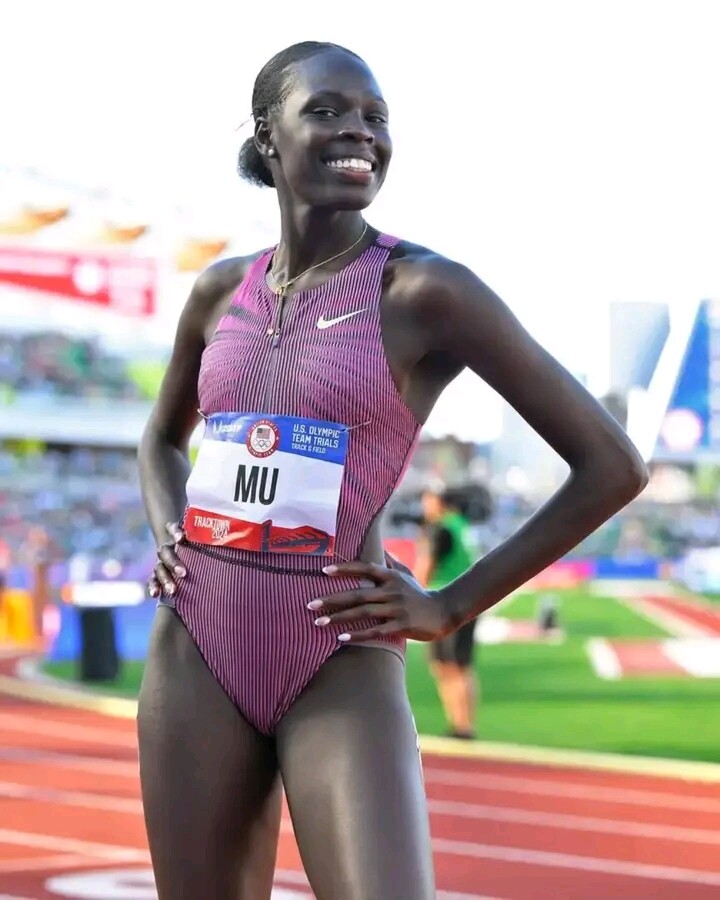
The Tokyo 2020 Olympic 800m champion and her husband, Yegor Nikolayev, announced that they are expecting their first child together, sharing news that marks the beginning of an exciting new chapter in their lives.
Mu revealed the joyful announcement on social media with a heartfelt message that captured the couple's excitement as they prepare to welcome their little one.

“Baby on board. Can't wait to meet our little Sunshine!” she wrote, sharing a glimpse of the happiness surrounding their growing family.
The announcement offers a more personal look into the life of an athlete whose career has been defined by remarkable talent, determination and success on the global stage. Having experienced the pressure of championship racing and the exhilaration of standing on the Olympic podium, Mu is now preparing for an entirely different journey, one that promises rewards no medal can measure.
Mu made history at the Tokyo Olympics, held in 2021 after being postponed because of the COVID-19 pandemic. She won the women's 800m gold medal in 1:55.21, becoming the second American woman to claim Olympic gold in the event after Madeline Manning-Mims first won in 1968 Mexico City Olympic Games. Her victory marked a defining moment in American middle-distance running and established her as one of the sport's brightest young stars.
She continued to demonstrate her class in 2022, winning the women's 800m title at the World Athletics Championships in Eugene, Oregon. That achievement further strengthened her reputation as a formidable championship competitor and added another major honour to her growing collection of accolades.
Away from the track, Mu's personal life has also been moving forward. She married Nikolayev in a private ceremony in March 2025, and the couple's pregnancy announcement now introduces another significant milestone in their relationship as they prepare to embrace parenthood.
The news comes after Mu remained absent from competition during the 2026 track season. Her future in athletics, including the possibility of a return ahead of the Los Angeles 2028 Olympic Games, remains uncertain, with no official comeback plans announced.
Her absence has left questions about what the next phase of her sporting career might look like. However, the arrival of her first child will undoubtedly bring new priorities and experiences as she balances her personal life with any future ambitions on the track.
For an athlete who has spent years chasing excellence against the clock, this moment represents a different kind of anticipation. There will be no starting gun, no finishing tape and no championship podium — only the extraordinary experience of welcoming a new life and discovering the joys and responsibilities of motherhood.
Mu's announcement also serves as a reminder that athletes have lives and dreams beyond competition. Their journeys do not begin and end with medals, and some of their most meaningful milestones unfold far away from stadiums and cheering crowds.
As she prepares for this new chapter alongside Nikolayev, the Olympic champion has every reason to look towards the future with excitement. Whether her path eventually leads back to elite competition or takes a different direction for a time, her achievements on the track will remain an important part of her legacy.
For now, the focus shifts from the demands of elite athletics to the quiet anticipation of a family waiting to meet its newest member. The woman who once raced towards Olympic history is preparing for a journey that will test and transform her in ways no race ever could.
And perhaps that is what makes this chapter so special: some of life's greatest moments cannot be timed, measured or celebrated with medals. They are experienced one heartbeat at a time, through the love that grows before a child arrives and the memories that begin when a new life enters the world. For Athing Mu, a remarkable journey beyond the track is about to begin — one in which the most precious finish line will be the moment she finally holds her little Sunshine in her arms.
by Erick Cheruiyot for My Best Runs.
Login to leave a comment
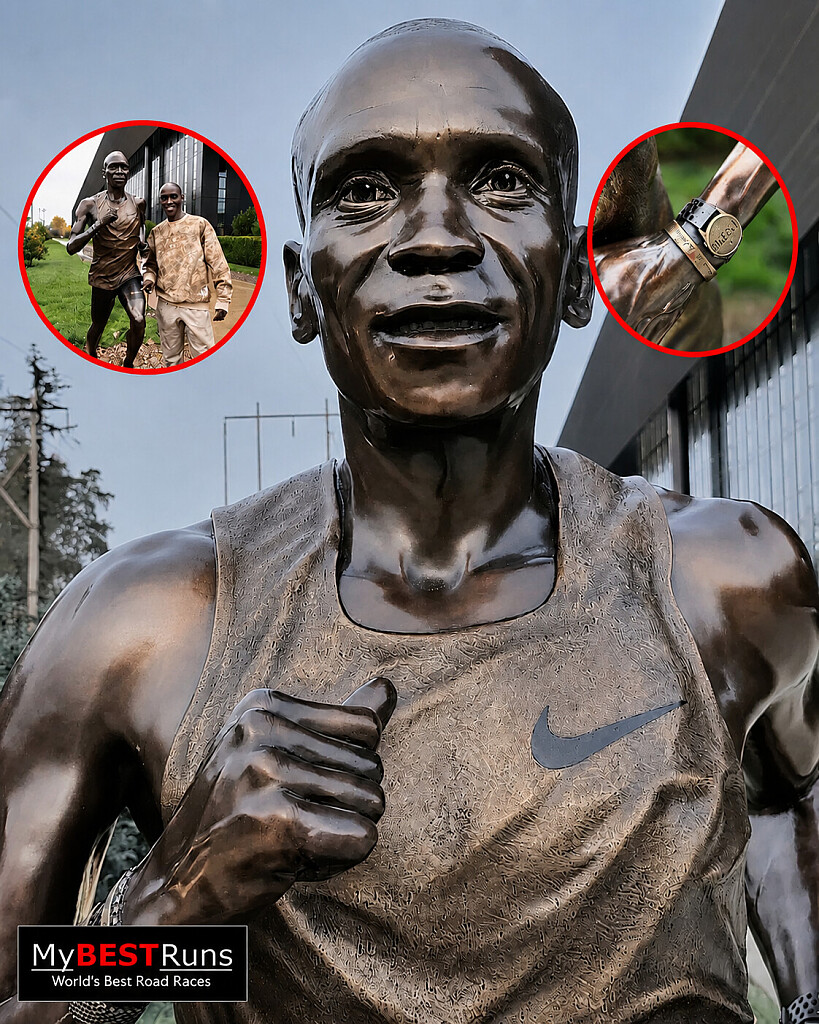
The Statue That Predicted History: How Kipchoge’s ‘No Human Is Limited’ Became Reality
Inside Nike’s World Headquarters in Beaverton, Oregon, a bronze figure stands frozen in motion.
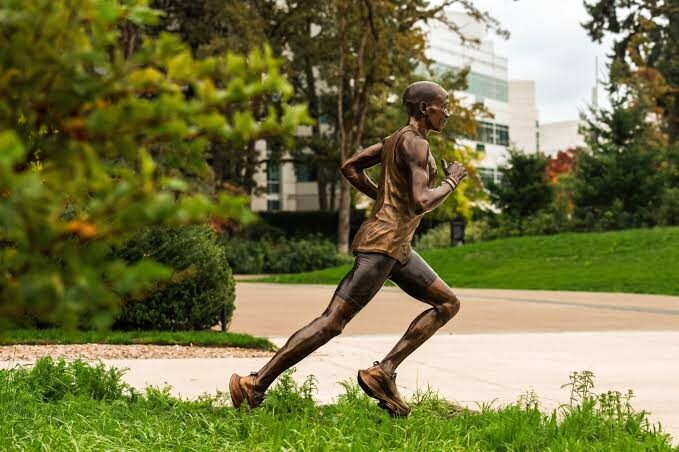
It is Eliud Kipchoge — captured in his unmistakable running posture, every detail carefully sculpted to resemble the Kenyan marathon legend at full stride. But this is more than a statue. It is a permanent reminder of a barrier that once seemed beyond human reach.
Created by Oregon artist Alison Caswell and commissioned by Nike, the life-size bronze sculpture was unveiled in October 2023 as part of the company’s celebration of its 20-year partnership with Kipchoge. Nike described the statue as a tribute to his signature gait and unique running style.
Look closely, however, and the sculpture tells an even deeper story.
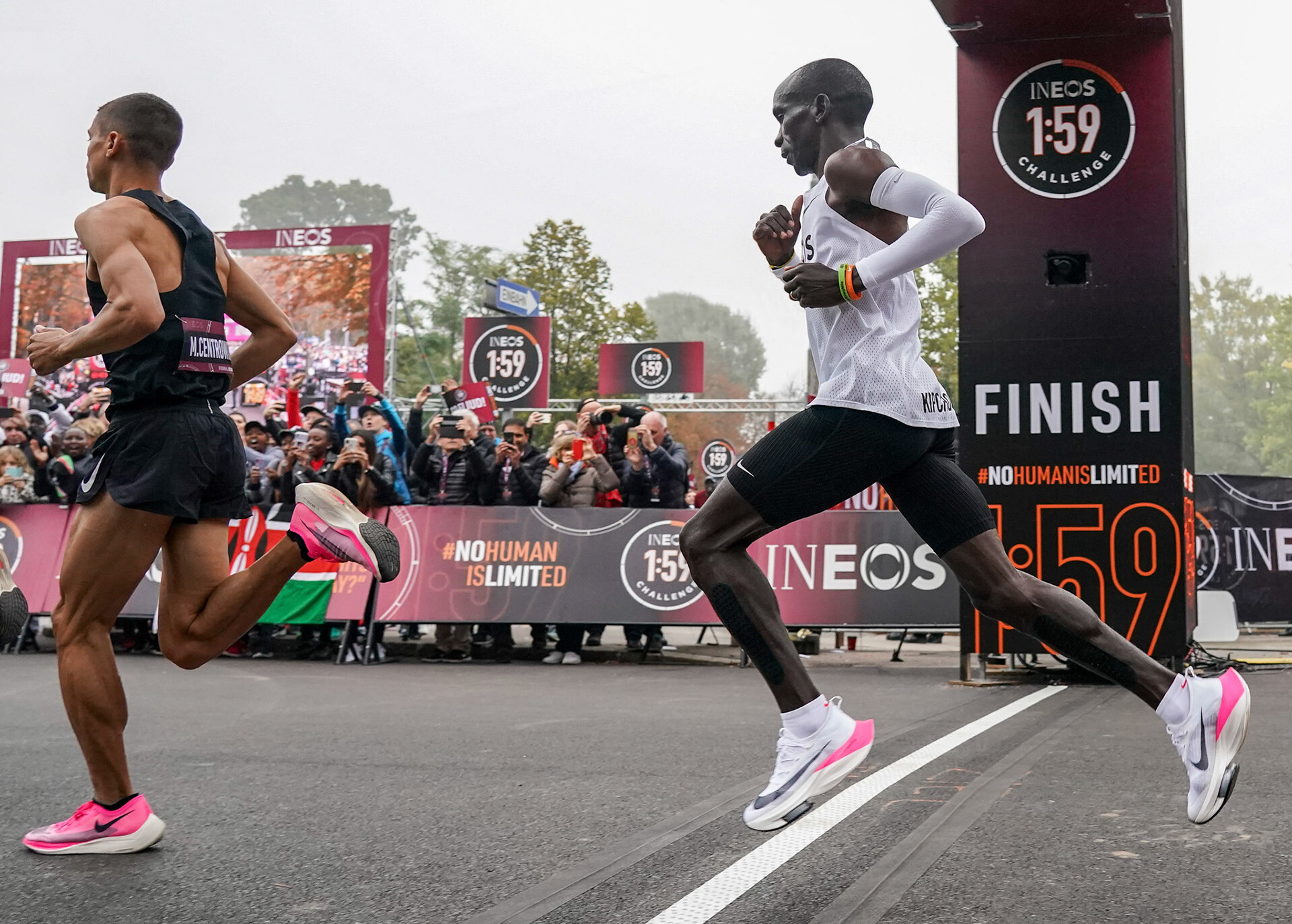
The watch on Kipchoge’s wrist displays 1:59:40, recalling the extraordinary morning of October 12, 2019, when he became the first person to run the marathon distance in under two hours during the INEOS 1:59 Challenge in Vienna.
His official recorded time was 1:59:40.2.
The achievement came under specially controlled conditions, with 41 pacemakers rotating in formations around him and extensive logistical support designed specifically for the attempt. Because it was not a standard record-eligible marathon, the performance was not recognized as an official world record. But its significance went far beyond the record books.
On the statue's left wrist is another detail that carries perhaps even greater meaning.
The wristband bears Kipchoge's famous philosophy:
“No human is limited.”
Those four words became synonymous with his pursuit of the impossible. In Vienna, they were no longer simply a slogan. Kipchoge had demonstrated that a boundary which had appeared almost untouchable could, under the right circumstances, be broken.
Four years later, the bronze figure remained in place at Nike's headquarters — but the marathon world had changed dramatically.
In October 2023, Kelvin Kiptum lowered the official men's marathon world record to 2:00:35 in Chicago, bringing the sport closer than ever to the barrier Kipchoge had already conquered unofficially in Vienna.
Then came April 26, 2026.
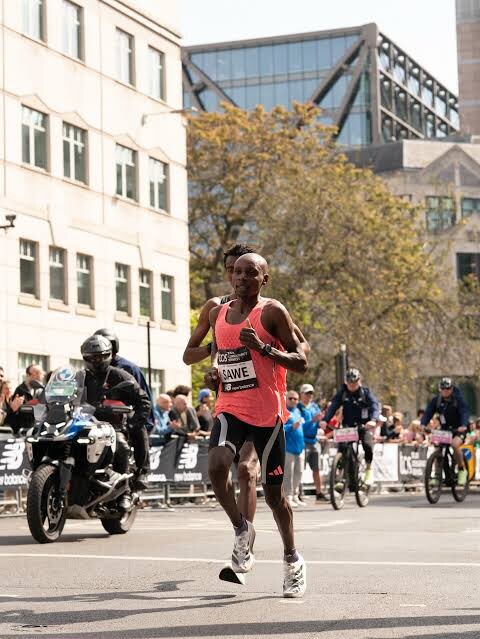
On the streets of London, Kenya's Sabastian Sawe entered territory that had previously belonged only to Kipchoge's extraordinary exhibition achievement.
Sawe won the London Marathon in 1:59:30, becoming the first man to officially complete a record-eligible marathon in under two hours. He also erased Kiptum's world record by 65 seconds. World Athletics subsequently ratified the performance as the official men's marathon world record.
And remarkably, Sawe did it in an ordinary competitive marathon — not on a specially designed course, not with rotating pacemakers, and not under the unique conditions of the 2019 INEOS challenge.
The symbolism is difficult to miss.
When Nike unveiled Kipchoge's statue in 2023, the 1:59:40 engraved on its wrist represented a moment when humanity had first stepped beyond the two-hour marathon barrier.
Today, that number represents something different.
It is no longer the fastest anyone has ever run 42.195 kilometres.
Instead, it has become part of the history that led to something even greater: the first officially recognized sub-two-hour marathon.
Kipchoge opened the door in Vienna.
Kiptum pushed the official world record closer.
And Sawe eventually walked — or rather, ran — through the door.
The bronze statue in Beaverton has not moved. Its watch still points to 1:59:40, and its wristband still carries the words “No human is limited.”
But the meaning of those words has grown.
What once looked like a statement of belief now reads like a prediction.
The statue was built to celebrate what Kipchoge had already achieved.
History has since given it another purpose: to remind the world that yesterday's impossible can become tomorrow's starting point.
by Erick Cheruiyot for My Best Runs.
Login to leave a comment
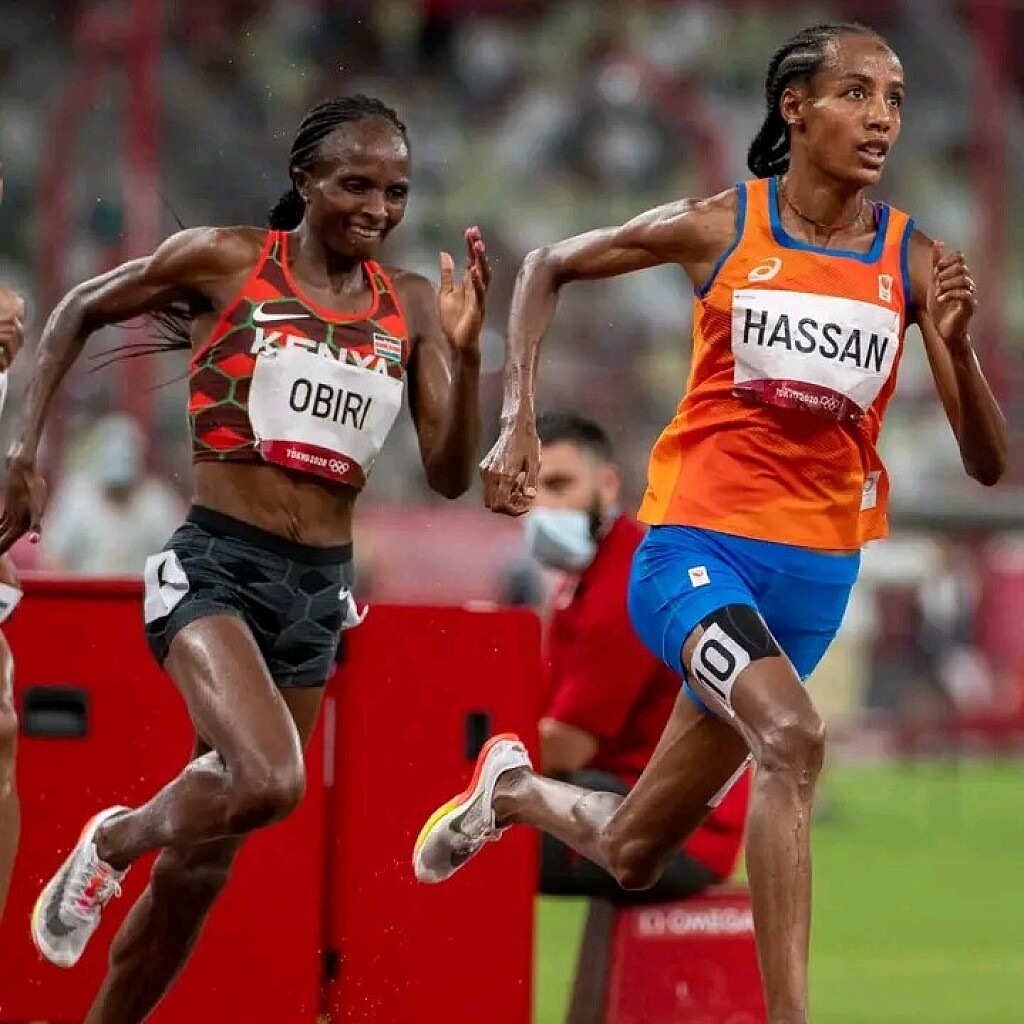
From Track Rivals to Marathon Queens: Sifan Hassan and Hellen Obiri Renew Their New York Rivalry
For more than a decade, Sifan Hassan of the Netherlands and Hellen Obiri of Kenya have been familiar opponents on the biggest stages of distance running. Their rivalry was forged on the track, where Hassan’s extraordinary versatility and finishing speed repeatedly collided with Obiri’s strength, tactical intelligence and championship pedigree.
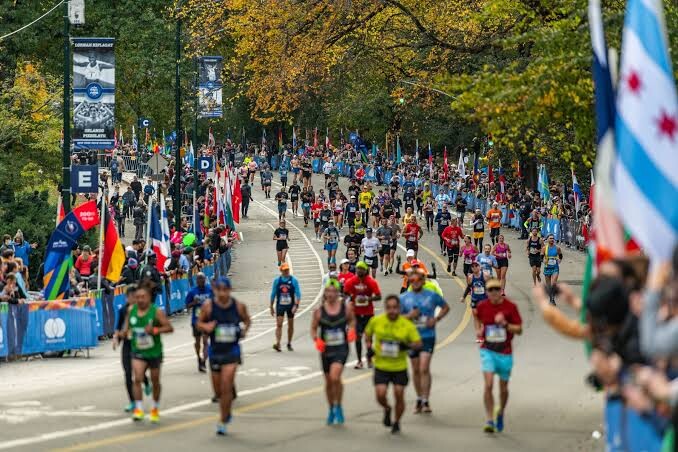
Now, after conquering different chapters of the sport, the two global stars are set to meet again on the streets of New York on November 1, 2026 — with another marathon crown at stake.
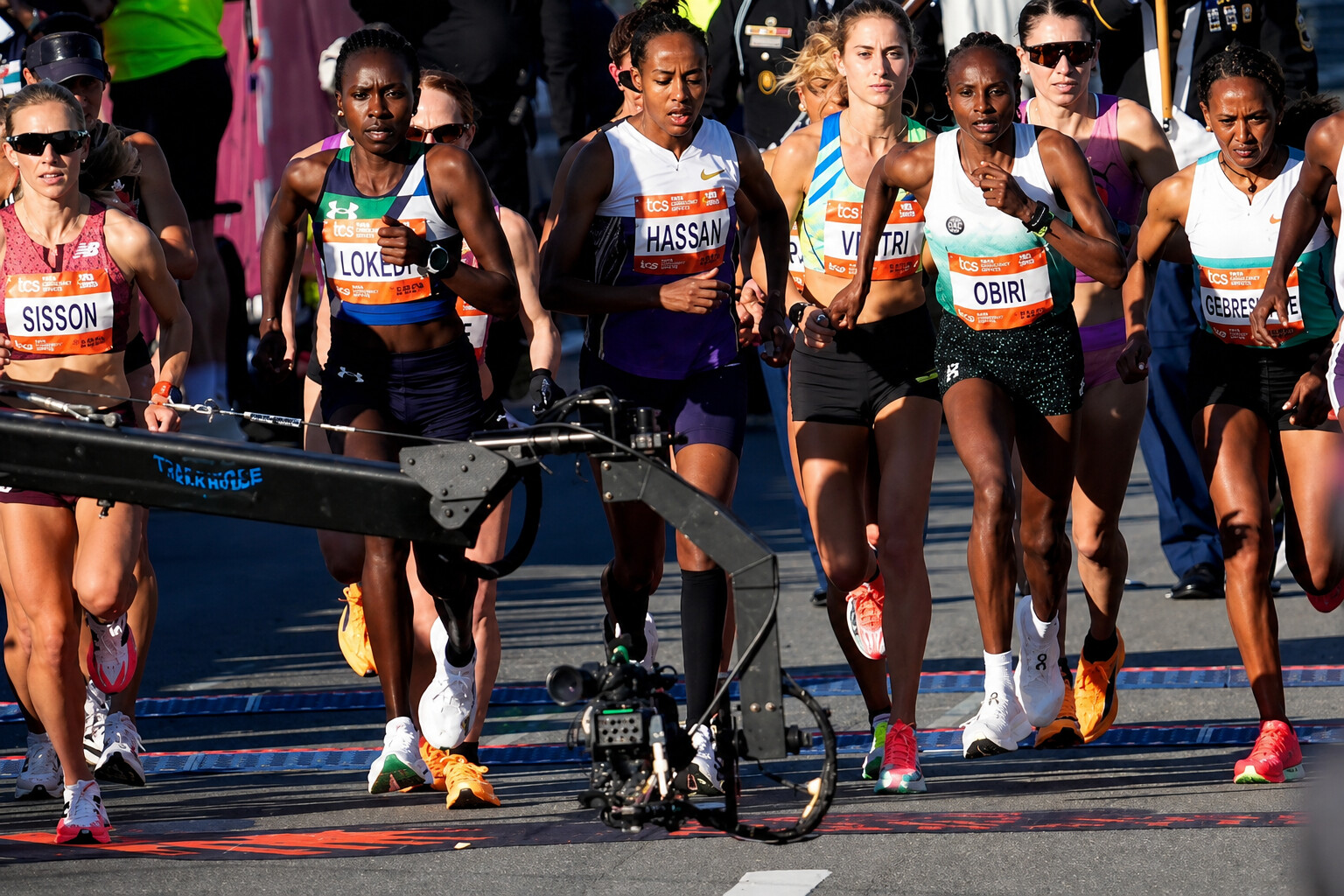
Their most memorable encounters came during the golden years of their track careers. At the Tokyo 2020 Olympics, Hassan defeated Obiri in a thrilling 5000m final, winning gold in 14:36.79 while Obiri took silver in 14:38.36. A year later, the two were again among the leading figures in the 10,000m at the 2022 World Championships in Oregon, where Obiri claimed silver and Hassan finished fourth.
But both athletes eventually turned their attention to the marathon, transforming a track rivalry into a new battle over 42.195 kilometres.
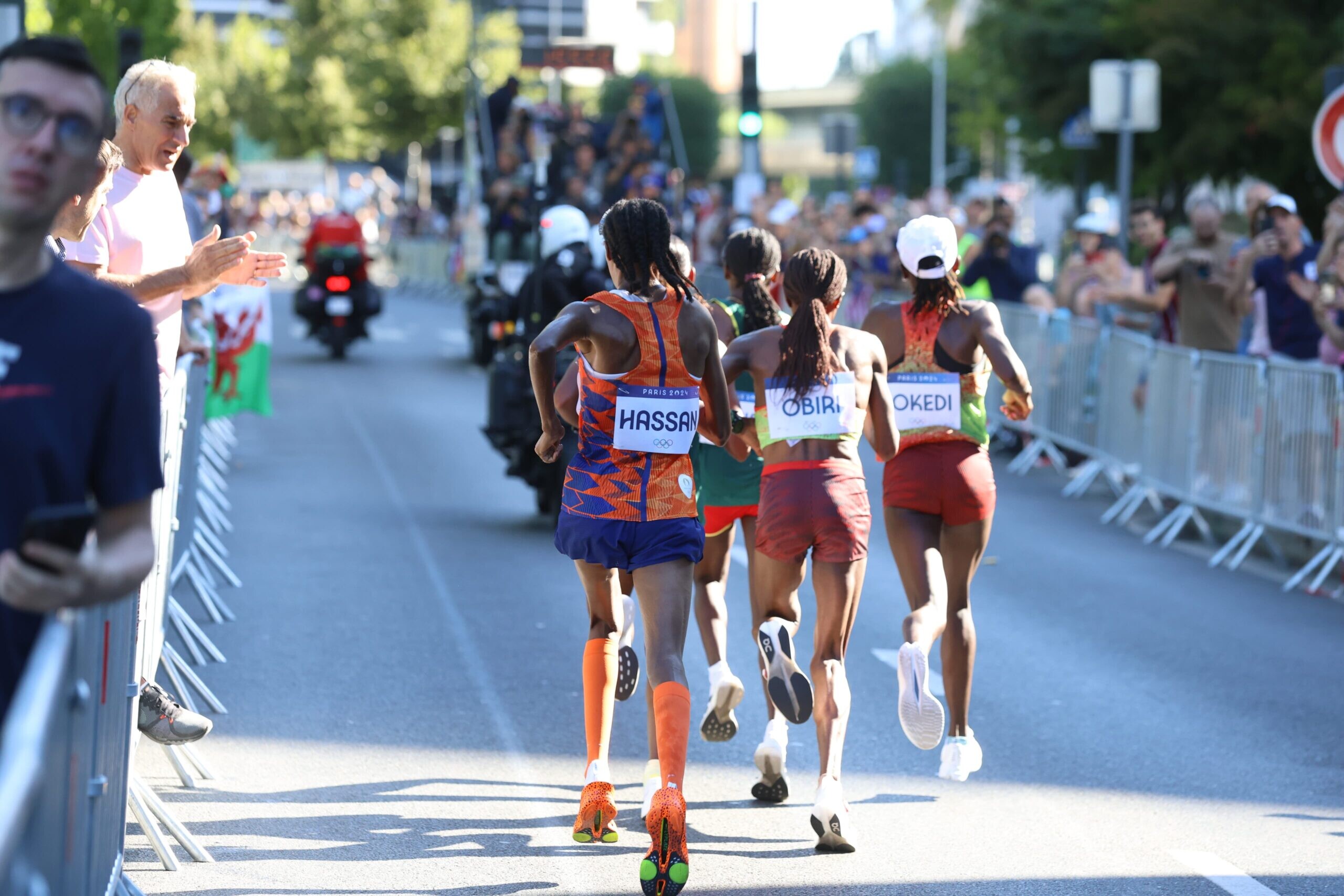
Hassan’s transition was extraordinary. After already establishing herself as one of the most versatile distance runners in history, she conquered the marathon at the Paris 2024 Olympics, winning gold and setting a personal best of 2:13:44 — a mark that remains significantly faster than Obiri’s current personal best.
Obiri, meanwhile, built her own formidable reputation on the roads. The Kenyan became a major force in the World Marathon Majors, winning the New York City Marathon in 2023 before returning to the top of the podium in 2025.
That 2025 New York race added another compelling chapter to the Hassan-Obiri rivalry.
Hassan made her New York debut but finished sixth in 2:24:43, while Obiri produced a commanding performance to win in 2:19:51. Her victory not only secured her second New York title but also shattered Margaret Okayo’s long-standing course record of 2:22:31.
The contrast could hardly be more intriguing heading into 2026.
Hassan owns the faster marathon personal best and the ultimate Olympic marathon prize. Obiri owns two New York titles and knows exactly how to master the famously demanding five-borough course. And the Kenyan has continued to strengthen her marathon credentials, running a personal-best 2:15:53 in London in 2026.
Hassan, meanwhile, returns to New York with unfinished business. After describing her 2025 debut as a physically punishing experience, she is preparing to tackle the course again, bringing the lessons of her first attempt and her vast championship experience with her.
This time, the stakes feel different.
There is history between them. There is unfinished business. And there is the intriguing question of whether Hassan’s superior lifetime speed over the marathon distance can finally translate into victory on the streets where Obiri has already established herself as a two-time queen.
One athlete has Olympic marathon gold and a 2:13:44 personal best.
The other has two New York crowns and a course record that announced her arrival among the marathon elite in emphatic fashion.
When Hassan and Obiri line up together again in New York, it will be more than another World Marathon Major showdown. It will be the latest chapter in a rivalry that began with championship battles on the track and has now evolved into one of the most compelling confrontations in women’s marathon running.
Track rivals. Olympic champions. Marathon queens.
On November 1, New York gets the next chapter.
by Erick Cheruiyot for My Best Runs.
Login to leave a comment

Hayward Field Gets Another Olympic Trials: Eugene To Host 2028 Team USA Selection
The road to Los Angeles 2028 will once again run through Eugene, Oregon.
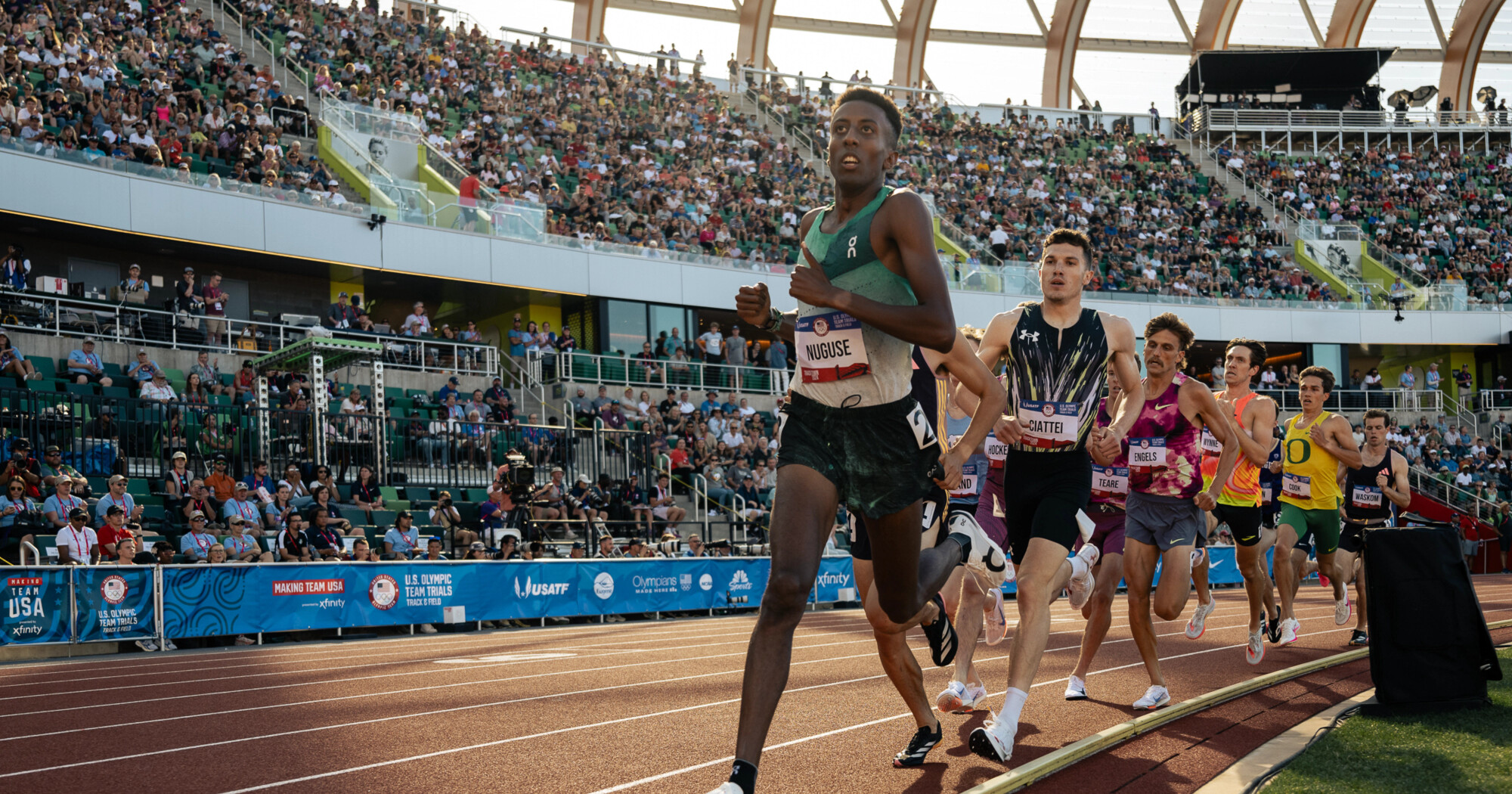
USA Track & Field and the U.S. Olympic and Paralympic Committee have announced that the 2028 U.S. Olympic Team Trials – Track & Field will return to Hayward Field from June 17–22, 2028, giving Eugene the distinction of hosting the prestigious selection meet for a sixth consecutive Olympic cycle.
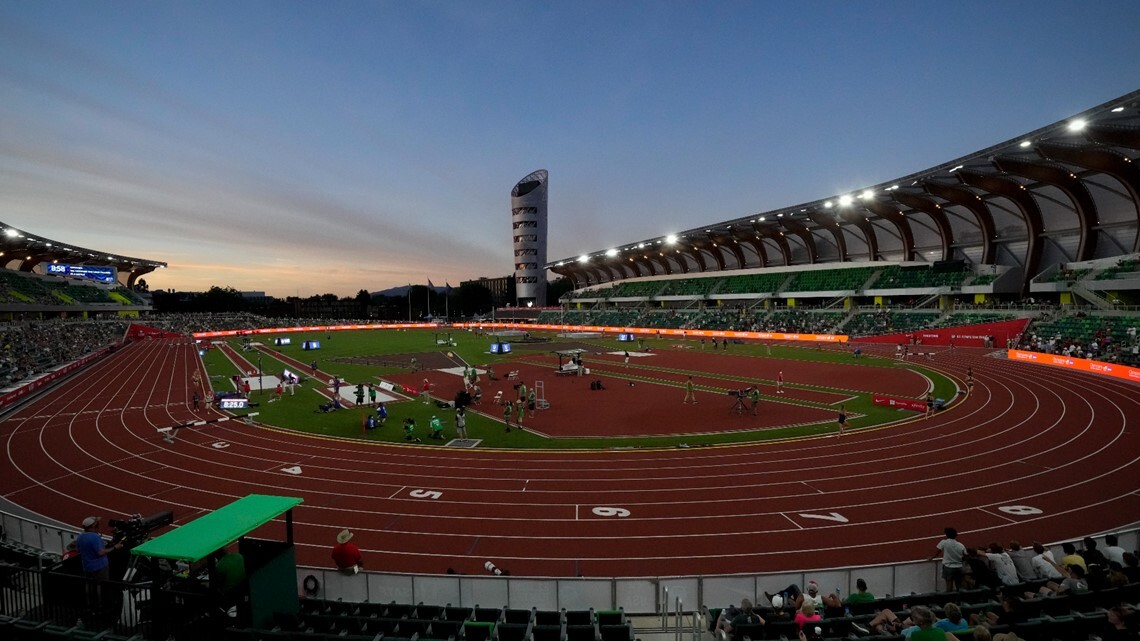
For a venue that has become synonymous with American track and field, the announcement represents another chapter in Hayward Field’s remarkable Olympic Trials legacy. Eugene previously hosted the Trials in 2008, 2012, 2016, 2021 and 2024, and will now stage the event once again as America’s finest athletes battle for places on the U.S. team headed to the 2028 Los Angeles Olympic Games.
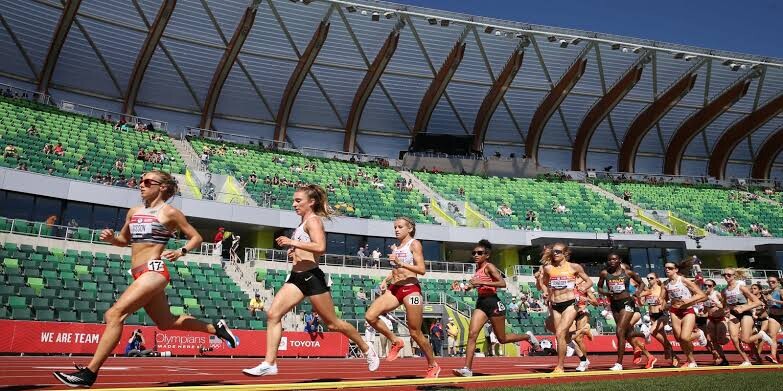
The 2028 edition will also introduce a significant change to the traditional format. Instead of the eight-day competition used at recent Trials, the main track and field meet will be compressed into six consecutive days, reflecting athlete feedback and the need for a more efficient selection process with the Olympic Games beginning less than a month later.
The men’s and women’s 10,000 meters, along with the decathlon and heptathlon, will not be contested as part of the main six-day Trials. Their Olympic team selection will take place earlier in the spring, with the dates and locations to be announced separately.
That scheduling adjustment is particularly important because athletes selected in Eugene will have only a short window to recover, prepare and travel before track and field competition begins at the Los Angeles Olympics. The LA28 track and field programme is scheduled for July 15–24 at the Los Angeles Memorial Coliseum.
Eugene’s return also reinforces its extraordinary status within American athletics. Few venues in the world carry the same history, atmosphere and emotional connection to track and field as Hayward Field, where Olympic dreams have been decided repeatedly over the past two decades.
And while the spotlight will ultimately be on the athletes who make Team USA, the road to Los Angeles will begin with another unforgettable week in TrackTown USA — where careers can be transformed, dreams can be fulfilled and the smallest margins can decide who wears the American colors on the Olympic stage.
The countdown to Los Angeles 2028 has officially gained another major milestone. Hayward Field is ready to welcome America’s best once again.
by Erick Cheruiyot for My Best Runs.
Login to leave a comment
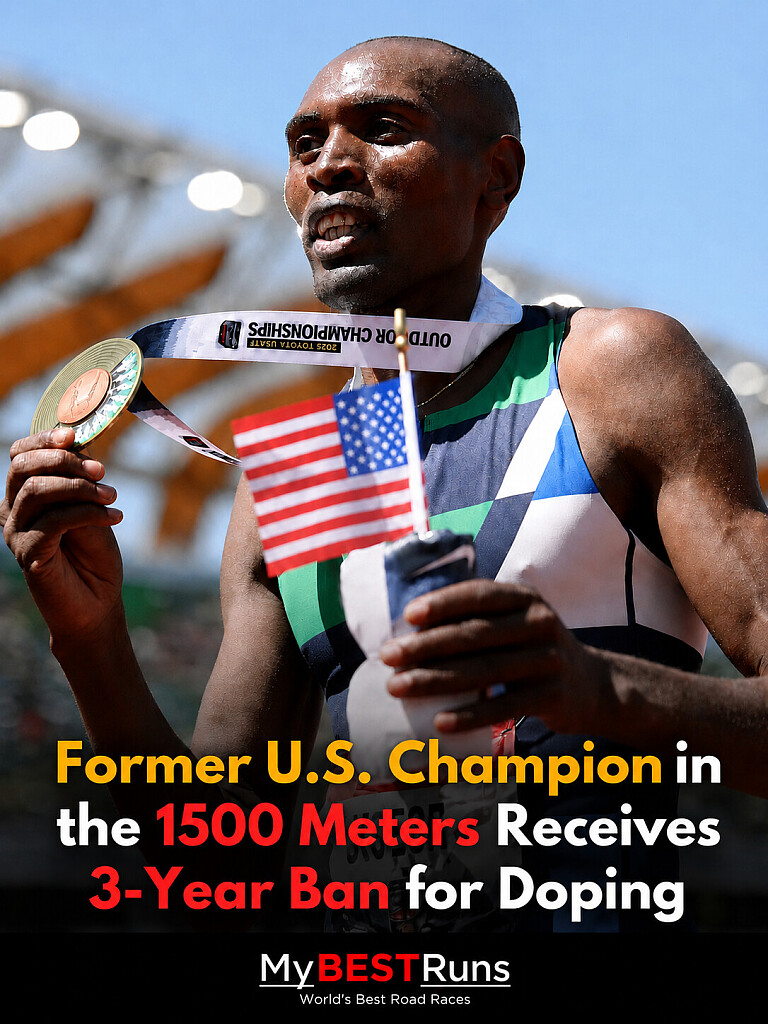
Jonah Koech Banned for Three Years After Blood-Doping Violation
Kenyan-born 1500m runner Jonah Koech has been handed a three-year ban following an anti-doping violation that has stripped him of his 2025 U.S. 1500m championship title and cast a shadow over what had been a breakthrough season.
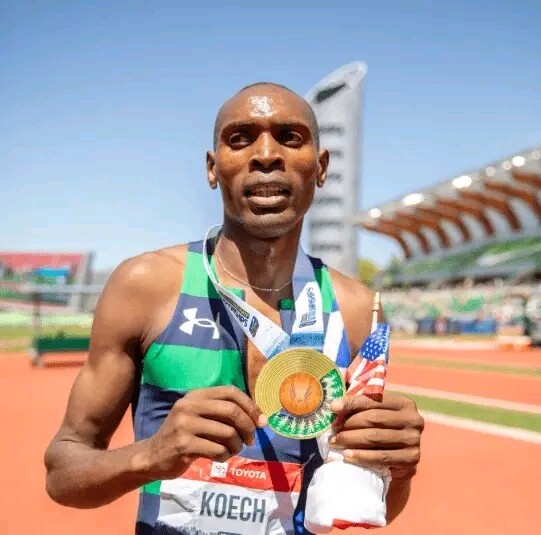
The United States Anti-Doping Agency (USADA) announced that Koech accepted the sanction after an investigation into highly atypical blood values recorded in his Athlete Biological Passport. An expert review of his biological profile determined that the abnormalities were consistent with the use of a prohibited blood-doping method.
Koech’s sanction comes with a significant consequence: his victory in the men’s 1500m at the 2025 USATF Outdoor Championships in Eugene, Oregon, has been disqualified. The title, which represented one of the biggest achievements of his career, has therefore been removed from his official record.
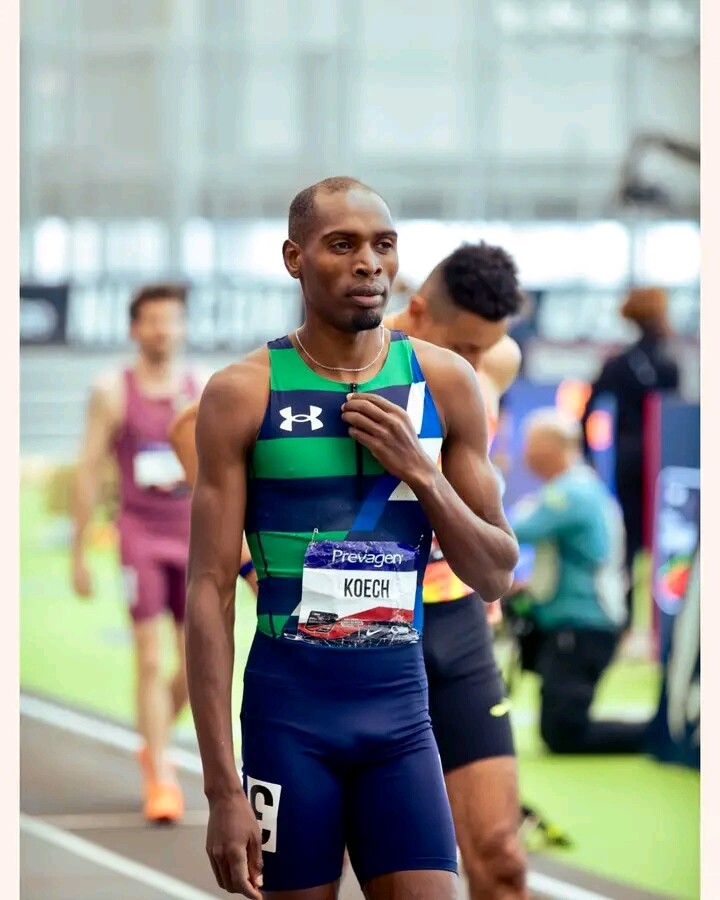
The ruling marks a dramatic reversal for Koech, who produced a stunning breakthrough in 2025. After establishing himself as a serious force in the 1500m, he captured the U.S. national title and earned international recognition as one of the country’s leading middle-distance runners.
His three-year suspension is shorter than the standard four-year sanction that can apply to serious anti-doping violations. Koech’s acceptance of the violation and sanction resulted in a reduction of the period of ineligibility, allowing him to avoid the full four-year penalty.
Koech will remain ineligible to compete until July 2029, meaning he faces a lengthy absence from competitive athletics. His return will come after one of the most significant seasons of his career has now been rewritten by the anti-doping ruling.
The Athlete Biological Passport played a central role in the case. Rather than simply looking for a banned substance in an individual sample, the system monitors selected biological markers over time. Significant abnormalities in an athlete’s profile can trigger further examination and, where supported by expert evidence, an anti-doping case.
For Koech, the development represents a painful fall from a season that had appeared to signal the arrival of a major new name in American 1500m running. Born in Kenya before building his career in the United States, he had become a notable figure on the U.S. middle-distance scene.
The case also underlines the increasingly sophisticated approach to anti-doping in modern athletics, where an athlete's biological profile can be scrutinized long after a race has finished. For Koech, the consequences will extend far beyond the loss of one championship title, with three years away from competition now standing between him and a possible return to the track.
by Erick Cheruiyot for My Best Runs.
Login to leave a comment
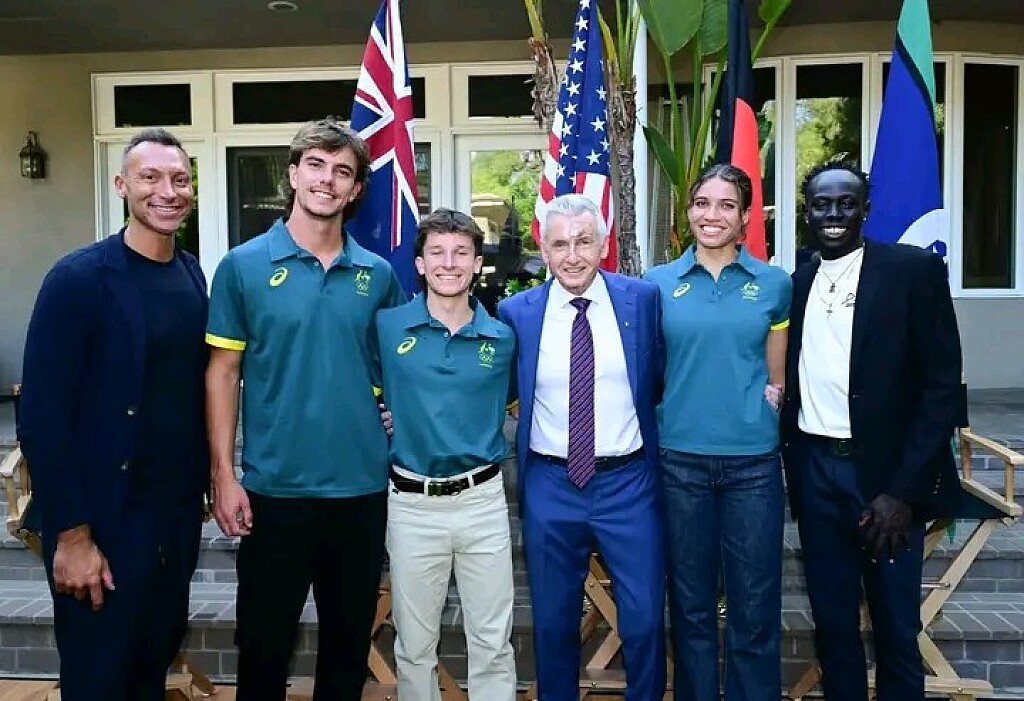
Gout Gout, Ian Thorpe and Australian Athletics’ Rising Stars Celebrate Olympic Dreams in Los Angeles
Australian athletics’ next generation received a memorable welcome in Los Angeles as rising sprint sensation Gout Gout joined Olympic great Ian Thorpe and a host of high-profile guests at a special Olympic Club of Australia gathering.
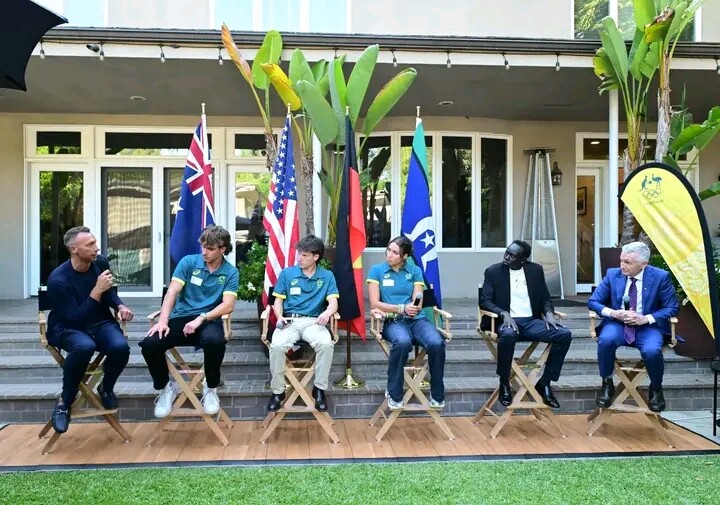
The event, hosted by Australia’s Consul-General to Los Angeles, Tanya Bennett, brought together members of the Australian Athletics U20 team on their return journey from Oregon, where they had been competing on the international stage.
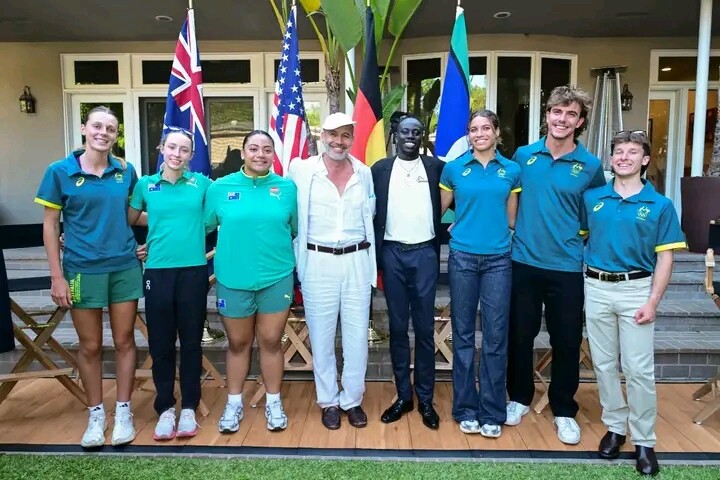
Gout, one of the most closely watched young talents in Australian athletics, was among the athletes at the gathering alongside Thorpe, the legendary five-time Olympic gold medallist. Broadcaster Bruce McAvaney and actor Billy Zane were also part of the star-studded occasion, creating an unusual but fitting meeting of Australian sporting excellence, media and entertainment.
The celebration came at an important moment for Australia’s young athletes, with the Los Angeles 2028 Olympic Games increasingly becoming a realistic target for many of the emerging stars. Beyond LA28, the prospect of competing at a home Olympics in Brisbane in 2032 offers an even bigger incentive for this generation to continue developing and dreaming on the world stage.
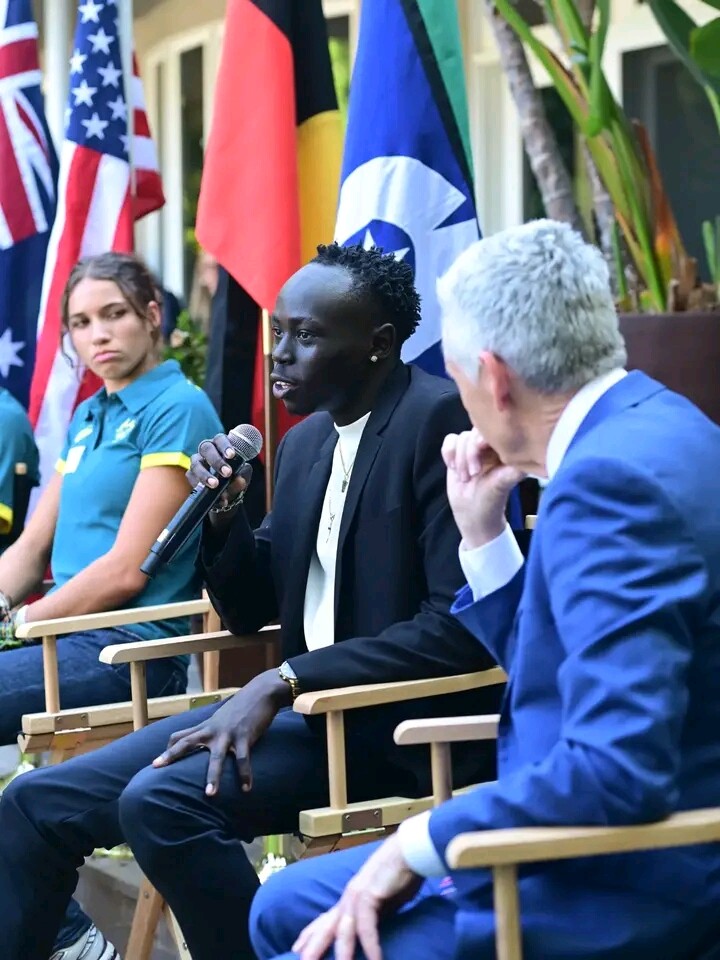
The occasion also highlighted the newly launched Olympic Club of Australia, an initiative of the Australian Olympic Committee designed to help raise funds in support of Olympians and coaches.
For Australia’s emerging athletes, the significance goes well beyond financial support. Olympic sport can provide young people with role models and demonstrate what can be achieved through ambition, commitment and perseverance.
With Gout and his fellow U20 athletes now beginning to look towards the next stage of their careers, the road to Los Angeles could mark the beginning of an exciting new chapter for Australian athletics.
And with Brisbane 2032 waiting beyond LA28, the athletes being celebrated today could ultimately become some of the biggest names carrying Australia’s hopes on home soil.
by Erick Cheruiyot for My Best Runs.
Login to leave a comment
Chepkwech Produces Blistering Finish To Claim U20 1500m World Title
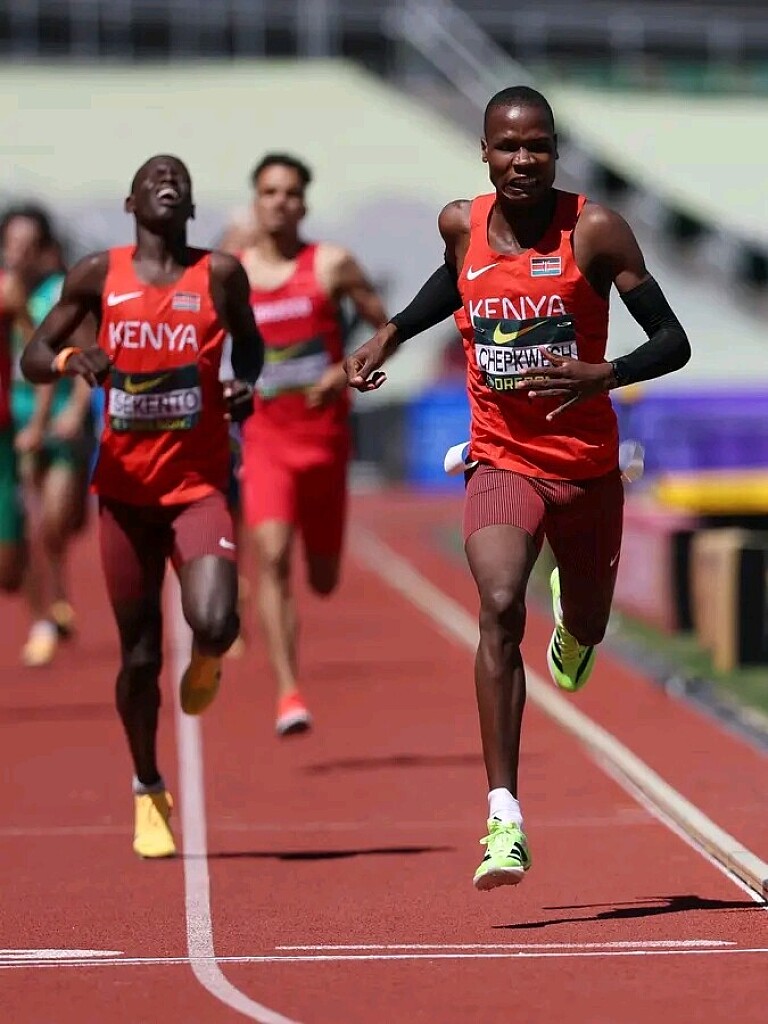
The men’s 1500m final at the World Athletics U20 Championships in Eugene delivered a compelling display of young middle-distance talent, with Kenya’s Wilson Chepkwech producing a remarkable late surge to take the world junior title on August 9, 2026, at Hayward Field.
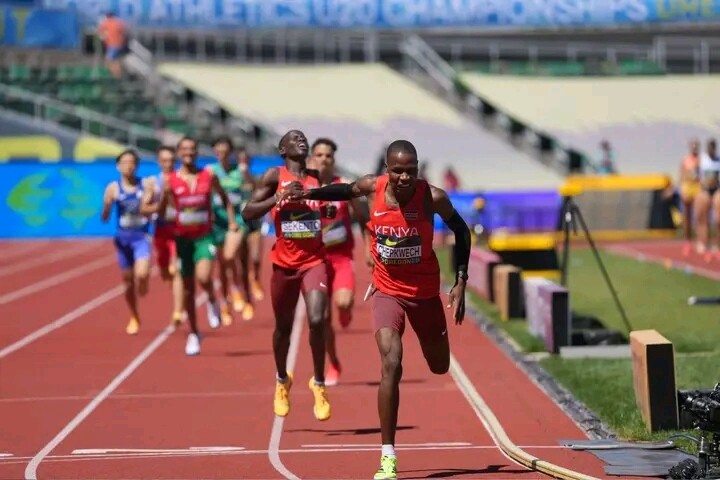
Just 16 years old, Chepkwech timed his decisive move perfectly in the closing stages. After staying within contention through the earlier laps, he unleashed a spectacular final 400 metres in 52.87 seconds, powering away from his rivals to cross the finish line in a personal-best 3:37.46.
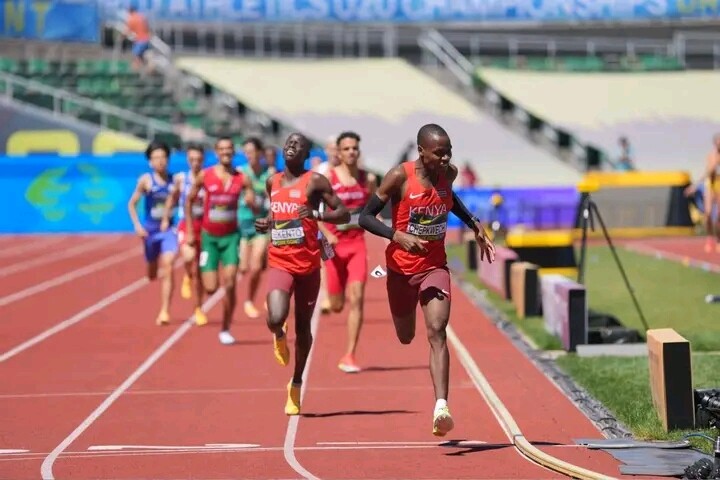
His compatriot David Kapaiko Sekento also enjoyed an outstanding race, securing the silver medal in a personal-best 3:38.32. Sekento remained firmly in the medal battle throughout the closing stages and held on strongly to complete a Kenyan 1-2.
Morocco’s Osama Er Redouani completed the podium in 3:39.68, also setting a personal best. His bronze added an international dimension to a final in which all three medallists produced the fastest performances of their careers.
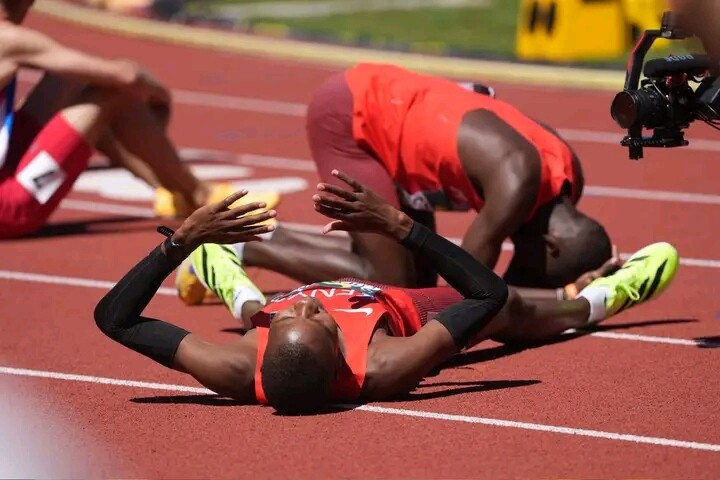
The quality of the race was reflected in the closeness of the leading trio, with less than three seconds separating the gold medallist from bronze. Chepkwech’s finishing speed ultimately proved decisive, while Sekento and Er Redouani demonstrated the competitiveness required to challenge for medals on one of the biggest stages in junior athletics.
The podium was therefore led by Wilson Chepkwech – 3:37.46 (PB), followed by David Kapaiko Sekento – 3:38.32 (PB) and Osama Er Redouani – 3:39.68 (PB).
For Chepkwech, the victory represents a significant early milestone and an indication of the potential he possesses as he continues his development. His age makes the performance particularly notable, but the strength of the final also underlined the depth of talent emerging across the international middle-distance scene.
The result brought the individual track events at the World Athletics U20 Championships Oregon 2026 to a memorable conclusion at Hayward Field. With three athletes setting personal bests and a fiercely contested battle for the medals, the 1500m final provided an exciting showcase of the young talent that will shape the future of the event.
by Erick Cheruiyot for My Best Runs.
Login to leave a comment
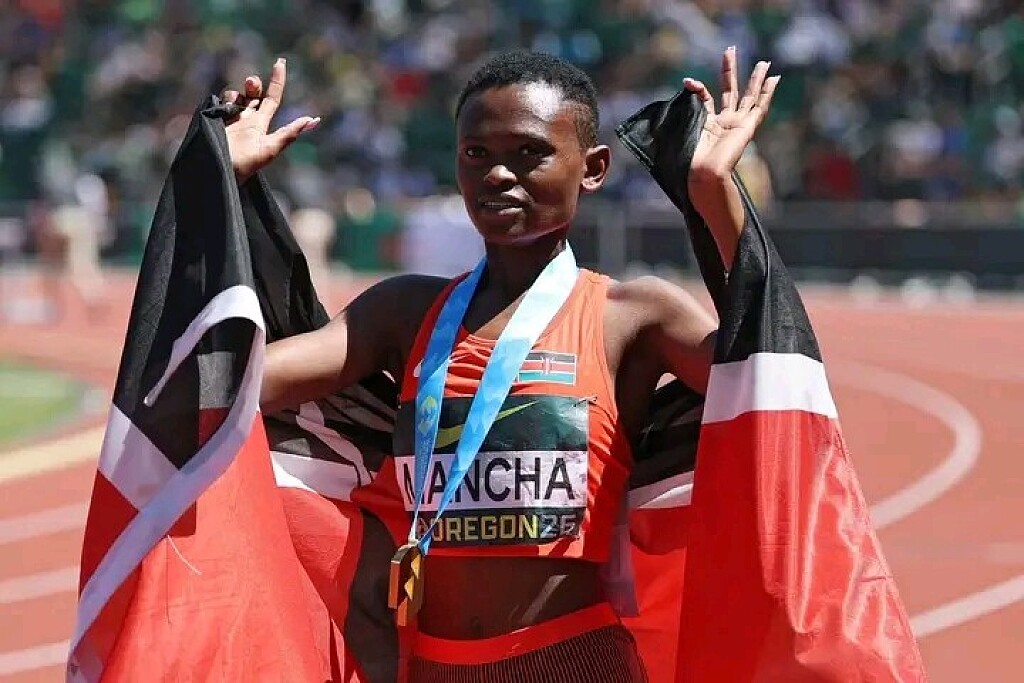
Josephine Mancha Ends Kenya’s 14-Year Wait With Dramatic World U20 1500m Gold
Kenya has a new women’s 1500m world champion at U20 level.
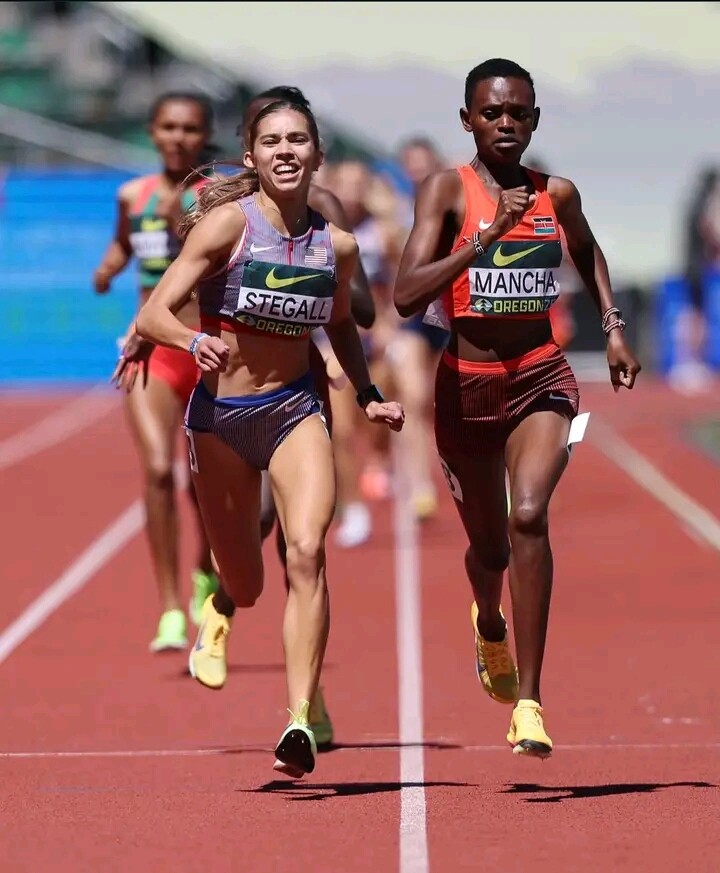
Josephine Sembeyo Mancha produced a composed and determined performance in Eugene to win gold at the World Athletics U20 Championships Oregon 26, ending Kenya’s long wait for another world title in the event.
Mancha crossed the finish line in 4:16.73, edging American Claire Stegall by just 0.04 seconds in one of the most dramatic finishes of the championships. Kenya’s Caren Chepchirchir completed the podium to make it a memorable double medal for the country.
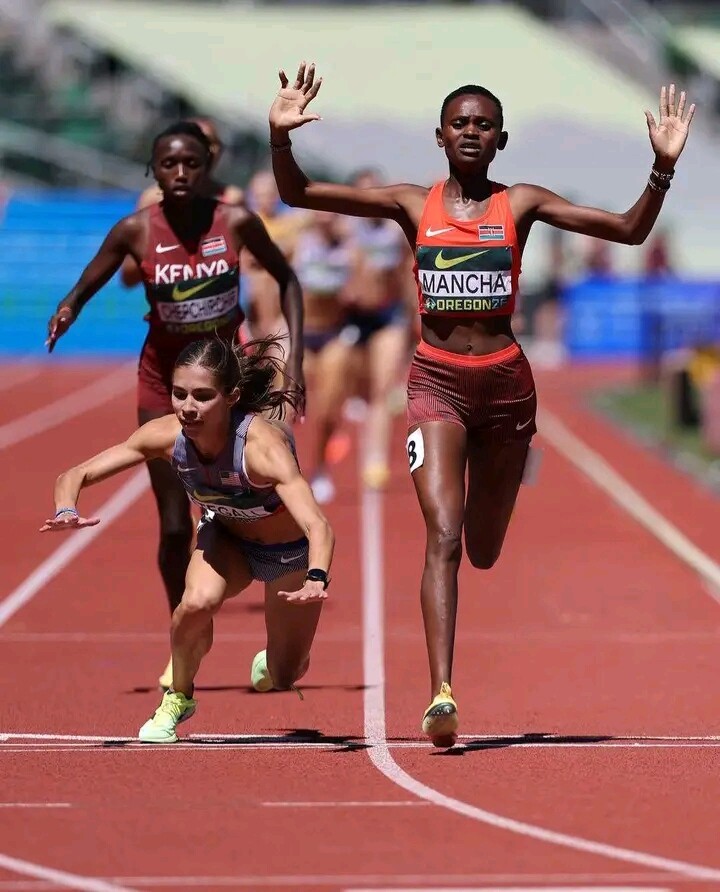
The final was anything but straightforward. A cautious opening lap of roughly 78 seconds saw the athletes remain tightly bunched, creating a dangerous situation as several runners went down in a series of falls.
The chaos continued throughout the race, with a discarded spike even left on the inside of lane one for more than a lap, adding another unusual obstacle to an already unpredictable contest.
Through it all, Mancha remained patient.
Rather than becoming caught up in the disorder around her, the Kenyan kept her composure and positioned herself for the decisive moment. As the bell sounded and the race entered its final lap, the contest suddenly came alive.
Mancha unleashed her finishing speed and surged toward the line, but Stegall refused to surrender. The American launched herself forward in a desperate diving attempt at the finish, making the outcome almost impossible to separate with the naked eye.
In the end, it was Mancha who had done enough.
Josephine Sembeyo Mancha — gold, 4:16.73.
Claire Stegall — silver.
Caren Chepchirchir — bronze.
For Kenya, however, the significance of the victory goes far beyond a single race.
Mancha’s triumph ends a 14-year wait for a Kenyan women’s U20 1500m world title. The last Kenyan to achieve the feat was Faith Kipyegon, who captured the crown in 2012 before going on to build one of the greatest middle-distance careers in athletics history.
Fourteen years later, Mancha has restored Kenya to the top of the global U20 podium.
In a final defined by falls, uncertainty and a breathtaking finish, the young Kenyan showed exactly what championship racing demands: patience, resilience and the ability to produce when it matters most.
Eugene has a new 1500m champion, and Kenya has another name to remember.
by Erick Cheruiyot for My Best Runs.
Login to leave a comment
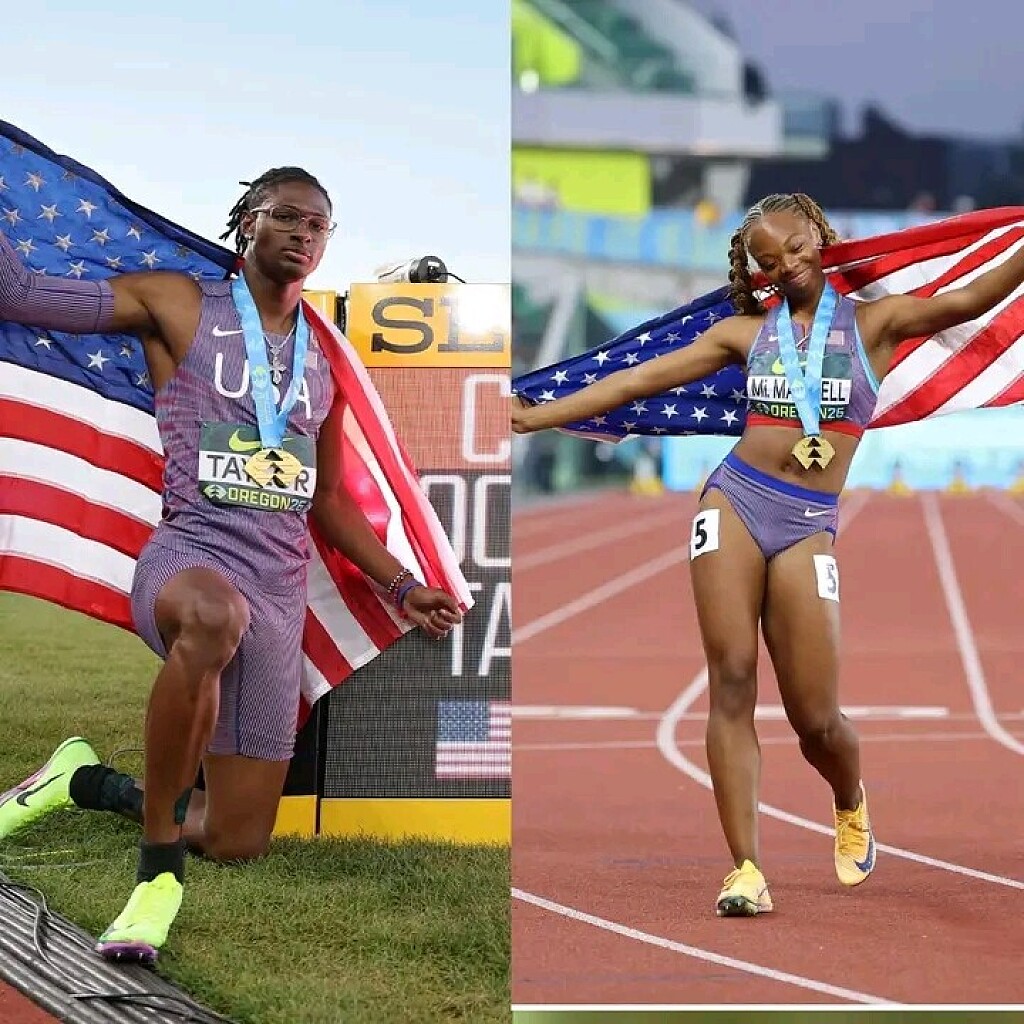
Tate Taylor And Mia Maxwell Make History With U20 Sprint Double Sweep
American sprinting has produced a remarkable moment at the World Athletics U20 Championships in Eugene, Oregon, with Tate Taylor and Mia Maxwell etching their names into the history books through an extraordinary clean sweep of the 100m and 200m titles.
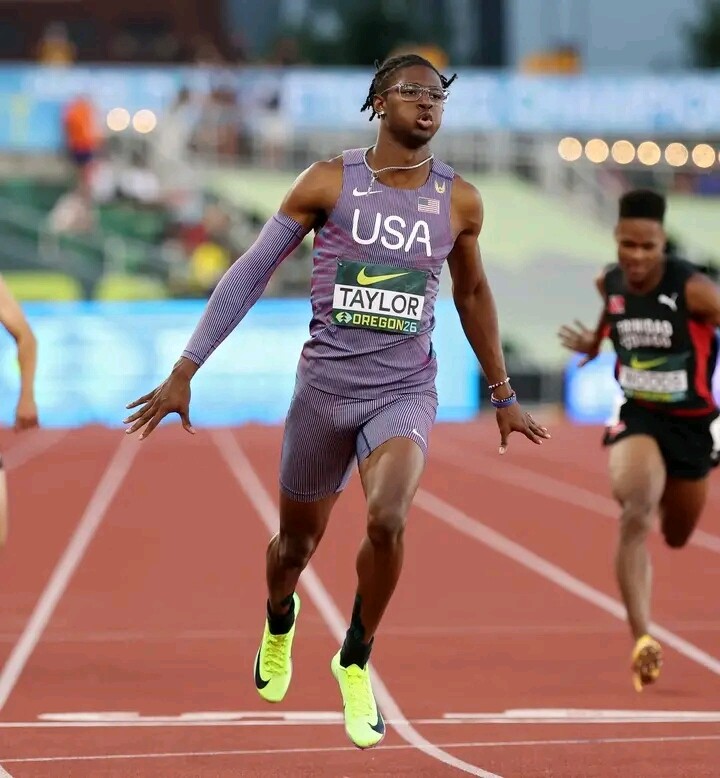
Taylor delivered a stunning display of speed in the men’s sprints, first claiming the 100m crown in 9.94 seconds before returning to the track to dominate the 200m, stopping the clock at an impressive 19.83 seconds.
The double underlines Taylor’s exceptional versatility over both sprint distances and establishes him as one of the most exciting young talents emerging from the United States.
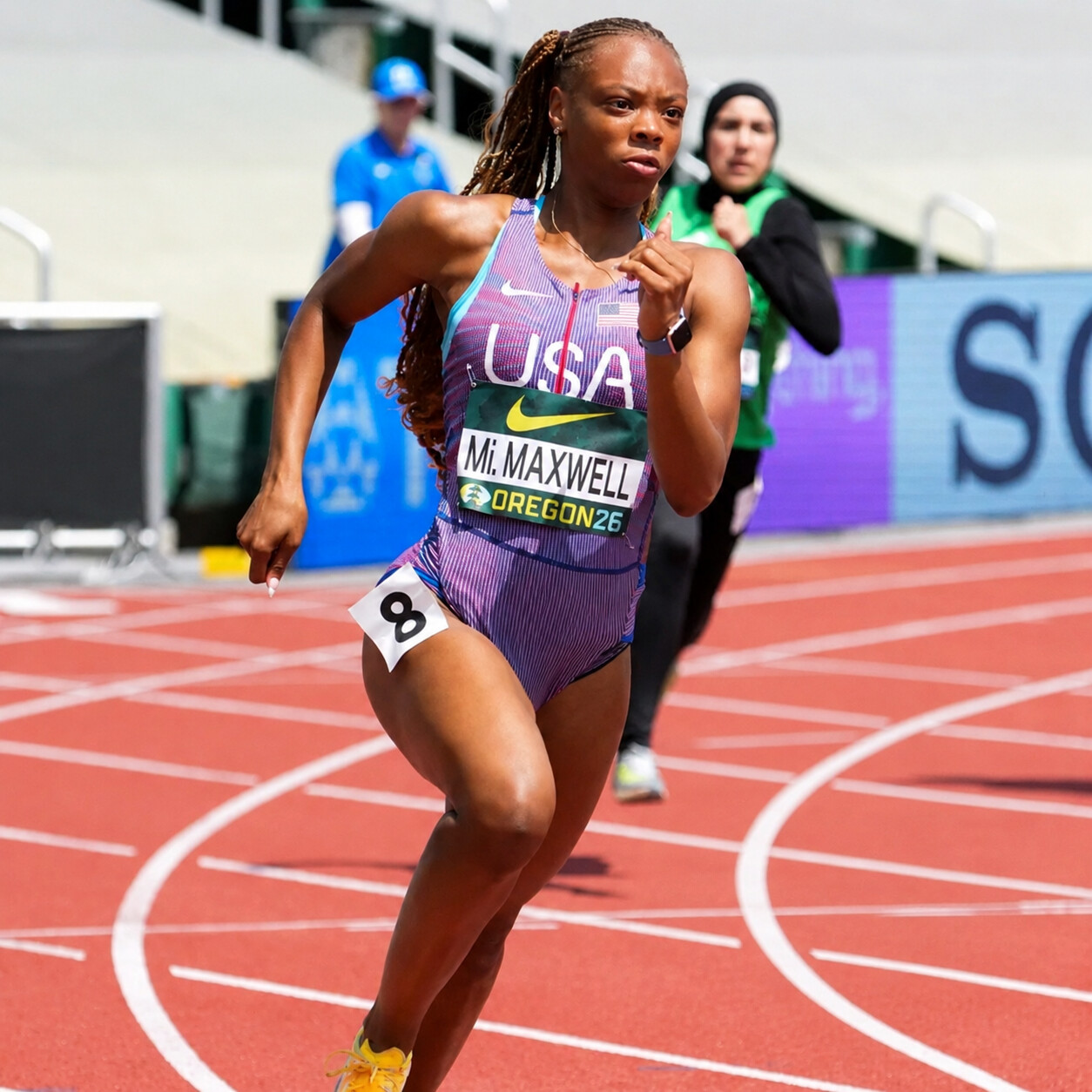
On the women’s side, Maxwell matched Taylor’s achievement with an equally impressive sprint double. She won the 100m title in 11.14 seconds before producing another commanding performance in the 200m, crossing the finish line in 22.37 seconds to secure her second gold medal of the championships.
Together, Taylor and Maxwell have created a rare piece of U20 history.
Their achievement marks the first time a United States male and female sprinter have simultaneously completed the 100m and 200m double at the under-20 global level, making their performances in Eugene particularly significant.
Winning either sprint title at a global championship requires exceptional speed, composure and consistency. Winning both demands something even greater: the ability to recover quickly, maintain peak performance across multiple rounds and deliver when the pressure is highest.
Taylor and Maxwell managed to do exactly that.
Their four victories have provided one of the standout stories of the championships and offered another powerful indication of the depth of sprinting talent developing in the United States.
For Taylor, the combination of 9.94 seconds in the 100m and 19.83 in the 200m represents a remarkable championship campaign. For Maxwell, her 11.14 and 22.37 secured an equally memorable double.
Eugene has therefore witnessed more than four individual sprint victories. It has witnessed the emergence of a historic American sprinting duo whose names will now be permanently linked to one of the most impressive achievements in the history of the World Athletics U20 Championships.
Taylor and Maxwell came to Eugene chasing gold.
They leave as history-makers.
by Erick Cheruiyot for My Best Runs.
Login to leave a comment
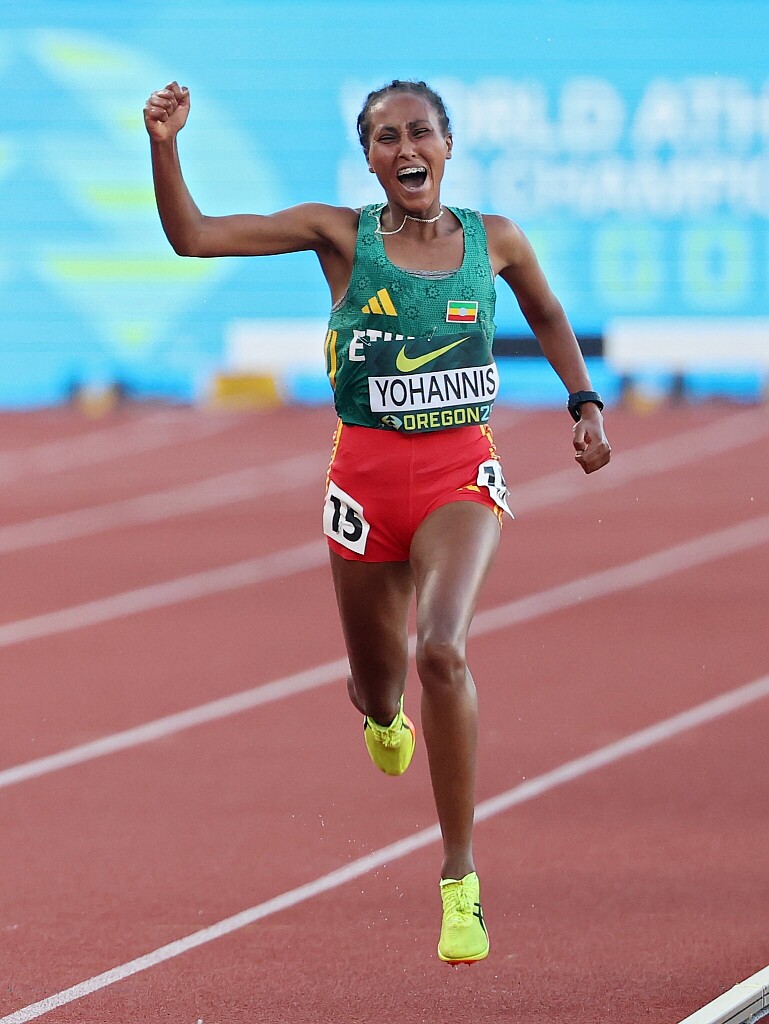
Almaz Yohannis Leads Ethiopian 1-2 in Spectacular World U20 Steeplechase Triumph
Ethiopia produced a spectacular display of emerging talent as Almaz Yohannis was crowned world champion in the women’s 3000m steeplechase at the 2026 World Athletics U20 Championships in Oregon, powering to a commanding victory in 9:15.81.
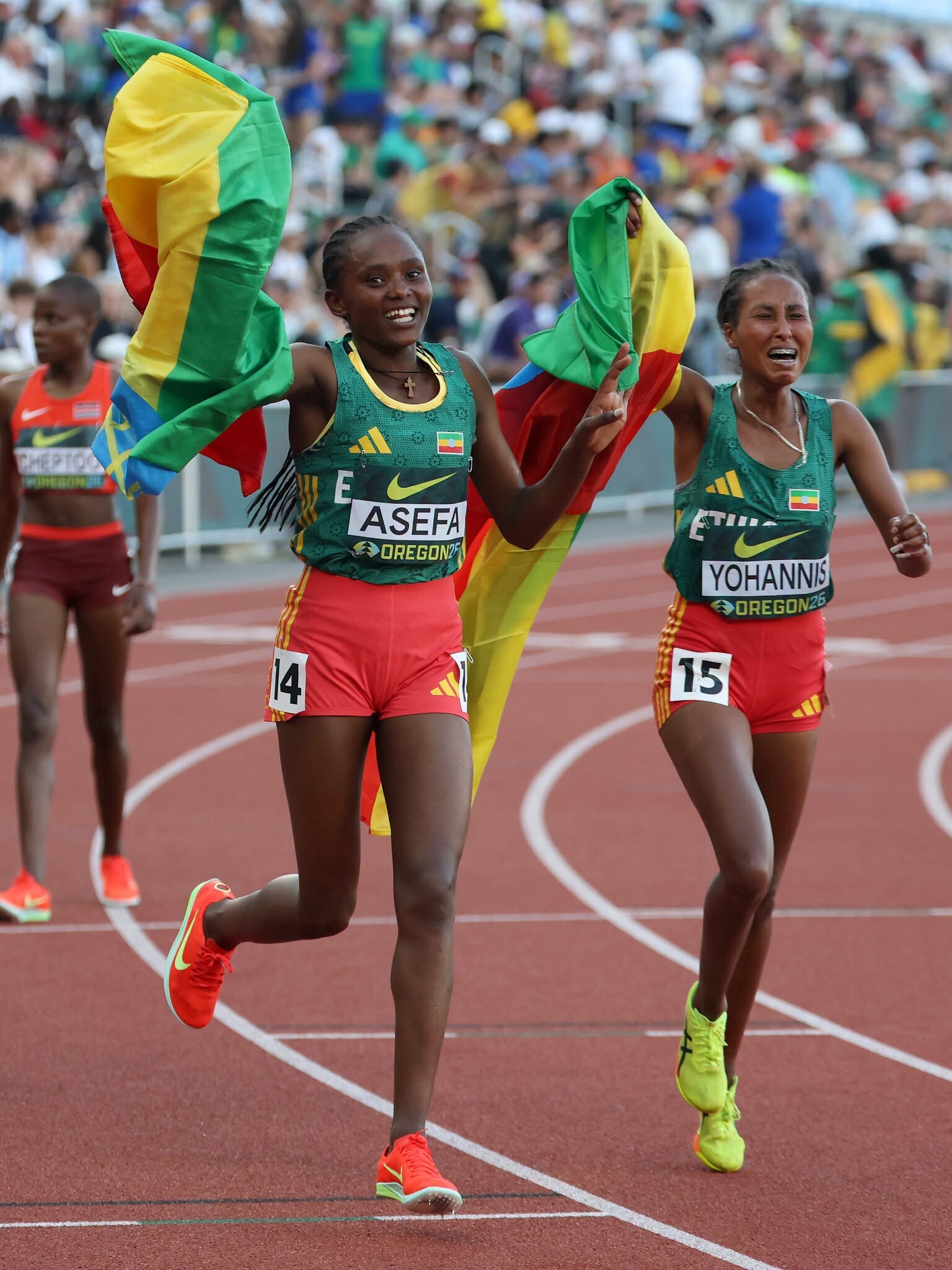
Yohannis delivered a superb performance to secure the gold medal and, in the process, recorded a World U20 Leading time (WU20L), underlining the strength of her performance on the global junior stage.
The young Ethiopian established herself as the athlete to beat, maintaining her composure and strength throughout the demanding eight-lap steeplechase before crossing the finish line well clear of the field. Her winning mark of 9:15.81 provided a fitting reward for a dominant championship performance.
Ethiopia’s celebrations were doubled when Wosane Asefa secured the silver medal in 9:30.50, producing a season’s best (SB) and completing an impressive Ethiopian one-two.
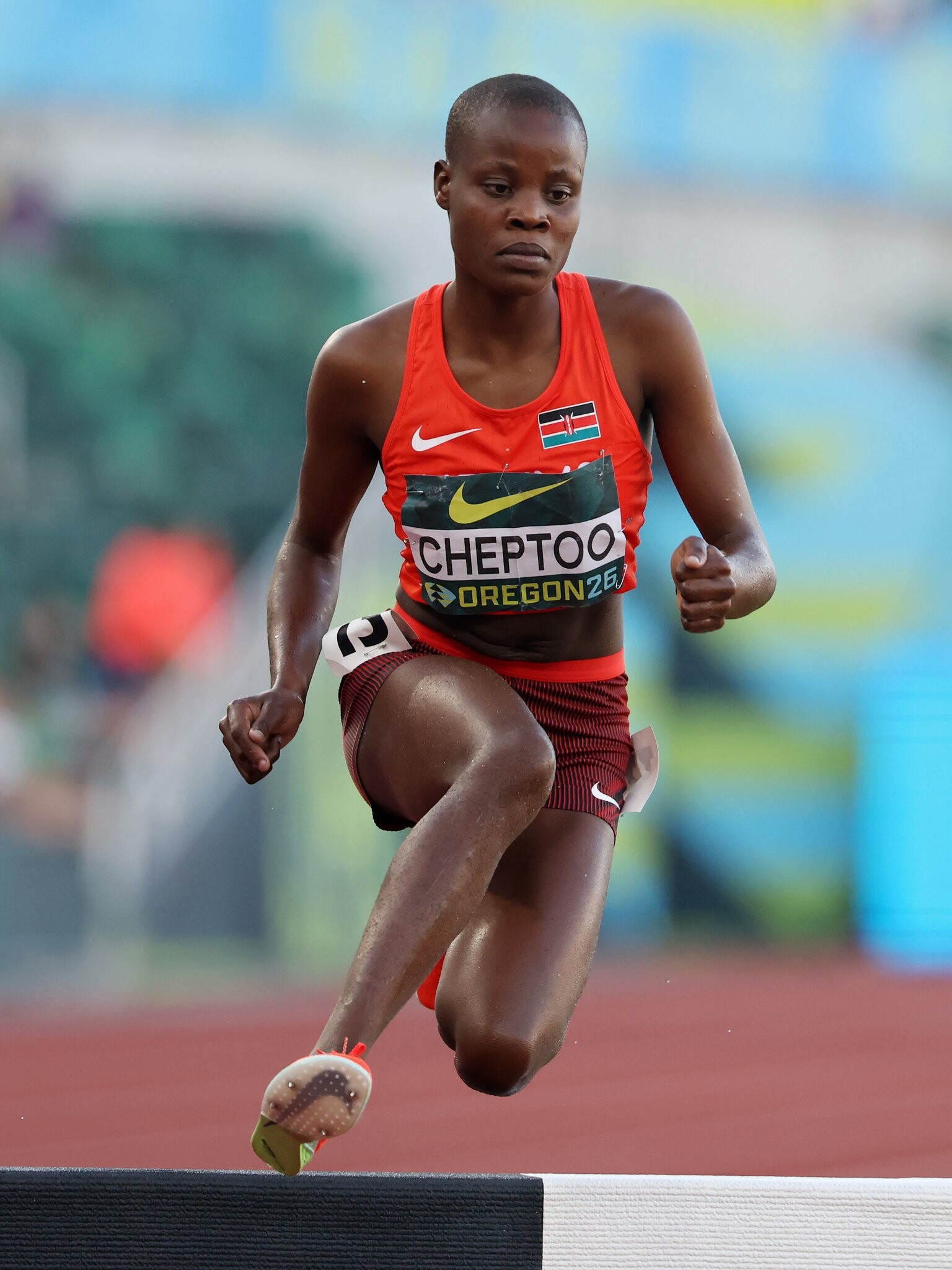
Kenya’s Anatasha Cheptoo ensured there was East African representation on all three steps of the podium, fighting her way to the bronze medal in 9:37.18.
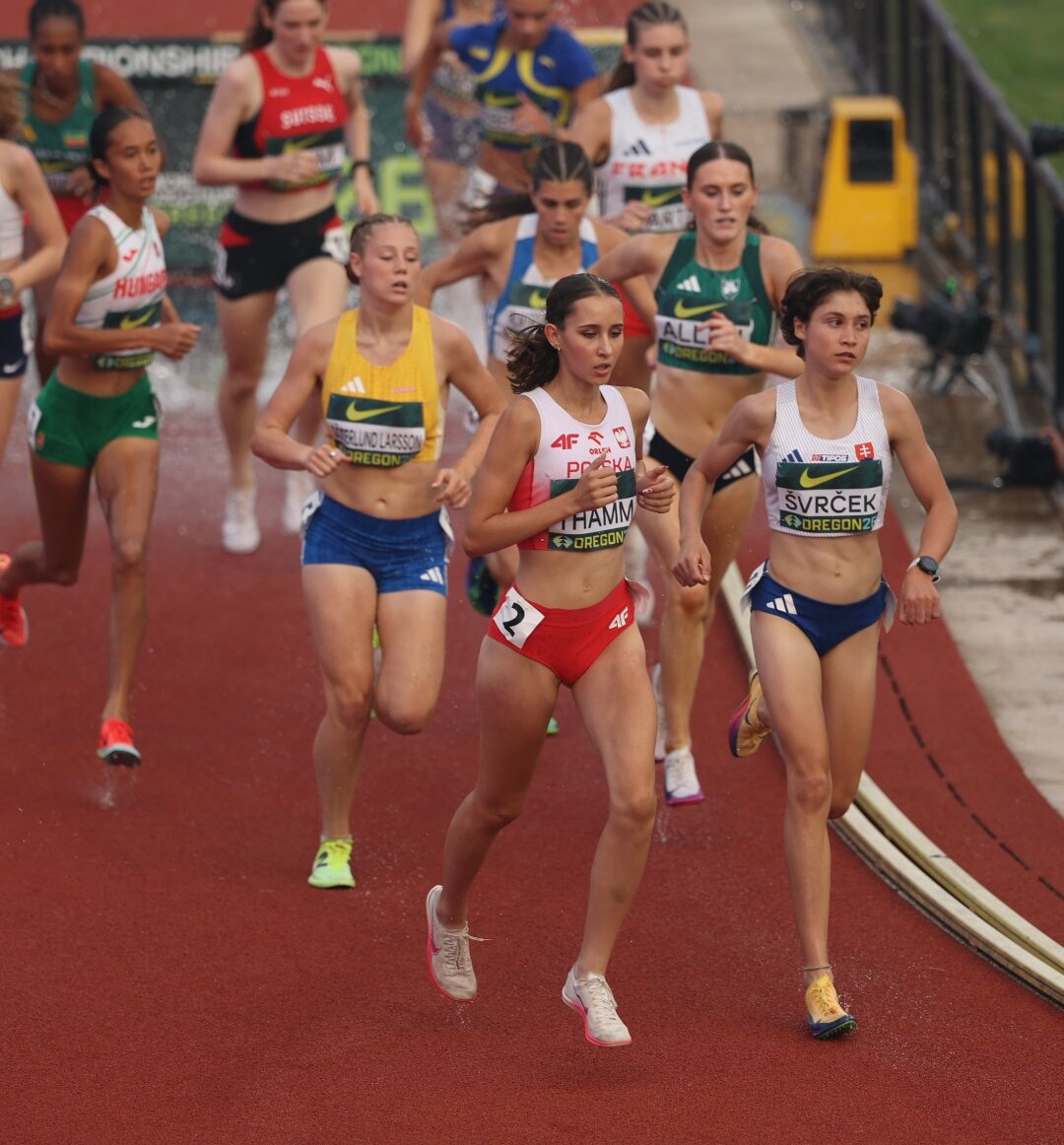
Behind the medalists, Sweden’s Majken Söderlund Larsson finished fourth in 9:48.01, setting a national U20 record (NU20R), while Czech Republic’s Ema Berková followed in fifth with 9:49.06, also recording a national U20 record.
Sweden’s Fanny Szalkai placed sixth in 9:55.06, a personal best, while Greece’s Anna Dafni Almyroudi Stroumpou finished seventh in 10:00.63, another national U20 record.
Egypt’s Malak Abdelghany Abdalla Ibrahim crossed eighth in 10:04.52, also establishing a national U20 record. Slovakia’s Anna Švrček was ninth in 10:05.91, followed by Japan’s Rei Taya in 10:12.37.
Portugal’s Lara Roque finished 11th in 10:15.69, setting a national U20 record, while Poland’s Zuzanna Szymańska took 12th in 10:15.94, a personal best. Great Britain’s Ava James was 13th in 10:18.96, followed by American Sierra Wall in 14th with 10:21.21.
Poland’s Michalina Thamm completed the finishers in 15th place in 10:39.01.
Kenya’s Mercy Chepngeno Koskey, who had also lined up as part of the Kenyan challenge, was unfortunately unable to finish the race.
The final podium therefore belonged to three of East Africa’s rising stars, with Yohannis and Asefa delivering a memorable Ethiopian one-two, while Cheptoo secured bronze for Kenya.
Women’s 3000m Steeplechase — Official Results
1. Almaz Yohannis (Ethiopia) — 9:15.81 (WU20L)
2. Wosane Asefa (Ethiopia) — 9:30.50 (SB)
3. Anatasha Cheptoo (Kenya) — 9:37.18
4. Majken Söderlund Larsson (Sweden) — 9:48.01 (NU20R)
5. Ema Berková (Czech Republic) — 9:49.06 (NU20R)
6. Fanny Szalkai (Sweden) — 9:55.06 (PB)
7. Anna Dafni Almyroudi Stroumpou (Greece) — 10:00.63 (NU20R)
8. Malak Abdelghany Abdalla Ibrahim (Egypt) — 10:04.52 (NU20R)
9. Anna Švrček (Slovakia) — 10:05.91
10. Rei Taya (Japan) — 10:12.37
11. Lara Roque (Portugal) — 10:15.69 (NU20R)
12. Zuzanna Szymańska (Poland) — 10:15.94 (PB)
13. Ava James (Great Britain) — 10:18.96
14. Sierra Wall (United States) — 10:21.21
15. Michalina Thamm (Poland) — 10:39.01
DNF: Mercy Chepngeno Koskey (Kenya)
Yohannis’ victory marked the highlight of a brilliant Ethiopian performance, with her 9:15.81 World U20-leading mark setting the tone for a memorable championship final and announcing another exciting young talent onto the international athletics scene.
by Erick Cheruiyot for My Best Runs.
Login to leave a comment
World U20 Relay History Rewritten As Great Britain Breaks Fresh Record After Australia's Brief Reign
Records were rewritten twice within the space of a few unforgettable minutes as the inaugural World Athletics U20 Mixed 4x100m relay produced one of the most dramatic sessions of the World Athletics U20 Championships in Eugene, Oregon.
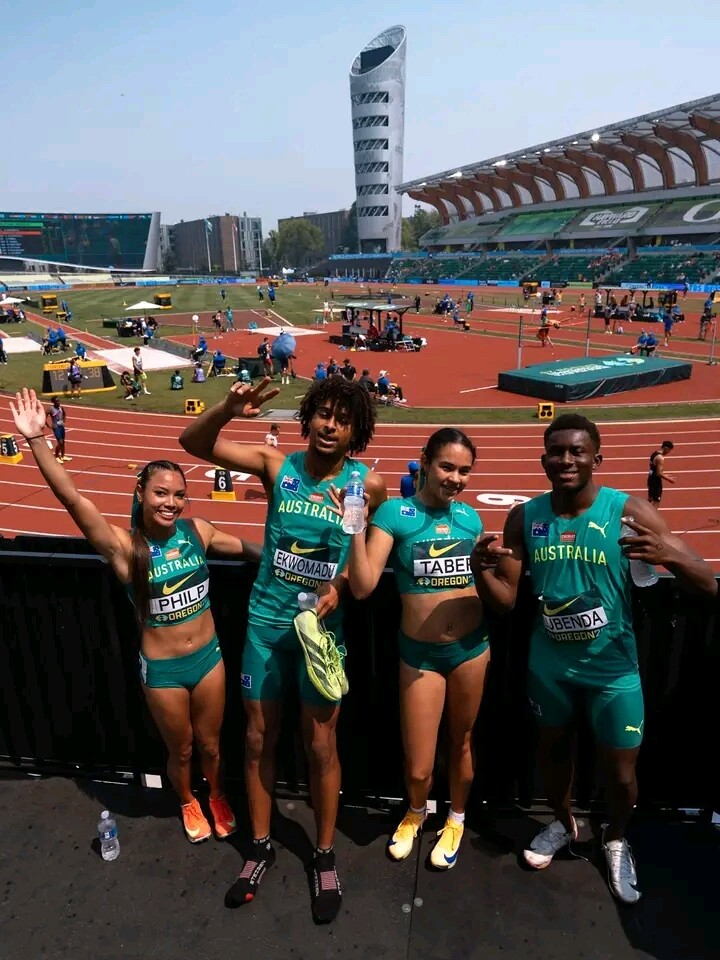
Australia ignited the excitement in the opening heat by storming to a world U20 record of 41.64 seconds, becoming the first team ever to reach that mark and briefly claiming a place in history. For five memorable minutes, the Australian quartet of Uwezo Lebenda, Maya Taber, Kelechi Ekwomadu and Thewbelle Philp stood as world record holders after a sensational performance that also secured their place in Saturday's final.
Their celebration, however, proved to be short-lived.
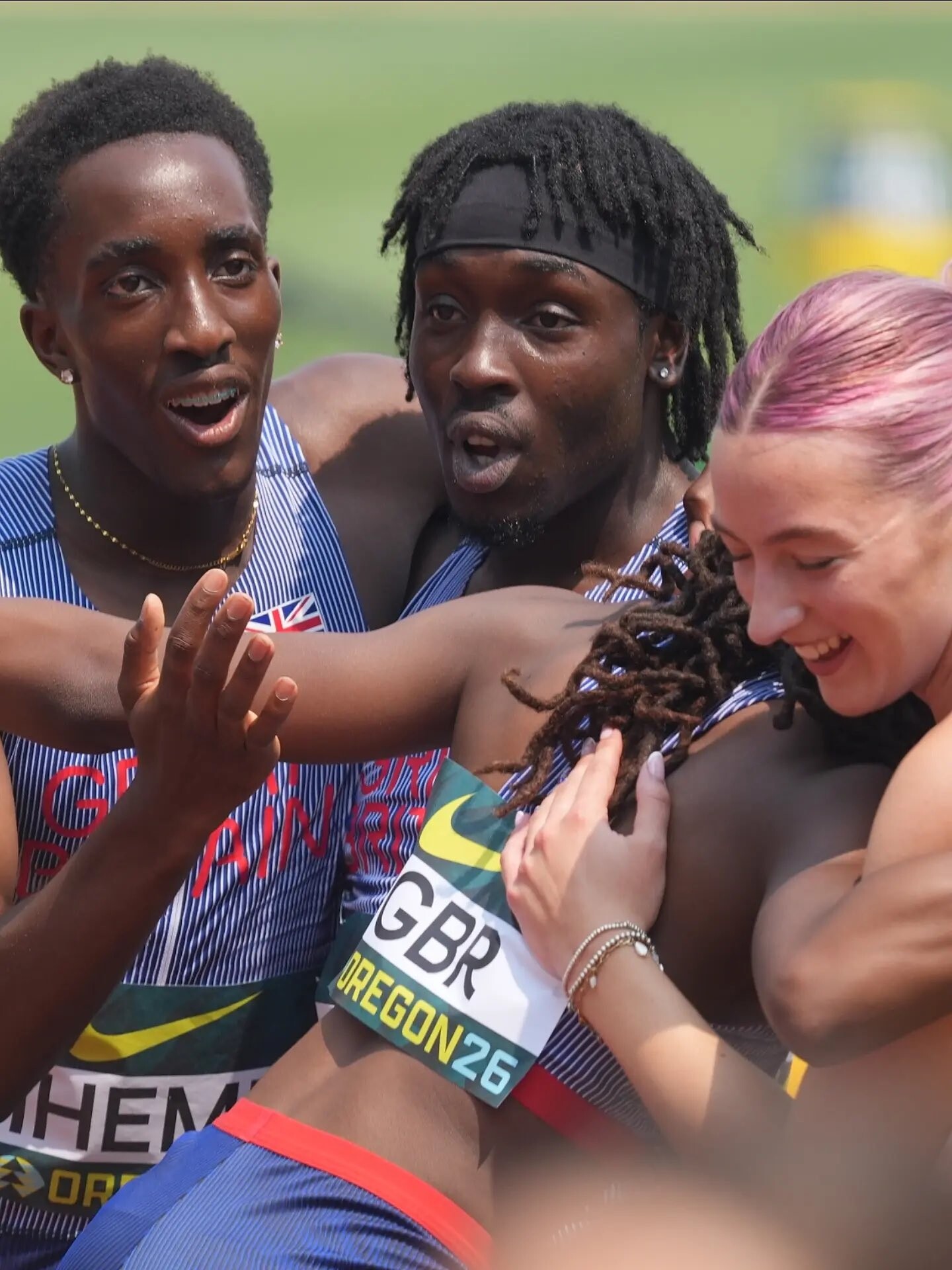
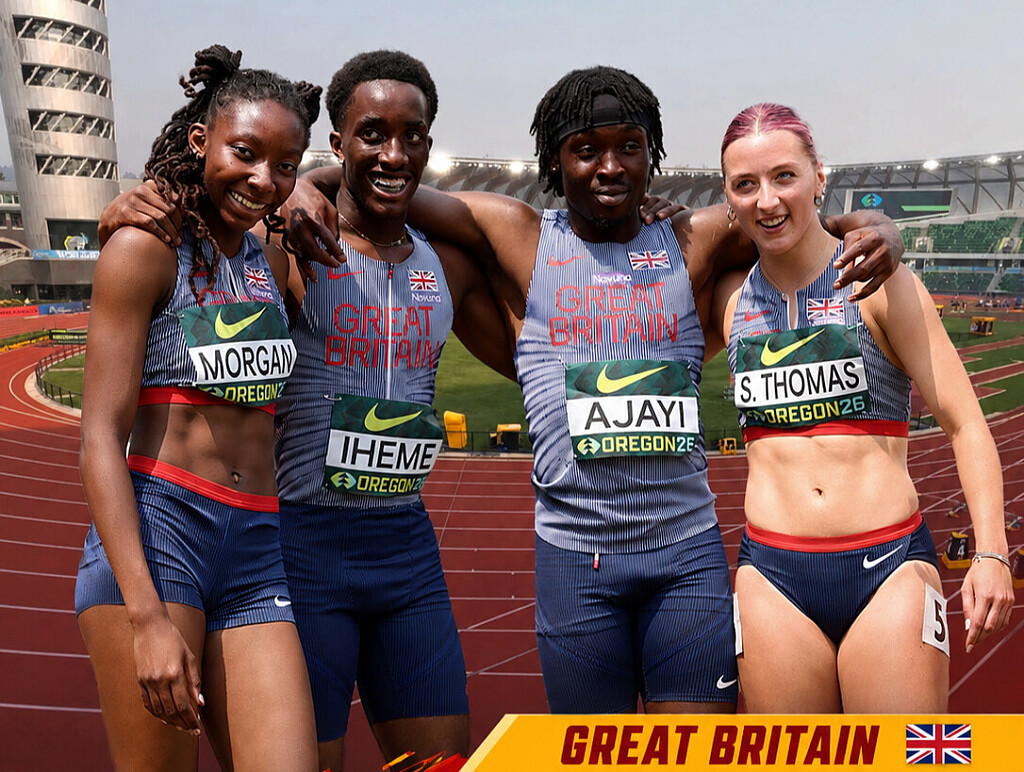
Moments later, Great Britain delivered an even more electrifying display in the second heat, clocking 41.60 to erase Australia's newly established mark and set a fresh World U20 record. It was a masterclass in speed, precision and flawless baton exchanges that propelled the British team into the history books.
The record-breaking quartet of Divine Iheme, Savannah McKenzie Morgan, Mathew Ajayi and Sophie Thomas combined brilliantly from start to finish to produce the fastest mixed U20 4x100m relay ever recorded. Sophie Thomas, who is set to compete for the University of Connecticut (UConn) this year, produced a composed anchor leg to seal the landmark performance.
The extraordinary back-to-back world records underlined the remarkable depth of sprint talent on display, with several other nations also producing outstanding performances to qualify for the final.
Italy impressed with a personal best of 41.74, while the United States advanced comfortably in 41.82. Nigeria also produced a personal best of 41.91 to secure qualification.
Jamaica (42.08 PB), Germany (42.12 PB), France (42.16 PB) and Poland (42.18 PB) completed the eight-team final after delivering strong performances in one of the fastest mixed relay qualifying rounds ever witnessed at the U20 Championships.
With two world records already falling in rapid succession, anticipation is now soaring ahead of Saturday's final. If the qualifying heats are any indication, the newly established global mark of 41.60 may once again come under serious threat as the world's best young sprinters chase another piece of athletics history.
by Erick Cheruiyot for My Best Runs.
Login to leave a comment

Taylor and Maxwell Deliver Golden U.S. Sprint Sweep at World U20 Championships
The United States produced a memorable night of sprinting at the World Athletics U20 Championships in Eugene, Oregon, as Tate Taylor and Mia Maxwell captured the men's and women's 100 metres titles to complete a remarkable American clean sweep in one of track and field's most prestigious junior competitions.
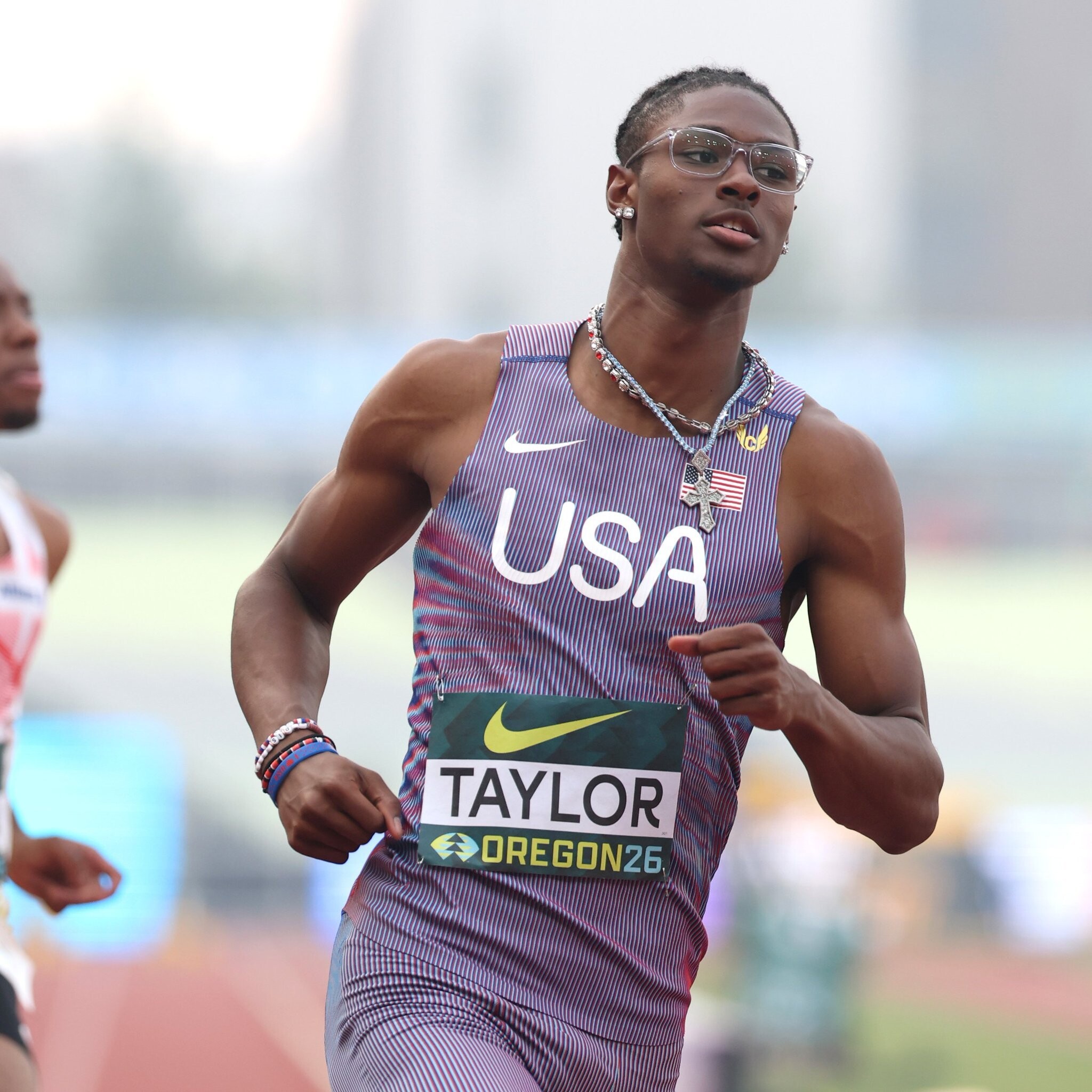
Taylor announced himself among the world's brightest young sprinters with a breathtaking performance in the men's final, powering away over the closing metres to clock a wind-legal personal best of 9.94 seconds. The outstanding run made him the only athlete in the field to break the 10-second barrier and confirmed his status as one of the fastest teenagers in history.
Jamaica's Gary Card claimed the silver medal in 10.05 seconds after a strong race, while South Africa's Marko Ferreira secured bronze in 10.16, completing a highly competitive podium. Despite a closely contested opening half of the race, Taylor's explosive finishing speed proved decisive as he surged clear to take the world junior crown in emphatic fashion.
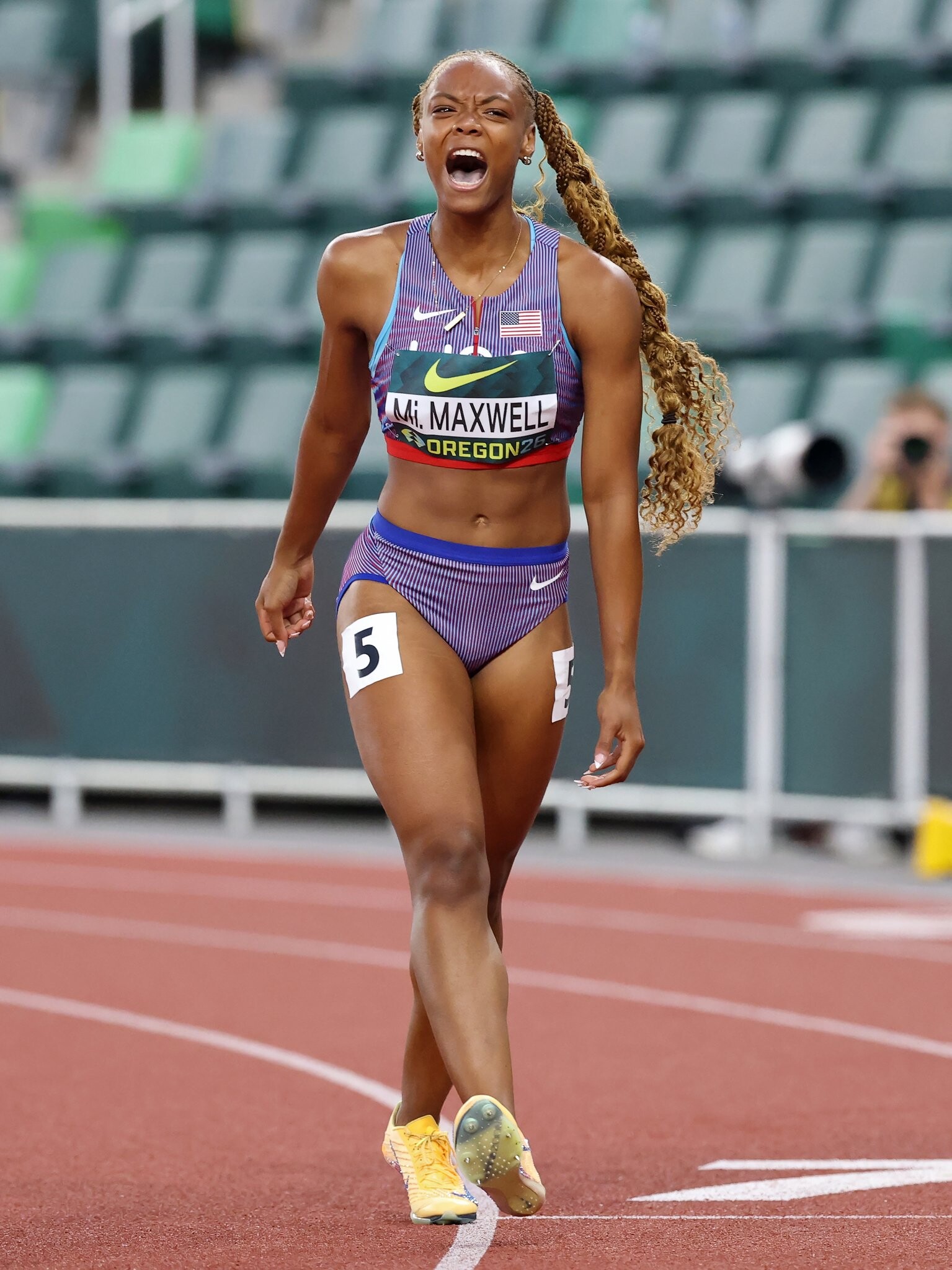
The women's final delivered another thrilling contest, with Mia Maxwell holding her composure under immense pressure to secure the title in 11.14 seconds. Jamaica's Shanoya Douglas mounted a determined late challenge but settled for silver in 11.17, while Italy's Kelly Ann Doualla Edimo earned bronze after crossing the line in 11.27.
The victory capped an unforgettable championship for the Maxwell family. After progressing impressively through the rounds, Mia delivered when it mattered most, while her twin sister, Mariah Maxwell, also reached the final and finished fifth, underlining the family's exceptional sprinting talent on the global stage.
The double triumph marked a dominant evening for Team USA, which swept both 100m gold medals before a home crowd in Eugene. With Taylor producing a historic sub-10-second breakthrough and Maxwell demonstrating remarkable composure in a world-class women's final, the pair provided another glimpse of the exciting future of American sprinting.
by Erick Cheruiyot for My Best Runs.
Login to leave a comment
From Silver to Gold: Charity Cherop Storms to World U20 5000m Crown with Tactical Masterclass
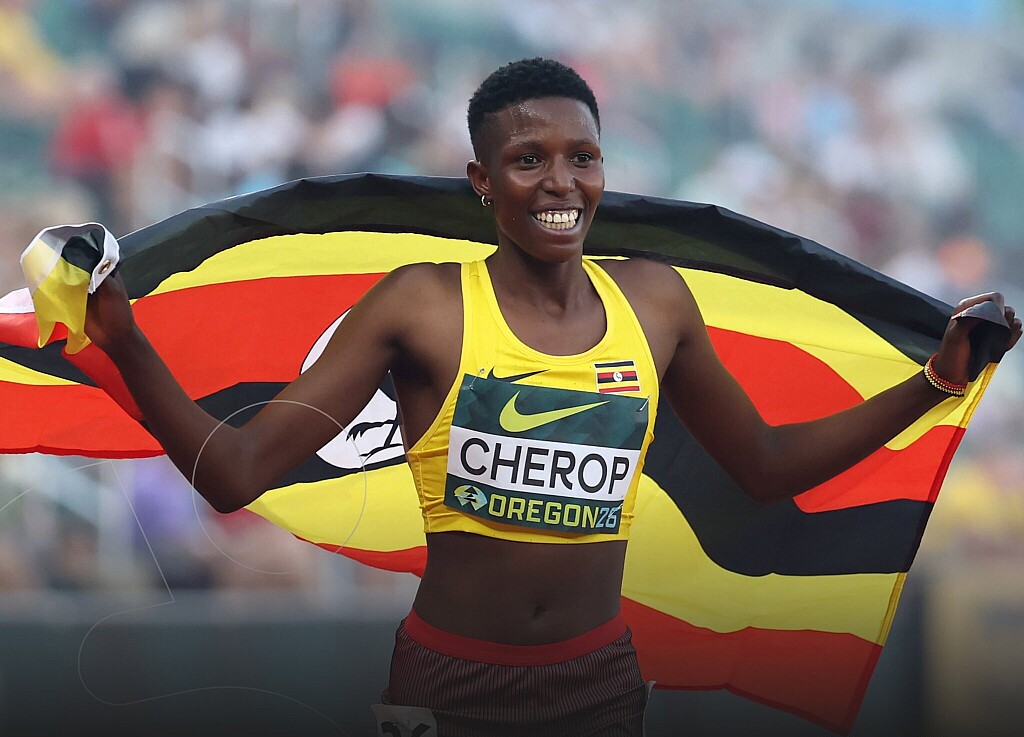
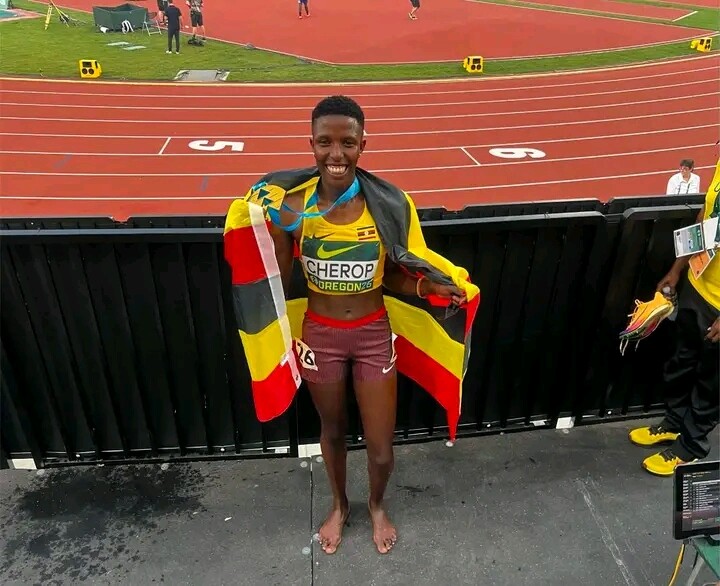
Uganda's 19-year-old long-distance sensation Charity Cherop delivered the performance of her young career, producing a championship masterclass to capture the women's 5000m title at the 2026 World Athletics U20 Championships at Hayward Field in Eugene, Oregon.
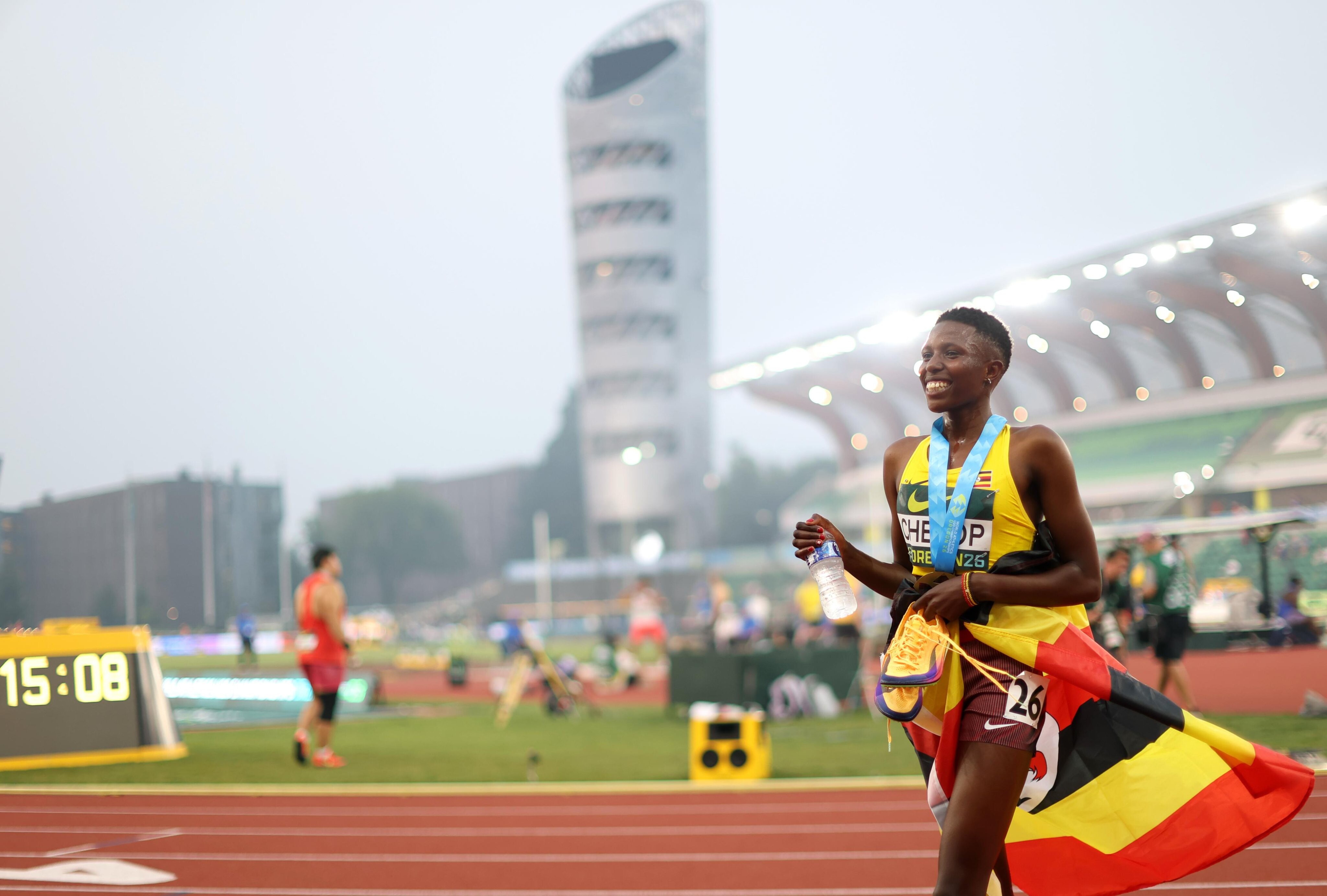
Born on July 4, 2007, Cherop executed a tactically brilliant race, remaining patient throughout the early stages before unleashing a devastating surge over the final kilometre. Her perfectly timed move proved decisive as she crossed the finish line in 15:03.88, becoming the new World U20 champion.
The victory was more than just a world title—it completed a remarkable journey from silver to gold. After finishing runner-up at the previous World Athletics U20 Championships in Lima, Cherop returned to the global stage stronger and more determined, upgrading her silver medal to gold and confirming herself as one of the brightest young stars in international distance running.
Behind the Ugandan star, Ethiopia's Shito Gumi fought bravely to secure the silver medal in 15:07.91, while Kenya's Joyline Chepkemoi delivered an outstanding performance to claim bronze in 15:09.08, setting a new personal best in the process. The battle for the podium remained fiercely contested until the closing stages, with every medal decided through courage, tactical awareness, and a powerful finishing kick.
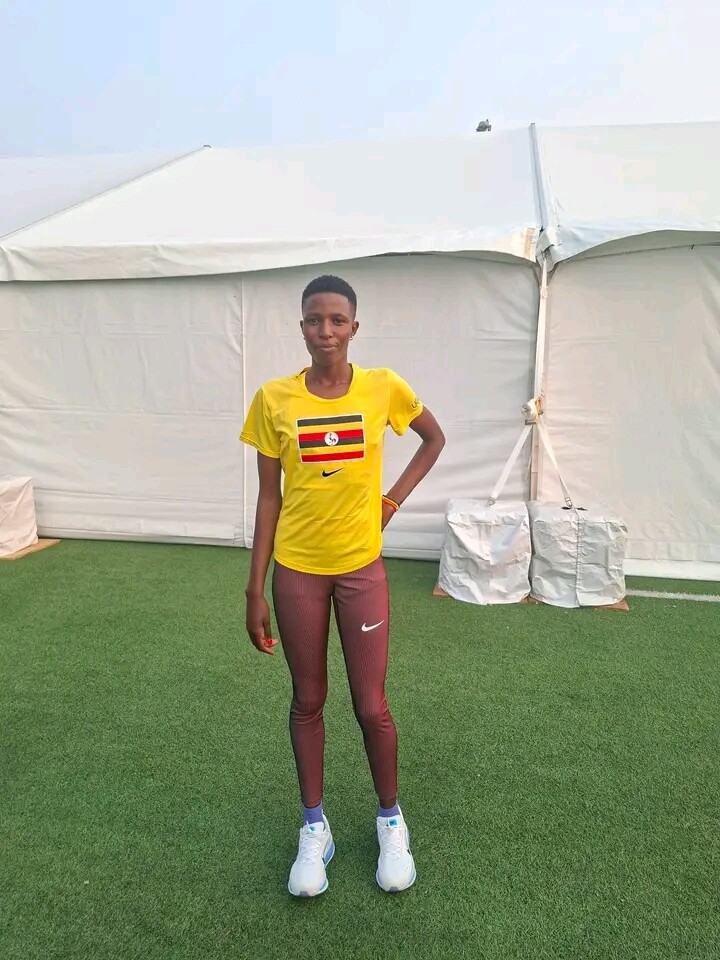
Kenya narrowly missed placing two athletes on the podium as Cynthia Chepkirui finished a strong fourth in 15:14.86, while Sweden's Carmen Cernjul rounded out the top five in 15:22.18.
Ethiopia's Emebet Tilahun placed sixth in 15:32.51, followed by Japan's Yui Onotora in seventh with 15:37.33. Uganda celebrated another top-10 finish through Bentalin Yeko, who finished eighth in 15:48.35, underlining the nation's impressive depth in women's distance running.
Germany's Julia Ehrle claimed ninth in 16:09.53, with France's Lamia Mourabit completing the top ten in 16:10.80.
Further down the field, Portugal's Carolina Correia impressed with an 11th-place finish in a personal best 16:11.47, while Norway's Venus Teffera also celebrated a lifetime best of 16:12.07 in 12th. Germany's Gloria Herold added another personal best, clocking 16:13.75 for 15th place.
France's Laly Porentru, Japan's Ayami Yoshida, the Netherlands' Rosalie Ten Bruggencate, Italy's Sofia Ferrari and Mimosa Miari Fulcis, Spain's Fatima Hernandez, Switzerland's Anina Hirzel, Great Britain's Eliza Nicholson, Canada's Airlie Downie-Back and Athena Andrecyk, Mexico's Kenya Cuahutle, and Australia's Libby Mantay and Imogen Baker all battled courageously to the finish, highlighting the exceptional depth and global talent assembled for the championship final.
The only athlete unable to start the race was the United States' Emily Wisniewski, who was listed as DNS.
The women's 5000m final showcased the very best of championship distance running—patience, tactical intelligence, and a thrilling finish. On the biggest stage of her junior career, Charity Cherop produced a race worthy of a world champion, transforming silver in Lima into gold in Eugene and writing another unforgettable chapter in Uganda's rich distance-running legacy.
by Erick Cheruiyot for My Best Runs.
Login to leave a comment

Maxwell Twins Storm into World U20 100m Final with Dominant Sprint Performances
The Maxwell twins, Mariah and Mia, continued their outstanding run at the World Athletics U20 Championships in Oregon by powering into the women's 100 metres final after commanding displays in both the heats and semi-finals.
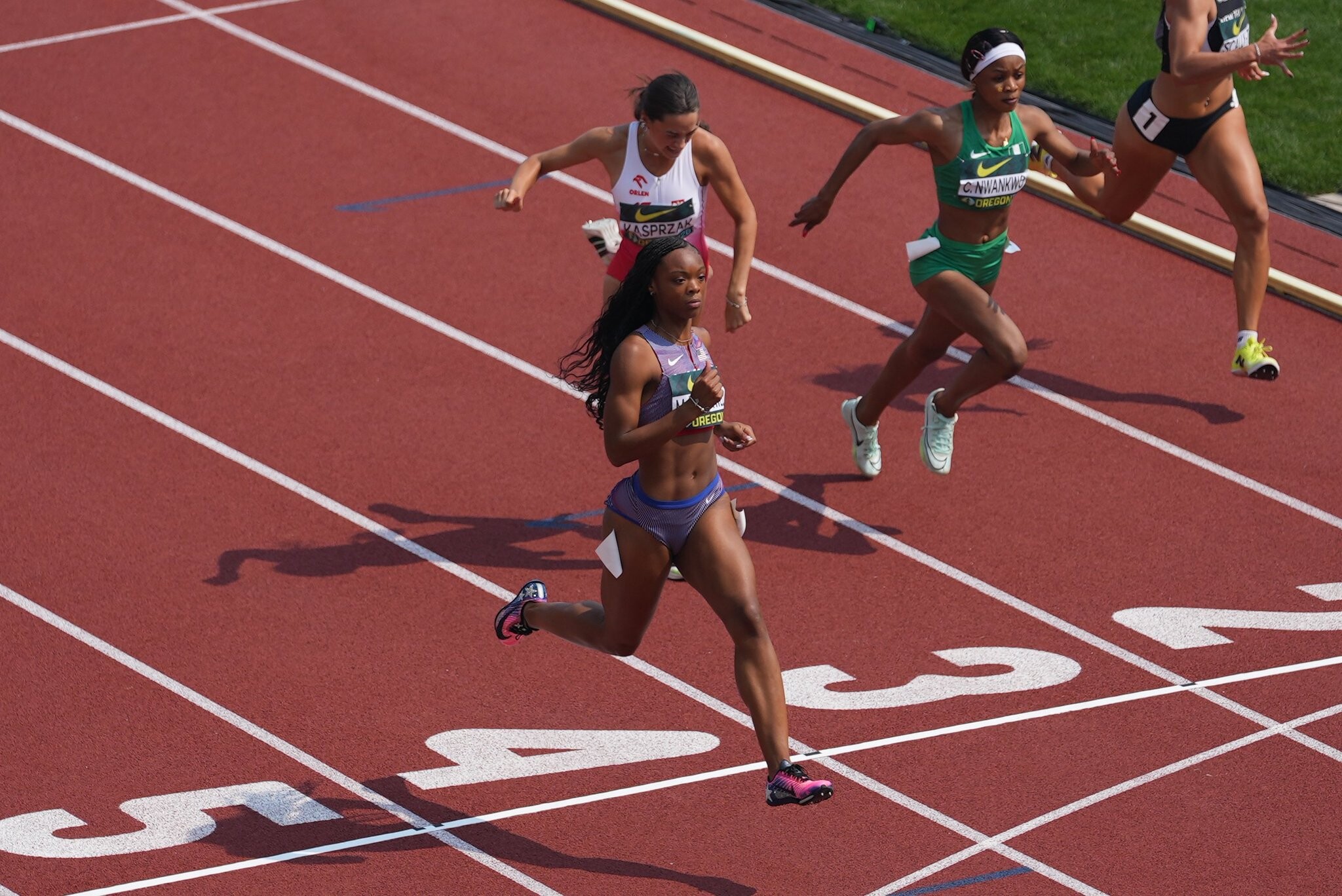
Mariah opened her campaign with an impressive victory in her opening heat, clocking 11.33 seconds to advance comfortably. Moments later, Mia matched her sister's performance by winning Heat 6 in 11.37 seconds, ensuring both Americans progressed safely to the semi-finals while looking well within themselves.
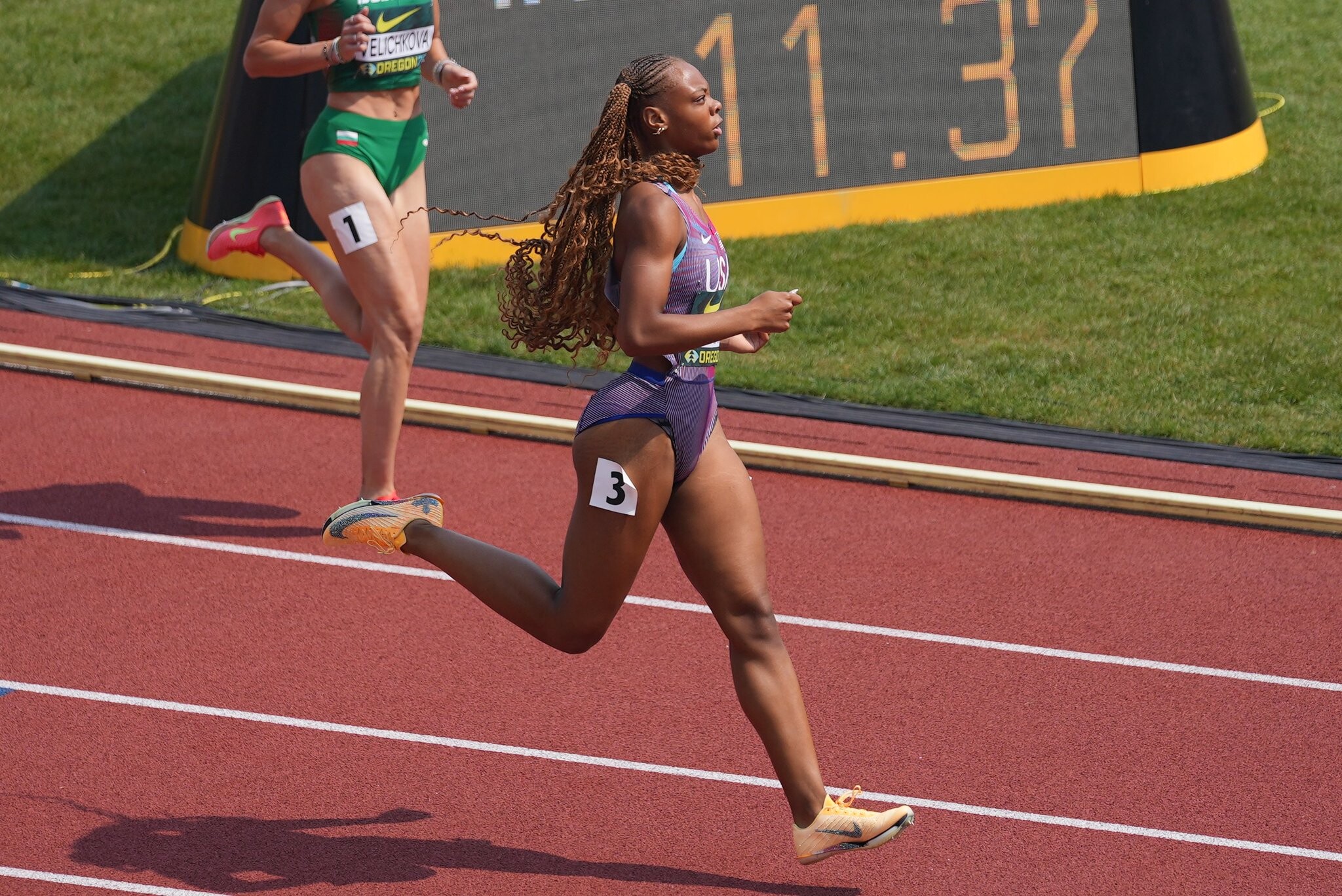
If their opening-round performances were convincing, the semi-finals were even more emphatic.
Mia Maxwell stamped her authority on the event by producing the fastest semi-final performance of the day, surging to victory in Heat 2 in a superb 11.13 seconds. Her sister, Mariah, also delivered when it mattered most, winning her place in the final with a composed run of 11.25 seconds in Heat 3.
The Maxwell sisters' remarkable performances ensured they both booked places in the championship final, strengthening their status as leading contenders for the world junior title. Their ability to deliver under pressure has made them one of the biggest stories of the championships, with the twins now just one race away from global glory.
Elsewhere in the semi-finals, Italy's Kelly Ann Maevane Doualla Edimo claimed victory in the opening semi-final, while Jamaica's Shanoya Mikalia Douglas emerged victorious in the third semi-final to complete an impressive lineup for the title showdown.
The women's 100m final will feature an exceptional field comprising Mia Maxwell (United States), Theianna-Lee Terrelonge (Jamaica), Shanoya Mikalia Douglas (Jamaica), Xenia Buri (Switzerland), Mariah Maxwell (United States), Kelly Ann Maevane Doualla Edimo (Italy), Emma Goretzka (Germany), Jady Emmanuel (Saint Lucia), and Lena Anochili (Germany).
With both Maxwell sisters in scintillating form and carrying the fastest performances into the final, anticipation is building for what promises to be one of the most exciting sprint races of the World Athletics U20 Championships.
by Erick Cheruiyot for My Best Runs.
Login to leave a comment
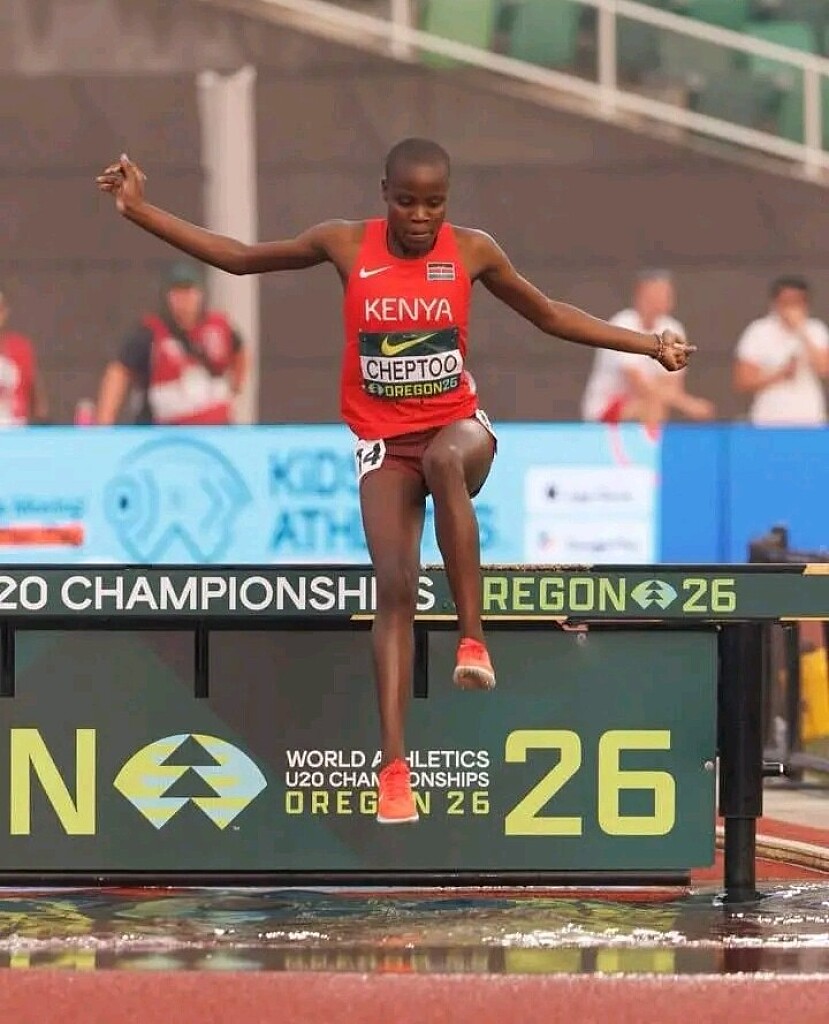
Composed Under Pressure: Anatasha Cheptoo Overcomes Early Drama to Secure World U20 Steeplechase Final Berth
Kenya's Anatasha Cheptoo produced one of the most memorable moments of the opening round of the women's 3,000m steeplechase at the World Athletics U20 Championships in Oregon, USA, displaying remarkable composure after an early setback to comfortably qualify for the final.
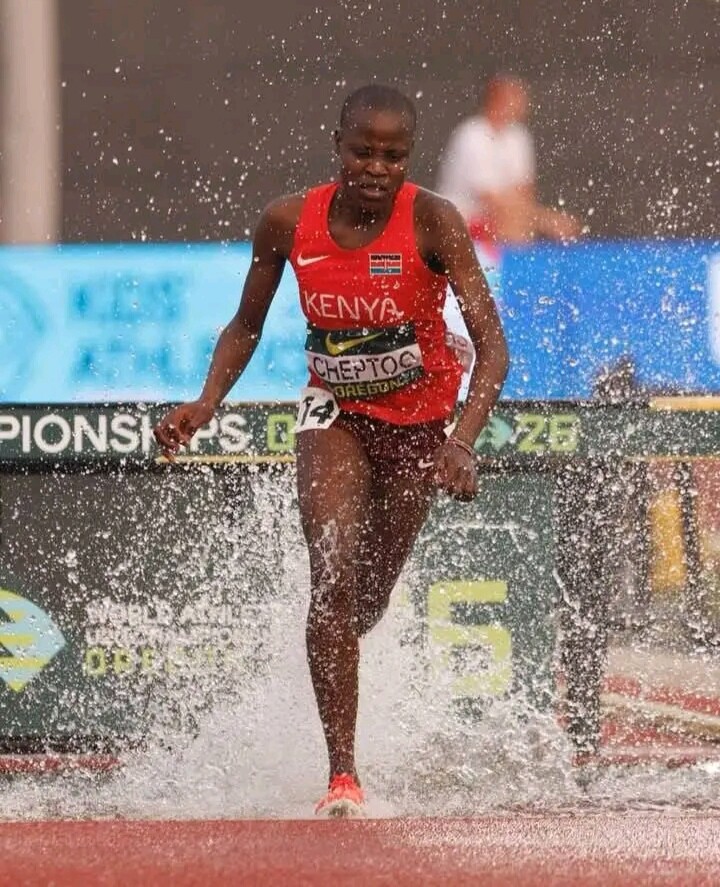
In a dramatic sequence during her heat, Cheptoo accidentally missed the water jump. Realizing the mistake almost immediately, she turned back, retraced her steps and cleared the obstacle correctly before rejoining the race. Although the incident briefly disrupted her rhythm, the young Kenyan refused to panic.
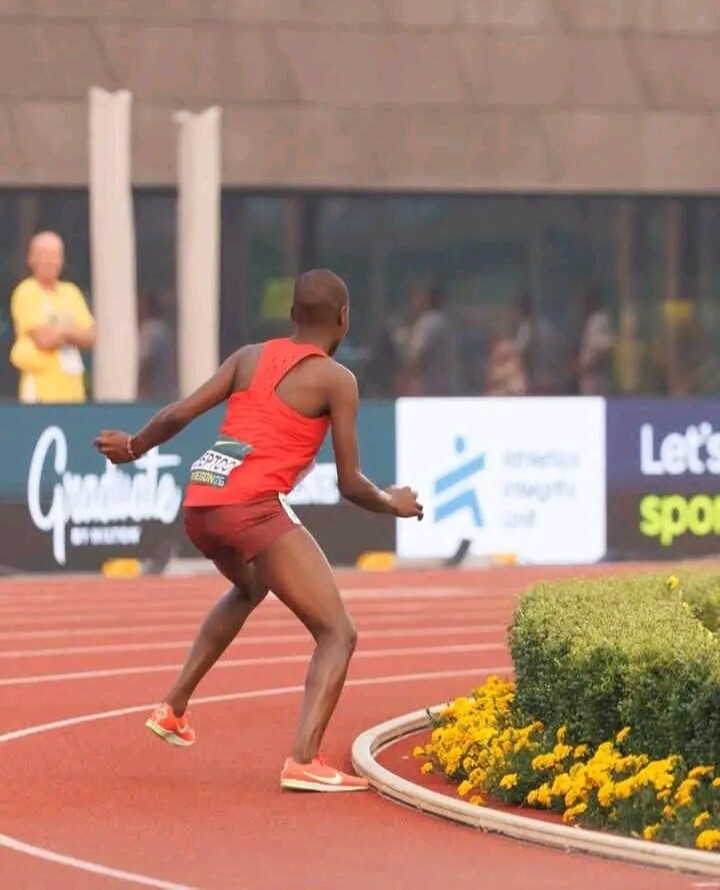
Showing maturity beyond her years, Cheptoo gradually worked her way back through the field with a determined and controlled performance. Her resilience paid off as she crossed the finish line in second place in 9:51.02, safely booking her place in the championship final.
What made the performance even more impressive was the way she transformed a potentially race-ending mistake into a qualification-worthy run. Many athletes would have struggled to recover after losing valuable seconds and momentum, but Cheptoo's calm decision-making and unwavering determination turned adversity into one of the championship's standout moments. It was a powerful reminder that championship racing is as much about mental toughness as it is about speed.
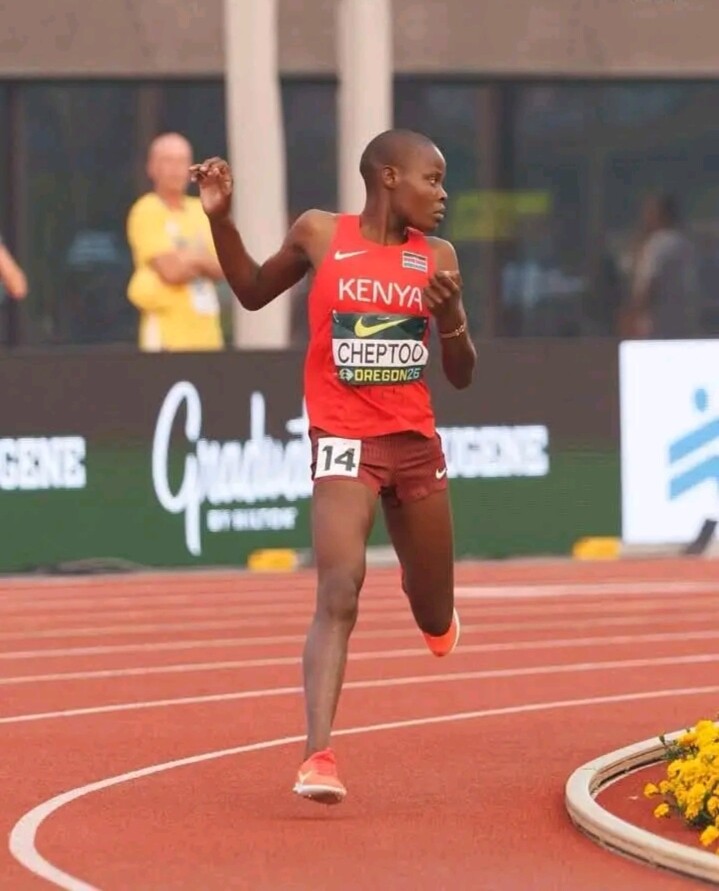
The qualification also reinforces Kenya's enduring reputation as a powerhouse in the steeplechase. For decades, Kenyan athletes have dominated the barriers and water jump on the global stage, and Cheptoo's fearless display suggests another exciting talent is emerging to carry that proud tradition into the future. Her ability to remain composed under immense pressure will make her one of the athletes to watch when the medals are decided.
Cheptoo will now shift her focus to the women's 3,000m steeplechase final, where she will be aiming to challenge for a place on the podium and add another medal to Kenya's campaign at the World Athletics U20 Championships.
The final is scheduled for Friday, 7 August 2026, and after her remarkable recovery in the heats, athletics fans will be eager to see whether the resilient Kenyan can transform an unforgettable qualification into a medal-winning performance.
by Erick Cheruiyot for My Best Runs.
Login to leave a comment

Eugene Welcomes the Future of Athletics as the 2026 World U20 Championships Get Underway
The global spotlight turns to Eugene, Oregon, today as the 2026 World Athletics U20 Championships officially get underway at the iconic Hayward Field, launching five days of elite competition that will showcase the sport's brightest young talents.
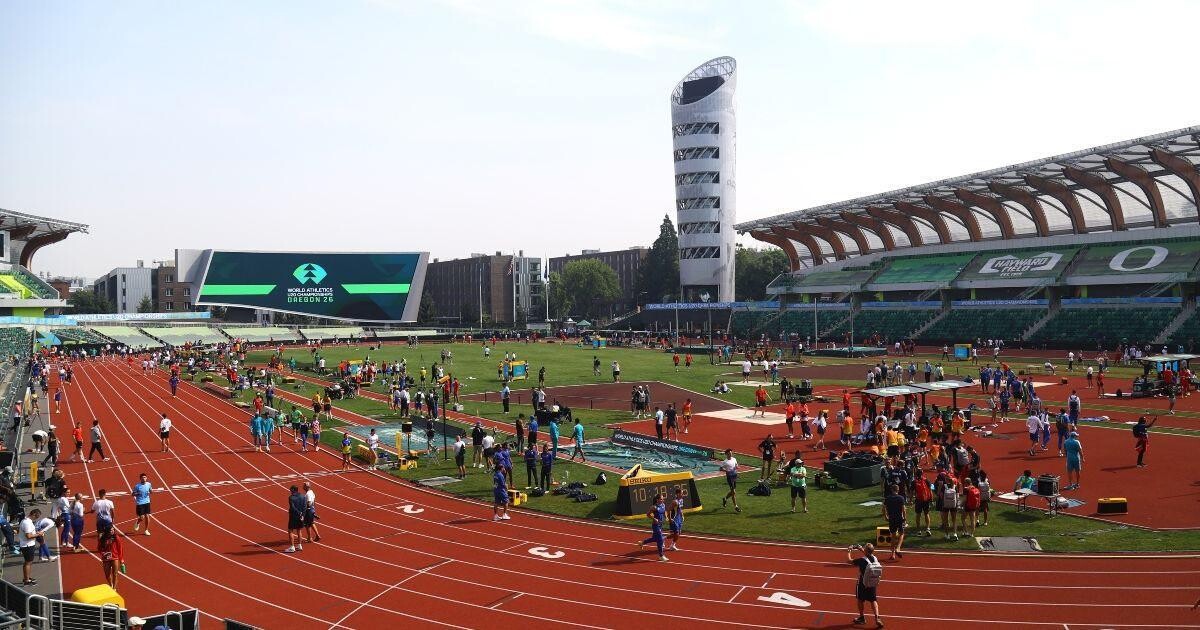
Running from August 5 to August 9, the 40th edition of the championships is the biggest in the event's history, bringing together more than 1,800 athletes representing 147 nations. For many of these rising stars, the championships mark the first major step toward future Olympic, World Championship, and Diamond League success.
The opening day immediately promises world-class action with three gold medals on the line. The women's 5,000m and men's 5,000m finals will test the endurance of the world's finest young distance runners, while the mixed 4×400m relay is expected to provide a thrilling conclusion to the day's competition as teams battle for the first relay title of the championships.
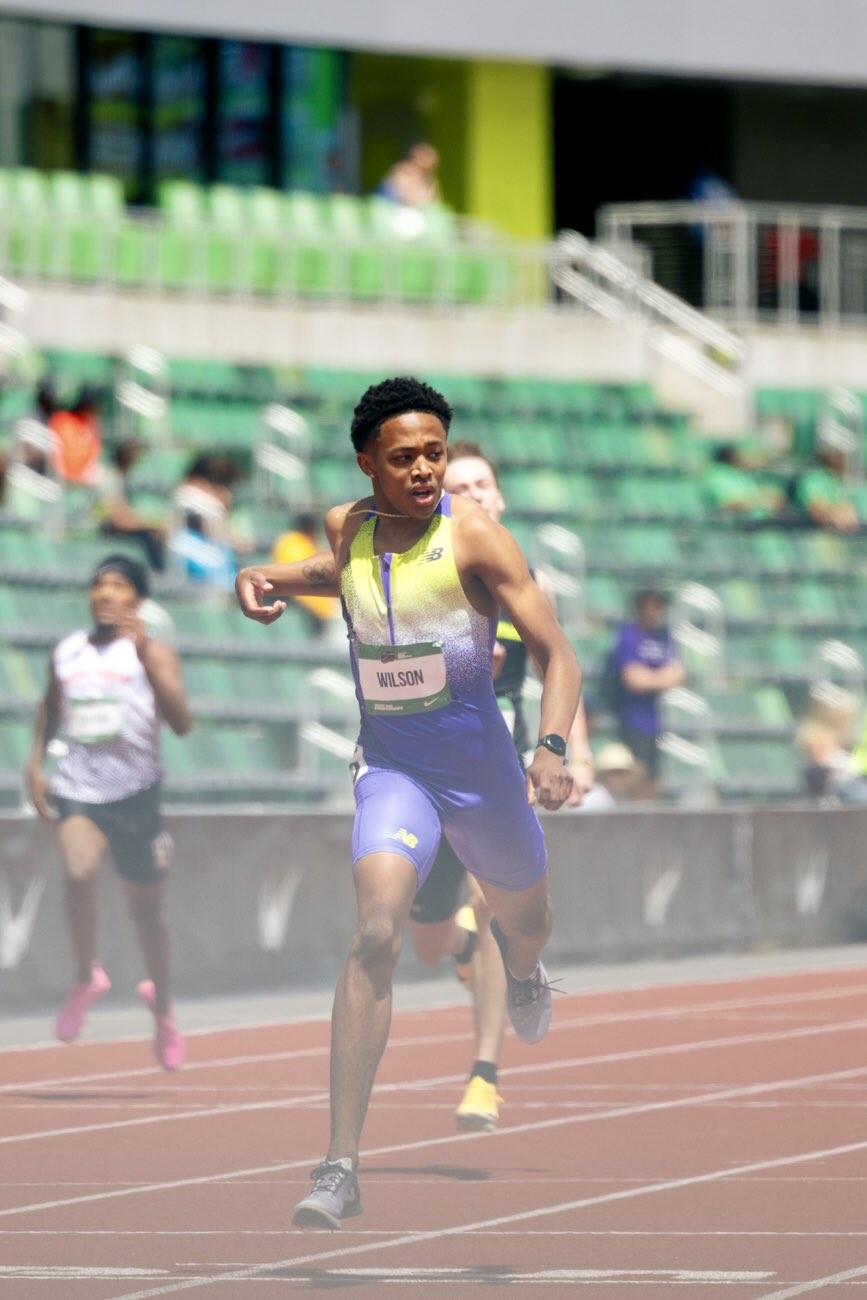
Several exciting athletes arrive in Eugene carrying high expectations. American sprint sensation Quincy Wilson will be one of the biggest attractions on home soil after establishing himself as one of the fastest young quarter-milers in the world. Fellow American Tate Taylor, the high school national record holder, will also be aiming to translate his remarkable speed into championship gold.
Jamaica's emerging sprint talent Shanoya Douglas enters the competition determined to challenge for the women's 200m title, while Kenya's Frankline Kibet will spearhead his country's pursuit of more distance-running success, continuing a tradition that has produced some of the greatest champions in athletics history.
Beyond the medals, the World U20 Championships have long served as the launching pad for future legends of the sport. Numerous Olympic and world champions first announced themselves on this very stage, making Eugene the perfect setting for another generation of athletes eager to leave their mark on the global scene.
Fans around the world will be able to follow every moment of the action through a range of broadcast partners, including Peacock in the United States, SuperSport across Sub-Saharan Africa, Eurovision Sport throughout Europe, CBC Gem in Canada, Seven Network in Australia, and World Athletics+ in eligible territories.
With national pride, championship titles, and the chance to announce themselves to the world at stake, the stage is set for five unforgettable days of athletics. As competition begins at the historic Hayward Field, the next generation of global stars is ready to write the opening chapter of what could become remarkable careers.
by Erick Cheruiyot for My Best Runs.
Login to leave a comment
Where Greatness Begins: The Day a 15-Year-Old Usain Bolt Changed Sprinting Forever
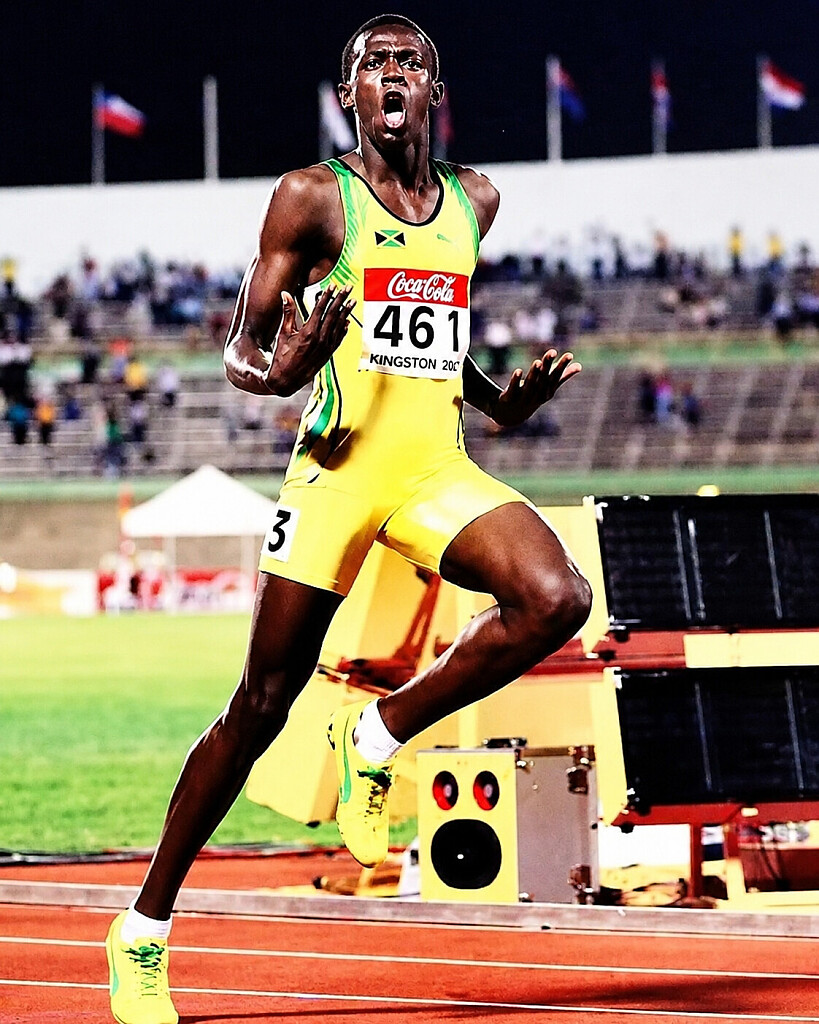
Long before he became the fastest man in history, before the Olympic gold medals, world records, and global superstardom, Usain Bolt was simply a gifted teenager with extraordinary speed and limitless potential. In 2002, on the track at Kingston's National Stadium in Jamaica, the world witnessed the first chapter of a story that would forever change athletics.
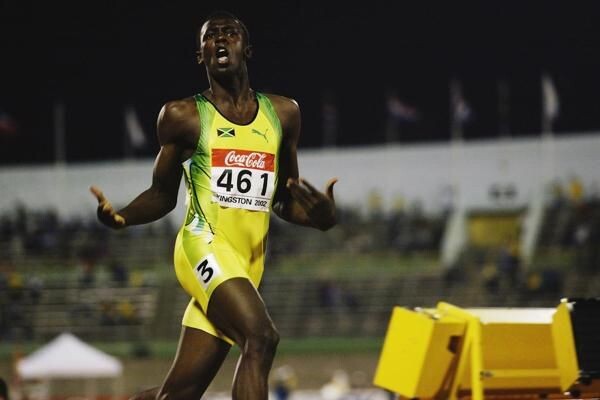
At just 15 years old, Bolt lined up for the men's 200 metres at the World Junior Championships with the weight of expectation resting on young shoulders. Competing before a passionate home crowd, the Jamaican prodigy produced a performance that instantly captivated the athletics world. Crossing the finish line in 20.61 seconds, he became the youngest athlete ever to win the men's 200m title at the championships.
It was far more than a gold medal. It was the moment the world realised that a once-in-a-generation talent had arrived.
Bolt's victory in Kingston marked the beginning of one of the greatest careers in sporting history. Over the years that followed, he rewrote the record books, dominated the Olympic Games and World Championships, and transformed sprinting into a global spectacle through his breathtaking speed, infectious personality, and unrivalled confidence. His legacy continues to inspire young athletes across the globe, many of whom dream of following the same path he once began as a teenager.

This week, that dream comes alive once again as the World Athletics U20 Championships take centre stage at the iconic Hayward Field in Eugene, Oregon. The venue has already witnessed the birth of future superstars. In 2014, it was where Britain's Dina Asher-Smith and Uganda's Joshua Cheptegei captured their first global titles, launching careers that would later produce world championships, Olympic medals, and lasting legacies in athletics.
Twelve years later, another generation arrives in Eugene hoping to create its own defining moment.
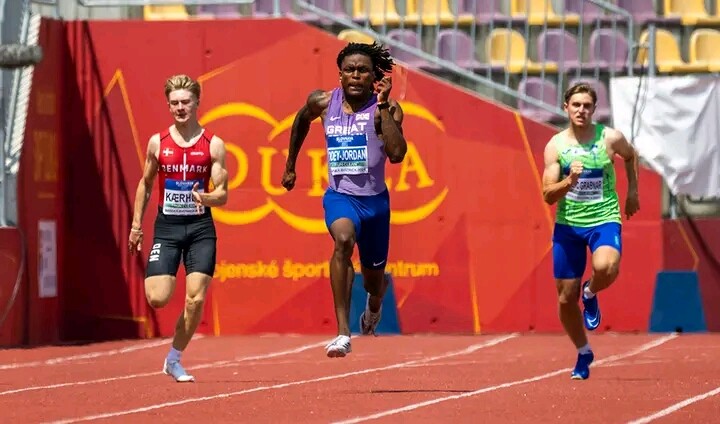
Among the brightest young talents is Great Britain's Jake Odey-Jordan, the 200m bronze medallist from Lima who now owns the European U20 100m record after an astonishing 10.01-second performance. He enters the championships eager to build on his growing reputation as one of Europe's most exciting young sprinters.
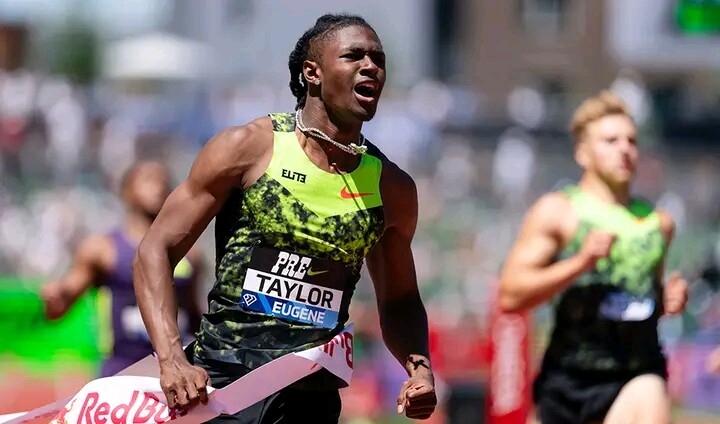
The United States will look to Tate Taylor, who has already made history as the first American high school athlete to break the 20-second barrier for the 200 metres. Fresh from a Diamond League victory in a sensational 19.75 seconds, he arrives in Eugene carrying the momentum of one of the most remarkable junior seasons ever recorded.
Jamaica, the nation that introduced the world to Usain Bolt, will once again have high hopes through Shanoya Douglas. The talented sprinter has established herself as one of the championship's leading contenders after producing lifetime bests of 10.98 seconds for the 100m and 22.11 for the 200m this season.
History has repeatedly shown that the World U20 Championships are far more than a junior competition. They are often the first chapter in the careers of future Olympic champions, world record holders, and global icons. Every generation arrives with ambitious dreams, but only a select few leave having announced themselves to the world.
No one can say with certainty whether the next Usain Bolt will emerge this week. Greatness cannot be predicted, and legends are never manufactured. Yet every legendary career begins with a single breakthrough performance.
For Bolt, that defining moment came in Kingston in 2002.
Now, under the famous lights of Hayward Field, another group of gifted teenagers stands ready to chase history. Somewhere among them could be the next athlete whose name will inspire the world for years to come.
by Erick Cheruiyot for My Best Runs.
Login to leave a comment
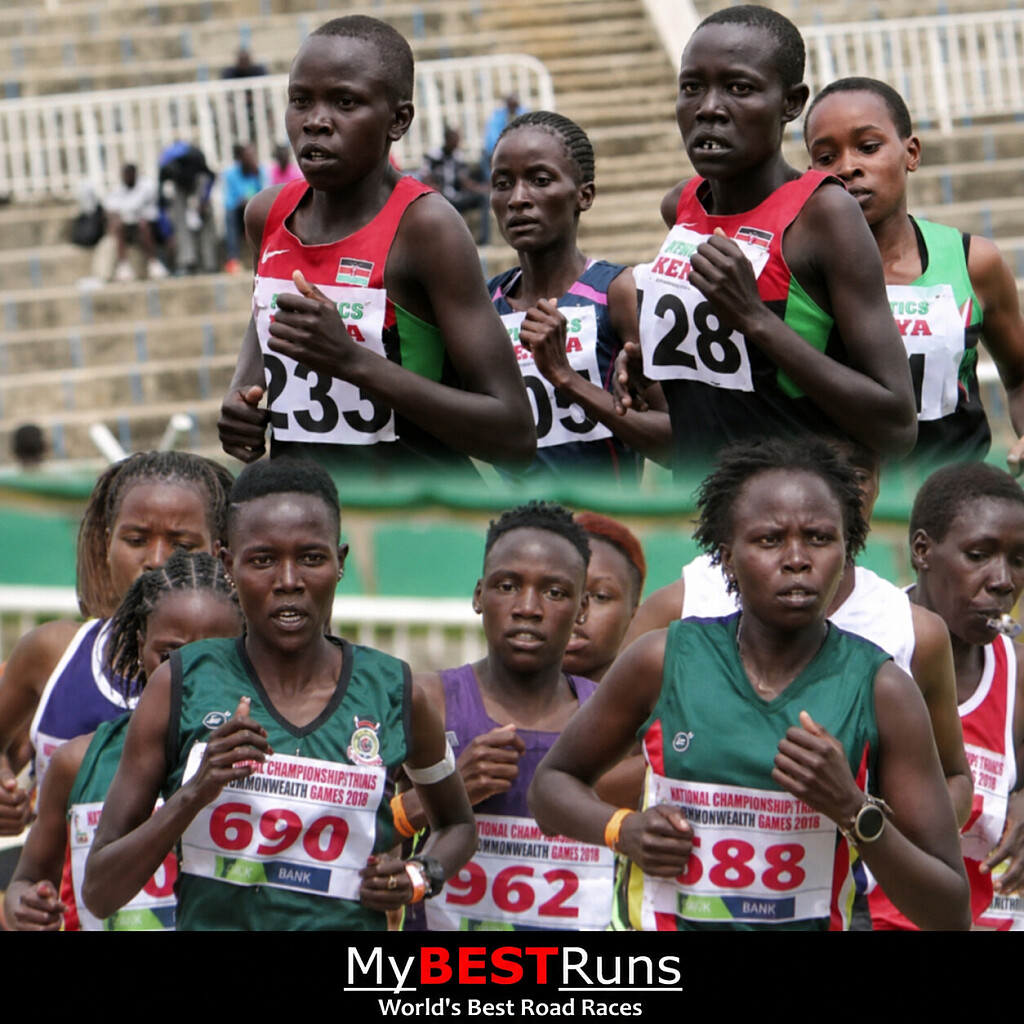
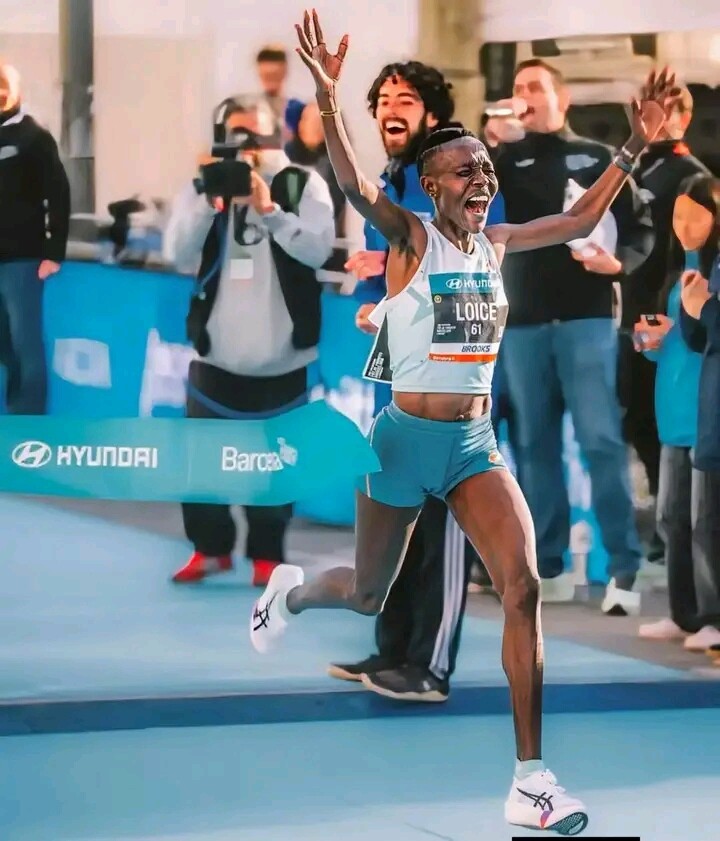
From Eugene To Global Greatness: How Lilian Kasait Rengeruk And Loice Chemnung Turned Teenage Promise Into World-Class Success
Twelve years can transform careers, but for Lilian Kasait Rengeruk and Loice Chemnung, they have transformed youthful potential into enduring excellence. Their remarkable rise from promising teenagers on the global junior stage to two of Kenya's finest distance runners stands as a testament to resilience, patience, and unwavering commitment.
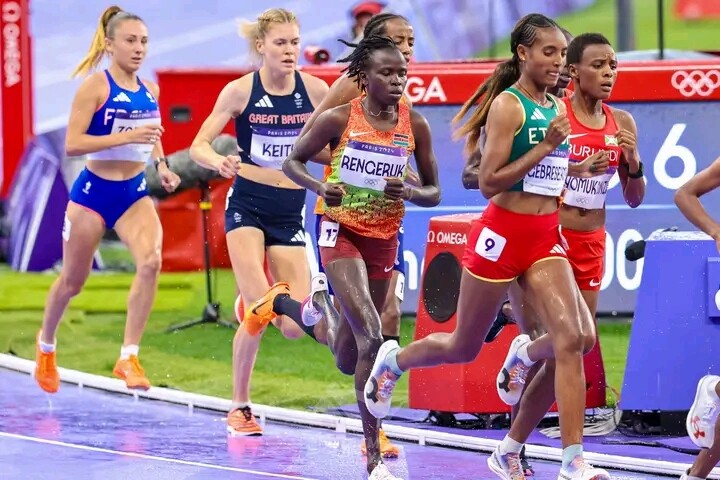
The story began in July 2014 at the World Under-20 Championships in Eugene, Oregon, where two 17-year-old Kenyan athletes stepped onto the famous Hayward Field with dreams far bigger than their years. Although their paths on the track differed, both displayed the talent and determination that would eventually propel them to the highest level of international distance running.
Rengeruk delivered one of the championship's most memorable performances in the women's 3,000 metres. Running with fearless confidence, she dictated much of the race before a thrilling final-lap battle saw American star Mary Cain surge past in the closing metres. Despite narrowly missing gold, Rengeruk secured a well-deserved silver medal in 9:00.53, announcing herself as one of the brightest young talents in global athletics.
Chemnung, meanwhile, contested the fiercely competitive women's 5,000 metres, where Ethiopia dominated the medals. She battled courageously throughout the race and finished fifth, gaining invaluable experience against some of the world's finest junior distance runners.
That championship proved to be only the beginning.
Over the past decade, both athletes have steadily evolved from accomplished track runners into elite performers over longer distances, earning recognition on some of the world's biggest roads while continuing to showcase Kenya's rich tradition of distance running.
Rengeruk has enjoyed an extraordinary transition. She stunned the athletics world by winning the Daegu Marathon on her debut in 2:19:33, overcoming a dramatic fall in the closing stages to still reach the finish line first. Her impressive résumé also includes a superb half marathon personal best of 1:03:32—among the fastest performances ever recorded—and a world-class 10,000-metre best of 29:26.89.
Chemnung's progression has been equally impressive. She has established herself as one of Kenya's premier long-distance runners by winning consecutive national 10,000-metre titles before making a spectacular impact on the roads. Her course-record victory at the Barcelona Half Marathon in 1:04:01 elevated her among the fastest women in history over the distance, while her outstanding marathon debut of 2:18:24 in Chicago confirmed her credentials as one of Kenya's brightest marathon prospects. Her commitment to the marathon was further demonstrated when she chose to focus on the event instead of pursuing a place at the Commonwealth Games.
Their achievements underline a truth often overlooked in modern sport: greatness is rarely built overnight. It is forged through years of disciplined training, perseverance during setbacks, and the courage to embrace new challenges.
Twelve years after sharing the world junior stage in Eugene, Lilian Kasait Rengeruk and Loice Chemnung continue to inspire a new generation of athletes. Their journey from talented teenagers to internationally acclaimed distance stars is more than a story of medals and records—it is proof that sustained hard work, belief, and consistency can transform youthful promise into a legacy of excellence.
by Erick Cheruiyot for My Best Runs.
Login to leave a comment
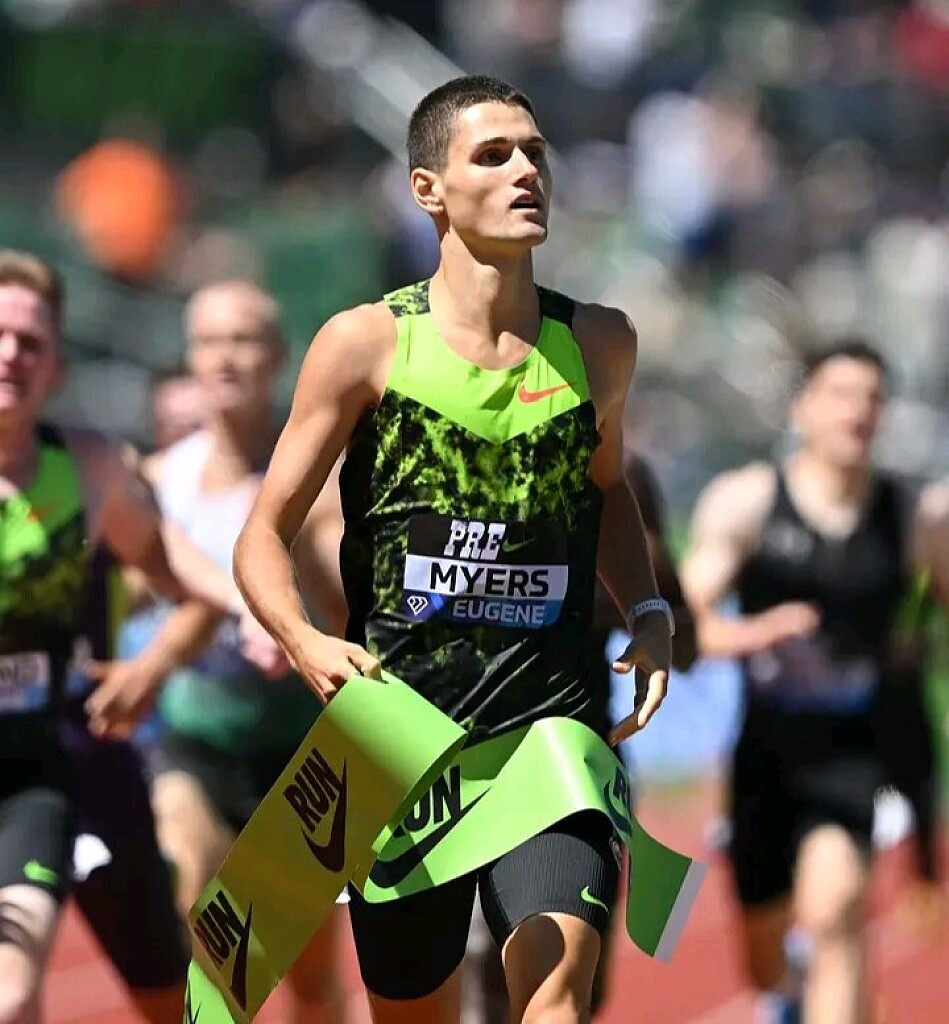
Cameron Myers Rewrote Australian History with Record-Breaking Bowerman Mile Victory
At just 20 years old, Cameron Myers is rapidly becoming one of the brightest stars in global middle-distance running.
The young Australian delivered the performance of his career at the prestigious Bowerman Mile in Eugene, Oregon, producing a fearless front-running display to clock a sensational 3:46.06—the fastest mile in the world this year. The remarkable run not only earned him victory but also shattered the Australian national record, set a new Oceania record, and firmly established him among the sport's elite.
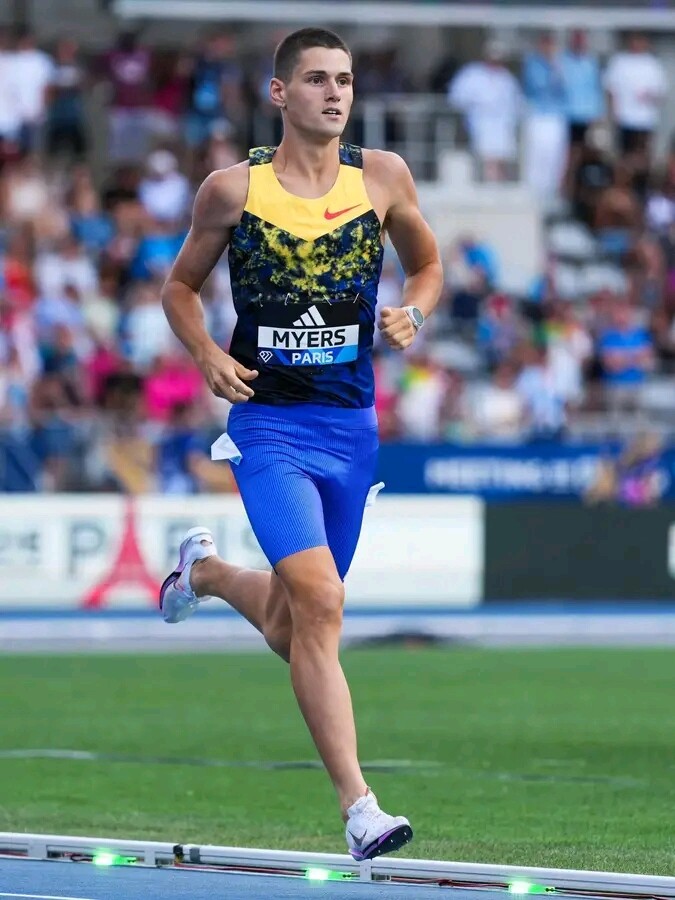
In a race packed with world-class talent, Myers showed maturity well beyond his years. As the pacemaker stepped aside during the third quarter of the race, the Australian immediately seized control. Rather than waiting for others to dictate the pace, he confidently moved to the front, maintained his rhythm through the bell lap, and unleashed a composed finishing kick that none of his rivals could answer.
American star Yared Nuguse crossed the line second in a season's best 3:46.61, while Ethan Strand claimed third in 3:46.97. Despite racing on home soil, the North American record holder and the rest of the field were unable to reel in the determined Australian, who never relinquished the lead once he took command.
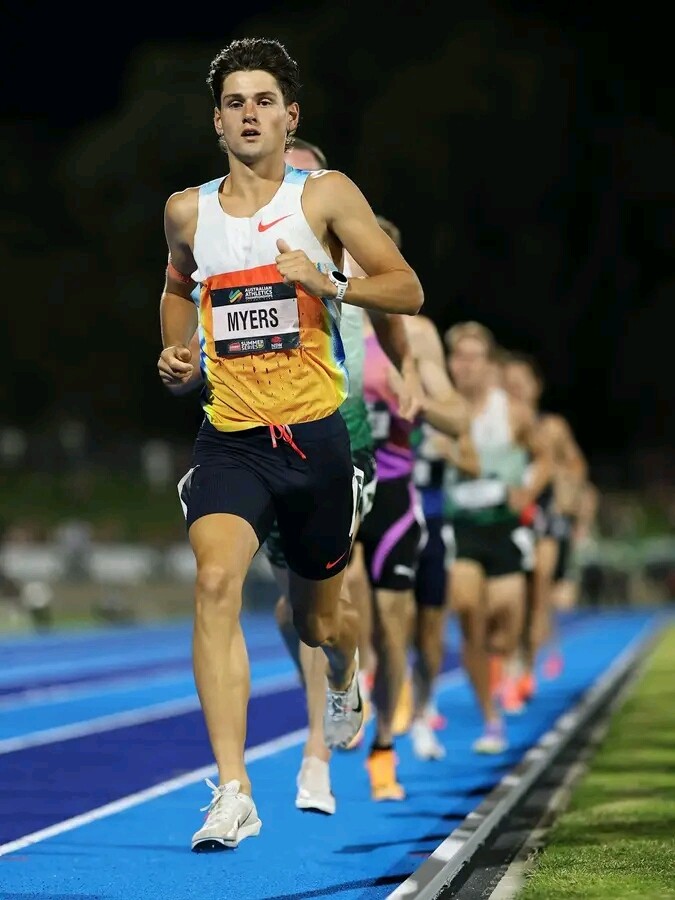
The victory crowns an extraordinary fortnight for Myers.
Only 13 days earlier, he had stormed to 3:28.00 at the Paris Diamond League, breaking the Australian 1500-metre record. Now, with the national mile record also under his name, Myers has become the holder of Australia's two most prestigious middle-distance records before celebrating his 21st birthday.
His latest performance also secured another piece of history. Myers is now the youngest man ever to run under 3:47 for the mile, a milestone that highlights both his exceptional talent and remarkable composure under pressure.
The Bowerman Mile has long been regarded as one of the sport's most iconic races, producing countless unforgettable performances over the past five decades. Many of the greatest milers in history have left their mark on Hayward Field, and Cameron Myers has now added his name to that distinguished legacy.
What makes his rise even more remarkable is not simply the records themselves, but the speed at which they are arriving. Achievements that often take athletes years—sometimes an entire career—to accumulate are coming to Myers within weeks.
At only 20 years old, Cameron Myers is no longer just one of Australia's most promising prospects. He has become a genuine global contender, and if his current trajectory is any indication, the best chapters of his remarkable journey are still to come.
by Erick Cheruiyot for My Best Runs.
Login to leave a comment
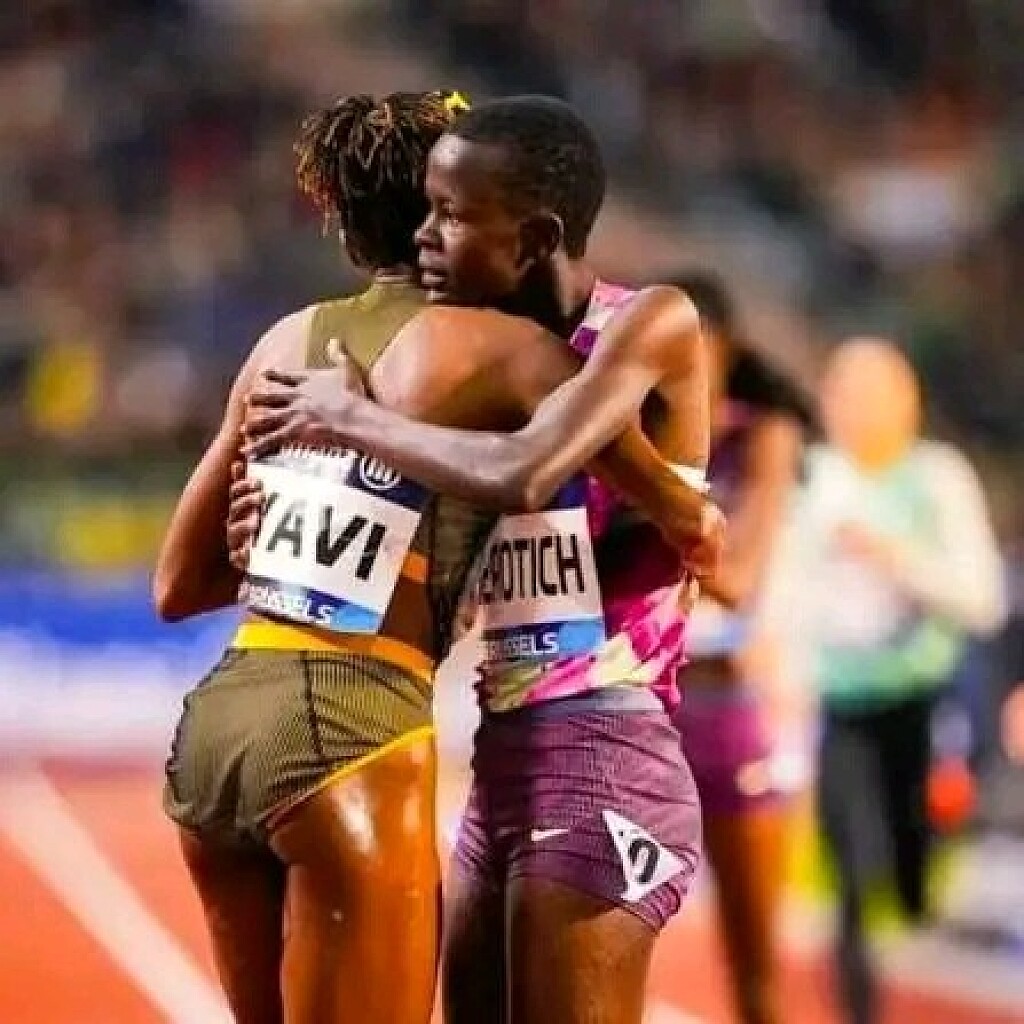
Eugene Awaits: Cherotich, Chemutai and Yavi Set for Blockbuster 3000m Steeplechase Battle
The women's 3000m steeplechase at the upcoming Prefontaine Classic is shaping up to be one of the most anticipated distance races of the season, with a world-class field led by Kenya's rising sensation Faith Cherotich, Uganda's Olympic champion Peruth Chemutai, and Bahrain's formidable record-holder Winfred Yavi.
Scheduled for July 3–4 in Eugene, Oregon, the race promises a fascinating clash of generations, styles, and ambitions as some of the sport's biggest names battle for supremacy on one of athletics' most iconic stages.
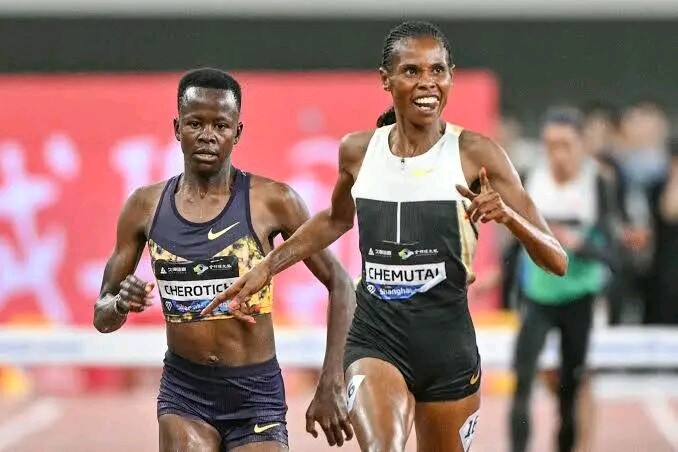
All eyes will undoubtedly be on Cherotich, whose meteoric rise has established her as one of the brightest stars in global steeplechasing. The Kenyan youngster has consistently demonstrated remarkable composure against elite opposition, combining fearless front-running with a devastating finishing kick. Facing another stacked international field, she will be eager to reaffirm her status among the discipline's elite.
Standing in her path is Chemutai, the Ugandan trailblazer whose championship pedigree and tactical brilliance have made her one of the most respected athletes in the event. Known for her ability to deliver under pressure, Chemutai arrives in Eugene with the experience and confidence required to challenge for victory against the world's best.
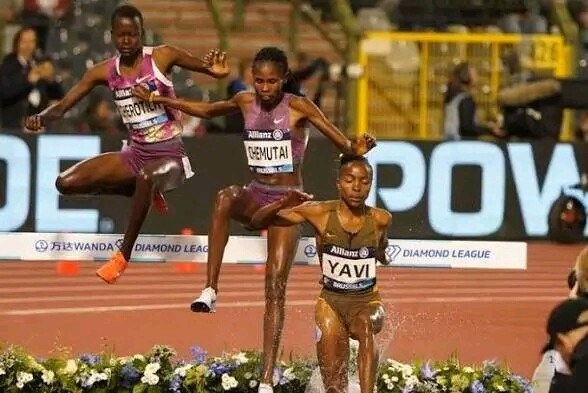
Adding further intrigue is Yavi, whose relentless pace and exceptional barrier technique have transformed her into one of the most dominant steeplechasers of recent years. Whenever Yavi steps onto the track, records and winning times immediately come into the conversation, making her a serious contender for top honours once again.
The depth of the field extends far beyond the headline trio. Kenya's emerging talent Doris Lemngole and experienced campaigner Norah Jeruto add further firepower, while a strong American contingent featuring Lexy Halladay, Gracie Hyde, Olivia Markezich, Gabrielle Jennings, Courtney Wayment and Angelina Napoleon will be eager to impress before a home crowd.
The international challenge is further strengthened by Morocco's Marwa Bouzayani and Germany's accomplished duo of Gesa Felicitas Krause and Lea Meyer, ensuring that every lap will be fiercely contested.
With Olympic and world medalists sharing the track alongside emerging stars hungry for a breakthrough, the stage is set for a thrilling contest that could produce one of the fastest women's steeplechase races of the year. As the athletics world turns its attention to Eugene, fans can expect a captivating battle over barriers and water jumps, where every stride could make the difference between victory and defeat.
The countdown has begun, and if the entry list is anything to go by, the Prefontaine Classic is poised to deliver another unforgettable chapter in the rich history of women's steeplechase racing.
by Erick Cheruiyot for My Best Runs.
Login to leave a comment

Prefontaine Classic
The Pre Classic, part of the Diamond League series of international meets featuring Olympic-level athletes, is scheduled to be held at the new Hayward Field in Eugene. The Prefontaine Classicis the longest-running outdoor invitational track & field meet in America and is part of the elite Wanda Diamond League of meets held worldwide annually. The Pre Classic’s results score has...
more...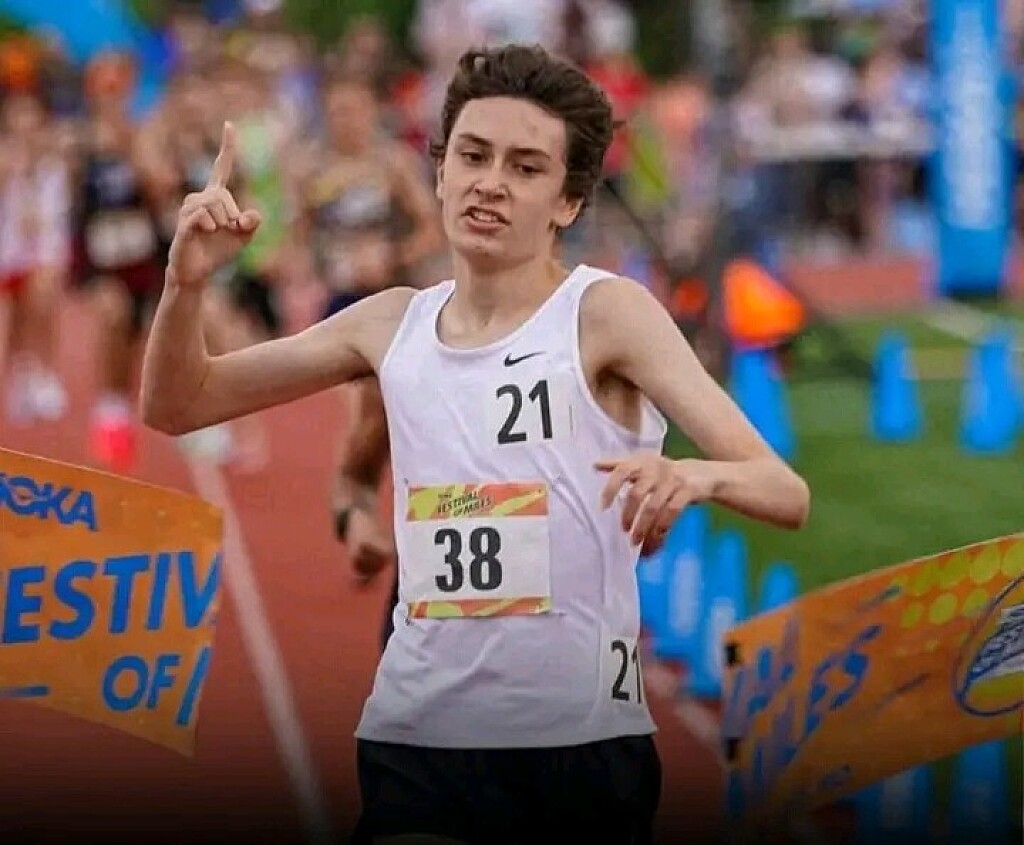
14-Year-Old Luke Surface Shocks the Running World With Historic Middle School Record
The future of American distance running may have just announced itself.
Luke Surface, an 8th-grade student-athlete from North Raleigh Christian Academy in Raleigh, North Carolina, delivered a performance that stunned the track and field community after taking on some of the nation’s best high school runners at Nike Outdoor Nationals.

Competing at the legendary Hayward Field in Eugene, Oregon — one of the most iconic venues in American distance running — Surface lined up in the boys championship 5,000 meters against a field dominated by high school seniors, including several athletes preparing to compete at the NCAA Division I level.
Despite being one of the youngest runners in the race, the 14-year-old held his own against the elite competition, finishing eighth in an incredible 14:25.88. The performance set a new national middle school record, averaging approximately 4:39 per mile for more than three miles.
That kind of time is fast enough to win many high school state championships across the United States and meets qualifying standards for several major NCAA Division I conference competitions — a remarkable achievement for a runner who has not yet entered high school.
But Surface’s historic 5,000m performance was only the latest chapter in a season filled with record-breaking moments.
Earlier in May, he clocked 8:52.03 for 3,200 meters at the NCISAA Division I State Championships in North Carolina, breaking another national middle school record. His converted two-mile time of 8:55.12 surpassed the previous world-best mark for a 14-year-old age group, previously held by Vincent Recupero.
During the previous cross-country season, Surface also made headlines when he ran 15:12 at the adidas XC Challenge, finishing second while competing against runners who were several years older.
Across cross country, two miles, and the 5,000 meters, Surface has continued to prove that his talent is far beyond his age group. While he still has four years of high school competition ahead before reaching the college level, his performances have already placed him among the most exciting young distance runners to watch.
The American high school 5,000-meter record currently stands at 13:32, set by Lex Young in 2023 — a mark Surface is not yet close to challenging. However, his remarkable progression at such a young age has caught the attention of the running world, with many eager to follow how far his extraordinary journey can go.
For now, Luke Surface remains an eighth grader rewriting the record books — and his story is only beginning.
by Erick Cheruiyot for My Best Runs.
Login to leave a comment
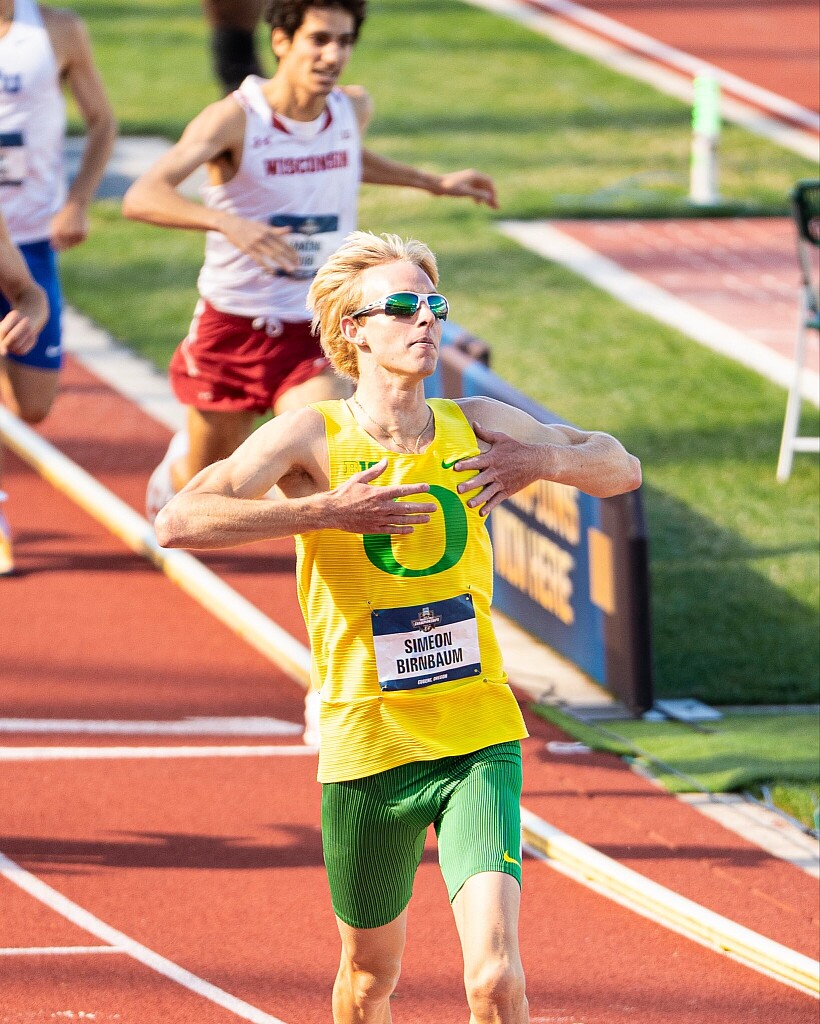
Simeon Birnbaum Announces Himself as Oregon’s Next Distance Superstar With Historic NCAA 1500m Triumph
The next chapter of Oregon’s legendary distance-running story may have just been written.
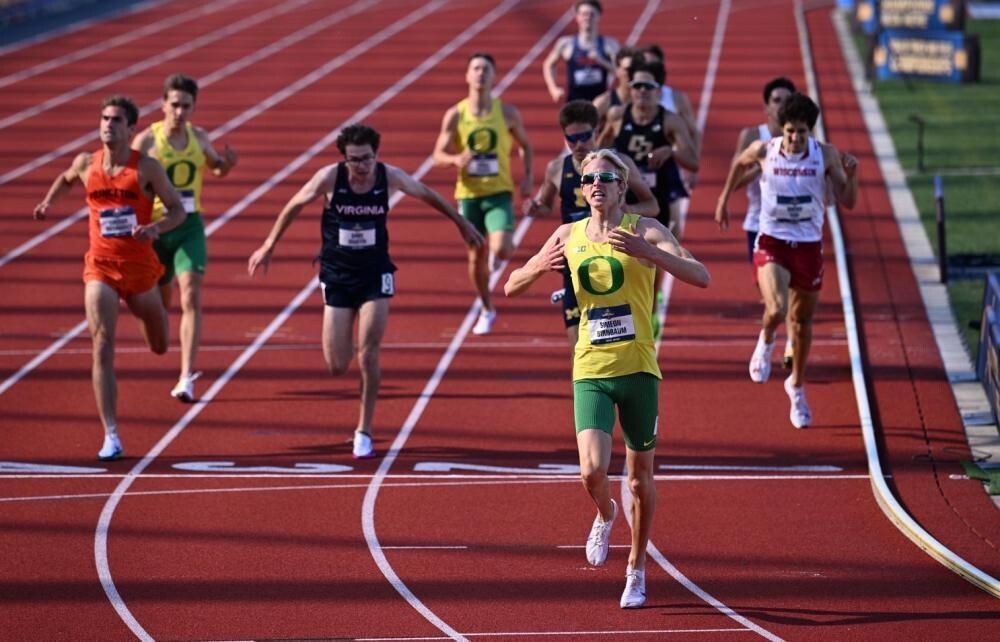
Simeon Birnbaum delivered a statement performance at Hayward Field in Eugene, capturing his first NCAA 1500m title in spectacular fashion with a winning time of 3:36.05 in front of a passionate home crowd.
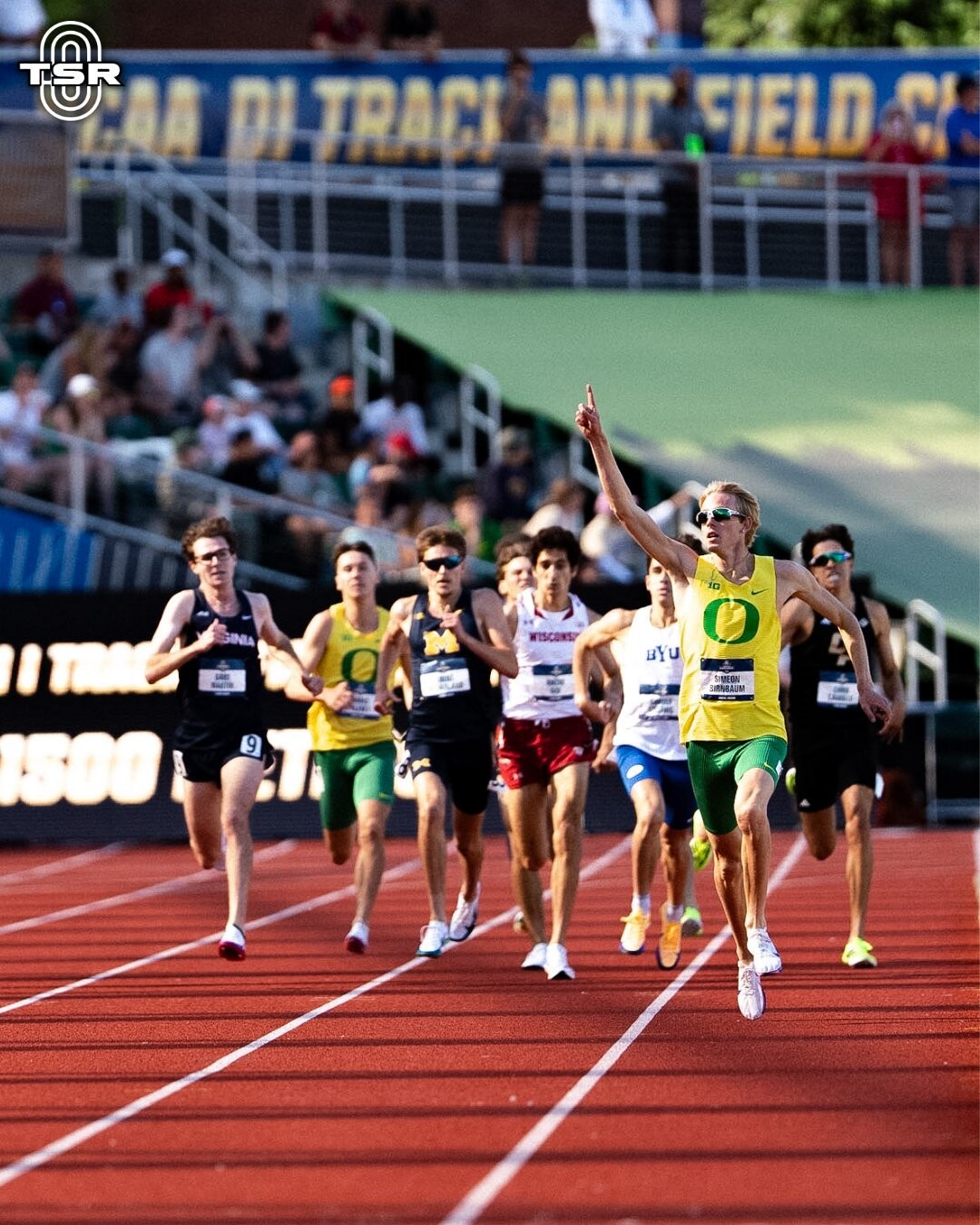
The 20-year-old sophomore produced a commanding display of strength and confidence, separating himself from the field in the closing stages to defeat Michigan’s Trent McFarland by more than a second. His victory marked the most dominant NCAA 1500m championship winning margin in a decade, underlining just how special his performance was on the biggest collegiate stage.
Birnbaum’s rise has been nothing short of remarkable. Just two months earlier, the Oregon standout shattered the collegiate record with a stunning 3:31.69, announcing himself as one of the most exciting young middle-distance talents in the world.
Now, with an NCAA championship medal around his neck, Birnbaum has firmly placed his name among Oregon’s greats. Following in the footsteps of legends such as Cole Hocker and Matthew Centrowitz, he looks ready to carry the Ducks’ proud distance-running tradition into a new era.
With his record-breaking speed, championship mentality, and fearless racing style, Simeon Birnbaum’s journey is only beginning — and the running world will be watching closely as Oregon’s newest distance star continues to rise.
by Erick Cheruiyot for My Best Runs.
Login to leave a comment
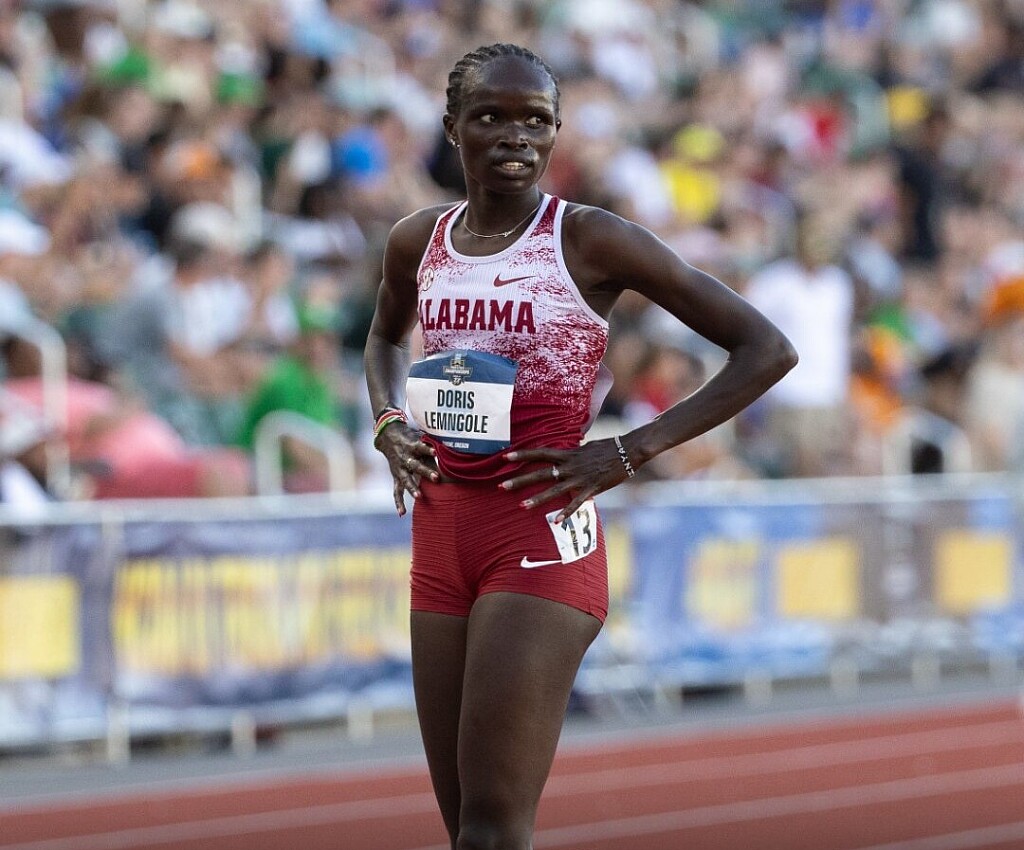
DRAMA IN EUGENE: Doris Lemngole’s NCAA 5000m Triumph Overturned as Jepngetich Claims Crown
The NCAA Outdoor Championships delivered one of the most dramatic twists of the season as the women’s 5000m final ended in unexpected heartbreak and a new champion being crowned after the finish line.
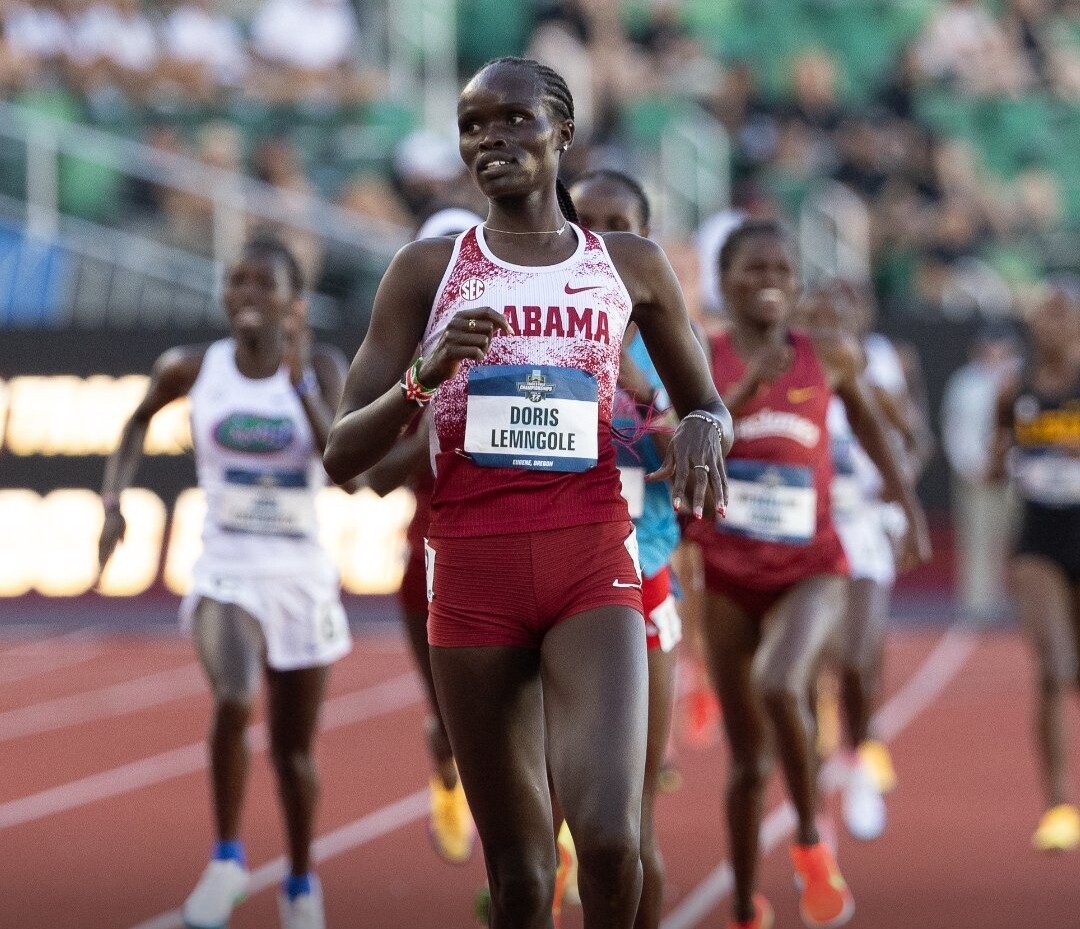
Alabama’s Kenyan star Doris Lemngole looked set to celebrate a historic moment after storming to victory in a brilliant 15:11.71, crossing the line first and appearing to secure another national title for the Crimson Tide. The performance looked like the perfect ending to a dominant race — until officials made a decision that changed everything.
Race officials later issued a disqualification against Lemngole under rule 15.5-3g, citing multiple steps on or over the inside track curb. Alabama immediately challenged the ruling through an appeal, but after review, the protest was rejected, confirming the disqualification and removing the race winner from the official results.
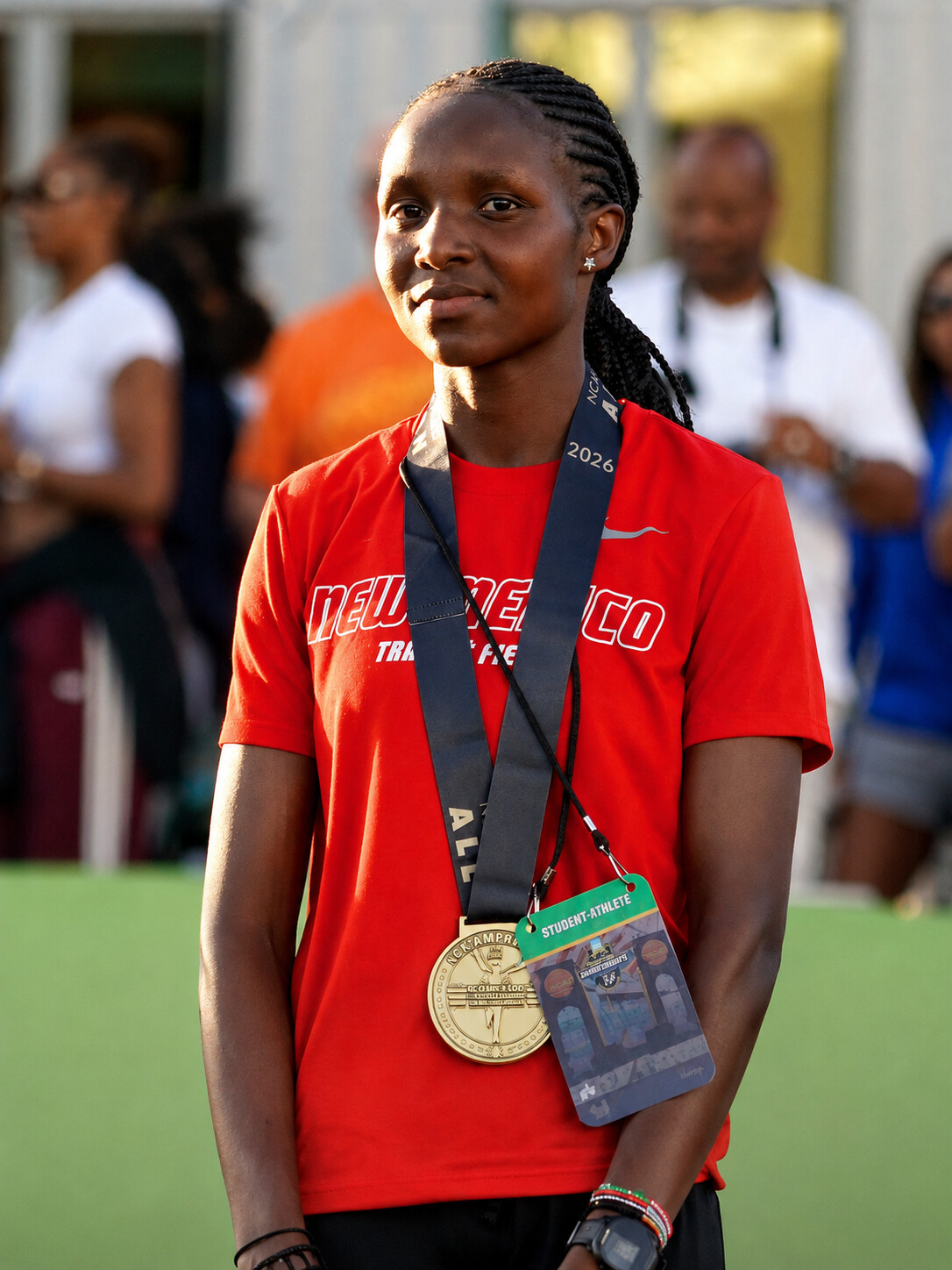
With Lemngole’s result erased, New Mexico’s Marion Jepngetich moved into the championship position, producing a spectacular performance of her own to claim the NCAA 5000m title in a personal best of 15:13.01.
The final standings showed just how competitive the race was, with several athletes delivering outstanding performances and multiple personal bests. Mercyline Kirwa of Iowa State finished second in 15:13.72, while Florida’s Judy Chepkoech completed the podium in 15:14.05 — both recording lifetime bests.
The top ten was dominated by incredible depth, with Betty Kipkore (Iowa State) taking fourth in 15:14.43, Pamela Kosgei (New Mexico) fifth in 15:15.88, and Hilda Olemomoi (Florida) sixth with a season best of 15:16.23. Edna Chelulei of Eastern Kentucky, Katie Bohlke of Virginia Tech, Jane Hedengren of BYU, and Juliet Cherubet of Oregon completed the top ten.
For Lemngole, it was a painful reminder of how unforgiving elite sport can be. After producing the fastest time of the night and crossing the finish line as the apparent winner, a technical ruling outside the excitement of the finish changed the entire outcome.
Jepngetich, meanwhile, now celebrates a championship victory earned on one of the most dramatic evenings in NCAA distance running history — a race where the final result was decided not only by speed, but also by the smallest margins of competition.
The NCAA 5000m final will be remembered not just for the incredible performances on the track, but for the unforgettable twist that came after the race was already over.
by Erick Cheruiyot for My Best Runs.
Login to leave a comment
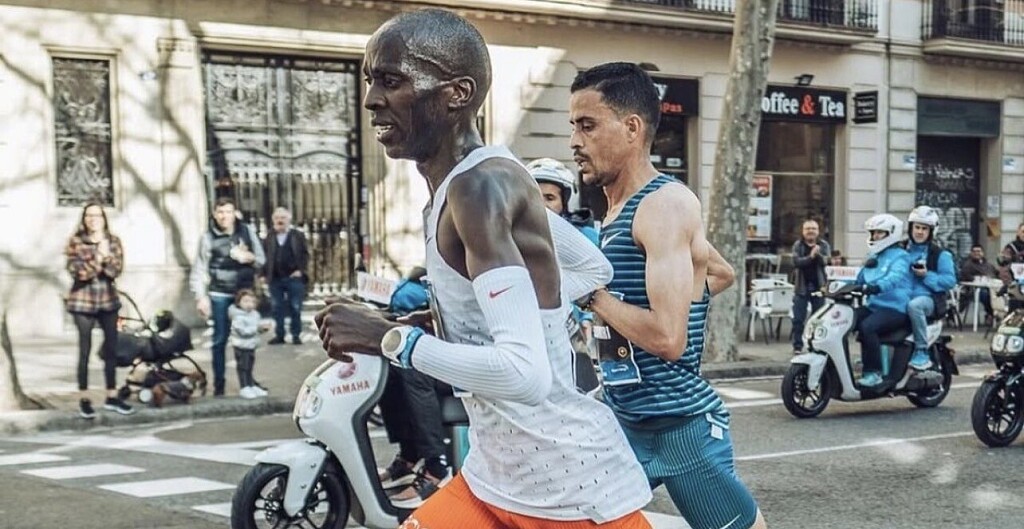
Kenyan Depth Set to Challenge Özbilen at the Barcelona Marathon
Europe’s fastest entrant, Kaan Kigen Özbilen, will face a formidable Kenyan challenge when the men’s elite field lines up for the Zurich Marató Barcelona on Sunday.
Özbilen arrives with the quickest personal best in the field at 2:04:16, a mark that places the Turkish record holder among the fastest marathon runners competing on the European circuit. But despite that advantage on paper, the race is far from a foregone conclusion.
The depth of the Kenyan lineup and the presence of strong Ethiopian challengers suggest the outcome may depend less on individual credentials and more on how the race unfolds tactically over the 42.195-kilometre distance.
Kenyan Depth Could Shape the Race
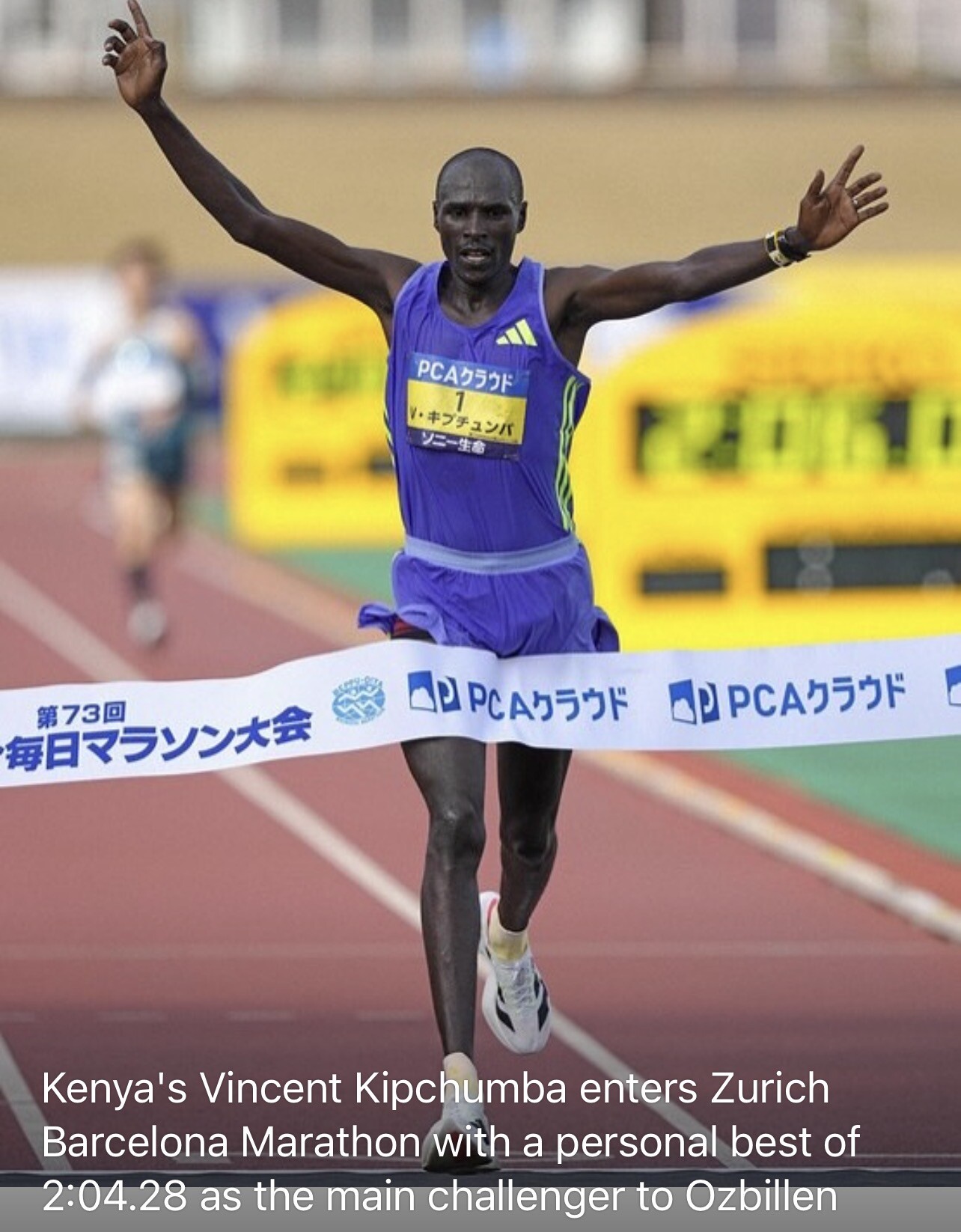
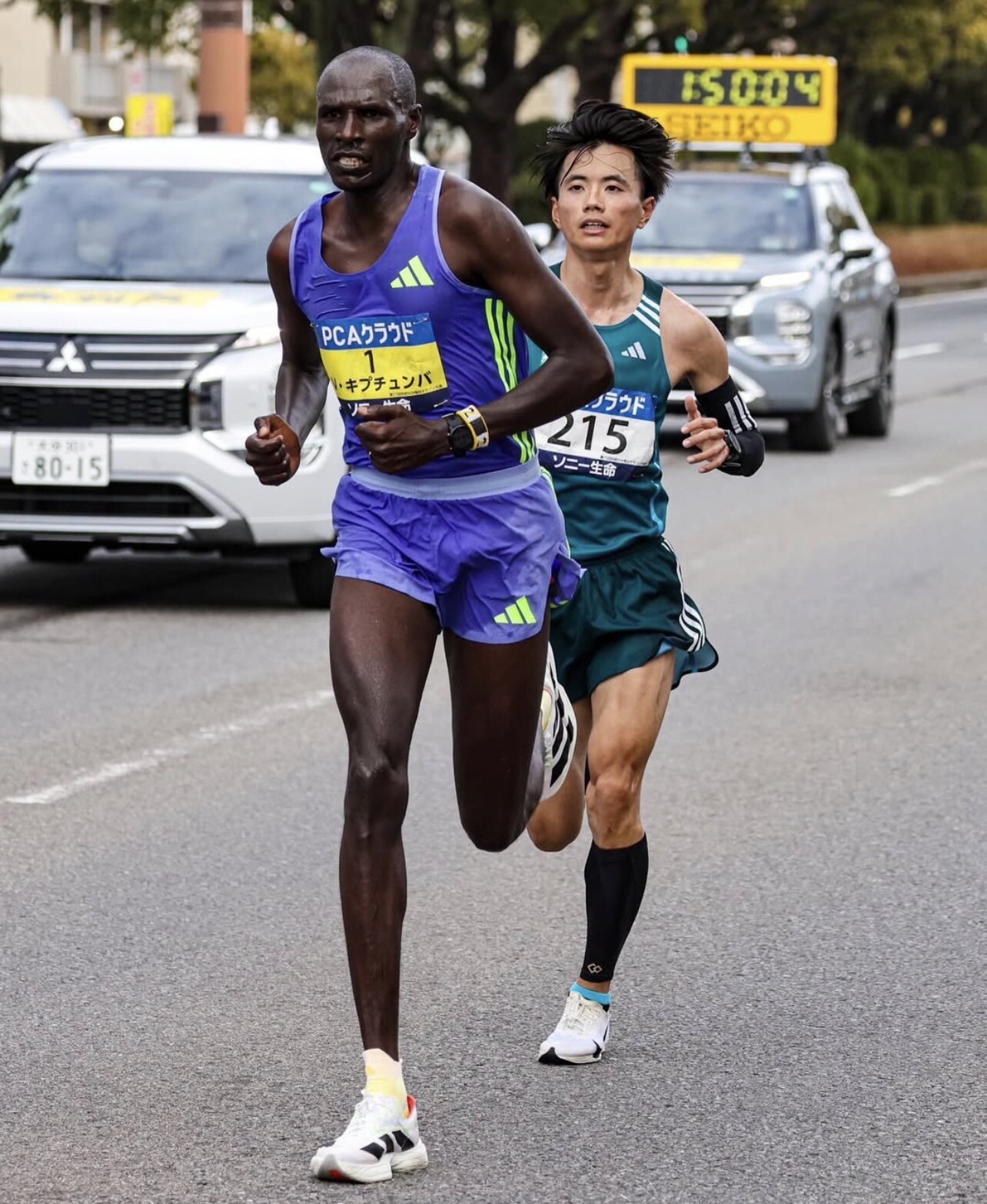
Leading the Kenyan challenge is Vincent Kipchumba, whose personal best of 2:04:28 places him just seconds behind Özbilen. Kipchumba is a seasoned competitor on the global marathon circuit and has repeatedly shown the ability to remain competitive deep into races, particularly when the pace accelerates in the latter stages.
He is joined by compatriots Philimon Kiptoo Kinchumba and Kenneth Keter, both proven marathoners capable of running well inside the 2:06 barrier. Their presence gives Kenya numerical strength at the front of the race and could influence how the tempo develops during the opening half.
Depth like this often proves decisive in elite marathons. When several contenders from the same country occupy the lead pack, the pace can fluctuate as runners test one another’s strength before decisive moves begin. If the Kenyan group pushes the pace early or stretches the field before the 30-kilometre mark, it could place significant pressure on rivals trying to stay in contact.
Additional Kenyan experience comes from runners such as Zablon Chumba and Timothy Kipkorir, both capable of remaining within striking distance if the race becomes tactical rather than purely fast.
Ethiopian Contenders Add Further Depth
Ethiopia also brings strong credentials into the race, ensuring the contest extends beyond a simple duel between Özbilen and the Kenyan lineup.
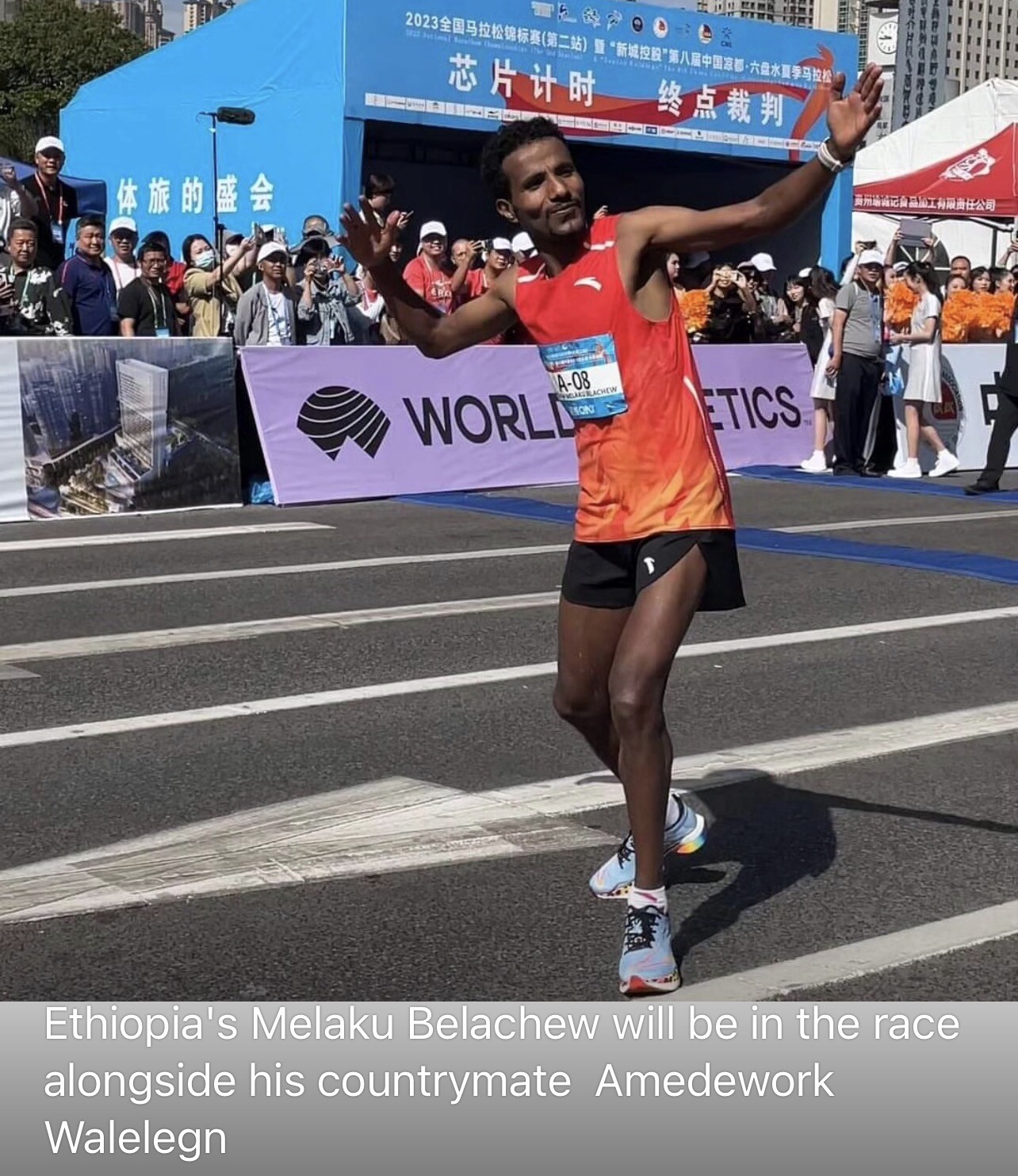
Among the leading challengers is Amedework Walelegn, whose personal best of 2:04:50places him firmly among the elite performers in the field. Known for his ability to maintain a steady rhythm over the marathon distance, Walelegn could become a key figure if the leaders maintain a fast pace through the midway point.
Compatriot Melaku Belachew adds further experience to the Ethiopian squad. A consistent performer in international marathons, Belachew has repeatedly shown the ability to remain competitive when races develop into tightly contested battles over the final kilometres.
With several athletes possessing personal bests within a narrow time range, the Ethiopian presence adds another layer of uncertainty and ensures that no single group is likely to control proceedings outright.
Fast Times Possible on Barcelona Course
The course in Barcelona has developed a reputation for producing fast marathon performances, particularly when weather conditions cooperate and the lead group stays intact through the early stages.
Given the depth of this year’s field, a finishing time in the low 2:05 range is well within reach if the pace remains consistent from the start. Several athletes lining up on Sunday have demonstrated the ability to sustain that rhythm, and the number of runners with personal bests under 2:06 suggests the lead pack could remain large well beyond halfway.
Much will depend on how aggressively the contenders approach the race. If the tempo rises early, the contest could become a test of endurance well before the closing kilometres. Conversely, a more controlled pace could set up a tactical showdown over the final 10 kilometres, where positioning and timing often prove decisive.
For Özbilen, the challenge will be converting the fastest personal best in the field into race-day authority against a group of rivals accustomed to racing together at the front of major marathons.
For the Kenyan and Ethiopian athletes, the opportunity lies in using their depth and experience to apply pressure as the race unfolds.
As the elite runners prepare to take the start line, the men’s race promises a compelling battle between speed, strategy, and endurance—three elements that have long defined success in the marathon and will likely determine the outcome on the streets of Barcelona this weekend.
by Robert Kibet for My Best Runs
Login to leave a comment

Zurich Marato Barcelona
The race is a favorite among both professional athletes and amateur runners, offering a unique running experience in and around Zurich. The scenic course follows the shores of Lake Zurich for much of the route, making it not only a thrilling sports event but also a visually stunning one. The start and finish lines are located at the upper lake...
more...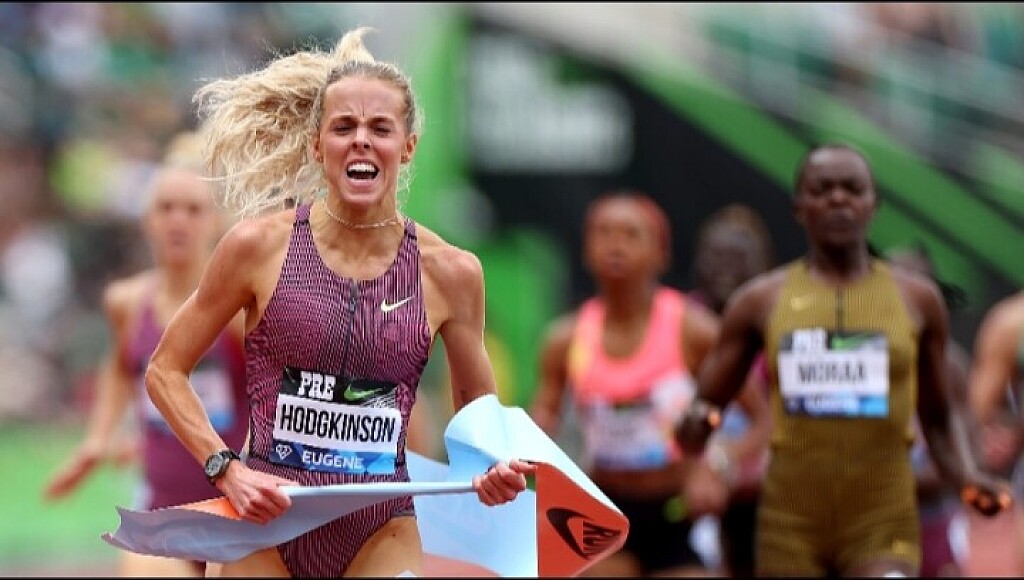
World Record Queen Returns to Her Kingdom: Hodgkinson Targets Another Eugene Masterpiece at the Prefontaine Classic
Track and field fans should circle their calendars. The 51st edition of the Prefontaine Classic will take place on Saturday, July 4, 2026, at the legendary Hayward Field in Eugene, Oregon — and it will feature one of the sport’s brightest stars. Olympic champion and indoor world record holder Keely Hodgkinson is set to headline the women’s Mutola 800m, returning to a venue that has repeatedly played a defining role in her career.
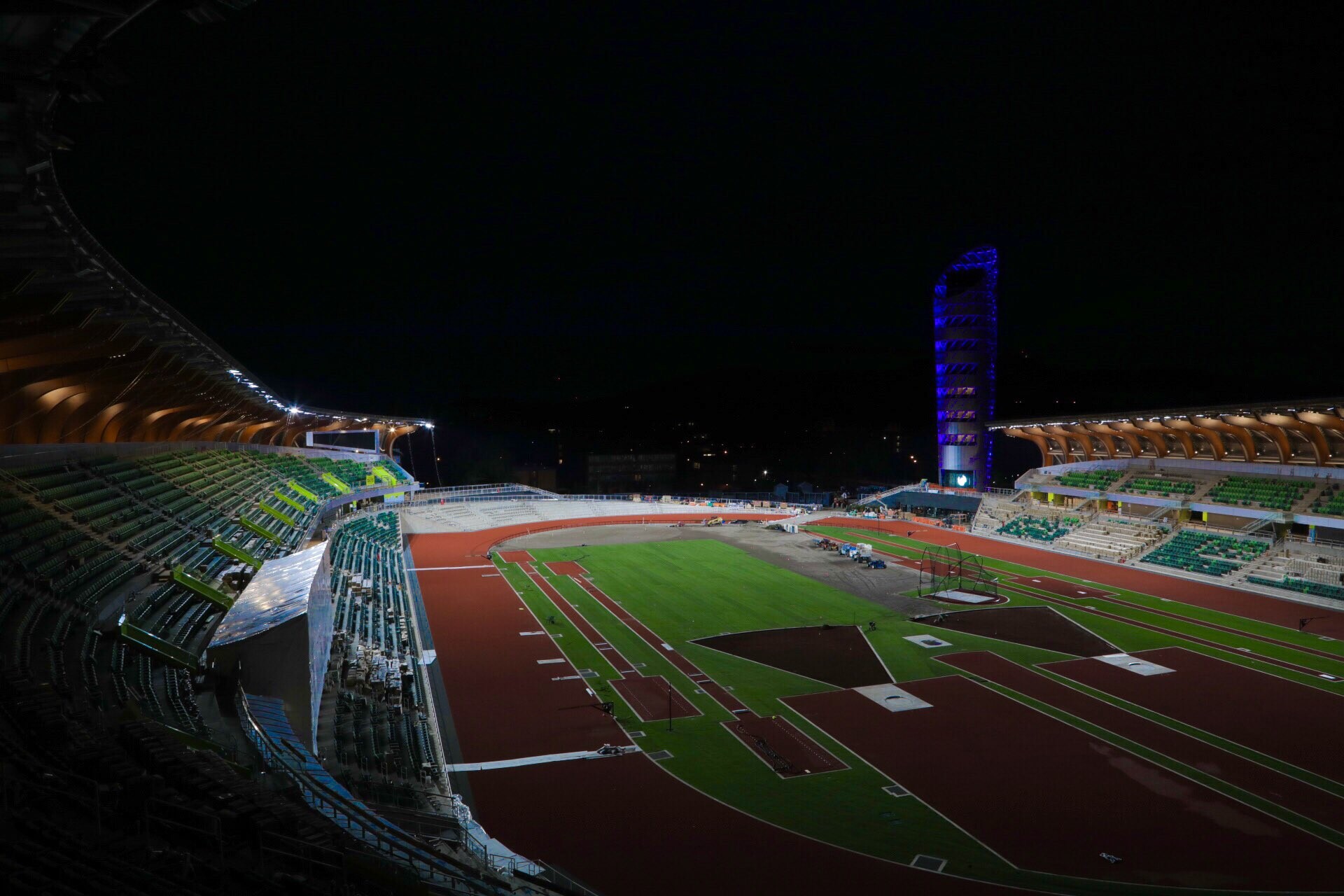
Eugene has become one of Hodgkinson’s most successful stages, a place where her rise from prodigy to global superstar has unfolded in front of packed grandstands. She first claimed victory at the Prefontaine Classic in 2022 with a composed 1:57.72 performance, announcing herself as a force capable of controlling world-class races.
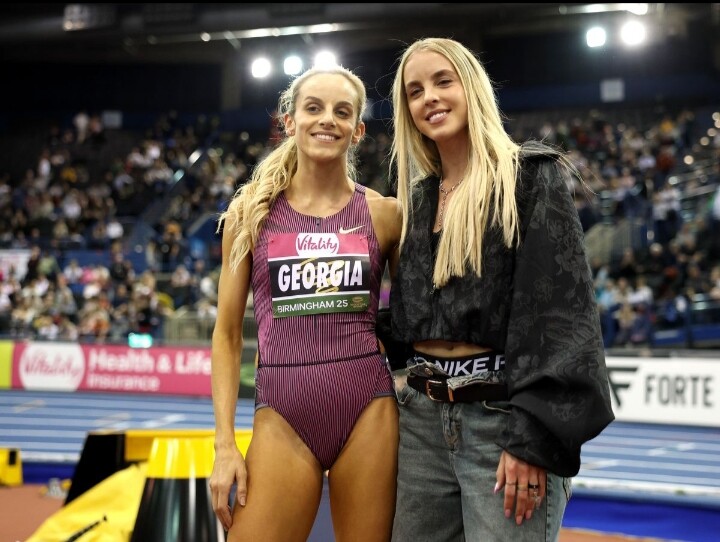
She returned in 2023 and elevated her dominance, running 1:55.19 to secure the Diamond League Trophy — proof that she was no longer chasing the world’s best but redefining the standard.
In 2024, she once again conquered Hayward Field with a 1:55.78 victory before carrying that momentum into the Olympic season, where she captured gold in Paris — the crowning achievement of a career that had long promised greatness.
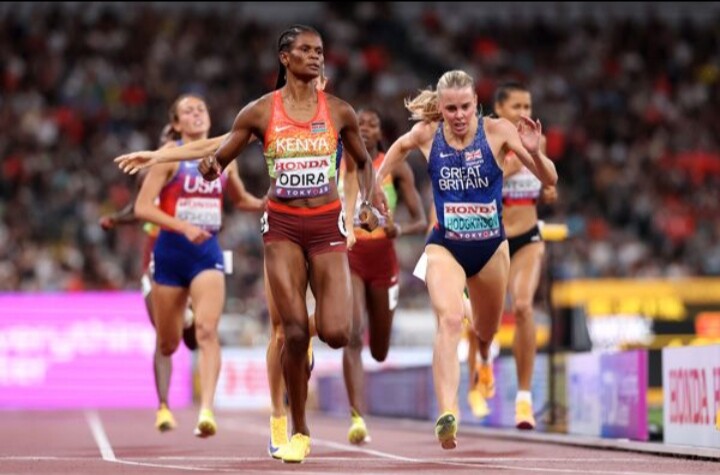
Her most recent milestone may be the most significant yet. On February 19, Hodgkinson delivered an extraordinary 1:54.87 indoors to set a new world record, reinforcing her position at the very summit of women’s middle-distance running and hinting that even faster performances could be approaching outdoors.
This year’s Mutola 800m — named in honor of Olympic legend Maria Mutola — will feature formidable opposition. Fellow Briton Georgia Hunter Bell brings tactical aggression and rising confidence, while reigning world champion Lilian Odira arrives with the authority of an athlete proven on the sport’s biggest stage.
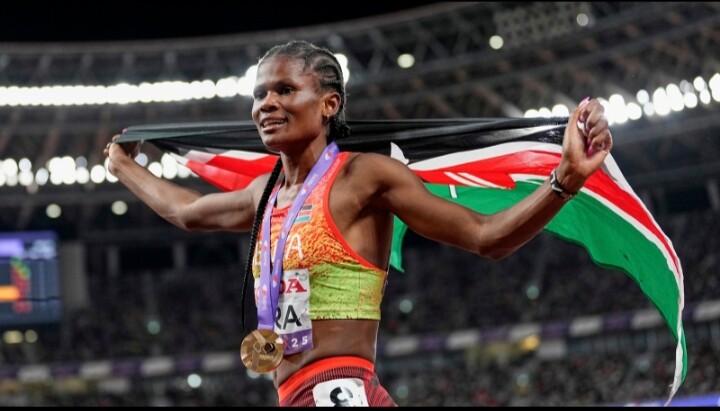
Together, the trio creates a race rich in narrative — record-breaking speed, championship pedigree, and emerging rivalry converging on one of athletics’ most historic tracks.
For Hodgkinson, Eugene represents more than competition. It is a stage where defining moments seem to occur with remarkable consistency. Every visit has produced either victory, a title, or a performance that elevated her career to a new level.
Now, with world-record momentum behind her and Olympic gold already secured, she returns once more to a stadium that has repeatedly witnessed her brilliance. If history is any guide, the Prefontaine Classic may again become the setting where greatness accelerates — and where the world’s fastest woman reminds the world exactly why she sits at the top of the 800-meter throne.
by Erick Cheruiyot for My Best Runs.
Login to leave a comment
Prefontaine Classic
The Pre Classic, part of the Diamond League series of international meets featuring Olympic-level athletes, is scheduled to be held at the new Hayward Field in Eugene. The Prefontaine Classicis the longest-running outdoor invitational track & field meet in America and is part of the elite Wanda Diamond League of meets held worldwide annually. The Pre Classic’s results score has...
more...
Bowerman Mile Showdown Set for 2026 Prefontaine Classic: Hocker, Myers, and Ruthe Bring Generational Clash to Hayward Field
One of the most anticipated mile races of the decade is taking shape as Olympic champion Cole Hocker prepares to face two of the fastest young milers in history—Australia’s Cameron Myers and New Zealand’s Sam Ruthe—at the Bowerman Mile during the 2026 Nike Prefontaine Classic at Hayward Field in Eugene, Oregon.
The Bowerman Mile, widely regarded as the most prestigious mile race in the world, has long served as the stage where legends are made. In 2026, it will bring together a reigning Olympic champion at the peak of his powers and two teenage sensations who are redefining what is possible for young athletes.
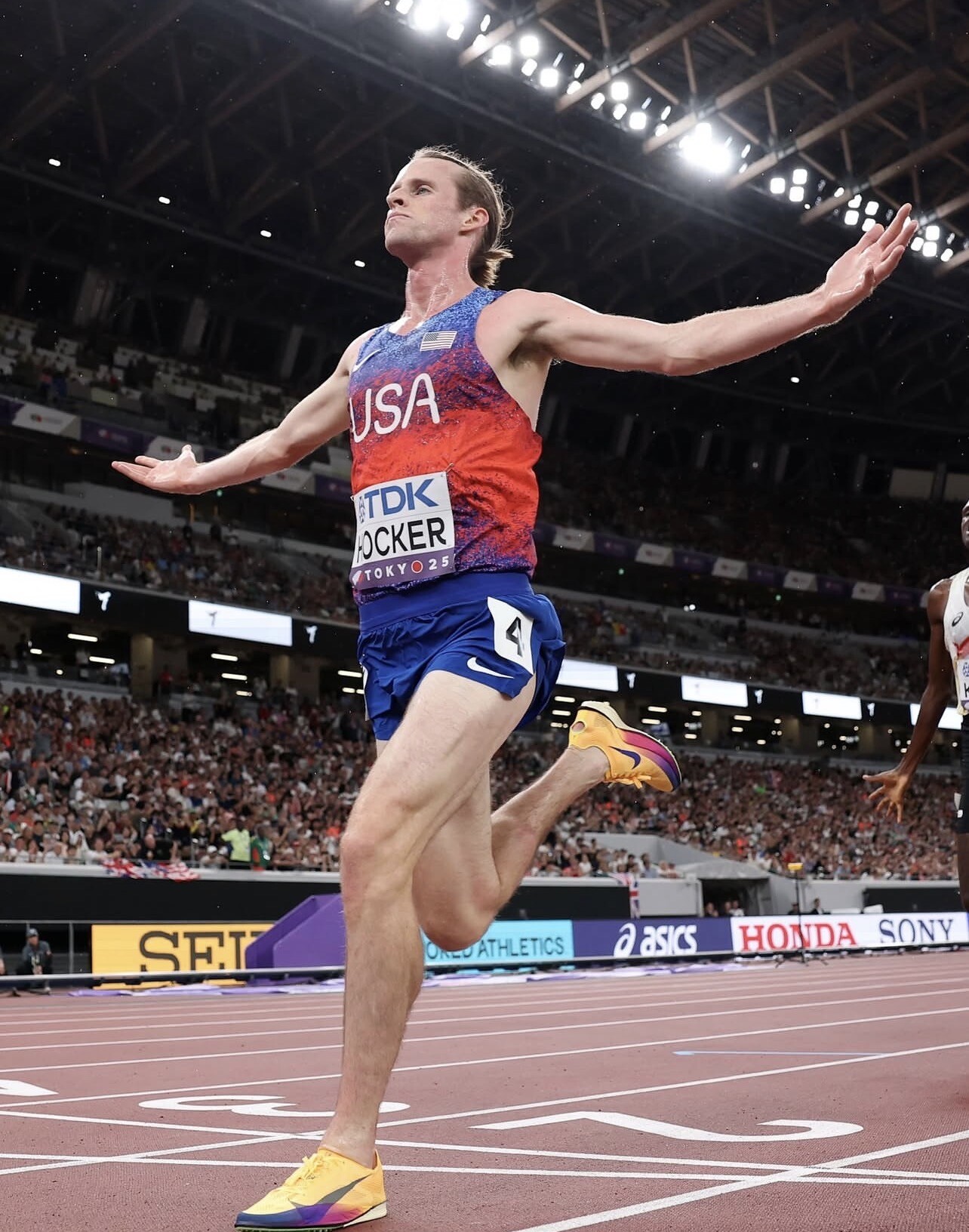
The Olympic Champion: Cole Hocker’s Next Mission
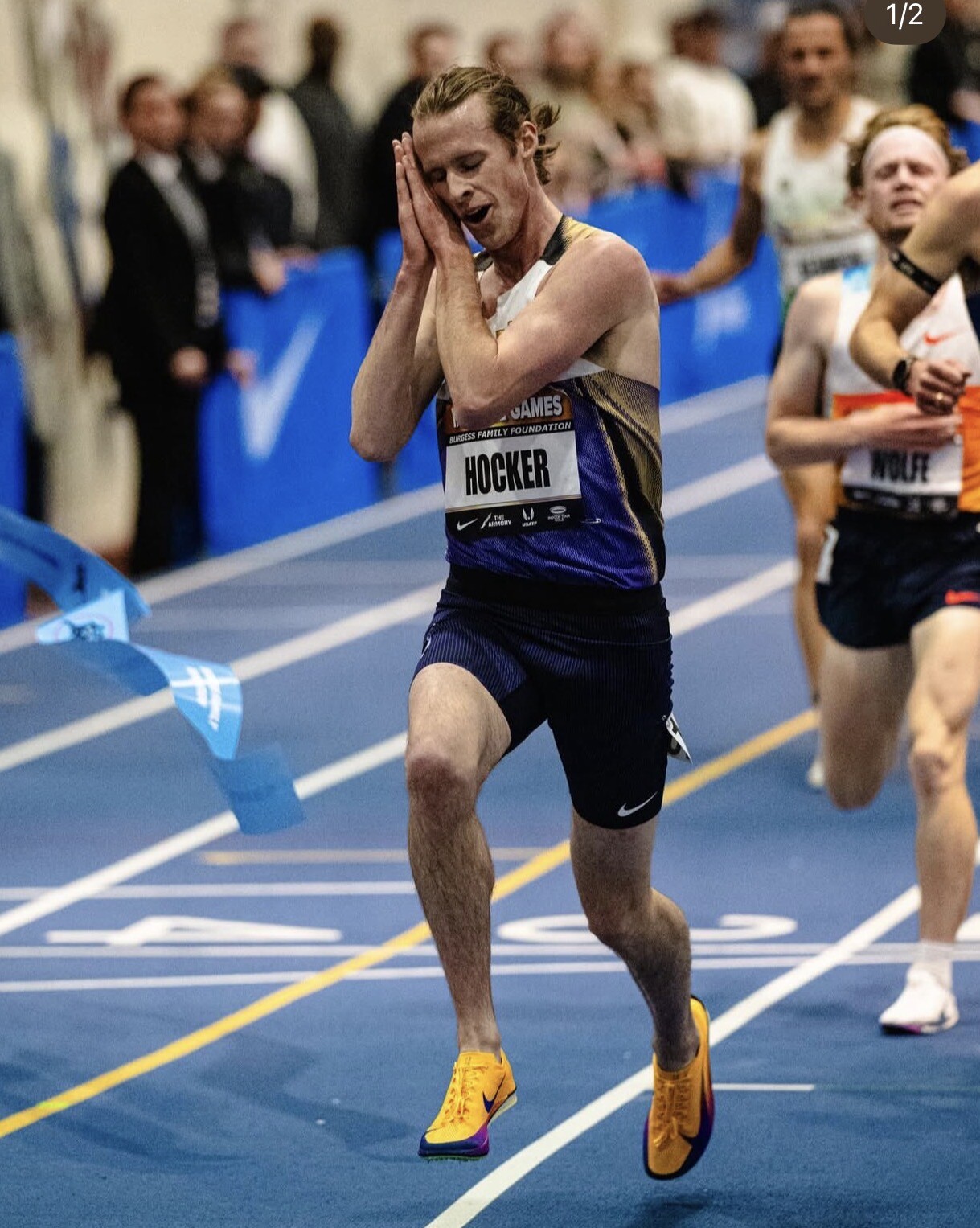
Cole Hocker enters the race as one of the most accomplished middle-distance runners in the world. The American captured the gold medal in the 1500 meters at the 2024 Olympic Games, confirming his position among the sport’s elite. He followed that performance by winning the 2025 World Championship title over 5000 meters, demonstrating both speed and endurance at the highest level.
Hocker’s personal best of 3:47.43 for the mile, set at the 2025 Prefontaine Classic, ranks him among the fastest milers in American history. Despite his success, one major prize has eluded him—the Bowerman Mile title. His best finish so far has been fifth place, but with his experience and championship pedigree, he arrives in Eugene determined to change that.
Cameron Myers: Australia’s Rising Star
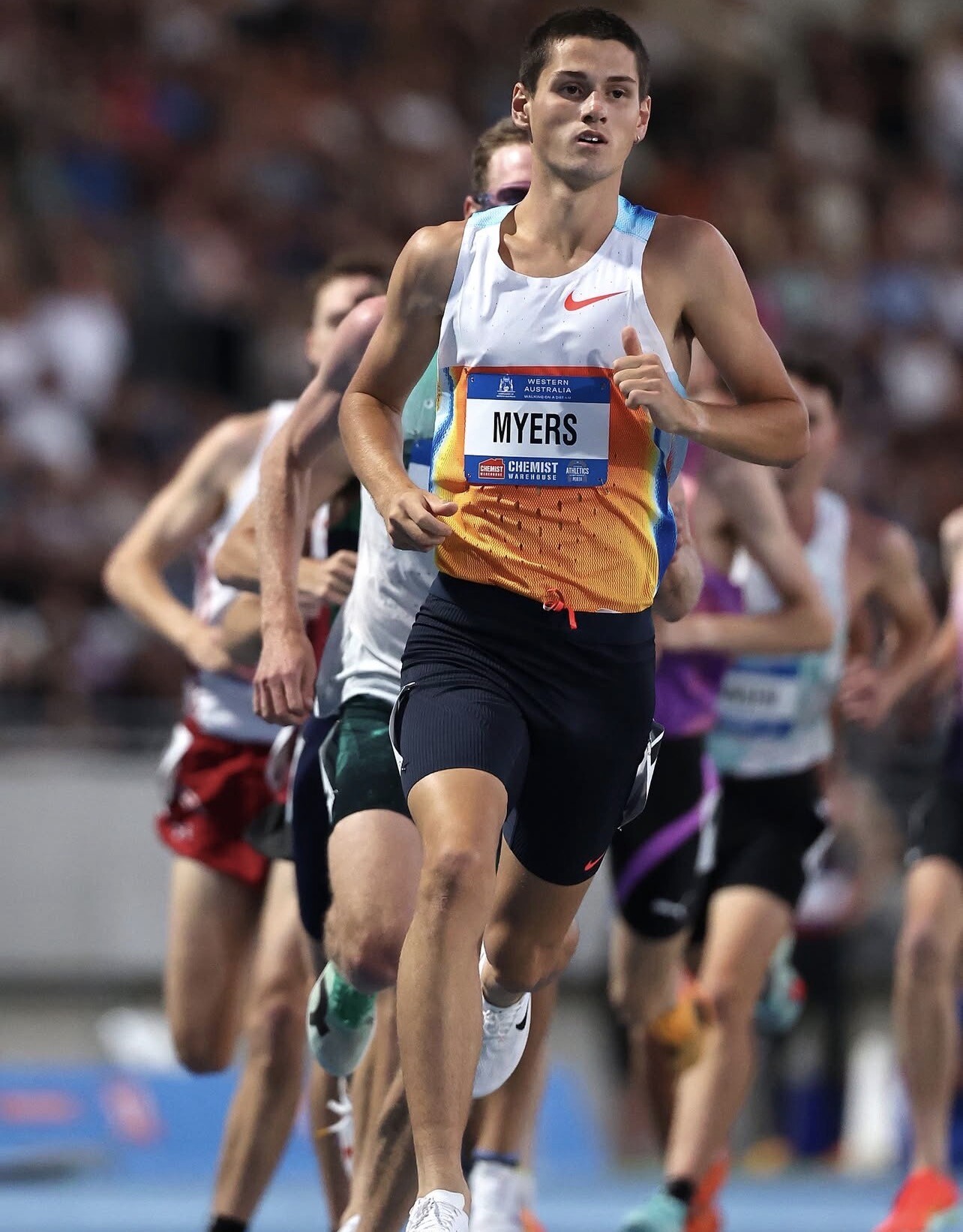
At just 19 years old, Cameron Myers has already established himself as one of the most exciting talents in global middle-distance running. He became the youngest-ever winner of the Wanamaker Mile and holds the world U20 record of 3:47.48, placing him within striking distance of the best senior athletes in history.
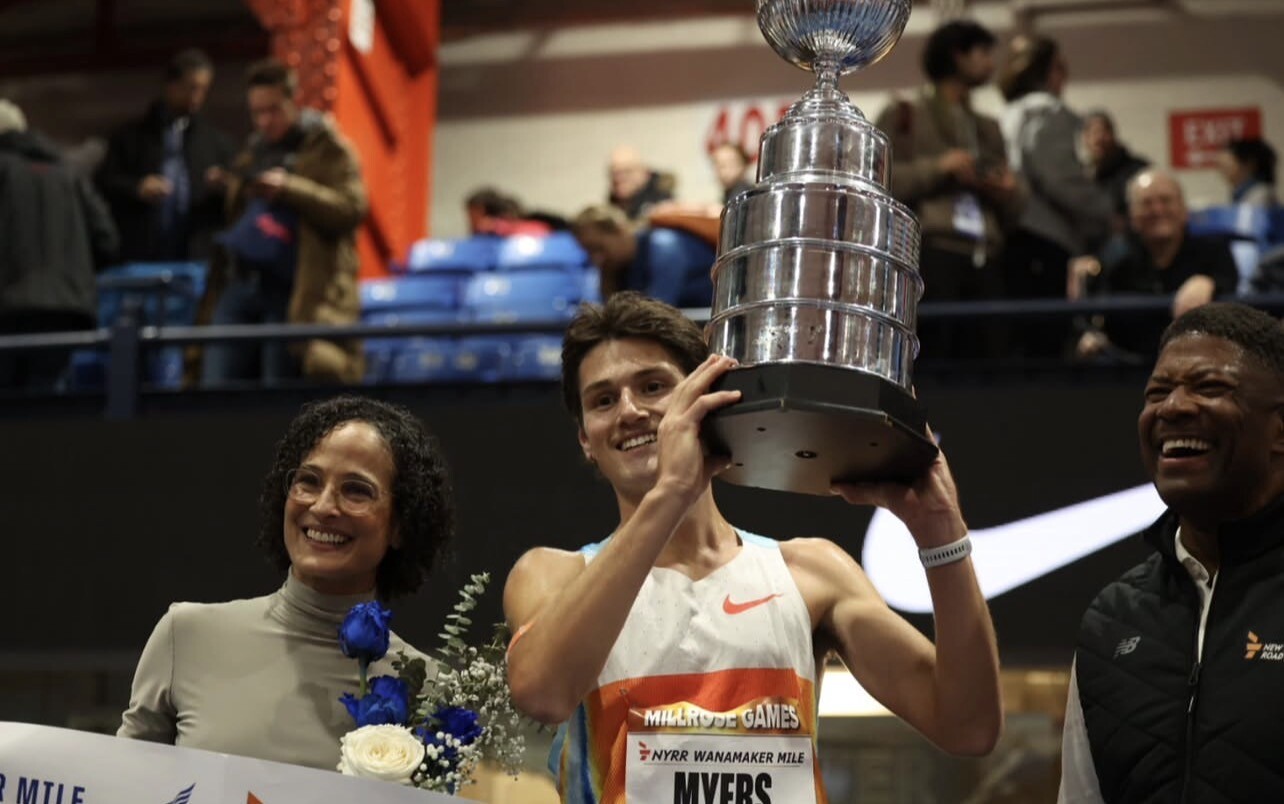
Myers has already faced Hocker three times in his career, with each meeting coming in the Bowerman Mile. Although Hocker finished ahead on those occasions, Myers continues to close the gap and arrives in 2026 with greater strength, confidence, and experience.
His aggressive racing style and fearless approach make him a serious contender—not just for a personal best, but for victory.
Sam Ruthe: Breaking Barriers at an Unprecedented Age

New Zealand’s Sam Ruthe represents the future of the mile. At just 15 years old, he broke the legendary four-minute barrier, an achievement that had once seemed impossible for an athlete so young. He now holds the world U18 best of 3:48.88, placing him among the fastest teenagers ever.
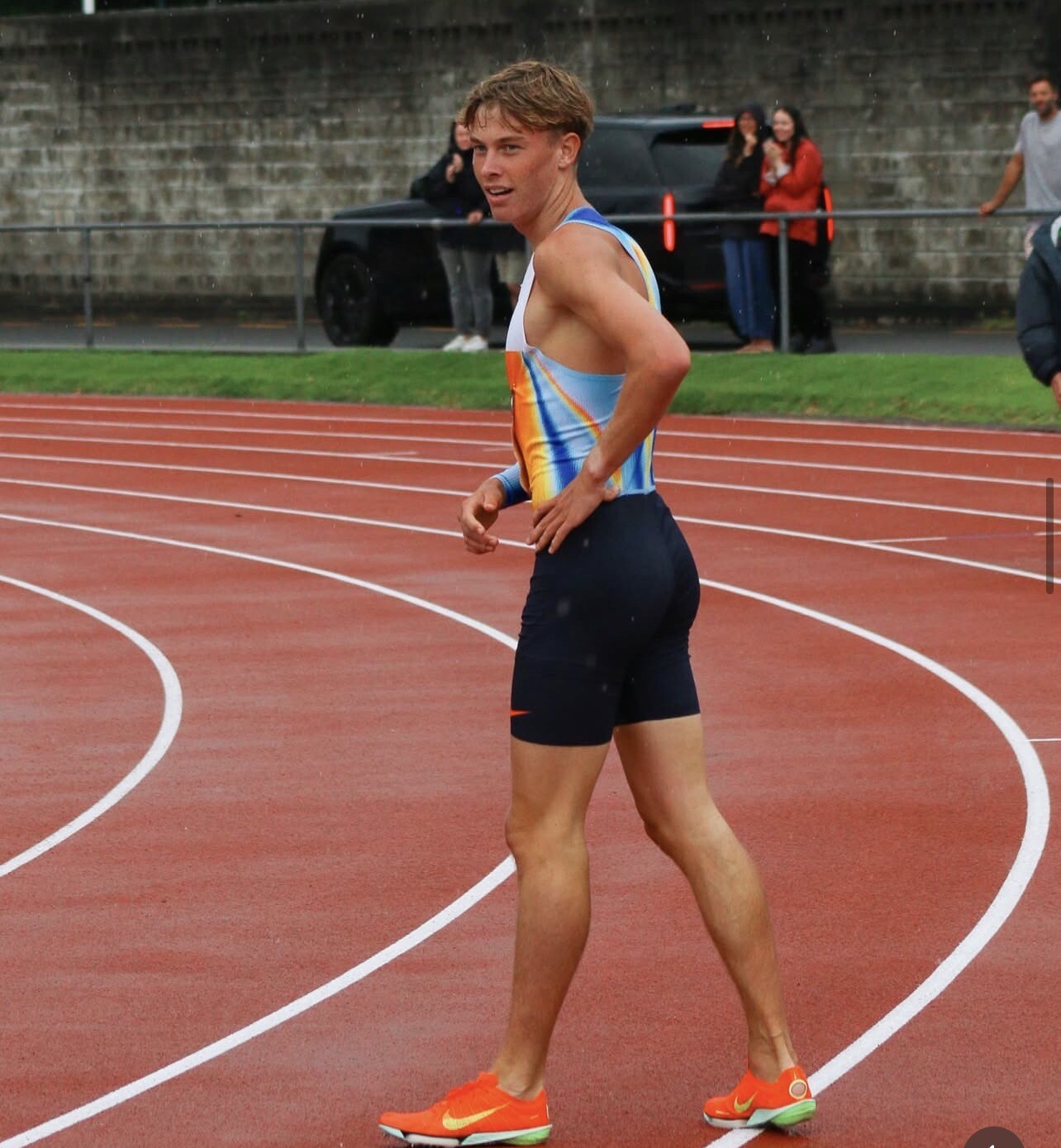
While Ruthe has not yet faced Hocker in direct competition, he has raced Myers twice, with Myers holding a 2–0 advantage. However, those encounters were not contested over the mile, leaving the Bowerman Mile as the stage for their first true test at the full distance.
Ruthe’s rapid progression suggests he is not merely participating—he is arriving as a legitimate competitor
Hayward Field: The Perfect Stage for History
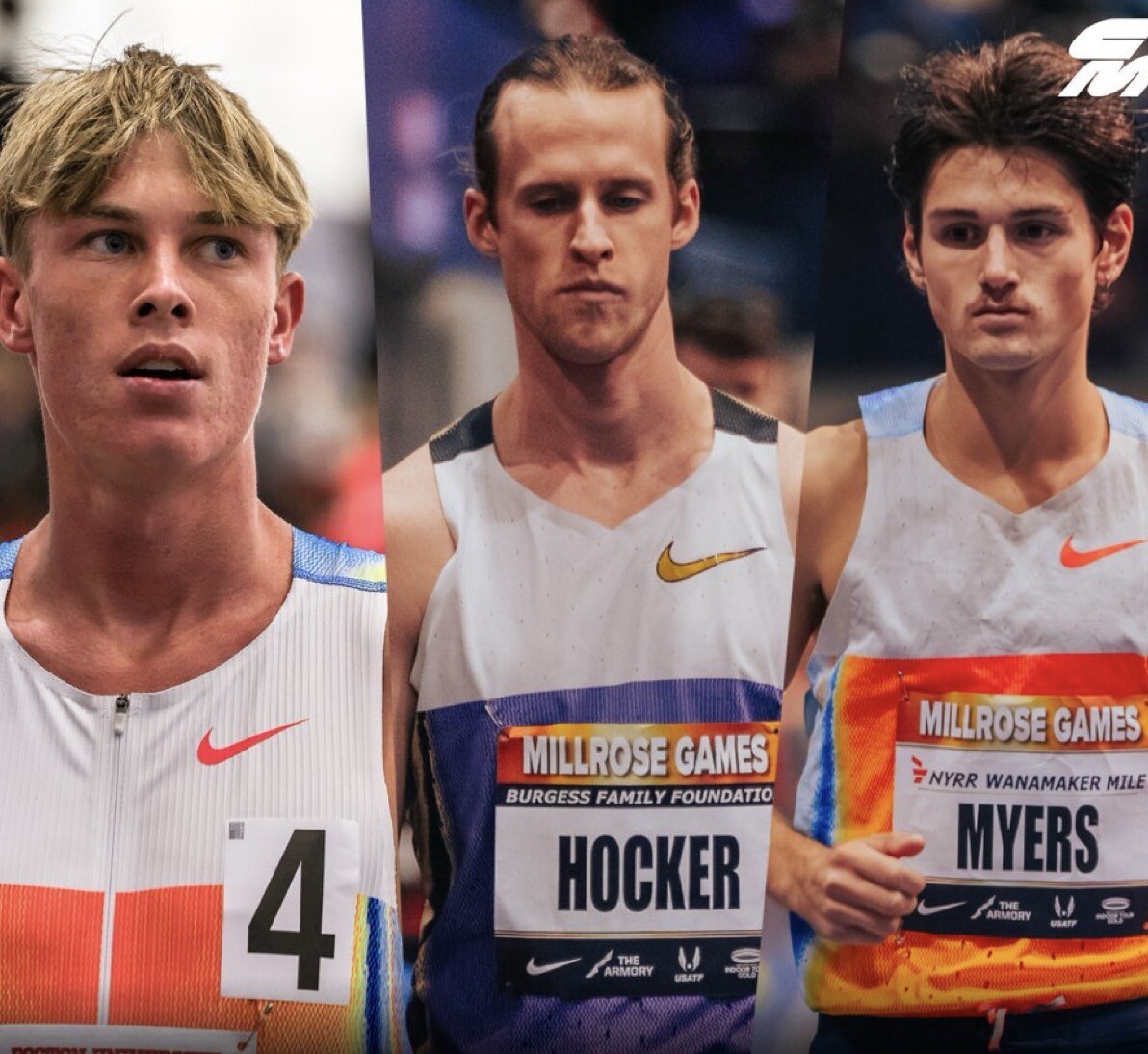
There is no better venue for this generational clash than Hayward Field. Known globally as “TrackTown USA,” Eugene’s iconic stadium has witnessed countless historic performances. The Bowerman Mile has produced some of the fastest times ever recorded, including multiple sub-3:45 performances and dramatic finishes that have defined careers.
The combination of elite pacemaking, perfect conditions, and an electrified crowd creates an environment where barriers fall and legends emerge.
A Race That Represents the Future of the Mile
The 2026 Bowerman Mile represents more than a single race—it symbolizes a passing of the torch between generations. Hocker stands as the established champion, proven on the Olympic stage. Myers represents the new wave of elite global talent already knocking on the door of greatness. Ruthe embodies the sport’s future, a teenager already performing at a level once reserved for seasoned professionals.
The convergence of these three athletes ensures that the Bowerman Mile at the 2026 Prefontaine Classic will be one of the defining races of the year—and perhaps one of the most significant mile races of the modern era.
At Hayward Field, where history has been written time and again, the mile’s next great chapter is ready to unfold.
by Boris Baron
Login to leave a comment

New York City Returns to the National Spotlight as Icahn Stadium Named Host of 2026 U.S. Outdoor Championships
For the first time in more than three decades, New York City will once again stand at the center of American track and field. USA Track & Field has officially announced that the 2026 U.S. Outdoor Championships will be held at Icahn Stadium from July 23–26, bringing the nation’s top athletes to one of the sport’s most historic and iconic settings.
This announcement marks a significant shift for the championships, which in recent years have been closely associated with Eugene, Oregon. Since 2021, Eugene—home of Hayward Field—has served as the primary stage for the national championships, reinforcing its reputation as TrackTown USA. Now, the move to New York signals both a return to the sport’s roots and a renewed commitment to expanding track and field’s visibility in major metropolitan centers
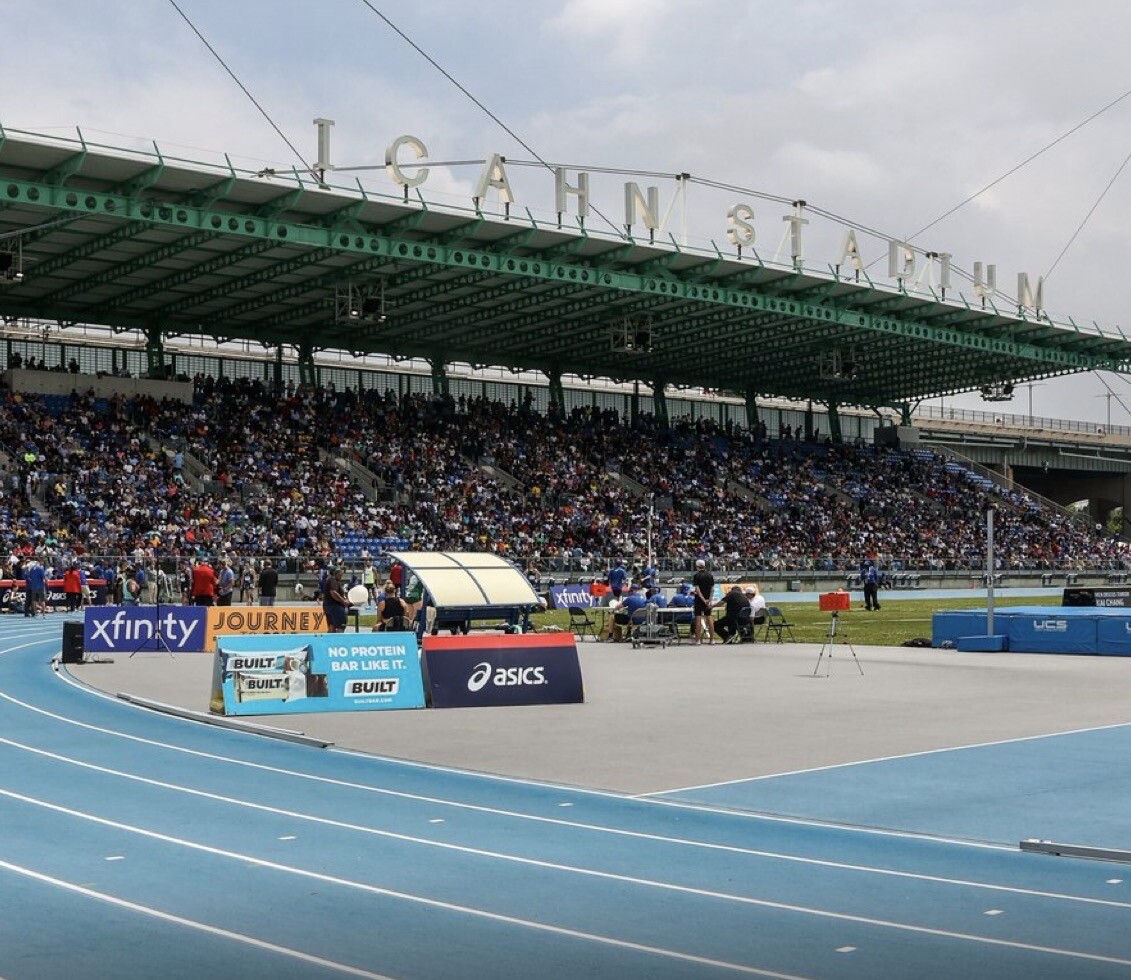
Icahn Stadium, located on Randall’s Island, is no stranger to elite competition. The venue has hosted numerous international meets, including Diamond League events, and has earned a reputation for producing fast times and memorable performances. Its IAAF Class 1 certification and world-class facilities make it a fitting location for the country’s premier outdoor championship.
The 2026 championships will also carry major significance beyond national titles. The meet will serve as a key proving ground for American athletes preparing for future global competitions, with many using the event to establish momentum heading into the 2027 World Championships cycle.
New York City has a rich but underappreciated history in U.S. track and field. The last time the city hosted a national outdoor championship was in 1991 at Downing Stadium, making the 2026 event a historic return after 35 years. Bringing the championships back to New York reconnects the sport with one of the world’s great athletic capitals and offers a powerful opportunity to inspire a new generation of athletes and fans.
Meanwhile, Eugene’s role remains firmly intact. USA Track & Field has confirmed that the 2027 U.S. Outdoor Championships will return to Eugene, where the team for the 2027 World Championships in Beijing, China, will be selected. This dual-city approach reflects the sport’s growing national footprint while honoring both tradition and innovation.
For athletes, the 2026 championships in New York will represent more than a national competition—it will be an opportunity to perform on one of the sport’s biggest domestic stages, in front of a diverse and passionate audience. For fans, it will be a rare chance to witness America’s best runners, jumpers, and throwers competing in the heart of one of the world’s most dynamic cities.
The return of the U.S. Outdoor Championships to New York City marks a historic moment—one that connects past and present, celebrates the sport’s national reach, and reminds the world that track and field belongs on the biggest stages.
by Bob Anderson for My Best Runs
Login to leave a comment
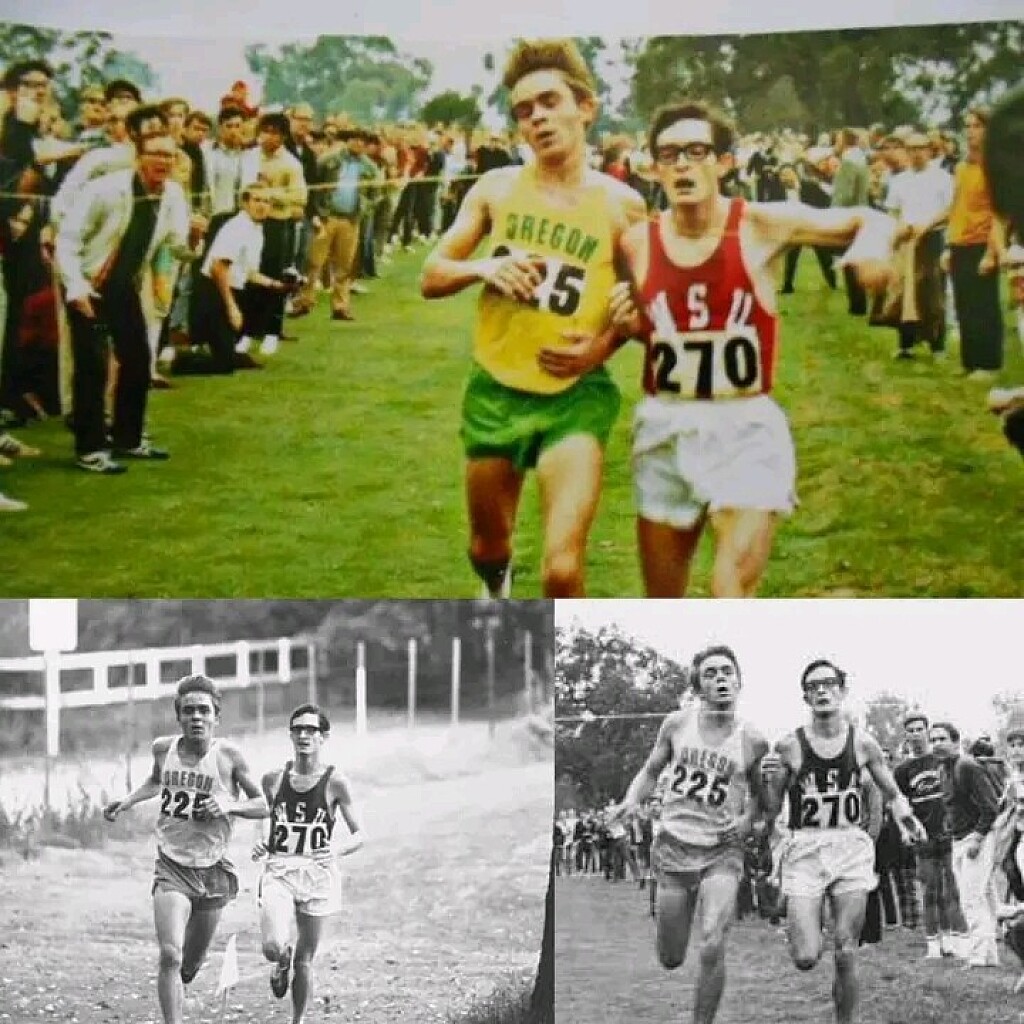
STEVE PREFONTAINE: THE FIRE THAT REDEFINED AMERICAN DISTANCE RUNNING
Steve Prefontaine was more than a gifted athlete—he was the heartbeat of a movement that transformed distance running in the United States. At a time when American runners struggled for global respect, Prefontaine emerged with fearless ambition, relentless confidence, and a refusal to race cautiously. He did not simply compete; he challenged the limits of effort itself.
Born in Coos Bay, Oregon, Prefontaine rose to prominence through sheer willpower and an uncompromising racing philosophy. He believed running was not about waiting for the perfect moment, but about seizing control from the gun. While others conserved energy, he attacked races head-on, forcing competitors into uncomfortable territory. This aggressive style made every race unforgettable and redefined how Americans viewed middle- and long-distance competition.
Prefontaine’s legacy was built not only on results, but on attitude. He raced with emotion, honesty, and pride, insisting that athletes owed their full effort to the sport and to themselves. To him, talent was meaningless without total commitment. That belief resonated deeply with young runners across the country, many of whom saw in him proof that courage could rival pedigree.
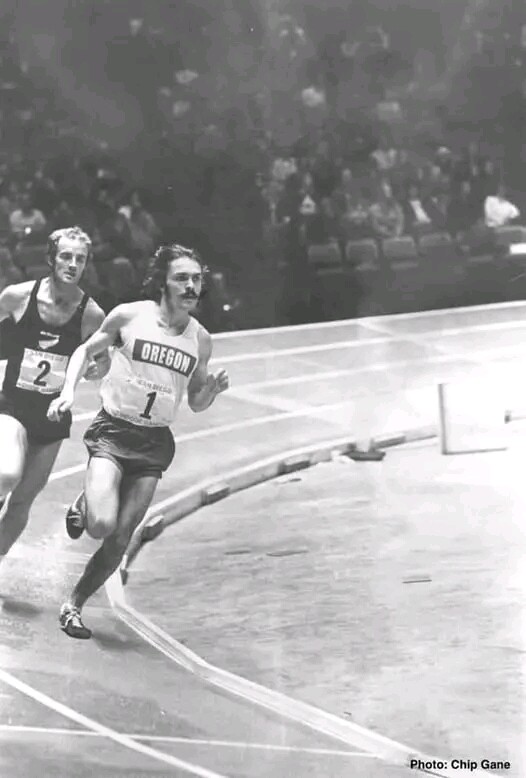
On the track, his performances spoke loudly. From the 1500 meters to the 10,000 meters, Prefontaine set remarkable times that placed him among the world’s elite. His personal bests—achieved in cities like Eugene, Helsinki, Milan, and Stockholm—reflected both his versatility and his willingness to test his limits repeatedly. At one point, he held every American record from 2,000 meters through 10,000 meters, a testament to his dominance and consistency.
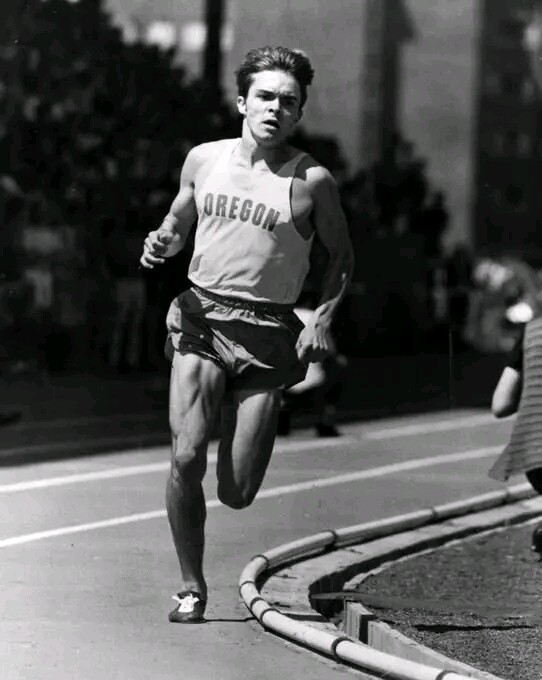
Yet what truly set Prefontaine apart was his influence beyond statistics. He became a voice for athletes, advocating for fairness, recognition, and respect at a time when amateur runners received little support. He helped shift the culture of American athletics toward professionalism and athlete empowerment, laying groundwork that future generations would benefit from.
Prefontaine’s life was tragically brief, but his impact proved permanent. His philosophy—run with courage, race with heart, and give everything—continues to shape the mindset of runners worldwide. Trails, stadiums, and training groups still echo with his spirit, reminding athletes that greatness is measured not only by victories, but by the honesty of one’s effort.
Decades later, Steve Prefontaine remains a symbol of fearless competition and unfiltered passion. He did not chase perfection; he chased truth in performance. And in doing so, he became more than a champion—he became a legacy.
Legends do not fade. They keep running through those they inspire.
by Erick Cheruiyot for My Bestruns.
Login to leave a comment
Prefontaine Classic
The Pre Classic, part of the Diamond League series of international meets featuring Olympic-level athletes, is scheduled to be held at the new Hayward Field in Eugene. The Prefontaine Classicis the longest-running outdoor invitational track & field meet in America and is part of the elite Wanda Diamond League of meets held worldwide annually. The Pre Classic’s results score has...
more...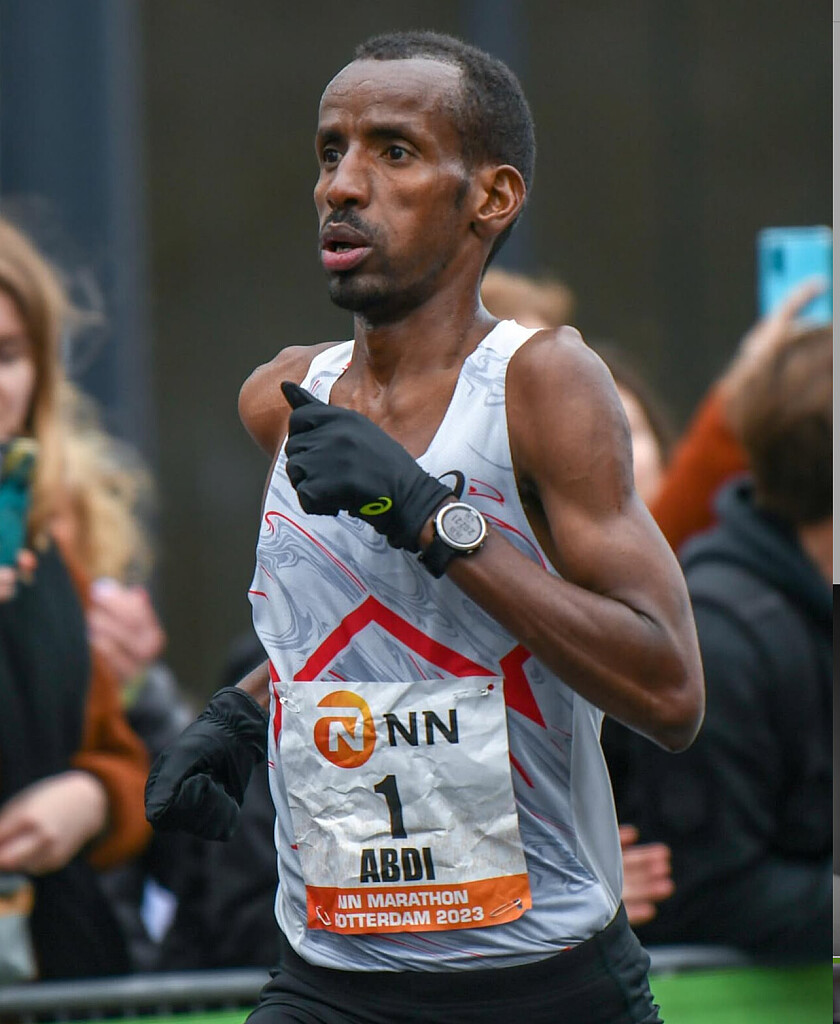
Bashir Abdi Targets European Record and Third Rotterdam Crown in 2026
After an injury-disrupted 2025 season, Bashir Abdi, who represents Belgium, is resetting his sights on a bold and ambitious 2026 campaign—one centered on Rotterdam, records, and redemption.
The two-time Olympic marathon medalist has confirmed his intention to return to the NN Rotterdam Marathon on April 12, where he will seek an unprecedented third victory and renew his pursuit of the European marathon record.
“It’s a special marathon,” Abdi told Sporza.be. “I’ve already run 14 marathons, four of which were here in Rotterdam. It won’t be easy to win here, as there will be a strong field. But I’m especially looking forward to running with a good feeling.”
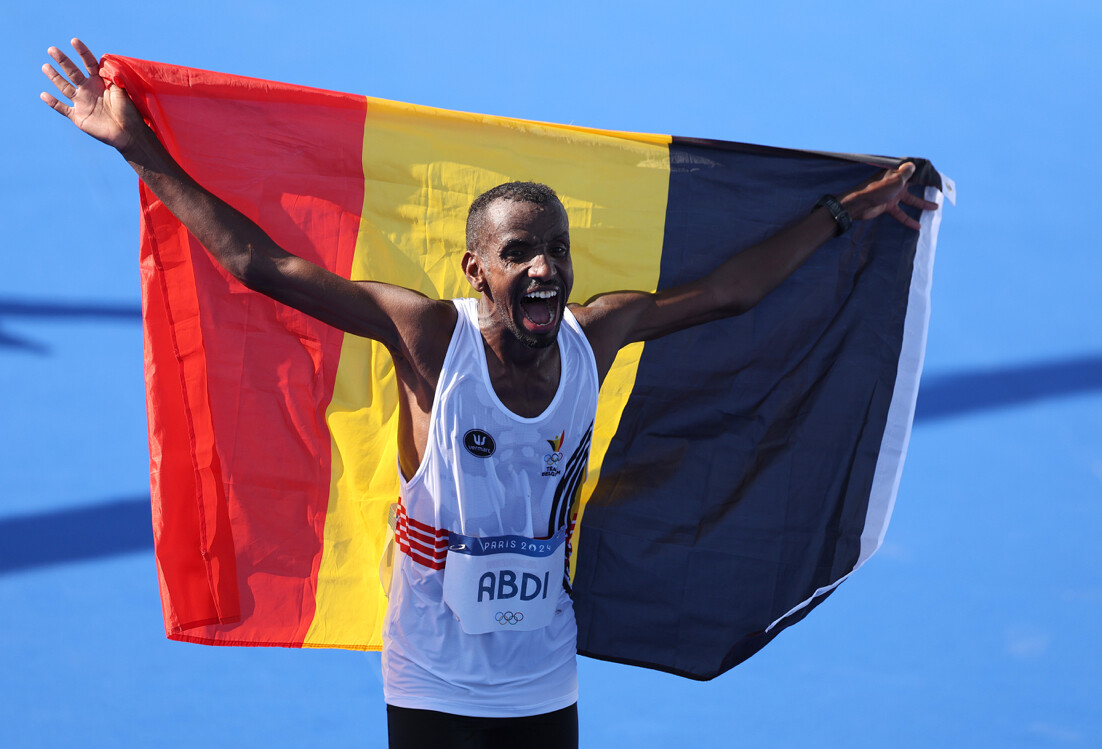
That “good feeling” has been central to Abdi’s career—one built on patience, consistency, and an unusually long peak for a modern elite marathoner.
Born in Somalia, Abdi moved to Belgium as a child and later emerged as one of Europe’s most reliable championship performers. While many of his contemporaries built their reputations on a single breakthrough race, Abdi distinguished himself through durability across courses, conditions, and competitive formats. He has repeatedly delivered on the biggest stages, including Olympic Games, World Championships, and major city marathons.
In 2021, just two months after winning Olympic bronze in Tokyo, Abdi produced the defining performance of his career in Rotterdam, winning in 2:03:36 to set a European marathon record. The run confirmed him not only as a medal contender, but as a time-trialist capable of matching the world’s fastest marathon specialists.
Two years later, he returned to Rotterdam and nearly surpassed his own mark, winning again in 2:03:47—just 11 seconds shy of the European record. That performance reinforced his unique connection to the course and his ability to execute under pressure.
Now 36, Abdi is acutely aware that the margins are tightening.
“I feel many athletes are getting close to that record,” he said. “If I want to hold on to it for a few more years, I have to go faster. Whether it’s in this edition or another time, I don’t know. But my ambition is to break that European record.”
Ahead of Rotterdam, Abdi will test his form in familiar surroundings at the Gent Half Marathon on March 8, using the race as a barometer after a year that never fully came together physically. For a runner whose success has been built on rhythm and continuity, regaining health may be the most important victory of all.
A Course Built for History
Rotterdam’s reputation as one of the world’s fastest marathon courses is long established.
In 1985, Portugal’s Carlos Lopes set a world record of 2:07:12 there. Three years later, Ethiopia’s Belayneh Dinsamo lowered the mark to 2:06:50—a time that stood for a decade. In the women’s race, Tegla Loroupe rewrote history in 1988 with a world record of 2:20:47, ending Ingrid Kristiansen’s long reign.
It is into this lineage of record-breaking performances that Abdi has firmly placed himself—and where he hopes to return once more in 2026.
Bashir Abdi’s 10 Fastest Marathon Performances
• 2:03:36 – 1st, 2021 Rotterdam Marathon
• 2:03:47 – 1st, 2023 Rotterdam Marathon
• 2:04:32 – 3rd, 2023 Chicago Marathon
• 2:04:49 – 2nd, 2020 Tokyo Marathon
• 2:05:19 – 3rd, 2022 London Marathon
• 2:05:23 – 4th, 2022 Rotterdam Marathon
• 2:06:14 – 5th, 2019 Chicago Marathon
• 2:06:47 – 2nd, 2024 Olympic Games (Paris)
• 2:06:48 – 3rd, 2022 World Athletics Championships (Eugene, Oregon)
• 2:07:03 – 7th, 2019 London Marathon
by Boris Baron
Login to leave a comment

NN Rotterdam Marathon
The marathon has been the biggest one-day sporting event in the Netherlands for many years in a row with over 35000 athletes professionals inclusive. The world's top athletes will at the start on the bustling coolsingel, alongside thousands of other runners who will also triumph,each in their own way.The marathon weekend is a wonderful blend of top sport and festival. ...
more...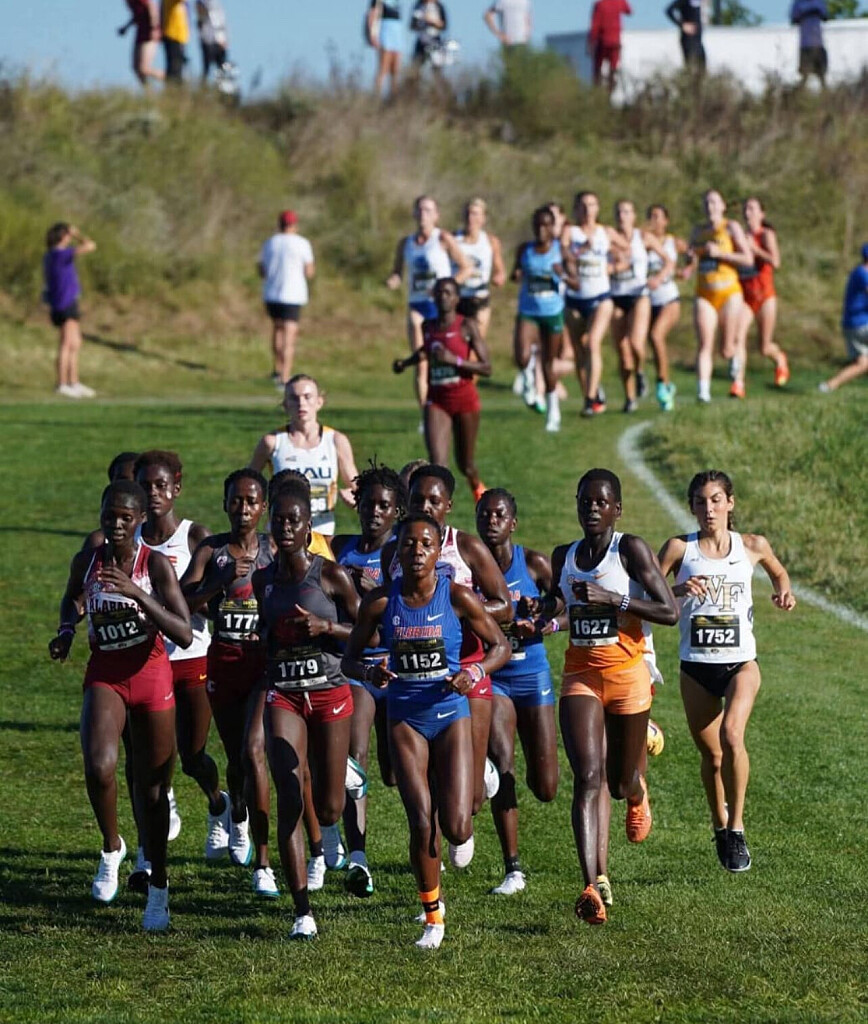
A Record-Breaking Journey: 60 Townhall Athletes Set for NCAA Nationals
For young runners in Kenya, the dream has always extended far beyond the finish line. It is about opportunity, education, and building a future through running. On November 22, sixty alumni of Townhall Athletics will stand on the starting line at the Gans Creek Cross Country Course in Columbia, Missouri—not only as competitors, but as student-athletes whose journeys blend world-class talent with academic ambition.
Their road to the NCAA National Cross Country Championships was forged through nine regional qualifiers, where Townhall athletes earned advancement both individually and through team berths. Each qualifier represents a story that began on rugged high-altitude trails in Kenya and continued in American classrooms—balancing mileage with lectures, workouts with research projects.
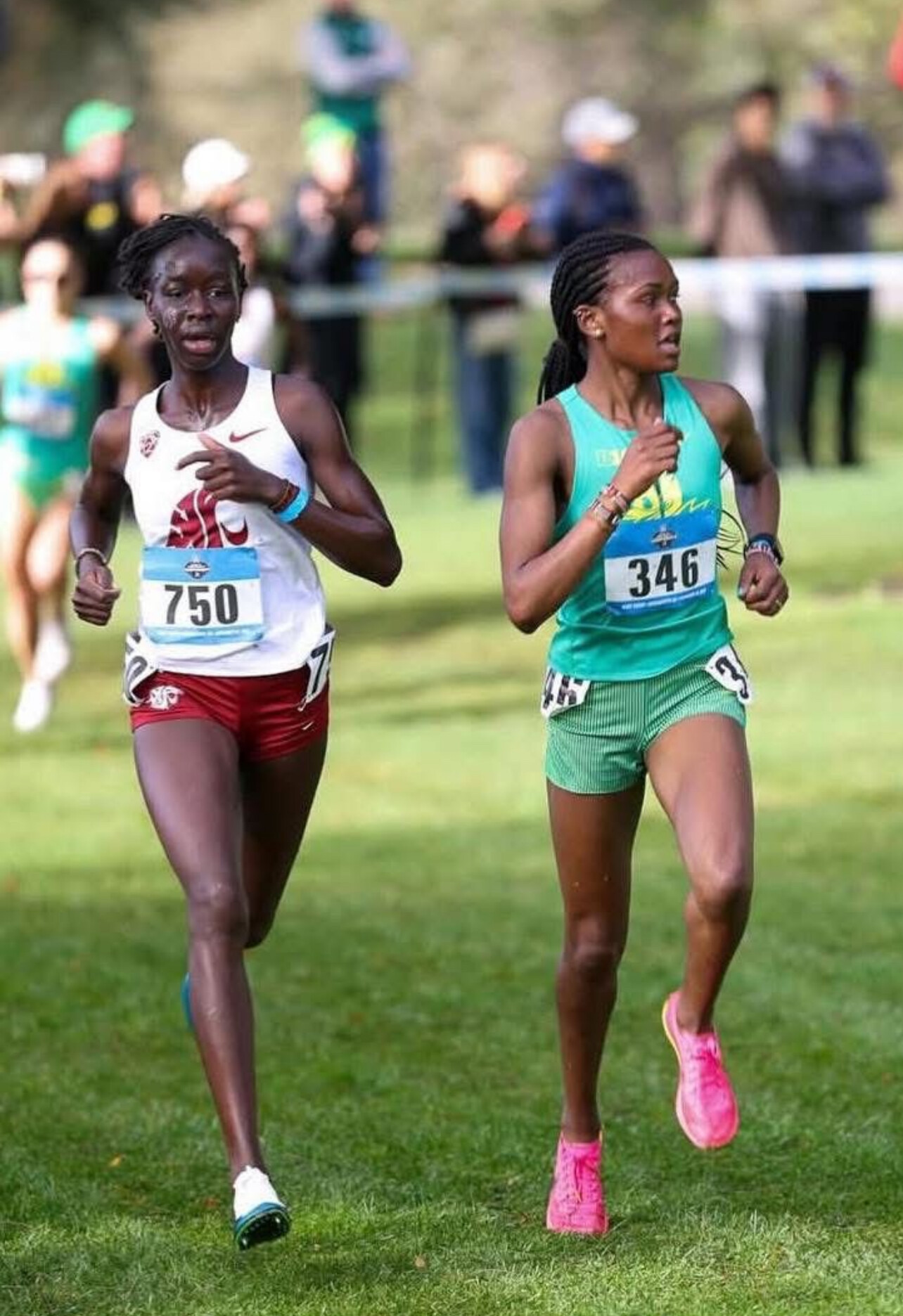
A Pipeline for Talent and Learning
Many of these athletes grew up with limited access to formal training facilities—sometimes even without proper running shoes. Through Townhall Athletics, runners such as Brian Musau, Dennis Kipngetich, and Laban Kipkemboi at Oklahoma State University received structured coaching and the mentorship needed to secure life-changing scholarships.
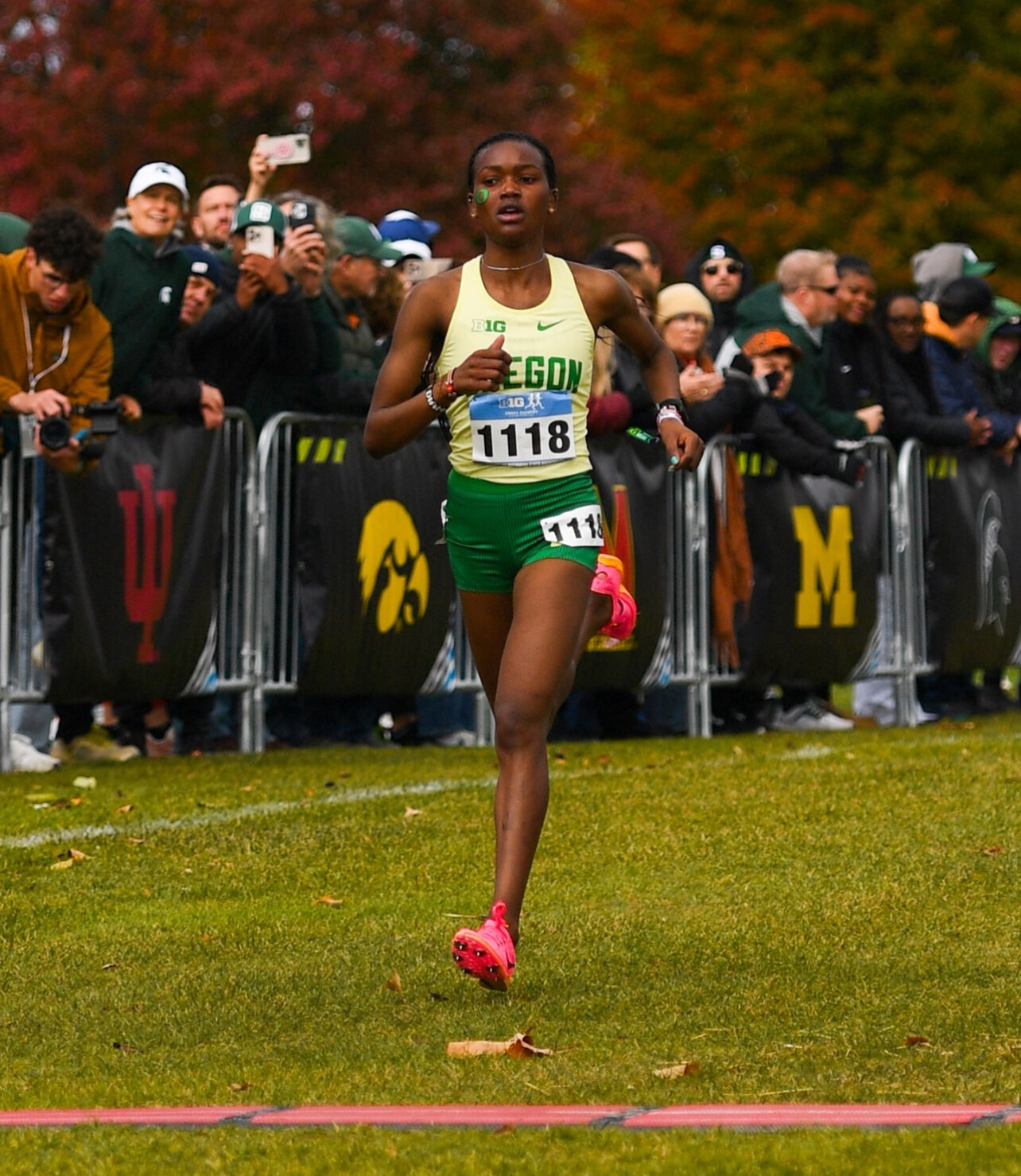
In Florida, Kelvin Cheruiyot, Desma Chepkoech, and Judy Chepkoech have combined tactical racing with strong academic records, while Debora Cherono at Texas A&M has emerged as a respected leader both on campus and on the track.
In the Mountain West Conference, New Mexico’s Evans Kiplagat and Vincent Chirchir continue to show how academic and athletic development go hand in hand. At Iowa State, Joash Rutto and Mercylin Kirwa have built reputations for consistency and endurance, exemplifying the discipline long associated with Kenyan distance running.
Other Townhall standouts, including Meshack Kuiyo at Boise State and Gilbert Rono at Tulane, carry the hopes of their programs while pursuing degrees and competing at the top level of collegiate sport.
Gans Creek: Where Experience Meets Ambition
Gans Creek is known for its rolling hills, long grass straights, and technical curves—terrain that demands smart pacing and a strong finish. For Kenyan athletes who grew up training at altitude, the course offers a blend of familiarity and challenge, providing a perfect stage to showcase endurance, resilience, and race intelligence.
Lining up against top collegiate athletes from across the United States and around the world, Townhall runners bring not only speed but also the mental fortitude and tactical awareness refined through years of structured training back home.
Voices of Support
Kenyan sports leaders continue to stress that athletic success must be paired with education to secure a long-term future.
Barnaba Korir, AK Youth Development Director and NOC-K First Vice President, emphasizes:
“These scholarships are more than athletic opportunities—they are life-changing. Education ensures our youth can thrive long after the final lap.”
Ibrahim Hussein Kipkemboi, Director of the Africa Athletics Development Centre, adds:
“Blending study with sport protects athletes from early burnout and equips them for the future.”
Athletics Kenya President Lt. Gen. (Rtd) Jackson Tuwei reinforces the message:
“The goal is not just fast runners, but well-rounded individuals. Education and athletics go hand in hand for global success.”
Impact Beyond the Course
These sixty qualifiers demonstrate how structured development and academic pathways can open doors for rural youth across Kenya. Their progress validates youth programs, inspires younger athletes, and shows how scholarships allow talent to flourish both on the track and in the classroom.
The Journey and the Finish Line
On race day, athletes such as Rosemary Longisa and Caroline Jepkorir of Washington State University, Evans Tanui of Arizona, and Diana Cherotich of Oregon will carry far more than personal ambition. They will carry the dreams of families, coaches, and communities who believed in them from the start.
Every stride over Missouri’s rolling terrain reflects years of discipline, sacrifice, and the pursuit of excellence—both academic and athletic.
When the final lap is run, results will matter. But so will the journey that brought them here. From dusty Kenyan tracks to the championship stage at Gans Creek, Townhall athletes have shown that with vision, support, and resilience, success in running and life can grow together.
As they race for NCAA glory, they continue to inspire a generation to see that the finish line is not an end—it is, in fact, the beginning.
by Robert Kibet
Login to leave a comment
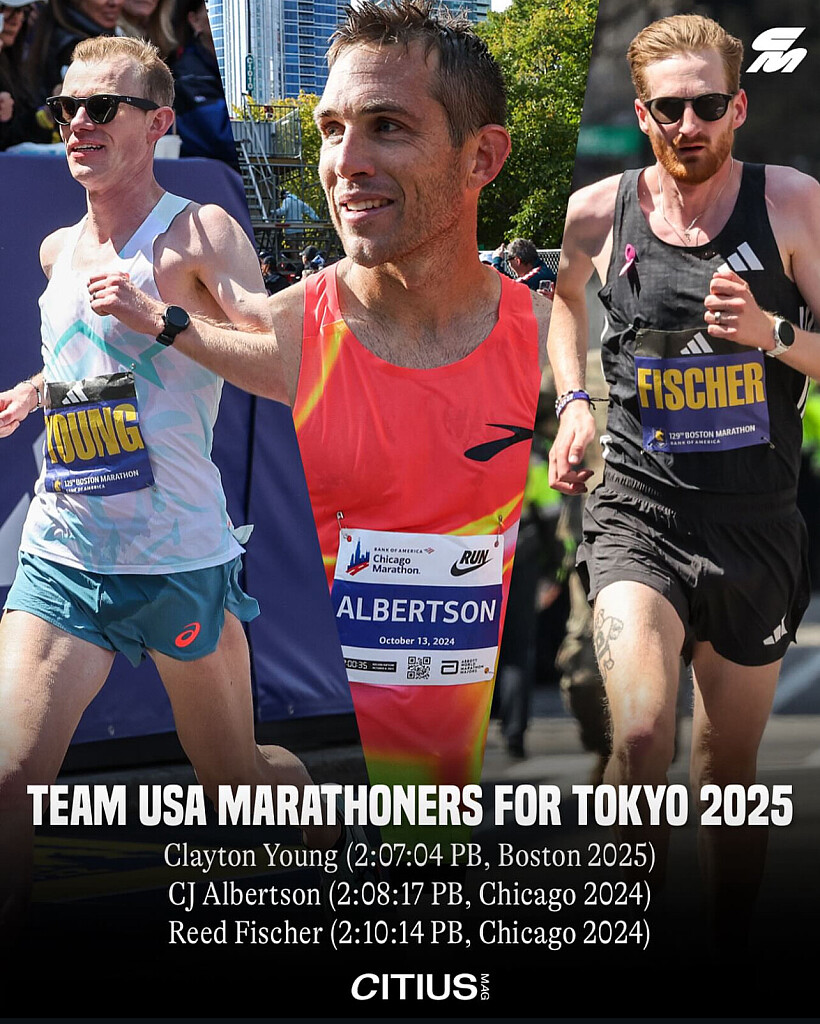
World Championships Men’s Marathon Preview: Familiar Faces Return to Tokyo
Tokyo, September 13, 2025 – The men’s marathon at the 2025 World Athletics Championships, set for Monday, September 15, has all the makings of a showdown that feels like déjà vu for fans of road racing in the Japanese capital.
Much of the World Championships route mirrors the Tokyo Marathon course, and so too does the field. The top three finishers from March’s Tokyo Marathon — Tadese Takele and Deresa Geleta of Ethiopia, along with Kenya’s Vincent Kipkemoi Ngetich — headline the lineup. They also hold the three fastest times in the world this year among those entered, giving the race a sharp competitive edge.
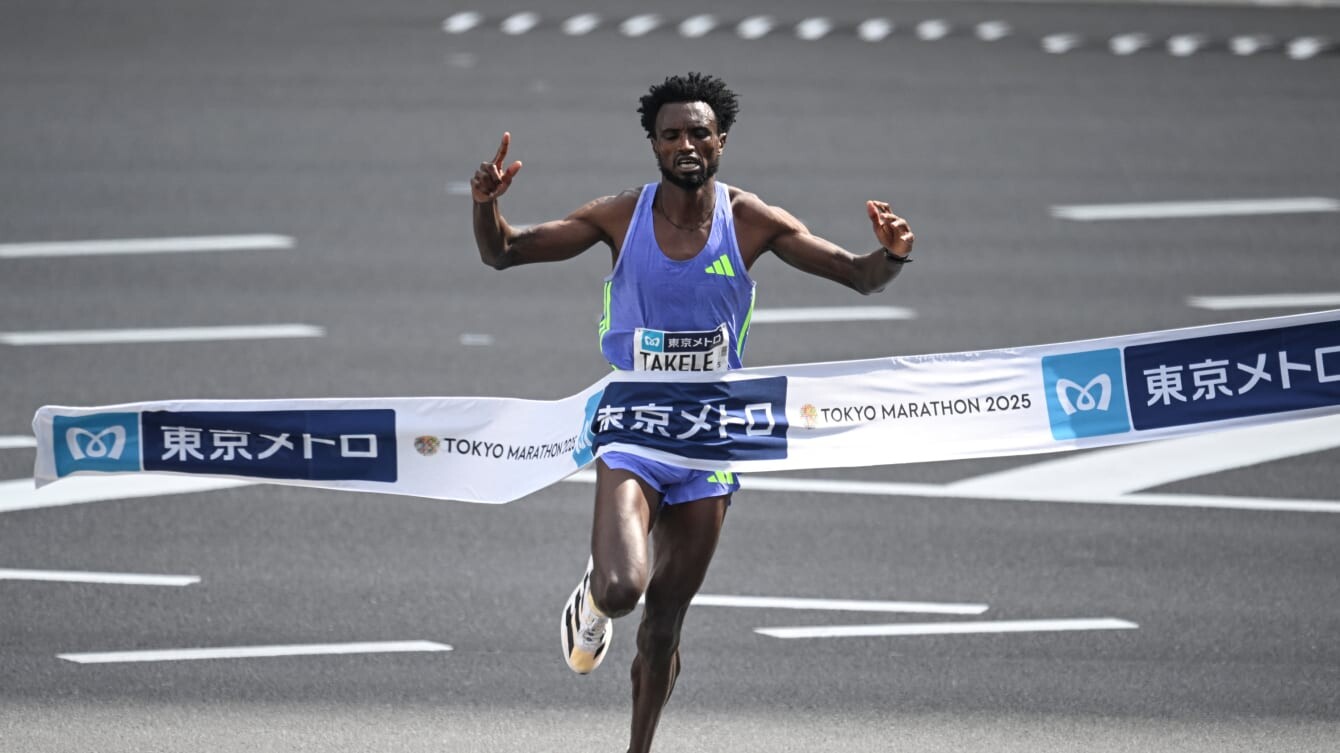
Adding to the depth, Emile Cairess of Great Britain, who placed fourth at the Paris 2024 Olympic Games, is set to challenge again in Tokyo. Defending world champion Victor Kiplangat of Uganda and 2023 Budapest silver medallist Maru Teferi of Israel add to a field packed with medal contenders.
The United States will also be represented with a strong trio: Clayton Young, CJ Albertson, and Reed Fischer. While Americans are not among the pre-race medal favorites, each brings international experience and competitive credentials. Young in particular has emerged as one of the fastest U.S. marathoners in recent years, and Albertson is known for aggressive pacing that could shake up the race dynamics. Fischer adds depth and consistency, giving Team USA multiple chances for a top-10 finish.
With multiple men entered who have run under 2:05, the pace promises to be ambitious. Whether it leads to a record will depend heavily on conditions. Tokyo has been under a heatwave alert, and organizers have moved the start time up by 30 minutes to help offset the temperatures. Still, if the weather cooperates, Tamirat Tola’s World Championships record of 2:05:36, set in Oregon in 2022, could be under serious threat.
All signs point to a thrilling clash — a familiar course, a world-class field, the Americans ready to test themselves against the best, and the possibility of history being rewritten in Tokyo.
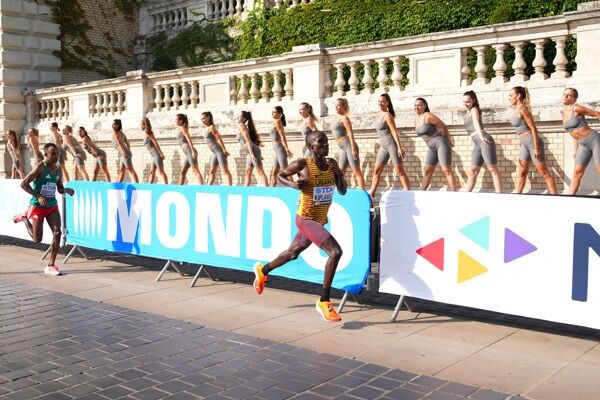
by Boris Baron
Login to leave a comment
Brock Hinzmann Partners with KATA Running Camp in Eldoret
KATA Running Camp 10 in Eldoret, operated by Ruth Chumo, has a new partner—Brock Hinzmann, a lifelong runner and visionary thinker.
“I told Brock about our KATA Running Camp and Potato Farm project in Kenya,” says Bob Anderson. “He liked that the program is sustainable and wanted to get involved. Not only did his contribution establish a new KATA Running Camp, but he will also share in the sales of KATA potatoes.”

Brock Hinzmann is chairperson for the Silicon Valley Node of The Millennium Project, an international think tank that monitors global trends and helps plan for sustainable alternative futures.
Brock began running in the late 1960s in Oregon’s Willamette Valley—then a hub of U.S. distance running—just as Kenyan athletes were emerging on the world stage. At 16, he ran his first marathon in 2:44:52. His career highlights include a 6th-place finish at the 1983 Honolulu Marathon and his fastest time of 2:19:15 at the Boston Marathon in 1984 (21st place). He continued to run competitively throughout his career, representing his company’s track team and running wherever his international travels took him.
He completed his last marathon in 2018 at age 65, but at 71, running is still part of his life. “I’ve always found runners around the world to be like a tribe—accepting and supportive of each other,” Brock reflects.
For Brock, investing in KATA is more than financial. It is a way of giving back to the running community that inspired him. He encourages everyone to keep running and to travel widely—two passions that continue to guide his life.

by Boris Baron
Login to leave a comment
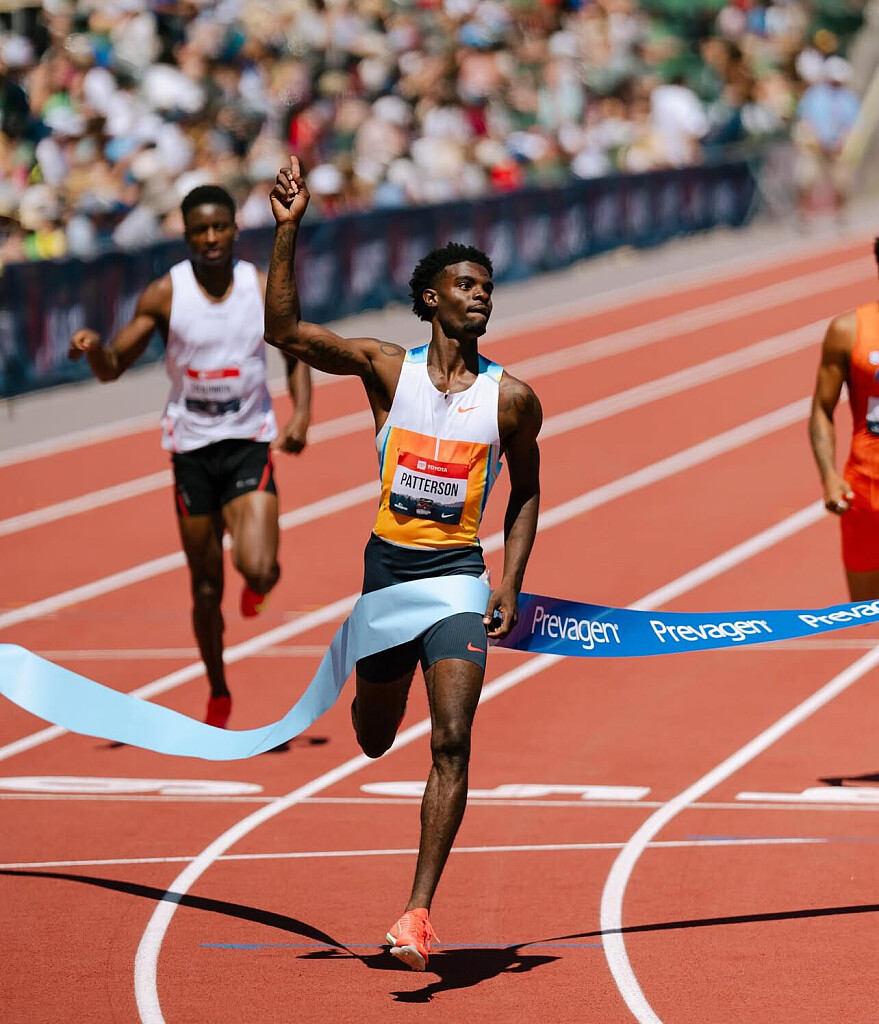
From UPS Graveyard Shift to National Champion: Jacory Patterson’s Inspiring Journey to the Top of U.S. Sprinting
Before he became the fastest man in America over 400 meters, Jacory Patterson was clocking time in a very different kind of race — the overnight grind at a UPS distribution center in South Carolina. Working the graveyard shift to fund his training, Patterson kept his Olympic dreams alive in the shadows of the shipping warehouse.
Now, he’s in the spotlight.
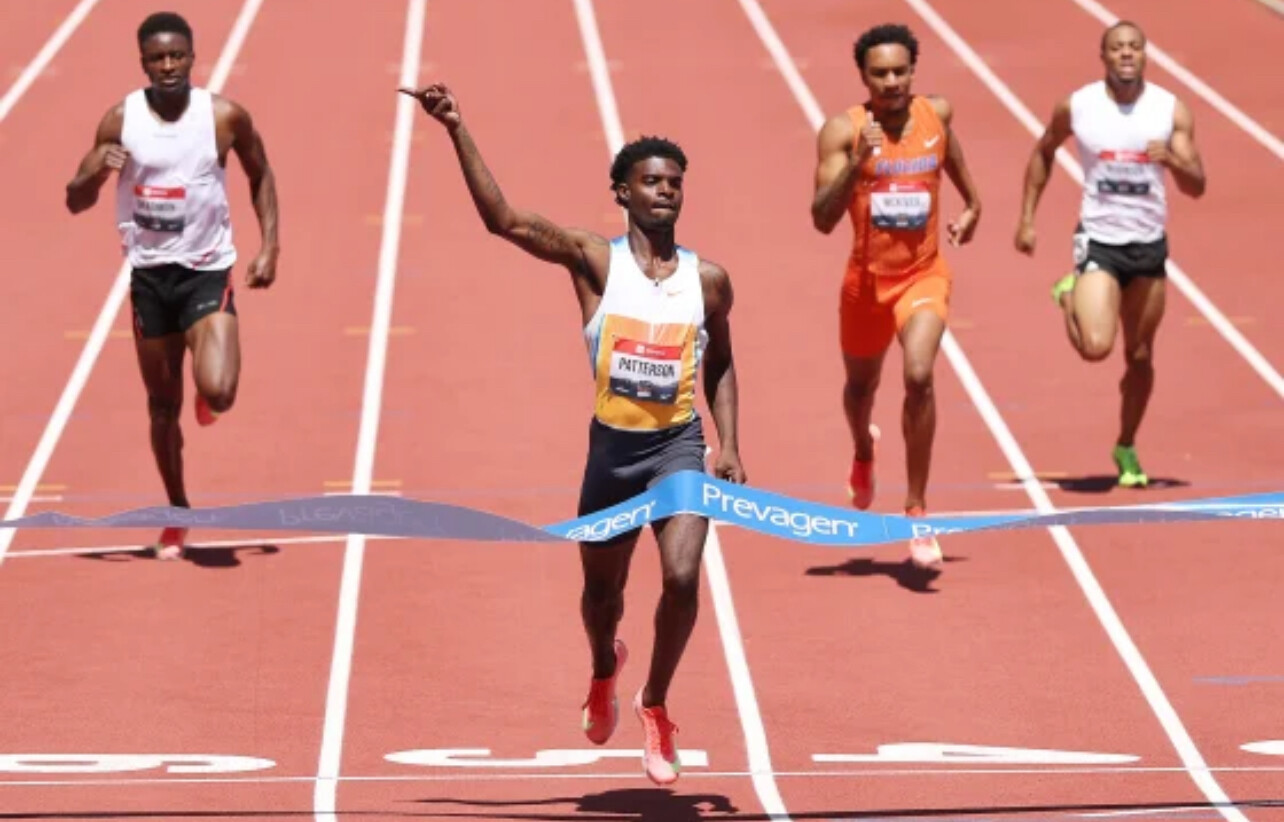
This past weekend in Eugene, Oregon, Patterson stormed to victory in the men’s 400 meters at the U.S. Track and Field Championships, claiming his first national title. When the dust settled on the track, his phone was buzzing — not with shipping requests, but with hundreds of congratulatory messages from friends, fans, and notably, his former UPS co-workers.
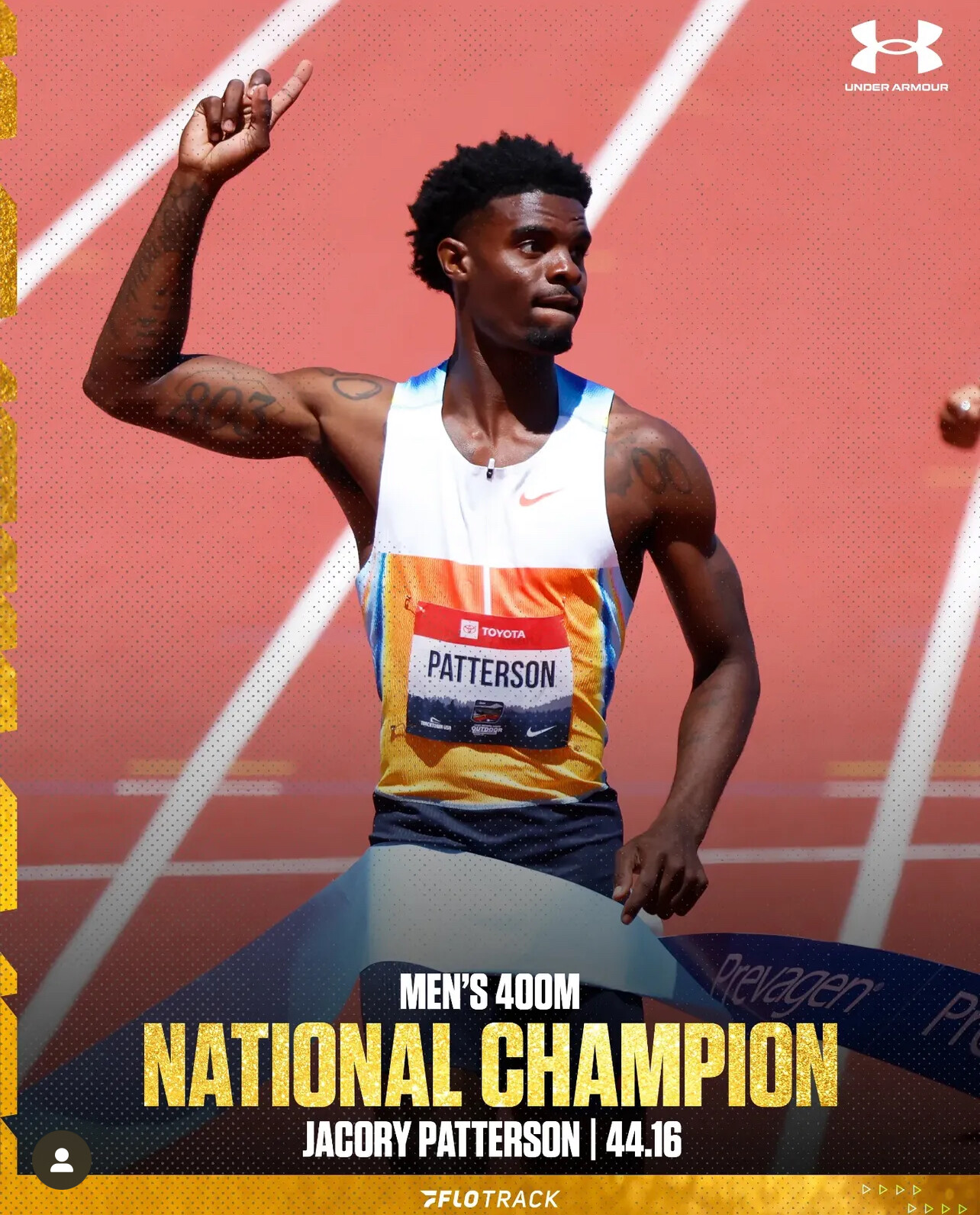
“They’d seen me work under pressure before,” Patterson said, reflecting on the fast-paced demands of loading and sorting packages. “Just in a different kind of lane.”
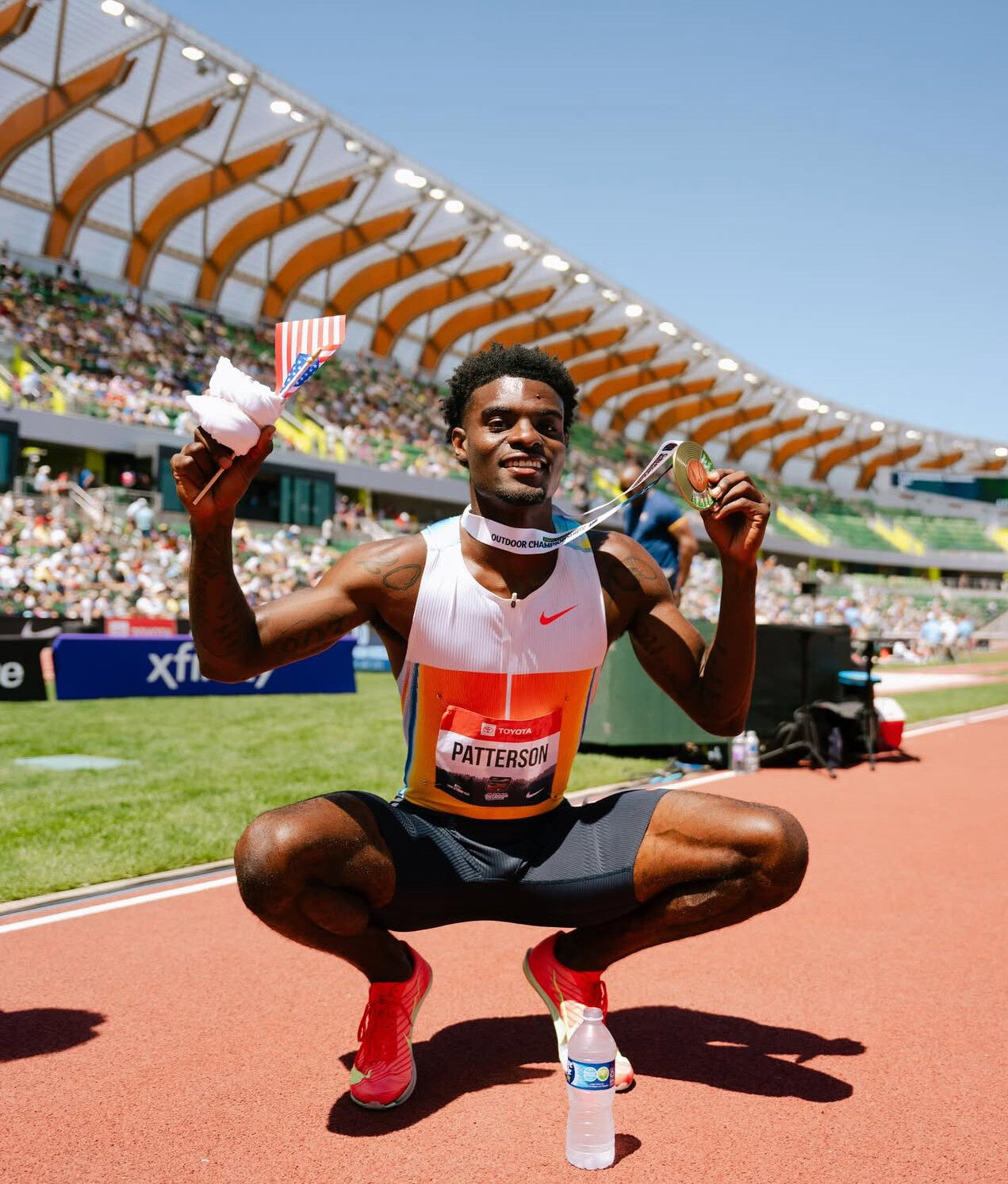
Patterson’s win is more than a personal triumph — it’s a testament to perseverance in a sport where funding and sponsorships are scarce for athletes outside the top echelon. Balancing full-time labor with elite-level training is no easy feat, but Patterson managed both with the kind of focus and grit that now defines his racing style.
His victory in Eugene not only secures him a spot among America’s sprinting elite, but also serves as inspiration for athletes nationwide chasing greatness against the odds.
“Track and field isn’t always glamorous,” Patterson said. “But if you believe in your path, and you keep showing up — whether it’s at practice or a 3 a.m. shift — eventually, your moment will come.”
And on Saturday in Eugene, it did.
by Boris Baron
Login to leave a comment
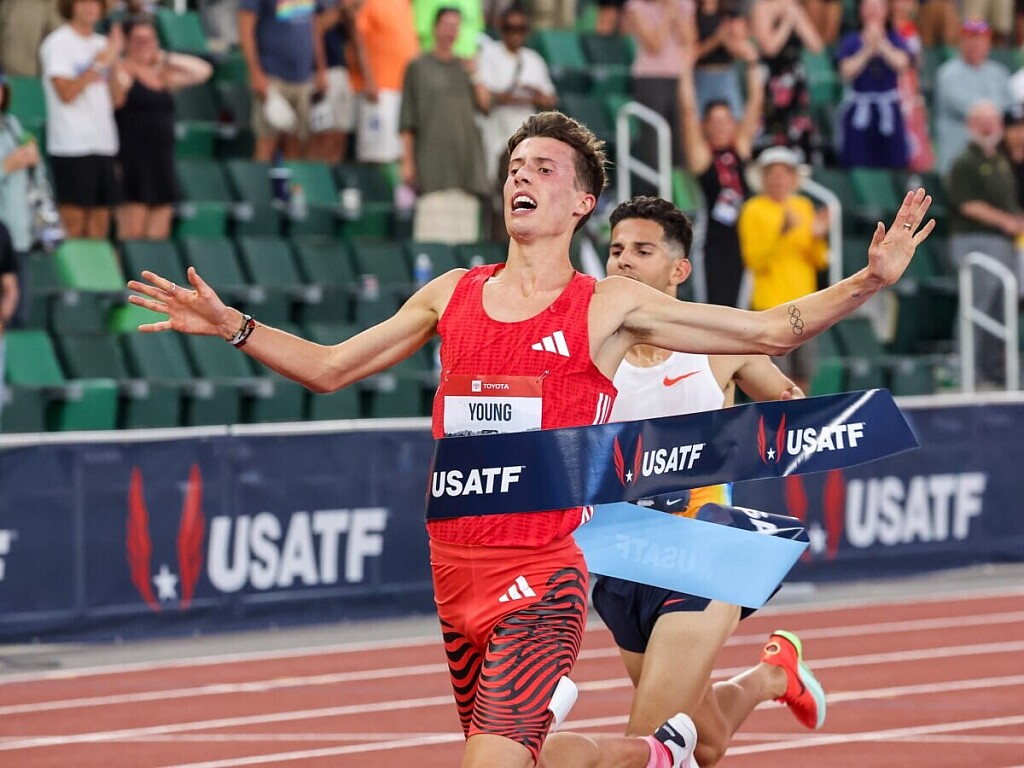
Nico Young Clinches U.S. 10,000m Title with Electrifying Finish in Eugene
Eugene, Oregon – July 31, 2025
Nico Young delivered a career-defining performance on Wednesday night at the 2025 USATF Outdoor Championships, storming to victory in the men’s 10,000 meters with a closing display that left the crowd at Hayward Field in awe.
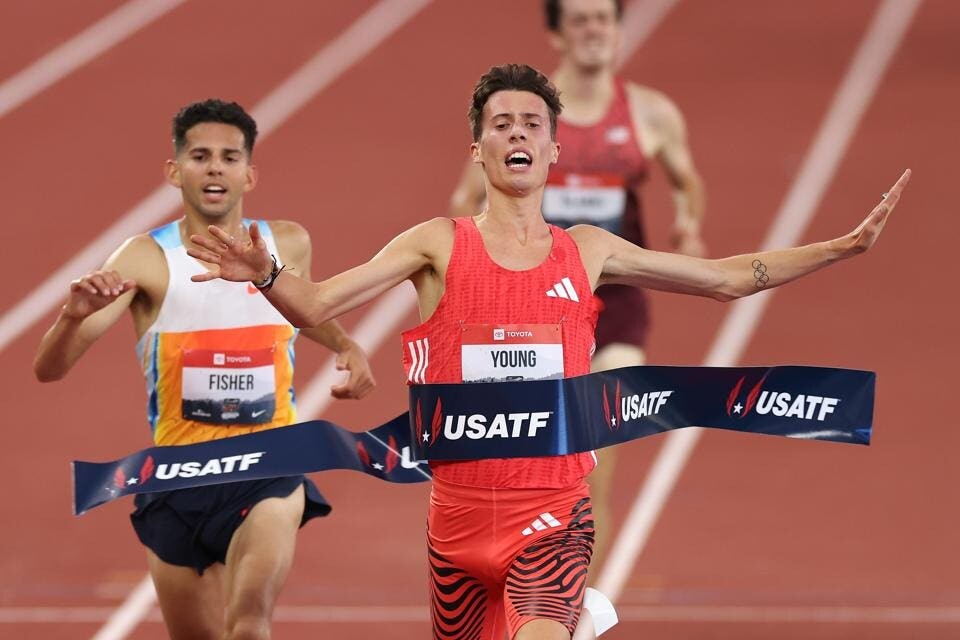
In a tightly contested final, Young surged past established veterans Grant Fisher and Graham Blanks with a stunning final lap of 56.54 seconds, covering the last 1600 meters in under four minutes—an extraordinary finish in a championship 10K. His winning time: 29:02.12.
Grant Fisher, one of the most accomplished distance runners in U.S. history, claimed the silver medal in 29:02.37, while rising star Graham Blanks, fresh off a record-breaking collegiate season, secured bronze in 29:02.43.
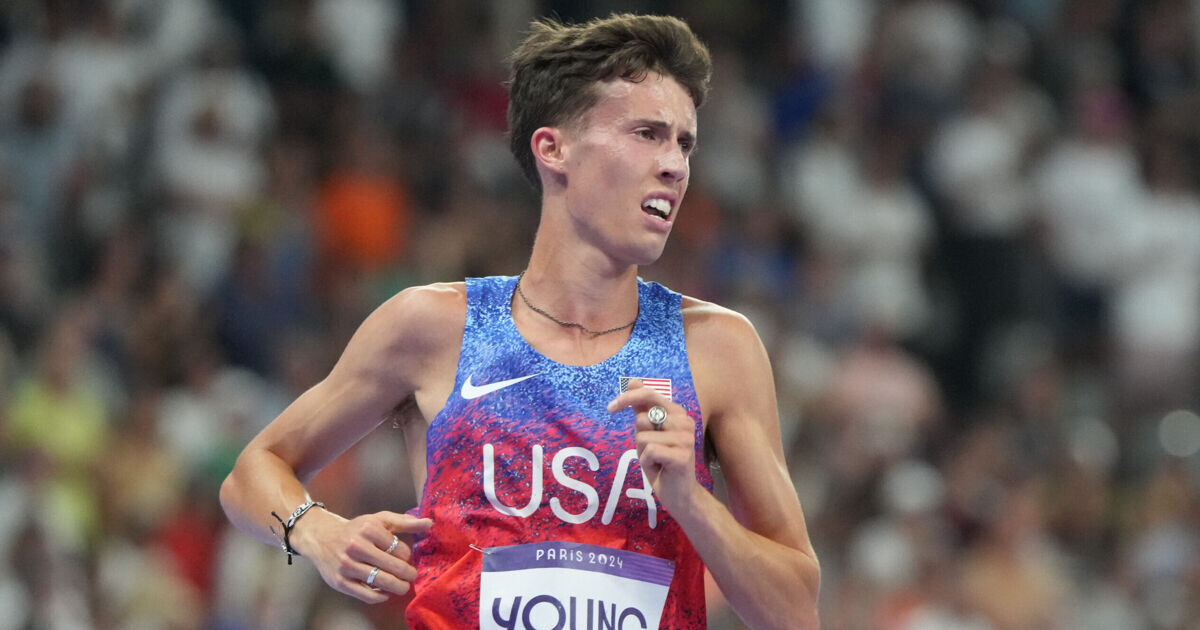
“What a way to end the night in Eugene,” echoed the sentiments of fans and announcers alike as Young crossed the line, arms raised in triumph.
At just 22 years old, Young’s victory represents a passing of the torch and a new era in American distance running. Known for his aggressive style and fearless front-running as a collegiate athlete at Northern Arizona University, Young has now proven he can execute a tactical race and close with world-class speed—a critical asset on the international stage.
The men’s 10,000m capped an electric night of competition at Hayward Field and set the tone for the rest of the championships. With this performance, Young not only claimed his first national title but also firmly established himself as a contender for global medals in the years ahead.
Men’s 10,000m – Final Results
• Nico Young – 29:02.12 (National Champion)
• Grant Fisher – 29:02.37 (National Runner-Up)
• Graham Blanks – 29:02.43 (National Bronze)
Stay tuned to My Best Runs for continued coverage of the 2025 USATF Outdoor Championships and road to the World Championships.
by Boris Baron
Login to leave a comment

Track’s Biggest Stars Return to Hayward Field for U.S. Championships
Eugene, Oregon – The stage is set for another electrifying weekend at iconic Hayward Field, as the Toyota U.S.A. Track & Field Outdoor Championships take place this Saturday and Sunday at 4 p.m. ET, airing live on NBC and Peacock.
Some of the sport’s biggest stars will be headlining the meet, including Sydney McLaughlin-Levrone and Noah Lyles, two of America’s premier track and field athletes.
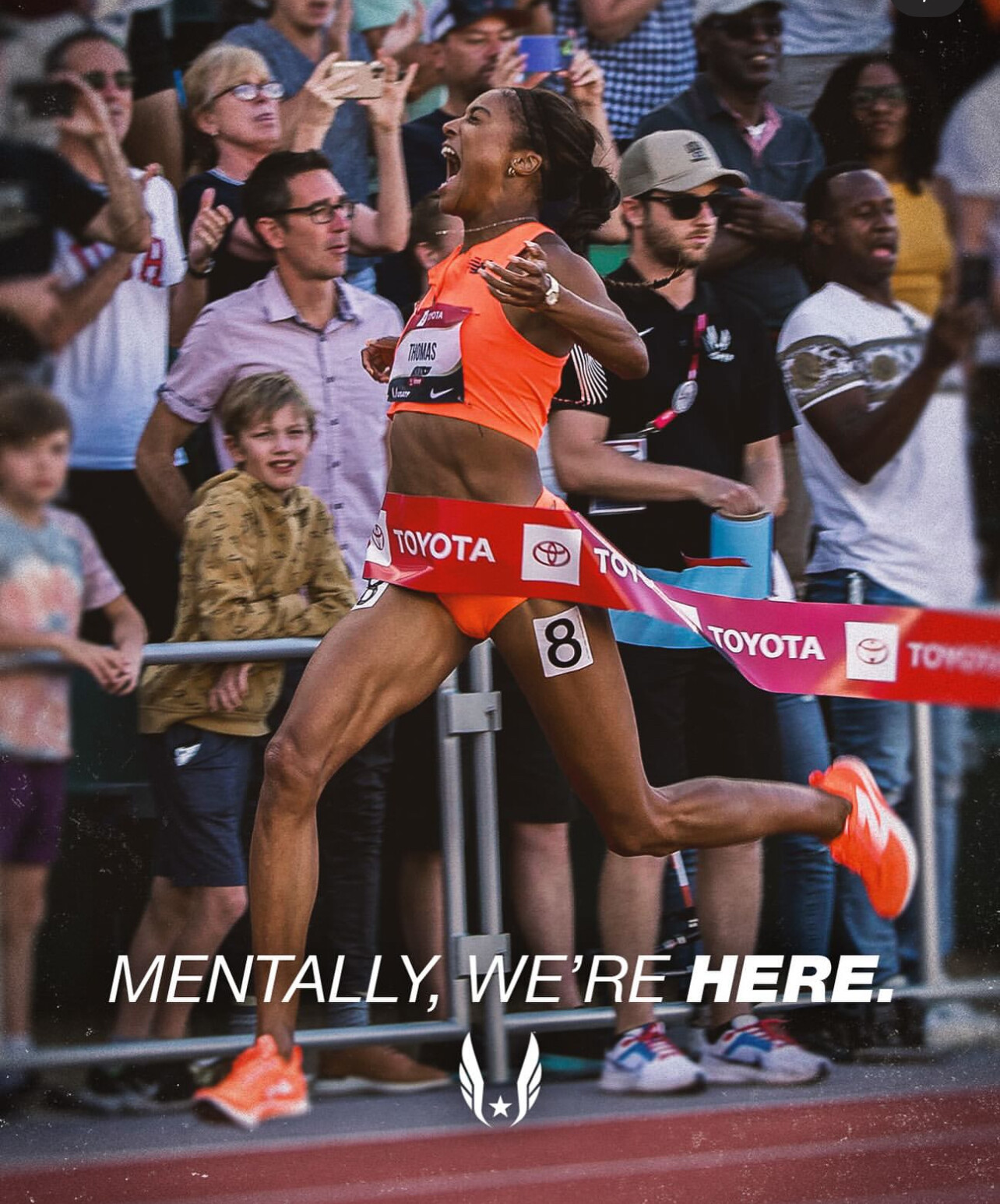
McLaughlin-Levrone, the reigning Olympic and World Champion in the 400m hurdles, is returning to the national spotlight after a strategic training and race schedule this season. Known for her graceful power and impeccable technique, Sydney has already redefined what’s possible in her event—shattering the world record multiple times. Fans are eager to see whether she’ll contest the 400m flat or return to the hurdles in Eugene.
On the men’s side, all eyes are on Noah Lyles, the reigning World Champion in the 100m and 200m. Lyles has made it clear he’s aiming for greatness this year, with both Olympic gold and world records on his radar. His recent performances on the Diamond League circuit suggest he’s peaking at the right time.
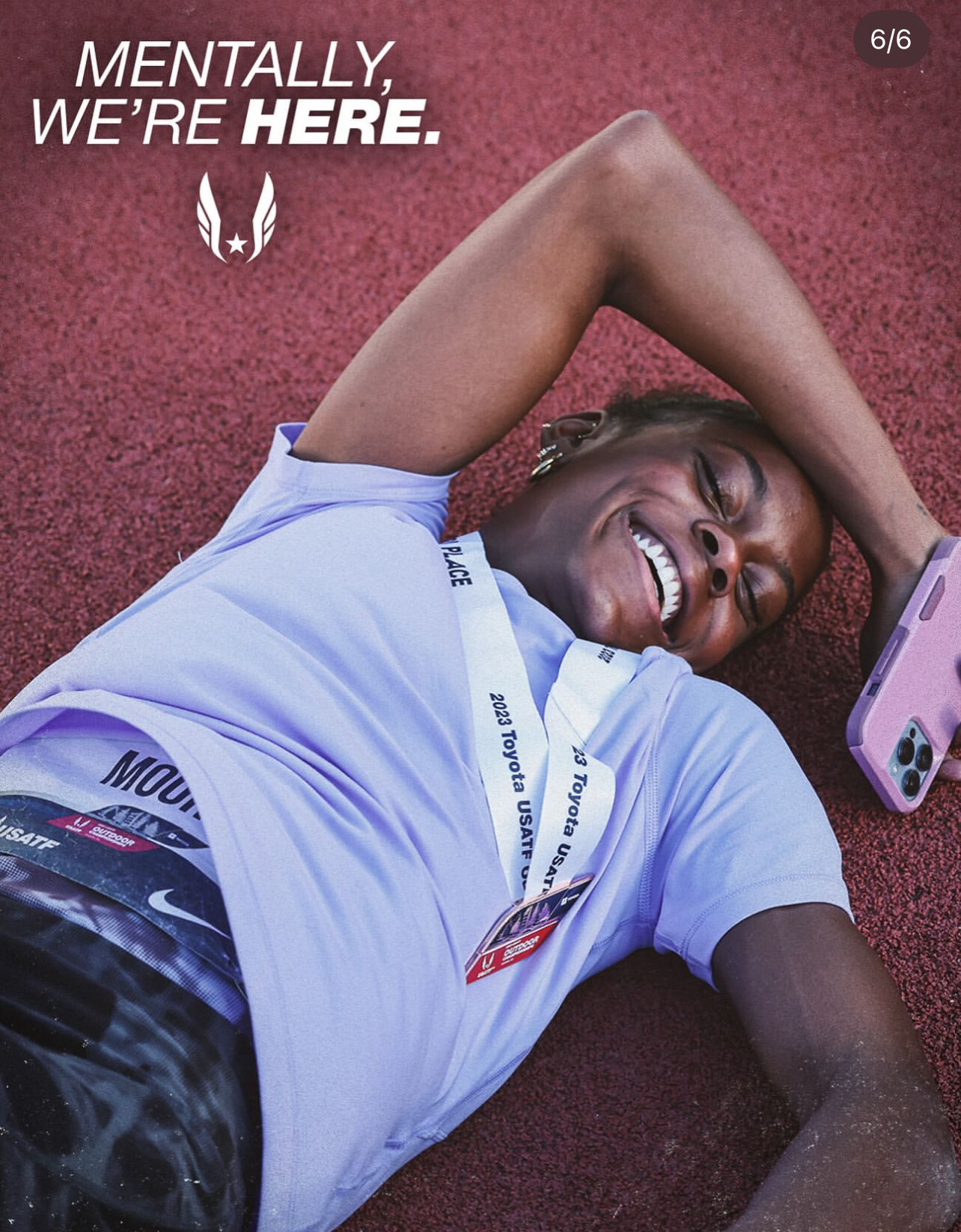
Distance Running Update: Eyes on the 1500m, 5000m, and 10,000m
The distance events promise fierce battles and major implications for Team USA selection.
In the men’s 1500m, all eyes will be on Yared Nuguse, who owns one of the fastest times in American history. He’ll be challenged by Cole Hocker, who famously stormed to an Olympic team spot in 2021, and NCAA standout Hobbs Kessler, who continues to climb the ranks.
The women’s 1500m will feature Nikki Hiltz, Emily Mackay, and Sinclaire Johnson, with Hiltz in standout form after their impressive road mile performances this season.
In the 5000m, American record holder Woody Kincaid will take on Grant Fisher, who’s back after injury and hungry to reclaim his place at the top. The women’s 5000m will include Elise Cranny, Karissa Schweizer, and Parker Valby, in what could be one of the most tactical races of the meet.
The 10,000m has already been contested earlier in the season, but the championship weekend will set the tone for the athletes’ final preparations ahead of international competition.
As always, Hayward Field brings the best out of American distance runners—expect fireworks as the fields chase not only titles, but Olympic dreams.
Catch the action live on NBC and Peacock.
Event: Toyota U.S.A. Track & Field Outdoor Championships
Location: Hayward Field, Eugene, Oregon
Broadcast: Saturday & Sunday at 4 p.m. ET on NBC & Peacock
by Boris Baron
Login to leave a comment
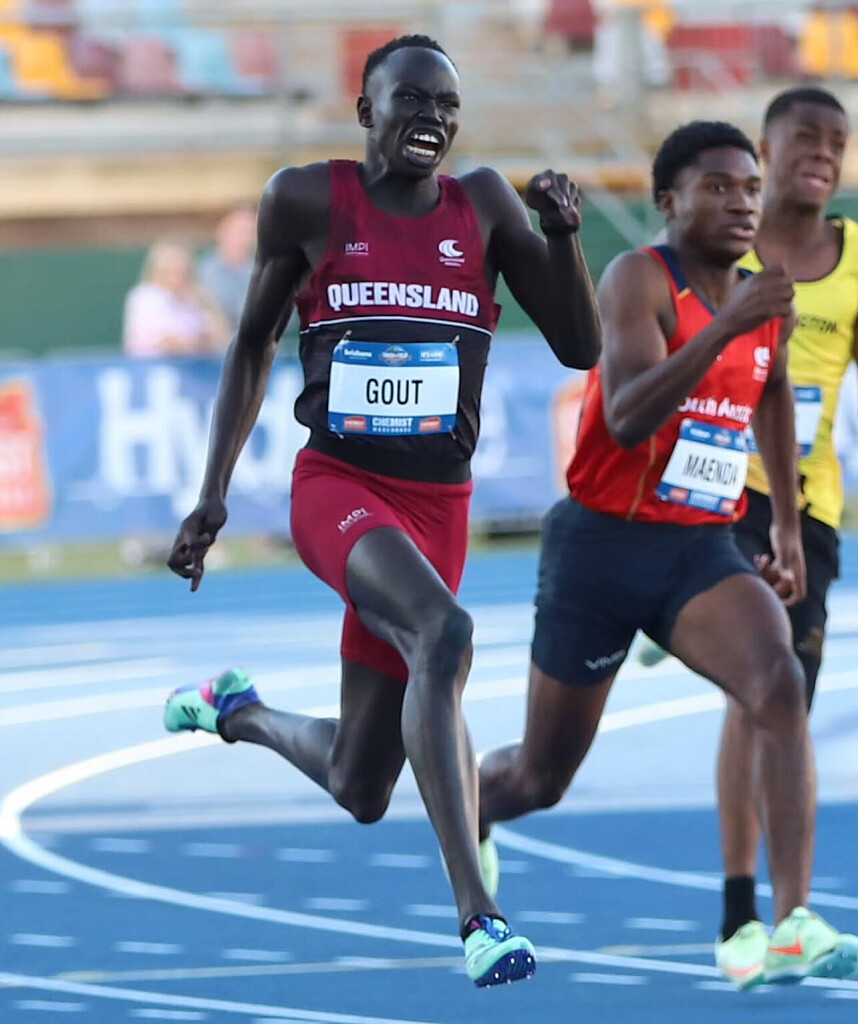
Australia’s teenage sprint sensation, Gout Gout, is gearing up for his biggest stage yet — the 2026 Commonwealth Games in Glasgow.
At just 17 years old, Gout Gout has already rewritten the record books. The Queensland-based sprinter, born in December 2007 to South Sudanese parents, is widely regarded as one of the most exciting young talents in global athletics. His rapid rise has drawn comparisons to legends like Usain Bolt — and for good reason.
Gout currently holds the Oceanian 200m record with a time of 20.02 seconds, set at the Golden Spike meet in Ostrava earlier this year. He also clocked 10.17 in the 100m to win the Australian U-18 title and later dominated the U-20 division. His combination of top-end speed, graceful stride, and fierce competitive drive has made him a must-watch on the world stage.

Now, the teen phenom is set to represent Australia at the 2026 Commonwealth Games, scheduled for July 23 to August 2 in Glasgow, Scotland. He is expected to compete in the 100m, while his entry in the 200m remains under consideration due to scheduling conflicts with the World Junior Championships, which will take place shortly after in Eugene, Oregon.
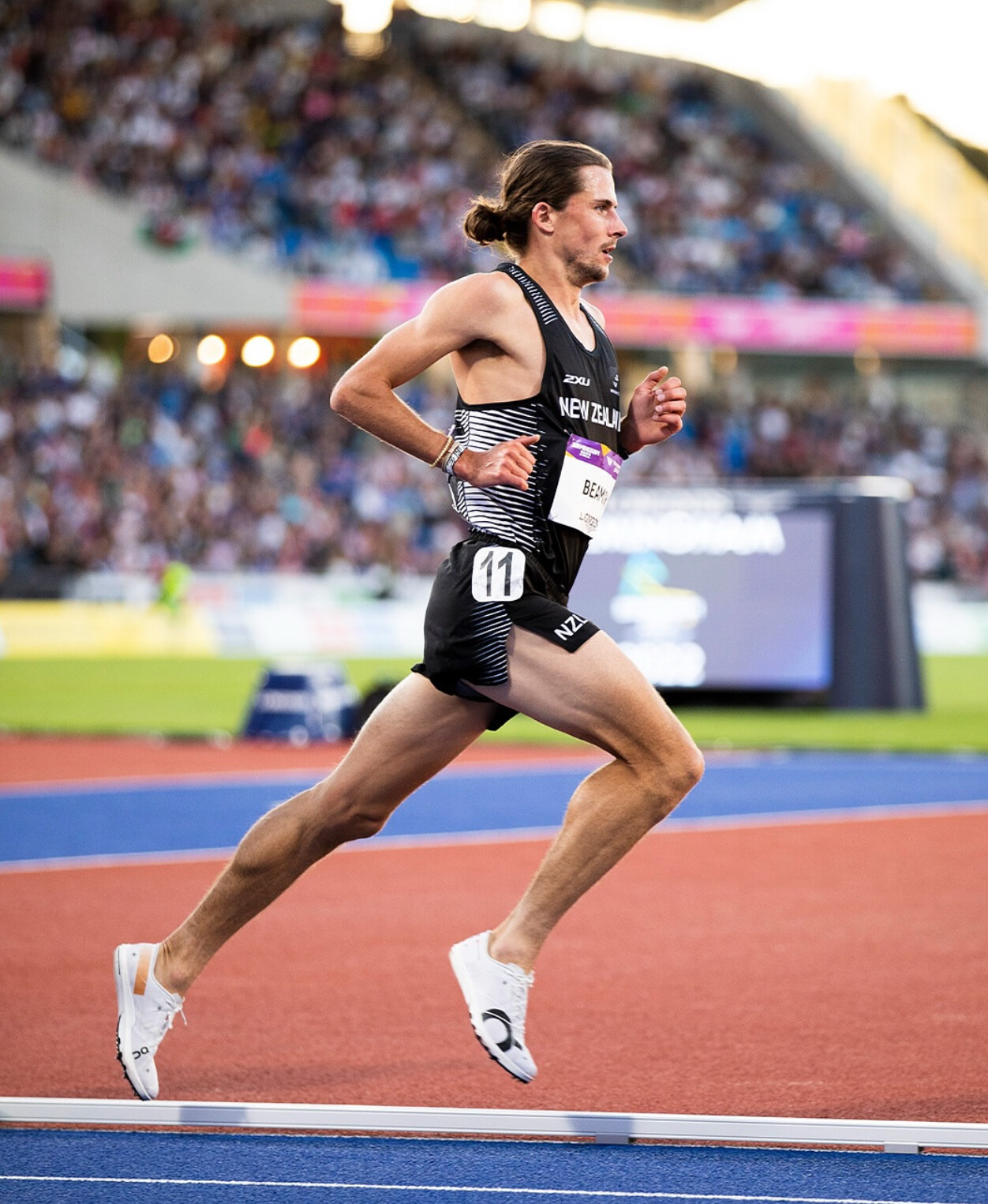
Gout’s Path to Stardom

Gout’s emergence as a global sprint force has been nothing short of remarkable. Raised in Ipswich, Queensland, he was introduced to athletics at a young age and quickly caught the attention of Australia’s elite coaches. Under the guidance of Diane Sheppard, Gout has developed into a technically polished athlete with a mature race strategy far beyond his years.
His silver medal at the 2024 World U20 Championships in the 200m confirmed what many already believed — Gout Gout isn’t just Australia’s future; he’s already one of its best.
Sheppard has praised his dedication, humility, and focus, noting:
“With Gout, it’s not just talent — it’s mindset. He’s willing to do the work and stay grounded.”
Glasgow 2026: A Games Reimagined
The 2026 Commonwealth Games will mark a return to Glasgow, which last hosted the event in 2014. Following Victoria’s withdrawal as host due to financial concerns, Glasgow stepped up with a streamlined, cost-efficient plan built on existing infrastructure.
The Games will feature:
• 10 core sports and 47 para-sport events
• Key venues including Scotstoun Stadium (track and field), Tollcross International Swimming Centre, and the Sir Chris Hoy Velodrome
• A strong focus on sustainability and legacy, with no new athletes’ village planned
Mascot “Finnie the Unicorn”, named after the Finnieston Crane and created by local students, has already captured hearts with its fun, distinctly Scottish vibe.
by Boris Baron
Login to leave a comment
Jessica Hull Shatters Her Own Mile Record in London — Again Proving She’s World-Class
LONDON, July 20, 2025 — Just when you think she’s peaked, Jessica Hull finds another gear.
At the London Diamond League, the Australian middle-distance star delivered another brilliant performance, clocking 4:13.68 to finish second behind Ethiopian legend Gudaf Tsegay in the women’s mile. In doing so, Hull broke her own Australian and Oceanian record, reaffirming her status as one of the world’s premier distance runners.

Another Record Falls
Hull had previously lowered the Australian mile record to 4:15.34, and now she’s slashed nearly two seconds off that mark. Her new time of 4:13.68 places her among the fastest women in history over the distance and continues an incredible streak of performances on the global stage.
A Steady Ascent
Born in Albion Park, New South Wales, Hull first gained international recognition at the University of Oregon, where she became a four-time NCAA champion. Since turning professional, she’s:
• Broken national records in the 1500m, 3000m, 5000m, and Mile
• Made finals at multiple global championships
• Become a fixture on the Diamond League circuit
Tactically sharp, mentally tough, and remarkably consistent, Hull has become the face of Australian distance running.
Tokyo Awaits
This latest record could not come at a better time. Hull is peaking just ahead of the 2025 World Athletics Championships in Tokyo, where she will line up among the favorites in the 1500m and possibly the 5000m.
At just 27, she continues to redefine what’s possible—not just for Australians, but for all middle-distance runners worldwide. With the Paris Olympics in the rearview and Tokyo in focus, Jessica Hull is a name we’ll be hearing for years to come.
Follow My Best Runs for more coverage of Jessica Hull and the world’s best distance runners.
#JessicaHull #Australia #WorldAthletics #Tokyo2025 #DiamondLeague #MyBestRuns #MileRecord #Running
by Boris Baron
Login to leave a comment
Amanda Vestri Claims First U.S. Title with Commanding Win at USATF 6 km Championships
Amanda Vestri earned her first national title in dominant fashion on Saturday morning in Canton, Ohio taking a wire-to-wire victory at the USATF 6 km Championships in Canton, Ohio. The event, part of the Women’s 6K Festival, drew some of the top distance talent in the country, but no one could match Vestri’s front-running strength on a challenging, technical course.
Vestri, who finished second at this race in 2023, wasted no time establishing control. Racing in humid conditions with temperatures nearing 80°F, she charged to the front from the gun, pulling a pack of seven through the first mile in 4:53. As the course shifted onto an uneven stretch of brick road, she surged again—clocking another 4:53 for the second mile—and began to break away from the field.
By the time the race reached its longest climb, Vestri’s lead had grown to three seconds over a chase pack that included Annie Frisbie, Fiona O’Keeffe, Molly Born, and Edna Kurgat. Cresting the hill with authority, she extended the gap to seven seconds by the 5K mark—a margin she maintained all the way to the finish line at Centennial Plaza.
“I just kind of wanted to take it from the gun,” said Vestri after the race. “In these shorter races, I’m not really keen to just sit and run 5:15, 5:20. So, I just wanted to take it out. That’s the best way I run.”
Her aggressive strategy paid off, earning her the national title, $6,000 in prize money, and a move into second place in the USATF Running Circuit standings.
Fierce Finish for Second
The battle for second place came down to the final meters. Annie Frisbie and Olympic 10,000m runner Fiona O’Keeffe ran shoulder-to-shoulder for nearly the entire race before Frisbie edged ahead over the last 400 meters, stopping the clock in 18:36. O’Keeffe finished just two seconds back in 18:38 to round out the podium.
What’s Next
Vestri now shifts her focus to the track, where she’s scheduled to compete in both the 5,000m and 10,000m at the upcoming USATF Outdoor Championships in Eugene, Oregon later this month.
The USATF Running Circuit continues with just two events remaining:
• USATF 20 km Championships in New Haven on September 1
• USATF Marathon Championships in Sacramento on December 7
With momentum clearly on her side, Amanda Vestri will be a name to watch—on the roads and the track—for the rest of 2025.
by Boris Baron
Login to leave a comment
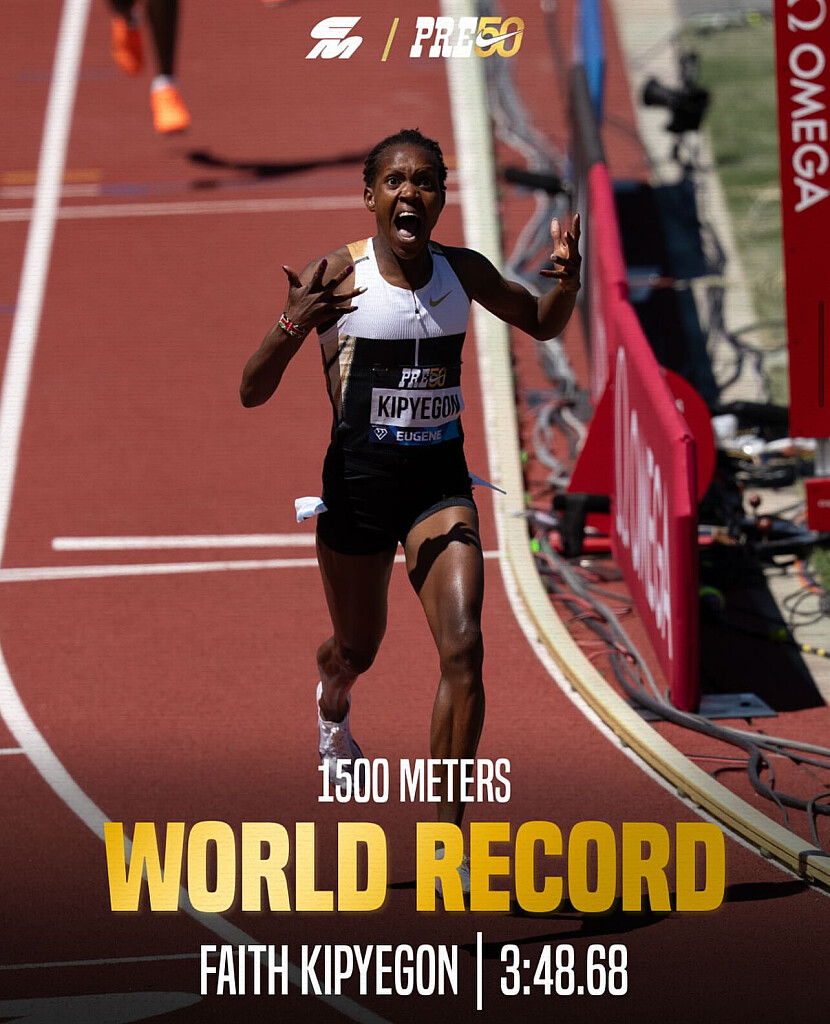
Faith Kipyegon Sets New 1500m World Record with 3:48.68 at 2025 Prefontaine Classic
Faith Kipyegon continues to redefine greatness in women’s middle-distance running. On July 5, 2025, at the Prefontaine Classic in Eugene, Oregon, the Kenyan superstar set a new world record in the 1500m, clocking 3:48.68 and breaking her own previous mark of 3:49.04 set just a year earlier.
The Hayward Field crowd witnessed another chapter in what is becoming one of the most dominant careers the sport has ever seen.
Sharpened Focus, Sharper Speed
Kipyegon, already a two-time Olympic champion and multiple-time world champion, executed a flawless race. After a steady opening 800m behind the pacemaker, she began to pick up the tempo in lap three before unleashing her signature kick over the final 300 meters.
Her time of 3:48.68 now stands as the fastest women’s 1500m ever recorded — shaving more than three-tenths of a second off her previous world record from 2024.
“I knew I was in shape to do something special,” said Kipyegon after the race. “Breaking the world record again, right here in front of this crowd, is a dream come true.”
One of the Greatest Careers in Track History
With this latest record, Kipyegon has now broken three world records in just over a year — the 1500m, mile, and 5000m — showcasing a range and consistency few have ever matched.
Her ability to dominate both the 1500m and 5000m places her in a category all her own. And after winning double gold in both events at the 2024 Paris Olympics, her legend continues to grow.
What’s coming up for Faith
With the 2026 World Championships in Tokyo looming, Kipyegon’s momentum couldn’t be stronger. She’s not just chasing titles — she’s rewriting the sport’s history.
As the only woman in history to run both sub-3:49 in the 1500m and sub-14 in the 5000m, Faith Kipyegon isn’t just winning races — she’s reshaping the limits of human performance.
by Boris Baron
Login to leave a comment
Prefontaine Classic
The Pre Classic, part of the Diamond League series of international meets featuring Olympic-level athletes, is scheduled to be held at the new Hayward Field in Eugene. The Prefontaine Classicis the longest-running outdoor invitational track & field meet in America and is part of the elite Wanda Diamond League of meets held worldwide annually. The Pre Classic’s results score has...
more...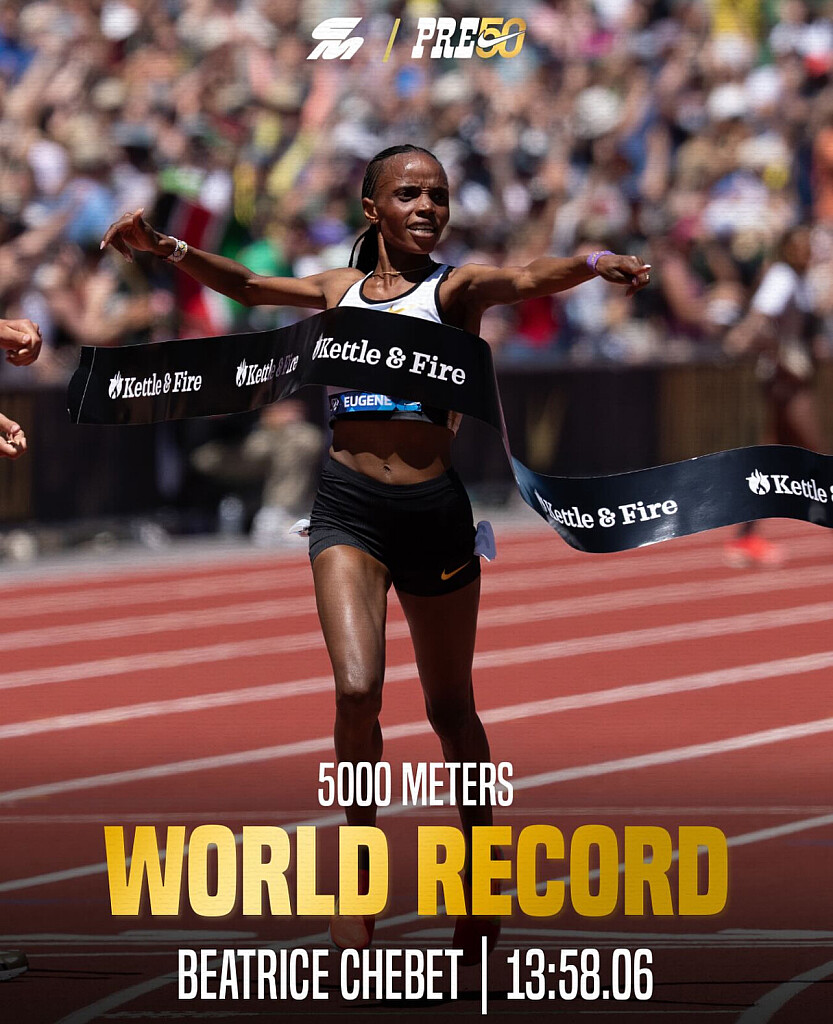
Beatrice Chebet Smashes Women’s 5000m World Record with Historic 13:58.06 at Prefontaine Classic
On a cool Saturday evening in Eugene, Oregon, Beatrice Chebet of Kenya made history — becoming the first woman ever to break the 14-minute barrier in the 5000m.
Chebet stormed to victory at the Prefontaine Classic on July 5, 2025, clocking an astonishing 13:58.06, obliterating the previous world record of 14:00.21 set by Ethiopia’s Letesenbet Gidey in 2020.
It was a performance that stunned the crowd at Hayward Field and sent shockwaves through the global athletics community.
Making History in Style
From the gun, the race was electric. Pushed by strong pacing and an elite field, Chebet stayed composed and patient, moving smoothly through the early kilometers. But as the laps ticked down, she surged to the front with her trademark closing speed and never looked back.
Her final time of 13:58.06 etched her name in the record books and established her as the new queen of the distance — a feat no woman in history had previously achieved.
“I knew the record was possible,” Chebet said after the race. “I trusted my training and my strength. This was for Kenya, for women, and for everyone who believes in breaking limits.”
A Star Ascending
At just 25, Beatrice Chebet has already had a career packed with accolades — World Cross Country champion, Diamond League winner, and now the fastest woman ever over 5000m.
With her Paris Olympic medal from last year and a World Championships season on the horizon, Chebet has shown that she is in the form of her life. Her historic run comes at a time when Kenyan distance running is enjoying a renaissance — especially among the women.
What’s Next for Beatrice
Chebet’s performance doesn’t just reset the record books — it redefines what’s possible in women’s distance running. The sub-14 club now exists, and she’s the founding member.
With competition heating up and eyes on the 2026 World Championships, Chebet has firmly taken the lead in the next chapter of women’s long-distance history.
by Boris Baron
Login to leave a comment
Prefontaine Classic
The Pre Classic, part of the Diamond League series of international meets featuring Olympic-level athletes, is scheduled to be held at the new Hayward Field in Eugene. The Prefontaine Classicis the longest-running outdoor invitational track & field meet in America and is part of the elite Wanda Diamond League of meets held worldwide annually. The Pre Classic’s results score has...
more...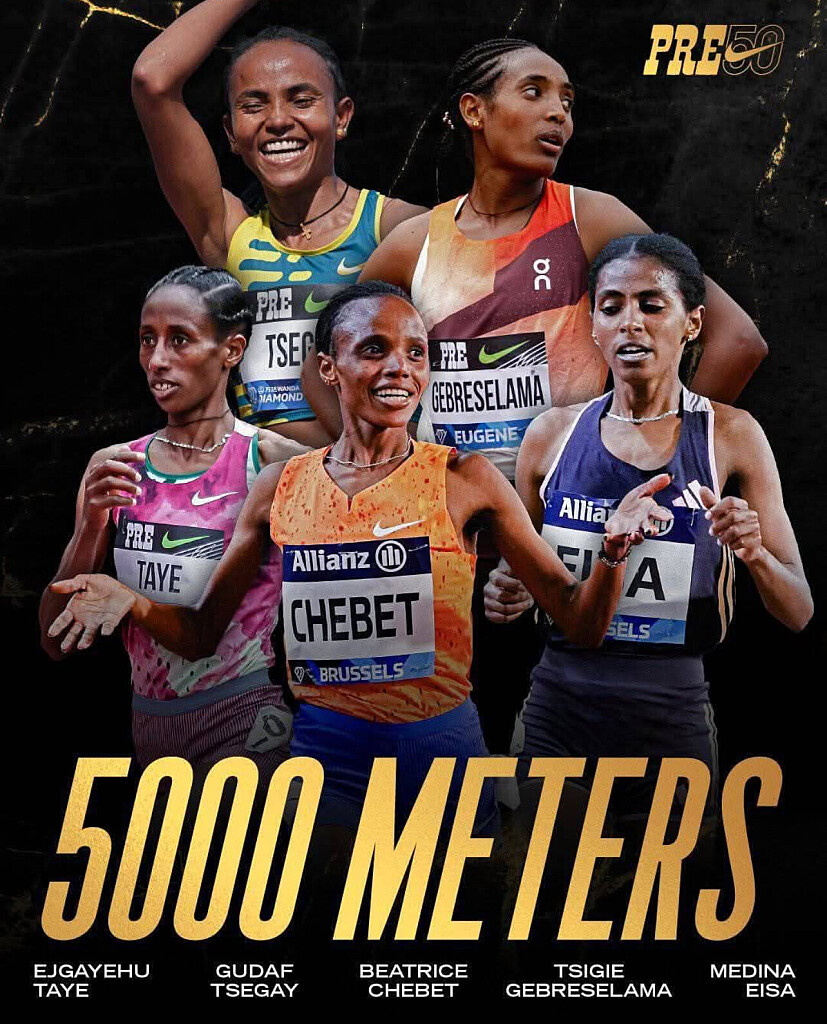
Clash of Titans: Women's 5000m Showdown at the 2025 Pre Classic
The stage is set for an epic battle in women's distance running. World record holder Gudaf Tsegay and newly crowned 10,000m world record holder Beatrice Chebet headline a star-studded field in the women's 5000m at the 2025 Pre Classic in Eugene, Oregon, on July 5.
Tsegay's current world record of 14:00.21, set in Eugene in September 2023, has pushed the boundaries of human performance, tantalizingly close to the sub-14 minute barrier. Her fearless racing style and blistering finishes have cemented her status as one of the sport's most electrifying athletes.
Chebet's jaw-dropping 28:54.14 10,000m performance in Eugene earlier this year sent shockwaves through the track world. The Kenyan's record-breaking run, which shattered the previous mark by over seven seconds, has established her as a force to be reckoned with in long-distance events.
With both athletes confirmed for the Pre Classic, fans are buzzing with anticipation: could we witness the first sub-14:00 performance by a woman? The Pre Classic's reputation for record-setting conditions – cool temperatures, fast track, and expert pacing – only adds to the excitement.
A Race Built for History
The Diamond League event has a proven track record of fostering exceptional performances. With Tsegay and Chebet at the forefront, the women's 5000m on July 5 promises to be a defining moment in the 2025 athletics calendar. Will Tsegay look to further cement her legacy or Chebet seek to double down on her 10,000m dominance? One thing is certain: this clash of titans will leave an indelible mark on the sport.
Event Details:
- Date: July 5, 2025
- Location: Hayward Field, Eugene, Oregon
- Event: 2025 Pre Classic Women's 5000m
Get ready for an unforgettable showdown between two of the world's greatest distance runners. Will the 2025 Pre Classic witness history in the making?
by Boris Baron
Login to leave a comment
Prefontaine Classic
The Pre Classic, part of the Diamond League series of international meets featuring Olympic-level athletes, is scheduled to be held at the new Hayward Field in Eugene. The Prefontaine Classicis the longest-running outdoor invitational track & field meet in America and is part of the elite Wanda Diamond League of meets held worldwide annually. The Pre Classic’s results score has...
more...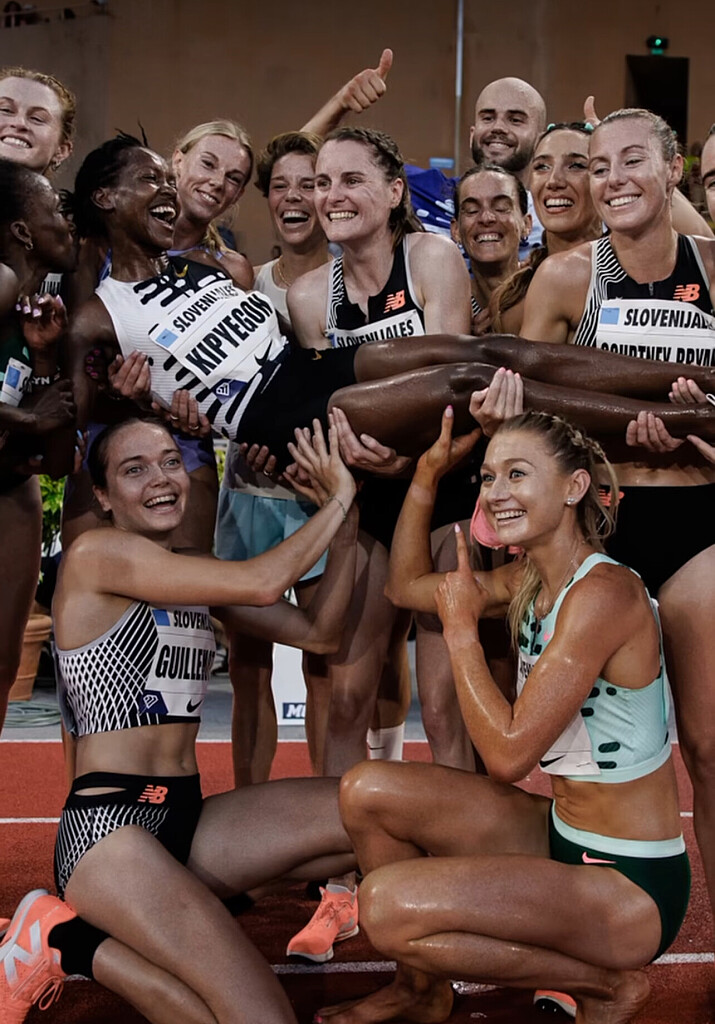
Faith Kipyegon Clocked 3:48.8 at 1500m During #Breaking4 Attempt—Eyes Another World Record at the Prefontaine Classic on July 5
Faith Kipyegon, the reigning queen of middle-distance running, continues to stretch the boundaries of what’s possible on the track. During a high-profile #Breaking4 mile time trial, the Kenyan superstar clocked a blistering 3:48.8 at the 1500-meter mark—faster than her official world record of 3:49.04, set in Florence in 2023.
Although the time trial format means the result won’t be ratified as an official record, the performance sent a clear message: Kipyegon is still getting faster.
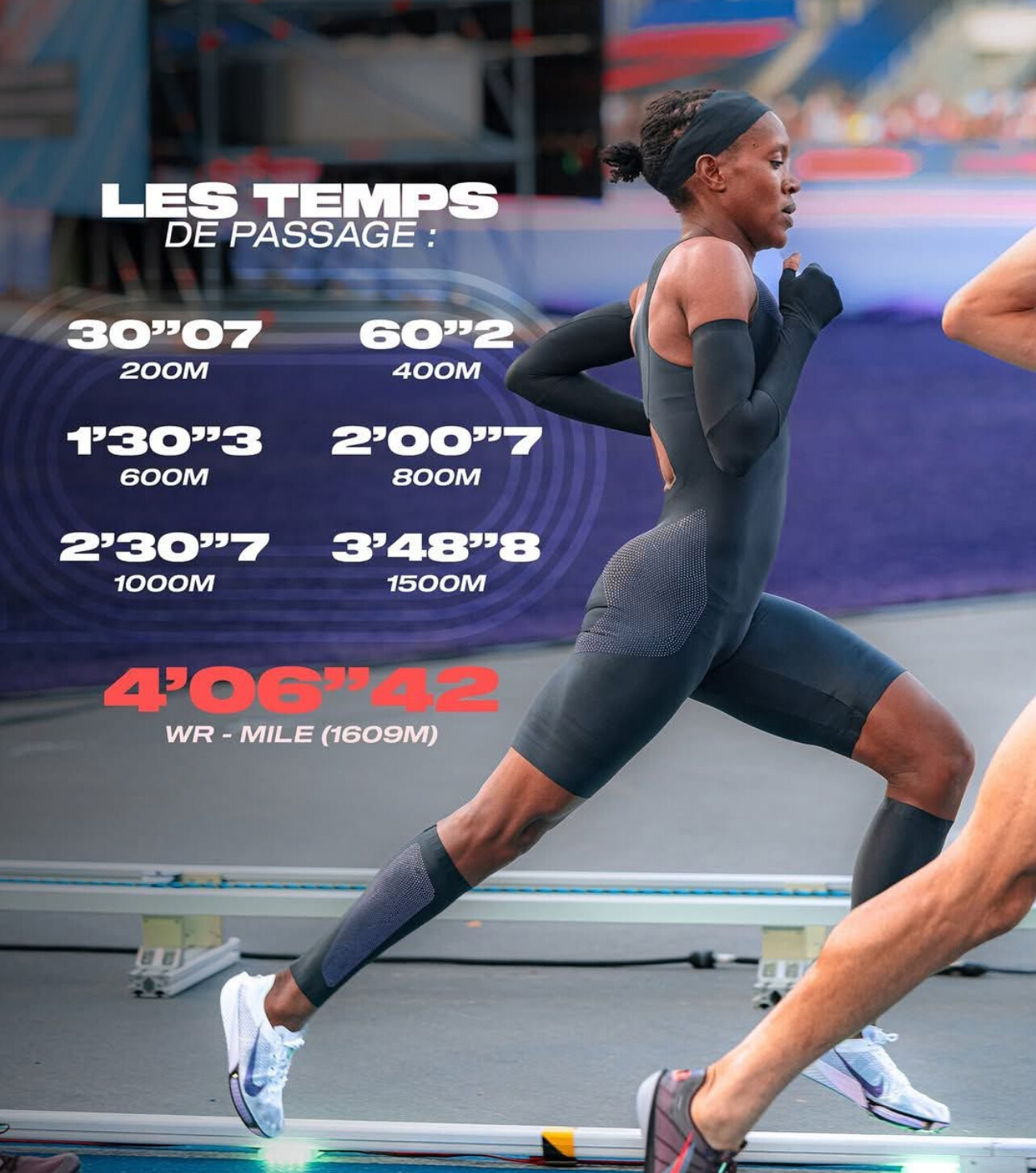
“This performance gives me great hope,” Faith said after the run. “To see 3:48.8 on the clock at 1500m confirms that sub-3:49 is within reach.”
She’ll have her next big chance at the Prefontaine Classic in Eugene, Oregon, on July 5, 2025, where she’s planning a serious assault on the record books. Known for producing fast times at Hayward Field, the meet could see Faith rewrite history once again.
The Breaking4 attempt was designed to chase a barrier no woman has yet achieved under standard conditions: running a sub-four-minute mile. While Kipyegon ultimately finished the mile in 4:06.42, her 1500m split electrified fans and analysts alike.
Already the world record holder at 1500m, the mile, and 5000m, Kipyegon’s consistency and fearless racing continue to define this golden era in women’s distance running. Her run at the Pre Classic could mark the third time she’s broken the 1500m world record since 2023.
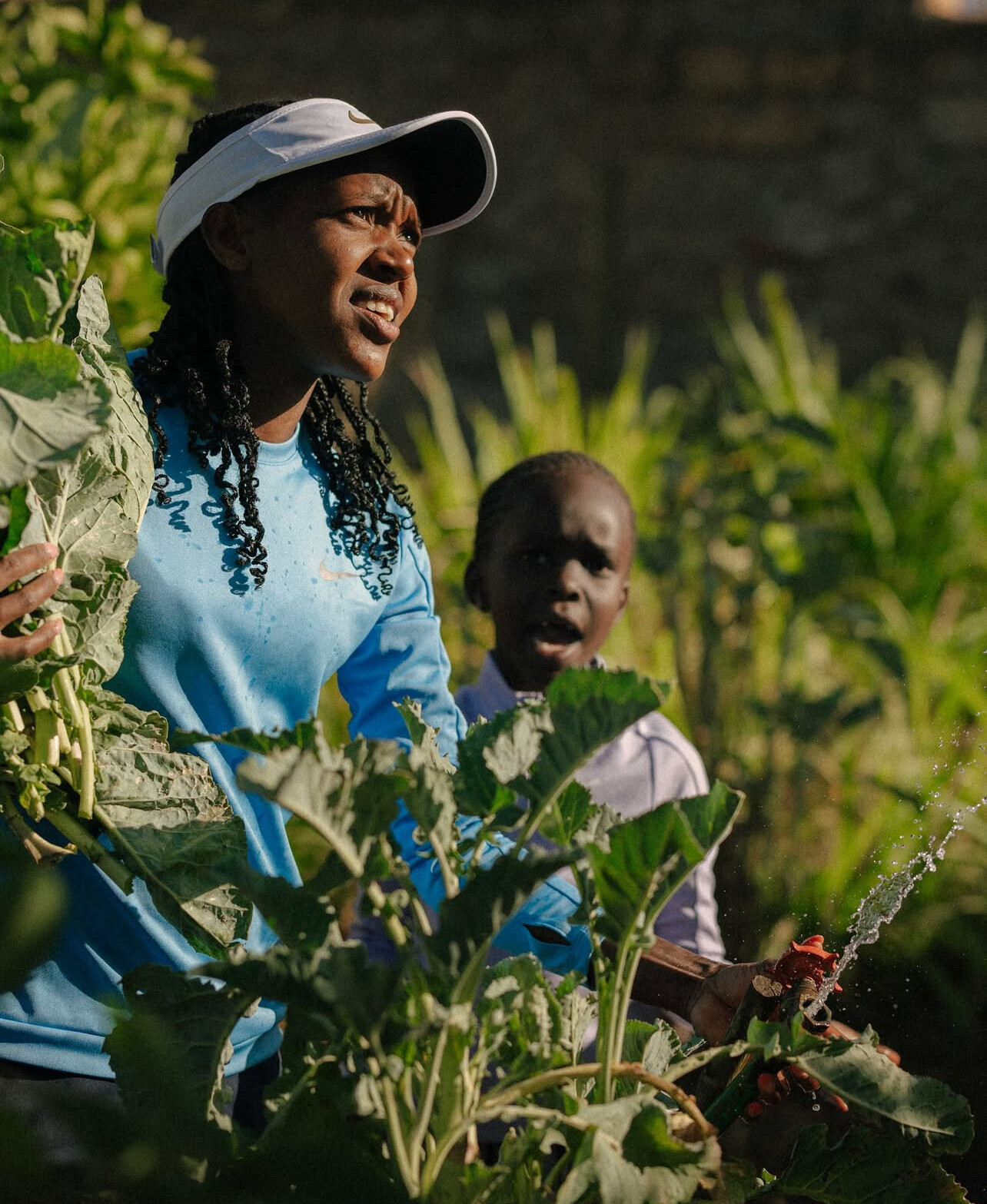
With the 2024 Paris Olympics now behind her, Kipyegon appears focused on cementing her legacy and pushing toward times no woman has ever reached.
The countdown to July 5 has officially begun.
My Best Runs
Follow us for full coverage of the Prefontaine Classic and the next chapter in Faith Kipyegon’s extraordinary journey.
by Boris Baron
Login to leave a comment
Bill Dellinger, Olympic Medalist and Legendary Coach, Passes Away at 91
The world of distance running is mourning the loss of one of its greats. Bill Dellinger, a three-time Olympian, Olympic bronze medalist, and one of the most influential coaches in U.S. track history, has passed away at the age of 91 on June 26.
Dellinger’s name is etched into the legacy of American distance running, both for his competitive fire and his ability to mentor champions. A fierce competitor on the track and a quiet architect of greatness on the sidelines, Dellinger leaves behind a legacy that stretches across generations.
Born on March 23, 1934, in Grants Pass, Oregon, Dellinger rose to national prominence while competing for the University of Oregon under coach Bill Bowerman. He represented the United States in three Olympic Games—Melbourne 1956, Rome 1960, and Tokyo 1964—earning a bronze medal in the 5000 meters in his final Olympic appearance.
But Dellinger’s second act may have been even more impactful.
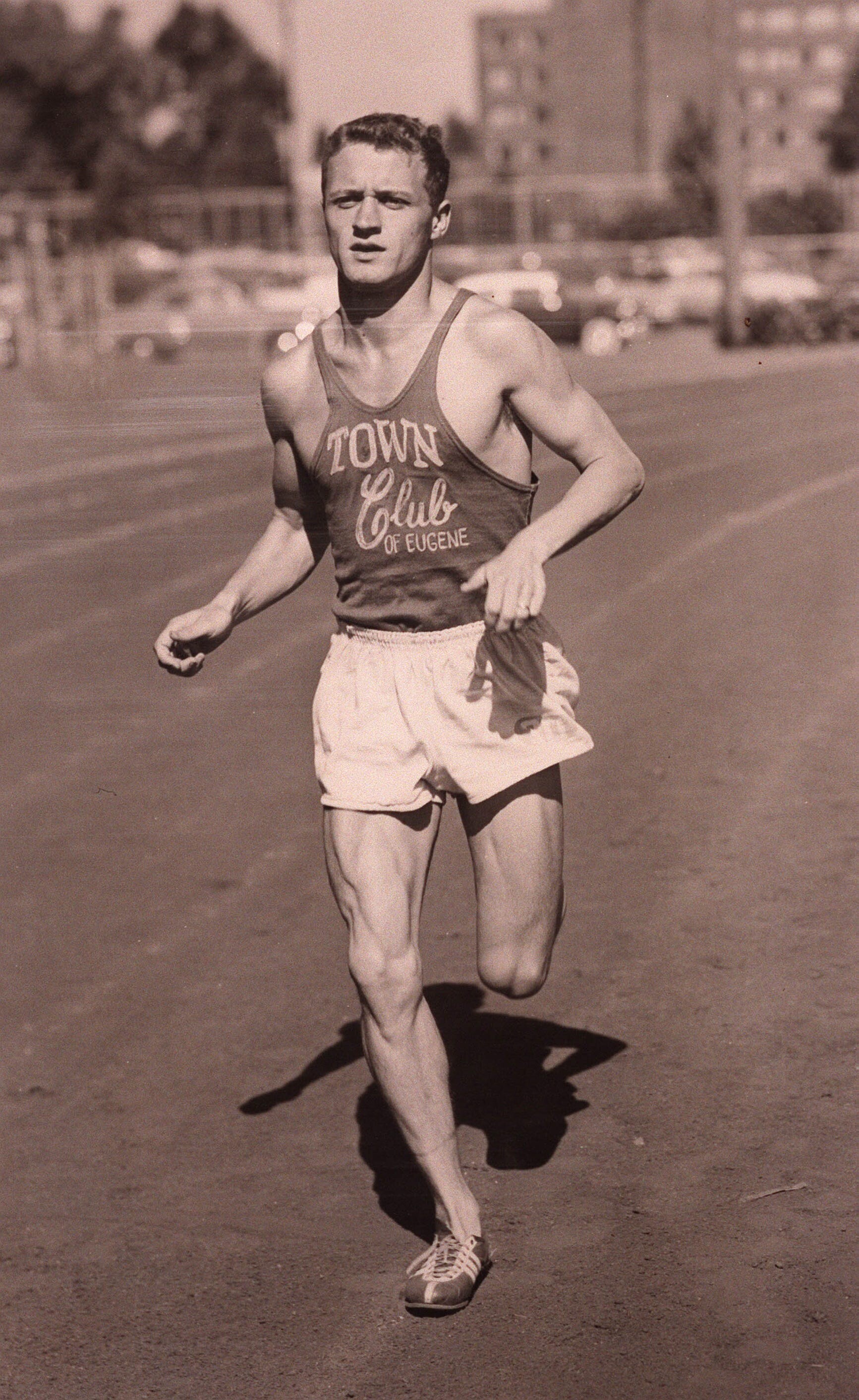
In 1973, he succeeded Bowerman as head coach at Oregon and immediately found himself guiding the nation’s most electric young runner—Steve Prefontaine. Their relationship transcended typical coach-athlete dynamics. Dellinger was more than a tactician; he was a stabilizing force for a fiercely independent and intense young star.
“Dellinger wasn’t just a coach. He was an architect of belief,” Prefontaine once said. “He knew when to push and when to trust.”
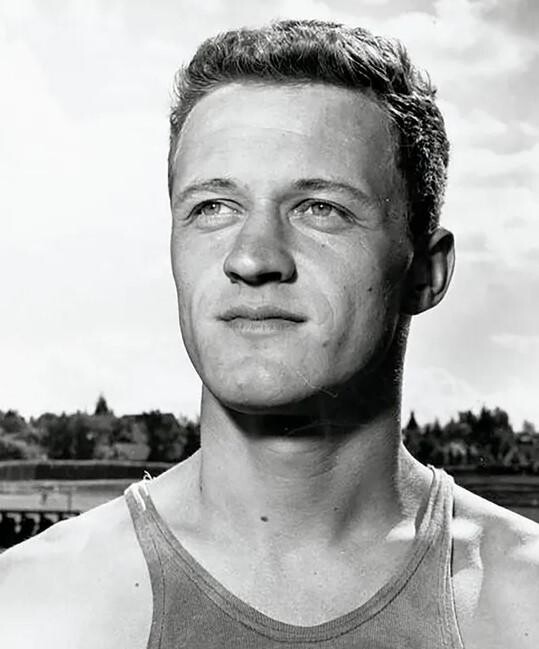
Dellinger coached at Oregon until 1998, mentoring athletes like Alberto Salazar, Matt Centrowitz Sr., Rudy Chapa, and many others who carried the Oregon tradition to global stages. He helped solidify Oregon’s reputation as the mecca of American distance running.
He was known for blending scientific training methods with an intuitive understanding of athlete development. His workouts were tough, his expectations high, but his support unwavering.
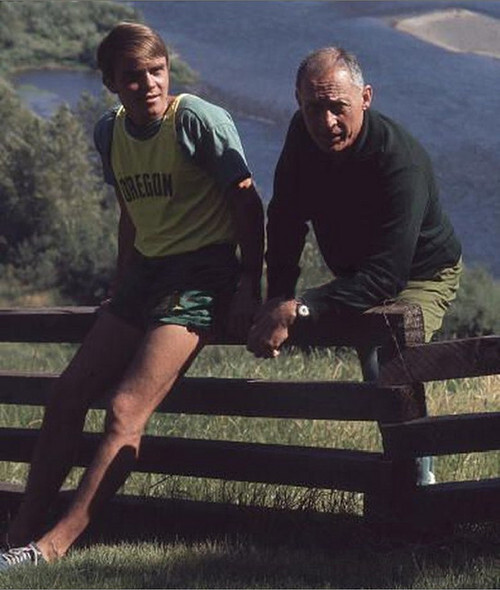
A Lifetime of Influence
Dellinger’s contributions to the sport extended well beyond the track. He co-authored training guides, helped shape early Nike culture, and lent his name to the prestigious Dellinger Invitational, one of the top collegiate cross-country meets in the country.
“Bill’s influence on distance running—first as a world-class athlete and then as a masterful coach—was profound,” said Bob Anderson, lifelong runner and founder of Runner’s World and My Best Runs.
“I hadn’t seen Bill in years, but his presence still echoes in the sport today. He inspired a generation and helped build the foundation of what American distance running has become. He may be gone, but he’ll never be forgotten.”
A Final Lap
Dellinger’s passing marks the end of an era, but his life’s work will continue on every time an Oregon singlet toes the line, every time a young coach references his methods, and every time a runner believes they can dig a little deeper.
He didn’t just coach champions—he helped shape the soul of American distance running.
Rest in peace, Coach Dellinger.
by Boris Baron
Login to leave a comment
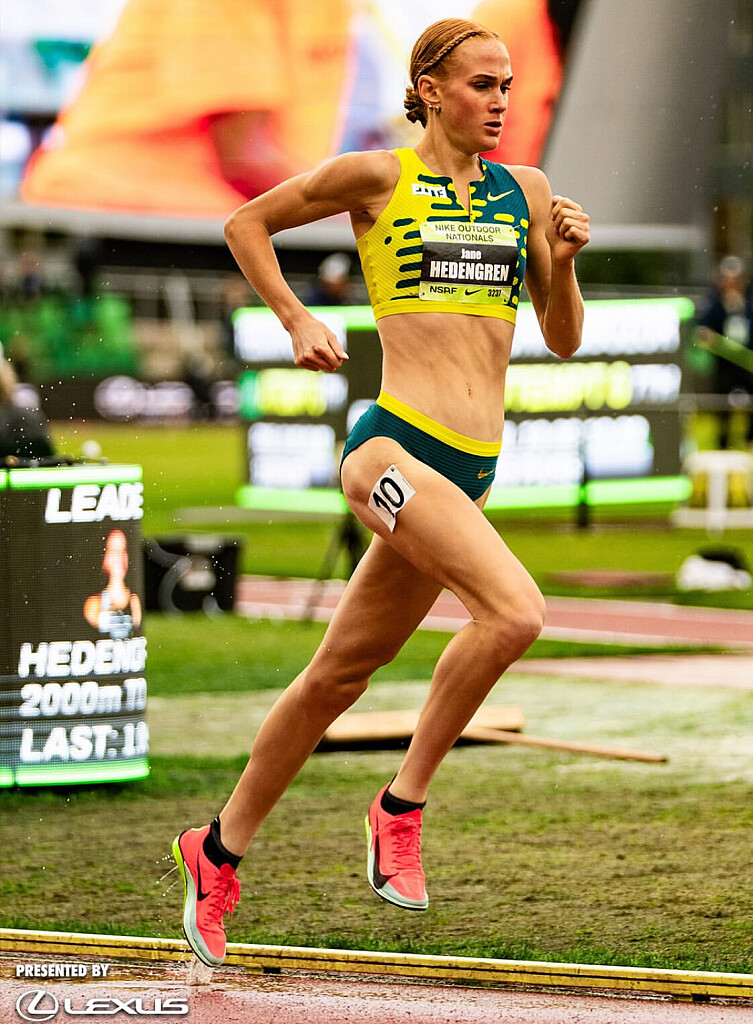
She Just Keeps Breaking Records
Jane Hedengren Runs 8:40.03 to Shatter Her Own American U20 and High School Record in the 3000m
Jane Hedengren isn’t just rewriting the record books — she’s obliterating them. On Saturday, June 21, at the Nike Outdoor Nationals in Eugene, Oregon, the 17-year-old phenom delivered another jaw-dropping performance, clocking 8:40.03 in the 3000 meters to lower her own American U20 and high school record.
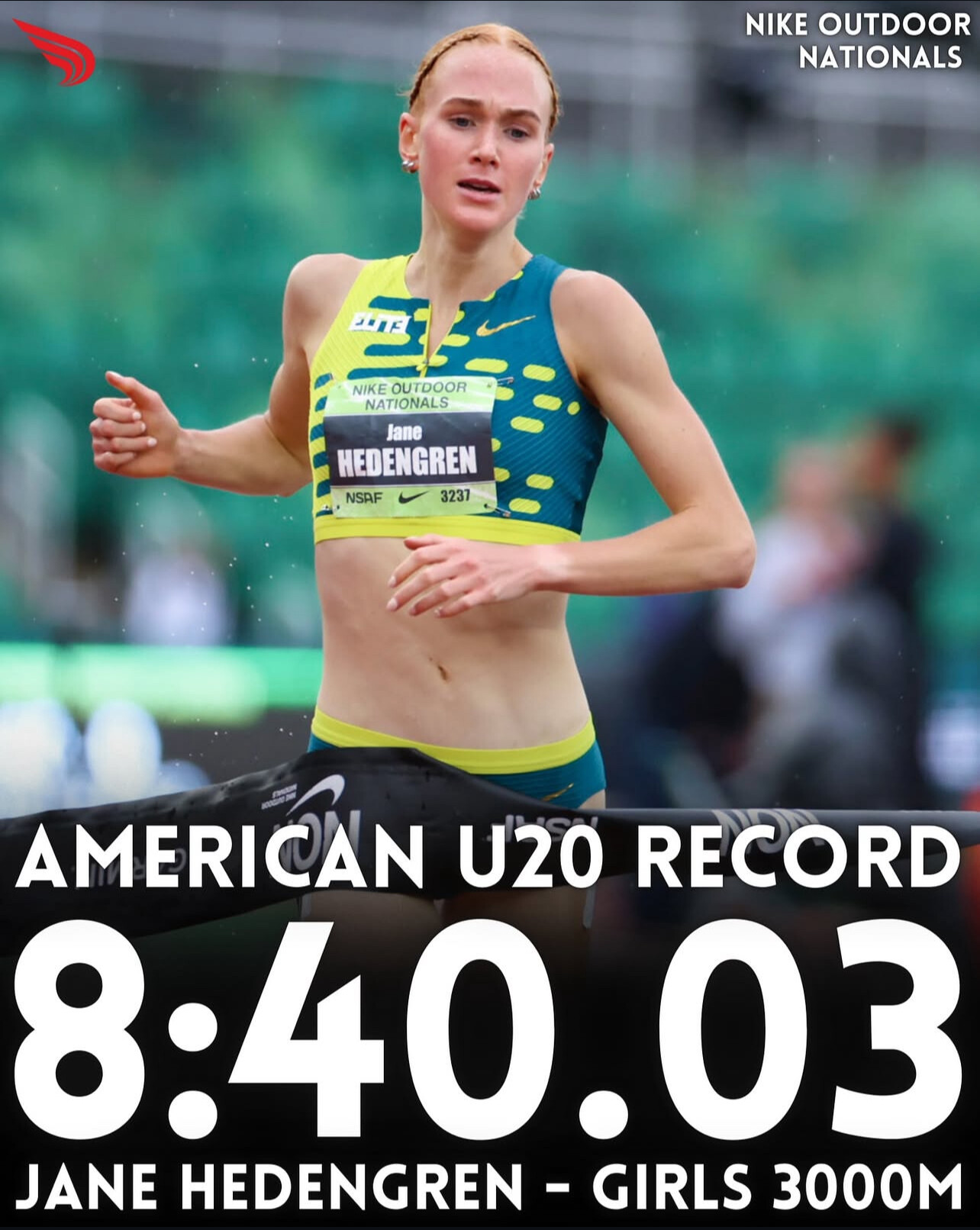
Or This mark, set on the storied track at Hayward Field, came just two weeks after Hedengren ran 8:40.99 at the Brooks PR Invitational — which, at the time, was the fastest 3000m ever run by an American high school girl. Saturday’s performance confirms what the track world is quickly realizing: we’re witnessing one of the most extraordinary distance runners the U.S. has ever produced at this age.
One of the Greatest Streaks in High School History
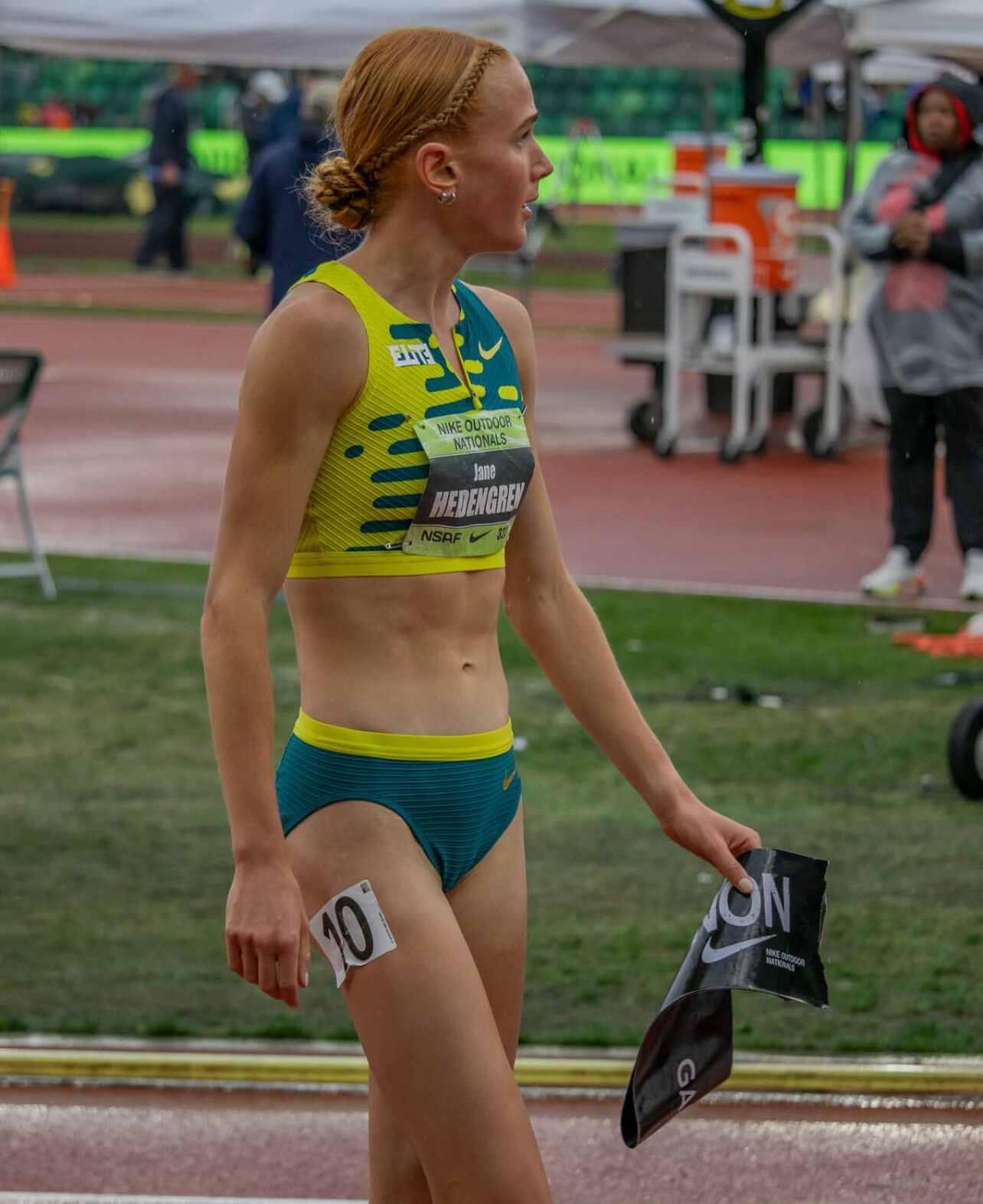
Hedengren’s 2025 season has been nothing short of historic. In the span of just a few months, she has broken high school national records in:
Mile – 4:23.50
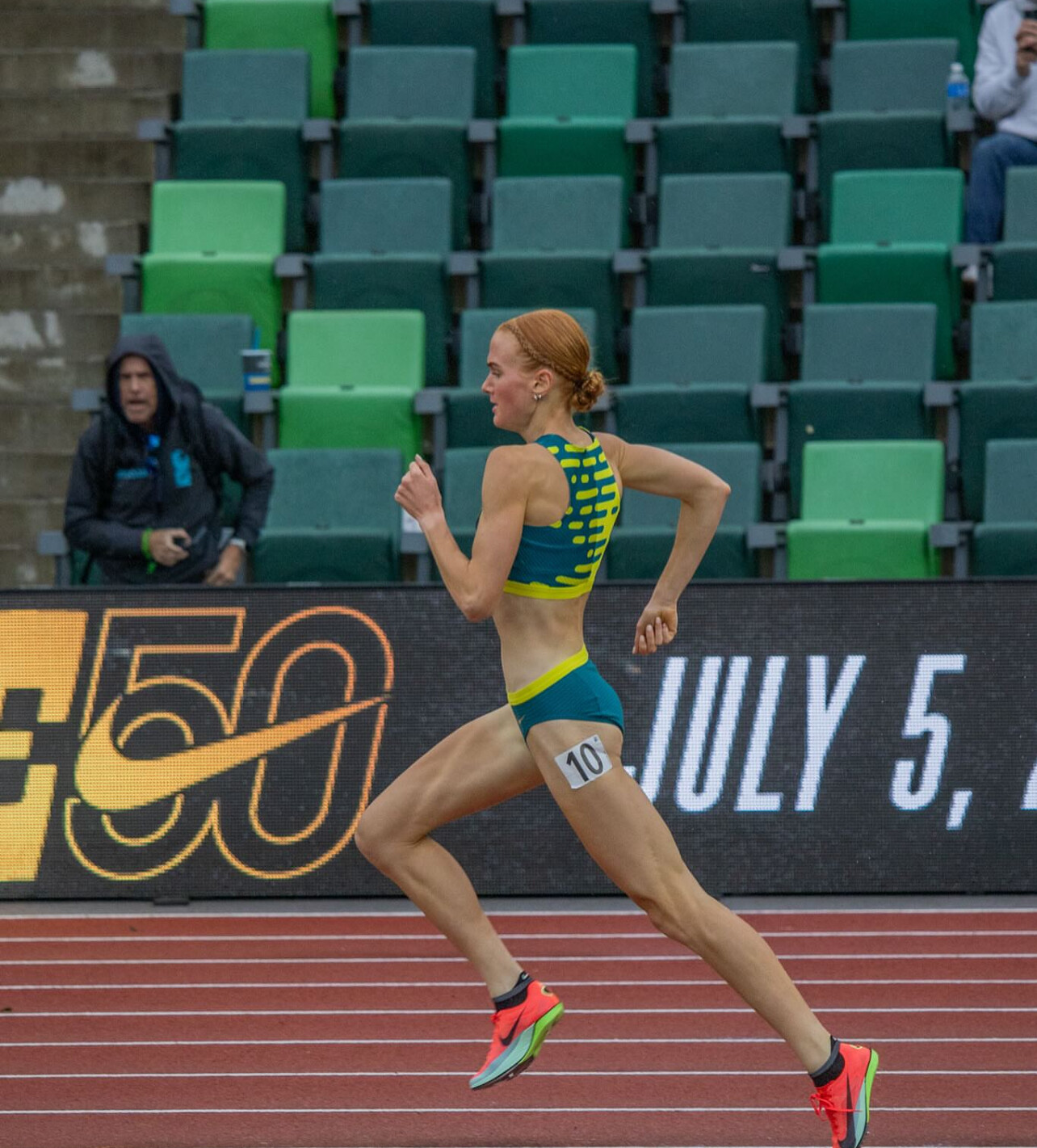
1600m – Converted from her mile time
Two Mile – 9:17.75 (en route during her previous 3000m record)
5000m – Both indoors and outdoors
3000m – Now twice, with her latest 8:40.03 mark
And she’s still not done.
Despite cool, rainy conditions in Eugene, Hedengren ran with poise and control, steadily widening her lead throughout the race. Her form was fluid, her pacing flawless — a reminder that even under less-than-ideal conditions, she is a generational talent.
A Glimpse into the Future
Hedengren, who has committed to BYU, is heading to college as the most decorated high school distance runner in recent memory. With times already rivaling some of the top NCAA runners, her transition to the next level could be seismic.
But beyond the times, it’s her consistency and fearlessness that are setting her apart. She’s not afraid to front-run, to chase big goals, and to compete against older, more experienced athletes. That mindset — combined with her physical gifts — suggests this is only the beginning.
What’s Next?
With the summer track season still in full swing, there’s a chance Hedengren could take aim at even more records, including some at the senior level. Whether or not she races again this season, her mark on 2025 is already indelible.
From the mile to the 5K, indoors and out, Jane Hedengren just keeps breaking records. Her latest — an 8:40.03 3000m — is not just another national best. It’s a signal to the running world: the future is here.
by Boris Baron
Login to leave a comment
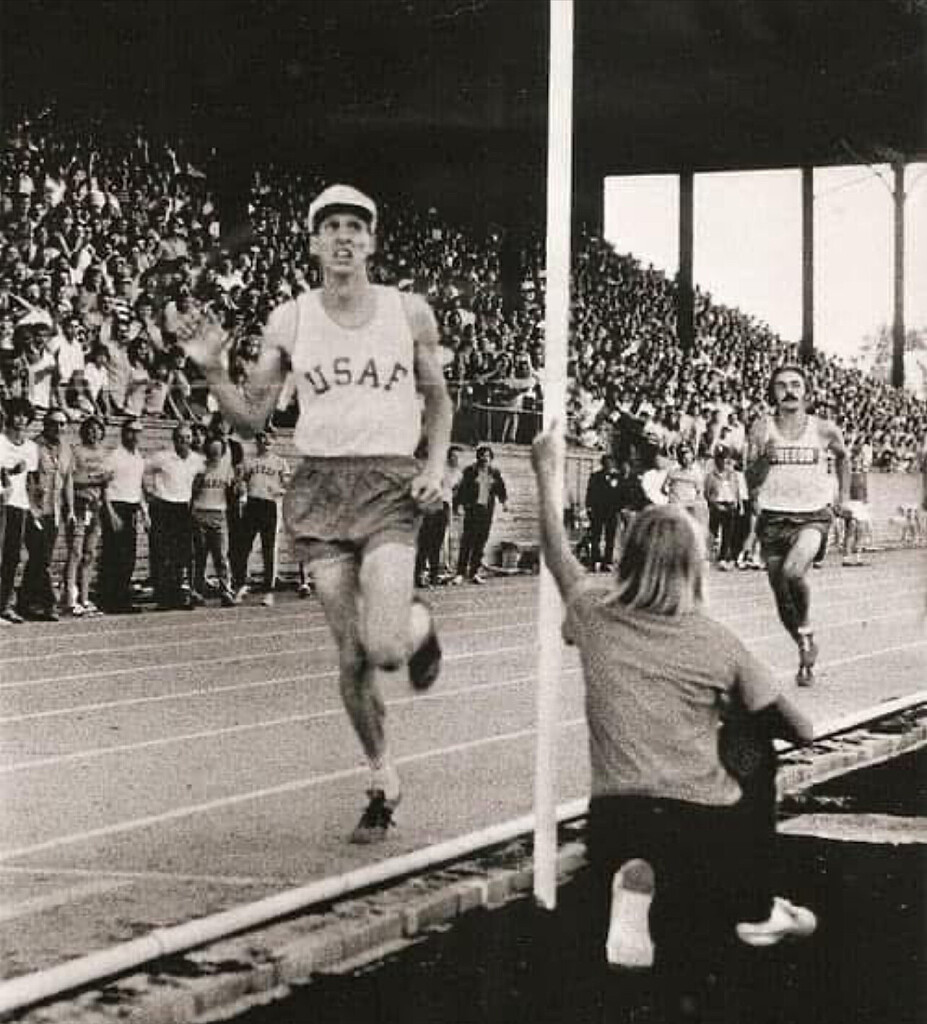
Pre vs. Wottle: The Day Eugene Witnessed a Mile Duel for the Ages
Inspired by a post from Eric Giacoletto
On June 20, 1973, Hayward Field in Eugene, Oregon, hosted one of the most legendary mile showdowns in U.S. track history—a dramatic match race between Steve Prefontaine and Dave Wottlethat captivated a sold-out crowd and etched itself into the sport’s folklore.

The event was the Hayward Restoration Meet, a grassroots effort to raise funds to rebuild the stadium’s deteriorating wooden grandstands, which had been condemned by the Eugene Fire Department. Prefontaine, ever the promoter and competitor, helped organize a marquee matchup to fill the stands and elevate the cause.
Pre invited Dave Wottle, who was then riding high after winning gold in the 800 meters at the 1972 Munich Olympics, for a one-mile race that would bring elite energy to Eugene. Wottle accepted the challenge.
According to Giacoletto’s telling, Prefontaine told Wottle:
“We’ll go after the world record in the mile, and I’ll set the pace. I’ll bring you through in 2:56, and then it’s each man for himself on the last lap.”
On race day, true to his word, Pre hit the 880-yard mark in 1:56.8 and the three-quarter mile in 2:56.0—perfect pacing for a potential world record.
But with just over 220 yards remaining, Wottle unleashed his signature long sprint. In front of a roaring Hayward crowd, Wottle surged past Pre to win in 3:53.3, the third-fastest mile in history at the time, behind only Jim Ryun’s 3:51.1 world record (1967) and Marty Liquori’s 3:52.2 (1971).
Prefontaine finished second in 3:54.7, which tied him for ninth on the all-time list. John Hartnett of Villanova and Ireland kicked hard to take third in 3:54.8, placing 11th all-time.
Why This Race Still Resonates
• It was Wottle’s career-best mile, proving his range extended well beyond 800 meters.
• It showed Prefontaine’s commitment to elevating the sport, even at the risk of losing.
• It became a key chapter in Hayward Field’s history and Oregon’s running identity.
As Eric Giacoletto beautifully summarized, this was “an epic day in track nerd history”—a pure demonstration of guts, pacing, and competitive fire that helped shape American distance running.
by Boris Baron
Login to leave a comment
Oregon Athletes Take a Stand: Protesting Podium Placement After Controversial Race Result
In a recent track and field event in Oregon, two female athletes made headlines by stepping down from the podium, refusing to share the spotlight with the male athlete who claimed first place in the women’s division. The incident has sparked a wave of reactions across the running community, highlighting an ongoing debate about gender fairness in competitive sports.
The race in question, reportedly part of a state championship, saw a male-born athlete competing in the female category and taking the gold. This led to frustration and disappointment among the female competitors, two of whom refused to participate in the medal ceremony. Images from the event show the athletes standing away from the podium, making a silent but powerful statement.
A Symbolic Protest
The podium protest by these young athletes symbolizes a growing movement among female athletes and advocates who argue that male participation in female categories—particularly in track and field—undermines fair competition. Supporters of these athletes argue that biological advantages remain a factor, even with hormonal or other modifications, and that these advantages can impact outcomes in races where mere fractions of a second matter.
A Broader Debate
This incident isn’t isolated. Across the U.S. and internationally, policies allowing transgender athletes to compete in female divisions have led to protests, policy reviews, and even legal challenges. Organizations like World Athletics and NCAA are grappling with creating inclusive yet fair rules. Critics argue that current policies can lead to an uneven playing field, while others call for greater inclusion and respect for transgender athletes.
Moving Forward
As the track and field community navigates these complex issues, the actions of these Oregon athletes are likely to fuel further discussions. Whether seen as a brave stand for fairness or a controversial statement, their silent protest will undoubtedly contribute to shaping the future of policies in competitive sports.
At My Best Runs, we recognize the importance of fair competition, athlete voices, and the need for thoughtful, balanced dialogue. We’ll continue to follow developments in this area and bring you the latest updates from the world of running.
by Boris Baron
Login to leave a comment
Remembering Steve Prefontaine: 50 Years Since His Untimely Passing
On May 30, 1975, the running world lost one of its most charismatic and determined figures: Steve Prefontaine. Known simply as “Pre,” he wasn’t just a distance runner—he was a phenomenon, captivating fans with his relentless style and rebellious spirit. As we mark 59 years since his passing, let’s celebrate his life by sharing stories and facts that many may not know.
The Man Behind the Legend
Born in Coos Bay, Oregon, Steve Prefontaine became a running icon in an era dominated by more conservative racing strategies. His front-running style—pushing the pace from the gun—symbolized not just his physical prowess but his sheer will to win.
While many remember his records, charisma, and tragic death at age 24, there’s more to Pre’s story:
Lesser-Known Facts About Steve Prefontaine
✅ His First Love Was Football
Before he discovered distance running, Prefontaine dreamed of playing football. His small stature (just over 5’9”) eventually led him to cross-country and track, where his natural talent shone.
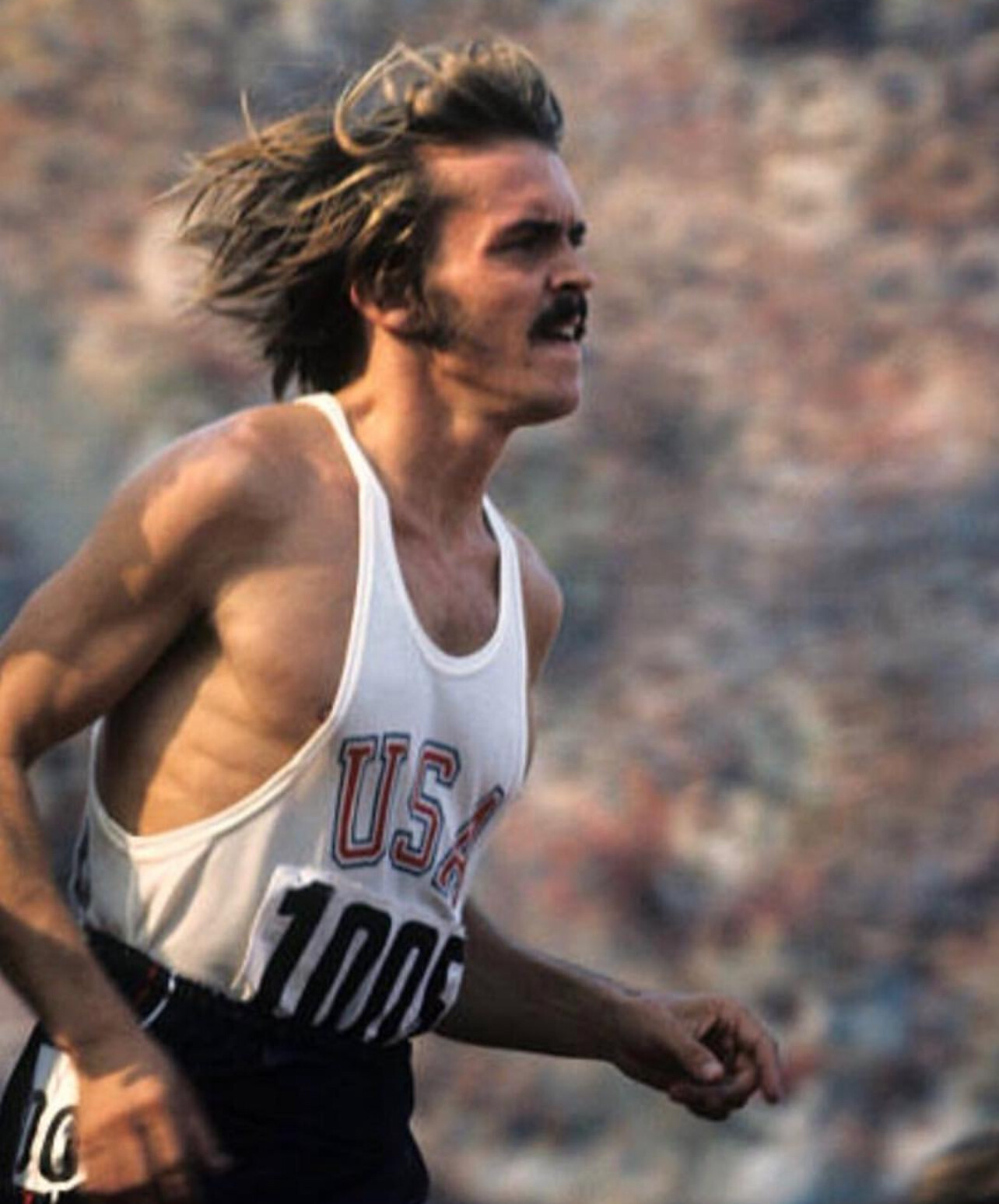
✅ He Was a Student of the Sport
Pre wasn’t just a competitor—he was a student of running. He meticulously logged his workouts and was known to study race tactics and course layouts in detail, even though he famously raced “without a watch.”
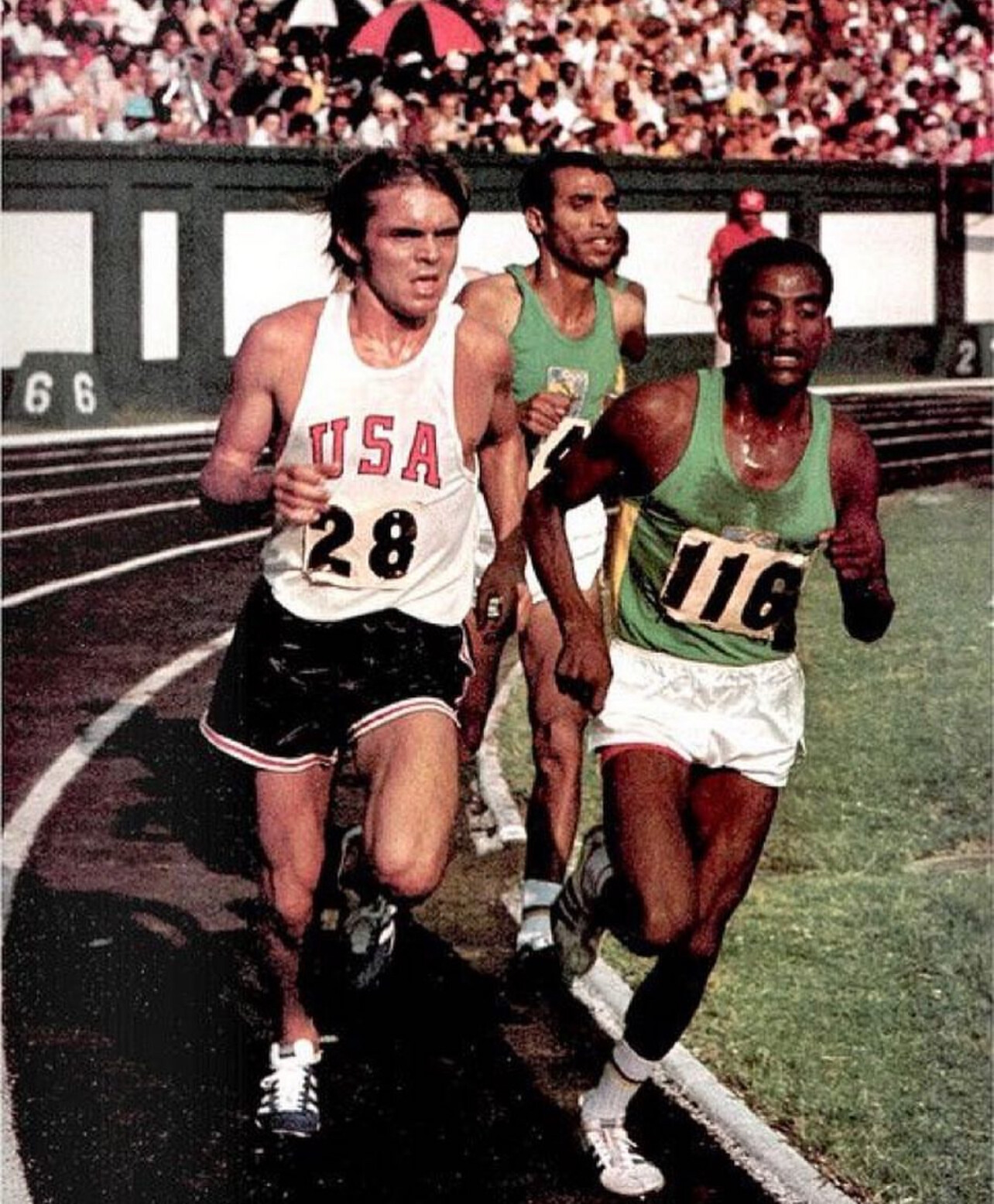
✅ He Worked Hard Off the Track
While at the University of Oregon, Prefontaine worked part-time at a bar called The Prince Pückler’s Ice Cream Parlor to make ends meet. He was known for being personable and engaging with customers.
✅ He Advocated for Amateur Athletes
Pre was a vocal critic of the AAU (Amateur Athletic Union) and its restrictive policies. He championed athlete rights, paving the way for future reforms in track and field compensation and professionalism.
✅ He Had an Eye for Art
Many don’t know that Prefontaine had a strong artistic side. He enjoyed sketching and was known to doodle during downtime, particularly in college.
✅ The 1972 Munich Olympics Fueled His Fire
After finishing fourth in the 5000 meters in Munich, just shy of the medals, Pre’s determination was stronger than ever. He was already planning his strategy for the 1976 Montreal Olympics—a dream tragically cut short.
✅ His Car Crash Had Controversial Theories
While officially ruled an accident (his MGB sports car flipped after hitting a rock wall), there have been whispers over the years of mechanical failure or other drivers being involved. Regardless, the crash at 24 years old left the running world stunned.
✅ He Was an Early Nike Ambassador
Phil Knight, co-founder of Nike, was an early supporter of Prefontaine. Pre wore early versions of Nike shoes and even helped test prototypes, playing a key role in building the brand’s credibility among elite athletes.
Legacy Beyond the Finish Line
Steve Prefontaine’s legacy isn’t just about times or places—it’s about spirit. His courage to lead from the front, his determination to fight for athletes’ rights, and his ability to inspire transcended the track. His story continues to resonate with runners and fans, even 59 years after his death.
As we reflect today, let’s honor Pre’s legacy not just by remembering his races, but by embracing his passion, fearlessness, and commitment to excellence.
by Boris Baron
Login to leave a comment
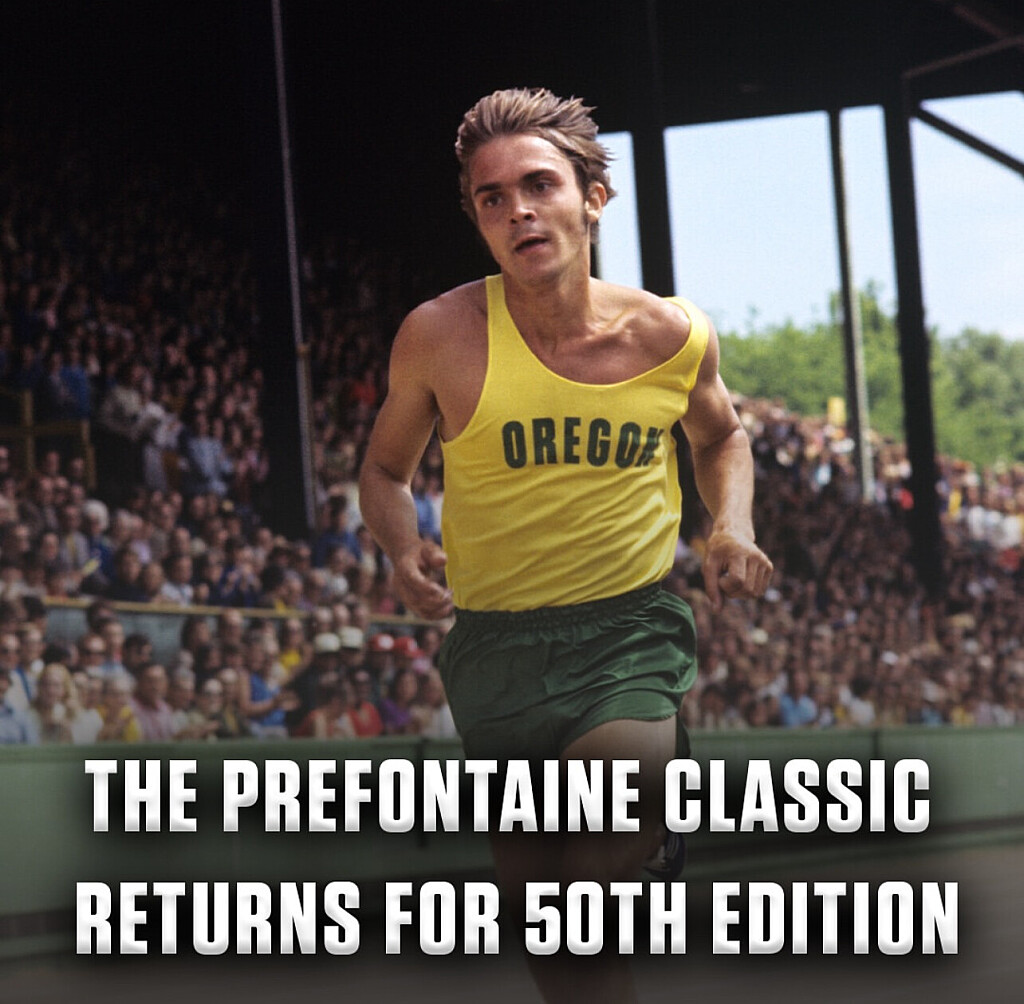
Faith Kipyegon and Jakob Ingebrigtsen Headline Historic 2025 Pre Classic
The 50th edition of the Prefontaine Classic, set for July 5 at Hayward Field in Eugene, Oregon, promises to be one of the most exciting track meets of the year. Headlining the event is three-time Olympic gold medalist Faith Kipyegon, who returns to the Pre Classic in search of her seventh career victory in the women’s 1500m.
Kipyegon, the world record holder in both the 1500m (3:49.04) and the mile (4:07.64), shattered the 1500m mark in Paris on July 7, 2024. Now, nearly a year later, she’ll look to reassert her dominance in front of a packed crowd at one of the sport’s most prestigious meets.
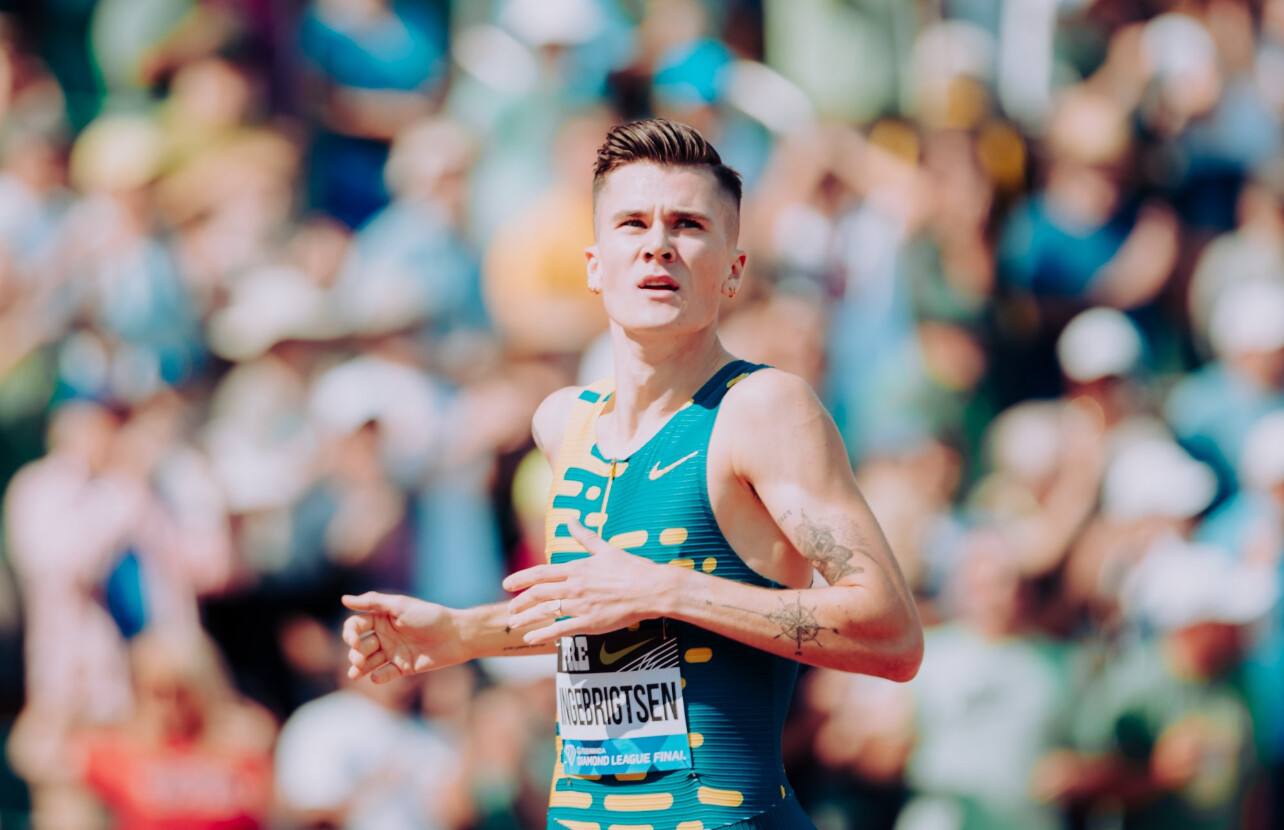
Joining Kipyegon in the 1500m are her fellow 2024 Olympic medalists—silver medalist Jessica Hull of Australia and bronze medalist Georgia Bell of Great Britain. Hull, a former University of Oregon standout, also holds the current world record in the 2000m.
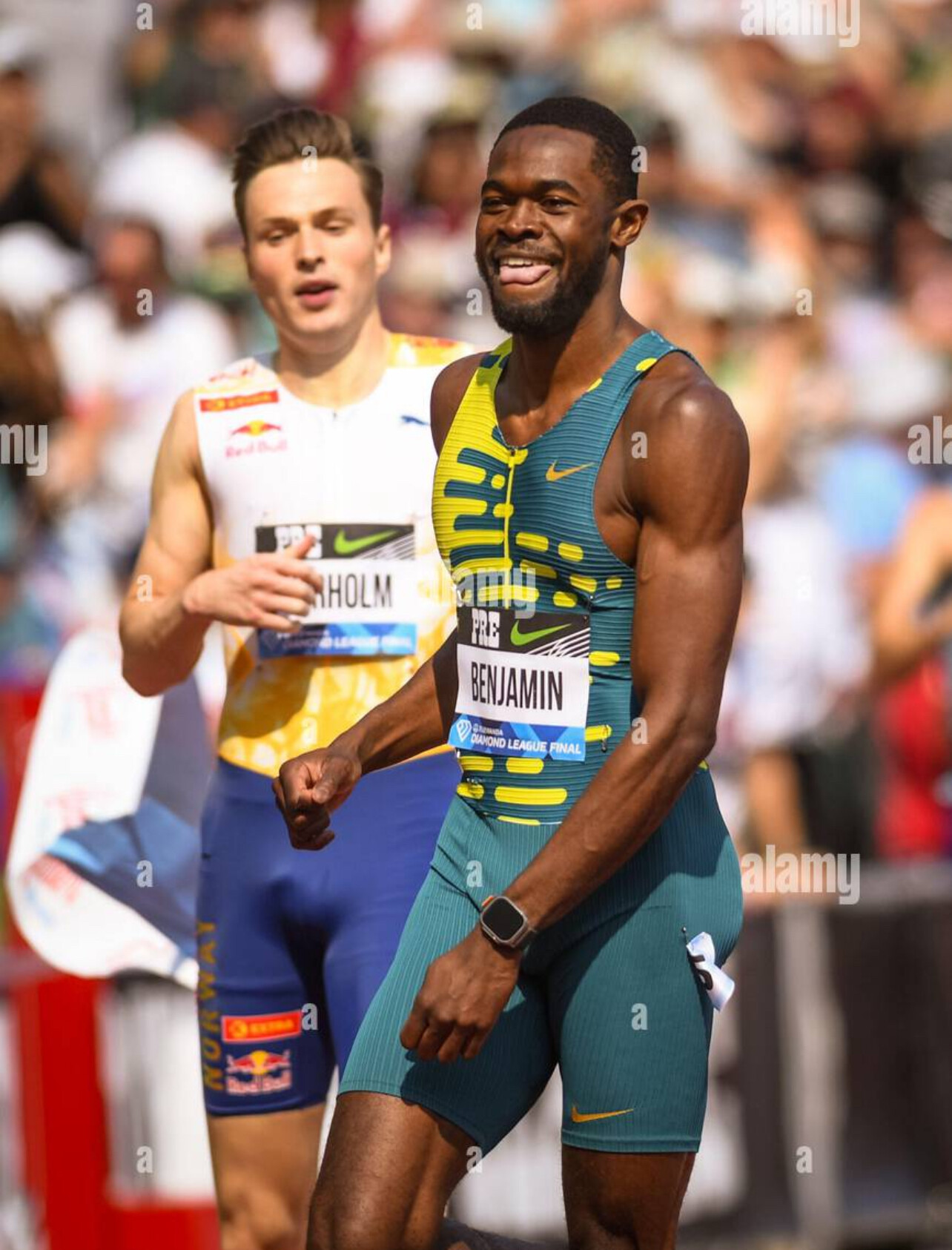
But Kipyegon isn’t the only big name set to thrill fans in Eugene. The men’s Bowerman Mile will feature a stacked lineup that includes:
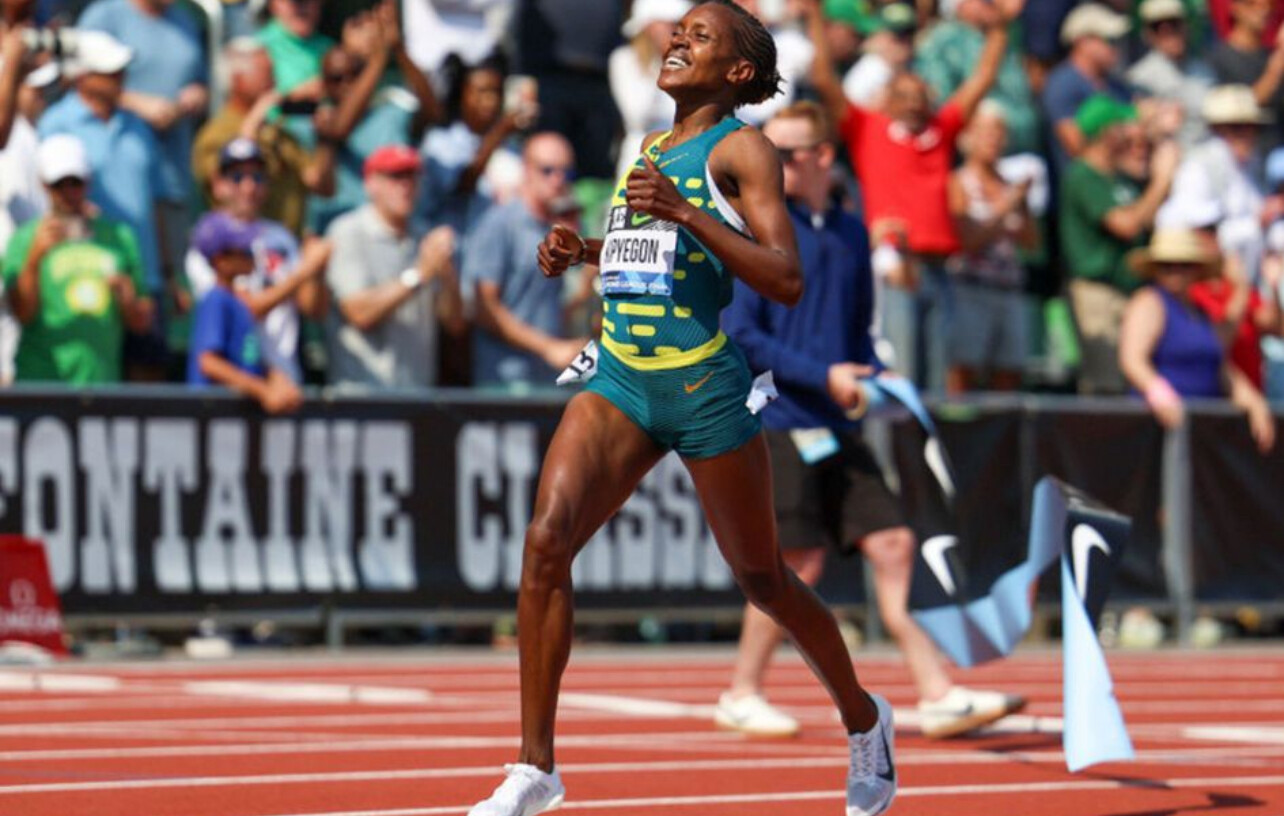
• Jakob Ingebrigtsen (Norway) – Olympic gold medalist and multiple-time Bowerman Mile champion

• Cole Hocker (USA) – 2024 Olympic 1500m champion
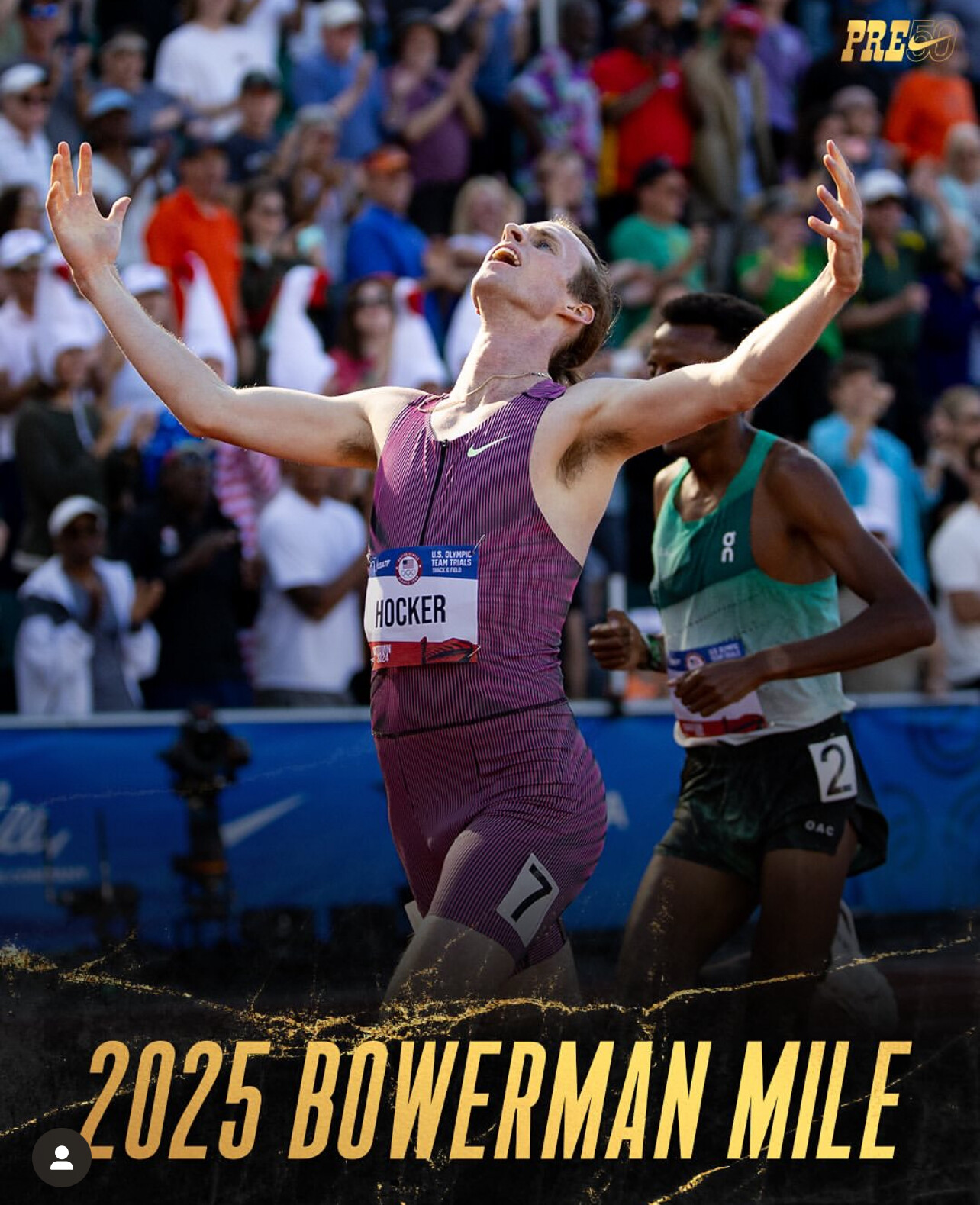
• Yared Nuguse (USA) – Olympic bronze medalist and former indoor mile world record holder
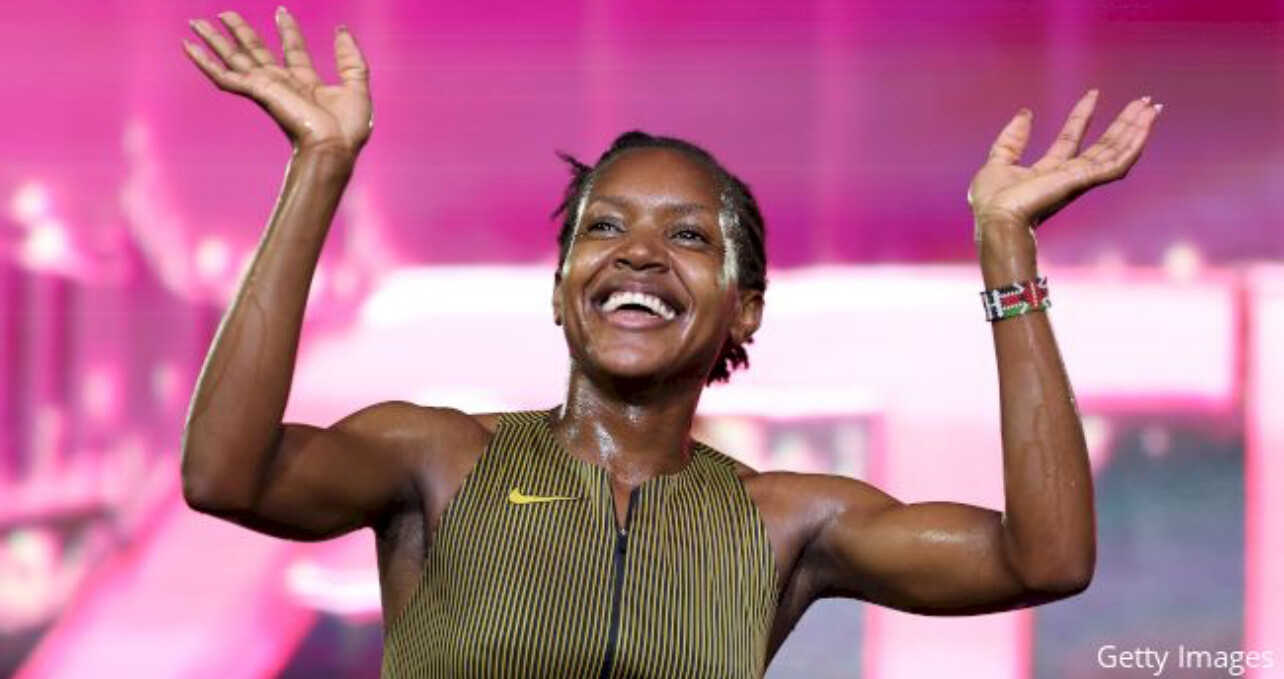
• Timothy Cheruiyot (Li Kenya) – Former world champion
• Jake Wightman (Great Britain) – 2022 world champion
• Grant Fisher (USA) – Olympic bronze medalist in both the 5000m and 10,000m
• Plus rising stars including Oliver Hoare, Neil Gourley, Azeddine Habz, Hobbs Kessler, Niels Laros, Cameron Myers, Stefan Nillessen, and Reynold Cheruiyot
In the men’s 400m hurdles, Olympic silver medalist Rai Benjamin will headline a competitive field that also includes CJ Allen, Trevor Bassitt, Clement Ducos, Malik James-King, Abderrahman Samba, and Assinie Wilson.
The 2025 Prefontaine Classic will feature 14 Diamond League disciplines, including the women’s 800m, 5000m, and 3000m steeplechase—each with world-class fields expected to be announced soon.
As the sport celebrates this milestone edition of the Pre Classic, the meet is shaping up to be not just a tune-up for global championships, but a showcase of track and field at its absolute best.
by Boris Baron
Login to leave a comment

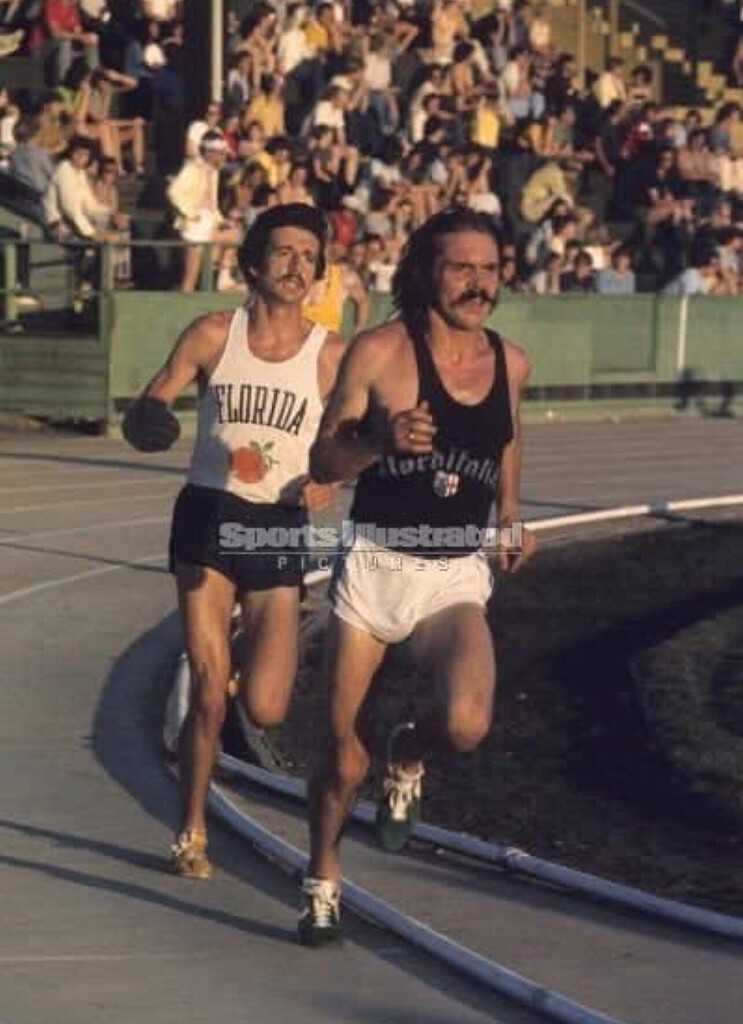
Steve Prefontaine’s Final Race: A Victory Etched in History
On May 30, 1975, under the golden light of an Oregon evening, Steve Prefontaine ran what would become the final race of his life. The setting was Hayward Field in Eugene, Oregon—his home track and the spiritual center of American distance running.
In the 5,000 meters that evening, Pre surged past Olympic champion Frank Shorter in the final laps, delivering a trademark gutsy performance. He crossed the finish line first in 13:25, cheered on by a passionate home crowd. It was a classic Prefontaine finish: fearless, front-running, and fiercely competitive.
Tragically, just hours later, Prefontaine died in a car crash driving his MGB, ending the life and career of one of America’s most iconic runners at just 24 years old.
This powerful image—captured by Sports Illustrated—shows Pre in command, moments before his final victory. It remains a poignant reminder of the passion he brought to the sport and the legacy he left behind.
Special thanks to Eric Giacoletto for remembering and sharing this historic moment.
by Boris Baron
Login to leave a comment
