

Running News Daily
Running News Daily is edited by Bob Anderson and team. Send your news items to bob@mybestruns.com Advertising opportunities available.
Index to Daily Posts · Sign Up For Updates · Run The World Feed
Articles tagged #World Athletics
Today's Running News



Nairobi 2029: Could Kenya Finally Bring the World Athletics Championships to Africa?
Tomorrow could be a defining day for Kenyan athletics — and potentially for the entire African continent.

The World Athletics Council is expected to announce the host of the 2029 World Athletics Championships, with Nairobi's bid carrying the hopes of a continent that has produced generations of extraordinary athletes but has never staged the senior global championships.
For Kenya, the moment could represent the culmination of decades of dominance, sacrifice and achievement on the international athletics stage.
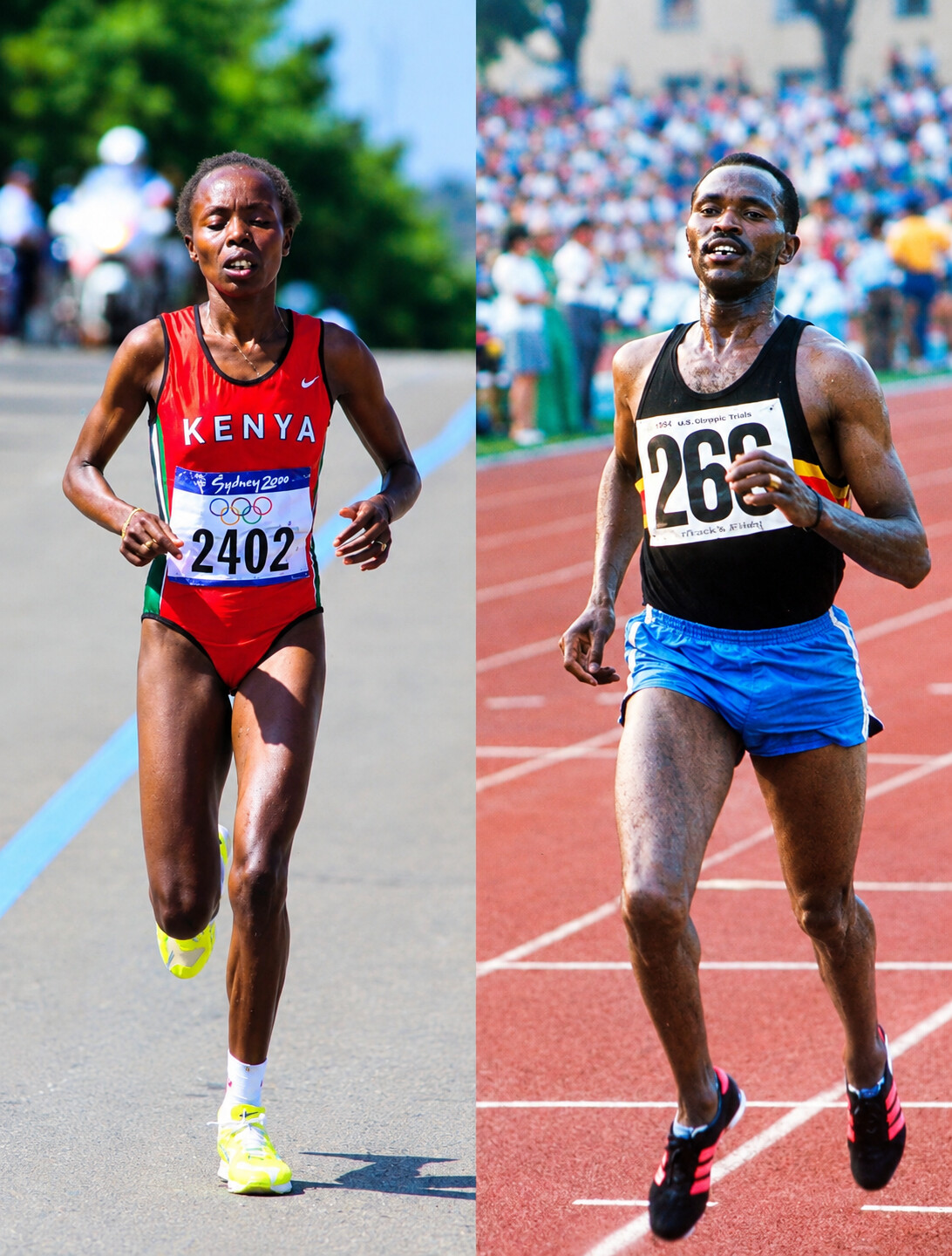
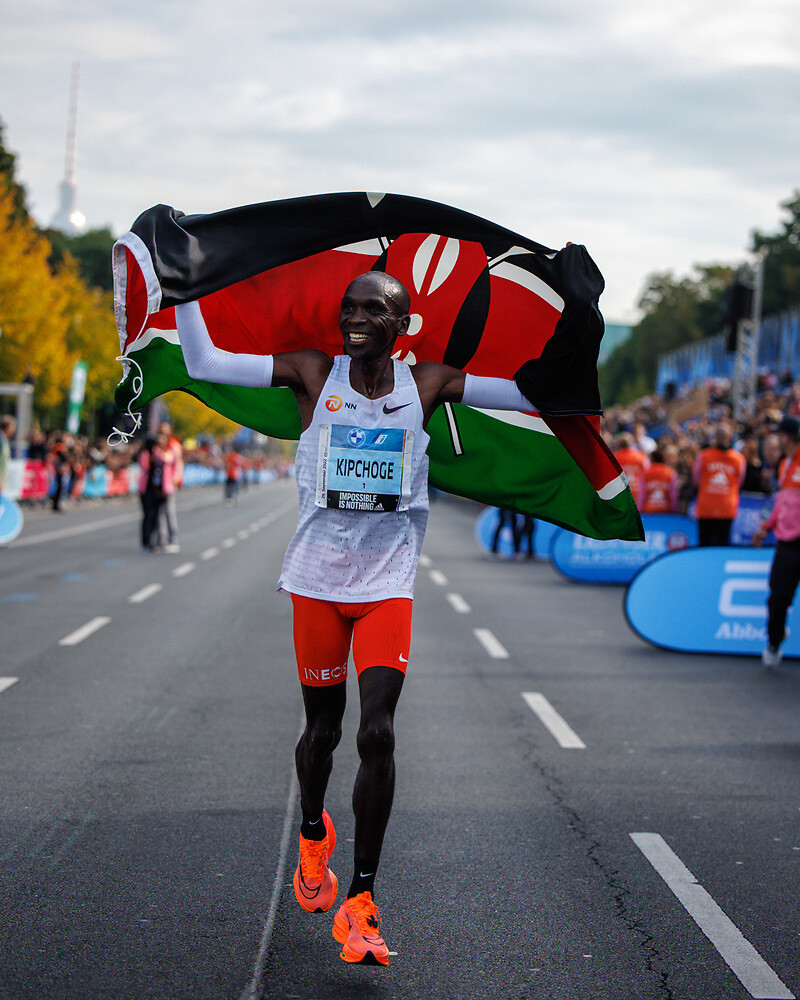
For generations, Kenya has built one of the most remarkable traditions in track and field. From pioneering legends such as Kipchoge Keino and Tegla Loroupe to modern icons including Eliud Kipchoge, Faith Kipyegon, David Rudisha, Sebastian Sawe, Beatrice Chebet and Ezekiel Kemboi among others. Kenyan athletes have repeatedly stood on the biggest stages in world sport.
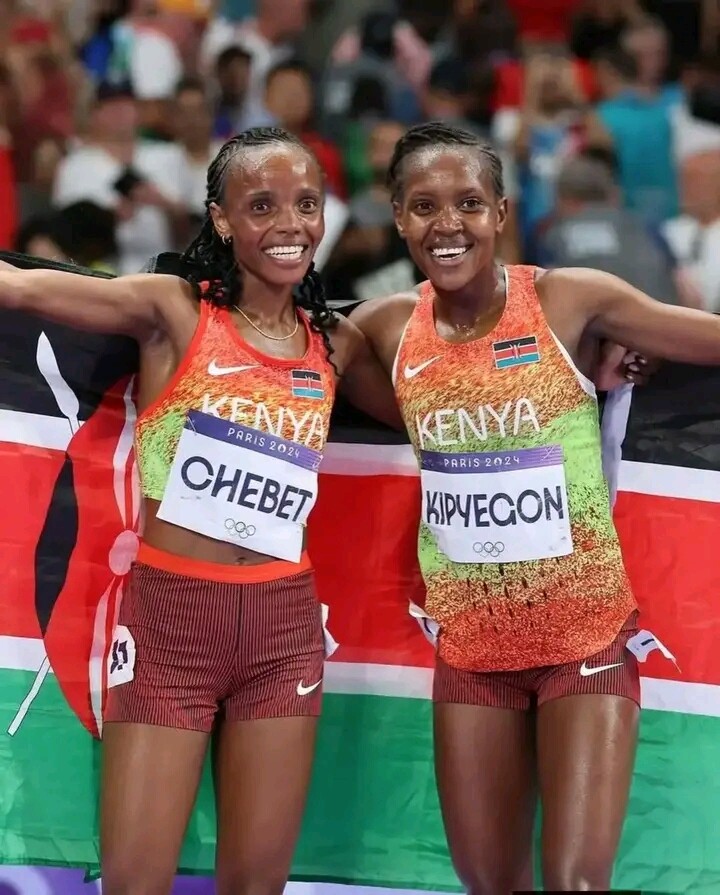
Their achievements have helped make Kenya one of the most respected names in global athletics. Olympic triumphs, world titles, records and unforgettable performances have carried the country's name across every corner of the sporting world.
But Kenya's relationship with athletics extends far beyond its medal collection.
Running is deeply rooted in communities throughout the country, while the high-altitude training environments of the Rift Valley have become famous worldwide for producing elite distance runners. Behind every champion is a network of coaches, families, training partners and communities that have helped sustain Kenya's extraordinary athletics culture.
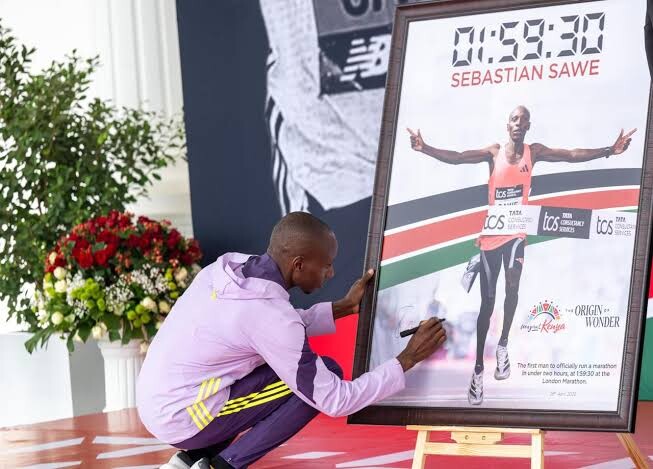
Now Nairobi is seeking to bring the world's biggest track and field championship to the country where so many champions have been produced.
The proposed centerpiece of Kenya's bid is Moi International Sports Centre, Kasarani, a venue already deeply connected to Kenyan athletics. If the bid succeeds, Kasarani could become the stage where the world's finest athletes gather in 2029 to compete for global titles.
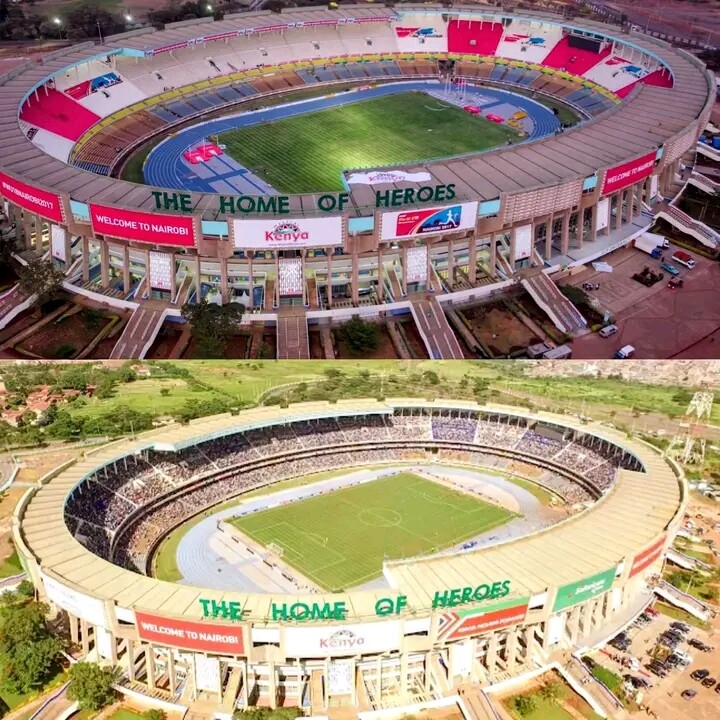
And the significance would extend far beyond Kenya.
Africa has produced some of the greatest athletes in athletics history, yet the continent has never hosted the World Athletics Championships. Nairobi's bid could change that.
Kenya's proposal is therefore not simply about staging another major sporting competition. It represents an opportunity to bring the championships to African soil for the first time and introduce millions of international fans to the continent's remarkable athletics culture.
However, Nairobi is facing formidable competition.
Kenya's bid is competing against proposals from London, Rome and Munich, three European cities with established sporting traditions and significant experience hosting major international competitions.
That sets up a fascinating choice for World Athletics.
Will the organization take the championships to a continent that has never hosted the event, creating a historic first for Africa? Or will the competition return to one of Europe's traditional athletics powerhouses?
For Nairobi, the stakes could hardly be higher.
A successful bid would give Kenyan athletes the opportunity to compete at a World Championships in front of their home supporters. It would give young runners across the country the chance to watch the world's best athletes compete in their own backyard. And it would place Kenya's extraordinary athletics heritage at the center of global attention.
It could also provide an opportunity to celebrate the champions who came before — athletes whose achievements helped establish Kenya as an athletics superpower — while inspiring the generation that will carry that legacy forward.
Imagine Kasarani filled with thousands of passionate supporters, the world's best athletes arriving in Nairobi, and Kenyan stars stepping onto the track knowing that the biggest championship in their sport is being staged on home soil.
For a country whose identity is so closely intertwined with running, it would be a remarkable sight.
And for Africa, it could be a moment of enormous symbolic importance.
Tomorrow, Kenya — and Africa — could hear its name called.
One decision. One host. One opportunity to make history.
If Nairobi is chosen, the story would not simply be about Kenya winning a bid. It would be about Africa finally welcoming the World Athletics Championships to its own soil.
It would be a celebration of the pioneers, the champions, the coaches, the communities and the generations of athletes who have helped make African athletics a global force.
And perhaps the headline of 2029 would already be waiting:
Kenya, the home of champions, has finally brought the world to its own backyard.
Nairobi 2029 — could this finally be Africa's moment?
by Erick Cheruiyot for My Best Runs.
Login to leave a comment

Jakob Ingebrigtsen And Josh Kerr Shared A Light Moment After Budapest Triumphs
Jakob Ingebrigtsen and Josh Kerr may be among the fiercest rivals in modern middle-distance running, but their encounter at the World Athletics Ultimate Championship in Budapest produced a lighter and more humorous moment between two of the sport’s biggest stars.
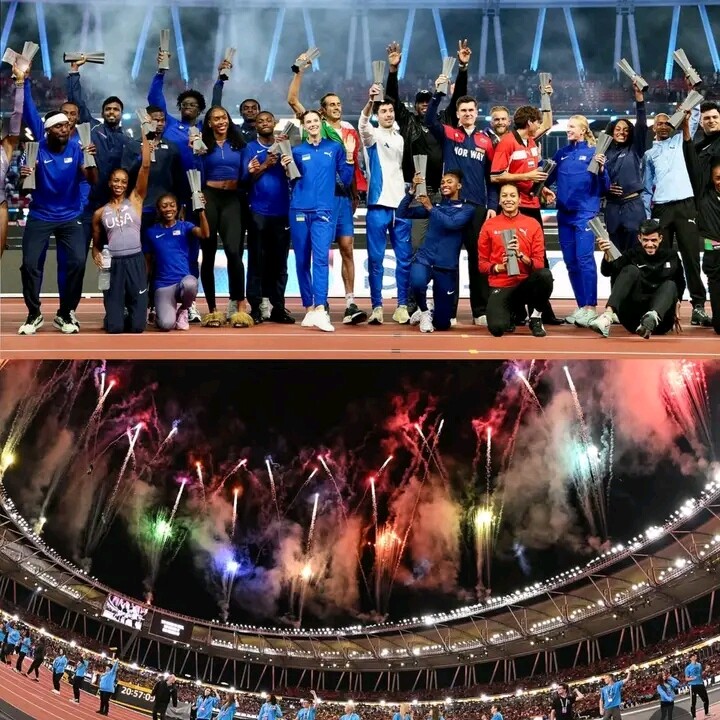
After Kerr secured the men’s 1500m title, he was placed alongside Ingebrigtsen during the final-night presentations. The Norwegian had already captured the 5000m crown, powering to victory in 12:59.24 with a characteristic late surge to complete his Budapest campaign on a high.
The moment was particularly intriguing given the history between the two athletes. Their rivalry has delivered some of the most memorable 1500m battles of recent years, with Kerr famously defeating Ingebrigtsen to claim the world title in Budapest in 2023.
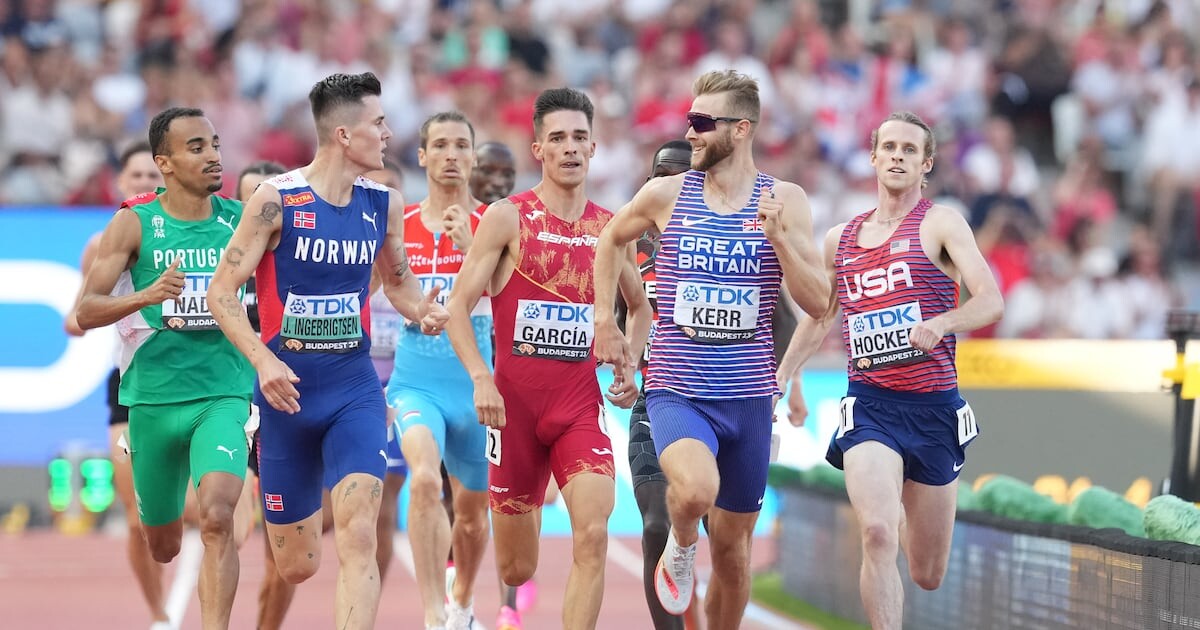
Ingebrigtsen had initially been expected to feature in the 1500m as well, potentially setting up another highly anticipated showdown with Kerr. However, the Norwegian ultimately withdrew from the event, leaving Kerr to take centre stage and add another major title to his résumé.
With the two champions eventually standing side by side during the closing presentations, Kerr was asked what he had said to his long-time rival.
His response was short, cheeky and perfectly timed:
“I said he was a great 5km runner.”
The playful comment carried an obvious hint of their long-running rivalry, particularly given that both athletes have repeatedly battled for supremacy over 1500m while Ingebrigtsen has also established himself as one of the world’s leading 5000m runners.
The light-hearted mood continued on social media, where Ingebrigtsen shared a playful exchange highlighting his sense of humour away from the track.
A comment praising him read: “Jakob, you are so funny and amazing in your post-race interviews..”
Ingebrigtsen responded with his trademark confidence and humour: “I know. It is almost unbelievable.”
He then reflected on his Budapest experience, writing: “Thank you Ultimate Athletics Championship See you next year”
For Ingebrigtsen, Budapest ended with another major 5000m triumph and a memorable interaction with one of his biggest rivals. For Kerr, the Ultimate Championship delivered another 1500m title and yet another chapter in an already remarkable career.
What has so often been a fierce rivalry on the track was replaced, at least for one memorable moment, by humour and a touch of mutual respect between two champions.
Different victories, different paths — but two of the sport’s biggest stars sharing the same stage in Budapest.
by Erick Cheruiyot for My Best Runs.
Login to leave a comment
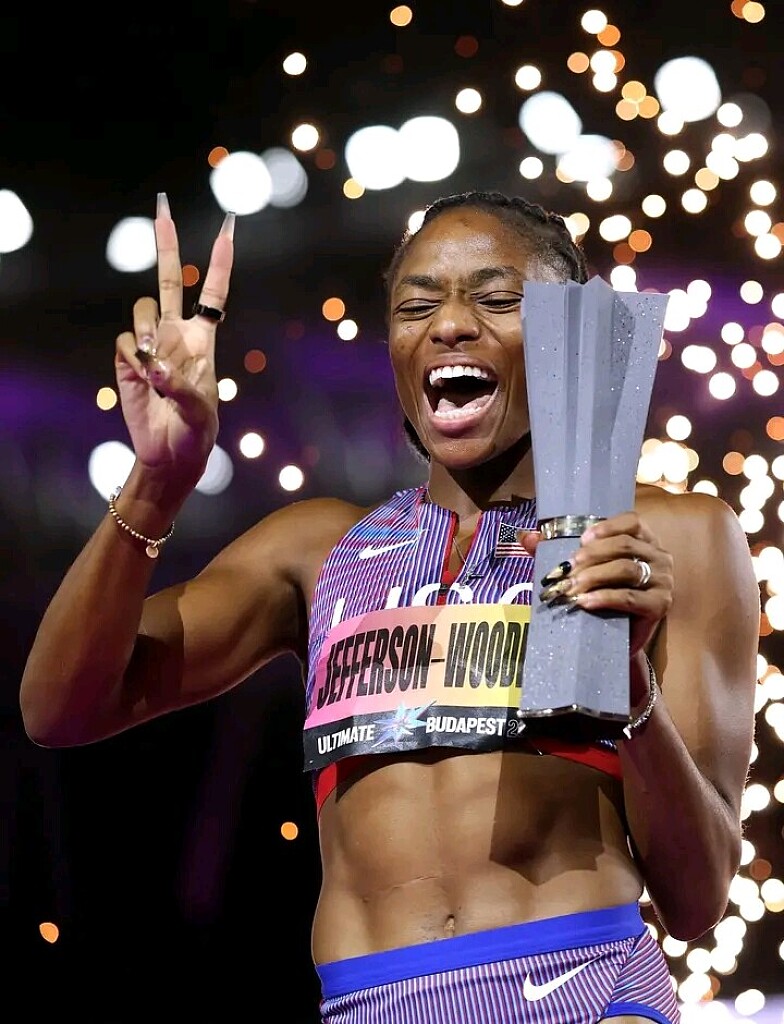
Melissa Jefferson-Wooden Storms Into History With Stunning 200m Victory In Budapest
Melissa Jefferson-Wooden has once again demonstrated why she is becoming one of the defining forces in women’s sprinting, delivering a breathtaking performance to win the 200m at the inaugural World Athletics Ultimate Championship in Budapest.
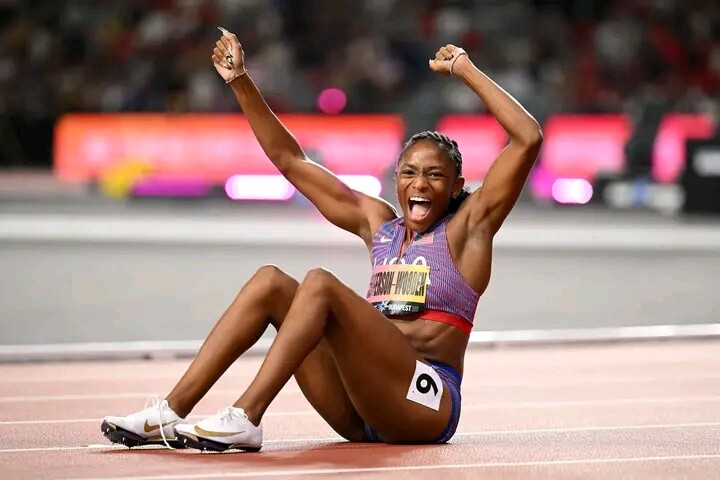
The American powered to victory in 21.47 seconds, producing one of the fastest performances in history despite facing a 0.6m/s headwind. She finished well clear of Olympic champion Gabby Thomas, who clocked 21.77, while Kayla White secured third place in 21.93.
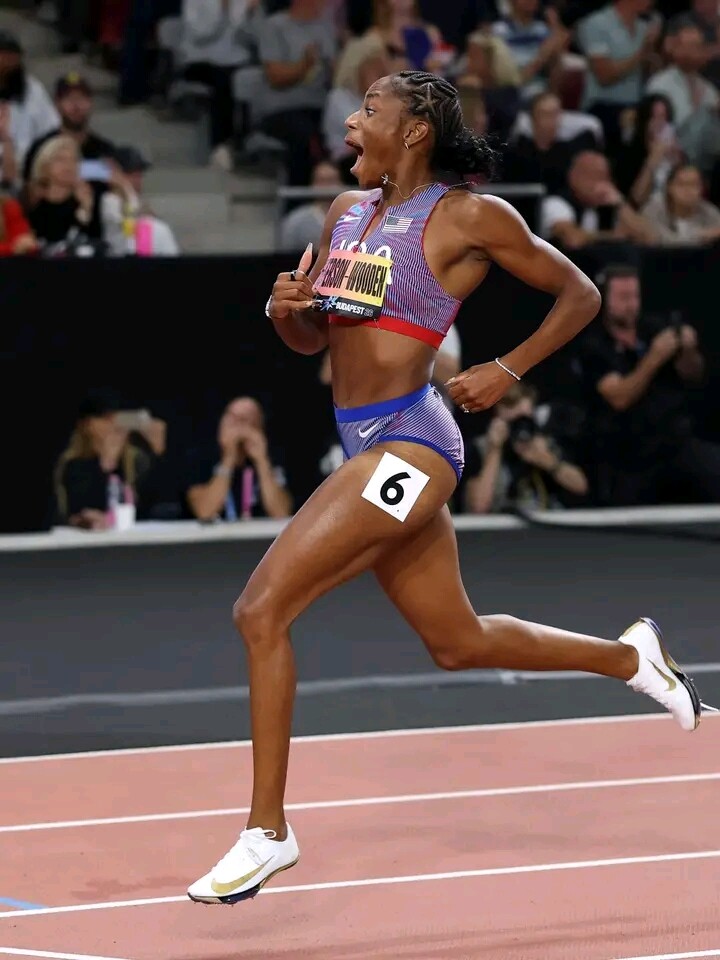
But Jefferson-Wooden’s latest triumph was about far more than another championship title. It was a performance that placed her among the fastest women ever to compete over the distance.
Her 21.47 seconds moved her to No. 3 on the all-time women’s 200m list, behind only legendary American sprinter Florence Griffith-Joyner, whose world record of 21.34 has stood since 1988, and Jamaica’s Shericka Jackson, who ran 21.41 in 2023.
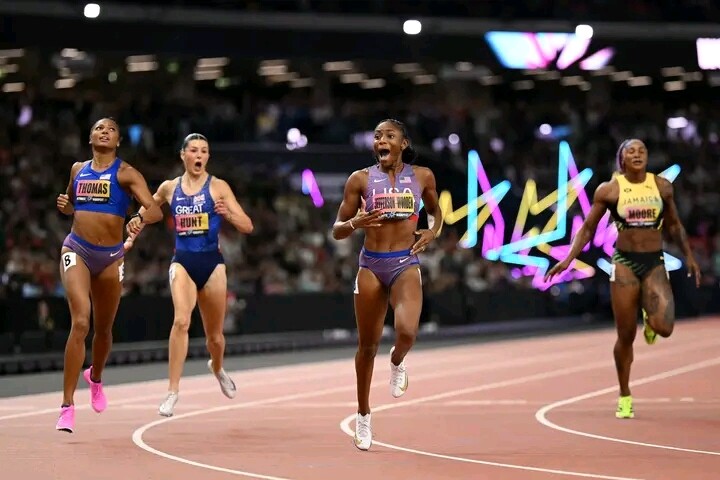
The result also pushed several celebrated names further down the rankings. Julien Alfred’s 21.51 from 2026 now sits fourth, while Elaine Thompson-Herah’s 21.53 from 2021 ranks fifth.
The significance of Jefferson-Wooden’s achievement becomes even greater when the conditions are considered. Running into a headwind makes a sprint performance more difficult, yet she still produced the third-fastest 200m ever recorded, underlining the extraordinary speed and execution behind her victory.
A Sensational Sprint Double
The Budapest triumph also completed a remarkable 100m and 200m double.
Just one night earlier, Jefferson-Wooden stormed to the 100m title in 10.62 seconds. She returned to the track with the same confidence and determination, once again delivering when the pressure was greatest.
The double adds another major achievement to a championship career that has rapidly gathered momentum. Jefferson-Wooden arrived in Budapest as the reigning world champion in both the 100m and 200m after completing the sprint double at the 2025 World Championships in Tokyo.
Now, she has added the inaugural Ultimate Championship double to her growing collection of major victories.
$300,000 Reward For Budapest Dominance
Jefferson-Wooden’s extraordinary weekend also comes with a substantial financial reward. With $150,000 awarded to each individual event winner, her victories in the 100m and 200m earn her a total of $300,000 from the championship.
Yet the money is almost secondary to what she has achieved on the track.
In an era filled with Olympic champions, world champions and record-setting talents, Jefferson-Wooden is separating herself through consistency, championship composure and an extraordinary ability to deliver on the biggest stages.
Her latest 21.47 seconds does more than add another title to her résumé. It places her directly among the fastest women the sport has ever seen over 200m.
Florence Griffith-Joyner remains at the summit. Shericka Jackson sits second. But Melissa Jefferson-Wooden is now firmly at No. 3—and judging by the extraordinary trajectory of her career, the American may not be finished climbing.
From Tokyo to Budapest, Jefferson-Wooden is no longer simply chasing sprinting history.
She is becoming part of it.
by Erick Cheruiyot for My Best Runs.
Login to leave a comment
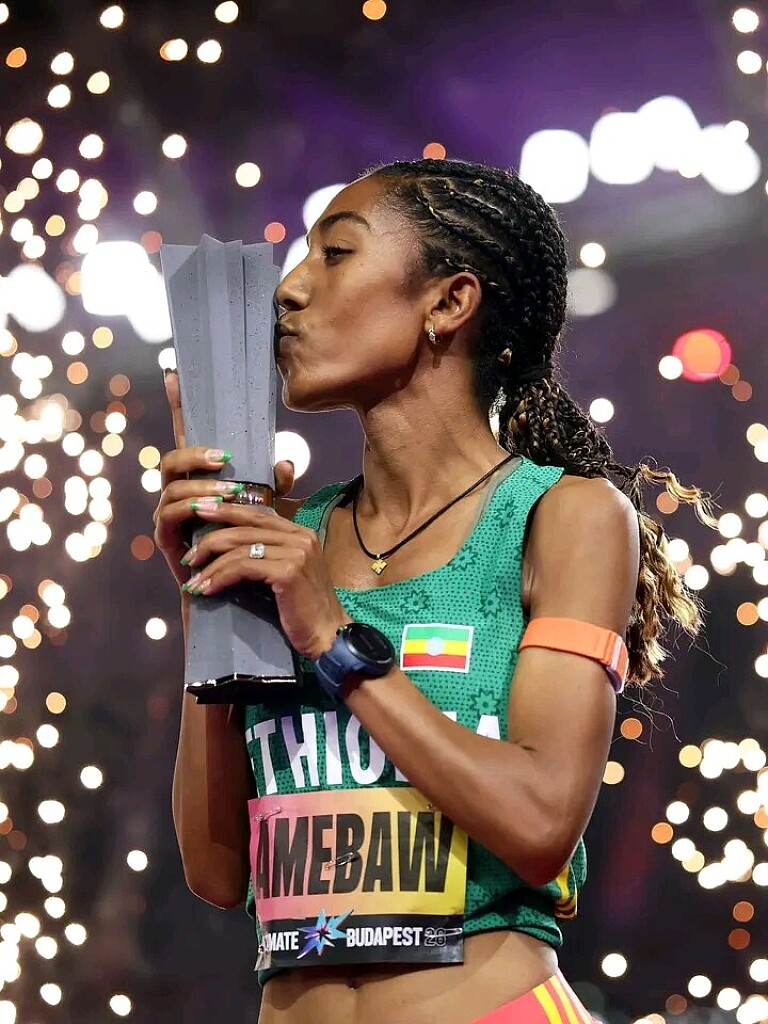
Likina Amebaw Completes Ethiopian Masterclass With First Global Title In Budapest
Likina Amebaw has written her name into the history books in Budapest, producing a commanding performance to win the women’s 5000m at the inaugural World Athletics Ultimate Championship and claim the first global title of her career.
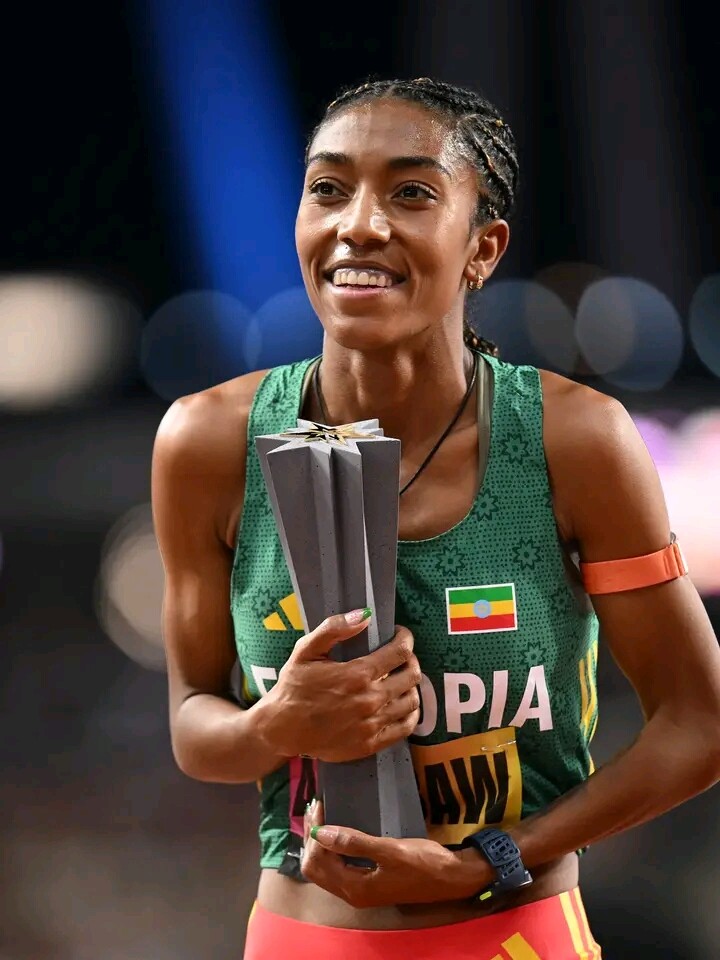
The Ethiopian world leader delivered when it mattered most, stopping the clock at 14:30.36 to secure the Ultimate Championship crown and cap a remarkable breakthrough season with a major international triumph.
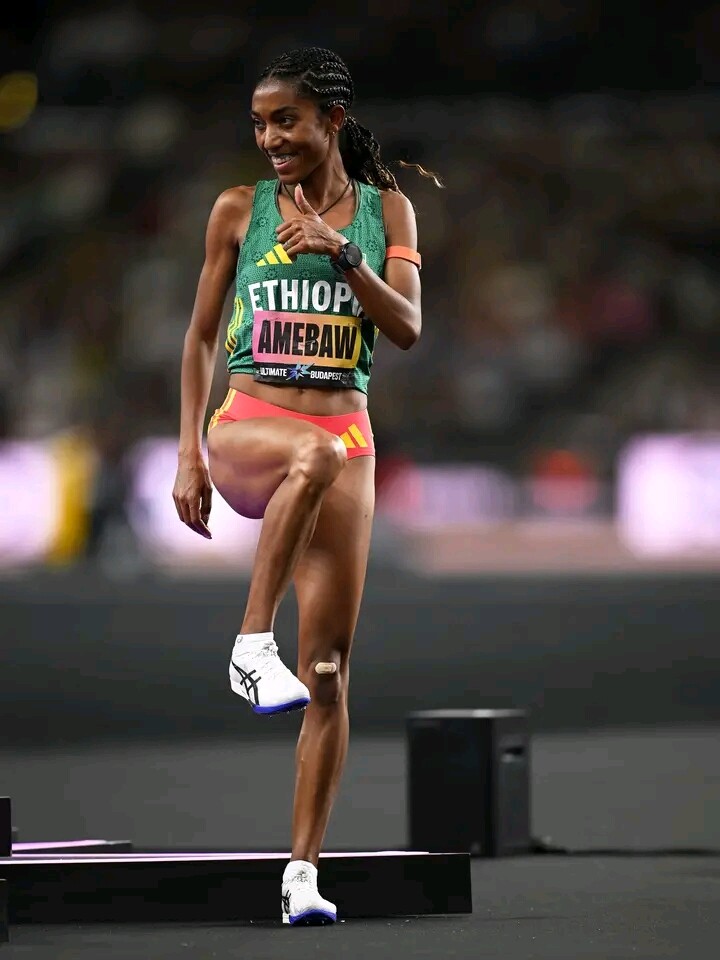
Amebaw did not leave the title to a final-lap sprint. As the race entered its decisive stages, the Ethiopian gradually separated herself from the chasing pack, moving clear at the front before steadily stretching her advantage with every lap.
Once she established daylight between herself and her rivals, Amebaw ran with increasing authority. Her rhythm remained relentless as the pressure shifted entirely onto the chasing group, while the world leader continued to extend her advantage and effectively turned the championship final into a solo pursuit of the finish line.
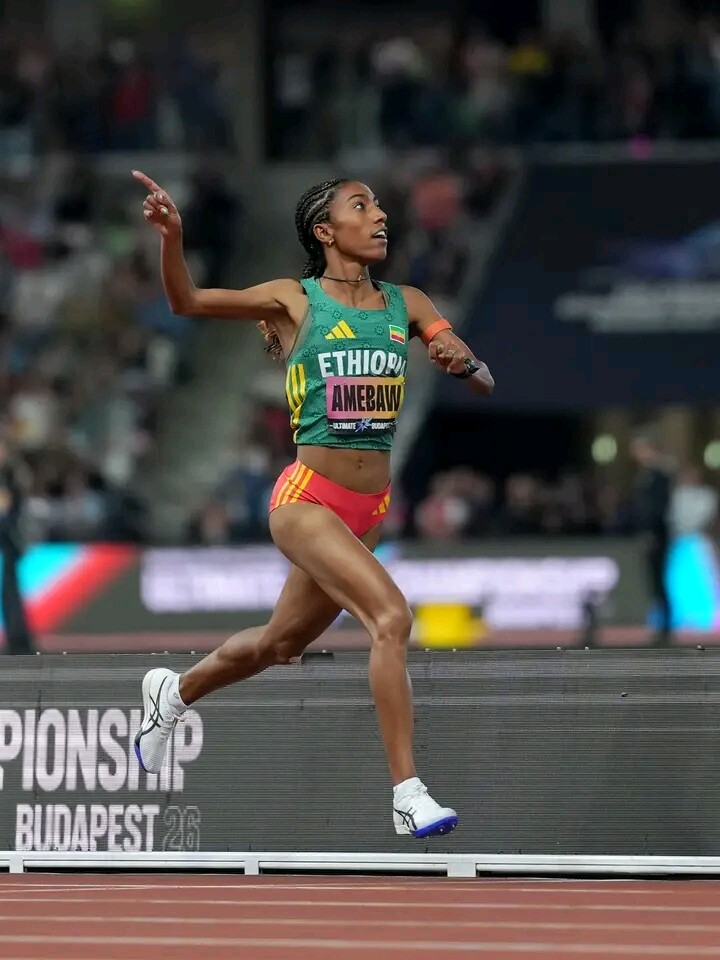
Behind her, Australia’s Jessica Hull produced a superb performance to secure second place in 14:32.39, a personal best. Hull fought all the way through the closing stages and produced a gutsy final surge toward the line, but Amebaw had already created too much separation for the Australian to challenge for the title.
Hull’s performance nevertheless earned her a deserved second positon and prevented what could have been an Ethiopian clean sweep of the leading positions.
The depth of Ethiopia’s women’s 5000m strength was on full display in Budapest, with four Ethiopian athletes finishing inside the top five. Amebaw led the way, while Fantaye Belayneh finished third in 14:32.62, Freweyni Hailu took fourth in 14:32.76, and Aleshign Baweke completed the Ethiopian presence in the top five with 14:32.86.
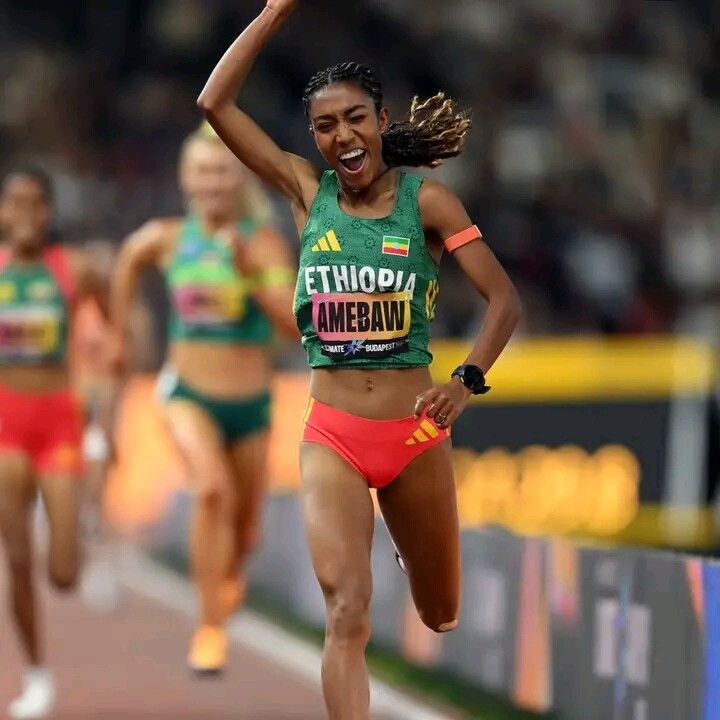
The Ethiopian contingent remained heavily represented near the front throughout the race, producing another powerful demonstration of the country’s extraordinary strength over 5000m.
But the night belonged to Amebaw.
After establishing herself as the world leader, she arrived in Budapest carrying the expectations that come with being the athlete to beat. Rather than allowing the pressure to dictate her race, she remained composed, waited for the decisive moment and then made a move that completely changed the complexion of the contest.
Her 14:30.36 was enough to crown her the women’s 5000m Ultimate Champion and transform a season of outstanding performances into a breakthrough global triumph.
For Ethiopia, the result was another emphatic statement of its depth and enduring influence in women’s distance running. Four athletes inside the top five underlined the extraordinary talent available in the country and its ability to dominate the sharp end of championship racing.
For Amebaw, however, the significance is deeply personal. She came to Budapest as the world leader and leaves as a global champion.
The first global title is now in the books. The first major crown has been secured.
Likina Amebaw is the Ultimate Champion.
by Erick Cheruiyot for My Best Runs.
Login to leave a comment
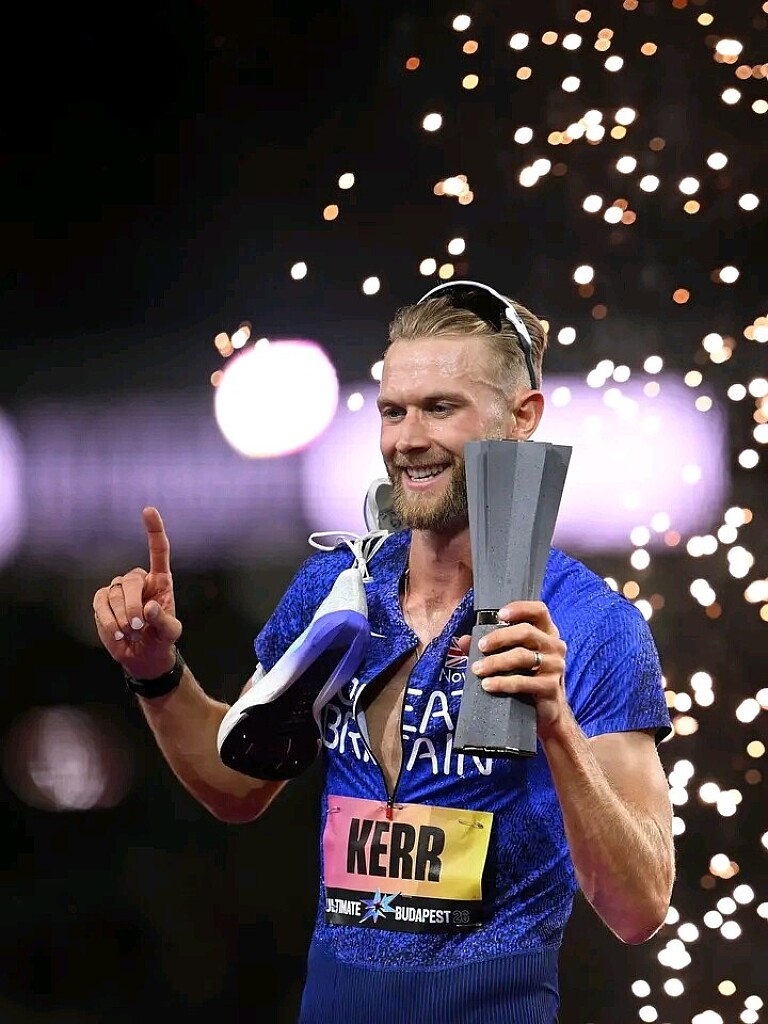
Josh Kerr Does It Again In Budapest As British Star Claims Ultimate 1500m Crown
“I’m not going to lose.” He said it. Then he delivered.
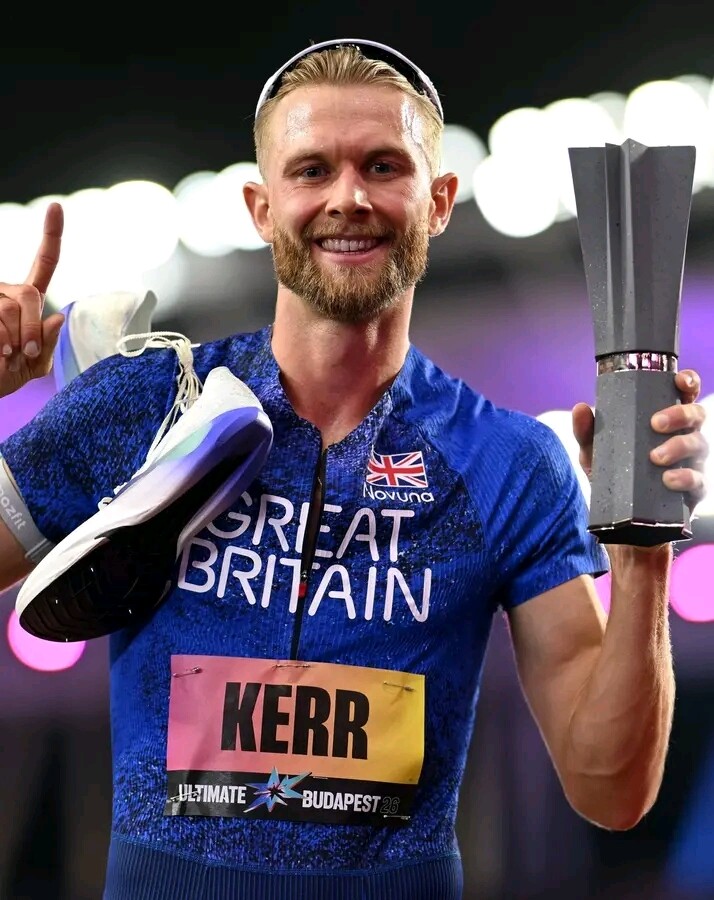
Josh Kerr has conquered Budapest once again, adding another huge title to an extraordinary 2026 season by winning the men’s 1500m at the inaugural World Athletics Ultimate Championship.
The British world mile record-holder produced a superb 3:29.35 to take the Ultimate Championship crown, using a devastating final kick to hold off Australia’s rising star Cameron Myers in the closing stages.
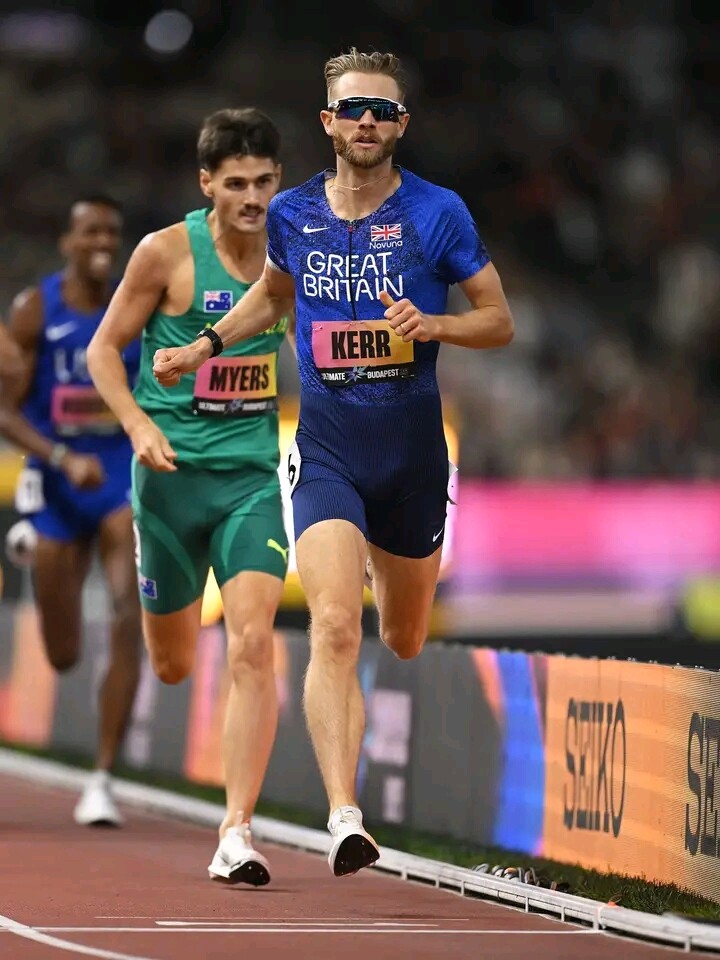
Myers pushed Kerr all the way to the finish, but the British star remained composed under pressure before finding another gear when it mattered most. The Australian crossed the line in 3:29.68 to secure second place, just 0.33 seconds behind the champion.
American Hobbs Kessler completed the podium in 3:30.73, while Olympic champion Cole Hocker finished fourth in 3:30.74, narrowly missing out on a medal by just one hundredth of a second.
For Kerr, the victory carries an added layer of significance because Budapest has already played a defining role in his career.
It was here in 2023 that Kerr produced one of the biggest shocks of that year’s World Championships, stunning Jakob Ingebrigtsen to become the world champion over 1500m. Three years later, he has returned to the same city and conquered it again.
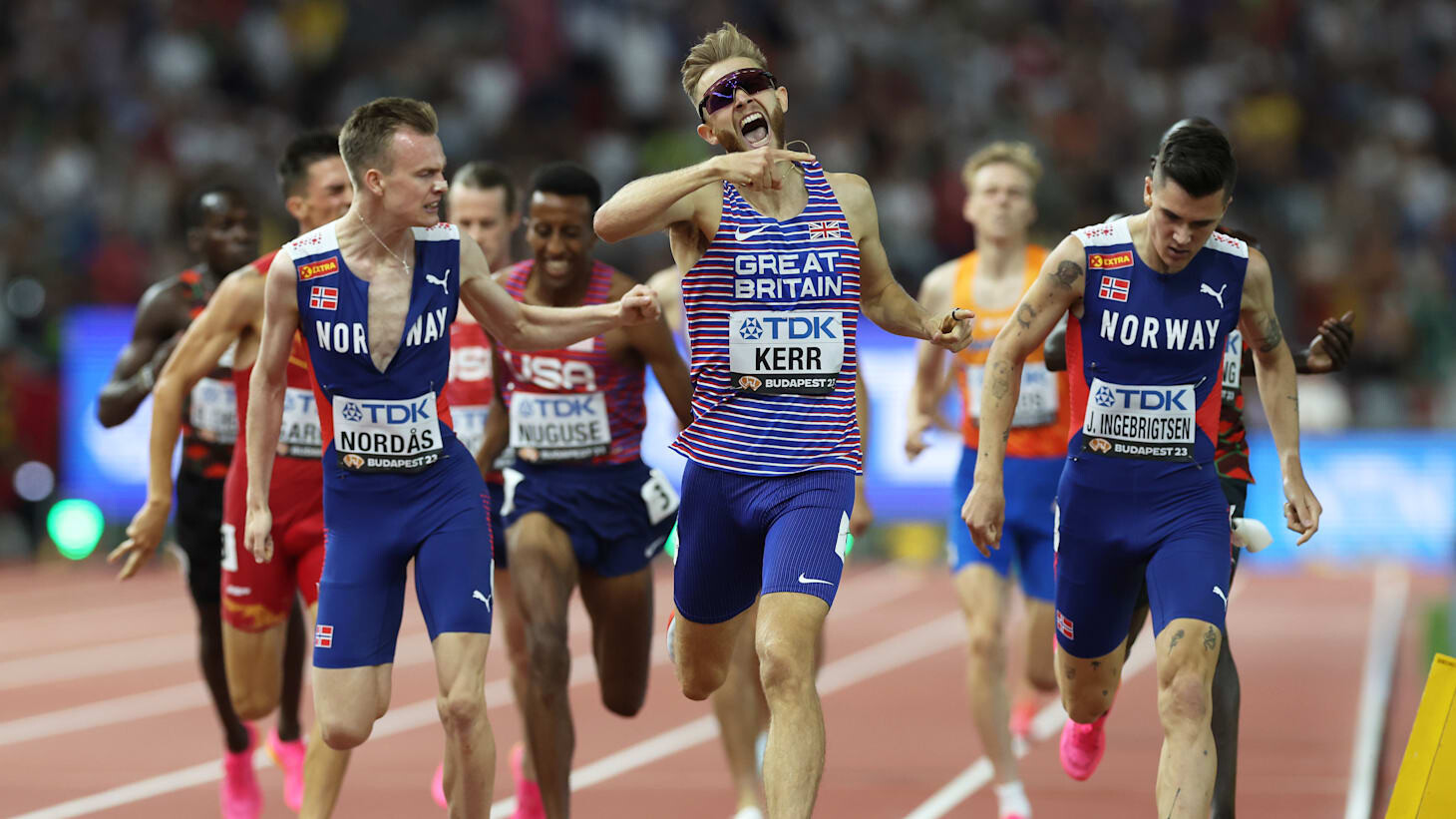
Budapest belongs to Kerr once more.
The British star arrived at the Ultimate Championship after putting together a remarkable 2026 campaign. Among the highlights was his sensational 3:42.66 mile world record in London, where he finally broke a mark that had stood for 27 years.
Kerr also added Commonwealth Games gold to his growing collection of major honours, further establishing himself as one of the dominant middle-distance athletes of his generation.
The Budapest final was expected to provide another chapter in the growing rivalry between Kerr and Ingebrigtsen. However, Ingebrigtsen’s late withdrawal meant the much-anticipated rematch never materialised.
Even without the Norwegian superstar, Kerr had no shortage of formidable opposition. The field featured Olympic champion Cole Hocker, world champion Isaac Nader and Yared Nuguse, while Myers arrived as one of the most exciting young talents in international middle-distance running.
The unique Ultimate Championship format also raised the stakes. With no heats and no second chances, every athlete had only one opportunity to deliver on the biggest stage.
Kerr appeared to embrace that pressure.
Rather than allowing the quality of the field to dictate the race, he stayed patient and waited for the decisive moment. As the final metres approached, the British star unleashed the finishing speed that has become one of his greatest weapons.
Myers fought desperately to stay with him, but Kerr had done enough.
The 3:29.35 winning time was not simply another fast performance. It was another demonstration of Kerr’s championship instincts and his ability to produce when everything is on the line.
For Myers, the silver medal represents another major breakthrough and a strong statement from the young Australian. His 3:29.68 shows that he is increasingly capable of challenging the established stars of the 1500m.
Kessler’s bronze added another impressive result to his career, while Hocker’s fourth-place finish underlined just how competitive the final was, with less than a second separating him from the champion.
Yet the night ultimately belonged to one man.
From the streets of Budapest in 2023 to the Ultimate Championship final three years later, Kerr has once again made the Hungarian capital his stage.
Another big race. Another Josh Kerr victory.
He arrived saying, “I’m not going to lose.”
Then he delivered.
Josh Kerr is the inaugural World Athletics Ultimate Championship 1500m champion — and Budapest belongs to him again.
by Erick Cheruiyot for My Best Runs.
Login to leave a comment
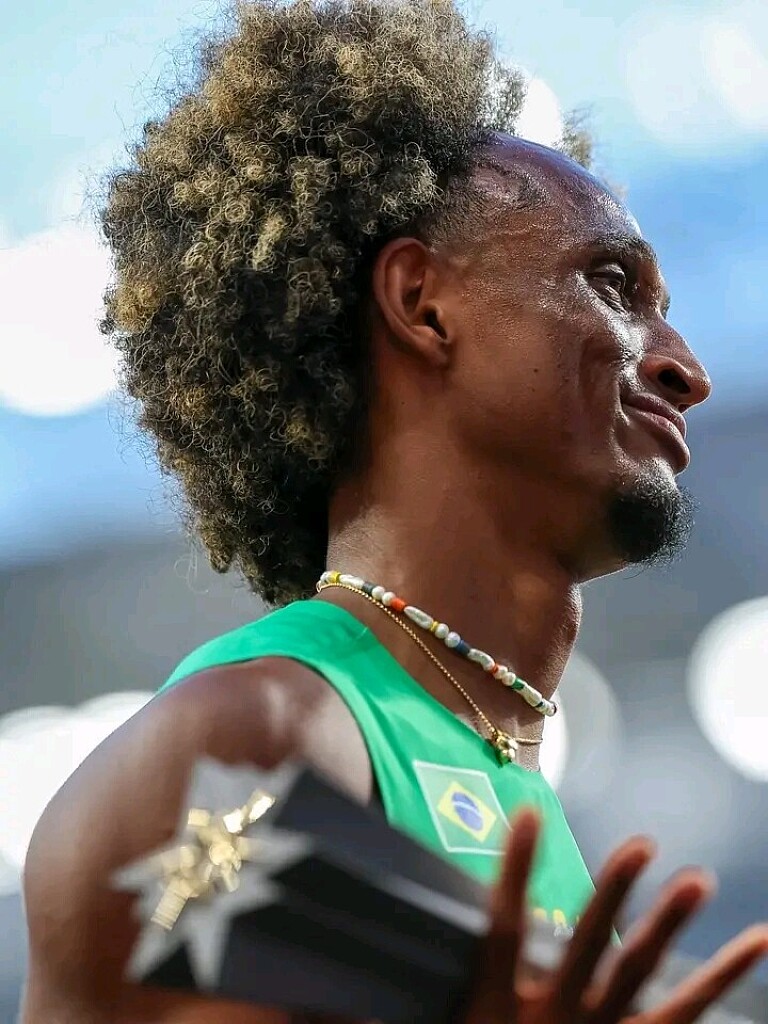
Alison Dos Santos Roars Again! World Record Holder Claims Ultimate 400m Hurdles Crown
Alison dos Santos has finished his season in spectacular fashion, adding the World Athletics Ultimate Championship title to an extraordinary run of form that has seen the Brazilian repeatedly produce performances at the highest level.
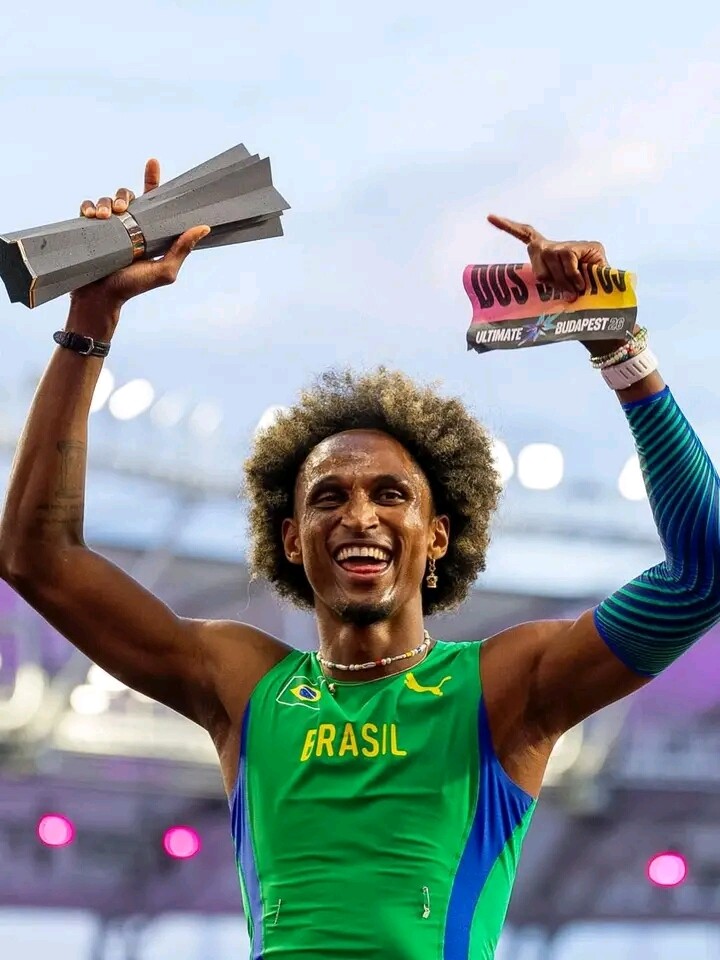
The world record holder stormed to victory in the men's 400m hurdles in Budapest, clocking a stunning 45.98 seconds to secure the ultimate crown and cap a memorable campaign in style.
Dos Santos entered the championship full of confidence after winning the Diamond League Trophy last weekend. His latest triumph came only a few weeks after his historic 45.80 world record in Zürich, making his Budapest performance another remarkable sub-46-second run.
The Brazilian once again displayed his trademark combination of speed, rhythm and control between the barriers. Although he could not quite reproduce his world-record time, his 45.98 was more than enough to defeat two of the biggest names in the event.
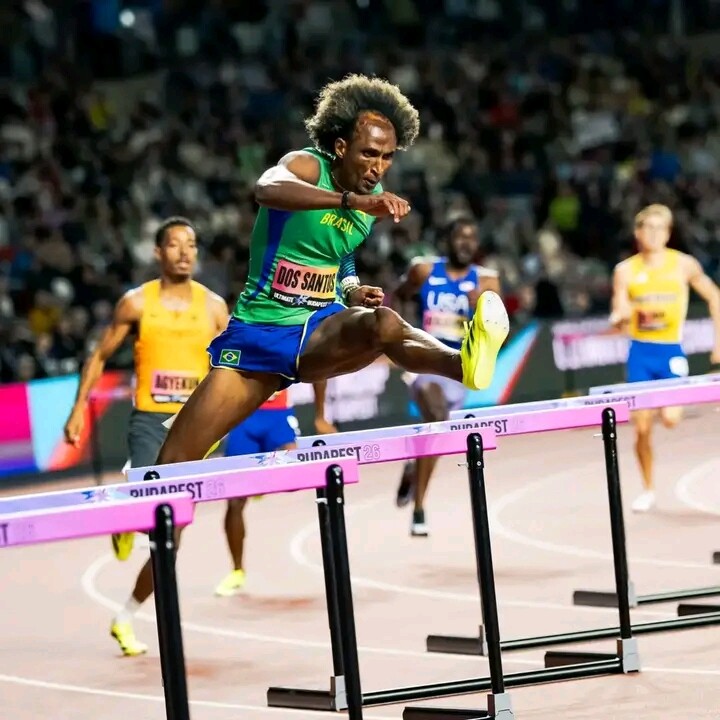
Rai Benjamin pushed hard throughout the race and finished second in 46.40 seconds, while Norwegian superstar Karsten Warholm secured third place in 46.78. The result once again highlighted the extraordinary depth and quality of a 400m hurdles event that has been dominated by these three giants in recent years.
For Dos Santos, however, the night belonged entirely to him. He not only walked away with the Ultimate Championship gold medal but also became the first man to record two sub-46-second performances over the 400m hurdles, underlining just how exceptional his current form has been.
His 45.80 world record in Zürich had already sent shockwaves through athletics, but returning a few weeks later to run 45.98 against Benjamin and Warholm shows that his record-breaking performance was no one-off.
Instead, Dos Santos has established a level of consistency rarely seen in the event. He has combined championship pressure with extraordinary speed, finishing his season as the Diamond League champion and now the Ultimate champion.
The Brazilian's latest victory is a fitting conclusion to a season in which he has continued to strengthen his reputation as one of the greatest 400m hurdlers of his generation.
From the world record in Zürich to the Diamond League Trophy and now the Ultimate Championship crown, Dos Santos has delivered a season-ending statement that will be difficult for his rivals to ignore.
What a way for the world record holder to finish the season — roaring across the line in 45.98 seconds and leaving Budapest with another major title to his name.
by Erick Cheruiyot for My Best Runs.
Login to leave a comment
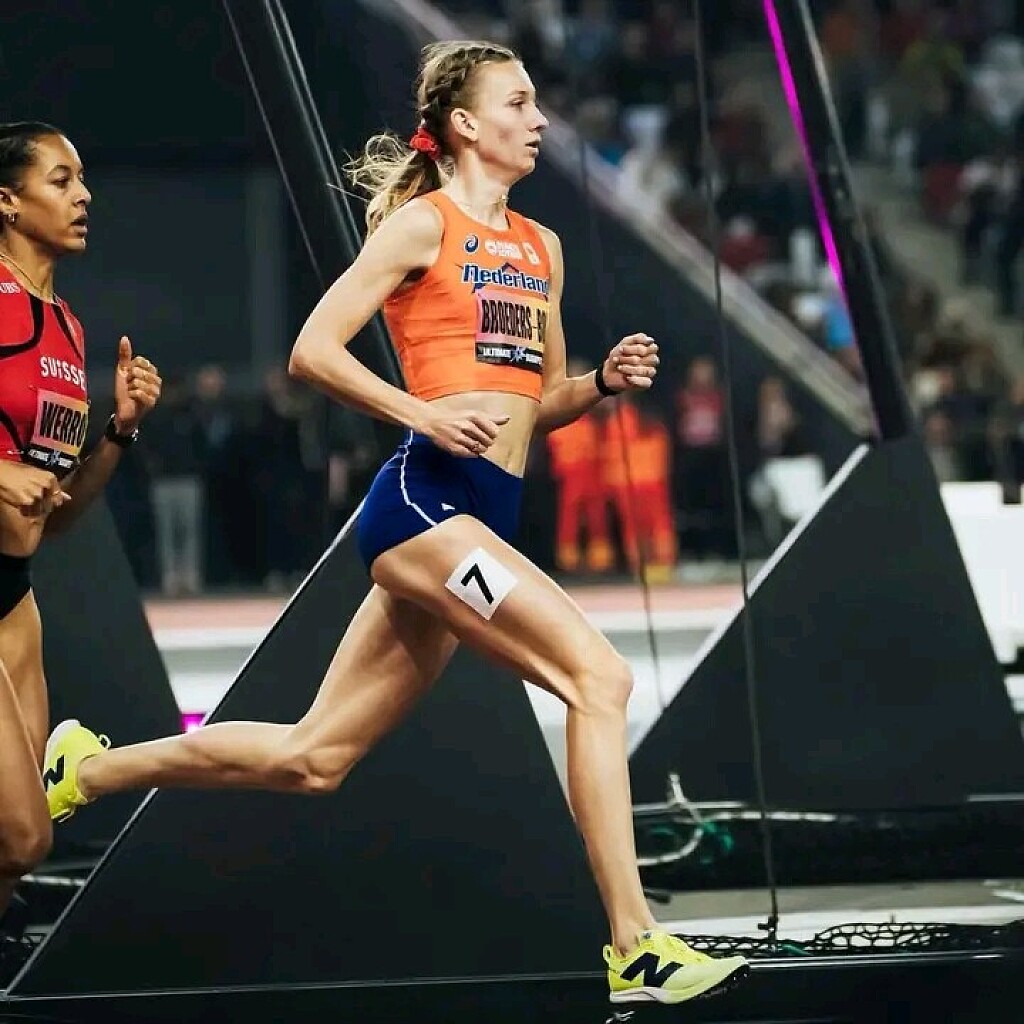
Femke Bol’s 800m Learning Curve Continues With Budapest Podium
Femke Bol may have walked away from Budapest with a third positon, but the Dutch star left the inaugural World Athletics Ultimate Championship with something potentially even more valuable — another lesson in mastering the tactical demands of the 800m.
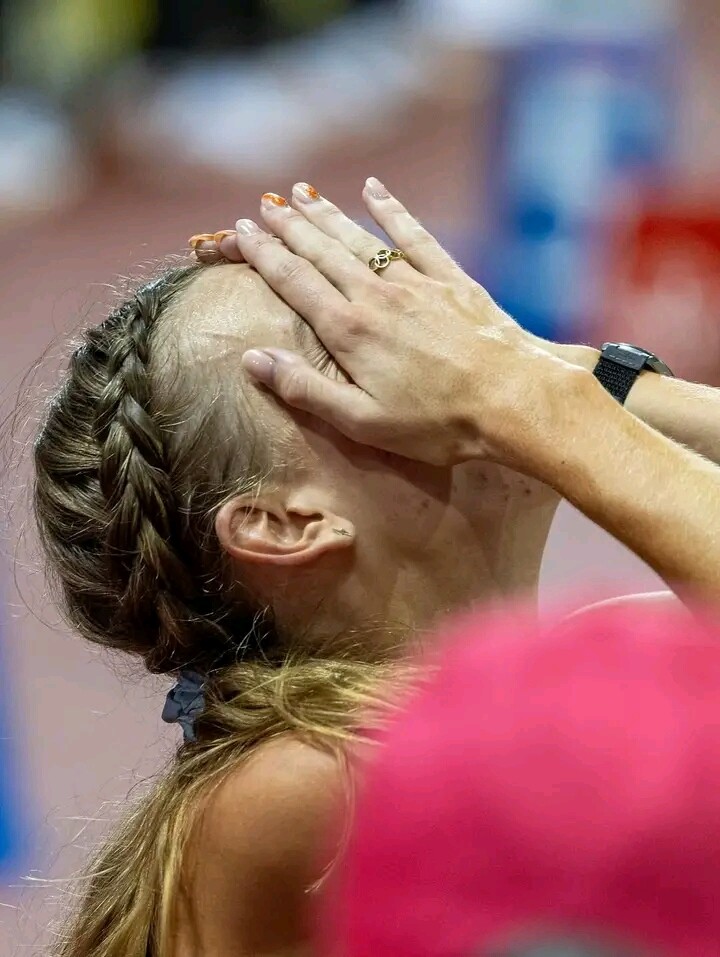
Bol, who only made the permanent transition to the two-lap event earlier this year after building her reputation as one of the world’s finest 400m hurdlers, finished third in a fiercely contested women’s final in 1:56.74.
Switzerland’s Audrey Werro claimed the title in 1:55.88, holding off Britain’s Keely Hodgkinson, who finished just 0.12 seconds behind in 1:56.00, while Bol completed the podium.
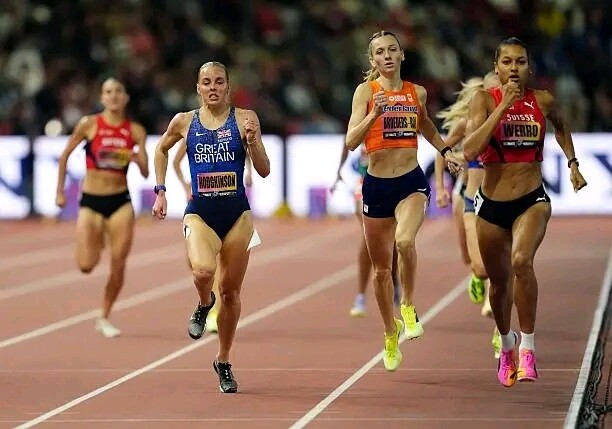
For Bol, however, the result was less about disappointment and more about understanding what she still needs to develop as an 800m runner.
The Dutchwoman has already demonstrated that she possesses the speed and endurance required for the event. What she is discovering now is that racing two laps at the highest level is not simply about running fast — sometimes, it is about knowing when not to run fast.
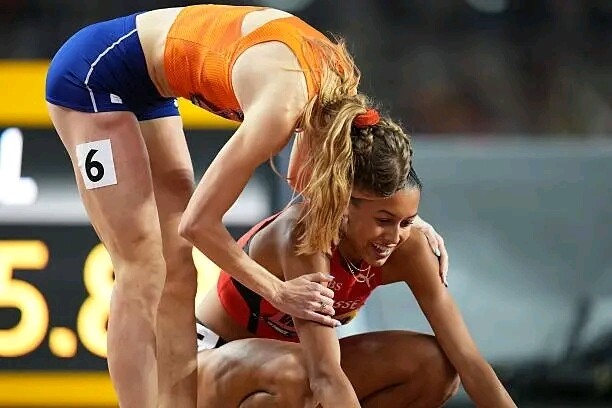
That was particularly evident in Budapest.
Werro controlled the early stages of the final intelligently, reaching the halfway point in 57.74 seconds. The relatively measured opening forced the athletes into a tactical battle, where positioning, patience and the ability to accelerate sharply over the closing stages became just as important as raw fitness.
Bol admitted that this type of race remains a learning experience for her.
“When we go fast, I finish with the same strength as when we go slow,” she explained, highlighting the confidence she has in her ability to handle a fast pace.
But she also recognised the challenge created by a slower opening.
“When we go slow, I don't have enough acceleration,” Bol acknowledged, while describing the Budapest final as an important opportunity to learn.
That difference is understandable given her background.
As a former 400m hurdles specialist, Bol has spent much of her career developing rhythm, strength and speed endurance over a demanding one-lap event. She is accustomed to establishing her race pattern early and relying on her powerful stride and finishing strength.
The 800m requires another layer of racing intelligence.
Athletes must constantly judge pace, protect their position, respond to moves and remain prepared for a sudden change of speed. A runner can be physically ready for a fast finish but still find themselves boxed in or too far from the front when the decisive move comes.
For Bol, that tactical education is happening at remarkable speed.
Despite only fully embracing the 800m this season, she has already produced consecutive performances in the 1:54 range, established herself among the world’s leading two-lap runners and reached major championship finals.
Her Budapest bronze therefore represents another significant step in a rapidly developing chapter of her career.
Rather than exposing a weakness that could hold her back, the final revealed an area where Bol still has room to grow.
And that could be an ominous prospect for her future rivals.
If Bol can combine the formidable strength and speed that made her a dominant force in the 400m hurdles with the tactical awareness required for championship-style 800m racing, she could become an even more dangerous competitor over two laps.
The Budapest final may have belonged to Werro, with Hodgkinson narrowly taking second positon and Bol settling for third place but the Dutch star's transition is clearly far from complete.
At 800m, Bol is still learning.
And if this season is any indication, she may be learning very quickly.
by Erick Cheruiyot for My Best Runs.
Login to leave a comment
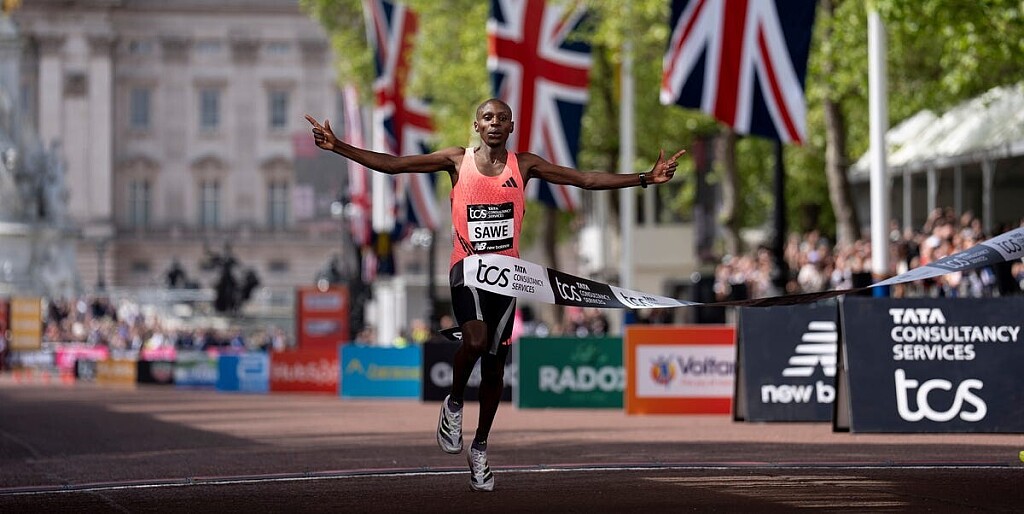
Marathon Majors Course Records: Where Speed, History And The Course Collide
The world’s biggest marathons are united by prestige, elite fields and unforgiving 26.2-mile battles, but their course records tell very different stories. From Tokyo to Sydney, each course has its own character, while London and Chicago have become synonymous with extraordinary speed.
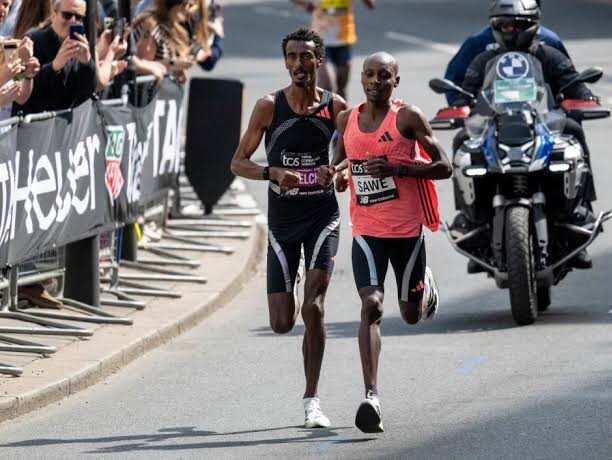
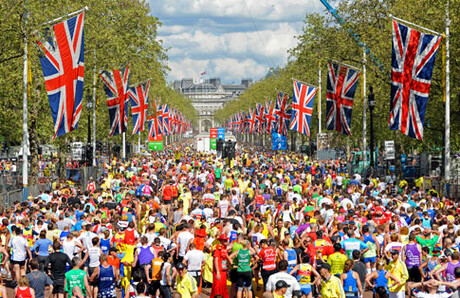
At the top of the men’s list stands the London Marathon, where Kenya’s Sabastian Sawe produced one of the greatest performances in road-running history. Sawe clocked 1:59:30 in April 2026, becoming the first athlete to officially break the two-hour barrier in a marathon. His performance also lowered the world record from Kelvin Kiptum’s previous mark of 2:00:35.
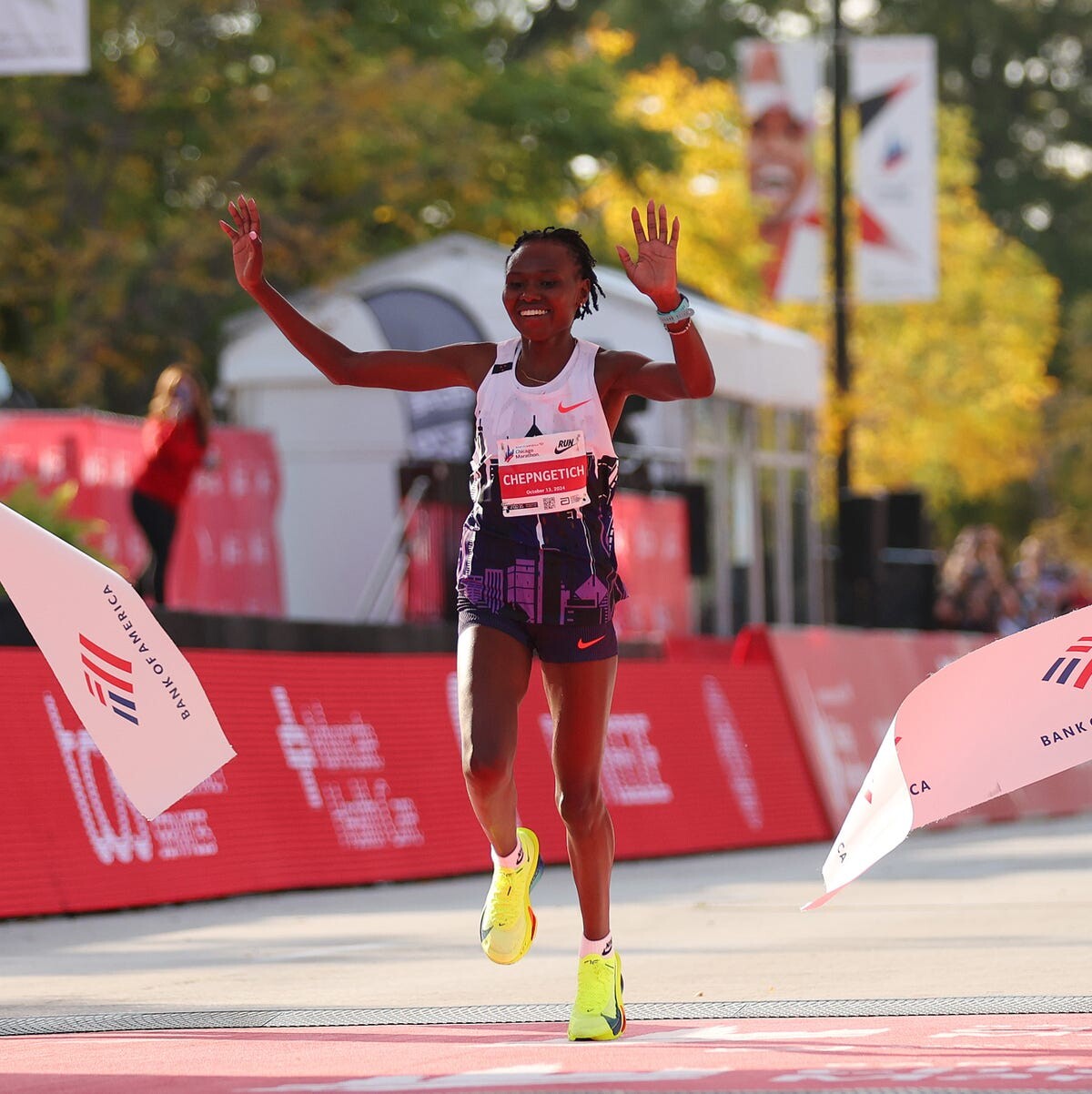
Chicago, meanwhile, owns one of the most remarkable records in women’s marathon history. Kenya’s Ruth Chepngetich ran 2:09:56 in 2024, becoming the first woman to break the 2:10 barrier. The performance remains a landmark in the event’s history and gives Chicago a special place among the fastest marathon courses in the world.
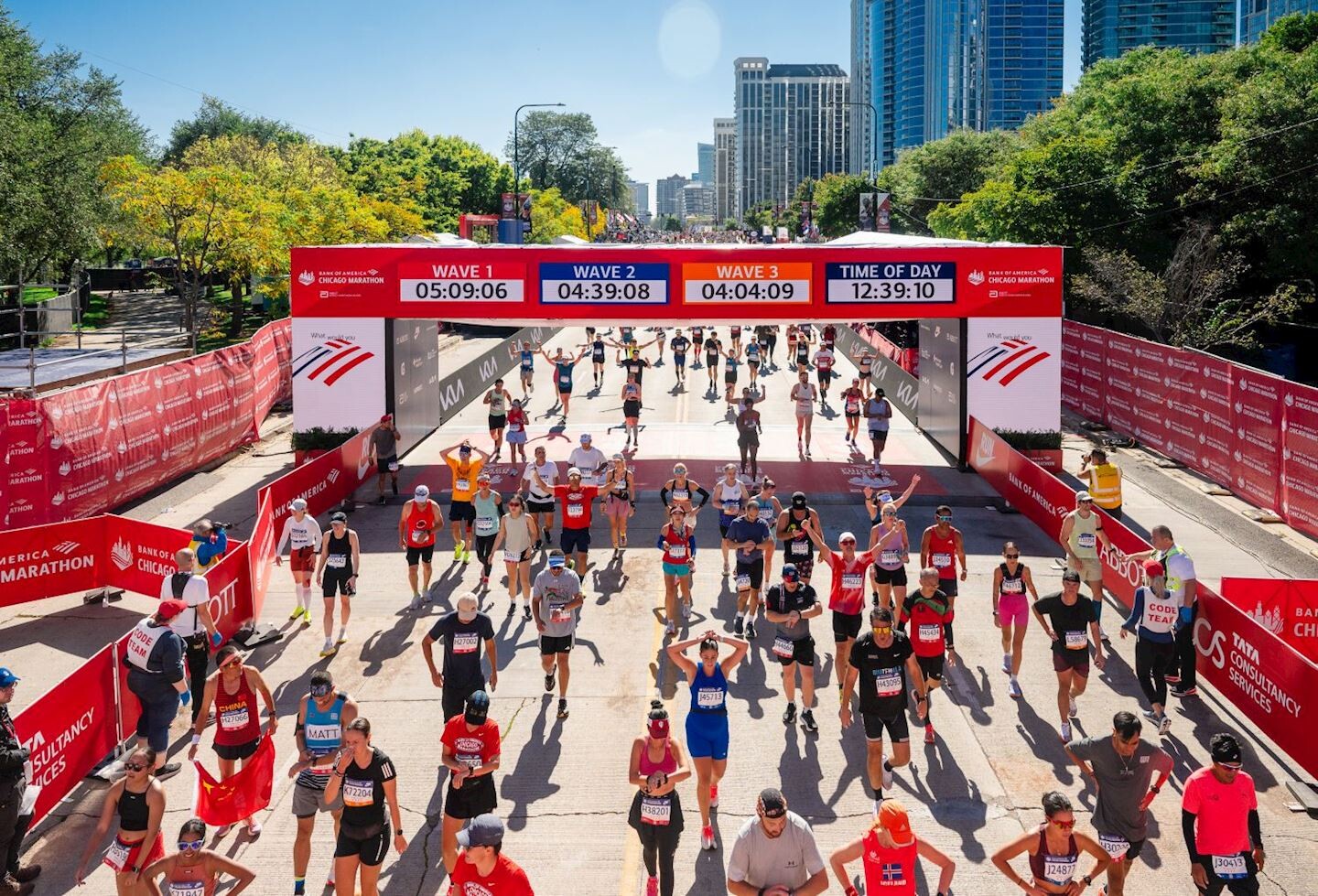
The men’s Chicago record is 2:00:35, set by the late Kelvin Kiptum in 2023. That performance stood as the world record until Sawe’s extraordinary 1:59:30 in London in 2026.
Then there is Berlin, perhaps the most celebrated world-record factory in marathon history. Kenya’s Eliud Kipchoge holds the men’s course record at 2:01:09, while Ethiopia’s Tigist Assefa owns the women’s mark at 2:11:53. Berlin has hosted numerous men’s world records over the years, underlining its reputation as one of the fastest marathon courses on the planet.
The elevation figures help explain why the courses produce such different performances. Berlin has relatively modest elevation changes, creating a fast and rhythm-friendly route. Other Majors present considerably greater challenges.
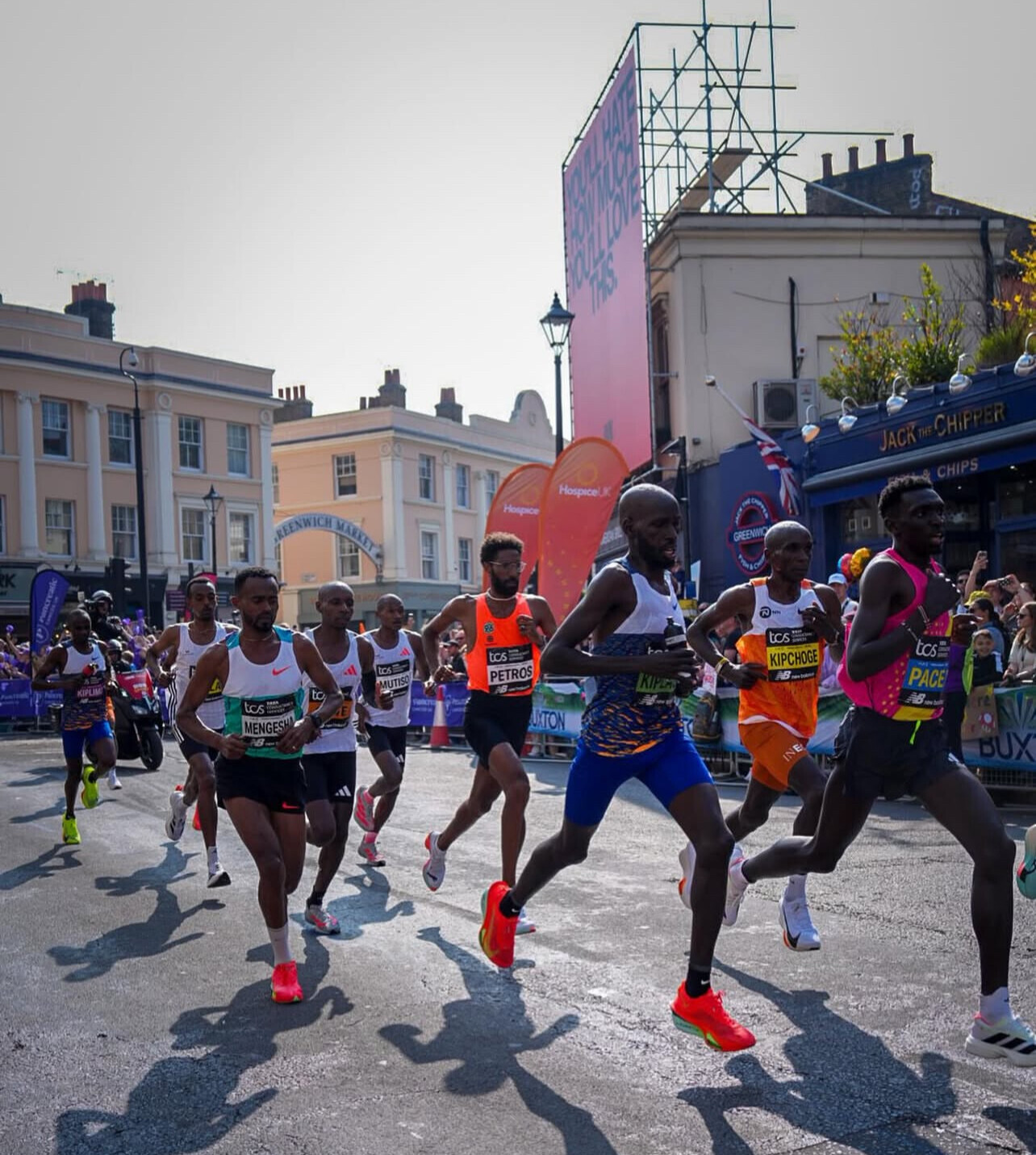
Boston, for example, climbs 248 metres but descends 388 metres. Its famous point-to-point layout and net downhill profile make it exceptionally fast in places, but its course does not qualify for official world-record purposes because the elevation drop exceeds the limit permitted by World Athletics.
New York City is a completely different proposition. With approximately 246 metres of climbing, it is among the toughest Major Marathon courses, demanding strength and tactical patience rather than simply raw speed. Its records therefore carry a different kind of significance, earned on a course that tests athletes through bridges, climbs and a demanding closing stretch into Central Park.
Tokyo offers another fast but distinctive challenge, with Benson Kipruto holding the men’s course record in 2:02:16. Brigid Kosgei’s 2:14:29 remains the women’s course record, illustrating the exceptional standard required to rewrite the record books in the Japanese capital.
And then there is Sydney, the newest addition to the Abbott World Marathon Majors family. Its course has already produced outstanding performances, with Addisu Gobena’s 2:04:42 listed as the men’s course record and Sifan Hassan’s 2:18:22 as the women’s mark in the graphic. With its demanding elevation profile, those performances underline just how quickly the Sydney course has established itself among the world’s major marathon stages.
What makes these records fascinating is that they cannot be judged by the clock alone. A 2:01 on a fast, record-legal course is a completely different achievement from a 2:04 on a demanding route, while Boston’s unique course rules mean that even exceptionally fast performances cannot enter the official world-record conversation.
For decades, marathon greatness was largely measured by who could run fastest. Today, the Majors show that where the time is run can be almost as important as the time itself. From Sawe’s historic sub-two-hour breakthrough in London to Chepngetich’s barrier-breaking run in Chicago and Berlin’s remarkable record history, these performances represent different chapters of marathon history—and the next chapter could be written at any Major.
by Erick Cheruiyot for My Best Runs.
Login to leave a comment
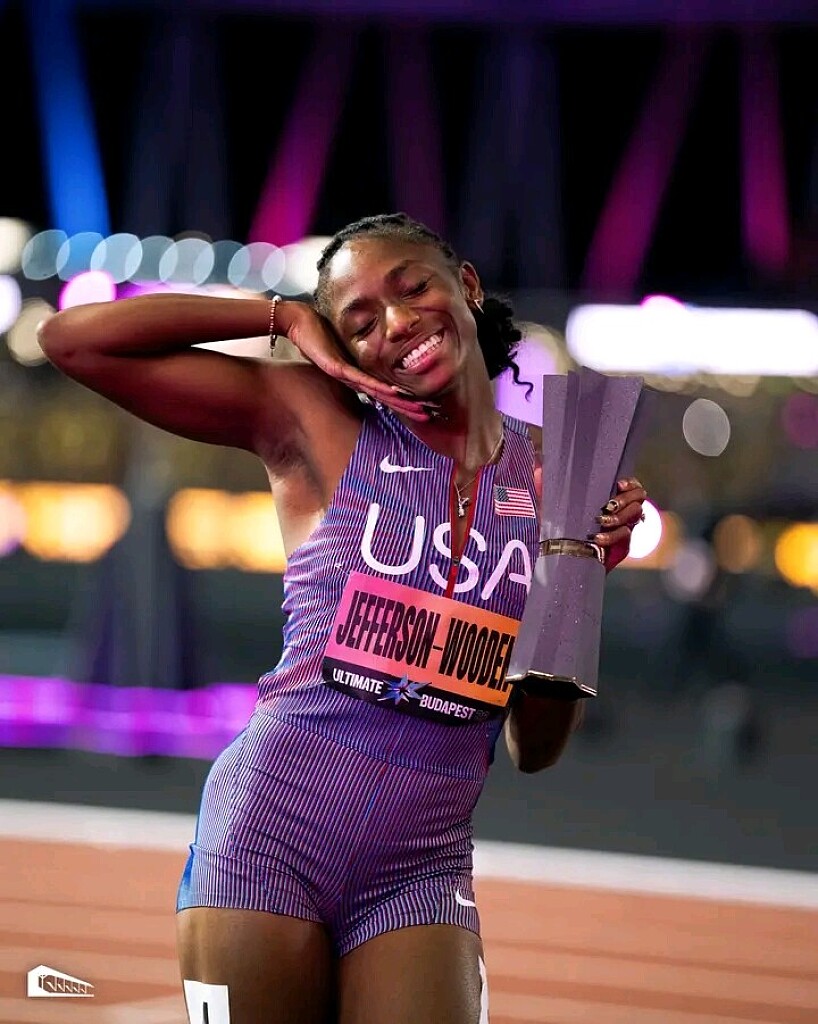
Melissa Jefferson-Wooden Blazes To 10.62 World Lead And Ultimate Championship Glory
Melissa Jefferson-Wooden delivered a sensational performance in Budapest, storming to victory in the women’s 100m at the inaugural World Athletics Ultimate Championship in a breathtaking 10.62 seconds.
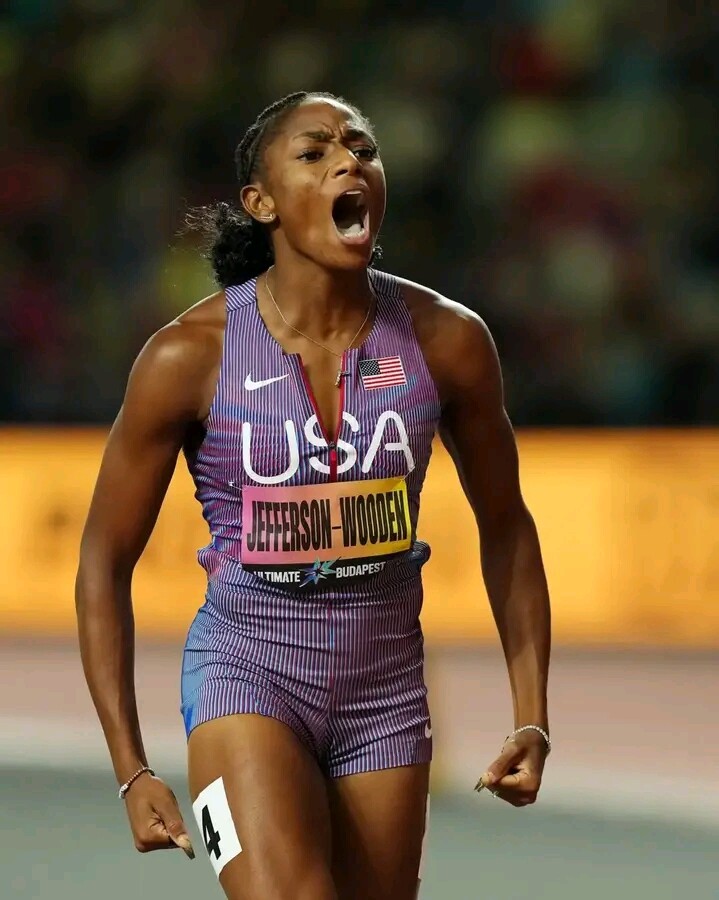
The American produced a superb display of acceleration and composure to claim the World Ultimate Championship title while recording the fastest women’s 100m time in the world this year. Her 10.62 mark underlined her exceptional form and placed her firmly at the top of the global sprinting hierarchy.
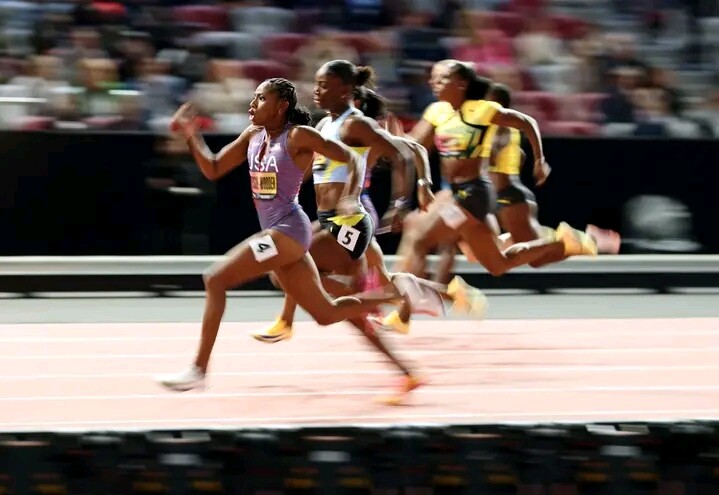
Jefferson-Wooden controlled the race through the decisive stages and maintained her form all the way to the finish to secure a statement victory against a field packed with championship pedigree. She crossed the line ahead of Olympic champion Julien Alfred, who clocked 10.74 seconds with a -0.2 m/s wind, while Sha’Carri Richardson took third in 10.76.
Women’s 100m Final
1. Melissa Jefferson-Wooden — 10.62
2. Julien Alfred — 10.74 (-0.2 m/s)
3. Sha’Carri Richardson — 10.76
The victory was especially significant given the quality of the opposition. Jefferson-Wooden held her nerve against Alfred and Richardson, two of the most accomplished sprinters of the current generation, to produce the fastest performance in the world this year when it mattered most.
Alfred once again demonstrated her consistency at the highest level by taking silver, while Richardson completed an all-star podium in a race that brought together three of the biggest names in women’s sprinting.
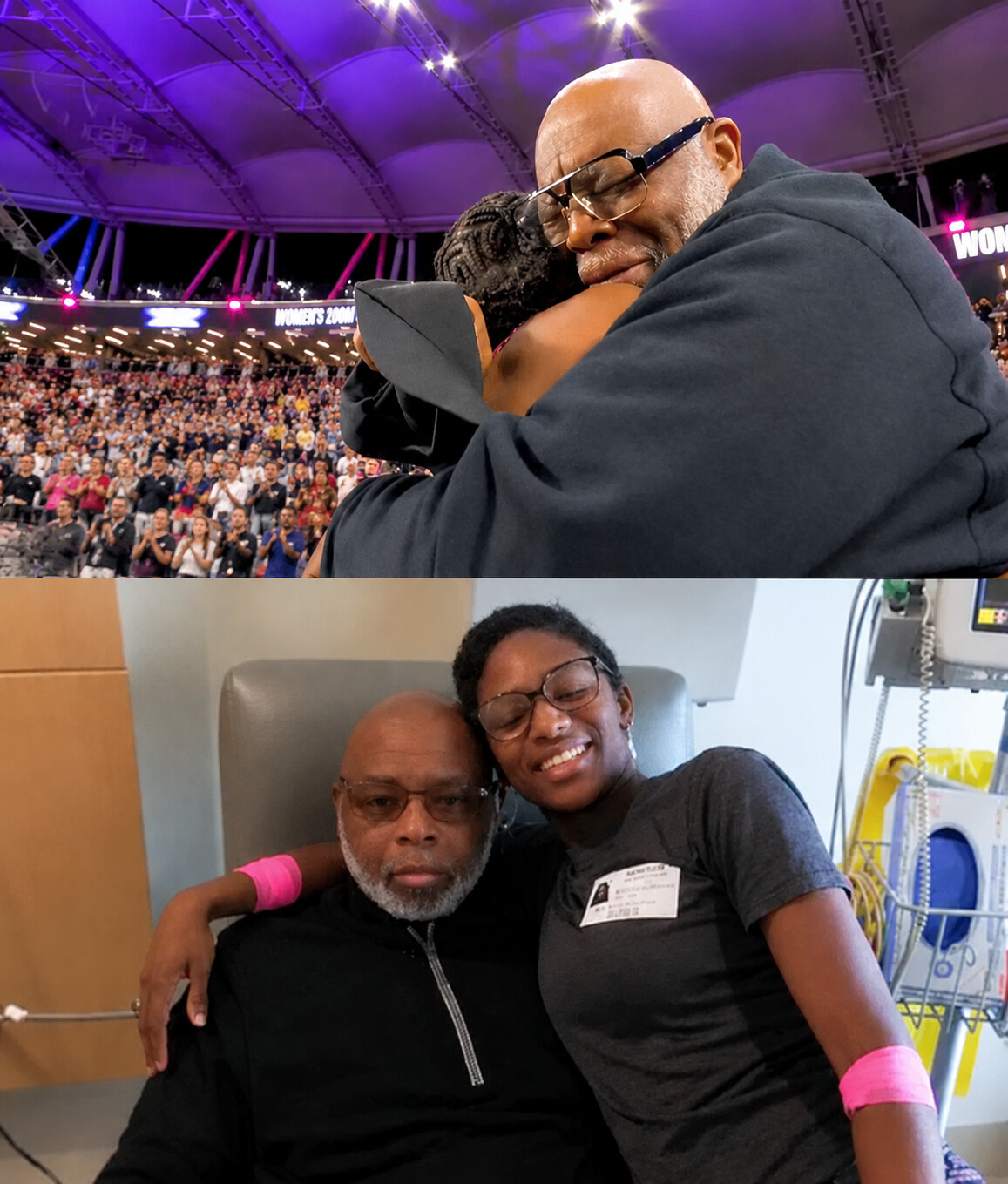
But beyond the time, the title and the celebration, one of the most touching moments came after the race when Jefferson-Wooden embraced her father, Melvin, in an emotional celebration.
Their moment carried a deeply personal meaning. When Melissa was just 17 years old, she donated her stem cells to help her father undergo a bone marrow transplant after he was diagnosed with myelodysplastic syndrome. Years later, the two shared an unforgettable embrace in Budapest after she had become the World Ultimate Champion.
For Jefferson-Wooden, however, the evening was about far more than a medal. It was the culmination of an extraordinary journey, now highlighted by a world-leading 10.62 seconds on one of the biggest stages in athletics.
With the Ultimate Championship title secured and her father by her side, Jefferson-Wooden leaves Budapest with more than being an ultimate champion. She leaves with momentum, confidence and a powerful statement of intent — turning a high-profile showdown into one of the defining sprint performances of her season.
by Erick Cheruiyot for My Best Runs.
Login to leave a comment
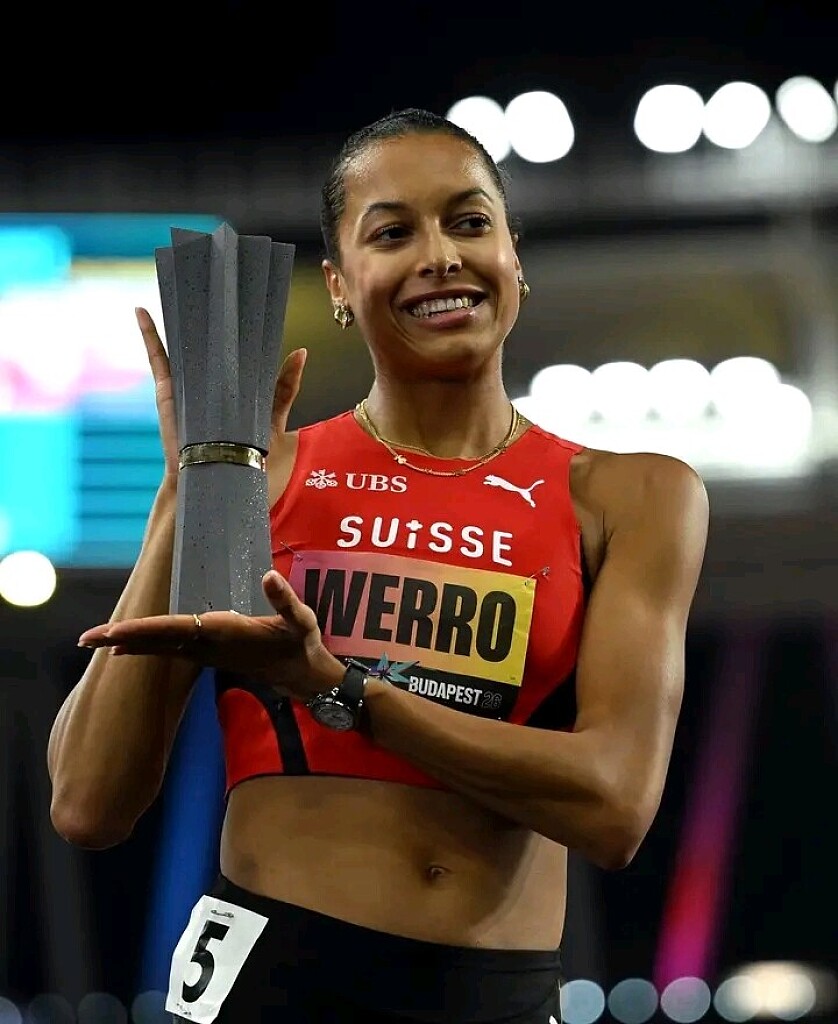
Audrey Werro Rules The 800m As Swiss Star Claims Ultimate Championships Crown
Audrey Werro has added another major title to her extraordinary season, storming to victory in the women’s 800m at the inaugural World Athletics Ultimate Championships in Budapest.
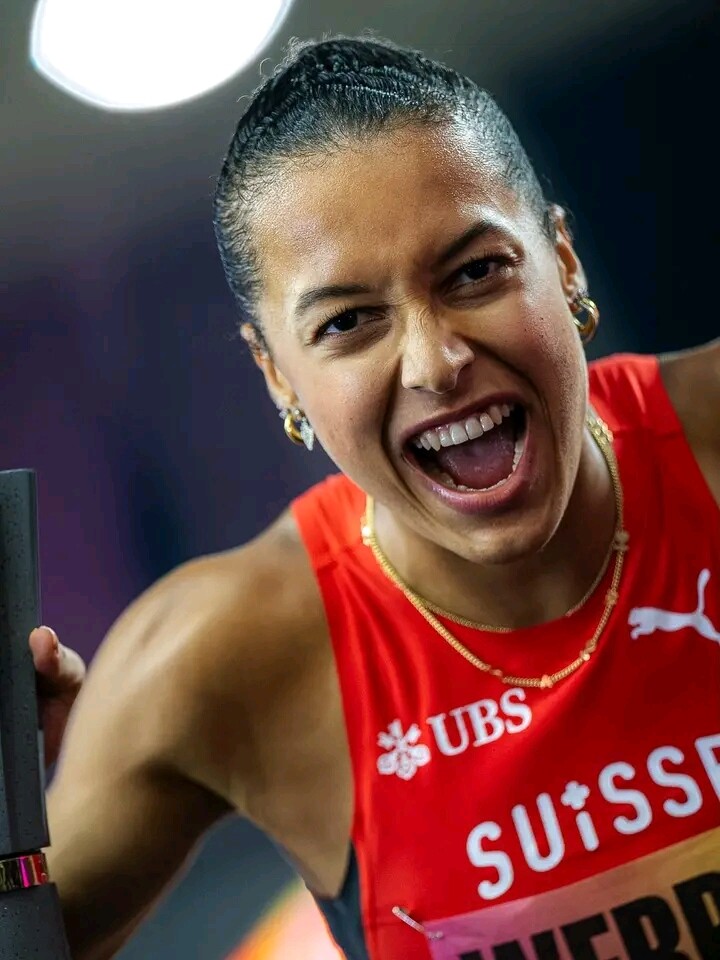
The Swiss star delivered a commanding performance, taking control from the opening gun and refusing to surrender the lead as she powered through an absorbing battle against two of the biggest names in the event.
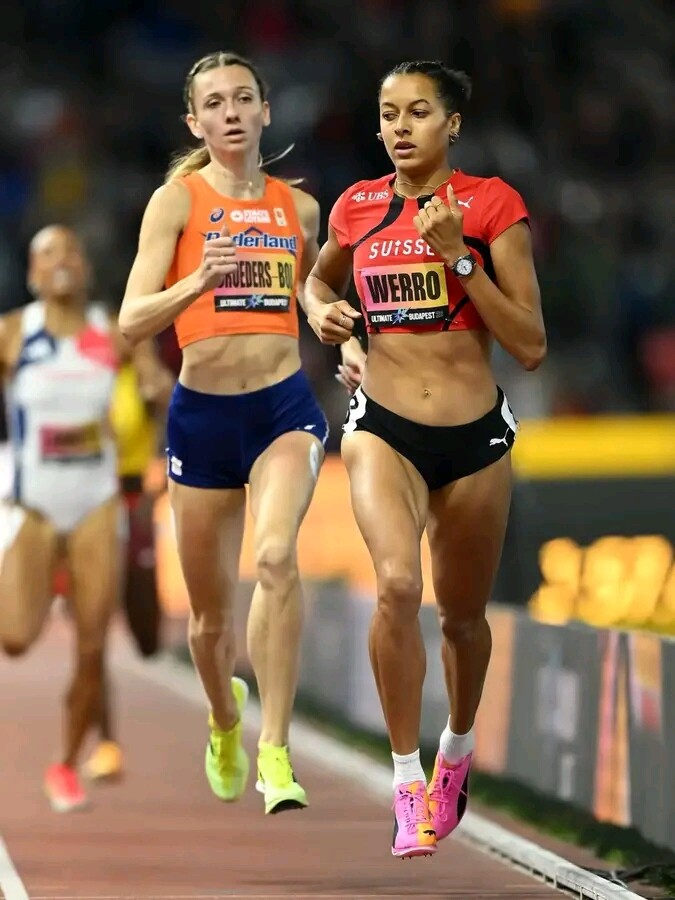
Werro stopped the clock at 1:55.88 to become the Ultimate Championships 800m champion, producing another statement performance on one of the sport’s newest and most prestigious stages.
Behind her, Great Britain’s Keely Hodgkinson fought her way to second in 1:56.26, while the Netherlands’ Femke Broeders-Bol completed the podium in 1:56.74.
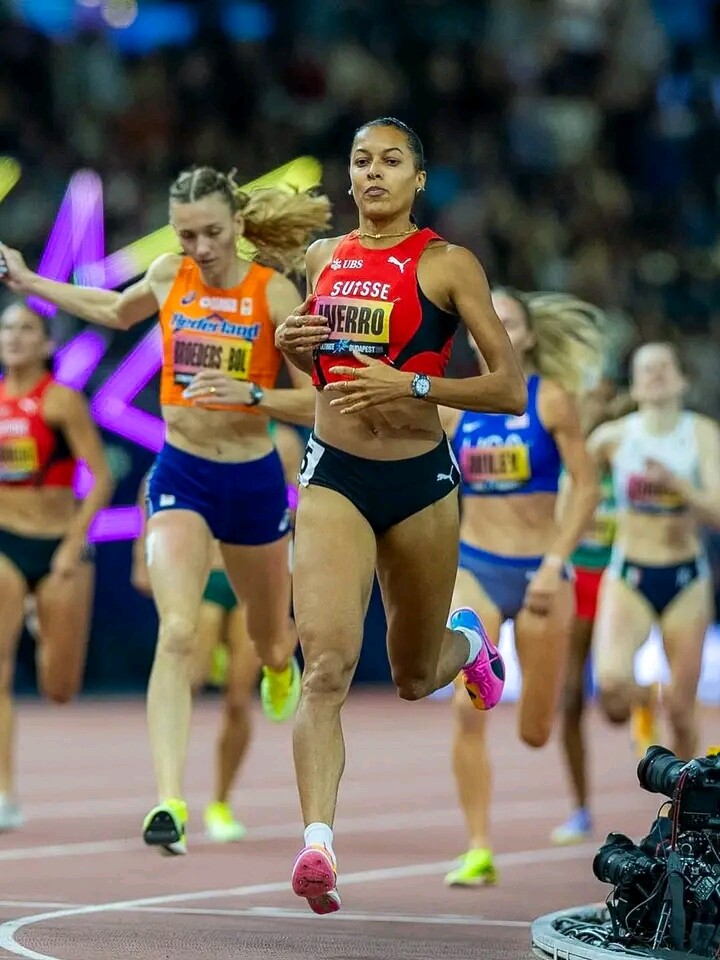
The result once again brought together the same formidable trio that featured on the podium at the European Championships, but Werro again proved to be the athlete who could rise above the challenge when it mattered most.
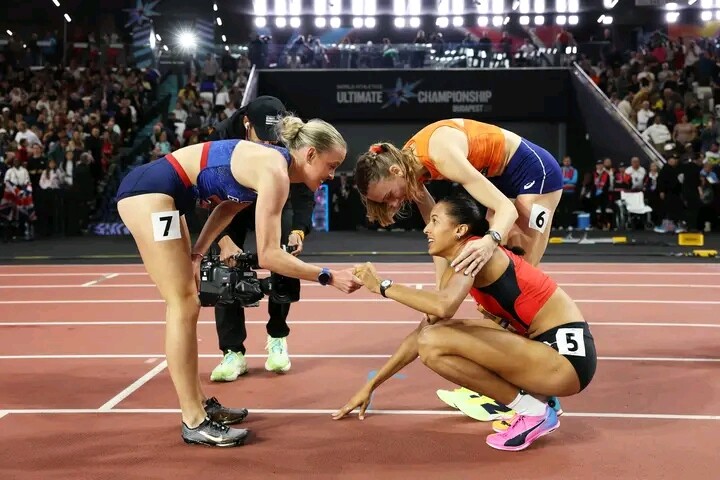
Her Budapest triumph is the latest chapter in a season that has already included records, a successful Diamond League Trophy defence and European Championship gold. Now, she can add the Ultimate Championships crown to a growing list of accomplishments.
Werro’s consistency has been particularly impressive in an 800m event packed with elite talent. Rather than simply relying on a fast finish, the Swiss athlete showed her authority by taking the initiative from the beginning and maintaining enough strength and composure to hold off Hodgkinson and Broeders-Bol all the way to the line.
The victory also underlined the remarkable depth of the women’s 800m, with three athletes separated by less than a second at the finish. Hodgkinson’s 1:56.26 and Broeders-Bol’s 1:56.74 showed just how fiercely contested the race was, but Werro’s decision to dictate the pace ultimately gave her the decisive advantage.
For Werro, this was more than another medal. It was another opportunity to demonstrate that her rise is no passing moment. On a stage featuring established champions and elite rivals, she once again produced the performance required to claim the biggest prize.
For Hodgkinson, the silver medal adds another major podium finish, while Broeders-Bol once again demonstrated her ability to compete with the very best over two laps.
But the spotlight in Budapest belonged unmistakably to Werro.
With another championship crown secured, the Swiss star has strengthened her claim as the athlete setting the standard in women’s 800m running. This is Audrey Werro’s era — and the rest of the field is chasing.
by Erick Cheruiyot for My Best Runs.
Login to leave a comment
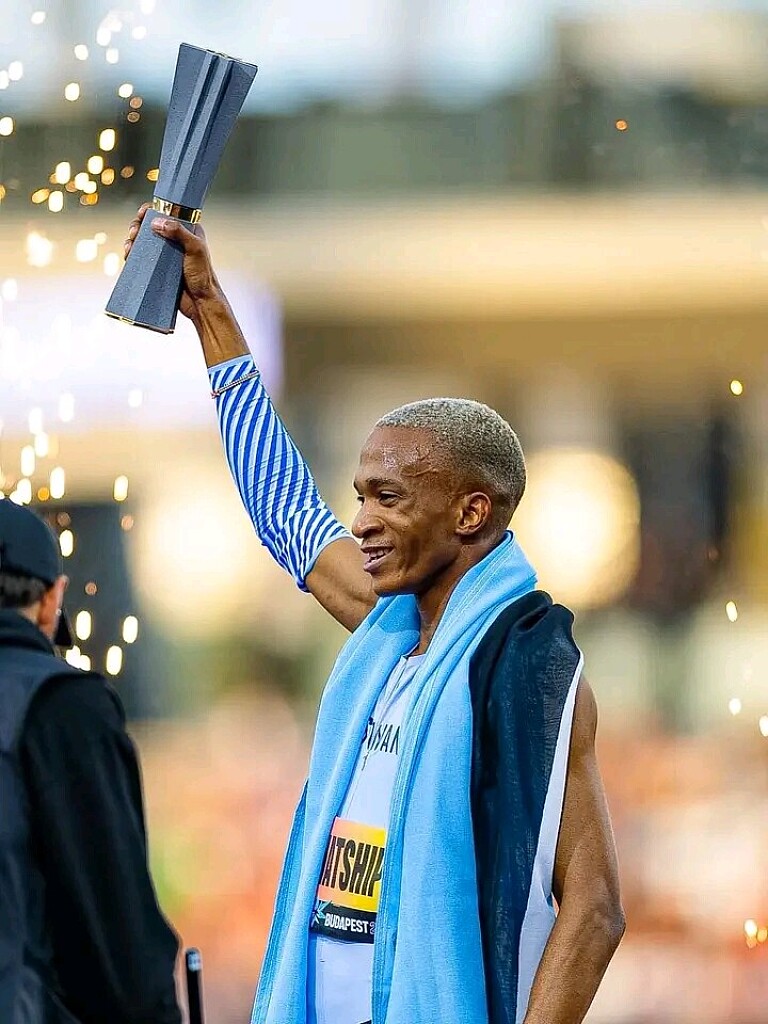
Collen Kebinatshipi Does It Again! 43.39 Makes Botswana Star Fifth All-Time.
Busang Collen Kebinatshipi has delivered another sensational performance, storming to victory in the men’s 400m at the inaugural World Athletics Ultimate Championship in Budapest.
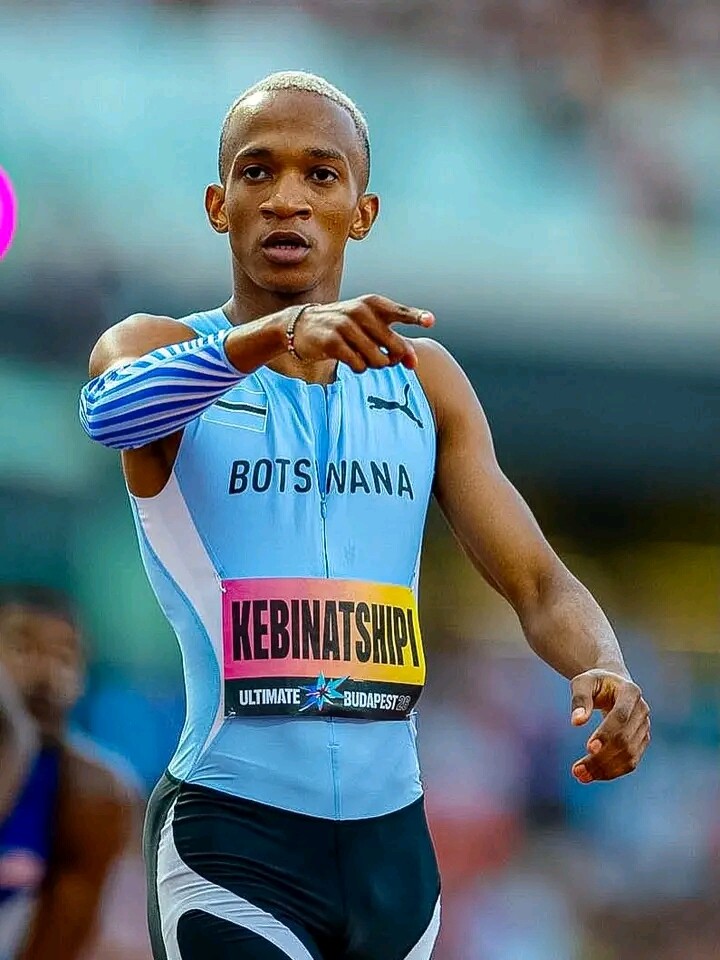
The reigning world champion stopped the clock at an astonishing 43.39 seconds, smashing his own Botswana national record and moving to fifth on the world all-time list.
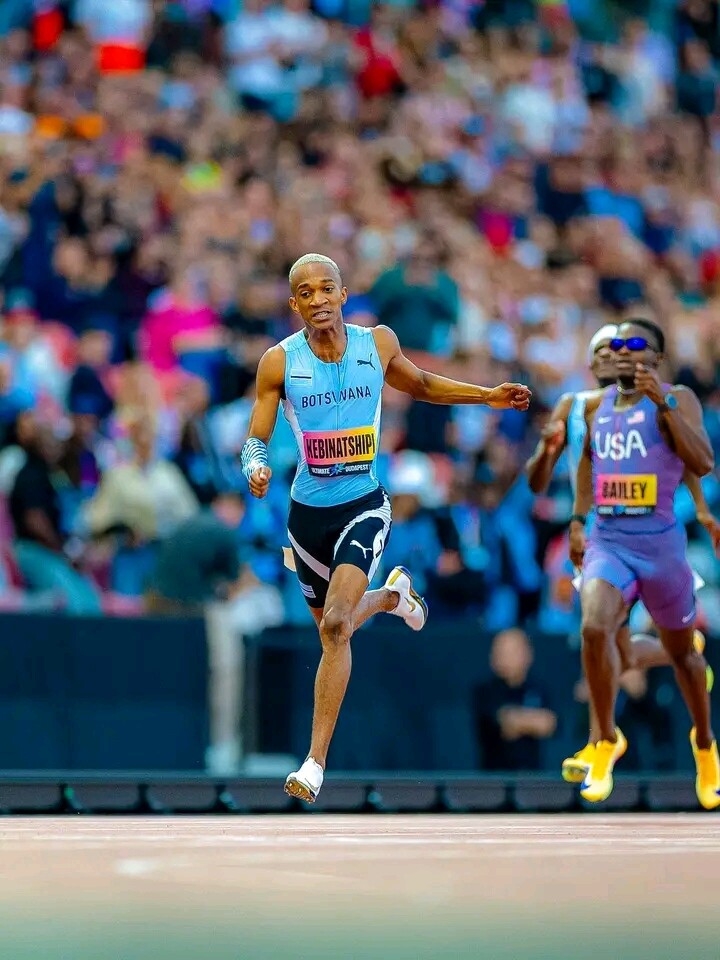
Kebinatshipi produced a commanding finish to pull away from his rivals and secure the Ultimate Championship title. American star Rai Benjamin finished second in 44.15, while Jereem Richards of Trinidad and Tobago completed the podium in 44.23.
Men’s 400m
1. Busang Collen Kebinatshipi — 43.39 NR
2. Rai Benjamin — 44.15
3. Jereem Richards — 44.23
The performance is even more remarkable considering that Kebinatshipi had already rewritten the Botswana record just one week ago in Brussels, where he ran 43.40. In Budapest, he lowered that mark by another 0.01 seconds to establish a new national record of 43.39.
That improvement has also propelled the 22-year-old into rare territory. His latest time now ranks him fifth fastest in history over 400m, placing him among an extraordinary group of athletes who have broken the 43.40 barrier.
Kebinatshipi's victory also caps an extraordinary season for the Botswana star. After establishing himself as a global champion, he has continued to demonstrate that he belongs among the very best one-lap runners in the world.
And there is a major reward for his historic night in Budapest: Kebinatshipi walks away as the Ultimate Champion and $150,000 richer.
From another national record to a place among the five fastest 400m runners ever, Kebinatshipi has turned an already remarkable season into something truly special.
Botswana has its latest sprinting superstar — and Kebinatshipi is showing that his ceiling may be even higher than anyone imagined.
by Erick Cheruiyot for My Best Runs.
Login to leave a comment
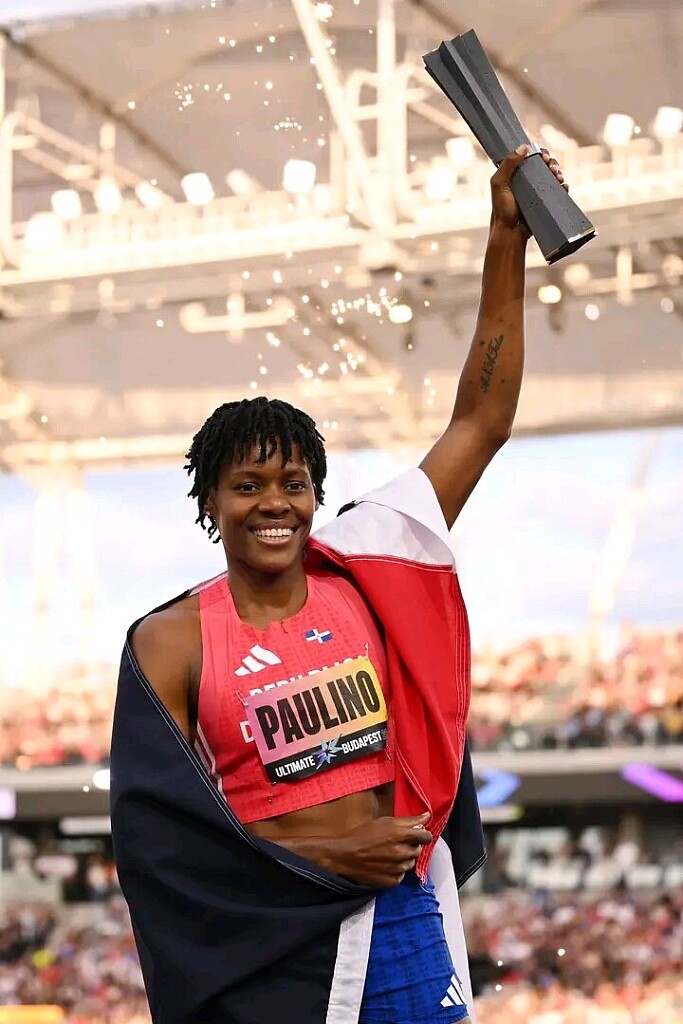
Marileidy Paulino Strikes Again To Rule The One-Lap Showdown In Budapest
Marileidy Paulino once again proved why she is the undisputed queen of the one-lap event, powering to victory in the women’s 400m at the inaugural World Athletics Ultimate Championship in Budapest.
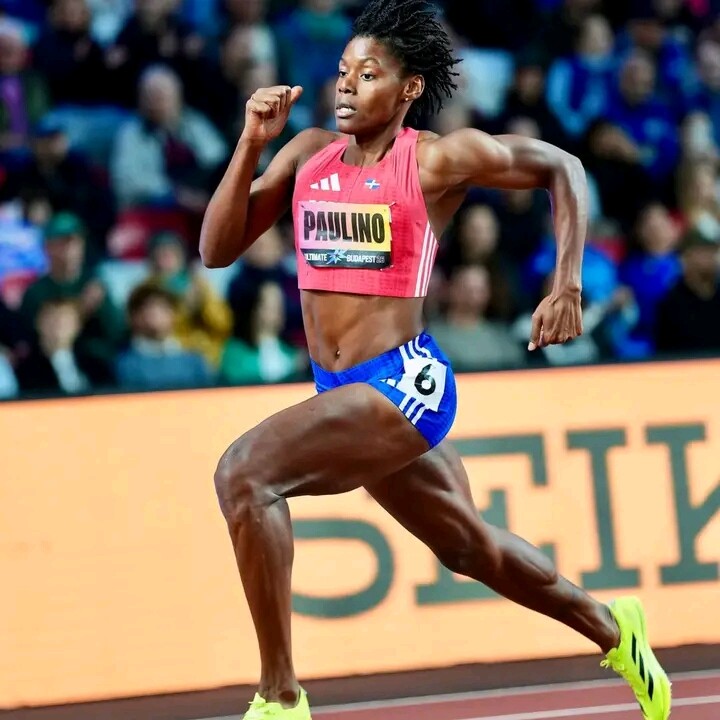
The Dominican Republic superstar produced a sensational 49.07 seconds to claim gold, pulling decisively away in the final straight and holding off a fiercely competitive field to extend her remarkable unbeaten run.
Paulino delivered her trademark combination of controlled speed and devastating finishing strength. She remained firmly in contention through the opening stages before unleashing her decisive move down the home straight, where she quickly opened a gap on her closest challengers.
Norway’s Henriette Jæger mounted a strong challenge but could not match Paulino’s finishing speed, crossing the line second in an impressive 49.28. Jamaica’s Nickisha Pryce completed the podium after clocking 49.56, ensuring that three of the world’s leading 400m talents occupied the medals.
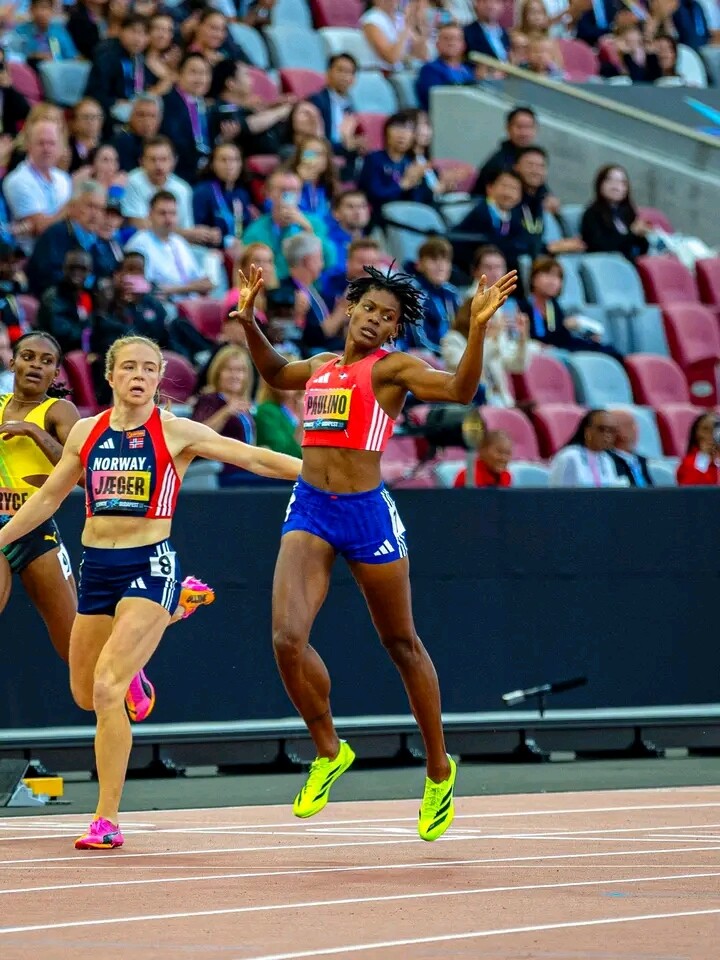
The result once again underlined Paulino’s extraordinary consistency at the highest level. She entered Budapest as the world leader after running 48.48 in Paris in June, a performance that also set a Diamond League record. She subsequently remained unbeaten throughout her Diamond League campaign, closing the circuit with a meeting-record 48.64 in Brussels.
Budapest has also become a special venue in Paulino’s career. Three years ago, at the same National Athletics Centre, she captured her first individual world title, marking the beginning of another dominant chapter in her career. She later added Olympic gold in Paris in 2024, further establishing herself among the defining 400m athletes of her generation.
The inaugural World Athletics Ultimate Championship has brought together the sport’s biggest stars in a new winner-takes-the-spotlight format, with Olympic and world champions, Diamond League winners and leading performers competing for ultimate honours.
For Paulino, the occasion once again ended with Ultimate Crown on her arms.
With 49.07 seconds, she did more than win another major 400m title. She delivered another statement of authority, powering through the final straight with the confidence and speed that have made her one of the most dominant figures in modern women’s athletics.
Marileidy Paulino remains unbeaten, remains relentless and, once again, remains the queen of the one lap.
by Erick Cheruiyot for My Best Runs.
Login to leave a comment
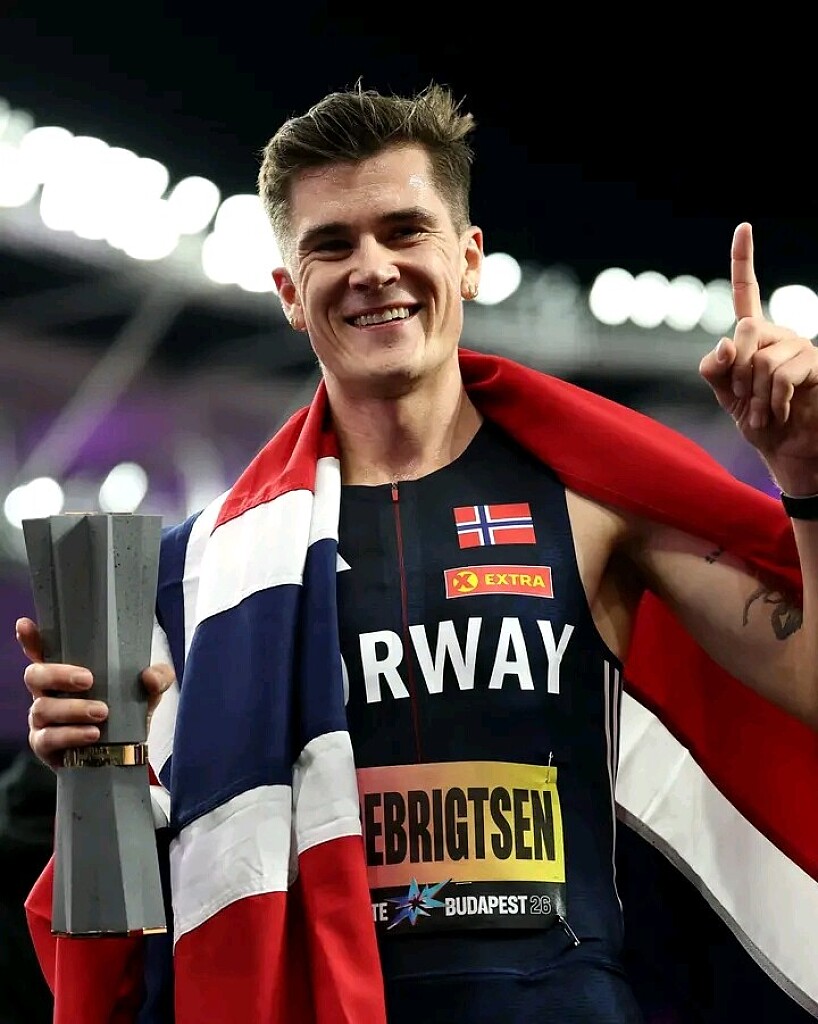
Jakob Ingebrigtsen Withdraws From Budapest 1500m After Stunning 5000m Victory: “Fitness Cannot Be Faked”
Jakob Ingebrigtsen has made a major decision regarding the remainder of his World Athletics Ultimate Championship campaign, confirming that he will withdraw from the men’s 1500m in Budapest despite producing a sensational performance to win the 5,000m title.
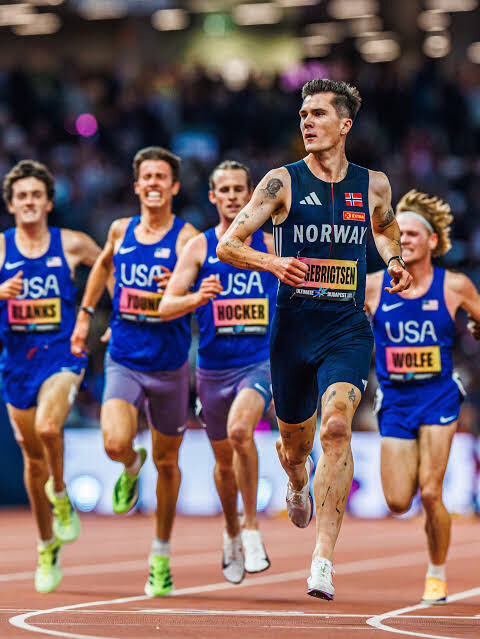
The Norwegian superstar stormed to victory in the inaugural Ultimate Championship 5,000m on Friday night, clocking a season-best 12:59.24 and delivering a devastating finishing kick to defeat Olympic 5,000m champion Cole Hocker and American Parker Wolfe.
Ingebrigtsen’s final 100 metres was arguably the defining moment of the race. The Olympic champion produced a remarkable 12.60-second closing 100m, powering away from the field to secure the $150,000 winner’s prize and underline just how far his fitness has progressed since returning from Achilles surgery.
The victory was particularly significant after what has been an extremely difficult period for the 25-year-old. Earlier in the season, Ingebrigtsen faced serious uncertainty over whether he would even be able to compete at the highest level again. His return has gradually gathered momentum, and his performance in Budapest offered perhaps the clearest indication yet that the Norwegian is rediscovering his formidable racing ability.
But rather than risk pushing his recovering body further, Ingebrigtsen has now opted to step away from the 1500m.
The decision means the highly anticipated showdown with British rival Josh Kerr will not take place in Budapest after all. The two stars had been expected to renew one of the biggest rivalries in modern middle-distance running in the 1500m final.

Instead, Ingebrigtsen is looking beyond the immediate opportunity and towards the bigger picture.
“I’m thinking about 2027… Fitness cannot be faked,” the Norwegian said, signalling that protecting his long-term condition has become more important than chasing another major victory only days after his return to peak-level competition.
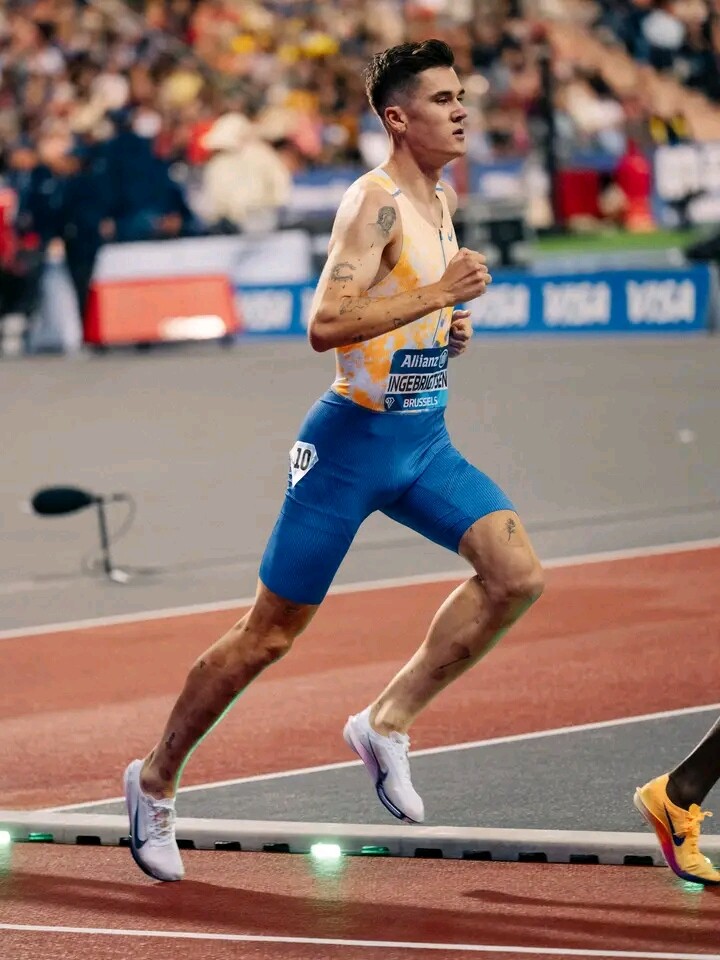
The decision comes just one week after an emotionally charged Diamond League Final in Brussels, where Ingebrigtsen finished fourth in the 1500m behind Australia’s Cameron Myers, Kenya’s Phanuel Kipkosgei Koech and American Ethan Strand.
After that race, Ingebrigtsen delivered a fiery assessment of his rivals and questioned the tactics surrounding the pacemaking, particularly involving Hocker. He later acknowledged that there had been “a little too much adrenaline and emotion” when microphones were placed in front of him immediately after the race.
Yet his latest decision shows that beneath the emotion and competitive intensity lies a longer-term strategy.
Ingebrigtsen has already demonstrated that he can compete at an elite level again. His 12:59.24 in Budapest was not simply a victory — it was a statement that the Norwegian remains capable of producing a world-class finish even after months of injury rehabilitation.
Now, however, he is choosing not to gamble with that progress.
For a runner who has spent much of the year fighting his way back from injury, another 1500m race could have offered enormous rewards but also carried unnecessary risk. By withdrawing, Ingebrigtsen is effectively prioritising longevity over one more opportunity for immediate glory.
His message is clear: the comeback is underway, but it will not be rushed.
The 5,000m victory has given Ingebrigtsen confidence, momentum and perhaps, most importantly, proof that his body can once again handle elite competition.
Now comes the harder part — knowing when to stop.
With 2027 already firmly in his sights, the Norwegian has chosen recovery over risk. And after everything he has endured, that could ultimately prove to be one of the most important decisions of his comeback.
Jakob Ingebrigtsen is not walking away from the sport. He is protecting his future in it.
by Erick Cheruiyot for My Best Runs.
Login to leave a comment
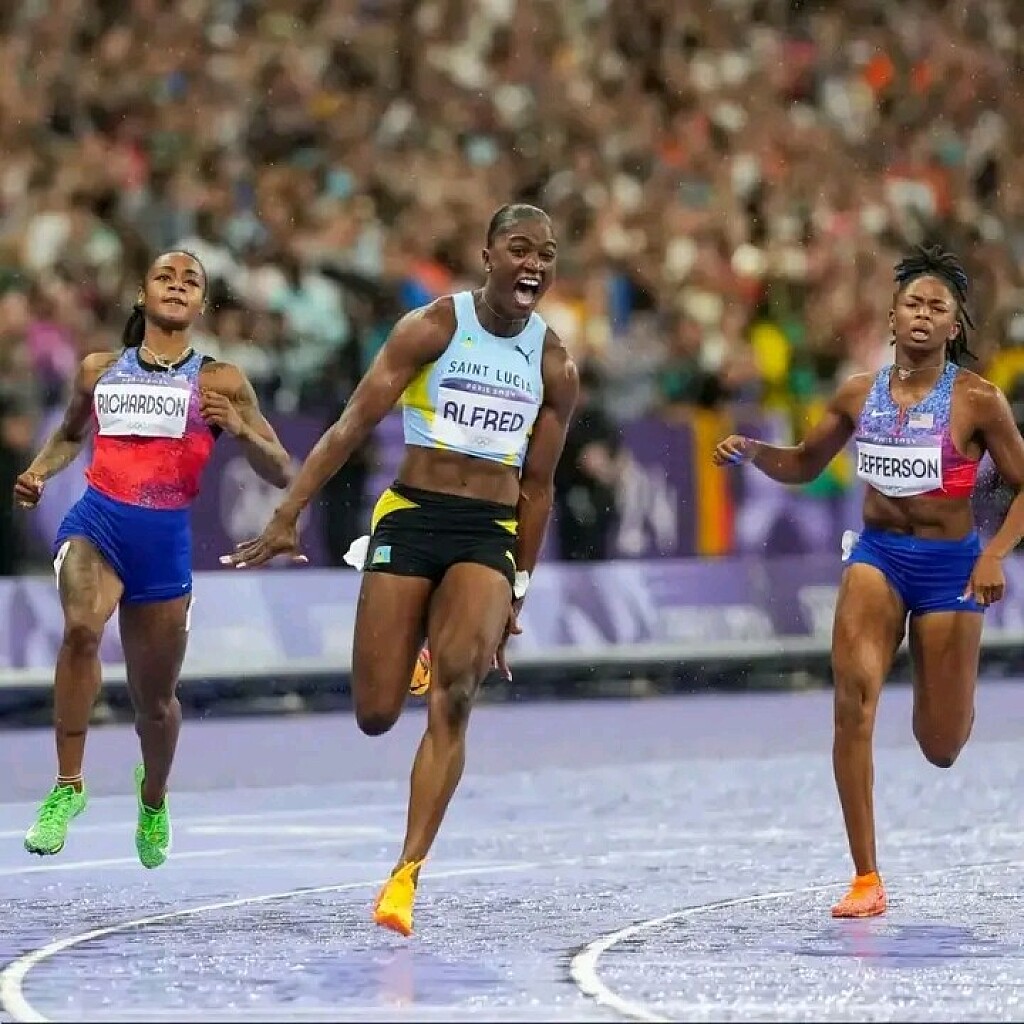
Three Champions, One Crown: Budapest Braces For A Women’s 100m Battle For Supremacy
The women’s 100m at the World Athletics Ultimate Championship in Budapest is shaping up to be one of the most compelling sprint showdowns of the season, with three of the world’s biggest names set to collide in a race where reputation, speed and championship pedigree will all be put to the ultimate test.
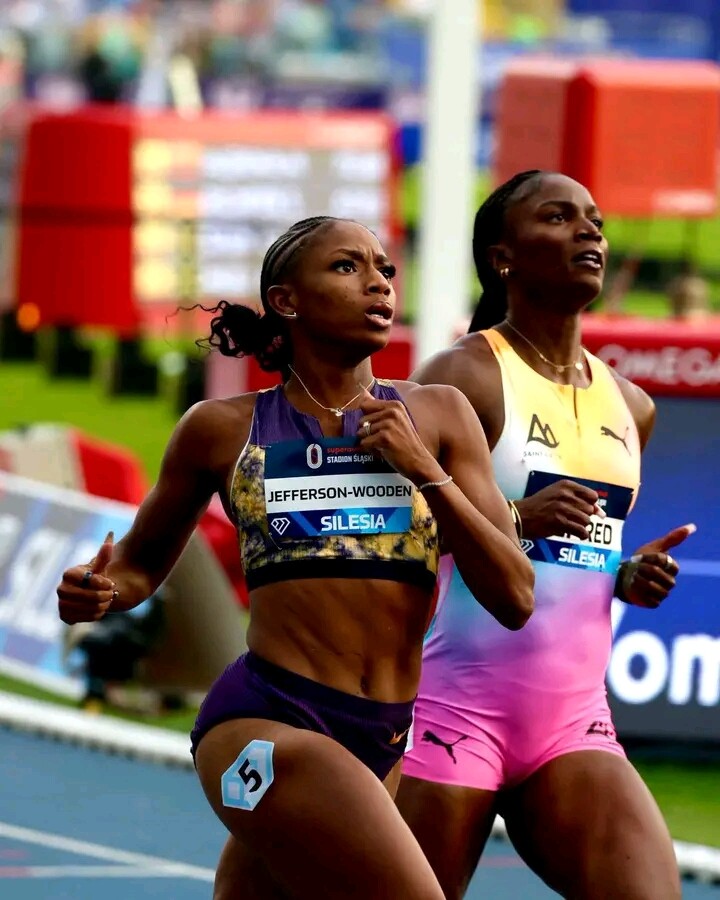
Leading the charge is Saint Lucia’s Julien Alfred, the reigning Olympic champion who established herself as the fastest woman on the biggest stage at the Paris 2024 Games. Alfred’s rise to the summit of global sprinting has been remarkable, and she arrives in Budapest carrying the confidence and prestige that come with an Olympic title.
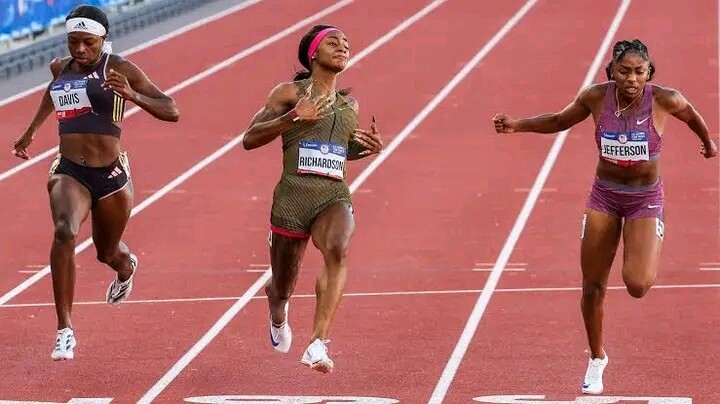
Standing alongside her will be American sprint star Melissa Jefferson-Wooden, the reigning world champion and one of the most formidable forces in the modern 100m. Her championship credentials have already placed her among the elite, and Budapest presents another opportunity to underline her status against the very best in the world.
Then there is Sha’Carri Richardson, another American powerhouse whose explosive speed and major-championship experience make her impossible to overlook. A former world champion, Richardson has repeatedly demonstrated her ability to thrive under the brightest lights, bringing both raw pace and an unmistakable competitive edge to the starting line.
The presence of three champions transforms the Budapest contest into far more than another 100m race. It is a meeting of athletes who have already conquered the highest levels of the sport and now have another prize to chase: the title of Ultimate champion.
Women’s 100m — Start List
1. Melissa Jefferson-Wooden — United States — 10.70
2. Julien Alfred — Saint Lucia — 10.70
3. Sha’Carri Richardson — United States — 10.77
4. Tina Clayton — Jamaica — 10.85
5. Sade McCreath — Canada — 10.86
6. Jonielle Smith — Jamaica — 10.89
7. Lavanya Williams — Jamaica — 10.90
8. Cambrea Sturgis — United States — 10.92
9. Zoe Hobbs — New Zealand — 10.93
10. Brianna Lyston — Jamaica — 10.94
11. Audrey Leduc — Canada — 10.97
12. Amy Hunt — Great Britain — 10.97
13. Jodean Williams — Jamaica — 10.97
14. Tamari Davis — United States — 10.99
15. Patrizia Van Der Weken — Luxembourg — 11.05
16. Zaynab Dosso — Italy — 11.07
17. Boglárka Takács — Hungary — 11.13
With the world’s attention fixed on the start line, every fraction of a second could prove decisive. Alfred will seek to reaffirm her Olympic supremacy, Jefferson-Wooden will look to demonstrate that her world title was no coincidence, while Richardson will be determined to remind the field of the speed that has made her one of the most recognizable names in global sprinting.
For the spectators, the attraction is obvious. Three champions, three different journeys to the top and just 100 metres separating glory from disappointment.
Budapest is therefore set for a sprinting spectacle in which there will be no room for hesitation. When the gun fires, Olympic glory, world championship pedigree and personal ambition will converge on one track — and only one woman will leave as the Ultimate champion.
by Erick Cheruiyot for My Best Runs.
Login to leave a comment
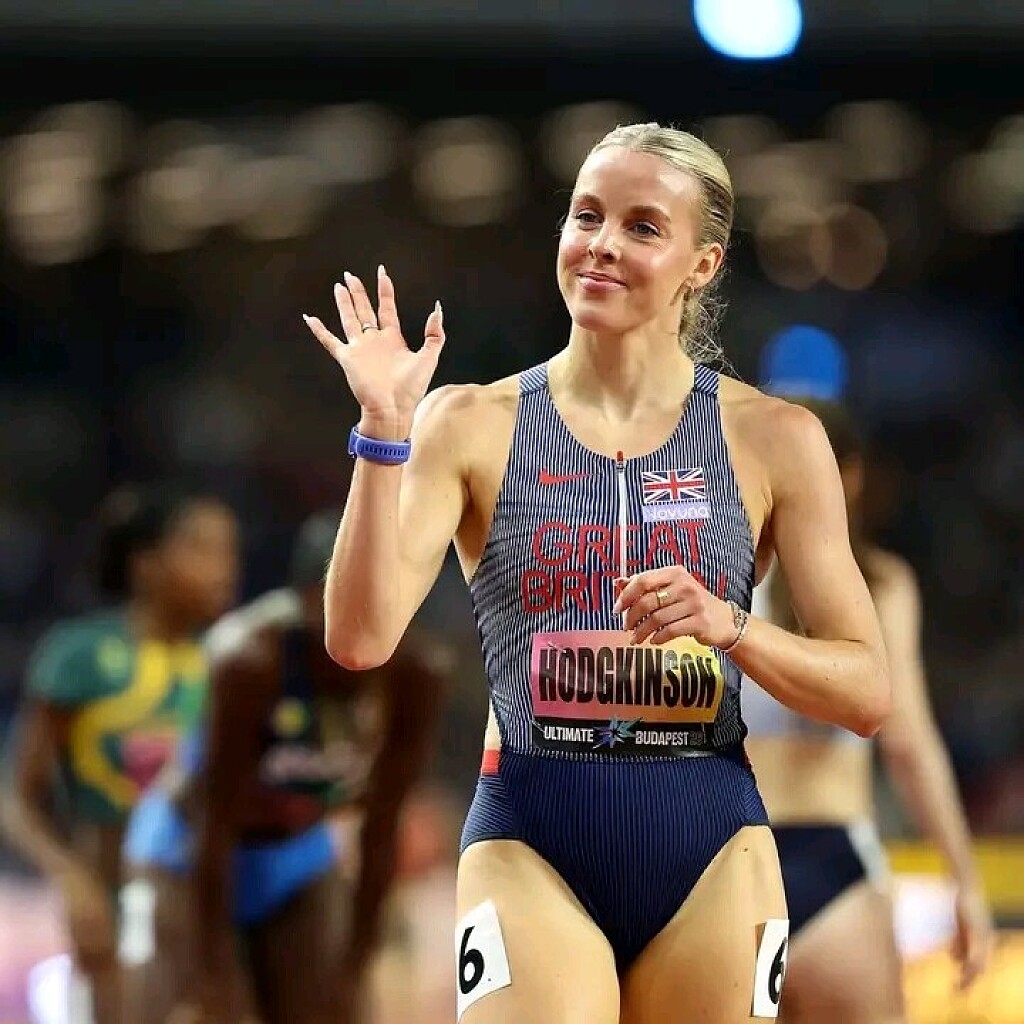
Keely Hodgkinson Strikes First In Budapest As Olympic Champion Leads 800m Finalists
Keely Hodgkinson made a powerful return to the track at the World Athletics Ultimate Championship in Budapest on September 11, storming to victory in the opening women’s 800m semifinal in 1:57.57 to record the fastest time across both semifinals and immediately establish herself as the athlete to beat in the final.
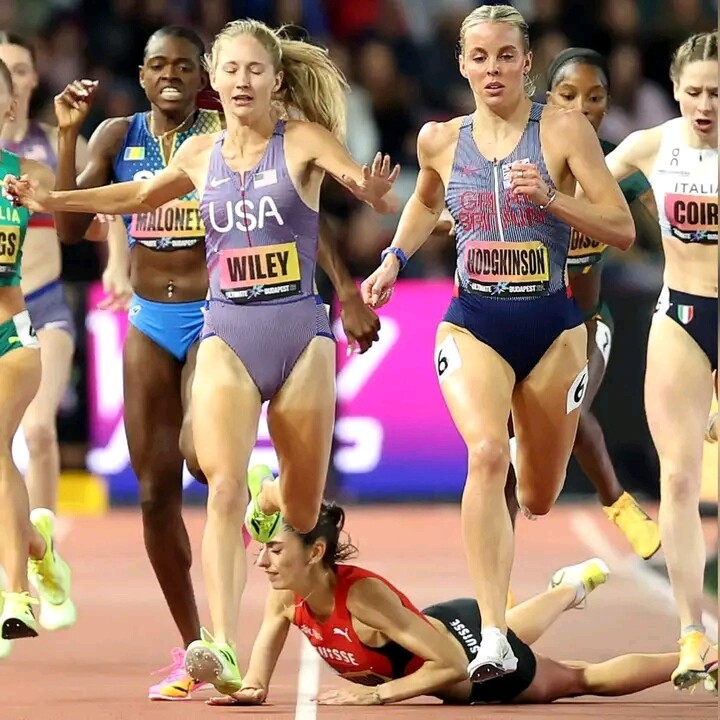
The British Olympic champion looked composed from the opening metres, taking control of the race before gradually increasing the pressure as the finish approached. Hodgkinson produced a decisive surge over the final 200 metres, pulling clear of her rivals and crossing the line comfortably in 1:57.57.
Addison Wiley of the United States followed in 1:58.14, while Australia’s Sarah Billings secured third in 1:58.37. Italy’s Eloisa Coiro also produced a strong performance to finish fourth in 1:58.48, ensuring that the opening semifinal was packed with sub-two-minute performances.
For Hodgkinson, the performance was particularly significant given the circumstances surrounding her return. She had not raced since winning silver at last month’s European Championships and subsequently missed the closing Diamond League meetings, including the Brussels Final, because of hamstring discomfort.
There was little evidence of any lingering problem in Budapest. Hodgkinson appeared relaxed and confident throughout the race, before shifting gears when it mattered most and delivering a performance that immediately put the rest of the field on notice.
The race also contained a dramatic twist in the closing stages when Switzerland’s Veronica Vancardo suffered a heavy fall following contact with Coiro. Despite the setback, Vancardo recovered and eventually crossed the finish line in 2:16.75.
Officials subsequently reviewed the incident and advanced Vancardo to the final, giving her a place in the championship race despite finishing well outside the automatic qualifying positions. Her advancement added another layer of drama to an already eventful night in Budapest.
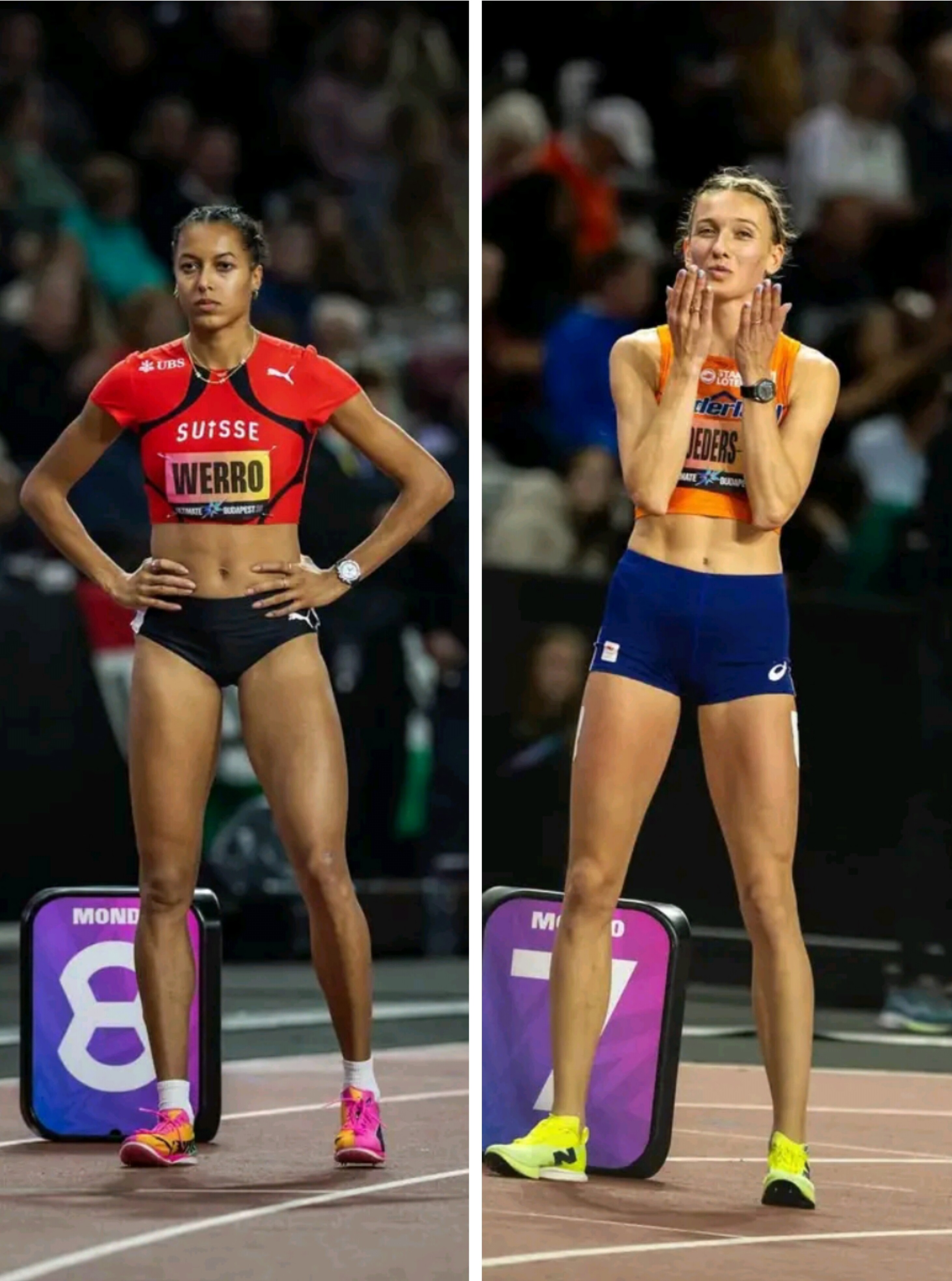
The second semifinal produced another impressive performance as Switzerland’s Audrey Werro controlled the race and delivered a strong finish to win in 1:59.05. Femke Broeders-Bol of the Netherlands followed closely in 1:59.19 after leading much of the contest.
The qualification picture then became clear, with nine athletes securing places in the women’s 800m final. Hodgkinson leads the field with 1:57.57, followed by Wiley at 1:58.14 and Billings at 1:58.37.
Coiro qualified in 1:58.48, while Werro and Broeders-Bol advanced with 1:59.05 and 1:59.19 respectively. Ethiopia’s Nigist Getachew clocked 1:59.69, Switzerland’s Valentina Rosamilia ran 1:59.78, and Vancardo completed the finalists after her advancement in 2:16.75.
Wiley’s qualification is also notable because she is the only American to advance to the Budapest final, adding further significance to her impressive 1:58.14 performance.
With Hodgkinson producing the fastest semifinal time, Werro looking increasingly dangerous and Broeders-Bol once again proving her ability to remain in contention, the final is shaping up to be one of the most anticipated 800m races of the championship.
Hodgkinson has already struck the first blow in Budapest. But with the medals now at stake, Werro, Broeders-Bol and the rest of the finalists will have the opportunity to turn the tables when it matters most.
The Olympic champion has made her intentions clear: she is back, she is healthy enough to race at championship pace, and she wants the Budapest crown.
The stage is now set for a thrilling women’s 800m final, where Hodgkinson will attempt to turn her semifinal dominance into gold. Who will be crown the Ultimate Champion in Budapest — Hodgkinson, Werro or Broeders-Bol? Or the table will turn?
by Erick Cheruiyot for My Best Runs.
Login to leave a comment

Masai Russell Reigns Supreme in Budapest as American Claims Ultimate Championship Crown
Masai Russell has added another major achievement to her remarkable 2026 season, powering to victory in the women’s 100m hurdles at the inaugural World Athletics Ultimate Championship in Budapest.
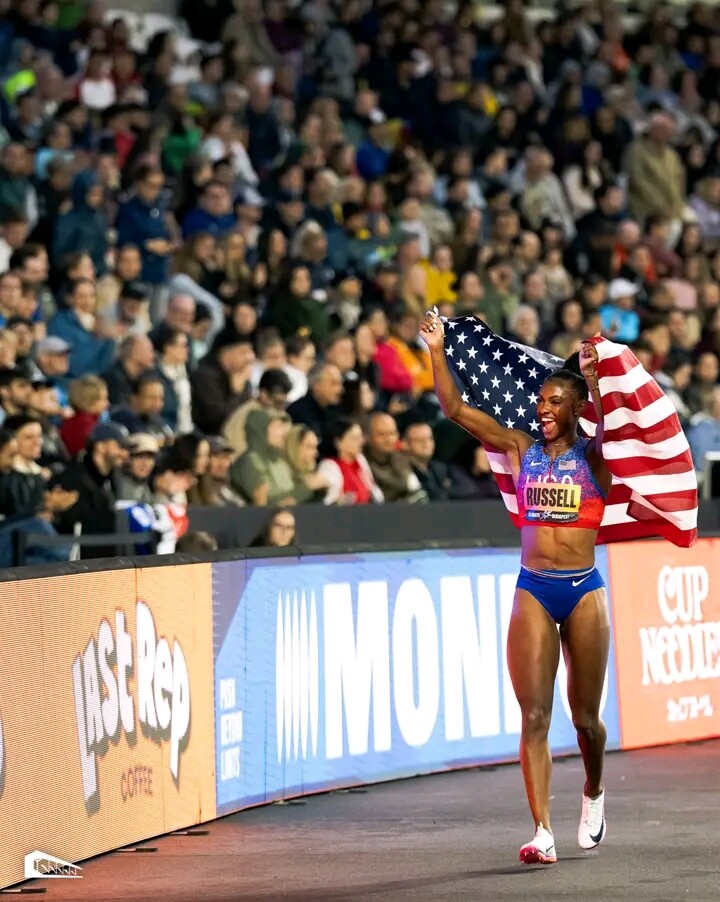
The American produced a brilliant 12.22 seconds to capture the Ultimate Championship title, once again demonstrating her ability to deliver when the pressure is at its highest.
Russell controlled the race from the opening hurdles, attacking each barrier with precision before powering down the home straight to secure a convincing victory. Her performance confirmed why she has been one of the most dominant hurdlers in the world this season.
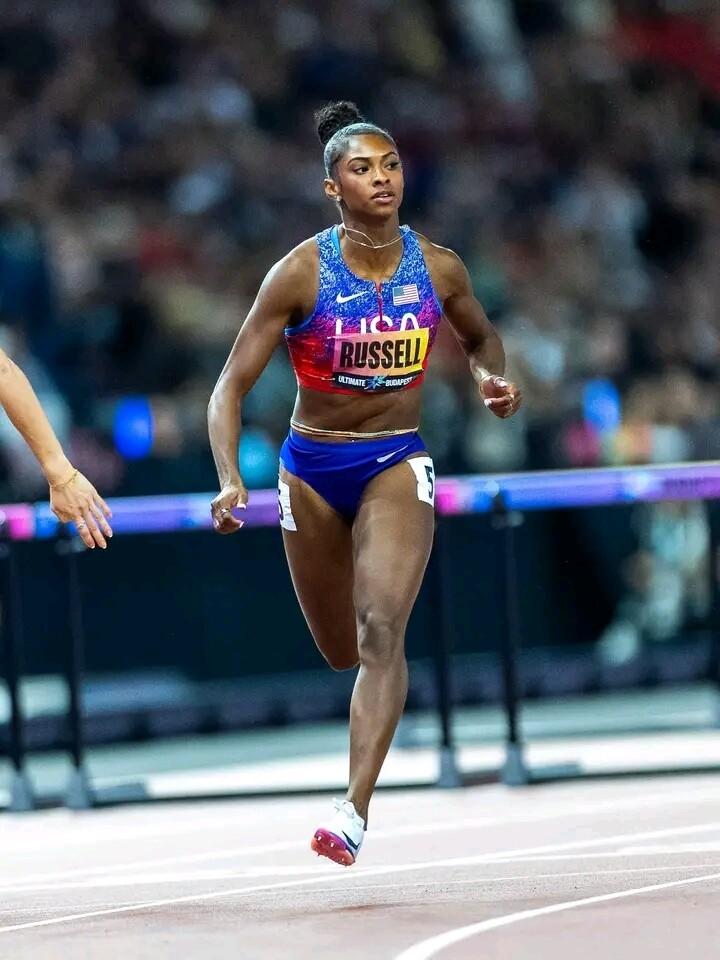
Nigeria’s Tobi Amusan, a former world-record holder and one of the most experienced athletes in the field, mounted a strong challenge but had to settle for second positon in 12.34 seconds.
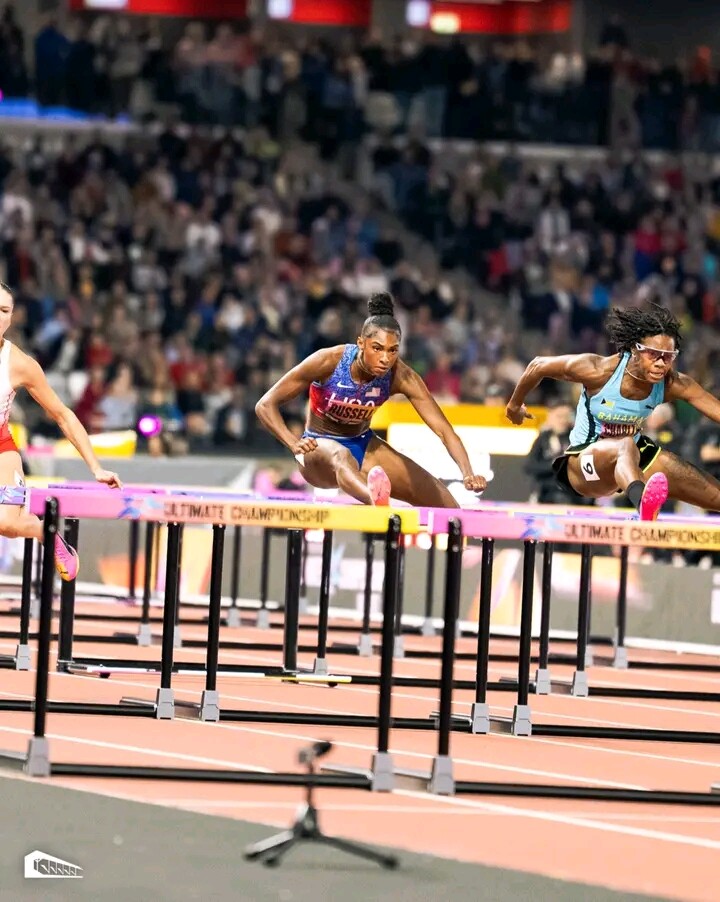
The bronze medal went to the Netherlands’ Nadine Visser, who crossed the line in 12.39 seconds after another impressive championship performance.
Women’s 100m Hurdles Final
1. Masai Russell — United States — 12.22
2. Tobi Amusan — Nigeria — 12.34
3. Nadine Visser — Netherlands — 12.39
Beyond the medals and times, the race produced one of the most memorable images of the championship.
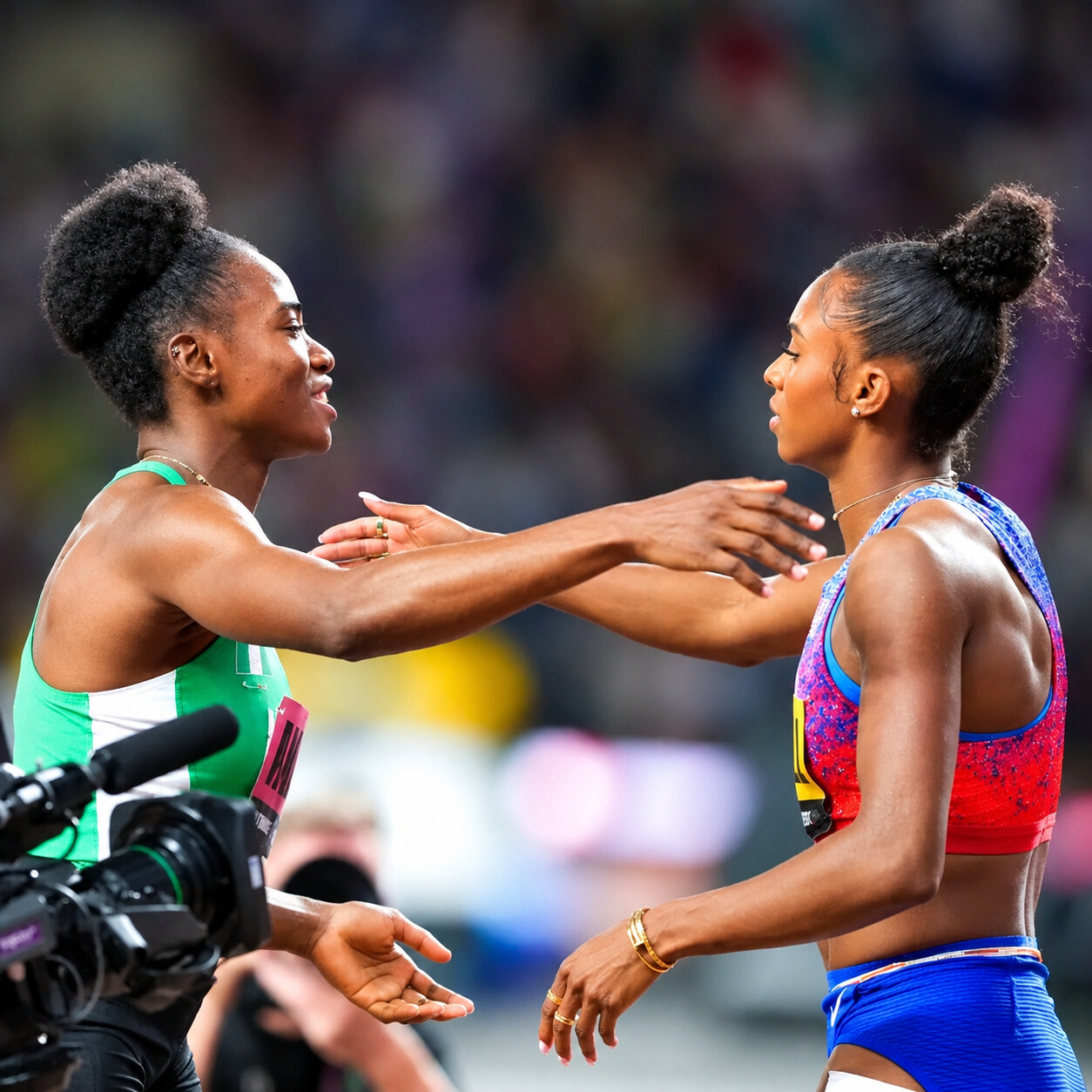
Moments after Russell secured the title, she shared a warm embrace with Amusan, creating a striking scene of mutual respect between two athletes who have played major roles in the evolution of women’s sprint hurdling.
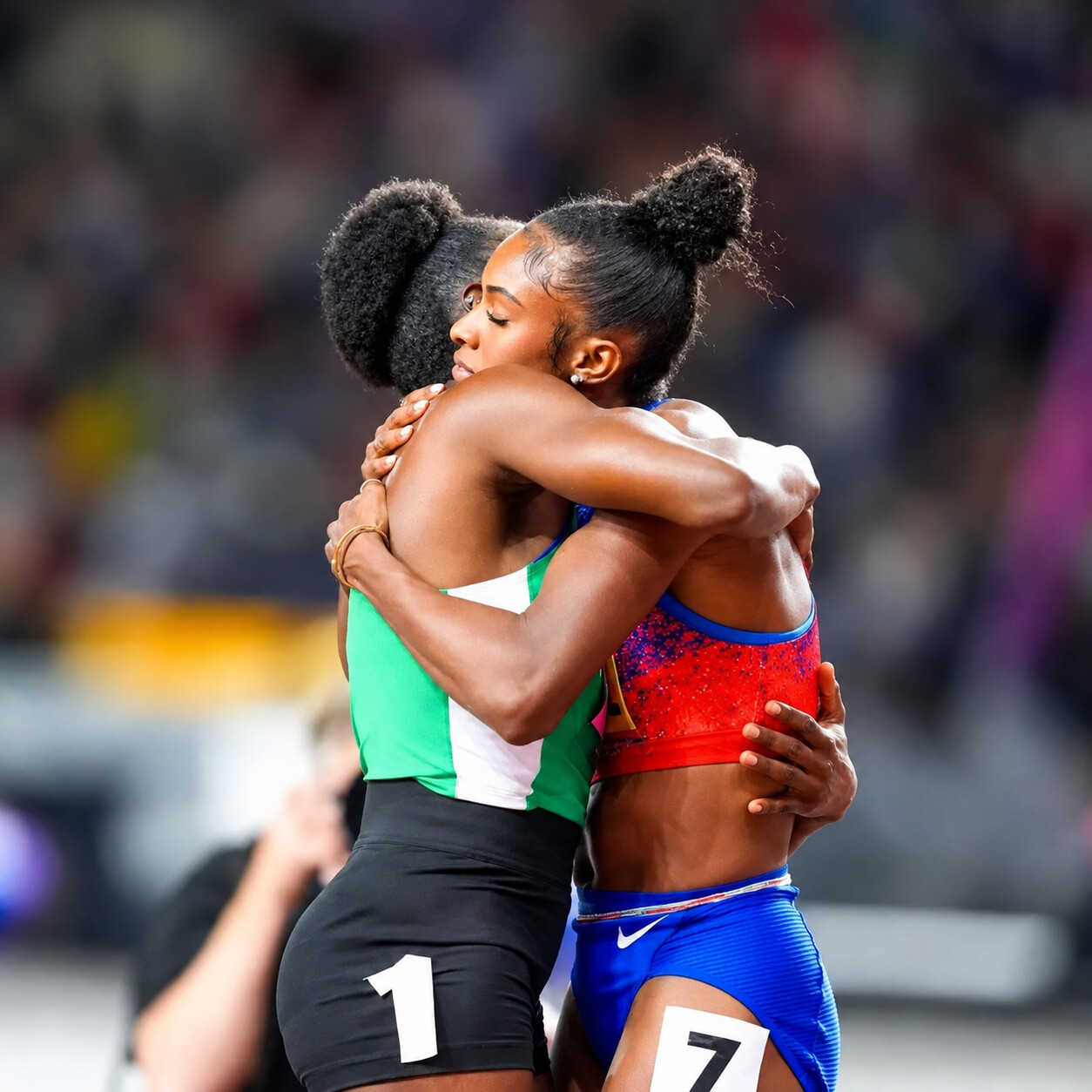
There was no love lost between the former world-record holder and the athlete who has now taken over the top spot. Amusan’s journey helped redefine the event, while Russell has emerged as the new generation’s leading force.
The embrace offered a fitting reminder that elite sport is not only about rivalry and competition. Behind the starting line are athletes who understand the sacrifice, pressure and dedication required to reach the highest level.
For Amusan, the silver medal represents another podium finish at the highest level, while Visser continues to underline her credentials among the world’s elite hurdlers.
But the night belonged to Russell.
With another major title secured and her confidence soaring, the American has made it increasingly difficult for anyone to challenge her position at the top of women’s sprint hurdling.
And perhaps the most fitting image of the night came after the race — the former world-record holder embracing her successor as Russell celebrated becoming the inaugural Ultimate Champion.
Budapest has crowned its first Ultimate Champion, and Masai Russell has once again shown that when the biggest moment arrives, she is ready to answer.
by Erick Cheruiyot for My Best Runs.
Login to leave a comment

Jakob Ingebrigtsen Completes Remarkable Comeback With Ultimate 5000m Gold
Eleven months away from racing. Achilles surgery. Just six weeks of serious training.
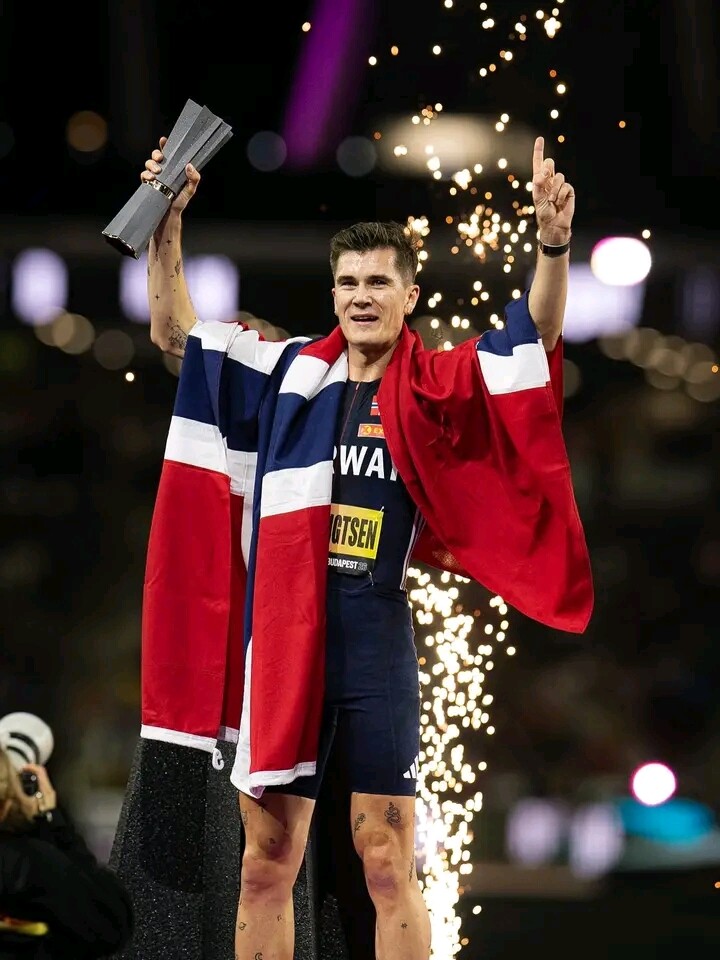
Now, Jakob Ingebrigtsen is an Ultimate Champion.
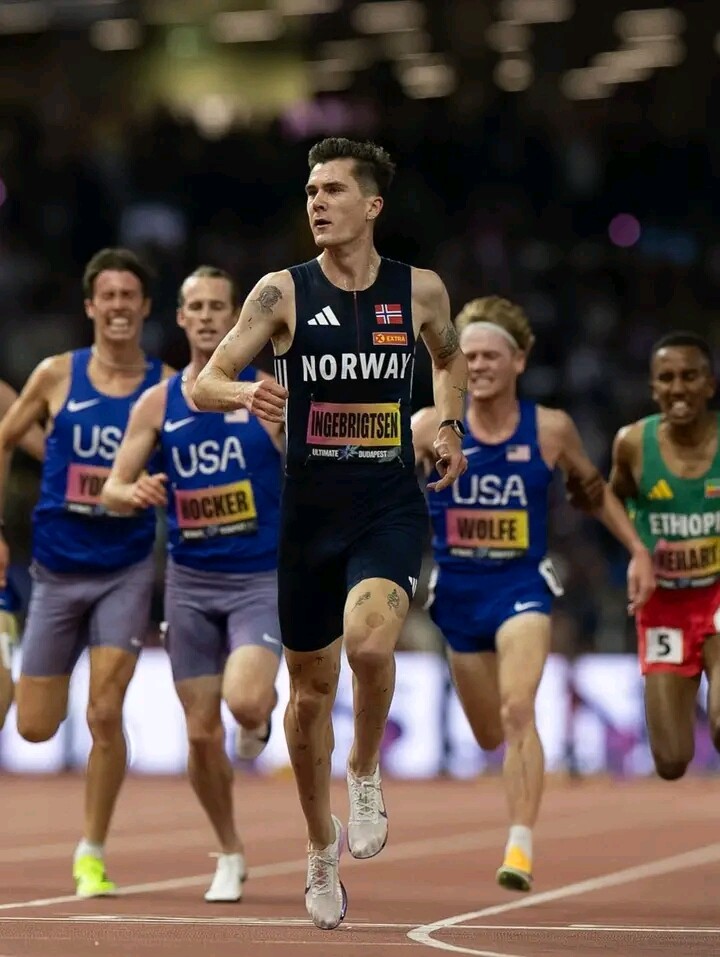
The Norwegian star delivered a stunning performance in Budapest, winning the men’s 5000m at the inaugural World Athletics Ultimate Championship in 12:59.24.
It was a race that demanded patience, tactical intelligence and a perfectly timed finish—qualities Ingebrigtsen has repeatedly demonstrated throughout his career.
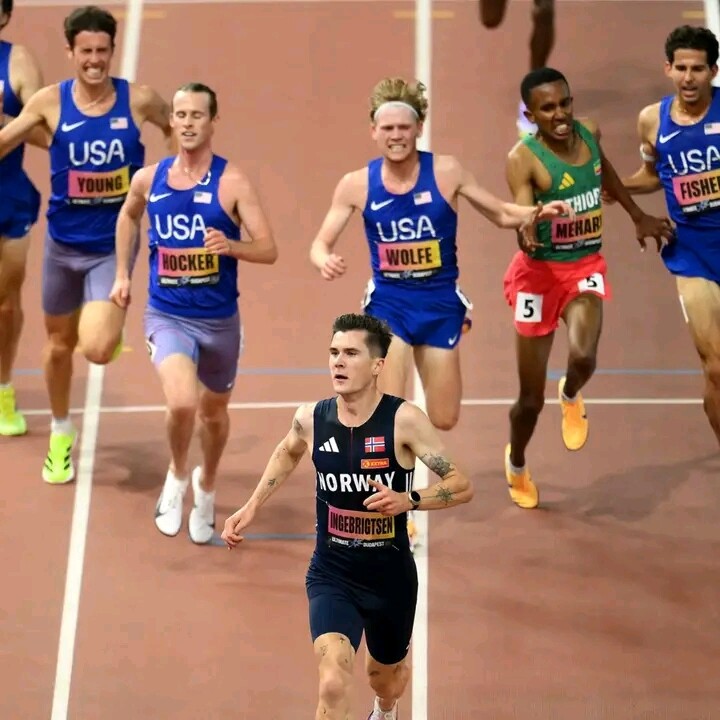
Rather than forcing the pace from the front, Ingebrigtsen stayed towards the back of the field and waited as the race unfolded. He remained composed while the leading group battled for position, conserving his energy for the moment that mattered most.
That moment came in the final straight.
Ingebrigtsen unleashed his trademark finishing speed, powering past his rivals and holding off a determined challenge from American star Cole Hocker to secure the gold medal.
Hocker finished second in 13:00.05, while fellow American Parker Wolfe took third in 13:00.13. The result gave Ingebrigtsen another major title in a season that began with serious questions about how quickly he could return to his best.
His comeback has been extraordinary.
After nearly 11 months away from competition and a spell on the sidelines following Achilles surgery, Ingebrigtsen returned to racing with limited preparation. Just six weeks of serious training stood between him and his return to the highest level.
Yet he has already transformed that uncertainty into success.
The victory in Budapest also adds another fascinating chapter to his rivalry with Hocker. The American, who has established himself among the world's leading middle-distance runners, will get another opportunity to challenge Ingebrigtsen when the pair meet again in the 1500m later this weekend.
The 5000m may belong to Norway, but the rivalry is far from over.
For Ingebrigtsen, the message from Budapest is clear: the long road back has not weakened his competitive instincts. If anything, it has made his return even more impressive.
He waited. He watched. He chose his moment.
And when it was time to strike, Jakob Ingebrigtsen did what Jakob Ingebrigtsen does best—he finished the job.
by Erick Cheruiyot for My Best Runs.
Login to leave a comment
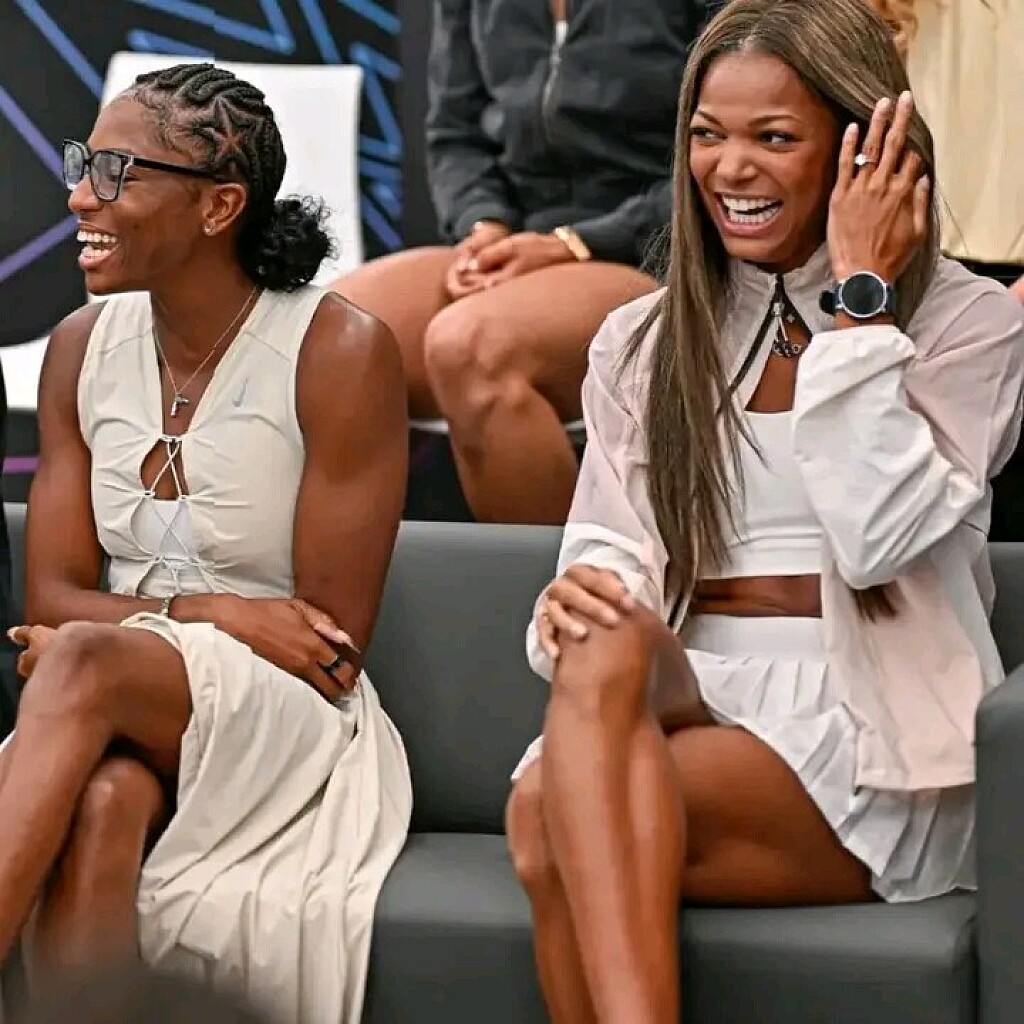
Thomas vs Jefferson-Wooden: Olympic Champion and World Champion Set for Budapest Showdown
The stage is set for one of the most anticipated clashes of the inaugural World Athletics Ultimate Championship in Budapest, with Olympic champion Gabby Thomas and reigning world champion Melissa Jefferson-Wooden drawn into the same women’s 200m semifinal.
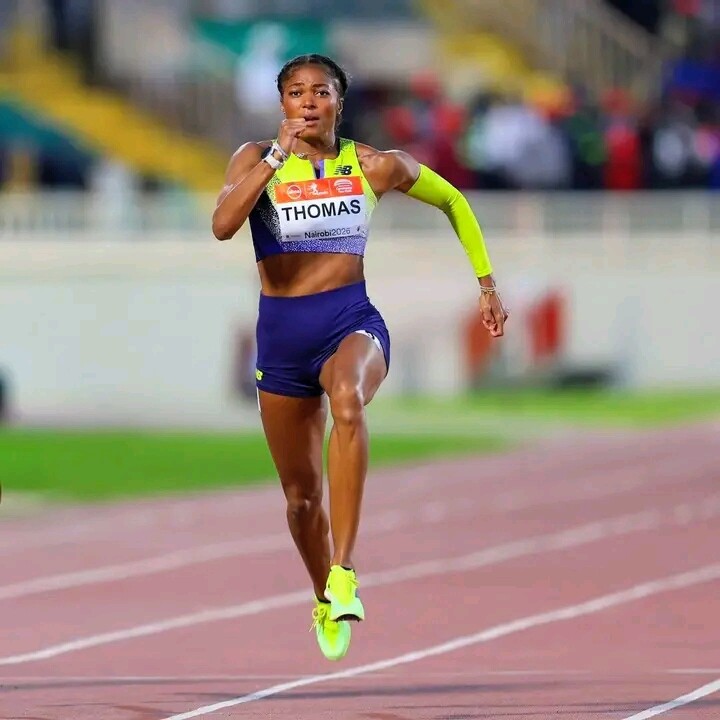
The American stars will go head-to-head in Semifinal 2 after the lane draw placed Jefferson-Wooden in Lane 6 and Thomas directly alongside her in Lane 7, setting up a mouthwatering encounter between two of the biggest names in the event.
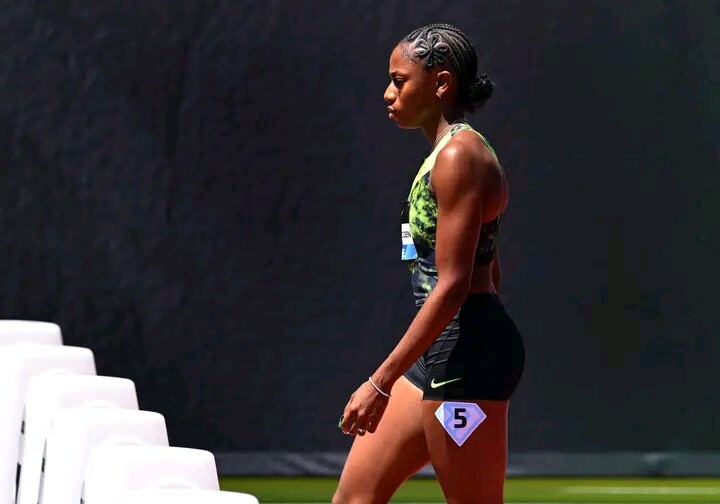
The semifinal will also feature Ireland’s Rhasidat Adeleke in Lane 3, while Jenna Prandini occupies Lane 4. Hungary’s Boglárka Takács will start in Lane 1, with Lavanya Williams in Lane 2, Fabienne Hoenke in Lane 5, Kayla White in Lane 8 and Australia’s Torrie Lewis in Lane 9.
All eyes, however, will be on the two Americans.
Thomas arrives with an Olympic title to her name and a reputation for delivering on the biggest stages, while Jefferson-Wooden carries the confidence of a reigning world champion. With both athletes lining up shoulder-to-shoulder, there will be little room for error when the gun goes.
The Budapest showdown adds another chapter to an increasingly compelling rivalry in the women’s 200m. Thomas has consistently established herself among the event’s elite, while Jefferson-Wooden has emerged as one of the sport’s most dangerous championship performers.
Now, they will have to share the same straight.
With a place in the final at stake, the semifinal promises to be one of the standout races of the championship. The Olympic champion and world champion are on a collision course—and Budapest is ready to find out who will blink first.
by Erick Cheruiyot for My Best Runs.
Login to leave a comment
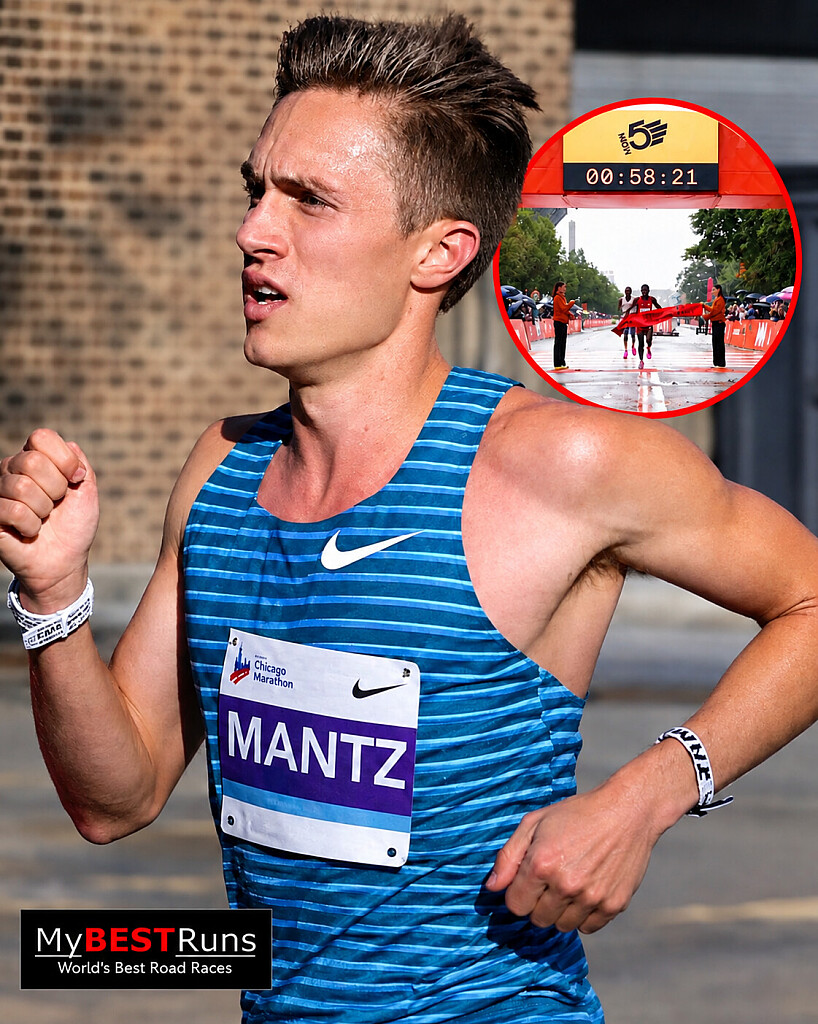
Conner Mantz’s Long Road Back: From American Record Holder to World Championship Return
Less than a year ago, Conner Mantz was rewriting American distance-running history. Now, after months of injury, rehabilitation and rebuilding, the American record holder is preparing for another major test — this time on the world stage in Copenhagen.
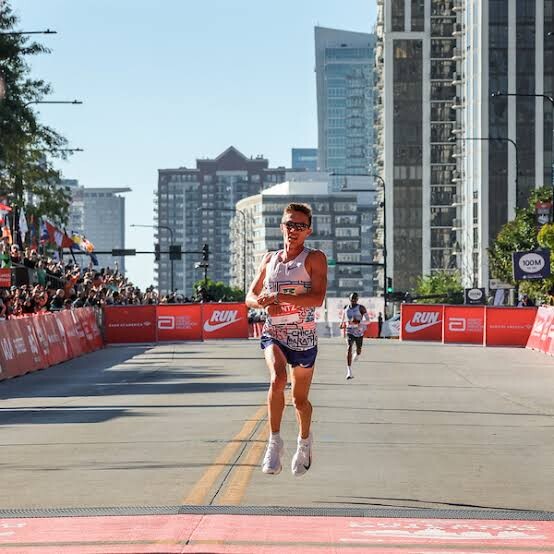
On October 12, 2025, Mantz produced the performance of his career at the Chicago Marathon, running 2:04:43 to break Khalid Khannouchi’s long-standing American record of 2:05:38, set in London in 2002. The performance made Mantz the fastest American marathoner in history and confirmed his place among the country’s elite distance runners.
But what followed was far removed from the glory of Chicago.
Only weeks after the marathon, Mantz began experiencing hip pain that was eventually diagnosed as a sacral stress fracture. The injury forced him away from running for 12 weeks and disrupted what had been shaping up to be another important season. He ultimately withdrew from the 2026 Boston Marathon during race week after acknowledging that his fitness had not returned sufficiently.
Rather than forcing the comeback, Mantz had to rebuild from the ground up.
Swimming became a major part of that process. Long sessions in the pool gradually became faster, with his pace progressing from around 1:43 per 100 yards to below 1:30. Some sessions stretched close to three hours. Cycling also became part of his training, while running was carefully introduced whenever his body allowed it — and stopped whenever the injury demanded caution.
For an athlete accustomed to racing at the highest level, it was a frustrating period of patience.
Mantz finally returned to competition at the ASICS Falmouth Road Race in August, almost ten months after his historic Chicago performance. He finished as the second American, a result that may not have been the comeback statement he wanted, but was nevertheless an important step forward.
Now comes a much bigger examination.
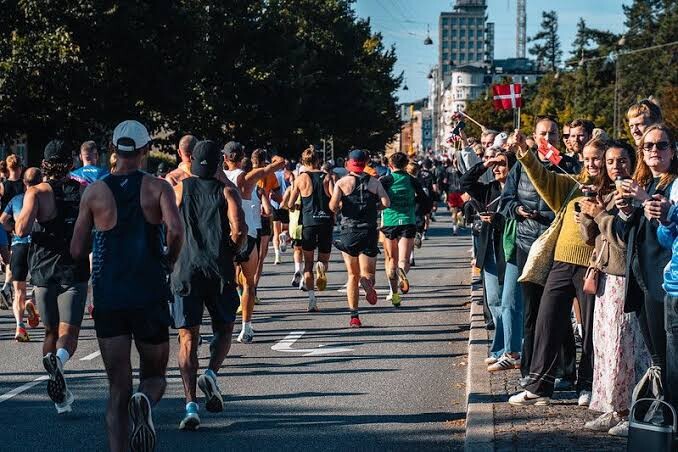
On Sunday, September 20, Mantz will line up in Copenhagen for the men's half marathon at the 2026 World Athletics Road Running Championships. It will be his first global championship appearance since the Paris 2024 Olympics.
And Mantz is not arriving merely as another member of the American team. He is the reigning American record holder in the half marathon.
That record came in 2025, when he ran 59:17 in Houston to erase Ryan Hall's 59:43 American record, which had stood for 18 years.
In the same year, Mantz would go on to claim the American marathon record as well.
Two national records. One extraordinary season. Then an injury that forced him to step away from the racing world for months.
Now, the question is no longer simply how fast Mantz can run on his best day. It is about what remains after everything he has been through.
Copenhagen offers the perfect stage for that answer. With the world's best runners gathered for a global title, Mantz will have the opportunity to measure himself against the strongest competition while continuing his journey back to his best.
He has already shown that he can break records. He has already shown that he can compete with the world's best.
This time, he is simply trying to rediscover the runner who did it.
Records can redefine the ceiling. Injuries can force an athlete to rediscover the foundation. On Sunday in Copenhagen, we will find out just how much of the old Conner Mantz is back — and how much stronger the journey has made him.
by Erick Cheruiyot for My Best Runs.
Login to leave a comment
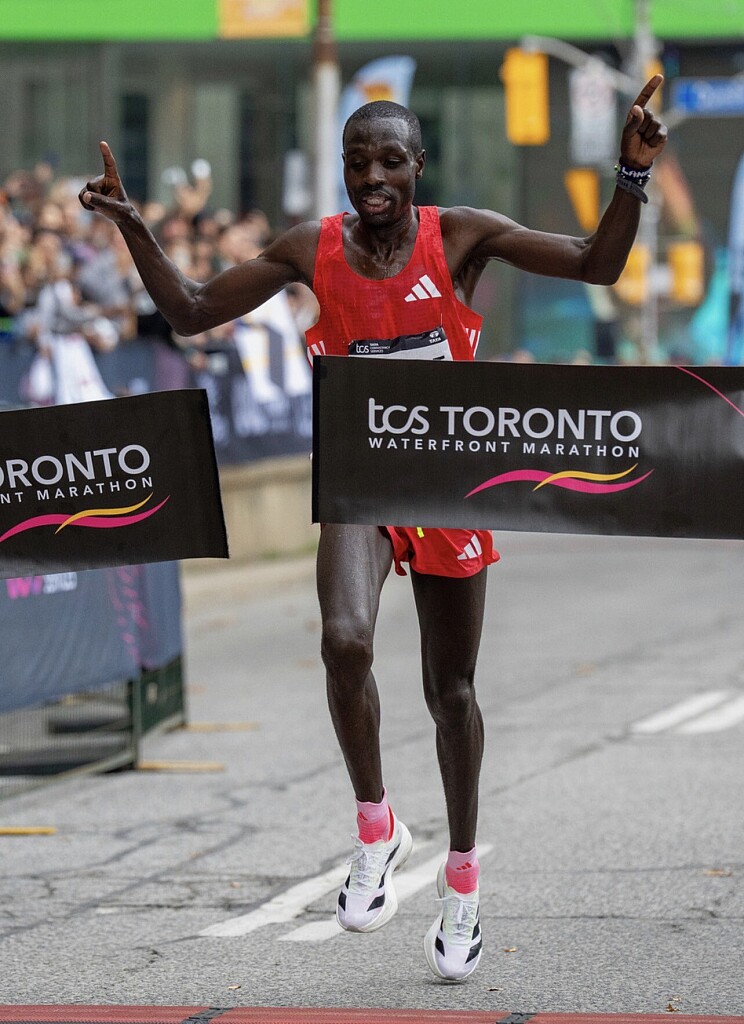
Leonard Langat to Defend his TCS Toronto Waterfront Marathon Title
Leonard Langat arrived in Toronto for last year’s TCS Toronto Waterfront Marathon largely unheralded. But after winning this World Athletics Elite Label race he left with both the respect of his competitors and the $25,000 CDN first place prize money to his credit.
The 30-year-old Kenyan will defend his title on October 18.
A year ago his winning time of 2:08:04 had been hampered by uncharacteristically strong winds coming off Lake Ontario but the fact he beat athletes with much faster personal best times was an indication of his potential. Indeed, at the 2026 Cape Town Marathon this May he finished 4th in a new personal best of 2:05:26.
“About last year, I was happy because I ran well. I am happy to come back to Toronto,” he says while sitting alongside his coach, Josphat Bett, following a training session. “I loved the city of Toronto. I loved the beauty and the people I met there.
“I want to improve my time and try to win the race again. I will try to defend my title because the training (this year), we have improved, and increased the mileage.”
The Toronto Waterfront Marathon course record of 2:05:00 was set in 2019 by his countryman Philemon Rono. It seems natural to draw a line between his personal best and that record. Could he beat Rono’s time on the streets of Canada’s biggest city?
“If the weather is good that day I will try to improve my personal best,” is all he will allow - apparently not wanting get ahead of himself.
Langat is represented by Volare Sports Management, a Dutch based firm specializing in distance running. He trains with a group of about twenty athletes under coach Josphat Bett’s program in the town of Keringet. Another large Volare group which includes athletes such as Fanny Kiprotich (who will also run this year’s Toronto Waterfront), the 2026 Vienna Marathon winner, is based in Iten the ‘Home of Champions’ three and a half hours away.
Bett was himself a world class runner with a personal best of 26:48.99 for the 10,000m and also took home the 2014 Commonwealth Games silver medal in that event. He remembers being approached by Langat when the latter keenly observed Bett and his training partners running past his village.
“I am a runner and he was interested in running,” Bett remembers with a smile. “He loved the way we were training and he asked ‘How can I start to run?’. So I gave him a training program to start. Now it has been about ten years.”
With money earned from running Langat has begun preparing for life after his running career comes to an end. He and his wife, Sharon Chesang, have two children, 4-year-old Emmanuel Kipkoech and a 2-year-old daughter Dorcas Chebet. Although Volare has a camp where many of the athletes live during the week he prefers to go home after training sessions.
“I want to be a farmer for cattle, a dairy farmer,” he explains. “I bought five acres of land and I have five cows.”
A successful title defence would mean increased financial stability for his family’s future. There is also a bonus of $10,000 CDN for breaking the course record. Although he seems hesitant to talk about the record he’d be a good bet to dip below 2:05:00 under the right conditions.
"In Cape Town after 40km, after taking water, I lost the steps of the leading group,” he admits.
Clearly the race video supports his contention as he slowed to grab a bottle while the other three contenders opened up a gap. Ethiopia’s Mohamed Esa won that race in 2:04:55 with the 2022 TCS Toronto Waterfront champion, Yihunilign Adane, second in 2:04:59. What might have been is not something he dwells upon.
Defending a title is never easy. Langat can no longer slip under the radar as his performances have been watched around the world. His TCS Toronto Waterfront Marathon victory, alone, had 140,000+ views last year in 75 countries. And he will face a strong field including his compatriot Noah Kipkemboi who finished in second place just 24 seconds behind him last year.
But Langat’s confidence will be high making for compelling battle along the streets of Toronto.
by Paul Gains
Login to leave a comment
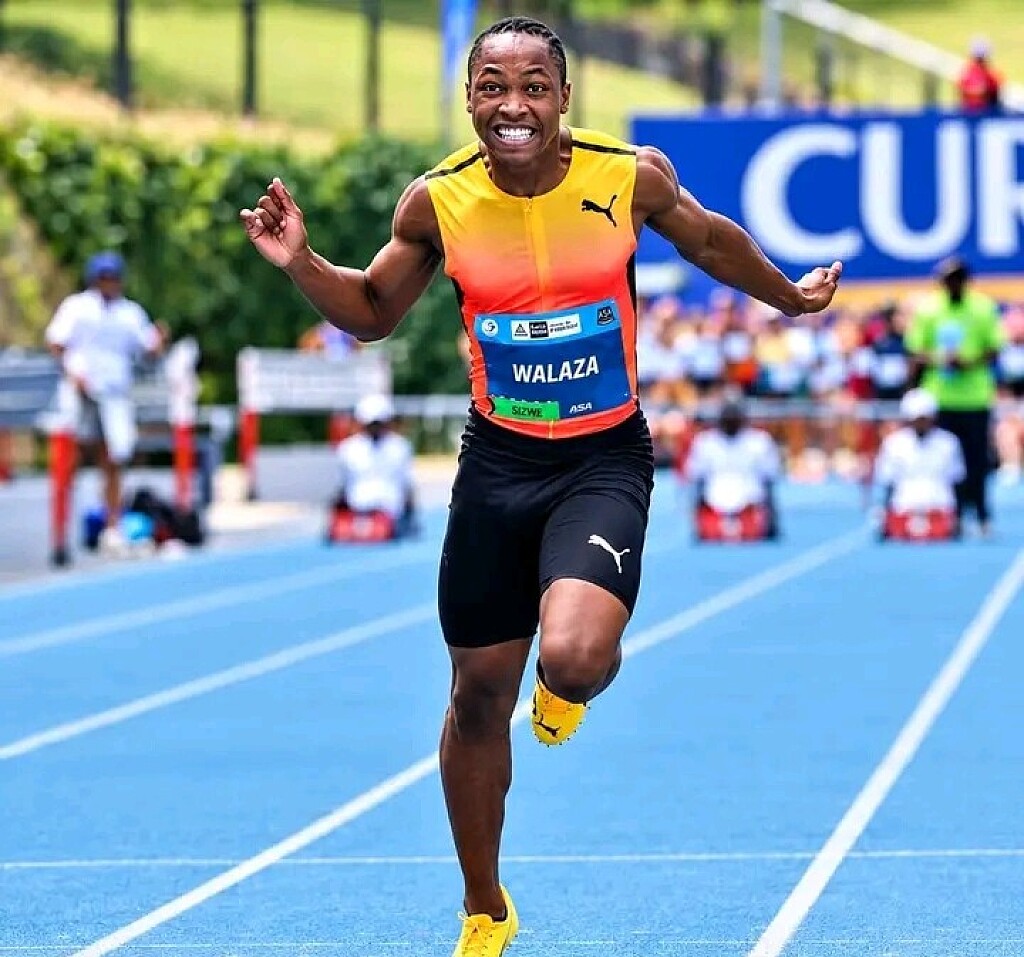
Bayanda Walaza Blazes to 9.91 in Rovereto, Smashing Meeting Record
South Africa’s Bayanda Walaza delivered another electrifying performance on the European circuit, storming to victory in the men’s 100m at the 62nd Palio Città della Quercia in Rovereto, Italy.
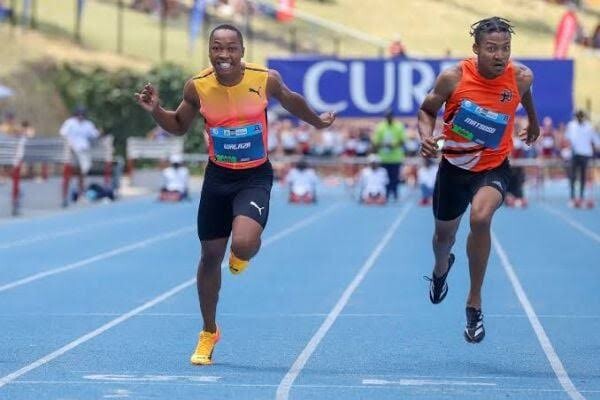
Walaza stopped the clock at a blistering 9.91 seconds, with a legal +0.5 m/s tailwind, to not only secure the win but also shatter the meeting record. His performance erased the previous mark of 9.98 seconds.
The 20-year-old South African produced a commanding run against a strong international field, holding off Ghana’s Abdul-Rasheed Saminu, who finished second in 10.01, while Canada’s Eliezer Adjibi completed the podium in 10.09.
For Walaza, the 9.91 adds another sub-10-second performance to an increasingly impressive season. His personal best remains 9.89 seconds, a mark that underlines just how close he is to another major breakthrough.
Walaza has already established himself as one of South Africa’s most exciting young sprinters. He was a double gold medallist in the 100m and 200m at the 2024 World Athletics U20 Championships in Lima before helping South Africa win Olympic silver in the 4x100m relay at Paris 2024.
Now making his mark against senior competition, Walaza is showing increasing consistency at the highest level.
A 9.91 meeting record in Rovereto is another powerful statement from the young South African — and with his speed continuing to develop, Walaza’s ceiling looks remarkably high.
by Erick Cheruiyot for My Best Runs.
Login to leave a comment

Melissa Jefferson-Wooden Chases Another Historic Sprint Double in Budapest
Melissa Jefferson-Wooden is ready to take on one of the biggest challenges of the inaugural World Athletics Ultimate Championships: conquering both the 100 metres and 200 metres against two of the strongest sprint fields in the world.
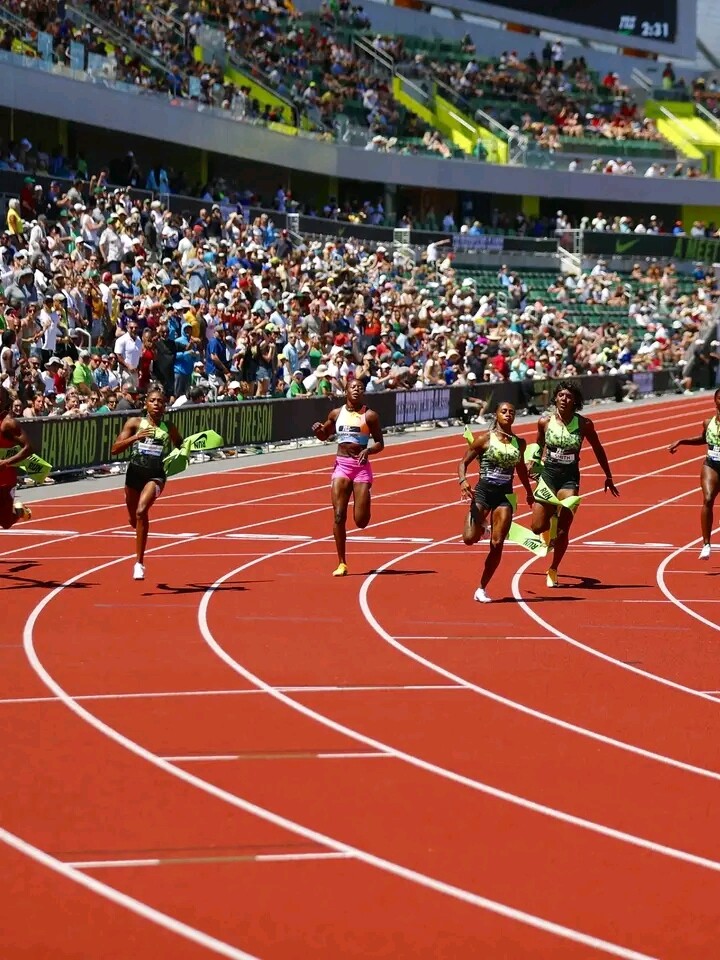
The American sprint star has officially entered both events for the three-day championship in Budapest, Hungary, taking place from September 11 to 13. After producing one of the most remarkable performances of the 2025 World Athletics Championships in Tokyo, Jefferson-Wooden now arrives in Budapest with another opportunity to prove that she is the dominant force in women's sprinting.
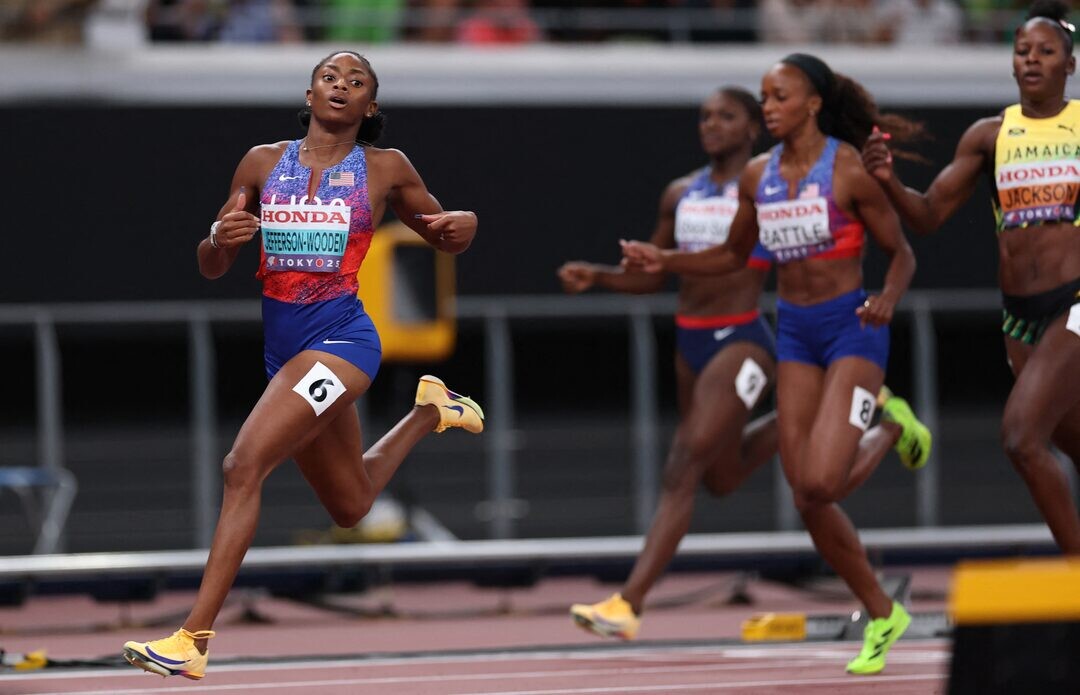
Her first major test will come in the women's 100m, where she will renew her rivalry with Saint Lucia's Olympic champion Julien Alfred. The two women currently share the 2026 world lead at 10.70 seconds following their thrilling clash in Zurich, setting the stage for what could be one of the most anticipated races of the entire Ultimate Championships.
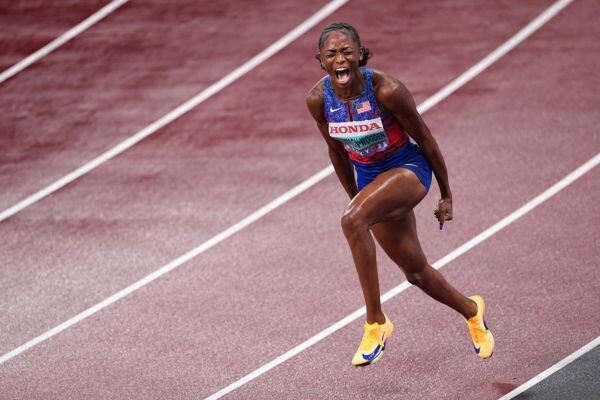
The women's 100m final is scheduled for Saturday, September 12, and Jefferson-Wooden will enter with the confidence of a reigning world champion. But Alfred's presence ensures that there will be no room for error when the world's fastest women line up in Budapest.
Then comes the second challenge.
Just 24 hours later, Jefferson-Wooden will turn her attention to the 200m, where she will face another formidable opponent in Olympic champion Gabby Thomas. Jefferson-Wooden is the reigning U.S. champion over the distance and has produced a season-best of 21.69 seconds, while her outstanding form has placed her among the world's elite in the event.
The 200m represents the second half of a demanding double, and the women's final will take place on Sunday, September 13. The championship format means the world's best sprinters will have little opportunity to ease into the competition, making the physical and mental demands of contesting both events even more significant.
Jefferson-Wooden, however, has already demonstrated that she can handle history-making pressure.
At the 2025 World Athletics Championships in Tokyo, she completed a spectacular sprint treble, winning the 100m, 200m and 4x100m relay. Her 100m victory came in a championship record of 10.61 seconds, underlining the extraordinary level she reached during that unforgettable championship campaign.
Now Budapest offers the American another chance to build on that legacy.
The 100m will bring the explosive showdown with Julien Alfred. The 200m will present a different challenge against Olympic champion Gabby Thomas and another world-class field. Winning either event would be a major achievement. Winning both would further strengthen Jefferson-Wooden's growing claim as one of the defining sprinters of her generation.
She has already swept the global stage once.
Now, at the inaugural World Athletics Ultimate Championships, Melissa Jefferson-Wooden is going for another double.
Can the American sprint queen conquer both Budapest showdowns and add another unforgettable chapter to her remarkable career?
by Erick Cheruiyot for My Best Runs.
Login to leave a comment
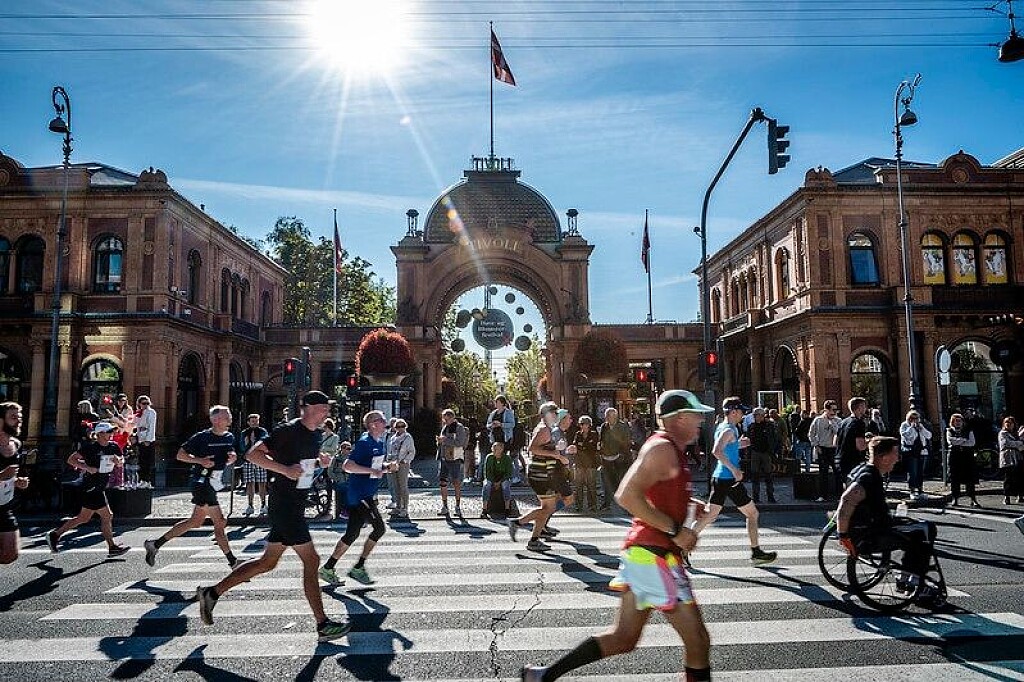
Copenhagen Half Marathon Turns to Lottery System as Demand Soars for 2027 Race
The Copenhagen Half Marathon is the latest major road race to abandon the traditional first-come, first-served entry system, with the hugely popular event set to allocate places for its 2027 edition through a lottery.
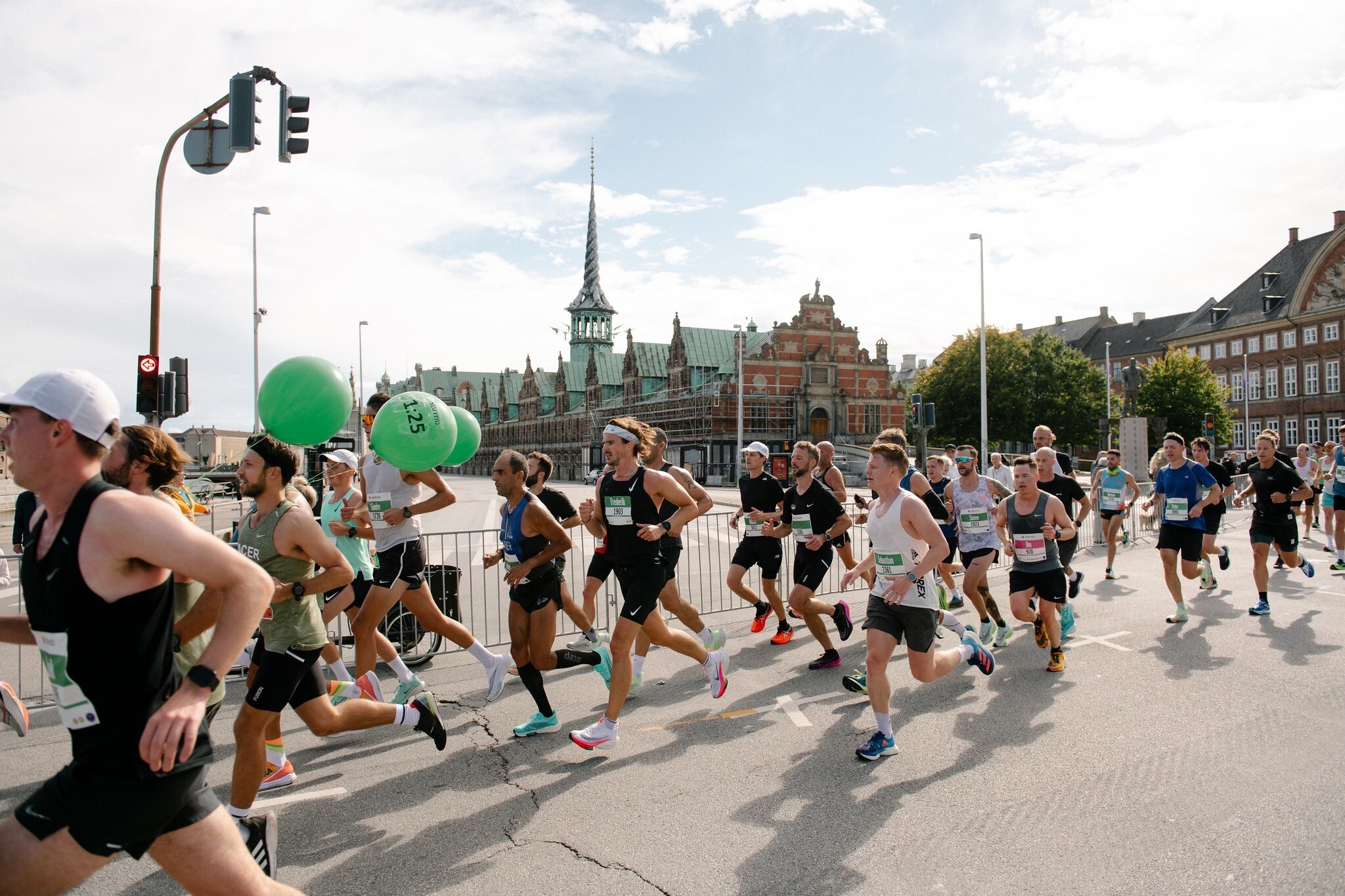
Registration will be free and will open on Tuesday, September 16, before closing on September 30. Crucially, runners will have exactly the same chance of securing a place whether they register on the first day or in the final minutes before the deadline.
A record 45,000 runners are expected to take to the streets of Copenhagen in 2027, underlining the extraordinary growth and demand surrounding one of Europe's biggest half marathons.
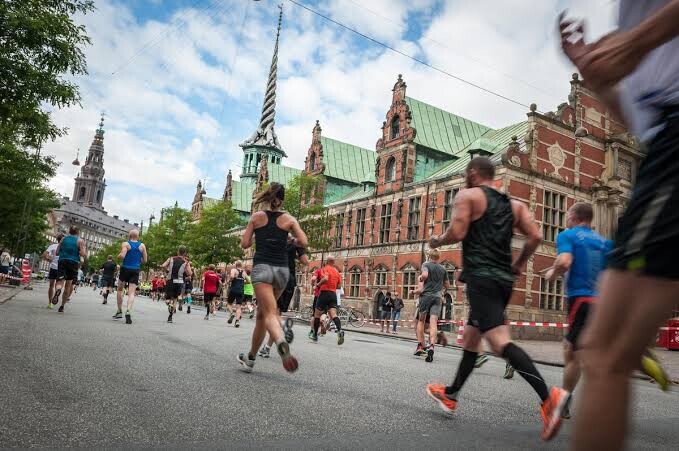
The move comes after the race's previous editions demonstrated just how difficult it had become to secure an entry. The 2025 Copenhagen Half Marathon sold out in just two and a half hours, while the 2026 edition—which will also serve as the World Athletics Half Marathon Championship this Sunday—had already moved to a ballot system when entries opened in March 2025.
Sparta Athletics, the organisation behind both the Copenhagen Marathon and Copenhagen Half Marathon, has now firmly embraced the lottery approach for its major events. The 2027 Copenhagen Marathon ballot attracted an astonishing 80,937 applications for only 35,000 available places, highlighting the enormous gap between demand and capacity.
Copenhagen is far from alone. Prague introduced a similar system in August, while Berlin and Lisbon also used ballots for their 2026 races, reflecting a major shift in the way Europe's most sought-after road races are managing unprecedented demand.
There will also be no official resale platform for Copenhagen's 2027 half marathon. Entries will remain strictly personal and non-transferable, meaning anyone attempting to buy a bib from another runner risks arriving at the start line with an entry that cannot be used.
For runners, the message is becoming increasingly clear: the days of simply logging on and buying a place in one of Europe's biggest road races are disappearing.
As participation in distance running continues to surge, the Copenhagen Half Marathon's decision is another powerful sign of a changing era. The biggest races are no longer asking whether they will sell out—but how they can fairly decide who gets to stand on the start line.
by Erick Cheruiyot for My Best Runs.
Login to leave a comment
Copenhagen Half Marathon
The Copenhagen Half Marathon was the first road race in Scandinavia and is one of the fastest half marathons in the world. The Copenhagen Half Marathon has been awarded with the International Association of Athletics Federation's (IAAF) most distinguished recognition - the IAAF Road Race Gold Label. Copenhagen Half Marathon was awarded the IAAF Road Race Bronze Label in January...
more...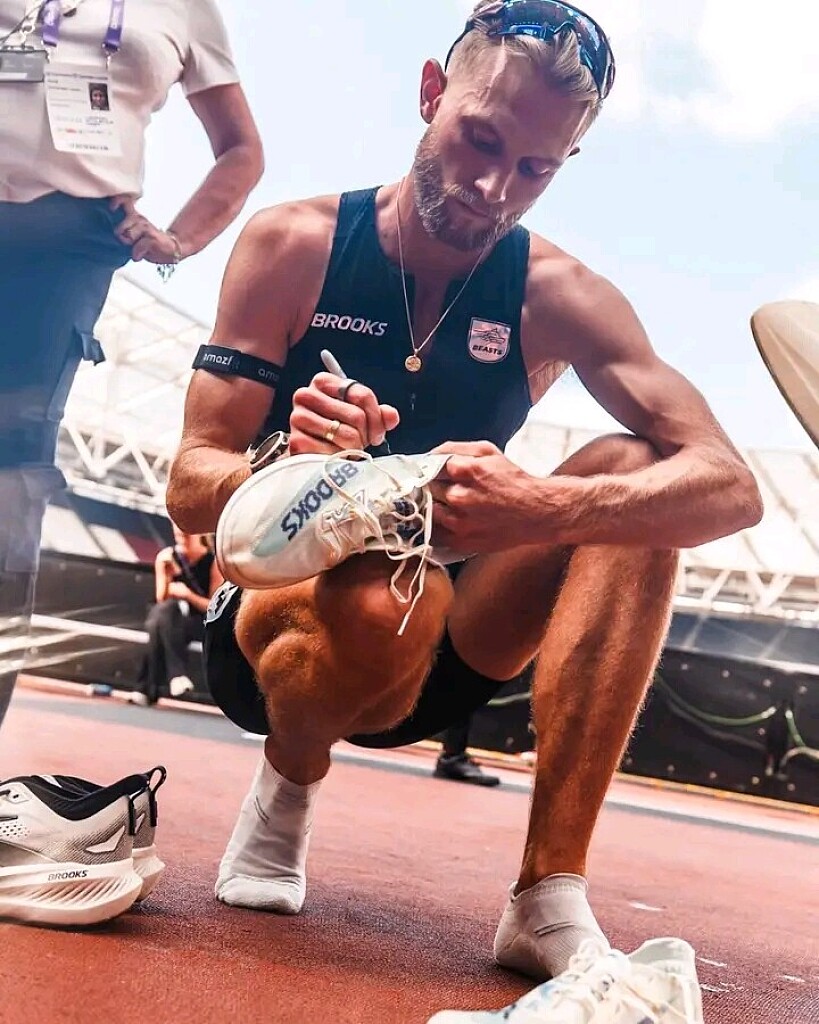
“I Wouldn’t Want to Race Me Right Now”: Josh Kerr Issues a Bold Warning Ahead of Ultimate Championship
Josh Kerr is heading into the World Athletics Ultimate Championship with confidence at an extraordinary level—and his latest comments suggest his rivals have every reason to take notice.
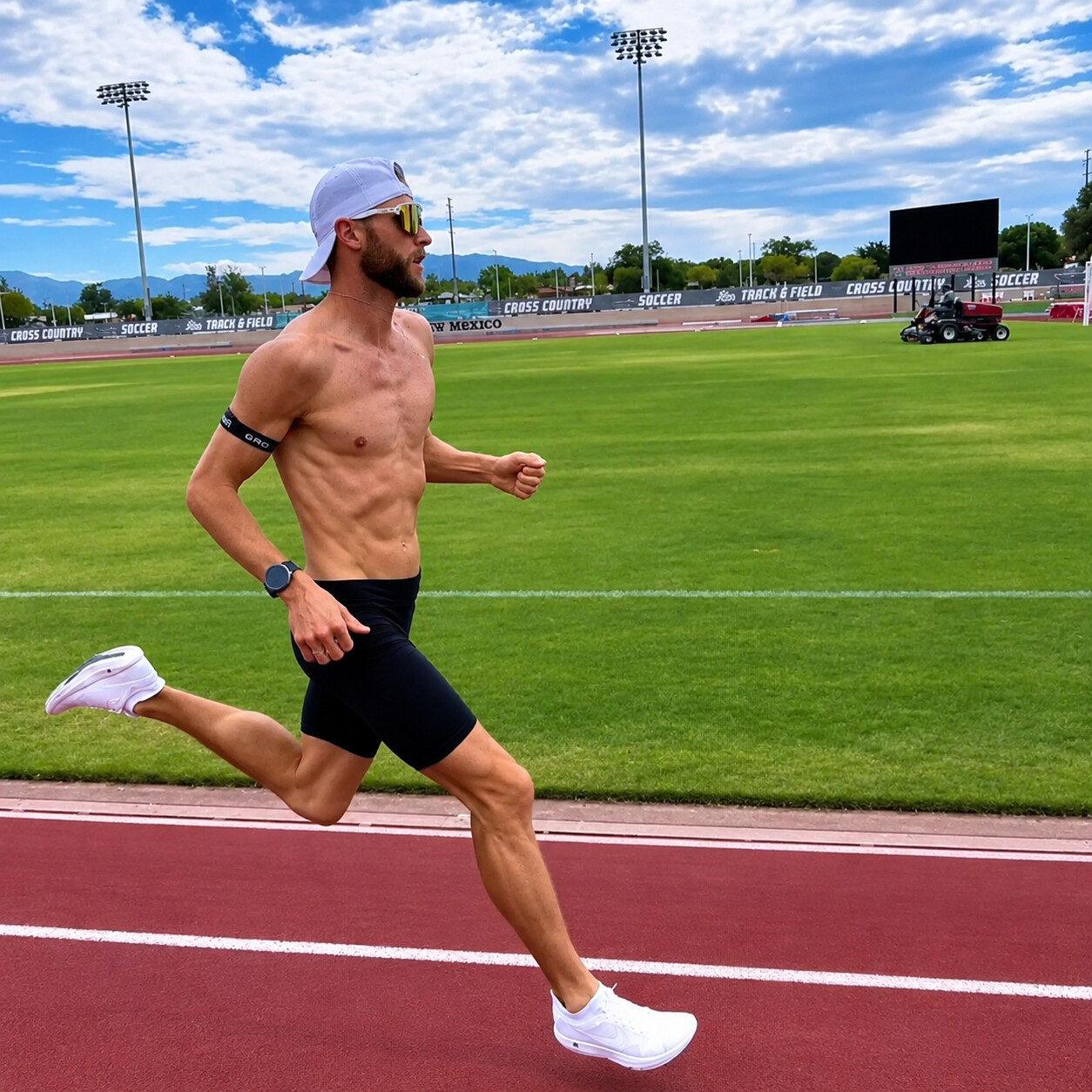
The Scottish middle-distance star, who recently made history by breaking the mile world record in London with a remarkable 3:42.66, believes he may now be in even better shape than he was on the day of that historic performance.
Speaking to BBC Sport, Kerr delivered a statement that perfectly captures his current mindset:
“I wouldn’t want to race me right now.”
It is a bold declaration, but Kerr has given himself plenty of reasons to believe it.
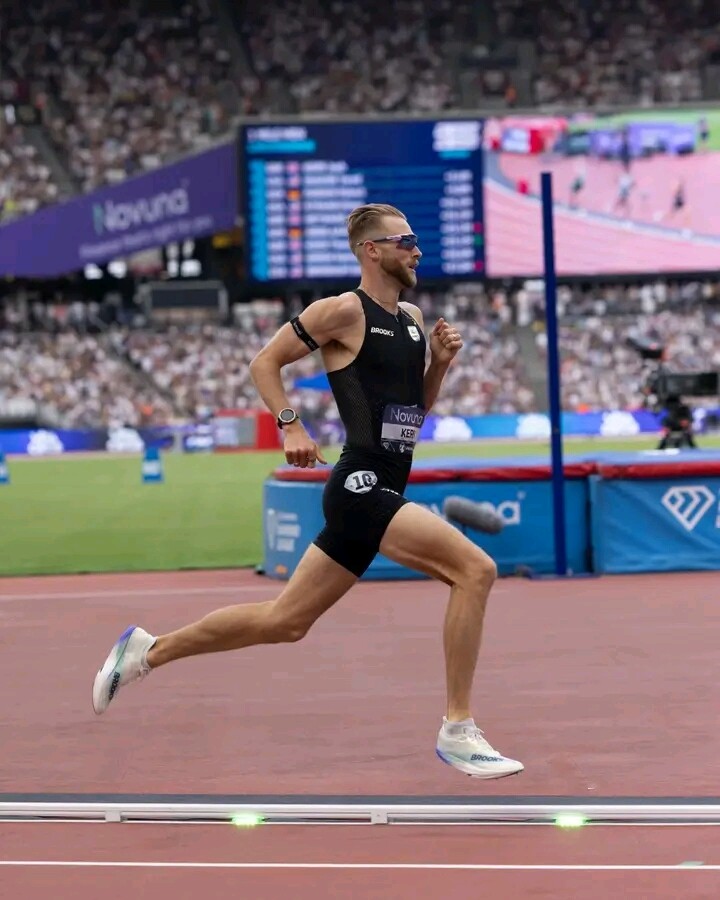
Following his ambitious Project 222 challenge and his Commonwealth gold medal success, the focus now shifts back to his specialist event—the 1500 metres. And this time, there will be no opportunity to ease into the competition.
The World Athletics Ultimate Championship presents a completely different challenge: one race, no heats and no second chances. Everything will be decided in a single, high-pressure showdown against what could be the strongest 1500m field Kerr has faced this year.
For an athlete who has already conquered major championships, broken one of the sport's most prestigious world records and continued to push the boundaries of middle-distance running, Kerr appears to be arriving at exactly the right moment.
Perhaps the most worrying sign for his rivals is not simply his recent success—but his belief that his form has continued to improve.
If Kerr truly is stronger now than when he ran 3:42.66 in London, the Ultimate Championship could produce something very special.
The confidence is unmistakable. The form appears to be there. And with only one race standing between Kerr and another major statement, the rest of the field has been put on notice.
Josh Kerr likes exactly where he is right now—and judging by his words, he is ready to make sure everyone else knows it.
by Erick Cheruiyot for My Best Runs.
Login to leave a comment
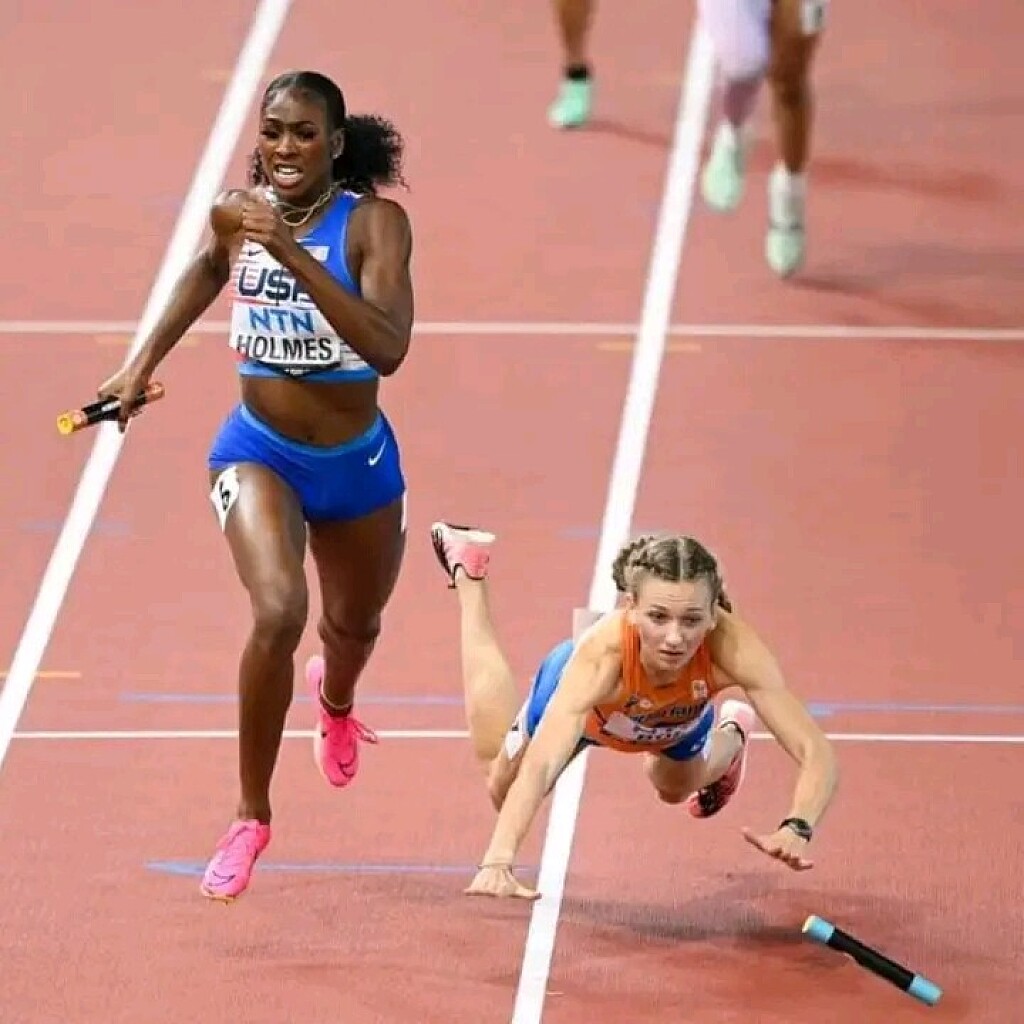
Femke Bol Returns To Budapest: From One Of Her Darkest Moments To A New 800m Challenge
For Femke Bol, Budapest is more than just another stop on the athletics calendar. It is a place where heartbreak once threatened to define her championship campaign — only for the Dutch star to respond with one of the most memorable comebacks of her career.
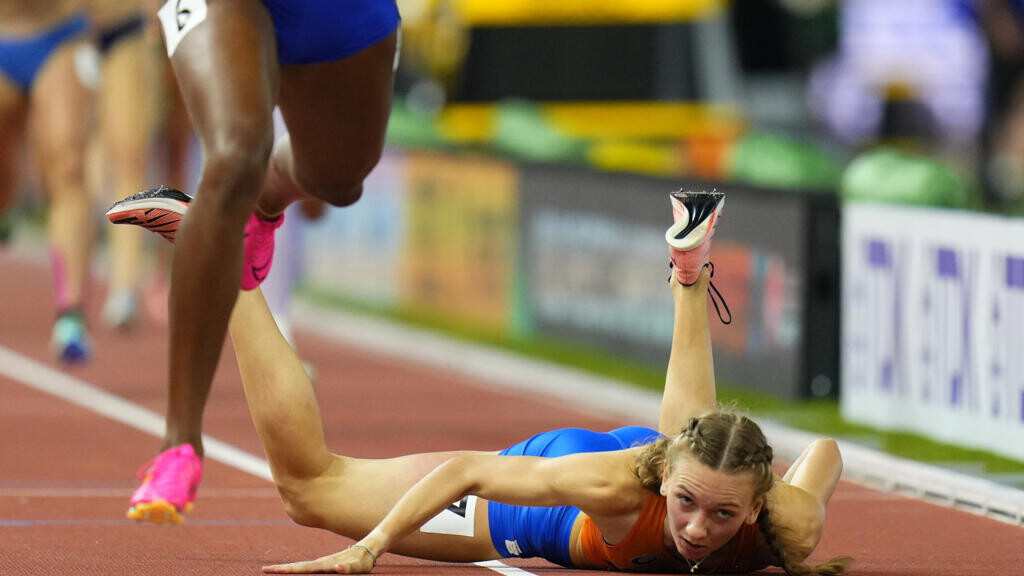
Three years ago, at the 2023 World Athletics Championships, Bol arrived in Budapest as one of the biggest names in the 400m hurdles. Yet her championships began with a painful collapse.
Anchoring the Netherlands in the mixed 4x400m relay on the opening night, Bol was within sight of victory when she fell just metres before the finish line. The Netherlands were disqualified, and what had looked like a near-certain gold medal disappeared in one devastating moment.
But Bol did not allow the disappointment to consume her.
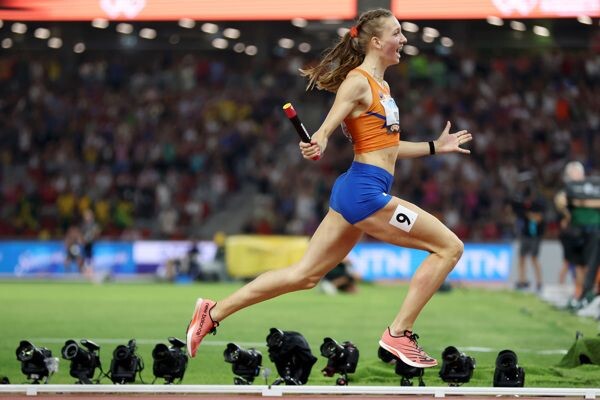
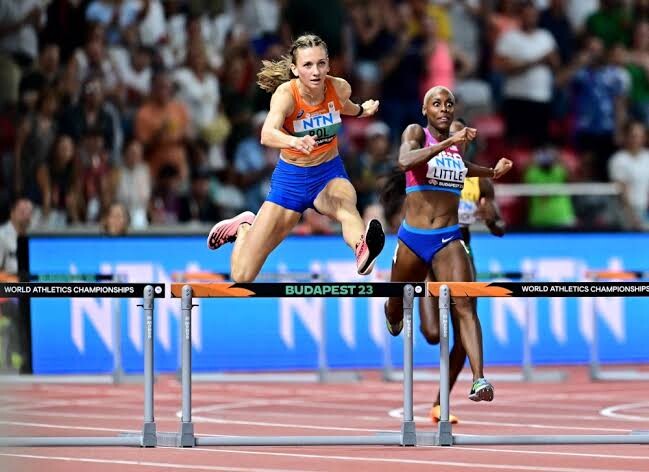
Six days later, she returned to the track for the 400m hurdles final and delivered an emphatic response. Running with remarkable composure, she stormed to victory in 51.70 seconds, finishing more than a second clear of American Shamier Little to claim her first individual global title.
Then came the final track race of those championships — and another extraordinary chapter.
In the women’s 4x400m relay, Bol received the baton for the Netherlands with the Jamaican and British teams ahead. The deficit grew to roughly 10 metres down the back straight, but instead of surrendering, she began to hunt.
By the home straight, Bol had transformed the race.
She swept past Great Britain and then Jamaica to bring the Netherlands home in 3:20.72, securing a second world title in Budapest and completing one of the most remarkable redemption stories of the championships.
Now, Bol is heading back to the same city — but this time, her challenge is completely different.
There will be no hurdles standing in her way.
Instead, she will line up for the women’s 800m at the inaugural World Athletics Ultimate Championship in Budapest, where she will face two of the strongest middle-distance runners in the world: Olympic champion Keely Hodgkinson of Great Britain and Swiss sensation Audrey Werro. The three are among the headline names in a formidable 800m field for the September 11–13 championship.
And this is no longer the same Bol who first experimented with the event.
The Dutch star has made a significant transition to the 800m this season, steadily improving as she has gained experience over the two-lap distance. Her 2026 best stands at 1:55.41, placing her among the leading contenders heading into Budapest.
Yet the challenge could hardly be tougher.
Werro has been the revelation of the 2026 season. The Swiss star leads the world with 1:53.80, a mark that ranks among the fastest performances ever recorded. She also defeated Hodgkinson and Bol at the European Championships in Birmingham, winning in 1:54.81 as Hodgkinson took silver in 1:55.01 and Bol finished third in 1:55.54.
Hodgkinson, meanwhile, remains one of the defining figures of the event. The Paris Olympic champion has already run 1:54.33 this season and will arrive in Budapest determined to reclaim the winning momentum against a rival who has repeatedly pushed her to the limit.
The latest meeting between Werro and Bol only adds more intrigue. At the Diamond League Final in Brussels, Werro prevailed in 1:54.75, but Bol pushed her all the way to the line, finishing just 0.06 seconds behind in 1:54.81.
That makes Budapest particularly fascinating.
Bol is no longer returning simply as the hurdler who once conquered the Hungarian capital. She is coming back as an ambitious 800m runner, testing herself against an Olympic champion and the world leader in an event that demands speed, tactical intelligence and endurance in equal measure.
For Bol, Budapest carries memories of a fall, a first global individual title and an unforgettable relay victory.
Now she has the opportunity to create another memory.
This time, there are no barriers to clear and no baton to chase.
There is only 800 metres — two laps in which Bol will have to match the pace, strength and finishing speed of Werro and Hodgkinson.
She has already shown what she can do when Budapest gives her a second chance.
The question now is whether she can turn that history into another triumph.
by Erick Cheruiyot for My Best Runs.
Login to leave a comment

Jimmy Gressier’s Bold Copenhagen Double: From Sub-13 Speed To Half-Marathon Glory?
Jimmy Gressier is preparing to take on one of the most intriguing challenges of the 2026 World Athletics Road Running Championships in Copenhagen — competing in both the men’s 5km and half-marathon, with less than a day separating the two races.
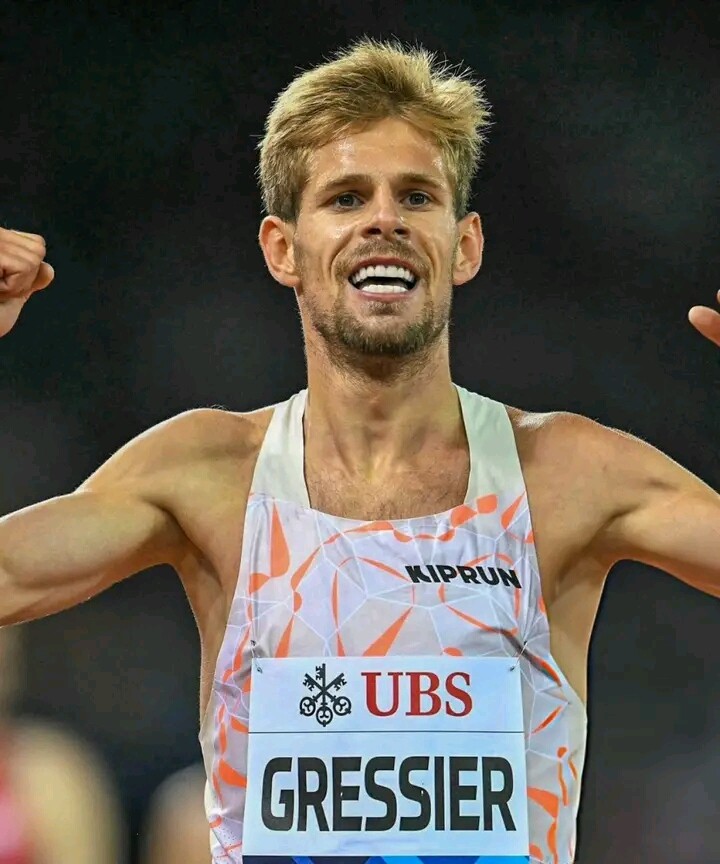
The French star is listed for the 5km on September 19 at 2:40 p.m., before returning to action for the half-marathon at 9:45 a.m. the following morning. That gives him just 19 hours and five minutes between races.
It is a remarkable contrast. One race is expected to last less than 13 minutes for Gressier; the other could keep him racing for around an hour. His personal bests tell the same story: 12:51 for 5km, equivalent to roughly 4:08 per mile, and 59:45 for the half-marathon, or about 4:33 per mile.
And the difference in his standing on the two start lists is striking.
In the 5km, Gressier enters as the fastest man in the field of 63 athletes. His sensational 12:51 in Lille in April made him the European record-holder and moved him to within just two seconds of the world record. Ethiopia’s Addisu Yihune is the only other athlete entered with a faster mark than 13 minutes, having run 12:54, while no other competitor has broken 13:06 this year.
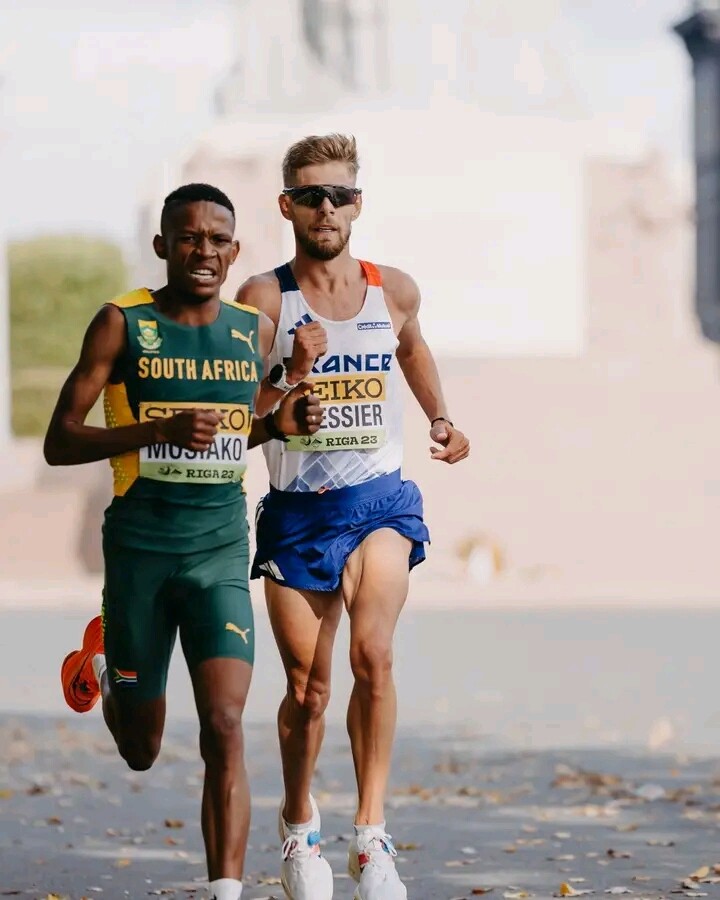
The half-marathon presents a completely different challenge.
Gressier’s 59:45 personal best places him 13th on the entry list, with 12 athletes boasting faster lifetime performances. Kenya’s Nicholas Kipkorir leads that group with 58:08, while Sweden’s Andreas Almgren arrives with the European record of 58:41. Gideon Kipkertich Rono has run 58:38, Tadese Worku 58:47, while the field also includes major names such as Joshua Cheptegei, Daniel Simiu Ebenyo, Yemaneberhan Crippa and Conner Mantz.
Adding another layer of intrigue, Gressier has not raced a half-marathon in 2026.
Yet this is far from unfamiliar territory for the Frenchman.
Gressier has already demonstrated that he can excel over 21.1 kilometres. His 59:45 came when he won the European half-marathon title in Brussels-Leuven in April 2025, defeating Norway’s Awet Nftalem Kibrab by 1:23. He also finished fifth at the 2023 World Half Marathon Championships in Riga, clocking 59:46.
That makes Copenhagen’s unusual schedule particularly important.
When the inaugural World Road Running Championships were held in Riga three years ago, the elite races were compressed into a single afternoon, making a 5km-and-half-marathon double far more difficult to contemplate. Copenhagen has instead spread the competitions across the weekend, creating a window that allows athletes such as Gressier to attempt something far more ambitious.
He will not be alone. Ten athletes on the final entry lists have entered two races, but Gressier’s combination is arguably among the most demanding because of the intensity with which he attacks both distances.
There is also a powerful reminder of what Gressier can produce when the stakes are highest.
At last year’s World Championships in Tokyo, he produced a breathtaking finish to claim the 10,000m world title, edging Yomif Kejelcha by just 0.06 seconds. His own description of that dramatic finish captured his competitive instinct perfectly: he had targeted a medal, moved into third on the home straight, then surged through second before taking gold.
Now, Gressier is preparing for another test of versatility.
First comes the explosive 5km, where he arrives as the fastest man on paper and one of the biggest threats to the world’s best. Then, barely 19 hours later, comes the half-marathon — a race filled with established road-running specialists and several athletes with considerably faster credentials.
Two races. Two very different challenges. One extraordinary weekend.
In Copenhagen, Jimmy Gressier will find out just how far his remarkable range can take him.
by Erick Cheruiyot for My Best Runs.
Login to leave a comment
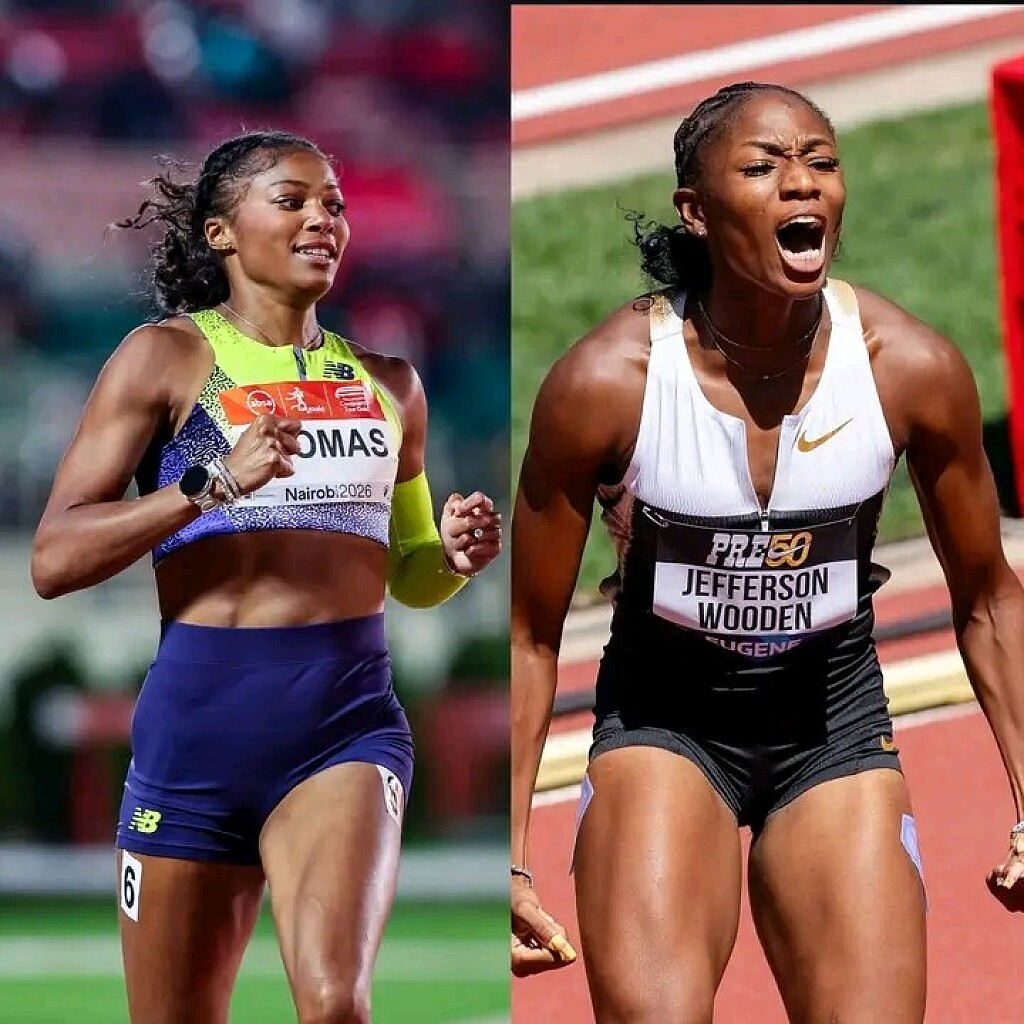
Thomas vs Jefferson-Wooden: Budapest Braces for a 200m Blockbuster
BUDAPEST — Two American sprint giants, two extraordinary résumés and barely a hundredth of a second separating them on the 2026 world list. The stage is set for a mouthwatering women’s 200m showdown at the inaugural World Athletics Ultimate Championship in Budapest.
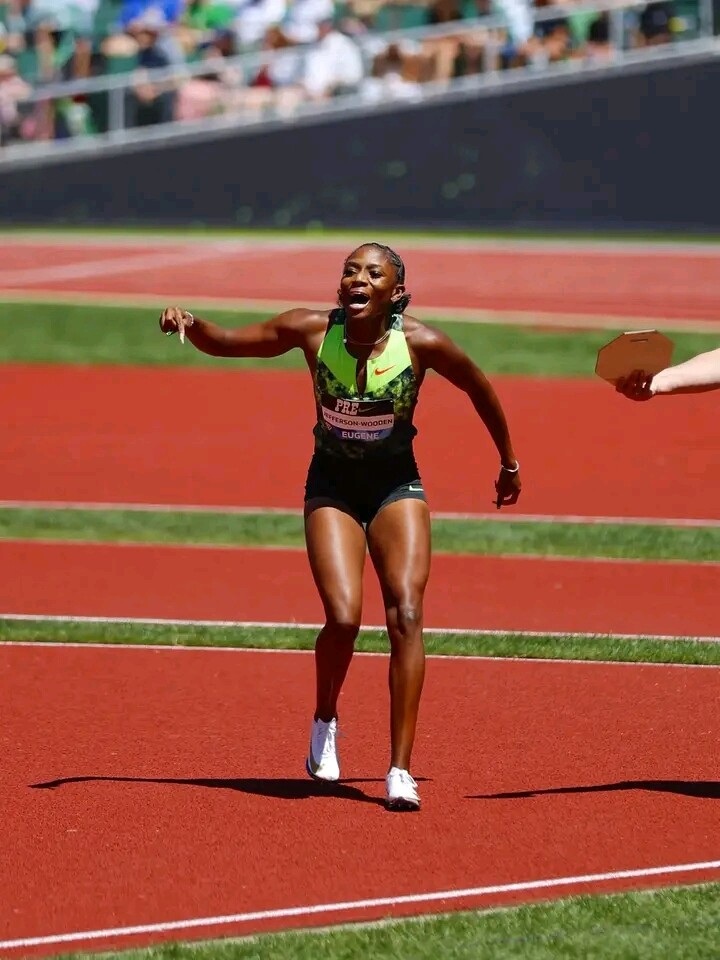
When the world’s best athletes gather in Hungary from 11–13 September for athletics’ newest global showcase, the women’s 200m promises to be one of the meeting’s headline attractions. And at the centre of the drama will be Melissa Jefferson-Wooden and Gabby Thomas — two champions arriving with formidable credentials and something to prove.
Jefferson-Wooden enters Budapest with perhaps the greater momentum.
The reigning world champion produced another statement performance at the U.S. Championships in July, powering to the national 200m title in 21.69 seconds with a legal +1.0m/s wind. The performance was only 0.01 seconds outside the 21.68 she ran to win the world title in Tokyo last year, confirming once again that she remains one of the most formidable 200m sprinters on the planet.
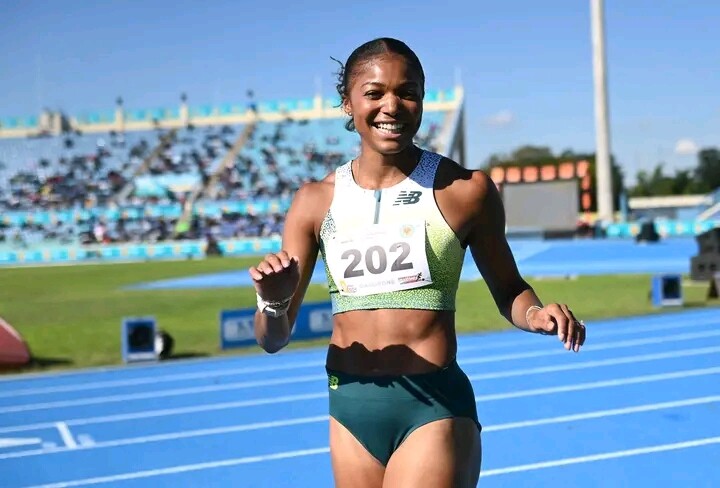
Thomas, however, is no stranger to the biggest stages.
The reigning Olympic 200m champion has built her reputation on championship racing, delivering when the pressure is greatest. Earlier this season, she clocked 21.70 seconds in College Station — just one hundredth behind Jefferson-Wooden’s season-leading mark at the U.S. Championships. The two Americans currently sit third and fourth on the 2026 world list, separated by the smallest possible margin.
And that tiny gap makes this matchup all the more intriguing.
21.69 versus 21.70.
On paper, there is almost nothing between them. But the 200m is rarely decided by the season’s fastest time alone. The bend, the transition into the straight, the ability to maintain speed over the final 50 metres and, above all, the capacity to execute under championship pressure could determine who walks away with the Ultimate Championship trophy.
There is another twist that could add an entirely new layer of strategy before either athlete even takes a starting position.
THE LANE DRAFT CHANGES EVERYTHING
World Athletics has introduced a new lane-draft concept specifically for the 200m at the Ultimate Championship.
On 10 September, the day before competition begins, the athletes will select their preferred semifinal heat and lane in live world-ranking seed order. Rather than leaving lane allocation entirely to a traditional draw, the new format puts the decision directly into the athletes’ hands.
That means the tactical battle begins before the starting gun.
Which athlete wants the inside lane? Who prefers a wider lane to attack the bend? Will a leading contender choose to position herself alongside a dangerous rival — or deliberately keep her distance?
Those decisions could become part of the story long before the final.
And with the women’s 200m semifinals and final scheduled for 13 September, Budapest could be heading towards a spectacular finale to the inaugural Ultimate Championship.
Jefferson-Wooden arrives as the reigning world champion, armed with blistering speed and the confidence of another 21-second performance. Thomas arrives as the Olympic champion, a proven championship performer with years of experience competing at the highest level.
Neither needs an introduction.
Neither is likely to give an inch.
The difference between them this season is just 0.01 seconds.
But in Budapest, history will not be decided by the rankings.
It will be decided over one explosive half-lap.
Melissa Jefferson-Wooden vs Gabby Thomas.
World champion vs Olympic champion.
21.69 vs 21.70.
And when the fastest women in the world line up under the Budapest lights, one question will remain:
Who will become the first-ever Ultimate Champion of the women’s 200m?
by Erick Cheruiyot for My Best Runs.
Login to leave a comment

Noah Lyles Ends 2026 Season Due to Injury, Sprint Star to Miss Budapest Championships
Noah Lyles has made the difficult decision to bring his 2026 season to an early end, with an injury forcing the American sprint star to step away from competition for the remainder of the year.
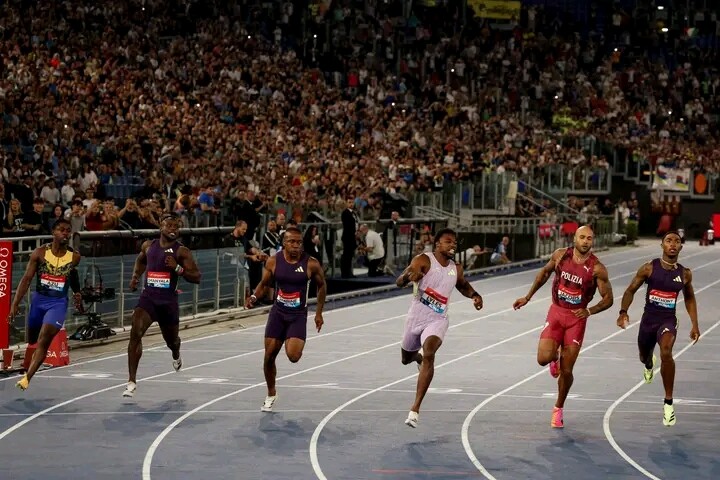
Lyles announced the decision on Friday, revealing that the problem he suffered during the U.S. Outdoor Championships in New York has continued to affect his training and recovery. The injury, which initially appeared manageable, flared up during rehabilitation, ultimately leading him to shut down his season rather than risk a more serious setback.
Lyles had arrived at the U.S. championships in spectacular form. He powered to victory in the men's 100m at Icahn Stadium in a world-leading 9.79 seconds, matching his personal best and once again demonstrating why he remains one of the most formidable sprinters in the world.
However, his championships took an unfortunate turn in the men's 200m final. Lyles pulled up after suffering a strain in his left hamstring, leaving him unable to maintain his usual pace. He eventually crossed the finish line in 50.88 seconds.
The injury has proved more troublesome than initially expected. During his rehabilitation, the problem flared up again, preventing Lyles from progressing as planned. Rather than risk worsening the injury, the 29-year-old has chosen to prioritize his recovery and bring his 2026 campaign to a close.
The decision means Lyles will miss the inaugural World Athletics Ultimate Championships in Budapest, scheduled for September 11–13. The Budapest 2026 event would have provided another major opportunity for the American to compete against the world's best, but he will now be forced to watch from the sidelines.
Despite the disappointment, Lyles can look back on a season that once again showcased his extraordinary ability. His world-leading 9.79-second performance in the 100m was a powerful reminder of his speed, while his decision to step away reflects the importance of protecting his long-term career.
With the 2027 World Championships and the 2028 Los Angeles Olympic Games on the horizon, Lyles' priority now shifts from racing to recovery, rehabilitation and rebuilding his fitness.
It is certainly not the ending he would have wanted for his 2026 campaign. But sometimes, the most important race is the one that comes after the setback — the race back to full health.
For now, Noah Lyles' 2026 season is over. The next chapter is recovery, rebuilding and preparing for an even bigger return.
by Erick Cheruiyot for My Best Runs.
Login to leave a comment

Three Historic World Records Ratified As Kiplimo, Tharp And Wanyonyi Enter The Record Books
Three extraordinary performances that captivated the athletics world have now been officially ratified by World Athletics, with Jacob Kiplimo, Ja’Kobe Tharp and Emmanuel Wanyonyi securing their places in the history books with remarkable world-record performances.
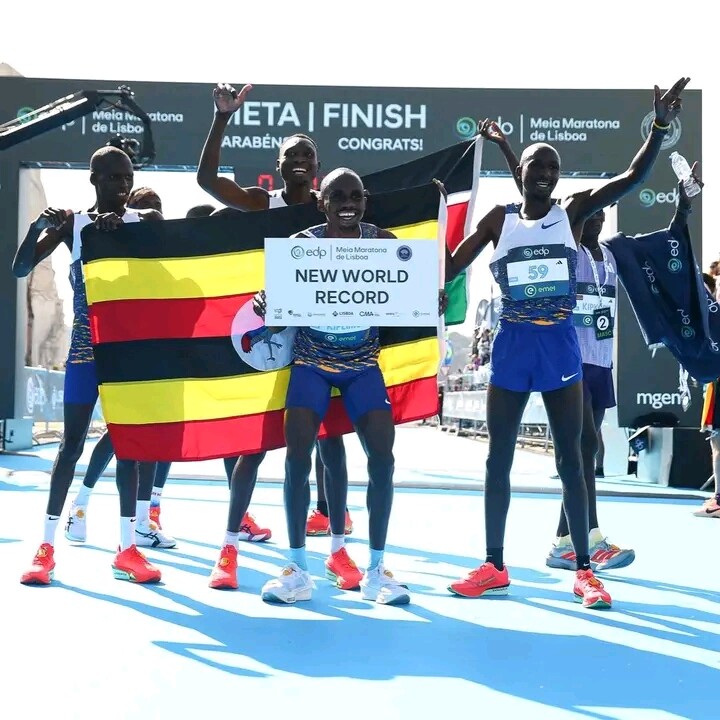
Uganda’s Jacob Kiplimo delivered a breathtaking 57:20 at the EDP Lisbon Half Marathon on 8 March 2026, producing what was then a spectacular world record. His performance underlined his exceptional ability over the half-marathon distance and further strengthened his status as one of the finest road runners of his generation.
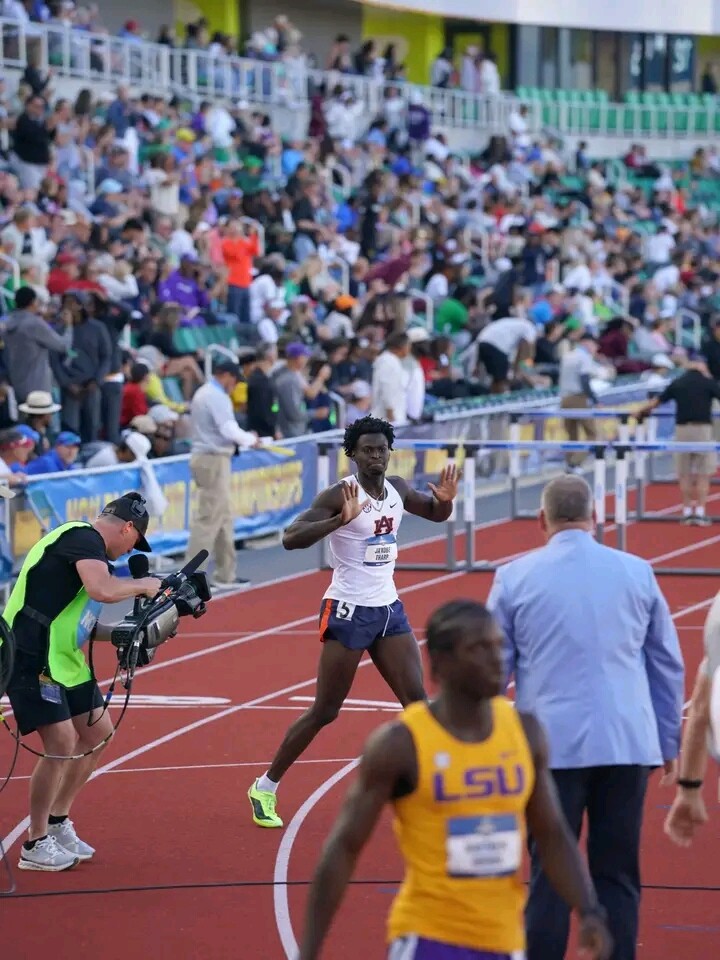
American hurdler Ja’Kobe Tharp created his own piece of history in Eugene on 10 June 2026, storming to 12.75 seconds in the 110m hurdles. The sensational performance came with a legal +1.0m/s following wind and established Tharp as the new world record-holder, marking a remarkable breakthrough on the global stage.
Kenya’s Emmanuel Wanyonyi completed the trio with a sensational 2:11.83 world record in the 1000m. The Olympic champion produced the performance in Monaco, lowering Noah Ngeny’s long-standing 2:11.96 world record from 1999. It was another extraordinary demonstration of Wanyonyi’s speed, strength and versatility beyond his specialist 800m distance.
What makes the three records particularly special is the variety of disciplines involved. Kiplimo conquered the demanding half marathon, Tharp mastered the technical challenge of sprint hurdling, while Wanyonyi extended his middle-distance brilliance over 1000m. Each performance showcased a different form of athletic excellence, yet all three athletes reached the same extraordinary destination: the world-record books.
Accuracy Note: Kiplimo’s 57:20 has since been surpassed by Ethiopia’s Yomif Kejelcha, who ran 56:51 at the Media Maratón Ciudad de Buenos Aires on 23 August 2026, taking 29 seconds off Kiplimo’s mark. The newer performance was still listed as pending ratification, meaning Kiplimo’s mark had been overtaken on the clock even as his record was among those formally ratified.
The ratification of the Kiplimo, Tharp and Wanyonyi performances nevertheless gives official recognition to three spectacular moments that will remain significant chapters in the 2026 athletics season.
Three athletes. Three extraordinary performances. Three officially ratified world records. From Lisbon to Eugene and Monaco, Kiplimo, Tharp and Wanyonyi have added another unforgettable chapter to the story of athletics
by Erick Cheruiyot for My Best Runs.
Login to leave a comment
Indianapolis Ready to Take Centre Stage as USATF Indoor Championships Return for 2027 and 2028
Indianapolis is set to become the home of American indoor track and field for the next two years after USA Track & Field confirmed that the city will host the 2027 and 2028 USATF Indoor Championships at the Indiana State Fairgrounds.
The nation’s leading athletes will compete at the Indiana Farm Bureau Fall Creek Pavilion, with the 2027 championships scheduled for February 19–21, followed by the 2028 edition from February 18–20.
The announcement marks a significant moment for Indianapolis and its long-standing connection with the sport. The 2027 championships will take place 40 years after the city hosted the inaugural World Indoor Championships at the Hoosier Dome in 1987, bringing another major chapter of elite indoor athletics back to a city with a rich track and field history.
Although Indianapolis is home to USA Track & Field's national office and has hosted major athletics competitions over the years, the upcoming editions will be the first time the city has staged the USATF Indoor Championships. The Indiana State Fairgrounds has nevertheless developed into an increasingly important venue for the sport, providing a major platform for elite indoor competition.
The consecutive championships will give athletes two years of high-stakes competition on one of America's growing indoor stages, with national titles and places among the country's finest athletes once again on the line.
The 2028 USATF Indoor Championships will carry even greater significance, serving as a selection event for athletes hoping to represent the United States at the 2028 World Athletics Indoor Championships in Odisha, India. That will add another layer of intensity to the competition as athletes battle not only for national honours but also for the opportunity to compete on the global stage.
For Indianapolis, the return represents more than simply hosting another national championship. Four decades after welcoming the world's finest athletes for the inaugural World Indoor Championships, the city is preparing to once again place track and field firmly in the national spotlight.
With two consecutive editions now secured, Indianapolis is ready to welcome America's best indoor athletes as they chase national glory, international selection and the chance to create another memorable chapter in the city's proud athletics history.
by Erick Cheruiyot for My Best Runs.
Login to leave a comment
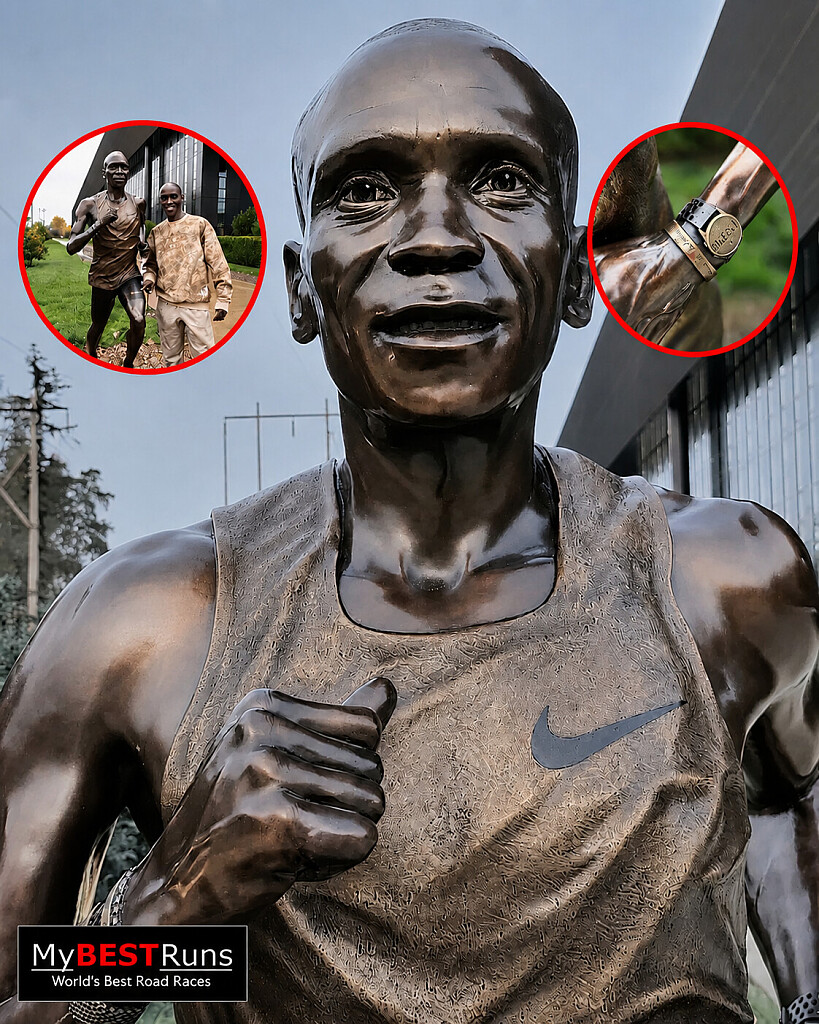
The Statue That Predicted History: How Kipchoge’s ‘No Human Is Limited’ Became Reality
Inside Nike’s World Headquarters in Beaverton, Oregon, a bronze figure stands frozen in motion.
It is Eliud Kipchoge — captured in his unmistakable running posture, every detail carefully sculpted to resemble the Kenyan marathon legend at full stride. But this is more than a statue. It is a permanent reminder of a barrier that once seemed beyond human reach.
Created by Oregon artist Alison Caswell and commissioned by Nike, the life-size bronze sculpture was unveiled in October 2023 as part of the company’s celebration of its 20-year partnership with Kipchoge. Nike described the statue as a tribute to his signature gait and unique running style.
Look closely, however, and the sculpture tells an even deeper story.
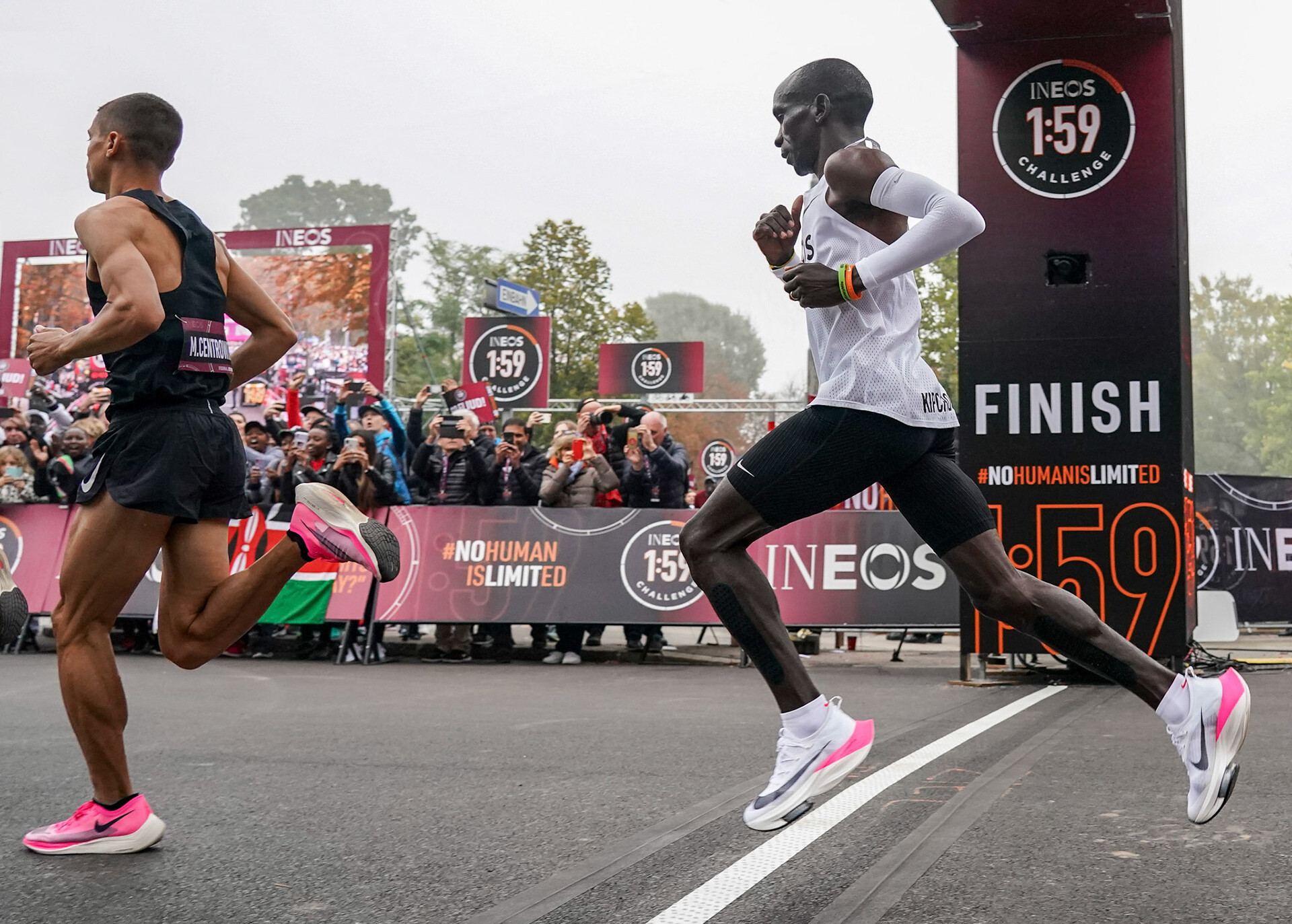
The watch on Kipchoge’s wrist displays 1:59:40, recalling the extraordinary morning of October 12, 2019, when he became the first person to run the marathon distance in under two hours during the INEOS 1:59 Challenge in Vienna.
His official recorded time was 1:59:40.2.
The achievement came under specially controlled conditions, with 41 pacemakers rotating in formations around him and extensive logistical support designed specifically for the attempt. Because it was not a standard record-eligible marathon, the performance was not recognized as an official world record. But its significance went far beyond the record books.
On the statue's left wrist is another detail that carries perhaps even greater meaning.
The wristband bears Kipchoge's famous philosophy:
“No human is limited.”
Those four words became synonymous with his pursuit of the impossible. In Vienna, they were no longer simply a slogan. Kipchoge had demonstrated that a boundary which had appeared almost untouchable could, under the right circumstances, be broken.
Four years later, the bronze figure remained in place at Nike's headquarters — but the marathon world had changed dramatically.
In October 2023, Kelvin Kiptum lowered the official men's marathon world record to 2:00:35 in Chicago, bringing the sport closer than ever to the barrier Kipchoge had already conquered unofficially in Vienna.
Then came April 26, 2026.
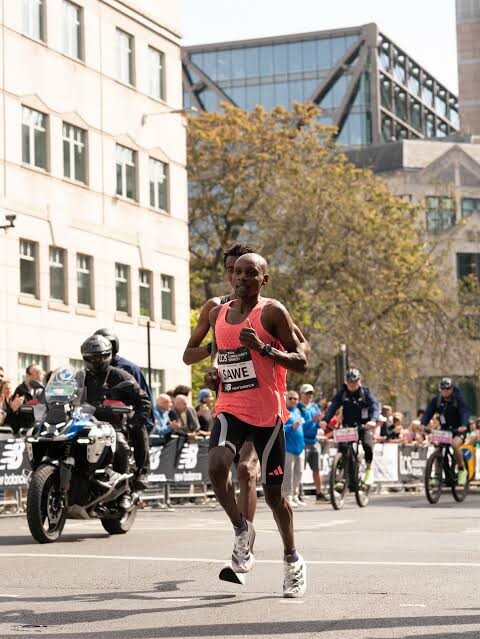
On the streets of London, Kenya's Sabastian Sawe entered territory that had previously belonged only to Kipchoge's extraordinary exhibition achievement.
Sawe won the London Marathon in 1:59:30, becoming the first man to officially complete a record-eligible marathon in under two hours. He also erased Kiptum's world record by 65 seconds. World Athletics subsequently ratified the performance as the official men's marathon world record.
And remarkably, Sawe did it in an ordinary competitive marathon — not on a specially designed course, not with rotating pacemakers, and not under the unique conditions of the 2019 INEOS challenge.
The symbolism is difficult to miss.
When Nike unveiled Kipchoge's statue in 2023, the 1:59:40 engraved on its wrist represented a moment when humanity had first stepped beyond the two-hour marathon barrier.
Today, that number represents something different.
It is no longer the fastest anyone has ever run 42.195 kilometres.
Instead, it has become part of the history that led to something even greater: the first officially recognized sub-two-hour marathon.
Kipchoge opened the door in Vienna.
Kiptum pushed the official world record closer.
And Sawe eventually walked — or rather, ran — through the door.
The bronze statue in Beaverton has not moved. Its watch still points to 1:59:40, and its wristband still carries the words “No human is limited.”
But the meaning of those words has grown.
What once looked like a statement of belief now reads like a prediction.
The statue was built to celebrate what Kipchoge had already achieved.
History has since given it another purpose: to remind the world that yesterday's impossible can become tomorrow's starting point.
by Erick Cheruiyot for My Best Runs.
Login to leave a comment

One Year Since The Pocket Rocket’s Final Race: Shelly-Ann Fraser-Pryce’s Legacy Still Burns Bright
One year ago, the world watched the final race of one of the greatest sprinters in athletics history.
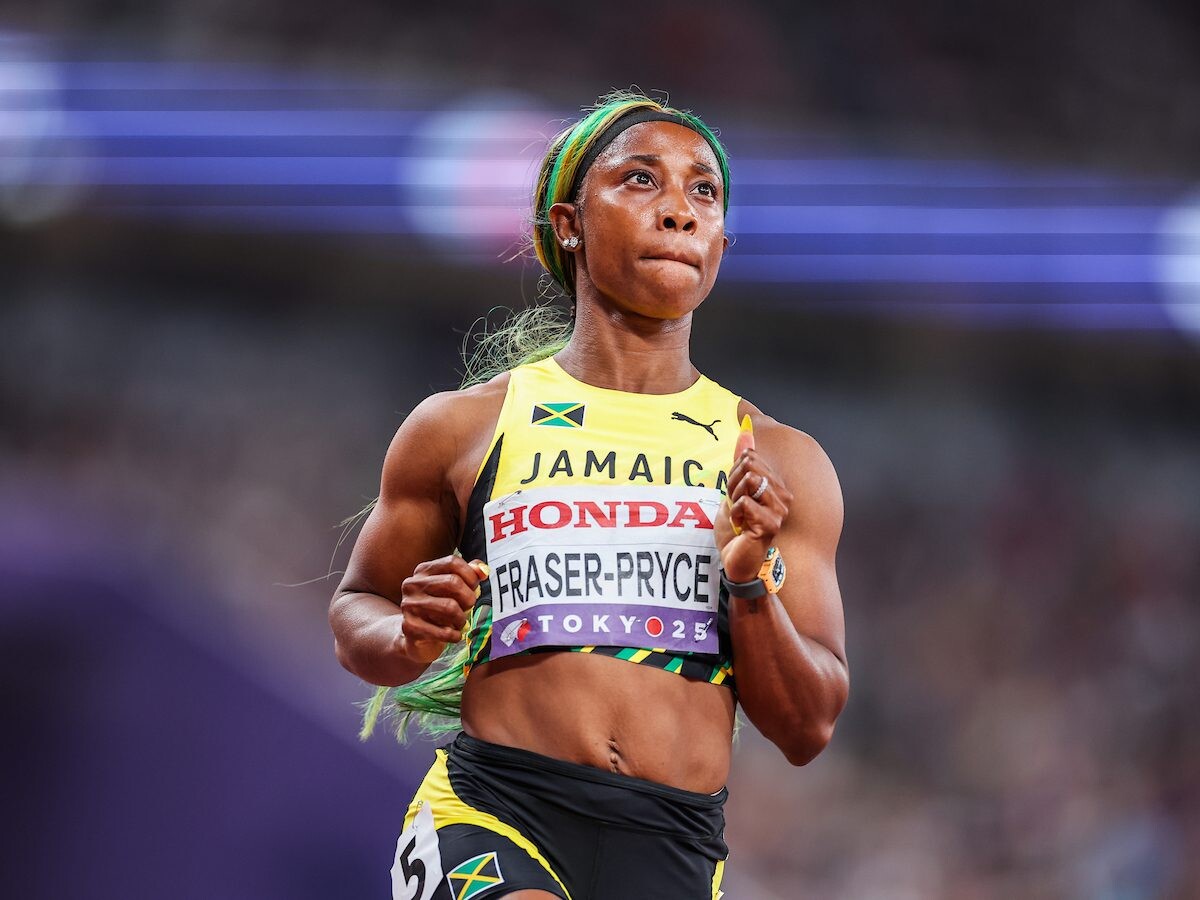
On September 21, 2025, Shelly-Ann Fraser-Pryce stepped onto the track for the final time as a professional athlete. At 38, after an extraordinary 18-year career defined by Olympic triumphs, world titles, remarkable comebacks and unmatched longevity, the Jamaican sprinting icon brought her competitive journey to a close at the World Athletics Championships in Tokyo.
Her final appearance came in the women’s 4x100m relay. Running the opening leg for Jamaica, Fraser-Pryce helped her team secure a silver medal in 41.79 seconds behind the United States. It was a fitting conclusion to a career that had produced an extraordinary collection of global medals and established her among the most decorated sprinters of all time.
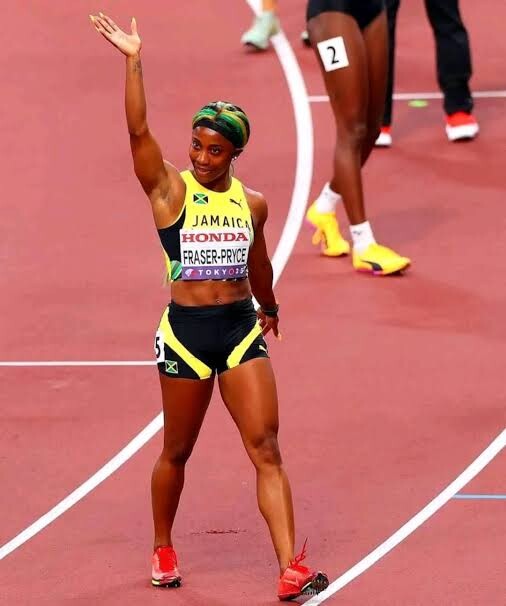
Her final individual race had come earlier in the championships, when she finished sixth in the 100m final in 11.03 seconds. Although she was unable to add another individual world title to her remarkable record, simply reaching another global final at the age of 38 was another demonstration of the extraordinary longevity that had defined her career.
A few weeks later, on October 7, Fraser-Pryce officially announced her retirement from professional track and field, closing the book on an era that had stretched across nearly two decades.
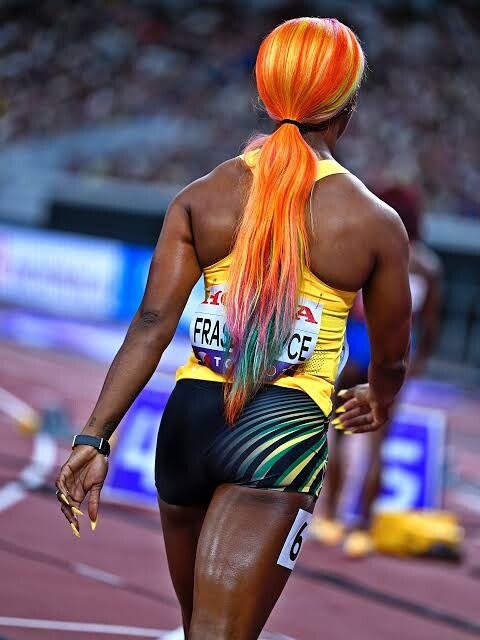
Her journey had begun with Olympic gold in the 100m at Beijing 2008, where she announced herself as one of the world's most explosive sprinters. Four years later in London, she successfully defended her Olympic 100m title, becoming only the third woman in history to accomplish that feat.
But Fraser-Pryce's greatness was never defined by one race or one championship.
She went on to win three Olympic gold medals and eight Olympic medals overall, while collecting 10 World Championships titles. She became the first woman to win five individual world 100m titles, a record that perfectly illustrates her remarkable consistency at the highest level.
Her career also became a story of resilience. After becoming a mother, Fraser-Pryce returned to elite competition and continued challenging the world's best sprinters, proving that motherhood and sporting excellence could exist side by side at the highest level.
Yet statistics only tell part of the Shelly-Ann Fraser-Pryce story.
There was the explosive start from the blocks, the fierce determination through every metre of a race and the unmistakable confidence that made her presence instantly recognisable. There was also the smile that often followed her performances and the pride with which she represented Jamaica on the biggest stages in world athletics.
Beyond the track, she built an influence that extended far beyond her medals and records. Through the Pocket Rocket Foundation, she has supported young Jamaican student-athletes by helping provide opportunities in education and sport.
Retirement, therefore, has not meant walking away from athletics.
In 2026, Fraser-Pryce took on a new role as a Global Ambassador for Laureus, continuing to use her experience, platform and voice to inspire young people and contribute to positive change through sport.
The starting line may no longer be part of her daily life, but her influence remains firmly embedded in the sport she helped shape.
A year after that final evening in Tokyo, women's sprinting has entered a new chapter. New athletes are carrying the sport forward, new rivalries are emerging and new records are waiting to be written.
But the standard Shelly-Ann Fraser-Pryce established will remain.
The Pocket Rocket has left competitive track and field, but the legacy she built over 18 remarkable years is still very much alive.
A year after her final race, which part of Shelly-Ann Fraser-Pryce do you miss the most?
Was it her explosive reaction from the blocks, her relentless competitive spirit, that unmistakable smile after a race, or the pride and passion with which she represented Jamaica?
Or perhaps it is simply the sight of Shelly-Ann Fraser-Pryce standing in the starting blocks, ready to give everything one more time.
One final race. One final medal. Eighteen extraordinary years.
The Pocket Rocket may have left the track, but her legacy will continue to inspire generations to come.
by Erick Cheruiyot for My Best Runs.
Login to leave a comment
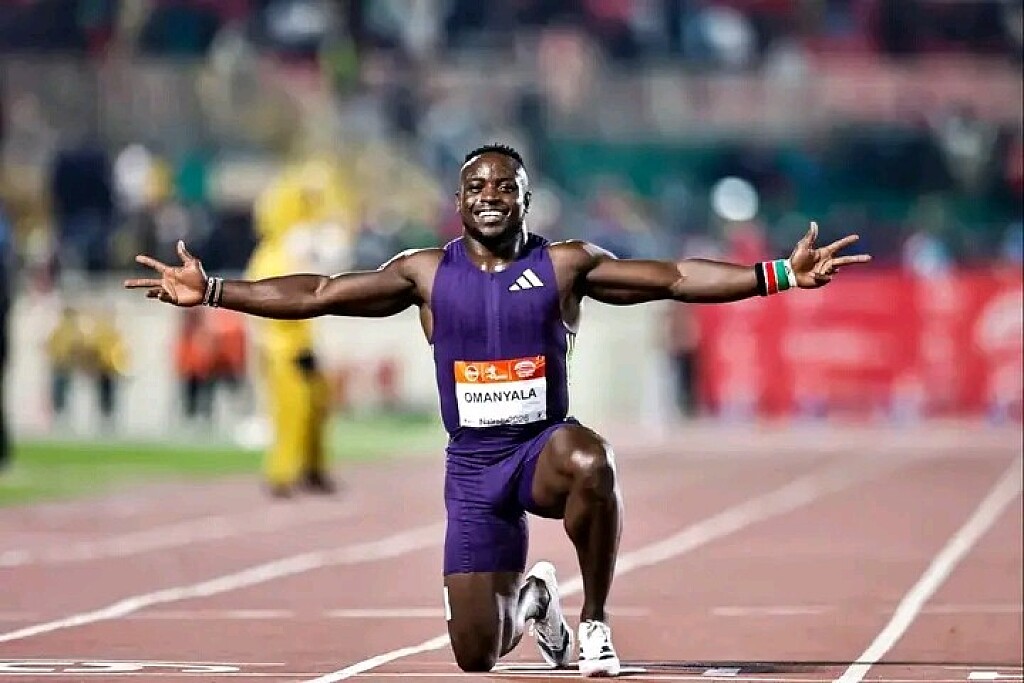
Ferdinand Omanyala’s 2026 Season Ends At The Worst Possible Moment
Ferdinand Omanyala’s 2026 season has come to an abrupt and heartbreaking end, just as the Kenyan sprint star appeared to be building momentum for a memorable finish to his campaign.

The African 100m record-holder has been forced to withdraw from the remainder of the season after suffering a stress fracture to the calcaneus, the heel bone of his left foot. The injury means Omanyala will miss the final two major competitions that were expected to bring his 2026 campaign to a spectacular conclusion — the Wanda Diamond League Final in Brussels and the inaugural World Athletics Ultimate Championship in Budapest.
For an athlete who had worked hard to rebuild his season, the timing could hardly have been more frustrating.
Omanyala revealed that he sustained the injury around two weeks before the Commonwealth Games. Despite the problem, he attempted to manage the discomfort and continue competing. But with the season reaching its most important stage, the Kenyan has now made the difficult decision to step away from competition and give his body the recovery time it needs.
It is a painful ending, but it should not overshadow what had otherwise been a highly encouraging campaign.
Throughout 2026, Omanyala repeatedly demonstrated that his speed remains among the best in the world. One of the standout moments came in Xiamen, where he stormed to victory in the 100m in 9.94 seconds. It was his fastest performance of the season and another powerful reminder of the explosive speed that has made him one of Africa’s most prominent sprinting figures.
His consistency was just as impressive. Omanyala produced five consecutive sub-10-second performances, maintaining a level of speed that very few sprinters can sustain across an extended period. His performances also pushed him into third place in the Diamond League 100m standings, putting him firmly among the leading contenders heading towards the series finale.
That makes his absence from Brussels particularly frustrating.
Omanyala had earned his place among the world’s best, but instead of lining up under the lights for another major showdown, he will now begin the long process of recovery.
The injury had already complicated his Commonwealth Games campaign. Having been carrying the problem into the championships, Omanyala was unable to produce the performance he wanted and failed to progress to the 100m final. Now, with the remaining major competitions of the season also ruled out, his year has officially come to an early conclusion.
There will be no final Diamond League appearance in Brussels. There will be no opportunity to compete at the World Athletics Ultimate Championship in Budapest. And there will be no chance to give his 2026 season the dramatic ending that his earlier performances had promised.
But sometimes an athlete’s most important decision is knowing when to stop.
A stress fracture is not an injury worth gambling with for the sake of another race. At this stage of his career, protecting his long-term health and allowing the injury to heal properly is far more important than forcing his way onto the track for one final appearance.
And when the disappointment fades, Omanyala will have plenty to be proud of.
A 9.94-second season best. Five consecutive sub-10-second performances. A Diamond League victory. Third place in the Diamond League 100m standings. Most importantly, another season in which he showed that he remains capable of competing with the very best sprinters on the planet.
Those achievements cannot be erased by the injury.
For Kenyan athletics, his absence from the final stages of the season is undoubtedly a major disappointment. Omanyala has become one of the most recognizable faces of Kenyan sprinting, carrying the country’s ambitions into a discipline where Kenya has traditionally had less international influence.
But this is not the end of his story.
It is simply an unexpected pause.
For now, the starting blocks can wait. The crowds can wait. The stopwatch can wait.
Omanyala’s next race is the race back to full fitness.
If he gives his body the time and patience it needs, the Kenyan star can return with something still to prove and, perhaps, another chapter of his remarkable sprinting journey waiting to be written.
The 2026 season may have ended sooner than Ferdinand Omanyala wanted, but his story on the track is far from over.
by Erick Cheruiyot for My Best Runs.
Login to leave a comment
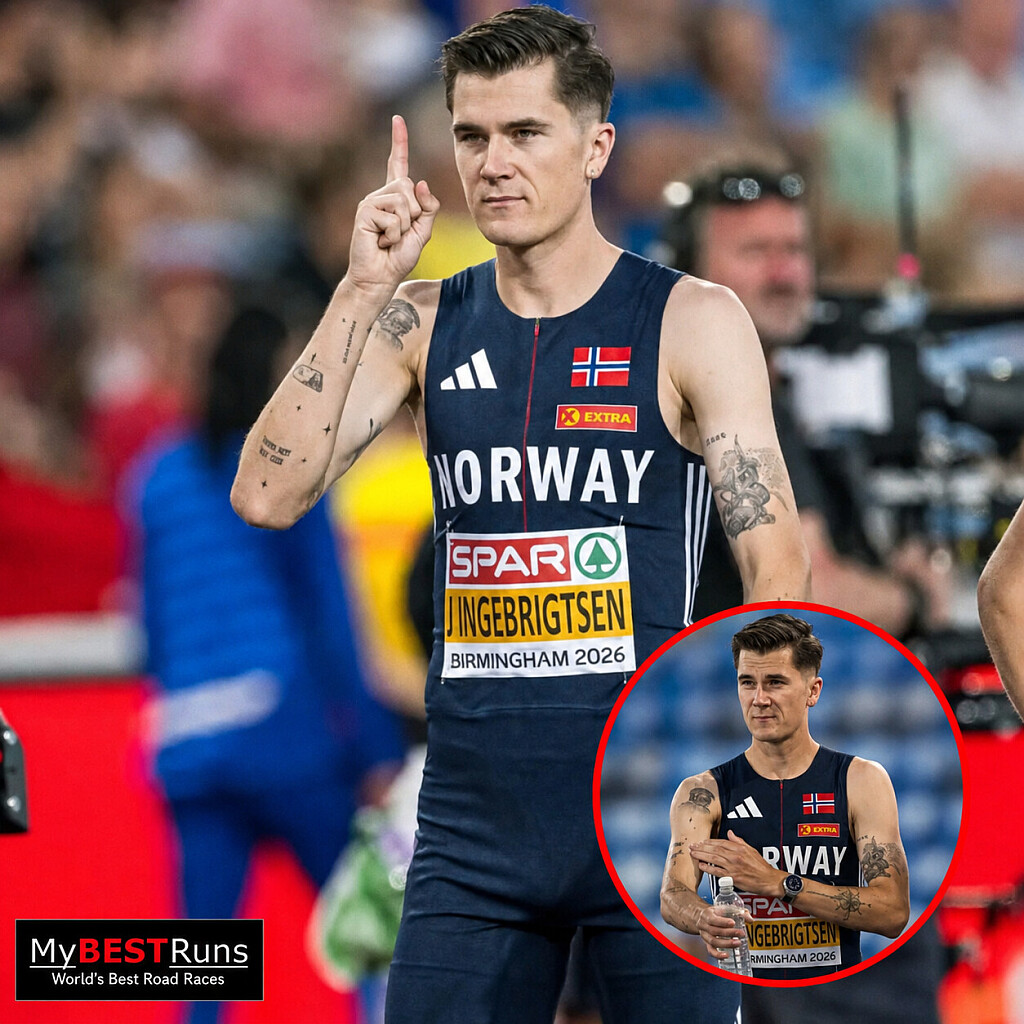
Jakob Ingebrigtsen Heads To Brussels: A Champion Searching For His 1500m Magic
Jakob Ingebrigtsen is heading to Brussels — and the Norwegian superstar arrives with something to prove.
The two-time Olympic champion has been confirmed for the men’s 1500m at the Allianz Memorial Van Damme on September 4, the opening night of the 2026 Wanda Diamond League Final. With Brussels bringing together the world’s elite for the final battle of the Diamond League season, Ingebrigtsen’s presence immediately adds another layer of intrigue to an already spectacular meeting.
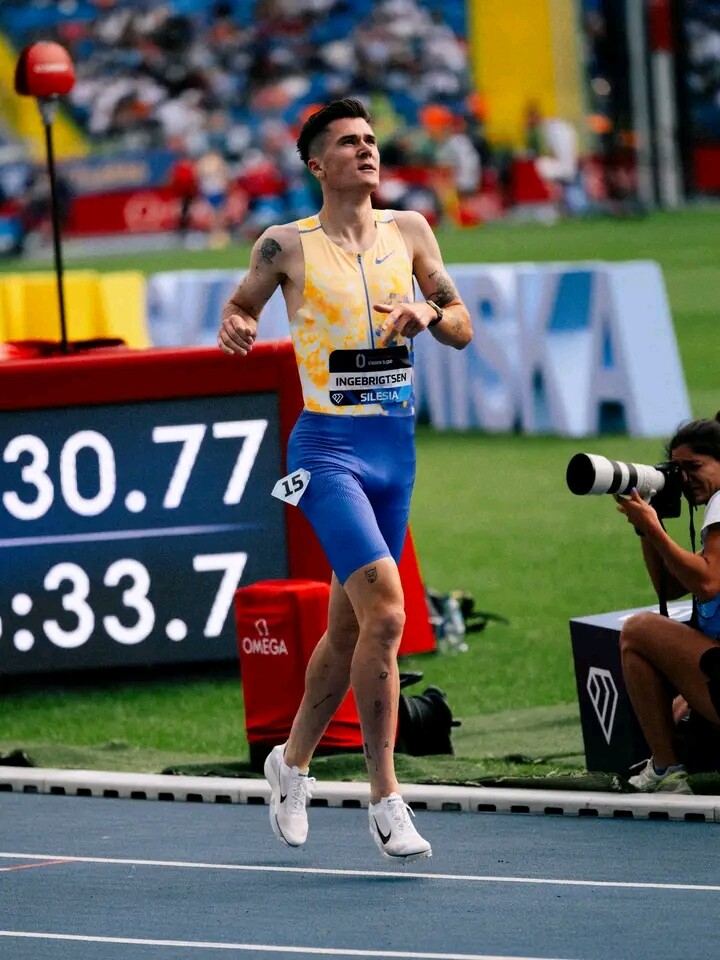
For Ingebrigtsen, however, this is about much more than another Diamond League appearance. It is another important step in a comeback that began under some of the most difficult circumstances of his career.
The Norwegian spent almost 11 months away from competition after an Achilles injury required surgery earlier this year. When he finally returned at the European Championships in Birmingham, there were legitimate questions about how quickly he could rediscover the form that had made him one of the most feared middle-distance runners in the world.
He answered them emphatically.
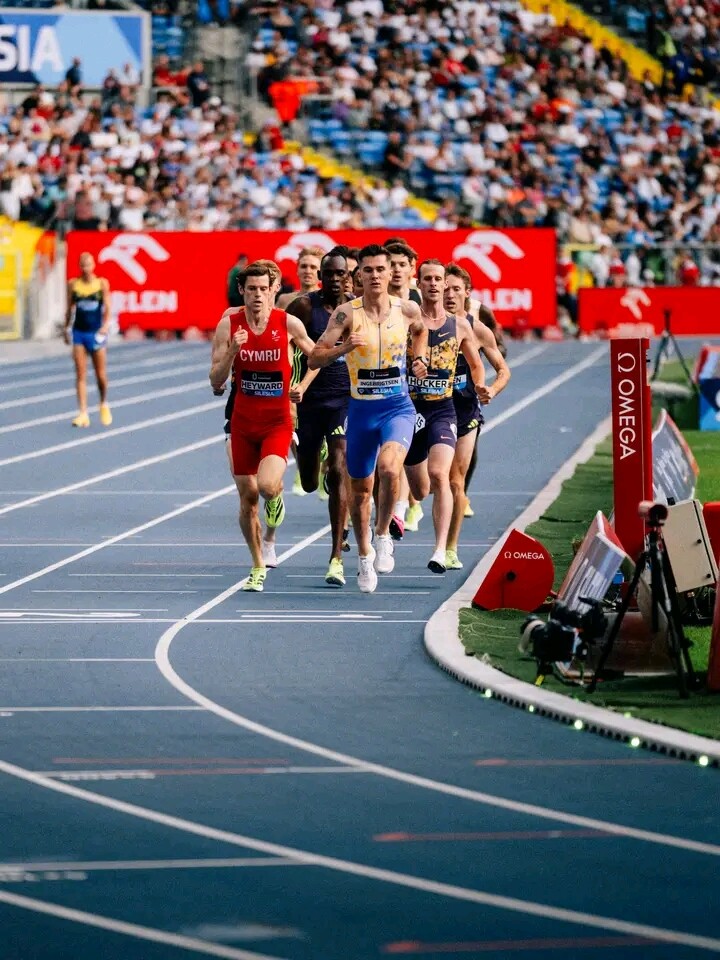
In his first race of 2026, Ingebrigtsen produced a trademark finishing burst to win the European 5000m title in 13:15.29, securing an extraordinary fourth consecutive European crown in the event. The victory also extended his record as the most successful male athlete in European Athletics Championships history.
But the 1500m has presented a very different challenge.
Ingebrigtsen returned to Diamond League competition over 1500m in Silesia on August 23, finishing fourth in 3:31.19. Four days later in Zürich, he was fifth in 3:32.16. Those performances were far from disastrous for an athlete still rebuilding his racing sharpness, but they also revealed that the explosive rhythm that once made him almost untouchable over 1500m is still being recovered.
Now comes Brussels.
The Belgian capital provides Ingebrigtsen with his third Diamond League 1500m race of the season and perhaps his most intriguing opportunity yet to show how far his comeback has progressed.
There is history here, too. In 2024, Ingebrigtsen won the Brussels Diamond League 1500m in 3:30.37, beating Timothy Cheruiyot and Cole Hocker in a world-class field.
Two years later, he returns to the same stage under completely different circumstances.
This time, he is not arriving as the untouchable favourite who has dominated every major 1500m challenge. He is arriving as a champion rebuilding himself — race by race, lap by lap, and with his body still demanding patience after a serious Achilles setback.
That is precisely what makes Friday night so compelling.
Brussels is the opening night of a two-day Diamond League Final, with the Allianz Memorial Van Damme serving as the season-ending championship meeting for the series. For Ingebrigtsen, it represents another opportunity to turn encouraging signs into a definitive statement.
Can he rediscover the speed?
Can he unleash the devastating final 300 metres that has become his trademark?
And, most importantly, can he once again look like the Jakob Ingebrigtsen who has ruled the 1500m and 5000m on the biggest stages?
There is another chapter waiting beyond Brussels.
The World Athletics Ultimate Championship in Budapest, scheduled for September 11–13, promises another major showdown, with Ingebrigtsen expected to face fierce opposition including Britain’s Josh Kerr. The rivalry between the two has already produced some of the most compelling middle-distance battles of recent years.
But before Budapest, there is Brussels.
One race. One final Diamond League stage. One more opportunity for Ingebrigtsen to remind the athletics world that his comeback is not simply about returning to competition — it is about returning to the very top.
The Norwegian has already shown that the championship instinct remains intact.
Now, he needs the 1500m speed to come back.
And if Jakob Ingebrigtsen finds that missing gear in Brussels, the rest of the middle-distance world may have a serious problem.
by Erick Cheruiyot for My Best Runs.
Login to leave a comment
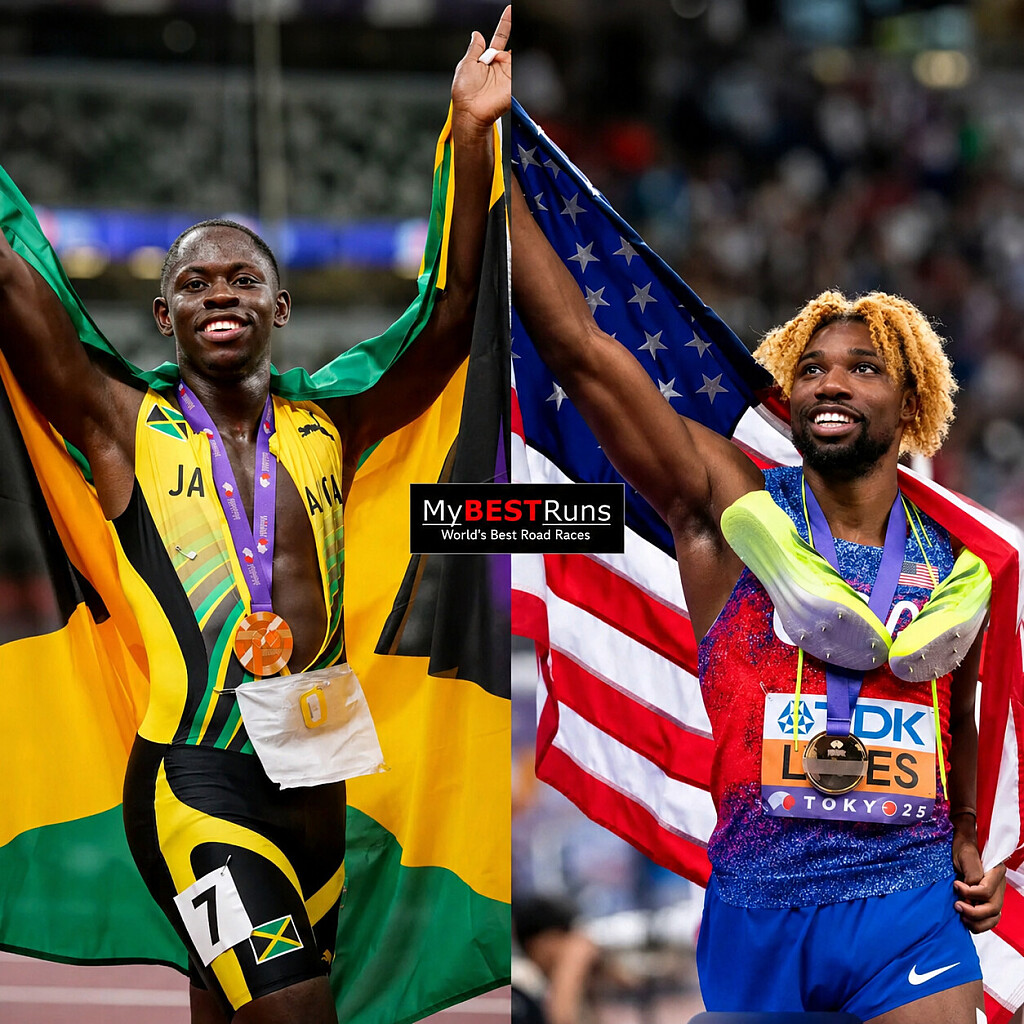
SEVILLE vs LYLES: The Ultimate 100m Showdown Is Coming to Budapest
Budapest is preparing for a sprinting spectacle unlike any other as Jamaica’s Oblique Seville and American superstar Noah Lyles prepare to renew one of the most intriguing rivalries in men’s 100m on the biggest stage of the inaugural World Athletics Ultimate Championship, set for September 11–13, 2026.

This is more than another race. It is a collision between two global champions who have already established themselves among the leading figures of the modern sprinting era. Seville enters the showdown as the reigning world champion, while Lyles arrives with the credentials of an Olympic champion, setting up a mouthwatering battle for supremacy over athletics’ blue-riband distance.
Both sprinters have earned automatic places in Budapest as designated “Ultimate Stars”, a reward for their previous global gold-medal success. That means they will not need to navigate the qualification route like many of their rivals. Instead, the spotlight will immediately fall on the two superstars when they step onto the track in Budapest.
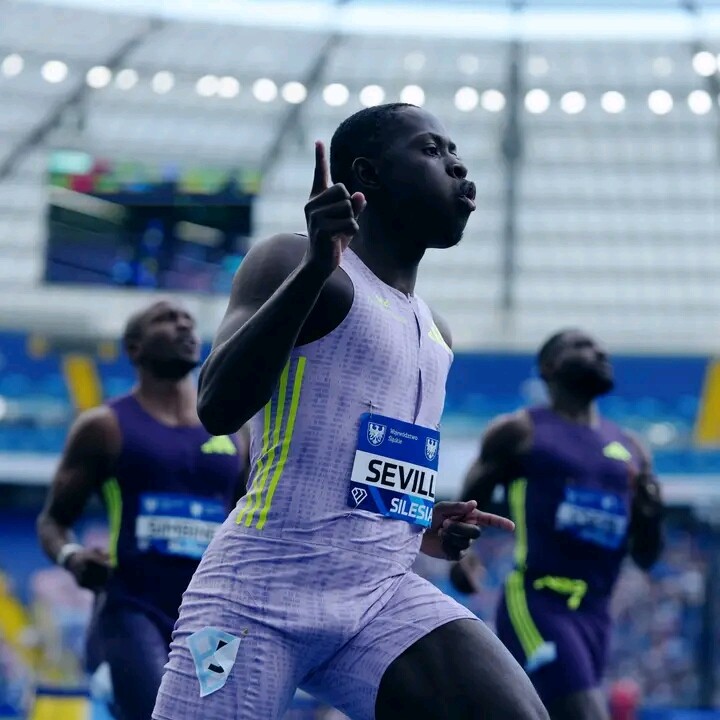
For Seville, the championship represents another opportunity to demonstrate that his rise to the top of the 100m was no coincidence. The Jamaican has developed into a formidable championship sprinter, combining explosive acceleration with the composure required to deliver when the pressure is at its highest. Now, he faces perhaps his most glamorous challenge yet against one of the most decorated sprinters of his generation.
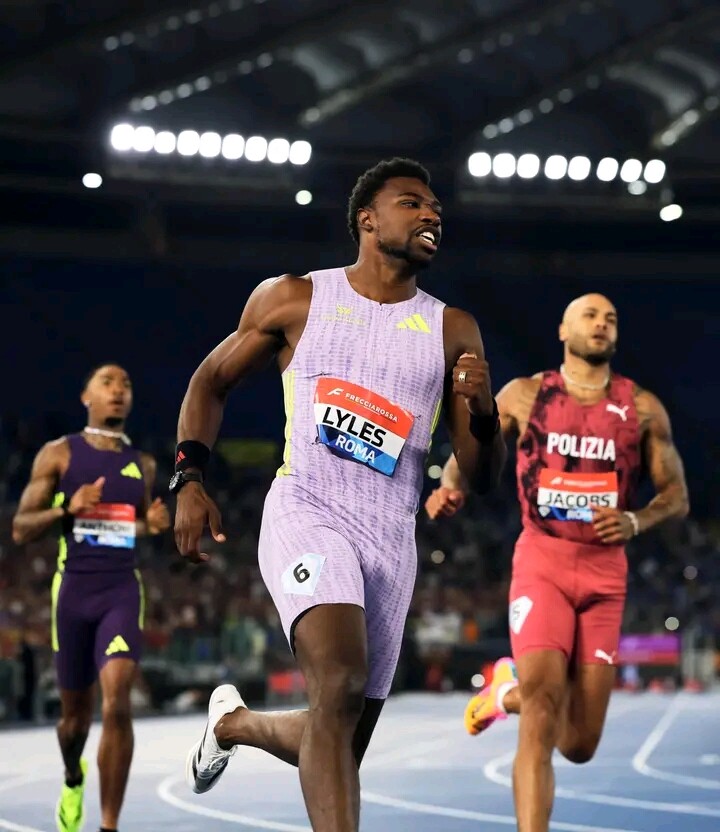
Lyles, meanwhile, brings a résumé built on championship success, confidence and an ability to thrive under the brightest lights. The American has become one of the sport’s biggest personalities, but his ambitions extend far beyond the spotlight. In Budapest, he will be chasing another major victory and the chance to add the Ultimate Championship crown to his growing collection of global honours.
And there is plenty more at stake than bragging rights.
The three-night Budapest finale will bring together the world’s elite athletes, with the winner of each event set to receive a massive US$150,000 prize and, more importantly, the distinction of becoming an Ultimate Champion.
That combination of prestige and prize money should make the 100m one of the most eagerly anticipated races of the entire championship. With Seville representing Jamaica and Lyles carrying American hopes, every fraction of a second could decide who walks away as the ultimate sprint king.
The rivalry now moves to a new stage, with two champions arriving in Budapest carrying different strengths, different personalities and the same burning ambition: to be the man standing when the fastest race of the night is over.
Seville or Lyles? Jamaica’s reigning world champion or America’s Olympic champion?
When the blocks are set and the gun fires in Budapest, who will have the speed, composure and finishing power to claim the Ultimate 100m crown — Oblique Seville or Noah Lyles? The debate starts now.
by Erick Cheruiyot for My Best Runs.
Login to leave a comment

Athletics Must Remain Number One” — Coe’s Final Challenge As The Race For His Successor Heats Up
The battle for the future of world athletics is already taking shape, but outgoing World Athletics President Sebastian Coe has made one message unmistakably clear: athletics must remain at the heart of the Olympic Games.
Speaking ahead of the Diamond League meeting in Zurich, Coe said he remains highly optimistic about the sport’s future and insisted that athletics must protect its position as the leading sport of the Olympic movement.

“There are only two truly global sports, one is football and one is athletics. We must maintain our position as the number one Olympic sport,” Coe said.
The 69-year-old Briton is approaching the final year of his presidency after first taking charge of the global governing body in 2015. He was re-elected for a third term in 2023, which, under World Athletics’ term limits, is his final mandate.
Coe will leave office in 2027, when the next World Athletics president is elected at the Elective Congress in Beijing, immediately before the 2027 World Athletics Championships. The new president will serve a four-year term covering 2027–2031.

And the succession battle is already gathering momentum.
Among the candidates declared eligible so far are prominent figures from within the sport’s leadership, including World Athletics Vice-Presidents Adille Sumariwalla of India, Raul Chapado of Spain and Ximena Restrepo of Colombia. The current list also includes Yuko Arimori of Japan, Hatem Fouda of Egypt, Ivan Garcia of Uruguay, Jean Gracia of France and Kenya’s Jackson Tuwei.
Restrepo brings a particularly distinguished competitive background to the contest. The Colombian won Olympic bronze in the women’s 400 metres at Barcelona 1992 and became the first woman elected as a World Athletics Vice-President in 2019.
For Coe, however, the final chapter of his presidency is not simply about preparing for his departure. He says his priority over the next year is to continue strengthening the sport so that his successor inherits an organisation capable of growing even further.
“I've never been more optimistic about the future of the sport,” Coe said, adding that whoever succeeds him will inherit “a very much stronger sport” than the one he took over in 2015.
His presidency has coincided with significant changes across the sport, including governance reforms, commercial development and efforts to make athletics more innovative and globally engaging. The launch of the new World Athletics Ultimate Championship in Budapest this September is another example of the organisation’s attempt to create a shorter, high-stakes competition featuring many of the world’s leading athletes.
But the next president will inherit an enormous responsibility.
Athletics is the foundation of the Olympic Games, producing some of the most iconic moments in Olympic history and bringing together athletes from virtually every corner of the world. The challenge for Coe’s successor will be to preserve that unique position while making the sport more commercially powerful, more accessible to younger audiences and even more compelling in an increasingly competitive global sporting landscape.
Coe believes the opportunity is there.
As he prepares to hand over the presidency in 2027, his challenge to the next generation of World Athletics leadership is clear: protect the sport’s Olympic identity, keep pushing its boundaries and make sure athletics remains the heartbeat of the Games.
The question now is not whether Coe will leave a significant mark on athletics, but who will have the vision, influence and leadership required to carry the sport into its next era.
Who do you think should lead World Athletics after Sebastian Coe?
by Erick Cheruiyot for My Best Runs.
Login to leave a comment
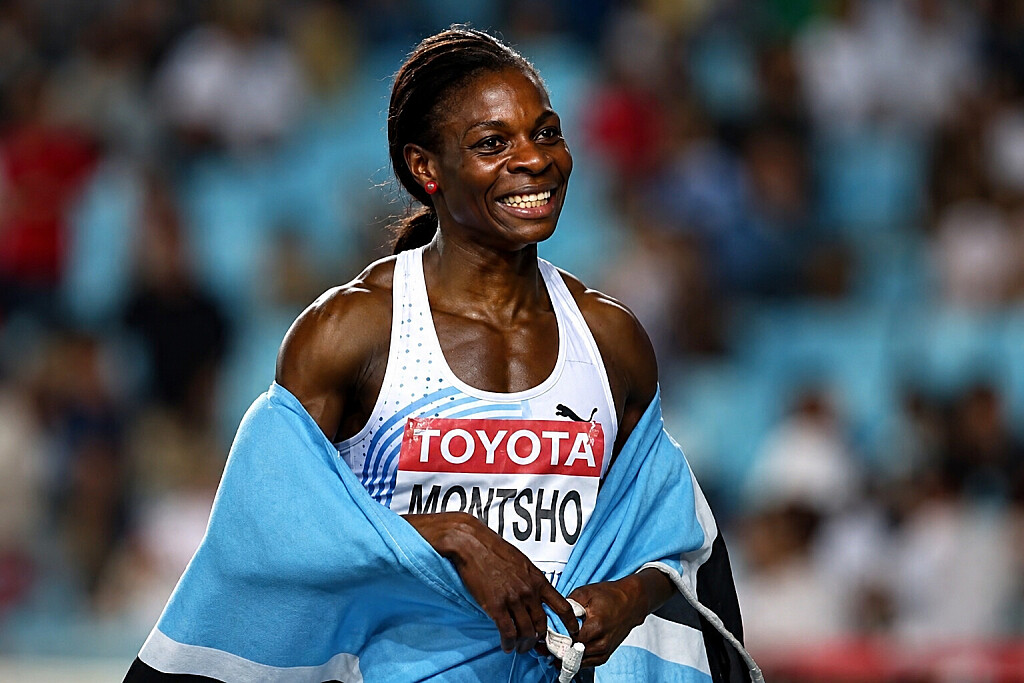
Montsho’s Historic 49.56: The Night Botswana Beat Allyson Felix in a Daegu Thriller
29 August 2011 — Daegu, South Korea
Some races are remembered for their times. Others are remembered for what they mean. The women’s 400m final at the 2011 World Championships in Daegu belonged firmly to the second category.
On 29 August 2011, Amantle Montsho produced one of the most important performances in Botswana’s athletics history, edging Allyson Felix by just three hundredths of a second to become the country’s first-ever World Championships gold medallist.
Montsho entered the final as one of the leading 400m runners in the world, having dominated much of the 2011 Diamond League season. But standing between her and global glory was a formidable field that included Olympic and world-class stars such as Felix, Sanya Richards-Ross, Shericka Williams and Anastasiya Kapachinskaya.
From the gun, Montsho attacked the race with purpose. Running in lane four, she carried tremendous momentum through the opening half of the lap and entered the home straight with a narrow advantage. Felix, drawn immediately inside her in lane three, responded brilliantly and began closing the gap as the two charged towards the finish.
The final metres became a straight fight between Botswana and the United States.
Felix threw everything at Montsho in the closing stages, but the Botswana star refused to surrender. She crossed the line in 49.56 seconds, with Felix just behind in 49.59. The margin was only 0.03 seconds, but it was enough to make history.
Montsho's winning time was not only a personal breakthrough but also a Botswana national record. It made her the first athlete from Botswana to win a World Championships gold medal and gave the southern African nation its first-ever World Championships medal in the process.
For Felix, the silver medal came with a remarkable performance of her own. Her 49.59 was a personal best and represented one of the finest 400m races of her career at that point. Despite coming agonisingly close to gold, Felix had pushed Montsho all the way to the finish line in one of the closest major championship 400m finals in history.
Behind the leading pair, Francena McCorory delivered another strong performance. Having already run a personal best of 50.24 in the semi-finals to qualify for the final, the American clocked 50.45 in the championship race. At the time, she crossed the line in fourth behind Kapachinskaya, who ran 50.24.
But the medal standings would later change.
Kapachinskaya was subsequently disqualified as part of a doping case involving violations dating back to the 2008 Olympic Games. As a result, her Daegu result was annulled, and McCorory was officially promoted from fourth to bronze medal position. World Athletics later recognised McCorory among the athletes receiving reallocated medals in 2017.
That change gave the race an additional historical dimension. What began as a breathtaking battle between Montsho and Felix ultimately became a championship podium of Montsho, Felix and McCorory.
More than a decade later, the image of Montsho and Felix racing shoulder-to-shoulder down the Daegu straight remains one of the defining moments of the 2011 World Championships. For Botswana, it was a breakthrough moment that announced Montsho on the biggest stage. For Felix, it was another chapter in a career filled with major championship success.
And for fans of the 400m, it was simply a spectacular race — 49.56 versus 49.59, with only three hundredths separating gold from silver.
by Erick Cheruiyot for My Best Runs.
Login to leave a comment
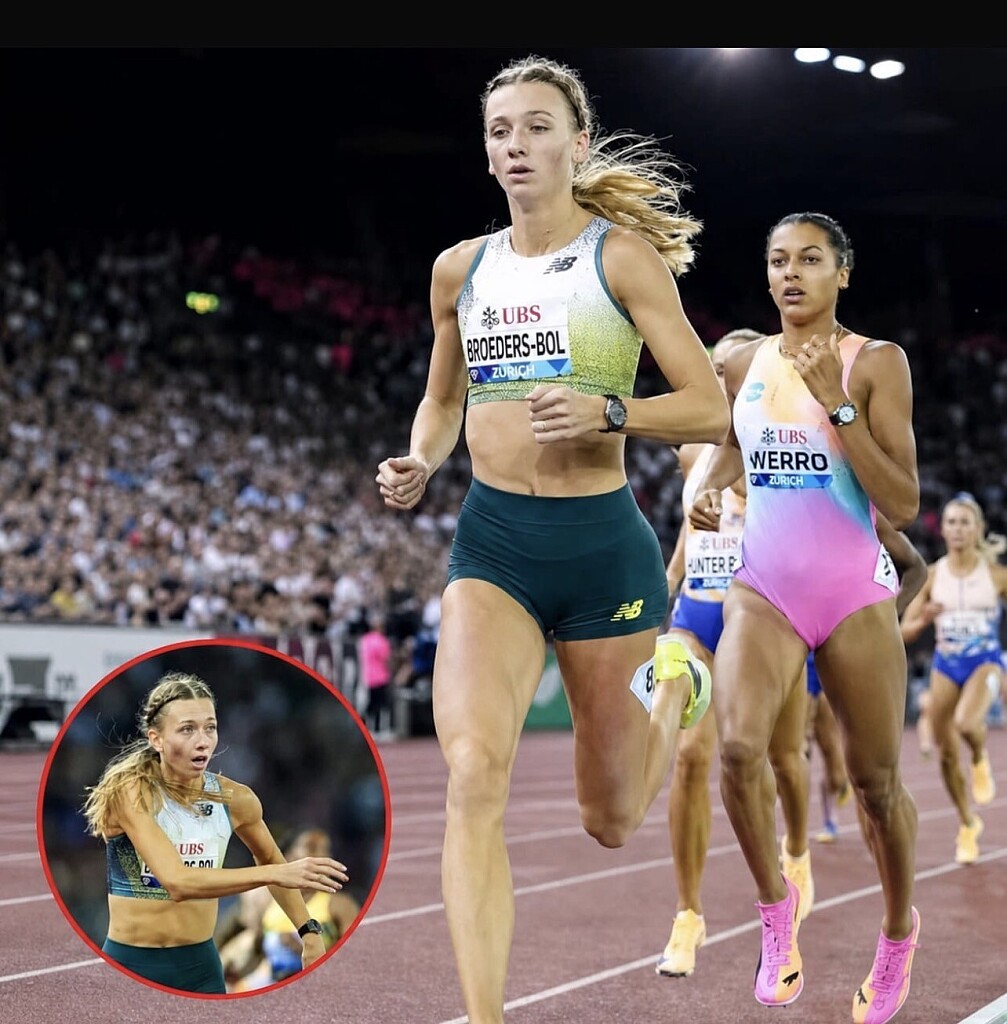
Femke Broeders-Bol’s Stunning 800m Transformation: From Hurdles Star to Dutch Record Breaker
Femke Broeders-Bol has spent much of her career dominating the 400m hurdles, but in 2026 the Dutch star has opened an entirely new chapter — and her transformation into a world-class 800m runner is becoming one of the most fascinating stories in athletics.
What initially looked like an intriguing experiment has rapidly developed into something far more serious.
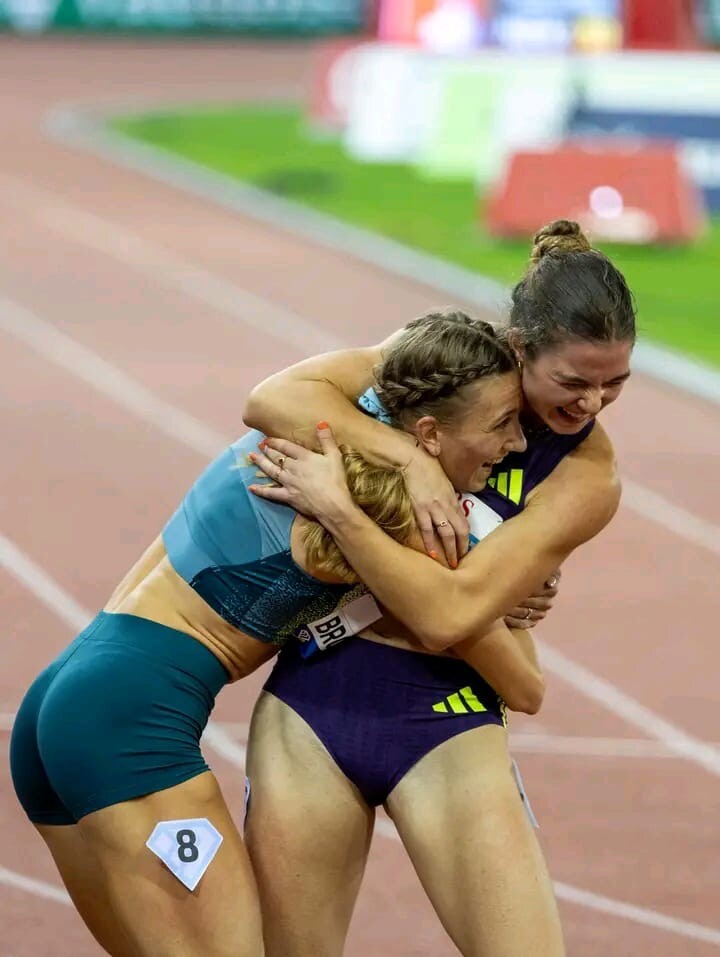
Broeders-Bol is now running times that place her firmly among the elite of the women’s 800m.
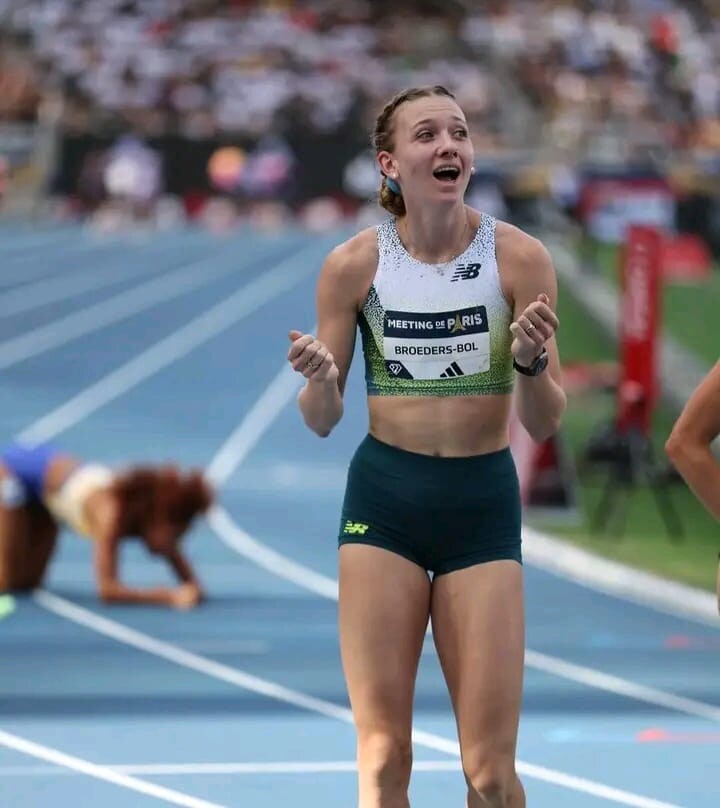
Her breakthrough has been remarkable in both its speed and scale. After making the transition to the two-lap event, she quickly demonstrated that the qualities that made her one of the world’s best 400m hurdlers could be transferred to the longer distance.
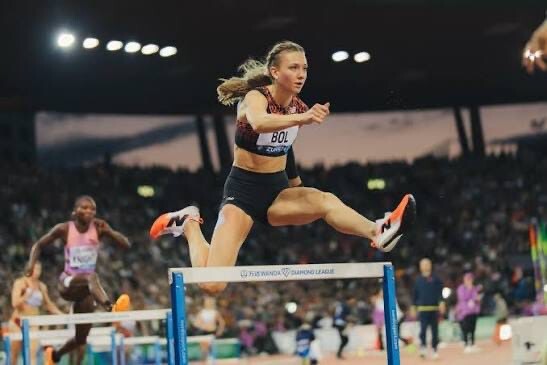
Her 2026 progression tells the story.
She clocked 1:55.60 in Paris on June 28, followed by 1:57.13 in Ostrava, before producing 1:55.54 at the European Championships in Birmingham. That performance equalled Ellen van Langen’s long-standing Dutch record of 1:55.54, a mark that had stood since the 1992 Olympic Games.
Just days later, Broeders-Bol went even faster.
At the Lausanne Diamond League on August 21, she ran 1:55.41, lowering the Dutch record outright and finishing second behind Switzerland’s Audrey Werro.
Then came Zürich.
On August 27, Broeders-Bol produced another extraordinary performance, stopping the clock at 1:54.71 to break her own national record by 0.70 seconds in less than a week. She finished second to Werro, who ran a spectacular 1:53.70 — the third-fastest time ever recorded in the women’s 800m.
For Broeders-Bol, however, the biggest headline was her own transformation.
Her 400m hurdles background has provided an exceptional foundation for the 800m. Years of racing over barriers have developed her speed, strength, rhythm, speed endurance and ability to maintain efficient mechanics when fatigue sets in. Those qualities are particularly valuable over two laps, where the ability to combine raw pace with endurance can separate the very best from the rest.
The challenge has been converting that 400m speed into sustained 800m pace.
And she is doing exactly that.
A 1:54.71 performance is no longer the result of an athlete simply testing herself in another event. It is the mark of a genuine 800m contender.
What makes the development even more intriguing is that Broeders-Bol herself has appeared surprised by just how quickly she has adapted to the distance.
In Zürich, she showed once again that her ceiling over 800m may be considerably higher than anyone initially expected.
At just 26, the Dutch star now finds herself at the beginning of a potentially extraordinary second chapter in her career. Her established reputation as a 400m hurdles powerhouse has already been transformed by a new national record over 800m — and she is continuing to improve at a breathtaking rate. World Athletics lists her 1:54.71 as her current personal best and ranks her among the leading women over the distance.
The question now is no longer whether Broeders-Bol can run the 800m.
It is how fast she can ultimately go.
If this remarkable progression continues, the road towards the Los Angeles 2028 Olympics could become one of the most intriguing storylines in women’s middle-distance running.
Femke Broeders-Bol has already proven that she can conquer the hurdles.
Now, she is showing that two laps of the track may belong to her too.
by Erick Cheruiyot for My Best Runs
Login to leave a comment

Sydney Marathon 2026: World Champions, Record Hunters And A Star-Studded Showdown
SYDNEY, AUSTRALIA — August 30, 2026
Sydney is preparing for a spectacular morning of marathon racing as reigning world champions Peres Jepchirchir of Kenya and Alphonce Simbu of Tanzania headline a world-class elite field at the TCS Sydney Marathon on Sunday, August 30.
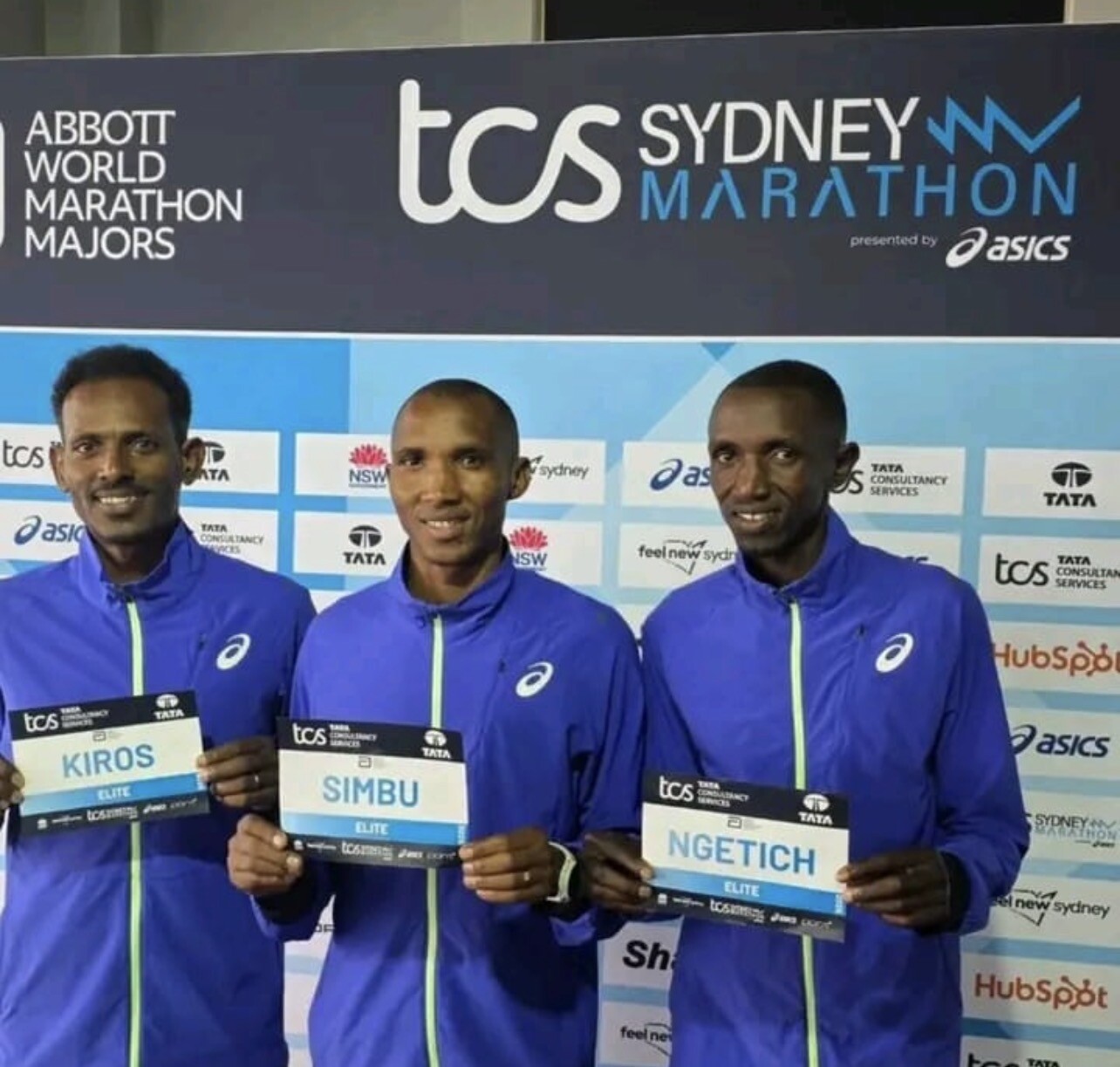
The race is set to provide another defining moment for Australian distance running, with more than 40,000 participants expected to take on the streets of Sydney and a remarkable collection of elite athletes competing for victory on one of the world's newest Abbott World Marathon Majors.
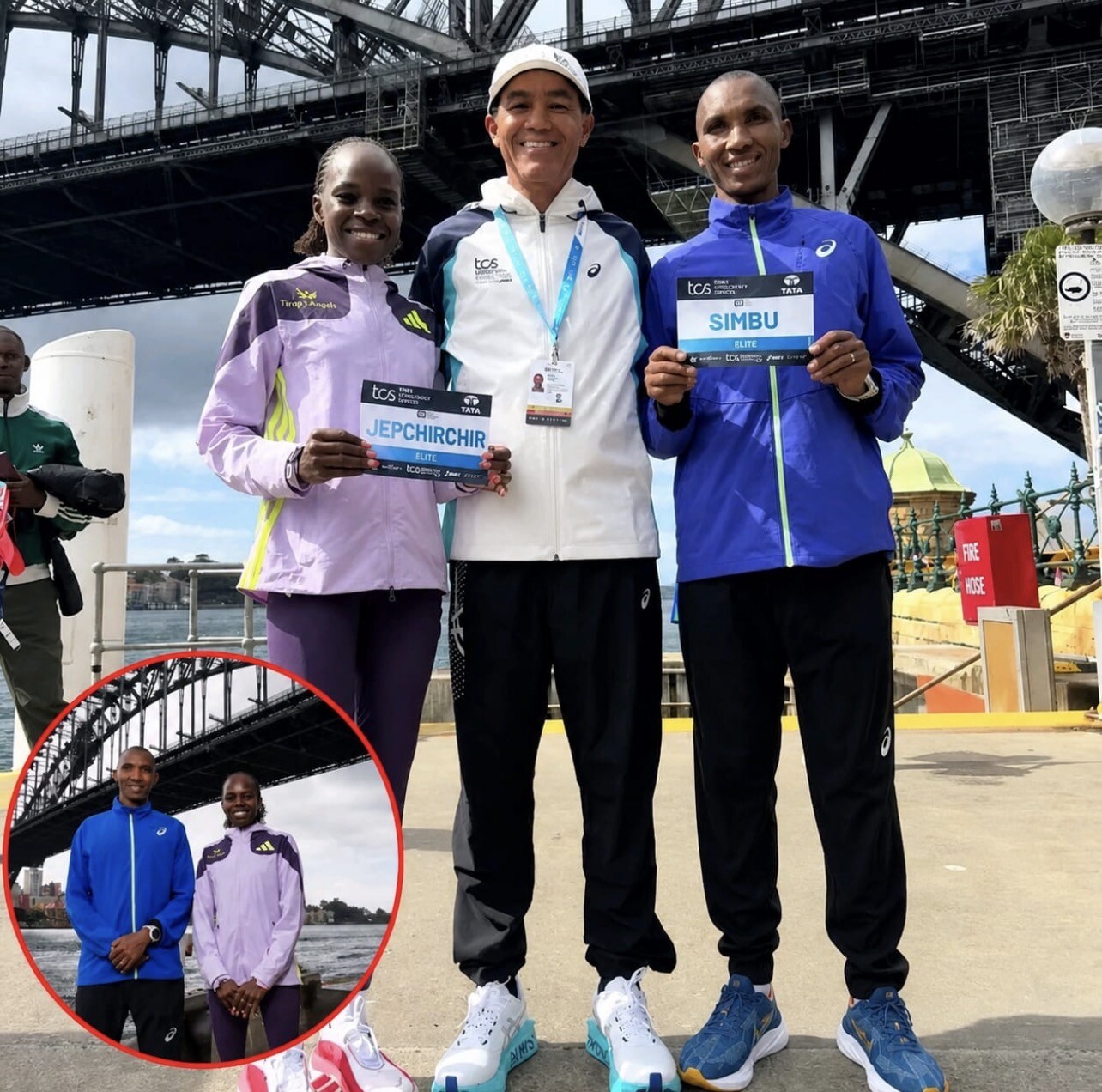
Jepchirchir and Simbu will bring an added layer of prestige to the occasion as the reigning women's and men's world marathon champions. Their presence ensures that the spotlight will be firmly fixed on Sydney as some of the world's finest distance runners battle for one of the most coveted titles on the international marathon calendar.

There will also be records in the crosshairs. The men's course record stands at 2:06:06, while the women's benchmark is 2:18:22, meaning the quality of the field has created genuine anticipation that both marks could come under threat.
In the men's race, Simbu arrives with considerable confidence and an ambitious target. The Tanzanian produced one of the most dramatic finishes of the 2025 World Athletics Championships in Tokyo, holding off Germany's Amanal Petros to claim the world title. With a personal best of 2:02:47, Simbu has the speed, championship experience and belief to challenge the very best, and he has made no secret of his desire to attack Sydney's course record.
However, standing in his way is an elite group led by Ethiopia's Sisay Lemma, whose outstanding 2:01:48 personal best makes him the fastest entrant in the field. A former London and Boston Marathon champion, Lemma brings a wealth of experience at the highest level and will be one of the principal threats to Simbu's ambitions.
Kenya will also have a strong presence, with Timothy Kiplagat and Vincent Ngetich adding further firepower to an already formidable men's lineup.
Perhaps the most intriguing storyline, however, belongs to Ethiopian track star Hagos Gebrhiwet, who is set to make his highly anticipated marathon debut. A former Olympic 5,000m medallist and one of the world's fastest track distance runners, Gebrhiwet has already shown extraordinary endurance over shorter distances, including a 57:41 half-marathon personal best. His transition to the marathon will be closely watched, with fans eager to discover whether his world-class track speed can be converted into success over 42.195 kilometres.
The depth of the men's field is remarkable. No fewer than 25 athletes have broken 2:10, while 19 have already recorded times faster than Sydney's existing course record, setting the stage for a race that could develop into a battle of extraordinary pace and tactics.
The women's contest promises just as much drama, with Jepchirchir leading the way. The Kenyan superstar arrives in Sydney as the reigning world champion and Olympic champion, carrying a 2:14:43 personal best, the fastest among the women entered.
Yet victory will not come easily. Jepchirchir faces a powerful Kenyan challenge from Irine Cheptai, who owns a 2:17:51 personal best and has already established herself as a major force on the international marathon circuit.
Tanzania's Magdalena Shauri, the country's national record holder with a personal best of 2:18:03, will provide another serious threat, while the experienced Vivian Cheruiyot of Kenya adds further championship pedigree to an already impressive women's field.
Ethiopian stars Shure Demise and Haven Hailu, alongside Uganda's Stella Chesang, will also be looking to make their mark as the race unfolds through Sydney's iconic streets.
The setting could hardly be more spectacular. Starting in North Sydney, the marathon takes runners across the famous Sydney Harbour Bridge before heading towards the unforgettable finish at the Sydney Opera House. With the city providing a breathtaking backdrop, the race has all the ingredients for another historic chapter in its rapid rise on the global marathon scene.
For the elite athletes, however, the beauty of Sydney will quickly become secondary once the gun goes off.
The champions will be chasing victory. The record hunters will be chasing history. And for Gebrhiwet, an entirely new chapter of his career will begin.
Two reigning world champions. Multiple sub-2:05 contenders. A world-class women's field. A highly anticipated marathon debut. And course records that could be under serious threat.
Everything is in place for an unforgettable Sunday in Sydney.
Will Alphonce Simbu turn his ambition into a new course record?
Can Sisay Lemma's 2:01:48 experience carry him to victory?
Will Hagos Gebrhiwet announce himself as a future marathon superstar?
And can Peres Jepchirchir add the Sydney Marathon crown to her already extraordinary list of achievements?
Sydney is ready.
The champions have arrived. The records are waiting. The stage is set for a spectacular showdown.
by Erick Cheruiyot for My Best Runs
Login to leave a comment

Sydney Marathon
The Sydney Marathon is a marathon held annually in Sydney, Australia. The event was first held in 2001 as a legacy of the 2000 Summer Olympics, which were held in Sydney. In addition to the marathon, a half marathon, 9 kilometres (5.6 mi) "Bridge Run", and a 3.5 kilometres (2.2 mi) "Family Fun Run" are also held under the banner...
more...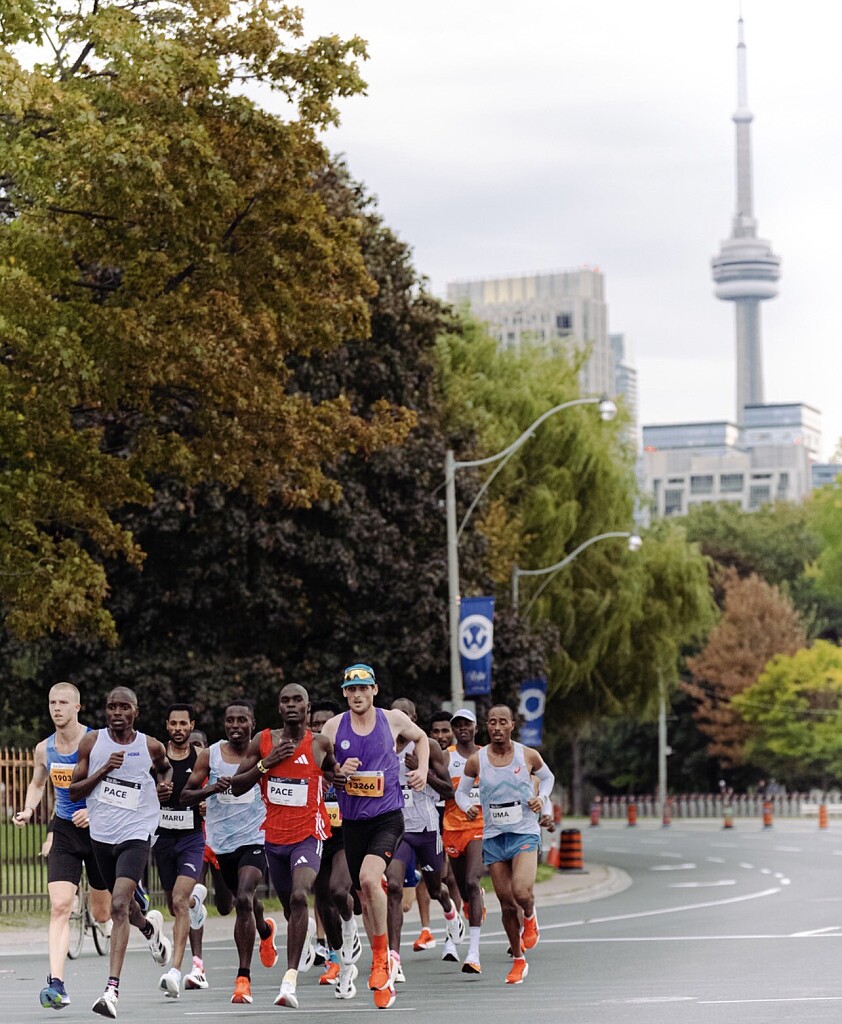
Two London-Area Standouts Set for Marathon Debuts at Toronto Waterfront
Two Canadian distance running stalwarts will make their marathon debuts at the 2026 TCS Toronto Waterfront Marathon October 18. Both make their homes in the London area of southwestern Ontario.
The event is a World Athletics Elite Label race and also serves as the official Athletics Canada Canadian Marathon Championships.
Connor Black and Jeremy Coughler are former training partners and Canadian championship medalists over 10,000m and cross country. They have followed different paths since the retirement of their coach, Dave Mills, although they occasionally meet for long runs while preparing for Toronto.
Coughler still follows a program designed by Mills—a special exception made by his former coach—while Black has worked with two-time Canadian Olympic marathoner Reid Coolsaet for the past two years. Their approaches to the Toronto race could hardly be more different.
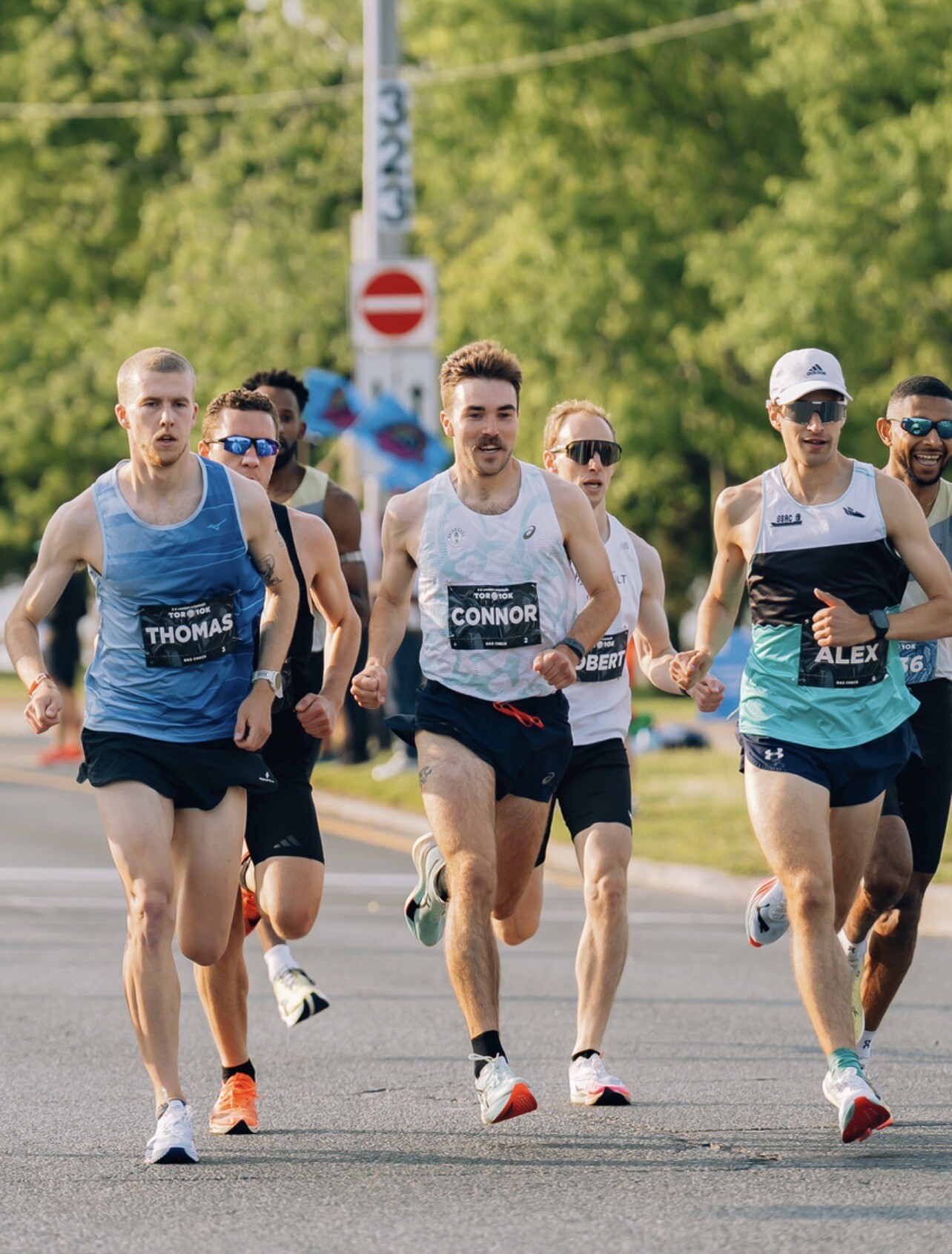
Black, who lives in London—known as “The Forest City”—sees his marathon debut as an important step toward a possible challenge for Canada’s 2028 Olympic team.
“I am 30 years old and I am not making money in the sport, but I still have goals,” Black declares. “My final goal would be to try and make an Olympic team, and I don’t think it’s feasible as an unsponsored track runner targeting the 5K or 10K.
“The marathon is a more even playing field. I can get into any marathon I want, within reason. There are 80 spots in the Olympics. So, if I am going to give it one last shot, it has to be in the marathon.”
At the 2025 Project 13.1 Half Marathon in Congers, New York, Black ran a personal best of 1:03:34 in his first race at the distance. Until then, he had competed primarily over 5,000m and 10,000m. In 2022, he won the Canadian Cross Country Championships.
Black is a secondary school teacher but remains classified as “Long Term Occasional,” meaning he moves from school to school wherever there is an opening.
“Last year I was at Strathroy District Collegiate Institute, which, funnily enough, was where Dave taught for 10 or 15 years,” Black says. “I taught phys ed and math. I can also teach English as a Second Language and biology. I am kind of a Swiss Army knife.”
As he increases his training load for Toronto, completing most of the work by himself, he admits he has reservations about returning to work.
“I am quite nervous to resume teaching,” he reveals. “Recently, my mileage has gone up. When you are starting your build, you are tired. It has been nice having the summer off and being able to focus on training.
“I used to believe you could train like a professional and have a full-time job. I think it’s possible, but if you want to run 200 kilometres a week for the marathon, it is definitely easier and probably better for your performance if you don’t have to work full time.”
Meanwhile, Coughler and his wife, Emma, are chiropractors and partners in Re-Charge Health and Wellness in London’s east end. They are also the parents of a young son, Otto, which means managing their time carefully.
“My wife and I split the work schedule,” Coughler, 30, explains during a day off. “I work Tuesday, Thursday, Friday and Saturday, so I try to do workouts on my days at home—Mondays and Wednesdays.
“If I have something first thing at 7 or 8 a.m., I do a run and then a shakeout between patients or after work. It’s not too bad.”
Running remains important to Coughler, but it is now one of several priorities. He estimates he is running up to 110 kilometres a week, similar to the volume he maintained when finishing third at both the 2023 and 2024 Canadian 10K Championships in Ottawa. He also won the Canada Running Series’ Beneva Spring Run-Off 8K four consecutive years between 2022 and 2025.
Although that mileage is well below what many elite marathoners run, Coughler set a half-marathon personal best of 1:04:33 earlier this year at the Project 13.1 Half Marathon in New York State. The performance earned him eighth place in a strong field. He admits his attitude toward running has changed.
“It’s a shift mentally because I have so much other stuff going on,” he explains. “I am trying to view running as something I do because I love it rather than because it’s my whole life.
“When I was at Indiana University, running was everything. When you run well, it’s great, but when you are not running well, it starts eating you alive.”
With the support and encouragement of Mills, they have mapped out a plan they hope will see Coughler finish his debut in the 2:14 to 2:16 range. He also intends to run more marathons in the future.
“It’s nice knowing there will be a bunch of other Canadian guys who can run around the same time, and that will make it deeper,” he says. “At the front, there are always good Kenyans and Ethiopians running fast. Even if there are a bunch of guys running between 2:12 and 2:20, it would be great.”
The race’s proximity to his home in Thamesford—15 minutes from his practice and about a two-hour drive from Toronto—means Emma, Otto and his parents can accompany him on race weekend. It is one reason he chose the TCS Toronto Waterfront Marathon for his debut.
Coughler is also familiar with the first half of the course, having finished third in the Toronto Waterfront Half Marathon a year ago. Runners in both events follow the same route until the 20-kilometre mark.
Between now and race day, there are many kilometres to be covered. Subject to their schedules and traffic conditions, the two London-area runners will reunite for some workouts.
If all goes well, they will arrive at the starting line ready to join the long list of Canadians who have successfully made the move to the classic marathon distance.
by Paul Gains
Login to leave a comment

TCS Toronto Waterfront Marathon
The Scotiabank Toronto Waterfront Marathon, Half-Marathon & 5k Run / Walk is organized by Canada Running Series Inc., organizers of the Canada Running Series, "A selection of Canada's best runs!" Canada Running Series annually organizes eight events in Montreal, Toronto and Vancouver that vary in distance from the 5k to the marathon. The Scotiabank Toronto Waterfront Marathon and Half-Marathon are...
more...
Stephen Kissa Carrying Ugandan Hopes at TCS Toronto Waterfront Marathon
Ugandan long-distance runners have emerged from the shadows of their legendary East African neighbours to earn distinction at the highest level.
Now Stephen Kissa will represent his nation at the 2026 TCS Toronto Waterfront Marathon on October 18 against a strong contingent of Kenyan and Ethiopian athletes. The event is once again a World Athletics Elite Label race.
Kissa set a Ugandan national record of 2:04:48 when he finished second in his 2022 marathon debut in Hamburg. That record was only broken this year. He was subsequently selected for Uganda’s 2023 World Championships marathon team, finishing fifth on the streets of Budapest.
He has also represented his country twice at the Olympics and competed at the World Cross Country Championships. With such experience, the 37-year-old is intent on challenging for Toronto’s $25,000 Canadian first-place prize.
“When I come to Toronto, I will do my best,” he declares with a broad smile. “I will be really happy if I can run 2:03 or 2:04.
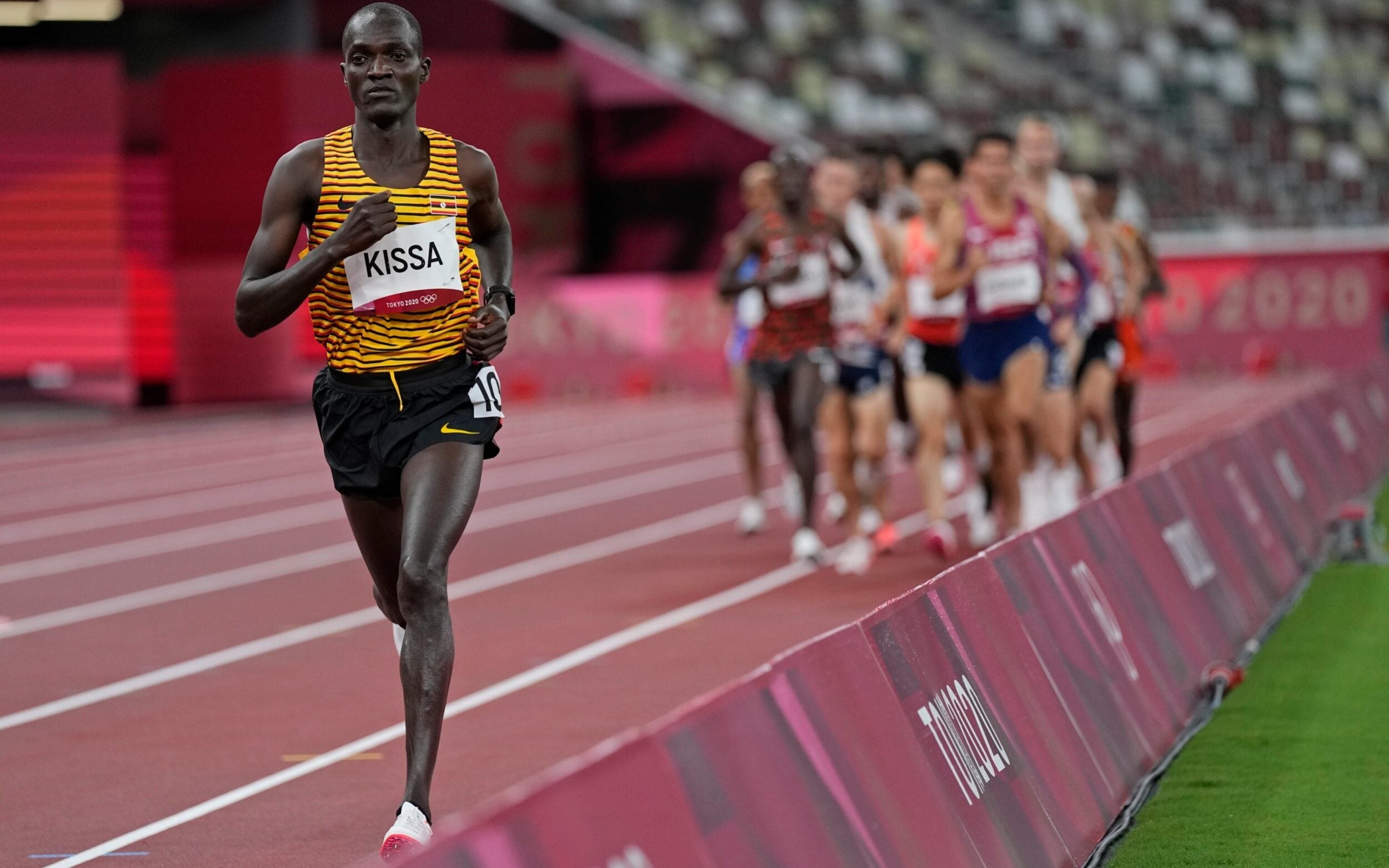
“With training, we have been comparing the past to now, and we have come up with a solution. We do long runs and tempo runs ranging from 25km and 28km to 30km and up to 40km. I am running around 120km a week but will go up closer to 200km.”
Kissa is not the first of his compatriots to compete in the Toronto Waterfront Marathon. Stephen Kiprotich, the 2012 Olympic champion, finished seventh in the 2018 race. Kiprotich remains a national hero in Uganda, and his success has contributed significantly to the nation’s emergence as a distance-running power.
“I was really inspired a long time ago by Stephen Kiprotich,” Kissa admits. “He did some tremendous work, and I can say he is our mentor. We really respect him.
“He has given me advice. He told me, ‘Our sport is not a one-day journey. It is a long journey that takes a lot of patience and commitment. If you have commitment, patience and work hard, you will go far.’”
Kiprotich has been an occasional and welcome visitor to the training camp in Kapchorwa that Kissa calls home for most of the year. It sits at an altitude of 2,500 metres, or 8,200 feet.
From Monday through Saturday, Kissa trains there with a group that includes two-time Olympic champion Joshua Cheptegei, 2023 world marathon champion Victor Kiplangat and 2022 Olympic 3,000m steeplechase champion Peruth Chemutai.
The centre was built by their management company, Global Sports Communications, with a contribution from Cheptegei. The athletes return home to their families on Saturday evenings.
Kissa lives in Kapchorwa’s town centre, about 14 kilometres away, in an area dominated by Mount Elgon, an extinct volcano estimated to be 24 million years old. He lives there with his wife and two young children.
“Right now they are at school,” he says of his children. “They are about to come home for a holiday. That’s when I will meet them. At school, they concentrate on their studies unless there is a problem. Then they will call me.”
The training camp includes a dormitory, dining room, kitchen and recreation room where the group gathers to watch sports. The recent FIFA World Cup generated great interest, and Kissa admits enjoying the play of Spanish winger Lamine Yamal. When asked what he does to relax, he smiles.
“I can play pool. I like that,” he says, adding with a laugh, “Not for money. We also play cards.
“Sometimes, when I have time, I cook chapati. It is made from wheat flour. We also have potatoes and ugali, which is made from corn.”
The group holds a prayer before each workout. Victor Kiplangat is an assistant pastor at a nearby church called Temple of the Most High God, but the others, including Kissa, also take turns leading prayers.
For more than a decade, the group was coached by Addy Ruiter. After the 2024 Paris Olympics, the Dutchman returned home. He continues coaching the athletes remotely through WhatsApp, with an on-site team led by fellow Dutchman Roy Hoornweg.
“Kapchorwa is a hilly, mountainous area,” Kissa explains. “The tempo runs are done on a plateau where it is flat. Our training differs depending on the location. You can’t do long runs in the hilly area, so we go to the plateau. We also have flatlands where we can do long runs and tempo runs.”
Kissa understands that he is approaching the later stages of his running career and must look toward life beyond competition. Still, he laughs when asked how many more years he can compete.
“Maybe 10 years! I will be happy if I can run 2:03 or 2:04,” he says.
“If Toronto goes really well, I will look to invest in assets in town, build apartments and start a business. I can really say thank you for inviting me to Toronto. If it goes well, I will be very proud.”
Kissa won’t be the only Ugandan presence at the TCS Toronto Waterfront Marathon. At the Runner’s Expo on October 16 and 17 at the Better Living Centre, a Uganda Tourism booth will offer information about the Mount Rwenzori Marathon and Great Lakes Safaris.
On the starting line, Kissa can be confident that he has the international experience and talent to compete with anyone. As for his ultimate goals, he is succinct.
“I pray that in the years to come I will stand on the podium at the Olympics or World Championships,” he says. “That is what I am really looking forward to.”
A victory in Toronto would bolster that ambition.
by Paul Gains
Login to leave a comment
TCS Toronto Waterfront Marathon
The Scotiabank Toronto Waterfront Marathon, Half-Marathon & 5k Run / Walk is organized by Canada Running Series Inc., organizers of the Canada Running Series, "A selection of Canada's best runs!" Canada Running Series annually organizes eight events in Montreal, Toronto and Vancouver that vary in distance from the 5k to the marathon. The Scotiabank Toronto Waterfront Marathon and Half-Marathon are...
more...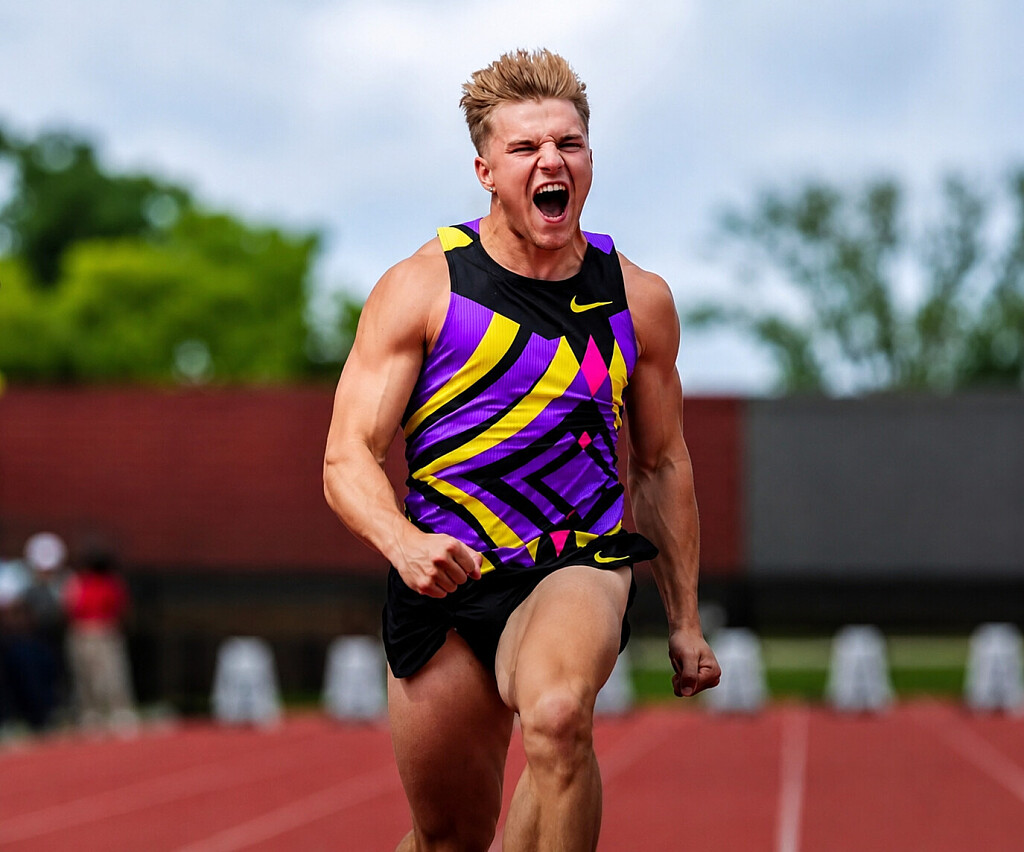
American Sprint Star Sam Blaskowski Begins Bid to Represent Poland After Discovering Family Roots
American sprint standout Sam Blaskowski is taking steps toward an international future with Poland after uncovering a powerful connection to his family's ancestral homeland.
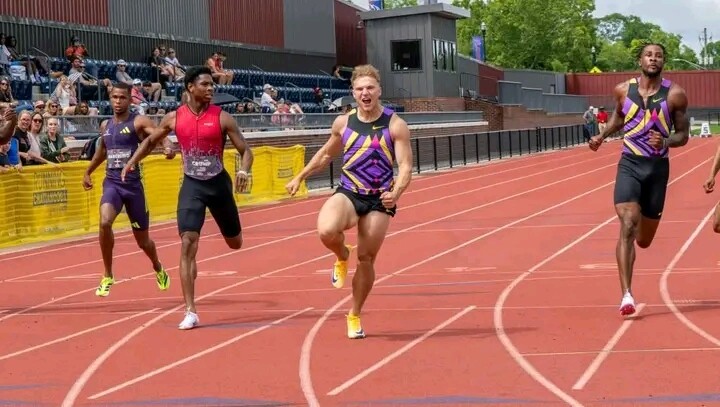
The 23-year-old sprinter, who has established himself as one of the fastest Americans of his generation with a personal best of 9.89 seconds in the 100 metres, has begun the process of obtaining Polish citizenship with the aim of eventually representing Poland in international competition.
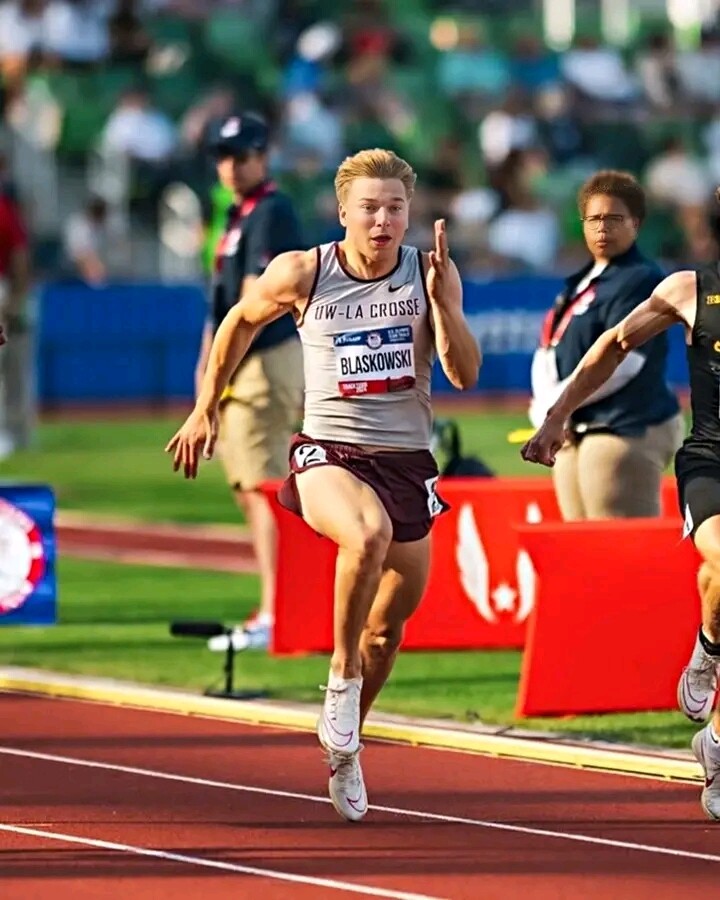
Blaskowski's connection to the country traces back through his great-grandparents, Franciszek and Julian Błaszkowski, who emigrated from Poland to the United States in 1905. Their journey more than a century ago has now opened an unexpected new chapter for their descendant, whose athletic ambitions could soon carry the Błaszkowski name back onto the international stage under Polish colours.
The sprinter has already received support from the Polish Athletics Association as he works through the citizenship and eligibility process. Should his transfer of allegiance be completed, Blaskowski could become a significant addition to Poland's sprint programme.
His credentials certainly make the prospect an exciting one. In addition to his sub-10-second speed over 100 metres, Blaskowski owns a personal best of 19.93 seconds in the 200 metres, demonstrating the kind of versatility that could prove valuable both individually and in Poland's 4x100m relay squad.
For Blaskowski, however, the move is about more than simply changing national colours. It represents an opportunity to reconnect with his family's heritage while pursuing his ambitions at the highest level of the sport.
With his sights set on becoming part of Poland's international sprint team and competing for relay medals, Blaskowski's journey from discovering his Polish roots to potentially representing the country of his ancestors could become one of the most fascinating allegiance stories in world athletics.
A century after Franciszek and Julian Błaszkowski left Poland for America, their family's story may now be coming full circle—this time at full sprint.
by Erick Cheruiyot for My Best Runs.
Login to leave a comment
World Record, McNuggets and Fries: The Extraordinary Pre-Race Ritual Behind Ja’Kobe Tharp’s Historic Run
Three hours before producing one of the greatest performances in the history of sprint hurdling, Ja’Kobe Tharp followed a pre-race routine that few athletes—or sports nutritionists—would expect.
Two cheeseburgers. A large order of fries. And 10 Chicken McNuggets.
That was the meal Tharp ate before taking to the track and breaking the long-standing world record in the men’s 110m hurdles, surpassing Aries Merritt’s 12.80-second mark that had stood since 2012.
The Auburn University star's remarkable performance ended a 13-year wait for a new world record and made him the first man in half a century to set a world record at the NCAA Championships. Yet almost as quickly as his historic run captured attention, another part of the story became a major talking point: his extraordinary pre-race meal.
For Tharp, however, there is nothing new or experimental about the routine.
He has followed the same ritual since his high school years, first adopting it before winning a Tennessee state hurdles title as a junior. Since then, the order has remained remarkably unchanged, becoming an unlikely constant throughout his rise to the top of world athletics.

According to reporting from Auburn University, the meal contains approximately 1,246 calories, even before adding any dipping sauce. Tharp's coach, Ken Harnden, has become an important part of the tradition, reportedly collecting the same order for his athlete in different parts of the world, including Lima, Monaco, Tokyo and Budapest.
Tharp's philosophy is straightforward: if something has worked throughout his career, there is little reason to change it.
But does that mean runners should start filling their pre-race routines with cheeseburgers and fries?
Not necessarily.
The explanation behind why the meal appears to work for Tharp has much more to do with the specific demands of his event than with any magical qualities of fast food.
The men's 110m hurdles is over in less than 13 seconds. During such a short and explosive effort, the body relies primarily on immediate energy systems, particularly the ATP-phosphocreatine system, rather than depending on the gradual digestion of the meal eaten several hours earlier.
Timing is also crucial. By eating around three hours before competition, Tharp gives his body substantial time to digest the food while ensuring he does not arrive at the start line hungry.
A large meal immediately before a race would be a very different situation. But in Tharp's case, his body has also become accustomed to the routine after years of repeating it.
That consistency may be one of the most important aspects of the entire story.
Pre-race rituals can provide athletes with a sense of familiarity and control, particularly in high-pressure situations. By repeating the same preparation before important competitions, athletes can reduce uncertainty and approach the start line with greater confidence.
For Tharp, the McDonald's meal has become part of that psychological preparation.
His story is not entirely without precedent in sprinting.
Usain Bolt famously revealed that he ate enormous quantities of Chicken McNuggets during the 2008 Beijing Olympic Games after struggling to enjoy some of the food available to athletes. Bolt went on to produce one of the most dominant Olympic performances in history, winning three gold medals and setting world records.
However, these examples should not be mistaken for universal nutrition advice.
There is an enormous difference between preparing for a 110m hurdles race and preparing for a marathon.
A marathon places sustained demands on the digestive system and requires athletes to manage carbohydrate stores, hydration and energy intake over more than two hours of continuous effort. High-fat meals can slow gastric emptying and increase the likelihood of stomach discomfort—problems that can become particularly costly during a long-distance race.
That is why elite endurance runners generally follow a very different approach.
Pre-race meals for marathoners and other endurance athletes typically focus on easily digested carbohydrates while limiting foods high in fat and fibre. The objective is to maximise available energy without placing unnecessary stress on the stomach.
In other words, what may be perfectly manageable for an explosive hurdler could become a disastrous experiment for someone running 42.195 kilometres.
The real lesson from Tharp's remarkable routine, therefore, may not be the contents of his meal at all.
It is consistency.
Tharp did not randomly decide to eat more than 1,200 calories of fast food before attempting to break a world record. He had tested and repeated the routine over several years, allowing it to become a familiar part of his preparation.
That is a principle runners at every level can apply.
A pre-race meal should be practised during training rather than introduced on the morning of a major competition. Athletes should learn which foods their bodies tolerate, how long they need to digest them and what preparation leaves them feeling physically and mentally ready to perform.
There is also a wider point about individual athletes and individual routines.
Elite sport is full of unusual habits that work for specific competitors. A ritual can be successful without becoming a universal blueprint. Tharp's incredible achievement does not prove that cheeseburgers and Chicken McNuggets are the secret to faster hurdling—it proves that extraordinary athletes can sometimes thrive with routines that defy conventional expectations.
The temptation, of course, is to copy the most unusual part of a champion's preparation.
But Tharp's world record was not created by a single meal. It was the product of exceptional talent, years of training, technical precision, speed, strength and preparation. The McDonald's ritual is a fascinating detail in the story—not the reason behind the record itself.
Still, it has undoubtedly added another unforgettable chapter to one of track and field's most remarkable performances.
A world record in the 110m hurdles. A historic NCAA achievement. And, just three hours earlier, two cheeseburgers, fries and 10 Chicken McNuggets.
For Ja’Kobe Tharp, it may not look like a conventional recipe for sporting greatness.
But after a performance that rewrote the record books, it is certainly a routine that the athletics world will not forget anytime soon.
by Erick Cheruiyot for My Best Runs.
Login to leave a comment
Kenya Unveils Strong Squad for 2026 World Athletics Road Running Championships in Copenhage
Kenya has unveiled a formidable squad for the 2026 World Athletics Road Running Championships, with some of the country’s leading distance-running talents selected to represent the nation in Copenhagen, Denmark, on September 19–20.
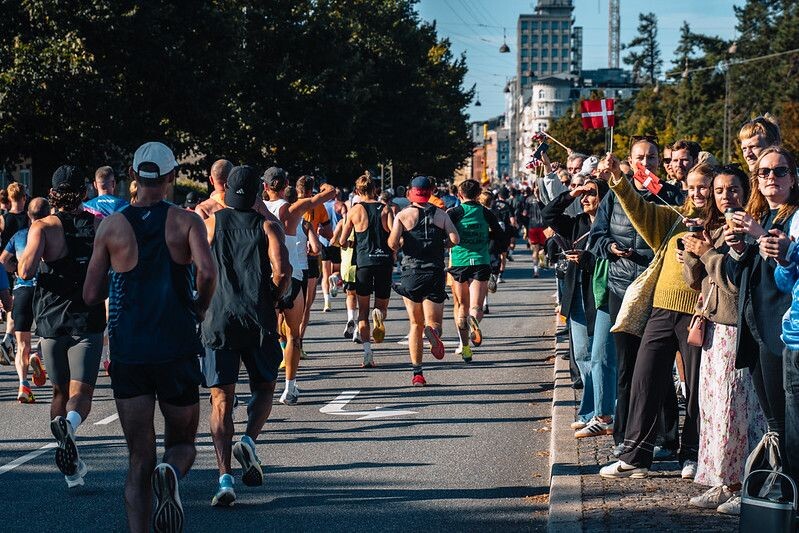
The team features a blend of established international performers and emerging stars, underlining Kenya’s ambition to make a strong impact across the half marathon, 5km and one-mile races.
Leading the women’s half marathon team is Agnes Jebet Ngetich, one of the most accomplished young distance runners in the world. She will be joined by Daisilah Jerono, Veronica Loleo and Lilian Kasait Rengeruk as Kenya looks to challenge for the women’s team and individual honours.
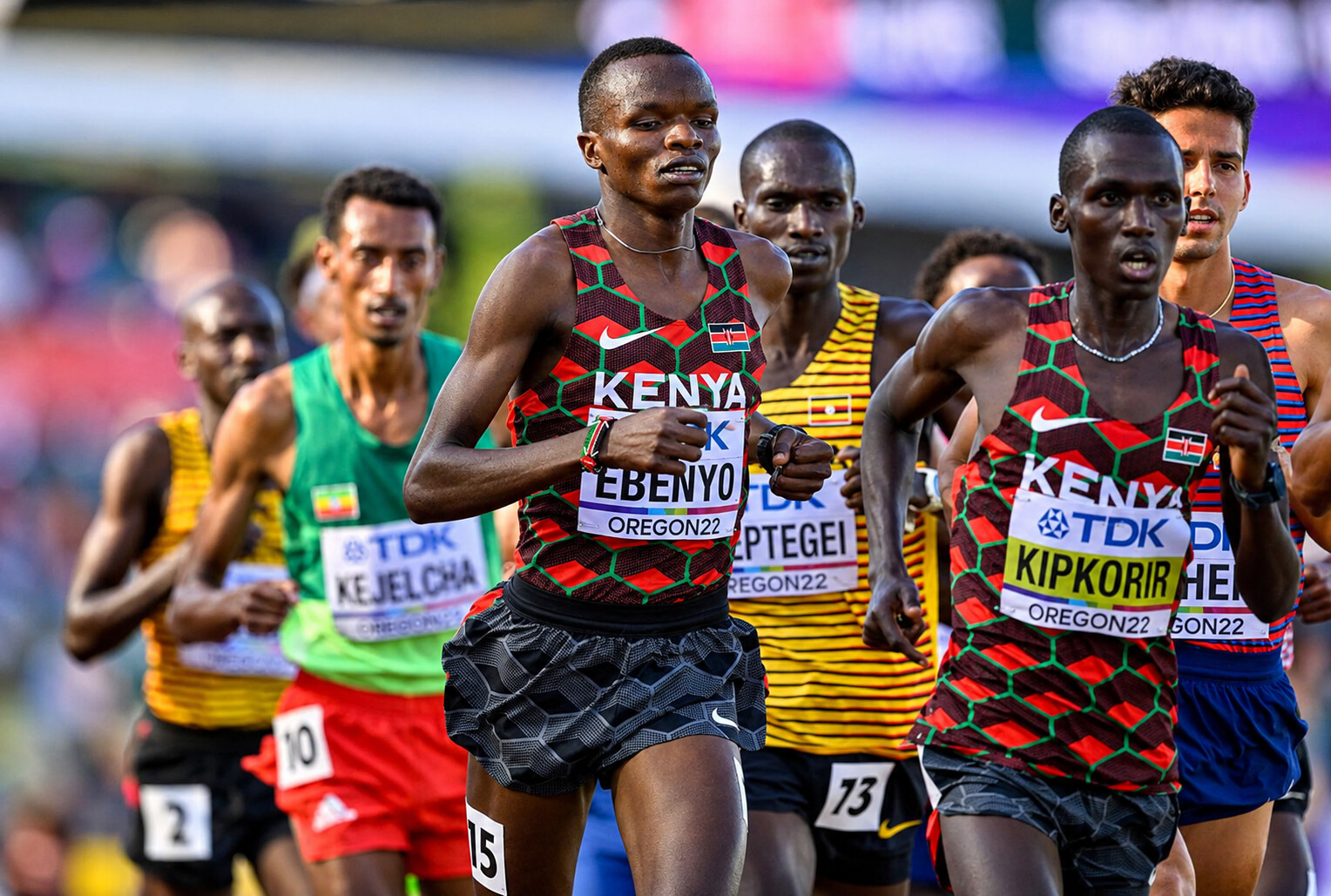
The men’s half marathon squad is equally impressive, headlined by Daniel Simiu Ebenyo. The experienced Kenyan will line up alongside Michael Kiplagat Temoi, Nicholas Kipkorir Kimeli and Gideon Kipkertich Rono, giving Kenya a powerful quartet capable of competing at the front of a championship field.
Kenya will also field two athletes in each of the 5km races. Charles Kiboino and Mathew Kipchumba Kipsang have been selected for the men’s event, while Caroline Makandi Gitonga and Caroline Nyaguthii Nyaga will carry Kenya’s hopes in the women’s race.
The one-mile races will provide another opportunity for Kenyan athletes to showcase the country’s renowned middle- and long-distance strength. Brian Komen and Daniel Kyumbe Munguti will represent Kenya in the men’s race, with Miriam Cherop and Naomi Korir selected for the women’s event.
With representation across all six individual races, Kenya heads to Copenhagen with a well-balanced squad and plenty of international experience. The championships will bring together the world’s leading road runners for two days of high-level competition, with Kenya once again expected to be among the nations fighting for medals.
For a country with such a rich tradition in distance running, the 2026 World Athletics Road Running Championships present another major stage for Kenyan athletes to demonstrate their speed, strength and championship racing ability on the streets of Copenhagen.
Team Kenya
Half Marathon – Men: Michael Kiplagat Temoi, Nicholas Kipkorir Kimeli, Gideon Kipkertich Rono, Daniel Simiu Ebenyo
Half Marathon – Women: Agnes Jebet Ngetich, Daisilah Jerono, Veronica Loleo, Lilian Kasait Rengeruk
5km – Men: Charles Kiboino, Mathew Kipchumba Kipsang
5km – Women: Caroline Makandi Gitonga, Caroline Nyaguthii Nyaga
One Mile – Men: Brian Komen, Daniel Kyumbe Munguti
One Mile – Women: Miriam Cherop, Naomi Korir
Kenya’s road-running stars now have their sights firmly set on Copenhagen, where they will look to turn the strength of the squad into medals and memorable performances on the world championship stage.
by Erick Cheruiyot for My Best Runs.
Login to leave a comment
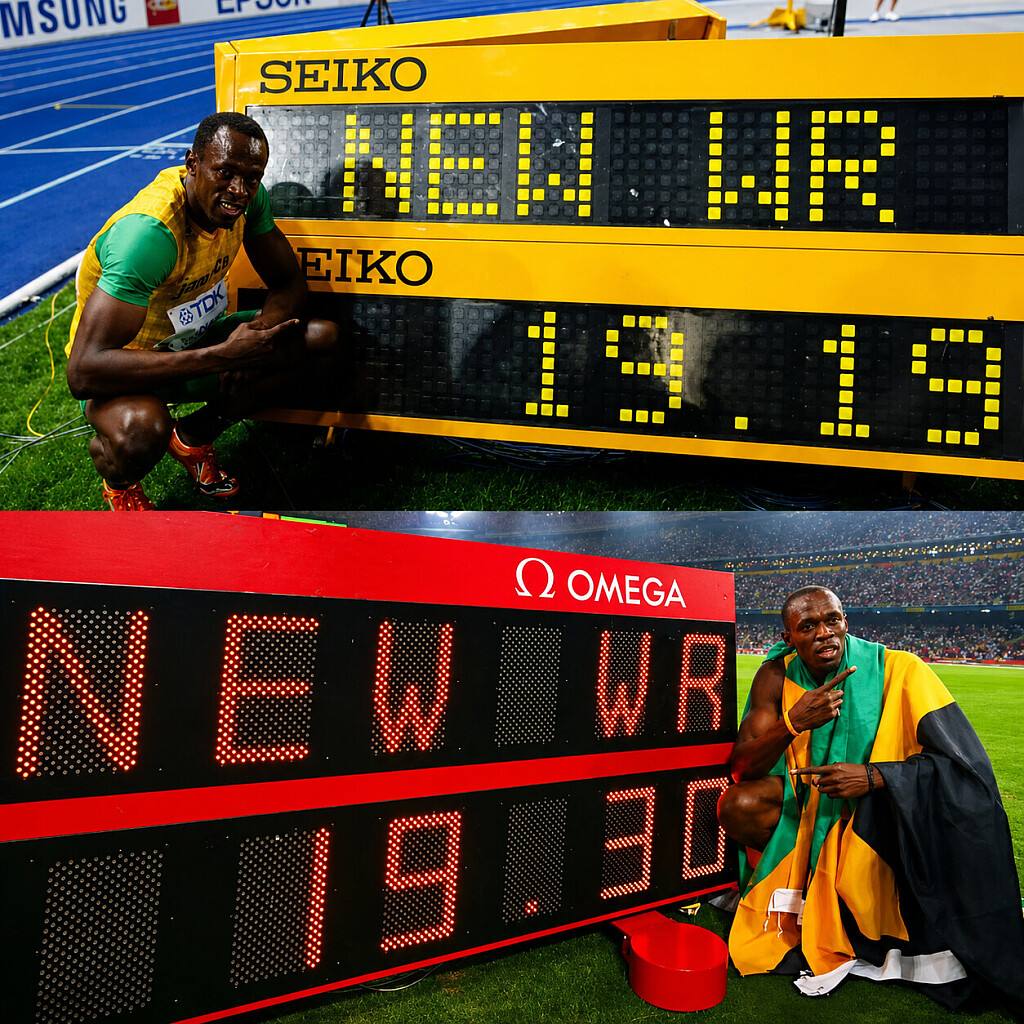
August 20: The Day Usain Bolt Rewrote the 200m Record Book—Twice
Some dates become part of sporting history. August 20 belongs to Usain Bolt.
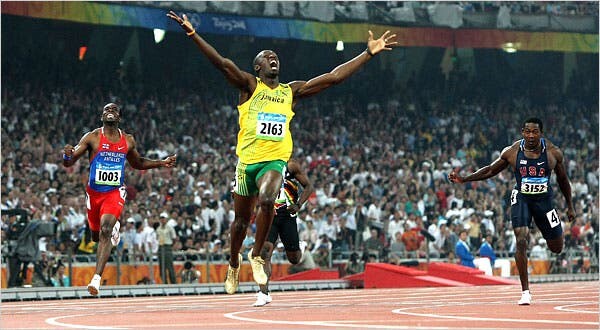
On two consecutive years, the Jamaican sprinting phenomenon transformed the men’s 200 metres, producing performances that seemed almost impossible even by his extraordinary standards.
On August 20, 2008, inside Beijing’s Bird’s Nest, Bolt lined up for the Olympic 200m final carrying enormous expectations. Four days earlier, he had stunned the world by winning the 100m in a then-world-record 9.69 seconds. Yet the 200m was about to become another chapter in his growing legend.
Bolt exploded around the bend before powering down the home straight, crossing the finish line in 19.30 seconds to win Olympic gold and shatter Michael Johnson’s long-standing world record of 19.32, set in Atlanta in 1996. The improvement was only two hundredths of a second, but the significance was enormous: Johnson’s seemingly formidable record had survived for 12 years before Bolt finally brought it down.
And there was another remarkable detail. Bolt’s Beijing record came with a 0.9 m/s headwind, making the performance even more extraordinary.
But Bolt was not finished.
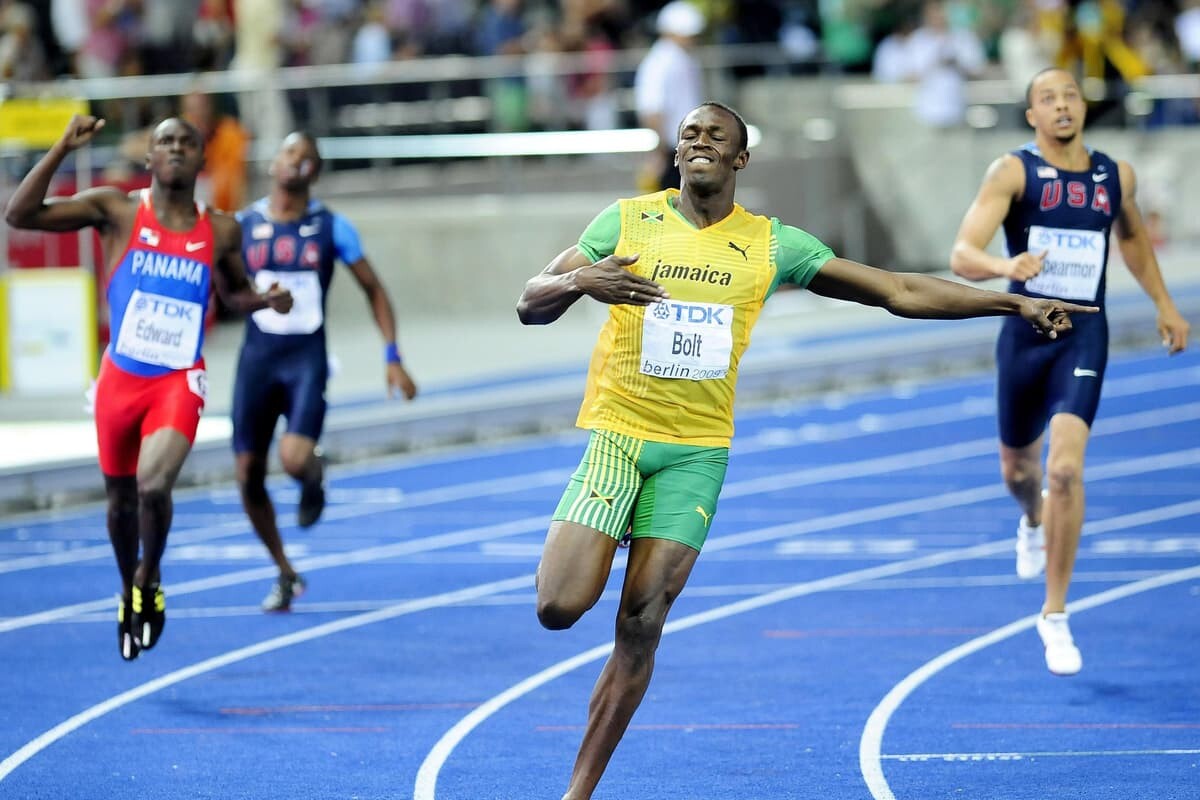
Exactly one year later, on August 20, 2009, he returned to the same event at the World Athletics Championships in Berlin with another opportunity to redefine the limits of speed.
Four days earlier, he had already demolished his own 100m world record, running 9.58 seconds. Now the 200m world record was in his sights.
What followed was extraordinary.
Bolt stormed to 19.19 seconds, taking 11 hundredths off the world record he had established in Beijing. The performance came with a 0.3 m/s headwind, yet he still produced a time that would immediately become one of the most iconic performances in athletics history.
The progression was staggering:
19.30 in Beijing.
19.19 in Berlin.
Michael Johnson’s record had become Bolt’s record—and then, just 12 months later, Bolt destroyed his own mark.
His Berlin victory was also emphatic. Bolt finished more than half a second ahead of Panama’s Alonso Edward, who ran 19.81, while Wallace Spearmon took bronze in 19.85.
What made the achievement even more remarkable was the consistency of Bolt’s record-breaking brilliance. Across the Beijing Olympics and Berlin World Championships, he produced a succession of world records in the 100m and 200m, repeatedly turning major championship finals into historic moments. World Athletics noted after Berlin that Bolt had become the first man to break both the 100m and 200m world records more than once.
And now, 17 years after that unforgettable Berlin night, the 19.19-second world record still stands.
The mark has survived generations of exceptional sprinters, including athletes who have come remarkably close to the 19-second barrier. Yet Bolt’s time remains untouched at the summit of the all-time list.
That is why August 20 is more than a date on the athletics calendar.
It is the anniversary of the day Usain Bolt first broke Michael Johnson’s seemingly untouchable standard—and then returned exactly one year later to make his own record look vulnerable.
Beijing gave the world 19.30.
Berlin gave it 19.19.
Two August 20s. Two world records. One extraordinary sprinter.
Usain Bolt was not simply winning races. He was changing the definition of human speed.
And the question that remains for the next generation is perhaps the most intriguing of all:
Will we ever see another sprinter capable of breaking the 19-second barrier and finally taking down the 19.19 mark that Bolt left behind?
by Erick Cheruiyot for My Best Runs.
Login to leave a comment
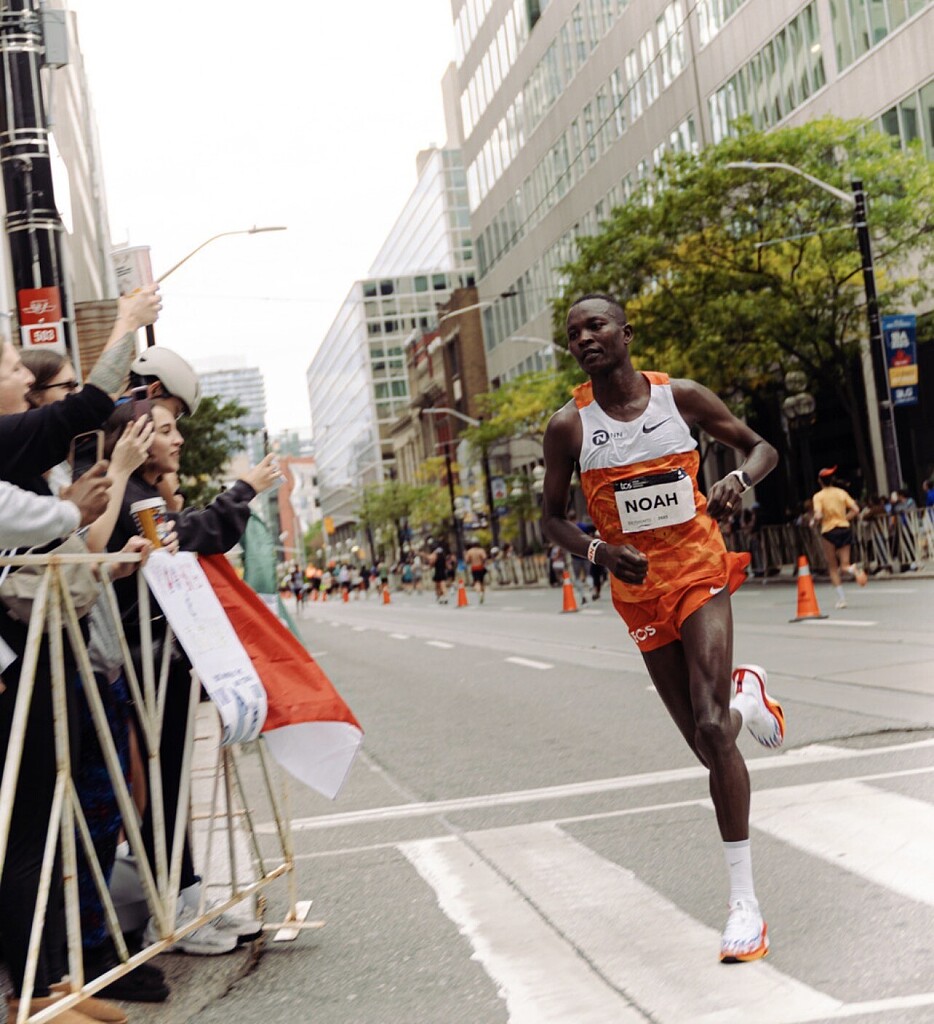
Noah Kipkemboi Hopes It Will Be Third Time Lucky in Toronto
Will it be a case of third time lucky at the TCS Toronto Waterfront Marathon for Noah Kipkemboi?
In his first appearance at the TCS Toronto Waterfront Marathon in 2024, the Kenyan star finished third. Last year, he moved up one place to finish second. Now, with the benefit of knowing the course intimately, he returns intent on reaching the top step of the podium.
“It’s really my hope to run well on the course again and to be on the podium,” he says of the October 18 race. “It is my pleasure if I come position one this time. Now I am in training and preparing for the race.”
Kipkemboi’s personal best remains the 2:07:31 he ran during his initial Toronto appearance, and improving on that time would be especially satisfying. Clearly, his two visits have endeared him to the event and the people he has met in Toronto. At the finish line and during the post-race press conference, he kindly served as an interpreter for 2025 winner Leonard Langat, who is more comfortable speaking Kiswahili than English.
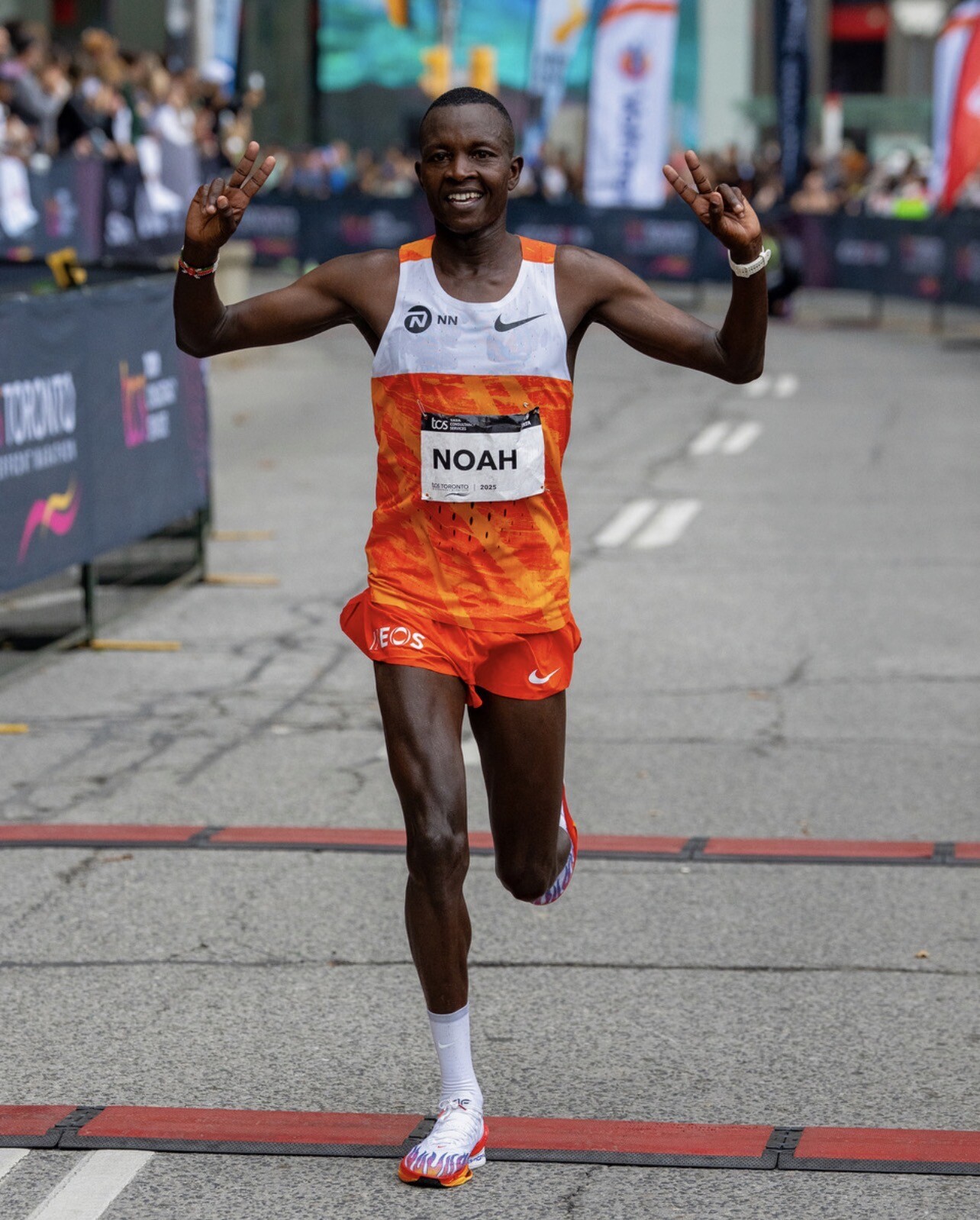
“Please say hello to everyone in Toronto,” he begins during a WhatsApp video interview. “It is a beautiful city, and thank you for inviting me back.
“I really like when people from the Toronto communities where we run through are happy and cheering us. Here, everyone is shouting ‘go,’ giving us motivation. Being cheered, you can get power and keep going better.
As a Christian, Kipkemboi has also been inspired by hearing the Canadian national anthem traditionally sung at the race start, especially the line “God keep our land glorious and free.” But it is the competition that initially attracts world-class runners.
The TCS Toronto Waterfront Marathon serves as both the official Athletics Canada Canadian Marathon Championship and a World Athletics Elite Label race. The $25,000 Canadian prize offered to each winner is especially meaningful to the runners. Kipkemboi has put his earnings to good use, raising three young children of his own while also contributing to the school fees of two other children in his village. There have also been medical expenses to consider.
“During the two times racing in Toronto, I have been having difficulty before the race,” he reveals. “The first Toronto race, my daughter Phoebe was not feeling comfortable, and after the 2025 race, she was having a second kidney operation.
“I was on the start line praying that I would win so my kids would be happy. Now she is okay. My happiness, if I come position one, it will be so beautiful, so my kids will be happy.”
Kipkemboi has been represented by the Dutch-based Global Sports Communication throughout his career. From Monday through Saturday, he lives and trains at the organization’s camp in Kaptagat, while his family remains at their home in Eldoret, 24 kilometres away. Such living arrangements are typical among Kenya’s world-class runners.
Among Kipkemboi’s training partners is the legendary Eliud Kipchoge, the former world marathon record holder and two-time Olympic marathon champion. Kipkemboi served as a pacer during Kipchoge’s 2022 world-record performance in Berlin.
Another close friend and former training partner, Philemon Rono, won the Toronto Waterfront Marathon three times and holds the course record of 2:05:00.
“He has gone to another management group, but we are still friends,” Kipkemboi says of his compatriot. “His camp is not far from our camp. Mostly, when we are training in the forest, we meet them and wave.
“He asked me, ‘Are you going back to Toronto? Can we go together this time?’ We were chatting about Toronto. He said, ‘You go this time and win that race!’”
These days, Kipkemboi is running as much as 200 kilometres a week in preparation for Toronto. Between training sessions, life at the camp consists of daily household chores divided among the runners, physiotherapy and massage sessions, and meals. For relaxation, the runners enjoy watching football together.
“Yes, we normally watch football. Me, I like Arsenal,” he says with a smile. “Most of us in the camp, most of the athletes, are fans of Arsenal. The Commonwealth Games steeplechase champion Edmund Serem likes Arsenal. When he won the gold medal, he did what Arsenal striker Viktor Gyökeres does in celebration.”
With that, Kipkemboi interlocks his fingers to form a mask below his eyes, as the Swedish footballer does after scoring—a reference to the Batman villain Bane in “The Dark Knight Rises.”
Like many successful Kenyan runners, Kipkemboi is planning for life after his competitive career comes to an end. With prize money from his first Toronto appearance, he opened a general store in Eldoret that sells everything from candy and flour to soap and perfume. He also farms a plot of land.
Victory at the TCS Toronto Waterfront Marathon will not come easily. But Kipkemboi feels at home on the streets of Toronto, and that could very well make it third time lucky.
by Paul Gains
Login to leave a comment
TCS Toronto Waterfront Marathon
The Scotiabank Toronto Waterfront Marathon, Half-Marathon & 5k Run / Walk is organized by Canada Running Series Inc., organizers of the Canada Running Series, "A selection of Canada's best runs!" Canada Running Series annually organizes eight events in Montreal, Toronto and Vancouver that vary in distance from the 5k to the marathon. The Scotiabank Toronto Waterfront Marathon and Half-Marathon are...
more...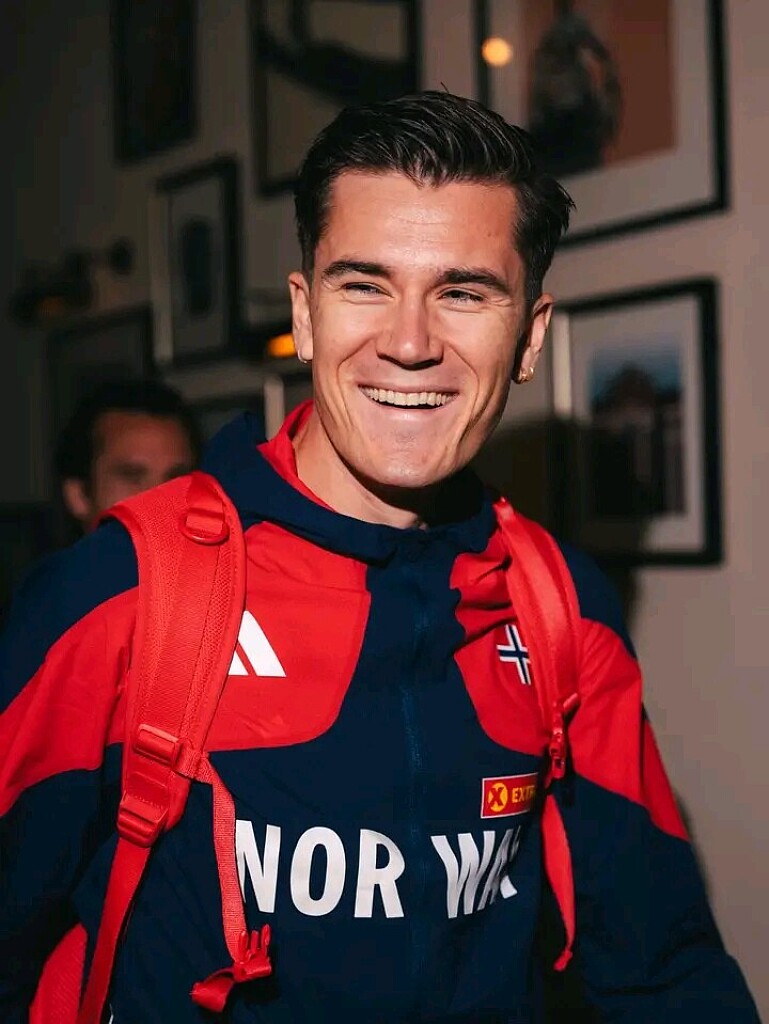
Jakob Ingebrigtsen Returns To Silesia: Can The Norwegian Reclaim The 1500m Throne?
Silesia has become a special chapter in Jakob Ingebrigtsen’s remarkable career, and on August 23, the Norwegian middle-distance superstar will return to the Diamond League with a question hanging over his comeback: can he return to the top of the 1500m?
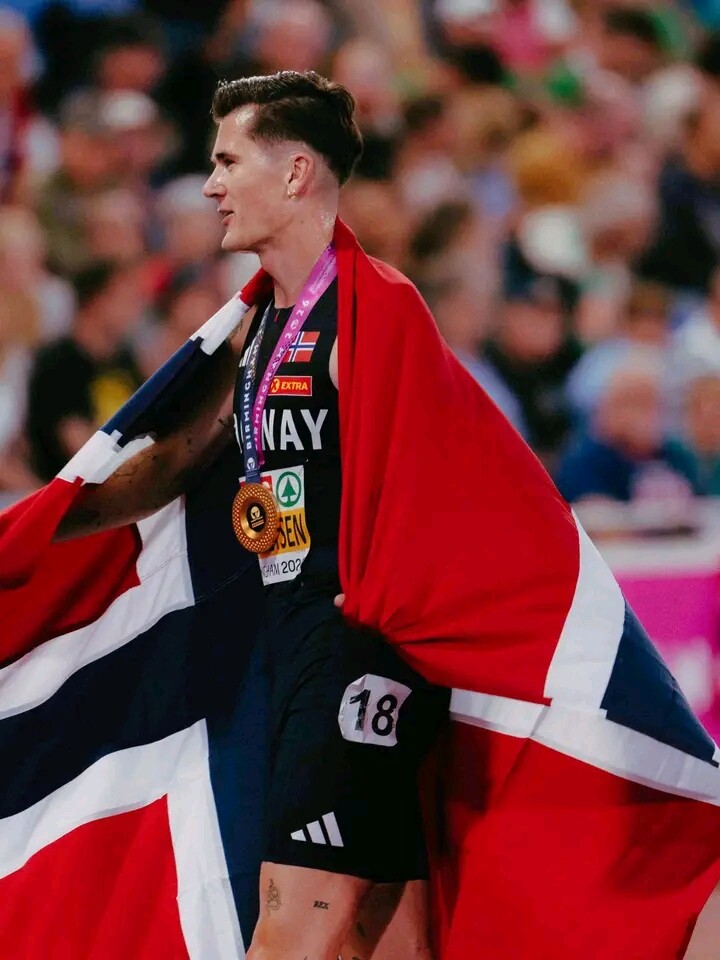
Ingebrigtsen is set to race his first 1500m since the 2025 World Athletics Championships, making his appearance at the Silesia Diamond League one of the most anticipated moments of the meeting.
The Norwegian’s return comes after a fascinating two-year stretch filled with major victories, record-breaking performances and unexpected setbacks.
Since the 2024 Paris Olympics, Ingebrigtsen has experienced almost every side of elite middle-distance running. At the Paris Games, he finished fourth in the 1500m, narrowly missing the podium before quickly responding with a victory in the Diamond League Final later that year.
He then began 2025 in spectacular fashion, breaking the indoor mile world record before going on to claim the world indoor title in the 3000m.
However, his outdoor campaign brought a different challenge. At the 2025 World Championships, Ingebrigtsen failed to advance from the 1500m heats, bringing an unexpected early end to his campaign in the event.
Now, nearly a year later, the 25-year-old is ready to return to the distance that has defined so much of his career.
And Silesia could hardly be a more fitting place for his comeback.
The last time Ingebrigtsen raced at the Polish venue, he produced a performance for the history books. He stormed to 7:17.55 in the 3000m, destroying the 28-year-old world record and once again demonstrating his extraordinary ability to combine speed with endurance.
This time, however, the focus shifts back to the 1500m.
The race will offer Ingebrigtsen an opportunity to measure himself against the world’s best after an extended absence from the event. His tactical instincts, finishing speed and ability to handle a fast pace will all come under the spotlight.
For a runner who has spent years setting the standard in the 1500m, this is more than simply another Diamond League appearance. It is a chance to begin writing the next chapter.
Can Jakob Ingebrigtsen return to the top?
Silesia will provide the stage. August 23 will provide the answer.
by Erick Cheruiyot for My Best Runs.
Login to leave a comment

Noah Lyles And Letsile Tebogo Set For Another Blockbuster Showdown In Budapest
NOAH LYLES VS LETSILE TEBOGO — ANOTHER CHAPTER AWAITS!
The rivalry between American sprint superstar Noah Lyles and Botswana’s Olympic champion Letsile Tebogo is set to take centre stage once again, with the two global stars heading to Budapest for the inaugural World Athletics Ultimate Championship from September 11–13, 2026.
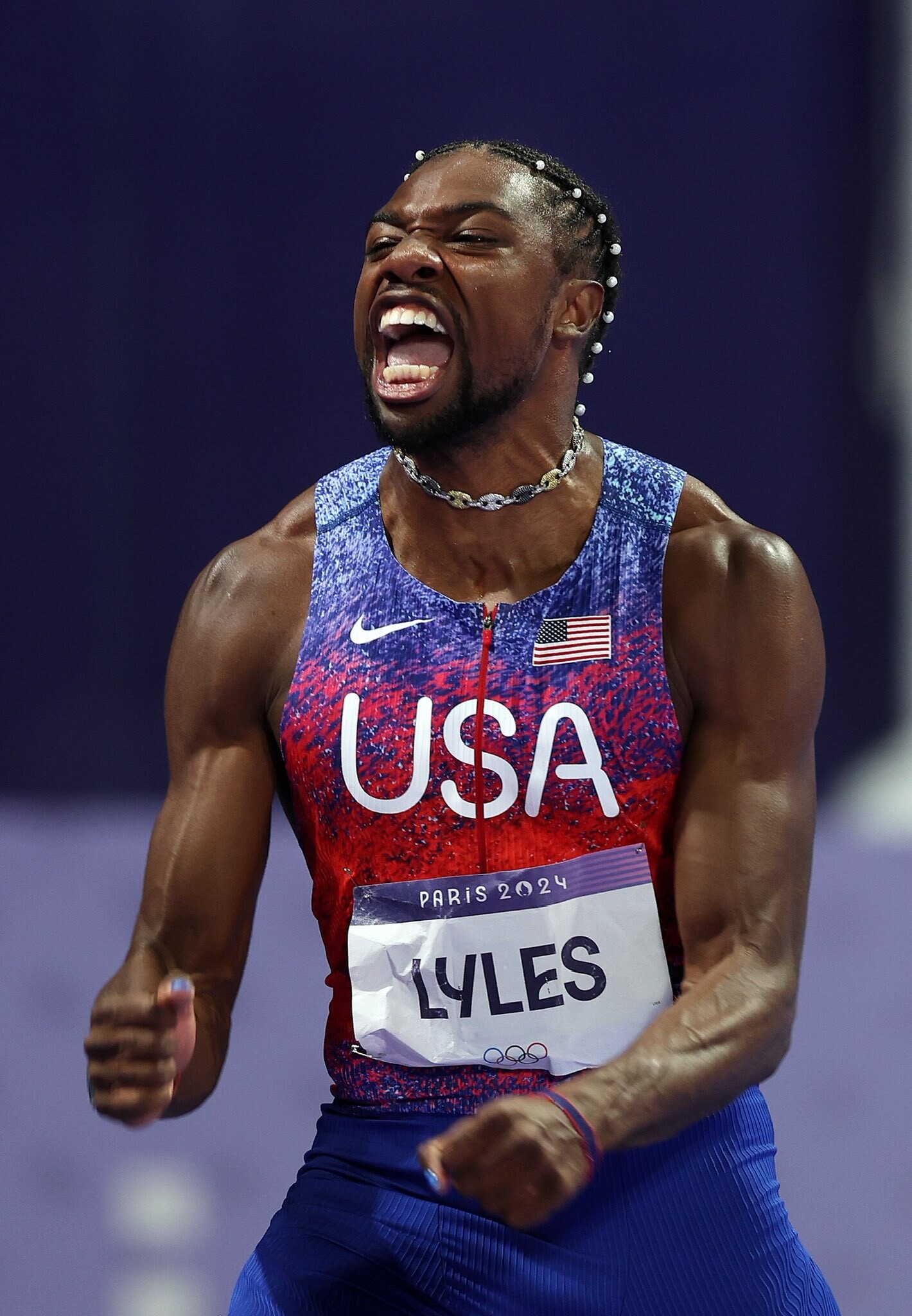
Both Lyles and Tebogo have been named among the event’s Ultimate Stars, adding even more star power to a championship designed to answer one of athletics’ biggest questions: who is the best of the best? World Athletics has assembled Olympic champions, world champions, Diamond League winners and the leading performers of the season for a three-day season finale at Budapest’s National Athletics Centre.
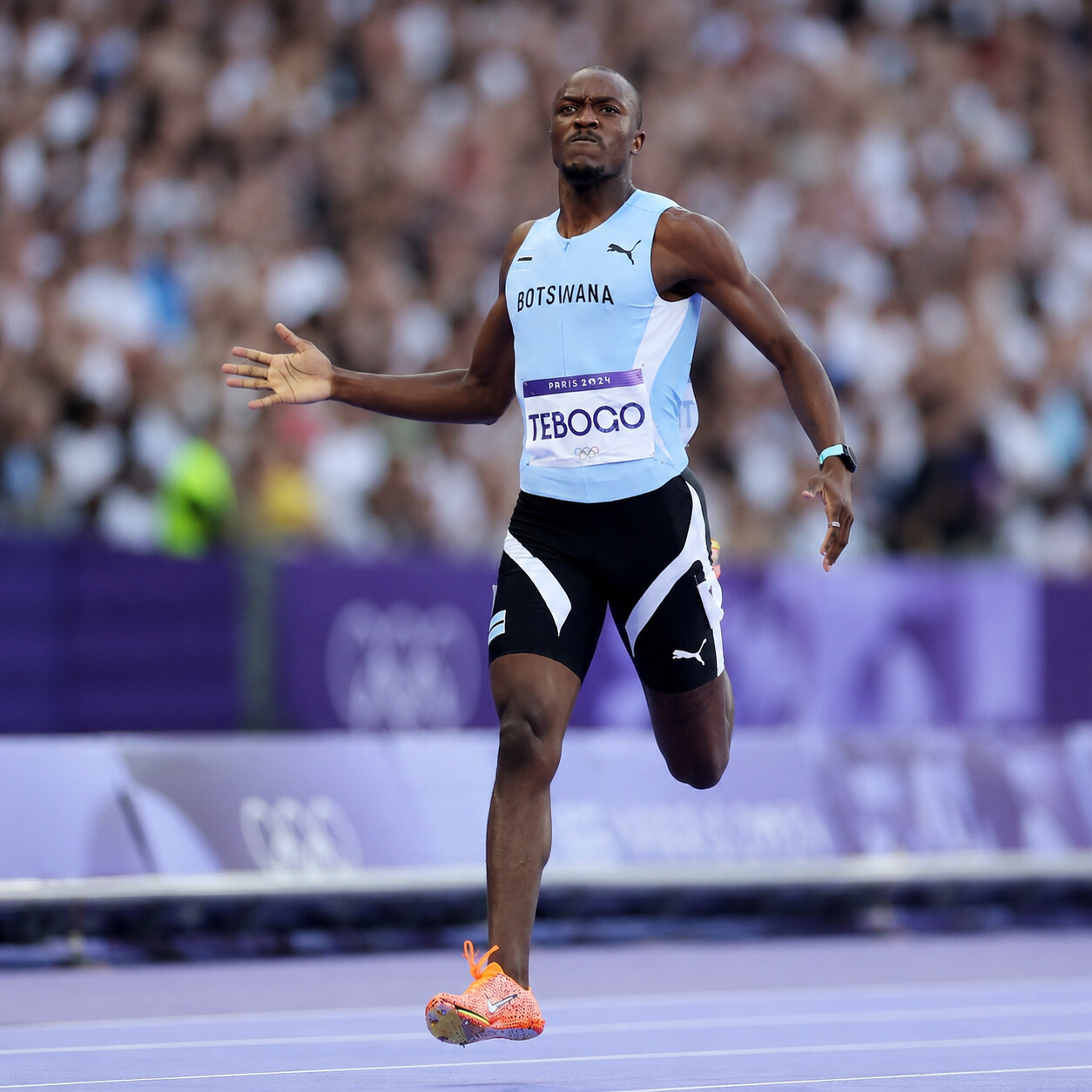
And when the men’s 200m takes centre stage on Sunday, September 13, the possibility of another Lyles-Tebogo showdown promises to be one of the most anticipated moments of the entire championship. The event’s format features semifinals before the final, with the top four athletes from each semifinal advancing.
Their rivalry already carries plenty of history.
At the Paris 2024 Olympic Games, Tebogo produced a magnificent performance to win the men’s 200m in an African record of 19.46, becoming Botswana’s first Olympic champion in any sport. Lyles, who had entered the Games as the reigning world champion and one of the favourites, finished third in 19.70, taking bronze.
The story did not end in Paris.
At the 2025 World Championships in Tokyo, Lyles and Tebogo renewed their battle over the half-lap distance, with Lyles beating the Olympic champion in Monaco before edging him again at the Diamond League Final in Zürich. World Athletics noted that the Zürich margin was just 0.02 seconds, highlighting just how closely matched the two sprinting giants had become.
Now, Budapest offers another opportunity for the pair to settle the score on one of the sport’s biggest new stages.
Lyles enters the Ultimate with a personal best of 19.31 seconds, while Tebogo owns a 19.46 best — the African record he produced in his historic Olympic triumph. The 2026 season has already shown that neither man can afford a moment of hesitation, with Tebogo continuing to establish himself as one of the world's leading 200m specialists and Lyles remaining a formidable force across the sprints.
But this will be about much more than another race between two famous names.
The Ultimate Championship carries a record US$10 million prize pot, the largest ever offered at a single track and field event. Individual champions will receive US$150,000, while every athlete who competes is guaranteed prize money.
That combination of prestige, money and rivalry makes Budapest a fitting stage for the next instalment of one of modern sprinting’s most compelling matchups.
Lyles brings the experience, personality and championship pedigree. Tebogo brings the confidence of an Olympic champion and the explosive speed that has already carried him to the top of the 200m world.
When the gun fires in Budapest, there will be nowhere to hide and no room for mistakes.
Noah Lyles or Letsile Tebogo — who will seize the Ultimate crown?
by Erick Cheruiyot for My Best Runs.
Login to leave a comment
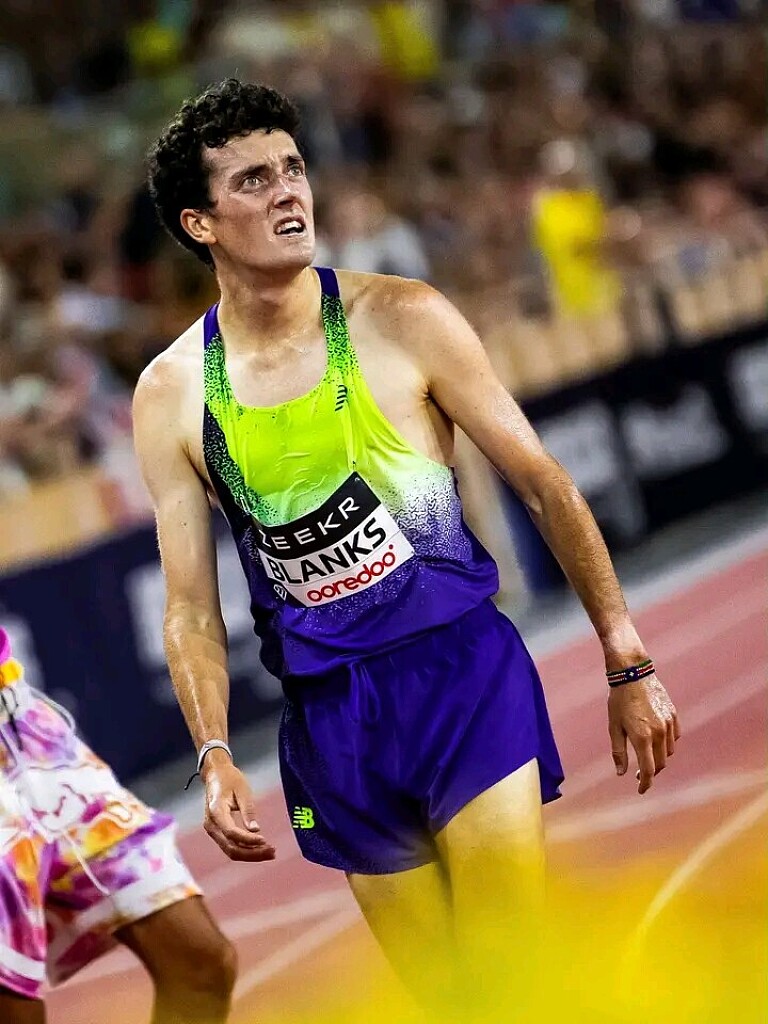
Americans Bring The Heat As Lausanne Diamond League Sets Up A Fierce 5000m Showdown
The Wanda Diamond League returns to action on Friday, August 21, and the men’s 5000m in Lausanne promises to be one of the evening’s most compelling distance races, with a strong American quartet ready to take on a deep international field.
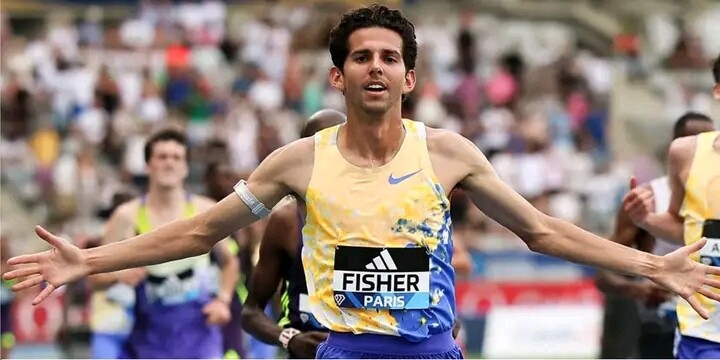
Graham Blanks, Grant Fisher, Parker Wolfe and Nico Young will carry the American challenge at Athletissima, where they will line up against a formidable group featuring athletes from Kenya, Ethiopia, Bahrain, Eritrea, Burundi, Switzerland, Uruguay, Slovenia and Mexico.

The Lausanne meeting marks an important point in the 2026 Diamond League campaign, with the Road to the Final entering its decisive stages ahead of the series finale in Brussels on September 4-5. Lausanne is followed just two days later by the Silesia meeting, before the series heads to Zurich for the final regular-season stop.
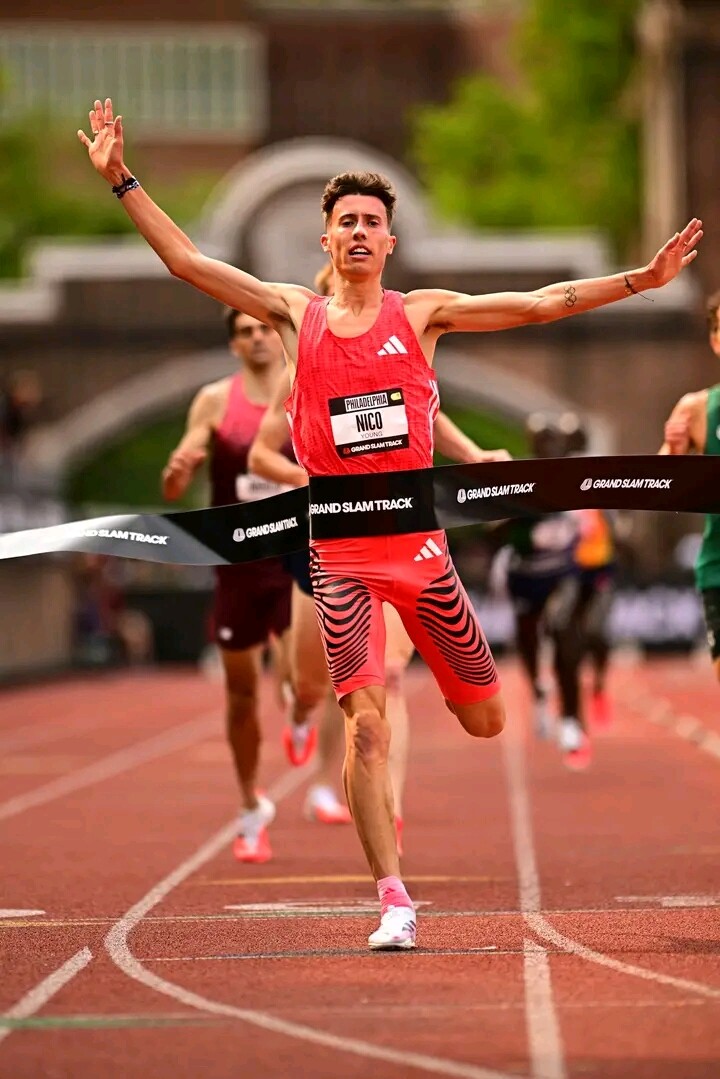
Fisher arrives as one of the most established names in the field. The American Olympic bronze medallist has already produced a 12:49.61 season best over 5000m in Oslo and also won the 3000m in Paris earlier this season. His experience at the highest level makes him a major contender when the pace accelerates over the closing laps.
Blanks is another American to watch closely. Ranked among the leading 5000m athletes in the world, he has continued to establish himself as one of the United States’ most exciting young distance runners. World Athletics’ rankings placed him eighth globally in the event as of July 26, with Fisher sixth.
Wolfe and Young add further depth to an American lineup that could make the race particularly tactical. With four athletes capable of competing at a high level, the United States will have several cards to play as the race develops.
But the Americans will have no easy path to victory.
Bahrain’s Birhanu Balew headlines the international opposition and entered the season among the world’s highest-ranked 5000m runners. Kenya will be represented by Jacob Krop, Edwin Kurgat, Cornelius Kemboi, Charles Kiboina, Mathew Kipchumba Kipsang and Laban Kiptoo Kosgei, giving the race a powerful Kenyan presence.
Ethiopia also brings considerable strength, with Khairi Bejiga, Kuma Girma, Shimelis Niguse, Mezgebu Sime and Getnet Wale all listed in the field. Eritrea’s Abderezak Suleman, Burundi’s Egide Ntakirutimana, Switzerland’s Dominic Lokinyomo Lobalu, Uruguay’s Santiago Catrofe, Slovenia’s Žan Rudolf and Mexico’s Eduardo Herrera complete a truly international lineup.
The Lausanne 5000m is therefore shaping up as much more than an American showcase. It is a meeting of contrasting strengths: American depth, Kenyan distance tradition, Ethiopian endurance and a collection of international contenders eager to make their mark on one of the sport’s biggest stages.
With the Diamond League season moving rapidly toward its final stretch, every position and every point carries added importance. The question now is whether the American quartet can convert its collective strength into a victory—or whether the international field will once again prove too deep to control.
One thing is certain: when the Lausanne 5000m gets underway, the pace is expected to be hot, the competition fierce and the final laps unforgettable.
by Erick Cheruiyot for My Best Runs.
Login to leave a comment
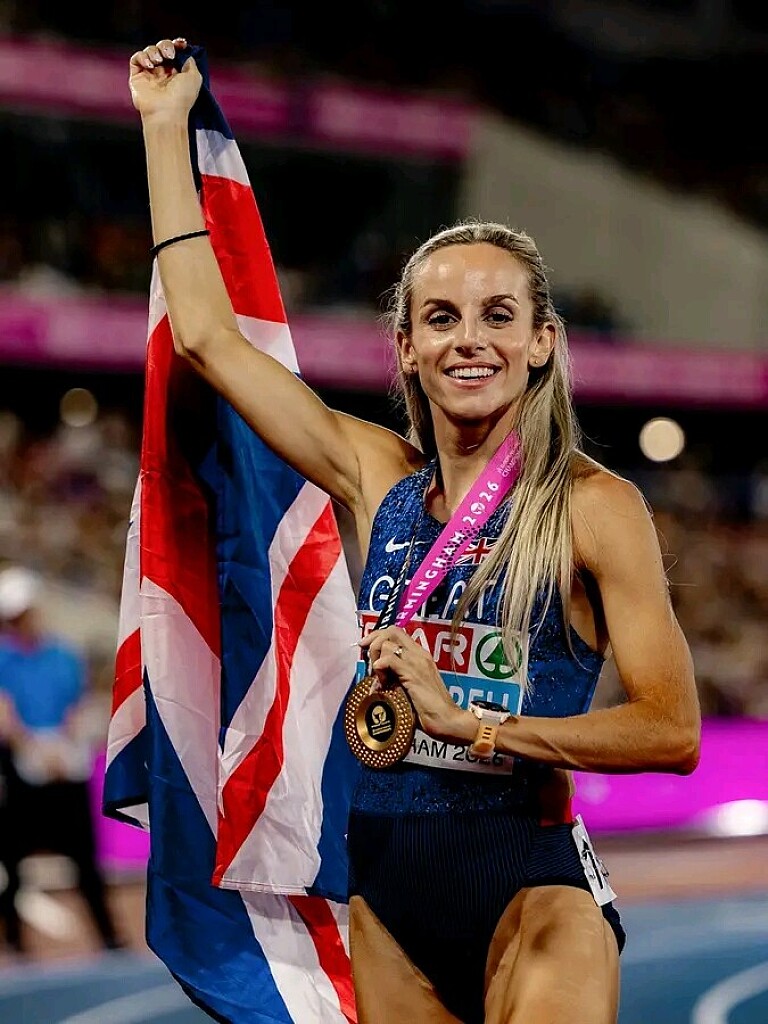
Georgia Hunter Bell Completes a Golden Hat-Trick in Birmingham
Georgia Hunter Bell is turning the 2026 season into a remarkable display of consistency, composure and championship brilliance.
The British middle-distance star added another major title to her growing collection in Birmingham, producing a perfectly judged tactical performance to win the women’s 1500m at the European Athletics Championships in 4:07.78.
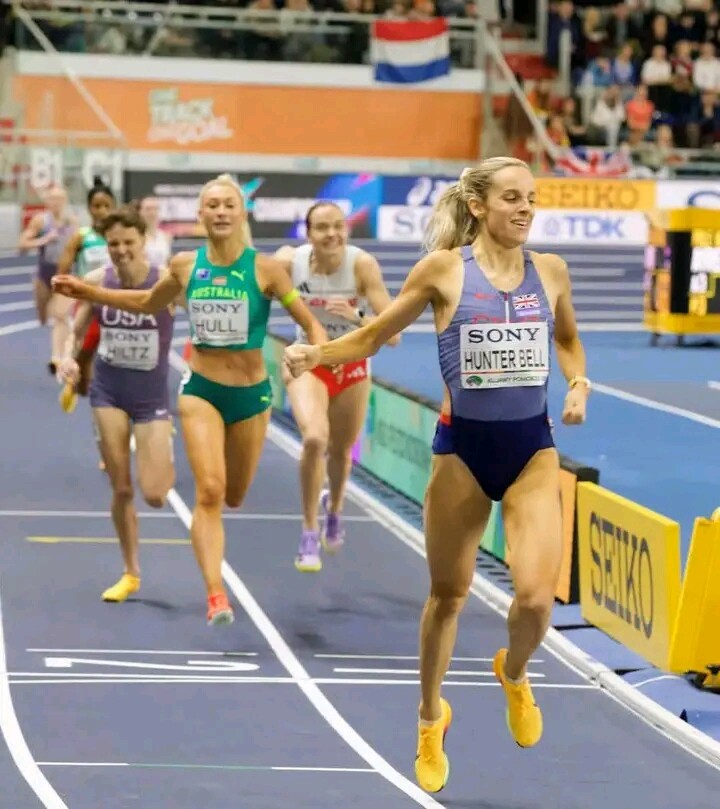
It was her third major championship gold of the season, underlining just how exceptional her campaign has become. Rather than relying on a blistering early pace, Hunter Bell remained patient through the tactical opening stages before making her decisive move when the race began to unfold.
Her latest triumph follows her victory in the 1500m at the World Athletics Indoor Championships in Toruń, Poland, and her Commonwealth Games success over 800m in Glasgow. Three major championships, three gold medals — across two different distances — is a remarkable achievement.
The European title also highlighted Hunter Bell’s versatility. She has repeatedly demonstrated that she can adapt to different race scenarios, whether the pace is aggressive from the gun or the championship demands patience, positioning and a perfectly timed finish.
Now, with three major titles already secured, attention turns to the final piece of what could become an extraordinary championship clean sweep: the World Athletics Ultimate Championship in Budapest, Hungary.
If Hunter Bell can add another victory there, she would complete one of the most impressive major-championship campaigns of the season — a golden run built not only on speed, but on intelligence, resilience and an ability to deliver when the stakes are highest.
Georgia Hunter Bell has already made 2026 a season to remember. One more major title could make it truly unforgettable.
by Erick Cheruiyot for My Best Runs.
Login to leave a comment
