

Running News Daily
Running News Daily is edited by Bob Anderson and team. Send your news items to bob@mybestruns.com Advertising opportunities available.
Index to Daily Posts · Sign Up For Updates · Run The World Feed
Articles tagged #INEOS 1:59 Challenge
Today's Running News
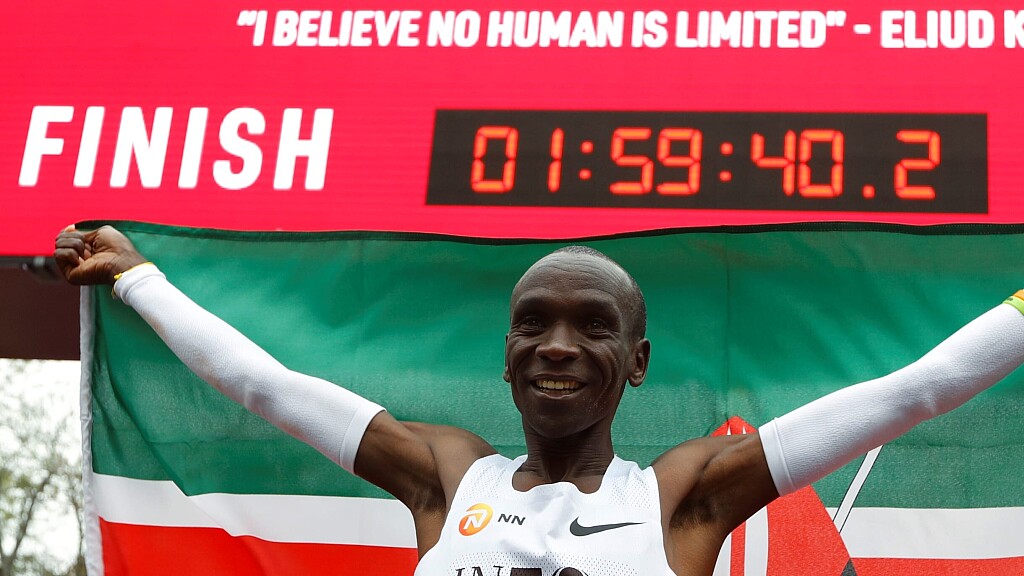


From Kipchoge’s Impossible Dream to Sawe’s Historic Reality: Kenya Redefines Marathon Running
Seven years after Eliud Kipchoge challenged the limits of human endurance in Vienna, fellow Kenyan Sabastian Sawe has transformed that extraordinary vision into a landmark achievement in competitive marathon running, becoming the first man to complete the 42.195-kilometre distance in under two hours under record-eligible race conditions.
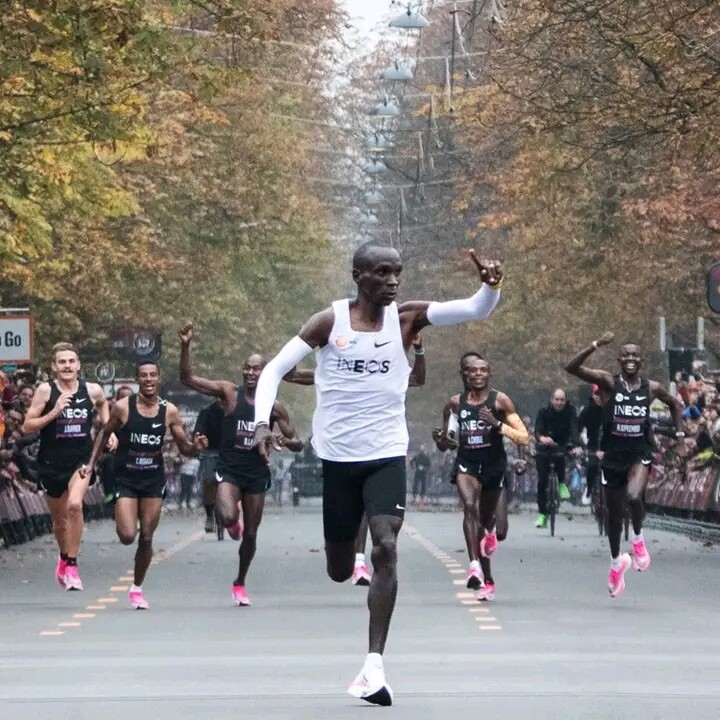
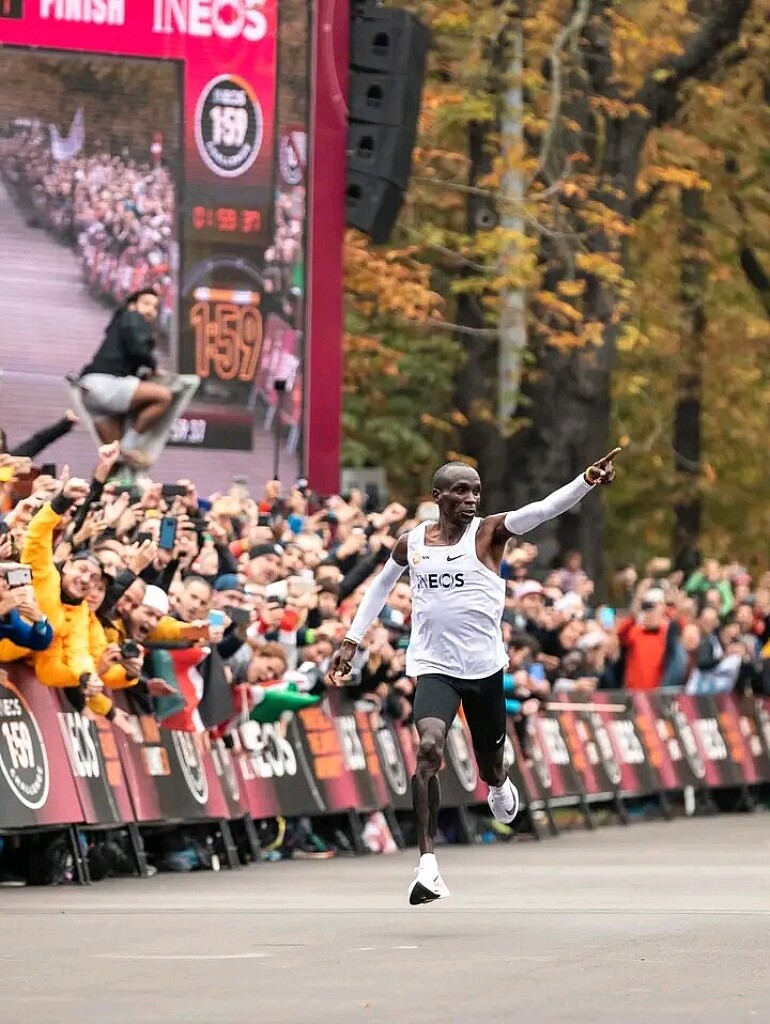
On October 12, 2019, Kipchoge etched his name into sporting history when he completed the INEOS 1:59 Challenge in Vienna, Austria, in an astonishing 1:59:40.2. Although the performance could not be recognised as an official world record because of the controlled conditions under which it was staged, it demonstrated that the seemingly impossible barrier was within human reach.
Kipchoge’s achievement carried a powerful message that resonated far beyond athletics: “No human is limited.” His words became a symbol of determination, ambition and the courage to challenge established boundaries.
However, the dream of breaking two hours in an official marathon remained unfinished.
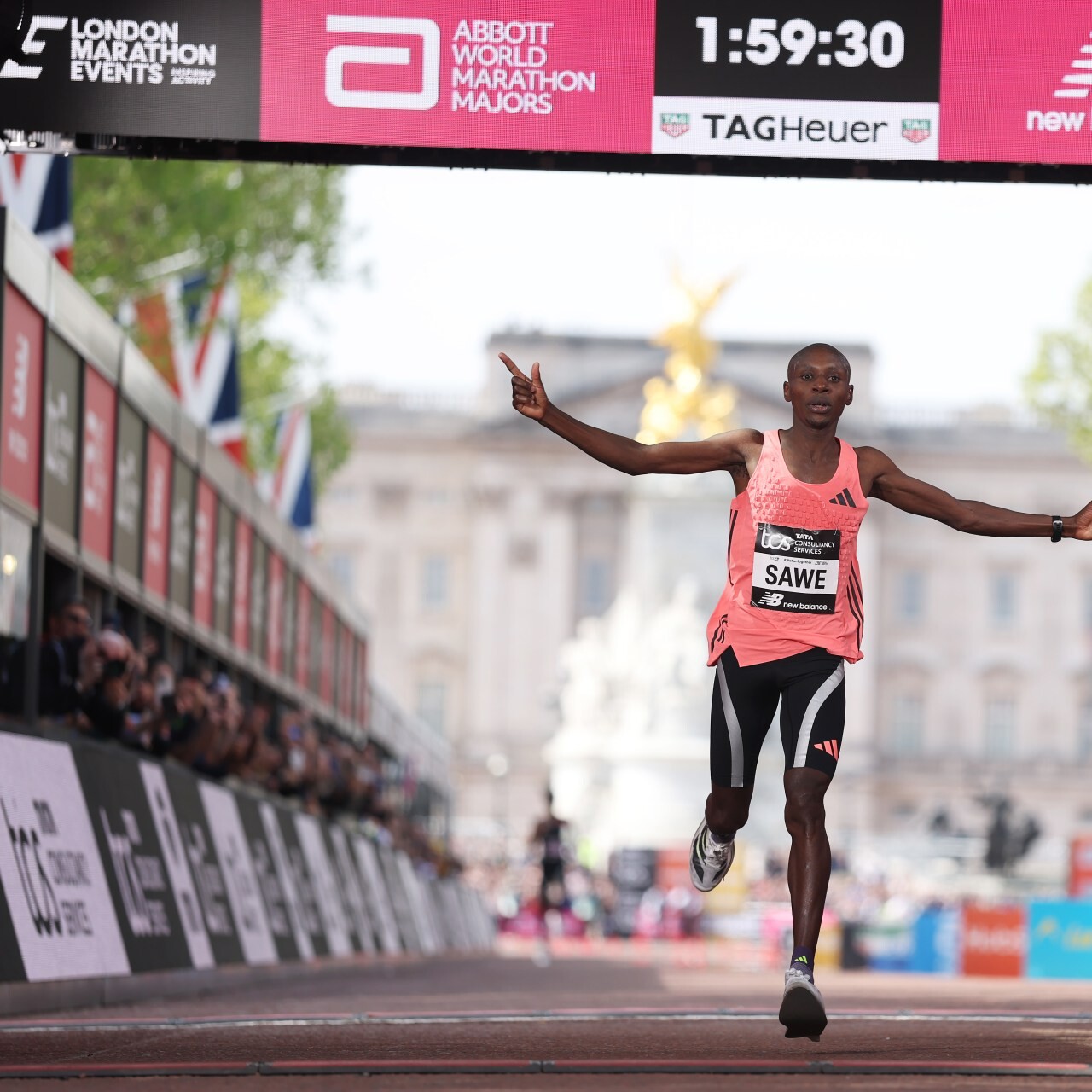
That changed on April 26, 2026, when Sawe delivered a breathtaking performance at the TCS London Marathon, stopping the clock at 1:59:30 to claim victory and establish a new men's marathon world record. The Kenyan took an astonishing 65 seconds off the previous record of 2:00:35, set by the late Kelvin Kiptum at the 2023 Chicago Marathon.
Sawe’s achievement was historic not simply because he ran faster than Kipchoge’s celebrated Vienna time, but because he accomplished the feat in an official, competitive marathon eligible for world-record recognition. The distinction elevated his performance into an entirely new chapter of distance-running history.
Remarkably, Sawe was not the only athlete to challenge the two-hour barrier that day. Ethiopia’s Yomif Kejelcha finished second in 1:59:41, becoming the second man to run under two hours in a competitive marathon. Uganda’s Jacob Kiplimo completed the podium in 2:00:28, also finishing inside Kiptum’s previous world record.
The extraordinary results underlined how dramatically the boundaries of marathon running have shifted in a sport where even a few seconds can separate an athlete from immortality.
For Kenya, Sawe’s triumph represents another defining moment in a remarkable tradition of distance-running excellence. From the groundbreaking achievements of Kipchoge to Kiptum’s world-record performance and now Sawe’s sub-two-hour marathon, Kenyan athletes have continued to shape the evolution of the sport.
Yet the connection between Kipchoge and Sawe goes beyond nationality. Kipchoge demonstrated that the marathon distance could be covered in less than two hours under specially controlled conditions. Sawe carried that vision into open competition, where the challenge had to be conquered within the demands of an official race.
Their achievements tell a compelling story of how sporting dreams can inspire future generations to pursue what once appeared unattainable.
On October 12, 2026, exactly seven years after Kipchoge’s landmark run in Vienna, the anniversary offers a powerful opportunity to reflect on how far marathon running has progressed. What began as a demonstration of human potential has become an officially recognised world-record achievement.
Kipchoge opened the door to a new era of possibility. Sawe ran through it and changed marathon history forever.
One dream. Two Kenyan legends. A new definition of human endurance.
The message remains as powerful as ever: No human is limited.
by Erick Cheruiyot for My Best Runs.
Login to leave a comment
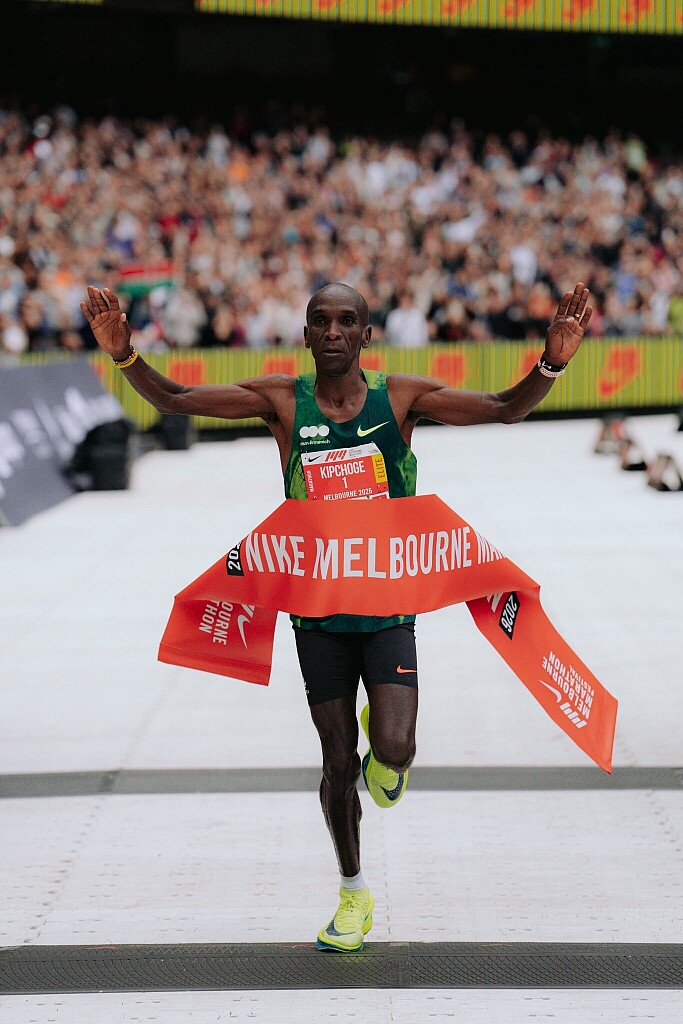
Eliud Kipchoge Conquers Melbourne With Course-Record 2:09:10 Victory
MELBOURNE, Australia — Kenyan marathon great Eliud Kipchoge added another memorable chapter to his illustrious career on Sunday, October 11, 2026, winning the Nike Melbourne Marathon Festival in a course-record time of 2:09:10
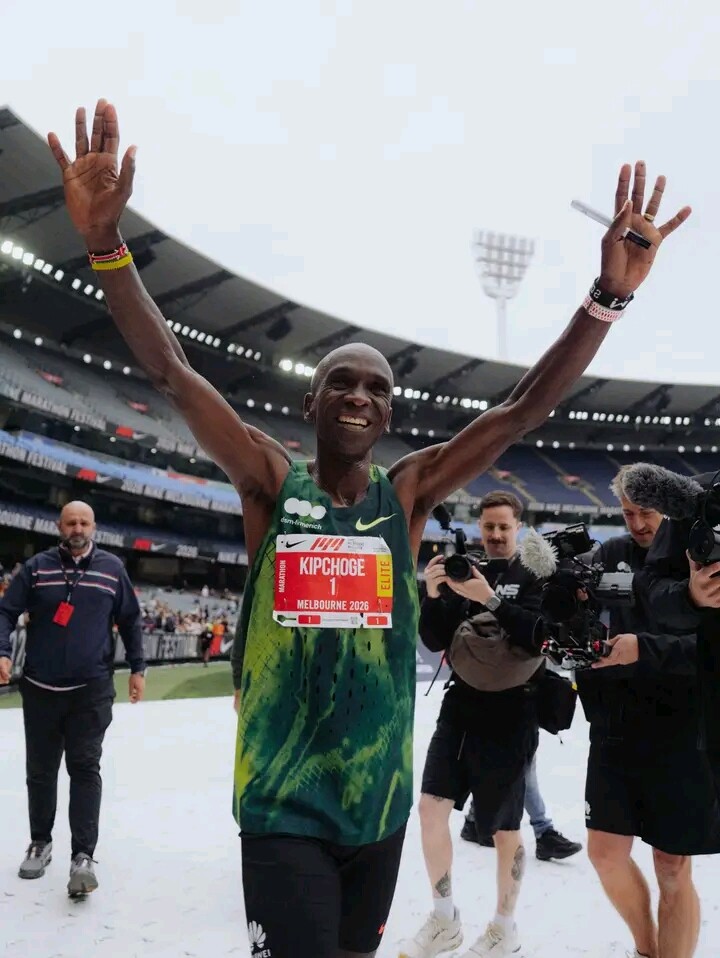
The victory further underlined the 41-year-old's enduring class and competitive spirit as he continues his ambitious global project, Eliud’s Running World, a three-year journey aimed at completing a marathon on every continent.
Kipchoge's performance delivered another milestone in a career defined by extraordinary consistency, historic achievements and an unwavering commitment to pushing the boundaries of distance running. His Melbourne triumph marked the 17th marathon victory of his career, adding another prestigious result to a remarkable record on the roads.
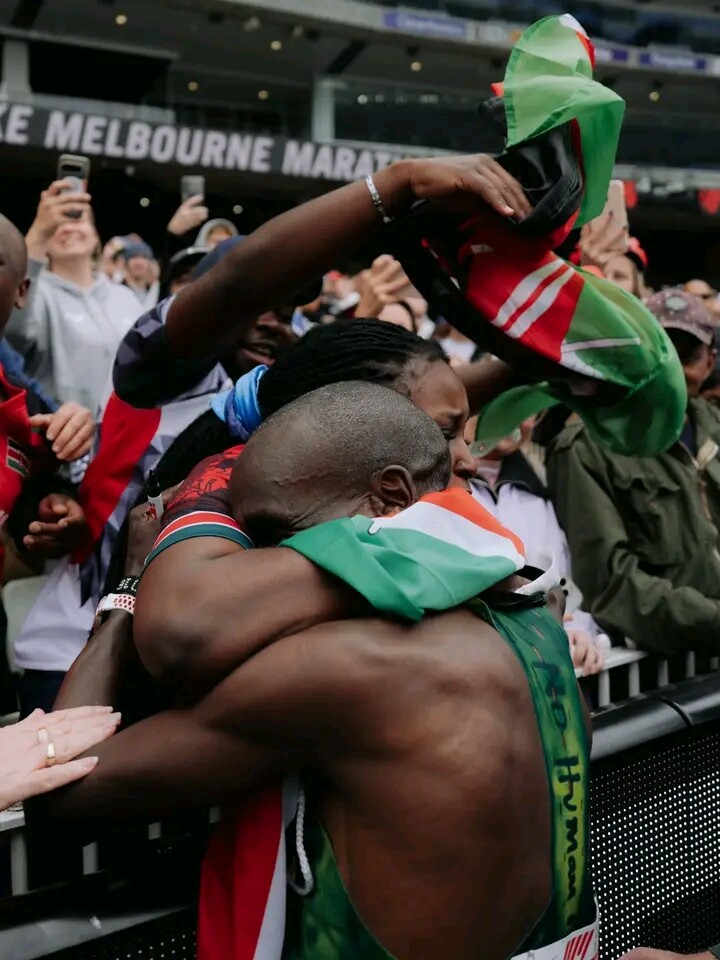
Kipchoge's Melbourne triumph was particularly significant as it marked his return to the top of the marathon podium three years after his previous marathon victory in Berlin in 2023. At 41, the Kenyan legend demonstrated that experience, discipline and an enduring passion for running can continue to produce exceptional performances at the highest level. His course-record time of 2:09:10 was a powerful reminder of his remarkable longevity in a sport that demands extraordinary physical and mental strength.
Australia's Thomas Do Canto finished second in 2:10:35, while compatriot Reece Edwards took third in 2:14:33, completing an all-Australian finish behind the Kenyan champion. For Kipchoge, the victory represented more than another achievement in his decorated career; it was another opportunity to inspire runners of all ages and reinforce his belief in the unifying power of the sport. His Melbourne success added fresh momentum to his global running tour and reaffirmed his status as one of the most influential marathon runners in history.
The Kenyan star broke away from his rivals in the closing stages of the 42.195-kilometre race before crossing the finish line inside the iconic Melbourne Cricket Ground (MCG). His official finishing time of 2:09:10 set a new course record, improving the previous mark of 2:09:12 established by Timothy Ronoh in 2022.
Melbourne represented the third stop on Kipchoge's ambitious Eliud's Running World journey. The project began with the Sanlam Cape Town Marathon in South Africa in May, followed by the NB42K Porto Alegre Marathon in Brazil in July. His latest appearance took the initiative to Oceania, bringing one of the greatest figures in distance-running history to Melbourne's passionate running community.
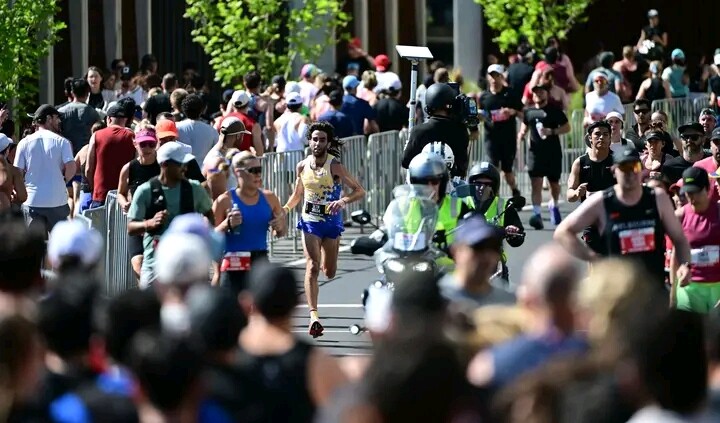
Kipchoge's Melbourne appearance was about much more than chasing another victory. The Kenyan legend embraced the city's running culture, sharing the course with runners of different abilities and inspiring the next generation through his presence. His course-record performance provided a fitting highlight to a day that celebrated the power of running to bring people together, with enthusiastic spectators lining the route and the spectacular finish at the Melbourne Cricket Ground adding to the occasion.
Reflecting on the experience, Kipchoge expressed his pride in winning a new race record while continuing his global mission to inspire runners and communities around the world. He also praised the tremendous support he received throughout the race, describing the atmosphere in Melbourne as an unforgettable experience that went beyond the competition itself.
“Today was such a special day, not only running my third World Tour, but also winning in a new race record. It makes me proud to run with the younger generation and inspire the running community in Melbourne. Today was about more than sport. It was about the energy of the city, the huge support along the race route, running alongside so many other runners, and a stunning finish at the MCG. No words can describe that feeling. Thank you, Melbourne.”
The two-time Olympic marathon champion has built a legacy through his remarkable achievements, including becoming the first man to complete a marathon in under two hours during the INEOS 1:59 Challenge in 2019, although that performance was not eligible for an official world record.
At 41, Kipchoge continues to demonstrate his love for the sport, using his global journey to promote running as a force for unity, inspiration and positive change across communities and continents.
His Melbourne victory was therefore more than another addition to his impressive collection of marathon wins. It was a statement of continued competitiveness and a celebration of a career that has helped shape modern marathon running.
With four continental stops remaining on his seven-continent mission, Kipchoge's journey is far from over. His latest triumph in Australia has provided another compelling chapter in the story of a champion whose influence extends well beyond the finish line.
by Erick Cheruiyot for My Best Runs.
Login to leave a comment

Melbourne Marathon
Be a part of Australia’s largest marathon and race alongside marathon legends. Circle around Albert Park Lake, Flinders Street Station, pass the St Kilda beach foreshore and cross the finish line at the MCG to cheers from supporters, family and friends. The Nike Melbourne Marathon is a competitive, adrenaline-filled race for those experienced in marathon running who want to set...
more...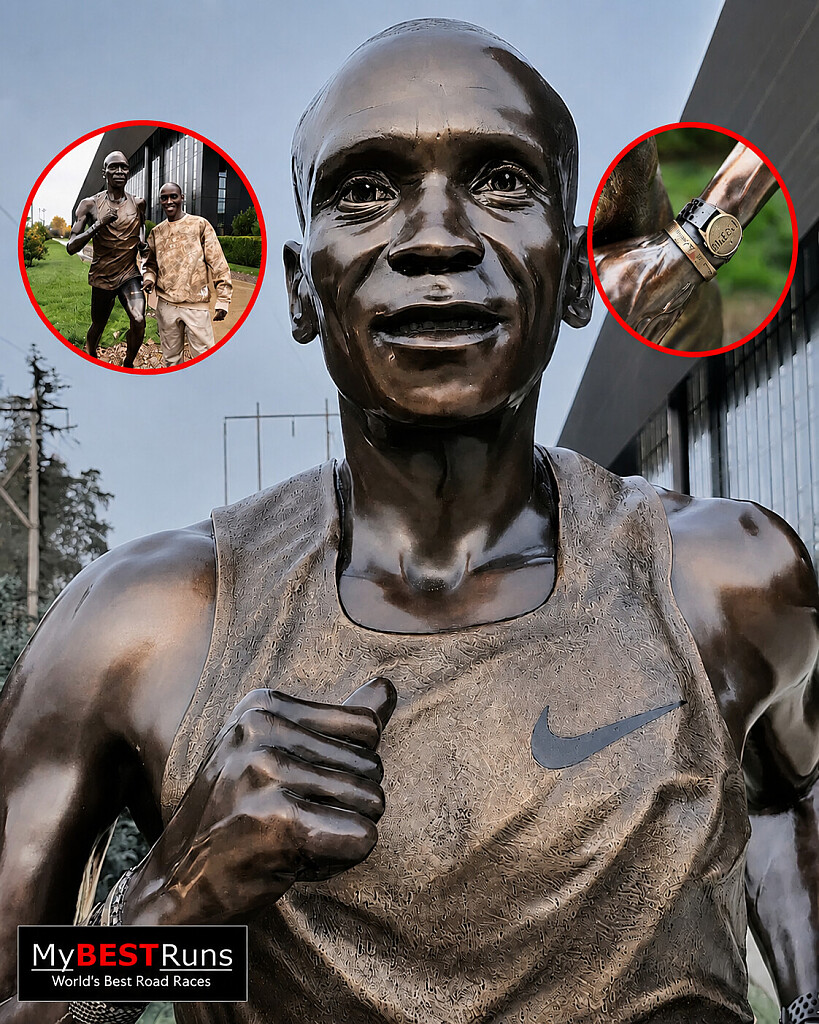
The Statue That Predicted History: How Kipchoge’s ‘No Human Is Limited’ Became Reality
Inside Nike’s World Headquarters in Beaverton, Oregon, a bronze figure stands frozen in motion.
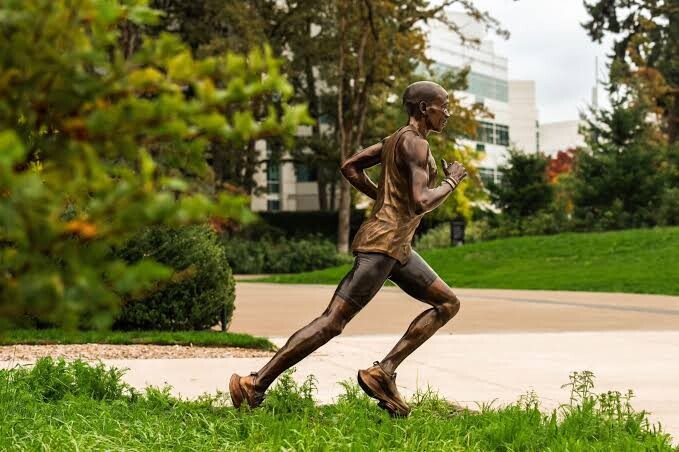
It is Eliud Kipchoge — captured in his unmistakable running posture, every detail carefully sculpted to resemble the Kenyan marathon legend at full stride. But this is more than a statue. It is a permanent reminder of a barrier that once seemed beyond human reach.
Created by Oregon artist Alison Caswell and commissioned by Nike, the life-size bronze sculpture was unveiled in October 2023 as part of the company’s celebration of its 20-year partnership with Kipchoge. Nike described the statue as a tribute to his signature gait and unique running style.
Look closely, however, and the sculpture tells an even deeper story.
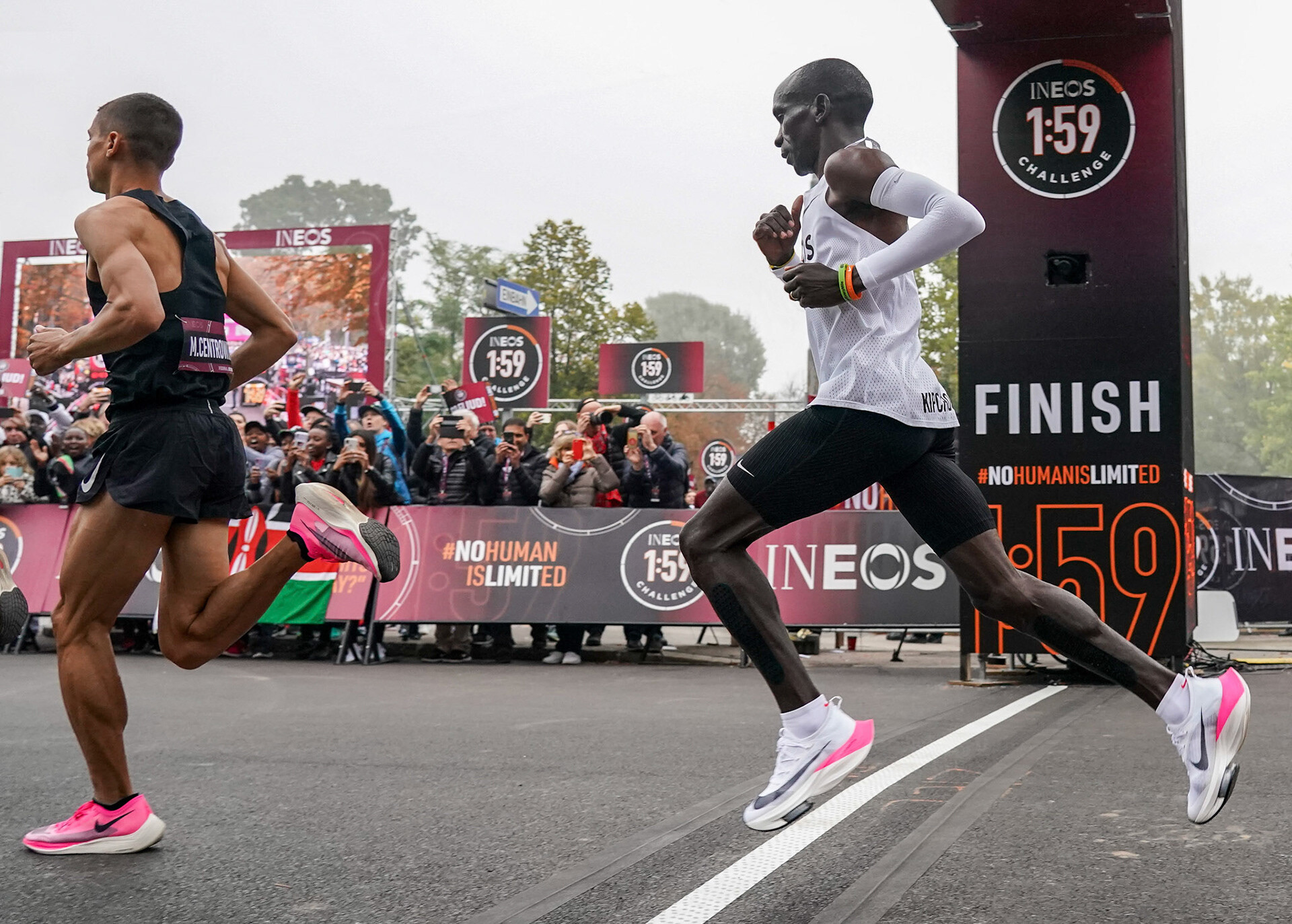
The watch on Kipchoge’s wrist displays 1:59:40, recalling the extraordinary morning of October 12, 2019, when he became the first person to run the marathon distance in under two hours during the INEOS 1:59 Challenge in Vienna.
His official recorded time was 1:59:40.2.
The achievement came under specially controlled conditions, with 41 pacemakers rotating in formations around him and extensive logistical support designed specifically for the attempt. Because it was not a standard record-eligible marathon, the performance was not recognized as an official world record. But its significance went far beyond the record books.
On the statue's left wrist is another detail that carries perhaps even greater meaning.
The wristband bears Kipchoge's famous philosophy:
“No human is limited.”
Those four words became synonymous with his pursuit of the impossible. In Vienna, they were no longer simply a slogan. Kipchoge had demonstrated that a boundary which had appeared almost untouchable could, under the right circumstances, be broken.
Four years later, the bronze figure remained in place at Nike's headquarters — but the marathon world had changed dramatically.
In October 2023, Kelvin Kiptum lowered the official men's marathon world record to 2:00:35 in Chicago, bringing the sport closer than ever to the barrier Kipchoge had already conquered unofficially in Vienna.
Then came April 26, 2026.
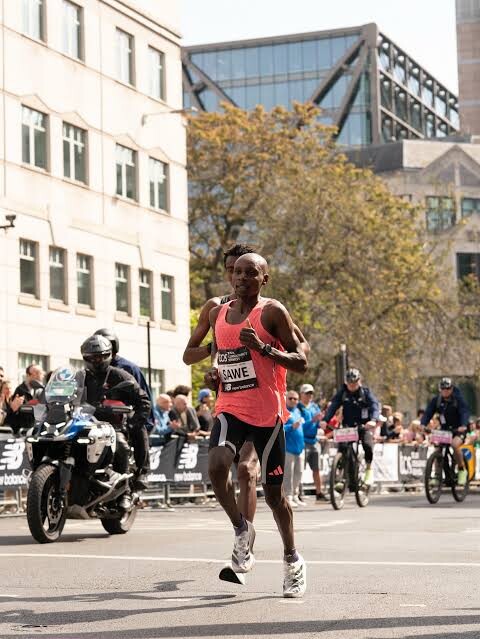
On the streets of London, Kenya's Sabastian Sawe entered territory that had previously belonged only to Kipchoge's extraordinary exhibition achievement.
Sawe won the London Marathon in 1:59:30, becoming the first man to officially complete a record-eligible marathon in under two hours. He also erased Kiptum's world record by 65 seconds. World Athletics subsequently ratified the performance as the official men's marathon world record.
And remarkably, Sawe did it in an ordinary competitive marathon — not on a specially designed course, not with rotating pacemakers, and not under the unique conditions of the 2019 INEOS challenge.
The symbolism is difficult to miss.
When Nike unveiled Kipchoge's statue in 2023, the 1:59:40 engraved on its wrist represented a moment when humanity had first stepped beyond the two-hour marathon barrier.
Today, that number represents something different.
It is no longer the fastest anyone has ever run 42.195 kilometres.
Instead, it has become part of the history that led to something even greater: the first officially recognized sub-two-hour marathon.
Kipchoge opened the door in Vienna.
Kiptum pushed the official world record closer.
And Sawe eventually walked — or rather, ran — through the door.
The bronze statue in Beaverton has not moved. Its watch still points to 1:59:40, and its wristband still carries the words “No human is limited.”
But the meaning of those words has grown.
What once looked like a statement of belief now reads like a prediction.
The statue was built to celebrate what Kipchoge had already achieved.
History has since given it another purpose: to remind the world that yesterday's impossible can become tomorrow's starting point.
by Erick Cheruiyot for My Best Runs.
Login to leave a comment
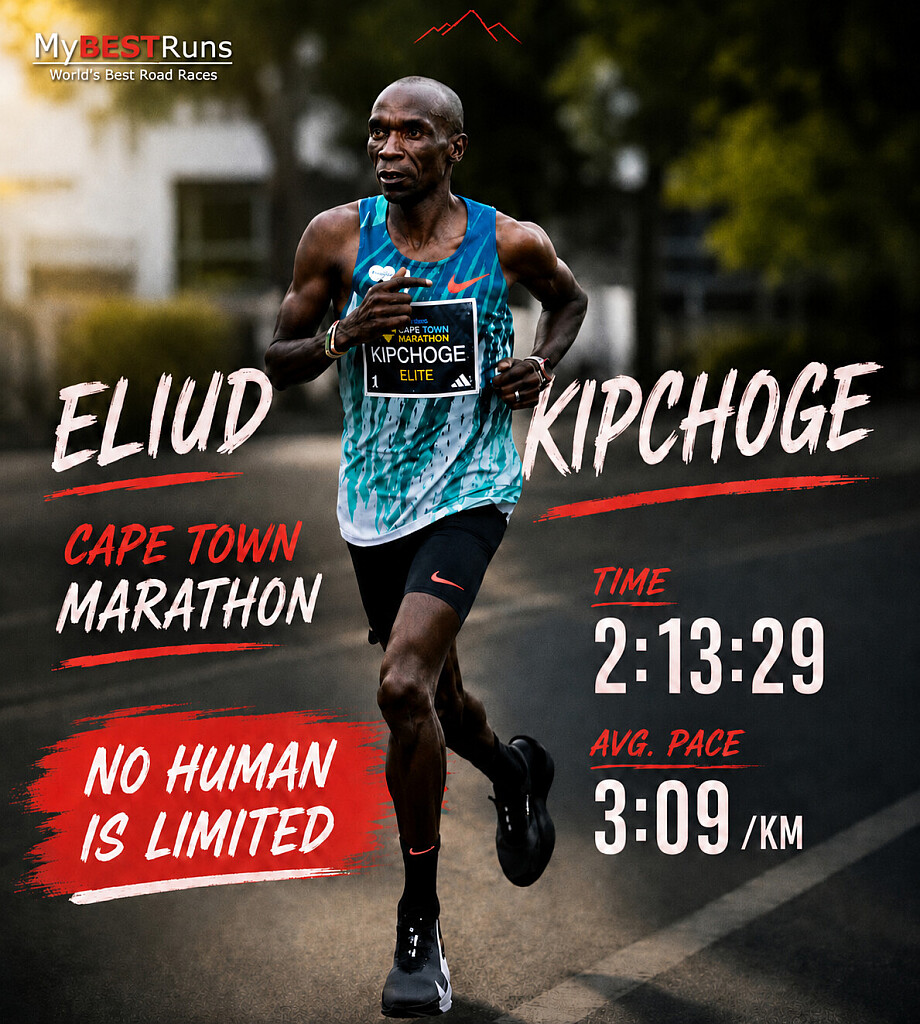
Kipchoge Opens Seven-Continent Challenge with Courageous Cape Town Effort
“The time has come.”
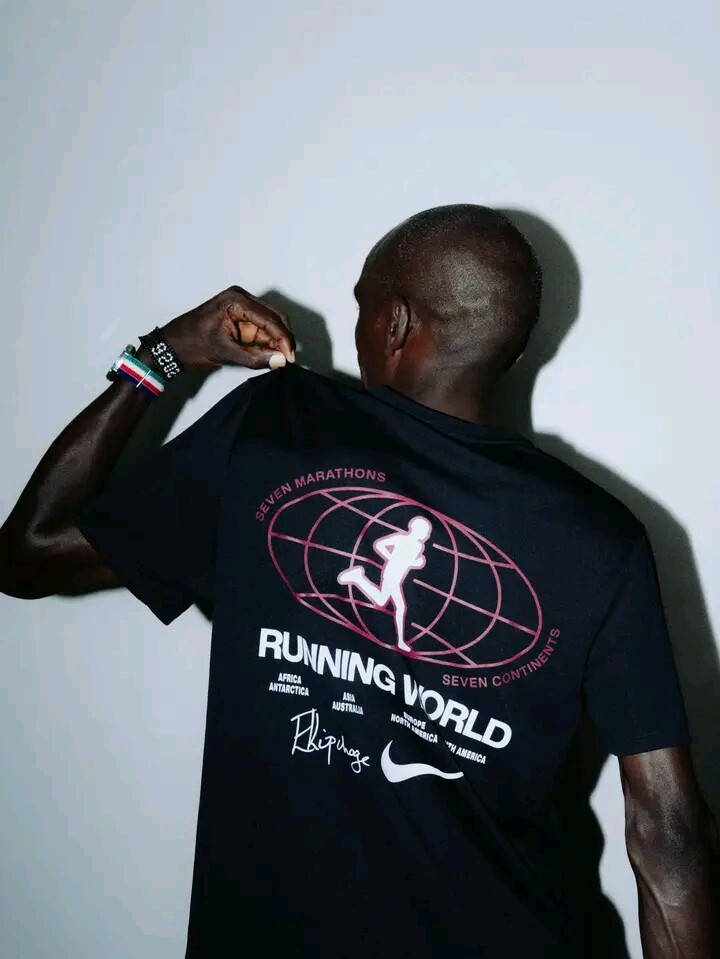
Those words carried enormous weight as marathon legend Eliud Kipchoge stepped onto the streets of South Africa for the Sanlam Cape Town Marathon, officially launching his ambitious quest to complete seven marathons across seven continents.
What followed was not the victory many fans anticipated, but another compelling chapter in the extraordinary career of one of athletics’ greatest icons.
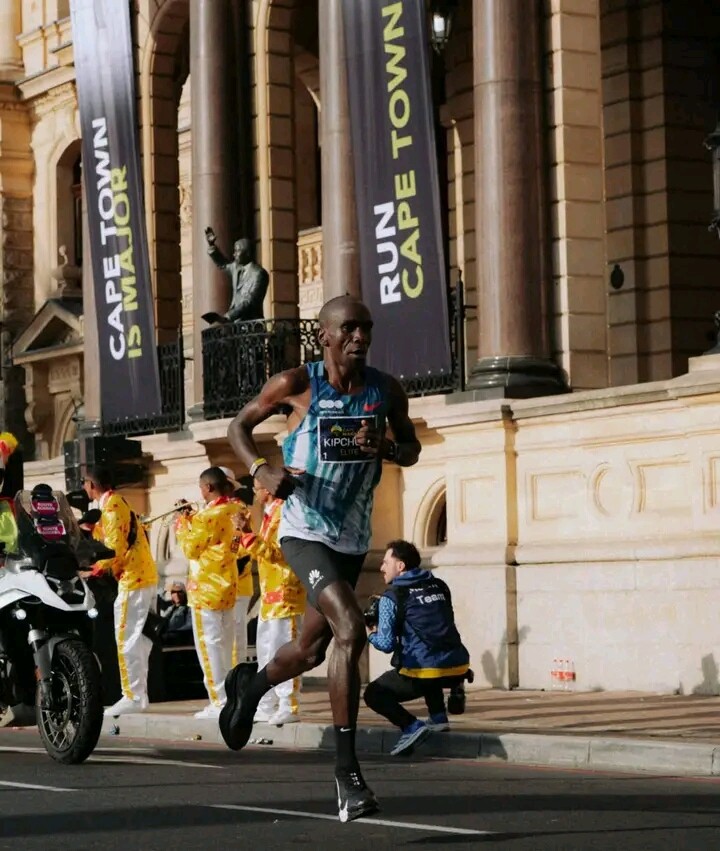
Kipchoge finished 16th in a time of 2:13:29 in Cape Town, enduring a difficult morning against a strong field and a demanding course. Yet despite the result, the race carried significance far beyond finishing position or stopwatch numbers.
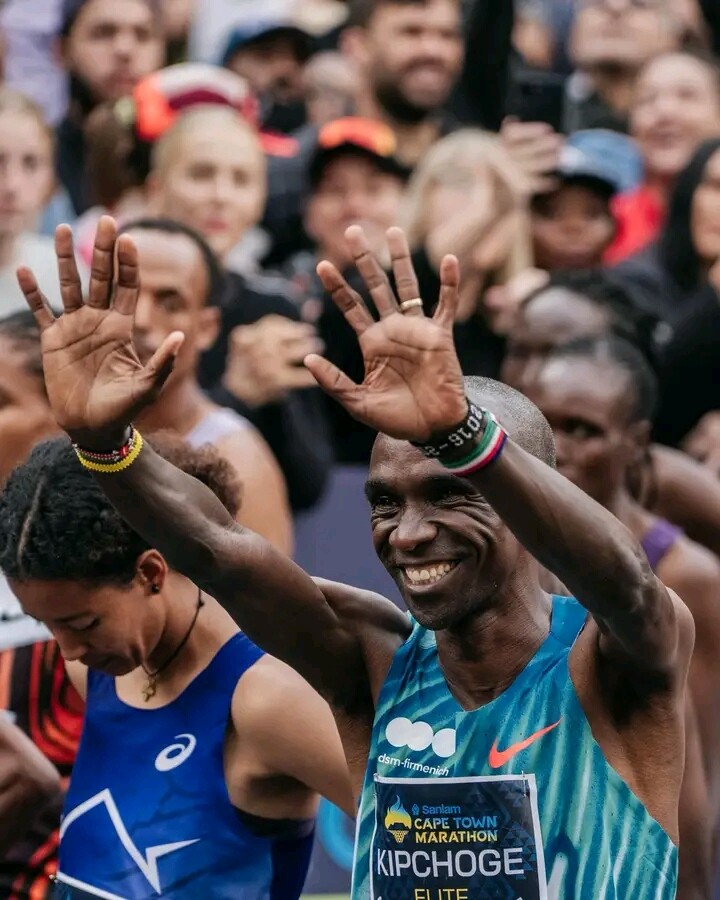
The Kenyan superstar arrived in Cape Town surrounded by global anticipation as supporters from around the world tuned in to witness the beginning of his newest challenge — a worldwide marathon journey designed to further inspire runners across every continent.
From the early stages, the pace was relentless as the lead pack surged through the scenic city streets beneath perfect marathon conditions. Kipchoge initially looked relaxed and controlled, moving comfortably among the contenders before the intensity of the race gradually began to show in the later kilometres.
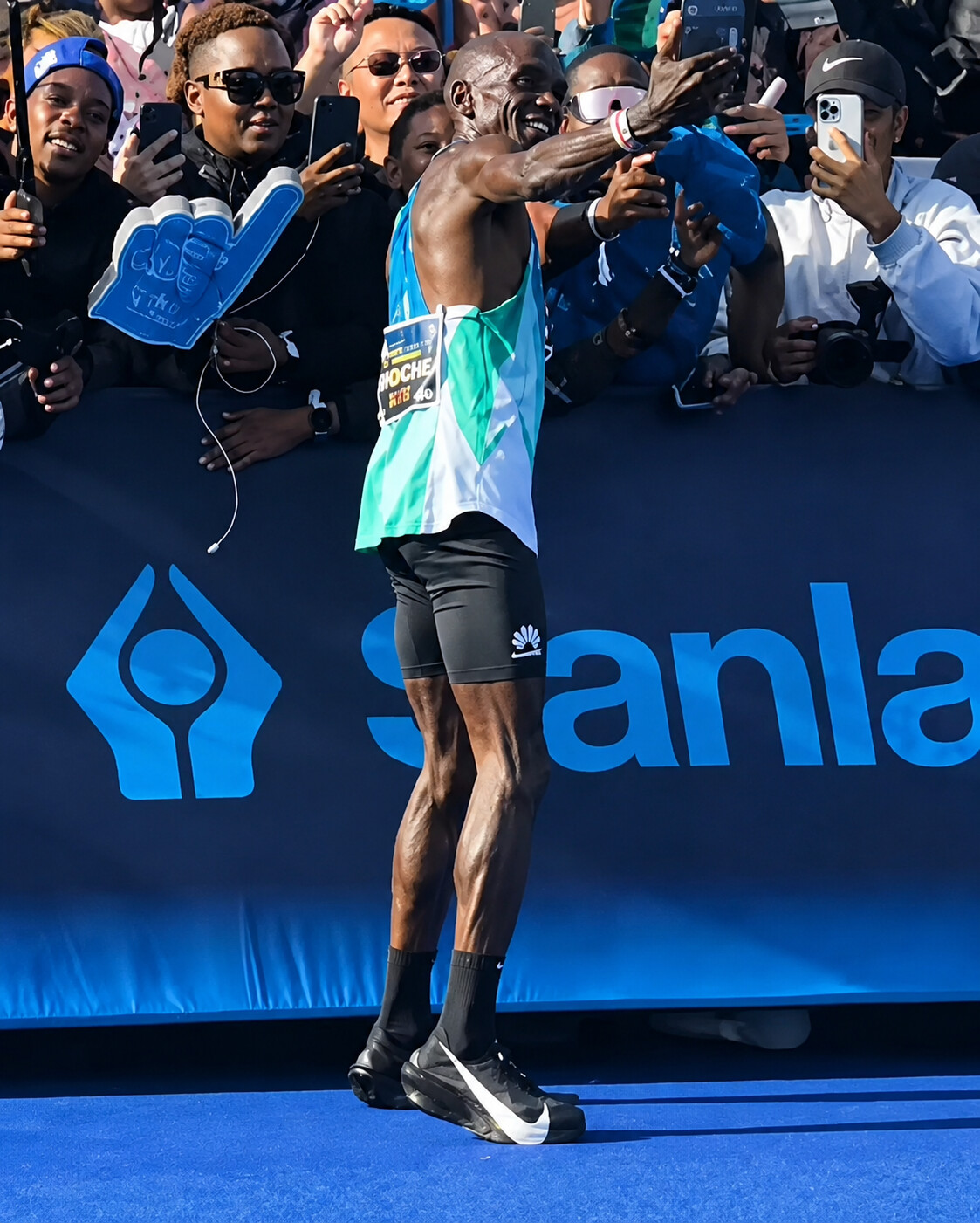
While the outcome may appear unusual for an athlete whose career has been built on dominance, discipline and record-breaking excellence, marathon running has always remained one of sport’s most unforgiving disciplines. Even legends are tested.
Still, Kipchoge’s presence transformed the Cape Town Marathon into a globally celebrated event. Thousands lined the course hoping to catch a glimpse of the man who famously broke the two-hour marathon barrier during the INEOS 1:59 Challenge — a performance that redefined perceptions of human endurance and long-distance running.
His latest mission — seven marathons on seven continents — adds yet another remarkable dimension to an already historic legacy. At 41, Kipchoge is using the challenge as a platform to inspire people across the world to embrace running, fitness and the limitless possibilities of human potential, further cementing his status as a global ambassador for the sport.
Although Cape Town did not deliver the triumphant opening many expected, the race symbolised something deeper: the beginning of another daring journey from a man who has spent his entire career proving that limits exist only to be challenged.
For many athletes, a 2:13 marathon would represent the performance of a lifetime. For Kipchoge, it simply becomes another moment in a career that has already changed the sport forever.
And as his seven-continent adventure now moves forward, the world will continue watching — not only for victories, but for the enduring spirit of a champion who keeps pushing beyond the imaginable.
by Erick Cheruiyot for My Best Runs.
Login to leave a comment
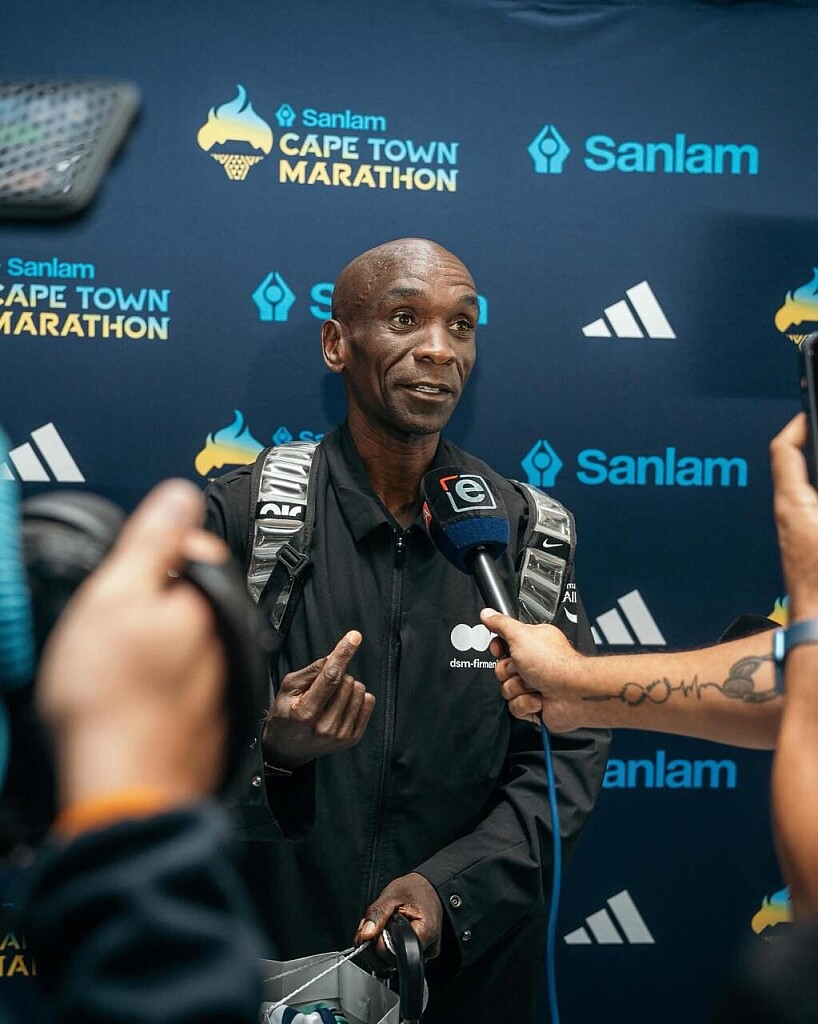
Kipchoge Backs Cape Town’s Historic Bid to Bring a World Marathon Major to Africa
Marathon icon Eliud Kipchoge has thrown his full support behind Cape Town’s ambitious campaign to become Africa’s first-ever Abbott World Marathon Major, describing the bid as a transformational moment for distance running across the continent. He is set to participate in Sanlam Cape Town marathon on May 24th, 2026.
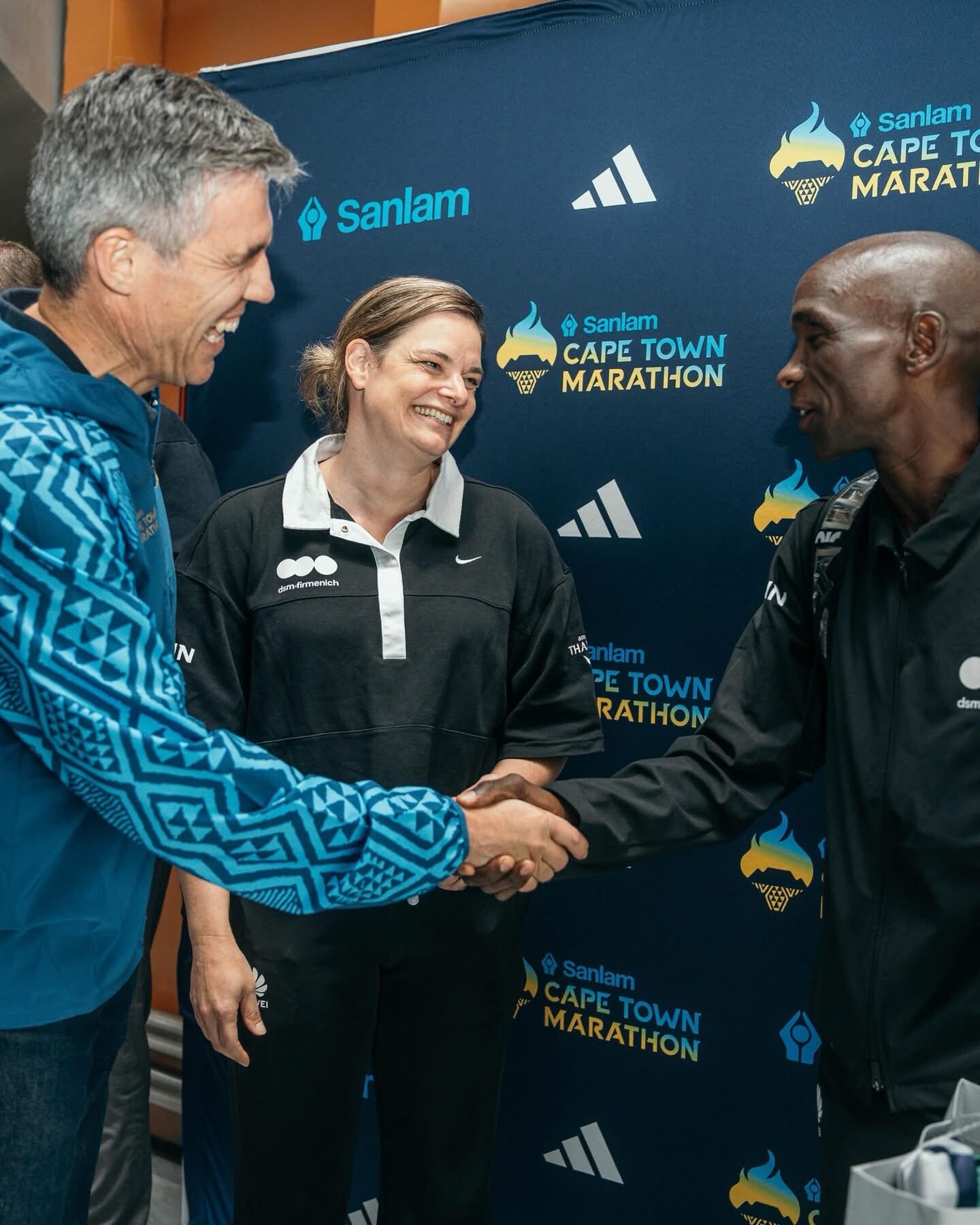
The two-time Olympic marathon champion arrived in Cape Town as part of his global marathon tour spanning seven continents, but his presence in South Africa carried far deeper significance than a ceremonial visit. For Kipchoge, the possibility of an African city joining the prestigious World Marathon Majors series represents a long-overdue recognition of the continent that has shaped the modern era of distance running.
Speaking passionately about the vision behind the bid, Kipchoge emphasized that Africa has supplied generations of world-class runners, inspired millions through athletics, and consistently dominated the marathon scene, yet has never hosted one of the sport’s most celebrated marathon events.
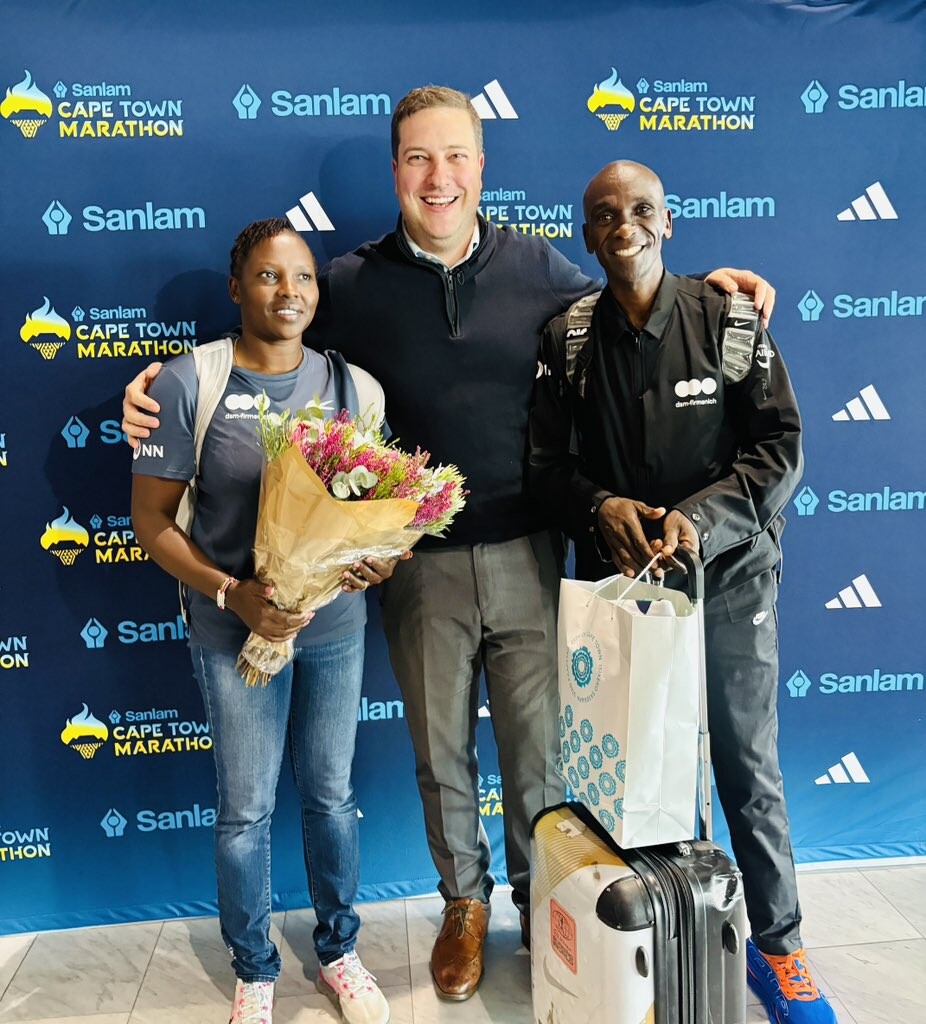
He believes Cape Town now has the opportunity to change that narrative forever.
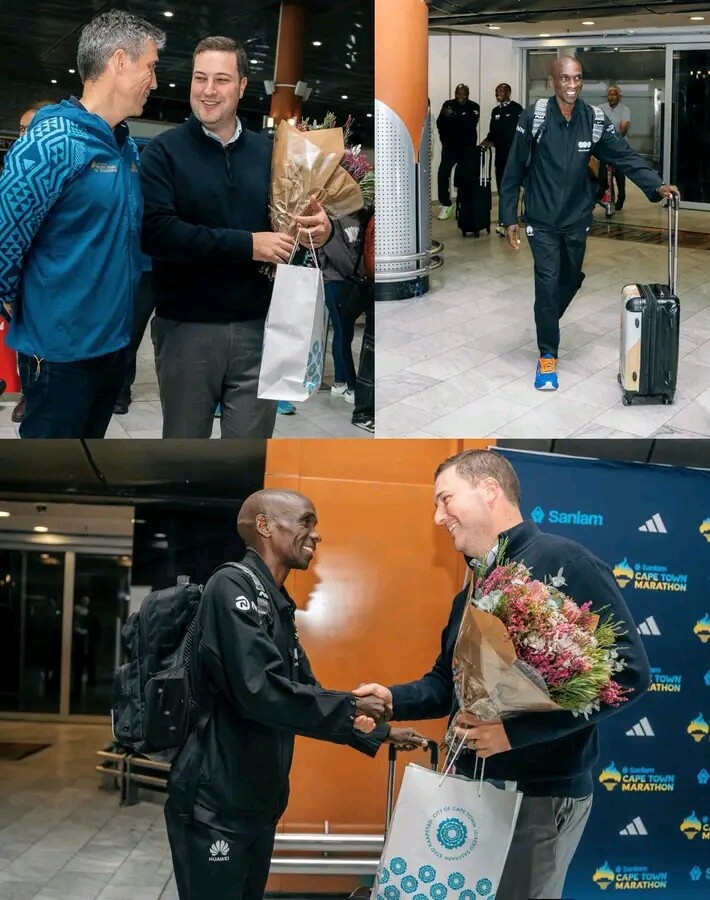
The Abbott World Marathon Majors currently features some of the most iconic races in global athletics, including events in Tokyo, Boston, London, Berlin, Chicago, Sydney and New York City. Cape Town’s inclusion would mark a historic breakthrough, positioning Africa at the center of elite marathon racing while opening new pathways for athletes, tourism, investment, and sporting development across the continent.
Kipchoge described the bid as more than just a race application, calling it a movement capable of inspiring an entirely new generation of African runners. According to the Kenyan legend, bringing a Major marathon to African soil would give young athletes tangible proof that the sport’s biggest stages are no longer distant dreams located overseas, but opportunities that can exist at home.
The marathon great also praised Cape Town’s scenery, culture, and growing international reputation as key strengths in the city’s campaign. With its breathtaking coastal routes, iconic landmarks, and passionate running community, Cape Town has increasingly emerged as one of the world’s most attractive long-distance racing destinations.
For many within global athletics, Kipchoge’s endorsement adds enormous credibility to the bid.
Few voices carry greater influence in marathon running than the Kenyan superstar, whose career has redefined human endurance. Beyond his Olympic triumphs and major marathon victories, Kipchoge became the first man in history to run a marathon in under two hours during the groundbreaking INEOS 1:59 Challenge — a feat that elevated him beyond sport and into global sporting folklore.
His support now places additional international attention on Cape Town’s push to make history.
Should the bid succeed, it would represent a monumental victory not only for South Africa, but for the entire African athletics community. It would finally bring one of marathon running’s highest honors to the continent that has produced countless champions and reshaped the global identity of endurance racing for decades.
As Kipchoge continues his journey across the seven continents, his message from Cape Town remains powerful and unmistakable: Africa’s time on marathon running’s grandest stage may finally have arrived.
by Erick Cheruiyot for My Best Runs.
Login to leave a comment

Cape Town Marathon
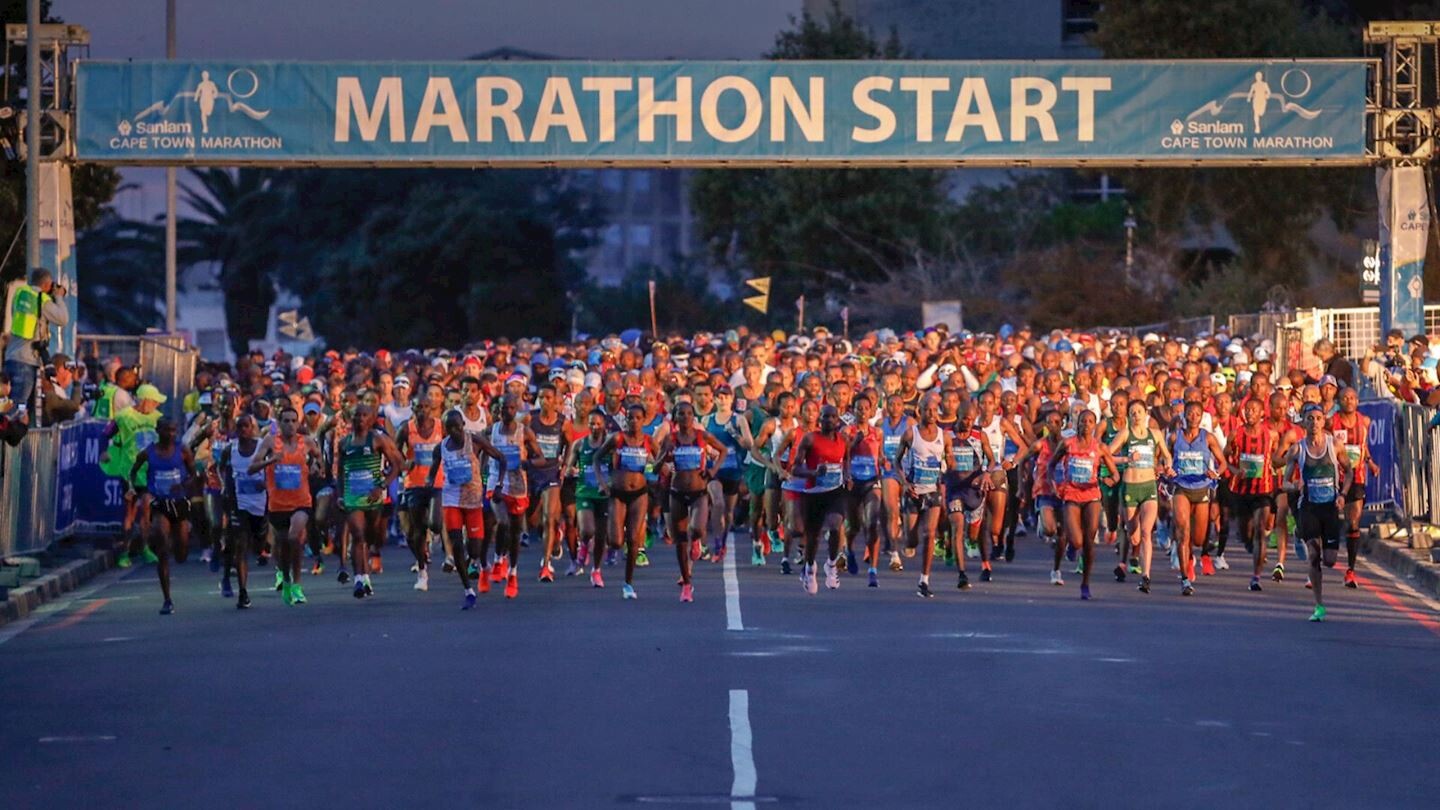
The Sanlam Cape Town Marathon is a City Marathon held in Cape Town, South Africa, which is sponsored by Sanlam, the City of Cape Town and Vital Health Foods. The marathon is held on a fast and flat course, starting and finishing in Green Point, near the Cape Town Stadium. Prior to existing in its current format, the Cape Town...
more...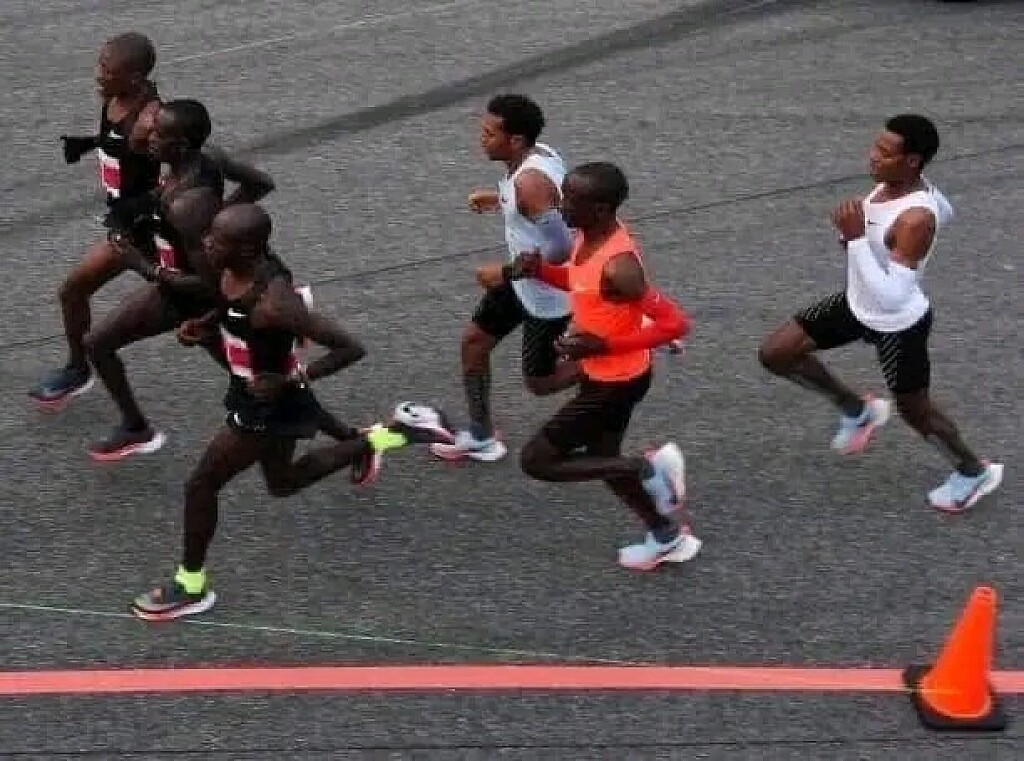
Breaking2: The Day Nike and Eliud Kipchoge Changed Marathon History Forever
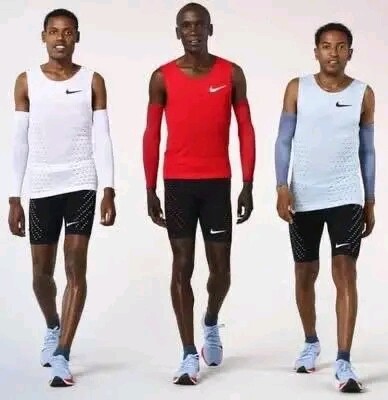
On May 6, 2017, the world witnessed one of the boldest and most revolutionary experiments ever attempted in distance running. Under the ambitious Nike Breaking2 project, three elite athletes lined up with a single mission that many believed was impossible — to run a marathon in under two hours.
At the time, the official marathon world record stood at 2:02:57, and shaving nearly three minutes from that mark seemed beyond human limits. But Nike was not simply organizing a race. Breaking2 was designed as a complete scientific and athletic operation, bringing together advanced sports technology, physiology, pacing strategy, nutrition, and environmental optimization in pursuit of history.
The challenge took place at the Monza Formula One circuit in Italy, where conditions were carefully selected to maximize speed. Rotating pacemakers shielded the runners from wind resistance, hydration was delivered while moving, and every detail — from temperature and race rhythm to training models and recovery — was analyzed with precision.
Although the event was not recognized as an official world record attempt because of the rotating pacemakers and mobile aid delivery, it became one of the defining moments in modern athletics.
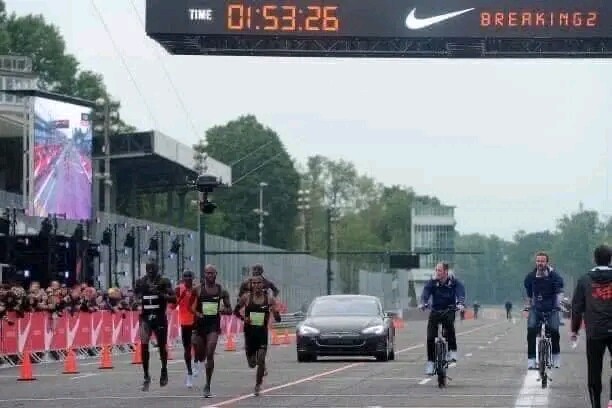
At the center of it all stood Eliud Kipchoge.
The Kenyan superstar produced a performance that stunned the sporting world, crossing the line in an astonishing 2:00:25 — just 25 seconds short of the mythical barrier. Remarkably, he missed the target by roughly one second per mile, proving just how close humanity had come to redefining endurance sport forever.
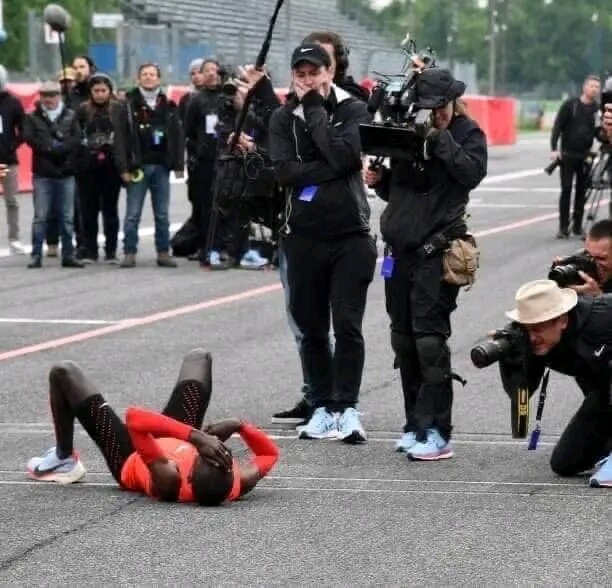
What made Kipchoge’s run even more extraordinary was the calmness and control he displayed throughout the attempt. While the pace demanded near perfection for two straight hours, he maintained remarkable composure, turning the final laps into an unforgettable moment of belief and resilience.
Years later, Kipchoge would finally complete the mission by running under two hours at the INEOS 1:59 Challenge in Vienna, cementing his legacy as the greatest marathon runner of all time. But Breaking2 was the foundation. It was the experiment that shifted human imagination.
The other two athletes in the challenge — Zersenay Tadese and Lelisa Desisa — also delivered courageous performances, though both finished outside the sub-two-hour mark despite all the optimizations provided.
Final Results
1. Eliud Kipchoge — 2:00:25
2. Zersenay Tadese — 2:06:51
3. Lelisa Desisa — 2:14:10
Beyond the stopwatch, Breaking2 transformed the entire sport. The project introduced the revolutionary Nike Zoom Vaporfly Elite, featuring a curved carbon-fiber plate combined with highly responsive Pebax foam cushioning. That innovation sparked the modern “super shoe” era that has since reshaped road racing and distance running worldwide.
For decades, marathon racing shoes were designed to be thin and lightweight with minimal cushioning. Breaking2 changed that philosophy completely. Suddenly, athletes could run with greater energy return, more protection, and increased efficiency without sacrificing speed. The impact has been so profound that marathon performances across the globe have entered an entirely new era.
More importantly, Breaking2 proved something deeper about sport itself: even with cutting-edge technology, ideal pacing, scientific preparation, and world-class talent, running a marathon at such extraordinary speeds remains one of the greatest physical achievements on Earth.
Nine years later, the images from Monza still feel iconic — the clock ticking toward two hours, the pacemakers rotating in formation, and Kipchoge surging toward the finish line with a smile that symbolized possibility itself.
Breaking2 was more than an event. It was the moment marathon running stepped into the future.
by Erick Cheruiyot for My Best Runs.
Login to leave a comment
Kipchoge Hails Historic London Marathon as Sawe and Kejelcha Shatter the Two-Hour Barrier
Marathon legend Eliud Kipchoge has led the global athletics community in celebrating a landmark moment in distance running after Sabastian Sawe and Yomif Kejelcha both broke the once-unthinkable two-hour barrier at the London Marathon. Their astonishing performances transformed the streets of London into the stage for one of the greatest days the sport has ever witnessed.
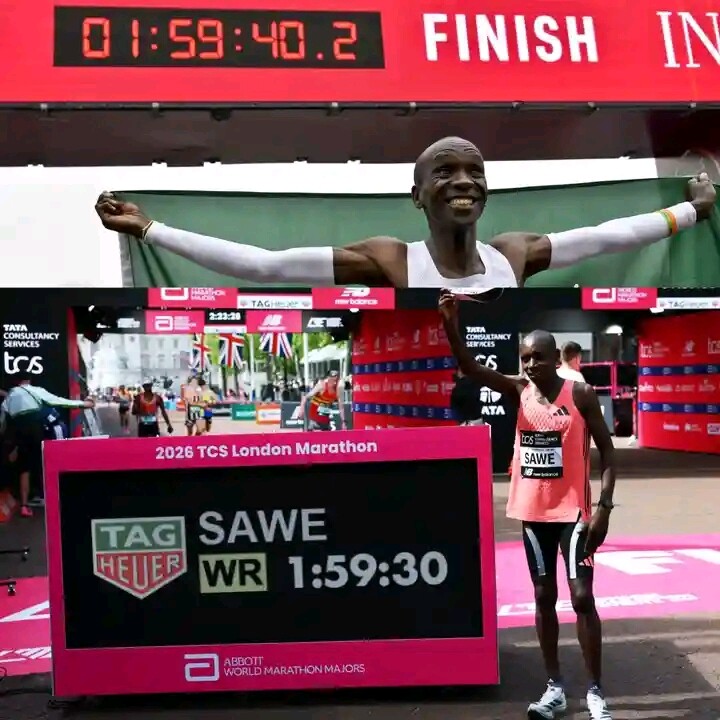
Reacting to the achievement, Kipchoge described the occasion as a defining chapter in marathon history, praising the pair for turning what was once considered impossible into reality. He noted that seeing two athletes dip under two hours in an official city marathon was powerful proof that the limits of human endurance continue to expand when extraordinary talent is matched with progress, preparation, and belief.
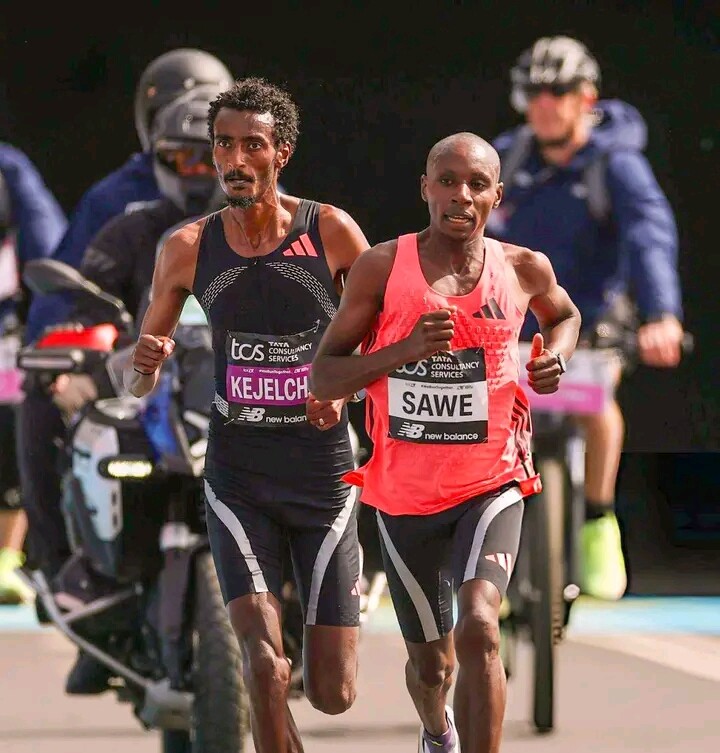
The Kenyan icon, who famously ran 1:59:40 during the INEOS 1:59 Challenge, said it had always been his hope that another athlete would one day carry that dream into a major city marathon and officially conquer the barrier. For Kipchoge, the London breakthrough was not the end of a journey, but the beginning of a new era for the marathon.
Sawe’s triumph and Kejelcha’s fearless run now stand as symbols of a sport entering uncharted territory. Their performances have redefined expectations and raised fresh excitement about how fast the marathon can become in the years ahead.
Kipchoge also used the moment to deliver the message that has inspired millions around the world: No Human Is Limited. With history now rewritten in London, the next generation of runners has been handed a new standard to chase—and a powerful reminder that impossible barriers are meant to fall.
by Erick Cheruiyot for My Best Runs.
Login to leave a comment
Where History Breathes: Kipchoge Returns to Vienna’s Sacred Road
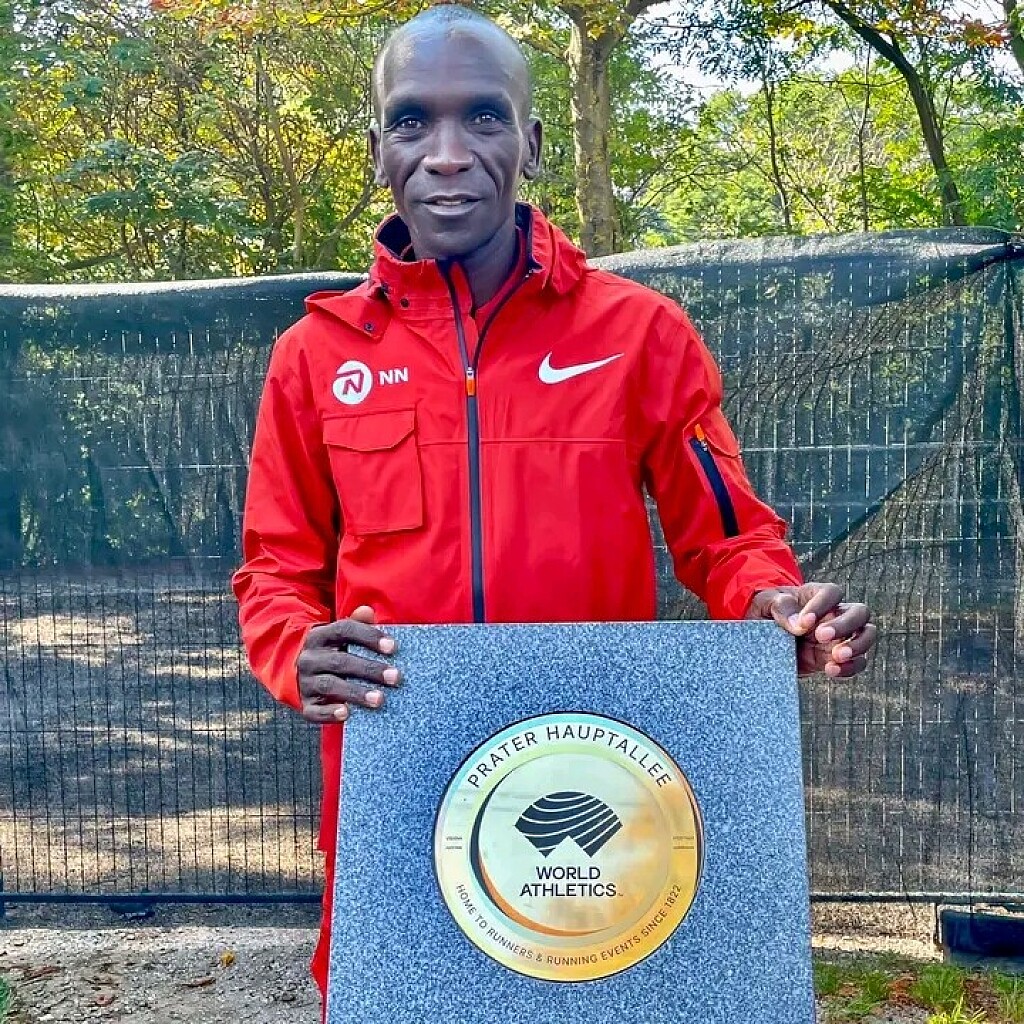
In the quiet elegance of Vienna’s Prater, where chestnut trees line a road that has witnessed one of the greatest moments in human endurance, Eliud Kipchoge stood once again—this time not in motion, but in reflection. The Kenyan legend posed beside the World Athletics Heritage Plaque, a symbol that immortalizes the very ground where history was rewritten.
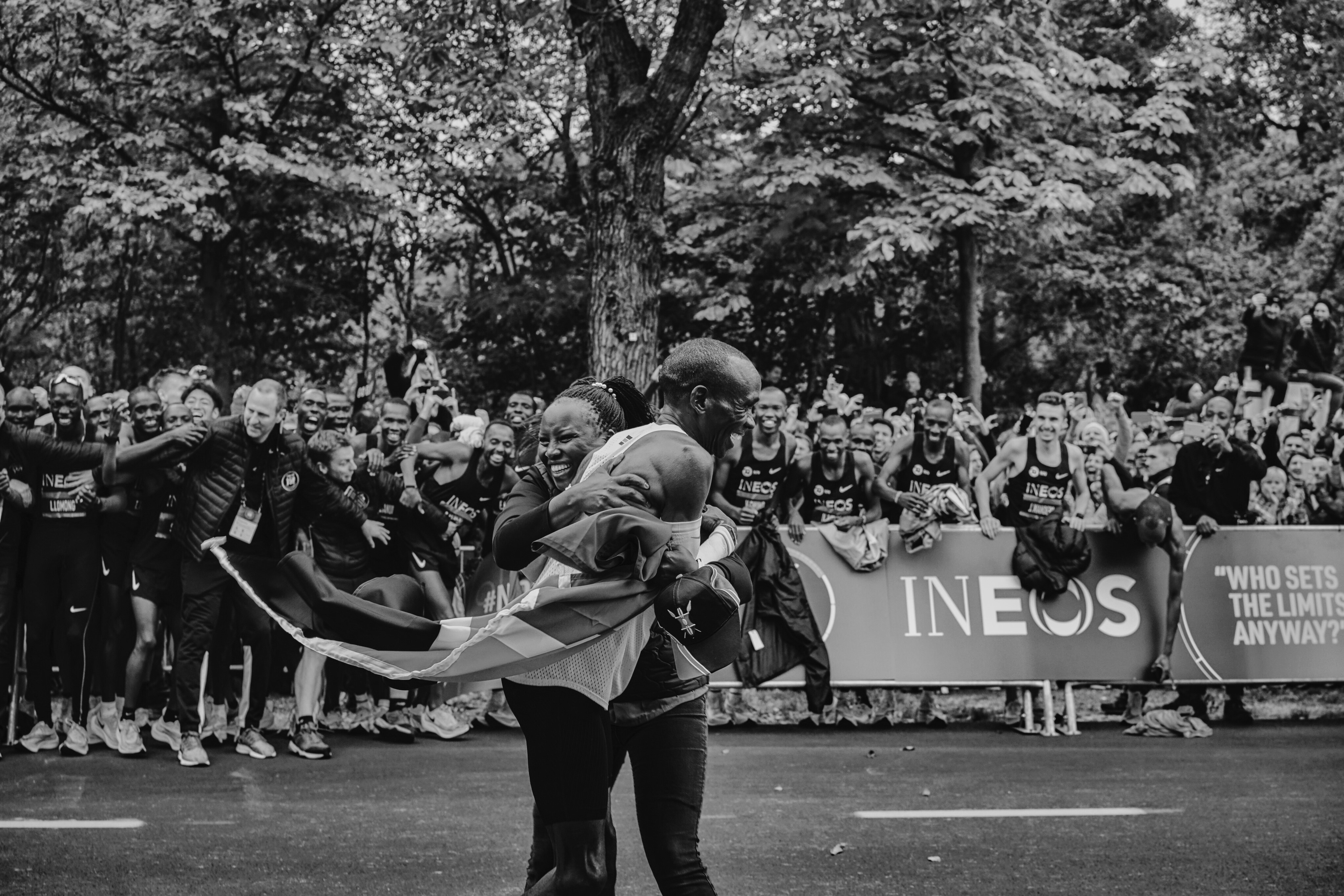
The Prater Hauptallee, a long, straight boulevard in Vienna, is no ordinary stretch of road. In 2019, it became the stage for the extraordinary during the INEOS 1:59 Challenge, when Kipchoge achieved what had long been considered beyond human limits—running a marathon in under two hours. Clocking an astonishing 1:59:40, he didn’t just break a barrier; he redefined possibility itself.
Though the performance was not ratified as an official world record due to controlled conditions, its significance transcended regulations. It was a moment that united science, precision, and human willpower in perfect harmony. The road beneath his feet that day has since been recognized as a site of global athletic importance.
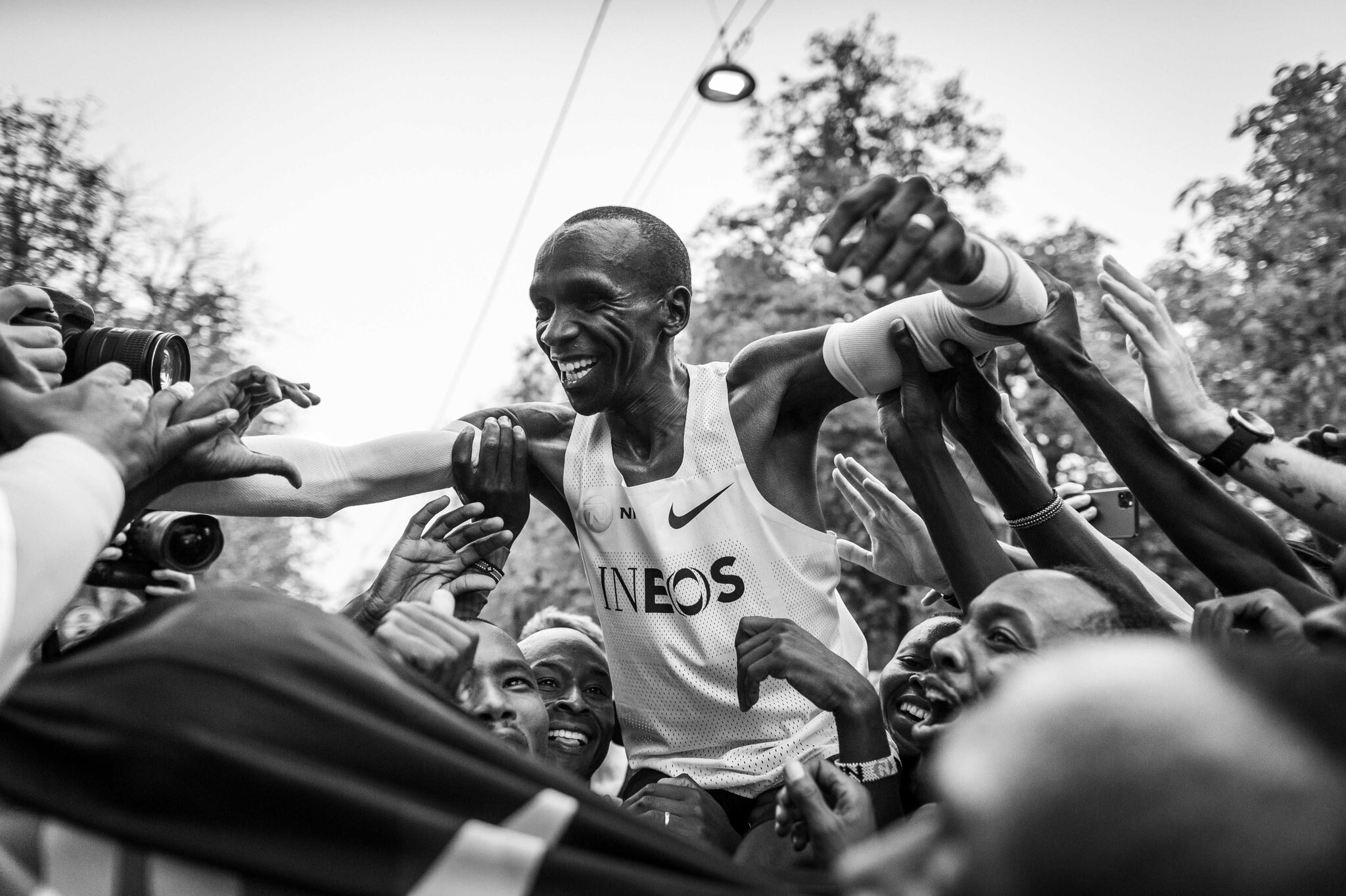
In 2022, World Athletics awarded the Prater Hauptallee its prestigious Heritage Plaque, officially acknowledging it as a landmark in the history of sport. And now, years later, Kipchoge’s return to that same location feels almost poetic—a reunion between a man and the path that carried him into immortality.
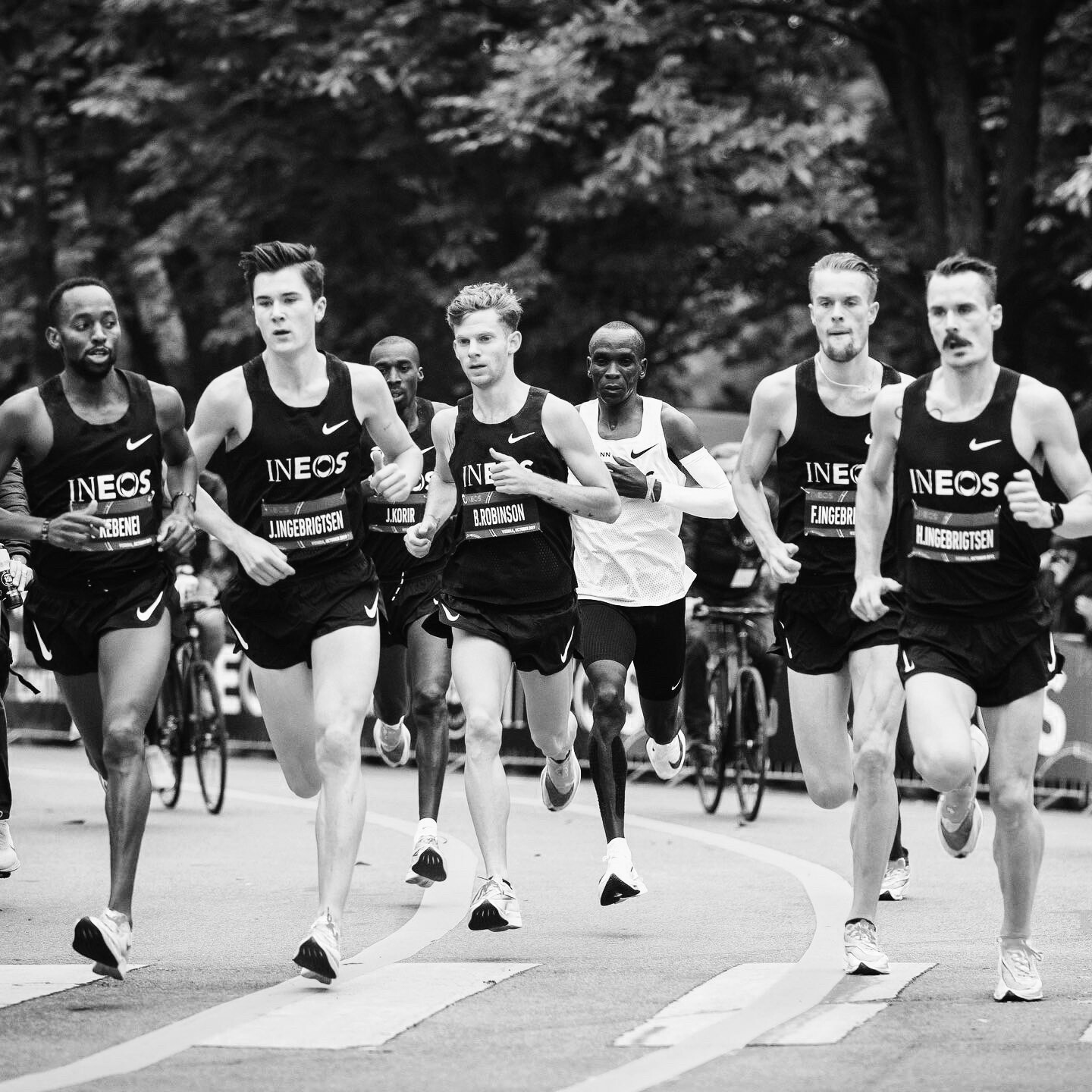
There is something deeply symbolic about the image: Kipchoge, calm and composed, standing still on the very ground where he once moved faster than any human ever had over 42.195 kilometers. It is a reminder that greatness is not only about speed, but also about legacy.
For Kipchoge, whose philosophy has always centered on discipline, humility, and mental strength, the moment is less about celebration and more about reflection. “No human is limited,” he famously said—a mantra that echoed across the world after that historic run. Today, that message feels just as powerful, etched not only in memory but now in the very soil of Vienna.
As athletes and dreamers continue to chase their own limits, the Prater stands as a quiet witness—a place where the impossible was made real. And at its heart remains Kipchoge, not just as a champion, but as a symbol of what humanity can achieve when belief meets relentless pursuit.
by Erick Cheruiyot for My Best Runs.
Login to leave a comment
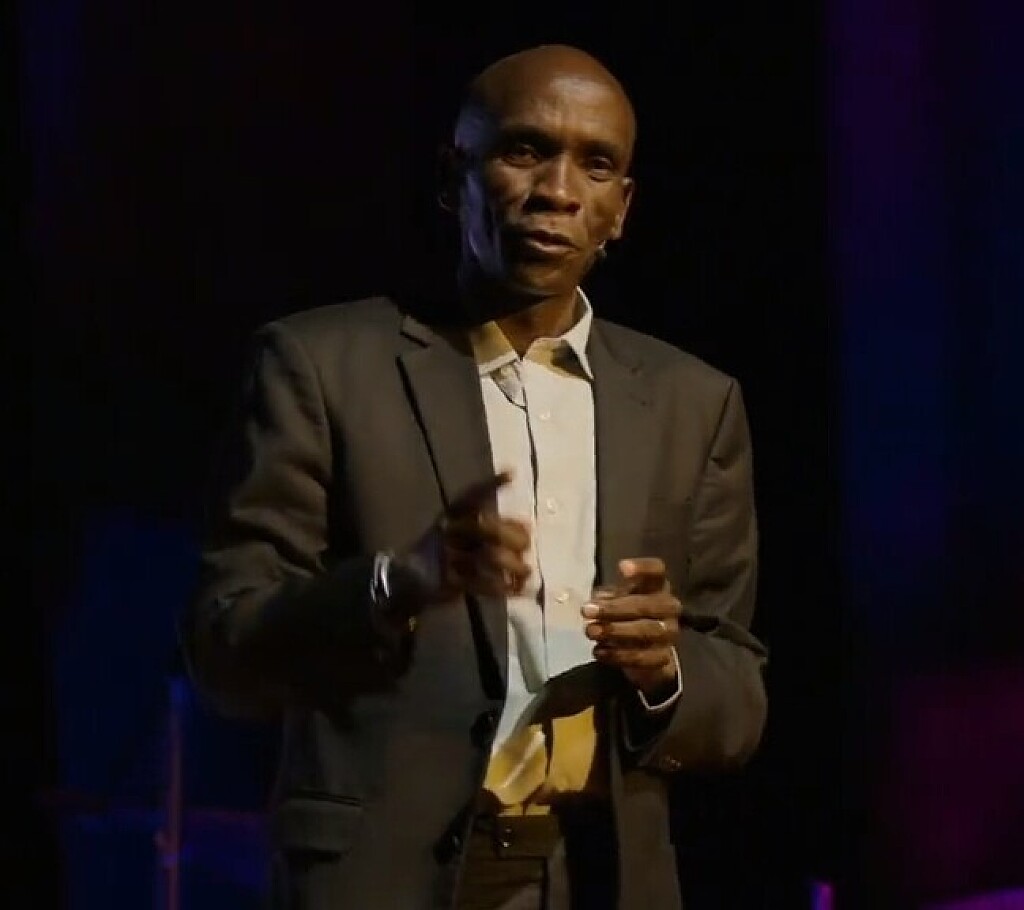
“I Was Down to My Knees” — Kipchoge Opens Up on Cruel Rumours After Kiptum’s Fatal Crash
The death of marathon world record holder Kelvin Kiptum sent shockwaves through the global athletics community in February 2024. Tributes poured in from across the world as athletes, officials and fans mourned the loss of one of distance running’s brightest talents.
But for fellow Kenyan legend Eliud Kipchoge, the tragedy was followed by an intensely painful personal ordeal — a wave of online rumours that falsely attempted to link him to the accident that claimed Kiptum’s life.
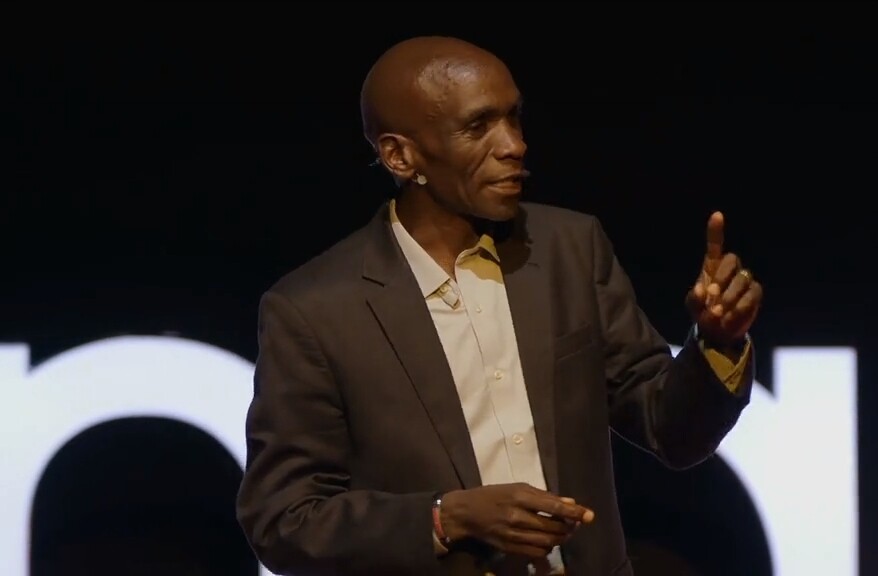
A tragic night in Elgeyo-Marakwet
Kiptum, who held the marathon world record at the time, died on February 11, 2024, following a road accident in the Kaptagat area of Elgeyo‑Marakwet County in western Kenya.
He was travelling with his Rwandan coach Gervais Hakizimana, who also lost his life in the crash. The devastating incident brought an abrupt end to a career that had risen at breathtaking speed.
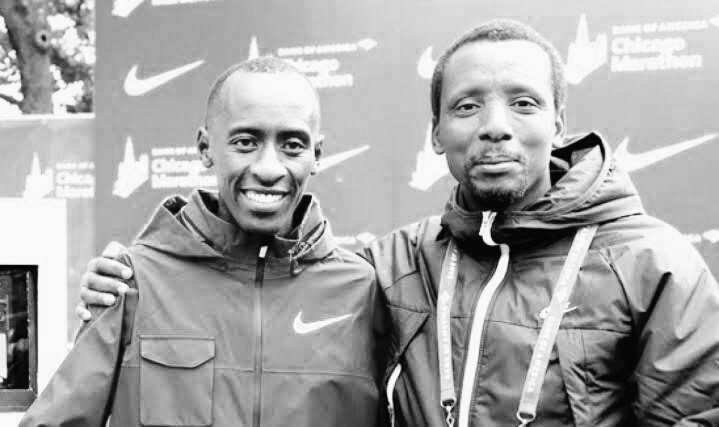
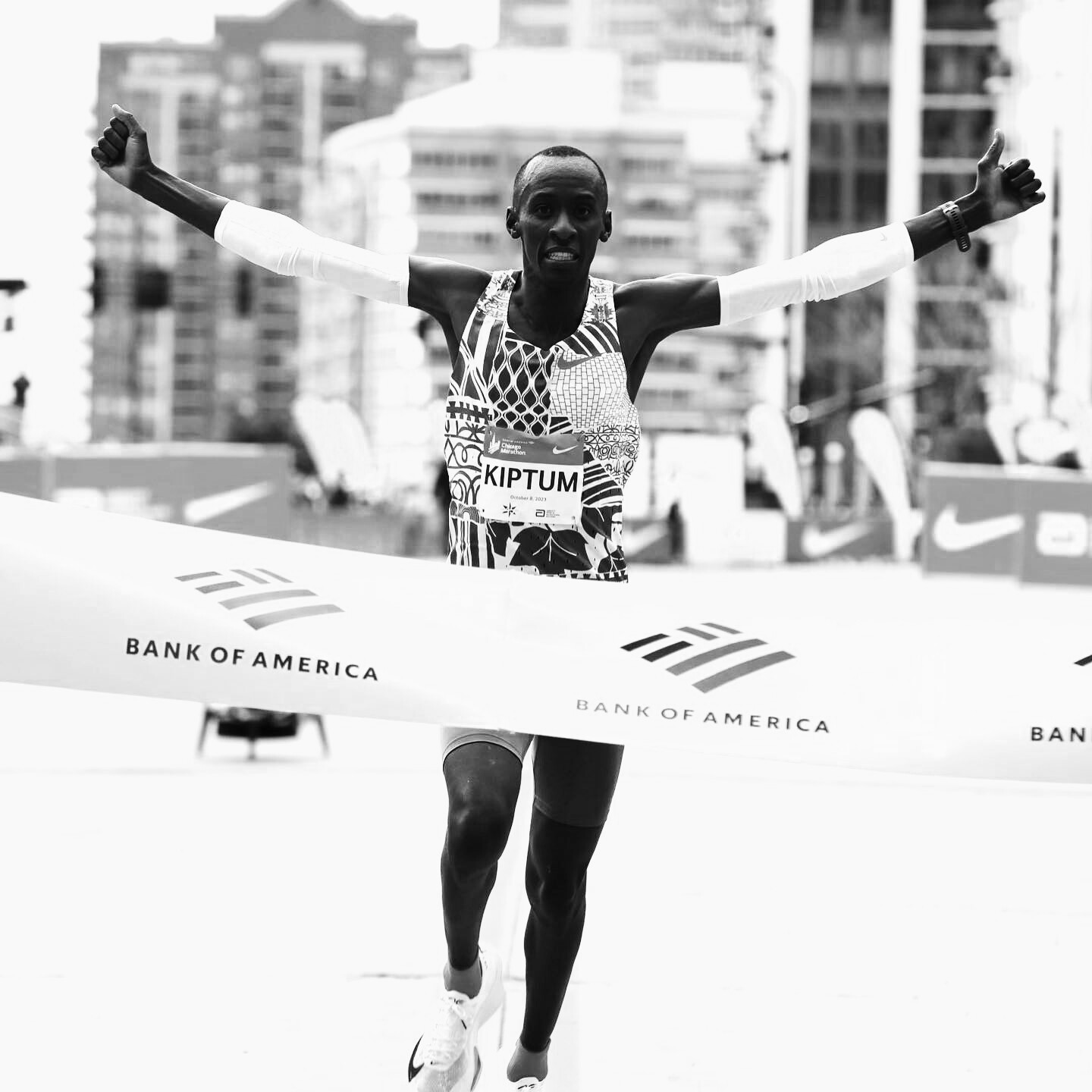
Only months earlier, Kiptum had stunned the athletics world at the Chicago Marathon, clocking a remarkable 2:00:35 to set a new marathon world record — a performance that cemented his status as one of the most extraordinary long-distance talents of his generation.
The moment Kipchoge heard the news
In a deeply emotional interview shared on the Engage Talk YouTube platform, Kipchoge recalled the moment he first learned of the tragedy.
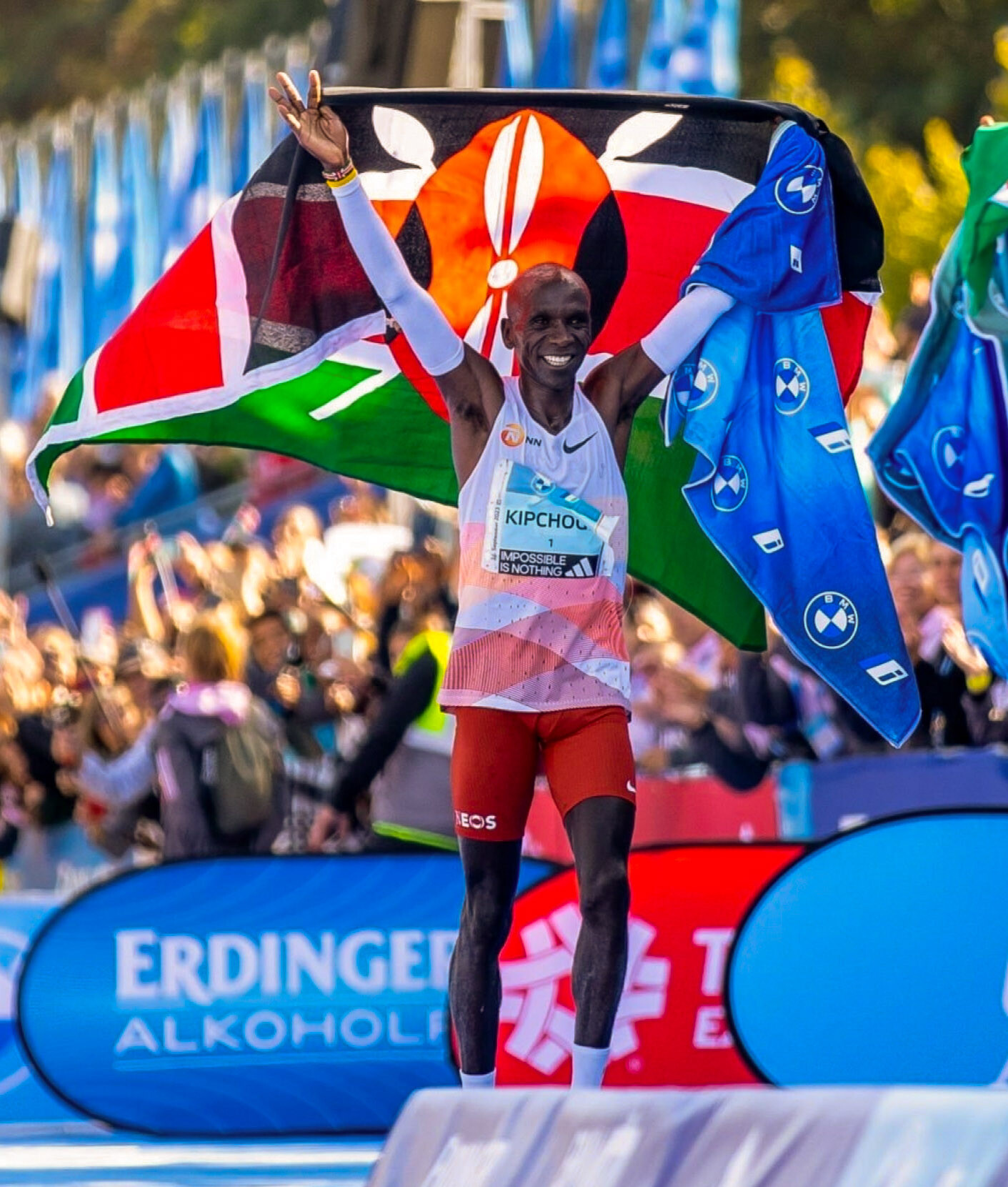
The two-time Olympic marathon champion explained that he had just returned home from a training session when someone at the gate informed him that Kiptum had died in a road accident. Shocked by the news, he immediately checked his phone — only to discover a different kind of storm unfolding online.
Within hours of the crash, social media had become flooded with baseless rumours accusing Kipchoge of being somehow connected to the incident.
The accusations, he said, left him devastated.
“Social media was everywhere saying Eliud killed Kiptum in a road accident. I was really down… down to my knees,” Kipchoge said during the interview.
Threats and fear for his family
The false claims quickly escalated into a wave of online hostility, with Kipchoge revealing that threats were directed not only at him but also at members of his family.
For safety reasons, the family was forced to change parts of their daily routine. Kipchoge explained that his sons had previously cycled to school, a normal routine in their community, but the arrangement had to be altered after the threats emerged.
He also expressed disappointment that some of the accusations circulating online took on an ethnic tone — something that deeply troubled the athlete, who has long spoken publicly about unity and national harmony in Kenya.
Silence from many, support from a few
The episode also revealed an unexpected reality for one of the most celebrated athletes in the world.
Despite having millions of followers across social media platforms, Kipchoge said only a small number of people reached out to check on him during the difficult period.
It was a stark reminder, he noted, that genuine support often comes from close relationships rather than public admiration.
A career defined by greatness
Kipchoge’s legacy in distance running remains unmatched. He won Olympic marathon gold medals at the 2016 Rio Olympics and the 2020 Tokyo Olympics, cementing his place among the greatest marathon runners in history.
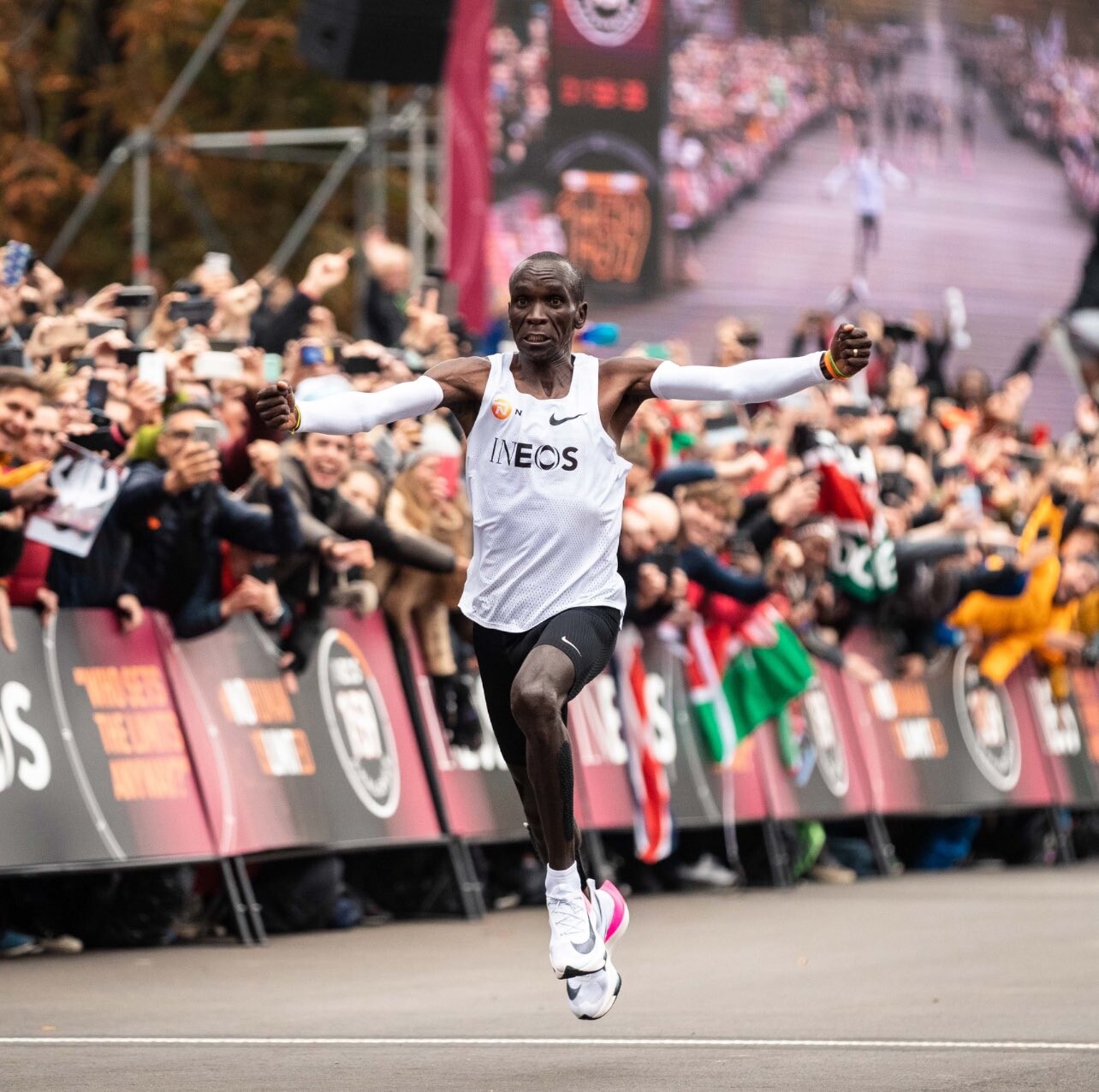
In 2019, he also achieved one of the most iconic moments in sport by becoming the first person to run a marathon distance in under two hours during the INEOS 1:59 Challenge in Vienna, completing the run in 1:59:40 during the special exhibition event.
A painful lesson in resilience
Looking back, Kipchoge described the aftermath of Kiptum’s death as one of the most emotionally testing moments of his life.
The experience, he said, reinforced the importance of resilience and the value of strong personal relationships when navigating moments of crisis.
While the loss of Kelvin Kiptum remains a deep wound for the athletics world, Kipchoge’s reflections reveal another side of the tragedy — the unseen emotional toll that misinformation and online hostility can inflict, even on the strongest of champions.
by Erick Cheruiyot for My Best Runs.
Login to leave a comment
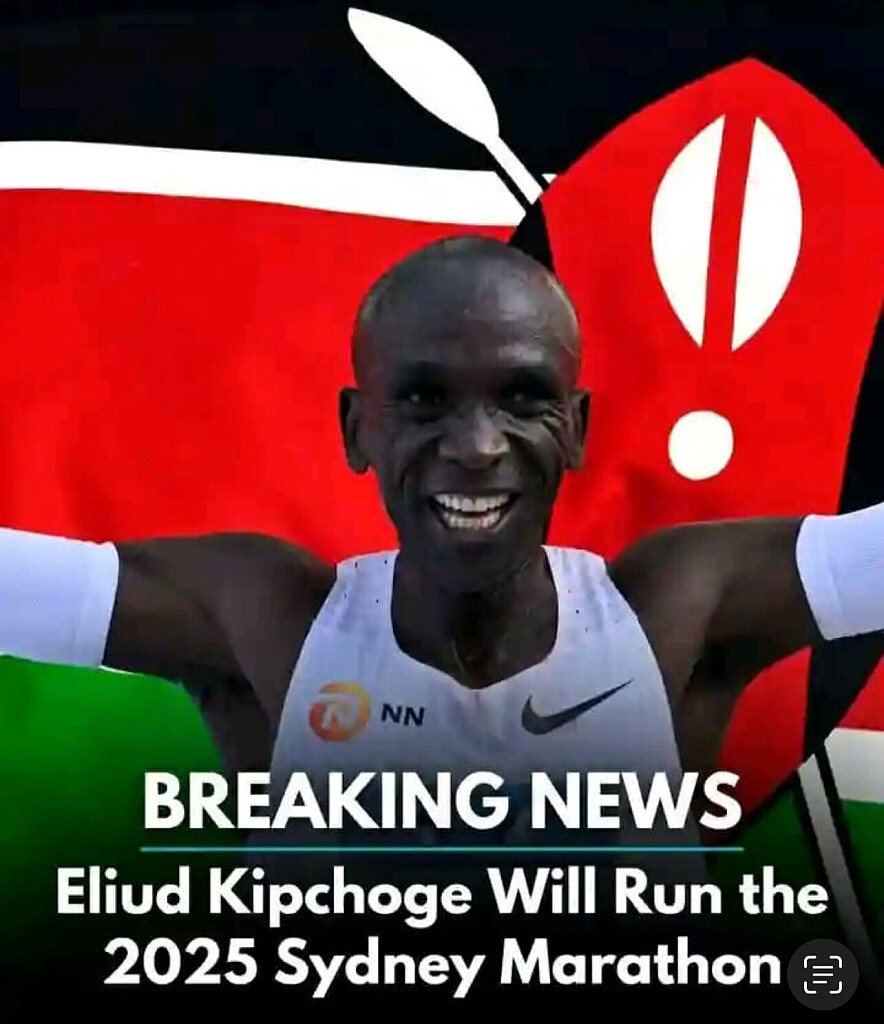
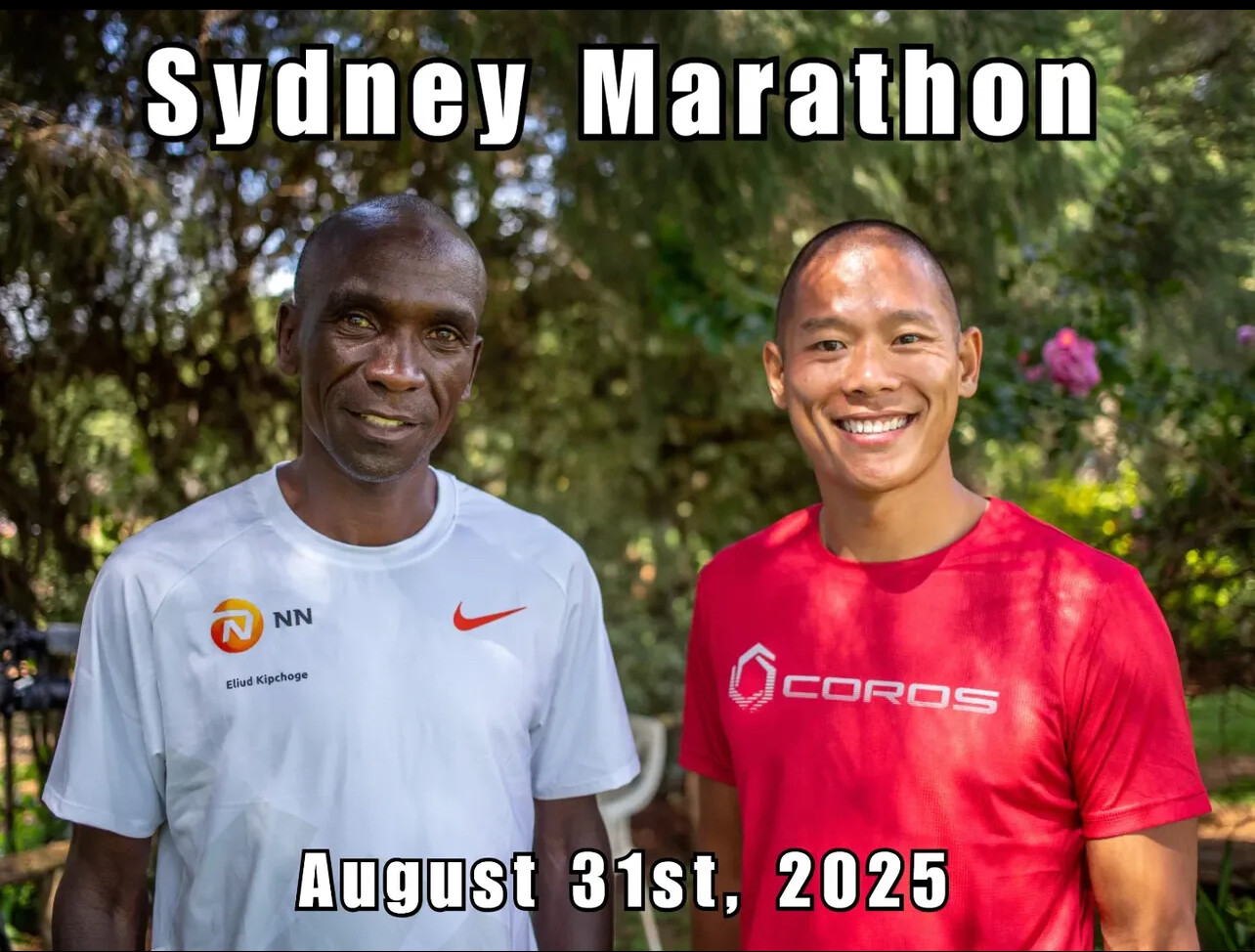
Eliud Kipchoge to Race the 2025 Sydney Marathon in Historic First
Marathon legend Eliud Kipchoge has officially confirmed his participation in the 2025 Sydney Marathon, set for August 31. This marks the first time the Kenyan great will compete in Oceania, a significant milestone in his illustrious career.
The Sydney Marathon, which is in contention to become the seventh Abbott World Marathon Major, gains immense prestige with Kipchoge’s inclusion. Organizers expect over 300,000 spectators, making it one of the biggest marathon events in Australia’s history.
Kipchoge’s Legacy and Why Sydney Matters
With 16 victories in 21 official marathons, Kipchoge is widely regarded as the greatest marathoner of all time. His historic achievements include:
• Back-to-back Olympic gold medals in the marathon at Rio 2016 and Tokyo 2020.
• A 10-marathon win streak from 2014 to 2019, a feat unmatched in modern distance running.
• A world-first sub-two-hour marathon, clocking 1:59:40 at the INEOS 1:59 Challengein 2019 (not an official record due to controlled conditions).
• The second-fastest marathon ever recorded, 2:01:09 at the 2022 Berlin Marathon.
With the Sydney Marathon aiming for World Major status, Kipchoge’s participation signals the event’s growing significance in the global running calendar. Race Director Wayne Lardencalled it a dream come true, emphasizing the impact Kipchoge’s presence will have on Australia’s running community.
The Road to Sydney: London Marathon First
Before taking on Sydney, Kipchoge is set to compete in the London Marathon on April 27, 2025. London has been one of his most successful races, and his performance there will be closely watched as he continues to chase new milestones.
A Race That Will Inspire a Nation
Kipchoge’s presence in Sydney is expected to elevate the marathon’s status, attract elite competitors, and inspire thousands of runners. Known for his mantra, “No human is limited,” his participation will shine a global spotlight on Sydney, drawing both elite athletes and everyday runners to the race.
As August 31 approaches, all eyes will be on Sydney to see if the greatest marathoner of all timecan add another historic victory to his legacy.
by Boris Baron
Login to leave a comment
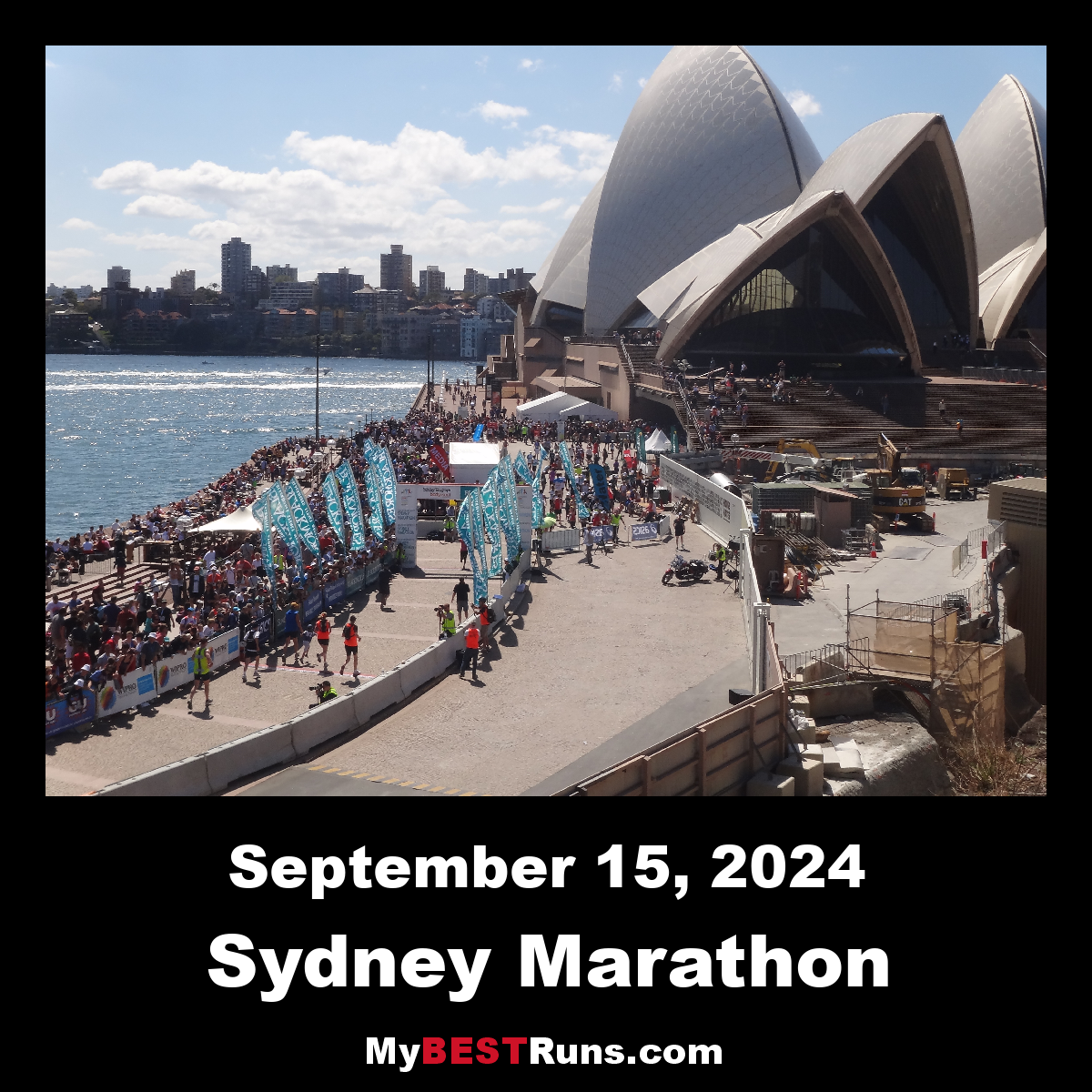
Sydney Marathon
The Sydney Marathon is a marathon held annually in Sydney, Australia. The event was first held in 2001 as a legacy of the 2000 Summer Olympics, which were held in Sydney. In addition to the marathon, a half marathon, 9 kilometres (5.6 mi) "Bridge Run", and a 3.5 kilometres (2.2 mi) "Family Fun Run" are also held under the banner...
more...
Eliud Kipchoge at 40: Records broken, medals won, history made…what more is left for marathon GOAT?
Marathon legend Eliud Kipchoge turns 40 on Tuesday and as he celebrates his landmark birthday, Pulse Sports rolls back the years in a career filled with many highs and some all-time lows.
They say life begins at 40 but for Kipchoge, he has been living the dream since his 20s.
Kipchoge turns 40 on Tuesday, November 5 and as he begins a new chapter in his life, the last two decades have been marked with remarkable success on track and roads.
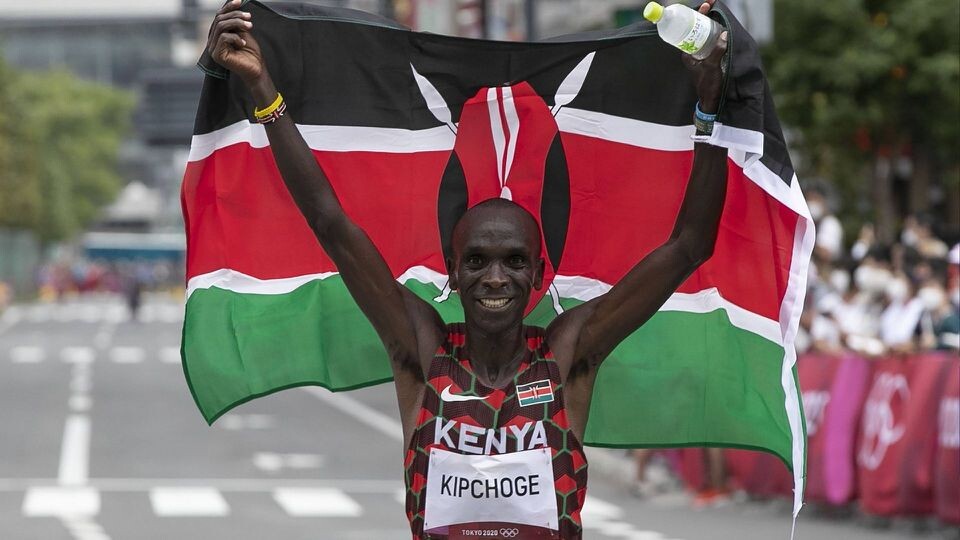
The two-time Olympics champion is the undisputed greatest marathoner of all-time, having won 15 of the 20 marathons he has participated in since he made the transition to from track to road in 2013.
Kipchoge has also won gold in Cross-Country, after claiming a junior title in 2003, the same year he won 5,000m gold at the World Championships in Paris.
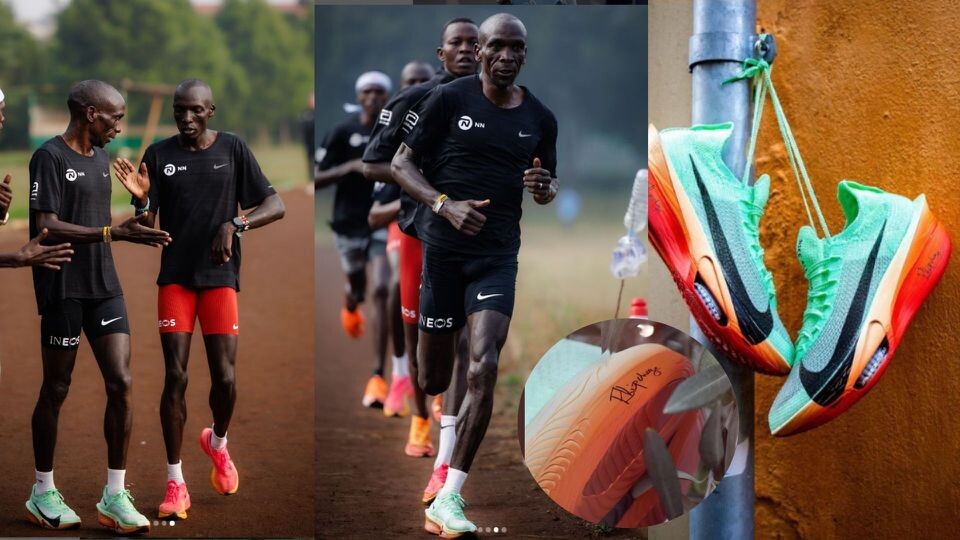
However, his years on track were not as storied as what he has achieved in marathons.
Major marathon success
In marathons, he has won five titles in Berlin, where he also broke two world records, while he has been to London five times and won on four occasions.
From the six major marathons (Tokyo, Boston, London, Berlin, Chicago, and New York), Kipchoge has been to five of them, with only New York where he is yet to run. He has won at four of them with only Boston proving tough after a sixth-place finish last year.
History maker
When the history of marathons is written, Kipchoge’s name will hog most of the chapters as he has made running a global phenomenon.
His ‘No human is Limited’ mantra has made everyone get encouraged not just to run but to succeed in their professions while he is the first man to run a marathon under two hours.
While it was not a competitive race, Kipchoge’s INEOS 1:59 Challenge in October 2019 proved that it is possible to clock under two hours in 42km, having run 1:59:40 in Vienna.
World records broken
Kipchoge was running in Vienna one year after breaking his first marathon record, having clocked 2:01:39 in Berlin in September of the previous year.
He had shaved off an astonishing 1 minute and 18 seconds from the 2:02:57 set by Kenyan compatriot Dennis Kimetto at the same venue four years earlier, proving that a sub-2:02 was possible.
That was his third win in Berlin and on his fourth appearance in the German capital, he lowered his own world record, running 2:01:09. His record lasted one year before compatriot Kelvin Kiptum broke it in Chicago last year (2:00:35) but the GOAT had already made his mark.
Role model to rivals & youngsters
Throughout his career, Kipchoge’s biggest strength has been how he kept up with younger and hungrier runners who were looking to dethrone him from the throne.
The veteran has never backed away from a challenge, even if there was an emerging threat, and most of the time, he came out on top.
Kipchoge sets an example for runners by the way he lives his life, how disciplined he is, his strict training regime and how keenly he follows his diet.
It is no wonder he has rarely suffered injuries in his long career, which draws parallels with football superstar Cristiano Ronaldo, who has enjoyed a long largely injury-free career due to how he looks after himself.
Bouncing back from setbacks
Kipchoge’s other strength is how he deals with disappointment. He does not let a bad race or bad words put him down.
Like every other athlete, he has suffered losses but always comes back strong. His failed attempt to break sub-2-hour mark in Monza in 2017 did not see him lose hope as he returned two years later and did it in Vienna, while finishing eighth in London in 2020 was answered back with Olympics, Berlin and Tokyo Marathon wins, with a world record in between.
After a sixth place in Boston in April 2023, he was on the winner’s podium in Berlin five months later, showing how resilient he is.
Even when many said he was finished after 10th place in Tokyo, he still came back to feature at the Paris Olympics and while he was not successful, he has not let it put him down.
Dealing with hate & cyberbullying
The year 2024 has thrown Kipchoge into a whole new territory, as a man who was so loved in Kenya quickly turned into a figure of hate in his own country.
It started in October 2023 when he took time before congratulating Kiptum for breaking his world record. It elicited vile comments on social media and it reached a whole new level when the world record holder died in February.
Kipchoge received abuses and threats that left him fearing for his life and that of his family, having been accused of having a hand in the death, and to his shock, even those whom he thought were friends and colleagues felt the same towards him.
He, however, took it on the chin and went about his business, featuring in two races this year although it is not known if it might have affected his performance.
What does the future hold?
Kipchoge’s strong mentality has seen him bounce back from all these setbacks and as he celebrates his 40th birthday, he is back in camp training for his next race.
A number of runners have shown that it is still possible to do it in their 40s and knowing Kipchoge, he must be backing himself to defy age and continue making marathon history.
Happy birthday, Eliud.
by Joel Omotto
Login to leave a comment
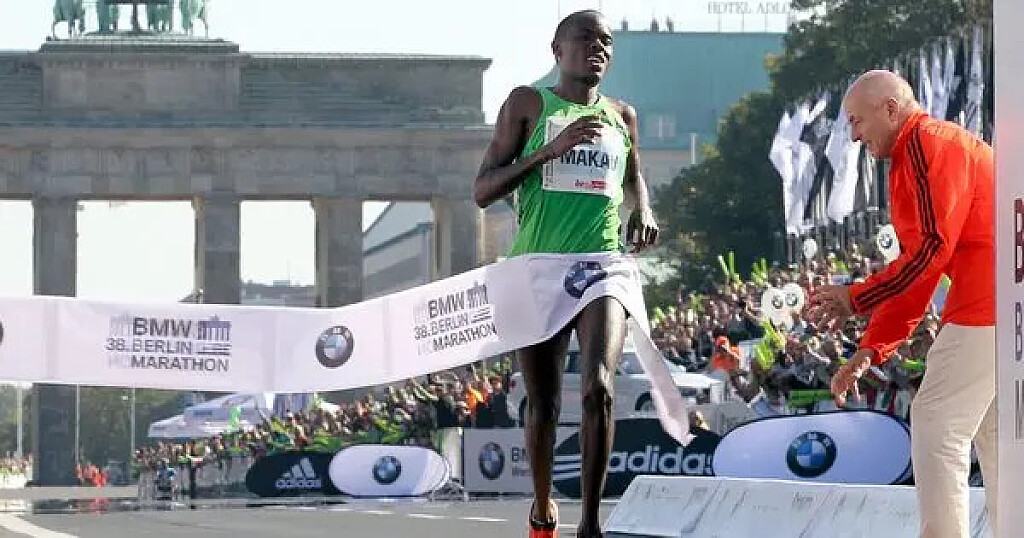
Patrick Makau believes current generation of athletes can run under 2 hours
Former world marathon record holder Patrick Makau believes the current generation of athletes in the country will soon run under two hours in the marathon.
The 38-year-old is also notable for his half marathon performances, having won several prominent competitions in Europe in sub-1-hour performances.
Some of the races include the Berlin Half Marathon in 2007, where he clocked 58:56 hours.
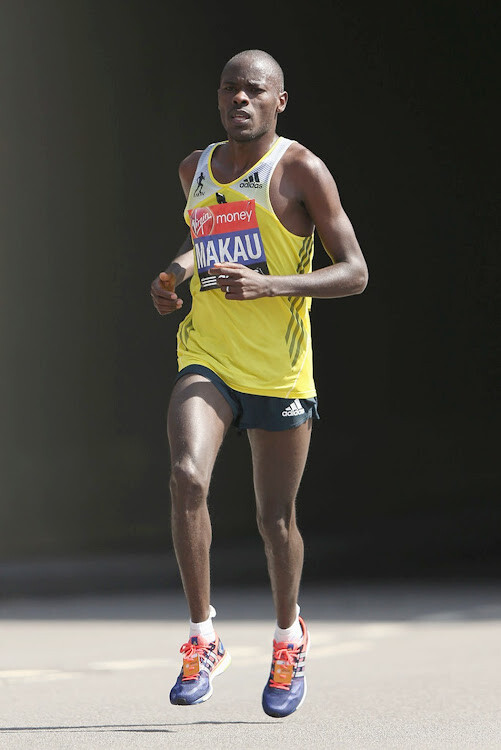
Marathons had changed a lot due to technology and were far better than the marathons they ran during his time.
“As I see it, the marathons have changed a lot because it is not like the olden times. We used to view sub-two hours as something unattainable but now with the current crop of athletes like the current world record holder Kevin Kiptum and two-time Olympic champion Eliud Kipchoge, this looks like a possibility,” he noted.
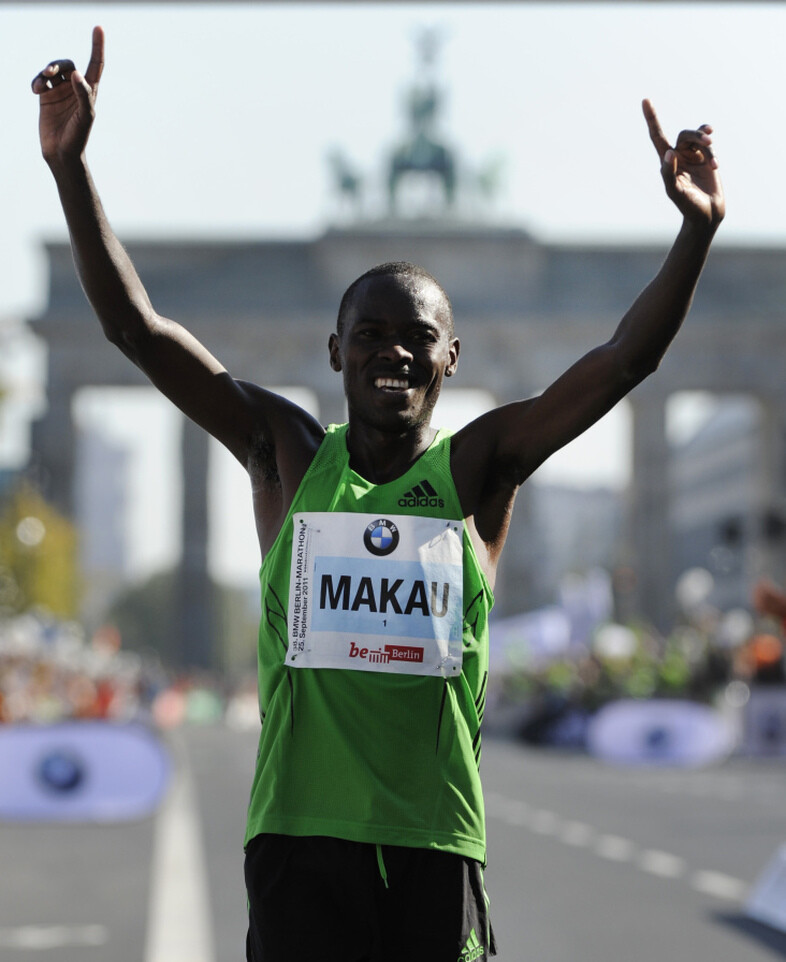
The signs of an athlete running a marathon in under two hours are already evident if Kipchoge and Kiptum's recent performances are anything to go by.
In an unofficial race in Vienna, Austria in 2019, Kipchoge became the first person ever to run a marathon in under two hours, clocking 1:59.40 during the INEOS 1:59 Challenge.
Regarded as one of the greatest marathoners of all time, Kipchoge was the world record holder in the marathon then with a time of 2:01:09 set at the 2022 Berlin. His mark was later broken by Kiptum at the Chicago Marathon on October 8, 2023, when he clocked 2:00:35.
The 24-year-old Kiptum is currently the only person in history to run the marathon in under two hours and one minute in a record-eligible race.
Kiptum has won all three of the major marathons he has entered between December 2022 and October 2023 with three of his times among the six fastest in history. Makau revealed that hard work and endurance were the key for him to break the world record in 2011.
“I used to go to train in Iten and Machakos and to the polishing in Ngong. This is because speed work and build-up are two different programs,” Makau noted.
Makau encouraged athletes to find a training routine that would enable them to run a sub-two-hour marathon shortly.
“What Kiptum, Kipchoge and the other athletes can do now is to find the pace that will be able to help them run a sub-two-hour marathon shortly,” he added.
The duo currently occupy the top two positions in the world marathon ranking. Ethiopians Kenenisa Bekele (2:01.41), Sisay Lemma (2:01.48 hrs), Birhanu Legese (2:02.48 hrs) and Mosinet Geremew (2:02.55 hrs) follow in that order.
The former world record holder, who currently trains the Kenya Police team and other athletes, also cited technology, especially in running shoes as a reason behind the fastest times being witnessed.
“During our time, there was not as much technology as we were accustomed to normal shoes. In today’s era, running shoe technology plays a key role in determining the pace in a particular race,” he said.
Innovations in Running Shoe Technology mean shoes are now lighter, more dynamic, and more resilient, thanks to advancements in foams, rubbers, construction, textiles, and other essential components.
Kipchoge's performances during the INEOS 1:59 challenge opened the world's eyes to the condensed foam, carbon-plated super shoes which Nike claimed could increase running efficiency and in particular the amount of oxygen consumed per minute by by 4 percent.
Makau is optimistic the young athletes under his wings will also go further and make not only him but also the country proud. He said he is looking forward to the national trials in April to see if they get selected.
“We have intensified training in both Machakos and Kitui camps and I am hopeful. I am waiting for the trials in April to see if they will be able to represent Kenya at the Paris 2020 Olympic Games,” he said.
He also tipped Kenya to once again dominate the marathon at the Olympic Games slated for July 26 to August 11.
“I am sure Kipchoge, Kiptum, Peres Jepchirchir and Ruth Chepng'etich will represent the country well in the marathon at the Olympics,” he asserted.
by Teddy Mulei
Login to leave a comment
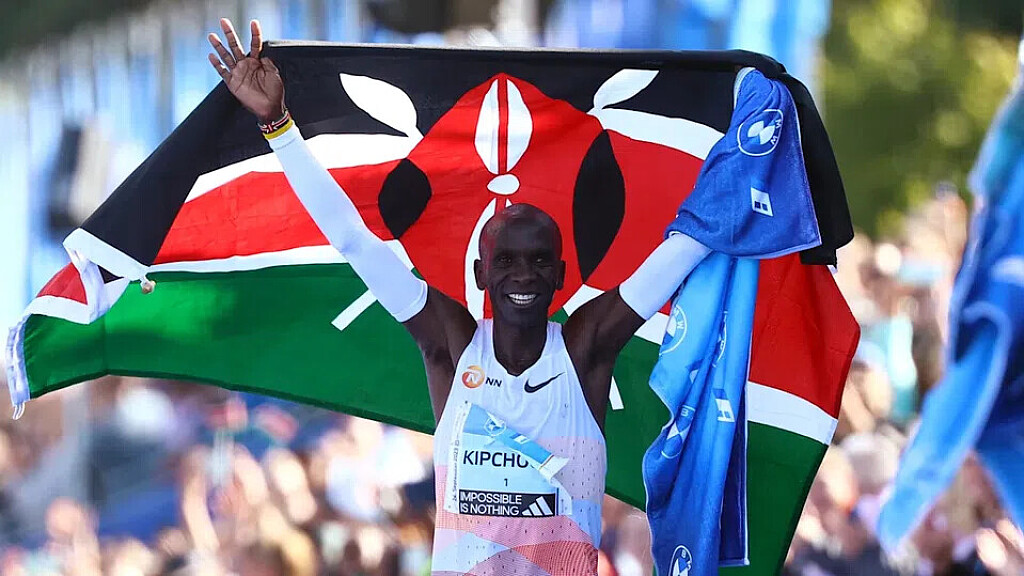
Marathon legend Eliud Kipchoge set to receive honorary doctorate degree
Marathon great Eliud Kipchoge is set to be conferred with a prestigious honorary doctorate degree from a Kenyan university for his outstanding contribution to humanity.
Marathon legend Eliud Kipchoge is set to be awarded an honorary doctorate degree by the Jomo Kenyatta University of Science and Technology (JKUAT) during the institution’s 41st graduation ceremony on December 1.
In a notice issued by JKUAT, the five-time Berlin Marathon champion will receive the degree in honor of his “outstanding and commendable humanitarian and philanthropic contributions to humanity.”
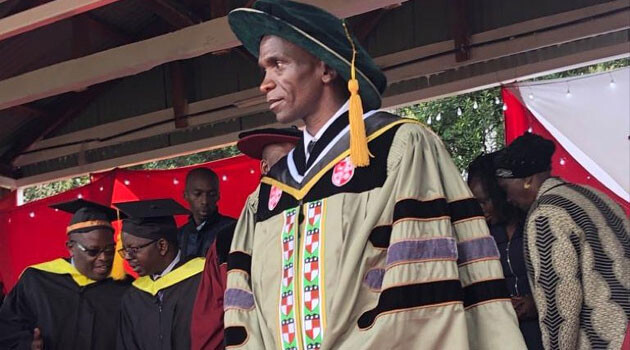
“Widely regarded as the world’s greatest marathoner, Eliud Kipchoge has met the requirements by the Honorary Degree Committee, the University Senate, and Council for the award of the degree. Kipchoge will be conferred with the prestigious honorary degree of Doctor of Humane Letters (Honoris Causa),” JKUAT said in the notice.
This will be the second such degree for the former world marathon record holder after being conferred with an honorary doctorate degree from the Laikipia University for his contribution to sports in 2019.
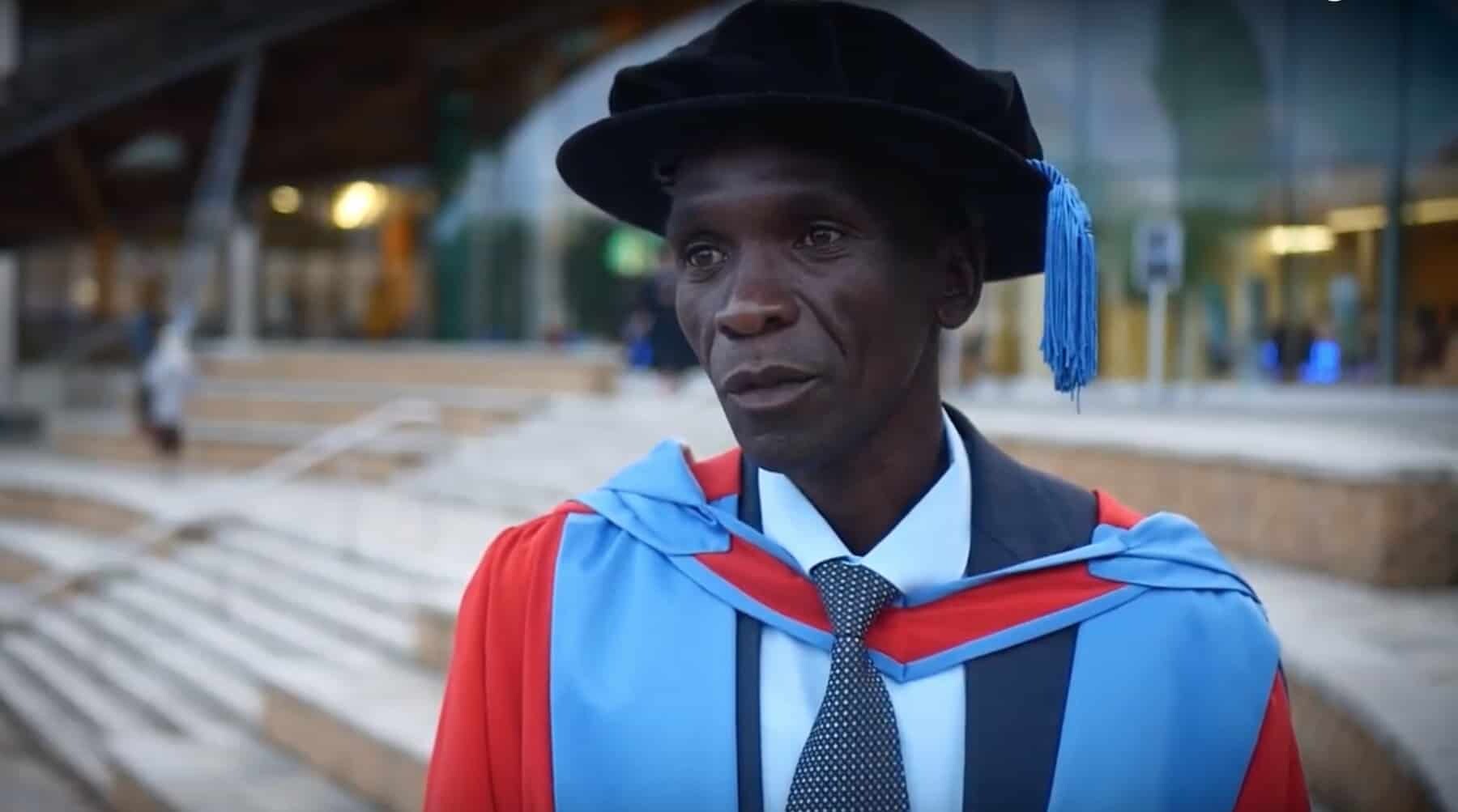
That was after he had won the London Marathon before becoming the first man to run a marathon under two hours when he clocked 1:59:40 in Vienna, Austria in a race dubbed INEOS 1:59 Challenge.
Kipchoge has had a mixed 2023 season, finishing fifth at the Boston Marathon in April before winning in Berlin in September although he watched youngster Kelvin Kiptum break his world record following his 2:00:35 feat in Chicago in October.
The 39-year-old was also honored by his sponsors Nike with a running track named after him in the European headquarters in the Netherlands, coming days after his statue was unveiled by the giant American kit manufacturer in Oregon, USA.
by Joel Omotto
Login to leave a comment
How to rest, fuel and recover like the marathon world record holder Eliud Kipchoge
Over the years marathon running has become something of an art form. The science of running has also progressed significantly since the days of the St. Louis 1904 Olympic marathon where athletes including the eventual winner Thomas Hicks drank brandy and even strychnine, a form of rat poison, in the belief that they would improve their performance.
Today’s elite marathon runners like Eliud Kipchoge have strict training plans and diets that help them achieve peak performance on race day.
However, one thing that often goes underlooked is the importance of rest, fueling and recovery in marathon training and running.
And whether you’re an elite runner or training for your first big event, there’s no one better to learn from than double Olympic champion and reigning marathon world record holder, Eliud Kipchoge.
How much does Eliud Kipchoge sleep?
While staying in bed is a luxury some can’t afford when they’re training for a marathon, sleep is probably the best way your body has to recover from hard training runs and set yourself up for a successful marathon.
For Kipchoge that means a whopping 10 hours on average - but that doesn’t all come in one big overnight sleep session
“I’m sleeping eight hours during the night and two hours during the day,” the only man to run a marathon in under two hours revealed while training for the Ineos 1:59 Challenge.
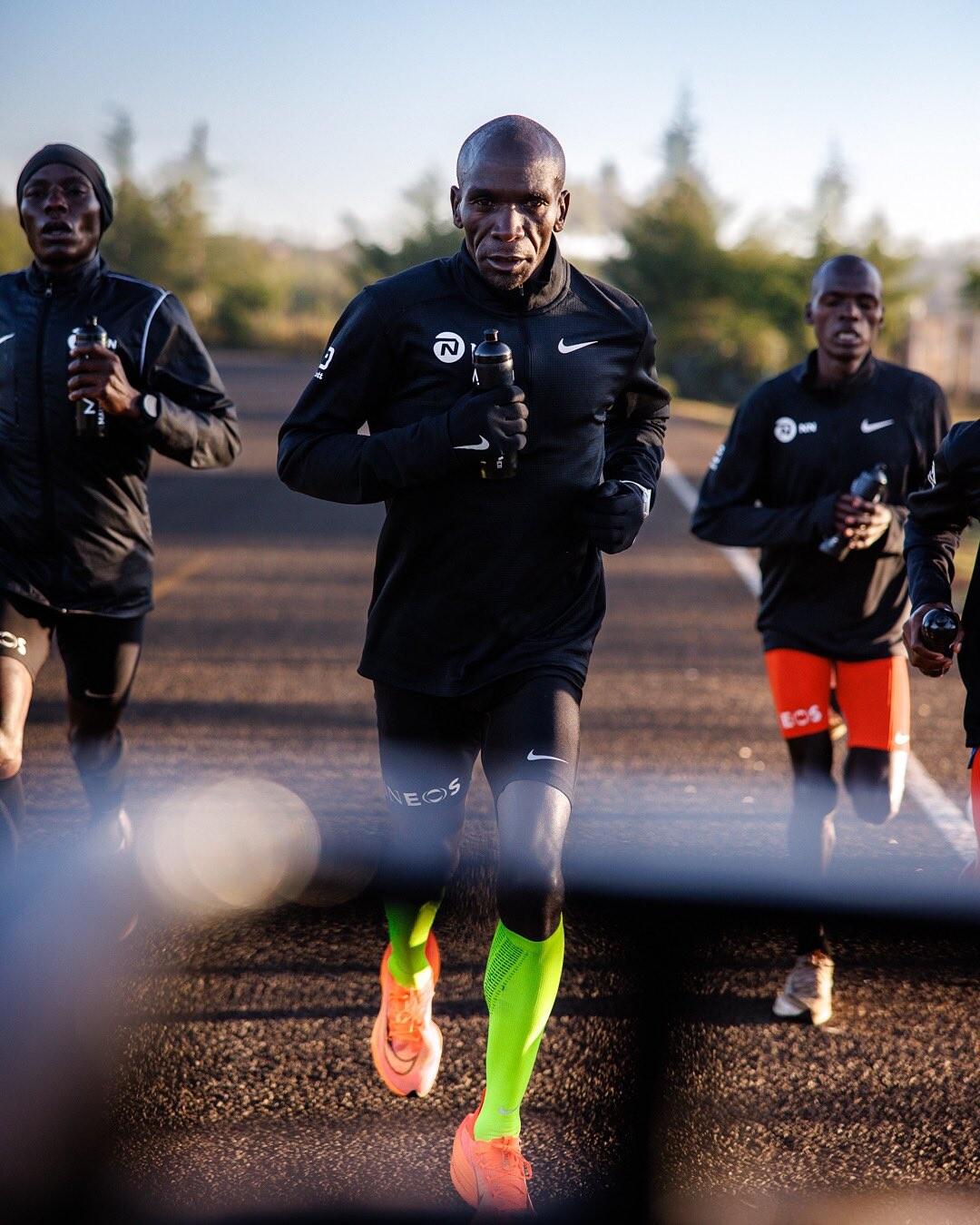
And it’s not just Kipchoge who sleeps this much when preparing for race day. NN Running Team coach Addy Ruiter, who has trained Olympic 5,000 and 10,000 metre gold medalist Joshua Cheptegei, revealed that the 10-hour rule is commonplace among elite marathon runners.
“In general the average elite marathon runner would get around eight hours (a night) plus another two hours during the day for a total of 10 hours. During those two hours, an athlete may not always be sleeping but they’ll at least be lying on their beds making sure that they rest.”
While non-elite runners may struggle to find time for a mid-day rest, the principle of getting a good night’s sleep has been well established, with benefits that include muscle repair and the release of growth hormone.
So if you are struggling to keep up with your marathon training plan, more sleep is a good way to get your body in the right shape for another session.
How does Eliud Kipchoge taper before a marathon?
For many people, tapering before a race is key to their marathon day performance. In simple terms, it involves reducing your training for two to three weeks before your race so that you can arrive at the starting line rested and ready to run at your best.
While this works wonders for a lot of runners, Kipchoge does not taper in the traditional sense before his races.
In his training log for the 2017 Berlin Marathon, the Kenyan revealed that just a week out from the race he had run 182 km (113 miles). It was only in the final week when he travelled to Berlin that he lowered his mileage from his weekly average.
For a large part of the marathon running community, simply copying what Kipchoge does would be futile. He takes no days off during training and his rest day - if you can call it that - includes a 20km easy run.
However, it does make you understand that there’s no “one size fits all” solution for marathon running. While two to three weeks at reduced mileage may be best for some, as little as a week can work for others - including the greatest marathon runner to have ever lived.
How does Eliud Kipchoge fuel during a race?
While a runner’s diet leading up to a marathon race can help them get into tip-top shape, what they consume during a race is equally important.
For Kipchoge, that means taking on large amounts of carbohydrates in the form of drink mixes and running gels.
In the build-up to his 2018 marathon, it was revealed that Kipchoge was consuming around 100 grams of carbohydrates per hour in his race, the equivalent of two cups of long-grain brown rice or just over four slices of white bread.
For most athletes, 100 grams would be on the higher side of what their bodies are able to consume, with many non-elite runners staying within the 25-60 grams per hour range.
However, as with many things to do with marathon running, much of this is down to trial, error and indeed training (in this case training your gut to handle the carbohydrate intake). And if in doubt, it is recommended that you speak to a registered nutritionist.
How does Eliud Kipchoge recover from a marathon?
So, your marathon is done and the first thing you want to do is put your feet up and relax to recover from the strenuous effort you’ve just put your body through.
However, as with so many other aspects of his marathon plan, Kipchoge doesn’t follow conventional wisdom.During his training for the Ineos 1:59 challenge, Kipchoge revealed that he runs slowly for four days after a marathon. The main reasons for this are to check whether he has "cured well" and doesn't have any physical injuries that require medical treatment following his race.
After this, however, it’s time to rest. And for Kipchoge that means three weeks of "total" or "active" rest to ensure his body has recuperated before he once again begins training.
As coach Ruiter explains, athletes don’t have to be at their peak all year round - it’s all about resting, fueling and recovering in the right way to be at your very best on race day.
“The elite athletes I work with don’t have to be in peak physical shape the whole year round they just try and peak for competition, which in the case of many marathon athletes is twice a year,” he says. “They then take a post-race rest for three to four weeks to recharge the batteries. Most marathoners would then do two months of basic training followed by a more specific block of three-month training before the marathon.”
by Sean McAlister
Login to leave a comment

Isuzu to release limited-edition Eliud Kipchoge vehicle
he world’s fastest marathoner, Eliud Kipchoge, has teamed up with the Japanese auto company Isuzu to release a limited edition “Eliud Kipchoge 1:59 Isuzu D-Max” double cabin pickup truck in honour of the two-time Olympic champion.The name of the vehicle comes from Kipchoge’s run at the INEOS 1:59 Challenge in Austria on Oct. 12, 2019, where he became the first man in history to run a marathon in under two hours, covering the Vienna course in 1:59:41.
The special limited edition of the vehicle will see a symbolic 159 units produced to celebrate Kipchoge’s achievements. Kipchoge will have the honour of driving out the first of the special edition vehicle bearing plate number 001.

Kipchoge broke his previous (official) marathon world record two weeks ago at the Berlin Marathon, running 2:01:09 to take the win in the German capital.According to Isuzu East Africa managing director Rita Kavashe, the company has seen an increase in market share by 50 per cent with their single-cabin pickup truck in eastern Africa since beginning their partnership with Kipchoge in 2017. “Isuzu embraced me before all these achievements.
They have been with me all this time in training,” Kipchoge said to the Nation.Although the Isuzu D-Max is still under production, proceeds from vehicle sales will support the Eliud Kipchoge Library in his hometown of Kapsisiywa, Kenya.
by Running magazine
Login to leave a comment
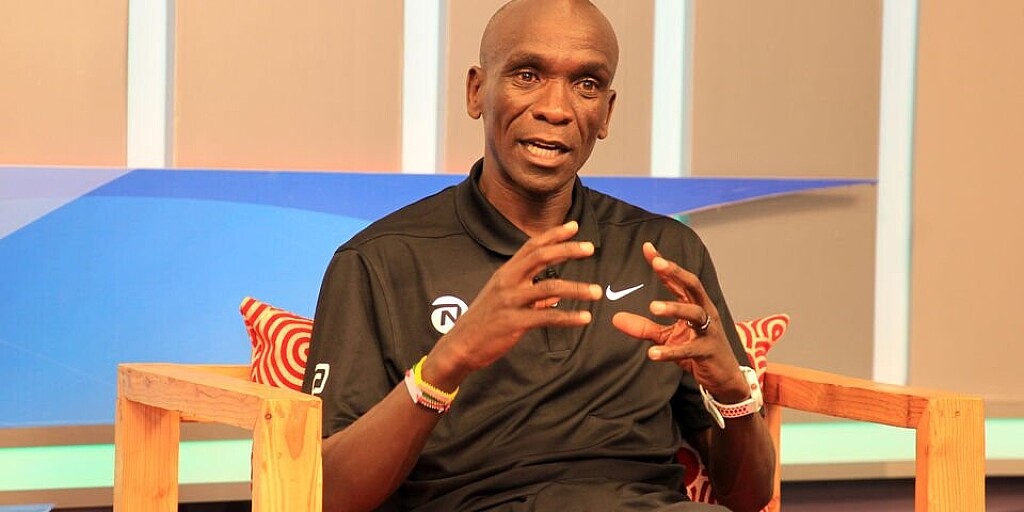
G.O.A.T. Eliud Kipchoge reveals his secret to success
World marathon record holder and Olympic champion Eliud Kipchoge reckons that his secret to longevity is taking sports as a profession and proper planning.
The 37-year-old Kipchoge, who has been running for the last two decades, said that loving athletics as a sport and focusing on his preparations rather than what he will earn from it are what has made him last long.
Kipchoge called on fellow athletes to invest in their careers, available time and earnings wisely, noting that the life span of a sportsperson is short.
“Focusing on preparations and not financial gains first will make an athlete go far,” said Kipchoge.
“I discovered treating sports with respect and like any other well-paying job and career quite early and it has worked for me.”
Kipchoge noted that it is good to have goals, but putting in place working systems enables someone to achieve more.
“It’s always good to have goals but that is not as important as having good systems, Goals solve problems temporarily,” noted Kipchoge.
Kipchoge was speaking on NTV’s live sports show SportOn hosted by Bernard Ndong and James Wokabi on Monday night.

Kipchoge recaptured the Berlin Marathon title, smashing his own world record by 30 seconds on September 25 in the German capital.
It was yet again poetry in motion as Kipchoge clocked 2:01:09 to win, beating his previous world record time of 2:01:39 set when winning in Berlin in 2018.
Kipchoge disclosed that the secret to success wasn’t rocket science, but planning in small bits to success.
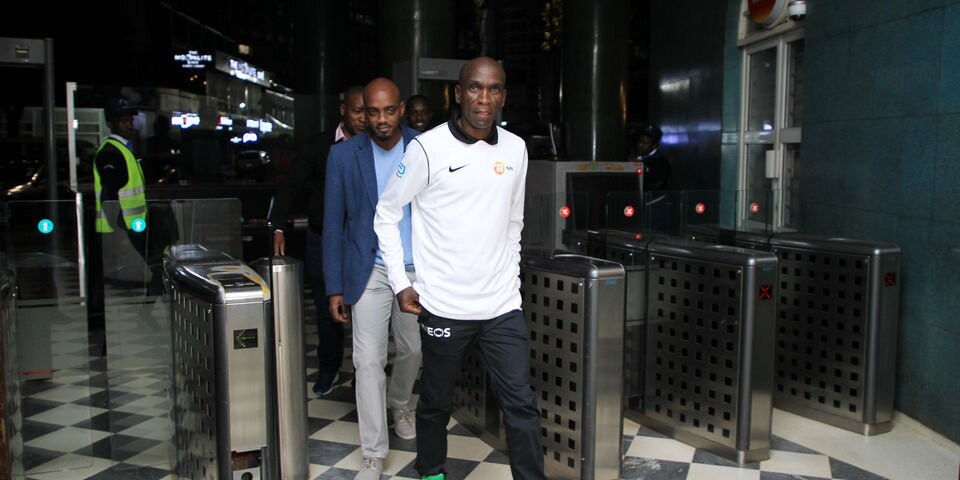
“One must remain consistent all through for good results hence no quick fixes,” said Kipchoge, who was received at the Nation Centre by NTV's Head of Broadcasting and Executive Director (Transformation), Monica Ndungú.
Ndungú was accompanied by Nation Media Group Managing Editor (Sports), Elias Makori and Head of Marketing, Philbert Mdindi.
Kipchoge noted that embracing professionalism always defines a professional athlete from an amateur.
“A professional will plan and follow his program to the later but an amateur is full of life, running up-and-down aimlessly, “said Kipchoge, adding that is what keeps him going is his love for running.
“I feel satisfied and the urge to do more when I know I have inspired someone or a generation. What I see on my social media platforms by people embracing what I am doing across the world drives the hunger in me,” said Kipchoge.
An ardent reader, Kipchoge disclose that what inspired him before heading to Berlin was the book “The Practice of Groundedness: A Transformative Path to Success That Feeds--Not Crushes--Your Soul’ by Brad Stulberg, an internationally known expert on human performance, well-being, and sustainable success.
“I succeeded in most cases when I discovered the secret to reading. Success is approached from different angles.
“I read 20 pages a day in a book and that is three books a month. To get to learn a lot and be more knowledgeable when you read books,” said Kipchoge, who reads after training at 5pm.
Kipchoge, whose favourite meal is maize meal (ugali) and any traditional vegetables, also loves listening to US Pop star Kelly Clarkson's music especially –Stronger ( What doesn’t kill you, makes you stronger).
With the world celebrating World Mental Health Day on Monday, Kipchoge noted that sportsmen and women who win easily have good mental health.
“Matches and races are won mentally and not the training invested,” said Kipchoge, adding that his most successful race was when he broke the two hour mark, running 1:59:41 during the INEOS 1:59 Challenge at Prater Hauptallee, Wien course in Austria on October 12, 2019.
However, the time wasn’t recognized as a world record because it wasn't conducted under regular conditions.
“That race was not only critical to me but human nature. I made history as the first man to run a marathon under two hours,” said Kipchoge. “I know someone might in future run in a normal; event but I am glad to be the first one to run under any conditions and that has inspired many.”
Kipchoge said his record-breaking feat in Berlin has finally settled.
“I am happy that I have continued to inspire many. I think I could have run under two hours if the pacesetters went up to the 30km mark,” said Kipchoge, adding that he knew he would break his own record when he looked at the splits time after 25km and 30 km.
However, Kipcgohe wondered why people are focused on whether he will run under two hours in a normal race soon.
"I don't understand why people are asking that when I did it at the Ineos Challenge," said Kipchoge in a laughter.
Kipchoge advised fellow sportsmen and women to desist from doping saying that besides ruining their reputation, they are putting their health in grave danger.
"You better be slow and sure and succeed. I appeal to the young generation to train well and love sports. It will treat them well," said Kipchoge.
He will on Tuesday be hosted for a media breakfast by Isuzu East Africa in Nairobi.
by Ayumba Ayodi
Login to leave a comment
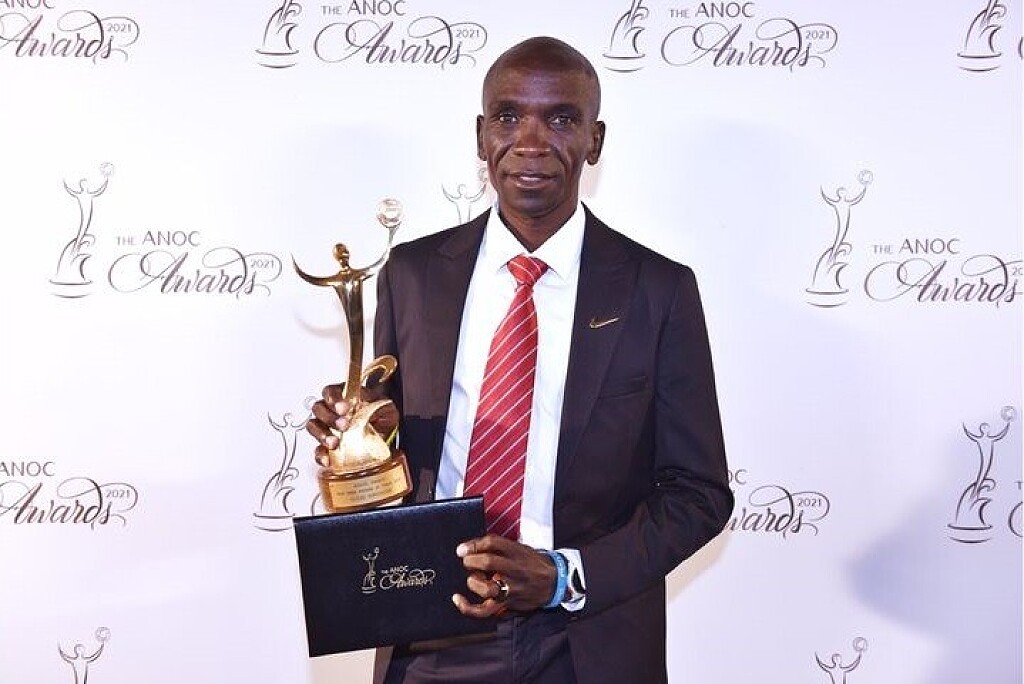
Eliud Kipchoge has been named best male athlete of Tokyo 2020 Olympics
Kenya's Eliud Kipchoge on Sunday won the Best Male Athlete accolade during the 2021 Association of National Olympic Committees (ANOC) Awards held in Greece.
Kipchoge delivered a masterclass in marathon running, breaking away at the 30-kilometre mark and never looking back to retain his Olympic title in two hours, eight minutes and 38 seconds during the Tokyo Olympics in August.
He became only the third man to defend the Olympic men’s marathon title after Ethiopia’s Abebe Bikila (1960 and 1964) and East Germany’s Waldemar Cierpinski (1976 and 1980).
The victory at the Tokyo 2020 Olympics was Kipchoge’s 13th success in the 15 marathons he has raced in since 2013. He broke the world record in 2018 when he timed 2:01.39 in the Berlin Marathon.
On October 12, 2019, Kipchoge timed 1:59.40 at the Ineos 1:59 Challenge in Vienna, Austria. But the time did not count as a new marathon record since standard competition rules were not followed.
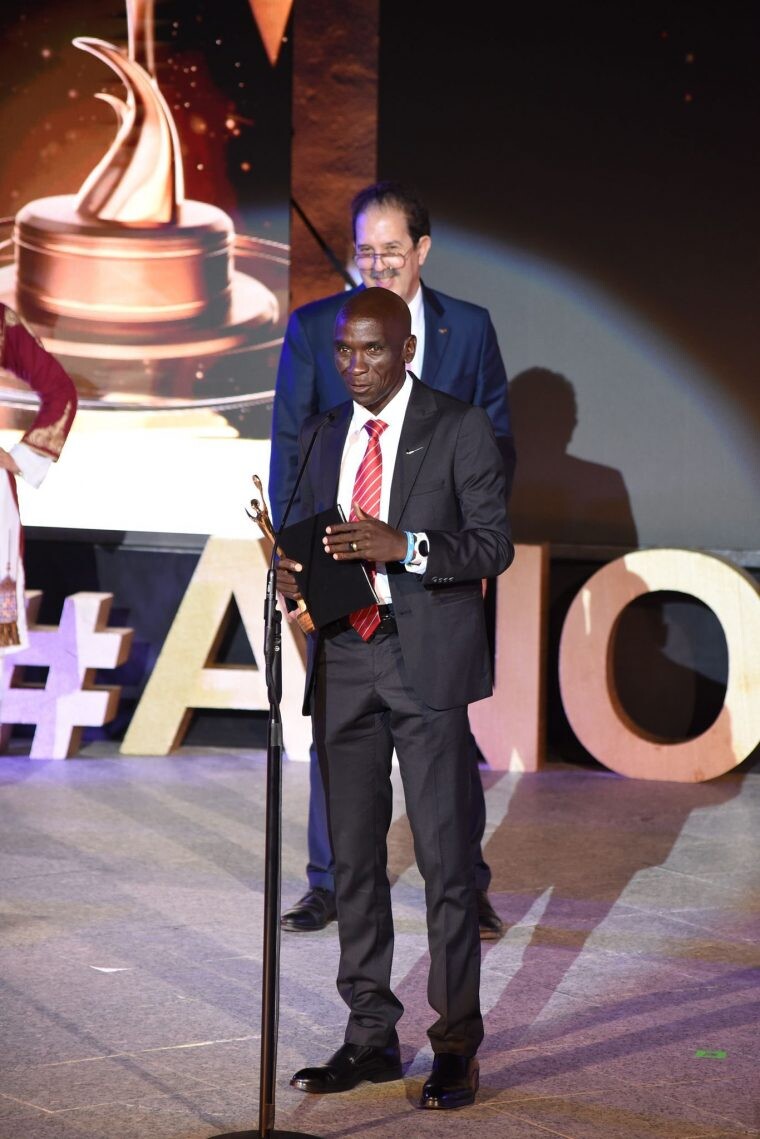
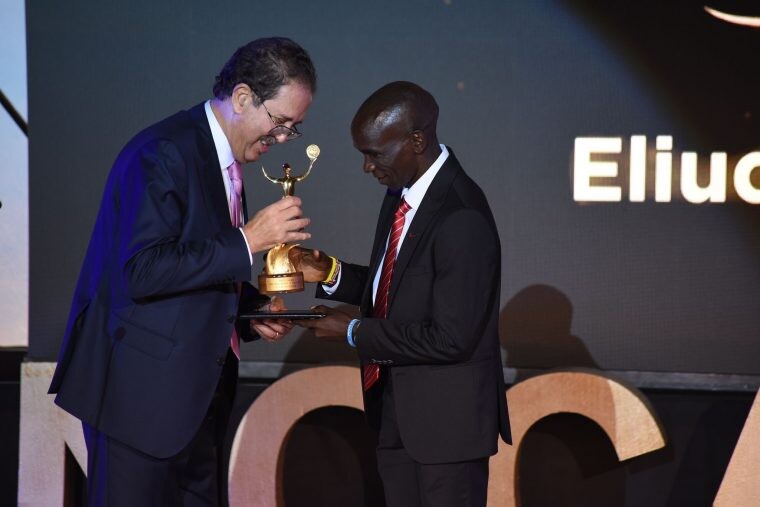
"It is an honor to win the ANOC Award for the Best Male Athlete at the Tokyo Olympics. With so many beautiful performances by so many athletes, I am proud to be the recipient of this award. Thank you all for your great support," the world record holder said.
He received his award from the president of Association of National Olympics Committee of Africa Mustapha Berraf at the Open Air Theatre of the Creta Maris Beach Hotel, in Greece.
The awards were organized by ANOC to celebrate the achievements of athletes at the Tokyo Games.
by Brian Yonga
Login to leave a comment
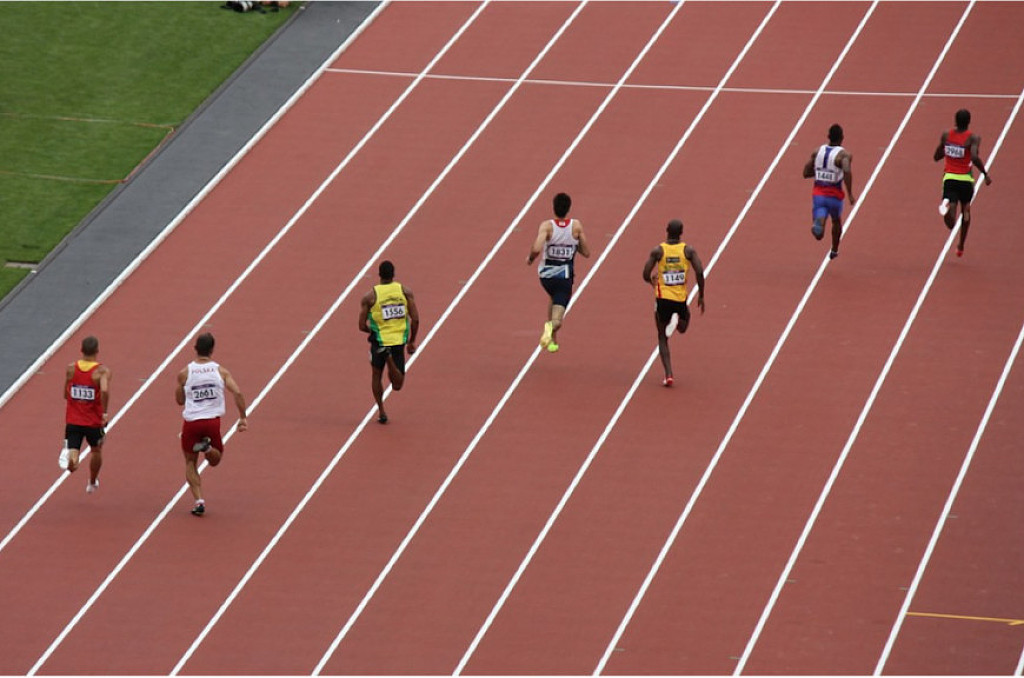
Tokyo Olympian runs fast 400m time in a baggy, oversized T-shirt
As the Olympics have transitioned into track and field from road cycling and swimming, there is a debate on Twitter on why all track athletes do not wear aerodynamic suits, as cyclists and swimmers do.
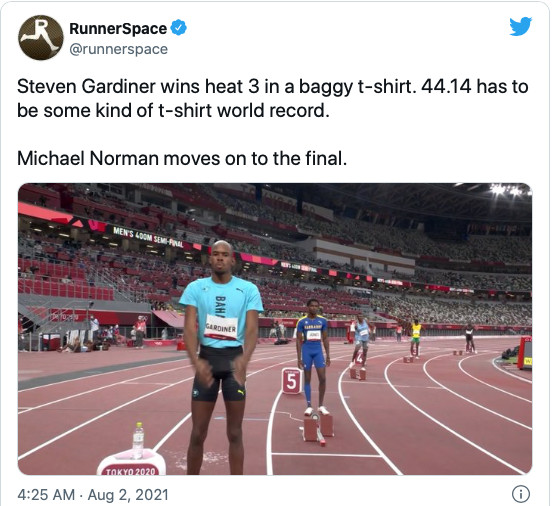
Bahamian 400m sprinter Steven Gardiner won the 400m semifinals in a speedy time of 44.14, which put him into Thursday’s final. 44 seconds for 400m is spectacular, but fans on Twitter were more impressed he ran that time while wearing an oversized Bahamas training T-shirt. Our sources did not confirm if he actually forgot his race singlet in the Athletes’ Village, or if he just prefers his sleeves flapping in the wind. Gardiner was the inspiration for the Twitter debate about the aerodynamics of sprinters’ racing kit. (Spoiler alert: we published this story the day before the 400m final, which Gardiner would go on to win in 43.85, wearing appropriate racing attire, but still an untucked shirt, not unlike many others.)
Aerodynamics refers to the concept of forces resulting in the motion of objects through air. The study of the motion of air around an object allows us to measure how gravity and resistance work while the object travels through it.
As we’ve seen, aerodynamics are very important to cyclists. Any stray fabric flapping in the breeze is potentially slowing them down. On a flat road, aerodynamics are by far the greatest barrier to a cyclist’s speed, accounting for 70 to 90 per cent of the resistance riders experience when pedalling. The only greater obstacle is climbing up a hill, as gravity far outweighs the effect of wind resistance. Over the past five years, there has been a major development in more stretchy, lighter and breathable fabrics for cyclists to slice through the air while competing at high speeds.
Technology is constantly evolving to benefit the athlete and allows them to operate at a high level of performance. At these Olympic Games, male and female athletes are given a choice on what they can wear during competition. In certain events such as the 10,000m, where you have to run 25 laps around the track, a majority of distance athletes will wear the classic singlet and shorts, due to their loose-fitting and comfortable feel for 30 minutes of high-intensity running. During a 10,000m race, speed does help, but cutting the air is less important, as most runners will reach a top speed of 25 km/h and will remain tucked into a pack for most of the race.
When Eliud Kipchoge broke the 2-hour marathon barrier at the INEOS 1:59 Challenge in Austria, scientists at Eindhoven University in the Netherlands analyzed wind formations when running at 21.2 km/h. They ended up proposing a special arrangement of runners who would pace around Kipchoge in order to lower his output of power against resistance, which ultimately allowed him to perform at a higher level. This formation is very similar to those in a bike peloton at the Tour de France. The athlete who takes the wind has to work harder than the athlete tucked in behind him.
Unfortunately, sprinting events do not have the luxury of pack-aided performance. When Usain Bolt set the 100m and 200m world records, he achieved his top speed of 45 km/h in a singlet and half tights. According to scientists, when a human reaches a speed faster than 40 km/h, 80 per cent of the human’s power output goes into overcoming air resistance and gravity. During his six gold medal performances in the 100m and 200m, Bolt never used the aerodynamic speed suit. Who knows what he could’ve run wearing 400mH champion Karsten Warholm’s Puma speed suit?
A few of the world’s top track athletes are beginning to transition to the speed suit to gain any aerodynamic benefits they can. Norway’s Jakob Ingebrigtsen and Mohammed Katir of Spain, two of the fastest men on earth over the 1,500m and 5,000m distances this year, were both wearing one-piece speed suits during their Olympic heats. Newly crowned 800m gold medallist Athing Mu has been racing in wind-cutting suits since turning pro earlier this year. Clearly, science has proven wind-cutting technology can make a difference, but World Athletics, the governing body of track and field, gives each athlete a strict guideline on what can be worn during competition at the Olympic Games and World Championships:
According the World Athletes under rule 143 section 5 of World Athletics – competition and technical rules:
In short, this means that all athletes competing have to abide by the competition rules of their countries’ athletic governing body, which must abide by the rules and regulations set by World Athletics.
At these Games, men and women are given the choice of three options for competition; a singlet and short shorts, one-piece aero-speed suit, or (a combination of speed and comfort) a singlet and half tights – the best of both worlds. Women are offered one more option, with the crop top and short shorts.
As technology advances, the world’s best athletes continue to chase world records. The athletes will always lean towards wearing the lightest or fastest gear to give their performance a slight edge over competition. Who knows? Maybe the Sydney Olympics gold medallist, Cathy Freeman, was ahead of her time when she won the 400m in a head-to-toe speed suit.
by Running Magazine
Login to leave a comment
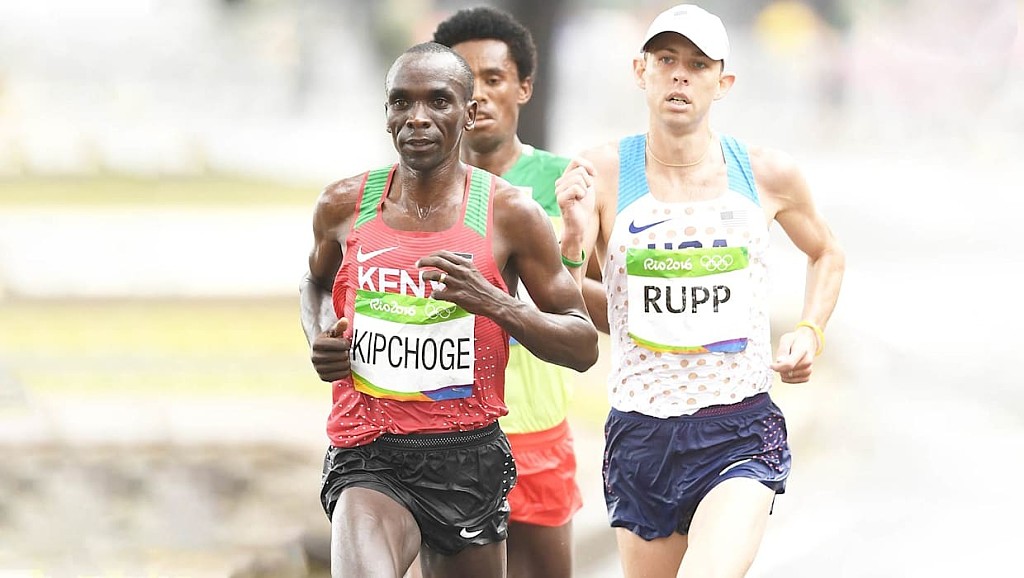
Eliud Kipchoge will be attempting to become only the third man to win back-to-back Olympic marathon gold medals
Eliud Kipchoge will be a man on a mission on August 8, 2021 when the Tokyo 2020 Olympic Games men's marathon takes place in Sapporo.
No defending Olympic champion has won a second straight marathon gold medal since Waldemar Cierpinski did so at Moscow 1980 as the reigning champion from 1976.
Now, more than 40 years later, Kenya's Kipchoge will attempt to become just the third person, after Cierpinski and Ethiopian legend Abebe Bikila (1960, 1964) to win back-to-back Olympic marathon titles.
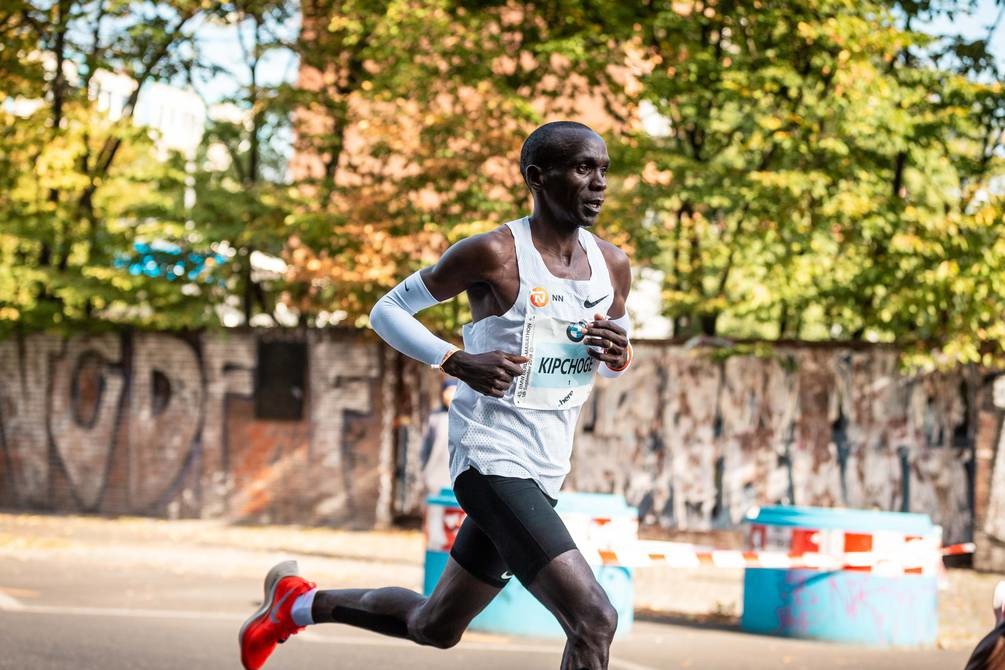
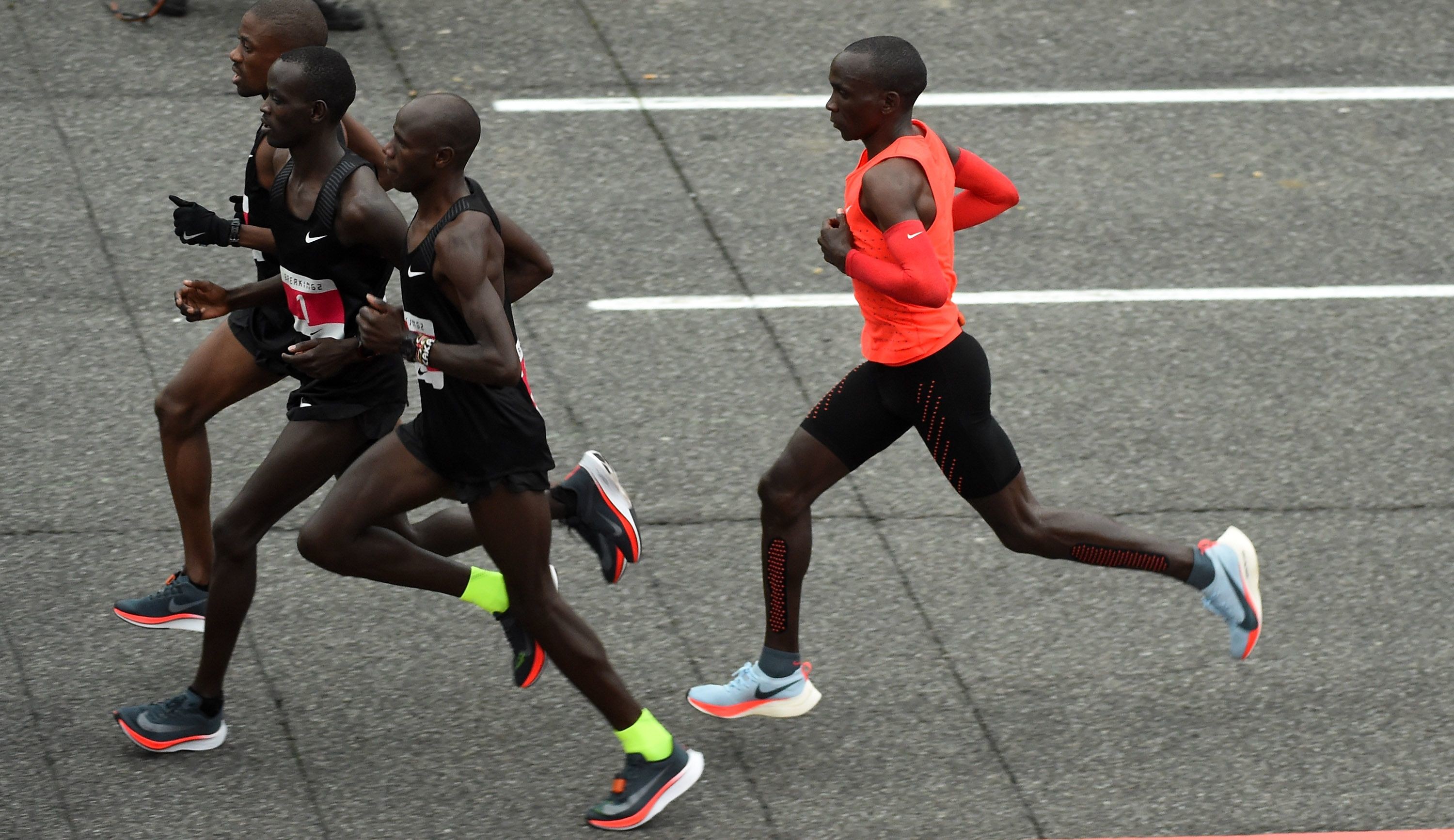
The effort will come nearly two years after becoming the first man to run a marathon distance under two hours, when he completed the INEOS 1:59 Challenge in Vienna in 1:59:40.
That particular achievement will be celebrated in August with the release of a new documentary, titled Kipchoge: The Last Milestone.
Eliud Kipchoge 1:59 documentary
The trailer for the Kenyan's new film has just been released, with Kipchoge writing on social media: "I hope by watching this film you will also feel inspired to run."
In the trailer, the 38-year-old says: "In the journey of life, there [are] ups and downs. In marathon, there [are] a lot of challenges, ups and downs. There is pain in training, pain in running, and joy at the end of the marathon."
The documentary will tell the story of how Kipchoge prepared for the monumental task.
Ridley Scott Creative Group, the documentary's producers, said in a statement that the film offers "unprecedented access to Eliud […] ahead of his attempt to achieve the seemingly impossible," including "footage from his home in Kenya, interviews with those closest to him, details of the daily rituals of his life and the dynamics within his team and community."
Kipchoge's training routine and how Covid affected it
The Kenyan has always been one who prefers training in a group.
He once said: "You cannot train alone and expect to run a fast time. There is a formula: 100% of me is nothing compared to 1% of the whole team."
However, the Covid-19 pandemic changed that. Suddenly, Kipchoge was forced to run alone on his training sessions due to lockdown restrictions.
"It was really hard to go training and not mix with people to fight the virus," he said in March ahead of the NN Mission Marathon, originally scheduled for Hamburg before being moved to Twente Airport, the Netherlands.
"I am happy to have since resumed training with the team, but we continue to make sure we do so safely within the protocols because the virus is still with us.
"Life has been hard but that is the way of the world – we need to get through it but I think we are on the right track to a brighter future.
"Life cannot stop, it does not stop for a single second. But what everyone should know is, the pandemic is just one of life’s challenges. Marathons are just like life, there are ups and downs every kilometre. Every mile there is a challenge.
"We should all be prepared to accommodate challenges in life but above all enjoy and embrace the challenges."
Kipchoge was vaccinated against Covid-19 at the end of April.
What next for Kipchoge? The star's future plans
The immediate future for Kipchoge consists of the Tokyo 2020 Olympic marathon in Sapporo, but beyond that, the 38-year-old has a "bucket list" of items he wants to check off.
Speaking recently to the Flotrack podcast, Kipchoge revealed that he wants to have competed in every World Marathon Major.
Kipchoge has competed in the Olympic Games, World Championships, London, Berlin, and Chicago Marathons, leaving him with the Boston, New York, and Tokyo Marathons.
He also admitted that he would like to run even longer distances, beyond the marathon's 42.195km.
"I would love to try 80km, 60km. I need to go to California and hike for six hours," he told Flotrack.
by ZK Goh
Login to leave a comment

Tokyo 2020 Olympic Games
Fifty-six years after having organized the Olympic Games, the Japanese capital will be hosting a Summer edition for the second time, originally scheduled from July 24 to August 9, 2020, the games were postponed due to coronavirus outbreak, the postponed Tokyo Olympics will be held from July 23 to August 8 in 2021, according to the International Olympic Committee decision. ...
more...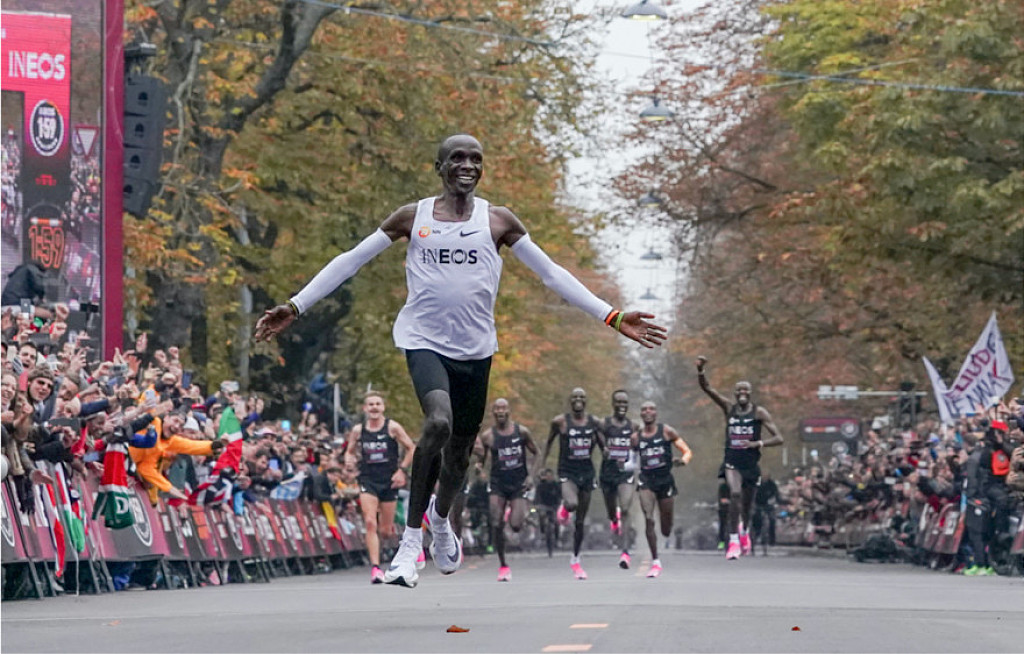
The trailer for 'Kipchoge: The Last Milestone' is officially out
Eliud Kipchoge has no doubt been one of the most exciting and inspirational athletes of our time, and he has easily had the most successful marathon career in history. When he broke two hours in the marathon in 2019, running 1:59:40 at the INEOS 1:59 Challenge, he broke down a barrier, accomplishing something that many thought was not possible. Fans now get to relive that experience again through the his upcoming film, Kipchoge: The Last Milestone. The official trailer has finally been released, and it will make you want to jump out of your chair and head out for a run.
he movie follows Kipchoge as he trains to break two hours, from his training grounds in Kenya to the high-tech facilities in Europe, and finally to Vienna, where he attempts to break one of the last true milestones in sport. Of course, while the sub-2 marathon has been one of his greatest accomplishments in the sport so far, his career is far from over. Most recently, he won the NN Mission Marathon in the Netherland in 2:04:30, and he will still be the man to beat at the Tokyo Olympics this summer.
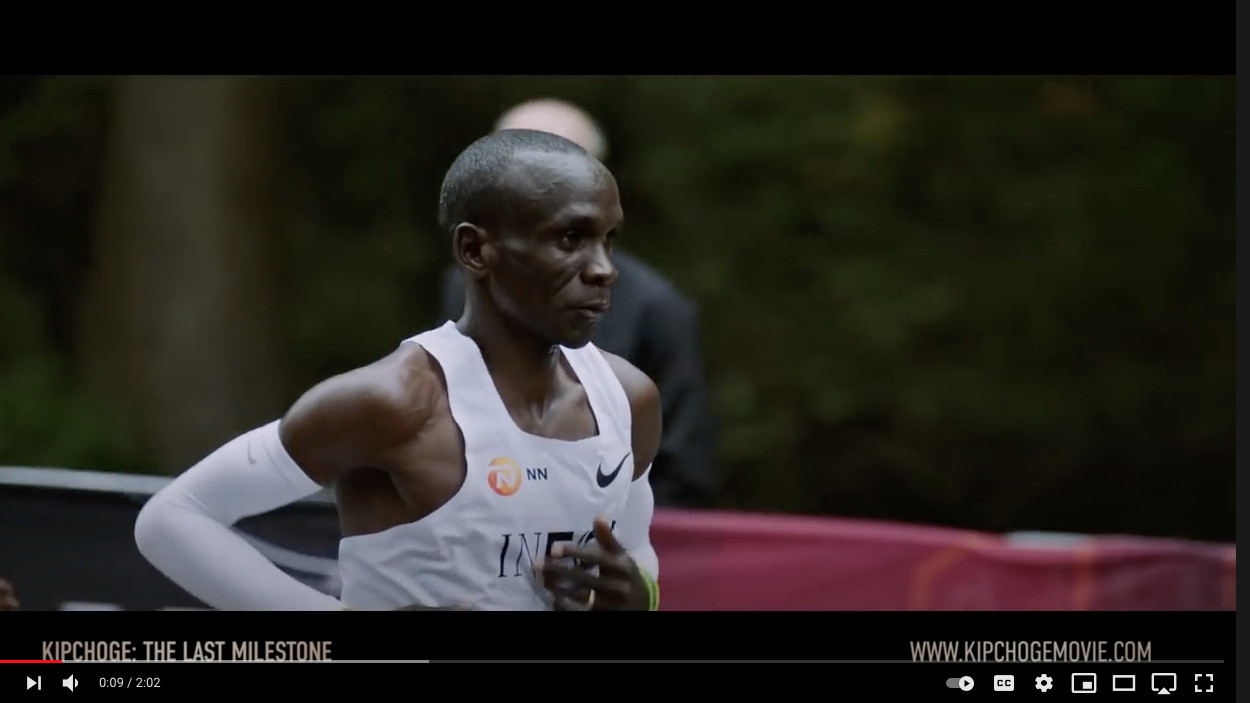
While the movie is set to come out this year, the actual release date has not yet been disclosed. For now, we will just have to watch (and rewatch and rewatch) the trailer in anticipation of one of the most exciting running films to be released in years.
https://www.youtube.com/watch?v=PiI7eUX6o8U
by Running Magazine
Login to leave a comment
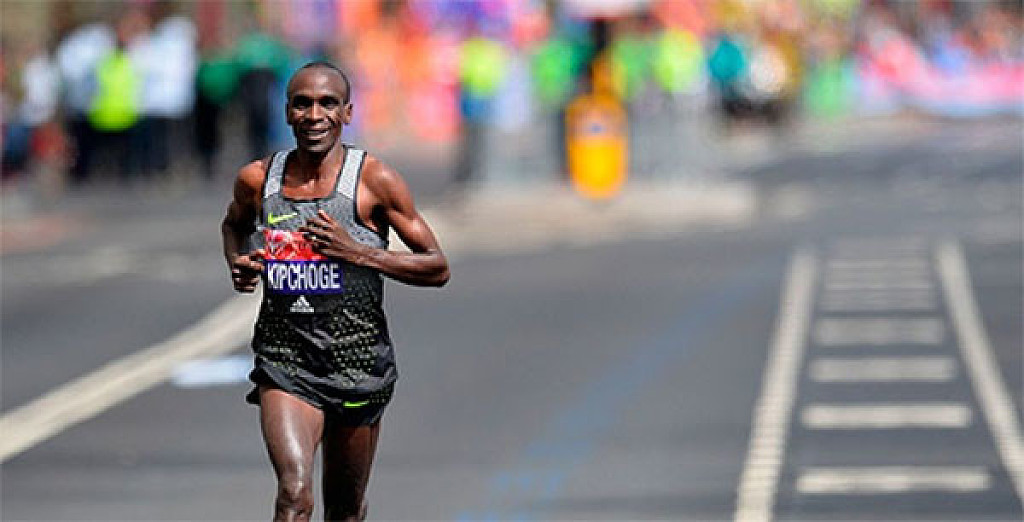
Eliud Kipchoge ready for Hamburg Marathon redemption
Kenyan Olympic champion and marathon world record holder Eliud Kipchoge, is hoping to return to the top of the podium at the NN Hamburg Marathon on April 11 to redeem his stature following his shock London defeat last year.
The distance running star will be featured at the elite-only marathon for those looking to secure an Olympic qualifying time after few chances to compete in 2020 because of the pandemic.
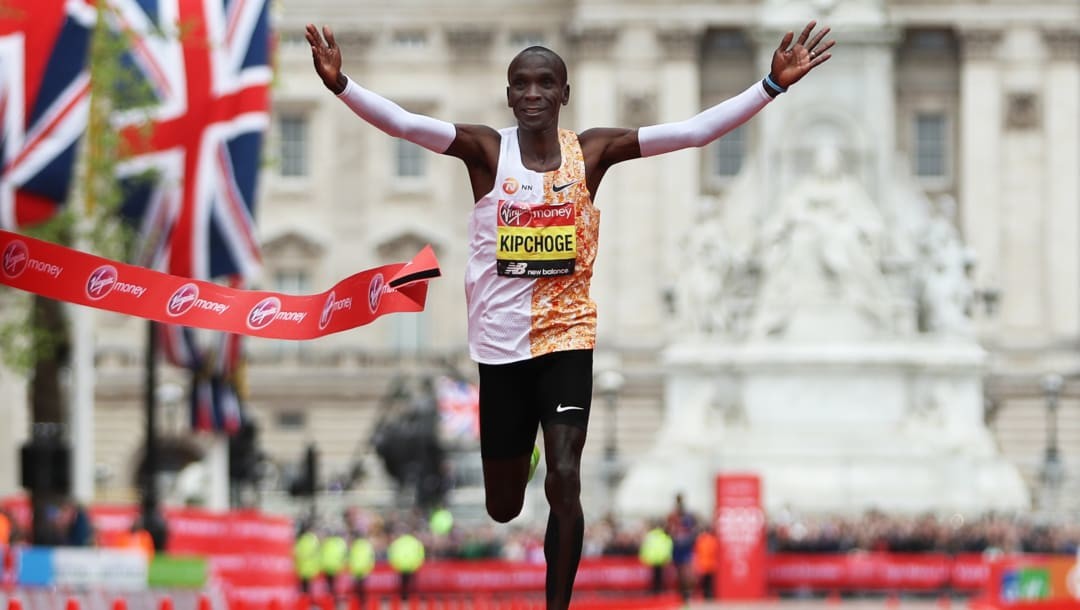
Kipchoge saw his 10-marathon winning streak ended at the 2020 London Marathon on Oct. 4 but has had the time to recover and build back up at his training camp in Kaptagat, Kenya.
He will be running in Germany to gauge his shape ahead of a planned Olympic title defense in the summer.
"My number one goal is to run a beautiful race in Hamburg. A beautiful race will give people hope. It is another step that we are on the right track to normality," Kipchoge who ran the standing 2:01:39 world record at the 2018 Berlin Marathon tweeted on Thursday.
According to his management, NN Running, the Rio 2016 gold winner is hoping to reignite his marathon supremacy at the city where he made a victorious debut over the distance in April 2013.
"Hamburg has a lot of memories for me, it was my first exposure to the marathon and I remember thinking I didn't know what would happen at 25km, 30km, 35km and 40km. That memory of 'will I hit the wall' is still there. It was the beginning of my life in the marathon," Kipchoge told the NN Running website on Wednesday.
The impressive 2:05:30 win at the 2013 Hamburg Marathon sparked off a career switch from track running that yielded 11 wins in 13 marathons started for the Kenyan.
Prior to London 2020 where he clocked 2:06:49 for eighth, Kipchoge's only other loss at the distance came at the 2013 Berlin race where he was beaten to second by compatriot Wilson Kipsang who ran a then world record of 2:02:32.
Kipsang has since been banned for four years for Whereabouts Rules violations.
"Winning there gave me confidence that I could run the marathon and it played a big role in my career. Now I am running Hamburg again in a very different situation. We have very few races globally and it is a good opportunity to test myself, run well and offer hope to the world," Kipchoge remarked.
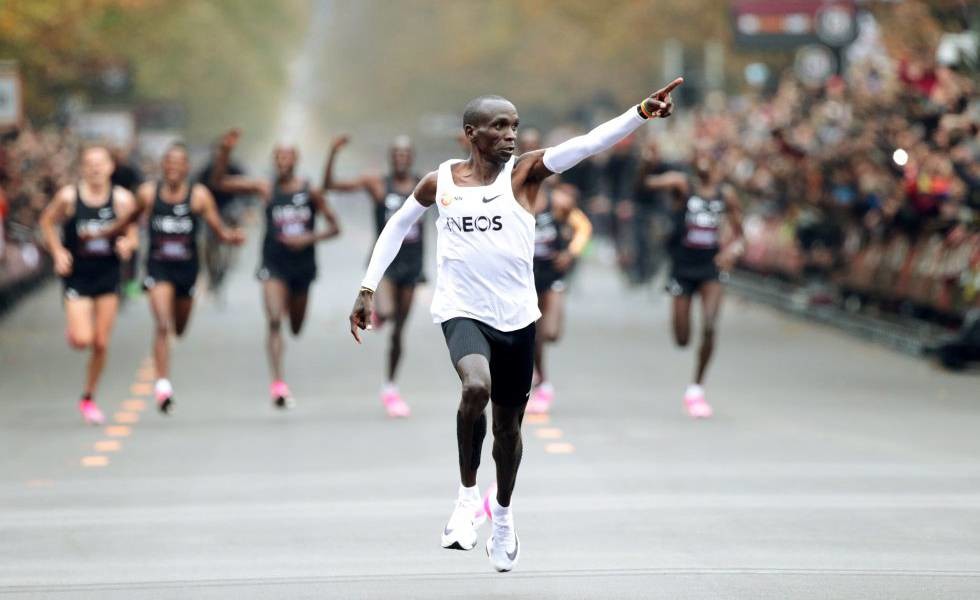
On Oct. 12, 2019, he became the first man to cover the classic 42.192km marathon distance in under two hours at the specially arranged INEOS 1:59 Challenge in Vienna, Austria where he stopped the timer at 1:59:40.
However, like every other sportsperson around the world, Kipchoge was affected by the pandemic, admitting to NN Running that life has been "very hard."
Forced for several months to stay within his compound because of restrictions on movement implemented by the Kenyan government to control the virus, it was not an easy period for the first man in history to run a sub-two-hour marathon.
He spent the lockdown months by organizing a food distribution drive in partnership with several local companies and individuals to feed other affected runners who have not been as fortunate as him.
"It was really hard to go training and not mix with people to fight the virus. I am happy to have since resumed training with the team, but we continue to make sure we do so safely within the protocols because the virus is still with us.
"Life has been hard but that is the way of the world - we need to get through it but I think we are on the right track to a brighter future," the three-time London marathon winner underscored.
After suffering an untimely ear blockage, Kipchoge suffered his first marathon defeat in seven years in London but insists he is in "great mental and physical shape" and is looking forward to competing on the streets of Hamburg.
by Xinhua News
Login to leave a comment
From going solo on balconies to running underwater for 42.2K, people have run the wildest and amazing ever run marathons
Running a marathon is a goal held by many people. It’s a big accomplishment that requires a lot of time and effort to complete, making it a worthwhile and rewarding pursuit. While running a marathon is impressive enough as it is, some people decide to take the classic race to the next level and add twists to it. There are many races and runs out there that fall under this category, but here are five of the best out-of-the-box marathons ever completed.
Underwater Marathon

In 2003, a British man called Lloyd Scott navigated the depths of Loch Ness in Scotland and worked through a 42.2K underwater marathon course. Prior to this run, Scott had completed several marathons on dry land wearing a 120 lbs deep-sea diving suit, and he finally decided to head underwater in 2003. Raising money to support children with leukaemia, Scott spent 12 days in Loch Ness, and he eventually made it to the marathon finish line.
Car marathon

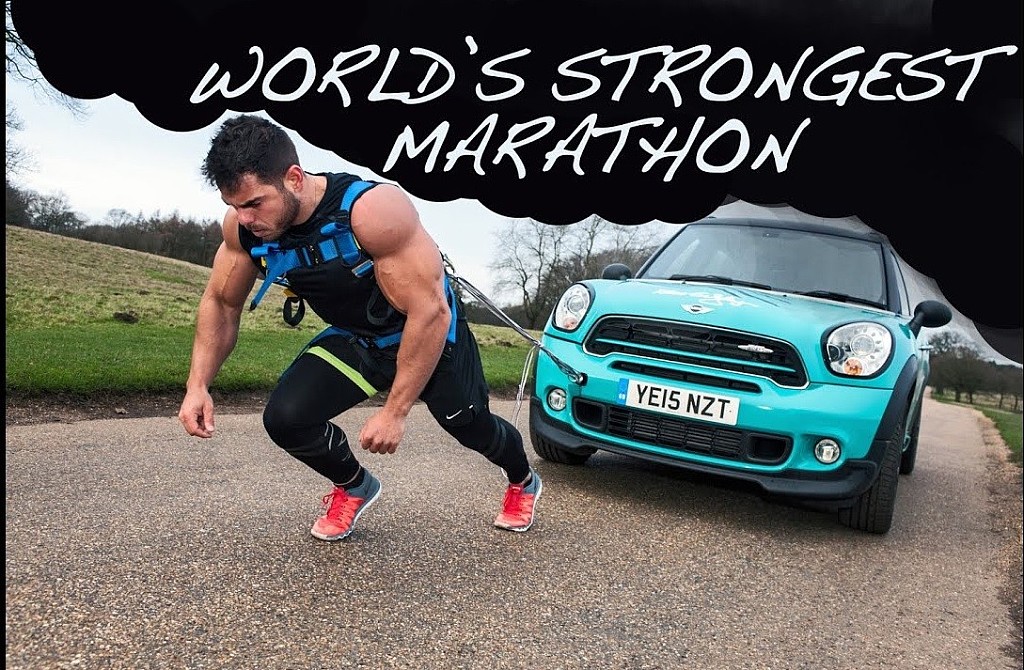
In 2016, Ross Edgley (another British athlete) completed a marathon while pulling a car. In a challenge he dubbed the “World’s Strongest Marathon,” Edgley towed the 3,000 lbs Mini Countryman behind him along a Formula One race track in the U.K. The 42.2K slog took him more than 19 hours, but he made it to the finish line in one piece.
The Everest Marathon
While Scott´s and Edgley´s marathons are possible to recreate, they would take a lot of time and planning to get organized. One wild race that anyone can run (assuming you can get to the start line) is the Tenzing Hillary Everest Marathon on the world’s tallest mountain. Running a marathon is tough enough at sea level, but this race takes runners to new heights, and it starts at Mount Everest Base Camp (which has an elevation of more than 5,000m). There are also half-marathon and 60K options offered.
Balcony marathons
Before COVID-19, running a marathon on a balcony would have sounded ridiculous, but when the pandemic hit, many runners worldwide did just that. Lockdowns and quarantines forced people to stay indoors, but runners refused to let that stop them from getting in their daily mileage. One man ran 50K around his apartment in China, another runner covered 42.2K on his balcony in France and so many other people ran marathons in their backyards.
Kipchoge´s sub-two-hour marathon
Yes, Eliud Kipchoge‘s run at the INEOS 1:59 Challenge in 2019 was a regular marathon, but it was incredible, and it deserves a spot on this list. With his run, Kipchoge became the first person to break the two-hour barrier in the marathon, and he smashed it with a 1:59:40 showing.
by Ben Snider-McGrath
Login to leave a comment
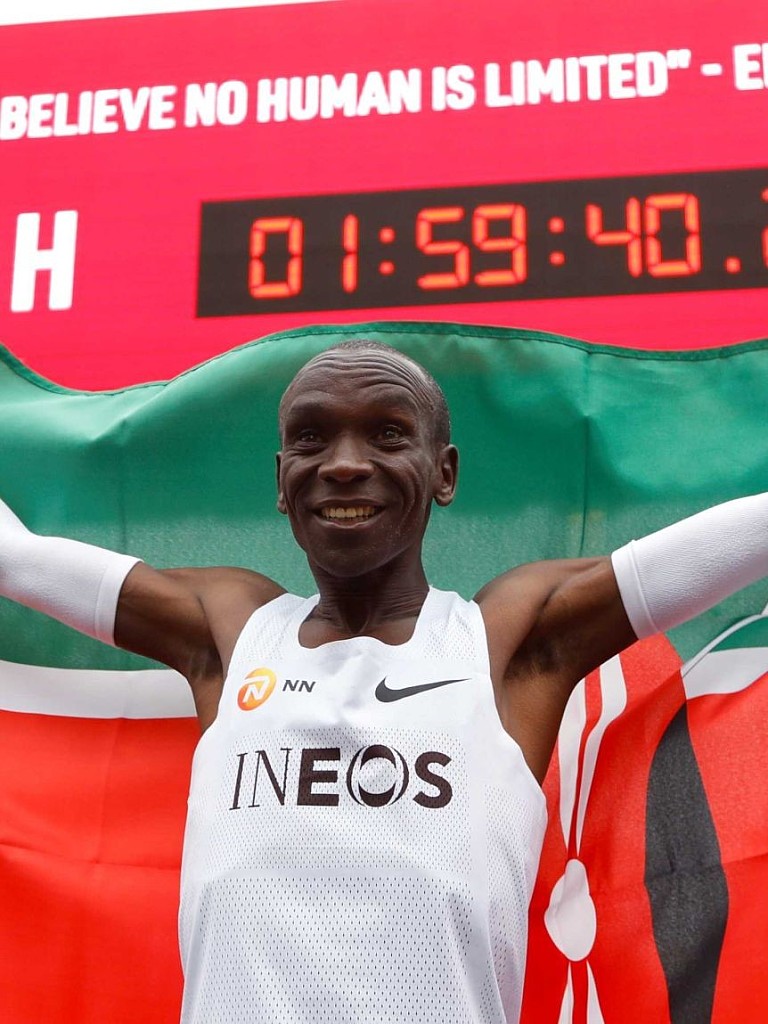
Elite runners need a specific combination of physiological abilities to have any chance of running a sub-two-hour marathon, new research shows
The study is based on detailed testing of athletes who took part in Nike's Breaking2 project -- an ambitious bid to break the two-hour barrier.
Professor Andrew Jones, of the University of Exeter, said the findings reveal that elite marathon runners must have a "perfect balance" of VO2 max (rate of oxygen uptake), efficiency of movement and a high "lactate turn point" (above which the body experiences more fatigue).
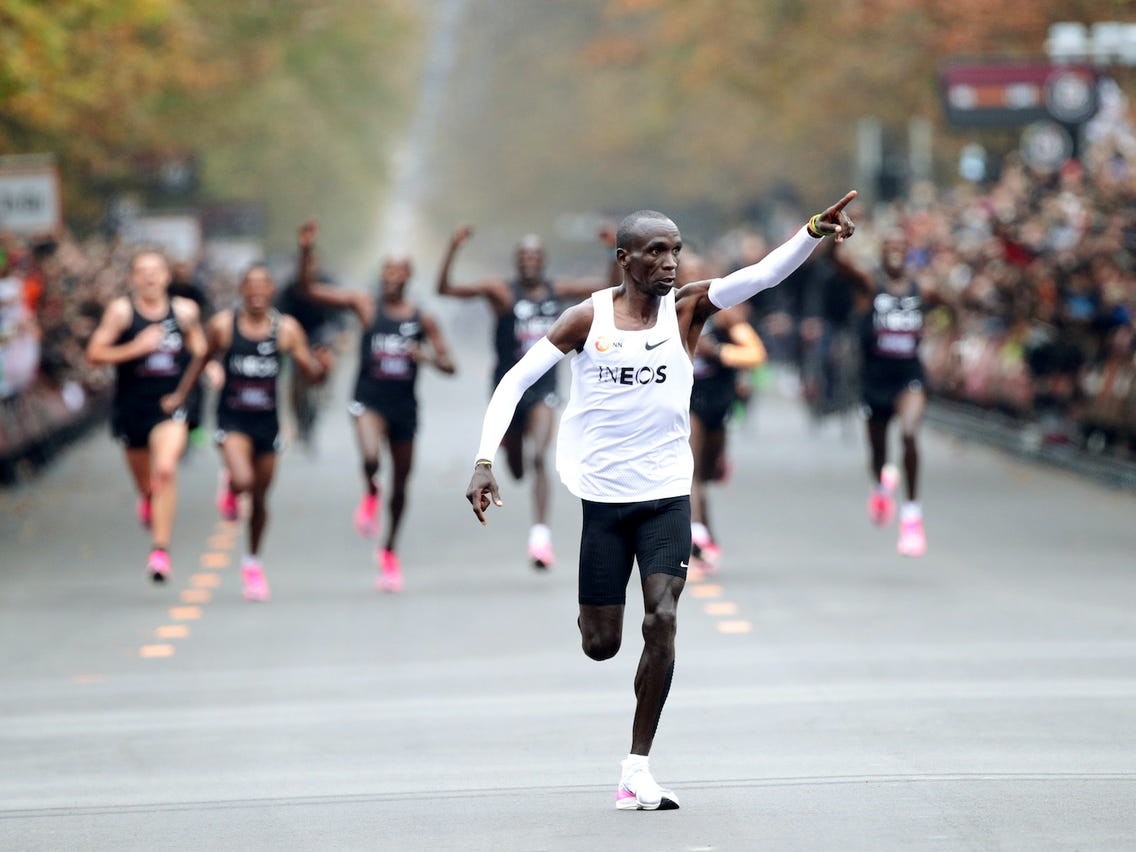
The VO2 measured among elite runners shows they can take in oxygen twice as fast at marathon pace as a "normal" person of the same age could while sprinting flat-out.
"Some of the results -- particularly the VO2 max -- were not actually as high as we expected," Professor Jones said.
"Instead, what we see in the physiology of these runners is a perfect balance of characteristics for marathon performance.
"The requirements of a two-hour marathon have been extensively debated, but the actual physiological demands have never been reported before."
The runners in the study included Eliud Kipchoge, who took part in Breaking2 -- falling just short of the two-hour target -- but later achieving the goal in 1:59:40.2 in the Ineos 1:59 challenge.
Based on outdoor running tests on 16 athletes in the selection stage of Breaking2, the study found that a 59kg runner would need to take in about four litres of oxygen per minute (or 67ml per kg of weight per minute) to maintain two-hour marathon pace (21.1 km/h).
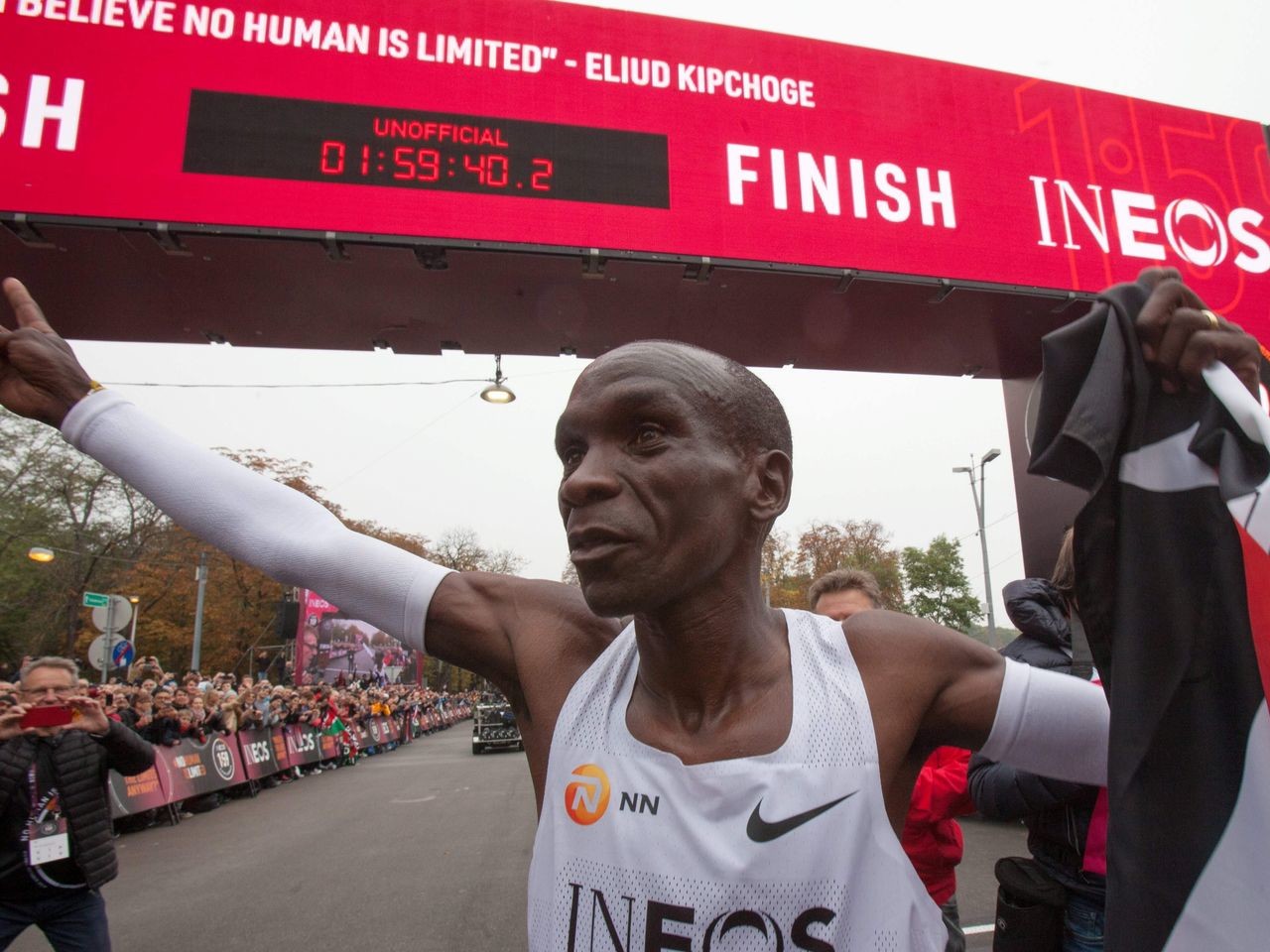
"To run for two hours at this speed, athletes must maintain what we call 'steady-state' VO2," Professor Jones said.
"This means they meet their entire energy needs aerobically (from oxygen) -- rather than relying on anaerobic respiration, which depletes carbohydrate stores in the muscles and leads to more rapid fatigue."
In addition to VO2 max, the second key characteristic is running "economy," meaning the body must use oxygen efficiently -- both internally and through an effective running action.
The third trait, lactate turn point, is the percentage of VO2 max a runner can sustain before anaerobic respiration begins.
"If and when this happens, carbohydrates in the muscles are used at a high rate, depleting glycogen stores," Professor Jones explained.
"At this point -- which many marathon runners may know as 'the wall' -- the body has to switch to burning fat, which is less efficient and ultimately means the runner slows down.
"The runners we studied -- 15 of the 16 from East Africa -- seem to know intuitively how to run just below their 'critical speed', close to the 'lactate turn point' but never exceeding it.
"This is especially challenging because -- even for elite runners -- the turn point drops slightly over the course of a marathon.
"Having said that, we suspect that the very best runners in this group, especially Eliud Kipchoge, show remarkable fatigue resistance."
The testing, conducted in Exeter and at Nike's performance centre in Oregon, USA, provided a surprising experience for a group of amateur runners in the UK.
"We tested 11 of the 16 runners at Exeter Arena a few years ago," Professor Jones said.
"Some local runners were there at the time, and it was a real eye-opener for them when a group of the world's best athletes turned up.
"The elite runners were great -- they even joined in with the local runners and helped to pace their training."
Story Source:
Materials provided by University of Exeter.
by University of Exeter
Login to leave a comment
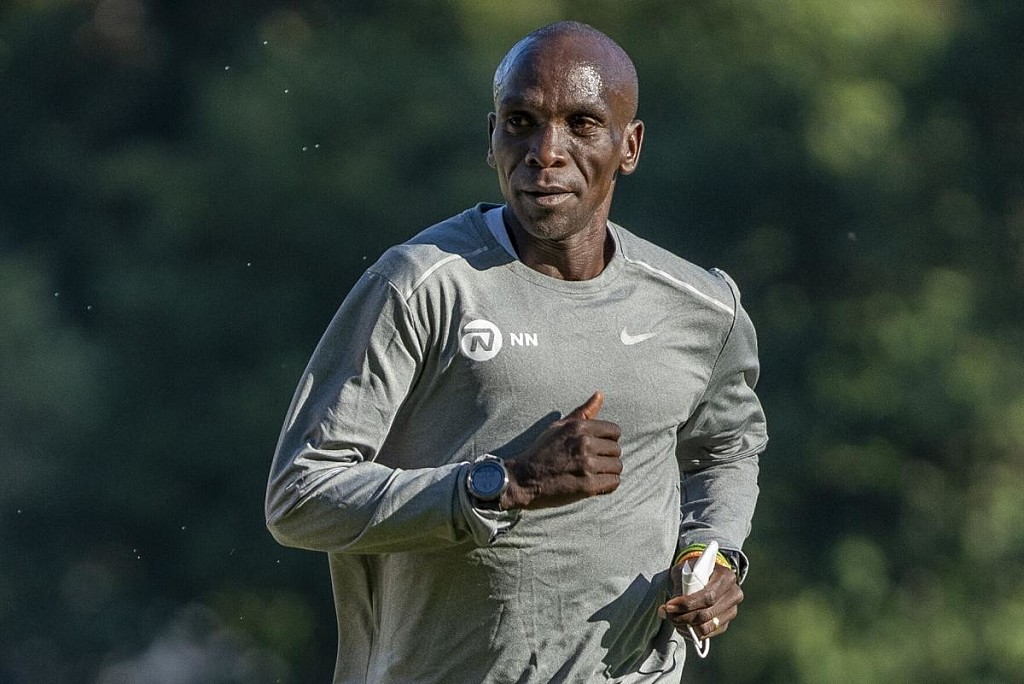
World marathon record holder Eliud Kipchoge says that he will be back in big way
Olympics marathon champion Eliud Kipchoge is still recovering from the London Marathon setback in which he finished eighth on October 4.
“I will take time to recover from the London Marathon loss. I’m healing, I want to move on and focus on the future,” he said on Thursday after touring the Isuzu D-Max Pick-up assembly line in Nairobi.

The world marathon record holder, who had won 10 consecutive marathons since 2014 before this year's London debacle on October 4 in which a blocked ear thwarted his bid for a fifth title, signed a new partnership agreement with Isuzu East Africa that will run until after 2020 Tokyo Olympics that were postponed to next year.
Kipchoge has been the Isuzu D-Max Pick-up ambassador for the last three years.

On Thursday, Isuzu East Africa hosted the legendary athlete who affirmed his commitment to making a comeback in the races ahead.
“If you despair, you lose what you have built over many years and miss future opportunities to come back stronger and better. If you train harder and build strength, you go to the track and run another race and rely on the strength you have built to propel you to another victory,” Kipchoge, who turns 36 on November 5, said.
He enjoys the use of a fully serviced luxury automatic Isuzu D-Max Pick-up in addition to two other vehicles that he was awarded for winning the 2018 Berlin Marathon in a world record time of two hours, one minute and 39 seconds, and for running under two-hours at the INEOS 1:59 Challenge in Vienna, Austria last year.
Isuzu East Africa Managing Director Rita Kavashe said that Kipchoge has been a reliable and dependable Isuzu D-Max brand ambassador.
“Through his record setting exploits, he has inspired a lot of people to believe in themselves and pursue their dreams,” she said.
Kipchoge thanked Isuzu for its demonstration of confidence in his capabilities and for supporting his dream.
Under the new deal, Isuzu East Africa will work with the Eliud Kipchoge Foundation to uplift the well-being of community through access to education, sports talent development and environmental conservation.
by Geoffrey Anene
Login to leave a comment
Tokyo 2020 Olympic Games
Fifty-six years after having organized the Olympic Games, the Japanese capital will be hosting a Summer edition for the second time, originally scheduled from July 24 to August 9, 2020, the games were postponed due to coronavirus outbreak, the postponed Tokyo Olympics will be held from July 23 to August 8 in 2021, according to the International Olympic Committee decision. ...
more...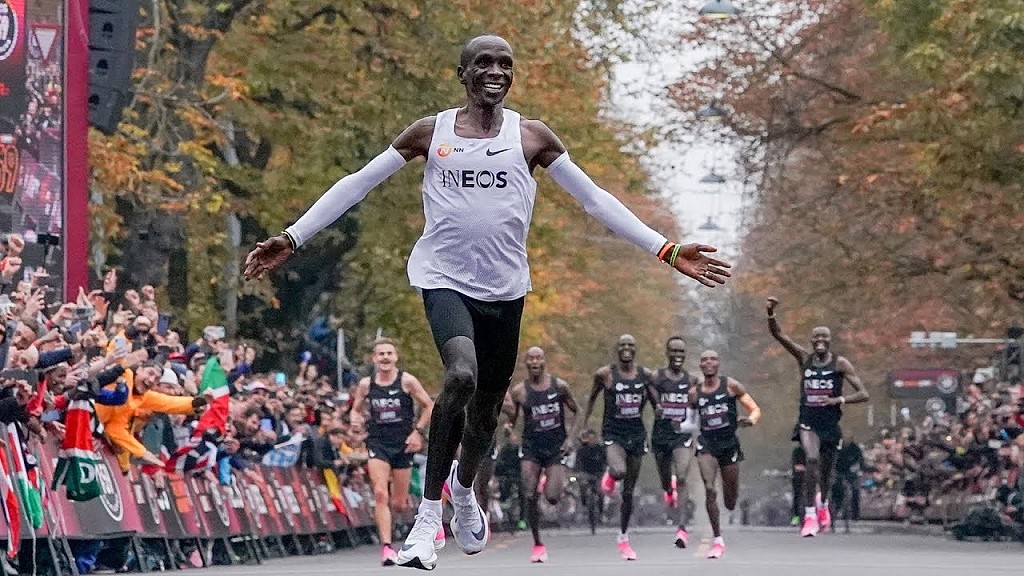
2020 Vienna City Marathon will celebrate the anniversary of the INEOS 1:59 Challenge and Eliud Kipchoge’s historic marathon in Vienna on Monday
The Vienna City Marathon will celebrate the first anniversary of the INEOS 1:59 Challenge and Eliud Kipchoge's historic marathon in Vienna during this weekend and on Monday. The Kenyan became the first athlete to break the two hour marathon barrier a year ago in Vienna. He clocked 1:59:40.2 on the Prater Hauptallee on 12th October 2019. His race still inspires and excites people throughout the world today.
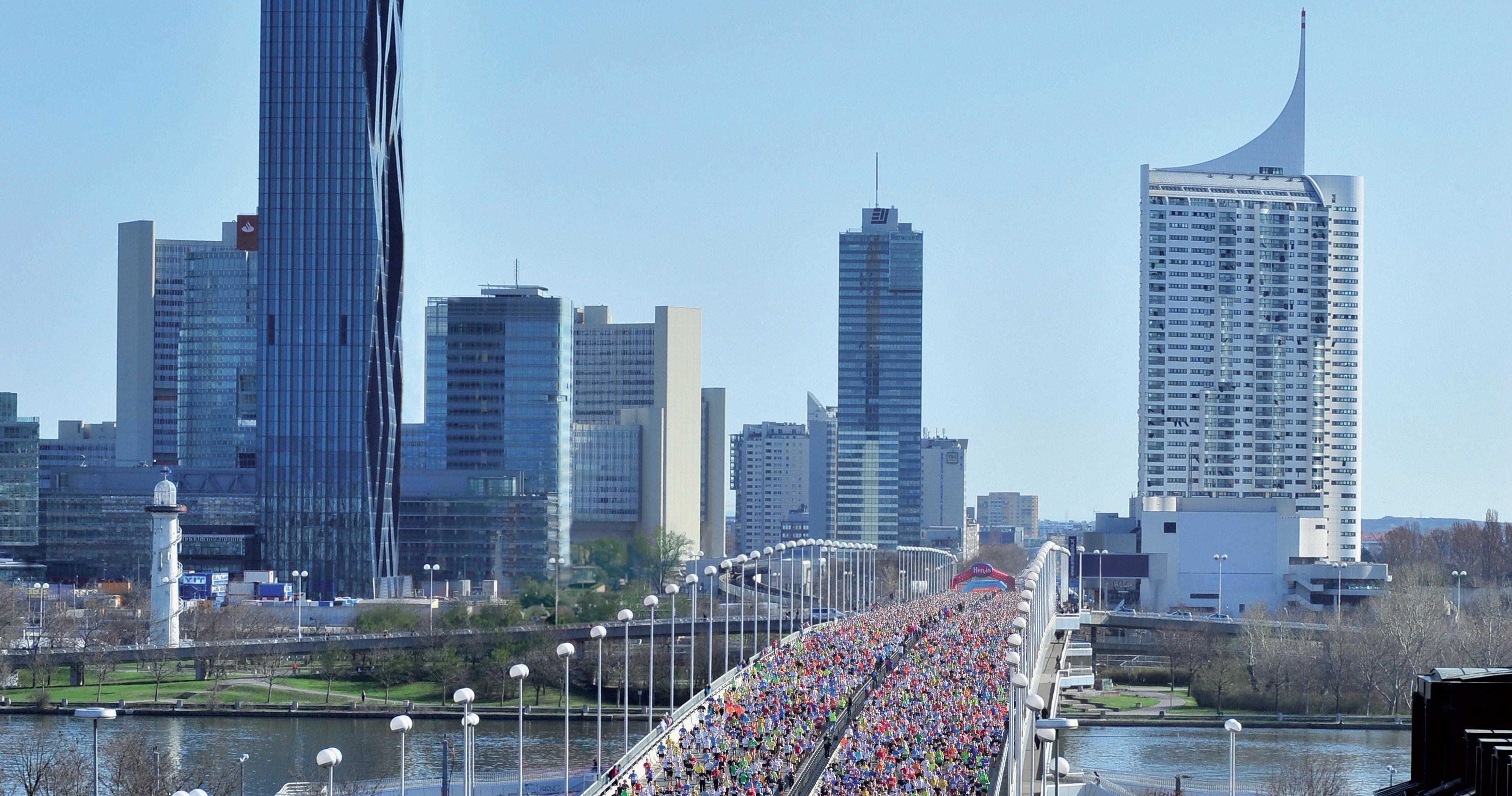
The Vienna City Marathon (VCM) will organize the "VCM Tribute to Eliud Race" on Monday, 12 October. The challenge is to cover as much distance as possible during a set time of 1:59:40.2. There will be two separate races during the afternoon and in early evening in the Prater Park, the venue of Kipchoge’s unique race. While these races are almost sold out runners all over the world have the opportunity to participate in a virtual event which runs from Saturday until Monday.
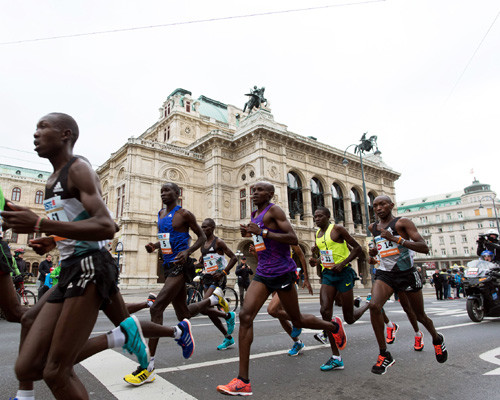
You can run or walk for 1:59:40.2 with family, friends or alone wherever you are. Whether it is a half marathon or an even longer distance, you can track your activity and upload your distance with a GPS sports watch or a running app. The challenge ends on Monday at 8.30 pm (Central European Time). At this time you will need to have entered the distance you have covered. Please follow your local Covid-19 rules when you choose the location of your race.
By taking part in the "VCM Tribute to Eliud Race" runners will support a VCM charity project. The organizers support the running and health initiative "The Daily Mile Austria", which is active in primary schools and kindergardens. Runners who enter the virtual race will receive an individual start number with their name and the signature of Eliud Kipchoge to download and print. They will also receive a certificate with a signature of Eliud Kipchoge to download and print. While they will be included in the results list of the "Tribute to Eliud - Global Race" they also become part of the "Tribute to Eliud" community.
Next year’s Vienna City Marathon, a World Athletics Gold Label Road Race, will take place on 12 September.
Login to leave a comment

Vienna City Marathon
More than 41,000 runners from over 110 nations take part in the Vienna City Marathon, cheered on by hundreds of thousands of spectators. From the start at UN City to the magnificent finish on the Heldenplatz, the excitement will never miss a beat. In recent years the Vienna City Marathon has succeeded in creating a unique position as a marathon...
more...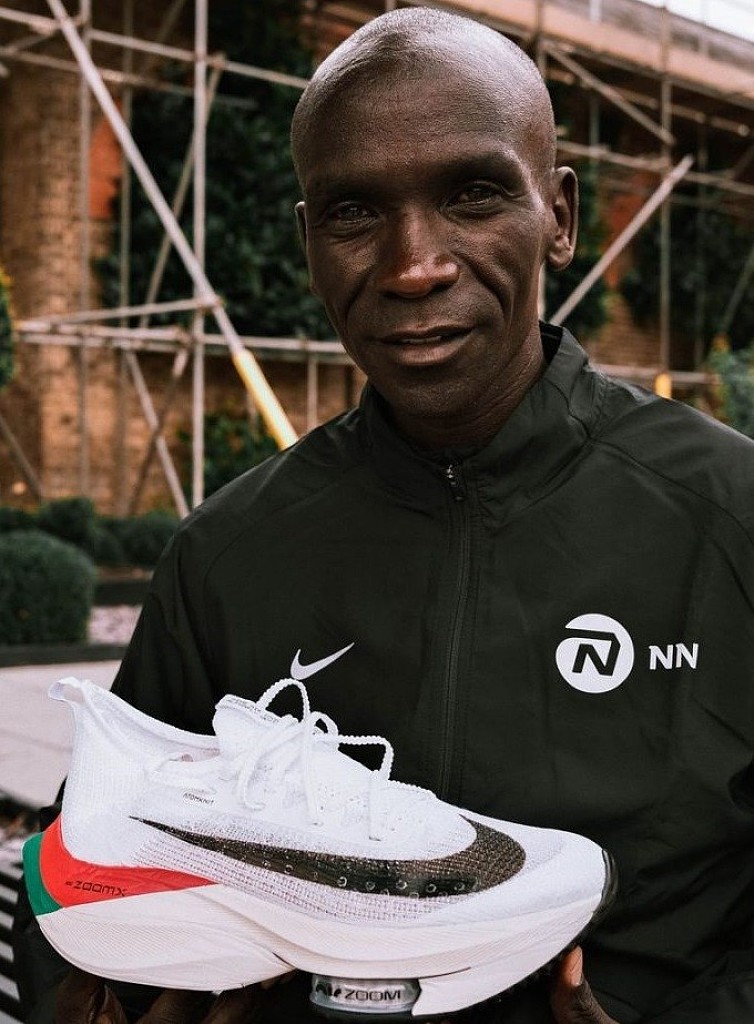
Eliud Kipchoge has unveiled the shoes he will use for London Marathon this Sunday, inspired by Kenyan flag
Eliud Kipchoge, the world marathon record holder, will be cladding a Kenyan flag-inspired Nike “Alpha fly N% Kenya”, custom made for him for this race.
"The shoes for Sunday's competition. Inspired by colours of the Kenyan flag, representing (the) great people of this beautiful country and to celebrate one year anniversary of the achievement 1:59:40 in marathon distance by EK," Kipchoge posted in his official Facebook page.
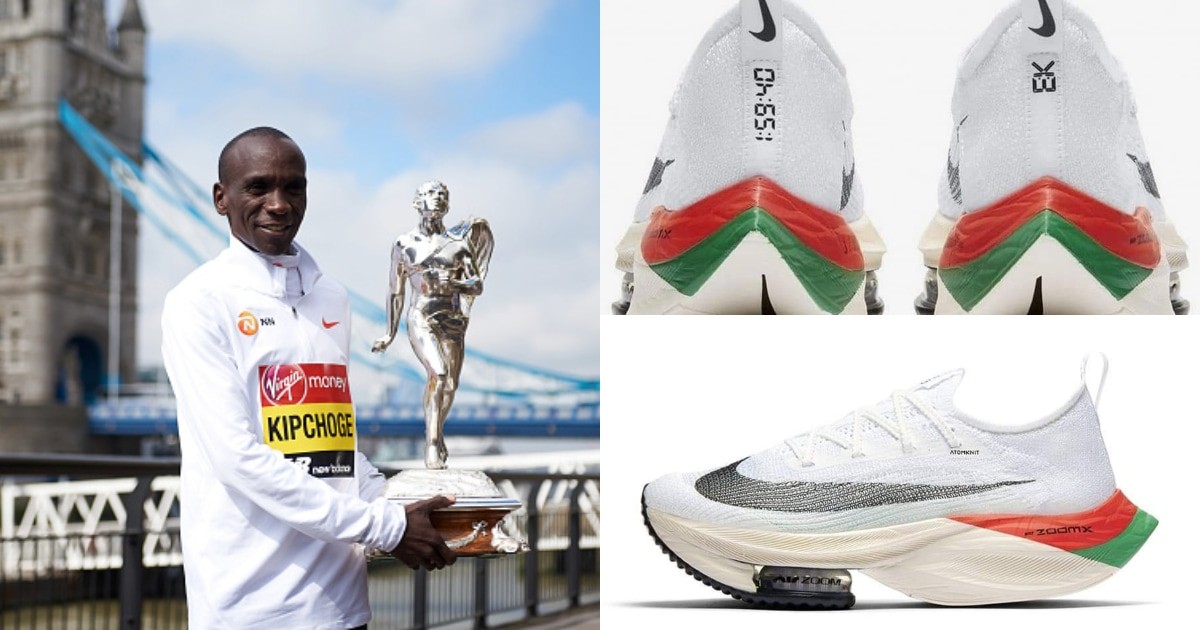
It is an Alpha fly N% shoe, just like the one he used during the Ineos 1:59 Challenge in Vienna last year.
The personal details include a green-and-red colourway – a nod to the national flag of Kenya. The shoes also feature the runner’s initials and 1:59:40 – the time he ran in Vienna.

The Kenyan distance running legend became the first man to run the marathon in under two hours after clocking 1:59:40.2 in Vienna.
This Sunday, Kipchoge comes face-to-face with Ethiopia's distance running great Kenenisa Bekele, who is also the second fastest man in marathon.
There were some complaints after the Ineos 1:59 Challenge with ritics claiming that the shoe had multiple carbon plates and there were calls for it to be banned from competition.
However, Kipchoge and Nike have always insisted that it’s not about the shoes but the person using them.
“The shoes have not been banned hence I am looking forward to another great show on them as I seek my fourth victory on the course,” said Kipchoge during the launch of domestic tourism at the Serena Mara in the Maasai Mara, Narok County in August.
Defending women’s London Marathon champion Brigid Kosgei also used similar shoes when she set the women’s world marathon record in winning the Chicago Marathon in 2:14:04, just a day after Kipchoge’s exploits in Vienna.
Then Bekele would come close to breaking Kipchoge’s world marathon record of 2:01:39 set by Kipchoge in Berlin in 2018 by two seconds when he won in Berlin in 2:01:41 last year.
Nike's Vaporfly range was the talk around the world with the feeling that it gave undue advantage to other runners owing to its sole technology.
However, World Athletics — the global athletics governing body — said it will not ban the shoes but would instead institute tighter regulations around high-tech running shoes.
by Ayumba Ayodi
Login to leave a comment
TCS London Marathon
Since its inaugural edition on March 29, 1981, the TCS London Marathon has grown into one of the world's most prestigious road races, blending elite competition with an extraordinary charitable legacy. Founded by former Olympic champion and journalist Chris Brasher alongside Welsh athlete John Disley, the event has been staged every year and has been held in the spring annually...
more...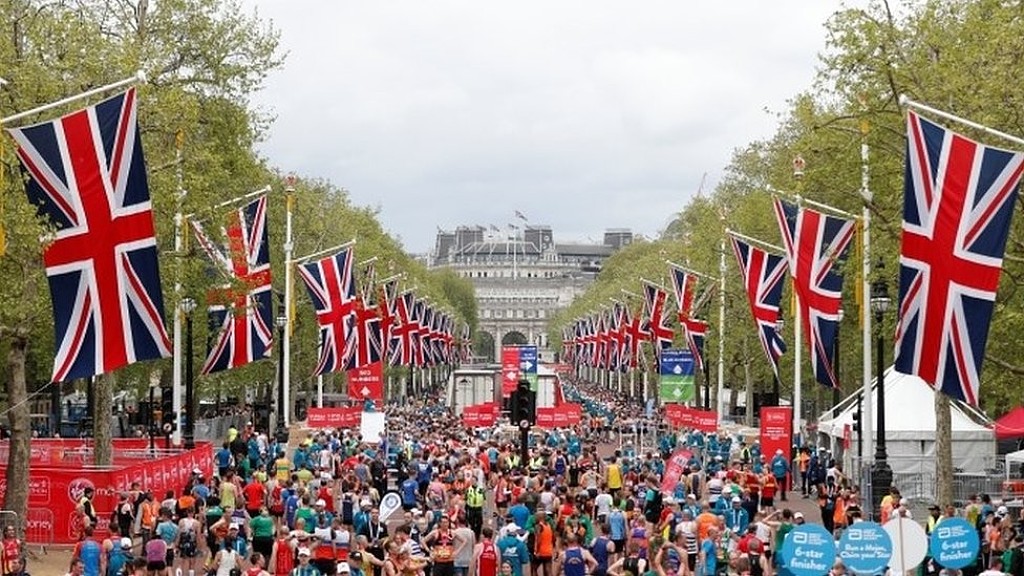
2020 London Marathon is set to be the race of the year
Top two long distance runners Kipchoge and Kenenisa come face to face on October 4
Bekele is the second fastest man in the 42.2 km race London Marathon is set to be the race of the year
Almost a year to the first anniversary of Eliud Kipchoge making history by being the first human to run the marathon below 2 hours in Vienna, he is set to run his first marathon after that triumphant race.
Come next Sunday morning, on the start line will be these two men among other elite runners, as they put their enviable times on the line.
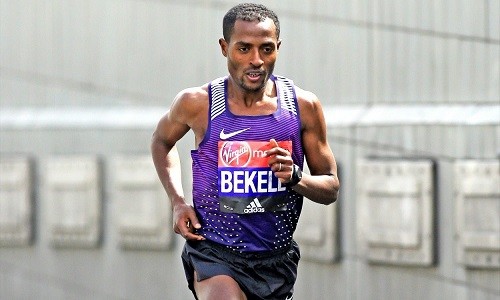
Eliud Kipchoge holds both the world record (2.01.39) set in 2018 and a sub-2-hour personal best marathon time of 1:59.40, while Kenenisa Bekele is the second fastest man in the 42.2 km race having come two seconds shy of beating the world record in 2019.
A sub-2 hour in this race is out of question, but could we have a world record?
Considering the very elite field that will be running and the expected fast pace due to a modified course, many pundits are rooting for a world record.
Why should we fancy a world record? One just needs to look at the assembled elite field and an equally elite squad of pacemakers and will see why a record could be a possibility.
Of the 45 elite men chosen to run this race; five have a personal best time of below two hours and four minutes (2:04), eight are sub-2:05 and 11 sub-2:06.
Without considering the times of the remaining runners, this already promises to be a very fast race.
The frosting on the cake are the eight elite pacemakers led by Sir Mo Farah and Kenya’s Victor Chumo and you have an atmosphere close to that of INEOS 1:59 Challenge; where the 41 elite pacers kept Kipchoge’s pace at a high tempo throughout.
Unlike in the INEOS 1:59 Challenge though, should the world record be broken in the London marathon, it will stand.
This is because the pacemakers will not be rotated throughout the race as they did in the INEOS 1:59 Challenge - but will be the same through the first 30 kilometers after which, they will drop out.
Secondly, the pacers will not form a deliberate human shield around the athletes to protect them from head winds.
Lastly, the corners of the course have not been specially modified to aid the athletes as they go round them.
There is a counter argument that a world record is not a possibility. The main thrust of this argument is that the race will have very many twists and turns during the 19 laps in the 2.15km route.
The race will also be run on concrete compared to asphalt which athletes argue is softer on the knee joint.
Furthermore, if history is anything to go by, in the last 17 years, the world record has been broken seven times and all of them, at the Berlin marathon.
by Paul Ochieng and Gerald Lwande
Login to leave a comment
TCS London Marathon
Since its inaugural edition on March 29, 1981, the TCS London Marathon has grown into one of the world's most prestigious road races, blending elite competition with an extraordinary charitable legacy. Founded by former Olympic champion and journalist Chris Brasher alongside Welsh athlete John Disley, the event has been staged every year and has been held in the spring annually...
more...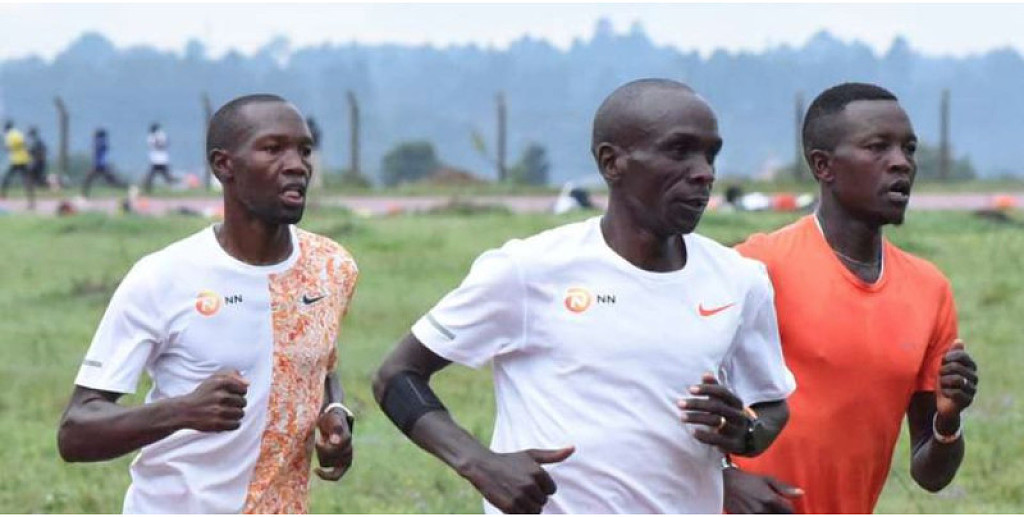
Why Kipkemboi is relishing to pace at London Marathon
In 2011, Kipkemboi joined Rock High School in Tororo, Uganda after his brother,Eliud Kibet Too, who is also an athlete secured a place for him. He sat his Form Four exams and when he was unable to continue to Form Five, Kipkemboi returned home.
That is when he started training after being inspired by what his brother was doing. Kipkemboi joined Complete Sports stable before shifting to Global Sports Communication.
When London Marathon was postponed due to the Covid-19 pandemic, Kaptagat-based athlete Noah Kipkemboi engaged high gear in training instead of reverse considering the importance of the race.
His mind had been set on the initial April 26 race date, but organisers moved the event to October 4 owing to travel restrictions and Covid-19 health concerns. Now only elite races for men, women and wheelchair athletes will be held in an enclosed loop.
Coronavirus scuttled the global sports calendar that resulted in the cancellation of major events including the Olympic Games that were postponed to next year in Tokyo, Japan.
Kipkemboi is one of the pacemakers for some of the best athletes in the world. Defending champion and world marathon record holder Eliud Kipchoge (2hours:01 minute:39 seconds), Rotterdam Marathon champion Marius Kipserem, Amsterdam Marathon champion Vincent Kipchumba and 2016 Mumbai Marathon champion Gideon Kipketer will line up on the big day in London.
The spotlight will be on Kipchoge, the first man to run a sub-two hours (1:59:40) in the INEOS 1:59 Challenge in Vienna, Austria, last October as he goes head-to-head with his great rival, Ethiopian legend Kenenisa Bekele.
Nation Sport recently caught up with Kipkemboi training at Kipchoge Keino Stadium in Uasin Gishu County.
Together with his colleagues from the Global Sports Communication stable, the athletes were tying up loose ends as they prepare for the race.
Kipchoge, who is also the Olympic marathon champion, Kipkemboi and Victor Chumo, who was also a pacemaker in Vienna, took turns to set the pace when we found them training at the Kipchoge Stadium.
In an interview with Nation Sport, Kipkemboi said that he is privileged to be among the pacemakers who will be leading some of the best athletes in the world. He is satisfied with his preparations.
"It will not be an easy task because some of the best athletes will be competing in the race. That means the pace will be fast, but I’m ready for the assignment,” said Kipkemboi.
He said that after competitions were cancelled because of the virus in April, he was disappointed. He had to train alone and he followed the Ministry of Health directives on social distancing.
“It was not easy training alone because athletes are used to training in a group. Nevertheless, I stayed focused. I am in good shape. My colleagues and I are putting some final touches. I believe I will perform well in the huge task ahead,” said the runner.
Kipkemboi said he was delighted when he was picked as one of the athletes who will set the pace in London.
“It will be my first time to pace in a major marathon. This has made me work extra hard in training because this race will need effective preparations. I don’t want to disappoint anyone,” he said.
Kipkemboi joined the Global Communications stable in 2017 and has been rising steadily. He was among the athletes who paced for Kipchoge during the sub-two project in Monza, Italy, where he missed the mark.
Kipkemboi was again selected last year among the 41 pacemakers for Kipchoge in the INEOS 1:59 Challenge in Vienna. Kipkemboi rates the Vienna race as one of the best he has ever participated in.“That was a good race because it brought together many athletes from different countries for a worthy course,” said Kipkemboi.
Last year, he finished in ninth position in the Lisbon Half Marathon in a personal best of 60:52, before emerging third in Sevenhills Road Race in Netherlands.
Kipkemboi was second during the Kass Half Marathon in 2018 and he was also second in the Kakamega Half Marathon last year.
Kipkemboi was born in 1993 in Legetet, Uasin Gishu County. He went to school at Legetet Primary School and then proceeded to Ndubeneti Secondary School. However, he dropped out of school for lack of fees.
In 2011, he joined Rock High School in Tororo, Uganda after his brother ,Eliud Kibet Too, who is also an athlete secured a place for him. He sat his Form Four exams and when he was unable to continue to Form Five, Kipkemboi returned home.
That is when he started training after being inspired by what his brother was doing. Kipkemboi joined Complete Sports stable before shifting to Global Sports Communication.
Login to leave a comment
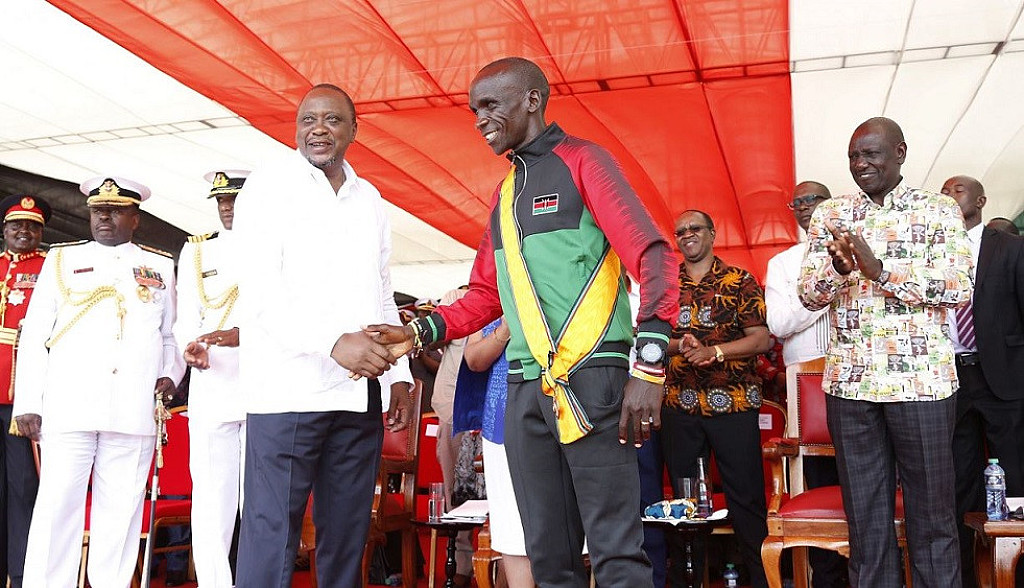
President Uhuru Kenyatta's gift, Kipchoge library project
With the London Marathon just over two weeks away, defending champion and world record holder Eliud Kipchoge maintained his tight programme on Wednesday, making time for the ground-breaking ceremony for a library project that he inspired.
He was joined at the ceremony at Kapsisiywa Secondary School in his home Nandi County by Education Cabinet Secretary George Magoha.

The project has been funded by President Uhuru Kenyatta.
The marathon great narrated that at a meeting in Mombasa last year President Kenyatta asked him what gift he wanted after his exploits on the world stage, and he settled for a communal library.

“I'm here to witness one of my dreams come true. My vision to transform my community has come true courtesy of the President.
“I appreciate the President's gesture which confirms to me that, indeed, no human is limited," said an elated Kipchoge who was accompanied by his family.
Kipchoge said it came as a big surprise to him when the President made the offer.
“The answer is what we have here today,” Kipchoge said, noting that a library is crucial and that reading had expanded his thinking and outlook in life.
“Books have been my loyal friend. Books are the perfect mode to travel out of any locality through. Books have helped me navigate through many challenges in life. I'm happy the President will be with us in every step of the way in this project,” added Kipchoge, with his usual touch of philosophy.
President Kenyatta last year issued a directive for the construction of a multi-million library at Kipchoge’s home village of Kapsisiywa.
“Eliud Kipchoge who is alive and here with us has also inspired the world that no human effort is futile, that we can dream and make our dreams a possibility. He has demonstrated that through integrity, hard work and commitment to excellence nothing is out of reach,” said the President when he honoured the athlete last year after his successful exploits in Austria when he broke the two-hour barrier for the marathon.
President Kenyatta decorated Kipchoge with the Elder of the Order of the Golden Heart (E.G.H) award, lauding his work in inspiring future generations to achieve the seemingly impossible.
Magoha, accompanied by Ministry officials, on November 22 last year delivered the offer letter from the President to the famous athlete as well as the Kapsisiywa Secondary School principal.
Kipchoge made history last year after becoming the first man to run a marathon in under two hours – clocking one hour, 59 minutes and 40 seconds at the “Ineos 1:59 Challenge” staged in Vienna, Austria.
by Wycliff Kipsang & Tom Matoke
Login to leave a comment
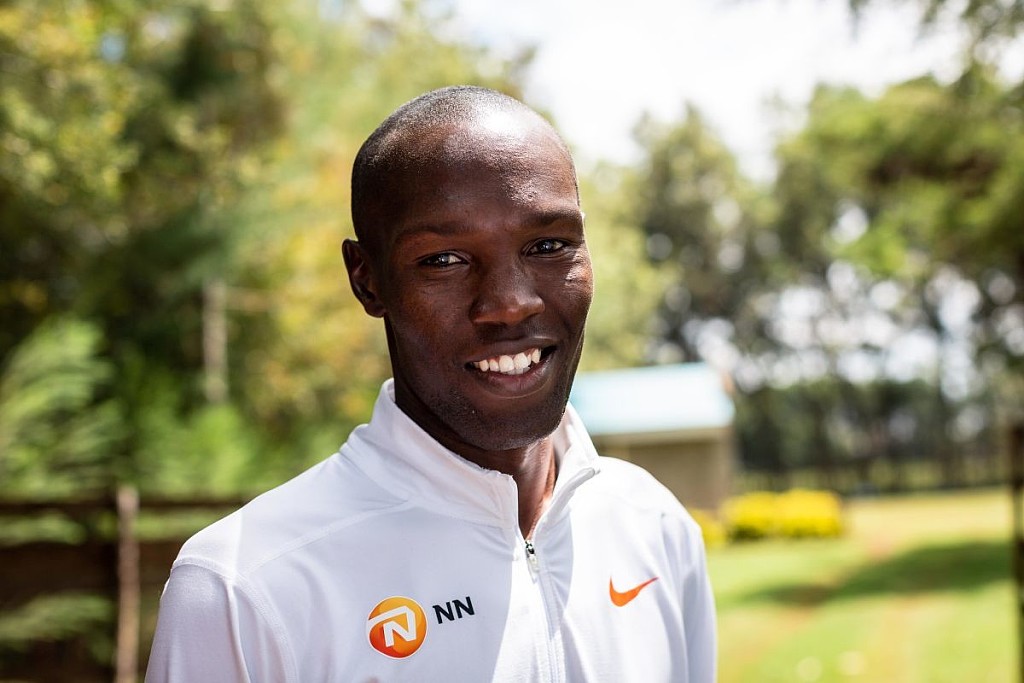
Victor Chumo will be the lead pacesetter at the London Marathon
Pacesetters are the unsung heroes in athletics.
Theses are the men and women who set up the main contenders in a race for first finishes and records, besides the titles.
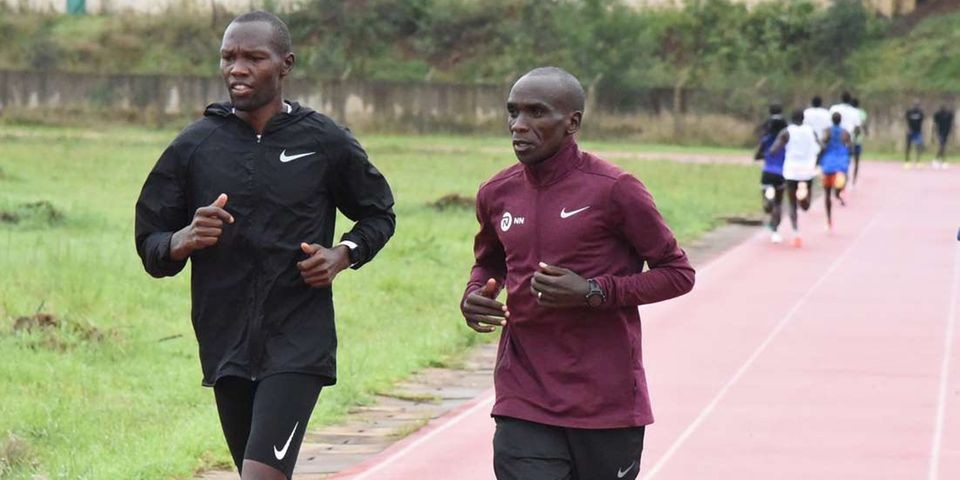
Marathon races, run over two hours require meticulous planning, disciplined pacing and tactical awareness.
Enter pacesetters, who, as the name suggest, are used to pace the contenders through the required time lines on the way to a world record, meet record, course record attempt, as the case may be.
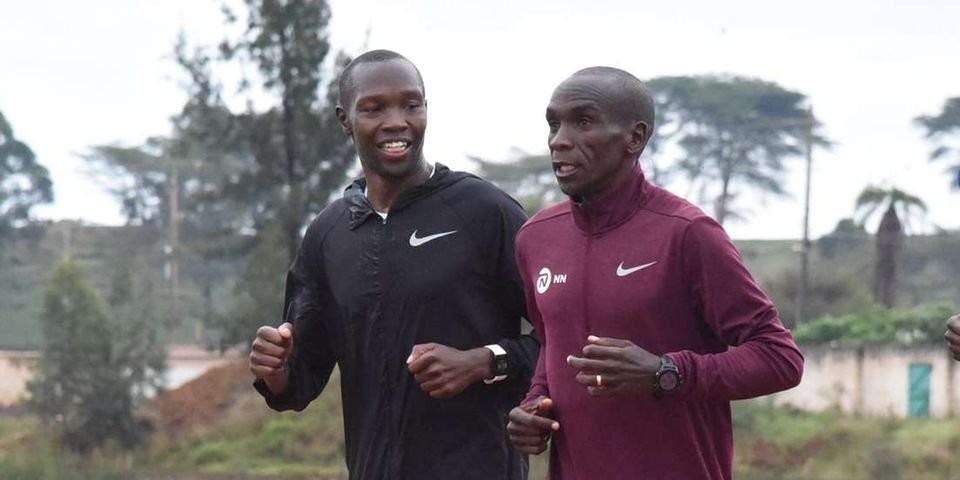
The dynamics at the London Marathon that will be held on October 4 will be no different.
The race has attracted easily two of the fastest marathon runners in the history of athletics, Kenya’s Eliud Kipchoge, and Ethiopia’s Kenenisa Bekele.
Kipchoge needs no introduction. He is the world record holder, reigning Olympic champion and reigning London Marathon champion.
Bekele is the reigning Berlin Marathon champion, his winning time of 2 hours 01 minutes 41 seconds last year just two seconds shy of Kipchoge’s world record of 2:01:39.
Of course Kipchoge has run faster, 1:59:40- during the Ineos 1:59 Challenge in Vienna, Austria last October.
Victor Chumo was one of the runners who paced Kipchoge to that historic feat. Chumo is indeed a high profile pacemaker.
Nation Sport caught up with Chumo, who is one of the pacesetters tasked with leading the athletes in the London Marathon next month through their splits in the 42 kilometres race with a fast finish the clear objective.
The other Kenyan pacesetters for the London race are Noah Kipkemboi, Eric Kiptanui, Alfred Barkach and Shadrack Kimining.
Kaptagat-based Chumo also paced Kipchoge in his earlier failed mission to run a sub two hours marathon in Monza, Italy in 2017.
“I’m privileged that I have been selected to pace for some of the best athletes in the world. It is a hard task given that the athletes will always depend on the pacemakers during the race but I’m ready for the task because it’s not my first time to help top athletes run fast times,” said Chumo.
In fact, pacing Eliud Kipchoge in his first attempt to break the 2-hour marathon barrier in a project dubbed “Breaking2”, and sponsored by Nike, was Chumo’s first major assignment as a rabbit.
He trained hard for the assignment and was as disappointed as Kipchoge when the mission failed.
Kipchoge missed the magical barrier by only 25 seconds, after running 2:00:25.
Chumo joined Global Sports Communication stable in May 2019 and here again he was chosen among 41 pacesetters in the Ineos 1:59 Challenge that saw Kipchoge become the first and only man to run a marathon in under two hours.
“Pacing Eliud in the Ineos 1:59 Challenge was one of my best experience in my athletics career and I will remember that day for the rest of my life, he says."
by Bernard Rotich
Login to leave a comment
TCS London Marathon
Since its inaugural edition on March 29, 1981, the TCS London Marathon has grown into one of the world's most prestigious road races, blending elite competition with an extraordinary charitable legacy. Founded by former Olympic champion and journalist Chris Brasher alongside Welsh athlete John Disley, the event has been staged every year and has been held in the spring annually...
more...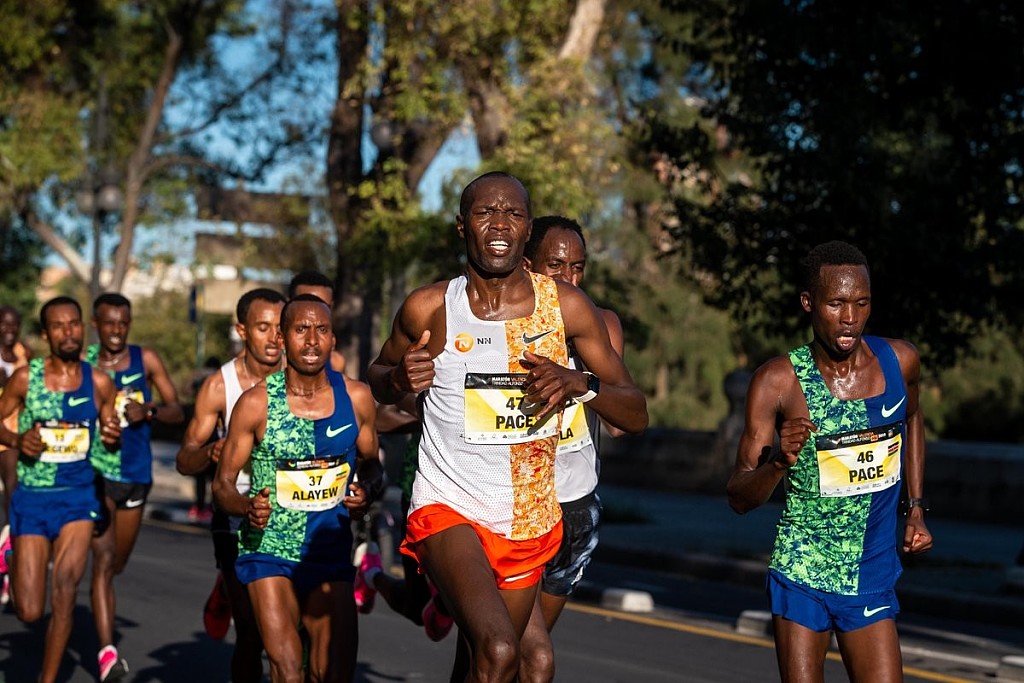
Kenyan Victor Chumo looking forward to London Marathon duties
As world marathon Eliud Kipchoge and Ethiopia's Kenenisa Bekele, the biggest threat to the Kenyan's 2:01:39 mark, prepare for the October 4 London Marathon, ‘Rabbit’ Victor Chumo is preparing for an equally daunting task.
Chumo will be pacing for Kipchoge as he seeks to retain his title in the streets of London and has revealed his kind of routine as he battles to stay sharp for the task ahead.
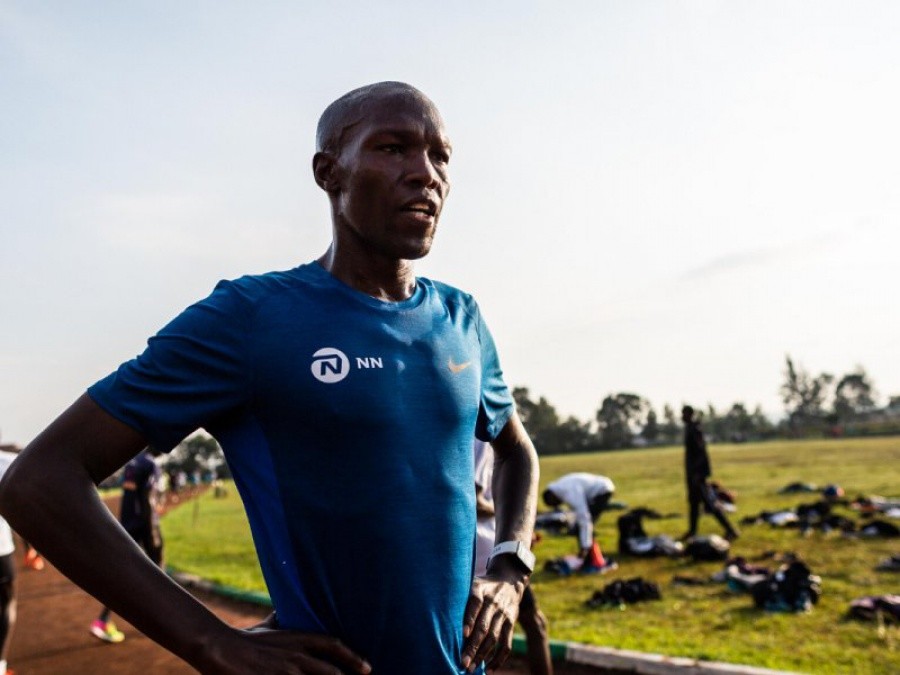
The reigning Barcelona Half Marathon champion disclosed that he has been running at least 30km daily ahead of what is expected to be a highly-charged race.
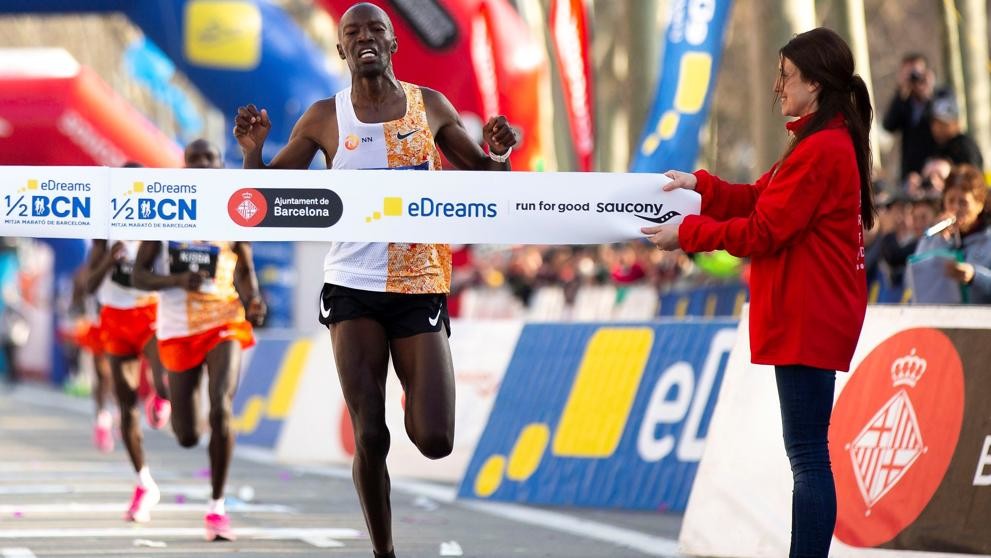
Chumo will be guiding the elite-runners only event, occasioned by the coronavirus pandemic, where he leads the first group while Chicago Marathon champion, Mo Farah, will be pacing for the second group.
He said he fully understands what is at stake now that it will be the third time pacing for the only man to have dipped under two hours over the distance.
“I first paced Kipchoge during the Nike Breaking 2 where he ran 2:00: 25. I then paced him during Ineos 1:59 Challenge, running 1:59:40. With this, he has trust in me and I have to once again deliver," said Chumo.
Kipchoge will be chasing his fifth title in London after winning the 2015, 2016, 2018 and 2019 editions.
“There will be a strong field in London and that needs a strong pacesetter. You can imagine how speedy the race will be with some of the greatest marathon runners on show,” said the former Kenya Defence Forces man.
Kipchoge and Bekele (2:01:41) will also have to contend with some of the toughest challengers including nine who have dipped under 2:06.
They include Mosinet Geremew (2:02:55), Mule Wasihun (2:03:16), Sisay Lemma (2:03:36), Tamirat Tola (2:04:06), Marius Kipserem (2:04:11), Shura Kitata (2:04:49), Vincent Kipchumba (2:05:09), Sondre Nordstad Moen (2:05:48) and Gideon Kipketer (2:05:51).
Other pace-setters include Noah Kipkemoi, who also paced at Ineos Challenge, Erick Kiptanui, Alfred Barkach, Shadrack Kimining, Matt Clowes (Great Britain), and Jake Smith (Great Britain).
by Emmanuel Sabuni
Login to leave a comment
TCS London Marathon
Since its inaugural edition on March 29, 1981, the TCS London Marathon has grown into one of the world's most prestigious road races, blending elite competition with an extraordinary charitable legacy. Founded by former Olympic champion and journalist Chris Brasher alongside Welsh athlete John Disley, the event has been staged every year and has been held in the spring annually...
more...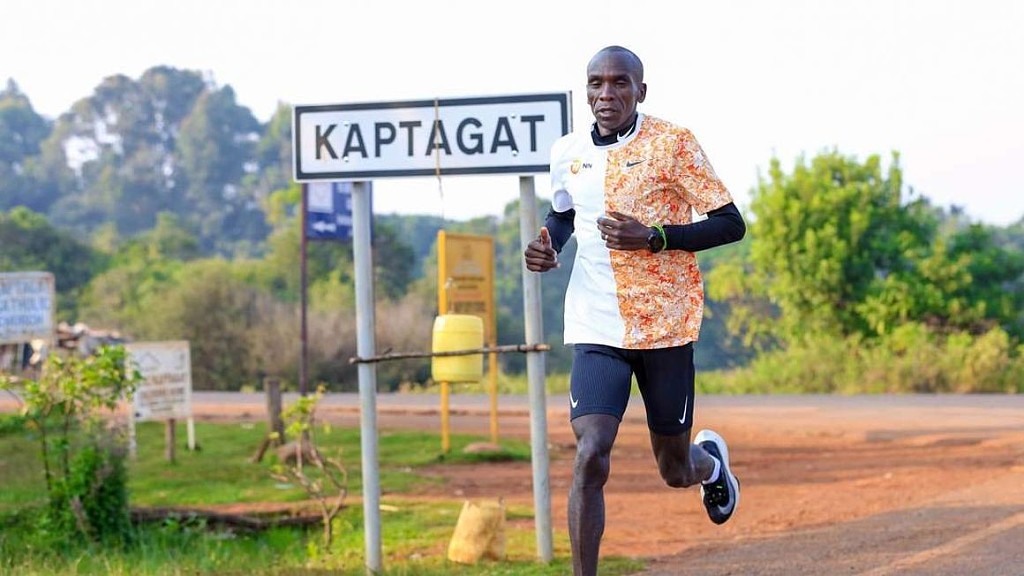
Eliud Kipchoge will use the Nike Vaporfly, the shoes he used during the Ineos 1:59 Challenge, to defend his London Marathon title
Olympic marathon champion Eliud Kipchoge will use the Nike Vaporfly Next % — the shoes he used during the Ineos 1:59 Challenge — to defend his London Marathon title on October 4.
At the same time, Kipchoge has welcomed Ethiopia’s Kenenisa Bekele’s challenge at the London Marathon, but hastened to add that “every athlete who will compete in the race is a threat.”
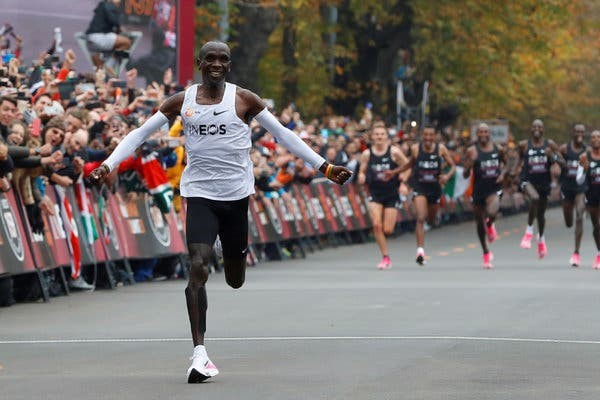
“The shoes have not been banned hence I am looking forward to another great show on them as I seek my fourth victory on the course,” said Kipchoge during the launch of domestic tourism at the Serena Mara in the Maasai Mara, Narok County.
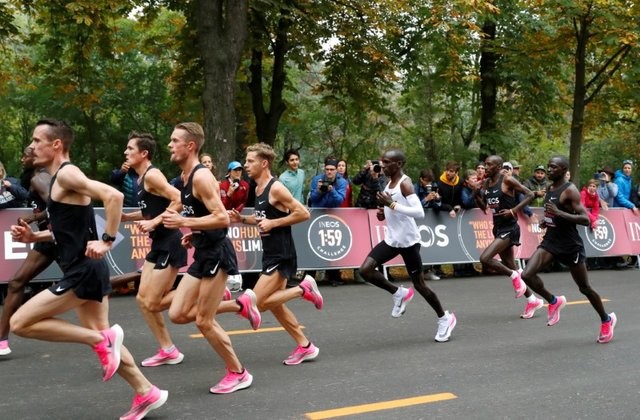
Kipchoge made history on October 12 last year when he became the first man to run a marathon (42 kilometres) in under two hours when he conquered the Ineos 159 Challenge in 1:59.41 using the new Nike Vapour Next % shoes.
Defending women’s London Marathon champion Brigid Kosgei also used similar shoe technology to set the women’s world marathon record in winning the Chicago Marathon in 2:14:04, just a day after Kipchoge’s Vienna exploits.
Then Bekele would come close to breaking Kipchoge’s world marathon record of 2:01:39 set by Kipchoge in Berlin in 2018 by three seconds when he won in Berlin in 2:01:last year. Nike's controversial Vaporfly range was the talk around the world with the feeling that it gave undue advantage to other runners owing to its sole technology. However, World Athletics — the global athletics governing body — said it will not ban the shoes but would instead institute tighter regulations around high-tech running shoes. Any new shoe technology developed after April 30 this year will have to be available on the open market for four months before an athlete can use it in competition.
World Athletics has also introduced an immediate indefinite ban on any shoes that have a sole thicker than 40 millimetres.
“Everybody is a threat, especially when you are on a running course. Personally, I don’t see everybody less or high,” said Kipchoge adding that the only threat or difference will be the unusual training and competition conditions. “I don’t know what everyone has been doing in training. For sure it will be a different race where it won’t have the usual large field and fans owing to Covid-19 regulations,” said Kipchoge, adding that it will feel good running in London, a course where he won in 2015, 2016, 2018 and 2019.
Kipchoge said he has been training in Kaptagat, Elgeyo-Marakwet County, in isolation and in small groups but hopes that the government will reopen camps in the next week to enable them to train well.
“This is a non-contact sport and it’s my prayer that the government allows some camps to open,” said Kipchoge, who has occupied himself in reading books. He has also attended over 100 zoom meetings in the last four months from across the world.
by Ayumba Ayodi
Login to leave a comment
TCS London Marathon
Since its inaugural edition on March 29, 1981, the TCS London Marathon has grown into one of the world's most prestigious road races, blending elite competition with an extraordinary charitable legacy. Founded by former Olympic champion and journalist Chris Brasher alongside Welsh athlete John Disley, the event has been staged every year and has been held in the spring annually...
more...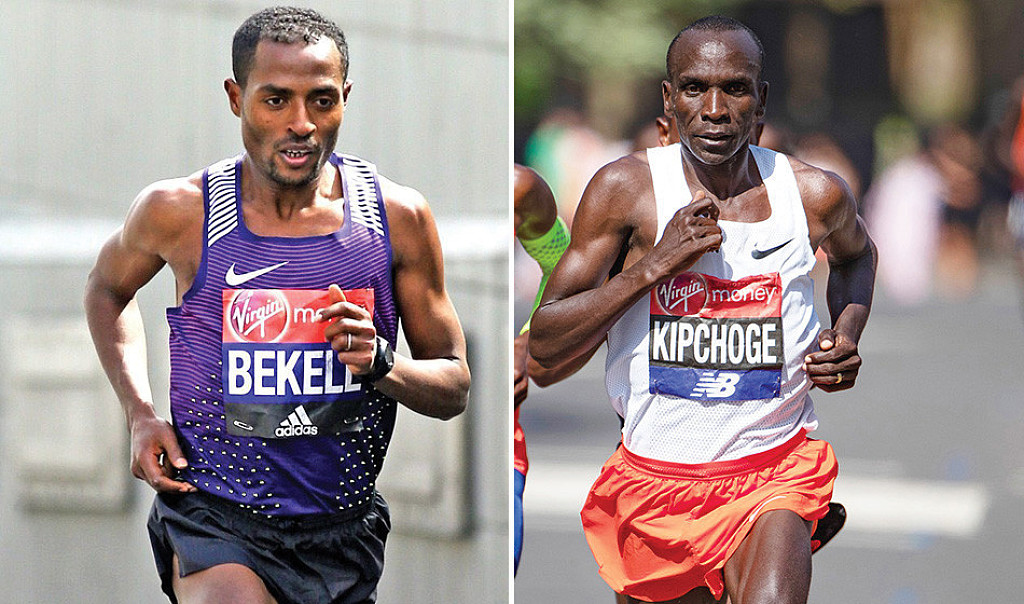
Eliud Kipchoge and Kenenisa Bekele are set for London Marathon
The 2020 Virgin Money London Marathon will not feature a mass race and will be an elite-only event, with Eliud Kipchoge and Kenenisa Bekele set to be among those racing on an enclosed looped course in St James’s Park on October 4.
Meanwhile, organisers have also confirmed that next year’s edition will not take place in April but will be moved to October 3 “to give the best chance for the mass race to return in 2021”.
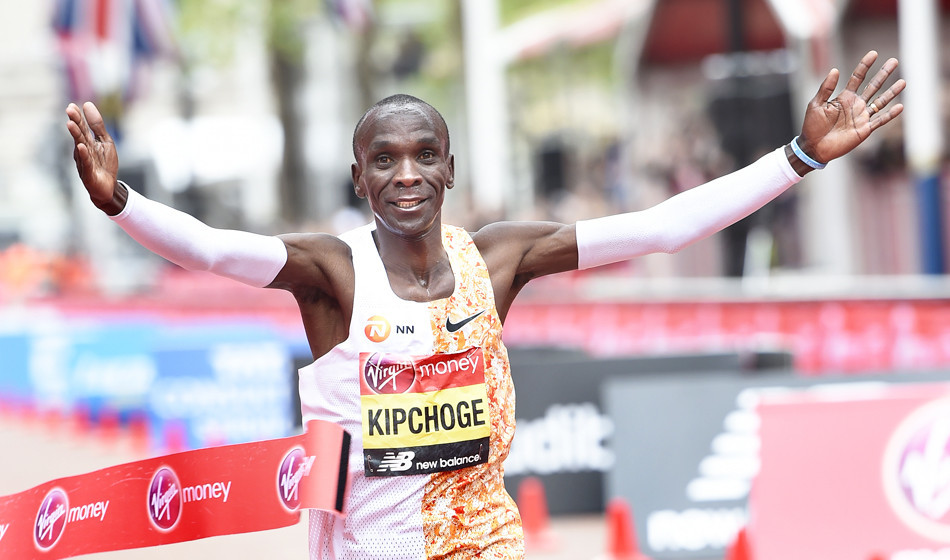
The 2020 event will see elite racing take place within a “secure biosphere”, which organisers describe as a contained safe environment like that of Formula 1 and football, and as recently announced by World Athletics the times recorded in London will be eligible for Tokyo 2020 Olympic qualification.
While the men’s race is set to host the highly-anticipated clash between distance running greats Kipchoge and Bekele, world record-holder Brigid Kosgei has been announced for the women’s event, with David Weir and Manuela Schär set to lead the wheelchair fields.
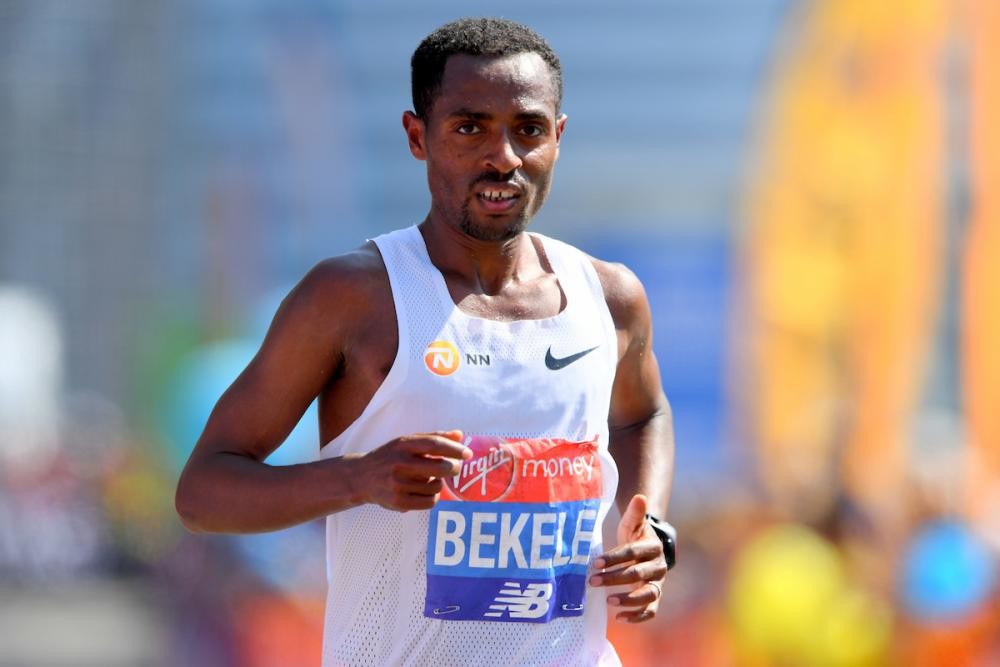
Organisers are yet to announce the elite field sizes and how the races will be set off, including whether it will be by waves, but it has been confirmed that athletes will cross the same traditional finish line on The Mall after completing 19.8 laps of the St James’s Park course.
There will be no spectator access in order to maintain the biosphere, but BBC Sport plans to broadcast eight hours of coverage during the day.
UK Athletics had previously announced that next April’s London Marathon would be the GB Olympic trial race for the postponed Olympics in Tokyo but the national governing body will now work on new qualification plans following confirmation that the 2021 race has been moved from spring to autumn. Selection will still take place in 2021.
“It is a very fast course,” said event director Hugh Brasher, with London Marathon Events having experience of looped course racing as they were part of the organising team for the INEOS 1:59 Challenge event in Vienna last October, when Kipchoge broke the two-hour barrier.
“The course is faster than the current London Marathon course. It is not the fastest course, it is not as fast as Vienna, but it is a quick course. What we want to do is provide an environment that really excites the athletes. There is a lot of technology out there at the moment with which to do that, and how we can invite people in, in virtual reality, how we can create an atmosphere.
“It is important that we try and show that the sport can still take place. Sport plays such an incredible part in British psychology and the London Marathon reflects that in a way that very few, in fact no other, sports do. What we talk about is that it is the only event where you are taking part at the same time as the gods of the sport.
“At least here the elite athletes will be in London, they will be going head-to-head, and they will be able to celebrate the competition together. To be able to say that those athletes are coming to London is enormously exciting for the sport, for them, and we hope it adds to the inspiration and the feeling that we really want people to have on October 4, people who are on their own journey of that 26.2 miles.”
by Jessica Whittington
Login to leave a comment
TCS London Marathon
Since its inaugural edition on March 29, 1981, the TCS London Marathon has grown into one of the world's most prestigious road races, blending elite competition with an extraordinary charitable legacy. Founded by former Olympic champion and journalist Chris Brasher alongside Welsh athlete John Disley, the event has been staged every year and has been held in the spring annually...
more...
Kenyans Brigid Kosgei and Lawrence Cherono, disappointed after Chicago Marathon cancelled
The cancellation of this year’s Chicago Marathon has left a number of Kenyan athletes disappointed.
This is the fourth Abbot Major Marathon race to be cancelled after Boston, Berlin and New York Marathon races were moved to next year due to the coronavirus pandemic.
The race was primed for October 11 with an estimated field of around 45,000 runners and wheelchair athletes.
Chicago Marathon has good memories for the Kenyan athletes with Brigid Kosgei shattering the world record by clocking 2:14:04 lowering Paula Radcliffe’s time of 2:15:25 in last year’s women’s edition of the race.
Kosgei broke the world record a day after Eliud Kipchoge made history by becoming the first man to run under two-hours in a race dubbed INEOS 1:59 Challenge in Vienna, Austria leaving no doubt that Kenya is an athletics powerhouse.
The Kapsait-based athlete zoomed to victory after beating Ethiopia’s Ababel Yeshaneh (2:20:51) by six minutes, while her compatriot Gelete Burka was third in 2:20:55.
Kosgei is hopeful that she will able to defend her London Marathon in October 4.
“I had two options, but with the Chicago Marathon race cancelled, I’m left to train for the London Marathon race, which we are still crossing fingers will be able to proceed,” said Kosgei.
Lawrence Cherono, who won the men’s race last year in a sprint finish against Ethiopians, has also been left disappointed by the cancellation.
Cherono clocked 2:05:45 beating Dejene Debela, who timed 2:05:46 ahead of fellow countryman Asefa Mengistu who came in third in 2:05:48.
“It’s really demoralising because all the races I was to compete in this year have since been cancelled and that has left me to just do my work as we focus on next year and hope the virus will be contained,” said Cherono.
Cherono was to race in the Boston Marathon as well as the now postponed 2020 Tokyo Olympics Games.
“I have been working on my farm because there is no race I can participate in this year, but at the same time I’m waiting for the management to communicate if there will be any other small race that I can do as we wait for next year,” said a disappointed Cherono.
So far Tokyo Marathon remains the only successful major marathon that was held back in March. Toronto Marathon, which was scheduled for October 18, has also been cancelled.
by Bernard Rotich
Login to leave a comment

Bank of America Chicago
Running the Bank of America Chicago Marathon is the pinnacle of achievement for elite athletes and everyday runners alike. On race day, runners from all 50 states and more than 100 countries will set out to accomplish a personal dream by reaching the finish line in Grant Park. The Bank of America Chicago Marathon is known for its flat and...
more...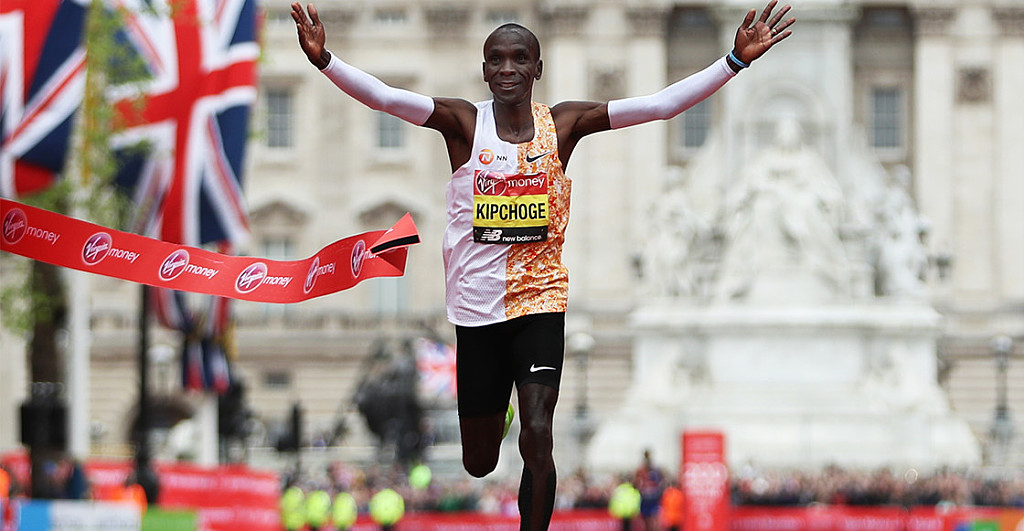
London Marathon Counts on Eliud Kipchoge
Where will the next marathon world record be set? This autumn, the London Marathon is aiming for the duel between top stars Eliud Kipchoge and Kenenisa Bekele. Kipchoges unofficial world record of less than two hours should not be in danger. However, the Berlin Marathon, notorious for world records, cannot take place as planned.
The Corona crisis has also had far-reaching consequences for the marathon scene. The London Marathon, for example, had to be postponed from 26 April until 4 October.
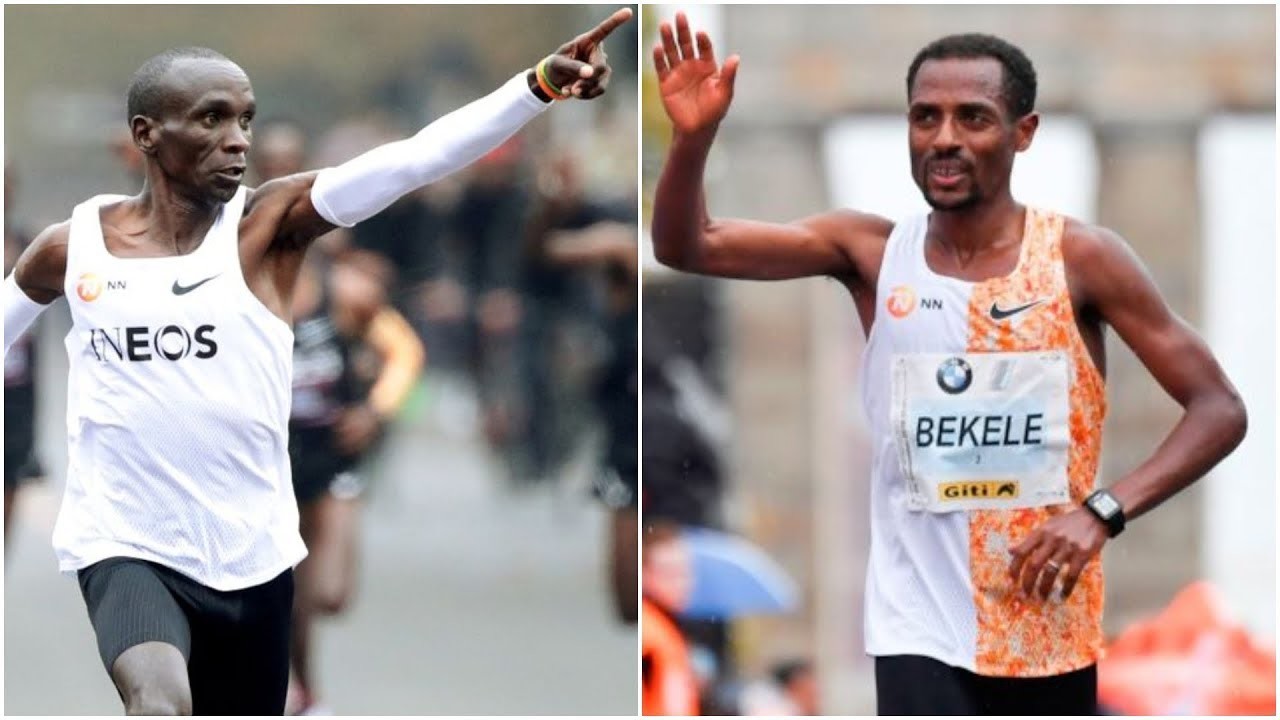
However, it is still unclear whether the event will also be open to amateur runners or if only professionals like world record holder Eliud Kipchoge are allowed to compete. According to "Athletics International", the organizers have asked all athletes originally invited for April to come back for the fall date. This includes the Kenyan Kipchoge.
He holds the official marathon world record of 2:01:39 hours (Berlin Marathon 2018) as well as the unofficial world record of 1:59:40 hours at the INEOS 1:59 Challenge in Vienna 2019 under laboratory conditions with constantly changing pacemakers and drinks and food available at all times.
Kenenisa Bekele, who missed the official world record at the 2019 Berlin Marathon by only two seconds, is also expected to compete in London. A direct duel between the two top runners could come to happen in October. For Bekele, an improvement of the official world record could be possible.
"With good weather conditions and if we both worked together on the pace, a time in the range of the world record might have been possible", Athletics International quotes hin speaking about the cancelled event in April.
by Martin Jahns
Login to leave a comment
TCS London Marathon
Since its inaugural edition on March 29, 1981, the TCS London Marathon has grown into one of the world's most prestigious road races, blending elite competition with an extraordinary charitable legacy. Founded by former Olympic champion and journalist Chris Brasher alongside Welsh athlete John Disley, the event has been staged every year and has been held in the spring annually...
more...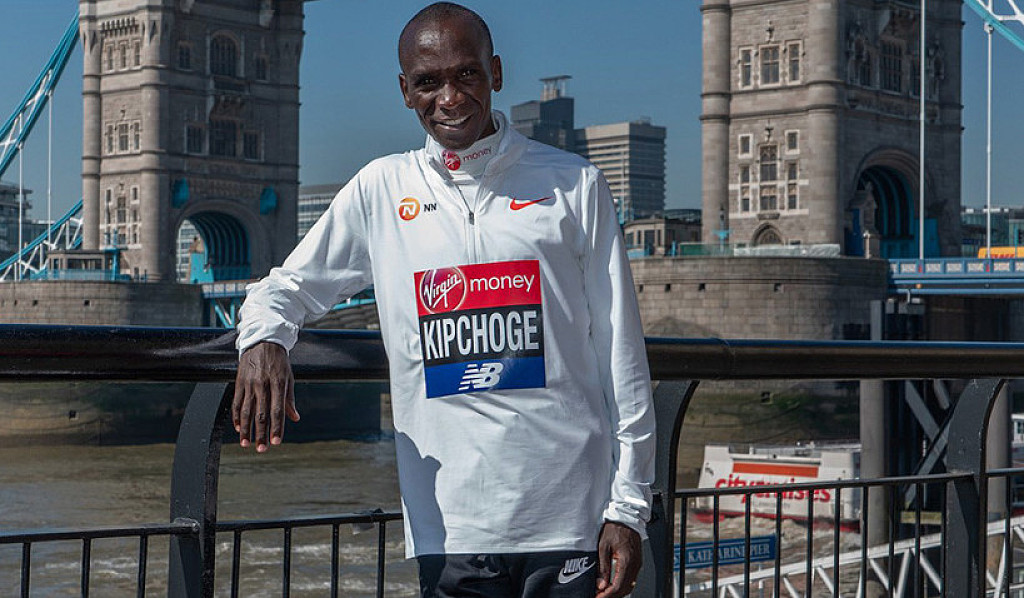
Eliud Kipchoge and Kenenisa Bekele talk training and sub-2
The two distance running greats had been set to go head-to-head in the London Marathon on Sunday
Eliud Kipchoge and Kenenisa Bekele should have been in London this week, preparing for a mouthwatering marathon clash on the streets of the UK capital.
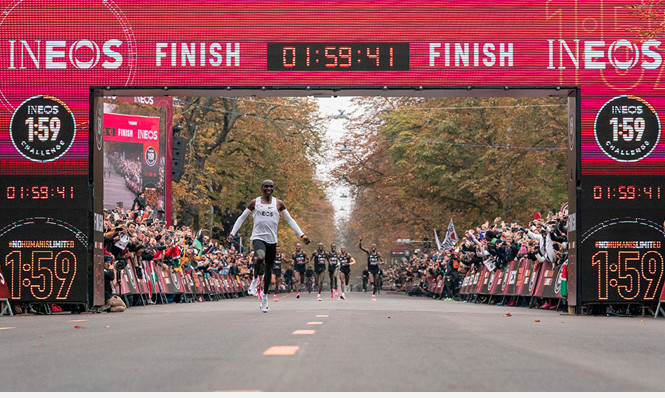
Thursday morning would have seen them speak with the world’s media in the elite men’s pre-race press conference, but instead, on Friday, they dialled into a telephone conference from their respective homes in Kenya and Ethiopia.
While it is too early to know whether the two fastest marathon runners in history will take part in the rescheduled event on October 4, they were both happy to share insight into their current lives amid the coronavirus crisis.
They talked about what might have been had Sunday’s race taken place as planned, plus their training and thoughts on the sub-two-hour marathon.
SOLO TRAINING
Social distancing measures mean that NN Running Team athletes Kipchoge and Bekele must now train alone, rather than as part of the big groups they are used to. How does that affect them both physically and mentally?
“You cannot run really in a strong way because you are alone,” said Kipchoge, who is based in Eldoret.
“Physically I am training to make sure that I am fit but when you have the whole team then you can train to make sure that you are in the best-ever shape.
“Mentally, you can get tired early,” he added, “because if you have an hour run and you’re running alone, then you can really get tired because you are running alone, you are thinking alone.
“I have been with a team for the last 15 years and it’s really crazy for me. I can say it is not comfortable at all, but safety is my number one priority.”
Bekele has also found it a challenge.
“It is not really nice to run alone but of course it’s not possible to run together,” he said. “It is difficult to prepare and it has affected us a lot.
“I’m trying to maintain my performance, but it’s really not efficient. I am praying that this time will be over soon.”
On his sessions, he added: “I am doing four or five days a week outside, alone just running in the forest.
“Most of the time I am staying at home.”
SUB-TWO
Both athletes had an incredible 2019, with Kipchoge having broken two hours for the marathon with 1:59:41 in the non-record eligible INEOS 1:59 Challenge in Vienna and Bekele having run 2:01:41 to win in Berlin, missing the Kenyan’s official world record mark by just two seconds.
Would their plan for the London Marathon on Sunday have been to go for an official sub-two?
“I was coming to London as a defending champion and not really to run under two hours but I trust that it would have been a good race, an interesting one, but I don’t think it would have been under two hours,” said Kipchoge.
“I think on Sunday, if the London Marathon could have happened, we could actually have had the best race ever.
“Kenenisa has run 2:01:41 and I have run 2:01:39. It could have been the best-ever time and London could have been the best race ever between two people who have the fastest times in the marathon.”
Bekele agreed that it would have been a great clash but that two hours would have been unlikely.
“London is of course a really great race to bring us together,” he said. “I don’t think the time would have been under two hours.
“Maybe if there were good weather conditions, it could have been possible maybe around a world record, if we had been pushing together. I don’t think under two hours would have happened this time.”
BUT IN THE FUTURE?
“Absolutely, why not?” Kipchoge replied, when asked if he thinks someone in the next 10 years could run a competitive marathon in under two hours.
“Personally, I tried last year, and I ran under two hours, but I trust and believe in all my mind and my heart that in the next 10 years, one human being will run under two hours in a normal marathon. That is my view.
“Human beings need to be shown the way, and I trust that I have shown everybody the way.”
by Athletics Weekly
Login to leave a comment
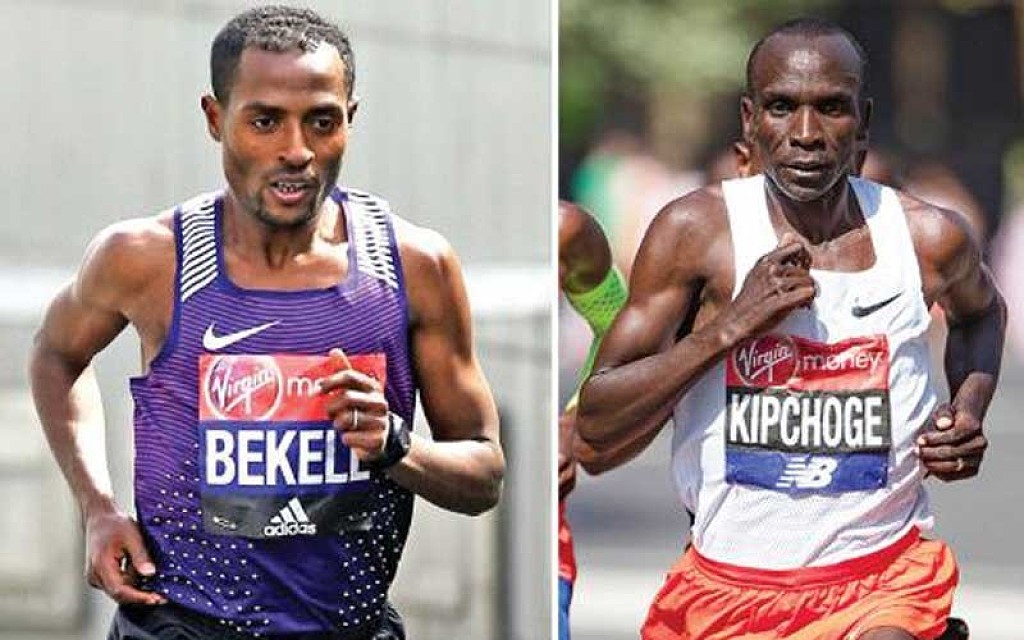
Kipchoge and Bekele showdown to wait until October 4 in London
Ethiopia's Kenenisa Bekele (left) and Kenya's marathon world-record holder Eliud Kipchoge will have to wait until October 4 to face off.
The London Marathon scheduled to take place on April 26 has been postponed to October 4 due to the Coronavirus pandemic.
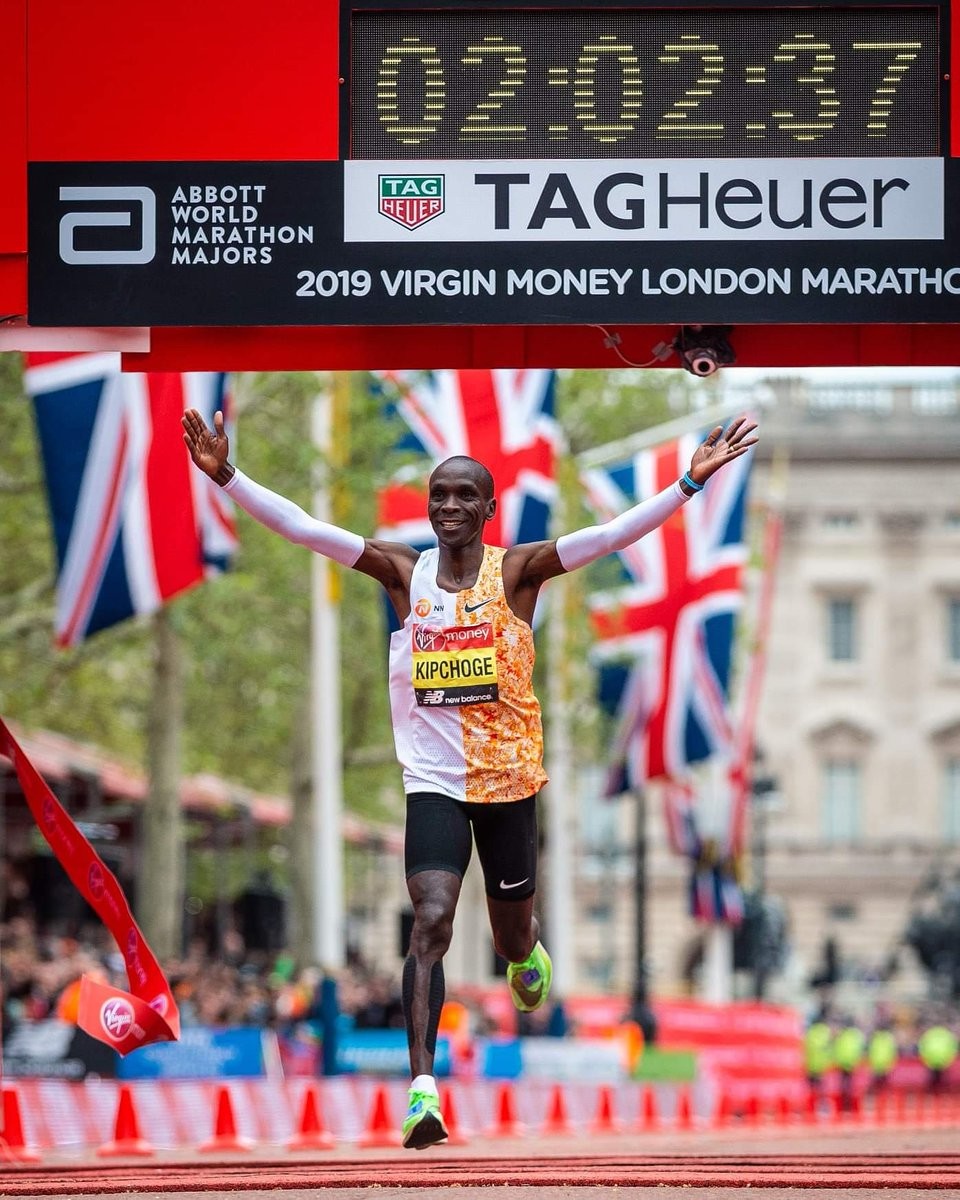
The organisers made the announcement on Friday, with event director Hugh Brasher citing health as a priority as the world continues to battle with containing the virus.
“The world is in an unprecedented situation grappling with a global pandemic of COVID-19 and public health is everyone’s priority,” Brasher said.
World record-holder Eliud Kipchoge was among the first top athletes to react to the news of the cancellation of the marathon on social media, expressing his disappointment while still sharing a message of positivity.
"It is unfortunate news that the London Marathon has been postponed but I fully respect the decision made by the organization as safeguarding the health of the world always takes our top priority. To the thousands of runners who with me, have devoted the last months of our lives towards this goal I would like to say: Be proud of the work you have put into this journey, keep smiling and seek your next goal on the horizon to continue running in a smooth and positive way. I hope to share the starting line with you again soon," said Kipchoge.
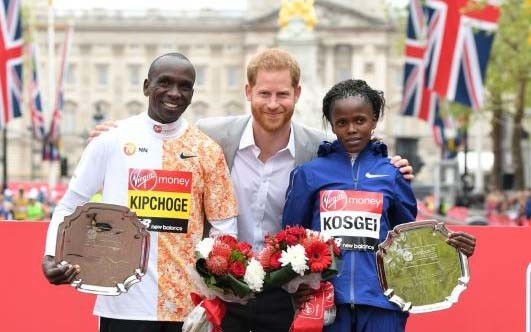
Eliud Kipchoge and Brigid Kosgei pose for a picture with Prince Harry while holding their awards in last year's marathon.
Kipchoge and Ethiopia's Kenenisa Bekele were set to go head to head in a contest for the ages, as was Kenya’s women's record-holder Brigid Kosgei.
Kipchoge broke the two-hour marathon barrier in Vienna last October in the INEOS 1:59 Challenge.
The marathon was intended to be an Olympic qualifying event for Team Great Britain. British Athletics said it would hold a separate marathon trial for the Tokyo Games “in a closed location, with limited numbers” potentially around April 25 to 27.
The Boston Marathon, another one of the six World Marathon Majors, has also been postponed to mid-September.
These developments come days after the Kenyan Ministry of Sports banned athletes from travelling to any international sports events for the next month following the global outbreak of Covid-19.
The decision to push this year’s London Marathon to October 4, means the race will now take place on the same day as the Cardiff Half Marathon.
Brasher, thanked every institution that came to support them during this time and expressed optimism of finding the best dates for future races.
“We are extremely grateful for all the support we have received from City Hall, the London boroughs of Greenwich, Lewisham, Southwark, Tower Hamlets, the City of Westminster and the City of London, Transport for London, the emergency services, the Royal Parks, BBC TV and many others as we worked to find an alternative date. The 40th race is scheduled to go ahead on Sunday, October 4, 2020.”
Here are the new major marathon schedules:
Boston Marathon – September 14
Berlin Marathon – September 27
London Marathon – October 4
Chicago Marathon – October 10
by Robert Abong’o
Login to leave a comment
TCS London Marathon
Since its inaugural edition on March 29, 1981, the TCS London Marathon has grown into one of the world's most prestigious road races, blending elite competition with an extraordinary charitable legacy. Founded by former Olympic champion and journalist Chris Brasher alongside Welsh athlete John Disley, the event has been staged every year and has been held in the spring annually...
more...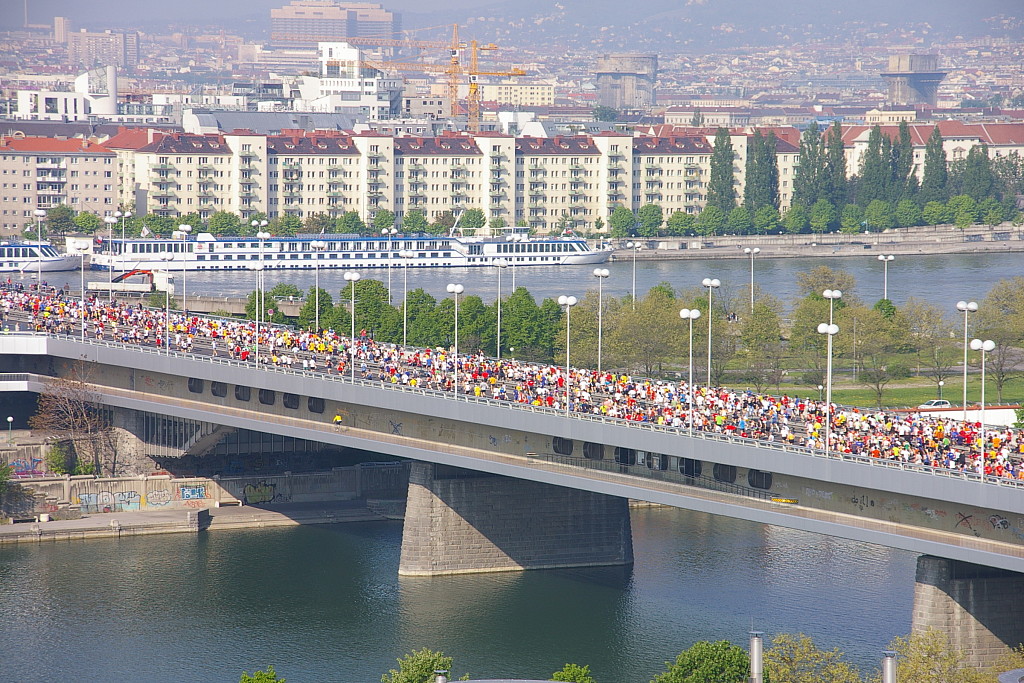
The Vienna City Marathon 2020 will not take place until 2021
This message was sent out to friends of th Vienna City Marathon:
We've been torn apart these last few days. Until the very last moment we wanted to organize the 37th Vienna City Marathon (VCM) and we told you so. Your feedback has strengthened us. Nevertheless we noticed how the situation has changed. Europe is in an exceptional situation. In Austria and several other countries far-reaching measures have been taken to contain Covid-19.
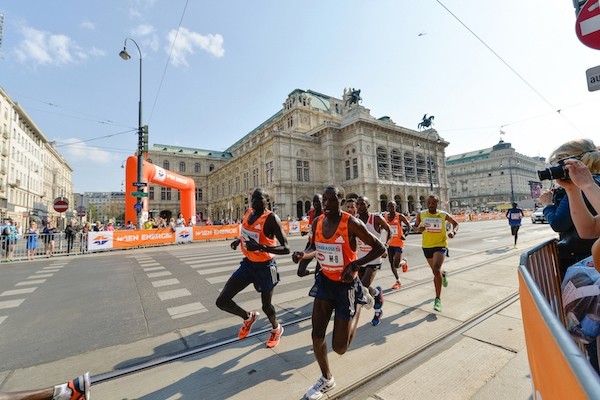
We have put all our energy into planning this event, the realisation of which has been increasingly questioned. This is perhaps the most difficult announcement we have ever had to make in regard to the VCM. But it is what it is.
The Vienna City Marathon 2020 will not take place.This concerns all running events on Saturday, 18th April and Sunday, 19th April, the Expo Vienna Sports World in the Marx Halle as well as the VCM Carbo Loading Party in the Festsaal of the Vienna City Hall.
Also yesterday the last run of the VCM Winter Running Series in the Vienna Prater, which was planned for March 29th, was cancelled. "We are deeply sorry for all our hobby runners, for all top athletes and for all our employees who have been preparing for the event with great commitment for months. In the light of a health crisis that is affecting all countries, and out of a sense of responsibility towards all runners, staff and the entire population, we cannot help but refrain from holding the VCM," says event organizer Wolfgang Konrad.
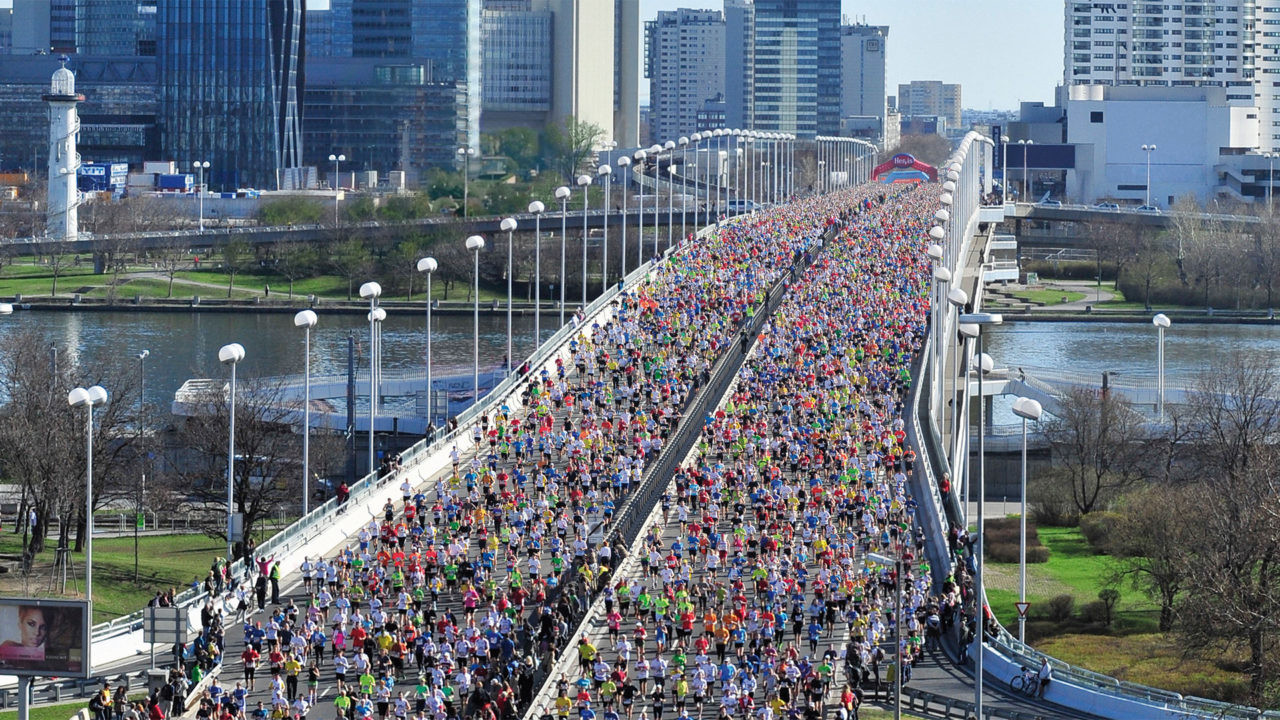
"We wanted to make the VCM fit for Covid-19 and have looked at all areas of the event and reorganized many parts. However, there is probably no major event with an expected 45,000 participants from 130 countries, 12,000 of them from abroad, that can compete with the virus while at the same time reducing social contacts," says VCM Managing Director Gerhard Wehr.
This step is also intended to give all runners the opportunity to orientate them newly and, if possible, to cancel booked trips and overnight stays. We do not want to get into a situation where our participants might be infected or quarantined before, during or after their participation in the Vienna City Marathon or contribute to the spread of the virus. We are also well aware that this is a very difficult time for the health stuff and we do not want to put additional pressure, strain or endanger our medical service and medical team.
In a decree of the Federal Ministry of Social Affairs, Health, Care and Consumer Protection (Measures against the confluence of large crowds of people according to §15 Epidemic Law), the holding of outdoor events with more than 500 participants and indoor events with more than 100 participants has been banned for the time being until April 3. This was the end of the planning of the event. The Vienna City Marathon works together with approximately 450 companies and partners and a total of 3,500 employees to realize Austria's largest sporting event in a long-prepared, joint effort.
Many of our helpers are also students and pupils whose institutions are about to close. Stalling our participants, suppliers, sponsors and partners until the Easter holidays without any prospect of clarification of the situation would be irresponsible and unreasonable.
"We have to change our lives for a few months", said Health Minister Rudolf Anschober on 10 March when presenting the first measures to limit the spread of Covid-19. "Further measures and steps will be needed", said Federal Chancellor Sebastian Kurz on the same day on ORF: "We must assume that the situation will keep us busy for many weeks or months to come". Taking into account the decree and these statements, there is no further perspective for the VCM 2020.
All of us in the VCM organisation have worked hard over the past few months, and have pushed ahead with our preparations with professionalism and passion. We have seen how you have trained and run with great commitment, at the VCM Winter Run Series, at the VCM Training Runs or elsewhere. It was great, fun, inspiring.
The INEOS 1:59 Challenge in October 2019 has given a huge boost to running in Vienna and to the VCM in general. We were extremely looking forward to a big runners' festival in Vienna in April.
The preparations, the efforts and the anticipation that we all share - runners and organizers - will unfortunately not culminate in an emotional running festival. But we are convinced that we will have many more great marathon moments in the future.
We still have to get used to the situation ourselves. More than once we have been desperate in the last few days. At some point, each of us has cried once. We can well imagine how it looks like inside of you now. But we are sportsmen. We get up again. We look ahead. We keep running.
In the coming weeks we will comprehensively evaluate and clarify the consequences of this cancellation for the organization of the Vienna City Marathon. As soon as possible we will send you, the participants, an offer so that you can participate with pleasure in one of the next events of the Vienna City Marathon.
We ask for your understanding that this is also for us an extraordinary and unprecedented situation. Please allow us some time to evaluate all aspects and for administrative preparation.We have also checked if it is possible to postpone the VCM to a later date in 2020, but due to numerous activities in the federal capital Vienna, there is not enough space available for a marathon. The dates for the marathon are fixed several years in advance in coordination with the city administration and other organizers. A short-term postponement is not possible in this context. Many other races and events are now postponing their staging until autumn. However, from the current perspective, nobody can say whether major events will be possible at such a date in 2020.
Thank you to everyone who has supported us on the way so far - the entire stuff, the various departments of the City of Vienna, our sponsors and above all the runners from all over Austria and the world who have chosen to run the Vienna City Marathon.We hope above all that you and your families and friends are in good health. Adhere to the hygiene regulations and the measures to contain Covid-19.It only remains for us to wish you a nevertheless beautiful running spring. We would be happy if you continue to be friends of the Vienna City Marathon. We will continue to be there for you with full energy and will do everything we can for a great Vienna City Marathon on 18 April 2021.
Keep on running - this is how you strengthen your immune system. Go outside. Do things that you enjoy. Do something good for someone else. Run and enjoy it. Keep reaching for the stars.
by Team of the Vienna City Marathon
Login to leave a comment
Vienna City Marathon
More than 41,000 runners from over 110 nations take part in the Vienna City Marathon, cheered on by hundreds of thousands of spectators. From the start at UN City to the magnificent finish on the Heldenplatz, the excitement will never miss a beat. In recent years the Vienna City Marathon has succeeded in creating a unique position as a marathon...
more...
Eliud Kipchoge has called Kenya's team kit for Tokyo 2020 unique and awesome, despite mixed opinion
Eliud Kipchoge, who became the first runner to complete a marathon under two hours in the Ineos 1:59 Challenge in October, said that it bears the colors of the national flag and resonates well with the new generation, according to Kenyan news service, Daily Nation.
“I think it will turn tables as far as sport is concerned.
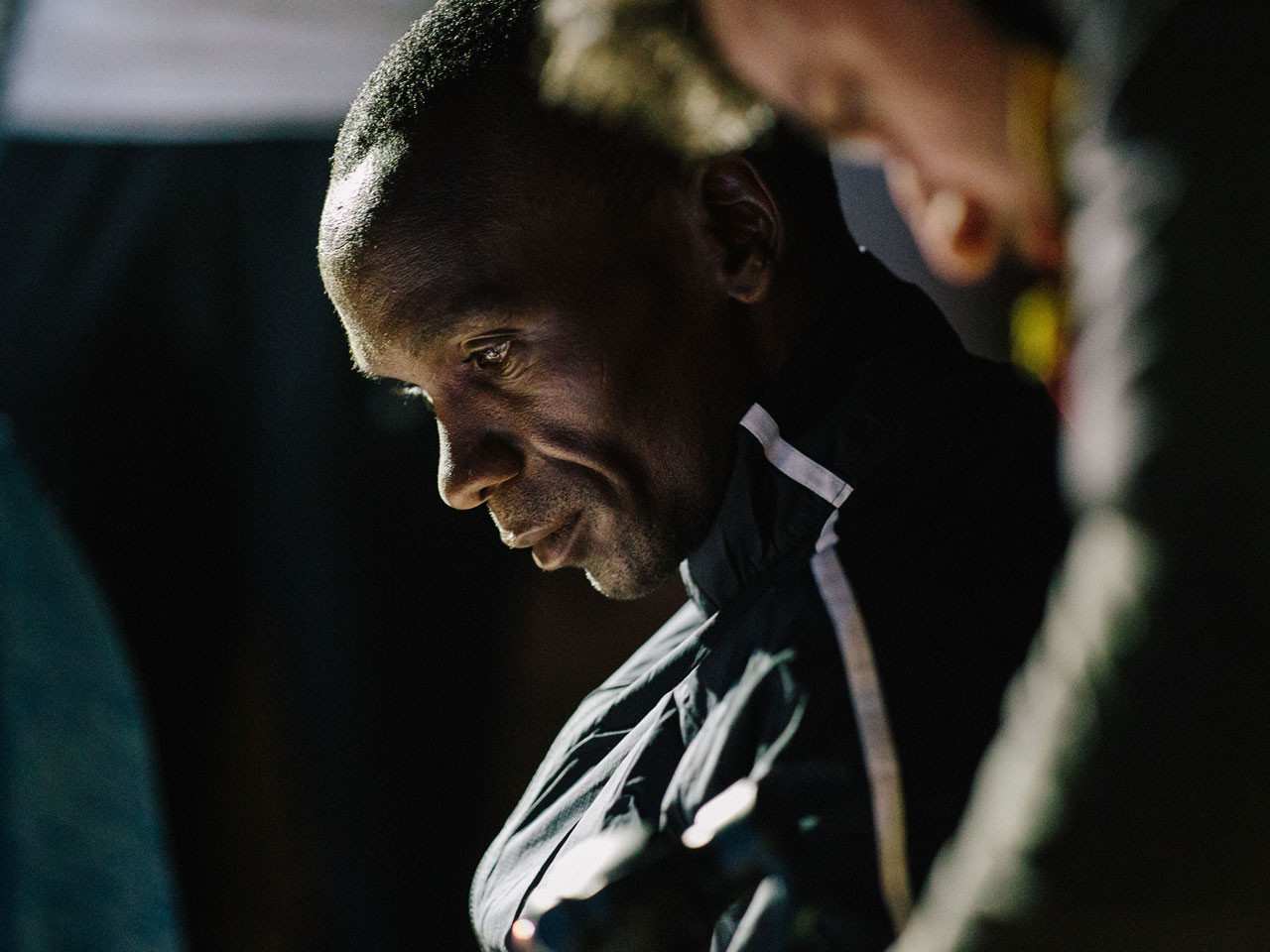
"I trust I will see Kenyans draped in the Kenyan colors in all streets of our towns,” said Kipchoge.
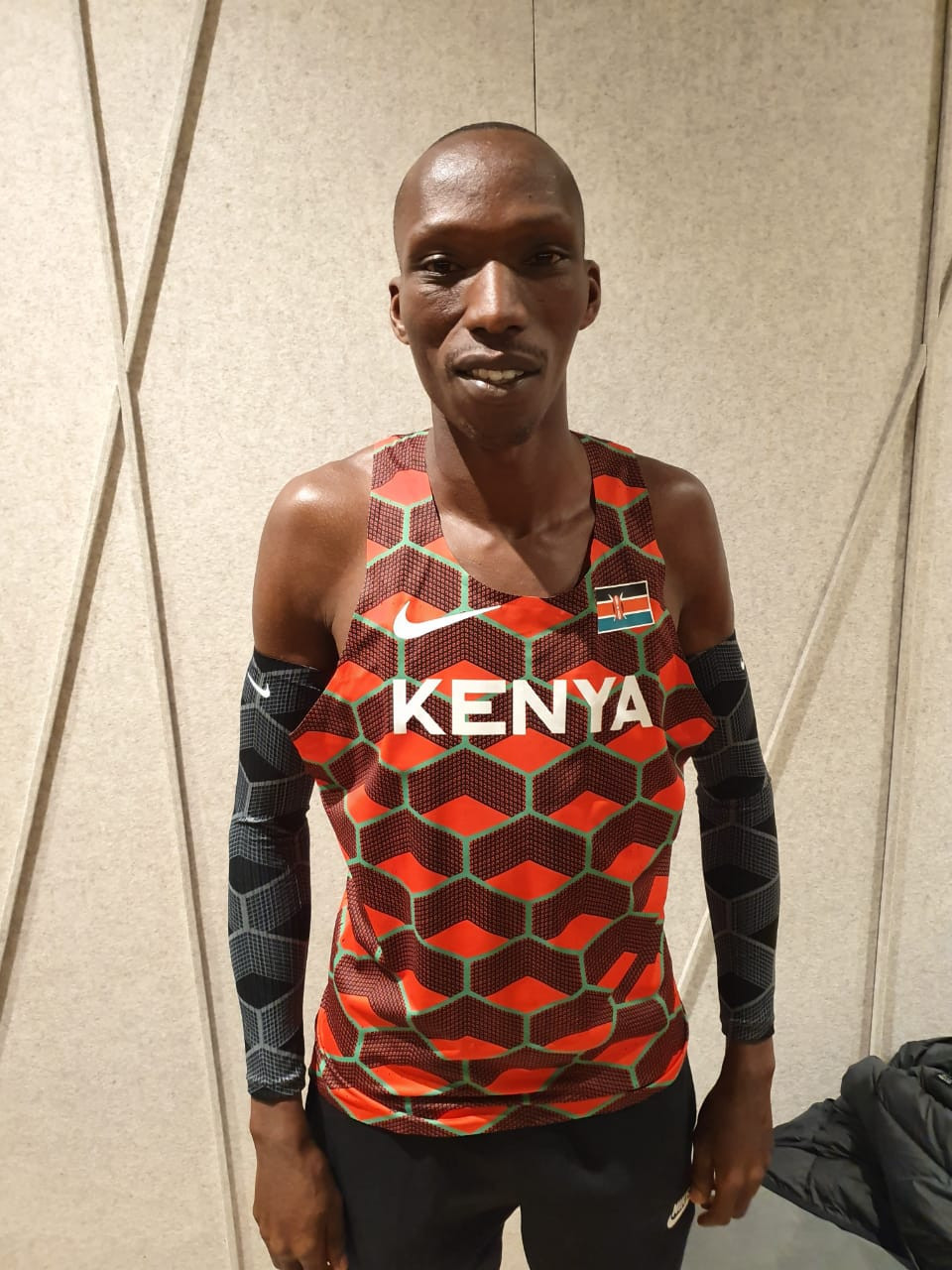
“It is a good thing that Nike has promised to make these awesome clothes available on retail.”
Kipchoge also added that it absorbs and drains moisture fast, tailoring it to the conditions set for Tokyo.
The launch took place on Tuesday in New York, including 1500 meters champion Timothy Cheruiyot alongside athletes from other nations such as United States and Brazil.
However, the reception was not loved by all, with athletics fan Jack Waiyaki calling it a "Tasteless, poor design."
"The name 'KENYA' should be clearly seen and dominant," said Waiyaki.
"The other kit does not need to be changed- it is a well known global trademark and brand that sends fear to rivals."
The honeycomb kit sparked controversy on Twitter after the announcement with one user joking, "I'm no longer Kenyan."
Another Facebook user, Mosdef Apollo said, "Did someone get paid for that?
"The laziest designer, there is no iota of creativity - return that thing, it doesn't befit Kenya."
One other commenter asked if the vest was "inspired by bees."
One supporter, Kamal Kaur said, "Modern, vibrant and it stands out."
Kenya won all 13 of their Olympic medals from Rio 2016 in athletics with their last non-athletics medal coming at Seoul 1988.
by Michael Houston
Login to leave a comment
Tokyo 2020 Olympic Games
Fifty-six years after having organized the Olympic Games, the Japanese capital will be hosting a Summer edition for the second time, originally scheduled from July 24 to August 9, 2020, the games were postponed due to coronavirus outbreak, the postponed Tokyo Olympics will be held from July 23 to August 8 in 2021, according to the International Olympic Committee decision. ...
more...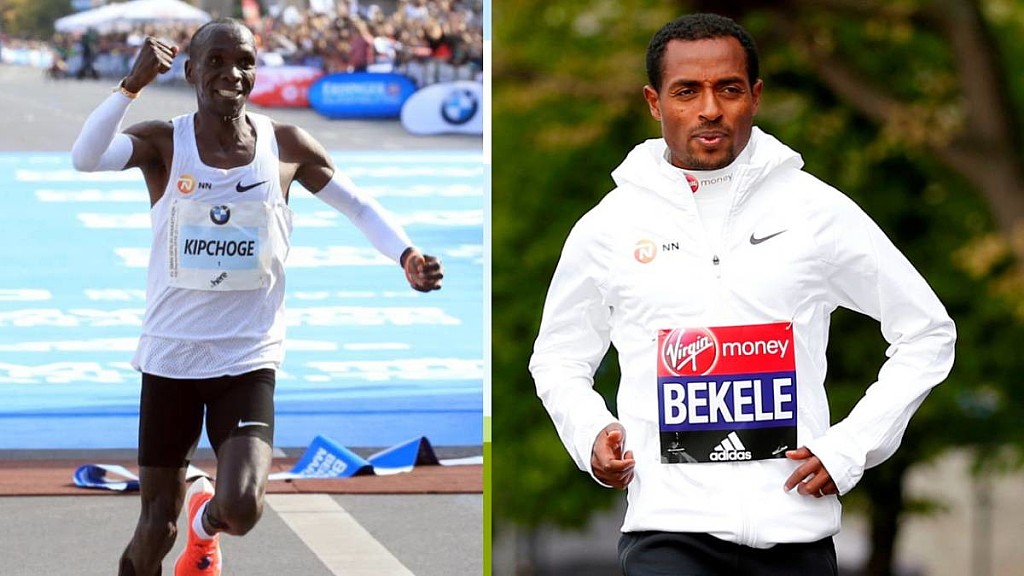
2020 London Marathon features a strong line up, but it's missing the one match up we really wanted to see, Kipchoge-Bekele
Eliud Kipchoge announced in December that he would be running the 2020 London Marathon but until today it was not known who he would face. It turns out that the men’s lineup is almost as strong as the women’s but is missing one key player: Kenenisa Bekele.
Bekele finished the 2019 Berlin Marathon race just two seconds shy of Kipchoge’s world record, and seeing the two race head-to-head would’ve been special.
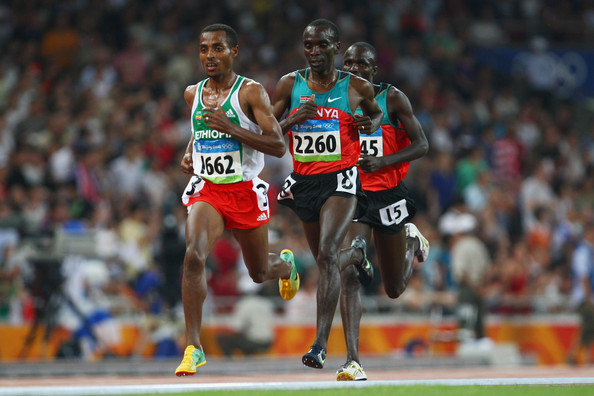
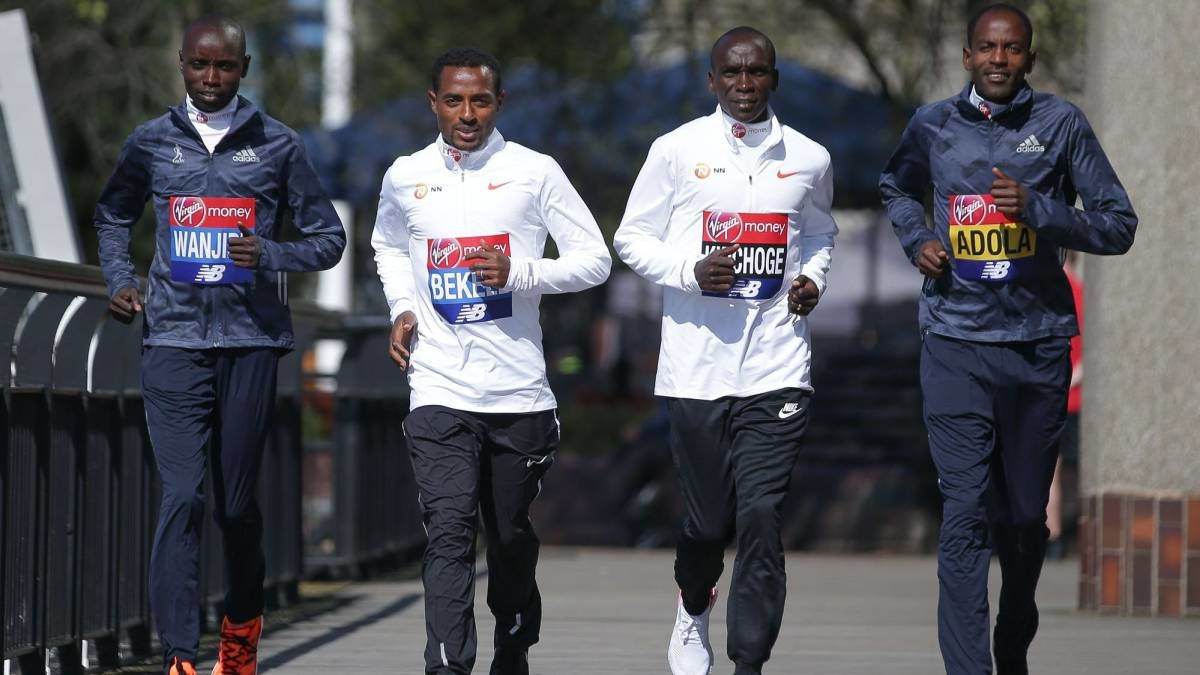
The 2020 London Marathon will see the entire podium from the 2019 race returning. They announced on Tuesday morning that Mosinet Geremew and Mule Wasihun, the Ethiopian duo, would be vying for first place again in 2020.
The 2019 event saw a fast finish–one of the fastest ever, with both second and third place finishing in PBs. Kipchoge finished in 2:02:37, just over a minute off his world record.
Since London 2019, Kipchoge became the first person to run a sub-two-hour marathon at the INEOS 1:59 Challenge. Through halfway, the runners were right on pace, coming through at 59:35, well ahead of Kipchoge’s 59:57 half at Breaking2 in 2017. The runner clicked off 1K splits like a metronome, never deviating from his 2:50 pace by more than two seconds. He finished in 1:59:40.
by Madeleine Kelly
Login to leave a comment
TCS London Marathon
Since its inaugural edition on March 29, 1981, the TCS London Marathon has grown into one of the world's most prestigious road races, blending elite competition with an extraordinary charitable legacy. Founded by former Olympic champion and journalist Chris Brasher alongside Welsh athlete John Disley, the event has been staged every year and has been held in the spring annually...
more...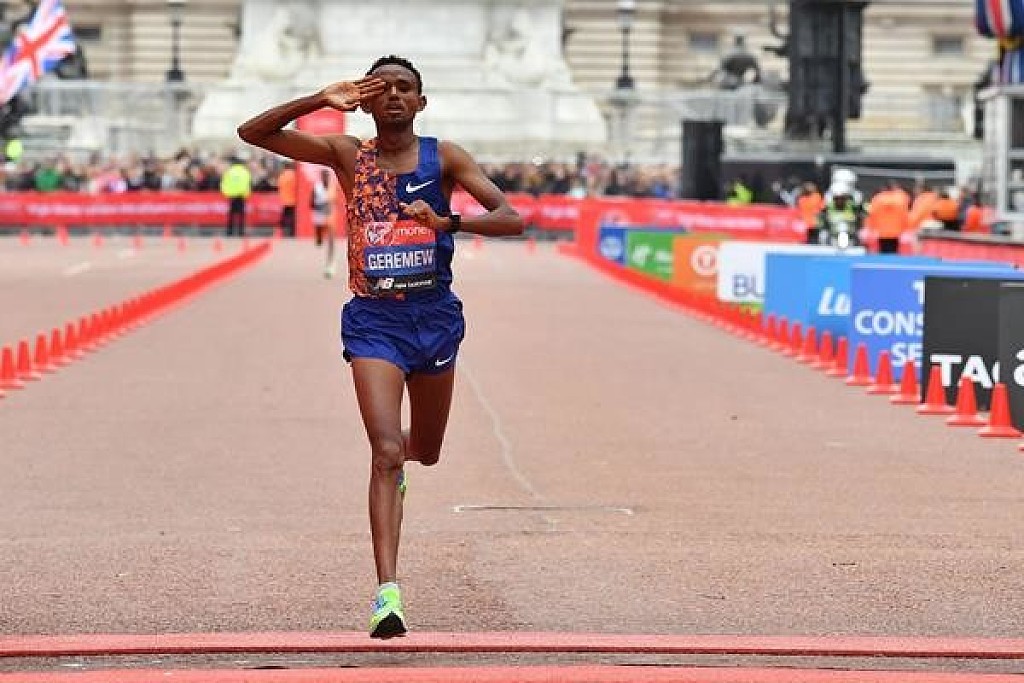
Ethiopian duo Mosinet Geremew and Mule Wasihun, have confirmed they will return to the Virgin Money London Marathon
Mosinet Geremew and Mule Wasihun, the Ethiopian duo who pushed the legendary Eliud Kipchoge to the limit at the 2019 Virgin Money London Marathon, have confirmed they will return to the World Athletics Platinum Label road race on April 26.
With Kipchoge, the 2018 and 2019 World Athlete of the Year already confirmed, it means all three podium finishers from last year will be back for the 2020 edition.
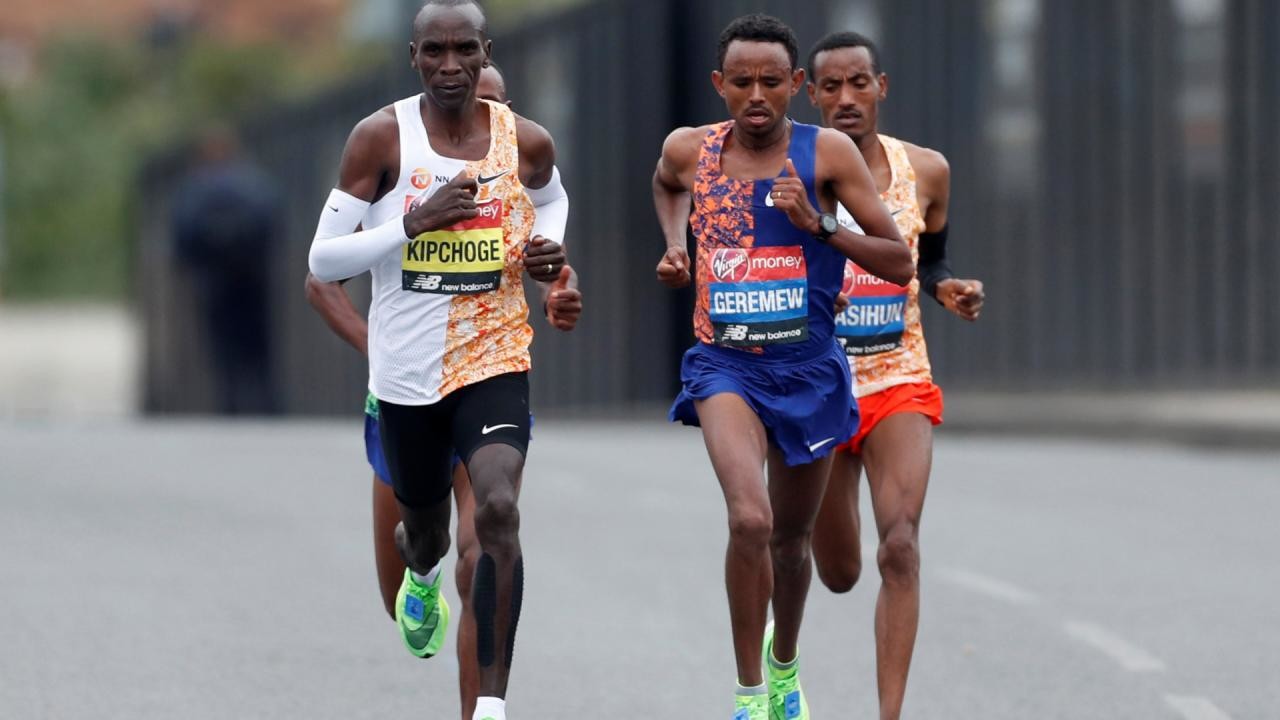
Geremew, 27, ran the fifth fastest time in history of 2:02:55 to take second place behind Kipchoge in last year’s race and then had to settle for second again in his next marathon, the World Championships in Doha last October.
Wasihun’s time in finishing third in London last year, 2:03:16, was the 11th fastest marathon the world has ever seen.
Shura Kitata, who was fourth last year and second in 2018, has also been confirmed, ensuring that it looks likely to be a year when it is the Ethiopians who will be the biggest threat to Kipchoge winning an historic fifth London Marathon title.
Spencer Barden, Head of Elite Athletes, said: “Last year’s elite men’s race was one of the best races we have seen for many years. Mosinet Geremew and Mule Wasihun pushed Eliud Kipchoge as hard as I have ever seen but ultimately could not hang on to the great man in the final two miles. But they will have taken confidence from last year and will come back this time round looking to cause a real shock.”
Kipchoge, who made history by becoming the first human to cover the marathon distance in under two hours at the INEOS 1:59 Challenge in October, is looking to become the most successful able-bodied athlete in London Marathon history by winning a fifth title in 2020.
by World Athletics
Login to leave a comment
TCS London Marathon
Since its inaugural edition on March 29, 1981, the TCS London Marathon has grown into one of the world's most prestigious road races, blending elite competition with an extraordinary charitable legacy. Founded by former Olympic champion and journalist Chris Brasher alongside Welsh athlete John Disley, the event has been staged every year and has been held in the spring annually...
more...
A New York Times study finds the Nike Next% and Vaporfly could lead runners to improved odds of a personal best
The New York Times repeated, with a larger sample size, the study of the Nike Vaporfly that they conducted in 2018. Their updated study included the Nike Next% and the findings were surprising. We knew the Vaporfly and Next% were arguably some of the best shoes on the market, but the NYT finds that their current dominance is undeniable.
The New York Times repeated, with a larger sample size, the study of the Nike Vaporfly that they conducted in 2018. Their updated study included the Nike Next% and the findings were surprising. We knew the Vaporfly and Next% were arguably some of the best shoes on the market, but the NYT finds that their current dominance is undeniable.

The study founds that, “The Zoom Vaporfly 4% or ZoomX Vaporfly Next% — ran 4 to 5 percent faster than a runner wearing an average shoe, and 2 to 3 percent faster than runners in the next-fastest popular shoe.” The name four per cent was born out of Nike’s finding that the shoe could make the wearer four per cent more efficient–efficiency translates to less effort at the same pace, which means a runner can go faster. So the claim that the shoe makes a runner faster as opposed to simply more efficient is new.
Another key finding was that men had a 73 per cent chance of running a personal best in the shoes, while women had a 74 per cent chance, “In a race between two marathoners of the same ability, a runner wearing these shoes would have a significant advantage over a competitor not wearing them.” The Times also reports, “In the final months of 2019, about 41 per cent of marathons under three hours were reported to have been run in these shoes (for races in which we have data).”
When someone first comes to running, they find that after the initial agony of getting your legs used to the motion, there’s quick improvement. You’ll run a 5K personal best and then a subsequent PB just weeks (or even days) later. Because you’re new to the sport, the time melts away in the first few races.
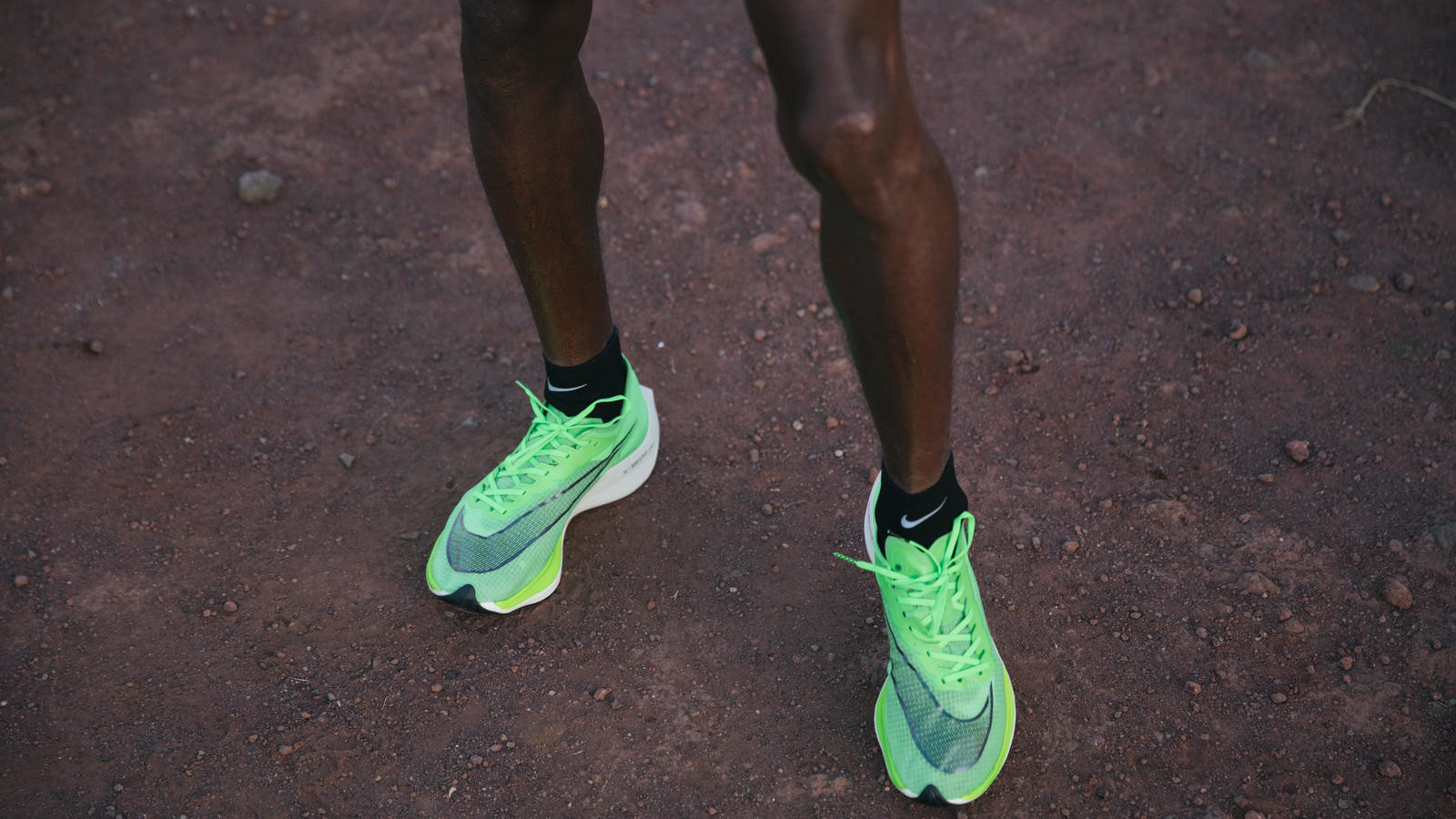
But as you progress and become better, it can take months and even years to run a personal best. And for the competitive runner, staying patient is the hardest part. But what if someone told that runner who’d been trying to PB for 14 months, 27 days and 13 hours, that if they spent $330 CAD they had a 73 per cent chance at finally improving? If they have the budget, that’s an appealing statistic.
Two weeks ago Molly Huddle, who has the sixth-fastest marathon time among American women in 2019 (she ran a personal best 2:26:33 at the London Marathon), replied to a tweet by sports journalist Cathal Dennehy about the AlphaFly (Nike’s next step in the carbon-plated game). The shoe was first seen on the feet of marathon world record-holder Eliud Kipchoge, who raced to a 1:59:40 finish in them at the INEOS 1:59 Challenge in Vienna last month. Huddle’s comment: “Kinda nervous as to how this would affect the Olympic Trials over here @usatf.”
It’s not just Huddle who has noticed the effect the shoe (or prototype versions) could have on the US Olympic Marathon Trials. Runners are qualifying for the event at unprecedented rates. With the qualifying window still open for another five weeks, entries are already nearing the thousands.
It’s important to note that the qualifying standard for the trials did get two minutes easier (2:43 in 2016 to 2:45 in 2020). But does two minutes warrant a potentially doubled field size or are technological advantages, like the Nike shoes, the reason for the jump? The New York Times’ finding would suggest the latter.
by Madeleine Kelly
Login to leave a comment
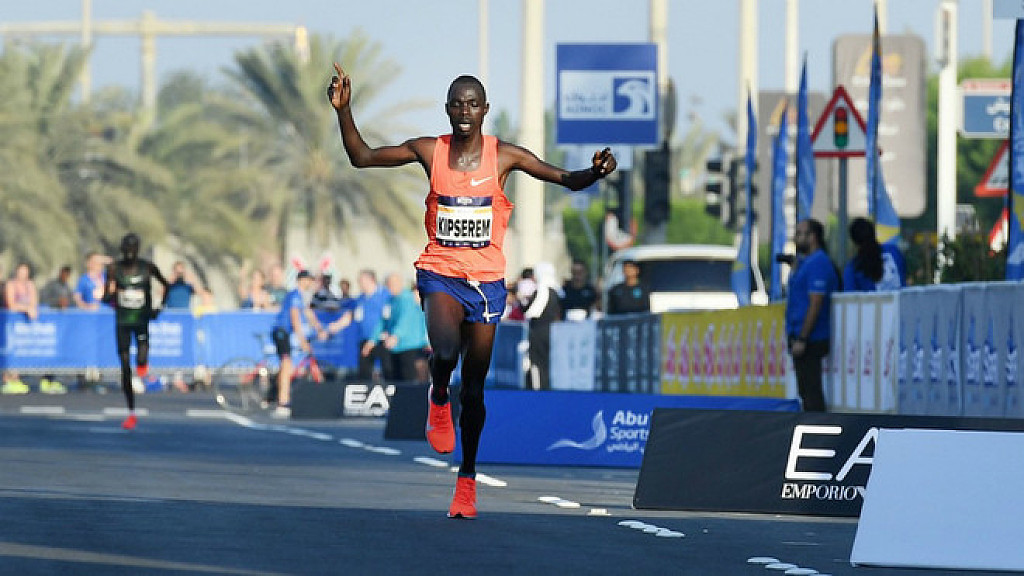
Kenya's Marius Kipserem will face his compatriot Dickson Chumba in his quest to defend Abu Dhabi marathon title
Kenya's Marius Kipserem believes nothing will stop him in his bid to retain the Abu Dhabi Marathon on Friday.
The women's race will invoke a teammate rivalry as Kenya's Vivian Kiplagat (2:22:25) and Bahrain's Eunice Chumba (2:24:27), who is 10,000m silver medalist of Asian Athletics Championships in Wuhan, China.
However, unlike last year during the inaugural race, Kipserem will have to dig deeper if he has to keep at bay his rivals led by compatriot and former Chicago and Tokyo Marathon winner Dickson Chumba.
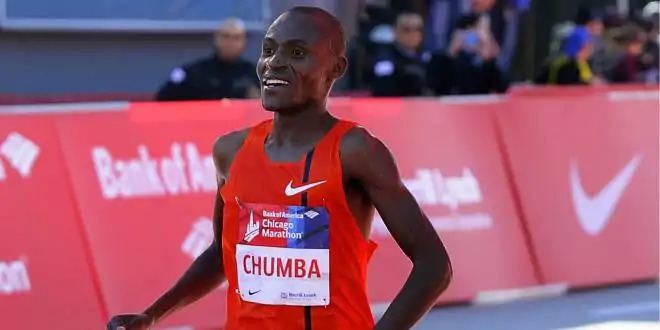
"I have done well in training and am focused on the race in Abu Dhabi. I have no pressure whatsoever because I know what work, I have put in and what is expected.
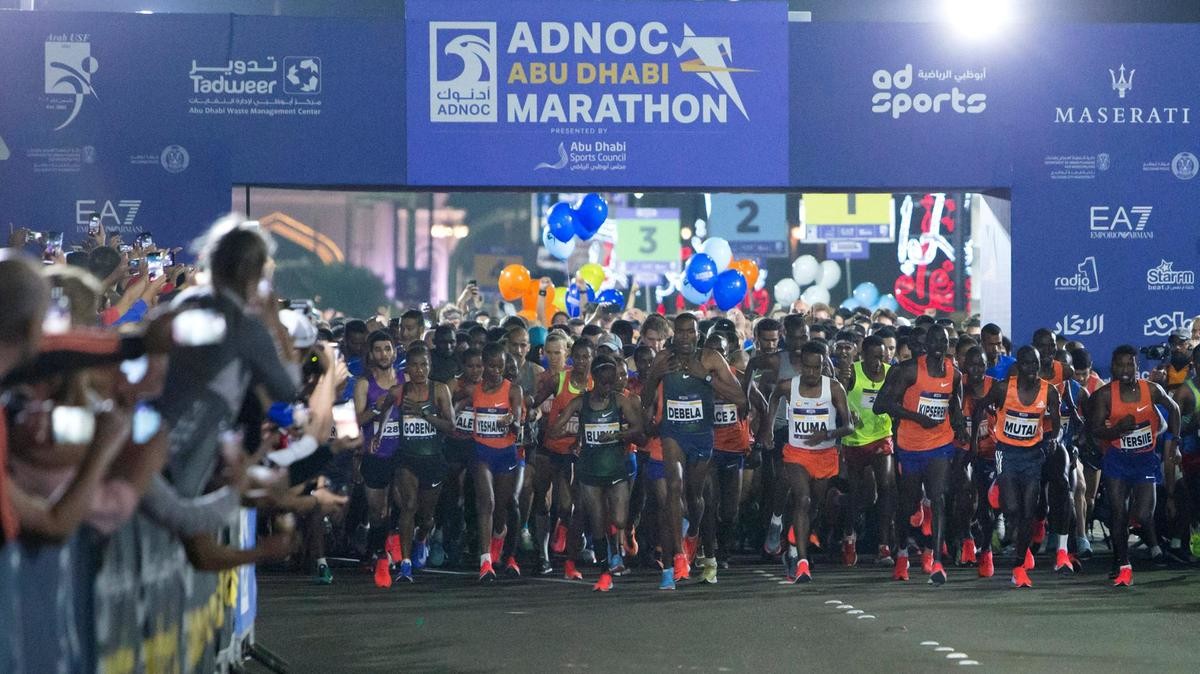
There are other runners with a higher pedigree and records, but the reality on the race day is how prepared one is in the mind and fitness," Kipserem said on Tuesday.
Kipserem won the 2018 Rotterdam in 2:06:11 in April and improved that record to 2:4:12 in Abu Dhabi in December.
"I am going to defend my title and hopefully with a better time than last year," Kipserem added. In winning the inaugural race in Abu Dhabi, Kipserem stopped the clock at 2:04:12.
He is hoping to shave off two minutes to join the elusive club of marathon runners who have hit the two hours and two minutes' mark, currently held by just around four runners - Kenenisa Bekele (2:01.42), Eliud Kipchoge (2:01.39), Birhanu Legese and Dennis Kimetto.
"Everyone wants to compete in the big city marathons and after Abu Dhabi, I believe London will be the next stage, which I consider a good trial for the Tokyo Olympics. London is very important for me because a good result can earn me a spot in Kenya's four-member marathon team at the Olympics," he added.
Kipserem made the Kipchoge's INEOS 1:59 Challenge. He was part of the 31 pacesetters, who were contracted to help Olympic marathon champion Eliud Kipchoge to accomplish his task to become the first man to run the 42km distance in less than two hours. Kipchoge stopped the clock at 1:59.40.
Chumba (2:04:32), who will provide the challenge to Kipserem, has not had a good season. He failed to defend his Tokyo marathon title and was seventh at the Chicago marathon in October.
"I feel strong after the Chicago race. In Tokyo, it was wet and slippery and I had to slow down to avoid injury. I have not raced since then and will be happy to go to Abu Dhabi and win against the strong athletes lined up," Chumba said.
Login to leave a comment

ADNOC Abu Dhabi Marathon
The Abu Dhabi Marathon is shaping up to being first class marathon for both elite runners and average runners as well. Take in the finest aspects of Abu Dhabi's heritage, modern landmarks and the waters of the Arabian Gulf, at this world-class athletics event, set against the backdrop of the Capital's stunning architecture.The race offered runners of all abilities the...
more...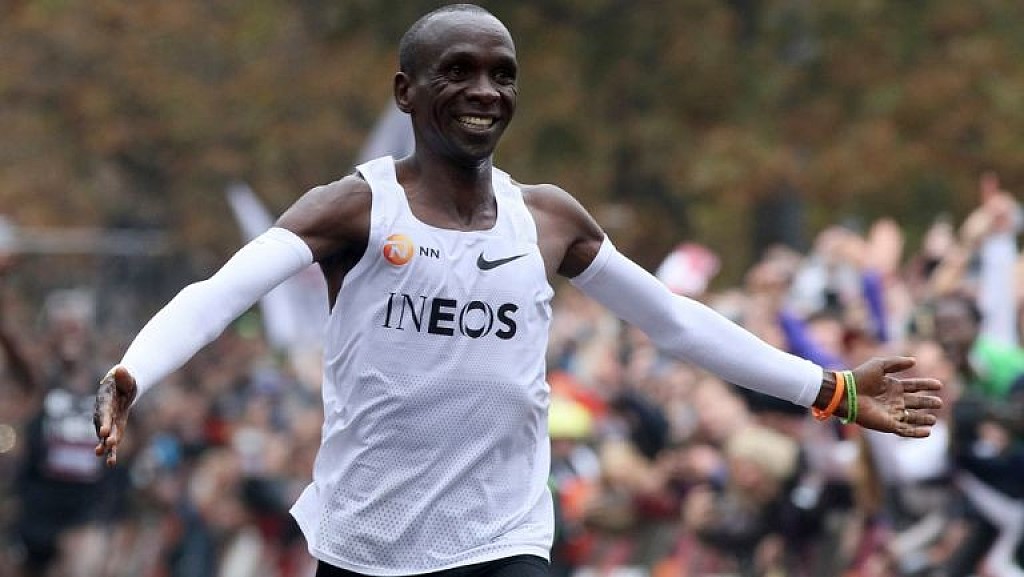
What is Eliud Kipchoge secrets for being one of the best runners in the world ever
Consistency, self-discipline and hard work are the ingredients that made him retain the World Athletics Male Athlete of the Year title, Olympic marathon champion Eliud Kipchoge said on Sunday.
The world marathon record holder, who tuned 35 on November 5, edged out four other contestants to retain the award during the World Athletics gala in Monaco on Saturday night.
Kipchoge, who was not at the gala but accepted the accolade in a telecast interview, won the London Marathon on April 28 in a course record of two hours, two minutes and 37 seconds.
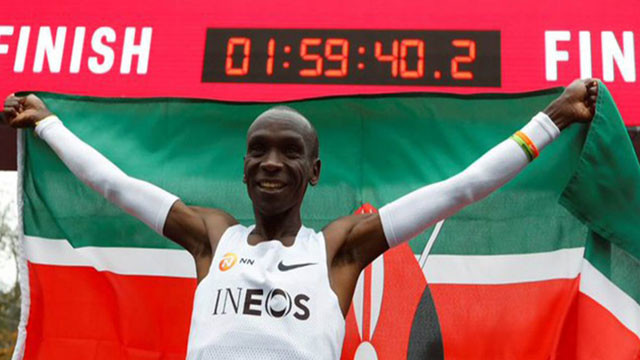
It was Kipchoge’s fourth victory in London, having staged similar exploits in 2015 (2:04:42), 2016 (2:03:05) and 2018 (2:04:17).
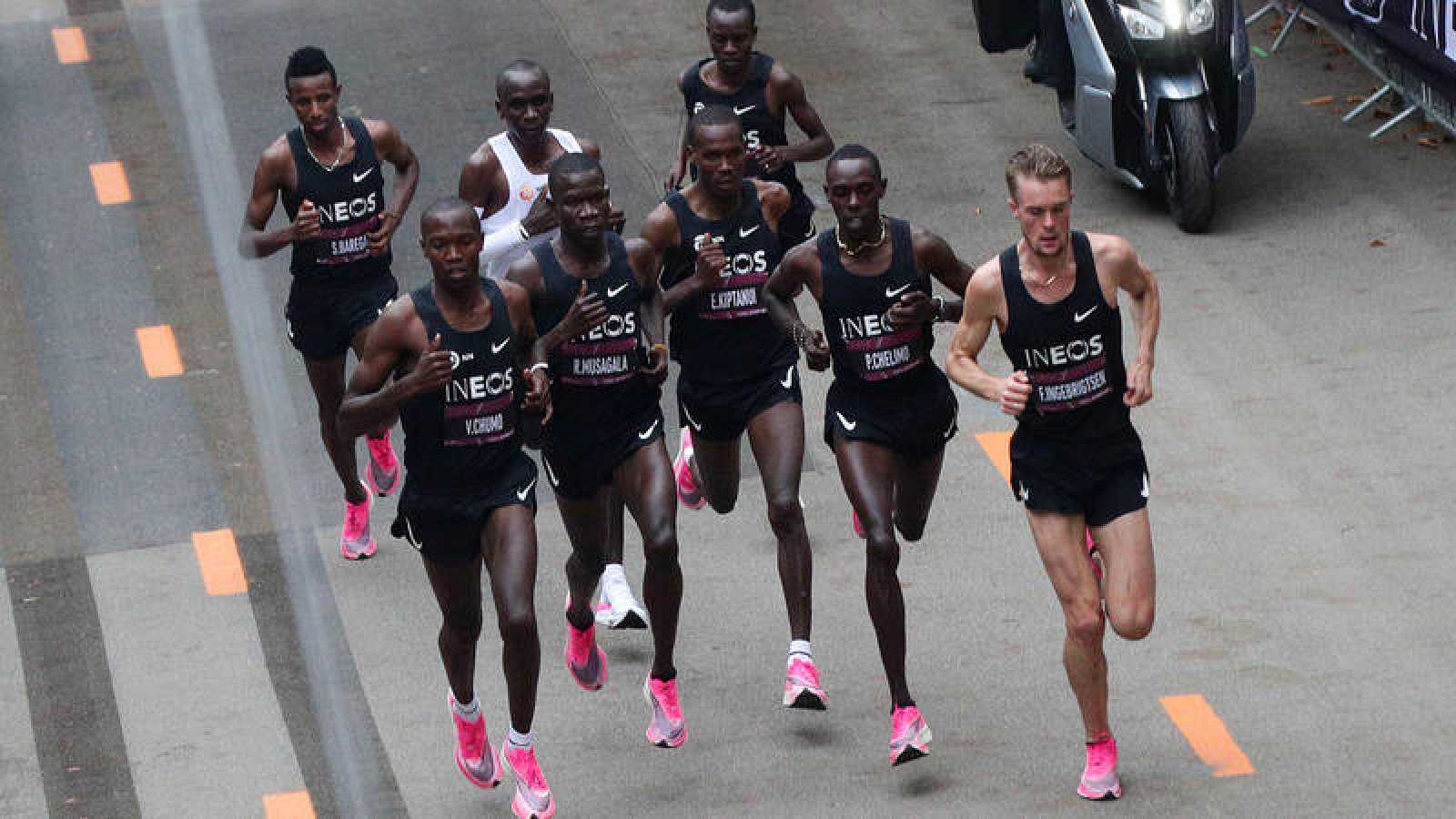
However, what perhaps engrossed the world was when he made history as the first man to run a marathon under two honors, completing the “Ineos 1:59 Challenge” in 1:59:40.2 on October 12 in Vienna, Austria.
This was the second time Kipchoge, the 2016 Rio Olympic Games marathon champion, was attempting to run a marathon under two hours, having fallen short by 26 seconds during the Nike Breaking2 on May 6, 2017, in Monza, Italy.
“Consistency is the key in sport while self-discipline is the mother and father of not only sports but any other undertaking,” said Kipchoge. “Working hard is recognizable in the world of sports.”
The athlete said that breaking the two-hour barrier was the true inspiration to the generation, what with 500 million people having watched the race live in the duration of 1:59.40.
“One billion people had watched by the end of the day on October 12. It goes further to affirm that no human is limited. It was truly historic for me since I’m sure I’ve helped some people kick out the limitations in their mind to achieve what they had deemed impossible,” he said.
by Ayumba Ayodi
Login to leave a comment
INEOS 1:59 Challenge
Mankind have constantly sought to reach new frontiers and to achieve the impossible. From Edmund Hillary reaching the summit of Mount Everest to Roger Bannister’s four-minute mile to Felix Baumgartner jumping from space we have frequently redefined the limits of human achievement and broken new barriers previously seen as simply impossible. After the four-minute mile and the ten second 100m...
more...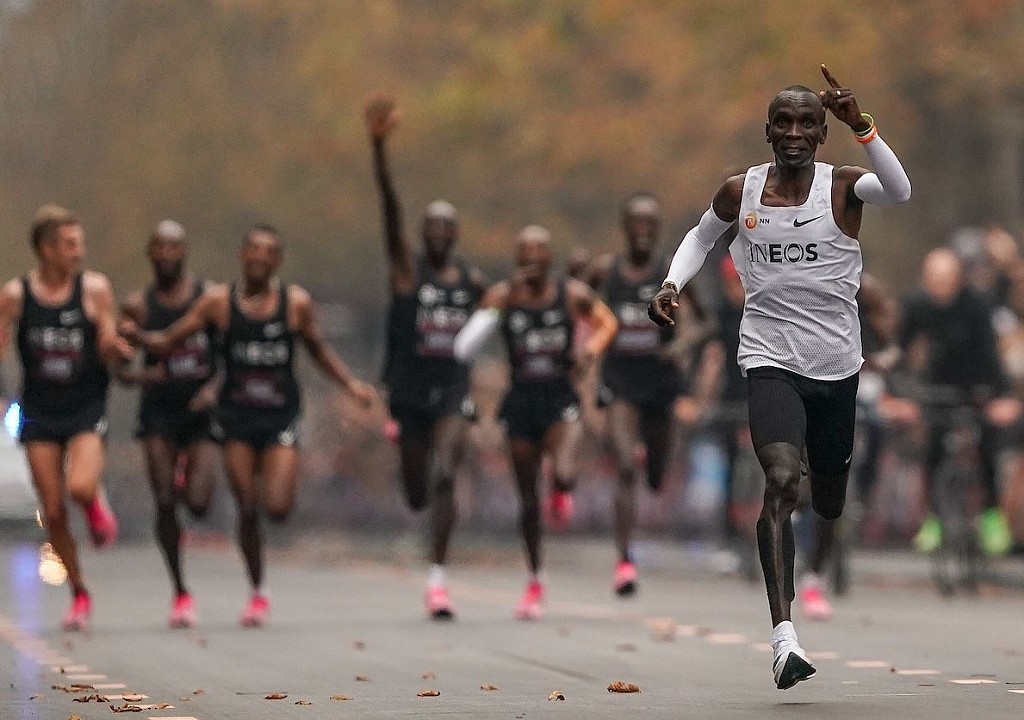
Kenyan Marathon world-record holder Eliud Kipchoge is among the five finalists named for the male athlete of the year
Eliud Kipchoge leads the nominees list, Kenya's marathon man, Eliud Kipchoge has made the list, as the 34-year old looks to bag his second IAAF Male World Athlete award in succession. In October 2019, Kipchoge became the first person on the planet to complete a full marathon in under two hours.
The Kenyan world record holder, who has also been labelled as the greatest marathoner in the history of the sport, completed the 'INEOS 1:59 Challenge' in October. In successfully completing the 9.6km circuit, the 34-year old became the first marathoner to break the two-hour barrier, thus writing his name in the history books.
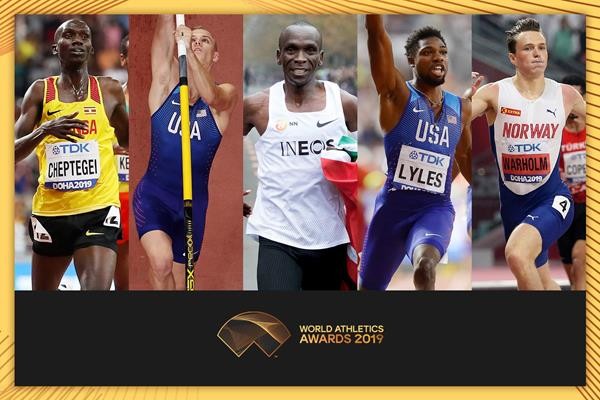
Eliud Kipchoge´s contenders.- Uganda’s Joshua Chepetegei, the 10,000m world champion was also one of the five finalists apart from Eliud Kipchoge.
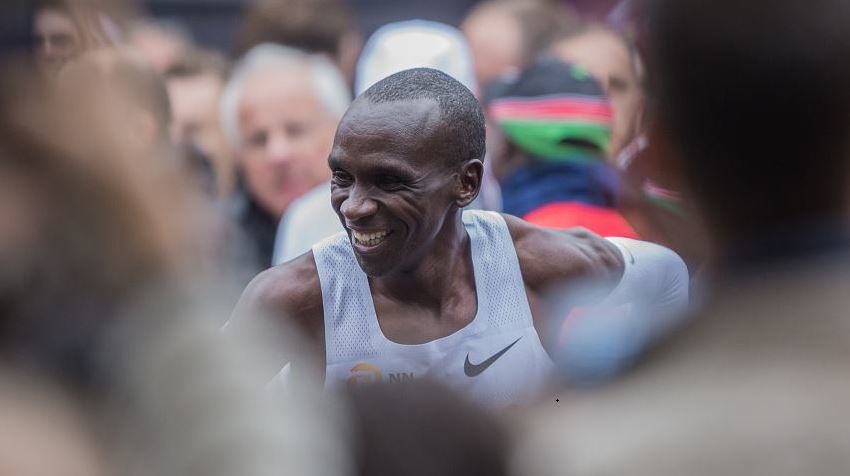
Chepetegei won the World 10,000m title in a world-leading time of 26:48.36 and also won the Diamond League 5000m title. Americans Sam Kendricks and Noah Lyles are also up for winning the award. Sam Kendricks won the World Pole Vault title, clearing a world-leading 6.06m to win the US title.
He also won 12 of his 17 outdoor competitions, including the Diamond League final. Noah Lyles, meanwhile, has the world 200m and 4x100m titles to boast of, aside from running a world-leading 19.50 in Lausanne to move to fourth on the world all-time list. Lyles also won the Diamond League titles at 100m and 200m.
Norwegian hurdler Karsten Warholm completes the list of the nominees for the Male World Athlete 2019 award. Warholm is undefeated indoors and outdoors at all distances, including the Diamond League final and the European Indoor Championships. He also clocked a clocked world-leading 46.92, the second-fastest time in history.
by Colin DCunha
Login to leave a comment

BMW Berlin Marathon
The story of the BERLIN-MARATHON is a story of the development of road running. When the first BERLIN-MARATHON was started on 13th October 1974 on a minor road next to the stadium of the organisers‘ club SC Charlottenburg Berlin 286 athletes had entered. The first winners were runners from Berlin: Günter Hallas (2:44:53), who still runs the BERLIN-MARATHON today, and...
more...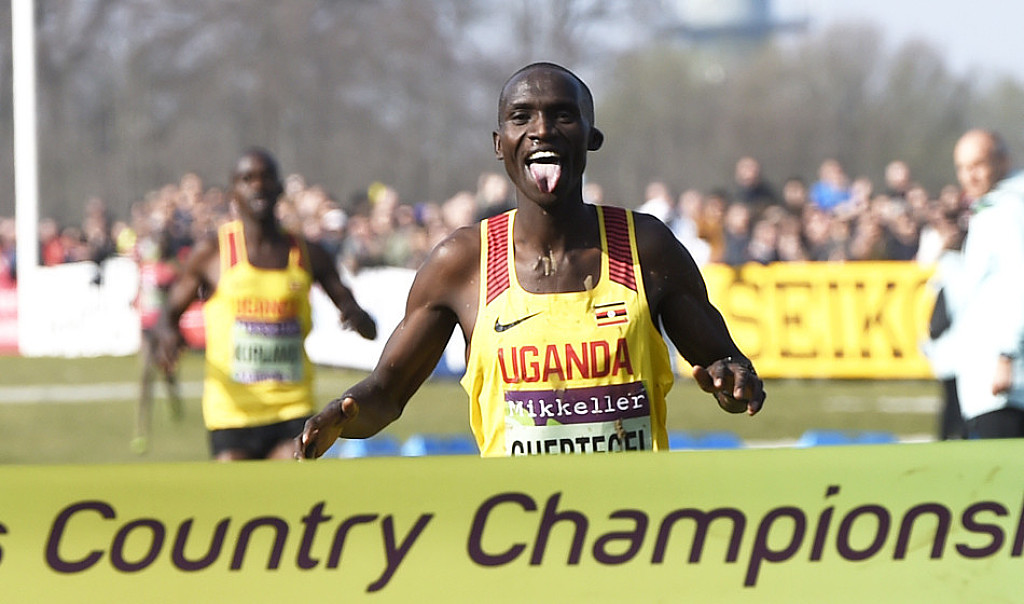
Uganda´s Joshua Cheptegei will target 10K world record in Valencia
Joshua Cheptegei of Uganda, the reigning world champion over 10,000m as well as cross-country, announced he will be looking to set a new world record at the 10K Valencia Trinidad Alfonso, to be held in conjunction with the Valencia Marathon on December 1.
Cheptegei already holds the world record in the 15K, which he set a year ago in the Netherlands, winning the Seven Hills race in Nijmegen for the fourth time, in 41:05. Cheptegei is 23.
In winning the 10,000m in Doha on October 6 in a world-leading 26:48.3, the Ugandan won his country’s first-ever gold medal in that event, though he also took gold in the 2018 Commonwealth Games over both 5,000m and 10,000m and set a new Games Record in the 10.
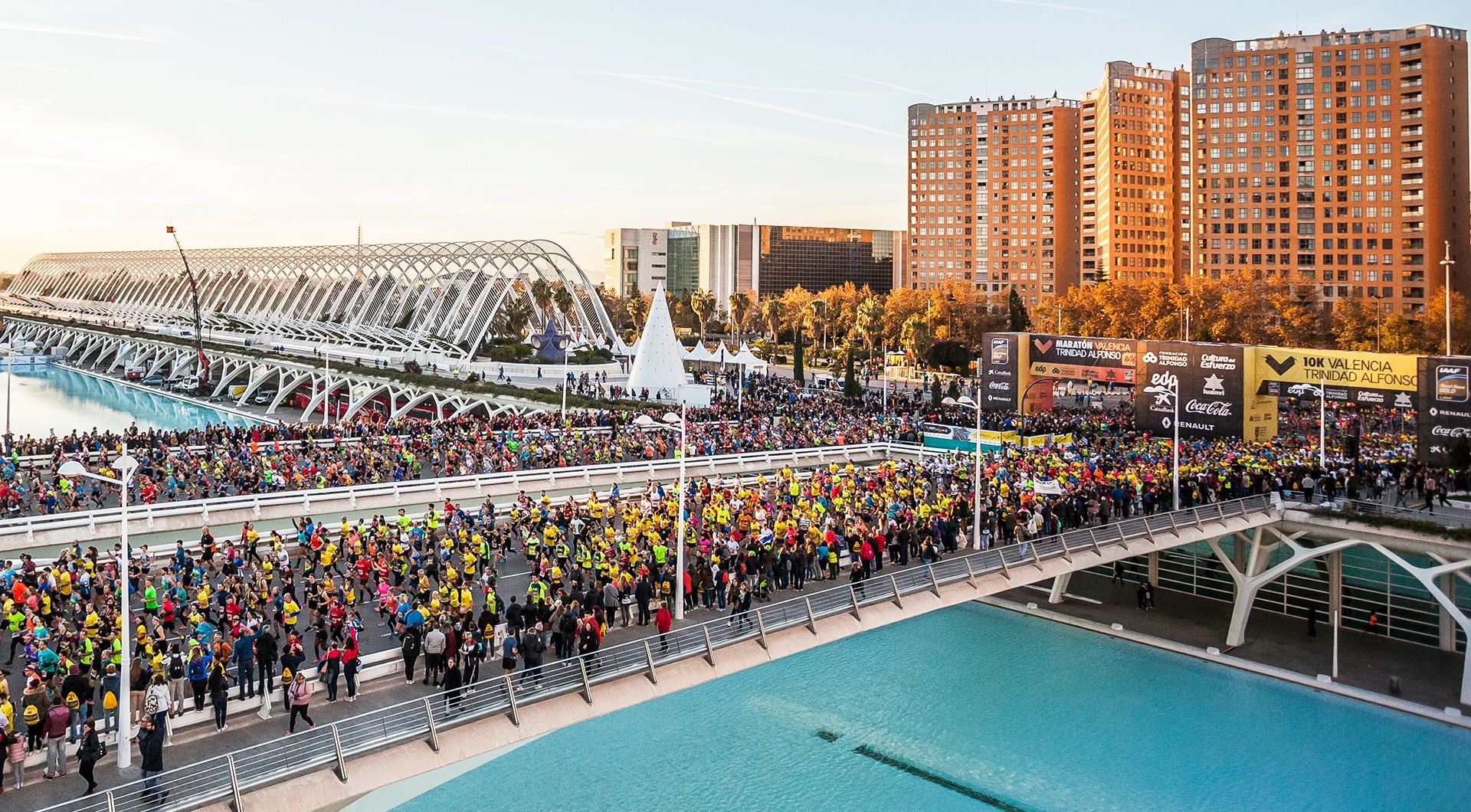
He is the only person besides the great Kenenisa Bekele to win both the world cross-country title and the world or Olympic 10,000m title in the same year (Bekele did it three times in a row–in 2003, 2004 and 2005).
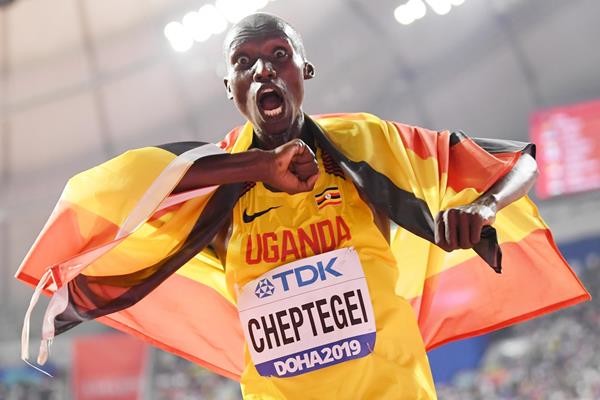
The current 10K world record was set by Leonard Patrick Komon of Kenya at 26:44 at Utrecht in the Netherlands in 2010, and it was Komon who held the previous record in the 15K also.
Cheptegei is a member of the NN Running Team, which also includes marathon world record-holder Eliud Kipchoge and several of the men who paced him at the INEOS 1:59 Challenge, where he successfully ran the marathon distance in 1:59:40.
Cheptegei has been nominated for IAAF Male Athlete of the Year, the first Ugandan to be honored in this way.
by Anne Francis
Login to leave a comment

10k Valencia Trinidad Alfonso
Around the corner we have one more edition of the 10K Valencia Ibercaja, organized one more year by the C. 10K VALENCIA Athletics premiering the running season in Valencia. It is a massive urban race with more than 3,000 registered annually of 10 kilometers, where the maximum duration of the test will be 1 hour 40 minutes (100 minutes). The...
more...
Frankfurt Marathon champion Valary Aiyabei is targeting the women's only world record held by Mary Keitany of 2:17:01 during the 2020 season
Aiyabei, who is a former Beijing Marathon champion, has thrown her hat in the ring and is seeking to conquer any of the six World Marathon Majors (WMM) course in 2020 alongside making it to the Kenya team for the Tokyo Olympic Games.
The 28-year-old ran the fifth-fastest women's marathon time in Frankfurt last Sunday after recording 2:19:10 to break the previous course record of 2:20:36 set by Ethiopia's Meskerem Assefa in 2018.
"I know I can run faster. I now target the women's record of Keitany, which was set two years ago in London. Then maybe I can start dreaming of challenging Brigid Kosgei's women's marathon record," Aiyabei said on Thursday in Nairobi after arriving from Frankfurt.
It has taken over a decade for Kosgei to break the women's all-time world record of 2:15:25 set by Paula Radcliffe in London back in 2003. Kosgei clocked 2:14:01 to break the 16-year-old mark.
"My plan is to break the record in any of the World Marathon Majors. I will plan with my coaches to see which race is convenient for me and my mission," Aiyabei added.
New York, Berlin, Tokyo, Chicago, Boston, and London races form the WRR series with the Olympics and World Championships being part of the circuit.
But Aiyabei hopes her performance in Frankfurt will open doors for her to secure a call to run in either Tokyo, Boston or London in April.
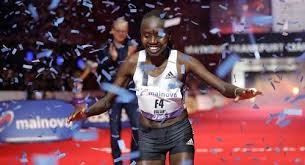
"That record can be broken. But it's rather safe to start with the women's only record and then push for Kosgei's mark later. It all depends on one's mental strength, psyche and how you train. I have a dream to lower Kosgei's record and I believe with God's blessings, it will come to pass," added Aiyabei.
Already Kosgei has called out on sponsors to fund her training to try and make history, similar way Olympic Champion Eliud Kipchoge did in Vienna with the INEOS 1:59 Challenge.
"I believe women can run below two hours and ten minutes," said Kosgei. "I can run faster than the time I set in Chicago."
That spirit has also given Aiyabei the belief she can control her own destiny and push herself to break the world record.
"Kosgei's feat was very inspiring and I have decided to emulate her and make another step in my career," she said.
by
Login to leave a comment
Tokyo 2020 Olympic Games
Fifty-six years after having organized the Olympic Games, the Japanese capital will be hosting a Summer edition for the second time, originally scheduled from July 24 to August 9, 2020, the games were postponed due to coronavirus outbreak, the postponed Tokyo Olympics will be held from July 23 to August 8 in 2021, according to the International Olympic Committee decision. ...
more...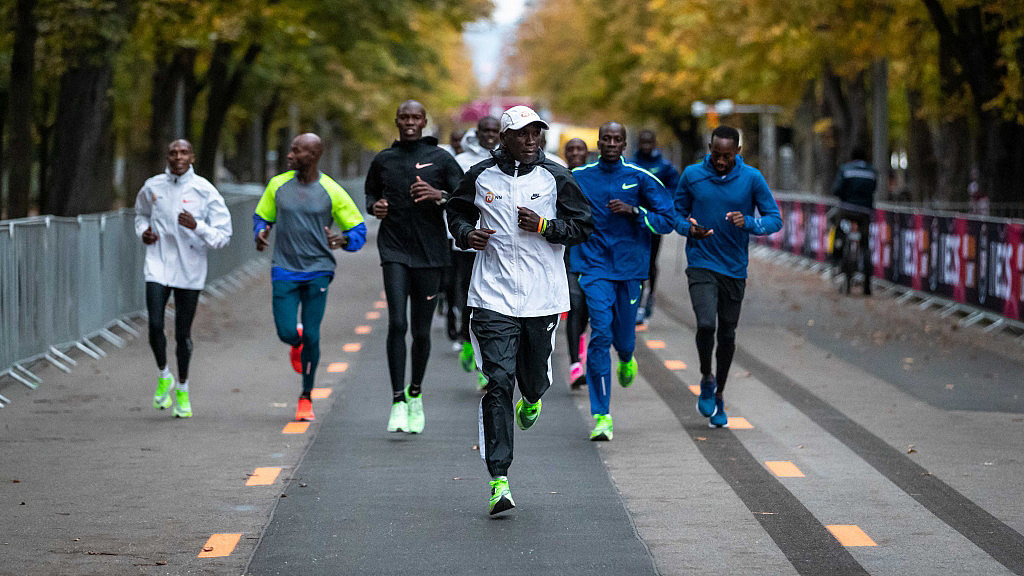
Eliud Kipchoge has an even better chance to break 2 hours in the marathon, according to scientists
A team of respected running scientists from Vienna, Boulder, Sacramento and Houston has just released a paper analyzing the marathon course Eliud Kipchoge will run Saturday morning in Vienna in the Ineos 1:59 Marathon Challenge. The paper concludes that the layout is only 4.5 seconds slower than what would be expected from a perfectly straight, perfectly flat course.
“Our simulation indicates that the Vienna course was well chosen for optimizing performance,” said the researchers in a paper entitled: The effects of course design (elevation undulations and curves) on marathon running performance: an a priori study of the INEOS 1:59 Challenge in Vienna.
Kipchoge’s manager, Jos Hermens, recently told us that Kipchoge is in better shape than two years ago, and that he learned from the Nike event and will benefit from better handling of the pace car and his sports drinks.
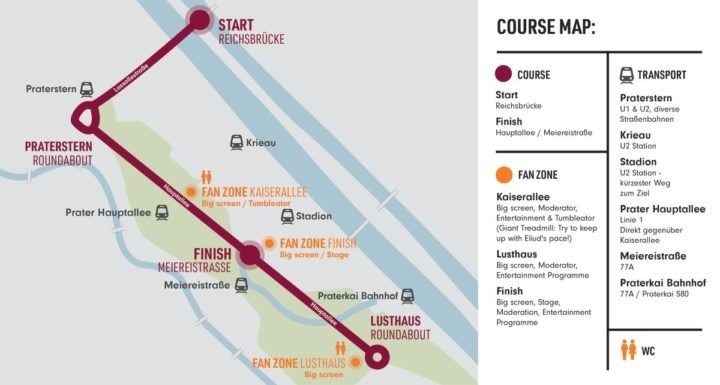
Kipchoge hopes to run 1:59:xx early on Saturday, October 12 in Vienna in an unofficial, non-record-eligible time-trial similar to the Nike Breaking2 event he raced in May, 2017, on an auto track in Monza, Italy. There he hit halfway in 59:59, and snapped the tape in 2:00:25—the fastest running time ever for the 26 mile, 385 yard marathon distance.
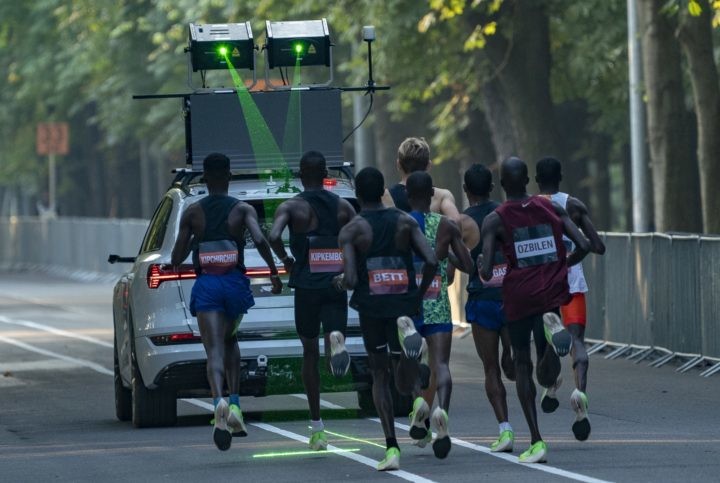
Kipchoge’s performance in Monza did not count as an official world record, because he had a pace car, a large, rotating group of pacers, and received help with his drinks, among other violations of official IAAF competition rules. The Vienna race will follow suit in many ways, and likewise not be eligible for world-record status. That doesn’t lessen the excitement and intrigue among running fans.
Kipchoge and his INEOS sponsors are hoping that better weather and that loud spectator support will help him in Vienna. In Italy, he ran with temps in the upper 50s, slightly humid. According to weather forecasts, Vienna could be 5 to 10 degrees F cooler, with somewhat lower humidity. Wind was not an issue in Monza, and isn’t expected in Vienna.
The Vienna course begins on the Reichbruecke Bridge (over the Danube River; also the start of the annual Vienna Marathon) and drops 40 feet in the first 1.4K. It then enters Prater Park for four out-and-back 9.625K loops, mostly on the straight-as-an-arrow, pedestrian-only Hauptallee Road, in the shadow of the iconic Prater ferris wheel. This road has small up-and-down undulations of about 8 feet.
Importantly, the straightaways do not reverse direction with abrupt, momentum-killing U-turns. At both ends, Kipchoge and pacers will take longish, gentle “roundabouts.” One is called the Praeterstern and has a circumference of 870 meters. The other, the Lusthaus, has a circumference of 210 meters.
After the four loops of the Hauptallee and roundabouts, the course begins a fifth loop. This ends 2.3K later at the finish, which is a net 43 feet below the start.
The roundabouts are so easy to navigate that the science team estimates Kipchoge will lose only 0.5 seconds (at 4:34/mile pace) due to cornering. At Monza, they estimate he lost 1.5 seconds on the winding course.
They didn’t have enough data from Monza to estimate time lost to the slight ups-and-downs. In Vienna, this should amount to about 4 seconds.
Two weeks ago, a Danish group named Albatros Adventure Marathons tried to scoop the 1:59 effort with its “World’s Fastest Marathon” near Granada Spain. The open race started at 8,546 feet in the Sierra Nevada mountain range, and dropped 6358 feet to the city finish. A little-known Kenyan named Antony Karinga Maina passed the halfway point in 59:30, but then slower to a winning 2:09:38. Four months earlier, Maina had run 2:22:38 in the Salzburg Marathon.
In recent years, a number of downhill marathons have appeared to help runners qualify for the Boston Marathon. The Revel marathon series includes a handful of marathons with elevation drops of 2000 to 4000 feet. Physiologists believe that long, steep downhills lead to debilitating quadriceps muscle damage, and that half as much drop might be better.
by Amby Burfoot
Login to leave a comment
INEOS 1:59 Challenge
Mankind have constantly sought to reach new frontiers and to achieve the impossible. From Edmund Hillary reaching the summit of Mount Everest to Roger Bannister’s four-minute mile to Felix Baumgartner jumping from space we have frequently redefined the limits of human achievement and broken new barriers previously seen as simply impossible. After the four-minute mile and the ten second 100m...
more...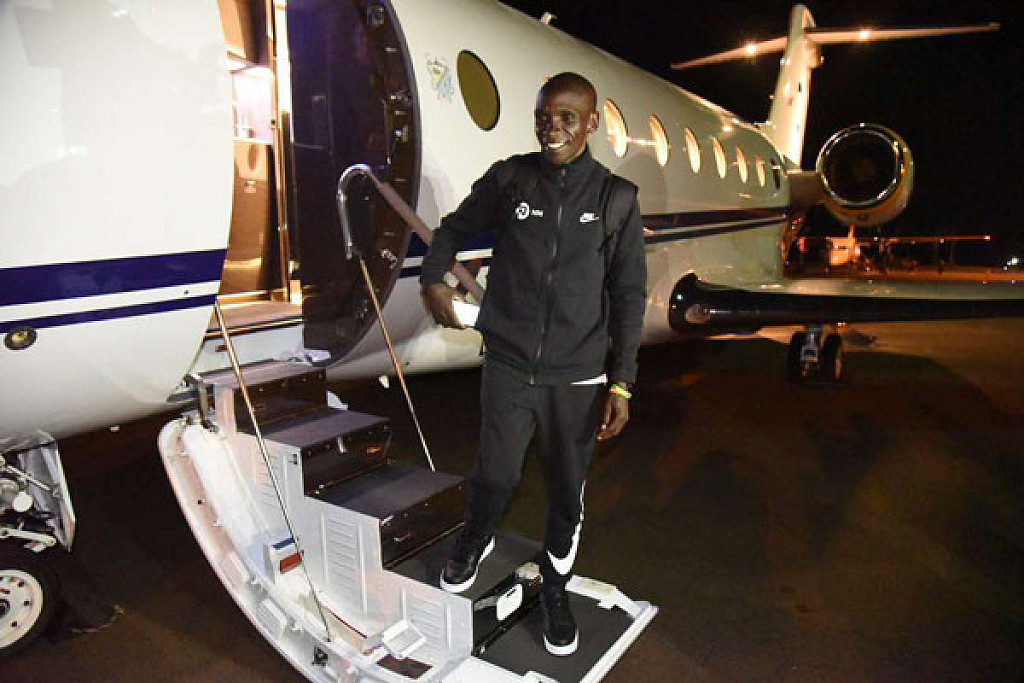
Eliud Kipchoge and his technical team are expected to land in Vienna Tuesday for the INEOS 1:59 Challenge this weekend
World marathon record holder Eliud Kipchoge and his technical staff are expected to land in Vienna Tuesday morning ahead of the “INEOS 1:59 Challenge” this weekend.
The Olympic marathon champion was Monday night treated to the affluence that one of Great Britain’s richest persons, Sir Jim Ratcliffe, is accustomed to.
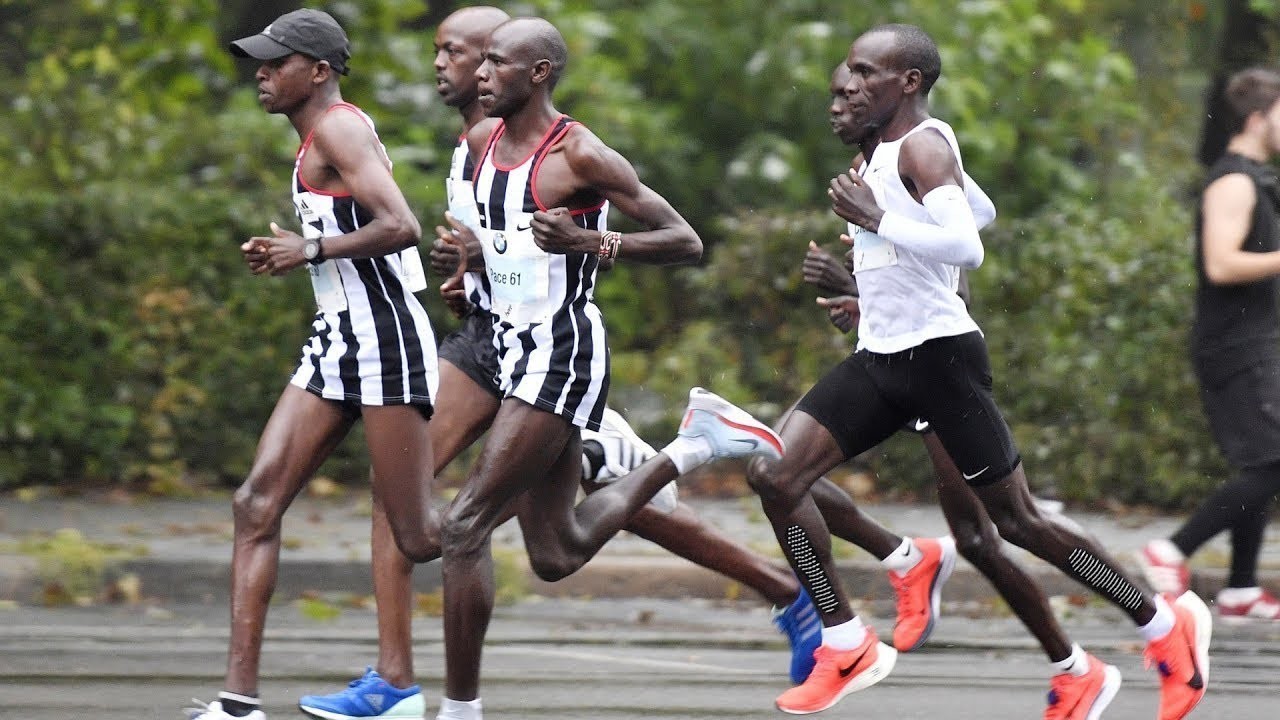
Kipchoge left for Vienna aboard Sir Jim’s Gulfstream G280, which was flown by two pilots from his British base to fly Kipchoge to the Austrian capital.
The jet, valued at $24.5 million, has got Kenyans on social media talking about Kipchoge's attempt to become the first man to run the 42-kilometer distance in under two hours this weekend.
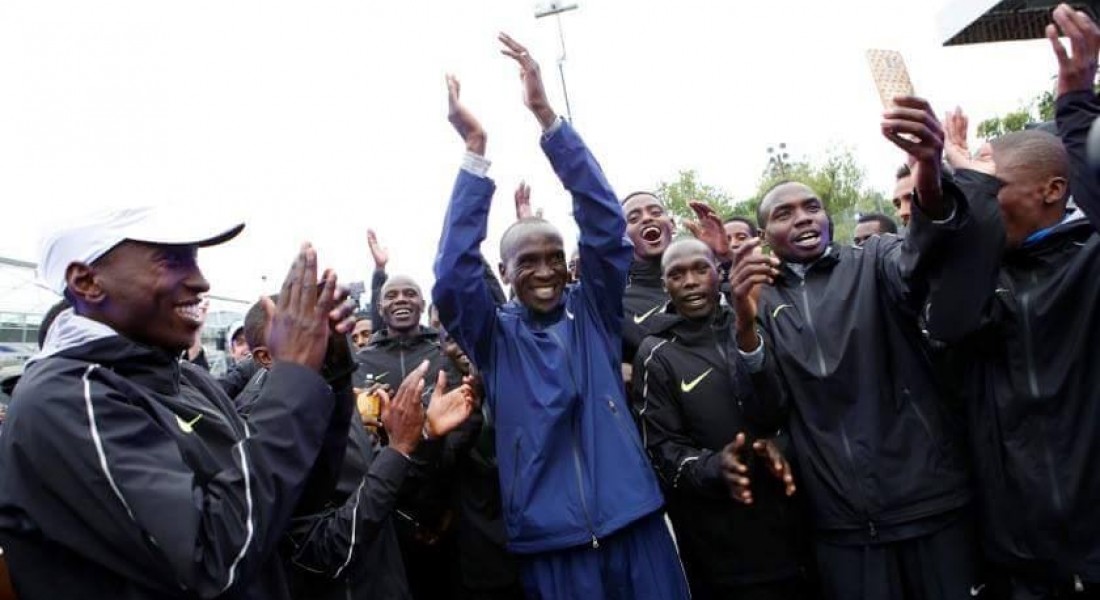
"Eliud Kipchoge" is like a human machine. Pride of Kenya and the son of the Land. There is Mursik waiting for you Legend. Know that you inspire many across the board."
"The fact that Eliud Kipchoge is attempting the INEOS 1:59 record affirms his place in the annals of athletics history. The attempt alone is enough, the victory would be a bonus. He is no longer running against man, he is running against time."
"No longer running against other men, he's running against time. INEOS1:59. KENYA is proud of you Eliud kipchoge. See you on 12th Oct 2019."
Login to leave a comment
INEOS 1:59 Challenge
Mankind have constantly sought to reach new frontiers and to achieve the impossible. From Edmund Hillary reaching the summit of Mount Everest to Roger Bannister’s four-minute mile to Felix Baumgartner jumping from space we have frequently redefined the limits of human achievement and broken new barriers previously seen as simply impossible. After the four-minute mile and the ten second 100m...
more...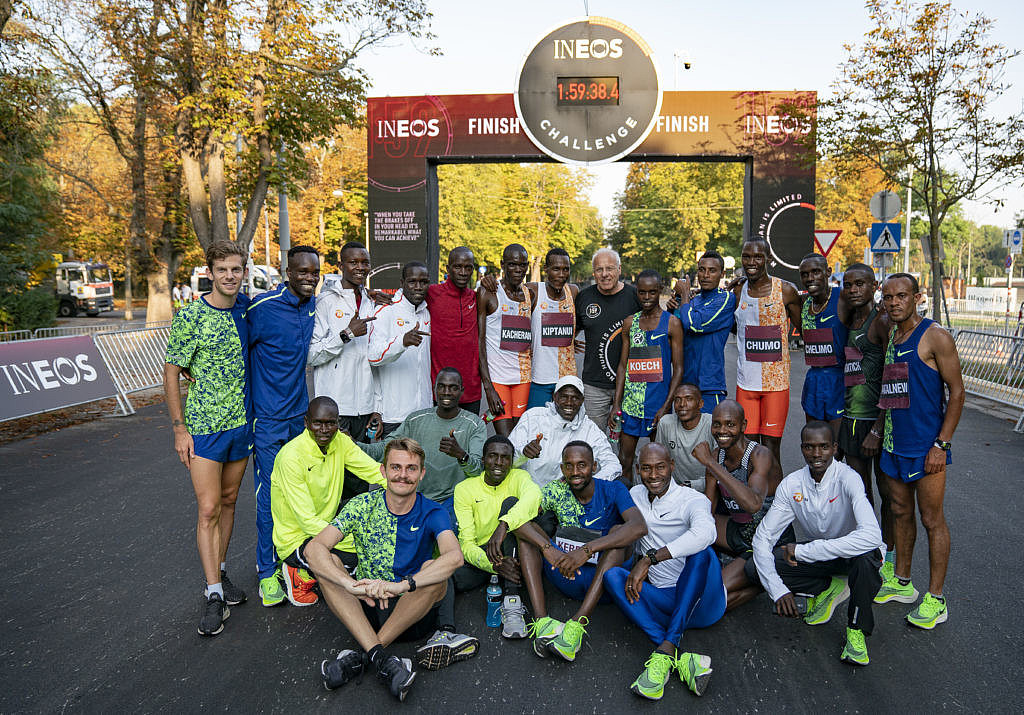
Viewers around the world will be able to watch Eliud Kipchoge's sub-2 marathon attempt on YouTube
Marathon world record-holder Eliud Kipchoge’s attempt to run a sub-two-hour marathon, also known as the INEOS 1:59 Challenge, will be broadcast live on YouTube from Vienna on October 12 or thereabouts, it was announced today.
(The event is scheduled to take place on October 12, with the option to delay as long as necessary until October 20 depending on weather conditions.)
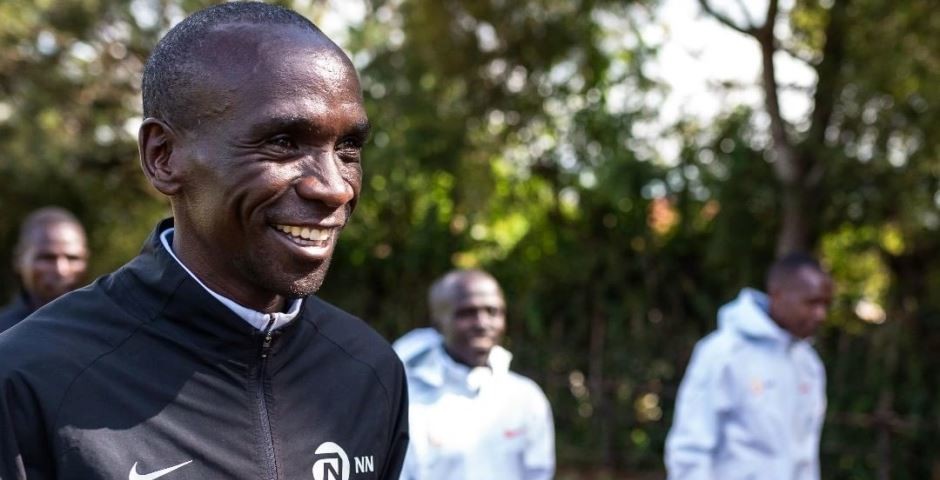
The British company Sunset+Vine will broadcast the proceedings via YouTube, making it accessible anywhere in the world with an Internet connection. Viewers will also be able to follow a range of content being aired simultaneously on the INEOS 1:59 Challenge site.
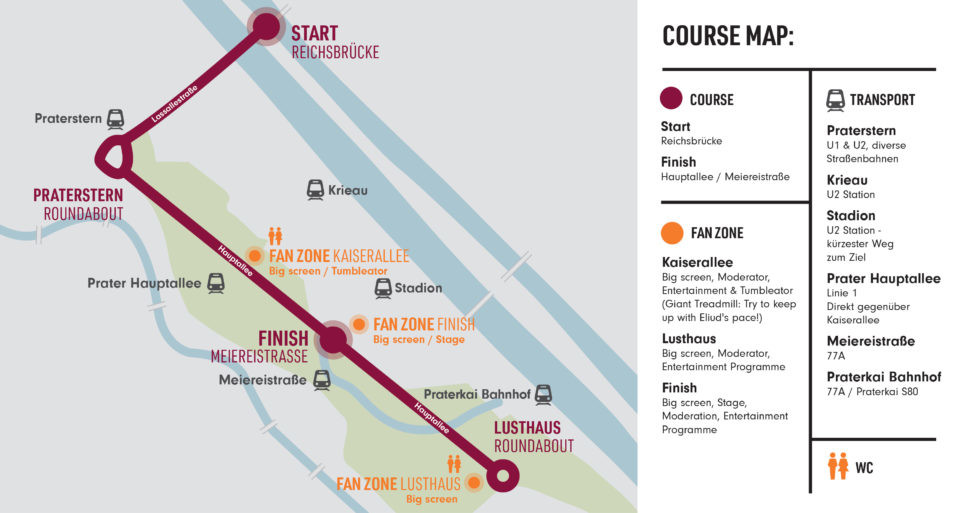
Those fortunate enough to find themselves in Vienna can watch the proceedings live in person along the Hauptallee boulevard in Vienna’s famous park, the Prater.
Fan zones with screens and entertainment will be set up at the junction of the Hauptallee and the Kaiserallee, and at the Lusthaus roundabout. The finish line is located near the junction of the Hauptallee and the Meiereistraße.
by Anne Francis
Login to leave a comment
INEOS 1:59 Challenge
Mankind have constantly sought to reach new frontiers and to achieve the impossible. From Edmund Hillary reaching the summit of Mount Everest to Roger Bannister’s four-minute mile to Felix Baumgartner jumping from space we have frequently redefined the limits of human achievement and broken new barriers previously seen as simply impossible. After the four-minute mile and the ten second 100m...
more...