

Running News Daily
Running News Daily is edited by Bob Anderson and team. Send your news items to bob@mybestruns.com Advertising opportunities available.
Index to Daily Posts · Sign Up For Updates · Run The World Feed
Articles tagged #Beaverton
Today's Running News
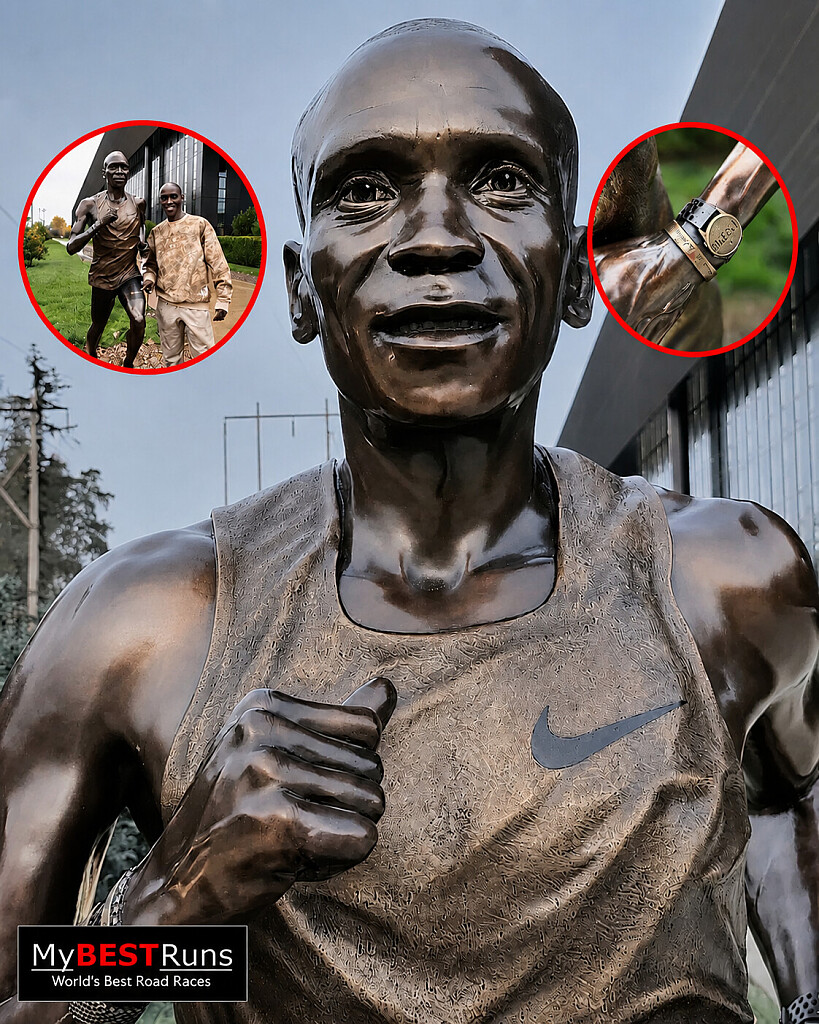


The Statue That Predicted History: How Kipchoge’s ‘No Human Is Limited’ Became Reality
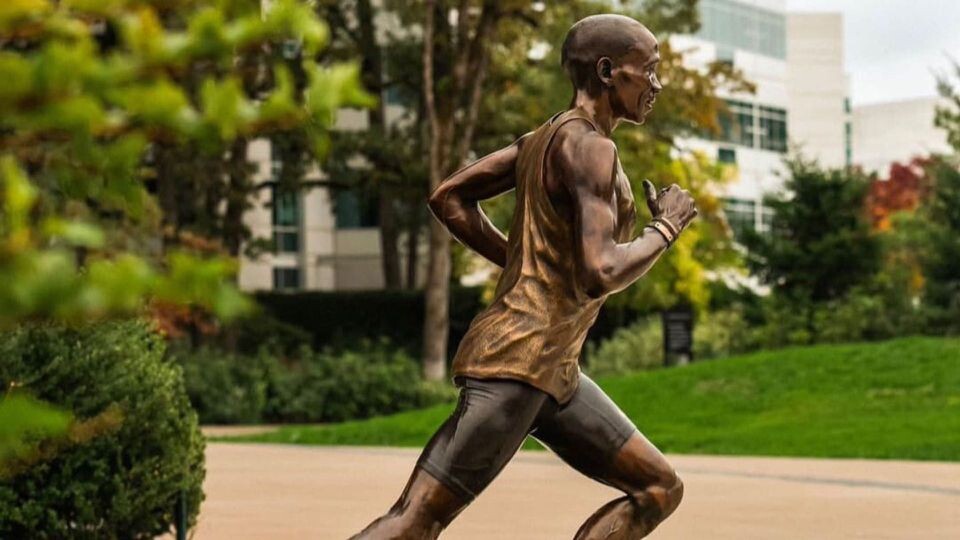
Inside Nike’s World Headquarters in Beaverton, Oregon, a bronze figure stands frozen in motion.
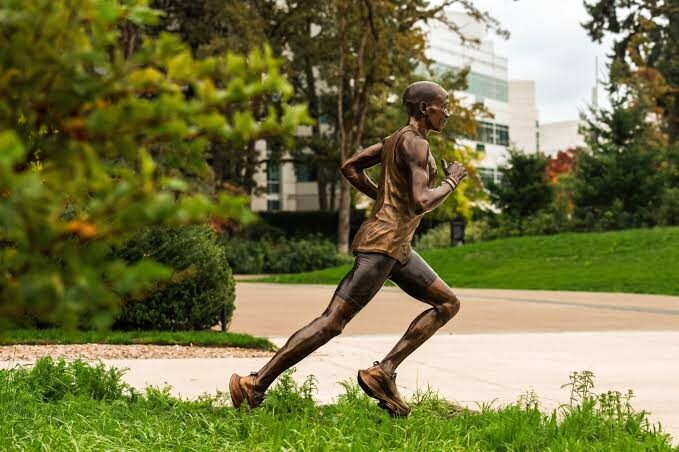
It is Eliud Kipchoge — captured in his unmistakable running posture, every detail carefully sculpted to resemble the Kenyan marathon legend at full stride. But this is more than a statue. It is a permanent reminder of a barrier that once seemed beyond human reach.
Created by Oregon artist Alison Caswell and commissioned by Nike, the life-size bronze sculpture was unveiled in October 2023 as part of the company’s celebration of its 20-year partnership with Kipchoge. Nike described the statue as a tribute to his signature gait and unique running style.
Look closely, however, and the sculpture tells an even deeper story.
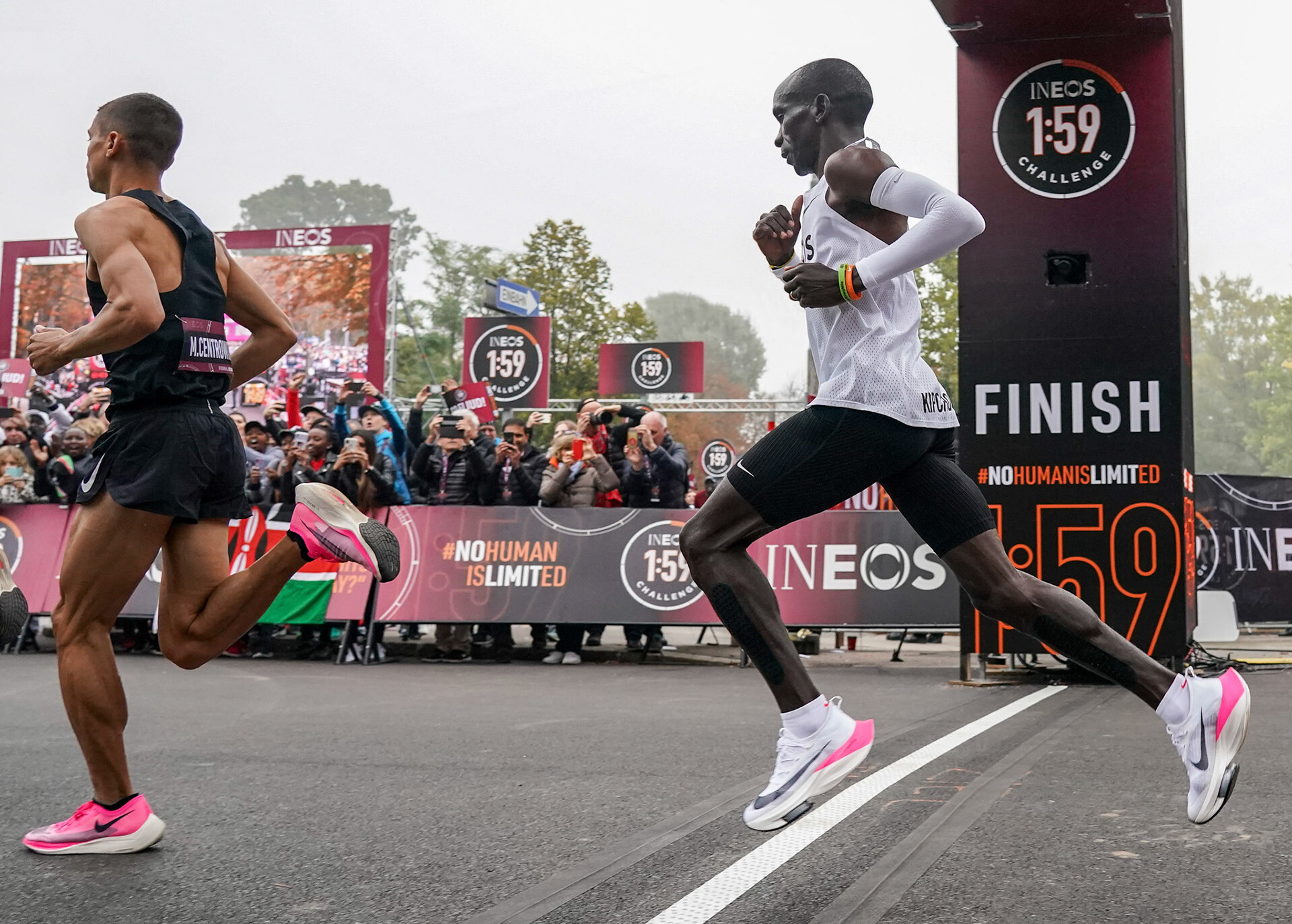
The watch on Kipchoge’s wrist displays 1:59:40, recalling the extraordinary morning of October 12, 2019, when he became the first person to run the marathon distance in under two hours during the INEOS 1:59 Challenge in Vienna.
His official recorded time was 1:59:40.2.
The achievement came under specially controlled conditions, with 41 pacemakers rotating in formations around him and extensive logistical support designed specifically for the attempt. Because it was not a standard record-eligible marathon, the performance was not recognized as an official world record. But its significance went far beyond the record books.
On the statue's left wrist is another detail that carries perhaps even greater meaning.
The wristband bears Kipchoge's famous philosophy:
“No human is limited.”
Those four words became synonymous with his pursuit of the impossible. In Vienna, they were no longer simply a slogan. Kipchoge had demonstrated that a boundary which had appeared almost untouchable could, under the right circumstances, be broken.
Four years later, the bronze figure remained in place at Nike's headquarters — but the marathon world had changed dramatically.
In October 2023, Kelvin Kiptum lowered the official men's marathon world record to 2:00:35 in Chicago, bringing the sport closer than ever to the barrier Kipchoge had already conquered unofficially in Vienna.
Then came April 26, 2026.
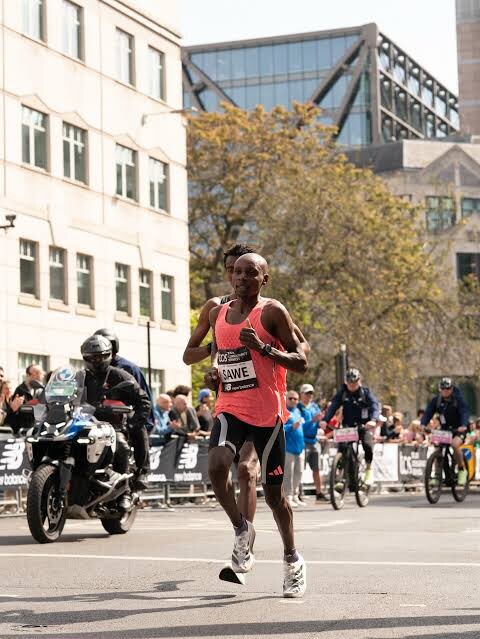
On the streets of London, Kenya's Sabastian Sawe entered territory that had previously belonged only to Kipchoge's extraordinary exhibition achievement.
Sawe won the London Marathon in 1:59:30, becoming the first man to officially complete a record-eligible marathon in under two hours. He also erased Kiptum's world record by 65 seconds. World Athletics subsequently ratified the performance as the official men's marathon world record.
And remarkably, Sawe did it in an ordinary competitive marathon — not on a specially designed course, not with rotating pacemakers, and not under the unique conditions of the 2019 INEOS challenge.
The symbolism is difficult to miss.
When Nike unveiled Kipchoge's statue in 2023, the 1:59:40 engraved on its wrist represented a moment when humanity had first stepped beyond the two-hour marathon barrier.
Today, that number represents something different.
It is no longer the fastest anyone has ever run 42.195 kilometres.
Instead, it has become part of the history that led to something even greater: the first officially recognized sub-two-hour marathon.
Kipchoge opened the door in Vienna.
Kiptum pushed the official world record closer.
And Sawe eventually walked — or rather, ran — through the door.
The bronze statue in Beaverton has not moved. Its watch still points to 1:59:40, and its wristband still carries the words “No human is limited.”
But the meaning of those words has grown.
What once looked like a statement of belief now reads like a prediction.
The statue was built to celebrate what Kipchoge had already achieved.
History has since given it another purpose: to remind the world that yesterday's impossible can become tomorrow's starting point.
by Erick Cheruiyot for My Best Runs.
Login to leave a comment
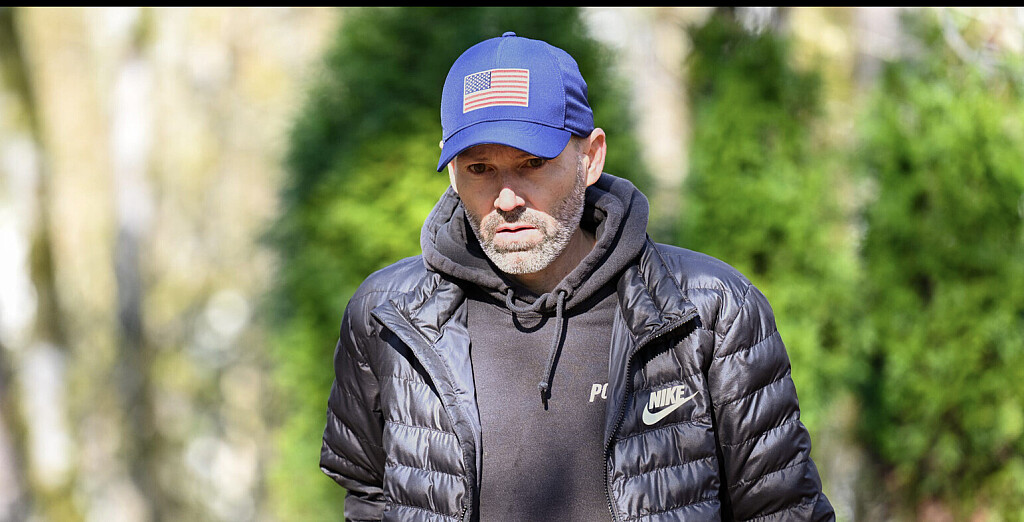
Nike Continues Shuffle of Pro Coaches
Pete Julian’s Union Athletics Club will move to Colorado.
In the latest move by Nike to reconfigure its pro running teams, Pete Julian’s Union Athletics Club will move from Oregon to Colorado, sources tell Runner’s World.
This move comes two weeks after it was announced that Mike Smith would leave his post at Northern Arizona University in June 2025 to start a Nike pro group.
Julian, reached by text by Runner’s World, did not deny the team was making the move but said he was unable to comment. Media relations representatives at Nike acknowledged questions from Runner’s World on July 19 and again on August 12, but they did not reply with any further information about the group’s move.
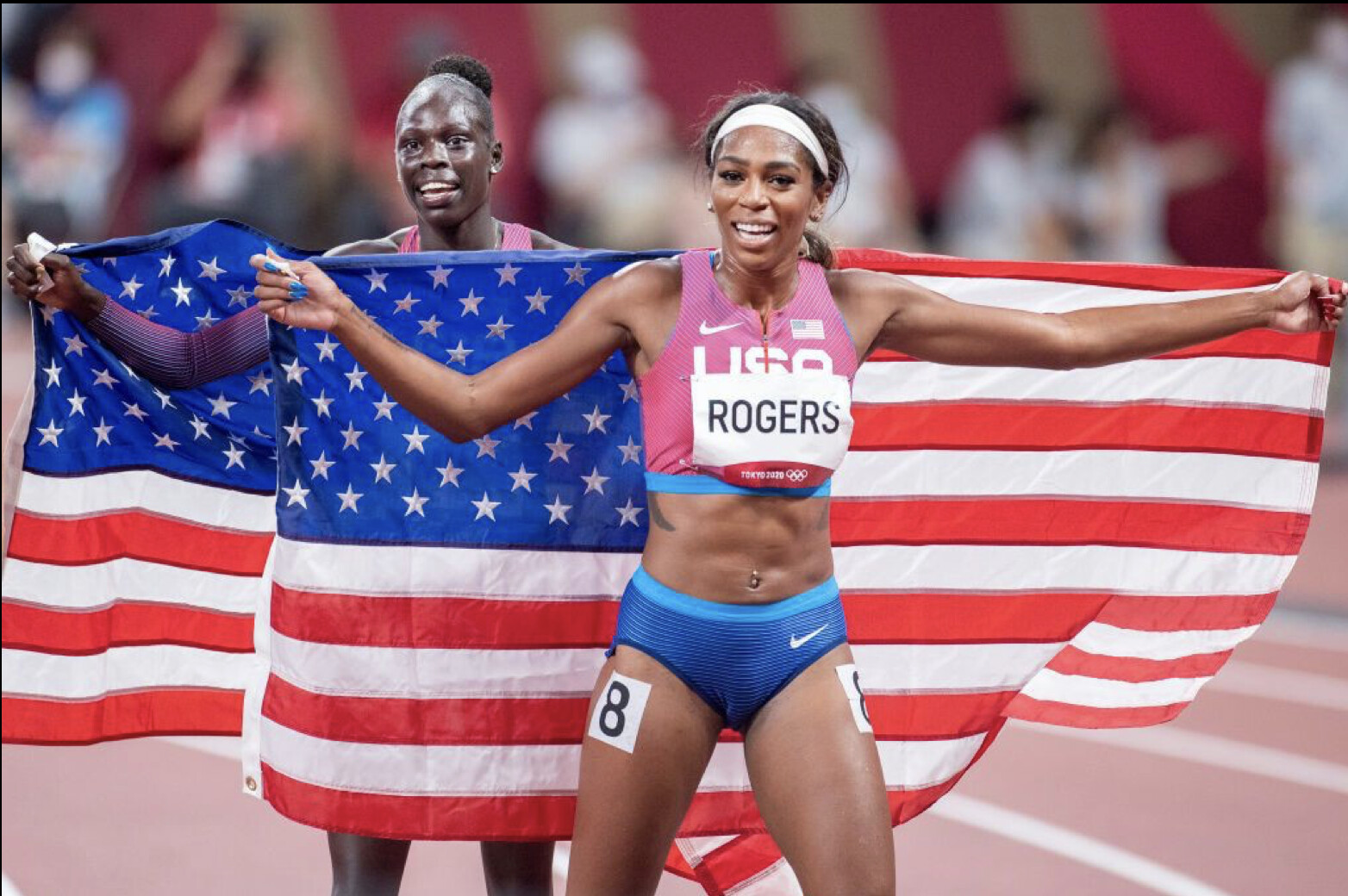
UAC’s 10 current athletes compete at a range of events. They include Raevyn Rogers, the 2021 Olympic bronze medalist in the 800 meters, and Sinclaire Johnson, the 2022 U.S. champion in the 1500 meters. Suguro Osako, a marathoner from Japan, is also listed on the roster; he finished 13th at the Olympics in Paris in 2:09:25.
It is unclear if all the athletes will go to Colorado with Julian. A message to Rogers via social media was not immediately returned. Rogers has strong ties to Oregon; she went to the University of Oregon and won five individual NCAA titles there. Her image graces the tower at Hayward Field in Eugene, and she is not known to have spent much time training at altitude, if any.
Depending on where in Colorado the group lands, athletes could be training at at least 5,200 feet of elevation. Altitude training is increasingly seen as essential for elite distance runners. Boulder, Colorado, which has long been a mecca for distance athletes, is already crowded with pros: On Athletics Club has a sizable pro group there, as does Team Boss, a group of elite distance runners anchored by steeplechaser Emma Coburn, who runs for New Balance.
Coaching and athlete turnover is common after the Olympic Games. Most pro athletes have contracts that take them through the end of the Olympic year, and some have an option in their contracts that allows a sponsor to sign them for an additional year.
Several high profile athletes have left the UAC in recent years. Jessica Hull returned to her native Australia and trains under her father; she won a silver medal in Paris. Donavan Brazier had great success under Julian in 2019, but LetsRun reported he left the UAC in 2024 after undergoing a fourth surgery on his left foot and lower leg. Fan favorite Craig Engels is now living in California and training under his college coach, Ryan Vanhoy.
Julian’s wife, Colleen Glyde Julian, is a professor of biomedical informatics at the University of Colorado’s medical school in Aurora, Colorado. He has long commuted to Portland, Oregon, from Denver several times each week for athlete workouts in Beaverton.
by Runner’s World
Login to leave a comment
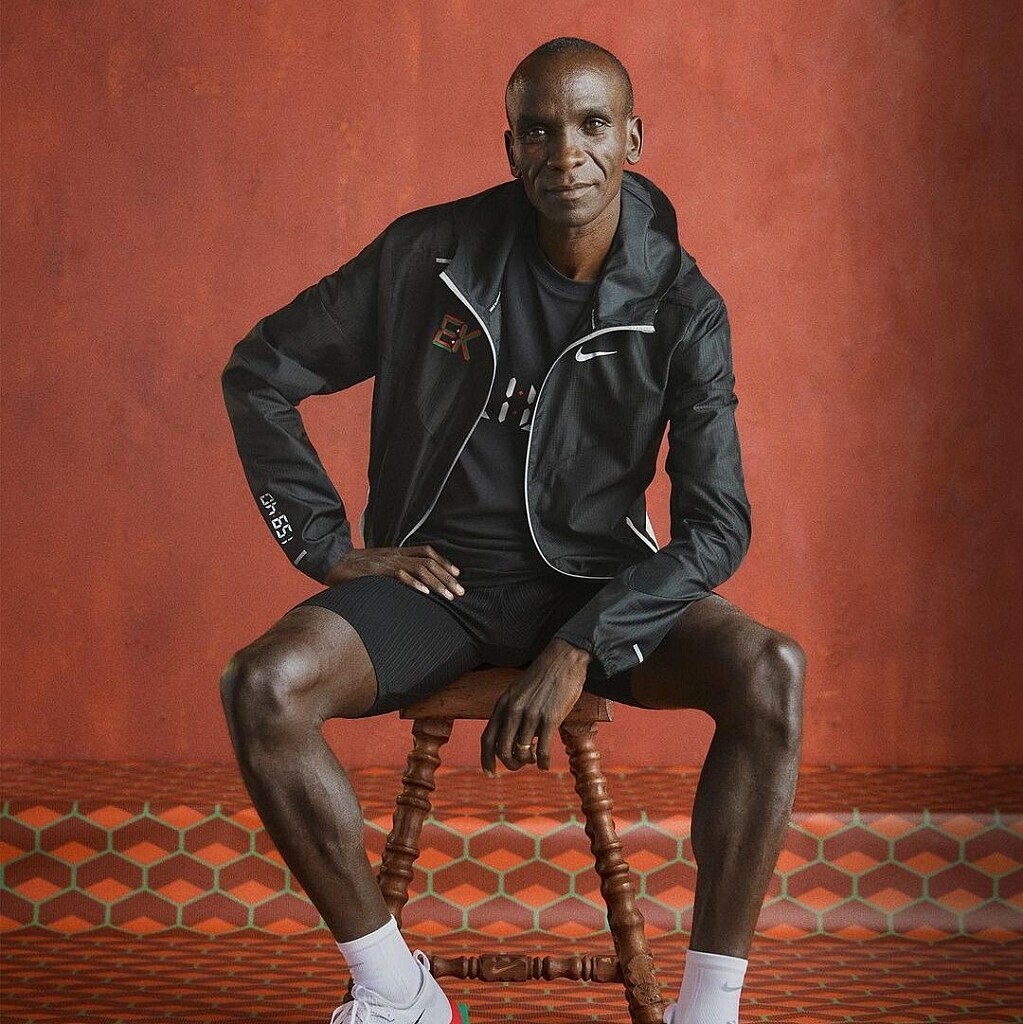
Nike honor Eliud Kipchoge with a track and statue in the US
Eliud Kipchoge has been honored by his sponsor, Nike, with a track under his name and a statue at the headquarters in Beaverton.
Former World marathon record holder Eliud Kipchoge expressed his gratitude to his sponsors, Nike, after they honored him with a track and a statue.
Nike unveiled the Eliud Kipchoge Track at the Nike European Headquarters in the Netherlands and his statue at the Nike headquarters in Beaverton.
He took to his Instagram page to express his joy saying: “Monday was a special celebration as we unveiled the Eliud Kipchoge Track at the Nike European Headquarters in the Netherlands, while at the same time, Nike revealed a statue of me at the headquarters in Beaverton. Thank you, Nike, for the great partnership, together we run as one.”
Kipchoge also went down memory lane to the time he signed with Nike back in 2003. He expressed gratitude to the sponsors for their unwavering support throughout his career.
He added that working together has helped them be a source of inspiration to every athlete in the world.
“20 years ago, Nike and I became partners in running. Since 2003, Nike has played a crucial role in my career, providing inspiration and innovation. Together, we have brought these elements to every athlete in the world.”
Since signing with Nike, the five-time Berlin Marathon champion has marked tremendous milestones in his career from winning two Olympic titles in the marathon to becoming the first man in history to win the Berlin Marathon five times.
Kipchoge is also a four-time London Marathon champion and he became the first man in history to run a marathon under two hours. He also managed to break the marathon world record twice.
On October 12, 2019, in Vienna's Prater Park, he clocked 1:59:40 to win the race, becoming the first person in recorded history to break the two-hour barrier over a marathon distance.
The effort did not count as a new world record under the World Athletics rules due to the setup of the challenge.
by Abigael Wuafula
Login to leave a comment
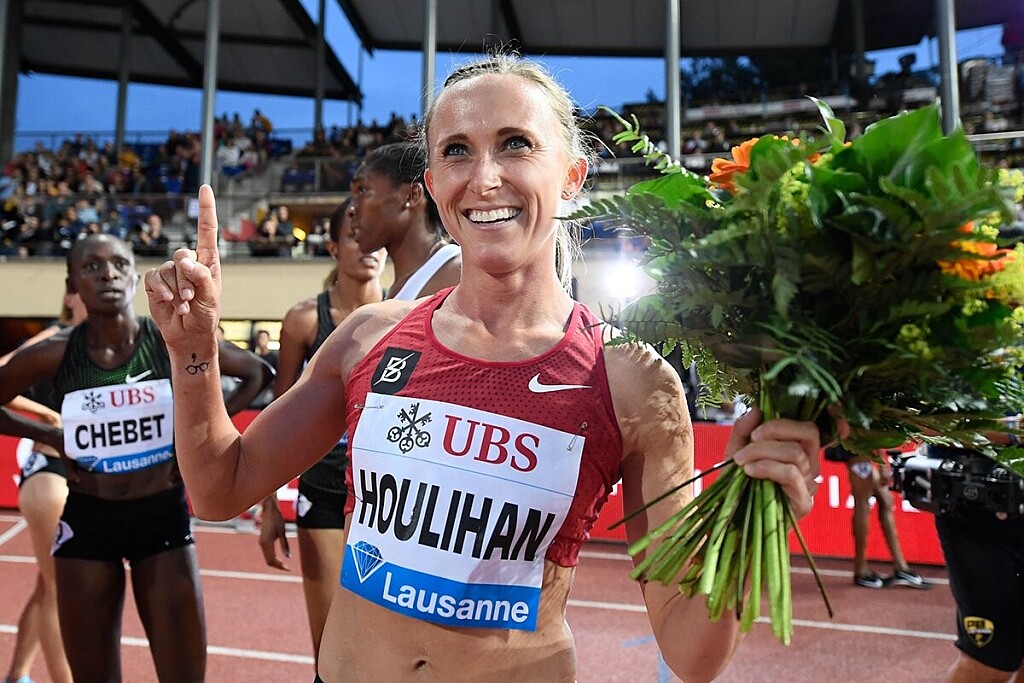
An Olympian, a burrito, a failed drug test: Former ASU runner Shelby Houlihan looks to rebound after doping ban
On a cloudy, characteristically cool December night in Beaverton, Oregon, Shelby Houlihan, the American record holder in the 1,500 and 5,000 meters, accompanied Courtney Frerichs, the Olympic silver medalist in the steeplechase, and Frerichs’ sister, Lindsey, to an authentic Mexican food truck near her home.
The three ordered carne asada burritos and returned to Houlihan’s house to eat and watch “The Bachelorette.”
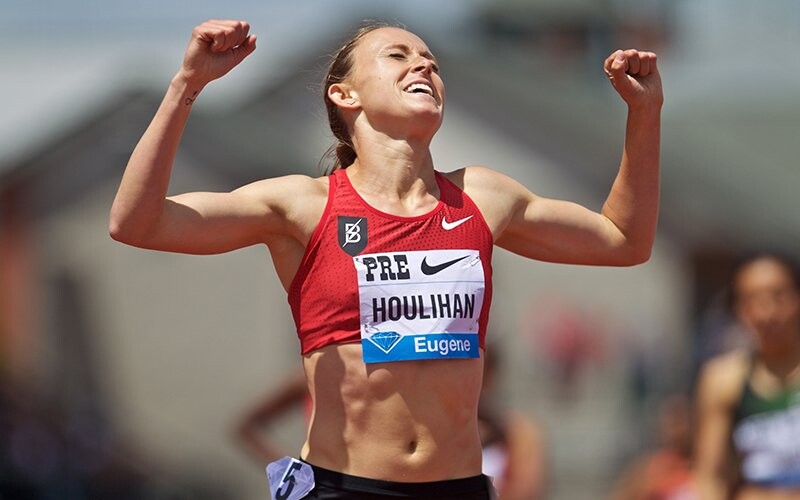
The next morning, on Dec. 15, 2020, the former Arizona State standout was given a random drug test. Weeks later, in mid-January, Houlihan was notified in an email from the Athletics Integrity Unit (AIU) that her urine sample revealed the presence of 19-norandrosterone (19-NA), a metabolite produced by the substance nandrolone – an anabolic steroid prohibited by the World Anti-Doping Agency (WADA).
She was issued a provisional suspension, which set off a cascade of events that led to a four-year ban, knocked her out of the U.S. Olympic Trials leading up to the Tokyo Olympics and will bar her from competing until January 2025 when she will be almost 32.
It is, Houlihan said, “an athlete’s worst nightmare.”
Houlihan, 29, has lost the financial support of Nike. She also saw former teammate Gabriela DeBues-Stafford leave the club rather than risk sanctions because of the Bowerman Track Club continued relationship with Houlihan.
Houlihan said her initial response to the positive test was “shock and disbelief.” She wondered, “How am I going to explain (the presence of a banned substance) when I don’t even know where it came from myself?”
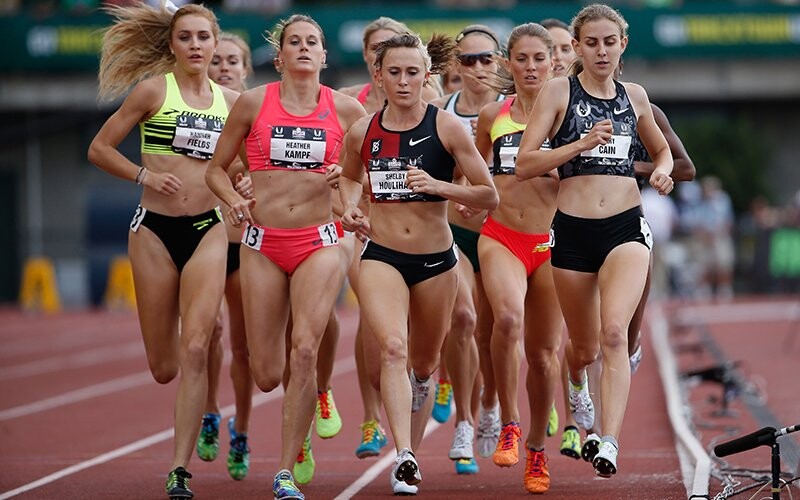
Houlihan was at a high-altitude training camp in Flagstaff when she received the email.
“I opened up my phone to an email that was urgent, confidential and … it was this lab report of scientific words that I could not read,” Houlihan told Cronkite News.
The Sioux City, Iowa, native said she read the email over about 10 times and had to Google which substance triggered the positive test, because she had never heard of nandrolone.
Then she called Jerry Schumacher, her coach at BTC, the professional Nike club that Houlihan had trained with since graduating from ASU in 2015.
“I’m just sobbing and trying to tell him what’s going on, but crying too hard,” Houlihan said.
The long road
Today, Houlihan lives alone in Portland and said she has relied on her former BTC teammates, her boyfriend and her family for support. She does odd jobs, including food delivery, and continues to train with the hope of returning to competition at an elite level.
It is not a situation she envisioned growing up in Sioux City, Iowa, surrounded by runners, including her mother, Connie, and her uncle, Bob Prince, who competed in college.
After winning several state titles at Sioux City East High School, Houlihan continued her success at Arizona State, where she won the NCAA 1,500 meters in 2014 and finished as a 12-time All-American, the second-most in program history.
She holds five school records: the outdoor 800 and 1,500 meters, and the indoor 800, mile and 3,000.
That success set the stage for 2016 Summer Olympics, where she finished 11th in the 5,000 meters and was the highest-placing U.S. runner in the race.
She also finished fourth in the 1,500 meters and set the American record at the 2019 World Outdoor Championships.
More Olympic success felt inevitable.
Shock and disbelief
Elise Cranny, a close friend and former Bowerman teammate of Houlihan’s, remembers that news of the positive test “didn’t really sink in” at first.
“I came back to the house, and I was like, ‘Man, something is very off … something is not right,’” said Cranny, who was living with Houlihan during the camp. “I think the initial reaction from everyone was disbelief, and like, ‘Oh, this is something that’s going to get figured out’ because it’s seriously wrong.”
Schumacher and Houlihan called attorney Paul Greene to “just try to figure out a game plan” and investigate further what could have happened.
The first step was a pregnancy test because nandrolone can be found in pregnant women. After she determined she wasn’t pregnant, Houlihan compiled a log of everything she ate the week before the test. She scoured text messages, bank statements, food receipts and iPhone locations to determine everything she had consumed.
“I was able to piece it together pretty well,” Houlihan said. “And then, ultimately, we just felt like the food truck the night before had to be the most likely source.”
Houlihan wouldn’t name the establishment that served her the burrito because she doesn’t “want to mess with any lawsuit.” However, she isn’t blaming the food truck.
“I don’t think they did anything wrong,” Houlihan said. “I think it just kind of happened.”
While Houlihan and her BTC teammates frequently ate at that food truck, she recalls that she received her order more quickly than usual, and the foil-wrapped burrito was unlabeled.
Houlihan believes she may have been mistakenly given a burrito containing offal (pig organ meat), which can contain nandrolone.
She remembers the meat in the burrito being finely chopped and that grease pooled in the foil. She said it seemed more rich than the burritos she had eaten there before, so much so that she was unable to finish it despite being very hungry after eating little else that day.
“We knew (nandrolone) can be found in pig offal, and we knew that I ate at a food truck that served pig offal 10 hours before (the test),” she said. “And we knew that when you ingest it, it can be at its highest levels 10 hours after ingestion, and that’s the exact kind of time frame that I had eaten that.
“And so as unlikely as all of those things were, it just seemed like the only thing that we could say, ‘All right, this makes some sense,’ and that’s really the only thing that we had to go on.”
Houlihan was the only one among the three who ate at the food truck who was tested.
A search for answers
She provided a hair sample that was examined by a toxicologist and it showed no trace of nandrolone. She also passed a polygraph examination that concluded she was not lying when asked if, at any time, she knowingly or intentionally ingested nandrolone.
Houlihan’s urine tests taken Nov. 22, 2020, Jan. 23, 2021, and Feb. 4, 2021– before and after the positive test – all were negative. She also had her vitamins and supplements analyzed by a lab.
The previous urine tests and the lab report convinced Houlihan that it’s unlikely the positive result was triggered by a supplement or vitamin she was taking. She is still being randomly tested and all of her ensuing tests have come back clean.
She believes that given “the information that we have right now, (the burrito) is the only thing that kind of makes any type of logical sense.”
Houlihan hired a private investigator to trace its sources of meat, but the effort was unsuccessful.
The private investigator found that the food truck owner purchased 30 pounds of pork stomach in a frozen batch from Iowa Beef Processors in September of 2020. However, the owner had no box or label from the meat used in December that could be traced to its processing plant.
And the investigator couldn’t determine whether the owner used pork from a castrated or uncastrated boar. Houlihan’s attorney argued it must have been uncastrated boar meat that triggered her positive test.
When the AIU officially charged Houlihan four months later, the U.S. Olympic Trials, scheduled for June 18-27, were fast approaching. Houlihan decided to go straight to the Swiss-based Court of Arbitration for Sport (CAS) to avoid missing the trials.
The CAS rejected Houlihan’s explanation of what happened and banned her from the sport for four years on June 11, 2021.
Houlihan’s ban lasts until Jan. 13, 2025. She missed last summer’s Tokyo Olympics, the 2022 World Athletics Championships in Oregon, and she’ll miss next year’s World Athletics Championships in Budapest and the 2024 Paris Olympics.
The CAS’s three-member panel found that Houlihan’s “explanation that the 19-NA in her sample resulted from her consumption of the meat of an uncastrated boar simply cannot be accepted. The explanation presupposes a cascade of factual and scientific improbabilities, which means that its composite probability is (very) close to zero.”
Lacking evidence
The panel said that Houlihan failed to prove that the burrito she ate contained boar offal.
“First, the athlete would have had to have been served pork at the food truck despite ordering beef,” the court said. “Second, the pork consumed would not have been ‘normal’ pork product ordered by the food truck, but uncastrated boar. Third, uncastrated boar enters the food chain through completely different channels than pork.”
The panel said that the polygraph result and Houlihan’s hair sample were not “sufficient for the Athlete to rebut the presumption that the ADRV (anti-doping rule violation) was intentional.”
The court also said the concentration of nandrolone in Houlihan’s urine was “2-3 times higher than the highest values reported in the scientific literature after the ingestion of much more significant quantities of meat of mature (uncastrated) boar.”
On June 14, 2021, Houlihan publicly announced she tested positive for nandrolone and would not be competing at the upcoming Olympic Trials. Because Houlihan hadn’t been racing, many thought she was battling injuries instead of serving a provisional suspension.
“And at the end of the day, the panel didn’t think it was probable enough, which is unfortunate,” Houlihan said. “But yeah, I mean, that’s the only thing that we really have as an explanation. I hope at some point, maybe some more information pops up, and maybe it’s something else entirely. I don’t know. But it would be great to have an answer at some point.”
In May, Houlihan appealed the suspension to the Swiss Federal Tribunal.
She lost. It was her last opportunity.
The hardest part to watch, Crany said, “is her getting renewed hope through the appeal process or through different things, and then seeing her kind of have that life back in her eyes again, just for it to come crashing down.”
At one point, Houlihan was offered a reduced sentence – a three-year ban instead of four years – if she admitted guilt.
She refused.
“I never even considered that to be an option, because I knew I didn’t take (nandrolone) intentionally,” Houlihan said. “And I wasn’t going to admit to something that I didn’t do. At least I fought for myself and tried to do the right thing. But taking accountability for something that I didn’t do, it’s definitely not on the table for me.”
Houlihan thinks the system is flawed because the doping agency never had to prove she took a banned substance.
“There was obviously something in my system and I understand that I have a responsibility for what’s in my body,” Houlihan said. “But I think knowing that I never intentionally put it there and (I’m) still having to serve a four-year ban is definitely a flaw in the system. I don’t feel like they did their due diligence in trying to figure out what the truth was. It was just at the end of the day I couldn’t, beyond a reasonable doubt, prove where it came from.”
Houlihan said she believes the burden of proof should be shifted and “split 50-50 between the doping agency and the athlete.” While she believes that she should have to prove what triggered the positive test, she also believes the doping agency should have to prove that she intentionally cheated.
“Just even the playing field a little bit,” Houlihan said. “If you’ve ingested something, it’s almost impossible to try to figure out where that is. Because you’re getting notified a month or two later, I don’t have the source anymore. So it’s just a really impossible task to try to figure out. And I think it’s pretty flawed that if you can’t figure it out, it’s just an automatic four-year ban, and you’re treated like a doper.”
A new normal
Houlihan’s life today includes strong family and friend support.
Cranny said she had a lot of conversations with BTC teammates to make sure Houlihan felt supported.
“What you initially think of is her mental health and someone’s life being completely ripped out from under them and not being able to do what you love to do and what she feels like she’s been born and made to do,” Cranny said. “In the beginning, you worry about her being by herself, and making sure that she has people around her and she feels supported.”
Shelby’s mother, Connie Houlihan, who lives in Phoenix, said she is worried about the mental toll on her daughter.
“You’re afraid of suicide,” Connie Houlihan said. “You know, everything’s a possibility … with depression and with something that critical that they took away from her. You don’t know. Of course, you’re scared to death.”
Connie said a couple of Shelby’s sisters went to be with Shelby right away because they didn’t want her alone. Shelby wouldn’t let her parents come visit, however, because, Connie said, “she was so overcome.”
“I think, if we would have flown there right away, she would have … this is the way she explained it to me, ‘That it would have made it all too real.’
“She was really struggling dealing with it,” Connie said. “She was crying all the time. But I think that was the hardest part for us that we couldn’t just jump on a plane and go and be with her because we respected her decision.”
Chloe Houlihan, one of Shelby’s five sisters, said her sister remained “very resilient through everything.” She said she has tried to be someone Shelby “can talk to when she’s kind of struggling.”
Shelby no longer trains with her BTC teammates, something which Chloe said has been difficult and “a little bit isolating” for her sister.
Until May, Houlihan was paying Schumacher to coach her as an independent athlete, but she confirmed she’s now training entirely by herself – using six years of past training logs as a reference.
“We just felt it was best to maybe cut ties for a little bit,” Houlihan said. “I think there was just a lot of publicity going on around me and him still working together. There was just a lot of scrutiny, I think.”
Some of that publicity and scrutiny was fueled by DeBues-Stafford’s decision to leave BTC because of Houlihan.
A two-time Canadian Olympian who placed fifth in the 1,500 at the Tokyo Olympics, DeBues-Stafford announced in April she left BTC due to Houlihan’s continued ban involvement with BTC at the time.
“Fundamentally, I left the Bowerman Track Club because, despite my best efforts, I was unable to verify that the club was not in violation of World Athletics anti-doping regulations,” DeBues-Stafford said in an interview conducted via email.
DeBues-Stafford was concerned that Houlihan was working out “under the guidance of” the three BTC coaches (Schumacher, Shalane Flanagan and Pascal Dobert) at the same location and times that other BTC athletes were working out while under the supervision of the same coaches.
“While we never did a rep together, there was still what felt to me like an unnecessarily risky proximity between both men’s and women’s teams and an athlete serving a ban,” DeBues-Stafford said.
According to DeBues-Stafford, Houlihan would also use the private gym – built at Schumacher’s residence for BTC athletes to use – at the same time BTC athletes were there under staff supervision.
“Shelby would drive to the Nike campus up to four times a week at the team’s regular time and the starting point for our regular daily runs together so she could run with us,” DeBues-Stafford said. “If she arrived before us, she would wait for BTC athletes at the meeting spot to see if any BTC athletes arrived so she could run with us. These sometimes included long runs. She also ran with the team on a regular basis at altitude camp in Flagstaff.”
Houlihan said she and her attorney inquired about the rules of her ban and were told that she couldn’t go to any practices or work out with anyone on the team, but if she happened to bump into them and they were running at the same place, then she could run with them.
“My attempts to discuss my concerns with team staff were rebuffed, as were the earlier and more sustained efforts of other teammates,” DeBues-Stafford said.
BTC did not receive independent legal advice on the issue, DeBues-Stafford said. She also said Houlihan shared accommodations with a full-time member of BTC staff during the Flagstaff camp, and those accommodations were used for organized BTC athlete support activities.
“When I asked if Shelby’s lawyer had explicitly asked the AIU about her using the same gym as BTC and about how to handle the altitude trip, I did not get a clear response,” DeBues-Stafford said.
DeBues-Stafford said she “independently sought answers,” and reached out to an anti-doping organization to verify that BTC’s collective behavior was within the rules and that there was no liability on anyone other than Houlihan.
According to DeBues-Stafford, “the anti-doping organization could not guarantee that the actions of BTC and Shelby did not constitute a violation, and could not guarantee that other athletes and support staff couldn’t face repercussions either.”
She said the anti-doping agency cited two rules in the World Anti-Doping code and advised her to leave BTC and submit an official anonymous tip to the AIU.
A trying time
While Schumacher and some of Houlihan’s other teammates knew about her positive test in January of 2021, DeBues-Stafford did not learn about Houlihan’s positive test until a couple of days before the team publicly announced the ban about six months later.
“Learning this news in mid-June almost derailed my Olympics,” DeBues-Stafford wrote in an Instagram post in April. “It was a small miracle that I showed up in Tokyo in shape to run sub-four (minutes) twice in 48 hours and place fifth.”
Houlihan said she was “surprised” and felt “blindsided and hurt and confused” by DeBues-Stafford’s social media posts because DeBues-Stafford had not told her about her concerns.
“I never knew that that was a problem for her,” Houlihan said. “And I’m not sure why she didn’t reach out to me. I reached out to her after I read her posts.”
Houlihan said she apologized to DeBues-Stafford for being affected by her situation.
“I think she just felt like she didn’t want to add to what I was going through by bringing it to me, which I don’t agree with, personally,” Houlihan said. “I felt like I would have rather had that conversation with her and I would have been more than glad to try to help that situation for her in any way, instead of what ended up happening. I think that was a lot worse – what ended up happening – than her just coming and talking to me about it.”
DeBues-Stafford has since moved to Victoria, B.C. and is now coached by Trent and Hilary Stellingwerff.
“When I told Jerry (Schumacher) I was leaving BTC due to the lack of separation between Shelby and the group, he asked if I really wanted to leave, given he was thinking of possibly no longer coaching Shelby if she lost her appeal at the Swiss Federal Tribunal,” Debues-Stafford said.
Debues-Stafford said Houlihan was still driving to the Nike campus and running with BTC when Debues-Stafford left Portland on March 31.
“Growing fear over the team potentially breaking rules, coupled with frustration at the lack of action by the team left me in an awful and unsustainable headspace,” DeBues-Stafford said. “I left altitude camp early at the end of February to get some breathing space and made my decision to leave the team.”
A powerful influence
Cranny said she misses running with Houlihan and credits her for pushing her to succeed.
“I think of her all the time when I’m racing now,” Cranny said. “She’s a huge reason why I feel like I am where I am right now in my own running. She just really opened my eyes to the importance of not limiting yourself and putting yourself in it.”
Although BTC could look a lot different, Houlihan would still like to eventually come back to the group once her ban is up.
“I definitely would like to rejoin Bowerman,” Houlihan said. “That’s like my family, basically. I’ve been a part of that group since I went pro in 2015 and I know those athletes so well. And I know that that training environment is great for me.”
Cranny also wants Houlihan to rejoin BTC and said she can’t picture her former teammate anywhere else
“It feels like this is her family,” Cranny said. “I feel like everyone here is really supportive of her, really close friends with her. So I hope (she rejoins BTC). That’s something that we’ve definitely talked about as a team is wanting to work out with her again once the ban is up.”
When asked if she thinks she can still compete at the elite level once the ban is up, Houlihan said, “I guess that’s one thing that we’re just gonna have to find out.”
Houlihan is no longer a member of BTC nor being paid by Nike. She spent $250,000 in legal fees fighting her ban without any financial support from the Beaverton-based shoe and apparel giant.
“They said that they support me, and they believe in me, but as far as financially, I haven’t really received any support from them in that way,” Houlihan said.
Houlihan lost her six-figure professional contract with Nike and hasn’t had a paycheck in over a year. Her Nike deal also gave her the opportunity to earn performance-based bonuses on top of her base compensation, income that is also gone.
Houlihan’s mom called the entire process “an injustice” and said it wouldn’t make sense for her daughter to jeopardize her Nike contract by doping.
“Why would somebody with a contract that she had and the money that she was making, why would she cheat?” Connie said. “She had a contract (with Nike) through the (Tokyo and Paris) Olympics like, why would you cheat?”
Houlihan said Nike hasn’t offered her a job, either.
“I’ve been doing some food delivery things like DoorDash and stuff, just to try to make a little money on the side, but yeah, just trying to get by.”
Houlihan continues to train but admits it is difficult.“It’s been really challenging, to be honest,” Houlihan said.
As she trains alone, without her former coaches and teammates for support and motivation, Houlihan said she sometimes stops halfway through a workout or doesn’t always finish it at all. She finds it more difficult to hit her targeted times.
“I think it’s easy to do that when I’m having a great time and I’m having fun, and I’m finding joy in running,” Houlihan said. “But a lot of the things that make it fun aren’t really there for me right now.”
by David Veenstra (Cronkite News)
Login to leave a comment
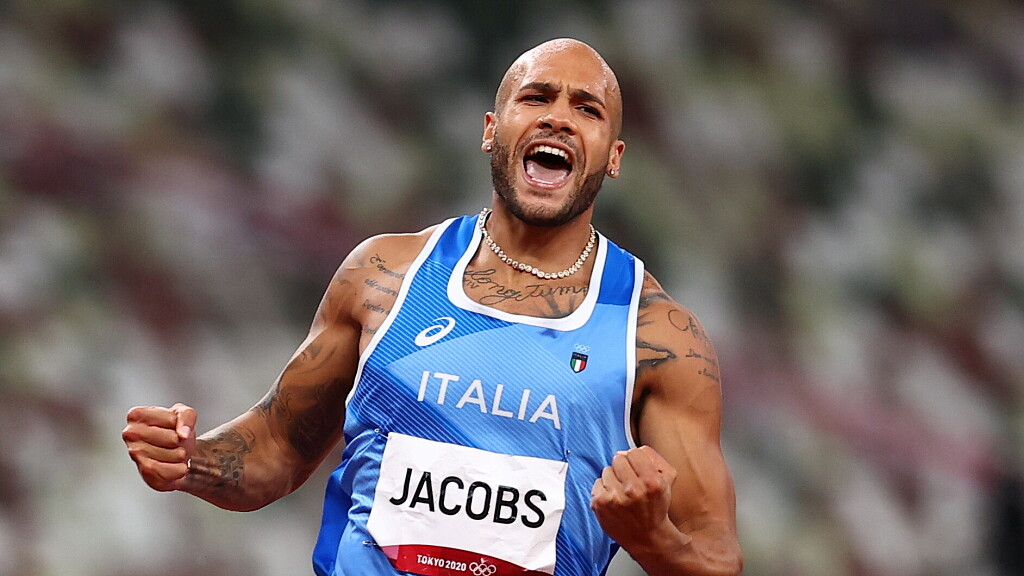
Olympic 100m champion Marcell Jacobs to run at world championships
Italy's shock Olympic 100 meter champion Marcell Jacobs will bid to add the world crown to his medals cabinet despite an injury-affected campaign, the Italian Athletics Federation (FIDAL) said on Wednesday.
The 27-year-old will be on the start line for the 100m heats which get underway on Friday, the first day of the world championships in Eugene, Oregon.
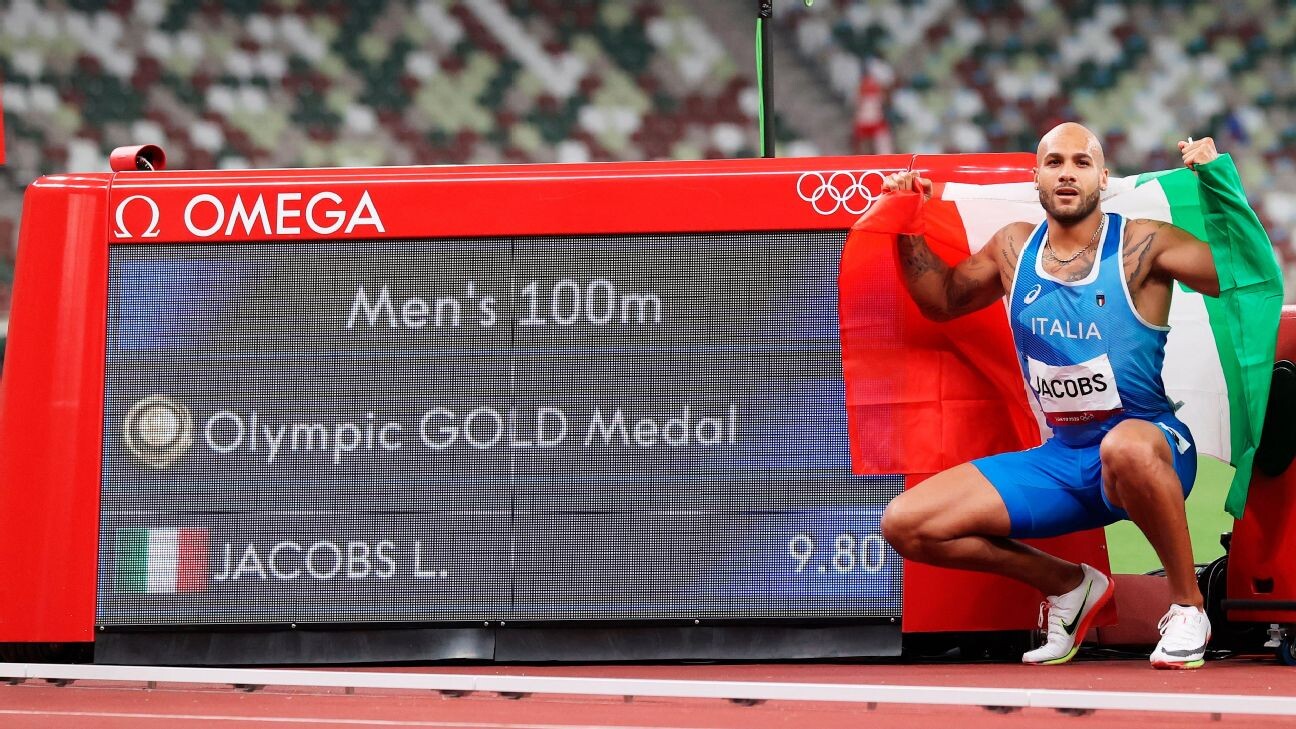
Jacobs kicked off the season with world 60m indoor gold in Belgrade, but a thigh injury in mid-May has disrupted his outdoor campaign withdrawing at short notice from several meets.
"The double Olympic champion (he also won 4x100 metres relay gold in Tokyo) will take part in the 100m heats scheduled for Friday," said the federation in a statement.
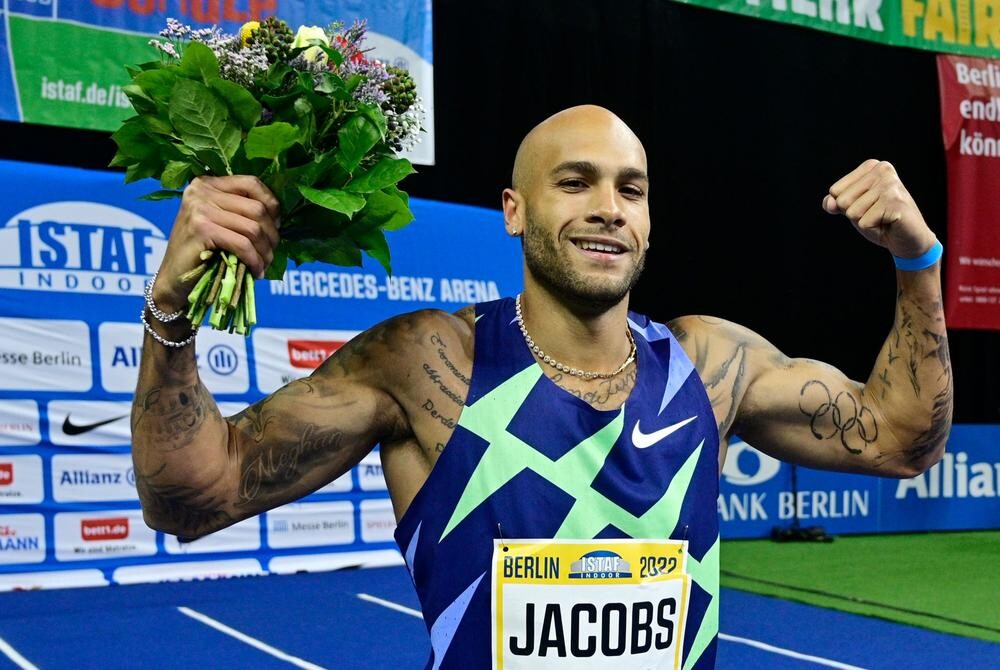
"The decision was taken after a discussion between the athlete, his coach Paolo Camossi and the technical directors of the Italian team after reassuring news coming out of his training camp at Beaverton, near Portland."
Camossi told Wednesday's edition of newspaper Corriere della Sera, the injury cloud had been well and truly lifted.
"The physical problem has been resolved, he does not feel any pain at all," said Camossi.
Jacobs, who has also been affected by intestinal problems this season which forced him to withdraw from the Nairobi meet at the beginning of May, has run just two 100m this term.
He timed 9.99 seconds, aided by a favourable wind, on May 18 and then on June 25 won the Italian title in a time of 10.12sec, far from the European record of 9.80sec he set when winning the Olympic title in Tokyo last year.
Login to leave a comment

World Athletics Championships Budapest23
Budapest is a true capital of sports, which is one of the reasons why the World Athletics Championships Budapest 2023 is in the right place here. Here are some of the most important world athletics events and venues where we have witnessed moments of sporting history. Throughout the 125-year history of Hungarian athletics, the country and Budapest have hosted numerous...
more...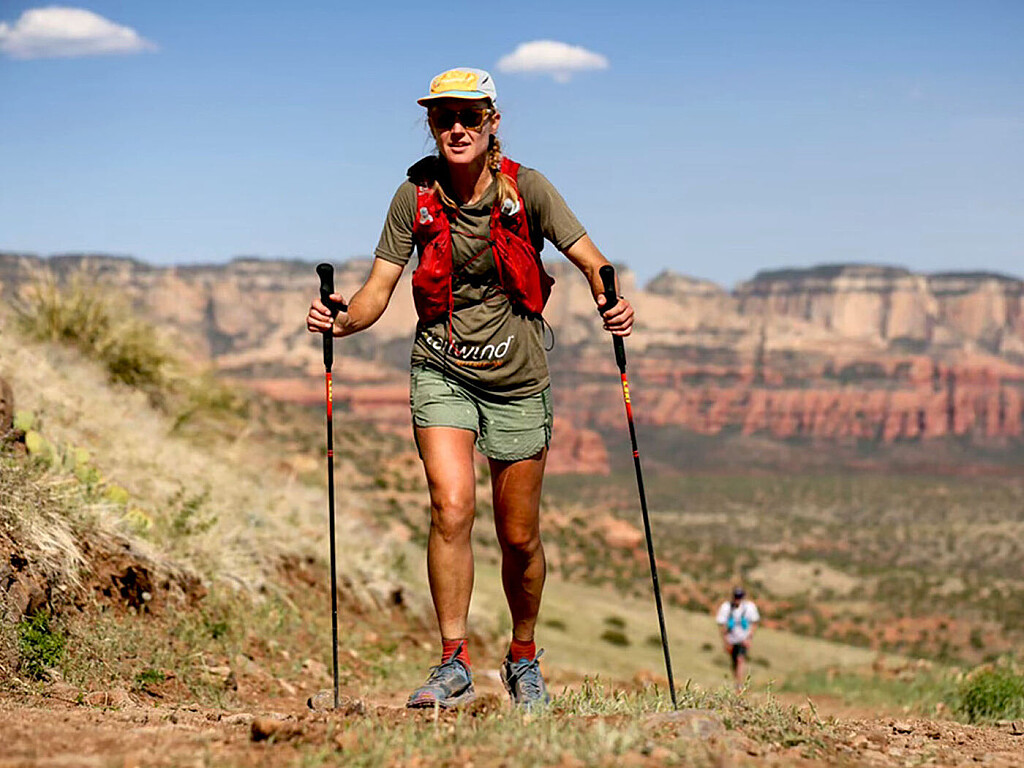
The second-ever Cocodona 250 will kick off on Monday, May 2nd, with an alternate course beginning in Prescott, Arizona, and ending in downtown Flagstaff
Over 200 runners will have roughly five days to cover over two hundred miles of some of the Southwest's most beautiful and challenging terrain.
The race takes place on the current and historic homelands of many Indigenous groups, including the Jumanos, Yagapaiv Apache, Hopitutskwa, Pueblo, Zuni, Hualapai, Hopitutskwa Hualapai, and Hohokam.

Here's what you need to know about the 2022 Cocodona 250, which athletes to watch for, and how to follow along.
Course Changes for 2022
Due to the Crooks Fire, which started on April 18, race officials rerouted nearly a quarter of the course after the Prescott National Forest was placed under an emergency closure through May 3, for ease of firefighting efforts. As of April 26, the Crooks Fire was 16% contained and burning around 6,400 acres south of Prescott in the Bradshaw mountains.
The new course will start in Prescott, Arizona, rather than Black Canyon City.
"[The fire] basically broke out less than a mile from the mile 63 aid station," said Jamil Coury, owner of Aravaipa Running and one of the Cocodona organizers. "We've been able to do a reroute of the first 70 miles of the race courseand we're going to be running about 60 miles and then we'll merge back with the course and we'll make up the rest of the miles later on in the race."
As a relatively new race, Coury says there are still some challenges to work through with an event as long as Cocodona. The last-minute course changes proved particularly challenging, but he hopes the event will continue to settle into a routine over the coming years.
"We're trying to work out the kinks for sure. You know, a lot can happen in this length of race," he says. "Everything else is mostly kind of like last year. We're looking to do a livestream of the event again on our YouTube channel until at least the top female podium comes in and we'll see from there, we might try and do some bonus broadcasts with some of our finishers in the last couple of days. It's more like we're trying to test a couple more ideas for the course. We'll get feedback from those and then maybe settle into a more long term route."
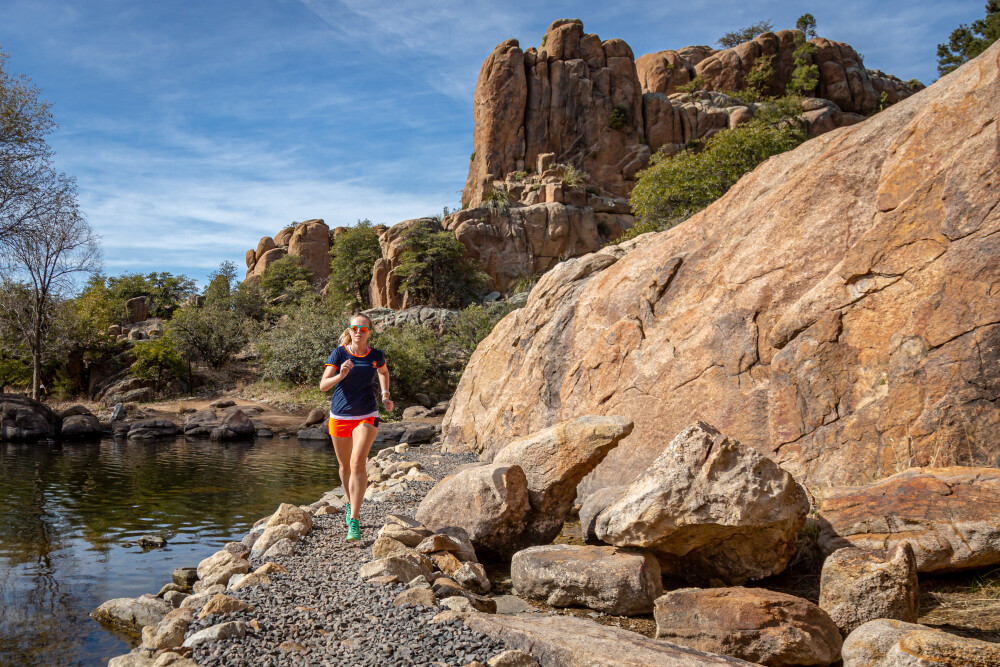
Runners to Watch
In its first-ever running last year, Cocodona featured 176 runners, 108 of whom finished. This year the field is considerably larger, with 234 registered runners. Twenty-one of those are finishers from last year's inaugural event: 17 men and four women.
Those 17 men include 2021 champion Michael Versteeg and three other top-10 finishers (Joshua Locke, Tod Bachman, and Mark Vogel). The women's field includes only two returners from last year's top 10, fifth place finisher Sarah Ostaszewski and ninth place finisher Jodi Semonell.
But alongside those returners comes a strong contingency of newcomers who will look to challenge both the men's and women's course records of 72:50:25 and 85:30:38, respectively.
"For the women, I think the biggest name on the list would be Annie Hughes from Leadville. She won the Moab 240 last year, Leadville 100 last year, and then Coldwater this January," says Coury. "Briana Grigsby from Tucson was fifth at the Black Canyon 100K this year and second at the Javelina 100K last year. And then Sarah Ostaszewski. She finished last year, and she'll be returning."
Hughes, at just 24, will seek to remain undefeated at the 200+ mile distance. She's been training for Cocodona with shorter ultras since winning the Moab 240 in October. She won the Coldwater Rumble 100 in January and the Staunton Rocks Running Up For Air 12-hour event in February. At that race, she racked up 56 miles in just under 11 hours and beat all the other competitors, regardless of gender. She then celebrated her 24th birthday on March 13 by running for 24 hours around her home in Leadville, Colorado, covering nearly 120 miles.
"I feel like with 200s, there's just so much time to go through highs and lows, and you just kind of have to ride the highs when you're feeling good and just go with it," said Hughes. "You can't really plan for these things, so I'm just kind of going into it looking at it as an adventure."
After Cocodona, she will continue a full racing schedule through the summer with three 100s: High Lonesome in July, Run Rabbit Run in September, and Javelina in October, back in Arizona. For Cocodona, she'll focus on carefully scheduling sleep and nutrition, seeing the experience as an opportunity for adventure.
"I think it's really cool that [200s] are becoming more popular and that a brand new race as amazing as this one is now available for runners," said Hughes. "I'm really excited to be a part of this race in one of the first years it's ever been run, because I think it's going to become really big."
On the men's side, Coury will be watching for 200+ veteran Michael McKnight, who DNF-ed last year's race due to heat struggles, and last year's winner Michael Versteeg, as well as backcountry guide, coach, and pro Brooks athlete Joe McConaughy, who will take his first crack at the 200+ mile distance. McConaughy currently holds the fastest known times (FKTs) for the Arizona Trail (supported), Long Trail in Vermont (self-supported), and Appalachian Trail (northbound, self-supported).
"[McConaughy has a] strong thru-hiking, kind of FKT background," says Coury. "Also really fast at short distance and then even at like the 100-mile distance, he's got some really fast times. He has this interesting mix of super long and short and fast."
McConaughy also brings recent experience with running fast in the area where Cocodona takes place.
"I'm stoked. It's an awesome route. [Aravaipa is] an awesome race organization. There's lots of great runners. So it's kind of like everything you want from an effort," says McConaughy. "I did the Arizona Trail last year and I did it right around the same timeSo it's really cool thinking I did the Arizona Trail and now coming back for another big section of trail. And adventuring in Arizona is really exciting. I just love the desert and the vibes and the whole area. It's just a very, very lovely, fun state."
MEN
Michael McKnight (32, Smithfield, UT): two-time champion of the Triple Crown of 200s (which includes the Moab 240, Tahoe 200, and Bigfoot 200), his record on those three combined races is the fastest ever by nearly 45 hours (162:00:51). He has multiple wins at both Bigfoot and Moab.
Michael Versteeg (Prescott, AZ): Last year's winner, also won the 2020 Fuego y Agua 100K and was fourth at the 2019 Run Rabbit Run 100 Mile
Chad Trumbo (39, Columbus, OH): Won the Fuzzy Fandango 50K in November, sixth at the Mohican 100 Miler in 2021.
Joe McConaughy (30, Seattle, WA): Third at Gorge Waterfalls 100K earlier this month, fourth at the 2021 Javelina Jundred, holds numerous thru-hiking FKTs.
Cole Crosby (33, Cranston, RI): Fifth at the USATF 50K championships in 2020, recent wins at the Manchester to Monadnock 55 Miler and MCW Westfield Ultra 9 Hour.
Eric Senseman (33, Flagstaff, AZ): 2017 JFK 50 Mile winner, with top-three finishes at the 2019 and 2021 Black Canyon 100K.
WOMEN
Annie Hughes (24, Leadville, CO): Recent wins at the Leadville 100, Coldwater Rumble 100, and Moab 240.
Rhoda Smoker (35, Elverson, PA): Recent wins at the Conquer the Wall Endurance Challenge 47 hour run, Dogwood Ultras 12 hour, and Green Monster Trail Challenge 50K.
Brianna Grigsby (34, Tucson, AZ): Recent wins at the Sinister Night Runs 54K and McDowell Mountain Frenzy 50K, plus top-five finishes at the Black Canyon 100K and Bandera 100K earlier this year.
Lee Conner (49, Cleveland, OH): Top-five finishes at the Forget the PR Mohican 50K, Run Lovit 100 Miler, Outlaw 100, and Cloudsplitter 100 - all in the last 8 months!
Jodi Semonell (49, Omaha, NE): Second at the 2020 Moab 240, ninth last year at the inaugural Cocodona 250, recent wins at the Dizzy GOAT 12 hour run and Hitchcock Experience Endurance Runs 100 Miler.
Sarah Ostaszewski (30, Beaverton, OR): Fifth at last year's Cocodona, with recent wins at the Bristow 24 hour run, Mogollon Monster 100 Miler, and Across the Years Marathon, plus a top-10 finish at the Javelina Jundred in October.
by Trail Runner Magazine
Login to leave a comment
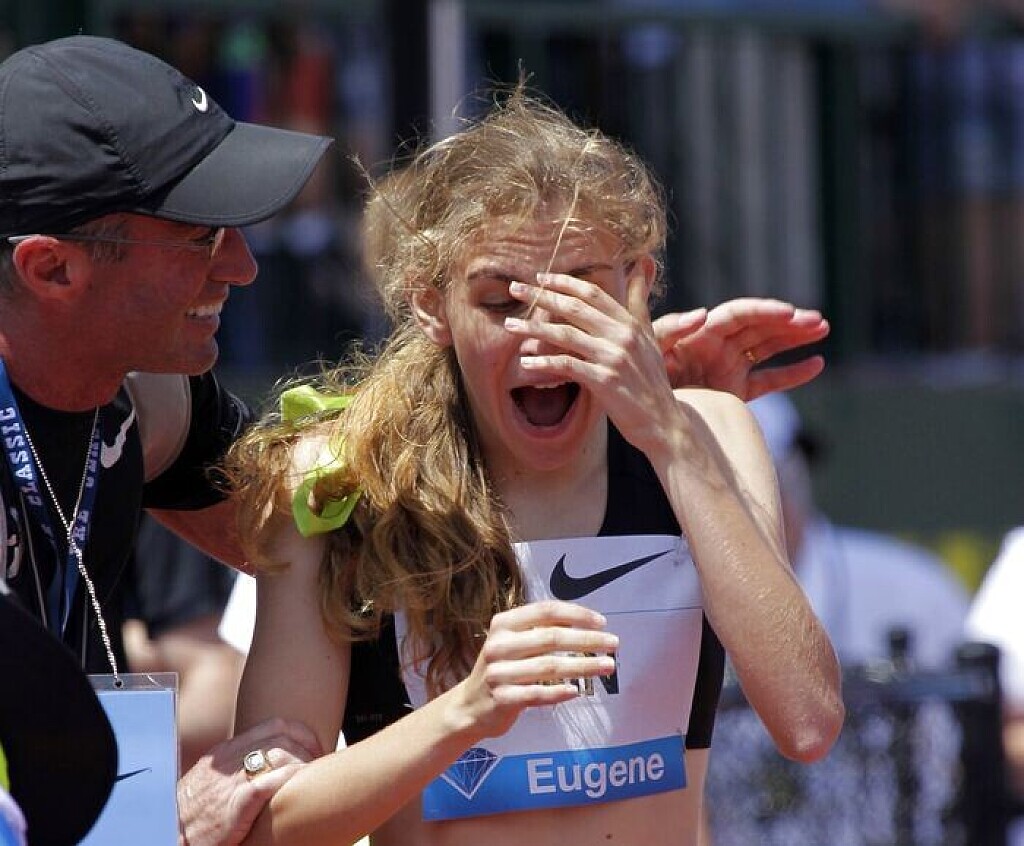
Mary Cain sues Alberto Salazar and Nike for $20 million over alleged abuse
Mary Cain, the promising distance runner whose career fizzled after what she has described as four miserable years at the Nike Oregon Project, has filed a $20 million lawsuit against her former coach, Alberto Salazar, and their employer, Nike.
Cain accused Salazar of emotionally abusing her when she joined the team as a 16-year-old. The lawsuit portrays Salazar as an angry control freak who was obsessed with Cain’s weight and didn’t hesitate to publicly humiliate her about it.
That, she said, took a toll on her physical and mental health. Nike was aware, the lawsuit alleges, but failed to intervene.
Nike did not return messages. Salazar could not be reached but has previously denied abuse allegations, and he has said neither Cain nor her parents had raised concerns while she was part of the program.
In the lawsuit filed Monday in Multnomah County Circuit Court, Cain alleges Salazar on several occasions required her to get on a scale in front of other people and would then criticize her.
“Salazar told her that she was too fat and that her breasts and bottom were too big,” the lawsuit alleges.
Salazar took to policing Cain’s food intake, she said. At times, Cain was so hungry, she said, she stole Clif Bars from teammates.
Cain went to her parents for support. She alleges Salazar eventually tired of the parental interference.
“He prevented Cain from consulting with and relying on her parents, particularly her father, who is a doctor,” said Kristen West McCall, a Portland lawyer representing Cain.
By 2019, Cain says she was deeply depressed, had an eating disorder, generalized anxiety and post-traumatic stress syndrome. She also was cutting herself.
Darren Treasure, Nike’s in-house sports psychology consultant, knew of Cain’s distress, the lawsuit alleges. But he’s accused in the complaint of doing nothing about it, other than to share this “sometimes intimate and confidential information … with Salazar.”
Nike did nothing to intervene, Cain alleges.
“Companies are responsible for the behavior of their managers,” McCall said. “Nike’s job was to ensure that Salazar was not neglecting and abusing the athletes he coached.”
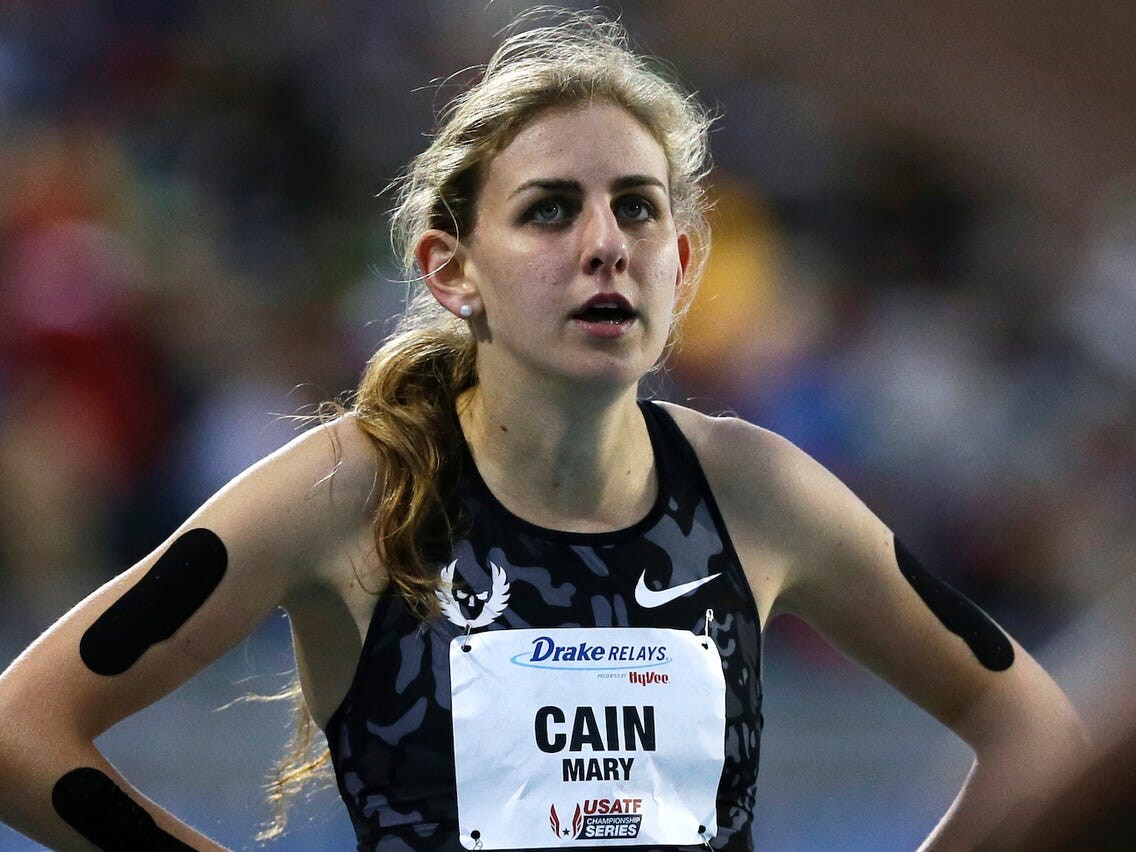
McCall added: “Nike was letting Alberto weight-shame women, objectify their bodies, and ignore their health and wellbeing as part of its culture. This was a systemic and pervasive issue. And they did it for their own gratification and profit.”
Nike athletes generally sign non-disclosure statements that strictly prohibit them from revealing any sensitive corporate secrets. Cain smashed the Nike code of silence two years ago when The New York Times published her wrenching account of her years at Nike.
Due in part to a protracted series of injuries, Cain never lived up to her superstar-in-the-making expectations. But when she was 16, after a brilliant high school running career, she was a hot commodity in distance running circles.
In 2012, she opted to skip college and go straight to Beaverton to run for Salazar. Salazar, himself a legendary runner, helped found the Nike Oregon Project to make American distance runners competitive with the rest of the world.
Salazar has had some big successes, particularly with Galen Rupp, the Portland kid who has become one of the world’s best marathoners. On Aug. 5, 2012, two Salazar athletes — Mo Farah and Rupp — finished one-two in the 10,000 at the Olympic Games in London.
His program also has been dogged by allegations that he pushed the use of performance-enhancing drugs.
The Nike Oregon Project was disbanded in 2019 after the U.S. Anti-Doping Agency accused Salazar of three violations. The agency banned him from the sport for four years.
Salazar appealed to the Court for Arbitration for Sport. Last month, the court upheld Salazar’s ban from the sport and some of USADA’s findings. It ruled that Salazar attempted an “intentional and orchestrated scheme to mislead” anti-doping investigators when he tampered with evidence.
The court reduced the duration of his ban from four to two years.
Salazar added: “Mary at times struggled to find and maintain her ideal performance and training weight.” Nike added that Cain had requested to be allowed back on the team after she left.
Salazar said this to Sports Illustrated:
My foremost goal as a coach was to promote athletic performance in a manner that supported the good health and well-being of all my athletes. On occasion, I may have made comments that were callous or insensitive over the course of years of helping my athletes through hard training. If any athlete was hurt by any comments that I have made, such an effect was entirely unintended, and I am sorry. I do dispute, however, the notion that any athlete suffered any abuse or gender discrimination while running for the Oregon Project.”
by Jeff Manning
Login to leave a comment
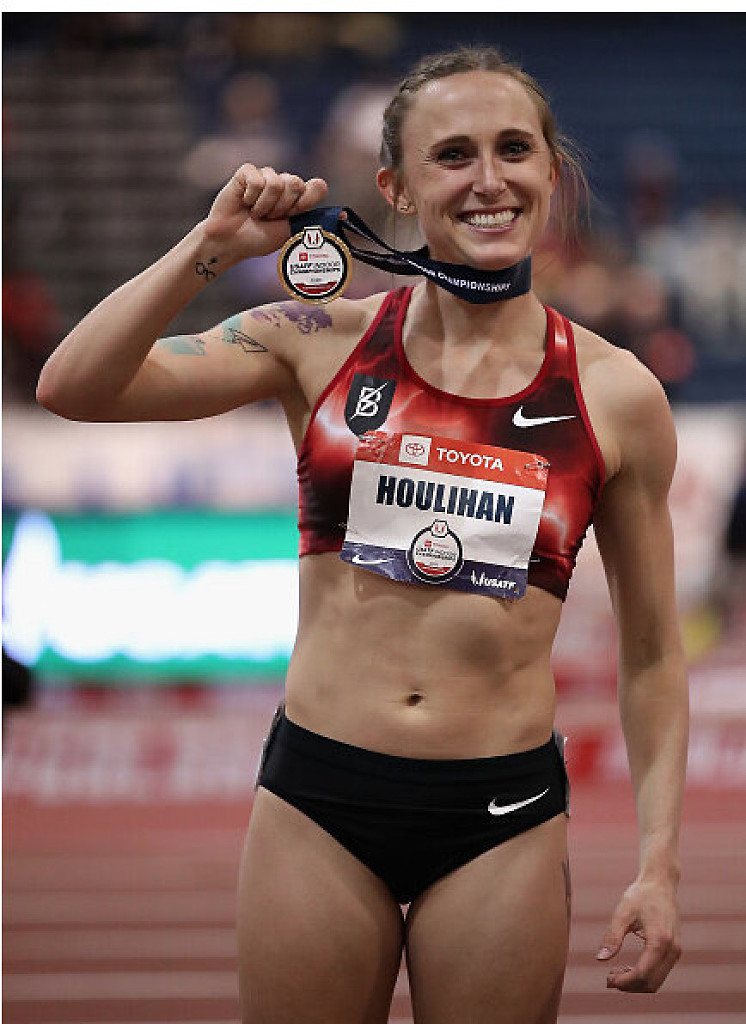
Time for Shelby Houlihan to come clean
Two things ought to happen now that the Court of Arbitration for Sport has issued a technically detailed but, in the end, common-sense ruling in the matter of Shelby Houlihan, the American distance runner, banning her for four years for nandrolone — through January 2025 — while thoroughly rejecting the ridiculous burrito defense.
One, Houlihan ought to come clean.

What most likely happened?
We don’t and won’t know until Houlihan admits whatever it was. But, see paragraph 128 of this very thorough 44-page ruling, citing the head of the Montreal anti-doping lab, Christiane Ayotte, who notes that oral precursors of nandrolone can readily be bought on the internet, even on Amazon, and that a chemical signature very much like the one Houlihan tested for was obtained five years ago when that very lab tested a product it had bought called “Nor-Andro Max.â€
Two, all the journalistic sheep who wanted to believe, who maybe still want to believe despite the overwhelming evidence against Houlihan, that there was no way, just no way, a white American distance runner affiliated with the Bowerman Track Club could test positive — all these people, and the readers they misled, ought to take a crash course in Doping 101 and the things people will say and do, meaning anything and everything, to avoid getting busted.
This entire saga, truthfully, has been pathetic.
This burrito defense has, from the get-go, stretched the bounds of credulity, and anyone who bought it — even for a second — needs to undergo a real-world moron test.
Do you also believe pigs can fly? (‘Pigs’ used advisedly here.) Do you think Abraham Lincoln is a vampire slayer? Are you super-confident you can beat up a grizzly bear?
Almost every single facet of Houlihan’s defense was — is — absurd.
To be clear: not blaming Houlihan’s lawyers for aggressively scheming up any and every avenue possible. That’s what they’re there for.
But the three-judge panel went to great length — again, 44 pages — to refute, carefully, virtually everything about it.
For instance:
Houlihan took a lie detector test.
She was asked, did you at any time knowingly ingest nandrolone? And answered no. She was also asked, did you intentionally ingest the drug nandrolone? And said, no.
But as the panel pointed out, here’s what she wasn’t asked: did you take doping substances at the material time?
Houlihan also submitted to hair analysis. All involved agreed that it proved that nandrolone injections could be excluded. But, the panel found, that analysis failed to take into account oral (so we’re all on the same page here, something you eat or drink) precursors of nandrolone, such as “19-nor-DHEA†and “nor-Andro.â€
Which is why it boggles the mind, truly, that an outlet such as Women’s Running would, in the second paragraph of its account of this ruling, prattle on this way:
“CAS decided that although Houlihan was a credible witness and brought ‘compelling character witness evidence in support of her defense,’ she failed to establish the source of the nandrolone that was detected in her urine.â€
This is the second paragraph?!
Who cares if Shelby Houlihan is or is not a nice person and can or cannot get through a lie detector when asked certain questions? That’s all but irrelevant when it comes to the science in this case. As for her “compelling character witness evidence?†Ha! That’s a complete misread of what is what. Offering statements or testifying on her behalf were, among others, her former boyfriend, Matthew Centrowitz, gold medalist in the men’s 1500 at the Rio 2016 Olympics, Courtney Frerichs, the surprise silver medalist in the women’s steeplechase a few weeks ago in Tokyo, and Karissa Schweizer, who competed in Tokyo in both the women’s 5k (11th) and 10k (12th), and if you don’t think the Athletics Integrity Unit took careful observation of who was in Houlihan’s inner circle, maybe you seriously do believe pigs can fly.
The first paragraph of the Women’s Running story, what in journalism circles is called the lede, also noted — accurately — the CAS observation that Houlihan’s explanation was “possible but unlikely.â€
As if that were justification.
Everything in life is possible.
But here’s what CAS also said, and be mindful that the burden of proof in this matter was on Houlihan, and so if this were a math contest, she had to get to 50.1, but instead her defense “presupposes a cascade of factual and scientific improbabilities, which means that its composite probability is (very) close to zero.â€
Herewith the cascade:
— Houlihan ordered a carne asada — that is, a steak — burrito at a food truck in Beaverton, Oregon, near Portland. For her defense to work, she would have had to have been served and eaten pork.
The entire defense rests on this premise. A wrong order. Which she then ate. But that’s not all.
— Because the pork would have not been ‘normal’ pork but, per the Houlihan defense, uncastrated boar.
— Except uncastrated boar gets into the U.S. food chain through completely different channels than pork. So for uncastrated boar to end up in the normal pork food chain, the boar must have been a specimen with undescended testicles. This is called ‘cryptorchid.’
At this point, this is already verging on bizarre if not crazy stupid. Undescended testicled boar. OK.
— Except there’s more. The cryptorchid is (or was) of a “small minority of uncastrated boars that — in addition — must have had elevated androgen levels.†That would be “abnormal†for 6-month-old pigs.
— More still. The pork product Houlihan allegedly ate, despite ordering steak, is pork stomach. Follow along here because this gets into butcher-level stuff. When people eat pork stomach, that stomach is stripped of the inner layer; only the outer muscle remains. Houlihan’s assertion was that uncastrated boars have elevated androgen levels. Except those are not found in the muscle. Those levels are found only in specific parts — the kidneys, testes or liver. Pork stomach, the panel said, has one of the lowest androgen levels.
— More science. The nandrolone metabolite levels in Houlihan’s urine were two to three times higher than the highest values in the literature after eating much more significant quantities of mature (uncastrated) boar — a product different from the alleged cryptorchid in question, which would have been slaughtered at six months.
— Agriculturally speaking, the carbon isotope signature of the metabolite in her urine was “fundamentally inconsistent†with the largely corn-based diet of commercial pigs in the United States.
— Finally, an expert witness said the chance of a cryptorchid ending up in the normal supply chain in the United States is “far less†than one in 10,000.
Beyond which, see paragraph 104 on page 30, and come on now, there’s this:
“The fact that IBP/Tyson (the plant where the food truck in Beaverton bought the pork meat from) does not operate a boar kill plant. Thus, it is ‘near zero chance’ that any boar meat would get mixed with conventional fresh pork products.â€
All this leaves the obvious question, doesn’t it:
if the slaughterhouse doesn’t operate a boar kill plant, and thus there’s essentially no chance of boar meat getting in the food chain with pork other than, hmm, aliens dropping in from Galaxy Starchaser Nebula X9 to surreptitiously teleport it in there and so the food truck had a “near zero†chance of having boar meat on the night in question and, besides, Houlihan ordered a steak burrito, anyway — what really happened here?
Time for Shelby Houlihan to come clean.
She likely will dodge this opportunity until after the Swiss Federal Tribunal issues the final no-go — understand that the SFT takes up procedural matters, not substantive, so her chance of success there is, again, “near zero†— but she would do the right thing, now, by coming clean.
Time, too, for her supporters, defenders and enablers to see the light. It’s tough when your purported heroes get tagged for doping. But before all of you go out and buy Floyd Landis’ book about how he didn’t cheat to win the Tour de France — oops.
Some of us have been down this road before. This burrito defense — this was creative, indeed. But that didn’t make it any smarter, or better.
Pigs don’t fly. That’s the truth.
Login to leave a comment
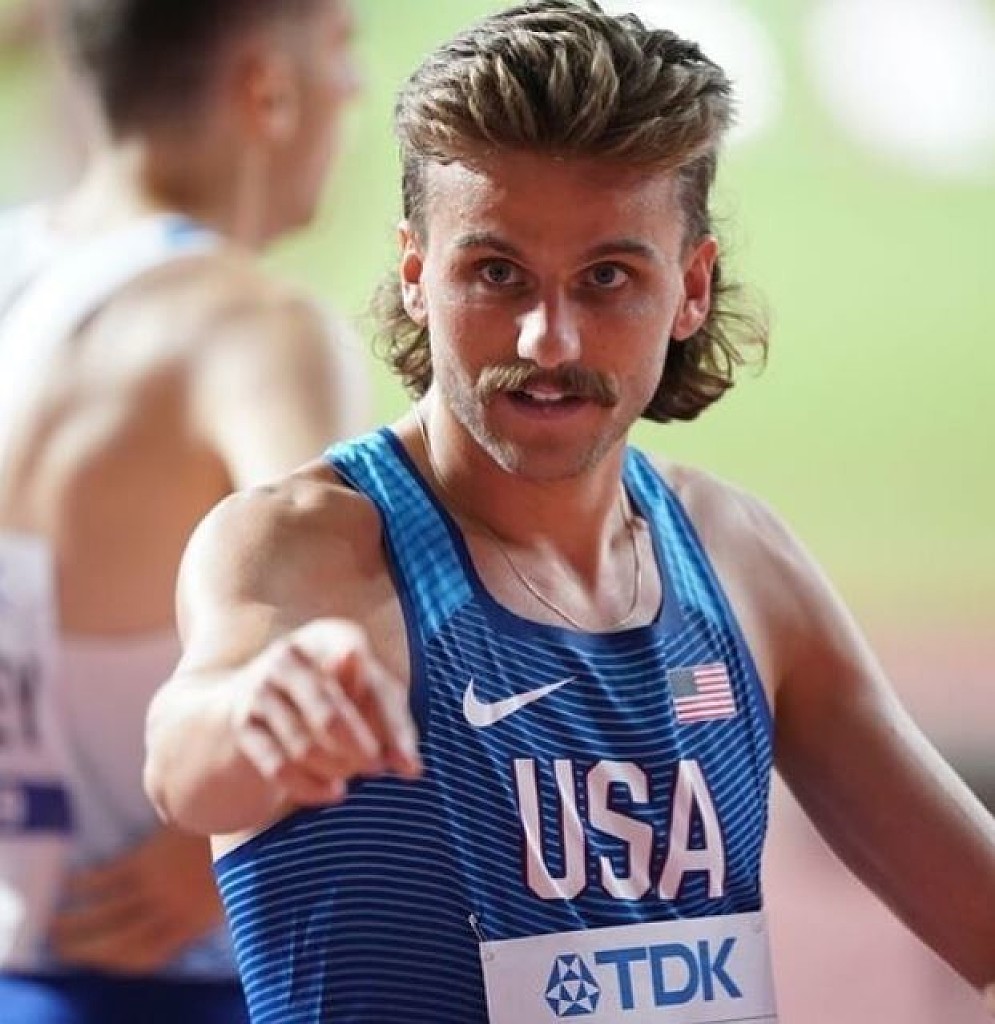
7 Things You Should Know About Craig Engels, the Runner With the Mustache and Mullet
He has the fastest time in the country this year in the 1500 meters, and he loves a good construction project.
Craig Engels burst onto the U.S. running scene in 2017, during his final year at the University of Mississippi. He was the athlete with the mullet and mustache who loved mugging for the television cameras—and he could run, too.
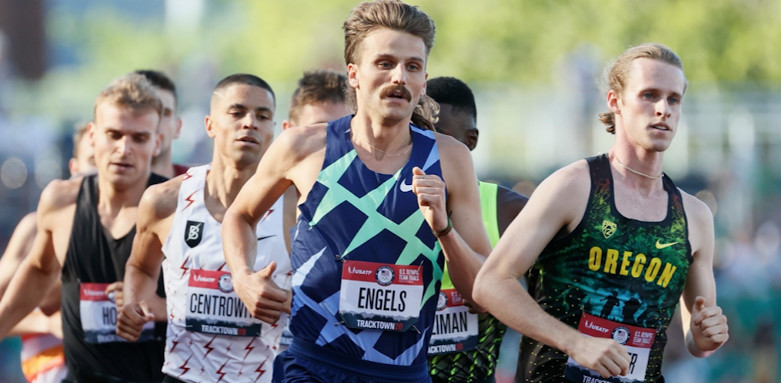
Engels just missed making the Olympic team in 2016, finishing fourth in the 800 meters and fifth in the 1500. But he broke through in 2019, earning a spot on Team USA for the world championships in Doha. He finished 10th in the 1500 in 3:34.24.
Now 27, Engels is hoping to make his first Olympic team, and things are looking good. He set his PR in the 1500 meters, 3:33:64, on May 29, which is the fastest time by an American so far this year. And in the first round at the Trials, he easily advanced to the semifinals, finishing third in his heat in 3:40.03.
Engels, who lives in Beaverton, Oregon, and trains with the Nike group under coach Pete Julian, spoke to Runner’s World on June 15, after he had just finished up at the laundromat.
He likes doing construction projects
Engels buys, renovates, and sells RVs. And last June, he bought a house in Beaverton on a large lot. He and teammates Eric Jenkins and Donavan Brazier built a fence to divide the lot, and Engels rents the front house out. When he’s in town, he lives in the back in a pole barn he converted into a house with the help of his teammates and father and by watching YouTube videos.
“Learned how to do plumbing, electrical, everything,” Engels said.
Pete Julian asked him to stop the physical labor until the Trials are over
“I’ve chilled out with extracurricular projects a little bit more,” he said. “No working on RVs, or at least not working hardcore. Pete kind of got upset with me. I was digging trenches and building chicken coops and just working on my property. Pete was like, ‘Can you just chill out until the Olympic Trials?’”
He regulates his social media time
For a period during the pandemic, he was trying to be good about responding to DMs, but then the demands people were making started to wear on him. These days, he isn’t on too much. “When I’m on my phone, I’m on craigslist, looking at RVs,” he said.
He has a new tattoo
It’s an image of a van, and it’s on his butt, according to the Winston-Salem Journal, which is Engels’s hometown newspaper in North Carolina. He told the paper he might show it off at the after-party if he makes the Olympic team.
Engels does not do much, if any, altitude training
The environment doesn’t suit him. He’s not sure if it’s the physical demands of the mountain air, or the sense of being cooped up to recover from tougher-than-usual workouts, but he doesn’t go to altitude.
“Pete’s okay with it,” Engels said. “We have a good enough relationship now and he knows me well enough to know it’s not a good fit. He’d rather me be happy at sea level than suffering at altitude.”
Recent workouts have gone well
Engels declined to give too many specifics, but he said he likes doing mile cut-downs. He’ll do two sets of a mile, 1200 meters, 800 meters, 400 meters, getting faster each rep.
“I actually don’t know how many miles a week I’m running,” he said. “I don’t care, just whatever my body is feeling.”
He respects his competitors
There’s definitely more depth in the 1500 meters now than there ever has been, he said. But his goal is simple: “The goal is just to win.”
by Runner’s World
Login to leave a comment
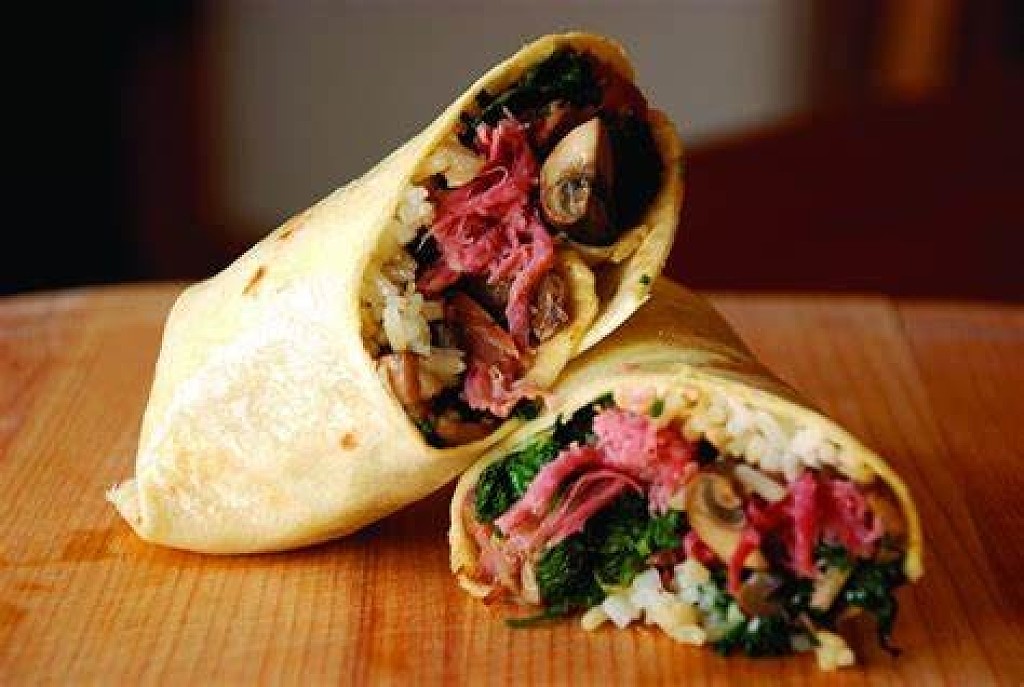
The study confirmed that eating pork might induce some false accusations of the abuse of nandrolone in anti-doping.
What is nandrolone? As defined by the National Library of Medicine, nandrolone is a synthetic, anabolic steroid analog of testosterone.
The NIH states nandrolone can be used for testosterone replacement therapy to increase nitrogen retention and fat-free muscle mass.
In bodybuilders, the use of androgenic-anabolic steroids to increase muscle mass is common.
Nandrolone decanoate is one of the most popular misused androgenic-anabolic steroids, although the effects on body composition are equivocal.
The use of androgenic-anabolic steroids, such as nandrolone, is common in bodybuildersCredit: Getty
Is it found in pork?
A study by the National Library of Medicine revealed that the consumption of pork can cause irregularly high levels of nandrolone.
Then NLM conducted a study using the urine of three male volunteers who consumed 310 grams of pork, which could be the meat, liver, heart and kidney.
According to the study, the three individuals delivered urine samples before and during 24 hours after meal intake.
Nearly 10 hours after the participants ate pork, the report showed high levels of nandrolone.
The consumption of pork can cause a high level of nandrolone within a 24-hour period of consumptionCredit: Getty
"19-NA and 19-NE concentrations in urine reached 3.1 to 7.5 microg/L nearby 10 hours after boar tissue consumption," the NLM reported in their study.
The study confirmed that eating pork might induce some false accusations of the abuse of nandrolone in anti-doping.
What did Shelby Houlihan say caused the high level of nandrolone?
In an Instagram post announcing her suspension, Houlihan claimed she had “never even heard of nandrolone” and blamed a contaminated pork burrito she ate 10 hours before the positive test in January.
Houlihan insisted that ingesting the anabolic steroid must have inadvertently come from eating a burrito “from an authentic Mexican food truck that serves pig offal near my house in Beaverton, Oregon” 10 hours before a 6am drugs test last December.
Login to leave a comment
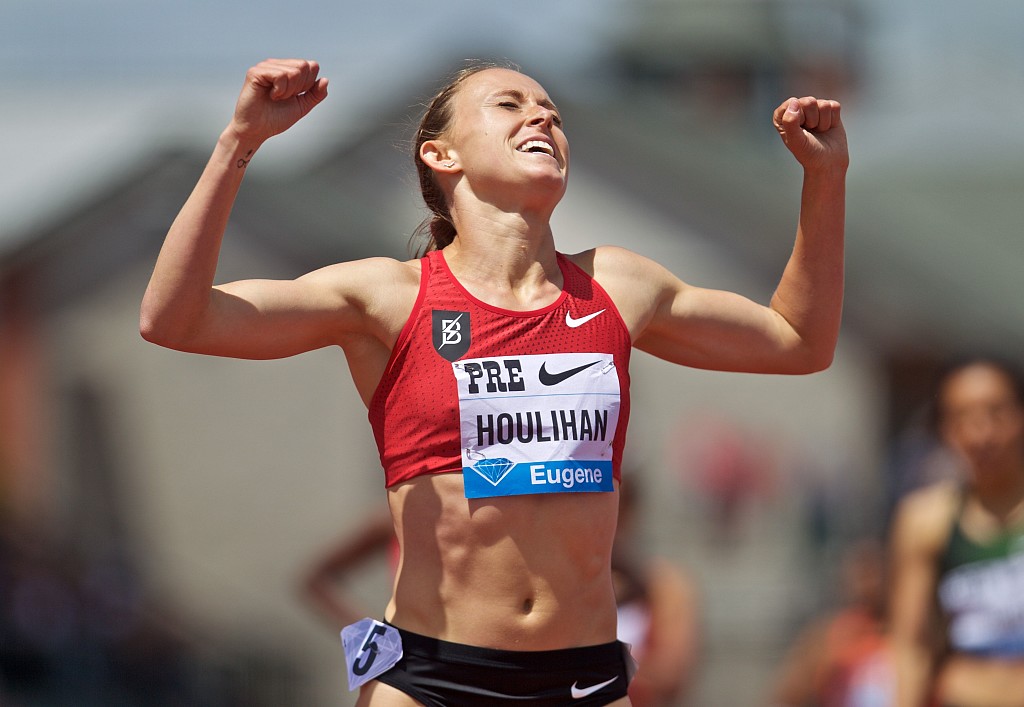
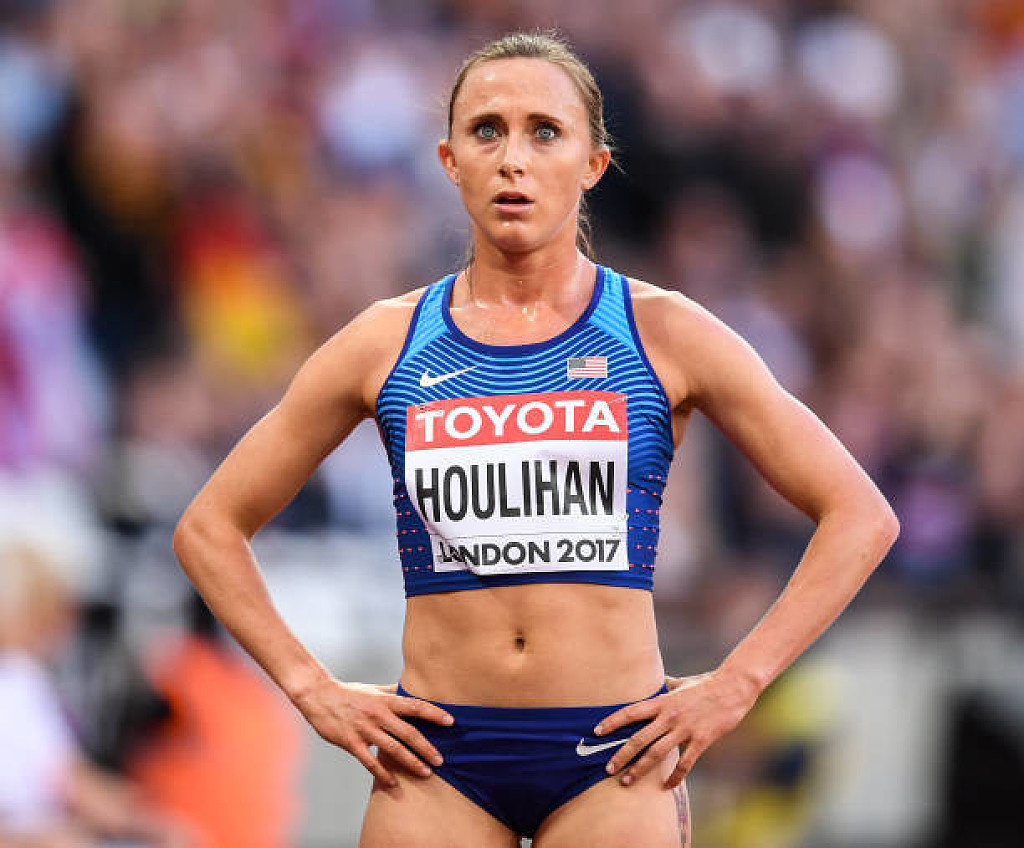
American record holder Shelby Houlihan receives four-year ban week before Olympic track trials
Accomplished distance runner Shelby Houlihan was handed a four-year ban exactly one week before the start of U.S. Olympic Track and Field Trials.
Houlihan was considered an Olympic medal contender entering this year. The 2016 Olympian holds American records in both the 1500m and 5000m. In 2018, she became the second woman ever to win both distances at the U.S. outdoor championships.
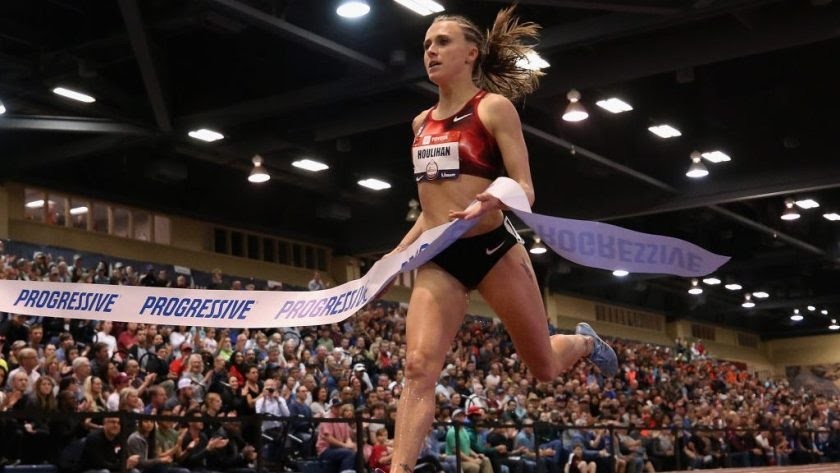
Houlihan placed fourth in the 1500m at the 2019 World Championships.
The 28-year-old had not competed yet this year, which was explained on Monday evening.
Houlihan tested positive for nandrolone in an out-of-competition urine test administered by the World Anti-Doping Agency on Dec. 15, 2020.
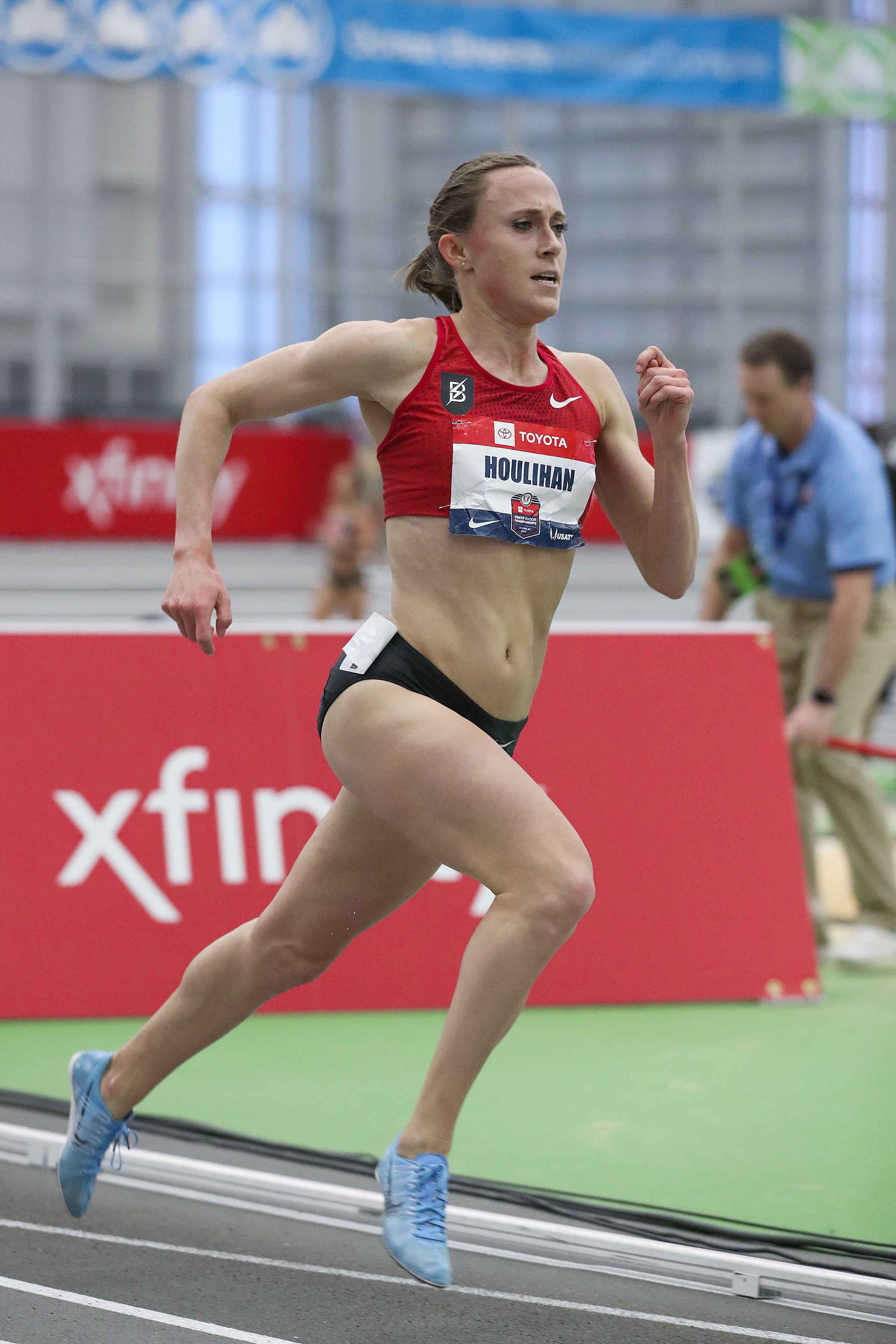
Nandrogen is an androgen and anabolic steroid known to increase muscle mass.
In a virtual press conference, well-known sports attorney and founder of Global Sports Advocates Paul Greene walked reporters through Houlihan’s case, alongside Houlihan and Bowerman Track Club coaches Jerry Schumacher and Shalane Flanagan, an Olympic silver medalist in the 10,000m.
“Shelby is an innocent athlete,” Greene declared. “What happened to her is entirely unjust.”
“I don’t have the words to articulate the depth of sadness I feel for you,” head coach Schumacher said in his statement.
After being notified of the positive test in January, Houlihan created a food log of everything she had consumed the week prior to the test.
Her team believes the result came from a pork burrito Houlihan purchased at a food truck near her home in Beaverton, Oregon, and ate the night before the 6 a.m. test.
It has been noted in WADA documents that consumption of meat, specifically pig offal, can lead to the presence of nandrolone.
Greene explained that Houlihan initially received a provisional suspension of more than three months, which caused them to opt for a single hearing before the Court of Arbitration for Sport.
In the interim, Houlihan had a hair sample tested and passed a polygraph test in an effort to prove her innocence. Greene hired a private investigator and former WADA scientist to help prove their case as well. He pushed for the sample to be tested at a second lab to no avail.
According to Greene, Houlihan has been tested approximately 100 times since 2016 and has never tested positive or missed a test in that time.
The CAS hearing was held the first week of June, with the final ruling of a four-year ban delivered on Friday, June 11. That would take Houlihan out of the running of the Paris 2024 Olympics as well; she said she is currently unsure of what her future holds.
“I feel completely devastated, lost, broken, angry, confused and betrayed by the very sport that I loved and poured myself into just to see how good I was,” Houlihan said as she fought back tears. “I want to be very clear: I’ve never taken any performance-enhancing substances and that includes the one of which I have been accused. … I do this sport because I love it, I have so much fun doing it and it’s always the best part of my day.
“This sport means everything to me. I believe doping and cheating is weak. … I would never disrespect the sport, my competitors, my teammates, my coaches, my family and my fans this way. I love the sport too much. …
“I’ve always wanted to stand at the top of an Olympic podium with a gold medal around my neck, knowing I did that, and now I am not sure that will ever happen.”
Greene is considering an appeal to the Swiss federal tribunal.
Login to leave a comment
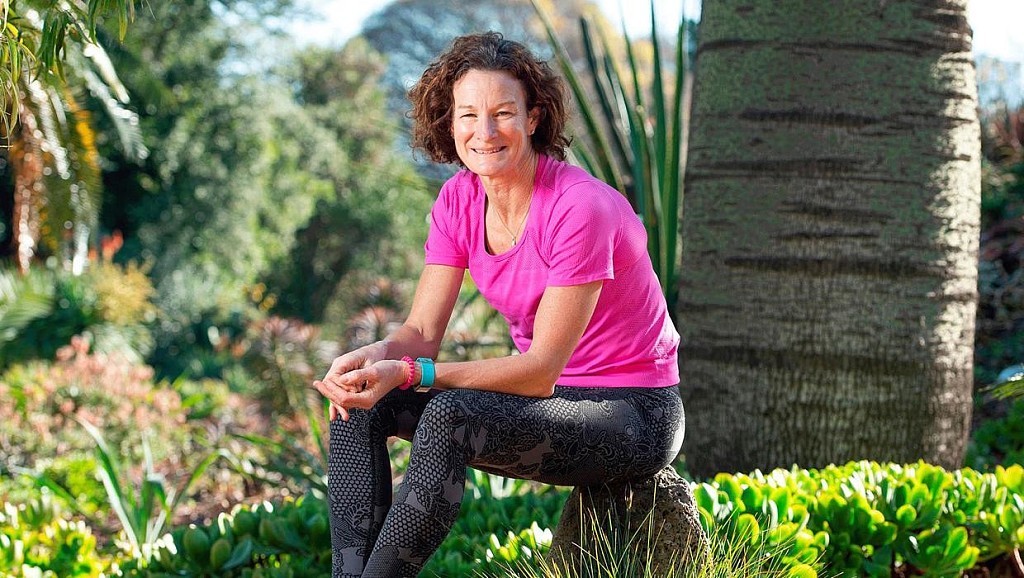
Irish former track and field athlete Sonia O’Sullivan will take Nike coaching role based in Portland, Oregon
Sonia O’Sullivan has agreed to take up a new assistant coaching role with a Nike training group based in Portland, Oregon beginning this week, initially in the run up to and including the Tokyo Olympics.
It will see O’Sullivan move from her current home in Melbourne to the US on Thursday, her new role as assistant coach to Pete Julian affording her the chance to work with some of the best distance runners in the world.
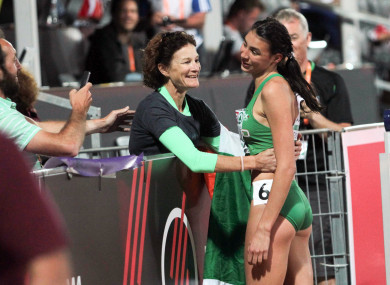
Describing the role as “exciting and challenging”, O’Sullivan is also looking forward to the chance to “have some purpose again in big time athletics”.
The move, only confirmed in recent weeks, will also bring O’Sullivan closer to her daughter Sophie, currently in her first year at the University of Washington on scholarship.
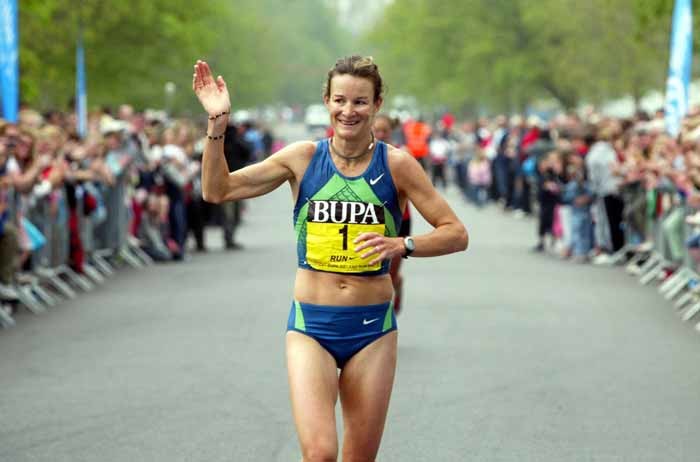
“It all evolved quite quickly, and once we started talking, it felt like an instinctual decision for me, something I felt I’d like to do,” says O’Sullivan. “I won’t know what it’s fully about until I’m out there, but to be a part of a fully professional set-up, with a good budget behind them, to get the best possible out of the athletes, is something I’m excited about.
“There are currently 10 athletes in the group, Pete Julian as head coach, they also have a strength and conditioning coach, and his athletes range from 800m up to the marathon, so there’s a lot of diversity there, they don’t all train together, on different days and in different places, so he can’t always be there. And this was the perfect opportunity to go and do something that I’ve not really had a chance to do, ever.
“It’s a way for me to travel again in an Olympic year, even though it’s very nice here in Melbourne with no Covid restrictions, it feels very far from the action. Every year I’ve had events in Ireland that I work with and the main athletics championships to look forward to, this past year has been so unpredictable my normal schedule has been put on hold.
“It also definitely helped that it’s pretty close to where Sophie is going to college, two and a half hours away, so that swayed things a bit too, because of the times we’re in, it’s so difficult to get back in or out of Australia, and it’s still unknown when she can next get back to Australia.”
Julian was previously an assistant coach with the Nike Oregon Project, run out of the Nike headquarters in Beaverton, Oregon but which was disbanded in 2019 in the immediate aftermath of a four-year ban handed down to then head coach Alberto Salazar for doping offences. With that Julian, in no way implicated in any of those offences, started up his own training group with some of the athletes already under his guidance, including top US 800m runner and Tokyo gold medal favourite Donavan Brazier.
For O’Sullivan, the 2000 Olympic silver medallist over 5,000 metres who won 13 major championships medals in all, the initial three-month agreement would see her through to the Tokyo Olympics. Also in the group are two international women athletes from Australia in Jessica Hull, and Germany’s Konstanze Klosterhalfen, Japanese Tokyo Olympic athlete Suguru Osaka, the remaining seven being American.
“The main target for the American athletes will be the US Olympic Trials, and then after that there is a small circuit of American meetings, so that they don’t have to travel to Europe. ”
O’Sullivan’s first chance to see some of the athletes in action will likely come this weekend at the USATF Grand Prix from Hayward Field in Eugene, the newly renovated venue for the 2022 World Athletics Championships, and the first stop on the 2021 World Athletics Continental Tour (which is also being broadcast on TG4).
by Ian O'Riordan
Login to leave a comment

Tokyo 2020 Olympic Games
Fifty-six years after having organized the Olympic Games, the Japanese capital will be hosting a Summer edition for the second time, originally scheduled from July 24 to August 9, 2020, the games were postponed due to coronavirus outbreak, the postponed Tokyo Olympics will be held from July 23 to August 8 in 2021, according to the International Olympic Committee decision. ...
more...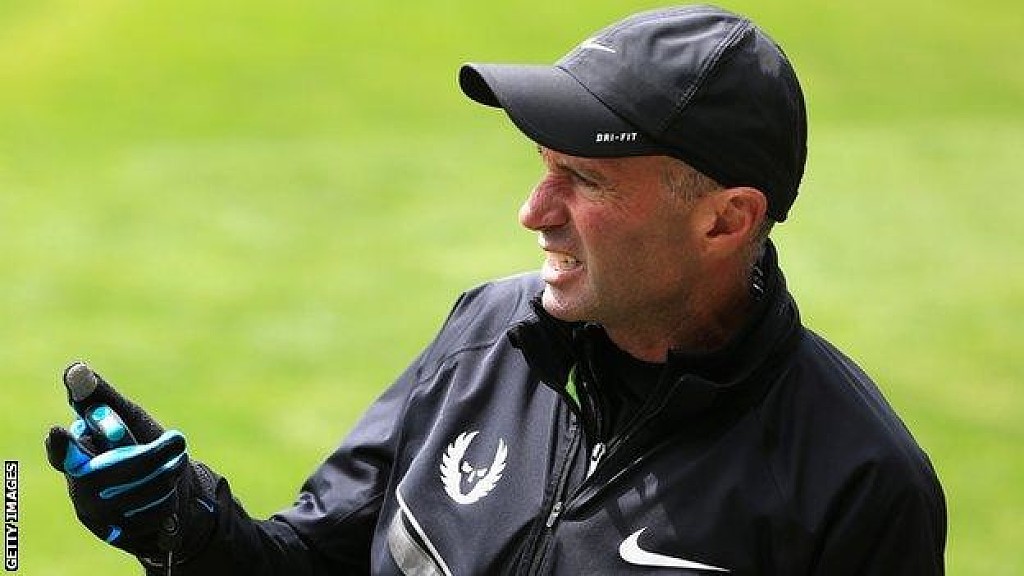
Alberto Salazar appeal takes place in Lausanne
Banned athletics coach Alberto Salazar's appeal against his four-year suspension will be heard by the Court of Arbitration for Sport (CAS) on Wednesday.
Salazar was found guilty of doping violations along with Dr Jeffrey Brown, who treated Salazar's athletes, after an investigation.
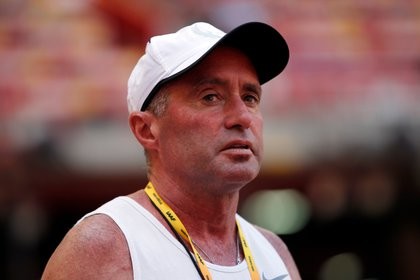
The 62-year-old's hearing will take place in Lausanne, Switzerland.
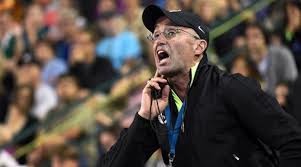
It was set for November but was pushed back because of the Covid-19 pandemic.
Salazar ran the Nike Oregon Project (NOP), based in Beaverton, Oregon. It was established in 2001 and was the home of British four-time Olympic champion Mo Farah, who was coached by Salazar between 2011 and 2017.
A BBC Panorama programme in 2015 focusing on Salazar and the NOP prompted a four-year investigation by the US Anti-Doping Agency (Usada) and a two-year court battle behind closed doors. It eventually resulted in bans for both Salazar and Brown, announced in October 2019.
by BBC Athletics
Login to leave a comment
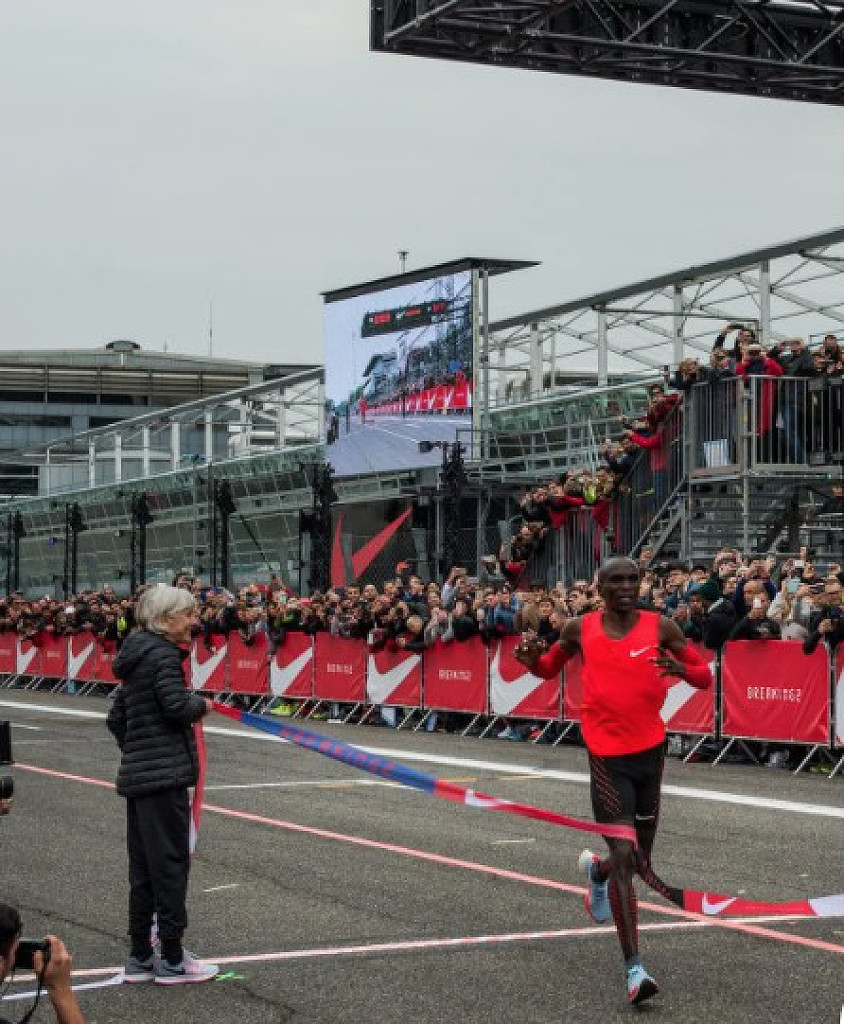
We Now Have the Lab Data on Nike's Breaking2 Runners
To pick their two-hour marathon team, researchers tested some of the greatest runners on the planet. Now they're revealing what they found.
Here’s a quick and convenient way of finding out whether you’re ready to run a two-hour marathon. Head to the track and run six laps (roughly 1.5 miles) at two-hour pace (4:34.6 per mile), then run one more lap as fast as you can. Have a nearby exercise physiologist fit you with a portable oxygen-measuring mask, to measure your energy consumption at that pace. Then crunch the data to see whether your metabolism is settling into a sustainable pattern, or whether it’s spiraling out of control toward a fiery explosion.
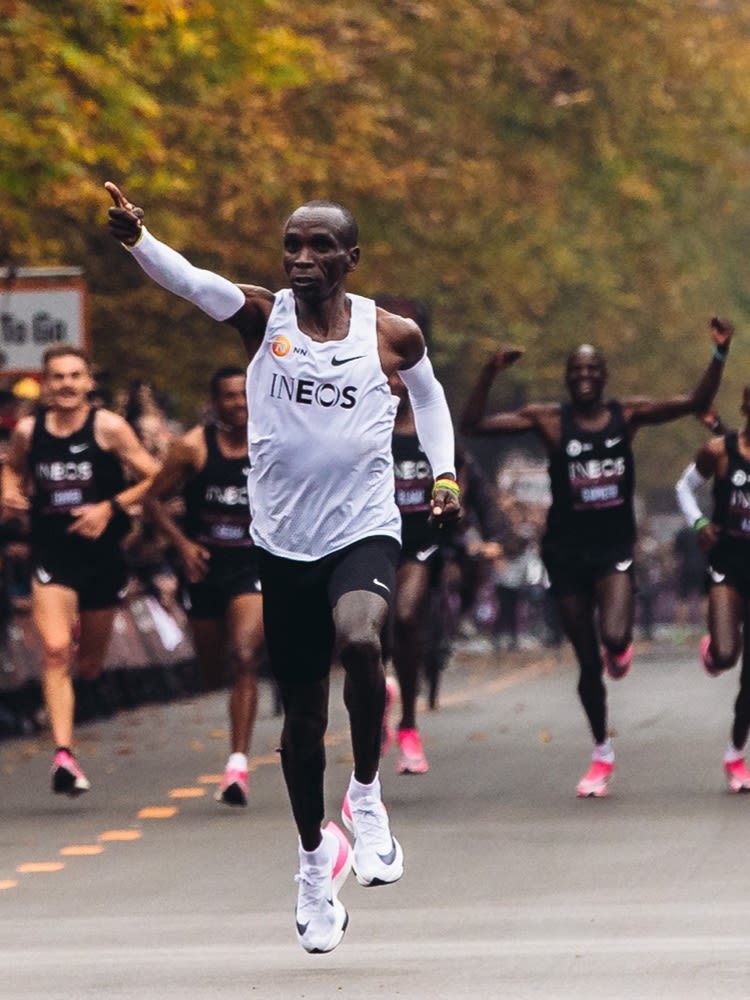
That’s one of several tests that at least 16 elite runners underwent during the selection process for Nike’s 2017 Breaking2 race, which Eliud Kipchoge ended up winning in 2:00:25. Now the scientists responsible, including teams from Andrew Jones’s group at the University of Exeter in Britain and the Nike Sport Research Lab in Beaverton, have published some of the data in the Journal of Applied Physiology. It’s grouped and anonymized, so we don’t get to obsess about the individual details of Eliud Kipchoge’s physiology, but it’s a pretty rare window into the characteristics of best-of-the-best runners. Here are some of the highlights.
The runners were “predominantly of East African ethnicity,” with average bests of 1:00:04 for the half marathon and 2:08:40 for the marathon at the time of testing (they’ve since run, on average, 59:53 and 2:06:53). All were drawn from the global pool of Nike-sponsored runners, with a particular focus on those with half marathon times that suggested the ability to handle two-hour pace. The only runners we know for sure were among the subjects are Kipchoge and his fellow Breaking2 finalists, Zersenay Tadese and Lelisa Desisa. The inclusion of runners like Tadese, who at the time held the half marathon world record of 58:23 but had only run 2:10:41 for the marathon, helps explain the relatively modest average marathon time.
The testing, which was completed at either the Nike campus or the University of Exeter, included a bunch of body measurements like height, weight, body fat, lung function, and the length and girth of various parts of the leg and foot. This stuff is interesting, since some researchers believe that factors like the length of the Achilles tendon can influence running economy, but there were no unusual results. Biomechanical testing of ten of the runners who were examined in Exeter found that six were forefoot strikers and four were heel strikers, and the most efficient runners had the shortest ground contact time with each step. Again, this is more or less what you’d expect based on previous studies of elite runners.
They also did a VO2 max test on the treadmill, with the speed increased in stages until the runners gave up. Between each treadmill stage, the runners hopped off the treadmill briefly to have their fingers pricked for a lactate measurement to determine their lactate threshold. Here there were some more surprising results. The average VO2 max was just 71.0 ml/kg/min, which is unexpectedly low given that the range expected for elite endurance athletes is typically about 70 to 85. The lowest value among the Nike runners was 62, which is astonishingly low, and the highest was 84, which is high but far from unprecedented. You can think of VO2 max as the size of the aerobic engine; whatever gifts made these runners special, it apparently wasn’t having a huge engine.
You’d expect, then, that they must be extraordinarily efficient. Their running economy, which is a measure of how much energy you burn at a given pace, was indeed pretty good, averaging 189 ml/kg/km on the treadmill. That’s consistent with previous studies that found typical values of around 190 ml/kg/km in elite runners (and substantially better than the values of 210 or higher seen in recreational runners at slower paces), although there was a lot of individual variation between the most and least economical. As in previous studies, there was an inverse relationship between VO2 max and running economy: those with the highest VO2 max tended to have the worst economy, and vice versa. Whether that’s inevitable for some physiological reason, or simply a reflection of the fact that even elite runners are unlikely to hit the genetic lottery twice, remains a topic of spirited debate.
To measure running economy, you have to be running aerobically, since oxygen consumption is used as a proxy for energy consumption. If you’re having to burn a lot of anaerobic energy to maintain the pace, the energy estimate will be inaccurate. Interestingly, only seven of the 16 runners were able to fulfill this requirement while running at 2:00 marathon pace. The other nine were above their “critical speed” at that pace, which tells you pretty much right away that they had no hope whatsoever of running a two-hour marathon. (To be fair, the testing had to be slotted in between seasons for some of the runners, so they may not have been in peak condition.)
In the classic mathematical model of marathon performance, there are three variables: VO2 max, running economy, and a third variable that represents what fraction of VO2 max you’re able to sustain over the course of a marathon. That third variable is often approximated by the lactate threshold, which is the speed at which your lactate levels begin to gradually creep up as you start relying more on anaerobic energy.
But well-trained marathon runners are actually able to run the distance at a slightly higher speed than their lactate threshold. In this study, the runners hit their lactate threshold at 83 percent of VO2 max on average. Their critical speed, which is roughly when lactate levels start shooting up more steeply instead of just creeping up, occurred at 92 percent of VO2 max. Marathon pace tends to be somewhere between those two markers. In fact, a previous study by Jones and Anni Vanhatalo found that elite marathoners tend to run their marathons at 96 percent of critical speed, which in this case works out to 88 percent of VO2 max.
If you run the numbers, using lactate threshold as marathon pace predicts that the runners in the study should average 2:15:24 for the marathon. Using critical speed predicts 2:02:55. Using the Goldilocks value of 88 percent of VO2 max, in contrast, gives a prediction of 2:08:31—almost exactly corresponding to their average best time at the time of testing, which was 2:08:40. The takeaway: your critical speed (which you can calculate as described here) offers a pretty good estimate of marathon pace, assuming your training is adequately geared for the distance.
After all this testing, the team selected Kipchoge, Desisa, and Tadese. Kipchoge turned out to be a great choice. Desisa is a mixed bag: he was injured before Breaking2, and hasn’t run particularly fast since, but he did win last year’s World Championships and also won New York in 2018 and was second in Boston in 2019. You could do worse. Tadese, on the other hand, has never really managed to put it together in the marathon, despite stellar lab values (in earlier testing, he had the best running economy ever measured).
What was missing for Tadese? Jones and his colleagues suggest that the mathematical model needs a fourth variable, which they call “fatigue resistance,” representing “the extent of the deterioration of the three [other variables] over time.” A previous study from the Breaking2 researchers explored how critical speed changes over two hours of exercise. The gist: it gets worse, and some people have a greater decline than others. Maybe Kipchoge is unusually gifted in this regard; maybe Tadese got dealt a weak hand. It seems clear that fatigue resistance is an important ingredient for marathon success, but the problem for running scientists is that there’s no convenient way of measuring it—other than, well, running a marathon.
For more Sweat Science, join me on Twitter and Facebook, sign up for the email newsletter, and check out my book Endure: Mind, Body, and the Curiously Elastic Limits of Human Performance.
by Outside
Login to leave a comment
Moh Ahmed Amazes with 12:47 5K (3:58 Final 1600) as Lopez Lomong Becomes 9th American Under 13:00
2019 World Championship bronze medalist Moh Ahmed is truly among elite company now. Running in the Bowerman Track Club Portland Intrasquad II meet, just minutes after Shelby Houlihan lowered her American record (14:23.92) at 5,000m, Ahmed clocked 12:47.20 to smash his Canadian record (12:58.16) on Friday night. He became the 17th man to run under 12:50 for 5,000 meters and moved to #10 on the world all-time list. As impressive as the time was, it was the way he did it — an incredible 3:58.59 final 1600, with each lap faster than the previous one (61.34-60.31-59.48-57.45) — that truly resonated.
So great was Ahmed’s run that he made Lopez Lomong’s 12:58.78 runner-up effort look downright ordinary by comparison — despite Lomong, the reigning US champion, becoming just the ninth American to join the sub-13:00 club.
Afterwards, Ahmed said he really wanted to dip into the 12:40s, saying he saw the split with two laps to go (10:50.26) and thought “You can run 2:00.” Ahmed, who broke 13:00 for the first time last year, knew there was a big time gap between him and some of the other top guys in the world. Two years ago in Brussels, Selemon Barega ran 12:43, Hagos Gebrhiwet 12:45, and Yomif Kejelcha 12:46. Ahmed? He ran 13:03, which was then a PR.
“I saw those guys run 12:43 and how easy they made it look,” Ahmed said on the USATF+ broadcast.
Ahmed said he was “super nervous” before the race and despite running so fast said it’s been a “super challenging year.” “Right now I’m speaking to you, but I don’t know where the hell I am,” he told Paul Swangard.
Both Ahmed and Lomong benefited from some world-class pacemakers, with Bowerman Track club teammates Ryan Hill, Grant Fisher, and Evan Jager helping them through 1600 in 4:09 and 3200 in 8:18. Once the final pacer, Jager, stepped off at 3600, however, it was all Ahmed. This wasn’t exactly unfamiliar territory — Ahmed ran almost all of the way in last year’s fast Bowerman 5,000 in Beaverton that saw Woody Kincaid run 12:58. The question on many people’s minds that night was how fast Ahmed could have run had he stayed in the race. Tonight’s effort provided an answer of sorts.
by Let’s Run
Login to leave a comment
Nike Develops Face Shield for Health-Care Workers on the front lines of the coronavirus fight
With personal protective equipment in short supply for medical workers on the front lines of the coronavirus fight, Nike is offering up its services.
The Beaverton, Ore.-based athletic company announced today that its innovation, manufacturing and product teams have developed face shields and powered, air-purifying respirator (PAPR) lenses in partnership with health professionals from Oregon Health & Science University (OHSU).
Nike delivered its first shipment of face shields and PAPR lenses to OHSU on Friday. The sportswear giant’s PPE is being provided to medical systems located in the vicinity of its Oregon world headquarters, including Providence, Legacy Health Systems and Kaiser Permanente.
“Nike’s generous response to the COVID-19 crisis helps to instill an added layer of confidence and support for health-care workers that we can safely carry out the jobs we were born to do,” said Dr. Miko Enomoto, associate professor of anesthesiology and perioperative medicine at the OHSU School of Medicine.
The Swoosh’s version of a face shield features elements of its footwear and apparel that have been repurposed, including TPU from its Air soles, collar padding meant for shoes and cords originally destined to become apparel. The full-face shield includes three parts which come together through a nine-step process, a collaborative effort of a few Nike teams at its Air Manufacturing Innovation facilities in Oregon and Missouri. Similarly, Nike is making PAPR helmets using the same TPU that is being utilized for the face shields.
n March, OHSU announced a $7 million donation from Nike’s current and former top brass — CEO John Donahoe and wife Eileen, Chairman Mark Parker and wife Kathy, and founder Phil Knight and wife Penny — to coordinate care and provide equipment as it combats COVID-19 in Oregon.
Other athletic companies based in the United States are also offering their manufacturing capabilities to help solve the PPE shortage. Last week, Under Armour said it has delivered 1,300 face shields to the University of Maryland Medical System and expects to make more than 500,000 fabric face masks and 50,000 fanny packs.
And New Balance said on March 27 that it is creating masks in its Lawrence, Mass., manufacturing facility to be used by health-care professionals.
by Ella Chochrek
Login to leave a comment
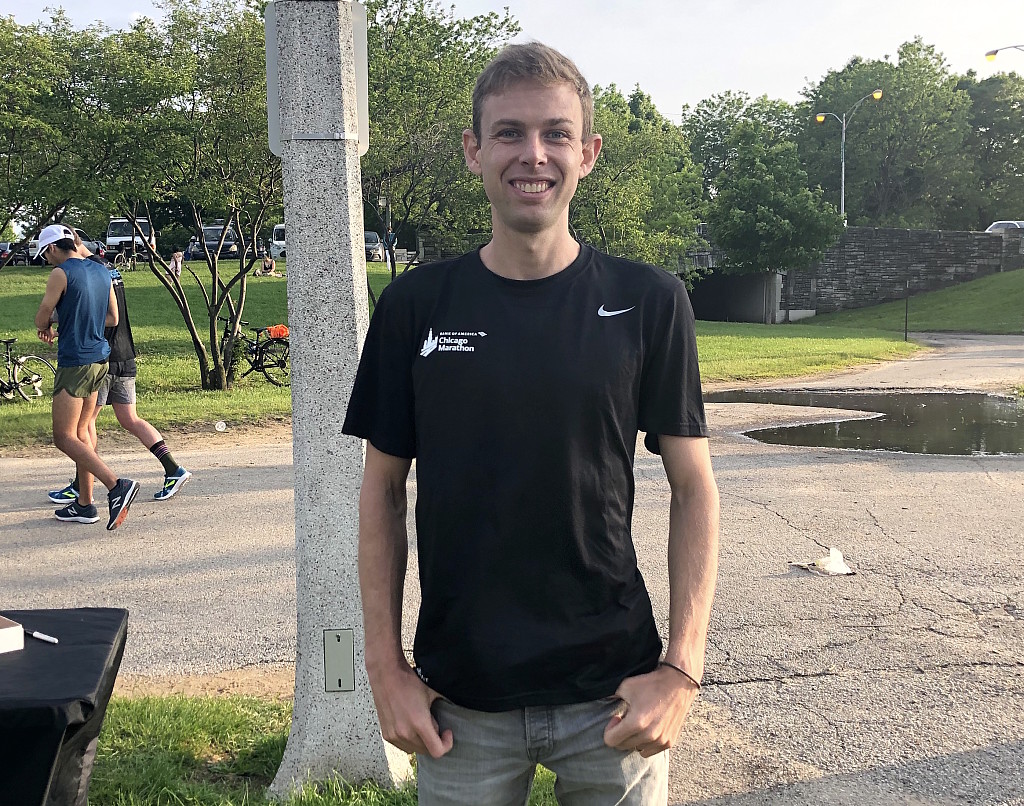
Mike Smith is the new coach for Galen Rupp
Two-time Olympic medalist Galen Rupp has a new coach.
Rupp, whose previous coach, Alberto Salazar, is serving a four-year ban from track due to anti-doping violations, is now entrusting his training to Mike Smith, the head coach of the Northern Arizona University cross-country and track teams.
Smith confirmed the coaching relationship in an email to Runner’s World, writing that he was surprised to get a phone call from Rupp last fall and took a long time to consider whether to coach him.
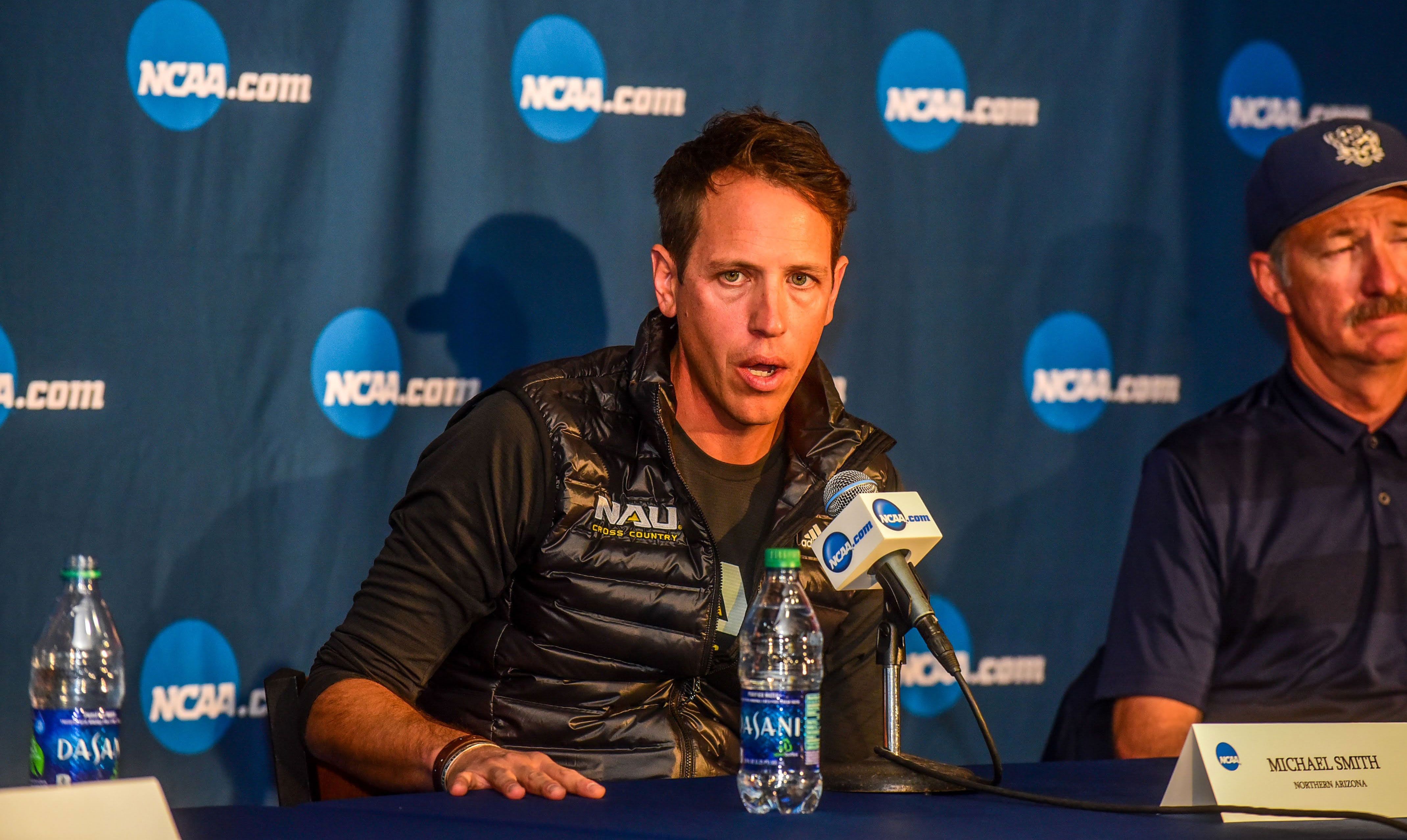
The move marks a major change for Rupp, 33, who had been under Salazar’s guidance since Salazar spotted him playing soccer when he was a 14-year-old high school student in Portland, Oregon. Rupp went to college nearby at the University of Oregon and after graduating in 2009, he joined the Salazar-led Nike Oregon Project (NOP).
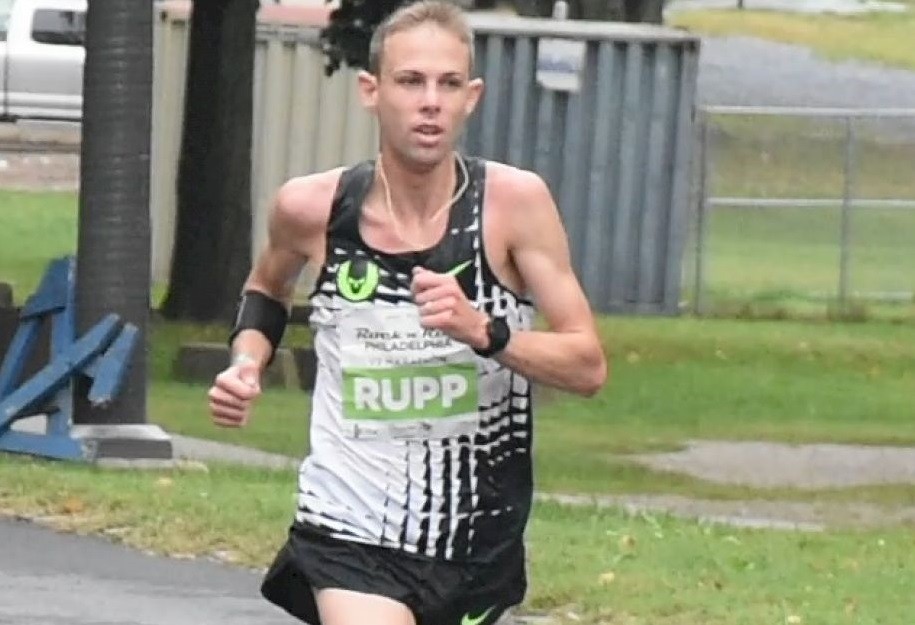
While still in college, Rupp made the 2008 U.S. Olympic team in the 10,000 meters, finishing 13th. At the 2012 Games in London, he won silver in the 10,000 meters behind his then-NOP teammate Mo Farah of Great Britain. In 2016, Rupp was the Olympic bronze medalist in the marathon. He also won the 2017 Chicago Marathon and the 2018 Prague Marathon, where he set his personal best of 2:06:07, second on the U.S. all-time list.
But Rupp was plagued by Achilles problems and Haglund’s deformity in his left foot, and he underwent major surgery in October 2018.
Last October, as Rupp was preparing to race Chicago again, his first race since the surgery, the U.S. Anti-Doping Agency announced news of Salazar’s ban. Salazar is appealing the decision, but in the meantime, he is not allowed to coach, and athletes who are in contact with him are subject to sanction. Nike executives shut down the Oregon Project a few days after the ban. Rupp made it to about 23 miles of the Chicago Marathon in 2019, before dropping out with a calf strain.
Rupp has never failed a drug test, and he is one of the most frequently tested American athletes.
He is also very private, staying off of social media and eschewing media interviews except around major marathons. Other athletes who had been training under Salazar had announced moves to new coaches, but Rupp had not, fueling speculation about his training and preparations for the Olympic Marathon Trials next month in Atlanta.
His move to Smith, who is based in Flagstaff, Arizona, is a radical shift away from the insular culture Salazar created at the NOP in Beaverton, Oregon.
Smith, 39, is a well-respected collegiate coach, having led the NAU men’s cross-country team to NCAA team titles in 2017 and 2018, and a runner-up finish in 2019. The women were 14th in 2019. Before NAU, he coached at Georgetown, his alma mater. In college, he earned All-American honors in cross country, and he later qualified for the Olympic marathon trials in 2007 (for the 2008 Games). He got his start in coaching working under legendary distance coach Jack Daniels.
by Sarah Lorge Butler
Login to leave a comment

Nike employees protested at the Beaverton, Ore. headquarters on Monday following the reopening of the building named after Alberto Salazar
On Monday, the day that the sportswear giant Nike reopened the Beaverton, Ore. headquarters building named after disgraced coach Alberto Salazar, Nike employees staged a protest regarding its mistreatment of women, and were threatened with termination if they spoke to the media.
The Wall Street Journal reports that, “A flier circulating among employees read, “Join us for a campus walk to celebrate what women bring to sport and to raise awareness of how Nike can support our female athletes and employees.”
There was another flier circulating ahead of the protest–this one was also distributed by Nike employees but had a different tone. It read, “No employee is permitted to speak to news media on any NIKE-related matter either on- or off-the-record, without prior approval from Nike Global Communications.” The policy continues, “Failure to comply with NIKE’s media policy could result in termination of employment.”

Nike spokesperson Greg Rossiter said to The Willamette Weekly that this cautionary flyer was not officially distributed by the company. “We respect and welcome employees’ feedback on matters that are important to them. The flier prepared by some employees was not officially distributed by Nike.”
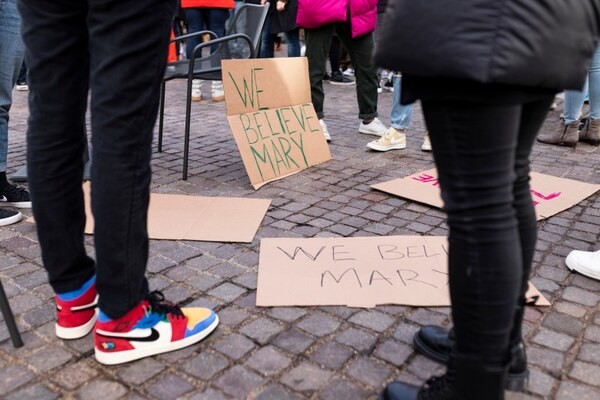
The US Anti-Doping Agency banned Salazar in September for four years following a years-long investigation and secret arbitration case. The details appear in a BBC report and a statement by USADA outlining the specific charges, which include trafficking in testosterone (a banned substance), illegal methods and evidence-tampering at the Nike Oregon Project’s Beaverton, Oregon headquarters. Salazar is former coach to Mo Farah and Kara Goucher and current coach of marathoner Galen Rupp and the newly-crowned 10,000m champion Sifan Hassan, among others.
Nike shut down the NOP training group 11 days later. Salazar’s athletes have since found new coaches and training groups.
Following the dissolution of the NOP, American prodigy Mary Cain came forward and told her story about her experience with the group. According to Cain, the NOP’s “win at all costs” mentality involved Salazar and his assistant coaches (who are not named) pushing her to take birth control pills and diuretics to lose weight, weighing her and verbally abusing her in front of her teammates. Cain’s success on the track came at a huge price: she didn’t have her period for three years, which weakened her bone health so much that she endured five stress fractures. Her success dwindled, and when she left the program, nobody really knew why.
On Monday, protesters signs read, “We believe Mary.”
by Madeleine Kelly
Login to leave a comment
Jordan Hasay says she is going to be ready for the US Olympic Trials after making some changes
Jordan Hasay went into the Chicago Marathon on October 13 in excellent shape, hoping to make a run at the American record in the distance. But about two miles into the race, she tore her left hamstring. She limped past the 5K mark in 22 minutes before dropping out of the race.It was the bitter end of a tumultuous two weeks.
On September 30, her longtime coach, Alberto Salazar, was hit with a four-year ban from track and field for anti-doping violations. Hasay, 28, said she never witnessed anything improper in her time with Salazar and his team, the Nike Oregon Project. On October 11, Nike shut down the Oregon Project, leaving the athletes who had trained with Salazar to work out new coaching and training situations.
The timing of Hasay’s injury and the coaching upheaval were not ideal: American marathoners are preparing for the Olympic Marathon Trials on February 29, 2020 in Atlanta.
The upheaval has continued this month: On November 7, in an explosive opinion video in The New York Times, Mary Cain, a former teen prodigy who trained with Hasay and others at the Oregon Project, alleged she was “emotionally and physically abused” in her time with Salazar.
On a recent trip to Monaco, she formalized a relationship with Radcliffe to be her “mentor-coach.” Radcliffe held the world record in the women’s marathon, 2:15:25, for 16 years. The record fell last month to Brigid Kosgei, who ran 2:14:04, at the Chicago Marathon, where Hasay dropped out.
Hasay has long admired Radcliffe. As Hasay was training for her first marathon, Boston in 2017, her late mother used to call Hasay by the pet name “Paula.” Radcliffe and Hasay first met at the 2017 Chicago Marathon, where Hasay ran 2:20:57 and became the second-fastest American marathoner behind Deena Kastor. Hasay and Radcliffe have kept in touch since then.
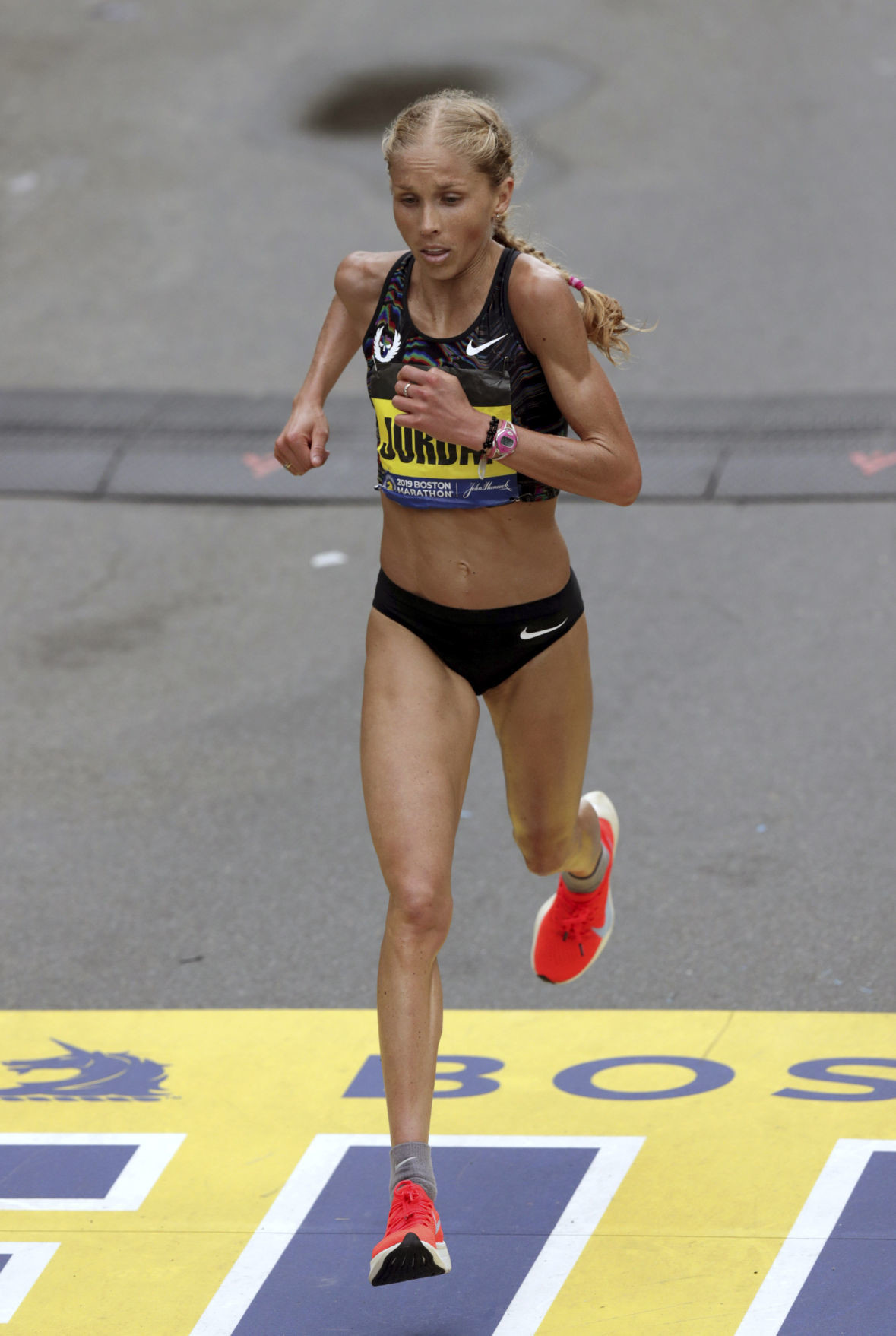
Last week, together in Monaco, they sat down and mapped out Hasay’s training for the next 15 weeks until the Trials. Hasay said she believes she’s the first athlete to be coached by Radcliffe and specified that Radcliffe, and not her husband, Gary Lough, who oversees the training of Mo Farah, will be in charge.
Hasay will stay in California and communicate remotely with Radcliffe. “I’ve always really looked up to her as a role model,” Hasay said. “Since we first met two years ago in Chicago, we’ve kept in touch and she’s given me a lot of advice. She knows that I have had some very good coaches in the past. We’re not going to go in and change a bunch of things. At this point, I mainly need someone to hold me back and make sure I stay injury free. She’s such a kind person.”
After two weeks off from running after the Chicago Marathon, Hasay has returned to running almost pain free, she said, although the hamstring feels tight at faster speeds. On November 19, she did a hill workout.
Hasay said Nike staff were “incredibly supportive” of her as she considered new coaches, and they were open to her having a coach who didn’t have a relationship with the company if that is what she wanted. Radcliffe, though, was a Nike-sponsored athlete throughout her career and maintains a relationship with the company.
She is in the process of selling her home in Beaverton, Oregon, near Nike headquarters, and she will live with her father in Arroyo Grande, California, until she eventually buys a home in that area. She is more suited to the climate there, she said, where it is sunny and warm year-round, than the rainy winters of the Pacific Northwest. She also said the community has supported her since she began running at age 12. Being home “will add a lot of happiness,” she said.
When asked about Cain, Hasay said she knew her teammate was struggling during her 10 months training in Portland with the Oregon Project, but she didn’t know the extent of the problems.
“I was pretty shocked with the video,” Hasay said. “Obviously I feel really sad and I texted her and said I’m really sorry. That if I knew that it was that bad, if there was anything I could have done, I just apologize.”
Hasay said she and Cain were fairly close but she had “no idea” that Cain was cutting herself, as she said in the Times video. Cain also said Salazar was constantly trying to get her to lose weight to hit an arbitrary number, 114 pounds.
Hasay said she thought Cain’s youth and the intensity of the training and the program were a poor combination, but she expressed sympathy for both Cain and Salazar.
“It’s so sad, everyone was trying their best, though,” she said. “I really think you can’t point fingers and it’s really easy from the outside to kick Alberto under the bus. People make mistakes. He could have handled it at times differently. He really was doing his best. He wasn’t trying to cause any of the problems that she described. I sympathize with both sides.
“That’s why it’s hard—I haven’t commented on it—I don’t really have a side. I didn’t experience what she experienced, but I can see how it was so difficult. I think that her message is a good one, addressing these issues, they are important, I think it’s good overall that we’re looking at some of things.”
Hasay continued that when an athlete is still growing and going through puberty, getting to a certain weight is “difficult.” Older athletes on the team, she said, were able to push back in discussions with Salazar on weight.
“Alberto, if you ask me is he obsessed about weight? Yes, but he’s obsessed about everything,” she said. “He wanted to cut my hair [to reduce drag], he wanted me to wear a wetsuit in the Boston Marathon. It’s just every little detail is covered and weight happens to be one of those things.”
Salazar told Hasay she needed to gain weight at times. “He’s told me, ‘You don’t need to be this lean all year. I’d like you to go back up.’ We’ve had discussions. I think when you’re older and more experienced, you can speak up. It’s hard when she’s so young and still growing. It was just the whole situation wasn’t the right fit, unfortunately.”
by Runner’s World
Login to leave a comment

2028 US Olympic Trials Marathon
Most countries around the world use a selection committee to choose their Olympic Team Members, but not the USA. Prior to 1968, a series of races were used to select the USA Olympic Marathon team, but beginning in 1968 the format was changed to a single race on a single day with the top three finishers selected to be part...
more...
Five Nike Oregon Project athletes will be without their coach, Alberto Salazar for the remainder of the World Championships
Donovan Brazier (800m), Clayton Murphy (800m), Yomif Kejelcha (10,000m), Konstanze Klosterhalfen (1,500m and 5,000m) and Sifan Hassan (5,000m and 10,000m) all have races to run at the World Championships and will all be without their coach heading into those events.
The Nike Oregon Project athletes are all in medal contention, with Hassan claiming the 10,000m title on Saturday.
The US Anti-Doping Agency has banned Alberto Salazar, head coach of the Nike Oregon Project, for four years following a years-long investigation and secret arbitration case.
The details appear in a BBC report by journalist Mark Daly and a statement by USADA outlining the specific charges, which include trafficking in testosterone (a banned substance), illegal methods and evidence-tampering at the NOP’s Beaverton, Oregon headquarters.
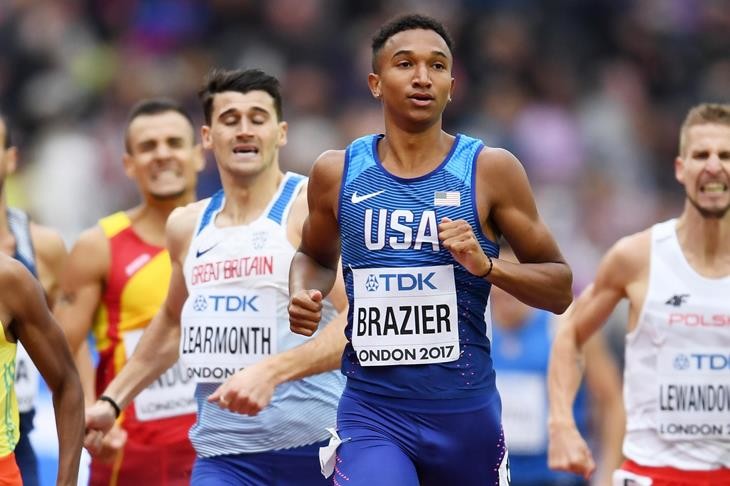
Salazar is former coach to Mo Farah and Kara Goucher and current coach of marathoner Galen Rupp and the newly-crowned 10,000m champion Sifan Hassan, among others. The ban went into effect yesterday, September 30.
All five NOP athletes have had great seasons. Hassan (outdoor) and Kejelcha (indoor) both set mile world records, Murphy and Brazier have been Diamond League standouts and Klosterhalfen is currently ranked eighth in the world for the women’s 1,500m.
The IAAF has confirmed that Salazar’s World Championship accreditation has been deactivated. He’s not allowed in the Khalifa International Stadium or to have access to any of his athletes.
Both Brazier and Murphy run the 800m final this evening. The NOP athletes will now likely defer to their federations coaching staff for assistance before their races.
by Madeleine Kelly
Login to leave a comment

IAAF World Athletics Championships Doha
The seventeenth edition of the IAAF World Championships is scheduled to be held between 27 September and 6 October 2019 in Doha, Qatar at the renovated multi-purpose Khalifa International Stadium. Doha overcame bids from Eugene, USA, and Barcelona, Spain to be granted the rights to host the 2019 IAAF World Championships in Athletics. Having hosted the IAAF Diamond League, formerly...
more...
Shalane Flanagan has been toying with the idea of retirement, but her retirement will have to wait until after this year's New York City Marathon
Shalane Flanagan has been toying with the idea of retirement for several years. But retirement will have to wait until after this year’s New York City Marathon.
She was supposed to retire after last year’s New York City Marathon, where she became the first American woman to win the title in four decades.
Since then, Flanagan faced heartbreak at this year’s Boston Marathon, where she finished in a disappointing seventh place under difficult conditions. Flanagan had hoped to win the race in front of a hometown crowd, as she’s from Marblehead, Massachusetts. Many thought Boston could be her last marathoner ever.
Now she’s announced a return to the New York City Marathon this fall. "When I experienced winning New York last year, it was like when you're sitting on your couch and finally something happens that you didn't realize would happen and it excites you,"
Flanagan said. "But this was my real life! It was the outcome of always wanting it and not knowing if I was going to get it. And suddenly everything I'd worked for was validated. I got it." Flanagan currently trains with the Bowerman Track Club in Beaverton, Oregon.
The New York City Marathon goes on Sunday November 4th, 2018.
Login to leave a comment
Global Run Challenge Profile: Running is an outlet for my highly competitive personality says Dave Ross
RUN THE WORLD: "Running is my social network. Pretty much everyone that I'm connected to I met through running," says Dave Ross.
But it didn’t start this way. As a kid he was pretty much a nerd, very shy and definitely a bookworm, not athletic at all. "I turned out for the cross country team my freshman year of high school to make friends," he says.
He ended up being a four year letterman in cross country and team captain his senior year and was awarded a scholarship to run cross country in college. Running has remained a major part of his life.
"I don't think that I'd miss training if I couldn't run, but I'd definitely miss racing. Running is an outlet for my highly competitive personality. I love racing and watching others race. My knowledge of the sport gives me access to getting hired to help with commentary for some of the best races and track meets in the world," says Dave.
In 1996 he ran 2:36:57 at the Portland Marathon training 50 miles weekly. Some of Dave's best times include 15:35 5K, 53:54 10 miles, and 1:12:57 for the half marathon. Dave works for Kaiser Permanente in the Portland area.
He has two grown children. "My wife Stephanie (also a runner) and I live in Beaverton, Oergon and we do a lot of our running around Nike World Headquarters."
I asked him about the present running scene in the US. "I think that it's on a pretty impressive upswing. Now that there is drug testing that's leveling the international playing field Americans are more competitive than ever," he says.
"Folks are catching on and following the idea of structured training groups. The Bowerman Track Club, The Nike Oregon Project and groups like the Brooks Hansons are leading the way in American development."
So why did Dave join our Run The World Challenge? "I think that it's a cool idea. It's neat to see so many people come together toward a common goal," Dave commented.
by Bob Anderson
Login to leave a comment
Race organizer has been found that meets the requirements to produce the Portland Marathon
Login to leave a comment
