

Running News Daily
Running News Daily is edited by Bob Anderson and team. Send your news items to bob@mybestruns.com Advertising opportunities available.
Index to Daily Posts · Sign Up For Updates · Run The World Feed
Articles tagged #New York
Today's Running News


Getting Into a World Marathon Major May Be Harder Than Running One
For many marathoners, crossing the finish line of a World Marathon Major is the ultimate dream. But before you can worry about surviving 42.195 kilometres, there is another challenge: actually getting onto the starting line.

The six Abbott World Marathon Majors — Boston, London, Berlin, Chicago, New York and Tokyo — do not use the same entry system, and some are considerably more difficult to access than others.
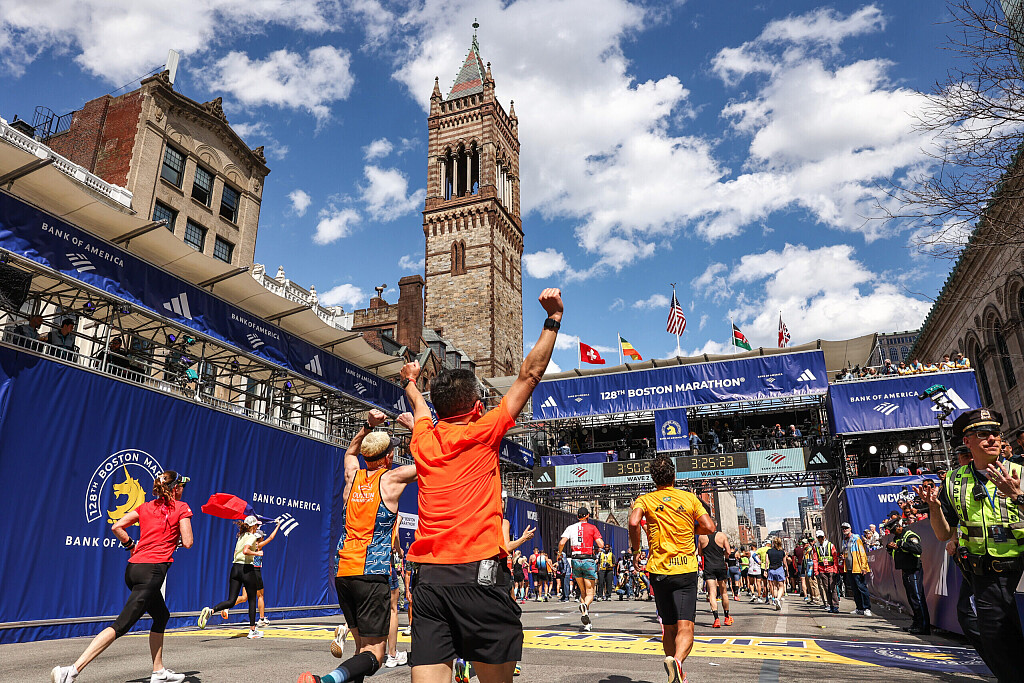
Boston is arguably the clearest example of how running fast does not always guarantee a place. Unlike the other majors, the Boston Marathon is built around qualifying standards. However, meeting the published standard only gives a runner the opportunity to apply. Because demand is so high, the fastest qualifiers are accepted first. This means a runner can achieve the official qualifying time and still miss out when the cut-off moves faster than expected.
London presents a completely different challenge. Its famous ballot is a random draw, making luck a major part of the process. However, runners have other avenues, including Good for Age, charity places and international tour operators. Even the Good for Age route can be highly competitive, with places allocated according to performance when demand exceeds the number of available spots.
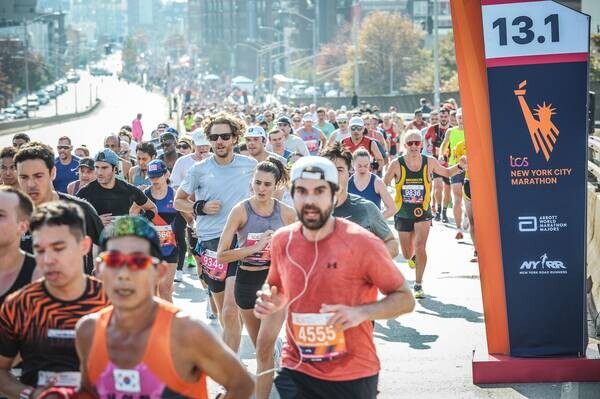
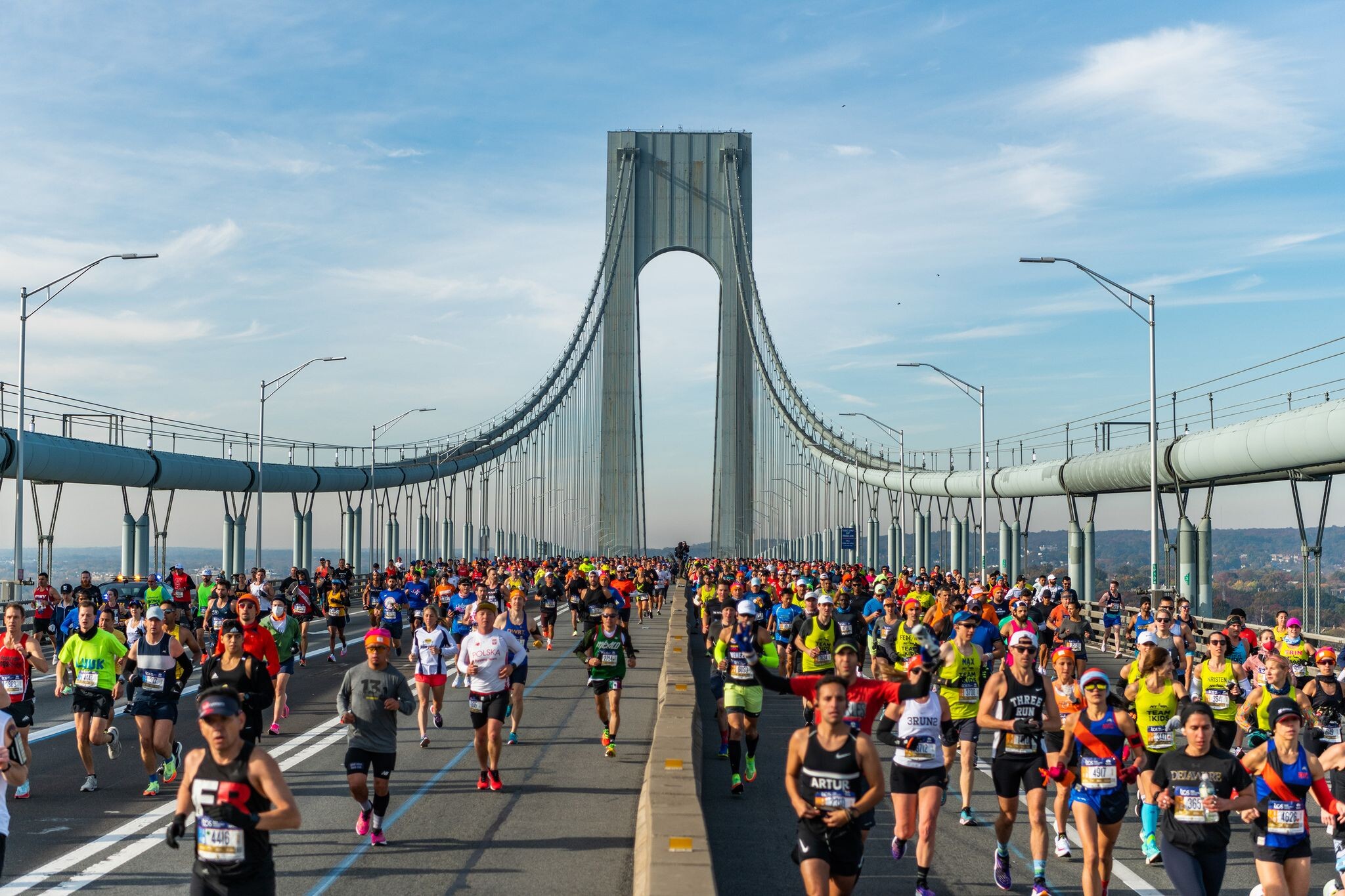
New York City is another race where demand is enormous. The TCS New York City Marathon offers a general drawing alongside several guaranteed-entry routes, including qualifying times, charity places, international tour operators and other eligibility programmes. For serious runners, achieving the appropriate qualifying standard can be one of the most dependable ways to secure a place.
Chicago gives runners several ways to avoid relying entirely on the lottery. The Bank of America Chicago Marathon has a non-guaranteed drawing, but runners can also gain guaranteed entry through qualifying times, charity, tour operators and other eligible routes. For fast runners, meeting the published standard can provide a much more certain path to the start line.
Berlin is also heavily sought after. The BMW Berlin Marathon uses a lottery for the majority of runners, while qualifying performances can provide another route into the race. With its fast course and reputation for producing world-class times, demand remains enormous every year.
Tokyo adds another layer of difficulty, particularly for international runners. The race has a lottery as well as several other entry routes, including charity and performance-based options. International runners can also use official tour operators, although these packages generally cost more because they are tied to travel arrangements.
For runners chasing the Six Star Medal, the biggest lesson is simple: do not depend on the lottery alone.
Look closely at every possible route. Good-for-age standards, qualifying performances, charity programmes and official tour operators can all provide alternatives when the ballot does not go your way.
And then there is the reality every marathoner eventually discovers: sometimes getting rejected from a major marathon hurts almost as much as the race itself.
When that rejection email arrives, remember that parkrun is still free, happens every Saturday and does not require a lottery.
So, which World Marathon Major have you already completed — and which one is still at the top of your bucket list?
by Erick Cheruiyot for My Best Runs.
Login to leave a comment

New York City Marathon Unveils Special 50th-Anniversary Finisher Medal
The TCS New York City Marathon is preparing to mark a major milestone in its history, and runners crossing the finish line on November 1 will take home a medal designed to celebrate five decades of the iconic five-borough course.
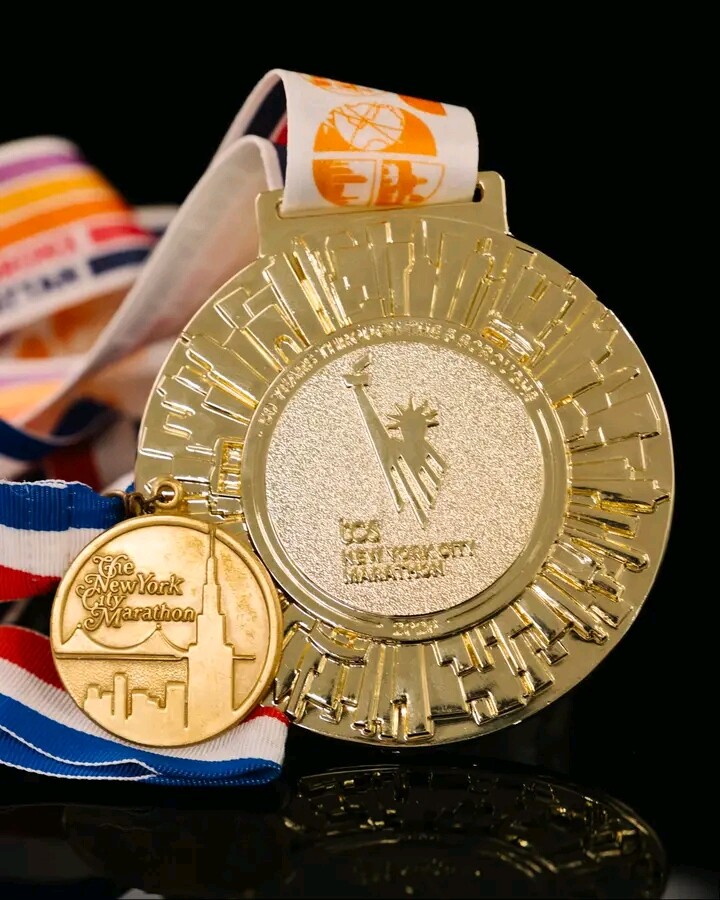
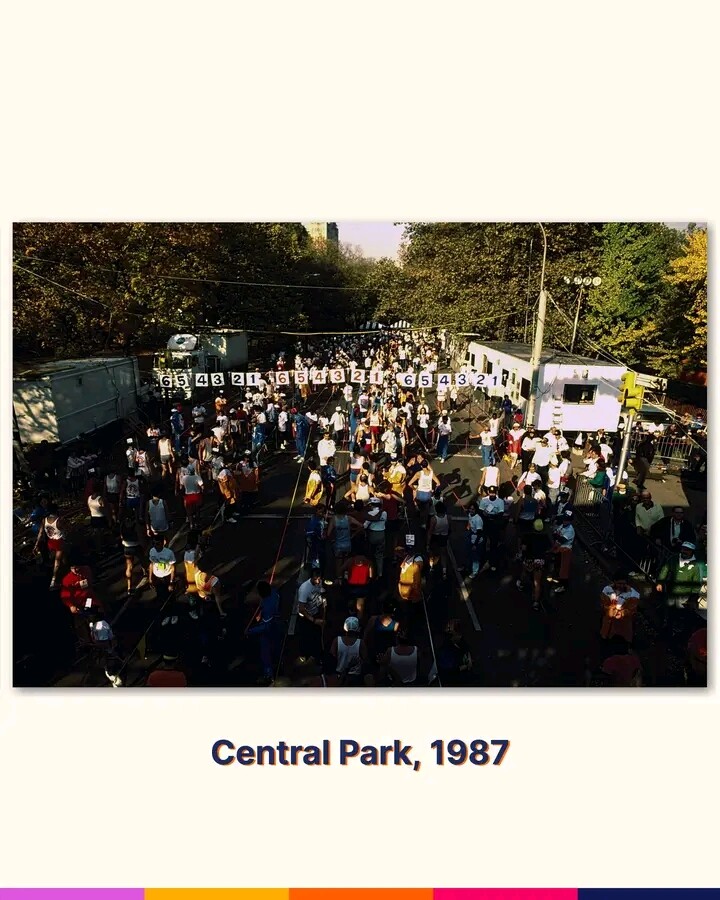
New York Road Runners (NYRR) has unveiled the official 2026 finisher medal, commemorating the 50th anniversary of the course that transformed the race after it moved beyond Central Park in 1976. The anniversary also marks 50 years since NYRR first introduced a finisher medal for the event.
The new medal combines elements of New York City and the marathon into a distinctive sculptural design. An abstract skyline spreads outward in a sunburst pattern, while the five bridges encountered along the marathon route are incorporated into the design, creating a visual connection between the race and the city through which it travels.
At the heart of the concept is an unbroken circular skyline, symbolising the five boroughs coming together as one. It reflects one of the defining characteristics of the New York City Marathon: a single 26.2-mile journey that connects Staten Island, Brooklyn, Queens, the Bronx and Manhattan.
The 2026 medal will be produced in zinc with an electroplated gold finish and measures 3.5 inches across, making it slightly larger than the standard medal in recognition of the anniversary. Despite the larger overall size, the central medallion remains 2.12 inches, the same measurement used for the 2025 edition.
The ribbon also pays tribute to the race's history, drawing inspiration from the visual style of the 1970s. It features the marathon logo, the 50th-anniversary emblem and references to all five boroughs, completing a design that blends the event's past with its present.
For thousands of runners, the medal will represent far more than simply a race souvenir. It will be a lasting reminder of the miles covered through one of the world's most recognisable cities and of the personal achievement of reaching the finish line in Central Park.
NYRR chief marketing and digital officer Juliette Morris said the design was created to capture the unique character of the marathon, from the atmosphere of New York City to the shared experience that brings runners and spectators together every year.
As the 2026 edition approaches, the special medal adds another layer of significance to a race already steeped in history. For those who complete the journey on November 1, it will serve as a tangible symbol of both their individual achievement and the 50-year legacy of the modern New York City Marathon.
by Erick Cheruiyot for My Best Runs.
Login to leave a comment

TCS New York City Marathon
The first New York City Marathon, organized in 1970 by Fred Lebow and Vince Chiappetta, was held entirely in Central Park. Of 127 entrants, only 55 men finished; the sole female entrant dropped out due to illness. Winners were given inexpensive wristwatches and recycled baseball and bowling trophies. The entry fee was $1 and the total event budget...
more...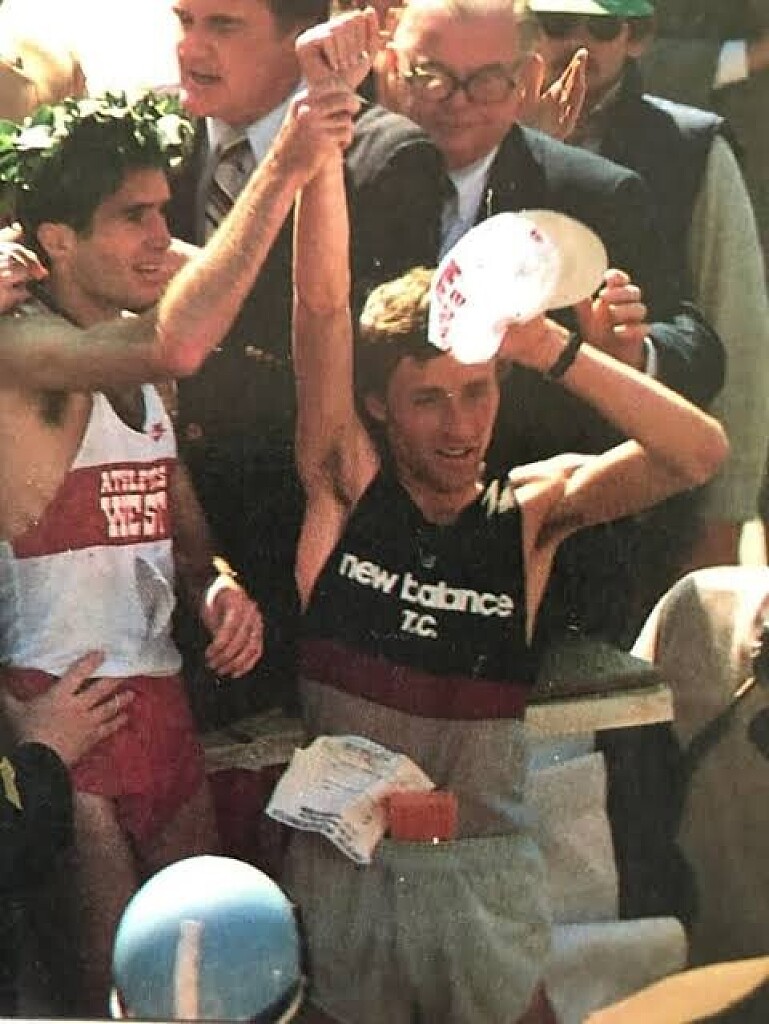
The Duel In The Sun: When Salazar Beat Beardsley By Two Seconds At Boston
April 19, 1982. The Boston Marathon unfolded under unusually warm, sunny conditions, and by the closing stages, the race had become a private battle between two very different American runners: Alberto Salazar, already one of the biggest names in distance running, and Dick Beardsley, the Minnesota runner who had emerged as a serious marathon contender.
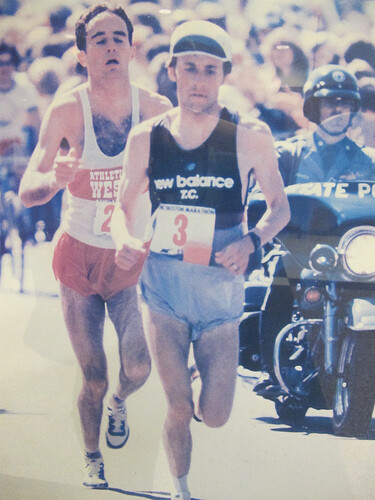
For roughly nine miles, from the Newton Hills toward the finish, Beardsley did much of the leading, with Salazar tucked close behind. Neither man could shake the other. They ran deep into Boston locked together, trading surges and refusing to surrender an inch as the crowds along the course grew louder.
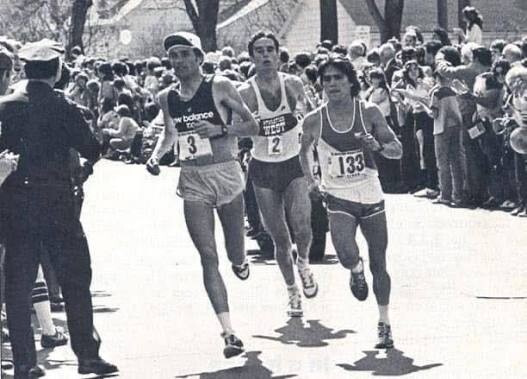
Salazar finally made his decisive move with less than a mile remaining. He opened a small gap, but Beardsley refused to disappear. The Minnesota runner chased him through the final streets, closing again as they approached the finish.
Then came the final sprint.
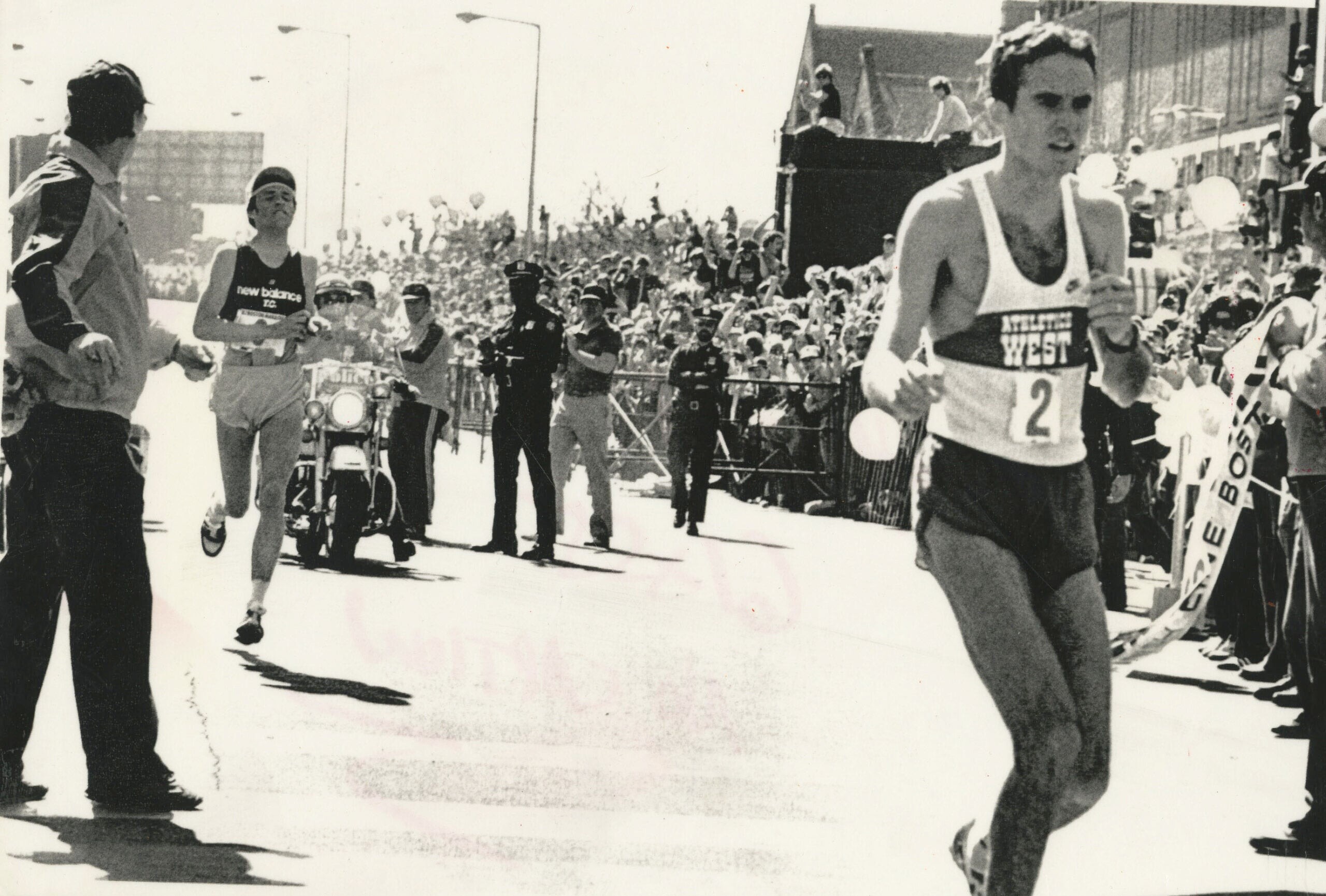
Salazar held his form and reached the finish first in 2:08:52, with Beardsley only two seconds behind in 2:08:54. It was an extraordinary result: both men broke 2:09 in the same Boston Marathon, and both shattered the previous course record.
The race became known as the “Duel in the Sun,” and it remains one of the most celebrated head-to-head battles in Boston Marathon history. Beardsley had not won, but his performance established him as one of America's elite marathoners.
For Salazar, however, victory came at an enormous physical cost. Immediately after crossing the finish line, he collapsed and required emergency treatment, including several litres of intravenous saline. The combination of heat, dehydration and an all-out effort had pushed his body to the limit.
Salazar's marathon career would never again produce quite the same kind of performance. His celebrated 1981 New York City Marathon victory had produced what was initially considered a world record, although the course was later found to be short. His Boston triumph therefore became one of the defining victories of his career.
Beardsley's story would take an even more difficult turn. Injuries disrupted his career, and after returning to the highest level, he suffered a devastating farm accident in 1989. Further accidents, surgeries and severe physical pain followed, eventually leading to a long battle with painkiller addiction.
He eventually overcame that struggle and transformed the darkest chapters of his life into a story of recovery, resilience and redemption.
That is what makes the 1982 Boston Marathon more than a two-second victory.
For one extraordinary afternoon, Salazar and Beardsley produced a marathon duel in which neither man was willing to give way. One crossed the finish line first. The other finished only two seconds behind him.
Two seconds separated them at Boston. Decades later, their legendary duel remains one of the greatest chapters in marathon history.
by Erick Cheruiyot for My Best Runs.
Login to leave a comment
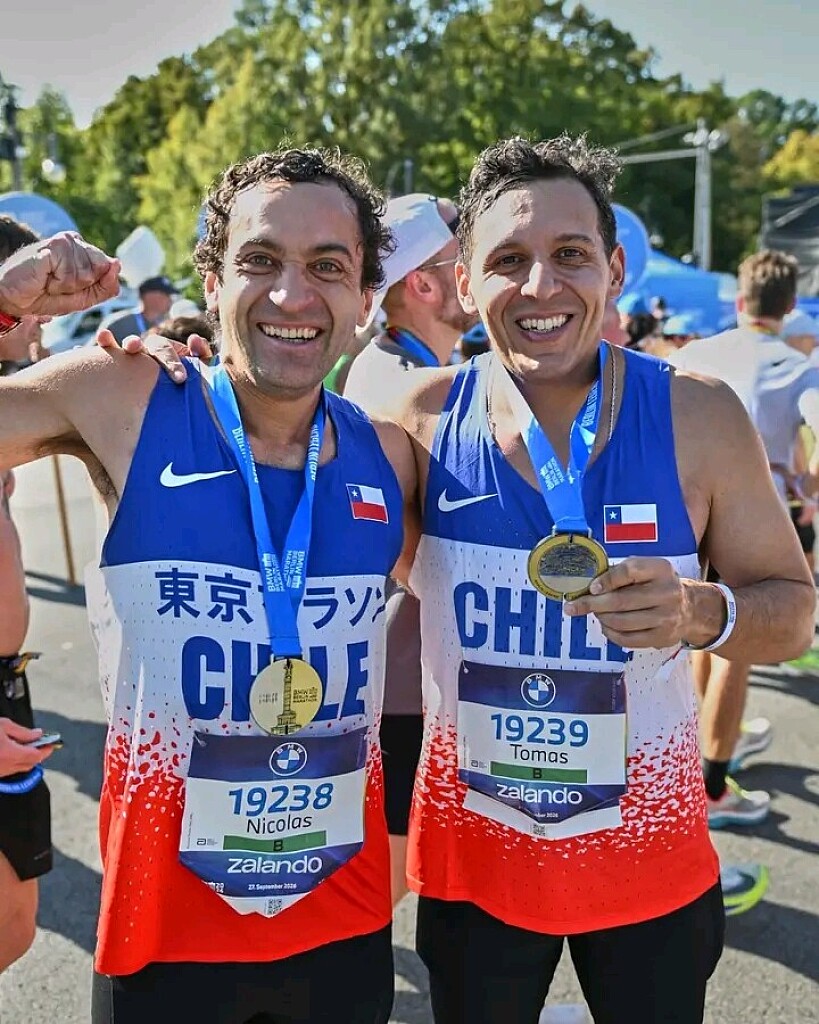
Chilean Duo Chase History With Ambitious Abbott World Marathon Majors Slam
Two Chilean athletes, Tomás and Nicolás, are chasing a remarkable piece of marathon history as they attempt to complete all seven Abbott World Marathon Majors races in a single calendar year.
Their ambitious journey began with a clear objective: to race the world’s biggest marathon stages throughout 2026 and become the first athletes from Chile to complete an Abbott World Marathon Majors Slam.
Their challenge has taken them across continents, following the prestigious Major circuit from one iconic city to another. Each race has brought a different course, atmosphere and test of endurance, but the ultimate goal has remained unchanged — reaching the finish line of every Major in the same year.
The journey is demanding not only because of the physical challenge of racing seven world-class marathons, but also because of the travel, recovery and preparation required between events. Moving from one international marathon to another leaves little room for error, making consistency and resilience just as important as speed.
For Tomás and Nicolás, every starting line represents another step towards a milestone that would carry special significance for Chilean distance running. Their campaign has turned the marathon calendar into a year-long adventure, with each race adding another chapter to a story that could ultimately end in the heart of New York City.
With the series now approaching its final stages, Tomás and Nicolás are closing in on a destination that could complete their extraordinary journey: Central Park in New York City, where the 2026 New York City Marathon will be held on November 2.
They are not alone in the pursuit. Fifty-three athletes are currently on course for an Abbott Slam in 2026, creating an intriguing race against time as the remaining Majors determine who will ultimately complete the demanding seven-race challenge.
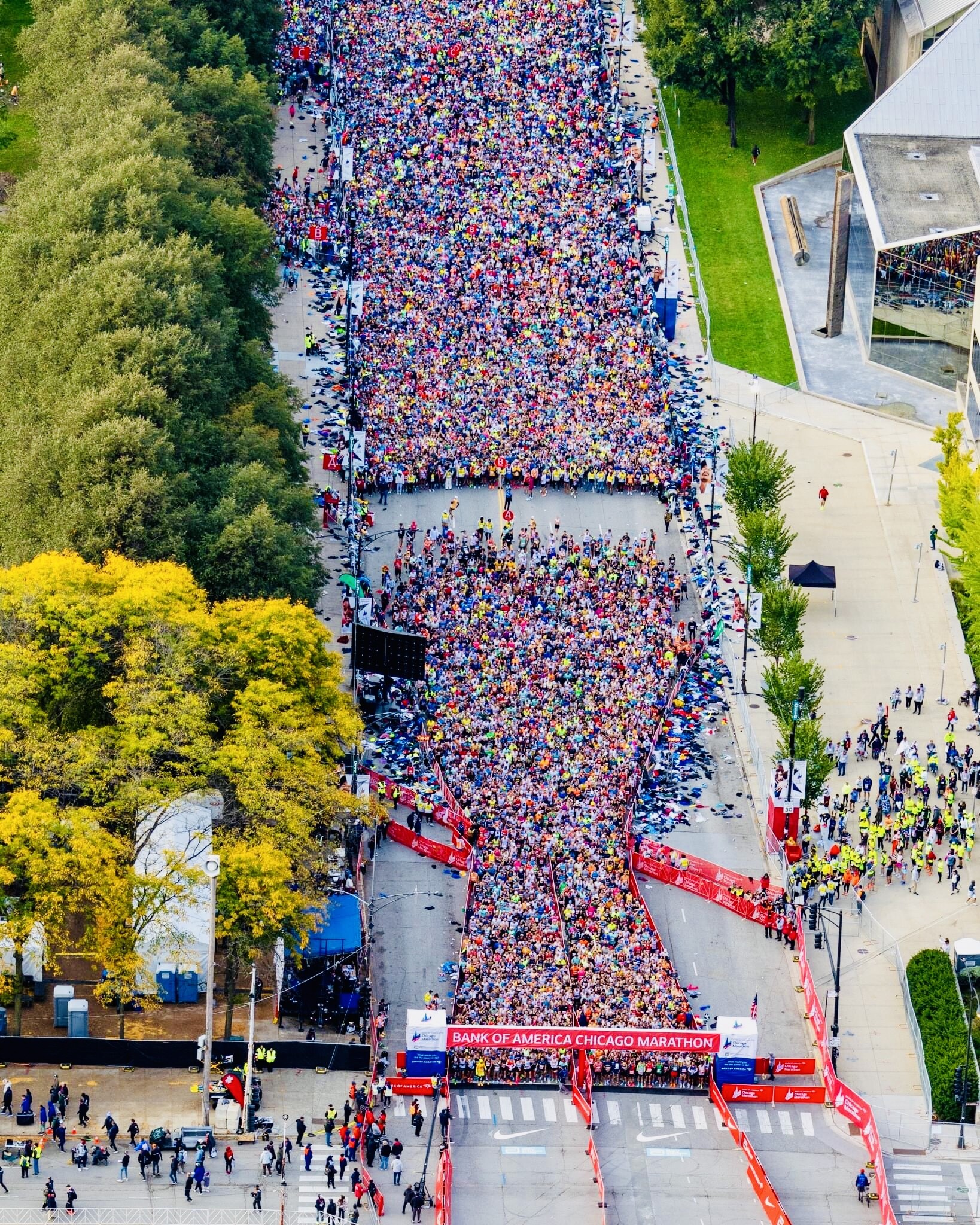
Before New York, however, the athletes still have another major chapter to write in Chicago, where the Bank of America Chicago Marathon will provide the next opportunity to keep their dreams alive.
For Tomás and Nicolás, this is about more than collecting marathon medals. It is a journey representing Chile on some of the most prestigious stages in global distance running — with the possibility of ending the year as the first Chileans to accomplish something truly historic.
Chicago is next. New York awaits. And the dream of a Chilean Abbott Slam is getting closer to reality.
by Erick Cheruiyot for My Best Runs.
Login to leave a comment

Bank of America Chicago
Running the Bank of America Chicago Marathon is the pinnacle of achievement for elite athletes and everyday runners alike. On race day, runners from all 50 states and more than 100 countries will set out to accomplish a personal dream by reaching the finish line in Grant Park. The Bank of America Chicago Marathon is known for its flat and...
more...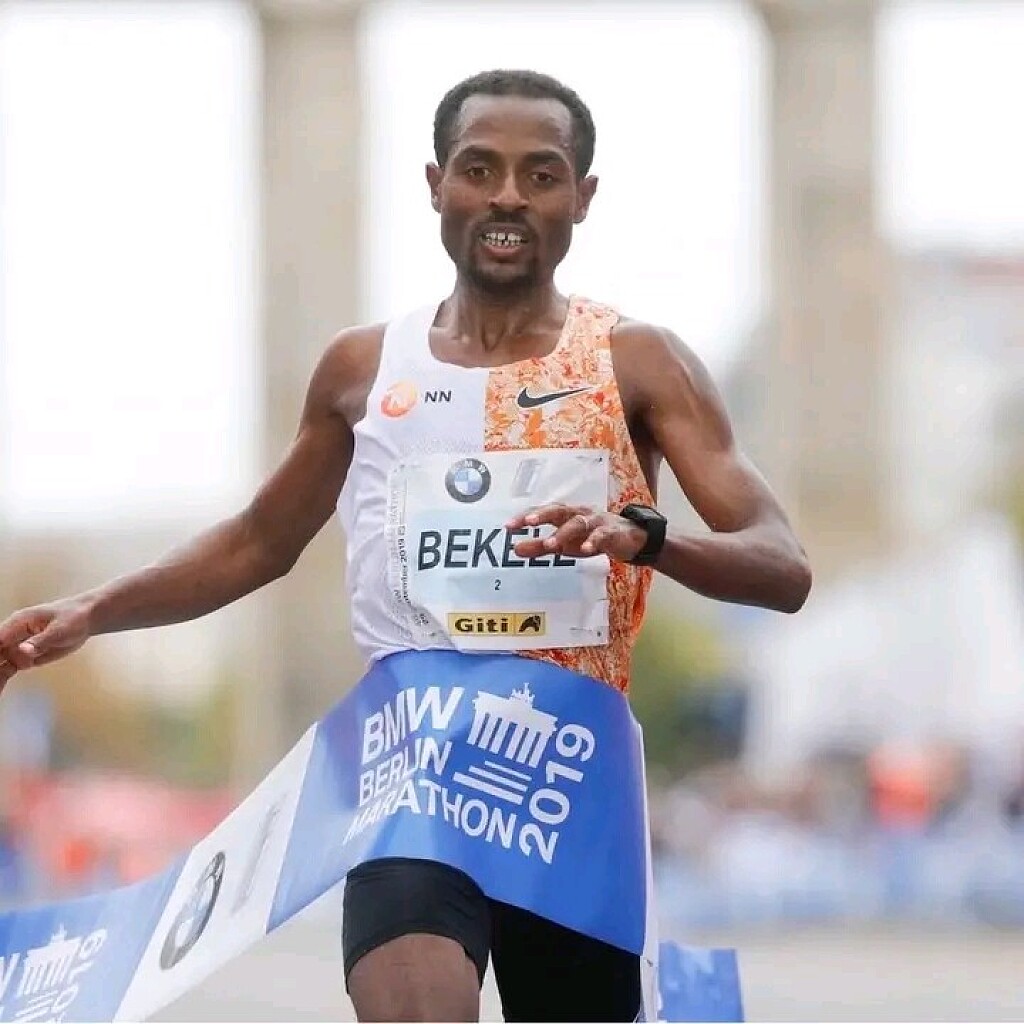
Kenenisa Bekele Withdraws From Berlin Marathon After Achilles Injury
Kenenisa Bekele’s much-anticipated return to the BMW Berlin Marathon has been abruptly cancelled after the Ethiopian distance-running legend suffered an injury to his left Achilles tendon during one of his final training sessions.
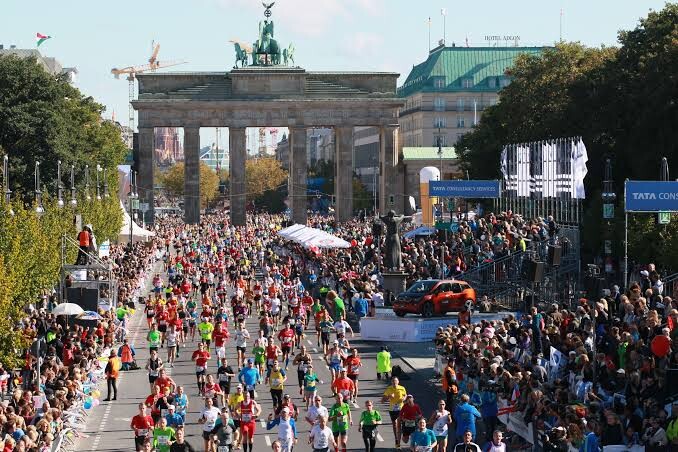
The 44-year-old Bekele was due to return to competitive action on Sunday, September 27, after being added to the elite field only last week. His late inclusion had generated enormous excitement, with fans looking forward to seeing one of the greatest distance runners in history back on one of the courses where he has produced some of his most memorable performances.
However, the injury has forced Bekele to withdraw just days before the race.
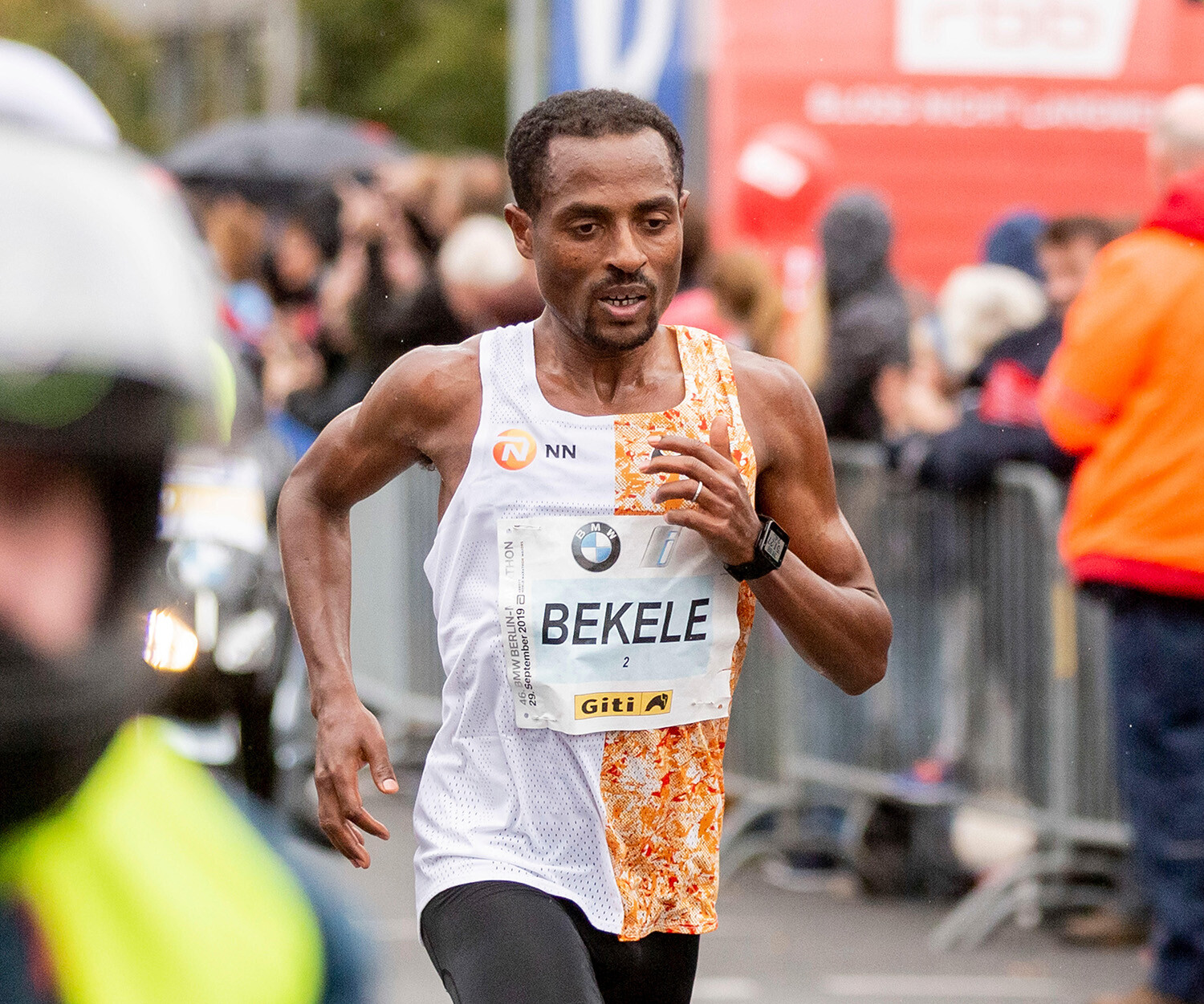
Bekele has a remarkable history in Berlin, having won the marathon twice. In 2016, he stormed to victory in 2:03:03 before returning three years later to produce one of the greatest marathon performances of his career, clocking 2:01:41 in 2019. That performance left him just two seconds short of Eliud Kipchoge’s then-world record of 2:01:39.
His 2:01:41 remains one of the fastest marathon performances ever recorded, and Berlin has long been a special stage in Bekele’s extraordinary career.
This year’s appearance was also expected to mark another chapter in his remarkable longevity. Bekele entered the race as a 44-year-old and had been targeting another strong performance after previously setting a masters marathon world record of 2:04:15 at the 2024 London Marathon, a mark he established at the age of 41.
Instead, his preparations have ended in disappointment.
Bekele has not completed a marathon since the Paris 2024 Olympic Marathon, where he finished 39th in 2:12:24. He subsequently entered the 2025 New York City Marathon but did not finish.
His withdrawal is another frustrating setback for a legendary athlete whose career has repeatedly been interrupted by injuries but who has continued to produce extraordinary performances well beyond the age at which many elite distance runners have retired.
For now, Berlin will have to wait for another Bekele appearance.
The Ethiopian legend will not be on the start line this Sunday, but his legacy on the Berlin streets remains firmly etched in marathon history.
by Erick Cheruiyot for My Best Runs.
Login to leave a comment

BMW Berlin Marathon
The story of the BERLIN-MARATHON is a story of the development of road running. When the first BERLIN-MARATHON was started on 13th October 1974 on a minor road next to the stadium of the organisers‘ club SC Charlottenburg Berlin 286 athletes had entered. The first winners were runners from Berlin: Günter Hallas (2:44:53), who still runs the BERLIN-MARATHON today, and...
more...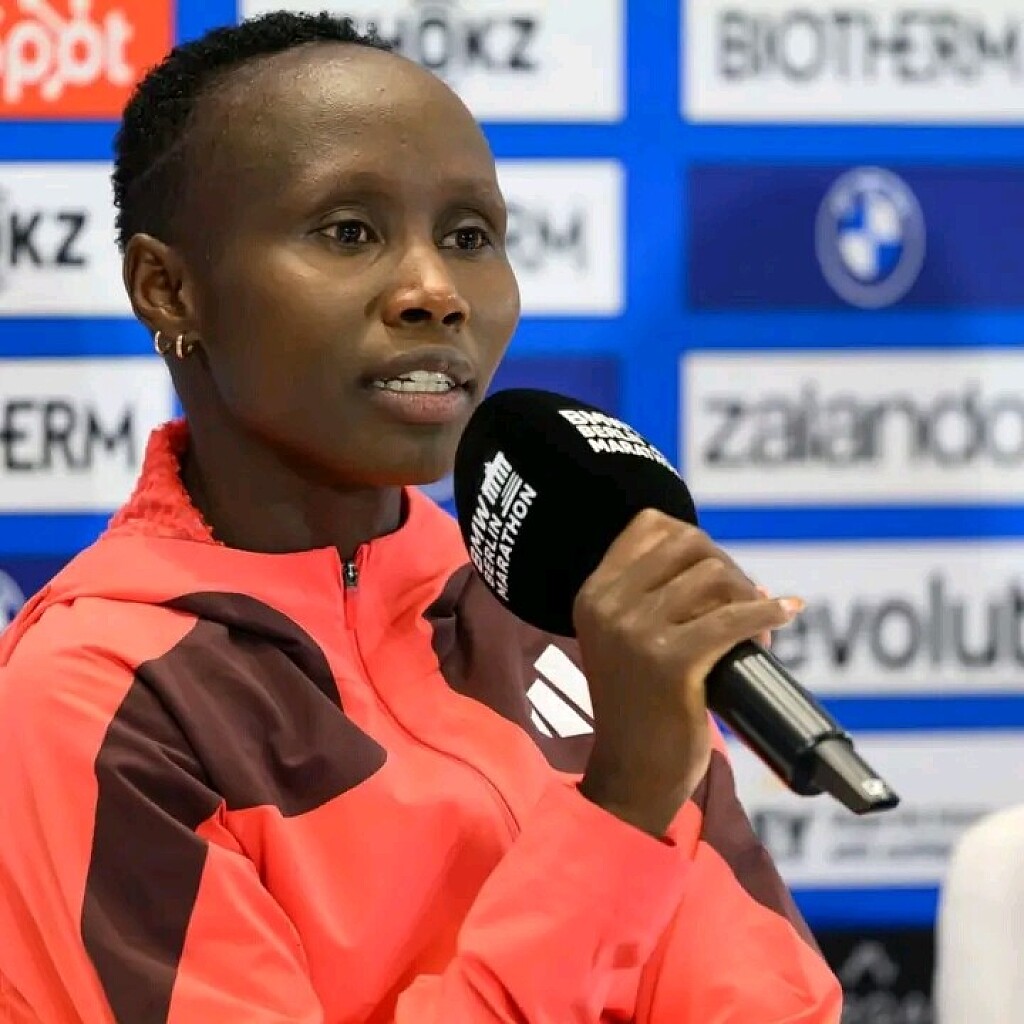
Tigst Assefa, Rosemary Wanjiru And Gabriel Geay Headline A Star-Studded Berlin Marathon
With just three days remaining until the BMW Berlin Marathon, anticipation is building for another spectacular edition of one of the world’s fastest marathon races.
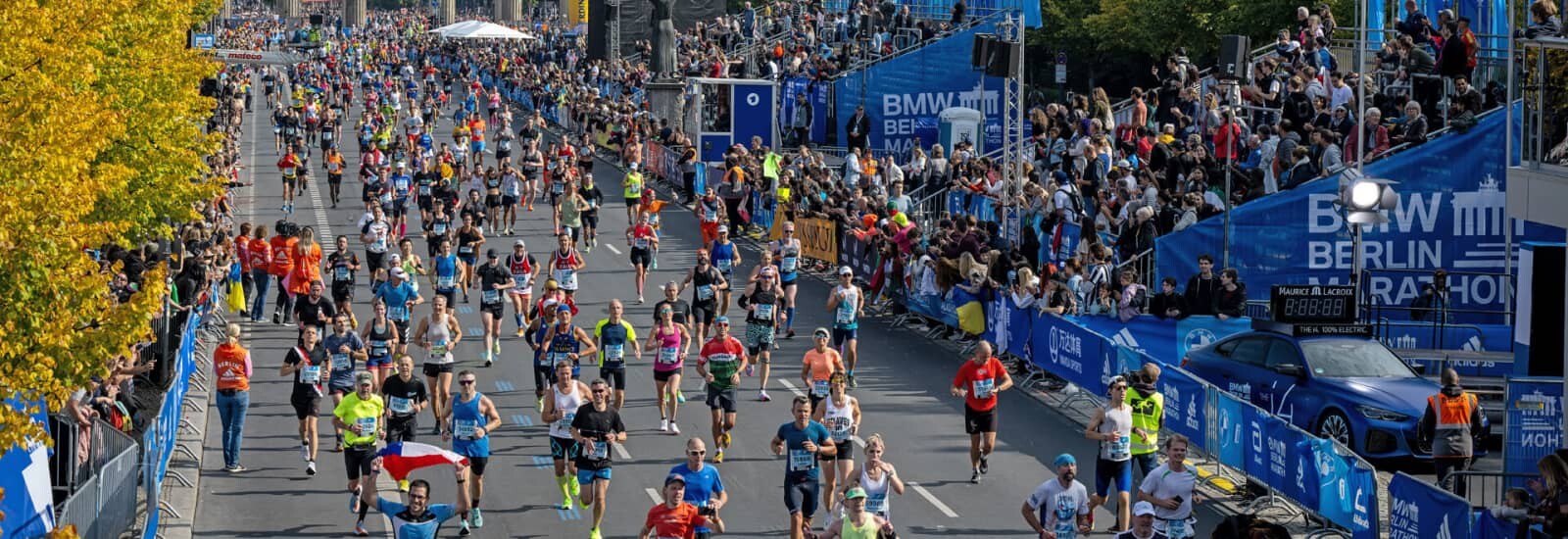
The 52nd edition of the race will take place on Sunday, September 27, with a deep international field set to take on the famously fast streets of the German capital.
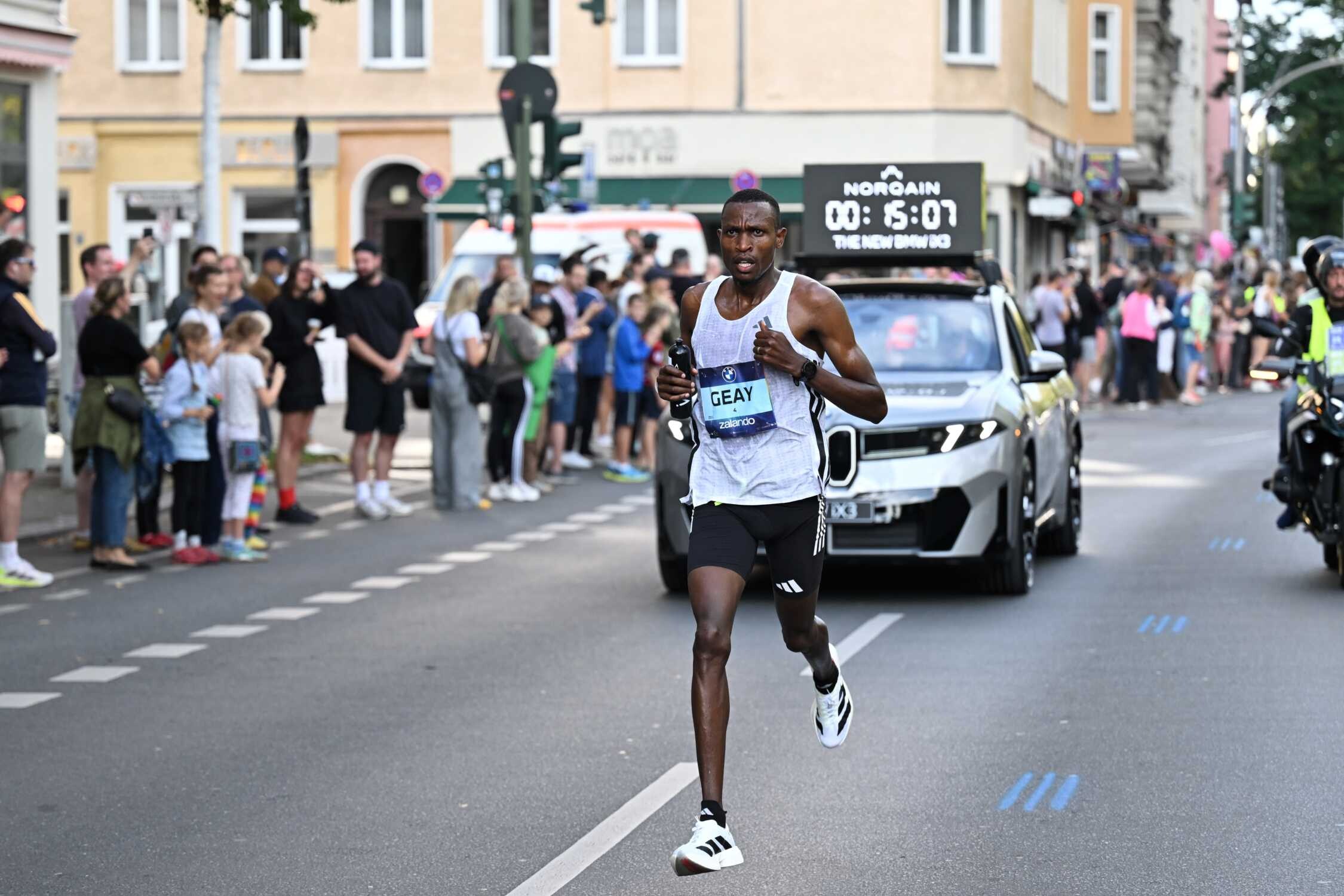
Tanzania’s Gabriel Geay is among the leading names in the men’s race, bringing a personal best of 2:03:00 to Berlin. His mark, set in Valencia in 2022, places him among the fastest marathoners in the elite field. However, Ethiopia’s legendary Kenenisa Bekele has since been added to the field with a 2:01:41 personal best, meaning Geay is not the fastest entrant on paper.
The men’s field also features Getaneh Molla (2:03:34), Guye Adola (2:03:46), Shura Kitata (2:03:59), Kenya’s Erick Sang (2:04:30) and Olympic 10,000m champion Selemon Barega (2:05:00), setting the stage for an exceptionally deep contest.
For Bekele, however, this return to Berlin carries a significance that goes far beyond the start list. The last time the Ethiopian legend stood on the Berlin start line was in 2019, when he ran 2:01:41—just two seconds outside the then-world record of 2:01:39. Had he gone two seconds faster, Bekele would have become the only athlete in history to simultaneously hold the world records for the 5,000 metres, 10,000 metres and marathon.
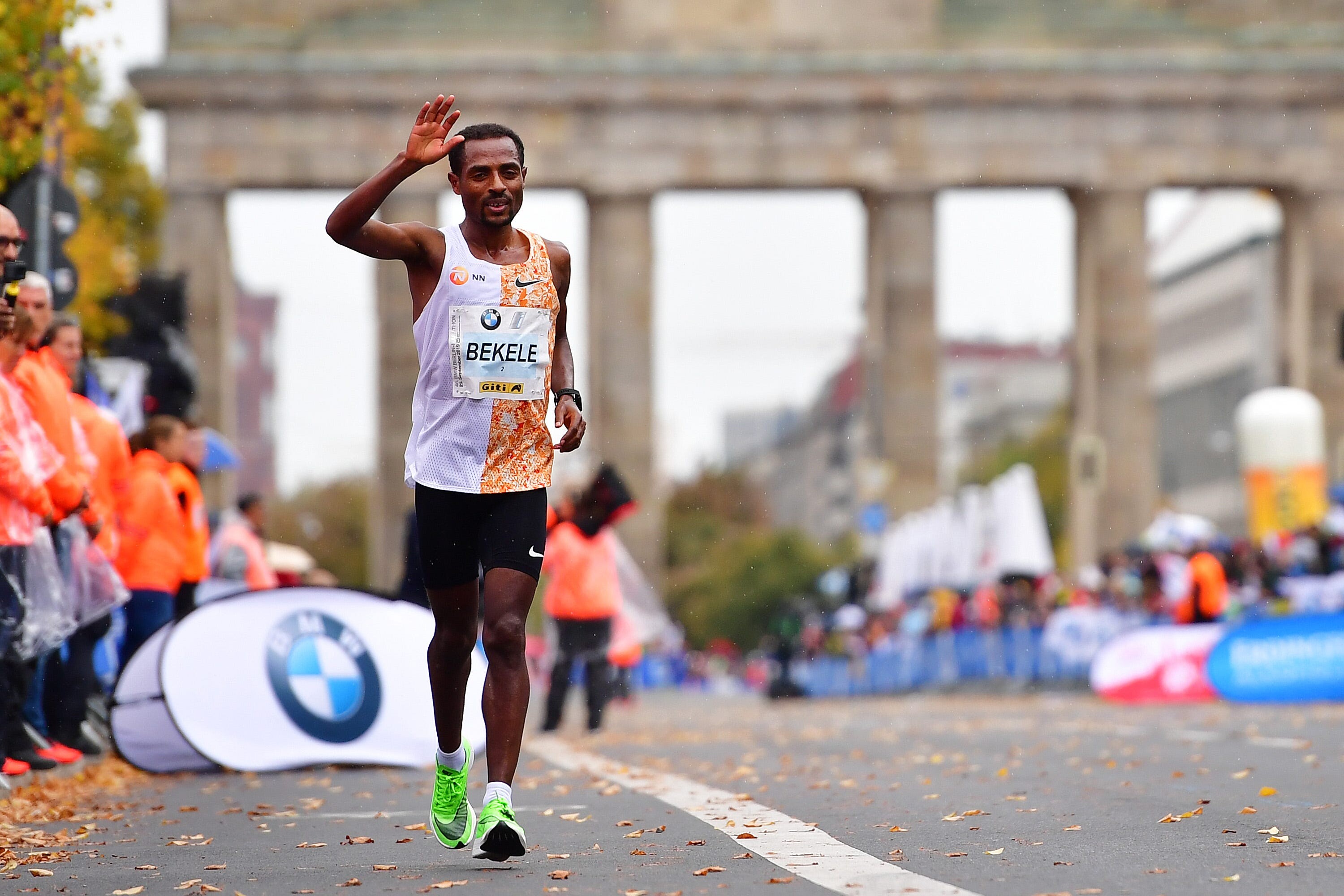
Bekele returns to Berlin on Sunday at the age of 44. His most recent race was the New York City Marathon in November, where he did not finish. Berlin, however, holds a special place in his marathon career. He claimed his first Berlin Marathon victory in 2016 and has won the race twice. He also owns the masters world record of 2:04:15, set in London last year.
He will not be the favourite in this year’s race, particularly after Sabastian Sawe was ruled out with a stress fracture. Adola, Molla, Kitata and Geay lead the field on paper, but Bekele’s presence adds another layer of intrigue to a race already packed with established marathon talent.
For Bekele, Berlin is more than another marathon. It is the course where he came closer than anyone to achieving a piece of distance-running history that remains untouched. Some athletes retire from the sport. Some retire toward one course. Bekele is running the second kind of retirement.
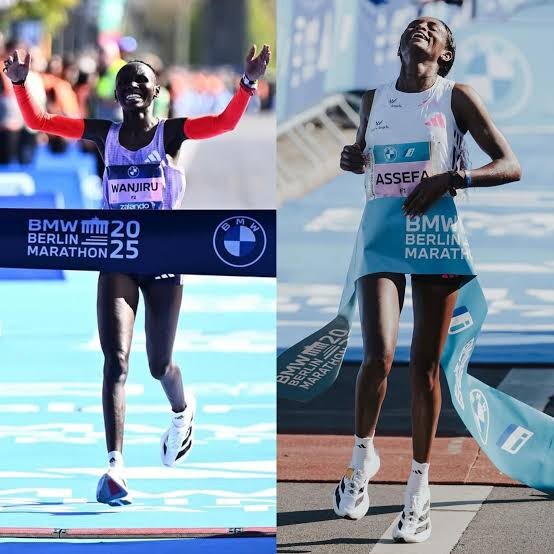
In the women’s race, all eyes will be on Tigst Assefa as the Ethiopian superstar returns to the course where she produced one of the most remarkable marathon performances in history. Assefa clocked 2:11:53 in Berlin in 2023, setting a world record at the time and establishing a course record that still stands.
Assefa, a two-time Berlin Marathon champion, will face defending champion Rosemary Wanjiru, who returns to the German capital looking to retain her title. Wanjiru won the 2025 edition in 2:21:05 after previously finishing second in Berlin in 2022 in 2:18:00. Her personal best of 2:16:14 came at the 2023 Tokyo Marathon.
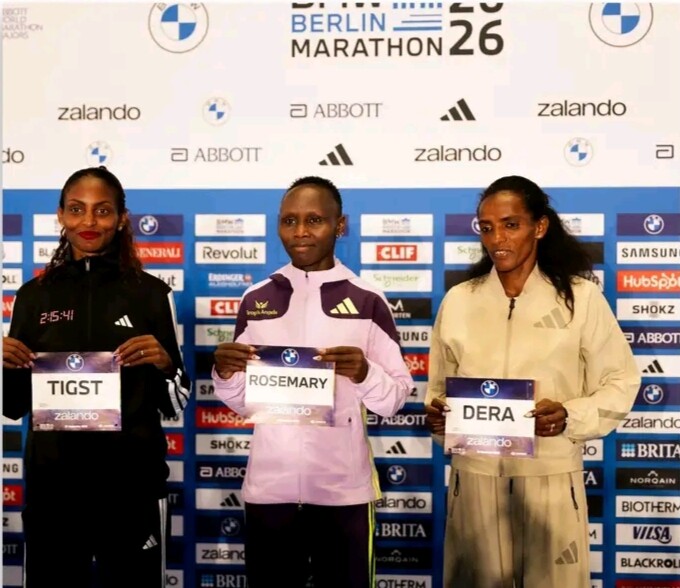
Wanjiru’s challenge will be particularly intriguing given the depth of the Ethiopian contingent. Bedatu Hirpa enters with a 2:18:27 personal best, followed by Dera Dida at 2:18:32, Zeineba Yimer at 2:18:47, Bosena Mulatie at 2:19:00, Misgane Alemayehu at 2:19:08 and Bekelech Gudeta at 2:19:39.
Kenya will also have another strong presence through Evaline Chirchir, whose 2:20:33 personal best places her among the leading women on the start list.
The Berlin Marathon’s reputation for producing fast times adds another layer of intrigue to an already stacked field. With a flat course, long stretches of uninterrupted running and a history of world records, the German capital has consistently provided elite athletes with the ideal conditions to test the limits of marathon performance.
Beyond the headline names, the race will also offer an opportunity for several contenders to make their mark on one of the biggest stages in road running. With experienced marathoners and ambitious challengers sharing the start line, the battle for the podium is expected to unfold at a demanding pace from the opening kilometres through the final stages of the race.
With Assefa returning to the scene of her historic 2023 run, Wanjiru arriving as the defending champion and a deep international cast lining up across both races, Berlin is once again set for a weekend of world-class marathon racing.
Three days out, the stage is set. The fast Berlin streets are waiting.
by Erick Cheruiyot for My Best Runs.
Login to leave a comment
BMW Berlin Marathon
The story of the BERLIN-MARATHON is a story of the development of road running. When the first BERLIN-MARATHON was started on 13th October 1974 on a minor road next to the stadium of the organisers‘ club SC Charlottenburg Berlin 286 athletes had entered. The first winners were runners from Berlin: Günter Hallas (2:44:53), who still runs the BERLIN-MARATHON today, and...
more...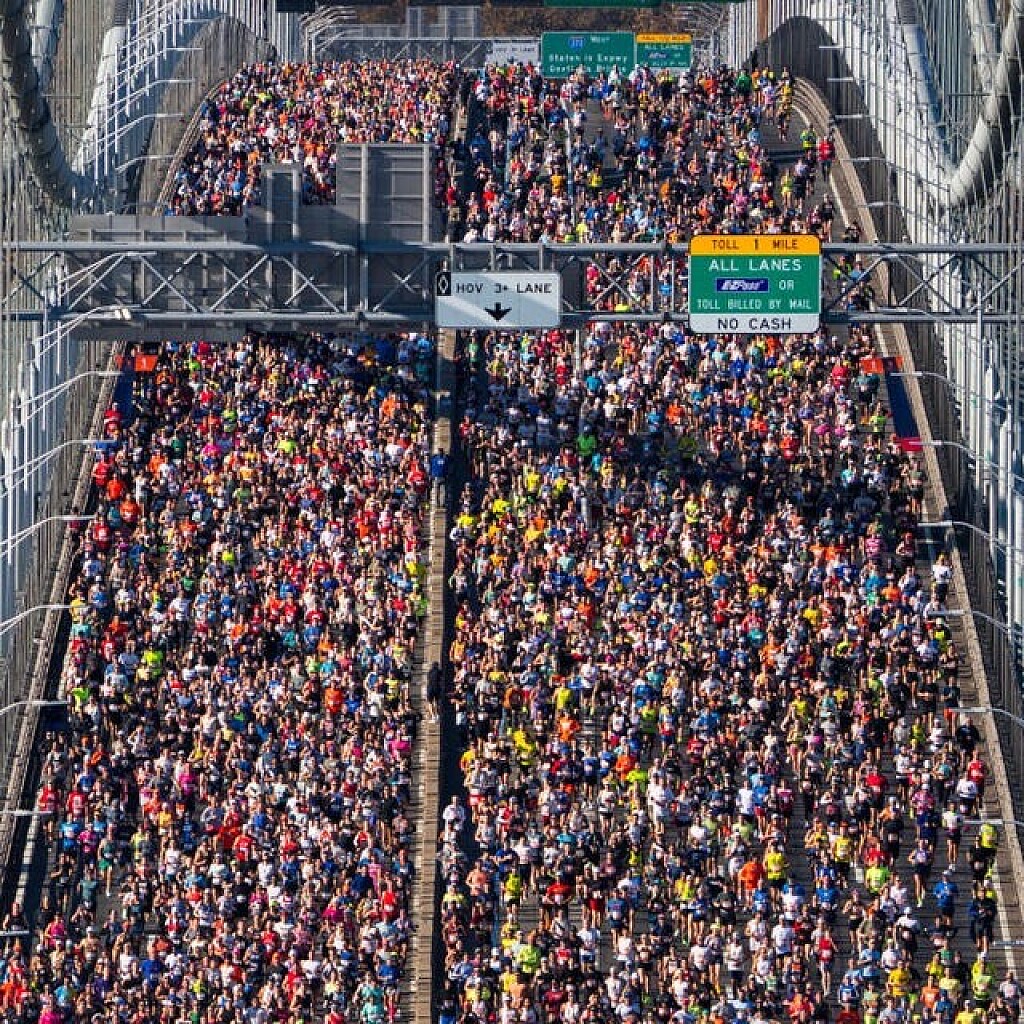
New York City Marathon Makes First Course Change in 15 Years
The TCS New York City Marathon is set for a small but significant change to its iconic 26.2-mile course, with runners facing a revised section in the Bronx between Miles 20 and 21.
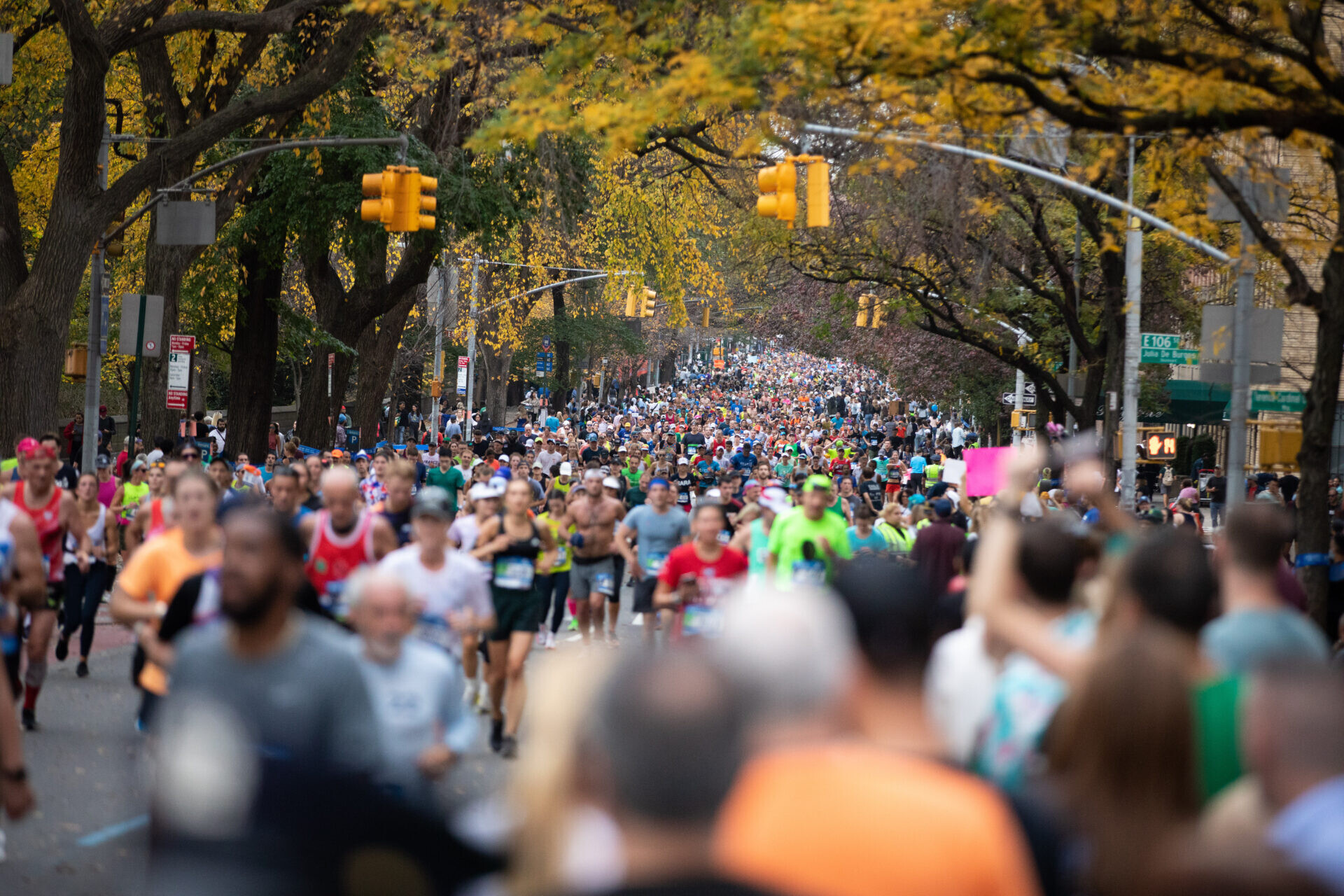
For 15 years, every New York City Marathon runner passed through the exact same stretch of the Bronx around Mile 20, navigating a short loop that surrounded a neighborhood supermarket and a 24-hour laundromat for much of race day. This November, that familiar loop will disappear.
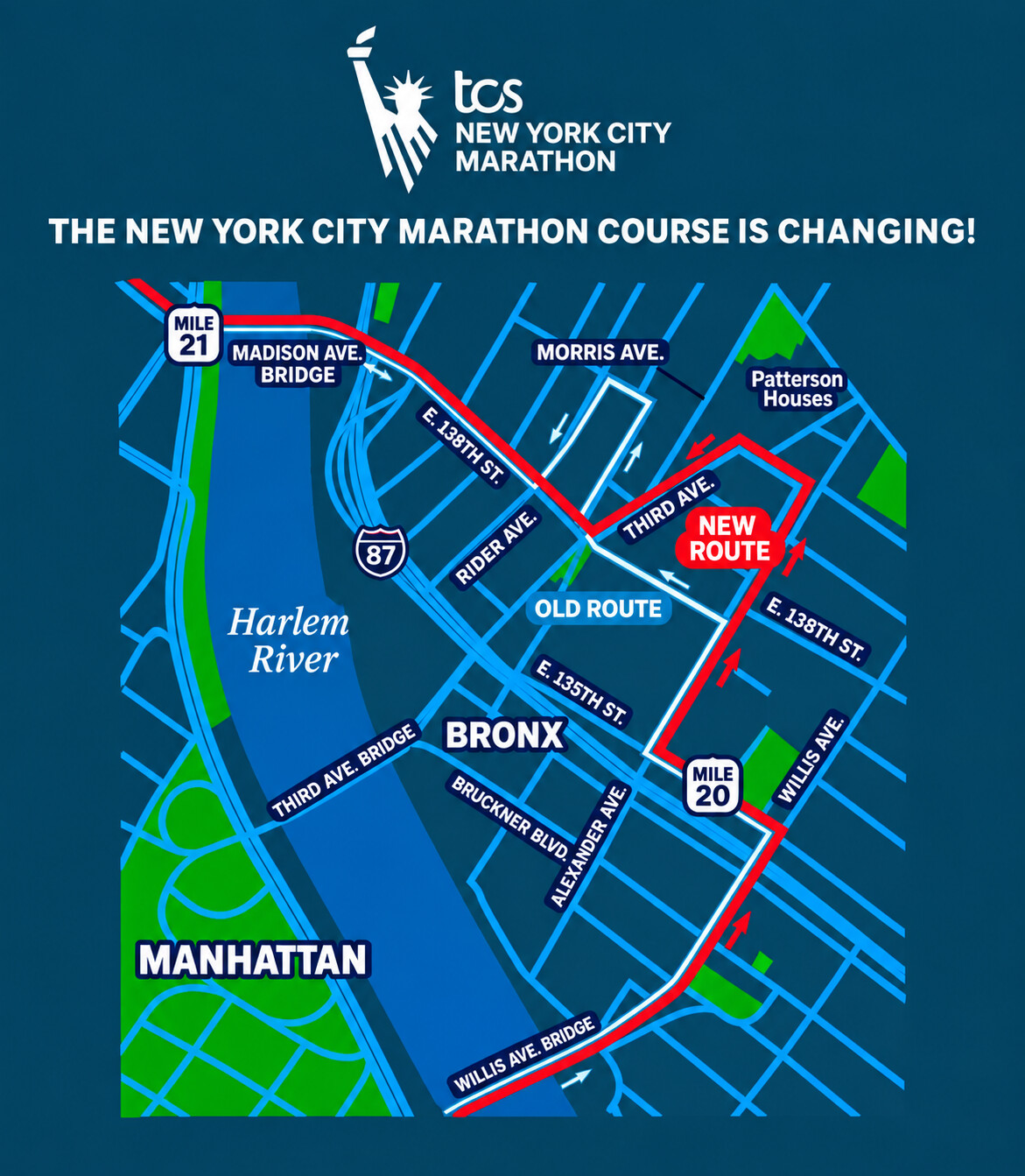
New York Road Runners (NYRR) is making its first course change to the marathon in 15 years. Instead of looping near East 140th Street, runners will head north on Alexander Avenue, turn onto Third Avenue and then cut south on 138th Street toward the Madison Avenue Bridge.
The adjustment removes two turns from the Bronx section, reducing the number from seven to five. While that may sound insignificant for a race covering 26.2 miles, the change comes at a point when runners are already deep into the marathon and every turn, road surface and change in rhythm can become more noticeable.
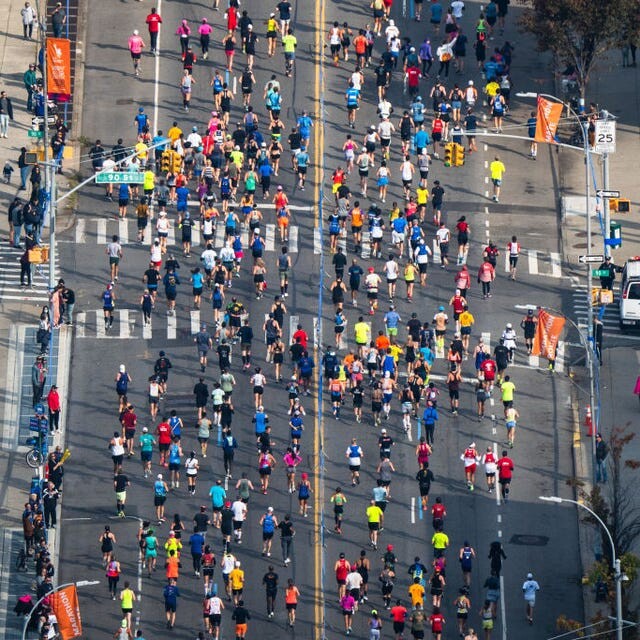
However, the primary reason for the change is not to make the course faster or help runners shave seconds from their finishing times.
Bronx resident Jennifer Alicea told The New York Times that the previous route made it extremely difficult to reach her only nearby grocery store on marathon day. NYRR's Metellus, who grew up in the Bronx, described the affected blocks as food deserts and saw the course's required recertification as an opportunity to address the problem.
The timing also carries added significance. This year marks 50 years since the New York City Marathon expanded beyond Central Park in 1976, becoming the five-borough race that has since grown into one of the world's most famous marathons.
The route will still cover the same 26.2 miles through New York's five boroughs, but the Bronx experience will be slightly different. For elite athletes, two fewer turns could mean a smoother rhythm during the crucial closing stages. For thousands of recreational runners, the bigger difference may be felt by the communities living along the course rather than on the race clock.
The New York City Marathon has long been celebrated not only for its elite competition but also for the connection between the race and the communities it passes through. The latest adjustment reflects that relationship, showing how even an established course can evolve while preserving the character of the event.
So, two fewer turns, the same five boroughs and the same 26.2 miles — but potentially one less headache for residents of the Bronx.
For runners taking on New York this November, the question remains: will you even notice those two fewer turns when you reach Mile 20?
by Erick Cheruiyot for My Best Runs.
Login to leave a comment
TCS New York City Marathon
The first New York City Marathon, organized in 1970 by Fred Lebow and Vince Chiappetta, was held entirely in Central Park. Of 127 entrants, only 55 men finished; the sole female entrant dropped out due to illness. Winners were given inexpensive wristwatches and recycled baseball and bowling trophies. The entry fee was $1 and the total event budget...
more...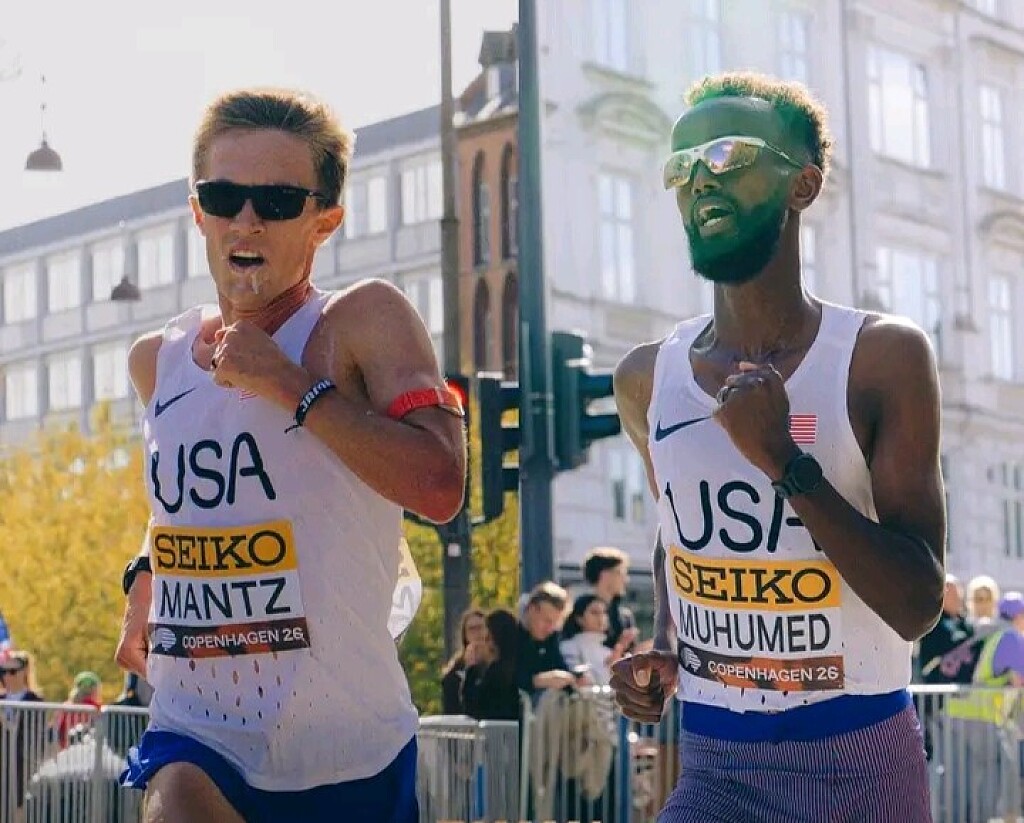
Team USA Makes History With Double Half Marathon Team Medals In Copenhagen
The United States enjoyed a remarkable day at the 2026 World Athletics Road Running Championships in Copenhagen, Denmark, securing team medals in both the men’s and women’s half marathon competitions.
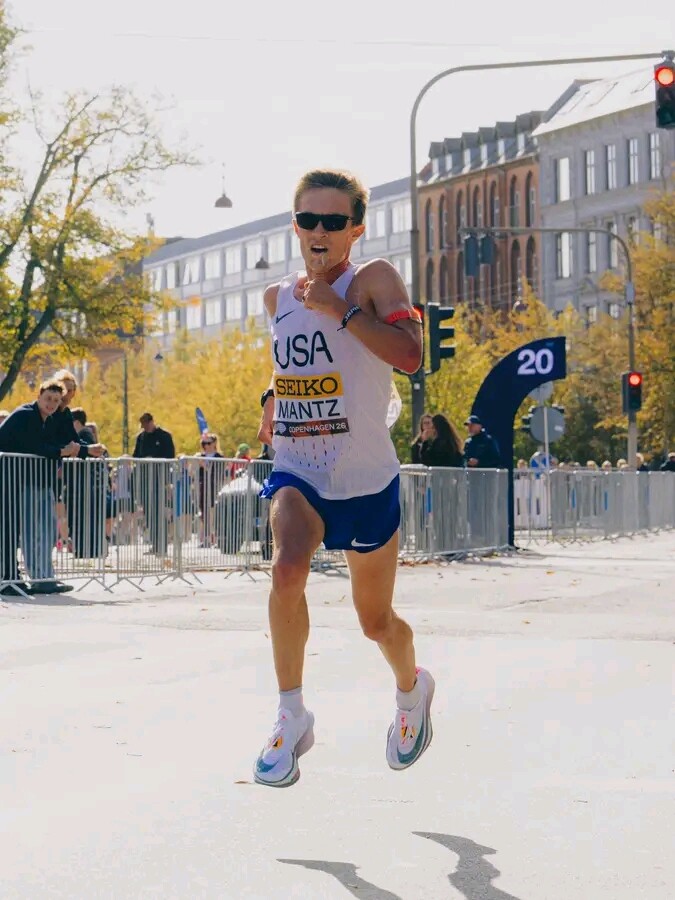
The American men claimed bronze in the team standings, while the women produced a historic performance to win silver and secure Team USA’s first-ever women’s team medal at the World Road Running Championships.
Leading the way for the American men was Conner Mantz, who finished 12th individually in 1:00:08, clocking a season’s best to spearhead the American challenge over the 21.1-kilometre distance.
For Mantz, the performance carried added significance as he continues his comeback from injury. His 1:00:08 season’s best provided a strong return to championship-level competition and an important tune-up as he prepares to take on the New York City Marathon in November.
Mantz’s performance also proved crucial to Team USA’s team medal effort, with his 12th-place finish providing the foundation for the Americans to secure bronze in the men’s standings.
Ahmed Muhumed followed closely in 13th place, crossing the finish line in 1:00:15. The performance marked a significant breakthrough for Muhumed, who lowered his previous best by 48 seconds in a major championship setting.
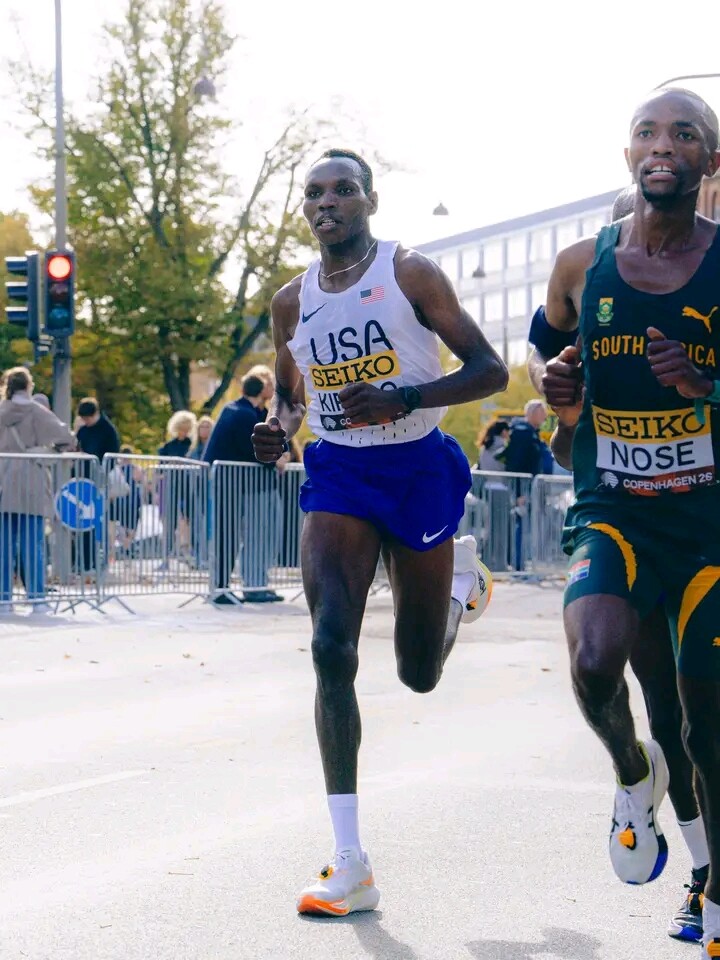
Wesley Kiptoo completed the American scoring trio, placing 23rd in 1:01:11. Kiptoo also produced a season’s best, contributing another important performance to the United States’ team effort.
The combined performances of Mantz, Muhumed and Kiptoo were enough to place the United States third in the men’s team standings, securing a hard-earned bronze medal in Copenhagen.
For Muhumed, the race was one of the biggest breakthroughs of the day, with his 1:00:15 representing a 48-second improvement on his previous best. Kiptoo’s season-best 1:01:11 further strengthened the American challenge and helped convert three individual performances into a place on the global podium.
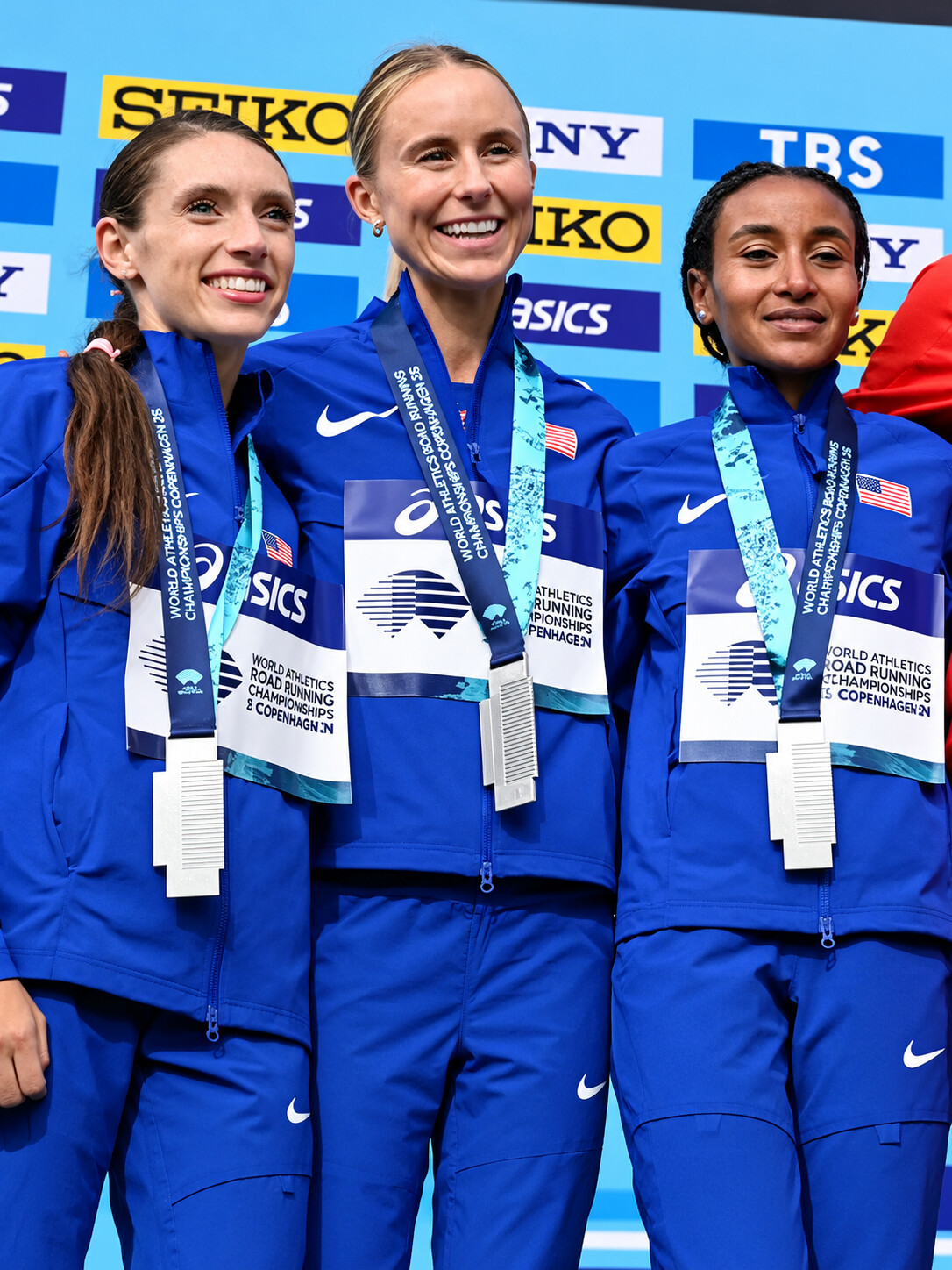
On the women’s side, Team USA made history by placing three athletes inside the top seven, earning its first-ever women’s team medal at the World Road Running Championships.
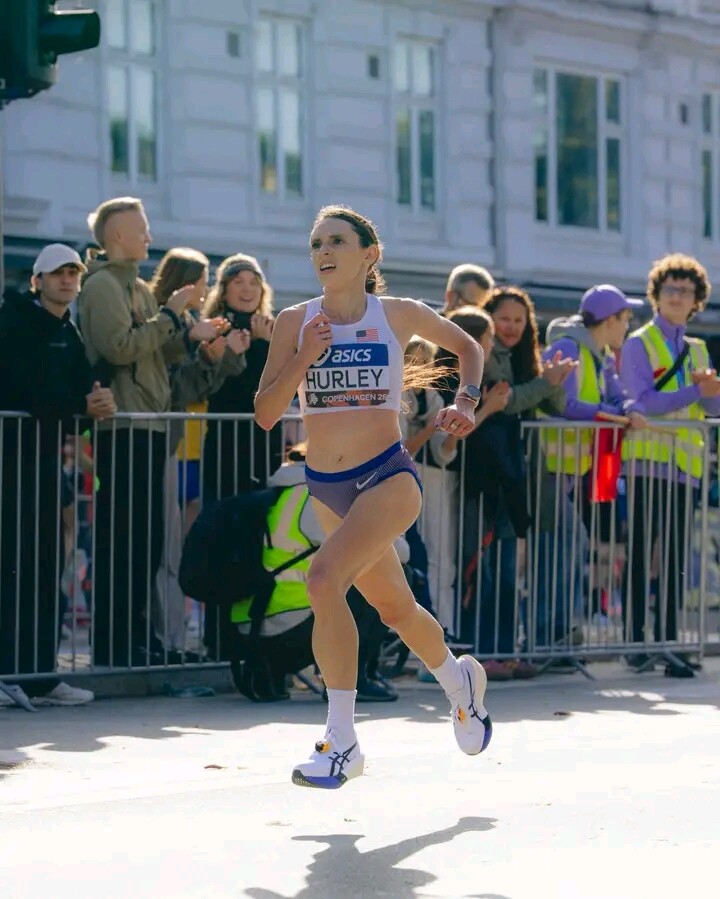
Emma Grace Hurley led the American women with a sensational fifth-place finish in 1:06:23. The performance was a huge personal best, taking more than a minute off her previous best of 1:07:35 and moving her to No. 3 on the U.S. all-time half marathon list.
Hurley also finished as the first American across the line, delivering one of the standout performances of the championship for the United States.
Weini Kelati Frezghi followed in sixth place, clocking 1:06:35 and ensuring that Team USA had two athletes inside the top six. Jessica McClain completed the scoring trio in seventh, stopping the clock at 1:06:53.
McClain’s performance represented another major breakthrough. She entered Copenhagen with a half marathon personal best of 1:08:37 but improved that mark by nearly two minutes, producing a remarkable 1:06:53 and moving to No. 6 on the U.S. all-time list.
With Hurley, Kelati Frezghi and McClain all finishing inside the top seven, the American women combined their individual performances to secure a historic team silver medal.
The achievement gave Team USA a remarkable double podium finish in the half marathon team competitions, with the men taking bronze and the women claiming silver.
Beyond the medals, Copenhagen provided a showcase of individual breakthroughs for the American distance runners. Hurley moved into the top three on the U.S. all-time list, while McClain made an equally significant leap into sixth, as Mantz added another season’s best during his return from injury.
For Mantz, the Copenhagen race now serves as an important stepping stone toward the New York City Marathon in November, giving him a competitive test and a confidence-building performance as he continues his return to top-level racing.
It was a memorable championship outing for Team USA, with strong individual performances translating into two team medals and a landmark first for the American women at the World Road Running Championships.
by Erick Cheruiyot for My Best Runs.
Login to leave a comment
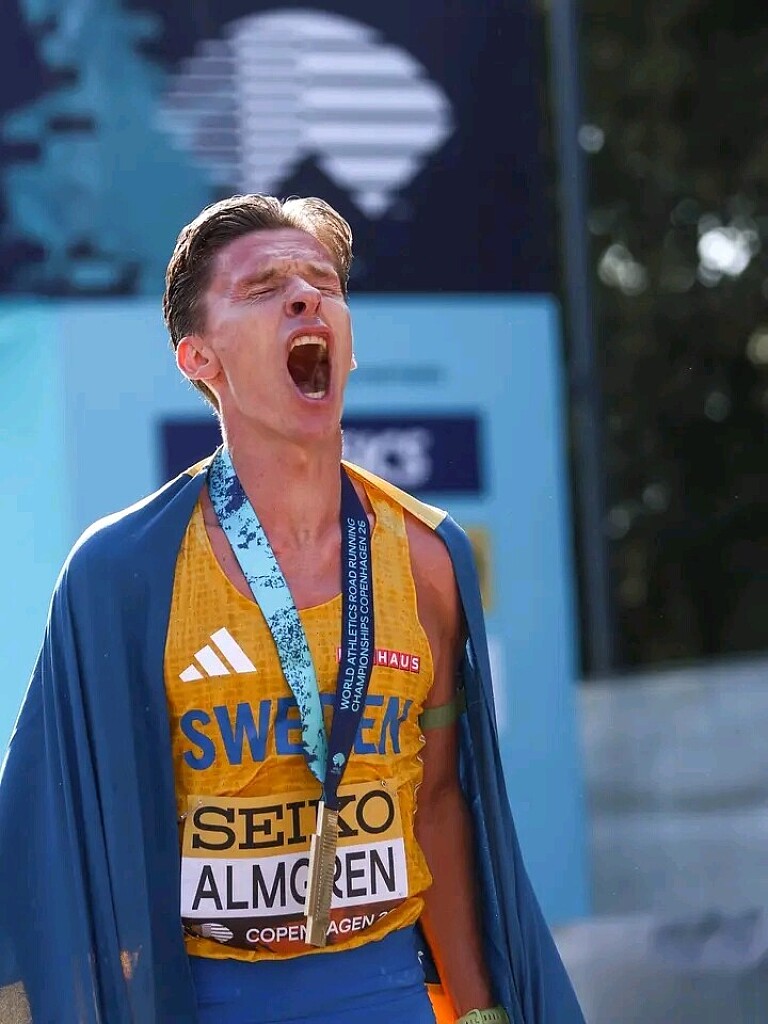
Andreas Almgren Times His Move To Perfection For World Half Marathon Gold In Copenhagen
Sweden’s Andreas Almgren produced a breathtaking finish on the streets of Copenhagen, unleashing a perfectly timed late surge to win the men’s half marathon title at the 2026 World Athletics Road Running Championships in 58:06.
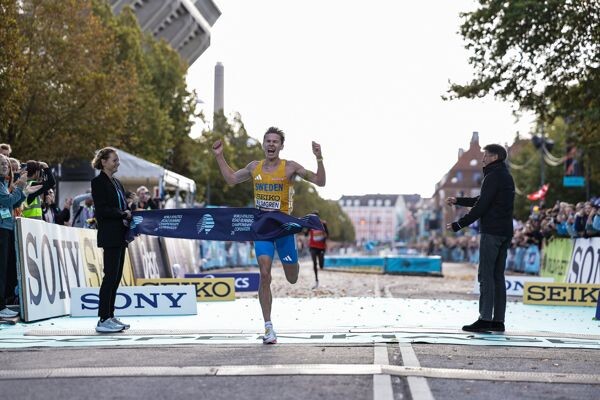
The Swedish star waited patiently through the decisive stages of the race before making his move with roughly 200 metres remaining, accelerating away from the field and producing a devastating sprint down the final straight.
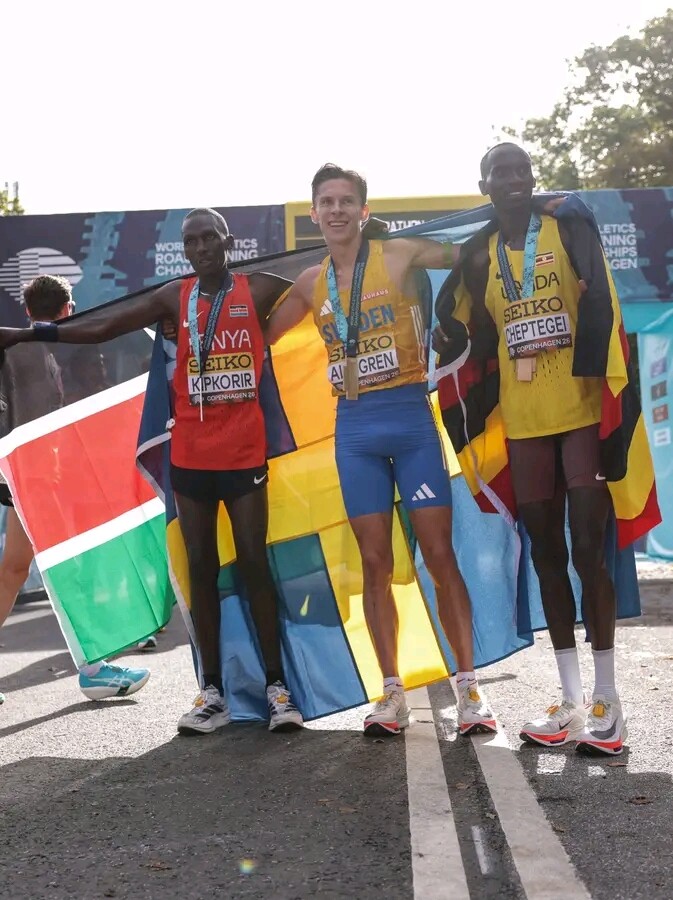
Nicholas Kipkorir had controlled much of the race, dictating the pace and keeping the leading contenders under pressure. Almgren, however, remained close throughout, carefully conserving enough energy for the moment that would ultimately decide the world title.
When the race entered its final stretch, Almgren made his move. The Swede surged hard over the final 200 metres and then outsprinted Kipkorir over the last 100 metres, powering clear to cross the line first in 58:06.
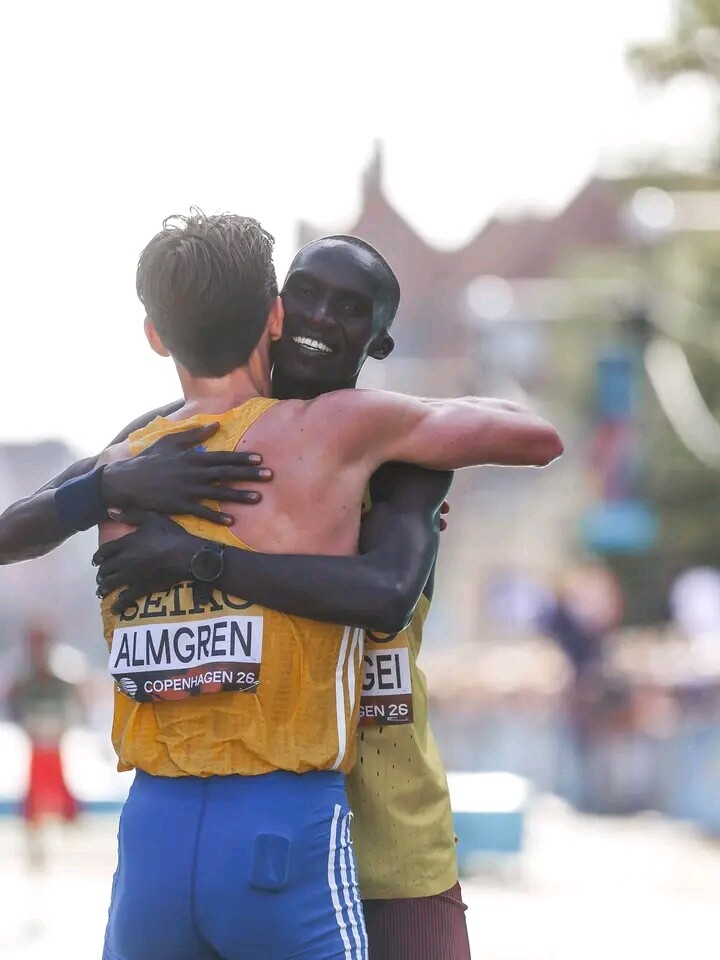
The performance was not only enough to secure the gold medal but also delivered an Area Record, adding another extraordinary achievement to Almgren’s rapidly growing list of accomplishments.
His winning time makes the victory even more significant in the history of the championships. Almgren becomes the first non-African world half marathon champion since Italy’s Stefano Baldini in 1996, ending a remarkable 30-year period in which athletes from Africa had dominated the global title.
For much of the race, Kipkorir appeared to have control, but Almgren refused to be separated from the Kenyan. His patience proved decisive as the race entered its final kilometres, allowing him to remain within striking distance before producing the acceleration that ultimately settled the contest.
Behind the leading pair, Uganda’s Joshua Cheptegei endured a gruelling battle to hold on to third position. The Olympic and world champion was pushed relentlessly in the closing stages and had to dig extremely deep to preserve his place on the podium. Despite the intense pressure from the athletes behind him, Cheptegei held firm to secure the bronze medal in a personal best of 58:26.
Ethiopia’s Tadese Worku also produced a personal best of 58:35 to finish fourth, while Kenya’s Gideon Kipkertich Rono followed in fifth in 58:57. The depth of the field was reflected by the fact that six athletes broke the 59-minute barrier, underlining the exceptional quality of the championship race.
Top 10 Men’s Half Marathon Results
1. Andreas Almgren (Sweden) — 58:06 — AR
2. Nicholas Kipkorir (Kenya) — 58:11
3. Joshua Cheptegei (Uganda) — 58:26 — PB
4. Tadese Worku (Ethiopia) — 58:35 — PB
5. Gideon Kipkertich Rono (Kenya) — 58:57
6. Hani Idriss Hersi (Djibouti) — 59:09 — NR
7. Yemaneberhan Crippa (Italy) — 59:18
8. Alex Nzioka Matata (Kenya) — 59:22
9. Daniel Simtu Ebenyo (Kenya) — 59:42 — SB
10. Othmane El Goumri (Morocco) — 59:53 — PB
The victory further strengthens Almgren’s remarkable 2026 campaign. The 58:06 performance gave the Swede an Area Record as he added the World Athletics Road Running Championships half marathon crown to his résumé, following his 10,000m triumph at the European Athletics Championships. His ability to combine sustained endurance with a devastating finishing kick once again proved decisive on the biggest stage.
For Almgren, the Copenhagen triumph also provides an intriguing glimpse ahead to his next challenge. With his New York City Marathon debut now on the horizon, the world half marathon title represents an important statement as he prepares to make the transition to the marathon. After demonstrating that he can handle the demands of championship racing over 21.1 kilometres while still possessing the speed to produce a decisive late surge, Almgren now turns his attention toward an entirely new distance.
The victory marks Almgren’s first global title, completing a remarkable transformation from European record-holder and leading continental distance runner into a world champion.
It also adds another spectacular chapter to an already outstanding 2026 season. Almgren has consistently demonstrated an exceptional combination of endurance, speed and tactical intelligence, and Copenhagen provided the perfect stage for all three qualities to come together.
With the clock showing 58:06, Almgren not only conquered the world championship field but also rewrote the European record books. His perfectly timed attack in the final 200 metres delivered Sweden a historic world road-running title and created one of the most dramatic finishes of the Copenhagen championships.
by Erick Cheruiyot for My Best Runs.
Login to leave a comment

World Athletics Road Running Championships
Six world champions and 65,000 runners just behind them. In September 2026, the heart of Copenhagen is expected to be the stage for Denmark’s largest-ever participant event. The World Athletics Road Running Championships Copenhagen 26 will take place on September 19-20, 2026. A total of 65,000 participants will join the running festivities behind the world’s fastest female and male athletes...
more...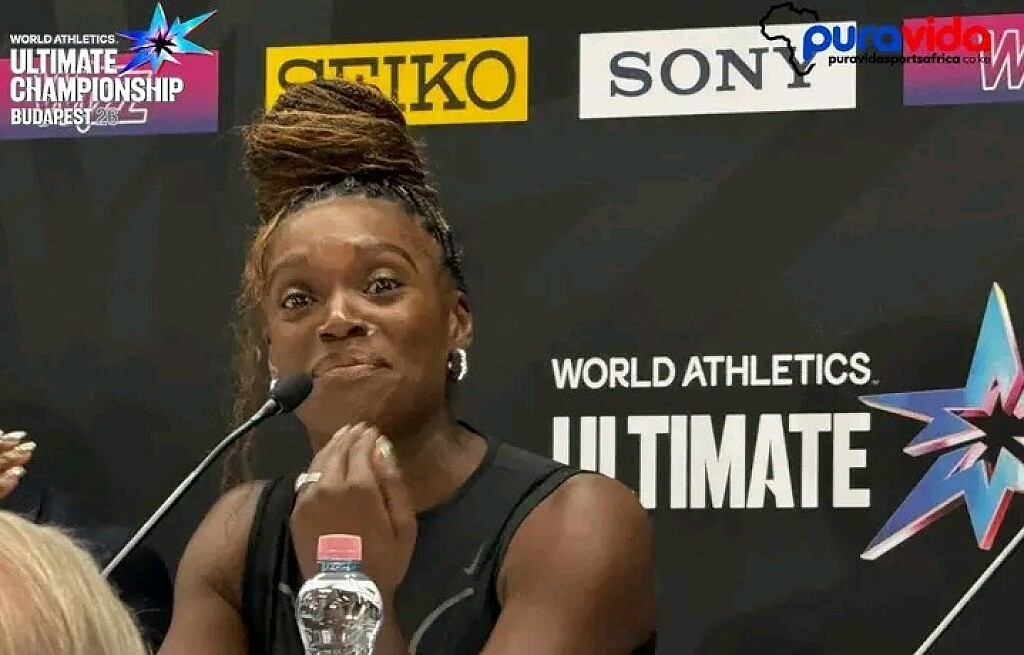
From Olympic Glory To The Microphone: Dawn Harper-Nelson’s Remarkable Second Act In Athletics
Dawn Harper-Nelson has already experienced the highest level of success an athlete can reach. Now, years after establishing herself as one of the finest hurdlers of her generation, the American Olympic champion is carving out an equally compelling identity behind the microphone.
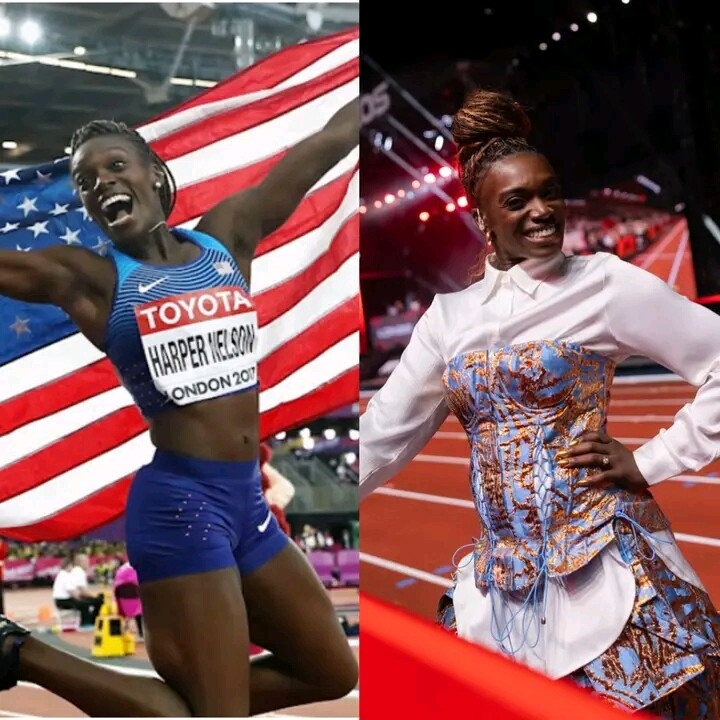
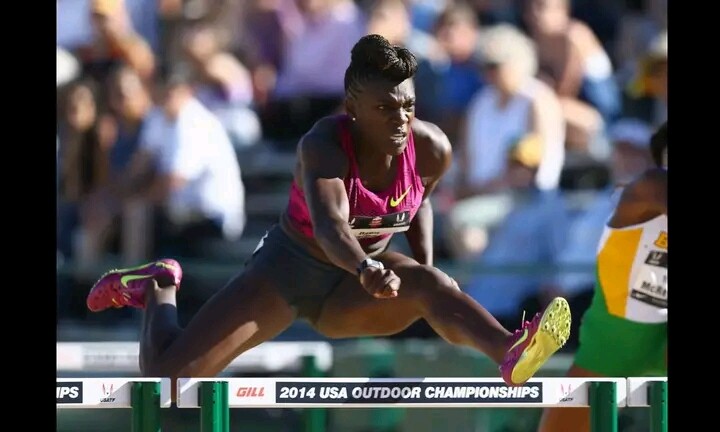
Harper-Nelson won the 100m hurdles gold medal at the 2008 Beijing Olympic Games before returning four years later to claim silver at London 2012. Her career also produced two World Championship medals — bronze in 2011 and silver in 2017 — while her personal best of 12.37 seconds, set in London in 2012, remains a defining mark of her distinguished career.
But her influence on athletics did not end when she stepped away from competitive sport.
In recent years, Harper-Nelson has successfully moved into broadcasting, presenting and athlete-focused media work, bringing with her something that cannot simply be learned in a studio: first-hand experience of competing under immense pressure on the world's biggest stages.

Her transition into media gained further momentum after she worked as an analyst during NBCUniversal's coverage of the Paris 2024 Olympic Games, becoming part of an Emmy-winning broadcast team. She has also worked with USA Track & Field in roles including press moderator, emcee and broadcaster, extending her connection with the sport beyond the competition arena.
That experience has become particularly visible at some of athletics' newest and most ambitious events.
At the inaugural World Athletics Ultimate Championship in Budapest, Harper-Nelson served as an infield host throughout the three-day competition. World Athletics introduced the event with an emphasis on modern presentation, athlete storytelling and a television-focused experience, making the role of hosts and broadcasters increasingly important in connecting athletes with audiences.
Harper-Nelson was also involved in the championship's innovative pre-event programme, The Day Before, where athletes took part in interviews, content creation and other media opportunities ahead of the competition. Her presence alongside figures such as World Athletics President Sebastian Coe and Olympic sprint legend Usain Bolt underlined the experience she now brings to major athletics productions.
Her connection with ATHLOS has provided another prominent platform. The women's track and field series has developed a presentation style that combines elite competition with entertainment and athlete-focused storytelling, and Harper-Nelson has become one of the recognizable voices helping bring that experience to audiences. She previously hosted ATHLOS's long-jump competition in New York and has continued her association with the event as it expanded internationally to London in 2026.
What makes Harper-Nelson's media career particularly interesting is the perspective she carries from her own competitive journey. She knows the nerves before a major final, the pressure of championship competition, the disappointment of falling short and the discipline required to return stronger.
That background allows her to approach athlete conversations from a position of genuine understanding. Rather than simply describing what happens on the track, she can draw on her own experiences to explore the emotions, preparation and personal stories behind the performances.
Her evolution also reflects a wider change in modern athletics, where former champions are increasingly becoming storytellers, analysts, presenters and ambassadors for the sport. The ability to communicate an athlete's personality and explain the significance of a performance has become an important part of how major competitions reach new audiences.
For Harper-Nelson, the journey from the starting line to the broadcast platform has therefore been more than a career change. It has been a continuation of her relationship with athletics — only this time, she is helping tell the stories rather than creating them through her own performances.
From Olympic champion to accomplished broadcaster and event host, Dawn Harper-Nelson is showing that an athlete's influence does not have to end when the competitive career does. Her second chapter is giving her a new way to remain at the heart of the sport she once dominated on the track.
by Erick Cheruiyot for My Best Runs.
Login to leave a comment
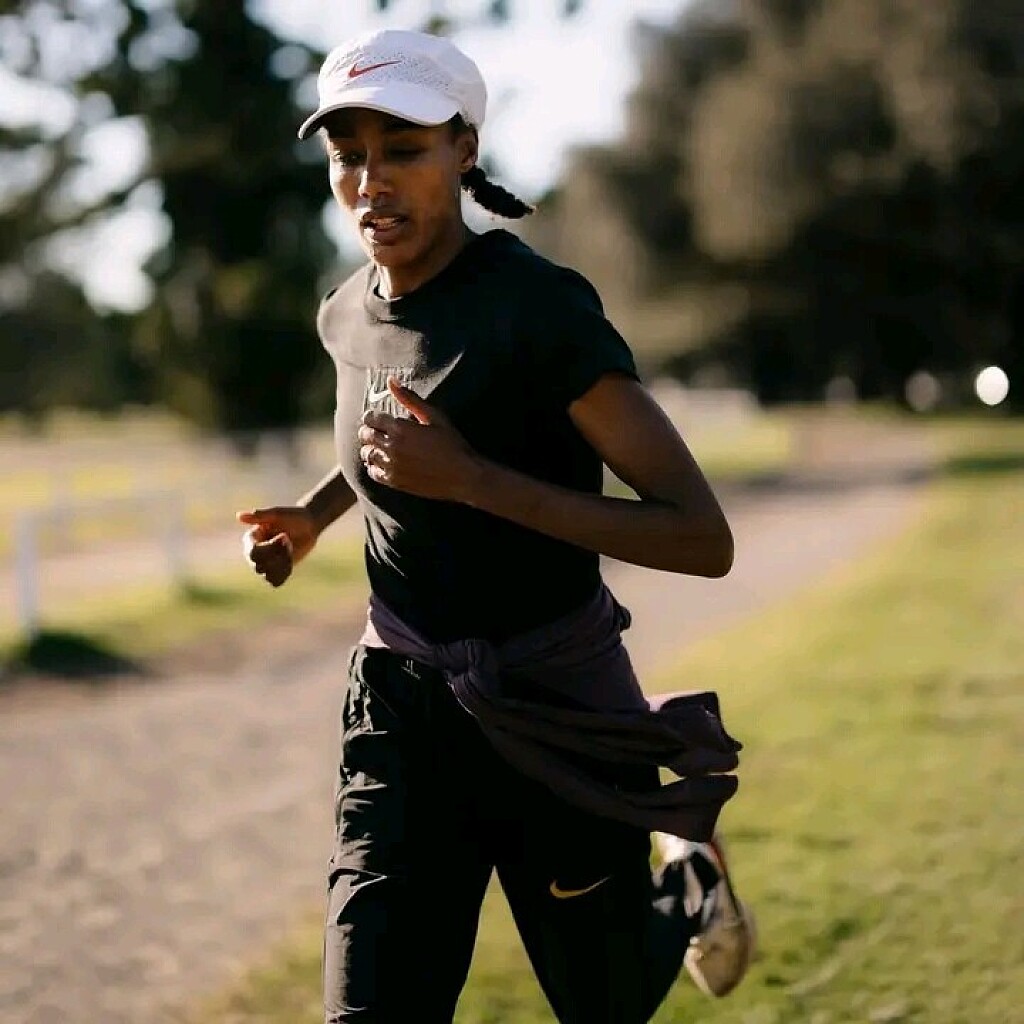
Sifan Hassan Returns To New York With Experience, Recovery And A Point To Prove
Sifan Hassan will return to the streets of New York City on November 1 with something she did not have during her difficult debut last year — experience of one of the most demanding marathon courses in the world.
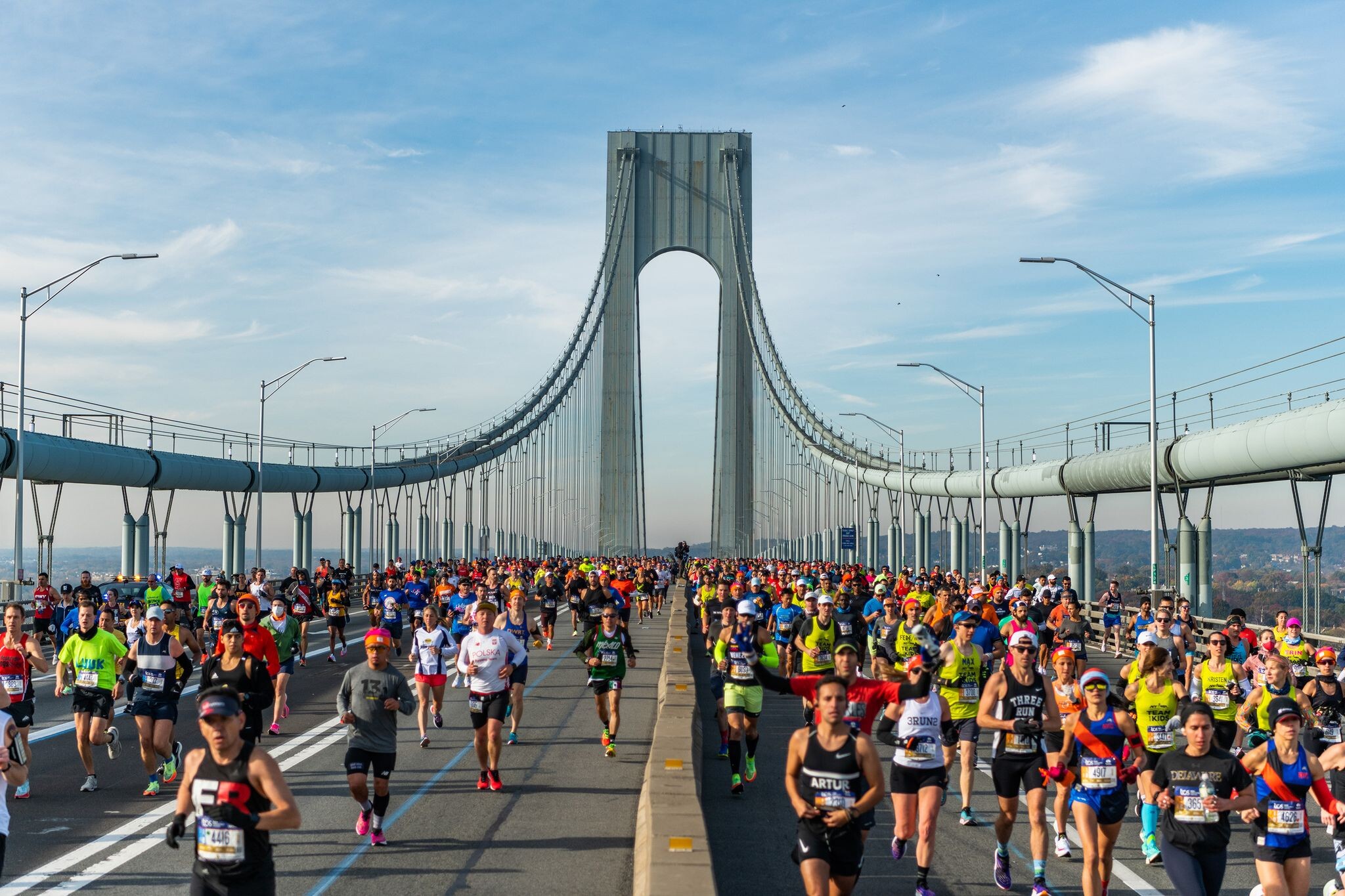
The Dutch Olympic marathon champion is set to make her second appearance at the TCS New York City Marathon, where she will face another formidable international field led by defending champion Hellen Obiri, fellow Kenyan Sheila Chepkirui and former world champion Edna Kiplagat.
Hassan's first encounter with New York in 2025 proved to be a far tougher assignment than the three-time Olympic champion might have hoped. She finished sixth in 2:24:43 after struggling during the second half of the race, with her New York debut coming only weeks after her victory at the Sydney Marathon.
The demanding schedule left Hassan facing a difficult recovery, and New York's succession of bridges, climbs and sharp changes in rhythm exposed the challenge of arriving at the race without enough marathon-specific preparation.
This time, however, the circumstances are different.
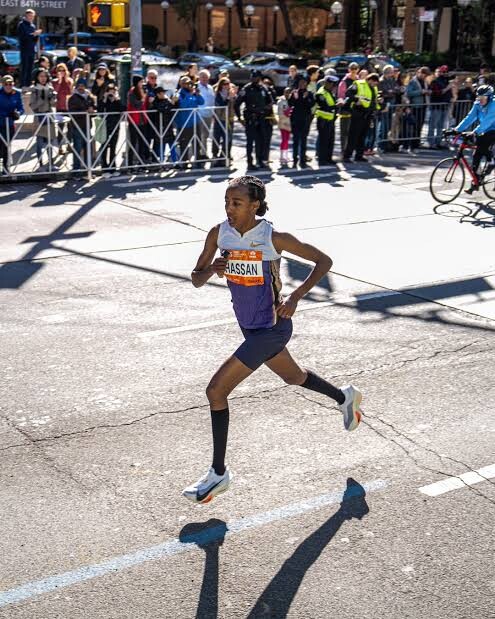
Hassan has had considerably more time to recover and prepare for the marathon, while she has also been managing an Achilles problem that disrupted her 2026 season. Rather than rushing back into competition, she has used the year to recover and build towards her longer-term goals.
Most importantly, Hassan now knows what awaits her when the race moves through New York's five boroughs.
She has already experienced the relentless bridges, the demanding climbs and the atmosphere created by huge crowds lining the streets. That knowledge could prove valuable when the race enters its decisive stages, particularly on a course where pacing and patience are just as important as raw marathon speed.
Hassan will also arrive with one of the fastest personal bests in the field. Her 2:13:44 national record makes her the quickest woman entered for the 2026 race, although New York's challenging layout means personal-best times do not necessarily tell the whole story.
Standing across the starting line will be a powerful Kenyan challenge.
Obiri returns as defending champion after producing one of the most impressive performances in the history of the race last year. She stormed to victory in 2:19:51, breaking the long-standing New York City Marathon course record, and has since lowered her marathon personal best to 2:15:53 in London.
Chepkirui will also return after finishing third in New York last year. The 2024 champion owns a 2:17:29 personal best, while Kiplagat brings enormous experience to the field, having won major marathons in New York, Boston and London as well as world championship gold.
The international field also includes Ethiopia's Gotytom Gebreslase, Kenya's Viola Cheptoo and Mercy Chelangat, Uruguay's Julia Paternain, Germany's Fabienne Königstein and a strong American contingent led by Jess McClain, Fiona O'Keeffe and marathon debutant Weini Kelati.
For Hassan, however, this race is about more than the names on the start list.
New York gave her a difficult introduction to its unique demands in 2025. She now returns with a clearer understanding of the course, more marathon experience and a preparation cycle designed to put her in a different position when the race reaches its closing stages.
She has already conquered the marathon on the biggest Olympic stage. She has also run 2:13:44, one of the fastest times ever recorded by a woman.
Now, New York offers another test.
The streets that humbled Hassan last year will once again be waiting for her. But this time, she will not be discovering them for the first time.
On November 1, Hassan will have another opportunity to find out just how different New York can look when you return knowing exactly what lies ahead.
And with Obiri, Chepkirui, Kiplagat and a deep international field standing in her way, the second chapter promises to be every bit as compelling as the first.
by Erick Cheruiyot for My Best Runs.
Login to leave a comment
TCS New York City Marathon
The first New York City Marathon, organized in 1970 by Fred Lebow and Vince Chiappetta, was held entirely in Central Park. Of 127 entrants, only 55 men finished; the sole female entrant dropped out due to illness. Winners were given inexpensive wristwatches and recycled baseball and bowling trophies. The entry fee was $1 and the total event budget...
more...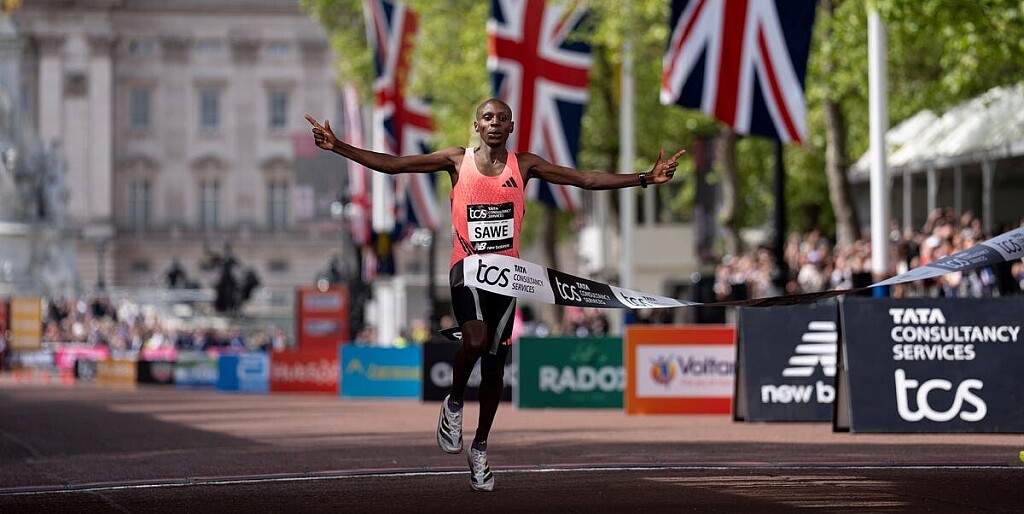
Marathon Majors Course Records: Where Speed, History And The Course Collide
The world’s biggest marathons are united by prestige, elite fields and unforgiving 26.2-mile battles, but their course records tell very different stories. From Tokyo to Sydney, each course has its own character, while London and Chicago have become synonymous with extraordinary speed.
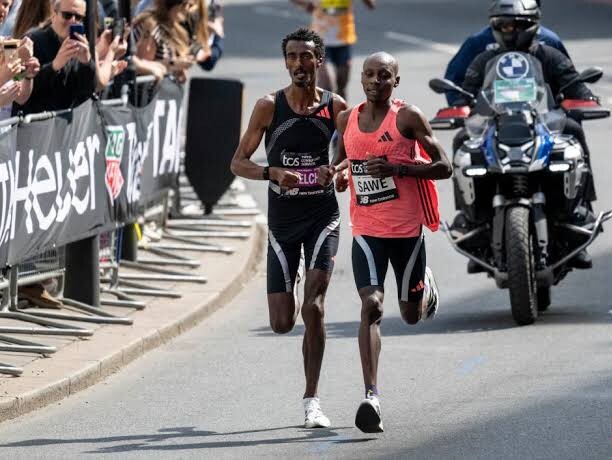
At the top of the men’s list stands the London Marathon, where Kenya’s Sabastian Sawe produced one of the greatest performances in road-running history. Sawe clocked 1:59:30 in April 2026, becoming the first athlete to officially break the two-hour barrier in a marathon. His performance also lowered the world record from Kelvin Kiptum’s previous mark of 2:00:35.
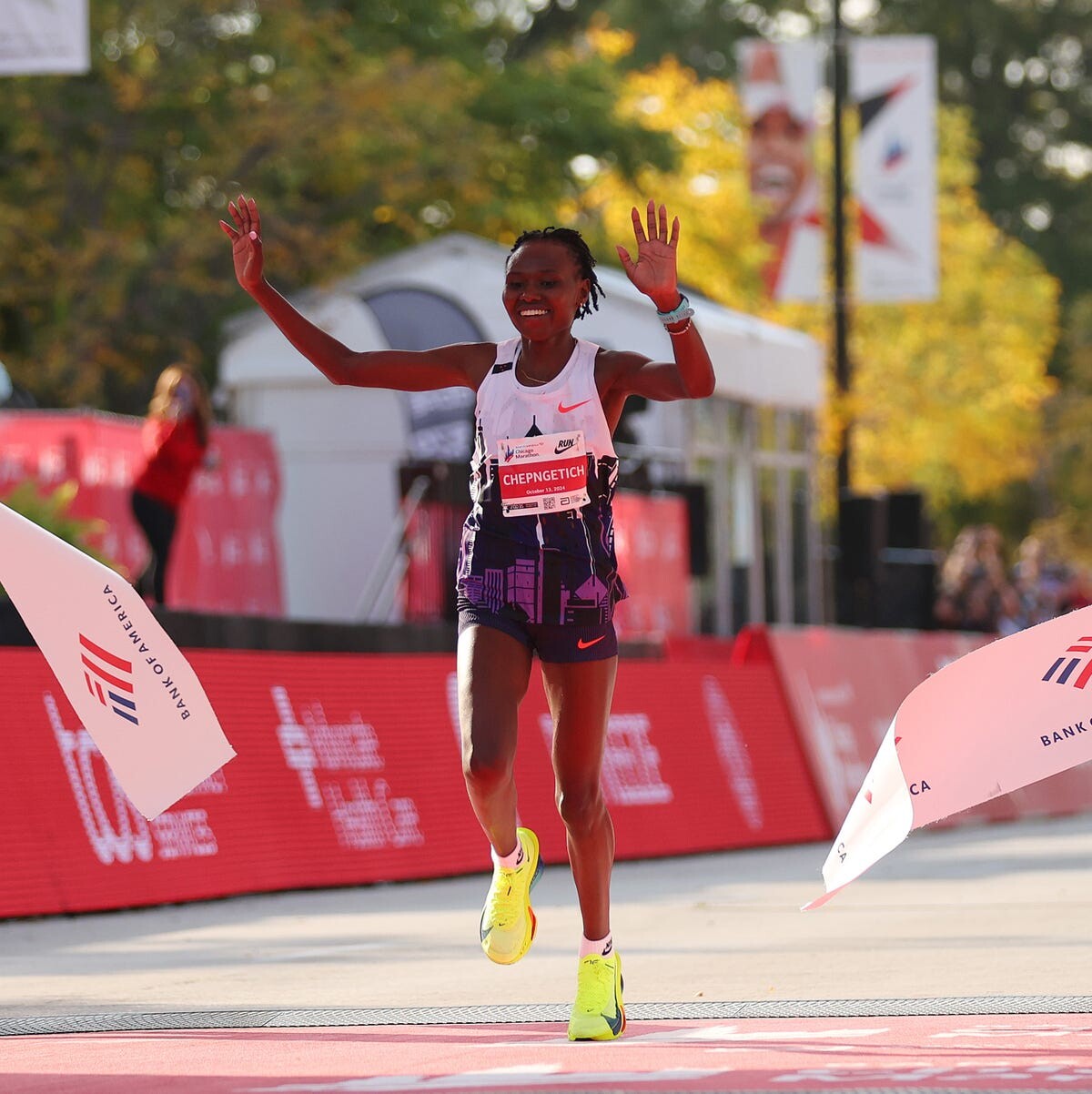
Chicago, meanwhile, owns one of the most remarkable records in women’s marathon history. Kenya’s Ruth Chepngetich ran 2:09:56 in 2024, becoming the first woman to break the 2:10 barrier. The performance remains a landmark in the event’s history and gives Chicago a special place among the fastest marathon courses in the world.
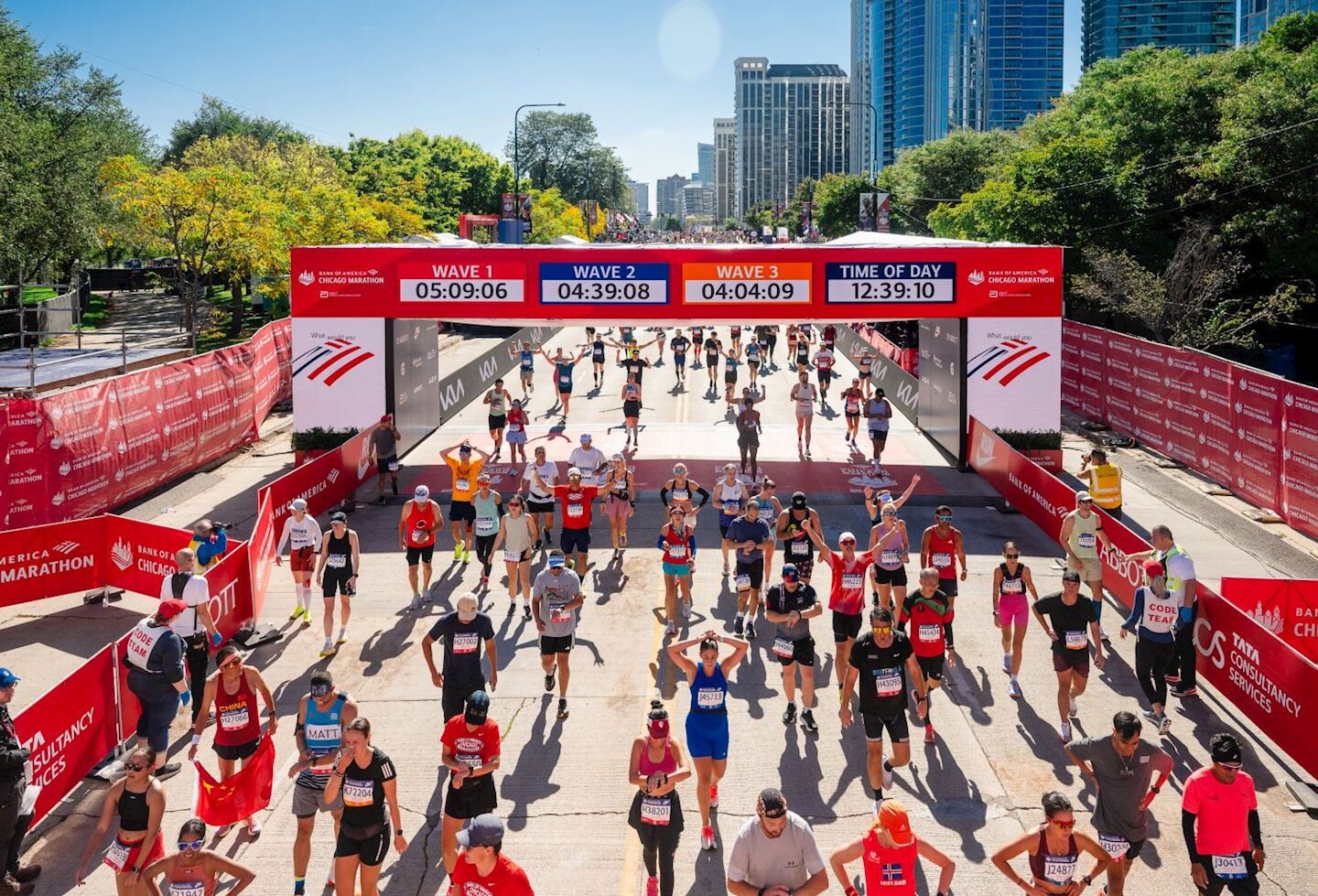
The men’s Chicago record is 2:00:35, set by the late Kelvin Kiptum in 2023. That performance stood as the world record until Sawe’s extraordinary 1:59:30 in London in 2026.
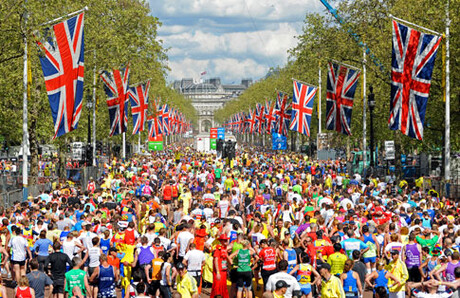
Then there is Berlin, perhaps the most celebrated world-record factory in marathon history. Kenya’s Eliud Kipchoge holds the men’s course record at 2:01:09, while Ethiopia’s Tigist Assefa owns the women’s mark at 2:11:53. Berlin has hosted numerous men’s world records over the years, underlining its reputation as one of the fastest marathon courses on the planet.
The elevation figures help explain why the courses produce such different performances. Berlin has relatively modest elevation changes, creating a fast and rhythm-friendly route. Other Majors present considerably greater challenges.
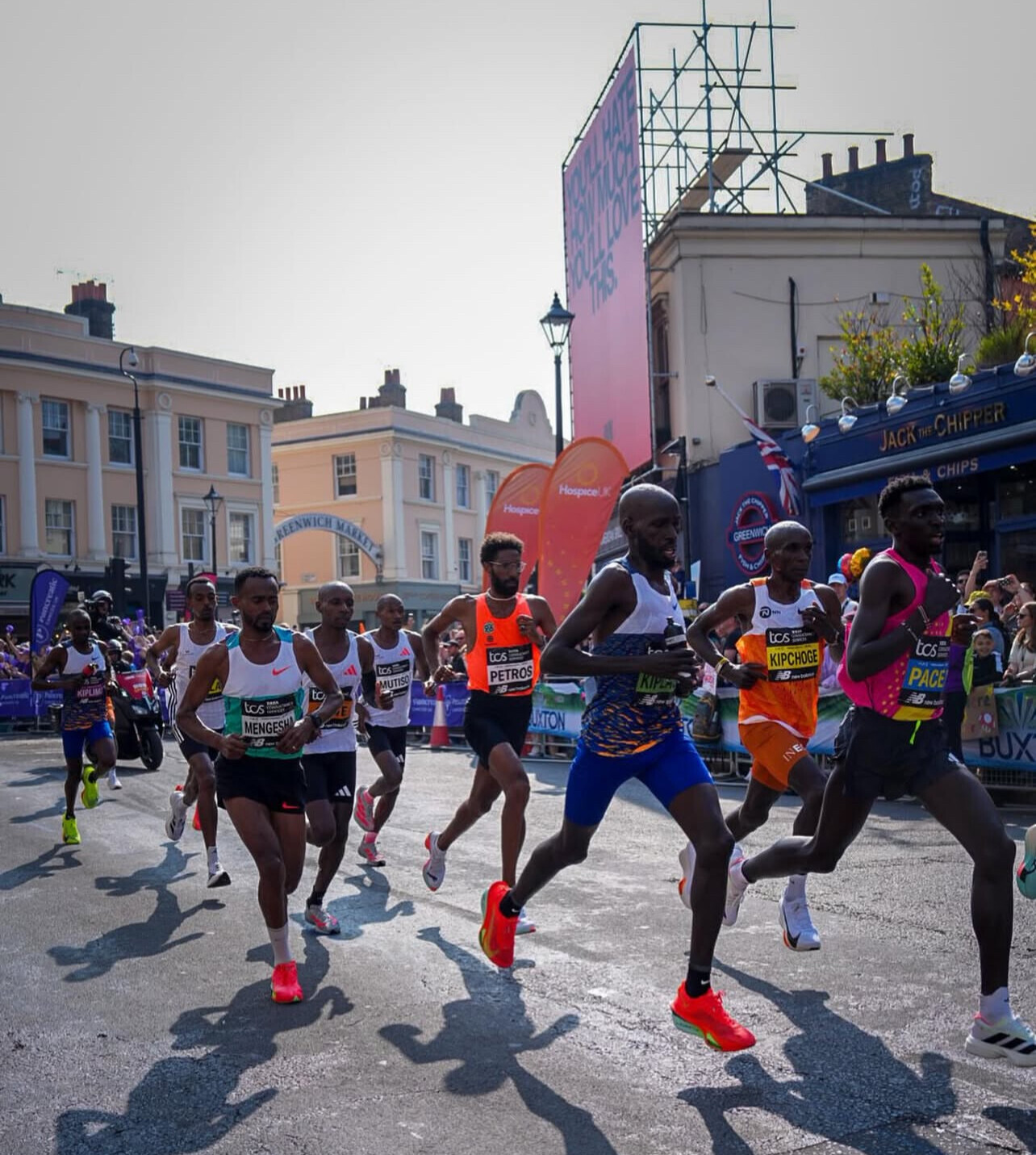
Boston, for example, climbs 248 metres but descends 388 metres. Its famous point-to-point layout and net downhill profile make it exceptionally fast in places, but its course does not qualify for official world-record purposes because the elevation drop exceeds the limit permitted by World Athletics.
New York City is a completely different proposition. With approximately 246 metres of climbing, it is among the toughest Major Marathon courses, demanding strength and tactical patience rather than simply raw speed. Its records therefore carry a different kind of significance, earned on a course that tests athletes through bridges, climbs and a demanding closing stretch into Central Park.
Tokyo offers another fast but distinctive challenge, with Benson Kipruto holding the men’s course record in 2:02:16. Brigid Kosgei’s 2:14:29 remains the women’s course record, illustrating the exceptional standard required to rewrite the record books in the Japanese capital.
And then there is Sydney, the newest addition to the Abbott World Marathon Majors family. Its course has already produced outstanding performances, with Addisu Gobena’s 2:04:42 listed as the men’s course record and Sifan Hassan’s 2:18:22 as the women’s mark in the graphic. With its demanding elevation profile, those performances underline just how quickly the Sydney course has established itself among the world’s major marathon stages.
What makes these records fascinating is that they cannot be judged by the clock alone. A 2:01 on a fast, record-legal course is a completely different achievement from a 2:04 on a demanding route, while Boston’s unique course rules mean that even exceptionally fast performances cannot enter the official world-record conversation.
For decades, marathon greatness was largely measured by who could run fastest. Today, the Majors show that where the time is run can be almost as important as the time itself. From Sawe’s historic sub-two-hour breakthrough in London to Chepngetich’s barrier-breaking run in Chicago and Berlin’s remarkable record history, these performances represent different chapters of marathon history—and the next chapter could be written at any Major.
by Erick Cheruiyot for My Best Runs.
Login to leave a comment

Noah Lyles Ends 2026 Season Due to Injury, Sprint Star to Miss Budapest Championships
Noah Lyles has made the difficult decision to bring his 2026 season to an early end, with an injury forcing the American sprint star to step away from competition for the remainder of the year.
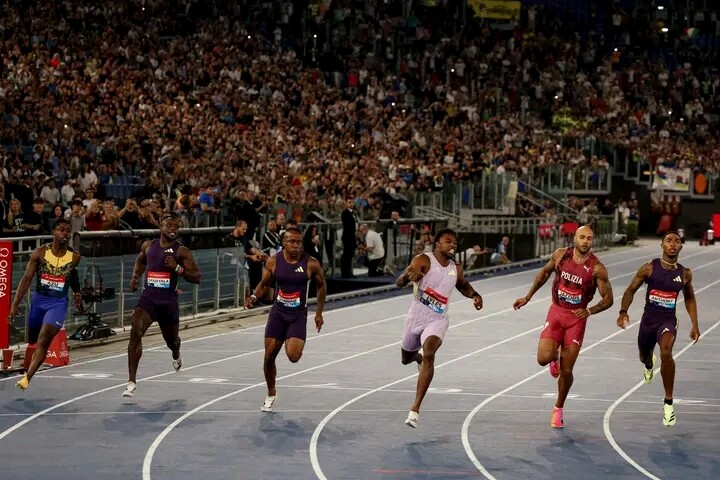
Lyles announced the decision on Friday, revealing that the problem he suffered during the U.S. Outdoor Championships in New York has continued to affect his training and recovery. The injury, which initially appeared manageable, flared up during rehabilitation, ultimately leading him to shut down his season rather than risk a more serious setback.
Lyles had arrived at the U.S. championships in spectacular form. He powered to victory in the men's 100m at Icahn Stadium in a world-leading 9.79 seconds, matching his personal best and once again demonstrating why he remains one of the most formidable sprinters in the world.
However, his championships took an unfortunate turn in the men's 200m final. Lyles pulled up after suffering a strain in his left hamstring, leaving him unable to maintain his usual pace. He eventually crossed the finish line in 50.88 seconds.
The injury has proved more troublesome than initially expected. During his rehabilitation, the problem flared up again, preventing Lyles from progressing as planned. Rather than risk worsening the injury, the 29-year-old has chosen to prioritize his recovery and bring his 2026 campaign to a close.
The decision means Lyles will miss the inaugural World Athletics Ultimate Championships in Budapest, scheduled for September 11–13. The Budapest 2026 event would have provided another major opportunity for the American to compete against the world's best, but he will now be forced to watch from the sidelines.
Despite the disappointment, Lyles can look back on a season that once again showcased his extraordinary ability. His world-leading 9.79-second performance in the 100m was a powerful reminder of his speed, while his decision to step away reflects the importance of protecting his long-term career.
With the 2027 World Championships and the 2028 Los Angeles Olympic Games on the horizon, Lyles' priority now shifts from racing to recovery, rehabilitation and rebuilding his fitness.
It is certainly not the ending he would have wanted for his 2026 campaign. But sometimes, the most important race is the one that comes after the setback — the race back to full health.
For now, Noah Lyles' 2026 season is over. The next chapter is recovery, rebuilding and preparing for an even bigger return.
by Erick Cheruiyot for My Best Runs.
Login to leave a comment
Peres Jepchirchir Conquers Sydney As World Champion Claims Fourth Major Marathon Crown
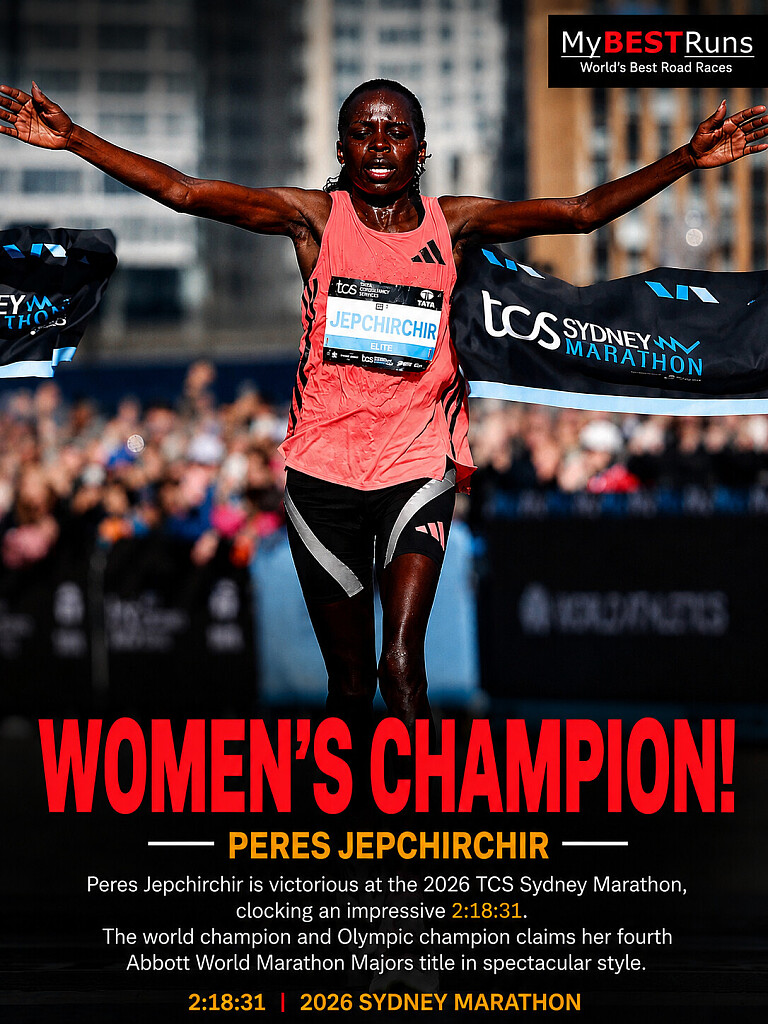
Kenya’s Peres Jepchirchir has added another prestigious chapter to her remarkable marathon career, claiming victory at the TCS Sydney Marathon presented by ASICS in an impressive 2:18:31.
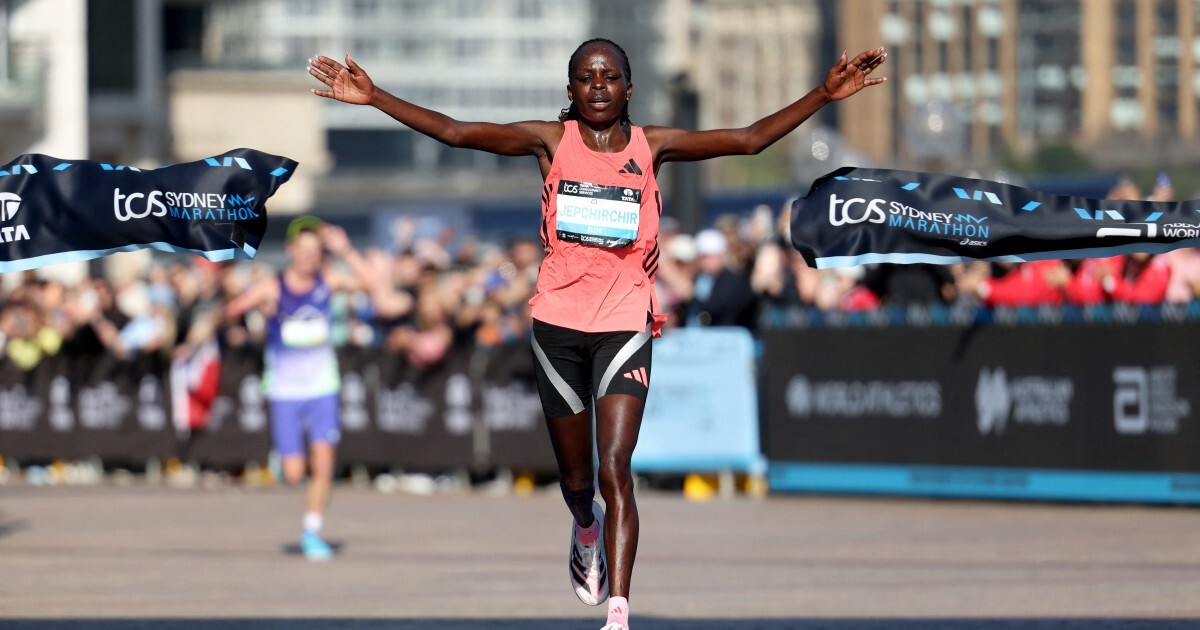
The reigning world champion and former Olympic champion produced a commanding performance on the streets of Sydney, securing another major victory and further strengthening her reputation as one of the most accomplished marathoners of her generation.
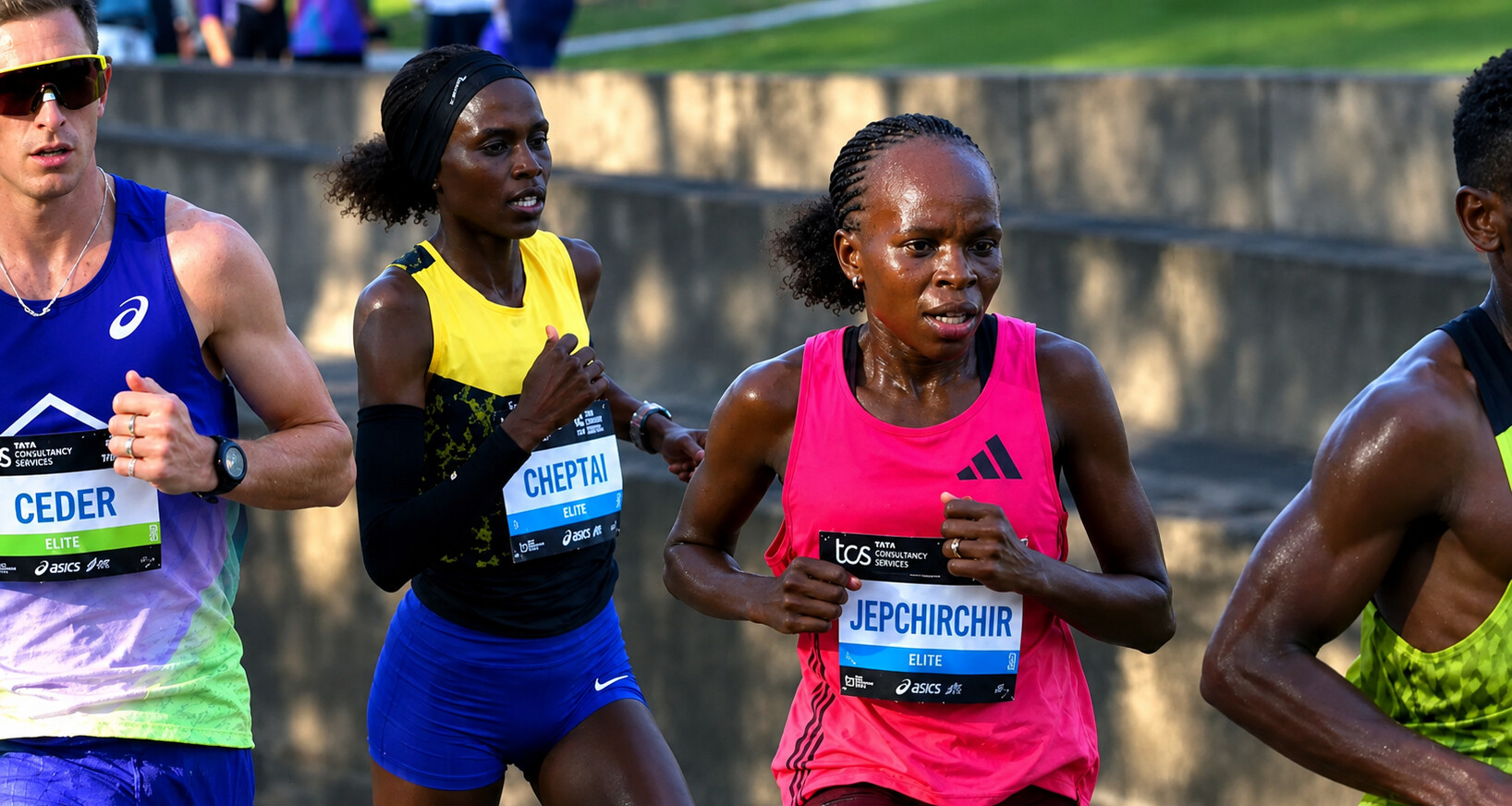
Jepchirchir’s winning time was just nine seconds shy of Sifan Hassan’s Sydney course record of 2:18:22, set at the 2025 edition. Although the record remained intact, the Kenyan once again demonstrated her ability to perform with precision and confidence on one of the sport’s biggest stages.
She won the race with a performance defined by patience, poise and remarkable composure. Rather than being drawn into unnecessary battles in the early stages, Jepchirchir appeared to run with confidence, gradually asserting her authority as the kilometres passed. Her rhythm remained smooth and controlled, her focus unwavering, and when the decisive moments arrived, she had the strength and composure to take command. It was a victory crafted with intelligence, executed with elegance and finished with the unmistakable authority of a true champion.
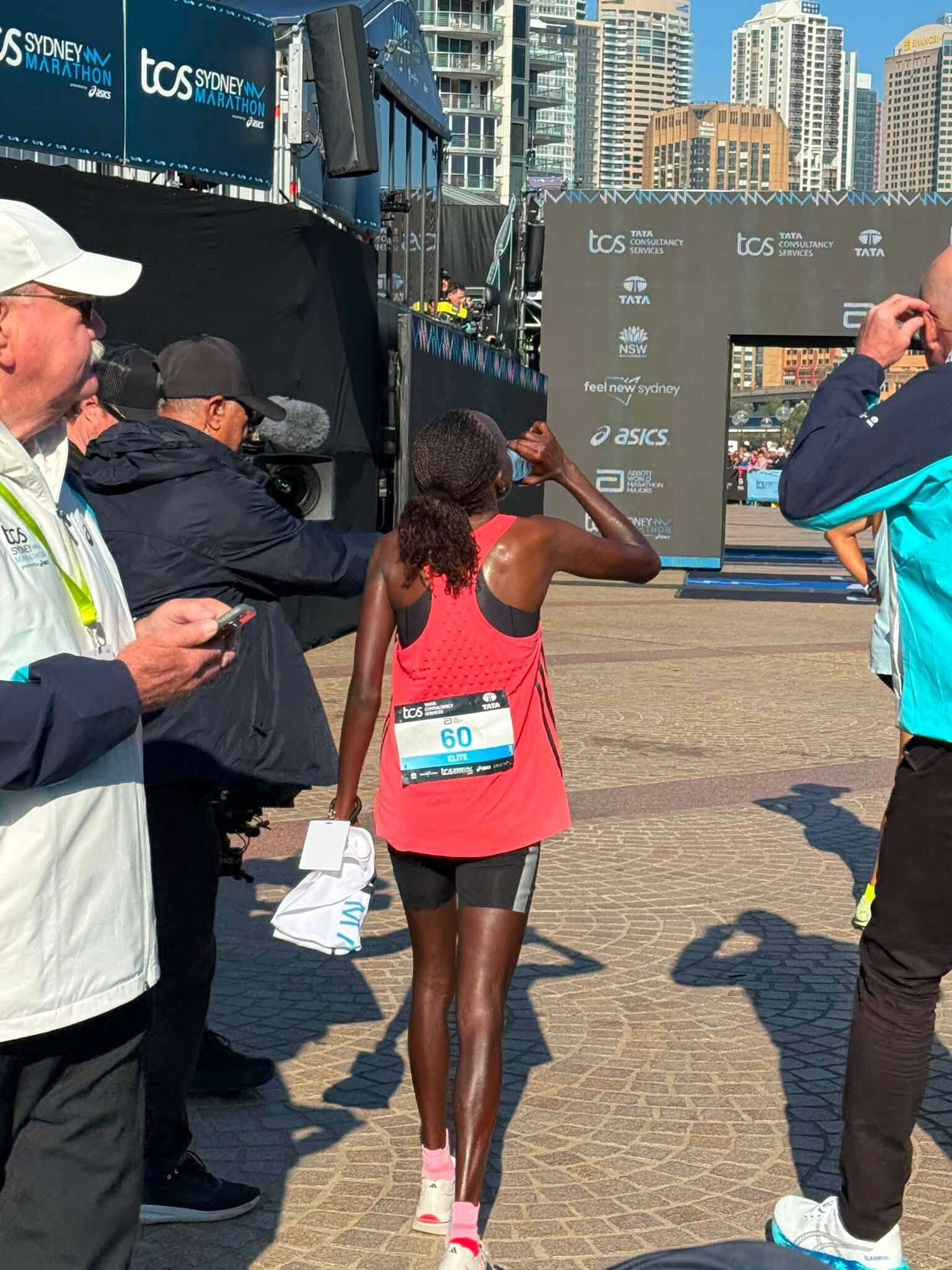
More significantly, the triumph marks Jepchirchir’s fourth Abbott World Marathon Majors victory. She had previously conquered New York, Boston and London, and her Sydney success now adds another prestigious Major title to an already extraordinary résumé.
Behind the champion, compatriot Irine Cheptai completed an impressive Kenyan one-two, crossing the finish line in 2:22:11. Ethiopia's Shure Demise secured the final place on the podium with a strong run of 2:22:32, as Kenya and Ethiopia once again demonstrated their extraordinary depth in elite women's marathon running.
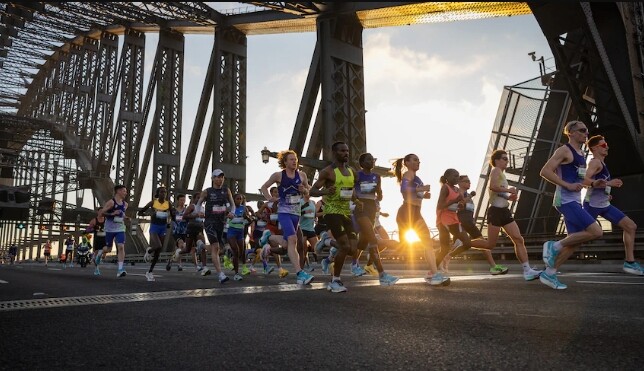
Ethiopia's Haven Hailu finished fourth in 2:22:56, followed by compatriot Meseret Abebayehu in fifth with 2:23:40. Kenya's Priscah Cherono took sixth place in 2:23:49, narrowly ahead of Uganda's Stella Chesang, who clocked 2:23:51 for seventh.
The race also featured a notable performance from home favourite Ellie Pashley, who battled her way into the top 10. The Australian finished ninth in 2:28:27, giving the home crowd a strong athlete to celebrate in an elite field dominated by East African runners.
2026 Sydney Marathon – Top 10 Women's Results
1. Peres Jepchirchir (Kenya) – 2:18:31
2. Irine Cheptai (Kenya) – 2:22:11
3. Shure Demise (Ethiopia) – 2:22:32
4. Haven Hailu (Ethiopia) – 2:22:56
5. Meseret Abebayehu (Ethiopia) – 2:23:40
6. Priscah Cherono (Kenya) – 2:23:49
7. Stella Chesang (Uganda) – 2:23:51
8. Fikrte Wereta (Ethiopia) – 2:25:18
9. Ellie Pashley (Australia) – 2:28:27
10. Aberu Ayana (Ethiopia) – 2:28:29
For Jepchirchir, Sydney represents far more than another race victory. It is another demonstration of the consistency, resilience and championship mentality that have defined her career. From Olympic glory to world championship success and now another Major triumph, she continues to strengthen her place among the most accomplished marathoners of her era.
The Sydney Marathon has rapidly established itself as one of the most significant races on the global marathon calendar, and Jepchirchir’s victory adds another memorable chapter to its growing history.
As the champion crossed the finish line beneath Sydney’s iconic skyline, she celebrated another remarkable achievement in a career that continues to evolve with every major challenge.
From Olympic champion to world champion, from New York and Boston to London and now Sydney, Peres Jepchirchir continues to turn the world’s greatest marathons into stages for her brilliance. Sydney has a new champion, and another extraordinary chapter has been added to the story of one of marathon running’s finest competitors.
Four Abbott World Marathon Majors conquered. One extraordinary legacy still being written.
From Jepchirchir's dominant victory to another fiercely competitive East African showdown and Pashley's determined top-10 finish on home soil, the 2026 Sydney Marathon delivered a memorable showcase of world-class women's distance running. And at the centre of it all stood Peres Jepchirchir—once again wearing the crown.
by Erick Cheruiyot for My Best Runs.
Login to leave a comment

Sydney Marathon
The Sydney Marathon is a marathon held annually in Sydney, Australia. The event was first held in 2001 as a legacy of the 2000 Summer Olympics, which were held in Sydney. In addition to the marathon, a half marathon, 9 kilometres (5.6 mi) "Bridge Run", and a 3.5 kilometres (2.2 mi) "Family Fun Run" are also held under the banner...
more...
26 Years Later, Vivian Cheruiyot Returns To Sydney As A Kenyan Distance-Racing Legend
Twenty-six years ago, a 17-year-old Vivian Cheruiyot arrived in Sydney carrying the dreams of a young Kenyan athlete and the promise of a remarkable future.
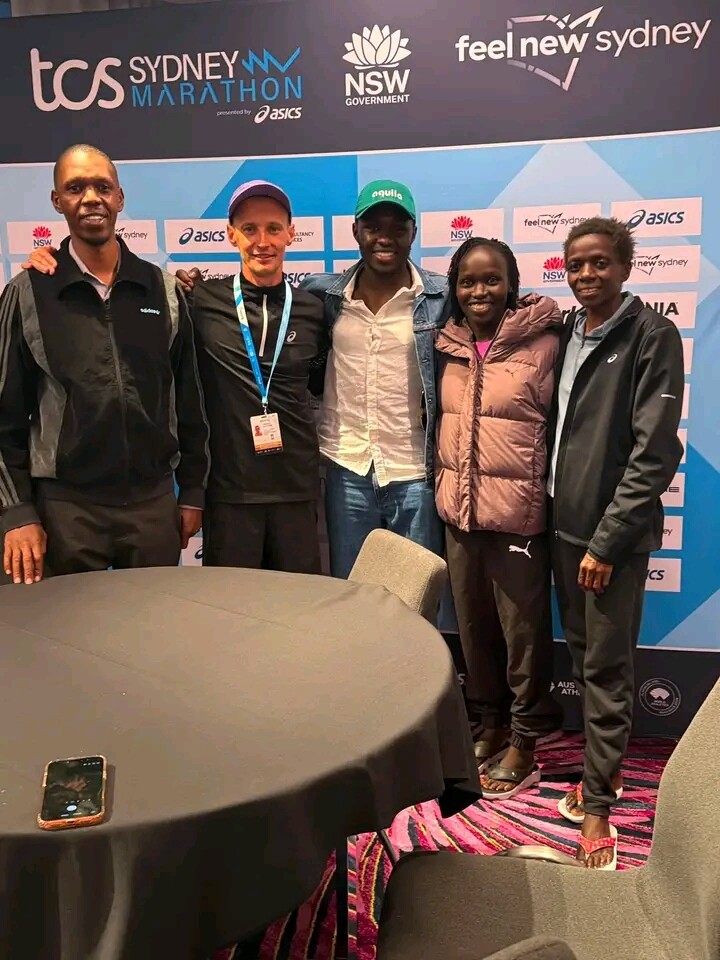
Today, she returns to the same Australian city as something far greater — an Olympic champion, four-time world champion, world cross-country champion, London Marathon winner, Laureus Sportswoman of the Year and one of Kenya’s most accomplished distance runners.
At 42, Cheruiyot will line up for the TCS Sydney Marathon on Sunday, August 30, completing an extraordinary full circle in a career that has stretched across more than two decades and transformed her from a teenage Olympian into one of the defining figures of her generation.
When Cheruiyot first competed in Sydney at the 2000 Olympic Games, few could have imagined the heights she would eventually reach. Still only 17, she advanced to the 5000m final and finished 14th — an experience that became the first chapter of an Olympic journey that would eventually span four Games.
The years that followed brought an extraordinary collection of victories.
Cheruiyot became world 5000m champion in 2009, then produced one of the greatest championship performances of her career in Daegu in 2011, winning both the 5000m and 10,000m titles while also claiming World Cross Country gold earlier that year. She added another world 10,000m title in Beijing in 2015, taking her tally to four senior world championships.
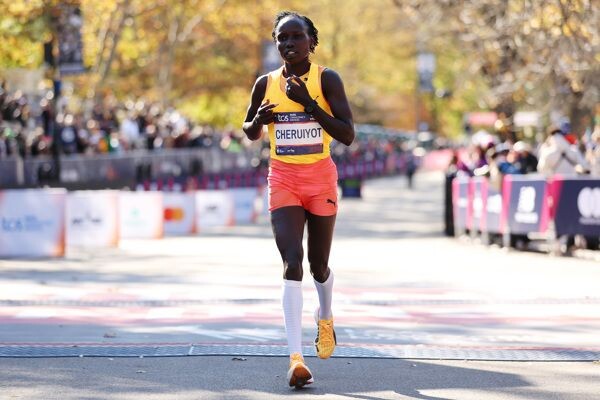
But the Olympic gold medal remained the one prize missing from her collection.
That changed dramatically in Rio in 2016.
After winning silver in the 10,000m, Cheruiyot returned to the track for the 5000m final and delivered a masterclass in championship racing. She surged away from Ethiopia’s Almaz Ayana in the closing stages to win Olympic gold in 14:26.17, finally completing the collection of major titles she had chased for so many years.
“I said I want to win,” Cheruiyot recalled after that historic victory. “This was my fourth Olympics and I’ve been dreaming about this since the very start.”
Her brilliance was not confined to the track.
After moving into marathon running, Cheruiyot established herself among the world’s best over 42.195km. She finished fourth in her London Marathon debut in 2017 before returning the following year to produce a stunning victory in 2:18:31 — a performance that placed her fourth on the world all-time list at the time and remains her marathon personal best.
She also finished runner-up in the New York City Marathon in 2018 and second in London in 2019, further demonstrating that her extraordinary competitive instinct had successfully followed her from the track to the roads.
Away from competition, Cheruiyot’s story has also evolved with her life. She became a mother, welcomed her daughter Arielle in 2021 and returned to competitive racing in 2023. In 2024, she claimed third place at the New York City Marathon, followed by fifth at the 2025 London Marathon.
Now Sydney offers her another opportunity to write her name into the city’s sporting history.
“I look back on my career with pride. I was able to win almost everything and have been at the top for a long time,” Cheruiyot said ahead of her return.
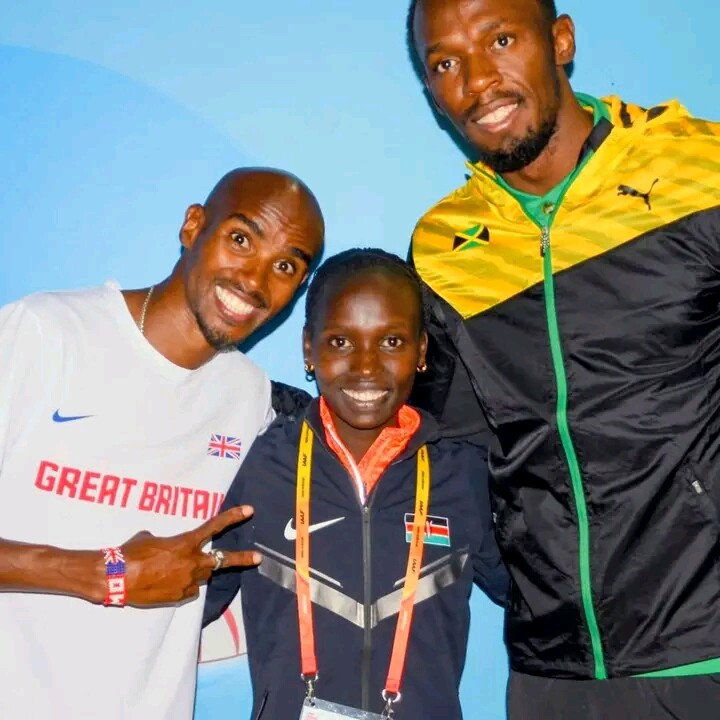
She also remembers the extraordinary generation in which she competed — an era that included global icons such as Usain Bolt, Tirunesh Dibaba and Meseret Defar.
“I was running in a great era and had a close-up view of athletes like Usain Bolt setting the world alight,” she reflected.
Yet perhaps the most remarkable aspect of Cheruiyot’s return is not simply the passage of time, but her willingness to keep challenging herself.
She arrives in Sydney having put considerable work into rebuilding her fitness, knowing that the marathon demands something entirely different from the explosive championship races that defined her track career.
“I am very excited to go back to Sydney,” she said. “It has been 26 years since I was there, and a lot has changed in my life since then. I hope to have a good run — I have put in a lot of work to regain fitness and hope my body will stand up to the 42km.”
Twenty-six years ago, Sydney introduced the world to a fearless Kenyan teenager chasing an Olympic dream.
Now, the same city welcomes back a woman who went on to conquer the track, cross country and marathon — and to leave an indelible mark on Kenyan athletics.
From teenage Olympian to Olympic champion. From world champion to marathon winner. From rising talent to mother and enduring icon.
Vivian Cheruiyot has come full circle — and Sydney is once again the stage.
by Erick Cheruiyot for My Best Runs.
Login to leave a comment
Sydney Marathon
The Sydney Marathon is a marathon held annually in Sydney, Australia. The event was first held in 2001 as a legacy of the 2000 Summer Olympics, which were held in Sydney. In addition to the marathon, a half marathon, 9 kilometres (5.6 mi) "Bridge Run", and a 3.5 kilometres (2.2 mi) "Family Fun Run" are also held under the banner...
more...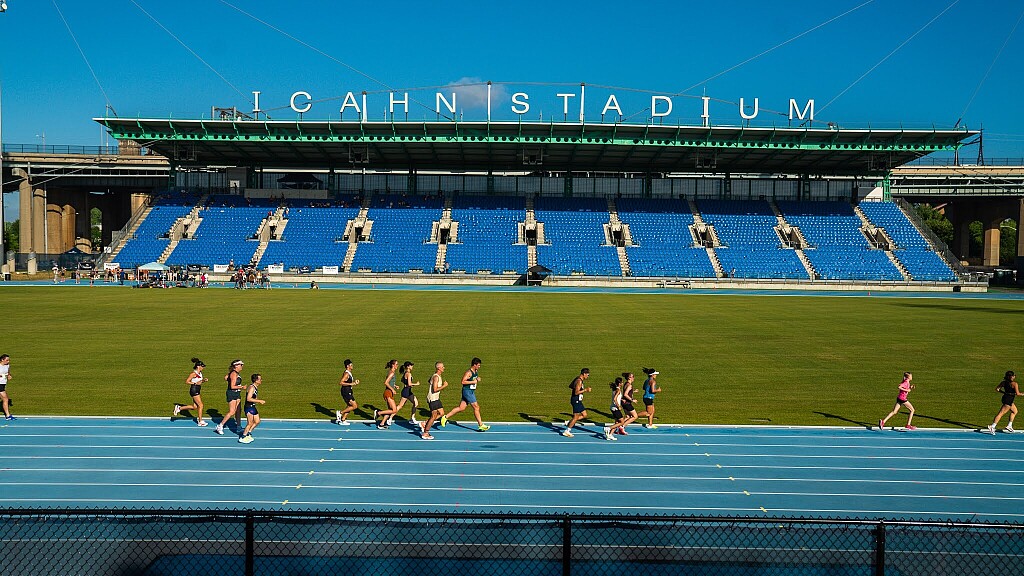
Athlos Nyc 2026 Cancelled As Series Sets Its Sights On A New Global Calendar
ATHLOS has announced a major change to its 2026 plans, confirming that the third edition of ATHLOS NYC will not take place as originally scheduled on October 2 at Icahn Stadium in New York City.
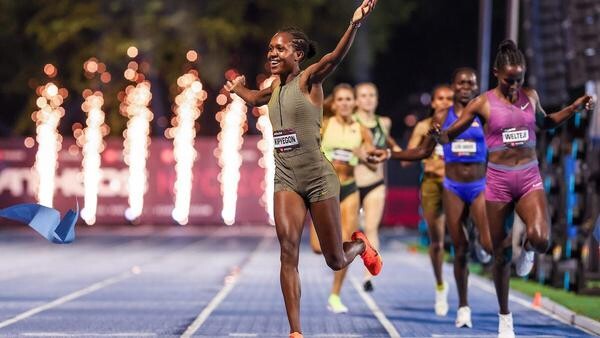
The decision marks a significant change for the rapidly growing women’s track and field series, which had been preparing to return to New York for another high-profile edition. ATHLOS said the move is part of a broader strategy to align its future events more closely with the global athletics calendar.
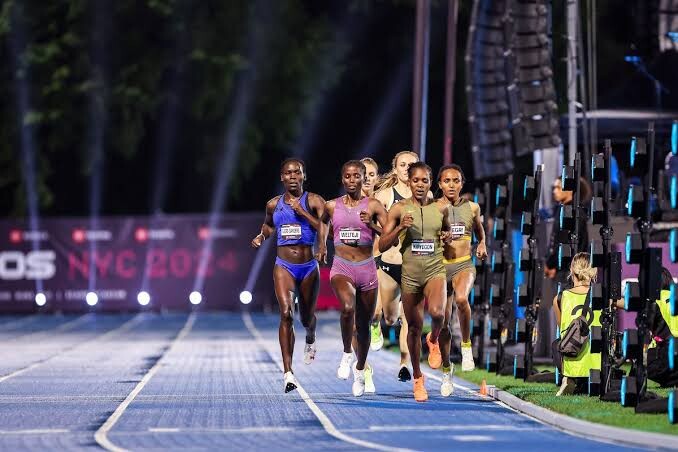
The organisation explained that it will not stage ATHLOS NYC in October 2026, with the goal of restructuring its schedule from the 2027 season onward. The new approach is intended to give the world’s best female athletes greater opportunities to compete in a healthier and more sustainable schedule while allowing them to perform at their peak.
When ATHLOS was launched, the series deliberately created a new competition window at the end of the traditional athletics season. However, as the event has grown, ATHLOS says it has become increasingly clear that its long-term home should be within the main international athletics calendar.
The cancellation of ATHLOS NYC, however, does not signal a retreat from the organisation’s global ambitions.
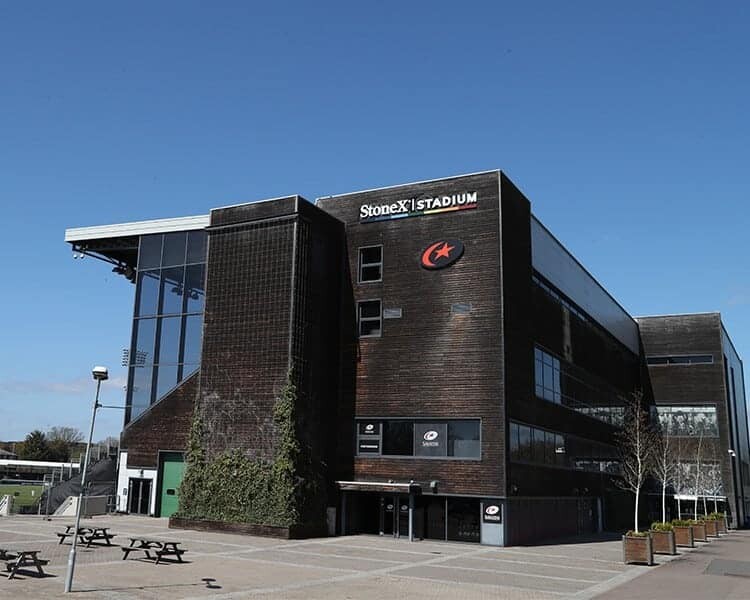
ATHLOS London remains firmly on the calendar for September 18, 2026, at StoneX Stadium in London, marking the series’ highly anticipated first event outside the United States. The London meeting is expected to bring together some of the biggest names in women’s athletics for what promises to be a spectacular night of elite competition.
ATHLOS has built its reputation around putting female athletes at the centre of the experience, combining world-class competition with significant prize money and an energetic event atmosphere. Its programme features several of the sport’s most exciting disciplines, including the 100m hurdles, 100m, 200m, 400m, 800m, mile and long jump.
While the decision to cancel the New York edition will come as a disappointment to fans who were expecting another major night at Icahn Stadium, ATHLOS insists that its commitment to women’s track and field remains stronger than ever.
The organisation is now turning its attention to London and to building a more sustainable international calendar from 2027. The latest decision could therefore prove to be less an ending than a strategic reset as ATHLOS looks to strengthen its position on the global athletics stage.
ATHLOS NYC may be absent from the 2026 calendar, but the series’ international ambitions are only getting bigger.
by Erick Cheruiyot for My Best Runs.
Login to leave a comment
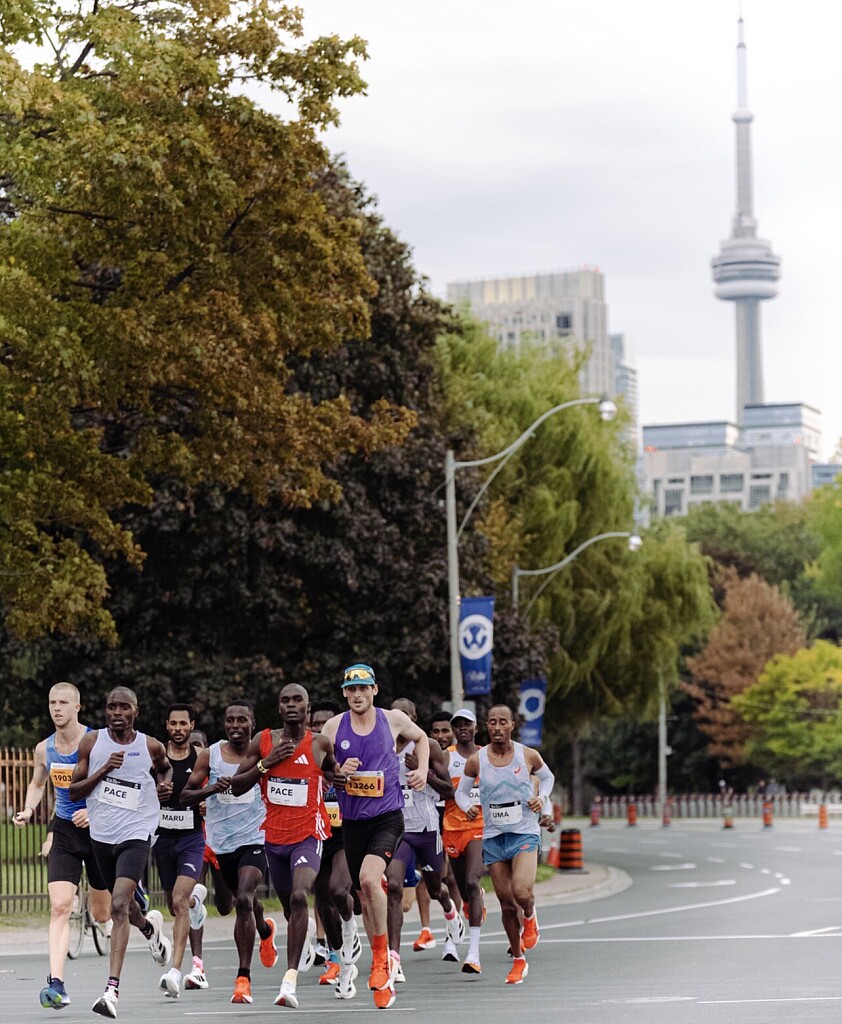
Two London-Area Standouts Set for Marathon Debuts at Toronto Waterfront
Two Canadian distance running stalwarts will make their marathon debuts at the 2026 TCS Toronto Waterfront Marathon October 18. Both make their homes in the London area of southwestern Ontario.
The event is a World Athletics Elite Label race and also serves as the official Athletics Canada Canadian Marathon Championships.
Connor Black and Jeremy Coughler are former training partners and Canadian championship medalists over 10,000m and cross country. They have followed different paths since the retirement of their coach, Dave Mills, although they occasionally meet for long runs while preparing for Toronto.
Coughler still follows a program designed by Mills—a special exception made by his former coach—while Black has worked with two-time Canadian Olympic marathoner Reid Coolsaet for the past two years. Their approaches to the Toronto race could hardly be more different.
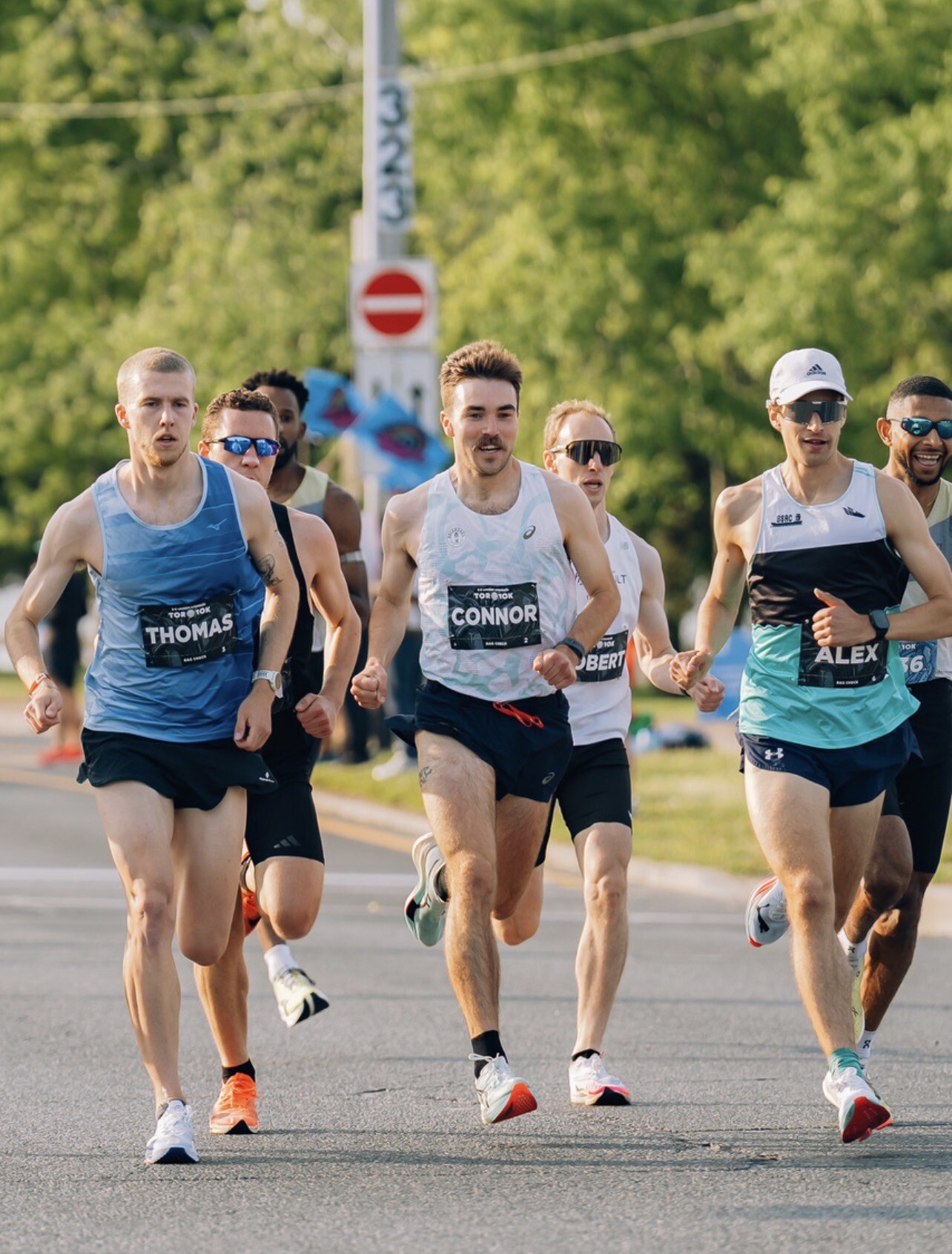
Black, who lives in London—known as “The Forest City”—sees his marathon debut as an important step toward a possible challenge for Canada’s 2028 Olympic team.
“I am 30 years old and I am not making money in the sport, but I still have goals,” Black declares. “My final goal would be to try and make an Olympic team, and I don’t think it’s feasible as an unsponsored track runner targeting the 5K or 10K.
“The marathon is a more even playing field. I can get into any marathon I want, within reason. There are 80 spots in the Olympics. So, if I am going to give it one last shot, it has to be in the marathon.”
At the 2025 Project 13.1 Half Marathon in Congers, New York, Black ran a personal best of 1:03:34 in his first race at the distance. Until then, he had competed primarily over 5,000m and 10,000m. In 2022, he won the Canadian Cross Country Championships.
Black is a secondary school teacher but remains classified as “Long Term Occasional,” meaning he moves from school to school wherever there is an opening.
“Last year I was at Strathroy District Collegiate Institute, which, funnily enough, was where Dave taught for 10 or 15 years,” Black says. “I taught phys ed and math. I can also teach English as a Second Language and biology. I am kind of a Swiss Army knife.”
As he increases his training load for Toronto, completing most of the work by himself, he admits he has reservations about returning to work.
“I am quite nervous to resume teaching,” he reveals. “Recently, my mileage has gone up. When you are starting your build, you are tired. It has been nice having the summer off and being able to focus on training.
“I used to believe you could train like a professional and have a full-time job. I think it’s possible, but if you want to run 200 kilometres a week for the marathon, it is definitely easier and probably better for your performance if you don’t have to work full time.”
Meanwhile, Coughler and his wife, Emma, are chiropractors and partners in Re-Charge Health and Wellness in London’s east end. They are also the parents of a young son, Otto, which means managing their time carefully.
“My wife and I split the work schedule,” Coughler, 30, explains during a day off. “I work Tuesday, Thursday, Friday and Saturday, so I try to do workouts on my days at home—Mondays and Wednesdays.
“If I have something first thing at 7 or 8 a.m., I do a run and then a shakeout between patients or after work. It’s not too bad.”
Running remains important to Coughler, but it is now one of several priorities. He estimates he is running up to 110 kilometres a week, similar to the volume he maintained when finishing third at both the 2023 and 2024 Canadian 10K Championships in Ottawa. He also won the Canada Running Series’ Beneva Spring Run-Off 8K four consecutive years between 2022 and 2025.
Although that mileage is well below what many elite marathoners run, Coughler set a half-marathon personal best of 1:04:33 earlier this year at the Project 13.1 Half Marathon in New York State. The performance earned him eighth place in a strong field. He admits his attitude toward running has changed.
“It’s a shift mentally because I have so much other stuff going on,” he explains. “I am trying to view running as something I do because I love it rather than because it’s my whole life.
“When I was at Indiana University, running was everything. When you run well, it’s great, but when you are not running well, it starts eating you alive.”
With the support and encouragement of Mills, they have mapped out a plan they hope will see Coughler finish his debut in the 2:14 to 2:16 range. He also intends to run more marathons in the future.
“It’s nice knowing there will be a bunch of other Canadian guys who can run around the same time, and that will make it deeper,” he says. “At the front, there are always good Kenyans and Ethiopians running fast. Even if there are a bunch of guys running between 2:12 and 2:20, it would be great.”
The race’s proximity to his home in Thamesford—15 minutes from his practice and about a two-hour drive from Toronto—means Emma, Otto and his parents can accompany him on race weekend. It is one reason he chose the TCS Toronto Waterfront Marathon for his debut.
Coughler is also familiar with the first half of the course, having finished third in the Toronto Waterfront Half Marathon a year ago. Runners in both events follow the same route until the 20-kilometre mark.
Between now and race day, there are many kilometres to be covered. Subject to their schedules and traffic conditions, the two London-area runners will reunite for some workouts.
If all goes well, they will arrive at the starting line ready to join the long list of Canadians who have successfully made the move to the classic marathon distance.
by Paul Gains
Login to leave a comment
TCS Toronto Waterfront Marathon
The Scotiabank Toronto Waterfront Marathon, Half-Marathon & 5k Run / Walk is organized by Canada Running Series Inc., organizers of the Canada Running Series, "A selection of Canada's best runs!" Canada Running Series annually organizes eight events in Montreal, Toronto and Vancouver that vary in distance from the 5k to the marathon. The Scotiabank Toronto Waterfront Marathon and Half-Marathon are...
more...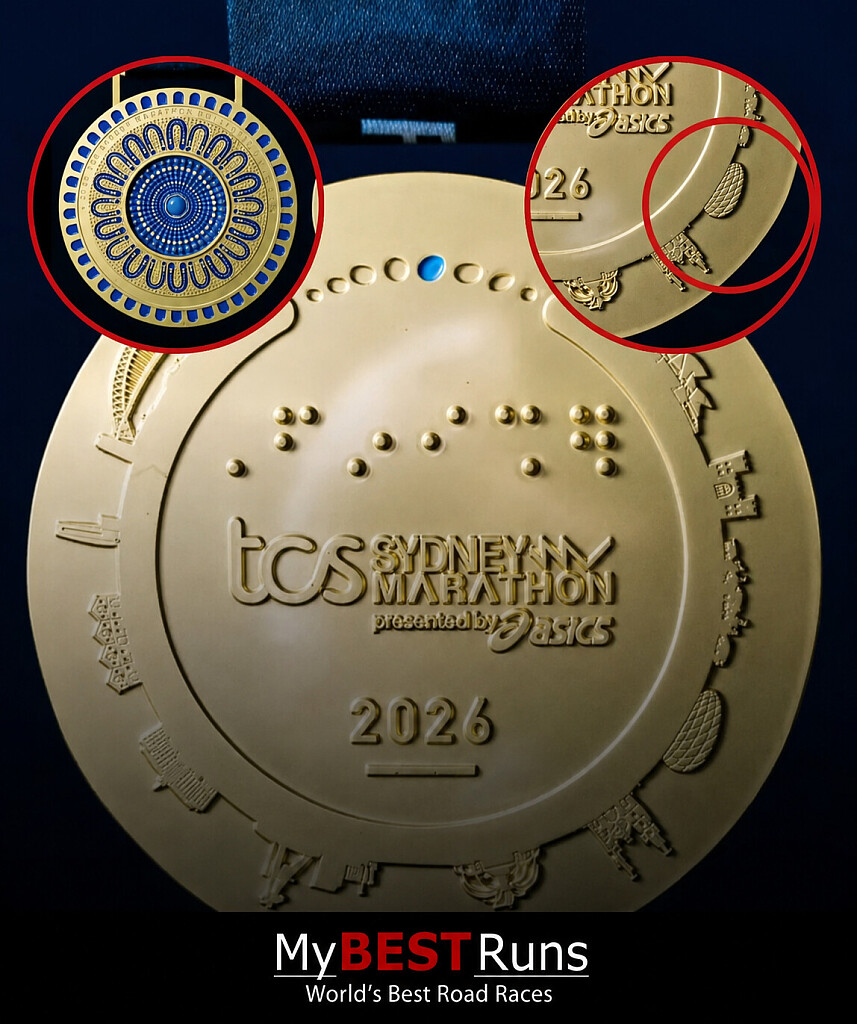
Sydney Marathon’s Medal Blunder: How Munich’s Allianz Arena Ended Up in a Sydney Souvenir
The Sydney Marathon was meant to celebrate one of Australia’s most iconic cities. Instead, its 2026 finisher’s medal has unexpectedly brought a little piece of Munich into the spotlight.
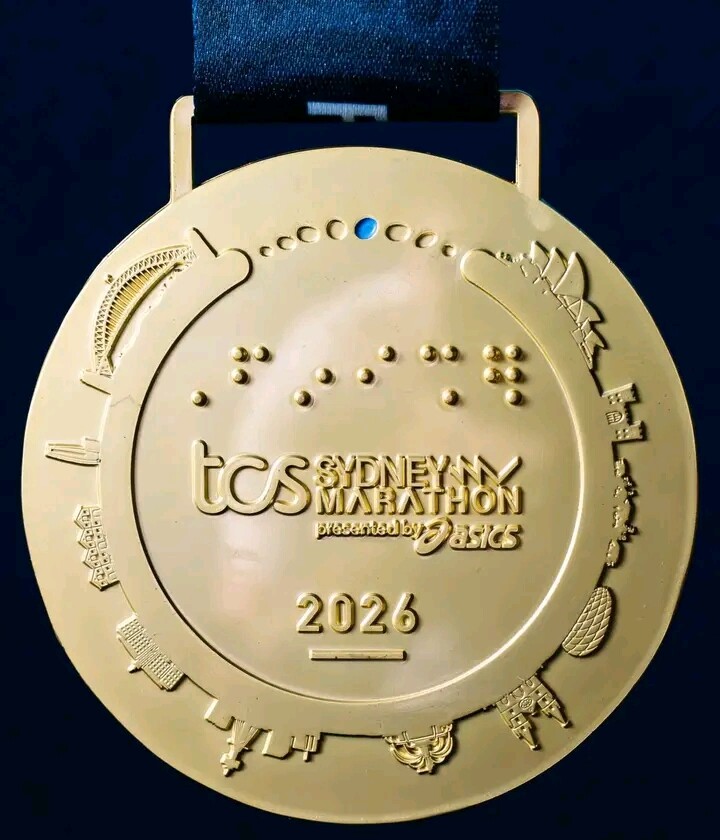
The back of the medal features a collection of landmarks designed to represent Sydney and the 42.2-kilometre journey runners will take through the city, including the Sydney Opera House and Sydney Harbour Bridge. But alongside those unmistakably Australian symbols is a rather surprising addition: Munich’s Allianz Arena.
The stadium was supposed to represent Sydney’s Allianz Stadium in Moore Park. Instead, the medal designers somehow used the distinctive home of Bayern Munich in Germany.
The mistake was spotted shortly after the medal was unveiled and quickly spread across social media before attracting international media attention. With the race now just days away, there is no time to redesign and replace the medals already produced for the event.
Organisers have acknowledged the mistake, describing it as an “unfortunate error” and making clear that the medals will still be presented to runners on race day.
Rather than attempting to hide the blunder, Sydney Marathon has chosen to embrace the unexpected twist, saying the medal is now “a little more unique.” Their response ended on a light-hearted note: “You noticed. We noticed. We’re human.”
And while the incorrect stadium may have created an embarrassing moment for the organisers, it has also given the 2026 medal something no previous Sydney Marathon medal has had — a story of its own.
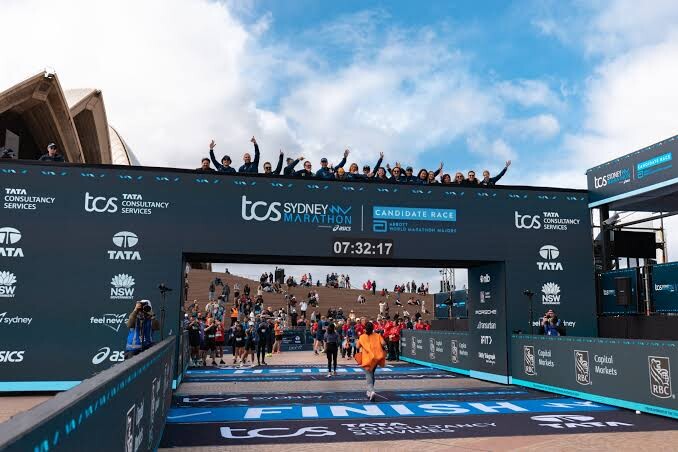
That story will be carried around the necks of approximately 40,000 runners when the Sydney Marathon takes place on Sunday, August 30.
The timing could hardly be more significant for the race. Sydney is only in its second year as an Abbott World Marathon Major, having joined the prestigious series in 2024 alongside Tokyo, Boston, London, Berlin, Chicago and New York. The event has rapidly established itself as one of the world’s most sought-after marathons, with more than 123,000 runners entering the ballot for the 2026 race, a 56 percent increase from the previous year.
For those 40,000 successful entrants, the medal will ultimately represent something far more important than a design mistake. Behind every medal is months of preparation, early mornings, long training runs, sacrifices and the determination required to cover 42.2 kilometres.
And when the runners finally reach the finish line at the Sydney Opera House, they will receive a medal that was intended to tell the story of Sydney — but accidentally tells a small story about Munich too.
What began as an embarrassing design error may now become one of the most memorable quirks in Sydney Marathon history. Years from now, runners may look back at their 2026 medals not simply as souvenirs of finishing one of the world’s major marathons, but as unusual collector’s pieces from the year Sydney accidentally put Munich on its medal.
A Sydney marathon. A Munich stadium. One unforgettable medal.
by Erick Cheruiyot for My Best Runs.
Login to leave a comment
Sydney Marathon
The Sydney Marathon is a marathon held annually in Sydney, Australia. The event was first held in 2001 as a legacy of the 2000 Summer Olympics, which were held in Sydney. In addition to the marathon, a half marathon, 9 kilometres (5.6 mi) "Bridge Run", and a 3.5 kilometres (2.2 mi) "Family Fun Run" are also held under the banner...
more...
Geoffrey Kamworor Eyes New York Hat-Trick as Kenyan Star Chases Another Major Triumph
Two-time New York City Marathon champion Geoffrey Kamworor is set for another assault on the Big Apple, with the Kenyan distance-running star targeting a historic third victory when the Abbott World Marathon Majors race returns on November 1.
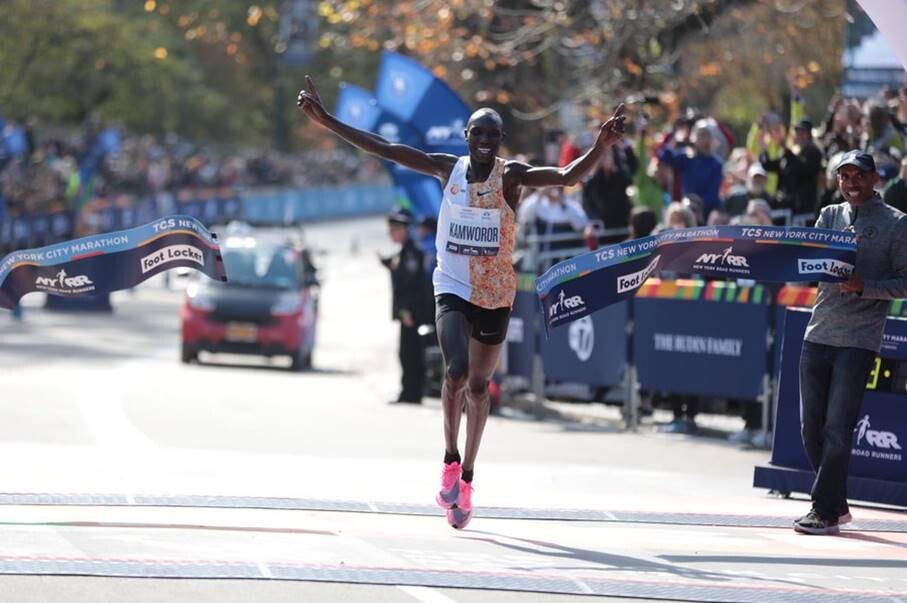
For Kamworor, New York represents much more than another marathon. It is a course where he has already enjoyed some of the defining moments of his illustrious career, and where he will now seek to add another prestigious title to a remarkable collection of achievements.
The 33-year-old has developed a special relationship with the New York course since making his debut there in 2015. On that occasion, he finished runner-up in 2:10:48 behind compatriot Stanley Biwott, who won in 2:10:34.
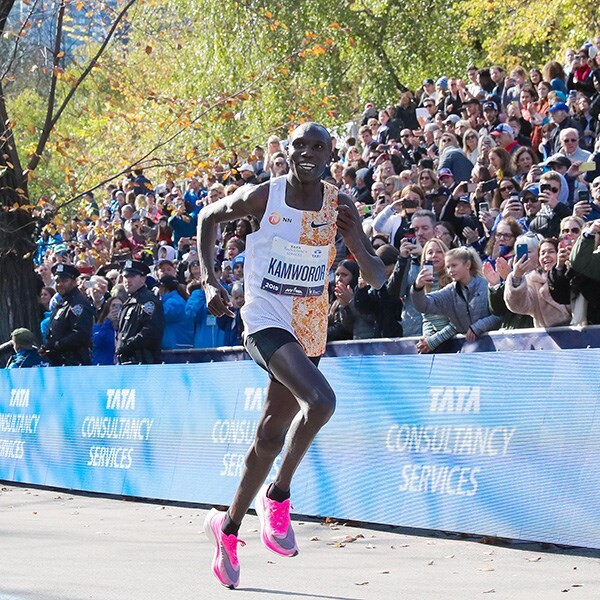
Two years later, Kamworor went one step further.
In 2017, he produced a composed performance to claim his first New York Marathon crown, crossing the finish line in 2:10:53. He held off fellow Kenyan and former world record-holder Wilson Kipsang, who finished just three seconds behind in 2:10:56, while Ethiopia's Lelisa Desisa took third in 2:11:32.

Kamworor returned the following year hoping to defend his title but had to settle for third place. Desisa triumphed in 2:05:59, ahead of Shura Kitata in 2:06:01, while Kamworor clocked 2:06:26.
But the Kenyan refused to stay away from the top for long.
In 2019, he reclaimed the New York crown in emphatic fashion, winning in 2:08:13. Albert Korir followed in second in 2:08:36, with Ethiopia's Girma Bekele completing the podium in 2:08:38.
Those two victories remain Kamworor's only Abbott World Marathon Majors titles, making New York a particularly significant venue in his career.
His latest appearance in the race, however, ended without another podium finish. Returning in 2024, Kamworor placed fifth in 2:08:50 as the Netherlands' Abdi Nageeye won in 2:07:39. Kenya's Evans Chebet was second in 2:07:45, while Albert Korir took third in 2:08:00.
Now, Kamworor is eager to return to the city where he has already tasted victory twice.
“I am very excited to be going back to New York,” Kamworor said, expressing his anticipation ahead of another demanding battle through the streets of the world's most famous city.
For the Kenyan star, the race offers a unique combination of sporting pressure and an atmosphere unlike any other.
“It's always an incredible experience to run the biggest marathon in the world. I'm really looking forward to feeling the energy of the crowd again,” he added.
Kamworor's challenge will be to arrive in New York at his best after a mixed campaign in 2026.
He began the year in spectacular fashion, winning the Ras Al Khaimah Half Marathon on February 14. The Kenyan clocked an impressive 58:14, finishing ahead of Bahrain's Birhanu Balew, who ran 58:23, and compatriot Gideon Rono, who crossed the line in 58:38.
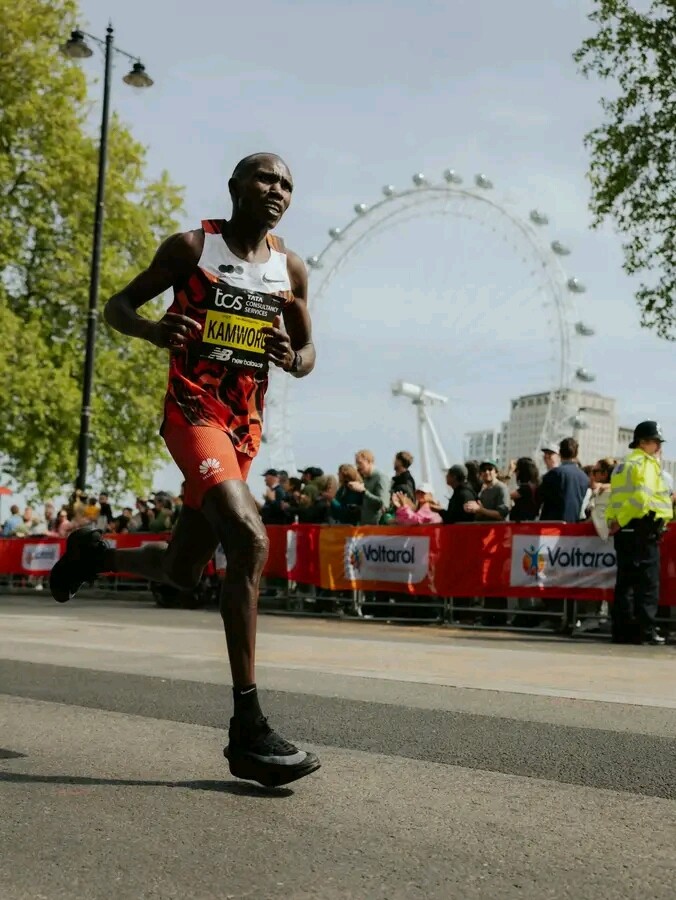
His London Marathon campaign on April 26 proved considerably tougher. Kamworor finished eighth in 2:05:38 in a historic race dominated by Sebastian Sawe, who produced a sensational 1:59:30 to become the first man to break the two-hour barrier in a marathon. Ethiopia's Yomif Kejelcha was second in 1:59:41, while Uganda's Jacob Kiplimo finished third in 2:00:28.
Kamworor will therefore arrive in New York with both experience and motivation on his side. He knows exactly what the course demands, having already navigated its hills, turns and relentless closing stages on multiple occasions.
Beyond the marathon, his career is decorated with major international honours across several disciplines.
Kamworor is a three-time world half marathon champion, winning his first title in Copenhagen in 2014 before successfully defending his crown in Cardiff in 2016 and completing his remarkable hat-trick in Valencia in 2018.
He has also established himself as one of Kenya's finest cross-country runners. He won the world junior cross-country title in Punta Umbria in 2011 before becoming a senior world champion in Guiyang in 2015 and Kampala in 2017. He added a bronze medal at the 2019 World Cross Country Championships in Aarhus.
That versatility has long been one of Kamworor's greatest strengths. From cross country to the half marathon and now the marathon, he has repeatedly demonstrated the endurance, tactical intelligence and competitive resilience required to succeed at the highest level.
Yet New York remains unfinished business.
With two victories already secured and another opportunity waiting on November 1, Kamworor has a chance to strengthen his legacy on one of the sport's most iconic stages.
A third triumph would not only give him a coveted New York hat-trick but would further cement his status as one of Kenya's most accomplished distance runners of his generation.
The Big Apple has already given Kamworor some of the proudest moments of his career. Now, the Kenyan star is returning with one clear ambition — to conquer New York once again.
by Erick Cheruiyot for My Best Runs.
Login to leave a comment
TCS New York City Marathon
The first New York City Marathon, organized in 1970 by Fred Lebow and Vince Chiappetta, was held entirely in Central Park. Of 127 entrants, only 55 men finished; the sole female entrant dropped out due to illness. Winners were given inexpensive wristwatches and recycled baseball and bowling trophies. The entry fee was $1 and the total event budget...
more...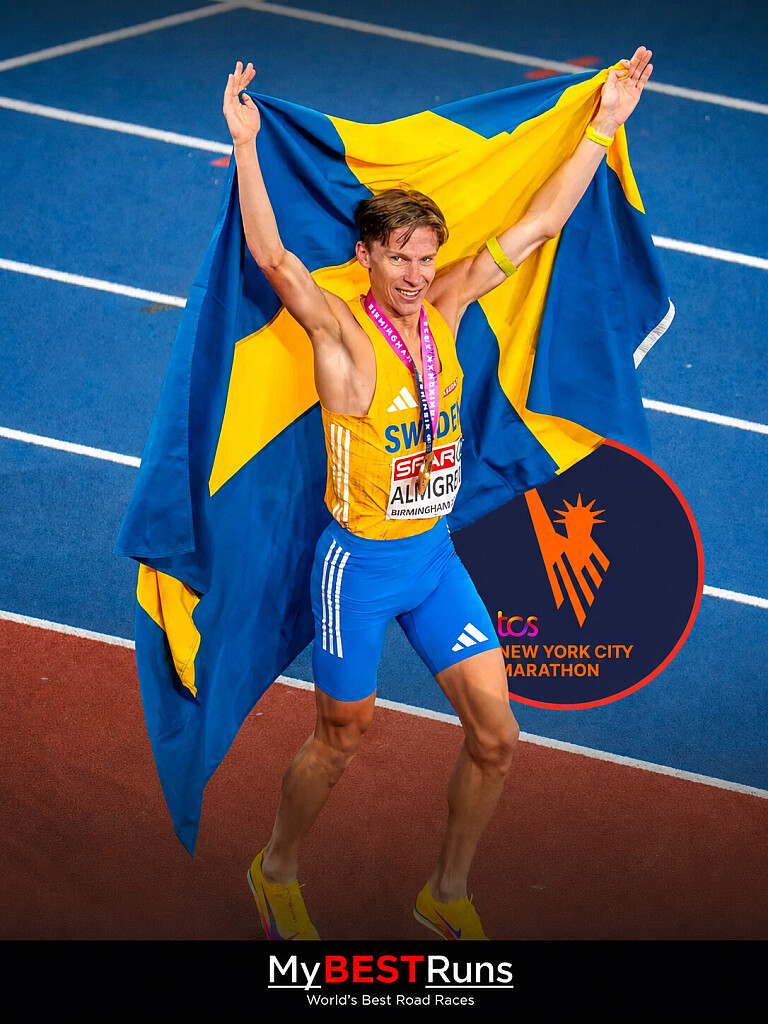
From European Records to 42.195km: Andreas Almgren Takes on New York
Andreas Almgren has spent the past two seasons transforming himself into one of Europe’s most formidable distance runners. Now, the Swedish star is ready to take on an entirely new challenge — the marathon.

Fresh from a commanding European 10,000m triumph in Birmingham, Almgren has confirmed that he will make his marathon debut at the TCS New York City Marathon on November 1. The decision adds another intriguing chapter to a remarkable rise that has seen him repeatedly rewrite the European record books.
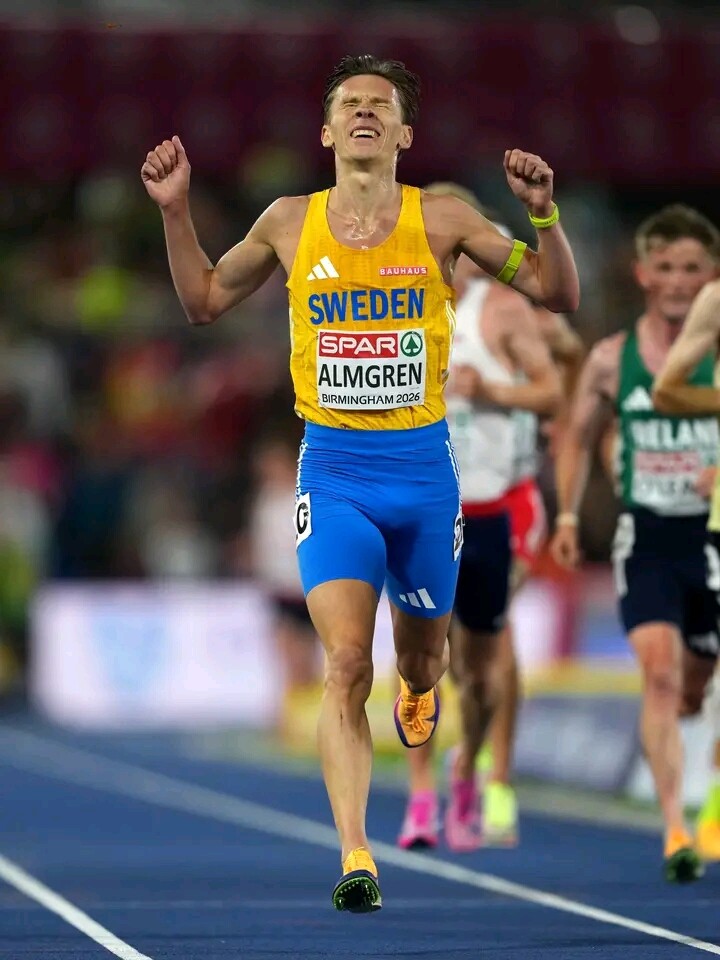
The 31-year-old owns European records of 12:44.27 for 5,000m, 26:45 for 10km on the road and 58:41 for the half marathon — extraordinary marks that underline both his speed and his growing endurance. His 26:45 in Valencia in January 2026 lowered his own European 10km record, while his 58:41 in Valencia last October made him the first European athlete to break the 59-minute barrier for the half marathon.
His latest achievement came in Birmingham, where Almgren produced one of the most dominant performances of the European Championships. He stormed to the 10,000m title in 27:23.44, setting a championship record and adding a major senior title to the World Championships bronze medal he won over the same distance in Tokyo last year.
Yet his choice of New York for his first marathon is what makes the announcement particularly fascinating.
Rather than selecting a traditionally fast, flat course where a debutant can concentrate almost exclusively on the clock, Almgren has chosen one of the most demanding and tactically complex marathons on the calendar. The New York course takes runners through all five boroughs and across five bridges before the finish in Central Park, combining repeated climbs, descents, turns and constantly changing race dynamics.
It is a course that rewards patience, strength and tactical intelligence as much as raw speed. For Almgren, whose career has been built around racing at the highest level rather than simply accumulating fast times, the setting could provide a fascinating test of how his exceptional track and road credentials translate to 42.195 kilometres.
And he will not be entering a quiet debut race. The 2026 field features defending men's champion Benson Kipruto, former champion Geoffrey Kamworor, Dutch star Abdi Nageeye, American contenders Conner Mantz and Zouhair Talbi, as well as several other elite marathoners. Almgren is one of a small group of high-profile athletes making their marathon debuts in New York.
The race will also mark the 50th anniversary of the modern five-borough New York City Marathon course, adding even greater significance to an already prestigious occasion. With Almgren bringing European-record credentials, a fresh continental title and the confidence of a breakthrough period behind him, his first encounter with the marathon promises to be one of the most closely watched stories of the autumn road-racing season.
For a runner who has already conquered the track and rewritten the European road-running record books, New York represents the beginning of another journey.
On November 1, the question will no longer be how fast Andreas Almgren can run 5,000m, 10km or a half marathon.
It will be how far that extraordinary speed and endurance can carry him over 42.195 kilometres through the streets of New York.
by Erick Cheruiyot for My Best Runs.
Login to leave a comment
TCS New York City Marathon
The first New York City Marathon, organized in 1970 by Fred Lebow and Vince Chiappetta, was held entirely in Central Park. Of 127 entrants, only 55 men finished; the sole female entrant dropped out due to illness. Winners were given inexpensive wristwatches and recycled baseball and bowling trophies. The entry fee was $1 and the total event budget...
more...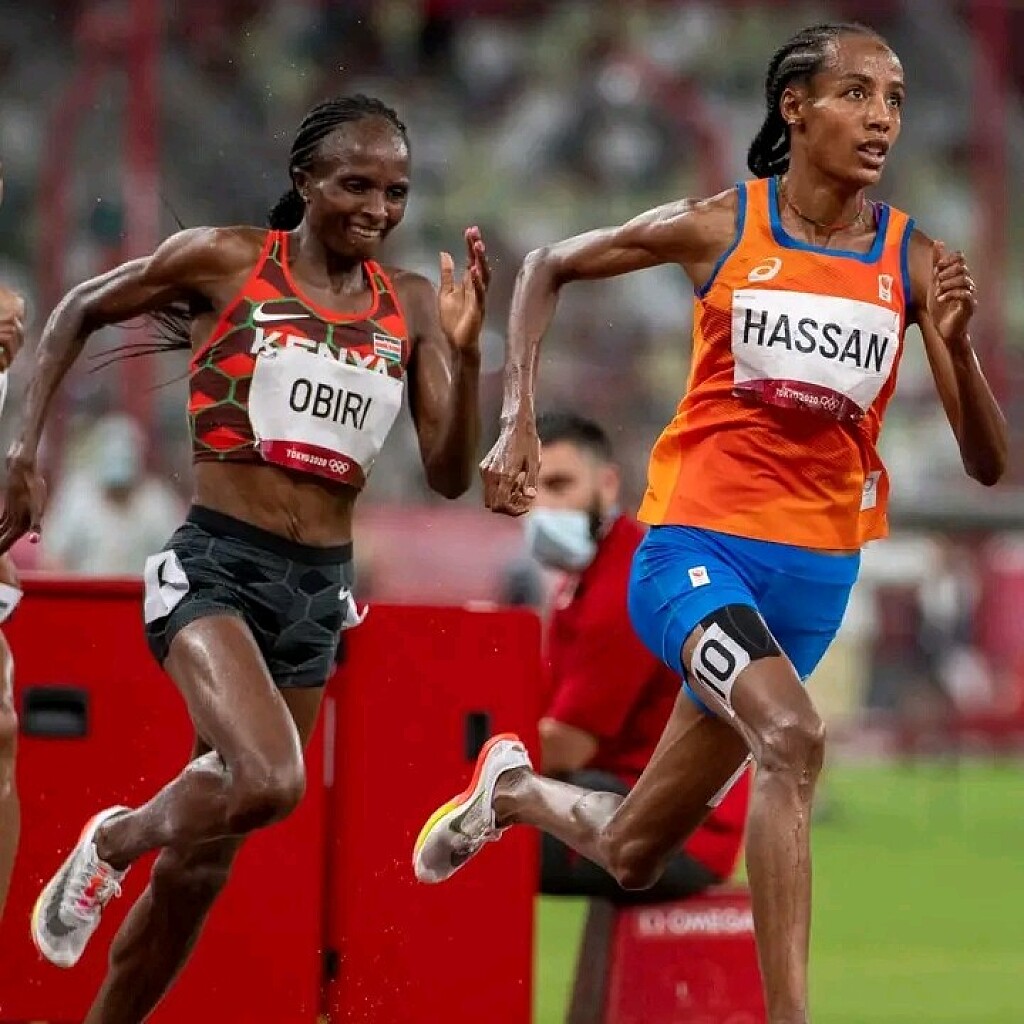
From Track Rivals to Marathon Queens: Sifan Hassan and Hellen Obiri Renew Their New York Rivalry
For more than a decade, Sifan Hassan of the Netherlands and Hellen Obiri of Kenya have been familiar opponents on the biggest stages of distance running. Their rivalry was forged on the track, where Hassan’s extraordinary versatility and finishing speed repeatedly collided with Obiri’s strength, tactical intelligence and championship pedigree.
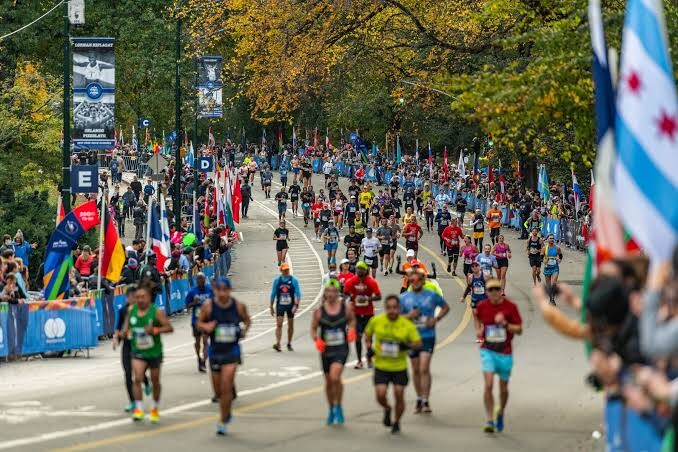
Now, after conquering different chapters of the sport, the two global stars are set to meet again on the streets of New York on November 1, 2026 — with another marathon crown at stake.
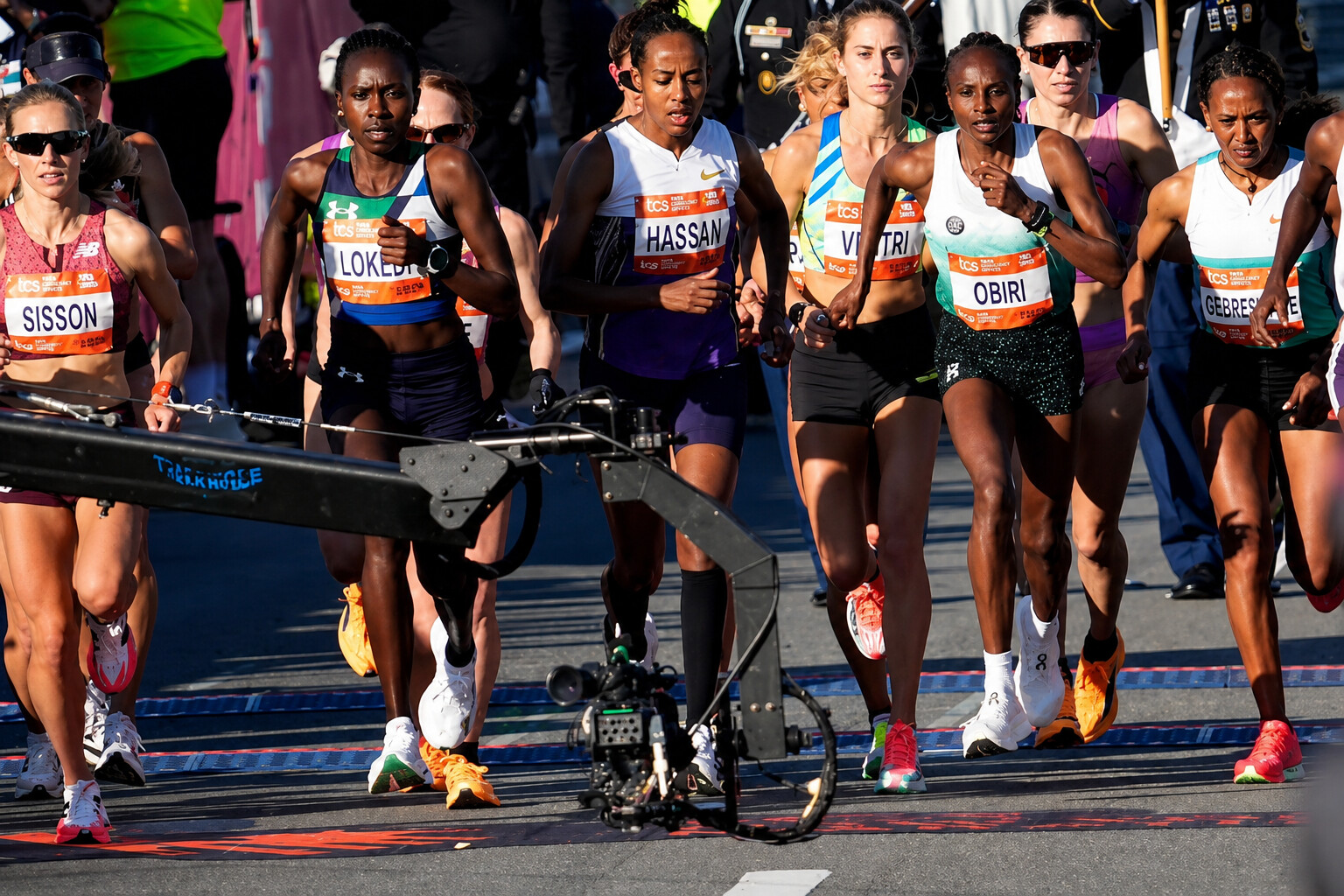
Their most memorable encounters came during the golden years of their track careers. At the Tokyo 2020 Olympics, Hassan defeated Obiri in a thrilling 5000m final, winning gold in 14:36.79 while Obiri took silver in 14:38.36. A year later, the two were again among the leading figures in the 10,000m at the 2022 World Championships in Oregon, where Obiri claimed silver and Hassan finished fourth.
But both athletes eventually turned their attention to the marathon, transforming a track rivalry into a new battle over 42.195 kilometres.
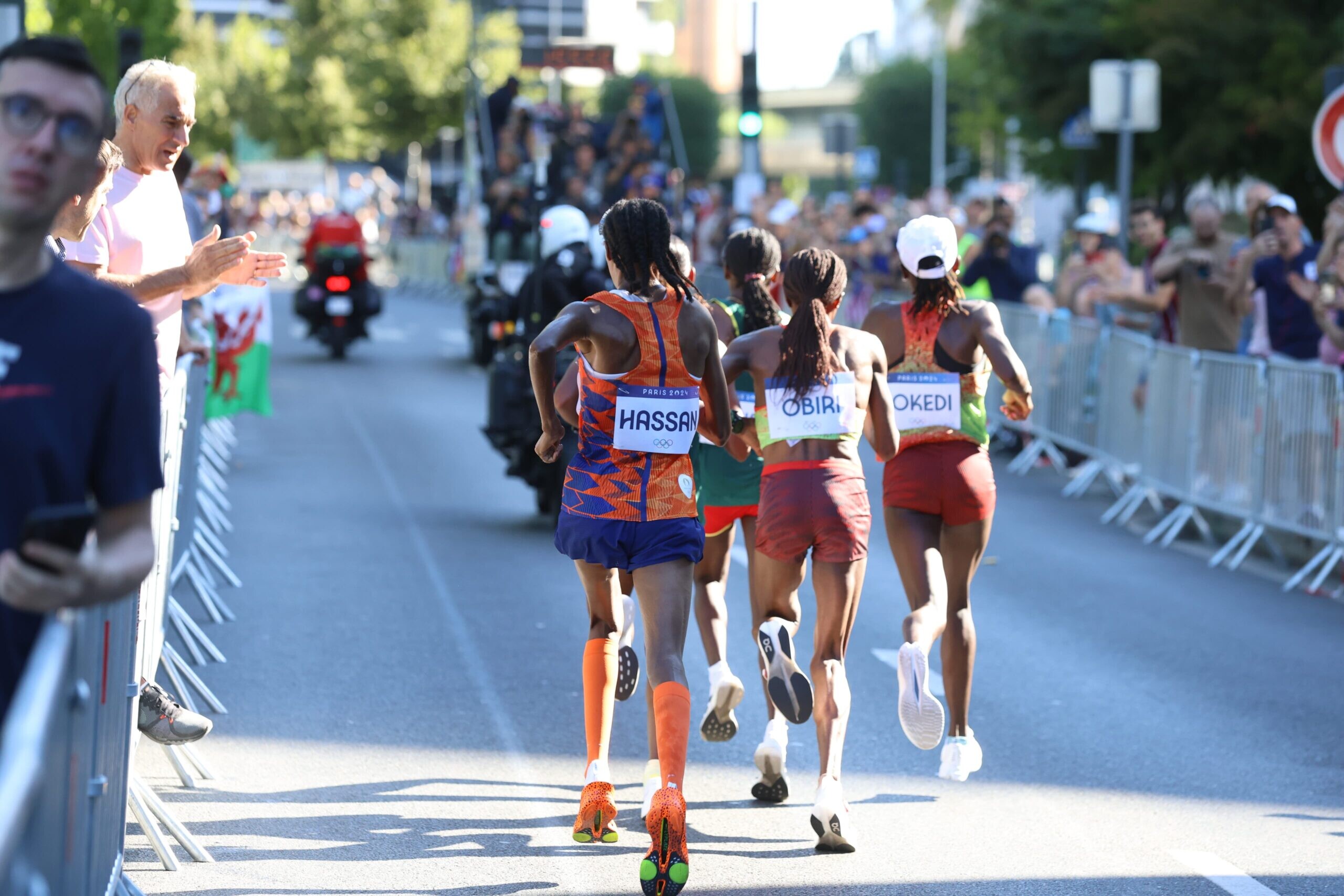
Hassan’s transition was extraordinary. After already establishing herself as one of the most versatile distance runners in history, she conquered the marathon at the Paris 2024 Olympics, winning gold and setting a personal best of 2:13:44 — a mark that remains significantly faster than Obiri’s current personal best.
Obiri, meanwhile, built her own formidable reputation on the roads. The Kenyan became a major force in the World Marathon Majors, winning the New York City Marathon in 2023 before returning to the top of the podium in 2025.
That 2025 New York race added another compelling chapter to the Hassan-Obiri rivalry.
Hassan made her New York debut but finished sixth in 2:24:43, while Obiri produced a commanding performance to win in 2:19:51. Her victory not only secured her second New York title but also shattered Margaret Okayo’s long-standing course record of 2:22:31.
The contrast could hardly be more intriguing heading into 2026.
Hassan owns the faster marathon personal best and the ultimate Olympic marathon prize. Obiri owns two New York titles and knows exactly how to master the famously demanding five-borough course. And the Kenyan has continued to strengthen her marathon credentials, running a personal-best 2:15:53 in London in 2026.
Hassan, meanwhile, returns to New York with unfinished business. After describing her 2025 debut as a physically punishing experience, she is preparing to tackle the course again, bringing the lessons of her first attempt and her vast championship experience with her.
This time, the stakes feel different.
There is history between them. There is unfinished business. And there is the intriguing question of whether Hassan’s superior lifetime speed over the marathon distance can finally translate into victory on the streets where Obiri has already established herself as a two-time queen.
One athlete has Olympic marathon gold and a 2:13:44 personal best.
The other has two New York crowns and a course record that announced her arrival among the marathon elite in emphatic fashion.
When Hassan and Obiri line up together again in New York, it will be more than another World Marathon Major showdown. It will be the latest chapter in a rivalry that began with championship battles on the track and has now evolved into one of the most compelling confrontations in women’s marathon running.
Track rivals. Olympic champions. Marathon queens.
On November 1, New York gets the next chapter.
by Erick Cheruiyot for My Best Runs.
Login to leave a comment
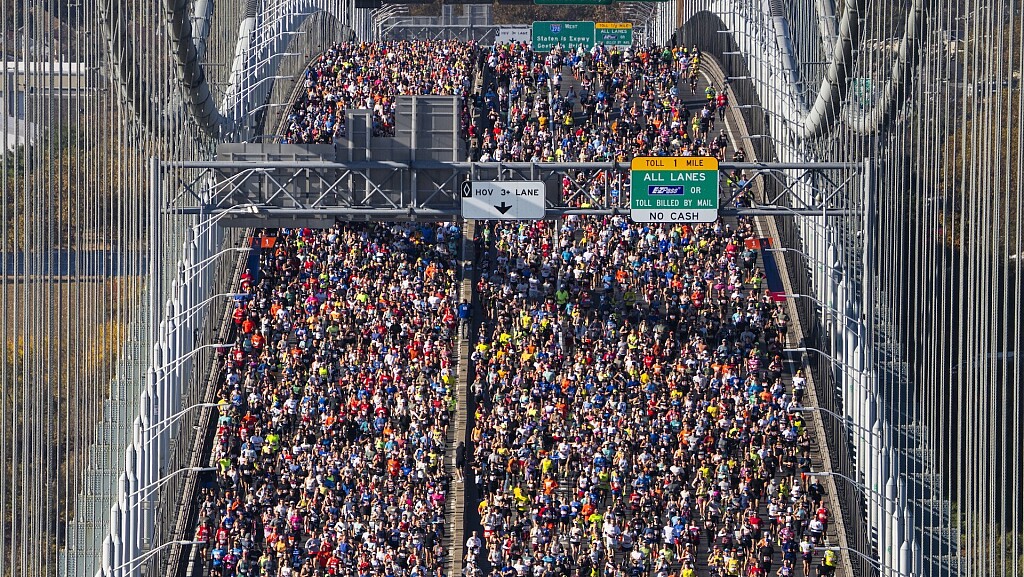
Three Rising Distance Stars Ready to Make Their Marathon Debuts at the 2026 New York City Marathon
The next generation of marathon talent will take centre stage on the streets of New York this November, with Weini Kelati of the United States, Andreas Almgren of Sweden and Kenya’s Patrick Kiprop all set to make their marathon debuts at the 2026 TCS New York City Marathon on November 1.
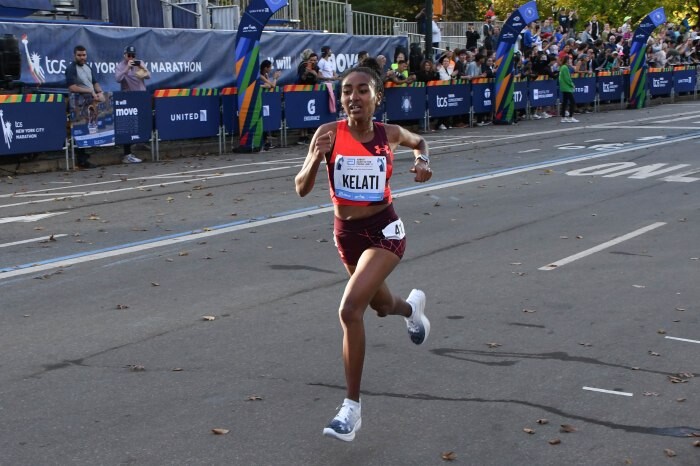
All three arrive in New York with impressive credentials built across track, cross country and shorter road races, creating one of the most intriguing groups of marathon debutants in this year’s field.
Kelati will enter the 26.2-mile challenge after establishing herself as one of America’s leading distance runners. The U.S. Olympian owns a 1:06:04 half-marathon personal best, an American record, and has already demonstrated the combination of endurance and speed required to compete at the highest level. Her transition to the marathon will be closely watched as she begins a new chapter in her career on one of the sport’s biggest stages.

Almgren brings perhaps even more explosive speed to his first marathon. The Swedish star owns a remarkable 58:41 half-marathon personal best, a national and European record at the time it was achieved, while his track résumé includes world-class performances over 3,000m and 5,000m. His ability to sustain that extraordinary speed over 42.195 kilometres will be one of the central questions surrounding his New York debut.
Then there is Patrick Kiprop, who will carry Kenya’s hopes into his first marathon after building an impressive reputation during a decorated collegiate career in the United States.
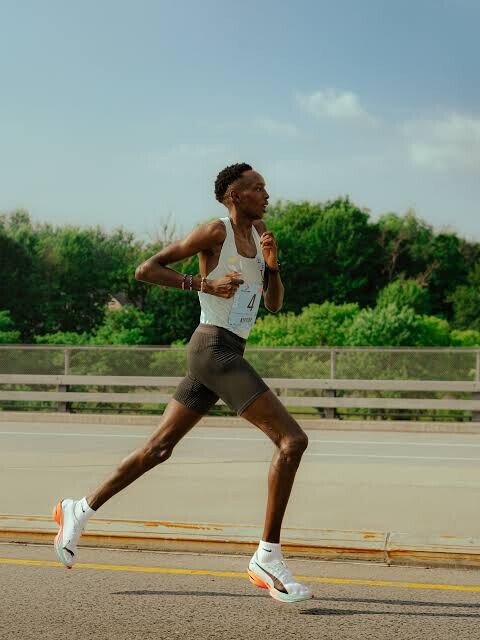
Kiprop enjoyed a standout spell with the Arkansas Razorbacks, collecting five First-Team NCAA All-America honours across cross country, indoor and outdoor track. He became a two-time NCAA South Central Region Cross Country champion in 2022 and 2023 before adding an SEC Outdoor 5,000m title in 2024 and a silver medal in the 10,000m.
He also etched his name into Arkansas history by breaking the university’s 5,000m school record. His American collegiate journey began at Fresno Pacific University, where he was named the Sunbird Male Newcomer of the Year in 2021 before transferring to Arkansas.
Following his collegiate success, Kiprop made the transition to professional running and joined the On Athletics Club Global, placing himself within one of the sport’s leading international training environments. His attention has increasingly shifted toward road racing, with the half marathon becoming an important bridge toward the marathon.
Kiprop has already shown that his speed can translate successfully to the roads, winning the professional division at the prestigious Bolder Boulder 10K. Now, New York presents a considerably bigger challenge and an opportunity to discover how his considerable distance-running ability translates to the full marathon.
For Kelati, Almgren and Kiprop, November 1 will represent more than simply another race. It will be the beginning of their marathon careers.
The New York City Marathon is notoriously demanding, combining multiple bridges, relentless changes in rhythm and a difficult closing stretch through Manhattan. Add enormous crowds and the pressure of a global audience, and the course provides an unforgiving introduction to 42.195 kilometres.
Yet that is precisely what makes these three debuts so fascinating.
Kelati arrives with American-record speed. Almgren brings European-record-level half-marathon credentials and extraordinary track ability. Kiprop brings a decorated NCAA background, Kenyan distance-running pedigree and growing experience on the roads.
None of them needs to prove that they possess speed. New York will determine whether they can transform that speed into marathon strength.
With an already star-studded 2026 field, the arrival of these three rising stars adds another compelling storyline to race day.
The future of marathon running is coming to New York—and on November 1, Kelati, Almgren and Kiprop will discover what they can do over 26.2 miles.
by Erick Cheruiyot for My Best Runs.
Login to leave a comment
TCS New York City Marathon
The first New York City Marathon, organized in 1970 by Fred Lebow and Vince Chiappetta, was held entirely in Central Park. Of 127 entrants, only 55 men finished; the sole female entrant dropped out due to illness. Winners were given inexpensive wristwatches and recycled baseball and bowling trophies. The entry fee was $1 and the total event budget...
more...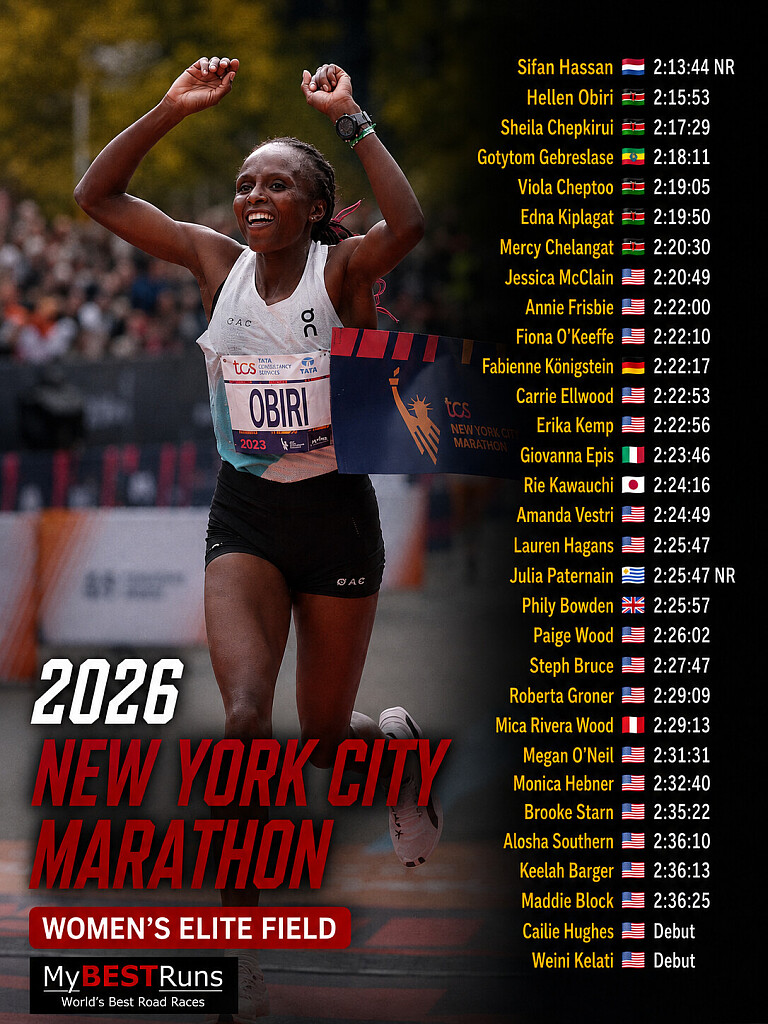
Sifan Hassan and Hellen Obiri Headline Star-Studded 2026 New York City Marathon Field
The 2026 TCS New York City Marathon is shaping up to be one of the most anticipated women’s marathon showdowns of the year, with Olympic champion Sifan Hassan of the Netherlands (2:13:44 NR) and defending champion Hellen Obiri of Kenya (2:15:53) leading a sensational field for November 1.
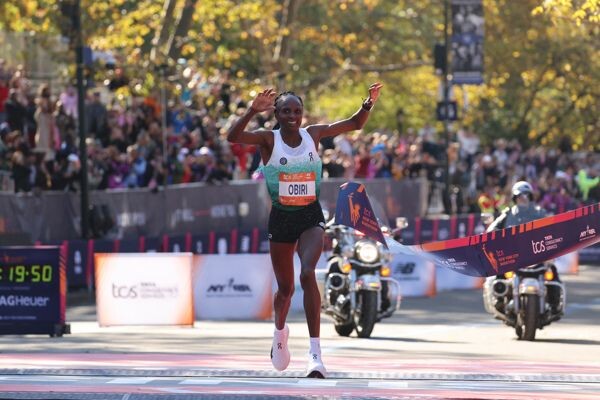
The pair headline a world-class lineup featuring Olympic and world champions, major-marathon winners, national record holders and some of the most exciting marathoners from around the globe.
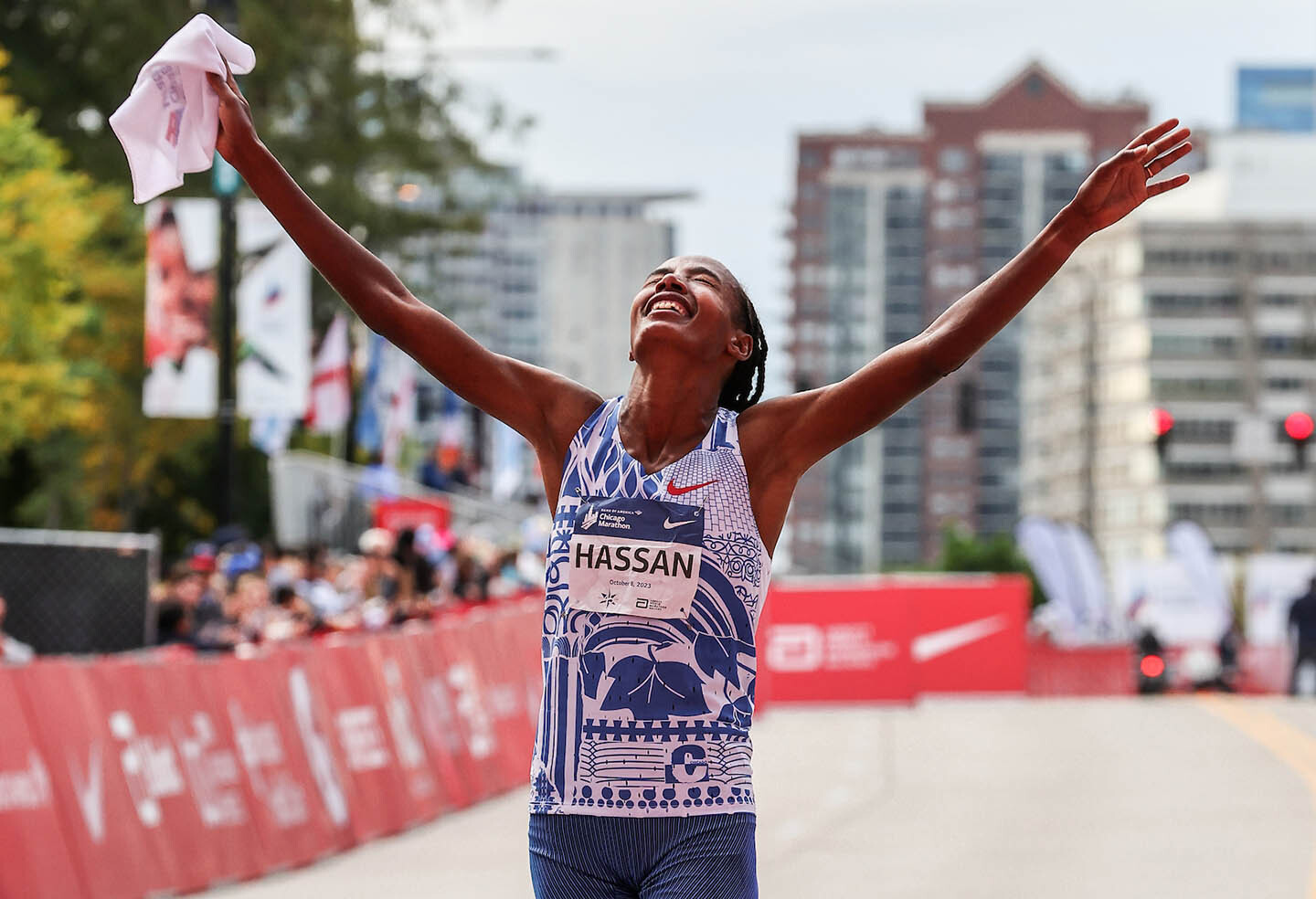
Hassan arrives with the fastest personal best in the field, while Obiri will return to New York seeking to defend the title she won last year in 2:19:51. The Kenyan star has established herself as one of the defining figures of the modern marathon, and another victory in New York would further strengthen her remarkable record over the distance.
“New York always brings out the best in me and I’m excited to return and feel the energy of each borough during such a historic year,” Obiri said.
She will face a formidable Kenyan challenge led by Sheila Chepkirui (2:17:29), Viola Cheptoo (2:19:05), Edna Kiplagat (2:19:50) and Mercy Chelangat (2:20:30). Ethiopia will be represented by former world champion Gotytom Gebreslase (2:18:11), adding even more championship pedigree and experience to an already formidable front pack.
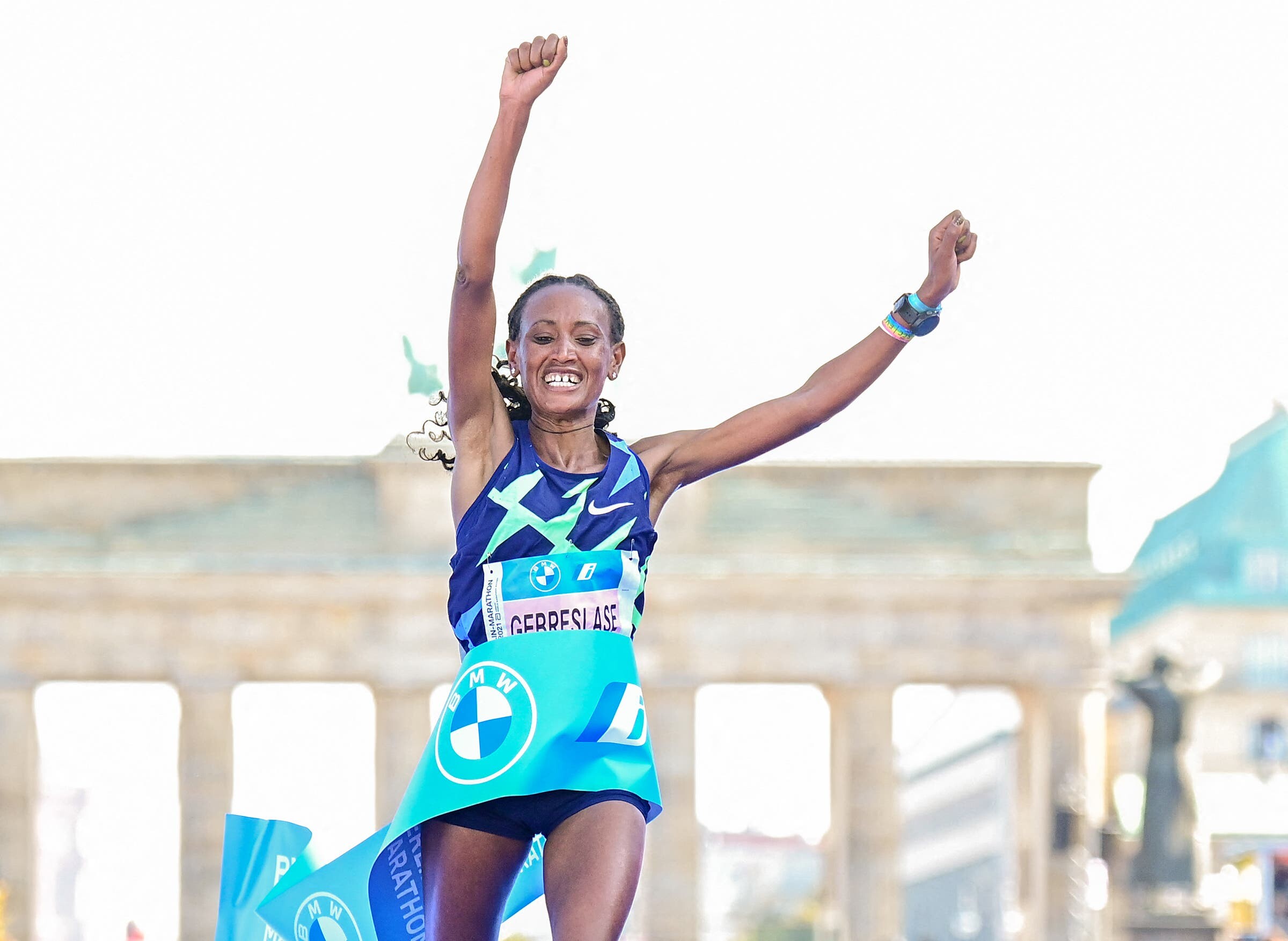
The strength of the field continues with Jessica McClain of the United States (2:20:49), Annie Frisbie of the United States (2:22:00), Fiona O’Keeffe of the United States (2:22:10) and Fabienne Königstein of Germany (2:22:17). They will be joined by fellow American contenders Carrie Ellwood (2:22:53), Erika Kemp (2:22:56), Amanda Vestri (2:24:49) and Lauren Hagans (2:25:47), while Giovanna Epis of Italy (2:23:46) and Rie Kawauchi of Japan (2:24:16) add further international quality.
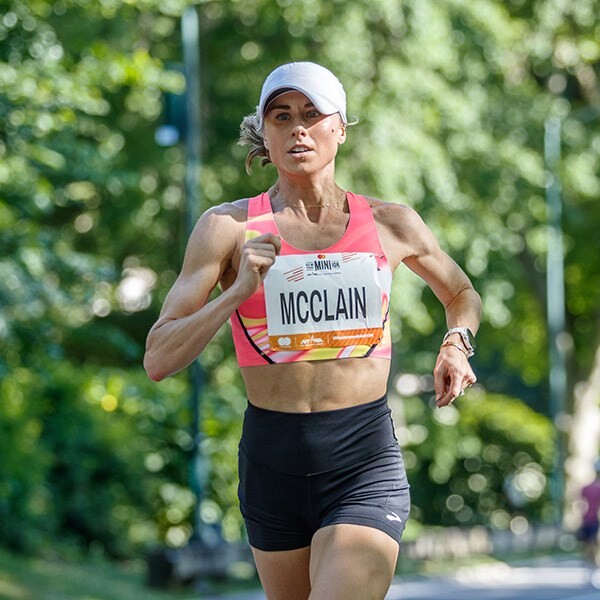
The lineup also features Julia Paternain of Uruguay (2:25:47 NR), Phily Bowden of Great Britain (2:25:57), Paige Wood of the United States (2:26:02) and Steph Bruce of the United States (2:27:47). The experience continues with Roberta Groner of the United States (2:29:09) and Mica Rivera Wood of Peru (2:29:13), while Megan O’Neil (2:31:31), Monica Hebner (2:32:40), Brooke Starn (2:35:22), Alosha Southern (2:36:10), Keetah Barger (2:36:13) and Maddie Block (2:36:25) add considerable depth to the American contingent.
Two particularly intriguing names will also be making their marathon debuts: Cailie Hughes and Weini Kelati of the United States. Kelati enters the new chapter of her career after lowering the American half-marathon record to 1:06:04 in February, giving her a strong foundation as she steps up to the classic 26.2-mile distance for the first time.
Her marathon debut adds another layer of intrigue to an already star-studded race. Kelati’s speed and endurance could make her a dangerous contender if she adapts quickly to the demands of the marathon, while Hughes will also bring the unpredictability that comes with tackling the distance for the first time.
With athletes representing the Netherlands, Kenya, Ethiopia, the United States, Germany, Italy, Japan, Uruguay, Great Britain and Peru, the 2026 women’s field boasts remarkable international depth. The leading contenders bring contrasting strengths, experiences and racing backgrounds, setting the stage for a fascinating battle across New York’s five boroughs before the famous finish in Central Park.
For Hassan, the race represents another opportunity to showcase her extraordinary range and marathon pedigree. For Obiri, it is a chance to defend her New York crown against one of the deepest fields assembled for the race. Behind them, Chepkirui, Gebreslase, Cheptoo, Kiplagat and a host of talented contenders will be waiting to challenge for the podium.
With Olympic pedigree, world championship experience, major-marathon success and two highly anticipated marathon debuts all converging on New York, the stage is set for a compelling battle on November 1.
The question is no longer whether the 2026 TCS New York City Marathon will deliver drama, but who will emerge victorious when the battle reaches Central Park.
Who is your favorite to take the crown in New York?
by Erick Cheruiyot for My Best Runs.
Login to leave a comment
TCS New York City Marathon
The first New York City Marathon, organized in 1970 by Fred Lebow and Vince Chiappetta, was held entirely in Central Park. Of 127 entrants, only 55 men finished; the sole female entrant dropped out due to illness. Winners were given inexpensive wristwatches and recycled baseball and bowling trophies. The entry fee was $1 and the total event budget...
more...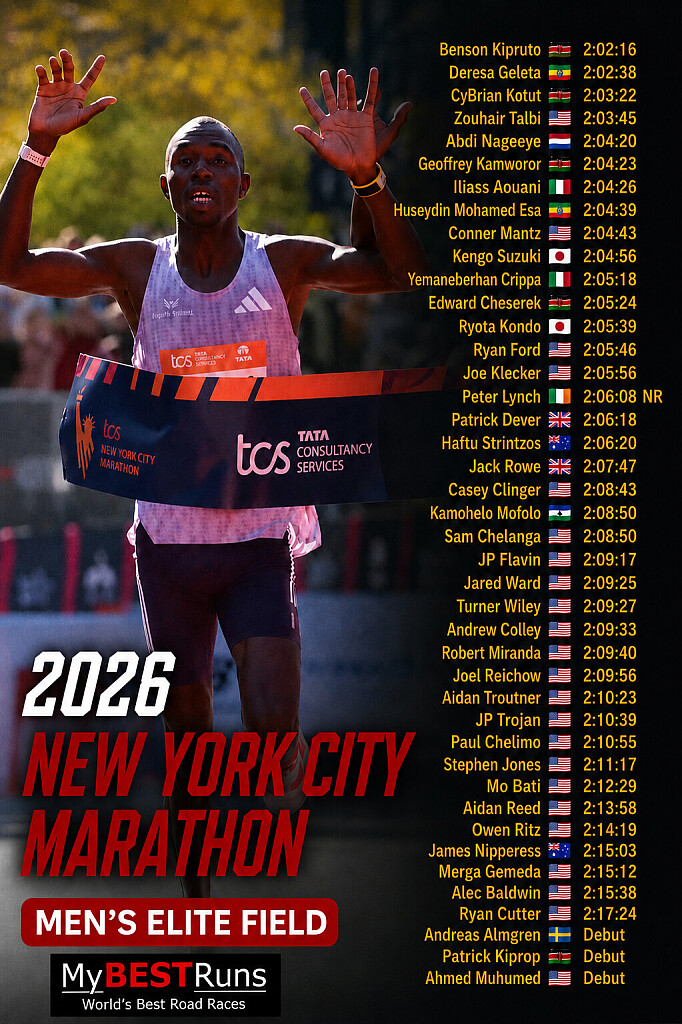
New York Marathon Set For Blockbuster Showdown As America’s Two Fastest Men Collide
The 2026 TCS New York City Marathon is shaping up to be one of the most anticipated editions in recent history, with New York Road Runners unveiling a remarkable men’s professional field that brings together the two fastest American marathoners ever on the same starting line.
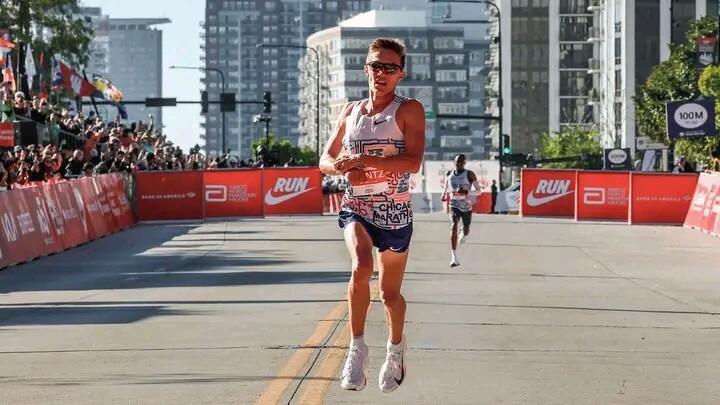
The race, scheduled for November 1, will feature American record-holder Conner Mantz (2:04:43) and Zouhair Talbi (2:03:45), whose performance at the 2026 Boston Marathon is the fastest marathon ever run by an American by clock time. However, because Boston is not a record-eligible course, Talbi’s mark does not replace Mantz’s official American record.
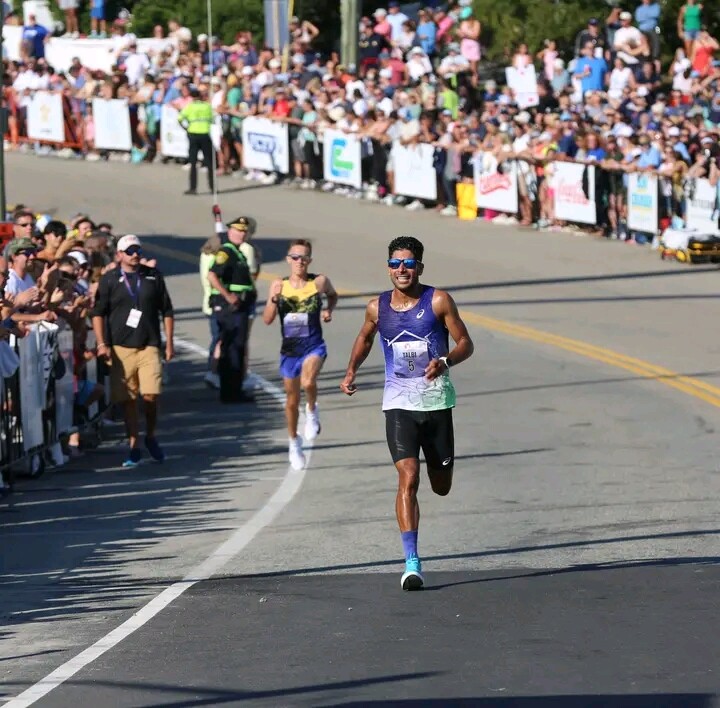
Mantz established the American record with his 2:04:43 fourth-place finish at the 2025 Chicago Marathon, breaking a national record that had stood since 2002. Talbi went even faster in Boston in April, crossing the line fifth in 2:03:45 and adding another extraordinary chapter to the rapid evolution of American marathon running.
That makes New York particularly intriguing. For the first time, the two men who occupy the top two positions on the all-time American marathon performance list will have the opportunity to race each other over a record-eligible course, with the streets of New York providing the stage.
And the American showdown will be only one part of a much bigger battle.
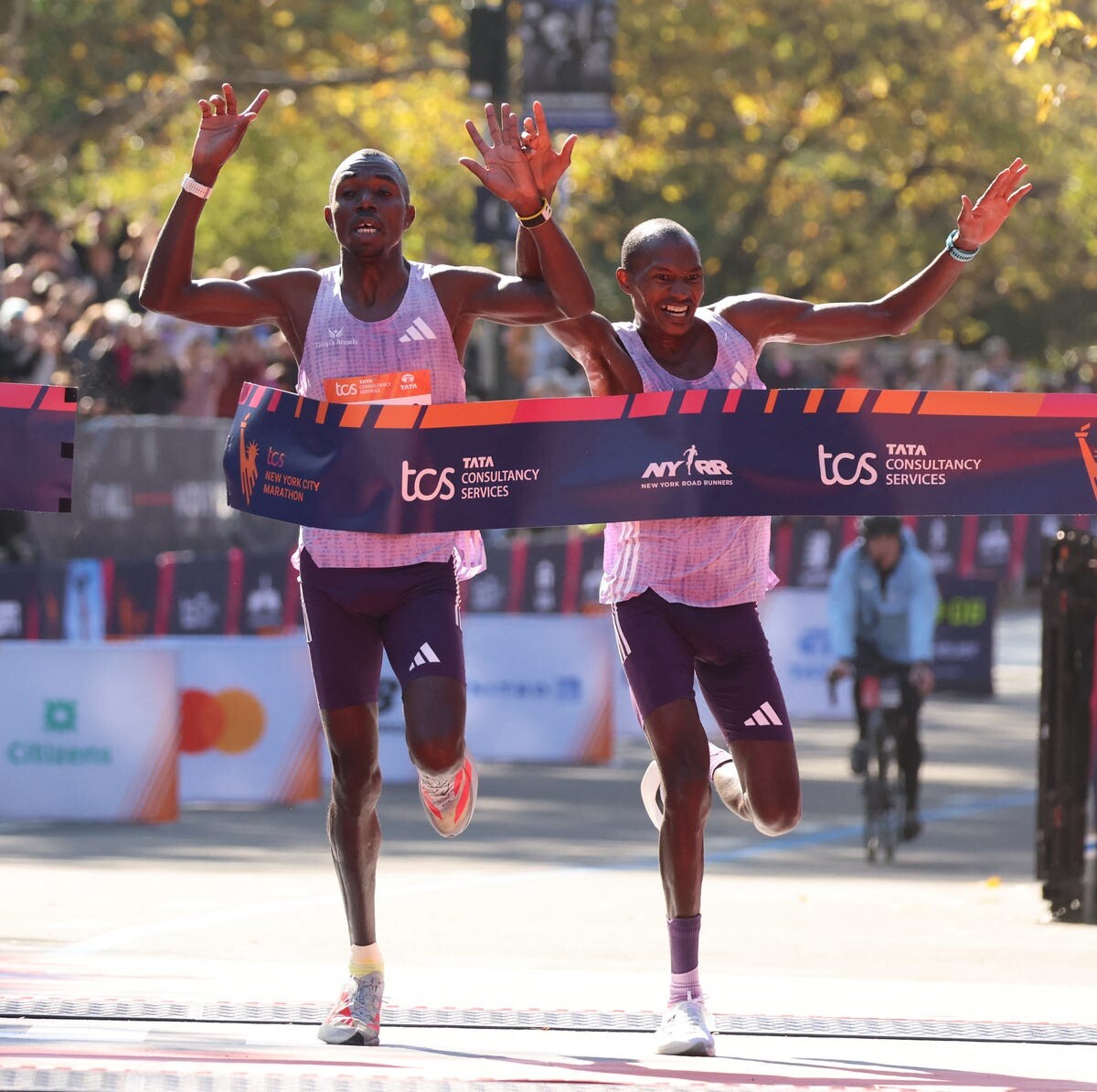
The international challenge is formidable. Defending champion Benson Kipruto (2:02:16) leads the field, followed by Ethiopia’s Deresa Geleta (2:02:38) and Kenya’s CyBrian Kotut (2:03:22). The lineup also includes the Netherlands’ Abdi Nageeye (2:04:20), Kenya’s Geoffrey Kamworor (2:04:23), Italy’s Iliass Aouani (2:04:26) and Ethiopia’s Huseydin Mohamed Esa (2:04:39).
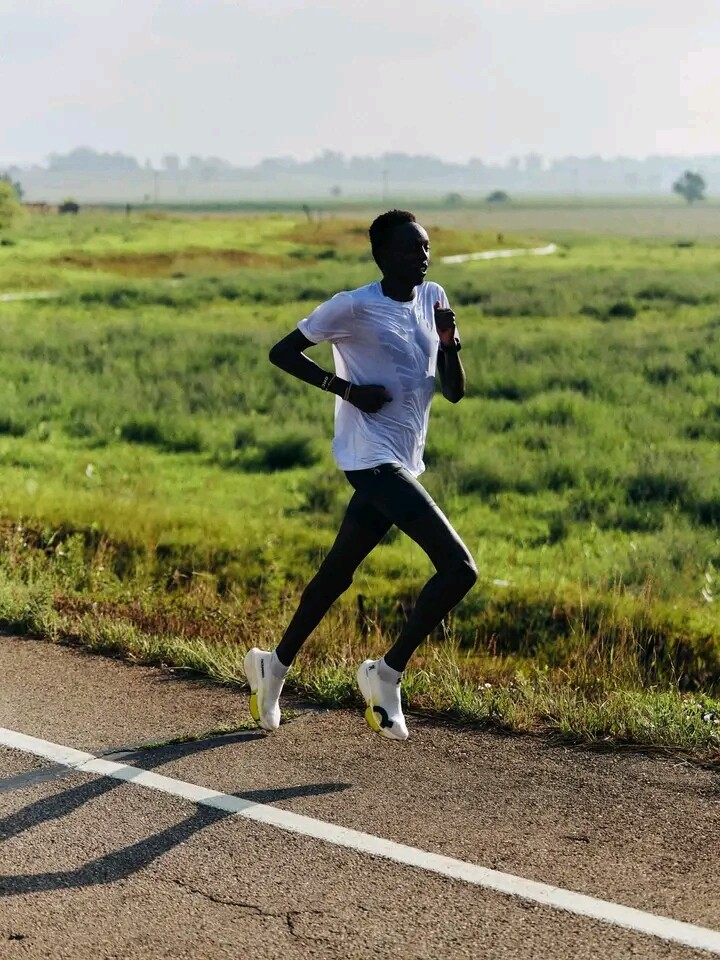
Just behind that group is Japan’s Kengo Suzuki (2:04:56), Italy’s Yemaneberhan Crippa (2:05:18), Kenya’s Edward Cheserek (2:05:24) and Japan’s Ryota Kondo (2:05:39). Ireland’s Peter Lynch (2:06:08), Great Britain’s Patrick Dever (2:06:18), Australia’s Haftu Strintzos (2:06:20) and Britain’s Jack Rowe (2:07:47) further strengthen a field that possesses extraordinary depth.
The American contingent is just as fascinating. Alongside Mantz and Talbi are Ryan Ford (2:05:46), Joe Klecker (2:05:56), Casey Clinger (2:08:43), Sam Chelanga (2:08:50), JP Flavin (2:09:17), Jared Ward (2:09:25), Turner Wiley (2:09:27), Andrew Colley (2:09:33), Robert Miranda (2:09:40) and Joel Reichow (2:09:56).
The depth continues with Aidan Troutner (2:10:23), JP Trojan (2:10:39), Paul Chelimo (2:10:55), Stephen Jones (2:11:17), Mo Bati (2:12:29), Aidan Reed (2:13:58), Owen Ritz (2:14:19), Merga Gemeda (2:15:12), Alec Baldwin (2:15:38) and Ryan Cutter (2:17:24). Australia’s James Nipperess (2:15:03) and Lesotho’s Kamohelo Mofolo (2:08:50) are also on the start list.
Three athletes will make their marathon debuts in New York: Sweden’s Andreas Almgren, Kenya’s Patrick Kiprop and American Ahmed Muhumed. Almgren, in particular, brings tremendous track credentials into his first attempt at 26.2 miles after winning the European 10,000m title in Birmingham in a championship-record 27:23.44.
The numbers tell the story of just how deep this field is. Ten men have personal bests faster than the existing New York City Marathon course record of 2:04:58, set by Tamirat Tola in 2023. Remarkably, Tola himself is not entered, nor is Alexander Mutiso, who finished runner-up to Kipruto in last year’s dramatic race.
For Mantz and Talbi, however, the stakes extend beyond the American record books. No American man has won the New York City Marathon since Meb Keflezighi in 2009, meaning the American contingent will arrive carrying a 17-year wait for another homegrown champion. Mantz and Talbi will have to overcome a formidable international field if either is to end that drought.
New York’s course will add another layer of difficulty. The bridges, sharp turns, rolling sections and notoriously demanding final miles toward Central Park have humbled some of the world’s fastest marathoners. Raw personal-best times will matter, but so will patience, positioning, tactical intelligence and the ability to produce a decisive move when the race reaches its most unforgiving stages.
With the official American record-holder, the fastest American by clock time, a defending champion, multiple 2:04 marathoners and a host of world-class contenders all converging on the Big Apple, the 2026 New York City Marathon has the ingredients of a classic.
On November 1, the streets of New York could become the setting for another extraordinary chapter in marathon history.
by Erick Cheruiyot for My Best Runs.
Login to leave a comment
TCS New York City Marathon
The first New York City Marathon, organized in 1970 by Fred Lebow and Vince Chiappetta, was held entirely in Central Park. Of 127 entrants, only 55 men finished; the sole female entrant dropped out due to illness. Winners were given inexpensive wristwatches and recycled baseball and bowling trophies. The entry fee was $1 and the total event budget...
more...
Tegla Loroupe Embarks On 840-Kilometre Peace Run From Kakuma To Nairobi
Ambassador Tegla Chepkite Loroupe has embarked on an extraordinary 840-kilometre run from Kakuma Refugee Camp in Turkana County to Uhuru Park in Nairobi, turning a seven-day endurance challenge into a powerful campaign for peace, education, inclusion and greater awareness of the experiences and aspirations of refugees.
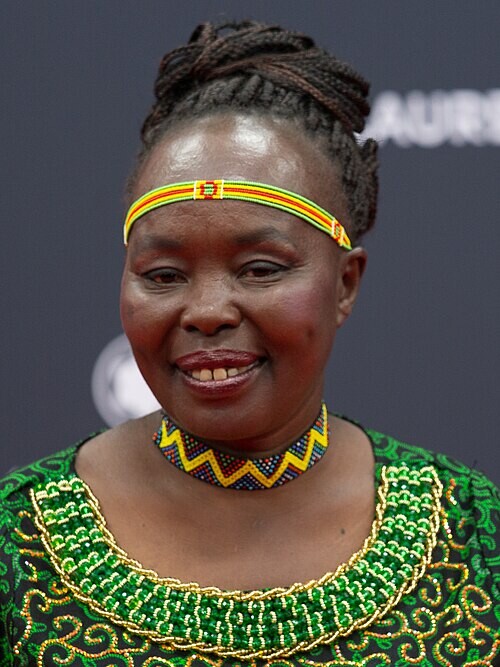
Loroupe is undertaking the journey alongside 28 refugees, with the initiative designed to shine a light on the challenges facing refugee communities in Kakuma and Dadaab while promoting stronger relationships between refugees and their host communities.
For Loroupe, the run represents far more than a test of endurance. It is an extension of a mission she has pursued for years—using sport as a platform to promote peace, opportunity, education and inclusion for people whose lives have been affected by displacement.
Reflecting on the early days of advocating for refugee inclusion in sport and development, Loroupe said it was deeply meaningful to see Yiech Pur Biel continue that mission. Biel, who grew up in Kakuma Refugee Camp and went on to represent the Refugee Olympic Team, will lead the team at the Youth Olympic Games in Senegal this year.

“Reflecting on the early days of advocating for refugee inclusion in sports and development, it means so much to see Yiech Pur Biel carry that mission forward — this year, he’ll lead the Refugee Olympic Team at the Youth Olympic Games in Senegal. I’m taking on an 840km journey over seven days, running from Kakuma Refugee Camp to Uhuru Park in Nairobi alongside 28 refugees. Every kilometre of this run is a reminder: displacement doesn’t have to mean the end of a dream. Everyone deserves the chance to pursue theirs,” Amb. Tegla Loroupe said.
The message captures the heart of the initiative. By running alongside refugees rather than simply speaking about their experiences, Loroupe is seeking to bring their stories, ambitions and hopes closer to the national conversation.
Her journey also reflects the remarkable transformation of her own life from elite athlete to global advocate. Born on 9 May 1973, Loroupe established herself as one of Kenya’s most accomplished long-distance runners before devoting much of her influence to peacebuilding, education, women's rights and humanitarian causes.
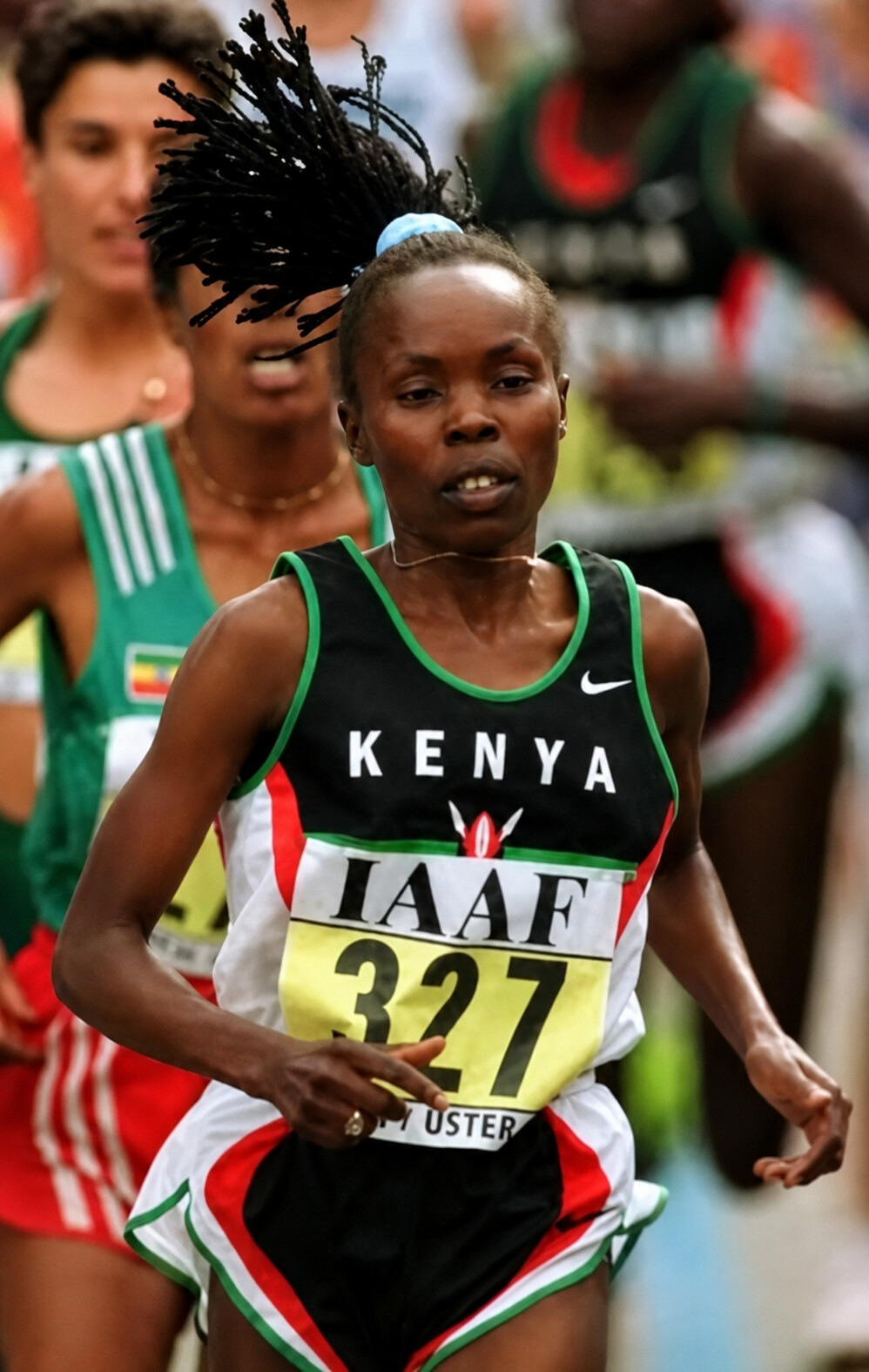
During her illustrious career, she held world records over 25 and 30 kilometres and became the first African woman to hold the women's marathon world record. She also became a three-time world half-marathon champion and made history as the first African woman to win the New York City Marathon, claiming the prestigious race twice.
Her victories extended to several of the world's major marathons, including London, Rotterdam, Hong Kong, Berlin and Rome, cementing her reputation as one of the outstanding distance runners of her generation.
Yet Loroupe's influence today extends well beyond her achievements on the road. Through the Tegla Loroupe Peace Foundation and other initiatives, she has continued to champion peaceful coexistence and opportunities for communities affected by conflict and displacement.
The 840-kilometre journey now gives that mission a physical form. From Kakuma to Nairobi, every kilometre is intended to carry a message of hope while drawing attention to the potential of refugees when they are given access to education, sport, opportunity and a supportive community.
The participation of 28 refugees makes the journey even more significant. Their presence transforms the run from a symbolic campaign into a collective expression of resilience, allowing those directly affected by displacement to become part of the story being told.
As Loroupe and her fellow runners make their way towards Uhuru Park over seven days, the distance will inevitably test their physical strength. But the greater purpose lies beyond the finish line: reminding Kenya and the wider world that being displaced does not mean being without dreams.
For Loroupe, every stride is therefore a statement of possibility—a call for peace, inclusion and education, and a powerful reminder that with the right opportunities, refugees can move beyond survival and pursue the futures they envision.
by Erick Cheruiyot for My Best Runs.
Login to leave a comment

Back To Where It All Began: Agnes Ngetich Returns To Her Primary School As A World Record Holder
Success has a way of bringing people back to where their journey first began, and for Kenya's Agnes Jebet Ngetich, that journey started in the classrooms of Werep Primary School.
The world champion and world record holder recently made an emotional return to her former school, where she once sat as a young girl with dreams that seemed almost impossible to achieve. In a touching tribute to her humble beginnings, Ngetich briefly wore the Werep Primary School uniform once again, creating a powerful moment that reminded every learner that greatness can emerge from even the most difficult circumstances.
The visit was far more than a nostalgic homecoming. It was an opportunity to give back to the community that shaped her early years. Agnes donated brand-new school uniforms to many pupils, ensuring they can attend school with confidence and pride. More than 200 learners shared a nutritious meal, while schoolgirls received sanitary pads to help them stay in school with dignity and without interruption to their education.

For the children who welcomed one of Kenya's greatest distance runners, the visit transformed dreams into something tangible. Standing before them was someone who had once walked the same paths, studied in the same classrooms, and worn the very same uniform they wear today.
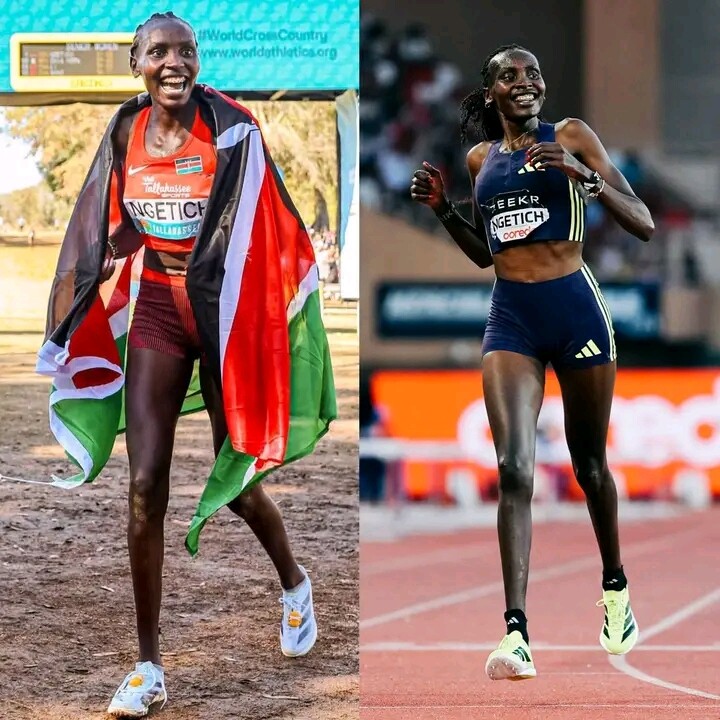
Yet behind the smile of a world champion lies a story of extraordinary hardship.
Born on January 23, 2001, in Elgeyo Marakwet County, Agnes lost her father when she was only 12 years old. His death plunged the family into severe financial hardship, forcing her to leave school on several occasions to help her mother earn a living. She spent countless days burning charcoal and working on local farms so her family could survive.
Running was never part of a carefully planned career. At first, it simply offered something many children take for granted—a meal through school competitions. Often racing barefoot and on an empty stomach, Agnes refused to let poverty define her future. In one regional race, she pushed herself so hard that she collapsed from hunger after crossing the finish line, a powerful illustration of the sacrifices she endured in pursuit of a better life.
Her destiny changed when coach Ruth Jepchumba Bundotich noticed her remarkable talent while she was working on a farm. Recognizing a rare gift, she gave the young runner an opportunity to train and develop her potential. That single act of belief opened the door to a future few could have imagined.
Today, Agnes Ngetich stands among the greatest distance runners in history. She became the first woman ever to break the 29-minute barrier for 10 kilometres on the road with an astonishing world record of 28:46. She also holds the women's-only 10km world record of 29:27, captured the 2026 World Cross Country title with a remarkable winning margin of 42 seconds, claimed victory at the 2026 New York Mini 10K while setting a course record, and is the Kenyan half marathon record holder with an outstanding time of 1:03:04.
Despite these extraordinary accomplishments, perhaps her greatest achievement cannot be measured by medals, trophies, or world records.
The success she earned through running transformed her family's future. Agnes has helped her siblings return to school after poverty forced them to drop out, while also giving her mother the security and comfort she had long dreamed of. Her journey has become a testament to how talent, resilience, and opportunity can change not only one life but an entire family.
Today, Agnes trains under head coach Julien Di Maria, widely known as Kip Evans, while continuing to work closely with her long-time mentor, Ruth Jepchumba Bundotich—the coach who first recognized her potential and helped guide her path to international success.
Her return to Werep Primary School was therefore much more than a celebration of athletic achievement. It was a full-circle moment that showed every child in attendance that humble beginnings do not determine one's destiny.
From carrying bags of charcoal to carrying the hopes of a nation, Agnes Jebet Ngetich has become one of Kenya's brightest sporting icons. Her remarkable story reminds the world that champions are not simply born—they are forged through hardship, sacrifice, unwavering determination, and the courage to keep believing when life offers every reason to give up.
For every pupil who watched her proudly wear the school uniform once again, the message was unmistakable: the classroom they sit in today could become the starting point of a journey that one day inspires the entire world.
by Erick Cheruiyot for My Best Runs.
Login to leave a comment
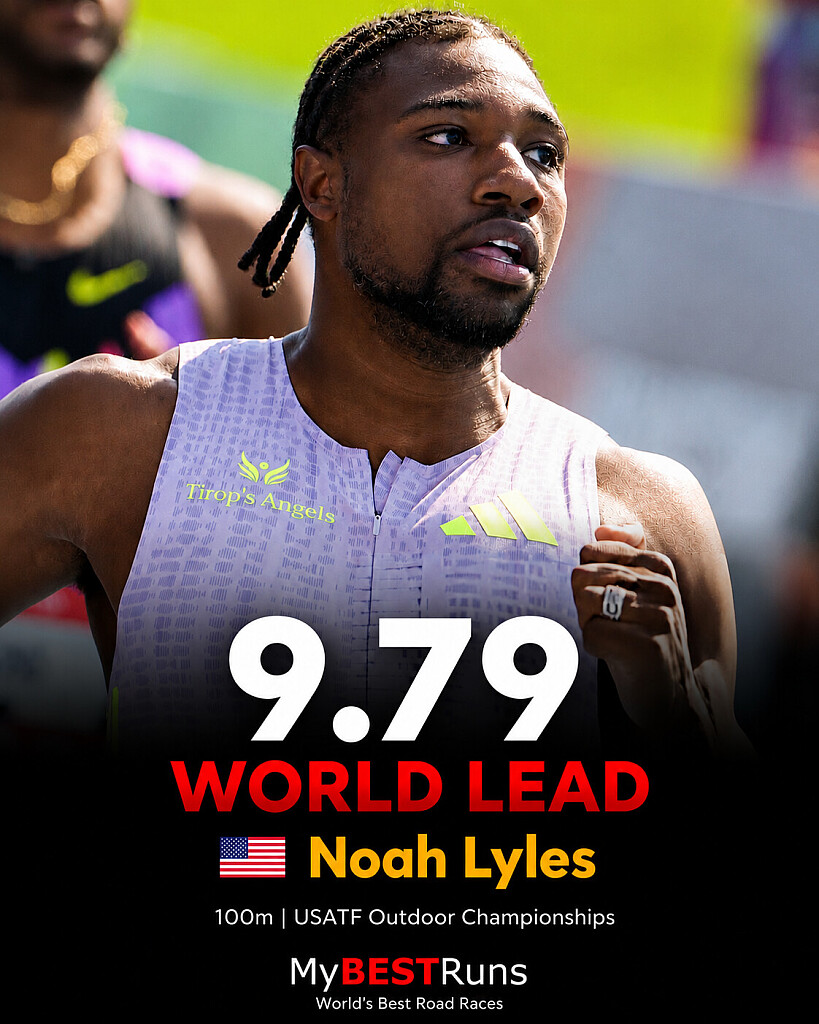
Lyles Equals Olympic Best with World-Leading 9.79 to Secure Eighth U.S. Outdoor Title
Noah Lyles once again proved why he remains the man to beat in global sprinting, delivering a breathtaking world-leading 9.79 seconds (+0.8 m/s) to win the men's 100m title at the USATF Outdoor Championships in New York.
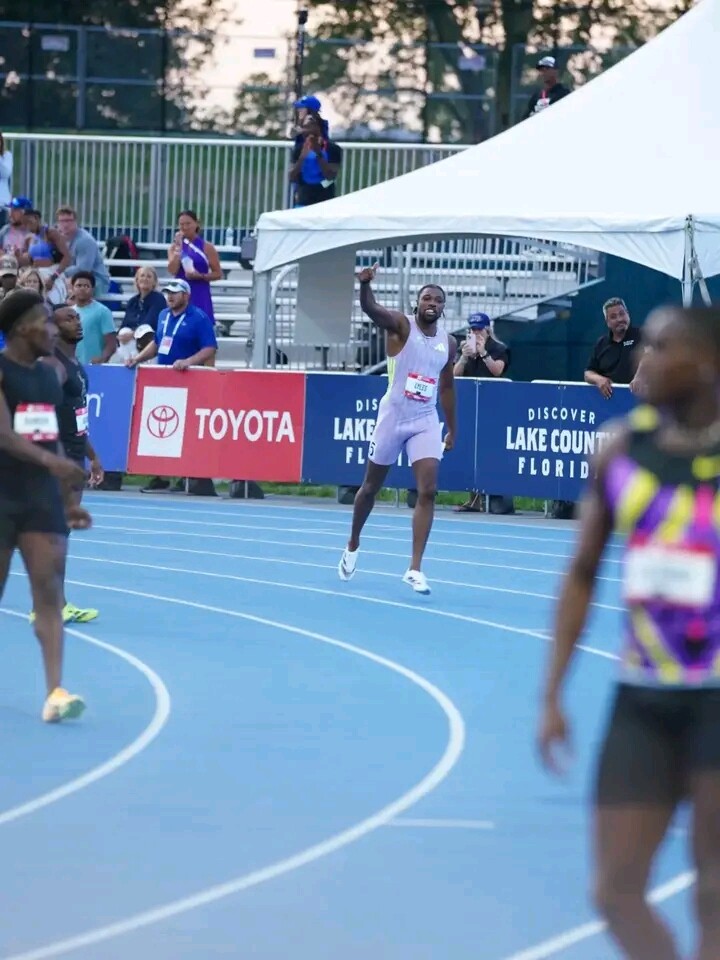
The reigning Olympic champion produced a commanding performance from start to finish, matching the personal best he set to capture Olympic gold in Paris and underlining his exceptional form ahead of the World Championships.
The victory marked another historic milestone for the American superstar, earning him his eighth U.S. outdoor national title and third national crown over the 100 metres. It was yet another reminder that when the stakes are highest, Lyles consistently rises to the occasion.
His winning performance also backed up an astonishing 9.76 seconds he clocked in the semifinals. Although that time came with an illegal +2.1 m/s tailwind and could not stand as an official mark, it offered an early warning of the speed he would unleash in the final.
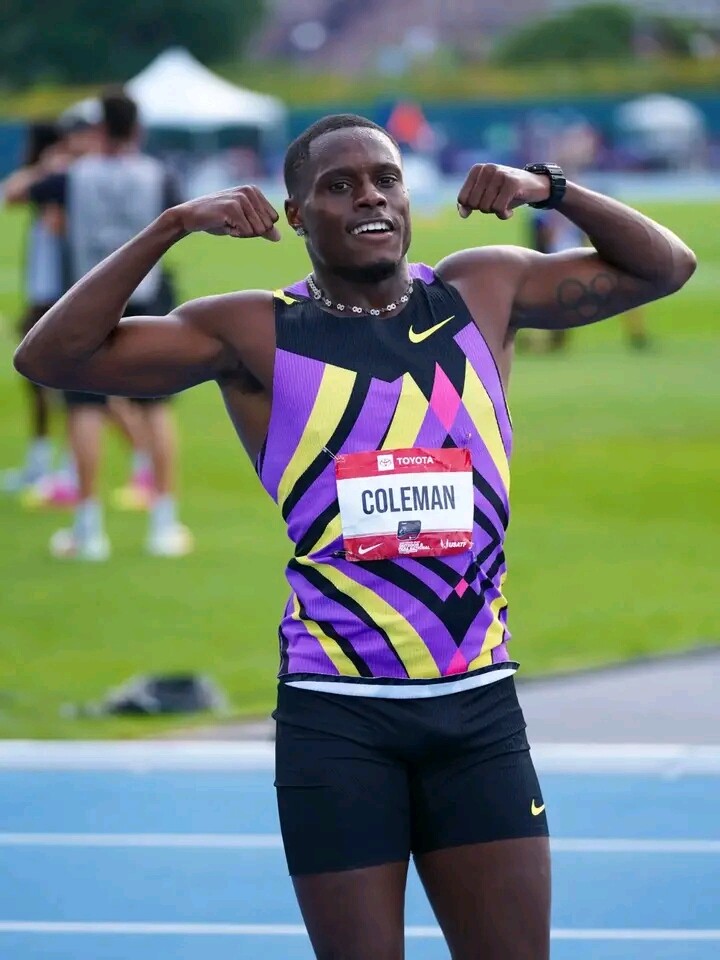
Behind Lyles, Ronnie Baker produced one of his strongest races in recent years, finishing second in an impressive 9.88 seconds. Olympic medalist Kenny Bednarek crossed the line in the same time to claim third after a close finish, while former world champion Christian Coleman placed fourth in 9.93 seconds, completing a spectacular showcase of American sprinting depth.
Lyles' ability to reproduce his Olympic-winning personal best on the national stage speaks volumes about his consistency. Rather than simply defending his domestic crown, he sent a powerful message to the rest of the world that his speed is peaking at exactly the right time.
The world-leading performance further cements his status as the favourite heading into the global championships, where he will once again chase international glory.
When Noah Lyles steps onto the track, he rarely disappoints. He always means business—and with another 9.79 masterpiece, the Olympic champion has reminded the athletics world that he remains the benchmark in the men's 100m.
by Erick Cheruiyot for My Best Runs.
Login to leave a comment

USATF Outdoor Championships
The 2026 Toyota USATF Outdoor and Para National Championships will be held at Icahn Stadium in New York City fromJuly 23-26, 2026, marking the first time the event is hosted in New York. The event will serve as a premier track and field competition, featuring top U.S. athletes at the Randall's Island Park venue. USATF+3 Key Details for 2026...
more...
Sydney Vaught and Woody Kincaid Reign Supreme as New U.S. 10,000m Champions Crowned
Sydney Vaught announced herself as America's newest national champion with a poised and tactical victory in the women's 10,000 meters at the USATF Outdoor Championships, claiming her first senior national title in a race that demanded patience, precision, and perfect timing.
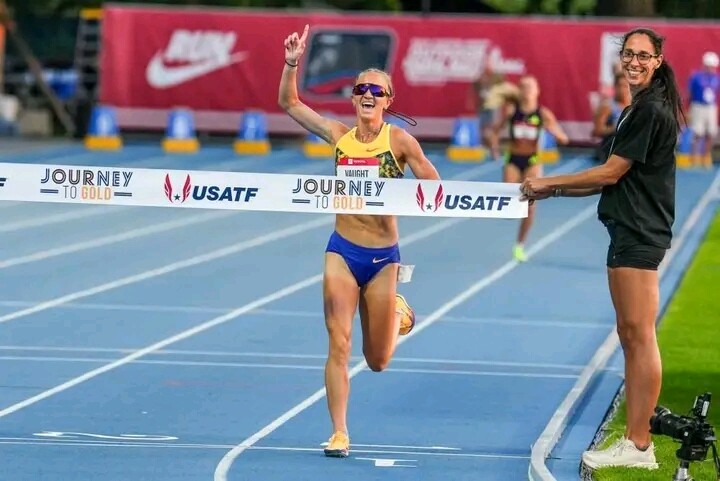
Competing under the lights at New York City's Icahn Stadium, the former University of Arkansas standout mastered a slow-burning championship contest before producing the decisive move when it mattered most. Vaught crossed the finish line in 33:30.60, capping a performance built on tactical awareness rather than raw pace.
Unlike record-chasing races that unfold at relentless speed, this championship final evolved into a battle of positioning and race intelligence. The conservative early tempo kept the field tightly packed for much of the contest, leaving the outcome to be decided over the closing laps. Vaught remained composed throughout, refusing to be drawn into unnecessary surges while carefully conserving energy for the decisive moments.
When the race finally ignited, she responded with authority. Displaying impressive strength and confidence, Vaught surged clear of her rivals in the closing stages to secure a memorable victory and the biggest triumph of her professional career.
The national crown represents another significant milestone for the former Arkansas Razorback, whose steady progression through the American distance-running ranks has now culminated in a USATF outdoor title. Winning a championship in such a tactical race highlights not only her physical ability but also her growing maturity and composure on the national stage.
The men's 10,000m championship delivered an equally compelling contest, with Woody Kincaid reclaiming his place atop American distance running. The experienced racer outkicked Olympic bronze medalist Grant Fisher in a thrilling sprint to the finish, capturing his third career U.S. outdoor 10,000m title—and his first since 2023.
Kincaid stopped the clock in 30:13.66 after executing his race plan to perfection, remaining patient throughout the tactical affair before unleashing his trademark finishing speed over the final meters. His decisive kick proved too strong for Fisher, allowing the veteran to add another national crown to an already distinguished career.
For Kincaid, the victory marked a return to the summit of the U.S. championships, reaffirming his reputation as one of America's most formidable championship racers. His ability to deliver under pressure once again demonstrated why he remains one of the country's elite distance runners.
Together, Vaught and Kincaid emerged as the standout winners of the opening 10,000-meter finals at the USATF Outdoor Championships, each producing composed tactical performances to secure national gold. While Vaught celebrated a breakthrough first title, Kincaid reinforced his legacy with another championship triumph, setting the stage for an exciting season ahead for American distance running.
by Erick Cheruiyot for My Best Runs.
Login to leave a comment
USATF Outdoor Championships
The 2026 Toyota USATF Outdoor and Para National Championships will be held at Icahn Stadium in New York City fromJuly 23-26, 2026, marking the first time the event is hosted in New York. The event will serve as a premier track and field competition, featuring top U.S. athletes at the Randall's Island Park venue. USATF+3 Key Details for 2026...
more...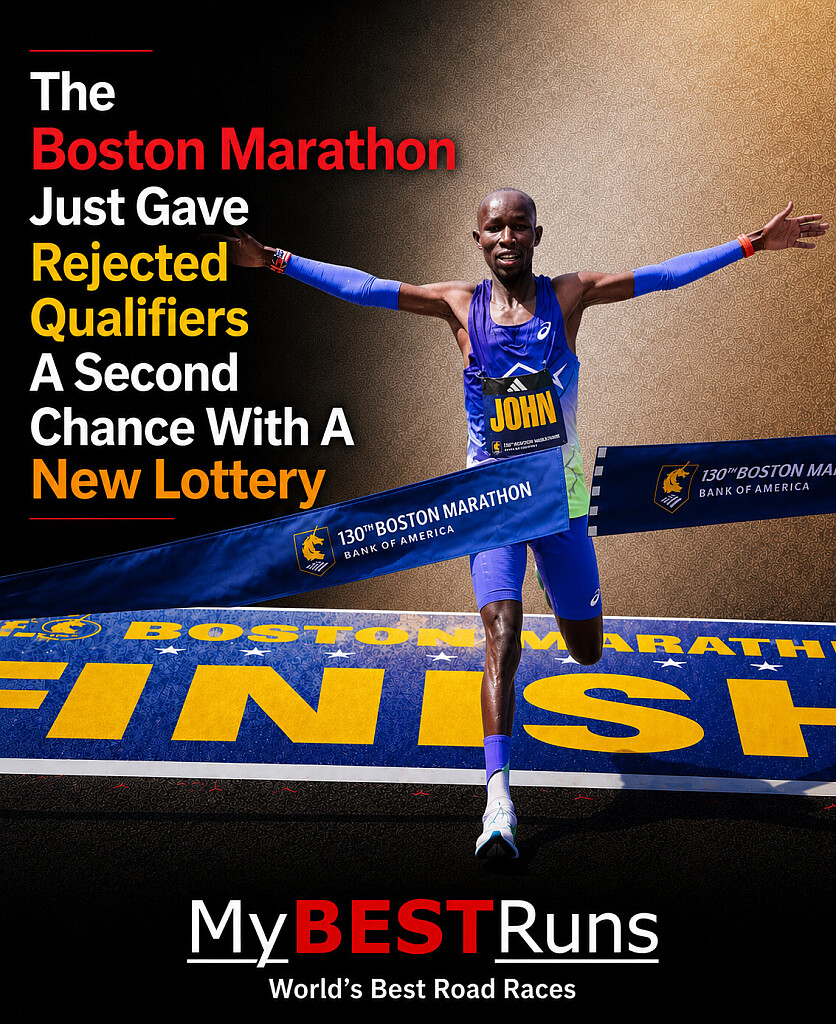
Boston Marathon Opens a New Door: Historic Lottery Gives Rejected Qualifiers a Second Chance in 2027
For generations, earning a place at the Boston Marathon has been one of the toughest achievements in distance running. Unlike most of the world's major marathons, Boston has always stood by one uncompromising principle: meet the qualifying standard—and beat everyone else who qualified—or miss out. That long-standing tradition is now evolving.
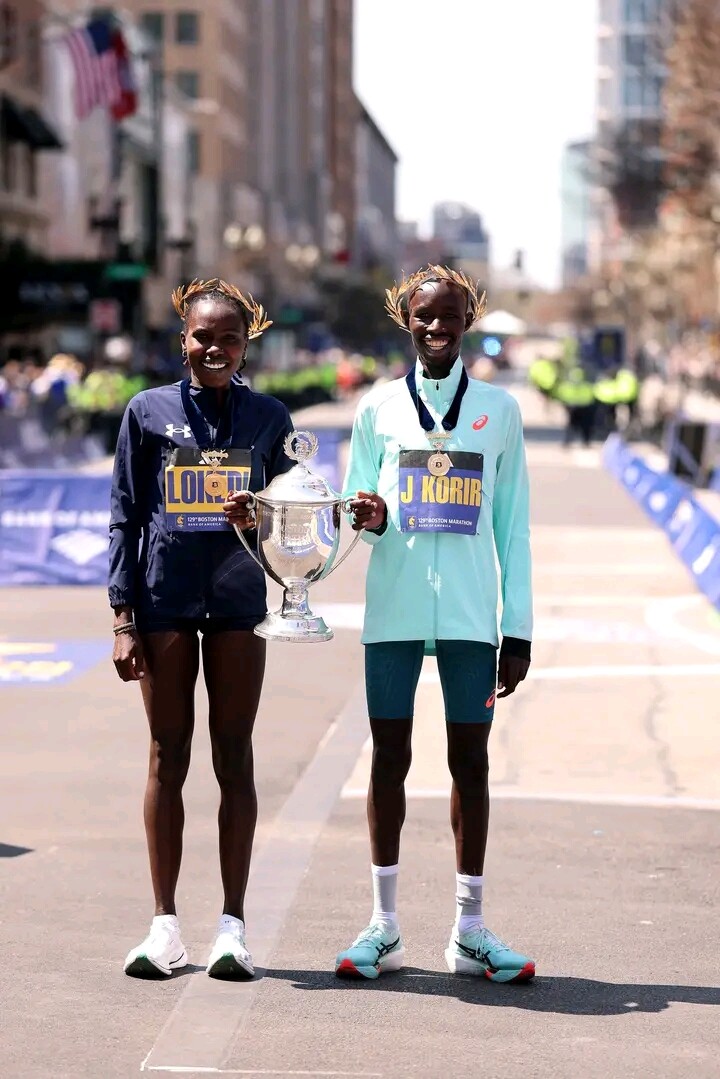
In a landmark announcement, the Boston Athletic Association (B.A.A.) has confirmed that the 2027 Boston Marathon will introduce a new lottery system, giving approximately 1,000 runners who achieve a Boston qualifying time—but narrowly miss the annual entry cut-off—a second opportunity to reach the iconic starting line in Hopkinton.
The move marks one of the most significant changes to Boston's qualification process in decades, while preserving the race's elite qualifying standards.
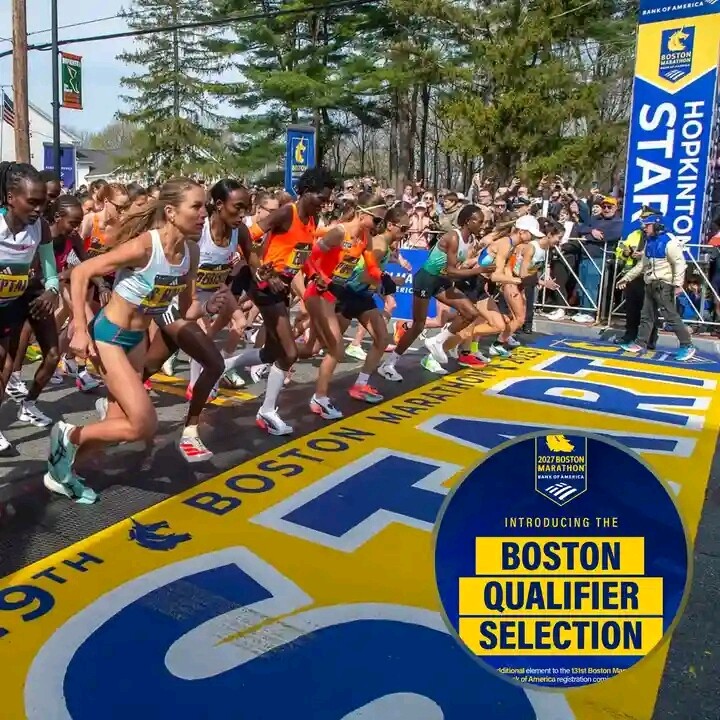
The new system will not replace Boston's traditional selection process. Instead, all applicants will continue to be ranked according to how much they exceeded the official qualifying standard for their respective age group and gender. After race times are verified, the fastest qualifiers will receive guaranteed entry until the field reaches capacity, establishing the annual cut-off time.
What changes in 2027 is what happens next.
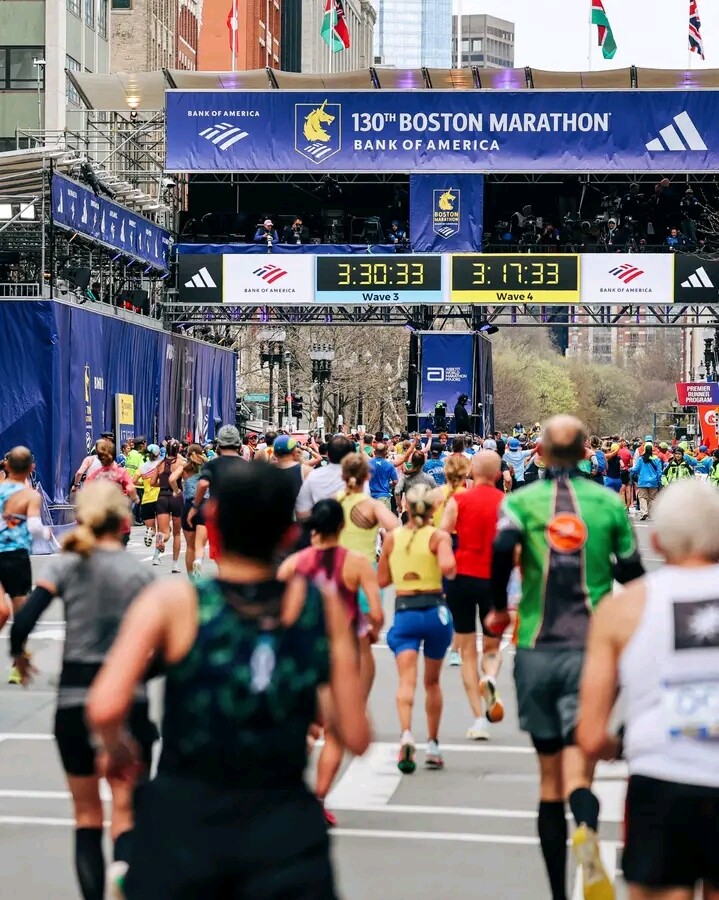
Rather than ending the process there, the B.A.A. will randomly select around 1,000 additional runners from the pool of qualified athletes who fell below the cut-off. Any runner who meets the qualifying standard but is not initially accepted will automatically be entered into the draw, with no separate application required.
The announcement comes after several years of record-breaking demand.
More than 11,000 qualified runners were denied entry for both the 2024 and 2025 editions despite posting official qualifying performances. In 2024, 11,039 qualifiers missed out, while that number climbed to a record 12,324 for the 2025 race. Even for the 2026 Boston Marathon, approximately 8,900 qualified applicants were left disappointed after 33,249 runners applied for just 24,362 available places.
Under the new format, the additional 1,000 lottery entries would have provided an opportunity to roughly one in every nine to twelve rejected qualifiers based on recent registration figures.
B.A.A. President and Chief Executive Officer Jack Fleming said the initiative reflects the increasingly competitive nature of marathon running.
"With the increasingly fast times in our sport, our random Boston Qualifier Selection gives all those who have met the standard for their age group a chance to run Boston," Fleming said.
The decision also brings Boston closer to the registration models used by its fellow Abbott World Marathon Majors. While Boston has traditionally relied almost exclusively on qualifying performances, races such as London, New York City, and Chicago have long allocated significant portions of their fields through public lotteries.
Alongside the lottery announcement, the B.A.A. also confirmed another notable update for the 2027 qualifying process. For the first time, qualifying performances achieved on courses with more than 1,500 feet (457 metres) of net elevation loss will be adjusted through a downhill indexing system, ensuring a more consistent comparison of performances across different marathon courses.
Registration for qualified runners will take place from September 14–18, 2026, with all applicants expected to receive their acceptance status in early October.
While Boston's qualifying standards remain among the most demanding in the sport, the introduction of a lottery offers hope to thousands of runners whose dreams have previously been decided by mere seconds. For the first time in the race's storied history, qualifying alone may no longer guarantee disappointment for those who narrowly miss the cut—because chance will now have a place alongside speed on the road to Boston.
by Erick Cheruiyot for My Best Runs.
Login to leave a comment

Boston Marathon
Among the nation’s oldest athletic clubs, the B.A.A. was established in 1887, and, in 1896, more than half of the U.S. Olympic Team at the first modern games was composed of B.A.A. club members. The Olympic Games provided the inspiration for the first Boston Marathon, which culminated the B.A.A. Games on April 19, 1897. John J. McDermott emerged from a...
more...
From Shark Attack Survivor to New York City Marathon Finisher: Ali Truwit's Extraordinary Journey of Courage and Resilience
Some victories are measured by finish times. Others are defined by the obstacles overcome simply to reach the starting line.
For American Paralympic swimmer Ali Truwit, completing the New York City Marathon represented far more than covering 26.2 miles. It was the culmination of an extraordinary journey of survival, resilience, and unwavering determination that began with a life-altering shark attack just two years earlier.
On a crisp November morning in 2025, Truwit crossed the iconic finish line wearing a carbon-fibre running blade, fulfilling a promise she had made while recovering in a hospital bed after losing her lower left leg. The emotional milestone marked another remarkable chapter in one of the most inspiring comeback stories in modern sport.
The road to that unforgettable finish began only days after Truwit celebrated a major personal achievement. In May 2023, she completed her first marathon in Copenhagen alongside her mother. Just ten days later, while enjoying a graduation trip to Turks and Caicos with former Yale swimming teammate Sophie Pilkinton, tragedy struck.
While the pair were snorkelling, a shark attacked Truwit, severely injuring her left leg. Displaying remarkable courage, the two swam approximately 55 metres back to their boat, where Pilkinton—then a medical student—quickly applied a tourniquet that stopped the bleeding and ultimately saved Truwit's life.
Doctors were forced to amputate her lower left leg on her 23rd birthday.
Even in the darkest moments of recovery, Truwit's determination never disappeared. Reflecting on having recently completed her first marathon, she joked with one of the first responders that at least she had managed to run a marathon before the attack. The responder's simple but powerful reply would remain with her throughout rehabilitation: "You'll run another one."
Those words became a source of hope during the long and demanding road back.
Only weeks after surgery, Truwit began learning to walk on a prosthetic limb before gradually returning to the swimming pool. The process was anything but straightforward. The water that had once been her sanctuary became a source of painful memories, yet she refused to allow fear to define her future.
Her relentless work ethic soon produced extraordinary results.
Less than 16 months after the attack, Truwit represented the United States at the Paris 2024 Paralympic Games, producing a sensational performance to claim both silver and bronze medals. Standing on the Paralympic podium was a powerful reminder of how far she had come in such a short period, and she dedicated those achievements to everyone who had helped save her life.
Still, another dream remained unfinished.
The New York City Marathon carried deep personal significance. It was not merely another endurance event but a symbolic return to the city where her life had changed forever. On November 2, 2025, she lined up in Staten Island accompanied by 13 family members and close friends, all proudly representing her nonprofit foundation, Stronger Than You Think. Among them was Pilkinton, the friend whose quick thinking had preserved her life on that unforgettable day in the Caribbean.
Together, they covered every mile of the marathon before celebrating an emotional finish that Truwit later described as being "over the moon."
Completing a marathon on a carbon-fibre running blade presents challenges far beyond those faced by able-bodied runners. The prosthetic demands greater strength from the hips, core, and remaining leg while requiring exceptional balance, coordination, and endurance. Truwit's preparation combined months of disciplined training, patience, and mental resilience as she effectively taught herself how to run again.
Her story extends well beyond medals and marathon finishes.
Inspired by her own recovery, Truwit founded Stronger Than You Think, a nonprofit organisation dedicated to helping individuals overcome physical and financial barriers following limb loss. Recognising that sports prosthetics can cost tens of thousands of dollars and are often not covered by insurance, the foundation provides financial assistance for prosthetic devices, supports water-safety education, and promotes opportunities within Paralympic sport.
The organisation has already helped provide more than 11 prosthetic limbs, delivered nearly $200,000 in direct support, and funded over 4,000 hours of water-safety lessons benefiting more than 700 young people.
Throughout her journey, Truwit has remained refreshingly honest about the emotional challenges that continue to accompany recovery. She has openly acknowledged that healing is an ongoing process and that grief can still come in waves. Rather than portraying an effortless comeback, she has demonstrated that resilience is built through persistence, even on the hardest days.
Her remarkable transformation resonates far beyond elite sport. While few people will ever experience the trauma she endured, countless runners and athletes understand the frustration of injury, disappointment, or rebuilding after adversity. Truwit's journey serves as a powerful reminder that recovery is rarely linear and that courage is often measured by the willingness to keep moving forward despite uncertainty.
Now looking ahead to the Los Angeles 2028 Paralympic Games, Truwit continues to redefine what is possible. She is no longer known simply as the swimmer who survived a shark attack. She has become a Paralympic medallist, marathon finisher, advocate, and symbol of resilience whose story continues to inspire athletes around the world.
Her journey proves that while life can change in an instant, so too can the strength of the human spirit. Sometimes the greatest triumph is not returning to the person you once were, but discovering someone even stronger than you ever imagined possible.
by Erick Cheruiyot for My Best Runs.
Login to leave a comment
Tsige Gebreselama Rewrites Boilermaker 15K History with Stunning Course Record in Utica
Ethiopia's Tsige Gebreselama produced one of the standout road running performances of the season on Sunday, storming to victory at the prestigious Boilermaker Road Race 15K in Utica, New York, with a sensational course record of 47:29.
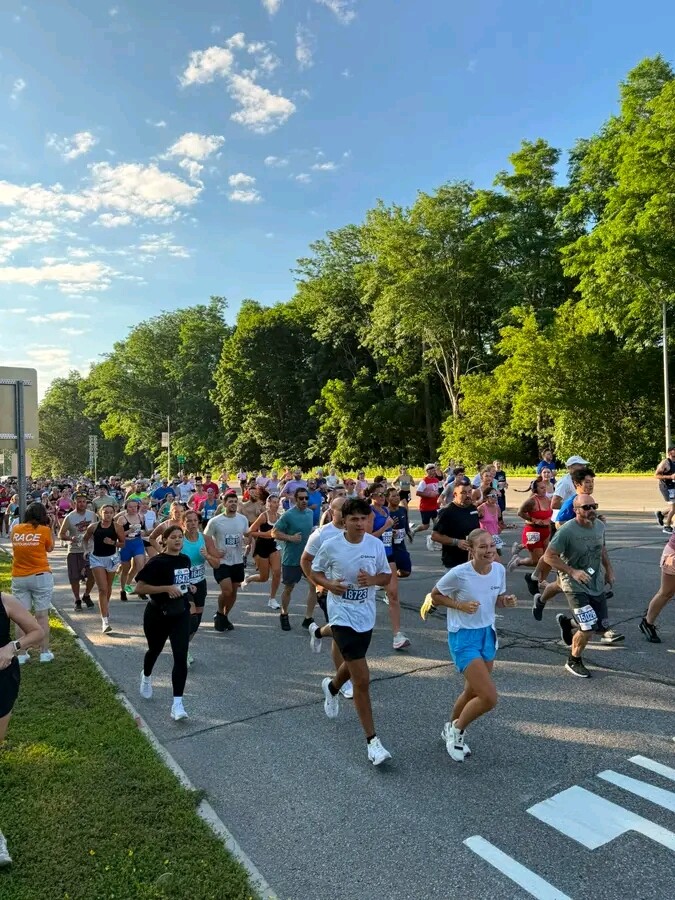
From the opening kilometers, Gebreselama controlled the race with remarkable composure and precision, maintaining a relentless pace that ultimately erased the previous course record and secured one of the fastest performances ever recorded on the historic course. Her commanding display further reinforced her reputation as one of the world's leading road and distance runners.
The Ethiopian celebration continued as Melknat Wudu crossed the finish line in second place in 47:44, completing a dominant one-two finish for her country. Kenya's Priscah Cherono claimed third in 48:14 after a determined effort, rounding out a world-class podium in a race featuring some of the finest distance runners on the international circuit.
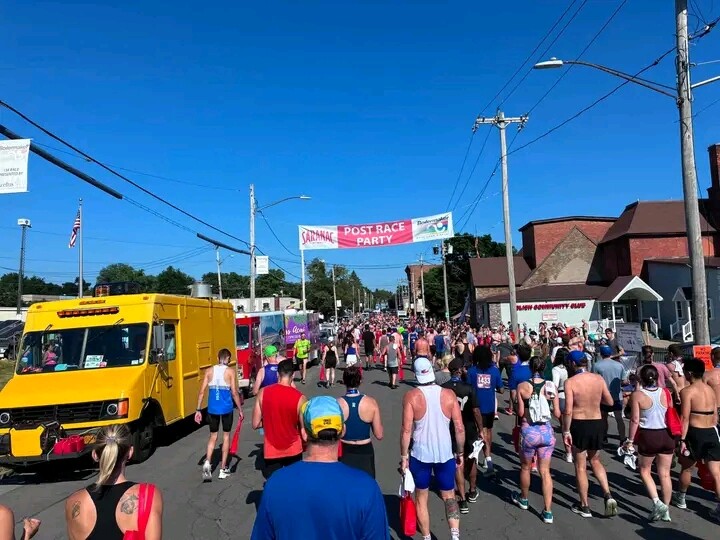
The battle behind the podium remained fiercely competitive. Kenya's Everlyn Kemboi finished fourth in 48:28, narrowly ahead of compatriot Selah Busienei, who clocked 48:31 for fifth. Ethiopia's Netsanet Desta and Alem Nigus Tsadik followed in sixth and seventh respectively, while Kenya's Mercy Cherono secured eighth place.
American athletes also delivered encouraging performances on home roads. Veteran Stephanie Bruce finished ninth in 50:40, with Jackie Gaughan completing the top ten in 51:02 to cap a strong showing for the host nation.
Boilermaker Road Race 15K – Women's Top 10 Results
1. Tsige Gebreselama (Ethiopia) – 47:29 (Course Record)
2. Melknat Wudu (Ethiopia) – 47:44
3. Priscah Cherono (Kenya) – 48:14
4. Everlyn Kemboi (Kenya) – 48:28
5. Selah Busienei (Kenya) – 48:31
6. Netsanet Desta (Ethiopia) – 48:46
7. Alem Nigus Tsadik (Ethiopia) – 48:48
8. Mercy Cherono (Kenya) – 50:23
9. Stephanie Bruce (United States) – 50:40
10. Jackie Gaughan (United States) – 51:02
The women's race combined exceptional depth with remarkable speed, as several athletes broke the 49-minute barrier in a contest that showcased the global strength of elite road running. Gebreselama's record-breaking run now stands as a new benchmark in the rich history of the Boilermaker 15K, adding another memorable chapter to one of the United States' most celebrated road races.
by Erick Cheruiyot for My Best Runs.
Login to leave a comment
Boilermaker 15k
The Boilermaker 15K is the premier event of Boilermaker Weekend. This world krenowned race is often referred to as the country's best 15K. The Boilermaker 15K is recognized for its entertaining yet challenging course and racing's best post-race party, hosted by the F.X. Matt Brewing Company, featuring Saranac beer and a live concert! With 3 ice and water stops every...
more...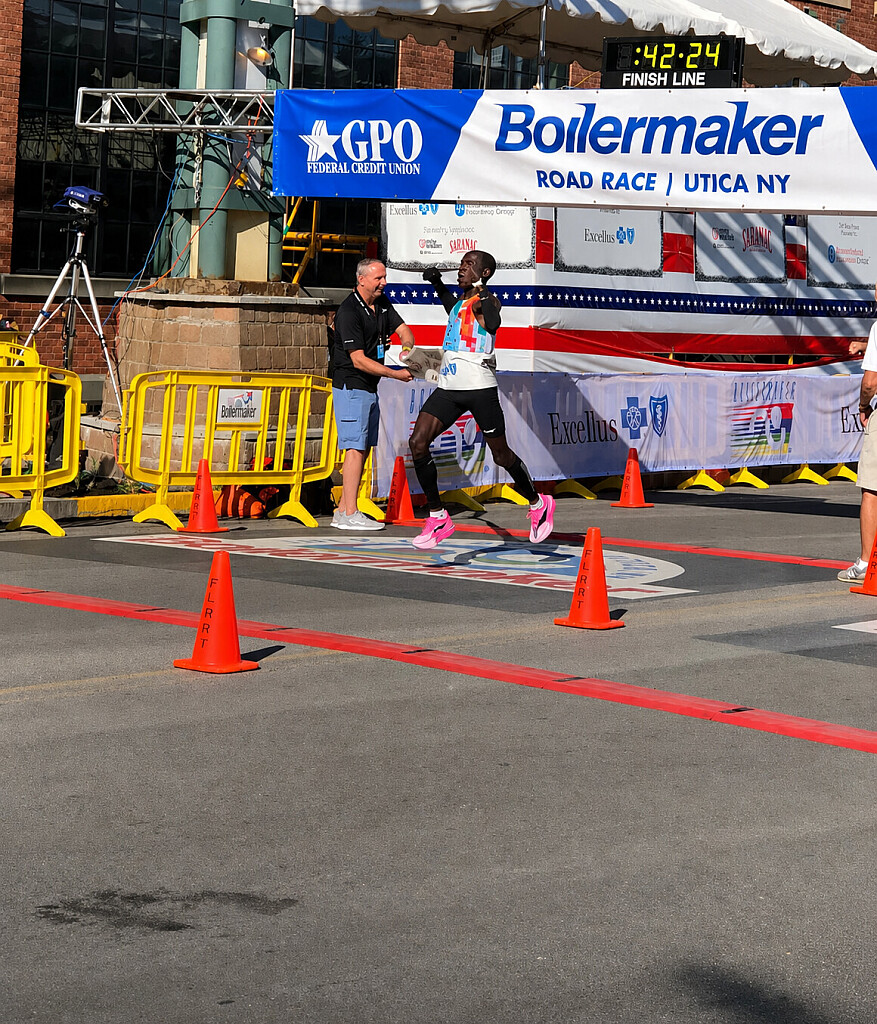
Elite Performances Highlight Boilermaker 15K as Alex Matata Takes Top Honors
Kenya's Alex Matata delivered a sensational performance to claim the men's title at the prestigious Boilermaker Road Race 15K in Utica, New York, producing a dominant run that underlined his growing reputation as one of the world's finest road racers.
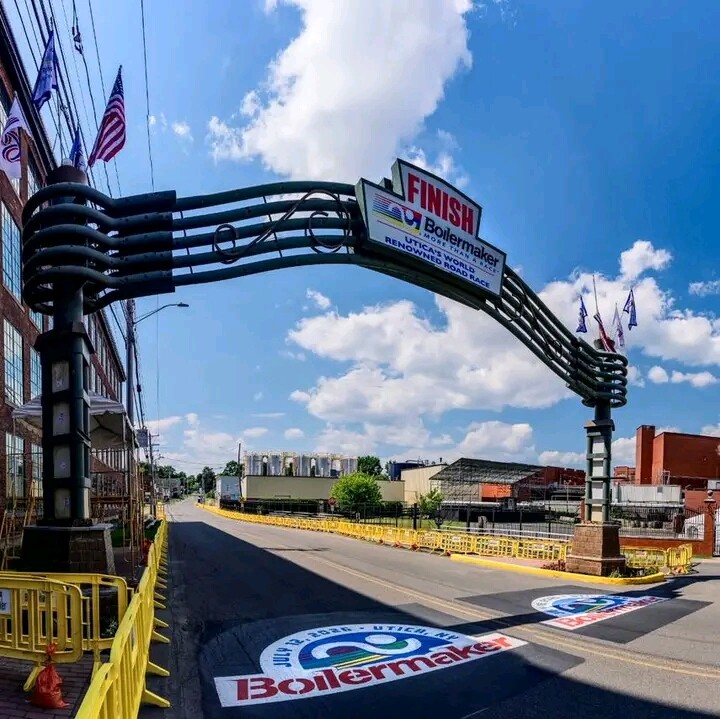
Matata surged to victory in an outstanding time of 42:24, mastering the demanding course with a display of strength, speed, and tactical brilliance. His commanding performance secured a memorable triumph in one of the United States' most celebrated road races, adding another significant international victory to his career.
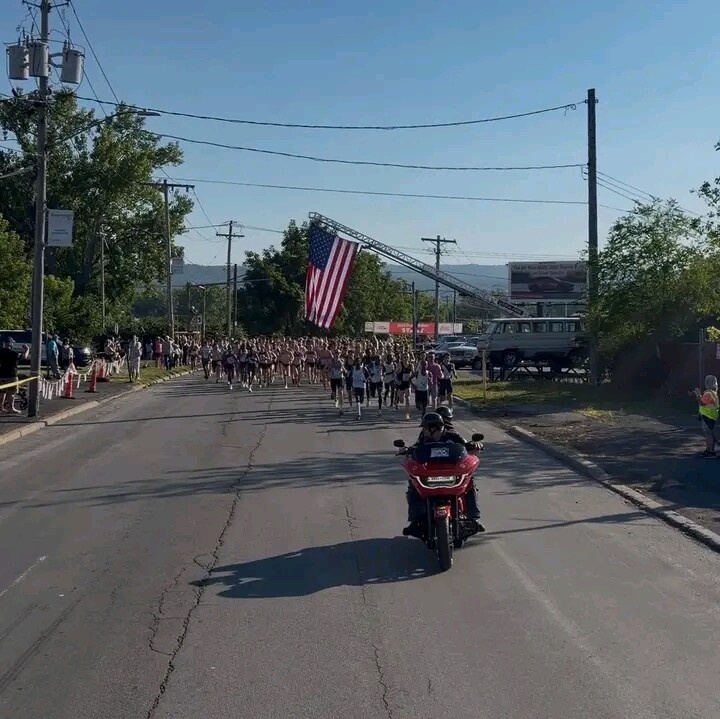
Kenya's success was further highlighted by Kiprono Sitonik, who produced an equally impressive run to finish second in 42:53, completing a remarkable one-two finish for the East African nation. South Africa's Adam Lipschitz rounded out the podium after clocking 43:14 to claim third place following a determined effort.
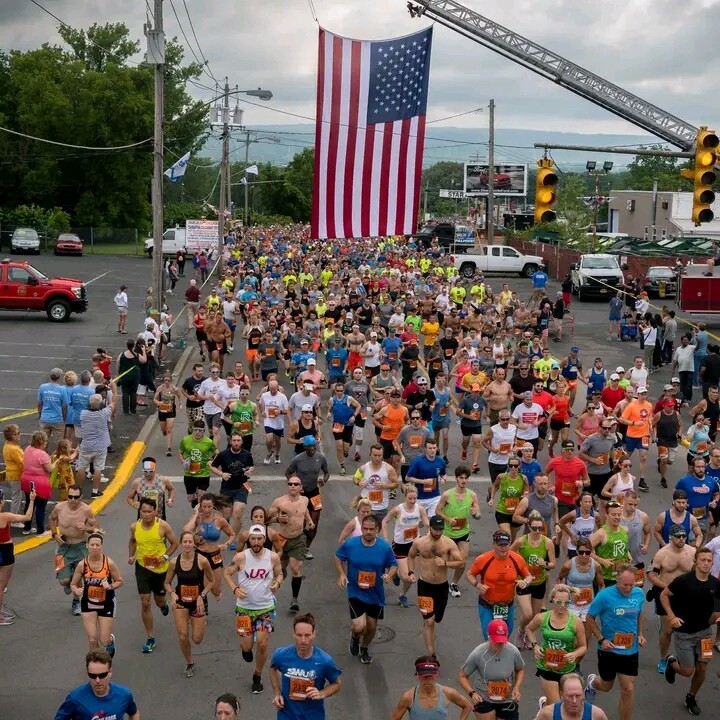
The race featured a highly competitive international field, with American athletes Reid Buchanan and Hillary Bor finishing fourth and fifth respectively, while another Kenyan, Victor Shitsama, added to his country's strong showing by taking sixth place.
Matata's victory once again showcased Kenya's enduring strength in global road racing, as its athletes continued to dominate major international competitions through exceptional endurance, tactical awareness, and relentless finishing speed. His performance in Utica not only thrilled the spectators lining the streets but also reinforced the depth of Kenyan distance running on the world stage.
Men's Top 10 Results – Boilermaker Road Race 15K
1. Alex Matata (Kenya) – 42:24
2. Kiprono Sitonik (Kenya) – 42:53
3. Adam Lipschitz (South Africa) – 43:14
4. Reid Buchanan (United States) – 43:38
5. Hillary Bor (United States) – 43:40
6. Victor Shitsama (Kenya) – 44:02
7. Futsum Zienasellassie (United States) – 44:32
8. Charlie Sweeney (United States) – 44:37
9. Sam Lawler (United States) – 44:54
10. Tyler Berg (United States) – 45:08
With another major road racing title added to his résumé, Alex Matata continued his impressive 2026 campaign while reinforcing his status as one of the leading names on the international road racing circuit. The Boilermaker 15K once again delivered a high-quality contest, with athletes from across the globe producing memorable performances in one of the United States' most prestigious road races.
by Erick Cheruiyot for My Best Runs.
Login to leave a comment
Boilermaker 15k
The Boilermaker 15K is the premier event of Boilermaker Weekend. This world krenowned race is often referred to as the country's best 15K. The Boilermaker 15K is recognized for its entertaining yet challenging course and racing's best post-race party, hosted by the F.X. Matt Brewing Company, featuring Saranac beer and a live concert! With 3 ice and water stops every...
more...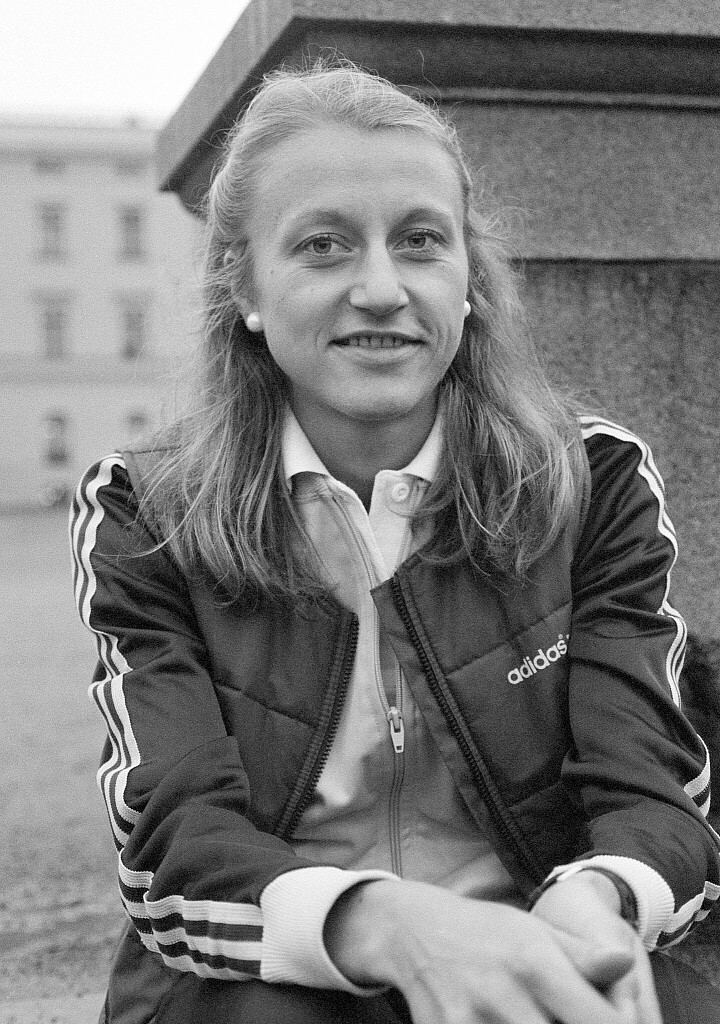
From an Unplanned Marathon to Immortality: The Incredible Story of Grete Waitz's Nine New York City Marathon Victories
When Grete Waitz boarded a flight to New York in October 1978 with her husband, Jack, becoming one of the greatest marathon runners in history was the last thing on her mind.
At just 25 years old, the Norwegian schoolteacher was an accomplished middle-distance athlete and a two-time Olympian over 1,500 metres. She had never raced a marathon, and the furthest she had ever run was only 10 miles in training. The journey to the United States was intended to be more of a holiday than a sporting mission.
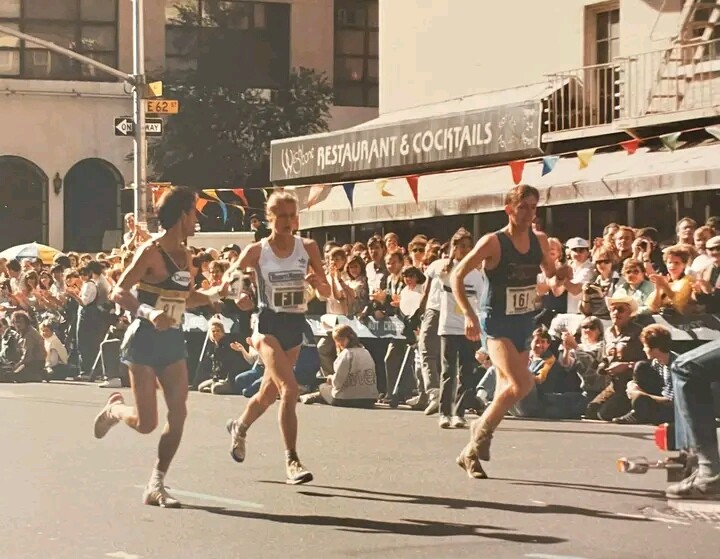
New York City Marathon co-founder Fred Lebow had personally invited Waitz to compete. Privately, he believed her lack of endurance experience would eventually catch up with her and that she would likely fade in the second half of the race. Instead, he unknowingly invited a future legend.
The evening before the marathon reflected just how little pressure Waitz placed on the race. She and Jack enjoyed an elegant dinner in Manhattan, complete with shrimp cocktail, filet mignon, ice cream, and red wine. It was hardly the meal most would associate with preparing for a world-class marathon, but for the couple, the trip was simply another adventure.
Even on race morning, Waitz admitted she barely knew where Central Park was.
Wearing bib 1173, she settled into the race with no expectations. As the miles unfolded, however, the Norwegian newcomer grew stronger while others began to struggle. In the second half, she surged into the lead and never looked back.
When she crossed the finish line in 2:32:30, the athletics world was left in disbelief.
Not only had Waitz won her marathon debut by an astonishing nine minutes, but her performance was also recognized as a new world record at the time, lowering the previous mark by more than two minutes. A woman virtually unknown to marathon running had rewritten the sport's history in a single afternoon.
Yet the finish line brought anything but celebration.
Completely exhausted, battling severe cramps and overwhelmed by the pain of her first marathon, Waitz reportedly threw her running shoes toward her husband and coach, Jack, insisting she would never run another marathon.
Fortunately for the sport, she changed her mind.
Her remarkable victory transformed her career. Inspired by what she had achieved, Waitz left her teaching profession in Norway and dedicated herself fully to long-distance running. What began as a one-time experience evolved into one of the greatest careers the marathon has ever witnessed.
Between 1978 and 1988, she captured an unprecedented nine New York City Marathon titles—a record that still stands as the most victories by any athlete, male or female, in a World Marathon Major. She also became the first woman in history to run under 2 hours and 30 minutes in 1979 and established four marathon world records, helping redefine what women could accomplish over 42.195 kilometres.
Beyond the records and victories, Grete Waitz became a global icon whose humility, determination, and fearless approach inspired generations of runners. She proved that greatness sometimes arrives when opportunity meets courage—even when no one, including the athlete herself, expects it.
Grete Waitz passed away from cancer in 2011 at the age of 57, but her legacy continues to endure. A statue outside Bislett Stadium in Oslo stands as a permanent tribute to the woman who arrived in New York as a schoolteacher on holiday and left as the athlete who forever changed marathon history.
by Erick Cheruiyot for My Best Runs.
Login to leave a comment
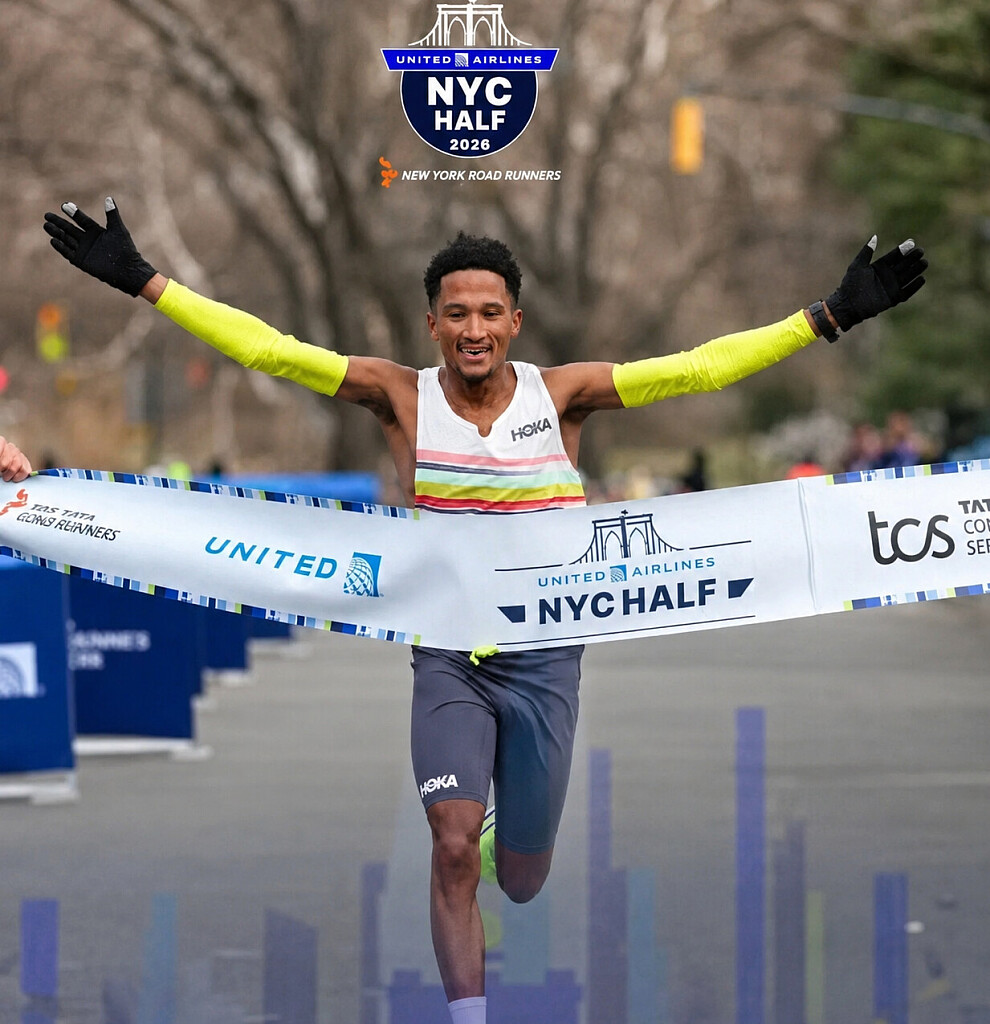
The Winning Move: How Adriaan Wildschutt Conquered New York with a Perfect Final 5K
Success in distance running is often decided long before the finish line comes into view. It is built through months of preparation, tactical discipline, and the ability to execute a plan when fatigue is at its greatest. For South Africa's Adriaan Wildschutt, one simple piece of advice from his coach became the foundation of a historic victory at the 2026 United Airlines NYC Half Marathon.
"My coach told me — if you want to win the race, you have to have the best last 5K."
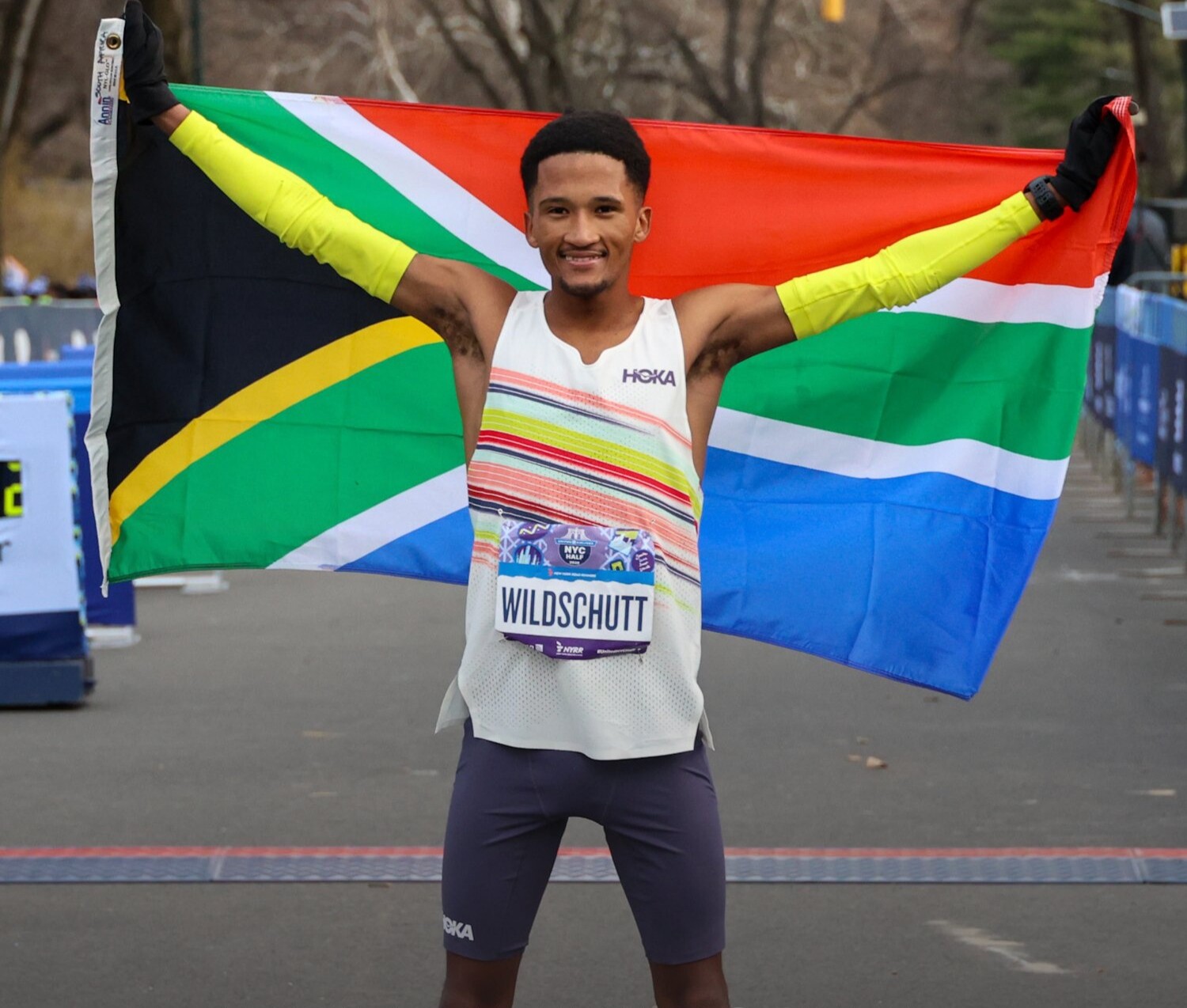
On March 15, 2026, Wildschutt turned those words into reality, becoming the first South African ever to win the prestigious New York City Half Marathon. Crossing the finish line in an impressive 59:30, the 27-year-old delivered a performance that announced his arrival among the world's elite road racers.
The victory was particularly significant because Wildschutt's reputation had been built primarily on the track. During a standout collegiate career at Florida State University, he captured two NCAA titles over 10,000 metres and established himself as one of the most accomplished distance runners South Africa has produced in recent years. Yet while his track credentials were unquestioned, his transition to road racing remained a work in progress.
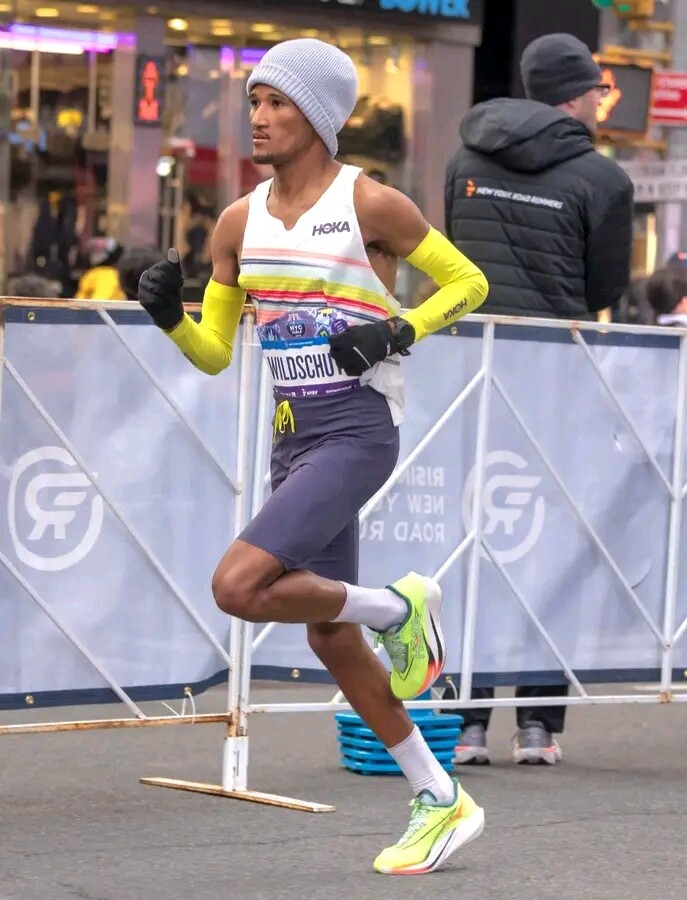
That transition began in earnest in 2024 when he made his marathon debut in Houston. The talent was obvious, but the question remained whether he could translate his track speed and endurance into major victories on the roads. New York provided a resounding answer.
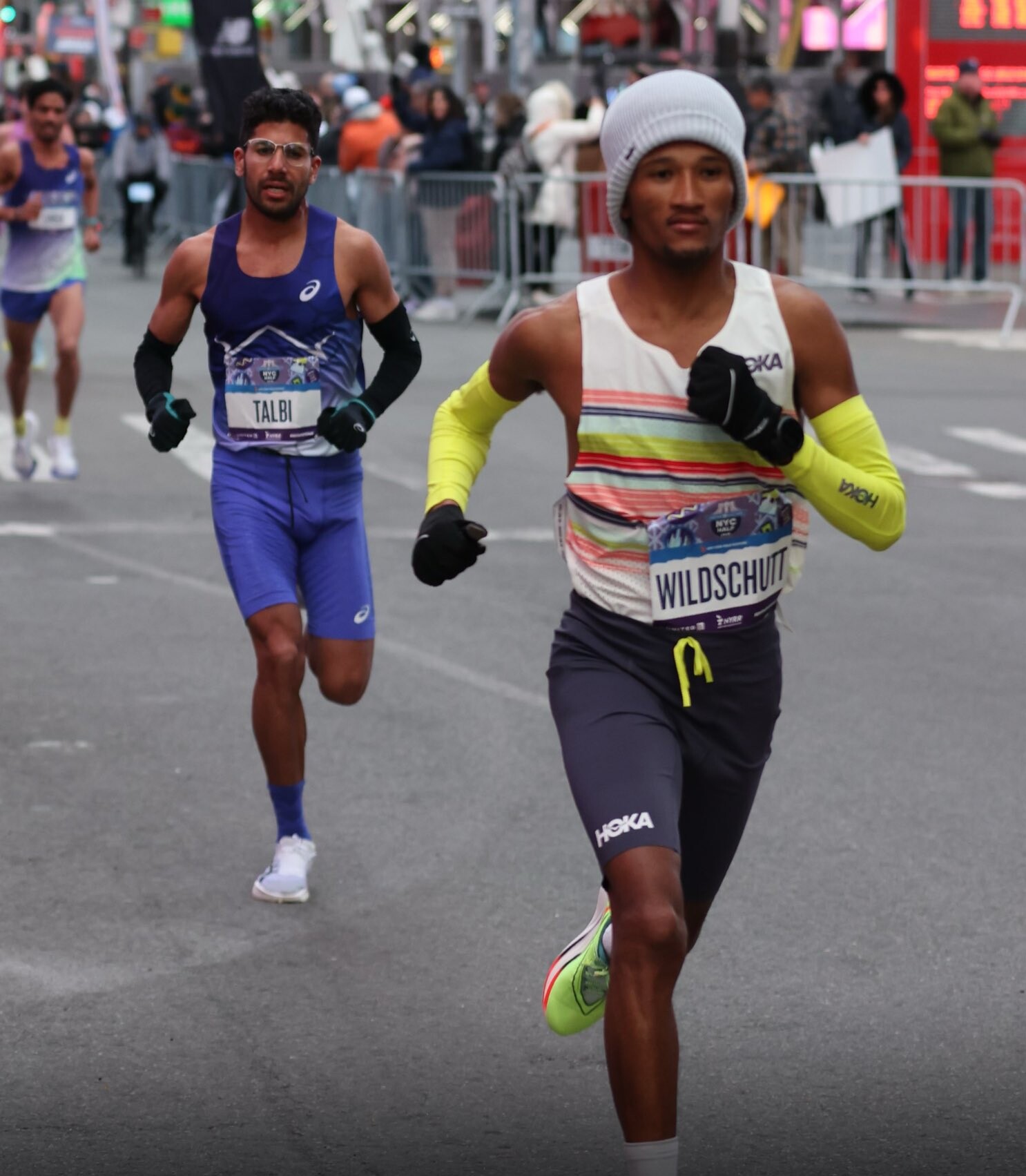
The NYC Half Marathon is far from a straightforward race. The opening stages through Central Park feature relentless rolling terrain that can punish athletes who become overly ambitious too early. From there, runners navigate the iconic streets of Manhattan, passing through Times Square before heading south toward the finish. Historically, many champions establish their winning position during the demanding first half of the race and then defend it over the closing kilometres.
Wildschutt chose a different approach.
Rather than forcing the pace early, he remained patient within the lead pack. He matched every move, conserved energy, and resisted the temptation to attack before the decisive moment arrived. Through 15 kilometres, he stayed composed while others tested one another.
Then came the moment his coach had prepared him for.
With approximately five kilometres remaining, Wildschutt unleashed a powerful surge on a slight uphill section. It was not a reckless acceleration but a calculated move born from confidence and preparation. The pace immediately stretched the lead group, and one by one his rivals lost contact. What had been a tightly contested race suddenly belonged to the South African.
From that point forward, Wildschutt never looked back.
The decisive attack showcased more than physical strength. It revealed tactical maturity and the ability to execute under pressure. Elite racing is often less about who feels strongest at halfway and more about who can deliver when exhaustion begins to cloud judgement. Wildschutt's final 5K demonstrated exactly that quality.
His triumph in New York represents more than a breakthrough victory. It is the strongest evidence yet that his future on the roads may be every bit as successful as his celebrated track career. Winning a major international half marathon against world-class competition requires a different skill set from championship track racing, and Wildschutt proved he possesses both.
For South African athletics, the achievement adds another milestone to a proud distance-running tradition. For Wildschutt himself, it may be remembered as the day his road-racing career truly arrived.
The advice was simple. Have the best last 5K.
In the streets of New York, Adriaan Wildschutt did exactly that—and made history in the process.
by Erick Cheruiyot for My Best Runs.
Login to leave a comment

United Airlines NYC Half-Marathon
The United Airlines NYC Half takes runners from around the city and the globe on a 13.1-mile tour of NYC. Led by a talent-packed roster of American and international elites, runners will stop traffic in the Big Apple this March! Runners will begin their journey on Prospect Park’s Center Drive before taking the race onto Brooklyn’s streets. For the third...
more...
Africa Makes History as Sanlam Cape Town Marathon Earns World Marathon Major Status
CAPE TOWN, South Africa — A landmark chapter in global distance running has been written, with the Sanlam Cape Town Marathon officially securing its place among the world's most prestigious road races. Following a rigorous assessment process, the event has been awarded Abbott World Marathon Majors status, becoming the eighth race in the renowned series and the first ever on African soil.
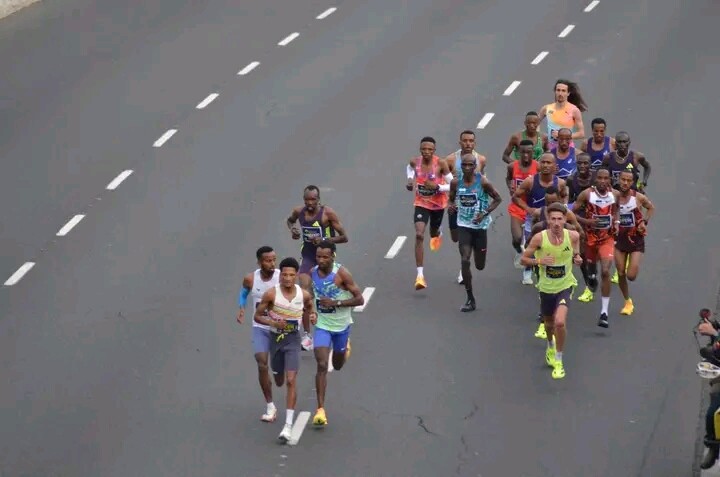
The announcement marks a historic breakthrough not only for South Africa but for the entire African continent, which has long been recognized as the heartbeat of distance running. For decades, African athletes have dominated marathon racing around the world. Now, Africa finally has a Major of its own.
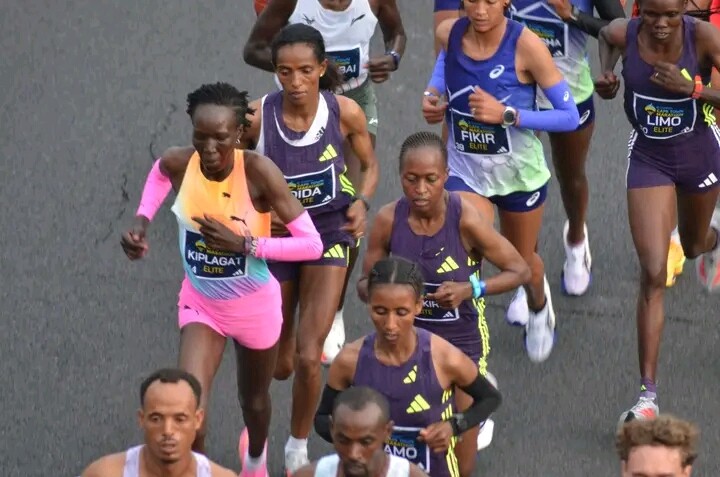
Beginning with the 2027 edition, scheduled for 22–23 May, the Sanlam Cape Town Marathon will join an elite group of races that includes Tokyo, Boston, London, Sydney, Berlin, Chicago, and New York City. The achievement elevates Cape Town into one of the most celebrated destinations in global marathon running and cements Africa's place at the highest level of the sport.
The journey to Major status has been years in the making, driven by relentless commitment from race organizers, athletes, volunteers, sponsors, running clubs, and supporters who believed in the vision of bringing a World Marathon Major to Africa. Through continuous improvements in race organization, international standards, athlete experience, and community engagement, the event steadily built a reputation worthy of the sport's grandest stage.
For many within the running community, the moment represents far more than the success of a single race. It is a victory for an entire continent whose passion for athletics has inspired generations. From elite champions to recreational runners, countless individuals have contributed to turning what once seemed an ambitious dream into reality.
The elevation of the Sanlam Cape Town Marathon is expected to boost international participation, tourism, and investment while providing a powerful platform to showcase Africa's culture, landscapes, and sporting excellence to a global audience.
As the countdown begins to May 2027, celebrations are already underway across the running world. The message resonating from Cape Town to every corner of Africa is clear: history has been made.
Africa's first Abbott World Marathon Major has arrived, and a new era for distance running has officially begun.
by Erick Cheruiyot for My Best Runs.
Login to leave a comment

Cape Town Marathon
The Sanlam Cape Town Marathon is a City Marathon held in Cape Town, South Africa, which is sponsored by Sanlam, the City of Cape Town and Vital Health Foods. The marathon is held on a fast and flat course, starting and finishing in Green Point, near the Cape Town Stadium. Prior to existing in its current format, the Cape Town...
more...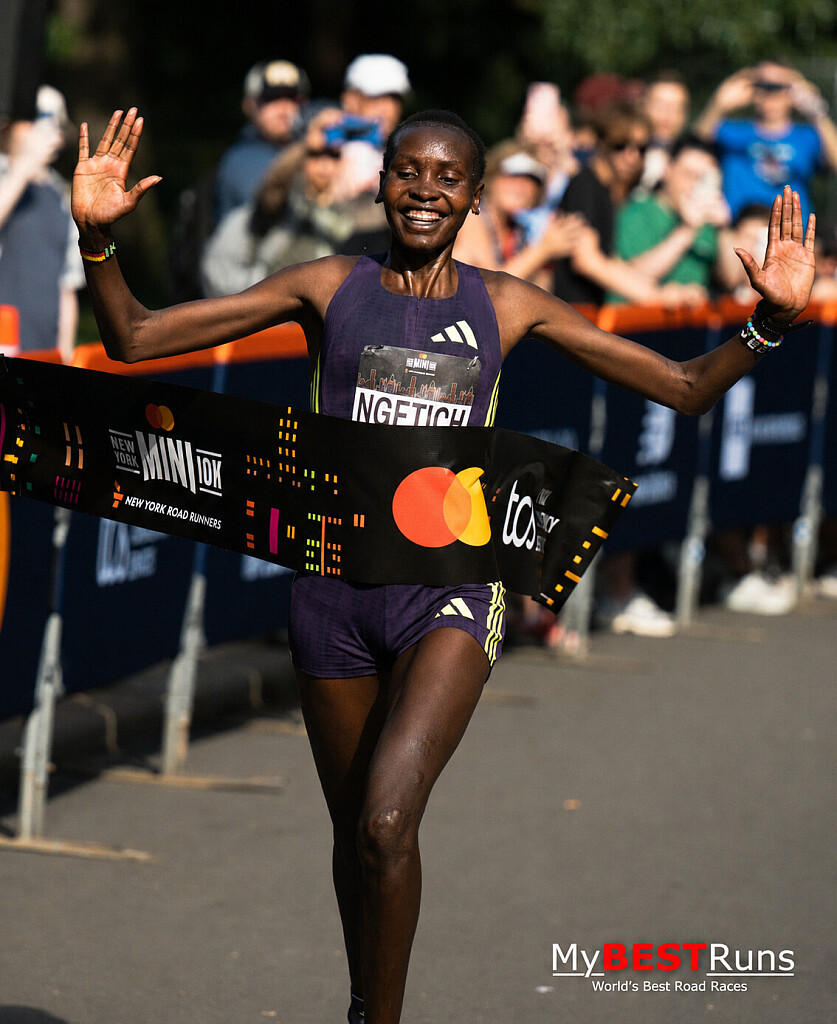
Agnes Ngetich's Remarkable Redemption: From New York Heartbreak to Historic Glory
Kenya’s Agnes Ngetich delivered one of the most commanding performances of the road racing season on Saturday, storming to victory at the 54th Mastercard New York Mini 10K in a breathtaking course-record time of 30:07.
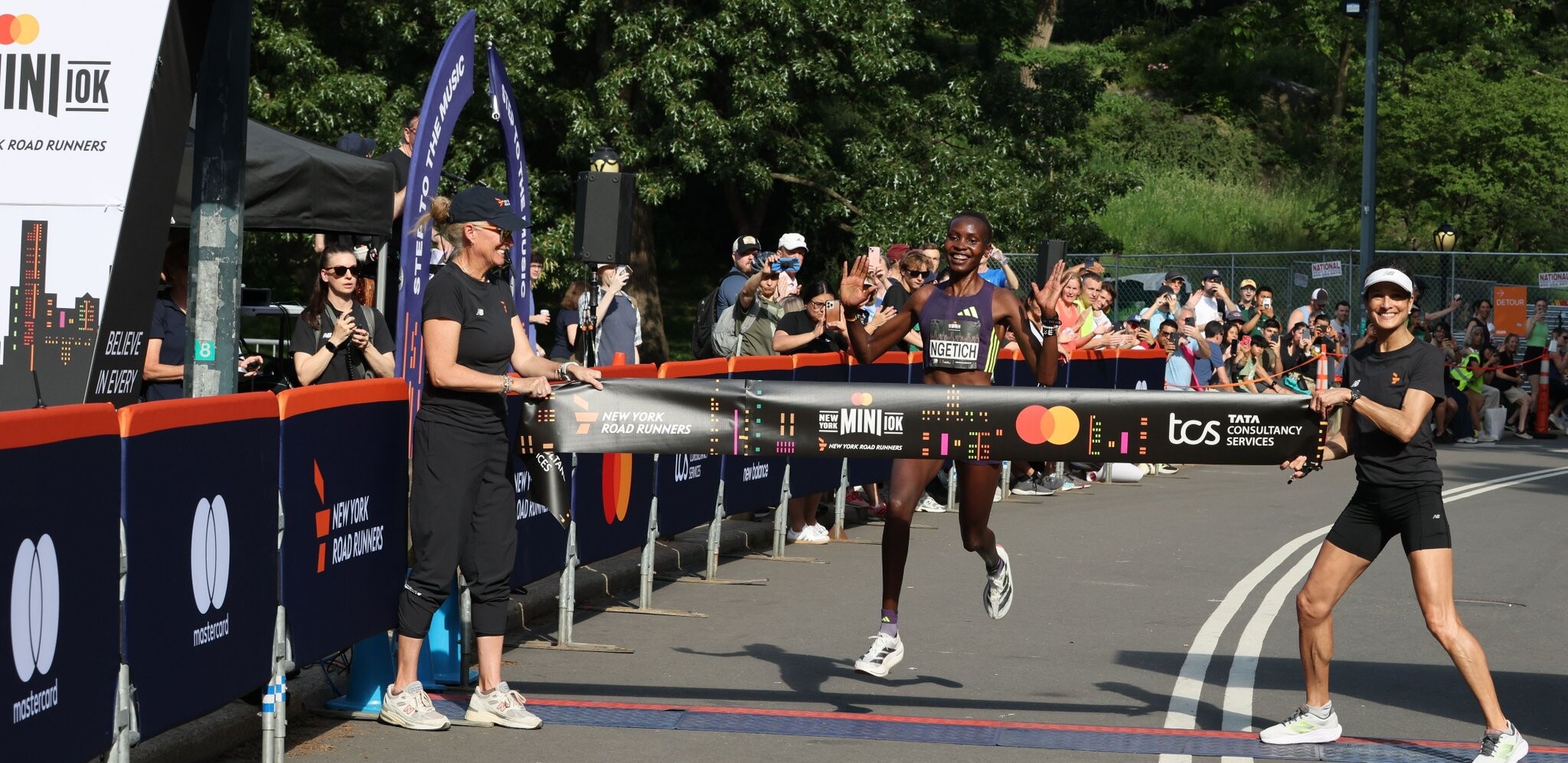
On a warm summer morning in Central Park, Ngetich turned what was expected to be a competitive contest into a solo exhibition of world-class distance running. The Kenyan superstar surged to the front before the second kilometer and immediately separated herself from the field, leaving her rivals with no answer to her relentless pace.
From that moment on, the race became a battle against the clock.
Passing the 5-kilometer mark in a blistering 14:57, Ngetich briefly looked capable of becoming the first woman to break the 30-minute barrier on the iconic course. However, rising temperatures, which climbed to nearly 80°F (27°C) by the finish, slowed her late-race charge. Even so, she crossed the line in 30:07, smashing the previous course record and securing one of the most memorable victories in the event's history.
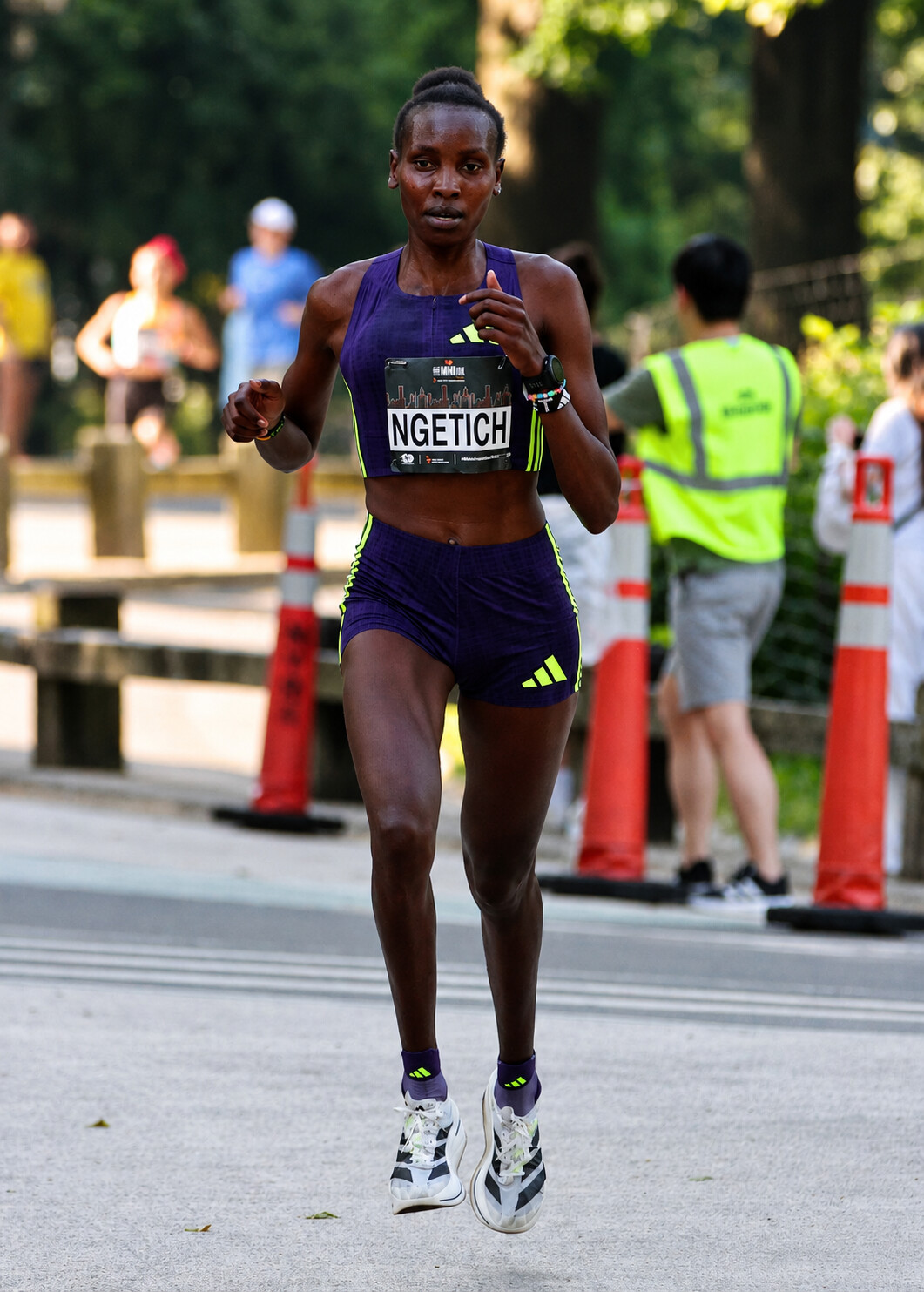
The margin of victory underscored her dominance. Ethiopia’s Tsigie Gebreselama finished a distant second, 46 seconds behind the winner, while reigning champion Hellen Obiri settled for third after fading from contention.
What makes the achievement even more extraordinary is the dramatic contrast to Ngetich’s last appearance in New York.
Just three months ago, the Kenyan endured a nightmare outing at the NYC Half Marathon, where severe cold conditions left her battling hypothermia and struggling simply to reach the finish line. It was a painful experience that raised questions about what might have been on a better day.
Saturday provided a resounding answer.
Instead of fighting the elements, Ngetich embraced them, producing a performance that showcased not only her exceptional fitness but also her resilience and determination. The athlete who left New York disappointed in March returned to rewrite the record books in June.
The victory is the latest highlight in what is rapidly becoming a spectacular season for the 25-year-old. Ngetich has already captured the 2026 World Cross Country title, claimed victory at the prestigious Lille 10K, and continues to hold the women's 10-kilometer world record of 28:46, one of the fastest road performances ever recorded.
Despite the record-breaking run, Ngetich appeared remarkably relaxed after crossing the finish line.
Asked about her experience at the Mini 10K, she offered a response that perfectly reflected her strength on the day.
"It's my favorite race already. I could have run 20K."
Given the way she dismantled an elite field in Central Park, few would doubt her.
For Agnes Ngetich, New York has become a story of redemption, resilience, and record-breaking brilliance—a reminder that champions often return strongest where they once suffered their greatest setbacks.
by Erick Cheruiyot for My Best Runs.
Login to leave a comment

New York Mini 10K
Join us for the NYRR New York Mini 10K, a race just for women. This race was made for you! It’s the world’s original women-only road race, founded in 1972 and named for the miniskirt, and it empowers women of all ages and fitness levels to be active and to look and feel great on the run. Every woman who...
more...
Sharon Lokedi Returns to Boston Seeking Another Triumph at the 2026 B.A.A. 10K
The city of Boston is set to welcome back one of its most celebrated champions as Kenya’s Sharon Lokedi headlines a world-class field for the 2026 B.A.A. 10K presented by Mass General Brigham Cancer Institute on June 21.
Fresh from another remarkable victory at the Boston Marathon in April, Lokedi returns to the streets of Boston and Cambridge carrying both momentum and confidence as she aims to defend the title she captured in dominant fashion last year.
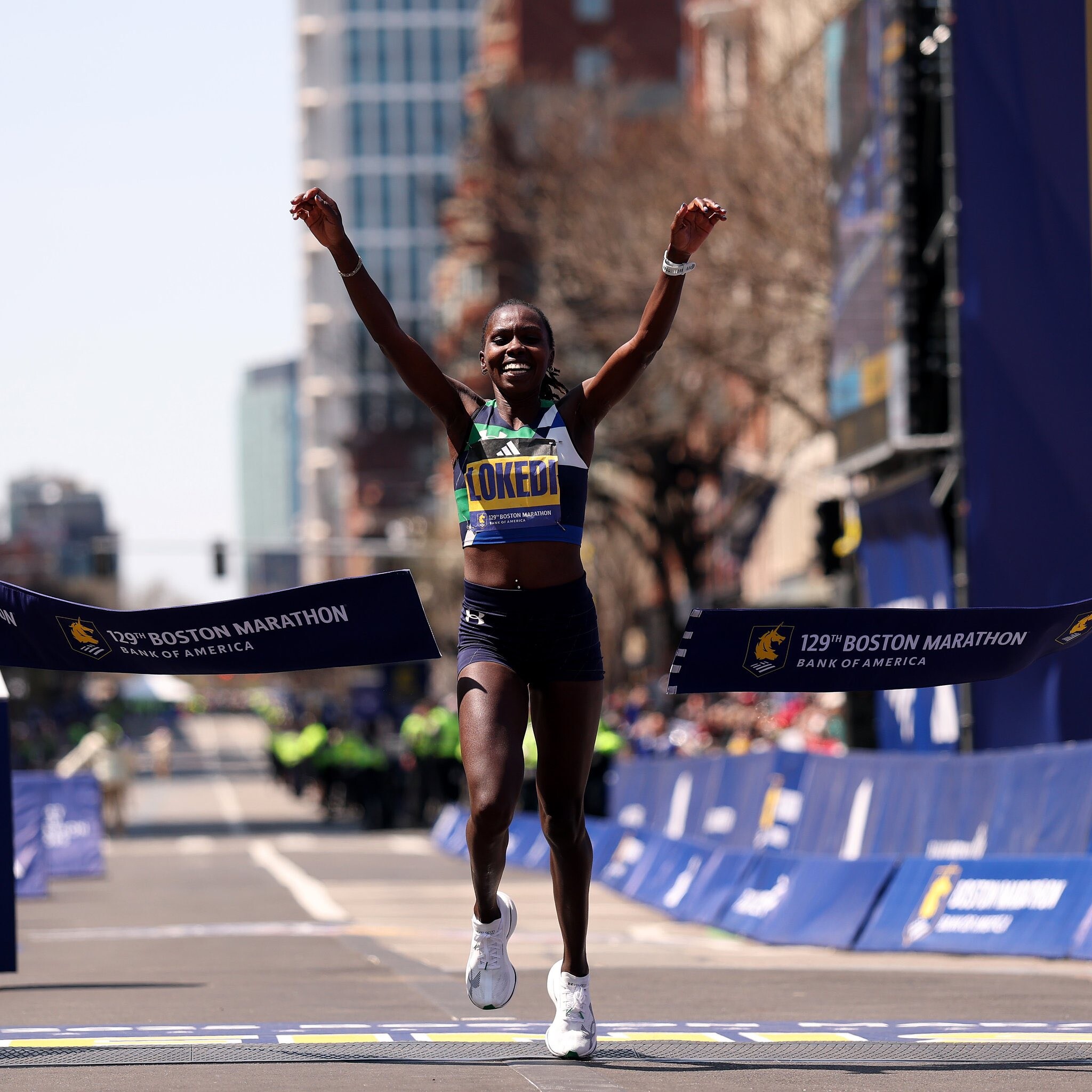
The two-time Boston Marathon champion has developed a special connection with the historic race city. In 2025, she produced a course-record performance of 2:17:22 to win the Boston Marathon before returning this year to claim another victory in 2:18:51, the second-fastest winning time in the event’s storied history. Her success has cemented her status as one of the premier road runners in the world.
Lokedi will be making her first competitive appearance since her marathon triumph and arrives as the reigning B.A.A. 10K champion after clocking 31:39 over the challenging 6.2-mile course in 2025.
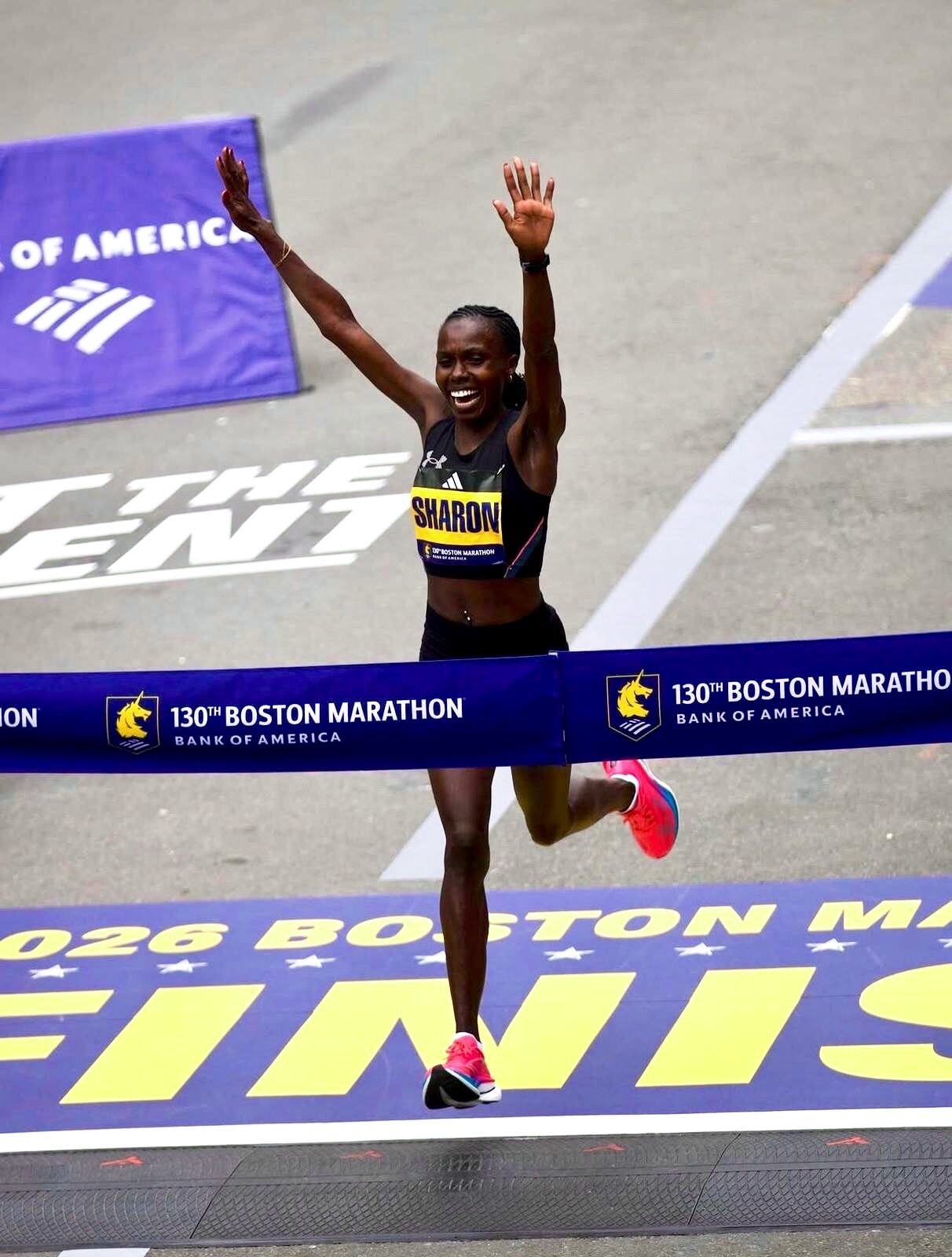
“Boston has become a very special place for me,” Lokedi said ahead of the race. “The atmosphere created by the fans and the community is unlike anywhere else. I’m excited to return and give everything I have to defend my title.”
The women’s race promises to be highly competitive. American Olympian Rachel Smith, who finished second at the Boston 5K in April, leads the domestic challenge. Kenya’s strong contingent includes African 10,000m champion Gladys Kwamboka, former B.A.A. 10K runner-up Stacy Ndiwa, and experienced road racer Viola Cheptoo. British Olympian Jessica Warner-Judd adds further international depth to a field packed with proven performers.
The men’s race is equally impressive, featuring elite athletes from 13 nations.
Ethiopia’s Dawit Seare enters as one of the leading contenders after capturing the 2025 Boston 5K title and bringing the fastest 10K personal best in the field at 27:21. Kenya will be represented by an accomplished group led by Alexander Mutiso, winner of the 2024 London Marathon and runner-up at last year’s New York City Marathon.
Patrick Kiprop also arrives in outstanding form after securing victory at the prestigious BolderBoulder 10K on Memorial Day, while Alex Masai returns looking to continue his strong record in Boston. Masai recently finished ninth at the Boston Marathon and has earned three top-ten finishes at the B.A.A. 10K.
Among the international stars making their mark is South Africa’s Adriaan Wildschutt, who makes his race debut after an impressive season highlighted by victory at the NYC Half Marathon in 59:30. Ethiopia’s Olympic bronze medallist Hagos Gebrhiwet adds further quality to the field, bringing a wealth of championship experience and previous success in Boston.
Canadian national 10K champion Andrew Alexander, two-time U.S. Olympian Hillary Bor, marathon standout Ryan Ford, and reigning USA 25K champion Andrew Colley complete a field stacked with talent and depth.
With defending champions, Olympic finalists, national champions and rising stars all converging on Boston, the 2026 B.A.A. 10K is shaping up to be one of the most competitive editions in recent memory. For Sharon Lokedi, however, the mission is simple: return to the city where she has repeatedly excelled and add another memorable chapter to her growing Boston legacy.
by Erick Cheruiyot for My Best Runs.
Login to leave a comment

B.A.A. 10K
The 6.2-mile course is a scenic tour through Boston's Back Bay. Notable neighborhoods and attractions include the legendary Bull and Finch Pub, after which the television series "Cheers" was developed, the campus of Boston University, and trendy Kenmore Square. ...
more...
Paul Tergat Backs Kenya’s Ambitious Bid to Host World Athletics Championships
Kenyan athletics icon Paul Tergat has thrown his weight behind Kenya’s ambitious campaign to host the World Athletics Championships in 2029 describing the nation as the true heartbeat of global distance running.
In a passionate message shared on X Space, the former marathon world record holder called on the international athletics community to experience the culture, heritage, and unmatched talent that have made Kenya one of the most dominant forces in the history of the sport.
“Kenya is inviting the world to experience running at its source,” Tergat said. “From the soil that produces legends, from communities where athletics is lived, breathed, and passed through generations.”
His remarks arrive at a time when Kenya is intensifying efforts to secure hosting rights for one of athletics’ most prestigious global events — a move that would mark a historic milestone for both the country and the African continent.
Few figures embody Kenya’s running excellence more than Tergat himself. The legendary distance runner became the first Kenyan man to set a marathon world record after producing a groundbreaking performance of 2:04:55 at the Berlin Marathon 2003. His record stood until 2007 and cemented his place among the greatest marathoners in history.
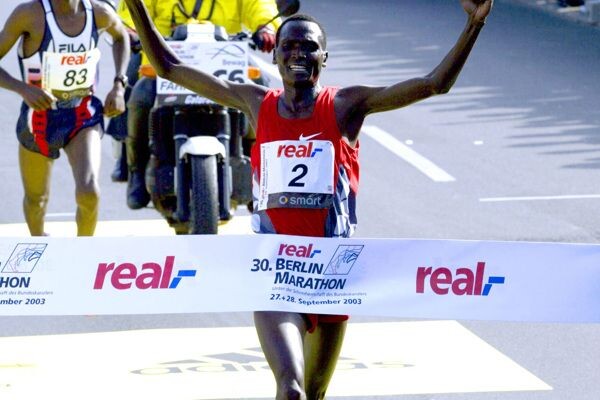
Before conquering the roads, Tergat had already established an extraordinary legacy in cross country running. Between 1995 and 1999, he achieved one of the sport’s rarest feats by winning five consecutive World Cross Country long-race titles, dominating an era filled with elite competition.
On the track, Tergat was renowned for his unforgettable rivalry with Ethiopian great Haile Gebrselassie. The Kenyan star captured Olympic silver medals in the 10,000m at both the 1996 Atlanta Games and the 2000 Sydney Olympics, while also earning silver medals at the 1997 and 1999 World Championships. Many of those races were decided in dramatic final laps, with Tergat and Gebrselassie pushing each other to historic performances.
His success extended beyond the track and marathon scene. Tergat claimed back-to-back IAAF World Half Marathon titles in 1999 and 2000 before later winning the prestigious 2005 New York City Marathon, further solidifying his reputation as one of the most versatile distance runners of his generation.
Away from competition, Tergat has remained deeply influential in Kenyan sport and athletics administration. He previously served as President of the National Olympic Committee of Kenya (NOC-K) and founded the Sports Personality of the Year Awards (SOYA), an initiative that continues to celebrate and recognize sporting excellence across the country.

For decades, Kenya has remained synonymous with excellence in middle- and long-distance running, producing generations of champions who have rewritten world records, conquered Olympic podiums, and elevated the nation’s reputation on the global sporting stage. From the high-altitude training camps of the Rift Valley to packed road races across the world, Kenyan athletics has evolved into more than just sport — it is part of the country’s identity.
Tergat believes hosting the championships would offer the world an opportunity to witness firsthand the environment that shapes elite athletes. Beyond the competition itself, he emphasized the cultural significance of Kenyan running communities, where young athletes grow up inspired by local heroes and where endurance running is deeply woven into everyday life.
The bid also represents Africa’s growing desire to host more major international sporting events. While African athletes have consistently dominated global athletics for generations, the continent has rarely been given the opportunity to stage the sport’s biggest championships. Kenya’s proposal is therefore seen as both symbolic and transformative for athletics worldwide.
Tergat’s endorsement adds significant weight to the campaign. Widely regarded as one of the greatest distance runners in history, the Kenyan legend remains a respected voice within international athletics circles. His support reflects the confidence many within the sport have in Kenya’s ability to deliver a memorable and globally impactful championship.
If successful, the championships would not only showcase elite competition but also spotlight Kenya’s rich sporting heritage, passionate fans, and deep-rooted connection to athletics — offering the world a chance to experience the birthplace of countless running legends.
by Erick Cheruiyot for My Best Runs.
Login to leave a comment
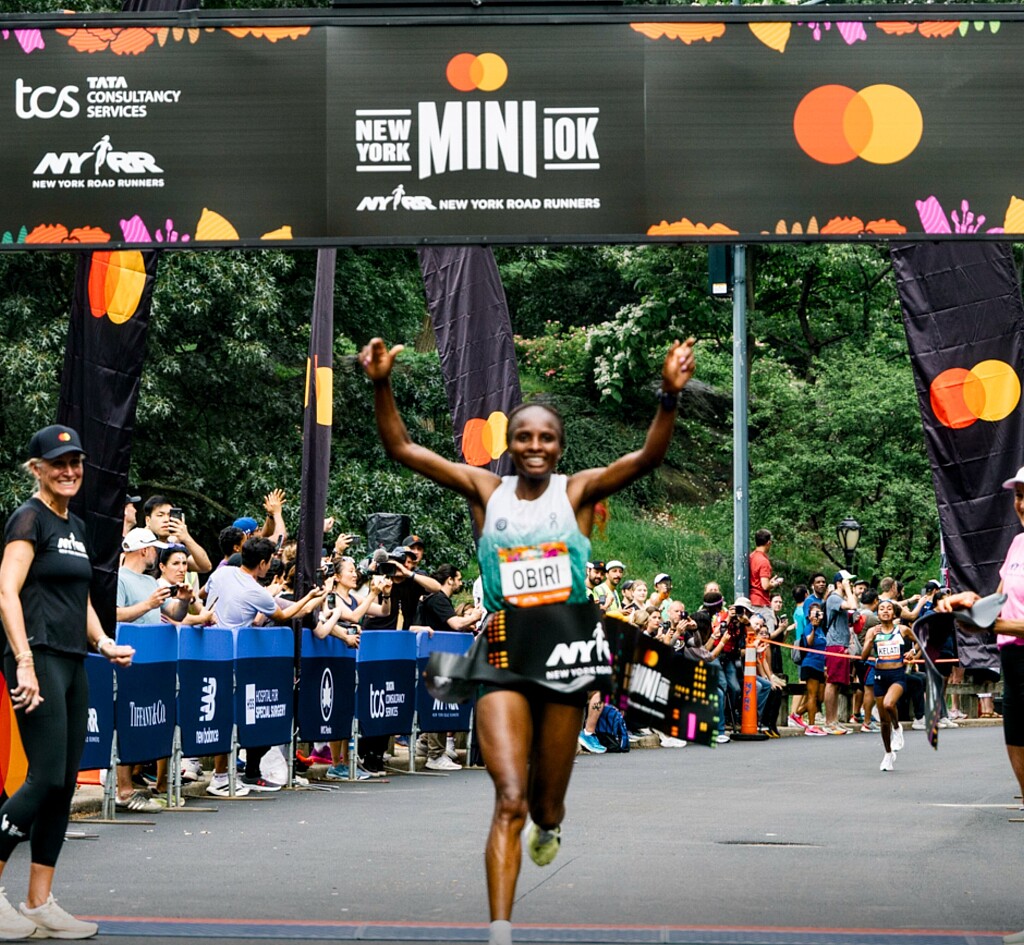
Queens of Distance Running Set for Explosive Showdown at 2026 Mastercard New York Mini 10K
The streets of Central Park are once again preparing for a spectacle of speed, rivalry, and history as the 54th edition of the iconic Mastercard New York Mini 10K returns on Saturday, June 6. Widely celebrated as the world’s original women-only road race, the event has assembled one of the strongest fields ever seen in global road running, headlined by Olympic champions, world record holders, and national icons ready to ignite New York City.
At the center of attention will be Kenya’s marathon queen Hellen Obiri, who returns to defend her crown after establishing herself as one of the most dominant athletes on the New York Road Runners circuit. Obiri already owns an extraordinary NYRR triple crown, having conquered the Mini 10K, the NYC Half, and the New York City Marathon, and now faces another major test against a world-class lineup hungry to dethrone her.
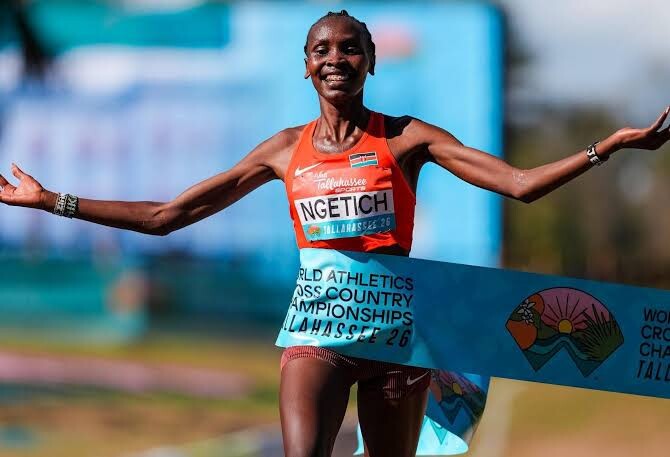
Standing directly in her path is fellow Kenyan sensation Agnes Ngetich, the reigning world 10K record holder whose astonishing 28:46 performance rewrote history and made her the first woman ever to break the 29-minute barrier on the roads. Ngetich arrives in New York carrying immense momentum after capturing victory at the 2026 World Cross Country Championships, and her Mini 10K debut immediately elevates the race into must-watch territory.
The highly anticipated clash becomes even more compelling with the return of Sharon Lokedi. Fresh from cementing her status as a two-time Boston Marathon champion, Lokedi is eager to improve on last year’s runner-up finish in New York. Her recent rivalry with Obiri has already captivated the distance running world, and fans who were left wanting more after their dramatic Boston battle will now witness another thrilling chapter unfold in Central Park.
Adding further international firepower is Slovenia’s Klara Lukan, who continues to redefine European distance running standards. Lukan recently became the first European woman in history to run under 30 minutes for 10 kilometers, and her NYRR debut introduces yet another dangerous contender capable of shaking up the podium.
The American challenge is equally formidable. Leading the home contingent is Weini Kelati, the fastest American woman ever over 10 kilometers and the newly crowned American half marathon record holder following her brilliant 1:06:04 run in Barcelona. Kelati’s rise has positioned her among the world’s elite, and racing on home soil could provide the perfect stage for another breakthrough performance.
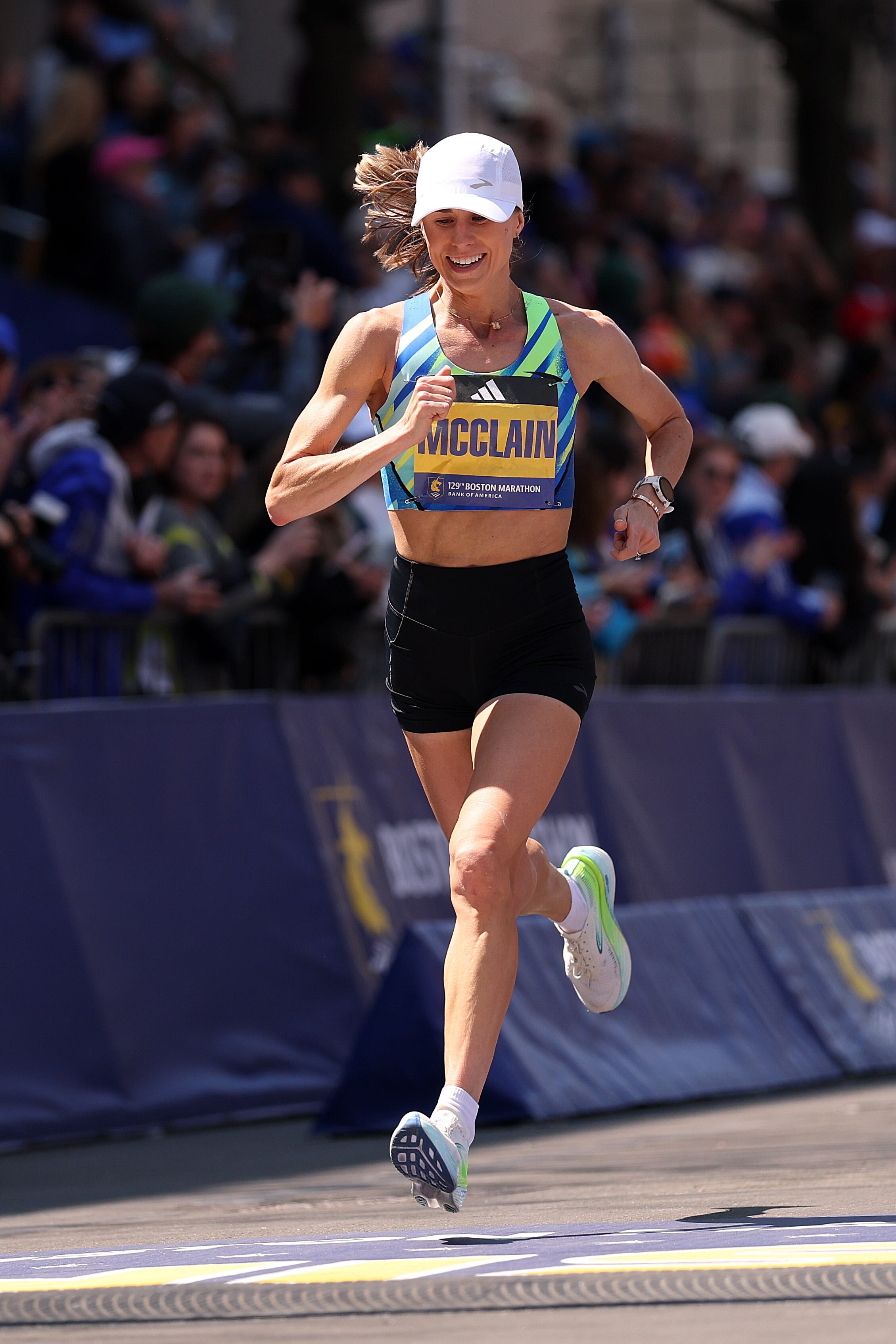
Jess McClain also enters with confidence soaring after finishing as the top American at the 2026 Boston Marathon while simultaneously breaking the women’s course record. Emma Grace Hurley, the American 8K record holder and two-time national champion, further strengthens the domestic lineup alongside notable names such as Annie Frisbie, Dakotah Popehn, Ednah Kurgat, and Amanda Vestri.
With Olympic pedigree, world records, national milestones, and fierce rivalries all converging in one race, the 2026 Mastercard New York Mini 10K promises far more than a traditional road event. It is shaping up to be a celebration of women’s distance running at its absolute highest level — a race where legends defend their legacy and rising stars chase history beneath the iconic skyline of New York City.
by Erick Cheruiyot for My Best Runs.
Login to leave a comment
New York Mini 10K
Join us for the NYRR New York Mini 10K, a race just for women. This race was made for you! It’s the world’s original women-only road race, founded in 1972 and named for the miniskirt, and it empowers women of all ages and fitness levels to be active and to look and feel great on the run. Every woman who...
more...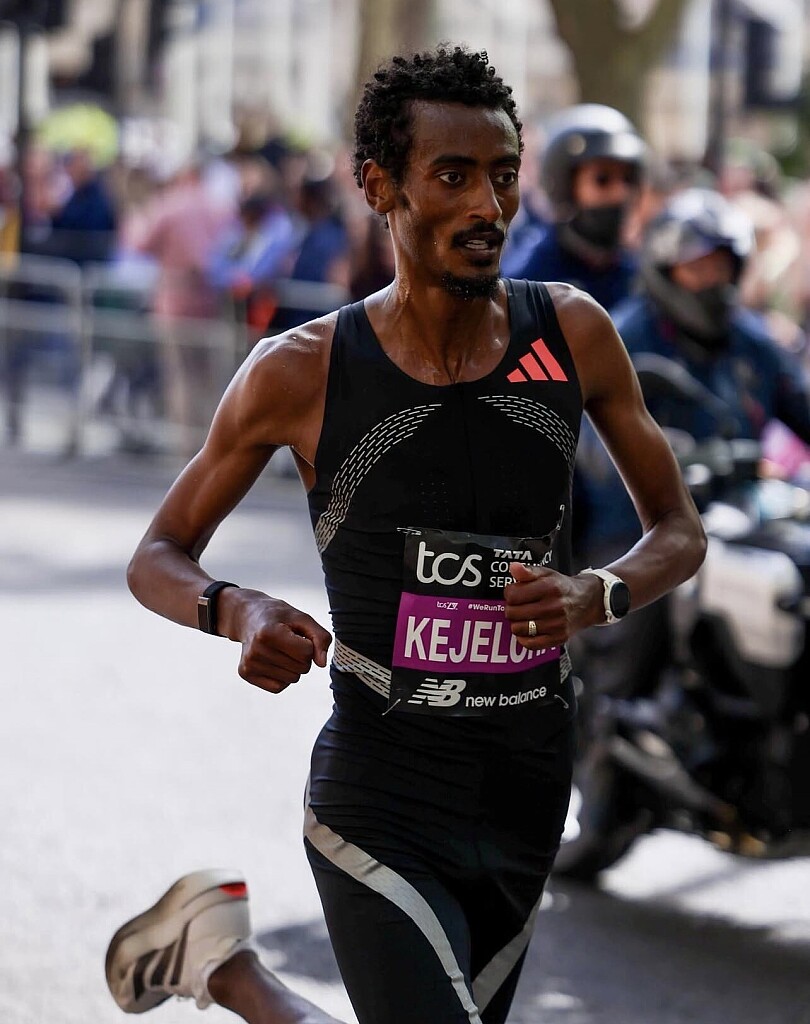
Adidas Thinks the Next Marathon Breakthrough Is the Body — And the Second Fastest Runner Ever Already Proved It
For the past decade, marathon innovation has revolved around shoes. Carbon plates. Super foams. Lighter and faster racing models that transformed what athletes believed was possible over 26.2 miles.
Now Adidas may have opened the next chapter in performance technology — and this time the breakthrough is not on runners’ feet.
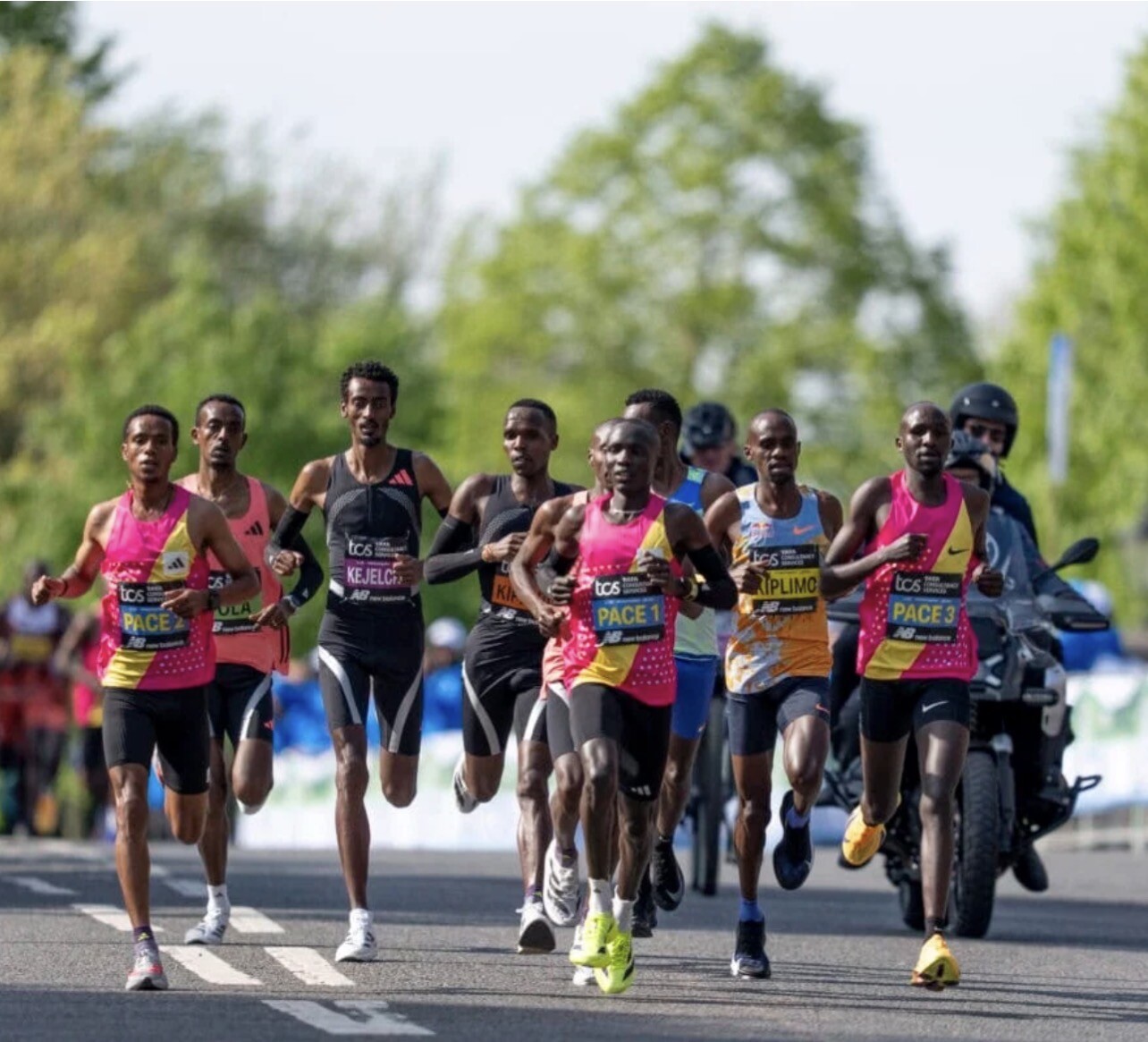
At the 2026 London Marathon, much of the focus centered on the historic performances by Sabastian Sawe and Yomif Kejelcha, who became the first two athletes in history to officially break two hours in the marathon in the same race. But another important development may have quietly emerged alongside those performances: Adidas’s new biomechanical racing suit.
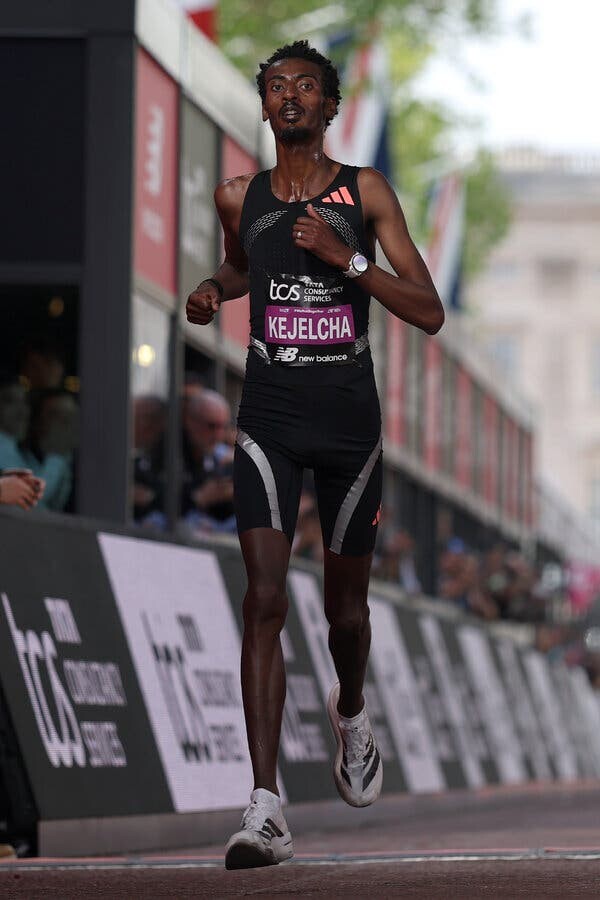
What makes the apparel intriguing is that it is not primarily about aerodynamics. The company’s bigger claim is biomechanical efficiency — helping runners maintain form deeper into the race as fatigue takes over.
Every experienced marathoner understands what happens late in a hard marathon. The hips begin to drop. The pelvis tilts. Posture weakens. Stride efficiency slowly deteriorates. Over the final miles, small mechanical losses become major time losses.
According to Adidas, the suit is designed to slow that breakdown.
Jessica G. Hunter, Adidas’s Manager of Athlete Performance and the leader behind the research project, spent years building the case internally that apparel itself could improve marathon performance. Leadership within the company was skeptical.
“Nobody had ever done it successfully before,” Hunter told The New York Times.
Her research focused on stabilizing the relationship between the core and hips — the key area responsible for keeping runners upright, balanced, and efficient during prolonged fatigue. The conclusion was that traditional apparel systems could not fully achieve that because singlets and shorts function as separate pieces.
“The only way to do that is with a full, connected suit,” Hunter explained.
That detail may prove to be the real innovation.
During the London Marathon broadcast, Kejelcha appeared to be wearing a fairly standard racing setup consisting of half-tights and a singlet. In reality, the upper and lower portions were connected into a single integrated garment. Adidas intentionally designed the suit to avoid looking radical or futuristic.
By comparison, Sawe raced in aerodynamic half-tights paired with a traditional untucked singlet. Every piece of his apparel could be clearly identified separately. Kejelcha’s system operated differently beneath the surface.
The idea of performance-enhancing apparel is hardly new in sports. Swimming saw a revolution — and eventual controversy — when full-body suits contributed to a flood of world records in 2008 and 2009. Cycling has long embraced skinsuits designed for aerodynamics and body stabilization. Running, however, has remained comparatively conservative outside the shoe revolution.
That may now be changing.
The timing is significant because marathon performances continue to improve at an astonishing rate. When races are decided by seconds rather than minutes, even marginal improvements become valuable. If a connected biomechanical suit helps an athlete maintain efficient posture just slightly longer over the final 10K, the competitive impact could be enormous.
The larger question is whether this represents the future of marathon racing or simply another experimental step in the sport’s endless pursuit of speed.
Either way, London may have marked the beginning of a new era — one where what runners wear from shoulders to hips becomes almost as important as what they wear on their feet.
by Bob Anderson for My Best Runs
Login to leave a comment
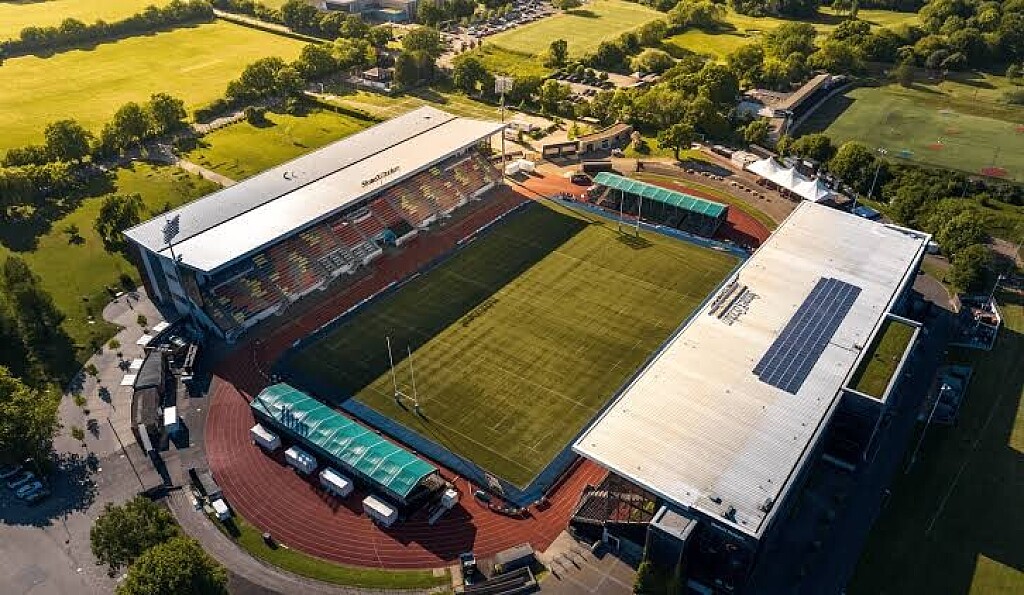
ATHLOS Expands to London as Women’s-Only Track Showcase Continues Global Rise
The rapid rise of ATHLOS is set to reach another landmark moment this September after organisers officially confirmed that the women’s-only athletics showcase will make its London debut at StoneX Stadium.
Founded by Reddit co-founder Alexis Ohanian, ATHLOS has quickly emerged as one of the sport’s most ambitious modern concepts, placing women’s athletics at the centre of a high-profile, entertainment-driven competition format. After drawing major attention in New York, the event is now preparing to bring its growing influence across the Atlantic.

The London meeting is scheduled for September 18 at StoneX Stadium, the home venue of Saracens Rugby Club and Shaftesbury Barnet Harriers. The stadium is expected to provide an intimate but electric setting as some of the world’s top female athletes gather for a condensed, high-stakes evening of competition.
ATHLOS will feature seven disciplines, with six athletes contesting each event in a format designed to maximise intensity, head-to-head drama and fan engagement. Organisers have also confirmed a combined prize fund of £1.5 million across the 2026 London and New York meetings, underlining the project’s growing financial commitment to women’s sport.
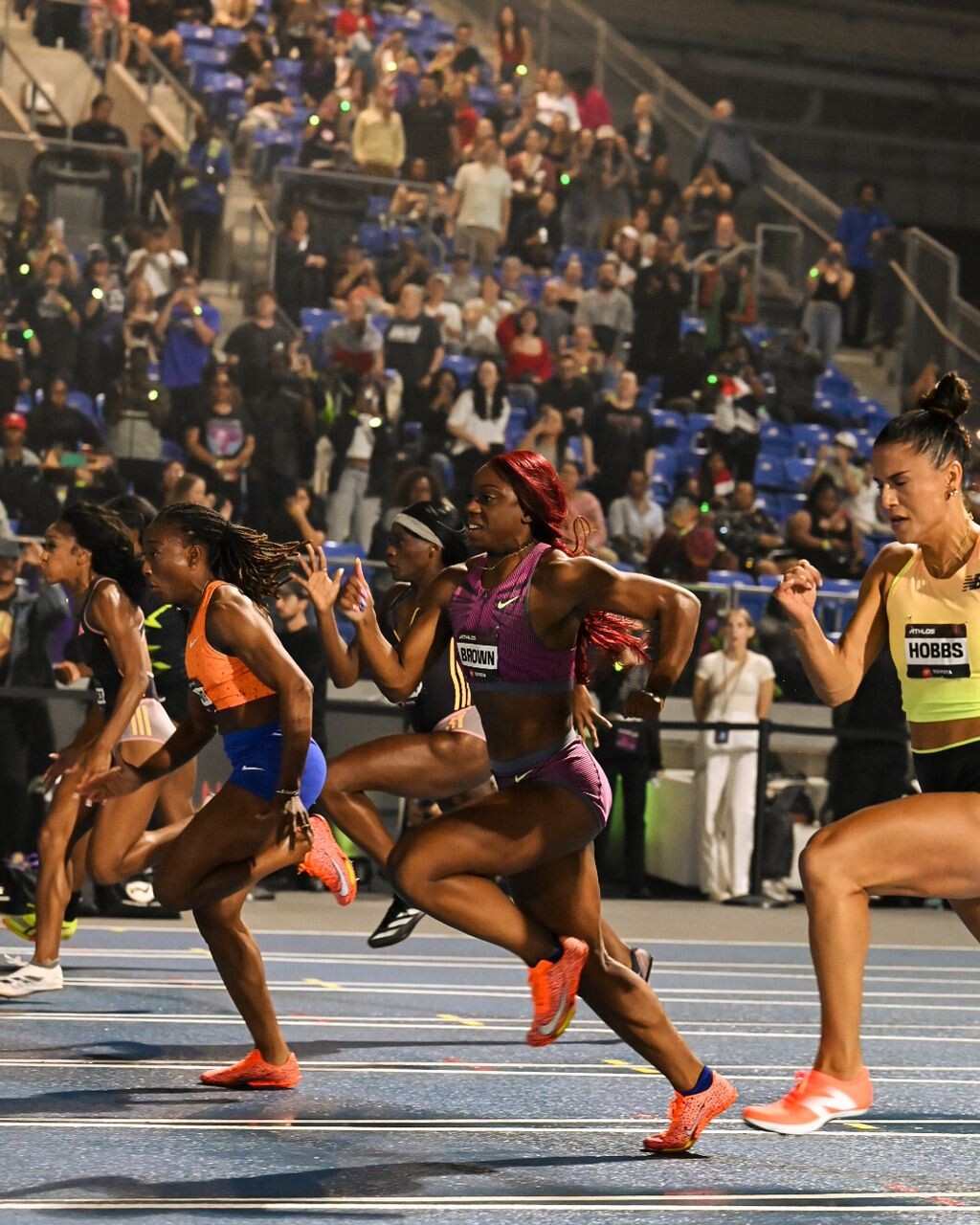
The London edition arrives just weeks before ATHLOS returns to New York City on October 2, creating what could become a powerful late-season series for elite female athletes. With prize money continuing to rise and global interest building around the concept, ATHLOS is positioning itself as more than just another athletics meeting — it is aiming to reshape how women’s track and field is presented to modern audiences.
The decision to expand into London is also significant given the city’s deep athletics heritage and passionate fan base. Britain has long been one of the sport’s strongest markets, and ATHLOS’ arrival adds another major international event to an already packed calendar.
While athlete entries have not yet been officially announced, anticipation is already building around which global stars could headline the inaugural London edition. If the atmosphere and star power of previous ATHLOS events are any indication, StoneX Stadium could become the latest stage for a memorable night in women’s athletics.
As anticipation builds ahead of the inaugural London edition, ATHLOS continues to position itself as one of the most ambitious new ventures in global athletics. With elite talent, substantial prize money and a format designed exclusively to elevate women’s sport, the series is rapidly carving out a unique place on the international calendar.
The London meeting at StoneX Stadium on September 18 will mark another major step in that journey before the spotlight shifts back to New York City for the season finale on October 2.
by Erick Cheruiyot for My Best Runs.
Login to leave a comment
ATHLOS NYC Set for Grand Return as Women’s Track Revolution Continues
The curtain may have fallen on another memorable season of athletics, but ATHLOS NYC is already preparing for an even bigger spectacle in 2026.
The groundbreaking women-only track and field meet will officially return to Icahn Stadium in New York City on October 2nd for a third consecutive year, further cementing its place as one of the sport’s most exciting and progressive events. What began as a bold vision has rapidly evolved into a premier end-of-season showcase, attracting some of the biggest names in global athletics and redefining how women’s track is presented to the world.
Backed by Reddit co-founder Alexis Ohanian, ATHLOS NYC has grown into far more than a traditional athletics meeting. The event has become a celebration of elite female performance, star power, and innovation — a platform where Olympic champions and rising talents share the spotlight in front of a passionate global audience.
Over the past editions, fans have witnessed unforgettable performances from some of the sport’s brightest stars, including Keely Hodgkinson, Faith Kipyegon, Gabby Thomas, and Masai Russell — athletes who continue to elevate the profile of women’s athletics on the global stage.
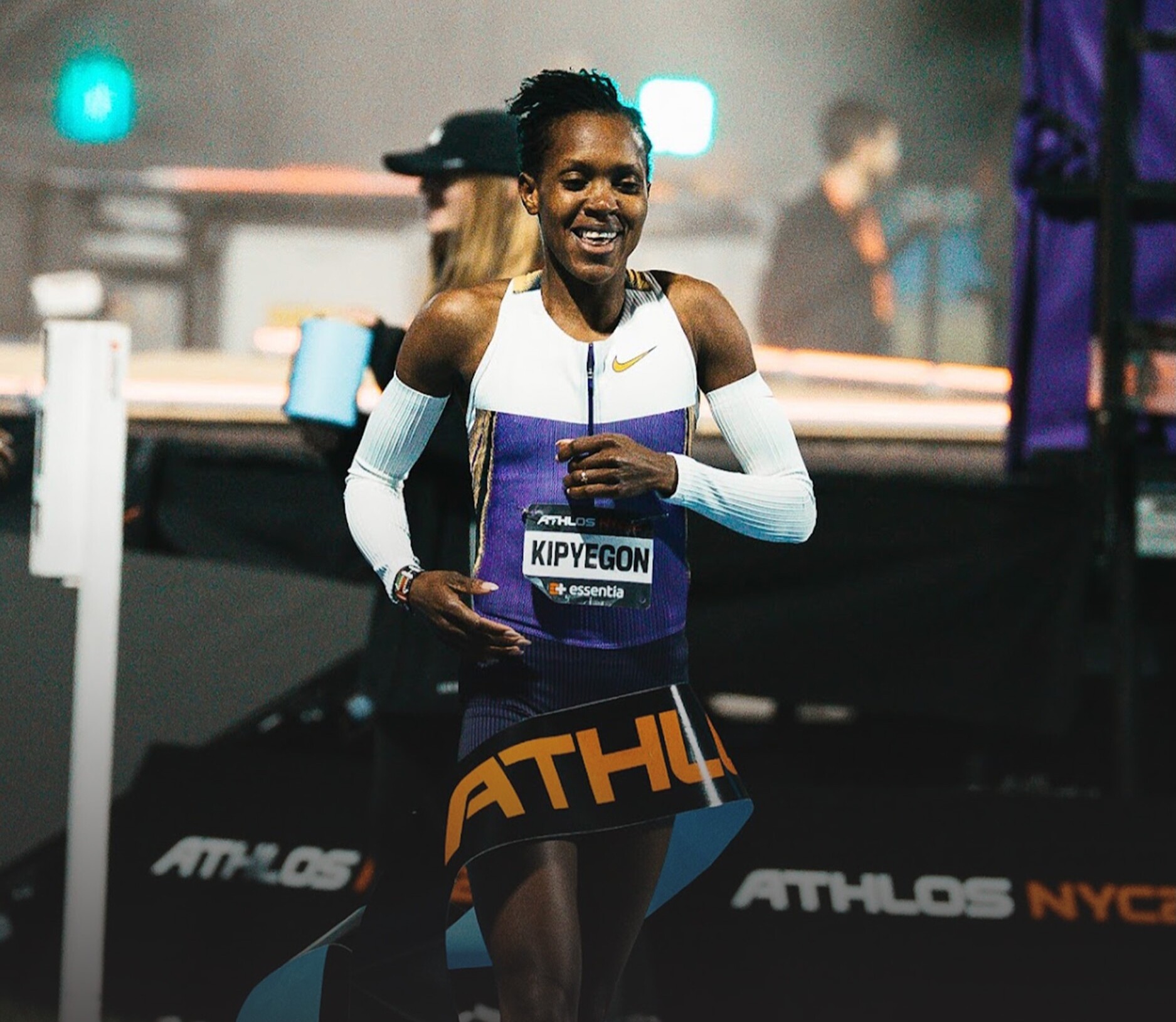
Organizers have also confirmed a major evolution for the ATHLOS series in 2026. In addition to the New York meet, a second competition will be staged in another “major city,” with the location still under wraps. The expansion signals the growing ambition behind the project and its desire to create a wider international footprint for elite women’s track competition.
The competition structure itself will also take on a new dimension. Athletes competing across the seven events will now accumulate points based on their finishing positions throughout the series. At the end of the campaign, the athlete with the highest total in each discipline will receive a $25,000 bonus along with the prestigious Tiffany & Co. crown — a symbol that is quickly becoming one of the sport’s most coveted prizes.
The revised format adds another layer of drama and consistency to the competition, rewarding athletes not only for individual brilliance but also for sustained excellence across the season. It also reflects ATHLOS NYC’s continued commitment to pushing the boundaries of what professional track and field can look like in the modern era.
With its unique atmosphere, elite fields, and athlete-first approach, ATHLOS NYC is no longer just another stop on the calendar. It is becoming a defining destination for women’s athletics — a stage where competition, culture, and entertainment collide.
And with expansion now underway, the movement appears to be only getting started.
by Erick Cheruiyot for My Best Runs.
Login to leave a comment
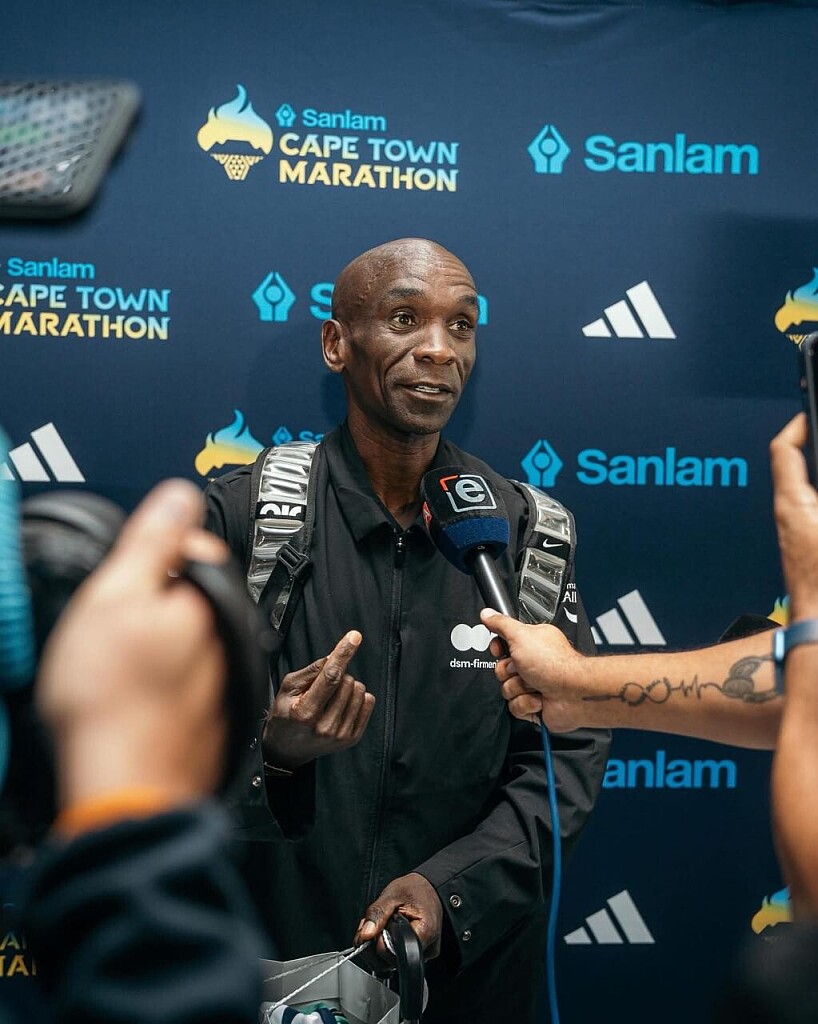
Kipchoge Backs Cape Town’s Historic Bid to Bring a World Marathon Major to Africa
Marathon icon Eliud Kipchoge has thrown his full support behind Cape Town’s ambitious campaign to become Africa’s first-ever Abbott World Marathon Major, describing the bid as a transformational moment for distance running across the continent. He is set to participate in Sanlam Cape Town marathon on May 24th, 2026.
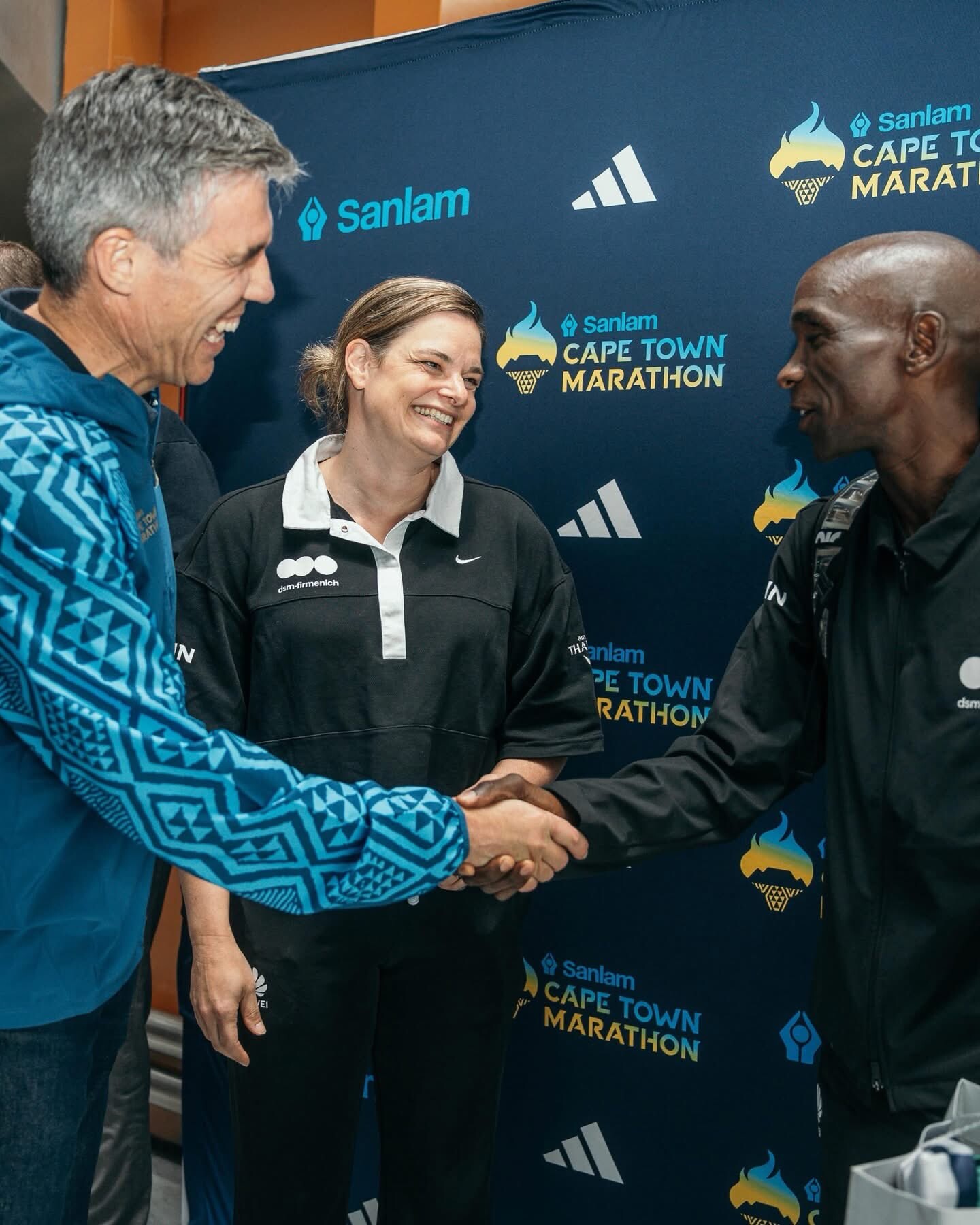
The two-time Olympic marathon champion arrived in Cape Town as part of his global marathon tour spanning seven continents, but his presence in South Africa carried far deeper significance than a ceremonial visit. For Kipchoge, the possibility of an African city joining the prestigious World Marathon Majors series represents a long-overdue recognition of the continent that has shaped the modern era of distance running.
Speaking passionately about the vision behind the bid, Kipchoge emphasized that Africa has supplied generations of world-class runners, inspired millions through athletics, and consistently dominated the marathon scene, yet has never hosted one of the sport’s most celebrated marathon events.
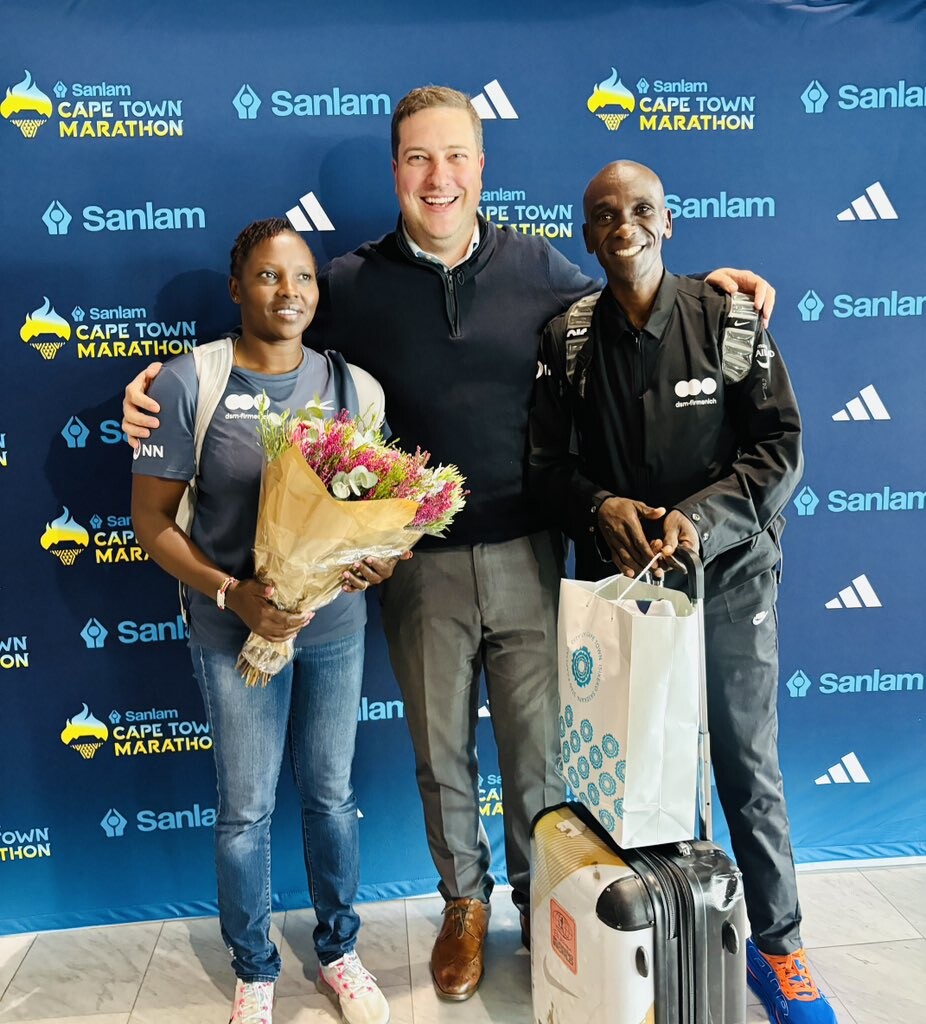
He believes Cape Town now has the opportunity to change that narrative forever.

The Abbott World Marathon Majors currently features some of the most iconic races in global athletics, including events in Tokyo, Boston, London, Berlin, Chicago, Sydney and New York City. Cape Town’s inclusion would mark a historic breakthrough, positioning Africa at the center of elite marathon racing while opening new pathways for athletes, tourism, investment, and sporting development across the continent.
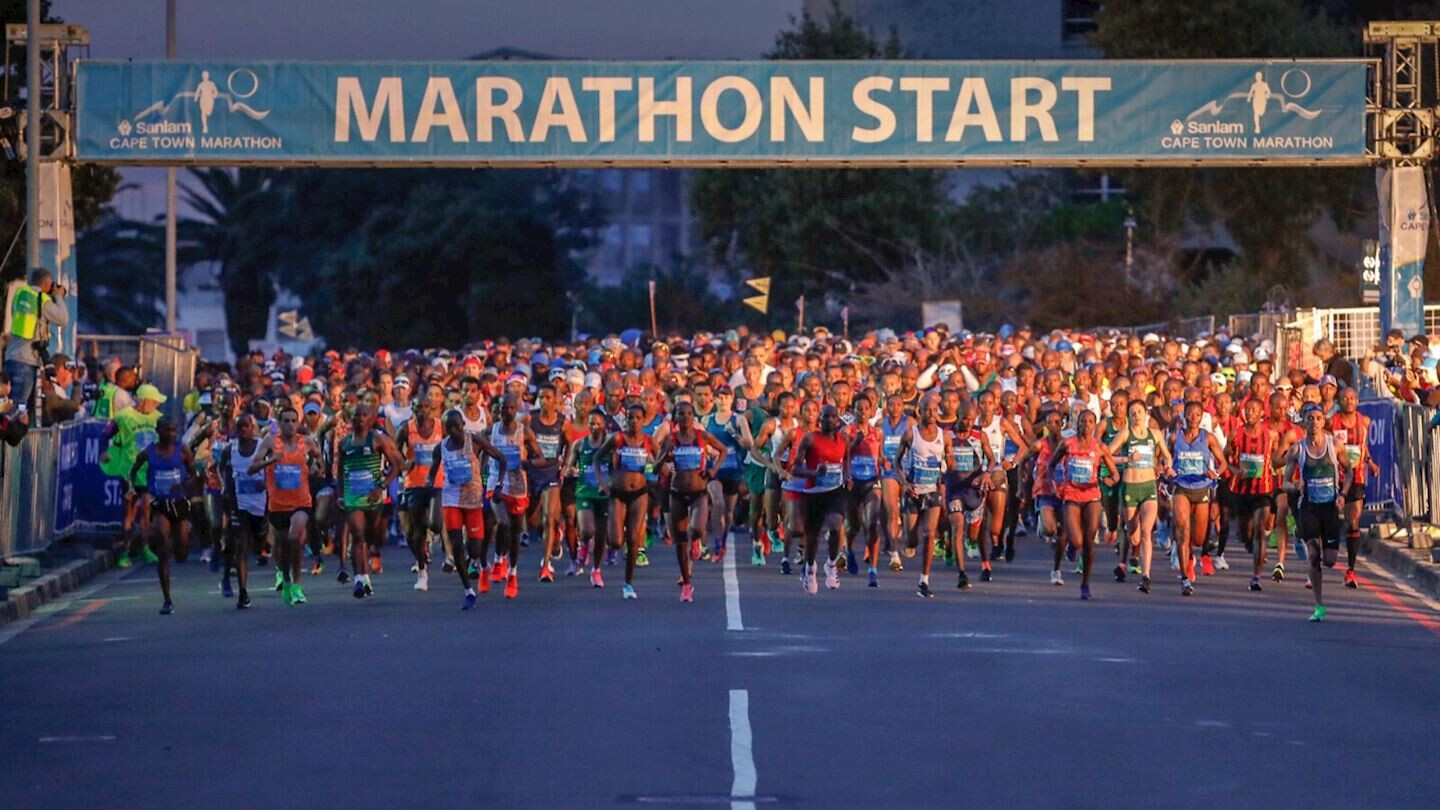
Kipchoge described the bid as more than just a race application, calling it a movement capable of inspiring an entirely new generation of African runners. According to the Kenyan legend, bringing a Major marathon to African soil would give young athletes tangible proof that the sport’s biggest stages are no longer distant dreams located overseas, but opportunities that can exist at home.
The marathon great also praised Cape Town’s scenery, culture, and growing international reputation as key strengths in the city’s campaign. With its breathtaking coastal routes, iconic landmarks, and passionate running community, Cape Town has increasingly emerged as one of the world’s most attractive long-distance racing destinations.
For many within global athletics, Kipchoge’s endorsement adds enormous credibility to the bid.
Few voices carry greater influence in marathon running than the Kenyan superstar, whose career has redefined human endurance. Beyond his Olympic triumphs and major marathon victories, Kipchoge became the first man in history to run a marathon in under two hours during the groundbreaking INEOS 1:59 Challenge — a feat that elevated him beyond sport and into global sporting folklore.
His support now places additional international attention on Cape Town’s push to make history.
Should the bid succeed, it would represent a monumental victory not only for South Africa, but for the entire African athletics community. It would finally bring one of marathon running’s highest honors to the continent that has produced countless champions and reshaped the global identity of endurance racing for decades.
As Kipchoge continues his journey across the seven continents, his message from Cape Town remains powerful and unmistakable: Africa’s time on marathon running’s grandest stage may finally have arrived.
by Erick Cheruiyot for My Best Runs.
Login to leave a comment
Cape Town Marathon
The Sanlam Cape Town Marathon is a City Marathon held in Cape Town, South Africa, which is sponsored by Sanlam, the City of Cape Town and Vital Health Foods. The marathon is held on a fast and flat course, starting and finishing in Green Point, near the Cape Town Stadium. Prior to existing in its current format, the Cape Town...
more...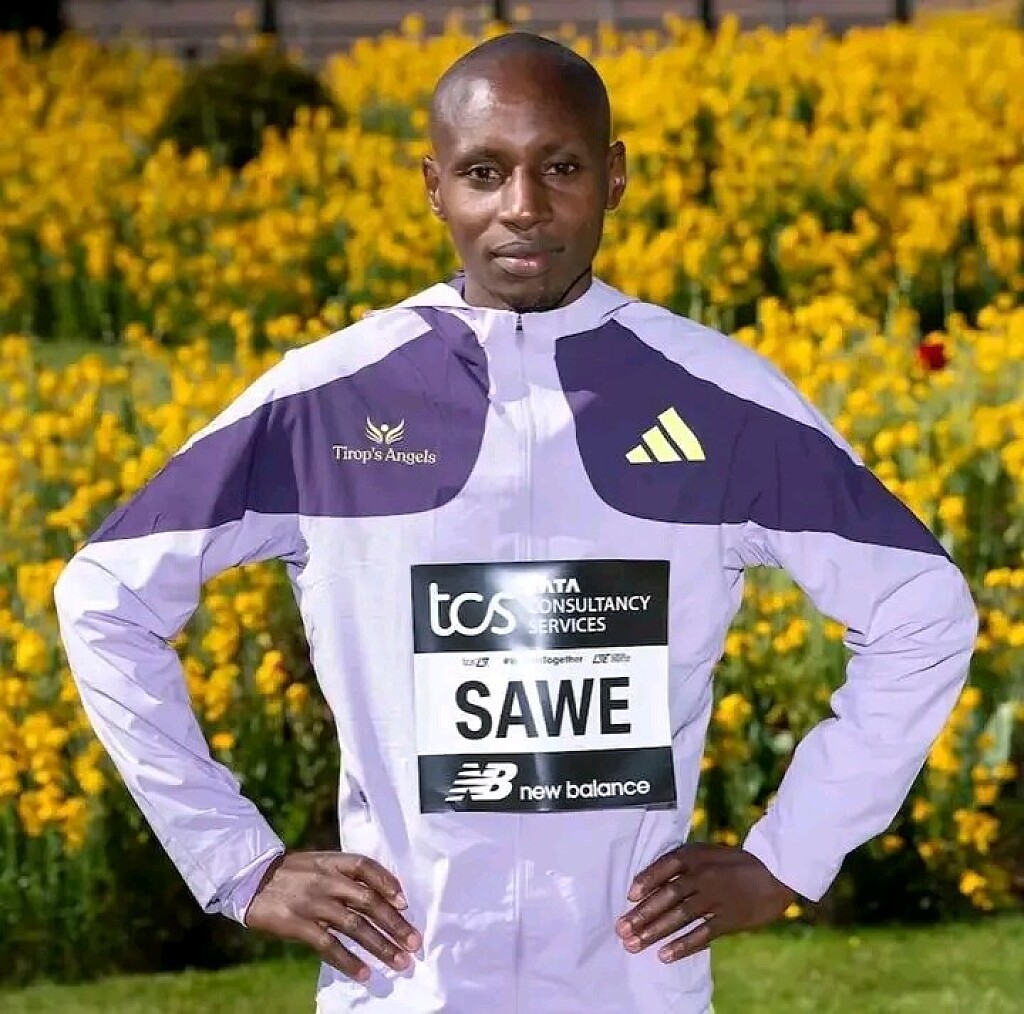
Sawe Braced for Fierce London Test Against World-Class Rivals
Confidence is building around Sabastian Sawe ahead of the 2026 London Marathon, with the Kenyan star making it clear that victory in the British capital will demand something exceptional.
Sawe believes the strength of this year’s field could force the race into historic territory once again.

“I am sure with the quality of athletes coming to London, it will take another fast time to win again,” he said ahead of Sunday’s showdown. “Perhaps the type of effort the great Kelvin Kiptum put in when he set the course record in 2023.”
That benchmark remains one of the defining performances in marathon history. Kiptum’s 2:01:25 course record in London was a masterclass in fearless front-running, and it continues to represent the standard every contender must now measure themselves against.
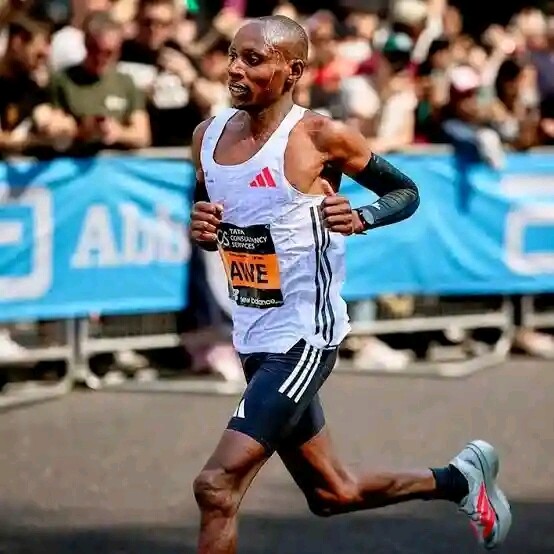
For Sawe, the challenge will be immense—but so will the opportunity.
The Kenyan enters the race as one of the sport’s rising forces, admired for his composure, tactical patience, and devastating finishing strength. Yet London in 2026 offers no room for hesitation, with a world-class field assembled for one of the most anticipated marathons of the season.
Among those standing in his path is Jacob Kiplimo, the Ugandan star whose range and endurance make him a serious threat over the classic distance. Ethiopia’s Yomif Kejelcha also arrives with formidable credentials, while two-time New York City Marathon champion Geoffrey Kamworor brings championship experience and relentless toughness.

With such names on the start list, the early pace is expected to be uncompromising. London’s flat roads and elite pacemaking have often produced memorable times, and another aggressive race could develop from the opening miles.
The London Marathon will be held on Sunday, April 26, with global attention fixed on the men’s contest. It is a race rich in history, but this year’s edition carries the feel of something more—a collision of generations, ambitions, and raw ability.
For Sawe, lifting the title would be a career-defining achievement. But if the pace ignites and the field commits, London may witness not just a winner, but another performance worthy of the city’s legendary marathon legacy.
by Erick Cheruiyot for My Best Runs.
Login to leave a comment
TCS London Marathon
Since its inaugural edition on March 29, 1981, the TCS London Marathon has grown into one of the world's most prestigious road races, blending elite competition with an extraordinary charitable legacy. Founded by former Olympic champion and journalist Chris Brasher alongside Welsh athlete John Disley, the event has been staged every year and has been held in the spring annually...
more...
Charles Hicks Delivers One of the Fastest American Marathons Ever at Boston
In just the second marathon of his young career, Charles Hicks has already placed himself among the fastest American marathoners in history.
The 24-year-old ran 2:04:35 to finish seventh at the 2026 Boston Marathon, recording the second-fastest marathon ever by an American man. On a course that does not qualify for record purposes, Hicks’ performance still stands as a major statement—one that confirms his rapid rise in the sport.
Boston is not a place where fast times come easily. The point-to-point course, unpredictable weather, and late-race challenges make it one of the most difficult marathons in the world to master. Yet Hicks handled it with the composure of a far more experienced runner, staying competitive with a deep international field and closing strong over the final miles.
What makes the performance even more impressive is how quickly it has come.
Hicks made his marathon debut in New York, where he finished sixth, immediately showing that he could compete at the highest level. In Boston, he nearly matched that placing while significantly improving his time, taking a major step forward in just his second attempt at the distance.
At 24, Hicks represents the next wave of American distance running—young, fearless, and capable of producing world-class performances early in his career. His 2:04:35 places him in elite company and signals that he may have even more to come as he gains experience.
His progression also highlights the depth currently building in American marathoning. With athletes like Zouhair Talbi, Conner Mantz, and Clayton Young pushing the front, Hicks now firmly joins that group as a runner to watch on the global stage.
Boston has long been a proving ground, and Hicks passed the test in emphatic fashion.
This was not just a strong performance.
It was the kind of run that suggests a major career is just beginning.
by Boris Baron
Login to leave a comment
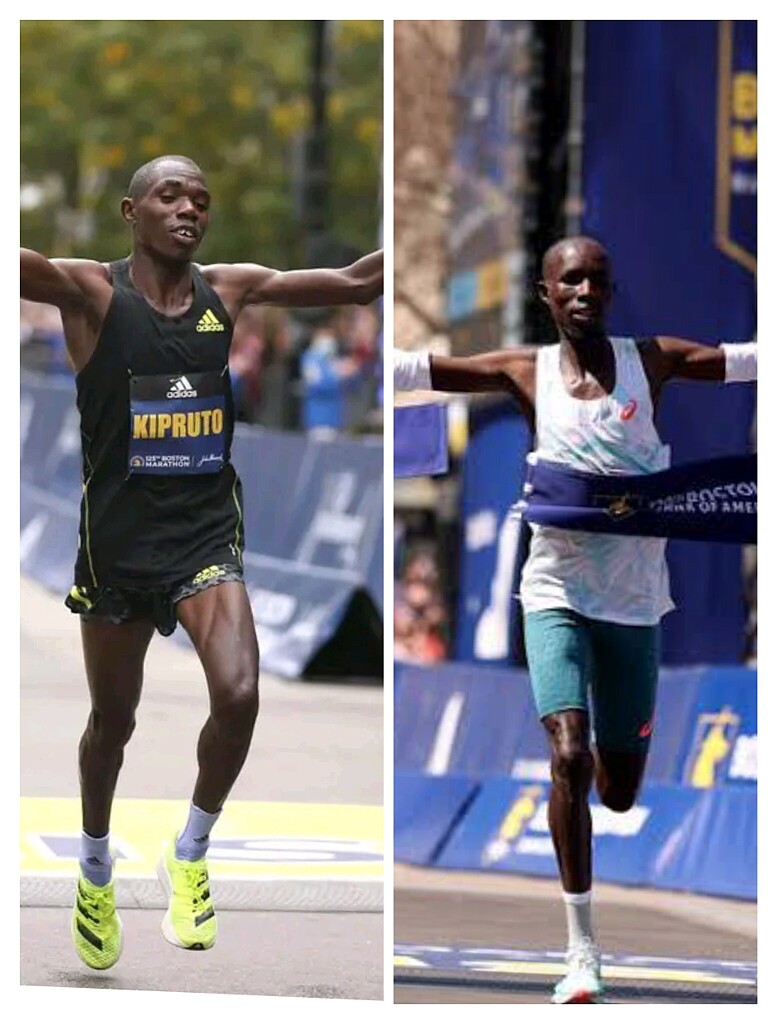
Boston Collision Course: John Korir and Benson Kipruto Ready to Ignite a Marathon Classic
The streets of Boston are bracing for a contest worthy of marathon history as two of Kenya’s finest distance stars prepare to clash in one of the most anticipated races of the season. Defending champion John Korir will return to the iconic course with unfinished ambition, but standing in his path is a man who knows exactly how to win here—former champion Benson Kipruto.
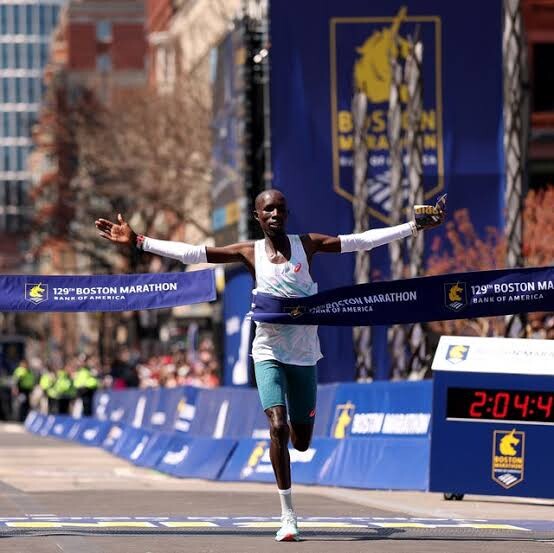
On paper, the matchup could hardly be closer. Their personal bests are separated by only eight seconds, a razor-thin margin at the highest level of marathon racing. Korir owns a lifetime best of 2:02:24, while Kipruto has gone even faster with 2:02:16. In a race measured over 42.195 kilometers, such a difference is almost invisible.
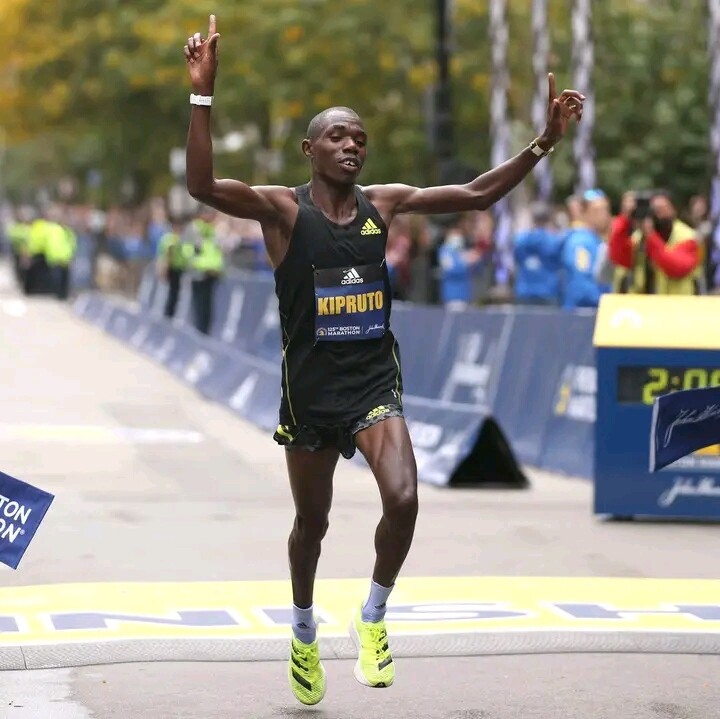
Yet statistics only tell part of the story.
Korir arrives in Boston carrying the momentum of a remarkable run of form. His recent victories in Valencia 2025, Boston 2025, and Chicago 2024 have elevated him into the sport’s elite bracket. Powerful, composed, and tactically sharp, he has become one of the most dangerous men in championship-style racing. Returning as defending champion adds another layer of pressure—but also confidence.
Kipruto, however, is no stranger to the grandest stages. His résumé speaks with authority: triumphs in New York 2025, Tokyo 2024, Chicago 2022, and, most importantly for this occasion, Boston 2021. That previous success on the demanding Boston course could prove invaluable. He understands its rhythm, its unpredictability, and the moment when patience must give way to attack.
This is more than a race between two fast men. It is a collision of momentum versus experience, title defense versus redemption, present dominance versus proven mastery.
Boston has never been a course that rewards numbers alone. Its rolling terrain, shifting weather, and legendary late-race challenges often crown the athlete with the sharpest instincts rather than the quickest personal best. Strength, courage, and timing will matter just as much as speed.
When the leaders reach the decisive miles, reputations will mean nothing. One athlete will fight to defend his throne. The other will chase a second crown. And somewhere between the opening stride and the finish line on Boylston Street, a new chapter of Boston Marathon drama will be written.
by Erick Cheruiyot for My Best Runs.
Login to leave a comment
Boston Marathon
Among the nation’s oldest athletic clubs, the B.A.A. was established in 1887, and, in 1896, more than half of the U.S. Olympic Team at the first modern games was composed of B.A.A. club members. The Olympic Games provided the inspiration for the first Boston Marathon, which culminated the B.A.A. Games on April 19, 1897. John J. McDermott emerged from a...
more...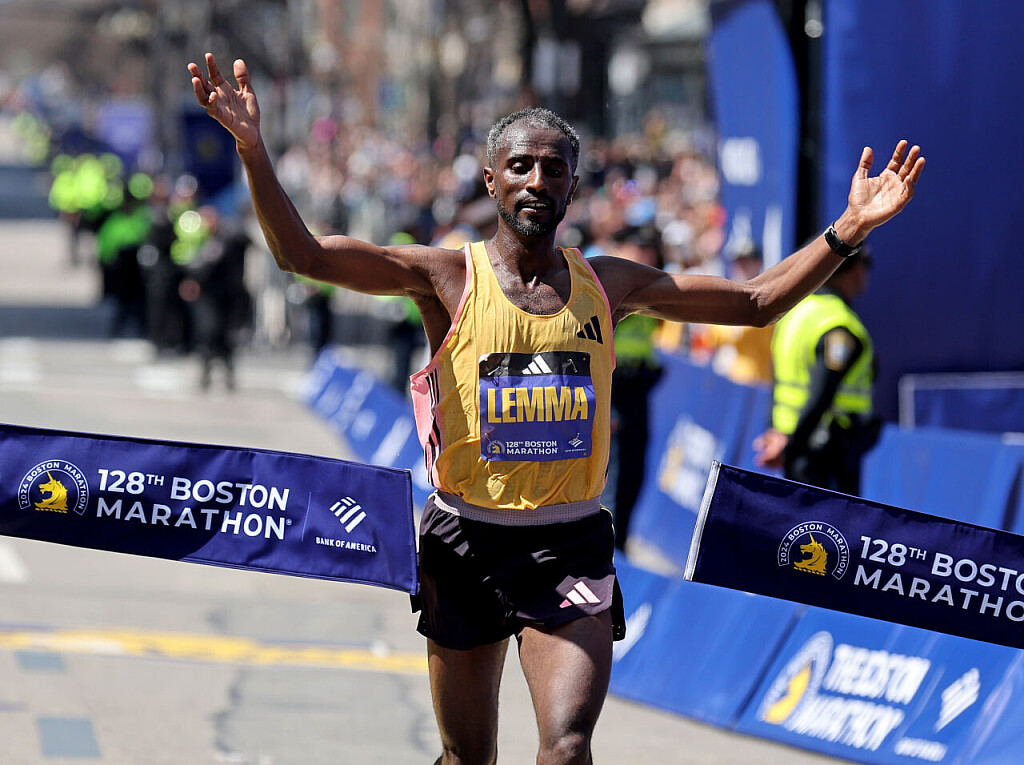
Elite Shake-Up in Boston—But the Firepower Remains Intact
With just three weeks remaining until the iconic Boston Marathon 2026 takes center stage on April 20, the race narrative has already been dramatically rewritten. What once appeared to be a deep and stable elite lineup is now shifting rapidly, as a wave of high-profile withdrawals reshapes both the men’s and women’s fields.
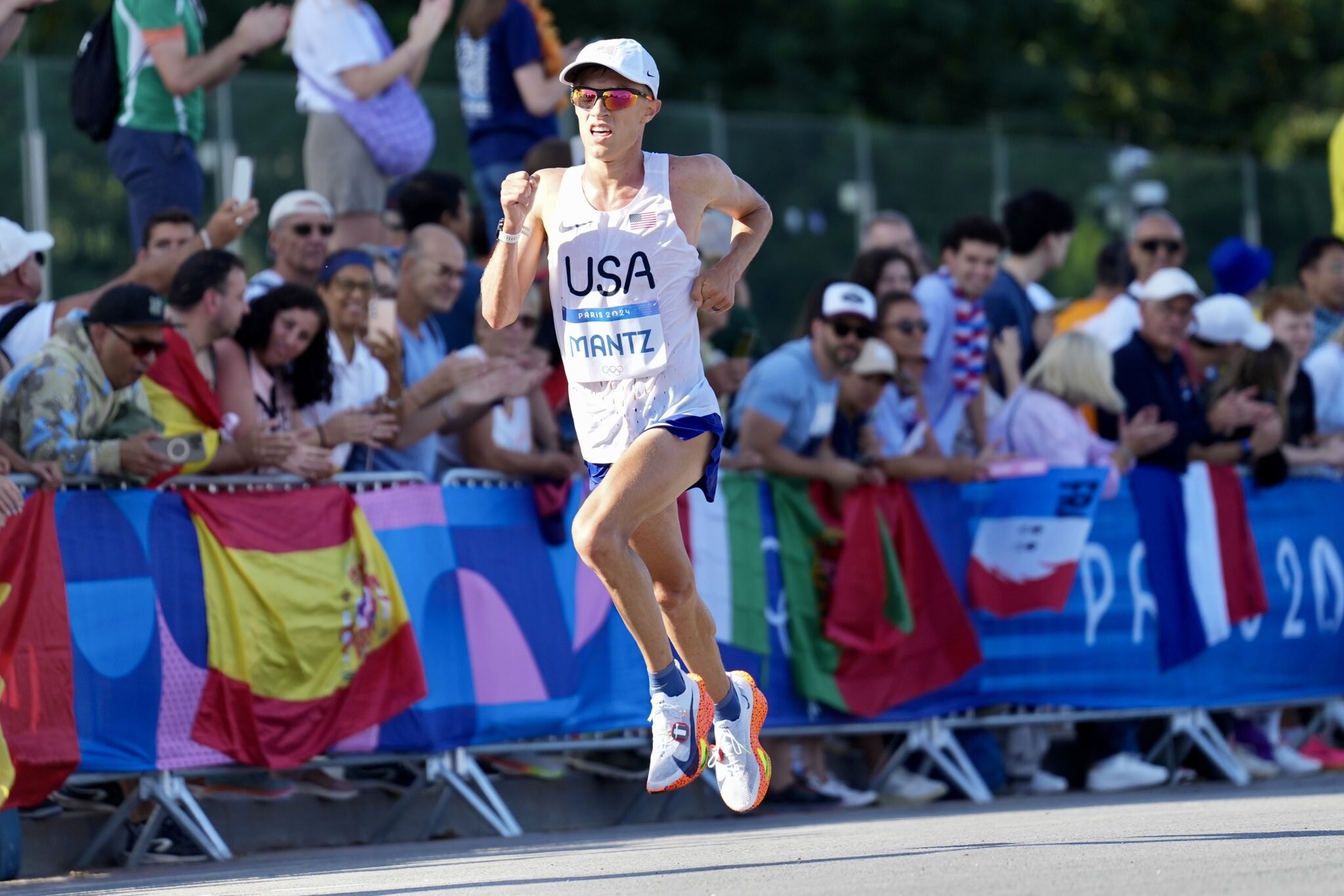
The most notable development is the withdrawal of American record holder Conner Mantz. Once considered a leading home contender, Mantz confirmed he will not compete after struggling to regain full fitness following a sacral stress fracture and other setbacks. His decision reflects a long-term focus—choosing patience over risking a return before peak condition.
The shake-up does not end there. Kenyan legend Vivian Cheruiyot has also officially pulled out, dealing a significant blow to the women’s race. She is joined on the withdrawal list by American marathon star Keira D'Amato, Tanzania’s Magdalena Shauri, and U.S. distance runner Biya Simbassa.
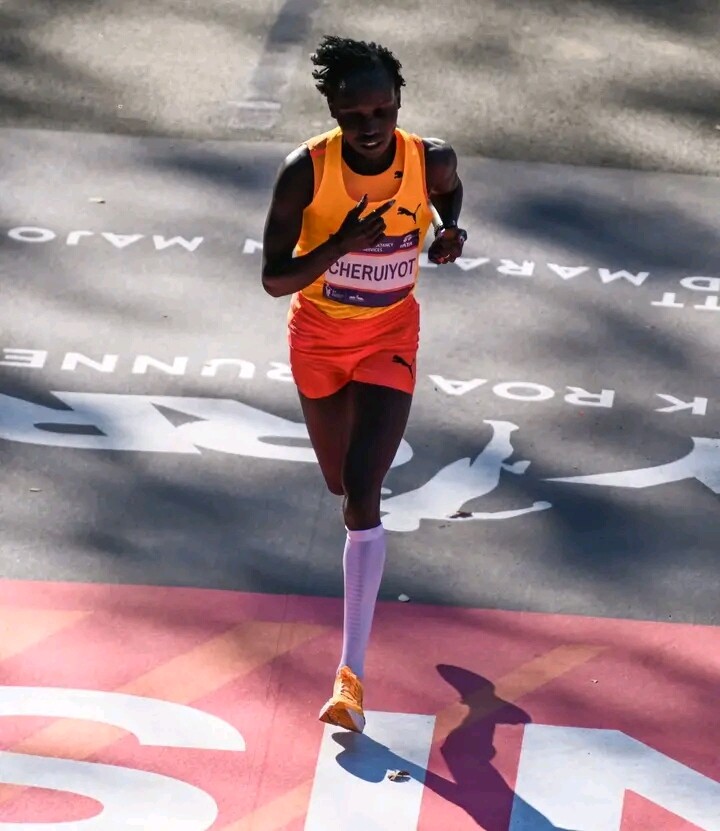
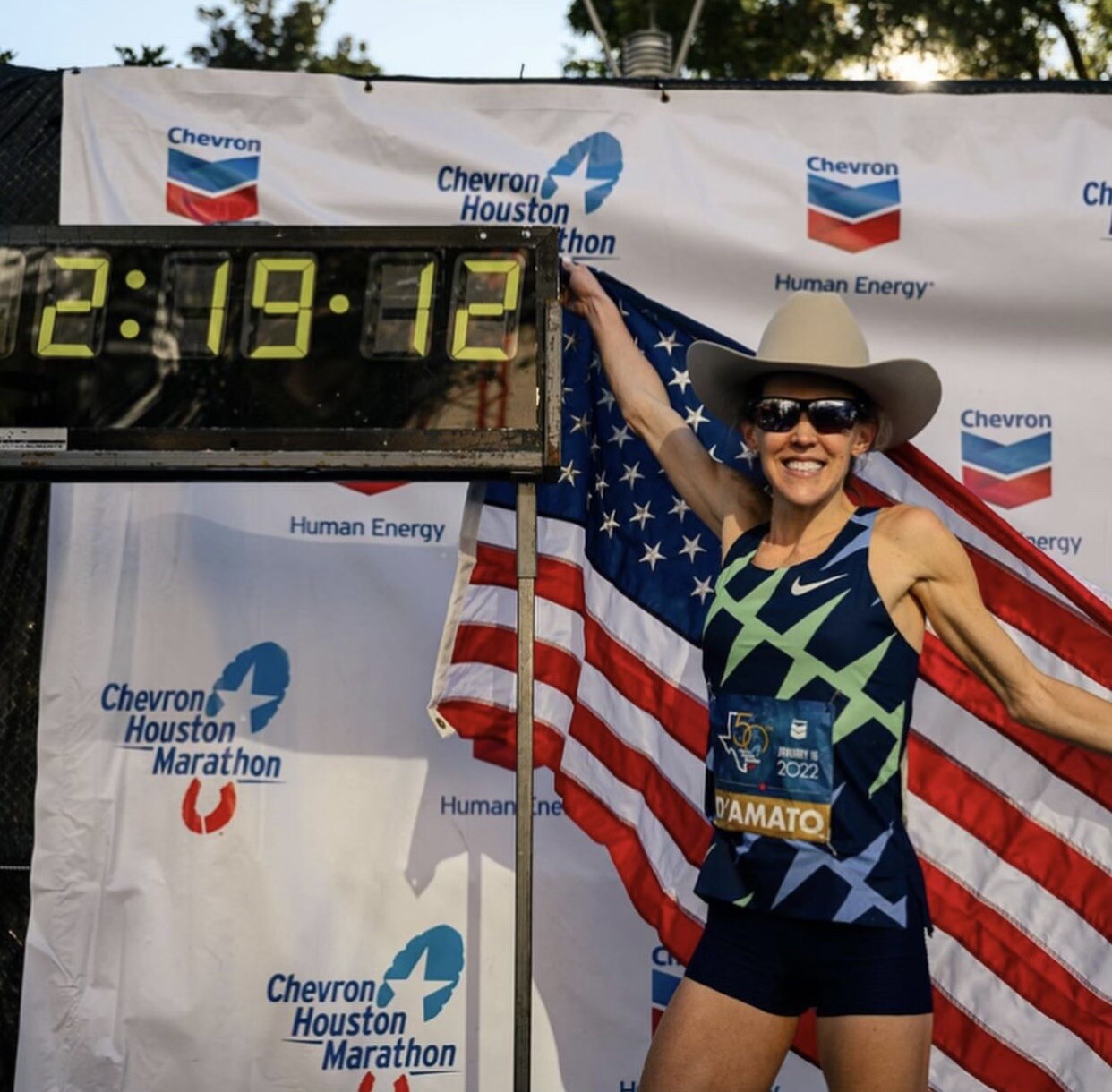
This cluster of late exits has thinned the field’s depth and removed several experienced contenders, leaving both races more open and tactically unpredictable.
Yet amid the withdrawals, a new force has emerged. Ethiopia’s Milkesa Mengesha has been added late to the men’s field, bringing with him a formidable personal best of 2:03:17. His inclusion injects fresh intensity into the race and positions him as a serious contender capable of disrupting the established order.
With Mantz no longer in the picture, the men’s race now leans heavily on proven champions. Kenya’s Benson Kipruto—the 2021 Boston winner and reigning New York City Marathon champion—returns with confidence and experience. Standing opposite him is Ethiopia’s Sisay Lemma, the defending champion determined to hold onto his title on Boston’s demanding course.
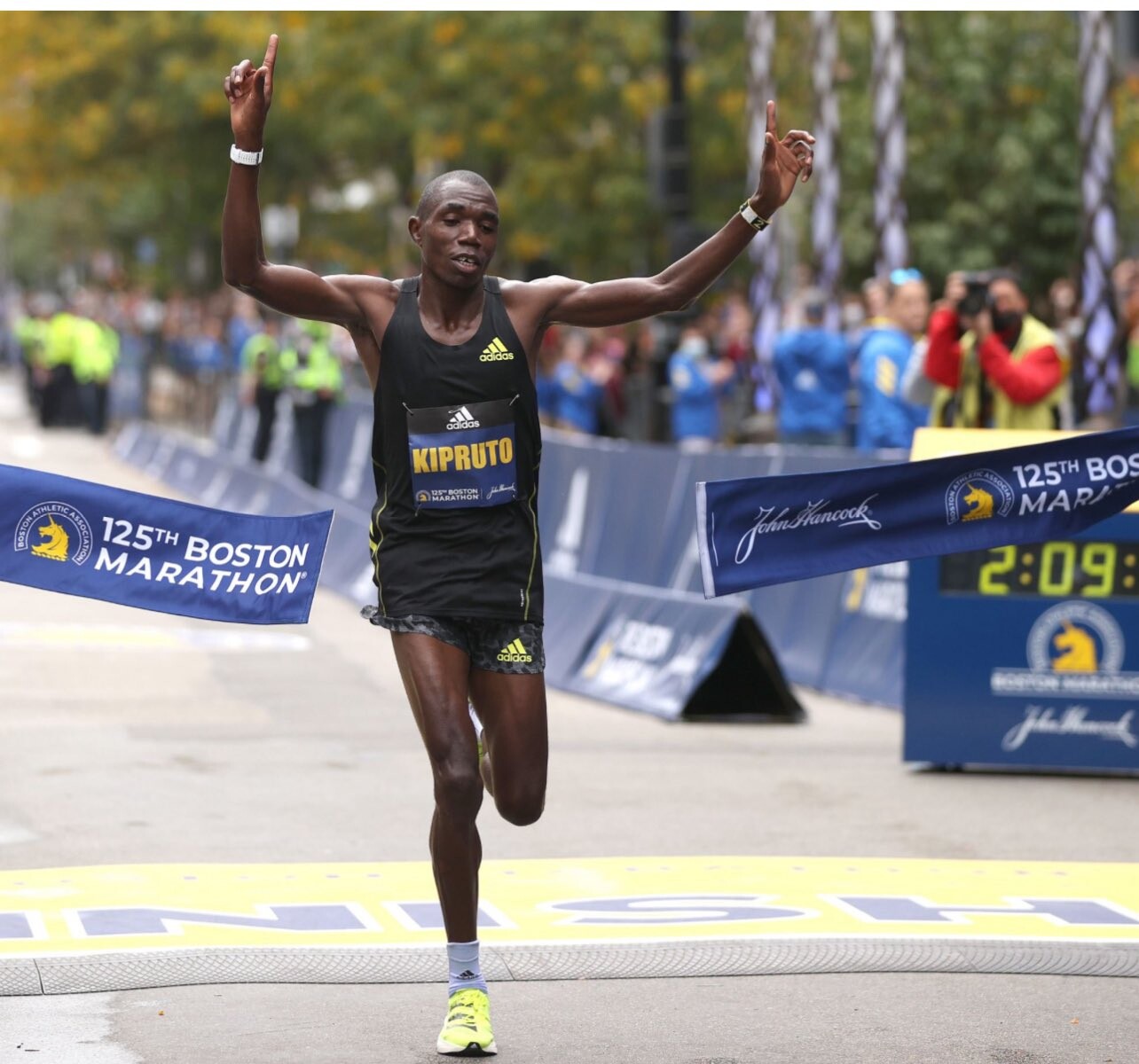
What once seemed like a straightforward clash of elite names has evolved into something far more compelling. The withdrawals have not diminished the race—they have transformed it. With gaps to fill and opportunities emerging, the 2026 edition now promises a battle defined by resilience, tactics, and the unexpected.
As Boston prepares for another unforgettable Patriots’ Day, anticipation continues to build. The script has changed—but the stakes may be higher than ever.
by Erick Cheruiyot for My Best Runs.
Login to leave a comment
Boston Marathon
Among the nation’s oldest athletic clubs, the B.A.A. was established in 1887, and, in 1896, more than half of the U.S. Olympic Team at the first modern games was composed of B.A.A. club members. The Olympic Games provided the inspiration for the first Boston Marathon, which culminated the B.A.A. Games on April 19, 1897. John J. McDermott emerged from a...
more...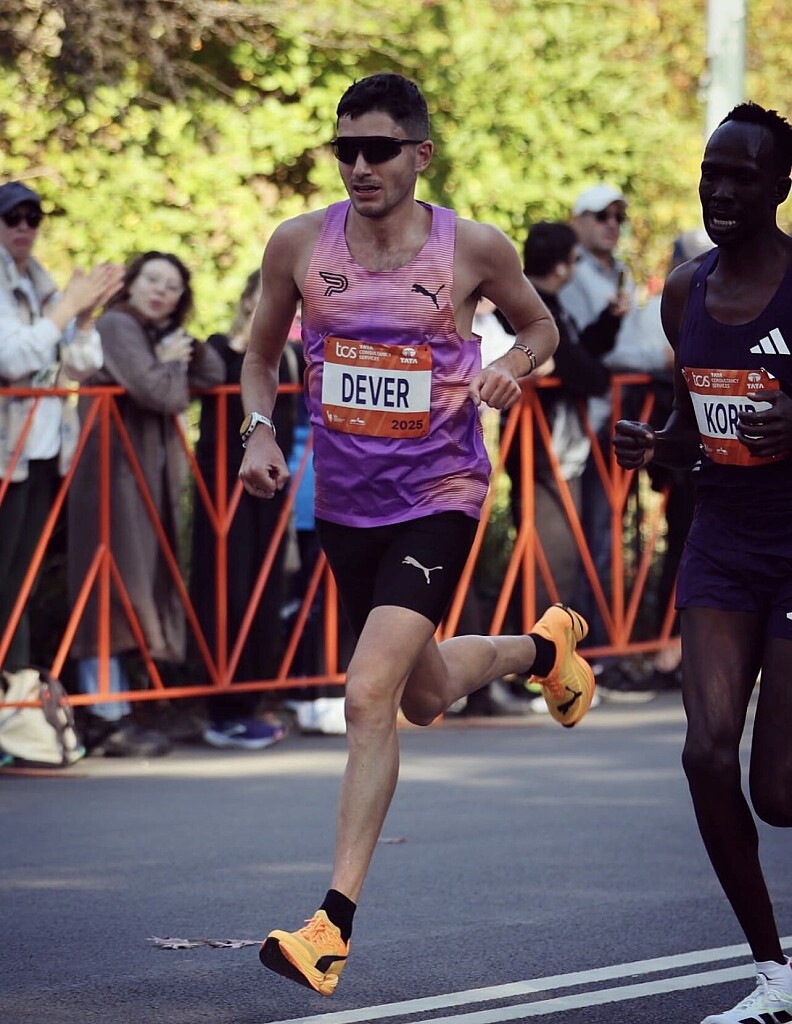
Patrick Dever Elevated to Third at 2025 New York City Marathon After Korir Disqualification
British distance runner Patrick Dever has been officially upgraded to third place at the 2025 New York City Marathon following the disqualification of Albert Korir due to a doping violation.
Dever, who was making his marathon debut, originally crossed the line in fourth place in a time of 2:08:58—just one second behind Korir. With Korir’s result now annulled, the Brit steps onto the podium in what becomes one of the most remarkable debut performances in recent New York City Marathon history.
The adjustment comes after Korir tested positive for CERA (Continuous Erythropoietin Receptor Activator), a banned performance-enhancing substance, in three out-of-competition tests conducted last October. He admitted to the violations on January 12, leading to a five-year ban and the disqualification of all results from October 3 onward.
For Dever, the revised result underscores both his potential and the integrity of the sport. Running one of the closest finishes of the race, he demonstrated composure and strength on a challenging course that demands tactical awareness as much as physical endurance.
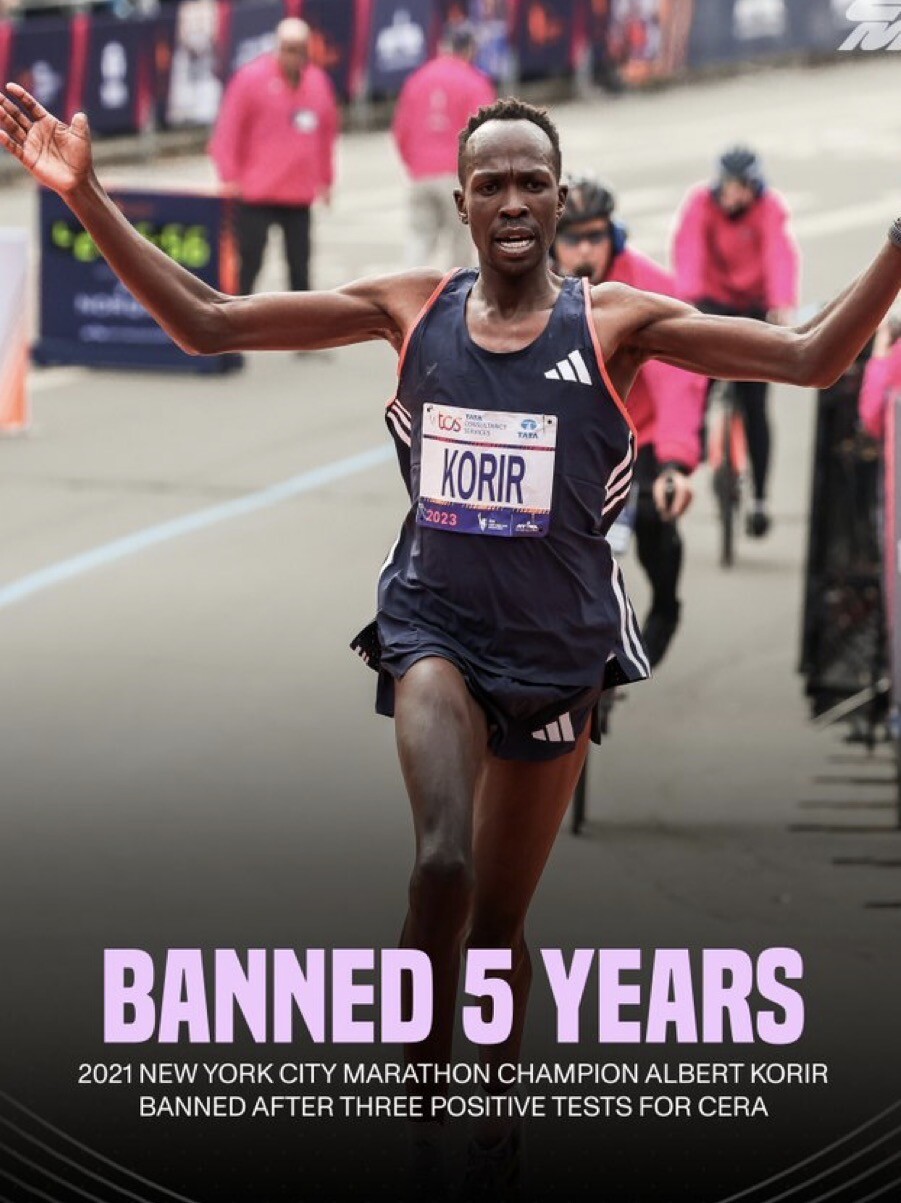
While podium upgrades are never the way athletes hope to earn recognition, Dever’s performance stands on its own merit. His 2:08:58 debut signals the arrival of a serious contender on the global marathon stage and provides a strong foundation for future major appearances.
The reshuffling of results also serves as a reminder of the ongoing fight for clean sport. As governing bodies continue to strengthen testing and enforcement, outcomes like this—though delayed—help reinforce fairness for athletes competing within the rules
For now, Patrick Dever’s name is rightfully etched into the top three of one of the world’s most iconic races—a result earned on the roads of New York and confirmed in the record books.
by Boris Baron for My Best Runs
Login to leave a comment
TCS New York City Marathon
The first New York City Marathon, organized in 1970 by Fred Lebow and Vince Chiappetta, was held entirely in Central Park. Of 127 entrants, only 55 men finished; the sole female entrant dropped out due to illness. Winners were given inexpensive wristwatches and recycled baseball and bowling trophies. The entry fee was $1 and the total event budget...
more...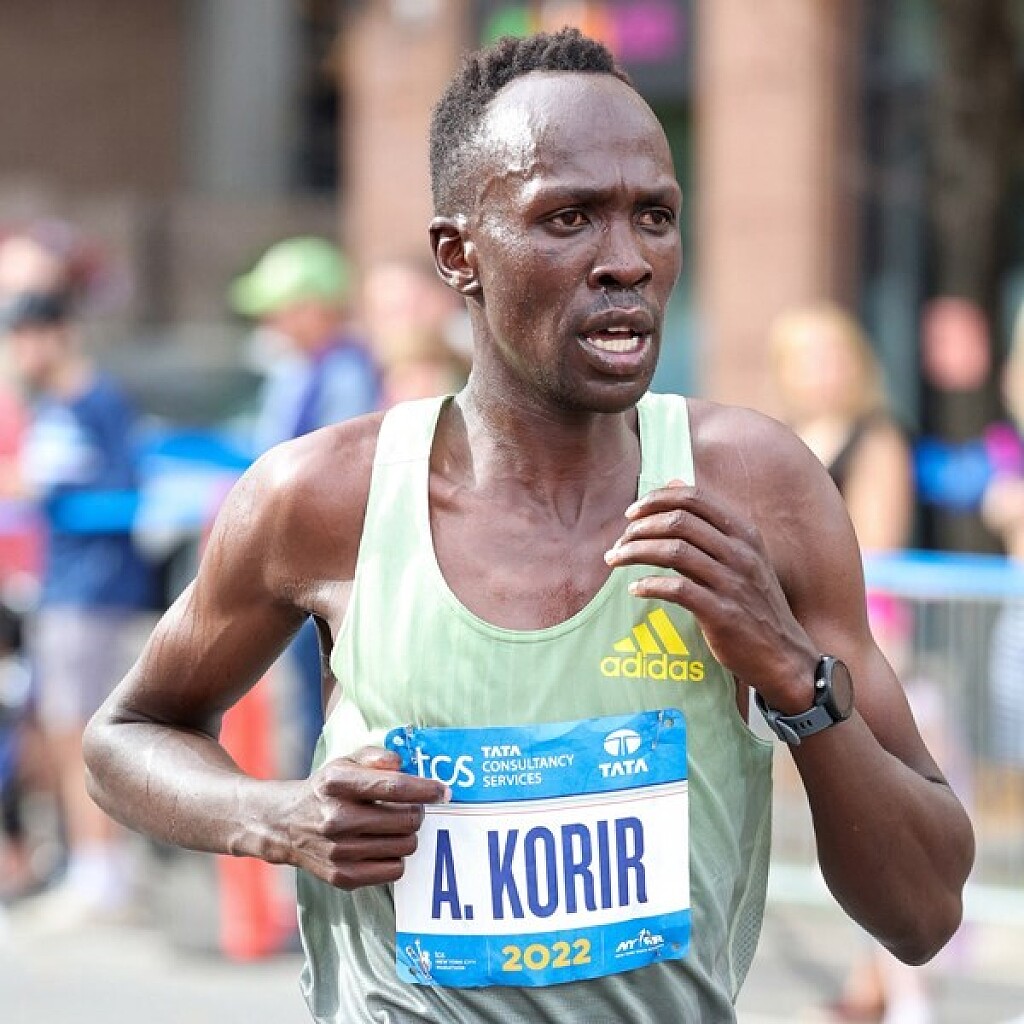
Five-Year Ban Rocks Kenyan Athletics as Albert Korir Sanctioned in Major Doping Case
The integrity of global athletics has once again come under sharp focus following a decisive ruling by the Athletics Integrity Unit (AIU), which has handed Kenyan long-distance runner Albert Korir a five-year ban for anti-doping violations. The sanction, confirmed after multiple positive tests, underscores the sport’s uncompromising stance against the use of performance-enhancing substances.
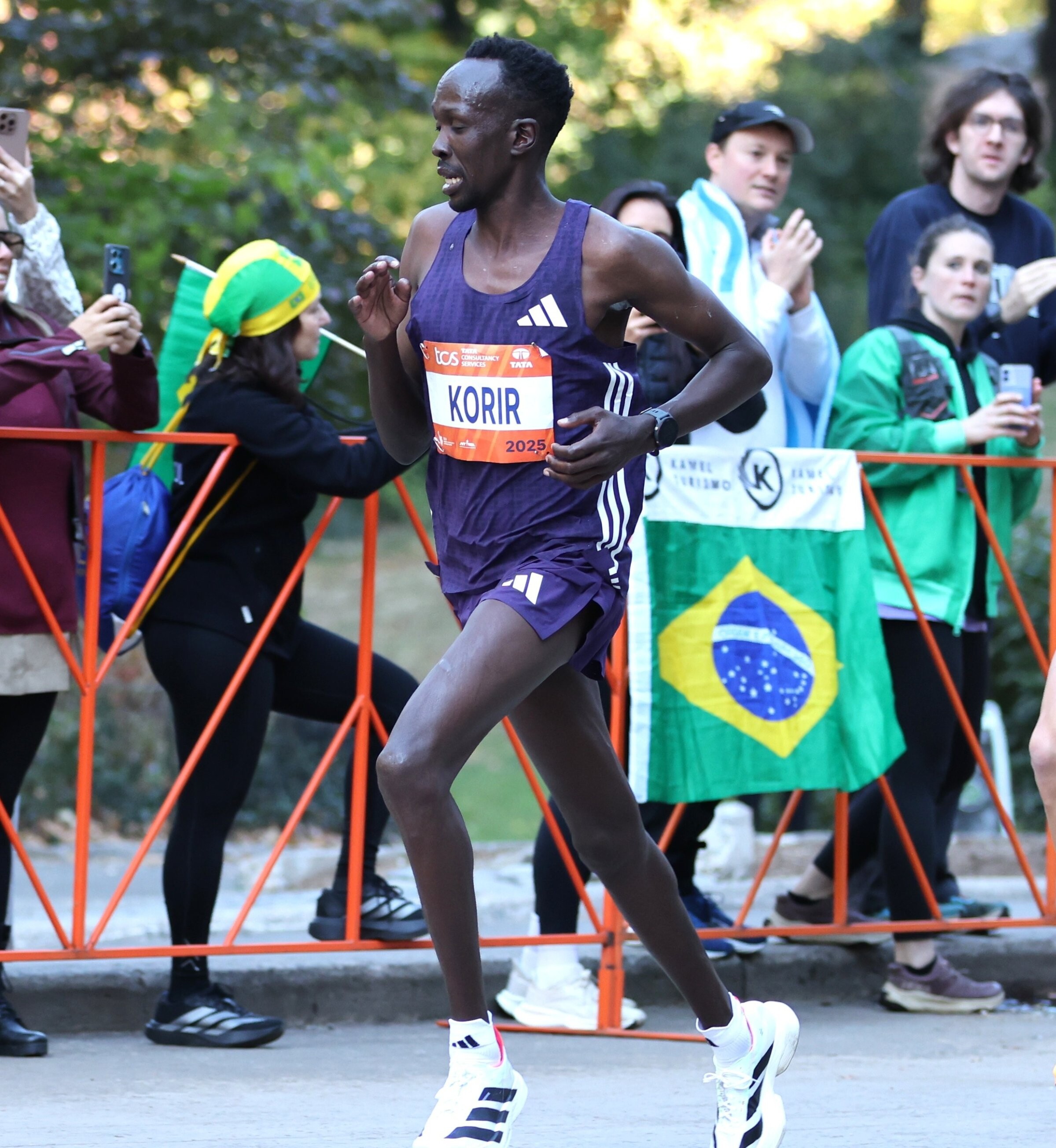
According to the AIU’s official findings, Korir was found to have used CERA (Continuous Erythropoietin Receptor Activator), a prohibited substance designed to boost endurance by increasing red blood cell production. The violation falls under World Athletics Anti-Doping Rules 2.1 and 2.2, covering both the presence and use of a banned substance. Samples collected in Kenya in October 2025 repeatedly returned positive results, leaving little room for dispute.
The disciplinary outcome is significant. Korir will serve a five-year period of ineligibility, effective from January 8, 2026, through January 7, 2031. In addition, all of his competitive results from October 3, 2025, onward have been disqualified, resulting in the forfeiture of titles, medals, and any prize money earned during that period.
In its ruling, the AIU acknowledged that Korir admitted to the violations at an early stage of the process. This cooperation led to a reduction of the sanction from a potential six-year ban to five years. However, the body emphasized that the seriousness of the offense warranted a lengthy suspension, reinforcing its commitment to protecting clean competition.
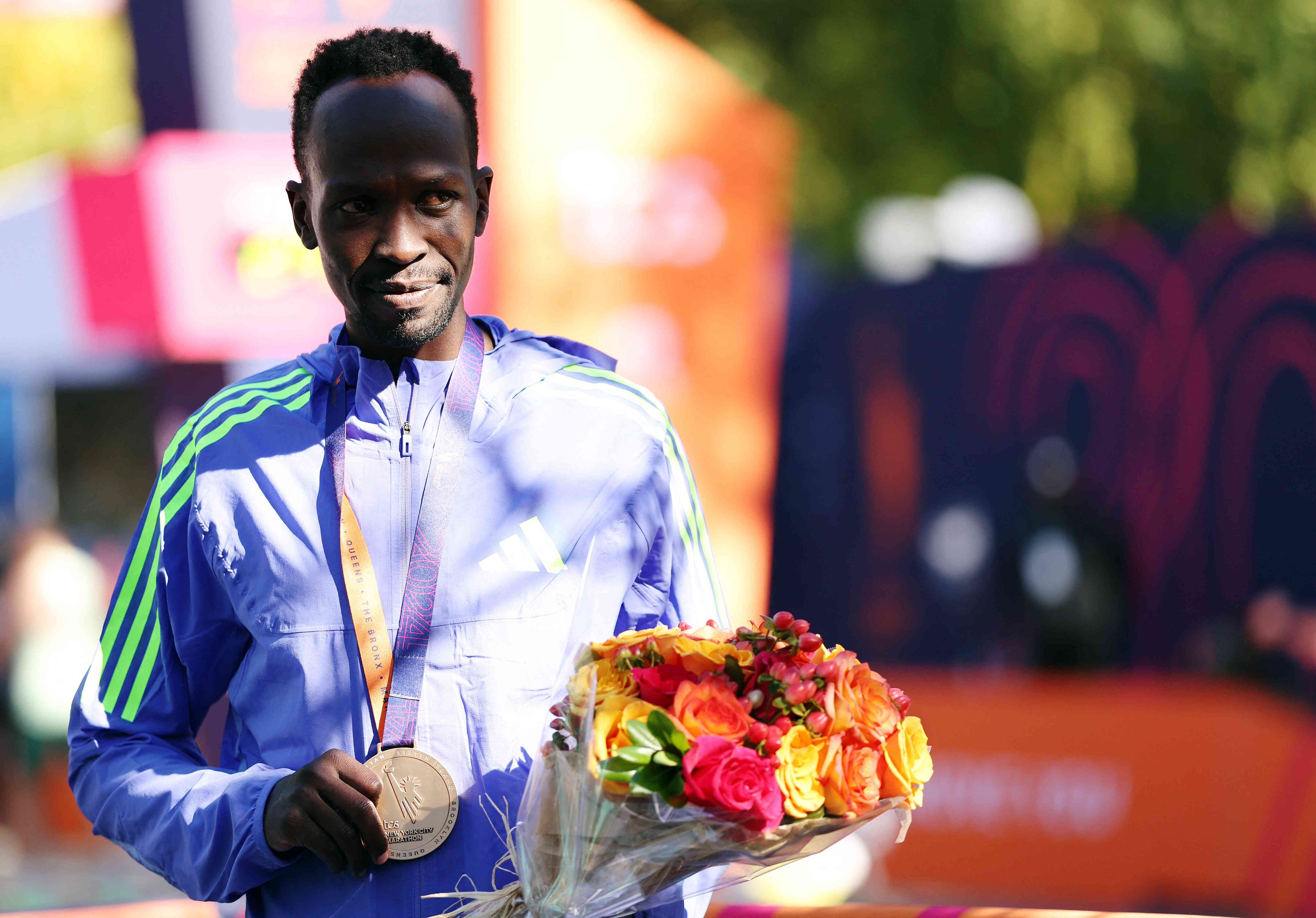
The case also confirmed that Korir did not possess a Therapeutic Use Exemption (TUE), eliminating any possibility that the substance had been used for legitimate medical purposes. This further solidified the grounds for the sanction and highlighted the strict regulatory framework governing elite athletics.
This development arrives amid growing concern over repeated doping cases, particularly within endurance running. Each new violation not only damages individual reputations but also casts a shadow over the credibility of the sport as a whole. For Kenya, a nation synonymous with distance running excellence, such incidents present an ongoing challenge in maintaining trust and preserving its rich athletic legacy.
The AIU, operating as the independent body responsible for enforcing anti-doping measures under World Athletics, continues to intensify its efforts globally. Its message remains clear: fairness is non-negotiable, and any breach of the rules will be met with firm and transparent action.
Albert Korir had built a strong reputation on the global stage through consistent high-level performances, highlighted by his victory at the New York City Marathon in 2021, a title he retained despite later scrutiny. He also claimed wins at the Ottawa Marathon in both 2019 and 2025, underlining his competitiveness across major city races. Earlier, he finished runner-up in New York in 2019 and returned in 2023 to secure third place with a personal best of 2:06:57, demonstrating steady progression at the elite level. However, his initially recorded third-place finish at the 2025 New York City Marathon was later nullified following his disqualification, casting a shadow over an otherwise impressive career marked by podium finishes and international victories.
As the sport moves forward, cases like this serve as both a warning and a reminder—true greatness in athletics is built not only on performance, but on integrity.
by Erick Cheruiyot for My Best Runs.
Login to leave a comment
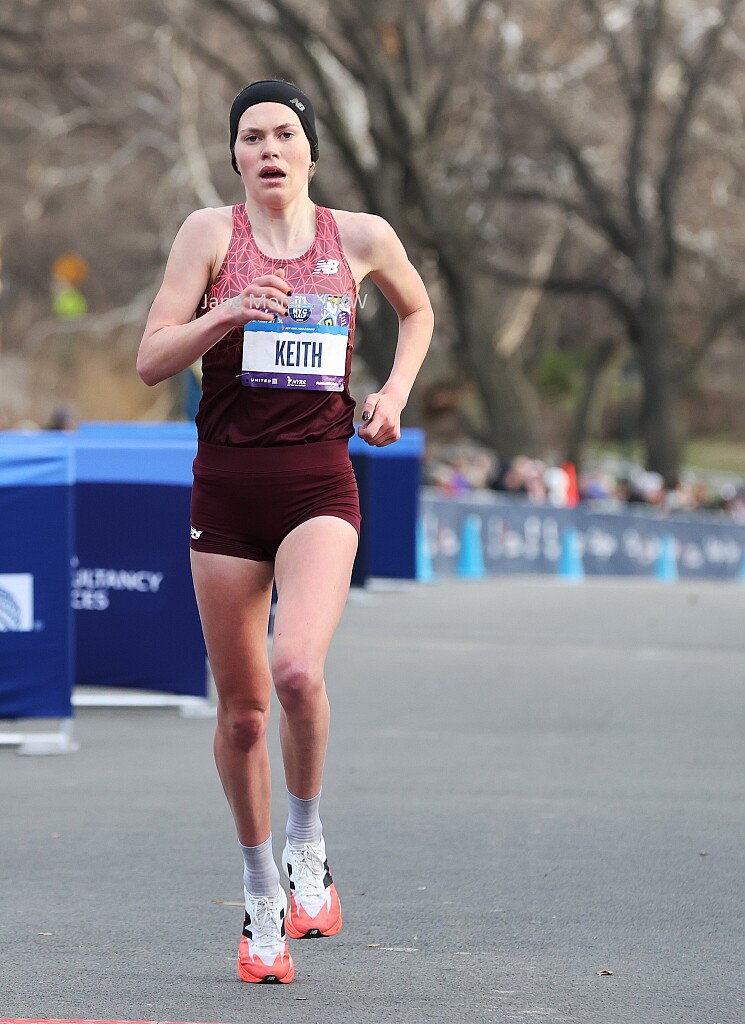
Megan Keith Shines on Half-Marathon Debut with Historic Podium at NYC Half
Scottish distance star Megan Keith delivered a remarkable performance in her first attempt at the half-marathon distance, finishing third at the New York City Half Marathon and setting a new benchmark for debutants in the race’s history.
Competing against a deep international field on the streets of New York, Keith crossed the finish line in an impressive 1:07:13, the fastest time ever recorded by a woman making her debut at the prestigious event. The performance marked a confident and mature step up for the Scottish runner, who adapted seamlessly to the demands of the 21.1-kilometre distance.
From the early miles, Keith positioned herself among the leading group, displaying composure and strength as the race unfolded through the city’s iconic course. As the pace intensified in the latter stages, she remained resilient, holding her form and determination to secure third place on the podium in a highly competitive race.
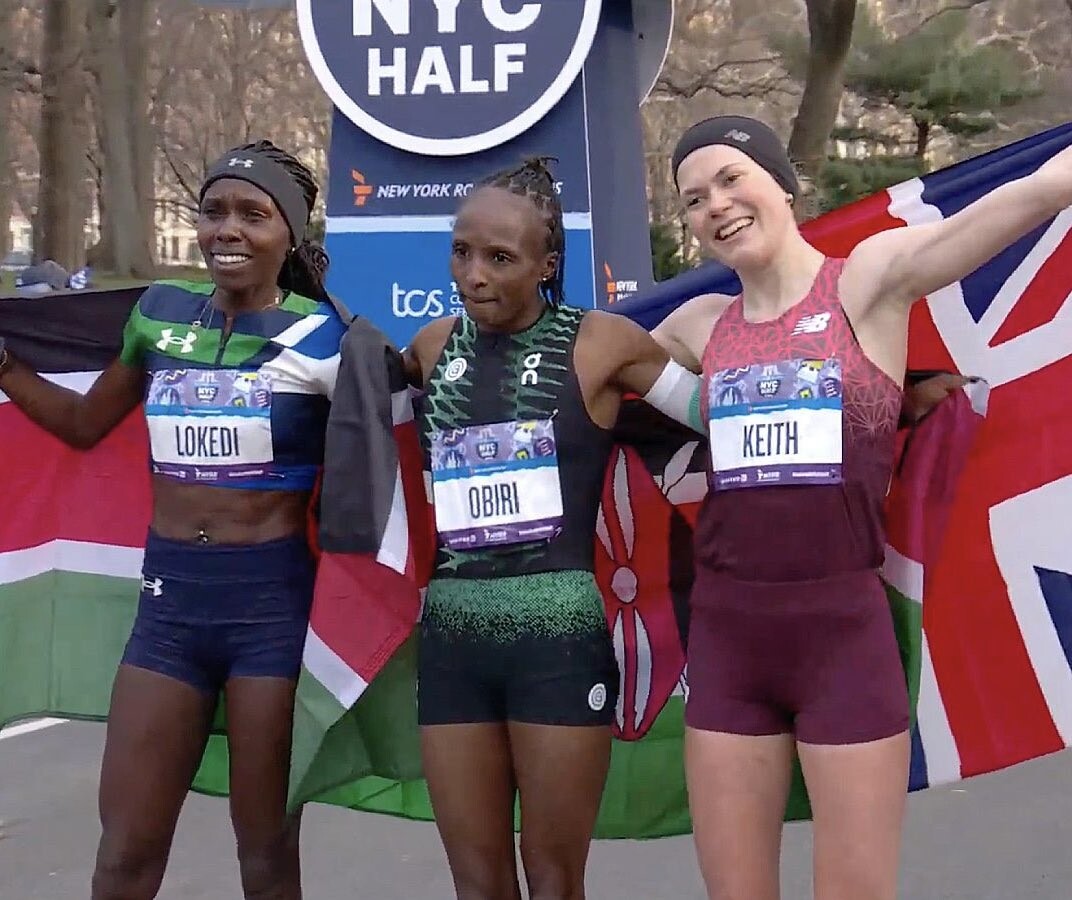
Keith is a Scottish long-distance runner who competes across track, cross country, and road racing, representing both Great Britain and Scotland on the international stage. Over the past few seasons she has steadily established herself as one of the rising talents in British distance running, known for her endurance, tactical awareness, and fearless racing approach.
Her ascent in the sport gathered significant momentum through a series of strong performances in cross country and track competition. Keith developed through the British university and club athletics system, gradually progressing from promising prospect to international contender as she sharpened her competitive edge against elite opposition.
A defining breakthrough arrived in 2023 when she captured the senior women’s title at the European Cross Country Championships. That victory not only confirmed her status among Europe’s most promising distance runners but also highlighted her natural strength over longer distances—qualities that suggested a bright future on the roads.
Her historic debut in New York now adds another milestone to that growing résumé. Blending track speed with endurance built through years of cross-country racing, Keith demonstrated that she possesses the tools required to thrive over the half-marathon distance.
With her combination of resilience, tactical intelligence, and steady progression, Keith is increasingly viewed as a future contender in major international road races and championships. If her performance in New York is any indication, the Scottish star may eventually extend her success even further—potentially stepping up to the marathon distance as her career continues to evolve.
by Erick Cheruiyot for My Best Runs.
Login to leave a comment
