

Running News Daily
Running News Daily is edited by Bob Anderson and team. Send your news items to bob@mybestruns.com Advertising opportunities available.
Index to Daily Posts · Sign Up For Updates · Run The World Feed
Articles tagged #Iten
Today's Running News



From Kenyan Culture To The Streets Of New York: Crippa’s Remarkable Marathon Rise
From enjoying roasted maize in Kenya to standing on the podium of one of the world’s most iconic marathons, Yemaneberhan Crippa’s 2026 season has become a remarkable story of preparation, perseverance and belief.

The Italian distance-running star spent part of his marathon preparation in Iten, Kenya, the legendary high-altitude town in the Rift Valley that has produced and attracted some of the world’s greatest distance runners.
But Crippa’s time in Kenya was about more than simply putting in the kilometres.

He immersed himself in the local running culture and embraced moments away from training, including a memorable encounter with roasted maize, one of Kenya’s popular street foods. It was a simple glimpse of the lighter side of life in a country where running is deeply woven into everyday culture.
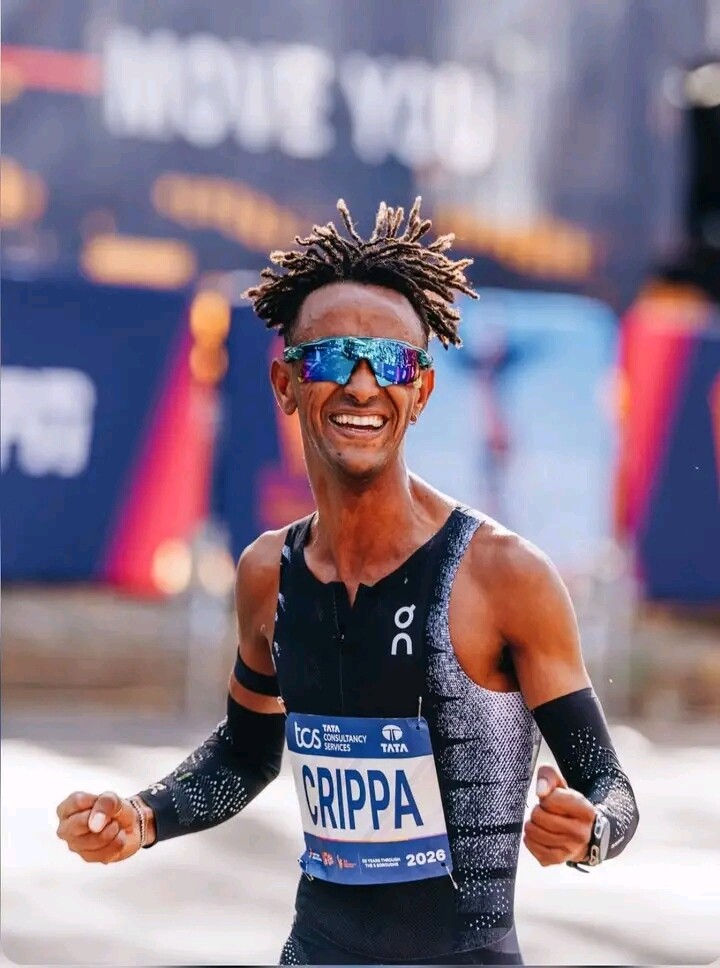
Behind those relaxed moments, however, Crippa was engaged in demanding altitude training designed to develop the endurance and strength required to compete over 42.195 kilometres.
Training in Kenya gave him an opportunity to experience an environment where distance running is a way of life. Surrounded by athletes, coaches and runners pursuing similar ambitions, Crippa continued building the foundation for what would become a breakthrough marathon season.
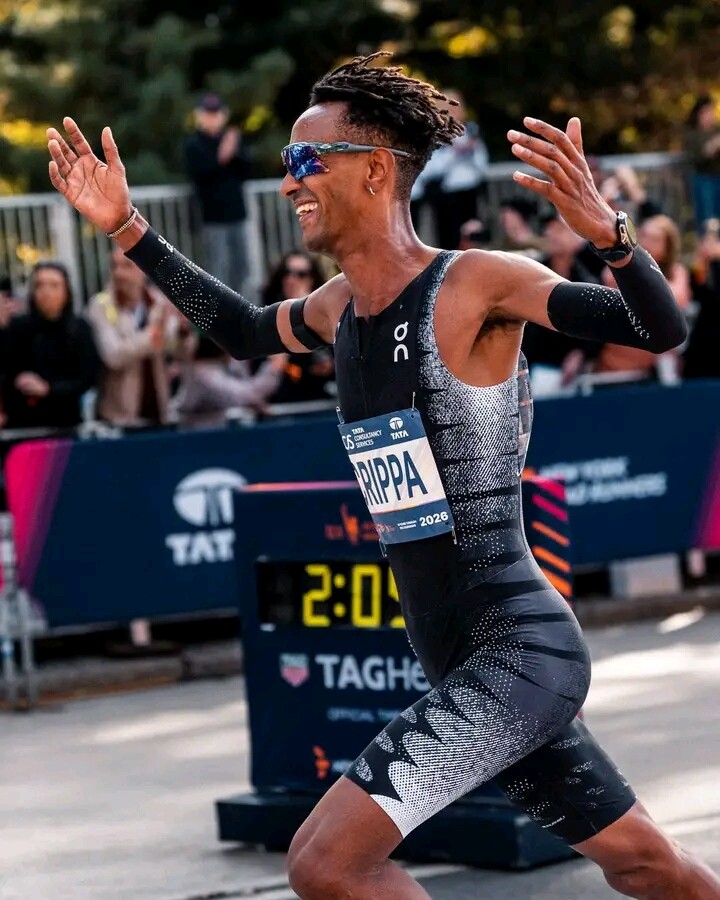
The results soon began to speak for themselves.
In April, Crippa produced one of the biggest performances of his career by winning the Paris Marathon in a personal best of 2:05:18. The victory established him as a serious contender over the marathon distance and provided a major confidence boost for the challenges ahead.
But New York would offer an even greater test.
On November 1, Crippa lined up for the 2026 TCS New York City Marathon alongside a world-class field, ready to measure his progress on one of the most demanding and prestigious marathon courses in the world.
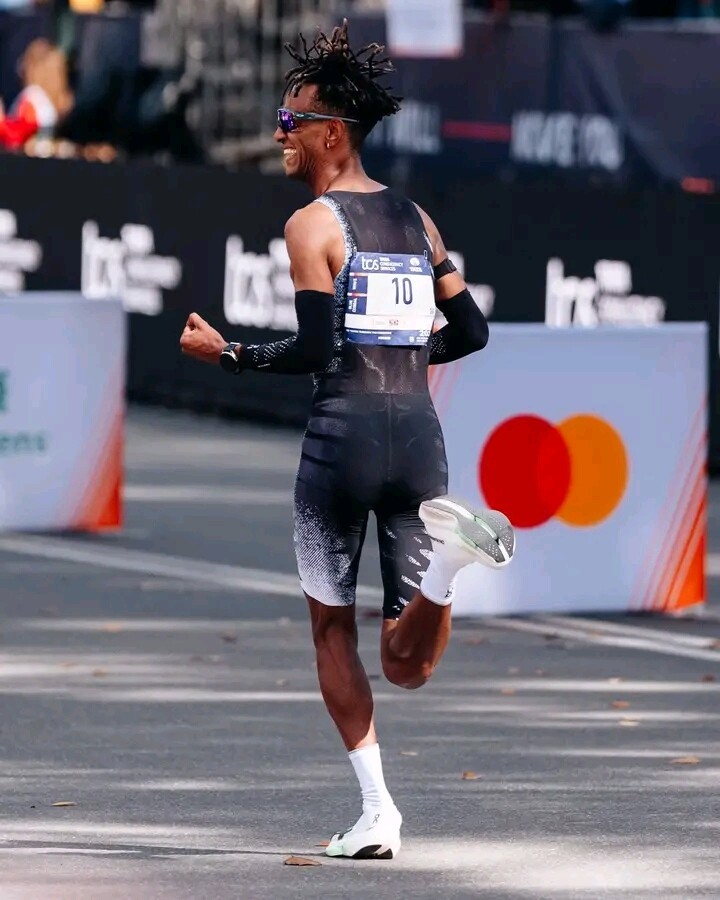
He did not disappoint.
Crippa fought his way into a thrilling battle for victory and remained firmly in contention deep into the race. When the decisive moments arrived, Sweden’s Andreas Almgren produced a powerful late surge, pulling away from Crippa inside the final 400 metres.
Almgren crossed the finish line first in 2:06:01, while Crippa secured an impressive second place in 2:06:14.
For Crippa, the silver medal represented far more than another strong marathon result. It was the best performance by an Italian man at the New York City Marathon in 30 years and another significant step in his transformation into a world-class marathoner.
His New York performance also gave fresh meaning to the months he had spent preparing in Kenya.
From the high-altitude roads of Iten, where he trained alongside runners immersed in Kenya’s legendary distance-running culture, to the packed streets of Manhattan, Crippa carried the lessons of his preparation onto one of the biggest stages in the sport.
There was a time in Kenya for hard workouts, altitude adaptation and building endurance. There were also moments to experience the culture, enjoy the simple things and appreciate the environment around him.
Now, those memories are part of a season in which Crippa has firmly announced himself on the marathon scene.
And after achieving his New York breakthrough, Crippa struggled to put the magnitude of the moment into words.
Reflecting on his performance, the Italian shared an emotional message that captured the significance of the silver medal.
“Yesterday I spoke about a dream, today it is reality… New York,” Crippa wrote, celebrating his second-place finish in the city that had become the setting for one of the biggest moments of his career.
He added: “I gave it everything, until the end.”
The emotion of the experience was still fresh for the Italian, who admitted that he was not yet sure how to fully describe what he had lived through.
“I still don’t know how to describe what I experienced yesterday. I only know that it is an emotion I will carry with me for a long time.”
Those words perfectly capture what New York meant to Crippa. The result was not simply a number on the clock or another podium finish—it was the reward for months of preparation, sacrifice and belief.
From the training grounds of Kenya to the world stage in New York, Crippa has shown what can happen when ambition is matched with relentless work.
His message was simple but powerful: “There is nothing you cannot achieve.”
From enjoying Kenyan culture to conquering the streets of New York, Yemaneberhan Crippa’s journey has been extraordinary.
A dream became reality. A demanding season produced a major breakthrough. And a young man who embraced Kenya’s running culture returned to the world stage with a New York City Marathon silver medal around his neck.
Kenya builds champions, and the world comes to train.
by Erick Cheruiyot for My Best Runs.
Login to leave a comment
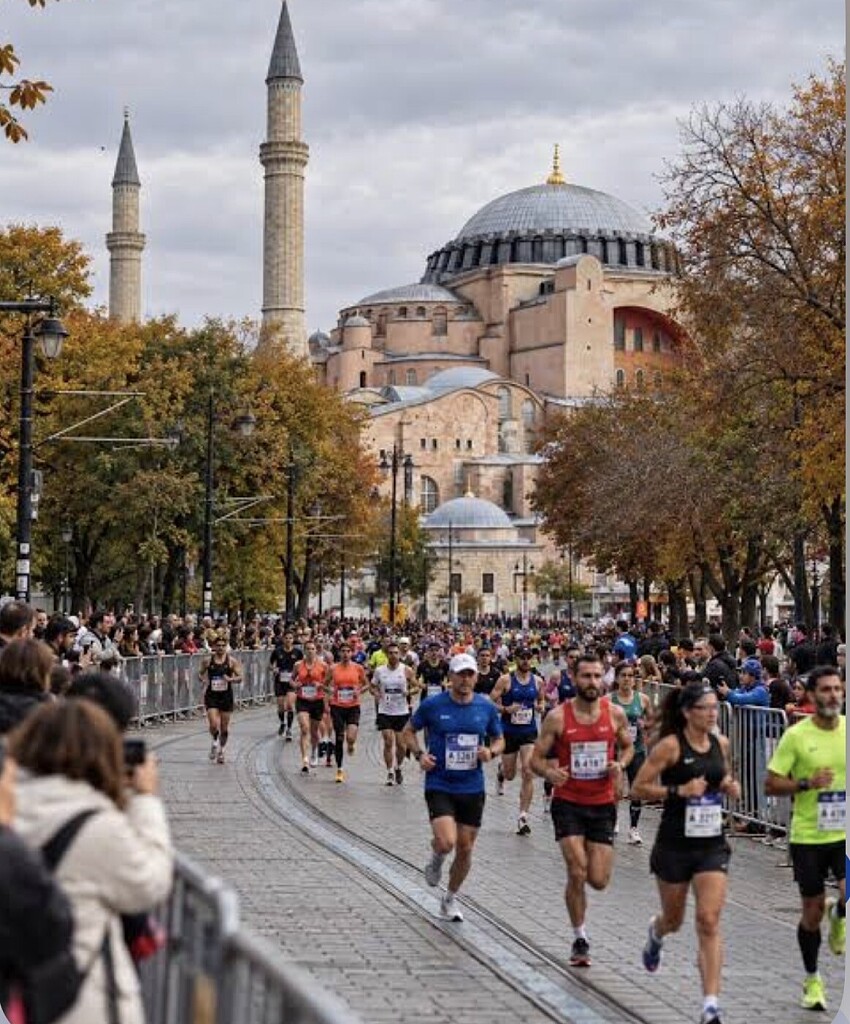
Istanbul Assembles Its Fastest Elite Field Ever as 50th Anniversary Approaches
The Türkiye Is Bankasi Istanbul Marathon is building toward its golden anniversary with a field worthy of the occasion. With two years remaining until its 50th edition, organizers have assembled the fastest elite lineup in the event’s history for Sunday’s 48th running.
Four men bring personal bests under 2:06, while three women have broken 2:20—a first for a race that has never previously featured a woman with a sub-2:20 personal best.
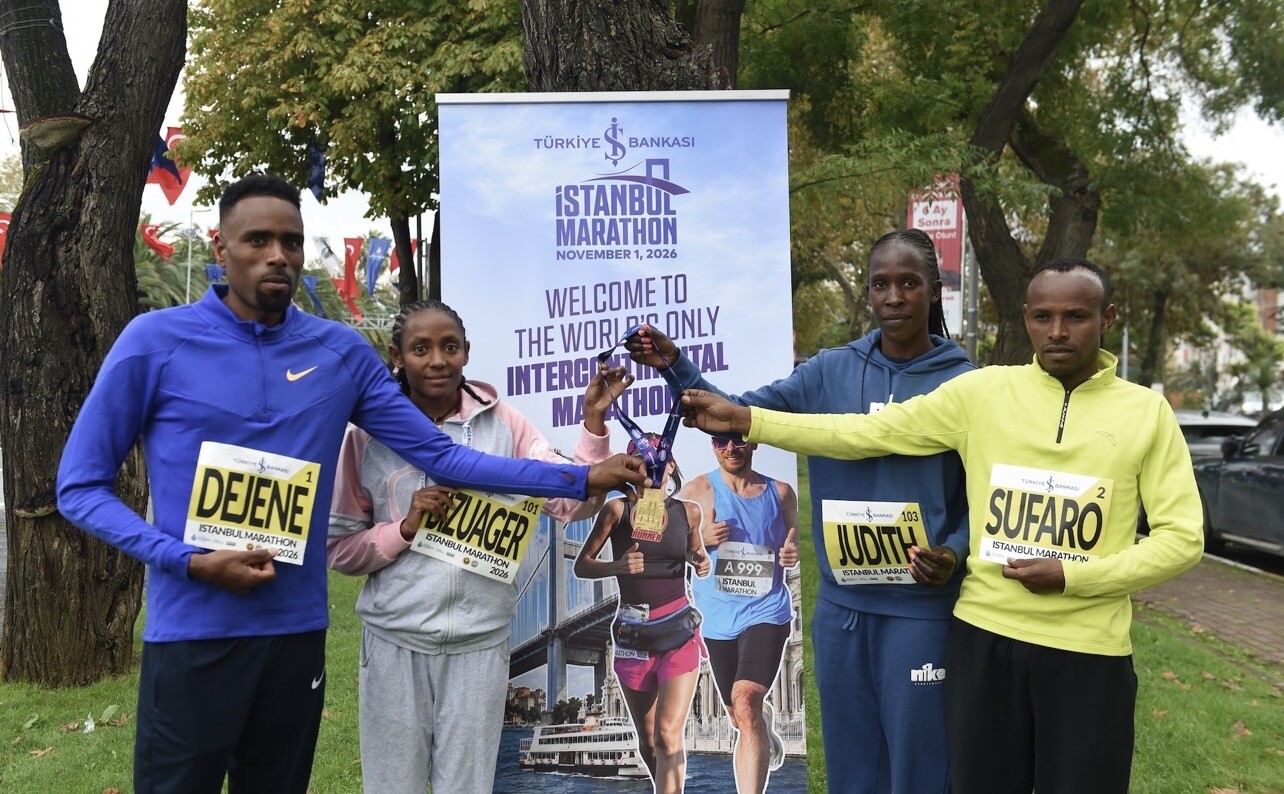
The world’s only intercontinental marathon takes runners from Asia to Europe. Türkiye’s largest marathon is also a World Athletics Gold Label Road Race, combining elite competition with one of the sport’s most distinctive settings.
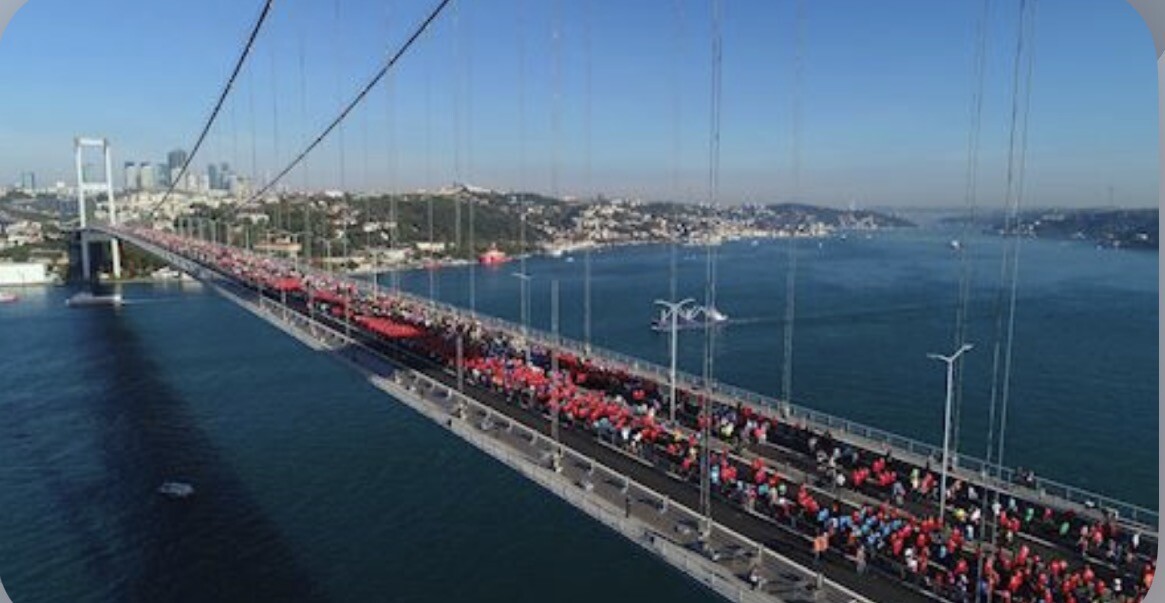
“An exciting race awaits us in both the men’s and women’s categories. Including races at shorter distances the Türkiye Is Bankasi Istanbul Marathon will bring together over 45,000 participants from 143 different countries. We are proud to host such a celebration of sports,” said Race Director Bilge Donuk.

Women’s Race: Korir Leads a Record-Setting Field
Kenya’s Judith Korir, the 2022 World Championships marathon silver medalist, leads the women’s field with a personal best of 2:18:20. Ethiopia’s Azmera Abreha follows at 2:18:33, with compatriot Kasanesh Baze bringing a best of 2:19:39.
Eritrea’s Dolshi Tesfu adds further depth with her 2:20:40 best. Turkish record holder Sultan Haydar, who ran 2:21:27 in Valencia three years ago, returns to Istanbul, where she finished third in 2013.
The strength of the field leaves defending champion Bizuager Aderra only ninth on the list by personal best. The Ethiopian won last year in 2:26:19, which remains her fastest marathon.
But Aderra is focused on defending her title.
“I will try to win again. I am ready and I have trained well in Addis Ababa,” said the 30-year-old. “The final section of the course is not easy. It is probably an advantage to know it.”
For Korir, Sunday offers an opportunity to reestablish herself after an extended injury setback. She enjoyed outstanding seasons in 2022 and 2023, winning the 2022 Paris Marathon, earning world silver in Eugene and finishing fourth in London in 2:18:43. She returned to London the following year and placed sixth.
“I got a hamstring injury which hampered me for around two years,” Korir said.
She finished eighth at this spring’s Milano Marathon in 2:26:48, a result that fell short of her expectations and prompted a change.
“After the Milano race I changed my set-up and moved my training base from Iten to Kaptagat, where I have strong training partners,” said Korir, who usually returns to Iten on weekends to see her husband and 13-year-old son.
“I am in good form now and look forward to Sunday.”
Men’s Race: Four Sub-2:06 Runners Target Istanbul Glory
Ethiopia’s Sufaro Woliyi heads the men’s field with a personal best of 2:04:35, set in Seoul this spring. Compatriot Amdework Walelegn follows at 2:04:50, ahead of Kenya’s Philimon Kipchumba at 2:05:35 and Ethiopia’s Dejene Debela at 2:05:46.
Istanbul also welcomed four sub-2:06 men two years ago, but this year’s leading quartet brings faster personal bests.
Debela combines speed with valuable course experience. The Ethiopian won in Istanbul two years ago and finished runner-up last year. His personal best dates to the 2019 Chicago Marathon.
“Compared to last year I am in much better form,” said Debela, who has not raced this year while recovering from injury. “The problem was that I got a muscle injury and it took long to recover.”
He believes the course record of 2:09:44, set in 2019, could be within reach.
“I am in the shape to run sub 2:10 in Istanbul. But a major factor is the weather. If conditions are fine we should break it,” Debela said.
Woliyi also knows what it takes to contend on Istanbul’s challenging course. He finished third last year, just 14 seconds behind Kenya’s Rhonzas Kilimo.
“My training went very well, I am in the best shape of my life. I hope that this time I will be the number one,” said Woliyi, who lives and trains in Asala, Ethiopia.
His breakthrough performance in Seoul makes him the fastest entrant, but his rivals’ experience and the demands of the course promise a competitive race.
Türkiye’s Hüseyin Can will also be one to watch. He helped push the pace last year and was rewarded with fifth place and a then-personal best of 2:10:58. He returns having improved to 2:10:03.
How to Watch
The marathon starts at 9:00 a.m. local time Sunday, with a livestream available through the official race website.
Elite Runners with Personal Bests
MEN:
Sufaro Woliyi ETH 2:04:35
Amdework Walelegn ETH 2:04:50
Philimon Kipchumba KEN 2:05:35
Dejene Debela ETH 2:05:46
Silas Too KEN 2:06:32
Douglass Kiprugut KEN 2:06:40
Francis Langat KEN 2:07:29
Benard Kipkorir KEN 2:08:12
Vincent Ronoh KEN 2:08:32
Shadrack Kenduiywo KEN 2:09:56
Hüseyin Can TUR 2:10:03
Samuel Lomoi KEN 2:10:21
Paul Tiongik KEN 2:10:25
Yavuz Agrali TUR 2:10:41
Gemechu Yadesa ETH 2:10:54
WOMEN:
Judith Korir KEN 2:18:20
Azmera Abreha ETH 2:18:33
Kasanesh Baze ETH 2:19:39
Dolshi Tesfu ERI 2:20:40
Sultan Haydar TUR 2:21:27
Veronicah Maina KEN 2:24:14
Alemtsehay Asefa ETH 2:24:42
Flomena Chepkiach KEN 2:25:41
Bizuager Aderra ETH 2:26:19
Everlyn Kemboi KEN Debut
Diribe Alemu ETH Debut
Meaza Asefa ETH Debut
by Race News Service
Login to leave a comment

N Kolay Istanbul Marathon
At the beginning, the main intention was simply to organise a marathon event. Being a unique city in terms of history and geography, Istanbul deserved a unique marathon. Despite the financial and logistical problems, an initial project was set up for the Eurasia Marathon. In 1978, the officials were informed that a group of German tourists would visit Istanbul the...
more...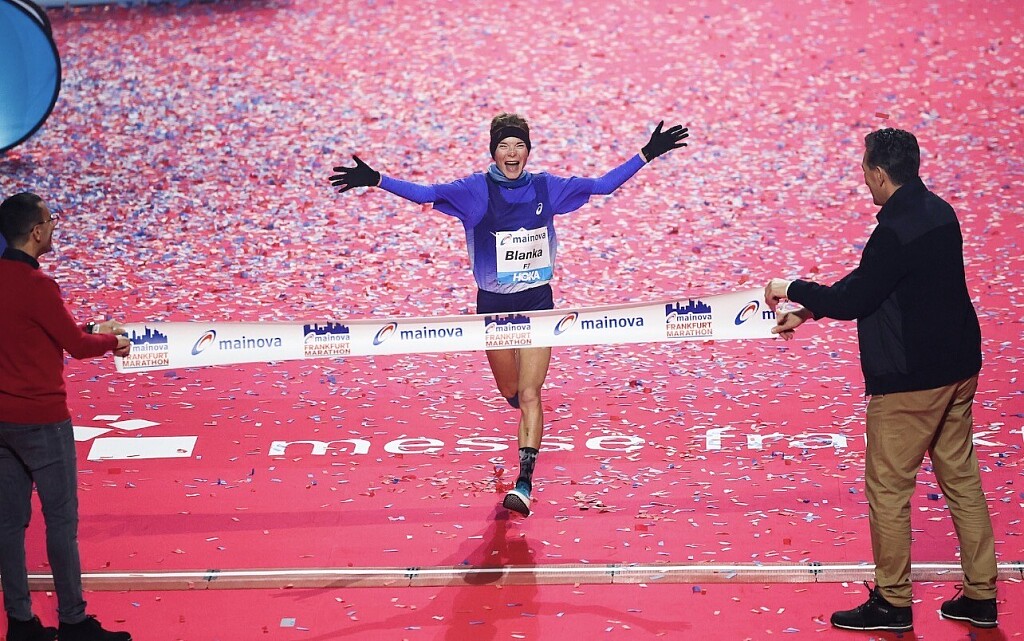
Dinki and Yimer Win Frankfurt as Germany’s Dörfel Runs Stunning 2:20:46 Debut
Ethiopia’s Jirata Dinki and Zeineba Yimer claimed victory at the 43rd Mainova Frankfurt Marathon, but Germany’s Blanka Dörfel delivered perhaps the day’s biggest breakthrough, finishing second in her marathon debut in 2:20:46.
Despite wet and windy conditions, the 24-year-old became the second-fastest German woman and eighth-fastest European woman in marathon history. Only German record holder Irina Mikitenko has run faster among her compatriots.
Yimer won the women’s race in 2:19:45, while Ethiopia’s Beriha Gebreslasie finished third in 2:22:46.
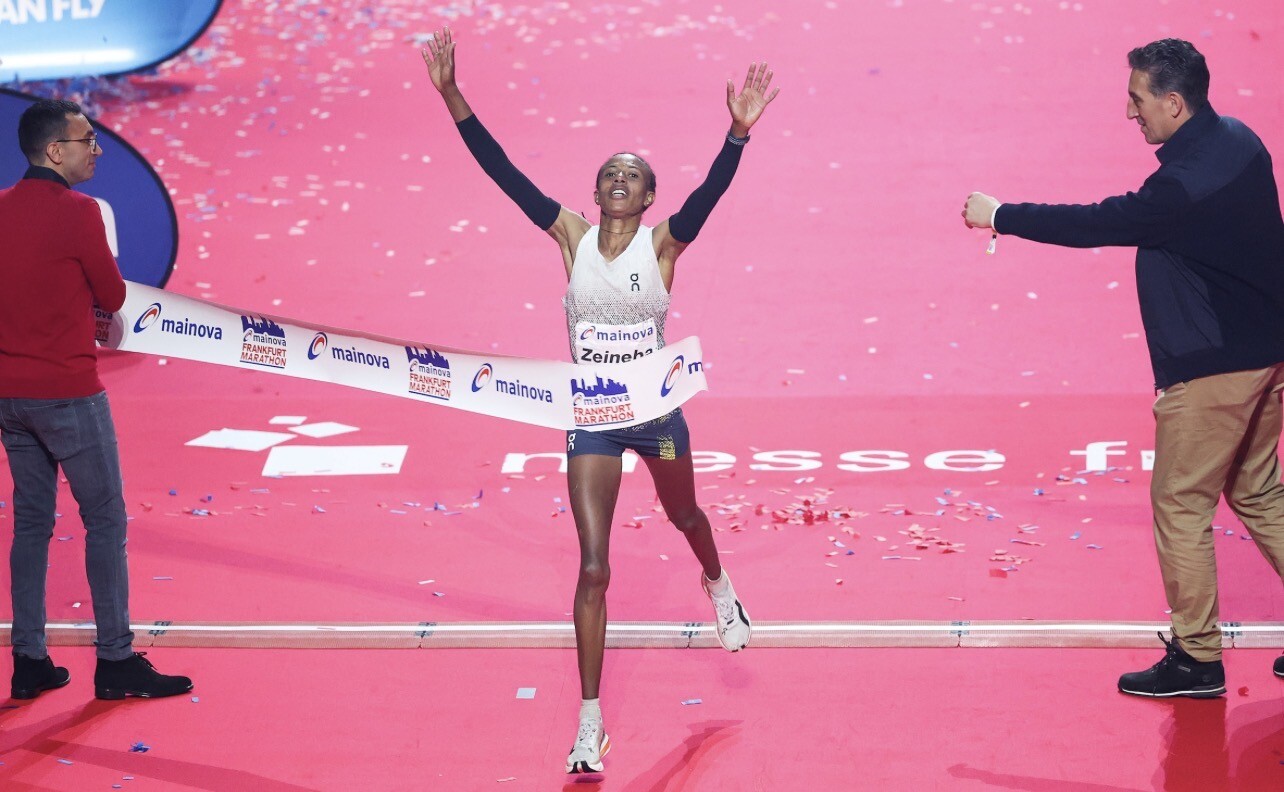
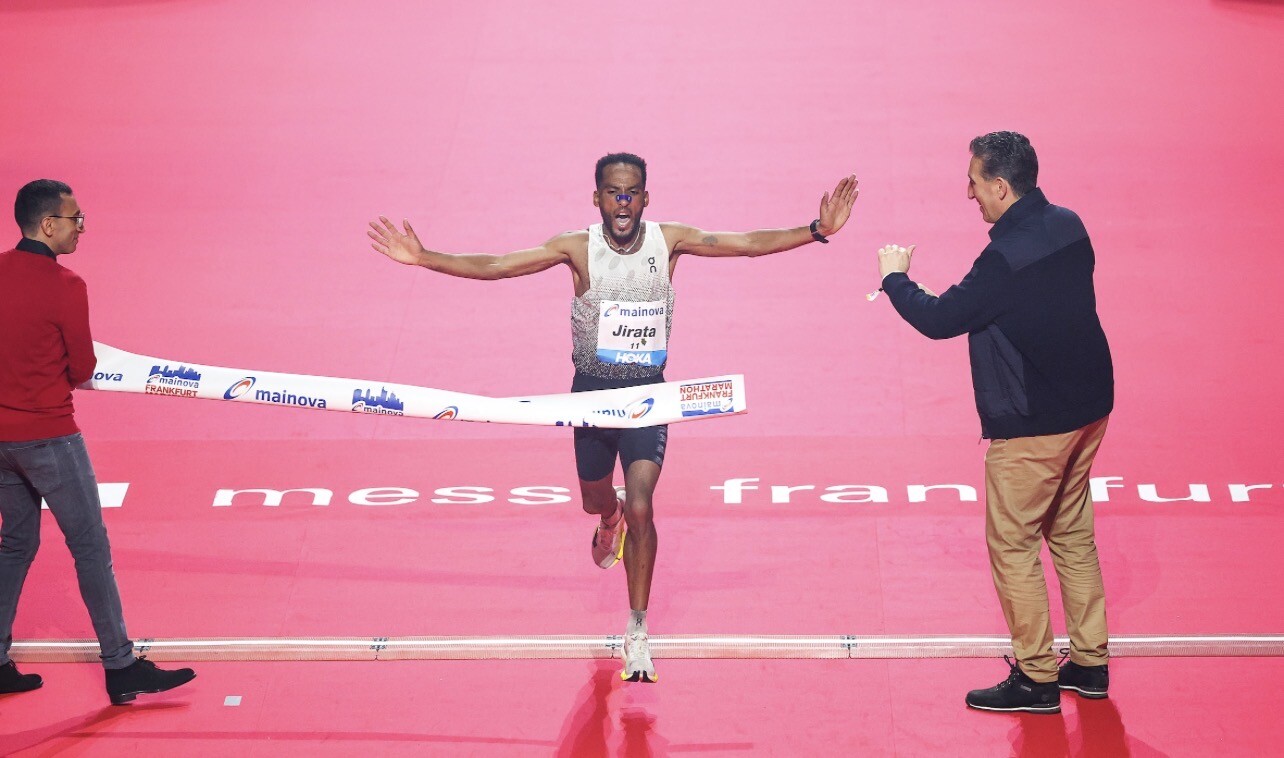
In the men’s race, Dinki surged away in the closing kilometers to win in 2:05:26, improving his personal best by nearly three minutes. Germany’s Amanal Petros finished second in 2:05:46, becoming the first German man to reach the Frankfurt podium in more than 25 years. Kenya’s Benard Biwott, the 2024 champion, took third in 2:06:23.
A record 19,720 runners from 128 nations entered this year’s event.
Dörfel Delivers a Remarkable Debut
Yimer, the women’s favorite, led from the start alongside fellow Ethiopian Siranesh Yirga. After 30 kilometers, Yirga could no longer maintain the pace, leaving Yimer alone at the front.
Although she struggled in the closing kilometers, the 28-year-old held on to secure victory with the sixth-fastest women’s performance in Frankfurt history.
“I was hoping I would win. The weather was not on our side. The rain slowed me down, but I am very happy with my performance,” Yimer said.
Behind her, Dörfel was producing an extraordinary first marathon.
After passing halfway in 1:10:29, the German moved clear of a group that included American Betsy Saina and Kenya’s Marion Kibor. Running with a smooth, controlled stride, she steadily reduced the gap to the leaders and moved into second place at 33 kilometers.
For a time, a sub-2:20 finish appeared possible. Even as the effort caught up with her over the final five kilometers, Dörfel held her position and entered Frankfurt’s Festhalle to an enthusiastic reception.
“I ran without a watch as I do in training, going purely by how I feel, not by the time,” she said. “It was always a bit of a mystery to me what time I could achieve. It wasn’t until I was in the Festhalle that I saw the 2:20 and realised just how fast I was.”
Standing water added to the challenge, but the crowd helped carry her through.
“So many people were shouting ‘Blanka, run!’ It was a brilliant day,” she said.
Dinki Wins a Tactical Battle
The men’s race began with hopes of challenging Petros’ German record of 2:04:03. Petros, Samuel Fitwi and Richard Ringer joined a large lead group, but the weather soon pushed record ambitions aside.
The leaders passed 10 kilometers in 29:55 and halfway in 1:03:01, setting up a competitive second half,
With roughly 10 kilometers remaining, Petros and Biwott increased the pace and opened a small gap. Fitwi dropped back with muscle problems, while Ringer tried to bridge the gap before also losing ground.
Dinki, however, was moving forward.
The 24-year-old Ethiopian arrived in Frankfurt with a personal best of 2:08:18 and caught the leaders around 37 kilometers. Petros attacked again, shaking off Biwott, but Dinki responded before making the decisive move of his own with about two kilometers remaining.
“I had not reckoned with him,” Petros said.
Dinki crossed the line in 2:05:26, cutting 2:52 from his previous best and earning the biggest victory of his career in just his third marathon.
“The weather was not ideal, so I started off more cautiously. But I was sure I would run a good race. This is a huge victory for me,” Dinki said.
Petros finished 20 seconds behind, recording the fastest time ever run by a German man at the Frankfurt Marathon.
“I gave it a go, but in that weather it was clear that a record was not going to happen. Then I suppose I attacked a bit too early – I will learn from that,” Petros said. “Of course I would have liked to win, but that is how it goes in the marathon.”
Ringer finished fifth in 2:07:07, with Fitwi seventh in 2:08:57.
by Race News Services
Login to leave a comment

Mainova Frankfurt Marathon
Frankfurt is an unexpectedly traditional and charming city, with half-timbered buildings huddled in its quaint medieval Altstadt (old city), cosy apple wine taverns serving hearty regional food, village-like neighbourhoods filled with outdoor cafes, boutiques and street art, and beautiful parks, gardens and riverside paths. The city's cache of museums is second in Germany only to Berlin’s, and its nightlife...
more...
Five Years On, Agnes Tirop’s Light Still Shines in the World of Athletics
Five years after the tragic death of Agnes Jebet Tirop, the Kenyan distance-running star remains a powerful symbol of sporting excellence, unfulfilled potential and the urgent fight against gender-based violence.
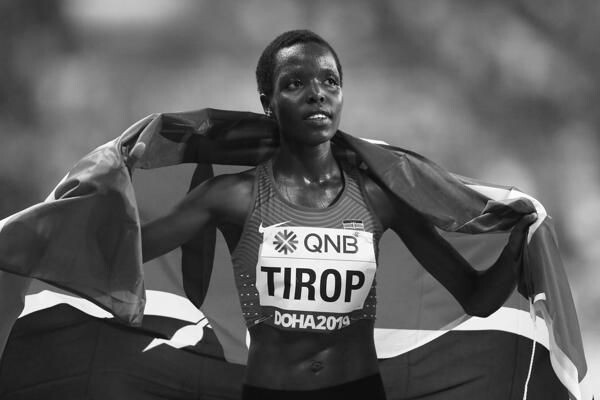
On October 13, 2021, the athletics world was plunged into mourning following the death of Tirop, who was found at her home in Iten, Kenya, at just 25 years old. Her life was cut short at a time when her career was flourishing, leaving behind a legacy that continues to resonate with athletes, fans and the wider community.
For Kenya, a country whose identity is deeply intertwined with distance-running success, Tirop represented a remarkable generation of female athletes taking the sport to new heights. Her achievements on the track, across country and on the roads had already secured her place among the country's outstanding distance runners.
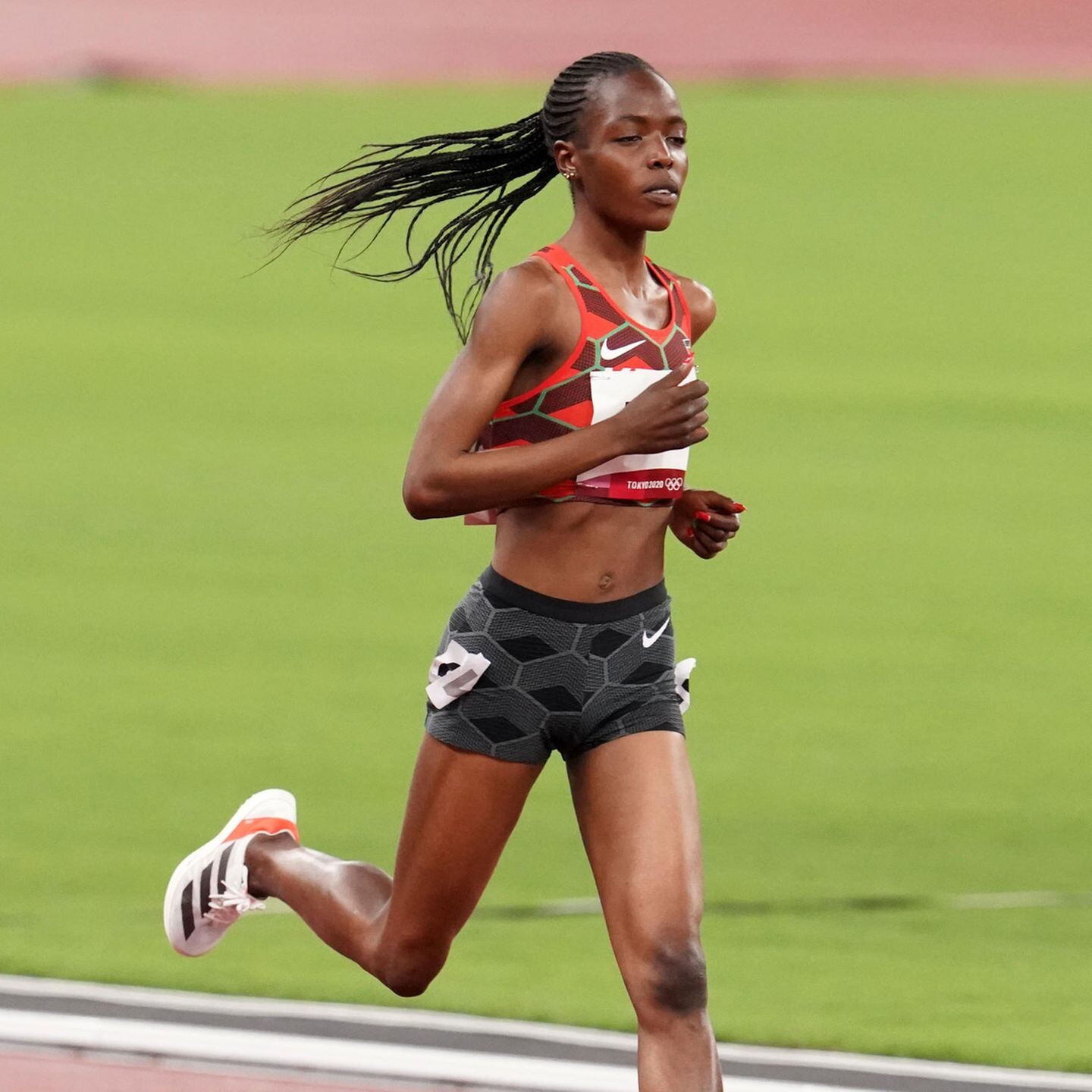
Five years later, the sadness of her loss remains inseparable from the extraordinary story of what she accomplished in her short but memorable career.
A Champion Who Rose to the Top at 19
Tirop announced herself on the global stage in spectacular fashion at the 2015 World Athletics Cross Country Championships in Guiyang, China. At only 19, she won the senior women's race, becoming the youngest champion in the event since Zola Budd in 1985.
Her victory demonstrated not only her natural ability but also the composure and determination that would become defining features of her running career.
She subsequently established herself among the world's leading track athletes, winning bronze medals in the women's 10,000 metres at the 2017 World Athletics Championships in London and the 2019 edition in Doha.
Those back-to-back podium finishes confirmed her consistency at the highest level and underlined her ability to compete against the strongest distance runners in the world.
Tirop also demonstrated considerable versatility at the Tokyo 2020 Olympic Games, held in 2021, where she finished fourth in the women's 5,000 metres. Although she narrowly missed the podium, her performance reinforced her reputation as one of Kenya's most accomplished emerging distance-running talents.
A World Record That Made History
Just weeks before her death, Tirop delivered one of the defining performances of her career.
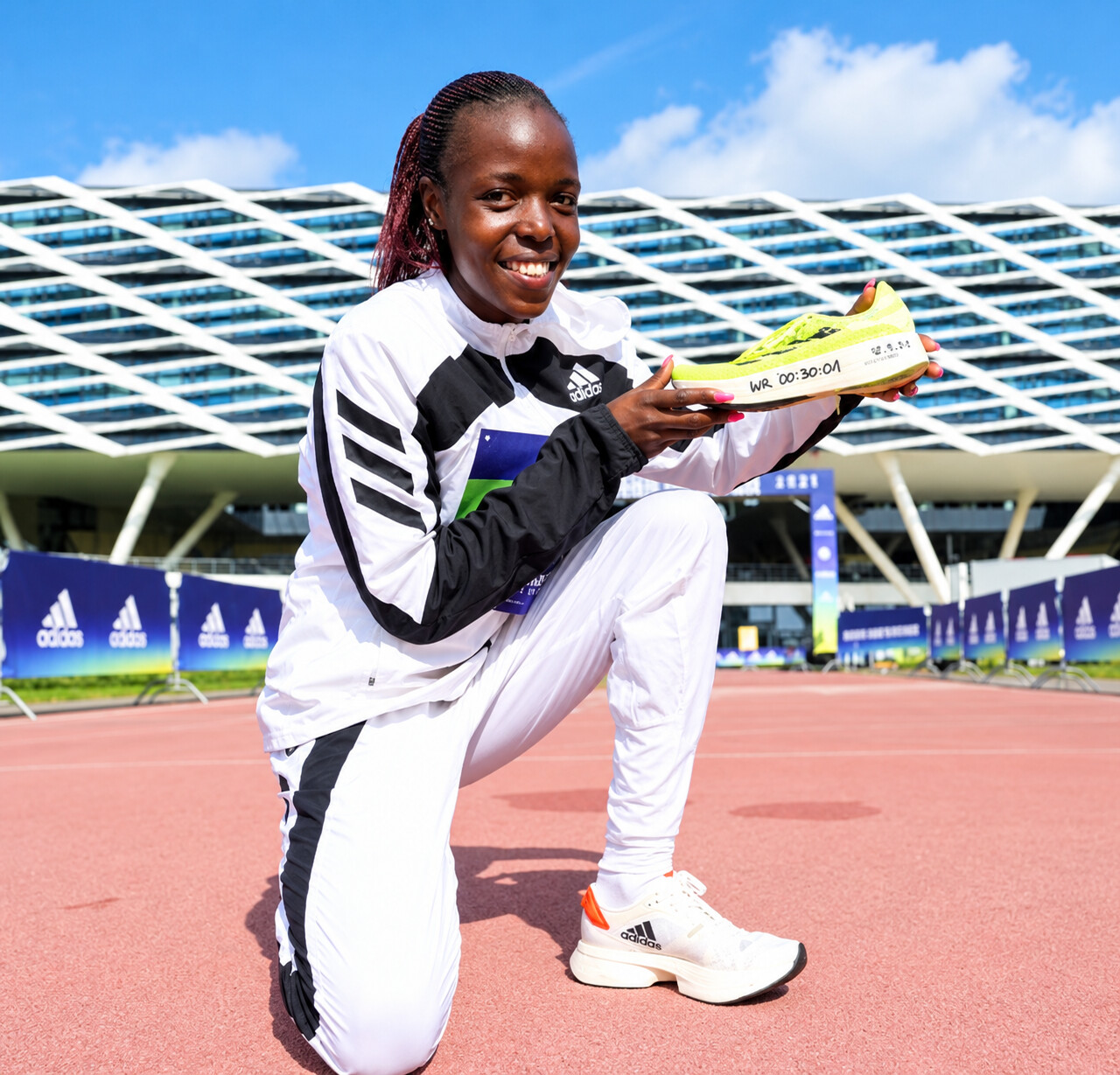
On September 12, 2021, she clocked an astonishing 30:01 to win the women's 10km road race at the adizero Road to Records event in Herzogenaurach, Germany.
Her performance broke the then women's-only world record by 28 seconds, establishing a new benchmark for the distance. The record was subsequently ratified by World Athletics. It was aremarkable achievement that placed her name among the legends of distance running. Although her record has since been broken, the greatness of her achievement remains untouched, and no change in the record books can diminish the extraordinary talent, courage and determination she displayed that day. Time may bring new champions and faster performances, but it can never erase the mark she left on athletics.
In a race that demanded patience, tactical awareness and an exceptional finishing effort, Tirop broke away from compatriot Sheila Chepkirui during the closing stages and powered towards the finish line.
The performance was a remarkable demonstration of her endurance and competitive instinct. It also offered a glimpse of what might have followed had she been given more years to develop her career.
Her final competitive appearance came on October 3, 2021, when she finished second in a 10km race in Geneva, Switzerland. Ten days later, the world learned of her death.
The timing made the tragedy particularly difficult to comprehend: an athlete who had just rewritten the record books and was still competing at the highest level was suddenly gone.
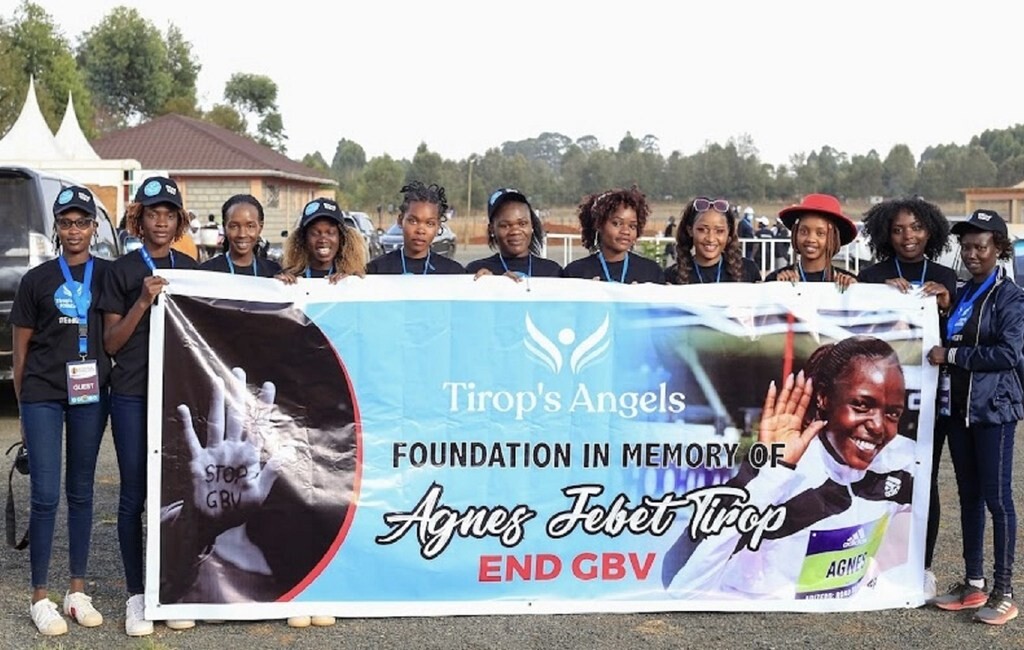
A Tragedy That Reached Far Beyond Sport
Tirop's death was not simply the loss of an elite athlete. It also brought renewed international attention to violence against women and the need to create safer environments in which women and girls can live, train and pursue their ambitions.
Her story became a painful reminder that medals, records and international recognition cannot shield someone from violence in their private life.
In the years since her death, her name has continued to feature in efforts to promote women's empowerment, athlete welfare and the prevention of gender-based violence. Initiatives associated with her legacy, including Agnes Tirop Angels, reflect the continuing determination to transform grief into meaningful action.
Her story remains especially significant within athletics, where the pursuit of excellence must go hand in hand with respect for athletes' safety, dignity and wellbeing.
Five Years Later, Her Legacy Endures
For young runners who dream of representing Kenya on the international stage, Tirop's career remains an example of what dedication, talent and courage can achieve.
She rose from a promising young athlete to a world champion, a two-time World Championships medallist and a world-record holder. She excelled across different distances and surfaces, leaving an impressive body of achievements before reaching her 26th birthday.
Yet her legacy cannot be measured by statistics alone. It also lies in the conversations her death continues to inspire, the women whose safety must be protected and the determination to ensure that sporting success is never separated from human dignity.
Five years on, Agnes Tirop is remembered not only for the records she set or the medals she won, but also for the future that was taken from her.
Her achievements remain part of Kenya's rich athletics history, while her story continues to call for a world in which women can pursue their dreams without fear of violence.
Agnes Tirop's life was tragically short, but her impact reaches far beyond the finish line. Her achievements will remain in the record books, her memory will endure in the hearts of athletics fans, and her legacy will continue to inspire generations to come.
by Erick Cheruiyot for My Best Runs.
Login to leave a comment

Chicago Marathon 2026: Emma Grace Hurley Makes Her Debut as Clayton Young Battles Injury Concerns
The 2026 Chicago Marathon will provide an important stage for two American distance runners approaching the race from very different circumstances. Emma Grace Hurley is preparing to make her debut over the classic 42.195-kilometre distance after establishing herself among the country’s leading half-marathon runners, while Clayton Young faces a race against time to overcome a hamstring injury that threatens to derail his ambitions.
Both athletes have compelling stories heading into Chicago, but their immediate objectives differ. Hurley is looking to gain valuable experience as she begins her marathon journey, whereas Young must contend with significant uncertainty surrounding his fitness and the potential consequences of racing while injured.
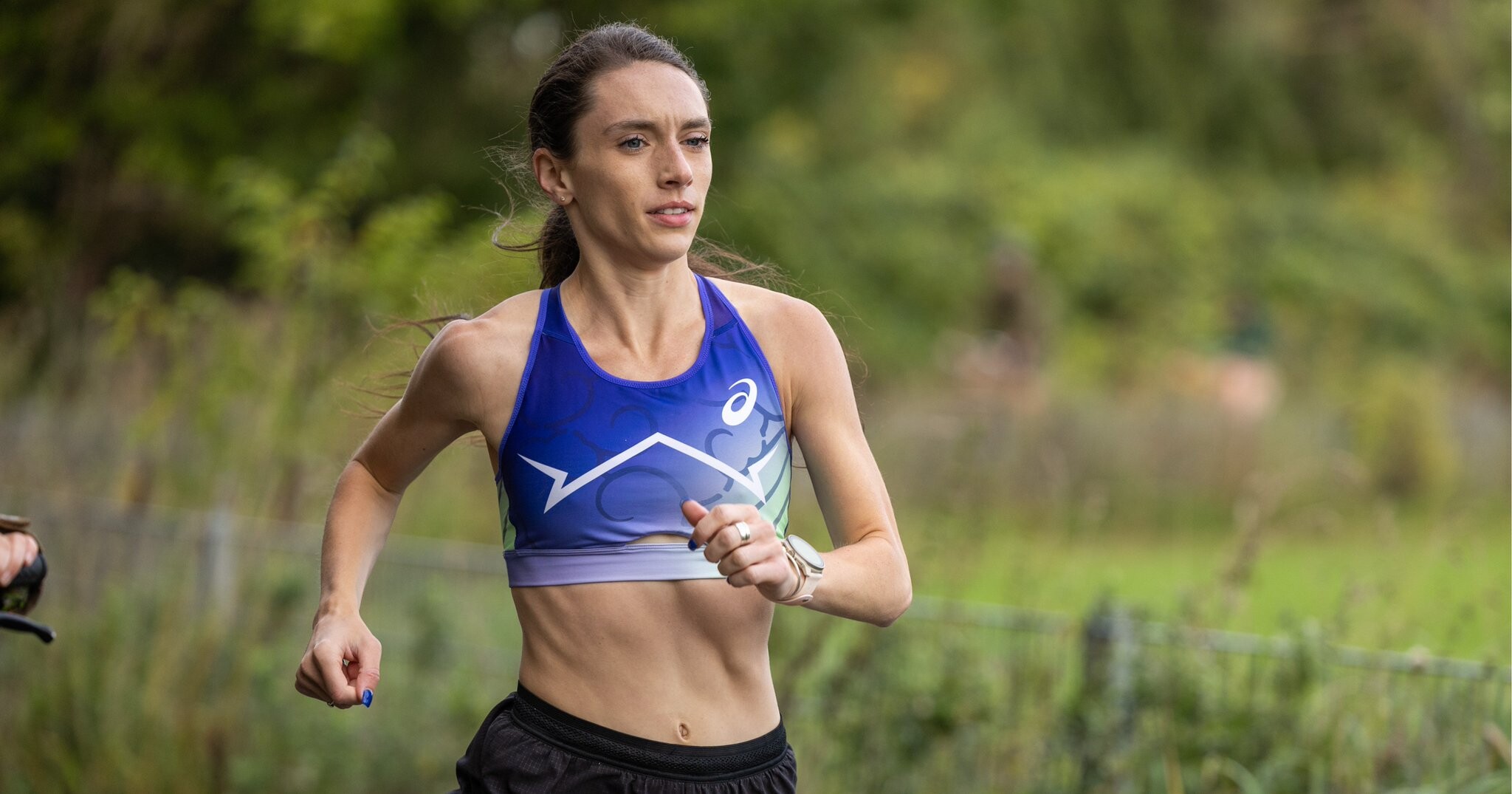
Emma Grace Hurley: A Promising Talent Ready for Her Marathon Debut
Hurley arrives in Chicago following an outstanding performance at the World Athletics Road Running Championships in Copenhagen, Denmark, where she clocked 1:06:23 to finish fifth in the women’s half marathon. Her performance established a women-only American record and contributed to the United States securing the team silver medal.
The result has generated considerable interest in what she might accomplish over the full marathon distance. However, despite the growing expectations, Hurley and her coach, Andrew Begley, have maintained a measured approach, understanding that the transition from half marathon to marathon requires more than simply extending the distance.
Her recent training has offered encouraging indications of her preparation. A demanding workout observed in Indiana, together with training activity shared on Strava, has provided further insight into the work she has undertaken ahead of her Chicago debut.
Nevertheless, the marathon presents a different set of challenges. Athletes must balance pace, endurance, nutrition and energy conservation while preparing for the demanding final kilometres, when even well-conditioned runners can experience unexpected difficulties.
For Hurley, Chicago represents an opportunity to learn those lessons firsthand rather than place unnecessary pressure on herself to produce an immediate breakthrough. Her long-term plan includes two marathons before the 2028 United States Olympic Marathon Trials, making this first appearance an important stage in her development.
Her approach is captured in a straightforward statement: “This one is for learning and the next is for nailing it.”
That philosophy reflects an understanding that building a successful marathon career takes patience, experience and careful progression. While her half-marathon record demonstrates considerable potential, Chicago will offer the first real test of how effectively she can translate that ability to the longer distance.
A strong debut would provide a valuable foundation for her future ambitions, but the experience itself will be equally important as she prepares for the next chapter of her marathon career.
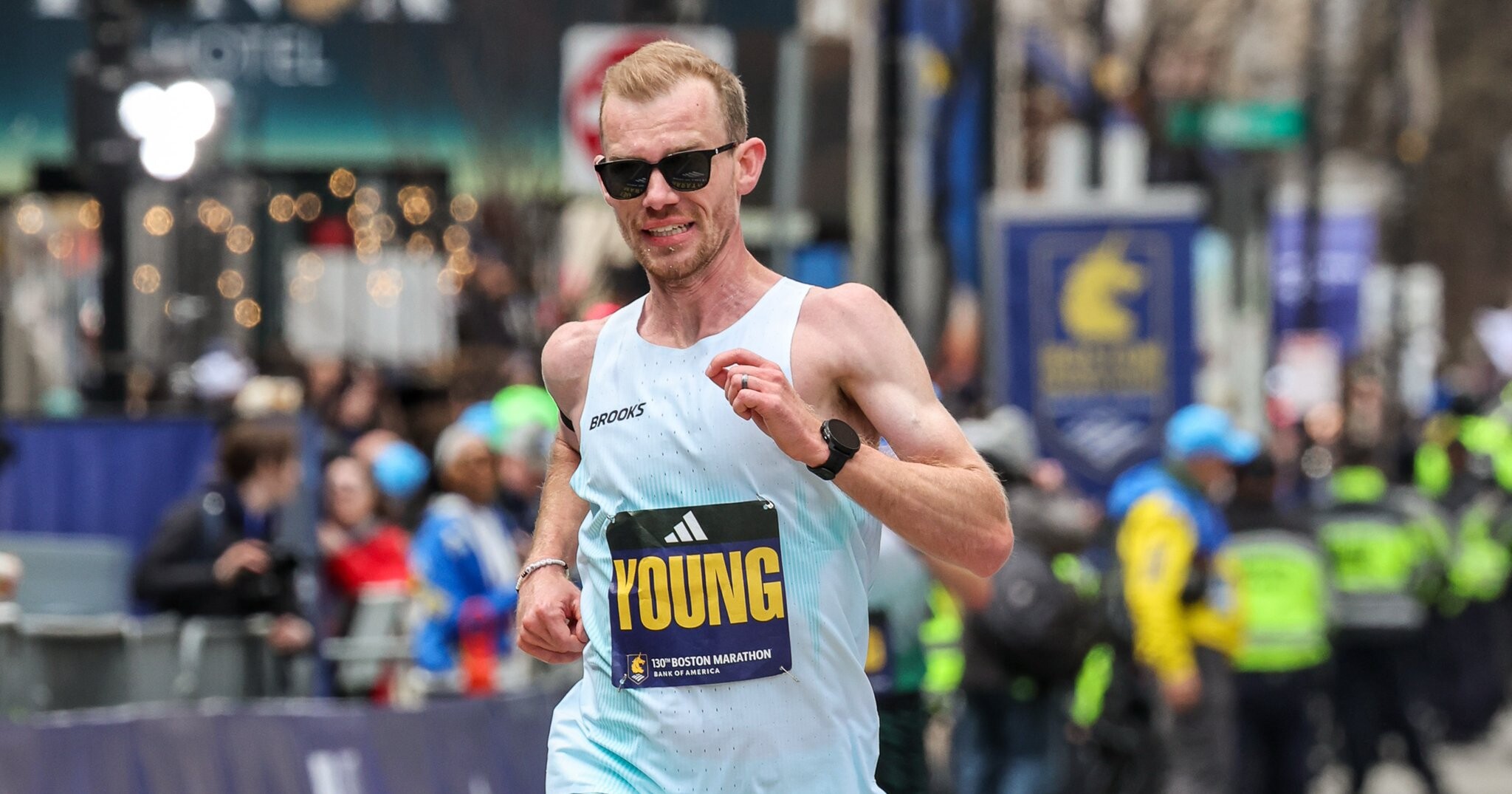
Clayton Young: Hamstring Injury Casts Doubt Over Chicago Ambitions
Young, meanwhile, heads into the Chicago Marathon facing a far more complicated challenge after sustaining a significant hamstring injury during the final stages of the Great North Run.
The American revealed that he suffered a 12-centimetre split tear in his semitendinosus, one of the muscles that make up the hamstring group, during the final 250 metres of the race. The timing of the injury could hardly have been more unfortunate, arriving with the Chicago Marathon approaching and his competitive ambitions still firmly in focus.
Medical advice reportedly differed on how he should manage the injury. One doctor recommended taking four weeks off running, a period of rest that would have ruled him out of Chicago. Another advised a more cautious, day-by-day approach, which Young has chosen to follow.
His recent training activity on Strava and videos shared on YouTube suggest that he has continued to complete substantial workouts. However, evidence of training does not necessarily establish that a serious muscle tear has healed sufficiently to withstand the demands of a marathon.
The injury has placed considerable doubt over his hopes of challenging the American marathon record. More importantly, it has raised questions about whether attempting to race could aggravate the damage and compromise his preparations for the 2027 season and the build-up to the 2028 U.S. Olympic Marathon Trials.
For an athlete with significant long-term ambitions, the decision carries consequences beyond a single race. A successful appearance in Chicago could represent another major achievement, but worsening the injury could potentially cost him valuable training time during a crucial period in his career.
Young is known for his ability to deliver under pressure, making his situation particularly intriguing as race day approaches. However, competing through a hamstring tear of this nature would present an unfamiliar challenge, even for an athlete accustomed to producing strong performances when it matters most.
For now, he remains entered in the race, but his participation and ability to compete effectively remain important questions. His recent workouts may offer encouragement, yet the true condition of the injured muscle and its response to marathon demands will be central to determining what is realistically possible.
Two Americans, Two Very Different Challenges
Hurley and Young illustrate the contrasting realities that elite runners can face ahead of a major marathon. One is entering the distance with momentum, enthusiasm and an opportunity to discover her potential. The other is attempting to navigate an injury that could influence not only his immediate performance but also his longer-term development.
For Hurley, Chicago is the beginning of a new chapter. Her record-setting half-marathon performance has created anticipation, but her emphasis remains on learning, gaining experience and building towards future goals.
For Young, the race presents a more difficult calculation. His competitive instincts and reputation for performing under pressure must be weighed against the risks of pushing through an injury that could have lasting consequences for his season.
Their respective stories will add another dimension to the American contingent at the 2026 Chicago Marathon. While Hurley seeks to establish herself over 42.195 kilometres, Young faces the challenge of determining whether his body is ready to meet the demands of one of the world's premier road races.
As race day approaches, the central questions remain clear: How will Hurley handle her first marathon, and will Young be able to compete without jeopardising his recovery and future ambitions?
The answers will emerge on the streets of Chicago, where preparation, patience and sound decision-making could prove just as important as raw talent and competitive determination.
by Erick Cheruiyot for My Best Runs.
Login to leave a comment

Bank of America Chicago
Running the Bank of America Chicago Marathon is the pinnacle of achievement for elite athletes and everyday runners alike. On race day, runners from all 50 states and more than 100 countries will set out to accomplish a personal dream by reaching the finish line in Grant Park. The Bank of America Chicago Marathon is known for its flat and...
more...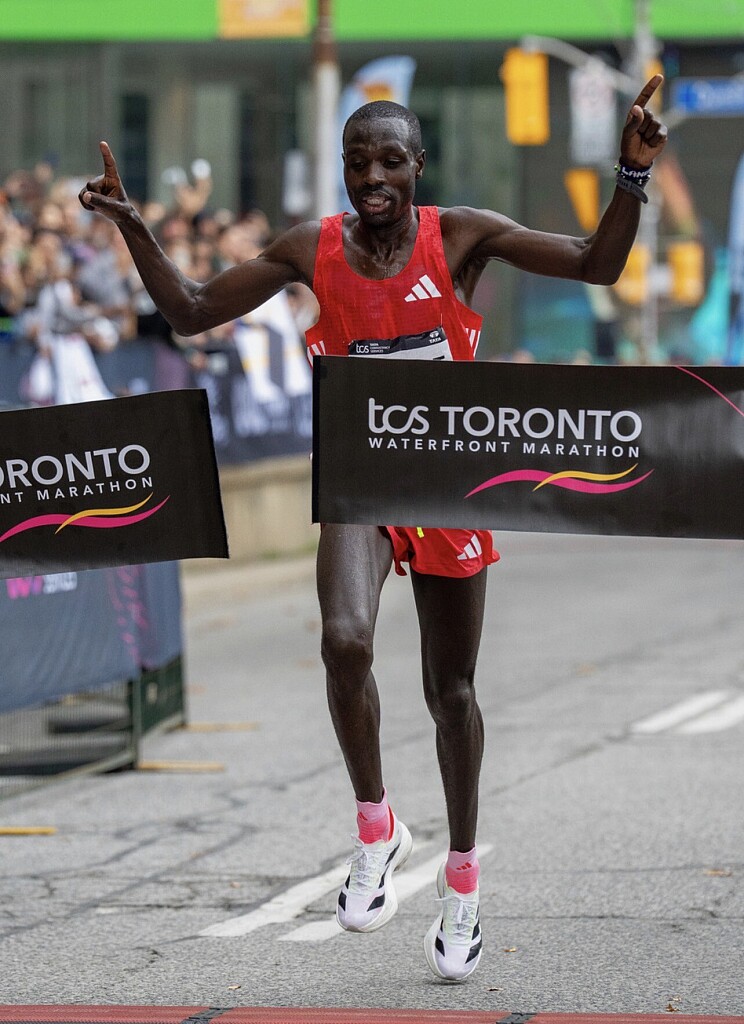
Leonard Langat to Defend his TCS Toronto Waterfront Marathon Title
Leonard Langat arrived in Toronto for last year’s TCS Toronto Waterfront Marathon largely unheralded. But after winning this World Athletics Elite Label race he left with both the respect of his competitors and the $25,000 CDN first place prize money to his credit.
The 30-year-old Kenyan will defend his title on October 18.
A year ago his winning time of 2:08:04 had been hampered by uncharacteristically strong winds coming off Lake Ontario but the fact he beat athletes with much faster personal best times was an indication of his potential. Indeed, at the 2026 Cape Town Marathon this May he finished 4th in a new personal best of 2:05:26.
“About last year, I was happy because I ran well. I am happy to come back to Toronto,” he says while sitting alongside his coach, Josphat Bett, following a training session. “I loved the city of Toronto. I loved the beauty and the people I met there.
“I want to improve my time and try to win the race again. I will try to defend my title because the training (this year), we have improved, and increased the mileage.”
The Toronto Waterfront Marathon course record of 2:05:00 was set in 2019 by his countryman Philemon Rono. It seems natural to draw a line between his personal best and that record. Could he beat Rono’s time on the streets of Canada’s biggest city?
“If the weather is good that day I will try to improve my personal best,” is all he will allow - apparently not wanting get ahead of himself.
Langat is represented by Volare Sports Management, a Dutch based firm specializing in distance running. He trains with a group of about twenty athletes under coach Josphat Bett’s program in the town of Keringet. Another large Volare group which includes athletes such as Fanny Kiprotich (who will also run this year’s Toronto Waterfront), the 2026 Vienna Marathon winner, is based in Iten the ‘Home of Champions’ three and a half hours away.
Bett was himself a world class runner with a personal best of 26:48.99 for the 10,000m and also took home the 2014 Commonwealth Games silver medal in that event. He remembers being approached by Langat when the latter keenly observed Bett and his training partners running past his village.
“I am a runner and he was interested in running,” Bett remembers with a smile. “He loved the way we were training and he asked ‘How can I start to run?’. So I gave him a training program to start. Now it has been about ten years.”
With money earned from running Langat has begun preparing for life after his running career comes to an end. He and his wife, Sharon Chesang, have two children, 4-year-old Emmanuel Kipkoech and a 2-year-old daughter Dorcas Chebet. Although Volare has a camp where many of the athletes live during the week he prefers to go home after training sessions.
“I want to be a farmer for cattle, a dairy farmer,” he explains. “I bought five acres of land and I have five cows.”
A successful title defence would mean increased financial stability for his family’s future. There is also a bonus of $10,000 CDN for breaking the course record. Although he seems hesitant to talk about the record he’d be a good bet to dip below 2:05:00 under the right conditions.
"In Cape Town after 40km, after taking water, I lost the steps of the leading group,” he admits.
Clearly the race video supports his contention as he slowed to grab a bottle while the other three contenders opened up a gap. Ethiopia’s Mohamed Esa won that race in 2:04:55 with the 2022 TCS Toronto Waterfront champion, Yihunilign Adane, second in 2:04:59. What might have been is not something he dwells upon.
Defending a title is never easy. Langat can no longer slip under the radar as his performances have been watched around the world. His TCS Toronto Waterfront Marathon victory, alone, had 140,000+ views last year in 75 countries. And he will face a strong field including his compatriot Noah Kipkemboi who finished in second place just 24 seconds behind him last year.
But Langat’s confidence will be high making for compelling battle along the streets of Toronto.
by Paul Gains
Login to leave a comment
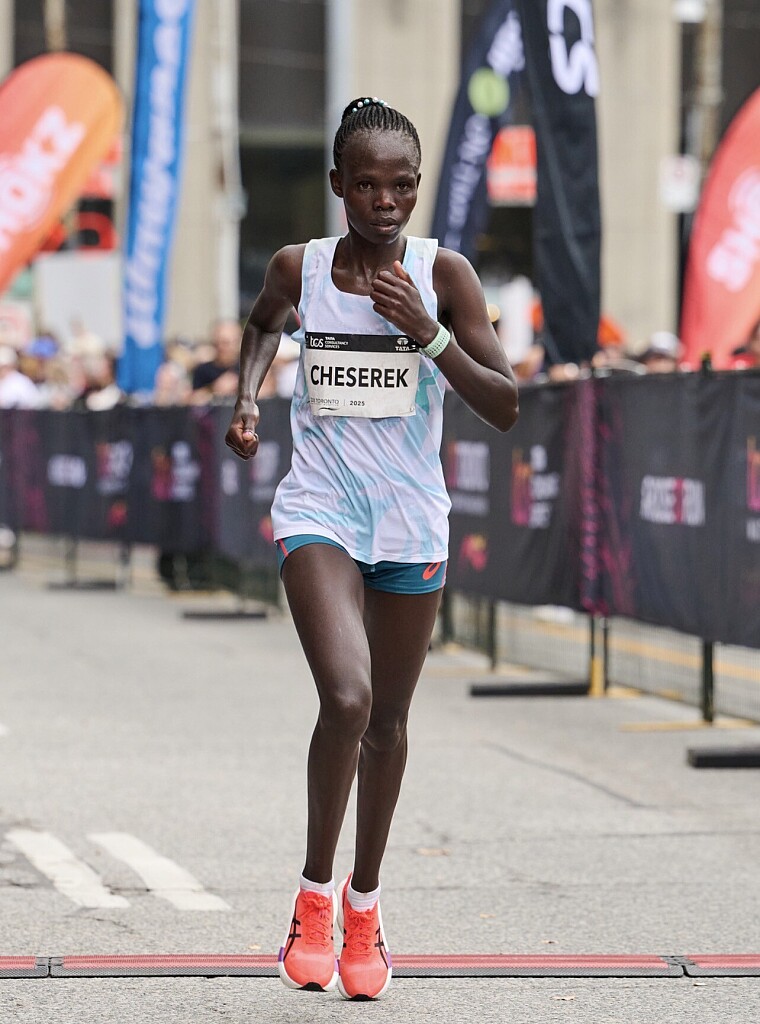
Kenya’s Beatrice Cheserek Returns to TCS Toronto Waterfront Marathon
A year after choosing the TCS Toronto Waterfront Marathon to make her debut at the 42.2km distance Kenya’s Beatrice Cheserek will return to the 2026 edition of the race October 18 with great ambition.
The now 27-year-old could manage just 5th place in 2:30:25 last year. Four months later she finished second in the Seville Marathon (February 15) with a time of 2:21:56. There is a simple explanation for such a dramatic improvement.
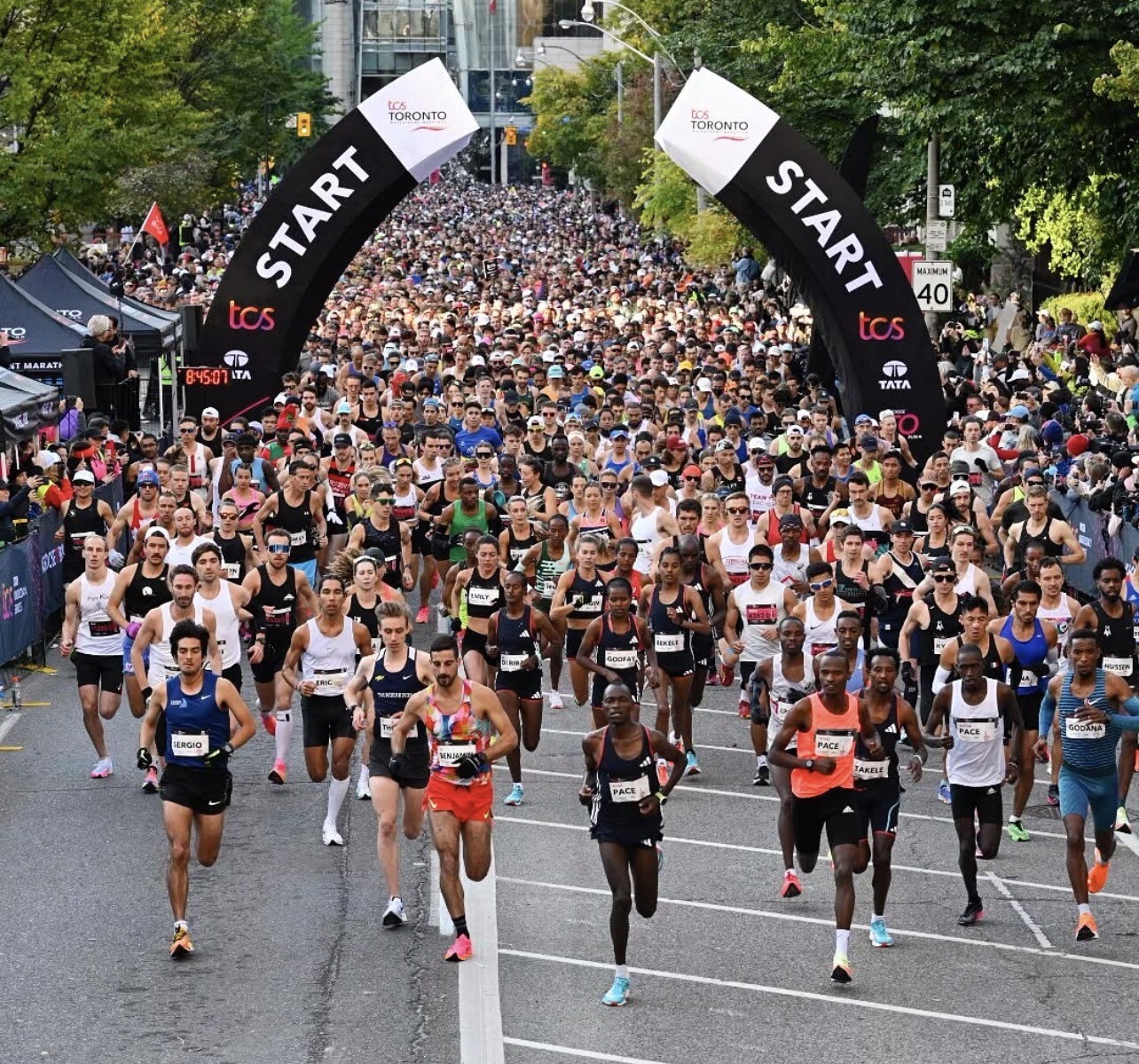
“This year my training is stronger than last year because then (2025) I was coming from maternity,” she explains from her hotel room in Bogota, Colombia where she had finished 4th in the Bogota Half Marathon a few days earlier.
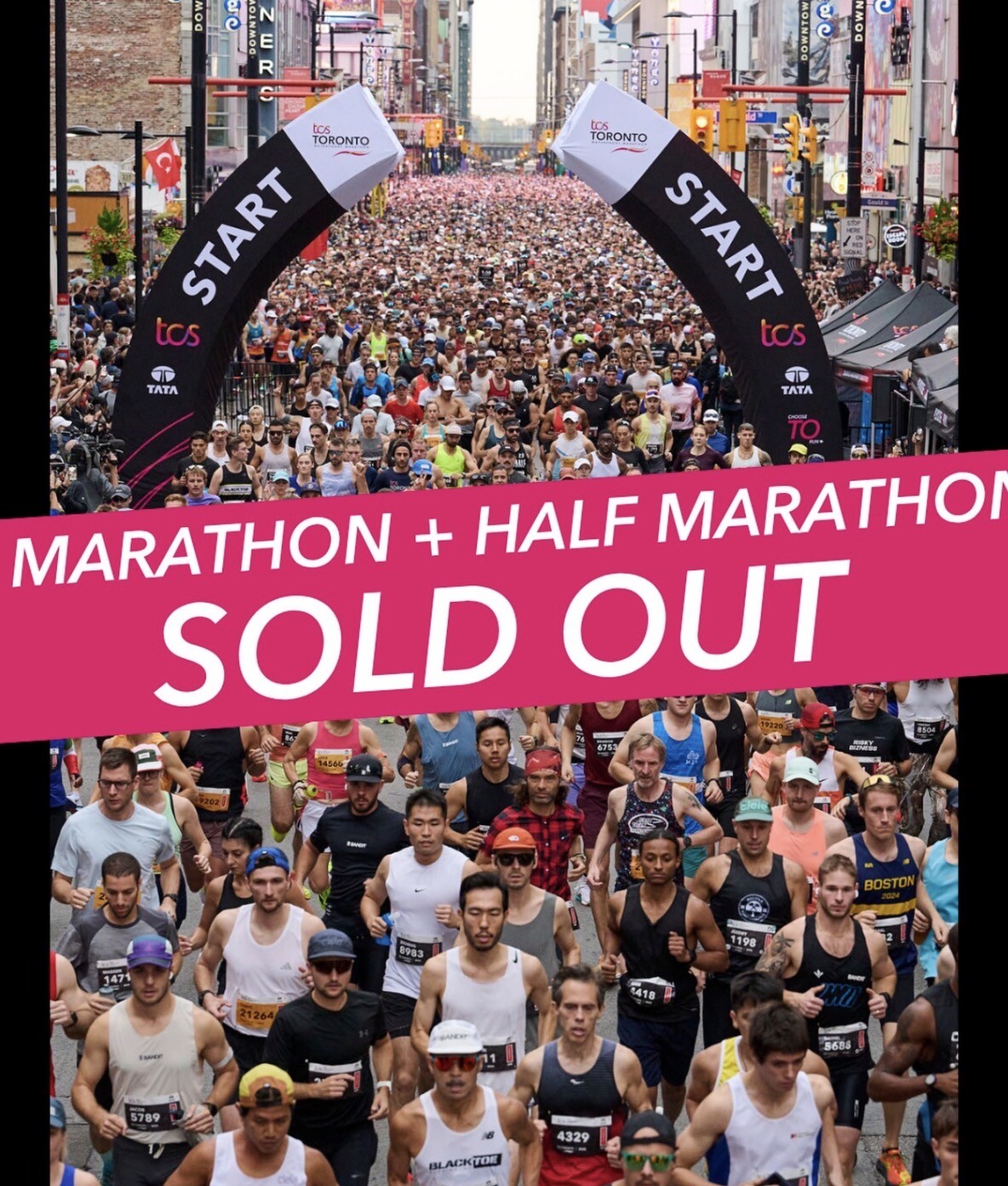
“So it’s more training than last year. I have done a lot of mileage. This time around a lot of mileage, speed work and strength so now I can run better.”
Cheserek’s husband Cyrus Kiplagat is her main training partnerand she is now running up to 150 kilometres a week in preparation for TCS Toronto Waterfront Marathon, which is a World Athletics Elite Label race.
In 2024 the couple welcomed a son into the world. They named him Fabian and she proudly announces: “He is doing good. He is almost three years old now.” While she is away training and competing her sister-in-law serves as a nanny.

"Toronto last year, it’s a good place but it was my first time running a marathon,” she recalls. “I was doubting myself because it was my debut. I was doubting whether I could finish or if I would drop out. Then afterwards I raced Seville and I was happy there. I am thinking I will do something there in Toronto.”
‘Something' refers to a new personal best and, if conditions are suitable there could be an assault on the Toronto WaterfrontMarathon course record which was set in 2024 by Ethiopia’s Waganesh Mekasha (2:20:44). And she will not be alone in her quest. While the team at Canada Running Series always hires pacemakers for the elite athletes this time Cyrus will accompany her to Toronto to be one of the two pacers for the lead women’s group.
Cheserek has an excellent personal best of 1:06:48 for the half marathon which led to speculation among running experts that her step up to the full marathon distance would be noteworthy. And her talent led to her being selected as the designated pacemaker for fellow Kenyan Rosemary Wanjiru when she won the 2023 Tokyo Marathon. She performed similar duties for the 2025 London Marathon elite women’s field. Having Cyrus in Toronto she expects will help tremendously.
“Even before I went to Seville I was with him training and he was the one pushing me,” Cheserek adds. “It is good for me (that Cyrus will be in Toronto) to try to lower the course record. All the marathon races before I was pacing so he never came with me. It was just me and the other people. And, he was not in Seville.”
Beatrice and her family live in Iten, ‘The Home of Champions’ as it is known in Kenya at around 2,400m above sea level. Bogota sits at a slightly higher elevation. So the two weeks away from her home training ground has not interrupted her preparation for Toronto Waterfront Marathon in any way.
“I am spending two weeks in Colombia; this is my first time to be here,” she offers. “Colombia is a very good place for training. It is (also) a good place to race in hot conditions. I have my fellow colleagues from Kenya here.”
Cheserek finished 4th in the Bogota Half Marathon on July 26 in 1:12:42 just 13 seconds behind the winner. As expected, the field was dominated by athletes from high altitude countries including Ethiopia and Kenya who are best suited to Bogota’s 2,600m elevation.
Then, on August 9th, she finished 4th in the Cali 10k (32:57) the day before an earthquake measuring 7.4 on the Richter scale, struck. She and her compatriots were at the Cali airport checking in when panic ensued. They returned to their hotel as the airport was temporarily closed.
The TCS Toronto Waterfront Marathon organizers (Canada Running Series) will be wishing for ideal conditions to allow athletes such as Beatrice Cheserek to challenge the course records. Clearly, all her preparation is focused on the race.
by Paul Gains
Login to leave a comment

TCS Toronto Waterfront Marathon
The Scotiabank Toronto Waterfront Marathon, Half-Marathon & 5k Run / Walk is organized by Canada Running Series Inc., organizers of the Canada Running Series, "A selection of Canada's best runs!" Canada Running Series annually organizes eight events in Montreal, Toronto and Vancouver that vary in distance from the 5k to the marathon. The Scotiabank Toronto Waterfront Marathon and Half-Marathon are...
more...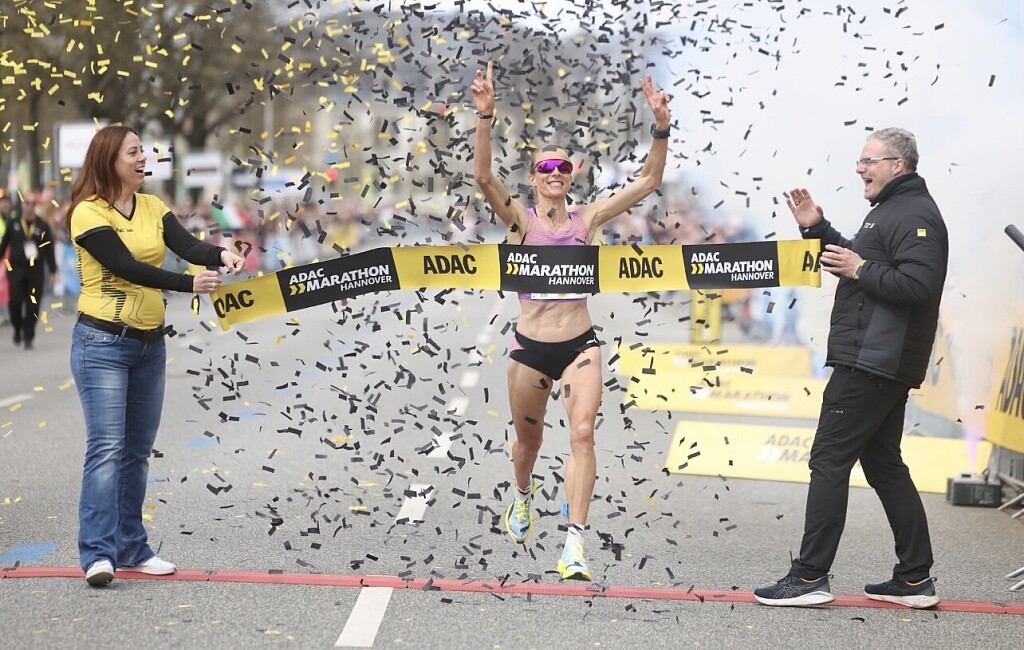
Domenika Mayer Crushes Hannover Course Record with 2:21:26 Breakthrough
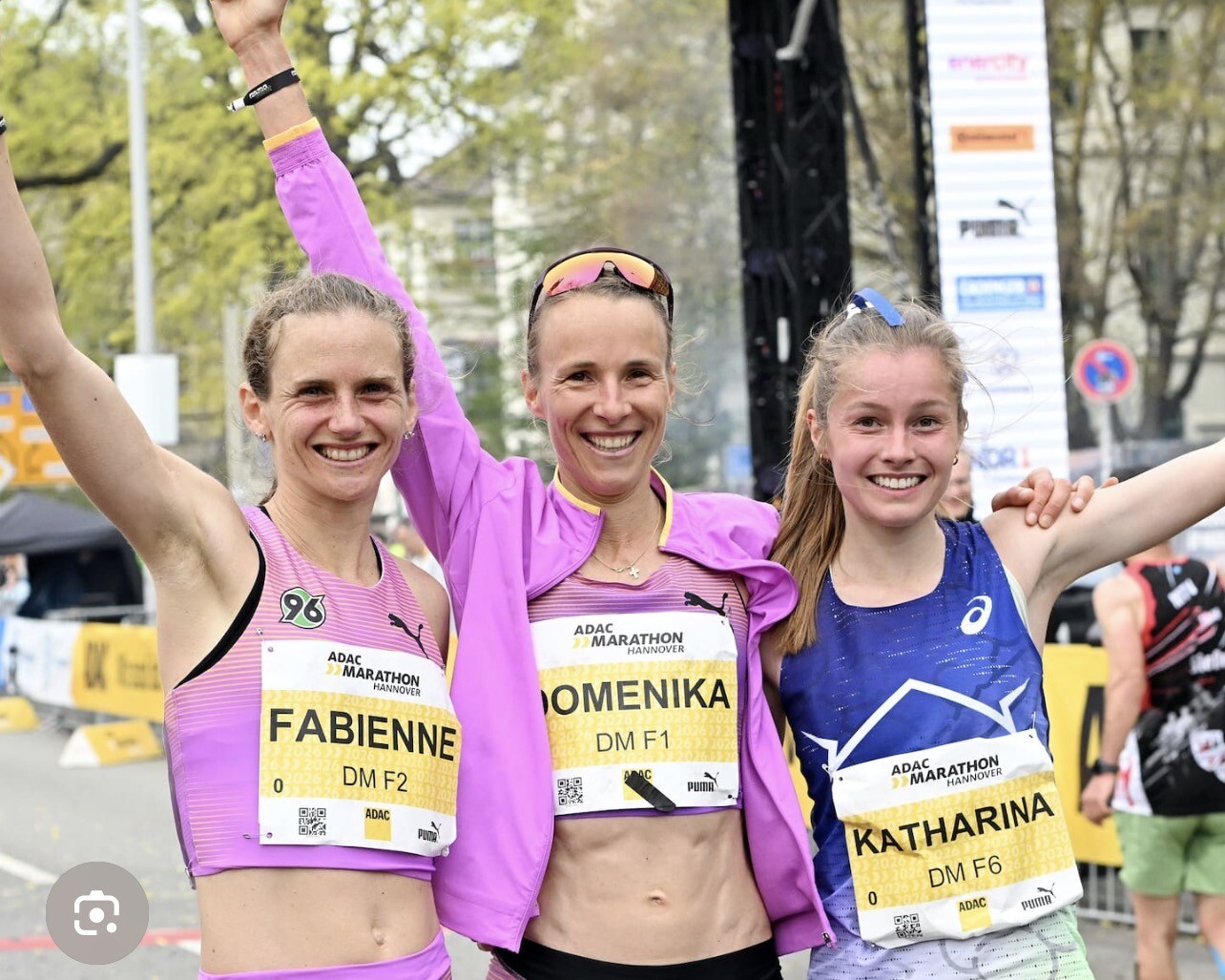
Germany’s Domenika Mayer delivered a commanding performance to win the ADAC Marathon Hannover in a course record of 2:21:26, securing the national championship title as well.
Improving significantly on her previous personal best of 2:23:16, Mayer moved to second on the German all-time list and 11th on the European all-time rankings. Her performance also stands as the second fastest time by a European woman this year. With the victory, Mayer became the first athlete to win the Hannover Marathon four times.
Fellow German Fabienne Königstein finished second in 2:24:31, while Ethiopia’s Almaz Negede took third in 2:30:25.
Kibet Surges Late to Win Men’s Race
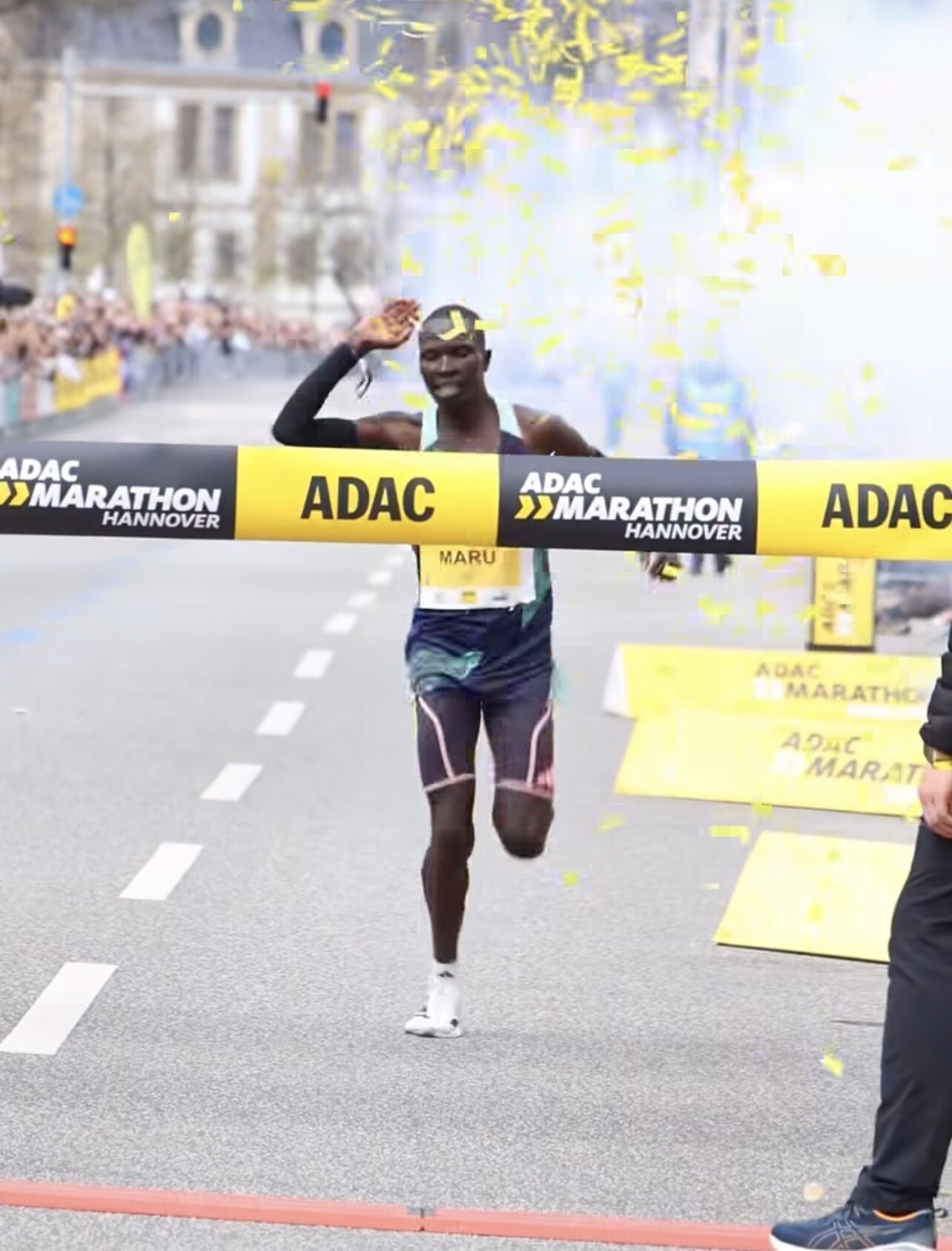
Kenya’s Maru Thomas Kibet captured the men’s title in dramatic fashion, running a personal best of 2:07:53.
After trailing late in the race, Kibet closed a significant gap and overtook Zimbabwe’s Godwin Katakura with just over two kilometers remaining. Katakura held on for second in 2:08:46, also a major personal best, while Ethiopia’s Asnake Dubre finished third in 2:10:22.
Germany’s Tom Thurley placed sixth overall in 2:11:02, earning the German national title.
A Record Event in Hannover
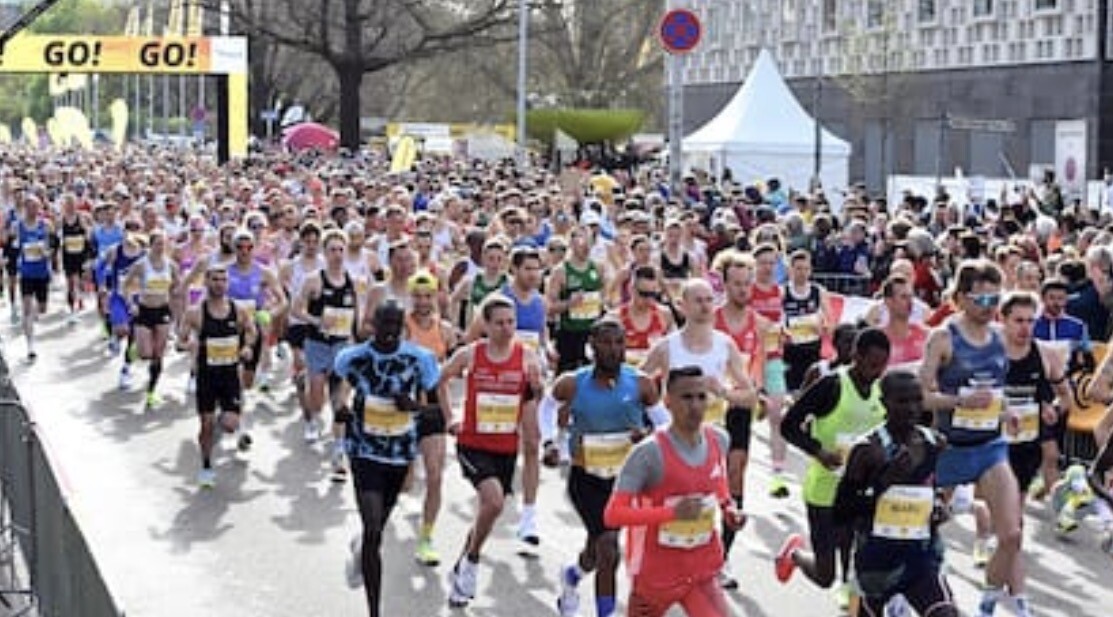
More than 6,000 marathon runners registered for the 34th edition of the race. Including shorter distance events staged throughout the weekend, total participation reached nearly 34,000 athletes, setting a new event record.
Mayer Dominates from the Start
The anticipated duel between Mayer and Königstein never materialized. Königstein entered the race with limited preparation following an injury, and Mayer quickly took control.
By the halfway mark, Mayer split 70:31, nearly a minute ahead of Königstein (71:25). From there, the gap continued to grow.
“Given the short preparation time, I am happy with my race. I had no problems after the injury—that’s great. Domenika was very strong today,” said Königstein, who is now targeting the European Championships marathon in Birmingham this August.
Mayer admitted the early pace may have been ambitious but remained strong enough to deliver a breakthrough performance.
“I am really happy. The pace was a bit too fast early, and you pay for that later,” she said. “But there is still more to come. I am aiming for the 2:20 mark. I’m always trying to run faster and see what is possible—after all, my time is limited. I’m not 25 anymore.”
With this performance, Mayer now trails only national record holder Irina Mikitenko (2:19:19) on Germany’s all-time list.
Late Drama in the Men’s Race
The men’s race saw a dramatic shift in the closing kilometers. Godwin Katakura, who had led for most of the race, slowed significantly in the final stages, opening the door for Kibet.
“I did not expect to win and had already settled for second,” said Kibet. “This is a huge personal best. In the future, I want to run 2:03.”
Thurley Claims National Title
After pre-race favorite Johannes Motschmann dropped out around 25K due to a groin issue, the path cleared for Tom Thurley.
The 32-year-old delivered a personal best of 2:11:02 to secure the German title
“I had hoped it might work out this way—but a marathon is long, and you never know,” said Thurley. “My goal is to run under 2:10. If I get the opportunity to compete for Germany at the European Championships, I will take it.”
Results
Men
1. Maru Thomas Kibet (KEN) – 2:07:53
2. Godwin Katakura (ZIM) – 2:08:46
3. Asnake Dubre (ETH) – 2:10:22
4. Christopher Kitetu (KEN) – 2:10:45
5. Archie Casteel (SWE) – 2:10:56
6. Tom Thurley (GER) – 2:11:02
Women
1. Domenika Mayer (GER) – 2:21:26
2. Fabienne Königstein (GER) – 2:24:31
3. Almaz Negede (ETH) – 2:30:25
4. Cecilia Wayua (KEN) – 2:30:36
5. Katharina Saathoff (GER) – 2:30:51
6. Mercy Kipkemoi (KEN) – 2:31:48
by Race News Service
Login to leave a comment

ADAC Hannover Marathon
It is not only the gripping competition that makes the marathon in Hannover so captivating, but also the exceptionally attractive side programme.With numerous samba bands and musicians accompanying the athletes along their sightseeing tour through the city, a feel-good mood is guaranteed on the course. The city will be transformed with a mix of musical entertainment, shows and activities that...
more...
Why Keely Hodgkinson Chooses Precision Over Tradition in South Africa
In the world of middle-distance running, where marginal gains define greatness, Keely Hodgkinson and her M11 Track Club have taken a path less travelled—deliberately bypassing Kenya’s iconic high-altitude havens in favour of a more calculated base in Potchefstroom.
For decades, Iten has stood as the spiritual home of distance running, perched at a staggering 2,400 metres above sea level. It has forged champions and shaped legends. Yet for an athlete like Hodgkinson—an Olympic 800m champion whose success hinges on a delicate balance between endurance and raw speed—such extreme altitude presents a unique challenge.

Instead, her team, led by renowned coaches Trevor Painter and Jenny Meadows, has identified Potchefstroom as the ideal training ground. Sitting at a more moderate 1,350 metres, it offers what many would call the “perfect compromise”—high enough to stimulate red blood cell production, yet low enough to preserve the explosive speed essential for elite 800m racing.
This distinction is crucial. The 800m is neither purely aerobic nor entirely anaerobic; it demands a rare fusion of stamina and sprint capability. Training too high can blunt that sharpness, draining the very speed that separates champions from contenders. In Potchefstroom, Hodgkinson can execute high-intensity sessions—those punishing lactic-threshold workouts and relentless hill sprints—with precision and consistency, without overburdening her body.
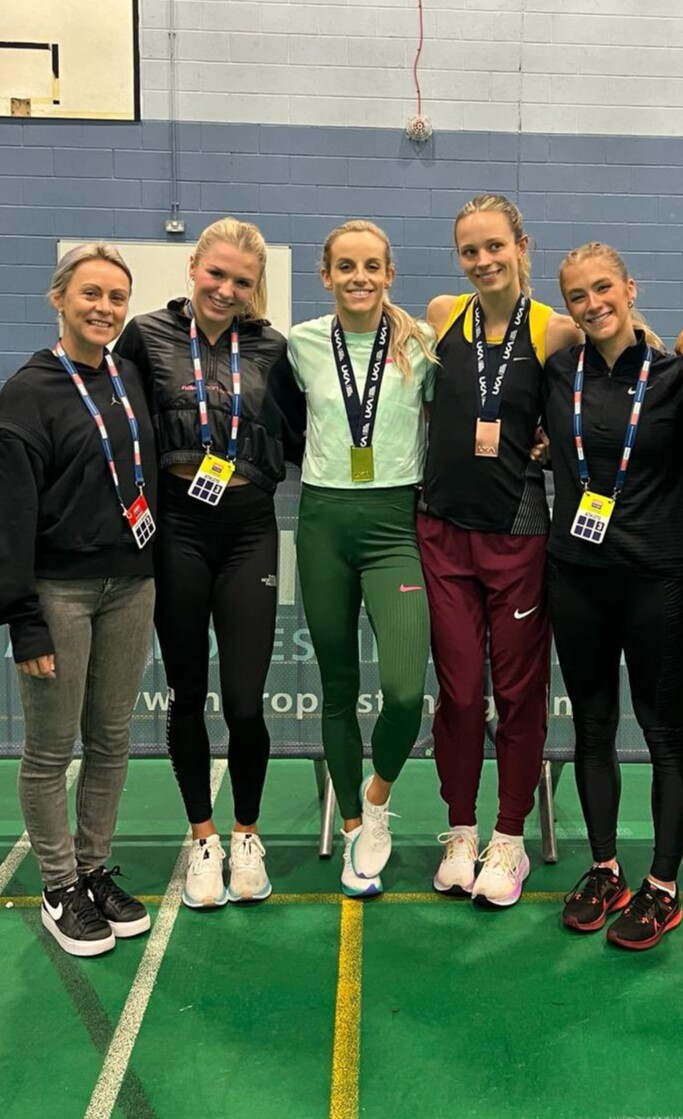
Climate, too, plays a decisive role. While the United Kingdom endures long, cold winters, South Africa provides dry, sunlit conditions that are ideal for uninterrupted training blocks. The firm tracks, warm air, and predictable weather allow the M11 squad to push their limits day after day, building both physical resilience and technical excellence.
Yet performance is only one piece of the puzzle. Equally important is the environment beyond the stopwatch. Potchefstroom offers a sense of familiarity and balance—modern facilities, reliable infrastructure, and a relaxed social setting that enables athletes to mentally reset between sessions. This blend of professionalism and comfort creates a “home away from home,” where recovery is as intentional as training.
Behind the scenes, the team’s meticulous approach extends to every detail. With access to advanced medical support and carefully structured routines, their South African base has evolved into a finely tuned performance hub—one that prioritises longevity, consistency, and peak execution.
In choosing South Africa over Kenya, Hodgkinson and the M11 Track Club are not rejecting tradition—they are redefining it. Their strategy reflects a deeper understanding of the event’s demands and a commitment to tailoring every variable in pursuit of excellence.
For the world’s fastest 800m women, success is no longer just about where you train—it’s about how intelligently you do it.
by Erick Cheruiyot for My Best Runs.
Login to leave a comment
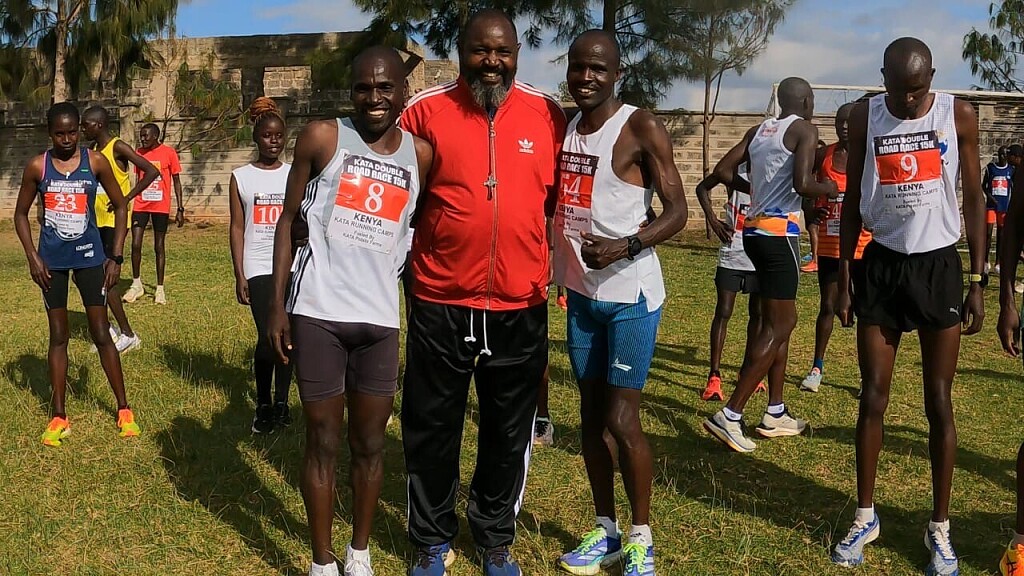
From Soil to Stride: How KATA Kenya and the Double Road Race Redefined Athlete Development in 2025
As 2025 draws to a close, year-end reflections in distance running often gravitate toward times, titles, and breakthrough performances. Yet some of the most compelling stories in Kenya this year unfolded far from finish lines—across high-altitude farms, disciplined training camps, and an unconventional road race that asked athletes to start twice in a single day.
In 2025, the Kenya Athletics Training Academy (KATA) quietly reshaped what athlete development looks like in practice. Across Kenya’s famed running regions—Iten, Kaptagat, Nyahururu, Keringet, Molo, Kericho, Bomet, and Elgeyo Marakwet—KATA, under the guidance of Chief Technical Officer Denis Musau, expanded its focus beyond mileage and workouts to include nutrition, recovery, sustainability, and innovative competition design.
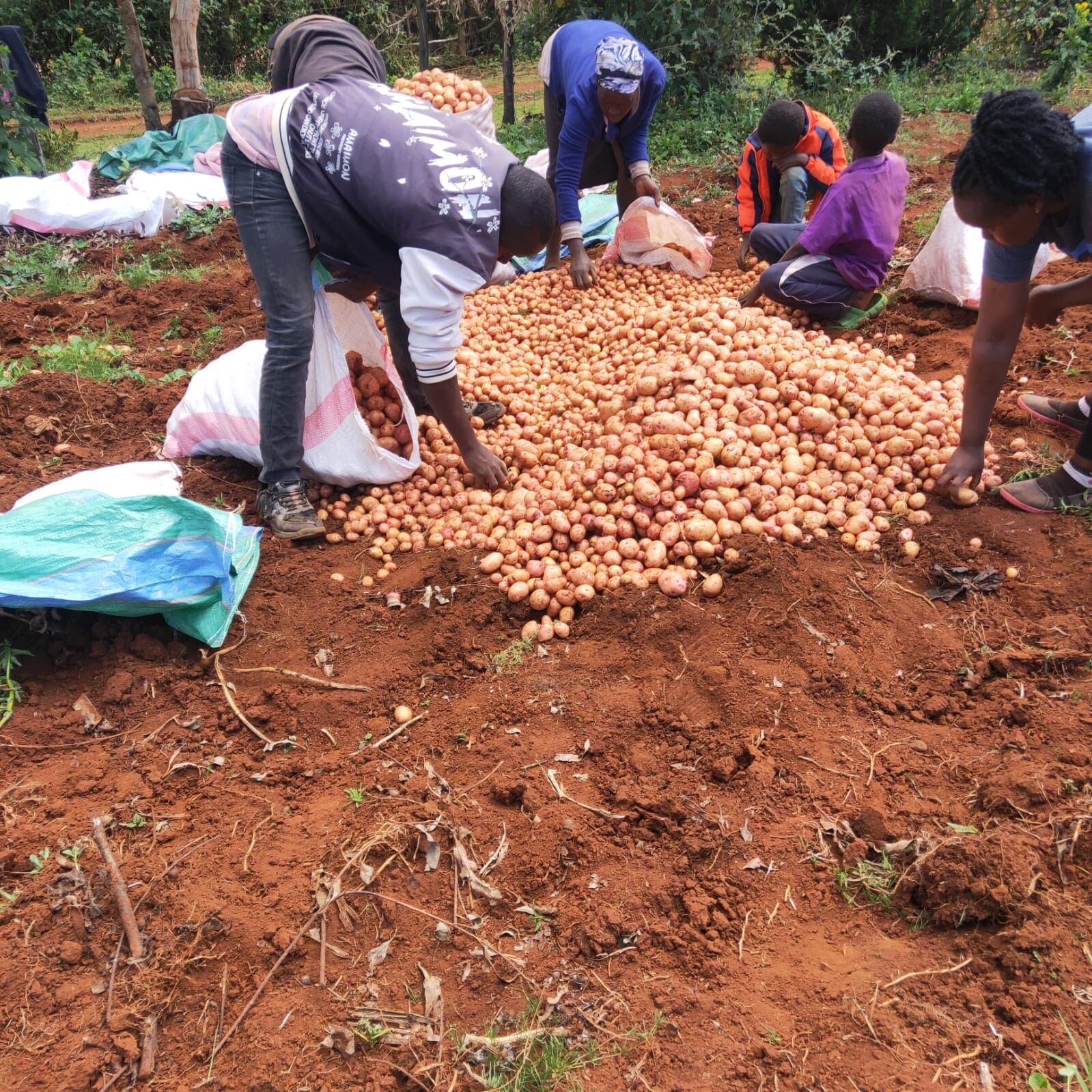
At the center of that shift was an initiative that seemed deceptively simple: potato farming.
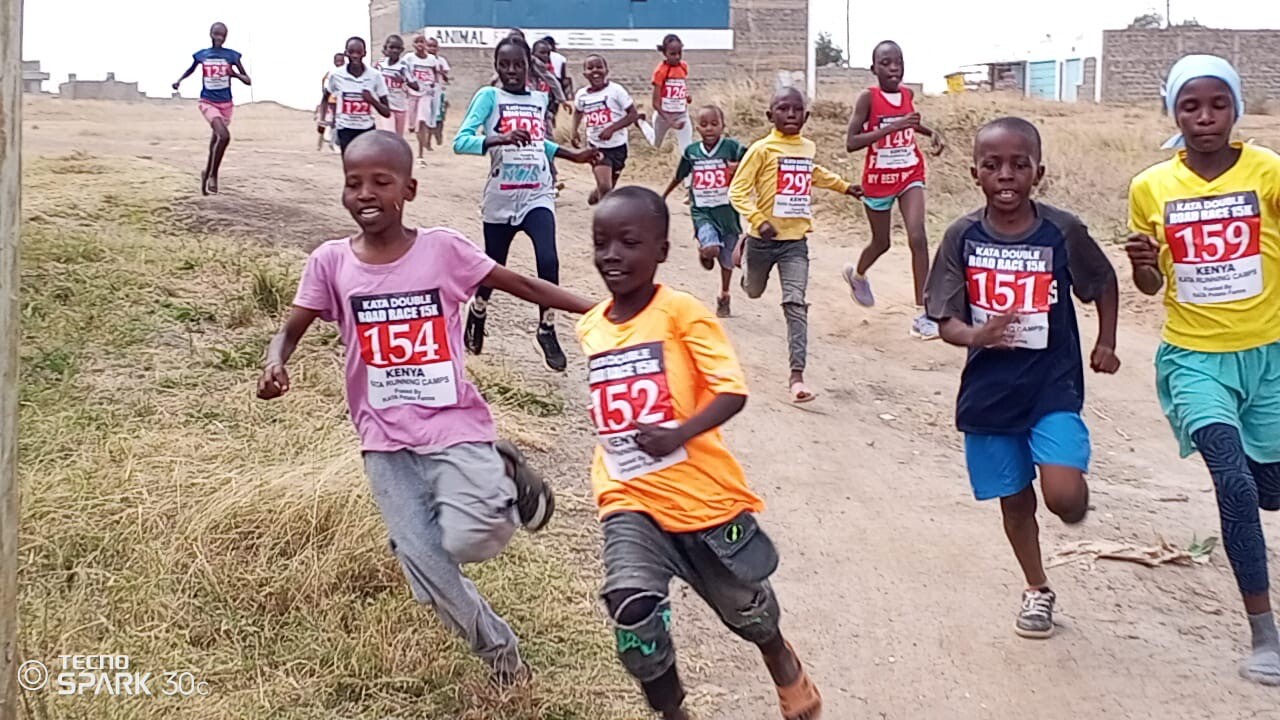
Originally launched to support camp operators, the program quickly addressed two pressing challenges—nutrition and economic stability. For athletes living and training full-time at altitude, consistent access to energy-rich food proved as critical as any interval session.
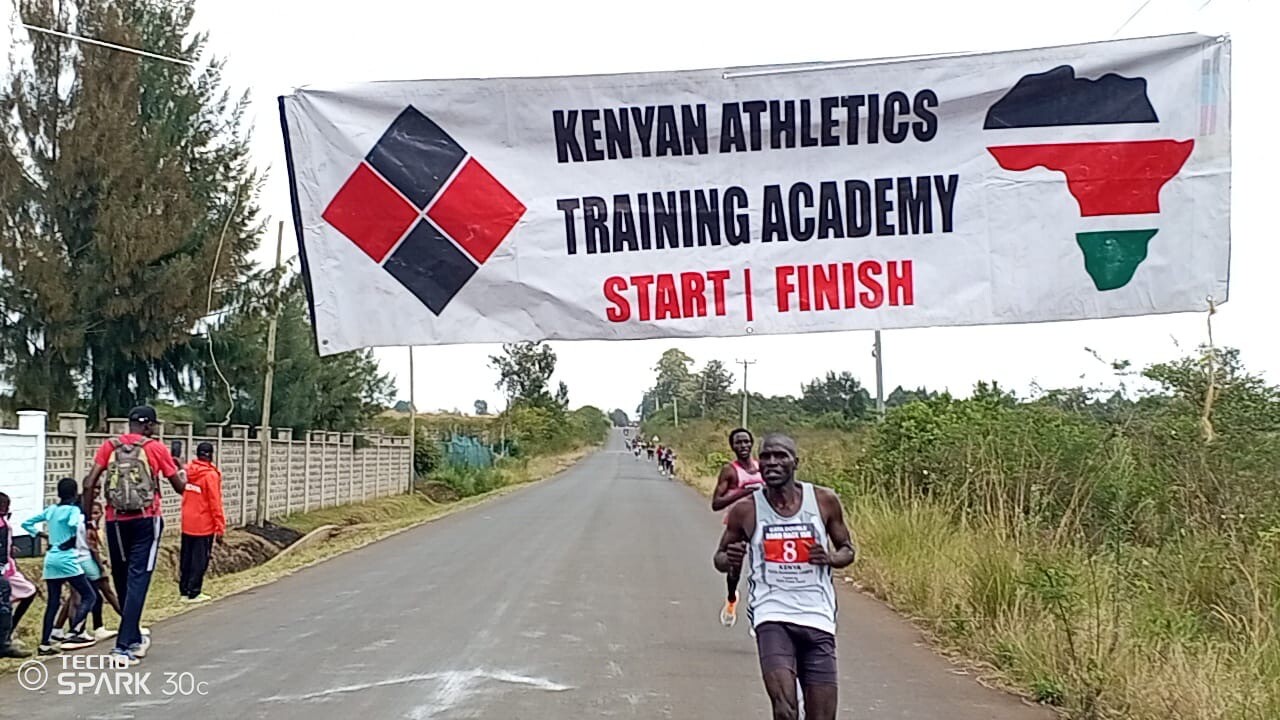
“The potato farm has helped some of our camp operators and the entire athletics fraternity,” Musau said. “It is very nutritious, gives energy, and supports recovery for our athletes. Despite being cheap and easy to find in the market, potatoes play a big role in our training environment.”
The initiative aimed to ease food costs, improve diet quality, and reinforce camps running sustainably. It also fostered a sense of ownership within camps—reflecting KATA’s long-term goal of building resilient training ecosystems rather than dependence on outside support.
Kenya’s varied geography, however, quickly revealed that not every region was equally suited to potato farming.
“Potato farming has been good across the nation where we have camps,” Musau explained, “but some parts of the country are not suitable because of climate factors such as rainfall and soil type.”
Rather than dilute the project, KATA responded with refinement. Future planting will be concentrated in regions that best support both agriculture and elite training, including Keringet in Nakuru County, Kapcherop in Elgeyo Marakwet, and Olkalou in Nyandarua County.
“Next season, we must carefully consider the best areas to plant potatoes,” Musau added.
Life inside KATA camps remains demanding. Athletes rise before dawn for long runs at altitude, balancing hill work, track sessions, and cross-country trails with careful attention to recovery, diet, and mental preparation. In such an environment, even modest improvements—better nutrition, improved recovery routines—can produce meaningful gains.
While farming strengthened life off the track, competition remained central to KATA’s mission. Structured time trials across camps continued to provide performance benchmarks and exposure to international opportunities.
“Normally, we conduct time trials across our camps, which help expose and link our athletes to international opportunities,” Musau noted.
Yet one event stood out as both a philosophical statement and a competitive crucible: the Double Road Race.
Conceived by Bob Anderson, veteran running journalist and founder of Runner’s World magazine and My Best Runs, the Double Road Race challenges athletes to race twice in a single day—testing endurance, recovery, pacing, and mental resilience. Designed to reward discipline and preparation over raw talent alone, the format has become a rare meeting point for athletes from different camps, regions, and backgrounds.
“Every year in September, we hold the Double Road Race, where athletes from across the country come together to compete,” Musau said. “This year, we had a successful race in Thika, Kiambu County.”
For many KATA athletes, the event served as a real-world stress test. Racing twice in one day exposed weaknesses in recovery, fueling, and mental focus—validating training systems built on consistency rather than shortcuts. Athletes returned to camp with lessons that extended beyond the road: how to manage energy, respect process, and embrace discipline.
By year’s end, the significance of 2025 lay not in a single headline result but in the quiet evolution of systems. From structured camps and practical nutrition initiatives to innovative competition formats, Kenya continued to offer a blueprint for athlete development that resonates far beyond its borders.
From potato fields at altitude to double starts on Kenyan roads, KATA’s 2025 reinforced a simple truth: performance is cultivated long before race day—and often, the most meaningful progress happens where few are watching, until the results speak for themselves.
Looking ahead to 2026, these lessons provide a clear roadmap for the next generation of athletes. The blend of practical support, strategic training, and innovative racing promises to keep Kenya at the forefront of global distance running—and ensures that transformation continues both on and off the track.
by Robert Kibet for My Best Runs
Login to leave a comment
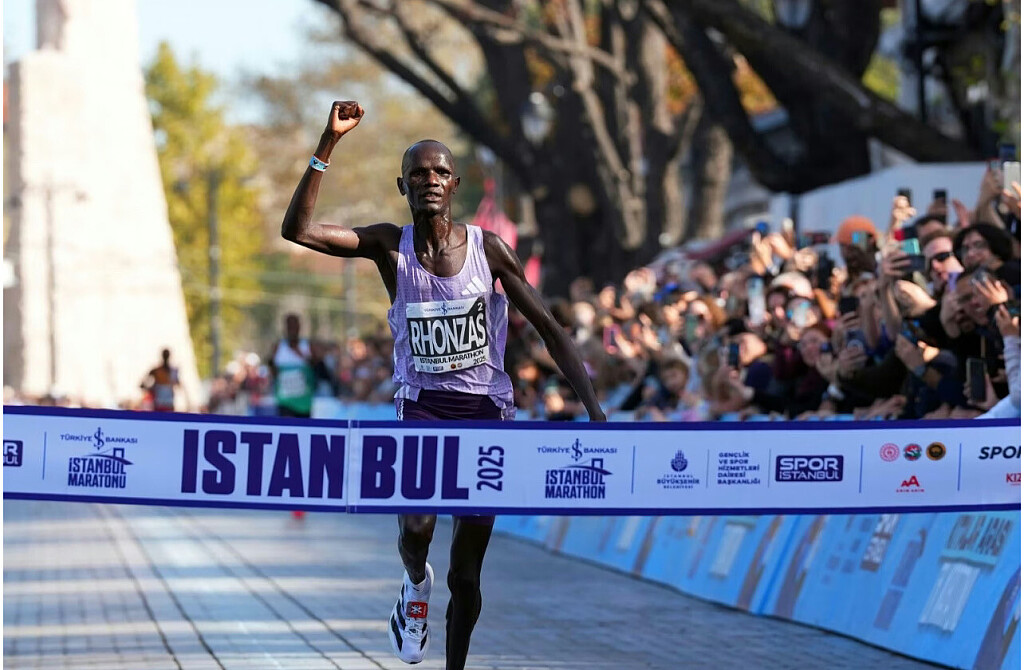
Rhonzas Kilimo and Bizuager Aderra Triumph in Thrilling Istanbul Marathon
ISTANBUL, November 2, 2025 — Kenya’s Rhonzas Kilimo and Ethiopia’s Bizuager Aderra claimed sensational victories at the 47th Türkiye İş Bankası Istanbul Marathon, both securing the biggest wins of their careers and pocketing $50,000 each.
In warm, sunny conditions, 29-year-old Kilimo edged out defending champion Dejene Debela in a fierce uphill battle to the finish, clocking 2:10:12. Debela was just 11 seconds back in 2:10:23, with fellow Ethiopian Sufaro Woliyi third in 2:10:26.
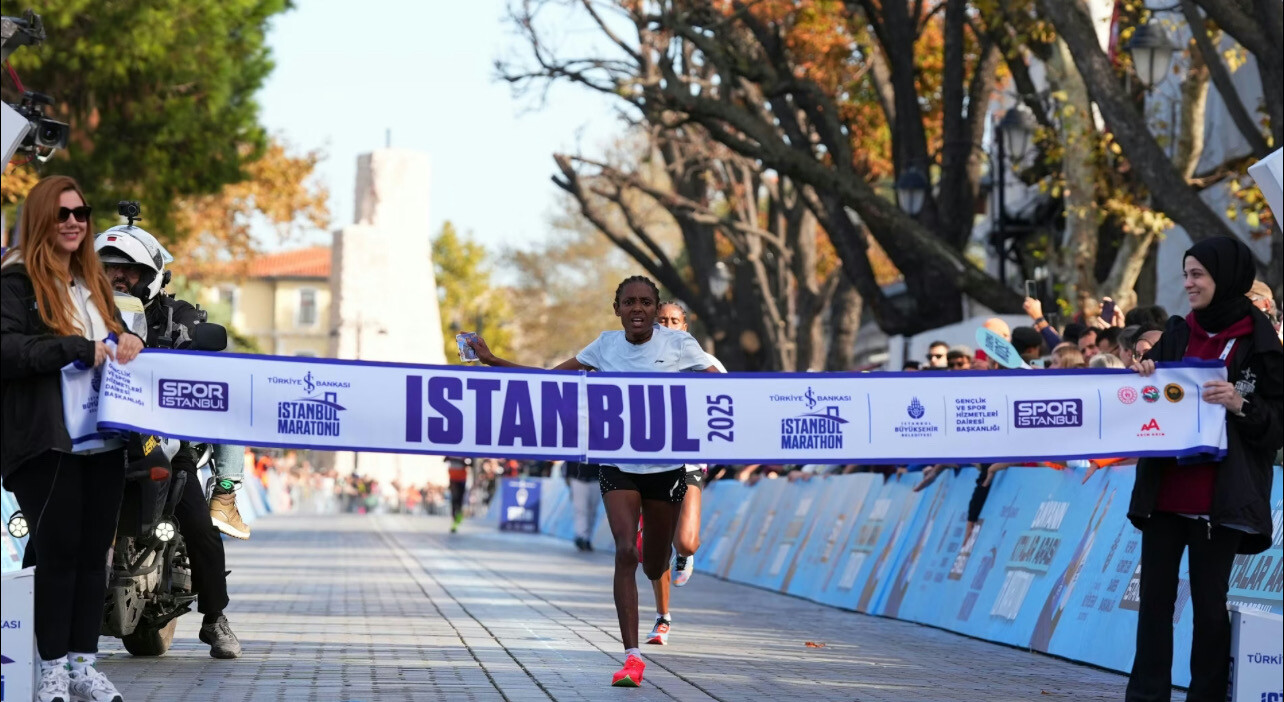
The women’s race delivered the closest finish in the marathon’s history. 22-year-old Bizuager Aderraemerged as a surprise champion, breaking her personal best with 2:26:19 — just two seconds ahead of Olympic steeplechase silver medalist Sofia Assefa. Kenya’s Joan Kilimo, unrelated to the men’s winner, finished third in 2:26:36.
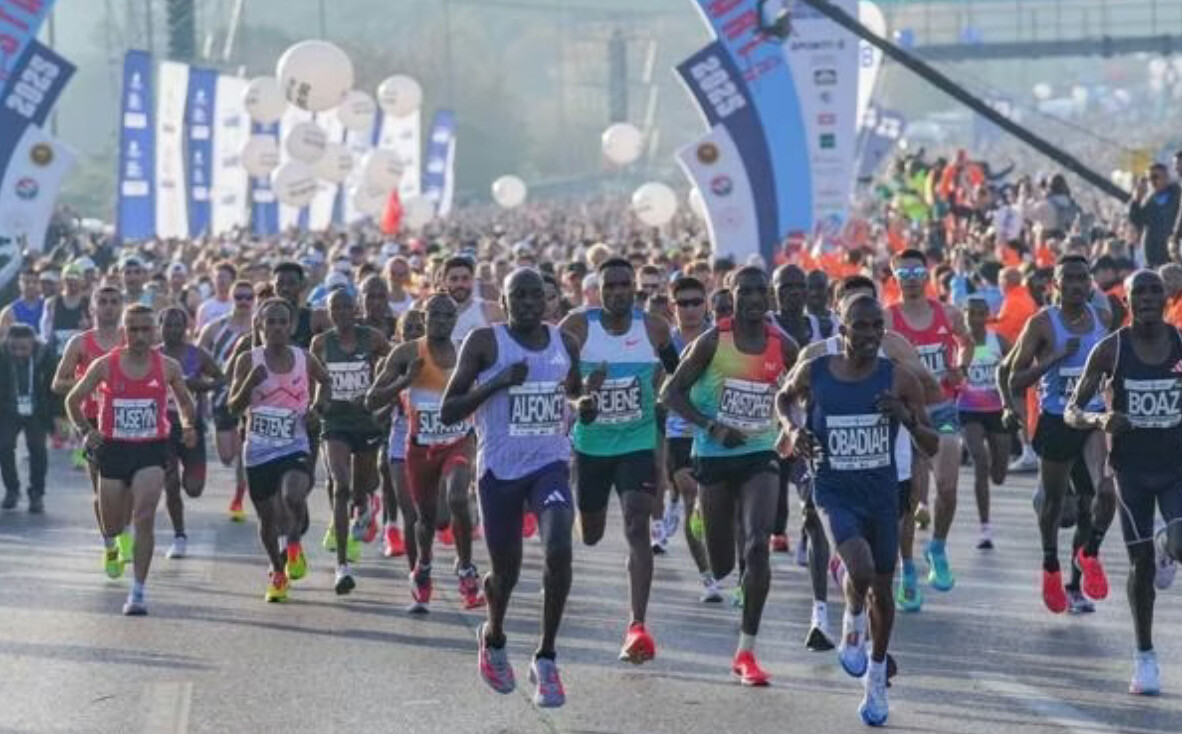
More than 6,000 runners competed in the marathon, with a total of 42,000 participants across all distances. The event holds a World Athletics Gold Label and is Turkey’s premier marathon.
Men’s Race: Kilimo Conquers the Hills
The men’s race began at an even pace, with the lead pack — including 16 athletes and four pacemakers — passing 10K in 30:41 and halfway in 1:04:41. Hopes of breaking the six-year-old course record (2:09:44 by Daniel Kibet) faded as the tempo dropped in the second half under 20°C heat.
As the runners approached the final mile-long climb, five men remained: Kilimo, Debela, Woliyi, Kenya’s Isaac Too, and Turkey’s Hüseyin Can. Too and Woliyi began to fade, leaving Kilimo and Debela to duel for victory.
“I had no clue about the uphill section at the end — it was a surprise to me,” Kilimo said afterward. “But I train in hilly areas around Iten, so I was ready.”
Kilimo, who ran a personal best of 2:06:09 in Seoul in 2024, crossed the line first in 2:10:12. “This was my biggest win so far,” he added. “My next goal is to run 2:03 on a fast course.”
Can delighted the home crowd by finishing fifth in a personal best of 2:10:58.
Women’s Race: Aderra’s Last-Minute Surge
The women’s field set an ambitious early pace — 33:38 at 10K and 1:11:22 at halfway — led by a pack of five: Ethiopians Bizuager Aderra, Sofia Assefa, Tigst Getnet, Gete Dukale, and Kenya’s Joan Kilimo.
As the temperature rose, the pace slowed. Assefa briefly fell behind but fought back, and with one kilometer to go, four women were still in contention. Assefa appeared to edge ahead, but Aderra responded with a decisive surge over the final 400 meters, sprinting into Sultan Ahmet Park to secure the win.
“This is the biggest win of my life — and a personal best,” said Aderra, whose previous mark was 2:28:27 from Rabat earlier this year. “My next goal is to go under 2:20.”
Top Results
Men
1. Rhonzas Kilimo (KEN) – 2:10:12
2. Dejene Debela (ETH) – 2:10:23
3. Sufaro Woliyi (ETH) – 2:10:26
4. Isaac Too (KEN) – 2:10:45
5. Hüseyin Can (TUR) – 2:10:58
6. Dickson Nyakundi (KEN) – 2:12:15
7. Charles Mneria (KEN) – 2:13:04
8. Dominik Bett (KEN) – 2:17:26
Women
1. Bizuager Aderra (ETH) – 2:26:19
2. Sofia Assefa (ETH) – 2:26:21
3. Joan Kilimo (KEN) – 2:26:36
4. Tigst Getnet (ETH) – 2:26:44
5. Gete Dukale (ETH) – 2:29:19
6. Roman Gidey (ETH) – 2:29:53
7. Rael Cherop (KEN) – 2:32:25
8. Yenenesh Tilahun Dinkesa (ETH) – 2:34:03
by Race News Service
Login to leave a comment
N Kolay Istanbul Marathon
At the beginning, the main intention was simply to organise a marathon event. Being a unique city in terms of history and geography, Istanbul deserved a unique marathon. Despite the financial and logistical problems, an initial project was set up for the Eurasia Marathon. In 1978, the officials were informed that a group of German tourists would visit Istanbul the...
more...
From Potatoes to Personal Bests: How Amos Chirchir Is Growing Athletes and a Future in Sachang’wan
In the highland village of Sachang’wan in Molo, Nakuru County, the land rises boldly toward the sky. The area sits on the edge of the dramatic Rift Valley escarpment, overlooking the vast Menengai Crater — Africa’s second-largest volcanic caldera — its silent ridges brooding in the morning mist.
Behind it, the rolling hills of Molo stretch endlessly, stitched with neat rows of potato farms that define the region’s identity. To the south lies Salgaa, a town better known for its flower farms, where long greenhouse tunnels shimmer like silver ribbons across the plains. Beyond this agricultural heartland, winding dirt roads climb toward Sachang’wan — where another kind of farming is taking root: the farming of athletic talent.
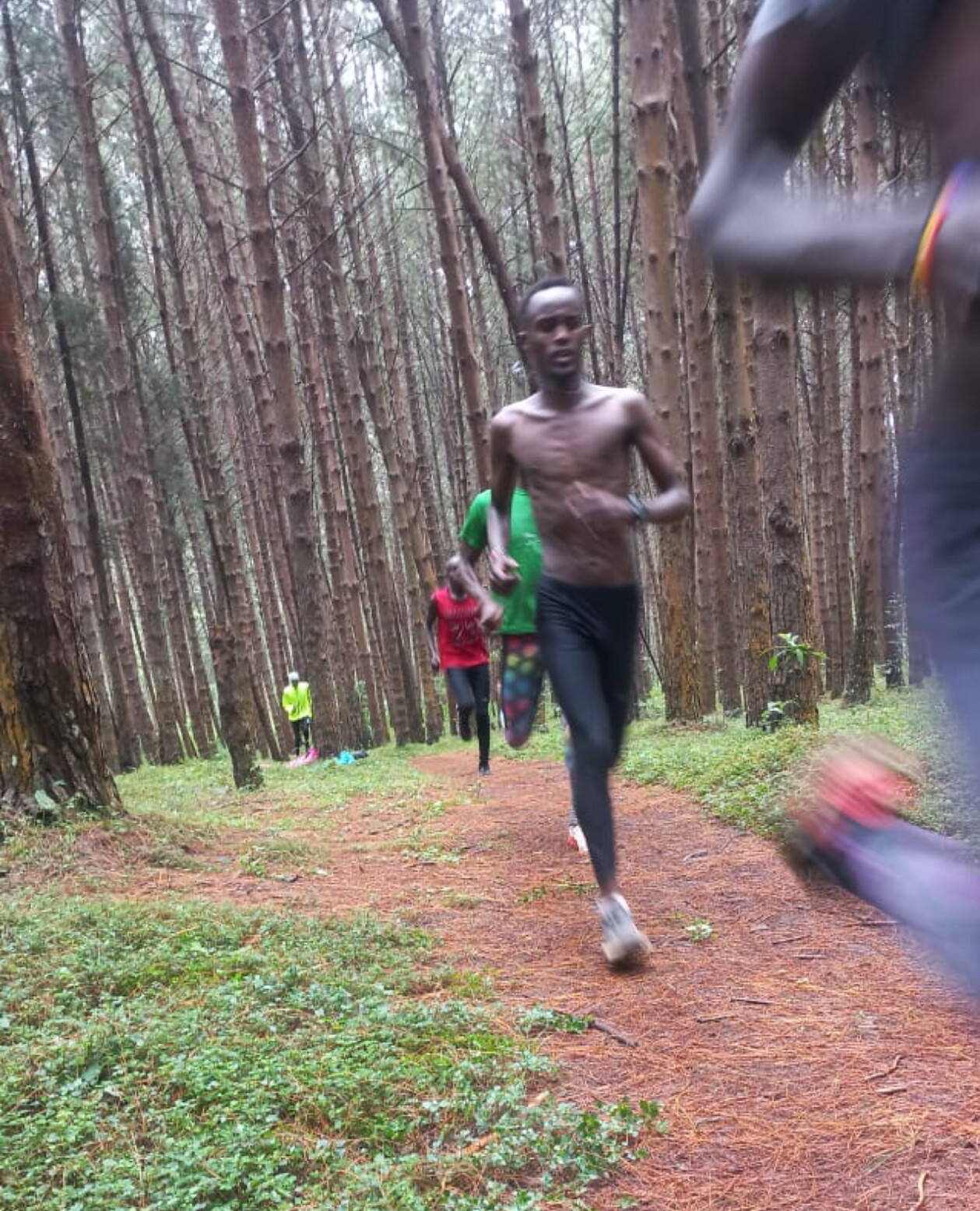
Here, where the air is thin and crisp, mornings begin before sunrise. Frost melts from the grass as a small group of determined athletes powers up a steep incline, their breath visible in the cold air. Leading them is 27-year-old Amos Kibet Chirchir, stopwatch in hand, eyes sharp with focus.
To an outsider, he might look like any other coach on a country road. But to his athletes — and to the growing Kenyan Athletics Training Academy (KATA) movement — Amos represents something much bigger: a new generation of homegrown leaders cultivating both champions and sustainability.
The Making of a Leader
Amos, the fifth-born in a family of eight, grew up in the cold, fertile highlands of Molo, raised by farming parents who taught him the value of hard work. Athletics runs deep in his family — his father was a 400m hurdler in the 1970s, competing when Kenyan track was just finding its rhythm.
“I didn’t just choose running,” Amos says with a smile. “Running found me.”
After excelling in local school competitions, Amos nearly saw his running dream fade — until June 2022, when he earned a place at KATA Thika, founded by American running innovator Bob Anderson, the visionary behind Runner’s World magazine.
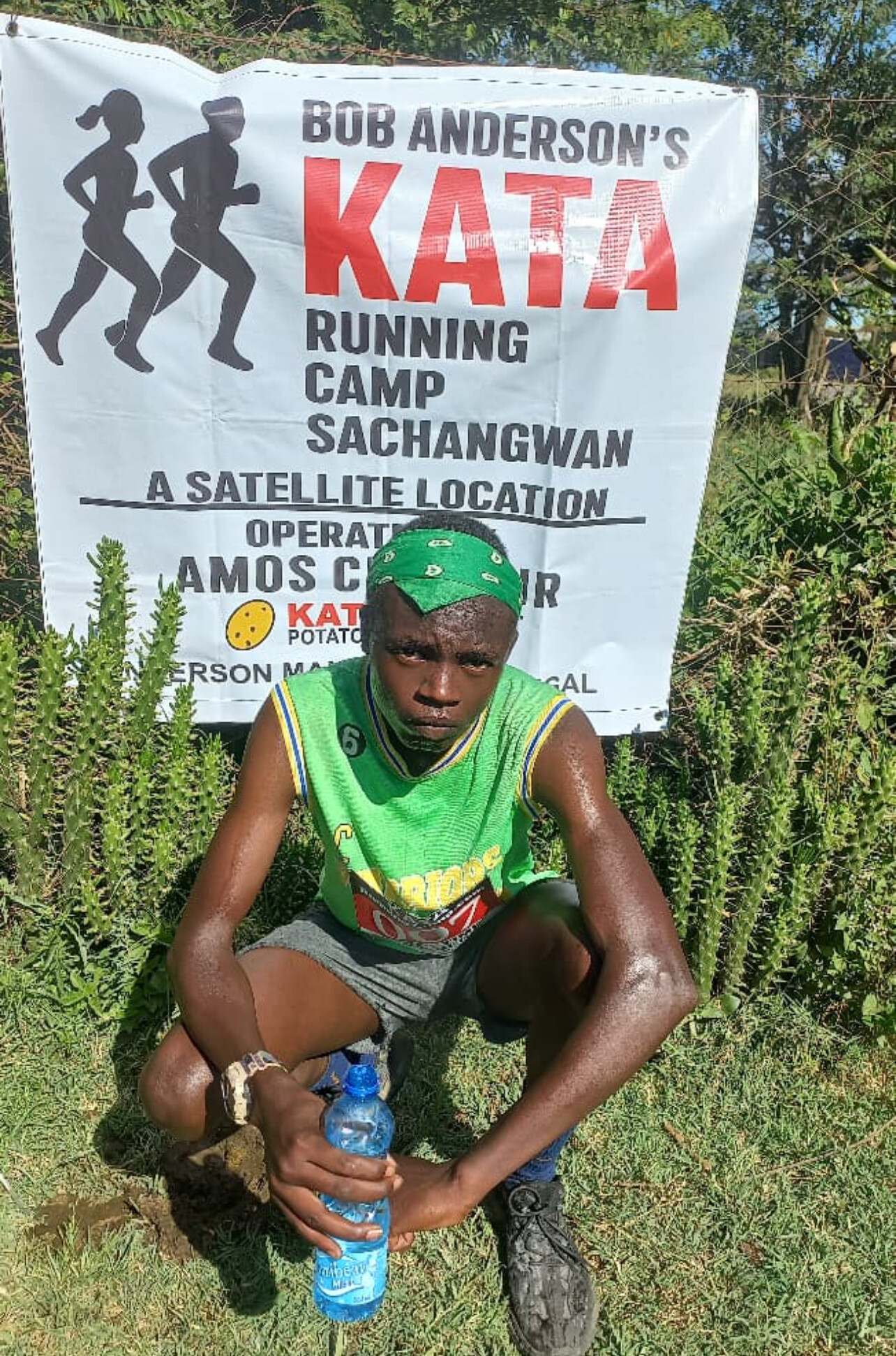
“That changed everything,” he recalls. “For the first time, I could train without worrying about daily survival. KATA didn’t just build me as an athlete — it prepared me to lead.”
Building a High-Altitude Training Hub

When Anderson announced plans to expand KATA through athlete-led satellite camps, Amos seized the opportunity. He returned home and launched KATA Sachang’wan Camp with just five athletes — three men and two women. Today, the camp has grown to eight committed runners, with more young talents eager to join.
The camp sits at an altitude of 2,400 meters, ideal for endurance training. For faster sessions, they descend to 1,800 meters, creating a natural high-low altitude system similar to what world-class runners use in Iten, Kaptagat, and Eldoret.
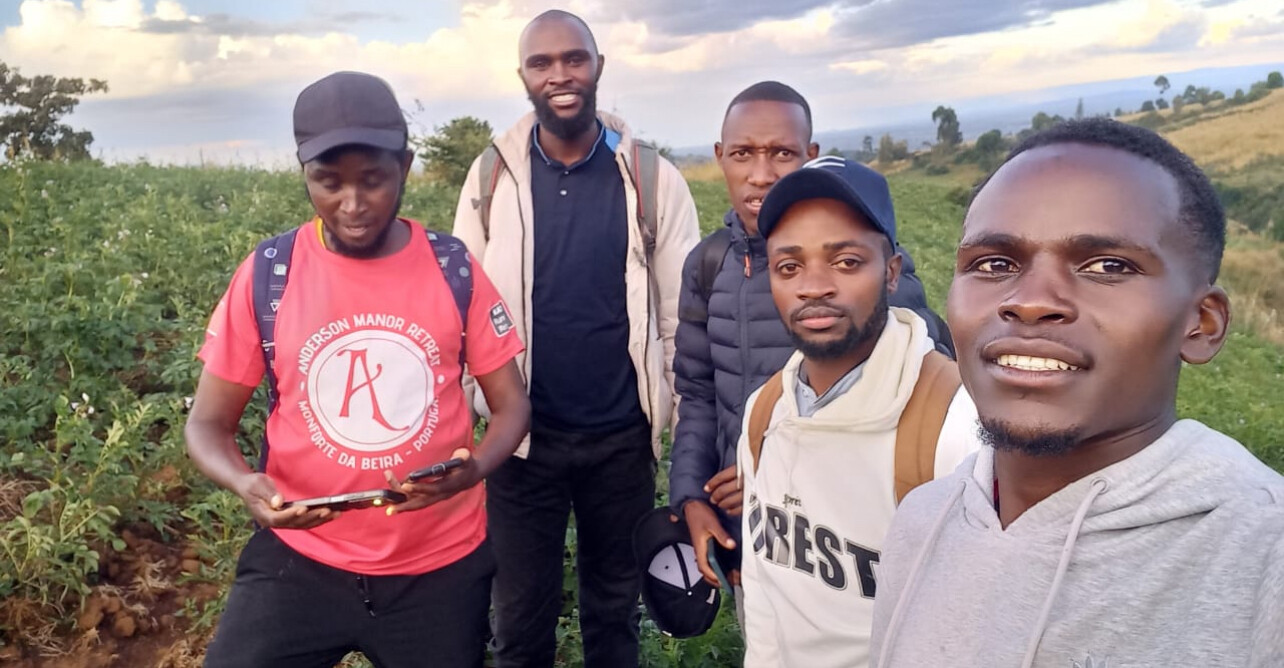
Already, results are emerging:
• Weldon Kibet Lang’at clocked 30:36 (10K) and 14:55 (5K) at the Double Road Race before improving to 30:16 in the October 15 time trials.
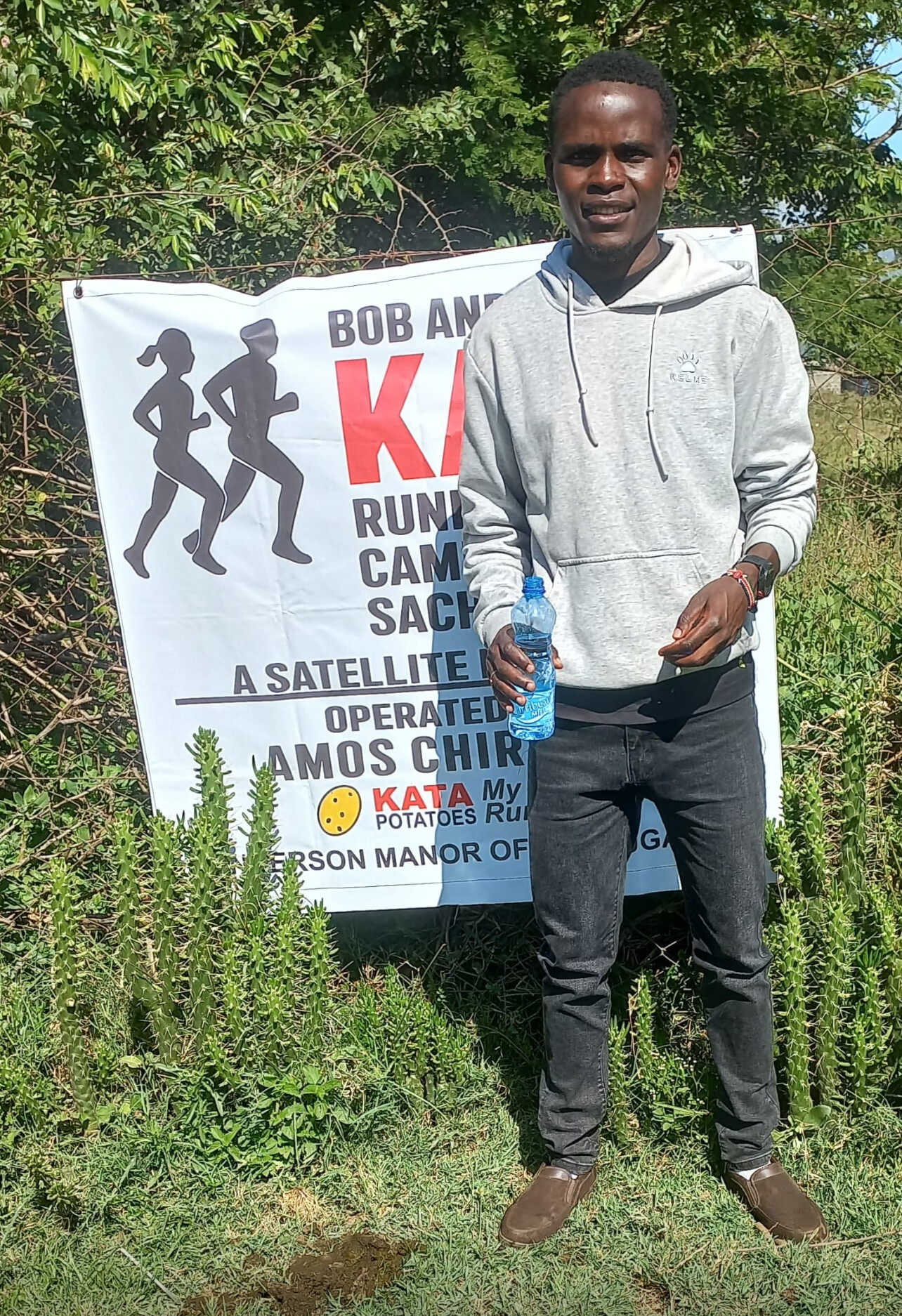
• Elizabeth Wambui, who joined just two months ago, cut her 5K time from 19:00 to 17:35 at the same event.
Amos himself remains in strong competitive shape, with personal bests of 30:51 (10K) and 14:32 (5K).
“I want to build champions — not just athletes who run fast, but athletes who think beyond medals,” he says.
Farming Hope: The KATA Potato Project
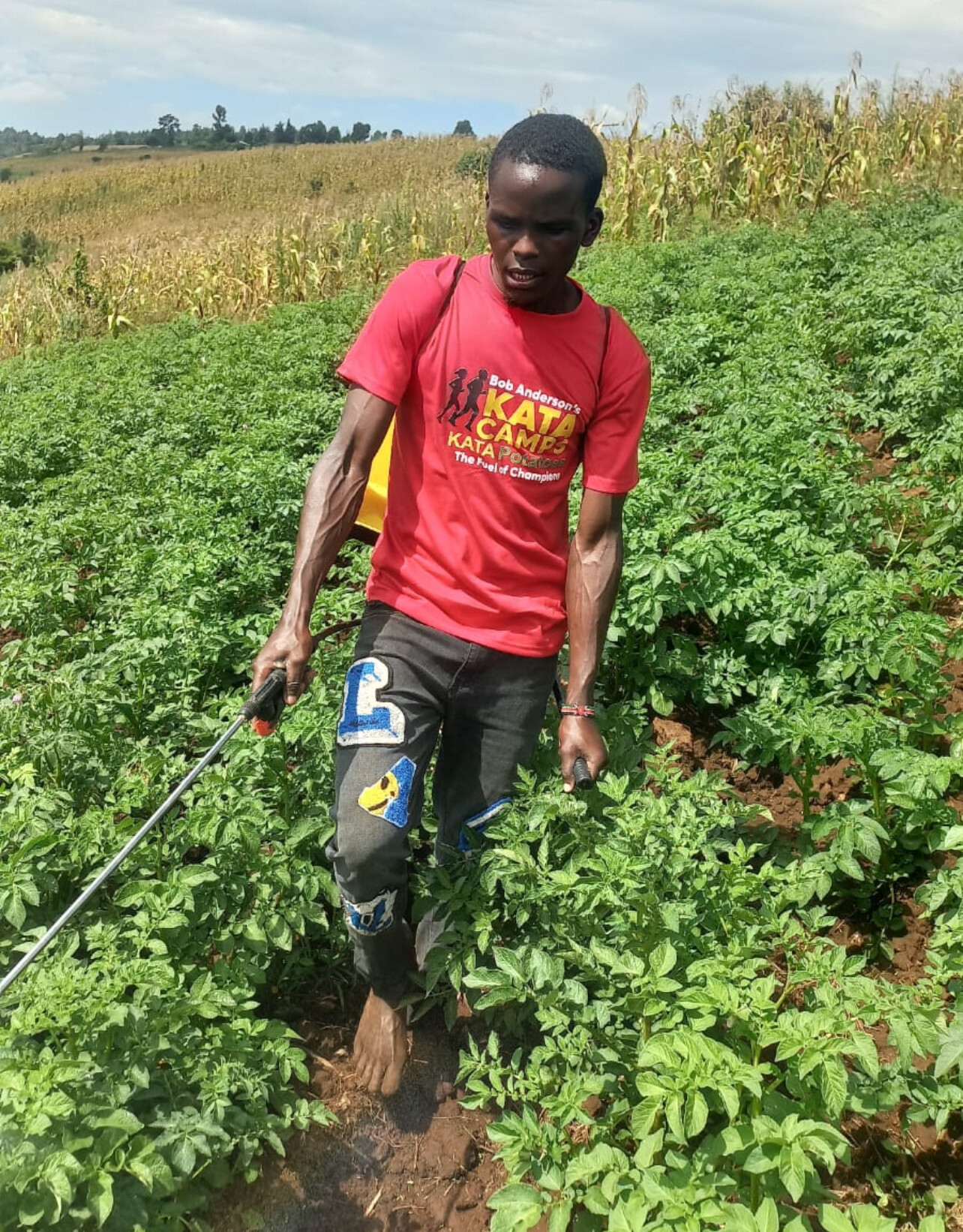
Alongside athletics, the Sachang’wan camp thrives on another discipline — agricultural sustainability. Inspired by Bob Anderson’s belief in empowering athletes for life beyond competition, Amos integrated potato farming into his training model.
He began with two acres of KATA potatoes, a move that initially drew laughter from locals.
“At first, people thought I was crazy,” he recalls. “They said farming was a step backward for an athlete. Now they’re copying me.”
Today, the farm helps feed the athletes, generates income for camp operations, and inspires local farmers — many now shifting from maize to potatoes after seeing his success.
“Athletes must think about life after running,” Amos says. “This program lets us build something real, not just chase medals.”
Training Champions, Growing Futures
With schools now closed, Amos plans to recruit junior athletes from nearby villages — guiding them early and keeping them away from idleness and drugs.
“Talent is going to waste in villages like ours because nobody guides young runners. I want to change that,” he says.
His long-term dream is to build dormitories, expand training facilities, and turn KATA Sachang’wan into a full-fledged center of excellence — powered by athletics and farming.
“Bob Anderson’s Vision Is Working”
Amos believes that KATA is redefining the future of Kenyan athletics.
“This is more than running,” he says. “Bob Anderson’s program teaches us responsibility, teamwork, leadership, and self-reliance. We’re not waiting for sponsors — we’re building ourselves.”
From the cold ridges of Sachang’wan overlooking Menengai Crater, a quiet revolution is growing — one built on sweat, soil, and belief. Here, potatoes fuel champions, and running fuels dreams.
And at the heart of it all stands a young leader — stopwatch in one hand, hoe in the other — cultivating both athletes and a future for Kenya.
by Robert Kibet
Login to leave a comment
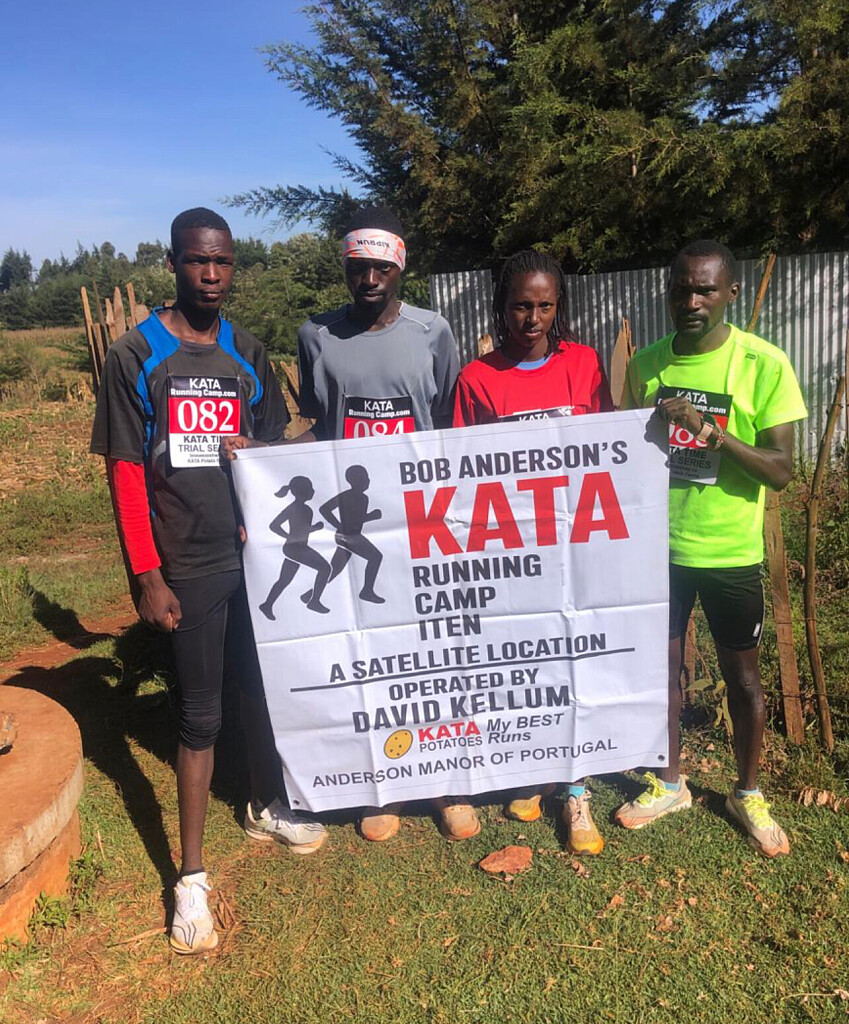
Champions in the Making: KATA Iten Camp Time Trial Highlights
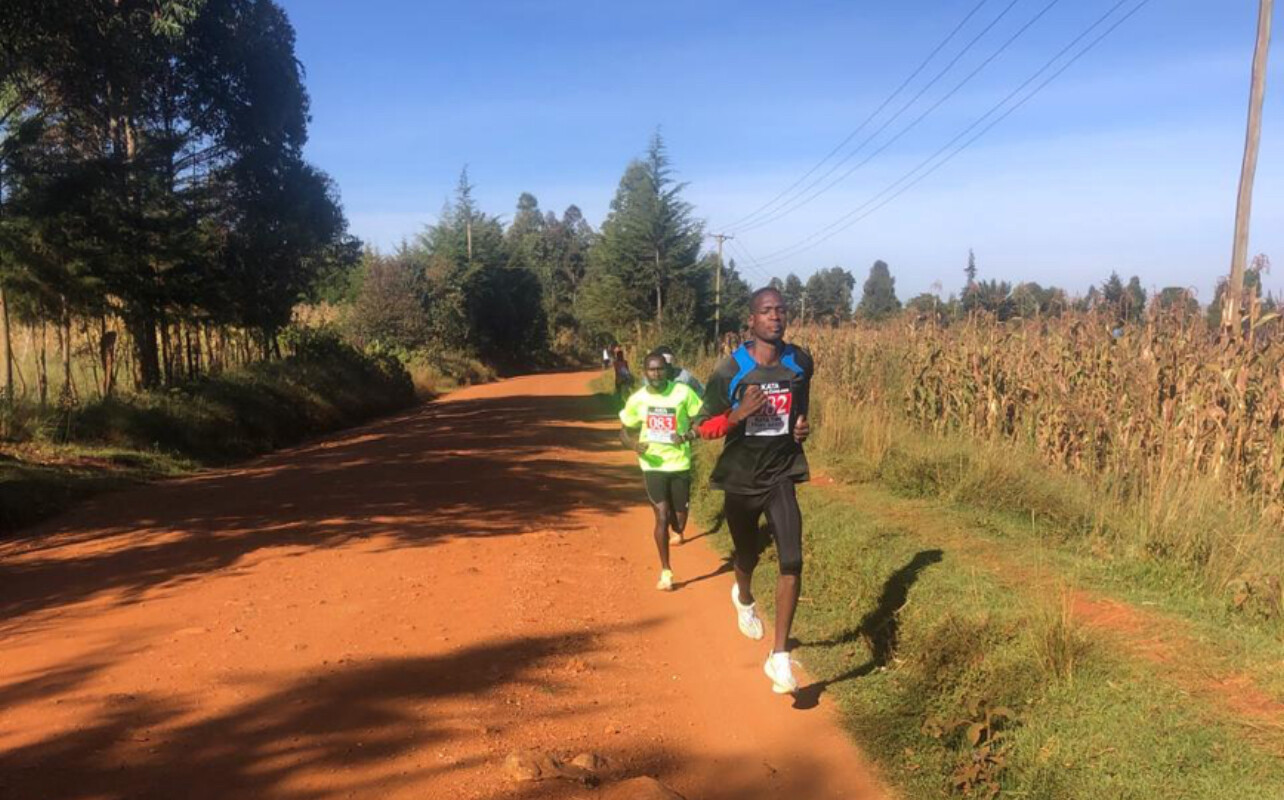
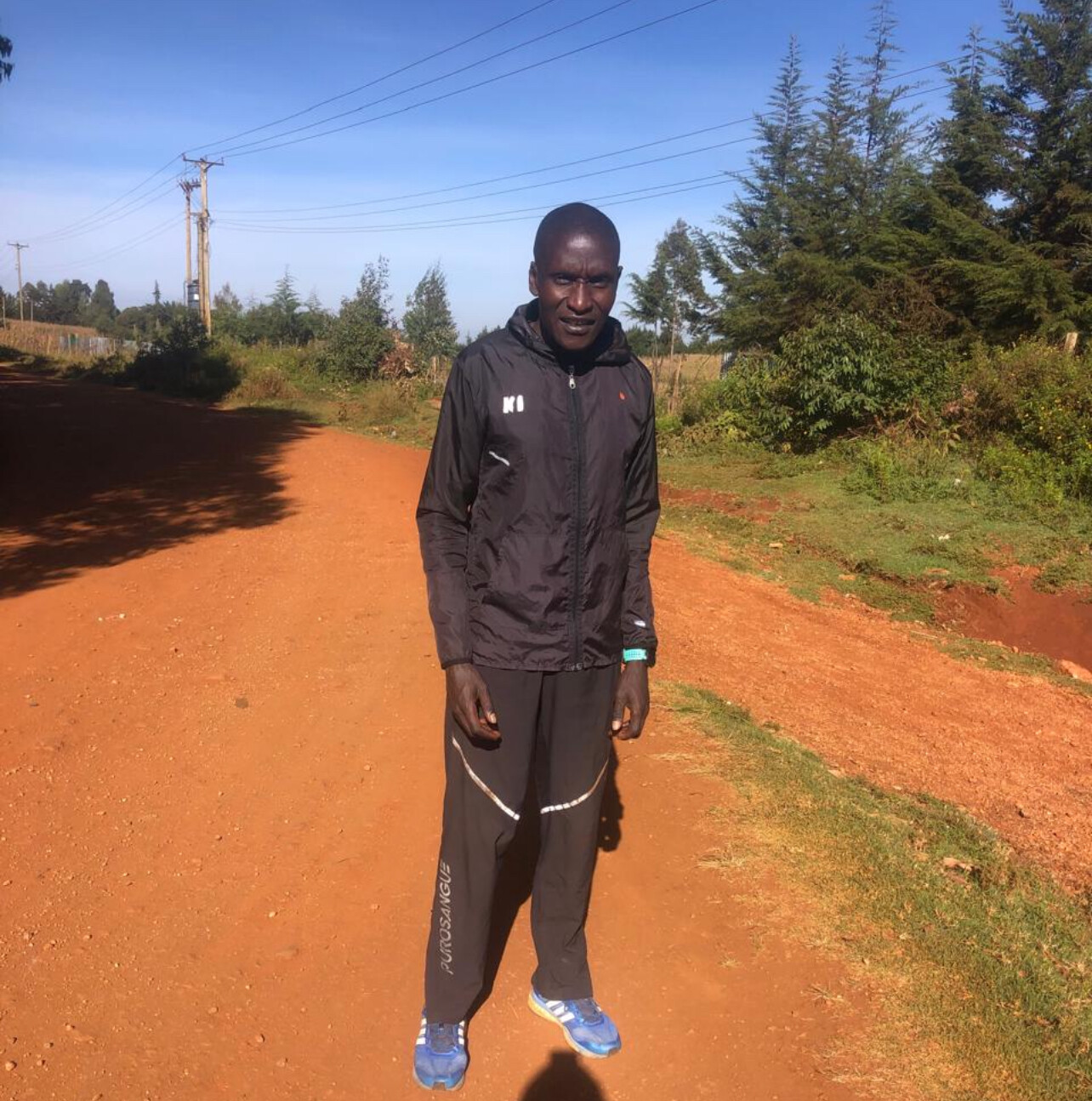
The KATA Iten Camp held its latest time trial under ideal running conditions, with both the 10K and 5K distances producing impressive performances and multiple personal bests. Coach David Kellum’s athletes demonstrated exceptional progress and consistency, reflecting the strong training foundation established at Camp #8.
Men’s 10KM Results
1. Amon Kipchirchir – 29:30.59
2. Linus Kangogo – 29:35.20
3. Elkana Barningo – 29:55.05
4. Moses Leparakwo – 30:20.08
Women’s 10KM Results
1. Betty Chesang – 35:45.01
2. Sharon Chesir – 35:58.32
3. Teresia Lenges – 36:06.33
4. Vivian Ololpapit – 36:40.47
Men’s 5KM Results
1. Amon Kipchirchir – 15:30.11
2. Isack Kipchirchir – 15:24.55
3. Cornelius Oloisa – 15:30.56
4. Linus Kangogo – 15:58.30
Women’s 5KM Results
1. Betty Chesang – 16:55.30
2. Cynthia Rono – 16:57.21
3. Vivian Nengai – 17:45.31
4. Sharon Chesir – 17:46.55
Date: October 16, 2025
Coach and Operator: David Kellum
Location: Iten, Kenya
Summary:
The Iten-based KATA athletes delivered an outstanding showing, highlighted by strong double performances from Amon Kipchirchir and Betty Chesang, who both dominated their respective 10K and 5K events. Coach David Kellum continues to build one of the most promising training groups in the KATA network, with athletes steadily improving through disciplined training and consistent time trial participation.
by Boris Baron
Login to leave a comment
Kenyan Duo to Battle for TCS Toronto Waterfront Marathon Title
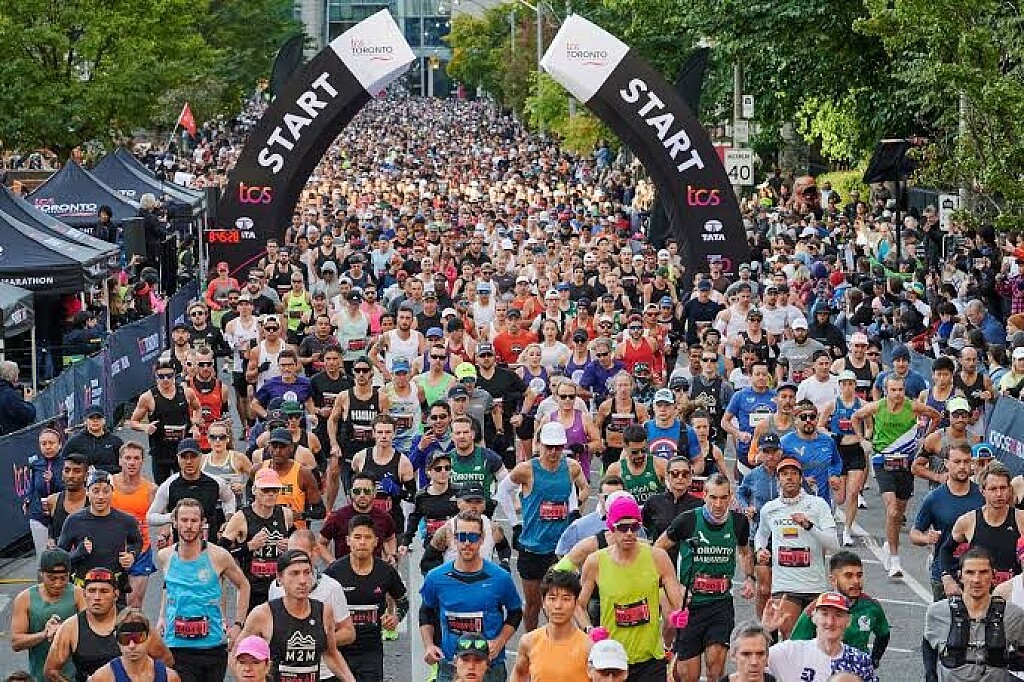
Toronto, Canada — October 19, 2025. The stage is set for another East African showdown at the TCS Toronto Waterfront Marathon, a World Athletics Elite Label Race. Two top Kenyan runners, Beatrice Cheserek and Cynthia Chemweno, have been confirmed to take on Ethiopia’s rising stars Almaz Kebebe and Adane Anmaw, in what promises to be one of the most competitive women’s races in the event’s history.
Beatrice Cheserek’s Confident Marathon Debut
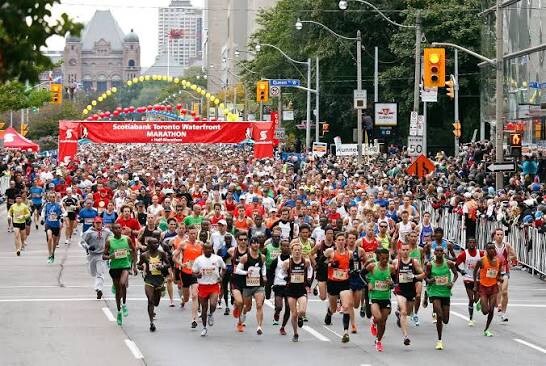
At 26, Beatrice Cheserek will make her marathon debut in Toronto, bringing impressive credentials to the start line. She owns a half marathon personal best of 1:06:48, recorded while winning the 2022 Cardiff Half Marathon, and has already experienced the pressure of major marathons.
In 2023, she paced compatriot Rosemary Wanjiru through 30 kilometers of the Tokyo Marathon, a World Marathon Major that Wanjiru went on to win in 2:16:28. Cheserek’s performance that day proved her strength over the distance — and she’s ready to test herself as a full competitor.
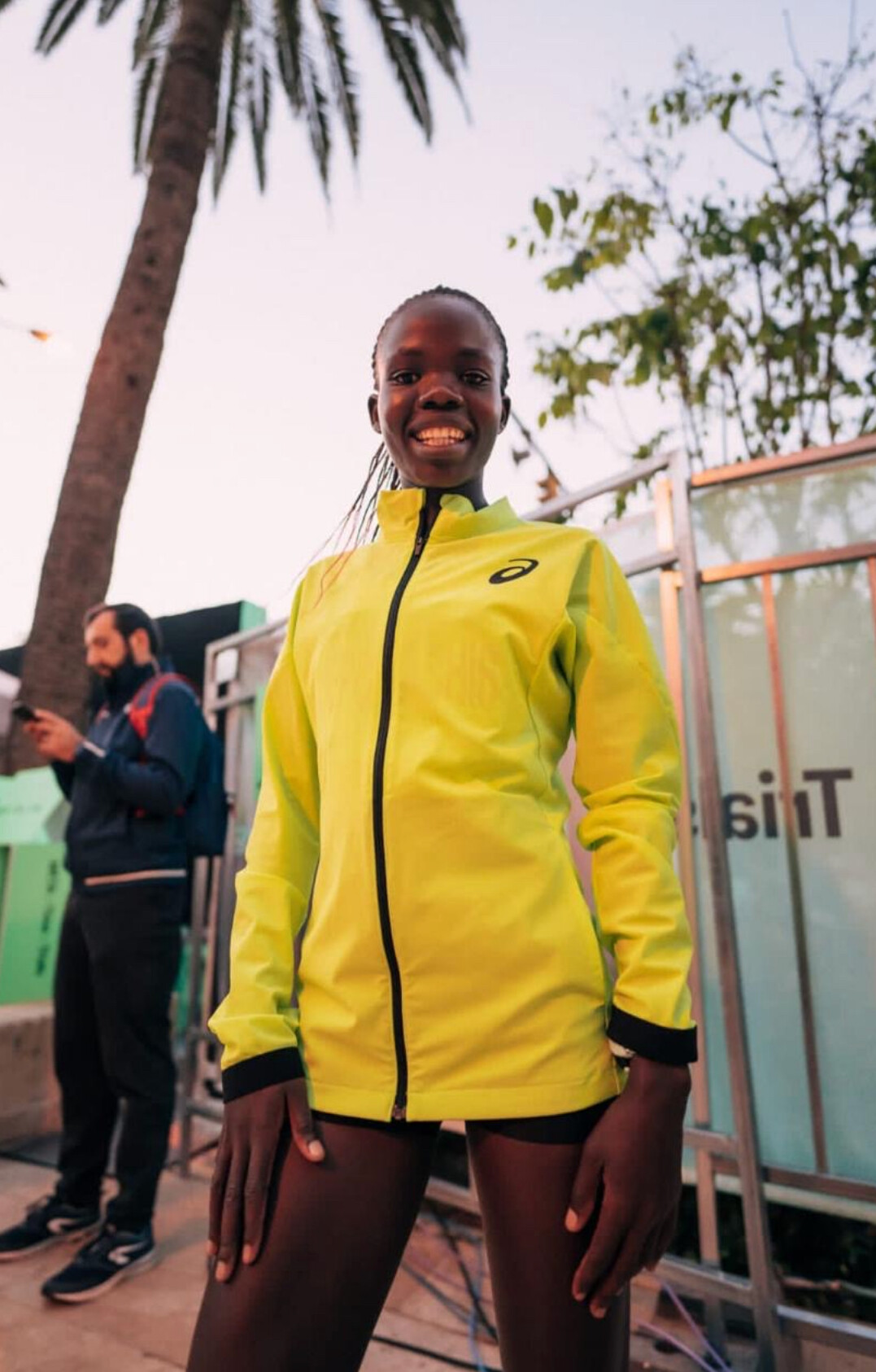
“This is my first marathon, and I hope to do my best,” Cheserek said. “I paced in Tokyo for Rosemary Wanjiru, and she ran 2:16, so I know I am strong. I want to run 2:20 or 2:19 in Toronto. It’s a fast course.”
After taking maternity leave to give birth to her son Fabian Kiprop, now 15 months old, Cheserek has made a steady comeback. Earlier this year, she placed sixth at Spain’s Santa Pola Half Marathon, running 1:10:25. Her confidence has grown with each training cycle.
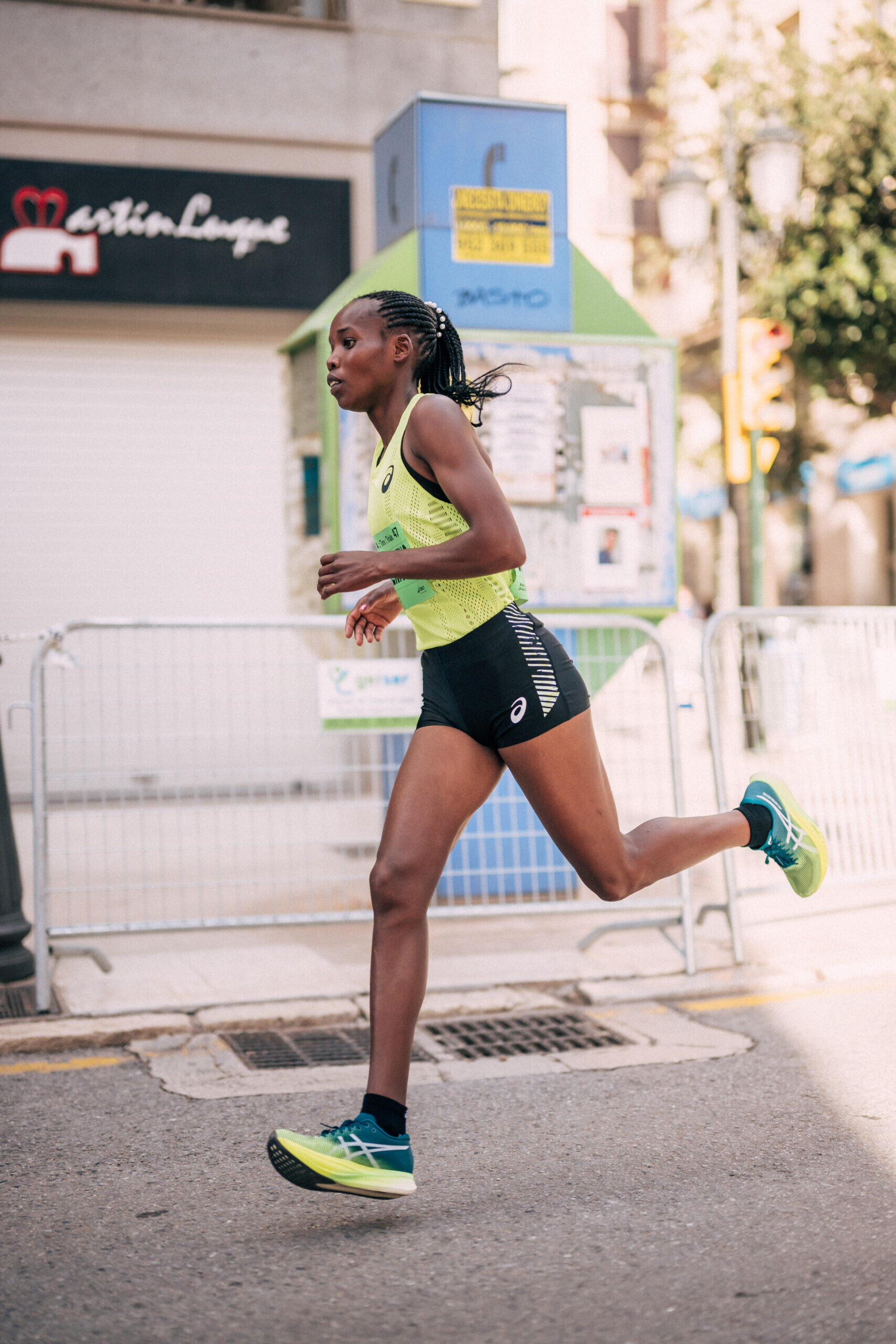
“My training now is going well,” she added. “Last week I did 40 kilometers and finished strong. I know Toronto is not a hard course — a little bit faster — and I’m ready.”
Cynthia Chemweno Targets Another Breakthrough
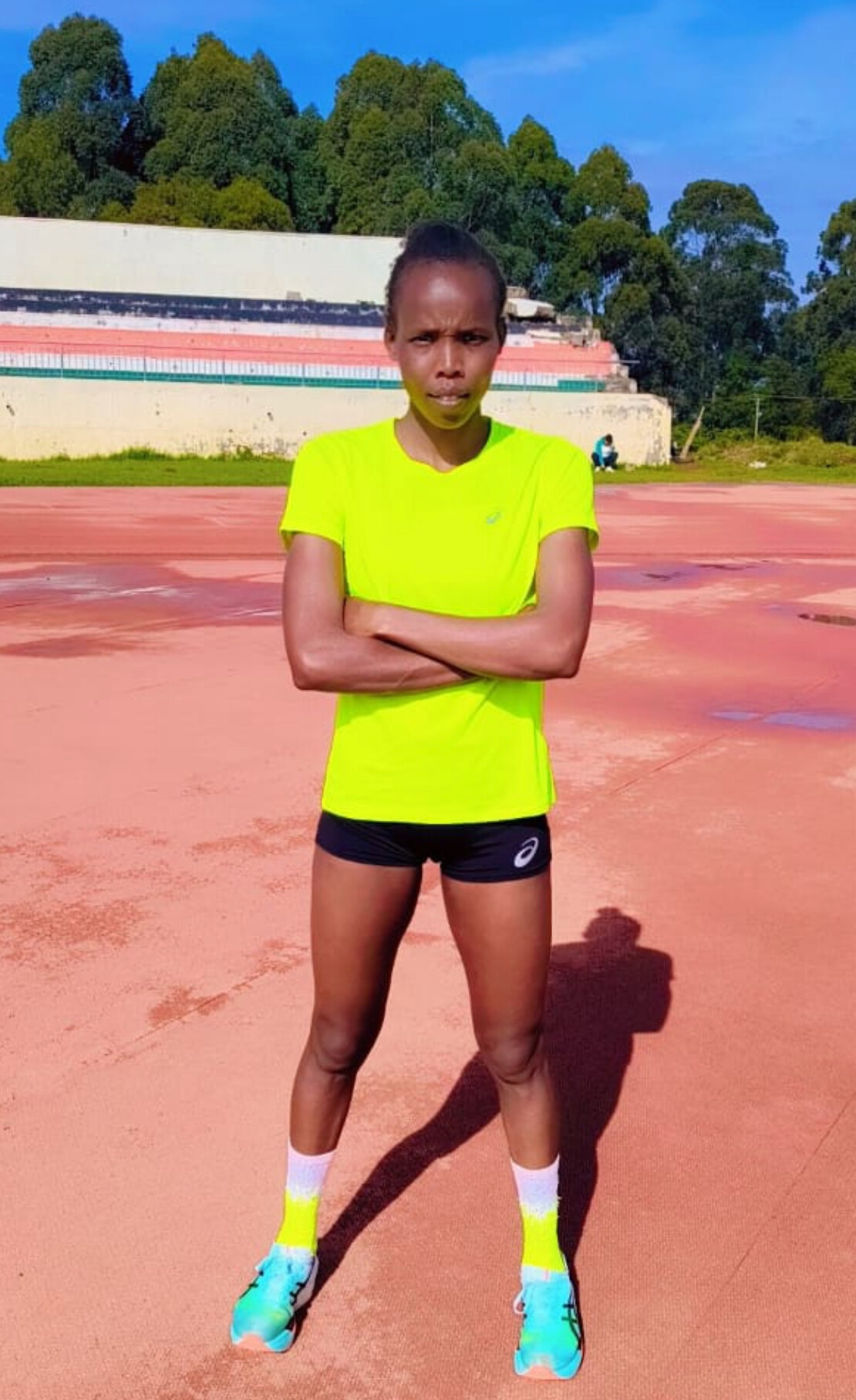
Her teammate Cynthia Chemweno, 28, also arrives in Toronto with growing momentum. In her marathon debut at Hamburg in April, she finished fifth in 2:23:39, a time that gave her valuable confidence heading into the fall season.
“Hamburg was my first marathon, and I managed a good time,” Chemweno said. “The course was great, and I really enjoyed it. I’m excited to improve in Toronto.”
Chemweno and Cheserek are both part of the ASICS Mezzo Sports Management group. The two trained together frequently before Chemweno relocated to Chojo Camp in Kaptagat — a name derived from the Japanese word meaning “striving for the peak.” The camp is home to several top Kenyan male athletes and coaches.
Cheserek continues to train from her hometown of Chepkorio, 40 kilometers from Iten, supported by her husband Cyrus Kiplagat, himself a competitive runner.
“He is the one who helps me with pacing,” she explained. “When I train, my sister-in-law looks after Fabian. It’s not always easy, especially during the rainy season when the dirt roads are impassable, but I keep working hard.”
Course Record in Sight
The Toronto Waterfront Marathon course record of 2:20:44, set by Ethiopia’s Waganesh Mekasha, could be under threat. Mekasha is a training partner of Kebebe and Anmaw — both part of the emerging Ethiopian generation now challenging Kenyan dominance.
With Cheserek targeting a 2:19 and Chemweno already proven in the 2:23 range, organizers and fans alike are anticipating a fast, tactical race through downtown Toronto.
Final Thoughts
The 2025 TCS Toronto Waterfront Marathon is shaping up as a clash of ambition, resilience, and national pride. Both Kenya and Ethiopia will field athletes capable of rewriting the record books on one of North America’s premier marathon stages.
Whether it’s Cheserek’s inspired debut or Chemweno’s drive to improve on her Hamburg performance, Toronto could once again deliver the kind of breakthrough that defines a career — and keeps East Africa at the center of the global marathon conversation.
by Paul Gains
Login to leave a comment
TCS Toronto Waterfront Marathon
The Scotiabank Toronto Waterfront Marathon, Half-Marathon & 5k Run / Walk is organized by Canada Running Series Inc., organizers of the Canada Running Series, "A selection of Canada's best runs!" Canada Running Series annually organizes eight events in Montreal, Toronto and Vancouver that vary in distance from the 5k to the marathon. The Scotiabank Toronto Waterfront Marathon and Half-Marathon are...
more...
Building Champions, One Race and One Harvest at a Time: The KATA Story
With 31 training camps across Kenya’s altitude zones and 65 thriving potato farms, the Kenya Athletics Training Academy (KATA) is shaping not only resilient athletes but also sustainable livelihoods. Each KATA camp is not just a training base but also cultivates several acres of KATA potatoes, linking athletics directly with farming and ensuring that athletes’ futures are rooted in more than competition alone.
A Morning of Anticipation in Thika
The sun had barely risen over Thika when athletes began streaming into the venue for the 5th Annual KATA Double Road Race. The crisp morning air carried both anticipation and nerves as runners stretched, laced up, and tested the course that would soon bear witness to their grit.
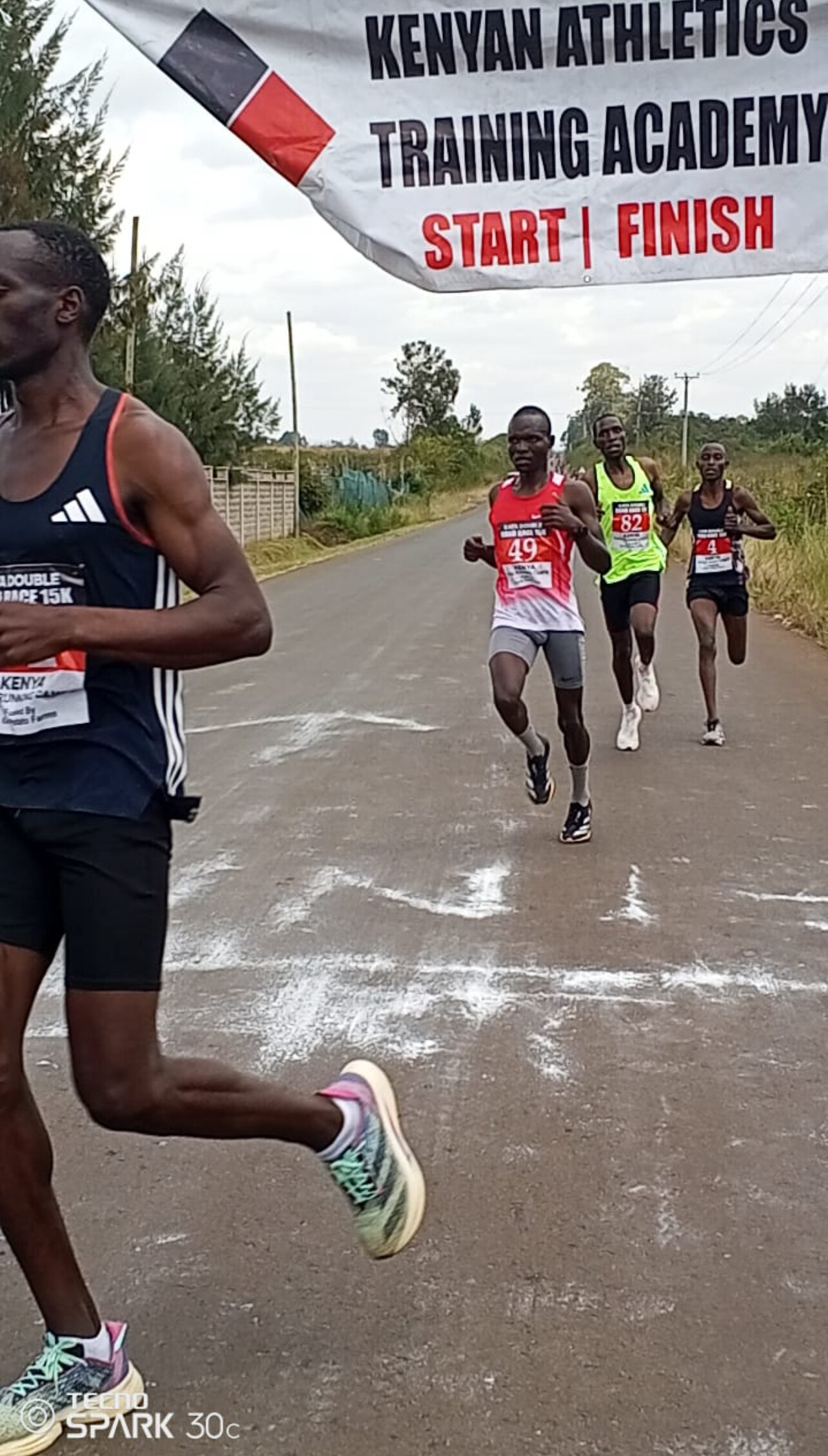
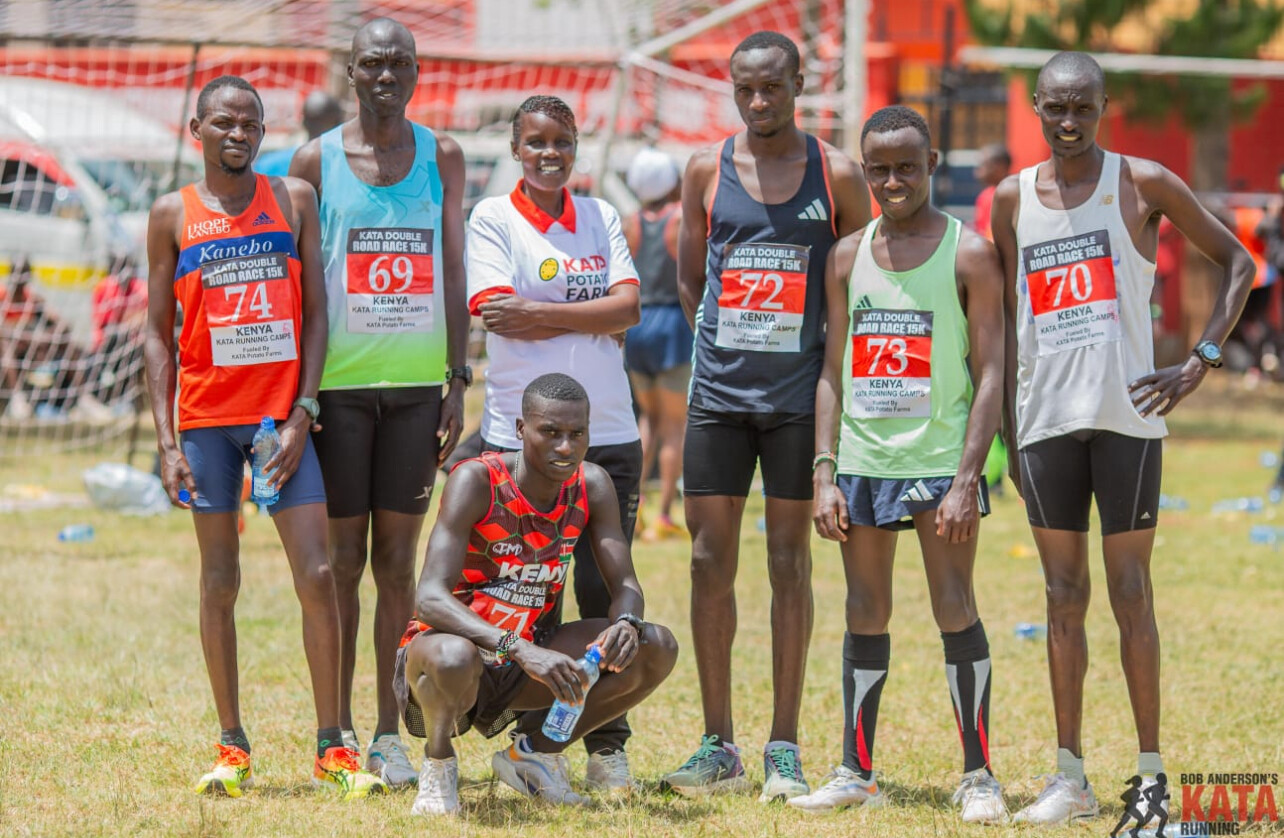
By the time the gun sounded, 97 elite athletes—74 men and 23 women—lined up. For John Matheri, head coach at KATA Thika, the event was more than a competition. It was a lesson in discipline, a test of mental endurance, and a reflection of how far the central region has come in embracing competitive running.
Olympic 5000m medalist and KATA camp operator Edwin Soi emerged as the overall winner, clocking 29:38 for the opening 10K and 14:22 for the final 5K. His combined time of 43:50 was the fifth-fastest ever run for the Double, an event first contested in 2010. On the women’s side, Betty Chesang from the KATA Iten camp was the first across the line in 51:32, marking the sixth-fastest women’s time in Double history.
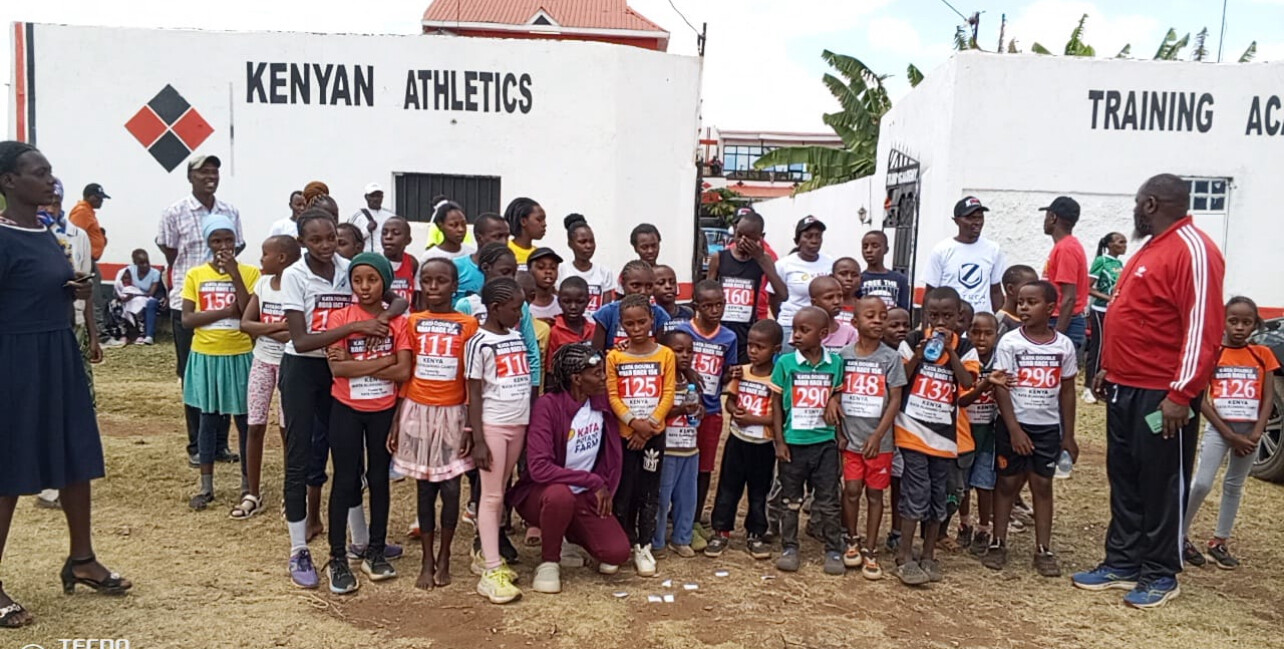
“We concluded the race well, and it was a good one,” Matheri said proudly, watching the exhausted but smiling athletes cross the line. “The turnout was impressive. I want to extend a special thanks to our sponsor, Bob Anderson, for putting together a team of this magnitude. There is no doubt that within the region, KATA has become an icon.”
A Nationwide Network of Camps and Farms
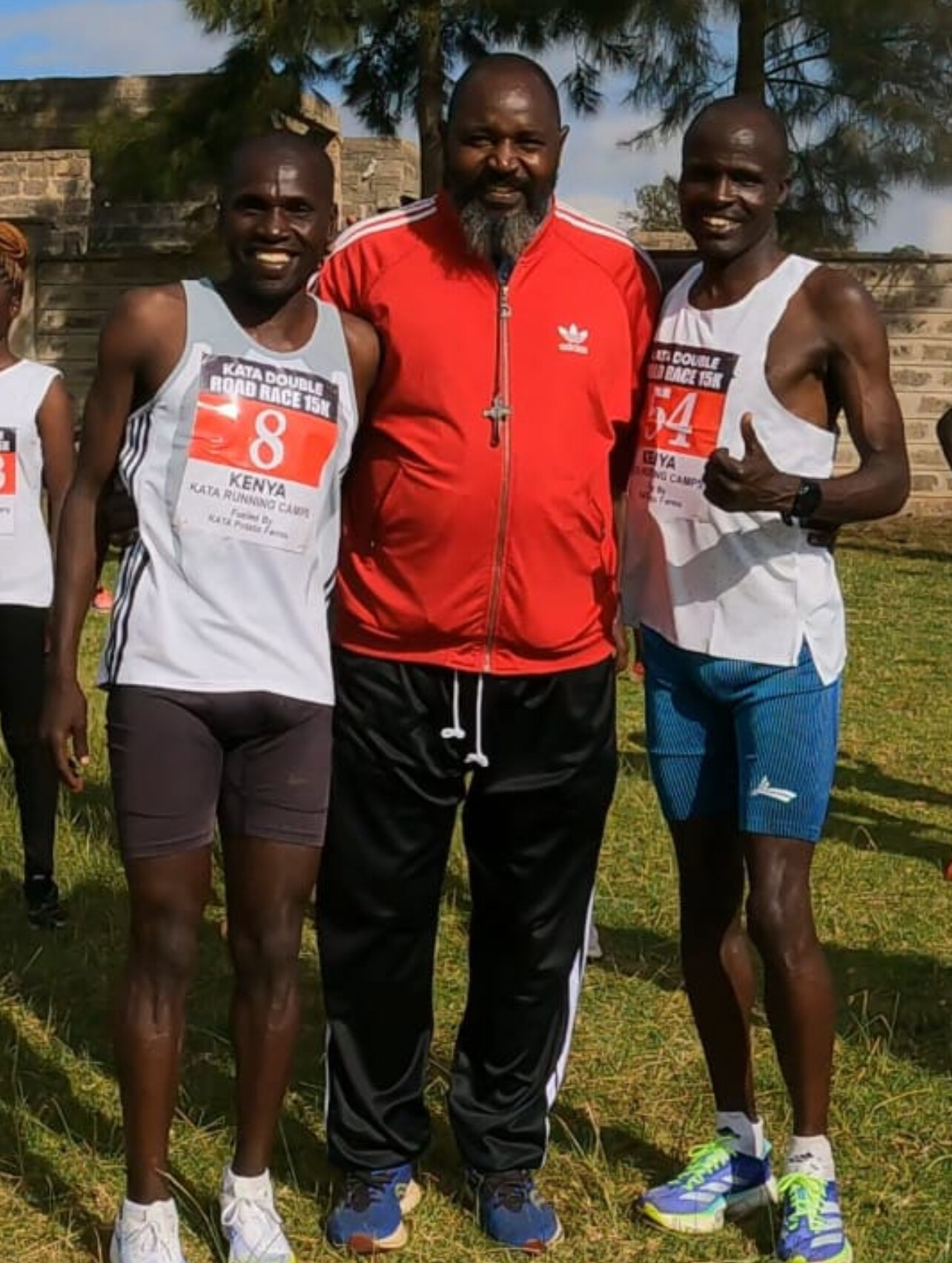
What sets KATA apart is not just its races but the ecosystem it is steadily building for Kenyan athletes. Across the country, 31 KATA-affiliated training camps operate at varying altitudes—from the highlands of the Rift Valley to the mid-altitude base in Thika and lower regions closer to Nairobi. Each camp provides unique conditions that strengthen endurance, adaptability, and competitive edge.
These dual-purpose camps are more than facilities; they are lifelines for athletes dreaming of breaking into the elite ranks. Training at altitude builds strength, while mid-altitude camps prepare runners for race conditions. Together with potato farming, they create a sustainable structure for the future.
This vision is also embodied in Jimmy Mwangangi Muindi, a five-time Honolulu Marathon champion who famously coached Patrick Makau to the world marathon record in 2011. Having worked at Anderson’s Manor in Portugal, Muindi now leads a KATA satellite camp in Machakos County. For him, KATA is about much more than training.
“KATA is building more than runners,” Muindi reflected. “It is building a family—giving young talents not just training, but exposure, support, and hope. That is how future champions are born.”

Beyond Running: The Potato Farming Project
KATA’s sustainability model is as innovative as its racing format. Each camp is supported by several acres of potato farming, tying athletes’ success to both training and cultivation. The revenue from potato sales funds the future of the running camps.
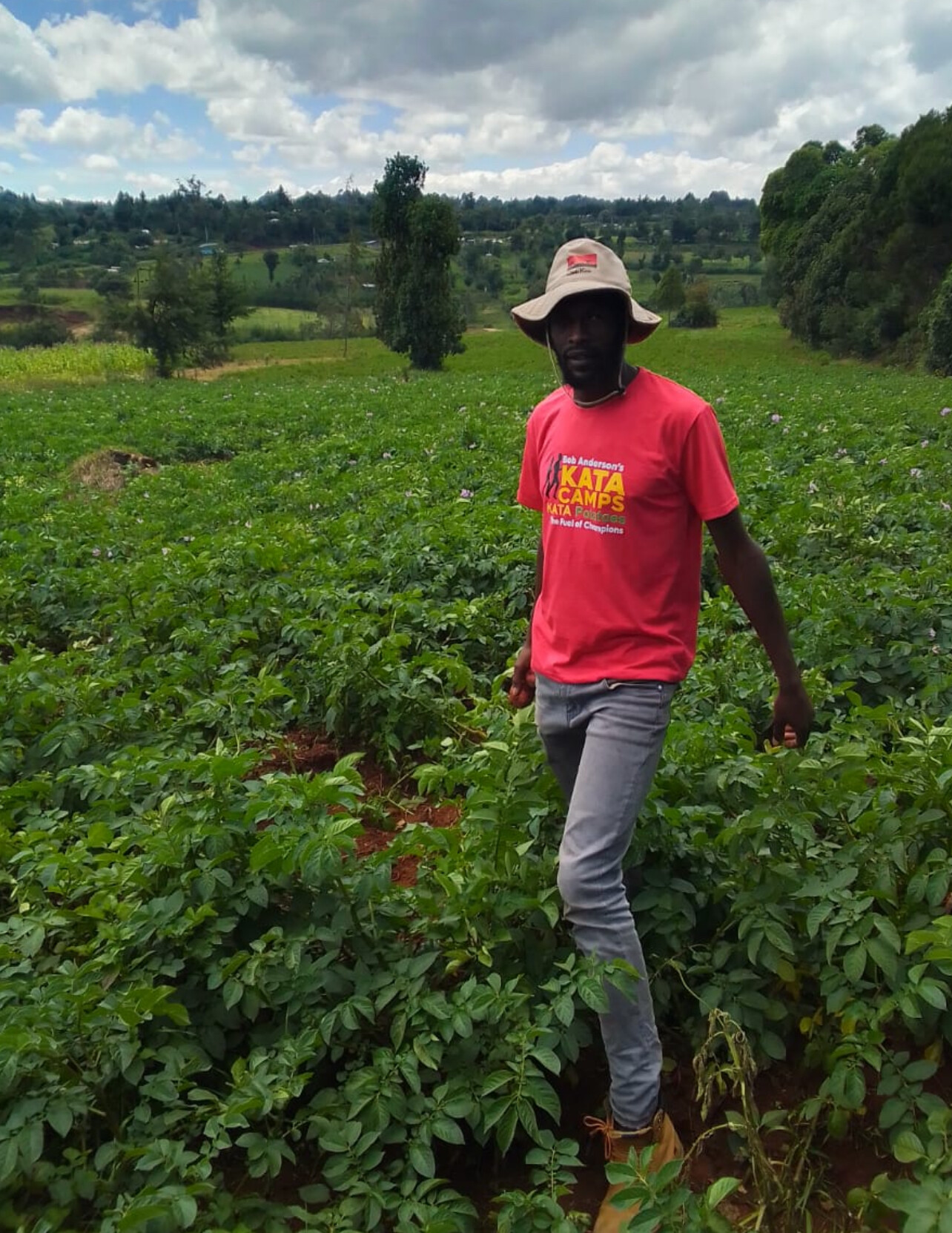
The model is simple but effective. Bob and Catherine Anderson provide an interest-free loan to establish both the camp and its potato farm. From there, the operator and athletes are responsible for managing their acres and securing their own future. KATA continues to provide exposure and guidance, but the responsibility of growth rests with those on the ground.
“The potato project has given us a chance to think beyond running,” Matheri said. “Athletes train hard, but they also need food security and stability. Farming allows them to eat well, earn a little, and stay grounded.”

KATA Chief Technical Officer Denis Musau, who recently returned from Anderson’s Manor House in Portugal, underscored this vision. “KATA is about creating a legacy. By building projects like potato farming, we empower athletes and their camps to sustain themselves financially. That secures their future both on and off the track. I see a very bright future for the KATA family.”
The Spirit of Participation
What stood out most on race day in Thika was the diversity of the field. Athletes from every discipline showed up, while children and enthusiastic spectators cheered from the sidelines. The energy of the crowd became part of the race’s rhythm, fueling the runners through every stride.
Yet the event also highlighted areas for growth. “Our athletes are very strong athletically, but many are missing mental strength,” Matheri observed. Muindi agreed: “Mental resilience is just as vital as physical training. When athletes panic at the sight of big names, they lose focus. Learning to respect the distance is what unleashes true potential.”
For both coaches, raw talent is not enough. Young athletes are like fabric, Muindi often says—materials that must be carefully tailored to become masterpieces.
Inspiration from the Veterans
One of the most inspiring aspects of the Thika Double was the turnout of established athletes—Olympians and medalists—who lined up alongside the next generation. Their presence was not only symbolic but also a powerful motivator for younger runners.
“It is so encouraging, especially here in the central region, to see our elite and professional athletes turning up in big numbers,” Matheri said. “For the young ones, lining up beside Olympians and medalists gives them a sense of what is possible. It gives them hope.”
Building the Future
For the KATA family, the vision remains crystal clear: to prepare a new generation of Kenyan champions while ensuring they have livelihoods beyond running.
“As a family, we are in good hands. We are looking forward to doing great things,” Matheri said with conviction. His final message was one of determination and gratitude: “We promise to use every ounce of our strength to bring change and positivity to the world of sport. We thank our sponsor, Bob Anderson, for the continued support, and we promise to do everything we can to grow this industry. The journey has just begun, but the future is bright.”
Anderson’s Manor in Portugal serves as KATA’s international headquarters, with Bob and Catherine Anderson based there about 50% of the time. It is from this hub that global strategy and support are coordinated, while Kenya remains the main operational location where athletes train, camps thrive, and races like the Double continue to inspire.
As the last athletes packed up and the crowd dispersed, one thing was clear: KATA is more than an academy. It is a movement—blending sport, sustainability, and community to nurture not just athletes, but Kenya’s enduring legacy of running excellence.
by Robert Kibet
Login to leave a comment
From Rain to Heat: Sabastian Sawe and the New Chapter of Berlin’s Weather-Tested Records
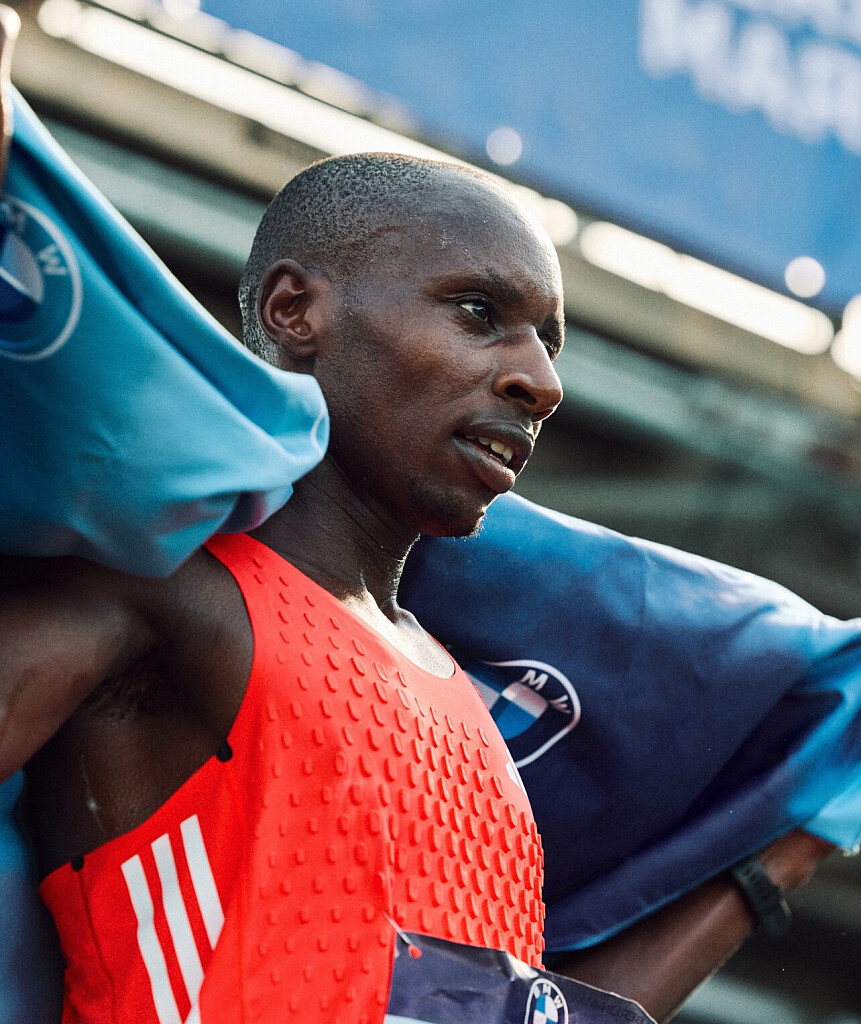
Fifteen years ago, Patrick Makau braved torrential rain and deep puddles on the streets of Berlin, chasing Haile Gebrselassie’s marathon world record. The conditions ruined his attempt, but Makau still managed 2:05:08—the fastest marathon ever run in such relentless rain. A year later, with fair weather, he returned and broke the world record with 2:03:38.
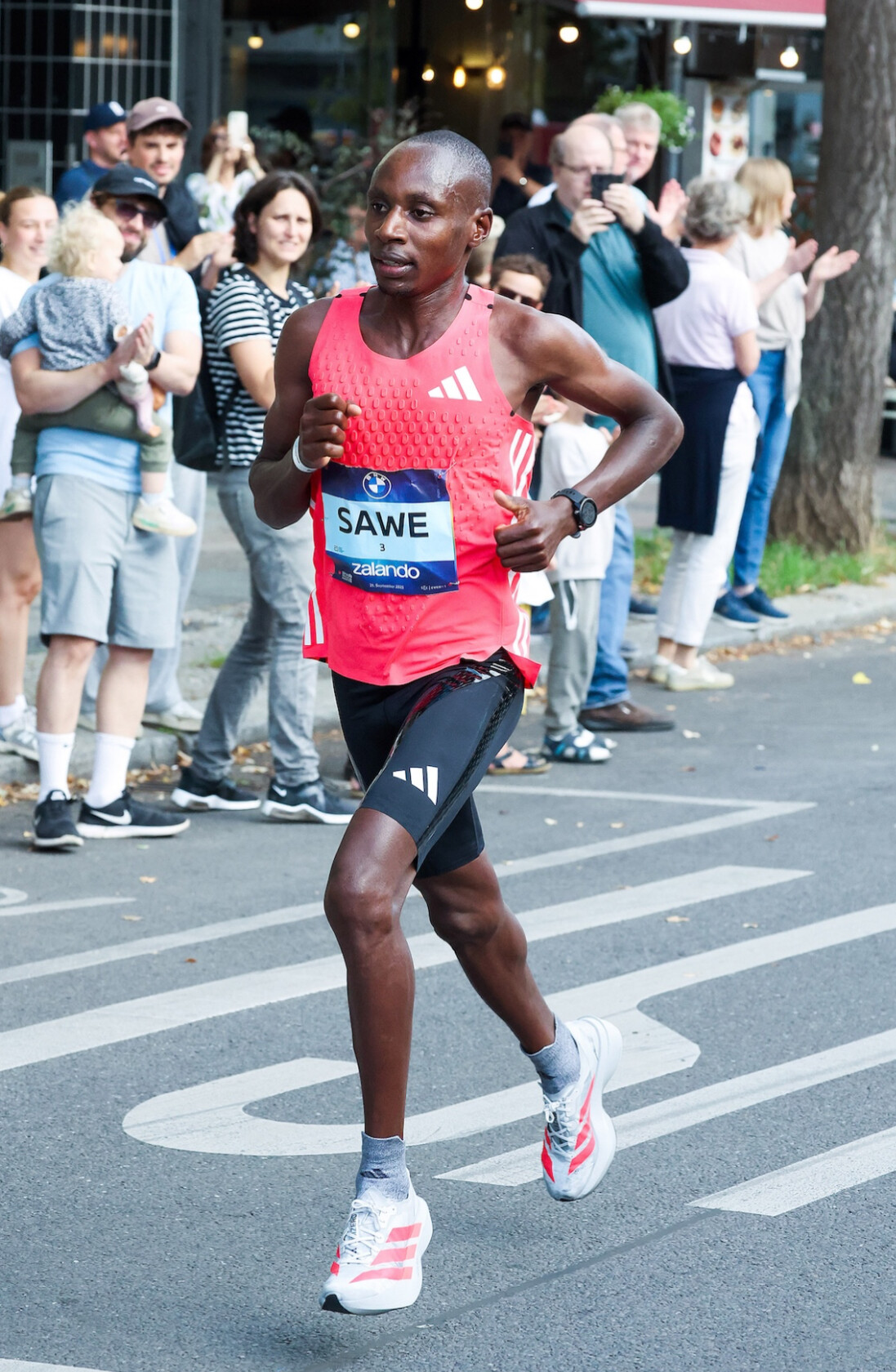
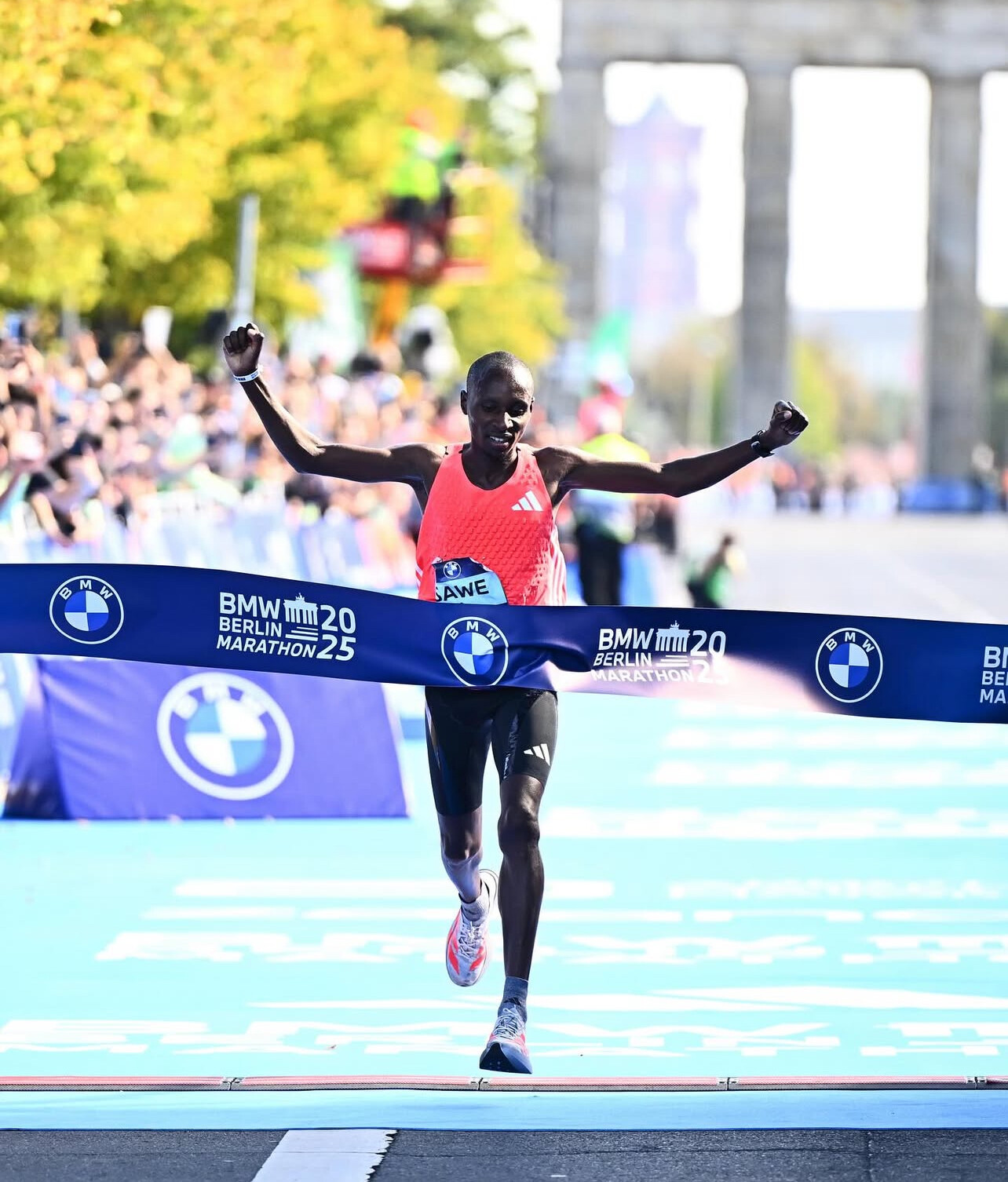
On Sunday in Berlin, history echoed in a new way. This time, it wasn’t rain but unseasonable heat that stood between a Kenyan and marathon immortality. Sabastian Sawe, the 30-year-old rising star, had his sights set on Eliud Kipchoge’s 2:00:35 mark. Instead, he delivered what can only be called a “warm-weather world record,” blazing through the 26.2 miles in 2:02:16. Despite being 101 seconds off the record, it was the fastest time ever achieved in such high temperatures.
The What-Ifs of Berlin
Sawe, whose personal best stands at 2:02:05, was in career-best form. His coach, Italian veteran Claudio Berardelli, admitted the weather stripped away any chance of the extraordinary.

“I know he was in exceptionally good shape. But I do not know what would have been possible,” Berardelli reflected.
The what-if question will linger: how fast could Sawe have run under cooler skies?
From Humble Beginnings to Global Stardom
Born in the village of Cheukta near Eldoret, Sawe’s story mirrors that of countless young talents in Kenya who struggle for recognition. Despite moving to Iten, the mecca of distance running, he was overlooked by managers and coaches. His breakthrough came only after turning to his uncle, Abraham Chepkirwok—Uganda’s 800m national record holder—and his neighbor Abel Mutai, the London 2012 Olympic steeplechase bronze medalist.
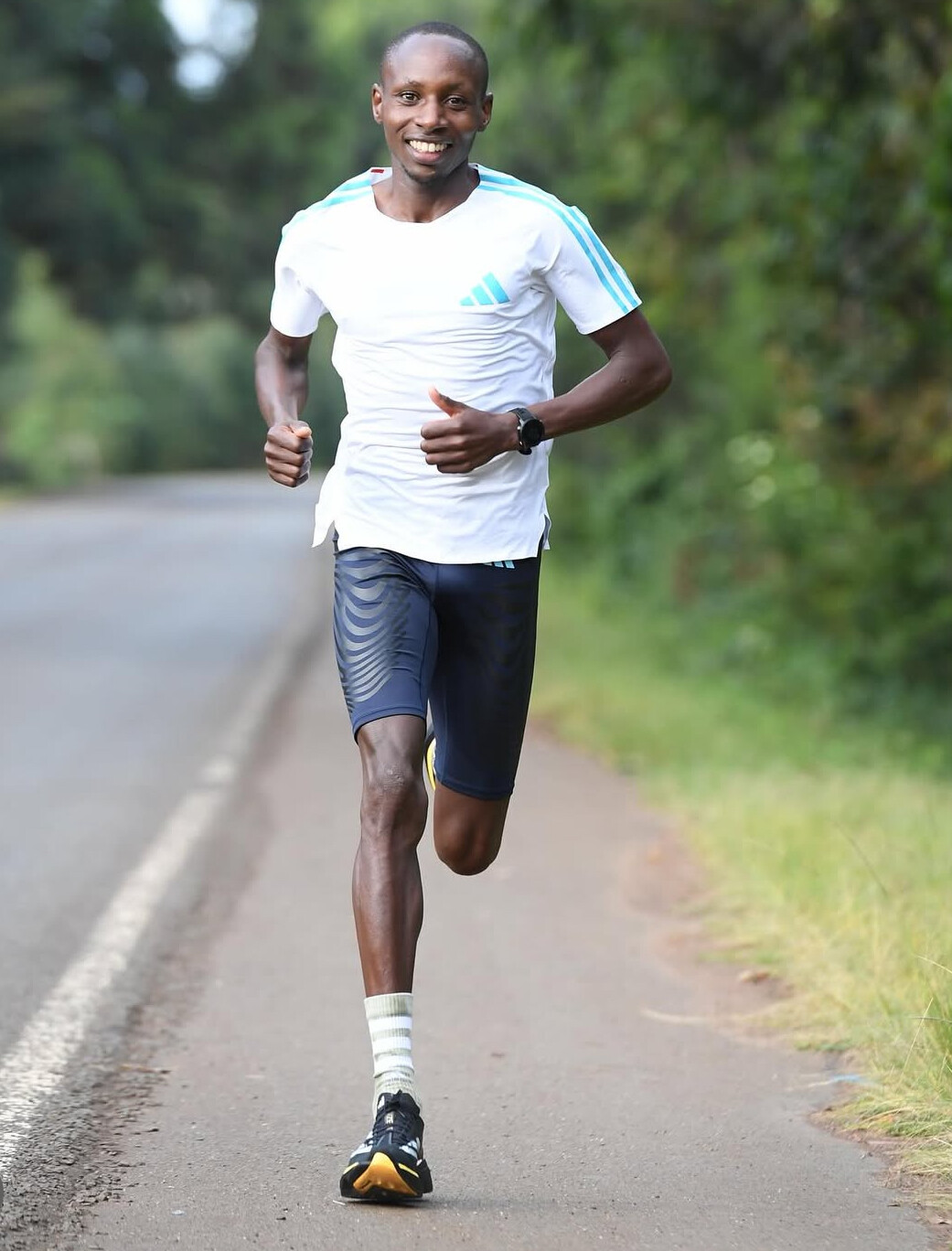
Mutai vouched for him with Berardelli, who placed Sawe in his Kapsabet camp. The rest unfolded quickly. Sawe stunned the field at the 2022 Seville Half Marathon, entering as a pacemaker but leaving with a victory and a world lead of 59:02.
A Gift of Talent and Humility
Berardelli is quick to highlight Sawe’s rare combination of physical and mental qualities:
“He has everything it takes—training ability, mental strength, and humility. I can’t predict what will be possible, but I’m looking forward to finding out.”
Sawe himself remained pragmatic after Berlin:
“I wanted to run really fast and gave it my best, but the weather was too hot. I hope I will have better weather next time. I liked the course, it is very good and fast.”
Berlin: Unfinished Business
Just as Makau returned after the rain to rewrite history, Sawe may yet come back to Berlin with the weather in his favor. With his trajectory and determination, the marathon world could witness a record chase for the ages in 2026.
Until then, Berlin 2025 will be remembered as the day Sabastian Sawe delivered a performance that stood not against the clock, but against the elements—proving once again why the city remains the crucible of marathon greatness.
by Race News Service
Login to leave a comment
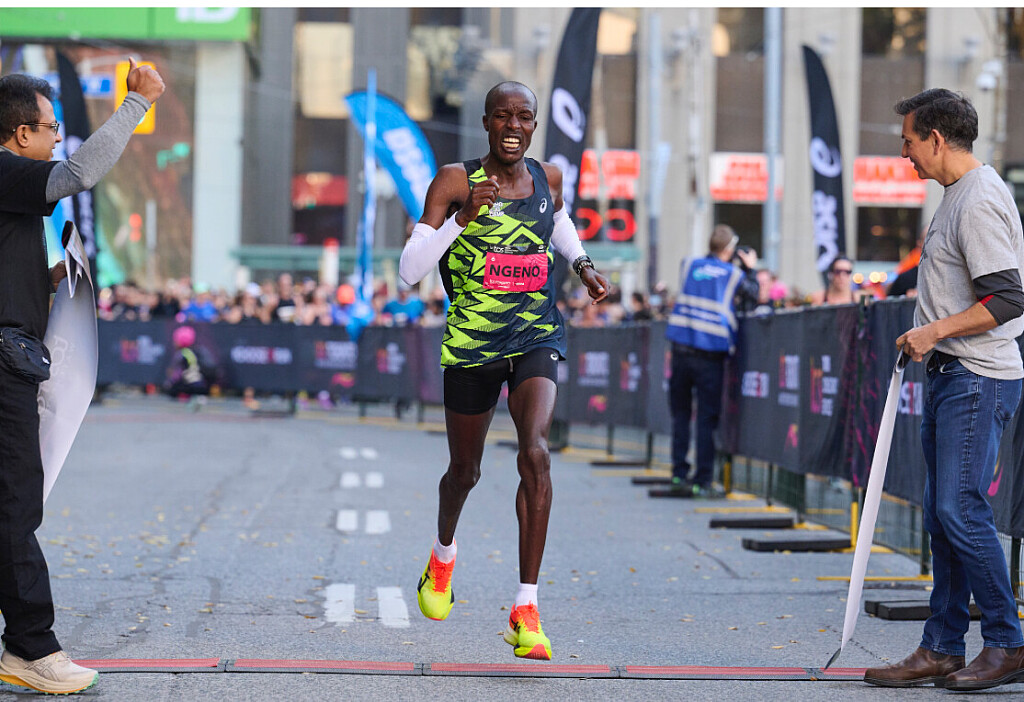
Kenya’s Dominic Ngeno Returning to TCS Toronto Waterfront Marathon
It speaks volumes about a marathon when podium finishers are eager to come back. Last year, Kenya’s Dominic Ngeno finished runner-up at the TCS Toronto Waterfront Marathon. Now, from his home in Iten, he confirms he will return for this year’s edition on October 19.
“It was an amazing race last year and I learned a lot,” he says with a grin. “The race was good. I am coming now to combat. I was so happy that the fans were cheering us all the way in the streets. It was so amazing.”
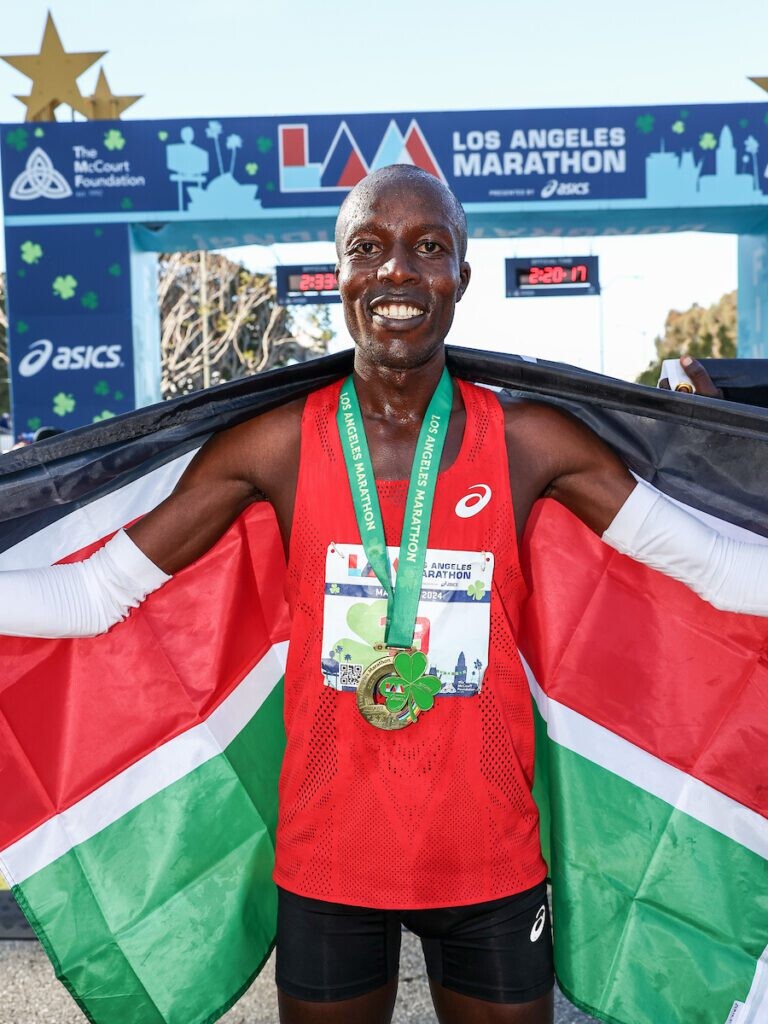
Finding his stride in Iten
In recent months, Ngeno has made some important changes. He left his training base in Kaptagat to return home to Iten, 2,400m above sea level — the famed “Home of Champions.” The switch has made him happier and, he believes, stronger. The proof came at the 2025 Paris Marathon, where he finished 5th in a new personal best of 2:06:37.
“I ran 2:06:37 in Paris and it is a hard course,” he explains. “It is not like Toronto. Last year I feared Toronto was tough because for a few years guys were running 2:09 or 2:10. But when I finished, I saw it was good. Paris compared to Toronto? Toronto is a nice course.”
Training with purpose
Speaking via WhatsApp video, he animatedly describes his training and credits his group of six training partners with pushing him forward. Just before the interview he had run 20km in the evening, then 10km the following morning, with a demanding session of 15 x 1km intervals planned later that day. Every couple of weeks he adds a 40km long run.
“When I am not training, I am resting in the compound — just sleeping,” he says with a smile. “Sleeping is part of the training program. After lunch I sleep, then go for training. When I come back, I take tea and wait for dinner.”
Like many Kenyan athletes, he still makes time to follow English Premier League football.
“Yeah, I am a big fan of Chelsea — the Blues,” he laughs. “My favourite player used to be Didier Drogba, but now it is Cole Palmer.”
A latecomer with big dreams
Ngeno turns 28 on September 3rd, still relatively new to the marathon. After high school he played soccer, then studied in Eldoret for two years, where he met some of Kenya’s top runners. But it was a chance encounter at a 2021 cross country meet with Amos Kipruto — the 2022 London Marathon champion and 2019 world bronze medalist — that shifted his focus.
“We had some small interactions,” Ngeno recalls. “He really inspired me because he didn’t run so many half marathons, and his dream came true after he started running marathons. That inspired me. I ran only two half marathons before deciding to be a marathoner full time.”
Building a future beyond running
Professional running offers him a chance to secure a brighter future. A contract with Asics helps, but he is also investing wisely.
“There is life after running so you need to invest whatever you get,” he says. “Now I have a small business — I have electronics stores and I am also farming. After running I will work with my family and grow that. I have shops and people who work for me. Whenever someone needs something like a television, they can go there.”
Looking ahead
Some of the greatest marathoners — Haile Gebrselassie, Kenenisa Bekele, Eliud Kipchoge — have thrived well into their late 30s. Ngeno believes he has another decade at the top and is motivated by the possibility of representing his country.
“First, I love running, and because I love running I want to run my best and change my life,” he declares. “I want to be the best. I have that dream of running for Kenya. This year when they were selecting the team I was not far from selection. I believe soon I will run for Team Kenya — maybe at the World Championships or Olympic Games.”
For now, his focus is firmly on the TCS Toronto Waterfront Marathon, where he aims to take on a world-class field and turn last year’s second place into victory.
by Paul Gains
Login to leave a comment
TCS Toronto Waterfront Marathon
The Scotiabank Toronto Waterfront Marathon, Half-Marathon & 5k Run / Walk is organized by Canada Running Series Inc., organizers of the Canada Running Series, "A selection of Canada's best runs!" Canada Running Series annually organizes eight events in Montreal, Toronto and Vancouver that vary in distance from the 5k to the marathon. The Scotiabank Toronto Waterfront Marathon and Half-Marathon are...
more...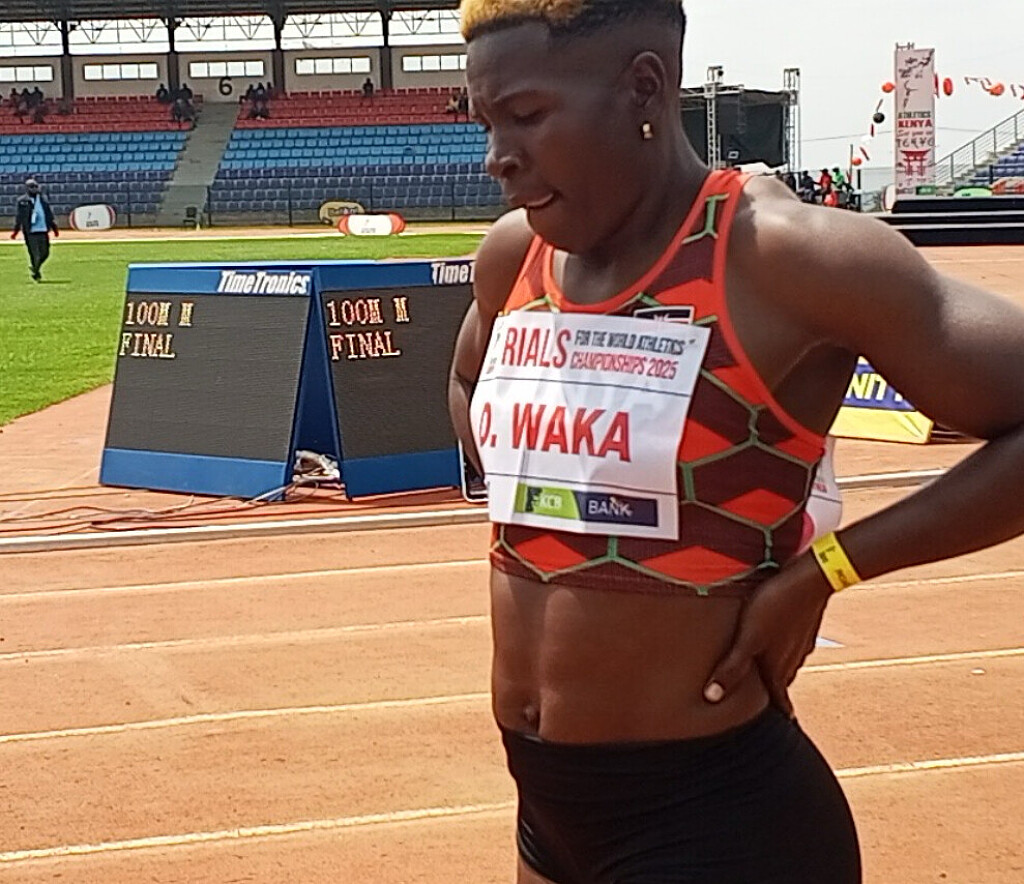
Doreen Waka Is Sprinting Toward History—If Kenya Will Let Her
At the 2025 Athletics Kenya Trials held at Nairobi’s Ulinzi Sports Complex, Doreen Waka blasted out of the blocks and powered through a stiff -2.0 m/s headwind, crossing the finish line in 12.02 seconds to win the women’s 100m final. The performance not only secured her a gold medal but also earned her a coveted spot on Team Kenya for the upcoming World Championships in Tokyo.
She defeated a talented field, including Loice Nyanchoka Morara (12.09), South Sudan’s Lucia William Moris (12.10), and Delisha Atyang (12.14), while veterans like Monica Safania and Eunice Kadogo did not start. But for Waka, the win was about more than medals. It marked a defining moment in a career built on resilience, sacrifice, and an unshakable belief in her sprinting potential.
Running Barefoot, Dreaming Without Limits
When Doreen takes to the track, what you see is explosive speed. What you don’t see are the barefoot years spent training on gravel roads, the financial struggles, or the countless setbacks that nearly derailed her dream.
Born on November 13, 1994, in Kiambu County, Doreen discovered her athletic talent in primary school. She ran the 400m in Standard Four but didn’t qualify for competition—she was too young. A perceptive teacher, however, encouraged her to shift focus to the 100m and 200m, a piece of advice that changed her life.
By Class Five, she had qualified for the national primary school championships in Nyahururu, placing 4th in the 100m and 3rd in the 200m. A year later, she won silver in the 100m at an East African schools meet in Kampala, Uganda.
Despite early success, life at home was difficult. Her family lacked the resources to support her athletics career. After finishing Class Eight, a well-wisher helped her join Brokhurst Senior School in Machakos County, where she again reached the national stage in Form Three. But in Form Four, she was barred from sports in order to focus on final exams—just when she needed exposure the most.
A Coach, a Believer, a Lifeline
In 2017, everything changed. Doreen met sprinter Kalewi Awange, who introduced her to Coach Julius Migwi (often called Coach Julious). At the time, she was living in Githurai, Nairobi, with her mother.
“When I told my mom I wanted to train, she hesitated,” Doreen recalls. “Coach Migwi had to come home and explain everything. Eventually, she gave me her blessing: ‘You’re the one who will help me.’”
Coach Julious remembers their first meeting clearly.
“She had no shoes. No passport. No real support. We took her in like family,” he says. “I’ve been acting as her parent ever since.”
Since then, Coach Julious has supported her with food, rent, transport, and training costs—often from his own pocket. Despite the challenges, Doreen has never wavered. Most days, she trains without proper spikes or access to a gym, using rough murram fields instead of tracks.
“If she had the facilities athletes in Botswana or South Africa have,” Julius says, “she’d already be running 10.9.”
A Boost from KATA—and a Call to Bob Anderson
Though resources remain limited, Doreen has received small but meaningful support from the Kenya Athletics Training Academy (KATA), founded by Bob Anderson, the American entrepreneur and lifelong runner who created Runner’s World magazine.
“KATA has helped in important ways,” says Julius. “Bob understands athlete development. Now we’re appealing to him directly: please consider supporting Doreen with gear, gym access, and small financial support so she can focus fully on her training.”
Doreen echoes the plea:
“I’m not looking for a shortcut. Just a chance. Bob, give me one international race, one opportunity—and I will make you and Kenya proud.”
Denied, But Never Defeated
Doreen’s path has been lined with near-misses and painful exclusions. In 2019, she qualified for the World Relays during trials in Iten—but couldn’t travel. She didn’t have a passport.
Later that year, during the COVID-19 lockdowns, she trained inside the grounds of Kamiti Prison, staying with a friend near the facility. Her perseverance finally paid off in 2021, when she represented Kenya in the 4x200m relay at the World Relays in Poland. She returned home and won the national 100m title.
Yet again in 2023, after qualifying for the African Championships in Ghana, she was left off the final team list.
“It didn’t kill my spirit,” she says. “This year I qualified again. But they didn’t take a women’s 4x100m team.”
A Voice for the Overlooked
Now 29, Doreen Waka is more than just a sprinter—she’s a voice for the many under-supported female sprinters across Kenya.
“Athletics Kenya should not conclude that Kenyan women can’t sprint. We just need the opportunity.”
Coach Julious adds:
“She’s already inspiring others. Hurdler Gladys Ngure, who ran 14.05 at nationals, joined our camp because of Doreen. These girls are training in KSh 50 gyms. Imagine what they could do with real support.”
A Camp Like No Other
In a bold move, Coach Julius recently established a KATA Running Camp and KATA Potato Farm, part of a larger initiative spearheaded by Bob Anderson, who has now launched 25 KATA camps across Kenya since May 25.
“I think my camp is the only running camp that exclusively trains sprinters in all of Kenya,” says Julius. "Thanks, Bob, for listening and helping Doreen go after her goals.”
This unique camp not only nurtures sprinters like Doreen but also provides food and economic support through potato farming, helping athletes stay focused on training while building a more stable future.
The Goal: Sub-11 and a Global Stage
Doreen Waka’s goal is clear: run 10.8 or 10.9 and place Kenyan women’s sprinting on the global map. With the right shoes, coaching, nutrition, and gym access, she believes it’s within reach.
“I believe in myself. I just need one solid chance.”
And with people like Coach Julius KATA, and Bob Anderson behind her, that chance may finally be coming.
Doreen Waka At a Glance
• Born: November 13, 1994 – Kiambu County, Kenya
• 2024 Trials: 1st in 100m (12.02s, -2.0 m/s headwind)
• International Debut: 2021 World Relays, Poland (4x200m)
• Coach: Julius Migwi
• Goal: Sub-11 in 100m and a global podium finish
• Camp: KATA Running Camp for Sprinters – the only sprint-exclusive KATA camp in Kenya
by Robert Kibet
Login to leave a comment
From Dirt Roads to Global Dreams: Inside Kenya’s Fastest-Growing Running Movement
In the heart of Kenya’s Rift Valley and beyond, a quiet revolution in athletics is underway. What began as a modest idea has grown into a dynamic movement that now spans 19 KATA Running Camps and Potato Farms across Kenya—plus two international retreats, including one at the historic Anderson Manor in Monforte da Beira, Portugal.
And it’s happening fast.
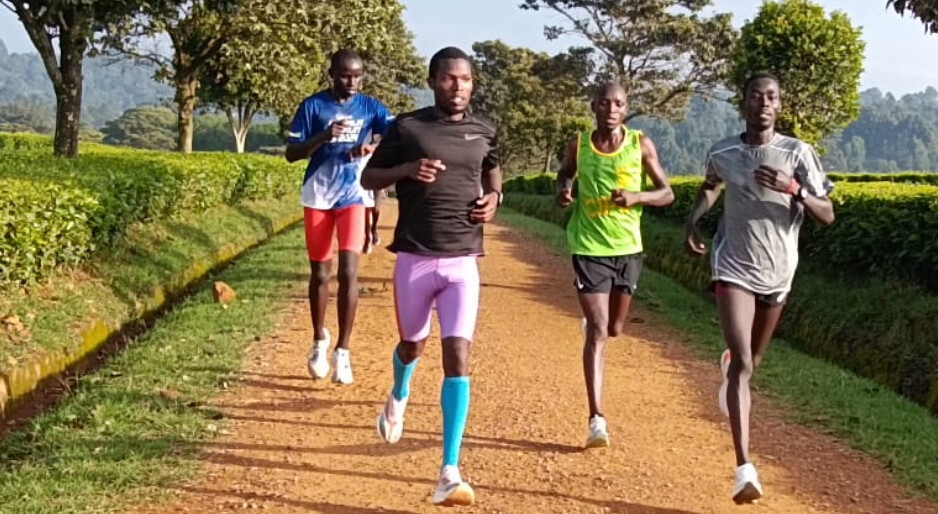
“We never planned to expand this quickly,” says Bob Anderson, founder of KATA and a lifelong advocate for long-distance running. “But the momentum of this movement just couldn’t be slowed down. We’ll be confirming one more camp shortly, and additional locations will follow in early 2026.”

KATA—short for Kenyan Athletics Training Academy—is unlike anything else in the world of distance running. It blends elite training with economic empowerment, giving young athletes not only the tools to run fast, but also a system that sustains them—and their communities—beyond the track.
“This is not just sports development,” says Brigid Chebet, a Kenyan journalist who has closely followed the program. “It’s a model of rural transformation through athletics. And Kenya may finally have found a winning formula for generations to come.”
From a Vision to a Movement
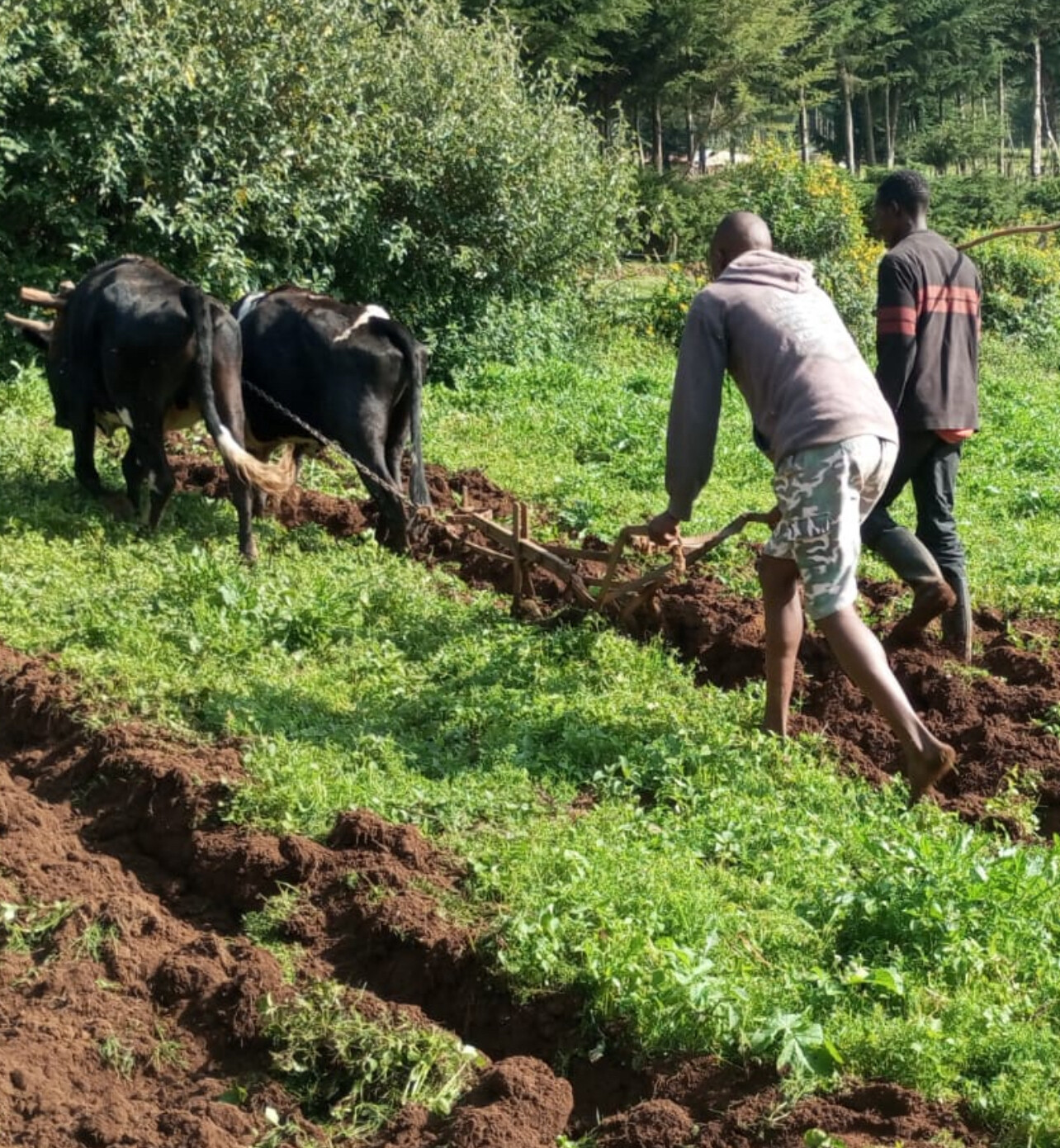
KATA was founded by Bob Anderson, an accomplished American runner who created Runner’s World magazine and later My Best Runs. After visiting Kenya in 2014, he was deeply inspired by the raw talent scattered throughout rural communities—athletes with potential but no pathway.
“He saw a path that few others in athletic management had envisioned—a system that not only trains champions but empowers them economically,” writes Chebet.
That system became KATA: a network of running camps, each paired with a three-acre potato farm. Each camp receives an interest-free loan from KATA to establish operations. In exchange, athletes train full-time and contribute 25 hours a week to the farm. Revenue from the potato harvest supports camp expenses, housing, and meals—creating a self-sustaining ecosystem.
A Growing National Network
The first KATA retreat opened in Thika in 2019. Today, the initiative includes 19 camps spread across Kenya, each run by an experienced operator—many of them former elite athletes.
|
Location |
Operator |
|
Kapcherop |
Philemon Kipruto |
|
Molo |
Eric Chepkwony |
|
Kurengat |
Sammy Dismas |
|
Nyandarua |
Peter Njoroge |
|
Kericho |
|
|
Sotik |
|
|
Sachangwan |
Amos Chirchir |
|
Iten |
David Kellum |
|
Tenden |
Philemon Kipruto |
|
Eldoret |
Ruth Chumo |
|
Njerian Bomet |
Paul Kipsiele Koech |
|
Olenguruone |
Charles Ngeno |
|
Kapkembu |
Kipyegon Nehemiah |
|
Gasharrarge |
Job Langat |
|
Kaptagat |
Joseph Ngure |
|
Kiambu |
Julius Gacheru Migwi |
|
Kangundo |
Jimmy Muindi |
|
Moiben |
Hillary Kiplagat |
|
Kiptoror |
Caleb Rut |
In addition to these camps, two retreats serve as international training hubs: the KATA Running Retreat Thika, operated by Chris Muiruri, and the KATA Running Retreat Portugal, operated by Alberto Santos. Guests from around the world come to the two KATA retreats to train the Kenyan Way.
Elite Experience, Grassroots Impact
At the heart of KATA’s success is its leadership team. Olympic medalist Edwin Soi, now managing the Kuresoi Camp, brings both credibility and experience. Legendary steeplechaser Paul Kipsiele Koech, who has run under 8:10 in the 3000m steeplechase over 110 times, oversees two KATA camps/farms.
Veteran coach Charles Ngeno, known for his early work with Olympic champion Faith Kipyegon, now heads the Olenguruone camp, ensuring that young athletes from even the most remote villages receive structured training and economic opportunity.
“The new vision embraces sustainability, resilience, and empowerment,” writes Chebet. “It ensures that our athletes thrive both on and off the field.”
Looking Ahead
Anderson and the KATA team have ambitious plans: confirming one more camp this month and preparing for even more in 2026. The goal is clear—build up to 50 self-sustaining running camps across Kenya and replicate the model in other parts of the world.
“We’re not just chasing medals,” says Anderson. “We’re building lives.”

For partnership opportunities or more information, contact Bob Anderson on WhatsApp: +1-650-400-6643
by Brigid Chebet with Boris Baron
Login to leave a comment
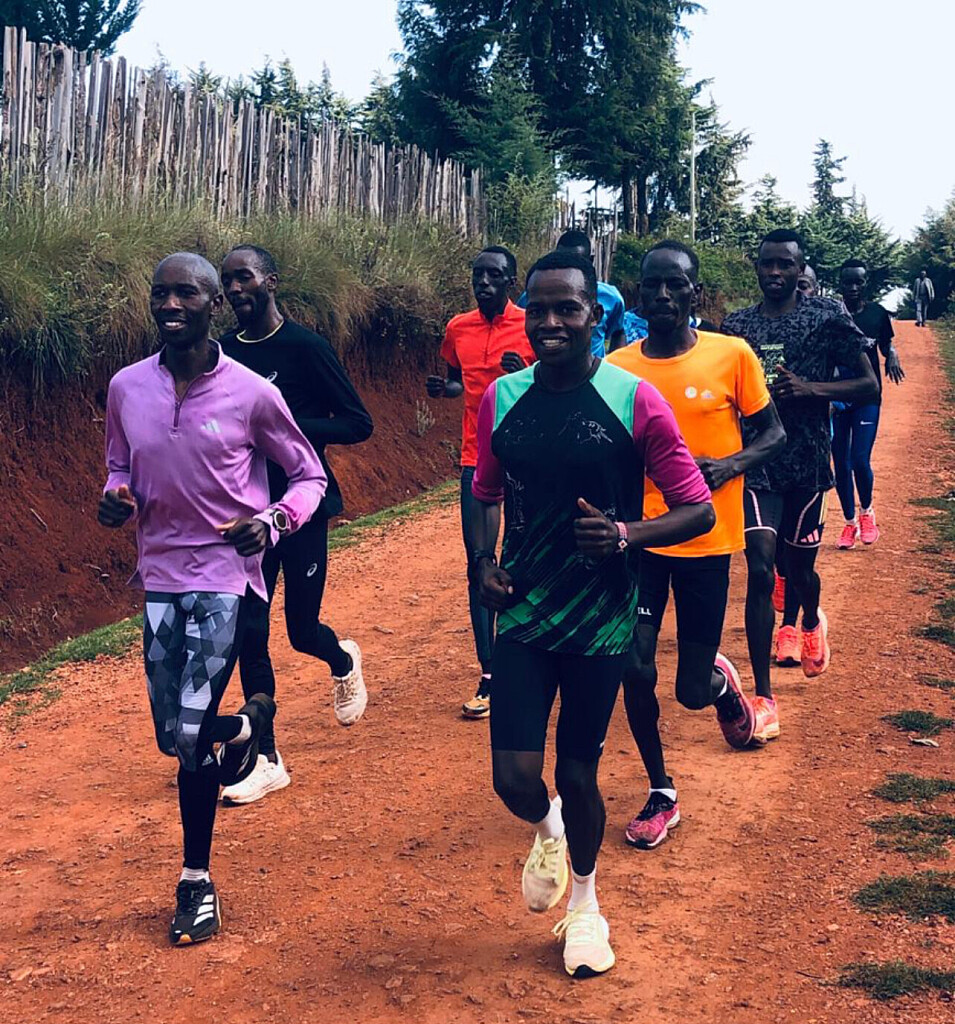
KATA to Launch Eight New Running Camps and Potato Farms Across Kenya by October
Bob Anderson, the visionary founder of KATA (Kenyan Athletics Training Academy) and long-time champion of Kenyan running, and lifetime runner, has announced a bold expansion plan: eight new KATA Running Camps and Potato Farms will open across Kenya by October 1, 2025.
“We want to confirm our next eight camps by August 15,” says Bob Anderson, KATA Director and Founder.
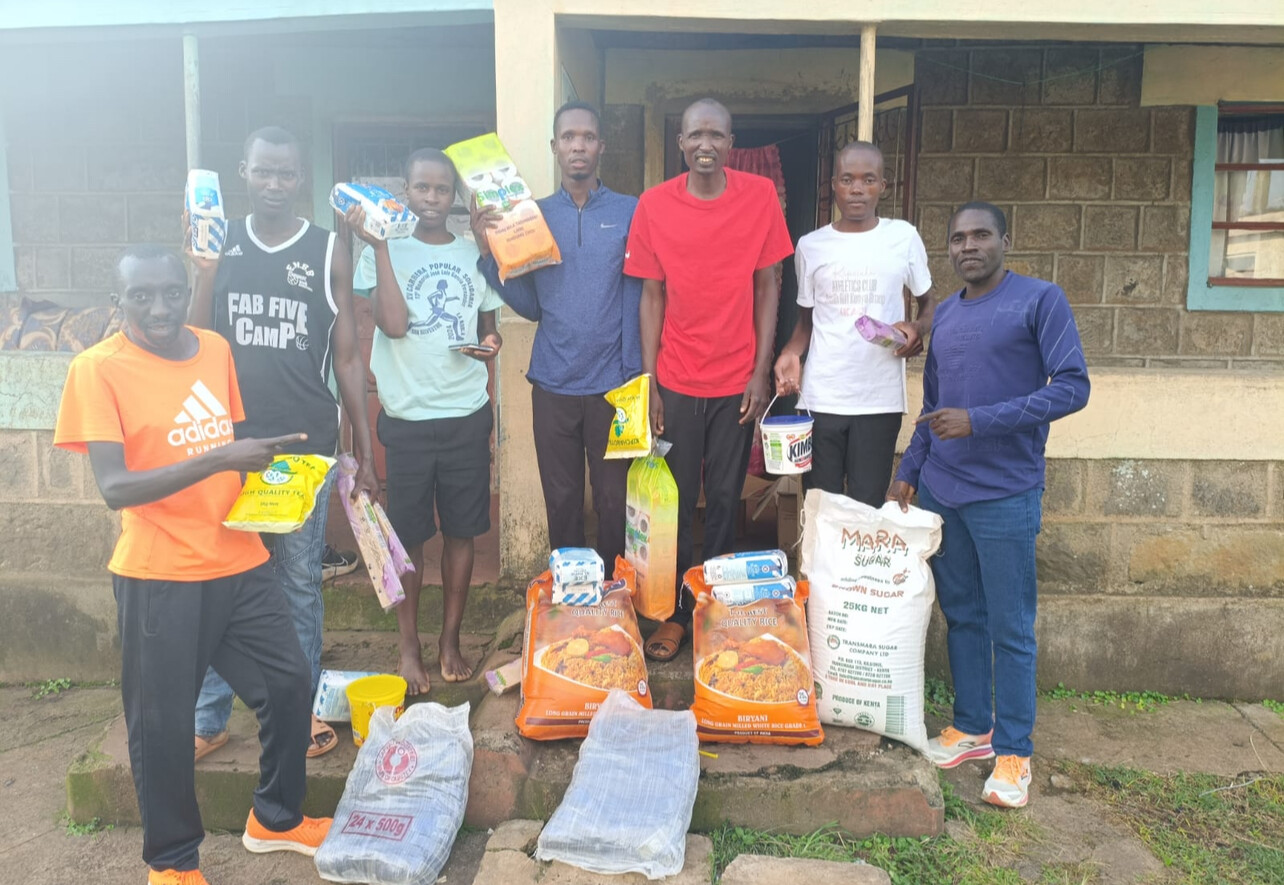
Each new site will combine high-performance athlete training with sustainable agriculture, centering around a 3-acre KATA Potato Farm. The initiative aims to create self-sustaining camps where runners not only train at a high level but also contribute to the farm operations that help support the entire program.

At the heart of every KATA Running Camp is a dedicated operator—often a former elite athlete or experienced coach—who oversees day-to-day operations and athlete development. Our operators are more than just managers; they are mentors, motivators, and community builders. Each operator is carefully selected for their deep understanding of training at altitude, their passion for helping athletes succeed, and their ability to lead with integrity. Many of them have raced at the international level or coached athletes to major victories, bringing invaluable knowledge to the camps. Whether it’s organizing daily workouts, managing food and lodging, or fostering a winning culture, our KATA Running Camp operators are the backbone of our success.
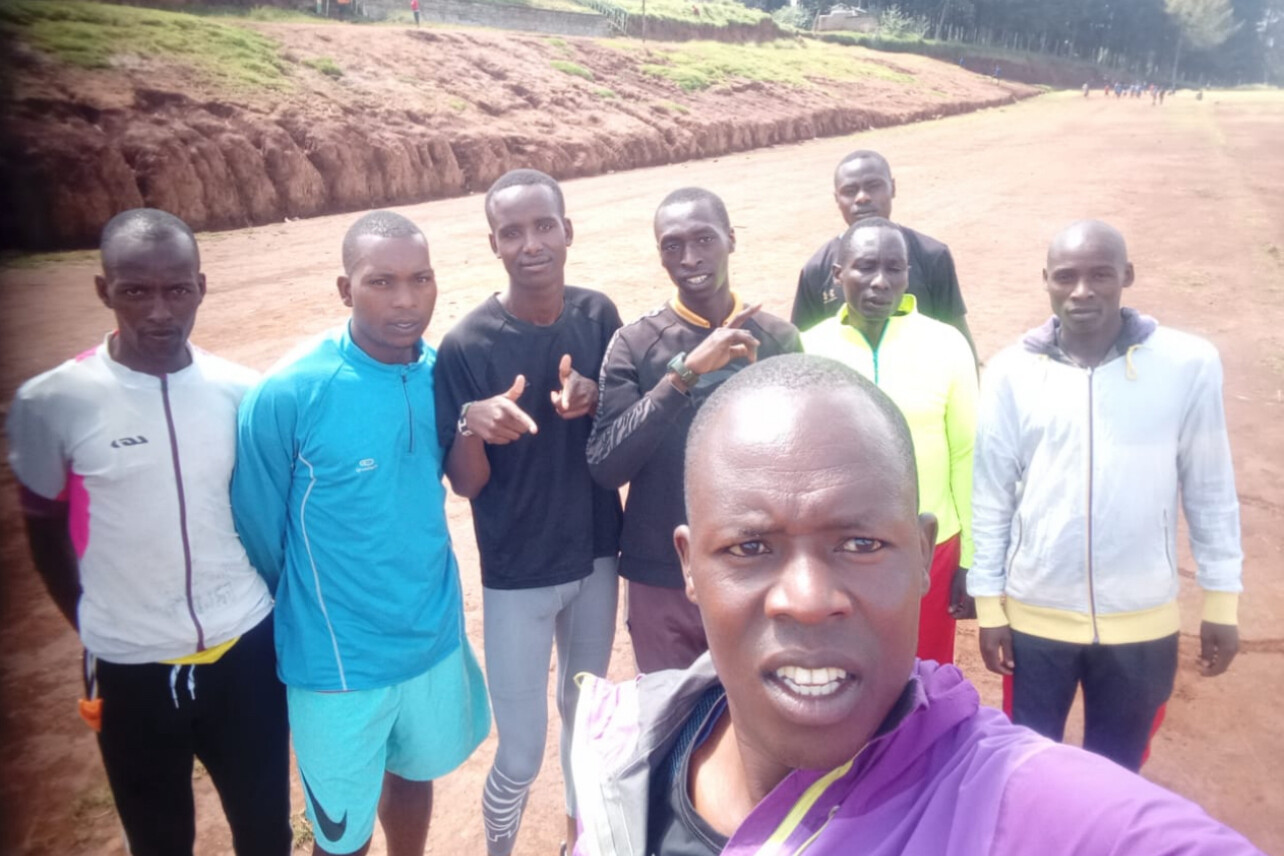
Currently, KATA Running Camps are thriving across Kenya under the leadership of 11 outstanding operators. In Kapcherop, Philemon Kipruto manages a vibrant group of emerging athletes. Eric Chepkwony runs our camp in Molo, and Sammy Dismas leads the program in Kurenget.

Over in Nyandarua, Peter Njoroge is building a strong training culture, while Edwin Soi, Olympic bronze medalist, brings elite-level experience to our Kericho camp. Paul Kipsiele Koech, an iiOlympic medalist, leads not one but two camps—Sotik and Njerian Bomet—where he shares his wealth of knowledge and competitive insight. In Sachangwan, experienced coach Amos Chirchir oversees daily operations and athlete growth, while in the legendary running hub of Iten, former elite runner David Kellum provides mentorship and structure.
David Kirui heads up the team in Tenden, and in Eldoret, Ruth Chumo—a respected coach of both abled and para-athletes—brings technical excellence and inclusivity to her camp. Rounding out our leadership team is Charles Ngeno, who directs the Olenguruone camp and plays a vital role in shaping future champions.
How the Program Works:
Each selected operator will receive:
•An interest-free loan of 350,000 KES as startup capital to establish the camp.
•An additional 300,000 KES interest-free loan to cover the costs of renting and preparing 3 acres of land, fertilizing, spraying, planting, harvesting, and selling the potatoes.
The model is built on long-term sustainability: once established, revenue from the potato farm is expected to fully support each KATA Camp year-round, without additional outside funding.
Work and Training:
KATA athletes must commit to:
•25 hours of farm work per week, in addition to their structured training schedules.
This balance of physical labor and elite coaching is designed to build discipline, character, and community resilience—while helping runners achieve their full athletic potential.
The KATA Running Camps and KATA Potato Farms are headquartered at the Anderson Manor of Portugal, home to the KATA Running Retreat, located in Monforte da Beira in central Portugal. This historic and beautiful estate serves as the ideal European base for KATA. Athletes come here to sharpen their fitness and prepare for peak performances, whether they’re targeting personal bests or major competitions.
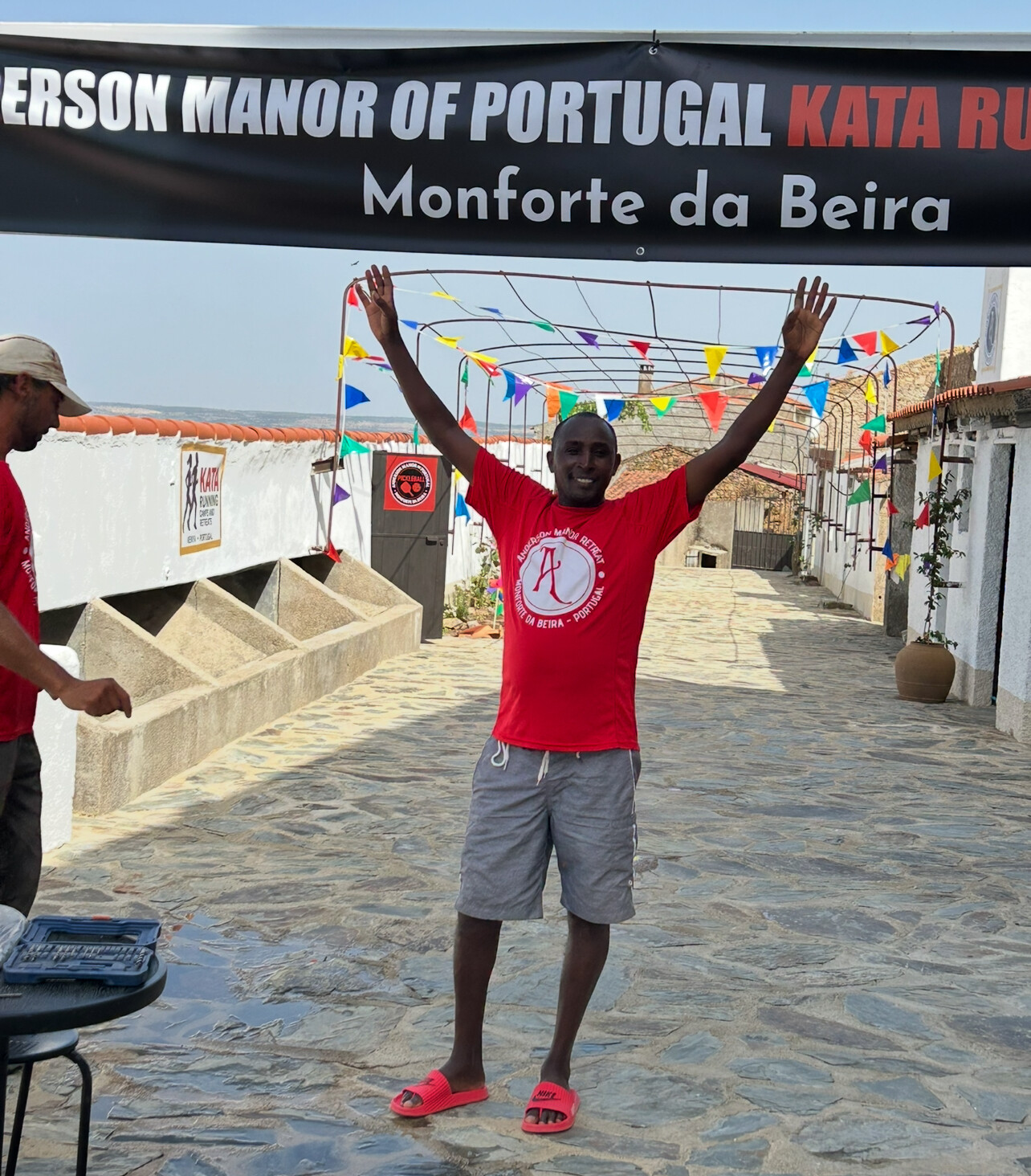
The location is perfect for training—quiet, scenic, and inspiring—and it’s conveniently positioned just 2.5 hours from Lisbon and about 4 hours from Madrid by car. KATA also maintains a local office in Thika, Kenya—site of the original KATA Running Retreat opened in 2019—which supports the growing network of KATA camps across the country.

Interested in Becoming a KATA Camp Operator?
If you’re passionate about athletics, have experience in farming or business management, and want to make a lasting difference in your community, this could be your opportunity.
Contact Bob Anderson directly on WhatsApp (650-400-6643) to apply (text only at this point):
Please include:
•Your full name
•The town where you’d like to establish a KATA camp
•Your background in running, coaching, or athletics
•Experience running a business
•Any potato or farming experience you have
This is more than a training camp. It’s a movement to empower Kenyan runners through purpose, performance, and sustainable agriculture.
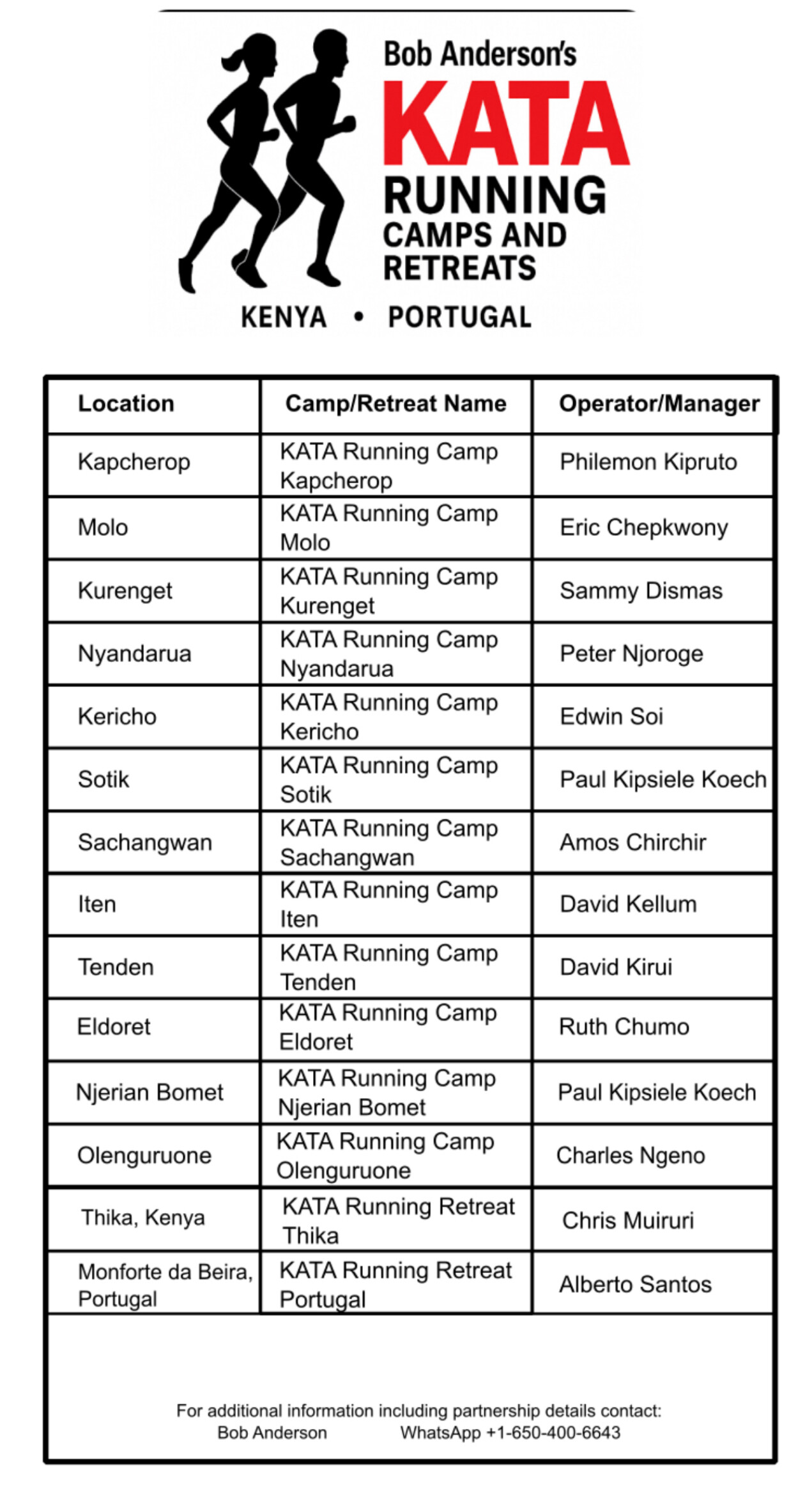
by Boris Baron
Login to leave a comment
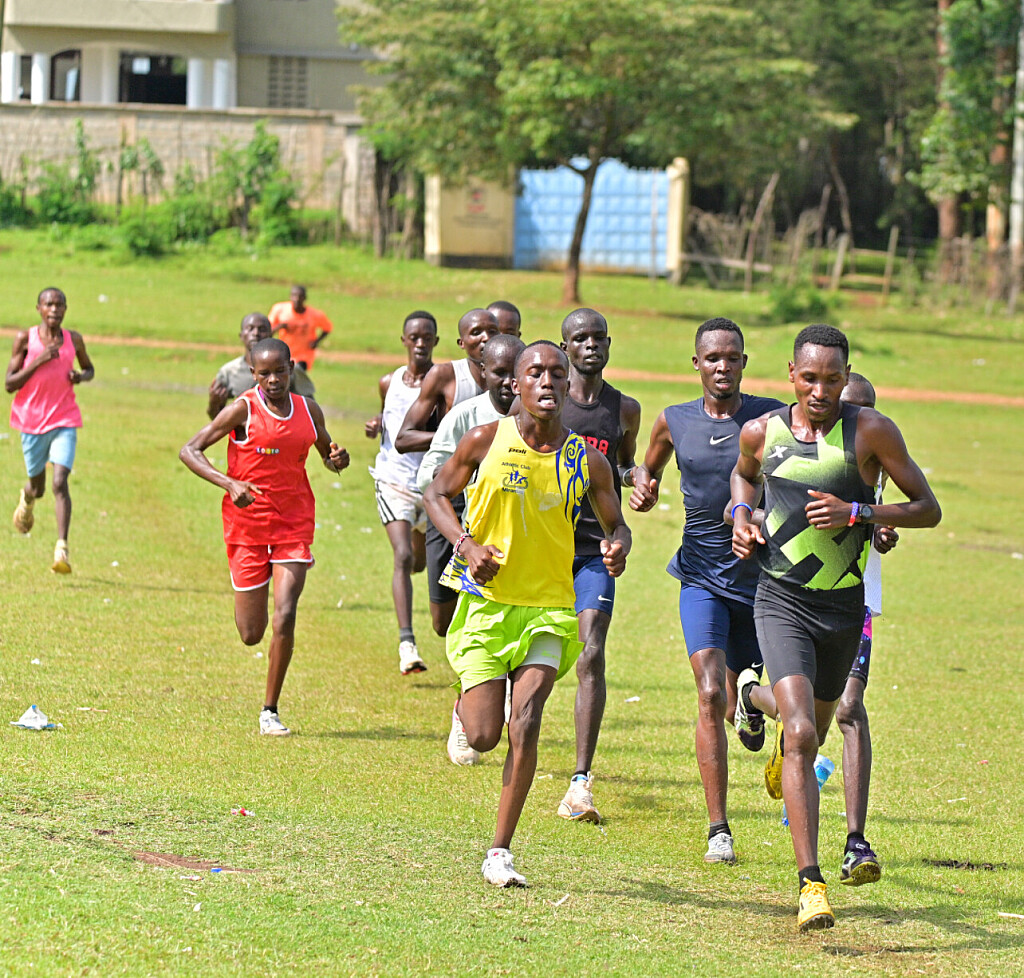
KATA Running Camps Expand to 10 Locations in Kenya with Ruth Chumo Leading New Site in Eldoret
The Kenyan Athletics Training Academy (KATA) has reached a major milestone with the launch of its 10th KATA Running Camp, as the movement continues to grow rapidly across Kenya. This bold initiative, which blends elite athletic training with sustainable agriculture, is transforming the future of distance running.
The two newest camps are now confirmed:
• KATA Camp 9 in Kamoi, led by coach David Kirui
• KATA Camp 10 in Eldoret, operated by Coach Ruth Chumo
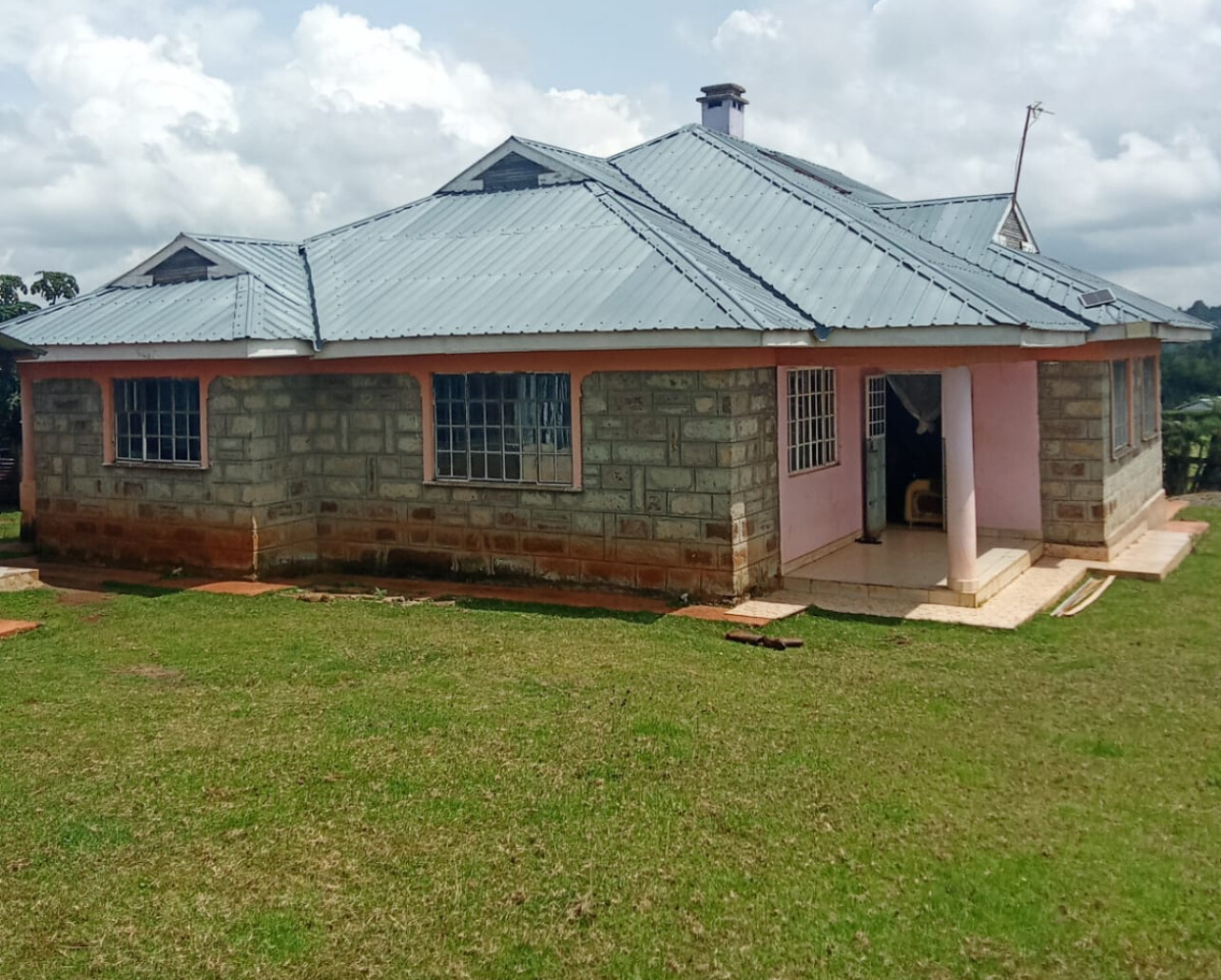
Coach Ruth Chumo brings exceptional experience to the program. Based in Eldoret—the heart of Kenyan distance running—she has built her reputation training both abled and para-athletes at the highest level. Her deep commitment to athlete development and her proven leadership make her a vital addition to the KATA family.
“I am so excited about the group of operators we have put together,” says KATA Director Bob Anderson, founder of Runner’s World magazine. “Each of our operators is fully committed to the program and understands the importance of our KATA Potato Farm component. This provides year-round revenue that allows us to sustain and grow. Every camp already includes top-level athletes, and we’re going to achieve big things.”

Two of the current camps have already planted their first acre of KATA potatoes, marking an important step forward in the program’s sustainability model. These three-acre farms, tied to each running camp, are a core part of the KATA mission—providing food, responsibility, and revenue that keep the entire system running year-round.
The program is also delivering results on the track. Just last weekend, Olympic bronze medalist Edwin Soi, operator of the Kericho KATA Camp, ran an astonishing 27:30 for 10,000 meters, dominating his race and sending a strong message about the level of athletes being developed within the KATA system.
KATA’s leadership includes two Olympians:

• Edwin Soi, 5000m bronze medalist from the Beijing Olympics
• Paul Kipsiele Koech, one of the most accomplished steeplechasers in history, now operating the KATA Camp in Sotik
Their presence brings unmatched experience, mentorship, and international credibility.
At the heart of KATA is a powerful, dual-purpose model: athletes receive world-class training while also helping manage a working farm. The result is a program that builds champions and sustains itself through community-driven agriculture.
Round Two Begins October 1
The momentum is building. On October 1, KATA will launch Round Two of its program, aiming to establish 10 additional camps by November 1—doubling the total to 20.
“This is only the beginning of our aggressive, unique program,” says Anderson.

The long-term vision: 50 fully operational KATA Running Camps within three years, directly supporting nearly 1,000 elite Kenyan runners.
The KATA Partner Program
To help reach that goal, KATA is inviting select partners to be part of the movement and make a lasting impact.
Each partner:
• Can have their name on a camp. You too can now have your own training camp in Kenya under the umbrella of KATA.
• May choose to be actively involved (like coaching and selecting your own athletes) or take a passive role. (KATA will set everything up.)
• Will share in the gross revenue from the sale of KATA potatoes
• Will also participate in a percentage of prize money earned by athletes at their partnered camp
This is a rare opportunity to support a program built on performance, purpose, and sustainability—while being directly connected to the success of the next generation of Kenyan champions.
Want to get involved?
WhatsApp Bob Anderson at +1-650-400-6643 to learn how you can support or partner with KATA today.
Photos: Paul Kipsiele Koech KATA team in Sofia 2. Ruth Chumo 3. Ruth's KATA Camp outside of Eldoret 4. KATA athletes planting potatoes in Molo under the direction of camp operator Eric 5. KATA ten camps 6. KATA athletes in Iten 7. Preparing potatoes in Kapcherop 8. Paul Kipsiele Koech coaching his KATA athletes in Sotik.
by Boris Baron
Login to leave a comment
The Global Comeback of Small Town Road Races
As the world’s largest marathons continue to draw tens of thousands of runners and charge hefty entry fees, many athletes—both seasoned and new—are turning their attention to something more intimate: small town road races.
Once considered only for local fun-runners or age-groupers, these events are experiencing a global resurgence, offering runners everything the mega-marathons can’t—less stress, lower costs, a tight-knit community, and often, surprisingly fast competition.
A More Personal Experience
Big-city races like the New York City and Berlin Marathons may offer world-class crowds and fanfare, but the scale can feel overwhelming. In contrast, races in small towns like Monforte da Beira (Portugal), Charlevoix (Michigan), or Iten (Kenya) are drawing runners looking for a different experience.
“After years of chasing majors, I ran a 10K in a village with 300 people,” says Linda Greene, a 2:58 marathoner from Chicago. “No lines, no chaos, and I ran my fastest time in two years.”
Competitive Fields, Surprisingly Fast Courses
Don’t assume these races are only about charm. Many feature flat or downhill courses, and some attract elite talent. In the Pacific Northwest, for example, the Capital City 5K in Olympia, Washington, saw a 14:12 finish this spring from a local collegiate athlete training for the Olympic Trials.
Organizers often design courses for speed and simplicity—something increasingly rare in major urban races where logistics can dictate less-than-ideal routes.
Lower Costs, Higher Value
With registration fees as low as $10–$30, small town races often include perks like free post-race meals, local wine or produce giveaways, and handmade medals or shirts.
“Running the Golden Gate 10K in August cost me less than dinner in San Francisco,” said one Bay Area runner. “And I didn’t even have to wake up at 4 a.m. to get to the start.”
Building Community
In towns where everyone knows your name—or at least cheers you by bib number—these races build true connections. Organizers are often runners themselves, and volunteers may include the local mayor or schoolchildren.
“You can actually talk to the race director. You can warm up on the course. You feel seen,” said Daniel Okoth, a Kenyan athlete who trains in Kapcherop. “It reminds you why we run.”
Not Just for Locals Anymore
With the rise of digital registration and online coverage, many small town races are welcoming international runners looking for something special. My Best Runs now features a growing list of these hidden gems, and more athletes are flying into tiny airports to chase PRs and peaceful scenery.
Looking for your next great race?
Skip the mega-expo. Skip the corrals. Skip the parking issues. Go back to where it is just about racing.
by Boris Baron
Login to leave a comment
Kenya vs Ethiopia What Sets Their Runners Apart
When it comes to distance running, no two countries are more dominant—or more frequently compared—than Kenya and Ethiopia. From 5Ks to marathons, athletes from these East African nations consistently top podiums and rewrite record books. But while the results may look similar, the paths to victory are often quite different.
Altitude Advantage, Different Terrains
Both Kenya and Ethiopia benefit from high-altitude environments that naturally boost endurance. Kenya’s top training hubs, like Iten and Eldoret, sit between 7,000 and 8,000 feet. Ethiopia’s Bekoji and Sululta offer similar elevations. But terrain matters too: Kenya’s roads are often red clay or uneven gravel, ideal for building strength and resilience. Ethiopia’s runners more frequently train on hills and mountain trails, with steeper and more demanding climbs integrated into daily runs.
Training Philosophies Diverge
Kenyan training is rooted in simplicity and rhythm. Athletes often meet for large group sessions, with a strong focus on tempo runs, long-distance efforts, and unstructured fartleks. The vibe is community-oriented and competitive—if someone surges, the group follows.
In contrast, Ethiopia’s elite training tends to be more individualized and coach-driven. Athletes follow structured schedules with clearly defined paces, recovery sessions, and high-intensity track workouts. The approach is more scientific, and recovery days are strictly observed.
Daily Life and Recovery
Kenyan runners typically live together in camps, waking early to train, followed by long periods of rest. A second run often comes in the late afternoon, and the lifestyle emphasizes minimal distractions.
Ethiopian runners may train in smaller groups and return home between sessions. There’s more variety in how the day is structured, though the focus on discipline remains.
(Photos) Kenyan Training in Iten and Eldoret
1. Mass Training Run in Iten
A striking image capturing a large group of Kenyan runners during a typical morning session on the red dirt roads of Iten, known as the “Home of Champions.”
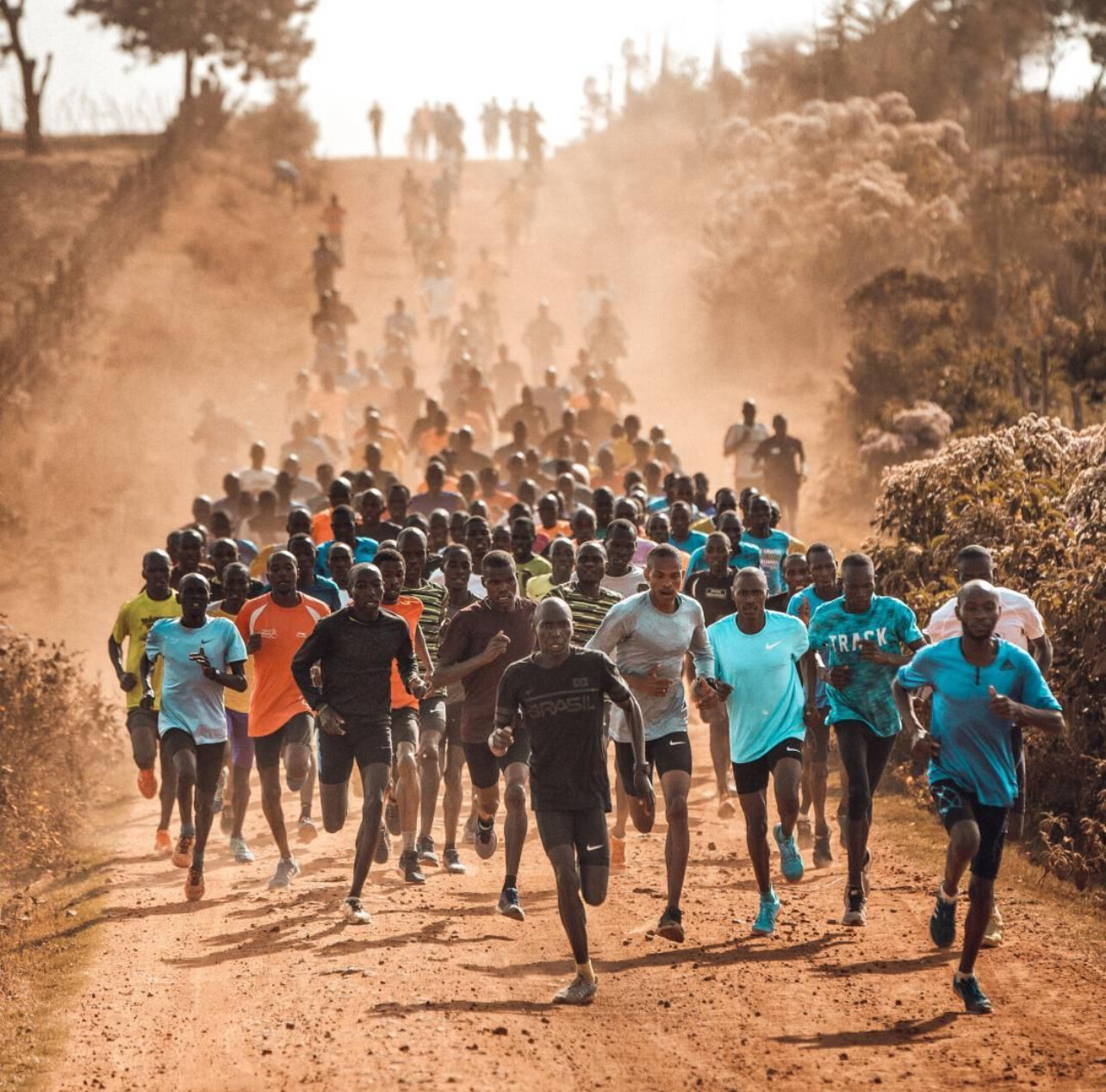
2. Track Workouts in Eldoret
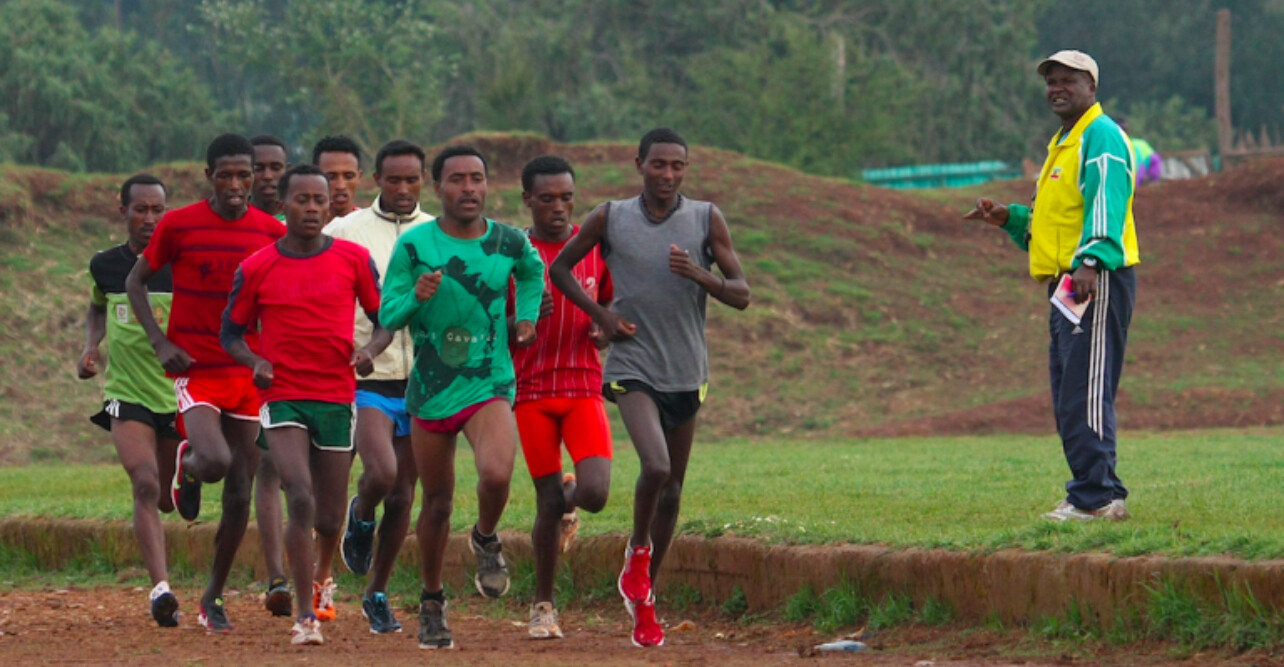
Kenyan marathon runners engaging in interval training at the athletics track in Eldoret, highlighting their emphasis on group cohesion and endurance.
(Photos) Ethiopian Training in Bekoji and Sululta
3. Group Training in Bekoji
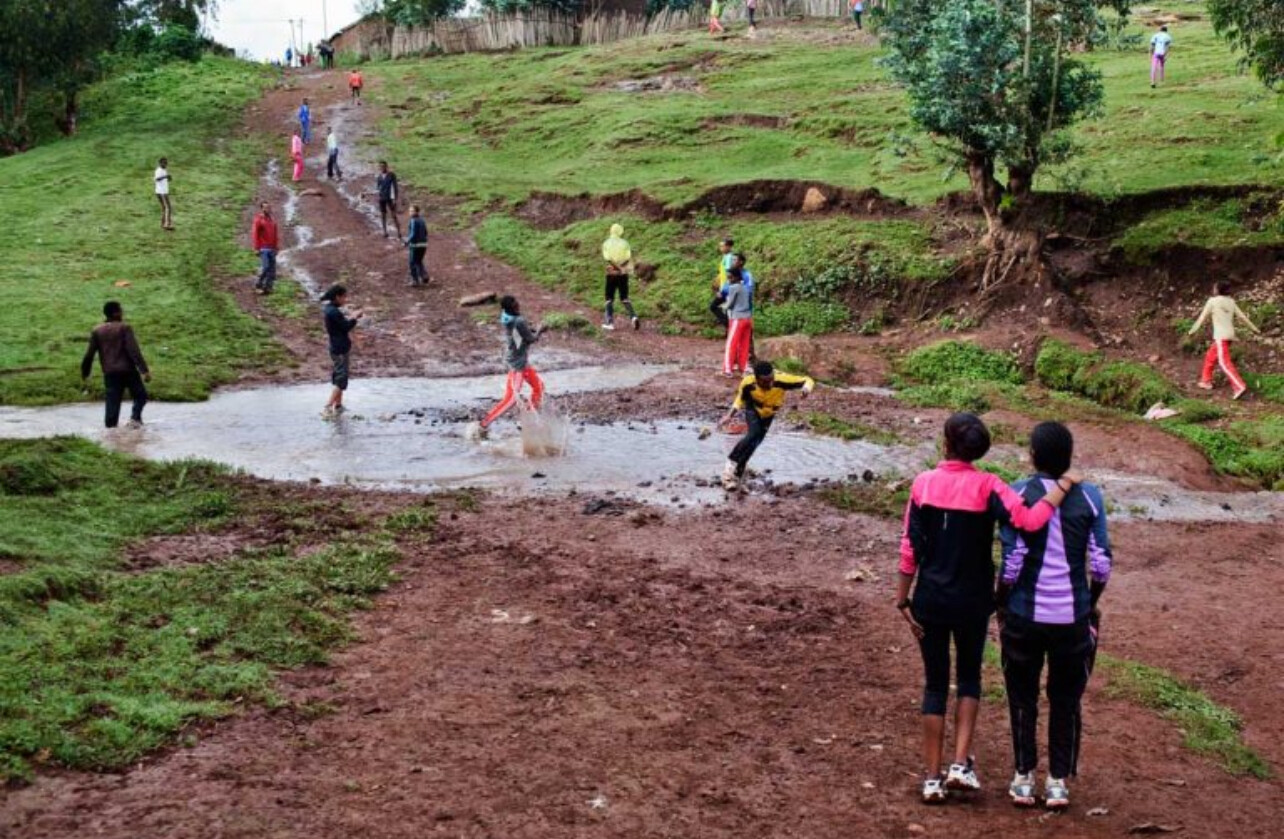
A glimpse into a training session in Bekoji, Ethiopia, showcasing runners on a dirt track, emphasizing their structured and coach-led routines.
4. Trail Running in Sululta
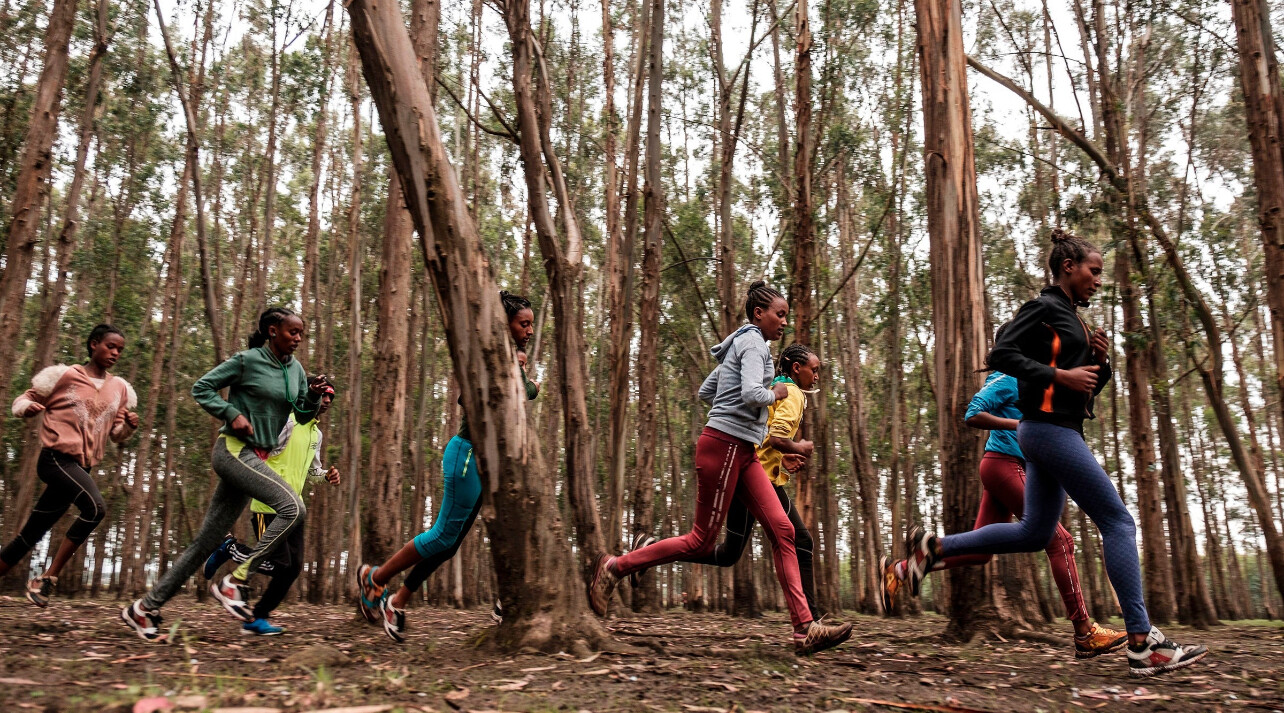
Ethiopian athletes navigating through forested trails in Sululta, reflecting their focus on varied terrains and natural environments.
Fueling for Success
Diet is another point of contrast. Kenyan athletes often eat ugali, a maize-based dish, with sukuma wiki (collard greens) and beans. Meals are consistent, simple, and heavy on carbohydrates. Hydration includes local teas and water, with little emphasis on supplements.
In Ethiopia, injera (a sour flatbread made from teff) is the foundation, served with protein-rich stews like shiro or doro wat. Teff is rich in iron and slow-digesting carbs—making it a valuable fuel for endurance.
Cultural and Coaching Influence
In Kenya, many athletes are inspired by runners from their own village or region—legends like Eliud Kipchoge or David Rudisha have inspired thousands. Training is often passed down through generations informally.
In Ethiopia, there’s a more centralized coaching system and support from the national federation. Greats like Haile Gebrselassie and Kenenisa Bekele have helped shape a more formal pathway from local clubs to the world stage.
Different Roads, Same Finish Line
Despite the differences, the results speak for themselves: both countries continue to dominate. Kenya may have the edge in the marathon, while Ethiopia consistently excels in 10K and track events. Together, they’ve redefined what’s possible in distance running.
by Boris Baron
Login to leave a comment
Sabastian Sawe Shakes Up the Marathon World
Kenya’s Sabastian Kimaru Sawe has quickly become one of the most exciting figures in long-distance running. On April 27, 2025, he won the London Marathon in a commanding 2:02:27, outpacing a deep field that included Olympic champions and rising stars. This victory came just months after his sensational debut at the 2024 Valencia Marathon, where he clocked 2:02:05—the second-fastest marathon debut in history and the fastest time recorded in the world that year.
A Different Path to Greatness
Born March 16, 1996, in Kenya, Sawe did not follow the typical trajectory of a professional runner. While many of his peers were competing internationally as teenagers, Sawe was still focused on his studies. He only began running competitively in his 20s, after completing school in 2015. In 2020, he joined the training group of coach Claudio Berardelli, who had worked with several world-class Kenyan athletes, including Olympic champion Wilfred Bungei. That marked the turning point in his career.
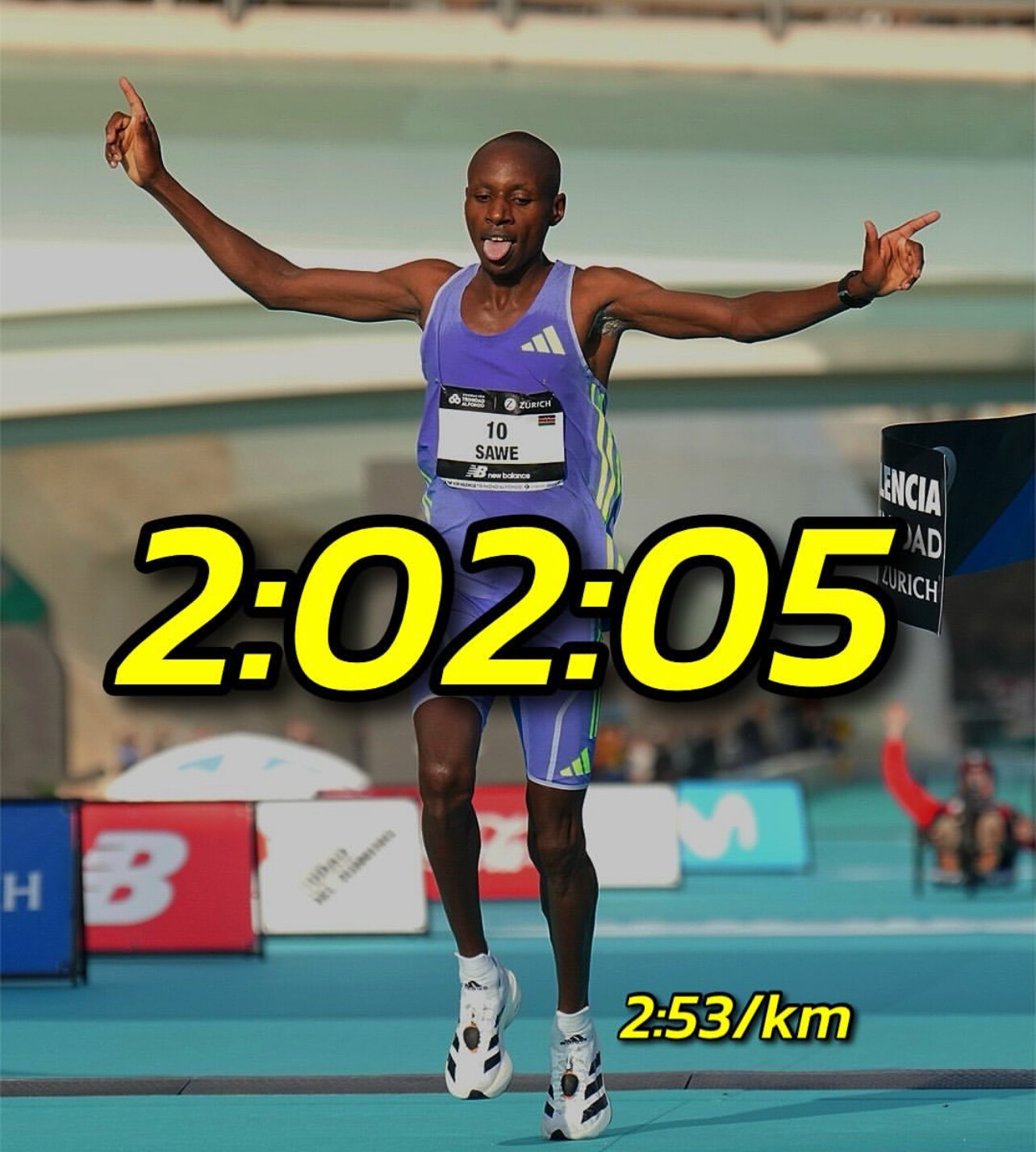
Unlike many top Kenyan runners who come from Iten, Sawe is based in Kapsabet, another high-altitude town known for producing champions. His dedication to training, combined with a strategic racing approach, quickly paid dividends.
Building Momentum on the Roads

Sawe’s breakthrough came on the roads. In 2022, he set a new Kenyan national record in the one-hour run—covering 21,250 meters at the Memorial Van Damme meet in Brussels. The following year, he won the inaugural World Athletics Road Running Championships half marathon in Riga, Latvia. He further stamped his authority in 2024 with a 58:05 clocking at the Copenhagen Half Marathon, confirming his elite status among the world’s fastest over 21.1 kilometers.

London Victory and Tactical Brilliance
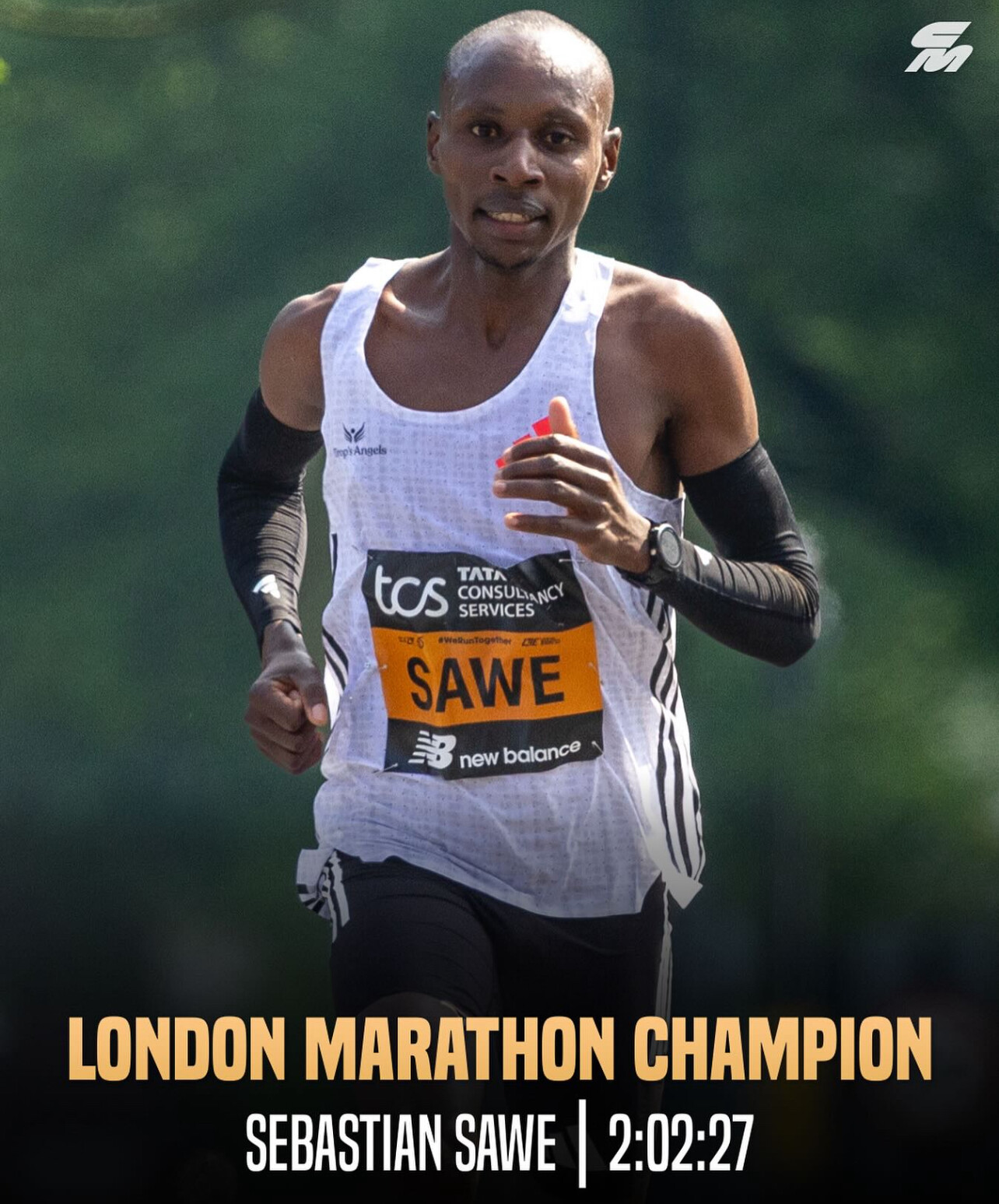
At the 2025 London Marathon, Sawe showed both power and poise. Running in a field stacked with stars—including debutant Jacob Kiplimo and defending champion Alexander Mutiso—he made his decisive move just past 30K, surging ahead with a 5K split of 13:56. No one could follow. He crossed the finish line nearly a minute ahead of Kiplimo, cementing his place among the world’s best.
Sabastian Sawe Key Performances
• Marathon Personal Best: 2:02:05 – Valencia Marathon, 2024
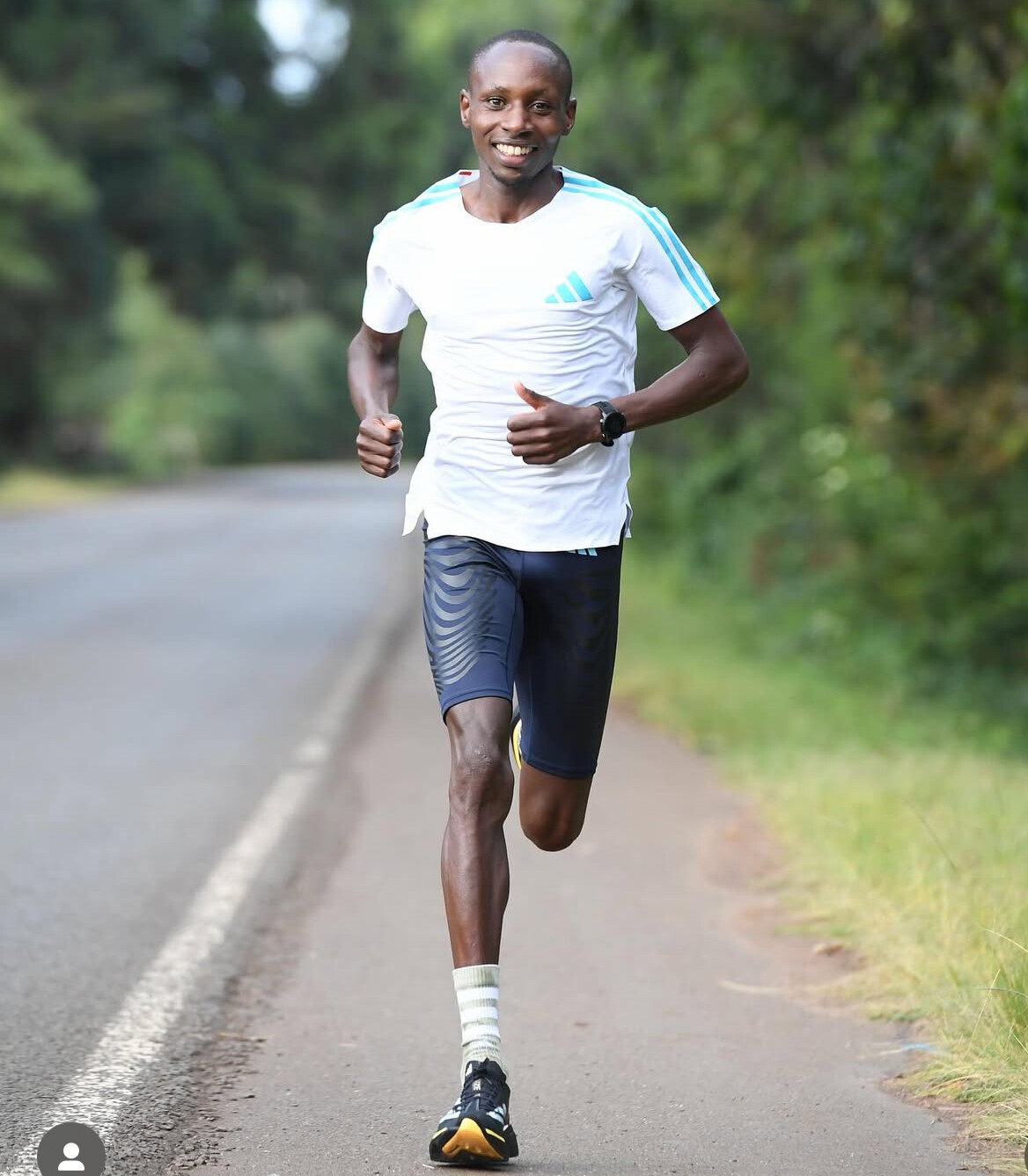
• London Marathon: 1st place – 2:02:27, 2025
• Half Marathon Personal Best: 58:05 – Copenhagen, 2024
• World Championships: Gold medalist – Half Marathon, Riga 2023
• One-Hour Run: 21,250 meters – Kenyan national record, Brussels 2022
• 10,000m Track: 27:09.46 – Top 10 all-time Kenyan performance
Looking Ahead
Still early in his marathon career, Sawe has already proven he has the tools to challenge for global titles and course records. With Paris 2024 behind him, the focus now shifts to the next Olympic cycle, where Sawe could be a favorite for gold in Los Angeles. He’s also expected to be a top contender in the World Marathon Majors circuit, possibly returning to London or making his debut in Berlin or New York.
Sawe’s rise from a late start to the pinnacle of world marathoning is both inspiring and a reminder that potential can emerge in different ways. With every stride, he is redefining what it means to be a modern marathon champion.
by Boris Baron
Login to leave a comment
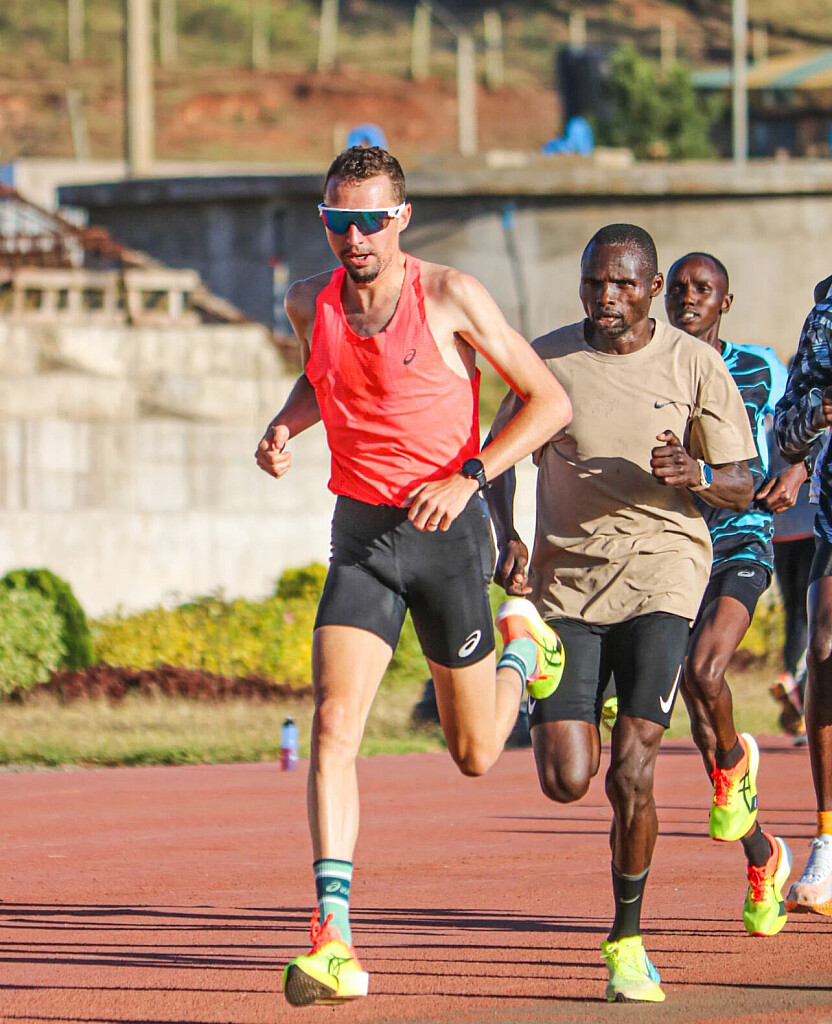
Julien Wanders Announces Return to Marathon Racing at Haspa Marathon Hamburg
Swiss long-distance runner Julien Wanders has declared his return to marathon competition after a three-year hiatus. In a recent Instagram post, Wanders expressed his enthusiasm:
“I’m happy to announce that I will run the haspamarathonhamburg on 27th of April. After 3 years, it’s time for me to go back to marathon.”
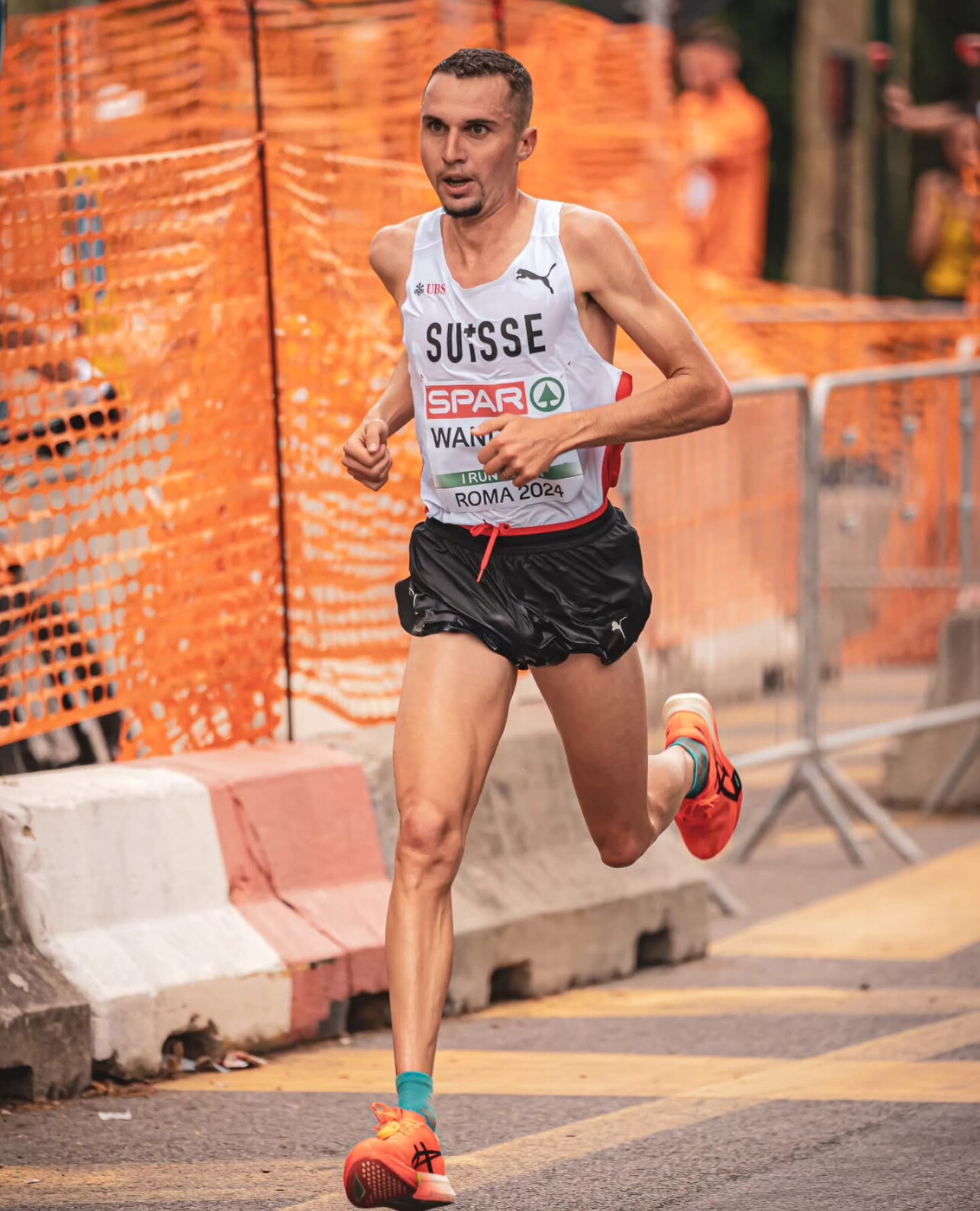
Born on March 18, 1996, in Geneva, Switzerland, Wanders has made significant strides in long-distance running. He set the European record for the half marathon with a time of 59:13 at the Ras Al Khaimah Half Marathon in 2019 I and holds the European 10 km road race record with a time of 27:13, achieved in Valencia in 2020.
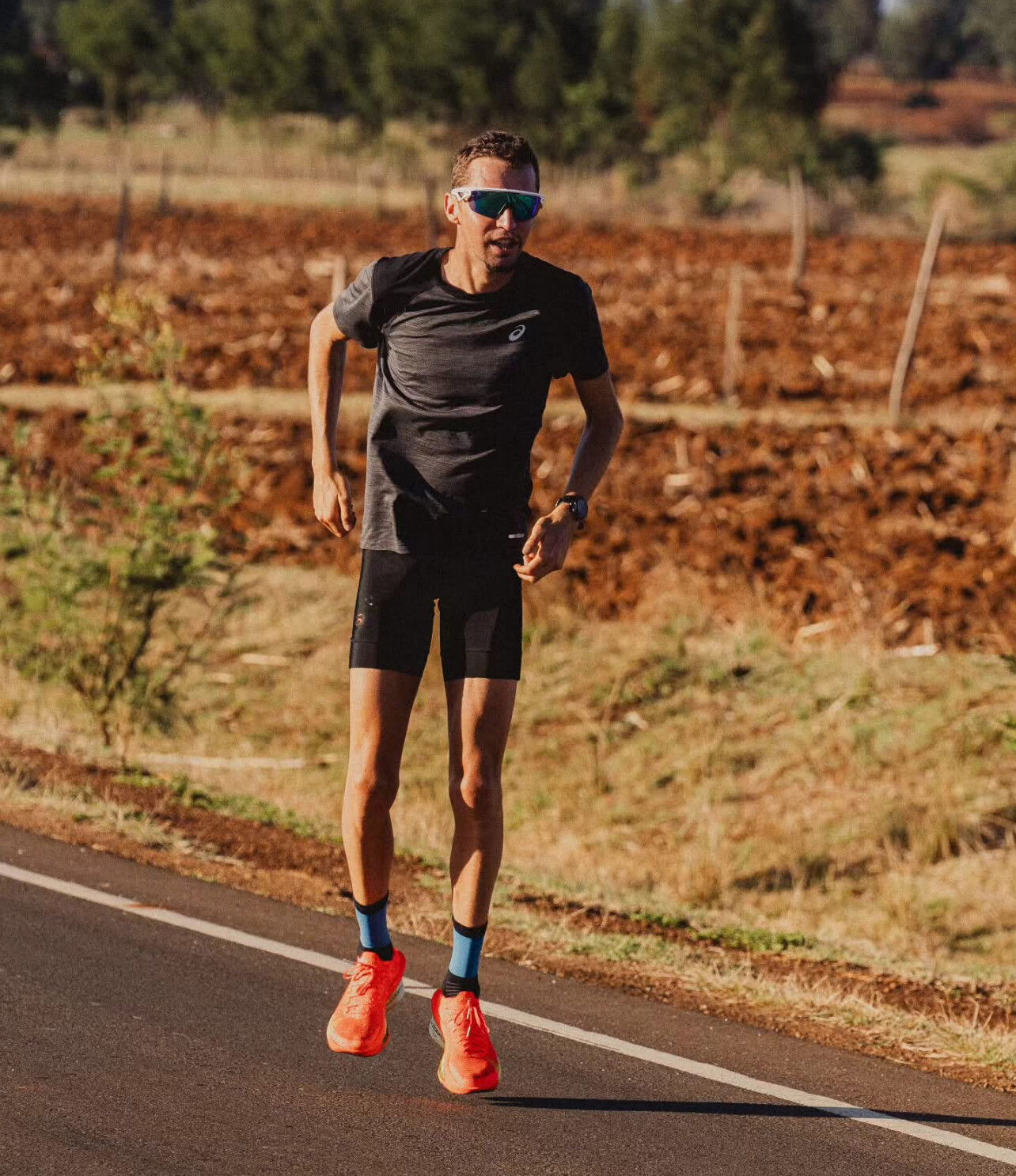
Challenges Leading to Hiatus
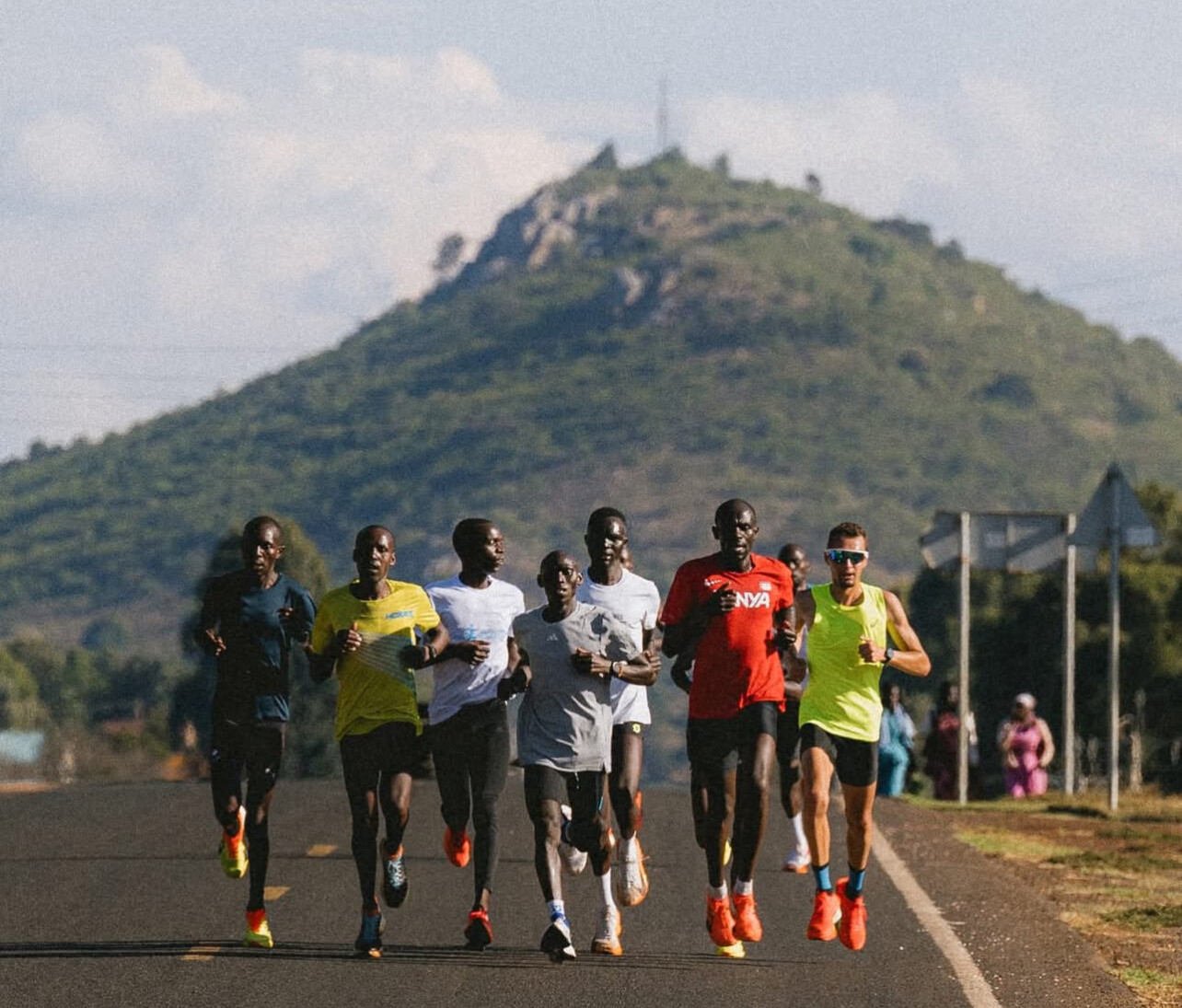
Wanders’ absence from marathon events over the past three years stems from a series of health challenges and injuries:
• 2021: In early 2021, Wanders suffered a hamstring injury, which, coupled with a bout of pneumonia, hindered his performance. Despite participating in the Tokyo Olympics, he finished 21st in the 10,000 meters. Post-Olympics, an MRI revealed significant hamstring irritation, necessitating a break from running.
• 2022: Wanders debuted in the Paris Marathon but faced digestive issues, leading to multiple stops and a finish time of 2:11:52. In May, he was diagnosed with a sacral stress fracture, sidelining him for the track season. His return at the Copenhagen Half Marathon in September was marred by illness, resulting in a time of 1:03:47. Later that year, he attempted the Valencia Marathon but withdrew after 31 kilometers due to illness.
Training in Kenya
A pivotal aspect of Wanders’ training regimen involves extensive periods in Iten, Kenya, a renowned high-altitude training hub. Drawn by the area’s reputation and inspired by his research on Kenyan running culture, he first visited Iten in 2014. Despite initial challenges, including adapting to the altitude and local conditions, Wanders found the environment conducive to his growth. He now spends about half the year training in Kenya, benefiting from the high-altitude conditions and the opportunity to train alongside elite athletes.
Wanders’ commitment to rigorous training is evident in his regimen, which includes 13 sessions per week, covering 170-190 km, along with core stability and weight training sessions.
As Wanders prepares for his marathon return in Hamburg, the running community eagerly anticipates his performance and potential resurgence on the international stage. His journey underscores the resilience and determination required to overcome setbacks and pursue excellence in long-distance running.
by Boris Baron
Login to leave a comment
Daniel Simiu Ebenyo Sets Sights on 2025 Seoul Marathon After Dominating Cross Country Season
Reigning World 10,000m silver medallist Daniel Simiu Ebenyo has officially set his sights on the 2025 Seoul Marathon, scheduled for March 16. Fresh off a series of impressive victories, the Iten-based star is determined to translate his cross-country dominance into success on the streets of Seoul.
Ebenyo, a standout performer this season, recently captured the title at the National Cross-Country Championships held at the Eldoret Sports Club. He quickly followed up that victory with another commanding performance at the Absa Sirikwa Classic Cross Country Continental Tour, hosted at Lobo Village in Eldoret. In a tightly contested race, Ebenyo clocked an impressive 29:57 to claim the win, finishing ahead of Gideon Rono (30:07) and Nicholas Kimeli (30:15).
A National Police Service officer, Ebenyo made his marathon debut at the 2023 Chicago Marathon, where he finished fifth in 2:04:23—an impressive showing for his first 26.2-mile (42.195 km) challenge. Since then, he has successfully balanced his track and road racing career, and now, all eyes are on his upcoming performance in Seoul.
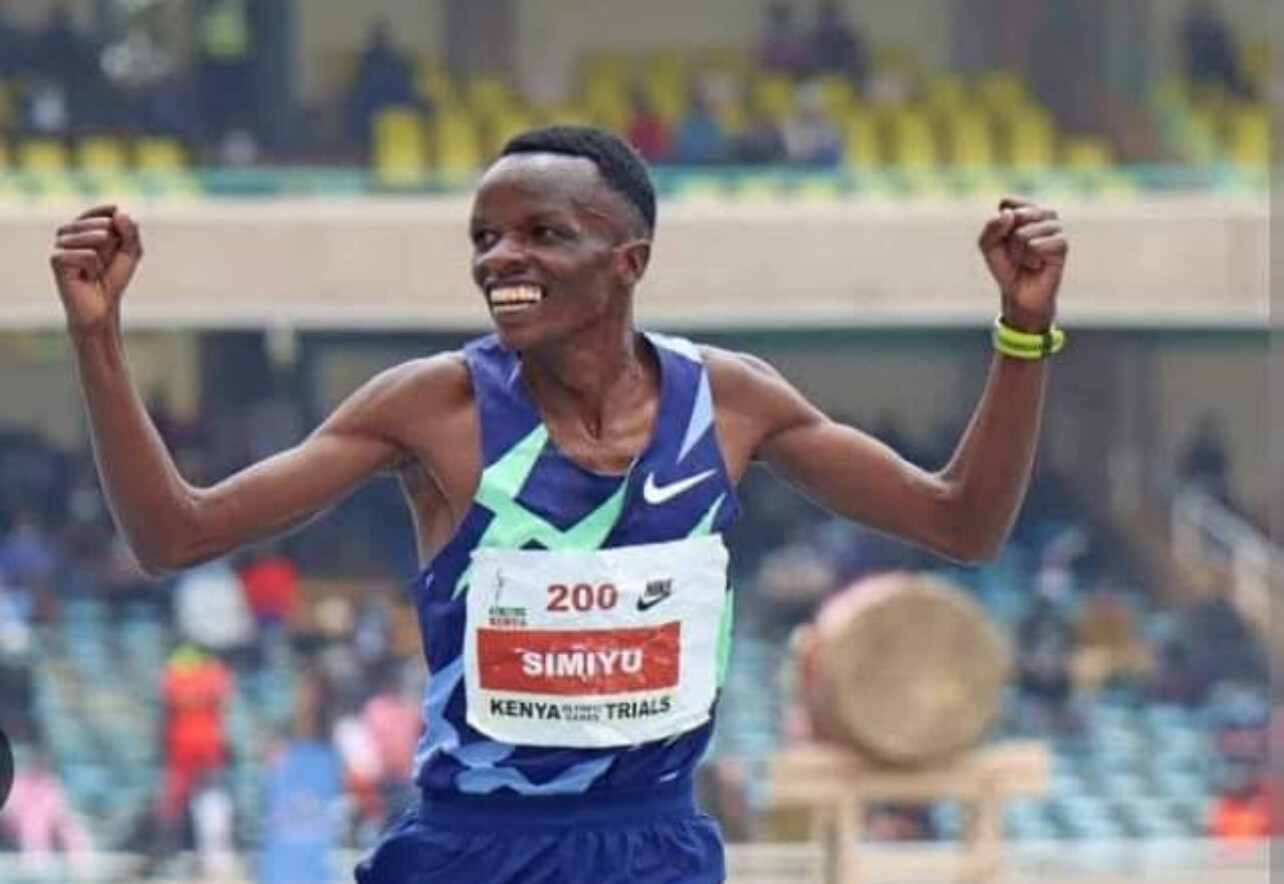
“I strongly believe I will perform well in the race and secure a podium finish,” Ebenyo said confidently. “Nobody knows what tomorrow holds, so let’s focus on the present.”

Ebenyo’s path to the marathon spotlight hasn’t been without challenges. The former African 5000m silver medallist endured a difficult 2023 season, missing out on the Paris Olympic Games after an unfortunate fall during the national trials. He finished eighth in that race, narrowly missing the chance to represent Team Kenya on the world’s biggest stage.
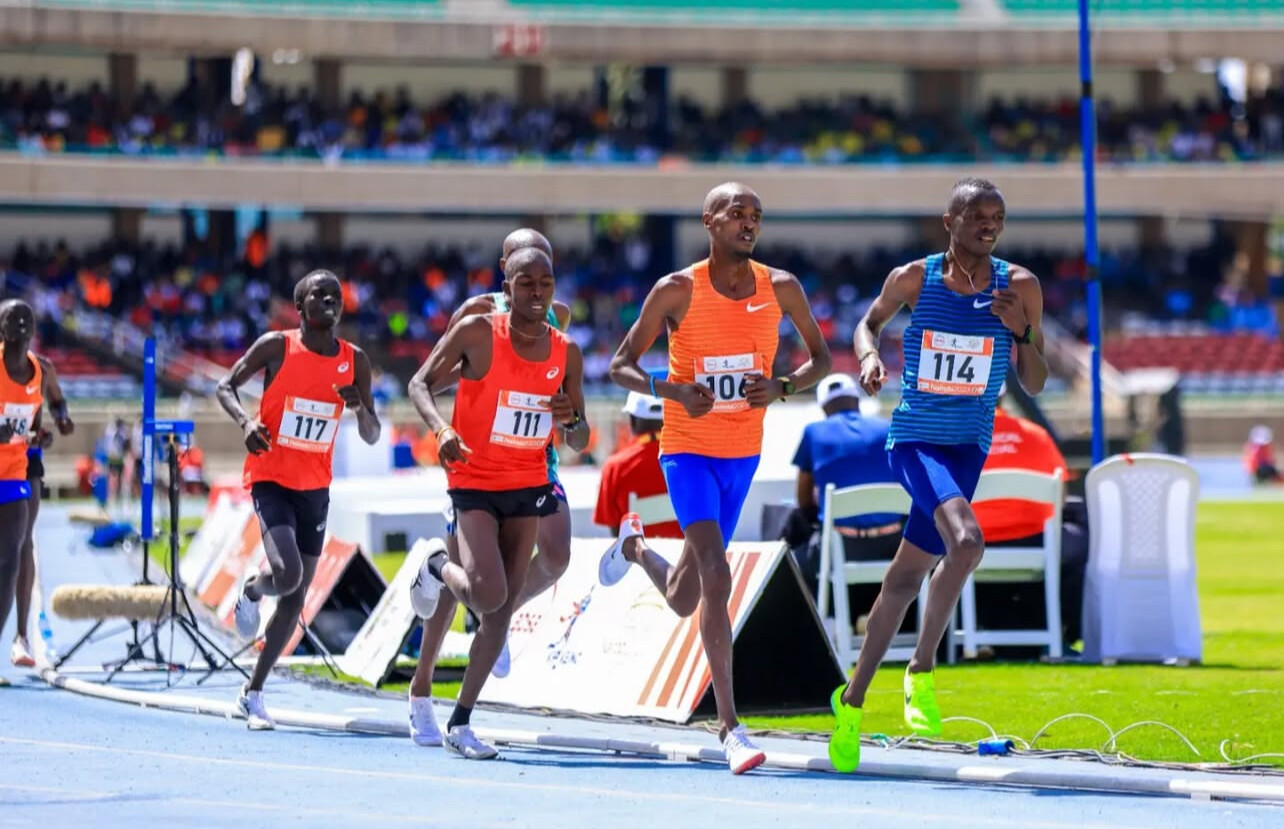
However, the resilient athlete quickly bounced back, proving his mettle both locally and internationally. In early 2024, he claimed victory at the prestigious Berlin Half Marathon, crossing the finish line in a swift 59:30. This win added to his growing list of accolades, including his standout performance at the 2023 World Athletics Championships in Budapest, where he secured the silver medal in the 10,000m.

As the countdown to the Seoul Marathon begins, Ebenyo’s rigorous training regimen in the high-altitude hills of Iten has intensified. He remains laser-focused on achieving his ultimate goal: standing atop the podium in Seoul.
About the Seoul Marathon
First held in 1931, the Seoul Marathon is the oldest continuously held marathon event in Asia and the second oldest in the world, following the Boston Marathon. The race starts at Gwanghwamun Square, a historic and cultural landmark in the heart of Seoul, and finishes at the Jamsil Sports Complex, offering runners a scenic route that showcases both the traditional and modern facets of the city. Known for its flat and fast course, the Seoul Marathon has been the stage for numerous record-setting performances and holds World Athletics Platinum Label Road Race status, attracting elite runners from around the globe.
As of now, specific details regarding other elite runners confirmed for the 2025 Seoul Marathon have not been publicly disclosed. However, given the event’s prestigious status, it is anticipated that a competitive field of top international athletes will participate, promising an exciting and high-caliber race.
With his current form and unwavering determination, Daniel Simiu Ebenyo is undoubtedly a contender to watch. If his recent performances are any indication, the streets of Seoul may very well witness another spectacular chapter in the career of one of Kenya’s finest distance runners.
by Boris Baron
Login to leave a comment

Seoul International Marathon
The only marathon hosted in the heart of the Korean capital. Seoul marathon is the oldest marathon race hosted in Asia andis one of the fastestmarathon in the world. First held in 1931, Seoul marathon is the oldest marathon eventcontinuously held in Asia, and the second oldest in the world followingthe Boston Marathon. It embodies modern history of Korea, also...
more...
Kenyan Runner Barnabas Kiplimo Wins Khon Kaen Marathon in 2:18:55 Wearing Carbon-Plated Sandal
Kenyan athlete Barnabas Kiplimo achieved a remarkable victory at the Khon Kaen Marathon in Thailand, completing the race in 2:18:55 while wearing innovative carbon-plated sandals.
Kiplimo's choice of footwear was the Nirun sandal, developed by Thai running brand VING. This sandal features a full-length carbon plate embedded within a proprietary foam midsole, designed to enhance cadence and provide responsiveness. The upper and midsole are both made of foam, and the sandal incorporates a foam heel strap for added security, resembling a traditional thong-style flip-flop.
Performance and Potential
Despite initial skepticism, Kiplimo's performance in the Nirun sandals lends credibility to their design. At the Khon Kaen Marathon, he improved his previous marathon best by eight minutes, demonstrating the potential of these high-tech sandals in competitive racing.
Future Prospects
VING has initiated a product testing camp in Iten, Kenya, a renowned training hub for long-distance runners, to evaluate the durability and performance of the Nirun sandals under elite conditions. The brand plans to launch a Kickstarter project in February to bring an updated version of the sandals to market and aims to showcase the product at the 2025 Los Angeles Marathon in March.
Barnabas Kiplimo's victory in carbon-plated sandals not only highlights his personal achievement but also signals a potential shift in running footwear technology, challenging traditional perceptions and opening new avenues for innovation in the sport.
by Boris Baron
Login to leave a comment
Emerging Kenyan star Serem inspired by family’s steeplechase passion
Edmund Serem’s steeplechase triumph at the World U20 Championships in Lima was very much the result of a family effort.
Not only does he have older brother Amos – the 2021 world U20 champion – as a role model, he also has his father to thank for getting him into athletics, and particularly the steeplechase.
“It has always been our dad's dream to see us (Amos and Edmund) achieve what he wanted to achieve for himself as a youth, but didn't due to lack of support,” said Serem.
During their youth, their father took them to several athletics competitions around Kenya, and went on to provide his sons with everything they needed to establish their running careers.
“He would buy training shoes and running apparel and provide transport money for us to attend all the weekend meetings in the region,” recalled Serem, adding that their father chose the steeplechase distance for them.
“He would show us videos of Ezekiel Kemboi, Brimin Kipruto, Conseslus Kipruto and other steeplechasers competing at major championships. He erected barriers for us to practice jumping over and was so careful in choosing the right surfaces for us to do so as he didn't want us to get injured.”
Serem started running at the age of eight. Despite Amos being older than him, Edmund would join his brother on training runs, though would often take a shorter route. “My brother would then have to run faster and try to finish his route in the time it took me to complete the shorter one.”
When Amos started high school, the brothers trained under different coaches and environments. Edmund would later join St Patrick's Iten High School and trained under the famous Irish coach, Brother Colm O'Connell.
Edmund missed out on some competitive opportunities during his early high school years due to the Covid pandemic. Amos, meanwhile, went on to train under Patrick Sang in Kaptagat, but fate would bring the two brothers back together again.
They both now train in Kaptagat under coach Sang's programme. Despite being in two separate camps, wearing different brands and under two separate management groups, their training camps are just 600 metres apart and they see one another every morning for their training.
Sibling rivalry
Serem speaks fondly of his brother. While he has no desire to outshine his brother, he always enjoys competing alongside him in races. That feeling appears to be mutual, too.
"Every time my brother and I are in the same race, he usually performs very well,” says Serem. “I don't know if it is because he doesn't want me to beat him or because he feels stronger when I am around him, but I still look forward to racing against him.”
Both brothers have earned world U20 steeplechase titles in recent years. Three years after Amos’s triumph on home soil in Nairobi, Edmund followed in those footsteps by taking the steeplechase gold medal at this year’s World U20 Championships in Lima.
In a race in which 12 of the 16 finalists set PBs, Serem led a Kenyan 1-2 from teammate Mathew Kosgei to win in 8:15.28. Not only is it a world-U20-leading time, it’s also the third fastest in history by an U18 athlete.
He eventually won by more than two seconds, but he had struggled with stomach ache in the heats three days prior.
“After I rehydrated and recovered from the heats, my body felt good for the final,” he says. “I had high hopes of winning the race, and I told myself on the start line that if anyone else wanted to win it, they would have to fight hard for it.”
The performance capped a remarkable season for the 16-year-old. Back in March he finished sixth at the African Games, then he narrowly missed making the team for the Paris Games, finishing fourth at Kenya’s Olympic Trials. Just eight days later, he earned silver at the senior African Championships before ending his season on an even bigger high with his triumph in Lima.
Managing expectations
Having achieved so much at such a young age, and with the steeplechase being one of Kenya’s strongest disciplines, Serem knows that all eyes will be on him and his brother in the coming years. He takes it all in his stride, though.
"Most of my friends and relatives now believe more in me and see our dream to restore the steeplechase glory to Kenya becoming a reality,” he says. “Many are telling me that my brother and I are the potential runners to dominate the steeplechase in the future.”
Apart from two editions of the Games that the country boycotted, Kenya won every Olympic title in the men’s 3000m steeplechase from 1968 to 2016. That streak came to an end in 2021 when Soufiane El Bakkali won gold in Tokyo. The Moroccan has won three more global titles since then, while the world record was broken last year by Ethiopia’s Lamecha Girma.
But Kenya is keen to reassert its dominance on the event.
Serem was one of several up-and-coming talents who were recently invited to meet with Kenya's Cabinet Secretary for Sports and Athletics Kenya senior officials to plan a way forward in ensuring Kenya remains a powerhouse in athletics.
“We talked about strategic plans to nurture and work with the young and emerging stars to maintain Kenya's glory in athletics into the future, especially in the steeplechase,” he said. “In recent years the men's steeplechase has been dominated mostly by Morroco's Soufiane El Bakkali, but we plan to end that.”
Although he’ll be an U20 athlete for two more years, and will be young enough to defend his world U20 title in 2026, Serem already has his eye on competing at the World Athletics Championships Tokyo 25.
“We’re taking things one step at a time,” he says. “The first step will be to make the team at the national trials, and then we will make the plans for the World Championships after that.”
Serem and his training group spent the past month working primarily on gym work before gradually moving to some longer and easier runs to build endurance. He may also participate in some local cross-country races as part of his training.
Heading into next year and beyond, perhaps the biggest motivating factor for both Edmund and Amos will be to accomplish the kind of successes that their father was unable to achieve due to the lack of support back then.
"Our father had a great passion for athletics but didn't get enough support at the time. He has provided Amos and me with everything we’ve needed, telling us, 'I don't want you to lack anything as I did during my time'.
“So I don't care which one of us wins the race,” added Serem of the prospect of racing against his brother in the future. “Because the success will eventually end up at home.”
by Justin Lagat for World Athletics
Login to leave a comment
'Success is more than money' - Eliud Kipchoge warns athletes against the lure of quick riches
A mental health crisis in sports has forced Eliud Kipchoge to urge young athletes to prioritize career and values over money, hoping to guide them away from depression and doping risks.
Former world marathon record holder Eliud Kipchoge is urging upcoming athletes to prioritise their careers and personal values over the lure of fast money.
In light of rising mental health concerns and growing cases of doping in sports, Kipchoge has called on young athletes to shift their focus from chasing quick financial gains to building lasting careers with integrity and resilience.
Kipchoge, a two-time Olympic gold medallist and celebrated for his record-breaking marathon runs, has dedicated himself to nurturing the next generation of sportsmen and women.
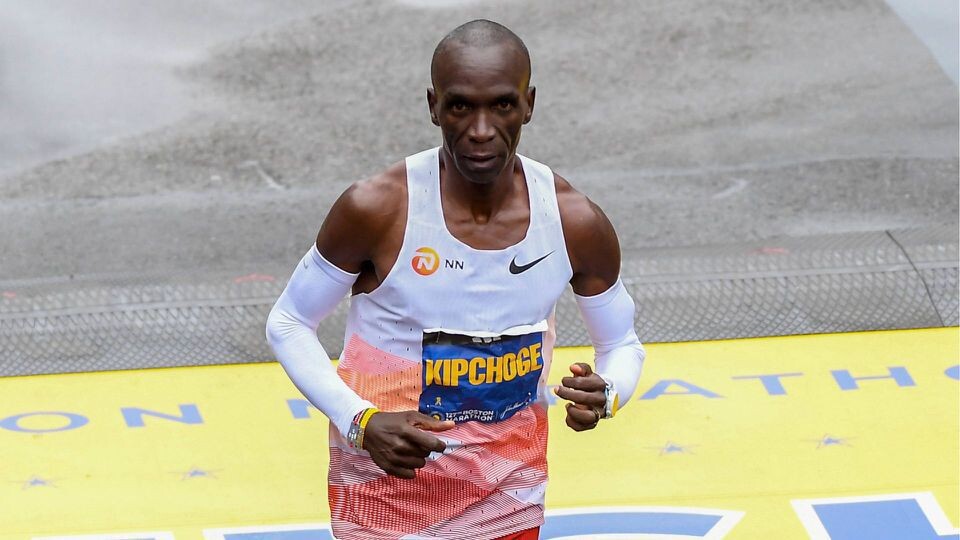
“I am trying to talk to the young people because no one has really gone under the skin of athletes. There is a lot going on under their skins but above all we need to sensitise them that life is not all about money,” Kipchoge emphasised as per TelecomAsiaSport.
“You need to have your own values as a person, and that is what should drive you.”
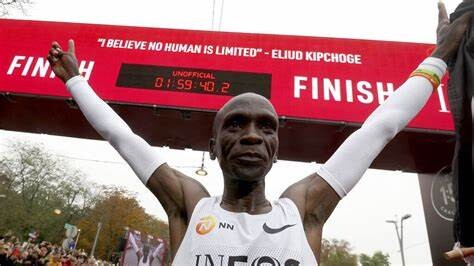
With a career marked by perseverance, Kipchoge understands the challenges that athletes face both on the field and behind the scenes.
He hopes to use his influence to guide young athletes in prioritising personal values, mental well-being, and career longevity over the fleeting allure of fame and money.
He is deeply concerned with the current state of affairs, especially as he sees the tragic impacts of depression and substance abuse on those who struggle to cope.
Recently, the sporting world has been rocked by the deaths of young athletes who succumbed to the pressures of the industry.
Last month, former world Under-20 champion Kipyegon Bett tragically passed away after battling depression and alcoholism, according to close family members.
In another tragic incident, Clement Kemboi, a former All Africa Games steeplechase champion, was found to have taken his own life at his home in Iten.
In response, Kipchoge is determined to do more than just compete—he wants to inspire change within the sporting community.
"I will still continue talking to them," he said, expressing his dedication to counseling and supporting young athletes.
"And if all of us can come together and get our minds together, we can get rid of these things. It is unfortunate that we can lose athletes at such a young age, and it is more unfortunate that we can have young people get into depression and die."
Kipchoge has witnessed how the pressure for financial success can steer young athletes down dangerous paths, often leading to doping as a shortcut to fame and prosperity.
He attributes much of the current doping crisis to the culture of seeking quick, easy money, rather than focusing on building a reputation of dedication and integrity.
Despite the challenges, he remains hopeful that a positive shift is possible if athletes receive the right mentorship and guidance early in their careers.
The celebrated marathoner believes that with open conversations and a community effort, young athletes can learn to see beyond monetary gains and understand the importance of a balanced life that honors their mental health, values, and long-term goals.
"There is a need for athletes to understand that a fulfilling life extends beyond medals and money," Kipchoge said, expressing his optimism for change. "
"The fame and fortune are secondary to the peace and pride of knowing you did it the right way."
by Festus Chuma
Login to leave a comment
Chemutai, Kimeli rule Standard Chartered Nairobi Marathon
Gladys Chemutai credited her triumph at the Standard Chartered Nairobi Marathon on Sunday to inspiration from Chicago Marathon third-place finisher Irene Cheptai.
Chemutai powered through the women’s 42km in 2:31:52 ahead of Caroline Koech ( 2:35:00 ) and Joy Kemuma ( 2:36:06 ).
The 28-year old Iten-based runner praised her training partner, Cheptai, for instilling in her the mindset of a champion.
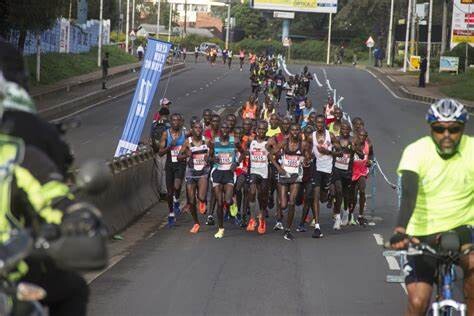
“Cheptai gave me the morale to keep fighting. Following in the footsteps of a champion like her gave me the courage to push for victory,” Chemutai said of the 2017 World Cross Country champion.
Cheptai had finished third at the Chicago Marathon on October 3, posting 2:17:51 behind world record holder Ruth Chepng’etich ( 2:09:56 ) and Ethiopia’s Sutume Kebede ( 2:17:32 ).
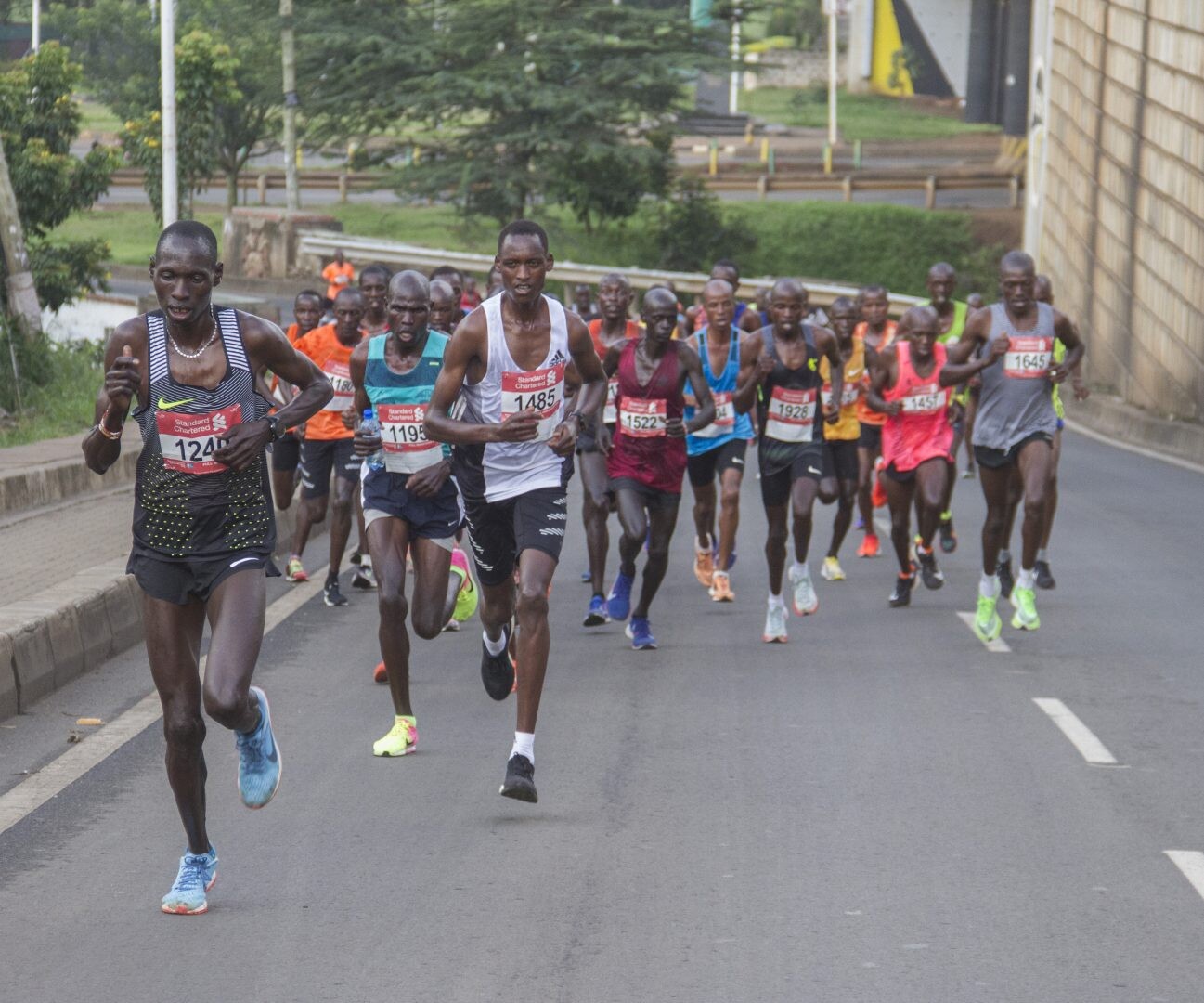
Chemutai dedicated her win to Cheptai and her family.
“This victory is for my mentor, Cheptai, and also for my husband and four-year-old son. They couldn’t be here, but I had promised them a good result,” she said.
The turning point came around the 17km mark on Sunday.
“I wasn’t expecting the win, but when I saw others starting to drop off, I knew I had to go for it,” Chemutai revealed.
Over the moon after securing her first marathon win, Chemutai acknowledged last year’s StanChart and the 2024 Riyadh Marathon as building blocks for her performance.
“Earlier this year, I finished fifth at the Riyadh Marathon. I featured in last year’s race where I finished fifth. I am greatful those races I have competed in have given me the much-needed experience,” she said.
On February 10, Chemutai clocked 2:29:53 for fifth in Riyadh. Ethiopians took the top four places.
Chemutai clocked 2:30:52 for fifth place last year, a race won by Evaline Chirchir ( 2:24:31 ) followed by Aurelia Jerotich ( 2:26:49 ) and Sheila Chepkech ( 2:27:16 ).
Chemutai yearns to represent the country at next year’s World Championships in Tokyo.
“I pray for the opportunity to wear the Kenyan jersey,” she said. Ronald Kimeli won the men’s race in 2:13:05 to edge out Dominic Kipkirui ( 2:13:13 ) and Peter Kwemoi ( 2:13:14 ).
The 38-year old, who has participated in the event since 2012, was thrilled to finally secure the top spot.
“I have been competing in the StanChart Marathon since 2012 but I have never won. Last year, I failed to finish, unfortunately. So coming here today and winning is such a good feeling for me,” he noted.
The 38-year-old attributed his success to moving his training from Iten to Eldoret.
“Switching training grounds made a big difference. It’s great to see it pay off,” he added.
The win earned him Sh2 million, which he plans to invest in an apartment in Eldoret. “I will use the money to build an apartment in Eldoret,” he added.
Debutant Gladys Koech won the women’s half marathon in 1:12:10 ahead of Esther Chemutai ( 1:12:12 ) and Mercy Jerotich ( 1:13:59 ).
“The race was tough, but I pushed myself. I didn’t expect to win, especially with this being my first StanChart Marathon,” she said.
She credited her win to a strong showing at the Lukenya Half Marathon earlier this year.
“I competed at the Lukenya Half Marathon where I finished second. That gave me the morale and motivation I needed for today,” she said.
At the Lukenya Half Marathon, Keoch clocked 1:10:58 to trail Martha Akeno ( 1:10:26 ) with Lilian Lelei ( 1:11:03 ) taking the bronze medal.
Koech will pocket Sh300,000.
“I am happy and thank God I was able to win this cash prize. I have not yet planned for it,” Koech revealed.
Vincent Mutai took top honours in the men’s 21km race in 1:03:27, followed by Keyborn Oboto ( 1:03:34 ) and Silas Chepkwony ( 1:03:51 ).
The 28-year-old, training under Bernard Ouma at the Rongai Athletics Club, noted that while the win was unexpected, his consistent preparation paved the way for success.
“The weather was perfect and my training gave me the confidence to push for the win,” he said.
“I did not expect to win today but owing to the amount of practice I had put into my training, I decided to go for it,” he added.
Looking forward, Mutai aims to make his mark in the 10,000m at the 2025 World Championships.
“If all goes well in training, I hope to represent Kenya on the global stage,” he shared.
by Teddy Mulei
Login to leave a comment

NAIROBI MARATHON
Nairobi Marathon is an annual road running competition over the marathon distance held in October in Nairobi, Kenya. First held in 2003, the competition expanded and now includes a half marathon race along with the main race. It was part of "The Greatest Race on Earth", fully sponsored by Standard Chartered Bank....
more...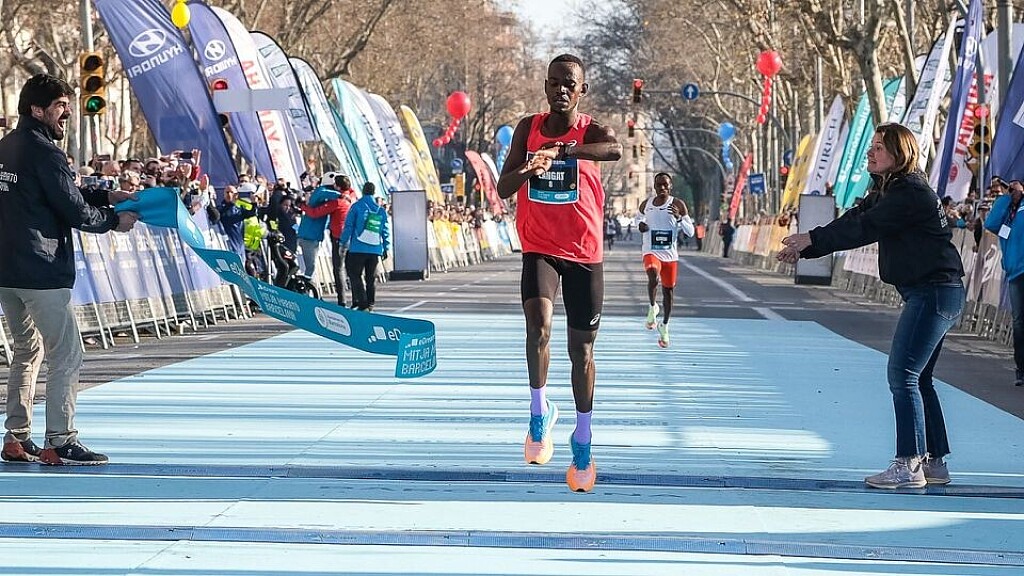
Kenya's Charles Kipkkurui Langat issued with two-year ban for doping offence
Kenyan road runner Charles Kipkkurui Langat has received a two-year ban for violating World Athletics anti-doping regulations.
Kenyan road runner Charles Kipkkurui Langat been banned for two years from competing after being found to have violated World Athletics anti-doping rules.
The 28-year-old athlete, who won the eDreams Mitja Marató Barcelona in 2023 with an impressive time of 58:53, provided an out-of-competition urine sample in Iten, Kenya, on August 6, 2024.
The sample tested positive for the prohibited substance Furosemide a diuretic commonly used as a masking agent.
The Athletics Integrity Unit (AIU), the body responsible for managing doping-related issues in athletics, confirmed the violation in a statement released this week.
The AIU’s findings state that Langat did not have a Therapeutic Use Exemption (TUE) for Furosemide, and after reviewing his case, it was determined that no procedural errors occurred during the sample collection and testing process.
“The AIU has no evidence that the Anti-Doping Rule Violations were intentional, and the mandatory period of Ineligibility to be imposed is therefore a period of two (2) years,” the AIU said in its decision.
Langat admitted to the use of Furosemide in an explanation provided to the AIU, stating that he had been suffering from inflammation since September 2023 and had sought medical treatment in the Netherlands earlier this year.
He claimed a doctor advised him to use the substance.
“On 31 July 2024, he contacted a doctor that he knew, who, based on the Athlete’s symptoms, advised him to try using Furosemide for four (4) days to help reduce the inflammation he was experiencing and to ‘help the kidney and the adrenal glands,’” the report detailed.
Despite his explanation, Langat’s admission was enough for the AIU to impose sanctions.
The AIU outlined that his ineligibility would begin from September 11, 2024, when he was provisionally suspended, and his results since August 6, 2024, would be disqualified.
This includes the forfeiture of any titles, awards, and appearance money accumulated during this period.
Langat's case is the latest in a growing number of doping violations involving Kenyan athletes.
Just days ago, another Kenyan runner, Emmaculate Anyango Achol, was provisionally suspended after failing a doping test for testosterone and the blood-boosting hormone EPO.
Anyango, who made headlines by becoming the second woman to complete a 10km race in under 29 minutes, is currently awaiting the outcome of her case.
Kenya,has been grappling with a string of doping scandals in recent years.
The Athletics Integrity Unit has intensified its testing efforts, particularly in high-altitude training regions like Iten, where many elite athletes train.
Langat’s acceptance of the two-year ban and his decision not to contest the charge has drawn attention from both the global athletics community and his home country.
The World Anti-Doping Agency (WADA) and the Anti-Doping Agency of Kenya (ADAK) have the right to appeal the decision to the Court of Arbitration for Sport.
by Festus Chuma
Login to leave a comment
More shock as Kenyan steeplechaser Clement Kemboi found dead in Iten
Kemboi, who won the 2015 All African Games, was found hanging from a tree at St.Patrick's High School, Iten.
Kenya's athletic community is once again in mourning following the tragic loss of another talented runner, Clement Kemboi on Monday.
The 32-year-old athlete was found dead, his body discovered hanging from a tree in Iten, Elgeyo Marakwet County. Elgeyo Marakwet Police Commander Peter Mulinge confirmed the incident, with Kemboi's body located in the St. Patrick’s High School Farm in Koisungur village.
The heartbreaking news comes just hours after Kenya woke up to the devastating announcement that former world U20 champion Kipyegon Bett had passed away at Tenwek Hospital in Bomet County.
Kemboi was a highly regarded middle-distance runner who excelled in the 3000m steeplechase. Born in 1992, he made his mark on the international stage when he clinched the gold medal at the 2015 All-Africa Games in Brazzaville. His talent shone brightly, and he was seen as one of the nation's rising stars in the discipline.
Kemboi achieved his personal best time of 8:10.65 in the 3000m steeplechase at the prestigious Doha Diamond League in 2016, further cementing his status as one of Kenya’s top athletes in the event.
by Mark Kinyanjui
Login to leave a comment

50th BMW Berlin-Marathon Sunday: Deep fields promise fast and exciting races in Berlin’s jubilee marathon
The 50th edition of the BMW Berlin Marathon promises fast and exciting elite races. Deep fields will be assembled with 14 men who have already run sub 2:06:00. While there is no strong favourite among them it is different with the women: Ethiopia’s Tigist Ketema heads the list with her stunning 2:16:07 debut time, which makes her the ninth-fastest marathon runner ever.
Ten more women have personal bests of sub 2:22:00. Thirteen world records were broken in the history of the BMW Berlin Marathon, many more than in any other marathon. The jubilee edition of Germany’s most spectacular road race will have a record number of around 50,000 participants.
Men’s field
Without Kenya’s superstar Eliud Kipchoge, the winner of the past two editions, the fastest on paper is Tadese Takele. The Ethiopian was third in Berlin a year ago when he improved to 2:03:24. Since another fast race is expected Takele will probably have to run quicker to be in contention for the prestigious marathon victory at the Brandenburg Gate.
Fellow Kenyan Kibiwott Kandie could well challenge for his first triumph over the classic distance. The Kenyan is the former world half marathon record holder (57:32) with great potential. Germany’s Hendrik Pfeiffer leads a group of strong domestic runners. He improved to 2:07:14 early this year in Houston.
Women’s field
Tigist Ketema stormed to a sensational victory in Dubai at the beginning of the year, clocking an unofficial world debut record of 2:16:07. Coming to another very fast course now the training partner of Tigst Assefa, who smashed the world record here with 2:11:53 a year ago, might look to improve her personal best.
The women’s field includes a former world record holder as well, but at a much shorter distance: Genzebe Dibaba ran 3:50.07 in the 1,500m in 2015. When she switched to the marathon she ran a fast debut with 2:18:05 in Amsterdam two years ago.
Unfortunately, Kenya’s Rosemary Wanjiru had to cancel her start due to injury. But Germany’s Melat Kejeta is a late addition to the field. She dropped out of the Olympic Marathon early because of stomach problems and now hopes to bounce back in Berlin with a personal best. Kejeta might well try to become the second German woman after Irina Mikitenko (2:19:19 in Berlin in 2008) to break 2:20:00.
MEN
Tadese Takele ETH 2:03:24
Cybrian Kotut KEN 2:04:34
Hailemaryam Kiros ETH 2:04:41
Kibiwott Kandie KEN 2:04:48
Bazezew Asmare ETH 2:04:57
Samwel Mailu KEN 2:05:08
Milkesa Mengesha ETH 2:05:29
Haymanot Alew ETH 2:05:30
Philimon Kipchumba KEN 2:05:35
Josphat Boit KEN 2:05:42
Dejene Megersa ETH 2:05:42
Enock Onchari KEN 2:05:47
Oqbe Ruesom ERI 2:05:51
Justus Kangogo KEN 2:05:57
Haimro Alame ISR 2:06:04
Ashenafi Moges ETH 2:06:12
Asbel Rutto KEN 2:07:04
Samuel Tsegay SWE 2:06:53
Yohei Ikeda JPN 2:06:53
Stephen Kiprop KEN 2:07:04
Hendrik Pfeiffer GER 2:07:14
Kento Kikutani JPN 2:07:26
Melaku Belachew ETH 2:07:28
Godadaw Belachew ISR 2:07:45
Yuhei Urano JPN 2:07:52
Guojian Dong CHN 2:08:12
Filimon Abraham GER 2:08:22
Haftom Welday GER 2:08:24
Sebastian Hendel GER 2:08:51
Olonbayar Jamsran MGL 2:08:58
Haftamu Gebresilase ETH Debut
WOMEN
Tigist Ketema ETH 2:16:07
Genzebe Dibaba ETH 2:18:05
Yebrugal Melese ETH 2:19:36
Mestawot Fikir ETH 2:20:45
Azmera Gebru ETH 2:20:48
Sisay Gola ETH 2:20:50
Mizuki Matsuda JPN 2:20:52
Fikrte Wereta ETH 2:21:32
Ai Hosoda JPN 2:21:42
Melat Kejeta GER 2:21:47
Aberu Ayana ETH 2:21:54
Calli Hauger-Thackery GBR 2:22:17
Bekelech Gudeta ETH 2:22:54
Lisa Weightman AUS 2:23:15
Betelihem Afenigus ETH 2:23:20
Veronica Maina KEN 2:24:46
Bosena Mulatie ETH 2:26:59
Alisa Vainio FIN 2:27:26
Sonia Samuels GBR 2:28:04
Nora Szabo HUN 2:28:25
Philippa Bowden USA 2:29:14
Pauline Esikon KEN Debut
by Christopher Kelsall
Login to leave a comment

BMW Berlin Marathon
The story of the BERLIN-MARATHON is a story of the development of road running. When the first BERLIN-MARATHON was started on 13th October 1974 on a minor road next to the stadium of the organisers‘ club SC Charlottenburg Berlin 286 athletes had entered. The first winners were runners from Berlin: Günter Hallas (2:44:53), who still runs the BERLIN-MARATHON today, and...
more...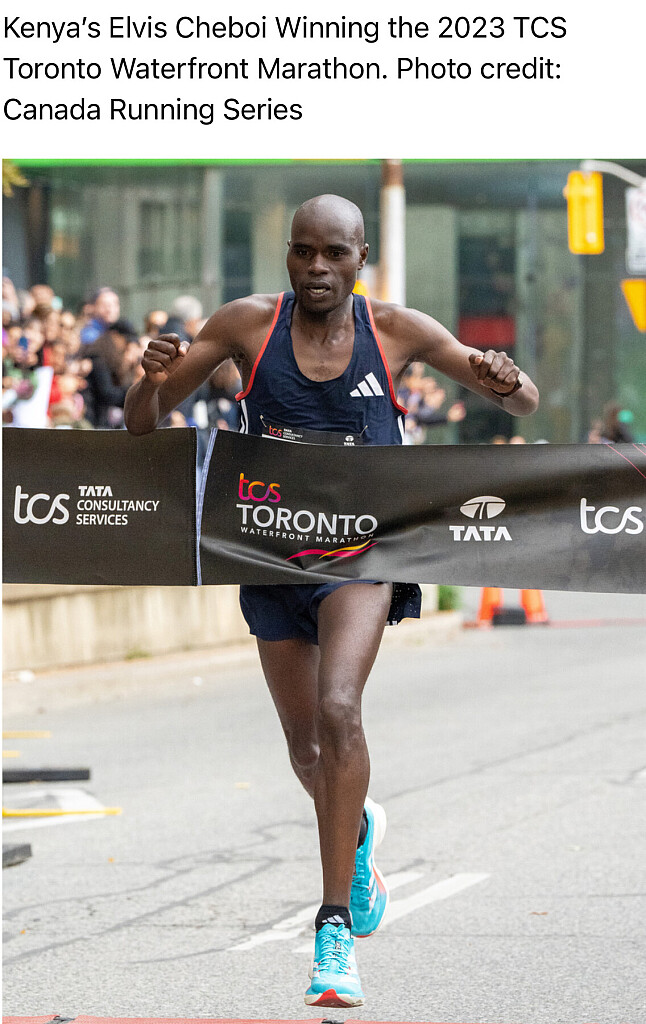
Elvis Cheboi Aiming to Win TCS Toronto Waterfront Marathon for Second Time
Much was expected of Kenya’s Elvis Cheboi when he arrived in Toronto last year for the TCS Toronto Waterfront Marathon. He did not disappoint.
Crossing the finish line first to claim the $20,000 winner’s prize he beat several international athletes who have run two to three minutes faster than his winning time of 2:09:20.
By today’s standards his personal best is not a quick time. But a victory at this World Athletics Elite Label Race against a terrific field - and by over a minute - has
increased his prowess in the sport. Now he returns to Toronto hoping for favourable conditions and a world-class field where he can also run a time more representative of his ability.
Indeed, he ran a personal best of 59:15 at the 2022 Barcelona Half Marathon indicating he might be capable of a time closer to the Toronto Waterfront course record of 2:05:00 held by his countryman, Philemon Rono (2019).
Winning Toronto was a milestone in his career nonetheless.
"That (Toronto) race made me a great memory because I had never won a marathon or any race abroad,” he says from his living room in Kenya. “So it was memorable. That was my second marathon race and I won it.”
As he speaks, his two children - daughter Shaline, 6, and son Shalom, 2 - are watching a television program and he instructs them to lower the volume. Then he smiles.
“Tomorrow the small boy is two years old,” he reveals laughing. “There is a cake here. He is still young so doesn’t know it’s a birthday but I will sing ‘Happy Birthday’to him.”
Family is of the utmost importance and running, in order to earn money is a priority. Yet, Cheboi has not raced since Toronto.
He and his management team at Demadonna Athletics Promotion had him lined up to race in the Vienna Marathon this past April. But he had slight issues with both his hamstrings which interrupted his buildup. So the decision was made by him and his coach, Gabriele Nicola, to put all their energies into having him fully prepared for a Toronto Waterfront Marathon title defence.
For many years now Cheboi has lived in Mororia which is about three kilometres from the famed ‘running town’ of Iten. A local hotel serves as the Demadonna team camp and houses several of the twelve strong marathon training group during the week. They go home on weekends. But, since Cheboi has a young family, it was felt
it was better for him to drive in for the training sessions and for massage therapy three times a week.
Several of his training partners have run much faster than Cheboi’s best - led by Philemon Kiplimo (2:04:56) - so he is benefiting from being in such a talented group.
Like most Kenyan runners he sees his running profession as a means for a brighter future for himself and his young family. He maintains a farm where he grows maize which is used to make the Kenyan staple, ugali. He also plants wheat and potatoes while keeping goats, sheep and cattle. It’s an exhausting lifestyle and so he has enlisted help from family members.
“Yes I have help with my farm. My relatives help; my brother and also my parents,” he reveals adding he doesn’t expect to rely on farming after he retires from competition.
"God willing, I will not depend on the farm only. I think I will also find another way.
Somehow I will do another thing.”
Several times during the video call from Canada he thanks the caller for taking interest and expresses his gratitude for being invited back to Toronto Waterfront Marathon.
“I’m looking forward to coming back to Toronto very much. Yes,” he declares.
“Firstly, I want to thank the organizers for inviting me back. I think I will try to win for the second time but I can’t promise.
“The good weather on the day will determine if I can run my best time.”
by Paul Gains
Login to leave a comment
Rebecca Cheptegei, died from full organ failure
Rebecca Cheptegei, died from full organ failure following a horrific attack by a former boyfriend on Sunday, which left her with burns covering 75 per cent of her body.
Rebecca Cheptegei, an Olympic marathoner for Uganda who competed in the 2024 Paris Olympics, tragically passed away on Thursday morning after reportedly being set on fire by her former boyfriend in Kenya. She was 33.
According to the Kenyan newspaper Nation, Owen Menach, the Director of Clinical Services and Surgery at Moi Teaching and Referral Hospital (MTRH) in Eldoret, confirmed that Cheptegei died around 5 a.m. local time due to “full organ failure.” This followed a horrific attack by her boyfriend at her home in Kenya on Sunday, which left her with burns covering 75 per cent of her body. She was admitted to the hospital in critical condition.
The alleged attacker, Dickson Ndiema Marangach, was also injured by the flames and is currently hospitalized. Neighbors reportedly overheard the couple arguing outside the house shortly before the attack. Both Cheptegei and Marangach were rescued from the fire by neighbors.
The Uganda Athletics Federation led tributes to Cheptegei on X (formerly Twitter), posting: “We are deeply saddened to announce the passing of our athlete, Rebecca Cheptegei, who tragically fell victim to domestic violence early this morning. As a federation, we condemn such acts and call for justice. May her soul rest in peace.”
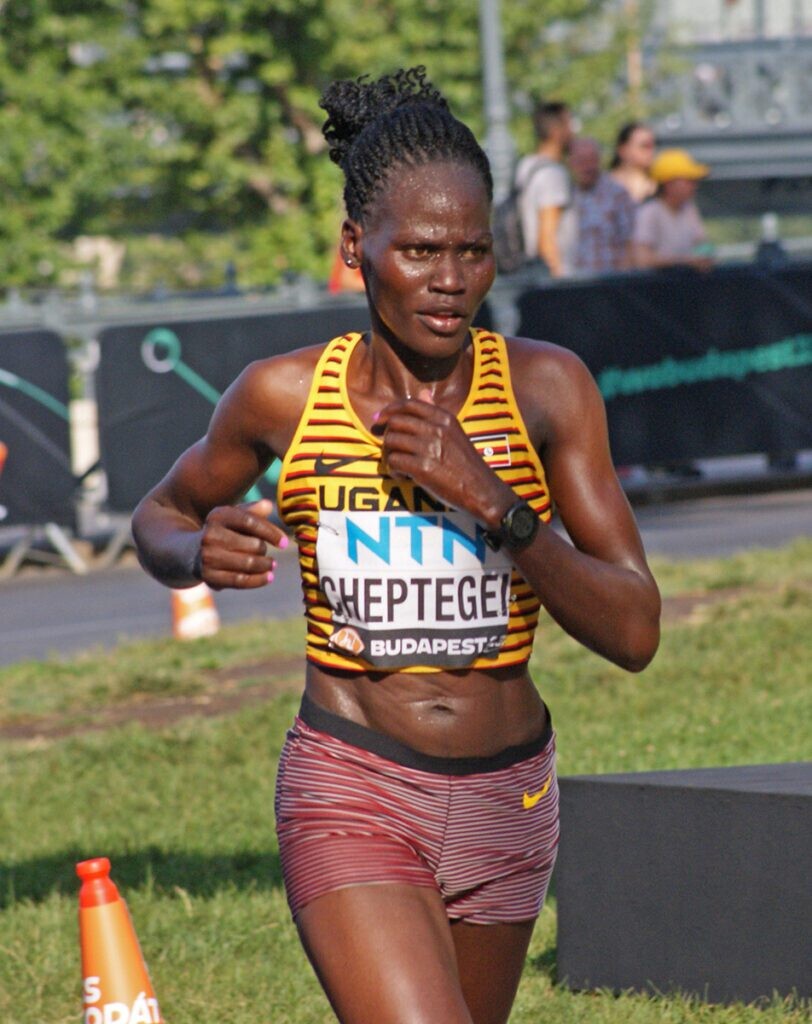
Cheptegei finished 44th in the marathon at the 2024 Paris Olympics in August and previously won gold at the World Mountain and Trail Running Championships in Chiang Mai, Thailand, in 2022. She had a marathon best of 2:22:47.
Tragically, this is not the first instance of domestic violence involving elite female athletes in East Africa. In 2021, Kenya’s two-time 10,000m world championship bronze medalist, Agnes Tirop, was found stabbed to death by her husband at their home in Iten, Kenya. Tirop’s husband, Emmanuel Ibrahim Kipleting, was arrested after fleeing Iten and found hundreds of kilometers away. She was 25 at the time of her death.
by Marley Dickinson
Login to leave a comment
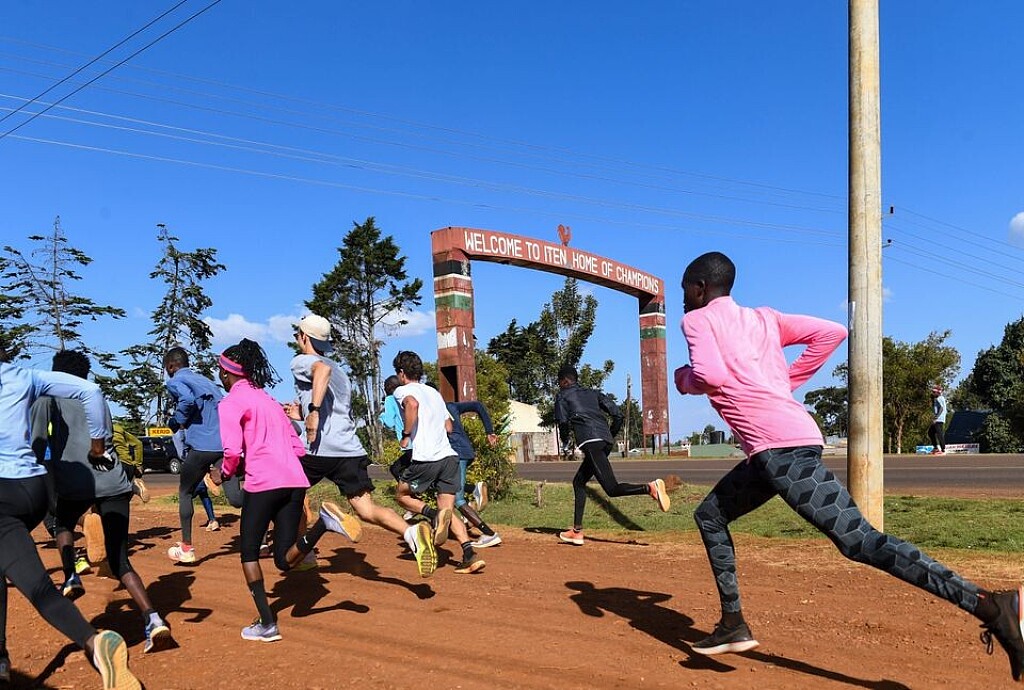
How a trip to Kenya motivated former optician Guillaume Pontier to nurture athletics talent in Iten
Frenchman Guillaume Pontier is passionate about nurturing talent in Iten and has opened up on the motivation he got when he visited the area for the first time alongside his father, who was a coach.
Frenchman Guillaume Pontier, a former optician, is making huge contributions in the Kenyan athletics scene to ensure the nurturing of talents continues.
Most Kenyan athletes come from humble backgrounds and affording training gear is always an uphill task but Pontier has made it easy for the athletes, providing them with affordable training gear in a store set up in Iten.
With the help of the Distance Athletics company, where Pontier is the co-founder, he was able to construct a tiny metal hut in 2022 with the outside of the structure reading, “For All Runners”.
There, they sell second-hand shoes from well-known brands with prices ranging from about Ksh 300 to Ksh 1500.
His motivation came from a trip to Kenya with his father, Jef, who was a coach of the France national marathon team some years back. Seeing athletes run barefoot with some wearing inappropriate gear, Pontier was motivated to help them. His father also spent much of his time in Iten where he trained French runners.
“It’s a community project, not a profit-driven enterprise. We saw many athletes on our trips running barefoot because they didn’t have trainers. It’s inaccessible. In Kenya they run 200km a week…They need shoes to do that,” Pontier told Financial Times.
To ensure the shoes are sold at fair prices, Pontier noted that he has by Ledisha, a local athlete, who works with her brother at the shop and they always decide the prices of the shoes.
The training gear sells fast and Pontier admitted that once they restock, news spreads like wildfire and dozens of athletes flock the store to purchase what is available. Due to that Pontier decided to partner with Distance’s European stores to help.
by Abigael Wafula
Login to leave a comment
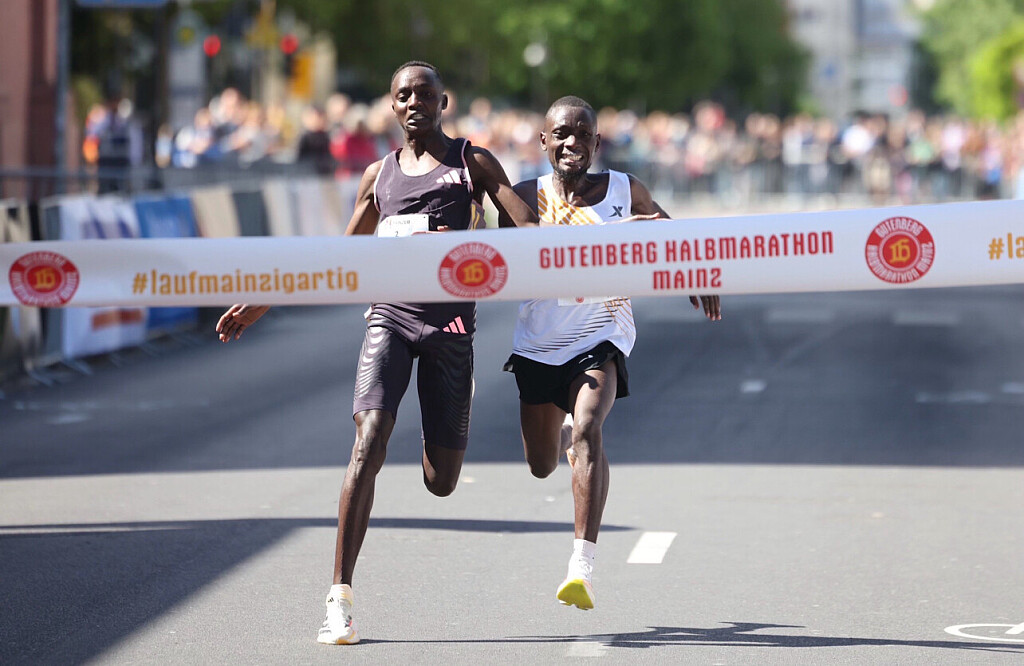
Spectacular finish in Mainz, both course records smashed
A new fast German half marathon has emerged in the city of Mainz at the picturesque river Rhine. On Sunday morningboth course records were smashed at the Gutenberg Half Marathon Mainz and the men’s fight for victory ended in a spectacular and very rare dead race.
Debutant Benson Mutiso and fellow-Kenyan Victor Kimutai stormed over the finish line in 61:01 and neither with photos nor with video material it was possible to separate them. While both athletes shared victory Collins Kipkemboi followed in third with 61:38 and made it an all Kenyan podium.
There was more success for Kenyan debutants in Mainz: Josephine Naukot won the race in 69:26 while Brenda Jepchirchir took second with 69:45. Both ran their first half marathon. Belgium’s Hanne Verbruggen took a fine third place with a personal best of 70:15. Once again she was inside the qualifying standard for the European Championships in Rome next month.
The new focus on the half marathon distance turned out to be an immediate success for the event that was the former Mainz Marathon. The fine winning times propelled the race up into second place in the current German rankings of half marathons. Only the Berlin Half Marathon produced faster times in 2023 and 2024. “We have achieved the times we targeted and we showed that it is possible to run fast in Mainz. And there is quite some room for improvement,“ said Race Director Jo Schindler, who is also the Director of the Mainova Frankfurt Marathon. Including races at shorter distances organisers registered around 11,000 entries for the Gutenberg Half Marathon Mainz.
Benson Mutiso and Victor Kimutai took the lead after the 12k point and it was then mainly Mutiso who ran in the lead. However shortly before the finish Kimutai moved ahead. But Mutiso reacted and once they reached the line they were right next to each other. “I thought I was ahead,“ said Benson Mutiso, who had run a marathon before (2:09:21 in Munich last year), but never competed in a half marathon. “My next goal is to run a fast marathon in October. I would like to go to Frankfurt for that.“ Victor Kimutai as well thought that he was first over the line. “We know each other well since we train together in one group in Iten. So it is fine for us to share victory,“ said Kimutai who ran a personal best in Mainz with 61:01. Behind Collins Kipkemboi (61:38) fellow-Kenyan Patrick Kiprop took fourth place and also ran inside 62:00 minutes with 61:55.
In the women’s race Josephine Naukot already took the lead around the 13k mark. With 69:26 she was then well ahead of fellow-Kenyan Brenda Jepchirchir (69:45). “This was the best race of my career and my greatest victory,“ said Josephine Naukot. “My next goal is to run a time between 65 and 66 minutes. I would like to come back to Mainz next year and further improve the course record. I am not thinking about the marathon yet.“
Belgium’s Hanne Verbruggen showed another fine performance, improving her recent PB of 70:23 to 70:15. “I hoped to run sub 70:00, but I was on my own for large parts of the race. That made it difficult. My big goal is to break the Belgium half marathon record of 68:58“, said Hanne Verbruggen, who is now number three of the Belgium all-time list. Next month she will compete in the European Championships’ half marathon and then in the Olympic Games’ marathon in August.
The top five women in Mainz all clocked personal bests in good weather conditions. Ethiopians Lelise Wakweya and Hadas Shimuye finished in fourth and fifth places with 71:17 and 72:39 respectively. “My impression after this race is that there is huge potential in Mainz. We can build on this,“ said Elite Race Coordinator Philipp Kopp.
Login to leave a comment
Bethwell Yegon and Chala Regasa head start list in Vienna
Bethwell Yegon returns to the Vienna City Marathon where he was runner-up in unusually warm conditions last year. The Kenyan hopes to go one better this time and win his first marathon on 21st April. He will be challenged by Ethiopia’s Chala Regasa, who is also targeting a first major marathon triumph.
Both athletes have personal bests of slightly over 2:06 and head the competitive men’s field of the Vienna City Marathon. Over a dozen athletes on the current start list have personal records of sub 2:10 and a number of them hope to qualify for the Olympic marathon in Paris this summer.
With over 40,000 entries the Vienna City Marathon is Austria’s biggest one-day sporting event and the only road race in the country that features a World Athletics Elite Label. The figure includes entries for shorter races staged parallel to the marathon.
Bethwell Yegon ran a stunning marathon race in Berlin in 2021, when he came from far behind, overtook Ethiopia’s superstar Kenenisa Bekele and almost challenged for victory in the final stages. Yegon finished second and improved his personal best by more than two minutes to 2:06:14. This remains the fastest time of the 31 year-old who trains in Iten, the heart of Kenyan long distance running. “I am happy to return to Vienna and my goal is to fight for victory and take a place on the podium. Hopefully the weather conditions will be fine and there will be a strong group to run with,” said Bethwell Yegon, who clocked 2:06:57 a year ago, which is the fifth fastest time ever run in the history of the Vienna City Marathon.
Chala Regasa has already run on Vienna’s roads as well, though in a different role. The 26 year-old Ethiopian was part of the pacemaking team that supported Eliud Kipchoge when he sensationally broke the two hour marathon barrier in 2019. It was a year ago when Regasa finally ran his marathon debut in Rotterdam with a fine 2:06:11 for fifth place. With this time he is currently the fastest runner in the field. Vienna will be his second marathon and his strong half marathon PB of 59:10 suggests that there is some room for improvement. His biggest career win so far came in the New Delhi Half Marathon in 2022, where Regasa clocked 60:30 and beat a strong field.
Felix Kibitok is another runner who features both, a personal best of sub 2:06:30 and a very fast half marathon PB. The Kenyan was fifth in Barcelona in 2022 with 2:06:28 and achieved 59:08 in the Prague Half Marathon back in 2019. On two more occasions Kibitok ran sub one hour half marathon times. Samsom Amare from Eritrea, who won his marathon debut in Abu Dhabi in 2023 with 2:07:10 and was ninth at the World Half Marathon Championships in 2023, plus Kenyans Albert Kangogo (2:07:48) and Leonard Barsoton (2:09:06) could well challenge for a place on the podium as well.
The Vienna City Marathon is one of the last few races during the second half of April giving athletes a chance to qualify for the Olympic Games’ marathon in Paris this summer. The official qualifying time is 2:08:10 and the qualifying window shuts on 30th April. There are a number of athletes who will try to fulfill their Olympic dream in Vienna: Belgium’s Lahsene Bouchikhi has a personal best of 2:08:36 from Valencia last year while Daniel Paulus is the national record holder of Namibia. He clocked 2:08:40 in his debut in Daegu, South Korea, in 2023. Juan Pacheco from Mexico is also expected to try to qualify for Paris. He has a personal record of 2:09:45 while Tiidrek Nurme from Estonia has run 2:10:02.
The Vienna City Marathon will also be hosting the Hungarian national marathon championships for the second time in a row. Around 40 of the best athletes from the neighbouring country will come to Vienna to determine their champions.
by AIMS
Login to leave a comment

Vienna City Marathon
More than 41,000 runners from over 110 nations take part in the Vienna City Marathon, cheered on by hundreds of thousands of spectators. From the start at UN City to the magnificent finish on the Heldenplatz, the excitement will never miss a beat. In recent years the Vienna City Marathon has succeeded in creating a unique position as a marathon...
more...
Why Jasmin Paris is about to become a household name
British ultrarunner Jasmin Paris made history on Thursday when she became the first woman runner to finish the Barkley Marathons, charging to the finish with only 99 seconds to spare before the 60-hour cutoff. But this is not the first time Paris, who runs free of sponsorships and is an environmental advocate, has achieved something remarkable in the trail running world. Here’s what we know about the 40-year-old ultra-trail champion.
Paris is a veterinarian and research scientist from Midlothian, Scotland. In 2019, she jumped to world attention on the ultra scene when she smashed the overall (men’s) course record–by 12 hours–at Britain’s 268-mile Montane Spine Race, finishing in 83 hours, 12 minutes, 23 seconds–while also pumping breastmilk for her infant daughter.

“When it was really difficult I made myself think about my daughter and imagined the different things she does—that kind of kept me distracted and entertained,” she told British Vogue after her Spine Race success.“Some of the time you don’t really think about anything. It’s mindful, you’re just putting one foot in front of the other.”
The Barkley Marathons is five loops of a 20+ mile course in Frozen Head State Park, near Wartburg, Tenn. (distances vary; the race is thought to be well over 100 miles) featuring thousands of metres of elevation gain, with a time limit of 60 hours. It was first run in 1986, and was inspired by the prison escape of James Earl Ray, who was serving time at Brushy Mountain penitentiary for the murder of Martin Luther King, Jr. (He was captured soon after.) Gary Cantrell (a.k.a. Lazarus Lake, or “Laz” to his friends) dreamed up a 100-miler in the vicinity of the prison, which is now abandoned and is a feature of the course. GPS watches are not allowed; each runner is issued a cheap watch set to “Barkley time,” i.e., the 60-hour limit. Runners must collect pages corresponding to their bib number from 13 books hidden on the course (they receive a new bib for each loop); missing pages mean disqualification. There is water available on the course, but no aid stations. Runners may only receive aid from their crew between loops, in camp, where they are on the clock.
Paris was always passionate about the outdoors, but only took up running in university. She began winning local and national fell-running and ultrarunning events, including the Scottish Hill Running Championships, British Fell Running Championships and then the 2016 Extreme Skyrunner World Series. Paris ran a hill race 10 days before giving birth to her daughter.
While Paris says it has been challenging to juggle training as a parent to a young child, she adds that it’s important to maintain a balanced life.”It doesn’t make you a worse parent if you have something else that is just yours; in fact I think that it’s probably inspirational to your child, she told British Vogue.”I hope my daughter will be inspired when she grows up to believe that she can do anything.”
Barkley creator Laz Lake asked Paris to run the race after her victory at the Spine Race—he thought Paris might be the only woman who could possibly finish. In 2o22, she completed three loops (which is dubbed a “fun run”); in 2023, she was eliminated after four loops, falling short of the 48-hour cutoff time to begin the fifth loop. Paris was only the second woman ever to attempt a fourth loop; the first was Sue Johnston of Vermont, in 2001.
Fellow British runner and two-time Barkley Marathons competitor, Damian Hall, made it to loop five for the second year in a row, but was unable to complete the race. He commented on Paris’s remarkable finish to his sponsor, Inov8: “It was still an amazing experience, and incredible to see Jasmin finish and make history. That wiped away most of my personal disappointment. It was the greatest sporting achievement I’ve seen in the flesh.”
“The final minutes were so intense, after all that effort it came down to a sprint uphill, with every fiber of my body screaming at me to stop,” Paris told The New York Times post-race.“I didn’t even know if I’d made it when I touched the gate. I just gave it everything to get there and then collapsed, gasping for air.”
Renowned photographer Howie Stern is a regular at the Barkley Marathons, and captured Jasmin throughout the race.”Thank you Jasmin for putting your heart and soul into the dark world that takes place in a little park in Tennessee, which has captivated and inspired women and men the world over,” he said on Instagram.
by Running Magazine
Login to leave a comment
Konstanze Klosterhalfen will run in the Paderborn Easter Run
The traditional Paderborn Easter Run is celebrating its 76th edition on Saturday. Konstanze Klosterhalfen has signed up at short notice and will almost meet the assembled German marathon elite over 10 kilometers.
Among the men, Simon Boch is chasing the first 27s. Station two of the 2024 R5K tour awaits the U20 and U23 talents over 5 kilometers.

What a line-up at the Paderborn Easter Run: With the marathon aces Katharina Steinruck (Eintracht Frankfurt), Fabienne Königstein (MTG Mannheim) and Deborah and Rabea Schöneborn (both SCC Berlin), the 10-kilometer race was on Holy Saturday (March 30th). already well staffed. Konstanze Klosterhalfen (TSV Bayer 04 Leverkusen), currently the best German runner on this route and the 5,000-meter European champion in Munich 2022, has now announced her participation.
Konstanze Klosterhalfen has her eye on the Olympic standard of 30:40 minutes for the 10,000 meters on the track and wants to show that this mark is already within her reach on the road. Her current best time on the road, set on March 16th when she won in Laredo (Spain), is 31:07 minutes. However, the 27-year-old is only number two on the star list behind the Kenyan Purity Gitonga (PB 30:57 minutes) - although she was significantly slower in her recent triumph in Dresden in 31:40 minutes.
The fastest German runner in the elite field over 10 kilometers is Simon Boch (LG Telis Finanz Regensburg). He narrowly missed his first time of 27 minutes three times in 28:01 and 28:02 minutes respectively. In the wake of the favored Kenyans Vincent Kimutai Towett (PB 27:42 min) and Victor Kiptoo Kimutai (PB 27:52 min), the mark in Paderborn could finally be due. With Velten Schneider (VfL Sindelfingen), the fourth place in the DM also mixes with the road runners over the obstacles. His best time of 29:01 minutes from last year shows that he is in good hands there.
SECOND STOP ON THE R5K TOUR 2024
The prospect of a race under the eyes of the German running elite is certainly a special motivation for the young talents. They will start their five-kilometer lap in Paderborn at 11:00 a.m. in the second race of the R5K Tour 2024 , before the aces led by running star “Koko” Klosterhalfen start their ten kilometers on the super-fast Paderborn course at 12:20 p.m .
There are also well-known names on the start list at the second stop of the R5K tour 2024 to Dresden ( we reported ): Tristan Kaufhold (SSC Hanau-Rodenbach) and Linda Meier (LAV Stadtwerke Tübingen), two running talents, are starting in Paderborn, who will be in the 2023 The opening season of the R5K tour celebrated overall victories in the U20. While the Hessian can defend his title in the U20 this year, the Tübingen native has moved up to the U23. There she will meet again Sonja Lindemann from LG Wedel Pinneberg, with whom she had a duel for the U20 overall victory in the R5K tour in 2023.
MIDDLE DISTANCE RUNNERS VERSUS LONG DISTANCE RUNNERS
The female U20 and U23 are strong in this year's R5K tour for young running talent in Germany. At the start of the second race of the racing series initiated by German Road Races (GRR) together with the German Athletics Association (DLV), there are two other runners, Vanessa Mikitenko (SSC Hanau-Rodenbach) and Carolina Schäfer (TG Schwalbach), alongside Linda Meier In 2023, they competed for Germany at the U20 European Championships in Jerusalem.
This also applies to U20 European Championship participant Jan Dillemuth (Königsteiner LV), who is competing in the U23 in Paderborn: “The meeting of middle distance runners like him with runners who otherwise concentrate on long distances is also what makes the five kilometers so appealing race as part of the R5K tour,” says Christian Stork, head of organization for the Paderborn Easter Run. And so it will be particularly exciting to see how last year's winner Tristan Kaufhold will present himself, who, as the German U20 champion over 10 kilometers, improved the German best time for under 20 year olds to 29:40 minutes.
by Christian Ermet
Login to leave a comment

Paderborner Sterlauf
It is well known that the fascination of running has steadily increased in recent years.But the Paderborn Easter Run has been around for 72 years. It is the oldest street race in Germany, organized by the SC Grün-Weiß Paderborn, enjoys even after so many decades of growing popularity and belongs to many already traditional Easter.There are even runners and helpers...
more...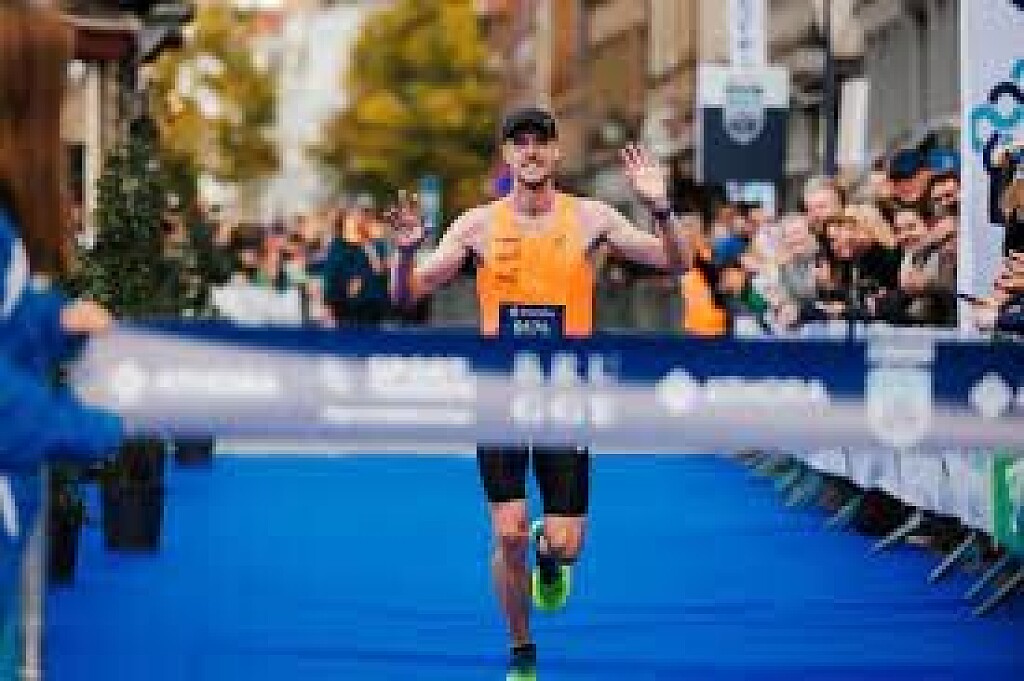
'I’ve found my spot in Iten'- Belgian marathoner training in Kenya ahead of Paris 2024 Olympics
A Belgian long-distance runner has opened up about how training in Kenya has changed his mindset ahead of the Paris 2024 Olympic Games.
Koen Naert, a Belgian long-distance runner loves training in Kenya and he also has a favorite spot he loves training at as he gears up for the Olympic Games in Paris, France later this year.
The 34-year-old already qualified for the Olympic Games, clocking a stunning personal best of 2:06:56 at last year’s Rotterdam Marathon.
The Belgian is targeting a top-eighth finish after finishing 22nd at the 2016 Rio Olympics and then improved that with a 10th-place finish at the delayed 2020 Tokyo Olympics.
To achieve the goal, Naert has been burning the midnight oil in Kenya, and in an interview with Athletics Weekly, he explained how it feels training in his new-found spot in Iten.
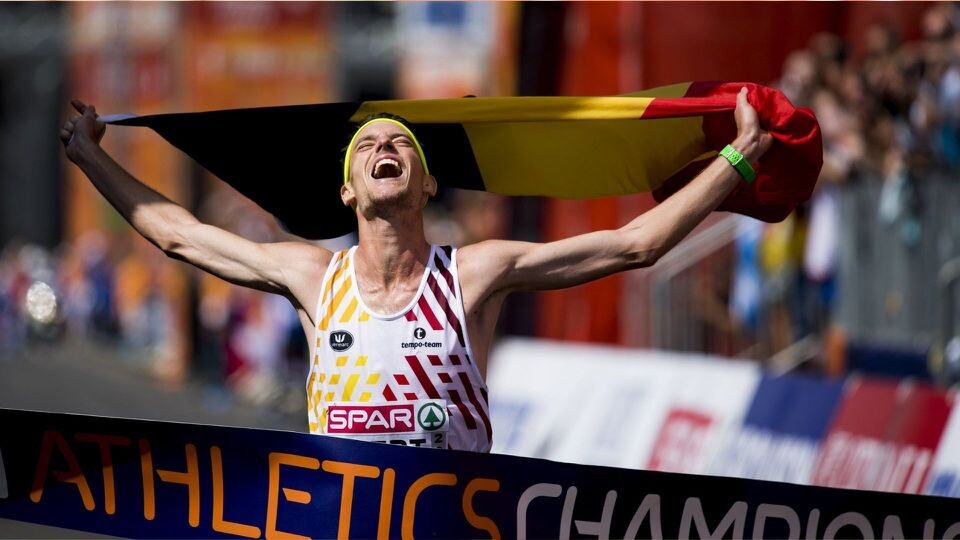
He explained that being in Kenya has helped him work on different aspects of his training since he is away from family and has time to work.
“It depends on the build-up. I think right now I’m doing 100km of running and a 50/60km alternative on the Elliptical Machine. In between my marathon blocks, I’ll do a lot of alternative training like aqua jogging but during the marathon block itself – the 12 weeks preceding my marathon – I’ll run 200km a week. Sometimes even 240km or 250km.
“I meditate at least twice a day and when I’m on camp at altitude I do a lot more sessions of meditation. That’s one advantage of being in Kenya. I also like to train in the US and have been to train with Deena Kastor’s group on occasion.
“Since 2021 however, I’ve found my spot in Iten. I waited a long time to go to Kenya because I was a little bit afraid of the food and life there but once you are on the ground, there’s no distraction and it’s a bit like living like a monk on a mountain,” he told Athletics Weekly.
He added that Olympic success for him would be to have to be honest with himself and he explained that he would need a little miracle to get on the podium.
“However, sometimes miracles exist and you never know. It will be challenging with the weather and the course. I will prepare myself the best I can but the top eight is my absolute goal. I was pretty close in Tokyo but we will see and every race/championship is different,” he said.
There are a lot of training camps in Kenya. One of the best is the KATA Running Retreat located near Thika. At any one time there are 20 or more athletes training at the Kenyan Athletics Training Academy (KATA).
by Abigael Wuafula
Login to leave a comment

Paris 2024 Olympic Games
For this historic event, the City of Light is thinking big! Visitors will be able to watch events at top sporting venues in Paris and the Paris region, as well as at emblematic monuments in the capital visited by several millions of tourists each year. The promise of exceptional moments to experience in an exceptional setting! A great way to...
more...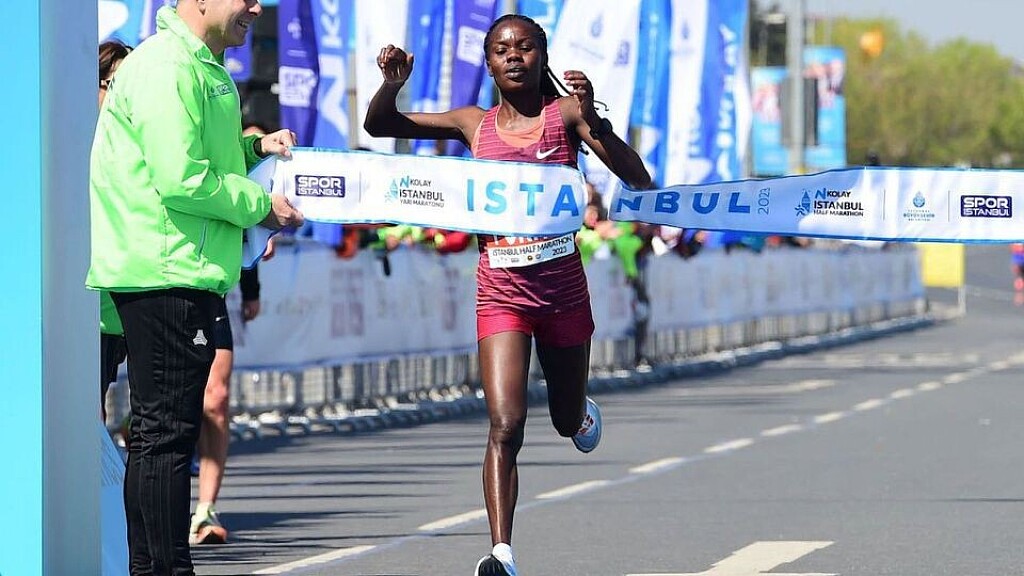
Purity Komen retires after being slapped with six-year ban by Athletics Integrity Unit
Purity Komen, 25, has decided to retire after the Athletics Integrity Unit slapped her with a six-year ban for the Presence of a Prohibited Substance (Norandrosterone), Evading Sample Collection.
After finding herself on the wrong side of the Athletics Integrity Unit, Purity Komen thought it would be wise to quit the sport and avoid the punishment but the AIU still gave a dose of her own medicine.
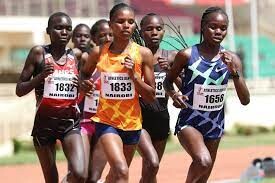
Komen who beat Ruth Chepng’etich during the 2023 Istanbul Half Marathon was slapped with a six-year ban by the AIU after a series of violations. Komen’s ban began on July 6, 2023 and she was punished for the Presence of a Prohibited Substance (Norandrosterone), Evading Sample Collection.
Norandrosterone is a Prohibited Substance under the WADA 2022 Prohibited List under the category S1.1 Anabolic Androgenic Steroids. It is a NonSpecified Substance prohibited at all times.

On May 12, 2023, A Doping Control Officer ( DCO) and a Blood Collection Officer arrived in Iten to test Komen out-of-competition but she was nowhere to be found.
After communicating with the two personnel and giving them wrong directions, Komen switched off her phone and the officers could not trace. She later reached out to the AIU saying: “Thank you I got the email. I read everything and I understood all the information.
“I would like to request for more 14 days, since I had prolonged back injury I seek medication from different hospitals. Thus, I need to provide accurate information about my medication thank you.”
On July 13 last year, the AIU granted the Athlete an extension until July 24 to provide her explanation for the Adverse Analytical Finding. However, Komen failed to submit any explanation for the Adverse Analytical Finding by the extended deadline (or at all).
On November 13, the AIU wrote to Komen and granted her an extension until no later than November 20 to provide an explanation for the Adverse Analytical Finding and the potential violation of Rule 2.3 ADR.
On the same day, Komen wrote to the AIU via WhatsApp saying: “Thank you for your information, I accept I did a mistake unknowingly but am sorry, am no longer interested in running career.”
After that, Komen failed to respond or to return the admission of anti-doping rule violations and acceptance of consequences form signed by February 28, 2024.
by Abigael Wuafula
Login to leave a comment
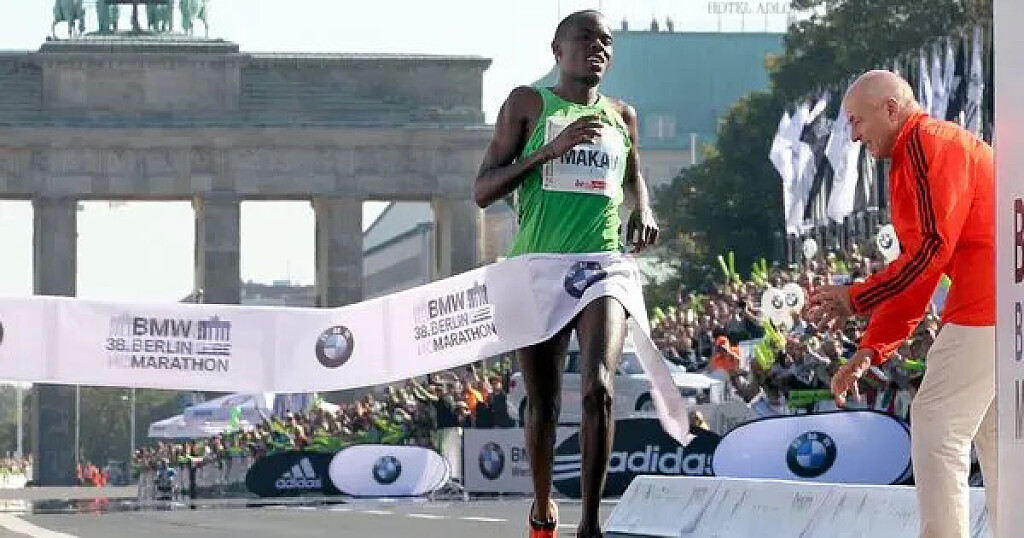
Patrick Makau believes current generation of athletes can run under 2 hours
Former world marathon record holder Patrick Makau believes the current generation of athletes in the country will soon run under two hours in the marathon.
The 38-year-old is also notable for his half marathon performances, having won several prominent competitions in Europe in sub-1-hour performances.
Some of the races include the Berlin Half Marathon in 2007, where he clocked 58:56 hours.
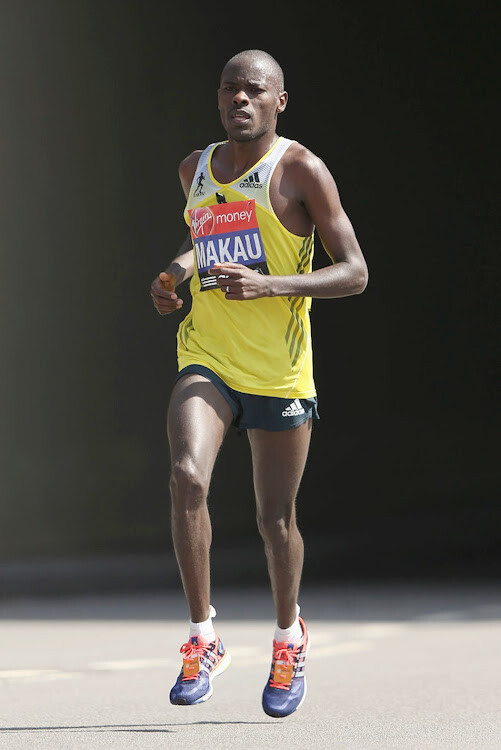
Marathons had changed a lot due to technology and were far better than the marathons they ran during his time.
“As I see it, the marathons have changed a lot because it is not like the olden times. We used to view sub-two hours as something unattainable but now with the current crop of athletes like the current world record holder Kevin Kiptum and two-time Olympic champion Eliud Kipchoge, this looks like a possibility,” he noted.
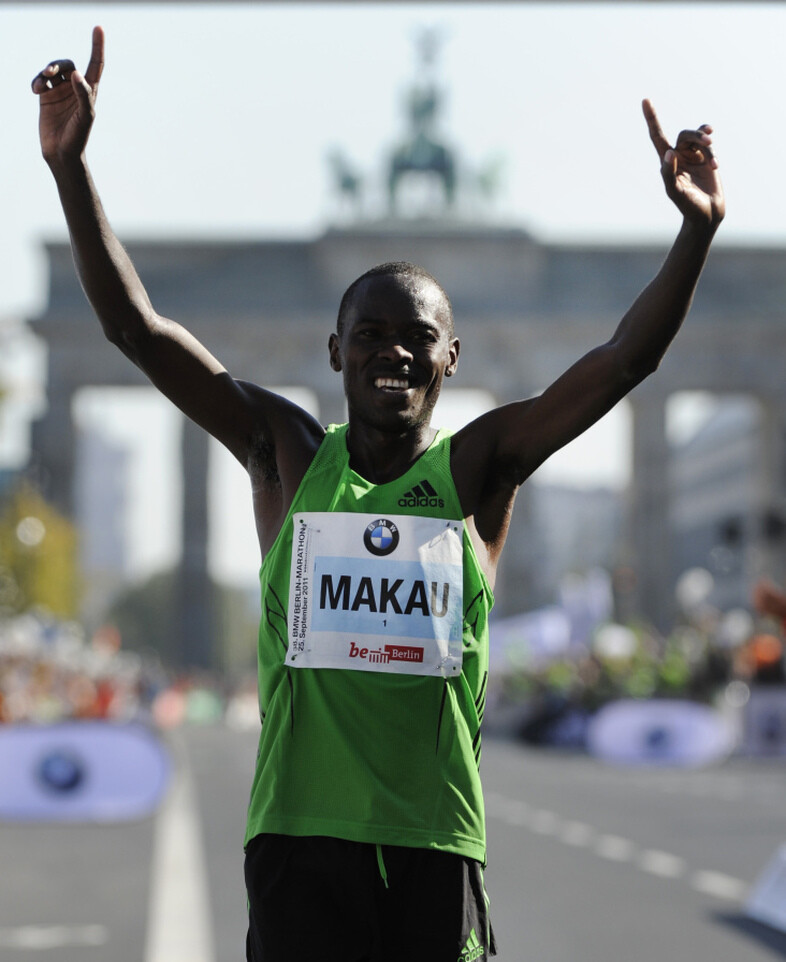
The signs of an athlete running a marathon in under two hours are already evident if Kipchoge and Kiptum's recent performances are anything to go by.
In an unofficial race in Vienna, Austria in 2019, Kipchoge became the first person ever to run a marathon in under two hours, clocking 1:59.40 during the INEOS 1:59 Challenge.
Regarded as one of the greatest marathoners of all time, Kipchoge was the world record holder in the marathon then with a time of 2:01:09 set at the 2022 Berlin. His mark was later broken by Kiptum at the Chicago Marathon on October 8, 2023, when he clocked 2:00:35.
The 24-year-old Kiptum is currently the only person in history to run the marathon in under two hours and one minute in a record-eligible race.
Kiptum has won all three of the major marathons he has entered between December 2022 and October 2023 with three of his times among the six fastest in history. Makau revealed that hard work and endurance were the key for him to break the world record in 2011.
“I used to go to train in Iten and Machakos and to the polishing in Ngong. This is because speed work and build-up are two different programs,” Makau noted.
Makau encouraged athletes to find a training routine that would enable them to run a sub-two-hour marathon shortly.
“What Kiptum, Kipchoge and the other athletes can do now is to find the pace that will be able to help them run a sub-two-hour marathon shortly,” he added.
The duo currently occupy the top two positions in the world marathon ranking. Ethiopians Kenenisa Bekele (2:01.41), Sisay Lemma (2:01.48 hrs), Birhanu Legese (2:02.48 hrs) and Mosinet Geremew (2:02.55 hrs) follow in that order.
The former world record holder, who currently trains the Kenya Police team and other athletes, also cited technology, especially in running shoes as a reason behind the fastest times being witnessed.
“During our time, there was not as much technology as we were accustomed to normal shoes. In today’s era, running shoe technology plays a key role in determining the pace in a particular race,” he said.
Innovations in Running Shoe Technology mean shoes are now lighter, more dynamic, and more resilient, thanks to advancements in foams, rubbers, construction, textiles, and other essential components.
Kipchoge's performances during the INEOS 1:59 challenge opened the world's eyes to the condensed foam, carbon-plated super shoes which Nike claimed could increase running efficiency and in particular the amount of oxygen consumed per minute by by 4 percent.
Makau is optimistic the young athletes under his wings will also go further and make not only him but also the country proud. He said he is looking forward to the national trials in April to see if they get selected.
“We have intensified training in both Machakos and Kitui camps and I am hopeful. I am waiting for the trials in April to see if they will be able to represent Kenya at the Paris 2020 Olympic Games,” he said.
He also tipped Kenya to once again dominate the marathon at the Olympic Games slated for July 26 to August 11.
“I am sure Kipchoge, Kiptum, Peres Jepchirchir and Ruth Chepng'etich will represent the country well in the marathon at the Olympics,” he asserted.
by Teddy Mulei
Login to leave a comment
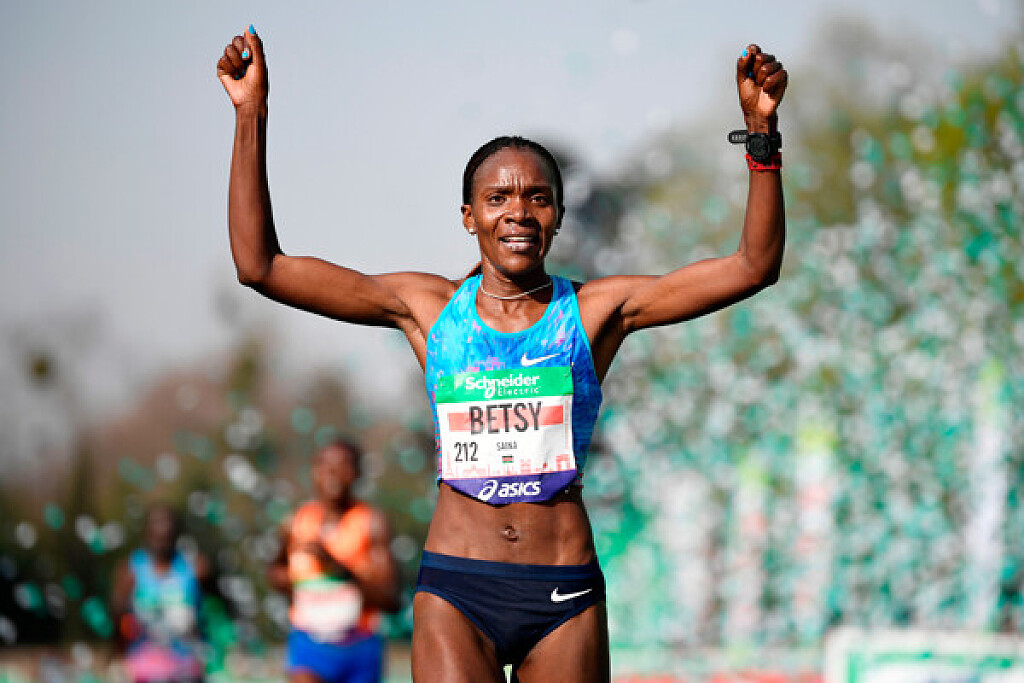
For Betsy Saina, the U.S. Olympic Trials Marathon Presents a Chance to Represent Her Son
For much of last year, Betsy Saina had a plan. She would race the Chicago Marathon in October, eager to run alongside Emma Bates (who placed fifth at last year’s Boston Marathon in a new personal best of 2:22:10) in pursuit of breaking Emily Sisson’s American record of 2:18:29, set the previous year at that same race.
Saina, 35, a naturalized U.S. citizen who represented Kenya in the 2016 Olympics in Rio de Janeiro—she placed fifth in the 10,000 meters 30:07.78—had reason to be confident. Last spring, she set a new personal best of 2:21:40 with her fifth-place finish at the Tokyo Marathon, which wound up being the fastest marathon by an American woman in 2023 and made her the eighth-fastest U.S. female marathoner of all-time, solidifying her position as a top U.S. Olympic marathon team contender.
The Chicago Marathon had assured Saina’s agent, Tom Broadbent, that she was in for the race. But when the elite field was announced in August, Saina learned she had not been accepted, which not only threw a wrench in her fall training plans, but made for a lot of stress as she was planning her U.S. Olympic Marathon Team Trials buildup.

“I was shocked and spent three days looking at myself and trying to find any mistakes I made to not make the field, especially after running 2:21 in Tokyo,” Saina says. “I had never been rejected from a race before, and never got a response or an explanation as to why I didn’t make it. Being denied to run in Chicago honestly was one of the most disappointing things I’ve experienced in my career.”
Saina looked into entering the Berlin Marathon the following month, but had no such luck getting in with it being so late in the game. She was ultimately accepted into the Sydney Marathon (which shares its sponsor, ASICS, with Saina) on September 16. Unlike Chicago—with its fast, flat course that ended up having ideal racing conditions with temperatures in the 40s—Sydney has a hilly course and race-day weather was on the hotter side, with a starting temperature of 68 degrees.
Despite the conditions, Saina proved herself once again, winning the race in 2:26:47. This sealed her confidence as she began to look ahead to the Olympic Trials in Orlando on February 3. If she’s one of the top three finishers in the women’s race in Florida, she’ll earn a spot on the U.S. team that will compete in the marathon at the Paris Olympics on August 11.
“Challenges make people strong, and running a good marathon on a harder course made me come back feeling motivated,” she says. “[Even though it wasn’t the faster time I originally wanted], it didn’t stop me from being a better version of myself.”
Transcendent Transplant
Despite her impressive performances in 2023, Saina has remained largely under the radar in terms of media coverage and fan predictions leading up to the Trials in Orlando, similarly to what fellow Kenyan-born marathoners Aliphine Tuliamuk and Sally Kipyego (both of whom made the last Olympic marathon team) experienced in 2020. The lack of attention relative to her competitors hasn’t fazed Saina, however.
“I know how to deal with pressure, having been in the sport since 2013, so as long as my training is going well, I don’t pay too much attention to what people say,” Saina says. “I’m just more excited to see many of the U.S. women [who are also] my friends, like Emily Sisson, Sara Hall, and Keira D’Amato, and to be racing so many amazing U.S. athletes for the first time.”
Saina’s result in Tokyo was only about a minute faster than her debut at the distance at the 2018 Paris Marathon, which she won in 2:22:56 (after dropping out of the 2017 Tokyo and New York City Marathons). It was also a confidence boost for Saina because it was also her first marathon since giving birth to her son, Kalya, now two, in December 2021, after previously running 2:22:43 and 2:31:51 at the 2019 Toronto Waterfront and Honolulu Marathons, respectively.
Saina—who originally came to the U.S. to attend Iowa State University where she trained alongside Tuliamuk and was a three-time individual NCAA champion and 11-time NCAA All-American—has remained in her hometown of Iten, Kenya, for the majority of the time since having her son, as her husband, Meshack Korir, is a doctor completing his postgraduate education there.
Although Saina became a U.S. citizen in late 2020 and has a home base in Colorado Springs, she made the decision to return to Kenya to have additional family support and childcare as she worked to come back from pregnancy and childbirth to prepare for the Olympic Trials, which she’ll return for just a few days before the race. Saina also keeps busy managing a couple of guesthouses, which she regularly rents out to visiting athletes and tourists. She also works with Cross World Africa, a nonprofit that sponsors underprivileged children in pursuing secondary and higher education.
“Before I came from Kenya, my family was struggling and we had to fundraise for my flight ticket to come to the U.S. Being here has changed my family in a different way—I have two sisters who are now nurses in the U.S., and my parents can now more easily fly to visit us, and while it is not where I began running, the U.S. where I began competing at such a high level,” she says. “My son also gives me so much motivation and is my inspiration. When I see him, I see beauty in myself and see myself getting better when I’m running. So I am excited both to compete and represent my son, and to hopefully wear the U.S. uniform because it has so much meaning for me.”
Back in Iten, Saina has been training in a group with personal pacemakers alongside 2019 New York City Marathon champion Joyciline Jepkosgei, which she describes as game-changing for her progress in the marathon. Both Saina and Jepkosgei, who is also the former world-record holder in the half marathon and Saina’s best friend from high school, are coached by Jepkosgei’s husband, Nicholas Koech.
“Sometimes you will train with people who don’t want to help someone else get better, but [Jepkosgei], who has run 1:04 [in the half marathon] and 2:17 [in the marathon] is unique in that she has sacrificed a lot, which I don’t think a lot of women will ever do for each other, and I don’t think I would either,” Saina says. “But she has been pushing me a lot since the first day I joined her, and I think that’s the reason I came back and I’ve had better races. I have someone to chase and it’s like competition in training, but in a good way.”
American Original
Saina returned to the U.S. twice last year, to race the USATF 25K Championships in Grand Rapids, Michigan, (where she took the win in 1:24:32 for her first U.S. title, narrowly beating D’Amato) and to be inducted into Iowa State’s Athletics Hall of Fame in September. Saina had planned to do some shorter U.S. races, including the Bolder Boulder 10K in May and the NYRR Mini 10K in June, following her national championship title in the 25K. However, she ultimately decided she couldn’t bear to be away from her son any longer.
“As a mom, when you’re away, you are so worried because you’re like, ‘How is he doing right now? How can I handle the pressure, being away from him?’” Saina says. “This year, it’s really different for me because the only race I want to travel to without Kalya is the Olympic Trials. He is growing now and getting better, so I want to travel with him afterward to compete in the USATF circuit. That’s the biggest goal for 2024, to travel with my son.”
Later this year, Saina hopes to also run the April 7 Cherry Blossom 10-Miler in Washington, D.C., the Mini 10K on June 8 in New York City, and a fast spring half marathon to pursue the current American record (which was broken yet again by Weini Kelati on January 14 in Houston), before running another marathon in the fall. In the meantime, she noted that she is especially eager to compete in one of the deepest fields ever assembled for the Trials.
Although Bates withdrew from the Trials, Saina figures to be one of the favorites in Orlando along with Sisson, Hall, Tuliamuk, D’Amato, and Seidel. However, Lindsay Flanagan (ninth in last summer’s world championships), Sara Vaughn, Susanna Sullivan, Gabriella Rooker, Dakotah Lindwurm, and Nell Rojas are all sub-2:25 marathoners, and thus top contenders, too.
“The U.S. is no longer small and non-competitive. Look at Molly Seidel. She got bronze at the Tokyo Olympics, and I remember when Amy [Cragg] was a bronze medalist at the 2017 World Championships. If you put that in perspective, it has changed even more right now compared to that time,” she says. “The competition [to make the U.S. team] is no longer as easy as the way some people [thought], and I’m super excited to be competing with a lot of solid women. There is no difference between the U.S. and other countries right now—it’s not just to go compete at the Olympics; they’re going to compete for the medals, just like other countries.”
by Emilia Benton
Login to leave a comment

2028 US Olympic Trials Marathon
Most countries around the world use a selection committee to choose their Olympic Team Members, but not the USA. Prior to 1968, a series of races were used to select the USA Olympic Marathon team, but beginning in 1968 the format was changed to a single race on a single day with the top three finishers selected to be part...
more...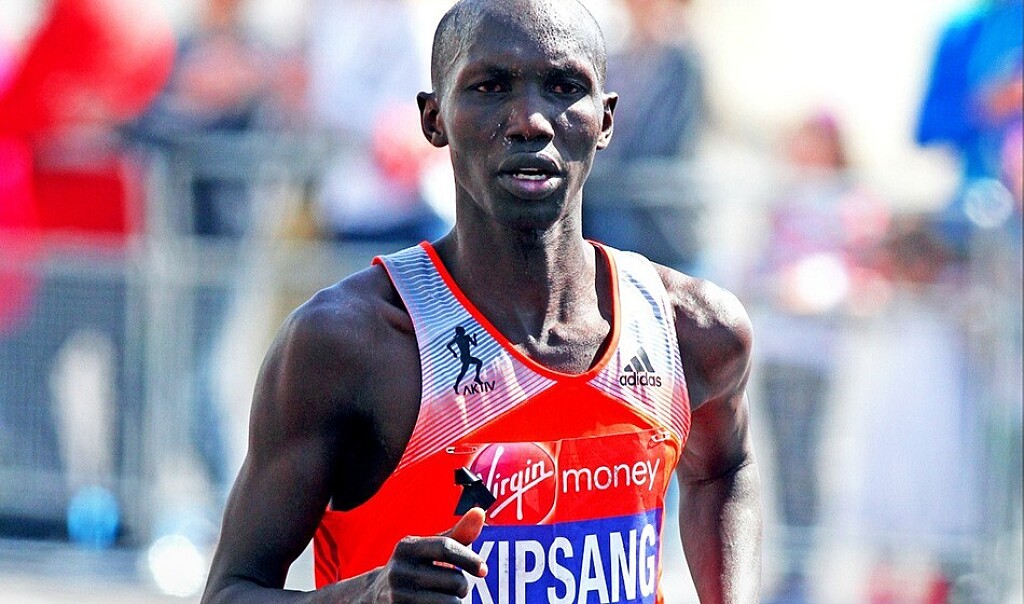
Wilson Kipsang hints at marathon return after serving doping ban
Former world marathon record holder Wilson Kipsang has expressed his interest in returning to running after serving his four-year doping ban
Former world marathon record holder Wilson Kipsang has expressed interest in making a comeback to running after his doping ban elapsed.
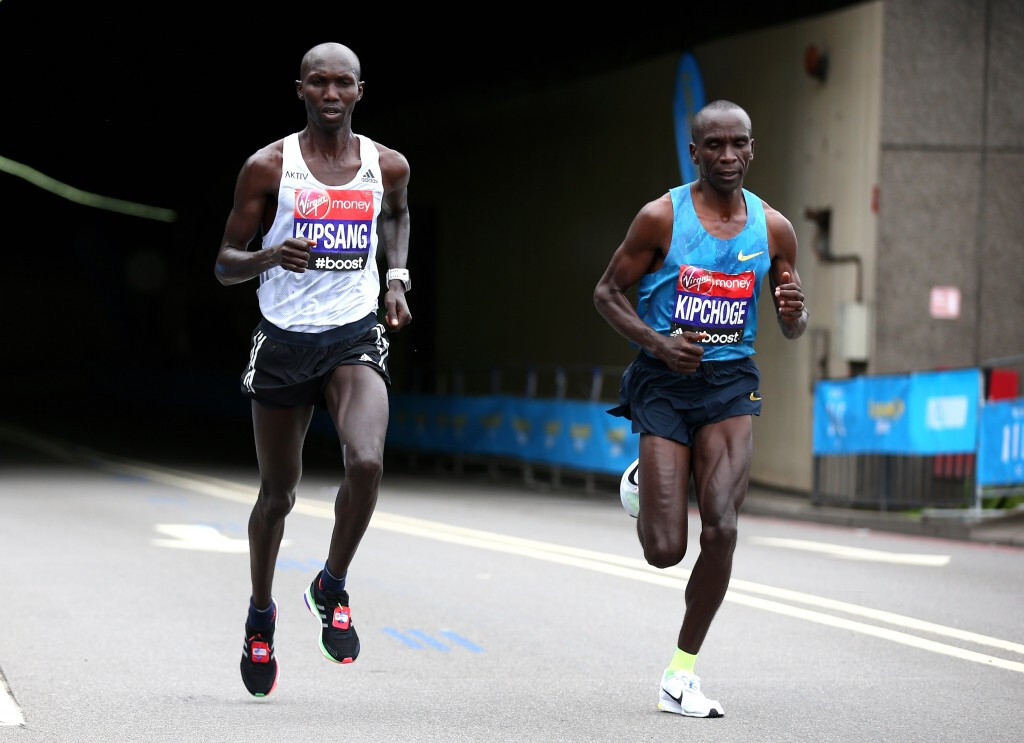
Speaking to Nation Sport, Kipsang explained that he is currently sharpening his talons as he gears up for a grand return into competing.
He noted that he will be looking forward to competing at either the Tokyo Marathon on March 3, the Paris Marathon on April 7, or the Hamburg Marathon on April 24.
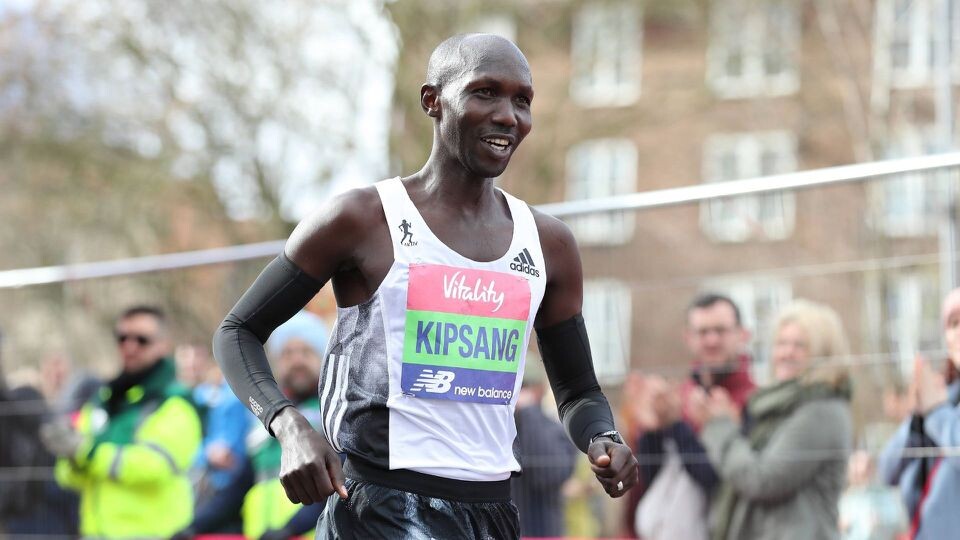
He expressed his interest in returning to competitive running after three of his family members and himself survived a road accident on Monday.
After the survival, Kipsang narrated that he swerved the vehicle on one side of the road and was lucky to have escaped with minor injuries.
“I want to assure everyone who is worried about our wellbeing that we are fine and back in Iten. Let them worry no more,” said Kipsang.
The 41-year-old was slapped with a four-year-ban for whereabouts failures, not being available for drug testing, and providing false evidence in his case.
Kipsang had been provisionally banned in January 2020 in the case handled by the Athletics Integrity Unit. The former Olympic bronze medalist was punished for four whereabouts failures between April 2018 and May 2019.
Three such failures within 12 months led to an automatic ban, however, the Kenyan had his sanction increased after it was ruled that he had tampered with the investigation by providing “false evidence and witness testimony”.
by Abigael Wuafula
Login to leave a comment

Tokyo Marathon
The Tokyo Marathon is a world-renowned annual marathon held in Tokyo, Japan. As one of the prestigious Abbott World Marathon Majors, it attracts elite and amateur runners from around the globe. The race holds World Athletics Platinum Label status, recognizing its high competitive standards, top-tier organization, and international appeal. Sponsored by Tokyo Metro, the Tokyo Marathon has grown into one...
more...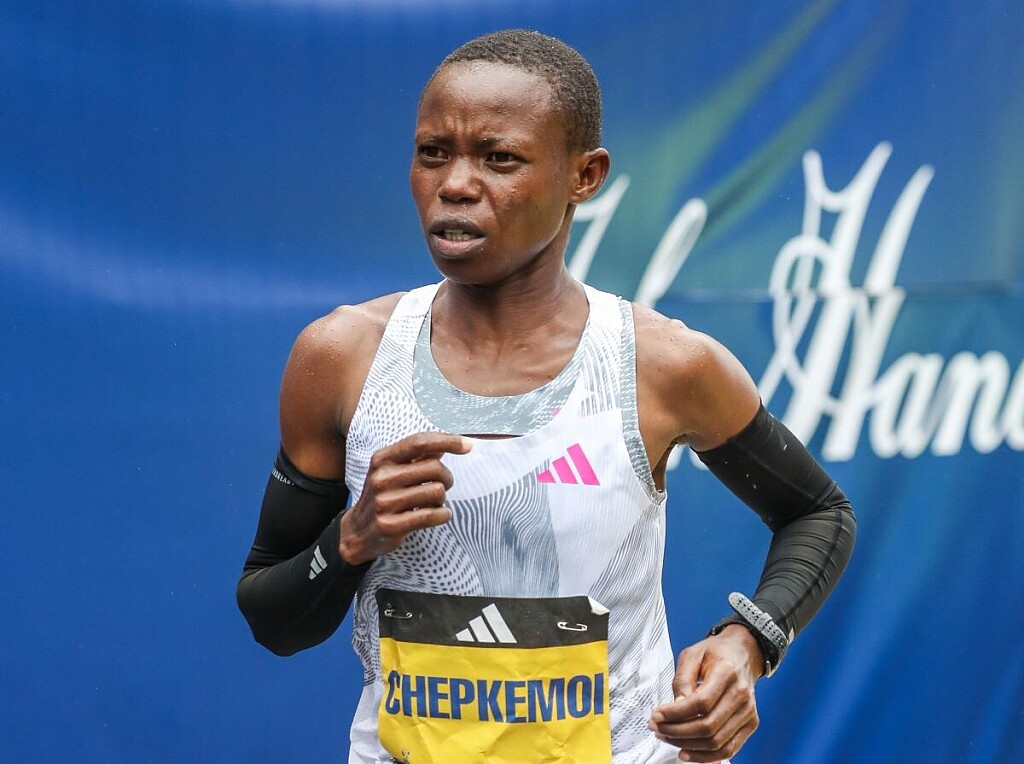
Boston Marathon finisher receives three-year doping suspension
On Thursday, the Athletics Integrity Unit (AIU) announced the suspension of Kenyan marathoner Maurine Chepkemoi after she tested positive for erythropoietin (EPO) on Nov. 3 during an out-of-competition doping test in Iten, Kenya.
Chepkemoi has a marathon personal best of 2:20:18 from a second-place finish at the 2021 Amsterdam Marathon. Since 2021, she has won the Enschede Marathon in the Netherlands in a course record time of 2:21:10 and finished 16th at the 2022 Berlin Marathon and 31st at the 2023 Boston Marathon in 2:35:25.
The length of her suspension was reduced by one year for admitting to the anti-doping rule violation (ADRV). The automatic period of ineligibility imposed is four years, unless the athlete can demonstrate that the ADRV was not intentional. In Chepkemoi’s case, she accepted her wrongdoing and the charges laid by the AIU, resulting in a three-year ban until Nov. 2026.
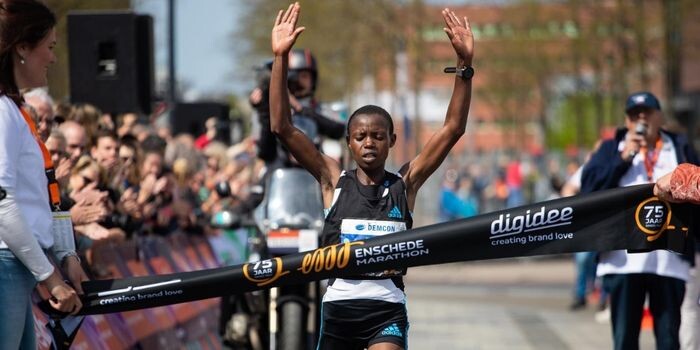
In a statement to Canadian Running, Chepkemoi’s agency, Demadonna Athletics, confirmed that their athlete openly admitted to seeking and using EPO.
EPO has been on the World Anti-Doping Prohibited List since the 1990s; it is used to improve endurance performance or to speed up recovery.
Chepkemoi was one of two Kenyan runners suspended for three years by the AIU on Thursday. The other runner was 2:08-marathoner Thomas Kibet. The 27-year-old tested positive for the steroid norandrosterone after a second-place finish at the 2023 Tallinn Marathon in Estonia.
There are currently 73 Kenyan athletes on the AIU’s Global List of Ineligible Persons. The Kenyan government is in the first year of their $25 million dollar five-year campaign to test more athletes and fight against doping in athletics. The AIU is working with the Kenyan Government, Athletics Kenya and the Anti-Doping Agency of Kenya (ADAK) to combat the issue and test more Kenyan athletes.
by Marley Dickinson
Login to leave a comment
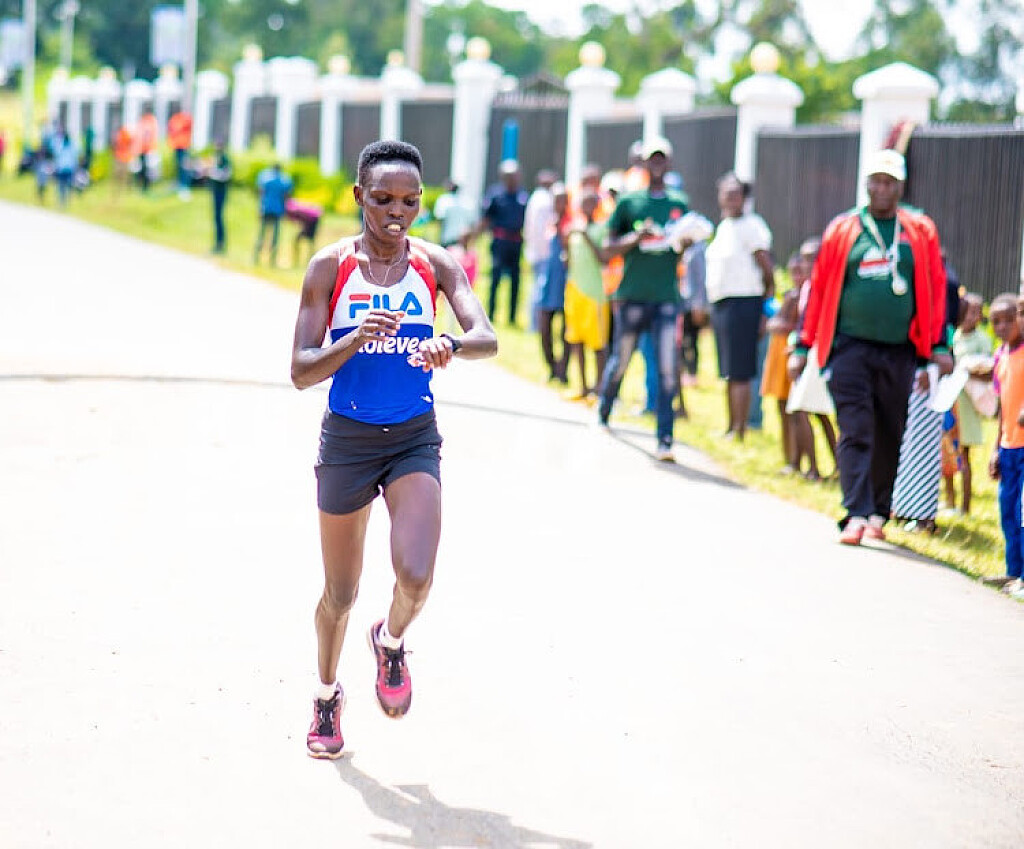
Chepngeno taking on Valencia 10km after Mwale triumph
After a successful half marathon debut over the weekend, Viola Chepngeno has shifted her focus to the Valencia 10km race set for January 14.
Chepngeno won the 21km race during the inaugural Mwale Medical and Training City, which is proof she can compete comfortably on the roads.
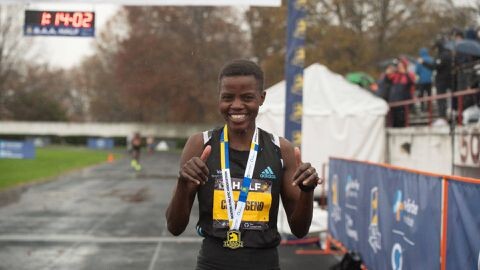
“I came here without proper half marathon preparations since I am more of a 10km runner,” said Chepngeno. “This win has motivated me to try my luck in the bigger half marathons soon.”
She clocked 1:12:54 to win at Mwale ahead of Christine Njoki in 1:13:31 and Glorious Jepkirui in 1:14:02.
Chepngeno has had a good run in 10km. She finished third at the Brasov 10km, where Agnes Ngetich set the unratified 10km world women-only record.
“The winning shows that I can run a half marathon very well. I also want to represent the country at next year’s World Cross Country Championships,” she said.
Eliud Maiyo and Irene Cherop were the 42km winners under hot conditions.
Maiyo clocked 2:24:20 ahead of Dennis Kiprotich (2:24:29), Moses Kige-(2:27:21), Duncan Manyara (2:28:00) and Henry Kosgei (2:30:10).
Cherop timed 2:46:23 to beat Viola Chemos to second in 2:49:23 as Rael Kiara (2:53:47), Sally Jepkosgei (2:55.:13) and Joy Lemuma (2:56:48) completed the top five slots.42km men
However, Maiyo bemoaned the status of the course, saying: “I have never run on such a hard and harsh course. It is full of hills and slopes but my training came in handy. Mixing rough roads and tarmac is very challenging — one is soft while the other is hard.
Cherop, from Iten, said she trains mid-morning which was key since she is used to sunny conditions.
“I train around 11 am and that marched with today’s weather,” she said.
This was her second 42km race after winning Mt. Ruwenzori marathon.
by Emmanuel Sabuni
Login to leave a comment

10k Valencia Trinidad Alfonso
Around the corner we have one more edition of the 10K Valencia Ibercaja, organized one more year by the C. 10K VALENCIA Athletics premiering the running season in Valencia. It is a massive urban race with more than 3,000 registered annually of 10 kilometers, where the maximum duration of the test will be 1 hour 40 minutes (100 minutes). The...
more...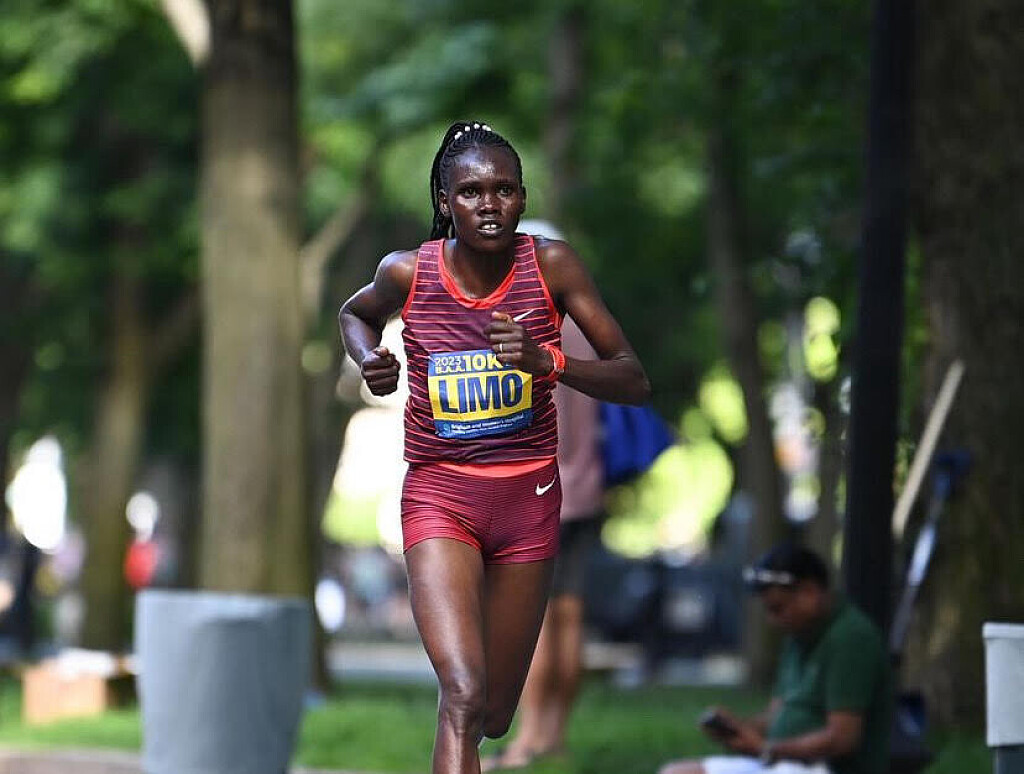
Cynthia Limo wins marathon debut after seven-year break plagued by depression and grief
Resilience defines Cynthia Limo's marathon debut win, overcoming loss and adversity with a powerful performance that inspires and uplifts.
The 2016 World Athletics Half Marathon Championships silver medalist Cynthia Jerotich Limo added another extraordinary chapter to her remarkable journey as she clinched victory in her marathon debut at the Honolulu Marathon on Sunday.
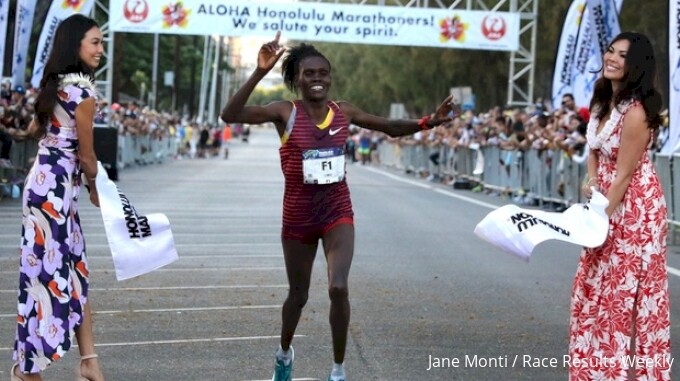
Limo's marathon journey began with a strategic approach that showcased her discipline and meticulous planning.
Running alongside Ethiopians Sintayehu Tilahun Getahun and Kasu Bitew Lemeneh, she patiently waited through the early stages of the race, hitting the 5km mark in 18:17 and slightly picking up the pace through the 10 km mark in 35:59.
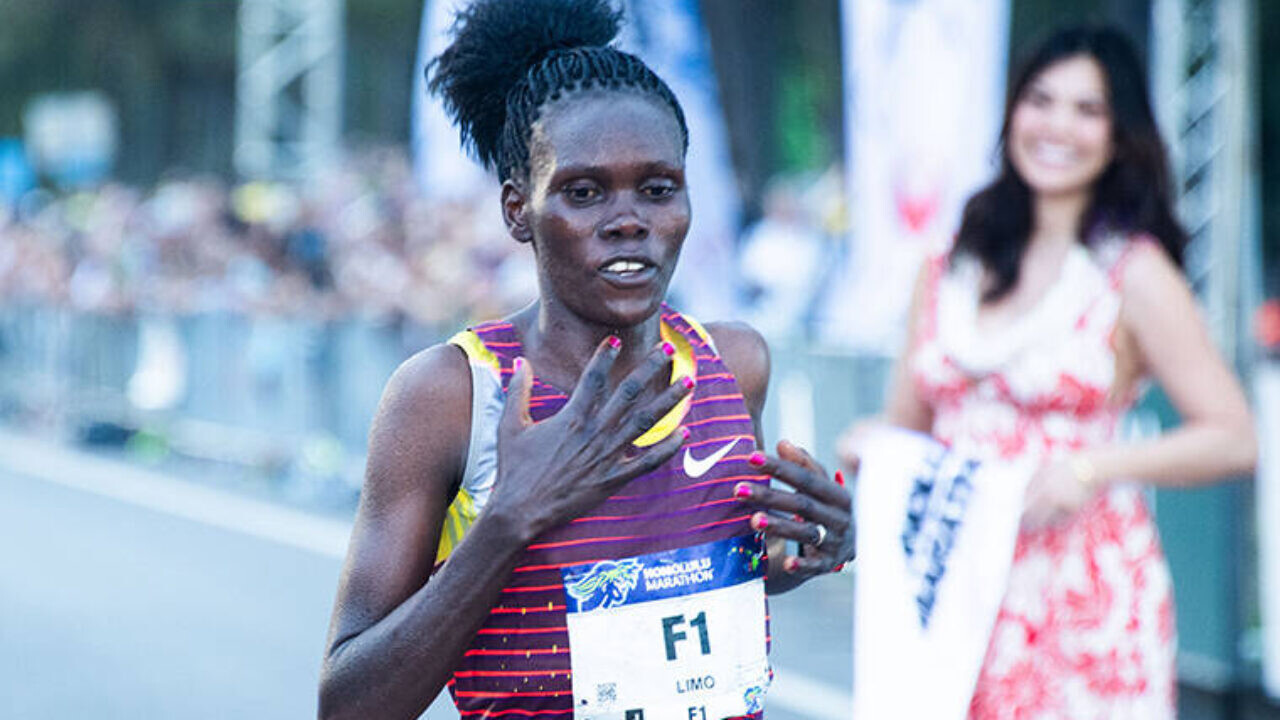
The halfway point came and went with no significant changes (1:16:43), and the 30 km mark passed in 1:50:05.
It was after the 30km aid station that Limo began to pull away, leaving Lemeneh behind.
Limo and Getahun then ran together for the next 5km segment, showcasing the incredible endurance they had built over time.
At 35km Limo made her move, steadily increasing her lead. By the time she reached the 40km mark, her lead had ballooned to a commanding one minute and 38 seconds.
Limo finished strong in 2:33:01, running the second half of the race slightly faster than the first and leaving Tilahun in her wake, who finished in 2:35:16.
In her own words, Limo described the decisive moment, saying, "When we got to 35 kilometers, I felt that I was still strong and I knew it was only seven kilometers that remained, so I had to do it by myself. I tried to push and push. I am so pleased."
Limo's impressive marathon debut can be attributed not only to the high mileage she logged during her training in Kenya but also to the speed she honed while competing in various American road races throughout the year.
These included notable wins at the Cooper River Bridge Run 10km in Charleston, South Carolina, the Carmel Half-Marathon in Indiana, the Toledo Half-Marathon in Ohio, and Philadelphia's Broad Street Run 10 Mile.
Reflecting on her marathon success, Limo emphasized the importance of mental fortitude, stating, "I can say that it was not really so hard to do the marathon. It is a matter of making up your mind that you can do the training. And I am so happy that I did that."
What makes Limo's victory even more remarkable is the adversity she has overcome to reach this point.
She took a seven-year hiatus from competitive running, during which she faced the unimaginable loss of a child and battled depression.
It seemed like a comeback was out of reach, but her determination to support her family and her unwavering spirit kept her pushing forward.
From 2012 through 2016, Limo dominated the racing circuit, finishing first or second in an astonishing 43 out of 51 races.
Her list of accomplishments includes numerous victories in races ranging from four miles to 20 kilometers, with 2014 standing out as a year of exceptional success when she won 12 out of 13 races.
Limo's roots are firmly planted in Iten, Kenya, where she resides with her husband, who is a teacher, and their daughters Ann, four, and Rebekah, two.
Tragically, their eldest daughter, Blessed, was born with a spinal birth defect and passed away before her second birthday.
In 2023, Cynthia Jerotich Limo returned to the world of competitive running, putting in the hard work and dedication to regain her form in Kenya.
by Festus Chuma
Login to leave a comment

Honolulu Marathon
The Honolulu Marathon’s scenic course includes spectacular ocean views alongside world-famous Waikiki Beach, and Diamond Head and Koko Head volcanic craters.The terrain is level except for short uphill grades around Diamond Head. ...
more...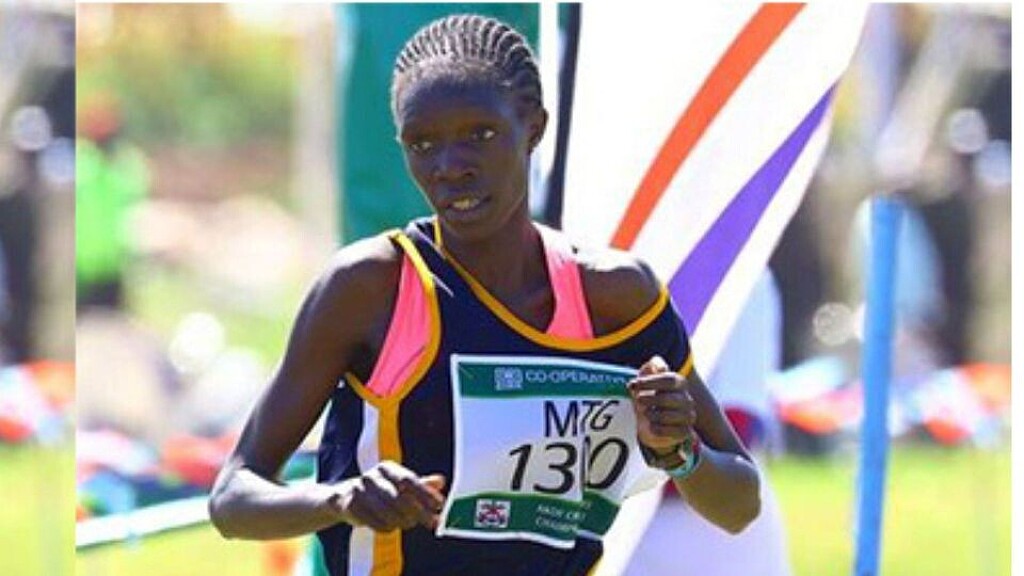
AIU slap 23-year-old Esther Borura with three-year ban for doping
Esther Borura was banned due to the Presence of a Prohibited Substance (19-norandrosterone) and the Use of a Prohibited Substance (Nandrolone or Nandrolone. precursors).
The Athletics Integrity Unit has slapped Esther Birundu Borura with a three-year ban for an anti-doping rule violation.
Borura’s ban backdates to September 6, 2023, and will run to 2026. She was banned due to the Presence of a Prohibited Substance (19-norandrosterone) and the Use of a Prohibited Substance (Nandrolone or Nandrolone precursors).
The AIU also noted that the 23-year-old’s results since June 30, 2023, have been disqualified. On June 30, 2023, Borura provided a urine sample, Out-of-Competition in Iten, Kenya, which was given code 7184933.
On August 22, the World Anti-Doping Agency (“WADA”) accredited laboratory in Doha, Qatar reported an Adverse Analytical Finding in the Sample.
“The AIU reviewed the Adverse Analytical and determined that Borura did not have a Therapeutic Use Exemption (“TUE”) that had been granted (or that would be granted) for the 19-Norandrosterone consistent with exogenous origin found in the Sample.
There was no apparent departure from the International Standard for Testing and Investigations (“ISTI”) or from the International Standard for Laboratories (“ISL”) that could reasonably have caused the Adverse Analytical Finding,” the AIU statement read in part.
On September 7, Borura requested for an interview with the AIU through her Athletes’ Representative.
As reported by the AIU, on September 13, they (AIU) asked the Athlete to provide a written summary of her explanation and the information that she wished to provide in the interview.
“On 15 September 2023, the Athletes’ Representative provided the AIU with the Athlete’s summary explanation, which set out that the Athlete waived her rights to have the B Sample analysed and to request the LDP, admitted to having committed Anti-Doping Rule Violations, had purchased prohibited substances in April 2023, and been injected in May 2023.
Averred that this was the only time that she had used prohibited substances. On 26 September 2023, the Athlete attended an interview with AIU representatives and provided additional information in relation to her explanation (as summarised above),” the statement further noted.
by Abigael Wuafula
Login to leave a comment
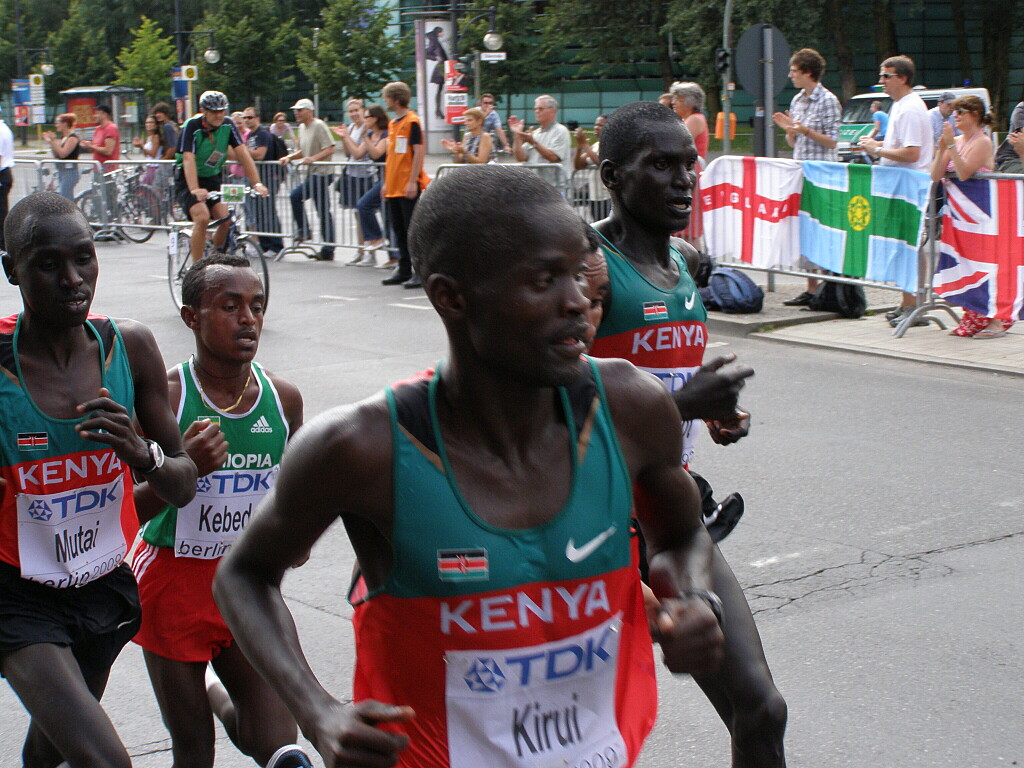
Kenyan Abel Kirui focused on finishing on the podium in Fukuoka Marathon
Double world marathon champion Abel Kirui will highlight the Fukuoka Marathon.
The former Olympic Games marathon silver medalist said he will be targeting the podium this time round after failing last year due to an injury.
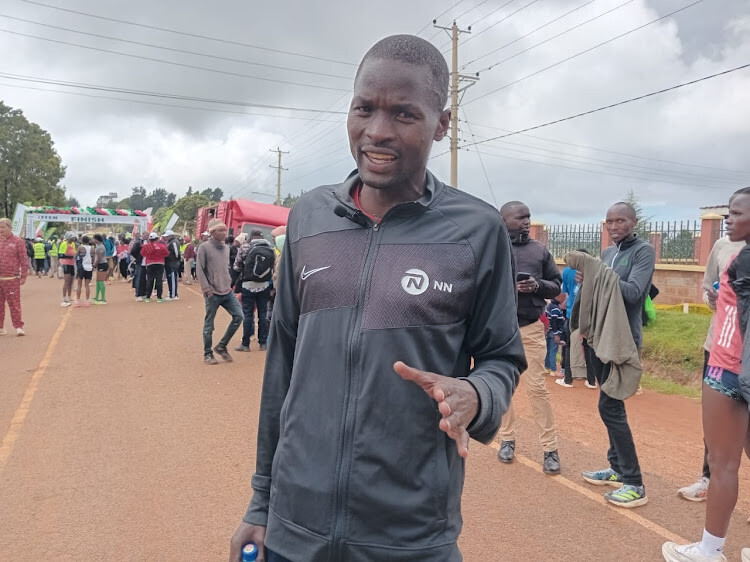
Kirui finished 5th in 2:07.38 during the race won by Israeli Maru Taferi last year in 2:06.43. Kenyan duo Vincent Raimoi (2:07.01) and Michael Githae (2:07.28) took second and third positions respectively.
“It has been 18 years of running and I am still keen to improve on my last year’s position. Unlike last year when I had an injury, this time round, I am all set,” he added.
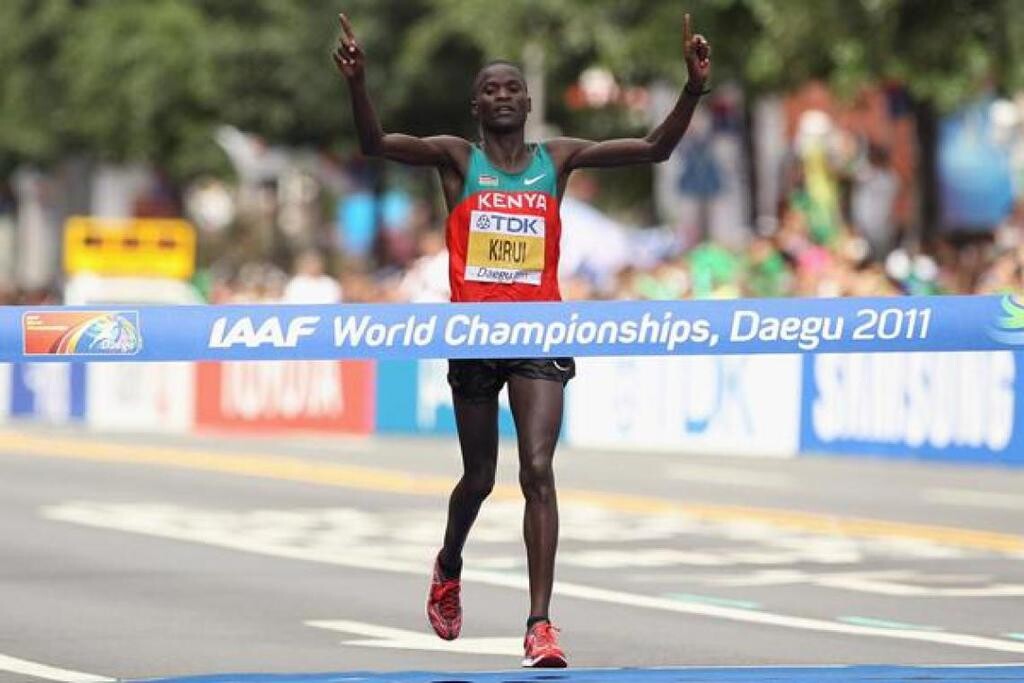
The former Chicago Marathon champion said he has been in the career for long because of his discipline and hard work.
“I have trained well this time around here in Iten under the guidance of veteran coach Renato Canova and I have this good feeling that I will finish in the top three positions,” he said.
Kirui, who won the 2012 Olympic Marathon silver medal, said his ambition to represent the country at next year’s Olympic Games in Paris, France is still alive. He said he is still keen to qualify for the Summer Games.
His prayer is to run well in Fukuoka and even get a slot for the Tokyo Marathon next year.
The Olympic Games are a huge opportunity for any athlete and urged his compatriots to take the opportunity seriously if granted the chance.
“If you are selected in Team Kenya please strive to get medals because that is why you are there. This is an opportunity of a lifetime,” he said.
The man, who won back-to-back world marathon titles in 2009 and 2011 in Berlin and Daegu respectively, urged Athletics Kenya to support the athletes by offering better logistical plans.
“Paris will be very competitive and we must all plan early enough,” said Kirui who won the Chicago marathon in 2016 before finishing second the following year.
The senior police officer said he has been able to run for a long time because he is never driven or excited with the earnings.
by Emmanuel Sabuni
Login to leave a comment

Fukuoka Marathon
The Fukuoka International Open Marathon Championship is one of the longest running races in Japan, it is alsoan international men’s marathon race established in 1947. The course record is held by Tsegaye Kebede of Ethiopia, running 2:05:18 in 2009. Frank Shorter won first straight years from 1971 to 1974. Derek Clayton set the World Record here in 1967 running 2:09:37. ...
more...