

Running News Daily
Running News Daily is edited by Bob Anderson and team. Send your news items to bob@mybestruns.com Advertising opportunities available.
Index to Daily Posts · Sign Up For Updates · Run The World Feed
Articles tagged #310
Today's Running News



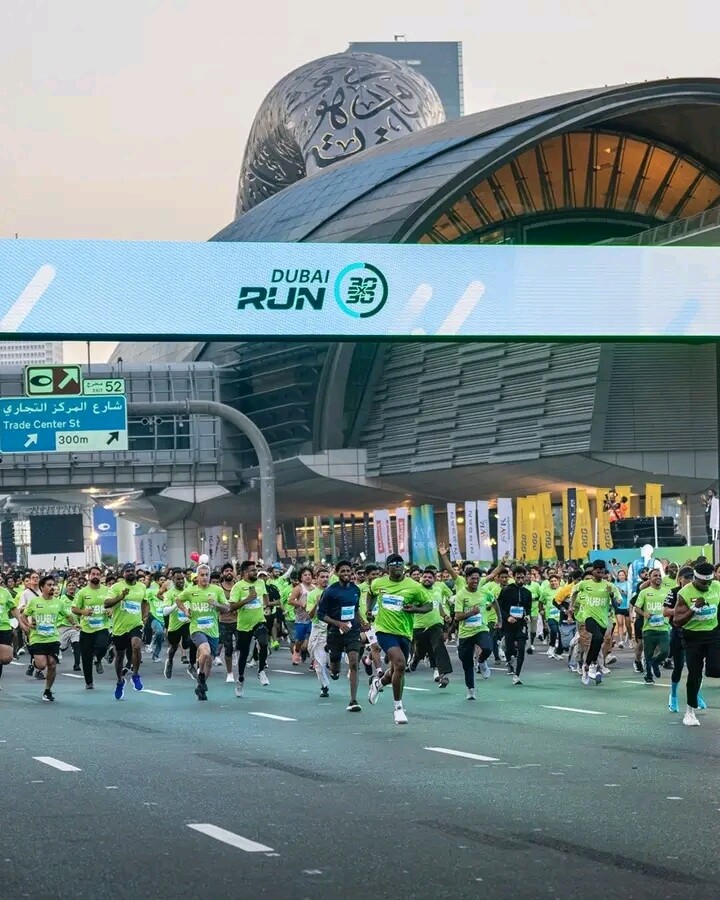
Running Is Taking Over The World! Dubai Run 2026 Attracts More Than 310,000 Participants As The Global Running Revolution Reaches New Heights!
Running is rapidly becoming one of the world's most powerful social and lifestyle movements, and the latest edition of Dubai Run 2026 has provided another remarkable illustration of just how far the sport has grown.

More than 310,000 participants reportedly took to the streets of Dubai, transforming the city's major roads into a spectacular celebration of fitness, togetherness and community spirit. The extraordinary turnout reflects a growing global appetite for running, with people from different nationalities, ages and fitness levels embracing an activity that continues to unite millions across the world.

What makes this running revolution particularly fascinating is that the appeal of the sport is no longer defined exclusively by competition, personal bests or podium finishes. Increasingly, people are discovering running as a way to build friendships, strengthen social connections, improve their health and become part of something bigger than themselves.
The remarkable growth of Dubai Run becomes even more impressive when viewed against its humble beginnings. Launched in 2019 as part of the Dubai Fitness Challenge, the event welcomed approximately 70,000 participants in its inaugural edition. Seven years later, it has grown into one of the world's largest community running events, attracting more than 310,000 participants in 2026. Its extraordinary journey reflects Dubai's commitment to promoting an active and healthier lifestyle while demonstrating how running can bring together people from all walks of life through a shared passion for fitness and well-being.

One of the biggest driving forces behind this transformation is the explosive growth of running clubs. From Nairobi to Dubai, London to New York, organised running communities are attracting people who want more than just another workout. They provide opportunities to meet new people, develop friendships, share experiences and find motivation through collective participation. For many, the connections created along the running routes have become just as important as the kilometres covered.
Another reason behind running's growing popularity is its accessibility. Unlike many sporting activities that require expensive equipment, specialised facilities or extensive preparation, running has a relatively low barrier to entry. A suitable pair of running shoes, a safe place to run and the willingness to get started are often enough. Whether someone is chasing an Olympic dream or simply taking their first steps towards a healthier lifestyle, running offers an opportunity for almost everyone.
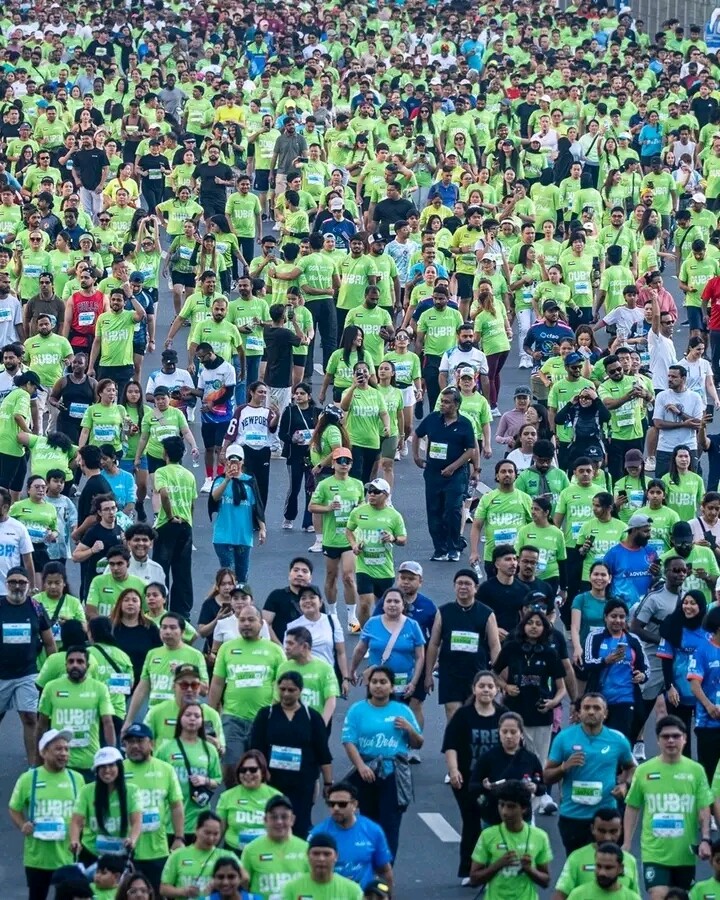
Events such as Dubai Run also demonstrate how the sport is moving beyond the traditional boundaries of competitive athletics. Elite runners share the roads with recreational athletes, families, beginners and people who simply want to enjoy the experience. There is no requirement to run at a particular pace or achieve a specific time. The real achievement is showing up, participating and being part of a collective experience.
Beyond its social appeal, running continues to attract people because of its contribution to physical and mental well-being. Regular participation can improve cardiovascular fitness, build endurance, support overall health and help people manage everyday stress. For many runners, it has also become a valuable opportunity to disconnect from the pressures of daily life, spend time outdoors and enjoy the mental clarity that comes with physical activity.
Perhaps the most beautiful aspect of this movement is its inclusivity. Running creates opportunities for people regardless of age, nationality, background, experience or ability. Everyone has a place, whether they complete a marathon in world-class time, jog around their neighbourhood or walk a few kilometres alongside friends and family.
From the streets of New York, Berlin, London, Tokyo, Sydney, Nairobi and other cities to the spectacular roads of Dubai and beyond, one message is becoming increasingly clear: running is no longer simply a sport; it is a global movement connecting people through a shared passion for fitness, friendship and healthier living.
The future of running should not be measured only by world records, championship medals or the speed of the fastest athletes. It should also be measured by the number of lives inspired, communities strengthened and people encouraged to take their first steps towards an active lifestyle.
And if more than 310,000 participants at Dubai Run 2026 are anything to go by, the running revolution is only getting bigger.
THE WORLD IS NOT JUST RUNNING FASTER. IT IS RUNNING TOGETHER!
by Erick Cheruiyot for My Best Runs.
Login to leave a comment

The Fueling Strategy of a Champion—Jimmy Muindi’s Approach to Nutrition and Race Preparation - Part three
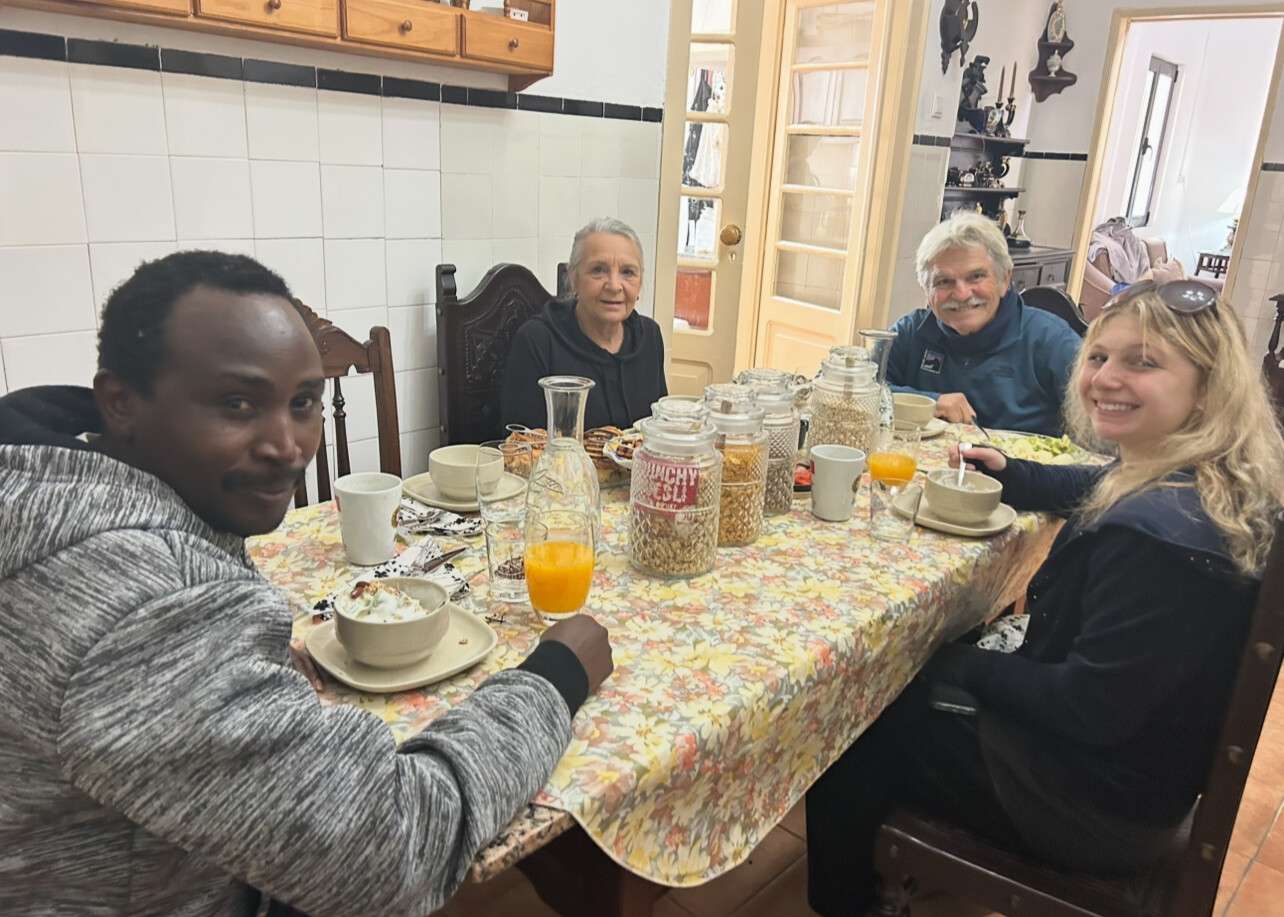
In Parts One and Two, we explored Jimmy Muindi’s remarkable journey from a young barefoot runner to an elite marathoner, and his transition into coaching at the Kenyan Athletics Training Academy (KATA) in Portugal (all photos taken at KATA located at Anderson Manor Retreat in Monforte da Beira Portugal). Now, in Part Three, we delve into a critical element of running success—nutrition and hydration.
Training alone isn’t enough to maximize performance. Proper fueling and strategic race preparation play a major role in an athlete’s ability to perform at their best. Muindi has learned firsthand, through years of competing at the highest level, that what and when you eat can make or break a race.
At KATA Portugal, Muindi applies these same principles to his coaching, ensuring that runners understand not just how to train, but also how to eat and hydrate for peak performance.

The Key to Fueling: Why Two Nights Before the Race Matters Most
Many runners focus on carb-loading the night before a race, but Muindi emphasizes that the most important meal happens two nights before the race.
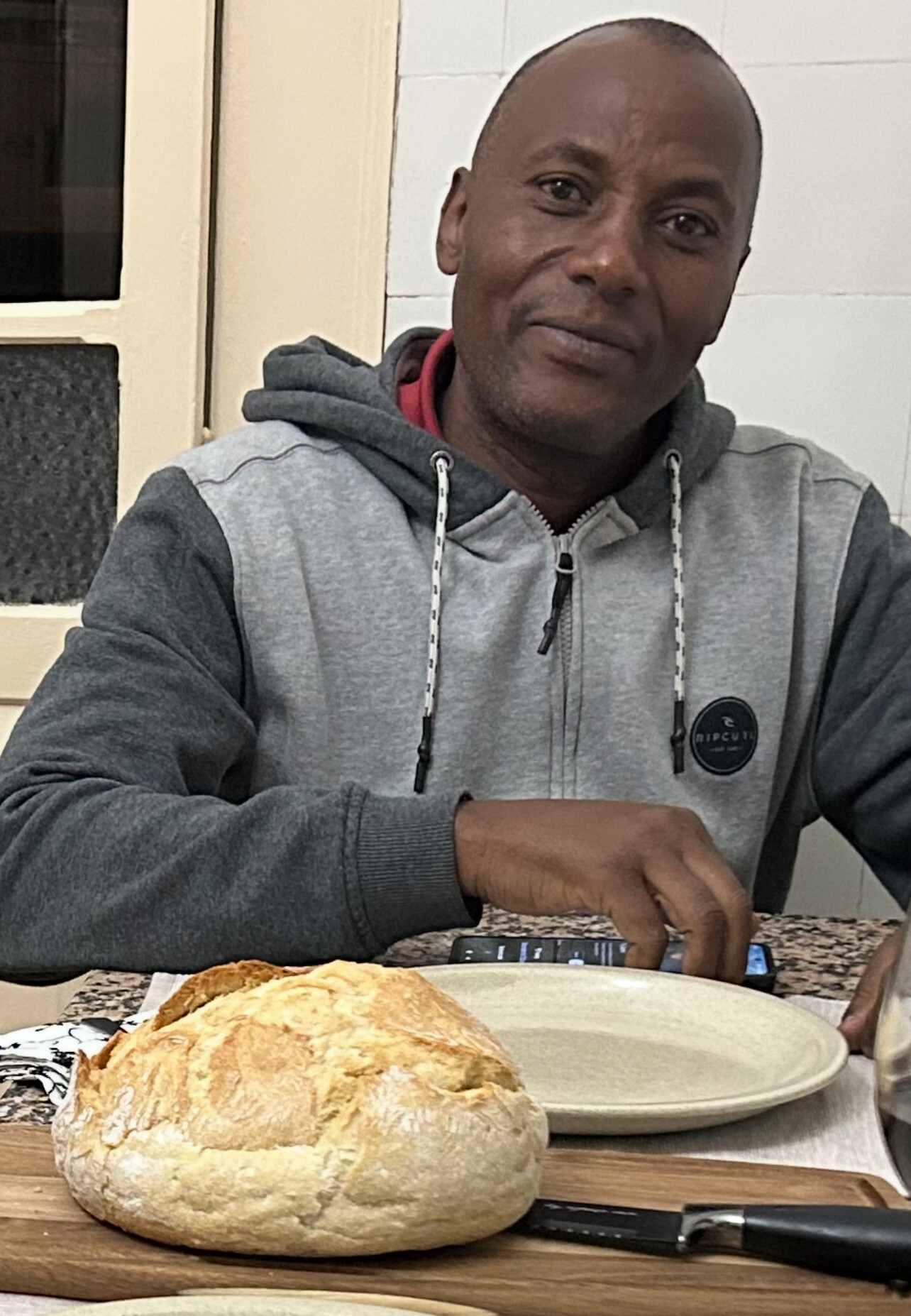
“If you eat too much the night before, your body doesn’t have enough time to fully process and store the energy properly,” Muindi explains. “Instead, it’s two nights before when you need to eat your biggest meal. That’s when your body is in the best position to absorb the nutrients and store glycogen for race day.”
This strategy is a hallmark of elite Kenyan runners. While they do eat a balanced meal the night before, it’s more about maintaining energy stores rather than overloading.
The Kenyan Runner’s Diet: Simple, Natural, and Effective
For decades, Kenyan distance runners have followed a diet that is both simple and highly effective. Muindi is no exception.

At the core of this diet are:
• Carbohydrates (about 75-80% of daily intake)– Ugali (a maize-based staple), rice, and potatoes provide the primary energy sources.

• Vegetables– Greens such as sukuma wiki (collard greens), spinach, and cabbage are common.
• Proteins (about 10-15%)– Beans, lentils, eggs, and occasionally meat (usually chicken, goat, or beef, but not in excess).

• Healthy fats– Avocados, nuts, and milk from cows or goats.
• Tea with milk and sugar– This is an important part of a Kenyan runner’s daily routine. Tea is consumed multiple times a day, often before and after training sessions. The combination of milk and sugar provides quick energy while keeping hydration levels up.

What’s notably absent from the traditional Kenyan diet is excessive processed foods. While sugar is used in tea, highly refined snacks and artificial ingredients are avoided. Instead, the focus is on whole, home-cooked meals with natural ingredients.
Pre-Race Nutrition Strategy
Muindi breaks his pre-race nutrition plan into three key phases:
1. Two Nights Before the Race – The Most Important Meal
• Large serving of ugali or rice for carbohydrates
• Protein source (beans, lentils, or chicken)
• Cooked greens for vitamins and minerals
• Hydration: Water and tea with milk and sugar
2. The Night Before the Race – Keeping It Light
• A smaller portion of carbohydrates (usually rice)
• Light vegetables
• Minimal protein (to avoid digestion issues the next morning)
• Hydration: Water, tea with milk and sugar, no heavy or fatty foods
3. Race Day Morning – Quick, Easily Digestible Energy
• A slice of bread with honey
• A banana for quick energy
• Black tea or tea with milk and sugar
• No heavy meals—just enough to keep energy levels stable without causing stomach discomfort
Hydration Strategy: Timing Matters
Muindi's approach to hydration during a marathon is disciplined and strategic. Unlike recreational runners who may sip water frequently, he does not take any water until after the 5K mark. From that point onward, he drinks water every 5K, adjusting based on weather conditions.
“For me, being out there for just over two hours, I don’t need to drink too much,” Muindi explains. “I know my body, and I hydrate well before the race, so I only take small amounts of water every 5K.”
However, Muindi acknowledges that this approach isn’t suitable for everyone.
“If you are running at a four-hour pace or longer, your hydration needs change. For runners expecting to be on the course for four, six, or even eight hours, regular hydration is critical. In these cases, you need to take in more fluids and also consume calories—things like bananas or energy gels—to maintain energy levels.”
Muindi emphasizes that each runner should plan their hydration strategy according to their race pace, experience, and the race-day conditions.
At KATA Portugal, Muindi teaches runners how to fine-tune their hydration plans so they don’t overhydrate but also don’t risk dehydration. He helps runners determine when and how much to drink based on their training intensity and expected race time, ensuring they develop an optimal balance of water intake, electrolyte replenishment, and fuel consumption.
Collaborative Coaching at KATA Portugal
Muindi works closely with Bob Anderson, a lifetime runner and the founder of KATA. Anderson, who started Runner’s World magazine in 1966 at the age of 17, has dedicated his life to the sport of running. His passion led him to establish KATA in Kenya in 2019, and subsequently, KATA Portugal in 2024. Anderson and his wife, Catherine, spend approximately 45% of their time at KATA, actively engaging with the running community and supporting the academy’s mission.
The academy ensures that there is always a certified Kenyan coach available, providing authentic training experiences rooted in Kenyan running culture. This collaborative environment fosters a holistic approach to training, combining Muindi’s expertise with the rich traditions of Kenyan athletics.
Beyond Running: A Retreat for All
KATA offers more than just a running camp. It also caters to hikers, walkers, and individuals seeking relaxation and a respite from the hectic world. Nestled in the village of Monforte da Beira in central Portugal, with a population of just 310 people, KATA provides the quiet environment that many people seek. This tranquil setting allows guests to unwind, explore scenic trails, and immerse themselves in the local culture, making it an ideal destination for both active and leisure pursuits.
How Muindi Teaches Nutrition at KATA Portugal
At KATA Portugal, Muindi ensures that guests learn by doing. The training program isn’t just about running—it’s also about understanding how to fuel like a champion.
• Meals at KATA Portugal follow the same principles as the Kenyan elite training camps. Guests experience a diet that emphasizes complex carbohydrates, natural proteins, and proper hydration.
• Workshops and discussions provides insight into meal timing, nutrient absorption, and the importance of eating for recovery.
• Pre-race meal planning helps runners adjust their own routines based on what has worked for world-class marathoners.
One of the most valuable lessons Muindi imparts is that nutrition is about consistency, not last-minute changes. Runners at KATA Portugal learn how to eat for performance long before race week, making proper fueling a habit rather than a stress factor.
by Boris Baron
Login to leave a comment
The Evolution of the High School Sub-4 Mile Club
On May 6, 1954, Roger Bannister made history by running the first sub-4-minute mile, clocking 3:59.4 in Oxford, England. His groundbreaking achievement redefined what was possible in middle-distance running, inspiring generations of athletes to chase the elusive mark.
For decades, breaking the 4-minute barrier remained an extraordinary feat, but in recent years, more high school runners in the United States have joined this exclusive club. As of February 2025, 23 American high school boys have accomplished this milestone, with notable additions in 2024 and 2025.
The Latest High School Runners to Break Four Minutes
The most recent athletes to achieve the sub-4-minute mile in high school competition are:
- Drew Griffith – 3:57.72 (May 30, 2024, Festival of Miles, St. Louis, Missouri)
- JoJo Jourdon – 3:59.87 (February 3, 2024, New Balance Indoor Grand Prix, Boston, Massachusetts)
- Zachary Hillhouse – 3:59.62 (June 16, 2024, New Balance Nationals Outdoor, Philadelphia, Pennsylvania)
- Owen Powell – 3:57.74 (February 15, 2025, UW Husky Classic, Seattle, Washington)
These runners continue to prove that the sub-4-minute mile, once thought to be nearly impossible for young athletes, is an achievable milestone with the right combination of talent, training, and opportunity.
Jim Ryun and Alan Webb: The Legends of the High School Mile
Jim Ryun: A Historic Career
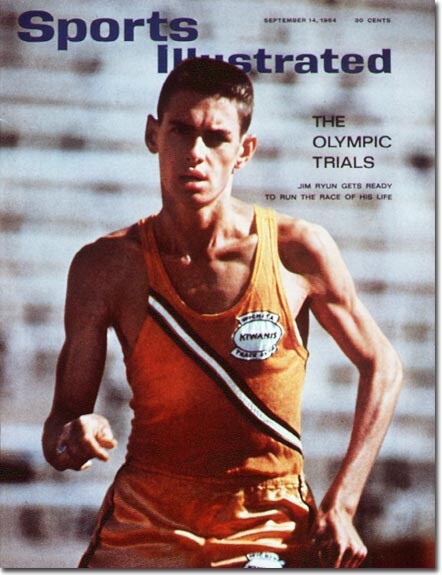
Jim Ryun was the first high school runner to break the 4-minute mile, running 3:59.0 in 1964 as a junior. He later set the national high school record of 3:55.3 in 1965, a time that stood for 36 years.
After his historic high school career, Ryun went on to break the world record in the mile twice—first in 1966, and then again in 1967 when he ran 3:51.1. At 19 years old, he remains the youngest world record holder in the mile to date. His record stood for nine years before being broken in 1975.
Ryun represented the United States in three Olympic Games (1964, 1968, and 1972), winning a silver medal in the men’s 1500m at the 1968 Olympics. His dominance in middle-distance running made him one of the greatest milers in history.
Alan Webb: The New Generation's Record-Breaker
In 2001, Alan Webb broke Ryun’s long-standing high school mile record by running 3:53.43 at the Prefontaine Classic. Webb’s performance redefined expectations for young milers and set a new benchmark for high school runners.
Webb continued his success post-high school and later set the American record in the mile, running 3:46.91 in 2007. This remains one of the fastest mile performances ever by an American.
Despite his success, Webb’s professional career was marked by injuries, including Achilles tendonitis and stress fractures, which affected his consistency. However, his high school and professional achievements cemented his place as one of the greatest milers in U.S. history.
The Complete List of High School Sub-4 Milers
Below is the full list of American high school runners who have broken the 4-minute mile, ranked by their fastest time achieved during high school competition:
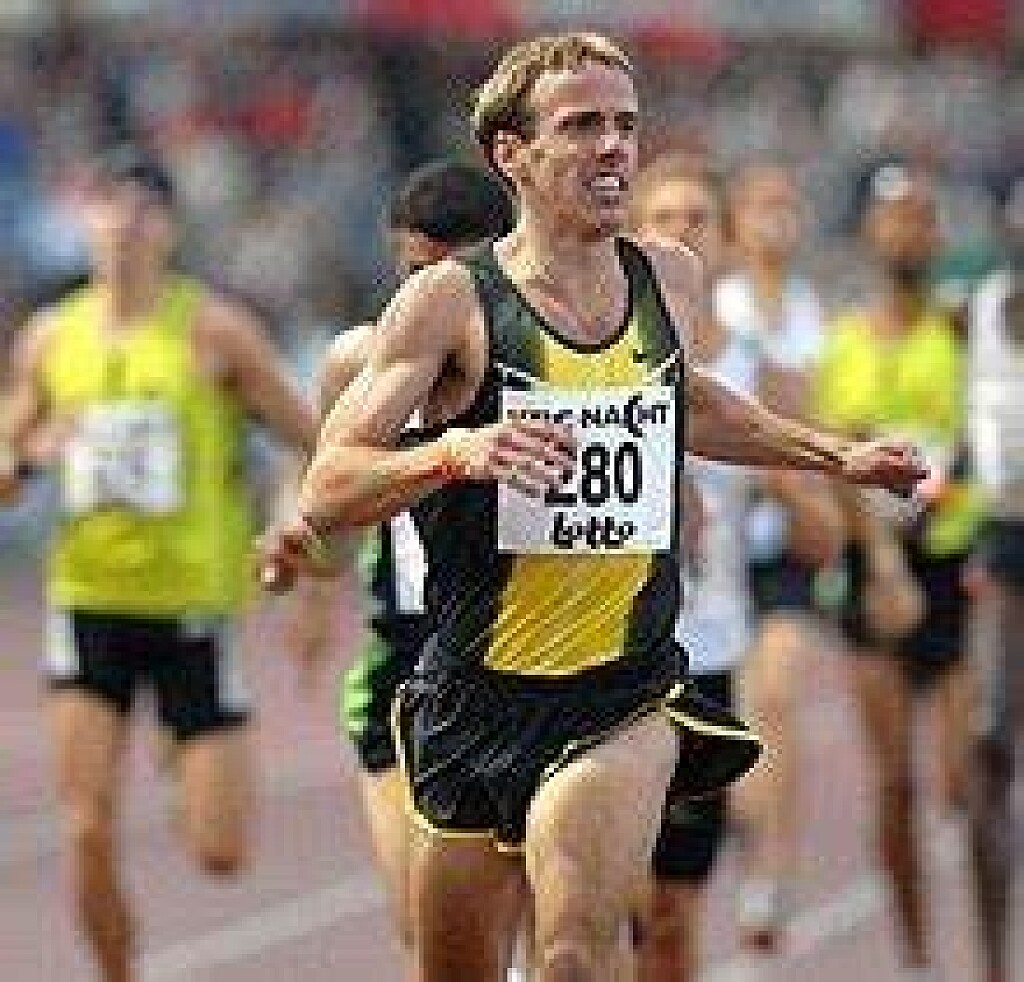
- Alan Webb (first photo) – 3:53.43 (May 27, 2001, Prefontaine Classic, Eugene, Oregon)
- Jim Ryun (second photo) – 3:55.3 (June 27, 1965, AAU Championships, San Diego, California)
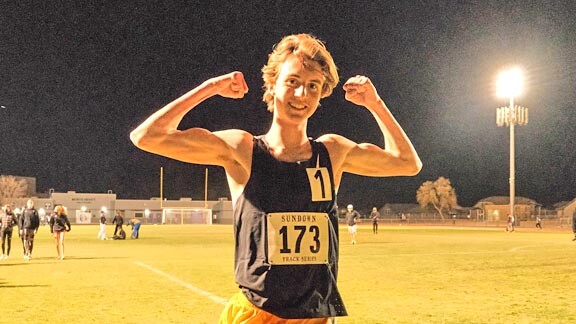
- Colin Sahlman (third photo) – 3:56.24 (May 28, 2022, Prefontaine Classic, Eugene, Oregon)
- Drew Griffith – 3:57.72 (May 30, 2024, Festival of Miles, St. Louis, Missouri)
- Hobbs Kessler – 3:57.66 (February 7, 2021, American Track League Invitational, Fayetteville, Arkansas)
- Drew Hunter – 3:57.81 (February 20, 2016, NYRR Millrose Games, New York City, New York)
- Gary Martin – 3:57.89 (June 2, 2022, Festival of Miles, St. Louis, Missouri)
- Connor Burns – 3:58.83 (June 2, 2022, Festival of Miles, St. Louis, Missouri)
- Tim Danielson – 3:59.4 (June 11, 1966, San Diego Invitational, San Diego, California)
- Reed Brown – 3:59.30 (June 1, 2017, Festival of Miles, St. Louis, Missouri)
- Matthew Maton – 3:59.38 (May 8, 2015, Oregon Twilight Meet, Eugene, Oregon)
- Grant Fisher – 3:59.38 (June 4, 2015, Festival of Miles, St. Louis, Missouri)
- Michael Slagowski – 3:59.53 (April 29, 2016, Jesuit Twilight Invitational, Portland, Oregon)
- Leo Daschbach – 3:59.54 (May 23, 2020, The Quarantine Clasico, El Dorado Hills, California)
- Simeon Birnbaum – 3:57.53 (June 1, 2023, Festival of Miles, St. Louis, Missouri)
- Rheinhardt Harrison – 3:59.33 (June 3, 2022, Golden South Series #2, Tarpon Springs, Florida)
- Marty Liquori – 3:59.8 (June 23, 1967, AAU Championships, Bakersfield, California)
- Lukas Verzbicas – 3:59.71 (June 11, 2011, Adidas Grand Prix, New York City, New York)
- JoJo Jourdon – 3:59.87 (February 3, 2024, New Balance Indoor Grand Prix, Boston, Massachusetts)
- Zachary Hillhouse – 3:59.62 (June 16, 2024, New Balance Nationals Outdoor, Philadelphia, Pennsylvania)
- Owen Powell – 3:57.74 (February 15, 2025, UW Husky Classic, Seattle, Washington)
- Tinoda Matsatsa – 3:58.70 (June 1, 2023, Festival of Miles, St. Louis, Missouri)
- Jackson Heidesch – 3:59.08 (June 1, 2023, Festival of Miles, St. Louis, Missouri)
The Sub-4 Mile Remains an Iconic Benchmark
Roger Bannister’s 1954 breakthrough redefined human potential in distance running, and the high school sub-4-mile club continues to grow. As competition and knowledge improve, the question isn’t whether more young runners will join the club, but just how fast the next generation can go
Login to leave a comment

Portuguese kids 11 and under are not allowed to run a mile race in their own country and Bob Anderson feels this rule should be updated
"It is not fair that kids under the age 12 can not race a mile in Portugal nor kids under 18 can not race a 10k. These out dated rules need to be updated," says Bob Anderson who is setting up a KATA running retreat in central Portugal opening in June. In 2021 he opened his first KATA Running Retreat just 45 minutes outside of Nairobi Kenya. Bob posted this on FB:
As some of you might know, we are setting up our second KATA Running Retreat in Central Portugal. We are in a small village called Monforte da Beira. There are only 310 people in our village. It is a very cool village with cobblestone streets, olive and cork trees nearby and miles of roads and trails for running, hiking and walking.
We bought our Anderson Manor House Feb 1 of 2024. It is an amazing three story place of 15,000 square feet with another 12,000 feet of out buildings and caves plus two acres of land with olive, fig, orange trees and a big area of land for our garden and farm animals. We want to be as sustainable as possible like we are in Kenya and produce at least 50% of our food.
This is going to be our base in Europe for us personally and the location of our second KATA Running Retreat. We are welcoming our first guests in June.

KATA (Kenyan Athletic Training Avademy) Running Retreat Kenya officially opened in Sept 2021. We currently have 22 Kenyan athletes living, eating and training with us. We have eight rooms for guests and already we have had bookings from England, France, Poland, New Zealand and the US.
Our training program is Train The Kenyan Way. We currently have five accredited AK coaches on staff. Already our top KATA runners are running world class times. Peter, one of our top runners just recently clocked 27:54 for a 10k race in the US. We also stage kids races at KATA. Kids of all ages. (Third photo)
Anyway, things are going well for us and we look forward to develope our second location in Portugal.

One thing we do monthly is a time trial plus we regularly stage races. Our Double Road Race Federation company founded in 2010 is the owner of these projects. We stage three races in Northern California annually attracting nearly 1500 runners as well.
One of the events we have been doing since 2010 is the Bob Anderson Kids mile. It is an event for kids 13 and under. In Palo Alto, California last December we had over 70 kids run our mile, some as young as 2. We let their parents decide if their child is capable of running (or walking) a mile.
Each of our kids get a medal, a t-shirt and a chance to win a raffle prize. We also give out a special medal for each winner for their age. 2-3-4-5 and so on. The kids love our event and we have had over one thousand kids participate over the years. There has never been a problem.
Let’s get back to the point of this post. To celebrate the opening of our new retreat in Portugal I asked the Mayor of our village if we could stage a race in conjunction with their summer festival in June. It would be Monforte da Beira first running race ever. The mayor thought it was a good idea and we started things rolling for our June 23rd event. Besides the 10k we also would do a 3k hike/walk and our Bob Anderson kids mile (for kids 13 and under).
So I hired a race director Nuno. He said he could handle everything. I did not know at the time that he had never put on a race before. He said he was very connected to the running scene since he had been running for like 15 or more years.
Things were moving along fairly well until April 5. After paying him for a month he informed me that only kids 12-13 could run our mile race and no one under 18 could run our 10k race.
I told him this was backward. Maybe it was too strong of a word but it reminded me of the time in the US where women were not allowed to run over a half mile and certainly not a marathon.
I mention that in the US we have thousands of kids under the age of 12 running one mile races and beyond. Plus even more kids under 18 running 10k and beyond.
I found this story from September 2023,
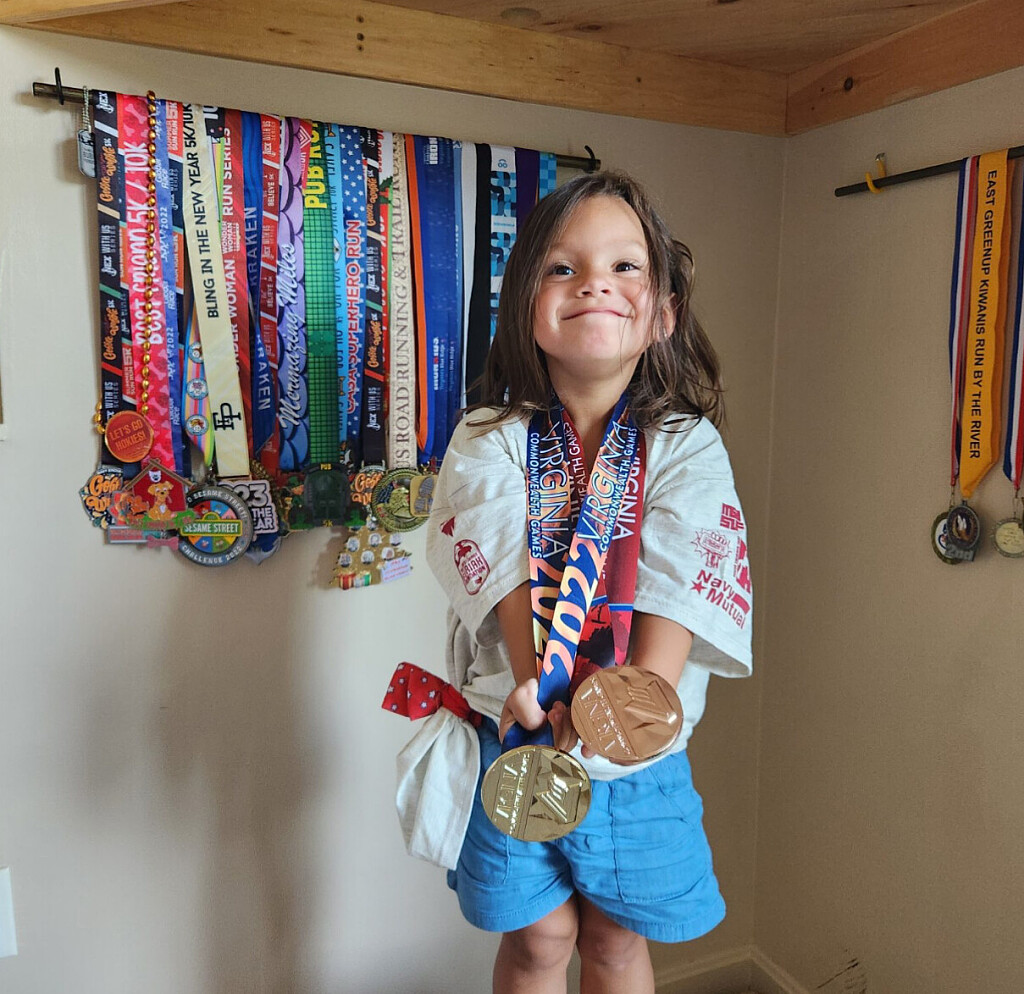
“Olivia Hawes of Blacksburg (USA) holds world records for running and when she crossed the finish line last week for a 6.15K in Virginia Beach, she topped 200 total miles in her young career. She has run more than 20 5Ks in nine different states and has a goal to run one in all 50 states. The unbelievable fact is that Hawes is only two years old.
She has the fastest mile and most 5ks for a 1-and 2-years old along with being the youngest and second youngest competitor in the VA Commonwealth Games’ 33-year history.” (First photo)
Now this is an extreme example. Two is young but there is even more examples of kids not only completing a mile or more race but loving every minute. My grand kids ran races at age 4 and loved doing so. I started running races at age 15 way back when and at 76 I still love running
According to Nuno this is the rules of the Portugal Athletics Federation. And since he “loves his country” he has to follow the rules. Sorry but these rules are just not fair for kids under 18 in my opinion,
So I told Nuno that I can’t endorse these rules. The Bob Anderson kids mile should be for all kids 13 and under. Nuno then said we have to follow the rules of Portugal.
I didn’t agree and even suggested not even doing a kids race as a compromise. But he did not want to listen to anything I was saying. So he resigned not giving any notice. Right now I have taken over the duties of race director of our June 23 event. I simply could not endorse this rule. We are new to portugal but certainly not new to running.
by Bob Anderson
Login to leave a comment
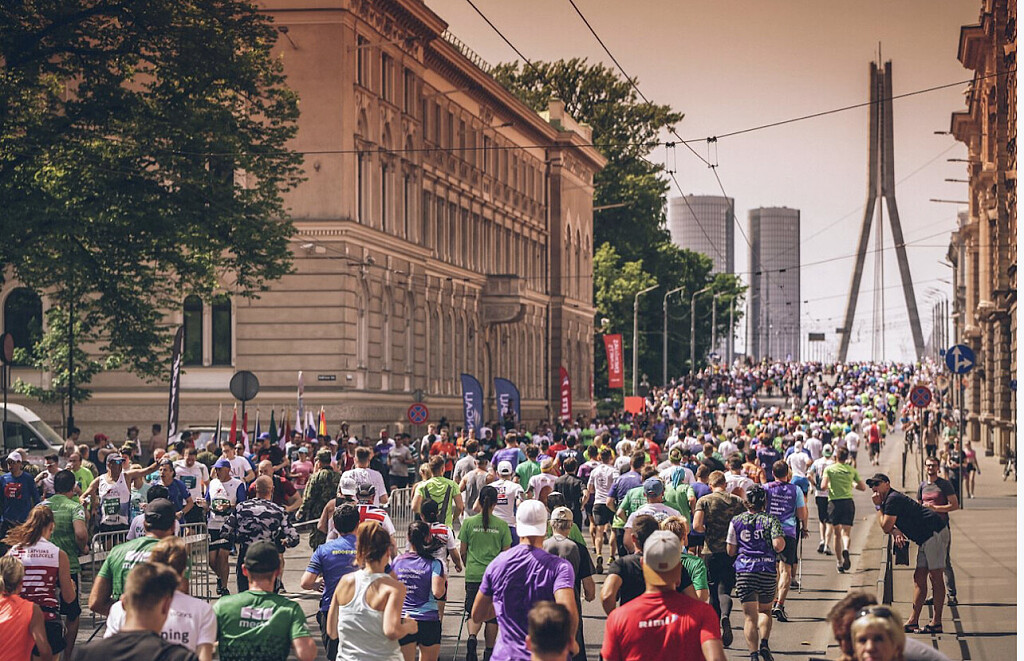
World Road Running Championships in Riga Latvia September 30
Athletics fans will have the opportunity to see the world’s best milers, 5km runners and half-marathoners compete in a single day at the World Athletics Road Running Championships Riga 23 under the revamped schedule announced today.
World Athletics and the Riga Local Organising Committee (LOC) have agreed to introduce a more compact programme, which will see the elite races and mass races held on the same day, October 1, at the championships.

The inaugural World Athletics Road Running Championships was originally envisioned as a two-day event, with the new road mile and 5km road championships to be held on Saturday 30 September and the half marathon races on Sunday 1 October, but in a move to create a more exciting build up for fans, all events have been brought together with the mass races on one day.
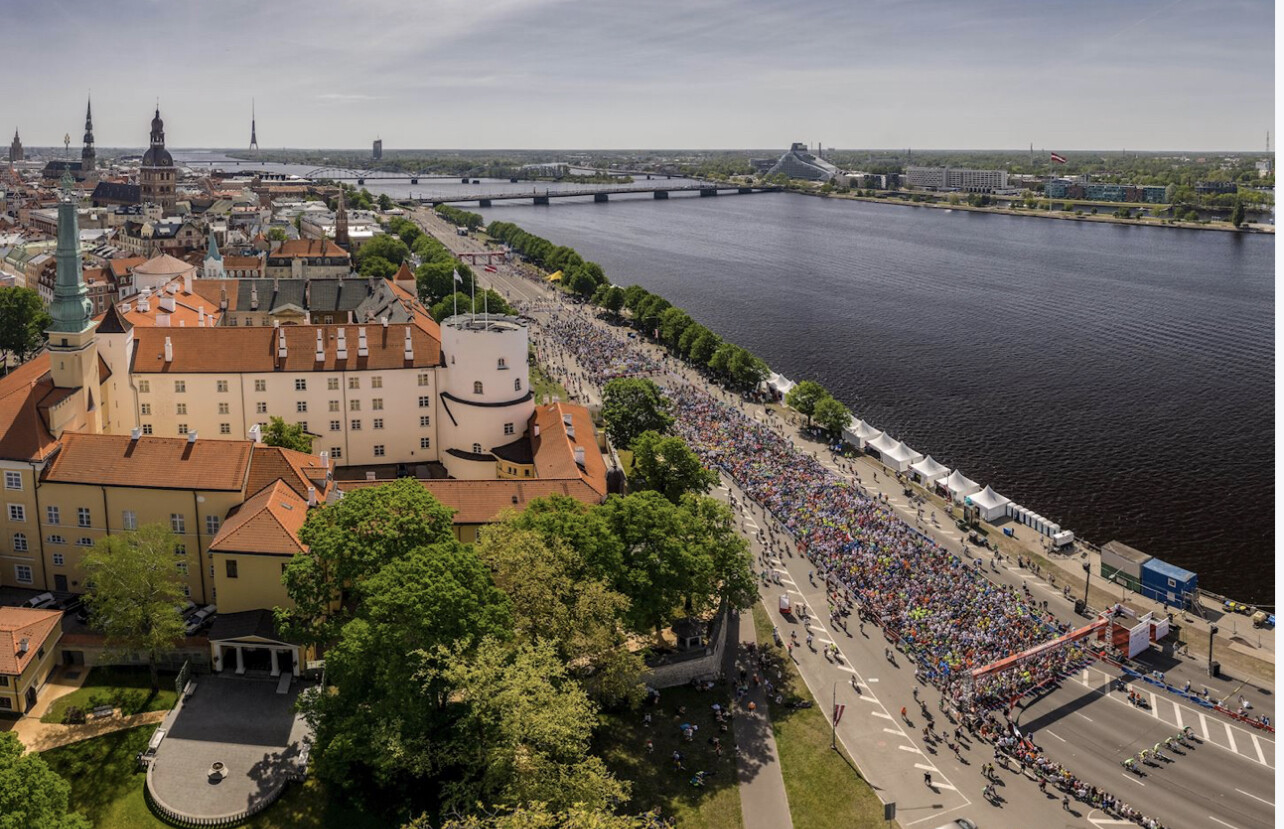
World Athletics President Sebastian Coe said: “As preparations for the World Road Running Championships have evolved, it has become apparent that the event will work better as a single-day event in Riga, both for local organisers and for broadcast. It will also give recreational runners the opportunity to be fully immersed in the day, running before and after our elite runners, and will create the festival atmosphere that we want to see to celebrate road running at every level.”
The new timetable begins on the morning of 1 October with the mass races over 5km and the road mile to be followed by the elite races over the same distances. Then attention will turn to the half marathon distance with the elite races to be followed by the mass race.
This unique global running festival will not only crown the world road mile, 5km and half marathon champions, but is also expected to feature thousands of amateur runners, kids and families from up to 100 countries participating alongside elite runners.
Aigars Nords, Head of the Local Organising Committee, commented: “With three months to go to the inaugural World Athletics Road Running Championships in Riga, Latvia, we have already attracted recreational runners from more than 50 countries all over the world. Saturday 30 September will see thousands of kids and families warm up for the championships during Kids’ Day, while Sunday 1 October will provide a unique opportunity for everyone to earn their mass race medals, not only in the road mile, 5km, and half marathon, but also in the half marathon relay, a new mass race, aimed at recreational runners not yet ready for the challenges of a half marathon.”
Any recreational runner who is ready for a challenge can register for any of the official mass races of the World Championships in Riga and earn a unique medal from the World Athletics Road Running Championships.
WRRC Riga 23 updated schedule
Saturday 30 September 202310:00 – 15:00 Kids’ Day
Sunday 1 October 202310:00 Mass race | 5km11:30 Mass race | Road mile11:50 Women | 5km12:15 Men | 5km13:00 Women | Road mile13:10 Men | Road mile13:30 Women | Half marathon14:15 Men + mass race | Half marathon | Half marathon relay (10.5km + 10.5km)
by World Athletics
Login to leave a comment
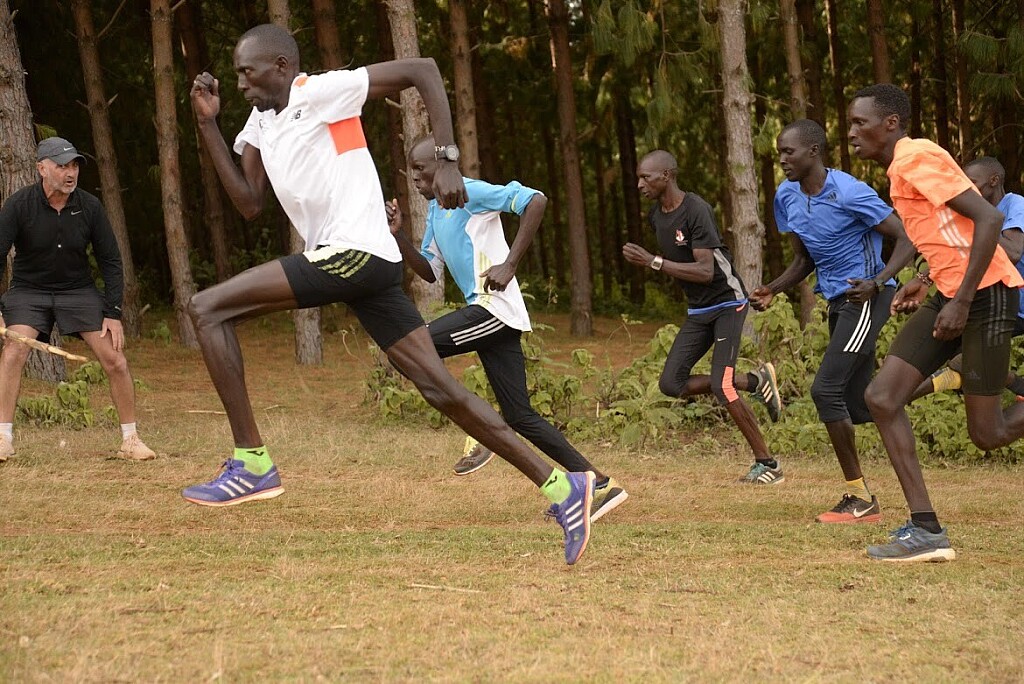
The Science of Speed Training
When it comes to training in general and for speed, we must look broadly at three energy systems.
They are:
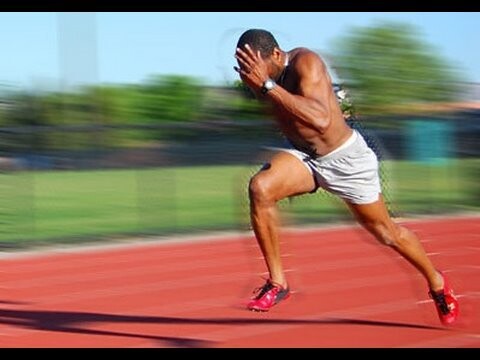
1. ATP – CP System2. Anaerobic Glycolytic System3. Aerobic System
From the standpoint of pure speed development, we must train within the first energy system, the ATP-CP system.
Here is an article that we posted a while back that covers the important physiology behind developing this system.
There seems to be a bit of confusion concerning the difference between aerobic and anaerobic training. Simply put, aerobic means 'with oxygen' and anaerobic means 'without oxygen'. So, running a 40 at full speed would be an example of an anaerobic activity. Going out for a 3 mile run would be an aerobic activity. In order to understand which energy systems should be emphasized for specific sports and activities, let'stake a look at the energy source our muscles use and the energy systems that support it. This article will focus on ATP and the first of the three energy systems, the ATP-CP Energy System.ATP – The source of muscular energy
Adenosine Triphosphate, or ATP, is the immediate usable form of chemical energy for muscular activity. Any forms of chemical energy that the body gets from food must be converted into ATP before being used by muscle cells. ATP stores in muscle is limited and will deplete in 1 to 2 seconds unless restored. Resynthesis of ATP must occur immediately for muscular activity to continue. There are three systems available within the body to replace concentrations of ATP.
Anaerobic Phosphagen (ATP – CP) Energy System
Creatine Phosphate (CP) is an energy rich compound found in muscle cells. After high intensity exercise, creatine phosphate immediately restores ATP in the muscle without forming waste products (lactic acid). The amount of ATP that can be resynthesized from CP canlast for 4 to 5 seconds. So, add that to the 1 to 2 seconds of original ATP stores within the muscle and you have about 5 to 7 seconds of ATP production from the ATP-CP Energy System.
According to the USA Track and Field Level II Sport Science manual, to really challenge this system, you need workouts of 7 to 10 seconds of high intensity (sprint) work. This means running at full speed or near full speed, but with no fatigue present.
Therefore, any sport that involves running at full speed (track, football, soccer, field hockey, baseball, basketball, lacrosse, etc) needs to place regular emphasis on working and challenging this system.
Why? The best way to improve top speed is to run at top speed. High intensity sprint work (moving the limbs at near peak velocity) involves recruiting specific groups of muscle fibers and improving the efficiency and firing patterns of those muscle fiber groups. This type of motor learning must be done at high speeds to properly develop the complex recruitment of muscle fiber needed to fire in a synchronized pattern. This process is also referred to as neuromuscular conditioning.
The need for such conditioning helps explain why coordination and agility work is essential to developing speed. If you are highly coordinated, your brain does not have to spend as much time 'thinking' about where your limbs are in relation to the objects in your immediate environment. Instead, muscle fibers will be able to fire in a coordinated pattern, resulting in higher top speed and quicker reaction times. This is essential when considering the amount of fine motor skill and coordination required in the routine movements of sports like soccer, field hockey and basketball.
Let's look at some examples of how and when to train this system in a way that will maximize our results.
As was mentioned before, the speed component should be trained with no fatigue present. Most athletes require between 36-48 hours of rest with low intensity (<75% intensity, Heart rate 120-140) training before doing speed work again. So if you're doing speed work on Monday, wait until Wednesday before you do it again. When looking at rest within a single workout, you have to understand the amount of time necessary for proper ATP and CP resynthesis.
The following time examples explain how much time is required for the given percentage of ATP restoration, as stated by the USATF Level II manual:
30 seconds – 50% (in 30 seconds, 50% of ATP stores are recovered)
1 minute – 75%90 seconds – 80%3 minutes – 98%
From these examples, it is clear that 2 to 3 minutes is the minimum time required between reps for the ATP-CP system to sufficiently recover.
Speed training- Guidelines for high school athletes:
Intensity – 95-100%Distance of run – 20-60 metersNumber of reps/set – 2-4Number of sets – 2-4
Total distance in set – 80-160 metersTotal distance in session – 300 – 500 meters
In general, we follow the rule of one minute of rest per 10 meters run. For example, a set of 4 x 40m would consist of 4 minutes rest between each 40 meter sprint.
Now let's look at a couple sample workout sessions to get an idea of how these workouts could be structured. Rest between sets is slightly longer than rest between reps in order to allow full recovery.Workout #1
4 x 40m – 4 min rest6 minutes rest between sets3 x 50m – 5 min rest
TOTAL: 310 metersWorkout #2
4 x 30m – 3 min rest4 minutes rest between sets4 x 40m – 4 min rest5 minutes rest between sets4 x 50m – 5 min rest
TOTAL: 480 metersStructuring your workouts in a similar manner will maximize all the qualities desired from working the ATP-CP energy system. Remember, working hard with minimal rest will not make you faster. Either will running slow. Energy stores must be replenished to gain the benefits of speed work. Without true speed development, you are simply falling behind your competitors.
by Athletes Acceleration
Login to leave a comment
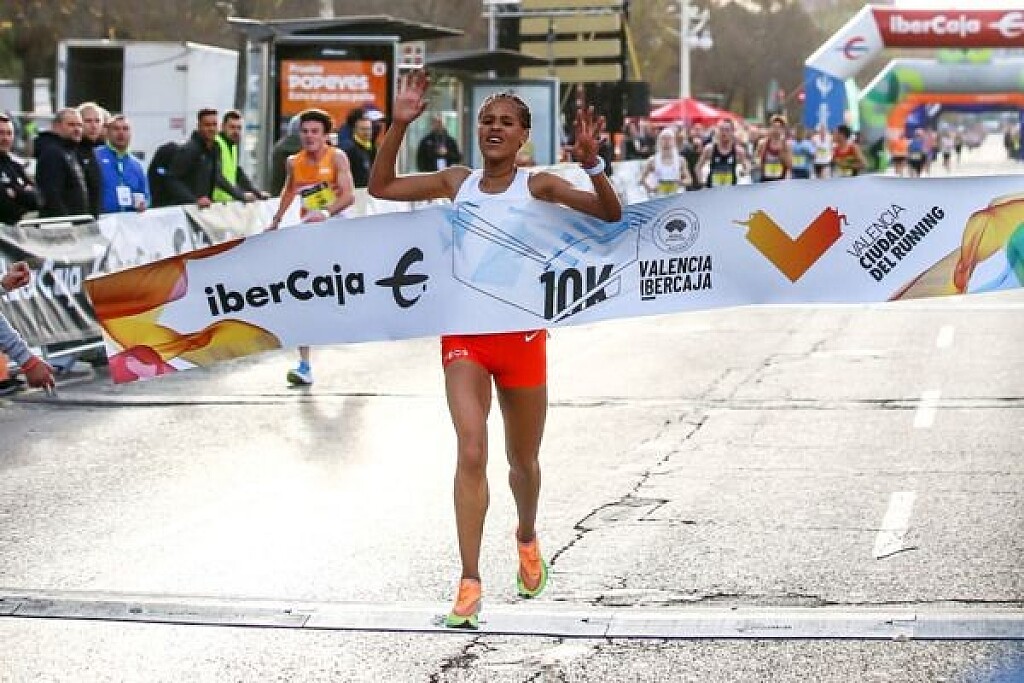
Yalemzerf Yehualaw was just five seconds off her 10k world record in Spain
Ethiopia’s Yalemzerf Yehualaw clocked 29:19 at the Valencia 10K Ibercaja to come within five seconds of her own world record, while Kenya’s Weldon Kipkirui Langat won in 26:55 in a thrilling finish against compatriot Charles Langat at the World Athletics Label road race in the Spanish city on Sunday (15).
Paced by her compatriots Genetu Molalign Yehualaw and Tolcha Guta Beyene, Yehualaw opted for a conservative start, unlike last year in Castellón when she set the current world record of 29:14. The opening 2km was covered in 5:56 with Kenya’s Jesca Chelangat still running at Yehualaw’s shoulder.
The pace increased slightly in the third kilometre as they reached 3km in 8:51; shortly afterwards Chelangat began to lose ground on Yehualaw as the Ethiopian passed through 4km alone in 11:52, a strong headwind contributing to the slowest kilometre of the race. The world half marathon bronze medallist went through halfway in 14:47, 19 seconds down on her half-way split from her world record run.
Chelangat was eight seconds behind the leader at half way, but a comfortable nine seconds ahead of Uganda’s Sarah Chelangat. Kenyan duo Esther Borura and Naomi Chpngeno were another five seconds adrift (15:09).
Yehualaw increased her pace during the second half, covering most kilometres in 2:53-2:54 and reaching 8km in 23:29. After another swift 2:53 kilometre, the Ethiopian was unable to maintain that same cadence over the final kilometre but still held on to finish in 29:19, the second-fastest 10km performance in history.
Further back, Jeska Chelangat finished just outside the 30-minute barrier (30:01) with Borura completing a quality podium in 30:15. Sarah Chelangat set a Ugandan record of 30:24 in fourth, 16 seconds ahead of Chepngeno (30:40). Britain’s Samantha Harrison was sixth in 30:51.
The 23-year-old Yehualaw commented she was a bit disappointed for not having broken the world record but satisfied with her brave effort.
The men’s race kicked off at a relatively brisk pace, the opening kilometres covered in 2:38 and 2:39. The pacemaker dropped out just before the 3km (7:57) and the pace decreased slightly, so Lagat and Kenya’s world 5000m silver medallist Jacob Krop moved to the front in a bid to keep the pace alive. By halfway (13:30), nine men were still in contention for victory.
Despite the annoying headwind over the following kilometres, Krop and Langat managed to maintain a swift cadence in the 2:43/2:45 kilometre range, with Charles Langat always tucked behind them. During the long final straight, Charles Langat tried to overtake Weldon Langat but the latter held off his challenge and crossed the line victorious in 26:55 to equal his PB.
Charles Langat set a massive lifetime best of 26:57 while Daniel Kosen took third in 27:01, an 18-second improvement on his career best. Burundi’s Rodrigue Kwizera placed fourth (27:04) and Krop was given the same time for fifth.
“I’m delighted with my win,” said Langat. “I pushed hard throughout, looking for a fast time, and my tactic paid off.”
Langat missed out on making the Kenyan team for the World Cross Country Championships, so his next outing will be at the Ras Al Khaimah Half Marathon on 18 February. He’ll then turn his attention to making the Kenyan 10,000m team for the World Championships in Budapest.
Emeterio Valiente for World Athletics
Leading results
Women1 Yalemzerf Yehualaw (ETH) 29:192 Jesca Chelangat (KEN) 30:013 Esther Borura (KEN) 30:154 Sarah Chelangat (UGA) 30:245 Naomi Chepngeno (KEN) 30:406 Samantha Harrison (GBR) 30:517 Vicoty Chepngeno (KEN) 31:058 Brenda Tuwei (KEN) 31:209 Stella Chesang (UGA) 31:3310 Alemaz Samuel Teshale (ETH) 31:39
Men1 Weldon Langat (KEN) 26:552 Charles Langat (KEN) 26:573 Daniel Kosen (KEN) 27:014 Rodrigue Kwizera (BDI) 27:045 Jacob Krop (KEN) 27:046 Rogers Kibet (UGA) 27:077 Dominic Lokinyomo Lobalu (SSD) 27:098 Laban Kiplimo (KEN) 27:159 Richard Kimunyan Yator (KEN) 27:3210 Isaac Kipkemboi (KEN) 27:34
by World Athletics
Login to leave a comment

10k Valencia Trinidad Alfonso
Around the corner we have one more edition of the 10K Valencia Ibercaja, organized one more year by the C. 10K VALENCIA Athletics premiering the running season in Valencia. It is a massive urban race with more than 3,000 registered annually of 10 kilometers, where the maximum duration of the test will be 1 hour 40 minutes (100 minutes). The...
more...
How Young Is Too Young to Lace Up for a Marathon?
A new paper looks at the available research and makes recommendations.
The world—running and not—had its eyes on the Flying Pig Marathon this past May after a 6-year-old boy completed the race with his family in 8 hours and 35 minutes.

It wasn’t the finish itself that caused an outcry, but a subsequent social media post by the boy’s mother that references his distress during the later miles of the race.
The photo showed the boy holding a box of Pringles potato chips with the caption, “On the marathon course, Rainier knew they usually hand out Pringles around mile 20. He was struggling physically and wanted to take a break and sit every three minutes. After 7 hours, we finally got to mile 20 and only to find an abandoned table and empty boxes. He was crying and we were moving slow so I told him I’d buy him two sleeves if he kept moving. I had to promise him another sleeve to get him in the family pic at the finish line. Today I paid him off.”
Sports medicine experts and pediatricians got wind of the boy’s marathon finish, and its unique circumstances, and published a paper in JAMA Pediatrics in October, titled “Kids on the Run—Is Marathon Running Safe for Children?”
The answer is: We’re not totally sure.
“Youth running is becoming more popular, particularly at longer distances, and the trend is ahead of the research,” says Emily Kraus, M.D., a clinical assistant professor at Stanford University, a sports medicine physician at Stanford Children’s Hospital, and the director of the the Female Athlete Science and Translational Research Program.
Kraus, a runner, was not an author on the JAMA Pediatrics paper but coauthored the 2021 youth running consensus statement published in the British Journal of Sports Medicine.
“We can’t conclude that there’s no risk or minimal risk, or a greater risk [to young children running long distances],” she tells Runner’s World.
The paper looks back at the running boom of the 1970s when several young children completed marathons; children as young as 8 years old covered the distance in 3 hours and 31 seconds. The authors note that although there were no reports of injuries or adverse events, physicians and race directors started to worry about the potential dangers of youth participation. In 1981 the New York City Marathon, then in its 11th year, instituted a minimum age requirement of 16 years old. Other races followed suit.
A 2010 paper published in the Clinical Journal of Sports Medicine looked at data from the Twin Cities Marathon from 1982 to 2007, which included 310 children aged 7 to 17 years old. The researchers found that the risk of a medical incident was about 50 percent lower in children than adults but not statistically significant. In other words: We can’t say for sure if they’re at lower risk for injury or medical problem.
“Some of the early research shows that the overall risk of competing in races is quite minimal or lower when compared to the adult running population,” Kraus says. “But the question becomes is that because the number [of children finishers] is so much smaller?”
Kraus, who treats primarily middle-school age athletes whose growth plates are still open, expresses concerns that we don’t know if marathoning at a young age will affect long-term growth and development.
“Young kids haven’t even started to initiate [certain developmental] milestones,” she says. “Athletes who are younger than 10 or 11 years old are true children. We don’t know enough to give the okay, in my opinion.”
Kraus advises against the repetitiveness of a single activity over time, like running. Instead, she encourages young athletes to try different physical activities that lend themselves to multidirectional movement, like soccer, tennis, and old-fashioned tag.
When asked to give guidance on a distance for young kids, Kraus says anything up to a 10K is “probably okay.” Ideally, she says, we would measure how far a young kid runs on any given day during free play or team sports to help guide that recommendation.
“[For children], free play at that stage of their development is more valuable in developing motor skills, agility, and hand-eye coordination,” she says.
Plus, although research is clear that healthy behaviors developed during youth sports can promote long-term physical activity and reduce the risks of diseases like diabetes, cardiovascular disease, and cancer, “sport specialization during childhood does not provide competitive advantages and is not a requirement for elite status,” the authors wrote in the JAMA Pediatrics paper.
What’s more is that youth marathon or ultramarathon running may not lead to lifelong participation in running events or long-term health benefits. The authors wrote: “Among children who participated in ultramarathons [longer than a marathon], less than 25 percent continued to do so as adults, and less than 10 percent were still running ultramarathons 30 years later.”
Most youth ultrarunners, the researchers wrote, are between 16 and 18 years old, but there are runners younger than 10 years old who have completed an ultra event.
Experts are unsure if this drop off in participation is because of overuse injury and burnout, or changes in interests. The authors go on to say that potential health benefits and risks of youth marathon running have not been compared similarly to shorter distance running or other sports.
But pediatric specialists like Kraus and the authors point out that the bigger question and concern when it comes to youth marathoning, particularly in children under 10 years old, is the intrinsic motivation of a young runner.
“Why is this child racing? Is it because they have a family of runners and they don’t want to feel left out? Is it something they deeply want to do?” Kraus asks, noting that young children likely don’t fully understand what training for and running a marathon really entails.
“If I were working with a 6-year-old, my conversation would be, ‘Do you know what [a marathon] is? Do you know what it feels like to run one mile? Or other shorter distances?’” Kraus says.
She’d then also work with families to understand why they were having a young child participate in such an extreme distance at this particular time, suggesting, instead, to use a marathon as a goal for years down the road.
Based on the available evidence, the authors developed a list of points families should consider before a young child runs a marathon or ultramarathon, in addition to assessing the physical health of the child, including:
Potential risks and benefits, reiterating there is limited available research
Determine the motivation for marathon running, with an emphasis on voluntary participation
Inform children that they have a right to stop at any point and will not be punished or experience negative consequences if they decide to stop
Discuss ways children can communicate their choice to parents and guardians
Monitor physical, psychological, social, and academic well-being, as well as continued commitment to marathon running during training
“For a 6- or 7-year-old who hasn’t fully captured goal-setting and follow-through, a marathon is a different type of challenge that goes beyond what they’re capable of handling,” Kraus says.
by Runner’s World
Login to leave a comment
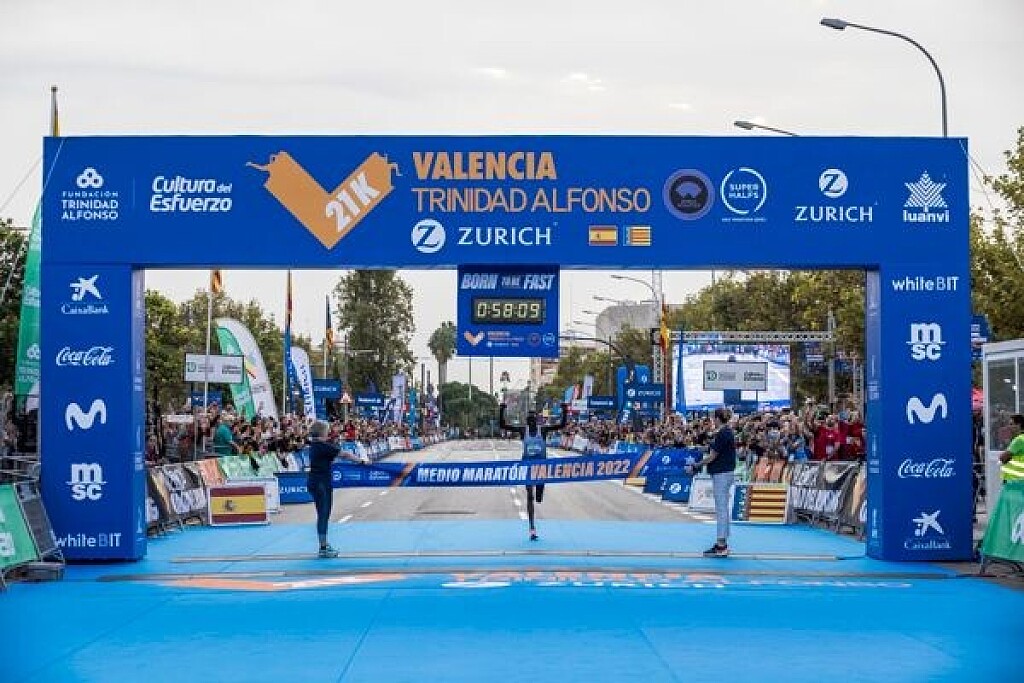
Hot and humid slowed Kandie and Klosterhalfen in Valencia
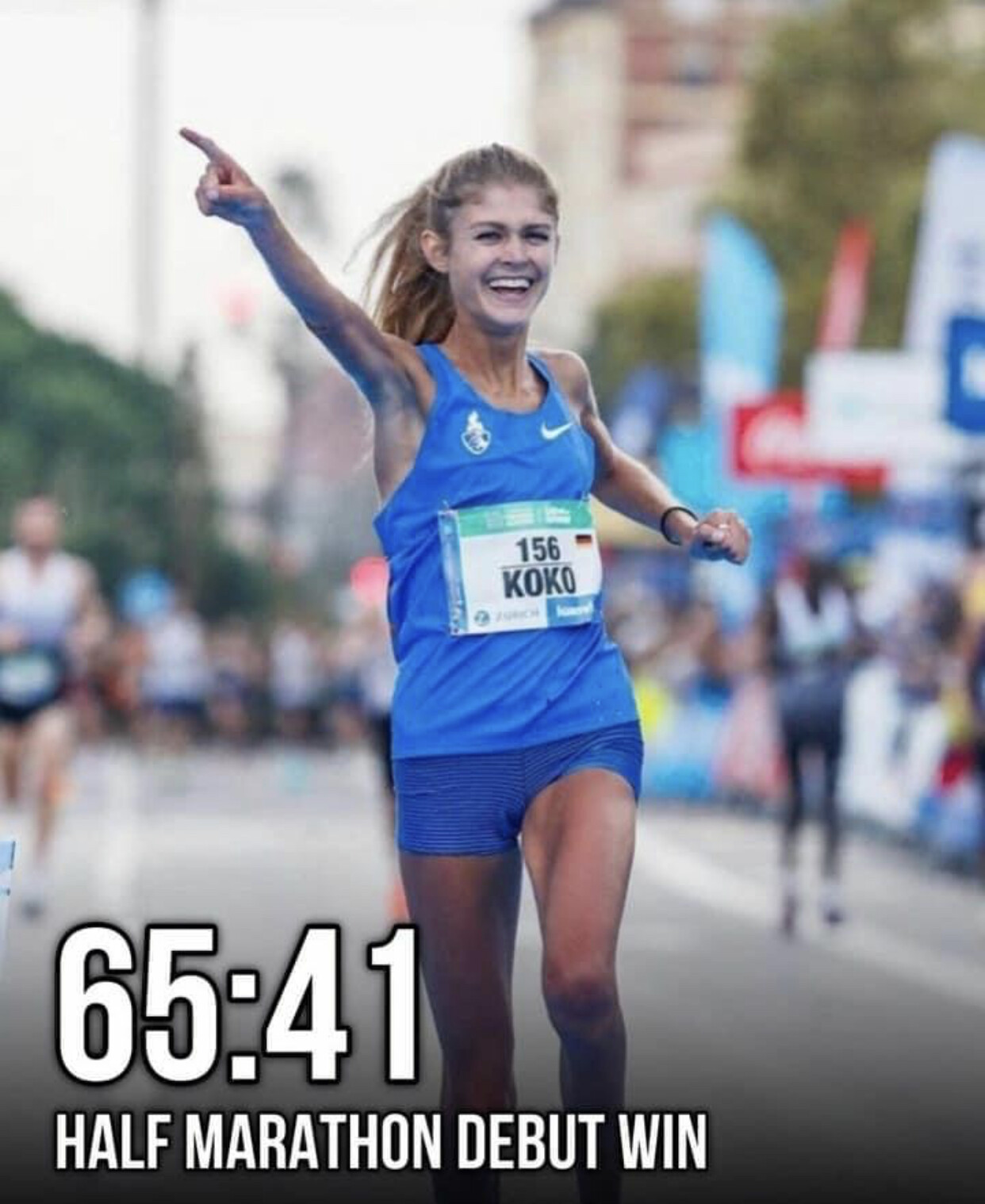
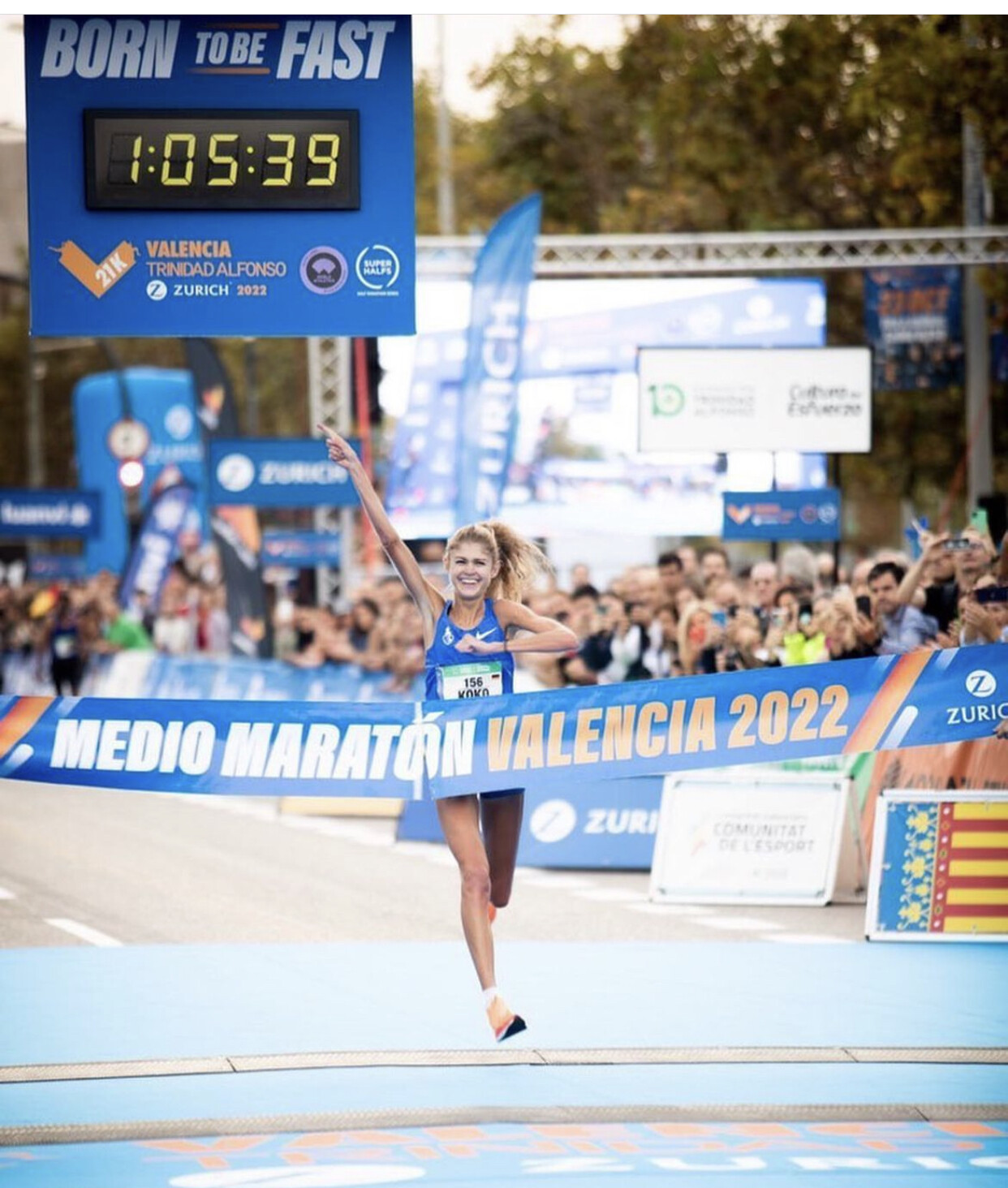
Kenyan's world half marathon silver medallist Kibiwott Kandie and Germany's Konstanze Klosterhalfen captured the victories at the Valencia Half Marathon Trinidad Alfonso EDP – a World Athletics Elite Label road race – on Sunday (23).
Kandie, who broke the world record here two years ago, effectively ended the race in the 14th kilometre to finish like a train in 58:10, while half marathon debutante Klosterhalfen made her move in the last kilometre, winning in 1:05:41.
Likely due to the unseasonably high temperature (17C) and 75% humidity, the men’s race kicked off slower than expected. Led by pacemakers, the leading group went through the opening 5km in 13:56, right on schedule for a 58:40 finishing time with all the main favourites such as Kandie, Sabastian Sawe, last year's third-placed Daniel Mateiko, Rodgers Kwemoi, Ethiopia's two-time world indoor 3000m champion Yomif Kejelcha and his compatriot Tadese Worku, who was making his debut over the distance.
Ten men remained in the lead group by the 10km checkpoint, which was reached in 27:51 to virtually rule out a sub-58-minute final clocking.
The key movement came shortly after the 13th kilometre when Kandie broke away with incredible ease to gradually open a sizeable gap over Mateiko, Kejelcha and Worku. After a swift 14th kilometre of 2:39, the 26-year-old Kenyan maintained his speed to reach 15km in 41:17, having covered the previous 5km segment in 13:26. By then he had built a ten-second margin over the chasing trio.
Despite a decrease in pace in the closing stages, Kandie continued to increase his lead and he had a 23-second margin by 20km. He romped home unopposed in a season’s best of 58:10, the third fastest time in the world this year. Taking advantage of his track pedigree and speed, Kejelcha managed to finish ahead of Mateiko to grab the runner-up spot in 58:32 and fulfil his pre-race target of breaking the Ethiopian record. Mateiko completed the podium eight seconds behind Kejelcha while debutant Worku finished in 58:47.
“I have been preparing so hard for this race over the last two months and that effort has paid off today,” said Kandie. “Despite the humidity, I felt great throughout and decided to increase the pace after midway, I'm quite satisfied with my performance.”
The women’s race was of a similar high standard with the first three athletes finishing in 66 minutes or quicker.
Perfectly paced by Kenya's Jeremiah Cheserek, the main group went through the opening 5km and 10km checkpoints in 15:29 and 31:08 respectively, slightly inside 1:05 finishing pace. The eight-woman lead pack included Klosterhalfen, Kenya's world 10,000m bronze medallist Margaret Chelimo Kipkemboi, Vicoty Chepngeno, Agnes Ngolo and Ethiopia’s Hawi Feysa and Tsigie Gebreselama.
There were no major changes over the following 5km section, which was covered in 15:35, but with two kilometres remaining, only Klosterhalfen, Feysa and Gebreselama were left at the front. In the closing stages, the 25-year-old German managed to open up a gap on her rivals to win in 1:05:41 while Gebreselama set a PB four seconds in arrears and Feysa came third in 1:06:00.
“I'm both surprised and delighted with what I've managed today and definitely I'll try to improve on my time next time and hopefully break the German record,” said Klosterhalfen, the European champion and 2019 world bronze medallist over 5000m. “I chose Valencia because of the fast times set over the previous years and my decision proved to be right today.”
Leading results
Women1 Konstanze Klosterhalfen (GER) 1:05:412 Tsigie Gebreselama (ETH) 1:05:453 Hawi Feysa (ETH) 1:06:004 Agnes Ngolo (KEN) 1:06:385 Margaret Chelimo (KEN) 1:06:506 Magdalena Sahuri (KEN) 1:07:077 Irine Kimais (KEN) 1:07:108 Purity Komen (KEN) 1:07:279 Yasemin Can (TUR) 1:07:4510 Vicoty Chepngeno (KEN) 1:07:54
Men1 Kibiwott Kandie (KEN) 58:102 Yomif Kejelcha (ETH) 58:323 Daniel Mateiko (KEN) 58:404 Tadese Worku (ETH) 58:475 Kennedy Kimutai (KEN) 59:046 Sabastian Sawe (KEN) 59:237 Ronald Kirui (KEN) 1:00:108 Isaac Kipkemboi (KEN) 1:00:119 Edward Cheserek (KEN) 1:00:1310 Weldon Langat (KEN) 1:00:28
by Emeterio Valiente (World Athletics)
Login to leave a comment

Valencia Half Marathon
The Trinidad Alfonso Valencia Half Marathon has become one of the top running events in the world. Valencia is one of the fastest half marathon in the world. The race, organized by SD Correcaminos Athletics Club, celebrated its silver anniversary in style with record participation, record crowd numbers, Silver label IAAF accreditation and an atmosphere that you will not find...
more...
Hungary’s government has allocated more than €550m (582US) towards the construction of the Budapest stadium that will host the 2023 World Athletics Championships.
Documents published by the government show that HUF 204bn (€556.5bn) of public funds have been made available for the National Athletics Centre – which will have an initial capacity of 40,000 for the 2023 championships before being reduced to 15,000 – and its surrounding infrastructure.
That makes the facility some €40m more expensive than the much larger 67,000-capacity Puskás Aréna national football stadium that was recently opened in Budapest. It is also considerably more than initial estimates of €310m for the build.

The government has budgeted for the development of the National Athletics Centre on what is currently a brown field site by the Danube River. The cost includes the stadium, adjacent buildings, landscaping, and flood protective infrastructure, in addition to a pedestrian and cycling bridge.
The government calculates that the organisation of the 2023 World Athletics Championships will amount to €81.8m, but expects income from the event to far surpass this sum with 166,000 visitors and 416,000 ticket sales predicted.
Following the event, the stadium would be reduced in size and become a training hub for Hungarian athletics and a competition venue.
Once the temporary upper tier is removed, the stadium would be left with a circular plateau, expected to be filled with publicly available leisure areas, including a running track.
The development of the stadium is seen as important for Hungary’s long-term goal of hosting the Olympic Games. Budapest was involved in the bidding process for the 2024 Games, but is believed to be looking as far ahead as 2040 for its chance.
Budapest was awarded the 2023 championships in 2018 after a decision in Monaco. Central and local authorities agreed to support the construction of the stadium last year.
Organisers said in 2018: “The 15,000-seat facility will give a major boost not only to competitive sports, but also to recreational and youth sports. Budapest residents and students will find training tracks, running tracks, street workouts and many other opportunities for sports and recreation.”
Login to leave a comment
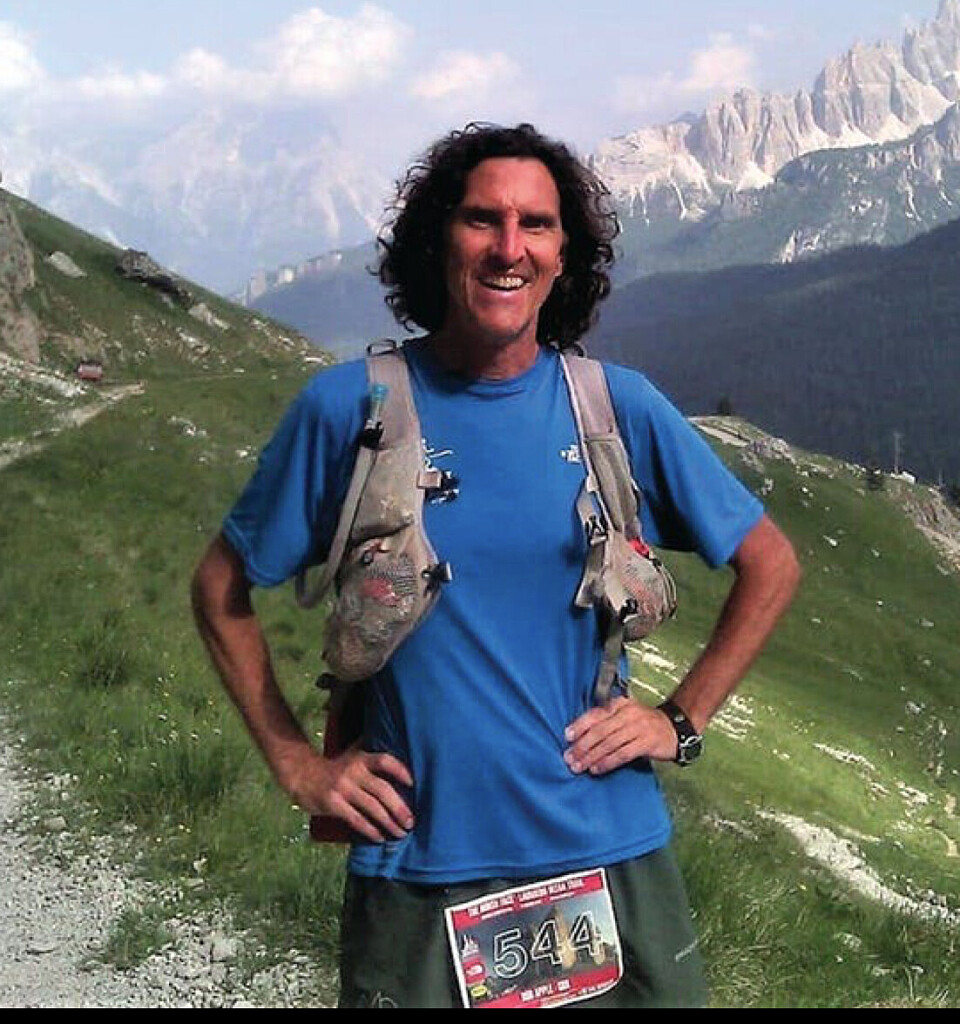
The Man Who's Finished 761 Ultras
Rob Apple ran three ultras in 2020. With only four slated for 2021, he's in trouble. Well, kind of.
Since 1990, Apple, now 59, of Murfreesboro, Tennessee, has averaged 24 ultras a year. If that number seems absurd, well, meet Rob Apple. Sucking on a peppermint candy as he bounces along a greenway near Stones River Battlefield, he's the jolliest runner you're likely to meet. With his headlamp on and his buds blaring AC/DC, you'd never imagine this guy was the most prolific ultrarunner in history.
For starters, he laughs a lot. No, really a lot! "If we knew you did all these ultra runs," his boss once told him, "we would have drug tested you." Apple lets out a chuckling, jocular laugh. It starts deep in his gut and builds up through the chest and echoes out from his wide smile like a megaphone.
He looks more like a hairband rocker from the '80s than a grizzled, sinewy athlete. His bright, glowing eyes and massive head of hair offset an enormous, gleaming smile. Many approach him and ask if his teeth are real. "Never even had braces," he says. "My mom gave me these."
If running ultras is any measure, it's easy to see why Apple is so happy: he has completed a whopping 761 of them. 761! That's over 23,560 miles from trail to road to timed track events lasting days. Add up the totals for Yiannis Kouros, Camille Heron, Courtney Dauwalter and Scott Jurek and you still wouldn't reach half the ultra miles Apple's run. And he's competed in the biggest: Leadville, Western States, Wasatch, Massanutten, Vermont, Catalina and UTMB, most multiple times. He's even run the Boston Marathon. "Yes, I've actually done regular marathons, too," he says, laughing.
Since 1976, Apple has completed a total of 903 races, including 69 marathons. His seven Western States completions are impressive, but his other race repeats are downright nuts: 18 Mountain Mist 50Ks, 21 Strolling Jims and 28 Howl at the Moon 8-hours. He has run an ultra each year since 1982 and has logged a grand total of 185,310 lifetime miles. Each race and training run is meticulously detailed in a journal he's kept since he was 16. He includes his time, the weather, what he wore and who he talked to. On top of that he loads the data into spreadsheets! An accountant by day, Apple is a numbers freak.
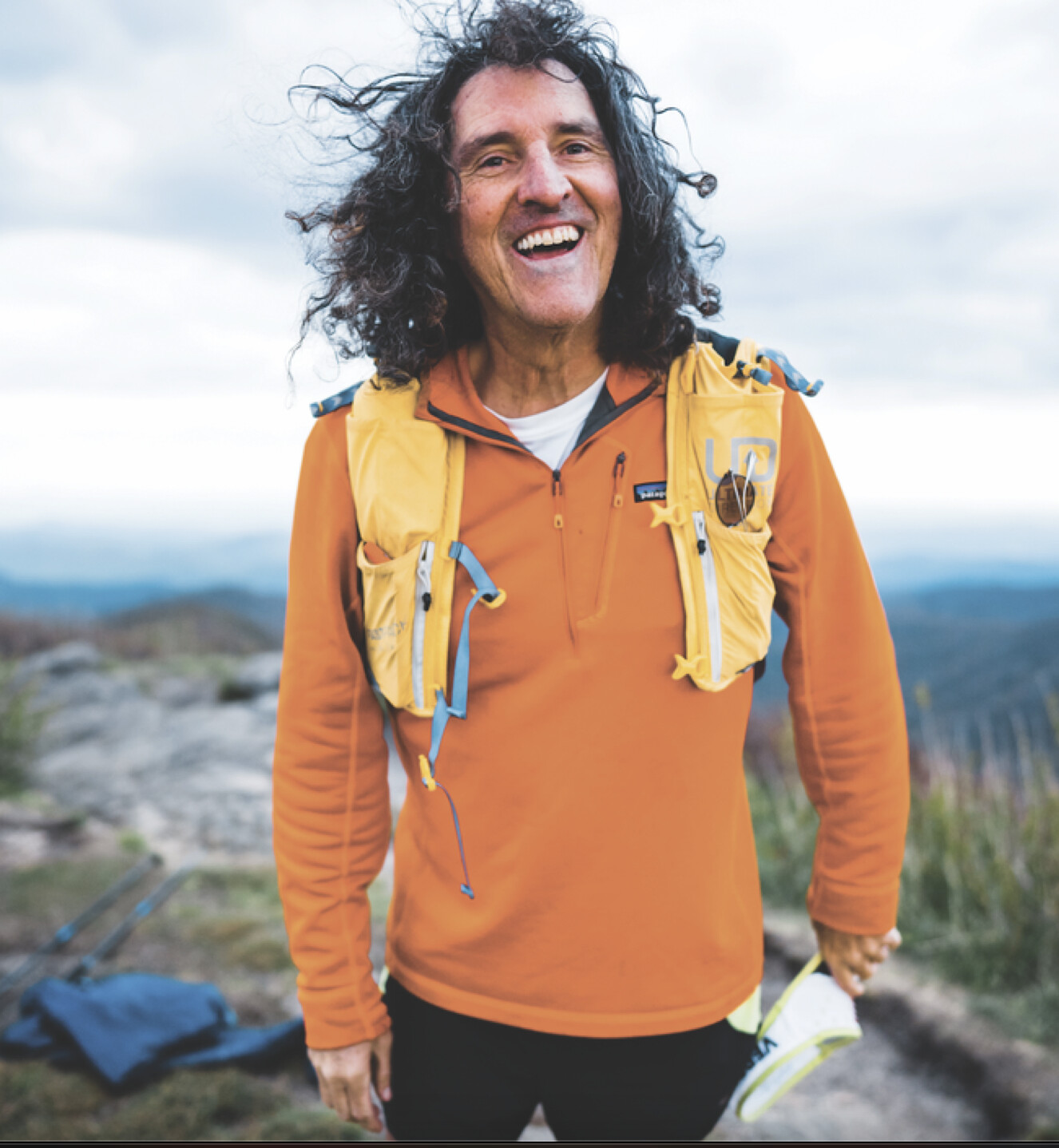
His biggest enemy now that he's 59, he says, is time. He admits he's getting slower, and DNFs due to missing time cutoffs in longer races have forced him to focus on 50Ks and European events where cutoffs are more manageable. At this point he doesn't care about improving his pace; he just wants to be out there as long as possible.
"It's not about how fast you go; it's how many pictures you take along the way," he says. But don't think he's lost his ambition. Quite the contrary. He sees himself as an astronaut on the fringe of running. His goal? To become the first in history to reach 1,000 ultra finishes.Known as the Main Street of America, Route 40 stretches from Delaware to Utah and becomes Cumberland Avenue in the tiny village of Lewisburg, Ohio. Rob Apple grew up in a small u-shaped cul-de-sac on its southern side. For him, the great highway was like the mighty Mississippi; it made him dream of taking it as far as it would go.
Something was always off about Lewisburg. A Children of the Corn kind of atmosphere. The local barber that cut his hair also burned crosses in his yard on Friday nights.
"I always knew I was going to get out of there, somehow, someway," he says.
Ironically, there was little laughter in the Apple home, and affection was rare-no hugging, no kissing. Being an only child in a poor neighborhood, he learned quickly to find his own fun. His earliest adventures were roaming around his mother's flower garden. Intoxicated by the smells and colors, he memorized their names and wrote them down, a habit he continues to this day. (He has spreadsheets for those, too.)
His mother, Ruth Ann, loved seeing people travel through. She often left food out for hoboes. As a result, they marked the telephone pole in front of her house to signal to others that they could get food there. When the famous breatharian, Barbara Moore, walked across the United States in 1960, she followed the marks and wound up at the Apple home. She left behind a food wrapper, which made its way into the family scrapbook along with a picture of Moore walking in her work boots. Ruth Ann idolized women like Moore and Grandma Gateway. She was a homebody but dreamed of someday getting out and exploring the world. According to Apple, it just wasn't in the cards. So, he wanted to do it for her.
By 13 he was the hippie kid with long hair, looking for a way out. His uncle owned a motorbike shop and turned him onto motocross, and perhaps his ticket to a large world.
"The bikers were a lot like ultrarunners," he says. "They were openminded, free, carried no judgement."
When a bad spill upended his Honda XR75, his racing career came to an abrupt halt. The gangly teen was distraught and became a roaming figure around the track. He'd show up to watch, desperate to be around it. But it wasn't the same; he needed more.
Of all the places a running career can start, the local library is an odd one. The year was 1976, and two things captured the young Apple's imagination: the Guinness Book of World Records and a black-and-white copy of a popular running magazine. It was the nation's bicentennial, and the magazine was promoting an unusual campaign. If you ran 285 miles in a year and documented it, you got a certificate. So, Apple set up a three-tenths-of-a-mile circuit around Crescent Drive and did just that. By the time the certificate arrived in the mail, he was hooked.
He ran track his freshman and sophomore years but wasn't good. His PR in the mile was a meager 5:30. He opted for trade school his junior and senior years, where he learned to draw. After graduation, Apple took a job designing school buses during the day and went to Wright State at night, where he studied accounting. Money was tight. It had always been tight. In the 10 years it took him to graduate, he'd get married, divorced and discover the one thing in life he wanted to do more than anything else: run ultras.
In another two years, he got his masters in sports physiology. A better paying job in accounting would follow, and weekends became an obsession to travel and race. Though he swore he'd never marry again, he would, and again he'd get divorced, but running would eventually take him, not only out of Lewisburg, but all over the world. In the 1980s, Apple was known as "the heartthrob of ultrarunning," says Gary Cantrell, aka Lazarus Lake. The former Trans-Am race director Jesse Riley likened him to a Greek statue. "He was just so damned good-looking, like he was carved out of marble."
He was a real chatterbox and a fun guy. Back then, he and Lake enjoyed tapping kegs post-race and watching people go to church. Lake has enough anecdotes about Apple to fill a healthy-sized book. One involves the Oak Mountain 50K, a dodgy motel with one bed, beer, weed and waking up to find trees snapped and patio furniture tossed in every direction. The two had slept through a tornado.
Lake later introduced Apple to who would become his second wife, Pam Jordan. At "Strolling Jim," she asked, "Who was that man that passed me?" Lake answered before she even finished her sentence: Rob Apple. Running finally took him from Lewisburg to Tennessee where Jordan lived.
Back then, the slim, six-foot two runner was not only handsome, but he was also fast.
"Oh, he could move," Lake says, citing a 1989 performance. At Lake's 41.2-mile Strolling Jim race in Wartrace, Tennessee, Todd White was crewing top competitor Dink Taylor when around mile 30 he looked back. "Dink, I don't know who's coming, but he's coming hard," he said. Taylor turned around just in time to see Apple fly past on his way to finishing in 4 hours 58 minutes, making the top 10. In the '80s, Apple recorded a 34-minute 30-second 10K, a 6-hour 26-minute 50-miler and logged 122 miles in 24 hours. In Richmond, Ohio, he got revenge on his high-school nemesis, the mile. In the costume themed race, he ran a 5:06 dressed as Don Johnson from Miami Vice: linen suit, teal tee underneath.
The ultrarunner and professor Dr. Thomas Mueller says Apple's attitude is everything, "He never met a person that wasn't his friend." After qualifying for Boston with a 3:06, in the race, he stopped at mile 23 to drink a cold one with a talkative spectator. He finished in 4:09. For someone dedicated to numbers, Apple is surprisingly more about the journey. He has developed a simple philosophy toward running long term: speed kills.
"If you want to be in it for 40 years, you gotta let that go," he says. The realization was sudden. Not like the inevitable giving up the ghost many experience when the body starts rebelling with age, Apple's breakthrough actually came when he was running his fastest times.
It was fall of 1990 and the 100K World Championship was coming to the Edmond Fitzgerald road race in Michigan. Apple was hyped. Just a few years before, he'd run an 8:28 and was hoping to place in the top 20. At that time, Apple was still an undergrad, and when a midterm was suddenly moved, it prevented him from participating.
Dejected, he found a closer race on the same Saturday, Virginia's Mountain Masochist 50-miler. Still, Apple couldn't get motivated, couldn't get his mind right but managed to finish feeling OK. So, for the next day, he found another race near Columbus, the Wolfpack 50K. Apple finished again, and fell in love with "weekend doubles." That weekend was a Eureka moment.
Trail running was just starting to boom, and there were now more racing opportunities than ever. And Apple started ripping them off. The Texas Trail 50K-17 finishes. The Ice Age 50K-17 finishes. The JFK 50-miler-15 finishes. The Rattlesnake 50K-15 finishes. The Vermont 100-seven finishes. Five Massanutten 100s and two Leadville 100s. And the list goes on and on and on. In 2002 alone, he ran a total of 44 ultras.
Usually a fixture at the back of races, Apple has managed a podium finish. In 2000 he was running Illinois' Howl at the Moon's half-trail/half-road ultra for the eighth time. He didn't feel particularly good starting out and didn't know what to expect. Around the halfway point, things turned around. He was feeling better and surprised that he was only down six minutes to the leader. Apple remembers thinking, "Hey, I've got a shot at this." He made a move, felt more and more energized as his pace increased. Then, he was suddenly in the lead. "I was just hoping to hang on," he says. Nervous at his prospects, he kept repeating to himself, "I want it to be over now!"That was over 20 years ago. Now, his lack of speed is his biggest impediment in reaching 1,000 finishes. In 2013, he had five DNFs, and in 2014 couldn't finish the Mountain Mist 50K, a race he's run 18 times. Apple combats the hard cutoffs of longer races by focusing on 50Ks and trail runs in Europe. While they may be technical and more difficult, the cutoff times tend to be more generous. But it's a gamble.
In 2018, he made two long trips to Europe, but weather and tough conditions resulted in two DNFs and four non-starts. His yearly output slipped to seven races, and his pocketbook took a big hit. Apple funds these adventures on his own dime. He's never had a sponsor but says he regrets nothing.
"No car or house could replace what I've spent on running," he says, a solemn tone to his voice.
Last December, Apple was looking forward to completing ultra #760 at the Bloodrock 50K outside of Birmingham, Alabama. The website describes the UTMB qualifier as "likely the hardest 50K you have ever run." With over 18,400 feet of elevation change, it is renowned as both technical and treacherous. Parts are so steep, they have ropes.
Apple had a rough go.
"I did the first loop and got back to the aid station and was going to have to do the next one backwards, which meant I would have to go down those ropes in the dark," he says. "I wasn't going to die out there, so I decided to go back to my hotel."
But yet another DNF hasn't gotten him down. Apple is so positive you expect rainbows to shoot from his eyes. He says even if time does eventually catch up with him, he's found a lot more to running trails than just the finish. In the past few years, the most important factor for him in choosing a race is location. His motto: "Never waste good meniscus on a bad view."However, when his runs began taking him to England, France, Switzerland, Scotland, Ireland and New Zealand, his second marriage also succumbed to his dedication to racing. And he's not bitter about it. Single and in great shape, he is not currently dating. He says he can't afford it, and it's too much hassle.
Apple rarely looks back. Of the 903 races he's completed, he doesn't have a single medal on his wall. Instead, he leaves them on his mother's tombstone back in Ohio. When her son would toss his medals into a corner or dump them in the closet, she would take them out and mount them on the wall. "I usually go up there every few years with about 10 pounds of medals," he says. His thick laugh trails off a little quicker. The small cemetery doesn't have anyone to clean off the stones, so Apple's medals form a sizable memorial to his biggest inspiration-the mother that taught him to dream big.
On the cusp of 60, Apple still has a lot to do. He won't say where he's planning his 800thrun, but he doesn't deny it's in Patagonia. At heart, he's an adventurer, in it for the people, the journey and the laughs. But don't tell him the finish line doesn't matter, because everyone knows he's counting.
"You don't wanna be that guy that dies at 799," he says with a wild howl. "I have fun running ultras, and it's up to me to make the party happen."
by Trail Runner Magazine
Login to leave a comment
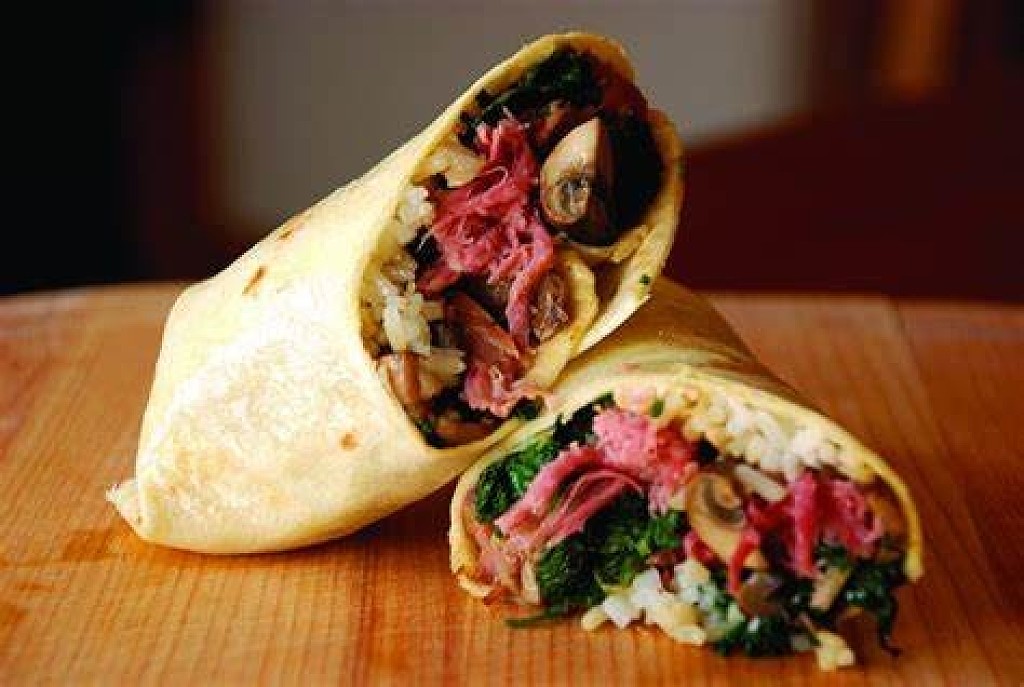
The study confirmed that eating pork might induce some false accusations of the abuse of nandrolone in anti-doping.
What is nandrolone? As defined by the National Library of Medicine, nandrolone is a synthetic, anabolic steroid analog of testosterone.
The NIH states nandrolone can be used for testosterone replacement therapy to increase nitrogen retention and fat-free muscle mass.

In bodybuilders, the use of androgenic-anabolic steroids to increase muscle mass is common.
Nandrolone decanoate is one of the most popular misused androgenic-anabolic steroids, although the effects on body composition are equivocal.
The use of androgenic-anabolic steroids, such as nandrolone, is common in bodybuildersCredit: Getty
Is it found in pork?
A study by the National Library of Medicine revealed that the consumption of pork can cause irregularly high levels of nandrolone.
Then NLM conducted a study using the urine of three male volunteers who consumed 310 grams of pork, which could be the meat, liver, heart and kidney.
According to the study, the three individuals delivered urine samples before and during 24 hours after meal intake.
Nearly 10 hours after the participants ate pork, the report showed high levels of nandrolone.
The consumption of pork can cause a high level of nandrolone within a 24-hour period of consumptionCredit: Getty
"19-NA and 19-NE concentrations in urine reached 3.1 to 7.5 microg/L nearby 10 hours after boar tissue consumption," the NLM reported in their study.
The study confirmed that eating pork might induce some false accusations of the abuse of nandrolone in anti-doping.
What did Shelby Houlihan say caused the high level of nandrolone?
In an Instagram post announcing her suspension, Houlihan claimed she had “never even heard of nandrolone” and blamed a contaminated pork burrito she ate 10 hours before the positive test in January.
Houlihan insisted that ingesting the anabolic steroid must have inadvertently come from eating a burrito “from an authentic Mexican food truck that serves pig offal near my house in Beaverton, Oregon” 10 hours before a 6am drugs test last December.
Login to leave a comment
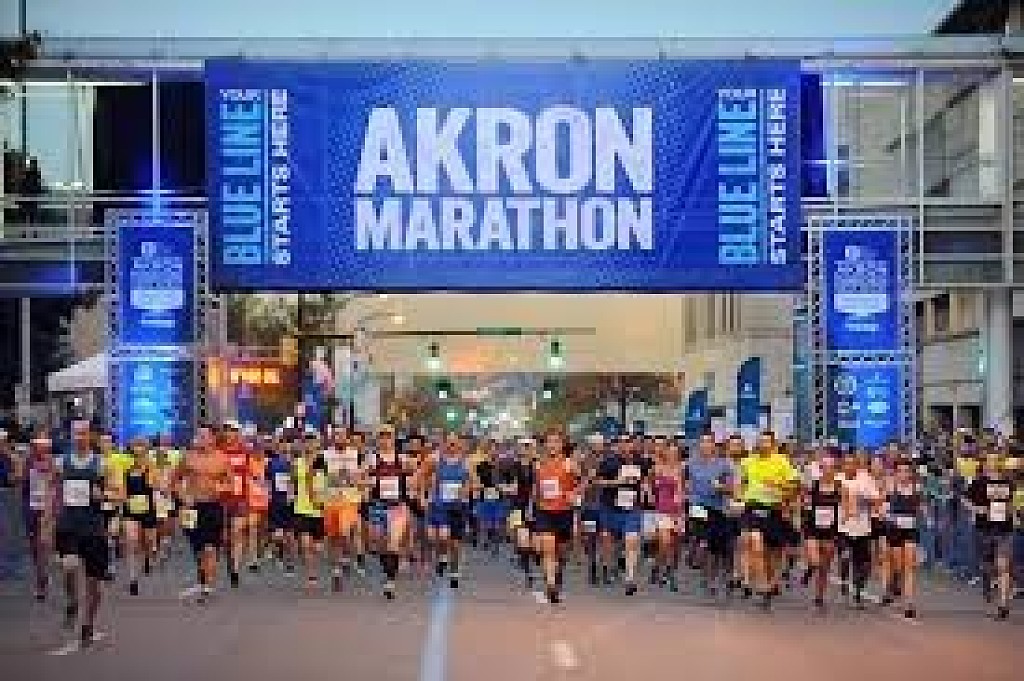
2021 Akron Marathon Announces Blue Line Striders Training Program with SummaCare and Summa Health
The Akron Marathon Race Series presented by Summa Health is thrilled to announce its Blue Line Striders training series in partnership with SummaCare, giving its running community a sneak peek into the new FirstEnergy Akron Marathon, Half Marathon & Team Relay course.
During the Blue Line Striders training runs, happening once a month leading up to race day, participants will have the opportunity to run different sections of the Akron Marathon course. Additionally, each time runners meet, a doctor from Summa Health will join to discuss a health topic common for runners. All distances and paces are welcome!
Each Blue Line Striders training run has been carefully chosen based on the training plans outlined by the Akron Marathon and is the perfect supplement to assist runners leading up to each race.

Blue Line Striders training runs will begin at 7:00 a.m. and will preview sections of the FirstEnergy Akron Marathon course:
4 miles: Sat., June 12, Relay Leg 1, 199 S. Broadway St, Akron, OH 44308
7 miles: Sat., July 10, Relay Leg 2, 199 S. Broadway St, Akron, OH 44308
7 miles: Sat., Aug. 21, Relay Leg 4, 1466 N. Portage Path, Akron, OH 44313
12 or 20 miles: Sat., Sept. 4, 199 S. Broadway St, Akron, OH 44308
Runner’s Choice: Sat., Oct. 9, 499 Memorial Parkway, Akron, OH 44310
“As the new presenting sponsor of this year's Akron Marathon Race Series, Summa Health is actively making a deeper connection with our blue liners and supporting runners not only on race day, but throughout their training season in a meaningful way,” states Anne Bitong, president and CEO of the Akron Marathon. “This program is their way to show its incredible level of support, and was designed to act as the perfect complement to the Akron Marathon training calendar.”
Topics discussed by Summa Health physicians will include common spring/summer injuries, the importance of long runs, the importance of cross-training/core work/stretching, personal record tips, avoiding the wall, and post-race recovery.
“We are thrilled to bring the expertise of our physicians to those participating in the Blue Line Striders Training Series,” said Dr. Nilesh Shah, Summa Health Sports Medicine Medical Director. “We know physical activity can sometimes come with injuries. By having these discussions, we hope to foster a safe and fun running environment for all, regardless of pace or experience.”
Login to leave a comment

Akron Marathon Race Series
The marquee event of the Akron Children’s Hospital Akron Marathon Race Series, the Akron Marathon, Half Marathon, & Team Relay presented by First Energy receives a fresh new look ! Runners will experience an unforgettable start inside the historic grounds of Stan Hywet Hall & Gardens before taking an exclusive foot tour of the City of Akron. The Goodyear Half...
more...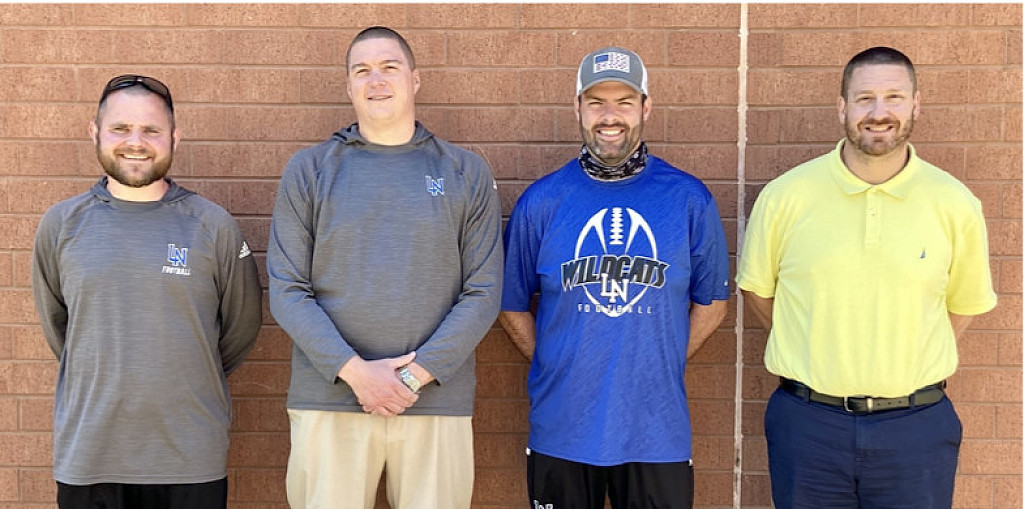
Meet the Thick Boys Running Club—These Runners Have Lost a Combined 350 Pounds and Counting
Four football coaches in North Carolina started running together last summer, and they have inspired people all over the state.
A group of four Lake Norman High School football coaches in Mooresville, North Carolina, have collectively lost over 350 pounds through running since July 2020.
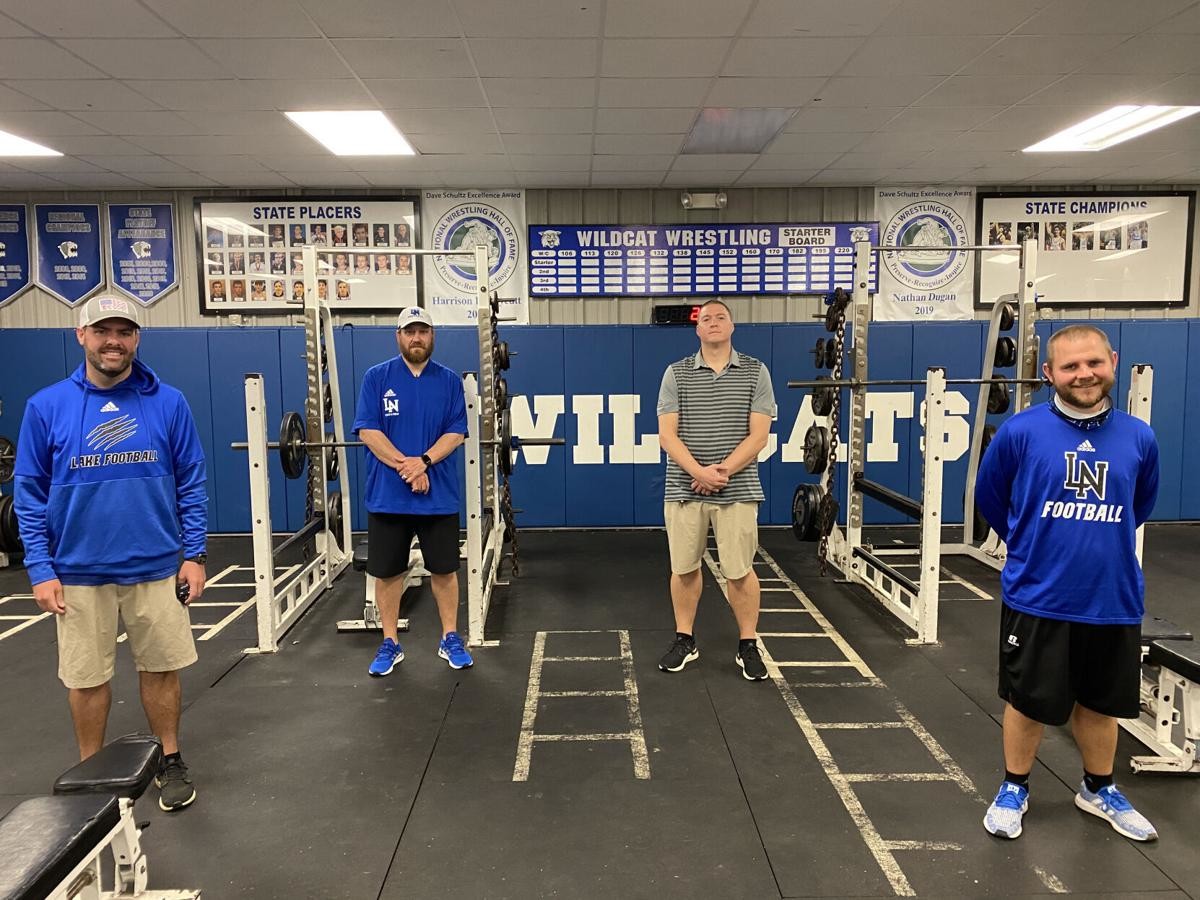
And together, they call themselves the Thick Boys Running Club.
The four coaches are all former college football players who struggled with weight after their playing days were over; they said they had wanted to lose weight for years. When the pandemic hit and their coaching and teaching went virtual, they found themselves with some extra time.
→ Want to read about more inspirational running stories? Join us at Runner’s World+ ✨
Jay Keener, 40, the school’s athletic director and football coach, was the first to make a move.
“I always justified my weight [thinking that] 300 pounds isn’t bad, and then 310. And then, I was afraid to weigh myself,” Keener told Runner’s World. “When I saw 345, I realized it’s not going to get an easier to get the weight off later, so I better do something.”
Keener started on the track by running to the straights and walking the curves. A week later, he recruited offensive coordinator Sean Fitzgerald—who weighed 284 pounds, his highest ever—to join him.

By early August, head coach Jonathon Oliphant (278 pounds) and defensive coordinator David Johnson (365 pounds) joined Keener and Fitzgerald in running daily laps around the track. As the four runners progressed, they started doing stadium stairs, and ran 5Ks and 10Ks. Rarely did any of them run without a partner.
“There’s literally 300 feet between the school and the field house, and I would be out of breath,” Johnson told Runner’s World. “That’s how out of shape I was. Being 365 pounds was tough for me. Having these guys helping and encouraging me, it gave me the direction I needed, and it helped having that support system over the past eight months.”
The four coaches wrote their weights on a whiteboard in the field house by the stadium, and they weighed in every Friday starting on August 24. Instead of competing against one another to see who could individually lose the most weight, they decided to work together and collectively reach milestones. They celebrated every time they hit a combined 50 pounds lost.
“Myself and coach Oliphant had been involved in weight-loss competitions before against people, and we wanted to do something different,” Fitzgerald told Runner’s World. “Everyone wanted to pull their own weight. It was much more fun and we never had to go at it alone.”
The first to hit the century mark was Johnson, who has lost nearly 120 pounds. Chasing him for second place is Keener who has lost over 80 pounds to get below 200 followed by Oliphant who has lost just under 80 pounds, and Fitzgerald who has lost over 70 pounds.

With kids back to the classroom and at practice, the coaches are doing more runs before and after school. And all four have noticed some stares this spring.
“It’s definitely a combo of the weight loss and wearing a mask, but it’s been difficult for people to make me out. They wonder who the new teacher is,” Johnson told Runner’s World. “People keep coming up and saying how proud they are of us and are inspired. People are telling us that they saw me out there, and now they’re running and trying to lose weight. That’s the best part to me. It’s an influence you had that you didn’t know you had.”
Additionally, their athletes are taking particular notice.
“The kids have really gotten behind us with their comments and curiosity, asking how far we ran today and how much we lost that week,” Oliphant told Runner‘s World. “They get excited about it, which has helped us keep going. It’s a lifestyle we’re proud to share with them and one we hope they take with them in their lives.”
The four runners said they have received letters of support from people in the community, and notes from coaches around the state. And their families have been supportive, and appreciated the healthier lifestyle at home, especially the recipes shared between the runners.
“My mom came and ate lunch with us a while back and she made the comment that we sounded like a bunch of housewives sharing recipes,” Fitzgerald said.
The Thick Boys Running Club plans to grow their group in the future. They hosted the inaugural Thick Boys Running Club 5K in September and pulled in more than $2,400 for local charities. They hope to host another run in 2021.
“I’ve dealt with weight issues my whole life,” Oliphant said. “Now, I got a handwritten letter from a guy from a couple counties north saying how we motivate him, and he’s 40-something years old. I relate to that and it’s been so positive to see others inspired by seeing stories like their own so they know it can be done. Being able to be that positive for someone, it’s a blessing.”
by Runner's World
Login to leave a comment
Halifax Road Hammers to run 14,000K for city's homeless
Thirty teams of four will each run 477K in the month of December for the club's #StridesForShelter initiative
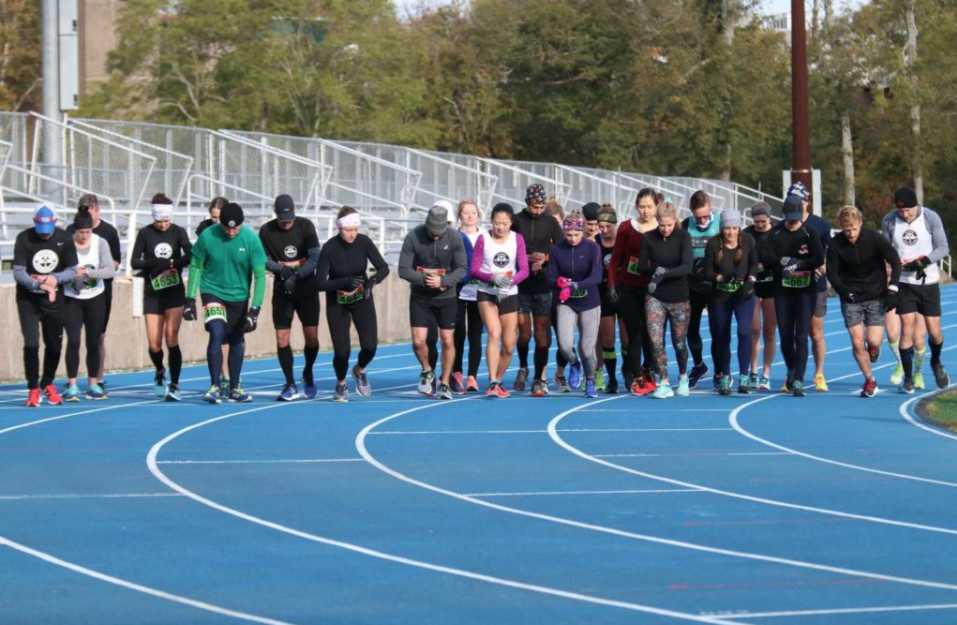
Members of the Halifax Road Hammers, one of the biggest running clubs in Nova Scotia, have a busy few weeks ahead of them with their December-long initiative #StridesForShelter. This fundraising challenge will see 30 teams of four runners each running 477K. The campaign started on December 1, and the teams of Road Hammers have until the end of the month to hit that 477K goal, which represents the number of homeless people in Halifax. In total, the club will run a collective 14,310 kilometres by December 31 while raising funds and supporting an important cause along the way.
The CBC recently reported that Halifax had reached its current total of 477 people living homeless in the city. This number is more than double the 230 people who were reported homeless in October 2019. Within that group of 477 people exists a smaller population of 375 citizens who are considered chronically homeless, which means they haven’t lived in suitable housing for at least six months. Once again, this is more than double the results from the 2019 report, which said 140 people were chronically homeless.
Road Hammers head coach and founder Lee McCarron says he knows how difficult this year has been for everyone, including his athletes. “We have a group of incredible runners on our team,” he says. “This is a group of people who each have personal challenges and obstacles they have had to overcome during the pandemic, and yet they have found a way to stay focused and supportive of each other throughout. I wanted to package up that energy, grit and determination and offer it to a group of people who need our help.”
The #StridesForShelter initiative is an opportunity for the Road Hammers to team up (while still running apart) with one another and work toward a collective running goal while also giving them the chance to support a greater cause as well. “By focusing on our mindset, action and attitude we can take the best care of ourselves and do what we can to strengthen our community,” McCarron says. The proceeds from the club’s fundraiser will go straight to Shelter Nova Scotia, a nonprofit that operates six facilities in the province and supports more than 1,300 people each year.
Anyone interested in learning more about Shelter Nova Scotia or donating to the organization can click here. If you do donate, be sure to include that you’re supporting the #StridesForShelter fundraiser when asked “Who are you honouring?”
by Running Magazine
Login to leave a comment
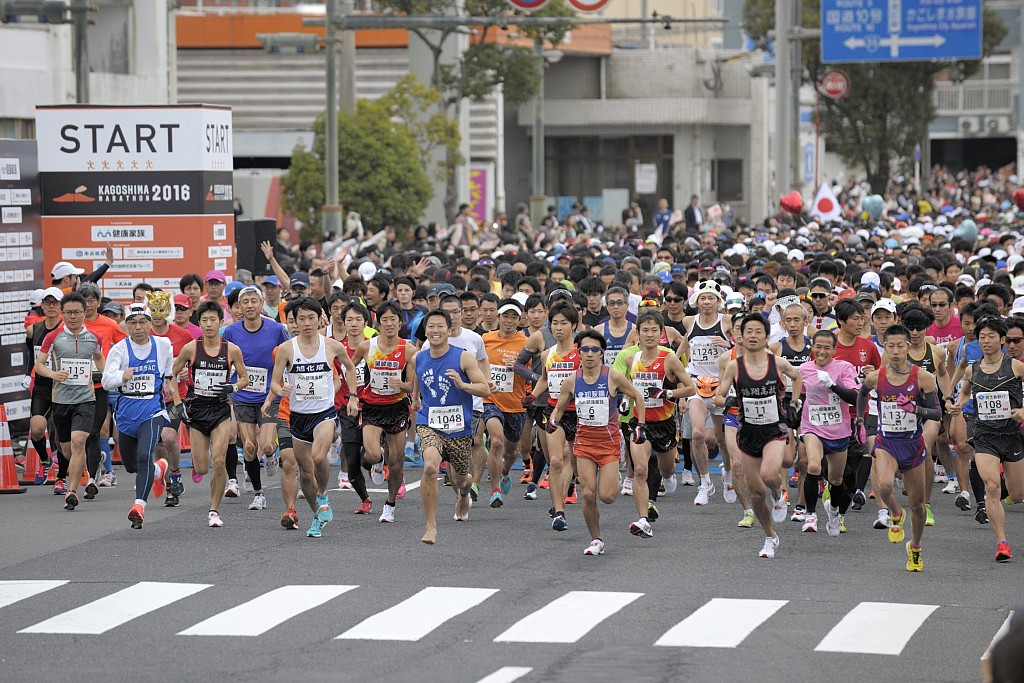
2021 Kagoshima Marathon Canceled and updates on other Marathons in Japan
We have studied a variety of options for staging the 2021 Kagoshima Marathon, but with no end to the coronavirus crisis in sight we have come to the unfortunate conclusion, in light of the need to ensure the safety of the runners, event staff and local residents, that it would not be possible to hold the race as planned and that it must be canceled for the second year in a row.
We sincerely pray for a swift end to the crisis and that we can once again hold the Kagoshima Marathon as a safe event that will delight runners and locals alike. We will be working hard to make that a reality.
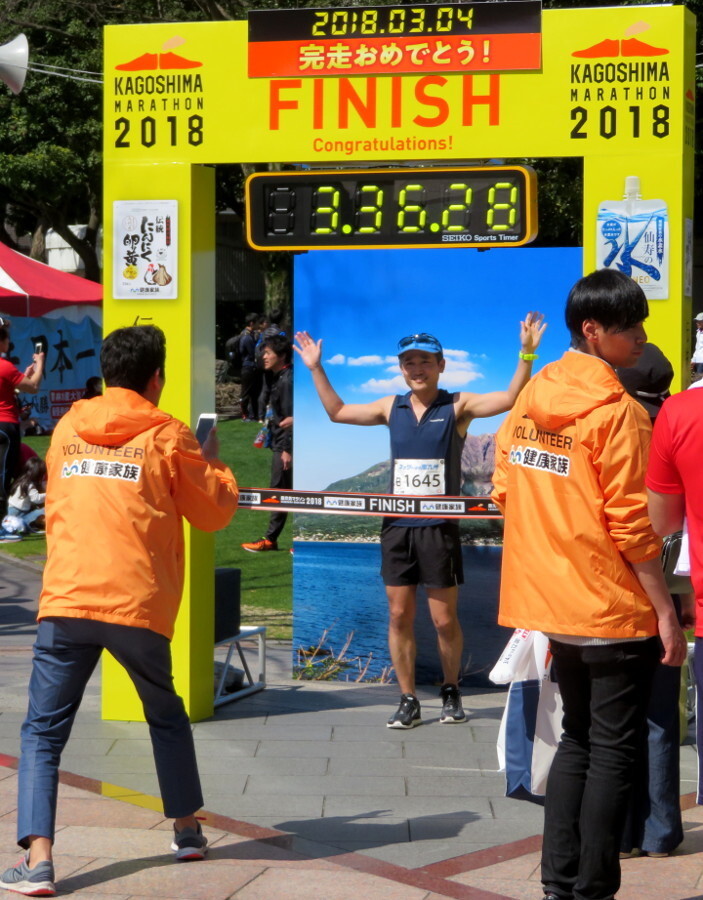
With regard to priority entry for those who were entered to run in 2020, we are still studying how we might move forward with improved coronavirus measures in the future, including examining the field size, and do not have a clear answer at this point.
We will post that information as soon as it has been determined and thank you for your patience until then. We are planning to hold events including a running clinic and an online marathon and will also post that information on our website as soon as all the details have been decided.
Kagoshima Marathon Organizing Committee
Major Japanese marathons still scheduled to happen in 2020 and 2021 marathon announcements to date:
Dec. 6: Fukuoka International Marathon (370) - scheduled with limited field size
Dec. 20: Hofu Marathon (2,724) - scheduled with limited field size
2021
Jan. 10 - Ibusuki Nanohana Marathon (10,954) - canceled
Jan. 31 - Katsuta Marathon (10,627) - canceled
Jan. 31 - Osaka International Women's Marathon (423) - TBA
Feb. 7 - Beppu-Oita Marathon (3,141) - canceled
Feb. 14 - Ehime Marathon (9,554) - canceled
Feb. 14 - Nobeoka Nishi Nippon Marathon (536) - TBA
Feb. 21 - Kyoto Marathon (13,894) - canceled
Feb. 21 - Kochi Ryoma Marathon (10,924) - canceled
Feb. 21 - Kumamoto Castle Marathon (10,444) - canceled
Feb. 21 - Kitakyushu Marathon (9,485) - canceled
Feb. 21 - Okinawa Marathon (7,990) - canceled
Feb. 28 - Shonan International Marathon (16,821) - rescheduled from Dec. 6
Feb. 28 - Himeji Castle Marathon (6,938) - canceled
Feb. 28 - Iwaki Sunshine Marathon (5,259) - canceled
Feb. 28 - Lake Biwa Marathon (174) - TBA
Mar. 7 - Kagoshima Marathon (9.356) - canceled
Mar. 7 - Tokyo Marathon (151) - postponed to October 17
Mar. 14 - Shizuoka Marathon (9,802) - canceled
Mar. 14 - Nagoya Women's Marathon (96) - scheduled with limited field size
Mar. 21 - Itabashi City Marathon (13,310) - canceled
Mar. 21 - Koga Hanamomo Marathon (8,766) - canceled
Mar. 21 - Saga Sakura Marathon (8.509) - canceled
Mar. 28 - Tokushima Marathon (11,010) - decision in early November
Mar. 28 - Sakura Marathon (5,614) - TBA
Apr. 18 - Kasumigaura Marathon (10,096) - decision by end of October
Apr. 18 - Nagano Marathon (8,082) - decision by end of October
by Japan Running News
Login to leave a comment

Tokyo city officials are in a public feud with the International Olympic Committee over IOC plans
The abrupt decision to shift the marathons and race walks was announced almost two weeks ago by the IOC. Made without consulting the city or local organizers — to move next year’s Tokyo Olympic marathons 800 kilometers (500 miles) north to Sapporo to avoid the capital’s summer heat.
Tokyo Governor Yuriko Koike is angry about it. Her allies say no change is needed and have raised questions about who will pay if the move goes through, and have not ruled out a lawsuit to recover damages.
Taro Shirato and Hiroshi Yamada, members of Koike’s political party in the metropolitan legislature, told a news conference Tuesday that moving the marathon would cost at least $34 billion yen (about $310 million).

The IOC said it is making the change, thinking first of athletes’ safety from Tokyo’s blistering summer heat.

Koike’s allies offered a different take. Koike is one of Japan’s most influential politicians and just a few years ago was viewed as a potential candidate for prime minister. And she’s miffed about not being consulted.
“Although they (IOC) talk about so-called athletes first, this can only be perceived as IOC first,” Shirato said through an interpreter.
“You get the sense that no considerations have been made for the athletes,” Shirato added, “or the spectators who had already bought their tickets and who were looking forward to these events, or the potential spectators who will be cheering on the streets, and also to the people involved in the operation.”
In a statement to The Associated Press, the Tokyo city government said it wants to see “sufficient scientific evidence” to justify the switch. It also asked if any other city was considered besides Sapporo.
Don’t expect the IOC to budge. It has inspectors in Tokyo this week looking at preparations with the Olympics opening in just under nine months on July 24.
IOC member John Coates heads the team and is an ally to President Thomas Bach. He has said repeatedly the IOC does not intend to change its plans, and has told that to Koike.
The IOC fears worldwide television audiences might see a repeat of the recent world track and field championships in Doha, Qatar, where 28 of 68 starters failed to finish the women’s marathon and 18 of 73 men failed to complete the course.
The races started at midnight in Doha with TV showing runners collapsing on the course. The scenes apparently shocked IOC President Thomas Bach.
Yamada acknowledged the heat posed a risk. He said Tokyo has proposed moving the start to 5 a.m., which is mid-summer sunrise in Tokyo. Last week city officials also floated the idea of a 3 a.m. start.
Estimates suggest the temperature would be 27 degrees C (81 degrees F) at 5 a.m., and would be 25.4 degrees C (78 degrees F) in Sapporo for a 7 a.m. start. The starting temperature in Doha for the women’s marathon was 32.7 degrees C (91 degrees F).
Yamada described the starting temperatures in Tokyo and Sapporo “on a par.”
“We do recognize and understand that the heat is a very important factor, but we do not believe that at this moment it represents an overly excessive risk,” Yamada said.
Tokyo’s soaring costs are also a major issue.
A government audit report last year said Tokyo was spending about $25 billion to organize the Olympics, all of which is public money except for $5.6 billion from a privately financed operating budget.
Tokyo said in its bid in 2013 that the Olympic would cost $7.3 billion.
Yamada was asked who would pay for the increased costs.
“In the event this is changed to Sapporo, then I believe the citizens of Tokyo will not be convinced they need to pay,” Yamada said. “What I can say is that the Tokyo Metropolitan Government should not be the one to pay.”
Asked if the Tokyo government might sue for damages, Yamada hedged.
by Stephen Wade
Login to leave a comment

Tokyo 2020 Olympic Games
Fifty-six years after having organized the Olympic Games, the Japanese capital will be hosting a Summer edition for the second time, originally scheduled from July 24 to August 9, 2020, the games were postponed due to coronavirus outbreak, the postponed Tokyo Olympics will be held from July 23 to August 8 in 2021, according to the International Olympic Committee decision. ...
more...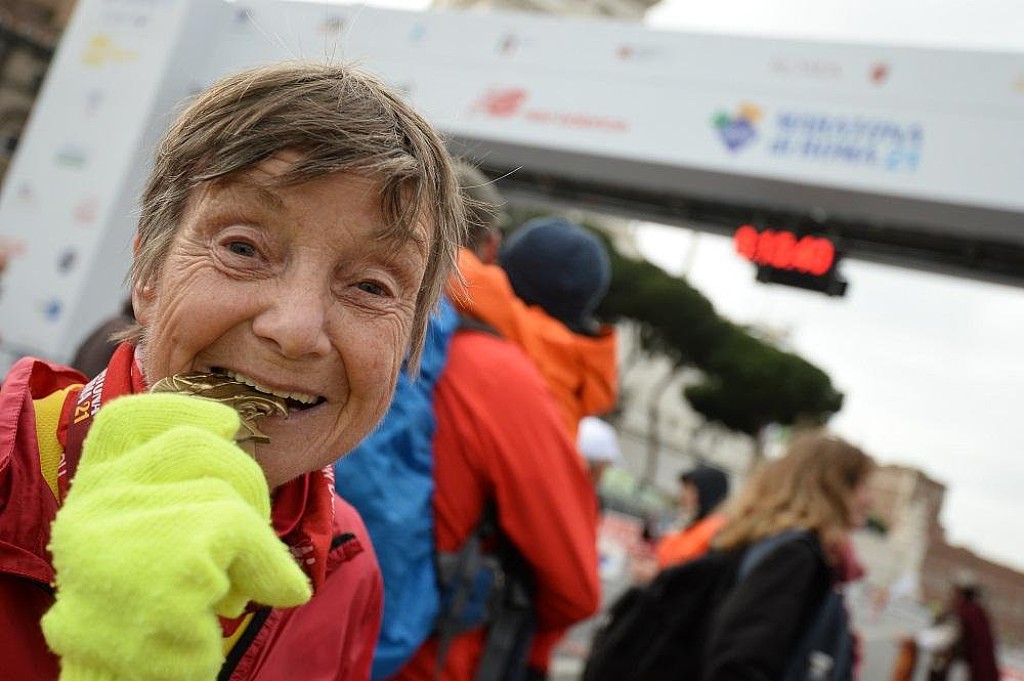
Berlin resident Sigrid Eichner, 79, has run 2,200 marathons and she didn’t start running until age 40
Kathrine Switzer meets a lot of runners. The 261 Fearless founder (who was the first woman to run the Boston Marathon with an official bib, back in 1967) travels the world, promoting women’s empowerment through running. But even she was shocked, during her visit to the Berlin Marathon last month, to meet a woman who has run 2,200 marathons which quite possibly is more than any other woman alive.
Born in 1940, Sigrid Eichner’s running began metaphorically–as an infant, she “ran” from Allied bombs, and from the Russians, with her family. Her passion for physical activity was born after the war, when, as a talented gymnast, she was sent to a boarding school for athletes. It wasn’t until she was a working mother of 40 that she started running, to take time for herself and escape domestic life (and possibly an unhappy marriage), according to one report.
After the fall of the Berlin Wall in 1989, running became a way for her to explore the world.
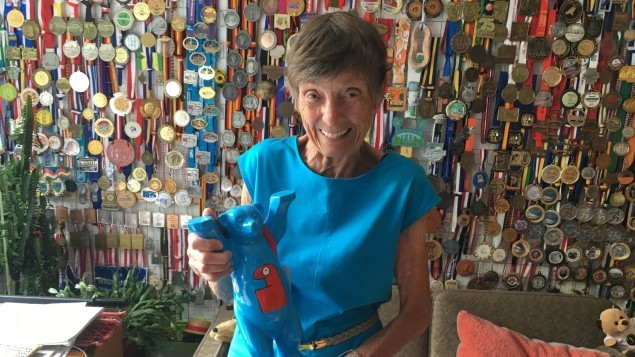
When we tried to verify the number, we found her entry on the Association of Road Racing Statisticians (ARRS) site, which shows 681 marathon results between November 29, 1981 and October 31, 2017, and includes the 2003 Niagara Falls Marathon and New York City Marathon during her only visit to North America.
(The ARRS site has been in limbo since the death of its driving force, Ken Young, in 2017.) The German ultramarathon site D-U-V.com lists between one and 23 ultra results for Eichner every year between 1981 and the present. It’s fair to say that Eichner has done more running than anything else, with the possible exception of breathing, during the last 40 years of her life.
Her children now grown, she admits she runs to escape loneliness. She has a literal curtain of race medals in her home, a room full of trophies from her younger days, and a closet full of race shirts.

It is sometimes suggested that people who race a lot must have money in order to afford the constant travel and race entries, but this does not appear to be the case for Eichner, most of whose races nowadays are in her native Germany.
She favors hostels over hotels, and has occasionally slept on the floor of the race expo to save money. Last year she spent just over 3,000 euros ($3310US) on 88 races, including travel and accommodation. She spoke of contacting the Guinness World Records organization in the hope of attracting a sponsor, but so far there is no official Guinness record.
She is rarely injured, though one report says she was once badly hurt in a car accident, and now has four screws in her back.
Occasionally running multiple marathons in a single weekend, Eichner says, “The first 30 minutes are the hardest.”
by Anne Francis
Login to leave a comment
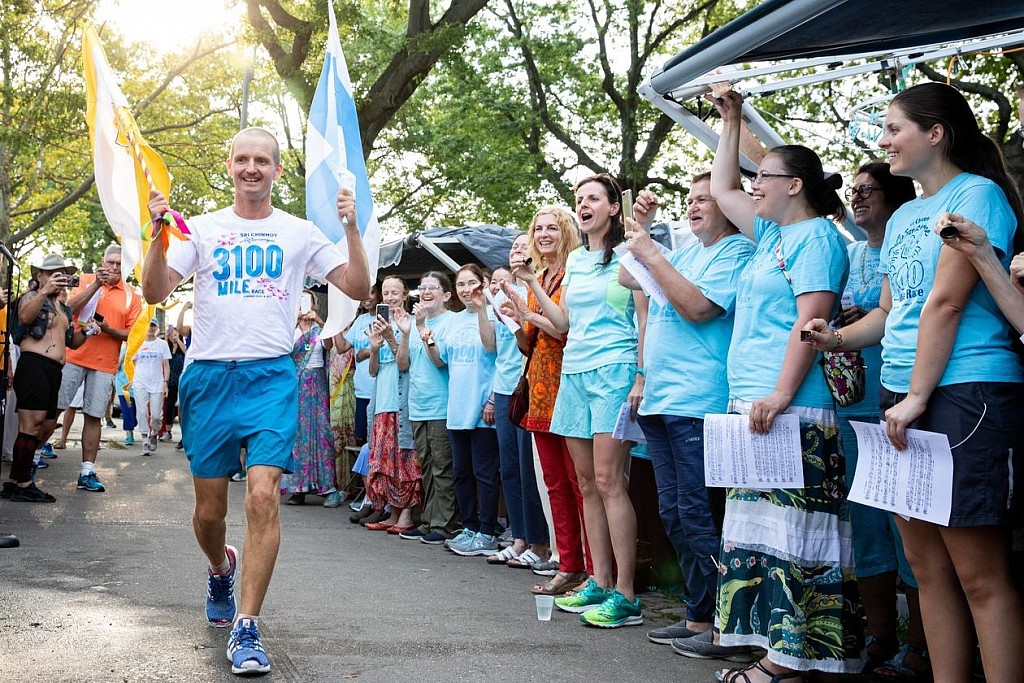
Ashprihanal Aalto Wins the 23rd Sri Chinmoy 3100 Mile Race
Ashprihanal Aalto is ready to go to sleep.
The 48-year-old Finn just won this year’s Self-Transcendence 3100 Mile Race. He crossed a duct-tape ribbon Friday after running more than 60 miles on each of 48 consecutive days around the same half-mile course in the Jamaica Hills neighborhood of Queens, N.Y.
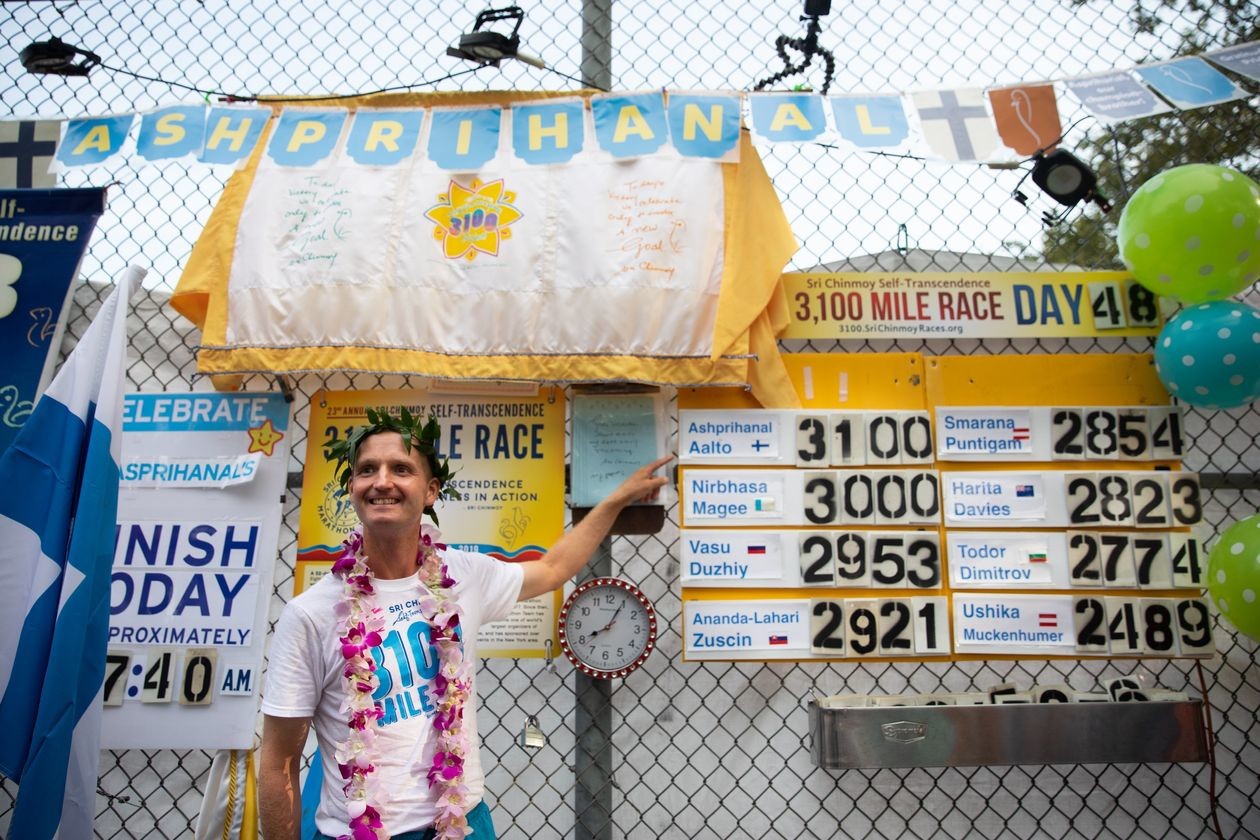
This is Mr. Aalto’s 15th time completing one of the hardest footraces in the world, which requires runners to cover 3,100 miles over 52 days. It is often compared with ultra-endeavors like the 6633 Arctic Ultra that crosses the Arctic Circle and the Badwater Ultramarathon in Death Valley. The concrete sidewalk course wraps around one block that is home to Thomas A. Edison Career and Technical High School and its baseball field, with a view of Grand Central Parkway.
Guru Sri Chinmoy, an Indian athlete and philosopher who died in New York City in 2007, started the run in its current form in 1997.
His goal: to achieve the seemingly impossible—and in the process, transcend the limitations of the mind through meditation and persistence.
Not to mention, New York City’s summer heat, exhaust from nearby traffic and crowds of children walking to school.
Mr. Aalto isn’t the only one ready for a nap. The race relies on dozens of helpers and volunteers who work around the clock.
Hometown friends, co-workers and fellow disciples of Mr. Chinmoy, sleep very little for the month and a half. They spend all day on chores, including fixing the runners’ shoes and making tea and food for the eight runners participating this year who consume up to 110,000 calories a day total.
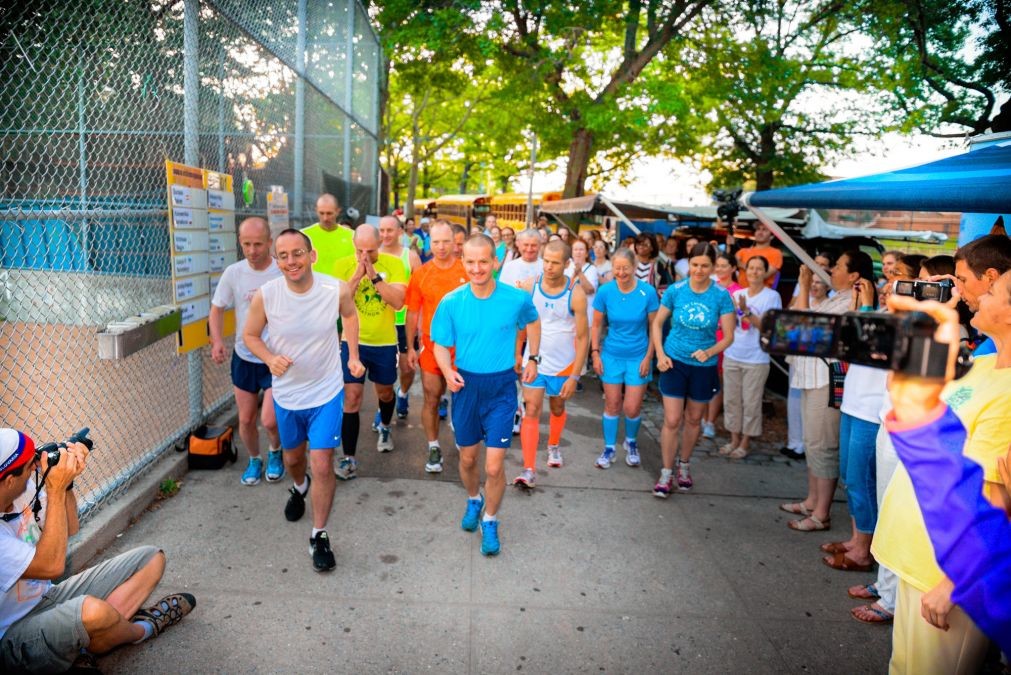
“You don’t want to have to come through here wondering what to eat,” said race director Rupantar LaRusso.
“I’m very happy,” Mr. Aalto said, who has won the race eight times now. “I can go do other things, rather than run, run, run.”
by Acacia Coronado
Login to leave a comment

3100 Mile Race
The Self-Transcendence 3100 Mile Race. Called 'The Mount Everest of ultramarathons' by The New York Times, is the longest certified footrace in the world. Athletes are able to test themselves in a format unlike any other ultra-marathon event. In order to meet their goal of 3100 miles in 52 days, they must log an average of 59.6 miles per day....
more...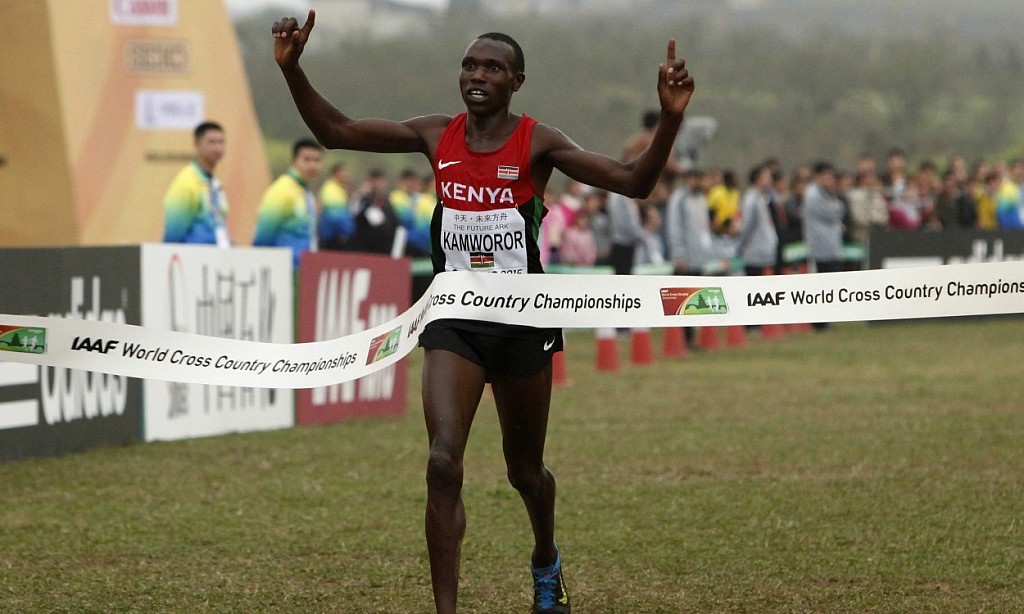
World Cross Country defending champion Geoffrey Kamworor is ready to defend his title this weekend
World Cross Country defending champion Geoffrey Kamworor has sent a warning to his opponents ahead of the world championships in Denmark that he is not ready to relinquish his title.
Kamworor will lead team Kenya for the championships to be held on the 30th of March seeking to make it a third in a row.
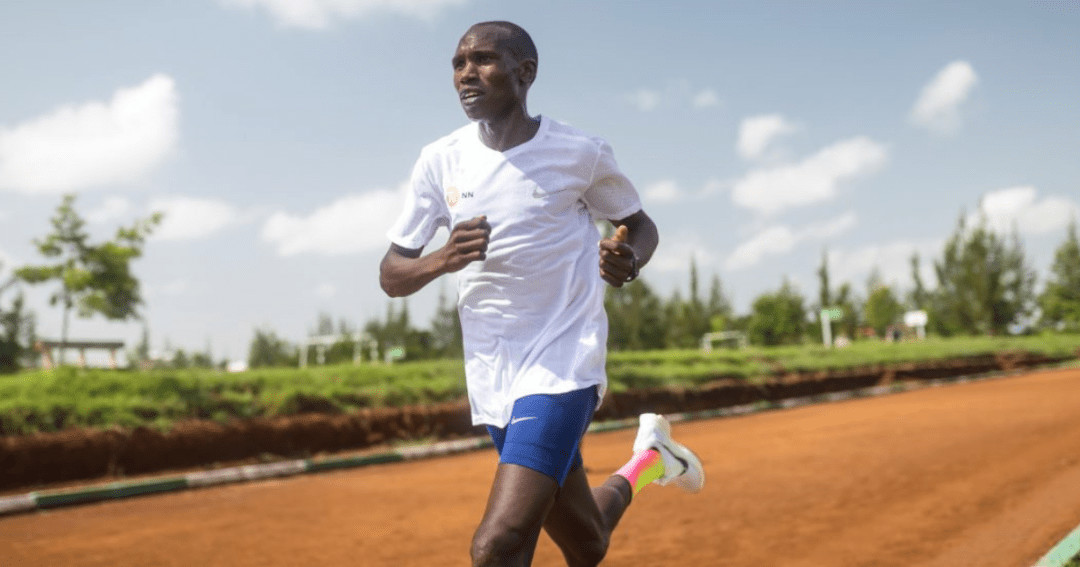
As defending champion, let’s take Kamworor first. Not only will he be going for his third straight senior title at cross-country in Aarhus, but also for a sixth straight world title in six years, his two previous cross-country victories in Guiyang (2015) and Kampala (2017), augmented by World Half Marathon championships in 2014, 2016 and 2018.
Kamworor has already joined the group of men to have won at least two world cross-country titles. A further triumph this weekend would put him in the select company of those to have won three or more – Kenenisa Bekele (six), John Ngugi and Paul Tergat (five) and Carlos Lopes (three).
He finished only fifth in the Kenyan championship, won by Amos Kirui, but neither the Kenyan, nor Ethiopian, trial has proven a reliable guide to relative finishing order at recent world championships.
Expect Kamworor to present on the start line at Aarhus in excellent shape. He deserves the status of the "man to beat."
There will be $310,000 of prize money on the line, certainly the most of any cross-country races.
Login to leave a comment

World Athletics Cross Country
Athletes from across the globe will descend on Australia for the World Athletics Cross Country Championships Bathurst 2021. Mount Panorama is better known as the home of Australia’s premier endurance motor race, but in one year from now, it will welcome the world’s best endurance runners for what will be Australia’s first World Athletics Series event in...
more...
A movie that celebrates the spiritual side of running
Login to leave a comment
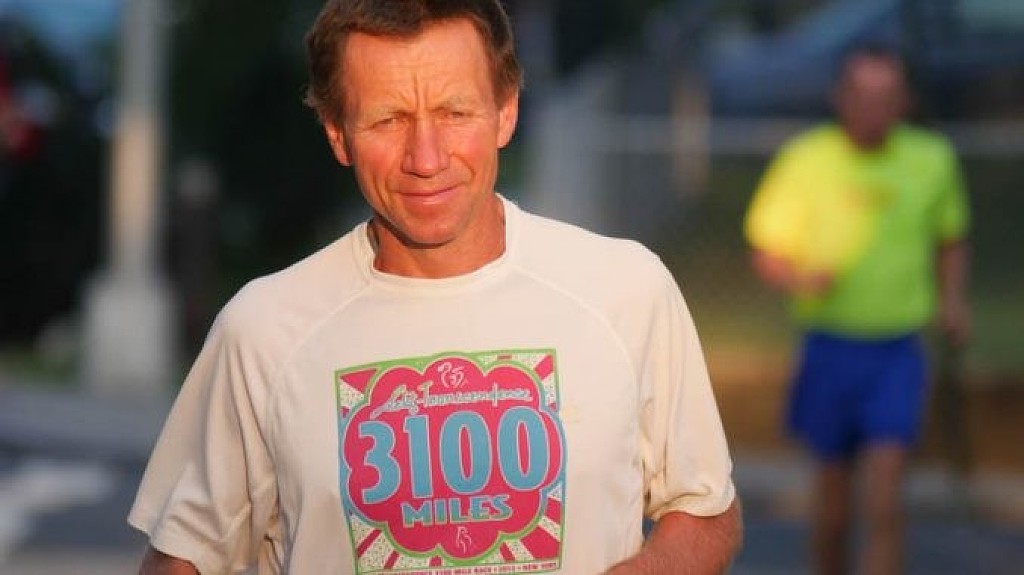
Vasu Duzhiy wins Sri Chinmoy Self-Transcendence 3100-mile ultra
Login to leave a comment
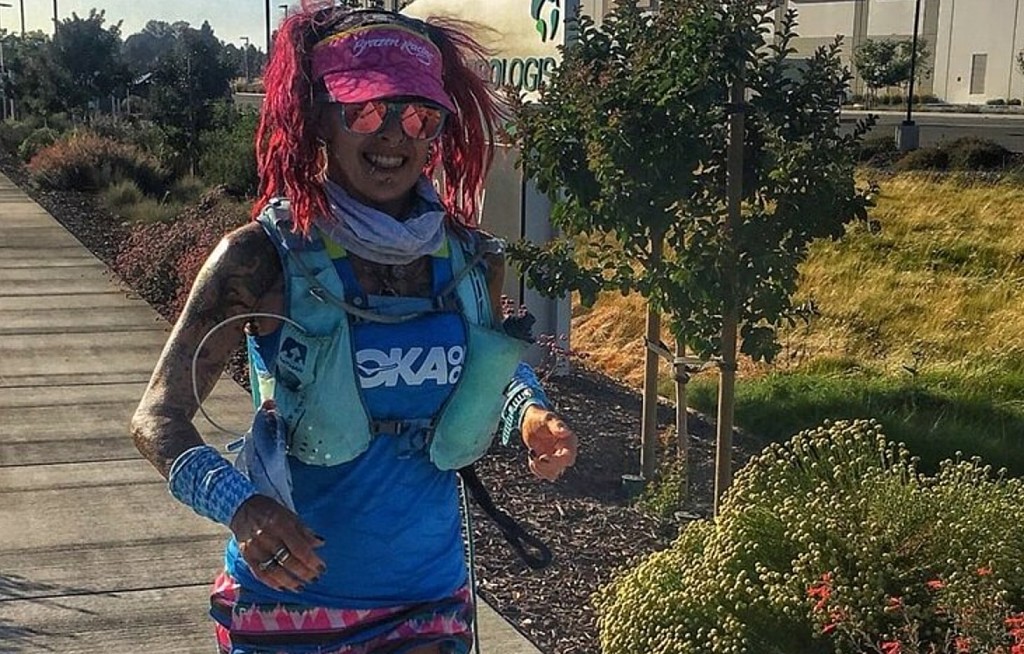
Catra Corbett Smashes the 310 mile John Muir Trail record
Vegan ultramarathon runner Catra Corbett has set a new record on the legendary John Muir Trail. The 53-year-old athlete, who has openly spoken out about her previous abuse of crystal meth and alcohol, had already set a previous record on the 212-mile course.
Now she has just set another in the 310-mile course known as the Muir ramble route, which covers 310 miles of California, and was originally explored and recorded in 1868 by John Muir. Corbett's new record is for the Fastest Known Time (FKT) for completion.
She finished the 310 miles - which became 323 miles with diversions - in seven days, nine hours, and 49 minutes. Corbett, who has run over 100 races of 100 miles or more - and is world famous for her exploits and her commitment to positive thinking and living - was supported by a small team who paced and equipped her during the record attempt.
"There is no way I could have done it without Phil Nimmo help but mostly Dave Wiskowski and Chubky they were my crew on foot the last 66 miles," Catra told followers on social media. "We spent the night in the wilderness huddled together. They pushed me and helped motivate me. We all fell apart many times out there but kept it together.
"There were places there were no trails, and we had to route find our way. I'm happy I knew the last 15-mile section. We crossed slowly over two miles of rockfall, but the views were amazing. We almost had to turn around because the trail was completely gone due to a recent rockfall. Dave navigated us safely up and over it. We worked as a team to get it done."
Login to leave a comment
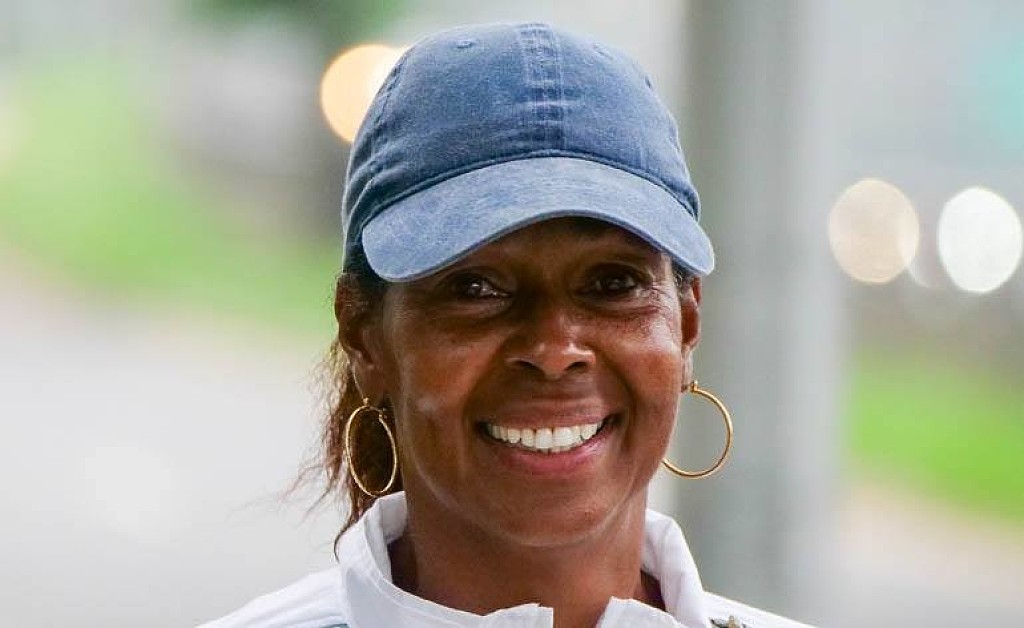
Yolander Holder is all smiles but dealing with blisters 10 days into the world's longest race
by Bob Anderson
Login to leave a comment

These are the eight Gnarliest Races in the World and only a few have crossed the finish line
Login to leave a comment
