

Running News Daily
Running News Daily is edited by Bob Anderson and team. Send your news items to bob@mybestruns.com Advertising opportunities available.
Index to Daily Posts · Sign Up For Updates · Run The World Feed
Articles tagged #USATF Outdoor Championships
Today's Running News
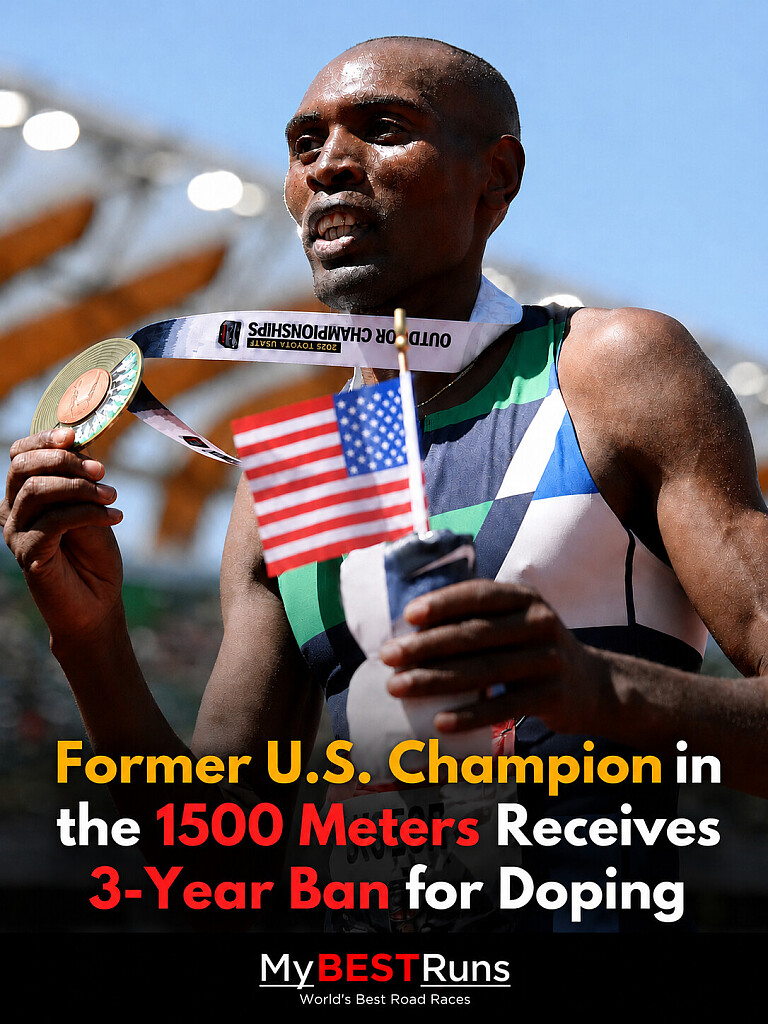


Jonah Koech Banned for Three Years After Blood-Doping Violation
Kenyan-born 1500m runner Jonah Koech has been handed a three-year ban following an anti-doping violation that has stripped him of his 2025 U.S. 1500m championship title and cast a shadow over what had been a breakthrough season.
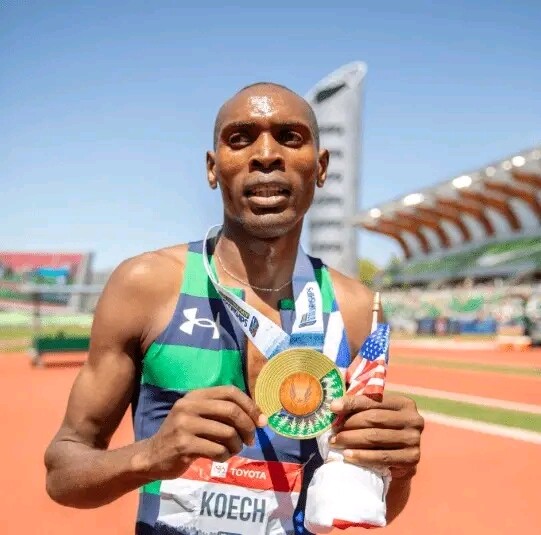
The United States Anti-Doping Agency (USADA) announced that Koech accepted the sanction after an investigation into highly atypical blood values recorded in his Athlete Biological Passport. An expert review of his biological profile determined that the abnormalities were consistent with the use of a prohibited blood-doping method.
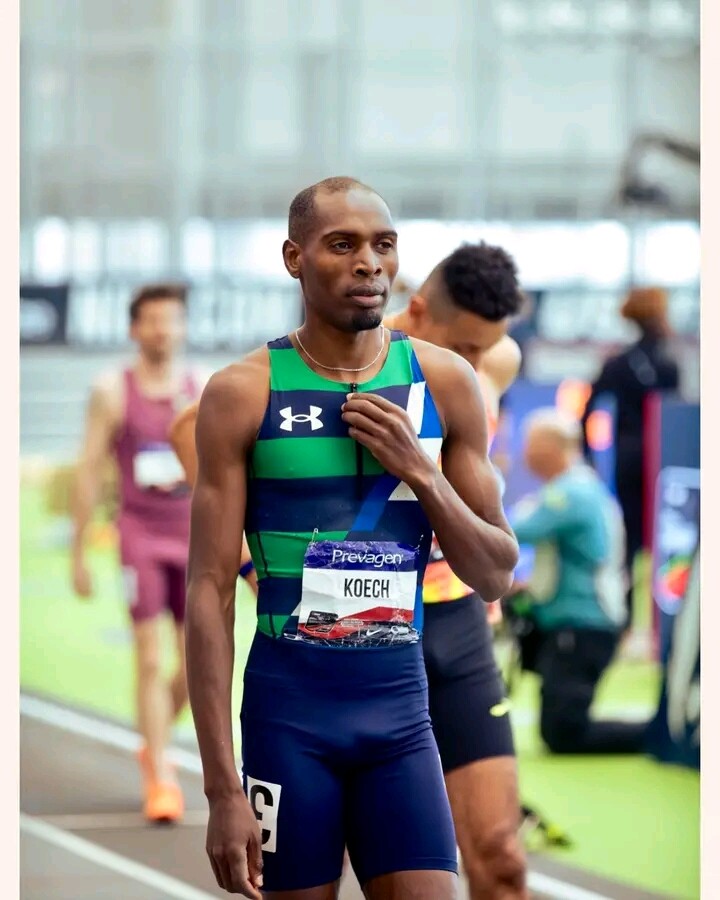
Koech’s sanction comes with a significant consequence: his victory in the men’s 1500m at the 2025 USATF Outdoor Championships in Eugene, Oregon, has been disqualified. The title, which represented one of the biggest achievements of his career, has therefore been removed from his official record.
The ruling marks a dramatic reversal for Koech, who produced a stunning breakthrough in 2025. After establishing himself as a serious force in the 1500m, he captured the U.S. national title and earned international recognition as one of the country’s leading middle-distance runners.
His three-year suspension is shorter than the standard four-year sanction that can apply to serious anti-doping violations. Koech’s acceptance of the violation and sanction resulted in a reduction of the period of ineligibility, allowing him to avoid the full four-year penalty.
Koech will remain ineligible to compete until July 2029, meaning he faces a lengthy absence from competitive athletics. His return will come after one of the most significant seasons of his career has now been rewritten by the anti-doping ruling.
The Athlete Biological Passport played a central role in the case. Rather than simply looking for a banned substance in an individual sample, the system monitors selected biological markers over time. Significant abnormalities in an athlete’s profile can trigger further examination and, where supported by expert evidence, an anti-doping case.
For Koech, the development represents a painful fall from a season that had appeared to signal the arrival of a major new name in American 1500m running. Born in Kenya before building his career in the United States, he had become a notable figure on the U.S. middle-distance scene.
The case also underlines the increasingly sophisticated approach to anti-doping in modern athletics, where an athlete's biological profile can be scrutinized long after a race has finished. For Koech, the consequences will extend far beyond the loss of one championship title, with three years away from competition now standing between him and a possible return to the track.
by Erick Cheruiyot for My Best Runs.
Login to leave a comment
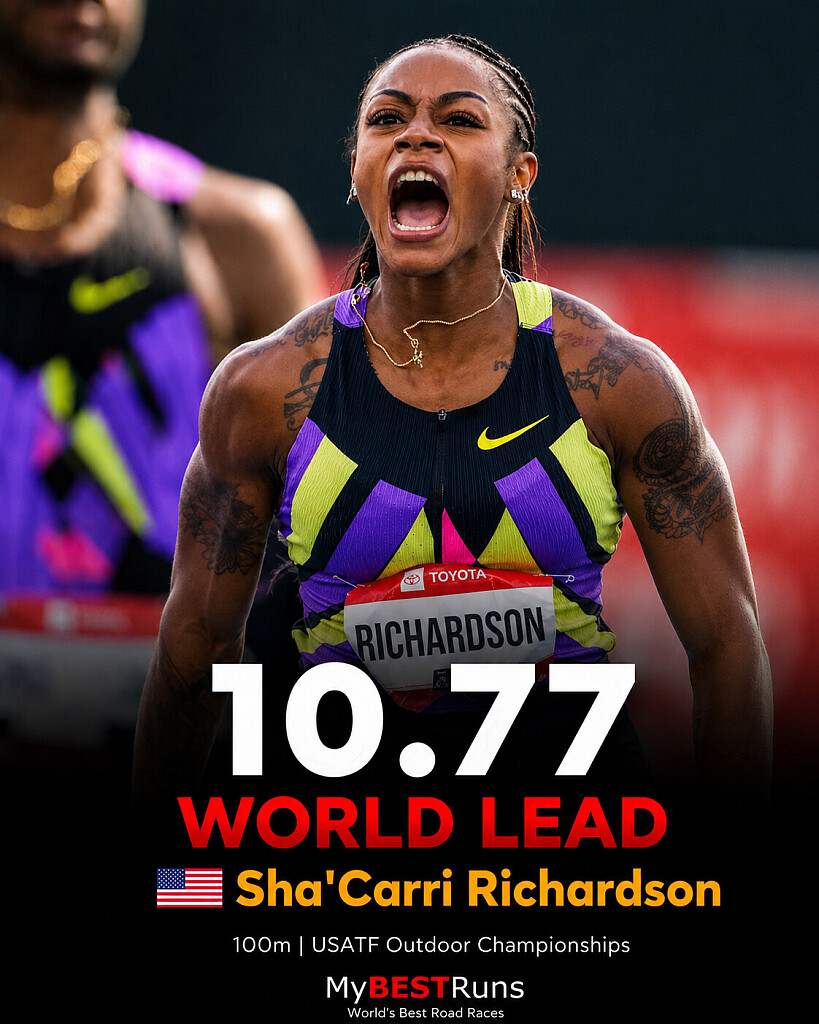
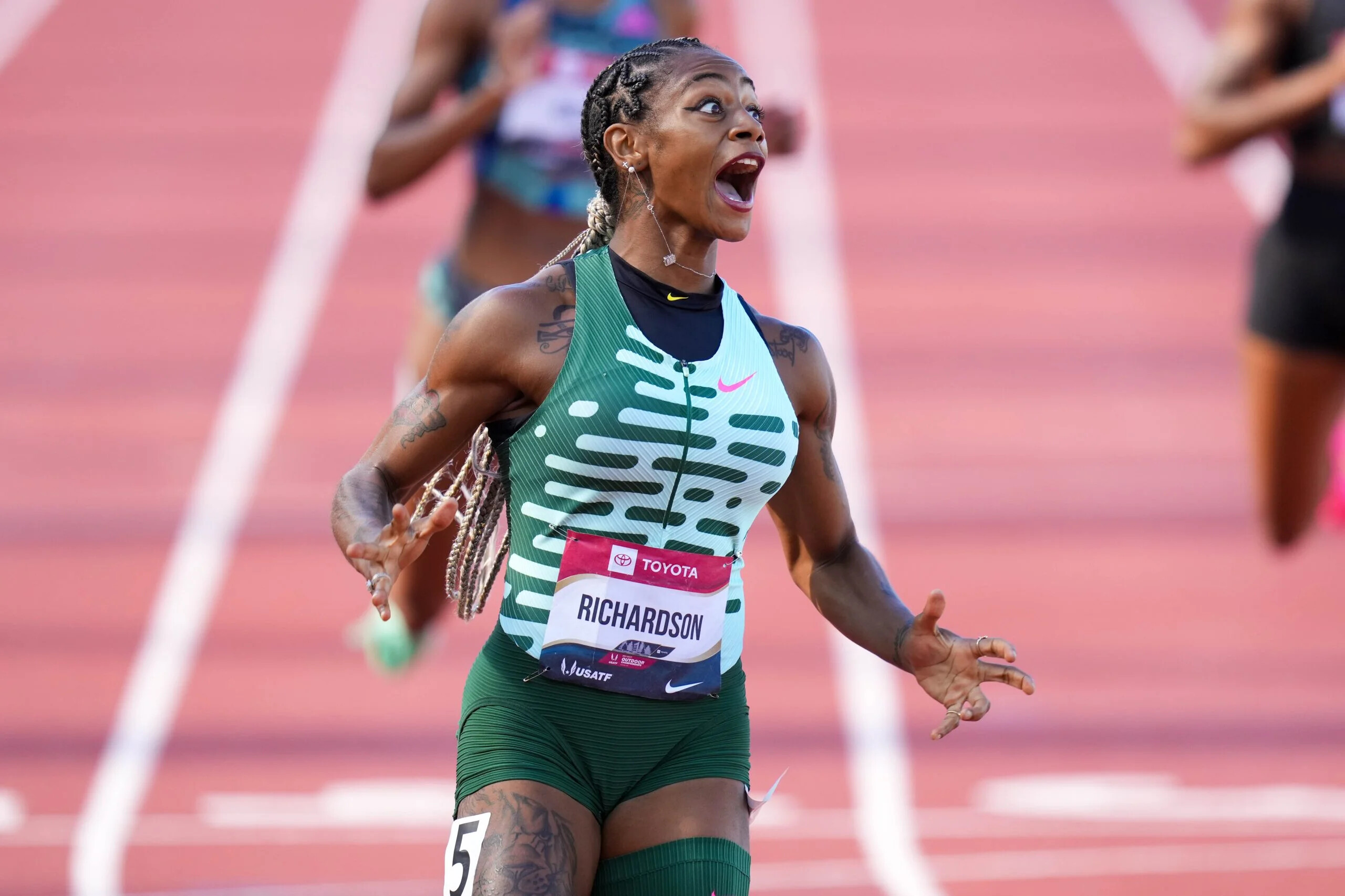
Sha'Carri Richardson Reclaims Her Crown with Blazing US 100m Triumph and Facility Record
Sha'Carri Richardson reminded the athletics world exactly why she remains one of the sport's biggest stars, producing a commanding performance to capture the women's 100-meter title at the 2026 USATF Outdoor Championships.
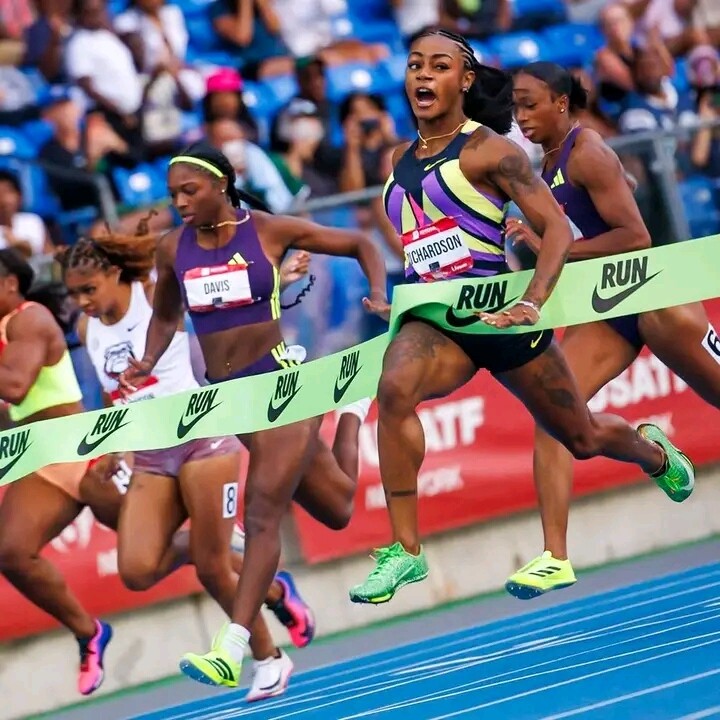
Exploding out of the blocks with trademark confidence and unmatched speed, Richardson surged clear of the field to cross the finish line in a sensational 10.77 seconds with a legal +0.9 m/s tailwind. The performance not only secured her third U.S. 100-meter crown in four years but also established a new facility record while standing as the second-fastest women's 100m time in the world this season.
The victory reinforces Richardson's remarkable dominance on the national stage. After claiming consecutive U.S. titles in 2023 and 2024, she has now completed an impressive championship hat-trick with another authoritative display in 2026.
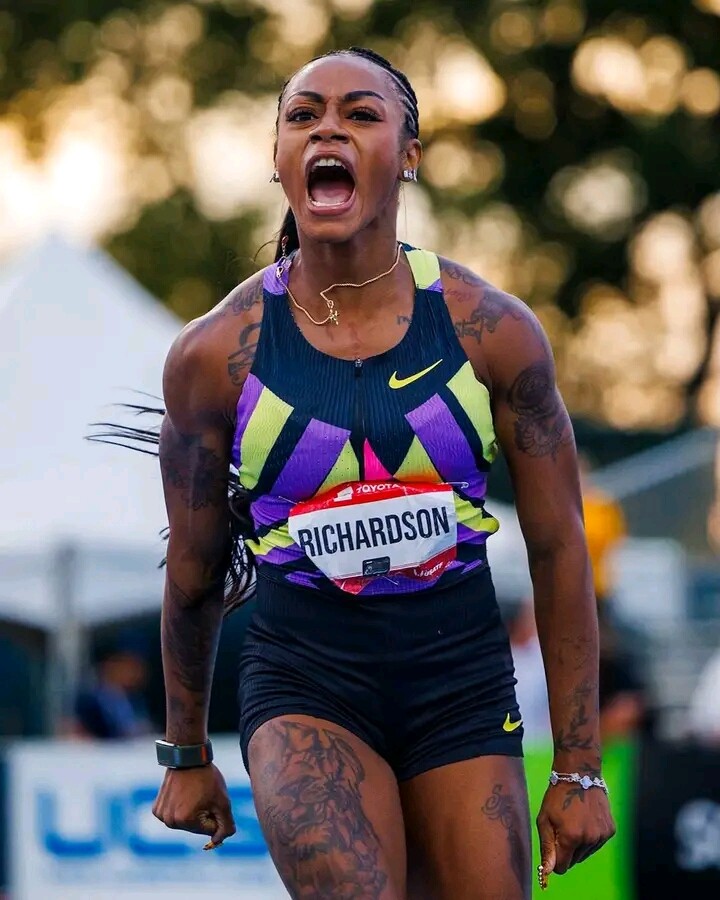
Despite lining up against one of the strongest sprint fields in the country, Richardson left no doubt about who was in control. Her explosive acceleration and powerful finish created daylight between herself and the chasing pack, delivering a performance worthy of a reigning global sprint icon.
Kayla White produced an outstanding race to secure second place in 10.90, while Tamari Davis rounded out the podium after clocking 11.00. Anavia Battle finished fourth in 11.02, narrowly ahead of Jaslyn Gardner, who crossed in 11.03. Nayla Harris (11.06), Kaila Jackson (11.11), Jassani Carter (11.15), and Melicia Mouzzon (11.18) completed a highly competitive final.
Women's 100m Final Results
1. Sha'Carri Richardson – 10.77 (Facility Record)
2. Kayla White – 10.90
3. Tamari Davis – 11.00
4. Anavia Battle – 11.02
5. Jaslyn Gardner – 11.03
6. Nayla Harris – 11.06
7. Kaila Jackson – 11.11
8. Jassani Carter – 11.15
9. Melicia Mouzzon – 11.18
Richardson's emphatic victory sends a powerful statement ahead of the remainder of the international season. With championship form returning at exactly the right moment, the American sprint queen has once again placed herself firmly at the center of the global women's 100-meter conversation, proving that when the stakes are highest, she remains the athlete everyone else must chase.
by Erick Cheruiyot for My Best Runs.
Login to leave a comment

USATF Outdoor Championships
The 2026 Toyota USATF Outdoor and Para National Championships will be held at Icahn Stadium in New York City fromJuly 23-26, 2026, marking the first time the event is hosted in New York. The event will serve as a premier track and field competition, featuring top U.S. athletes at the Randall's Island Park venue. USATF+3 Key Details for 2026...
more...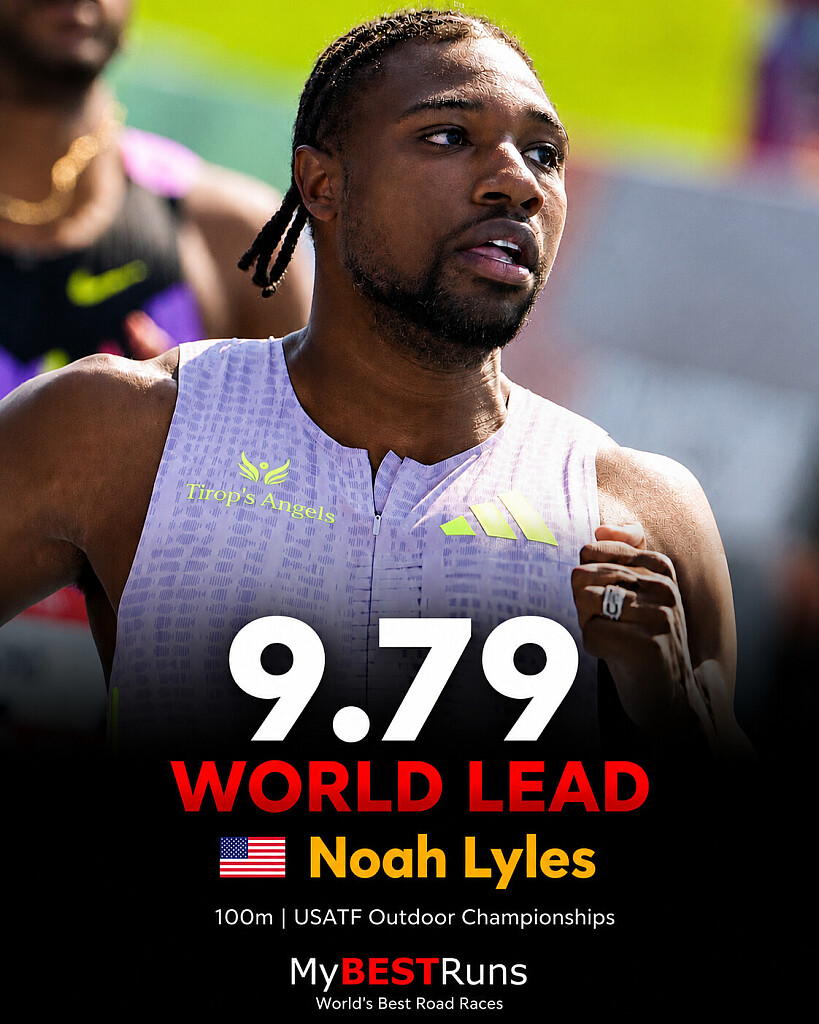
Lyles Equals Olympic Best with World-Leading 9.79 to Secure Eighth U.S. Outdoor Title
Noah Lyles once again proved why he remains the man to beat in global sprinting, delivering a breathtaking world-leading 9.79 seconds (+0.8 m/s) to win the men's 100m title at the USATF Outdoor Championships in New York.
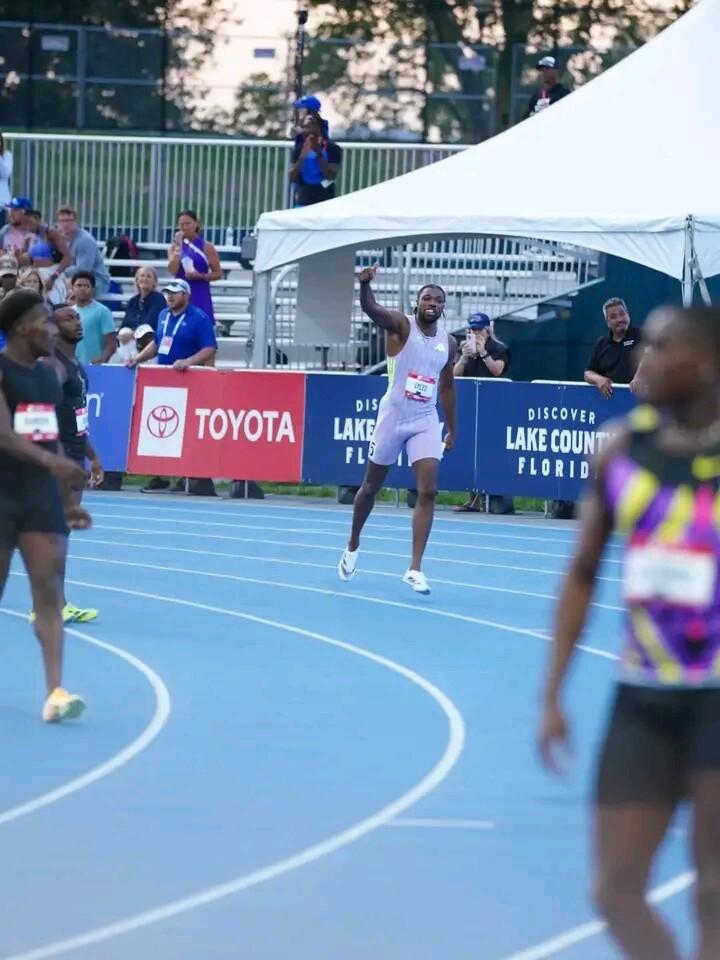
The reigning Olympic champion produced a commanding performance from start to finish, matching the personal best he set to capture Olympic gold in Paris and underlining his exceptional form ahead of the World Championships.
The victory marked another historic milestone for the American superstar, earning him his eighth U.S. outdoor national title and third national crown over the 100 metres. It was yet another reminder that when the stakes are highest, Lyles consistently rises to the occasion.
His winning performance also backed up an astonishing 9.76 seconds he clocked in the semifinals. Although that time came with an illegal +2.1 m/s tailwind and could not stand as an official mark, it offered an early warning of the speed he would unleash in the final.
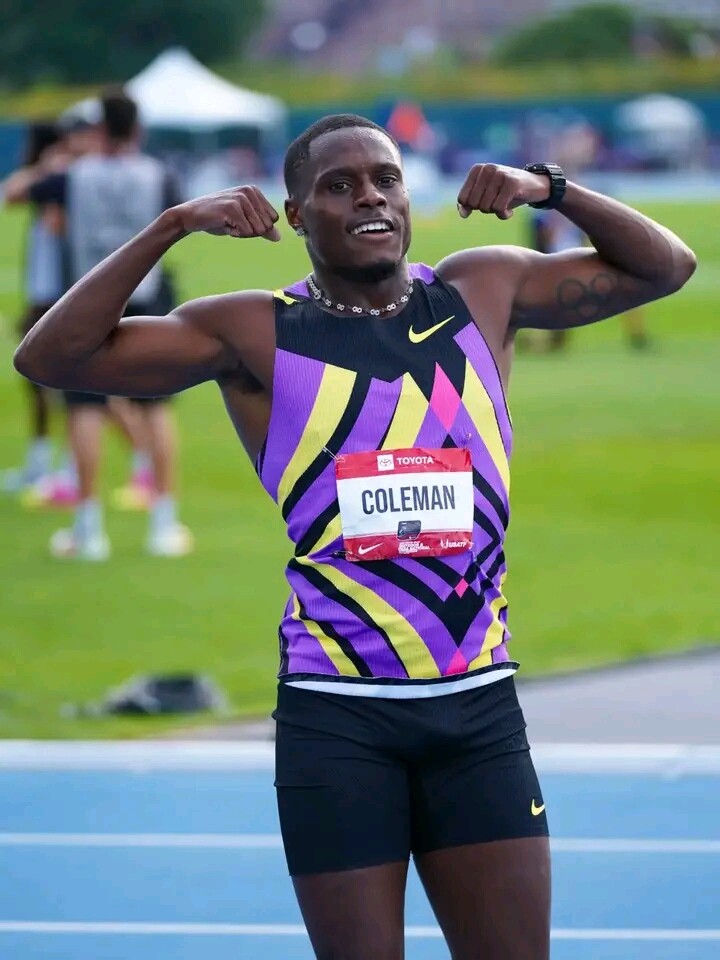
Behind Lyles, Ronnie Baker produced one of his strongest races in recent years, finishing second in an impressive 9.88 seconds. Olympic medalist Kenny Bednarek crossed the line in the same time to claim third after a close finish, while former world champion Christian Coleman placed fourth in 9.93 seconds, completing a spectacular showcase of American sprinting depth.
Lyles' ability to reproduce his Olympic-winning personal best on the national stage speaks volumes about his consistency. Rather than simply defending his domestic crown, he sent a powerful message to the rest of the world that his speed is peaking at exactly the right time.
The world-leading performance further cements his status as the favourite heading into the global championships, where he will once again chase international glory.
When Noah Lyles steps onto the track, he rarely disappoints. He always means business—and with another 9.79 masterpiece, the Olympic champion has reminded the athletics world that he remains the benchmark in the men's 100m.
by Erick Cheruiyot for My Best Runs.
Login to leave a comment
USATF Outdoor Championships
The 2026 Toyota USATF Outdoor and Para National Championships will be held at Icahn Stadium in New York City fromJuly 23-26, 2026, marking the first time the event is hosted in New York. The event will serve as a premier track and field competition, featuring top U.S. athletes at the Randall's Island Park venue. USATF+3 Key Details for 2026...
more...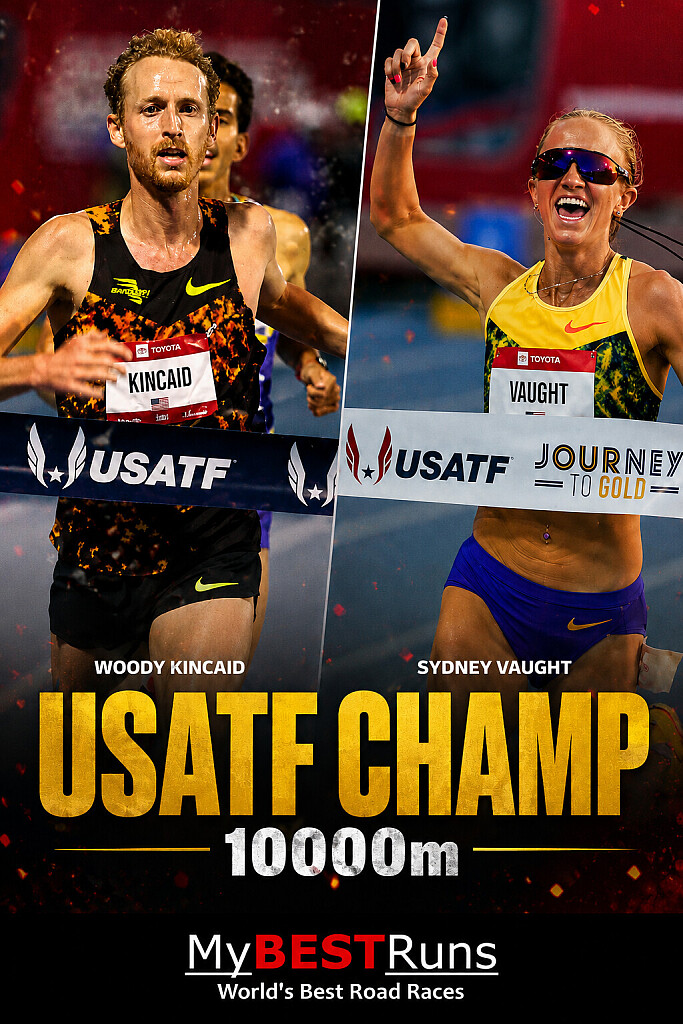
Sydney Vaught and Woody Kincaid Reign Supreme as New U.S. 10,000m Champions Crowned
Sydney Vaught announced herself as America's newest national champion with a poised and tactical victory in the women's 10,000 meters at the USATF Outdoor Championships, claiming her first senior national title in a race that demanded patience, precision, and perfect timing.
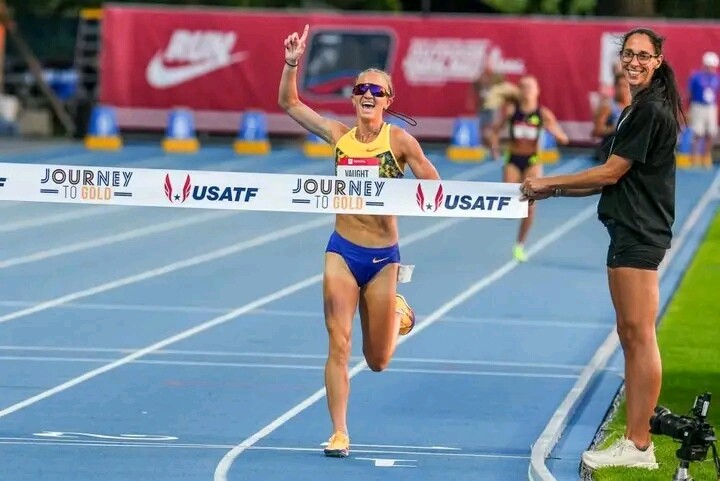
Competing under the lights at New York City's Icahn Stadium, the former University of Arkansas standout mastered a slow-burning championship contest before producing the decisive move when it mattered most. Vaught crossed the finish line in 33:30.60, capping a performance built on tactical awareness rather than raw pace.
Unlike record-chasing races that unfold at relentless speed, this championship final evolved into a battle of positioning and race intelligence. The conservative early tempo kept the field tightly packed for much of the contest, leaving the outcome to be decided over the closing laps. Vaught remained composed throughout, refusing to be drawn into unnecessary surges while carefully conserving energy for the decisive moments.
When the race finally ignited, she responded with authority. Displaying impressive strength and confidence, Vaught surged clear of her rivals in the closing stages to secure a memorable victory and the biggest triumph of her professional career.
The national crown represents another significant milestone for the former Arkansas Razorback, whose steady progression through the American distance-running ranks has now culminated in a USATF outdoor title. Winning a championship in such a tactical race highlights not only her physical ability but also her growing maturity and composure on the national stage.
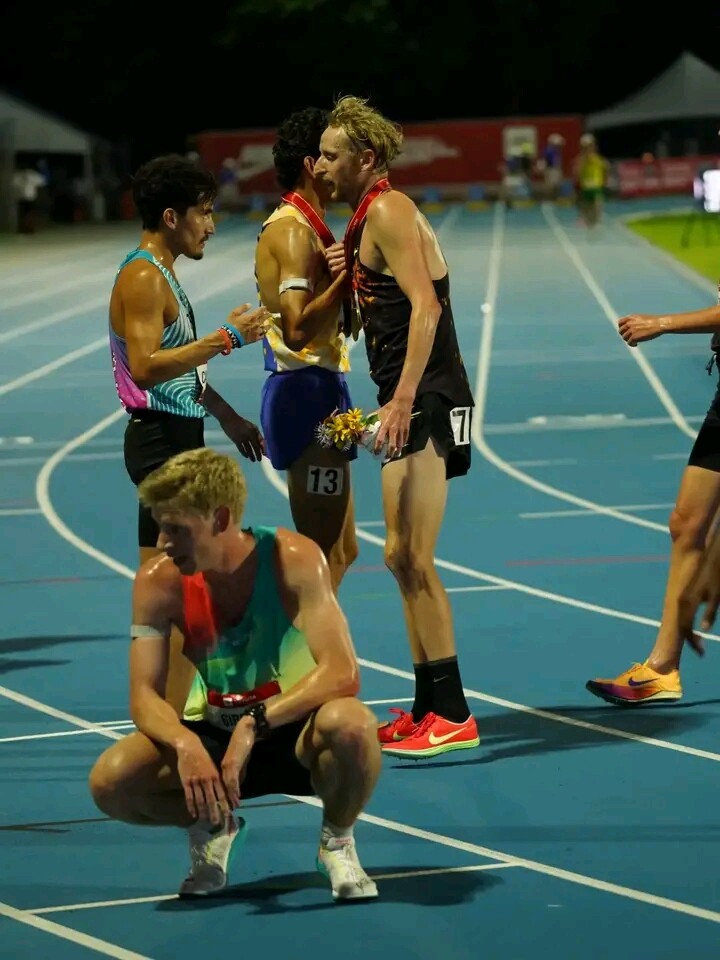
The men's 10,000m championship delivered an equally compelling contest, with Woody Kincaid reclaiming his place atop American distance running. The experienced racer outkicked Olympic bronze medalist Grant Fisher in a thrilling sprint to the finish, capturing his third career U.S. outdoor 10,000m title—and his first since 2023.
Kincaid stopped the clock in 30:13.66 after executing his race plan to perfection, remaining patient throughout the tactical affair before unleashing his trademark finishing speed over the final meters. His decisive kick proved too strong for Fisher, allowing the veteran to add another national crown to an already distinguished career.
For Kincaid, the victory marked a return to the summit of the U.S. championships, reaffirming his reputation as one of America's most formidable championship racers. His ability to deliver under pressure once again demonstrated why he remains one of the country's elite distance runners.
Together, Vaught and Kincaid emerged as the standout winners of the opening 10,000-meter finals at the USATF Outdoor Championships, each producing composed tactical performances to secure national gold. While Vaught celebrated a breakthrough first title, Kincaid reinforced his legacy with another championship triumph, setting the stage for an exciting season ahead for American distance running.
by Erick Cheruiyot for My Best Runs.
Login to leave a comment
USATF Outdoor Championships
The 2026 Toyota USATF Outdoor and Para National Championships will be held at Icahn Stadium in New York City fromJuly 23-26, 2026, marking the first time the event is hosted in New York. The event will serve as a premier track and field competition, featuring top U.S. athletes at the Randall's Island Park venue. USATF+3 Key Details for 2026...
more...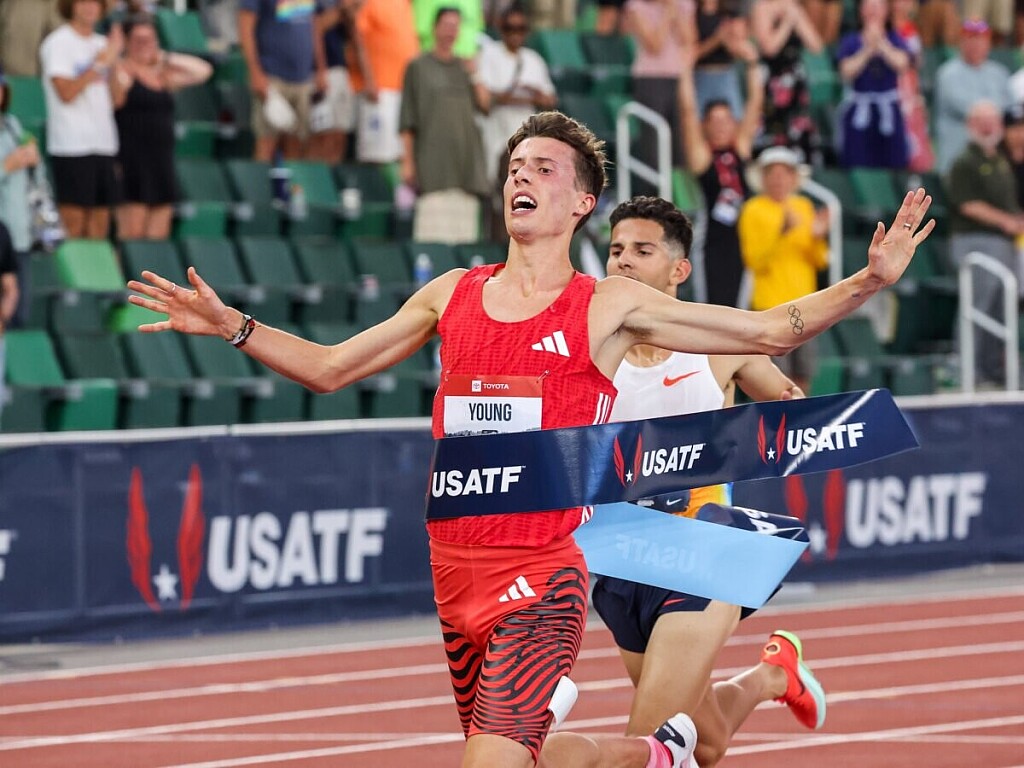
Nico Young Clinches U.S. 10,000m Title with Electrifying Finish in Eugene
Eugene, Oregon – July 31, 2025
Nico Young delivered a career-defining performance on Wednesday night at the 2025 USATF Outdoor Championships, storming to victory in the men’s 10,000 meters with a closing display that left the crowd at Hayward Field in awe.
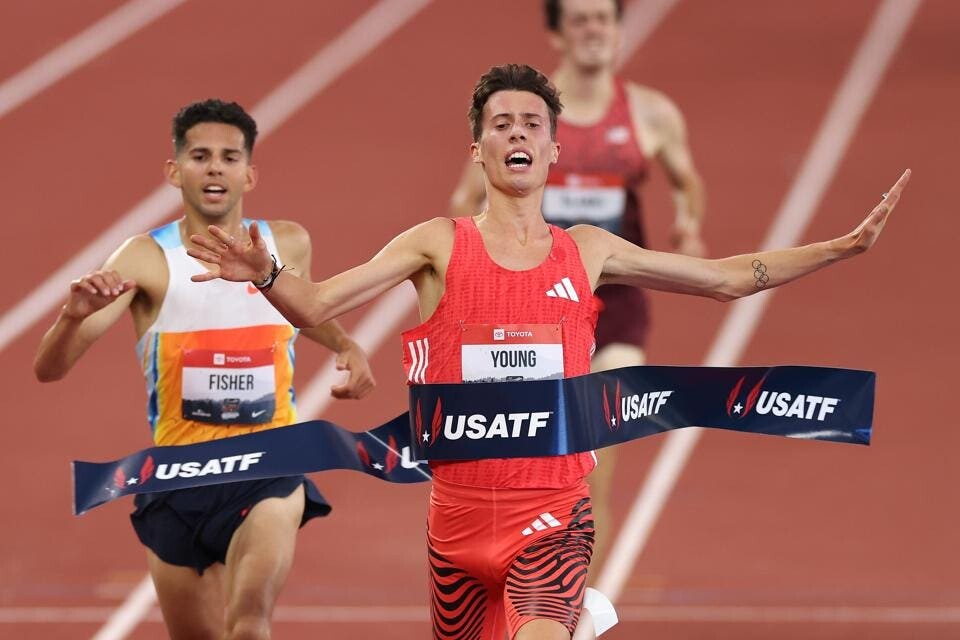
In a tightly contested final, Young surged past established veterans Grant Fisher and Graham Blanks with a stunning final lap of 56.54 seconds, covering the last 1600 meters in under four minutes—an extraordinary finish in a championship 10K. His winning time: 29:02.12.
Grant Fisher, one of the most accomplished distance runners in U.S. history, claimed the silver medal in 29:02.37, while rising star Graham Blanks, fresh off a record-breaking collegiate season, secured bronze in 29:02.43.
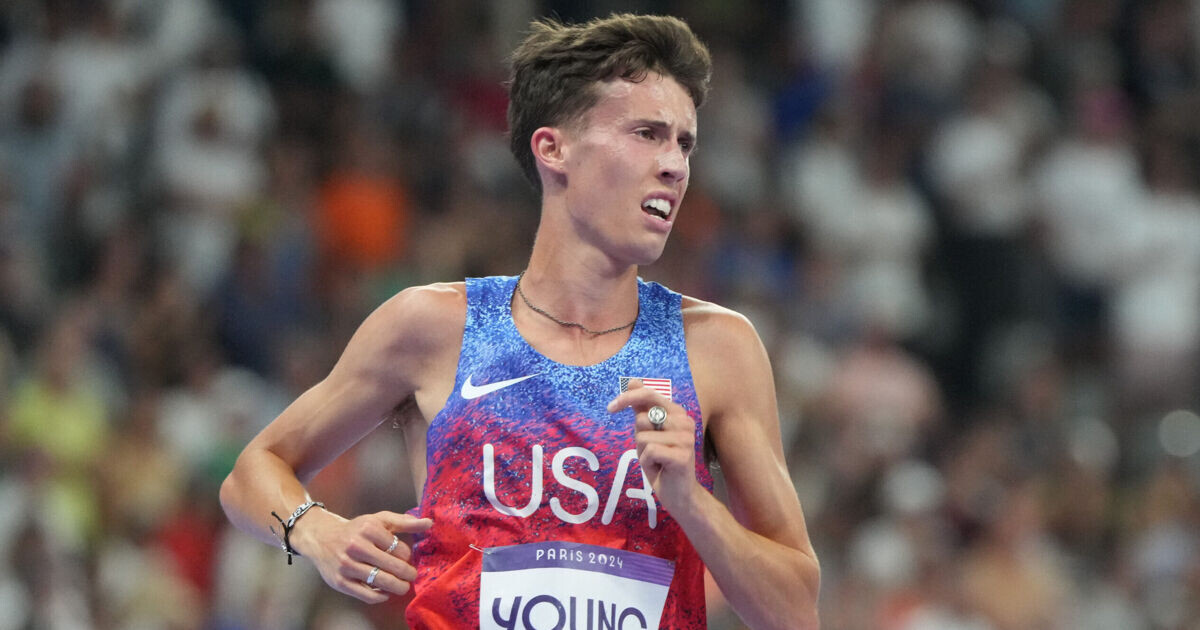
“What a way to end the night in Eugene,” echoed the sentiments of fans and announcers alike as Young crossed the line, arms raised in triumph.
At just 22 years old, Young’s victory represents a passing of the torch and a new era in American distance running. Known for his aggressive style and fearless front-running as a collegiate athlete at Northern Arizona University, Young has now proven he can execute a tactical race and close with world-class speed—a critical asset on the international stage.
The men’s 10,000m capped an electric night of competition at Hayward Field and set the tone for the rest of the championships. With this performance, Young not only claimed his first national title but also firmly established himself as a contender for global medals in the years ahead.
Men’s 10,000m – Final Results
• Nico Young – 29:02.12 (National Champion)
• Grant Fisher – 29:02.37 (National Runner-Up)
• Graham Blanks – 29:02.43 (National Bronze)
Stay tuned to My Best Runs for continued coverage of the 2025 USATF Outdoor Championships and road to the World Championships.
by Boris Baron
Login to leave a comment
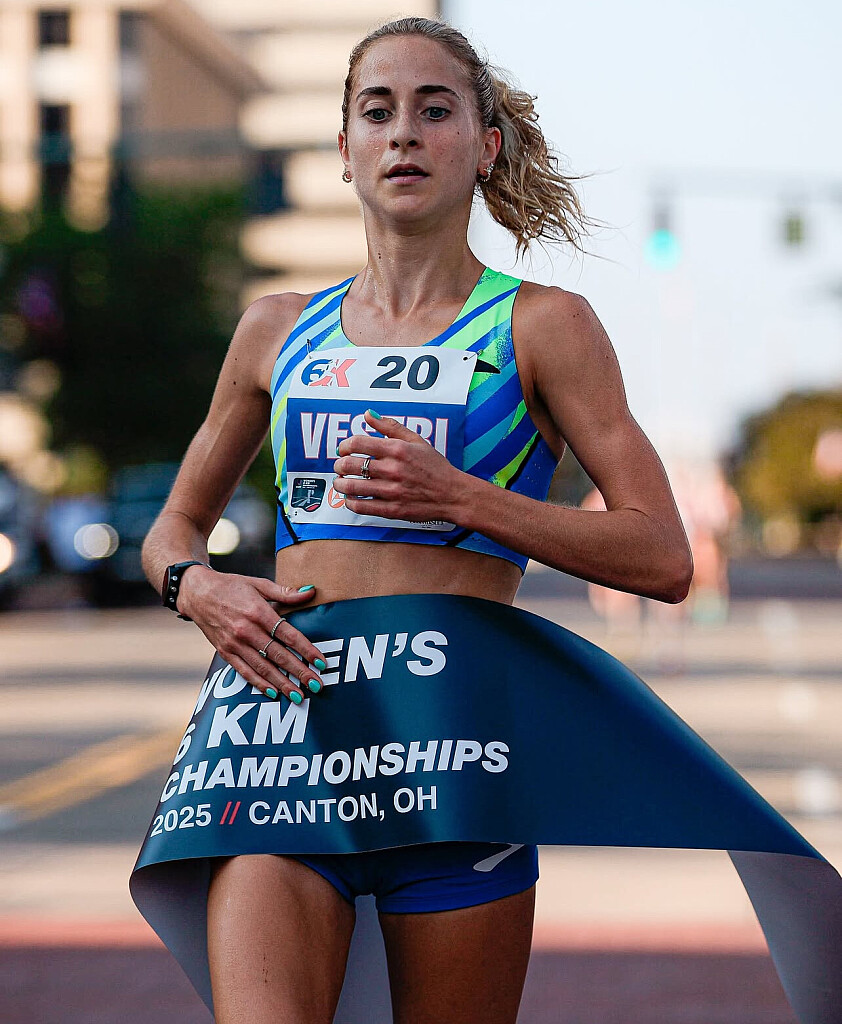
Amanda Vestri Claims First U.S. Title with Commanding Win at USATF 6 km Championships
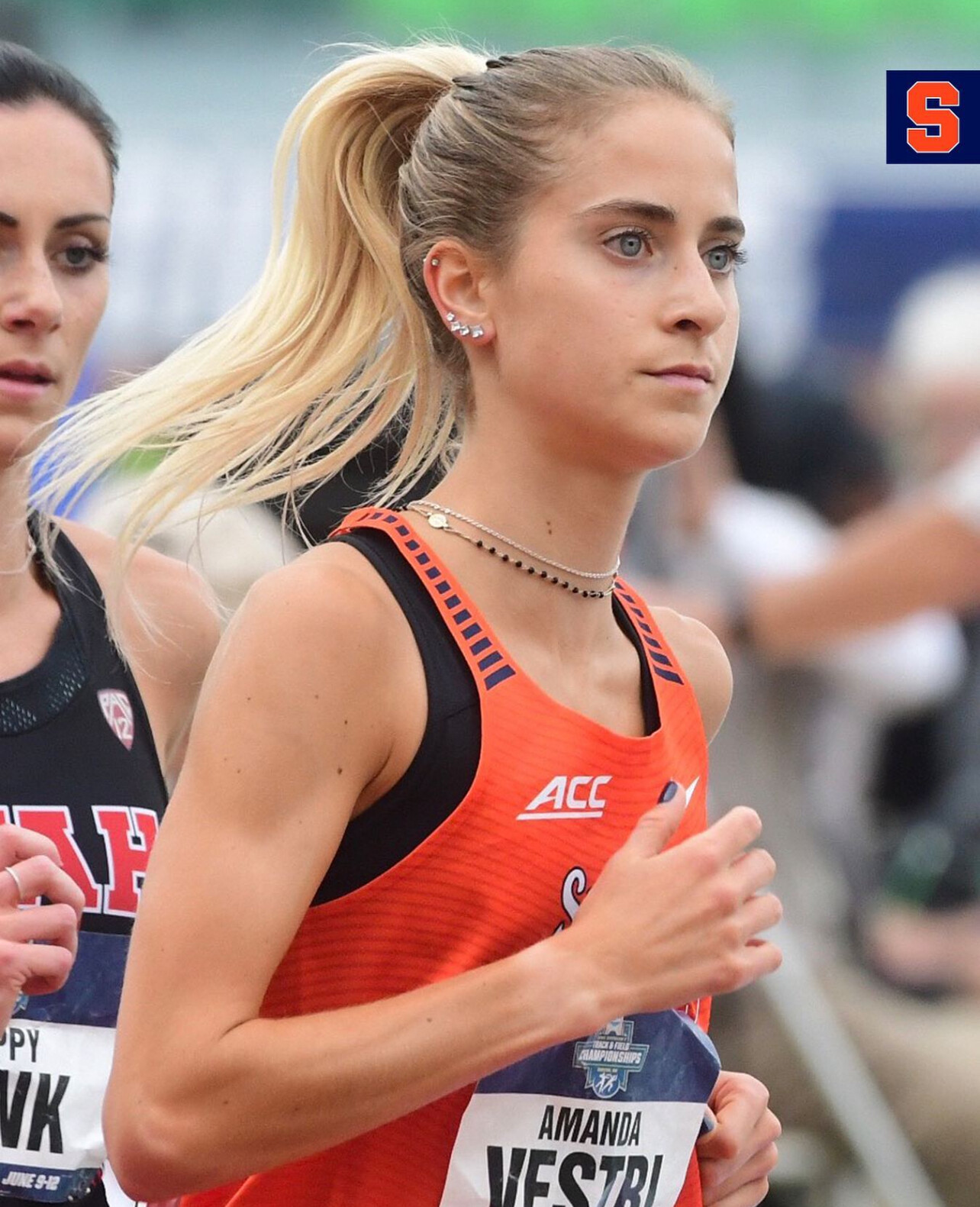
Amanda Vestri earned her first national title in dominant fashion on Saturday morning in Canton, Ohio taking a wire-to-wire victory at the USATF 6 km Championships in Canton, Ohio. The event, part of the Women’s 6K Festival, drew some of the top distance talent in the country, but no one could match Vestri’s front-running strength on a challenging, technical course.
Vestri, who finished second at this race in 2023, wasted no time establishing control. Racing in humid conditions with temperatures nearing 80°F, she charged to the front from the gun, pulling a pack of seven through the first mile in 4:53. As the course shifted onto an uneven stretch of brick road, she surged again—clocking another 4:53 for the second mile—and began to break away from the field.
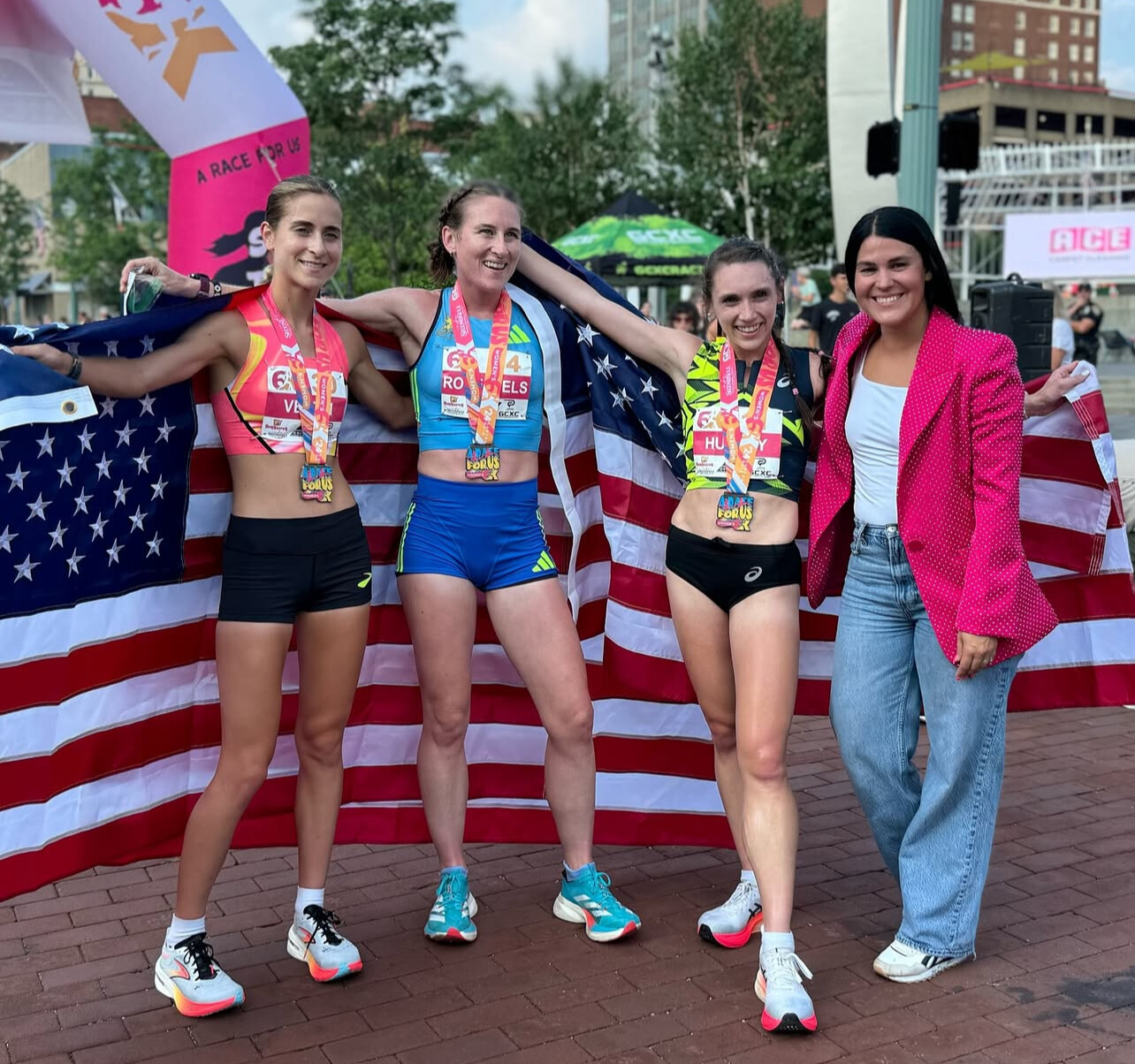
By the time the race reached its longest climb, Vestri’s lead had grown to three seconds over a chase pack that included Annie Frisbie, Fiona O’Keeffe, Molly Born, and Edna Kurgat. Cresting the hill with authority, she extended the gap to seven seconds by the 5K mark—a margin she maintained all the way to the finish line at Centennial Plaza.
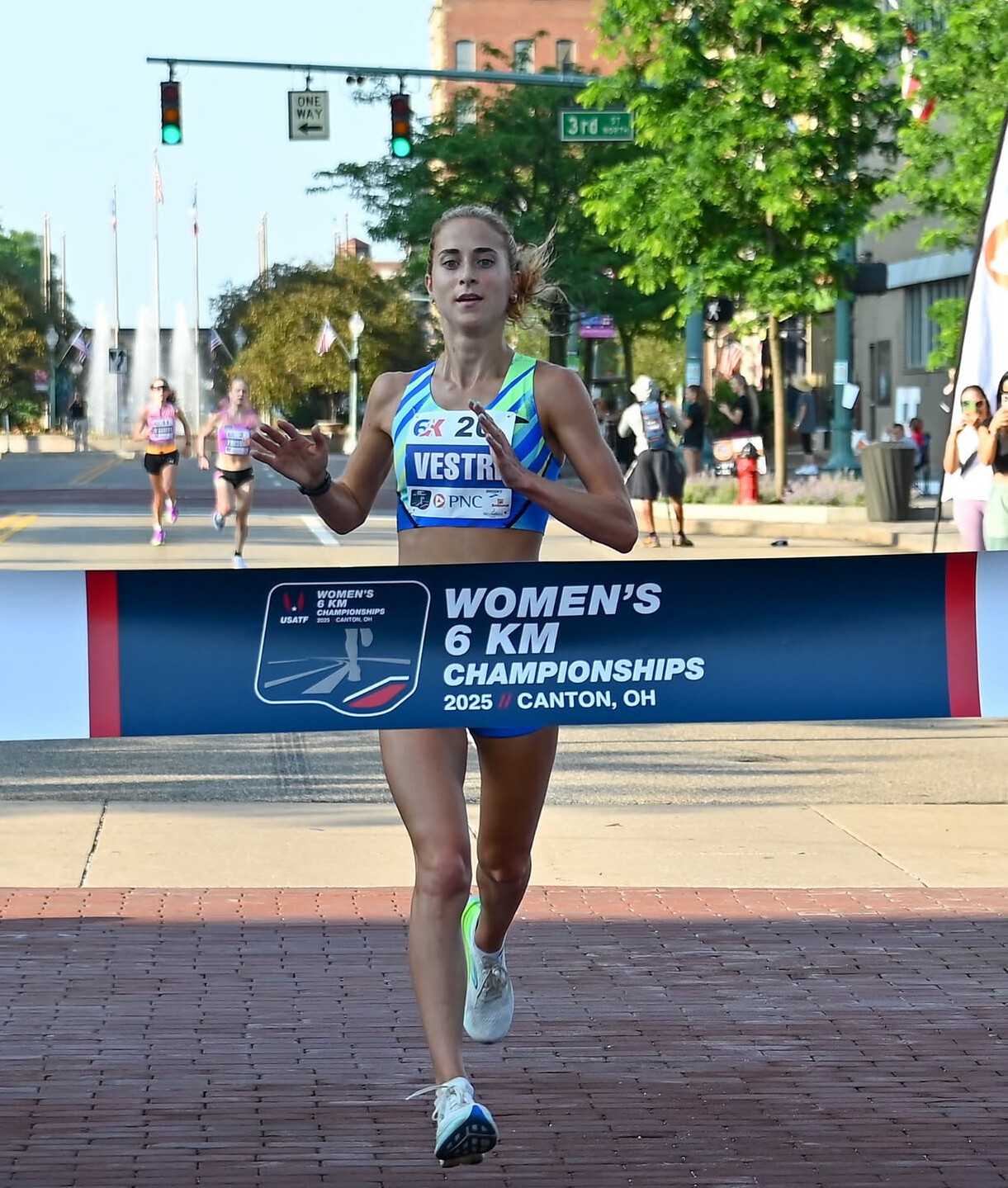
“I just kind of wanted to take it from the gun,” said Vestri after the race. “In these shorter races, I’m not really keen to just sit and run 5:15, 5:20. So, I just wanted to take it out. That’s the best way I run.”
Her aggressive strategy paid off, earning her the national title, $6,000 in prize money, and a move into second place in the USATF Running Circuit standings.
Fierce Finish for Second
The battle for second place came down to the final meters. Annie Frisbie and Olympic 10,000m runner Fiona O’Keeffe ran shoulder-to-shoulder for nearly the entire race before Frisbie edged ahead over the last 400 meters, stopping the clock in 18:36. O’Keeffe finished just two seconds back in 18:38 to round out the podium.
What’s Next
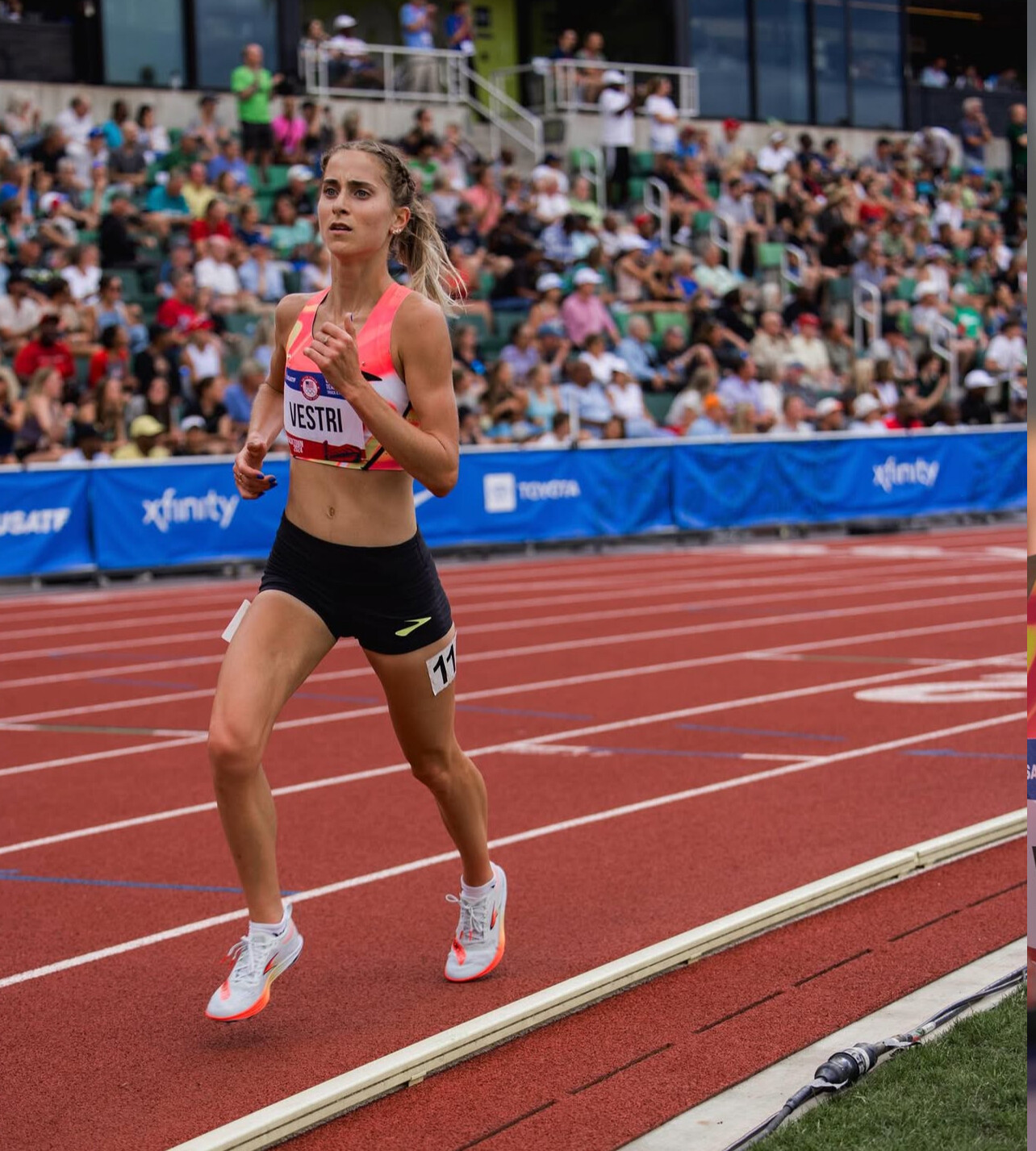
Vestri now shifts her focus to the track, where she’s scheduled to compete in both the 5,000m and 10,000m at the upcoming USATF Outdoor Championships in Eugene, Oregon later this month.
The USATF Running Circuit continues with just two events remaining:
• USATF 20 km Championships in New Haven on September 1
• USATF Marathon Championships in Sacramento on December 7
With momentum clearly on her side, Amanda Vestri will be a name to watch—on the roads and the track—for the rest of 2025.
by Boris Baron
Login to leave a comment
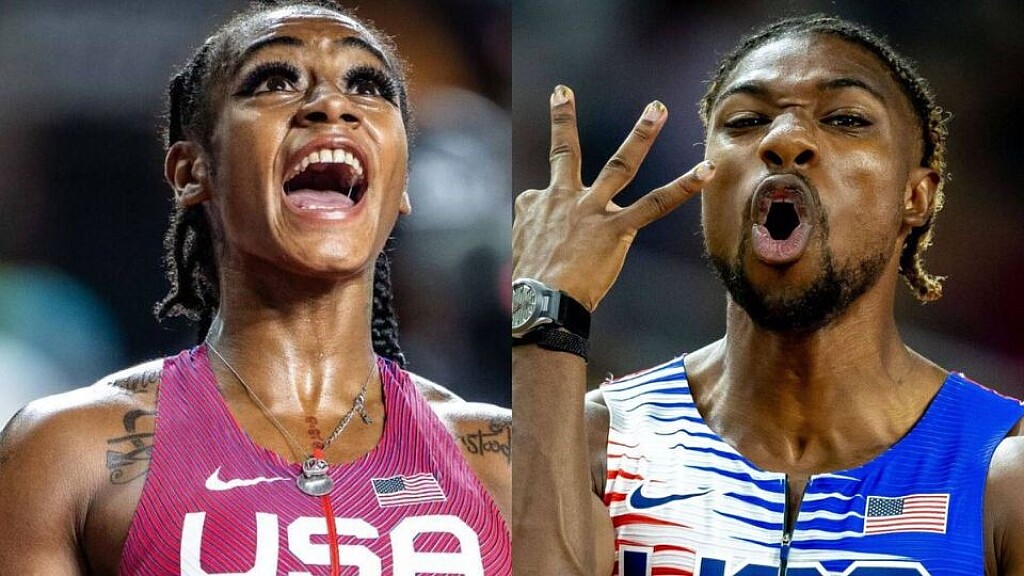
Sha’Carri Richardson, Noah Lyles ready to blaze track at 2023 Prefontaine Classic
The 2023 Prefontaine Classic will feature star sprinters Sha'Carri Richardson and Noah Lyles competing in the 100-meter races.
Two sprinters who have been setting the world of athletics ablaze in 2023, Sha’Carri Richardson and Noah Lyles, are poised to ignite the track in their respective 100m races at this year's highly anticipated Prefontaine Classic.
This electrifying event, which doubles as the Wanda Eugene Diamond League Final, will take place on Saturday, September 16, in the iconic city of Eugene, Oregon.
Sha’Carri Richardson, fresh off her remarkable triumph at the 2023 Toyota USATF Outdoor Championships where she secured the 100m title, declared confidently, "I’m not back. I’m better."

Richardson, who has been making waves both on and off the track, continued to showcase her undeniable talent by clinching gold in the 100m and 4x100m relay, as well as a bronze in the 200m at the 2023 World Athletics Championships in Budapest.
With two World Championship titles under her belt, Richardson is now poised to extend her reign of success at the upcoming Prefontaine Classic.
On the other side of the sprinting spectrum, Noah Lyles is a force to be reckoned with. Fresh from a sensational performance at the World Athletics Championships, where he clinched gold medals in the 100m , 200m, and 4x100m relay events, Lyles is now setting his sights on a new accolade.
While he has already amassed four Wanda Diamond League Champion trophies in the 200m category, spanning the years 2017, 2018, 2019, and 2022, Lyles is hungry for his first-ever 100m title at the Diamond League Final.
His wind-legal personal best of 9.83 seconds this season has earned him the coveted top spot in the global rankings for the event, making him a formidable contender in the world of sprinting.
Fans can expect an evening of high-speed drama, record-breaking potential, and nail-biting competition as Richardson and Lyles go head to head in the 100-meter races.
The Prefontaine Classic is scheduled to kick off at 9:00 PM East Africa time on Saturday September 16.
by Festus Chuma
Login to leave a comment

Prefontaine Classic
The Pre Classic, part of the Diamond League series of international meets featuring Olympic-level athletes, is scheduled to be held at the new Hayward Field in Eugene. The Prefontaine Classicis the longest-running outdoor invitational track & field meet in America and is part of the elite Wanda Diamond League of meets held worldwide annually. The Pre Classic’s results score has...
more...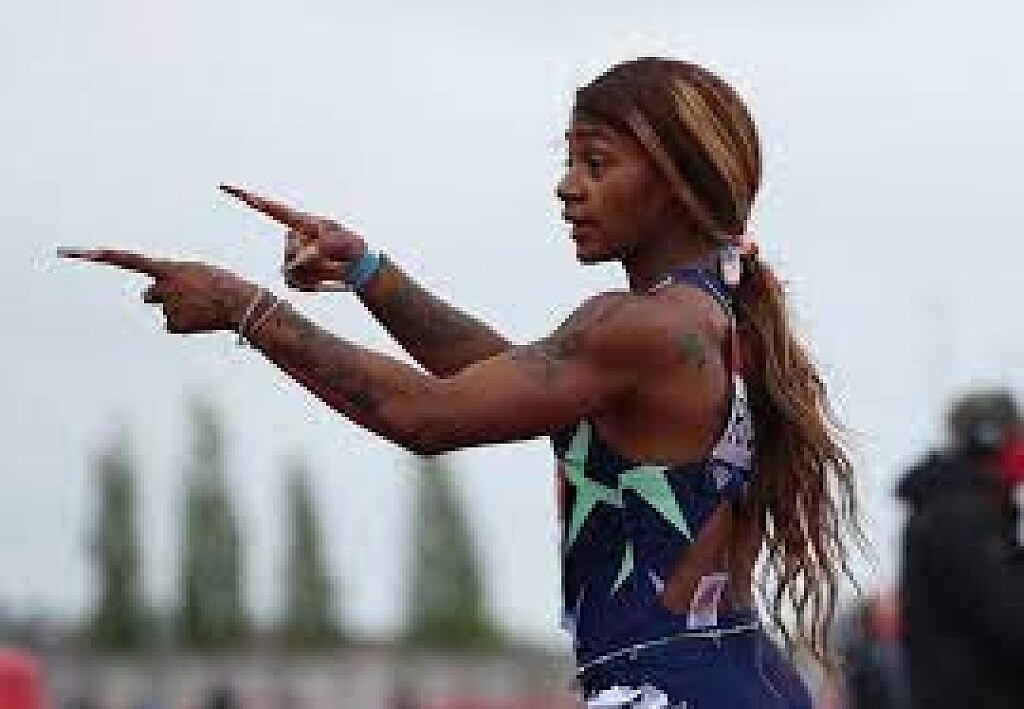
Sha'Carri Richardson gets ready for upcoming World Athletics Championships
Sha'Carri Richardson took to social media to announce that she was all set to compete in her next race at the 2023 World Athletics Championships, to be held in Budapest next month.
"My first real season and I'm loving the process of learning myself, pushing myself as well as knowing when to be still", she wrote.
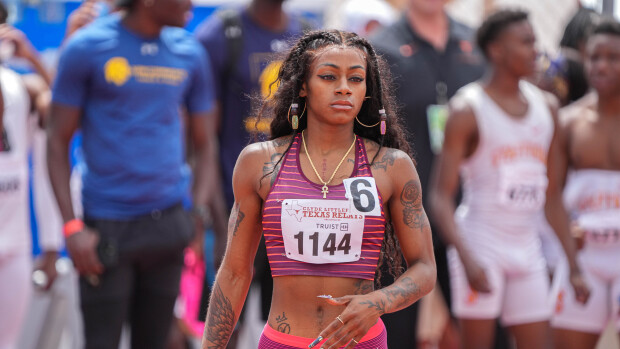
"Budapest UP NEXT", she added.
The 23-year-old won at the Silesia Diamond League in Poland on July 16, where she ran a thrilling dash of 100m in 10.76 seconds. This came after her splendid win at the USATF Outdoor Championships at the Hayward Field in Eugene, Oregon, on July 7, where Richardson completed the race in 10.71 seconds.
The 2023 World Athletics Championships to be held in Budapest will have a star-studded line-up. Along with Sherika Jackson, Sha'Carri Richardson will also be competing with the top Jamaican sprinter, Elaine Thompson, who has won the Olympic gold medal five times, and Shelly-Ann Fraser-Pryce, who has three Olympic gold medals to her name so far.
The face-off between the American and the Jamaican athletes would hence be a show to watch for in Budapest, Hungary.
by Janhavi Shinde
Login to leave a comment

World Athletics Championships Budapest 23
From August 19-27, 2023, Budapest will host the world's third largest sporting event, the World Athletics Championships. It is the largest sporting event in the history of Hungary, attended by athletes from more than 200 countries, whose news will reach more than one billion people. Athletics is the foundation of all sports. It represents strength, speed, dexterity and endurance, the...
more...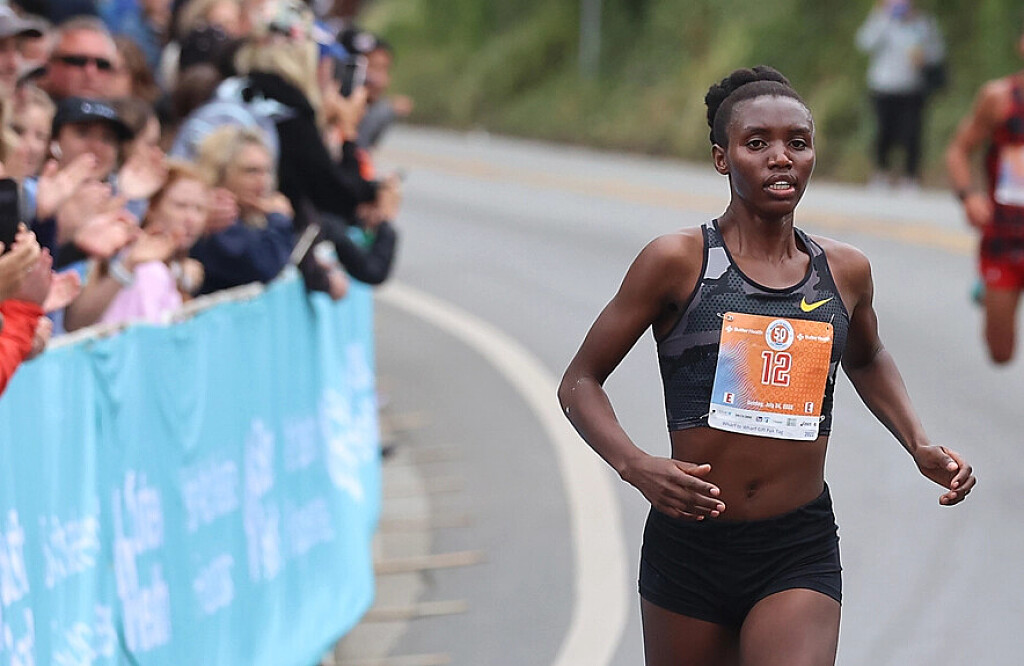
The women elite talent will be the strongest in the event’s history, at the 51st Wharf to Wharf race Sunday morning
The lineup of elite talent will be deep and the storylines numerous when runners of all ages and skill levels line up for the start of the 51st Wharf to Wharf race Sunday morning.
The excitement and anticipation will be palpable. For some, the goal is to complete the annual six-mile race to Capitola. Others will be costumed, poised to update their social media apps with colorful photos, full of smiling faces.
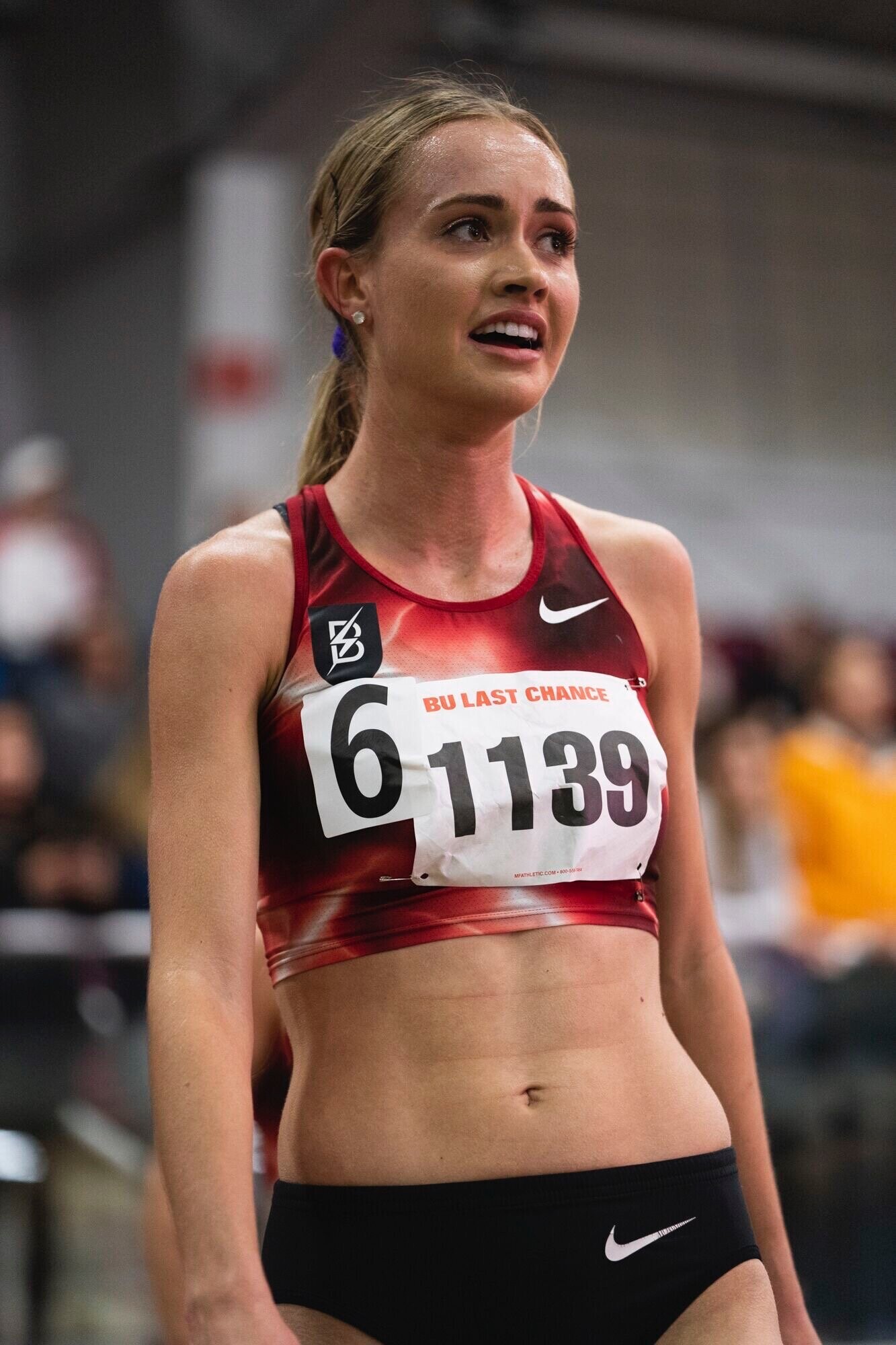
There will also be a more competitive bunch of runners who look to reach the Capitola Wharf in personal-record time, or post a top-100 finish in their gender division to claim elite Wharf to Wharf apparel.
And there will be a select few looking to take first, well ahead of the sea of runners, which has been capped at 15,000.
Among them is defending women’s champion Ednah Kurgat of Colorado Springs, who looks to again secure the Mayor’s Cup and $4,000 prize awarded to the winners.
Repeating as champ won’t be easy. “The women’s field is arguably the strongest in the event’s history,” said Dane Gradone, the event’s elite athlete coordinator. “It’s completely (awesome).”
Kurgat’s solid ’23 season includes a win at the USATF Cross Country Championships in January and a sixth-place finish in the 10,000-meter race at the USATF Outdoor Championships earlier this month.
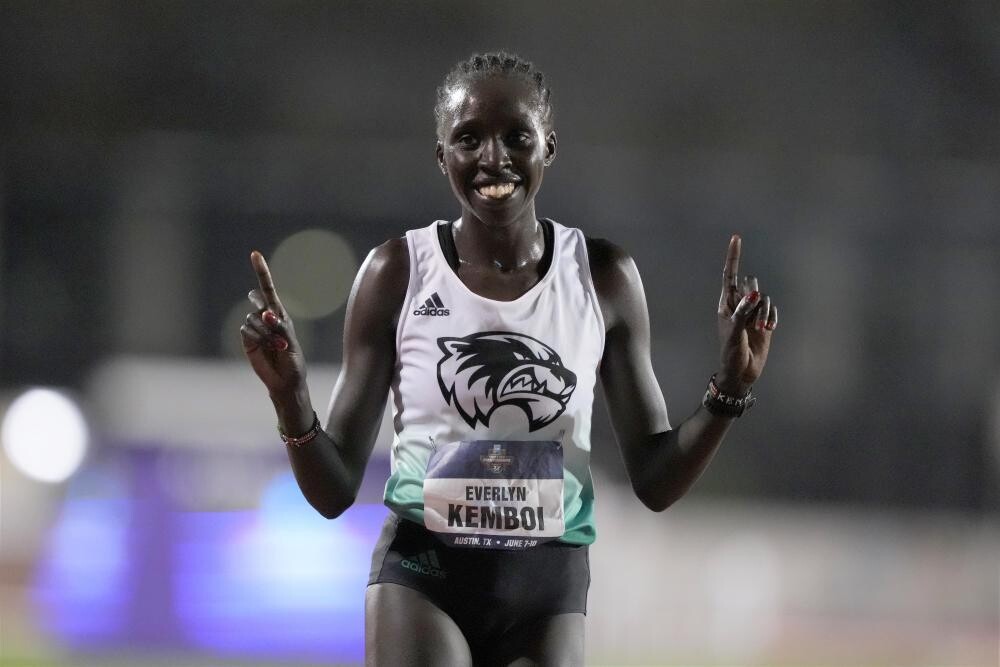
Everlyn Kemboi, the ’23 NCAA champion in the 10,000 and runner-up in the 5,000, should contend for supremacy. Also entered are Kenyan Mary Munanu, last year’s Wharf to Wharf runner-up, Ethiopian Werkuha Getachew, the runner-up at last year’s World Championships in the steeplechase, and fellow Ethiopians Tigist Ketema and Weynshet Ansa, both multiple-time national champions. Kenyan Sarah Naibei is a world-class runner on the roads, and a 52-minute 10 miler. Annamaria Kostarellis is a freshly minted NCAA All-American.
The local contingent is equally impressive. It includes former Santa Cruz High and Oregon State University standout Mari Friedman, the top female local finisher in ’22.
“I’m super excited,” Friedman said. “It’s one of my favorite races. It’s a holiday for me.”
Friedman’s goal? “To race happy and have fun,” she said, noting her best results come when she follows that plan.
Back in the field for the first time since 2014 is Nike runner Vanessa Fraser, a Scotts Valley High and Stanford University alumna. She’s coming off a 12th place finish in the 10,000 at the USATF Outdoor Championships.
Fraser, who lives in San Francisco, is in the process of transitioning to more road races. She returns to the one that got it all started for her.
“I’m excited to mix it up and see how I can finish and be competitive,” said Fraser, who has qualified for the 2024 U.S. Olympic Team Trials on Feb. 3. “Top 10, that’s a good goal. Anything higher would be great.”
Ashlyn Boothby, an incoming senior who has broken most of Fraser’s records at Scotts Valley, will compete in the race for the first time. She’ has been at camp with the Falcons in Truckee, doing altitude training and bonding with teammates.
“This is super special to be in the same race as Vanessa Fraser,” Boothby said. “She’s my idol. I don’t know if I’ll be able to keep up with her.”
The men’s field is primed to produce another exhilarating finish.
Salinas’ Diego Estrada, an Alisal High alum and former Olympian in the 10,000, finished second in the ’22 Wharf to Wharf and expects himself to be in title contention again after upping his training. He finished in 27 minutes, 18 seconds last year, two seconds behind champion Emmanuel Bor.
“I’d like to break 27 (minutes),” said Estrada, who is running 90 miles a week. “If I lose and break 27, I’ll be really happy. And if I win and don’t break 27, I’ll be really happy. But there’s so much talent in our area, I don’t know what will happed til we get to the downhill.”
Estrada will be tracked closely by a fair share of challengers and hardened road running veterans.
Fellow Olympian Ben Blankenship, who currently lives and trains in Eugene, Oregon, is also in the field. So is established marathoner Colin Bennie of San Francisco, the top American at the Boston Marathon in 2021. He finished ninth in Capitola last year.
This year’s International contenders include a trio of experienced Kenyans, James Ngandu, Josphat Kipchirchir, and Shadrack Keter, who have all run nearly an hour in the half marathon and racked up numerous racing honors.
Aptos’ Jack Rose is back after finishing as the top local male finisher in ’22, but a handful of young collegians will be gunning to unseat him. Among them are former Scotts Valley star Jeremy Kain, who runs for Duke University; Julian Vargas, a St. Francis alum who runs for Xavier University; Aptos talent Trent Nosky, a recruited walk-on for Colorado State University’s cross country and track programs; and Patrick Goodrich, a former Scotts Valley standout who competes for Cal Poly-SLO’s club team.
Rose, winner of the Ventura Marathon in February in a PR time of 2:21:39, said the quality of his workouts have improved since he finished as top local last year. He excited to hear the bands stationed along the route and hear spectators shout support as he passes them.
Kain is hoping to unseat Rose as top local. He’s increased his miles from 40 a week to 65-70. “I do think I’m in pretty good shape right now,” he said.
Experience is key, and Kain is competing in the race for the first time. “I’m kinda ashamed of myself that it’s my first year,” he said. “It never worked in my training block, but, this year, getting out there and giving it my all is going to be exciting.”
by Jim Seimas
Login to leave a comment

Wharf to Wharf
Each year, on the fourth Sunday in July, thousands of runners from across America and around the globe return to Santa Cruz, California for the annual six-mile race to Capitola-by-the-Sea. First run in 1973 by a handful of locals, the Wharf to Wharf Race today enjoys a gourmet reputation in running circles worldwide. Its scenic, seaside setting, perfect weather, and...
more...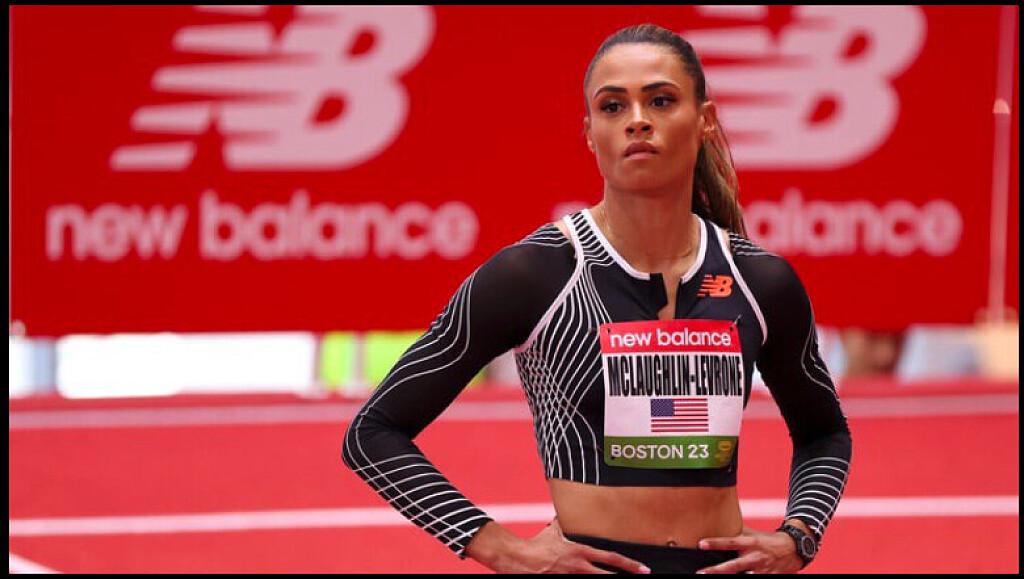
10 Reasons to Start Following Track and Field This Year
The 2023 season should be full of record-breaking performances from the sport’s biggest stars. Here are the most important things to know.
Track is back, and if the results from the indoor season and early outdoor meets are any indication, it should be another year of eye-popping results around 400-meter ovals this summer.
Why is track and field relevant to the average recreational runner?
Perhaps you’re running some of the same distances in your training and racing. Or maybe you have a connection to some of the events from your youth, days in gym class or on the playground. From a human performance perspective, no sport showcases the all-out speed, red-line endurance, max power, dynamic agility, and meticulous bodily control as track and field does.
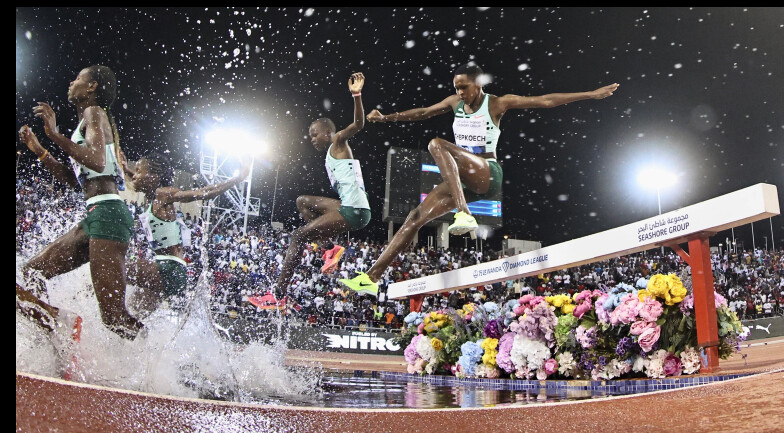
Here’s a primer on the most awe-inspiring athletes and events of this summer’s track season. Because, come on: with a sport that includes events as multifaceted as the pole vault, as primal as the shot put, and as wild as the 3,000-meter steeplechase—a 1.8-mile race with 28 fixed barriers to hurdle and seven water pits to jump—what’s not to like?
One of the many things that makes track and field so special is that it’s one of the most diverse sports on the planet, both culturally and athletically.
Last summer, athletes from a record 29 different countries earned medals in the 25 different running, jumping, and throwing events at the World Athletics Championships in Eugene, Oregon.
At the highest level, there are athletes of all shapes and sizes from every culture and socioeconomic background. While there certainly are racial and cultural stereotypes that need dissolving and vast inequality among competing countries, from a performance point of view the sport is largely meritocratic, based on the time or distance achieved in a given competition.
Watching American Sydney McLaughlin-Levrone masterfully win the 400-meter hurdles in a world-record time last summer in front of a deafening crowd at Hayward Field in Eugene was a riveting experience. It was vastly different than watching Grenada’s Anderson Peters win the javelin world title with a career-best throw of 90.54 meters on his final attempt to beat India’s Neeraj Chopra, but both had edge-of-your-seat excitement, athletic excellence, and cultural significance.
One of the knocks against track and field in recent years is that it hasn’t done enough to attract casual fans the way professional football, basketball, hockey, and soccer have. Following the On Track Fest, the USATF Los Angeles Grand Prix on May 26-27 in Los Angeles is trying to up the ante by combining a mix of elite-level competition, an interactive fan festival, and top-tier musical performances.
Billed as the one of the deepest track meets ever held on U.S. soil, it will feature a star-studded 400-meter face-off featuring Americans Michael Norman, the reigning world champion, and Kirani James, a three-time Olympic medalist from Grenada, and a women’s 100-meter hurdles clash with world champion Tobi Amusan of Nigeria, Olympic silver medalist Keni Harrison of the U.S., and Olympic gold medalist Jasmine Camacho-Quinn of Puerto Rico.
Saturday’s action will be broadcast live on NBC Sports from 4:30 P.M. to 6 P.M. ET and be followed by a concert event called the Legends Jam, which will include appearances from some legendary athletes and be headlined by Grammy-winning singer Judith Hill.
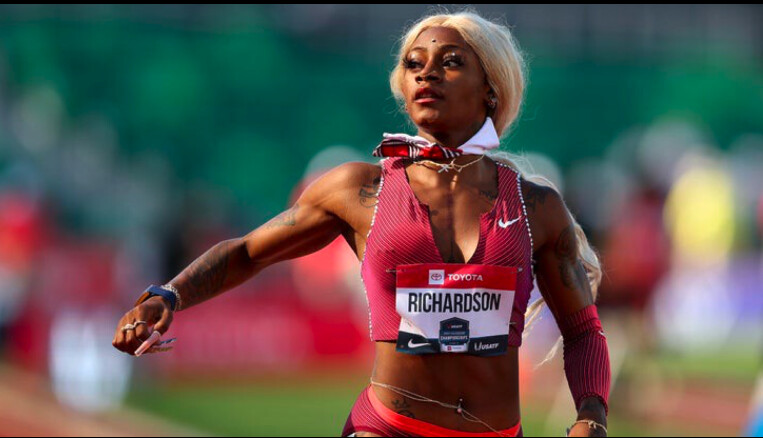
American sprint sensation Sha’Carri Richardson will be racing the 100-meter dash at the USATF Los Angeles Grand Prix. You probably remember her for her perceived failures more than the astounding times she’s actually achieved on the track.
Two years ago, the sprinter from Dallas blew away the field in the 100-meter dash at the U.S. Olympic Trials with a 10.86 effort, but then she was famously suspended after testing positive for cannabis (which is on the World Anti-Doping Agency’s list of banned substances) and missed the Tokyo Olympics as a result. (She admitted using the drug to cope with the pressure of qualifying for the Olympics while also mourning the recent death of her biological mother.)
Then last year, despite strong early season performances, Richardson failed to make the finals of the 100-meter or 200-meter at the U.S. championships, so she missed out on running in the first world championships held on American soil.
This year, the 23-year-old sprinter appears to be locked in and better than ever, posting a world-leading 10.76 100-meter time on May 5 in Doha (she also ran an eye-popping 10.57 with an over-the-limit tailwind on April 9 in Florida) and posted the second-fastest time in the 200-meter (22.07) on May 13 at a meet in Kenya.
If she keeps it all together, expect Richardson to finally contend with elite Jamaican sprinters Shericka Jackson and Shelly-Ann Fraser-Pryce in the 100 and 4×100-meter relay in August at the World Athletics Championships in Budapest, Hungary.
A few years ago, American sprinter Fred Kerley was on his way to becoming one of the world’s best 400-meter runners. But he wanted more than that. What he really had his heart set on was becoming the world’s fastest man, a moniker that goes with the most dominant sprinter in the 100-meter dash.
Ignoring doubters, Kerley retooled his training and earned the silver medal in the 100-meter at the Tokyo Olympics (.04 seconds behind Italy’s Marcell Jacobs) and then continued his ascent last year by winning the U.S. championships (in 9.76, the sixth-fastest time in history) and world championships (9.86).
The 28-year-old from San Antonio, Texas, also became one of just two other runners (along with American Michael Norman and South African Wayde van Niekerk) to ever run sub-10 seconds in the 100-meter, sub-20 seconds in the 200-meter, and sub-44 seconds in the 400-meter. So far this year, Kerley has two of the four fastest 100-meter times of the season, including a speedy 9.88 on May 21 in Japan.
After trading barbs on social media this spring, Kerley and Jacobs are expected to face off in an epic 100-meter showdown on May 28 at a Diamond League meet in Rabat, Morocco, marking the first time the Olympic gold medalist and the world champion in the men’s 100m face off since the 2012 Olympic final, when Jamaican Usain Bolt beat countryman Yohan Blake. American Trayvon Bromell, the silver medalist at last year’s world championships, is also in the field, so it should be an extraordinary tilt.
If you’re a gambler, bet on Kerley to win that one and eventually get close to Bolt’s 9.58 world record. (To do so, he’ll be running faster than 26 miles per hour!) But don’t count out Kenya’s Ferdinand Omanyala, the early world leader (9.84), or fellow American sub-9.9 guys Bromell, Norman, Christian Coleman, and Noah Lyles at the 2023 World Athletics Championships on August 20, in Budapest. Depending on which three Americans join Kerley (who has an automatic qualifier) at the world championships, it’s actually quite likely the U.S. could sweep the top four spots in the 100 in Budapest.
If you’ve ever wanted to see the world’s top track and field stars competing live in the U.S., this is the year to do it. The May 26-27 USATF Los Angeles Grand Prix meet and June 3-4 Portland Track Festival are part of what might be the mosst compelling outdoor track season ever held on U.S. soil.
If you’re looking for an athlete to marvel at, start with Sydney McLaughlin-Levrone, the gold medalist in the 400-meter hurdles at the Olympics in 2021 and World Athletics Championships last summer. She’s been one of the sport’s rising stars since she was a teenager and yet she’s only 23. Her trajectory is still rising—especially since she moved to Los Angeles to train under coach Bob Kersee. Driven by her strong faith, McLaughlin-Levrone is the personification of hard work, grace and competitiveness.
This year she’ll temporarily step away from her primary event to show off her pure sprinting prowess when she opens her season in a “flat” 400-meter race at the Diamond League meet in Paris on June 9. Her personal best in the 400-meter is 50.07 seconds, set when she was a freshman at the University of Kentucky, but she clocked a speedy 50.68 while running over hurdles, en route to a world-record setting win at last summer’s world championships.
Her best 400-meter split as part of a 4×400-meter relay is 47.91, so it’s within reason to think she could be one of several runners to challenge the long-standing world record of 47.60 set in 1985 by East German Marita Koch. Because McLaughlin-Levrone has an automatic qualifier to the world championships in the 400-meter hurdles, she will likely run the open 400-meter at the U.S. championships and decide after the meet which one she’ll focus on.
American 800-meter ace Athing Mu has looked unbeatable for the past several years as she won Olympic gold in the event at the Tokyo Olympics and last year’s world championships. In fact, she has been unbeatable, having won 13 straight races since she dropped out of a mile race at the Millrose Games in January 2022. Going back to 2020 (when she was a senior in high school) and 2021 (during her one season at Texas A&M), she’s finished first in 51 of her past 53 races (relays included), with her only loss being a narrow runner-up finish to Kaelin Roberts in the 400-meter at the 2021 NCAA indoor championships.
Mu, who is also coached by Kersee and trains with McLaughlin-Levrone, seems to be the most likely athlete to challenge the women’s 800-meter world record of 1:53.28, set in 1983 by the Czech Republic’s Jarmila Kratochvílová. It’s the longest standing record in track and field, and only two runners have come within a second of it in the past 15 years. Her personal best of 1:55.04 is an American record and the eighth-fastest time in history. She’s still only 20 years old, so she has many years to keep improving and other historic opportunities ahead of her.
Mu said earlier this year she’d like to try a 400-800-meter double at an Olympics or world championships if the schedule permits—it’s only been done once successfully by Cuba’s Alberto Juantorena at the 1976 Games—but her coach has said she might attempt a 800-1,500-meter double next year at the Paris Olympics.
This year, Mu will run the 1,500 meters at the USATF Championships in July, but will likely defend her 800-meter title at the world championships in Budapest, as well as potentially running on the U.S. women’s 4×400-meter relay and the mixed-gender 4×400-meter relay (with McLaughlin-Levrone) for an opportunity to win three gold medals in a single championships.
With apologies to quarterback extraordinaire Patrick Mahomes, gymnastics all-arounder Simone Biles, and skiing superstar Mikela Shiffrin, pole vaulter Armand Duplantis just might be the most dynamically talented athlete in the world. That’s because he’s the world’s most dominant athlete (and has set six world records) in arguably the most demanding discipline, not only in track and field but quite possibly in any sport. No sport discipline involves such a dynamic combination of speed, power, precision and agility, and Duplantis, who is only 23, is already the greatest of all-time.
Prove me wrong or watch him set his latest world record (6.22 meters or 20 feet, 5 inches) at an indoor meet on February 25 in Clermont-Ferrand, France. That’s the equivalent of vaulting onto the roof of a two-story building, and in his case, often with room to spare.
Duplantis, who grew up in Lafayette, Louisiana, to athletic parents with Swedish and Finnish heritage, represents Sweden in international competitions. He started pole vaulting at age three, set his first of 11 age-group world-best marks at age seven, and won an NCAA title in 2019 as a freshman competing for LSU before turning pro.
All indications are that North Carolina State junior Katelyn Tuohy could become the next American running star. All she has done since she was young is win races and break records.
After winning the NCAA outdoor 5,000-meter a year ago, she won the NCAA cross country title in November. During the indoor track season this past winter, she set a new collegiate mile record (4:24.26) and won both the 3,000-meter and 5,000-meter title at the NCAA indoor championships in March. On May 7, the 21-year-old from Thiells, New York, broke the NCAA outdoor 5,000-meter record by 17 seconds, clocking 15:03.12 at the Sound Running On Track Fest.
Tuohy will be running both the 1,500-meter and 5,000-meter at the NCAA East Regional May 24-27 in Jacksonville, Florida, with the hopes of eventually advancing to the finals of both events at the June 7-10 NCAA Division I championship meet in Austin, Texas.
University of Arkansas junior Britton Wilson is a top collegiate star who is ready for prime time at the pro level. She won the 400-meter in a world-leading and collegiate record time of 49.13 in mid-May at the SEC Championships, where she also won the 400-meter hurdles (53.23) in a world-leading time. The 22-year-old from Richmond, Virginia, was the runner-up in the 400-meter hurdles at last year’s U.S. championships and fifth in the world championships, and could contend for a spot on Team USA in either event at the July 6-9 U.S. championships.
Kerley and Lyles are expected to square off in a 200-meter race at the USATF New York Grand Prix meet on June 24 at Icahn Stadium on Randall’s Island in New York City. There are also two high-level Puma American Track League meets in Tennessee—the Music City Track Carnival June 2 in Nashville and the Ed Murphey Classic August 4-5 in Memphis—and two Under Armour Sunset Tour meets organized by Sound Running on July 22 in Los Angeles and July 29 in Baltimore.
The best U.S. meet of the year, though, will be the USATF Outdoor Championships held July 6-9 in Eugene, Oregon, where American athletes will be vying for top-three finishes to earn a chance to compete for Team USA at the 2023 World Athletics Championships August 19-27 in Budapest.
The U.S. season will culminate with the September 16-17 Pre Classic in Eugene, Oregon, a two two-day meet that will double as the finals of the international Diamond League circuit and should include many of the top athletes who will be representing their countries in next summer’s Paris Olympics. (And if you want to see the country’s top high school athletes run unfathomable times for teenagers, check out the Brooks PR Invitational on June 14 in Seattle, Washington.)
At the June 2 Diamond League meet in Rome, Italy, the men’s field in the 5,000-meter run will have what might be the fastest field ever assembled, with 13 runners who have personal best times of 12:59 or faster.
The field will be headlined by Joshua Cheptegei of Uganda, who lowered the world record to 12:35.36 in Monaco three years ago. (That’s a pace of 4:03 per mile!). But it will also include Kenya’s Jacob Krop (12:45.71) and Nicholas Kipkorir (12:46.33), Ethiopia’s Yomif Kejelcha (12:46.79), American Grant Fisher (12:46.79), Canadian Mohammed Ahmed (12:47.20), and Guatemalan-American Luis Grijalva (13:02.94), among others. With a big prize purse at stake and pacesetters ramping up the speed from the start, it should be a race for the ages.
by Outside Online
Login to leave a comment
Christian Coleman, Noah Lyles and Ronnie Baker to Clash in Epic 60m at 2023 Millrose Games
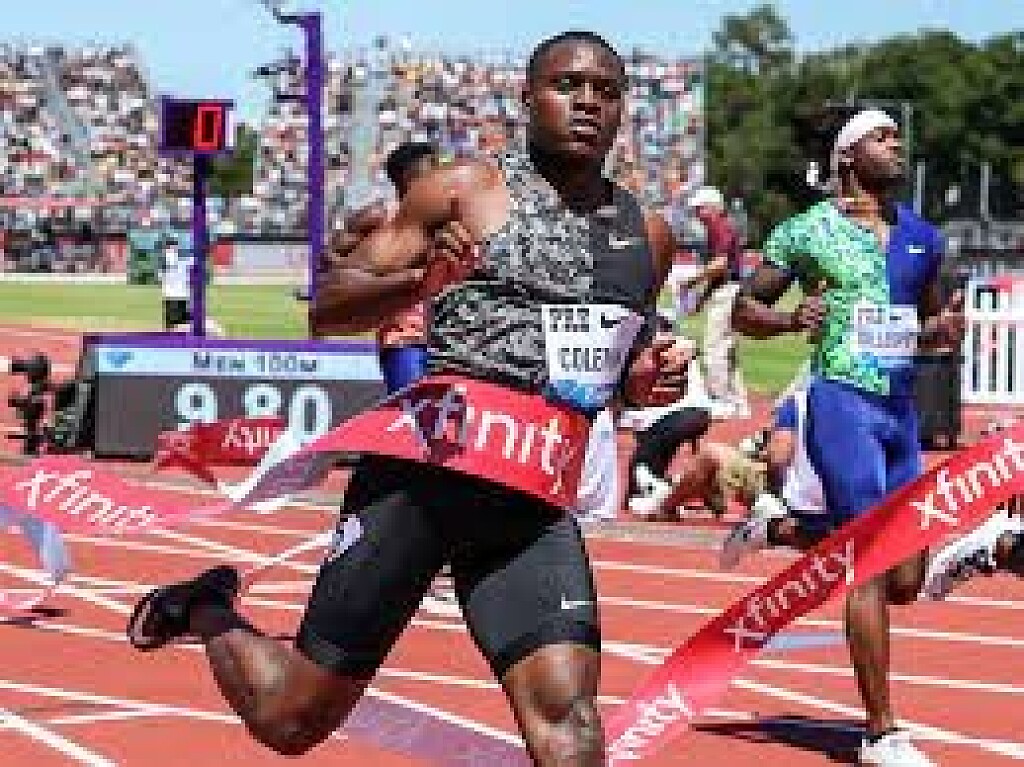
The 115th Millrose Games, the world’s most historic indoor track & field event is only six weeks away. The Men’s 60m will surely be one of the most anticipated races of the entire meet, as Christian Coleman, Noah Lyles, and Ronnie Baker, three of the best sprinters in the world, will be taking their talents to the infield straightaway at the iconic New Balance Track & Field Center at The Armory.
The 115th Millrose Games is scheduled for Saturday, February 11th.
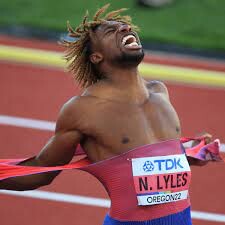
Coleman is the defending Millrose Games champion, World Record holder, and 2018 World Indoor Champion in the 60m. His lightning-quick starting ability makes him nearly unstoppable over this short distance, and he set the current world record of 6.34 seconds in 2018. Outdoors, he has two World Championship gold medals and three silver medals in the 100m and 4x100m relay.
Lyles is the reigning back-to-back World Champion, American Record holder, and the third-fastest man ever in the 200m. He also claimed the Olympic bronze medal in Tokyo. Lyles, the 2022 USATF Male Athlete of the Year, has been open about his pursuit of the world records held by Usain Bolt, and by dropping down in distance to challenge the short-sprint specialists, he hopes to continue improving his start and putting the pieces together for another year of dominance.

Baker is the third-fastest 60m runner in history, and one of the most consistent sprinters competing on the circuit. He is an Olympic finalist, World Indoor bronze medalist, and two-time NCAA champion. Baker is no stranger to the Millrose Games stage, winning the 60m in both 2018 and 2020.
Other athletes in the field include:
–Josephus Lyles, Noah’s younger brother. Lyles is a former World Junior Champion, and he placed fifth in the 200m final at this year’s USATF Outdoor Championships.
–Ackeem Blake of Jamaica, NACAC 100m Champion, and semifinalist at the World Championships.
–Miles Lewis, the 60m national record holder for Puerto Rico.
As always, the Millrose Games will feature the absolute best athletes in the sport, including dozens of Olympians and world champions. Some of the big names already announced include Alicia Monson, Konstanze Klosterhalfen, Abby Steiner, Jenna Prandini, Geordie Beamish, Cooper Teare, Josh Kerr, Katie Nageotte, Sandi Morris, Katerina Stefanidi, Ryan Crouser, and Joe Kovacs, with many more still to come.
The Millrose Games is a World Athletics Indoor Tour Gold meet. With the highest-level competition at the youth, high school, collegiate, club, and professional levels, there is truly something for everyone at the Millrose Games.
by Letsrun
Login to leave a comment

NYRR Millrose Games
The Pinnacle of Indoor Track & Field The NYRR Millrose Games, first held in 1908, remains the premier indoor track and field competition in the United States. The 2025 edition will once again bring the world’s top professional, collegiate, and high school athletes to New York City for a day of thrilling competition. Hosted at the New Balance Track &...
more...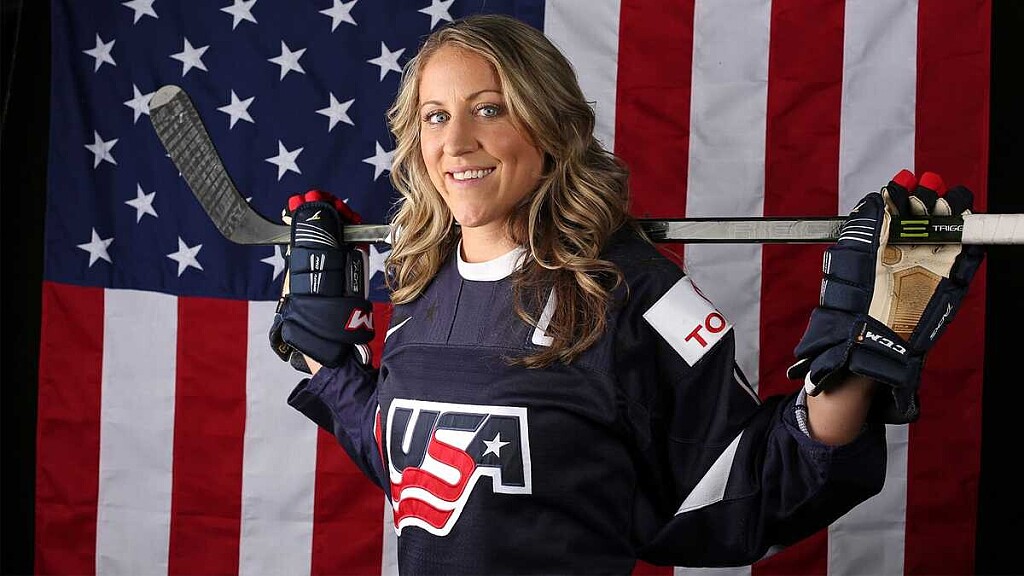
Hockey player captain Meghan Duggan set for NYC Marathon
Meghan Duggan entered the year having never run more than two miles at a time.
“In hockey,” she said, “it was really a no-no to do any type of long endurance training.”
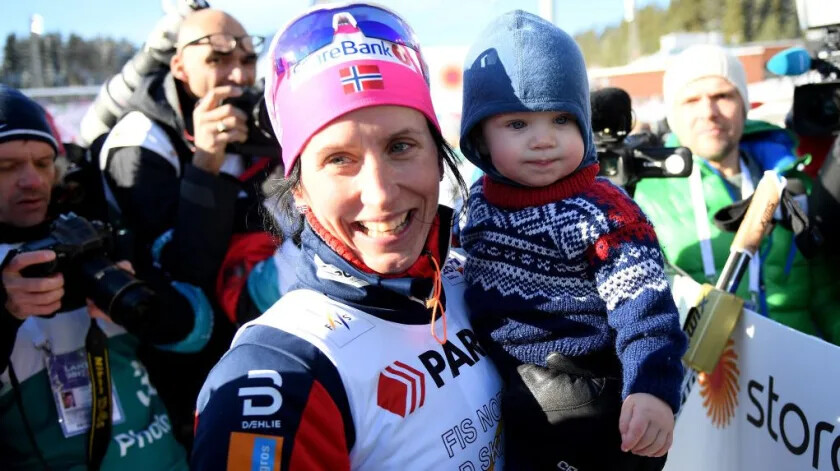
Now the three-time Olympic medalist is in her final preparations to race Sunday’s New York City Marathon.
“It’s opened up a whole new world to what my body can go through,” she said.
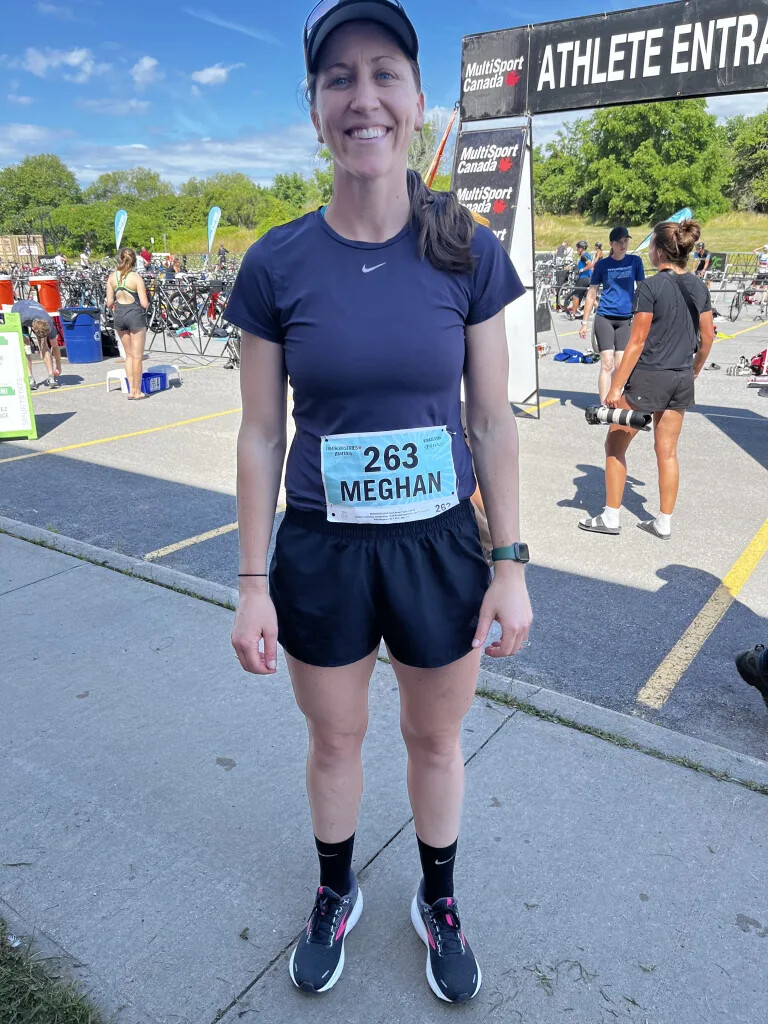
Duggan, who retired from hockey in 2020 after captaining the U.S. to the gold medal at the 2018 Winter Olympics, decided to make her 26.2-mile debut to raise awareness for the Women’s Sports Foundation, a nonprofit founded by Billie Jean King in 1974 to advance the lives of women and girls through sports.
In addition to serving as Women’s Sports Foundation president, Duggan is the New Jersey Devils director of player development and a mother of two.
Juggling so many responsibilities, the 35-year-old occasionally got out of bed at 4:30 a.m. to do long runs before her kids woke up. Or, she did them on the treadmill at night after her kids went to sleep.
“I’ve had to be flexible as we all do in life,” she said.
Duggan’s two children, George and Olivia, are her biggest cheerleaders.
During training runs, Duggan’s wife, Canadian Olympic hockey champion Gillian Apps, pulled the kids in a bike trailer as they clapped and screamed, “run mamma run!” Duggan often finds George running laps around the house yelling “marathon, marathon!”
“It’s important for me to show my kids you can do hard things,” Duggan said.
Duggan is planning to race alongside Haley Skarupa, a gold medal-winning teammate at the 2018 Winter Games. Erika Lawler, a 2010 Olympic silver medalist hockey player, also planned on running the race until she suffered an injury.
“Hockey players aren’t really meant to be runners,” Duggan said, “but I think that’s why Haley and I are so excited to do it.”
Duggan has not been shy in seeking advice. At the Women’s Sports Foundation’s Salute to Women in Sports ceremony last month, she cornered Jocelyn Rivas, the youngest person to run 100 marathons, and Alysia Montaño, a U.S. Olympic 800m runner who made worldwide headlines for racing while eight months pregnant at the 2014 USATF Outdoor Championships.
“It’s certainly made me really respect other sports and what goes into it,” Duggan said. “Not that I didn’t before, but I never had the opportunity to put myself in the shoes of another athlete in a different sport. This is kind of my first time, and it’s been eye-opening and enjoyable.”
Duggan’s goal is to complete the 26.2 miles in under four hours.
“I think it’s a realistic goal,” Duggan said. “That’s something that is not easy to do and will be incredibly challenging, but I think even just the accountability of saying it out loud makes it that much more exciting.”
This might not be the last marathon for Duggan, who grew up in Danvers, Mass.
“I’ve had a lot of friends run [the Boston Marathon],” she said. “I would love to do that, but I’m going to get through this one first, and then we’ll see.”
by Seth Rubinroit
Login to leave a comment

TCS New York City Marathon
The first New York City Marathon, organized in 1970 by Fred Lebow and Vince Chiappetta, was held entirely in Central Park. Of 127 entrants, only 55 men finished; the sole female entrant dropped out due to illness. Winners were given inexpensive wristwatches and recycled baseball and bowling trophies. The entry fee was $1 and the total event budget...
more...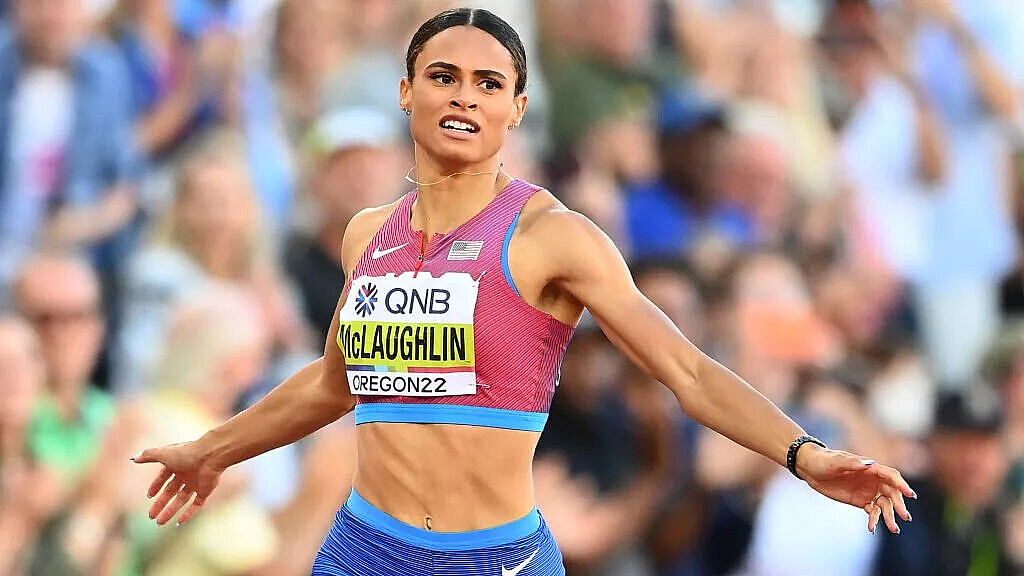
Sydney McLaughlin ran the sixth-fastest 400m hurdles time in history in what she said beforehand was her last race of the season
Sydney McLaughlin, who lowered her world record at June’s USATF Outdoor Championships (51.41) and July’s world championships (50.68), ran 51.68 at a Continental Tour meet in Hungary on Monday.
McLaughlin, who turned 23 on Sunday, extended her win streak to seven meets since her last defeat at the 2019 World Championships. Her time on Monday would have been a world record up until the Tokyo Olympics, where she lowered it from 51.90 to 51.46.
Next season is another world championships year. McLaughlin has a bye into next August’s worlds in Budapest in the 400m hurdles as reigning champion but has said she could add or change events, perhaps to the flat 400m, as the 2024 Paris Olympics approach.
Login to leave a comment
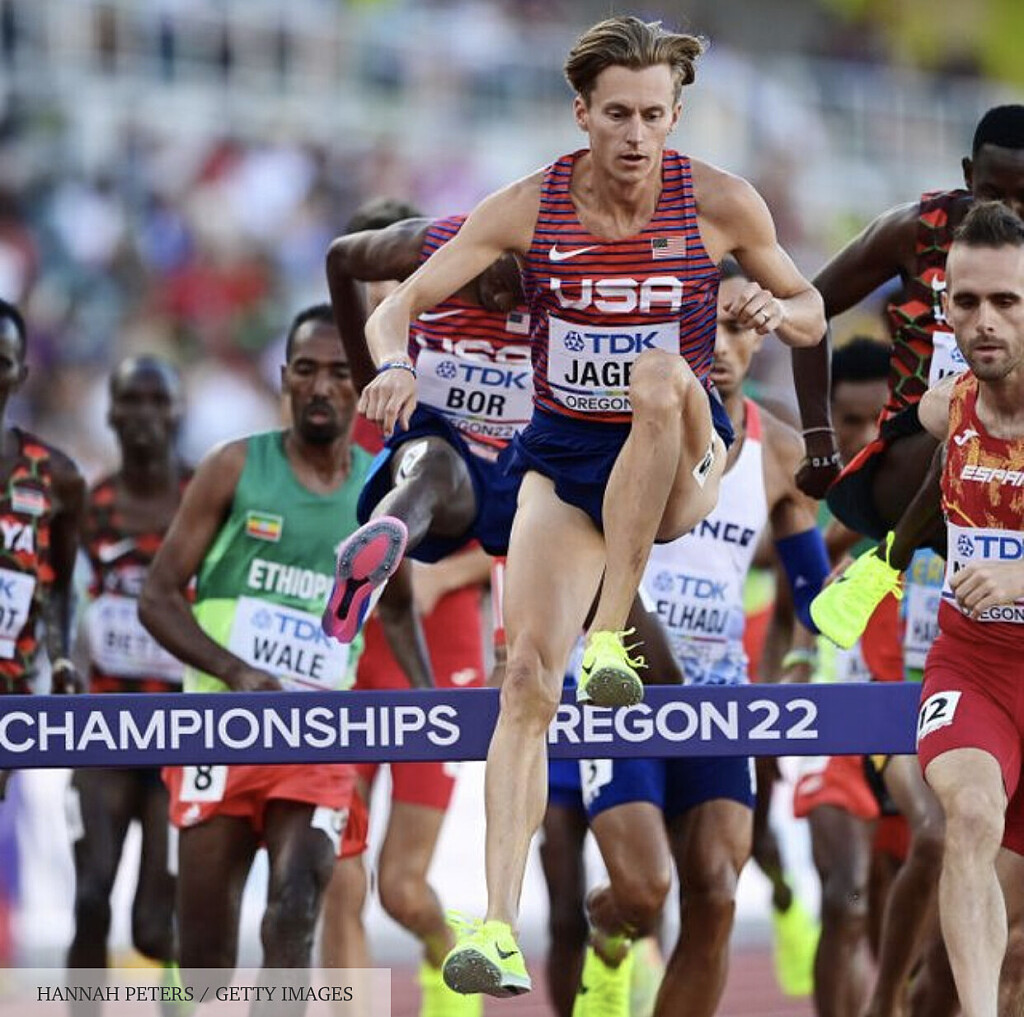
This 33-year-old steeplechase specialist had a bumpy four years until placing sixth at the World Athletics Championships on July 18
If you told Evan Jager in April that he would place sixth in the World Athletics Championships men’s 3,000-meter steeplechase in just a few months, he would have been ecstatic.
After all, the 2016 Olympic silver medalisthad only ran 8:34.89 at the Mt. SAC Relays on April 14, which is almost 13 seconds off the world’s standard time of 8:22.00. Though Jager had better steeplechase showings at the USATF Distance Classic on May 19 and the Portland Track Festival on June 10, it looked like the 33-year-old distance runner was still a far from being his former self.
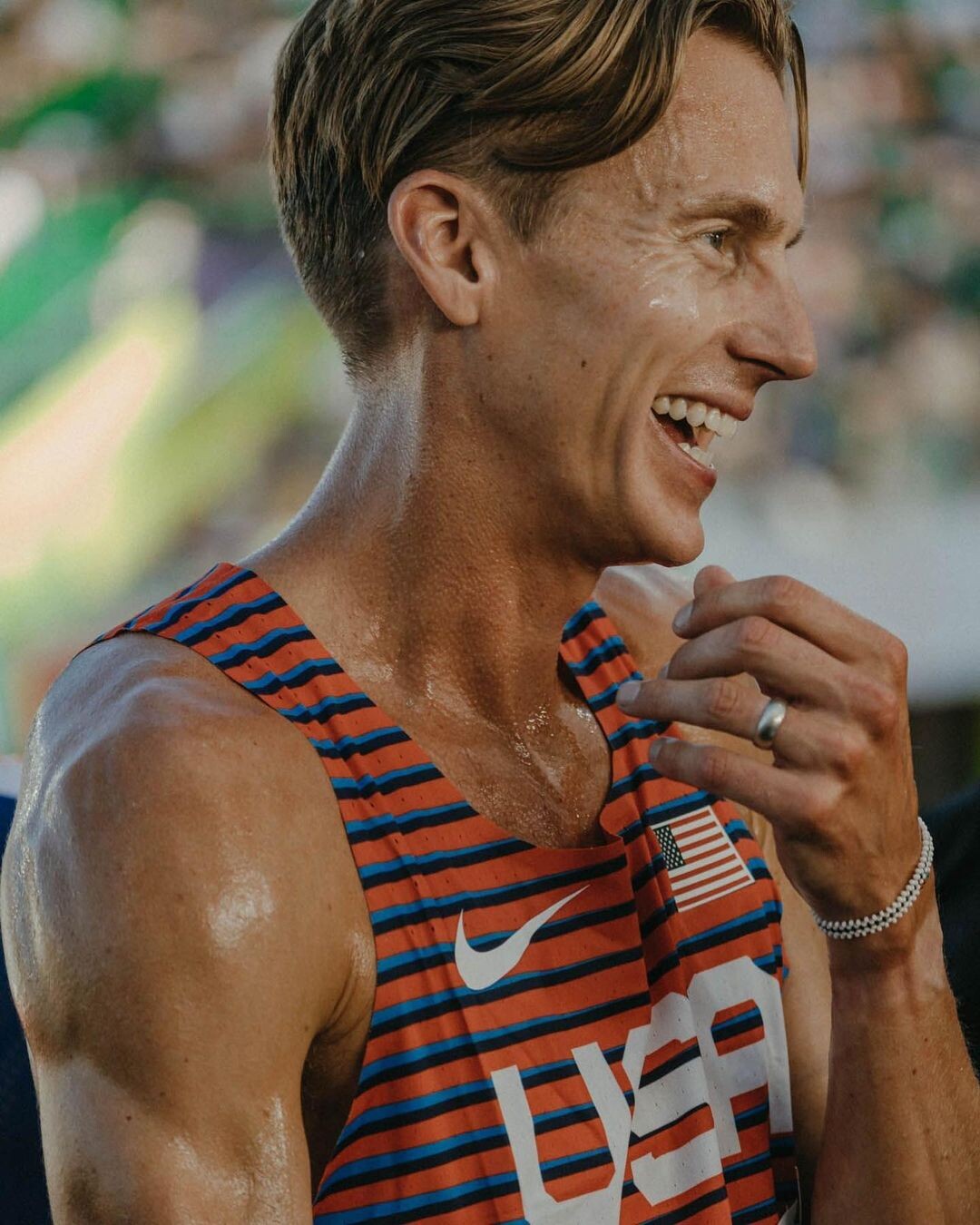
Things finally clicked at the USATF Outdoor Championships on June 25, when he ran 8:17.25 in the final to place second, earning him the world championships standard and a spot on Team USA for the World Athletics Championships at Hayward Field in Eugene, Oregon.
“Once you reach a certain point, you’ve got to set the bar higher,” Jager told Runner’s World.“I probably didn’t start thinking about realistically making the World Championship final until the prelim at USAs, I felt really good coming off of that.”
With momentum on his side, Jager’s expectations grew. The Bowerman Track Club athlete looked strong in his world championships preliminary heat, qualifying automatically for the final with his second-place finish. But in a tactical and physical final, Jager couldn’t keep up with defending Olympic champion Soufiane El Bakkali, Olympic silver medalist Lamecha Girma, and defending world champion Conseslus Kipruto over the final lap.
“After the prelim, I felt like my fitness was up there with just about anyone besides El Bakkali and Girma if it was a hard race from the get-go,” Jager said. “Team USA was having such an unbelievable and magical meet that I was letting myself believe that I could let the home crowd carry me to a magical performance. I think I probably would have fared better in a faster race.”
Regardless, the achievement is impressive for a runner who has been absent from the track & field circuit for the last four years. A lot has changed, especially with his training group. In 2018, Jager and Canadian 5,000- and 10,000-meter runner Mo Ahmed were the top dogs on the Bowerman Track Club, challenging the best in the world for medals. But Jager got hurt that year, and spent most of 2019 trying to get fit again while dealing with other injuries. When Jager returned to training, the team dynamic changed completely. Olympic gold medalist Matthew Centrowitz joined the group, who along with Woody Kincaid and Lopez Lomong all ran around 13 minutes in the 5,000 meters that summer. Then, NCAA champions Sean McGorty and Grant Fisher trickled in after using up their eligibility.
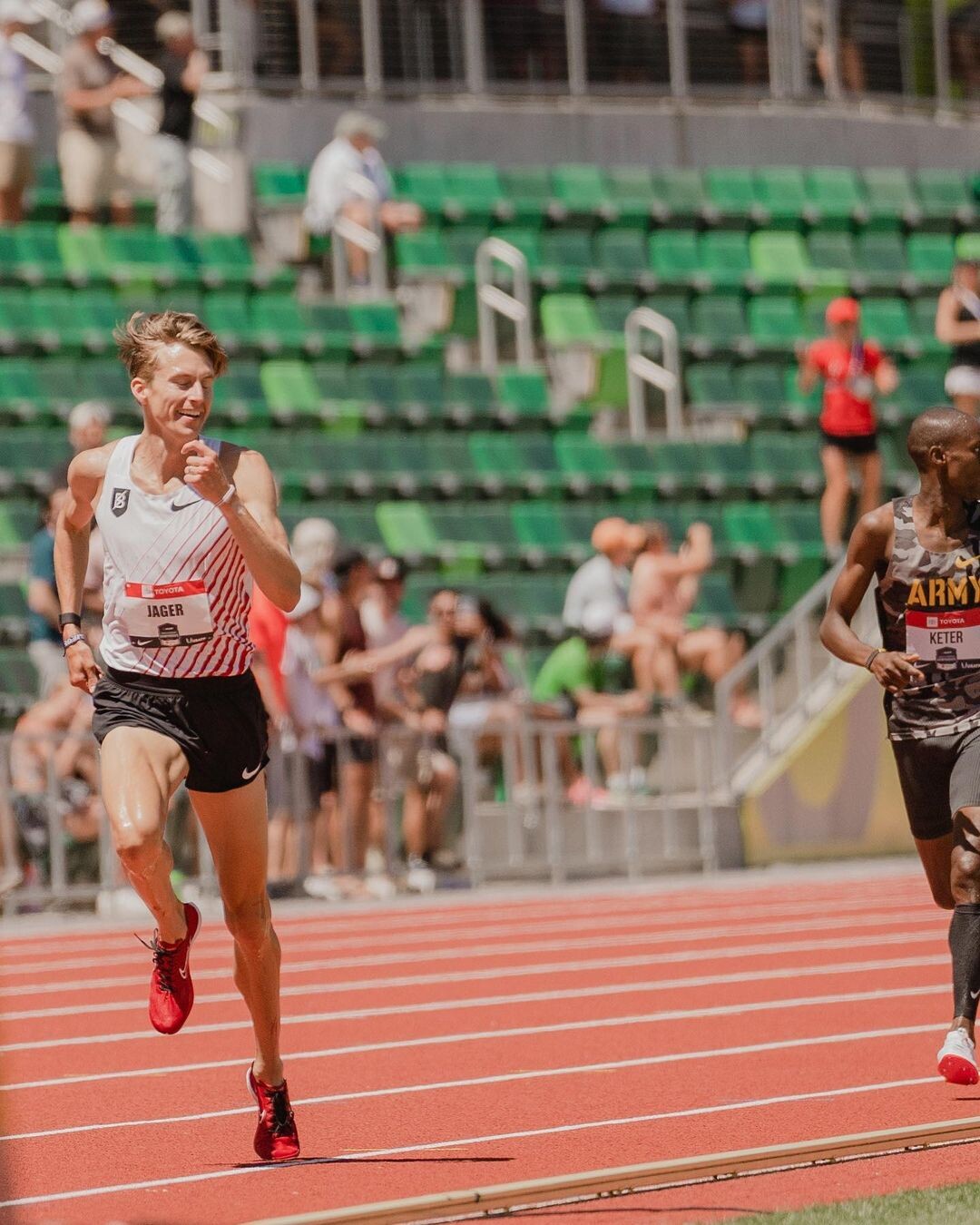
“I went from being on top … to being literally the worst guy on the team,” said Jager. “Every day was a grind.” Jager tried to keep up with the new members while also battling injuries, but had a hard time getting through even half of team workouts. “They were just on another level. I never felt like I was within myself in training for three and a half years up until this spring.”
So what changed in those three and a half years? Jager credits the team physical therapist, Colleen Little, who started working with Bowerman in January 2021. His problem wasn’t simply one big injury, like the stress fracture in his foot that ended his 2018 season. It was a snowball effect of one injury leading to overcompensation and imbalances in other parts of his body. So Jager and Little saw each other once or twice a week, every week, to manage the different aches and pains.
Next year will bring even more changes for Jager. His coach, Jerry Schumacher, is moving to Eugene to take the helm of the University of Oregon track & field program. The Bowerman Track Club’s athletes will relocate from their current base in Portland.
“I think it’s an incredible move for the group,” Jager said. “Change is always good. I’ve been in Portland for 14 years now, so it’s probably a good thing for me.”
Besides that, Jager said being stubborn kept him in the game. “I could have done a lot better being positive and working on mental health [the last few years],” he said. “I just believed that if I got healthy, I would get back here. If I can get to the final off of feeling healthy for four months, then I’m excited for next year.”
by Runner’s World
Login to leave a comment

World Athletics Championships Budapest23
Budapest is a true capital of sports, which is one of the reasons why the World Athletics Championships Budapest 2023 is in the right place here. Here are some of the most important world athletics events and venues where we have witnessed moments of sporting history. Throughout the 125-year history of Hungarian athletics, the country and Budapest have hosted numerous...
more...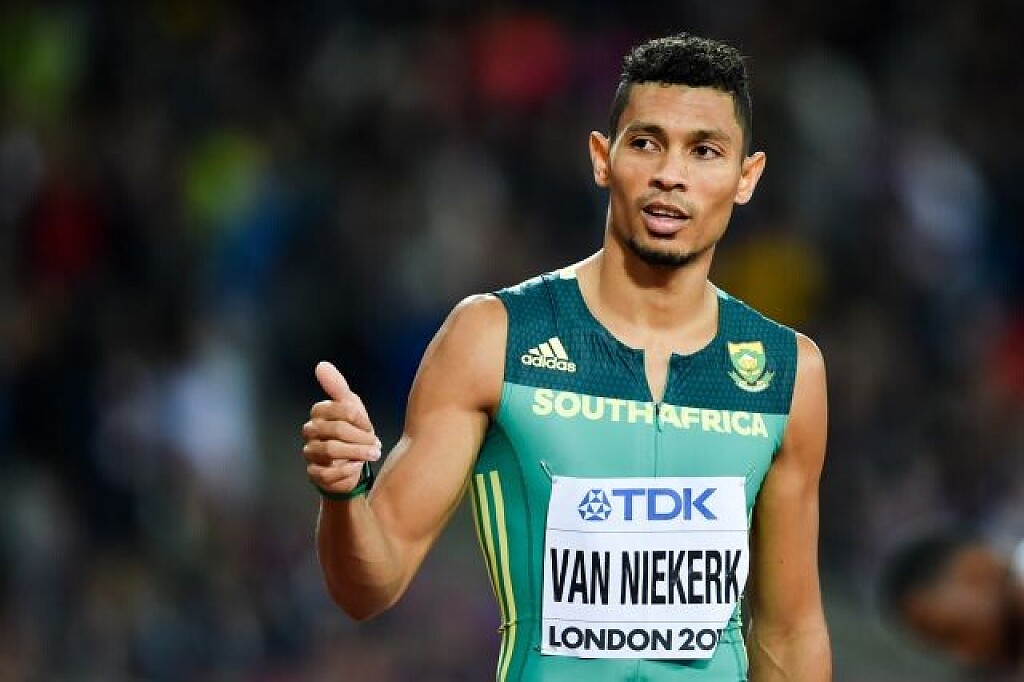
South African Olympic champion Wayde van Niekerk gets confidence boost ahead of 2022 World Athletics Championships
Olympic champion Wayde van Niekerk claimed a commanding victory in his first men's 400m race of the 2022 track season at the Stars and Stripes Classic meeting in Atlanta, Georgia, on Saturday (July 2).
South African Van Niekerk looked comfortable leading the race from gun to tape, clocking 44.58 seconds to give himself a much-needed confidence boost ahead of the World Athletics Championships in Eugene, Oregon, in less than two weeks.
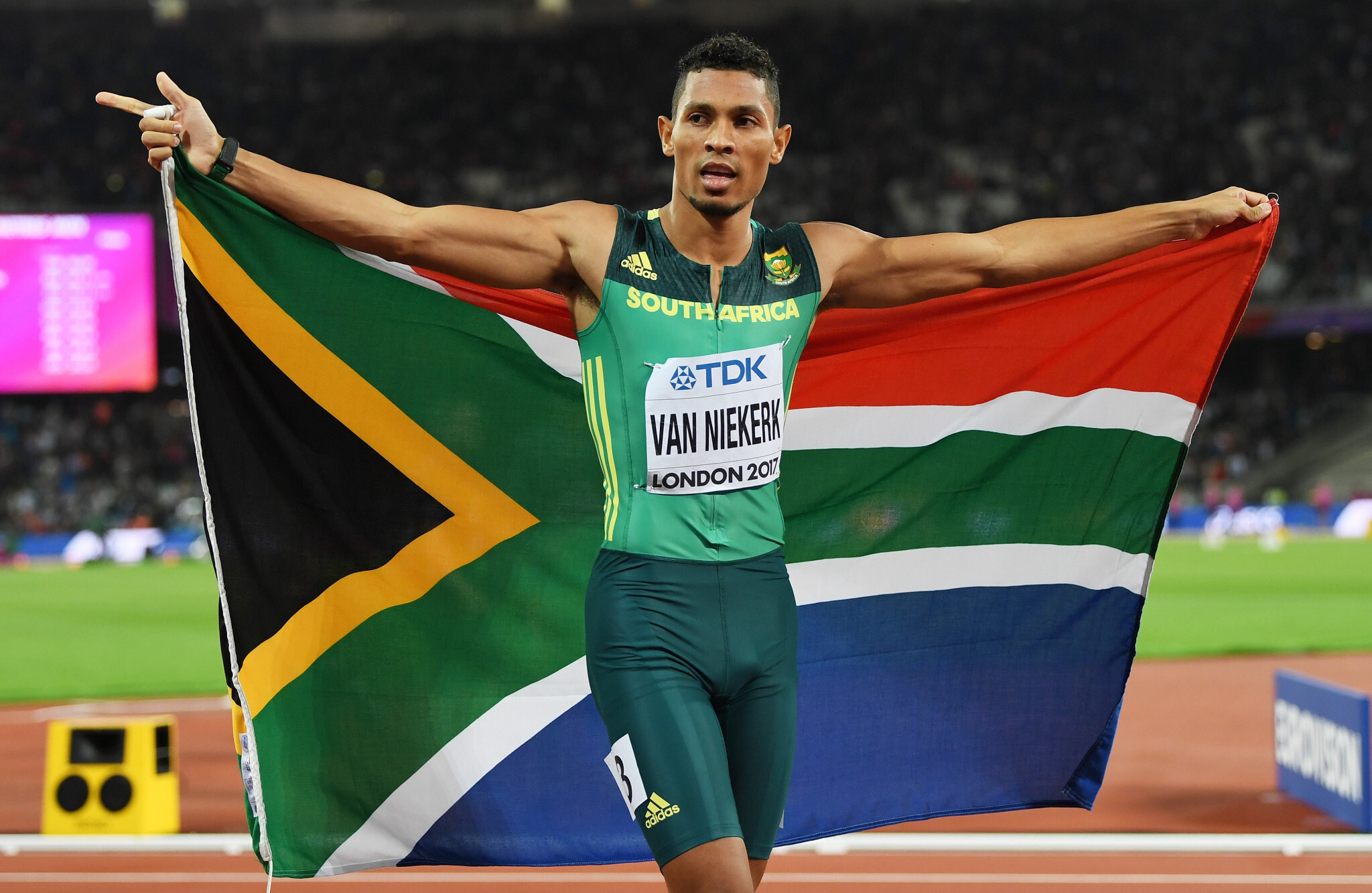
The two-time world champion came out of the final bend well in front, with the rest of the field following in a v-formation, before crossing the line nearly a second ahead of nearest rival Rusheen McDonald (45.43s) of Jamaica. Demish Gaye, another Jamaican, raced home in a time of 45.47s.
"The plan was to try and execute my race as comfortably as possible coming off of consecutive niggles and injuries," Van Niekerk told the World-Track website.
"I tried to keep it as smooth as possible for as long as I could, but as you know, as you get to the home straight, you have to pick it up a bit and finish strong, so it gave me a reason to fight to the finish line, and I am quite satisfied with the results."
The time ranks him just outside the top 10 in the world this year, with American ace Michael Norman leading with the 43.56s he clocked at the 2022 USATF Outdoor Championships at the end of June.
Van Niekerk's comeback from a severe knee injury has been fraught with setbacks, including an early exit at the delayed Tokyo 2020 Olympics in 2021. His lousy run of misfortune spilt into 2022 when he withdrew from the ASA Senior Track and Field Championships in Cape Town in April as a precaution before pulling up in a 200m race in Italy in May.
"I'm disappointed. I was excited to compete, but unfortunately, things have not been going my way over the last few weeks," Van Niekerk said in a statement before the South African championships.
"My spirits are still high, and I will keep putting in the hard work. For now, I'm looking forward to getting back to work."
Van Niekerk was named in South Africa's team for the world championships starting on 15 July courtesy of a 44.87s he ran in Switzerland in June 2021. But the South African has raced sparingly since his comeback in 2020 from a three-year hiatus.
The lack of race time – with only a single competitive event to his name this year – may again be a factor at a major competition like the world championships, where he would have to go through the rounds for a shot at redemption.
Login to leave a comment
World Athletics Championships Budapest23
Budapest is a true capital of sports, which is one of the reasons why the World Athletics Championships Budapest 2023 is in the right place here. Here are some of the most important world athletics events and venues where we have witnessed moments of sporting history. Throughout the 125-year history of Hungarian athletics, the country and Budapest have hosted numerous...
more...
It Shouldn’t Be This Hard to Be a Running Fan
Despite incredible performances at the USATF Outdoor Championships, the meet’s presentation failed to make the sport accessible for a wider audience.
The USATF Outdoor Championships were last weekend. But unless you made the trek to Eugene, Oregon, or you knew exactly where to watch at exactly the right time, you might have missed some (or all) of the action.
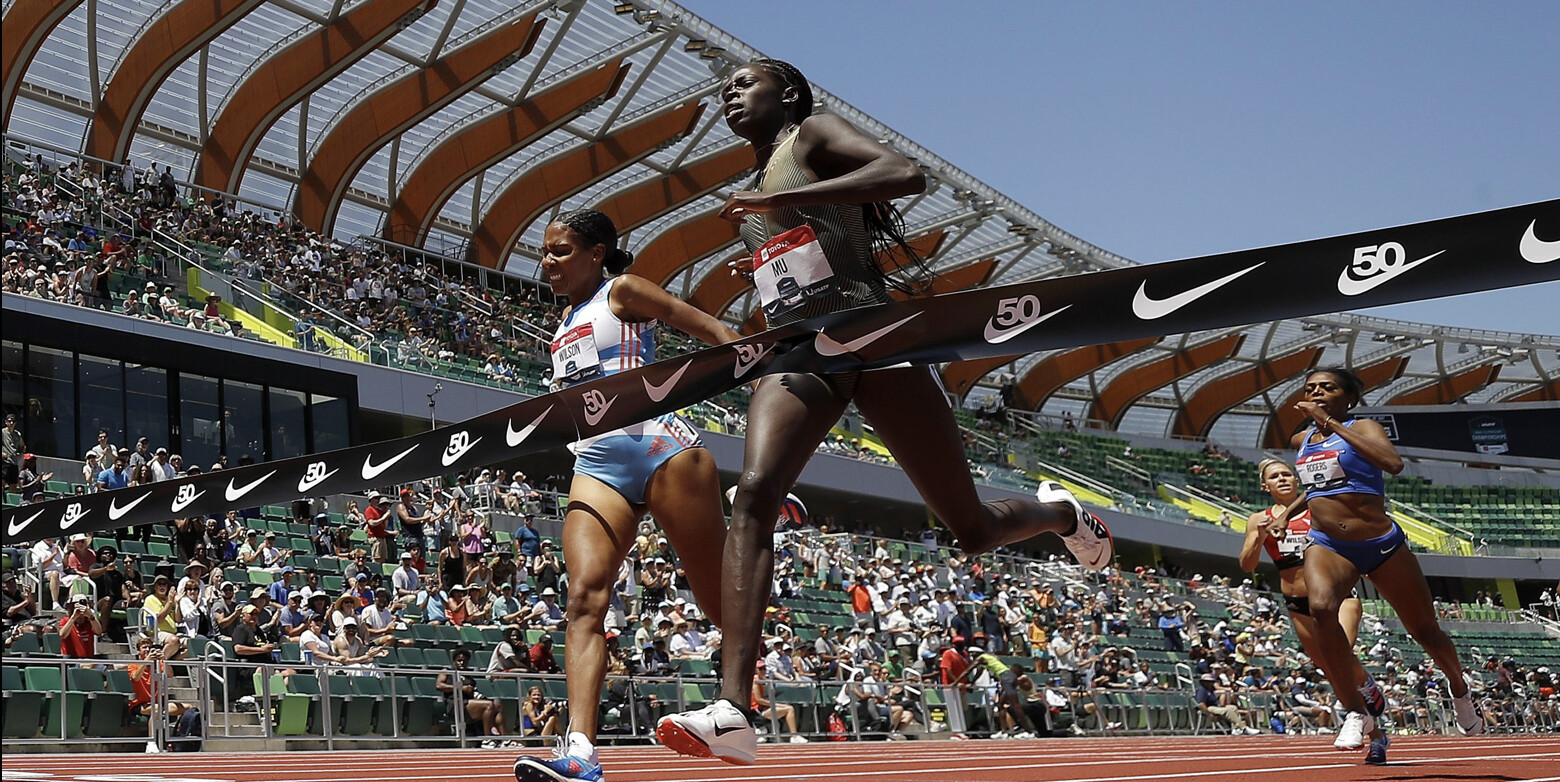
Even if you managed to watch the meet, you might have been left wondering who actually qualified to represent Team USA at the World Athletics Championships from July 15–24. Why will sprinter Christian Coleman run worlds after skipping out on the 100-meter final, despite running the rounds? But Jonathan Davis, who finished second in the men’s 1500 meters, did not qualify? There are answers to these questions, but such answers require prior knowledge of an elaborate qualification system that’s bound to confuse the casual viewer.
Those unclear qualification parameters, along with schedule changes, expensive travel and lodging, and an inconvenient number of streaming services, turned a celebration of athleticism into a Twitter gripe-fest, led by some of the sport’s biggest stars.
That’s not to say the U.S. championships weren’t exciting. Quite the opposite, in fact—the best part of the championships were the athletes’ performances. But everything outside the physical races, throws, vaults, and jumps was simply not on par with other professional sports’ presentations.
How can running become a more accessible sport to the general public? A lot of factors are at play, but critiquing the current shortcomings is step one.
Eugene is difficult and expensive to get to
Hayward Field is undoubtedly a historic venue in track history, and its home city, Eugene, is often dubbed Tracktown USA. So it makes sense that it should host major U.S. meets. But that doesn’t mean it should host all of the important events.
Between Memorial Day weekend and late July, the University of Oregon stadium will have hosted the Prefontaine Classic, the NCAA Division I Outdoor Championships, the USATF Outdoor Championships, and the World Athletics Championships—the four best meets in the U.S. this year.
It’s definitely an outlier year—the World Athletics Championships are on U.S. soil for the first time—but that means the NCAA championships and USATF Outdoor Championships should have been held elsewhere. (The Prefontaine Classic won’t and shouldn’t leave Hayward, because of Steve Prefontaine’s connection to the state and university.)
But track fans who live outside the state face complicated and expensive trips to make it to just one of these meets, let alone four over the course of two months.
An estimated 55,000 people will be in Eugene for the World Athletics Championships, and it shows in hotel supply and demand. Oregon Live reported that the Best Western close to Hayward Field costs $110 per night on a typical week, but it will skyrocket to $596 per night during Worlds. Add in the cost of a flight to Eugene—or a flight to Portland, plus a rental car—and track fans could likely only afford one trip this year, skipping the U.S. championships in favor of Worlds.
The attendance numbers speak for themselves. Only 13,306 people showed up for the 2022 USATF Outdoor Championships—an average of 3,327 each day in a stadium with the capacity for 12,650, expandable to nearly 25,000. In 2019, the last World Championships year, 30,367 fans traveled to Drake Stadium in Des Moines, Iowa, to watch the U.S. national meet.
The takeaway isn’t simply to host the U.S. championships elsewhere, however. Hayward Field hosted the 2015 U.S. championships that qualified for worlds and 38,705 people were there. (It also hosted the Olympic Trials last year, though Olympic years generally have higher attendance numbers.) USATF needs to encourage other venues to bid for a chance to host the U.S. championships—preferably in locales more accommodating to large sporting events.
Unfortunately, hosting the national championships is a big undertaking, and USATF doesn’t recommend new cities go straight from nothing to hosting the big one. Hayward Field already has the infrastructure in place to put on big meets—but so do Hornet Stadium in Sacramento, California, which hosted U.S. nationals in 2017, and Drake Stadium. In a unique year like this one, USATF should do more work to ensure fans aren’t stuck paying big bucks to go to the same stadium four times in two months.
Fans at home navigate increasingly convoluted streaming and broadcasting schedules and costs
If the prevalence of “how to watch this event” articles tells you anything about track, it’s that viewing the sport at home requires multiple streaming subscriptions, a beefy cable package, and hour-by-hour knowledge of which network shows which events.
This year, the USATF Outdoor Championships were broadcast across three different channels: NBC, CNBC, and USA. All three are owned by NBCUniversal. The meet streamed on two services: Peacock, which is NBC’s streaming service, and USATF.TV, a partner site on Runnerspace.
To catch every event live, you had to bounce around. Day one was only streamed on USATF.TV. Day two streamed on Peacock and broadcast on CNBC. On day three, the first hour of competition was on USATF.TV, while the rest was on Peacock and NBC. Every full-length field competition streamed on USATF.TV.
The final day didn’t go as planned. It was supposed to stream on Peacock, while the first half broadcast on NBC and the second half on USA. If the broadcast splitting into two networks mid-meet wasn’t ridiculous enough, a last-minute schedule change (due to high temperatures in Eugene) pushed some events earlier in the day, which disrupted the broadcast and streaming schedule.
Therefore, fans had to again turn to USATF.TV for the updated portion of the schedule, then log back into Peacock or turn on their televisions for the rest of the events.
Streaming is normally the simplest and most cost-effective way to watch the U.S. national meet. To watch live sports on Peacock, you have to pay a $4.99 per month fee. A USATF.TV subscription is more costly—a monthly pass costs $12.99, and a yearly pass costs $119.88, which works out to $9.99 per month—but also gives you access to all other Runnerspace content. And if you only wanted to tune into the U.S. track championships, you only had to pay $18 total for a one-month subscription to each—that’s much less than a ticket to most sporting events.
But here’s the trouble: if you’re a running fan who diligently follows the sport, you can’t watch every event on those two services alone.
Flotrack owns the rights to stream many of the major invitational track meets across the U.S., and they charge $29.99 monthly or $12.49 per month with an annual subscription. ESPN owns the rights to the NCAA championships, some major NCAA conference meets, the American Track League, and the New York City Marathon, which are only streamable if you have a cable subscription. The website Cable TV analyzed 381 plans across 15 providers and concluded that the average cost of cable is $79—and that’s without an internet bundle.
So how much does it cost to be a track fan that wants to watch most events live? Over $100 per month with annual subscriptions. That’s not cheap—especially when coverage is across disparate platforms subject to change at day’s notice and varies in quality.
Unfortunately, there’s no easy solution to this problem. While a singular running broadcast hub would be fantastic, it’s simply not feasible. Each network and service has rights to certain events and control them as such. But there are two things track fans can demand: clear and timely communication from USATF about where they can watch events live, and the respect of cable television networks, like NBC or ESPN, to show meets in their entirety on a single channel—without cutting to commercial mid-race.
It’s exhausting to explain the world championships qualification process to a casual viewer
Before 2019, USATF selected world championships qualifiers based on two main factors: whether you finished top three at the USATF Outdoor Championships, and whether you had the world qualification standard. The world standards are put in place by World Athletics—the international governing body of track & field—to limit the global championships to the best athletes.
If the top three finishers did not have the world standard, they were allowed to chase the standard for a period after the national meet ended and before the world meet began. If one of those athletes did not get the standard in time, the next person in finishing order at the USATF Outdoor Championships would qualify instead.
For example, athletes A, B, and C get first, second, and third at the U.S. championships in their event. Athlete C, however, did not achieve the world standard mark. Athlete C chases the standard, but fails to achieve it in the allotted time frame. Athlete D, who finished fourth, does have the standard, and will compete at the world championships instead of athlete C.
Does that already sound a bit confusing? Well, in 2019, World Athletics introduced a world ranking system, where “athletes score points based on a combination of result and place depending on the level of the competition in which the result is achieved.” This adds a new dimension to qualification, which assists athletes who might not achieve the standard but have been performing well in highly competitive meets, like the Diamond League circuit.
At the U.S. championships, this is normally not an issue. The top three athletes usually either have the standard or have a high enough world ranking that they qualify. At this year’s championships, however, one event caused everyone in the track world to scratch their heads.
The men’s 1500 meters is often a slow, tactical race, which leads to unconventional outcomes. Four men in this year’s final achieved the world standard mark of 3:35.00. But only one of those men placed top three—Cooper Teare, who won the race in a pedestrian 3:45.86. Second-place finisher Jonathan Davis had neither the standard nor a high enough world ranking, because he competed in the NCAA for the University of Illinois all season. Third-place finisher Josh Thompson similarly did not hit the standard, but he did have a high enough world ranking in 39th. The next two people with the world standard were Johnny Gregorek in sixth, and Yared Nuguse in 11th. But because this race counts toward world rankings, someone in between Thompson and Gregorek, like Eric Holt in fourth, could potentially jump the world rankings list to snag the third world team spot. However, Holt would have to land in the top 45 on the world ranking list—he sat 73rd before the race.
Chaos ensued over the next few hours as journalists, athletes, and fans deliberated over Twitter about who would actually qualify. But when the dust settled, there was no definitive answer. By the end of the last day of the U.S. championships, June 26, World Athletics released new rankings. Davis jumped from 110th to 93rd, while Holt remained the same. Neither earned the World Championships berth, as the qualification window closed on June 29.
Such a convoluted system isn’t just a blight for fans. Athletes like Davis, who ran the race of his life to earn second place, miss out on a chance to represent the United States. And those opportunities don’t come often.
“It was a little bittersweet,” Davis told Runner’s World. “It’d be really nice if it would have been similar to past years, where a top finish would possibly get you into the world championships. But [my coach and I] knew this was a possibility and that we have to deal with it.”
Davis believes emphasizing national meet placement would be more fair—and that the NCAA championships should have more impact on world rankings. But overall, he was happy with his performance and not too worried about missing out on worlds. “If I’m back next year, we’ll make sure I have the standard and get into some better races to increase my world rank,” he said.
But when asked directly about his thoughts on just how confusing the qualification procedures are, he laughed and said, “I’m not going to explain them to my grandparents.”
The world rankings are still a work in progress, according to World Athletics: “As we develop tools and processes to further expand the reach of our statistical service, these figures are destined to grow steadily and consistently.” In the meantime, athletes suffer, fans get confused, and casual viewers remain apathetic.
by CHRIS HATLER, Runners World
Login to leave a comment
Highlights from the 2022 USATF Outdoor Championships June 26
The USATF Outdoor Championships at Hayward Field in Eugene, Oregon have finished and the athletes set to represent Team USA at the World Athletics Championships have been decided. Over four days, there was a world record set and plenty of great battles for the limited spots on the world team.
The World Athletics Championships will be back at Hayward Field from July 15 to July 24. It will be the first time the United States is hosting the meet.
Here are the highlights from the 2022 USATF Outdoor Championships.
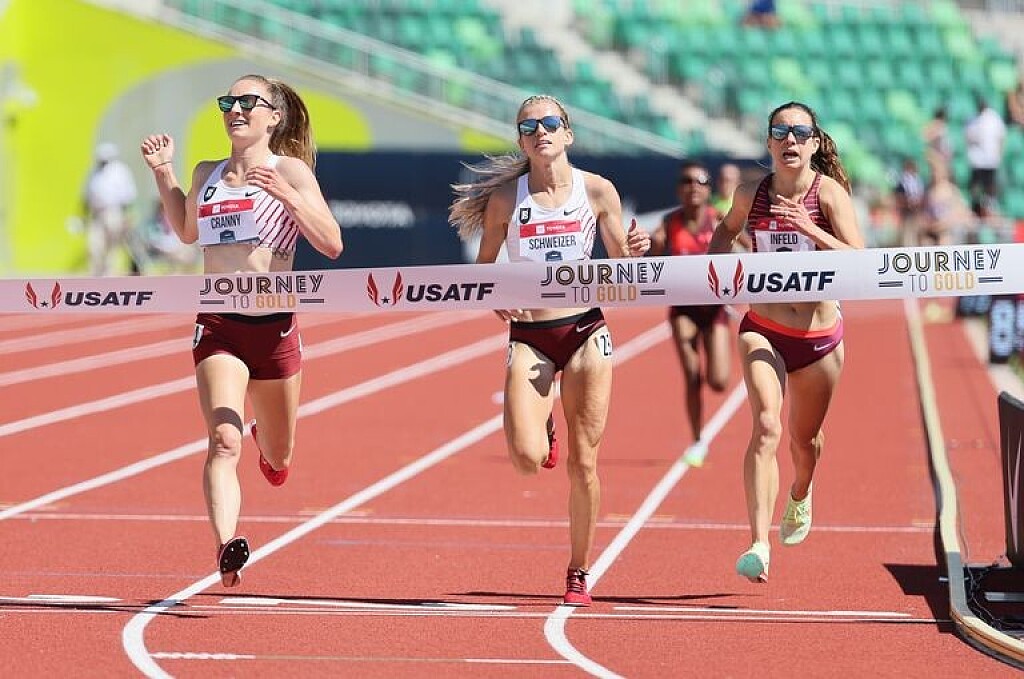
Cranny wins a close one in the 5,000 meters
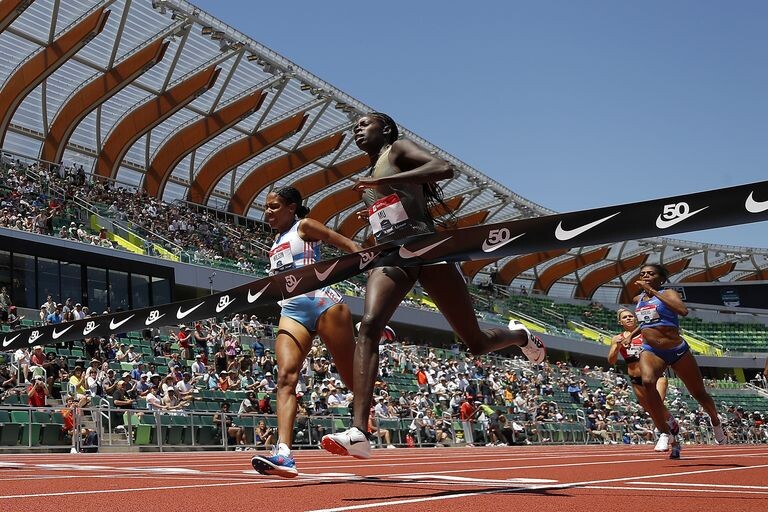
After a schedule change to avoid hot conditions, the women’s 5,000 meters opened the final day of the USATF Outdoor Championships. Unfortunately, the women couldn’t completely escape the heat—the temperature on the track read 82 degrees.
As a result, the women dawdled, running most of the race in a tight pack. With 1600 meters remaining, Karissa Schweizer—who placed fourth in the 1500 meters on Saturday—picked up the pace. With two laps, four women separated themselves: Schweizer, indoor American record holder Elise Cranny, world championships bronze medalist Emily Infeld, and Weini Kelati. Kelati fell off the group by the bell, and the top three were set. Now, it was a battle for place.
Schweizer, Cranny, and Infeld battled down the final straightaway, trading leads multiple times. When the dust settled, Cranny earned the victory, with Schweizer and Infeld less than a half second behind in that order.
Each woman completed their own unique narrative coming into the race. Cranny scratched from the USATF 10,000-meter championships on May 27, saying in an Instagram post she hadn’t been feeling like herself in training. Schweizer, who did qualify for the 10,000 meters, also placed fourth in the 1500. With this 5,000-meter performance, she completed one of the best championship runs in U.S. history. Finally, after just missing out on qualifying for the 10,000-meter world team, Infeld earned a spot on her first global championship team since 2017.
Fisher takes down 5,000 meet record, Kincaid unleashes furious kick for second
Conversely to the women’s race, the men’s 5,000 meters went out hard. Hillary Bor, who qualified for the steeplechase team on Saturday, kept checking his watch—apparently pacing the race. Multiple time global medalist Paul Chelimo and Bowerman Track Club teammates Grant Fisher and Woody Kincaid held position right behind Bor.
Bor dropped out at 1800 meters after splitting 4:12 for the mile. Evan Jager, who also qualified for the steeplechase world team, led the men for another mile. Fisher, Emmanuel Bor, and NCAA indoor 5,000-meter champion Abdihamid Nur of Northern Arizona quickly separated from the group after Jager dropped out.
Over the final 1200, Fisher put on a clinic, squeezing the pace over each lap until he was all alone. He won the race in 13:03.86, a meet record.
The most exciting portion of the race occurred offscreen. After trailing the top three by five seconds with 400 to go, Kincaid unleashed a monstrous 54.24 final lap to take silver in a time of 13:06.70. Nur held on to earn his first world championship berth, running 13:08.63. Emmanuel Bor faded to fifth.
Coburn claims eighth straight U.S. steeplechase title
After a moderate first 1,000 meters, four women were clear of the pack in the women’s steeplechase: recent NCAA champion Courtney Wayment, Gabi Jennings, six-time U.S. champion Emma Coburn, and Olympic silver medalist and American record holder Courtney Frerichs.
That group whittled down to Wayment, Coburn, and Frerichs by 800 to go. Half a lap later, Coburn quickened her pace. Wayment and Frerichs, perhaps surprised by the move, didn’t go with Coburn, who put more and more distance on them over the final lap. Coburn notched her eighth consecutive U.S. title in a season best of 9:10.63. Wayment finished second, and Frerichs took third.
Ajeé Wilson nearly upsets the defending Olympic champion The women’s 800 meters promised to be the event of the meet, and it didn’t disappoint.
Athing Mu, defending champion, jumped off the line hard to take her traditional spot in the lead. Olivia Baker and indoor world champion Ajeé Wilson were right on her heels while Olympic bronze medalist Raevyn Rogers hung around mid-pack.
All of the women were still together with 200 to go. The broadcast commentators predicted that Mu would break the race open before the end of the bend, but spectators were treated to something more interesting: Wilson was right on Mu’s shoulder with 100 to go. With gritted teeth, the two athletes dashed neck-and-neck down the straightaway. It looked as if Wilson had the upper hand, but the Olympic champion pulled through in the final meters to snag the victory in 1:57.16. Rogers slingshotted out of the pack to pass three runners for third.
Bryce Hoppel earns first outdoor national title
The men’s 800 meters featured a consequential last 100 meters. Texas A&M’s Brandon Miller set a fast early pace, crossing the 400-meter mark in 51.62. He fell to second as Hoppel took control on the final bend.
It wasn’t over yet, as the entire field was still in striking range with 100 left. But Hoppel and Jonah Koech surged ahead, while Miller duked it out with a late-charging Clayton Murphy for the third qualifying spot. Miller overtook the two-time Olympian with a dramatic dive at the line, securing a trip to worlds. Hoppel’s winning time was 1:44.60, a season best, while Koech’s ran a personal best of 1:44.74.
Noah Lyles charges late to overtake 18-year-old star Erriyon Knighton
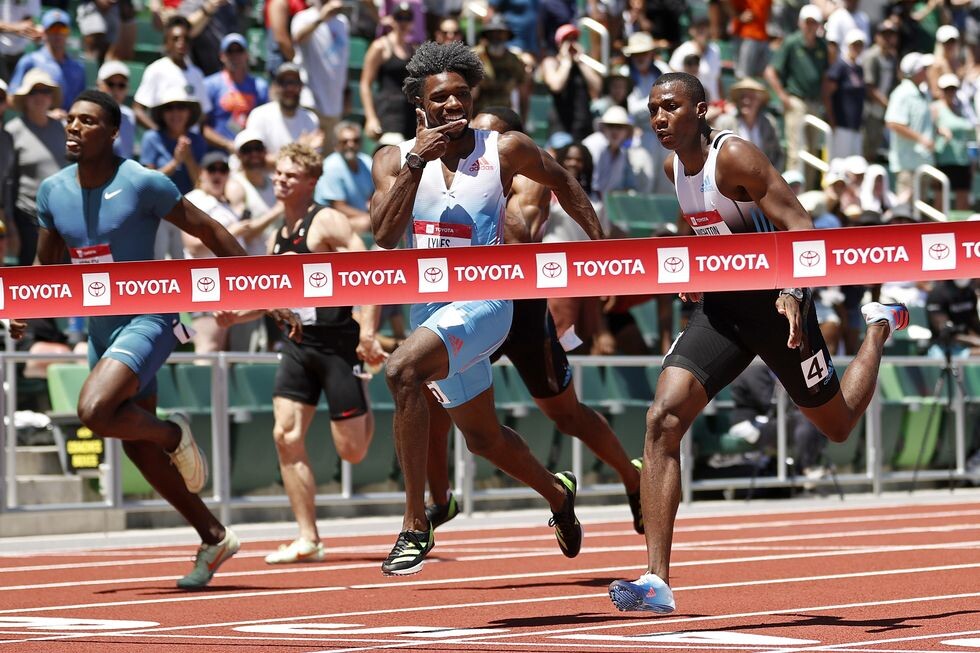
After 100 meters, it looked like 18-year-old Erriyon Knighton was on his way to his first national championship. But that’s why there’s another 100 meters in this event, because defending world champion Noah Lyles found another gear. With a smile and finger pointed at Knighton, Lyles broke the tape first in 19.67. Knighton finished second, while 100-meter national champion Fred Kerley nabbed another world team spot. Because Noah Lyles has a bye to the world championships, fourth-placer Kenny Bendarek also qualified.
NCAA champion Abby Steiner becomes U.S. champion
With defending U.S. champion Gabby Thomas in poor form this year, the gate was open for a new women’s 200-meter champion. Abby Steiner, who won the NCAA title two weeks ago, capitalized on that opening. She won the title with a world lead and personal best of 21.77. Tamara Clark and Jenna Prandini qualified as well with their respective second and third place finishes.
by Runner's World
Login to leave a comment
USATF Outdoor Championships
The 2026 Toyota USATF Outdoor and Para National Championships will be held at Icahn Stadium in New York City fromJuly 23-26, 2026, marking the first time the event is hosted in New York. The event will serve as a premier track and field competition, featuring top U.S. athletes at the Randall's Island Park venue. USATF+3 Key Details for 2026...
more...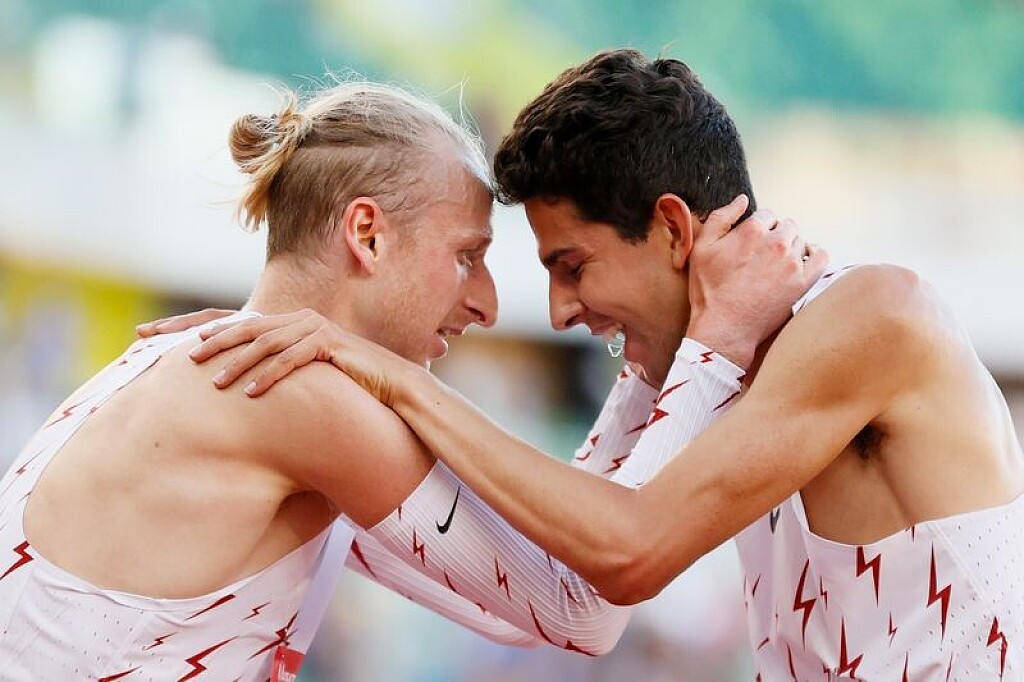
Woody Kincaid eyes redemption at USA Track & Field Outdoor Championships
Woody Kincaid’s last visit to Hayward Field didn’t go as planned.
So, Kincaid has something extra riding on the USA Track & Field Outdoor Championships, which begin a four-day run at Hayward Field in Eugene on Thursday.
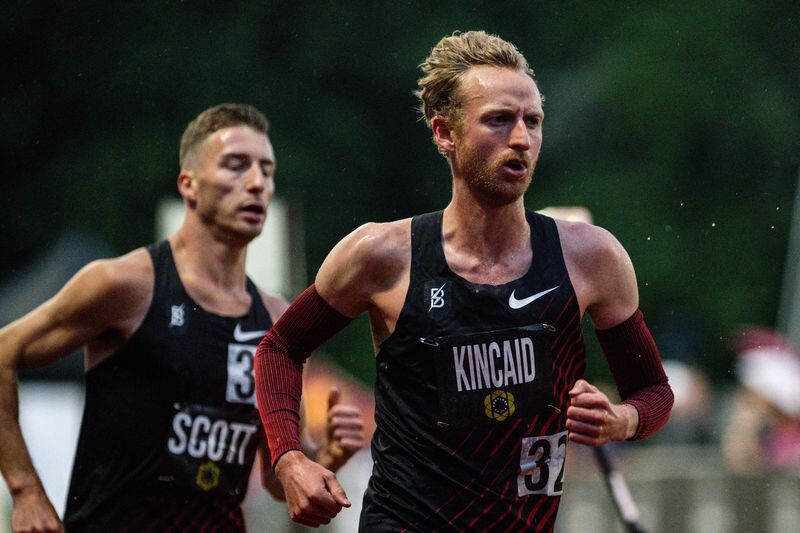
The USATF 10,000-meter final took place at Hayward last month in conjunction with the Prefontaine Classic. Kincaid, the Olympian who trains with the Portland-based Bowerman Track Club, was defending his USATF title.
It was a slow pace and headed toward a kicker’s finish -- Kincaid’s kind race -- when a sharp pain in his side almost doubled him over 6,600 meters in.
Buchanan, who would finish ninth, trains with the California-based Mammoth Track Club. The two UP grads weren’t working together. It just … happened.
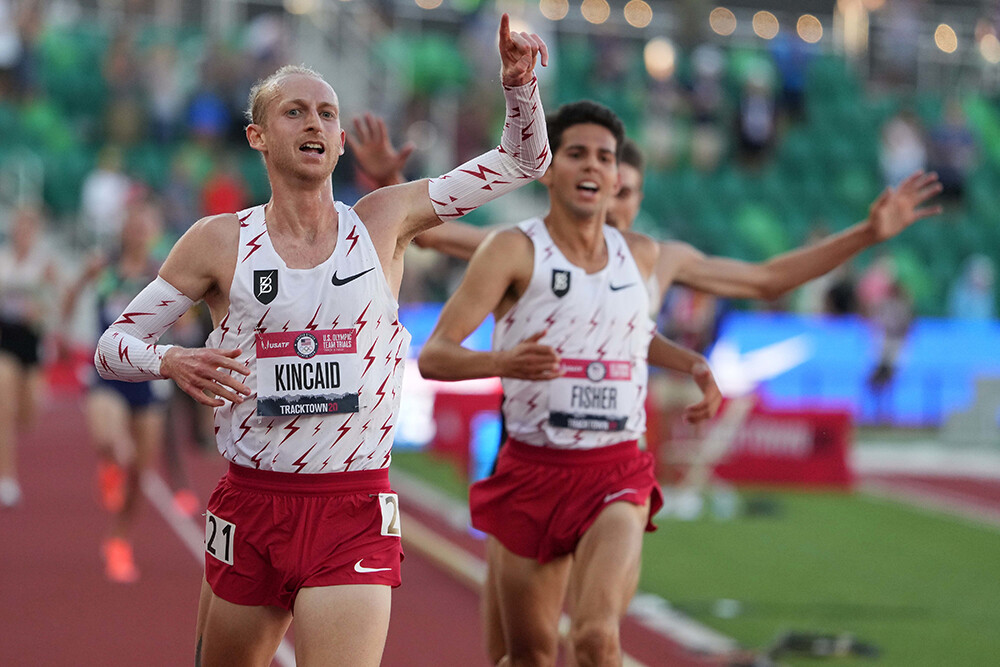
(First photo): Woody Kincaid and Grant Fisher react after finishing first and second place in the men's 10,000 meters during Day 1 of the 2020 U.S. Olympic Track & Field Team Trials at Hayward Field on June 18, 2021, in Eugene, Oregon.
Kincaid remembers thinking, “‘Damn. That’s Reid Buchanan. And this is the Olympic trials.’ It was pretty surreal.”
In the final lap, it became outrageous. Kincaid covered the final 400 in 53.47 seconds, the final 200 in 25.51.
“A lot of people can’t do that,” says UP coach Rob Conner, who nurtured Kincaid through five up-and-down, injury-troubled years on The Bluff.
Staggered, Kincaid couldn’t go on. He was on the sideline when Joe Klecker, Grant Fisher and Sean McGorty went 1-2-3 to claim the spots on Team USA for the World Outdoor Track & Field Championships next month in Eugene.
“It wasn’t a hard effort,” Kincaid says, trying to make sense of what caused the stitch. “It was a slow pack, 4:52 mile pace. So, it wasn’t like I was hanging on or anything. It’s never happened before.”
Kincaid says it’s been diagnosed as a diaphragm cramp. He has been checked out. There doesn’t seem to be anything wrong medically.
“One of those things,” he says.
And ready to be discarded like yesterday’s news. Kincaid is entered in Sunday’s 5,000 in the main portion of the USATF Outdoor Championships. He will be running to win.
Kincaid was third in the 5,000 at last year’s Olympic trials. He went on to represent the U.S. in both events in Tokyo, placing 14th in the 5,000 and 15th in the 10,000.
“I was glad I made the team in the ‘5,’” Kincaid says of last year’s Olympic trials. “But there still is a little bit of ‘Damn, I should have gotten the ‘5′ too.’ I still want a national title in the ‘5.’”
Last year’s Olympic trials was a breakthrough for the former University of Portland star who seemed to spend his first four years as a professional either hurt or trying to come back from injury.
It all clicked last summer on the first day of the trials at Hayward Field when Kincaid positioned himself perfectly in the 10,000 with two laps to go.
He wasn’t quite ready to make his move when former UP teammate Reid Buchanan obliged by going to the front.
It was a Hollywood finish in more ways than one. As Kincaid took his victory lap, his father, Mike, met him at along the rail. Mike was in a fight with mesothelioma that he would lose five months later.
Father and son both knew the score, which made for a poignant moment.
“We were both like in shock, like, ‘Wow, I can’t believe that just happened,’” Kincaid says. “My dad couldn’t speak. We were super close. I don’t think he had anything to say.”
Kincaid’s BTC teammates took a photo of the scene and blew it up to poster size.
“Best race I’ve ever run,” Kincaid says. “That was special.”
Shocking as it might have been to fans, it wasn’t totally unexpected by those close to him.
BTC coach Jerry Schumacher believes Kincaid actually arrived at the 2019 USATF Outdoor Championships, when he survived a wicked pace set by Olympic silver medalist Paul Chelimo in the 5,000, stayed at the front and finished third.
“That got me excited,” Schumacher says.
That September, Kincaid and teammates Lopez Lomong and Matthew Centrowitz ran a 5,000-meter time trial on the Nike campus.
Kincaid bolted past Lomong in the race’s final 120 to finish first in 12:58.10. Even Kincaid did a double take at the sub-13 time.
COVID scrubbed most of the 2020 outdoor season, leaving Kincaid something of a question mark heading into last summer’s Olympic trials.
“People kind of missed on him,” Schumacher says. “We got to see him at practice. We got to see how he trained and worked out. He was determined. He had everything you would want to see in an athlete going into the Olympic trials.
“For us, it wasn’t a huge surprise. He’d basically been at that level for two full years, and 2021 was the first time he got to showcase it.”
He is a known commodity now, and an acknowledged threat in the USATF 5,000 final. A totally focused and injury-free Kincaid will be tough to beat, particularly if the race comes down to a kick.
“He’ll get the job done,” Conner says. “I’m 100 percent confident of that.”
by Ken Goe (OregonLive)
Login to leave a comment
Women athletes allege body shaming within Oregon Ducks track and field program
Six women athletes who left the University of Oregon track and field program in recent seasons say they felt devalued as individuals and at risk for eating disorders because of the program’s data-driven approach to their weight and body fat percentages.
Five of the women departed with remaining eligibility.
One said she began binge-eating while at Oregon. Another says she struggles with body dysmorphia and has nightmares about competing at Hayward Field, Oregon’s iconic track stadium, while UO coaches stare at her and say: “You’re never going to be good enough.”
Robert Johnson, who became UO’s track and field and cross country head coach in 2012, has guided the Ducks to 14 NCAA championships while elevating what already had been one of the sport’s premier college programs.
Under Johnson the Ducks increasingly have embraced expensive and advanced technological tools such as blood tests, hydration tests and DEXA scans. A DEXA scan is a medical imaging test that uses X-rays to precisely measure bone density and body fat percentage.
DEXA scans, in particular, have become a flashpoint for some athletes, who say the precise body fat percentage measurements can trigger unhealthy behaviors.
Johnson contends his scientific approach largely removes human bias from judgments about athletes and allows the UO coaching staff to design workouts precisely tailored to each athlete’s needs.
“Track is nothing but numbers,” he says. “A good mathematician probably could be a good track coach.”
He says UO athletes receive DEXA scans in the fall, winter and spring, and no more often because of radiation emitted during the tests.
“When we get the numbers from our DEXA scans, we have an Excel spreadsheet that we can plug the numbers into, hit a button and it gives us a starting value for a training program.” he says. “It allows us to be cutting edge and innovative in our approach to performance.”
Some athletes contend this innovation comes at a staggering personal price.
An athlete who graduated from Oregon at the end of the 2020 school year emailed UO deputy athletic director Lisa Peterson, senior women’s administrator, in October 2020.
In the email she says she had been receiving text messages and Snapchats that fall from former teammates so worried about upcoming DEXA scans they were starving themselves.
She tells Peterson in the email: “I have seen and experienced an absolutely disgusting amount of disordered eating on the women’s track team, all because the coaches believe body fat percentage is a key performance indicator.
“We are not professional athletes. We do not have access to a bounty of organic food. We do not have unlimited time to cook. We cannot plan our days around our nutrition, and we are not the 30-year-old Olympians that coach Johnson seeks to compare our body fat percentage to.
“While knowing body composition may be helpful for some athletes, I have seen it be nothing but destructive.”
The athlete says Peterson responded by thanking her for the email and saying she had passed it on and said that Peterson thought the allegations would be investigated. A public records request did not turn up a report of an internal investigation.
“A BIG, BIG ISSUE”
The issues of weight-shaming, body image and body fat percentage testing have become more common in recent years. Longtime Washington track coach Greg Metcalf lost his job in 2018 after accusations of body-shaming and verbally abusive treatment of female athletes. Former Nike Oregon Project star Mary Cain and other women who competed for the NOP have made similar accusations about former coach Alberto Salazar.
Five former UO athletes consented to extensive interviews on the condition their names not be used for several reasons. Among them:
• Oregon is one of the most nationally prominent college track and field programs.
• The school has a cozy relationship with Nike, which underwrites the funding for USA Track & Field and sponsors a high percentage of professional track athletes.
• Oregon’s Hayward Field, largely built with money donated by Nike co-founder Phil Knight, is the host of the Prefontaine Classic professional meet, the semi-permanent host of the NCAA Outdoor Track & Field Championships, next year’s USATF Outdoor Championships and the 2022 World Outdoor Championships.
One athlete says Johnson “is such a terrifyingly powerful man. There are people who would lose their ability to go to the Pre Classic or lose USATF funding, because speaking up against him is like speaking up against basically USA Track & Field.”
One athlete says when she was given her first DEXA scan at Oregon, she already had not had a menstrual period in a year and a half. She says the nutritionist knew that.
The scan showed her body fat percentage at 16%. She was told by the nutritionist she should consider lowering it to about 13%. And while the suggestion came from the nutritionist, she is certain the message originated with the coaching staff.
“They always were talking together,” she says.
The university did not make available a nutritionist or nutritionists in response to a formal interview request.
The athlete consulted her personal doctor, who advised her not to try to lower her body fat percentage any further. The American Council on Exercise suggests an ideal body fat percentage for a female athlete to between 14% and 20%.
“He said I already was in a situation that was dangerous for my body and that I needed to make sure I got my period back,” she says.
After that, she says, she struggled mentally.
“I started worrying a lot about what I was eating,” she says. “I wanted to make sure I wasn’t going to get too much bigger of a percentage. That was like a big, big issue.”
She was very careful during the day. At night in her apartment, though, she began binge-eating, which she says led to feelings of depression and guilt.
“That never had happened before I came to Oregon,” she says. “I never had any issues with food. I was completely fine. I loved food.”
At Oregon, she says, the yearlong monitoring became a trigger.
“You want to make sure you don’t put on weight, you become more paranoid and it gets worse,” she says.
She left after the school year, and still fights the temptation to binge.
Another athlete says her events coach conferred with her during her freshman year. She says he admitted he wasn’t supposed to tell her this, but said if she were to go above a certain body weight she never would be an Olympian.
After her first DEXA scan, the nutritionist told her she couldn’t travel to away track meets unless her body fat level was below 12%.
“That was when I started counting calories,” she says.
She says she weighed herself daily. What she saw on the scales determined whether she viewed her day as successful.
If she was above the targeted weight, “I would look at my legs, and I would say, ‘My legs look like tree trunks,’” she says. “If I was below that weight, I would be like, ‘Oh, I must be skinny.’ In reality, two or three pounds looks no different on your body.
“It wasn’t until I started seeing a sports psychologist that I realized this was not normal.”
That came after she transferred and her new school flagged her for an eating disorder.
A third athlete says that during her freshman year Johnson called her over during a workout and asked if she was on birth control.
Stunned by the question, she stammered “no” and returned to the workout.
“It was very crazy,” she says. “I was like, ‘What is going on? This is not happening. I am not having this conversation with him right now. This is just wrong. It’s none of his business.’”
She returned to ask Johnson why he wanted to know.
She says he told her: “Well, I noticed your hips have gotten wider, and that comes along with that kind of stuff.”
She says at Oregon she constantly monitored what she ate.
“They do multiple things to people about their weight,” she says. “They’re kind of notorious for it. They keep weight at a very high importance level. …
"Like whenever I would eat a cookie, I would feel so guilty. I would be like ‘Wow, it’s going to make my next DEXA scan bad. I’m going to get in trouble.’”
Four of the women interviewed say athletes whose DEXA scans show what coaches/staff consider an unacceptably high body fat content frequently are required to do additional cross training on a stationary bike.
Other athletes know who is doing mandatory cross training and why, even though it’s not explicitly said.
Athletes interviewed say this not only stigmatizes those doing the extra training, but incentivizes others to carefully monitor themselves so they aren’t singled out in that way.
“This program is just something different,” says one athlete who left the UO track team. “I don’t think it’s a place for young girls.
“Girls already have enough body image issues.”
“WE TRY TO APPROACH IT WITH SCIENCE”
Johnson said he would respond to specific allegations in general because he didn’t know which athletes were making the allegations. He says he feels sympathy and regret for athletes who believe they developed eating disorders while part of his program.
He says he and others in positions of responsibility within the program have acted swiftly and decisively to intervene when learning of athletes with disordered eating, or with emotional or physical problems.
“If these things were happening, such as binge-eating, or they were going down this road of unhealthy behaviors, hopefully we would catch it, and then give them resources to get better,” Johnson says.
“The health and safety of all our student-athletes is extremely important and at the forefront at all times.”
Johnson says nutritionists meet regularly with athletes in each event group so they understand the program’s approach and to identify any potential problems.
“We try not to let this weight issue be the pink elephant in the room,” he says. “We try to approach it with conversation and we try to approach it with science. … That’s one thing the DEXA scan helps us do. It takes our personal opinions out of it.”
Johnson says all UO athletes receive DEXA scans, men and women. He says UO track athletes are told there are sports psychologists available to them if they are struggling mentally with any aspect of being a college athlete.
But he says neither he nor psychologists can help if athletes don’t come forward.
“If those things were their experiences here, it’s shameful,” Johnson says. “We try to give them the information and the execution to deal with these things. If they choose to engage in those, there is help there. We can’t read their minds.”
Johnson says if he asked an athlete about birth control, it would have been only to suggest she use one recommended by UO doctors so weight gain wouldn’t be a side effect.
He says mandatory cross training isn’t meant to stigmatize athletes, but to help them get into competitive shape. He says that is part of his responsibility as coach.
Johnson says he could send those athletes on extra training runs to accomplish the same purpose. But that would expose their legs and feet to more pounding and increase the potential for injury.
“It’s basically that we want to increase their activity level in a safe manner that allows them to move closer to achieving their goals they set for themselves,” he says.
Many UO athletes compete for the Ducks without adverse effects.
Sprinter Rachel Vinjamuri says she is untroubled by the different ways the program monitored her, including the DEXA scans that revealed her body fat percentage.
“I never had a negative mindset about it,” says Vinjamuri, who transferred to UO from Portland State and graduated in 2020.
“It was just like this is where you need to be at to perform your best and here is how we do it. It was never like you get punished. It was just, let’s work toward this.”
She says she found the coaches and nutritionists constructive and helpful.
“People are more aware that eating disorders, dieting and things like that are becoming a huge problem in college sports,” she says. “I think Oregon is becoming more aware of that. I think they were doing the best they could.”
Vinjamuri says one difference between Portland State and Oregon is the superior resources at UO. In addition to the various high-tech tests, UO athletes have access to nutritionists who supplied them with snack bags of healthy food and recipes.
Some athletes who have competed for other programs in Power Five conferences, though, say differences in approach between Oregon and those programs are stark.
One says at her current school “everything is about holding yourself accountable. But if you don’t, you’re not getting punished. I think it’s the way you should treat college athletes. We’re adults. We’re not high schoolers anymore.”
Dan Steele was an assistant track coach at Oregon through 2009. He later was head coach at Northern Iowa and an assistant at Iowa State. He says his coaching philosophy is to steer clear of discussions about weight and body fat percentage.
“Testing for body fat is humiliating and detrimental to the athlete’s psyche,” he writes in a text message. “Young female athletes need to know their coaches believe in them.”
Steele says he never brought up an athlete’s weight or appearance, believing the athlete is the person most aware if she is too heavy or out of shape.
“I always tell them, ‘You’re fine. If you eat sensibly your body will morph naturally to the perfect size for optimum performance,’” he texts. “And that’s what I believe.”
“ATHLETES ARE NOT MACHINES”
Body weight and body fat percentage do factor into athletic performance. But several sports psychologists see red flags in approaches such as the one Oregon uses, particularly with women college athletes.
The sports psychologists consulted spoke in general terms, and not specifically about the UO track program.
Eugene sports psychologist Melissa Todd says she finds a process-oriented training approach better for college athletes than ones targeting a specific outcome.
She says young adults, away from home for the first time, are at a vulnerable point in their lives. The danger of emphasizing weight or body fat percentage is that those arbitrary numbers can begin to define victory for competitive people conditioned to win.
The first rule of any training strategy, she says, “should be to seek to minimize the potential for harm.”
“Athletes are not machines,” Todd says. “We need to see them in their entirety, as a whole person, and not boil down athletic performance to small details while missing the big picture.”
Portland sports psychologist Brian Baxter agrees, saying coaches should be at least as concerned with athletes’ emotional and mental well-being as they are with skill, technique and conditioning.
“The physical body doesn’t matter without mental health,” Baxter says. “Really, that has to be first.”
On its website, the National Eating Disorders Association includes a “Coach & Athletic Trainer Toolkit” for working with athletes. It includes this admonition:
“Coaches should strive not to emphasize weight for the purpose of enhancing performance, for example by weighing, measuring body fat composition, and encouraging dieting or extra workouts.”
The toolkit section of the website continues to say coaches who emphasize those things can lead athletes into unhealthy behaviors such as disordered eating that offset any gains achieved by lowering weight or body fat percentage.
The email sent in October 2020 to Peterson, the deputy athletic director and senior women’s administrator, seems not to have altered Johnson’s use of DEXA scans to monitor body fat percentage.
Responding by email, Peterson writes that she forwarded the email detailing concerns about the track program’s use of DEXA scans to “the appropriate campus officials.”
UO spokesperson Jimmy Stanton issued a statement in which he says the health and safety of athletes is the athletic department’s top priority.
Stanton’s statement continues: “There are many sports professionals on our staff that work closely in supporting student-athletes, including our medical team, athletic trainers, sports scientists and nutritionists. Additionally, all of our coaches undergo annual training from the UO Title IX office on a variety of topics, including communication with student-athletes.”
by Oregon Live
Login to leave a comment
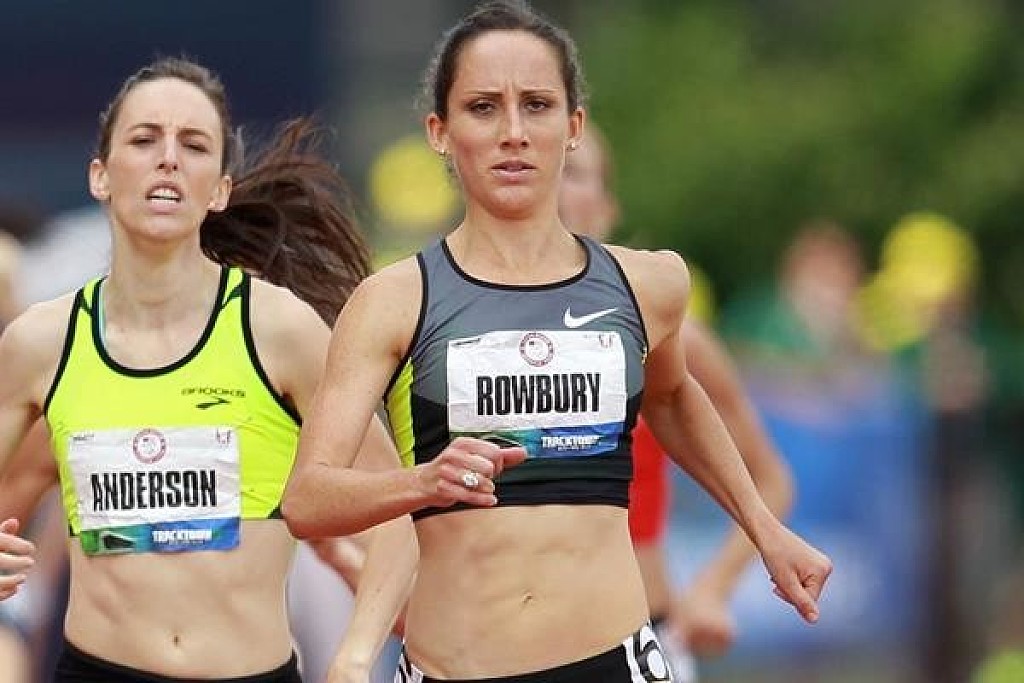
Shannon Rowbury just might make her fourth US Olympic Team post-pregnancy
Shannon Rowbury proved she can run elite times post-pregnancy. Next year, she hopes to be the latest example that an Olympic career doesn’t end with motherhood.
“Having a child isn’t a death sentence,” she told fellow Olympic runner and mom Alysia Montaño in a recent On Her Turf interview. “You can come back even better.”
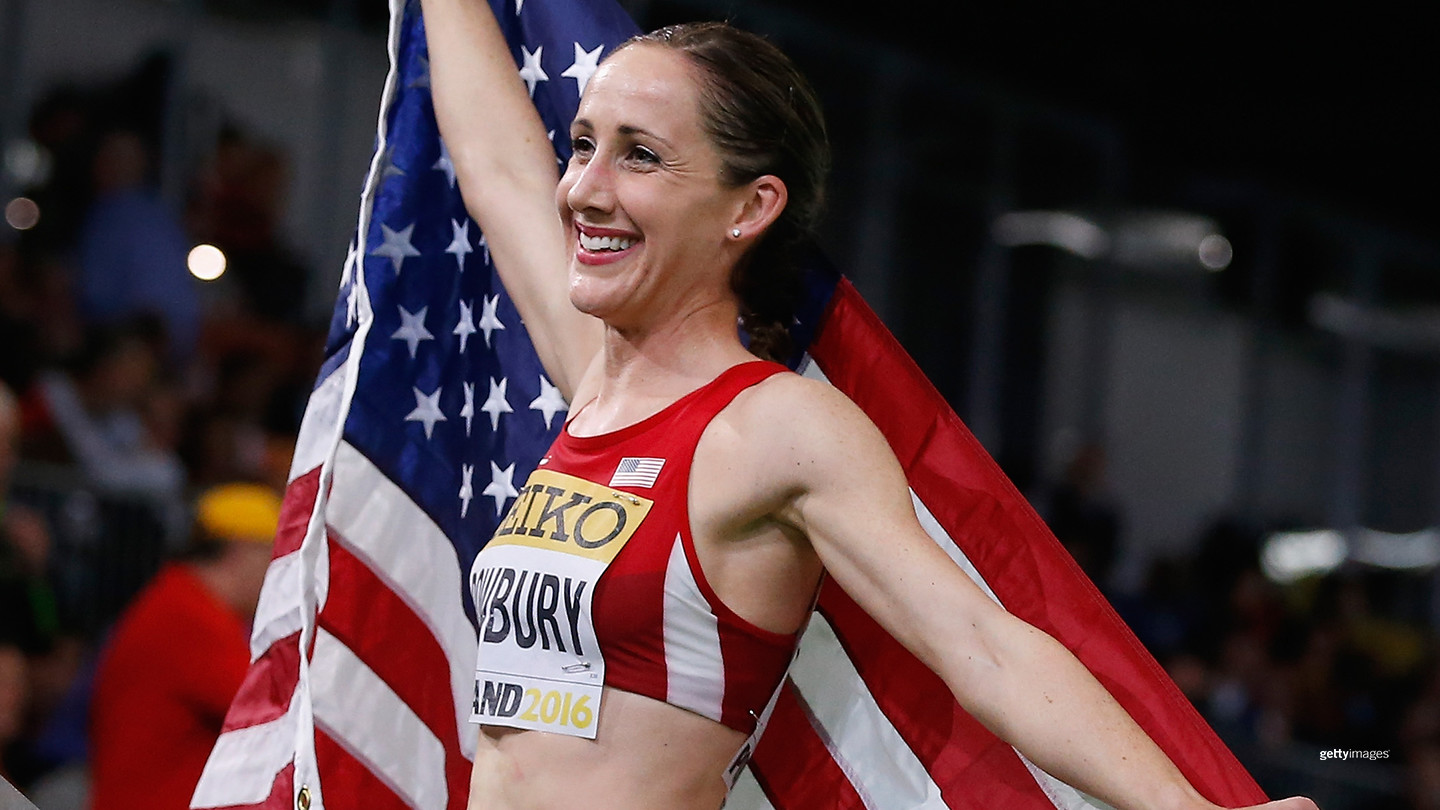
Rowbury, a 35-year-old, three-time Olympian, raced this month on the Diamond League circuit for the first time in three years and since having daughter Sienna in June 2018.
It went pretty well. She clocked her second-fastest 5000m ever, a 14:45.11 to place fifth in Monaco.
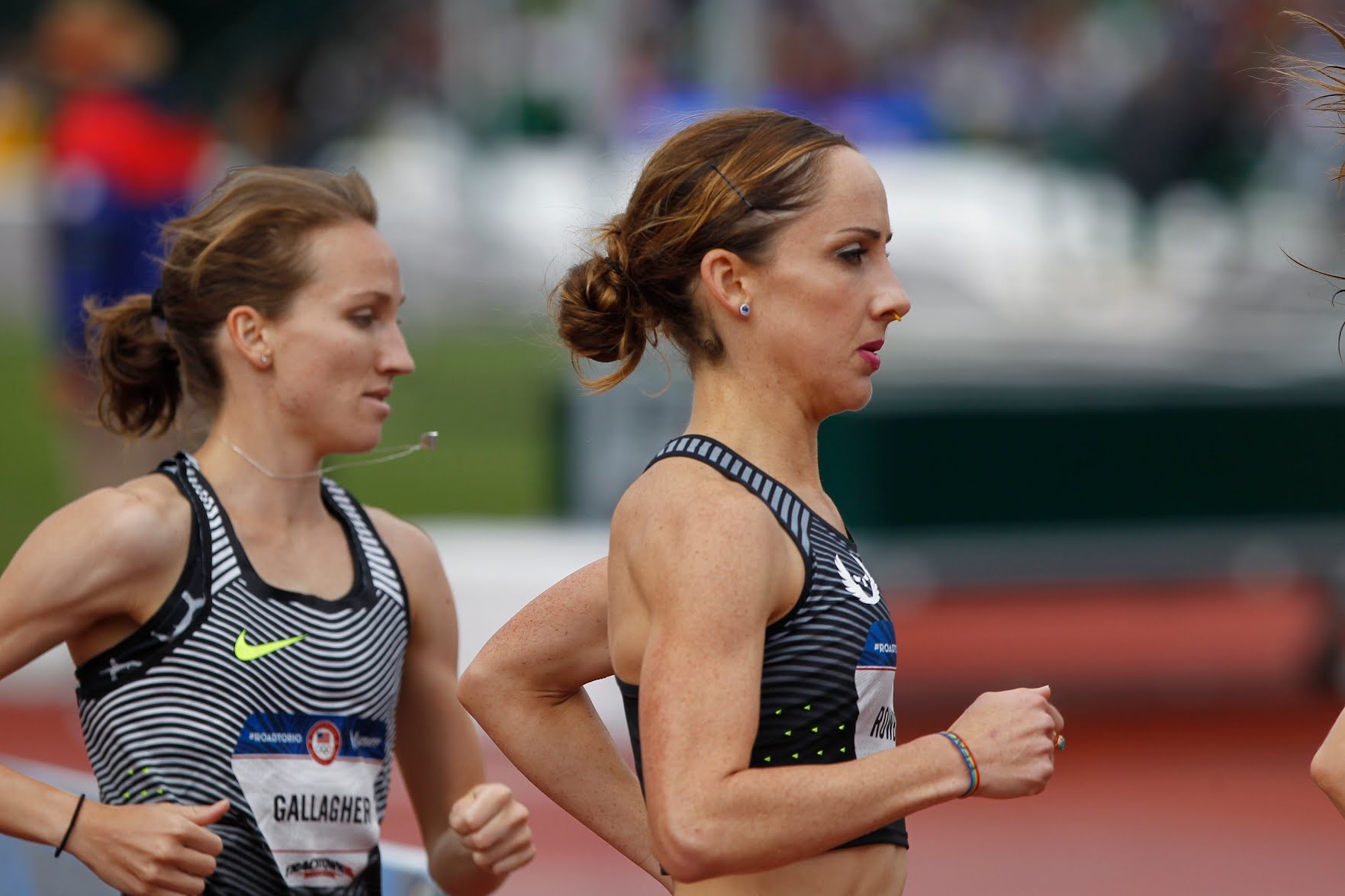
Only four other Americans have ever gone faster. One is retired (Shalane Flanagan). It’s very possible that two of the others could focus on other distances next summer (Shelby Houlihan and Molly Huddle).
Rowbury is right in the mix to make a fourth straight Olympics, given three U.S. women qualify per event. She can become the oldest U.S. woman to race on an Olympic track since Gail Devers in 2004, and one of the few moms to do so.
Rowbury is the former American record holder at 1500m and 5000m with a pair of fourth-place finishes from racing the former at the last three Olympics.
In 2018, she returned to training eight weeks after having Sienna. Ramping up too quickly led to a stress fracture in early 2019. She felt fatigued from sleep deprivation and breastfeeding and struggled with her identity.
Will I ever be the same? How much do I have left? Who am I without sport?
“I love my daughter,” she said last year, “but I loved my life before as well.”
She kept running. Rowbury placed sixth in the 5000m at the 2019 USATF Outdoor Championships, racing on a lack of training due to the injury. She missed an Olympic or world championships team for the first time since 2007, when she graduated from Duke.
Then in November, she won the U.S. 5km title on the roads in New York City. Rowbury raced for the first time this year in July and is still in Europe, torn while spending three weeks away from Sienna and husband Pablo Solares, a former middle-distance runner from Mexico.
“I felt very strongly that I would never prioritize my career over my family and over my daughter,” she said. “My performance right now is testament to the fact that you can have a healthy, natural weaning process, and you can still compete at a very high level.”
Rowbury partly dismissed motherhood earlier in her career because she was afraid of potential consequences. In more recent years, runners including Rowbury, Montaño and Allyson Felix fought for maternity protection in the sport, such as with health insurance through USA Track and Field and in sponsor contracts.
“I don’t think that any woman should be told she needs to do something in order to compete as an athlete or to pursue her dreams,” Rowbury said.
by Yahoo Sports OlympicTalk
Login to leave a comment

Tokyo 2020 Olympic Games
Fifty-six years after having organized the Olympic Games, the Japanese capital will be hosting a Summer edition for the second time, originally scheduled from July 24 to August 9, 2020, the games were postponed due to coronavirus outbreak, the postponed Tokyo Olympics will be held from July 23 to August 8 in 2021, according to the International Olympic Committee decision. ...
more...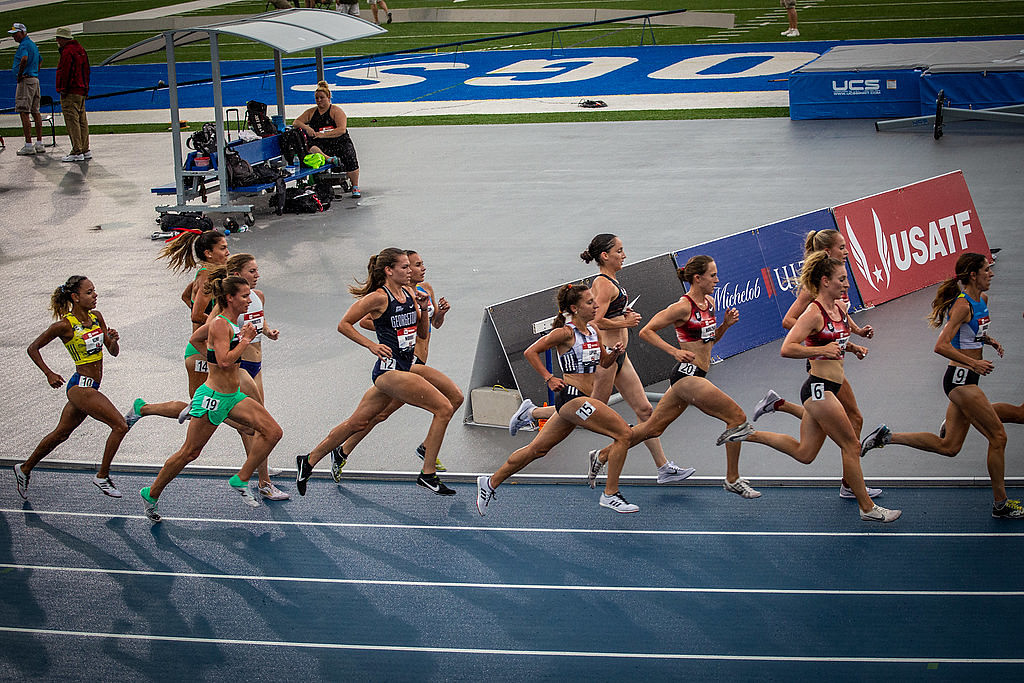
For the first time since 1875, the United States will not hold an outdoor track & field championships this year
USATF, the governing body for track & field in the United States, announced the meet’s cancellation in a release on Monday, stating that its Covid-19 Working Group unanimously recommended against staging a mass gathering event in which athletes would have to travel to compete from all over the country.
“The safety hurdles were too steep to overcome,” the release read in part.
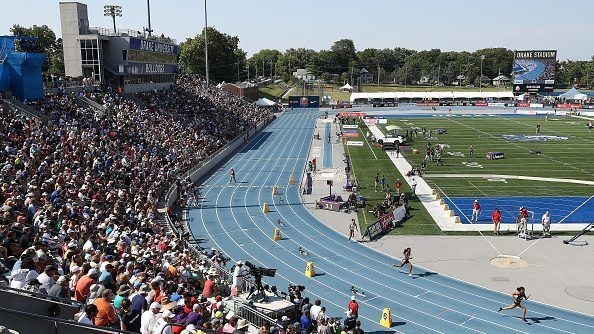
The US Olympic Trials — which double as the USATF Outdoor Championships in Olympic years — were originally scheduled to be held June 19-28 in Eugene, Ore., but that changed after the 2020 Olympics were postponed in March. In June, USATF announced it was exploring the possibility of holding a year-end meet — perhaps a national championship — on the weekend of either September 11-13 or September 18-20. That announcement was flooded with caution, warning that the meet would not be held if it was deemed unsafe to do so. Just over three weeks later, with the coronavirus pandemic continuing to rage in the United States, USATF made the decision to cancel the meet entirely.
Though the US national championships have not always been run by USATF — which was founded in 1979 as The Athletics Congress and renamed in 1992 — a US championship track & field meet has been held in some form or fashion every year since 1876, when Ulysses S. Grant was president of the United States.
Though there won’t be a USA outdoor meet in 2020, track meets are still being held across the United States. In fact, the day before USATF announced the cancellation of nationals, Prairie View A&M University announced it would host three meets as part of USATF’s “Back to the Track” Series on July 23, July 30, and August 3.
by Jonathan Gault
Login to leave a comment
HOKA ONE ONE Northern Arizona Elite has announced that Lauren Paquette has joined their team
HOKA ONE ONE Northern Arizona Elite has announced that Lauren Paquette, an Olympic hopeful at 5,000 meters, has joined the team. Paquette, a graduate of Baylor University, has been one of the nation’s top 5,000 meters for the last several years.
She set her personal best at that distance, 15:14.45, in 2016 and nearly equaled the mark in 2019, running 15:14.64. She was fourth at the 2018 USATF Outdoor Track and Field Championships and will look to improve upon that performance at June’s U.S. Olympic Team Trials – Track and Field.
Paquette said she is beyond excited to join HOKA NAZ Elite.
“Joining this team is extra special for me because as an athlete who has trained solo for the majority of her professional career, I have come to respect and appreciate the power of the team and am so grateful and relieved to have teammates to share the road with,” Paquette said.
"My goals for 2020 are to better myself as an athlete physically and mentally, to learn more and ask more questions, and to make the most of this amazing opportunity I have been given. I would also love to return home from Eugene this June carrying an American flag.”
HOKA NAZ Elite head coach Ben Rosario said Paquette is the perfect fit at the perfect time.
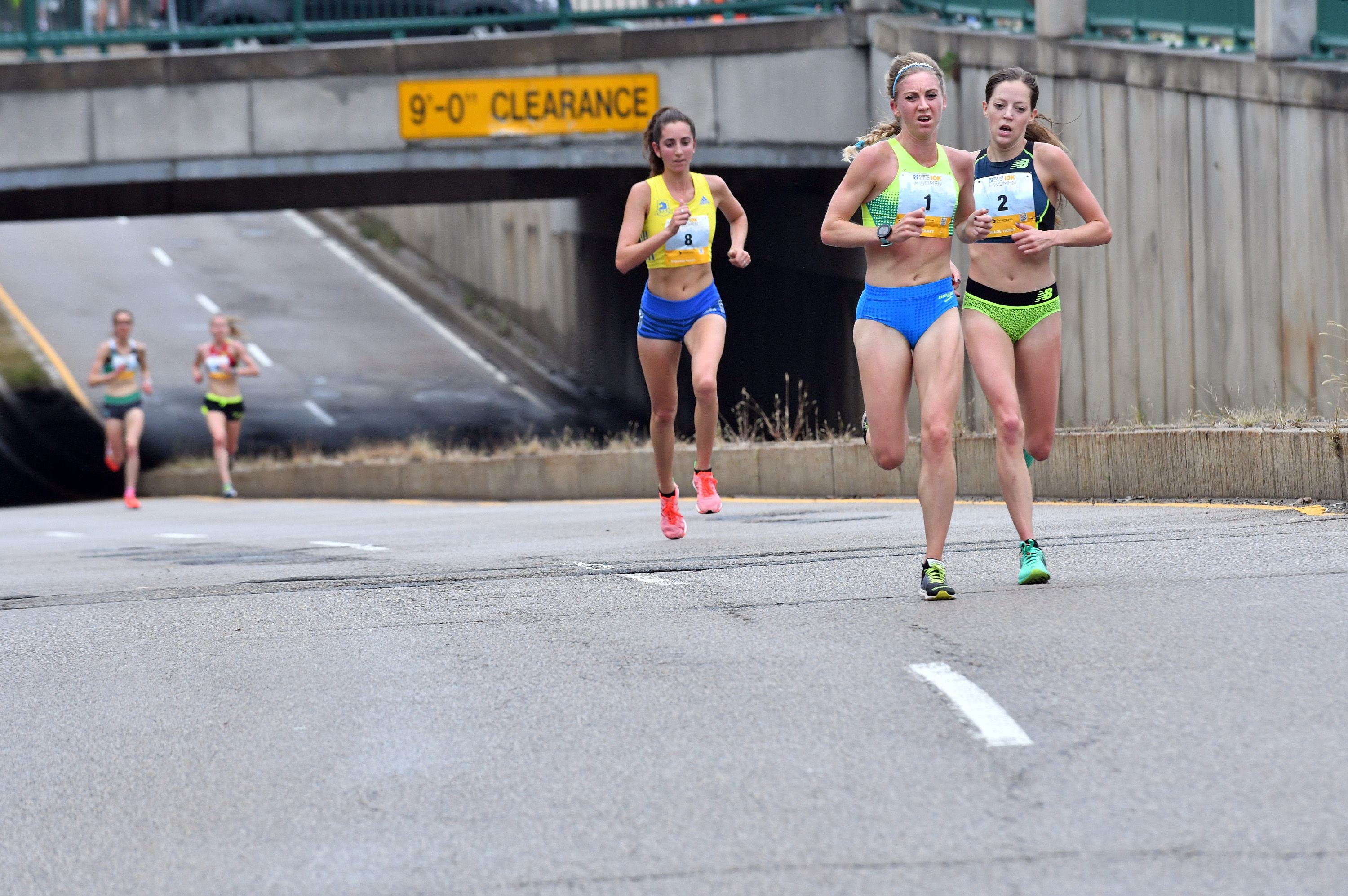
“We are reaching the point where we always wanted to be, that being that nearly all of our athletes are true Olympic hopefuls,” Rosario said. “Having been fourth at the 2018 USATF Outdoor Championships, Lauren is certainly in that category and after hopefully putting athletes on the U.S.Team in the marathon, and ensuring our international athletes make their Teams, we can to go to the U.S. Track and Field Trials in June with Lauren and the rest of the crew fit and ready to go.”
HOKA Director of Global Sports Marketing, Mike McManus, shared his thoughts on the signing.
“We’re thrilled that Lauren has joined the already talented mix and believe she will be a further asset in the upcoming Olympic Year.”
The HOKA NAZ Elite roster currently includes six athletes who will compete at the upcoming United States Olympic Marathon Trials; Stephanie Bruce, Scott Fauble, Scott Smith, Aliphine Tuliamuk, Kellyn Taylor and Sid Vaughn. Nick Hauger and Danielle Shanahan, like Paquette, will focus on the U.S. Olympic Track and Field Trials. The team also features three international athletes hoping to represent their respective countries in Tokyo; Matt Baxter from New Zealand, Canadian Rory Linkletter and Great Britain’s Alice Wright.
Login to leave a comment
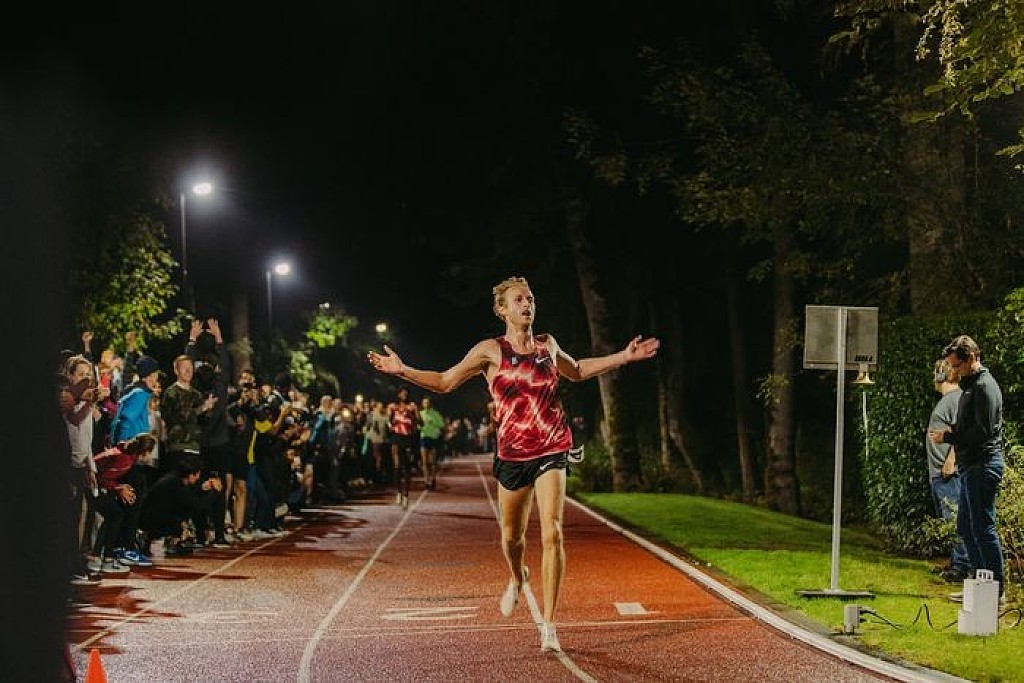
Bowerman Track Club runner Woody Kincaid Burns Up Nike’s Famed Wooded Track with 12:58 PB for 5000 on Tuesday
Woody Kincaid called the atmosphere Tuesday at Nike’s Michael Johnson Track “surreal,” and it was that.
With an estimated 2,500 spectators ringing the track on a cool, damp evening, the track partly in shadow, giant trees in the infield preventing an unobstructed view of the action, Kincaid, Lopez Lomong and Matthew Centrowitz got what they came for.
The three Bowerman Track Club runners crushed the 2020 Olympic standard in the 5,000 meters of 13 minutes, 13.50 seconds in what was billed as the “Portland 5,000.”
Canadian Olympian Mohammed Ahmed kept the pace well under the standard. Kincaid, Lomong and Centrowitz stayed with him.
Kincaid bolted past Lomong in the final 120 to finish first in 12:58.10, obliterating his personal record of 13:12.22. He was followed to the finish line by Lomong in 13:00.13 and Centrowitz in 13:00.39.
Kincaid, who starred collegiately at the University of Portland, was having trouble processing it afterward.
Asked if he felt in 12:58 shape when he arrived at the track. Kincaid looked incredulous and said: “I don’t know if I feel that I’m in 12:58 shape now.”
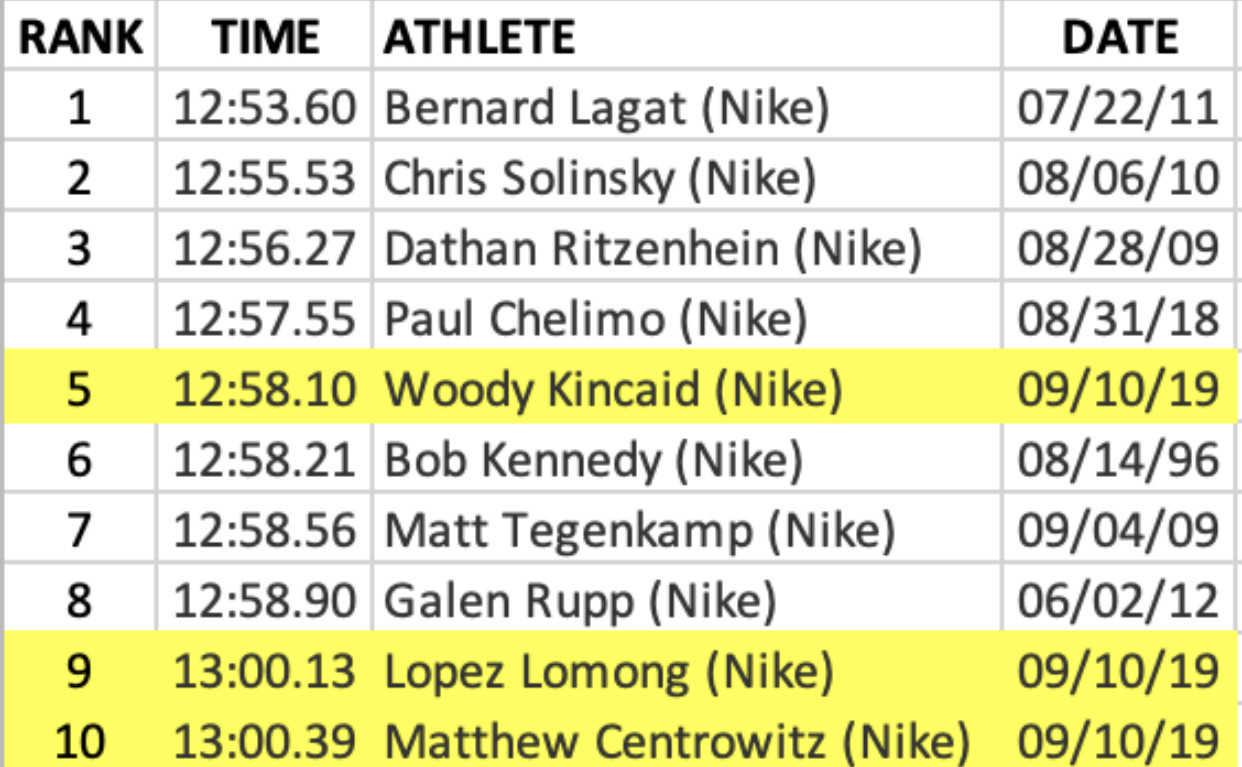
Of the three, Kincaid’s performance most stood out. Lomong is a two-time Olympian who swept the 5,000 and 10,000 at this summer’s USA Track & Field Outdoor Championships. Centrowitz is the reigning Olympic champ in the 1,500.
Both Centrowitz and Lomong will be part of the U.S. Team for the World Outdoor Championships in Doha, Qatar, which begin Sept. 27. Kincaid finished third in 5,000 at the USATF Outdoor Championships, which would have qualified him for the U.S. team had he met this year’s world championships qualifying standard in the qualifying period. He had not.
It won’t be a problem next year, now that Kincaid has taken care of his Olympic qualifier.
“If you watched the last mile of that race, I lost all form,” Kincaid said. “I lost everything. It was just one step after another. There was nothing left in the tank after that.”
He said the spectators, standing around the track in lane five, in some places three and four deep, pushed him.
“Honestly, if that crowd wasn’t here, I run 13:20,” Kincaid said.
by Ken Goe
Login to leave a comment
Drew Hunter is out for the IAAF World Championships due to a foot injury
Making Team USATF for the upcoming IAAF World Championships in Athletics was Drew Hunter's biggest career accomplishment. The 21 year-old adidas athlete, who trains in Boulder, Colo., with the Tinman Elite group, scrapped his way to a fifth place finish in the 5000m at the Toyota USATF Outdoor Championships in July, despite enduring searing foot pain in the weeks leading to those championships which made running almost impossible. As the third man across the finish line with the World Championships standard, Hunter was going to his first big global championships.
"I just did everything I could," Hunter told Race Results Weekly in a telephone interview last night from Boulder. "It's the hardest team to make and I made it. I earned that spot."
But over the last month, Hunter's foot woes have only gotten worse. Despite countless treatments, cross training, ice, anti-inflammatories and rest, the 2019 USA indoor two-mile champion had to accept that his track season was over. He made the decision with coach Tom Schwartz after a workout he attempted last Friday with Tinman teammate Sam Parsons who is preparing for the New Balance Fifth Avenue Mile.
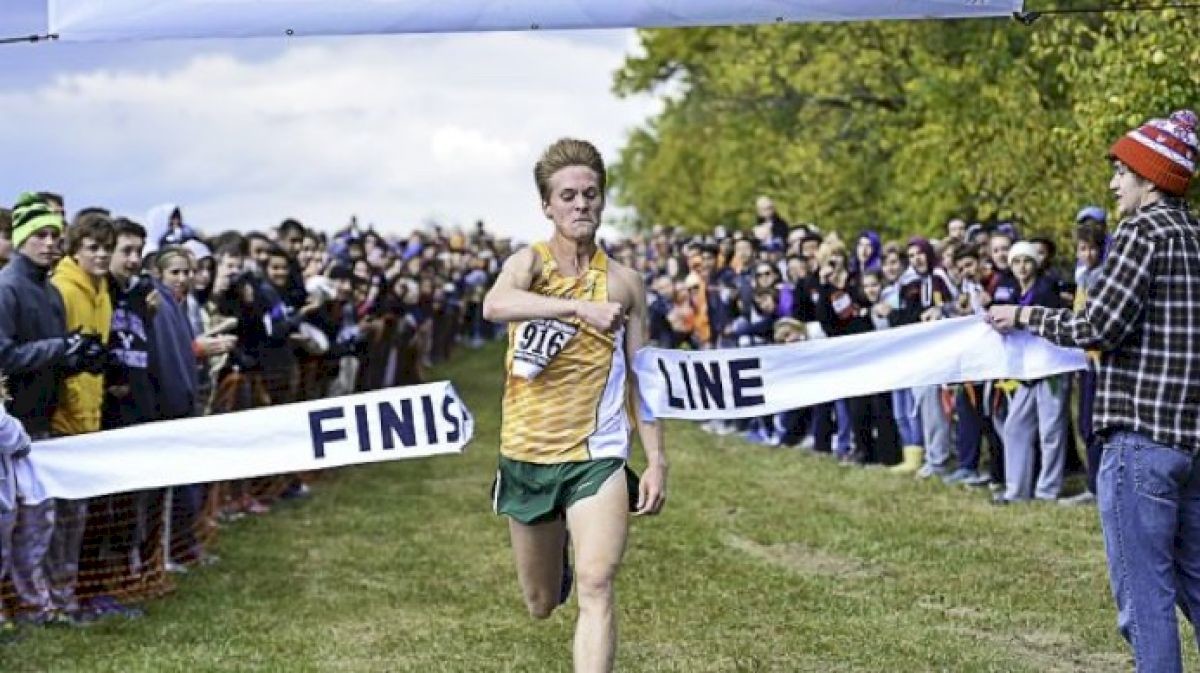
"I warmed up with Sam for his last workout for Fifth Avenue," Hunter recounted. "I'm going to do a hard workout with Sam and see where my foot is at. I did one stride and my foot was on fire. I knew I was done."
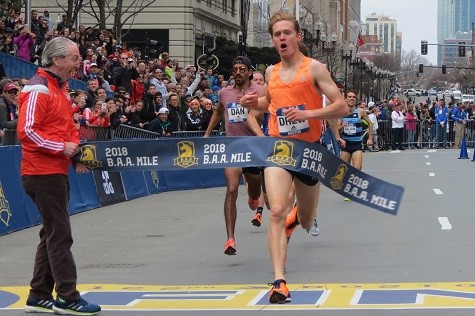
Hunter informed USATF of his decision to withdraw from the team. Although the national federation hasn't named a replacement yet, the next athlete in line is Ben True who finished seventh at the USATF Championships and had the World Championships standard at the time of the meet (American athletes were not permitted to chase the standard after the national championships).
Although severely disappointed, Hunter is trying to use this setback as a learning experience. Analyzing his workouts and training schedule with his coach, he has traced the injury --first an inflamed and torn plantar, then a fractured cuboid bone in his right foot-- to what seemed like the most successful period of running of his young career. On June 13, Hunter ran a personal best 7:39.85 for 3000m at the Bislett Games in Oslo. His foot was just a little sore, but his fitness was excellent and he wanted more.
"I felt my planter and it wasn't bad," Hunter explained. "I had the same symptoms before the Oslo Diamond League. Then I ran Olso, then hopped on a flight straight to Boston and did the Boost Games Mile (where he finished second in 3:58)." He continued: "My plantar was sore, but it was very minor. Right after Oslo and Boost Games I ran really well. I looked in my training log and I know where I screwed everything up."
Hunter, who was a miler in high school, had been successful as a 5000m man on a relatively low-mileage training plan. A big training week for him was 80 miles, but wanting to increase his fitness base he ran successive 90-mile weeks after Oslo. That, Hunter said, was the tipping point.
"I ran my two highest mileage weeks ever back to back," Hunter said. He added: "It just kind of slowly got worse and worse."
In his one tune-up race for the USA national meet, Hunter ran the 1500m at the Sunset Tour meeting in Azuza, Calif., on July 9. He clocked a solid 3:37.29, showing that he had enough fitness to run the 5000m at the national meet, but his foot felt awful.
"Then I ran Azuza, and after the race I could barely walk," Hunter said. "My plantar was, like, on fire. After Azuza my training went really inconsistent and really shaky into nationals. I couldn't do long runs, I couldn't do workouts."
Hunter knew the injury was bad, but decided not to get an MRI because part of him didn't want to know how bad it really was. He was committed to the national meet and didn't want to pull out. That's what professional athletes do, he said.
"I didn't get an MRI before and that was intentional because I knew something was wrong. I knew I had a plantar problem, but I didn't want to know how severe because I was all-in on running nationals." He continued: "So I just worked with my soft tissue therapist and just managed it."
Ironically, by taking so many steps to protect his plantar Hunter actually caused the cuboid fracture. The planter problem is mostly resolved, he said, but the the cuboid fracture needs more time to heal.
by David Monti
Login to leave a comment

IAAF World Athletics Championships Doha
The seventeenth edition of the IAAF World Championships is scheduled to be held between 27 September and 6 October 2019 in Doha, Qatar at the renovated multi-purpose Khalifa International Stadium. Doha overcame bids from Eugene, USA, and Barcelona, Spain to be granted the rights to host the 2019 IAAF World Championships in Athletics. Having hosted the IAAF Diamond League, formerly...
more...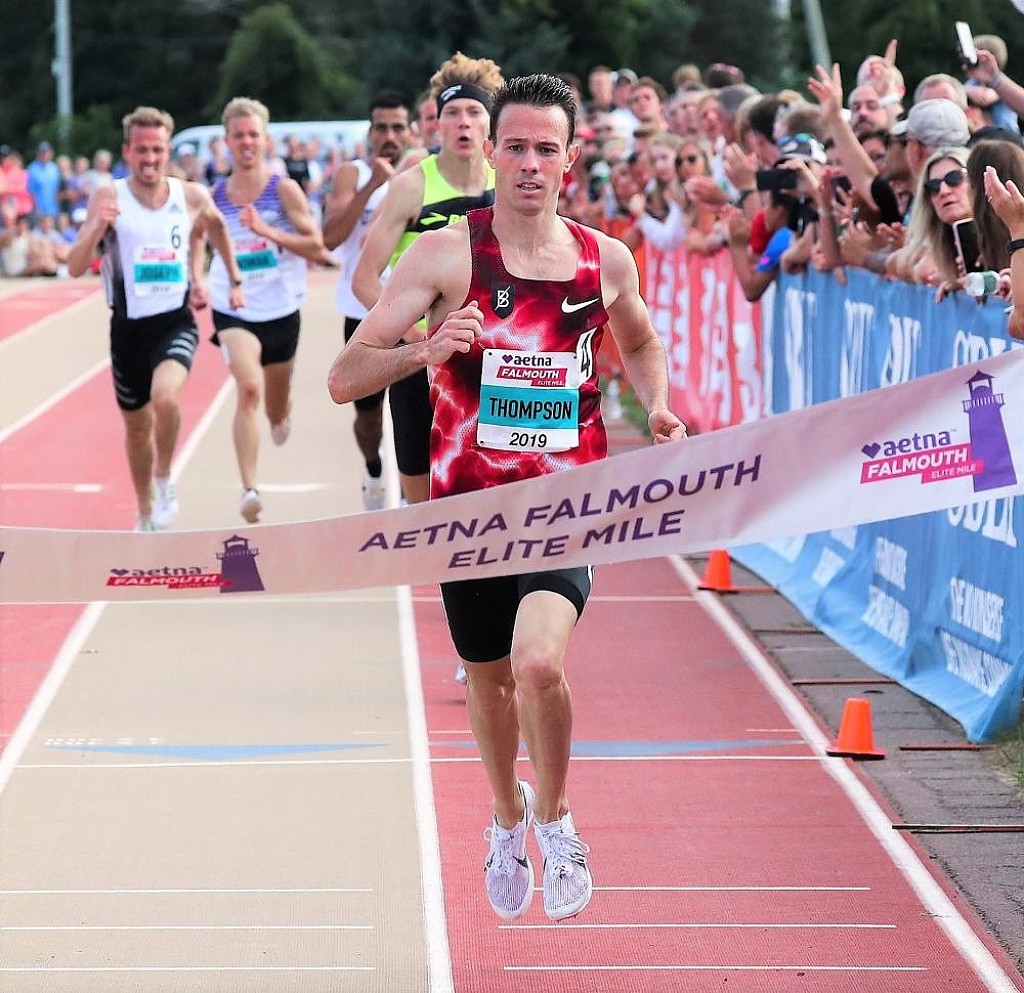
Josh Thompson and Cory McGee kicked their way to victories in the Aetna Falmouth Elite Mile this weekend
Josh Thompson and Cory McGee kicked their way to victories in the Aetna Falmouth Elite Mile, held on the eve of the 47th annual New Balance Falmouth Road Race. Both Thompson and McGee used moves in the final lap to charge to the front and secure the $3,500 first-place prize.
The Aetna Falmouth Elite Mile is the fourth stop of the 2019 Bring Back the Mile Grand Prix Tour.
McGee, a Team New Balance athlete living and training in Boulder, CO, sat patiently in fourth among the pack of seven women as they passed halfway in 2:18. Moving to the front was Katie Mackey, a three-time winner here who did her best to shake up the field before hitting the bell in 3:25.
McGee was the only competitor to immediately respond to Mackey’s move, and the pair led down the backstretch on the final lap. With the roars of spectators growing at an impending duel, McGee drew even with 200 meters to go and never looked back. She’d break the tape going away in 4:29.51 to earn her first Aetna Falmouth Elite Mile crown.
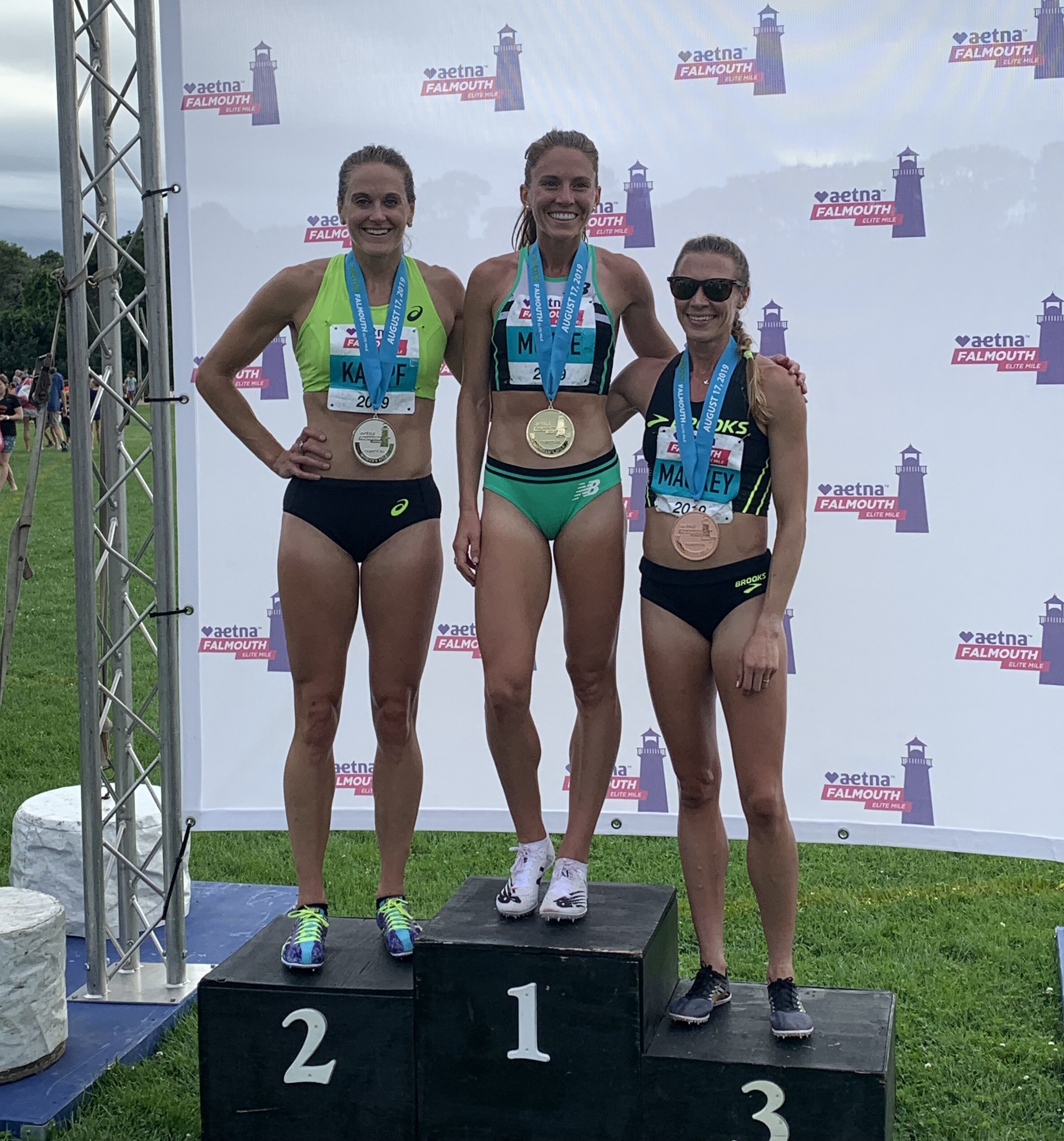
“I’m so happy to be back in the Boston area,” said McGee. “This race is really one of the most exciting miles in the country. It has more history than a lot of the others and just has a really fun energy surrounding it with the [New Balance Falmouth] Road Race. I’ve been in the mix a few times but finally winning it is really fun!”
Heather Kampf passed Mackey in the final straight to take second, 4:31.24 to 4:31.69. Eleanor Fulton (4:32.39) and Dana Giordano (4:33.07) rounded out the top five.
McGee was happy to improve on her third place finish from a year ago, and has said she’s been motivated to race fiercely after a disappointing experience at the USATF Outdoor Championships last month, where she was disqualified in her 1500-meter prelim. By running under 4:31, McGee picked up an additional $1,000 in a winner’s time bonus.
“I feel fit and it’s fun to win!” she said. “I want to race a few more times [this season]. I know I worked really hard this year so I’m just doing what I worked for.”
Thompson, the men’s champion, also made his bid for the win in the final lap, choosing to do so with 300 meters remaining. Up until that point, Maine native Riley Masters had done all of the pacing, taking the field through three-quarters in 3:00.
With each lap, Thompson’s faith in his kick grew stronger. Masters and Craig Nowak were setting the tempo, and all Thompson had to do was decide when to move from third to first.
“I was feeling pretty confident,” said Thompson, giving credit to Masters and Nowak. “When the last lap came I knew I was going to wait until 300 meters just to be safe.”
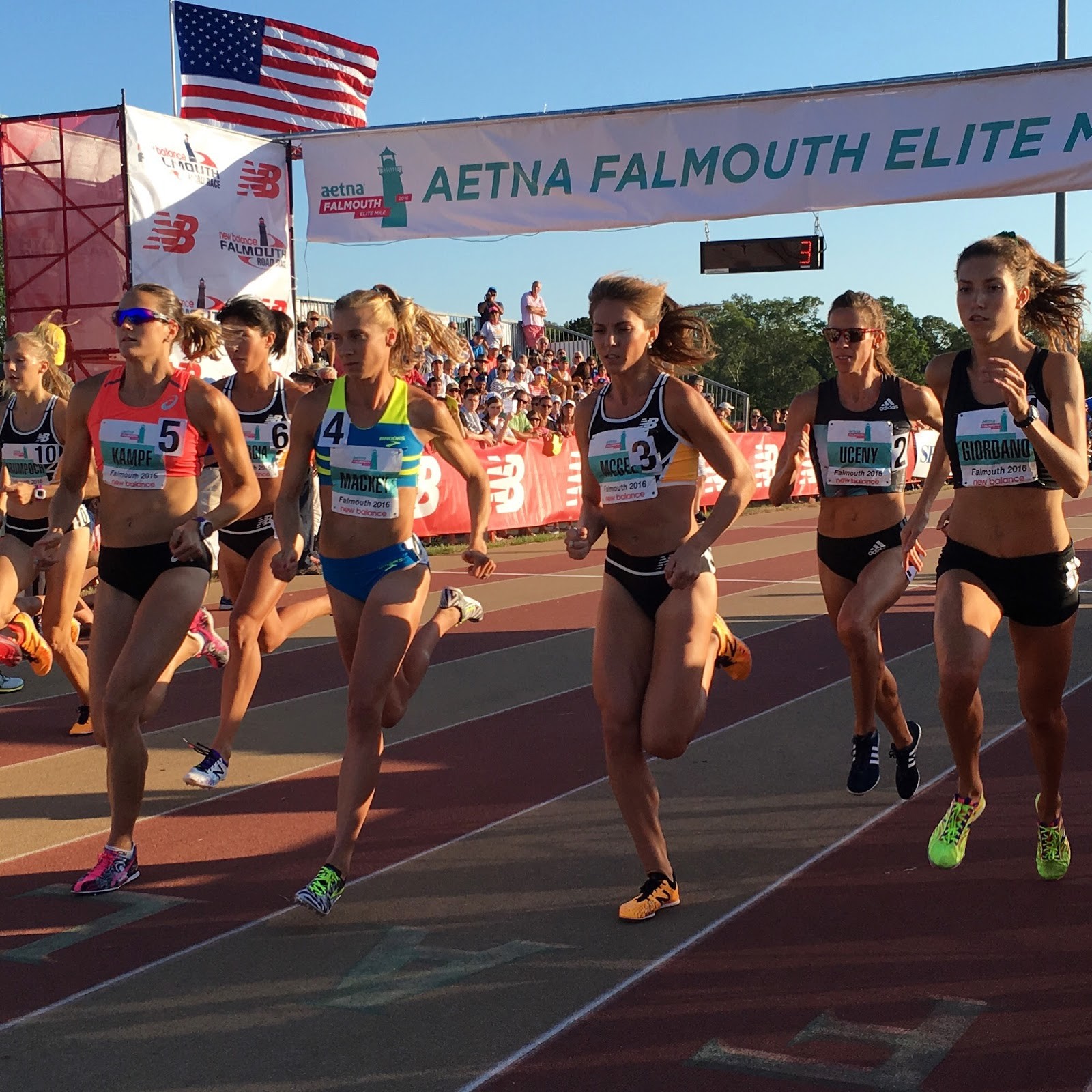
As Thompson moved into first, David Ribich slipped into second and the pair put three meters on the field. Bearing down and opening his stride around the bend, Thompson held off the former Division II standout, 3:58.39 to 3:59.78.
“It means a lot. It gets my confidence up,” said Thompson of the victory, his first win of the 2019 Bring Back the Mile Grand Prix Tour. “I’ve struggled in the past [with injuries], and to come here and win this race, I mean, Falmouth put on a great race. This is pretty cool – I’ve never been in this type of an environment. So to just come out here, winning, it’s just another step for me in training and my confidence level.”
Tripp Hurt was third in 4:00.57, followed by Daniel Herrera in 4:00.86.
Login to leave a comment

Falmouth Road Race
The Falmouth Road Race was established in 1973 and has become one of the premier running events of the summer season. Each year the race draws an international field of Olympians, elite runners and recreational runners out to enjoy the scenic 7-mile seaside course. The non-profit Falmouth Road Race organization is dedicated to promoting health and fitness for all in...
more...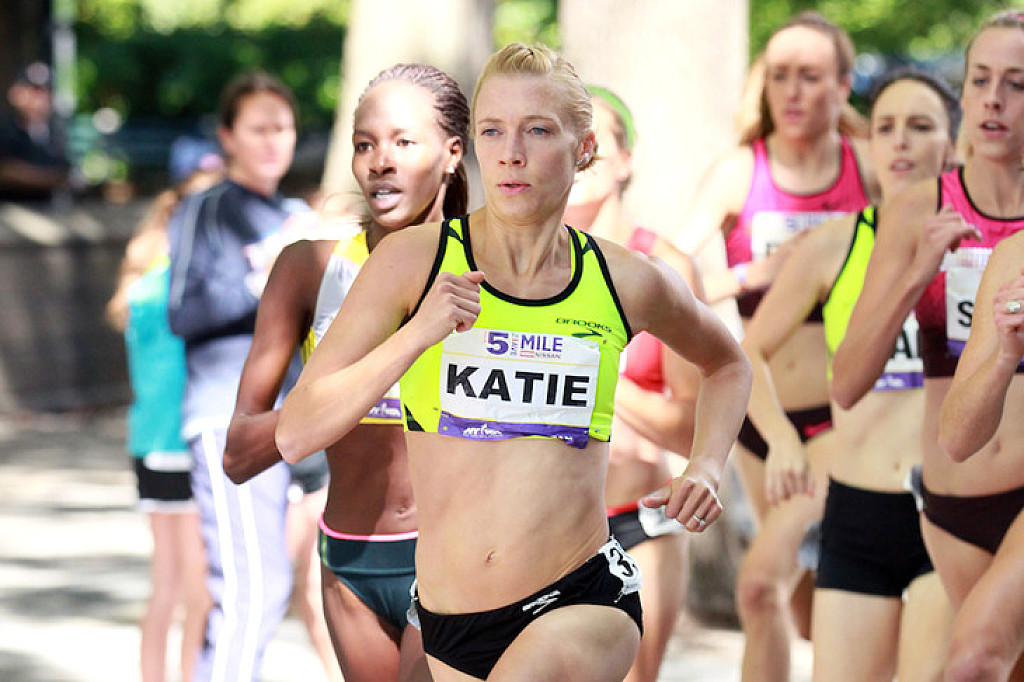
Katie Mackey, the only three-time winner in the race’s history, and Tripp Hurt, the reigning USA 1 Mile Road Champion, lead the fields for the 24th Aetna Falmouth Elite Mile
Katie Mackey, the only three-time winner in the race’s history, and Tripp Hurt, the reigning USA 1 Mile Road Champion, lead the fields for the 24th Aetna Falmouth Elite Mile on August 17, organizers announced today. The mile is part of the Falmouth Track Festival, held the evening before the New Balance Falmouth Road Race.
The Aetna Falmouth Elite Mile will begin at 5 p.m. on Saturday, August 17, on the James T. Kalperis Track at Falmouth High School. Total prize purse for the men’s and women’s fields is $15,000, not including possible time bonuses, with the winners each taking home $3,500.
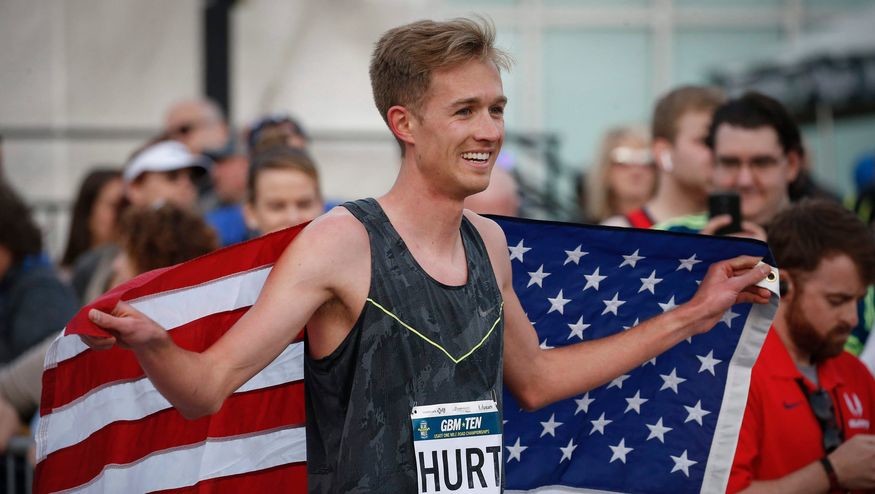
Beginning with the SBLI Family Fun Run and followed by the Aetna Falmouth Elite Mile and the Tommy Cochary High School Mile, the track festival will be streamed live on the New Balance Falmouth Road Race Facebook page beginning at 4 p.m.
Mackey, 31, is the 2017 USA 1-Mile Road Champion, 2018 USATF Club Cross Country Champion, American record-holder in the 4x1500m relay, and was eighth at 3000 meters in the 2018 IAAF World Indoor Championships. Hurt, 26, was third at this year’s USATF Indoor Championships in the 2 Mile and is a two-time USATF Outdoor Championships steeplechase finalist.
Also among the headliners in the women’s race is Heather Kampf, a member of the same medal-winning relay team as Mackey and a four-time USA 1 Mile Road Champion. After three events, Kampf and Hurt lead the standings in the 2019 Bring Back the Mile Grand Prix Tour, on which the Aetna Falmouth Elite Mile is the fourth stop.
Challenging Mackey and Kampf will be Cory McGee, who was fourth in the 2015 Pan American Games at 1500 meters and won the Sir Walter Miler on August 2 in 4:27.87; Stephanie Garcia, a two-time member of Team USA at the IAAF World Championships in the 3000-meter steeplechase (2011, 2015); Allie Buchalski, 2018 NCAA 5000-meter runner-up; Jessica Harris, third at 1500 meters in the 2019 NCAA Championships; Lianne Farber, a three-time All-American at the University of North Carolina who runs for Team New Balance Boston; Eleanor Fulton, a two-time member of Team USA for the mixed relay at the IAAF World Cross Country Championships (2017, 2019); Vanessa Fraser, fourth in the 2018 NCAA 5000 meters; Dana Giordano, third at 1500 meters in 2016 NCAA Championships, who competes on the B.A.A. High Performance Team and has a family home in Woods Hole; and Heather MacLean, a Massachusetts state champion out of Peabody High School and an All-American while at UMass-Amherst who just finished seventh at USATF Outdoor Nationals in a personal best 4:05.27.
For the men, Tripp will face Josh Thompson, third at 1500 meters at the 2019 USATF Outdoor Championships; Garrett Heath, two-time USA 1 Mile Road Champion (2013, 2015); Pat Casey, the 2018 NACAC silver medalist at 1500 meters; Patrick Joseph, a member of Virginia Tech’s 2018 NCAA Indoor Champion Distance Medley team and fourth in the mile; Daniel Herrera, Mexico’s national record-holder in the mile; Riley Masters, 2018 USA 1 Mile Road Champion; David Ribich, two-time NCAA Division II 1500-meter champion (2017, 2018); Mason Ferlic, 2016 NCAA Champion in the 3000-meter steeplechase; Craig Nowak, a two-time All-American while at Oklahoma State; and Garrett O’Toole, the 2018 Ivy League indoor mile champion who now competes for Arizona State.
O’Toole, whose 4:01.89 mile while running for The Middlesex School was the fastest high school mile in the U.S. in 2014, won the Tommy Cochary High School Mile here in 2013, and still holds the meet record. At the Aetna Falmouth Elite Mile, O’Toole will be attempting to break the 4-minute barrier for the first time.
The Aetna Falmouth Elite Mile, which began in 1995, has played host to more than two dozen Olympians, including Morgan Uceny, Amy Rudolph, Carmen Douma-Hussar, Carrie Tollefson, Suzy Hamilton, Donn Cabral, Marc Davis, Robert Gary, Jason Pyrah, 2012 Olympic silver medalist Leo Manzano and two-time Olympic medalist Nick Willis of New Zealand. The event records are held by Hamilton (4:25.27, 2002) and Jordan McNamara (3:54.89, 2011).
Login to leave a comment
Falmouth Road Race
The Falmouth Road Race was established in 1973 and has become one of the premier running events of the summer season. Each year the race draws an international field of Olympians, elite runners and recreational runners out to enjoy the scenic 7-mile seaside course. The non-profit Falmouth Road Race organization is dedicated to promoting health and fitness for all in...
more...
New mom Allyson Felix qualifies for her 13th world championships at Doha
Allyson Felix, the most decorated track runner in world championship history with 16 career medals, made a very respectable comeback yesterday at the USATF Outdoor Championships yesterday, finishing sixth in the 400m final, qualifying her for the 4x400m relay pool for the 2019 world championships at Doha. It will be her 13th world championships.
Felix ran 51.94s in her first race back since having her baby last November. She made headlines a few months ago when she openly criticized her sponsor, Nike, for not supporting women athletes who choose to start a family, and followed that up with testifying before the US House of Representatives Ways and Means Committee on the maternal mortality crisis.

Though she had excellent healthcare and was in top physical condition, Felix suffered serious complications during her pregnancy and underwent an emergency C-section at 32 weeks.
She spent the next few months with her baby in the NICU before going public with her story in December 2018. Felix is still without a contract, and raced unattached this weekend.
Felix wasn’t the only mom commanding attention on the track this weekend. Nia Ali, who had her second baby last year, took second place in the women’s 100m hurdles, securing herself a berth on the American world championship team with a season’s best 12.55s. (The baby’s father is Canadian sprinter Andre De Grasse, who finished second in the 100m at the Canadian nationals this weekend.)
by Anne Francis
Login to leave a comment
IAAF World Athletics Championships Doha
The seventeenth edition of the IAAF World Championships is scheduled to be held between 27 September and 6 October 2019 in Doha, Qatar at the renovated multi-purpose Khalifa International Stadium. Doha overcame bids from Eugene, USA, and Barcelona, Spain to be granted the rights to host the 2019 IAAF World Championships in Athletics. Having hosted the IAAF Diamond League, formerly...
more...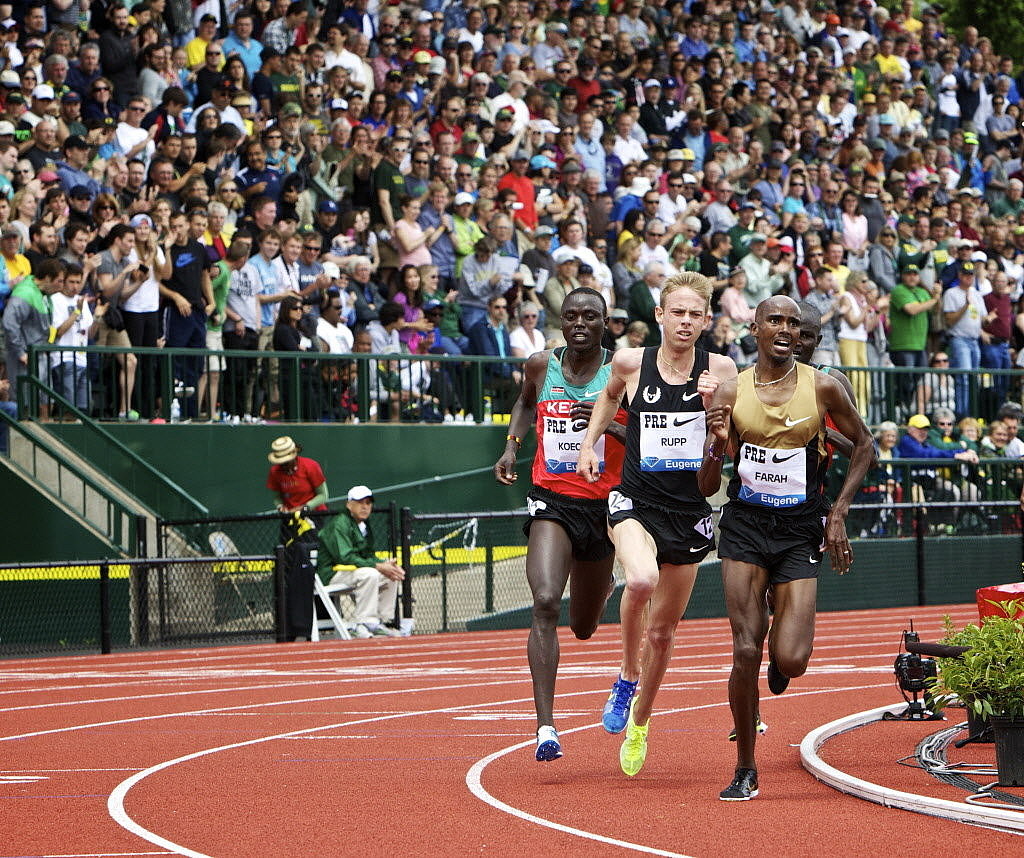
Will The 2019 Prefontaine Classic be moved to Stanford?
The Prefontaine Classic could be moving south. With its usual site, Hayward Field in Eugene, Ore., undergoing a massive reconstruction project, the US’s only Diamond League meet is in need of a new venue for 2019. In track & field circles, one venue’s name has popped up more than any other: Stanford University’s Cobb Track & Angell Field.
Something certainly appears to be in the works between Stanford and Pre as the officials’ calendar for the USATF Pacific Association lists the Prefontaine Classic as one of its meets with Stanford listed in the “site” column. The date of the meet is Sunday, June 30, which is what the Diamond League lists on its official calendar.
Pre Classic press chief Jeff Oliver wrote that, “The Prefontaine Classic does not have a statement on the location of the 2019 meet at this time.
We are hopeful to make an official announcement later this month.”In addition to the annual Stanford and Payton Jordan Invitationals, Cobb Track & Angell Field hosted the USATF Outdoor Championships in 2002 and 2003."
According to Stanford’s website, it has a permanent capacity of 1,772, which would make it by far the smallest stadium to host a Diamond League (no other venue has fewer than 12,000 permanent seats; Stanford would presumably add temporary seating should it host the meet).
Login to leave a comment
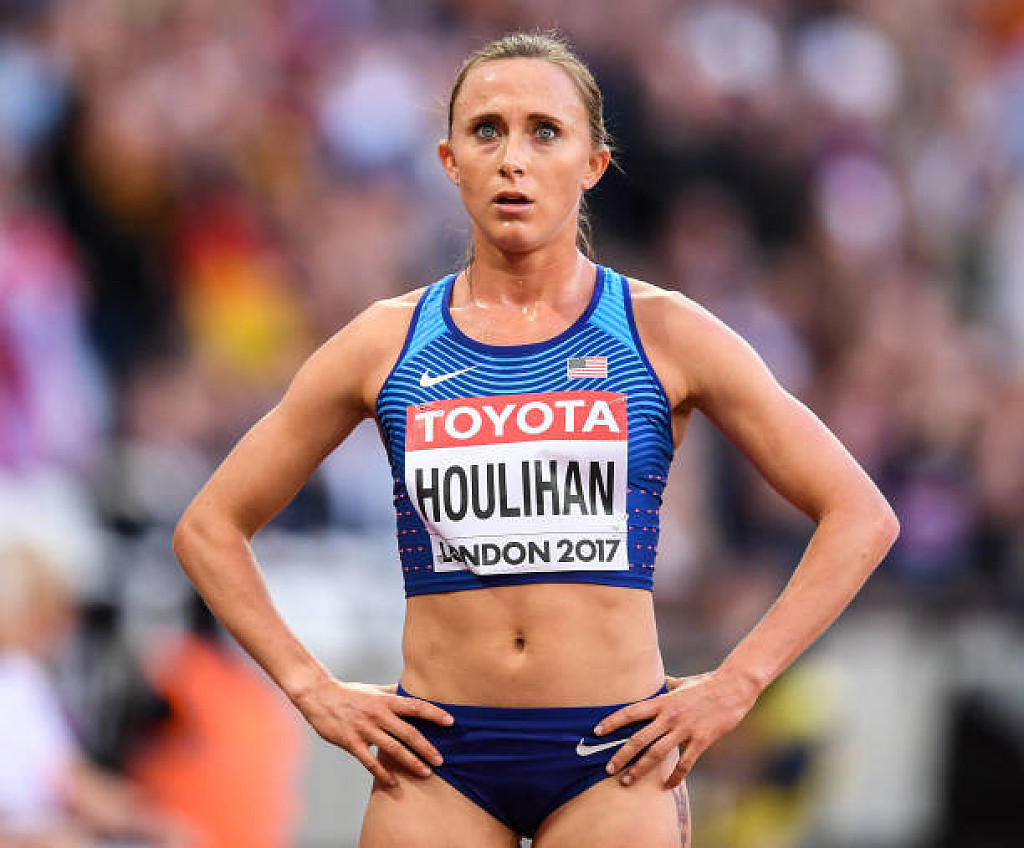
Shelby Houlihan surges past three contenders to win the 1500m while Semenya placed sixth
Login to leave a comment
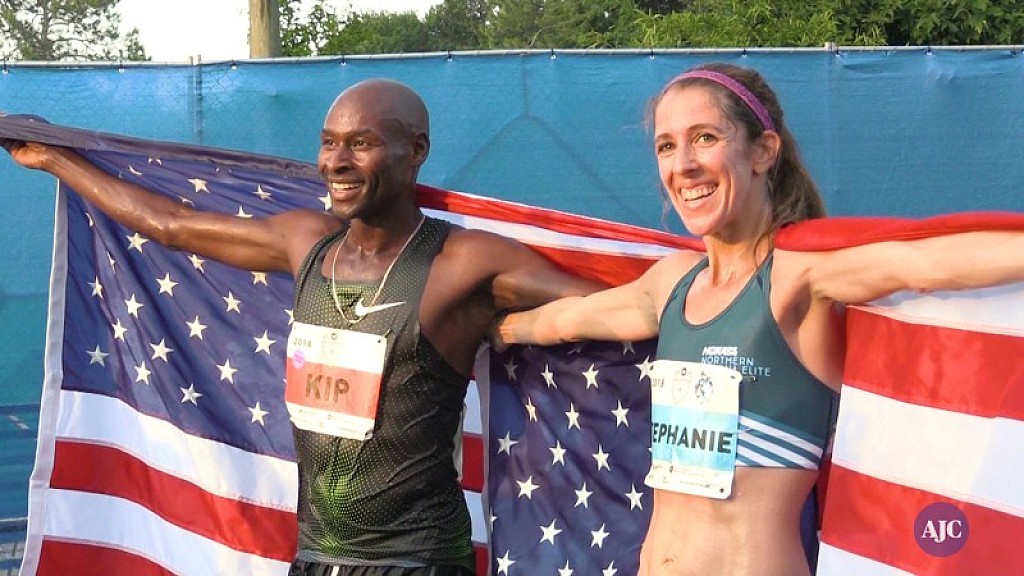
Stephanie Bruce wins the women's elite at the AJC Peachtree Road race
Login to leave a comment
