

Running News Daily
Running News Daily is edited by Bob Anderson and team. Send your news items to bob@mybestruns.com Advertising opportunities available.
Index to Daily Posts · Sign Up For Updates · Run The World Feed
Articles tagged #Karsten Warholm
Today's Running News
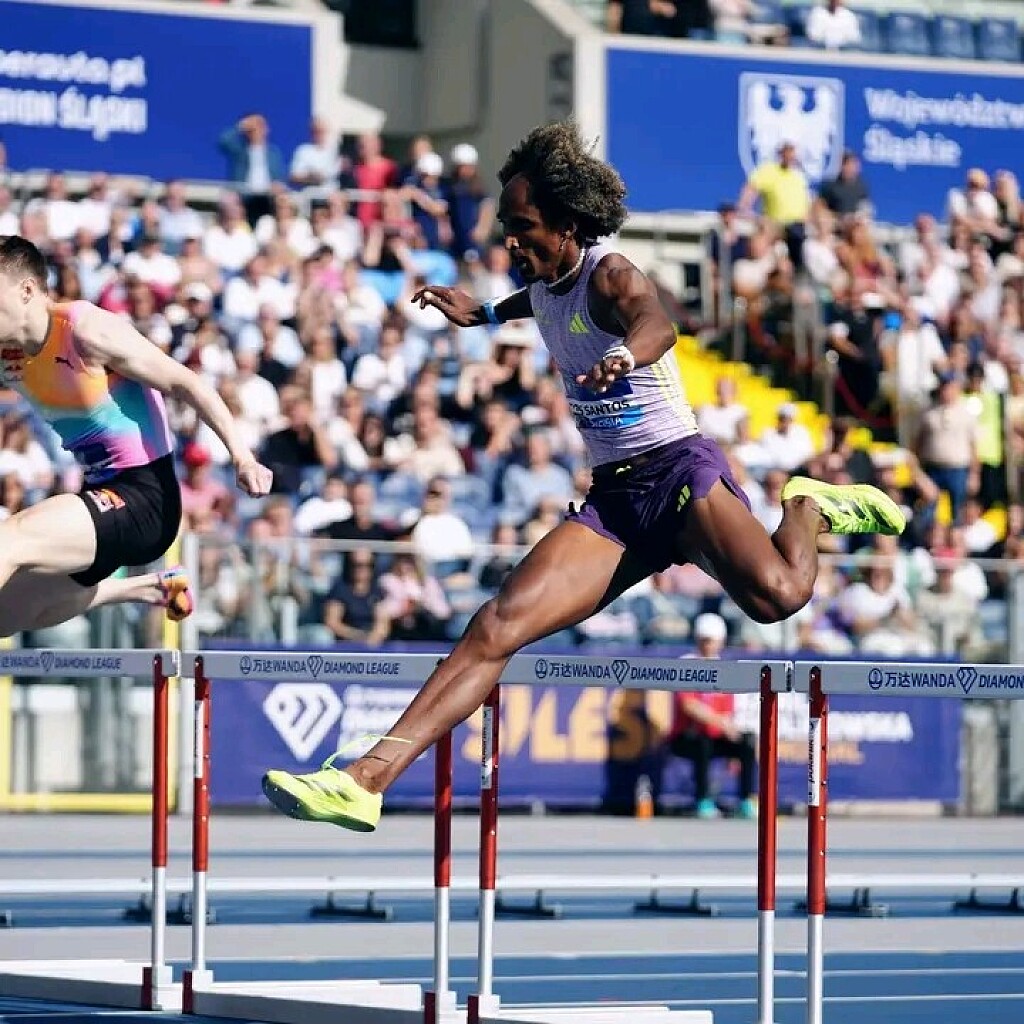


Is This the Greatest Era in Men’s 400m Hurdles History? Dos Santos Takes the Event to Another Level
The men’s 400m hurdles may be experiencing the greatest era in its history, and the numbers now make the argument almost impossible to ignore.
Brazilian superstar Alison dos Santos has taken the event to another level, storming to a sensational 45.80 world record in Zurich and moving to the summit of the all-time performance list.
But perhaps even more remarkable than the world record itself is what it has done to the historical rankings.
Every one of the 10 fastest performances in men’s 400m hurdles history is now owned by just three athletes: Alison dos Santos, Karsten Warholm and Rai Benjamin.
That extraordinary statistic perfectly captures the dominance of the current generation and highlights just how dramatically the event has evolved over the past few years.
Following his stunning performance in Zurich, dos Santos now sits at the top of the all-time list with 45.80, followed by Norway’s Karsten Warholm at 45.94, the time he ran in his historic world-record performance at the Tokyo Olympics in 2021.
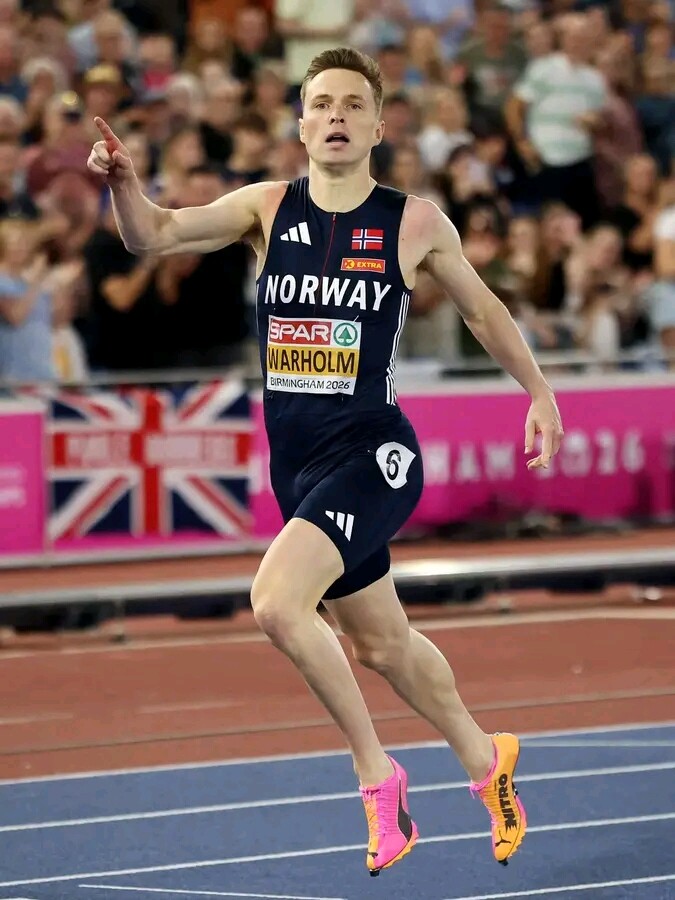
American star Rai Benjamin occupies third with 46.17, also from that unforgettable Tokyo final. Warholm is fourth with 46.28 from 2025, while dos Santos is fifth with his 46.29 from 2022.
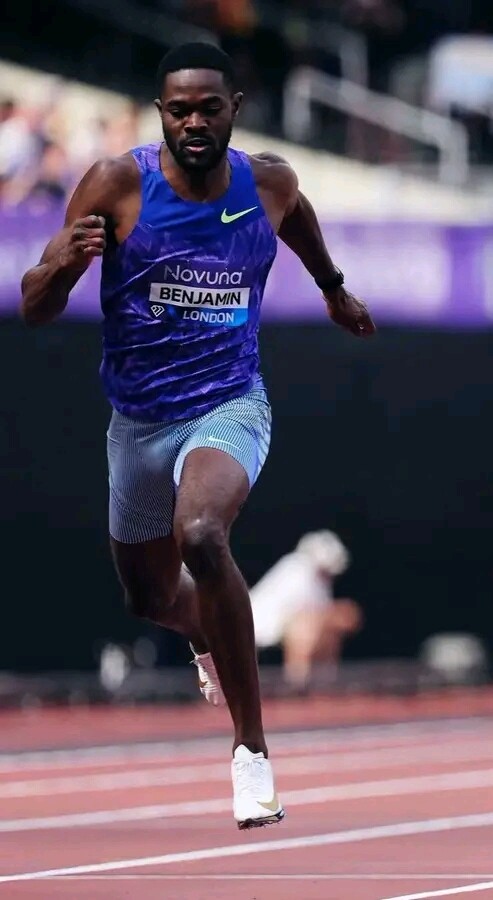
Benjamin appears again in sixth and seventh with 46.46 performances from 2024, while dos Santos takes eighth with 46.48 in 2026. Warholm completes the list with 46.51 from 2023 and 46.52 from 2023.
The distribution is extraordinary. Dos Santos owns three of the 10 fastest performances, Warholm owns four, while Benjamin owns the remaining three.
No other athlete has managed to break into the top 10.
That level of concentration at the very top of an event is a remarkable reflection of the era these three athletes have created.
At the centre of it all is dos Santos, whose 45.80 in Zurich has established a completely new benchmark. The Brazilian's performance did more than secure another historic victory; it pushed the boundaries of what is considered possible over one lap and 10 barriers.
Warholm had previously rewritten the history books in Tokyo when he clocked 45.94, becoming the first man to break the 46-second barrier and finally lowering Kevin Young’s legendary 46.78 world record, which had stood since the 1992 Barcelona Olympics.
Benjamin finished behind Warholm in Tokyo in 46.17, producing a performance that would itself have been considered extraordinary in almost any other era. Dos Santos completed the podium in 46.72, but his bronze medal would eventually prove to be just another chapter in his rise towards the summit.
The Tokyo final remains one of the most spectacular races in Olympic athletics history, but it also marked the beginning of an extraordinary period in which Warholm, Benjamin and dos Santos would repeatedly challenge the limits of the event.
Warholm has four performances inside the current top 10, including his 45.94 world record from Tokyo. Dos Santos has three, highlighted by his new global mark, while Benjamin also has three performances among the 10 fastest ever recorded.
Their remarkable consistency has transformed the 400m hurdles from an event once dominated by isolated historic performances into one defined by sustained excellence and intense rivalry.
For nearly three decades, Kevin Young’s 46.78 appeared almost untouchable. Then Warholm broke through. Benjamin immediately showed that the new standard could be challenged, and dos Santos emerged as another athlete capable of running at an astonishing level.
Now, times below 46 seconds are no longer viewed as an unimaginable frontier. They have become the territory occupied by the very best athletes of this generation.
And dos Santos has just moved that frontier even further.
His 45.80 has given the event a new target, but with Warholm and Benjamin still among the world's elite, the story may not be finished.
The question is no longer whether this generation is exceptional.
It is whether we are witnessing the greatest collection of men's 400m hurdlers ever assembled.
Three athletes now own every position in the all-time top 10.
Ten performances have been produced by just dos Santos, Warholm and Benjamin.
And at the very top stands Alison dos Santos, whose breathtaking 45.80 in Zurich has pushed the men’s 400m hurdles into territory that once seemed impossible.
Three superstars. Ten historic performances. One extraordinary era.
by Erick Cheruiyot for My Best Runs.
Login to leave a comment
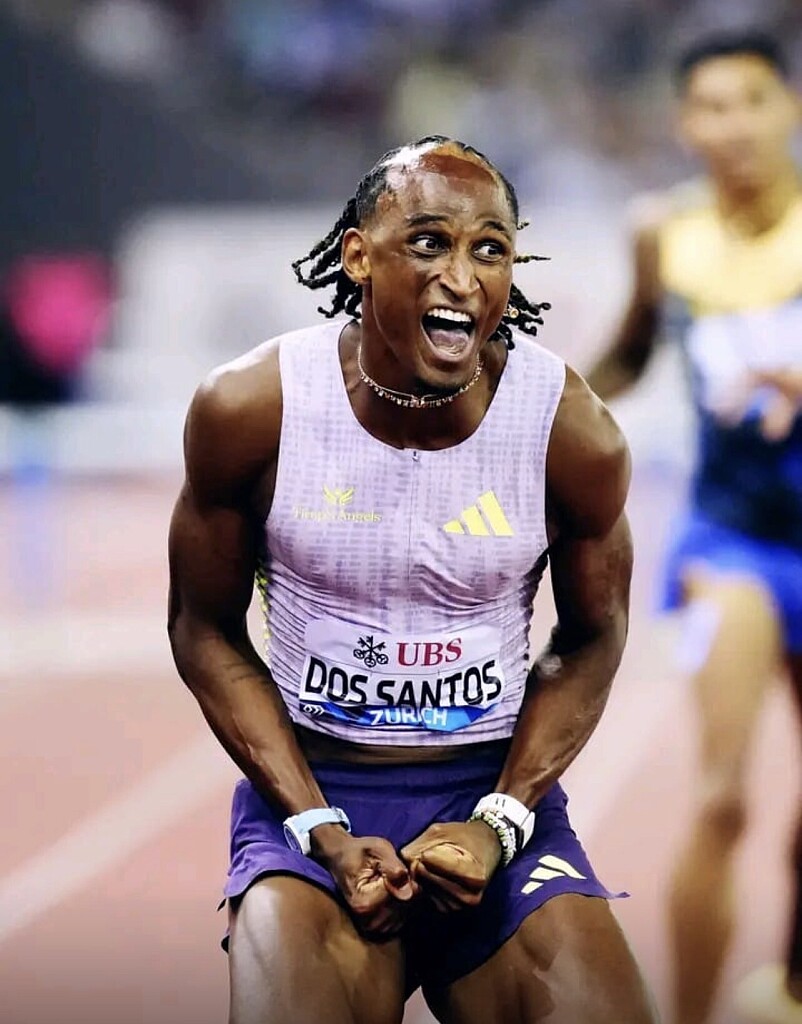
Alison dos Santos Makes History in Zurich, Smashing Warholm’s 400m Hurdles World Record
45.80 seconds. A new world record. A new chapter in the history of the 400m hurdles.
Brazilian star Alison dos Santos produced a breathtaking performance at the Zurich Diamond League on Thursday, storming to 45.80 seconds to shatter the men’s 400m hurdles world record and dethrone one of the greatest records in modern athletics.
Dos Santos delivered a sensational run at Weltklasse Zürich, becoming the first athlete to break the barrier set by Norway’s Karsten Warholm, whose legendary 45.94-second world record had stood since his spectacular victory at the Tokyo 2020 Olympic Games in 2021.
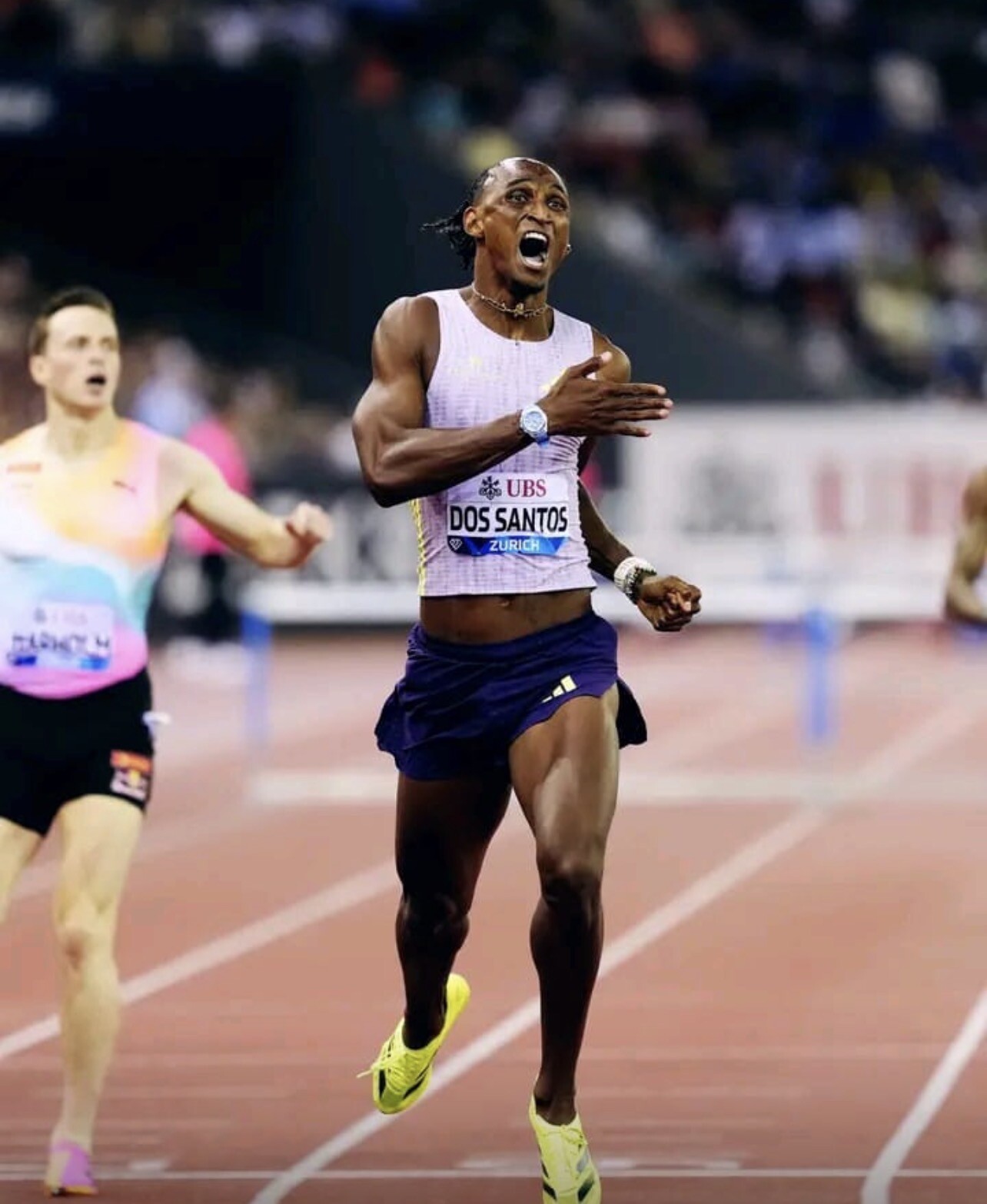
The Brazilian was in complete control from the opening stages, attacking the hurdles with remarkable speed and precision before powering down the final straight. The clock stopped at 45.80, sending shockwaves through the stadium and rewriting the record books.
Warholm, the former world-record holder and one of the sport’s most dominant figures, had to settle for second place in 46.69 seconds. Nigeria’s Ezekiel Nathaniel completed the podium in 47.50.
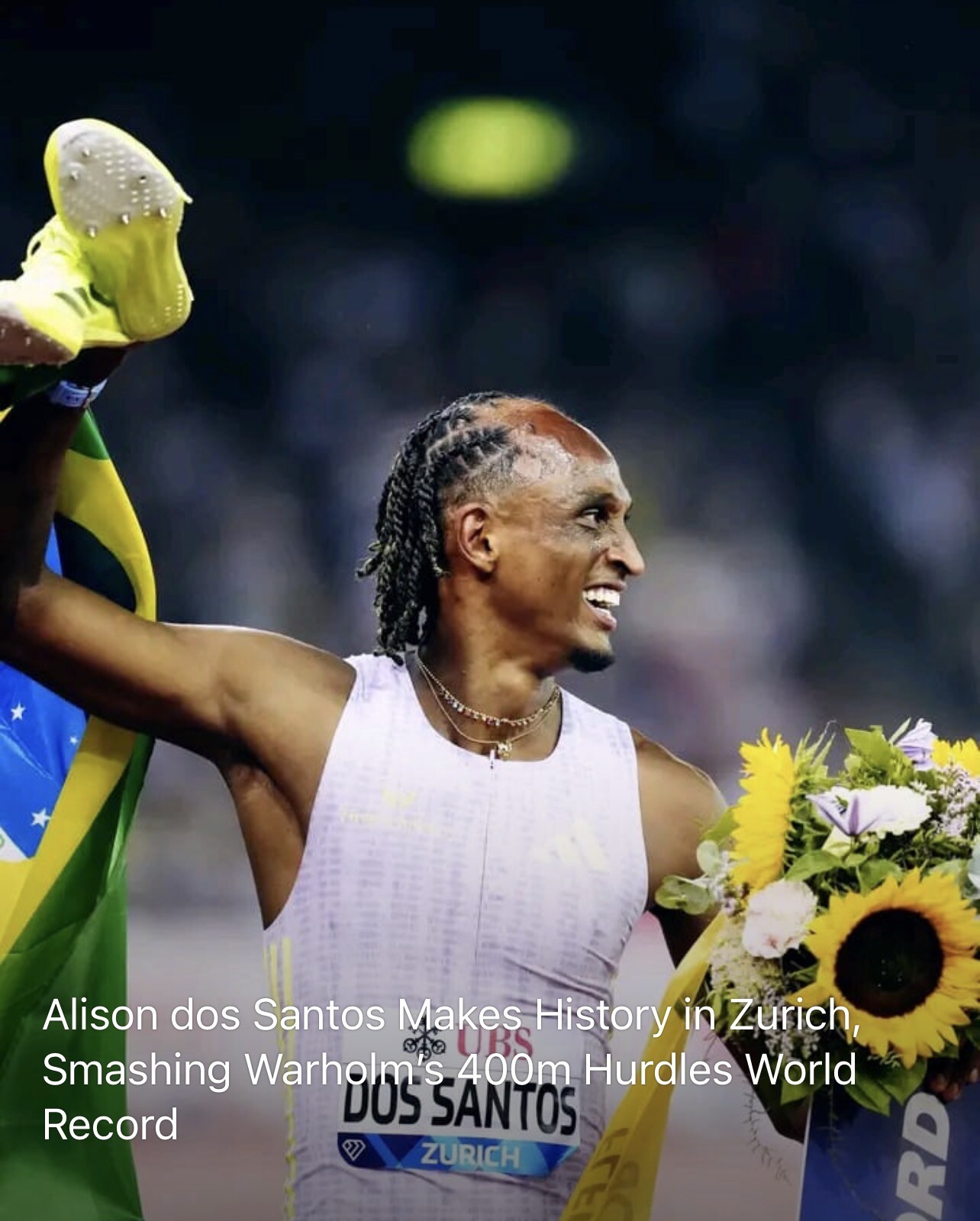
The result adds another extraordinary chapter to the rivalry between Dos Santos and Warholm. The pair have repeatedly pushed each other to new levels, but this time Dos Santos delivered the defining blow, taking down a record that had become synonymous with Warholm’s name.
The 26-year-old Brazilian has now cemented himself among the greatest 400m hurdlers in history. A world champion in 2022 and a two-time Olympic bronze medallist, Dos Santos has spent years chasing the sport’s very best — and in Zurich, he finally claimed its most coveted record.
His breakthrough is even more remarkable given that he entered the Zurich meeting with a personal best of 46.29 seconds in the 400m hurdles. His previous 2026 best had been 46.43, set just days earlier in Silesia, where he also defeated Warholm.
Now, the record belongs to Brazil.
Alison dos Santos — 45.80 seconds.
A new world record, a historic victory and a performance that will be remembered as one of the defining moments of the 2026 athletics season.
by Erick Cheruiyot for My Best Runs.
Login to leave a comment
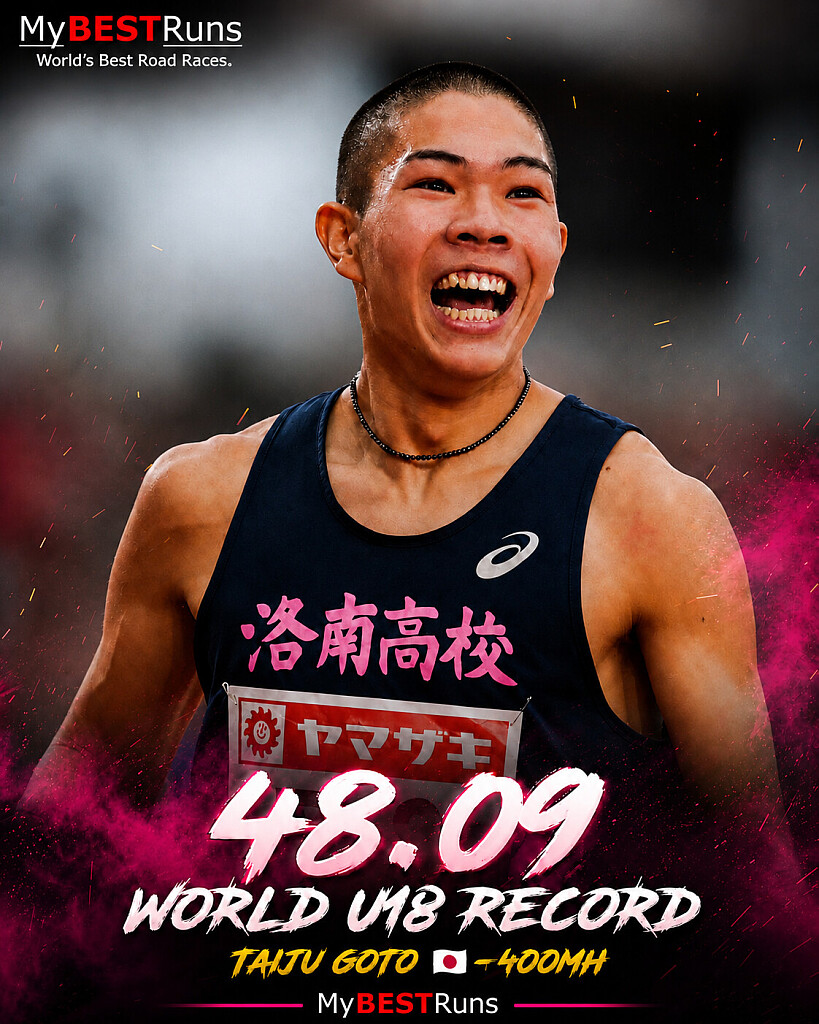
Taiju Goto Rewrites History Twice in 24 Hours as Teenage Sensation Shatters U18 World Record
The future of the 400m hurdles may have arrived sooner than anyone expected.
At just 17 years old, Japan's Taiju Goto delivered one of the most remarkable performances ever seen from a high school athlete, breaking the U18 world record not once, but twice in the space of two days at the Japanese Athletics Championships in Aichi.
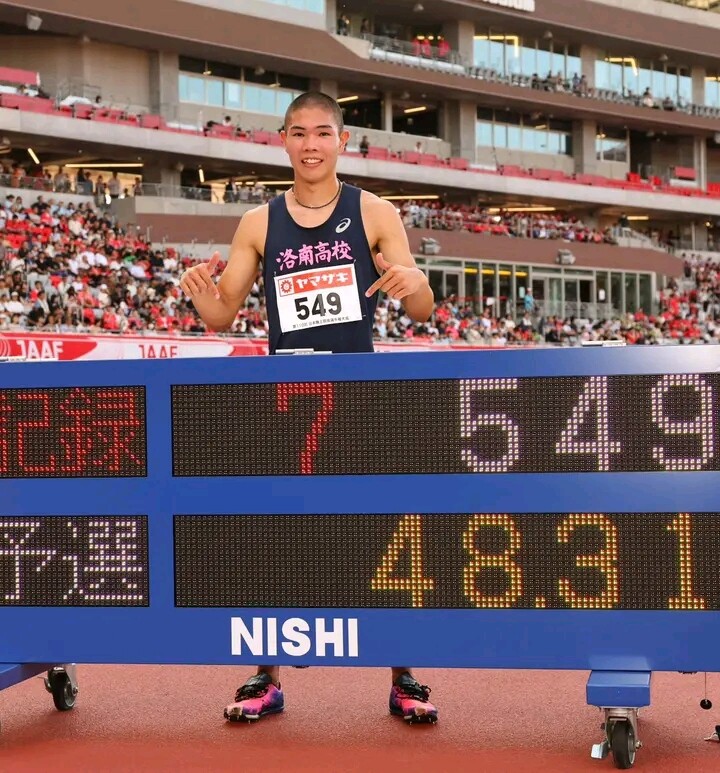
Goto first announced himself to the world during the heats, producing a stunning 48.31 seconds to erase a global age-group mark that had stood untouched for nearly a decade. It was the kind of performance that would have been enough to dominate headlines on its own.
But the teenager was not finished.
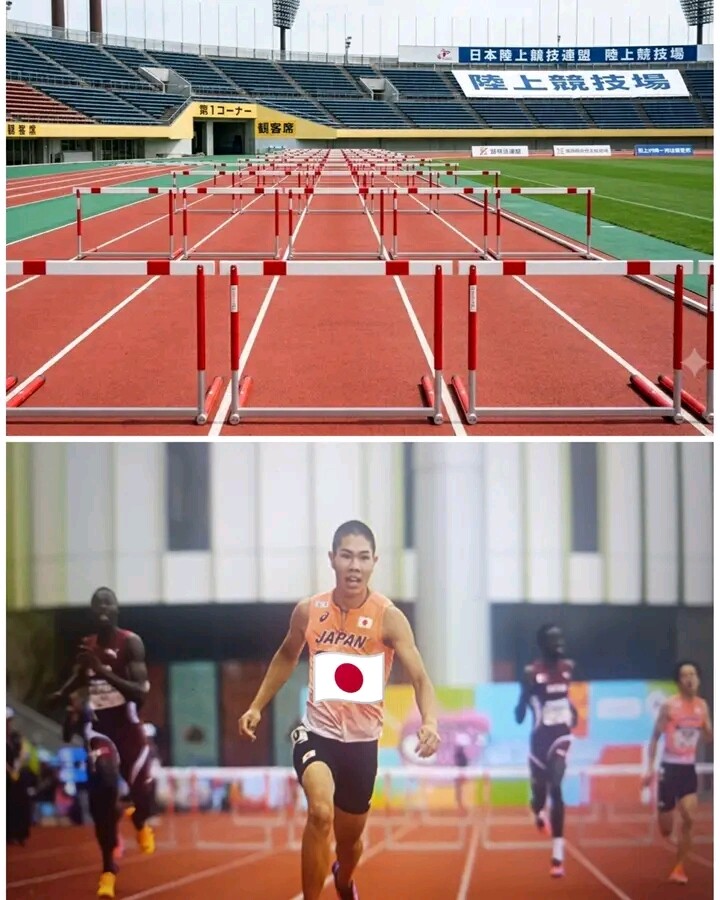
Returning for the final less than 24 hours later, Goto lined up in lane seven with the pressure of expectation suddenly resting on his shoulders. Rather than feeling the weight of history, he embraced it. Powering over the barriers with remarkable composure and rhythm, he crossed the finish line in an astonishing 48.09 seconds, slicing another 0.22 seconds off the record he had set the previous day.
Pending official ratification, the performance will stand as the new U18 world record.
What makes the achievement even more extraordinary is the level of the time itself. A 48.09 is not merely exceptional for a teenager—it is a performance capable of competing on the senior international stage. In several recent Olympic cycles, that mark would have been fast enough to reach the Olympic semifinals.
And Goto is still balancing elite athletics with life as a high school student.
The previous U18 world best of 48.84 had remained on the books throughout the 2010s and was widely considered one of the toughest age-group marks in the event. In just two races, Goto lowered it by an incredible 0.75 seconds—a massive margin in an event where records are often broken by hundredths of a second.
The men's 400m hurdles is currently enjoying a golden era led by world-class stars such as Karsten Warholm, Rai Benjamin, and Alison dos Santos. After this historic weekend, another name deserves a place on every athletics watchlist: Taiju Goto.
The timing could not be more intriguing. With the 2028 Olympic Games in Los Angeles approaching, Goto will still be only 19 years old when the world's biggest sporting stage arrives.
Many teenage prodigies generate excitement. Few produce performances that force the athletics world to rethink what is possible.
In Aichi, Taiju Goto did exactly that—twice. One record-breaking run announced his arrival. The second confirmed that a new star may already be on the rise.
by Erick Cheruiyot for My Best Runs.
Login to leave a comment
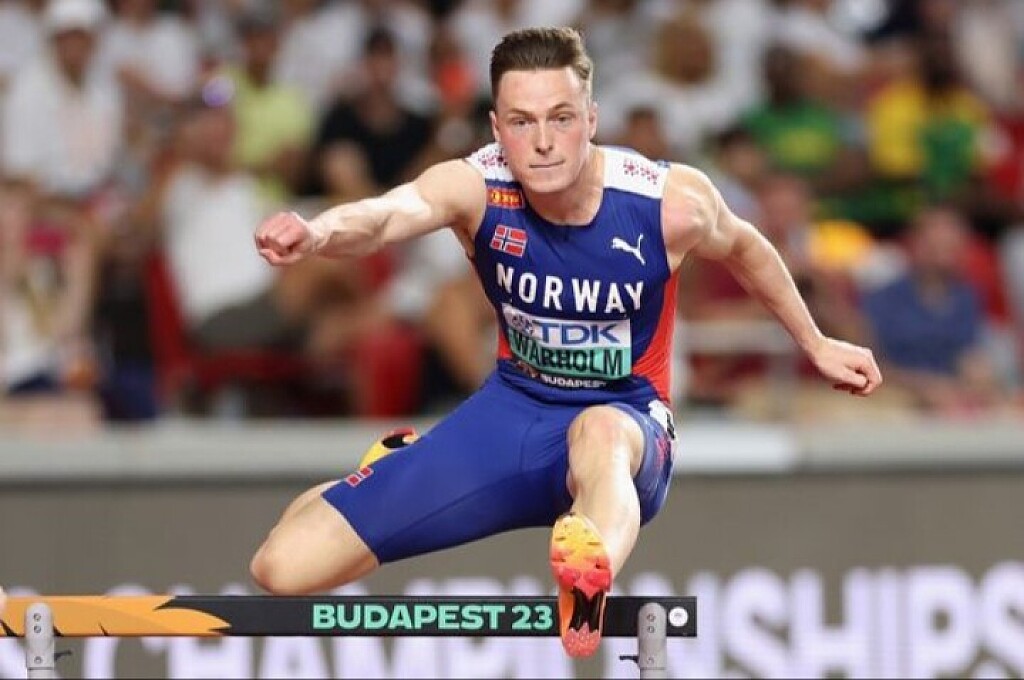
Karsten Warholm: The Man Who Smashed the 400m Hurdles Into a New Dimension
On February 28, 1996, in the quiet Norwegian town of Ulsteinvik, a champion was born. Over the years, Karsten Warholm has transformed himself into one of the most dominant and electrifying athletes of his generation — an Olympic champion, multiple-time world champion, European king, and the world record holder in the 400 meters hurdles.
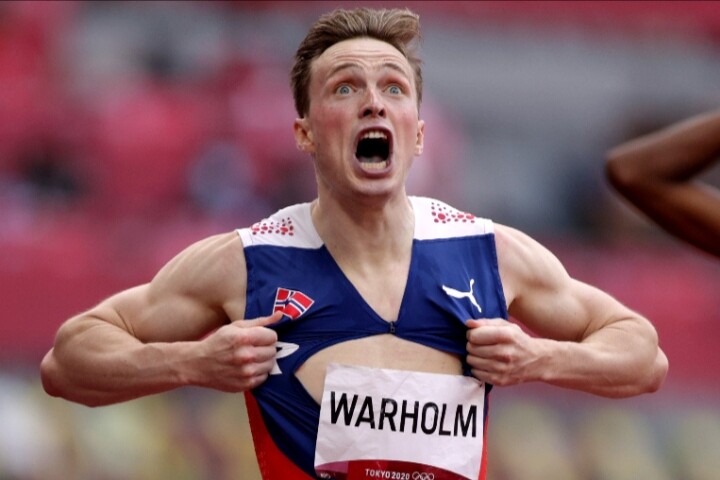
Warholm’s journey did not begin with hurdles alone. As a teenager, he displayed remarkable versatility in the combined events. In 2013, he became World Junior Champion in the octathlon in Donetsk, showcasing an unusual blend of speed, strength, and technical precision. The following year, he competed in the decathlon at the World Junior Championships in Eugene, finishing tenth against the best young athletes in the world. By 2015, he had already claimed double silver at the European Junior Championships in Eskilstuna — in both the 400 meters and the decathlon — a clear sign that he possessed rare, multidimensional talent.
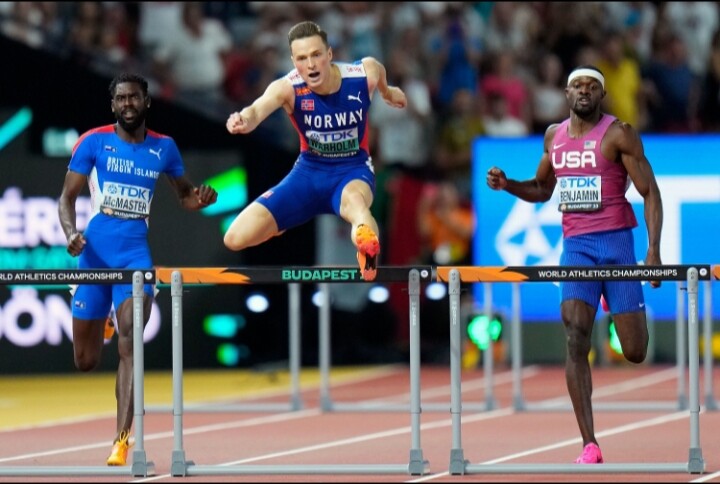
His early senior years hinted at something greater. He reached the semifinals of the 400m hurdles at the Rio 2016 Olympic Games, gaining valuable experience on the biggest stage. But it was in 2017 that the world truly took notice. At the World Championships in London, the young Norwegian stunned the field by winning gold in the 400m hurdles. Fearless from the gun and relentless between the barriers, he introduced a bold, attacking style that would become his trademark.
From that breakthrough moment, his rise accelerated. He secured European gold in Berlin in 2018 and claimed the European indoor 400m title in Glasgow in 2019, equaling the long-standing European indoor record of 45.05. Later that same year, he added another global crown at the World Championships in Doha, firmly establishing himself as the dominant force in his event.
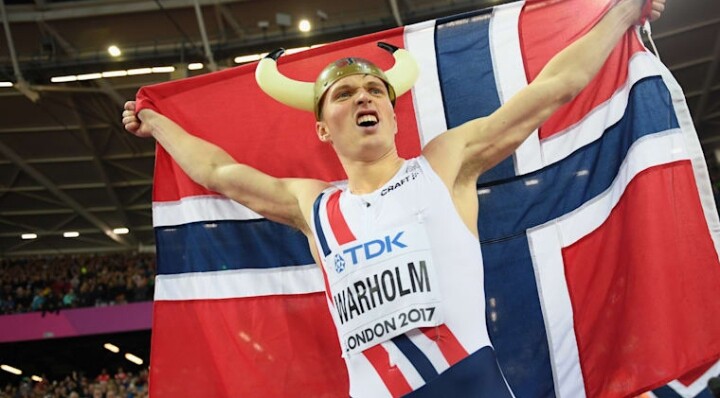
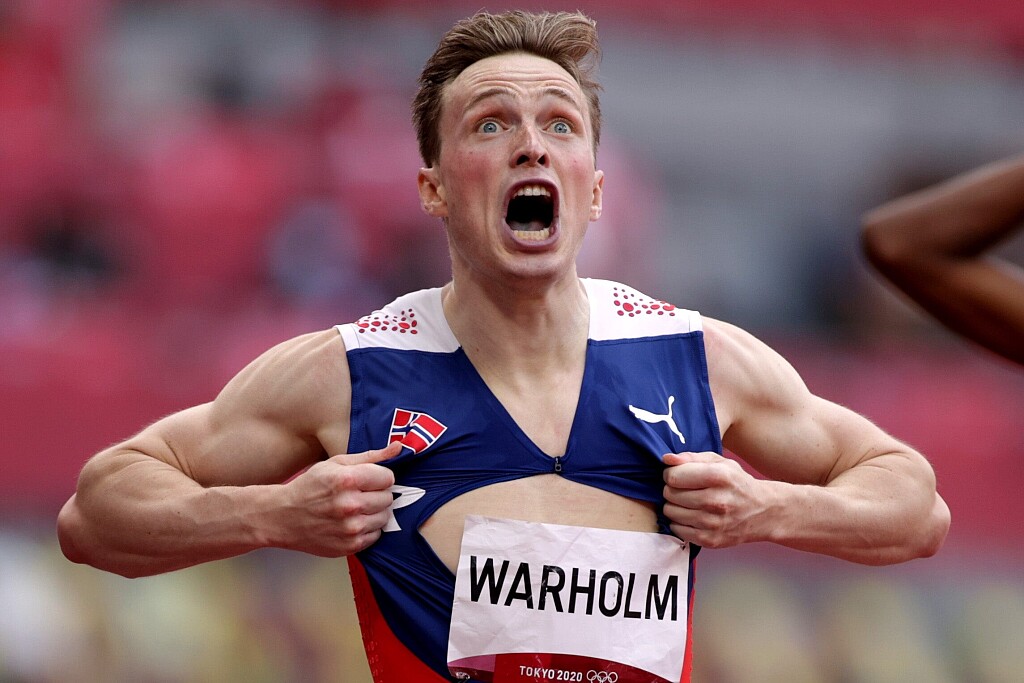
Then came August 3, 2021 — a date forever etched in athletics history. At the Olympic Games in Tokyo, Warholm produced one of the greatest performances the sport has ever witnessed. In a race of breathtaking intensity, he surged to Olympic gold and shattered the world record in the 400m hurdles with an astonishing 45.94 seconds. It was not just a victory; it was a redefinition of human possibility over barriers.
Champions are measured by how they respond to setbacks, and Warholm proved his resilience. After finishing seventh at the 2022 World Championships in Eugene, he returned stronger, reclaiming world gold in Budapest in 2023 with a commanding 46.89. In 2024, he added Olympic silver in Paris, European gold in Rome, and World Indoor silver in Glasgow, reinforcing his consistency at the highest level.
Beyond the hurdles, his athletic profile remains extraordinary. He has run 10.47 for 100 meters, 21.09 for 200 meters, and 44.87 for 400 meters. He holds the Norwegian record in the 300 meters at 32.49 and has cleared 2.05 meters in the high jump and leapt 7.66 meters in the long jump. Indoors, he has clocked 20.91 for 200 meters, equaled the European 400m record of 45.05, and set a world best of 34.26 in the 300m hurdles. Few specialists in modern athletics combine such speed, power, and technical mastery.
From a small coastal town to the pinnacle of global sport, Karsten Warholm has carried Norwegian athletics into a new era. His career is defined not only by medals and records but by courage, intensity, and an uncompromising will to push beyond limits. As he celebrates another year, one truth stands firm — the Viking of the 400m hurdles is not simply competing against rivals; he is racing against history itself, and more often than not, he wins.
by Erick Cheruiyot for My Best Runs.
Login to leave a comment
World Athletics Makes 300m Hurdles an Official Event
World Athletics has officially recognized the 300m hurdles as an official event, marking a major shift in the sport’s landscape. While it has long existed as a training and exhibition distance, the 300m hurdles will now count toward world rankings and all official statistical purposes, similar to the 400m hurdles.
In a statement released by World Athletics, the governing body noted:
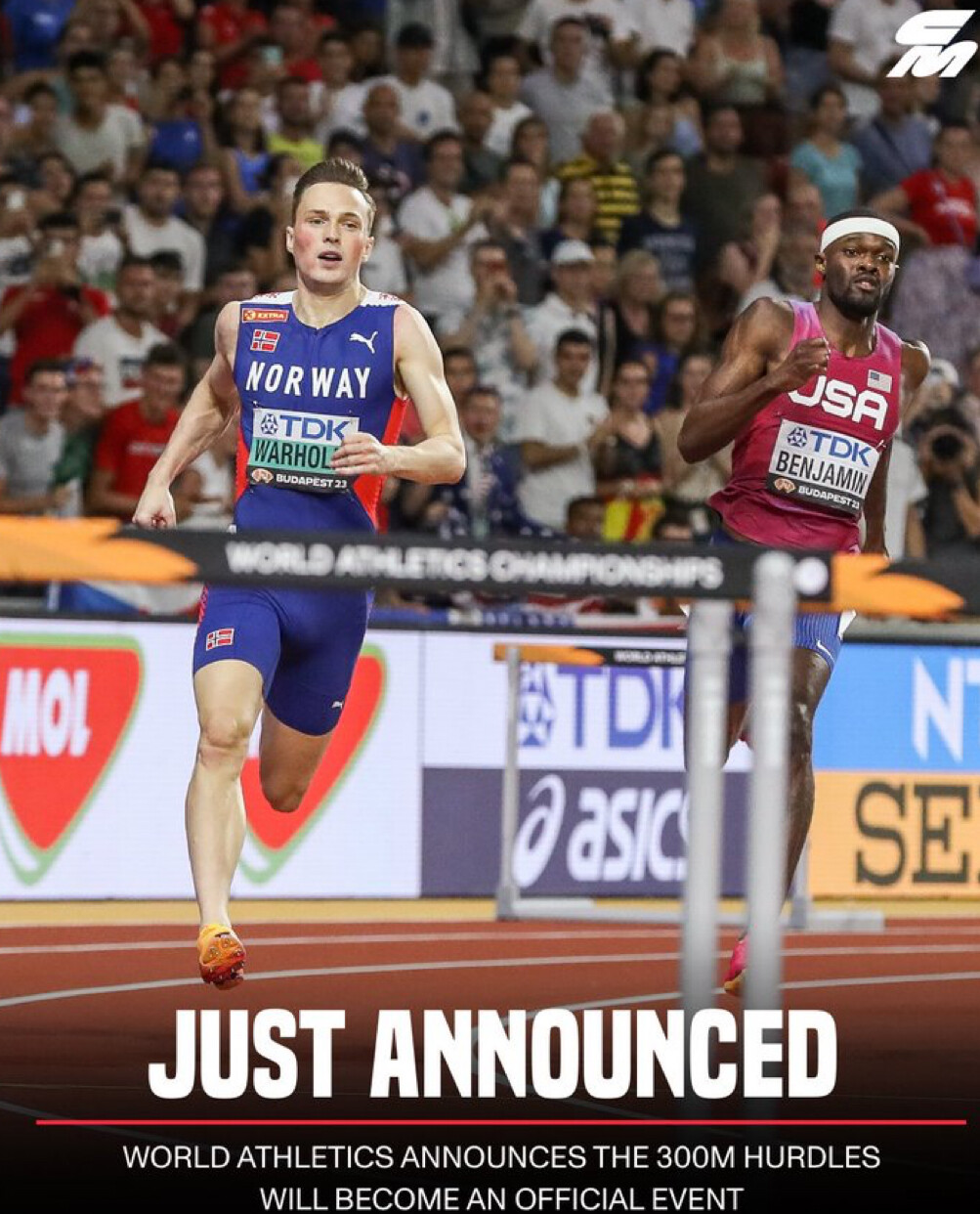
“It will serve all World Athletics statistical purposes, including world rankings towards which it will score as a similar event to the 400m hurdles. A list of world best performances will be kept, while conditions for setting an inaugural world record will be decided at a later stage, once the popularity of the event has reached a meaningful level.”
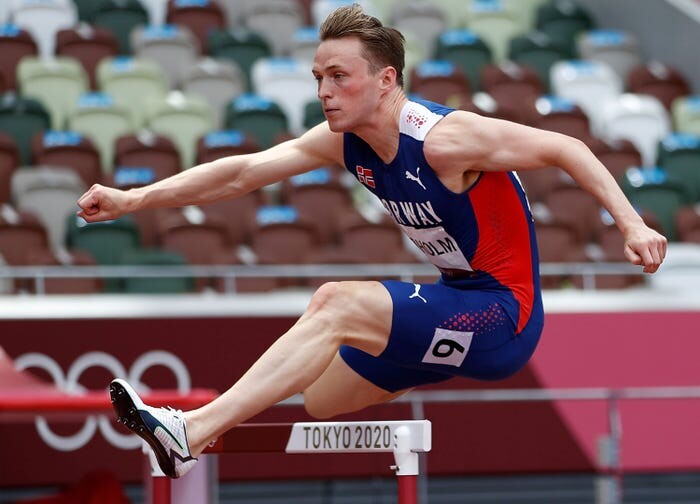
Though not yet eligible for world records, the event already boasts elite-level performances. Norway’s Karsten Warholm—the 400m hurdles world record holder—blazed 33.26 in Oslo in 2021, a mark widely recognized as the world best. He followed it up with a 33.28 performance in Bergen last year.
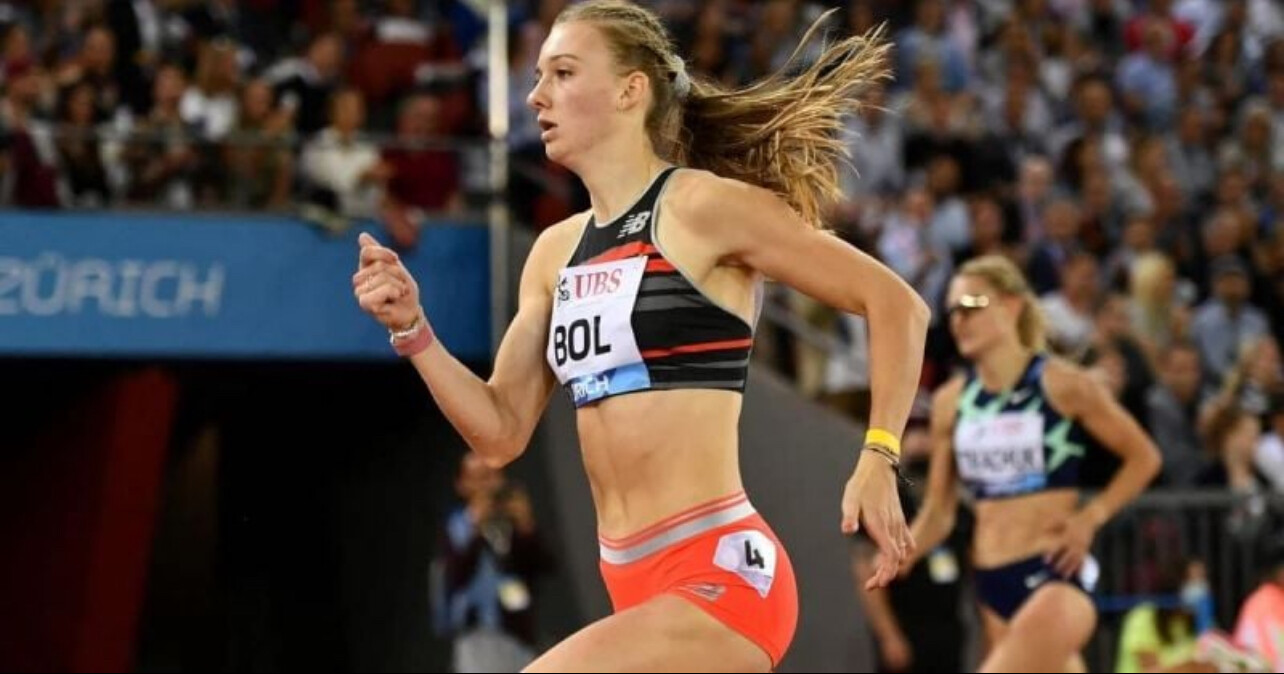
On the women’s side, Dutch superstar Femke Bol holds the top time with her 36.86 run in 2022.
The move to formalize the event brings renewed attention to what has typically been a non-championship distance. A major showcase is already on the calendar: the men’s 300m hurdles will feature at the Oslo Diamond League on June 12, 2025, setting the stage for a high-profile showdown in Warholm’s home country.
With elite athletes already embracing the event and more high-level races on the way, the 300m hurdles may soon become a fan favorite—and a mainstay in international competition.
Photos: Karsten Warholm Sets 300m Hurdles World Record
Norwegian hurdler Karsten Warholm setting the 300m hurdles world record with a time of 33.26 seconds at the Impossible Games in Oslo.
Femke Bol Breaks Women’s 300m Hurdles World Record
Dutch athlete Femke Bol breaking the women’s 300m hurdles world record with a time of 36.86 seconds at the Ostrava Golden Spike event.
by Boris Baron
Login to leave a comment
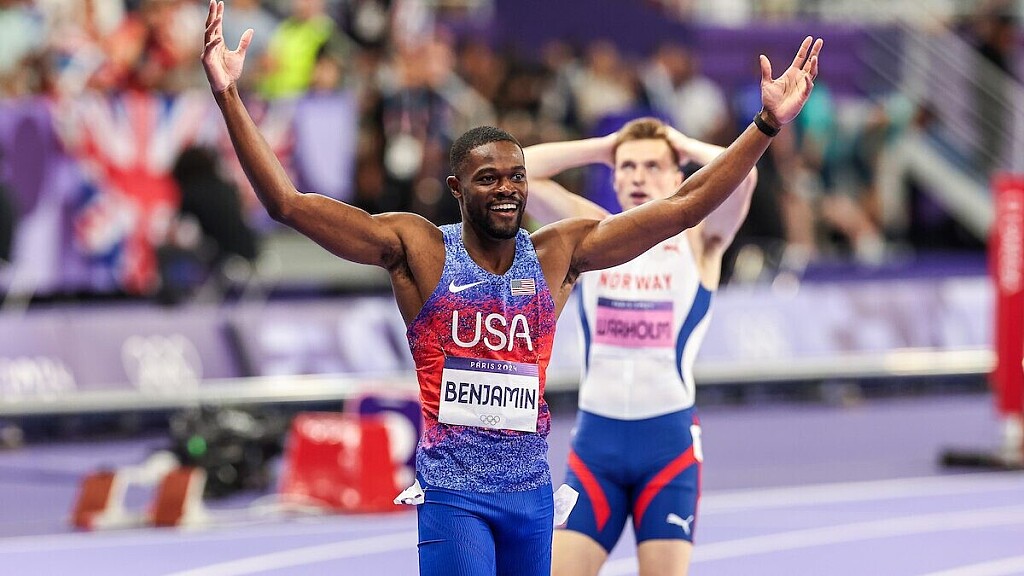
Team USA’s Rai Benjamin upsets Warholm for 400m hurdles Olympic gold
The young American fulfilled his dream of Olympic gold on Friday, while Brazil's dos Santos repeated his bronze-medal performance from Tokyo.
The top two finishers from Tokyo 2020 traded podium positions in an electrifying 400m hurdles final at the Stade de France on Friday, as American Rai Benjamin unseated the defending Olympic champion, world champion and world record holder, Karsten Warholm of Norway. Benjamin, the silver medallist from Tokyo, took gold in a season’s best 46.46–well ahead of Warholm’s 47.06, while Alison dos Santos of Brazil repeated his bronze medal performance from Tokyo 2020 in 47.26 seconds.
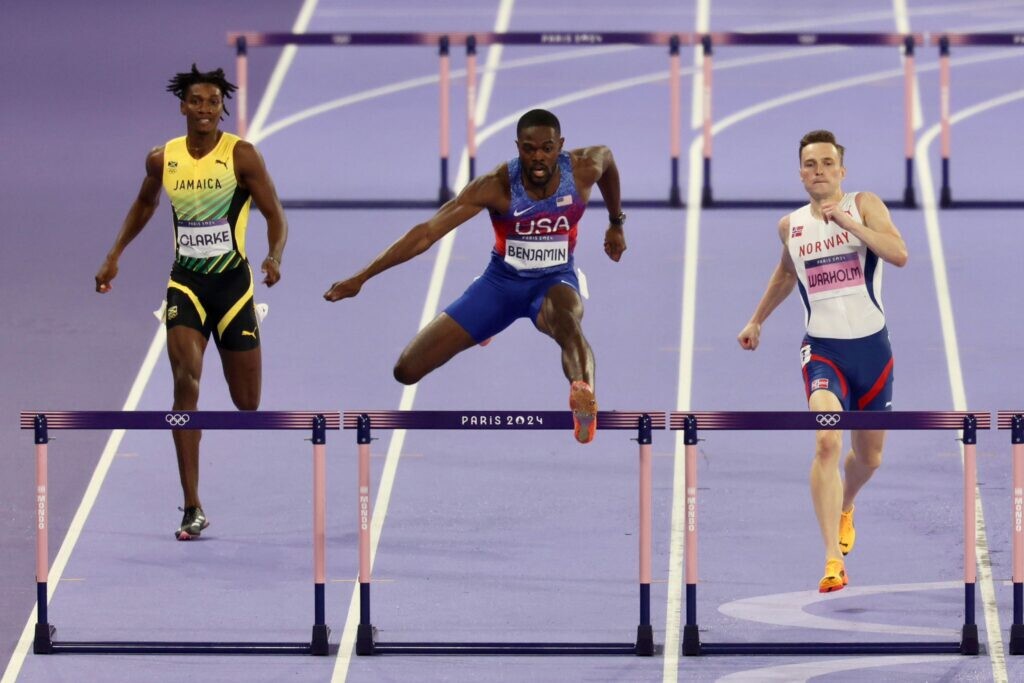
Warholm, in lane 7, had Benjamin in his sights in lane 8, and gained ground on the American through the first turn, but couldn’t quite make up the stagger. By the home stretch, Benjamin was pulling away, leaving Warholm behind.
Having medalled at the last four major championships in the event, dating back to the 2019 World Championships in Doha, the 26-year-old Benjamin was one of the favourites for gold on Friday; he had the fastest time in the world this year (46.46). Warholm, Benjamin and dos Santos are the three fastest men ever in the 400m hurdles event. Warholm set the world and Olympic record of 45.94 in an empty stadium in Tokyo three years ago.
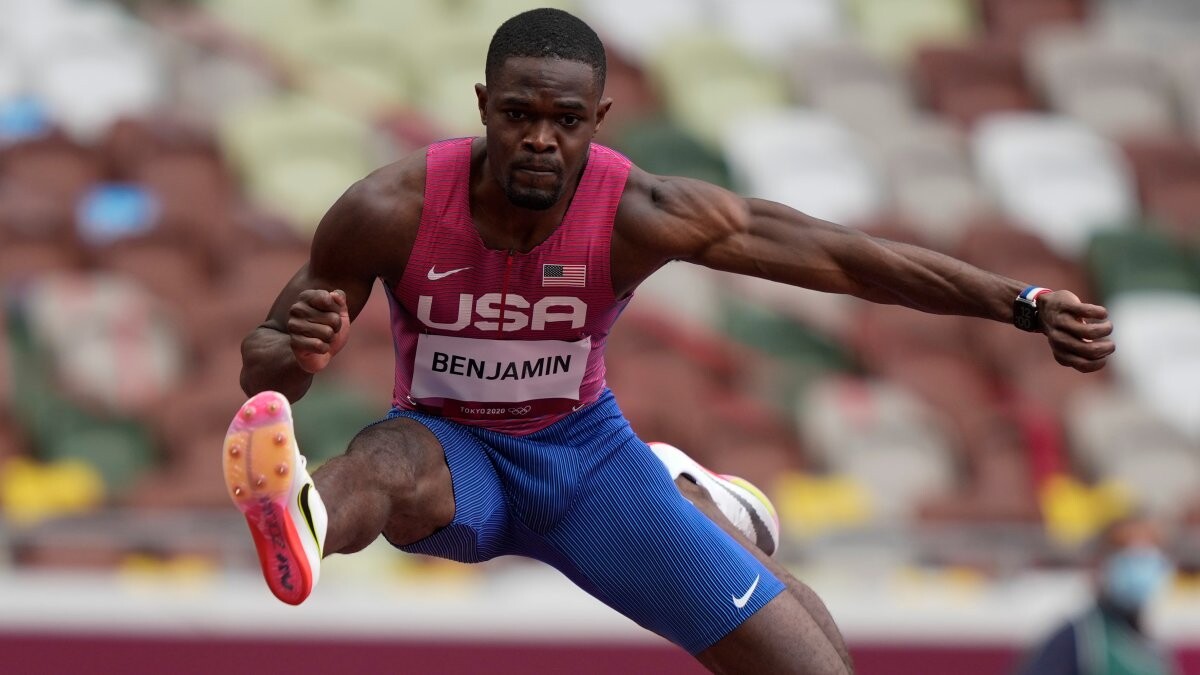
In May, the hurdler stirred controversy when he stated his intention not to wear a race bib on his uniform at the Olympics. (Race bibs are required to identify athletes as per World Athletics rules; clearly someone must have talked him out of it, since he was most definitely wearing race bibs at these Games; not wearing one would earn him a disqualification.)
Team USA had another standout night on the track, despite a disappointing loss to Team Canada in the men’s 4x100m relay. The American women redeemed the night by taking gold in the women’s 4x100m relay final.
by Anne Francis
Login to leave a comment

Paris 2024 Olympic Games
For this historic event, the City of Light is thinking big! Visitors will be able to watch events at top sporting venues in Paris and the Paris region, as well as at emblematic monuments in the capital visited by several millions of tourists each year. The promise of exceptional moments to experience in an exceptional setting! A great way to...
more...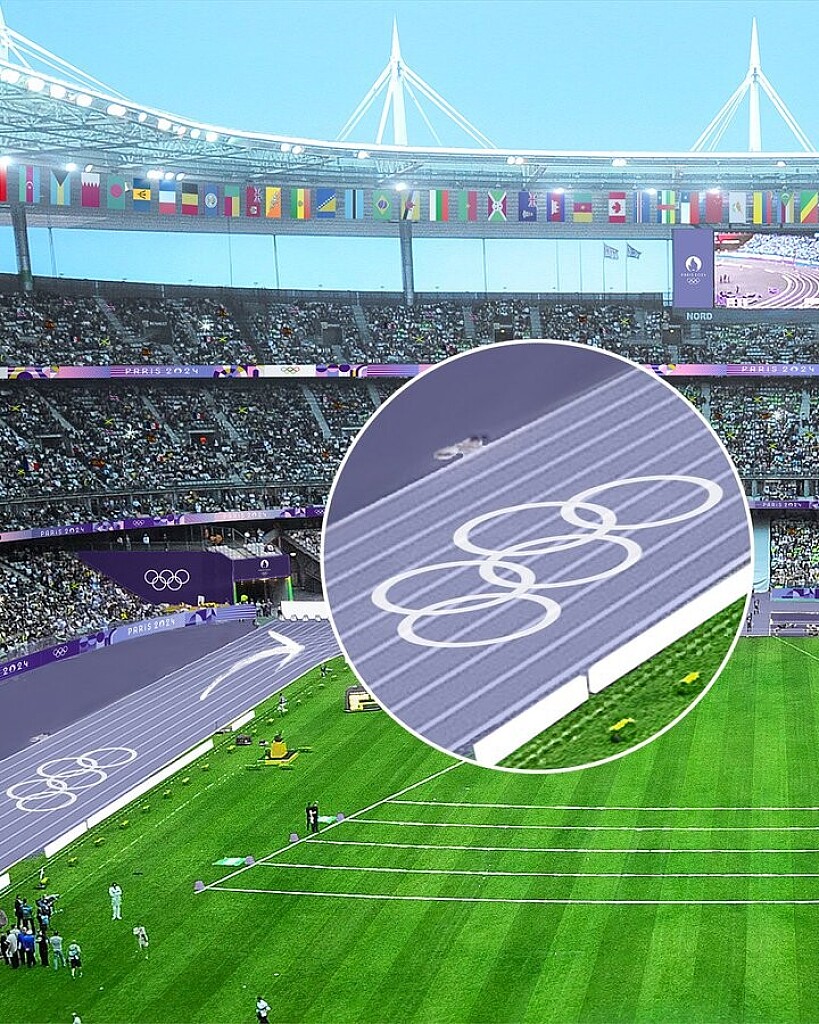
Paris Olympics to feature vibrant purple track for athletics events
A new look is coming to athletics at this summer’s Olympic Games in Paris. The track at the Stade de France will be a vibrant purple instead of the traditional terracotta color, which organizers hope will stand out to a global audience and produce record performances for the world’s best athletes.
Italian rubber manufacturer Mondo has begun the production of the 17,000-square-meter purple track, which will be packed and transported to the French capital in the coming weeks for the start of the Olympic Games in July. The Paris Olympic organizing committee chose the color to honor the Games being the first to achieve full gender parity on the field of play.
The track will be made of three colors: two shades of purple (one a lighter lavender, and the other a darker shade), and grey, which will be used on the outer side of the track. Mondo has supplied track and field surfaces for the last 10 Olympic Games, dating back to the 1984 Games in Los Angeles.
Following in the footsteps of the Olympic medals for 2024, the track will be made from nearly 50 per cent renewable or recycled materials, which is 30 per cent higher than for the London Olympics in 2012.

Mondo claims the purple track will be faster than the one used at the Tokyo 2020 Olympics, where three world records were broken, including the men’s and women’s 400m hurdles set by Norway’s Karsten Warholm and American Sydney McLaughlin-Levrone.
“We have changed the design of the cells in the lower layer of the track compared to what was used in Tokyo,” said Maurizio Stroppiana, vice president of Mondo’s sports division to Olympics.com. “This reduces the loss of energy for the athletes and returns it at the best possible point in their movement.”
The cost of the purple track is estimated to be around three million euros (CAD $4.5 million). Forty-six of the 48 athletics events will be held on this track (the marathon and the race walk are held on a road course). The race walks will be contested at Pont d’Iena, and the marathon events will begin at the Hôtel de Ville (city hall) and end at Les Invalides, with runners traversing many of the city’s most iconic sites and Olympic venues throughout the historic French revolution route.
by Marley Dickinson
Login to leave a comment
Paris 2024 Olympic Games
For this historic event, the City of Light is thinking big! Visitors will be able to watch events at top sporting venues in Paris and the Paris region, as well as at emblematic monuments in the capital visited by several millions of tourists each year. The promise of exceptional moments to experience in an exceptional setting! A great way to...
more...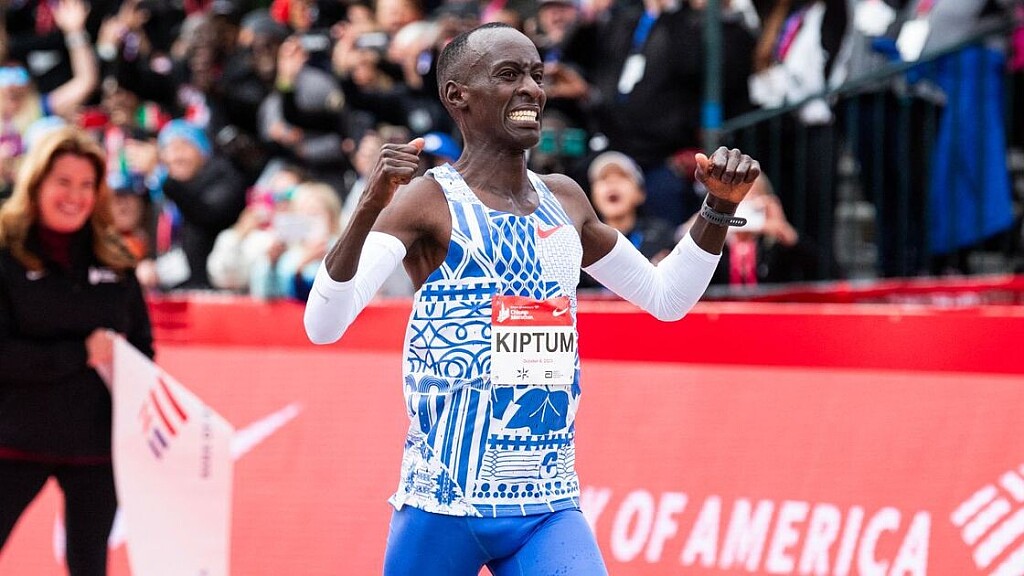
Kelvin Kiptum, Noah Lyles among 11 men shortlisted for World Athlete of the Year Award
World marathon record holder Kelvin Kiptum will battle it out for the Men’s World Athlete of the Year Award with 10 other athletes, including world 100m and 200m champion Noah Lyles
World marathon record holder Kelvin Kiptum has been shortlisted for the World Athletics’ Men’s World Athlete of the Year Award.
Kiptum, who ran an astonishing 2:00:35 at the Chicago Marathon on Sunday, is among 11 male athletes who had an outstanding 2023 season who have made the shortlist.
The 23-year-old has made the list after winning in Chicago and breaking Eliud Kipchoge’s world record by 34 seconds as well as claiming victory at the London Marathon in April, when he clocked 2:01:25, the second fastest time in history at the time.
Kiptum will battle it out for the prestigious award with American Noah Lyles, the world 100m and 200m champion who was undefeated in six finals at 200m.
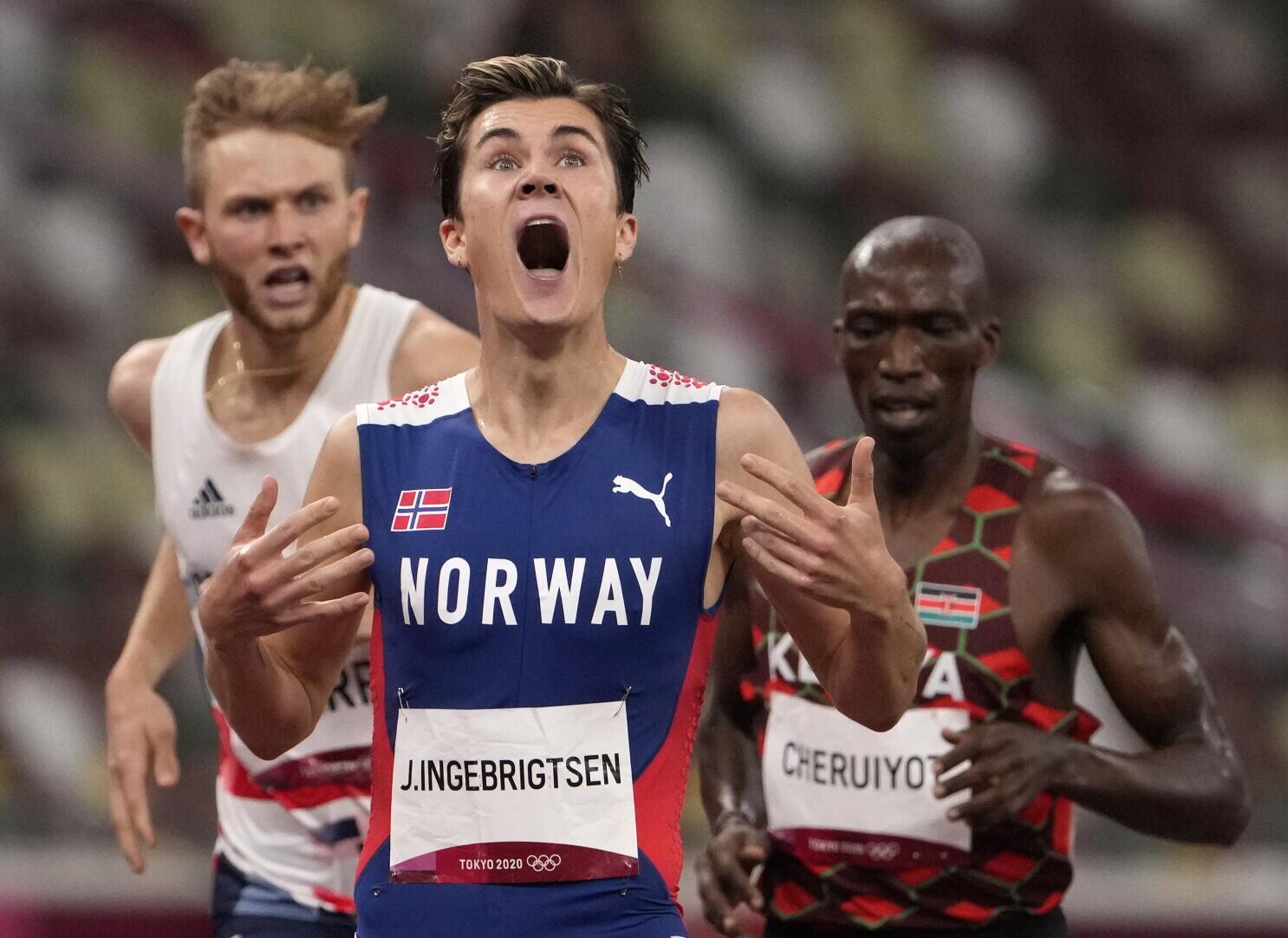
Norwegian Jakob Ingebrigtsen, the world 5,000m champion and 1,500m silver medalist, who is also the European record holder in 1,500m, mile and 3,000m, is also among those shortlisted as well as Morocco’s Soufiane El Bakkali, the world 3,000m steeplechase champion, who was undefeated in six finals in 2023.
World javelin and Asian champion Neeraj Chopra from India, American Ryan Crouser, the world shot put champion and record holder, American-born Swede Mondo Duplantis, who is the world pole vault champion, and Decathlete Pierce LePage from Canada are also on the list.
World walking race champion Alvaro Martin from Spain, Miltiadis Tentoglou, the world long jump champion, and 400m hurdles world champion Karsten Warholm complete the 11-man shortlist.
A three-way voting process will determine the finalist wit the World Athletics Council and the World Athletics Family casting their votes by email, while fans can vote online via the World Athletics social media platforms.
Individual graphics for each nominee will be posted on Facebook, X, Instagram and YouTube this week; a 'like' on Facebook, Instagram and YouTube or a retweet on X will count as one vote.
The World Athletics Council’s vote will count for 50 per cent of the result, while the World Athletics Family’s votes and the public votes will each count for 25 per cent of the final result.
Voting for the World Athletes of the Year will close on October 28. At the conclusion of the voting process, five women and five men finalists will be announced by World Athletics on 13-14 November. The winners will be revealed on World Athletics’ social media platforms on 11 December.
Kiptum will be seeking to join Kipchoge and David Rudisha as the Kenyan men to have won the prestigious award while multiple world champion Faith Kipyegon seeks to become the first woman from the country to be feted.
by Joel Omotto
Login to leave a comment

What Makes Training High-Quality—or Not?
All the digital training data in the world may not tell you whether your workout was any good
The next frontier in training science, currently being debated in publications like the International Journal of Sports Physiology and Performance, sounds like it was torn from the pages of Robert Pirsig’s 1974 road novel, Zen and the Art of Motorcycle Maintenance. Pirsig’s narrator is obsessed to the point of madness with the seemingly intractable question of how we know what is good. “Some things are better than others,” he proclaims, “that is, they have more quality.” That’s true of training, too, according to Norwegian sports scientist Thomas Haugen: some workouts are better than others, in ways that aren’t necessarily indicated by stats like pace, power, heart rate, and cadence.

Earlier this year, Haugen, a professor at Kristiania University College in Oslo, published a paper with colleagues attempting to transform this observation into a more concrete definition of training quality—and suggesting ways that athletes and coaches can improve it. It’s a riddle Haugen has been contemplating since the 1990s, when he was a sprinter and an assistant coach with legendary sprint guru Leif Olav Alnes, who currently coaches Karsten Warholm, the world record holder in the 400-meter hurdles. “One of the things I observed was that all other sprint groups in Norway tried to copy our training program, without achieving the same progress and success,” Haugen says. “That made me realize that the training program itself was of limited importance.”
What does it mean, then, when you complete a training session feeling that it was a great—or at least high-quality—workout? The easy answer is that you went faster, lifted heavier, or felt less effortful than you had in comparable workouts. But that’s a trap. Hammering your workouts at the wrong time can blow up a season and torpedo your competitive goals. When Australian researchers interviewed elite swimmers to understand how they viewed training quality, their answers were more nuanced. A common theme, in the words of one of the study’s participants, was “whether you’re hitting the times you’re supposed to be hitting”—that is, not necessarily going faster, but nailing the intended pace.
The swimmers also emphasized less quantifiable quality benchmarks like “feeling my stroke” and “feeling determined and driven.” On that basis, the researchers, led by Stephanie Shell of the Australian Institute of Sport, proposed a Subjective Training Quality scale that asks athletes to rate, from one to ten, their agreement with three statements: I met my physical training objectives in this session; I met my technical training objectives in this session; and I was mentally and emotionally engaged in this session. The STQ, Shell and her colleagues suggest, could be incorporated into training logs alongside conventional metrics like pace and subjective effort, offering a reminder of how well you’re doing at following your workout plan.
There’s a gap in the STQ, though, as Haugen and his colleagues point out. What if you do an amazing job of following your plan, but your plan is bad? Part of high-quality training is having workouts that are well chosen for a given athlete at a given time working toward a given goal. And even with a good plan, rigidly observing it doesn’t always make sense. “Based on how you felt today, was the easy long run slightly too fast?” Haugen asks. “Or, if you felt really good on the intervals, why didn’t you add two or three more to the session?”
In their paper, Haugen and his colleagues define training quality as “the degree of excellence related to how the training process or training sessions are executed to optimize adaptations and/or improve overall performance.” It’s hard to argue with so general a definition, but it’s also tricky to figure out how to make practical use of it. How do I assess whether this morning’s fartlek was very good, very bad, or somewhere in between for my overall performance in a race a few months from now?
Haugen’s practical advice focuses on three key windows. Before a workout, you should be clear about the purpose of the session; make sure you’re properly fueled, hydrated, and equipped; and get yourself in the right head space. During the workout, you need to monitor how well you’re adhering to your goals, whether with a smartwatch or by tracking subjective effort; make adjustments based on how you’re feeling; and stay focused, fueled, and hydrated. After the workout, you need to recover well and—perhaps most crucially—debrief and assess how the workout went in relation to your goals. “The best practitioners have established a culture of continuous learning,” Haugen and his coauthors write.
The great cliché of the Strava age, borrowed from corporate management gurus, is that what gets measured gets managed. But even the business world knows that isn’t the full story. Management writer Simon Caulkin suggests a qualification: “even when it’s pointless to measure and manage it.” Much of the fire hose of training data that our wearables collect could be said to fall into this category. But the broadest definitions of training quality land at the opposite end of the spectrum, so vague and generic in their guidance that they risk being ignored. To manage training quality, or at least keep it on our radar, maybe we do need something to measure.
A useful option is the STQ; a simpler one is the intention-execution gap: How close did you come to doing what you meant to do in the workout? You could quantify this with average pace, power, or heart rate. But the easiest and most generalizable option is your subjective perception of effort. How hard, on a ten-point scale, is the workout supposed to be? And how hard did you actually push? This approach works whether you’re in the gym or on the bike, out for hours or crushing short intervals. It adjusts for whether you’re feeling better or worse than expected. It gives you a quick and easily understandable metric for whether you pushed yourself to the degree your training plan called for. And if you start noticing a pattern of big misses, it tells you that you’ve got a problem.
Haugen recognizes the benefit of tracking some quantifiable quality metrics. But that is just part of the story, he says. The core of training quality is, well, qualitative. “This involves a strong sense of ownership of the training process, motivation, dedication, determination, and training intelligence,” he says. These are the characteristics that athletes and coaches spend a career or perhaps a lifetime pursuing, and they don’t lend themselves to checklists and shortcuts. But they matter. Training quantity is nothing without training quality—and for now, the best way to improve quality might be to keep arguing about what it means. After all, as Robert Pirsig pointed out, “If no one knows what it is, then for all practical purposes it doesn’t exist.”
by Outside Online
Login to leave a comment
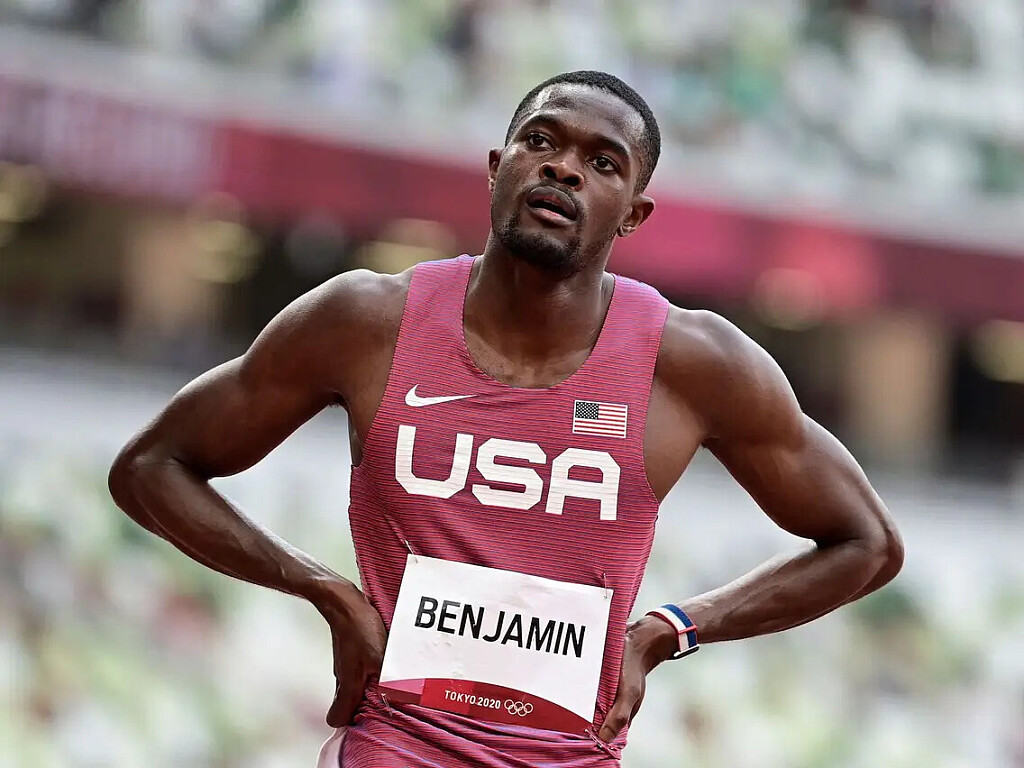
Rai Benjamin eying world record performance at World Athletics Championships
USA’s 400 meters hurdler, Rai Benjamin, has his eyes set on the world record heading into next month’s World Athletics Championships from August 19-27 in Budapest, Hungary.
The record, 45.94 seconds, is currently held by Norwegian sprinter, Karsten Warholm.
The son of former West Indies and Antigua and Barbuda fast bowler, Winston Benjamin, Rai stopped short of revealing what targets he has set for the championships but said he believes it will take a record-breaking performance to beat Warholm in Budapest.
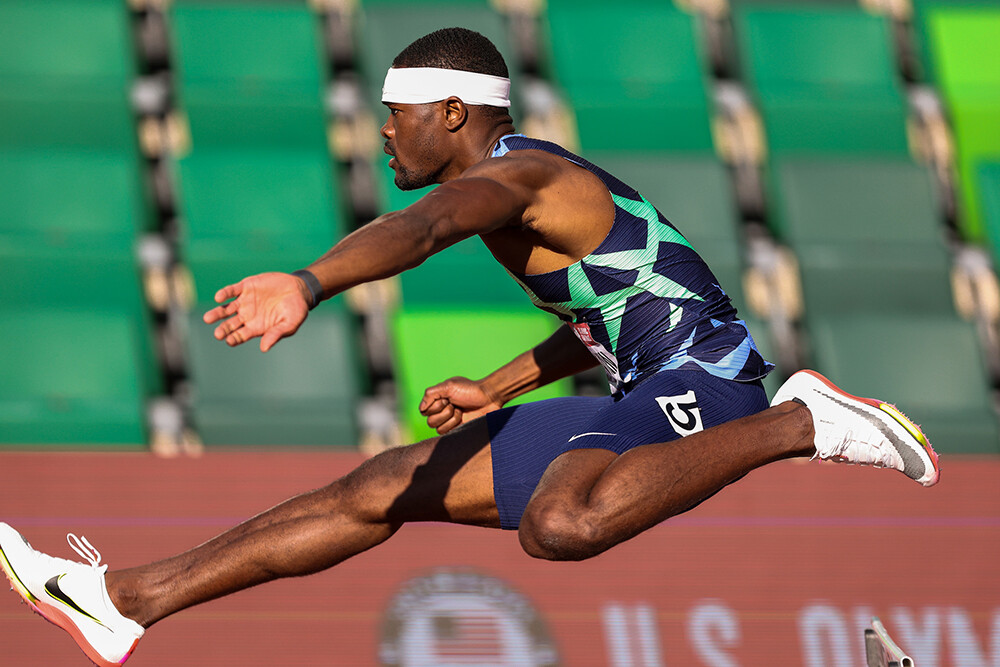
“Am not going to put it out there but I am looking for a sub world record mark because that’s what it’s going to take to win in all honesty because Warholm is in shape and I am in shape so it’s just about getting sharp now these next couple of days and fine-tuning a couple of things to get ready to go and do that,” he said.
Benjamin, who represented Antigua and Barbuda as a youth athlete, won a fourth straight US title in his signature event on July 9 at the 2023 US Track and Field Championships in Eugene, Oregon. In the final, he sped to his season’s best, a 46.62, to take the crown.
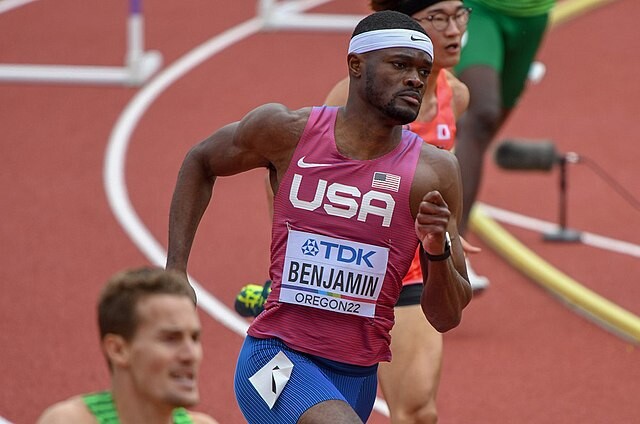
The athlete, who was speaking on the Good Morning Jojo sports show at the time, however revealed that he had struggled with an injury leading into the US event.
“I’ve been battling with a quad injury for the past three or four months so it’s been an interesting one because I was in great shape coming into the year where I opened up my season very well in the 400 and just preparing to do some big things this year.
“I had a quad injury after the first meet and then I had to go to Germany to get that [sorted]. After that we had USA’s [US trials] and I ran pretty fast there, so now it’s just about maintaining feeling good and training well,” he said.
Hoping to break the world record and become an Olympic champion in the near future, Benjamin said one of his goals is to fulfill his father’s dream of seeing him compete in the 200 meters.
“This was my initial plan, break the world record, win at the Olympics and then run the 200 the following World Championships but unfortunately nothing ever goes to plan.
“I am still trying to break the world record and then after I get done with that I’ll run the 200 and then I’ll run the 400 and go for that world record. I think I’ll run the 400 hurdles the last Olympics or the last two Olympic cycles,” he said.
In August 2021, Warholm broke the 400 meters hurdles record with a time of 45.94 seconds with Benjamin clocking 46.17 for the silver medal.
by Neto Baptiste
Login to leave a comment

World Athletics Championships Budapest 23
From August 19-27, 2023, Budapest will host the world's third largest sporting event, the World Athletics Championships. It is the largest sporting event in the history of Hungary, attended by athletes from more than 200 countries, whose news will reach more than one billion people. Athletics is the foundation of all sports. It represents strength, speed, dexterity and endurance, the...
more...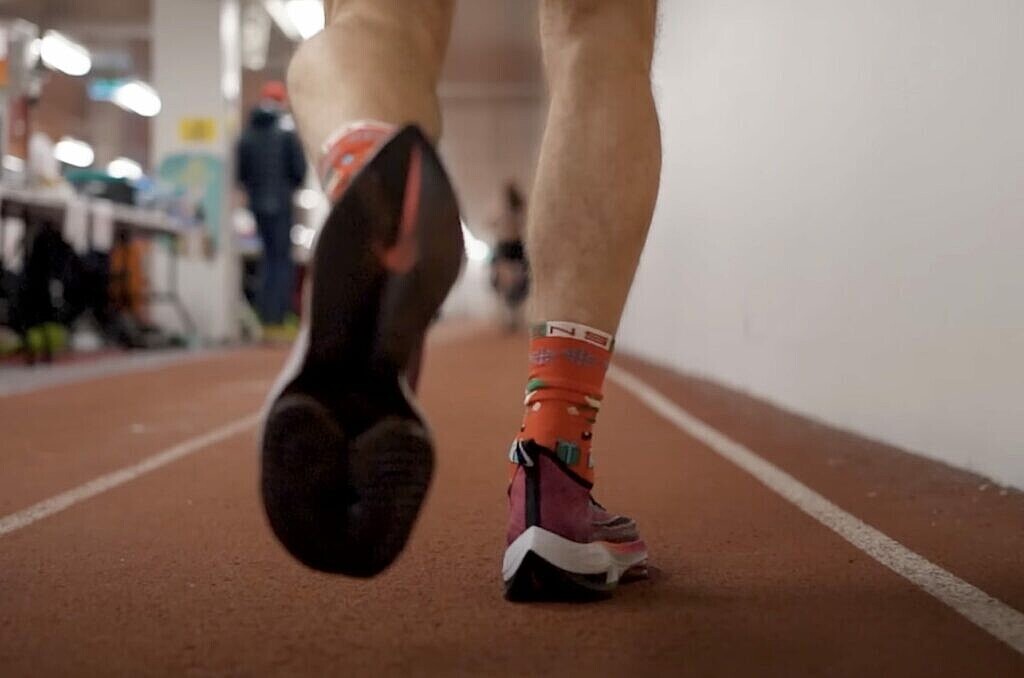
Norwegian athletes spend 24 hours running laps in a basement
If you’ve ever read about a race or endurance event and asked yourself “why?” this short film is for you. “I love running and can truly understand why people want to challenge themselves both mentally and physically,” says endurance athlete and filmmaker Göran Winblad. Despite that, the Bislett 24-hour Indoor Challenge, held in the basement of the Bislett stadium in Oslo, Norway, left Winblad baffled.
Winblad heads to the event to figure out what motivates the athletes “running in circles with nothing but cement walls to look at.” Arriving at the stadium after the 20th hour, Winblad says he doesn’t know what to expect or if anyone will even be functioning well enough to speak to him.
Watch this short film for the remarkable humans Winblad talks to and the insight they share, but also for Winblad’s stunning filmmaking skills–who would have thought a race in a basement could be beautiful? Frank Løke, who completes 217 km by the end of the event, calls it the “toughest thing he does all year.” But, he adds, it helps him train to summit Everest and K2. “How can you train for the toughest mountain in the world? You have to do some crazy sh*t,” Løke says.
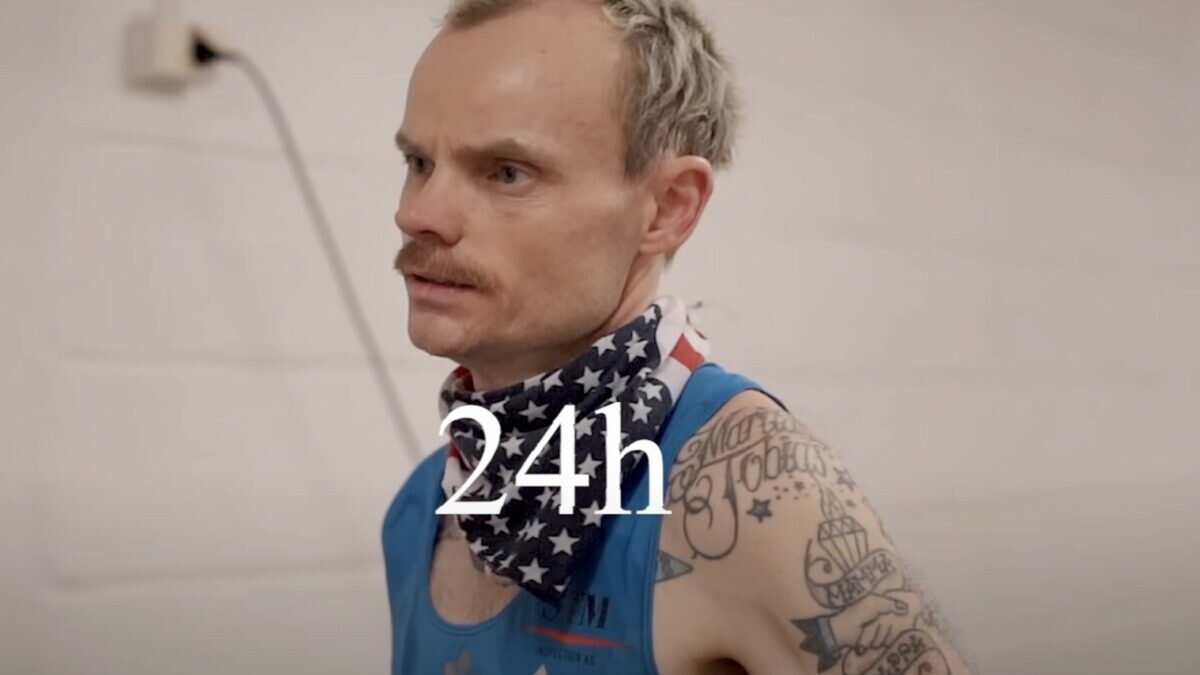
One of Norway’s best ultrarunners, Bjørn Tore Kronen Tarenger (who leads the event with 260 km) calls the monotony and challenge “fun.” (To be fair, he looks like he’s out for a 5K jog in the park.) Winblad asks Tarneger what, exactly, makes the event fun, and Tarenger’s response is what one might expect from someone who enjoys running in circles for 24 hours: “I feel the pain.”
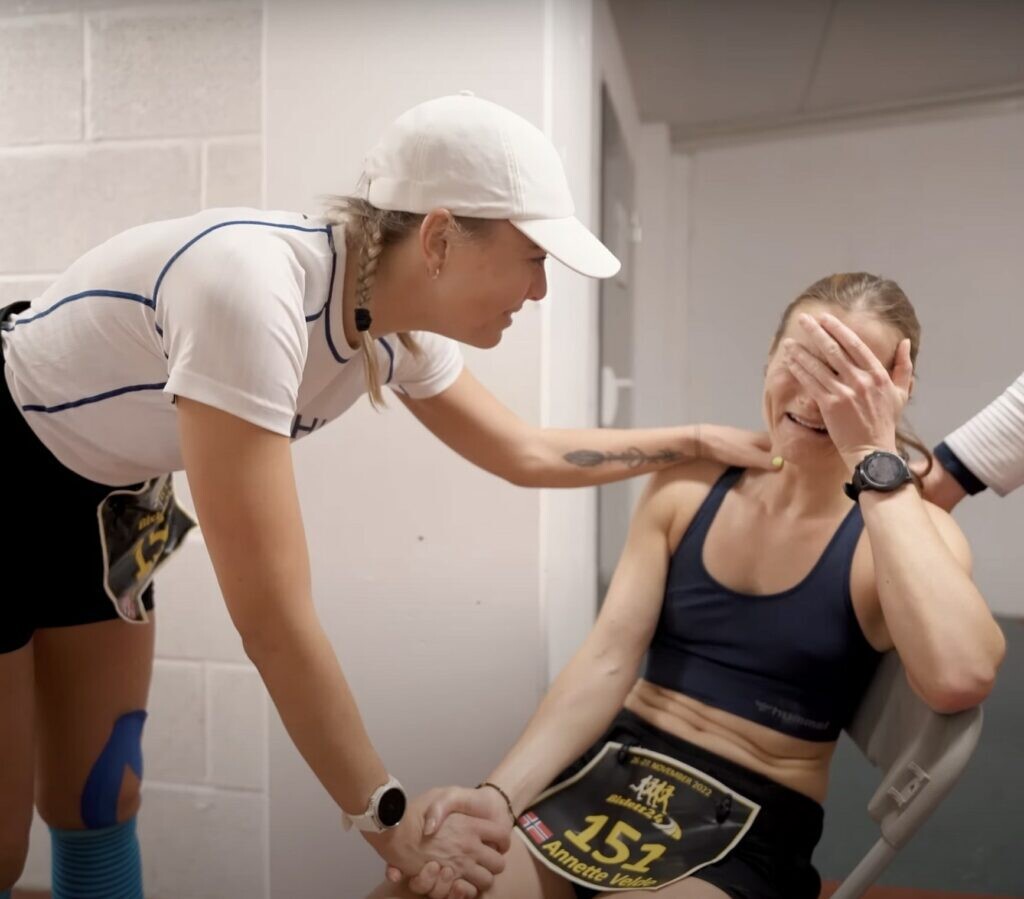
One runner, whose feet are so sore by the time Winblad speaks to her that she’s forced to run “like a penguin,” says she thinks it’s “something you have to do once in a lifetime.” She quickly adds that it’s her second time. Winblad notes that many of the runners say they’ll never do the event again when he speaks to them, yet keep returning year after year–the race sells out in moments.
The Bislett Stadium hosts many renowned track and field events, and Karsten Warholm famously set the world 400m hurdles record there, the drive behind which Wimblad can understand: “fame, money, being the best in the world.”
by Keeley Milne
Login to leave a comment
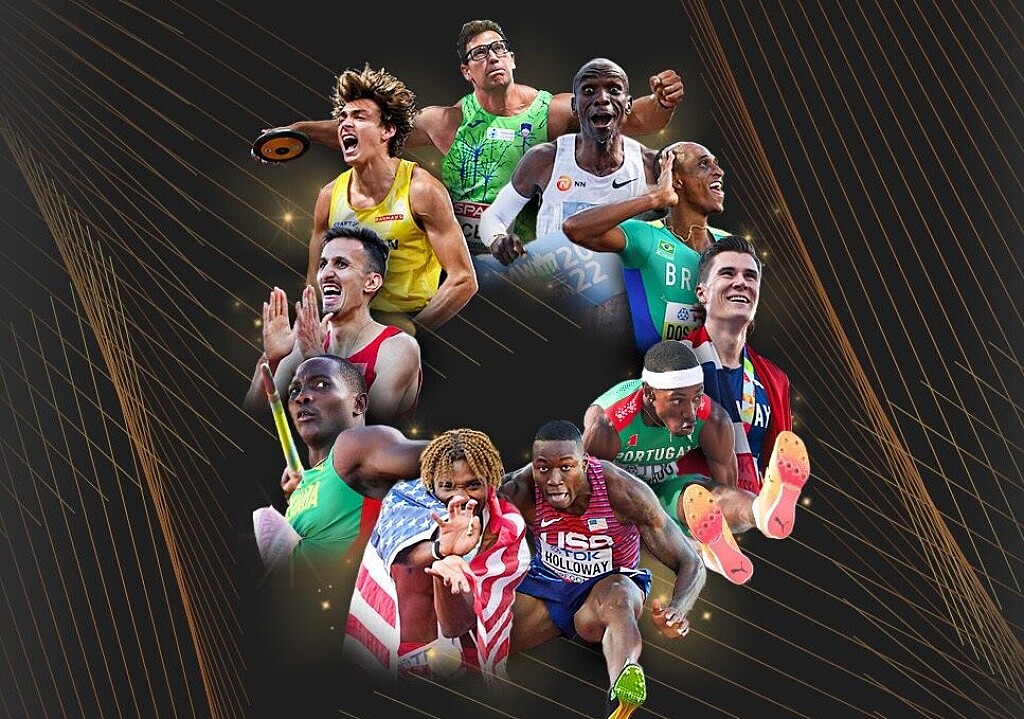
Eliud Kipchoge battles nine world champs for Athlete of the Year Award
Two-time Olympic marathon champion Eliud Kipchoge will battle nine world champions for the men's 2022 World Athlete of the Year Award. The 37-year-old Kipchoge, who is fresh from breaking his own marathon world record, won the 2018 and 2019 awards but also made the final list for the 2020 and 2021 awards.
The winner of the prestigious award in world athletics will be revealed on World Athletics’ social media platforms in early December.
The announcement on Thursday marked the opening of the voting process for the 2022 World Athletes of the Year ahead of the 2022 World Athletics Awards in December.
Olympics 400m hurdles champion Karsten Warholm last year became the first Norwegian to win the Male Athlete of the Year Award, beating four other finalists who included Kipchoge and Olympic 5,000m champion Joshua Cheptegei of Uganda for the award.
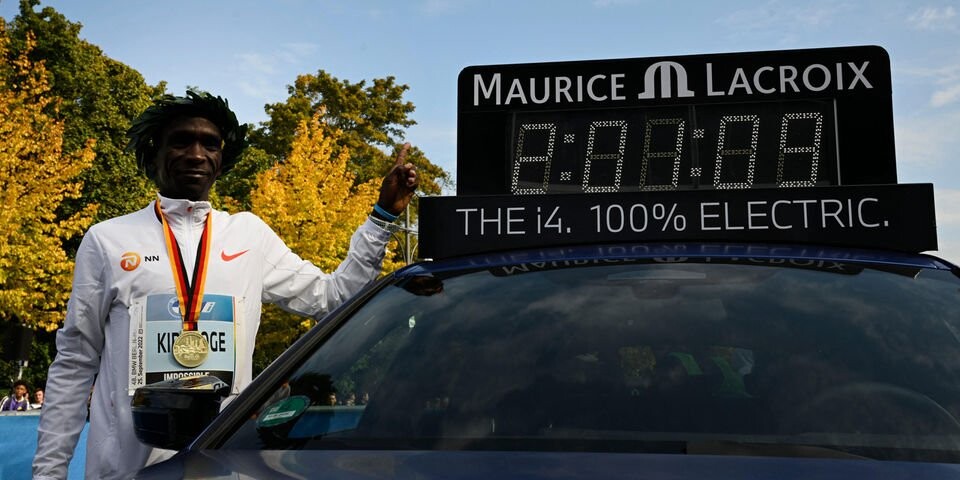
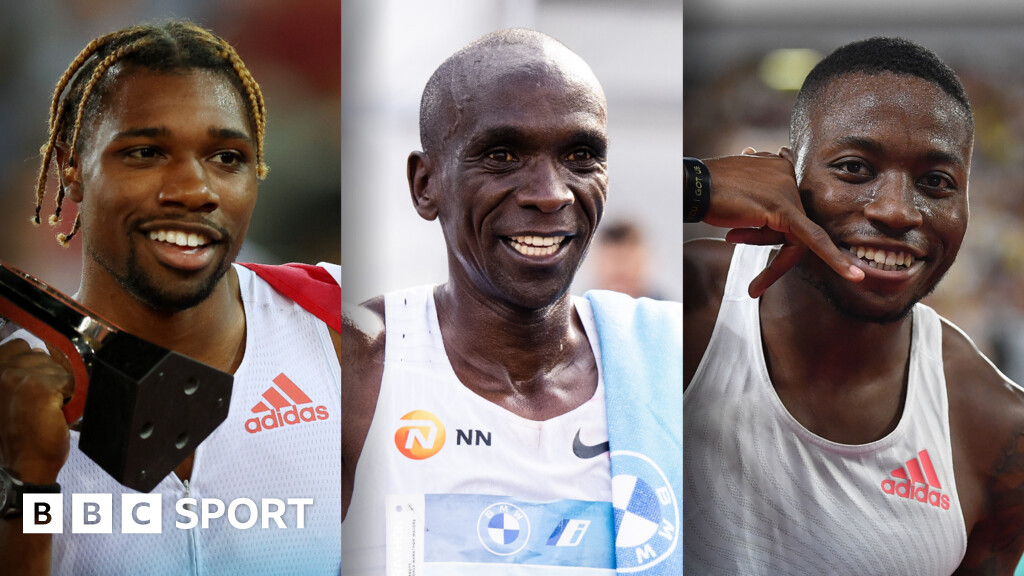
Kipchoge will face world champions Ceh Kristjan (discus) from Slovakia, Brazilian Alison Dos Santos (400m hurdles), the 2020 winner, Swede Mondo Duplantis (pole vault), Moroccan Soufiane El Bakkali (3,000m steeplechase) and American Grant Holloway (110m hurdles).
Others are Norwegian Jakob Ingerbrigtsen (5,000m), Noah Lyles (200m) from United States, Grenada’s Anderson Peters (javelin) and Pedro Pichardo (triple jump) from Portugal.
The athletes were selected by an international panel of athletics experts, comprising representatives from all six continental areas of World Athletics.
“It has been another memorable year for the sport and the nominations reflect some of the standout performances achieved at the World Athletics Championships in Oregon, World Athletics Indoor Championships in Belgrade, one-day meeting circuits and other events around the world,” said a statement from World Athletics.
Kipchoge recaptured the Berlin Marathon title, smashing his own world record by 30 seconds on September 25 in the German capital.
The 2016 and 2020 Olympic marathon champion clocked 2:01:09 to win, beating his previous world record time of 2:01:39 set when winning in Berlin in 2018.
Kipchoge had on March 6 this year won the Tokyo Marathon in a course record time of 2:02:40, beating the newly crowned London Marathon champion Amos Kipruto to second place in 2:03:13.
Kenya's Olympic and world 1,500m champion Faith Chepng'etich was on Wednesday named among the 10 nominees for the female 2022 World Athlete of the Year award.
Kipchoge is the only other Kenyan male to win the award besides 800m world record holder David Rudisha, who claimed it in 2010.
No Kenyan woman has won the award.
A three-way voting process will determine the finalists.
The voting process closes on October 31.
The World Athletics Council and the World Athletics Family will cast their votes by email, while fans can vote online via the World Athletics social media platforms.
Individual graphics for each nominee will be posted on Facebook, Twitter, Instagram and YouTube this week; a 'like' on Facebook, Instagram and YouTube or a retweet on Twitter will count as one vote.
The World Athletics Council’s vote will count for 50 percent of the result, while the World Athletics Family’s votes and the public votes will each count for 25 per cent of the final result.
Voting for the World Athletes of the Year closes at midnight on October 31. At the conclusion of the voting process, five women and five men finalists will be announced by World Athletics.
Nominees
Kristjan Ceh (Slovakia)
- World discus champion
- Diamond League discus champion, throwing a national record 71.27m on the circuit in Birmingham
- European discus silver medalist
Alison dos Santos (Brazil)
- World 400m hurdles champion
- Diamond League 400m hurdles champion
- Ran a world-leading South American record of 46.29
Mondo Duplantis (Sweden)
- World pole vault champion indoors and outdoors
- Diamond League and European pole vault champion
- Improved his world record to 6.19m and 6.20m indoors, and then 6.21m outdoors
Soufiane El Bakkali (Morocco)
- World 3000m steeplechase champion
- Diamond League 3000m steeplechase champion
- Unbeaten in 2022, running a world-leading 7:58.28 in Rabat
Grant Holloway (USA)
- World 110m hurdles champion
- World indoor 60m hurdles champion
- Diamond League 110m hurdles champion
Jakob Ingebrigtsen (Norway)
- World 5000m champion, world 1500m silver medalist indoors and outdoors
- European 1500m and 5000m champion
- Diamond League 1500m champion in a world-leading 3:29.02
Eliud Kipchoge, (Kenya)
- Improved his world marathon record to 2:01:09
- Berlin Marathon champion
- Tokyo Marathon champion
Noah Lyles (USA)
- World 200m champion
- Diamond League 200m champion
- Ran a world-leading national record of 19.31 to move to third on the world all-time list
Anderson Peters (Grenada)
- World javelin champion
- Commonwealth javelin silver medalist
- Threw a world-leading NACAC record of 93.07m, moving to fifth on the world all-time list
Pedro Pichardo (Portugal)
- World triple jump champion with a world-leading leap of 17.95m
- World indoor triple jump silver medalist
- European triple jump champion.
by Ayumba Ayodi
Login to leave a comment
Olympic champions Ingebrigtsen and Warholm to defend European titles in Munich
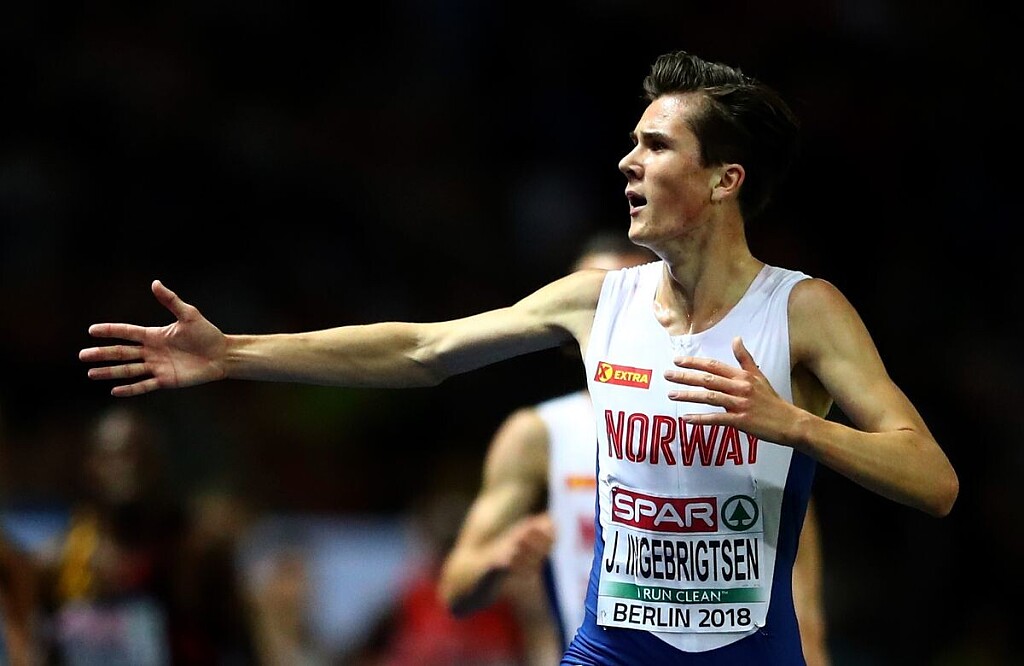
Jakob Ingebrigtsen and Karsten Warholm will spearhead Norway’s team for the Munich 2022 European Athletics Championships from 15-21 August, part of the wider multi-sport European Championships in the Bavarian capital from 11-21 August.
Ingebrigtsen famously broke through at the 2018 European Athletics Championships in Berlin where he won an unprecedented 1500m and 5000m double on back-to-back nights at the age of 17.
Now 21, Ingebrigtsen is the reigning Olympic 1500m champion and arrives fresh from winning the 5000m title at the World Athletics Championships in Oregon. He also holds the European records in both events.
Ingebrigtsen looks set to defend both his 1500m and 5000m titles in Munich and the timetable is amenable to such a double. The 5000m final is scheduled for 16 August with the 1500m final due to take place two nights later on 18 August.
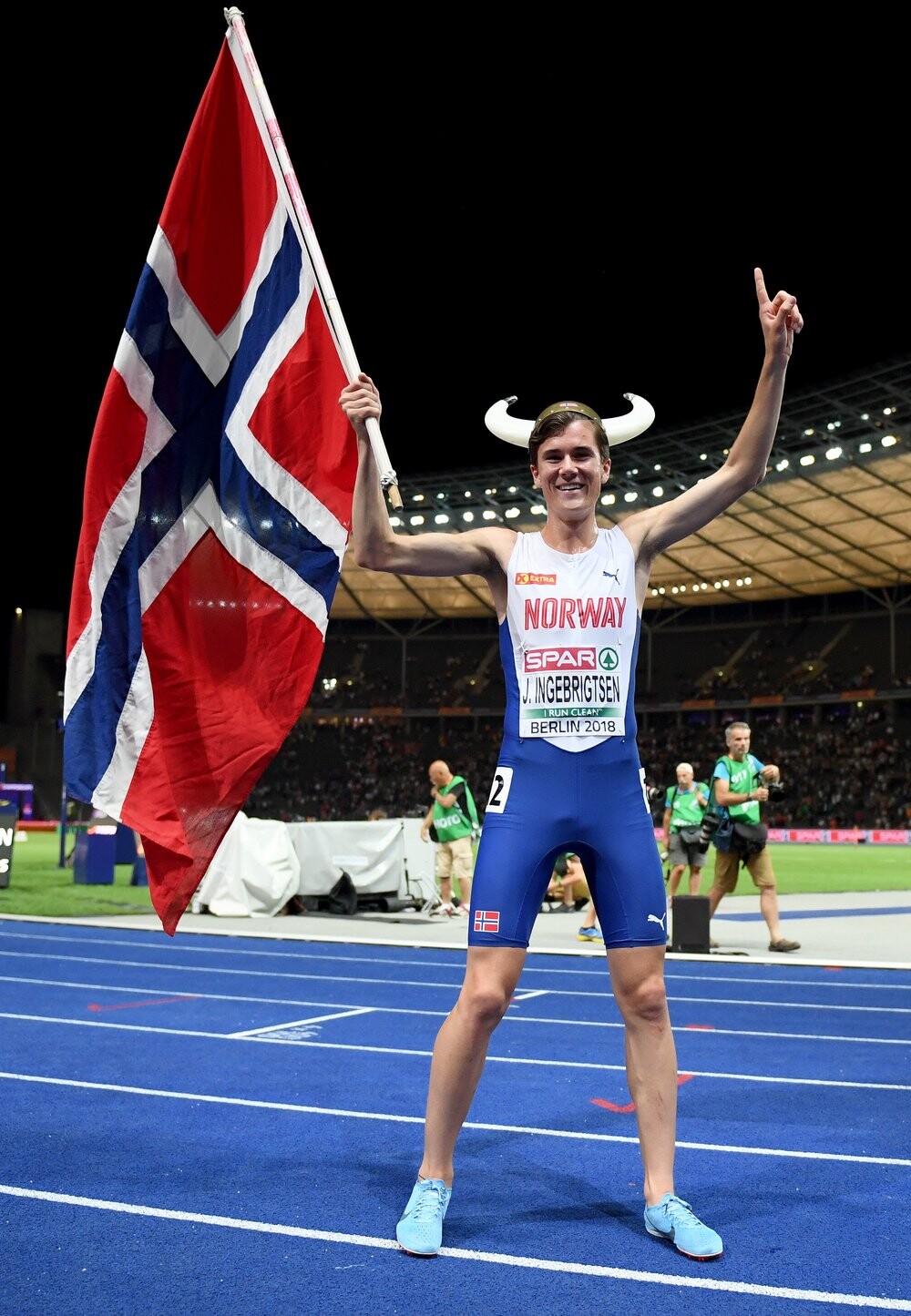
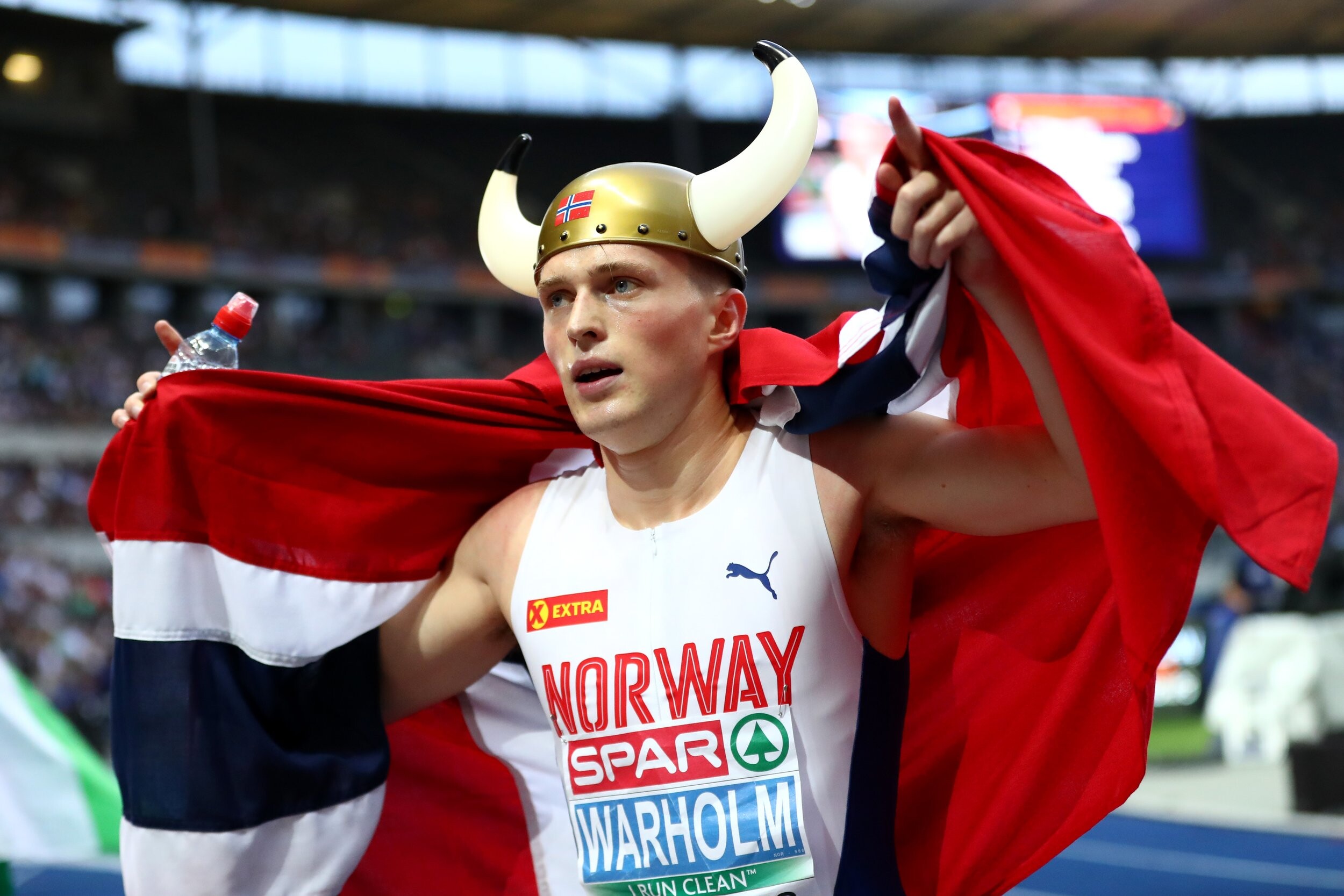
Warholm will be seeking to become the first athlete since the great Harald Schmid in 1986 to win back-to-back European titles in the 400m hurdles.
The world record-holder’s season has been disrupted by a thigh injury which he sustained on his season’s opener in the Rabat Diamond League but Warholm has battled back to fitness and put up a staunch defence of his world title in Oregon where he finished seventh.
The Norwegian team also features reigning Olympic hammer silver medallist Eivind Henriksen and European 3000m steeplechase bronze medallist Karoline Bjerkeli Grøvdal who has registered for the 1500m, 5000m and 10,000m.
There will be high expectations in both pole vault competitions as well. Brothers Sondre and Simen Guttormsen form a strong triumvirate in the men's pole vault competition alongside Pal Haugen Lillefosse while Lene Retzius will be a medal contender in the women's pole vault having improved the Norwegian record to 4.70m this season.
Norway won three gold medals at the 2018 European Athletics Championships in Berlin and finished eighth overall on the medal table.
Login to leave a comment

European Athletics Champioships
The27thEuropean Athletics Championshipswill be held from 10 to 16 August 2026 at theAlexander StadiuminBirmingham, United Kingdom.[1] This is the first time that a British city will have staged the European Athletics Championships although Birmingham has hosted many high-profile events, including the2007 European Athletics Indoor Championships, the2003and2018 IAAF World Indoor Championshipsand the2022 Commonwealth Games. Alexander Stadium was renovated between 2019 and...
more...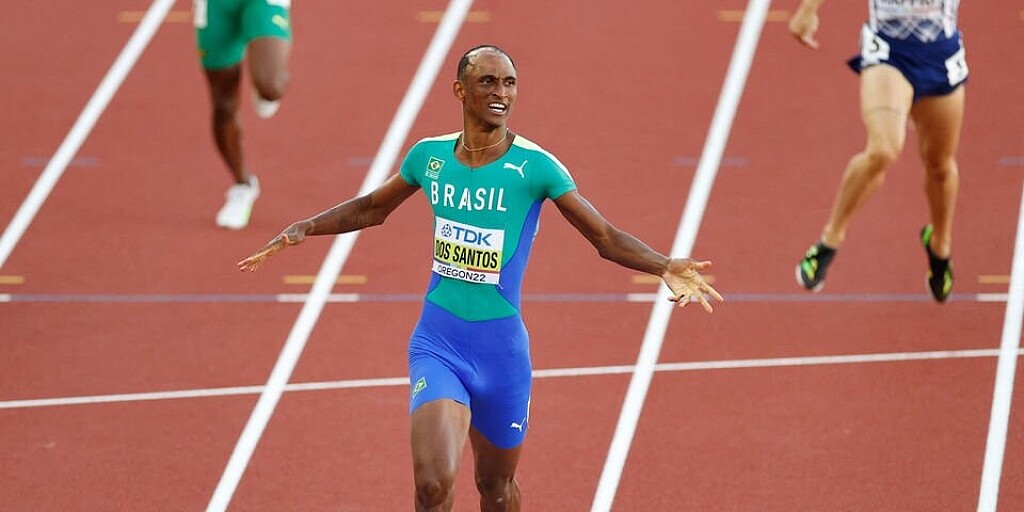
Brazil's Dos Santos wins world 400m hurdles as Warholm wilts
Brazil's Alison Dos Santos ran the third fastest time of all time to win the world 400m hurdles on Tuesday as Norwegian prodigy Karsten Warholm wilted at Hayward Field.
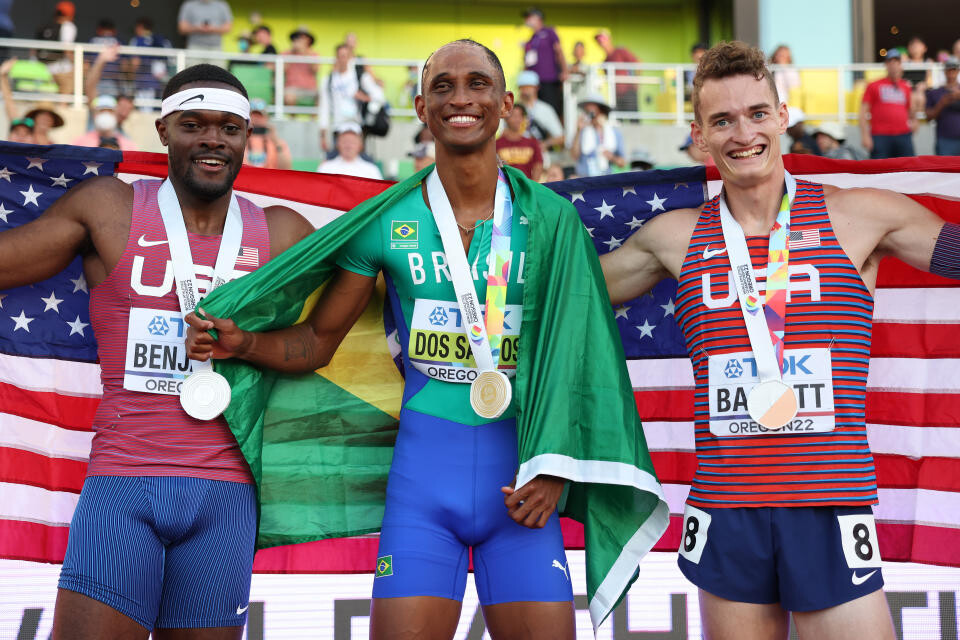
Dos Santos clocked a championship record of 46.29 seconds, finishing ahead of Americans Rai Benjamin and Trevor Bassitt, who finished in 46.89 and 47.39sec respectively.
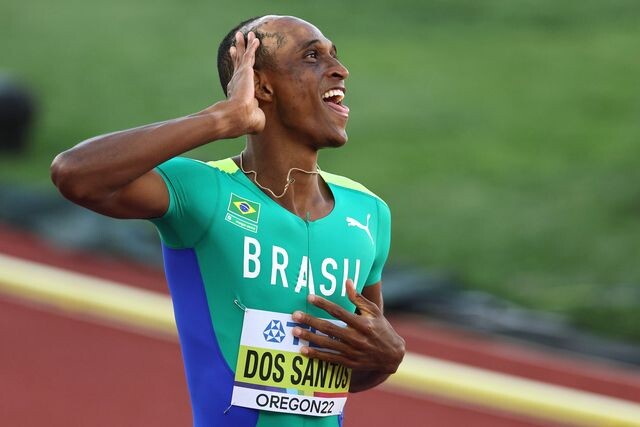
Olympic champion and world record holder Warholm led coming into the home straight but seized up badly and eventually came in seventh (48.42).
Warholm last lost a 400m hurdles race in September 2018 in Ostrava, Czech Republic.
Since then, he had notched up a winning streak of 18 races and another four qualifying races in the 2019 world championships and 2021 Tokyo Olympics.
Warholm laid down a performance that is widely considered one of the greatest Olympic track performances of all time when he smashed the 29-year-old world record to win the 400m hurdles at the Tokyo Games in a time of 45.94sec.
But the 26-year-old pulled up injured at the Diamond League meet in Rabat in early June with a "muscle fiber tear" in a hamstring and although insisting he was at 100% going into the race, he missed his usual gas over the final 80 meters.
Login to leave a comment

World Athletics Championships Budapest23
Budapest is a true capital of sports, which is one of the reasons why the World Athletics Championships Budapest 2023 is in the right place here. Here are some of the most important world athletics events and venues where we have witnessed moments of sporting history. Throughout the 125-year history of Hungarian athletics, the country and Budapest have hosted numerous...
more...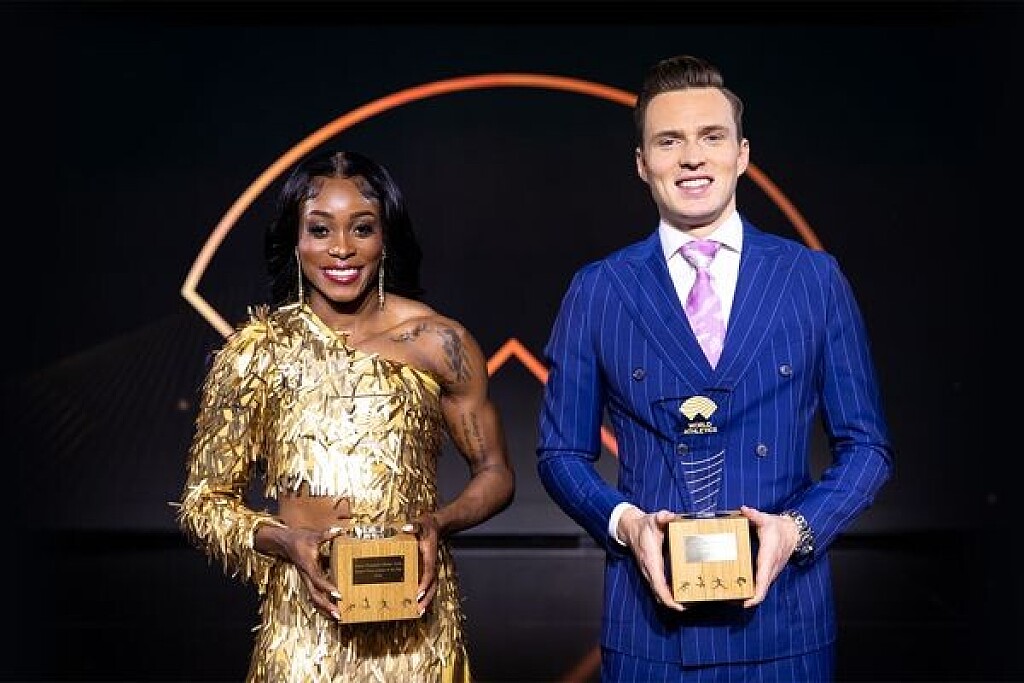
Olympic champs Elaine Thompson-Herah of Jamaica and Karsten Warholm of Norway have been named the World Athletes of the Year at the World Athletics Awards 2021
Elaine Thompson-Herah of Jamaica and Karsten Warholm of Norway have been named the World Athletes of the Year at the World Athletics Awards 2021, a ceremony held virtually on Wednesday (1).
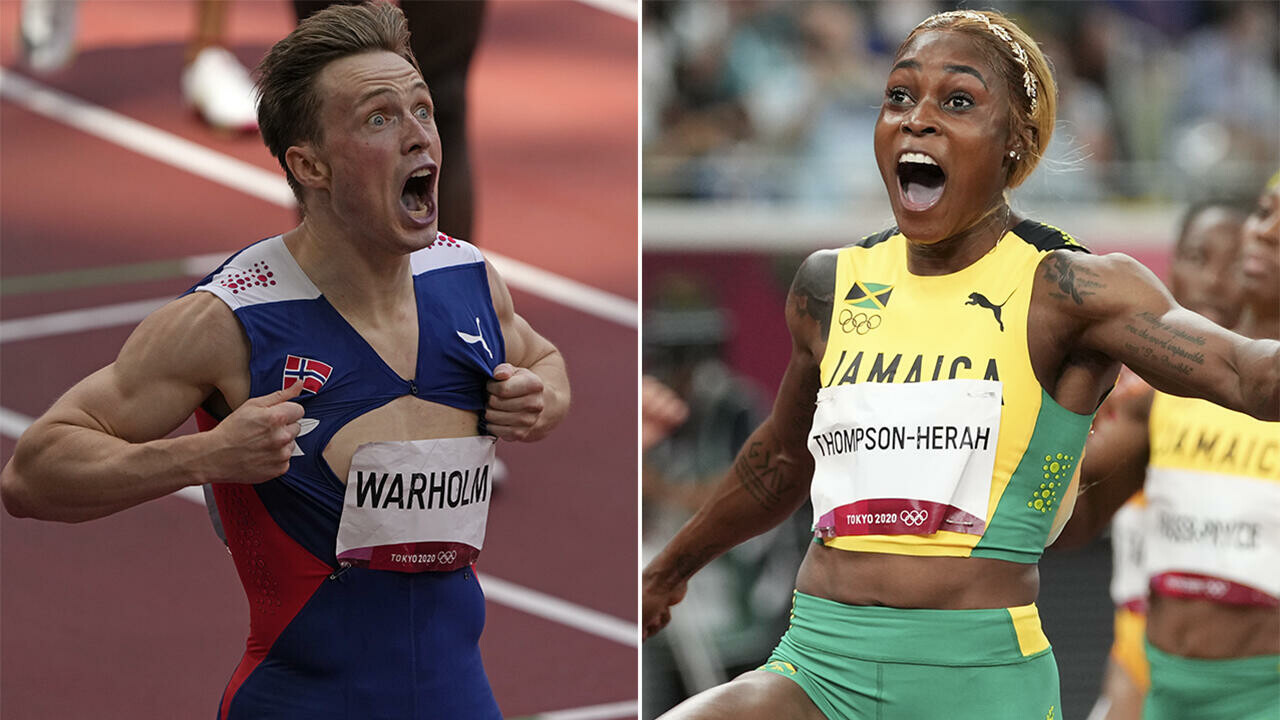
Thompson-Herah produced one of the finest sprint seasons in history this year, retaining her Olympic 100m and 200m titles in Tokyo and adding a third gold medal in the 4x100m relay. On top of her Olympic triple, she also clocked world-leading times of 10.54 and 21.53 over 100m and 200m respectively, moving to second on the world all-time lists and coming within touching distance of the long-standing world records.
“I just take it year by year,” said Thompson-Herah. “I went very close to the world record so you know, anything is possible. No spikes hanging up any time soon!
“The World Championships in Oregon is most definitely my next big target,” she added. “It is close to home, I hope friends and family can come out and watch. I hope I get some crowd as well. That couldn’t happen in Tokyo but hopefully in Eugene I can get my friends and family to come and cheer me on.”

Warholm uncorked one of the most remarkable performances in athletics history when he stormed to gold in the 400m hurdles at the Tokyo Olympics. Having already broken the world record with 46.70 in Oslo in the lead-up to the Games, Warholm exceeded all expectations in the Japanese capital to claim gold in a stunning world record of 45.94. In a race of incredible depth, the top three athletes finished inside the pre-2021 world record.
“I’m so happy for this,” said Warholm. “First when I saw the time (in Tokyo), I was like, ‘This must be a mistake!’ Because I didn’t see that one coming. And I didn’t see the victory coming before crossing the finish line.
“It was a very intense race, I knew the American and the Brazilian and all the other guys were really chasing me. I always go out hard and I never know what is going on behind me. I was just fighting all the way to the finish line. When I realised 45.94 was the reality, I was thinking: ‘This is not too bad. I’ll take it!’"
World Athletics President Sebastian Coe congratulated all of tonight’s winners and finalists on their extraordinary achievements this year.
"We have this year celebrated some jaw-dropping performances in Tokyo, at the World Athletics U20 Championships in Nairobi and through our one-day meeting circuits – the Wanda Diamond League and the Continental Tour. So we’re delighted to recognise some of our stars at tonight’s awards.
"As a sport, we are in an incredibly strong position. 2021 has been an excellent year. We cemented our position as the number 1 Olympic sport coming out of Tokyo, we have the most God given talented athletes on the planet and our sport is the most accessible of all sports. Thank you to all our athletes around the world. I am looking forward to watching what you can all do in 2022."
The other award winners were:
Female Rising Star
Athing Mu
The US teenager was undefeated at 800m all year, winning Olympic gold at the distance following a long but successful collegiate season. She broke the senior US 800m record with her triumph in Tokyo and then improved it to 1:55.04 just a few weeks later. She also excelled at 400m, clocking a North American U20 record of 49.57 for the distance.
“It means the world to know that my support goes beyond friends and families and extends worldwide,” said Mu. “This award shows all young girls that your dreams can, indeed, come true."
Male Rising Star
Erriyon Knighton
Throughout 2021 the 17-year-old took down several marks that had belonged to sprint legend Usain Bolt. Knighton first set world U18 bests of 20.11 and 20.04 over 200m, but his rapid rise continued and he broke Bolt’s world U20 record for the distance with 19.88 and 19.84. He went on to finish fourth in the Olympic final with 19.93.
“I’m really thankful for this award,” said Knighton. “One of my most memorable moments of this year was making it to the Olympic final in Tokyo and finishing fourth at the age of 17.”
Member Federations Award
Federacion Costarricense de Atletismo (Costa Rica)
In recognition for their outstanding training, competition and development programme roll-out over the past 12 months, for their consultative work on the World Athletics Kids’ Athletics programme, and for successfully staging a host of international events over the past year.
Inspiration Award
Mutaz Barshim and Gianmarco Tamberi
The shared high jump victory between Qatar’s Mutaz Barshim and Italy’s Gianmarco Tamberi became one of the biggest talking points of the Olympic Games – not only for everything it represented in their own individual careers, having both battled serious injuries since the last Games, but mainly for the act of respect and sportsmanship between two friends.
“It is just crazy if I think about this story,” said Tamberi. “Thank you very much for this trophy.
“I now call Mutaz like five times a week because I need to speak with him. I feel that now we are not just friends, we are really like blood brothers.”
Barshim added: “I hope to inspire more people to love our sport and maybe share a gold one day!”
President’s Award
Peter Diamond, Executive Vice President of NBC Olympic programming
“Athletics owes Peter a massive debt of gratitude,” said World Athletics President Sebastian Coe. “Peter has worked alongside us for effectively 40 years and has been a constant source of great advice and wise counsel, and occasional humour that has softened the edges of any particular situation. And he has made athletics a lot better.”
Coaching Achievement Award
Bobby Kersee
The US coach has guided the careers of many legendary athletes over the years, but this year two of his charges made history. Allyson Felix became the most decorated female track and field Olympian in history after winning her 10th and 11th Olympic gold medals in Tokyo, while training partner Sydney McLaughlin broke two world records in the 400m hurdles and claimed Olympic gold in the discipline.
Woman of the Year Award
Anju Bobby George
The former international long jump star from India is still actively involved in the sport. In 2016 she opened a training academy for young girls, which has already helped to produce a world U20 medallist. A constant voice for gender equality in her role as Senior Vice President of the Indian Athletics Federation, Bobby George also mentors schoolgirls for future leadership positions within the sport.
Jean-Pierre Durand World Athletics Photograph of the Year
Ryan Pierse’s photograph of the women’s high jump qualifying at the Tokyo Olympic Games
This year’s award is dedicated to the memory of Jean-Pierre Durand, one of the sport’s most prolific photographers and photo chief for a number of World Athletics Series events, who died in October.
“This winning image was taken on one of the morning sessions in Tokyo and it was a hot one,” said Pierse, who is from Australia. “I wanted to illustrate the heat and how it was affecting the athletes. It is a picture that I worked on for a while, and it all came together. I am really happy with it.
“I think it’s incredibly fitting that this award is named in memory of Jean-Pierre Durand,” added Pierse. “I had the pleasure of working alongside him, most recently at the Tokyo Olympics.”
by World Athletics
Login to leave a comment
Eliud Kipchoge and Joshua Cheptegei to battle for best male athlete award
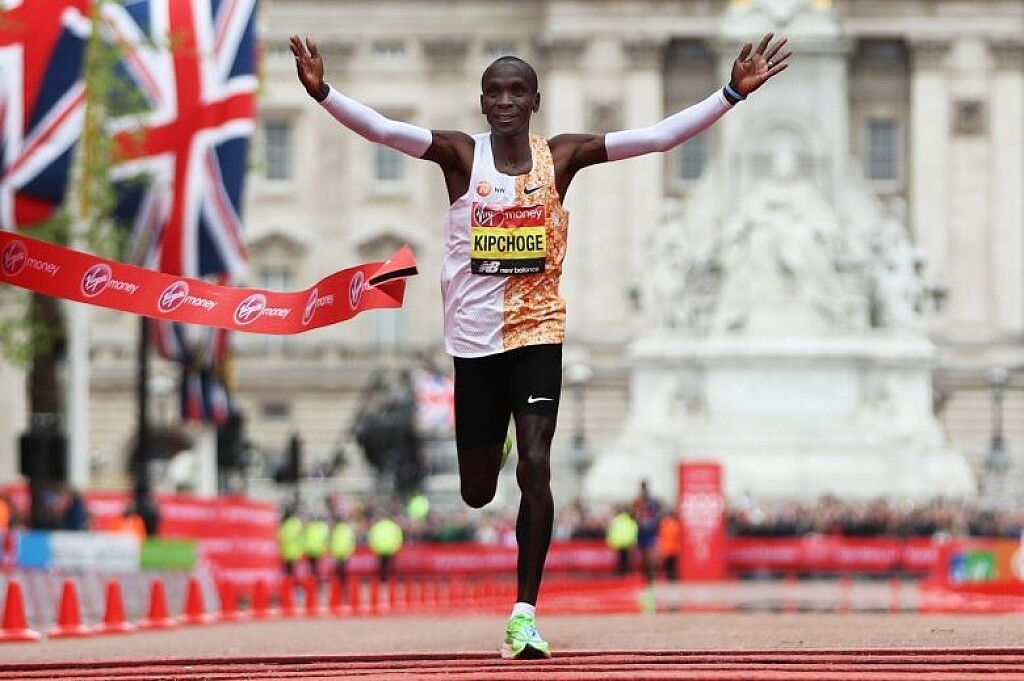
Olympics men's marathon champion Eliud Kipchoge will be hoping for a hattrick of awards after he was nominated for the World Athletics Male Athlete of the Year award alongside nine others.
The world record holder for the men's marathon was crowned victor in 2018 and 2019 but missed out last year, which came almost two months after a disappointing outing at the London Marathon where he finished a shocking eighth due to fitness complications.
Kipchoge has since bounced back handsomely from that setback to win a second successive Olympic marathon title in Tokyo, a couple of months after he excelled at the NN Mission Marathon in Twente, the Netherlands.
However, it will not be an easy passage to the throne for the Kenyan as the other nine competitors have an equal claim to the top gong owing to their stellar seasons.
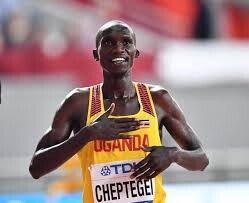
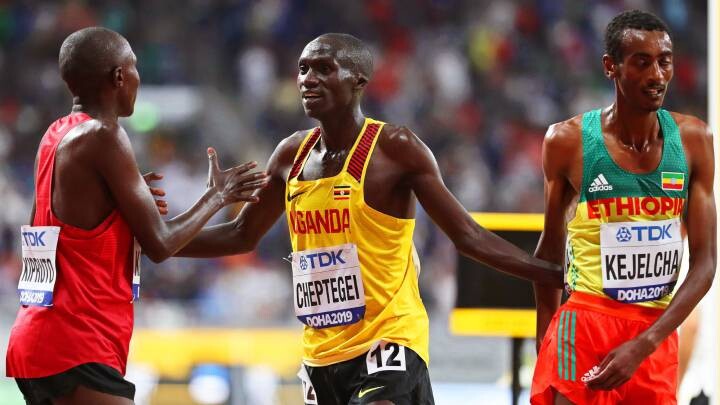
Among them is Ugandan Joshua Cheptegei who finally clinched his first Olympic gold at the Tokyo Games in August, timing 12:58.15 to win the men's 5000m.
The 10,000m world champion and world record holder also came away from the Japanese capital with a silver medal in the 16-lap race.
A world lead of 8:09.55 in 5000m at the Prefontaine Classic was the icing on the cake for the Ugandan who has been one of the standout athletes in the world for the past two years.
Voting ends on November 6 and is open to WA Council, WA Family whereas fans can vote via WA's social media pages.
Other nominees:
Sweden's Mondo Duplantis (Olympic and world pole vault champion); Norway's Jakob Ingebrigsten (Olympic 1500m champion); Portugal's Pedro Richardo (Olympic triple jump champion); Ryan Crouser (Olympic and Diamond league shot put champion); Norway's Karsten Warholm (Olympic 400m hurdles and world record holder); Canadian Damian Warner (Olympic decathlon champion); Greece's Miltiadis Tentoglou (Olympic long jump champion) and Sweden's Daniel Stahl (Olympic discus champion).
by Omondi Onyatta
Login to leave a comment
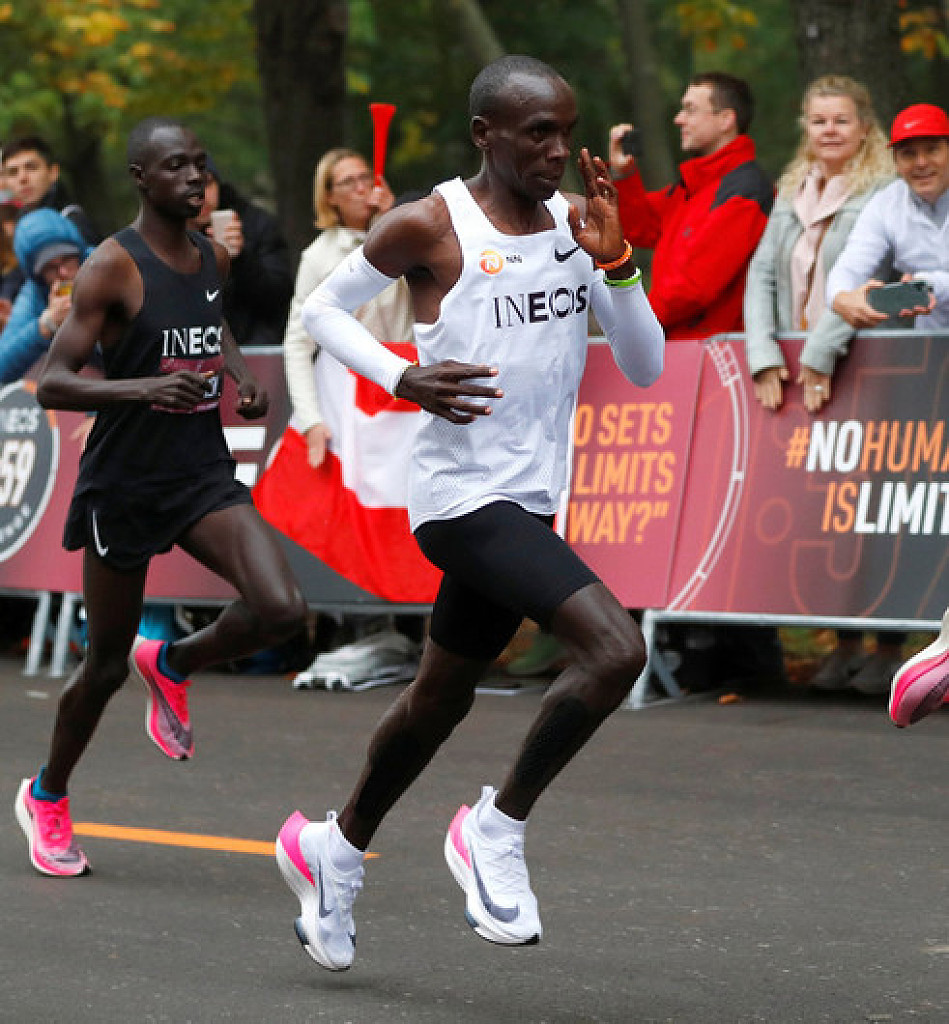
Kipchoge says that he can't move forward without embracing technology
Marathon world record holder and Olympic champion Eliud Kipchoge hopes that technology will take "center stage" as athletes strive for improvement and chase faster times in the future.
The Kenyan, who overcame humid conditions in Tokyo earlier this month to claim gold in the marathon, was among a host of runners who ran in specially designed Nike shoes fitted with carbon-fiber plates for more spring and quicker times, once again rekindling a debate around "technological doping".
"If we don't embrace technology then we are not moving... I know regulations will be there but technology should take center stage," Kipchoge told Reuters.
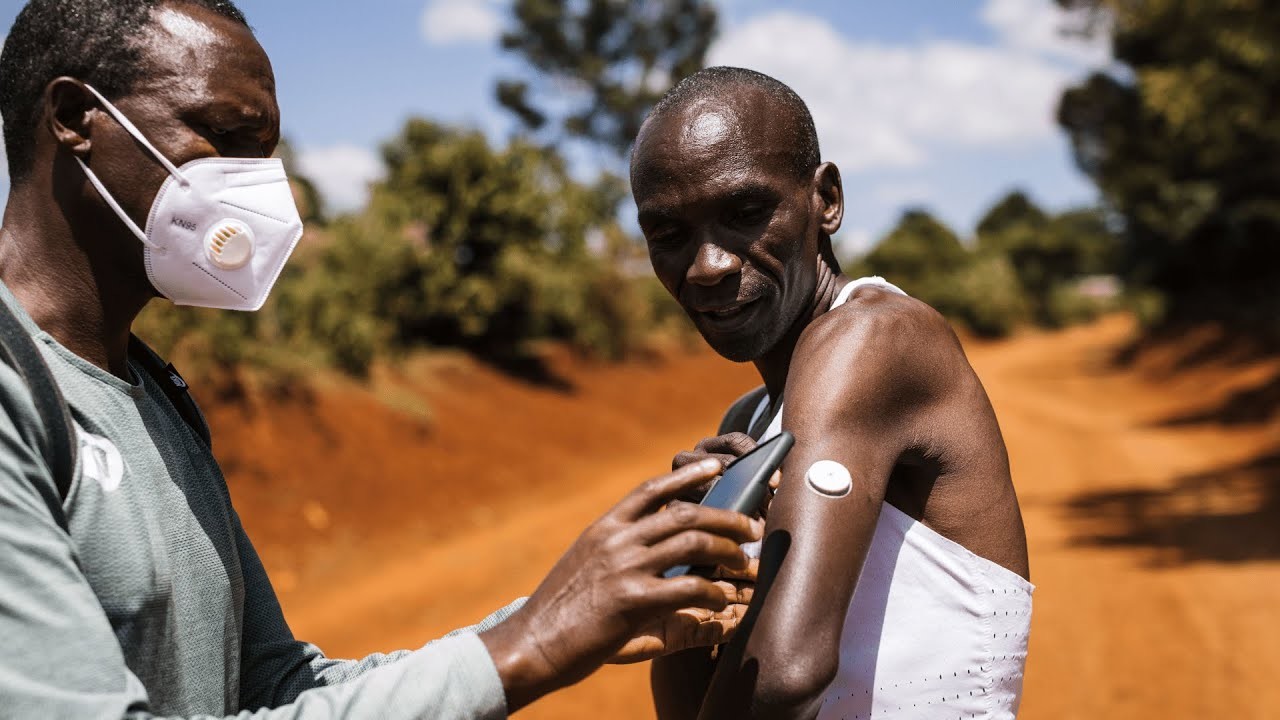
"Let all athletes have top technology, have top innovation. That's the only way to think and actually try to improve your performance."
Other athletes such as Karsten Warholm, who won the Olympic 400 meters hurdles title in world record time, have been critical of rapidly advancing shoe technology.
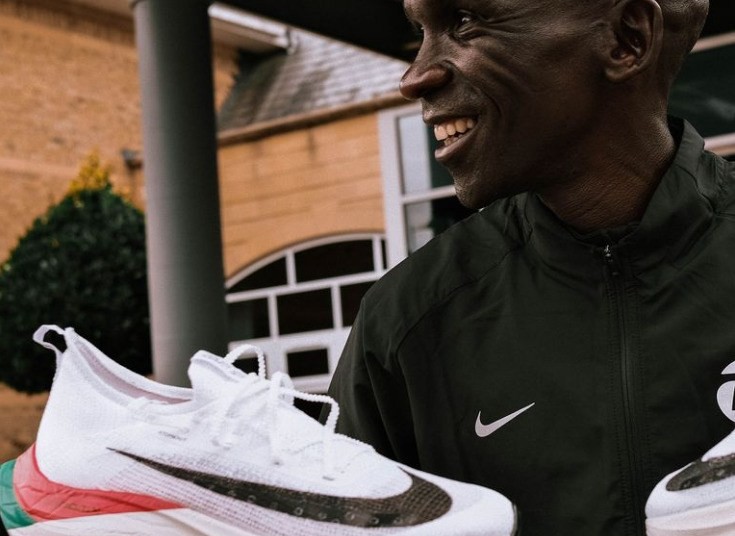
"When somebody does a great performance now, everybody will question if it's the shoe, and that is the credibility problem," the Norwegian told Reuters earlier this month.
Kipchoge's footwear played a big part in him becoming the first man to run a marathon in under two hours in 2019, a remarkable feat that is now the subject of a new documentary, "Kipchoge: The Last Milestone".
The film chronicles how Kipchoge worked with scientists and a group of fellow elite runners to run in an unofficial world record time of one hour, 59 minutes and 40 seconds in Vienna two years ago, an achievement many thought was impossible.
The 36-year-old said that his message of "no human is limited" extends beyond sport as he looks to inspire people from all walks of life.
"(This) is a huge message, not actually facing sportsmen and sportswomen alone. It's all around, it touches every profession... my lasting legacy will be purely about inspiration because that's what I want to drive in the mind of every human being in this world."
Kipchoge added that retirement was not on his mind as he was motivated to keep chasing titles by athletes who were still competitive well into their 30s and even 40s.
"I am being inspired by many people, the footballers, (Cristiano) Ronaldo is doing well (at 36), (Lewis) Hamilton is still very sharp as far as Formula One is concerned, Valentino Rossi is driving in the MotoGP at 42," said Kipchoge.
"For now I have to rest, pick up training in September and plan what next... I am enjoying what happened in Tokyo for now. So I'm mixing rest and enjoying the medal. But all in all there are still good things in the future."
by Sophie Penney
Login to leave a comment
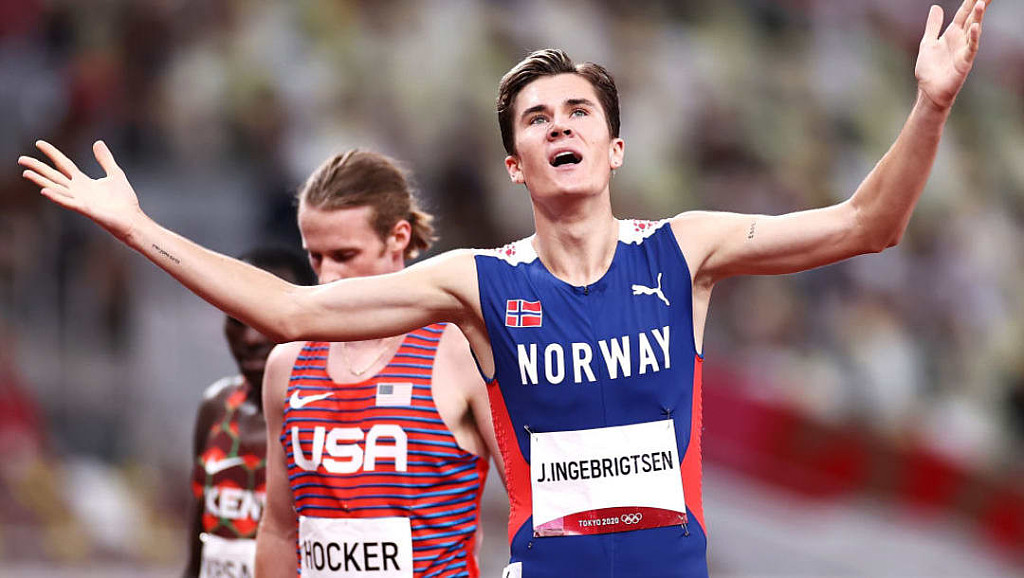
Jacob Ingebrigtsen and Karsten Warholm will attack European records in Lausanne
The Athletissima meeting in Lausanne on Thursday (Aug 26) is part of the Diamond League series. Perhaps the most intriguing event of the night, though, is an event that is not part of the Diamond League programme – the men’s 400m.
Karsten Warholm will enjoy a rare race on the flat with no barriers in his way. His target? Thomas Schönlebe’s long-standing European record of 44.33 which was set when the East German won the 1987 world title in Rome ahead of Innocent Egbunike of Nigeria and Butch Reynolds of the United States.
The mark has stood for 34 years. Warholm’s best time is 44.87 which dates back to 2017. However the 25-year-old Norwegian took down Kevin Young’s long-standing world 400m hurdles record earlier in Oslo this summer and then annihilated his own mark with a further improvement to 45.94 in the Olympic final in Tokyo this month.
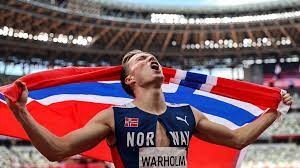
What’s more, Warholm equalled Schönlebe’s European indoor 400m record of 45.05 in Glasgow in 2019. The omens are good and in Lausanne he faces a field that is led by Isaac Makwala – a 43.72 man who was seventh in the Olympic final.
Jakob Ingebrigtsen also has a European record in his sights – Mohammed Mourhit’s 3000m mark of 7:26.62 which was set 21 years ago in Monaco and one-year before he was suspended for using EPO. Ingebrigtsen ran 7:27.05 in Rome last year when he finished close behind Ugandan Jacob Kiplimo.
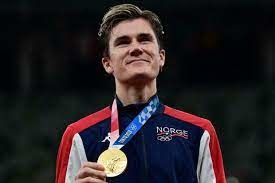
Kiplimo is again in the field on Thursday along with Olympic 10,000m champion Selemon Barega of Ethiopia, Canadian Mohammed Ahmed, American Paul Chelimo, Australian Stewart McSweyn and Ethiopia’s Olympic steeplechase silver Lamecha Girma.
Andy Butchart, meanwhile, will be having a crack at Mo Farah’s UK record of 7:32.62 in what promises to be a fast race.
Fresh from her stunning 10.54 100m run in the Diamond League in Eugene on Saturday, Elaine Thompson-Herah travels back to Europe to race over the distance again. Her rivals include fellow Jamaican Shelly-Ann Fraser-Pryce, in-form Swiss sprinters Ajla Del Ponte and Mujinga Kambundji, Marie-Josee Ta Lou of the Ivory Coast and Britain’s Daryll Neita.
The meeting actually kicks off with a city center high jump contest between Olympic medalist Mutaz Essa Barshim, Gianmarco Tamberi and Maksim Nedasekau on Wednesday (Aug 25) in Lausanne. It acts as a prelude to the main event on Thursday and will see a rematch of the men who famously shared gold in Tokyo.
Back in the stadium on Thursday, the field events see triple jump world record-holder Yulimar Rojas in action, as well as German javelin star Johannes Vetter and shot put giants Ryan Crouser, Joe Kovacs, Tom Walsh and Darlan Romani.
by Jason Henderson
Login to leave a comment
NIKE TOP BRAND MEDAL TABLE, BUT PUMA ON THE RISE
The swoosh has been everywhere on the track and in the field in Tokyo. Nike was the spike of choice for 11 out of the 12 middle distance medallists, on the chest of the top-three in the men’s 200m final, while also sponsoring the stand-out sprint star in Jamaica’s Elaine Thompson-Herah, who took down Flo-Jo’s 100m Olympic record with their latest shoe technology.
It will come as no surprise that Nike was again the most dominant brand in Olympic athletics. The global sports giant was on the vest of 53 medallists and was on the feet of 73—and remains in the top spot that it had in Rio in our brands medal table.
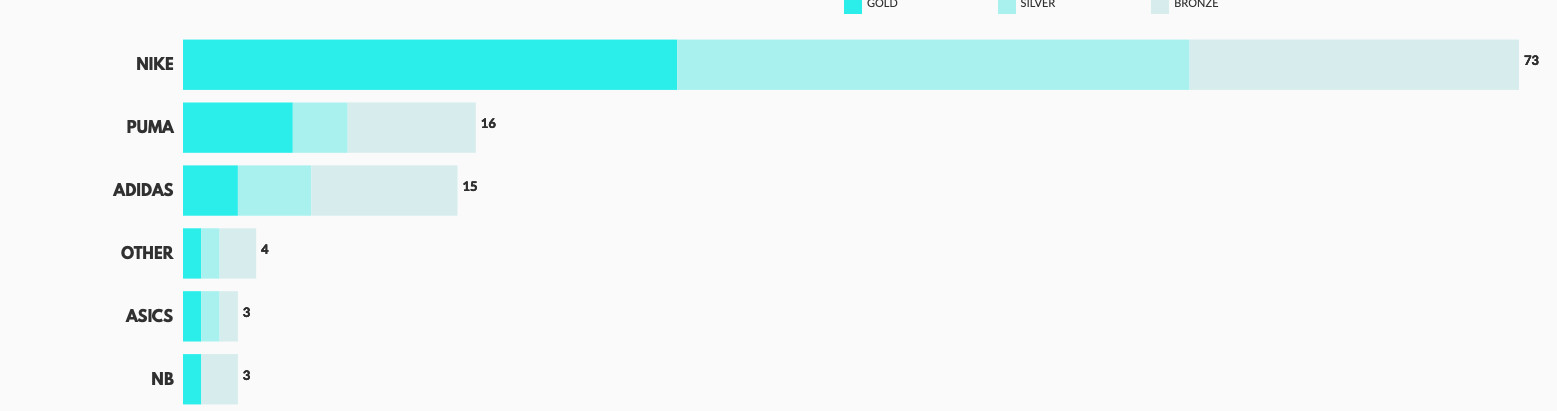
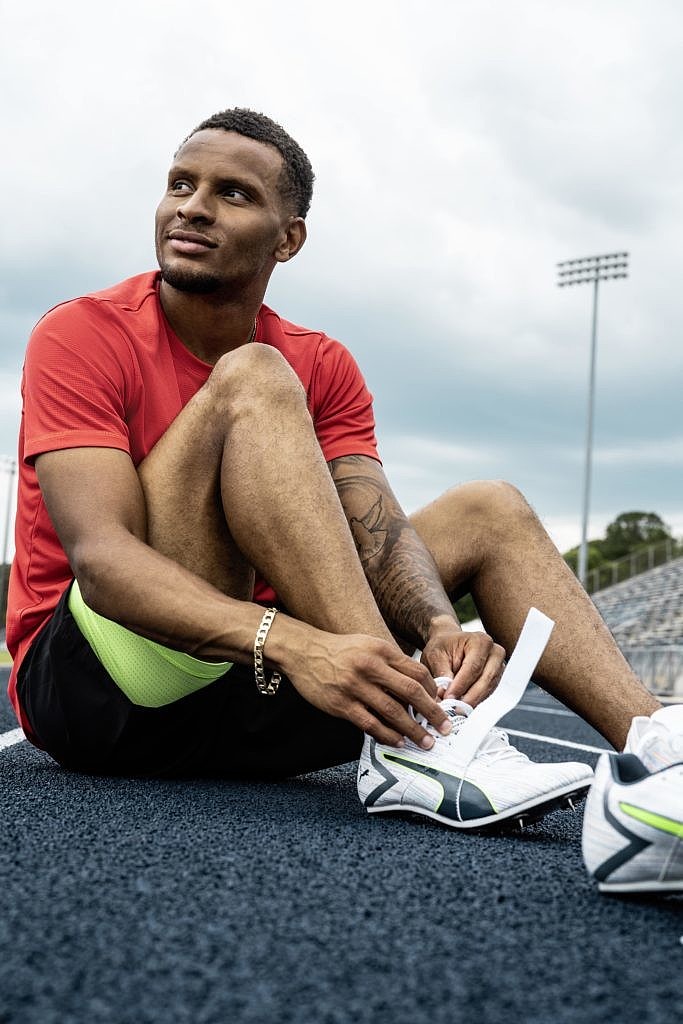
Nike’s totals, however, have declined. Its shoe share is down 16 medals (89 to 73)—while Puma has made a surge (4 to 16, or a 300% increase). Nike it seems decided not to extend or renew contracts for the delayed Olympics with Puma sweeping up some of that talent. Puma’s longer-term deals also came to fruition, most notably with Canada’s Andre De Grasse, who inked a multiyear deal back in 2015 reportedly worth as much as $30 million.
This may be a shift in strategy from Nike that has had an impact beyond track and field, a sport in which it has deep roots. In football, stars like Sergio Ramos and Thiago Alcantara took to blacking out their boots earlier this year. The suggestion then was that Nike was focusing on a smaller number of elite athletes that could be at the core of their campaigns.
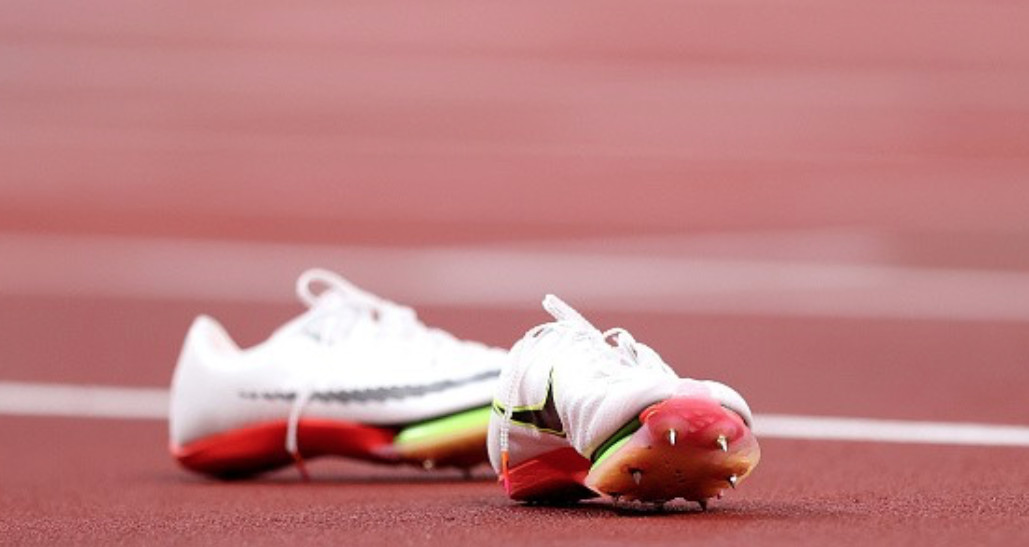
Just because an athlete is wearing a brand in track and field doesn’t mean that they are actually sponsored at all, or in any meaningful way. Some could be “kit drops”, others might have bought a product themselves. New Zealand’s Tom Walsh wore blacked out Nikes for his shot put final, but has had “SPACE FOR RENT” emblazoned on his vest in the Diamond League this season. Others may be ensuring that they don’t miss out on carbon-plated “super spikes”. Britain’s Josh Kerr—Brooks sponsored—wore “whited-out” Nikes for his bronze-medal-winning performance.
There was also room for two new brands; Allyson Felix’s Saysh and fellow American Joe Kovacs wore Velaasa, a shoe brand founded by Lynden Reder that ran a successful Kickstarter campaign back in 2018. New Balance stepped up a notch with their sponsorship of Sydney McLaughlin, Gabby Thomas and Femke Bol.
Nike topped the vests chart through its sponsorship deals with federations, but this was down (71 to 53) and again Puma had the most dramatic boost (15 to 22). This included a shoe and vest double with Norwegian Karsten Warholm’s 400m hurdles world record. Asics, a Japanese company and an official Olympic gold partner, also saw a boost (8 to 13).
Puma may have had one more medal, but decided to cancel its $2.7m sponsorship of the Nigerian team. (Apparently, this delighted Nigerian officials). For its only medal in the women’s long jump, Ese Brume wore the lesser-known sporting brand AFA on her chest. Of these smaller brands, AF’s position is entirely down to Poland’s performance, while Belgian sponsor Vermarc can once more thank Nafissatou Thiam for making the medal table.
Charts show individual track and field events, no relays or road races. One athlete wore different brands across the heptathlon, so her final shoe brand in the 800m was counted here. For the vest count, it is the competing vest and not the podium tracksuit where the brands may differ. Javelin Olympic champion, India’s Neeraj Chopra had no discernible logo on his vest. It is categorised here as “other”.
Login to leave a comment
The Four Races That Still Need to Happen in 2021
The Tokyo Olympics may be over, but the track & field season most definitely is not. We’ve still got five Diamond Leagues to go, including the final in Zurich on September 8-9. And while Tokyo produced a number of amazing races, there were a few that we didn’t get to see. Here are the four races that still need to happen in 2021. Diamond League meet directors, pay attention (and have your checkbook handy…these races won’t be cheap to organize).
Women’s 100 meters: Elaine Thompson-Herah vs. Shelly-Ann Fraser-Pryce vs. Sha’Carri Richardson
Of the six fastest women in history, three of them have run their personal bests this year: Thompson-Herah (10.61 in Tokyo), Fraser-Pryce (10.63 in Kingston), and Richardson (10.72 in Miramar). But we didn’t get to see the three of them in the same race at the Olympics because of Richardson’s positive test for marijuana at the US Olympic Trials.
There may be a bit of a rivalry brewing as well. Remember, after Fraser-Pryce ran 10.63 back in June, Richardson essentially took credit for pushing Fraser-Pryce to a pb (even though Richardson was not even in the race).
And when the Jamaicans were asked about Richardson following the Olympic final, they did not want to talk about her (though to be fair…they had just won Olympic gold and silver). But any mention of even the word marijuana quickly resulted in realizing they didn’t want to talk about Sha’Carri at all.
Chances that it happens: It’s already happening! The Pre Classic has announced its women’s 100m field and all three are entered.
Men’s 400: Karsten Warholm vs. Rai Benjamin vs. Steven Gardiner
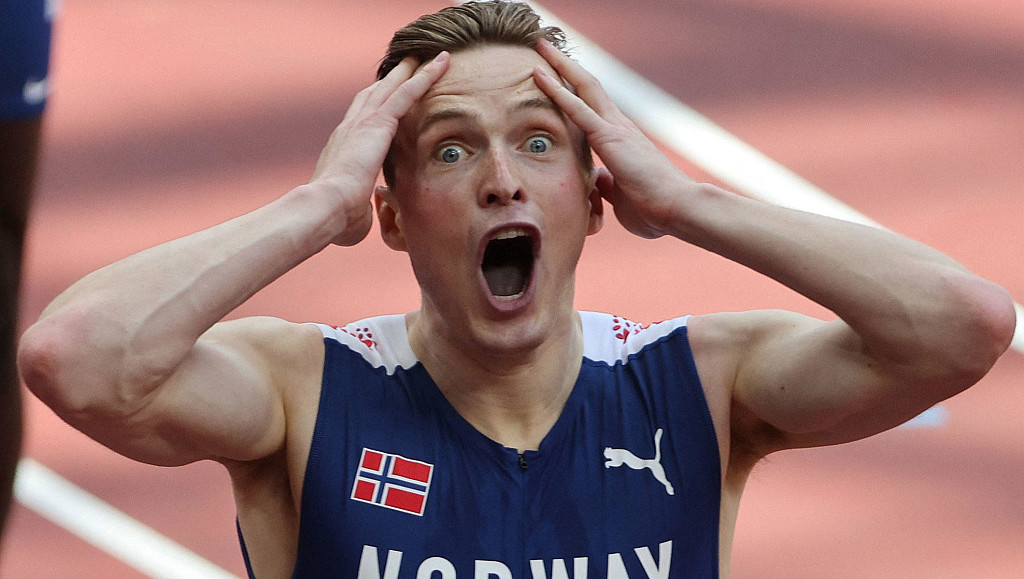
Karsten Warholm’s mesmerizing 45.94 world record in the 400 hurdles generated a number of questions. One of the natural ones: how fast could he run without the hurdles? Warholm’s personal best in the flat 400 is 44.87, but that dates back to 2017, when his hurdles pb was 48.22. He’s over two seconds faster now in the hurdles, so it’s not unreasonable to think he’s in 43-second shape right now. Benjamin’s pb is 44.31 from 2019.
So let’s throw Warholm and Benjamin in against the Bahamas’ Steven Gardiner, who just ran 43.85 to win the flat 400 in Tokyo, and see how they really stack up.
Chances that it happens: 25%. Warholm has already committed to run the flat 400 in Lausanne on August 26. That’s a great start, but getting Benjamin and Gardiner as well could prove tricky.
Women’s 400: The “Dream Team” vs. Shaunae Miller-Uibo
It was a running joke for most of the 2021 season: America’s best 400-meter runners don’t even run the 400. I mean, just look at the “Dream Team” the US trotted out for its dominant victory in the 4×400 relay: Sydney McLaughlin, Allyson Felix, Dalilah Muhammad, Athing Mu. Only one of those women ran the open 400 in Tokyo.
As incredible as Felix was at the Olympics, taking bronze in the 400 in 49.46, she only had the third-fastest split on that relay (49.38), with Muhammad going 48.94 and Mu a ridiculous 48.32. What could be better than seeing all four Dream Teamers race each other head to head?
Well, how about throwing the two-time Olympic 400 champ into the mix in Shaunae Miller-Uibo? Assuming that field doesn’t collapse from the weight of its collective gold medals (all five of the women have won individual Olympic gold; their combined total is 15 career Olympic golds including relays), the race would be more stacked than the Olympic final we just witnessed.
Chances that it happens: 10%. This one seems like a pipe dream. With the Americans as the major draw, the Pre Classic would be the natural venue for this, but there are two problems. First, there is no women’s 400 at Pre this year (though it’s not too late to add one!). And second, the five athletes above are represented by four different shoe brands. It’s not as if Nike could just magically compel them all to run Pre.
Men’s 5,000: Jakob Ingebrigtsen vs. Joshua Cheptegei vs. Selemon Barega
We already saw Ingebrigtsen vs. Cheptegei in Florence in June, and it was no contest, with Ingebrigtsen pulling away to a world-leading 12:48 as Cheptegei faded late. But Cheptegei revealed in Tokyo that he has been battling a heel injury this year, and while he’s not completely over it, it’s definitely more manageable now (as evidenced by his gold and silver in Tokyo) than it was two months ago in Florence.
Then there’s Barega, who used a sick close (2:24 last 1k, 53 last lap) to win 10k gold but did not run the 5k in Tokyo. Let’s settle the title of best distance runner in the world and pit the Olympic 1500, 5k, and 10k champs together in a 5k on the circuit.
Chances that it happens: 30%. I could see Cheptegei and Barega racing each other in a 5,000 at the Diamond League final (or even the 2-mile at Pre). Getting Ingebrigtsen to join them could be more difficult, however. He’s running the Bowerman Mile at Pre and may opt for the 1500 at the DL final.
by Let’s Run
Login to leave a comment
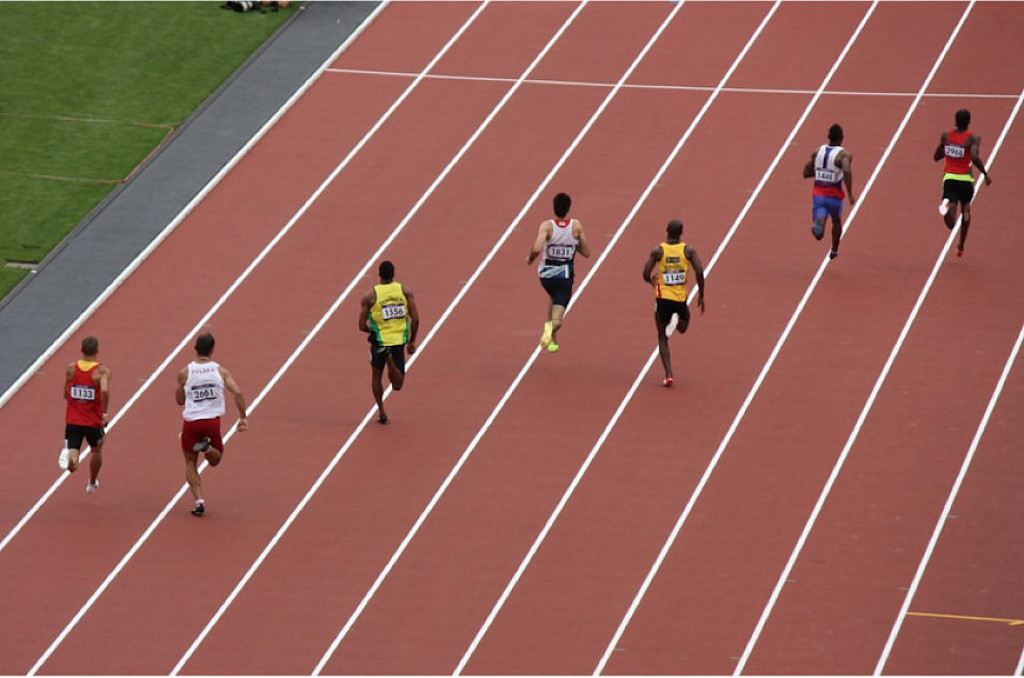
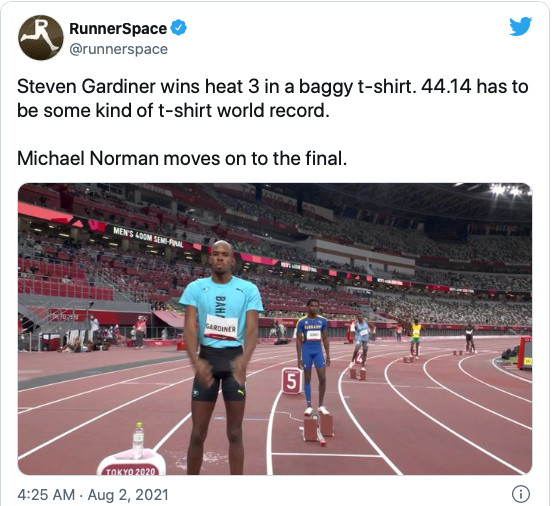
Tokyo Olympian runs fast 400m time in a baggy, oversized T-shirt
As the Olympics have transitioned into track and field from road cycling and swimming, there is a debate on Twitter on why all track athletes do not wear aerodynamic suits, as cyclists and swimmers do.
Bahamian 400m sprinter Steven Gardiner won the 400m semifinals in a speedy time of 44.14, which put him into Thursday’s final. 44 seconds for 400m is spectacular, but fans on Twitter were more impressed he ran that time while wearing an oversized Bahamas training T-shirt. Our sources did not confirm if he actually forgot his race singlet in the Athletes’ Village, or if he just prefers his sleeves flapping in the wind. Gardiner was the inspiration for the Twitter debate about the aerodynamics of sprinters’ racing kit. (Spoiler alert: we published this story the day before the 400m final, which Gardiner would go on to win in 43.85, wearing appropriate racing attire, but still an untucked shirt, not unlike many others.)
Aerodynamics refers to the concept of forces resulting in the motion of objects through air. The study of the motion of air around an object allows us to measure how gravity and resistance work while the object travels through it.
As we’ve seen, aerodynamics are very important to cyclists. Any stray fabric flapping in the breeze is potentially slowing them down. On a flat road, aerodynamics are by far the greatest barrier to a cyclist’s speed, accounting for 70 to 90 per cent of the resistance riders experience when pedalling. The only greater obstacle is climbing up a hill, as gravity far outweighs the effect of wind resistance. Over the past five years, there has been a major development in more stretchy, lighter and breathable fabrics for cyclists to slice through the air while competing at high speeds.
Technology is constantly evolving to benefit the athlete and allows them to operate at a high level of performance. At these Olympic Games, male and female athletes are given a choice on what they can wear during competition. In certain events such as the 10,000m, where you have to run 25 laps around the track, a majority of distance athletes will wear the classic singlet and shorts, due to their loose-fitting and comfortable feel for 30 minutes of high-intensity running. During a 10,000m race, speed does help, but cutting the air is less important, as most runners will reach a top speed of 25 km/h and will remain tucked into a pack for most of the race.
When Eliud Kipchoge broke the 2-hour marathon barrier at the INEOS 1:59 Challenge in Austria, scientists at Eindhoven University in the Netherlands analyzed wind formations when running at 21.2 km/h. They ended up proposing a special arrangement of runners who would pace around Kipchoge in order to lower his output of power against resistance, which ultimately allowed him to perform at a higher level. This formation is very similar to those in a bike peloton at the Tour de France. The athlete who takes the wind has to work harder than the athlete tucked in behind him.
Unfortunately, sprinting events do not have the luxury of pack-aided performance. When Usain Bolt set the 100m and 200m world records, he achieved his top speed of 45 km/h in a singlet and half tights. According to scientists, when a human reaches a speed faster than 40 km/h, 80 per cent of the human’s power output goes into overcoming air resistance and gravity. During his six gold medal performances in the 100m and 200m, Bolt never used the aerodynamic speed suit. Who knows what he could’ve run wearing 400mH champion Karsten Warholm’s Puma speed suit?
A few of the world’s top track athletes are beginning to transition to the speed suit to gain any aerodynamic benefits they can. Norway’s Jakob Ingebrigtsen and Mohammed Katir of Spain, two of the fastest men on earth over the 1,500m and 5,000m distances this year, were both wearing one-piece speed suits during their Olympic heats. Newly crowned 800m gold medallist Athing Mu has been racing in wind-cutting suits since turning pro earlier this year. Clearly, science has proven wind-cutting technology can make a difference, but World Athletics, the governing body of track and field, gives each athlete a strict guideline on what can be worn during competition at the Olympic Games and World Championships:
According the World Athletes under rule 143 section 5 of World Athletics – competition and technical rules:
In short, this means that all athletes competing have to abide by the competition rules of their countries’ athletic governing body, which must abide by the rules and regulations set by World Athletics.
At these Games, men and women are given the choice of three options for competition; a singlet and short shorts, one-piece aero-speed suit, or (a combination of speed and comfort) a singlet and half tights – the best of both worlds. Women are offered one more option, with the crop top and short shorts.
As technology advances, the world’s best athletes continue to chase world records. The athletes will always lean towards wearing the lightest or fastest gear to give their performance a slight edge over competition. Who knows? Maybe the Sydney Olympics gold medallist, Cathy Freeman, was ahead of her time when she won the 400m in a head-to-toe speed suit.
by Running Magazine
Login to leave a comment
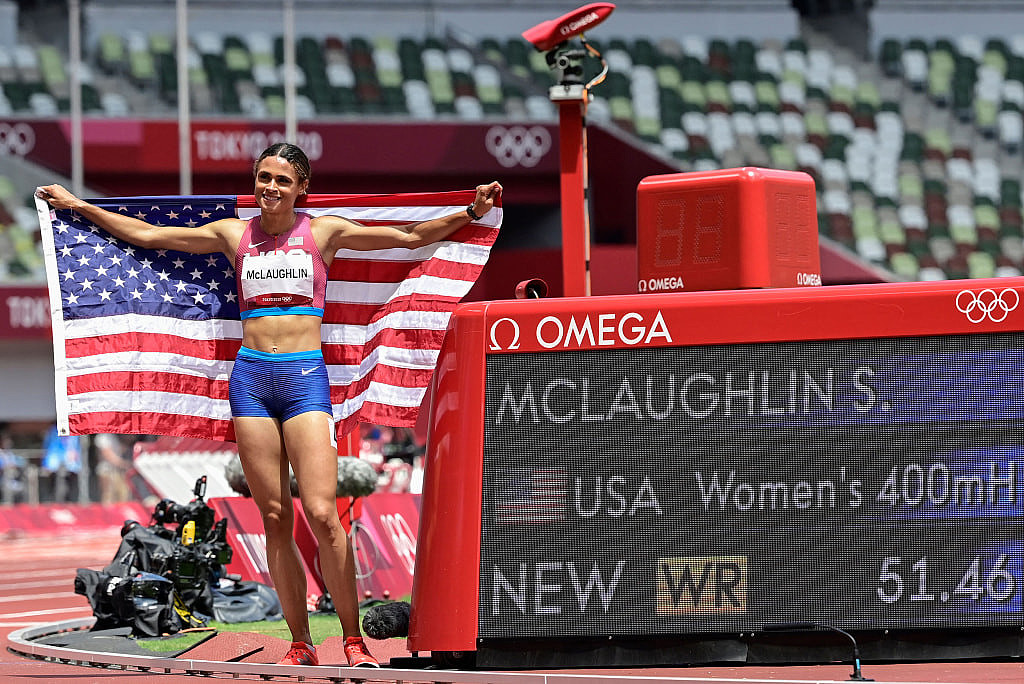
USA's Sydney McLaughlin breaks world record at Tokyo
Sydney McLaughlin broke her world record Wednesday and won the Olympic 400-meter hurdles gold, finishing in 51.46 seconds in yet another close victory over U.S. teammate Dalilah Muhammad.
McLaughlin came from behind after the last hurdle to top the defending Olympic champion. Muhammad's time of of 51.58 also beat McLaughlin's old record of 51.9, set at Olympic trials last month.
Femke Bol of the Netherlands finished third.
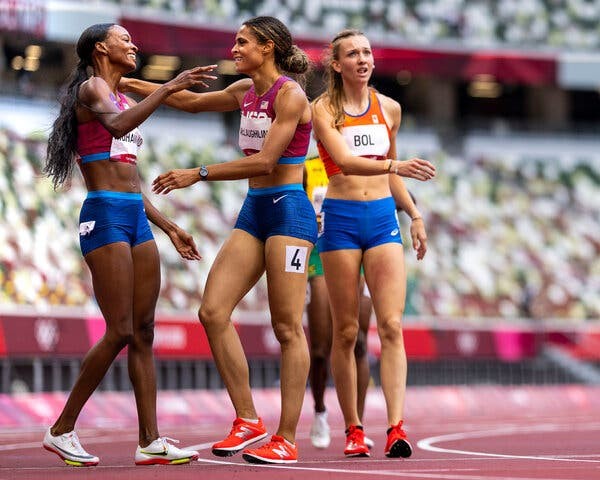
For McLaughlin, it was a muted celebration. She sat on the ground, gave a serious look toward the scoreboard, got up and sanitized her hands, then accepted a congratulatory hug from Muhammad.
Amazing as it was, this world record didn't really surprise anyone.
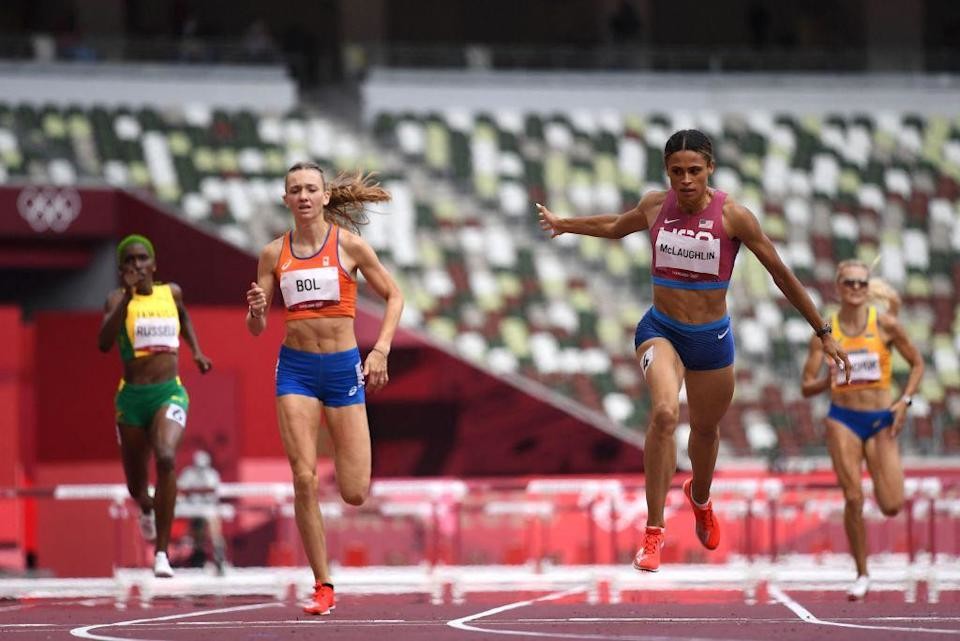
McLaughlin and Muhammad have been trading the record, and the wins, for two years. Muhammad first broke the mark at U.S. Nationals in 2019, then lowered it again. to 52.16, at the world championships in Doha.
McLaughlin broke that record earlier this summer at Olympic trials, running her 51.90 to become the first woman to crack 52 seconds.
It felt inevitable that the mark would go down again on a fast track in perfect, hot-and-humid running conditions in Tokyo.
The day before, Karsten Warholm crushed his old world record, finishing the men’s race in 45.94, and runner-up Rai Benjamin’s 46.17 also beat the old mark.
It was a lot to live up to for the women, whose race was even more eagerly anticipated. They lived up to the hype.
by Associated Press
Login to leave a comment

Tokyo 2020 Olympic Games
Fifty-six years after having organized the Olympic Games, the Japanese capital will be hosting a Summer edition for the second time, originally scheduled from July 24 to August 9, 2020, the games were postponed due to coronavirus outbreak, the postponed Tokyo Olympics will be held from July 23 to August 8 in 2021, according to the International Olympic Committee decision. ...
more...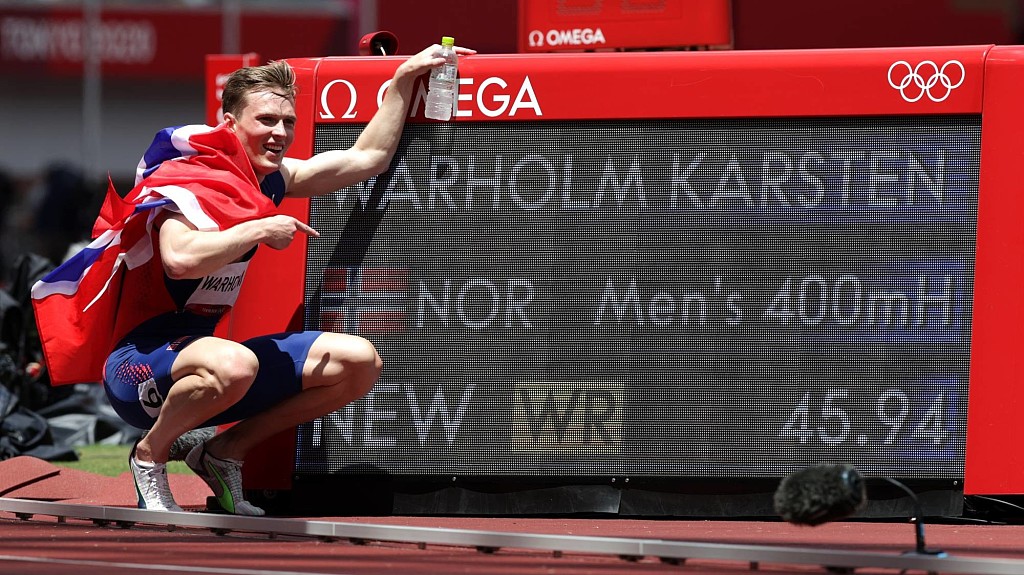
Norway´s Karsten Warholm breaks the 400m hurdles world record at the Tokyo Olympic Games
Nearly two and a half hours have passed since Karsten Warholm blasted across the finish line of the Olympic 400m hurdles final and the sporting world is still trying to grasp what it had witnessed at Tokyo's National Stadium on Tuesday (3) afternoon.
Thirty-three days ago, the Norwegian broke the world record in the event which had stood for nearly 29 years, clocking 46.70. This morning he won the most anticipated face-off of the 2020 Olympic Games by obliterating that mark with an unfathomable 45.94* performance to rip another 0.76 from his own world record.
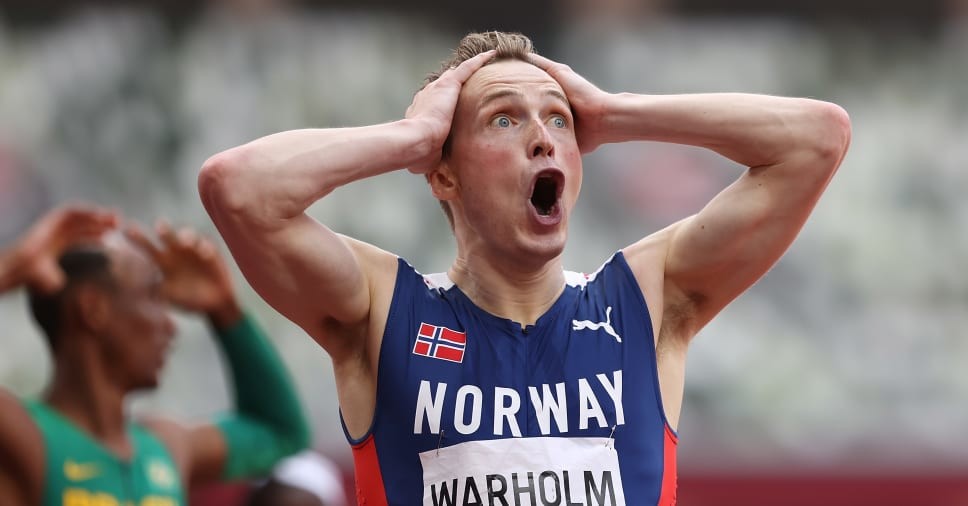
Adequate superlatives don't yet exist to describe the magnitude of what the 25-year-old has just accomplished – world records over one lap of the track simply don't get smashed by the margin that Warholm managed to concoct this morning. For now, calling this the finest race in athletics history will have to suffice.
Indeed, all the more astounding is that Warholm had Rai Benjamin, his chief rival, for company for nearly those entire 45.94 seconds. Benjamin crossed the line in 46.17, itself an extraordinary performance that would have shattered the previous world record. Illustrating the race’s extraordinary depth, Alison dos Santos of Brazil finished a well-beaten third in 46.72, a performance that would have broken the world record just over a month ago.
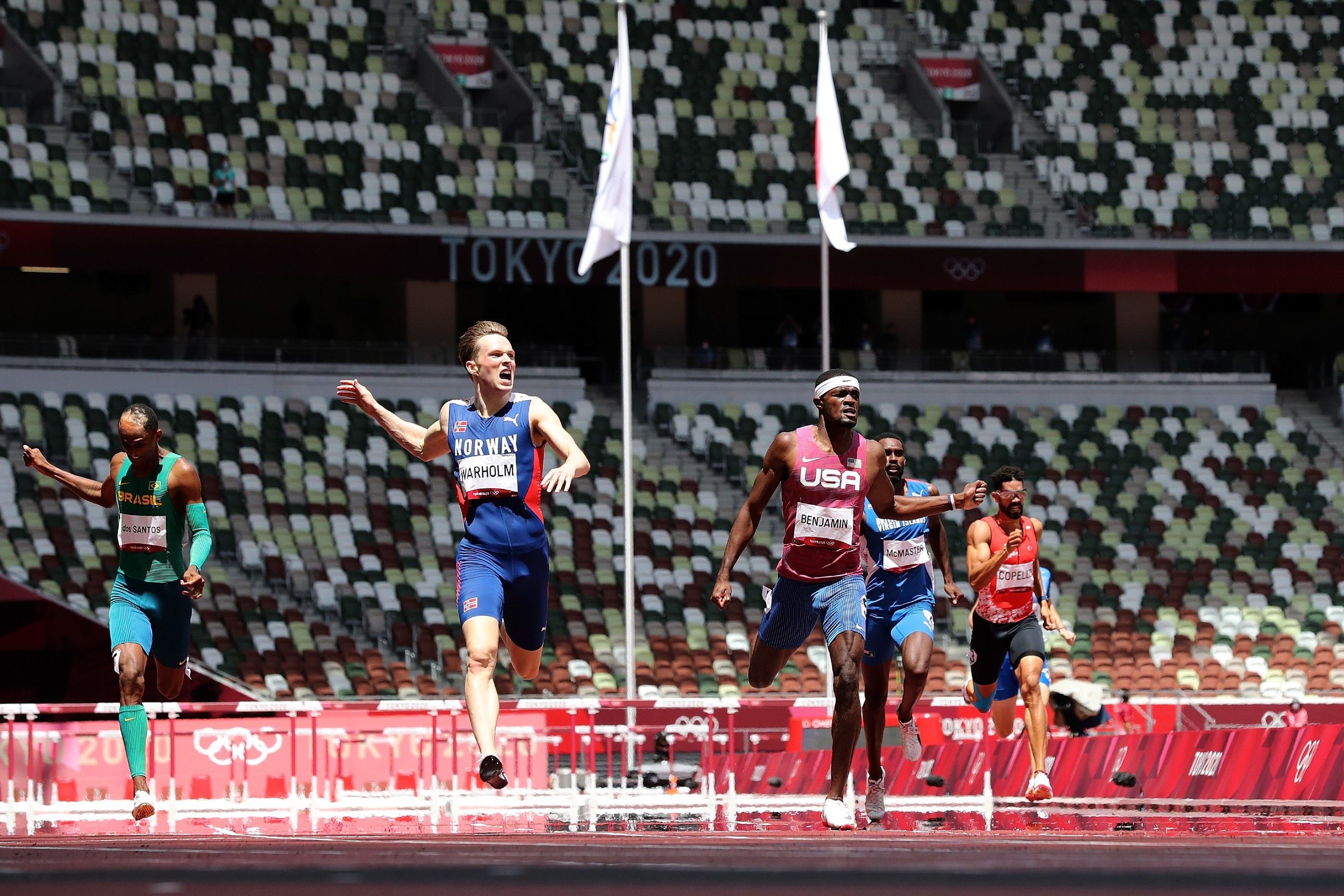
Nearly three decades had passed before someone managed to chip 0.08 from Kevin Young's legendary mark set at the 1992 Olympics. Today's performance eclipsed that by nearly a full second, blasting the record into sub-46 territory, something utterly incomprehensible – until today.
Even Warholm looked at the scoreboard in disbelief as he powered down after crossing the line, his jaw dropping, eyes popping. The only obvious reaction was to rip open his singlet and let out a series of roars.
“It's so crazy,” Warholm said. “This is by far the biggest moment of my life.”
To the former, Benjamin concurred.
“I don’t think Usain Bolt’s 9.5 was better than this,” he said, referring to Usain Bolt’s 9.58 100m world record set in 2009.
The pair – Benjamin in lane five, Warholm in six – set off on an aggressive pace, marking clear distance on the field by the second hurdle. Warholm chiseled together a visible advantage by the third barrier and carried a clear lead into the final bend. But Benjamin didn't panic.
Warholm led as the pair entered the final straight, but wasn't gaining ground as they approached hurdle nine. Benjamin managed to chip away at the lead and nearly caught Warholm at the final hurdle, but that surge cost him, leaving him drained as he landed, unable to respond as Warholm began to pull away.
by World Athletics
Login to leave a comment
Tokyo 2020 Olympic Games
Fifty-six years after having organized the Olympic Games, the Japanese capital will be hosting a Summer edition for the second time, originally scheduled from July 24 to August 9, 2020, the games were postponed due to coronavirus outbreak, the postponed Tokyo Olympics will be held from July 23 to August 8 in 2021, according to the International Olympic Committee decision. ...
more...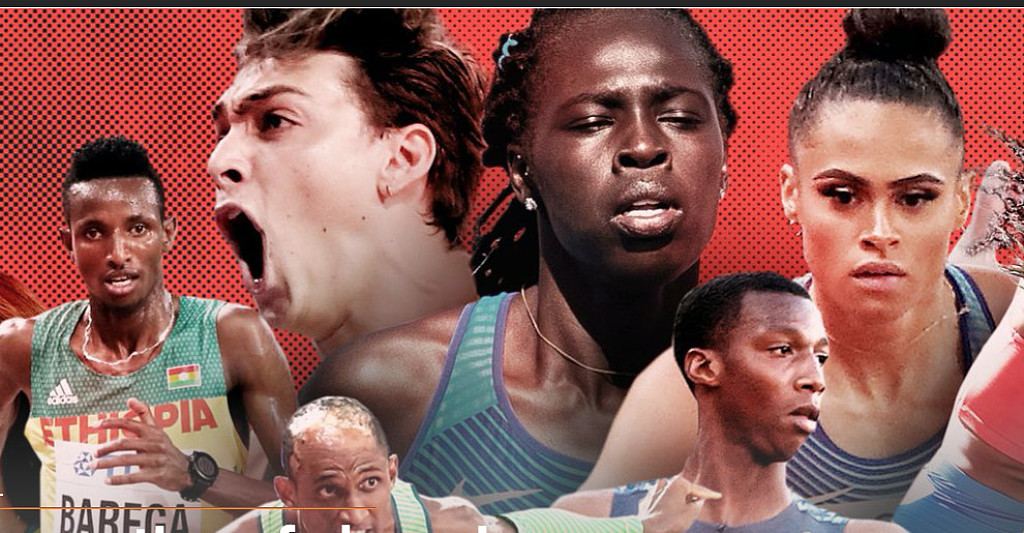
A new generation of champions set to emerge in Tokyo
While some reigning Olympic and world champions might be missing from the Games in Tokyo, the extra year as a result of the postponement in 2020 has allowed a number of new talents to emerge.
For some it means a debut Olympic experience which may not originally have been expected until at least 2024, while for others it is a realistic opportunity to win medals and titles.
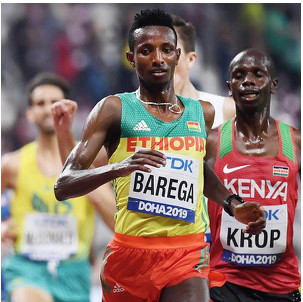
Of the 43 individual events contested at the Rio 2016 Olympics, the winners from just 18 of those will defend their titles in Tokyo.
The likes of world 800m champion Donavan Brazier and Olympic 110m hurdles champion Omar McLeod missed out on being selected for their national team, while other stars, such as world and Olympic triple jump champion Christian Taylor, are currently sidelined with injury.
But while those global champions won't be able to contend for top honours in Tokyo, here are some of the new generation of stars who are set to emerge.
Selemon Barega, 10,000m
After winning world U18 and U20 titles in 2017 and 2016 respectively, Ethiopia’s Barega stepped up to secure senior 5000m silver at the World Athletics Championships in 2019. Still aged just 21, he is now preparing for his debut Olympics, where he will race the 10,000m.
Barega started the season with intent, running an Ethiopian all-comers’ record of 27:58.5 at altitude in Addis Ababa in January. He then went even faster at the Ethiopian Trials in Hengelo in June, clocking 26:49.51 on the same track on which he ran his 26:49.46 PB in 2019. That, together with the speed he demonstrated by running PBs of 3:32.97 for 1500m and 7:26.10 for 3000m during the indoor season, means he is set to be a strong force in Tokyo
Jasmine Camacho-Quinn, 100m hurdles
Medal success in Tokyo would see Camacho-Quinn become the first Puerto Rican woman to secure an Olympic podium place in athletics and this season she has certainly demonstrated her ability to achieve that feat.
The 24-year-old improved her own national 100m hurdles record to 12.32 to move to equal seventh on the world 100m hurdles all-time list in Eugene in April and hasn’t been beaten since. She clocked 12.38 to win at the Wanda Diamond League meeting in Florence and 12.34 for success in Szekesfehervar, meaning she has the three fastest times in the world so far this year. “I'm looking forward to the Olympics this year - it will be like redemption from my fall in 2016,” she said after her Florence run as she reflected on missing out on the final in Rio. “I'm really excited. Training really hard, working really hard, but really looking forward to it.”
Tara Davis, long jump
Davis leapt into the seven-metre club in March, breaking the US collegiate long jump record with 7.14m at the Texas Relays. The longest jump in the world since the 2019 World Athletics Championships final, that mark moved the 22-year-old to fifth on the US all-time list.
The world U20 bronze medallist had also broken the collegiate indoor record with 6.93m at the NCAA Indoor Championships earlier in the year and finished second at the US Olympic Trials, going beyond seven metres again with a best of 7.04m. “I’m shocked still because seven metres as a jumper is the biggest thing ever. Hitting it in the Olympic Trials is unreal,” she said after her performance in Eugene, where she finished second to four-time world gold medallist and 2012 Olympic champion Brittney Reese. “I’m freaking jumping with my idol, Brittney Reese. Being with her and competing with her in 2016 I was so starstruck. I was like, ‘I see her on TV and now I’m jumping with her’.”
Alison Dos Santos, 400m hurdles
After running in the lane next to Karsten Warholm during his world record in Oslo, improving his South American record to 47.38 to finish second, Brazil’s Dos Santos went even quicker to win three days later in Stockholm, taking another 0.04 off that mark.
This season has seen the 21-year-old build on his 2019 breakthrough, having that year improved his PB and the South American U20 record seven times, eventually clocking 48.28 to finish seventh at the World Athletics Championships in Doha. Also a key member of Brazil’s relay team, he ran the fastest split of the mixed 4x400m final at the World Athletics Relays in Silesia, recording a 44.62 anchor leg. “I'm looking forward to the Olympics, and yes, I think I can get a medal,” he said with a smile after his run in Stockholm.
Mondo Duplantis, pole vault
While some may argue that a world record (or two) rules an athlete out from being considered part of a ‘new generation’, pole vault star Duplantis is still aged only 21 and has much more he hopes to accomplish during his career, including winning Olympic gold.
This season he has cleared six metres or higher in four competitions, capped by his 6.10m in Hengelo - a height only he, Renaud Lavillenie and Sergey Bubka have ever achieved. After winning 2019 world silver behind Sam Kendricks - who ended Duplantis’ 23-competition win streak in challenging conditions in Gateshead in May - Duplantis will be looking to go one better in Tokyo. He also believes he can go higher than his 6.18m world record this season and after attempting 6.19m in Oslo, he said: “I really think I can get that record soon. But for now I feel good, a month away from the most important meet of my life. I am in good shape, I am running well on the runway and keeping up the rhythm well.”
JuVaughn Harrison, long jump and high jump
Harrison secured his two Olympic spots in style at the US Trials, soaring over 2.33m and then leaping a PB of 8.47m to improve his own best-ever single-day high jump and long jump double. As a result, he will become the first male athlete to represent the USA in both events at the Olympics since Jim Thorpe in 1912. No other athlete has ever achieved both a 2.30m high jump and 8.40m-plus long jump.
The 22-year-old is no stranger to juggling both events on the same day and in March he cleared 2.30m and jumped 8.45m at the NCAA Indoor Championships. In Tokyo, the high jump final is on the evening of day three and the long jump final is on the morning of day four. He is expecting to rise to the challenge. “It will be harder competition which will make me push harder and jump farther,” he said.
Erriyon Knighton, 200m
Running 19.88 at the age of just 17, Knighton broke not one but two world 200m age-group bests which had previously been held by a certain Usain Bolt. At the US Olympic Trials, the former American football player ran 20.04 in the heats to improve Bolt’s world U18 best before taking 0.16 off that mark in the semifinals to break the world U20 record of 19.93 set by Bolt in 2004. In the final he went quicker still, clocking 19.84 to finish third and become the youngest man to represent the USA in athletics at the Olympics since Jim Ryun in 1964, also in Tokyo.
Racing outside of the USA for the first time, Knighton then placed third at the World Athletics Continental Tour Gold meeting in Szekesfehervar, running 20.03. “It hasn't sunk in, it’ll probably sink in when I get home,” he said after claiming his Olympic place. “I'm happy. I feel it's a really big achievement.”
Nicola McDermott, high jump
As an eight-year-old, McDermott dreamt of becoming a consistent two-metre-plus international high jumper and having already achieved the latter, this year her two-metre aim was accomplished, too. Clearing 2.00m at the Australian Championships in April, the 24-year-old broke Eleanor Patterson’s Oceanian record and then added another centimetre to the mark in Stockholm earlier this month, despite not feeling 100 percent.
McDermott didn’t manage to register a height when she made her World Athletics Championships debut in London and two years later the Commonwealth bronze medallist finished 15th in qualifying. This time, as she makes her Olympic debut, her mind is on medals. “I’m not going to say it’s impossible to get a medal,” she said. “I’ll be aiming and I think 2.01m will maybe get me in the medals so I am aiming and training for that and believing that I can do it.”
Sydney McLaughlin, 400m hurdles
Like Duplantis, McLaughlin is already a world record-breaker having taken the 400m hurdles to another level with her time of 51.90 at the US Olympic Trials. She also was no stranger to making history before that, with world U18 best and world U20 record times among her age-group accomplishments.
Now aged 21, she made her first Olympic team at just 16, finishing fifth in her semifinal nine days after her 17th birthday, and then secured silver at the 2019 World Athletics Championships in Doha, a race won by her compatriot Dalilah Muhammad in a world record of 52.16. It was that mark McLaughlin improved in Eugene. “So many amazing women have come before me and will come after me,” she said after her world record. “I'm excited for what the future holds. I just want to leave my mark and be part of such an amazing sport, because the glory isn't forever.”
Athing Mu, 800m
Mu is another athlete to have risen impressively through the ranks, having stormed into the spotlight in 2019 when as a 16-year-old she ran the second-fastest ever indoor 600m time of 1:23.57. This year she has broken the world U20 indoor 800m record with 1:58.40 and then dominated the two-lap final at the US Olympic Trials, running a world-leading 1:56.07 to improve her own North American U20 record.
The 19-year-old also ran an area U20 record in the 400m with 49.57 to win the NCAA title earlier in the month. “This is my first year coming out here running to my potential,” she said after her trials win. “I wouldn't want to say I'm dominant at it yet. My confidence takes a lot from it. In 2019, I wasn't confident, but I was good enough. Gaining confidence has contributed to my dominance thus far in the 800m. Being good at it, knowing it's my event.”
Great experience
While some reigning global champions may be missing out on Tokyo, there are a number of vastly experienced stars who will be adding another Olympics to their impressive tally of major events. The USA’s Allyson Felix has already won six Olympic gold medals and 13 world titles, while shot put star Valerie Adams has claimed two Olympic and four world titles for New Zealand, with Tokyo being a fifth Olympic Games for both athletes.
Spain’s 51-year-old Jesus Angel Garcia, meanwhile, will compete at his eighth Olympics – the most ever for a track and field athlete. Who knows whether some of this new generation of stars will still be in action come the Olympic Games in 2048!
by World Athletics
Login to leave a comment
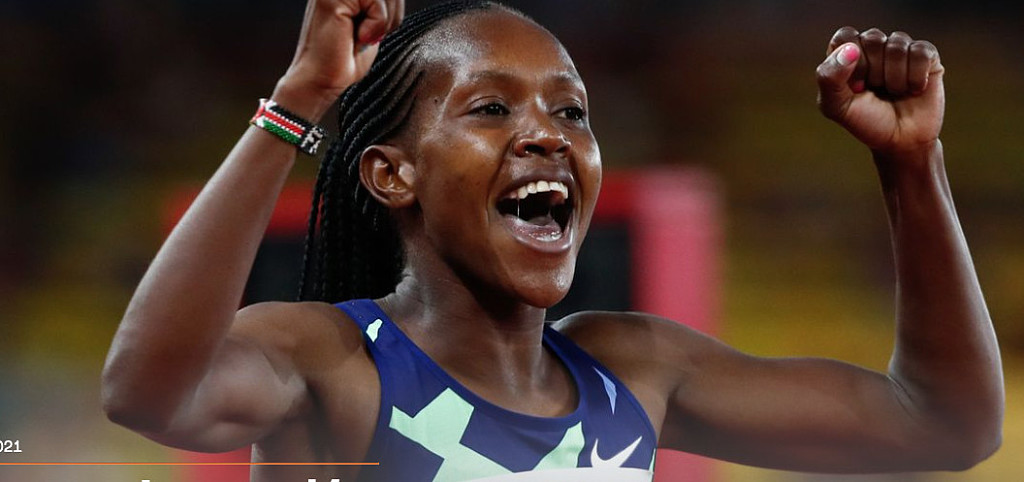
Kipyegon cruises to Kenyan 1500m record in Monaco
It’s all about keeping the faith.
Going into tonight’s 1500m at the EBS Herculis meeting in Monaco, world champion Sifan Hassan announced that she had asked for a pace of 61-second laps, which would add up to a second or so under the current world record of 3:50.07.
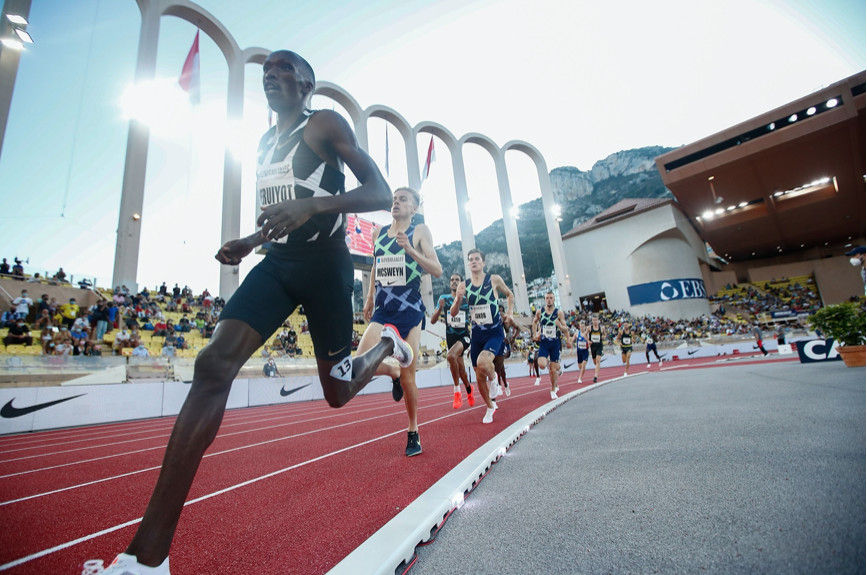
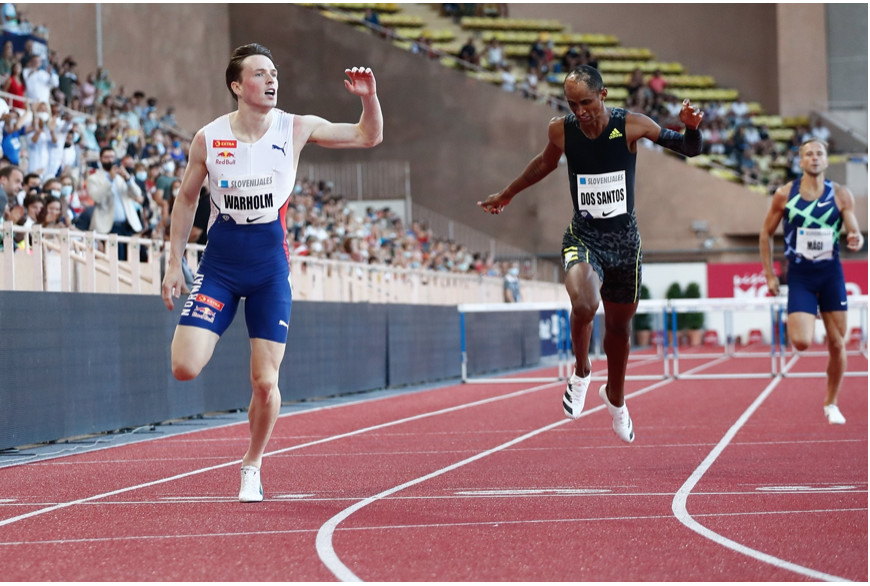
The Dutchwoman has set world records twice previously in Monaco, most recently over the mile two years ago, and she was feeling confident after rediscovering her love for the metric mile with a victory over Olympic champion Faith Kipyegon at the Wanda Diamond League meeting in Florence last month.
Hassan even floated the idea of adding the 1500m back into her Olympic schedule, having previously declared that she would attempt the 5000m-10,000m double.
She locked in behind the pacemaker from the beginning, her ambition obvious. Only Kipyegon and Ethiopia’s Freweyni Hailu dared to follow and the race was down to three when they reached the bell.
Hassan then turned the screws, but Kipyegon clung to her like a limpet down the back straight as the Dutchwoman stretched out her legs for the run home.
In the past three years races have inevitably gone Hassan’s way in this situation, her unmatched mix of speed and endurance proving irresistible. But not this time.
As they entered the final straight Kipyegon kicked hard, dashing past her rival and sprinting down the straight to win in 3:51.07, a Kenyan record and the fourth fastest time in history. In the last 90 metres she put two-and-a-half seconds into Hassan, who finished in 3:53.60, with Hailu third in a personal best of 3:56.28.
Despite her recent losses to Hassan, Kipyegon said she remained confident that her day would come.
“I knew Sifan was going for a fast race and my goal was to run a fast race here and I thank God that was,” she said. “I am really looking forward to Tokyo and I know it will be a very hard competition but I hope to go there and defend my title.”
Kipyegon gave birth to her first child in 2018, returning in 2019 to finish second to Hassan at the World Championships in Doha, but has now found an even richer vein of form than that which carried her to the Olympic title in 2016 and the world title in 2017. “I came back after giving birth and I feel like a role model for the young mothers out there and the young athletes,” she said. “I hope to show them that when you go for maternity leave, this does not mean the end of your career. You can come back strong and win races.”
Fellow Kenyan Timothy Cheruiyot was also a man on a mission tonight.
With his Olympic dreams hanging in the balance, the world 1500m champion dashed to the fastest time in the world for six years.
An out-of-sorts Cheruiyot was a shock fourth at the Kenyan Olympic trials last month, putting him in grave danger of missing selection. The situation has been complicated by the fact that second-placed Kamar Etiang has not completed the requisite number of anti-doping tests to qualify for the Olympic Games so his eligibility is in question.
That has left Cheruiyot in limbo just weeks before the Tokyo Games, but he thrust aside all that uncertainty to race with clear intent in Monaco.
In the fastest race of the year, he led at the bell and fought off all challenges, setting a personal best of 3:28.28 as four men dipped under 3:30.
Spanish surprise packet Mohamed Katir took almost five seconds from his personal best to finish second (3:28.76 national record) ahead of European champion Jakob Ingebrigtsen (3:29.25) and Australia’s Stewart McSweyn, who set an Oceanian record of 3:29.51 in fourth.
Cheruiyot revealed afterwards that a hamstring injury and the death of a relative on the day of the Kenyan trial had affected his performance there but he still hoped to be selected for the Olympics.
“Hopefully that will be the deciding performance to make the team for Tokyo,” he said.
Amos and Muir impress over two laps
On a night of high-quality middle distance running, Botswana’s Olympic medallist Nijel Amos roared back to top form, recording the fastest time of the year to down a field full of Olympic contenders.
With his arms flailing, Amos used his awkward but effective running style to propel himself past Kenya’s Emmanuel Kori (1:43.04) and Canada’s Marco Arop (1:43.26).
Britain’s Laura Muir also had the last laugh in a world-class 800m field, looming late to take the win in a big personal best of 1:56.73. Muir had never cracked 1:58 previously for the distance, but had the strength to haul in her training partner Jemma Reekie (1:56.96) and USA’s Kate Grace (1:57.20) in the final metres as all three women set personal best times.
Muir has decided to focus her energy on the 1500m in Tokyo but that will be no easy task as Kipyegon demonstrated.
Both 3000m steeplechase races were suffused with drama and unpredictability at the Stade Louis II.
The men’s race descended into confusion when an official rang the bell a lap too early, but world silver medallist Lamecha Girma still managed to run a world-leading time of 8:07.75 to take the win from Abraham Kibiwot, just 0.06 behind.
In the women’s race, 2015 world champion Hyvin Kiyeng made a break from the pack after two kilometres but misjudged the remaining laps and kicked too early. After crossing the line and hearing the bell for the actual final lap, the Kenyan tried to muster some energy to run another circuit. USA’s 2017 world champion Emma Coburn positioned herself to challenge Kiyeng as they approached the water jump, but Coburn stumbled at the hurdle and fell into the water losing all momentum, leaving Kiyeng to take the victory in 9:03.82, with world record-holder Beatrice Chepkoech second in 9:04.94 and Winfred Yavi third (9:05.45). Coburn regathered herself to cross the line in fourth place in 9:09.02.
Baker blasts to 100m victory
There was unpredictability too in the men’s 100m where the form book was upended as the ever-reliable Ronnie Baker claimed victory in 9.91, from African record-holder Akani Simbini (9.98) and Italian Marcell Jacobs (9.99).
World leader Trayvon Bromell, regarded by many as the man most likely to win the Olympic 100m crown in Tokyo next month, lacked his usual zip and could only finish fifth in 10.01.
World 100m champion Shelley-Ann Fraser-Pryce used her early speed to take the lead on the bend in the women’s 200m, but could not hold off the Olympic 400m champion Shaunae Miller-Uibo in the straight.
Miller-Uibo, who has chosen to focus on the 200m for Tokyo, won in 22.23 from Marie-Josee Ta Lou (22.25) with Fraser-Pryce third (22.48).
New world 400m hurdles record-holder Karsten Warholm returned to the competition track for the first time since his heroics in his hometown Oslo last week, eager to challenge his new “personal best” of 46.70.
He made a typically aggressive start, making up the stagger by the second hurdle, but ultimately he could not match the pace he set last week, crossing the finish line in a meeting record of 47.08, still the fourth fastest time of his career and faster than all but five other men in history.
He was pleased to maintain such a consistently high level of performance. “This was a good race so I’m satisfied,” he said.
Brazil’s Alison Dos Santos continued to build his Olympic medal credentials with a strong second place in 47.51, just outside his personal best of 47.34, also set in Oslo.
In the field, US pole vaulter Katie Nageotte carried her fine form to Europe to clear 4.90m and claim an impressive victory over world champion Anzhelika Sidorova and Olympic champion Katerina Stefanidi, who both cleared 4.80m.
A tight high jump competition was decided by a jump-off after both neutral athlete Mikhail Akimenko and Canadian Django Lovett were tied with best clearances of 2.29m. Akimenko then claimed the victory by leaping 2.32m in the decider.
World triple jump champion Yulimar Rojas had a tough night at the office, fouling four of her six jumps, including two that looked like they would have challenged the world record (15.50m). She led after five rounds with a best leap of 15.12m but could not find the board in the all-important sixth round under the Final 3 format being trialled in the Diamond League this year.
Jamaica’s Shanieka Ricketts took the win with 14.29m after she was the only one of the top three to register a legal jump in the final.
The men’s long jump also finished with an anti-climax after Miltiadis Tentoglou was the only one to hit the board in the final round (8.24m).
The women’s javelin was the only throwing event on the programme and saw a return to the winner’s circle for the veteran world record-holder Barbora Spotakova, who threw a season’s best of 63.08m in the sudden-death final round, the farthest mark ever achieved by a 40-year-old thrower.
by World Athletics
Login to leave a comment
Oslo Diamond League meeting has been postponed due to pandemic
The Bislett Games in Oslo on June 10 - the fourth event in this year’s World Athletics Wanda Diamond League programme - has been postponed.
Organisers have said it is "impossible to arrange a normal meeting on the planned date" based on the coronavirus reopening plan for Norway.
Norway's Government issued its plan to restart activity amid the pandemic on Wednesday (April 7) and organisers said "an international meeting such as the Bislett Games will probably not be possible before the middle or towards the end of June at the earliest".
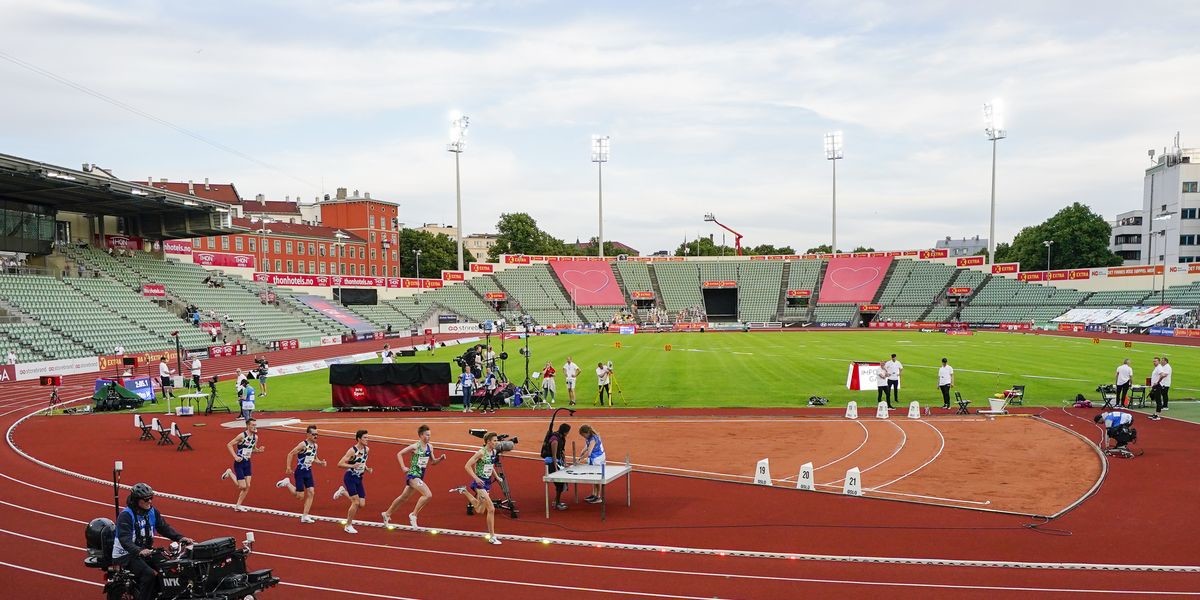
A repeat of last year's "Impossible Games" at an empty Bislett Stadium - which included socially distanced or rarely contested events, highlighted by a 300 metres hurdles world best of 33.78sec by Norway’s world 400m hurdles champion Karsten Warholm - has been ruled out.
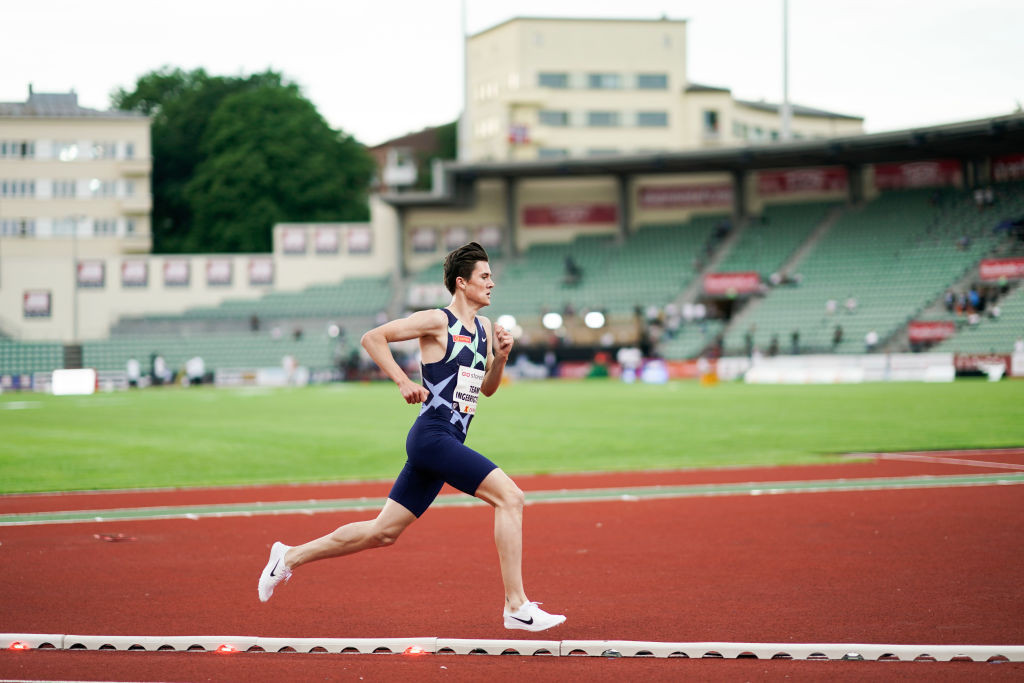
The new dates being considered are believed to be either early July prior to the rearranged Tokyo 2020 Olympic Games or in August.
The Diamond League board said it was clarifying the start to the season, which is due to open on May 23 in Rabat in Morocco, with Doha hosting the second meeting on May 28 and Rome the third on June 4.
World Athletics has produced a full, 14-meeting programme for this season’s Diamond League, which is due to conclude with a two-day final in Zurich from September 8 to 9.
by Mike Rowbottom
Login to leave a comment
World 1,500m champion Timothy Cheruiyot has missed out on the World Athletics Male Athlete of the Year Award
Cheruiyot was Kenya's sole flagbearer for the coveted award. World Athletics has released the final five nominees for the award with the winner expected to be announced virtually on December 5.
Uganda's world record holder in the 5,000m and 10,000m Joshua Cheptegei is the favorite for the gong. He broke world records at 5,000m (12:35.36), 10,000m (26:11.00) and 5km on the roads (12:51) and was fourth at the World Athletics Half Marathon Championships on his debut over the distance.
Two-time 400m hurdles world champion Karsten Warholm of Norway makes the cut for the award after a stellar season on the track.
He ran a world-leading 46.87 in the 400m hurdles, the second-fastest performance in history, and was undefeated in nine 400m/400m hurdles races and set a world best of 33.78 in 300m hurdles
Former world javelin champion Johannes Vetter, of Germany, is in the mix after winning eight of his nine javelin competitions and throwing world-leading 97.76m, the second farthest throw in history
World Pole vault record holder Mondo Duplantis of Sweden makes the shortlist. He broke the world record in the pole vault twice (6.17m and 6.18m) and produced the highest outdoor vault of all time (6.15m) and was undefeated in 16 competitions.
USA'S Ryan Crouser will be e hoping to break the trend and win the award. He was undefeated in 10 shot put competitions and his 22.91m world-leading performance moved him to equal third on the world all-time list
A three-way voting process determined the finalists. The World Athletics Council and the World Athletics Family cast their votes by email, while fans voted online via our social media platforms.
The Council’s vote counted for 50 per cent of the result, while the Athletics Family’s votes and the public votes each counted for 25 per cent of the final result.
by World Athletics
Login to leave a comment
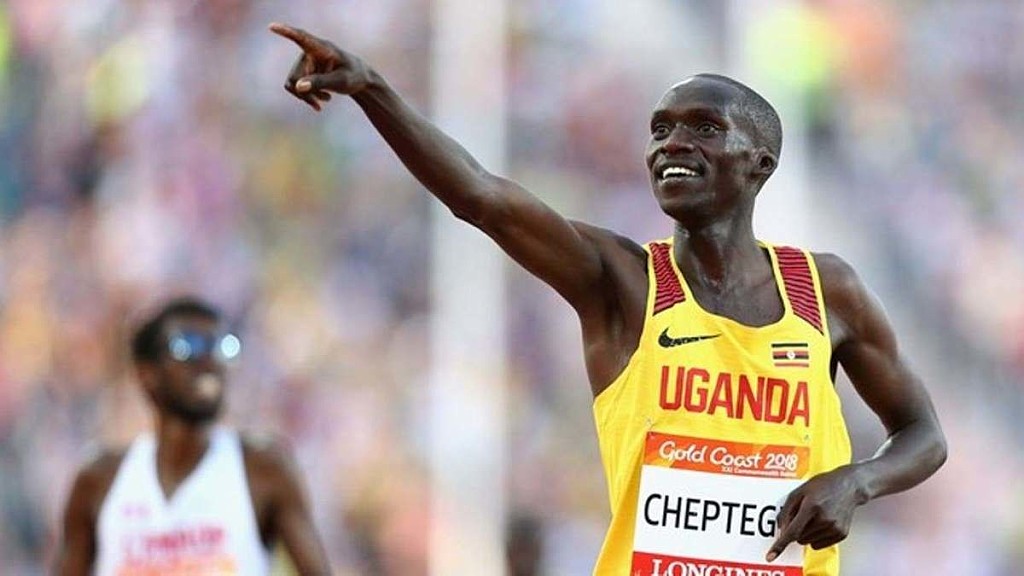
Joshua Cheptegei and Karsten Warholm headline nominees for Male World Athlete of the Year
World Athletics released its list of 10 nominees for Male World Athlete of the Year on Monday, and six of the finalists are runners. The list consists of 10 incredible athletes, each of whom have had amazing 2020 seasons despite having limited opportunities to compete, and it includes the likes of Joshua Cheptegei and Karsten Warholm.
Here are the six runners who have been nominated, along with their accomplishments in 2020 and why they deserve to win Male World Athlete of the Year.
Noah Lyles only raced a handful of times this year, all in July and August, but he finished his season undefeated. He had one second-place finish in a 100m race in Florida, but that was in a preliminary heat. Later that day, he ran 9.93 seconds in the finals to take the win. He also has the world-leading 200m time of 19.76, which he ran at the Monaco Diamond League.

Donavan Brazier, Like Lyles, Brazier went undefeated this year. He kicked the season off by setting an American 800m indoor record with a 1:44.22, and he also ran the outdoor 800m world-leading time in Monaco, where he won the race in 1:43.15. Racing in 600m, 800m and 1,500m events throughout the season, Brazier showed off his speed and endurance, often cruising to wins. On top of all that, after his final race of the year, news came out that he had been dealing with plantar fasciitis during these races, although he certainly didn’t let it slow him down too much.
Karsten Warholm, Once again, we have an undefeated athlete nominated. Warholm not only won all six of his 400mH races this year, but he also ran the six fastest times in the event in 2020. He’s the only athlete who ran sub-48 seconds this year (a feat which he accomplished five times), and he also ran the second-fastest 400mH time in history with a 46.87 in Stockholm in August. This was just 0.09 seconds off the world record of 46.78, which has stood since 1992. Finally, he also set the 300mH world record at a meet in Oslo, where he ran 33.78 seconds.
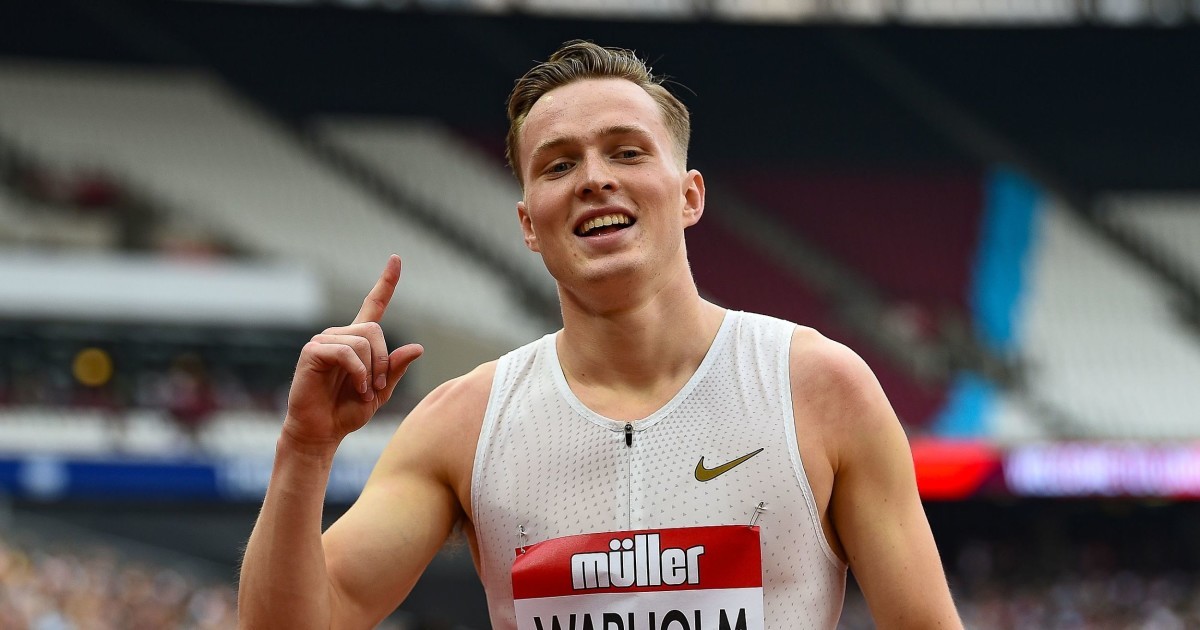
Timothy Cheruiyot, didn’t have an undefeated season, but he did remain perfect in his preferred event of 1,500m. He won each of his three 1,500m races in 2020, and he also set the world-leading time of 3:28.45, which he ran in Monaco. He also stepped out of his comfort zone with a 5,000m run in March. He recorded a time of 13:47.2, and while this result doesn’t even put him in the top 700 all-time among Kenyan runners, it’s still cool to see him broadening his horizons. We don’t expect to see him making the jump to longer races anytime soon, but if a 5,000m every now and then helps him with his endurance for the 1,500m, then all power to him.
Joshua Cheptegei, has had the year of his life. He raced four times in 2020 and broke three world records. He opened the year with a 5K road world record in Monaco, where he ran 12:51, but before he could continue his season, COVID-19 hit and put everything on hold. His time away from racing didn’t seem to faze him, though, because in his return to competition, he set the 5,000m world record (once again in Monaco) with a time of 12:35.36. Two months later, he followed that up with a 10,000m record of 26:11.00. He ran his season finale at the World Half-Marathon Championships in Poland, and while he didn’t win (he finished in fourth in 59:21), it was his debut at the distance, and he still has plenty of time to chase that world record in the coming years.
Jacob Kiplimo, only raced three times in 2020, but he won each event, and he showed impressive range as he performed well across three different distances. He opened his season with a 5,000m, which he ran in 12:48.63 (the second-fastest time in Ugandan history, behind only Cheptegei). A little over a week later, he ran a 3,000m in 7:26.64 to set the Ugandan national record and world-leading time in the event. Finally, he won his first world title when he ran to victory in 58:49 at the World Half-Marathon Championships, setting another Ugandan record along the way.
by Ben Snider-McGrath
Login to leave a comment
Kenya’s Timothy Cheruiyot makes the cut for Athlete of the Year
World 1,500 meters champion Timothy Cheruiyot has made the 10-man shortlist for the World Athletics Male Athlete of the Year.
The Kenya Prisons officer ran world-leading 3:28.45 over 1,500m and was undefeated in three races in his speciality.
Cheruiyot faces a herculean task to bag the award with Uganda's Joshua Cheptegei the front runner for the award after a stellar season.
Cheptegei broke world records at 5,000m (12:35.36), 10,000m (26:11.00) and 5km on the roads (12:51) and was fourth at the World Athletics Half Marathon Championships on his debut over the distance.
His Ugandan counterpart Jacob Kiplimo won World Half Marathon title in a championship record of 58:49 and ran a world-leading 7:26.64 over 3,000m—the fastest time in the world since 2007.
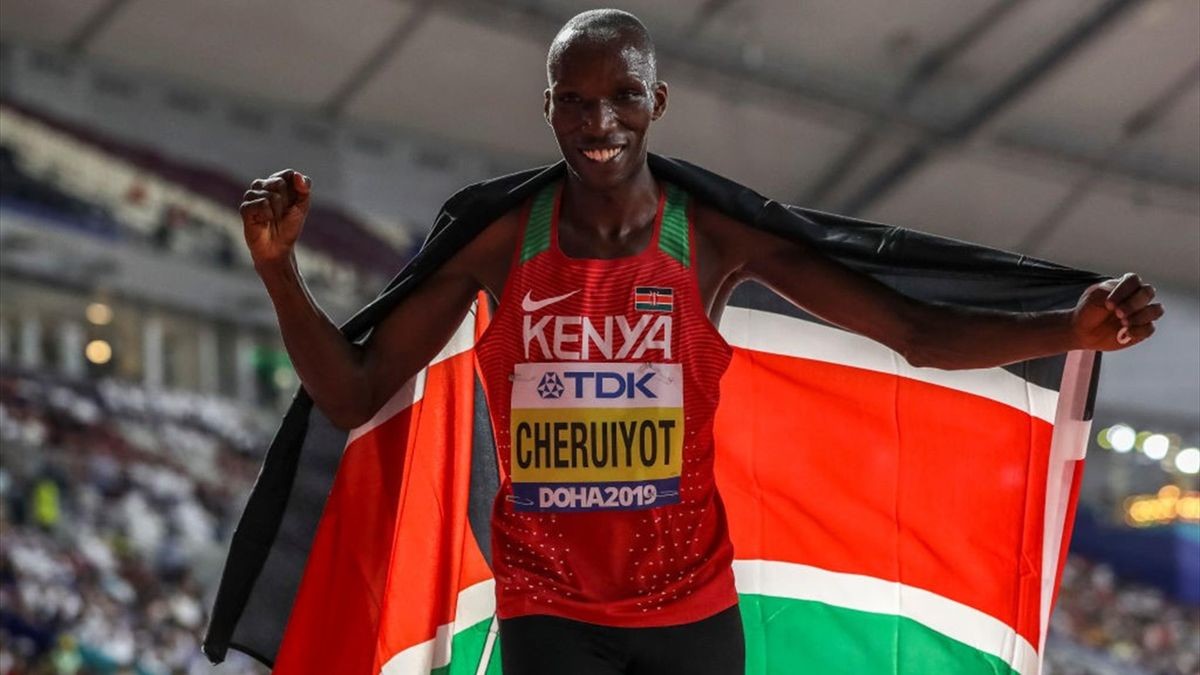
Donovan Brazier of the United States of America has also made the cut after running a world-leading 800m times of 1:44.22, North American indoor record and outdoors (1:43.15). He also won all seven of his races over all distances.
World 400m hurdles champion Karsten Warholm of Norway is also in contention for the coveted award. He has a world-lead of 46.87 in the 400m hurdles, the second fastest performance in history and was undefeated in nine 400m/400m hurdles races. He also set world best of 33.78 in 300m hurdles.
Others in the mix include USA sprint sensation Noah Lyles, who was undefeated in five finals and ran a world leading time of 19.76 over 200m
World javelin bronze medalist Johannes Vetter, of Germany, USA's shot put specialist Ryan Crouser and Swedish duo of Daniel Stahl and Mondo Duplantis also made the cut. A three-way voting process will determine the finalists.
The World Athletics Council and the World Athletics Family will cast their votes by email while fans can vote online via the WA social media platforms. Individual graphics for each nominee will be posted on Facebook, Twitter and Instagram this week; a 'like' on Facebook and Instagram or a retweet on Twitter will count as one vote.
The World Athletics Council’s vote will count for 50 per cent of the result while the World Athletics Family’s votes and the public votes will each account for 25 per cent each of the final result. Voting for the World Athletes of the Year closes at midnight on November 15.
by William Njuguna
Login to leave a comment
Britain’s Laura Muir and Uganda’s Joshua Cheptegei among World Athletics awards nominees
Britain’s Laura Muir is among the nominees for the female world athlete of the year honor, while Uganda’s Joshua Cheptegei is on a shortlist for the male prize at the World Athletics Awards.
This year the global governing body’s awards event will be held virtually on Saturday December 5.
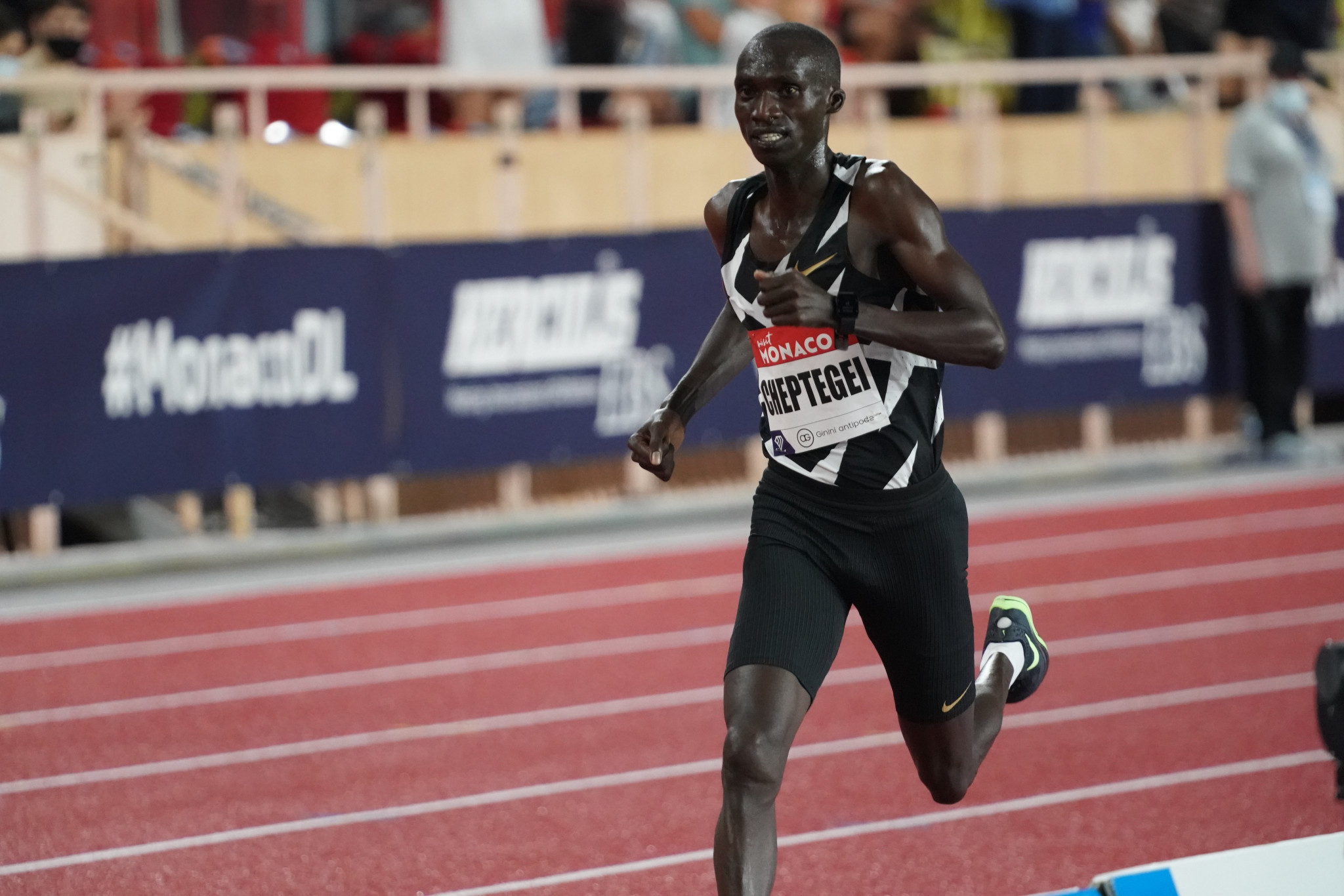
Muir clocked 1500m times of 3:57.40, 3:57.86 and 3:58.24 to lead the world rankings and set a British 1000m record of 2:30.82 in 2020, while Cheptegei broke three world records throughout the year – running 12:51 for a road 5km, 12:35.36 for 5000m on the track and 26:11.00 for 10,000m on the track.
Ethiopia’s Letesenbet Gidey, who set a world record of 14:06.62 over 5000m, and Netherlands’ Sifan Hassan, who recorded a world record distance of 18,930m in the one-hour run and broke the European 10,000m record with 29:36.67, are also among the female nominees.
The men’s shortlist also features Sweden’s world pole vault record-breaker Mondo Duplantis and Norway’s Karsten Warholm, who ran a world-leading 46.87 in the 400m hurdles and was unbeaten in that event.
Female world athlete of the year nominees: Femke Bol, Netherlands; Letesenbet Gidey, Ethiopia; Sifan Hassan, Netherlands; Peres Jepchirchir, Kenya; Faith Kipyegon, Kenya; Laura Muir, Great Britain and Northern Ireland; Hellen Obiri, Kenya; Yulimar Rojas, Venezuela; Elaine Thompson-Herah, Jamaica; Ababel Yeshaneh, Ethiopia
Male world athlete of the year nominees: Donavan Brazier, USA; Joshua Cheptegei, Uganda; Timothy Cheruiyot, Kenya; Ryan Crouser, USA; Mondo Duplantis, Sweden; Jacob Kiplimo, Uganda; Noah Lyles, USA; Daniel Stahl, Sweden; Johannes Vetter, Germany; Karsten Warholm, Norway
A three-way voting process will determine the finalists. The World Athletics Council and the World Athletics Family will cast their votes by email, while fans can vote online via the World Athletics’ social media platforms.
As well as male and female athlete of the year honors, the World Athletics Awards will include the president’s award, coaching achievement award and athletics photograph of the year, as well as a Covid inspiration award, athletes community award and member federations award.
Last year Eliud Kipchoge and Dalilah Muhammad were named world athletes of the year, while the 2018 winners were Kipchoge and Caterine Ibarguen.
by Athletics Weekly
Login to leave a comment
Impressive victories by Jacob Kiplimo, Christian Taylor and Faith Kipyegon at the Golden Spike, a World Athletics Continental Tour Gold meeting in Ostrava
Kiplimo’s track break-out:
In the men’s 5000m, the 19-year-old Kiplimo fought off Selemon Barega in a fierce homestraight brawl to take the win in 12:48.63, one of seven meeting records to fall on a clear night in this eastern Czech city where 3000 spectators were allowed entry to Mestsky Stadium to help celebrate the meeting’s 59th edition.
Just 3:30 into the race it was Barega, running behind pacer Lamecha Girma, who looked to be in control. With four laps to go he was already all alone and well ahead of the sprawled out pack.
“I wanted the fast time so I kept on pushing,” said Kiplimo, the silver medallist in the senior race at last year’s World Cross Country Championships. “It was a fight in the home straight. And it was wonderulf.”
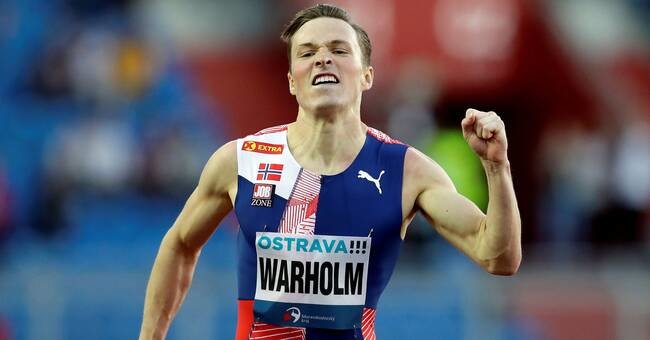
It was also the first big-meet victory for the teenager. More are likely on their way.
Strong, solo Kipyegon:
Faith Kipyegon produced a powerful performance to take the 1500m in convincing fashion.
Controlling the tempo from the 800m point, the Olympic champion pulled away for good with some 250 metres remaining, with Laura Weightman briefly giving chase. Kipyegon clocked 3:59.05, a season's best and another meeting record.
Weightman, who was briefly passed by Jemma Reekie as they approached the final bend, overtook the Scot in the homestretch to finish second in 4:01.96 with Reekie further back in 4:03.25.
Taylor triples 17.42m world lead:
In typical fashion, Christian Taylor produced the goods in the final round to win the triple jump, reaching a world-leading 17.46 in the final round to steal the win from Hugues Fabrice Zango, who controlled the competition since the second round when he jumped 17.42m.
Taylor needed time to find his rhythm, shaking off a pair of back-to-back modest efforts with a 17.12m jump in round three. He didn’t produce another measured jump until his last.
Warholm dominates:
Two-time world 400m hurdles champion Karsten Warholm extended his unbeaten streak to ten with a convincing 47.62 victory, another meeting record.
It wasn’t quite the follow-up he was expecting after his stunning 46.87 European record in Stockholm where a clip of the final hurdle dashed his world record ambitions there. This time, he chopped his stride badly as he approached the ninth barrier, but if he was disappointed, he hid it well.
“It’s always nice to get a win, but I was a little surprised by the time to be honest,” said Warholm, who was flown to Ostrava on Sunday on a private jet.
“I had a little stutter step, I had to switch (lead legs). There was nothing dramatic about it, I just had to do a switch. But that probably affected my time. Everything that breaks your rhythm is going to impact your finish time.”
Ludvy Vaillant of France was second in 49.14, a season’s best.
Hassan out-sprints Chelangat:
Sifan Hassan, Sheila Chelangat and Yasemin Can waged a strong battle in the women’s 5000m, but through it all, Hassan, the world 1500m and 10,000m champion, was just biding her time. That came, she decided, with about 300 metres to go, when she pulled past Chelangat and ran off down the backstretch and eventually to a convincing 14:37.85 victory.
Chelangat, who took care of much of the pacesetting chores, was second, passing Can in the waning stages to clock in 14:40.51, a career best for the 22-year-old Kenyan. Can, running in her first race on the track this year, was next in 14:40.70.
800m wins for Muir and Wightman:
Laura Muir was again the class of the field in her event, this time the 800m, turning in a solid 1:58.84 victory. Poland’s Sofia Ennaoui, who was second to the Scot in the Silesia 1500m on Sunday, was second again in 2:00.82.
Jake Wightman took down a solid field in the men’s race in 1:44.18, a career best for the 26-year-old who's better known for his 1500m exploits. The performance lopped a hefty sum from his previous best of 1:44.61 set two years ago.
by World Athletics
Login to leave a comment
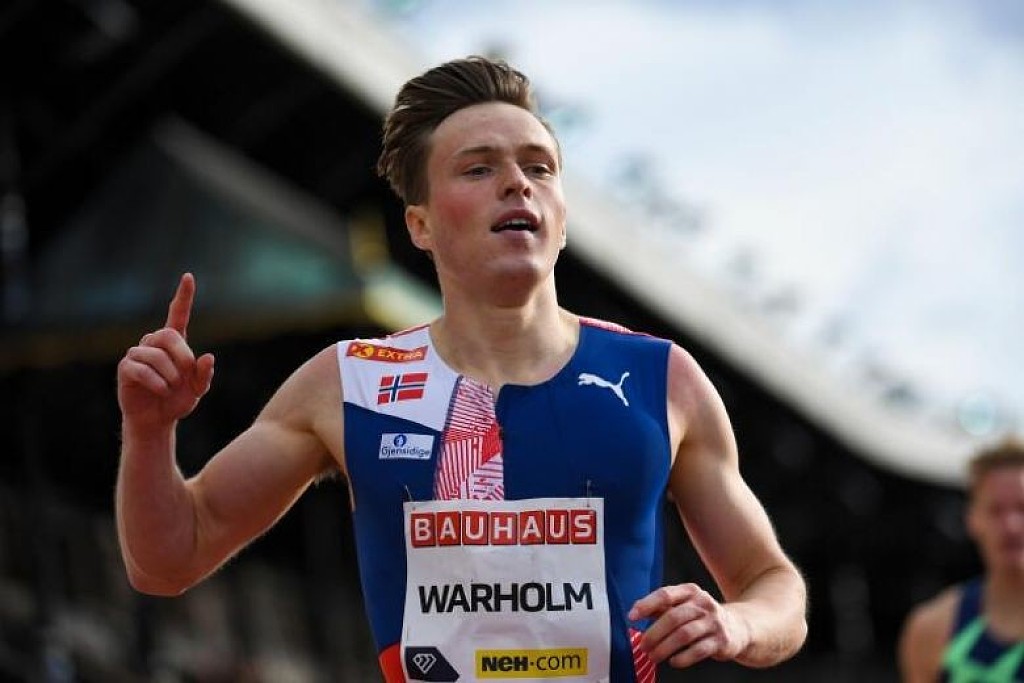
Norway`s Karsten Warholm powered to the second fastest 400m hurdles performance of all time to highlight the Bauhaus Galan Wanda Diamond League meeting in Stockholm on Sunday
Running in lane eight, Warholm went out in his typically rampaging style, building a visible lead by the third hurdle. He then added to it with each stride, powering off the final bend and into the home straight very much alone, showing no signs of slowing down. For some moments, Kevin Young’s 46.78 world record, set at the Barcelona Olympic Games 28 years ago, looked to be under serious threat.
But it didn’t come to pass after the 24-year-old Norwegian clipped the final barrier, costing him valuable ticks of the clock. He nonetheless did claw his way closer to Young’s venerable performance, clocking 46.87 to break his own European record by 0.05 seconds and solidify his No.2 position on the world all-time list.
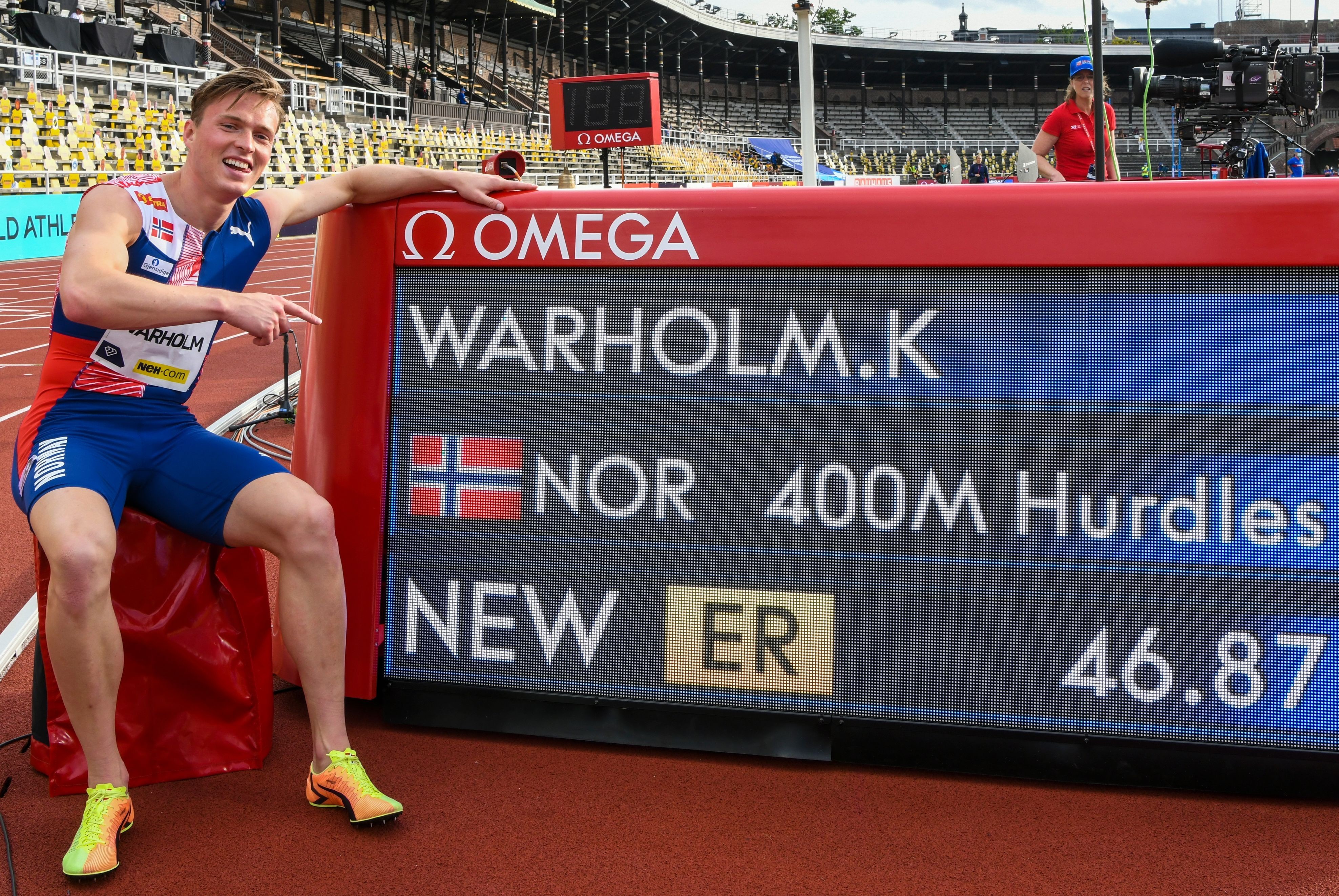
“I hit that last hurdle because I went really hard for the first nine, and stuff like this happens,” said Warholm, who sped to a 47.10 performance in his season’s opener in Monaco just over one week ago.
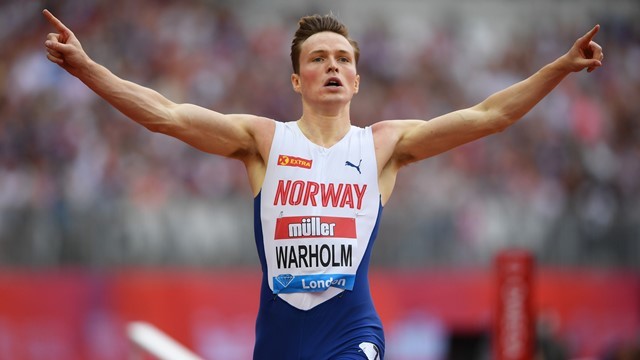
“But I think I was rewarded by just going all in at the end and I got a great time. It's a great lesson for me to always run until the finish line.”
Frenchman Wilfried Happio was second in 49.14, just ahead of compatriot Ludvy Vaillant who clocked 49.18.
But he wasn’t finished. Warholm chose to double back 94 minutes later in the 400m and won big there as well, clocking 45.05, well clear of Slovenia’s Luka Janezic who clocked 45.85.
by World Athletics
Login to leave a comment
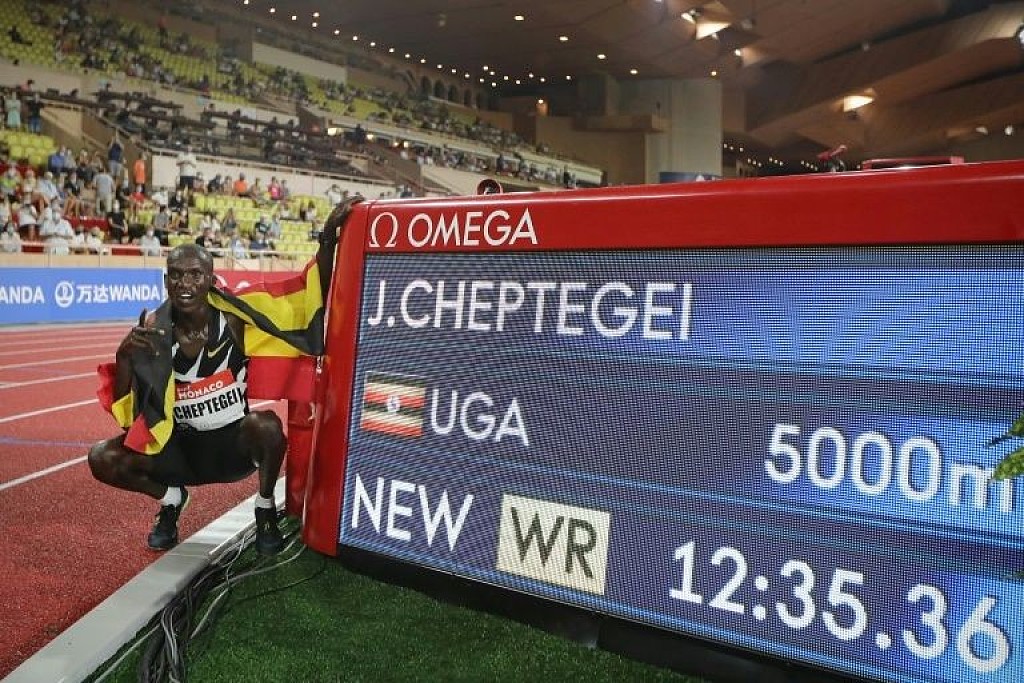
Lots of fast times in Monaco including a new 5000m world record
Ugandan Joshua Cheptegei broke a 16-year-old world record in the 5000m by nearly two seconds, clocking 12:35.36 in Monaco on Friday.
Cheptegei, the 2019 World 10,000m champion who reportedly needed 80 hours to travel from Uganda for the Diamond League meet, took 1.99 seconds off Ethiopian legend Kenenisa Bekele‘s world record from 2004. Bekele is also the 10,000m world-record holder and the second-fastest marathoner in history.
“It took a lot of mind setting to keep being motivated this year because so many people are staying at home, but you have to stay motivated,” Cheptegei said, according to organizers. “I pushed myself, I had the right staff with me, the right coach.”
Cheptegei, 23, came into Monaco as the 73rd-fastest man in history with a personal best of 12:57.41. But he declared before the meet that the world record was his goal, given he had no Olympics or world championships to peak for this year.
“It is very difficult to run any world record,” was posted on the Instagram of Bekele, who is part of the NN Running Team with Cheptegei. “Congratulations to my teammate [Cheptegei].”
The Diamond League next moves to Stockholm on Aug. 23.
In other events Friday, Noah Lyles easily won a 200m after raising a black-gloved first before the start. More on Lyles’ gesture and victory here.
Donavan Brazier extended a year-plus 800m win streak, clocking 1:43.15 and holding off countryman Bryce Hoppel by .08. Brazier won his last seven meets, including national, world and Diamond League titles in 2019, when he broke a 34-year-old American record.
Olympic silver medalist Orlando Ortega of Spain won the 110m hurdles in 13.11 seconds, overtaking world champion Grant Holloway. Holloway, who won worlds in 13.10 last autumn, finished fourth in 13.19.
Timothy Cheruiyot followed his 2019 World title by clocking his second-fastest 1500m ever. The Kenyan recorded 3:28.45, holding off Norwegian 19-year-old Jakob Ingebrigtsen, who set a European record of 3:28.68.
Sifan Hassan, the world’s top female distance runner, dropped out of the 5000m with two and a half laps left while in the lead pack. Two-time world champion Hellen Obiri won in 14:22.12, surging past Ethiopian Letesenbet Gidey on the final lap.
Karsten Warholm ran the joint eighth-fastest 400m hurdles in history, a 47.10 against a field that lacked rivals Rai Benjamin and Abderrahman Samba. Warholm, the two-time world champion, ranks second in history with a personal best of 46.92, trailing only American Kevin Young‘s 46.78 from the 1992 Olympics.
American Lynna Irby won her Diamond League debut with a 50.50 in the 400m. Irby, the second-fastest American in 2018, failed to make the 2019 World team. On Friday, she beat Wadeline Jonathas, the top American in 2019.
Login to leave a comment
Warholm, Kipyegon, Cheruiyot and Kendricks are set to compete at the Wanda Diamond League meeting in Monaco on August 14
Herculis organizers have announced another four global champions who are set to compete at the Wanda Diamond League meeting in Monaco on August 14.
Two-time world 400m hurdles champion Karsten Warholm will compete in Monaco for the first time in his career. The 24-year-old, who set a world best for 300m hurdles at Oslo’s Impossible Games last month, will have one eye on Kevin Young’s meeting record of 47.60, set just five days after the US hurdler set a world record of 46.78 to win the 1992 Olympic title.
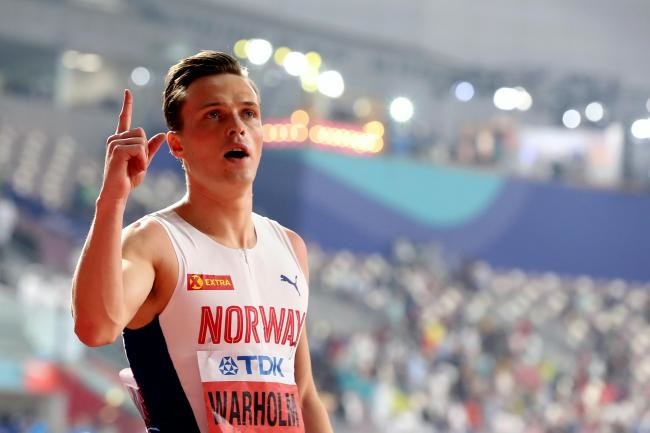
"I've always wanted to run in Monaco because of the track," said Warholm. "I know people have run fast there before, and I've trained there too. It’s a nice stadium and I know I might be able to run even faster on it.
"In Norway we've been able to train very well, so my shape is actually good," he added. "I was hoping to get a chance to test myself, so when the opportunity came for Monaco, that was nice."
Olympic 1500m champion Faith Kipyegon and training partner Timothy Cheruiyot, the world 1500m champion, will also be in action. Kipyegon, who’s also making her Herculis debut, will contest the 1000m in which she’ll face world 800m champion Halimah Nakaayi and European 1500m champion Laura Muir. Cheruiyot, meanwhile, will line up for his specialist distance to take on Jacob and Filip Ingebrigtsen.
Two-time world champion Sam Kendricks has been confirmed for the pole vault. The North American record-holder will face world record-holder Mondo Duplantis, whose participation was announced earlier this month.
Other clashes include Olympic silver medalist Orlando Ortega and world bronze medalist Pascal Martinot Lagarde in the 110m hurdles, Ukrainian duo Yaroslava Mahuchikh and Yuliya Levchenko and world heptathlon champion Katarina Johnson-Thompson in the high jump, and world bronze medalist Marie-Josee Ta Lou and Ajla del Ponte in the 100m.
They will all join the previously announced stars, including double world champion Sifan Hassan, world 5000m champion Hellen Obiri, world 200m champion Noah Lyles, two-time world triple jump champion Yulimar Rojas and world 10,000m champion Joshua Cheptegei.
by World Athletics
Login to leave a comment
Noah Lyles’s world record tease
It looked like Noah Lyles had set a 200m world record, but it turned out he ran a little short
The second modified event of the 2020 Diamond League schedule, the Inspiration Games, was held on Thursday, and the penultimate event of the day, the men’s 200m, produced a lot of drama. Current 200m world champion Noah Lyles was one of three competitors lining up for the race, and he dominated, crossing the line in 18.91 seconds, absolutely smashing Usain Bolt‘s world record of 19.19. Except… it turned out that he’d run in the wrong lane and only covered 185m. For a few minutes, though, Lyles set the track world on fire.

World record tease
When Lyles first crossed the line and everyone still believed he had broken the world record, there was talk on track Twitter that it had been a wind-aided run and wouldn’t count as an official record. Even if it had been wind-aided, that would still be an incredible run. He wouldn’t have just beaten Bolt’s record, he would have obliterated it. Unfortunately for everyone (Lyles, the track world and whoever put him in the wrong lane), there was a mistake and he ran 15m short. Once everything was sorted out, Lyles tweeted, “You can’t be playing with my emotions like this … Got me in the wrong lane.” We think it’s safe to assume that he was not amused by the error.
De Grasse and Felix
Lyles’s run and all of the confusion that came with it stole the show on Thursday, but there were some other great (and legit) race results before that mishap occurred. Canada’s Andre De Grasse raced the 100-yard dash against Jimmy Vicaut of France and Olympic 110m hurdles champion Omar McLeod of Jamaica, grabbing the win in 9.68. This time equates to about a 10.59 100m run, which is far off his personal best at the distance. Still, a win is a win, and De Grasse continues to show he’s in good shape as the world creeps back toward a regular racing schedule.
Another big result came from U.S. Olympic champion Allyson Felix, who won the 150m race and set her PB at the distance with a time of 16.81. She upset pre-race favourite Shaunae Miller-Uibo of the Bahamas for the win. Felix ran alone in Walnut, Calif., while Miller-Uibo raced in Florida and the third competitor, Swiss world championship 200m bronze medallist Mujinga Kambundji, raced in Zurich. After the race, Felix said it was “very strange” racing alone on the track. “It feels sort of like practice, but not even that, because there are no teammates.”
2020, the year of off-distance racing
Since races slowly began to return, there have been a lot of irregular, off-distance events being contested. At the Impossible Games in June, Karsten Warholm set the 300m hurdle world record and the Ingebrigtsen brothers ran a 2,000m race. Thursday saw the men’s 100-yard and women’s 150m races, as well as a women’s 300m hurdle event. Who knows, maybe the Diamond League will end up adopting some of these rare events and using them in the official 2021 schedule.
by Running Magazine
Login to leave a comment
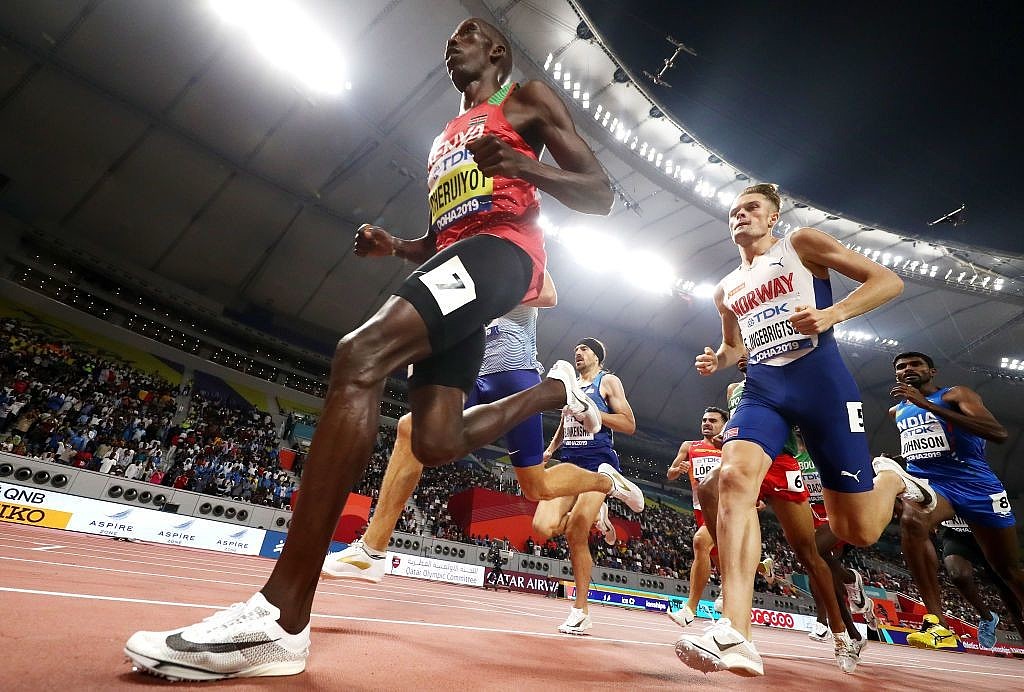
The Oslo’s Impossible Games will be the biggest meet of the track season so far
The first big track meet of the summer is Oslo’s Impossible Games on June 11—an event which replaced the Oslo Diamond League, which was cancelled due to the coronavirus pandemic.
The meet will have a limited lineup of events (just 13 in all) and very few athletes competing (not even 50), but there will be many exciting races and competitions, including solo runs, shots at European records and world record attempts. This is not an event that track fans will want to miss, but if you can’t watch it all, here are some highlights you might want to try to catch.
At 8:35 p.m. local time (2:35 p.m. ET), Norway’s Karsten Warholm will run a solo race as he shoots for the 300mH world record. Warholm is the two-time defending world champion in the 400mH, and he has a PB of 34.26 in the 300mH, which is actually faster than the current world record, although he ran it indoors. On June 11, he’ll run outdoors in Oslo’s Bislett Stadium to try and break the current record of 34.48.
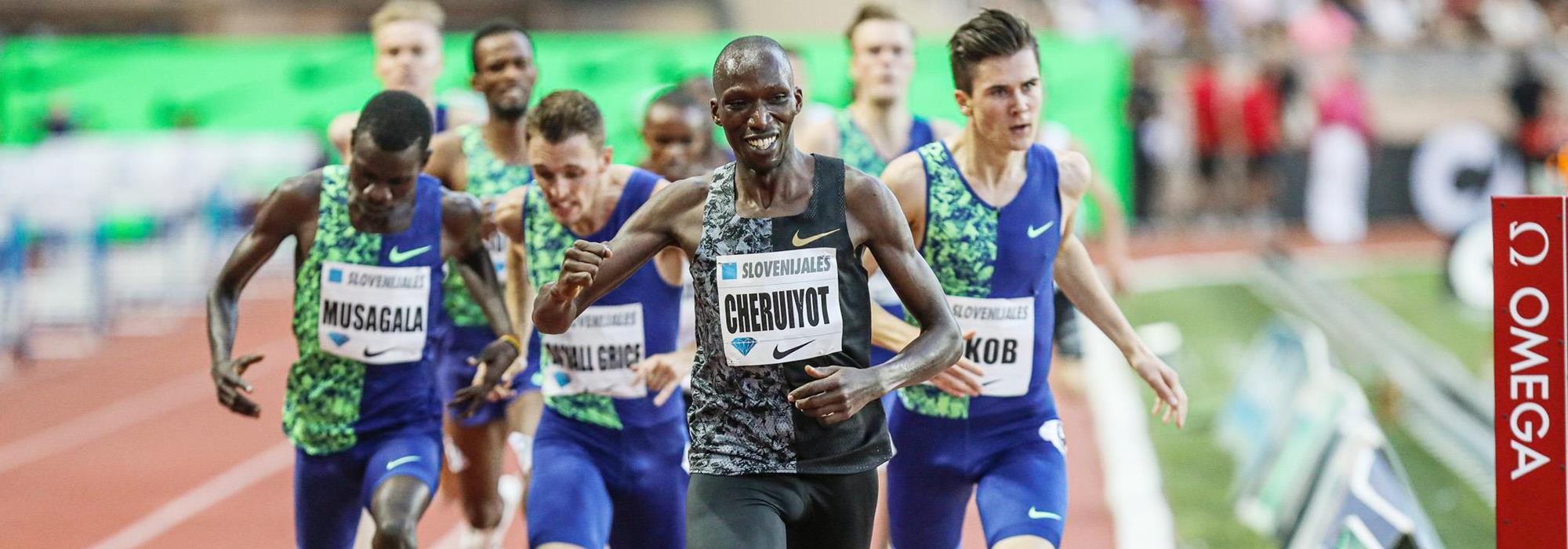
Henrik, Filip, and Jakob Ingebrigtsen will run in a 2,000m team event at 8:50 Oslo time (2:50 ET) along with fellow Norwegians Narve Gilje Nordås and Per Svela. The all-Norwegian team will run in Oslo and face-off against a team of Kenyans who will run in Nairobi. The Kenyan team (dubbed Team Cheruiyot) will include 2017 and 2019 1,500m world champions Timothy Cheruiyot and Elijah Manangoi.
All 10 runners will go at once (the race will be broadcast live on a split screen), and three athletes must finish from each team. The team with the fastest cumulative time from their top-three runners wins.
This will be a fun event to watch as it is, but there will also be a couple of record attempts in this race as well to add to the excitement. Team Ingebrigtsen will be chasing the European 2,000m record of 4:51.39, and Team Cheruiyot will look to capture the 2,000m world record of 4:44.79.
Later on in the evening at 9:30 p.m. (3:30 ET), Norwegian cross-country skiing star Therese Johaug will run a solo 10,000m race. As a skier, Johaug has three Olympic medals and multiple world championship golds to her name, but in 2019 she surprised the world by adding a track and field win to her resume when she won the Norwegian 10,000m national championships in 32:20.86.
This was the fifth-fastest time ever run by a Norwegian woman, and to make it more impressive, she won the race in regular running shoes rather than spikes. Hopefully she’ll wear some faster footwear at the Impossible Games so we can see just how fast she’s capable of running.
by Ben Snider-McGrath
Login to leave a comment

Ingebrigtsen v Cheruiyot: Impossible Games take shape
A world record attempt in the hurdles, a star-studded pole vault battle and a long distance showdown between Norway and Kenya in the middle distance will all be on the agenda when the Impossible Games take place in Oslo next month.
Kenyan middle-distance star and reigning 1500m Diamond League Champion Timothy Cheruiyot is to go head to head with Norway’s Ingebrigtsen brothers in a one-off, team event at the Bislett Impossible Games next month.
The Ingebrigtsens will run in Bislett while Cheruiyot-led rival team will compete in Nairobi, in what Oslo meeting director Steinar Hoen described as “the first virtual race at such a level in the history of athletics”.
The Maurie Plant Memorial Race, named in honour of the former Bislett organising committee stalwart, will see the two teams battle it out in an innovative new format over 2000 metres.
Both teams will start with five runners and end with three, and the winner will be the team with the best overall time from their top three runners.
A Wanda Diamond League exhibition event, the Impossible Games were conceived by Bislett Games organisers to allow this year's Oslo Diamond League meeting to go ahead under Norway's coronavirus regulations.
Instead of the usual, elite-level hunt for Diamond League points, the Impossible Games will instead showcase the innovative spirit of athletics with a series of set-piece exhibition events.
Beyond the 2000m battle, the programme is taking shape for the Games, which will take place at Bislett Stadium on June 11.
Confirmed events now include:
A long-distance pole vault showdown involving world-record holder Mondo Duplantis and record Diamond League Champion Renaud Lavillenie.
A 300m hurdles world record attempt from World Champion and Norwegian star Karsten Warholm
A Norway vs Finland duel in the women’s 200m hurdles
An all-Scandinavian discus competition involving Swedish World Champion Daniel Ståhl.
A Norwegian record attempt over 1000m by Filip Ingebrigtsen.
The meeting will be shown on Norwegian public broadcaster NRK, with commentary from British middle-distance legend and 2000m European record holder Steve Cram.
Login to leave a comment
Finland, the Czech Republic and Norway are all preparing for track meets in June
After weeks and weeks of race cancellations, there’s finally some good news coming from the world of track and field: meets are set to be held in Norway, the Czech Republic and Finland in June.
Each of the meets will have limited events and restrictions on the number of people present, but professional track and field will officially be back all the same. They aren’t the Diamond League or Olympic competitions you’d expected to watch this summer, but they’ll be something to watch, and hopefully a sign of more events to come.
Norway’s the Impossible Games will be held in Oslo on June 11, the same date that was set for the 2020 Oslo Diamond League. There will be a small programme of events, including a world record attempt in the 300m hurdles by Norway’s Karsten Warholm, the two-time defending world champion in the 400mH.
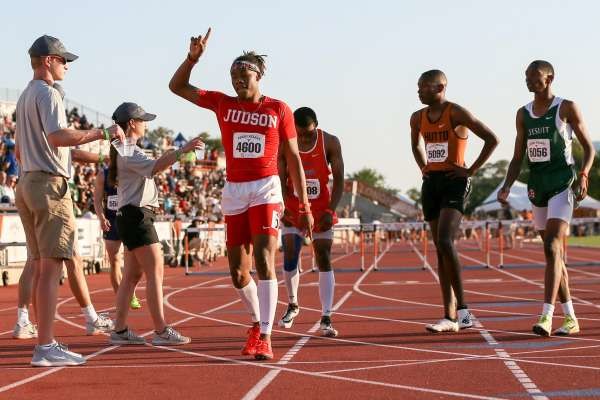
The Impossible Games will also feature 100m, 200m, 600m and 3,000m races, as well as some field events. No spectators will be in the stadium for the event, but it will be broadcast live on television.
World Athletics reported on a Czech government announcement that says as of May 25, public gatherings of up to 50 people will be permitted. Thanks to these looser restrictions, the Czech Athletics Federation has plans to start a six-event series, with the first meet set for June 1.
The meet schedule and competition lineup has yet to be finalized, but confirmed events include women’s javelin, men’s shot put and men’s 300m. The dates of the series’ following five events haven’t been announced, but organizers say they will include a different lineup of competitions than the first.
Maximusport, a Finnish sports website, reported that track and field events will make a return on June 7 in Lahti, Finland. In order to follow government guidelines for COVID-19, only 50 people will be allowed on the field or track at one time and the number of athletes for each event will be limited.
Although runners will have no choice but to get close with their competitors on the track, field athletes will be asked to keep a safe distance between themselves at all times. Few events have been confirmed for the first competition, but 200m hurdles and 3,000m races will reportedly be part of the programme.
Norway, the Czech Republic and Finland have all seen steady drops in coronavirus numbers over the last month, and they have reported fewer than 300 COVID-19-related deaths each.
by Ben Snider-McGrath
Login to leave a comment
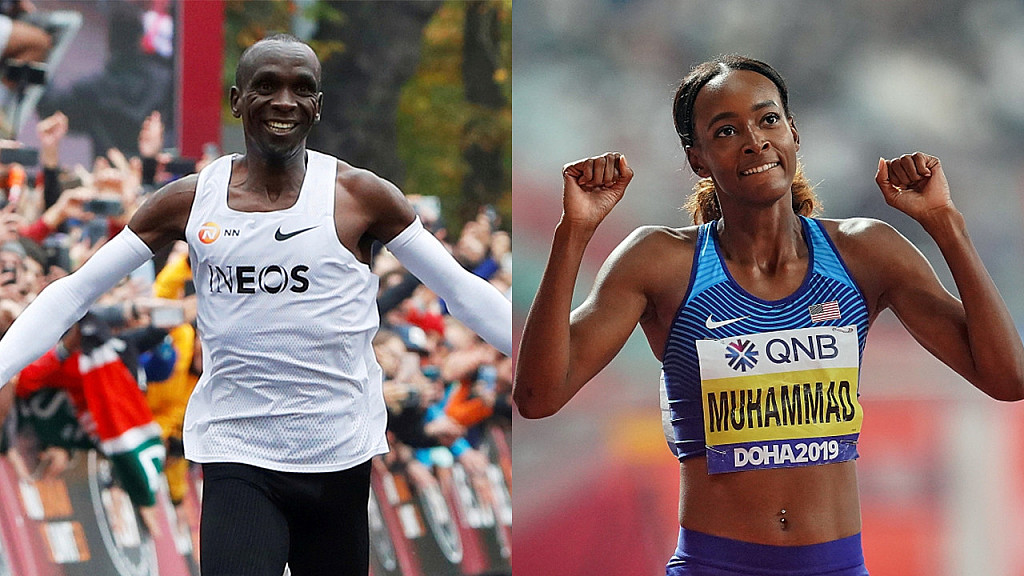
Eliud Kipchoge and Dalilah Muhammad named World Athletes of the year
Record-breakers Dalilah Muhammad and Eliud Kipchoge were named the World Athletics athletes of the year on Saturday.
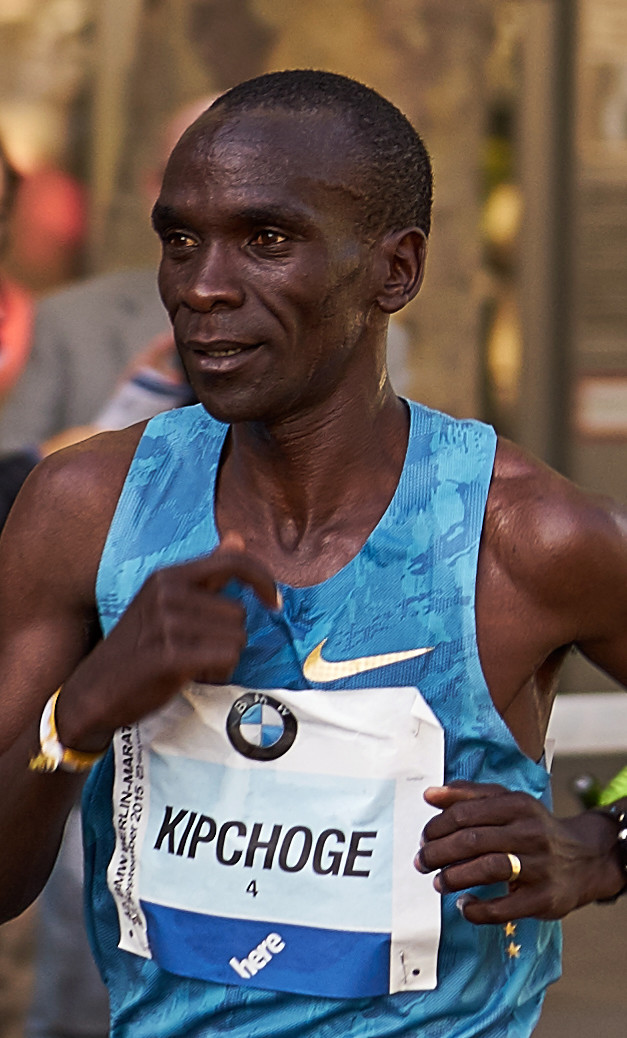
Muhammad, who twice lowered the 400m hurdles world record last season, became the first athlete in her event to take the honor since Brit Sally Gunnell in 1993. And the first American woman to earn it from any event since Allyson Felix in 2012.
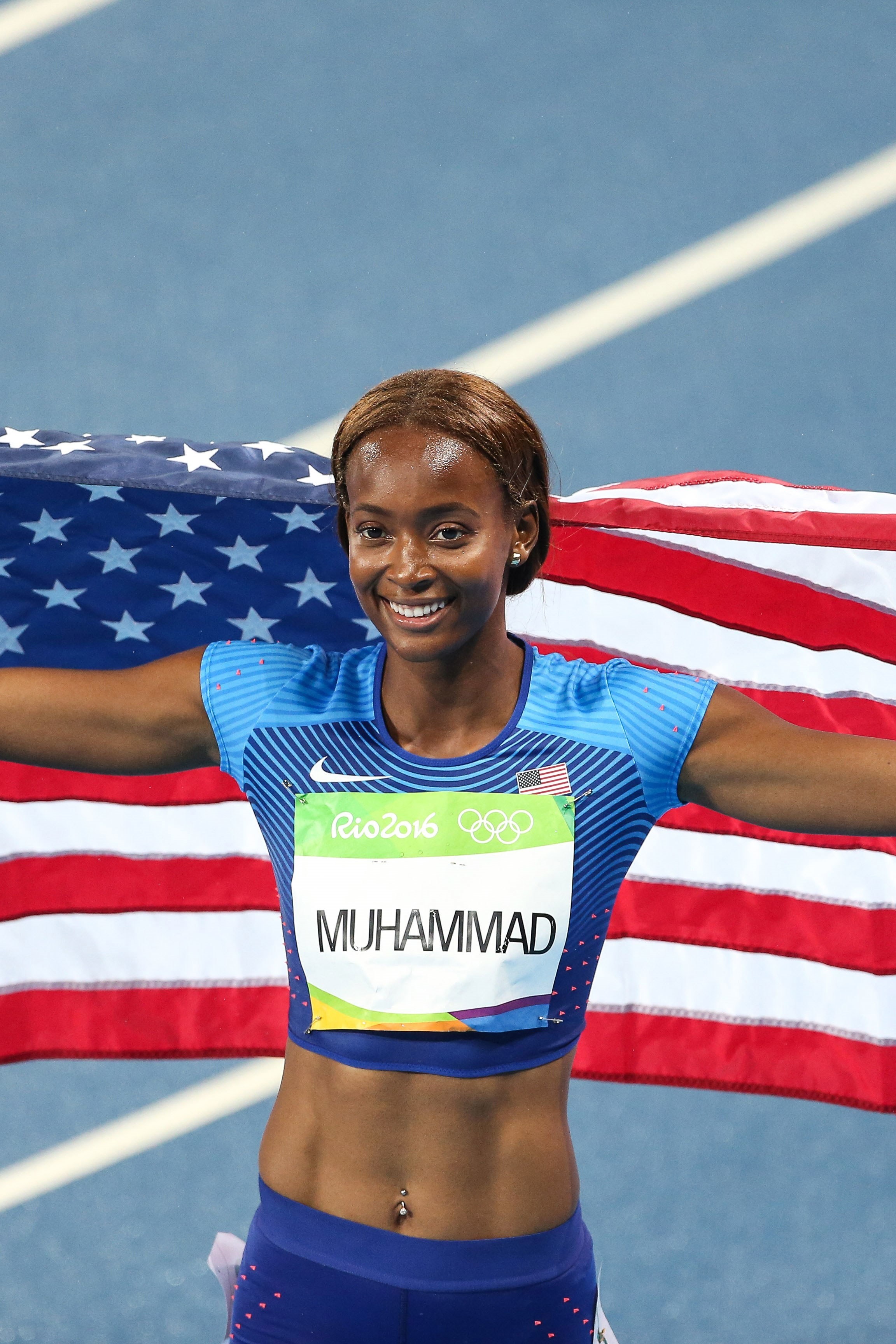
The Kenyan Kipchoge became the first repeat athlete of the year since Usain Bolt in 2012 and 2013. Kipchoge, who lowered the marathon world record by 78 seconds in 2018, became the first person to break two hours in a marathon on Oct. 12 in a non-record-eligible event.
The other female finalists were Jamaican sprinter Shelly-Ann Fraser-Pryce, Dutch distance runner Sifan Hassan, Kenyan marathoner Brigid Kosgei and Venezuelan triple jumper Yulimar Rojas.
The other male finalists were Ugandan distance runner Joshua Cheptegei, American pole vaulter Sam Kendricks and sprinter Noah Lyles and Norwegian hurdler Karsten Warholm.
World Athletics is track and field’s international governing body, rebranded from IAAF this year.
Login to leave a comment
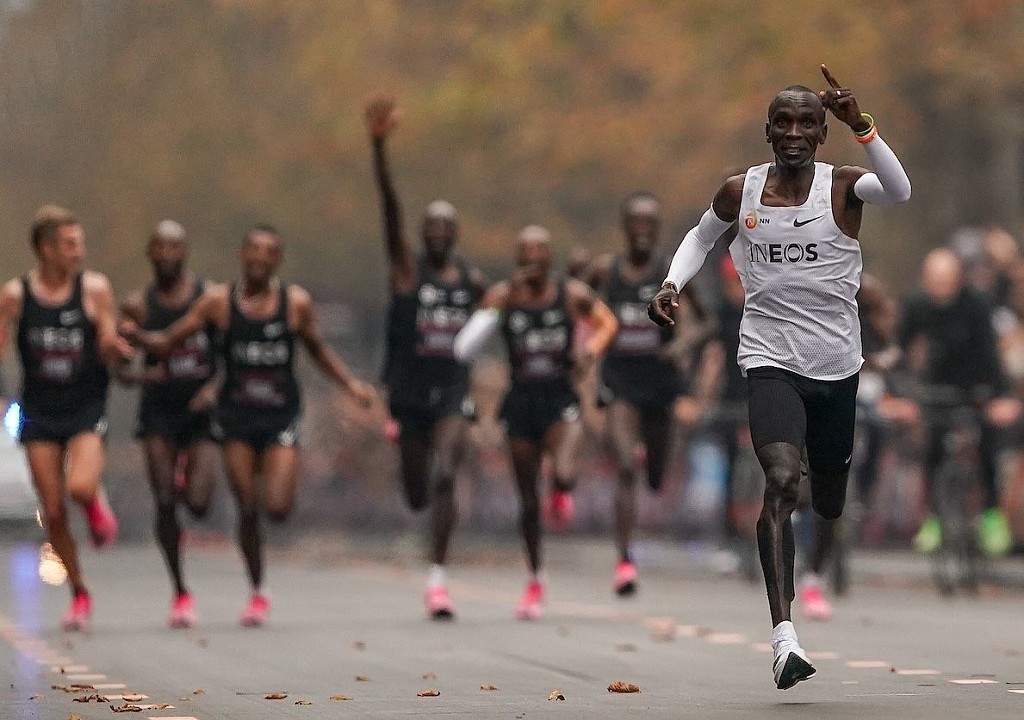
Kenyan Marathon world-record holder Eliud Kipchoge is among the five finalists named for the male athlete of the year
Eliud Kipchoge leads the nominees list, Kenya's marathon man, Eliud Kipchoge has made the list, as the 34-year old looks to bag his second IAAF Male World Athlete award in succession. In October 2019, Kipchoge became the first person on the planet to complete a full marathon in under two hours.
The Kenyan world record holder, who has also been labelled as the greatest marathoner in the history of the sport, completed the 'INEOS 1:59 Challenge' in October. In successfully completing the 9.6km circuit, the 34-year old became the first marathoner to break the two-hour barrier, thus writing his name in the history books.
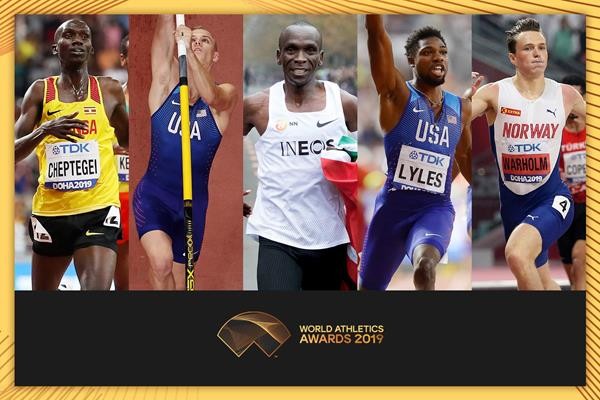
Eliud Kipchoge´s contenders.- Uganda’s Joshua Chepetegei, the 10,000m world champion was also one of the five finalists apart from Eliud Kipchoge.
Chepetegei won the World 10,000m title in a world-leading time of 26:48.36 and also won the Diamond League 5000m title. Americans Sam Kendricks and Noah Lyles are also up for winning the award. Sam Kendricks won the World Pole Vault title, clearing a world-leading 6.06m to win the US title.
He also won 12 of his 17 outdoor competitions, including the Diamond League final. Noah Lyles, meanwhile, has the world 200m and 4x100m titles to boast of, aside from running a world-leading 19.50 in Lausanne to move to fourth on the world all-time list. Lyles also won the Diamond League titles at 100m and 200m.
Norwegian hurdler Karsten Warholm completes the list of the nominees for the Male World Athlete 2019 award. Warholm is undefeated indoors and outdoors at all distances, including the Diamond League final and the European Indoor Championships. He also clocked a clocked world-leading 46.92, the second-fastest time in history.
by Colin DCunha
Login to leave a comment

BMW Berlin Marathon
The story of the BERLIN-MARATHON is a story of the development of road running. When the first BERLIN-MARATHON was started on 13th October 1974 on a minor road next to the stadium of the organisers‘ club SC Charlottenburg Berlin 286 athletes had entered. The first winners were runners from Berlin: Günter Hallas (2:44:53), who still runs the BERLIN-MARATHON today, and...
more...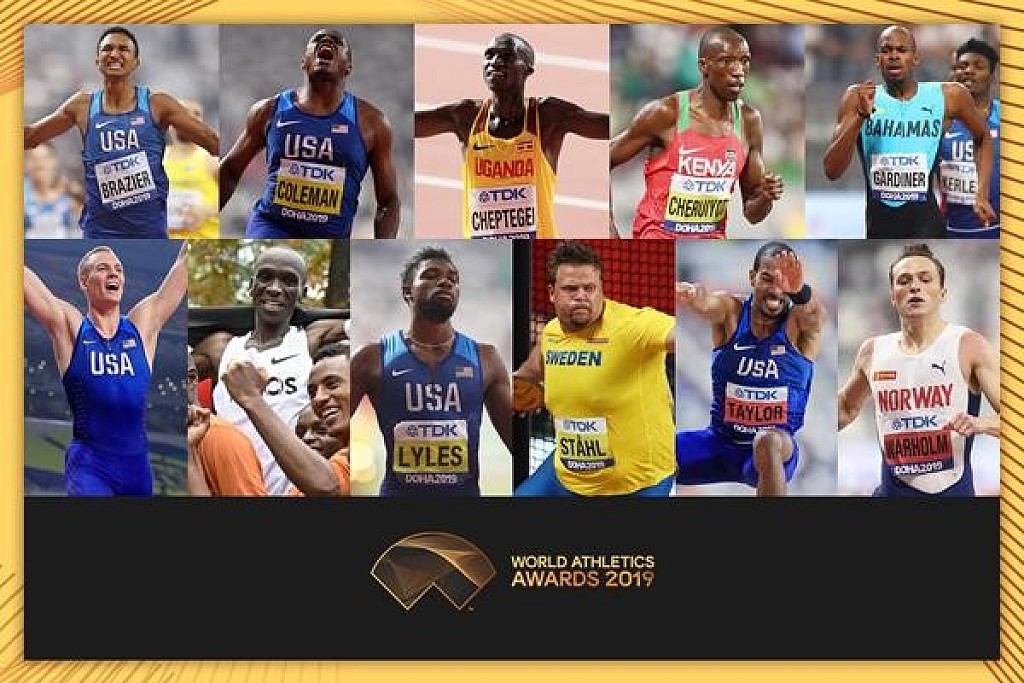
NOMINEES ANNOUNCED FOR MALE WORLD ATHLETE OF THE YEAR 2019
This week marks the opening of the voting process for the 2019 World Athletes of the Year ahead of the World Athletics Awards 2019 in Monaco on Saturday 23 November.
The IAAF is pleased to confirm a list of 11 nominees for Male World Athlete of the Year who were selected by an international panel of athletics experts, comprising representatives from all six continental areas of the IAAF. The nominations of 11 athletes reflects the remarkable range of exceptional performances that the sport has witnessed this year, at the IAAF World Athletics Championships in Doha, and in the Diamond League and in road and cross country events. The IAAF’s Competition Performance Ranking show that the World Championships in Doha was the highest quality competition in the history of the event.
The nominees for 2019 Male World Athlete of the Year are (in alphabetical order):
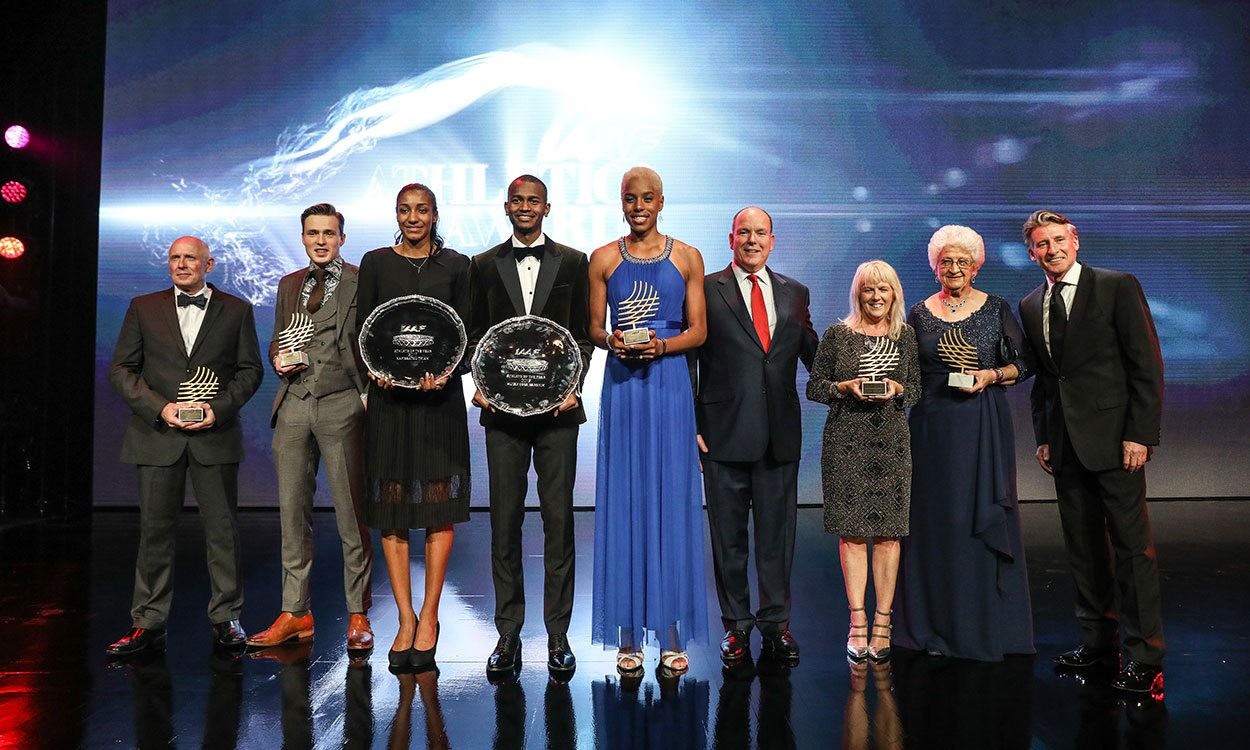
Donavan Brazier (USA) - won world 800m title in a championship record of 1:42.34, won Diamond League title, won four of his five outdoor 800m races

Christian Coleman (USA) - won world 100m title in a world-leading 9.76, won world 4x100m title in a world-leading 37.10, won four of his five races at 100m
Joshua Cheptegei (UGA) - won world cross-country title in Aarhus, won world 10,000m title in a world-leading 26:48.36, won Diamond League 5000m title
Timothy Cheruyiot (KEN) - won world 1500m title, won Diamond League 1500m title, won 10 of his 11 outdoor races across all distances,
Steven Gardiner (BAH) - won world 400m title in 43.48, undefeated all year over 400m, ran world-leading 32.26 indoors over 300m
Sam Kendricks (USA) - won world pole vault title, cleared a world-leading 6.06m to win the US title, won 12 of his 17 outdoor competitions, including the Diamond League final
Eliud Kipchoge (KEN) - won London Marathon in a course record of 2:02:37, ran 1:59:40.2 for 42.195km in Vienna
Noah Lyles (USA) -won world 200m and 4x100m titles, ran a world-leading 19.50 in Lausanne to move to fourth on the world all-time list, won Diamond League titles at 100m and 200m
Daniel Stahl (SWE) - won the world discus title, threw a world-leading 71.86m to move to fifth on the world all-time list, won 13 of his 16 competitions, including the Diamond League final
Christian Taylor (USA) - won the world triple jump title, won Diamond League title, won 10 of his 14 competitions
Karsten Warholm (NOR) - won the world 400m hurdles title, undefeated indoors and outdoors at all distances, including at the Diamond League final and the European Indoor Championships, clocked world-leading 46.92, the second-fastest time in history, A three-way voting process will determine the finalists.
The IAAF Council and the IAAF Family will cast their votes by email, while fans can vote online via the IAAF's social media platforms. Individual graphics for each nominee will be posted on Facebook, Twitter and Instagram this week; a 'like' on Facebook and Instagram or a retweet on Twitter will count as one vote.
The IAAF Council’s vote will count for 50% of the result, while the IAAF Family’s votes and the public votes will each count for 25% of the final result.
Voting for the Male World Athlete of the Year closes on 4 November. At the conclusion of the voting process, five men and five women finalists will be announced by the IAAF.
The male and female World Athletes of the Year will be announced live on stage at the World Athletics Awards 2019.
by IAAF
Login to leave a comment
