

Running News Daily
Running News Daily is edited by Bob Anderson and team. Send your news items to bob@mybestruns.com Advertising opportunities available.
Index to Daily Posts · Sign Up For Updates · Run The World Feed
Articles tagged #Flagstaff
Today's Running News
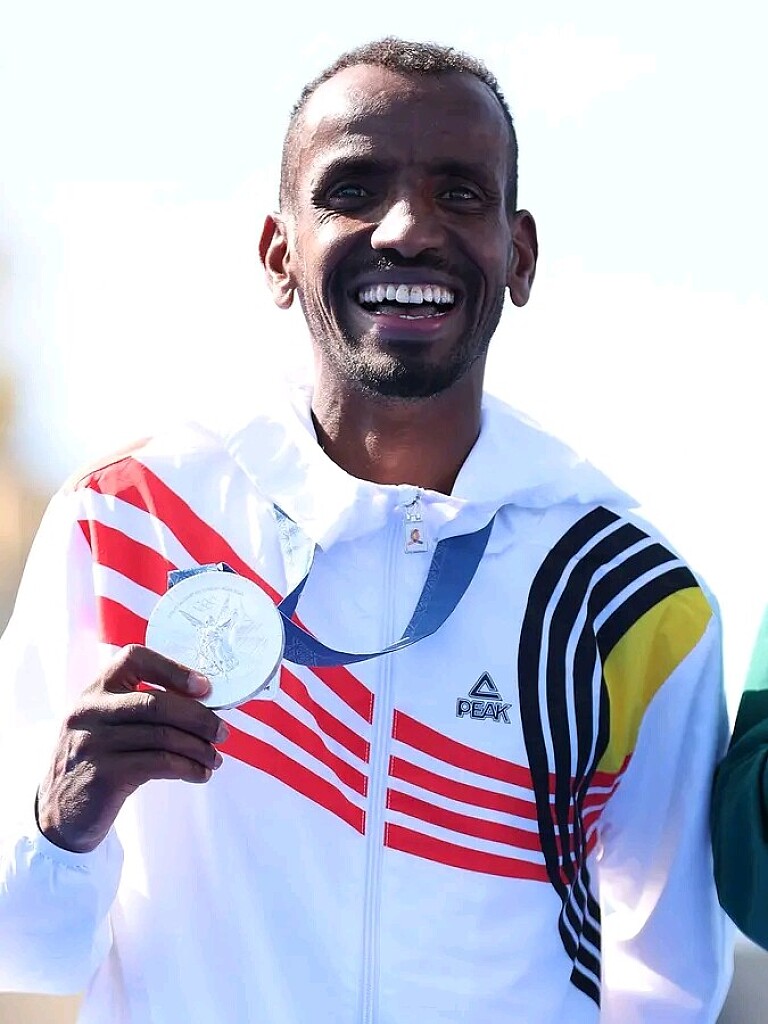


Bashir Abdi Withdraws From Chicago Marathon After Calf Injury
Belgian marathon star Bashir Abdi has been forced to withdraw from the 2026 Chicago Marathon after suffering a calf injury during his final training session in Flagstaff, Arizona.

The two-time Olympic marathon medallist confirmed on Monday that a small tear in his calf has ruled him out of Sunday’s race, bringing an untimely end to months of preparation for one of the biggest marathons of the year.
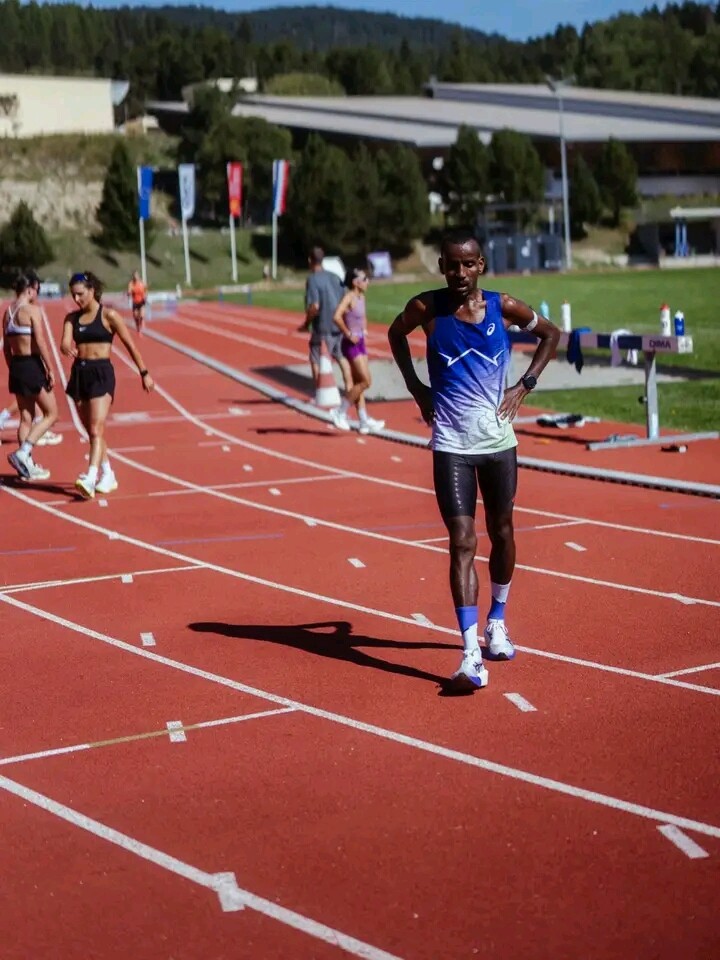
“Unfortunately, I will not be participating in the Chicago Marathon this weekend,” Abdi announced. “During my last training session in Flagstaff, I suffered a small tear in my calf.”
The 37-year-old stressed that the injury is not considered serious, but explained that it is significant enough to prevent him from safely taking his place on the start line. After consulting with his coach and medical team, the decision was made to avoid taking unnecessary risks.
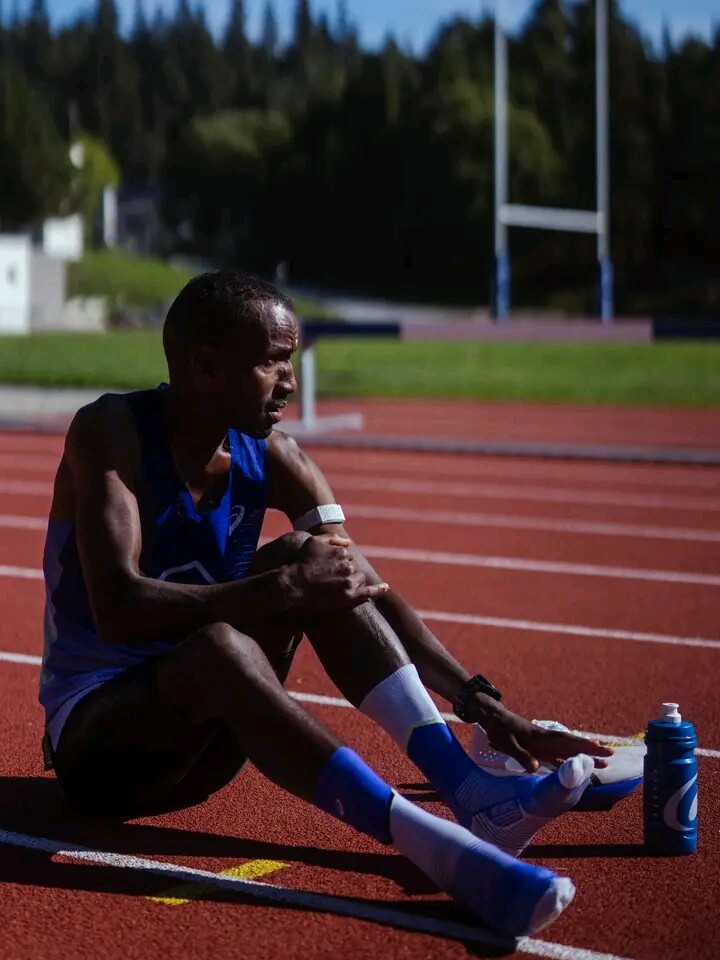
“It’s not a major injury, but enough to keep me from the start line. After consulting with my coach and medical team, we decided not to take any risks,” Abdi said.
The withdrawal is a major disappointment for Abdi, who had been listed among the elite contenders for the 48th edition of the Bank of America Chicago Marathon. The race is scheduled for October 11 and is expected to feature more than 55,000 finishers.
Abdi arrived at the Chicago buildup with an impressive marathon résumé. He won Olympic silver in Paris in 2024 after previously taking bronze at the Tokyo Olympics in 2021, establishing himself as one of the most accomplished marathoners of his generation.
He is also the European marathon record-holder, having clocked 2:03:36 in Rotterdam in 2021 to become the first European athlete to break the 2:04 barrier.
His 2026 season had shown that he remained capable of competing at the highest level. In April, Abdi finished third at the Rotterdam Marathon in 2:04:19, behind Ethiopia’s Guye Adola and Tesfaye Deriba.
For Abdi, the immediate priority is now recovery rather than forcing a return before he is ready. Missing Chicago will undoubtedly be frustrating after months of preparation, but protecting his long-term career is the more important decision.
The Belgian remains determined to move forward, with his focus now shifting toward rehabilitation and preparing for his next opportunity to race.
For one of Europe’s greatest marathoners, Chicago may be off the calendar—but the pursuit of more history continues.
by Erick Cheruiyot for My Best Runs.
Login to leave a comment
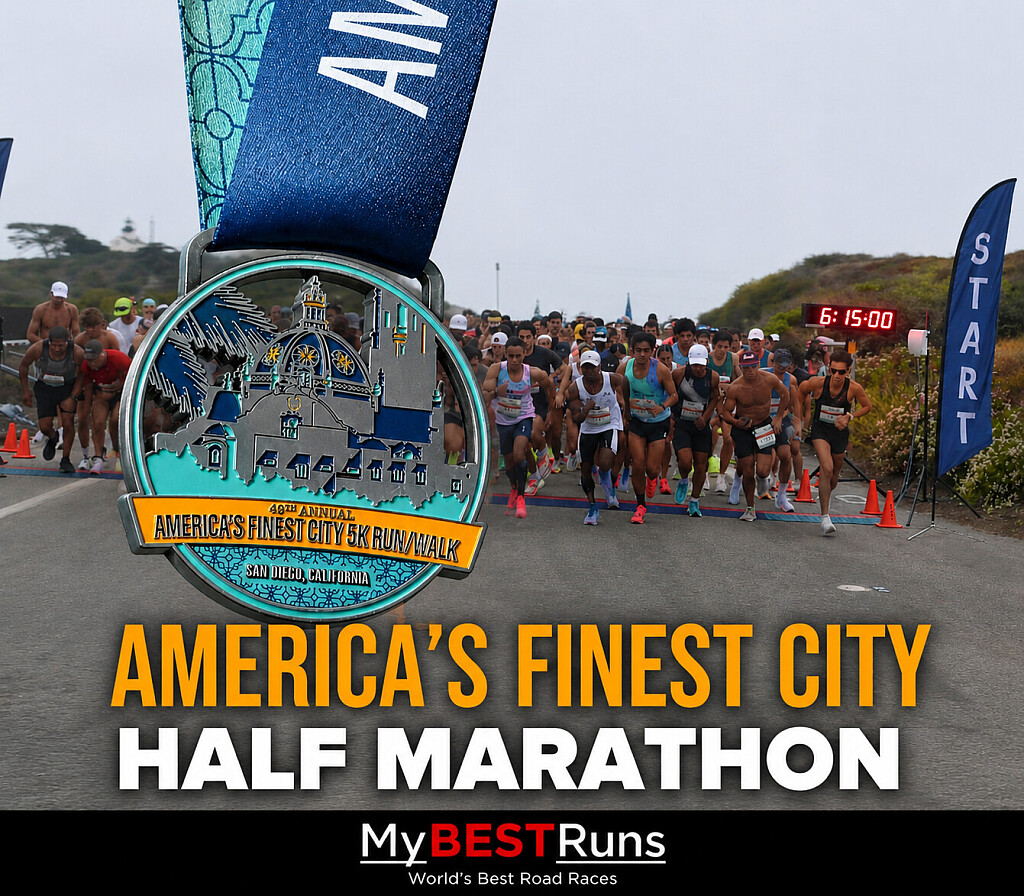
About 5,000 Runners Turn San Diego Into A Sea Of Energy At The 49th America’s Finest City Half Marathon
San Diego came alive on Sunday, August 16, 2026, as approximately 5,000 runners from across the region and beyond took to the streets for the 49th annual America’s Finest City Half Marathon & 5K, bringing together competitive athletes, recreational runners, families, running clubs and spectators for one of the city’s longest-running road racing traditions.
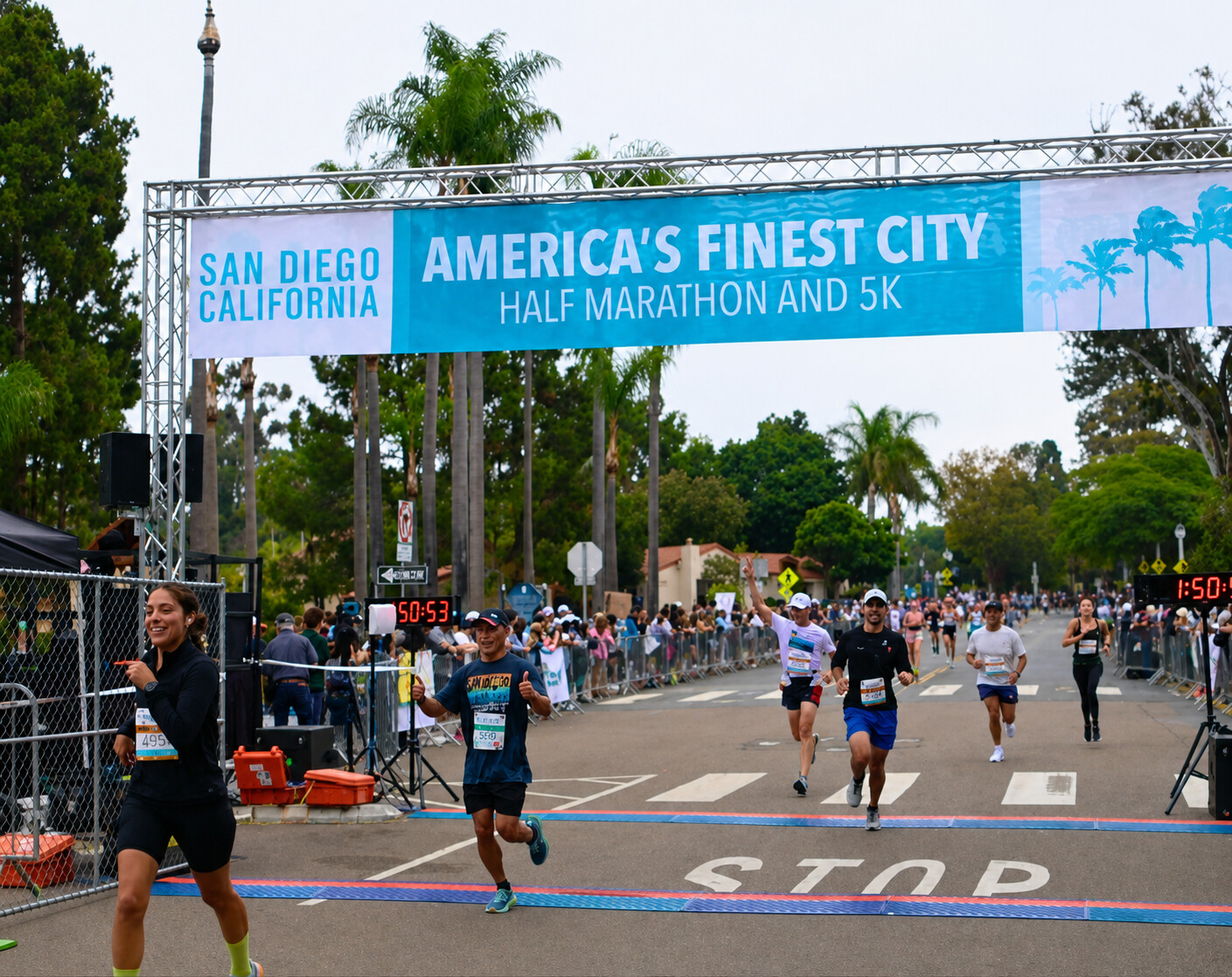
Established in 1978, the America’s Finest City Half Marathon has become a signature event on San Diego’s running calendar, with the 2026 edition once again showcasing the city’s spectacular coastline, historic landmarks and vibrant urban landscape. The event also featured a 5K, giving runners of different abilities an opportunity to take part in the morning’s festivities.

The 13.1-mile half marathon followed a scenic point-to-point course that began at the historic Cabrillo National Monument. With panoramic views of the Pacific Ocean and San Diego Bay setting the tone, runners embarked on a journey through some of San Diego’s most recognizable locations.
From the starting point, the course moved through historic Fort Rosecrans and Point Loma before continuing along San Diego Bay and Harbor Island. Participants then travelled through downtown San Diego before making their way to the finish at iconic Balboa Park, where cheering spectators, live music and celebrations greeted runners as they completed their journey.
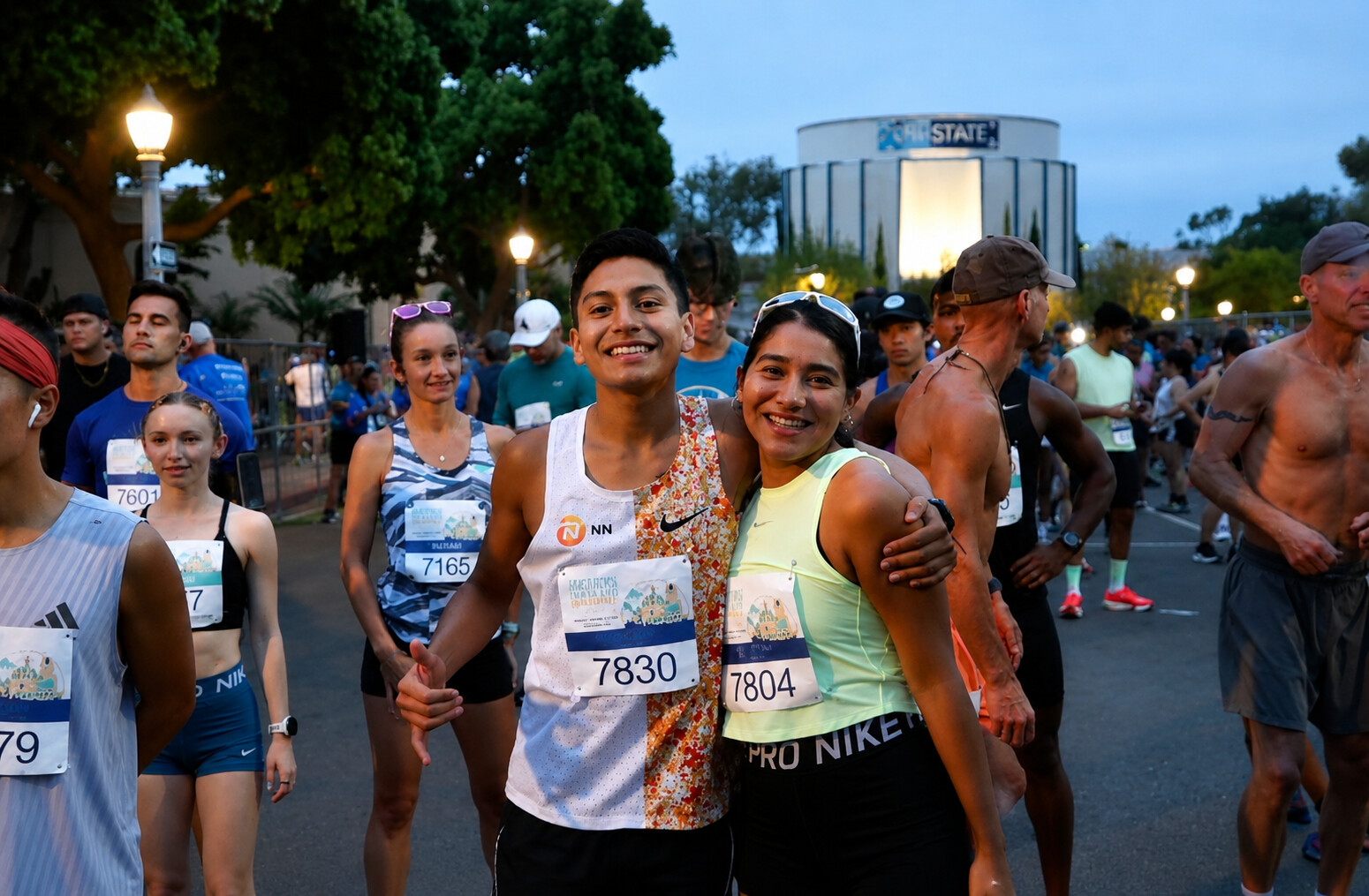
At the front of the race, Edward Buck produced the fastest performance of the day, winning the men’s half marathon in 1:04:39. The 25-year-old from Newark, United Kingdom, held off a closely packed group at the finish, with San Diego’s Lars Dewall finishing just five seconds behind in 1:04:44.
Jaquavious, 29, from Orem, Utah, secured third place in 1:05:04, while Phoenix’s Aron Orar finished fourth in 1:05:19. The first four men were separated by just 40 seconds, underlining the competitive nature of the race.
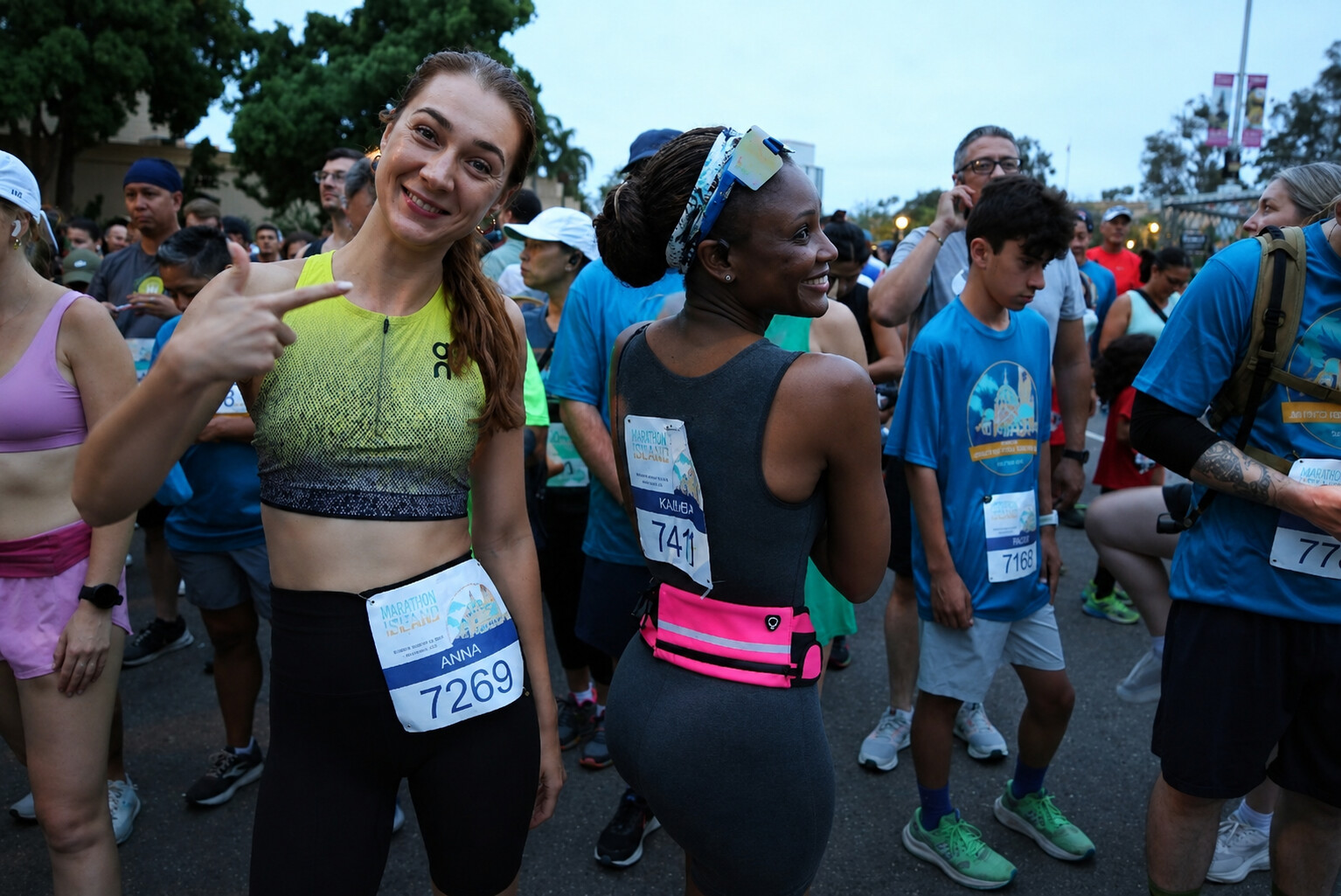
Morgan Jensen claimed the women’s title in 1:13:12, with the 24-year-old from Sandy, Utah, producing a commanding performance over the 13.1-mile course. Melissa Berry, 26, of Flagstaff, Arizona, finished second in 1:16:26, while Katelyn Yunker, 24, of Carlsbad, California, completed the women’s podium in 1:18:41.
Hope Stark, 22, of Colorado Springs, Colorado, followed in fourth with 1:19:23. Jensen’s winning margin was 3 minutes and 14 seconds, while only 42 seconds separated Yunker and Stark in the battle for third and fourth.
The accompanying 5K offered a shorter, fast and flat route through the heart of Balboa Park, providing an accessible option for runners of all levels while adding to the lively atmosphere surrounding the main event.
The 49th edition also carried special significance as it marked the conclusion of the 2026 SoCal Triple Crown, giving participants an additional reason to celebrate after completing the Southern California race series.
With thousands of runners filling San Diego’s streets and spectators supporting them along the way, the America’s Finest City Half Marathon & 5K once again proved that the appeal of road racing extends far beyond competition. From the breathtaking views at Cabrillo National Monument to the historic streets of Point Loma, the waterfront, downtown and the finish in Balboa Park, the event offered runners a memorable journey through the heart of San Diego.
The 2026 edition ultimately brought together speed, scenery and community, reinforcing the America’s Finest City Half Marathon’s place as one of San Diego’s most distinctive and enduring running celebrations.
by Erick Cheruiyot for My Best Runs.
Login to leave a comment

America's Finest City
America's Finest City Half Marathon is run on a fast, scenic, point-to-point course. The race starts at the historic Cabrillo National Monument at the tip of Point Loma with its world-renowned vistas of San Diego Bay and the Pacific Ocean, follows scenic San Diego Bay and Harbor Island along the Embarcadero to the Star of India, winds through downtown San...
more...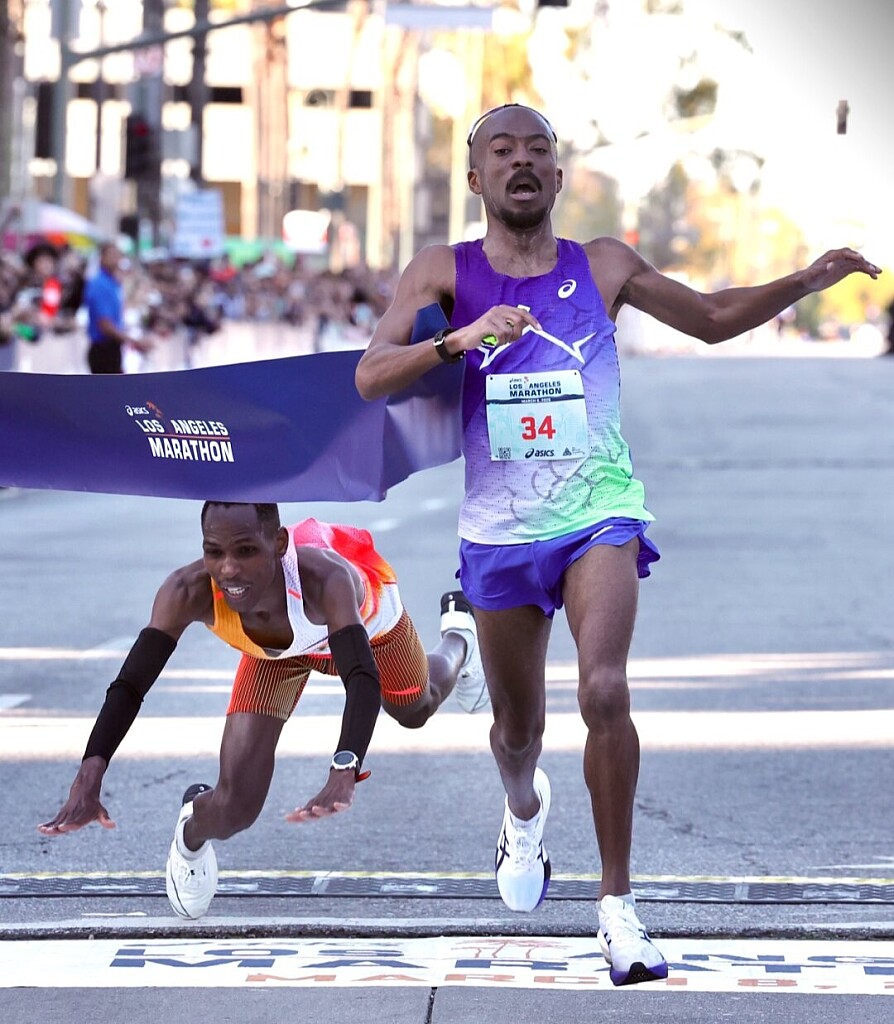
Miller’s Last-Stride Triumph and Cherono’s Inspiring Run Highlight Dramatic Los Angeles Marathon
The 41st edition of the Los Angeles Marathon produced a day filled with drama, resilience, and unforgettable performances, as American runner Nathan Miller captured the men’s title in the closest finish in race history while Kenya’s Priscah Cherono delivered a remarkable victory in the women’s race.
The men’s contest came down to a breathtaking final sprint. Miller surged at the last possible moment to edge Kenya’s Michael Kamau at the finish line, with both runners officially credited with the same time of 2:11:18 after covering the demanding 26.2-mile course. Their shoulder-to-shoulder battle through the closing stretch created a thrilling finale, with Miller’s perfectly timed surge proving decisive in the final stride.
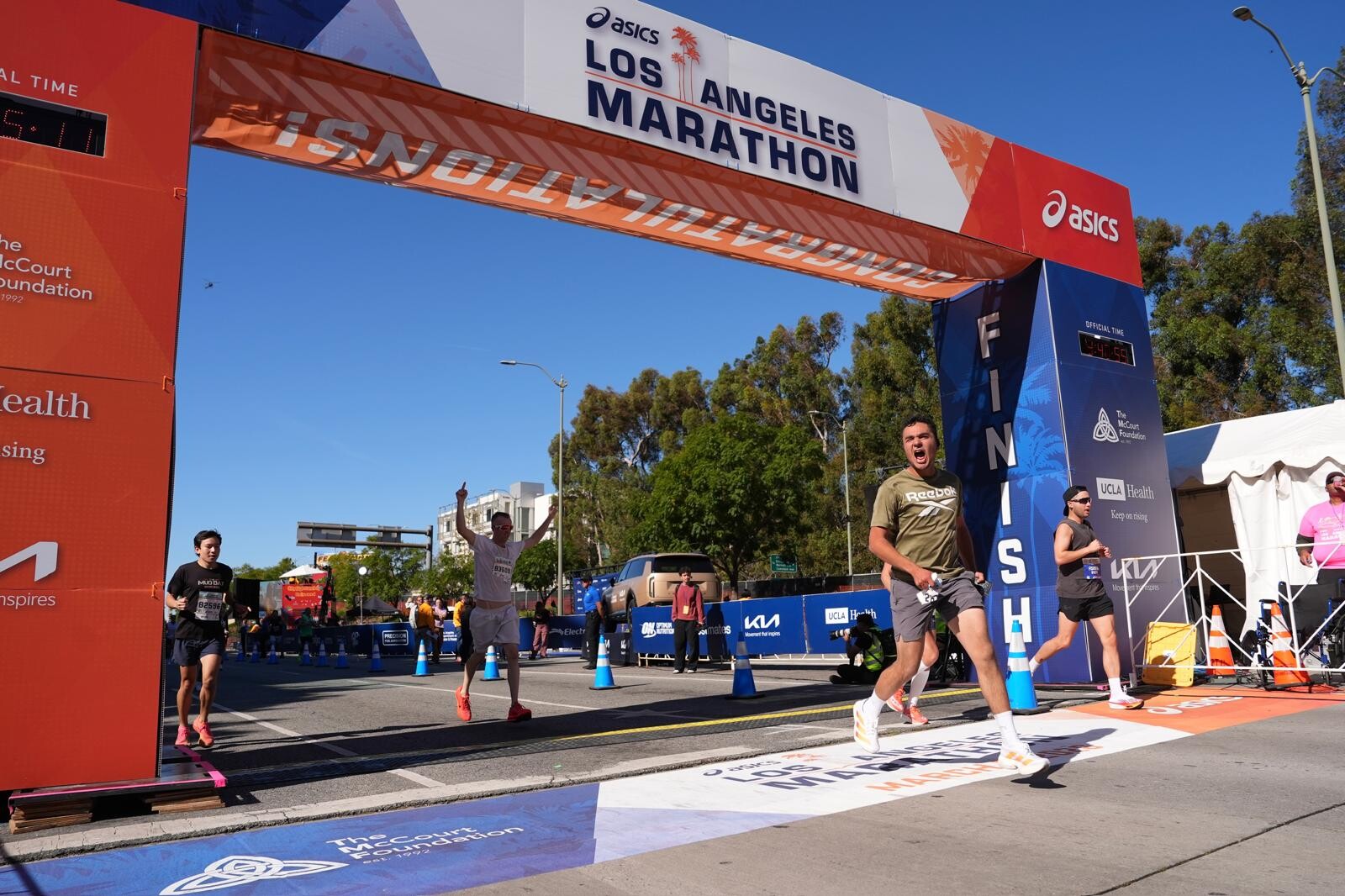
Moments after the finish, concern rose for Kamau, who reportedly did not take fluids during the race and collapsed after crossing the line. Medical personnel quickly attended to the Kenyan athlete, who was taken away on a stretcher following his courageous effort. Fellow Kenyan Enyew Nigat completed the podium, finishing third in 2:14:23 after a steady performance throughout the race.
For Miller, the victory marks a significant moment in a career defined by dedication both on and off the road. The 36-year-old from Jackson, Michigan balances elite competition with his work as a substitute teacher and a high school track and cross-country coach at Jackson High School. His personal best of 2:10:45, achieved at the Grandma's Marathon in 2023, also stands as the fastest marathon ever run by a U.S.-born Black athlete. His triumph continues a growing American presence atop the race, following the victory of Matt Richtman last year, who became the first American men’s champion since 1994 when he won in 2:07:56.
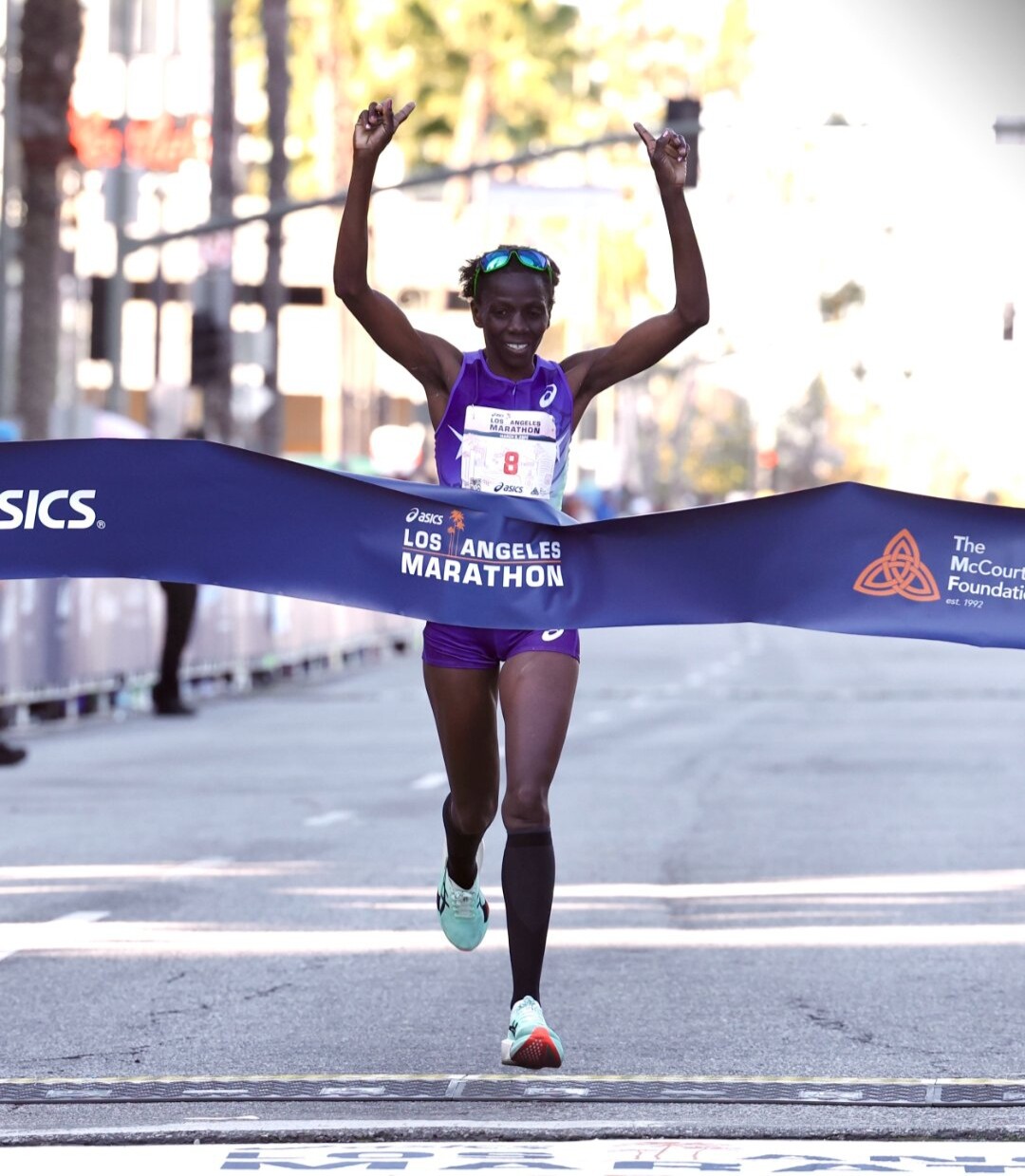
While the men’s race delivered a dramatic sprint finish, the women’s race showcased experience and determination as Cherono powered to victory in 2:25:20. At 45 years old, the mother of three produced an inspiring run across the streets of Los Angeles. Cherono, who now lives in Colorado Springs, Colorado, once competed at the Olympic level, finishing 10th in the 5,000 meters at the 2008 Summer Olympics in Beijing.
American runner Kellyn Taylor of Flagstaff, Arizona finished second in 2:27:37, while Kenya’s Antonina Kwambai secured third place in 2:28:50, rounding out a competitive women’s podium.
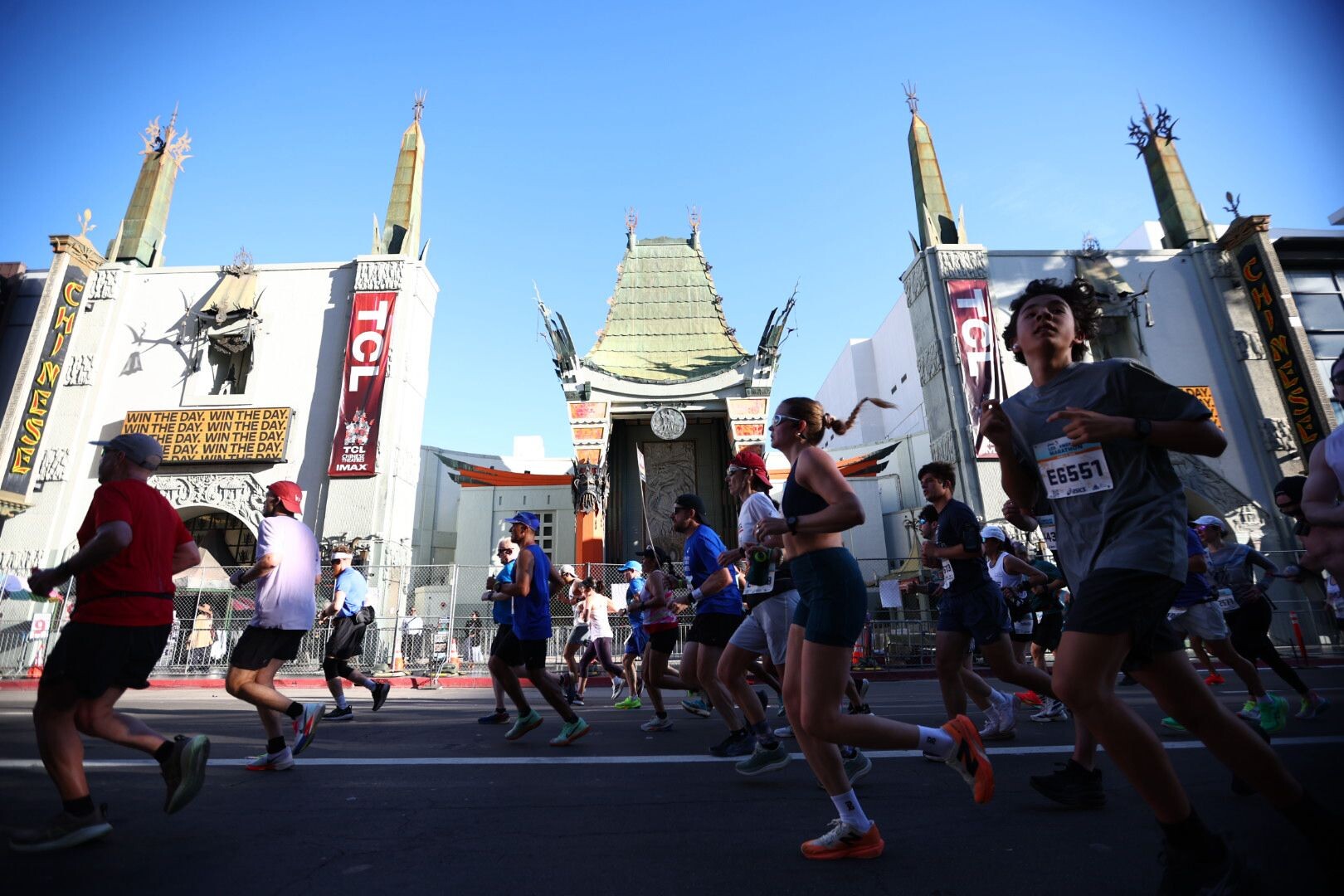
Weather conditions added another layer of challenge to the race. With temperatures forecast to climb into the 80s by midday, organizers announced that runners who managed to complete 18 miles of the course would still receive medals due to the expected heat. The race began at Dodger Stadium and stretched across the city before finishing in the Century City district of Los Angeles, where thousands of runners pushed through the warm conditions and the relentless distance.
From Miller’s electrifying last-stride surge to Cherono’s inspiring victory at 45, the 2026 Los Angeles Marathon unfolded as a powerful reminder of the spirit of endurance that defines the sport. On a warm California morning filled with tension and triumph, the race once again proved that in the marathon, greatness often reveals itself in the very final stride.
by Erick Cheruiyot for My Best Runs.
Login to leave a comment

Los Angeles Marathon
The LA Marathon is an annual running event held each spring in Los Angeles, Calif. The 26.219 mile (42.195 km) footrace, inspired by the success of the 1984 Summer Olympic Games, has been contested every year since 1986. While there are no qualifying standards to participate in the Skechers Performnce LA Marathon, runners wishing to receive an official time must...
more...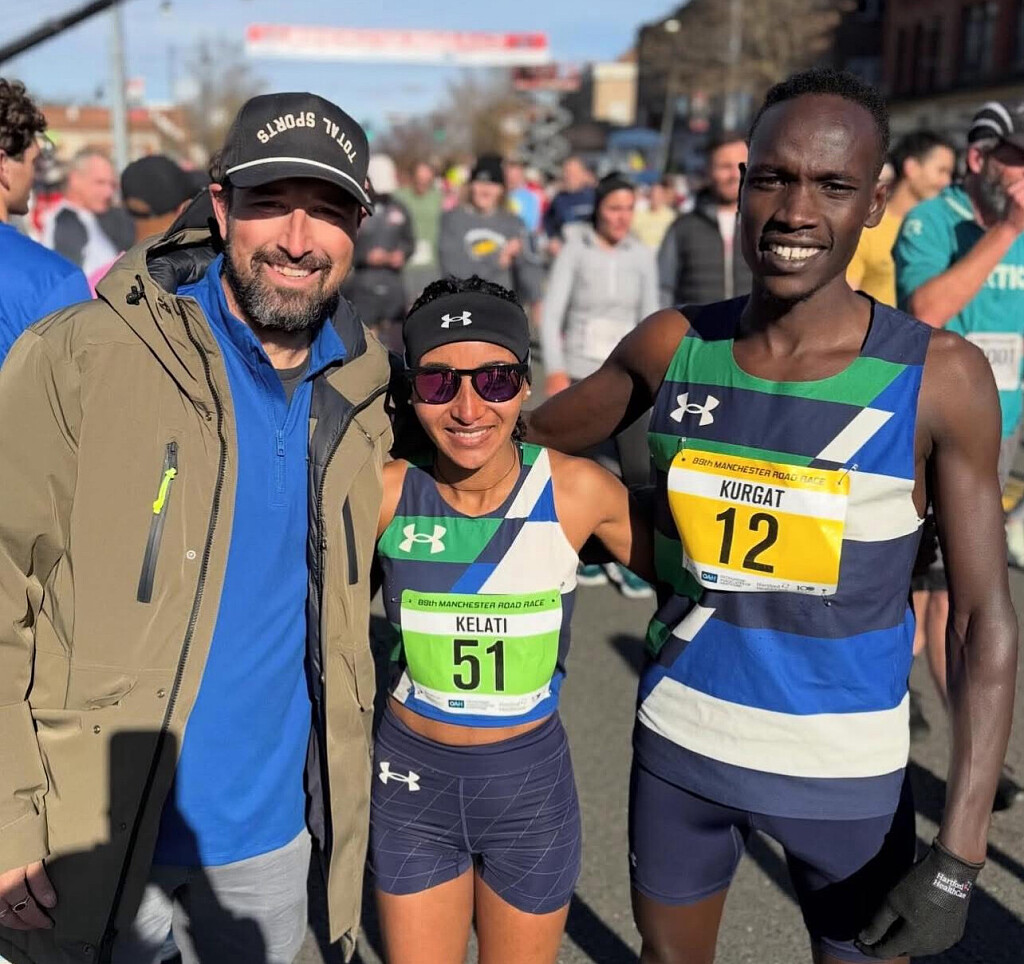
Edwin Kurgat and Weini Kelati Shine at the 89th Manchester Road Race
MANCHESTER, Connecticut — Edwin Kurgat and Weini Kelati delivered commanding performances on Thursday morning, claiming victory at the 89th edition of the storied Manchester Road Race. Clear, cool weather set the stage as the two Flagstaff-based athletes dominated the 4.737-mile loop through downtown Manchester—a Thanksgiving tradition that blends elite competition with a festive community atmosphere.
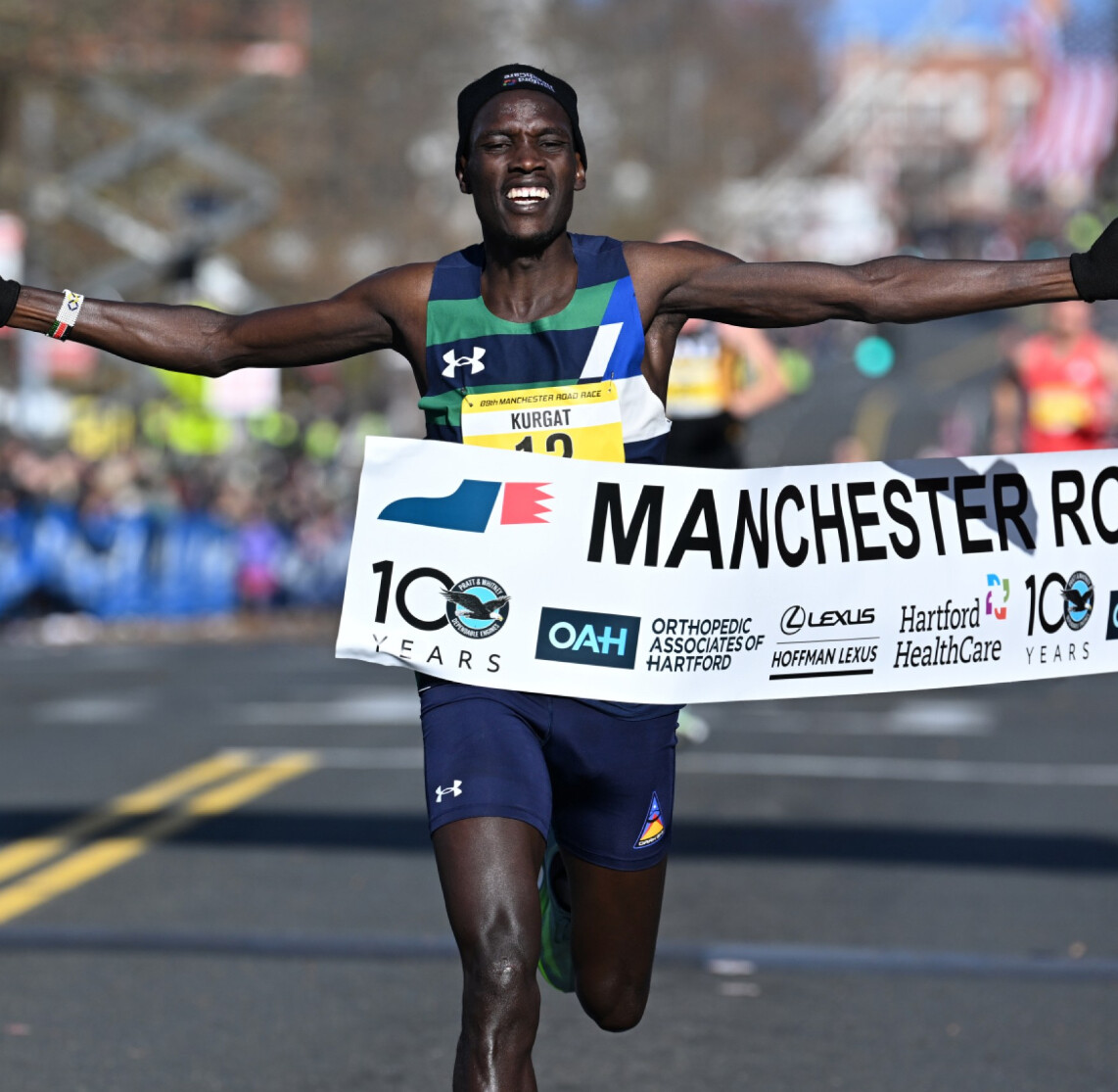
Kurgat stormed to the men’s title in a record-breaking 20:54, eclipsing the previous mark of 21:04 set by Conner Mantz in 2022. In the women’s race, Kelati secured an extraordinary five-peat, crossing the line in 23:18. While short of her own course record of 22:55 from 2021, her consistency and dominance reaffirmed her status as one of America’s top road runners.
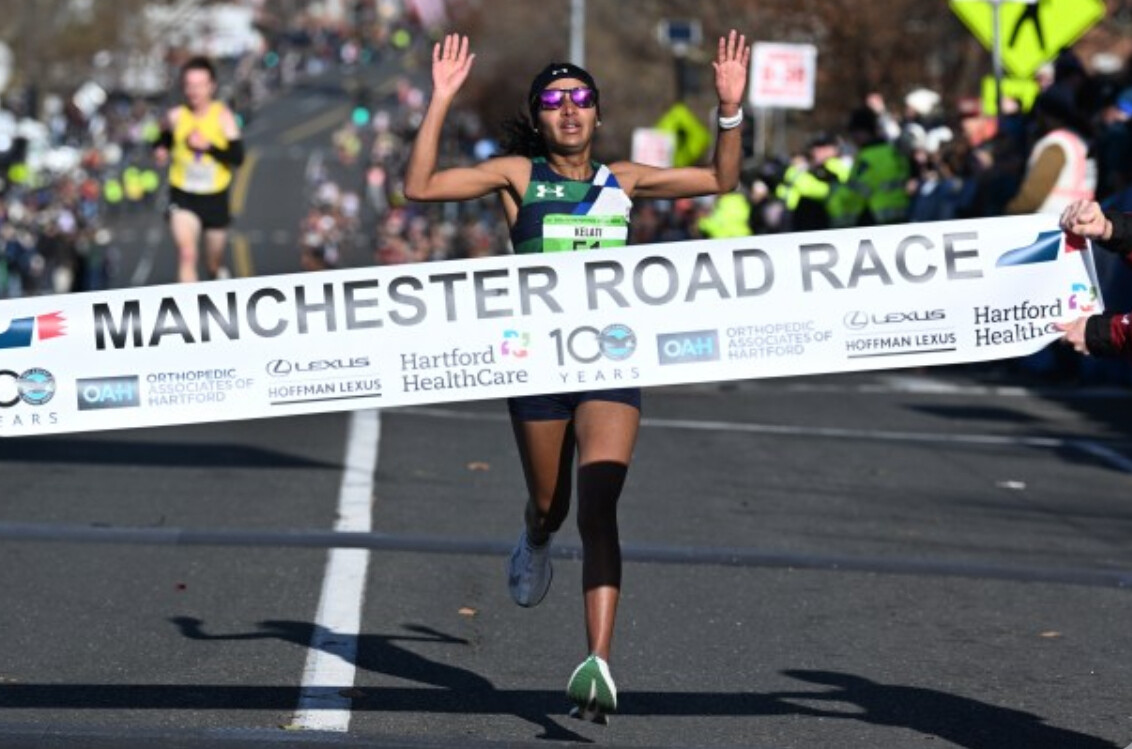
This year’s race attracted 12,386 registrants, continuing the event’s strong post-COVID resurgence. The “massive field,” as race officials described it, featured defending men’s champion Andrew Colley, 2023 champion Morgan Beadlescomb, Kelati, and world-class Kenyan standout Dorcus Ewoi—further cementing Manchester’s reputation as one of the premier road races in the United States.
by Boris Baron
Login to leave a comment

Manchester Road Race
The Manchester Road race is one of New England’s oldest and most popular road races. The 86th Manchester Road Race will be held on Thanksgiving Day. It starts and finishes on Main Street, in front of St. James Church. The Connecticut Sports Writers’ Alliance recently honored the Manchester Road Race. The CSWA, which is comprised of sports journalists and broadcasters...
more...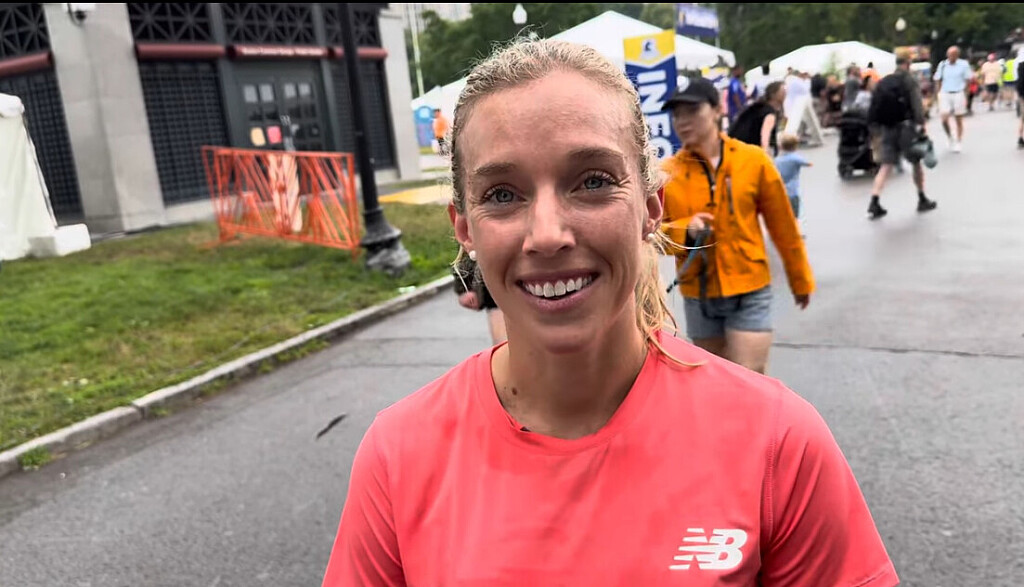
Emily Sisson Is Back on the Roads After a Reset Year—And She’s Racing Smarter Than Ever
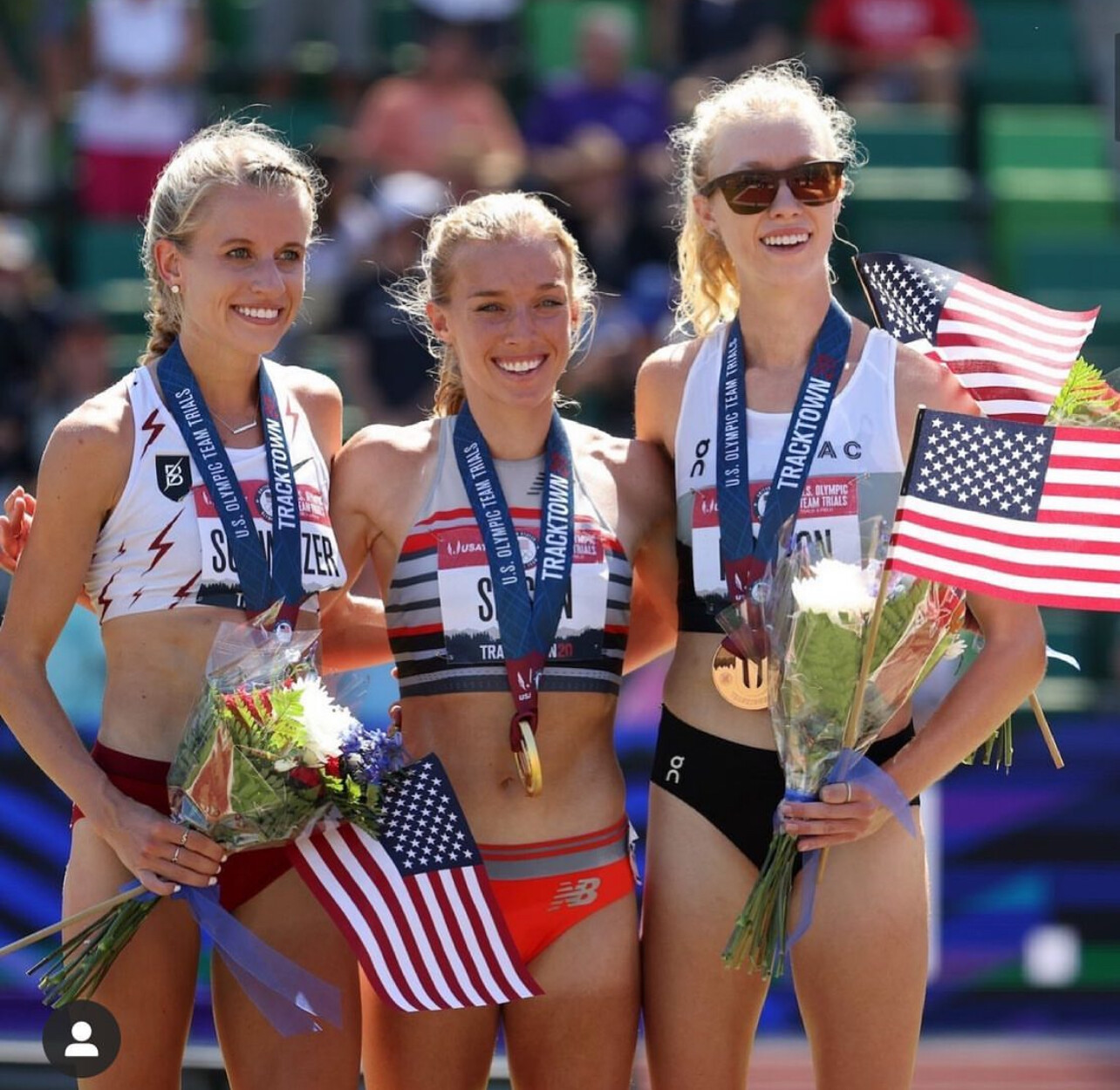
Emily Sisson is no stranger to the top of American distance running, and her performance at today’s Boston 10K proves she’s still very much a force. Clocking 31:42 to finish third, Sisson marked her return to racing with precision, patience, and perspective—traits she’s earned the hard way over the past year.
Resetting After the Olympics
Following the 2024 Paris Olympic Marathon, Sisson knew something had to change. Despite qualifying with the fastest time of any American woman heading into the Games, her Olympic result left her physically and emotionally drained.
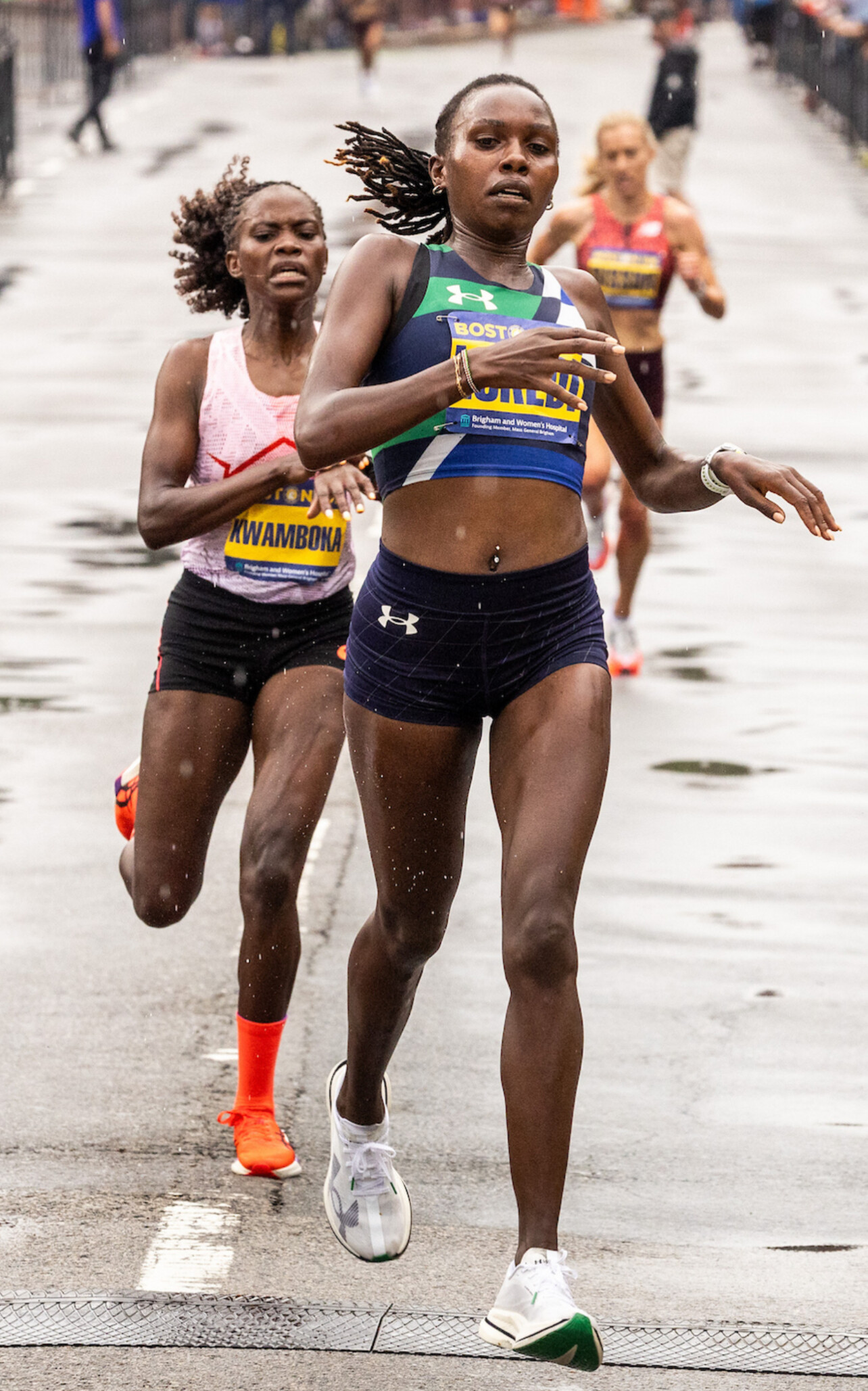
“I didn’t feel like myself,” she admitted.
So she stepped away—not just for a short break, but three full months without racing or formal training. It wasn’t until March of this year that she started to feel like herself again. That time off became the foundation for everything she’s building now.
Closing the Track Chapter
One thing was clear during her comeback: she had no plans to return to the track. After years of excelling on the oval—Olympics, NCAA titles, and national records—Sisson is now fully focused on the roads. That shift has brought clarity to her training and excitement for what lies ahead.
A Home Base in Ireland
Sisson and her husband have a home in Ireland, where she often retreats for quieter, more focused training blocks. It’s become a key part of her rhythm—offering the space to rebuild both mentally and physically.
“I want to come back strong,” she said. “And I want to do it the right way.”
Learning Her Limits at Altitude
Altitude training is standard for many elite runners, but Sisson has learned to use it sparingly.
“I do benefit from altitude—but only for about 4 to 6 weeks,” she shared. “After that, I get too tired.”
In past marathon builds, she felt overextended by long periods in places like Flagstaff. Now, she prefers training at sea level with her longtime coach Ray Treacy in Rhode Island. That change in approach has helped her stay fresh and responsive heading into big races.
Eyes on the Roads
With her Boston 10K result in the books, Sisson is aiming for a full road season—potentially leading up to a fall marathon. She’s not chasing times on the track anymore. Instead, she’s chasing something more valuable: a career built on knowing what works best for her.
From Burnout to Balance
Emily Sisson’s return isn’t just about bouncing back—it’s about evolving. From Olympic fatigue to rethinking altitude and stepping off the track, she’s found a smarter, more sustainable way forward. And if today’s performance in Boston is any indication, she’s far from finished.
by Boris Baron
Login to leave a comment

B.A.A. 10K
The 6.2-mile course is a scenic tour through Boston's Back Bay. Notable neighborhoods and attractions include the legendary Bull and Finch Pub, after which the television series "Cheers" was developed, the campus of Boston University, and trendy Kenmore Square. ...
more...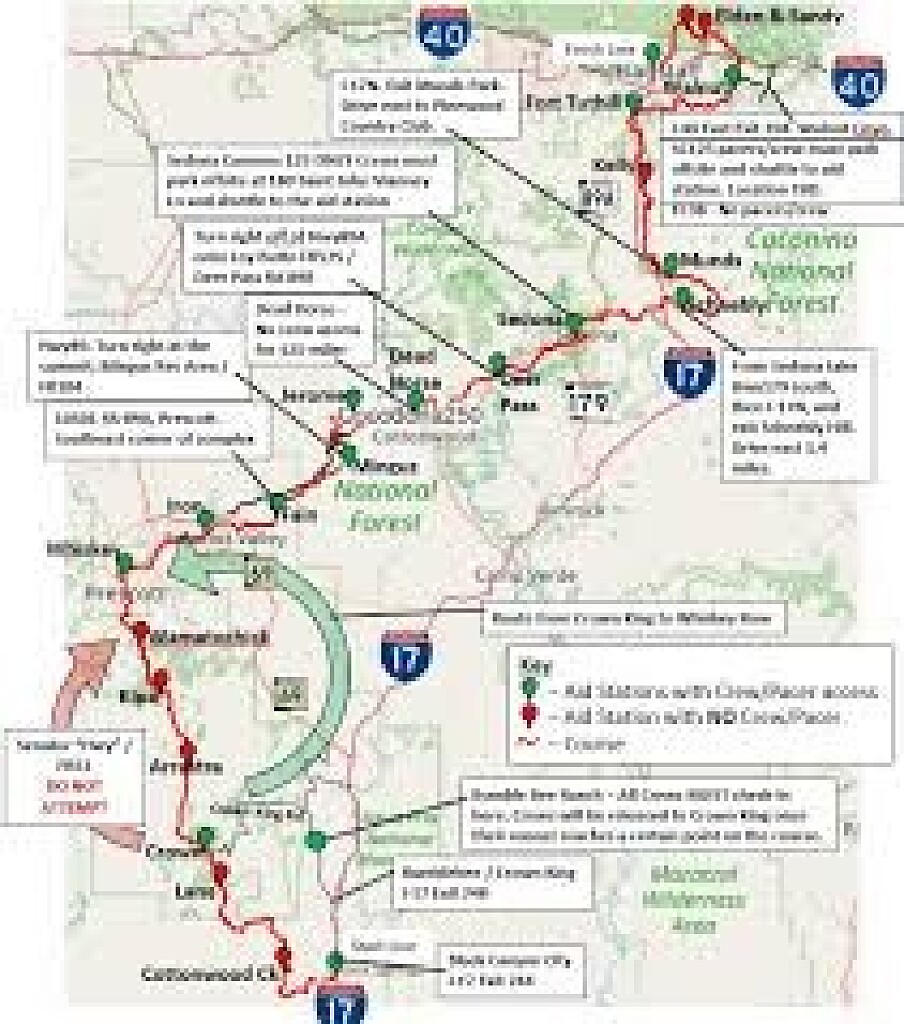
Arizona’s Monster — Why the Cocodona 250 Is One of the Toughest Races on Earth
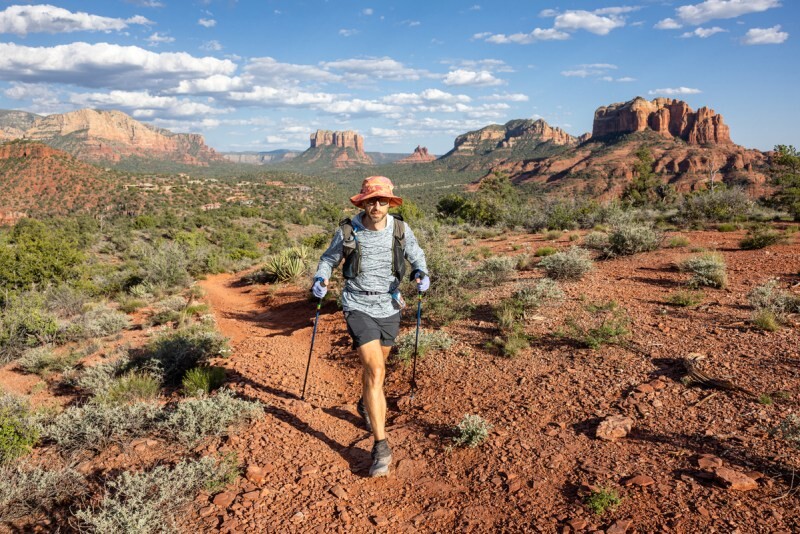
The Cocodona 250 isn’t just a race—it’s an odyssey through Arizona’s most rugged and awe-inspiring landscapes. Spanning 256.5 miles from Black Canyon City to Flagstaff, this ultramarathon demands everything a runner has—physically, mentally, and emotionally.
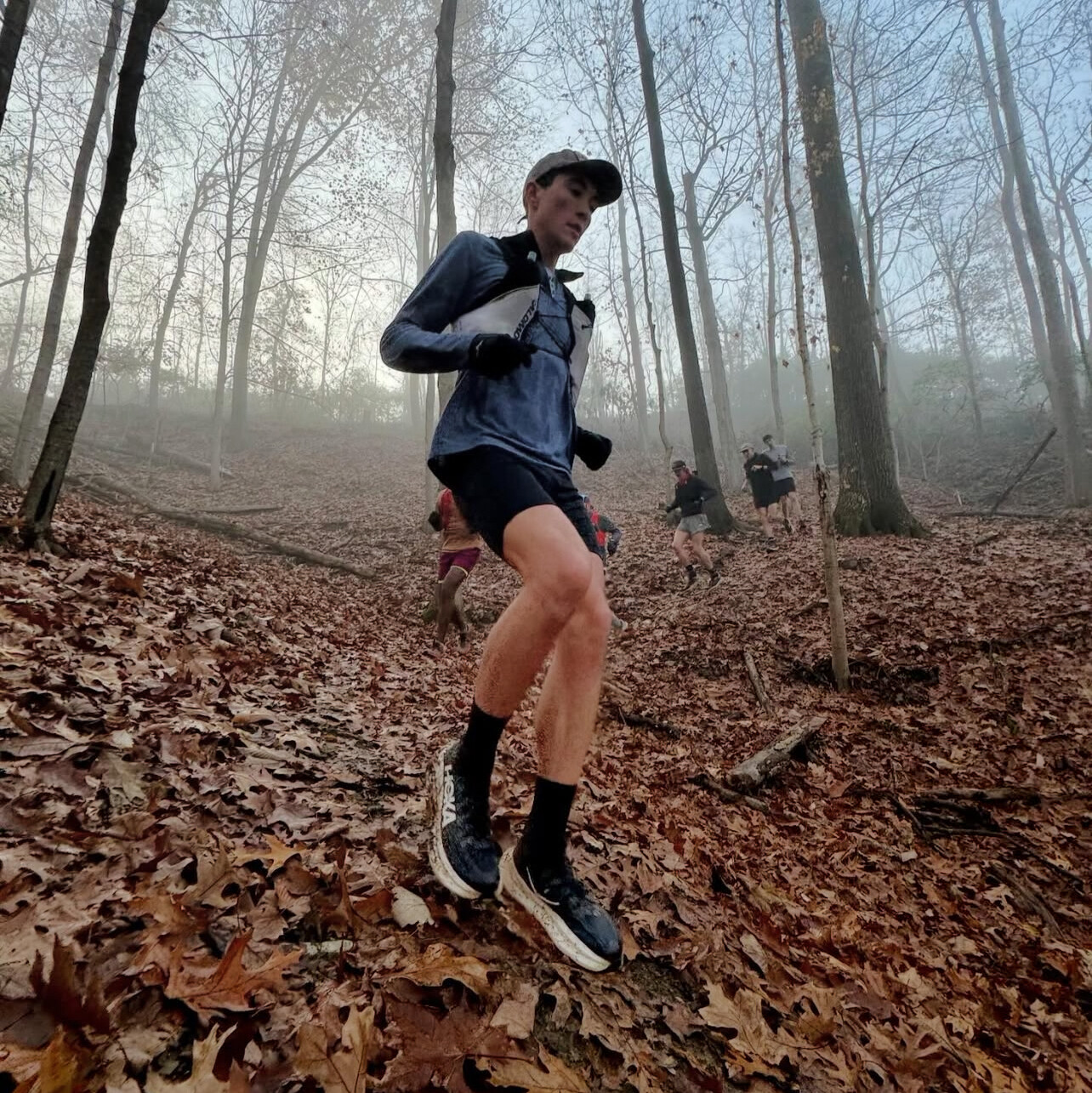
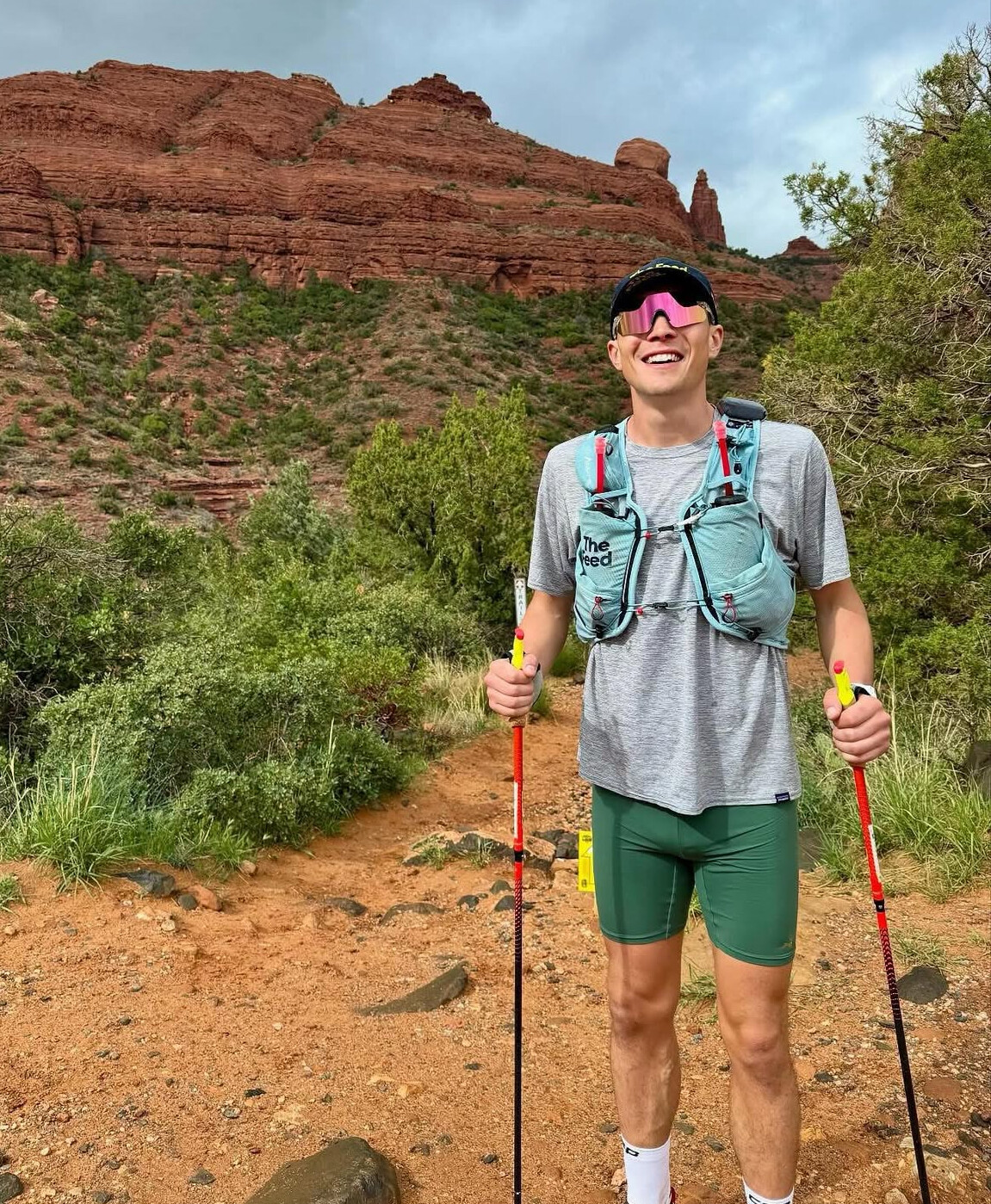
With over 40,000 feet of elevation gain, participants climb mountain passes, descend desert valleys, and navigate technical trails through towns rich in mining and frontier history—Crown King, Prescott, Jerome, Clarkdale, and Sedona—before reaching the final climb to Mount Elden and the finish in Flagstaff.
The terrain breakdown reflects the challenge:
• 45% single-track trails
• 46% jeep and double-track roads
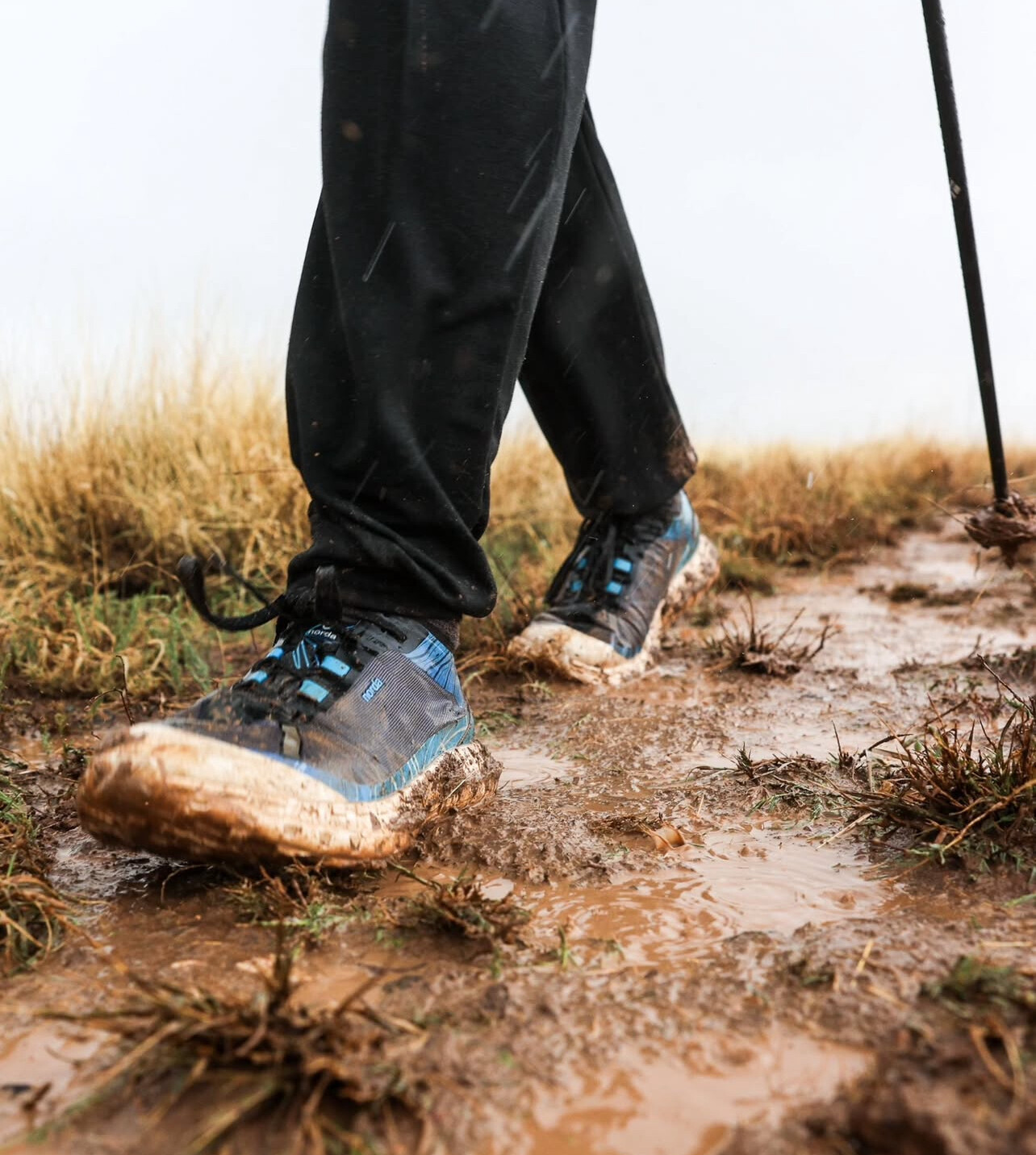
• 9% pavement
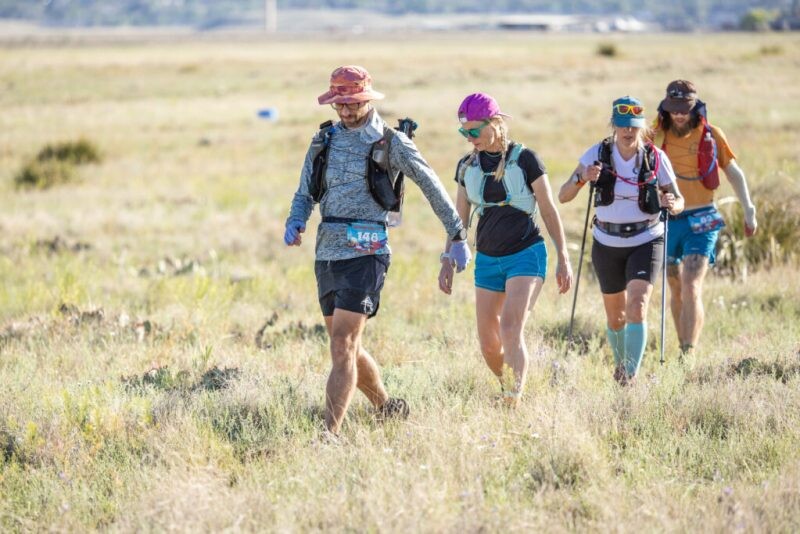
Runners face a 125-hour cutoff to complete the course, pushing through heat, altitude shifts, and sleep deprivation. With elevations ranging from 1,996 feet to over 9,200 feet, it’s a test of true ultrarunning grit.
For those who dare to take it on, Cocodona is more than a race—it’s a journey across time, terrain, and personal limits.
by Pros Baron
Login to leave a comment
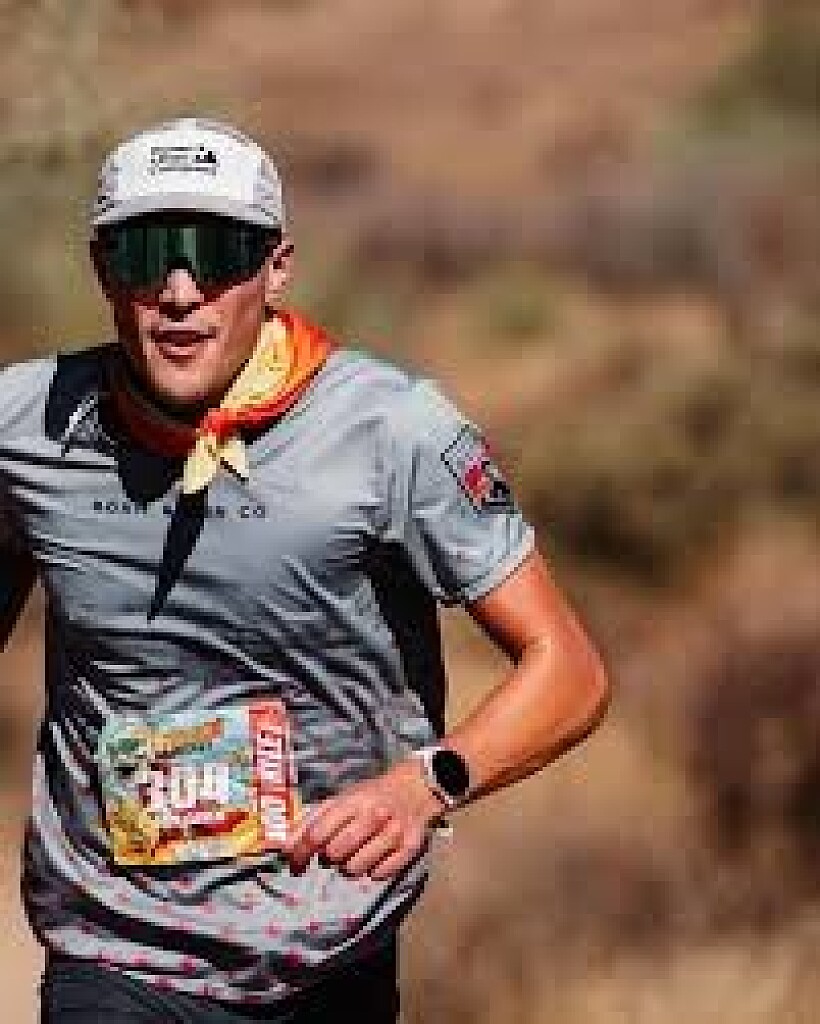
Dan Green Wins Cocodona 250 in Record Time Averaging 13:45 per mile
Dan Green, a seasoned endurance athlete from Huntington West Virginia, took on the grueling Cocodona 250ultramarathon across Arizona this week—and not only finished the race, he won it in spectacular fashion.
Green completed the 256.5-mile course in 58 hours, 47 minutes, and 18 seconds, setting a new course record and surpassing the previous best by over an hour. That’s an average pace of 13 minutes and 45 seconds per mile—an incredible feat considering the race includes nearly 40,000 feet of elevation gain.
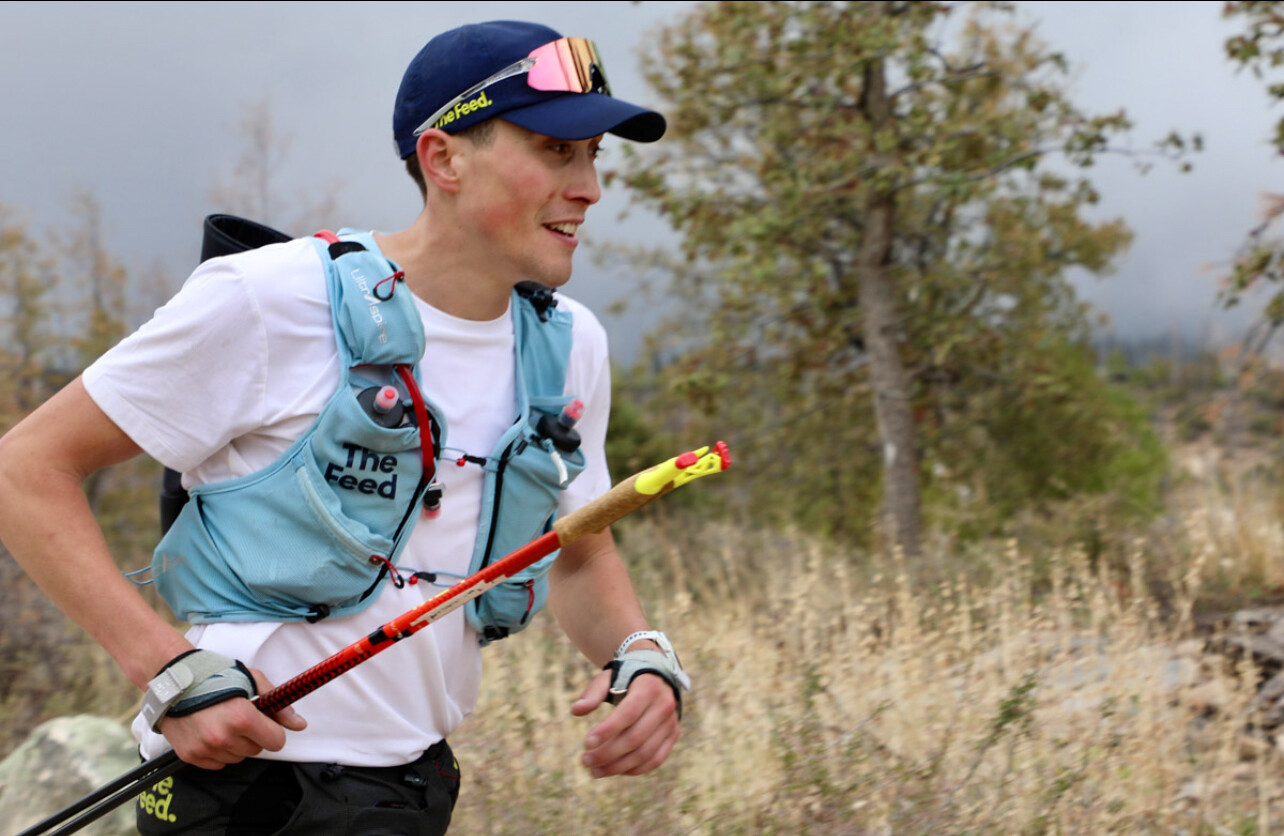
The Cocodona 250 is one of the most challenging ultramarathons in the world, stretching from Black Canyon City to Flagstaff, with runners navigating desert heat, rugged mountain trails, and rocky ascents through towns like Prescott, Jerome, and Sedona. The course is roughly 45% single-track trail, 46% jeep and dirt road, and just 9% paved.
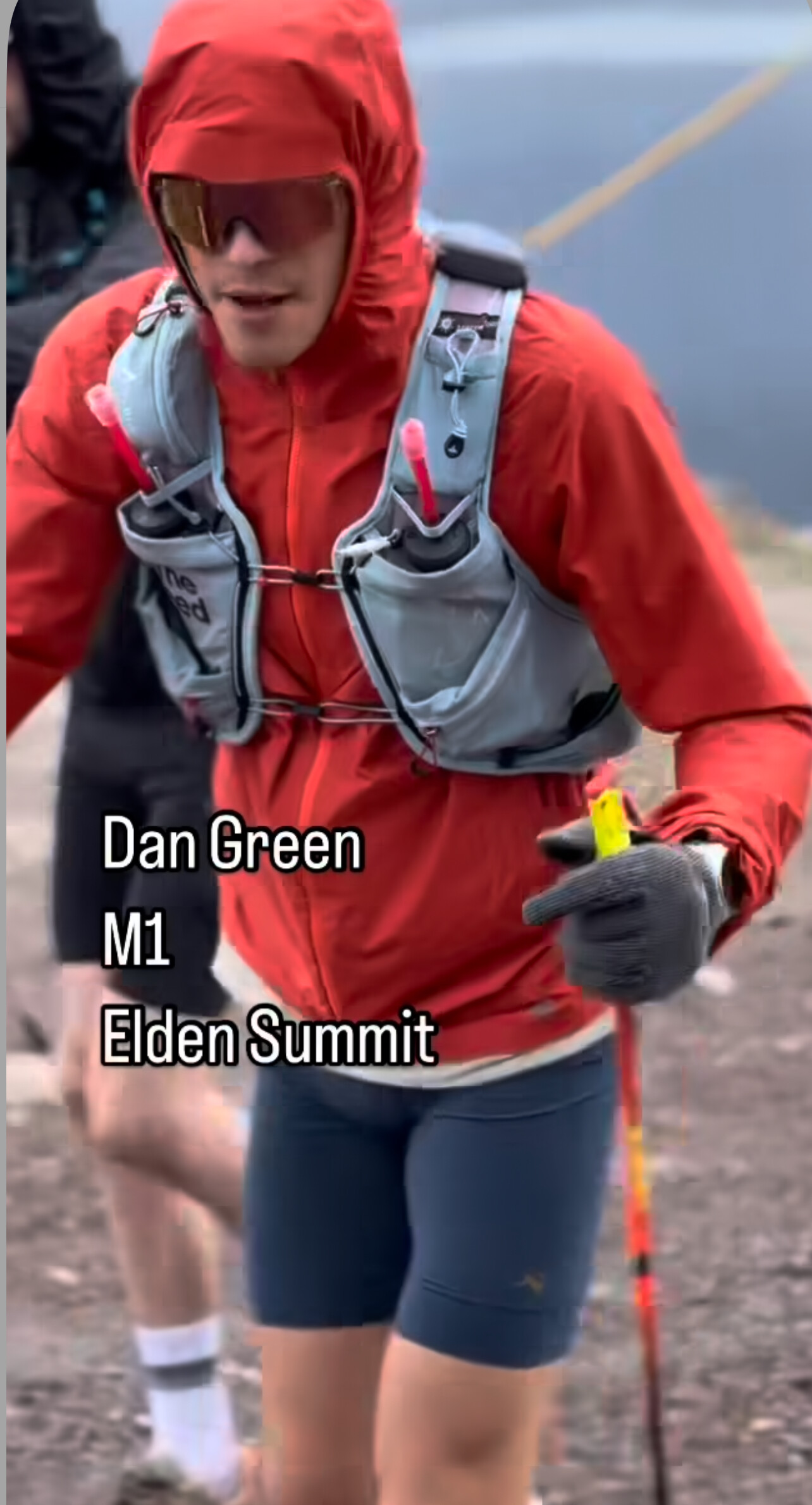
Top 5 Men’s Finishers
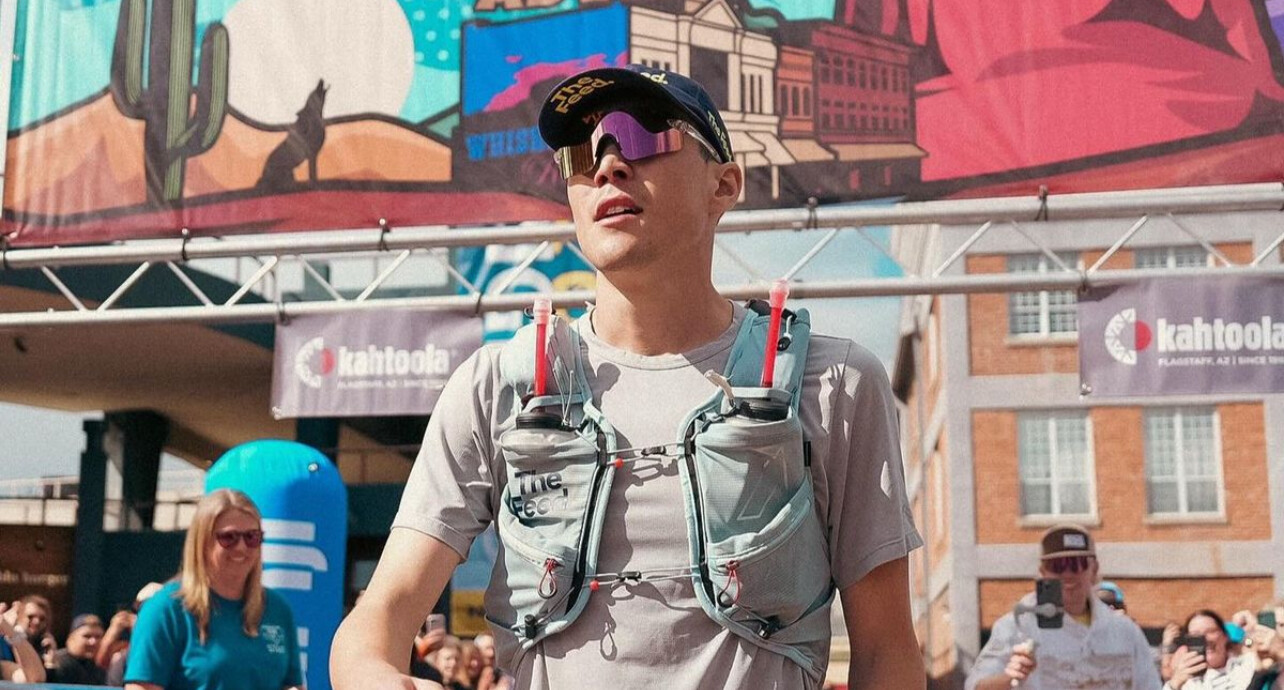
1. Dan Green (USA) – 58:47:18 (13:45/mi)
2. Ryan Sandes (South Africa) – 61:21:04
3. Edher Ramirez (Mexico) – 63:10:13
4. Harry Subertas – 65:28:53
5. Finn Melanson – 66:29:40
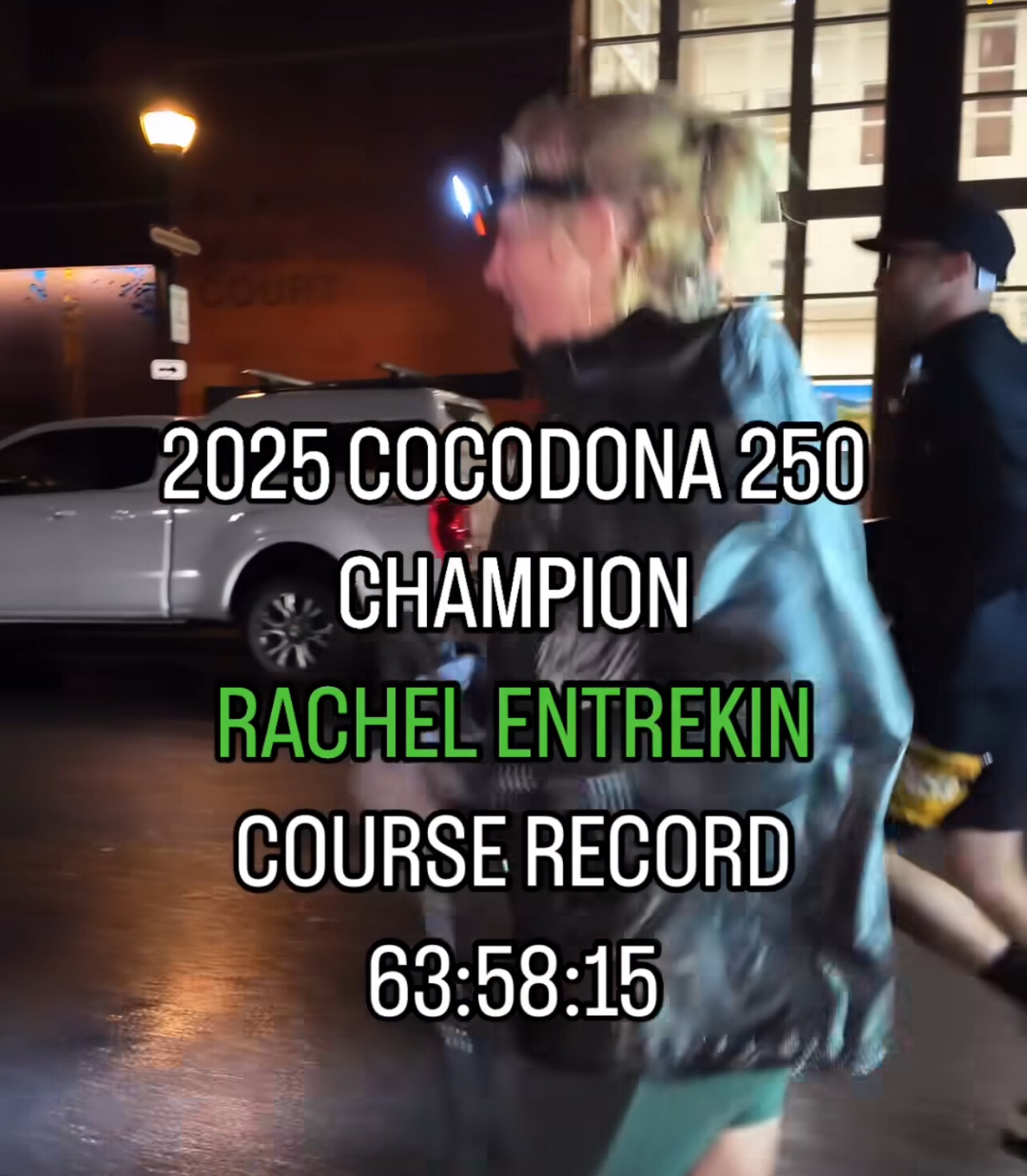
Women’s Champion
• Rachel Entrekin – 63:58:15
Set a new women’s course record by more than seven hours
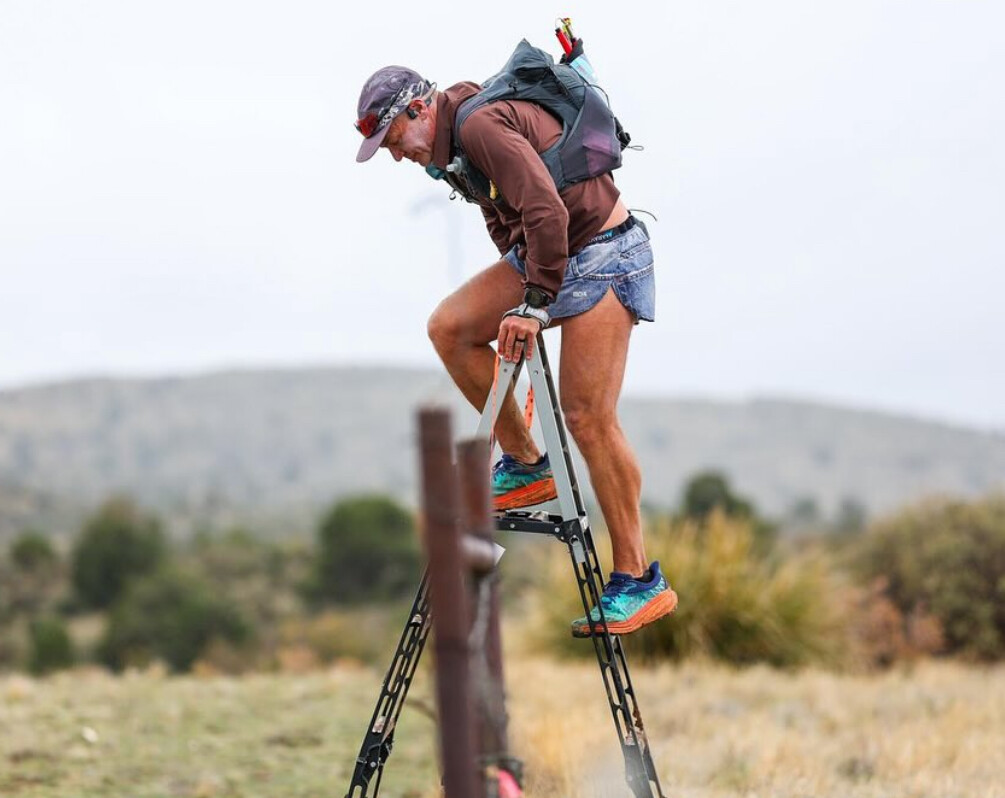
Green’s calm and steady demeanor helped him manage the distance. Speaking with a reporter mid-race via video call, he said:
“Some people take it too seriously. Like why? I mean, you can have fun, still do good, and you can brighten people’s day a little better too.”
This mix of positivity and performance is exactly what the ultrarunning world thrives on—and Dan delivered both in Flagstaff.
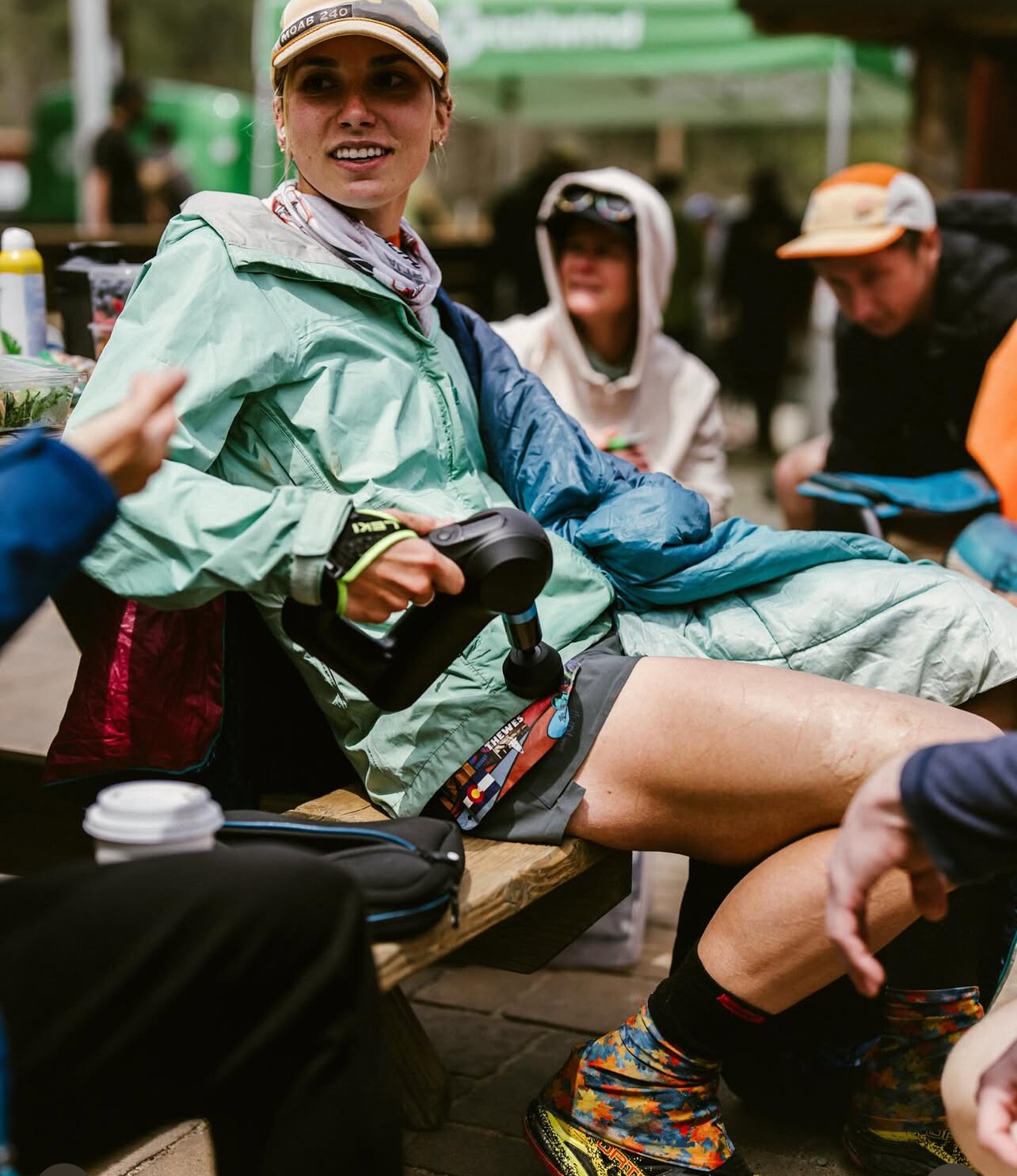
Cocodona 250 Quick Facts
• Distance: 256.5 miles
• Elevation Gain: ~40,000 ft
• Time Limit: 125 hours
• Cutting Through: Black Canyon, Crown King, Prescott, Jerome, Sedona, Flagstaff
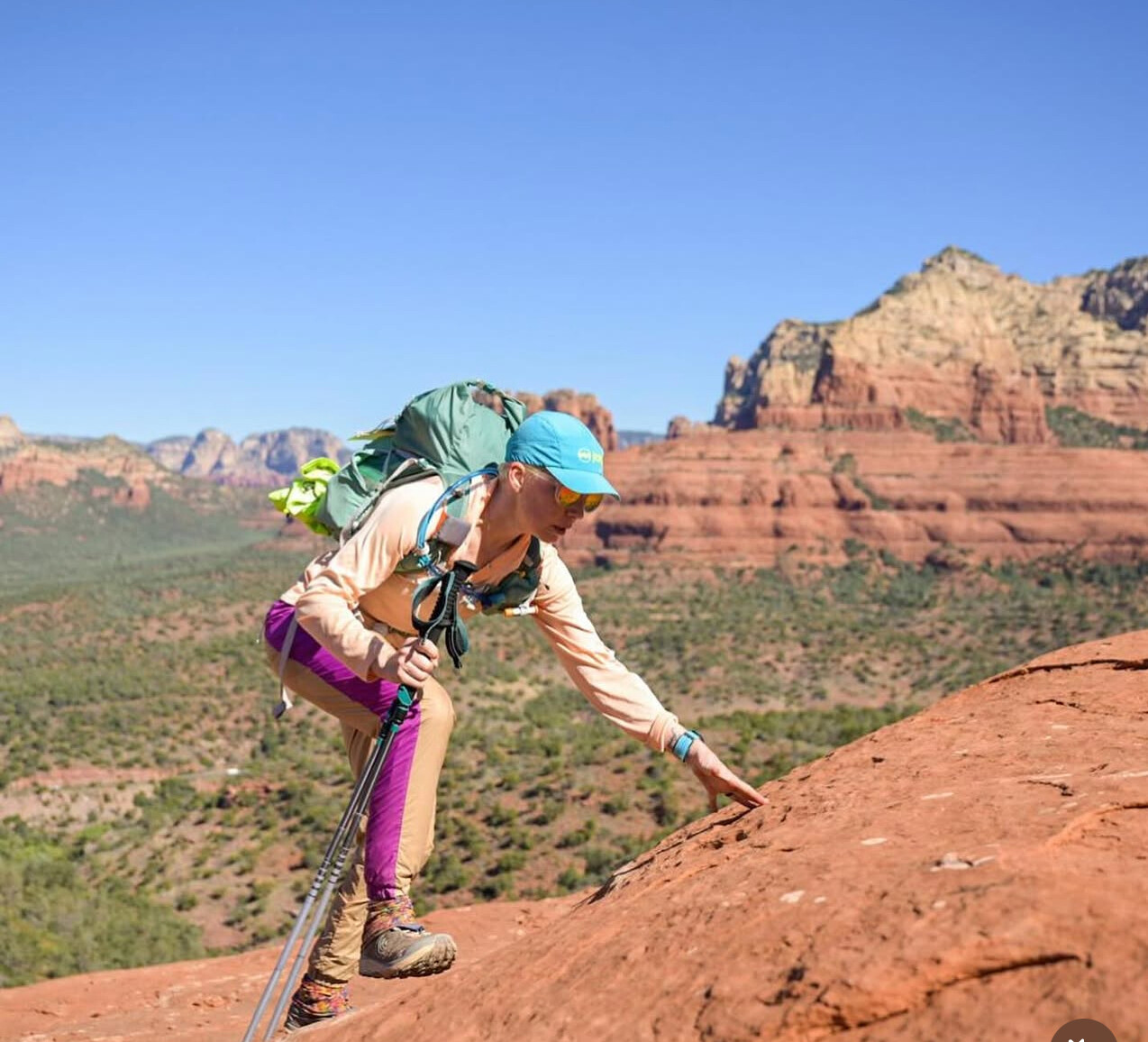
• Terrain Breakdown:
• 45% single-track trail
• 46% double-track/jeep road
• 9% pavement
"Congratulations to Dan Green—your new course record holder and a shining example of what grit, strategy, and a good attitude can achieve over 250+ miles," says MBR editor Bob Anderson
by Boris Baron
Login to leave a comment
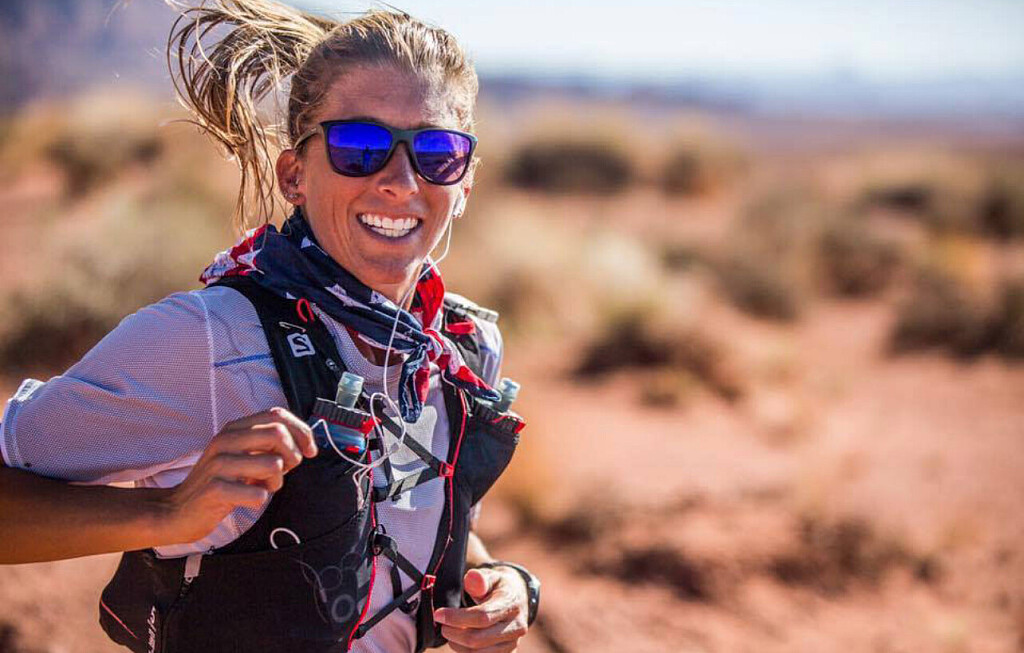
The GOAT Returns: Courtney Dauwalter Takes on the Cocodona 250 Mile Ultra
Courtney Dauwalter, widely regarded as one of the greatest ultrarunners of all time, is set to take on the formidable Cocodona 250—a 250-mile ultramarathon stretching from Phoenix to Flagstaff, Arizona. This grueling race, commencing at 5 a.m. PT on Monday, May 5, 2025, marks her first race over 200 miles since 2020 .
Born on February 13, 1985, in Hopkins, Minnesota, Dauwalter’s athletic journey began with cross-country skiing, where she became a four-time state champion during high school. She continued her athletic pursuits at the University of Denver on a cross-country skiing scholarship and later earned a master’s degree in teaching from the University of Mississippi in 2010 . Before turning professional in 2017, she taught middle and high school science in Denver.
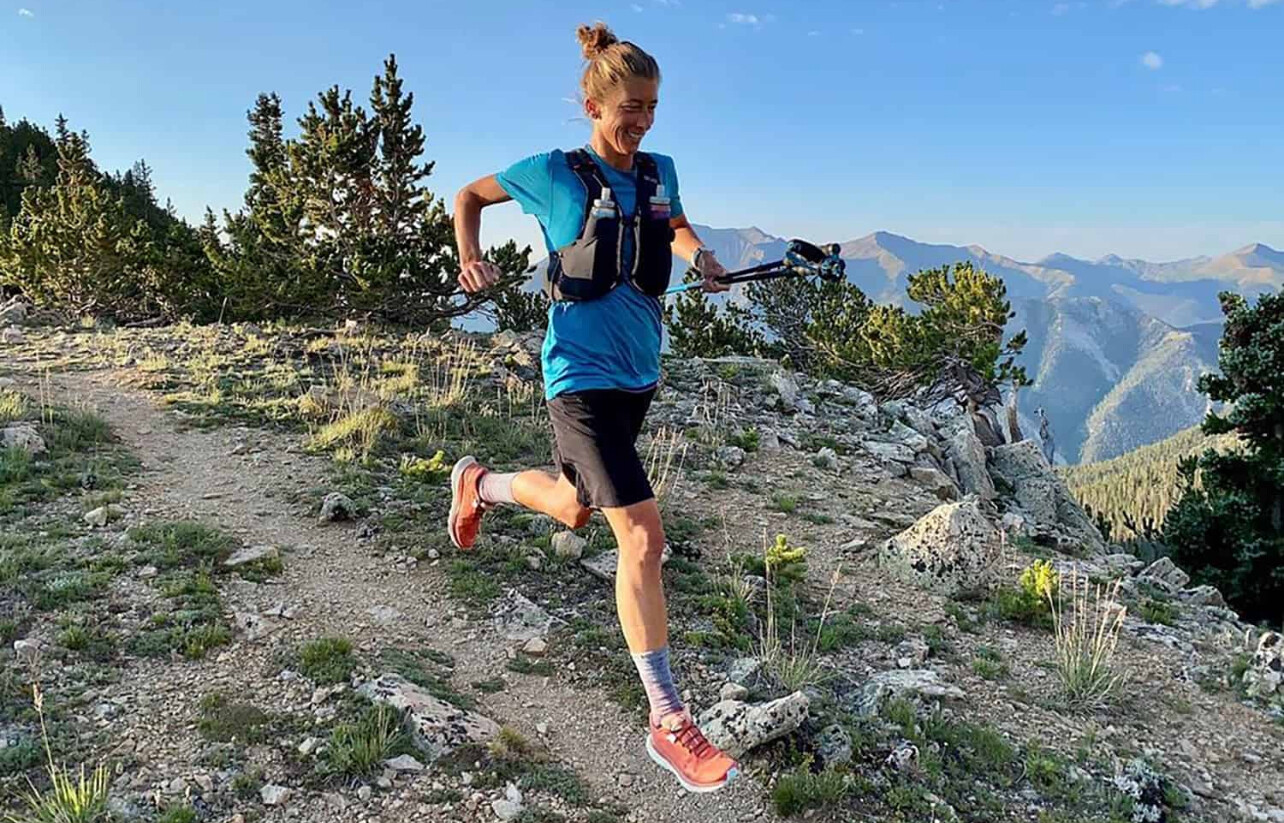
Dauwalter’s ultrarunning career is marked by remarkable achievements. In 2023, she became the first person to win the Western States 100, Hardrock 100, and the Ultra-Trail du Mont-Blanc (UTMB) in the same year . Her victories often come with record-breaking performances, showcasing her exceptional endurance and mental fortitude.
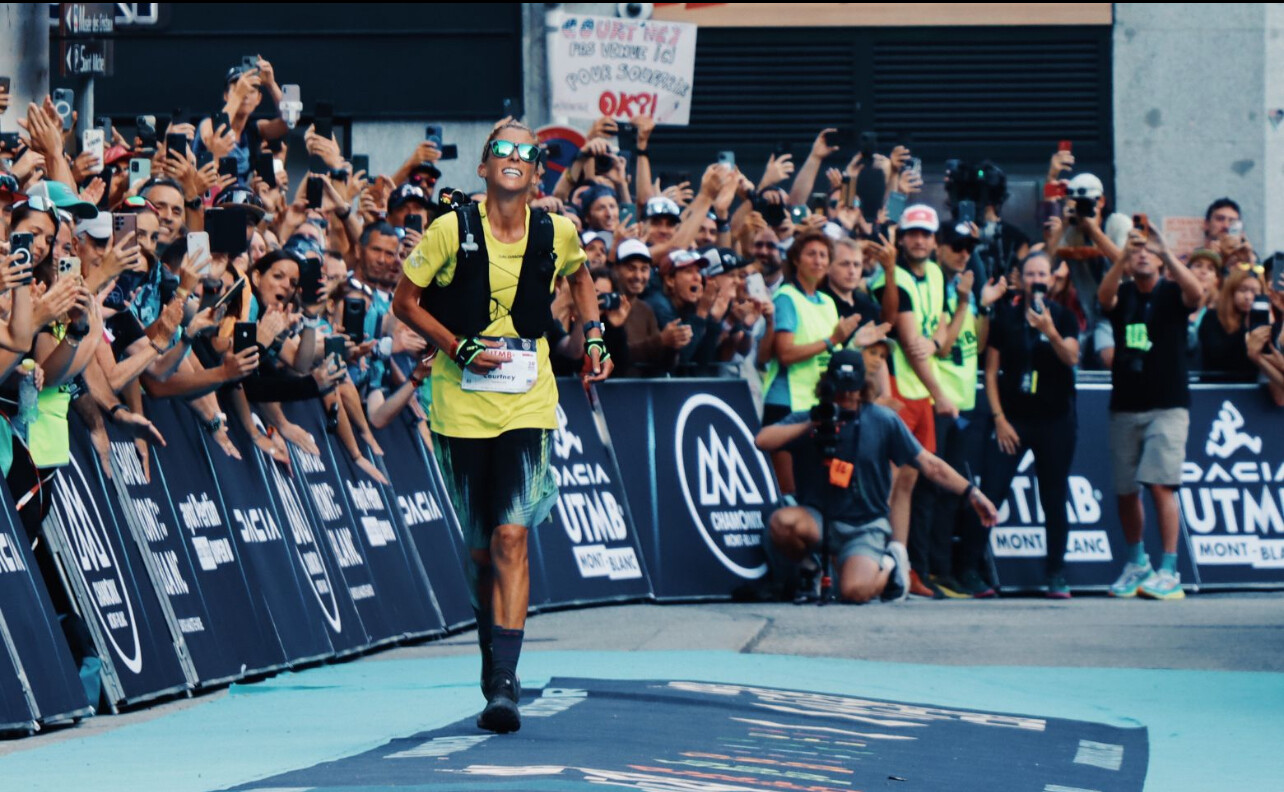
The Cocodona 250 is a point-to-point race that challenges runners with diverse terrains, including desert landscapes, mountainous trails, and significant elevation changes. For Dauwalter, this race presents an opportunity to explore new limits. “I haven’t run a race over 200 miles since 2020,” she noted, highlighting the significance of this endeavor .
Her preparation for Cocodona has been promising. She began her 2025 season with a victory at the Crown King Scramble 50K, indicating strong form leading into this ultramarathon .
A distinctive aspect of Dauwalter’s approach is her embrace of the “Pain Cave,” a term she uses to describe the mental space where she confronts and overcomes extreme physical challenges. She visualizes it as a place to “chip away” at her limits, finding growth through adversity.
Unlike many elite athletes, Dauwalter eschews strict training regimens and coaching, opting instead for an intuitive approach that prioritizes joy and curiosity. Her philosophy centers on listening to her body and finding happiness in the process, which she believes enhances performance.
Courtney Dauwalter’s journey from a science teacher to an ultrarunning icon serves as an inspiration to athletes and non-athletes alike. Her achievements demonstrate the power of resilience, mental strength, and a passion-driven approach to pursuing one’s goals.
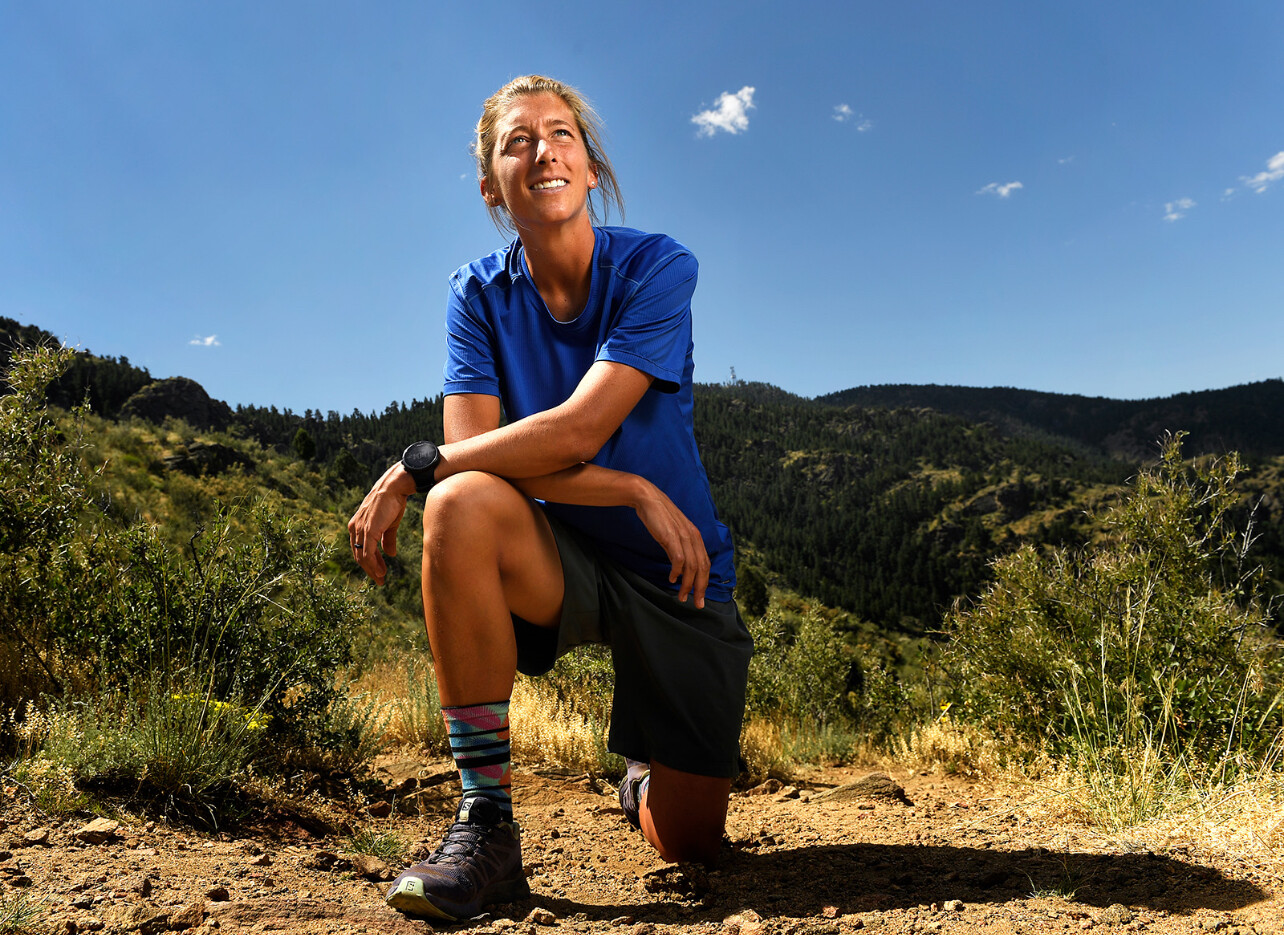
As she embarks on the Cocodona 250, the ultrarunning community watches with anticipation, eager to witness another chapter in the extraordinary career of this remarkable athlete.
by Boris Baron
Login to leave a comment
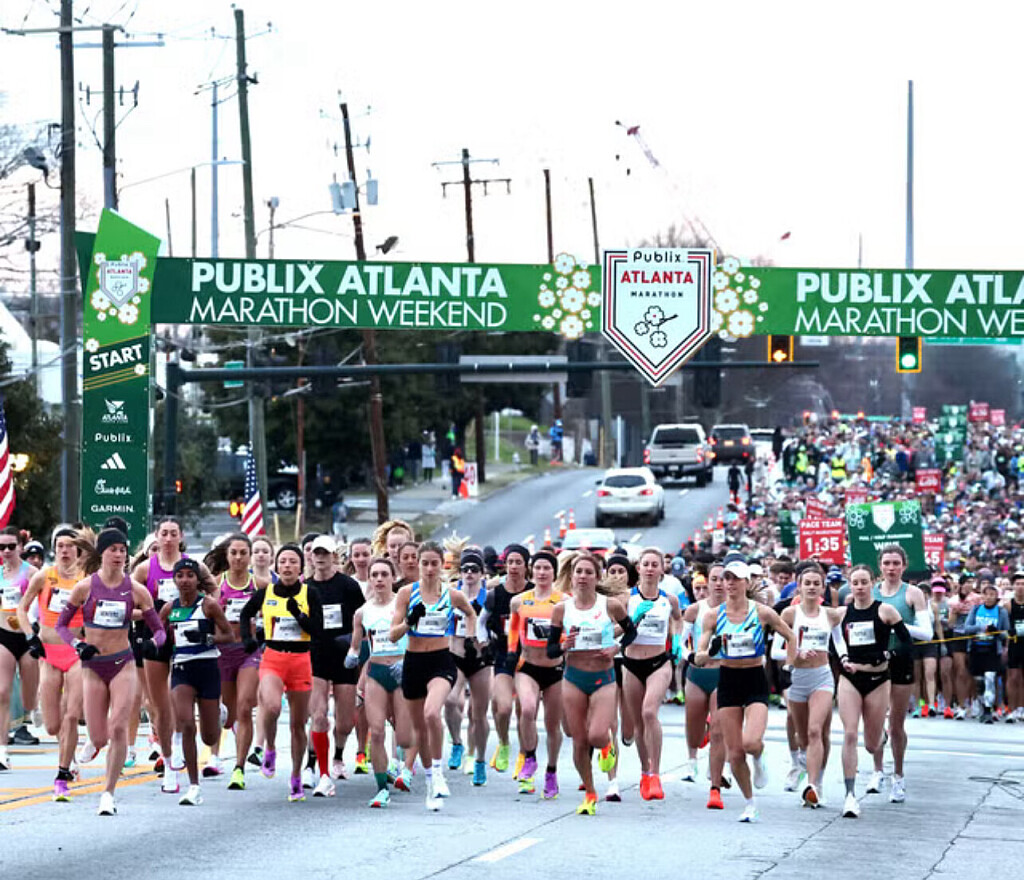
Roe and Maier Dominate USATF Half Marathon Championships
On a chilly morning in Atlanta, runners took to the streets for the USATF Half Marathon Championships on March 2, 2025, battling for national titles and a chance to represent Team USA at the World Athletics Road Running Championships in San Diego this September. With fierce competition and fast times, Taylor Roe and Alex Maier emerged as the day’s champions.
Roe Breaks Away to Claim First National Title
Taylor Roe made a statement in the women’s race, surging ahead in the final miles to secure victory in 1:07:22. The Durham, North Carolina, standout, representing PUMA Elite, held off a strong challenge from Emma Grace Hurley, who finished second in 1:07:35. Amanda Vestri of Blowing Rock, North Carolina, rounded out the podium with a solid 1:08:17.
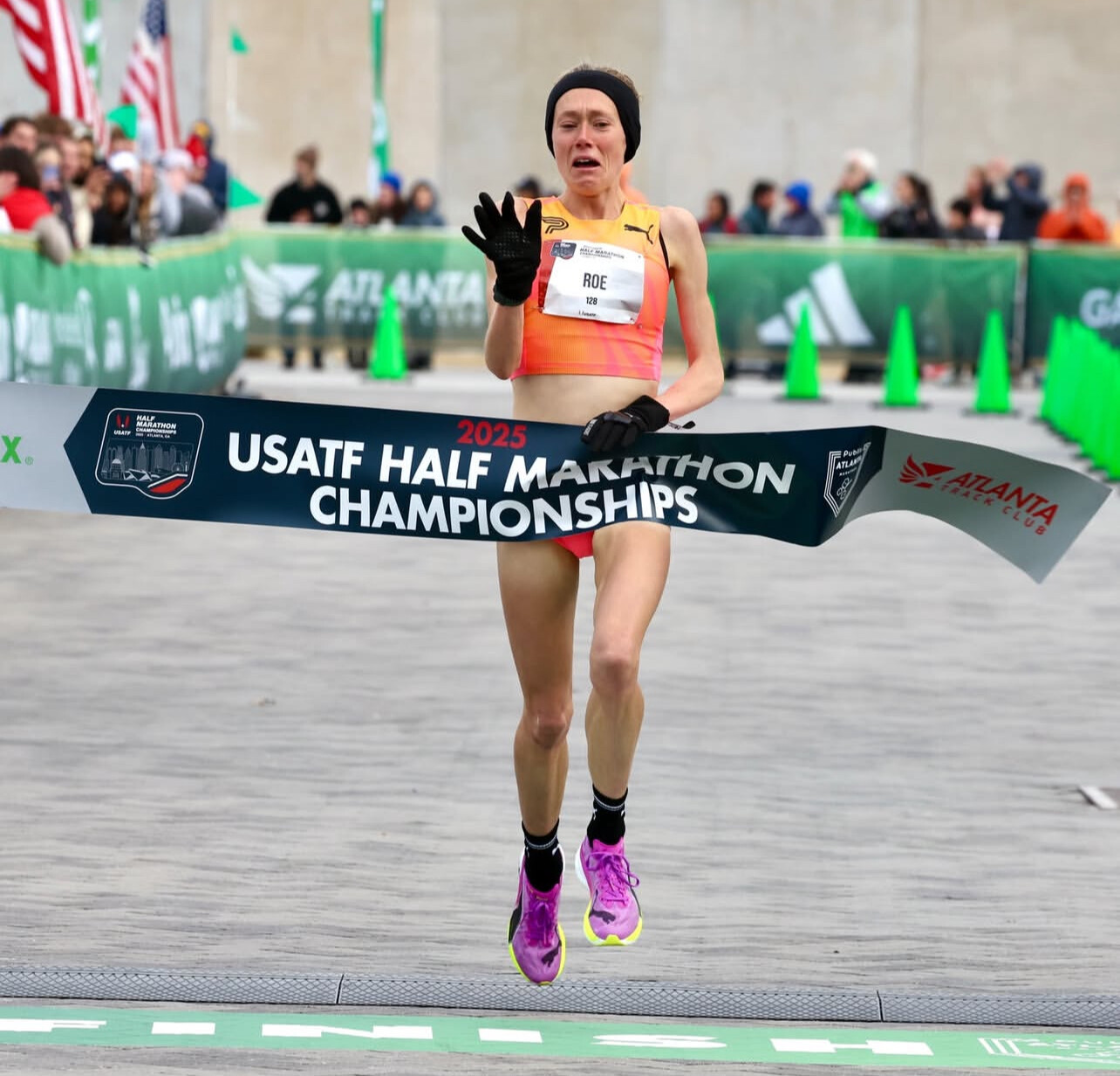
With their top-three finishes, Roe, Hurley, and Vestri secured their spots on Team USA for the World Championships in San Diego.
Top Five Women:
1. Taylor Roe (Durham, NC) – 1:07:22
2. Emma Grace Hurley (Indianapolis, IN) – 1:07:35
3. Amanda Vestri (Blowing Rock, NC) – 1:08:17
4. Jessica McClain (Phoenix, AZ) – 1:08:37
5. Emily Venters (Salt Lake City, UT) – 1:09:03
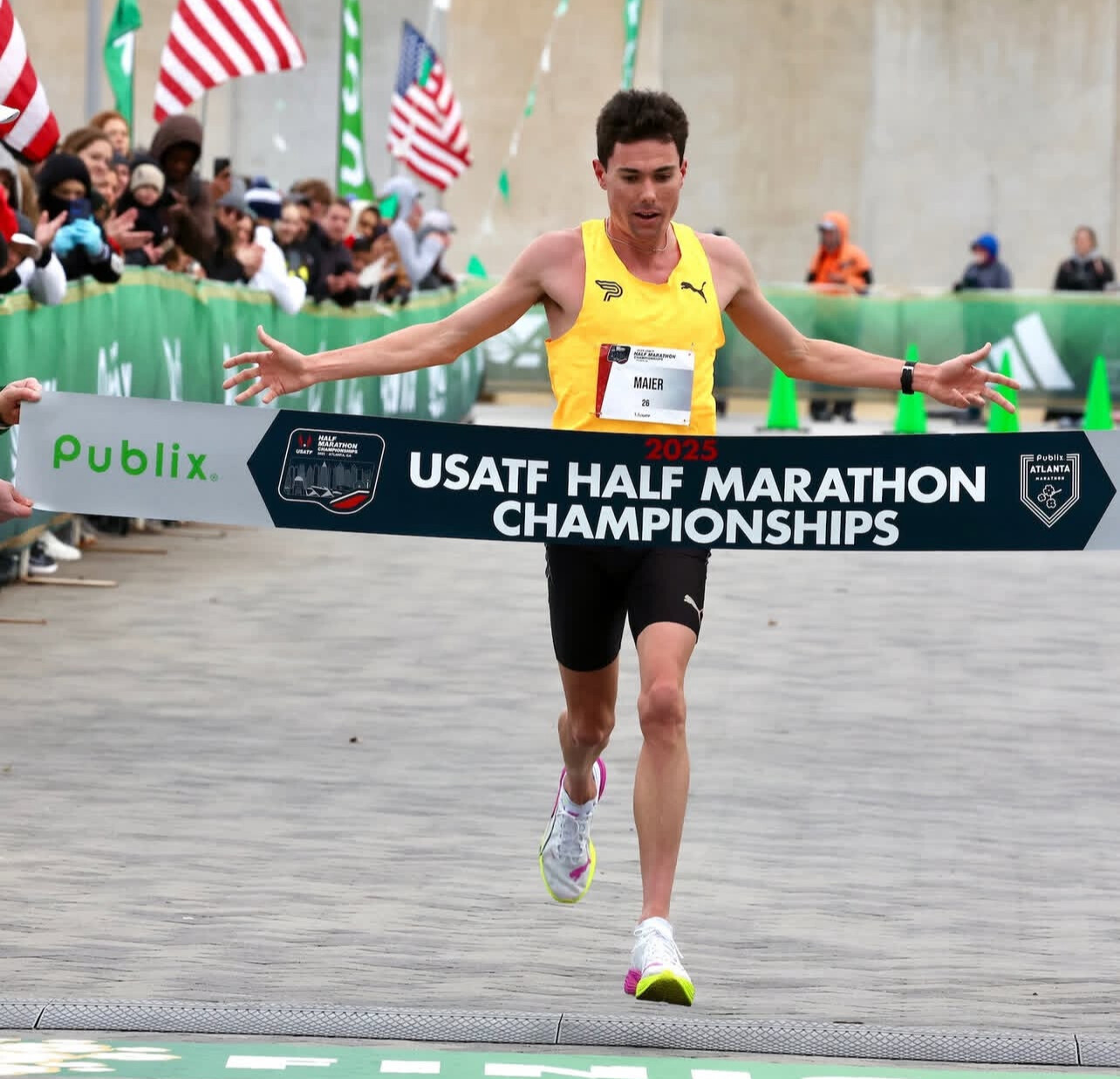
Maier Holds Off Late Challenge to Take the Men’s Crown
In the men’s race, Alex Maier delivered a strong performance, crossing the finish line in 1:00:48 to claim his first USATF Half Marathon title. The Chapel Hill runner, also representing PUMA Elite, stayed composed as Shadrack Kipchirchir of Colorado Springs pushed hard in the final stretch, finishing just 10 seconds back in 1:00:58. Hillary Bor made it a tight battle for second and third, clocking 1:00:59.
Maier, Kipchirchir, and Bor will now represent Team USA at the World Championships, where they’ll take on some of the world’s best in San Diego.
Top Five Men:
1. Alex Maier (Chapel Hill, NC) – 1:00:48
2. Shadrack Kipchirchir (Colorado Springs, CO) – 1:00:58
3. Hillary Bor (Colorado Springs, CO) – 1:00:59
4. Ahmed Muhumed (Flagstaff, AZ) – 1:01:03
5. Andrew Colley (Blowing Rock, NC) – 1:01:09
All Eyes on San Diego
With the USATF Half Marathon Championships in the books, the focus now shifts to the World Athletics Road Running Championships in San Diego this September. The newly crowned national champions, along with the other top finishers, will have the opportunity to take on the best distance runners from around the globe. If their performances in Atlanta are any indication, Team USA will be ready to make an impact on the international stage.
Login to leave a comment
Ethiopian runner shatters marathon course record in a speedsuit
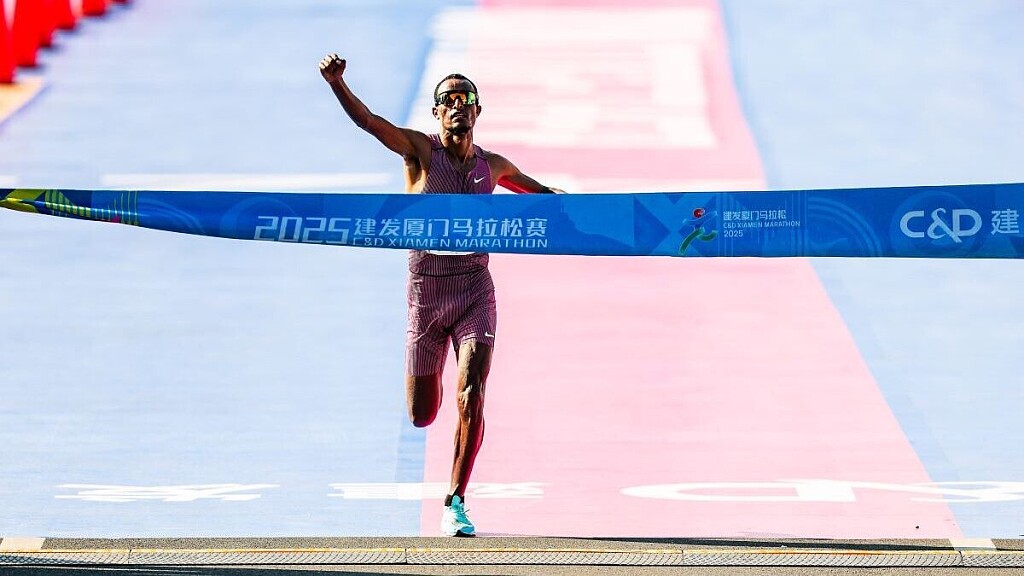
It’s no secret that you want to be as light and comfortable as possible for your marathon, which is why most male marathoners opt for the singlet and split shorts (or half tights) combo on race day. However, Ethiopia’s Dawit Wolde took a different approach at Sunday’s 2025 Xiamen Marathon in Xiamen City, China, winning in a new course record of 2:06:06 while wearing a one-piece speedsuit. Running pundits are saying it’s possibly the fastest marathon ever recorded in a speed suit.
Speedsuits are unusual for road racing as they are typically designed for faster track races like the 100m or the long jump. The purpose of a speedsuit is to reduce air resistance, allowing athletes to move more efficiently through the air without their clothing holding them back. This can lead to slightly faster times by minimizing drag. However, in a marathon, a speedsuit could potentially cause more harm than good, especially if the runner experiences any bowel malfunctions or needs a quick bathroom stop.
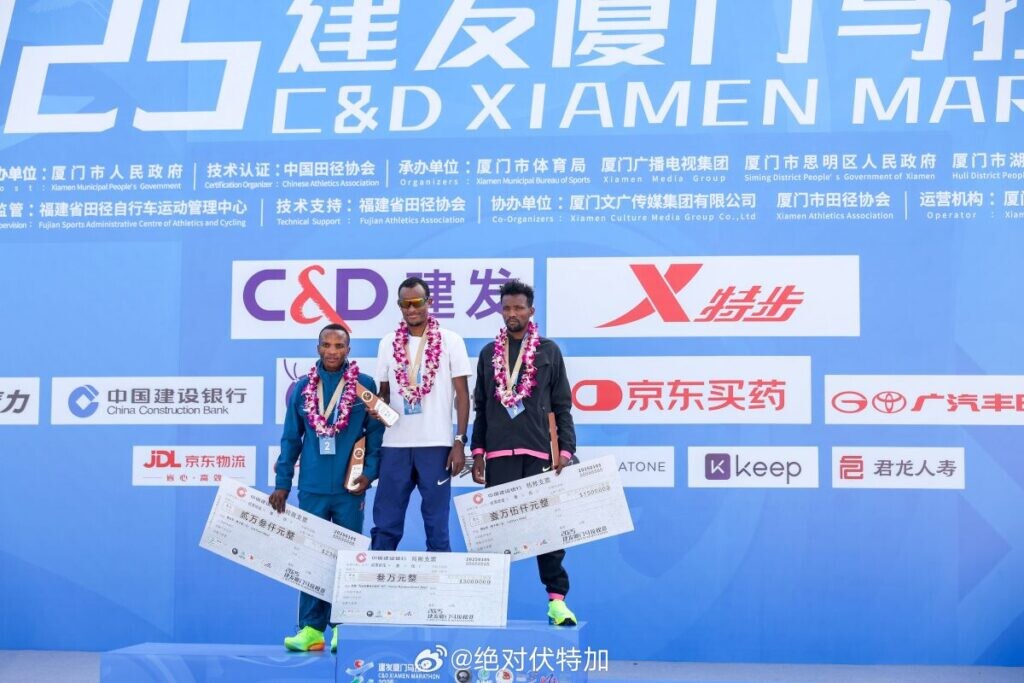
For Wolde, the speedsuit didn’t seem to be an issue, as he flew to a new Xiamen course record, winning the race by 12 seconds over Lesotho’s Tebello Ramakongoana, who ran a national record of 2:06:18. Ramakongoana trains in Flagstaff, Ariz., under American marathon coach James McKirdy, and he also finished seventh in the men’s marathon at the 2024 Paris Olympic Games.
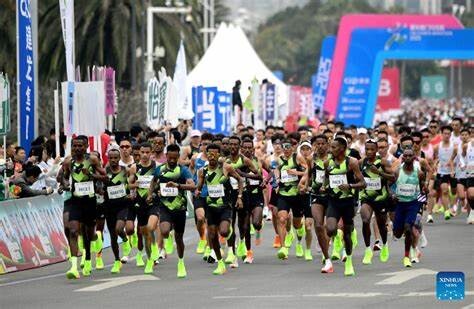
Last year’s champion, Asefa Boki Kebebe, rounded out the podium for third in 2:06:32.
It was an Ethiopian sweep as the women’s race saw Ruti Aga rise to the top once again in China. The 2019 Tokyo Marathon champion won the race in a course record of 2:18:46, just half a minute shy of her personal best set at the Dongying Marathon in 2023. The 30-year-old now owns the two fastest women’s marathon performances ever achieved in China.
by Marley Dickinson
Login to leave a comment

CD XIAMEN INTERNATIONAL MARATHON
The C&D Xiamen International Marathon is an annual marathon race held in January in the coastal city of Xiamen in Fujian province, People’s Republic of China. Every January, the first medal of marathon race around the world is awarded here. The race has become a golden name card of Xiamen, showing its splendor to the whole world.It is one of...
more...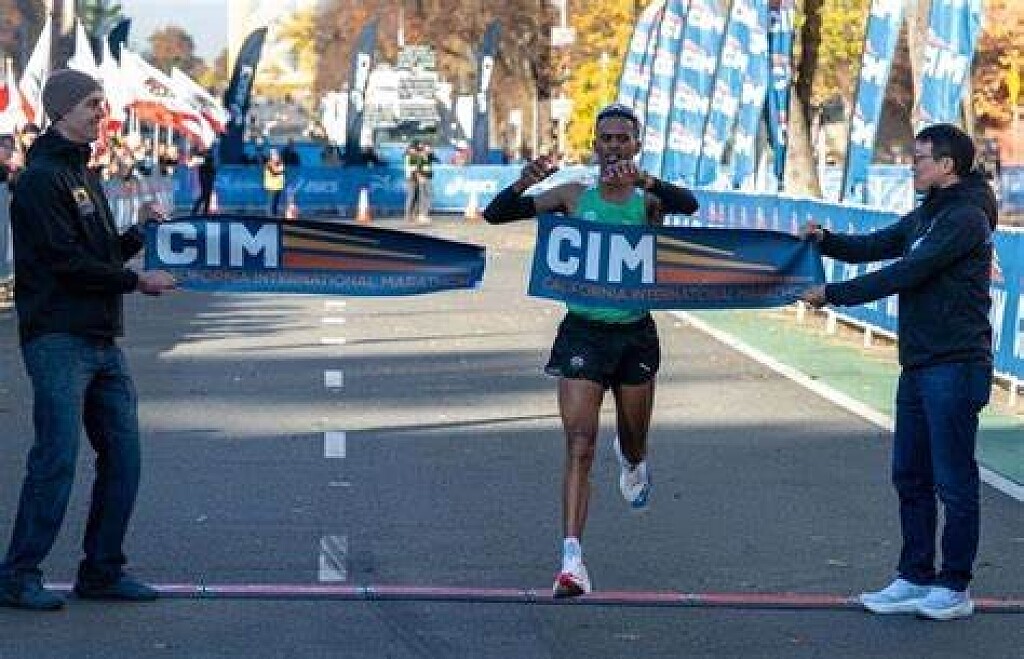
Records fall again as world’s best runners shine at California International Marathon
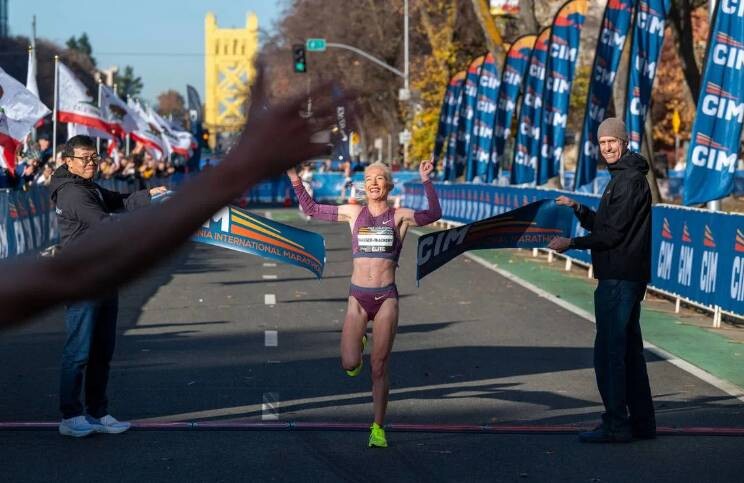
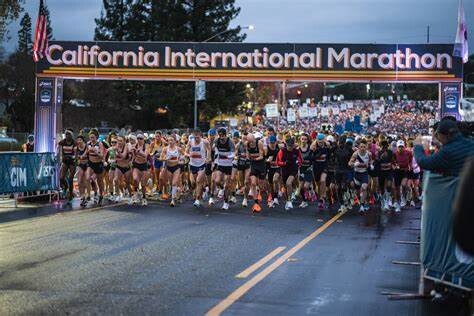
Tsegay Weldlibanos demolished a men’s course record that stood for more than 30 years en route to victory in his first-ever California International Marathon. British Olympian Callie Hauger-Thackery’s record-smashing pace was just enough to edge Jacqueline Gaughan and take home the women’s CIM title Sunday in Sacramento.
It was a day to celebrate, as is so often the case on one of the fastest marathon courses in the country. Sunny, dry conditions, temperatures a crisp but comfortable high 40s, and a world-class field in peak form led to another record-setting Sunday in the state capital.
Weldlibanos, of Eritrea, who lives and trains in high country Flagstaff, Arizona, turned the notoriously fast Folsom-to-Capitol course into a personal playground Sunday, crossing the finish line at two hours, seven minutes and 35 seconds — three seconds faster than the previous course best set by Jerry Lawlor in 1993.
CJ Albertson, the “Fresno Kid” and come-from-behind men’s winner in 2023, missed out on back-to-back wins, taking home a second-place finish and a trip to the podium.
Hauger-Thackery set a blistering pace and needed every bit, her 2:24:28 beating Gaughan’s 2:24:40 by .12 of a second. Stephanie Bruce finished third. One of the fastest British marathoners ever, Haugher-Thackery burst onto the scene in 2023 and earned a spot to represent Great Britain in the 2024 Paris Olympics.
Husband and coach Nick Hauger, who finished third on the men’s side moments earlier, met the women’s winner at the finish in an emotional moment. Hauger was draped in the Stars and Stripes; the Union Jack adorned Haugher-Thackery’s shoulders as the couple embraced in victory.
Fifth-place women’s finisher Brittney Feivor’s cheering section hugged the rail at the finish. Susan Kessler, Feivor’s mother-in-law, traveled from Kenosha, Wisconsin, to watch the former Marquette University standout’s run Sunday.
“It’s exhilarating. We know how much work she puts in,” said Kessler. Feivor logs 50 to 90 miles or more a week in training. “It’s cheering and giving her the support she needs.”
The day didn’t just belong to the elites. As many as 10,000 runners and another 1,000 relay runners were expected to cross the finish line on race day, traveling from across the country and Northern California for the chance to notch a personal best or qualify for marathons on the 2025 calendar.
The California International Marathon is a qualifying race for the Boston Marathon. The 129th running is April 21. It’s a short walk — or jog — from the finish line at Ninth Street and Capitol Mall to a bell at the state Capitol’s west steps. Runners here know what the bell’s peal means: Someone’s going to Boston next year.
On Sunday, that someone was Alex Mills, 23, of Tacoma, Washington, shaking the bell nearly off its moorings as proud family — 10 in all — watched on from the Capitol steps.
Mills, who graduated this year from George Fox College in Oregon, wasted no time. Sacramento was the first marathon for the collegiate cross-country runner.
Mills’ mother, Shelly, and entourage planned their vacation around the Sacramento trip. Now, she said, they’ll have to schedule a second in Boston.
“I’m just happy to get it over with,” said Mills, still draped in his warming blanket.
Sometimes the run is about redemption. Andy Holstrom came down to Sacramento from Portland for this year’s marathon. Holstrom, bib 115, was on the course, wife Rebecca and parents Bob and Marla Mion of Newcastle cheering on from the mall. Andy and Rebecca, expecting a child in April, ran Boston last year, but after a disappointing run in the Bay State, Andy was looking for a personal best in California.
Rebecca, who recently ran an ultramarathon, carried a placard with its own bit of cheeky motivation: “Don’t embarrass our unborn son,” it read. “Run fast.”
Dad-to-be Andy delivered, cracking the 2:40 barrier with a 2:39:12.
Brandon Moran of Boston took the trip west, breaking into the coveted 2:30s, relishing the CIM’s fast downhill after running on Boston’s grueling hills. “It’s been two years since I ran this fast. I’m very, very happy with the result. It’s just the smoothest course I’ve ever run.”
by Darrell Smith
Login to leave a comment

California International Marathon
The California International Marathon (CIM) is a marathon organized by runners, for runners! CIM was founded in 1983 by the Sacramento Running Association (SRA), a 501(c)(3) non-profit organization. The SRA Board of Directors is comprised of runners with a combined total of 150+ years of service to the CIM. The same route SRA management created for the 1983 inaugural CIM...
more...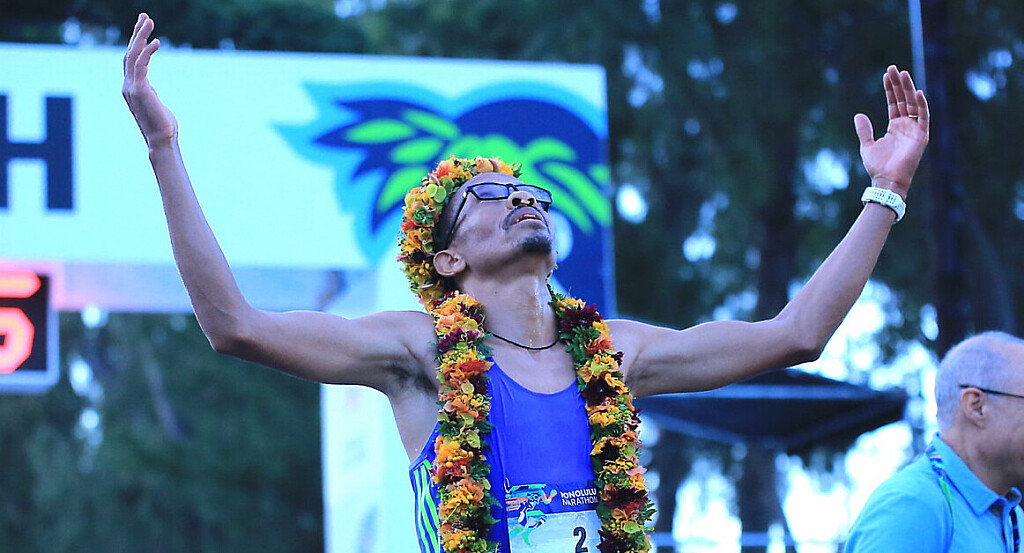
The 52nd Honolulu marathon was another fun and spirited event
Nearly 25,000 runners started the 52nd Honolulu Marathon under 72°F temperatures, 88% humidity and very calm winds. Due to the increased competition that has grown during a second running boom in recent years, Honolulu’s pro marathon field was not as deep as in the past.
“It’s getting harder to get the top runners here,” admitted marathon president Dr. Jim Barahal. “There are other races now, like Valencia, that have faster so they come back they come back courses, no heat or hills. But I’m happy with the field we got and the races they produced.”
Both defending champions returned, heading up small, but strong lead packs.
Kenya’s Paul Lonyagata came down with a small injury two months ago back home in Kenya, and wasn’t prepared to defend his title with any strength. He dropped out just before the 10K mark.
But women’s defender, Cynthia Limo, who debuted with her victory in Honolulu last year in 2:33:01, saw herself in a tight four woman battle that lasted from the 1st mile until 30 km.
Last year’s third place men’s finisher, Reuben Kerio, 30, of Kenya, for some reason, downloaded a 4:38 11th mile as the race headed out Kalanianaʻole Highway for the 4 mile stretch out to Hawaii Kai and the turnaround.
What had been a four man pack was instantly reduced to two as Eritrean Olympian Yamane Haileselassie, 26, who debuted in Boston in April, answered the call a few steps behind the rushing Kenyan.
Super shoes not withstanding, a 4:38 is more like a breakaway mile after 30 km not a how-do-you-do mile not even halfway through the race. Pundits on the scene questioned Kerio‘s decision.
At 15 miles, Yamane HaileSelassie made a move of his own, and within a mile had 10 seconds on Kerio. The lead grew to 30 seconds by 20 miles and the race seemed all but over.
HaileSelassie defected to the United States after the world championships in Eugene, Oregon in 2022. He moved to Flagstaff, Arizona, where he drives an Uber making food deliveries 40 hours a week to supplement is racing income.
He recently won the BAA Half Marathon in Boston on November 10th, running 1:01:46. He was third in that race last year and in seventh the year before. So you knew he was on form. He was also the fifth place finisher at the 2021 Olympic steeplechase final in Tokyo. When you can run top five in the Olympic steeplechase, you know this could be a great marathon runner.
According to his coach, James McKirdy, this is the first season that Yamane has worn super shoes. But he didn’t seem to be dialed in to the new technology quite yet as his feet came out full of blisters at the end of the competition. Still, he held off a never-say-die Reuben Kerio to win the race in 2:11:59
Kerio, who closed within 12 seconds going up Diamondhead at 40 km, finished 17 seconds back with Japan’s Kensuke Horio taking third place in 2:15:30.
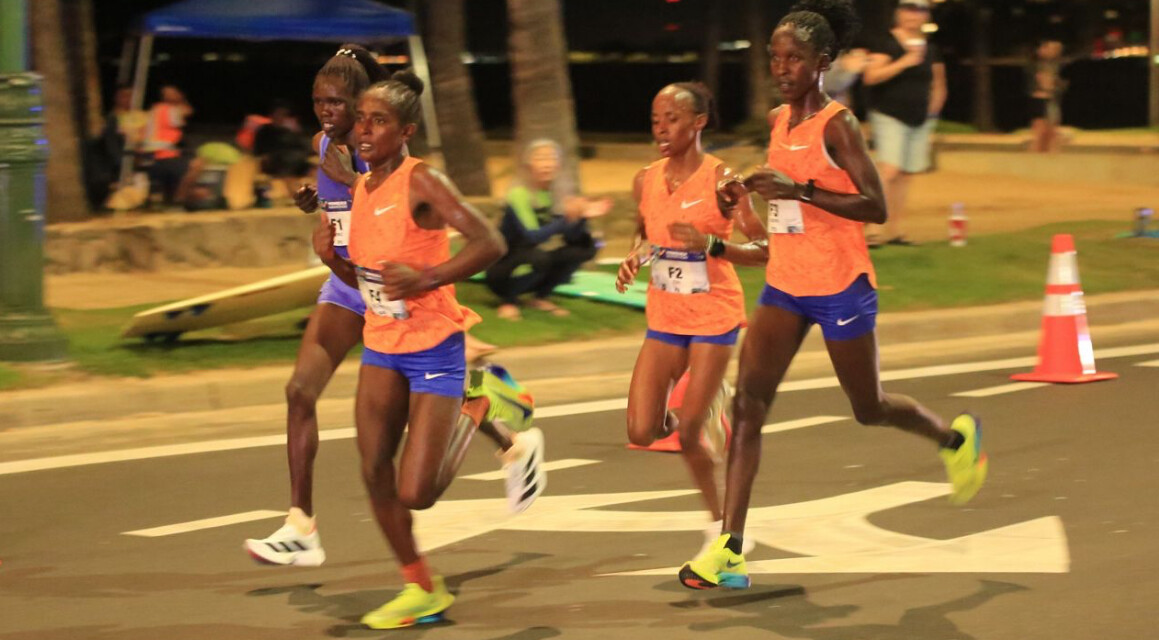
Women leaders through Waikiki in mile 6 (33:10)
The women staged a four-person battle from mile one to mile 19. Defending champion Cynthia Limo ran alongside country woman F3 Judith Korir, silver medalist at the 2022 World Championships marathon in Eugene, Oregon. Along with them was F2 Sandrafelis Tuei, also of Kenya, who is has personal best of 2:22:22 from a fourth place finish in Shanghai, China in 2023. The fourth woman in the group was F4 Fanta Gelasa of Ethiopia, runner up at the 2024 Milan Marathon in Italy.
The tall striding Judith Korir controlled the pace for much of the first half, but at 19 miles the Ethiopian Gelasa finally let go and Cynthia Limo began to show signs of trying to take the race over.
In mile 20 Judith Korir finally fell away, leaving just Cynthia and Sandrafelis.
Those two stay together until Diamond Head when, at the 39 km mark, at the aid station Tuei seemed indecisive, unsure how to go to the table and almost ran into it before coming around the table to get her drink. But then she failed to grab it, whereas Cynthia easily snatched her bottle and kept on trucking’.
Suddenly, a side-by-side battle was a two stride advantage. And that seemed to be enough to break Tuei. From there, Limo loped home uncontested to finish in 2:31:13 to take her second straight, Honolulu Marathon title. Tuei finishing 2:31:47, with Judith Korir taking third in 2:36:17.
In this modern area of super shoes, when winning times are faster than ever, sometimes an old-fashioned foot race can be more fun to watch than a solo run against the clock.
Honolulu never had, nor never will have, a reputation for being a fast marathon. But pro racing is just as important to the Honolulu Marathon Association as tens of thousands of average runners. Though In 2019, Honolulu had both the fastest marathon in the America (2:07:59) and the slowest, as they never close their finish line and some finishers take up to 17 hours to complete their journey.
But that’s what makes Honolulu special. And with more people than ever coming to enjoy sun and sand and swaying palm trees while the snow flies back home, it seems the aloha spirit will never go out of style.
by Toni Reavis
Login to leave a comment

Honolulu Marathon
The Honolulu Marathon’s scenic course includes spectacular ocean views alongside world-famous Waikiki Beach, and Diamond Head and Koko Head volcanic craters.The terrain is level except for short uphill grades around Diamond Head. ...
more...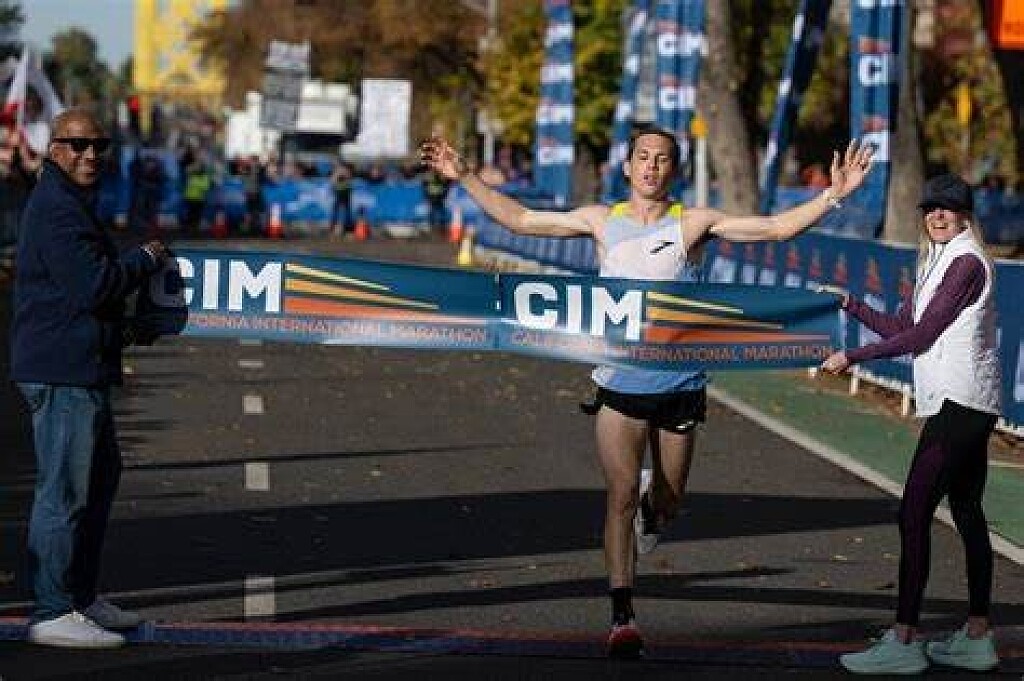
California International Marathon is this weekend and defending champion CJ Albertson and Calli Hauger-Thackery headline the elite field
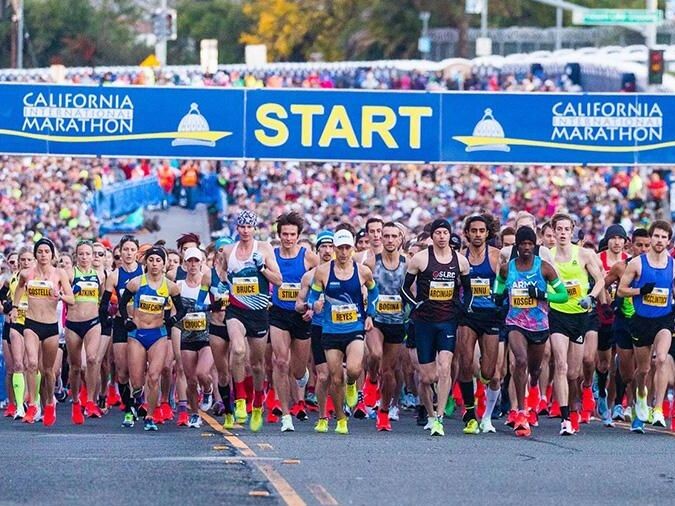
The 41st annual California International Marathon is this Sunday, Dec. 8 bringing some 10,000 runners and spectators to Folsom and the Sacramento region. Along with the many participants comes a number of road closures the day of the event.
The marathon begins at the intersection of Folsom Auburn Road and Folsom Lake Crossing at 7 a.m.The course continues through Orangevale, Citrus Heights, Fair Oaks, Carmichael, and Sacramento, and concludes at the State Capitol. Road closures include Folsom-Auburn Road from Folsom Dam Road to Greenback Lane, Folsom Lake Crossing Road from East Natoma Street to Folsom-Auburn Road, and Oak Avenue Parkway from Folsom-Auburn Road to Santa Juanita Avenue. Closures begin at 3 a.m. and roads are planned to reopen at 10 a.m. Detours will be clearly marked.
The CIM was founded in 1983 by the Sacramento Running Association, a 501(c)(3) nonprofit organization. The event brings an estimated 10 million dollar to the Sacramento County economy each year.The event is certified and sanctioned by USATF and is a Boston Marathon and U.S. Olympic Trials Marathon qualifier. Learn more at runsra.org. For a complete listing of road closures, schedules, and courses, visit the CIM website or see a summary at the conclusion of this article.
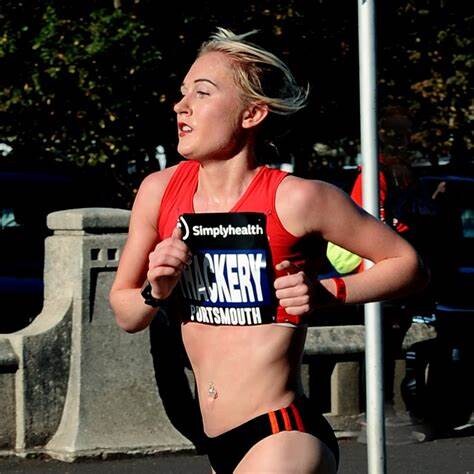
With good weather in the forecast, participants and organizers are excited about this year’s event and according to the Sacramento Running Association the event will feature 2024 Paris Olympian Calli Hauger-Thackery and defending 2023 CIM champion CJ Albertson, alongside a mix of returning veterans and first-time participants, setting the stage for potentially record-breaking performances.
The elite men’s and women’s fields will compete for a combined $100,000 prize purse, with additional bonuses for breaking course records. The current records stand at 2:10:27 for men, set in 1993 by Jerry Lawson, and 2:26:02 for women, set in 2022 by Paige (Stoner) Wood.
Hauger-Thackery, representing Great Britain at the 2024 Paris Olympics, holds the fastest personal best in the women’s field—2:21:24, achieved at the 2024 Berlin Marathon earlier this fall. She will make her CIM debut, joining her husband, 2:12 marathoner Nick Hauger, who is also competing.
“I’m excited to do this race for many reasons,” Hauger-Thackery said. “The main one being that my husband has had only fond experiences here over the past two years. I’m also excited because my dad raced CIM in the ’90s, and California is my favorite place! CIM has been on my radar for quite some time now.”
Hauger-Thackery will face stiff competition from four other women who have run sub-2:30 marathons: Laura Thweatt of Superior, Colo., with a personal best of 2:25:38; Jackie Gaughan of Boston, 2:27:08; Stephanie Bruce of Flagstaff, Ariz., 2:27:47; and Allie Kieffer of Austin, 2:28:12, who was the 2023 CIM runner-up.
Bruce returns to CIM with a strong record, having placed second in both the 2016 (2:32:36) and 2018 (2:29:21) editions. Since then, she has achieved milestones such as running her personal best of 2:27:47 at the 2019 Chicago Marathon and placing sixth at the 2020 U.S. Marathon Olympic Trials.
“Returning to CIM feels like an awesome homecoming because it was the first marathon I ran postpartum with my two boys in 2016,” Bruce said. “Now, eight years later, I’m coming back after giving birth to my third baby. I love the city, the energy, and the people who make this race so special.”
The men’s field includes three notable returners: defending champion CJ Albertson (Fresno, Calif.), 2023 runner-up Milton Rotich, and 2019 champion Elisha Barno. Joining them is CIM newcomer Tsegay Tuemay Weldlibanos, a 2:09:07 marathoner currently training in Flagstaff, Ariz., who is expected to push the pace.
“To race at CIM is very special for me,” Weldlibanos said. “Many of my teammates have found success here, and I hope to do the same. I want to make my family, team, and coach proud.”
Albertson has enjoyed a standout year, placing fifth at the 2024 U.S. Olympic Marathon Trials (2:10:07), seventh at the Boston Marathon (2:09:53) and Chicago Marathon (2:08:17), and tenth at the New York City Marathon (2:10:57). Another CIM victory will likely require a course record performance.
Barno, who won the 2019 CIM, has a personal best of 2:09:14. Rotich, last year’s runner-up, boasts a 2:08:55 personal best. Both are strong contenders to challenge Albertson and Weldlibanos for the win and the 2:10:27 course record.
“We’re thrilled about the 2024 elite field at CIM,” said Scott Abbott, executive director of the Sacramento Running Association. “This year has a unique homecoming feel, with so many ‘CIM alumni’ returning. It’s further evidence that CIM is a favorite among elite runners. We expect a strategic race between these battle-tested veterans, and we hope to see both course records fall.”
The Sacramento Running Association, a nonprofit organization, is dedicated to encouraging people of all ages and abilities to run. The SRA focuses on developing quality running events that appeal to a wide range of participants.
by Alan Inderkane
Login to leave a comment
California International Marathon
The California International Marathon (CIM) is a marathon organized by runners, for runners! CIM was founded in 1983 by the Sacramento Running Association (SRA), a 501(c)(3) non-profit organization. The SRA Board of Directors is comprised of runners with a combined total of 150+ years of service to the CIM. The same route SRA management created for the 1983 inaugural CIM...
more...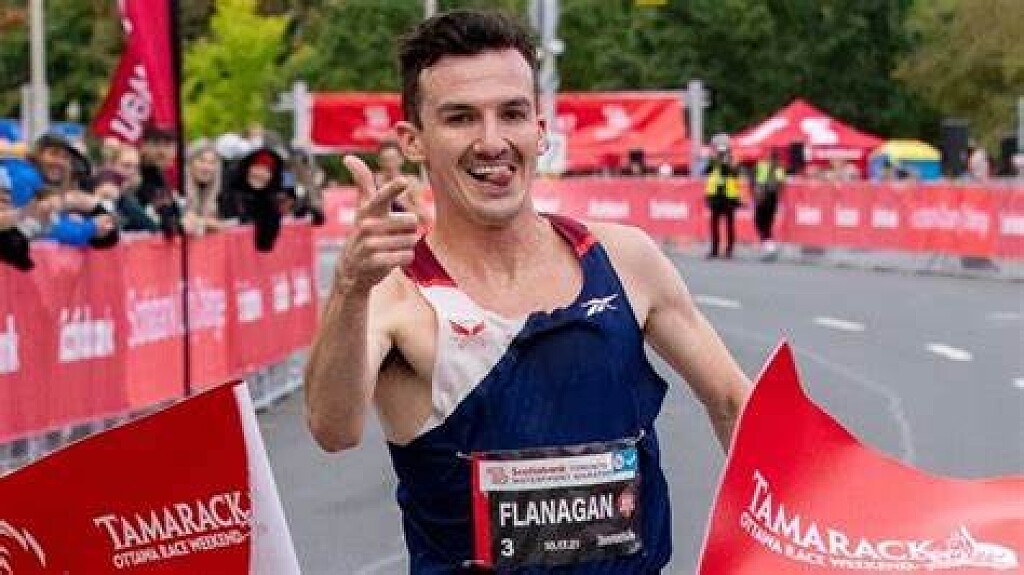
Elite Field Shaping Up For 88th Version Of Manchester Road Race
This year's Manchester Road race will feature several Olympians and world-class runners, who will join others clad in turkey suits, tutus, college gear and pilgrim costumes in a field expected to exceed 11,000 on Thanksgiving morning.
This year marks the 88th version of the famed race. The annual 4.737-mile run through Manchester's central streets, regarded as one of America's largest and most Turkey Day events, will start at 10 a.m. on Thanksgiving morning (Nov. 28) on Main Street in Manchester, in front of St James Church.
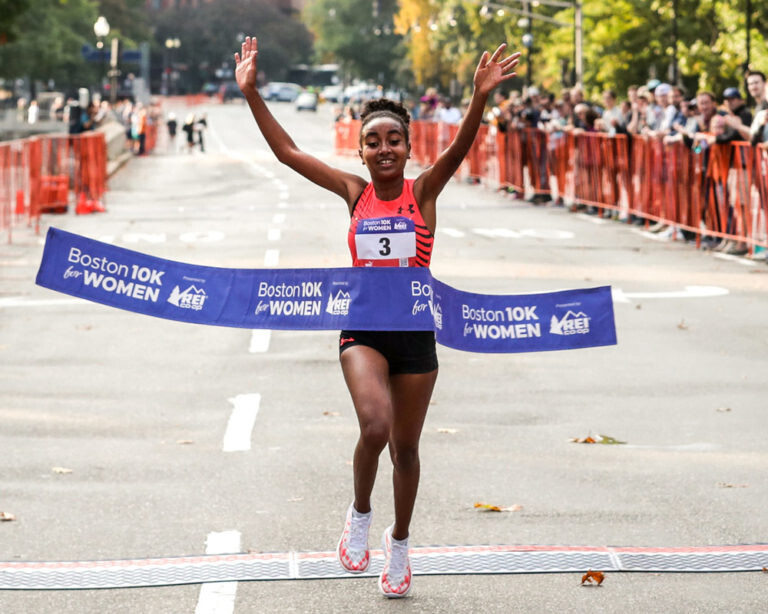
Organizers said large crowds of spectators are expected to view the race, which is one of only 22 in the United States, and 298 in the world, designated as a World Athletics Label Road Race by World Athletics, the international governing body for the sport of track and field.
Defending champion and Olympian Weini Kelati of Flagstaff, Arizona has entered the race. Kelati has won the MRR women’s title for the past three years, and a fourth victory this Thanksgiving will set the record for most consecutive wins by a female competitor. A 13-time All American runner at the University of New Mexico who finished eighth last summer in the 10,000 meters finals at the Paris Olympic Games, Kelati set the MRR women's course record of 22:55 in 2021 during her first Manchester appearance.
Kelati won the women's race in Manchester last November with a time of 23:21 and finished 19th in the overall competition. She will be joined in the elite field this Thanksgiving by Annie Rodenfels, the 2023 runner-up, and 2019 winner and marathon great Edna Kiplagat.
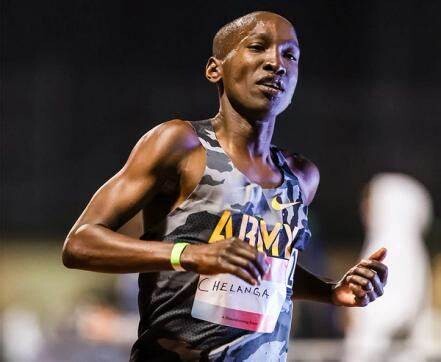
Former champions Ben Flanagan (2021) and Sam Chelanga (2013), Kenyan Olympian Edwin Kurgat, who placed seventh in the 5,000 meters finals at the Paris Olympics, and Andrew Colley, the fourth place-finisher in Manchester in 2022 with a time of 21:07, are expected to lead the men’s elite field.
As of early Monday morning, more than 9,000 runners had registered for this year's race.
by Chris Dehnel
Login to leave a comment
Manchester Road Race
The Manchester Road race is one of New England’s oldest and most popular road races. The 86th Manchester Road Race will be held on Thanksgiving Day. It starts and finishes on Main Street, in front of St. James Church. The Connecticut Sports Writers’ Alliance recently honored the Manchester Road Race. The CSWA, which is comprised of sports journalists and broadcasters...
more...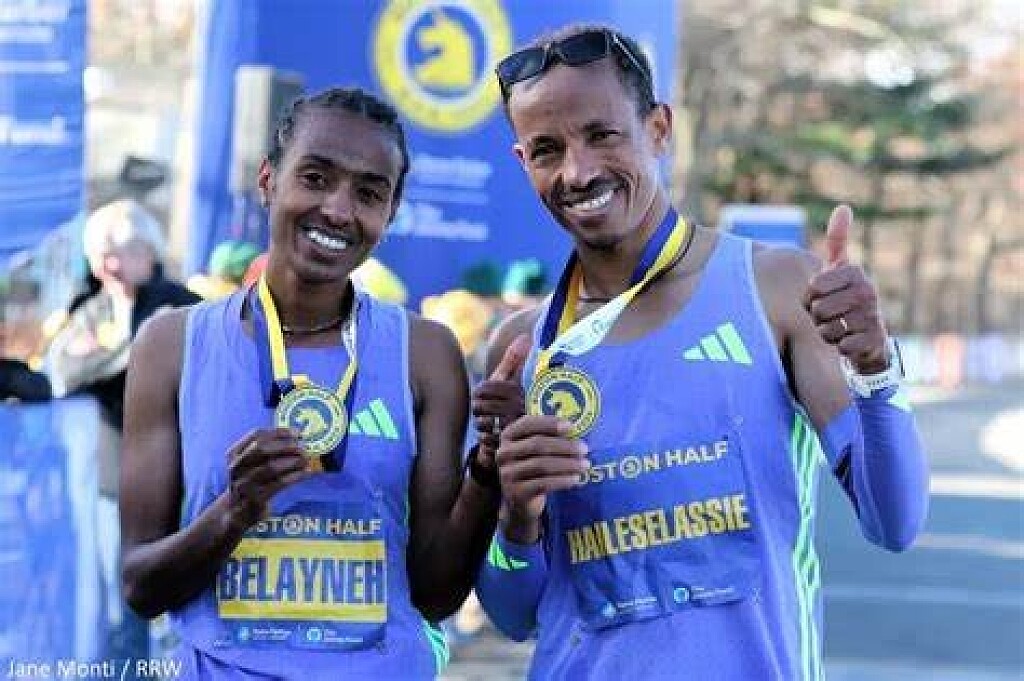
Yemane Haileselassie And Fentaye Belayneh Win Chilly Boston Half-Marathon
Fentaye Belayneh of Ethiopia and Yemane Haileselassie of Eritrea won this morning’s 22nd Boston Half-Marathon on a sunny and near-freezing morning here. Employing completely different tactics, Belayneh won in a pack-sprint to the finish in Franklin Park where the first three women finished in a span of just one second. Haileselassie won in a solo breakaway, dominating the final miles and winning by 15 seconds. Both athletes won $12,000 in prize money.
The women’s race got out slowly, and the first mile was completed in just 5:41, a comfortable training pace for athletes at this level. Britain’s Calli Hauger-Thackery was at the front. She said that she felt good taking the lead and wanted to work on some of her racing skills.
“I felt good doing that,” Hauger-Thackery told Race Results Weekly. “I was practicing not being set in a set pace. I’ve got to practice surging… not be afraid to put in a five minute mile here and there.”
The first real move happened just before 5-K where Ethiopia’s Mestawut Fikir, who was fifth at this race last year, put in a surge. The field responded immediately, and Kenyan’s Veronica Loleo and Daisy Jepkemei, and Ethiopians Melknat Wudu and Mebrat Gidey followed her single file. They passed through 5-K in 17:17 and four miles in 21:45. The downhill fourth mile was passed in a fast 5:05.
Fikir’s mini-surge only brought the lead pack down to 12. Although the second, five-kilometer segment was faster (16:27) it wasn’t enough to dwindle the field further. Fikir decided to go again just after the 10-K mark, and that move sent Hauger-Thackery and Australia’s Lauren Ryan several steps back. Kenya’s Mercy Chelangat was also having trouble holding on. Mile-8 went into the books at 5:10, and the serious racing had begun.
But after that, none of the women were keen to open up the race further, and the pace slowed enough that Chelangat managed to catch up. Remarkably, eight women were still together as they ran back to Franklin Park for the finish. Indeed, the race would not be decided until the final 200 meters when Belayneh, who had not led one step of the race, jumped the field and broke for the tape. She was ready for that kind of move.
“I prepared very well and I knew Boston was a good course,” Belayneh said with the help of a translator. “I prepared very well.”
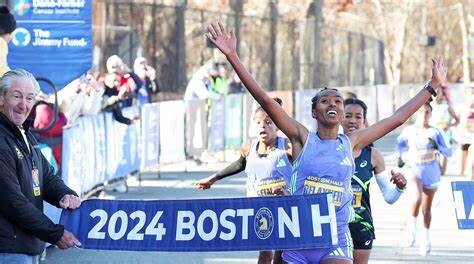
Fikir and Senayet Getachew, another Ethiopian, were right on Belayneh’s heels as she bolted for the tape, but they just couldn’t catch their speedier rival. She broke the tape, arms raised with a huge smile, in 1:10:26. Fikir was given the same time, and Getachew was just one second back. Loleo got fourth in 1:10:29, and Wudu was fifth in 1:10:30. The first seven women finished in just a six-second span.
“At the end, I decided at the end,” Belayneh said when asked when she knew that the time was right for her final move. “It was a rough race, but I knew I could hold on and push. I had some little (energy) left over. I used that.”
Farther behind, Chelangat finished eighth in 1:10:43 and Hauger-Thackery was ninth in 1:10:49. The two women, both former NCAA stars who know each other from training in Flagstaff, embraced at the finish line.
“It was fun, it was good,” said Hauger-Thackery, who plans to run the California International Marathon in December with her husband, Nick. She added: “This was a good race to go for it, get the blood flowing.”
Unlike Belayneh, Haileselassie did not want to wait for the final sprint. In the ninth mile, he and Isaac Kipkemboi of Kenya and Haimro Alame of Israel pulled away from the field. Haileselassie was on the front, and kept pressing.
“Actually, when I lead in mile-nine I give them a little bit gap,” Haileselassie told Race Results Weekly. “I looked over my back, I had little bit gap. I know they can’t touch me.”
The Eritrean crossed to the finish line alone in 1:01:46. Kipkemboi was a clear second in 1:02:01, but Alame faded in the final miles and only finished sixth in 1:02:12. Taking the final podium position was Canadian miler Kieran Lumb, who was making his half-marathon debut. Lumb, who made the Paris Olympic 1500m semi-finals, was timed in 1:02:03. He was happy with his race, a good fitness test before the Canadian Cross Country Championships later this month, even if it hurt a little.
“It was hard,” said Lumb. “Honestly, it was pretty hard early on. I would say, like 20 minutes in, I didn’t feel amazing. I did not sleep well last night, either. I slept like four hours.”
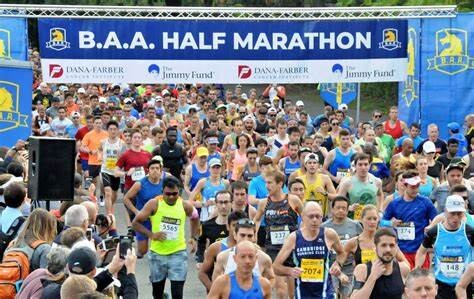
Today’s event was the third and final race in the 2024 Boston Athletic Association’s Distance Medley which included the Boston 5-K on April 13 and the Boston 10-K on June 23. About 6500 runners finished today’s race.
by David Monti ,
Login to leave a comment
B.A.A. Half Marathon
Dana-Farber and the Jimmy Fund have partnered with the B.A.A. in the Half Marathon for 13 years as the race’s presenting sponsor. Through this relationship, team members have collectively raised more than $5 million to support groundbreaking cancer research, and enabled Dana-Farber scientists and clinicians to positively impact the lives of cancer patients around the world. Dana-Farber runners often participate...
more...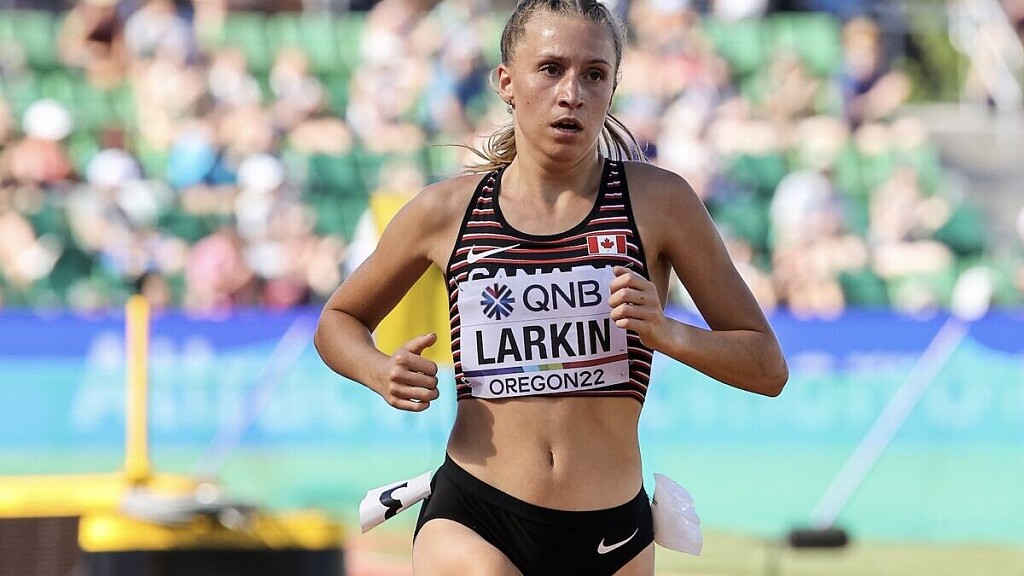
Ontario runner signs pro contract with Under Armour
On Thursday, Rosseau, Ont., native Gracelyn Larkin announced her contract with Under Armour’s pro running club, Dark Sky Distance, which is based in Flagstaff, Ariz. The 5,000m Canadian outdoor champion from 2022 is a recent graduate of Northern Arizona University (NAU), and formerly competed for the University of New Mexico (UNM) from 2019-2023.
Already located in Flagstaff following her graduation, Larkin will continue training at altitude under coaches Shayla Houlihan and Stephen Haas. The Canadian will be among former UNM teammate and Olympian Weini Kelati and 2022 New York City Marathon champion Sharon Lokedi, who also represent Under Armour.
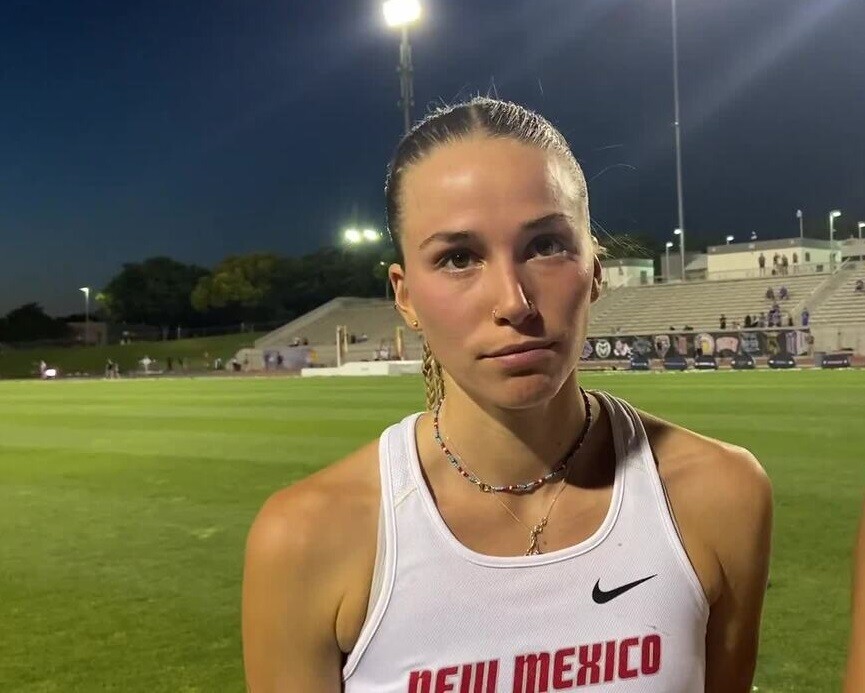
The 23-year-old boasts personal bests of 15:23.63 in the 5,000m and 32:32.61 in the 10,000m. A successful collegiate career saw Larkin earn All-American status seven times, before she went on to represent Canada in the 5,000m at the 2022 World Championships in Eugene, Ore.
Over the summer, Larkin chased a spot on the Canadian Olympic team. At the Harry Jerome Classic 5,000m in Burnaby, B.C., in June, she clocked 15:25.83 to claim fifth place in a quick race; the time was just two seconds off her personal best. Later that month, Larkin competed at the Canadian Olympic Track and Field Trials in Montreal, placing fourth in the women’s 5,000m final with a time of 15:36.41. The UNM graduate was less than three seconds behind the winner, Gabriela Debues-Stafford. Despite strong efforts, Larkin fell short of qualifying for Paris 2024.
“I’m very grateful to be joining such an amazing group of hard-working individuals,” Larkin said in the announcement post on Instagram. “Working with Under Armour is an amazing opportunity and I can’t wait to represent them over the upcoming years. I look forward to learning from my teammates and coaches while I develop as a professional athlete!”
by Cameron Ormond
Login to leave a comment
Reigning Manchester road race champ Morgan Beadlescomb to defend title on thanksgiving
The reigning Manchester Road Race champion will be defending his title on Thanksgiving morning.
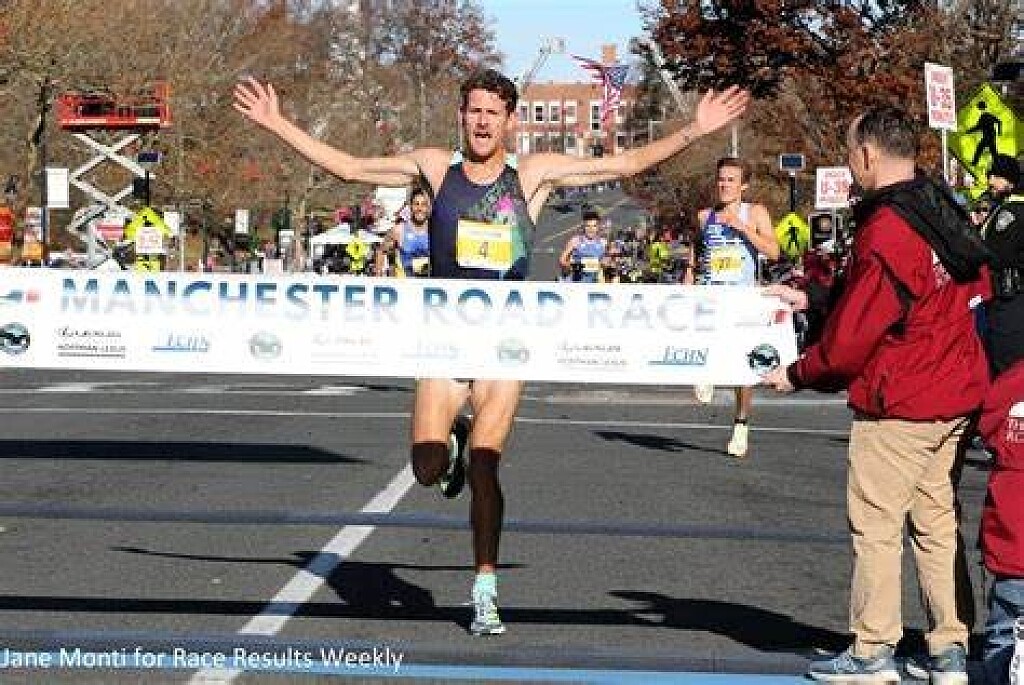
Morgan Beadlescomb, who won the 2023 event with an impressive finishing kick down the Main Street home stretch, has committed to return in 2024, race officials announced Monday. Beadlescomb, of Ann Arbor, MI, will be making his third straight Turkey Day appearance in Manchester. He broke the tape last year with a time of 21:12, edging runner-up Conner Mantz by three seconds.
The 26-year-old Beadlescomb's victory last Thanksgiving reversed the results of the 2022 MRR, when Mantz won with a course record time of 21:04, one second ahead of Beadlescomb, who was the runner-up. Beadlescomb's 21:05 clocking at the 2022 road race is the second-fastest time ever run on the Manchester loop. Beadlescomb was a seven-time All-American runner at Michigan State University, where he holds the indoor and outdoor records for 5,000 meters. His personal best time for the event is 13:03.57.
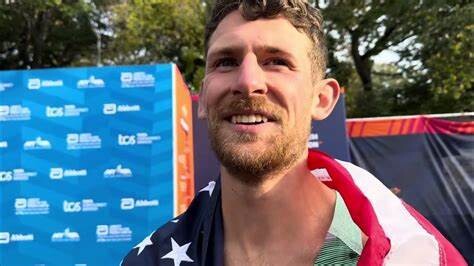
"We are very pleased that Morgan is returning," said. Dr. Tris Carta, the president of the Manchester Road Race Committee. "He is a terrific competitor, and we expect that his presence will mean that we are in store for another exciting road race finish."
Beadlescomb's entry means that both of last year's winners will be competing at the 2024 MRR. Weini Kelati of Flagstaff, AR, who holds the women's course record and has won the race for the past three years in a row, has also committed to the race.
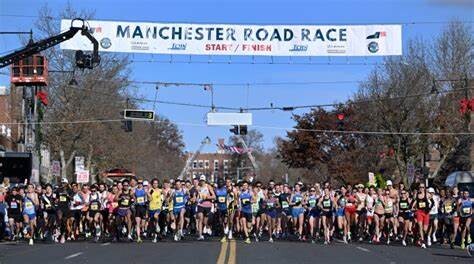
The 88th Manchester Road Race is one of only 22 events in the United States, and 298 in the world, to be designated this year as a World Athletics Label Road Race. World Athletics is the international governing body for the sport of track and field.
The road race will be staged at 10 a.m. on Thanksgiving Day (Nov. 28 of this year). The race, which starts and finishes on Main Street in front of St. James Church, is run on a 4.737-mile course through Manchester’s central streets. Last year, 11,060 runners registered to run in the event, which is regarded as one of America’s largest and most popular turkey trots. As of early this morning, 8,096 entrants have signed up to run this year.
The MRR's principal financial sponsors are Pratt & Whitney, ECHN, and Hoffman Lexus. The road race is organized by more than 400 volunteers from the Manchester Road Race Committee, with support from the town of Manchester.
Login to leave a comment
Manchester Road Race
The Manchester Road race is one of New England’s oldest and most popular road races. The 86th Manchester Road Race will be held on Thanksgiving Day. It starts and finishes on Main Street, in front of St. James Church. The Connecticut Sports Writers’ Alliance recently honored the Manchester Road Race. The CSWA, which is comprised of sports journalists and broadcasters...
more...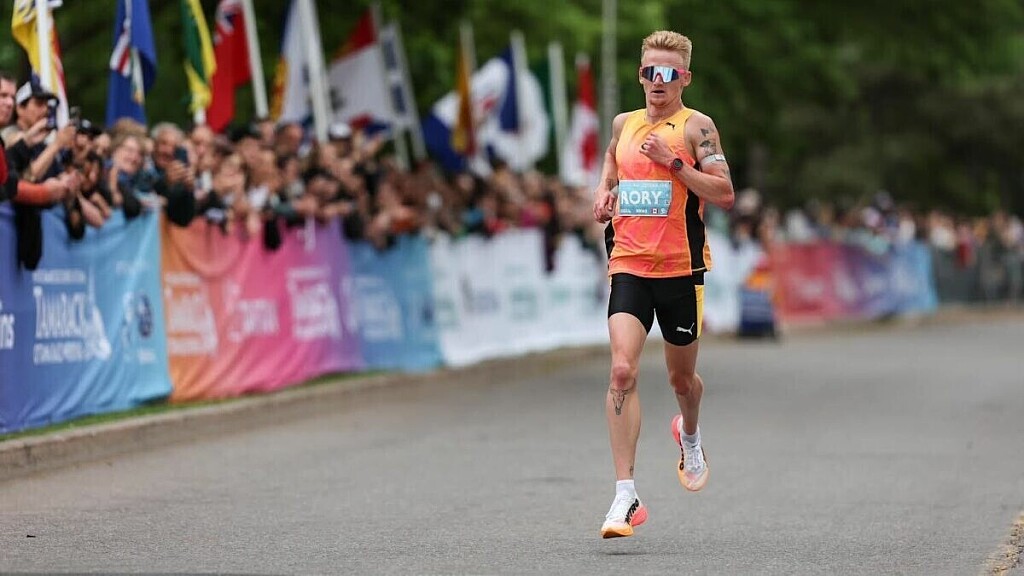
Rory Linkletter adjusts to new coach ahead of TCS New York City Marathon
Canadian marathoner Rory Linkletter is preparing for the 2024 TCS New York City Marathon on Nov. 3 with a new coach and a renewed focus. After his previous coach, Ryan Hall, decided to step away from coaching following the Paris 2024 Olympics, Linkletter was forced to seek new guidance with less than 10 weeks to go until the race.
For Linkletter, his Paris Olympic marathon was a mix of pride and disappointment. He was proud to represent the red and white at an event he had always dreamed about competing at, but he felt his race was underwhelming. “I feel like I didn’t show my best,” Linkletter said on his 47th-place finish (2:13:09).
Linkletter told Canadian Running his preparation for Paris centred heavily on mastering the challenging course and hills: “I felt like I needed to get strong and run hills, but at the end of the day, it’s always the fittest man who wins,” he says. “I got too far away from speed and power.”
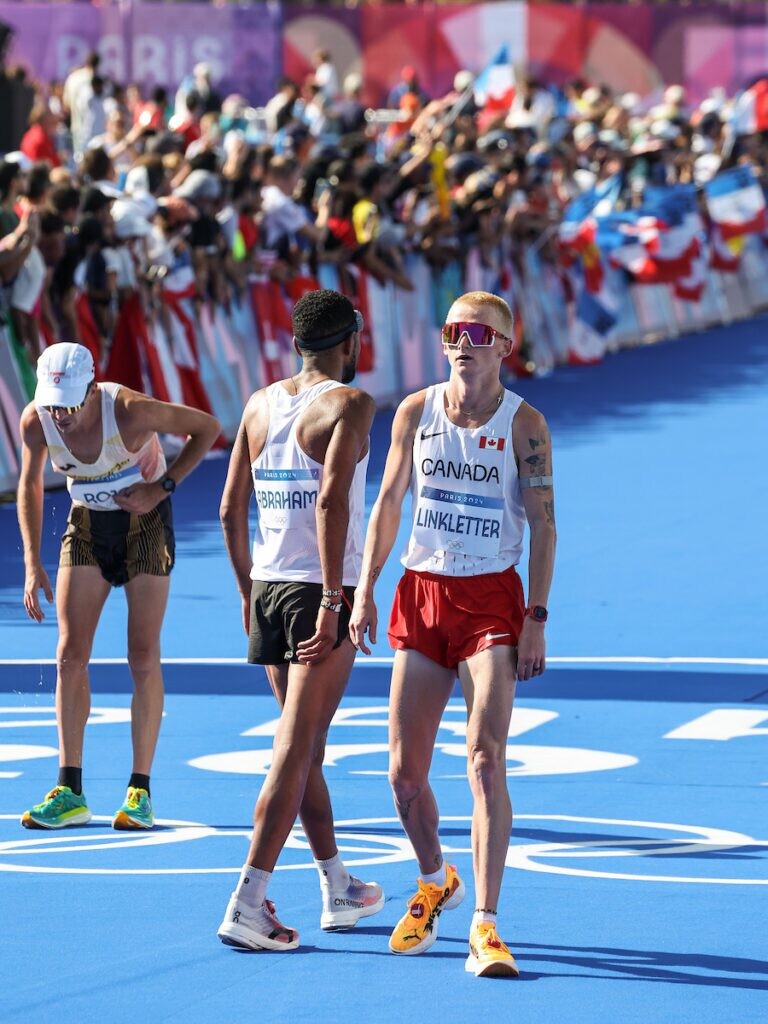
He took a week off after Paris and then dove back into training, focusing on his next challenge–the 2024 New York City Marathon. During his time off, Linkletter was taken by surprise when Hall announced he would be stepping back from coaching. “I was shocked. It was all so sudden,” Linkletter admits. “If you knew Ryan, you wouldn’t be surprised, but I didn’t expect it to happen so soon.”
New beginnings
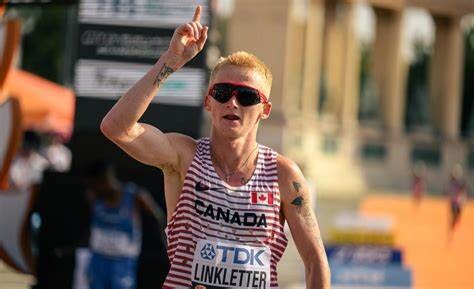
Balancing the post-Olympic blues with the sudden coaching transition wasn’t easy, but Linkletter says he’s the most motivated to train when he’s disappointed.
The 2:08:01 marathoner initially created his own training plan for NYC, and reached out to a few people he trusted for feedback. One of those was Jon Green, coach of U.S. Olympic marathon bronze medallist Molly Seidel. “We met up, had a conversation, and he said he’d be happy to help me get to NYC,” Linkletter says. “By the time we met again, he had mapped out a plan for me. I liked what he had.”
Green is someone Canada’s second fastest marathoner has long respected, going back to their days racing against each other in the NCAA—Linkletter competing for Brigham Young University (BYU) and Green for Georgetown. Now, as a coach-athlete duo, they’re working to fine-tune Linkletter’s strengths for the NYC Marathon in his home of Flagstaff, Ariz.
Moving forward
Training in Flagstaff has become a constant for Linkletter. He’s found a home in the high-altitude environment, which is known for its ideal training conditions. “I love it here,” he says. “It’s one of the best, if not the best, places to train.” With the NYC Marathon on the horizon, Linkletter is content in Flagstaff, but remains open to exploring options that will best prepare him for the future. “Paris was awesome, but I want to be there again in L.A. 2028 and be the best version of myself,” he says.
By then, Linkletter will be 31 years old—what he believes will be his prime—and he’s determined to make every year count as he builds toward the goal.
by Marley Dickinson
Login to leave a comment
TCS New York City Marathon
The first New York City Marathon, organized in 1970 by Fred Lebow and Vince Chiappetta, was held entirely in Central Park. Of 127 entrants, only 55 men finished; the sole female entrant dropped out due to illness. Winners were given inexpensive wristwatches and recycled baseball and bowling trophies. The entry fee was $1 and the total event budget...
more...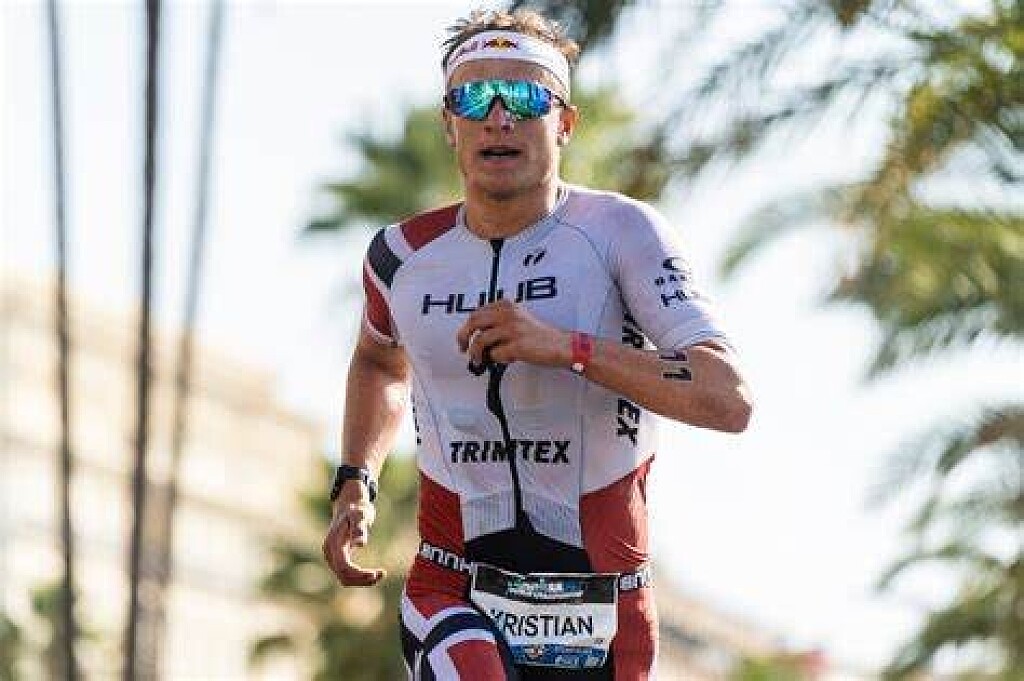
IRONMAN Kona 2024: Kristian Blummenfelt targets World Championship RECORD
There is one triathlon summit Kristian Blummenfelt has yet to scale, and this Saturday (October 26) in Hawaii he bids to end the wait.
Kona 2024 sees the professional men return to the Big Island for the first time in two years to fight out the 2024 IRONMAN World Championship, with a stellar field set to line up.
Blummenfelt, third behind compatriot Gustav Iden in 2022, will likely start the favourite to top the podium this time, with his friend and rival still rebuilding from a 2023 beset by injury and personal tragedy.
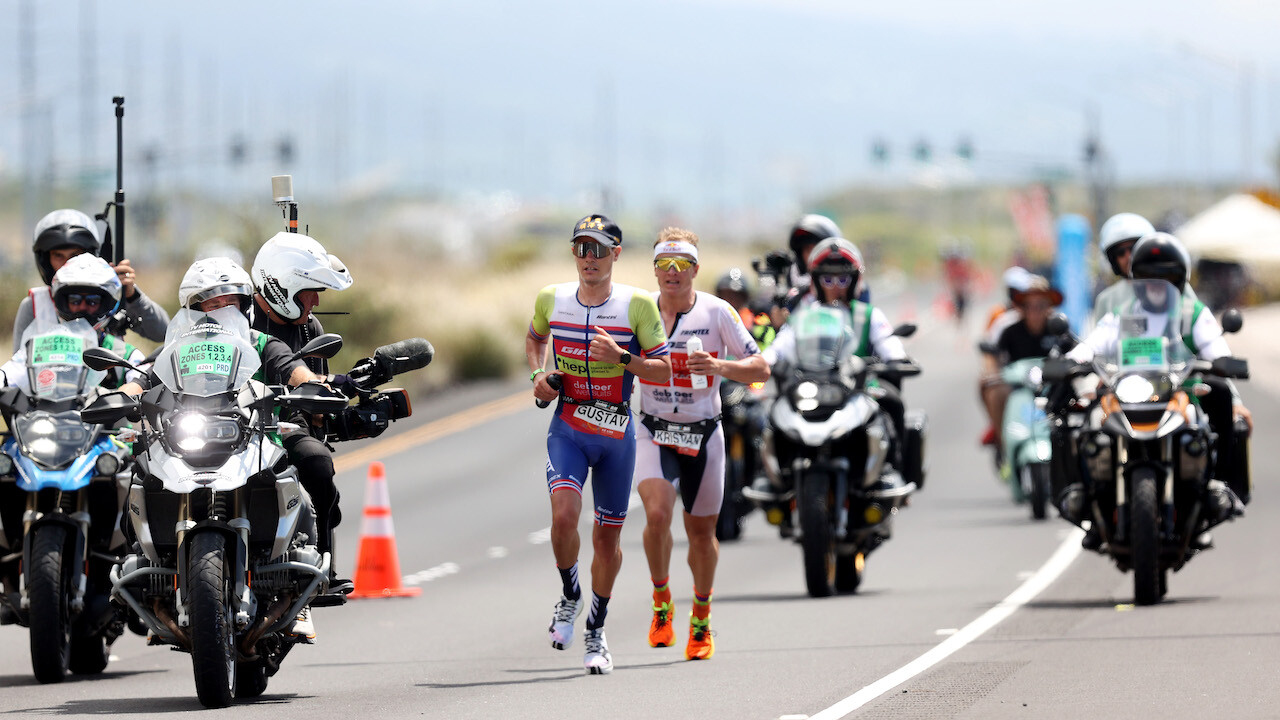
It will not be a cakewalk though (when is Kona ever a cakewalk), with defending champion Sam Laidlow, two-time king Patrick Lange and giant Dane Magnus Ditlev among those also set to toe the line.
Blummenfelt has already shown he is Ironman-ready for this test – remember how he aced Frankfurt less than two weeks after racing the Mixed Relay at the Paris 2024 Olympics? A blistering 7:27:21 – topped off by a 2:32:29 marathon – shocked many, including the man himself.
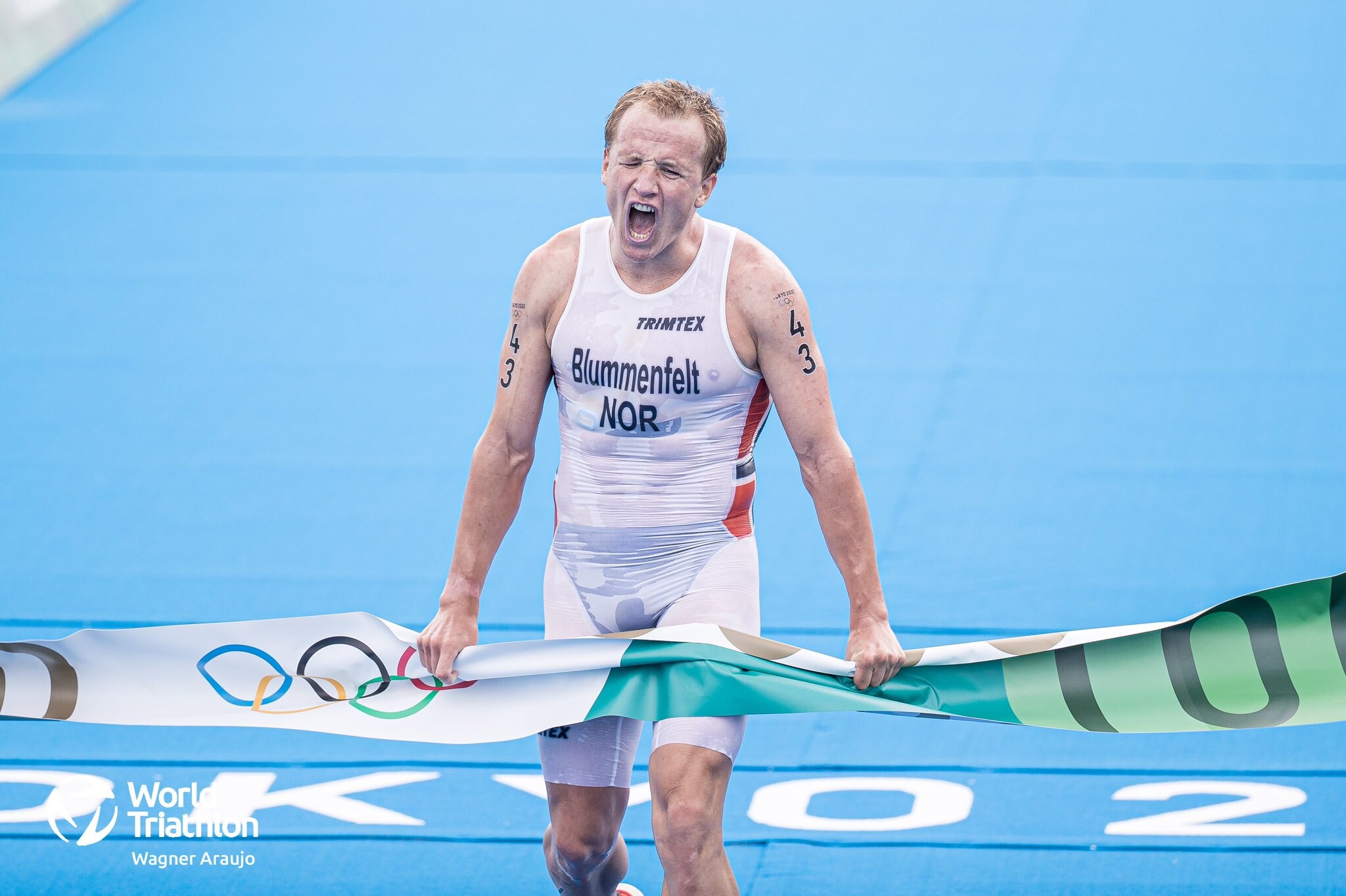
Blummenfelt Kona prep
Since then Blummenfelt and Iden have been preparing for Kona in the familiar surroundings of Flagstaff, Arizona. And according to Kristian’s coach Olav Aleksander Bu, things are going well.
The Norwegians are always brutally honest about where they are at heading into a race, and always fiercely ambitious with their goals. This time is clearly no different, Blummenfelt is aiming not just to win…
Bu told TRI247: “Prep has been good. It helps that it is a couple of weeks later this year. Race day will have to show what he is capable of ? The weather plays a big role, but a record is always a good target.”
The current Kona record remember was set just two short years ago, in the last Pro Men championship race on the Big Island. That was Iden with a spectacular 7:40:24.
Once Kona is in the rear view mirror, all attention will turn to what Blummenfelt does from 2025 on. That ambitious plan to move to pro cycling and the Tour de France appears to be dead, so he is once again all in on triathlon.
What next for Blummenfelt in 2025?
If L.A. 2028 is confirmed as a future goal, the big question will be how ‘Big Blu’ approaches the four-year cycle heading once more towards the greatest show on earth.
As Bu told TRI247 recently, 10 months of short-course preparation and racing heading into Paris 2024 was ‘mission impossible’, so it is likely the 30-year-old from Bergen would transition back down in distance much earlier next time round.
Bu explained: “We’ll have to come back to this later, but if LA becomes realistic, it means transitioning earlier with more short-course racing. However, with the development we have seen around the tactics, involving dedicated domestiques, it has become a less interesting sport from an individual level, and more a “team” sport.”
We also asked Bu who he fears among the opposition this coming Saturday, and his response as ever was illuminating. The focus is 100 percent on elite preparation and performance from his own athletes, and absolutely nothing else.
“I don’t know, as I really don’t pay attention to what others do. I obviously know some of the household names, which have been on the podium the last few years, but not how they are performing and who is on the start line.”
by Graham Shaw
Login to leave a comment
Ironman World Championship Triathlon Men
The inaugural KONA™ race was conceptualized in 1978 as a way to challenge athletes who had seen success at endurance swim, cycling, and running events. Honolulu-based Navy couple Judy and John Collins proposed combining the three toughest endurance races in Hawai’i—the 2.4-mile Waikiki Roughwater Swim, 112 miles of the Around-O’ahu Bike Race and the 26.2-mile Honolulu Marathon—into one event. ...
more...
What the elites eat: Marathon Edition
Curious about what elite marathoners eat to fuel their peak performance? From carb-loaded pre-race meals to post-race burger feasts, here’s an inside look at what the elites eat before, during, and after a marathon.
As runners and human beings, we’re naturally curious, slightly nosy people. With information instantly available with the twitch of a finger across our iPhone screens, this curiosity has never been easier to satisfy. Plus, many of our favorite runners are more transparent than ever about their training blocks, pulling back the blinds through social media to show what it takes to be the best. Which is why we’re ever-fascinated by the race-related nutrition strategy of elite runners, who often perform at superhero-like levels.
We asked a few elite marathoners what they eat surrounding race day—pre-race dinner, pre-race breakfast, and post-race celebration—so you don’t have to.
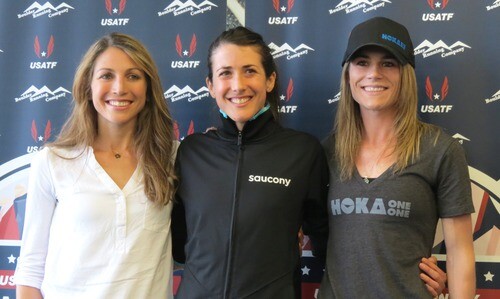
Note: One sentiment echoed among all of the athletes interviewed was that their diets are personal and have gone through lots of trial-and-error to be finessed to their specifications. No lifestyle should be replicated exactly.
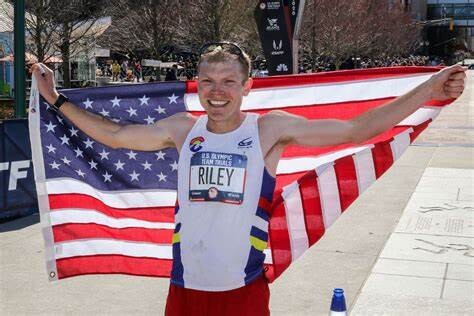
35, Boulder, Colorado
About him: First American and ninth overall finisher in the 2019 Chicago Marathon (2:10:36). Placed second at the 2020 U.S. Olympic Trials Marathon (2:10:02); Finished 28th in Tokyo Olympics marathon (2:16:26). After a second round of double Haglund’s surgery in 2022, he’s back in top form and running the 2024 New York City Marathon on November 3.
The night(s) before a race:
“I start thinking about meals two nights out, and I go carb-heavy on both. For the first night, I like to have Thai food, usually a noodle dish, and a side of rice. The only thing I’ll really avoid is spice since I’ve had issues from it a couple times. The night before, I do pasta, usually a marinara (that’s what a lot of races provide for the elite athletes), but a good pesto sauce works well, too. I mostly stay away from the creamy sauces. I don’t like to get too much more specific—you never know exactly what’s going to be available, so I try not to make particular foods part of my routine.”
Race morning:
“Race mornings I’ll get up at least three hours before (I prefer four, but with 7 to 8 A.M. starts, that becomes a little counter-productive), I’ll go for a short walk with some skipping or something, just to get the body moving. My first choice for breakfast is oatmeal with peanut butter, honey, and a little fruit mixed in. And at least one, usually two cups of coffee. It’s not something to avoid, but I recommend making sure that you have more than just simple carbs (cereal, muffin, etc), I find that if there isn’t at least some protein, I start getting that ‘empty’ feeling during my warmup, and if that mixes with the adrenaline, I feel real queasy. If I’m taking gels, I take one on the start line, maybe five minutes before. I also like Generation UCAN, which I’ll sip as I’m going through my drills, maybe half an hour out.”
During the race:
“I like to get my calories from gels and have just electrolytes in my bottles. Most major marathons provide drink stations every 5K, and I’ll drink about 8-10 oz of SOS per bottle (there can be splashing, and you never get it all out). I’ll take Roctane gels before every other drink station (every 30 minutes or so).”
Post-race meal:
“Most races I want a hash—lots of potatoes with some eggs, bacon, cheese, and veggies all mixed up, but after marathons my stomach takes a while to settle down, so I’m more in a lunch mood. So my go-to post-race meal is a big bistro bacon cheeseburger, ideally with an onion ring and barbecue sauce, side of fries, and a beer. I mostly stay away from fried foods during a build up, but I always take at least a week off after a marathon and at this point, that beer and burger is almost a Pavlovian ‘vacation time’ signal for my whole body.”
41, Flagstaff, Arizona
About her: She’s the fourth-fastest American woman in history based on her personal best (2:20:2) at the 2020 Marathon Project; Second-fastest American female half-marathon runner and former American record-holder (1:07:15). Most recently, she was 18th overall and the women’s master champion in the 2024 Chicago Marathon (2:30:12).
The night(s) before a race:
“Rice with chicken. I skip the veggies to not risk having to make a bathroom stop in the race.”
Pre-race breakfast:
“Two scoops of UCAN energy powder with whey protein, and a little bit of almond butter.” Bonus, Hall credits her husband, Ryan Hall, as being the best coffee maker, brewing pour-over, medium roast coffee blended with butter.
During the race:
Ketone-IQ—peach flavored.
Post-race meal:
“My favorite post-meal race is Thai food. I’m usually eating a lot of boring food before the race, so I want something spicy and more flavorful after.”
Bonus—Lunch during training blocks:
“Two scoops of UCAN powder, two pieces of gluten-free bread with Kerrygold Butter.”
36, Boulder, Colorado
About her: Won the 2019 Grandma’s Marathon and finished ninth in the 2020 U.S. Women’s Olympic Trials Marathon in 2:30:39. She was the top American finisher in the Boston Marathon in 2021 (fifth, 2:27:12, ) and 2022 (10th, 2:25:57). In January, she placed ninth in the Houston Half Marathon in a new personal best of 1:08:52.
The night(s) before a race:
“I always have the same thing. Basically, a couple cups of white rice and a chicken breast is where I tend to fall. White rice is going to fuel the most carbs per serving. I used to mix up potatoes and white rice, but for me, I digest white rice well, I feel better, it’s easy to find, simple, and works well.
I don’t care about spices—and I’m usually not making it myself if I’m not at home. Typically, before races, there’s a pre-race dinner, and chicken is an option. I wouldn’t do any cream-based sauces. If it tastes good, great. If it doesn’t, great. I don’t care.”
Pre-race breakfast:
“Typically it’s oatmeal with a tablespoon of peanut butter, a banana, and maybe honey. I’m not 100 percent satisfied with my pre-race meal, because sometimes it can feel a bit heavy in my stomach, because oatmeal does have some fiber. So I try to play around with things. Sometimes I’ll do a couple pieces of toast with a banana and peanut butter. I can switch between those two. Try to get 500-600 calories in, mostly from carbs, two-three hours before the race. Plus, I drink coffee with half-and-half.
Post-race meal:
“Immediately after the race, I honestly will grab whatever is available. Typically, after a race, we’ll be shuttled to a post-race holding area where you’re waiting, so there are usually refreshments there. I’ll slam Gatorade—anything with sugar and electrolytes. Maybe there’s my own bottle with Skratch in it. Banana, a protein shake. I’m pretty open, as long as it’s immediate.
And as far as later, it completely depends. I’m trying to do a better job at this—especially after a major marathon—but it kind of takes a while. You might get drug-tested, then shuttled back to your hotel, shower, then six hours later you’re like, ‘I need to eat.’ If it’s a marathon, I love a big burger with fries—the classic stuff, lettuce, tomato, onion, and tons of ketchup and mayo. That’s something my body would crave. Fries are my favorite food ever that I don’t typically eat during a marathon cycle.”
35, Louisville, Colorado
About her: Finished sixth in the 2017 London Marathon (2:25:38), seventh in the 2019 New York City Marathon (2:28:23), eighth in the 2019 Chicago Marathon (2:29:06), eighth in the 2021 New York City Marathon (2:27:00). Most recently, an Achilles injury forced her to pull out of the 2024 Chicago Marathon days before the race.
The night(s) before a race:
“I do 72-hours of carb-loading. So, obviously, in the build to that, carbs are key. Three days out from the race is when I start it. It is always the same. The night before, I have pasta with marinara sauce, and I don’t do a lot of protein with that. I do love angel hair, that’s my go-to. I also like rigatoni. Plus, I’ll have some type of bread and salad.”
Pre-race breakfast:
“The morning of, I always do a plain bagel and peanut butter with a banana. I’ve done that since high school. And I do an Americano with two shots. I eat that threeish hours out from the race.
During the race:
“I’ll take my first gel 15 minutes before the start of the race. I’ve been all over the place with what I take, but right now, Neversecond. Big fan of their Cola C30 gels. They worked wonders for me during this build. I had some stomach issues earlier in the build with long runs and couldn’t quite figure out what was going on, so I switched up my nutrition during, so never second has been a godsend.”
Post-race meal:
“After the race, it’s hard because usually my stomach is a mess. Not only did you just run really hard for two and a half hours, but you’re taking all this fuel during, so I have a really hard time eating solids immediately after the race. My choice if I can get it is soda. I’m not a big soda drinker, but after a marathon, all I want is a Coke, Sprite, or Ginger Ale. I’m always really thirsty when I finish.
Then later when I feel like eating, I always do a burger (stacked with all the fixings—sometimes adding bacon) and sweet potato fries with ranch. I never opt out of Ranch. Anything I can dip ranch in is a plus for me. And I order a Blue Moon. I’m not a beer drinker, but that’s what I want after a marathon.”
by Mallory Arnold
Login to leave a comment
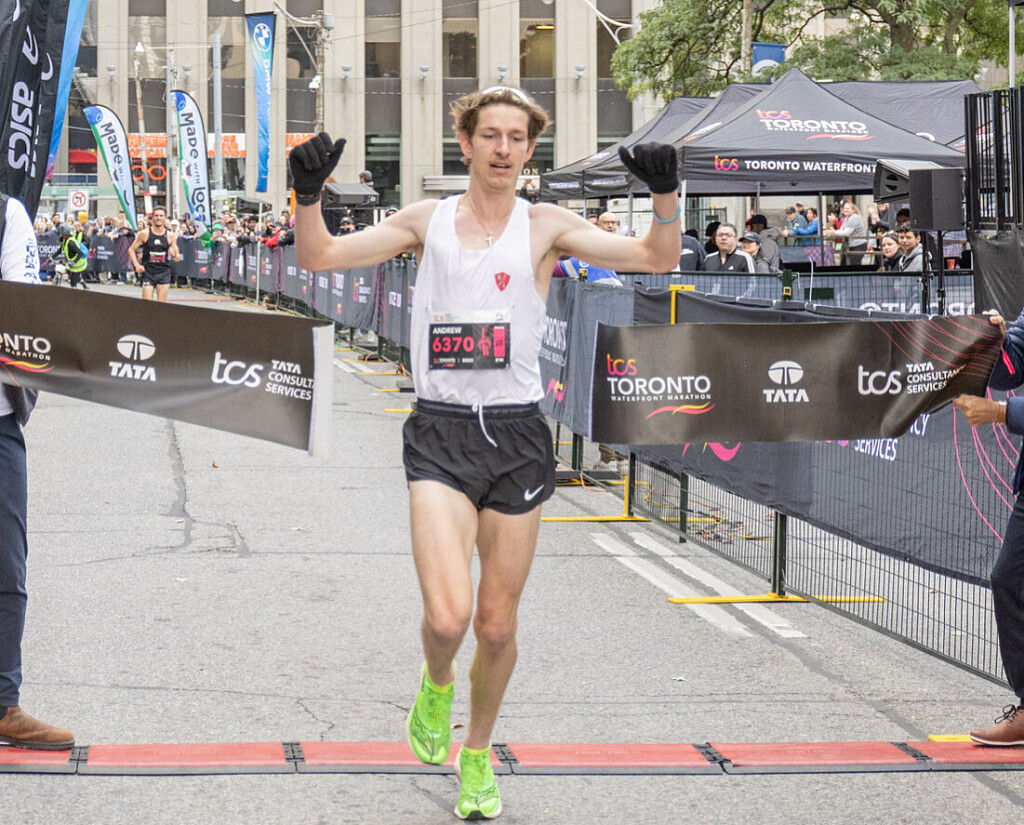
Toronto’s Andrew Alexander to Debut at TCS Toronto Waterfront Marathon
Organizers of the TCS Toronto Waterfront Marathon are once again excited about the upcoming marathon debut of a young Canadian runner.
The lure of winning a Canadian championship title - the national marathon championships being run concurrently with this World Athletics Elite Label race - has brought 25-year-old Andrew Alexander to the fight.
“I want to be the first Canadian to cross the line,” says the Toronto native. “I want to be at least one one-thousandth of a second ahead of the second Canadian. If the (fast) time comes with that I will be happy. But for the first marathon it’s just get this out and, if it goes well, focus on time chasing after that.”
Considering this graduate of Notre Dame University won the 2023 Canadian indoor 1,500m and 3,000m titles and then claimed the national 10,000m gold in May of this year, racing the marathon is one giant leap. Still, he has a lot of support for this challenge.
Coached by former Canadian 1,500m record holder, Dave Reid, and current Canadian 3,000m steeplechase record holder, Matt Hughes, that potential was clearly demonstrated when he won the 2023 TCS Toronto Waterfront Half Marathon in 62:44. He has also run 10,000m on the track in 28:17.24, not world class, but encouraging for a marathon runner.
“Since I started working with them they said they thought my event would be the marathon as much as it’s painful to hear that,” he recalls with a laugh. “I thought there was no better time than now. I had completed the Olympics trials (1,500m) last summer and didn’t really have the result I was looking for. I haven’t done a marathon so let’s give this a go!
“Toronto is as great a place as any other to start my marathon journey just because it’s home and I am familiar with it, and I have tons of people support. I am looking forward to it.”
With both Reid and Hughes often accompanying him on their bikes he has increased his training volume to around 160km a week. Whereas his longest run a year ago might be roughly 28 kilometres during this buildup for Toronto Waterfront he has added some Sunday runs of 40-43 kilometres.
“The big challenge has been getting used to the fluids and nutrition intake kind of taking it in right,” he reveals. “After the first few workouts while practicing nutrition I threw up immediately after.
“I remember thinking to myself ‘Oh my God what have I signed up for? ’Practicing that over the last few weeks I have honed in on that and it’s going well.”
At the beginning of 2024 Reid and Hughes helped arrange a six-week altitude training camp in Flagstaff, Arizona for their athlete - his first experience at high altitude. Alexander stayed with the Under Armour Dark Sky Group and called it a ‘gut punch’ as the acclimation took some time. Still, he believes it helped lay a base for the upcoming season.
Alexander attended Neil McNeil High School in Scarborough, Ontario - an institution where the late comedian John Candy also studied - and while running for the school he earned a place on Canada’s team for the 2017 World Cross Country Championships in Kampala, Uganda.
After he had won the Ontario High School championships (OFSAA) for Neil McNeil he accepted a scholarship to Notre Dame University. Five years with the ‘Fighting Irish’ led to him coming home with a Bachelor’s degree in neuroscience and a Master’s in Business Management. For the moment he is focusing on his running career and has temporarily delayed a career that would utilize his education. Working part time in a specialty running store together with an online apparel store provides income.
Turning his attention once again to the TCS Toronto Waterfront Marathon he eventually concedes having thought of a time goal for his debut - a couple of minutes on either side of 2 hours 10 minutes would be sufficient he says. But being a Canadian champion is the primary motivator.
“The national championship side of it definitely excites me,” he explains. “I have heard there is more depth on the Canadian side this year which I am super excited about. I just love the competition and competing against our Canadian guys.
by Paul Gains
Login to leave a comment
TCS Toronto Waterfront Marathon
The Scotiabank Toronto Waterfront Marathon, Half-Marathon & 5k Run / Walk is organized by Canada Running Series Inc., organizers of the Canada Running Series, "A selection of Canada's best runs!" Canada Running Series annually organizes eight events in Montreal, Toronto and Vancouver that vary in distance from the 5k to the marathon. The Scotiabank Toronto Waterfront Marathon and Half-Marathon are...
more...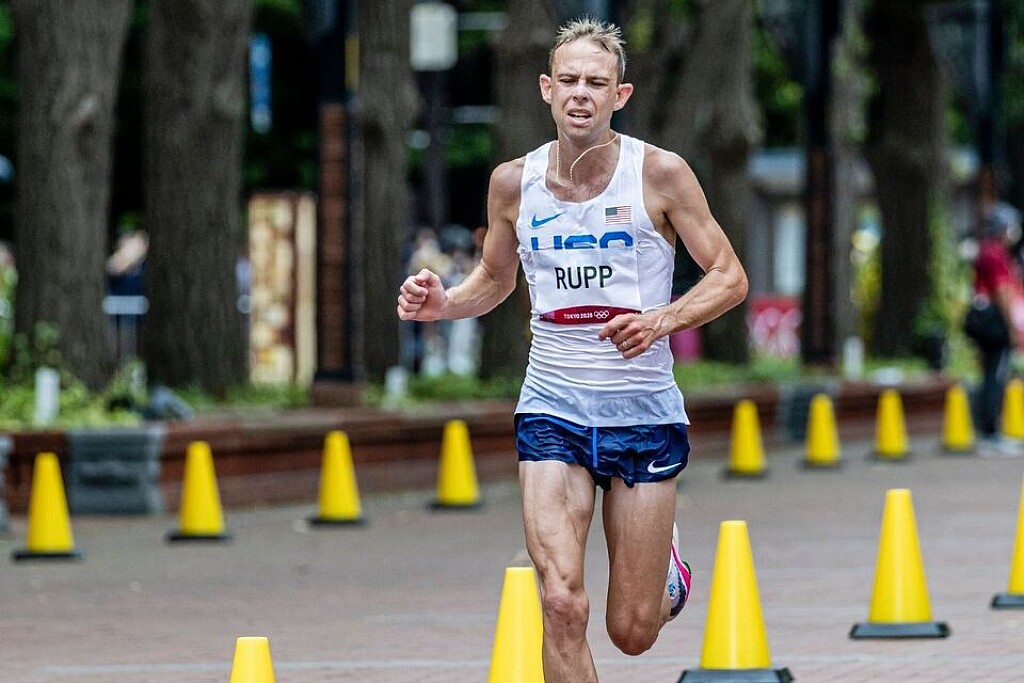
America’s most prominent marathoner weighs up career in coaching after recent struggles
US marathon great Galen Rupp has not ruled out a career in coaching after experiencing it first-hand as a volunteer as he continues his recovery from surgery.
US marathoner Galen Rupp is not ruling out a career in coaching once he finally hangs his spikes as he comes to the end of his storied journey in track and road races.
America’s most prominent marathoner in the last decade has been struggling to produce his form of old with injuries also making his life difficult.
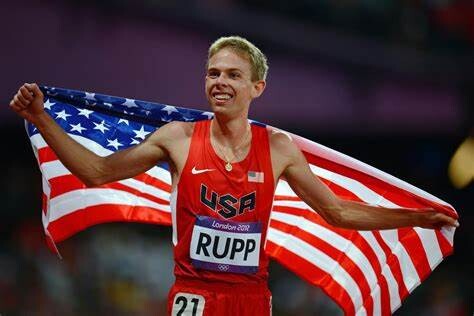
Rupp had surgery in April which has kept him out of action since them but as he continues his recovery, he seems to have found a love for coaching after joining his coach Mike Smith at the University of Arizona to work as a coach on volunteer basis.
“That’s TBD [to be decided], but definitely during cross country,” Rupp, who has been coaching men’s and women’s team at UNA told Flagstaff Running News.
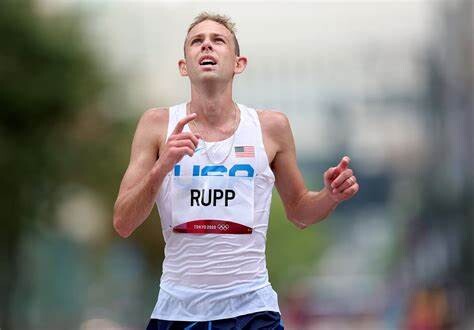
“I was down here training and this just seemed like a good opportunity. It’s been really fun. The kids are amazing to work with,” he added, while revealing that he plans to continue coaching throughout the cross-country season.
Asked if the experience has got him thinking of a career in coaching when he finally retires, the 2017 Chicago Marathon winner said: “Yes, absolutely. I’m having a lot of fun doing it now.”
Rupp is coming off a difficult season when he missed out on the Paris Olympics after finishing 16th at the US Olympics trials in February in what would have been his fourth appearance at the Games.
His previous Olympics appearances yielded a silver medal in 10,000m at the 2012 London Games before clinching marathon bronze in Rio 2016.
The 38-year-old has, however, been waning in his powers and there are still doubts whether he can regain his form of old and win major marathons again.
by Joel Omotto
Login to leave a comment
Is FKT Fever Coming to the Himalayas?
American runner Tyler Andrews just set the speed record on Manaslu, running from base camp to the summit while using an ultralight setup. Will more runners flock to the world’s highest peaks to prove themselves?
On September 19, 34-year-old American mountain runner Tyler Andrews ascended Nepal’s 26,781-foot Manaslu in a mind-bending 9 hours and 52 minutes. The time shaved more than two hours off the previous speed record on the peak, set in 2023 by Nepalese climber Pembe Gelji Sherpa. Before that, Francois Cazzanelli, an alpinist and guide from Italy, summited in 13 hours, in 2019.

Manaslu is one of the world’s 14 peaks above 8,000 meters. These mountains have traditionally been the realm of mountaineers and professional high-alpine guides, not trail runners.
But Andrews believes that’s about to change. “I think we’re going to start seeing more mountain runners going this way,” Andrews told Outside from Manaslu base camp.
His belief stems in part from his own experience on the peak, and from changing dynamics he’s seeing in the world of ultrarunning and the pursuit of fastest known times. Andrews is part of a new generation of mountain runners seeking out increasingly bigger, more challenging, and more daunting speed records. “If you start with the Colorado fourteeners, then go to the Alps, then the Andes, the natural progression is to the Himalayas and the 8000ers,” he told Outside.
Instead, ascents on Nepal’s highest mountains, including those resulting in speed records, have historically been tracked by the Himalayan Database. But that’s changing, and Andrews is one reason behind the shift. He actually works part-time for Fastest Know Time as Regional Editor for Latin America and the Himalayas. Part of his job is to create routes and then help FKT track records on them.
“I think in the past, the team didn’t want to be trying to verify routes that required rock climbing because you can’t just use a GPS watch to track something that’s vertical,” Andrews says. “But Manaslu is not like that, so tracking it is really no different than other mountains on there, like Cotopaxi or Denali.”
When Andrews returns from Manaslu base camp—he’s currently supporting a friend attempting a ski descent—he will submit his GPX data to Fastest Known Time for approval. He also plans to submit his data to the Himalayan Database.
Manaslu and 26,864-foot Cho Oyu in Tibet are considered the easiest of the 14 8,000-meter peaks. On Manaslu, the nine-mile route from base camp to the summit requires less technical climbing than harder peaks, like K2 or Nanga Parbat. Still, Manaslu isn’t easy. The trail gains nearly 11,000 feet of elevation, requires the use of fixed ropes in many sections, and travels over steep sections of snow and ice. Climbers must also survive in what mountaineers call the “Death Zone”—elevations above 26,000—because there’s not enough oxygen for human beings to survive more than a day or two.
Andrews ran up Manaslu without using supplemental oxygen, and he did so with an extremely lightweight setup. He wore a pair of waterproof trail running shoes designed to shed snow, a puffy jacket, lightweight pants, and a windbreaker. He carried a 30-liter backpack containing bare essentials: harness, helmet, goggles, ice axe, water, snacks, and energy gels.
In 2013 he ran straight up 15,780-foot Mont Blanc, typically a two-day mountaineering ascent, in less than 5 hours while wearing shorts and a t-shirt. In 2017 he ascended Mount Everest twice in the same week.
Jornet’s ascents prompted some trail runners to take on similar challenges, setting off a flurry of mountain-top FKTs, and inspiring a new generation of endurance athletes.
Similarly, Andrews thinks the time is right for athletes to “push back on some of the conventional wisdom” for ascending 8,000-meter peaks. Instead of ascending Manaslu overnight, as is typical (“so you don’t get roasted by the sun”), Andrews did it mostly during daylight, which allowed him to use more conventional footwear, due to the warm temperatures.
Andrews also brought a stationary bike to base camp, which he said was “absurd.” But the device enabled him to get his heart rate higher than he would have while running.
But Andrews cautions that Himalayan ascents aren’t for untested trail runners. “I didn’t just step off the track and onto an 8,000-meter mountain,” he says. Andrews has been mountaineering for 15 years, and much more seriously in the last five. In recent years he’s ascended 22,841-foot Aconcagua in Argentina, 19,347-foot Cotopaxi in Ecuador, and 22,349-foot Ama Dablam in Nepal, among other peaks.
He lives and trains at high altitude, splitting time between Flagstaff, Arizona and Quito, Ecuador. And Andrews has extensive experience running at higher altitudes in the Andes.
Prior to Manaslu, Andrews ran dozens of trails above 16,000 feet in the Himalayas. His FKT on Manaslu was his second attempt on the mountain in two years. He didn’t summit the first time. “I got my ass kicked,” Andrews says. “But I learned a lot.” Both times, he hired expert local outfitter Dawa Steven Sherpa of Asian Trekking to manage logistics.
For 2025 and beyond, Andrews hopes to add more Nepali trails to the Fastest Known Times database. “There’s an absolute smorgasbord of mountain trail running here,” he says. “Really epic beautiful routes that most people do in a few days to a few weeks that
by Outside Online
Login to leave a comment
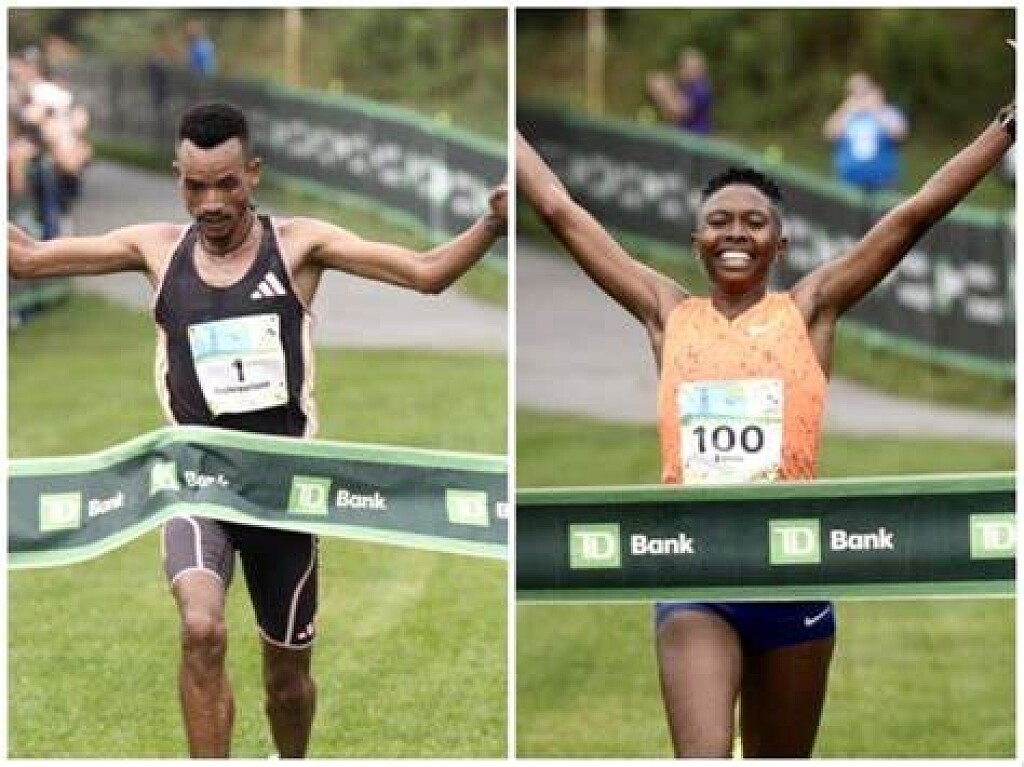
Tadese Worku, Faith Chepkoech top finishers at rainy Beach to Beacon
For the first time in the 26-year history of the race, started by 1984 Olympic marathon gold medalist and Cape Elizabeth native Joan Benoit Samuelson, runners left the starting line as rain fell. On Friday night, with thunderstorms expected Saturday morning, organizers pushed the start back an hour. Still, it poured as wheelchair racers took off at 8:50 a.m., and the rain was still steady when the elite women’s field started 10 minutes later.
“If anything, it was just going to be a true race, and we weren’t going to worry about times,” said Susanna Sullivan of Reston, Virginia, who finished fourth in the women’s race. “It takes a little bit of the pressure off, too, when you know it’s just going to be a race and not a time trial.”
Making her Beach to Beacon debut, Kenya’s Faith Chepkoech, 21, won the women’s race in 32 minutes, 5 seconds – 12 seconds ahead of 44-year-old Edna Kiplagat (32:17), another Kenyan who placed fifth in last year’s race. Cintia Chepngeno, also of Kenya, was third (32:20), two seconds ahead of Sullivan, the top American finisher.
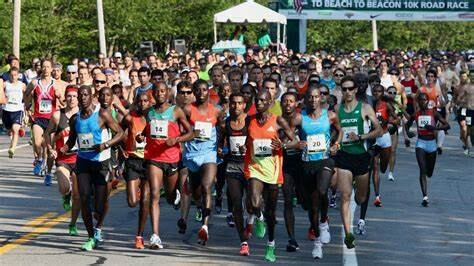
The men’s winner, Tadese Worku of Ethiopia, also made his Beach to Beacon debut. Worku, 22, won in 28:12, pulling away from runner-up Peter Mwaniki Aila (28:25) down the stretch. Mathew Kimeli, who won the Beach to Beacon in 2022, placed third (28:31). Biya Simbassa of Flagstaff, Arizona, was the top American male finisher, taking fourth in 28:34 for his third consecutive top-five finish.
The weather didn’t keep fans from cheering for runners along the course. Runners were serenaded by Dolly Parton’s “9 to 5” at around the 2 1/2-mile mark. A mile later, runners were greeted by a bagpiper. Mile after mile, there were loud cheers for the 6,072 participant.
by Tadese Worku, Faith Chepkoech
Login to leave a comment
TD Beach to Beacon 10K
Joan Benoit Samuelson, a native of Cape Elizabeth, Maine, won the first-ever women's Marathon at the 1984 Olympics in Los Angeles and is founder and chair of the TD Bank Beach to Beacon 10K. "A long time dream of mine has been realized" says Samuelson. "I've always wanted to create a race that brings runners to some of my most...
more...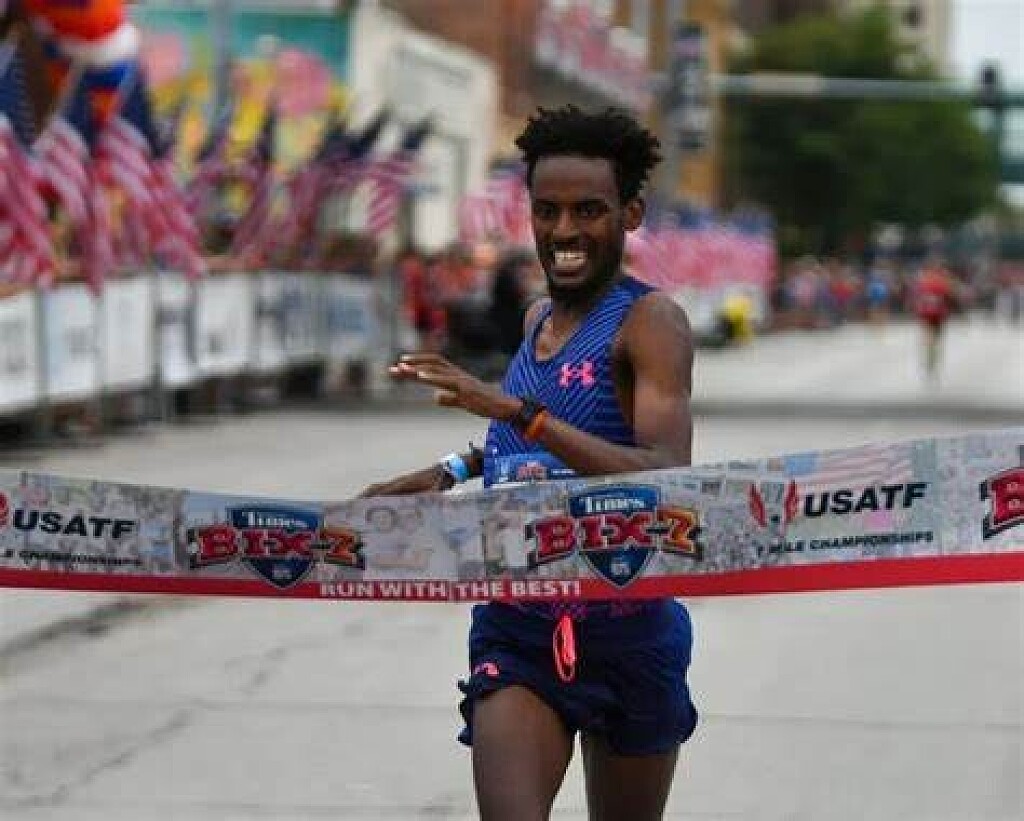
Defending champions return to Bix
Kellyn Taylor and Biya Simbassa each ran the Quad-City Times Bix 7 for the first time last year.
They clearly loved the course, the atmosphere and just about everything about the annual race through the streets of Davenport.
Both Taylor and Simbassa held off late challenges from other runners, both ran the sixth best Bix 7 times ever by a U.S. athlete of their gender and both plan to return to defend their championships when the race is held for the 50th time on July 27.
It marks the first time in 12 years that both the men’s and women’s champions are returning to defend their Bix titles.
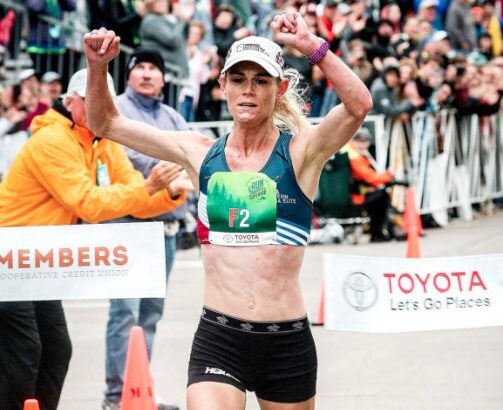
Simbassa admitted he wasn’t really sure how he felt about the Bix 7 course last year when he first saw the endless array of ups and downs in the course. But after holding off Olympian Clayton Young to win, he liked it.
“I mean, now I do,’’ he said after his victory. “It’s a course that’s all about strength and I train for this."
Taylor went through a similar transformation.
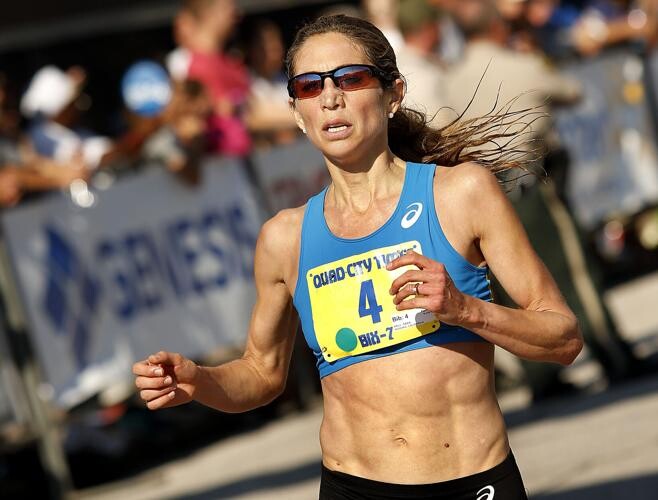
“When I saw the course, I was like, ‘Oh, no. What did I get myself into?’ ” she said. “That’s a super substantial hill right at the beginning and then it rolls all the way through. It’s certainly not easy by any means. I think that works to my favor since I’m more of a strength runner.”
Taylor appreciated more than just the hills.
“The crowds were amazing,” she said. “It’s not what I expected at all — the streets were completely lined, and a race that isn’t a huge marathon, I don’t feel like you see that that often. The crowds were incredible.”
Taylor and Simbassa will be bidding to repeat as Bix 7 champions, something that has been done only seven times in the race’s history, four times by men, three times by women.
Both runners failed to land berths on the U.S. Olympic team, which would have precluded a return to Bix, but they’ve still used their 2023 victories as a springboard to additional success.
Taylor briefly led the New York City Marathon last November before placing eighth, making her the top American finisher in the race. It was the third time she has been in the top eight at New York.
The Wisconsin native, who will turn 38 a few days before the Bix 7, then focused her attention on making the U.S. Olympic team and made a respectable showing in the trials in the marathon, finishing 15th, and the 10,000 meters, placing sixth.
Simbassa, a 31-year-old native of Ethiopia who now lives in Flagstaff, Arizona, attempted to earn an Olympic spot in the marathon but placed 11th in the trials.
However, he has followed that with an ambitious schedule on the U.S. road racing circuit, recording top-five finishes in the Bolder Boulder 10k (5th), Cherry Blossom 10-miler (5th), Gate River 15k (4th), Amway River Bank 25k (3rd) and Houston Half-marathon (4th).
Also included in the field are four former Olympians and nine other runners who have placed in the top 10 at the Bix 7 in the past. Elite athlete coordinator John Tope said even more top runners could be added between now and race day.
Among the top men’s entries are two former Iowa State University standouts.
Wesley Kiptoo of Kenya was the 2021 NCAA indoor 5,000-meter champion and a seven-time All-American for the Cyclones. He was seventh in the Bix 7 two years ago and won the Cherry Blossom 10-miler earlier this year.
Hillary Bor, a Kenya native who is now an American citizen, also attended Iowa State before representing the U.S. in the 3,000-meter steeplechase at the Olympics in both 2016 and 2021. He also is the U.S. record-holder in the 10-mile run.
Other former Olympians in the field are Morocco’s Mohamed El Aaraby and Americans Jake Riley and Shadrack Kipchirchir. Riley and Araby both competed in the marathon in Tokyo in 2021 and Kipchirchir ran the 10,000 meters in 2016.
Riley also is a Bix 7 veteran along with Kenya’s Reuben Mosip and Americans Frank Lara, Andrew Colley and Isai Rodriguez. Lara was second in the Bix 7 in 2021 and eighth a year ago.
Rounding out the men’s field are Raymond Magut of Kenya; Tsegay Tuemay and Tesfu Tewelde of Eritrea; and Americans Nathan Martin, Ryan Ford, JP Trojan, Merga Gemeda and Titus Winders.
The most recognizable name in the women’s field is 41-year-old Sara Hall, the wife of two-time Olympian, U.S. half-marathon record-holder and 2010 Bix champion Ryan Hall. Sara Hall was fifth in the U.S. Olympic marathon trials earlier this year and has two strong Bix 7 efforts on her resume, placing second in 2014 and third in 2017.
She and Taylor will be challenged by three up-and-coming runners from Kenya — Emmaculate Anyango Achol, Grace Loibach Nawowuna and Sarah Naibei. Achol has run the second fastest women’s 10k ever (28:57) and Naibei won the Lilac Bloomsday 12k in May.
Also in the field are Bix 7 veterans Kassie Parker, Jessa Hanson, Carrie Verdon and Tristin Van Ord along with Americans Annmarie Tuxbury and Stephanie Sherman, Ethiopia’s Mahlet Mulugeta and Kenya's Veronicah Wanjiru.
The elite field also includes four legendary runners who have helped build the Bix 7 into the international event that it is. Two-time champion Bill Rodgers, who has run the Bix 7 43 times, will be joined by four-time women’s champion and 1984 Olympic gold medalist Joan Samuelson, two-time Olympic medalist Frank Shorter and Meb Keflezighi, who has two Bix titles and an Olympic silver medal on his resume.
by Don Doxsie
Login to leave a comment

Bix 7 miler
This race attracts the greatest long distance runners in the world competing to win thousands of dollars in prize money. It is said to be the highest purse of any non-marathon race. Tremendous spectator support, entertainment and post party. Come and try to conquer this challenging course along with over 15,000 other participants, as you "Run With The Best." In...
more...
Kenyan John Korir captures 2024 Boilermaker 15K title
John Korir of Kenya finished first at the 47th Boilermaker 15K Road Race presented by Excellus BlueCross BlueShield, falling just short of last year’s record at 42:11.
This year’s 15K race saw 7,967 finishers, with 3,663 crossing the finish line for the 5K, up from 6,973 and 3,125, respectively, in 2023.
Korir successfully unseated the champion of the 2022 and 2023 Boilermaker, Jemal Yimer of Ethiopia. Yimer came in second place this year, just 8 seconds slower at 42:19. Yimer and Korir remained neck and neck throughout the race before the golf course.
Biya Simbassa of Flagstaff, Arizona, led the pack of American athletes, finishing 8th overall with a time of 43:53.
Winning the Women’s Open Division by a matter of milliseconds was Grace Loibach Nawowuna of Kenya, who broke the tape at 49:18. Emmaculate Anya Achol, also of Kenya, came in just mere steps behind Nawowuna.
The American women’s contingent was led by Annamaria Kostarellis of Arkansas, who finished in fifth place overall with a time of 50:18.
Canadian Josh Cassidy defended his title in the men’s open wheelchair division with a time of 34:05, beating Utica’s own Hermin Garic, who finished second with a time of 36:06. The 2024 Women’s Wheelchair Open Division saw a new champion in Hoda Elshorbagy of Illinois finishing in 40:25.
19-year-old Brendan Carter of Watertown, Massachusetts, won the 5K Road Race presented by Utica National in 15:38, crossing the finish line 13 seconds ahead of second-place finisher Dan Casatelli of Deansboro. Annika Hurley of Springfield, New Jersey, won the women’s open division of the 5K at 19:03.
“The 2nd Sunday in July never seems to fail to deliver beautiful weather for the Boilermaker,” said Mark Donovan, Boilermaker president, “for our 47th running, Mother Nature provided yet another picture-perfect day for our participants and spectators, making for a great experience.”
by Guest
Login to leave a comment
Boilermaker 15k
The Boilermaker 15K is the premier event of Boilermaker Weekend. This world krenowned race is often referred to as the country's best 15K. The Boilermaker 15K is recognized for its entertaining yet challenging course and racing's best post-race party, hosted by the F.X. Matt Brewing Company, featuring Saranac beer and a live concert! With 3 ice and water stops every...
more...
This Ultramarathoner Runs 100s of Miles to Build Inner Strength and Confidence
“Through ultrarunning, I’ve learned how tenacious and resilient I am.”
Name: Rachel Bambrick Age: 31 Hometown: Philadelphia Occupation: Occupational therapist, ultrarunning coach, founder of Women in Ultrarunning Time Running: 9 years Reason for Running: Running, and ultrarunning in particular, teaches me something new about myself every time I’m out on the trail.

When I moved to Philadelphia in 2016, I wanted to find an active community to meet new people and continue to challenge myself. I laced up my shoes, and started running with run clubs in the city.
In 2018, I watched a friend take part in the Run Across Haiti, a 200-mile run in eight days, organized as a fundraiser for WORK, a nonprofit which financially empowers families through employment.
I knew it would be difficult to push myself through the distance. I had never run an ultramarathon before, but I was determined to see how far I could go. I decided to take the leap and give ultrarunning a try through a worthwhile cause in Haiti.
Inspired by my friend, I completed Run Across Haiti in 2019, raising money for WORK. The adventure made me reflect on what drew me to ultra distances. While fighting sore muscles, scorching heat, and self doubt, I surprised myself that I still continued and succeeded. This journey of self-discovery empowered me to explore my limits.
I kept running ultramarathons following Run Across Haiti, and eventually set my sights on something longer: the epic Cocodona 250-mile race, which leads from Black Canyon City to Flagstaff, Arizona through the rugged and exposed trails of the backcountry.
In May 2023, I set off from Black Canyon City. For more than 119 hours, I wondered if I was strong enough to finish, and if I would make the cut-off time. When I could actually sleep, it was just for an hour or two at aid stations, or curled up in the dirt on the side of the trail.
But I kept moving, and telling myself “I am exactly where I need to be” and “It will get better.” I cried and smiled when I saw the finish line in Flagstaff. I was proud of how far I had come and of my inner strength in those many challenging moments.
I’ve been lucky to reach many starting lines these past few years and meet amazing people. But I felt like something was missing. I wanted to create a space for women to share experiences, knowledge, and support in ultrarunning.
So, I founded Women in Ultrarunning in January 2024 as a four-part program providing women in the Philadelphia area with a space to learn about ultrarunning. The group is a mix of seasoned ultramarathon runners and newer ultra runners who are looking to sign up to their first ultra race.
The first events began at local trailheads with an introduction to ultra running, mental strategy, nutrition, and how to navigate technical trails.
After discussions, we set off through the trails for a 90-minute run, maintaining an average 13-minute-per-mile pace to stay together. Our goal is to foster community and connection, not break speed records. We’re out there to enjoy the company, stay together, and learn from one another. A time-based group run allows us to be pace inclusive and welcome those who may be out on their first trail run.
Women in Ultrarunning is now a community across the United States, and an online community on Heylo to celebrate each other’s successes, help find training partners for runners, and chat about all things ultrarunning, like gear, nutrition, and strength and conditioning. It has been surreal to see an idea that lived in my head grow into fruition and take shape.
Through ultrarunning, I’ve learned how tenacious and resilient I am. I’ve also found a supportive community that I’m proud to be a part of. Because of the Women in Ultrarunning community, I’ve experienced a connection to ultrarunning in a way I never thought was possible.
I hope to be here for years to come with glitter on my cheeks and a smile on my face to continue to cheer on women as they achieve their toughest goals.
These three tips have made my running journey a success:
1. Be consistent and patient with nutrition on the run
Just like training your legs for races, you need to train your stomach for races. Don’t be disheartened if you have a string of discouraging runs. The process can be very rocky, and you may need to try a few brands before you find what works for you! It took me years to be comfortable with fueling on long runs.
2. Remember that trail pace is different than road pace
Getting used to running on rocky terrain, sand, or dirt takes time and practice. While it’s easy to get swept up in paces on the roads, try to run on trails based on effort. Some miles will be slow going! What matters is you are still moving forward.
3. Give yourself grace
Remember in running you’ll have low moments, but what is important is how you pull yourself out of the negativity. Feel the struggle and remind yourself it’s okay to feel down, then put yourself back into a mindset that allows you to continue positively. If you fall or fail, give yourself grace to get back up and continue on.
Rachel’s Must Have Gear:
→ WildSense Run Glitter: My approach to running and ultras is all about adding softness and sparkle wherever I can. Wild Sense’s glitter is all natural and biodegradable so I can feel good about the sparkly little trail I may leave behind.
→ HOKA Challengers: Living in the city of Philadelphia, being a trail/ultrarunner can be tough sometimes! Often my runs have one objective: How can I get to the trails? The Challengers are perfect because they’re designed as all-terrain shoes so I can easily take them from city streets to the trails of the Wissahickon.
→ Zensah Seamless Run Bra: As an ultrarunner, chafing can be a huge issue. Especially with sports bras. This bra from Zensah has been my go-to for all my long efforts and races for years. I used these bras for the entirety of the Cocodona 250 in 2023 and walked away without any bra hotspots.
by Runner’s World
Login to leave a comment
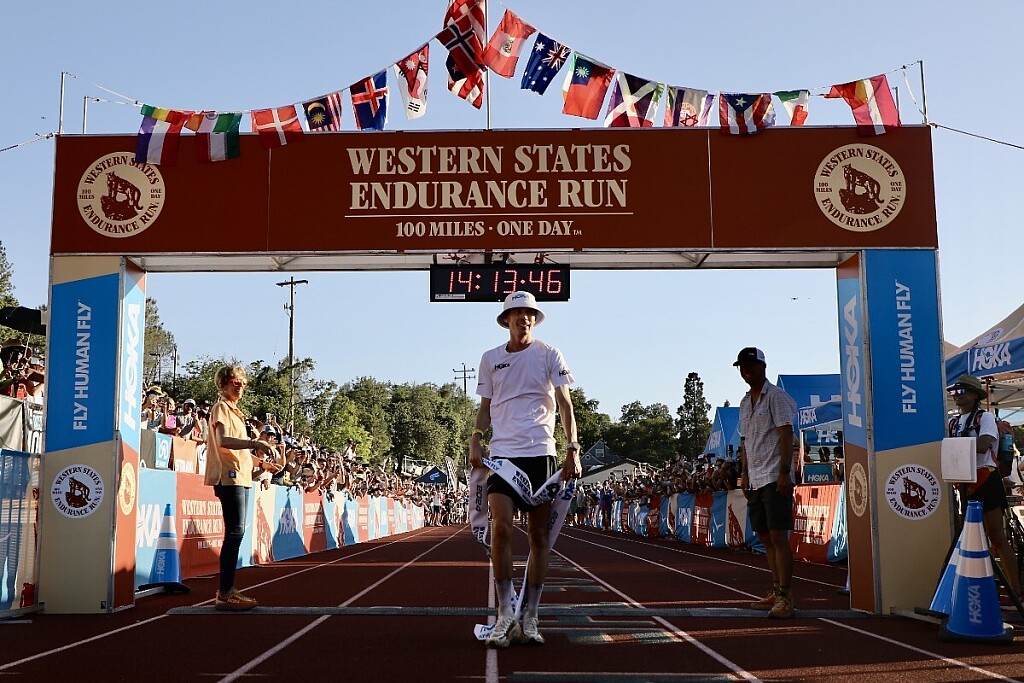
Western States 100: Walmsley Wins a Fourth Time While Schide Rocks the Women’s Field
For hours, Katie Schide (pre-race and post-race interviews) chased ghosts. For hours, Jim Walmsley (pre-race and post-race interviews) and Rod Farvard (post-race interview) chased each other. And in the end, after 100 courageous, gutsy miles at one of the world’s most iconic ultramarathons, it was Schide and Walmsley who won a fast, dramatic 2024 Western States 100.
Schide, an American who lives in France, was on pace to break the course record until late in the race, while Americans Walmsley and Farvard battled throughout most of the second half of the race, alternating the lead as late as mile 85.
Schide’s winning time was 15:46:57, just over 17 minutes behind Courtney Dauwalter’s 2023 course record, almost an hour faster than her own time last year, and the second fastest women’s time ever. Walmsley, meanwhile, won his fourth Western States in 14:13:45, the second fastest time ever — only behind his own record of 14:09:28 that he set in 2019.
Second and third in the men’s race came down to an epic sprint finish on the track between Farvard and Hayden Hawks (pre-race and post-race interviews), who finished in 14:24:15 and 14:24:31, respectively.
In the women’s race for the podium, Fu-Zhao Xiang (pre-race and post-race interviews) finished second in 16:20:03, and Eszter Csillag (pre-race and post-race interviews) took third for the second time in a row, in 16:42:17.
Both races featured one of the deepest and most competitive fields in race history, with the men’s top five all coming in faster than last year’s winning time, and the women’s top 10 finishing just under 40 minutes faster than last year’s incredibly competitive top 10.
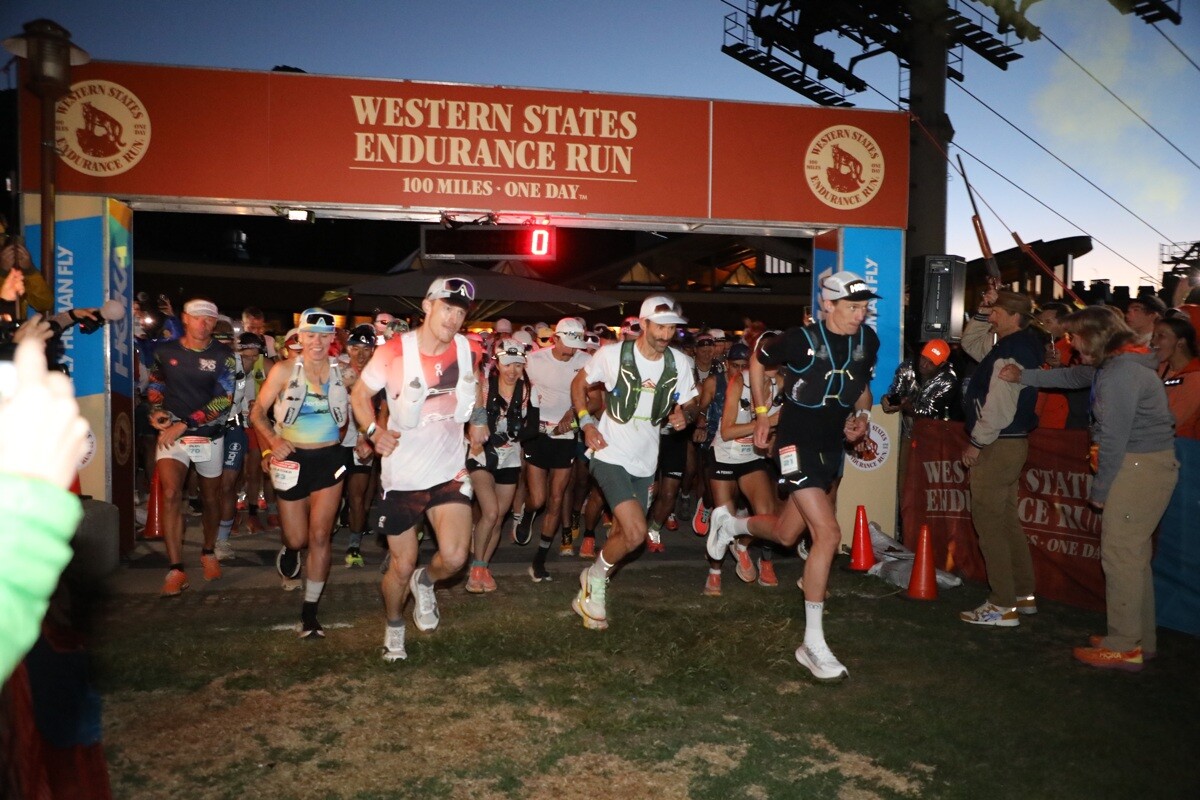
At 5 a.m. on Saturday, June 29, they were all among the 375 runners who began the historic route from Olympic Valley to Auburn, California, traversing 100.2 miles of trail with 18,000 feet of elevation gain and 22,000 feet of loss. After last year’s cool temperatures, the weather at this year’s race was a bit warmer, albeit with a notable lack of snow in the high country. The high temperature in Auburn was in the low 90s Fahrenheit.
A special thanks to HOKA for making our coverage of the Western States 100 possible!
2024 Western States 100 Men’s Race
In his return to the race that propelled him to the heights of global trail running and his first ultra on American soil in three years, Jim Walmsley (pre-race interview) demonstrated why he is, once again, the king of Western States. Before the race, Walmsley exuded a calmness that perhaps eluded him during his first attempts, when he attacked it with an obsessive intensity that led him to famously take a wrong turn and then dropping out in back-to-back years.
“We’ll just roll with what plays out and just kind of see what happens in the race,” he said in his pre-race interview. There’s a marked difference when compared to his remarks from his interview before the 2016 race.
What happened in the race was this: In his fourth Western States, Rod Farvard (post-race interview) had the race of his life to push Walmsley like he’d never been pushed before in his long history with the event.
Farvard — a 28-year-old from Mammoth Lakes, California, who has improved his finish each year at the race, from a DNF in 2021 to 41st place in 2022 to 11th place last year — put himself in a strong position from the start, leading a large pack of runners that included Walmsley at the top of the Escarpment, the 2,500-foot climb in the first four miles of the race. For the next 45-plus miles, Farvard remained in the top 10, part of a chase pack of American Hayden Hawks (pre-race and post-race interviews), Kiwi Dan Jones (pre-race interview), and Chinese runner Guo-Min Deng, among others.
At the Robinson Flat aid station at mile 30 — the symbolic end of the runners’ time in the high country, which features an average elevation of around 7,000 feet — Walmsley, who started the race conspicuously wearing all black, came through in 4:24 looking fast and smooth, now wearing an ice-soaked white shirt. Jones, the 2024 Tarawera 102k champion and fifth-place finisher in his Western States debut last year, and Hawks, who set the course record at February’s Black Canyons 100k after dropping out of last year’s Western States, followed about 90 seconds later. The two runners, frequent training partners, ran together frequently throughout the day, with Hawks often foregoing ice at aid stations.
After the trio of Walmsley, Hawks, and Jones went through Last Chance at mile 43 together, Walmsley put nearly two minutes on them up the climb to Devil’s Thumb. “I was with everybody at the bottom,” he said, according to the race’s official livestream.
About halfway through, at mile 49.5, the order remained the same: Walmsley in the lead with an elapsed time of 6:58, followed by Jones one minute back, Hawks two minutes back, and Farvard just over two and a half minutes back. The rest of the top 10 were last year’s 17th-place finisher Dakota Jones; 2024 Transvulcania Ultramarathon champion Jon Albon (pre-race interview), who is from the U.K. but lives in Norway; 2023 fourth-place finisher Jia-Sheng Shen (China) (pre-race interview); 2023 Canyons 100k champion Cole Watson; Western States specialist Tyler Green (pre-race interview); and Jupiter Carera (Mexico).
Then began a thrilling, chaotic second half of the race — featuring a gripping back-and-forth between Walmsley and Farvard, a wildfire near the course, a two-man river crossing, and a sprint finish on the track.
It all started when Walmsley entered Michigan Bluff at mile 55, again looking calm and in control, changing shirts and getting doused with ice. Farvard came in just behind him and left the aid station first, leading the race for the first time since the first climb up the Escarpment. The same routine took place seven miles later at Foresthill: Walmsley entering first, Farvard leaving first.
For the next 18 miles, the two runners alternated in the lead. By mile 78, they were so close that they were crossing the American River at the same time. Their battle underscored the overall depth of the field at this year’s race: At mile 80, the top five men were within 16 minutes of one another.
Around then, the 15-acre Creek Fire, which started not long before, was visible from the final quarter of the course and crews were temporarily not permitted to travel to the Green Gate aid station at mile 80 because the route to it passed close to the fire. Eventually, a reroute was established for crews to get to Green Gate and, later, after the wildfire was controlled, the regular route was reopened.
At Green Gate, Farvard came through in the lead, with Walmsley four minutes back and looking like he was hurting. It was then, perhaps, that the thought entered people’s minds: Could Farvard really take down the champ?
But Jim Walmsley is Jim Walmsley for a reason, and he again proved why he is among the world’s best. Against the ropes, facing one of his first real challenges in the race that shaped him, he delivered, entering the next aid station, Auburn Lake Trails at mile 85, more than a minute earlier than Farvard. He had made up five minutes in five miles.
Walmsley never trailed again, increasing his lead to 11 minutes by the Pointed Rocks aid station at mile 94 and then picking up his crew, including his wife, Jess Brazeau, at Robie Point to run the final mile with him. He entered the track at Placer High School to loud cheers, his loping stride still looking smooth, stopping a few steps short of the tape to wave to the crowd and raise his arms in triumph. He had done it again.
Behind him, Farvard was fading but determined to cap an extraordinary race with a second-place finish. Hawks, who had made up five minutes on Farvard in the couple miles between Pointed Rocks and Robie Point, was on the hunt, and by the time he stepped on the track, Farvard was within sight.
It was then that fans were treated to one of the most unique sights in all of ultrarunning: After 100 miles of racing, two men were sprinting against each other on a track. In the end, Farvard’s lead held, and he finished 16 seconds ahead of Hawks. He collapsed at the finish line — a fitting end to an epic performance.
Dan Jones ended a strong race with a fourth-place finish in 14:32:29, with Caleb Olson capping an impressive second half of the race — from 11th at mile 53 to fifth in 14:40:12 at the finish. All five men ran a time that would have won the race last year.
Behind Olson came Jon Albon, running 14:57:01 in his 100-mile running-race debut, followed by the surgical Tyler Green, who finished in seventh for his fourth straight top 10 finish at the race. Green’s time of 15:05:39 also marked a new men’s masters course record, breaking the 2013 Mike Morton record of 15:45:21.
Rounding out the top 10 were Jia-Sheng Shen in eighth with a time of 15:09:49, Jonathan Rea in ninth who methodically moved his way up during the last 60 miles to finish in 15:13:10; and Chris Myers in 10th in 15:18:25.
2024 Western States 100 Women’s Race
Through the high country, into and out of the canyons, and along the river of the world’s oldest 100-mile trail race, Katie Schide (pre-race and post-race interviews) raced only the ghosts of the clock and history. Smiling throughout, she seemed unaffected by the solitude and the enormity of the possibility that lay before her: to attempt to break the course record of one of the world’s most iconic trail races.
Schide, an American who lives in France, came into the race as the clear favorite, and for good reason: She finished second last year, breaking Ellie Greenwood’s previously untouchable 2012 course record by more than three minutes and losing to only Courtney Dauwalter, who broke Greenwood’s record by an astounding 78 minutes on her way to a historic Western States-Hardrock 100-UTMB triple win. Schide, winner of the 2022 UTMB and 2023 Diagonale des Fous 100 Mile, spent the last two-and-a-half months in Flagstaff, Arizona, training for Western States, winning this year’s Canyons 100k in an impressive tune-up and putting in a monster training block.
In her pre-race interview, Schide said that she had thought about ways to improve her race from last year, which perhaps should have been the first warning to her competition. The second, then, was her immediate separation from the women’s chase pack: She summited the Escarpment, a 2,500-foot climb during the first four miles, in first place and never looked back. By the first aid station — Lyon Ridge at 10 miles — she was already 12 minutes under course record pace, and by Robinson Flat at mile 30, she was 21 minutes ahead of second-place Emily Hawgood (pre-race interview), from Zimbabwe but living in the U.S.
The lead only ballooned from there. By Dusty Corners at mile 38, Schide was an incredible 26 minutes under course record pace, and though she lost a few minutes from that pace by the time she climbed up to Michigan Bluff at mile 55, her smile had not waned even slightly. She smoothly entered the iconic aid station, doused herself with ice, changed shirts, and was soon on her way. She never sat down.
Twenty-seven minutes behind her was Hawgood, looking to build on back-to-back fifth-place finishes. Eszter Csillag (pre-race and post-race interviews), a Hungarian who lives in Hong Kong, followed soon after, in the same third spot she finished in last year.
After them ran a dense pack of women: Only 16 minutes separated Hawgood in second from Lotti Brinks in 11th.
At the halfway point, the top 10 were Schide, 33 minutes up in an elapsed time of 7:26; Csillag; Hawgood; Chinese runner Fu-Zhao Xiang (pre-race and post-race interviews), the fourth-place finisher at last year’s UTMB; Lin Chen (China); American Heather Jackson, a versatile former triathlete who recently finished fifth at a competitive 200-mile gravel bike race; ultrarunning veteran Ida Nilsson (pre-race interview), a Swede living in Norway; Becca Windell, second in this year’s Black Canyon 100k; 2023 CCC winner Yngvild Kaspersen (Norway); and Rachel Drake, running her 100-mile debut.
Schide, easily identifiable in her pink shirt, maintained her large lead throughout the second half of the race, remaining calm, controlled, and upbeat throughout the tough canyon miles. By Foresthill at mile 62, she was 19 minutes ahead of course record pace and 48 minutes ahead of the second-place Xiang. Schide’s stride still looked smooth as she waved to fans and even high-fived a cameraman.
Schide’s aggressive pace eventually slowed — by Green Gate at mile 80, her lead on the course record had dissipated — but her spirits did not. After a quick sponge bath at Auburn Lake Trails aid station at mile 85, she fell behind course-record pace for the first time all day, only 15 miles remained until the finish.
Schide entered the track a couple of hours later, running with her crew and no headlamp. She would finish before dark. She stopped for a hug on the final straightaway and lifted the tape with, of course, a smile.
Xiang had methodically pulled away from Hawgood and Csillag during an incredibly strong second half to win the battle for second. Fu-Zhao Xiang finished in 16:20:03 for the third fastest time in race history. Chen, who dropped out at mile 78, was one of the few elite runners who had a DNF on this day, which was categorized by a lack of attrition in both the women’s and men’s elite races.
Eszter Csillag came in about 22 minutes behind Xiang in 16:42:17 for her second consecutive third-place finish, a 30-minute improvement from last year — a statistic that perhaps exemplifies the speed of this year’s race better than any other.
The battle for fourth and fifth was nearly as close as Farvard and Hawks’s race for second in the men’s race a couple of hours earlier.
At Pointed Rocks at mile 94, Hawgood led by barely two minutes, running hard and straight through the aid station. Kaspersen, meanwhile, was drinking Coke and made up almost a minute by Robie Point.
Emily Hawgood’s lead ultimately held, and she finished fourth in 16:48:43 to improve her finish from prior years by one spot. Yngvild Kaspersen was less than two minutes back in 16:50:39. Ida Nilsson capped a strong day to finish sixth in 16:56:52 and break Ragna Debats’s masters course record by almost 45 minutes. That means the top six women all finished in under 17 hours in a race that had only ever had three women finish under that mark — and two of them, Dauwalter and Schide, were last year.
The rest of the top 10 were Heather Jackson in seventh in 17:16:43, and, in close succession, Rachel Drake in 17:28:35, Priscilla Forgie (Canada) in 17:30:24, and Leah Yingling in 17:33:54.
The top 10 women were all faster than the 12th-fastest time in race history going into the day.
by Robbie Harms
Login to leave a comment

Hardrock 100
100-mile run with 33,050 feet of climb and 33,050 feet of descent for a total elevation change of 66,100 feet with an average elevation of 11,186 feet - low point 7,680 feet (Ouray) and high point 14,048 feet (Handies Peak). The run starts and ends in Silverton, Colorado and travels through the towns of Telluride, Ouray, and the ghost town...
more...
How to Find Your “Sweet Spot” Race Distance
Expert advice for focusing on your best event to maximize your running potential.Ever notice that some runs and races are more satisfying than others? These workouts aren’t necessarily the easiest runs or even the ones that are the most fun. Instead, they’re fulfilling because the distance feels challenging, but doable. You collect your medal and walk away thinking, “I bet I can do even better next time,” rather than, “thank goodness that’s over.”
If you have already clicked with a specific distance, you may have already found your running “sweet spot,” or the race length that fires up your inner athlete and gets you training for your next PR. But if you’re new to running or haven’t yet hit your racing stride, some experimentation and a little self-reflection will help you determine where to focus your time and effort when registering and training for events. To help you land on your sweet spot (and figure out what to do when you get there), we chatted with a few run coaches who have worked with athletes of all levels of experience and race preferences. Here’s what you need to know.
What factors determine your sweet spot race distance?
Before you declare yourself a 10K devotee or commit to running a marathon in every state, give yourself adequate time to build a personal relationship with running and experience different races.
“I don’t know if there’s really a set amount of time required to figure this out,” Matt Forsman, USATF/RRCA-certified running coach and race organizer at Sasquatch Racing, tells Runner’s World. “Some people run for years before determining what distance is their sweet spot. For others, a certain distance immediately speaks to them. If you’re new to running, I’d say give yourself at least six to nine months to build some running fitness, try a few distances, and go from there.”
As you rack up the miles and try different races on for size, it can be helpful to keep these factors in mind:
Fitness and Experience
“Your current level of running fitness should be an important part of the calculus in determining what race distance is best for you,” Forsman says, noting that shorter distances like 5K and 10K, while they present their own unique challenges, are generally more beginner-friendly than half marathons and marathons.
You may find that, even as a newbie, these shorter distances enable you to make noticeable progress that’s reflected in your race times. These wins are valuable, as they can keep you engaged and motivated.
Schedule and Lifestyle
Anyone who’s trained for a marathon or ultramarathon will tell you how all-consuming it can be. Some people have the necessary bandwidth or a flexible schedule. Others have the support and resources to fit training between competing priorities, like work, family obligations, and social events. But if you simply don’t have the time and energy to train for a specific distance, it’s probably not your sweet spot.“You should fit running in and around your life and not life in and around your running,” Todd Buckingham, Ph.D. exercise physiologist at PTSportsPRO in Grand Rapids, Michigan tells Runner’s World. “We do this because it’s fun. We do this because we want to push ourselves. But hopefully not to the extent of alienating friends and family. You need to find a distance that will work with your life.”
Location
If you train outdoors, you will always contend with temperature, climate, and terrain. Therefore, where you live will likely play a role in determining your sweet spot, Will Baldwin, USATF and VDOT-certified running coach in Flagstaff, Arizona tells Runner’s World
“If summer temperatures soar, focusing on local 5Ks instead of marathon training will be much more manageable,” Baldwin says. Of course, you can beat the heat by logging miles before or after sunrise, running on a treadmill, but workarounds often require extra planning and schedule adjustments. The same goes for training in frigid, icy temps.
In some cases, your zip code may present an advantage, as year-long temperate weather and extended daylight hours open up more opportunities for longer outdoor training runs.
“And if there’s a fantastic trail system nearby with plenty of races, it’s the perfect chance to test those trail-running skills and have some fun with it,” Baldwin adds.
Past Performance
Your race history is a clue to where your natural talents lie, which can help inform your sweet spot. “Genetics do play a role,” Buckingham says. “Some people have the diesel engine where they can just go all day long, but they can’t go any faster…other people are really good at short distances but struggle at long distances.” Buckingham and Baldwin recommend checking out online tools like the VDOT Running Calculator, which uses one race distance time to determine your estimated time for other distances. Runner’s World also has an easy-to-use race time predictor. Say, for example, your half-marathon PR is 2:10. The calculator uses this information to suggest an exhaustive list of predicted race times, including a 58:40 10K. However, if your 10K PR is actually 56:10, you may be better suited to the 10K.
“Athletes can use this tool to see which of their PRs is the most distinguished for each distance, helping them determine their ideal race distance,” Baldwin says.
You can also garner a lot of information by participating in local races and looking at race results. “See where you finish in relation to other people your age and sex because that will probably tell you just as well,” Buckingham says.
Injuries
“I think it's important to consider any aggravations and injuries you’ve incurred,” Forsman says. “Running is a high-impact sport that generates about three to seven times your bodyweight in impact force per foot strike. If you have [had] a number of injuries in your recent or distant past, shorter distances like the 5K or 10K may make the most sense. Conversely, if you’ve never had any running-related injuries and your running fitness level is high, a longer distance might work great for you.”
Your Happiness and Enjoyment
Do you notice that some races are simply more fun than others? Pay attention to those gut-level feelings, even if they contradict all of the other data you’ve collected, Baldwin says.
“When figuring out an athlete’s ideal race distance or their sweet spot, I love to start with what excites them the most,” he says. “Even if someone shines in a 10K or half marathon, their heart might be set on the full marathon. Passion is often the fuel source of consistent training, so tapping into that excitement is really important.”How do you level up in your sweet spot race distance?
Once you find your sweet spot, you may need to make some adjustments to your running routine because a training program should be tailored to your upcoming event, if you plan to race.
“If you’re currently running a few easy miles a few times a week but really want to run a fast 5K, you’re going to need to inject some ‘quality,’ like tempo, intervals, and hills, to develop strength and speed,” Forsman says. “If you want to simply tackle a longer distance like a half or full marathon, you’re going to need to gradually add some more miles into your training to build stamina and endurance.”
Focusing on one distance also allows you to fine-tune your fueling and hydration strategy, especially if you opt for longer distances. “If the event we’re training for is going to take us over 90 minutes to complete, we have to start talking about and practicing fueling. We’ll need to incorporate either some liquid fuel or energy gels to help us finish the race and utilize all of our fitness,” Baldwin says. “It’s an added expense to have fuel for all of the important long runs and races, so it’s also something to consider when choosing your ideal race distance,” he adds.
Are there downsides to sticking with one race distance?
It can be rewarding to climb the ranks in sweet spot events, but the experts caution against getting too “stuck” in your sweet spot.
“You should definitely be mixing up the types of races you do,” Baldwin says. “It’s common for a marathon runner to come to me who has been stuck at a certain level for years. When I go back through their training history, they almost always have been doing only marathons for several years in a row. They’ve neglected the shorter races, speed work, and their leg turnover.” Baldwin explains that training at different paces engages different energy systems, and temporarily focusing on shorter, faster distances can improve your speed and efficiency, even on slower endurance runs.
The same concept applies to runners with a shorter sweet spot. “If shorter distances like the 5K or 10K are your thing, there’s still utility in tackling longer distances. Training for a longer distance can help you better manage fatigue in the latter stages of your 5K or 10K,” Forsman says.
Plus, you could miss out on what got you hooked on running in the first place. “Professional athletes have to specialize and really just focus on one event because that’s how they earn their livelihood. But the average runner should have fun with it,” Buckingham says. “If you have fun doing one race distance, that’s fine. But don’t be afraid to jump in the local 5K if your friends ask you to join them.”
by Runner’s World
Login to leave a comment
Ben Flanagan breaks his national record at Canadian 10K
It wasn’t obvious from the start that he was going for the Canadian record, but Ben Flanagan made a move halfway into the Canadian 10K Championships at Tamarack Ottawa Race Weekend (also known as the Ottawa 10K, putting distance between himself, marathoner Rory Linkletter and Jeremy Coughler, and held on for the win, squeaking past his Canadian record by two seconds, to finish in 28:09. (The previous record, held jointly with Canadian marathon record holder Cam Levins, was 28:11.)
“I wanted to stay on the gas and in that final kilometre I gave it everything I had,” Flanagan told Canadian Running post-race. His final kilometre was a split of two minutes and 38 seconds. Linkletter finished second in Ottawa, in 28:40 (a new personal best) and Coughler third, in 28:55 (also a personal best).
It was overcast and about 18 C in Ottawa Saturday–slightly warmer than ideal for racing, but less hot than it has been in recent years, which was a relief for the runners and made fast times possible. The race began with a fairly sedate 2:57 split, but got progressively faster (the third-kilometre split was 2:45). Flanagan took advantage of the hard downhill turn where the race crosses the canal, to make his move. It was a $6,000 payday for Flanagan, who will get $5,000 for the win and an additional $1,000 bonus for the national record.
Linkletter will be disappointed not to take the national championship, something he has yet to accomplish in his career; he is Canadian, but lives and trains in Flagstaff, Arizona, under former American marathoner Ryan Hall. Linkletter has been named to the Canadian marathon team for the Paris Olympics, along with Levins. Flanagan is also qualified for the Olympics (in the 5,000m), but has not yet been officially selected.
Coughler won his third consecutive Spring Run-Off 8K in Toronto’s High Park in April; in 2023, he won the Canadian 10,000m Championships.
For Flanagan and Linkletter, Saturday’s race was almost a repeat of the 2022 event, which Flanagan also won (in 28:40), with Linkletter finishing second.
by Anne Francis
Login to leave a comment

Ottawa 10K
Ottawa's course is fast, scenic and few elevation changes. Considered to be an excellent course for first timers and should provide an environment conducive to setting a PR. The Ottawa 10K is the only IAAF Gold Label 10K event in Canada and one of only four IAAF Gold Label 10Ks in the world. The Ottawa 10K attracts one of the...
more...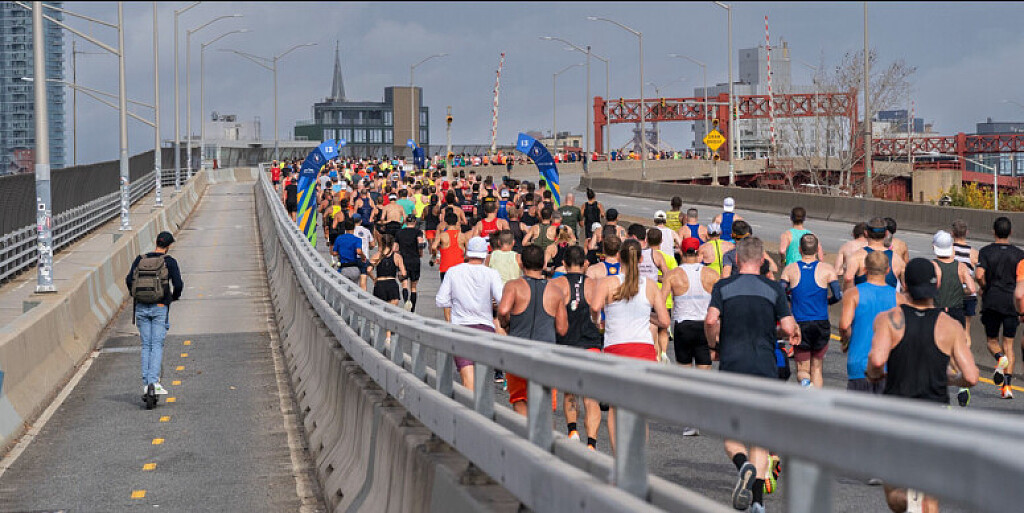
How to Add Hills to Your Marathon Training
Everything to know about adding inclines to training, including how often to tackle them and the best strength moves for prepping your legs.
Running a marathon is a difficult feat in and of itself. Add in a hilly course—like you’ll find in the Big Sur, Boston, New York City, or San Francisco marathons, for example—and that adds a new level of challenging.
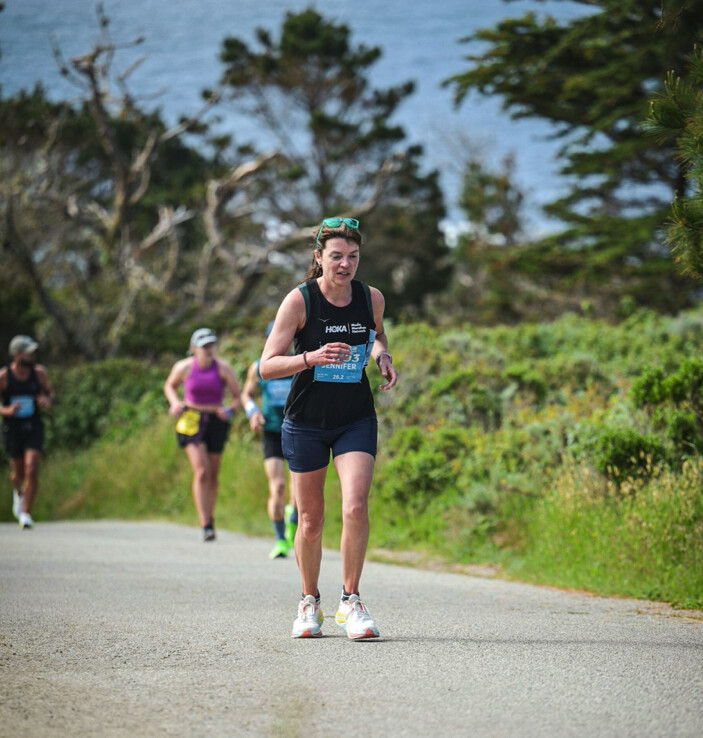
Having just run the Big Sur International Marathon, thanks to an invitation from the Hoka team last month, I learned the importance of incorporating hills into my marathon training cycle from Ben Rosario executive director of the HOKA Northern Arizona Elite in Flagstaff, Arizona, who was also my running coach.
In order to prepare for the demanding elevation changes of the course, I tackled hills every week of my training. Being that I live in Eastern Pennsylvania with many rolling hills, it wasn’t hard to seek out inclines regularly.
“You’re going to have a more enjoyable experience on race day, if you hill train throughout your marathon training,” says Rosario, whose advice rang true for me.
On race day, by mile 20, I had had enough of the hills mentally. Despite the breathtaking views of the Pacific ocean in the distance, six more miles still felt like an eternity in my head. However, I reminded myself that physically I had more to give because of the work I’d put into training, especially having pushed through so many tough climbs. I conquered the last 10K that day, and hit my marathon goal.
So how can you add hills to your own marathon training plan? Can running hills all the time be too much? And what do you do if you don’t have access to hills? To answer these questions, we chatted with expert run coaches to find out their best tips for how to train for hilly marathons.
How Often to Incorporate Hills Into Your Marathon Training Plan
If you live in a hilly area there’s nothing wrong with running hills on your regular runs—it will only help you come race day, Rosario says. “Not the hilliest run you can find necessarily, but there is nothing wrong with having a little bit of up and down in your runs everyday,” he adds.
If you don’t live in a hilly area, but you’re able to get to some place with hills, adding hills to your runs twice a week is smart, especially if you’re a more seasoned runner who has some base fitness. Incorporating hills into your weekly long run and speed session is a good place to start, Rosario suggests.
For novice runners taking on a hilly marathon, who have never consistently run hills before, be careful not to take on too much too fast, as you can get injured if you add hills into your training too aggressively or too quickly, says Richelle Weeks, D.P.T., physical therapist, certified run coach, and marathoner in Ottawa, Canada.
To make sure you don’t overdo it, Weeks advises new runners start with adding hills to one shorter run per week, until you get comfortable with climbing. Then, gradually add distance and more hills over the course of four to six weeks. “This is why I recommend a marathon training session be 20 weeks so there’s plenty of time to introduce hills,” says Weeks.
She also recommends runners have a comfortable base of running fitness first, before tackling inclines. “Most runners who get injured training for a marathon get their injury in the first month or the last month,” Weeks says. That’s because runners often are upping too many variables at once, like frequency, volume, speed, and hills. “Build frequency and volume first to get a good base. Then add in hills or speed, one at a time,” she adds.
I have a five-mile loop from my home with four big hills involved, so I would always incorporate this loop into my weekend long run, sometimes doubling it as my distance increased over the weeks. In previous marathon training, I mainly stuck to flat paths for longer runs, but knew this wouldn’t help me train for Big Sur. While my times were slower on that loop because of the hills, I did notice the more I ran it, the more efficient I was at covering climbs.
My weekend long run consisted of, on average, 1,200 feet of elevation gains for my 10- to 15-mile runs, reaching more than 1,500 feet for my 20-miler, which was helpful considering the Big Sur Marathon course features 2,182 feet of elevation gain.
How to Prep for a Hilly Marathon on a Treadmill if You Don’t Live Near Hills
If you can’t find a hilly route, finding a treadmill with both incline and decline capabilities is the next best thing, says Rosario. For many runners who don’t have access to a treadmill with decline options, Weeks advises strength training to build your quadriceps, which you need strong to tackle tough descents (see moves below).
You can research the elevation changes on the course you’ll run, and simulate that on the treadmill. If you’re doing a 15-mile treadmill run, for example, Rosario suggests plugging in the course inclines based on the elevation changes. For example, if you notice your course has a 6-percent grade at mile nine that stretches for one mile, add that percent and duration into your treadmill workout.
How to Handle Recovery Runs on Hills
It’s a good idea to keep recovery runs flat and easy during marathon training, as you want your easy runs to stay easy! If that means driving to a flat path or track, and you have the time, certainly do so, Rosario says.
If you can’t get to a flatter area, it’s okay to have those hills on your easy runs, with one caveat: Accept that you’ll really slow down your pace. “If you’re doing a recovery run, make sure you keep it easy, and if that means stopping and walking to go up the hills to keep your heart rate low and to make it feel like a relaxed run, then walk up the hills,” says Weeks.
For example, I ran some of the steeper hills on my recovery runs at a 10- to 12-minute mile pace, while my typical recovery pace is about a nine-minute mile. This strategy of adding hills to my recovery runs actually helped throughout the race. When the hills got long and taxing toward the end of the Big Sur course, I reminded myself to find my recovery pace and settle into it, so I could make it through the hills and feel strong for the subsequent miles.
The Garmin Forerunner 265S helped me maintain a lower effort on recovery runs, as I could keep an eye on my pace and heart rate, making sure I wasn’t exerting too much effort.
What to Do About Speed Workouts When Prepping for a Hilly Marathon
A mistake many runners make when it comes to training for a hilly marathon is tackling their hard workouts—like mile repeats or tempo runs—on the track or flat path that they’re comfortable with, Rosario says. The reason that’s an issue is because you’re not training your leg muscles to handle the demands of running hills at a harder effort.
Hill-based workouts ask more of the quads and calves and better prepare you for race day, Rosario adds, which is why speed workouts are precisely where you should incorporate hills. Just remember: “Hilly loops aren’t as cut and dry as training on a track,” he says, meaning your times are going to vary more as you run uphill and downhill, rather than sticking with a specific pace.
If you’re doing a speed session with hills, pay attention to your effort instead of pace, Rosario says, and give the workout the same effort you would on the track. For example, if you’re doing mile repeats with hills at threshold, instead of focusing on trying to hit a specific time, focus on maintaining about a 6 to 7 on the RPE scale (that’s a hard effort, but you can still say a few words).
Repeating the same hilly loop over and over again for those repeats will also help you see how you’re improving.
How to Strength Train for a Hilly Marathon
On average, two strength workouts a week is a good goal for most runners looking to prepare for a hilly marathon, says Weeks. Those workouts can include both uphill and downhill strength movements in each session.
“In the classic hilly marathons like Boston and Big Sur, it’s the quads that are beat to shreds after the race,” says Rosario. That’s why it’s important to incorporate strength moves to build up the quads so they can withstand the impact.
If you’re a lower mileage runner (around 30 or fewer miles per week), you can do strength work on non-running days. High mileage runners who do two or more speed sessions per week and a long run would benefit from keeping their easy days easy and hard days hard. So Weeks suggests pairing strength work with speed days.
Form Tips for Running Hills in a Marathon
Downhills are more dangerous than the uphills, say Rosario, because they cause us to run in a way that is less efficient. “When we run up a hill, there’s no way to get up it except fairly efficiently,” he says. “You’re running in a way that’s as close to perfect [form] as possible [on the uphill].”
That said, you still want to focus on solid running form when going up an incline. Think about running with a tall posture (avoid dropping your head and shoulders), a forward lean from the ankles, and avoid overstriding by keeping your foot strike underneath you. Also, use your glutes to push off and offer power.
When running downhill, runners tend to land hard on their heels, which sends a lot of shock through and up the kinetic chain—from the heel to the legs and hips—which causes eventual soreness postrace because the body is having to violently absorb all that shock, Rosario says.
Allow your feet to land closer to the hips, as opposed to way out in front of you in an overstride, as this creates a more gentle impact on the body, Weeks adds.
What runners need to practice, Rosarios says, is letting gravity do the work on the downhill. “You don’t want to bomb down the hill out of control, but you also don’t want to put on the brakes. You want to run as smoothly as possible down the hill,” he says. “It’s that medium effort that you want to find [running downhills] which takes time to learn and practice.”
As for accomplishing your hilly marathon: Give yourself grace, flexibility, plenty of time to train, and learn the marathon course you’ll run as best you can before race day. Marathons with a lot of inclines aren’t for the faint of heart, but now having raced one, I can say I’m proud I accomplished it. Afterall, American novelist and poet Jack Kerouac, who spent time living in a cabin at Big Sur in the 60s and traveling the United States wrote: “Because in the end, you won’t remember the time you spent working in an office or mowing the lawn. Climb that goddamn mountain.” In this case, just run it, for as long as you can.
by Runner’s World
Login to leave a comment
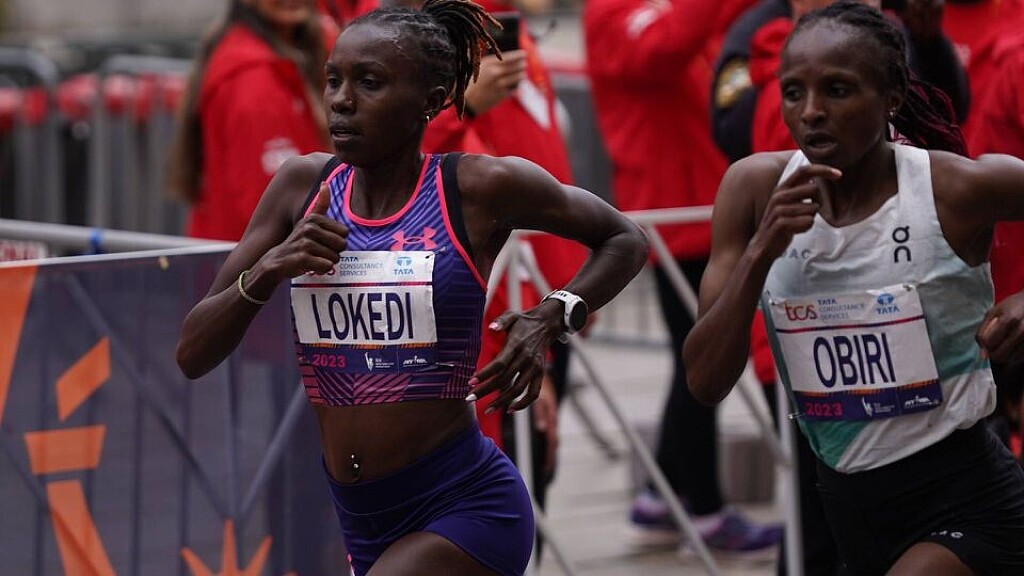
Sharon Lokedi: How the Kenyan marathon star is sketching her strategy for victory at Boston Marathon
Sharon Lokedi is aiming for victory at the Boston Marathon where she will be facing elite rivals.
2022 New York City Marathon champion Sharon Lokedi has rapidly ascended to the pinnacle of long-distance running with her sights firmly set on the 128th Boston Marathon.
Amidst a field brimming with talent, Lokedi's journey from her marathon debut to becoming a favorite in Boston illustrates not only her athletic prowess but also her unique approach to managing the pressures of elite competition.
"Before I get to a race, there’s so much tension and anxiety. I try to remain present," Lokedi shared as per Run.
This practice, recommended by her sports psychologist in July 2023, has helped her maintain calm and focus, vital for someone whose career in running has been anything but typical.
Surprising herself and the athletic world, she clinched victory at her first marathon attempt in New York in 2022 with a time of 2:23:23, joining the ranks of debut winners in the storied race.
Despite facing an injury that sidelined her from the Boston Marathon last April she returned to the global marathon scene last November, securing a third-place finish in New York, a testament to her resilience and tenacity.
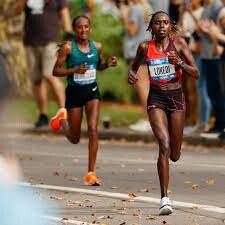
The 30-year-old Kenyan runner's story is a blend of innate talent and serendipity having never envisioned a professional career in athletics.
From her humble beginnings running at age 12 to training alongside Olympic champions in Kaptagat, Kenya, Lokedi's ascent in the sport is, by her own admission, "a miracle."
Training at altitudes close to 8,000 feet, Lokedi has pushed her limits, clocking upwards of 140 miles a week in preparation for Boston.
Under the guidance of her coach Haas, she has emphasized hill training, a crucial component for tackling the notoriously challenging Boston course.
"I think she’ll be in the mix," said Haas, highlighting Lokedi's diligent preparation and positive mindset.
Lokedi's connection to the running community, both in Kenya and her second home in Flagstaff, Arizona, has been a source of strength and inspiration.
The camaraderie she shares with competitors, including close friend and fellow Kenyan Hellen Obiri underscores a spirit of mutual respect and friendship that transcends rivalry.
"Racing with Sharon, it’s really good for me," Obiri remarked.
The Boston Marathon promises a historic showdown in the women's elite field, featuring luminaries such as Obiri, Tadu Teshome, Hiwot Gebremariam, and Edna Kiplagat, alongside promising American contenders like Emma Bates and Sara Hall.
"Sharon has been my good friend since 2019. She’s a lovely girl," Obiri added, highlighting the deep bonds formed between athletes at the highest levels of competition.
For Lokedi and Obiri, the Boston Marathon is not just another race, it is an opportunity to showcase their skills, support each other, and celebrate their friendship, irrespective of the outcome.
As she prepares to toe the line in Boston, her message is clear: "I know I’m strong. I want to come into the race knowing that anything is possible."
by Festus Chuma
Login to leave a comment

Boston Marathon
Among the nation’s oldest athletic clubs, the B.A.A. was established in 1887, and, in 1896, more than half of the U.S. Olympic Team at the first modern games was composed of B.A.A. club members. The Olympic Games provided the inspiration for the first Boston Marathon, which culminated the B.A.A. Games on April 19, 1897. John J. McDermott emerged from a...
more...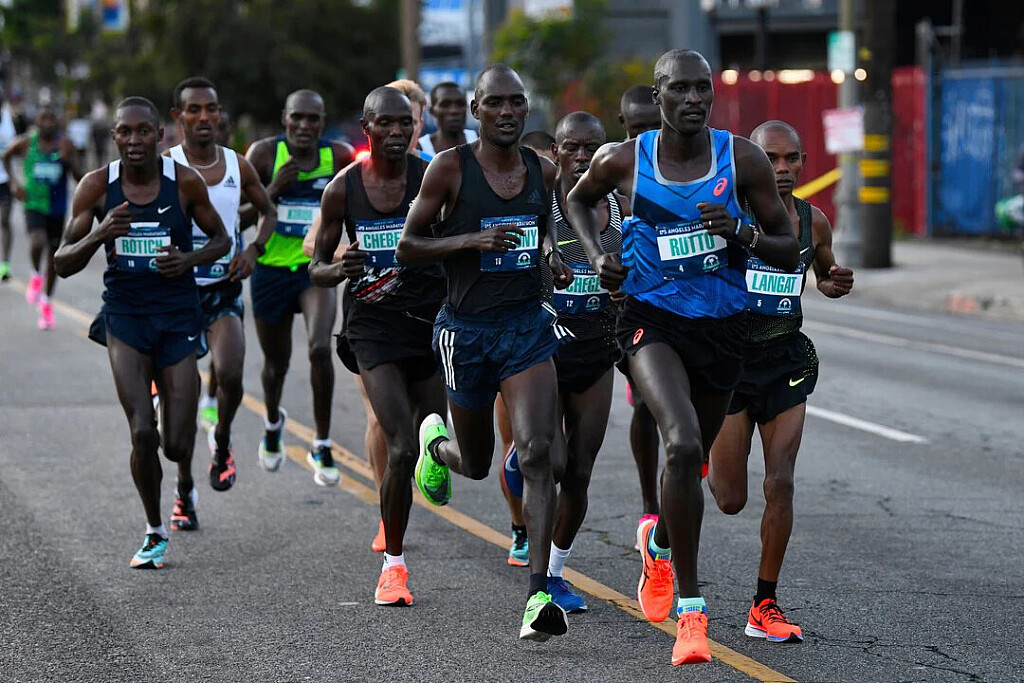
Elite Runners Gear Up for Thrilling Showdown at 2024 Los Angeles Marathon
Event organizers are optimistic about witnessing one of the fastest men's races in the history of the Los Angeles Marathon.
The spotlight will be on Kenya's Dominic Kipyegon Ngeno when the 2024 edition of the Los Angeles Marathon takes place on March 17.
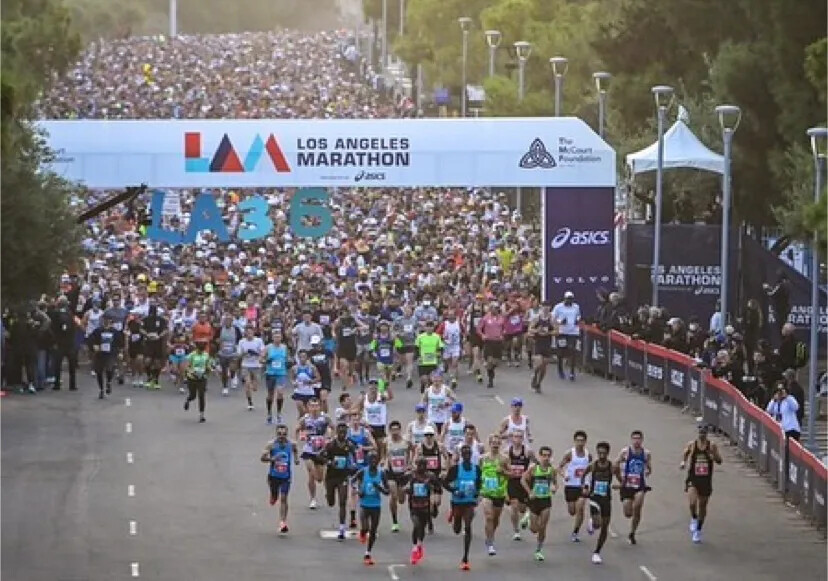
Ngeno clinched the third spot at the Eindhoven Marathon in the Netherlands last October, achieving a personal best of 2:07:26 and is set to lead the elite field in what promises to be a thrilling race.
Ngeno's compatriot, Moses Kiptoo Kurgat, arrives in Los Angeles boasting a personal best of 2:08:40, following his recent triumph at the 2022 Kuala Lumpur Marathon, where he clocked an impressive 2:11:05. The duo's presence adds an extra layer of excitement to the event, showcasing Kenya's dominance in long-distance running.
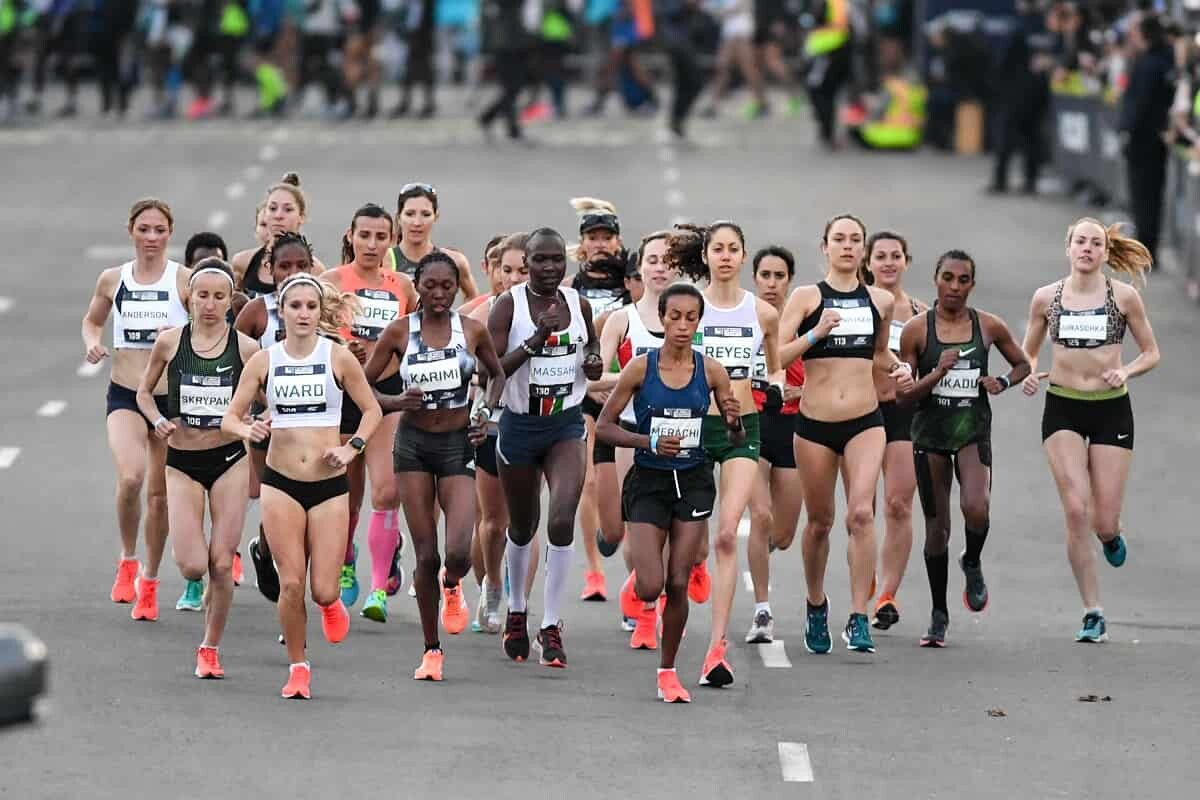
Eritrean runners Tsegay Tuemay and Tesfu Weldegebreal, who have been honing their skills in Flagstaff, Arizona, are also set to make their mark. Tuemay, with a personal best of 2:09:07, claimed victory at the McKirdy Micro Marathon in New York last October in a time of 2:11:04. Meanwhile, Weldegebreal, with a half marathon personal best of 62:48, is gearing up for his marathon debut.
Other contenders vying for the top spot include Cosmas Kiplimo from Kenya, boasting a 2:09:44 personal best and a third-place finish in the Geneva Marathon (2:10:44) in Switzerland last October. Sammy Rotich, a Kenyan who secured victory at the Austin Marathon (2:14:25) and achieved a personal best of 2:10:08 at Grandma's Marathon in 2022, will also be a force to be reckoned with. Ethiopia's Belay Tilahun Bezabh, winner of the 2019 NYC Half Marathon and with notable performances in Hamburg and Dalian Marathons, completes the formidable lineup.
Given the impressive credentials of these elite runners, the event organizers are optimistic about witnessing one of the fastest men's races in the history of the Los Angeles Marathon.
The current fastest time ever recorded in Los Angeles is Ethiopia's Markos Geneti's remarkable 2:06:35 effort in 2011 on the Stadium to Sea course. The Stadium to Stars route's course record is held by Ethiopia's Bayelign Teshager, who clocked 2:08:26 in 2020, setting the stage for an exciting showdown among these elite athletes.
by Michezo Afrika
Login to leave a comment
Los Angeles Marathon
The LA Marathon is an annual running event held each spring in Los Angeles, Calif. The 26.219 mile (42.195 km) footrace, inspired by the success of the 1984 Summer Olympic Games, has been contested every year since 1986. While there are no qualifying standards to participate in the Skechers Performnce LA Marathon, runners wishing to receive an official time must...
more...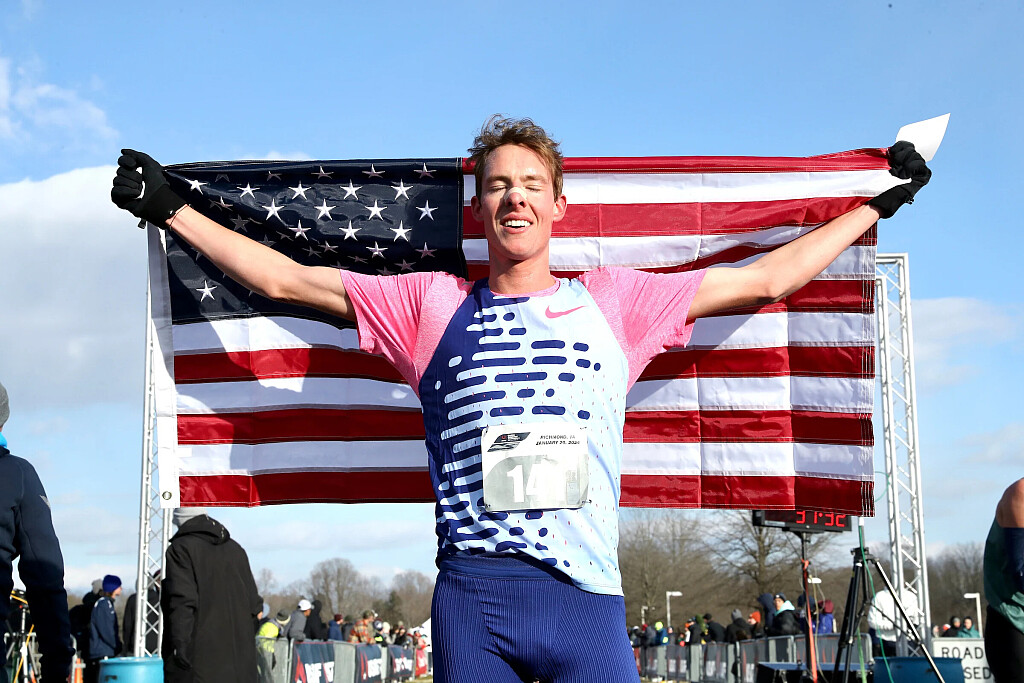
Cooper Teare And Weini Kelati Win 2024 USATF Cross Country Titles
Weini Kelati and Cooper Teare earned convincing victories at the 2024 USATF Cross Country Championships, held on Saturday at Pole Green Park in Mechanicsville, Va. Running just six days after setting an American record in the half marathon in Houston, Kelati took off just after 4k and destroyed the field, running 32:58.6 for the 10k course to win by 37.3 seconds — the largest margin of victory since Aliphine Tuliamuk‘s 48.2 in 2017.
Teare took a different approach, staying patient as former University of Colorado runner turned Olympic triathlete Morgan Pearson pushed the pace during the second half of the race. Teare was the only one to go with Pearson’s move at 8k and made a strong move of his own at 9k that allowed him to cruise to victory in 29:06.5. 2020 champion Anthony Rotich of the US Army was 2nd in 29:11.6 as Pearson hung on for 4th. Teare’s training partner Cole Hocker was 12th in 29:52.3.
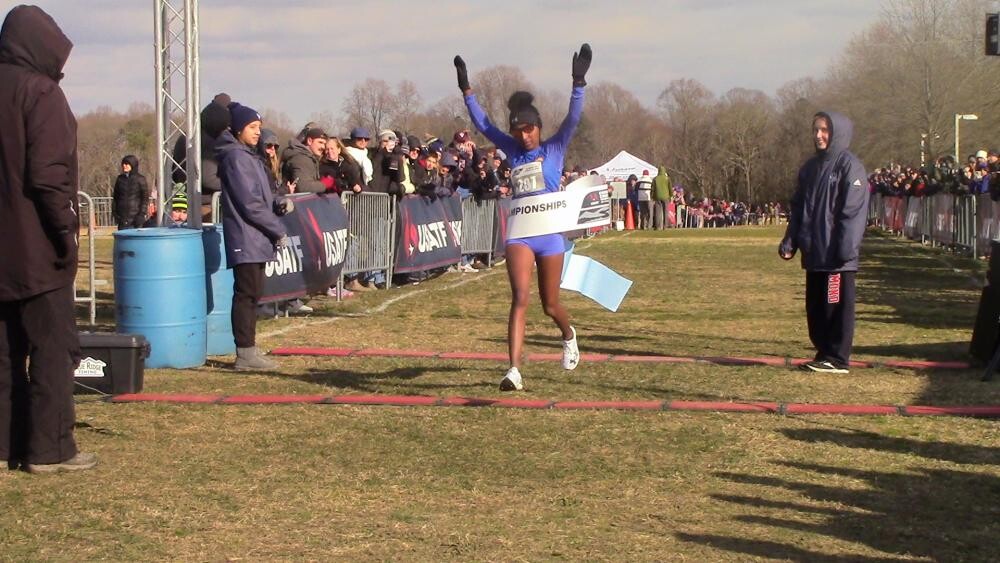
The top six finishers in each raced earned the right to represent Team USA at the World Cross Country Championships in Belgrade, Serbia, on March 30. Kelati’s coach/agent Stephen Haas told LetsRun last week that Kelati plans to run there while Teare’s agent Isaya Okwiya said Teare’s plans are still TBD.
High school junior Zariel Macchia of Shirley, N.Y., won the women’s U20 race in 20:31.0 for the 6k course; Macchia previously won the title as a freshman in 2022. Notre Dame freshman Kevin Sanchez won the men’s U20 title in 24:07.1 for the 8k course.
Cooper Teare shows his range with impressive victory
Teare was the 2021 NCAA 5,000m champion at the University of Oregon and has shown that his range extends both up and down the distance spectrum. Teare is the NCAA mile record holder at 3:50.39 and was the 2022 US champion at 1500 and now he is the US cross country champion. That sort of range has become increasingly common on the international level but in the US, it’s rare for a 1500 guy to run USA XC, let alone win it. Teare is the first man to win US titles at both 1500 meters and cross country since John Mason in 1968, and even that comes with a caveat as the US championships were separate from the Olympic Trials back then. Before Mason, the last guy to win both was Abel Kiviat (cross country in 1913, US mile title in 1914). You all remember him.
On the women’s side, Shelby Houlihan, since banned for a doping violation, won USA XC and the US 1500 title back in 2019.
Teare’s coach Ben Thomas told Carrie Tollefson, who was calling the race for USATF.TV, that the aim of this race was just to see where his fitness was at against a top field. Clearly, it’s very good. In his first race since leaving the Bowerman Track Club after the 2023 season, Teare, wearing a bright pink undershirt beneath his Nike singlet, ran with the lead pack until Morgan Pearson began to string things out just before entering the final 2k loop. As opposed to Pearson, who was giving it all he could to drop the field, Teare looked relaxed and in control, and at 9k he eased past Pearson into the lead before dropping the hammer to win comfortably. It was a smart run and an impressive display of fitness.
Teare may also have slayed some demons from his last cross country race in 2021, when he crawled across the finish line in the final meters. Now he’s gone from 247th at NCAA XC to a national champion.
Teare’s plans for the rest of the winter are up in the air. He will run in a stacked 2-mile at Millrose on February 11 against the likes of Grant Fisher and Josh Kerr before competing at USA Indoors a week later. World Indoors could be an option if he makes the team — as could World XC, if he wants it. No matter what he chooses, Saturday’s run was a great way for Teare to kick off the Olympic year.
Weini Kelati demolishes the competition
On paper, Kelati, who runs for Under Armour’s Dark Sky Distance team in Flagstaff, was the class of this field. The only question was whether she would be recovered from racing hard at last weekend’s Houston Half Marathon, where she set the American record of 66:25. The answer was a definitive “yes” as Kelati, after running with the leaders for the first 4k, dropped a 3:05 5th kilometer to break open the field. From there, her lead would only grow to the finish line as she won by a massive 37.3 seconds over runner-up Emma Hurley.
Kelati was not at her best heading into last year’s World XC in Australia as she had missed some time in the buildup due to injury. She still managed to finish a respectable 21st overall. Her aims will be much higher for this year’s edition in Belgrade.
Kelati also made some history with her win today. She’s the first woman to win Foot Locker, NCAA, and USA cross country titles.
by Jonathan Gault
Login to leave a comment

USATF Cross Country Championships
About USATF Based in Indianapolis, USA Track & Field (USATF) is the National Governing Body for track and field, long distance running, and race walking in the United States. USATF encompasses the world's oldest organized sports, the most-watched events of Olympic broadcasts, the number one high school and junior high school participatory sport, and more than 30 million adult runners...
more...
The Pill That Over Half the Distance Medallists Used at the 2023 Worlds
What's the deal with sodium bicarbonate?What if there was a pill, new to the market this year, that was used by more than half of the distance medalists at the 2023 World Athletics Championships? A supplement so in-demand that there was a reported black market for it in Budapest, runners buying from other runners who did not advance past the preliminary round — even though the main ingredient can be found in any kitchen?
How did this pill become so popular? Well, there are rumors that Jakob Ingebrigtsen has been taking it for years — rumors that Ingebrigtsen’s camp and the manufacturers of the pill will neither confirm nor deny.
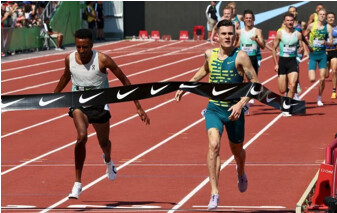
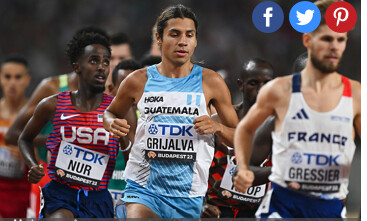
So about this pill…does it work? Does it actually boost athletic performance? Ask a sports scientist, someone who’s studied it for more than a decade, and they’ll tell you yes.
“There’s probably four or five legal, natural supplements, if you will, that seem to have withstood the test of time in terms of the research literature and [this pill] is one of those,” says Jason Siegler, Director of Human Performance in the College of Health Solutions at Arizona State University.
But there’s a drawback to this pill. It could…well, let’s allow Luis Grijalva, who used it before finishing 4th in the World Championship 5,000m final in Budapest, to explain.
“I heard stories if you do it wrong, you chew it, you kind of shit your brains out,” Grijalva says. “And I was a little bit scared.”
The research supports that, too.
“[Gastrointestinal distress] has by far and away been the biggest hurdle for this supplement,” Siegler says.Okay, enough with the faux intrigue. If you’ve read the subtitle of this article, you know the pill we are talking about is sodium bicarbonate. Specifically, the Maurten Bicarb System, which has been available to the public since February and which has been used by some of the top teams in endurance sports: cycling juggernaut Team Jumbo-Visma and, in running, the On Athletics Club and NN Running Team. (Maurten has sponsorship or partnership agreements with all three).Some of the planet’s fastest runners have used the Maurten Bicarb System in 2023, including 10,000m world champion Joshua Cheptegei, 800m silver medalist Keely Hodgkinson, and 800m silver medalist Emmanuel Wanyonyi. Faith Kipyegon used it before winning the gold medal in the 1500m final in Budapest — but did not use it before her win in the 5,000m final or before any of her world records in the 1500m, mile, and 5,000m.
Herman Reuterswärd, Maurten’s head of communications, declined to share a full client list with LetsRun but claims two-thirds of all medalists from the 800 through 10,000 meters (excluding the steeplechase) used the product at the 2023 Worlds.
After years of trial and error, Maurten believes it has solved the GI issue, but those who have used their product have reported other side effects. Neil Gourley used sodium bicarbonate before almost every race in 2023, and while he had a great season — British champion, personal bests in the 1500 and mile — his head ached after races in a way it never had before. When Joe Klecker tried it at The TEN in March, he felt nauseous and light-headed — but still ran a personal best of 27:07.57. In an episode of the Coffee Club podcast, Klecker’s OAC teammate George Beamish, who finished 5th at Worlds in the steeplechase and used the product in a few races this year, said he felt delusional, dehydrated, and spent after using it before a workout this summer.
“It was the worst I’d felt in a workout [all] year, easily,” Beamish said.
Not every athlete who has used the Maurten Bicarb System has felt side effects. But the sport as a whole is still figuring out what to do about sodium bicarbonate.
Many athletes — even those who don’t have sponsorship arrangements with Maurten — have added it to their routines. But Jumbo-Visma’s top cyclist, Jonas Vingegaard — winner of the last two Tours de France — does not use it. Neither does OAC’s top runner, Yared Nuguse, who tried it a few times in practice but did not use it before any of his four American record races in 2023.“I’m very low-maintenance and I think my body’s the same,” Nuguse says. “So when I tried to do that, it was kind of like, Whoa, what is this? My whole body felt weird and I was just like, I either did this wrong or this is not for me.”
How sodium bicarbonate works
The idea that sodium bicarbonate — aka baking soda, the same stuff that goes in muffins and keeps your refrigerator fresh — can boost athletic performance has been around for decades.
“When you’re exercising, when you’re contracting muscle at a really high intensity or a high rate, you end up using your anaerobic energy sources and those non-oxygen pathways,” says Siegler, who has been part of more than 15 studies on sodium bicarbonate use in sport. “And those pathways, some of the byproducts that they produce, one of them is a proton – a little hydrogen ion. And that proton can cause all sorts of problems in the muscle. You can equate that to that sort of burn that you feel going at high rates. That burn, most of that — not directly, but indirectly — is coming from the accumulation of these little hydrogen ions.”
As this is happening, the kidneys produce bicarbonate as a defense mechanism. For a while, bicarbonate acts as a buffer, countering the negative effects of the hydrogen ions. But eventually, the hydrogen ions win.The typical concentration of bicarbonate in most people hovers around 25 millimoles per liter. By taking sodium bicarbonate in the proper dosage before exercise, Siegler says, you can raise that level to around 30-32 millimoles per liter.
“You basically have a more solid first line of defense,” Siegler says. “The theory is you can go a little bit longer and tolerate the hydrogen ions coming out of the cell a little bit longer before they cause any sort of disruption.”
Like creatine and caffeine, Siegler says the scientific literature is clear when it comes to sodium bicarbonate: it boosts performance, specifically during events that involve short bursts of anaerobic activity. But there’s a catch.
***
Bicarb without the cramping
Sodium bicarbonate has never been hard to find. Anyone can swallow a spoonful or two of baking soda with some water, though it’s not the most appetizing pre-workout snack. The problem comes when the stomach tries to absorb a large amount of sodium bicarbonate at once.
“You have a huge charged load in your stomach that the acidity in your stomach has to deal with and you have a big shift in the partial pressure of carbon dioxide across the gut,” Siegler says. “And that’s what gives you the cramping.”
A few years ago, Maurten was trying to solve a similar problem for marathoners trying to ingest large amounts of carbohydrates during races. The result was their carbohydrate drink, which relies on something called a hydrogel to form in the stomach. The hydrogel resists the acidity of the stomach and allows the carbohydrates to be absorbed in the intestine instead, where there is less cramping.
“We thought, okay, we are able to solve that one,” Reuterswärd says. “Could we apply the hydrogel technology to something else that is really risky to consume that could be beneficial?”
For almost four years, Maurten researched the effects of encapsulating sodium bicarbonate in hydrogels in its Swedish lab, conducting tests on middle-distance runners in Gothenburg. Hydrogels seemed to minimize the risk, but the best results came when hydrogels were paired with microtablets of sodium bicarbonate.
The result was the Maurten Bicarb System — “system,” because the process for ingesting it involves a few steps. Each box contains three components: a packet of hydrogel powder, a packet of tiny sodium bicarbonate tablets, and a mixing bowl. Mix the powder with water, let it stand for a few minutes, and sprinkle in the bicarb.The resulting mixture is a bit odd. It’s gooey. It’s gray. It doesn’t really taste like anything. It’s not quite liquid, not quite solid — a yogurt-like substance flooded with tiny tablets that you eat with a spoon but swallow like a drink.
The “swallow” part is important. Chew the tablets and the sodium bicarbonate will be absorbed before the hydrogels can do their job. Which means a trip to the toilet may not be far behind.
When Maurten launched its Bicarb System to the public in February 2023, it did not have high expectations for sales in year one.
“It’s a niche product,” Reuterswärd says. “From what we know right now, it maybe doesn’t make too much sense if you’re an amateur, if you’re just doing 5k parkruns.”
But in March, Maurten’s product began making headlines in cycling when it emerged that it was being used by Team Jumbo-Visma, including by stars Wout van Aert and Primož Roglič. Sales exploded. Because bicarb dosage varies with bodyweight, Maurten’s system come in four “sizes.” And one size was selling particularly well.
“If you’re an endurance athlete, you’re around 60-70 kg (132-154 lbs),” Reuterswärd says. “We had a shortage with the size that corresponded with that weight…The first couple weeks, it was basically only professional cyclists buying all the time, massive amounts. And now we’re seeing a similar development in track & field.”
If there was a “Jumbo-Visma” effect in cycling, then this summer there was a “Jakob Ingebrigtsen” effect in running.To be clear: there is no official confirmation that Ingebrigtsen uses sodium bicarbonate. His agent, Daniel Wessfeldt, did not respond to multiple emails for this story. When I ask Reuterswärd if Ingebrigtsen has used Maurten’s product, he grows uncomfortable.
“I would love to be very clear here but I will have to get back to you,” Reuterswärd says (ultimately, he was not able to provide further clarification).
But when Maurten pitches coaches and athletes on its product, they have used data from the past two years on a “really good” 1500 guy to tout its effectiveness, displaying the lactate levels the athlete was able to achieve in practice with and without the use of the Maurten Bicarb System. That athlete is widely believed to be Ingebrigtsen. Just as Ingebrigtsen’s success with double threshold has spawned imitators across the globe, so too has his rumored use of sodium bicarbonate.
Grijalva says he started experimenting with sodium bicarbonate “because everybody’s doing it.” And everybody’s doing it because of Ingebrigtsen.
“[Ingebrigtsen] was probably ahead of everybody at the time,” Grijalva said. “Same with his training and same with the bicarb.”
OAC coach Dathan Ritzenhein took sodium bicarbonate once before a workout early in his own professional career, and still has bad memories of swallowing enormous capsules that made him feel sick. Still, he was willing to give it a try with his athletes this year after Maurten explained the steps they had taken to reduce GI distress.
“Certainly listening to the potential for less side effects was the reason we considered trying it,” says Ritzenhein. “I don’t know who is a diehard user and thinks that it’s really helpful, but around the circuit I know a lot of people that have said they’ve [tried] it.”
Coach/agent Stephen Haas says a number of his athletes, including Gourley, 3:56 1500 woman Katie Snowden, and Worlds steeple qualifier Isaac Updike, tried bicarb this year. In the men’s 1500, Haas adds, “most of the top guys are already using it.”
Yet 1500-meter world champion Josh Kerr was not among them. Kerr’s nutritionist mentioned the idea of sodium bicarbonate to him this summer but Kerr chose to table any discussions until after the season. He says he did not like the idea of trying it as a “quick fix” in the middle of the year.
“I review everything at the end of the season and see where I could get better,” Kerr writes in a text to LetsRun. “As long as the supplement is above board, got all the stamps of approvals needed from WADA and the research is there, I have nothing against it but I don’t like changing things midseason.”
***
So does it actually work?
Siegler is convinced sodium bicarbonate can benefit athletic performance if the GI issues can be solved. Originally, those benefits seemed confined to shorter events in the 2-to 5-minute range where an athlete is pushing anaerobic capacity. Buffering protons does no good to short sprinters, who use a different energy system during races.
“A 100-meter runner is going to use a system that’s referred to the phosphagen or creatine phosphate system, this immediate energy source,” Siegler says. “…It’s not the same sort of biochemical reaction that eventuates into this big proton or big acidic load. It’s too quick.”
But, Siegler says, sodium bicarbonate could potentially help athletes in longer events — perhaps a hilly marathon.
“When there’s short bursts of high-intensity activity, like a breakaway or a hill climb, what we do know now is when you take sodium bicarbonate…it will sit in your system for a number of hours,” Siegler says. “So it’s there [if] you need it, that’s kind of the premise behind it basically. If you don’t use it, it’s fine, it’s not detrimental. Eventually your kidneys clear it out.”Even Reuterswärd admits that it’s still unclear how much sodium bicarbonate helps in a marathon — “honestly, no one knows” — but it is starting to be used there as well. Kenya’s Kelvin Kiptum used it when he set the world record of 2:00:35at last month’s Chicago Marathon; American Molly Seidel also used it in Chicago, where she ran a personal best of 2:23:07.
Siegler says it is encouraging that Maurten has tried to solve the GI problem and that any success they experience could spur other companies to research an even more effective delivery system (currently the main alternative is Amp Human’s PR Lotion, a sodium bicarbonate cream that is rubbed into the skin). But he is waiting for more data before rendering a final verdict on the Maurten Bicarb System.
“I haven’t seen any peer-reviewed papers yet come out so a bit I’m hesitant to be definitive about it,” Siegler said.
Trent Stellingwerff, an exercise physiologist and running coach at the Canadian Sport Institute – Pacific, worked with Siegler on a 2020 paper studying the effect of sodium bicarbonate on elite rowers. A number of athletes have asked him about the the Maurten Bicarb System, and some of his marathoners have used the product. Like Siegler, he wants to see more data before reaching a conclusion.
“I always follow the evidence and science, and to my knowledge, as of yet, I’m unaware of any publications using the Maurten bicarb in a double-blind, placebo-controlled clinical trial,” Stellingwerff writes in a text to LetsRun. “So without any published data on the bicarb version, I can’t really say it does much.”
The closest thing out there right now is a British study conducted by Lewis Goughof Birmingham City University and Andy Sparks of Edge Hill University. In a test of 10 well-trained cyclists, Gough and Sparks found the Maurten Bicarb System limited GI distress and had the potential to improve exercise performance. Reuterswärd says the study, which was funded by Maurten, is currently in the review process while Gough and Sparks suggested further research to investigate their findings.
What about the runners who used sodium bicarbonate in 2023?
Klecker decided to give bicarb a shot after Maurten made a presentation to the OAC team in Boulder earlier this year. He has run well using bicarb (his 10,000 pb at The TEN) and without it (his 5,000 pb in January) and as Klecker heads into an Olympic year, he is still deciding whether the supposed benefits are worth the drawbacks, which for him include nausea and thirst. He also says that when he has taken the bicarb, his muscles feel a bit more numb than usual, which has made it more challenging for him to gauge his effort in races.
“There’s been no, Oh man I felt just so amazing today because of this bicarb,” Klecker says. “If anything, it’s been like, Oh I didn’t take it and I felt a bit more like myself.”
Klecker also notes that his wife and OAC teammate, Sage Hurta-Klecker, ran her 800m season’s best of 1:58.09 at the Silesia Diamond League on July 16 — the first race of the season in which she did not use bicarb beforehand.
A number of athletes in Mike Smith‘s Flagstaff-based training group also used bicarb this year, including Grijalva and US 5,000 champion Abdihamid Nur. Grijalva did not use bicarb in his outdoor season opener in Florence on June 2, when he ran his personal best of 12:52.97 to finish 3rd. He did use it before the Zurich Diamond League on August 31, when he ran 12:55.88 to finish 4th.“I want to say it helps, but at the same time, I don’t want to rely on it,” Grijalva says.
Almost every OAC athlete tried sodium bicarbonate at some point in 2023. Ritzenhein says the results were mixed. Some of his runners have run well while using it, but the team’s top performer, Nuguse, never used it in a race. Ritzenhein wants to continue testing sodium bicarbonate with his athletes to determine how each of them responds individually and whether it’s worth using moving forward.
That group includes Alicia Monson, who experimented with bicarb in 2023 but did not use it before her American records at 5,000 and 10,000 meters or her 5th-place finish in the 10,000 at Worlds.
“It’s not the thing that’s going to make or break an athlete,” Ritzenhein says. “…It’s a legal supplement that has the potential, at least, to help but it doesn’t seem to be universal. So I think there’s a lot more research that needs to be done into it and who benefits from it.”
The kind of research scientists like Stellingwerff want to see — double-blind, controlled clinical trials — could take a while to trickle in. But now that anyone can order Maurten’s product (it’s not cheap — $65 for four servings), athletes will get to decide for themselves whether sodium bicarbonate is worth pursuing.
“The athlete community, obviously if they feel there’s any sort of risk, they’re weighing up the risk-to-benefit ratio,” Siegler said. “The return has got to be good.”
Grijalva expects sodium bicarbonate will become part of his pre-race routine next year, along with a shower and a cup of coffee. Coffee, and the caffeine contained wherein, may offer a glimpse at the future of bicarb. Caffeine has been widely used by athletes for longer than sodium bicarbonate, and the verdict is in on that one: it works. Yet plenty of the greats choose not to use it.
Nuguse is among them. He does not drink coffee — a fact he is constantly reminded of by Ritzenhein.
“I make jokes almost every day about it,” Ritzenhein says. “His family is Ethiopian – coffee tradition and ceremony is really important to them.”
Ritzenhein says he would love it if Nuguse drank a cup of coffee sometime, but he’s not going to force it on him. Some athletes, Ritzenhein says, have a tendency to become neurotic about these sorts of things. That’s how Ritzenhein was as an athlete. It’s certainly how Ritzenhein’s former coach at the Nike Oregon Project, Alberto Salazar, was — an approach that ultimately earned Salazar a four-year ban from USADA.
Ritzenhein says he has no worries when it comes to any of his athletes using sodium bicarbonate — Maurten’s product is batch-tested and unlike L-carnitine, there is no specific protocol that must be adhered to in order for athletes to use it legally under the WADA Code. Still, there is something to be said for keeping things simple.
“Yared knows how his body feels,” Ritzenhein says. “…He literally rolls out of practice and comes to practice like a high schooler with a Eggo waffle in hand. Probably more athletes could use that kind of [approach].”
Talk about this article on our world-famous fan forum / messageboard.
by Let’s Run
Login to leave a comment
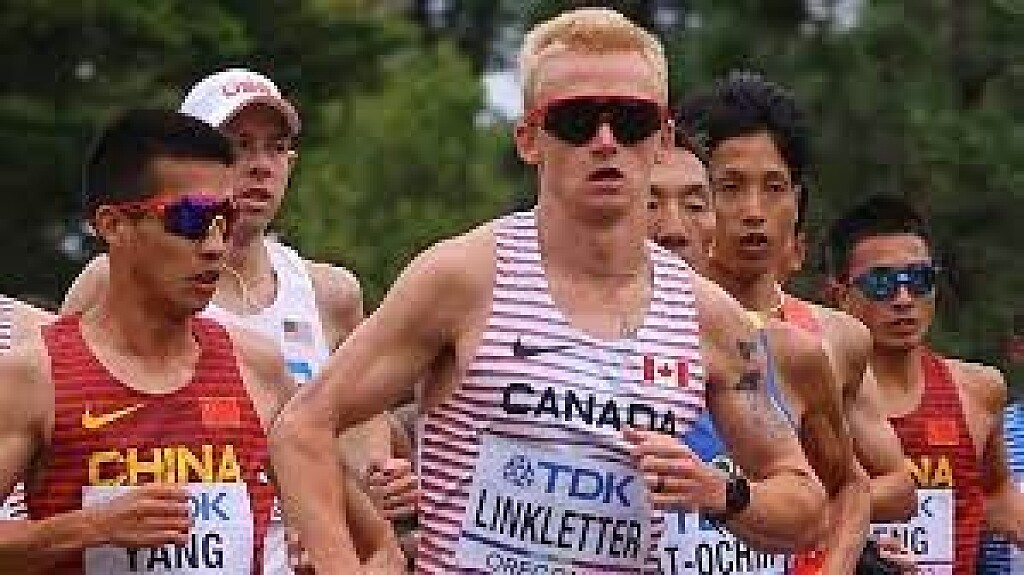
Rory Linkletter to chase Olympic marathon standard in Spain
After a short and successful stint on the indoor track to end 2023, Canadian marathoner Rory Linkletter has announced his next race, the Sevilla Marathon on Feb. 18. Linkletter’s goal is to run a personal best and book his ticket to the Paris Olympics, which will require a time of 2:08:10.
“I will be heading to Spain to run the Sevilla Marathon on Feb. 18,” Linkletter wrote on Instagram. His reasoning for choosing to race in Sevilla was to give himself ample time to recover and prepare after his 18th-place finish in the marathon at the 2023 World Athletics Championships in late August.
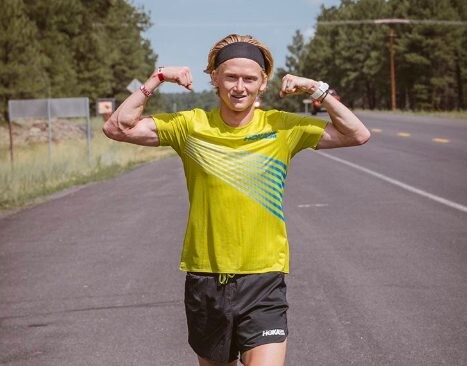
Although Linkletter’s time of 2:12:16 in Budapest was shy of his personal best, he referred to the race as the smartest he’s ever run, passing over 20 runners in the final 15 kilometers.
In Sevilla, Linkletter will be vying for the fastest time of his career, and he will need to hit the men’s Olympic A standard of 2:08:10. If he misses the standard, he can still be selected for Team Canada via the World Athletics rankings. He has a personal best of 2:10:24 from the 2022 World Championships in Eugene, Ore.
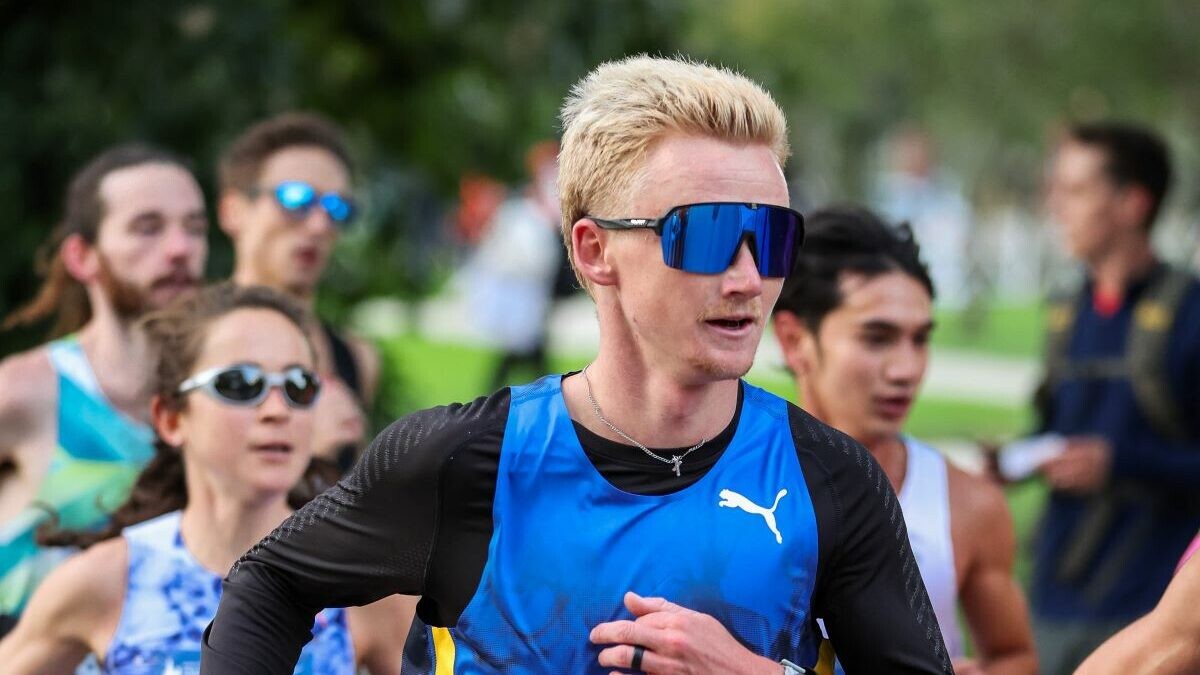
“Training is going well, and I want to set myself up well for an Olympic Standard attempt (2:08:10),” Linkletter said.
The 27-year-old had the second-fastest Canadian men’s marathon time in 2023, behind only Cam Levins’s 2:05:36 in Tokyo. Levins already has one of the three eligible marathon spots for the Canadian men’s Olympic team, but with five months left to qualify, two spots are up for grabs for Canadians who meet the Olympic B standard of 2:11:30.
If Linkletter were to hit the A or B standard, he would potentially be selected for his first Olympic Games.
The Canadian-born marathoner, who lives in Flagstaff, Ariz., has been working on his speed over the last few months with his coach, former U.S. marathoner Ryan Hall, to improve his speed. In early December, he became the 74th Canadian to run a sub-four-minute mile and only the second Canadian to accomplish the feat while also being a sub-2:12 marathoner.
He joined marathon record holder Levins as the only other Canadian to do so.
by Marley Dickinson
Login to leave a comment

Zurich Marathon Sevilla
This urban, flat, fast and beautiful brand new race course will drive athletes through the most beautiful monuments of the city. Zurich Maraton de Sevilla brings the unique opportunity to brake the Best personal result over the mythical distance to all the athletes, professional or age groupers, in one of the most perfect international marathon circuits. This fast marathon takes...
more...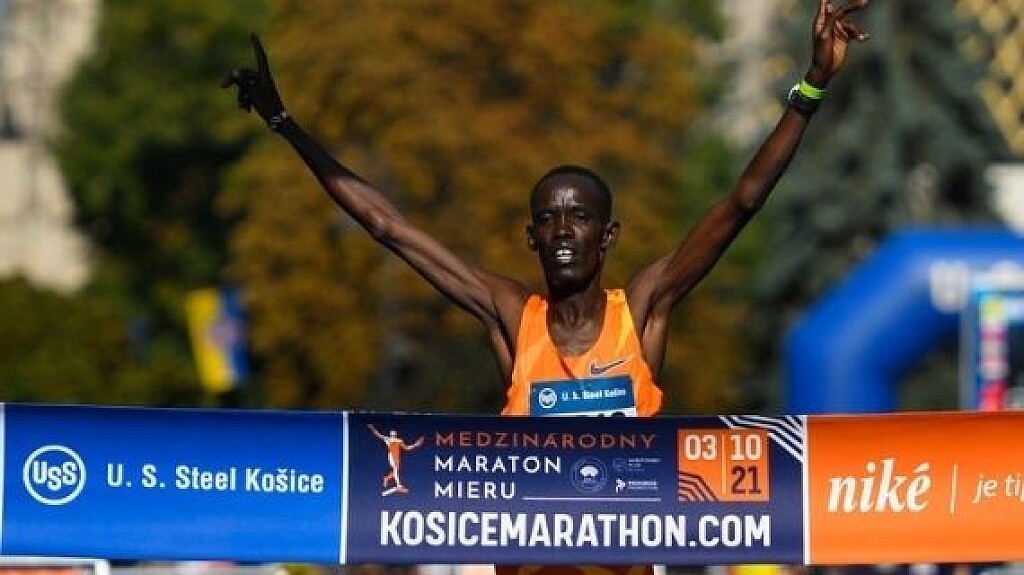
Honolulu Marathon will feature stacked fields
The last big marathon in the United States for 2023, the Honolulu Marathon, returns on Sunday with a robust elite field, race organizers said today. Ten elite athletes from four different nations will compete for the $25,000 first prize for men and women and special one-of-a-kind solid gold medals worth nearly $15,000 each.
“Although we pride ourselves on our no-time-limit policy and welcoming people of all abilities and goals, we feel fast running at the front is also important,” explained Dr. Jim Barahal, president of the Honolulu Marathon Association. “We expect exciting competition in both men’s and women’s as well as wheelchair races.”
Leading the men’s race will be a pair of Eritreans, Filmon Ande (2:06:38 personal best) and Tsegay Weldlibanos (2:09:07). Both men are based in Flagstaff, Arizona, and are coached by James McKirdy of McKirdy Trained. Both will be making their first appearances at the Honolulu Marathon.
“They’ve been training well and they’re ready,” Coach McKirdy told Race Results Weekly in a telephone interview last week.
The Eritreans will be up against two Kenyans, Reuben Kiprop Kerio (2:07:00 PB) and Paul Lonyangata (2:06:10). Kerio has made five previous appearances at the Honolulu Marathon (three times as a pacemaker) with a best finish of second place in 2018 in 2:12:59. Kerio has won the Kosice Peace Marathon in the Slovak Republic three times, and Lonyangata was twice the Paris Marathon champion in 2017 and 2018.
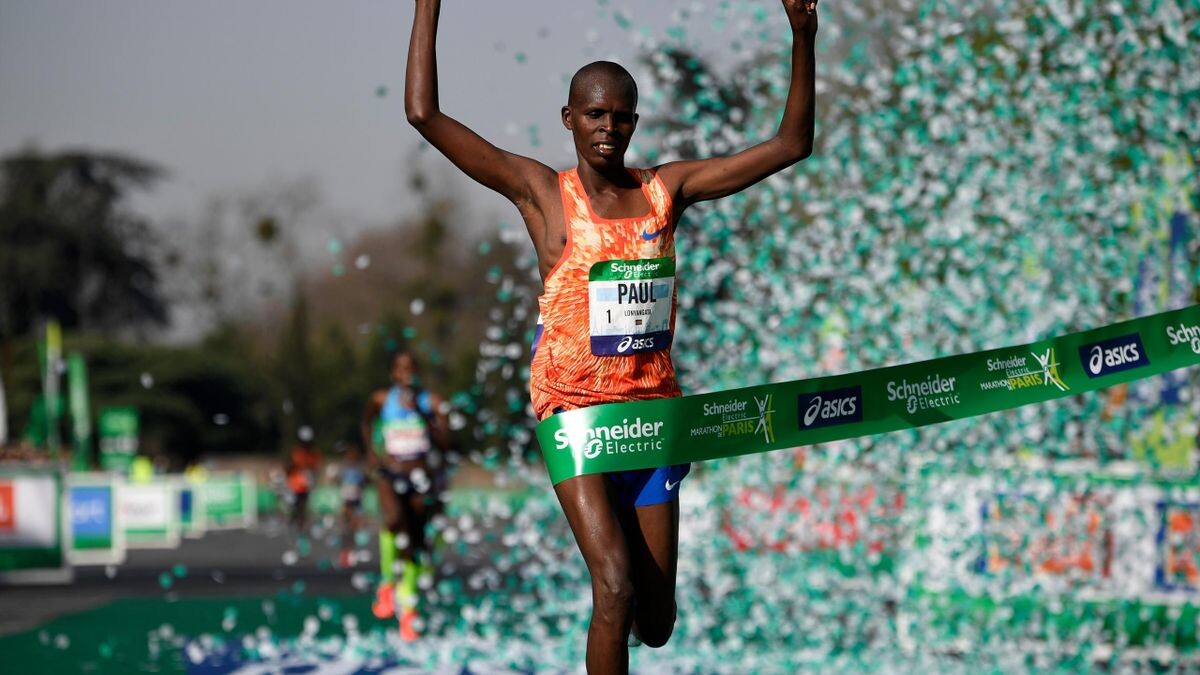
There is one Ethiopian challenger on the men’s side, Abayneh Degu, who has the fastest personal best in the field, 2:04:53, a time he ran in Paris in 2021. He will also be a first-time competitor in Honolulu.
Kenyan veteran Dickson Chumba, twice the Tokyo Marathon champion in 2014 and 2018, will act as a pacemaker.
Four elite athletes will compete on the women’s side. The most prominent, Cynthia Limo of Kenya, will be making her marathon debut. The 2016 World Athletics Half-Marathon Championships silver medalist is coming off of a very good USA road racing season where she competed in 11 events from 10-K through the half-marathon and recorded four victories and eight top-5 finishes. She went home to Kenya for altitude training before Honolulu. Her half-marathon personal best is 1:06:04, equivalent to a 2:18:42 marathon.
A pair of 24 year-old Ethiopians, Sintayehu Tilahun Getahun and Kasu Bitew Lemeneh, will challenge the 33 year-old Limo. Tilahun has a career best time of 2:22:19, set in Milan in 2022, and Bitew ran 2:26:18 in Madrid last year. Both women are running the Honolulu Marathon for the first time.
Finally, there is an elite entrant from Japan. Thirty-four year-old Yukari Abe competes for the Kyocera corporate team and has a personal best of 2:24:02 set in the Osaka Women’s Marathon in 2022. Most recently she finished tenth in the Japanese Olympic trials marathon, called the Marathon Grand Championships, on October 14. Like the other three elite women, she’ll be competing in Honolulu for the first time, much to the delight of the approximately 9,000 Japanese runners who will compete in the mass race behind her.
“Due to the out-and-back nature of several points along our course, the average runner gets to see the professionals go right by them and it is always an exciting thing,” observed Barahal.
Like all big marathons, the Honolulu organizers had to cancel their in-person race in 2020 due to the COVID-19 pandemic and the race was only held virtually. Barahal brought the in-person race back on a very tight budget in 2021, and even with almost no Japanese participation due to pandemic travel restrictions they still recorded 6236 finishers. However, it was not possible to have a regular elite field.
In 2022 the number of finishers more than doubled to 14,271 and the race’s elite athlete program was restored with three-deep prize money of $25,000-10,000-5,000 and an elite wheelchair program. Barahal’s team expects more finishers this year, with a significant uptick in Japanese participation in both the marathon and the companion Start to Park 10-K.
“We’ve done a slow build-back since COVID and both our men’s and women’s fields are deeper and faster,” Barahal observed. “We’re also pleased to offer $25,000 for first place as well as the gold medal for the winner worth about $15,000.”
The special winners’ medals, manufactured by new race sponsor SGC of Japan, have a mass of 202.3 grams (to celebrate 2023). At the current market price of $2038.30 per ounce, those medals are worth $14,545. The mass race finishers will also receive medals designed and produced by SGC (minus the real gold, of course).
“Our marathon family is honored to welcome SGC,” said Barahal. Their dedication to excellence mirrors the spirit of our event. These medals aren’t just rewards; they’re a celebration of every runner’s journey.”
by David Monti
Login to leave a comment
Honolulu Marathon
The Honolulu Marathon’s scenic course includes spectacular ocean views alongside world-famous Waikiki Beach, and Diamond Head and Koko Head volcanic craters.The terrain is level except for short uphill grades around Diamond Head. ...
more...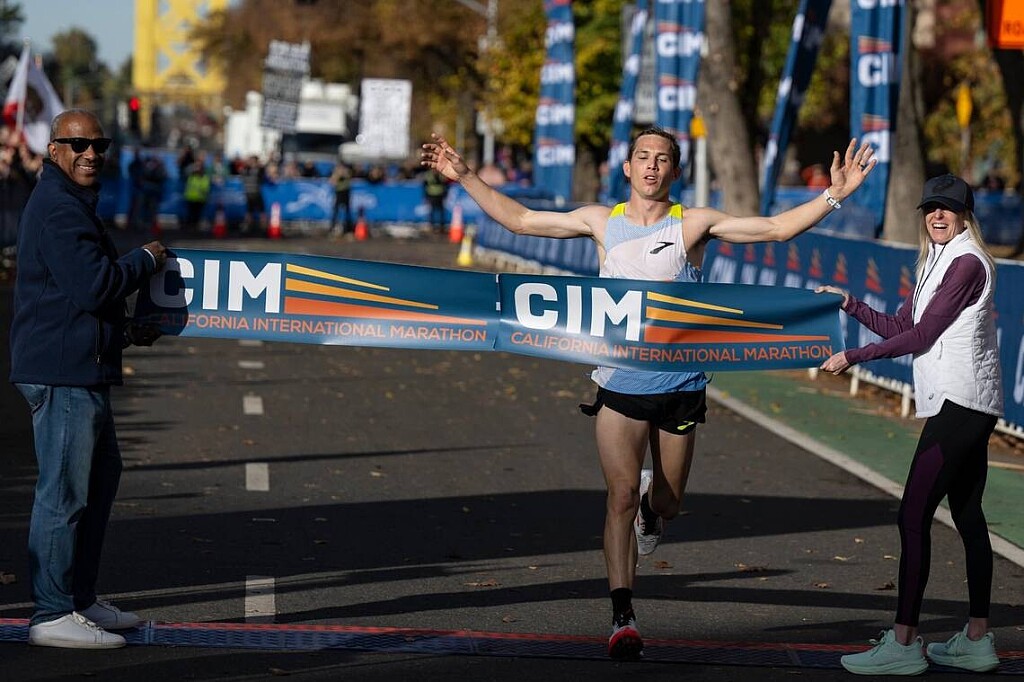
Fresno Kid CJ Albertson rallies to take California International Marathon title in Sacramento
CJ Albertson of Fresno came from behind and Kenyan runner Grace Kahura logged a personal best, each defeating a deep, fast field Sunday to win the 40th annual California International Marathon in Sacramento. The course, unchanged in its 40-year history, a Boston Marathon and U.S. Olympic Trials qualifier dubbed by marathon watchers as the fastest in the West, did not disappoint.
More than 9,600 runners took to the 26-mile downhill course from Folsom to the streets of downtown Sacramento on a cool, dry day under ideal conditions. But it was Fresno’s Albertson, 30, and Kahura, 30, of Longmont, Colorado, who emerged victorious.
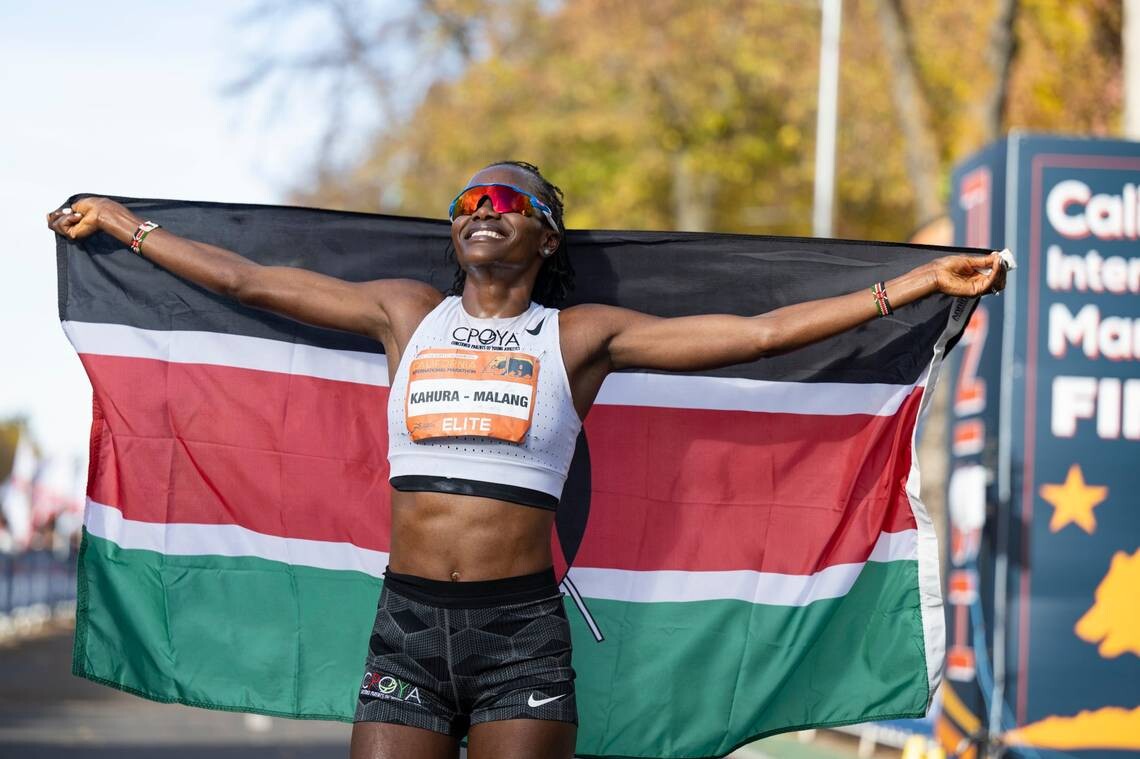
Albertson clocked in at 2:11:09, flirting with CIM course record territory; followed by Milton Rotich, of Duluth, Minnesota, at 2:13:04; and Charlie Sweeney, of Boulder, Colorado, at 2:13:41, in a near-photo finish for second and third. Kahura’s finish at 2:29 flat outpaced Austin, Texas’ Allie Kieffer’s 2:33:26 and Ava Nuttall, of Rochester, Minnesota, who finished third in 2:35:09.
The Kenyan runner’s 2:29 also beat her personal best of 2:30.14, posted in June at the Grandma’s Marathon in Duluth. Kahura’s time led a deep and fast women’s field in 2023 that featured 43 runners ahead of the 2:37 Olympic trial qualifying pace at the marathon’s halfway mark.
Kahura exulted in triumph at the finish, stretching her nation’s banner wide behind her. Albertson is among the country’s elite marathon runners. A cross-country and track standout at Arizona State University who ran seventh in the marathon at the 2020 Olympic Games in Tokyo, and set an indoor marathon world record in 2019, Albertson finished eighth at last year’s California International Marathon and was a near-miss second-place finisher in Sacramento in 2019.
Albertson lurked for miles as Christian Allen of Orem, Utah, and Amanuel Mesel, of Flagstaff, Arizona, dueled in tandem for the top spot. But Albertson made his move as the race pushed into Sacramento.
He overtook a fading Mesel for second at the 35K mark, then set his sights on the frontrunning Allen. By Mile 23, Albertson had overtaken Allen for a lead he would never relinquish.
by Darrell Smith
Login to leave a comment
California International Marathon
The California International Marathon (CIM) is a marathon organized by runners, for runners! CIM was founded in 1983 by the Sacramento Running Association (SRA), a 501(c)(3) non-profit organization. The SRA Board of Directors is comprised of runners with a combined total of 150+ years of service to the CIM. The same route SRA management created for the 1983 inaugural CIM...
more...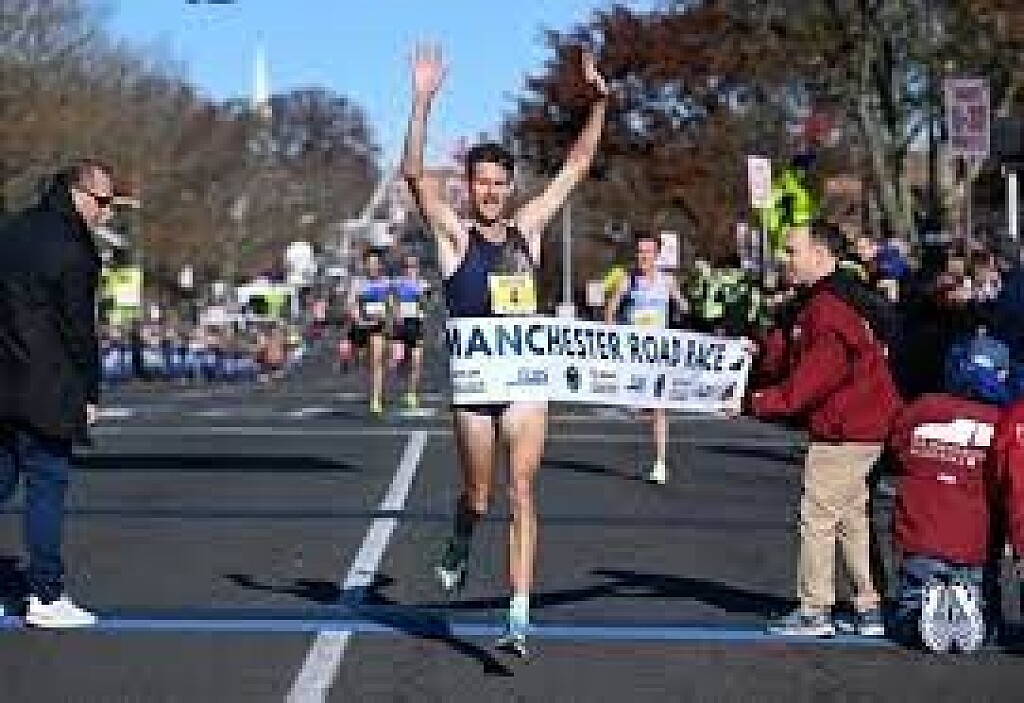
Morgan Beadlescomb, Weini Kelati win the Manchester Road Race
The Manchester Road Race men’s race has a new champion. Morgan Beadlescomb dethroned defending champion Connor Mantz at the line.
Mantz, who won the 2022 Manchester Road Race, came in second place.
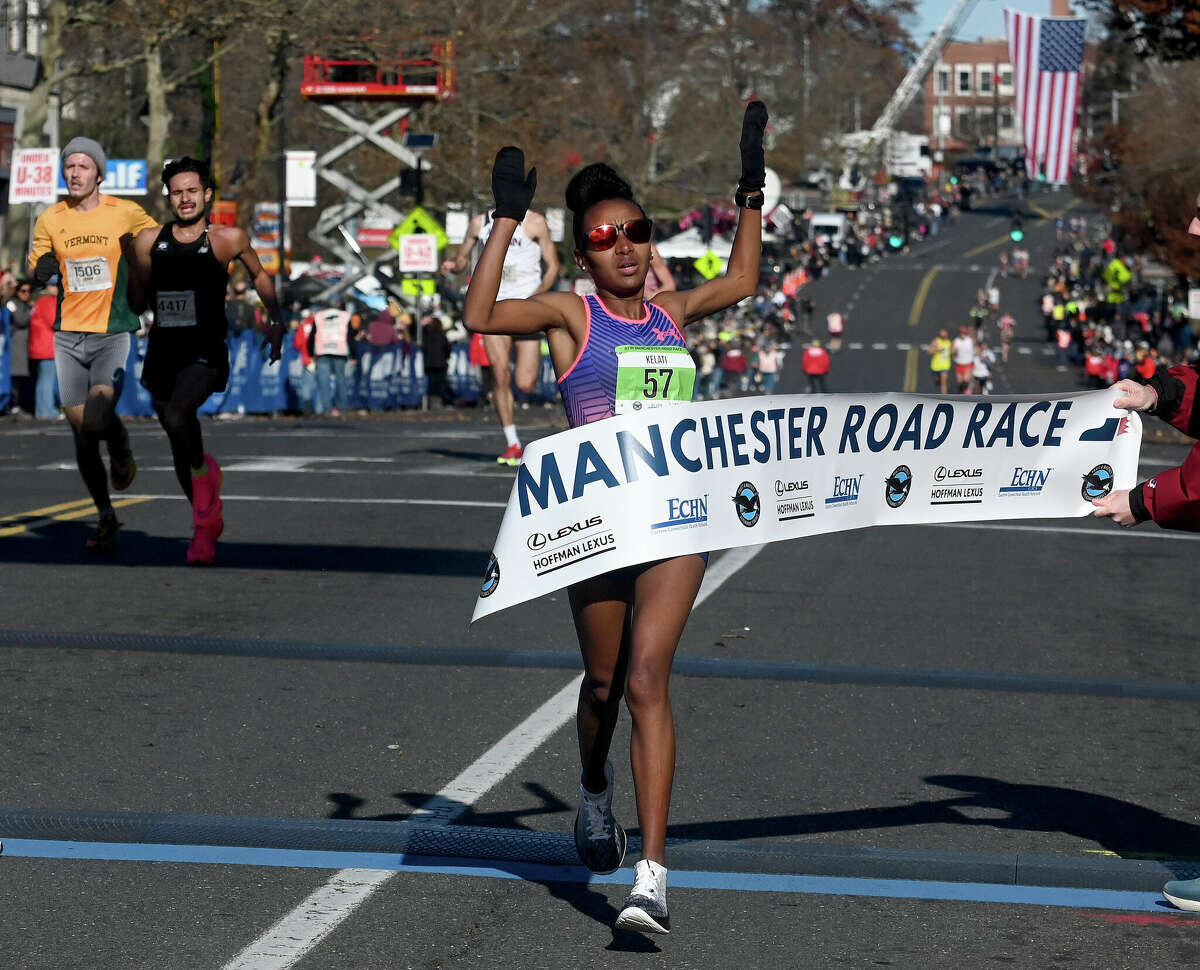
"The course was awesome. It's like a cross-country course on the road," Beadlescomb said after the race. "We've got the hills, it's a challenge. The wind was a little bit high today, but it was a great race."
Beadlescomb time on Thursday came in at 21:12, about 6 seconds from the record.
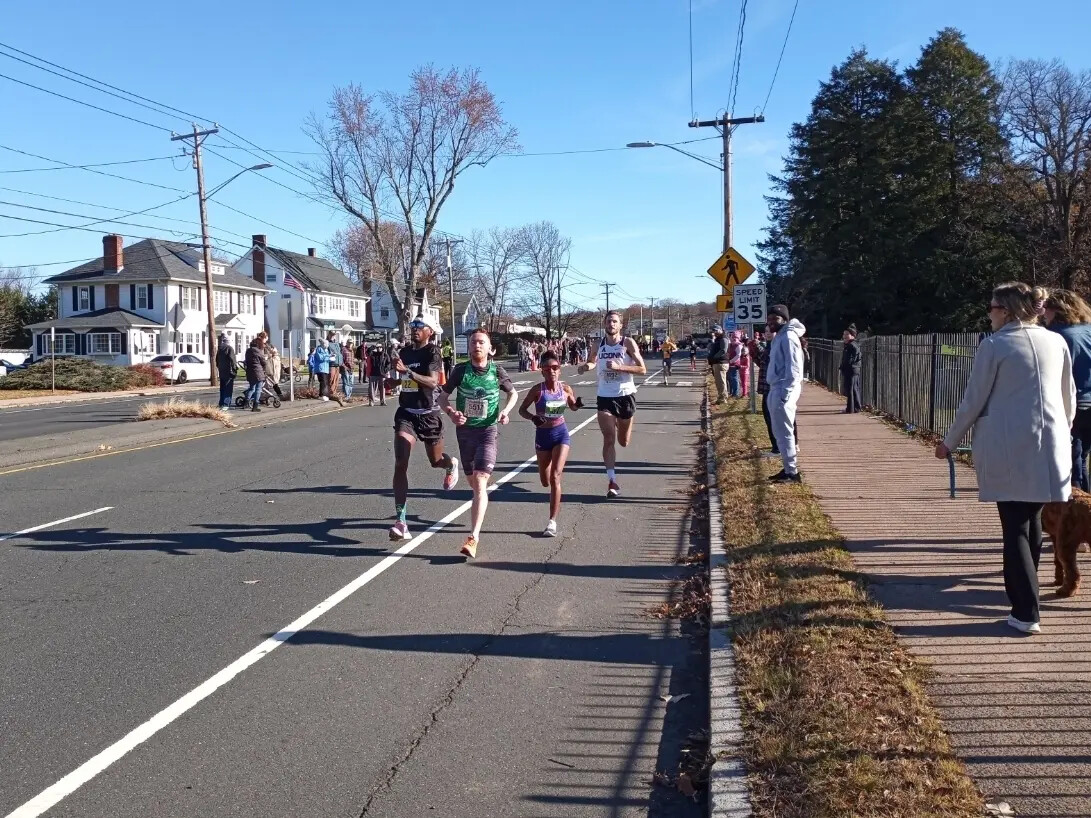
Before the race, Beadlescomb said he wanted to win after coming in second place behind Mantz by fewer than 1 second.
"I am already excited for next Thanksgiving. I love coming here," he said. "I came here last year. I had a great time. The energy is amazing."
In the women’s race, two-time defending champion Weini Kelati won her third consecutive Manchester Road Race, smoking the competition around her.
"This is amazing," Kelati said after the race. "To come back here is amazing."
Much like in her last two races, Kelati went out fast, pacing herself with the elite men’s competition and no other woman could match her pace. She said that as an aggressive racer, she enjoys that the men and women race at the same time because she can use it to her advantage.
"I took the opportunity to follow the guys and it worked," Kelati said.
Kelati won with a time of 23:21, beating her time from 2022. She still holds the record for the fastest course time of 22:55, which she set in 2021.
Annie Rodenfels, of Newton, Massachusetts, came in second place with a time of 23:59. Emily Durgin, from Flagstaff, Arizona, came in third with a time of 24:06.
The race within the race – the King and Queen of the Hill competition – was won by Mantz and Kelati, who won an extra $1,000 each.
by Lucia Suarez
Login to leave a comment
Manchester Road Race
The Manchester Road race is one of New England’s oldest and most popular road races. The 86th Manchester Road Race will be held on Thanksgiving Day. It starts and finishes on Main Street, in front of St. James Church. The Connecticut Sports Writers’ Alliance recently honored the Manchester Road Race. The CSWA, which is comprised of sports journalists and broadcasters...
more...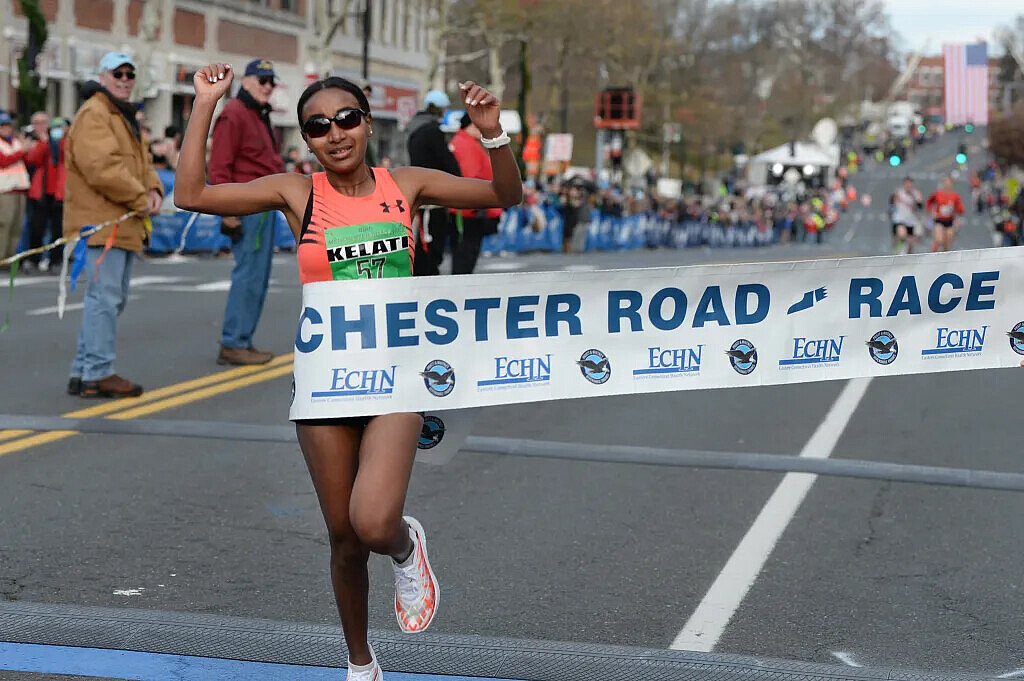
Record-Holder Weini Kelati looking for 3-peat at Manchester Road Race
Manchester Road Race women's course record-holder Weini Kelati has committed to defend her back-to-back titles this Thanksgiving.
The Manchester Road Race Committee announced today that Kelati's manager recently confirmed that the 26-year-old will be at the starting line when the 87th Manchester Road Race takes place on Thanksgiving Day.
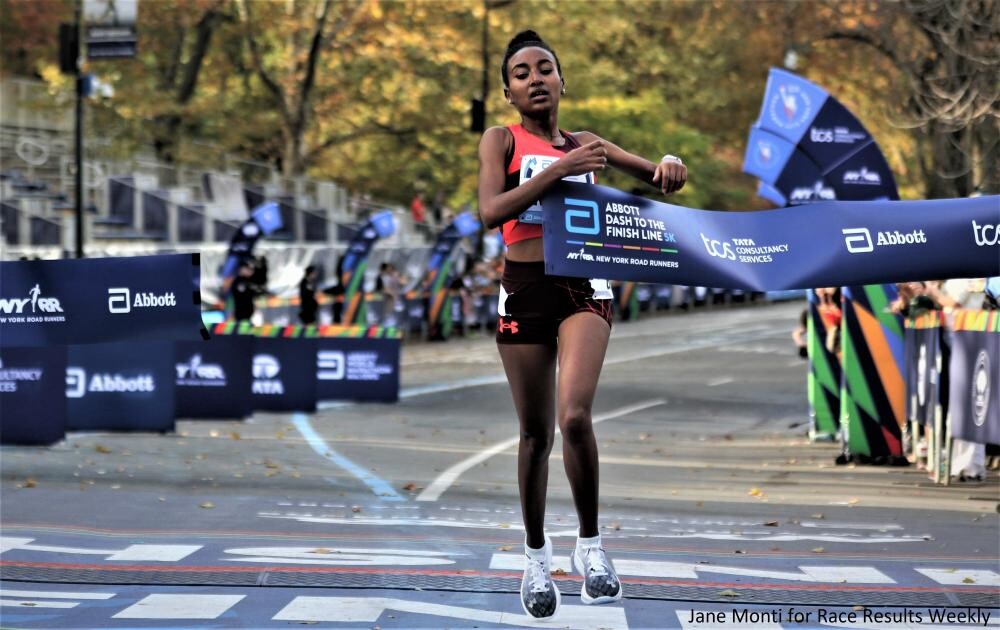
Kelati in 2021 won the women's championship in 22:55 while shredding more than a minute off the prior mark of 23:57 held by Buze Diriba. She ran with the men's leader pack for much of that race and finished in 18th place overall.
An 11-time All-American runner when she competed for the University of New Mexico, Kelati also won the MRR last year. Her time of 23:39 at the 2022 MRR rates as the second-fastest time run by a woman on the 4.748-mile Manchester course.
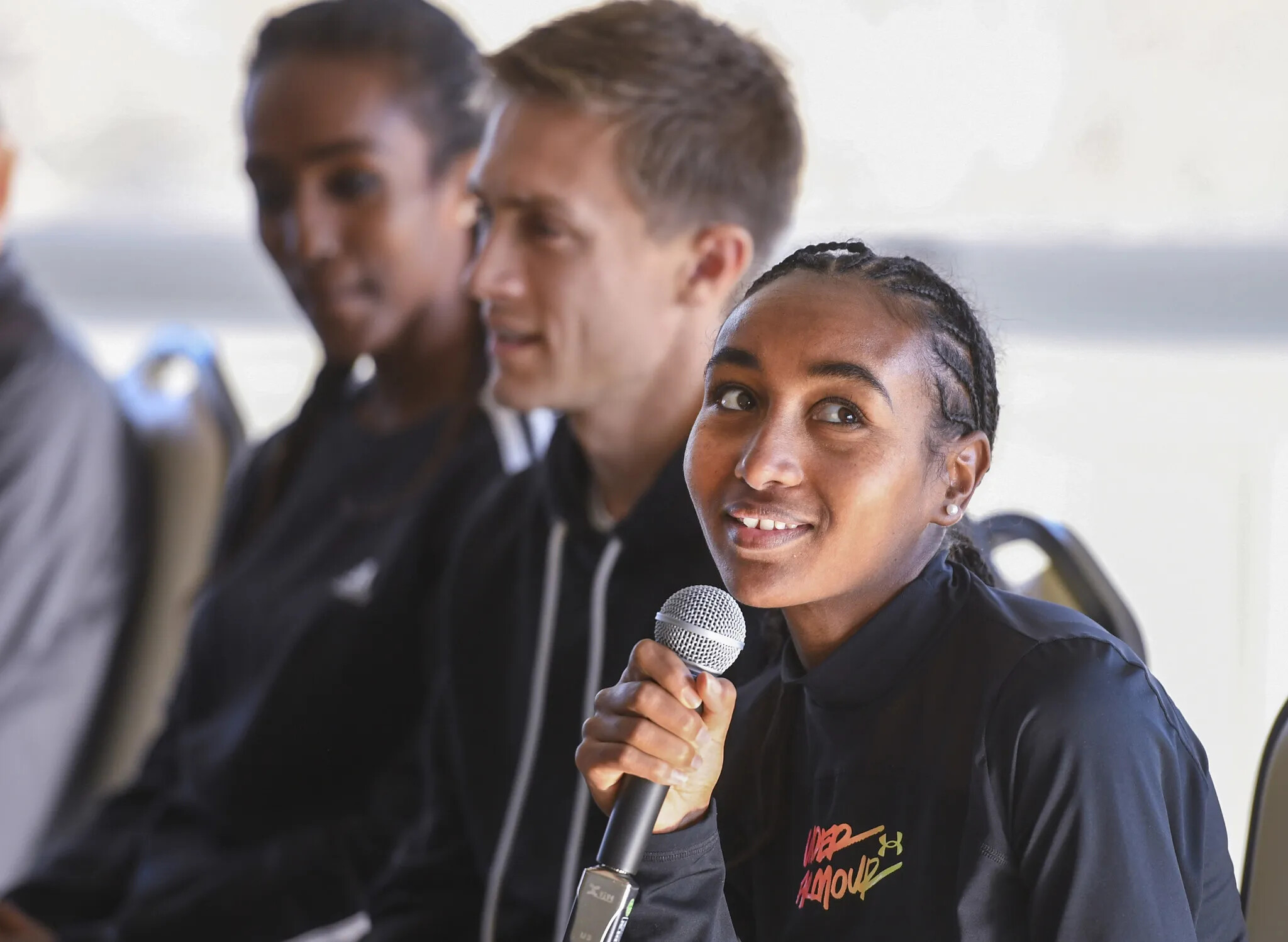
"Weini is an amazing athlete with exceptional grit, speed and endurance who has had two incredible performances at our road race," said Dr. Tris Carta, the president of the Manchester Road Race Committee. "We are very excited that she is coming back to Manchester for the third straight year."
Kelati was born in Eritrea and became a U.S. citizen in 2021. She now calls Flagstaff, Arizona, home. She was the NCAA Division I champion in cross country and the 10,000 meters while in college. Kelati won the 2023 USATF 10K women’s championship in September with a time of 31:57, and earlier this year she ran a personal best time of 31:04 for the 10,000 meters.
The 87th Manchester Road Race, which will take place at 10 a.m. on Thanksgiving Day (Nov. 23), has been named a 2023 World Athletic Label Event by World Athletics, the international governing body for the sport of track and field. It is one of only 238 races in the world, and 15 in the United States, to receive that designation, which recognizes an event’s commitment to anti-doping and clean sport.
The road race is run on a loop course through Manchester's central streets and starts and finishes on Main Street, in front of St. James Church.
by Chris Dehnel
Login to leave a comment
Manchester Road Race
The Manchester Road race is one of New England’s oldest and most popular road races. The 86th Manchester Road Race will be held on Thanksgiving Day. It starts and finishes on Main Street, in front of St. James Church. The Connecticut Sports Writers’ Alliance recently honored the Manchester Road Race. The CSWA, which is comprised of sports journalists and broadcasters...
more...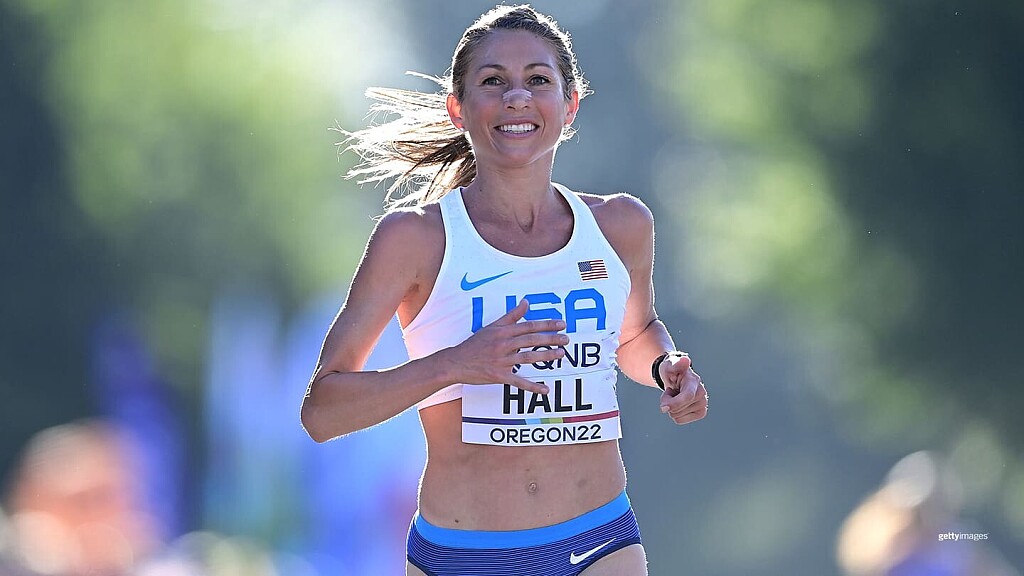
Elite women's marathoner Hall to run Manchester Road Race
Sara Hall, who was fifth in the World Marathon Championships last year, has entered this year's Manchester Road Race. This will be her first appearance in the Thanksgiving Day run.
Hall, 40, finished in 2:22:10 in the world event in Eugene, Oregon, and was the runner-up at the 2020 London Marathon in 2:22:01. Her personal-best for the 26.2-mile run 2:20:32, and 1:07:15.
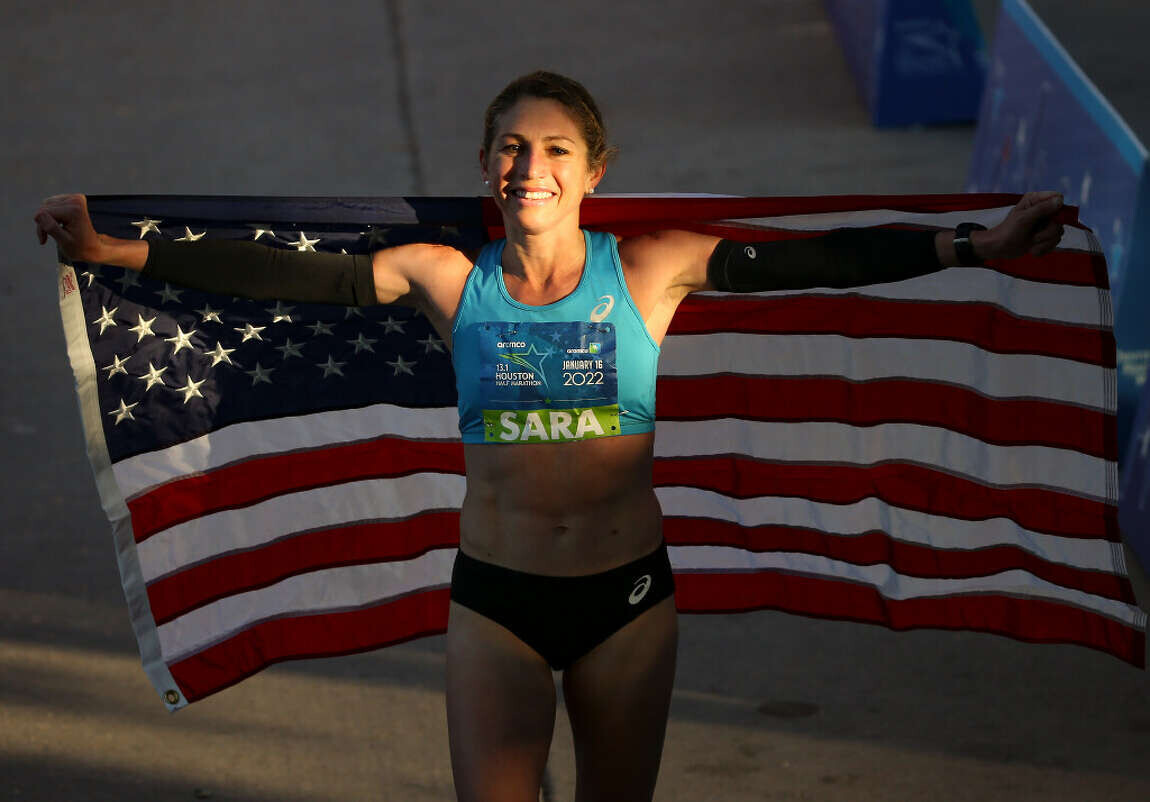
A seven-time All-American when she competed for Stanford, Hall ran the steeplechase before becoming a marathoner. She won the gold medal in the steeplechase at the 2011 Pan American Games in Mexico.
Hall is married to retired Olympic marathoner Ryan Hall. Ryan, who also competed for Stanford, set the United States records for the marathon and half marathon. In 2017, the couple adopted four young sisters from Ethiopia. The family resides in Flagstaff, Arizona.
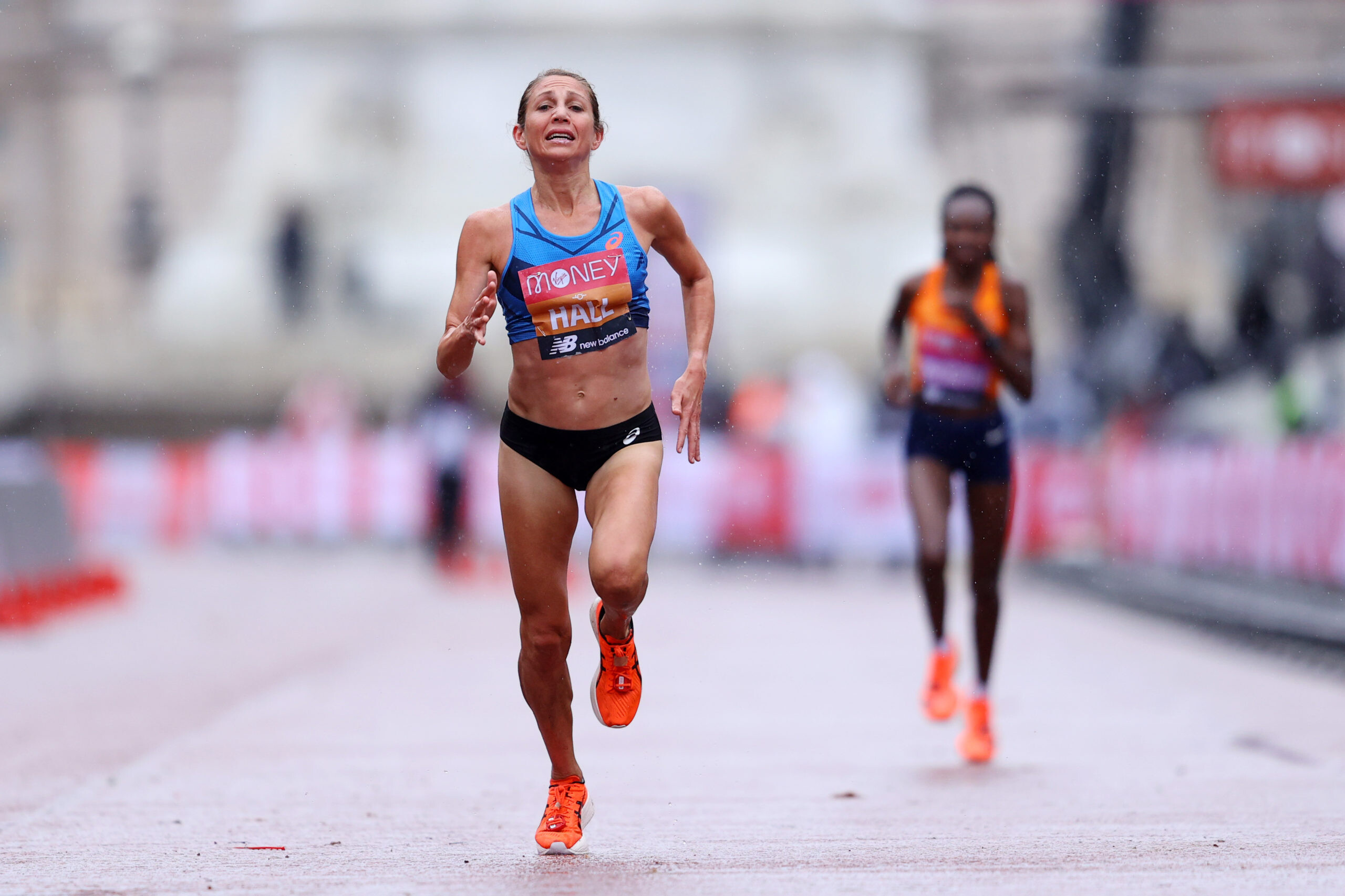
“Sara is a wonderful addition to this year’s race,” said Jim Harvey, the MRRs elite runner coordinator. “She is a very accomplished athlete and a great person.”
The 87th Manchester Road Race, which has been designated a World Athletics Label Event by World Athletics, starts at 10 a.m. on Thanksgiving Day Nov. 23. The 4.748-mile-long road race is run on a loop course through Manchester’s central district that starts and finishes on Main Street, in front of St. James Church.
Login to leave a comment
Manchester Road Race
The Manchester Road race is one of New England’s oldest and most popular road races. The 86th Manchester Road Race will be held on Thanksgiving Day. It starts and finishes on Main Street, in front of St. James Church. The Connecticut Sports Writers’ Alliance recently honored the Manchester Road Race. The CSWA, which is comprised of sports journalists and broadcasters...
more...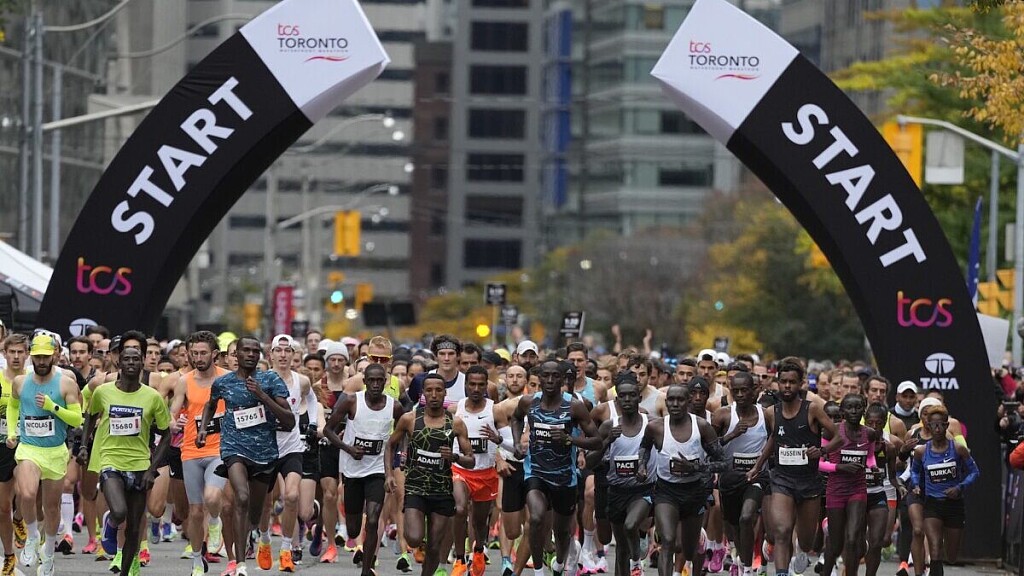
TCS Toronto Waterfront Marathon: elite women’s and men’s preview
For the first time in the 34-year history of the TCS Toronto Waterfront Marathon, the race has reached over 25,000 runners. Toronto has established itself as Canada’s premier marathon and has set a precedent in the global running community, with participants coming from 78 countries around the world for the marathon on Sunday, Oct. 15.
The elite field at the 2023 edition of the marathon looks significantly different from last year, and two new champions will be crowned on the men’s and women’s sides, as Ethiopia’s Yihunilign Adane and Kenya’s Antonina Kwamboi will not be returning. The 2023 elite field features up-and-coming stars, along with several American women aiming to achieve the Olympic standard of 2:26:50 ahead of the upcoming U.S. Olympic Trials in February.
The race will also determine two new Canadian marathon champions, with compelling storylines on both the men’s and women’s sides.
Women’s race
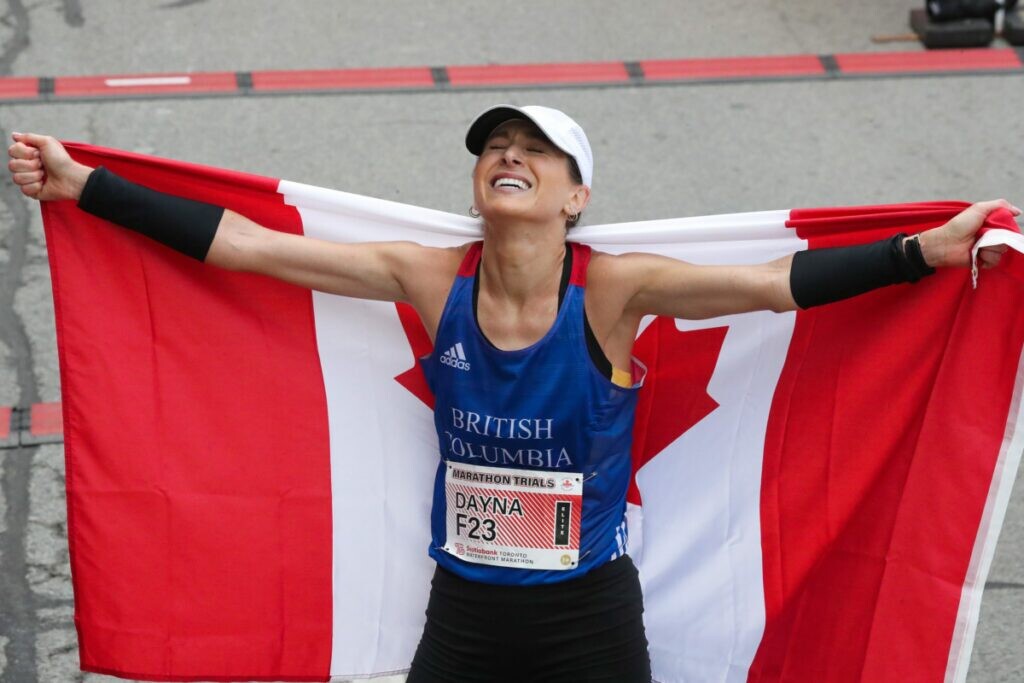
Will we see an American winner?
It has been 22 years since an American woman last won the TCS Toronto Waterfront Marathon (Leslie Gold in 2001) but in this year’s field, two American elites could possibly end the drought. One of them, Emily Durgin, a road racing specialist based out of Flagstaff, Ariz. came to Toronto looking for redemption after a less-than-ideal marathon debut in NYC last year.
Durgin said during Friday’s elite press conference that she felt the pressure to hit times and perform during her debut and ended up dropping out of the race before 30 km. “I learned a lot from New York and my build for Toronto has been different,” said Durgin. “As for a goal time, I want to run in the low 2:20s and be competitive.” The 29-year-old marathoner hopes to use Toronto as a stepping stone for the U.S. Olympic Marathon Trials in February 2024 in Orlando. Durgin was able to qualify for the trials from her time at the 2022 Houston Half Marathon where she finished 6th overall, clocking the seventh-fastest half-marathon in U.S. history with 67:54. “I came to Toronto to be competitive and contend for the the podium, as that’s what it will take to qualify at trials come February,” she said.
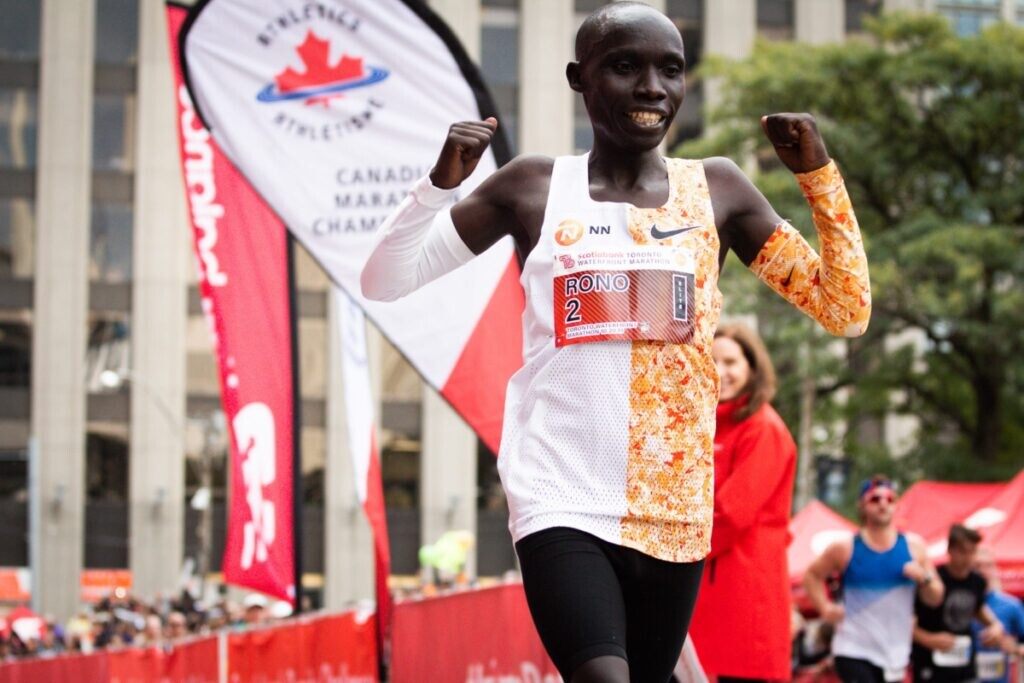
Another U.S. name in the women’s elite field to watch is Molly Grabill, who is running her sixth career marathon in Toronto on Sunday. Grabill told the media that she has similar plans to her compatriot Durgin and hopes to bounce back after, in her words, falling short of her goals in her last marathon in Hamburg earlier this year. Although Grabill ran the second-fastest marathon time of her career in Hamburg, she said she was disappointed as she took a swing and missed, struggling in the second half. “The goal in Toronto is to control the second half of the race better and gain strong momentum heading into the U.S. Olympic Marathon Trials,” said Grabill. The 31-year-old from Boulder, Colo., is coming off a top-15 finish in 69:53 at the inaugural World Athletics Road Running Championships in Riga, Latvia, earlier this month, which she says has given her a lot of confidence for Sunday.
Eyes on the course record?
Outside of the American duo, two other international athletes to watch are the Ethiopian duo of Afera Godfay and 2023 Ottawa Marathon champion Waganesh Mekasha. For Godfay, Toronto is her first marathon in three years after giving birth to her daughter. Her last marathon came in 2020 when she ran 2:26:43 to place third overall at the Xiamen Marathon in China. In her first two races back since becoming a mother, Godfay has run respectable half marathon times of 70 and 71 minutes but has not yet returned to her previous form. She said at Friday’s press conference that she hopes to come through the half mark in 1:11 and feels well-prepared for her marathon return. A glimpse of hope for Godfay is that she currently trains alongside the new women’s world record holder Tigist Assefa in Ethiopia. So, who knows what she is capable of?
The favourite in the women’s race is Mekasha, who is coming off a win in the scorching heat at the 2023 Ottawa Marathon in May. Mekasha is targeting the Canadian all-comers’ women’s marathon record on Sunday of 2:22:16, set four years ago by Kenya’s Magdalyne Masai at this race. Mekasha holds a personal best of 2:22:45 from the 2019 Dubai Marathon and said that she expects around a similar time on Sunday. “If the pacemaker runs a good pace, I hope to break the course record,” says Mekasha.
The Canadian contingent
Two of the top three Canadians from last year’s race have returned to the 2023 field, with Malindi Elmore, the reigning Canadian marathon champion, opting to run Berlin, where she clocked the second-fastest time in Canadian history (2:23:30). Returning are second and third place Canadian finishers Dayna Pidhoresky and Toronto’s own Sasha Gollish. Pidhoresky had an iconic moment here in 2019, when she raced just under the Olympic standard at the Canadian trials, winning in 2:29:03–qualifying her for the marathon at the 2020 Tokyo Olympics. Although the Olympic marathon didn’t go as planned for Pidhoresky, she was able to bounce back at this event last year to place seventh overall (second Canadian) in 2:30:58.
“Growing up in Windsor, Ont., I came to Toronto for so many races,” said Pidhoresky on tackling on her fourth Toronto Waterfront Marathon. “I feel I know the course very well, which is helpful in a marathon, and it’s great to have a high-quality field that’s close to home.” Pidhoresky told the media that this build has not been smooth but she is still confident she can run a personal best Sunday. “This course is advantageous, and I need to be smart and just run my race,” she said.
It is a similar story for Gollish, who is running in her second consecutive TCS Toronto Waterfront Marathon, less than eight weeks after her last marathon at the 2023 World Championships in August. Gollish told Canadian Running at the press conference that she wants to go into this race with a similar mindset that she had in Budapest. “It feels like a privilege to be here, and I am not putting any pressure of a personal best on myself,” says Gollish. “For the longest time, I avoided this race because I felt there would be pressure to perform, but why not run something in your backyard fuelled by a community that has done so much for me?” Last year, Gollish surprised herself with a personal best time of 2:31:40 after a short marathon build. Could she do the same on Sunday?
A few other Canadian marathoners to watch are Emily Setlack, Toronto’s Liza Howard and Kim Krezonoski of Thunder Bay, Ont. It has been four years since Setlack has last touched the marathon, but with a personal best of 2:29:48 from the 2019 edition of this race, her potential to finish as the top Canadian should not be ignored. Setlack has had a quiet 2023 season but has strung together solid performances, winning Toronto’s historic Sporting Life 10K and placing eighth overall at the Canadian 10K Championships in May.
Howard has a personal best of 2:35:29 (Chicago 2022) and was the top Canadian finisher at the 2023 Boston Marathon (37th overall) in cold, wet and windy conditions. Krezonoski moved to Toronto within the last year and has been studying the course thoroughly in the hope of crushing her marathon personal best come Sunday. She ran her personal best of 2:37 at the California International Marathon last year but has dropped her half-marathon PB by nearly four minutes since. The spots on the domestic podium are up for grabs, and each of these three women could break through.
Men’s race
The rise of Elvis
The absence of Adane opens the door for several East African men hoping to establish their marathon careers in Toronto. One of these men is Kenya’s Elvis Kipchoge, who may already lay claim to the title of the best running name. This Kipchoge is a little less well-known than the former world record holder but boasts a faster half marathon personal best of 59:15, which earned him third place at the 2022 Barcelona Half Marathon. However, this Kipchoge has not had much luck in the marathon. At the young age of 27, he ran 2:10:21 at the Vienna Marathon earlier this year. He hopes to turn things around on a fast and flat Toronto course. Kipchoge has ties to the race, training alongside women’s course record holder Magdalyne Masai in Iten, Kenya.
While there is no relation between Elvis and Eliud Kipchoge, besides sharing the same last name and initials, Ethiopian athlete Adugna Bikila hopes to follow in the footsteps of his uncle, Worku Bikila. Worku was a world-class 5,000m runner who finished sixth in the 1992 Olympic 5,000m final in Barcelona and took fourth place at the World Championships the following year. Bikila enters Toronto with the fastest time in the field, holding a personal best of 2:05:52 from the 2022 Seville Marathon, where he finished fourth.
All the East African men will be aiming to break the Canadian all-comers record and course record of 2:05:00, held by Kenya’s Philemon Rono, set in 2019. The weather forecast for Sunday indicates cool and favourable conditions for both the men’s and women’s fields, which should make both course records vulnerable.
Who’s next for Canada?
A new men’s Canadian champion will be crowned Sunday, and for the first time since 2016, their last name will not be Levins or Hofbauer. The 2023 men’s field is full of up-and-coming Canadian talent on the precipice of breaking into the elite scene. Mississauga’s Sergio Raez Villanueva returns to Toronto after a stunning 2:18:04 debut last year, which earned him top-five Canadian honours. Challenging Raez Villanueva is Ottawa’s Blair Morgan, who was the second Canadian at the hot and humid Ottawa Marathon in May, running 2:19:50. Morgan ran his personal best of 2:18:29 at the 2018 Toronto Waterfront Marathon but is looking for a sub-2:18 result this time around.
Challenging Raez Villanueva and Morgan are debutants Thomas Broatch of Vancouver and 4:01 miler Kyle Grieve. Broatch is coming off a win at the Vancouver Eastside 10K where he beat three-time Toronto champion Trevor Hofbauer. “Winning the Eastside 10K was a huge confidence booster for me,” says Broatch. “Whenever you take the start line the objective is to win and run fast.” The 24-year-old software engineer told Canadian Running that he has ambitious goals to run under 2:15 on Sunday and that his marathon build has gone near perfect.
For Grieve, who grew up and still resides in Toronto, this marathon has always been on his bucket list. “I’ve been wanting to try a marathon for a few years and have just kept putting it off,” says Grieve, who got married in the summer. “Canada Running Series is a big reason I am still competing today, so it was never a question of where I wanted to run my first marathon.” His goal is to be competitive against a strong Canadian field and let the time come along with it.
How to watch?
Marathon fans from around the world will have the opportunity to watch the 2023 TCS Toronto Waterfront Marathon live on Sunday, Oct. 15, 2023, beginning at 8:00 a.m. ET with a pre-race introduction followed by the introduction of the elite field. The gun for the men’s and women’s elite field fires at 8:45 a.m. ET. All race action can be followed on torontowaterfrontmarathon.com or CBCsports.ca /CBC Gem or AthleticsCanada.tv.
by Marley Dickinson
Login to leave a comment
TCS Toronto Waterfront Marathon
The Scotiabank Toronto Waterfront Marathon, Half-Marathon & 5k Run / Walk is organized by Canada Running Series Inc., organizers of the Canada Running Series, "A selection of Canada's best runs!" Canada Running Series annually organizes eight events in Montreal, Toronto and Vancouver that vary in distance from the 5k to the marathon. The Scotiabank Toronto Waterfront Marathon and Half-Marathon are...
more...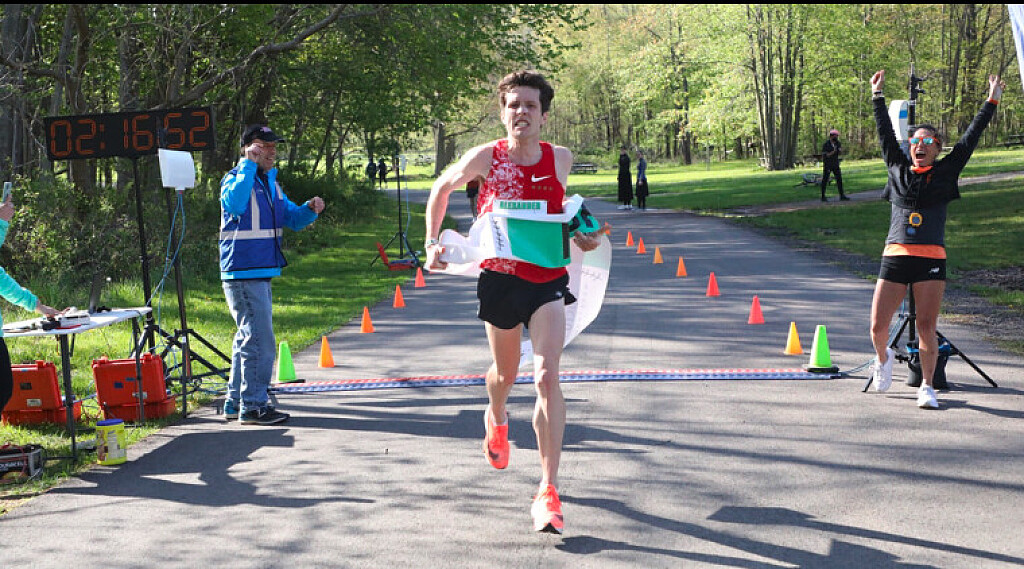
Want to Qualify for the U.S. Olympic Trials? This Race Is Specifically Built for You.
For elite amateur marathoners, qualifying for the Olympic Trials is the ultimate life goal. Bakline’s McKirdy Micro Marathon removes the challenges of running a fast 26.2.
When it comes to trying to run a fast marathon, Zacch Widner knows that bottle service isn’t a luxury but a necessity. No, not tableside bottle service at a nightclub, but the ability for marathon runners to easily identify and grab their own hydration bottles off of a table every 5K or so on course while running at an extremely fast pace.
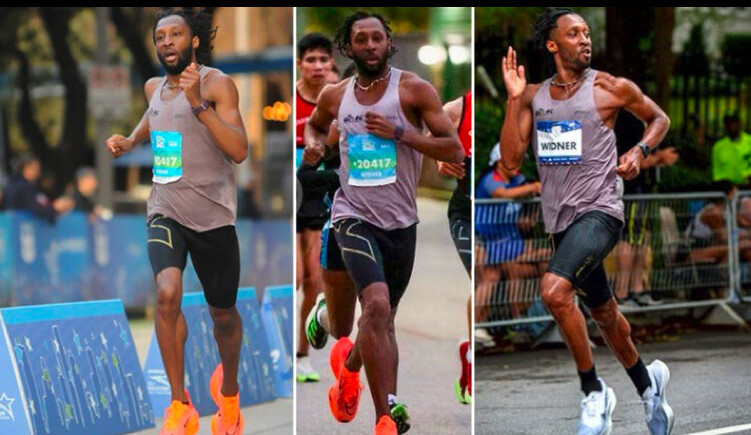
At the Berlin Marathon on September 23, the 32-year-old aspiring elite runner from Lansing, Michigan, was on the verge of running the race of his life. But because his bottles weren’t readily available at each aid station, he wound up grabbing only one of his eight bottles and suffered the consequences.
Although running the race without optimal calorie and hydration intake led to frequent cramping, he still finished in 2:20:02. That’s the second-best time of his career, but still two minutes short of his goal of breaking the U.S. Olympic Trials men’s qualifying standard of 2:18:00.
Widner is one of dozens of American runners—most of whom work nine-to-five jobs—still hoping to earn the standard (or 2:37:00 for women) by the December 5 deadline, in order to qualify for the U.S. Olympic Trials Marathon on February 3 in Orlando.
For Widner, it’s much more than a personal goal. It’s a commitment to a friend and former teammate. “It was a bummer,” says Widner, who works full-time as an IT analyst for the state of Michigan. “I know I’m capable of running faster. I didn’t capitalize on taking fluids, so when it came to running all out, I just couldn’t do it. I think the stress of it is actually what caused the cramps, because every time I missed a bottle, I just stressed out more…just mentally started destroying me.”
Three weeks later, Widner is ready to take another shot at the OTQ standard, this time at Bakline’s McKirdy Micro Marathon on October 14—a unique elite-only race that will be held about 30 miles north of New York City. Set on a nine-loop course at Rockland Lake State Park, the no-frills race will provide bottle service to each of the 180 entrants who met a stout qualifying standard (2:25 for men, 2:45 for women) to register.
“It’s got everything you need,” he says. “You have a lot of tough, fast runners. You have pacers and a flat course with a well-organized system for everyone’s fluids. I’m ready to go.”
In 2020, when running races were shut down because of COVID-19, athlete agent Josh Cox and Ben Rosario, founder and head coach of the Hoka NAZ Elite team, developed an elite-only marathon in Arizona that gave about 100 athletes from around the world the chance to run a highly competitive race on a USATF-certified course amid the still-pervasive coronavirus.
Known as The Marathon Project, the race was held in Chandler, Arizona, on December 20, 2020. Seven U.S. men ran faster than 2:10, while 12 American women finished under 2:30—the first time that’s ever happened. Martin Hehir, a fourth-year medical student who was coming off weeks treating COVID-19 patients, won the race in a personal best 2:08:59, while Sara Hall was the women’s winner in a personal best of 2:20:32, at the time the second-fastest marathon ever run by an American woman.
Several runners who trained under Flagstaff, Arizona coach James McKirdy and his online platform McKirdy Trained were in the race, and they performed well. He was so impressed by the concept that he quickly went about replicating it by hosting small regional marathons around the U.S. for a wider range of runners in early 2021.
At one of the McKirdy Micro Marathon races held at Rockland State Park, Denver-based runner Alex Burks won the race and lowered his personal best from 2:23:47 to 2:16:52. Dozens more earned personal bests and Boston qualifying (BQ) times.
“We really liked that idea and thought we could develop that concept for the masses, and they went off without a hitch,” McKirdy says. “The athletes had a great time and many runners—I think close to 150—earned a BQ from our races. So when the U.S. Olympic Trials qualifying standards were released two years ago, we felt we had the chops and experience to provide a marathon that would provide full on-course support for runners trying to qualify.”
Bakline’s McKirdy Micro Marathon will be held on a nine-lap, 26.2-mile course that will start with one 2.63-mile partial lap, followed by eight successive laps on a 2.945-mile circuit. Runners can have up to eight hydration bottles that will be set up on a series of well-marked, eight-foot tables 20 feet apart.
While the majority of runners will be aiming for the U.S. Olympic Trials qualifying standards, others are shooting for faster times. McKirdy and co-organizer Heather Knight Pech have enlisted pacers to guide runners to three different goal times for men (2:10:00, 2:11:30, and 2:18:00) and two for women (2:29:30 and 2:37:00).
The men’s field is headlined by Tsegay Tumay, an Eritrean runner with a 2:09:07 personal best who trains in Flagstaff under McKirdy. Tiidrek Nurme is an Estonian runner who is coming off a 31st-place, 2:15:42 at the World Athletics Championships on August 27, in Budapest. American runner Ben Blankenship, who finished eighth in the 2016 Olympic 1,500-meter finals in Rio de Janeiro, is making his marathon debut. Another OTQ hopeful is Hosava Kretzmann, a 29-year-old member of the Hopi Tribe from Flagstaff, Arizona, who finished sixth in his debut at the Los Angeles Marathon earlier this year in 2:19:58.
Among the runners who should be at the front of the women’s race is newly signed Nike athlete Calli Thackery, a British runner who just placed seventh in the half marathon at World Athletics Road Running Championships with a 1:08:56 personal best. American Makenna Myler has a 2:40:45 personal best, but is shooting for the U.S. Olympic Trials Marathon qualifying standard just seven months after giving birth to her son in mid-March. (In 2021, she placed 14th in 10,000 meters on the track in the U.S. Olympic Trials seven months after giving birth to her daughter.) She had originally registered and was onsite for the October 1 Twin Cities Marathon in Minneapolis, but that race was canceled because of extreme heat.
Other runners include Monica and Isabel Hebner, identical twins who most recently competed for the University of Texas, who will be making their marathon debuts with hopes of running in the 2:34-2:35 range, and Maura Lemon, a mother of three from Dayton, Ohio, who owns a 2:42:57 personal best but is aiming for the 2:37 OTQ standard.
Many U.S. runners on the cusp of the OTQ times ran the Chicago Marathon on October 8, while others are waiting until the California International (CIM) Marathon on December 5.
What the McKirdy Micro Marathon aims to do is eliminate the challenges that runners face at other races—difficult travel, congested race expos, crowded race courses, and, perhaps most importantly, a lack of bottle support on the course. Plus, it offers a spectator friendly circuit where family, friends, or coaches can cheer for runners on every loop.
“This gives them that chance to run fast,” Knight Pech says. “There’s still a lot of runners out there—a lot of women and a lot of men—who are sitting on the cusp of the qualifying standards. And they should have the opportunity to be able to swing large and take a moonshot. We believe this race gives them a real chance to get it done here in a way that I don’t think other races offer them.”
While the top three men’s and women’s finishers in the U.S. Olympic Trials Marathon will represent the U.S. at the Paris Olympics, just getting to the Olympic Trials is a lifetime goal for many runners. It’s the deepest and most competitive domestic marathon in the U.S., but it only happens every four years. While a tiny portion of the qualifiers are sponsored professional athletes, most of the runners have already moved on to full-time jobs.
For Widner, there is more at stake than just running a fast time. He’s forever running to honor Jeremiah Hargett, a former teammate at Oakland Community College in suburban Detroit who dealt with ongoing mental challenges. One day back in 2011, Hargett called Widner and told him how much he believed in him as a runner and as a friend, and how they’d both eventually make it to the U.S. Olympic Trials. Sadly, Hargett took his own life the very next day. Widner has more or less dedicated every race to Hargett since then.
Although his best time in the 1,500-meter run (3:53.90) fell well short of the Olympic Trials qualifying standard on the track, Widner hasn’t given up his pursuit for Hargett. Amid the rigors of working full-time for the past eight years, he’s continued to improve as a long-distance runner.
Despite what he calls a disastrous marathon debut at the CIM in 2018—where he went out way too fast and wound up struggling to finish in 2:45:39—he’s still chasing that goal. In 2022, he had a breakthrough race at Grandma’s Marathon in Duluth, Minnesota, lowering his personal best to 2:19:54. In January, he lowered his best time in the half marathon to 1:05:52 in January, but that was still nearly three minutes off the half-marathon OTQ of 1:03:00.
He’s continued to add mileage—he’s averaged about 94 miles per week this year—executed better workouts, and improved his fueling strategy, especially since McKirdy started coaching him in March. Now he’s on the cusp of reaching that magical qualifying mark once again.
But it’s as much for Hargett as it is for him.
“That’s the reason I keep running,” Widner says. “It’s the closest thing to my heart. Every time I run, I think about him and his family. When that happened, mentally, it changed me. After that, I bounced up and started running much better.”
“Running taught me how to be patient, and it is teaching me that life is the exact same way,” Widner adds. “It’s all about being patient, and when things go wrong or things seem to not go the way you were expecting, to just stay relaxed and understand that it could change for the better. I’ve been able to use that for everything in life—all my connections, and then have that thought in my mind to make the Olympic Trials, just like he agreed that we would do together.”
by Outside Online
Login to leave a comment
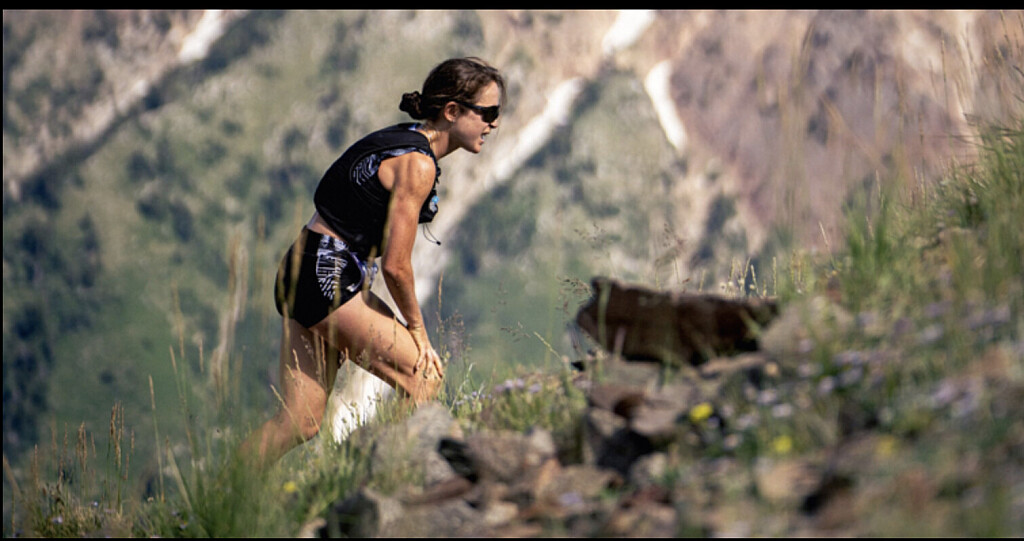
Molly Seidel Stunned the World (and Herself) with Olympic Bronze in Tokyo. Then Life Went Sideways.
She stunned the world (and herself) with Olympic bronze in Tokyo. Then life went sideways. How America’s unexpected marathon phenom is getting her body—and brain—back on track.
On a clear December night in 2019, Molly Seidel was at a rooftop holiday party in Boston, wearing a black velvet dress, doing what a lot of 25-year-olds do: passing a joint between friends, wondering what she was doing with her life.
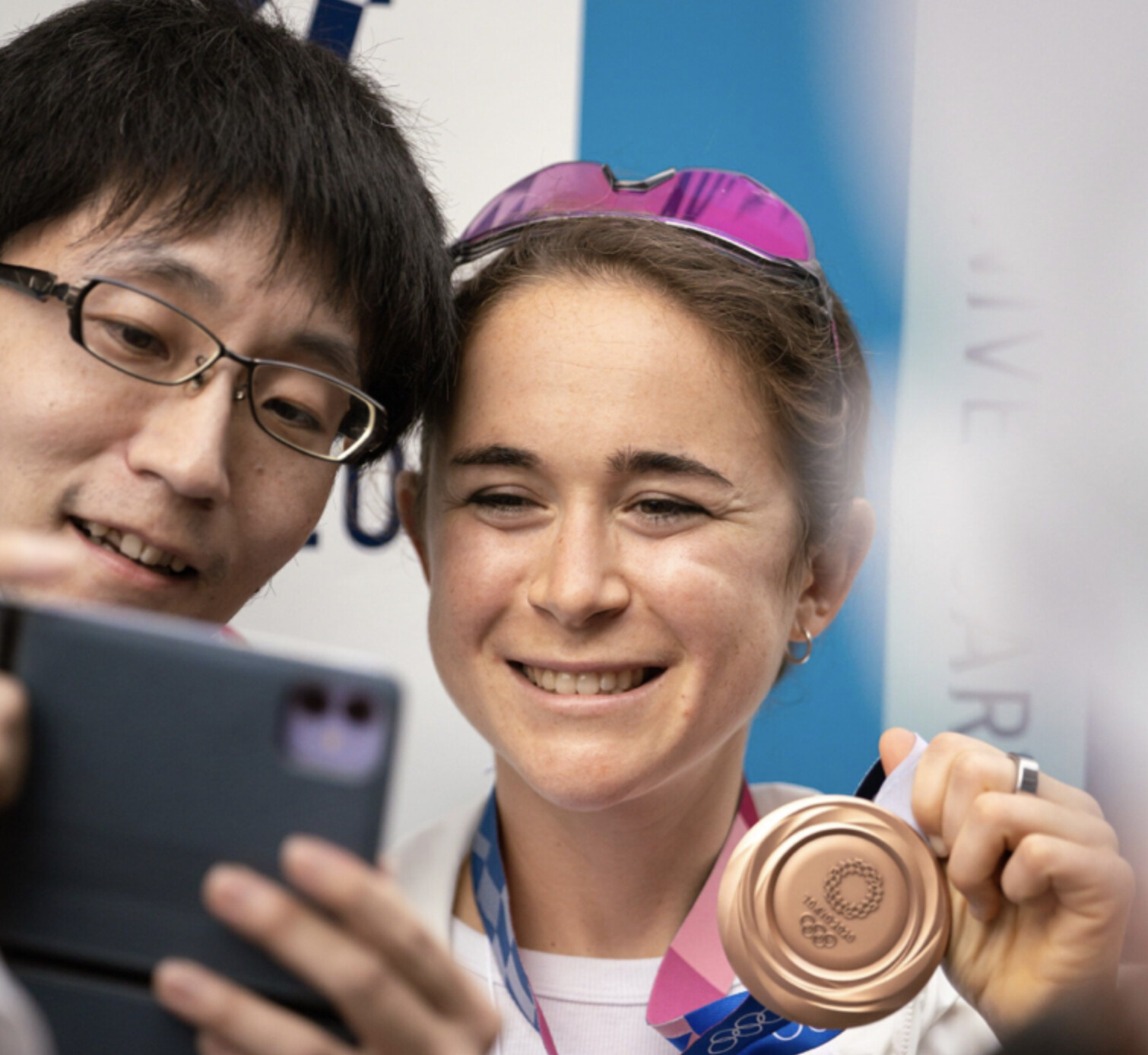
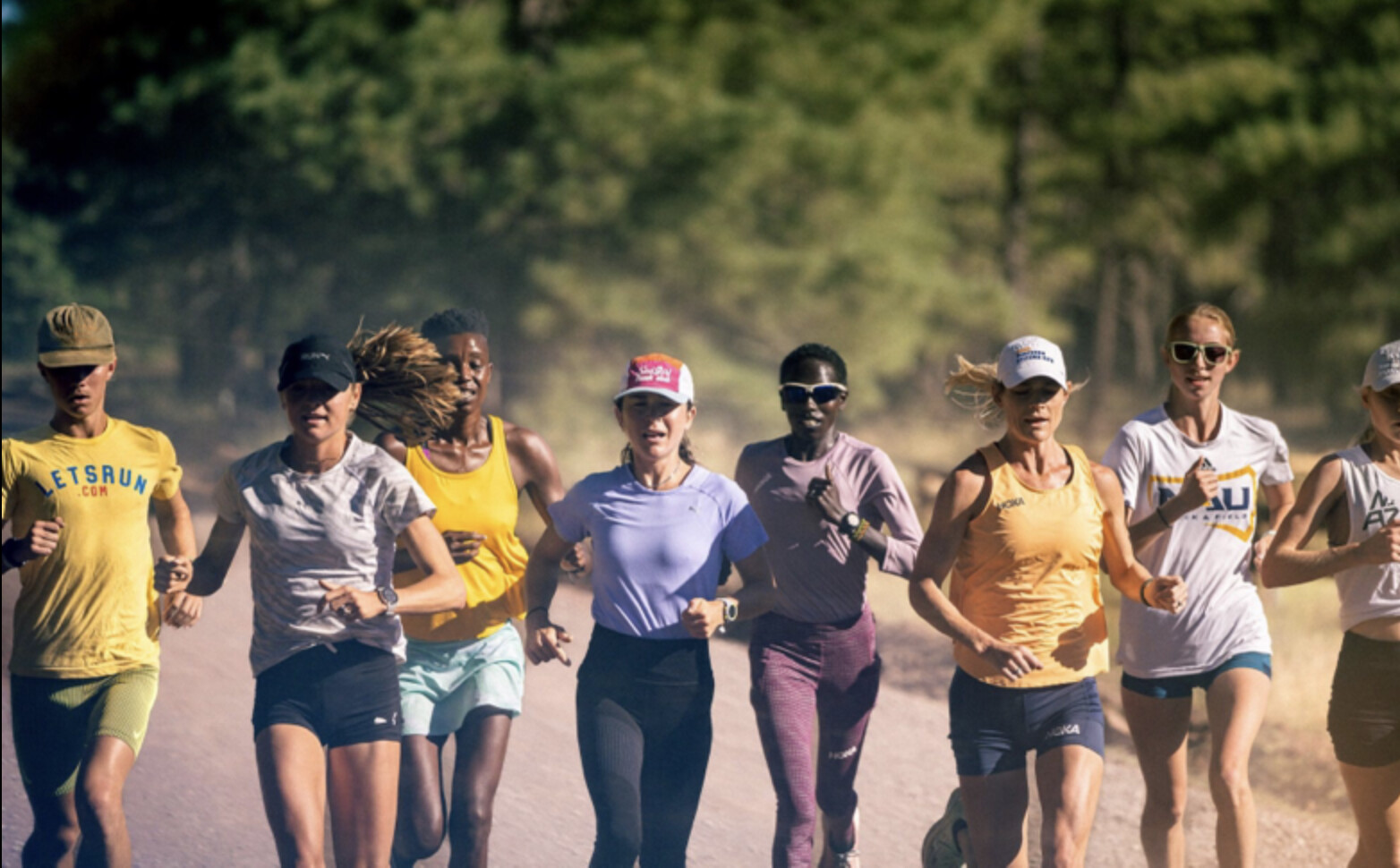
“You should run the Olympic Trials,” her sister, Izzy, said, as smoke swirled in the chilly air atop The Trackhouse, a retail shop and community hub on Newbury Street operated by the running brand Tracksmith. “That would be hilarious if you did that as your first marathon.”
Molly, an elite 10K racer who’d spent much of 2019 injured, looked out at the city lights, and laughed. Why the hell not? She’d just qualified for the trials, winning the San Antonio Half with a time of 1:10:27. (“The shock of the century,” as she’d put it.) True, 13.1 miles wasn’t 26.2—but running a marathon was something to do. If only because she never had before.
A four-time NCAA track and cross-country champion at The University of Notre Dame in Indiana, Molly had moved to Boston in 2017, where she’d worked three jobs to supplement her fourth: running for Saucony’s Freedom Track Club. The $34,000 a year that Saucony paid her (pre-tax, sans medical) didn’t go far in one of America’s most expensive cities. Chasing kids around as a babysitter, driving around as an Instacart shopper, and standing around eight hours a day as a barista—when you’re running 20 miles a day—wasn’t ideal. But whatever, she had compression socks. And she was downing free coffee and paying rent, flying to Flagstaff, Arizona, every so often for altitude camps, and having a good time. Doing what she loved. The only thing she’s ever wanted to do since she was a freckly fifth-grader in small-town Wisconsin clocking a six-minute mile in gym class.
“I was hustling, and I loved it. It was such a fun, cool time of my life,” she says, summarizing her 20s. Staring into Molly’s steely brown eyes, listening to her speak with such clarity and conviction about her struggles since, it’s easy to forget: She is still only 29.
After Molly had hip surgery on her birthday in July 2018, her doctors gave her a 50/50 chance of running professionally again. By summer 2019, she’d parted ways with FTC, which left her sobbing on the banks of the Charles River, getting eaten alive by mosquitoes and uncertainty. Her biggest achievement lately had been being named #2 Top Instacart Shopper (in Flagstaff; Boston was big-time).
The day after that rooftop party, Molly asked her friend and former FTC teammate Jon Green, who she’d newly anointed as her coach: “Think I should run the marathon trials?” Sure, he shrugged. Nothing to lose. Maybe it’d help her train for the 10K, her best shot—they both thought—at making a U.S. Olympic team.
“I’m going to get my ass kicked six ways to Sunday!” she told the host of the podcast Running On Om six weeks before the trials in Atlanta.
Instead, on February 29, 2020, she kicked some herself. Pushing past 448 of the fastest, most-experienced women marathoners in the country, coming in second with a 2:27:31, earning more in prize money ($60,000) than she had in two years of racing—and a spot on the U.S. trio for the 2020 Tokyo Olympics, along with Kenyan-born superstars Aliphine Tuliamuk and Sally Kipyego. “I don’t know what’s happening right now!” Molly kept saying into TV cameras, wrapped in an American flag, as stunned as a lottery winner.
Saucony who? Puma came calling. Along with something Molly hadn’t anticipated: the spotlight. An onslaught of social media followers. And two weeks later, a global pandemic and lockdown—and all the anxiety and isolation that came with it. She was drowning, and she hadn’t even landed in Tokyo yet.
The 2020 Olympics, as we all know, were postponed to 2021. An emotional burden but a physical boon for Molly, in that it allowed her to get in a second marathon. In London, she finished two minutes faster than her debut. When the Olympics finally rolled around, she was ready.
Before the race, Molly says, “I was thinking: ‘Once I cross the starting line, I get to call myself an Olympian and that’s a win for the day.’”
But then she crossed the finish line—with a finger-kiss to the sky and a guttural Yesss!—in third place with a 2:27:46, just 26 seconds behind first (Kenya’s Peres Jepchirchir). And realized: She gets to call herself an Olympic medalist forever. Only the third American woman to ever earn one in the marathon.
Lots of kids have fleeting hopes of making it to the Olympics. I remember thinking I could be Mary Lou Retton. Maybe FloJo, with shorter fingernails. Then I decided I’d rather be Madonna or president of the United States and promptly forgot about it. But Molly held tight to her Olympic aspirations. She still has a poster she made in 2004, with stickers and a snapshot of her smiley 10-year-old self, to prove it. “I wish I will make it into the Olympics and win a gold medal,” she wrote, and signed it: Molly Seidel, the “y” looping back to underline her name. In case there was any doubt as to who, specifically, would be winning the medal.
Molly grew up in Nashotah, Wisconsin, and is the eldest of three. Her sister and brother, younger by not quite two years, are twins. Izzy is a running influencer and corporate content creator for companies like Peloton; and Fritz favors Formula 1 racing and weightlifting and works for the family’s leather-tanning business. The family was active, sporty. Dad, Fritz Sr., was a ski racer in college; Mom, Anne, a cheerleader. You can tell. Watching clips of Molly’s mom and dad watching the Olympic race from their backyard patio, jumping up and down, tears streaming, is the kind of life-affirming moment you wish you could bottle. “I’m in shock. I’m in disbelief,” Molly says into the mic, beaming. “I just wanted to come out today and I don’t know…stick my nose where it didn’t belong and see what I could come away with. And I guess that’s a medal.” When the interviewer holds up her family on FaceTime, Molly breaks down. “We did it,” she says into the screen between sobs and smiles. “Please drink a beer for me.
Molly hasn’t always been unabashedly herself, even when everyone thought she was. A compartmentalizer to the core, she spent most of her life hiding a huge part of it: anorexia, bulimia, anxiety, obsessive-compulsive disorder, debilitating depression.
It started around age 11, when she learned to disguise OCD tendencies, like compulsively knocking on wood, silently reciting prayers “to avoid God getting mad at me,” she says. “It was a whole thing.” She says her parents were aware of the behaviors, but saw them more as odd little habits. “They had no reason to suspect anything. I was very high-functioning,” she says. “They didn’t realize that it was literally taking over my life.”
She wasn’t officially diagnosed with OCD until her freshman year of college, when she saw a therapist for the first time. At Notre Dame, disordered eating took hold, quietly yet visibly, as it does for up to 62 percent of female college athletes, according to the National Eating Disorders Association. As recently as the Tokyo Olympics, she was making herself throw up in the airport bathroom, mere days before taking the podium. Molly hesitates to share that detail; she fears a girl might read this and interpret it as behavior to model. “Having been in that place as a younger athlete, I know I would have,” she says. But she also understands: Most people just don’t get how unrelenting eating disorders can be.
In February 2022, she finally received a diagnosis of the root cause for all of it: ADHD. About being diagnosed, she says, “It made me feel really good, like [I don’t have] a million different disorders. I have a disorder that manifests itself in a lot of different symptoms.”
She waited to try Adderall until after the Boston Marathon in April, only to drop out at mile 16 due to a hip impingement. Initially, the meds made her feel fantastic. Focused. Free. Until she realized Adderall hurt more than it helped. She couldn’t sleep, couldn’t eat, lost too much weight. Within weeks, she devolved. “The eating disorder came roaring back,” she says, referring to it, as she often does, as its own entity, something that exists outside of herself. That ruthlessly takes control over her very need for control. “I almost think of it as an alter ego,” she explains. “Adderall was just bubblegum in the dam,” as she puts it. She ditched the drug, and her life—professionally, physically—unraveled.
In July 2022, heading into the World Championships, she bombed the mental health screening, answering the questions with brutal honesty. She’d been texting Keira D’Amato weeks prior. “Yo girl, things are pretty bad right now. Get ready…” Sobbing on the sidewalk in Eugene, Oregon, she texted D’Amato again. And the USATF made it official: D’Amato would take her spot on the team. Then Molly did what she’d been “putting off and putting off”— checked herself into eating disorder treatment for the second time since 2016, an outpatient program in Salt Lake City, where her new boyfriend was living at the time.
Somehow (see: expert compartmentalizer) mid-meltdown, in February 2022, she had met an amateur ultrarunner named Matt, on Hinge. A quiet, lanky photographer, he didn’t totally get what she did. “I didn’t understand the gravity of it,” he tells me. “I was like, Oh she’s a pro runner, that’s cool. I didn’t realize she was, like, the pro runner!”
Going back to treatment “was pretty terrible,” she says. At least she could stay with Matt. Hardly a honeymoon phase, but the new relationship held promise. “I laid it all out there,” says Molly. “And he was still here for it, for all the messiness. It was really meaningful.” And a mental shift. “He doesn’t see me as just Molly the Runner.”
Almost a year later, on a freezing April evening in Flagstaff, Molly is racing around Whole Foods, palming a head of cabbage, grabbing a thing of hummus, hunting for deals even though she doesn’t need to anymore.
“It’s all about speed, efficiency, and quality,” she says, explaining the secret to her earlier Instacart success. She checks the expiration date on a container of goat cheese and beelines for the butcher counter, scans it faster than an Epson DS3000, though not without calculation, and requests two tomato-and-mozzarella-stuffed chicken breasts. Then she darts over to the beverage aisle in her marshmallow-y Puma slip-ons that Matt custom-painted with orange poppies. She grabs a case of La Croix (tangerine), then zips to the checkout. We’re in and out in under 15 minutes and 50 bucks, nothing bruised or broken.
Other than her body. Let’s just say: If Molly were an avocado or a carton of eggs, she probably wouldn’t pass her own sniff test. The week we meet, she is just coming off a month of no running. Not a single mile. She’s used to running twice a day, 130 miles a week. No wonder she’s spraying her kitchen counter with Mrs. Meyer’s and scrubbing the stovetop within minutes of welcoming me into her new home.
The place, which she shares with Matt and his Australian border collie, Rye, has a post-college flophouse feel: a deep L-shaped couch draped in Pendleton blankets, a bar cluttered with bottles of discount wine, a floor lamp leaning like the Tower of Pisa next to a chew toy in the shape of a ranch dressing bottle. Scattered about, though, are reminders that an elite runner sleeps here. Or at least tries to. (“Pro runner by day, mild insomniac by night” reads the bio on her rarely used account on what used to be Twitter.) There’s a stick of Chafe Safe on the coffee table. Shalane Flanagan’s cookbooks on the counter. And framed in glass, propped on the office floor: Molly’s Olympic kit—blue racing briefs with the Nike Swoosh, a USA singlet, her once-sweat-drenched American flag, folded in a triangle. “I’m not sure where to hang it,” she says. “It seems a little ostentatious to have it in the living room.”
With long brown curls and a round, freckly face, Molly has an aw-shucks look so innocent that it’s hard, at first, to perceive her struggles. Flat-out ask her, though—How are you even functioning?—and she’ll tell you: “I’m an absolute wreck. There’s no worse feeling than being a pro runner who can’t run. You just feel fucking useless.” Tidying a stack of newspapers, she adds, “Don’t worry, I’ve had therapy today.”
She’s watched every show. (Save Ted Lasso, “too sickly sweet.”) Listened to every podcast. (Armchair Expert is a favorite.) She’s got nothing else to do but PT and go easy on the ElliptiGo in the garage, onto which she’s rigged a wooden bookstand, currently clipped with A History of God: The 4,000 Year Quest of Judaism, Christianity and Islam. “I don’t read running books,” she says. “I need something different.”
Like most runners—even the most amateur among us—running, moving, is what keeps her sane. “What about swimming? Can you at least swim?” I ask, projecting my own desperation if I were in her size 8.5 shoes. “I fucking hate swimming,” says Molly. Walking? “Oh, yeah, I can go on walks. Another. Long. Walk.”
The only thing she has on her schedule this week is pumping up a local middle school track team before their big meet. The invitation boosted her spirits. “Should I just memorize Miracle on Ice?” she says, laughing. “No, I know, I’ll do Independence Day.”
Injuries are nothing new for Molly. Par for the course for any professional athlete. But especially for women, like her, who lack bone density—and have since high school, when, according to a study in the Orthopedic Journal of Sports Medicine, nearly half of female runners experience period loss. Osteoporosis and its precursor, osteopenia, are rampant in female runners, leading to ongoing issues that threaten not just their college and professional running careers, but their lives.
Still, Molly admits, laughing: She’s especially accident-prone. I ask her to list every scratch she’s ever had, which takes her 10 minutes, and goes all the way back to babyhood, when she banged her head against the bathtub spout. There was a cracked spine from a sledding incident in 8th grade, a broken collarbone from a ski race in high school, shredded knee cartilage in college when a driver hit her while she was riding a bike. “Ribs are constantly breaking,” she says. In 2021, two snapped, and refused to heal in time for the New York City Marathon. No biggie. She ran through the pain with a 2:24:42, besting Deena Kastor’s 2008 time by more than a minute and setting the American course record.
Molly’s latest injury? Glute tear. “Literally a gigantic pain in the ass,” she posted on Instagram in March. Inside, Molly was devastated. Pulling out of the Nagoya Marathon—the night before her 6:45 a.m. flight to Japan, no less—was not in the plan. The plan, according to Coach Green, had been simple. It always is. If the two of them even have one. “Just to have fun and be consistent.” And get a marathon or two in before the Olympic Trials in February 2024.
She’d been finally—finally—fit on all fronts; ready to race, ready to return. She needed Nagoya. And then, nothing. “It feels like I’m back at the bottom of the well,” says Molly, driving home from Whole Foods in her Toyota 4Runner. “This last year-and-a-half has been so difficult. It’s just been a lot of doubt. How do I approach this, as someone who has now won a medal? Like, man, am I even relevant in this sport anymore?” She pops a piece of gum in her mouth. I wait for her to offer me some, because that’s what you do with gum, but she doesn’t. She’s so in her head. “It’s hard when you’re in the thick of it, you know, to figure out: Why the fuck do I keep doing this? When it just breaks my heart over and over and over again?”
We pull into her driveway. “I was prepared for the low period after Tokyo,” she says. “But this has been much longer and lower than I expected.”
The curse of making it to the Olympics, let alone coming back with a medal: expectations. Molly’s own were high. “I think I thought, after the Olympics, if I win a medal, then I will be fixed, it will fix everything.” Instead, in a way, it made everything worse.
That’s the problem that has plagued Molly for most of her running career: Her triumphs and troubles intermingle, like thunder and lightning. Which, by the way, she has been struck by. (A minor backyard-grill, summer-thunderstorm incident. She was fine.)
The next morning in Flagstaff, Molly’s feeling like she can run a mile, maybe two. It’s snowing, though, and she doesn’t want to risk the slippery track, so we meet at Campbell Mesa Trails. She loops a band around the back of her truck to stretch and sends me off into the trees to run alone while she does a couple of laps on the street.
Molly leaves for an acupuncture appointment, and we reunite later at Single Speed Coffee (“the best coffee in Flagstaff,” promises the ex-barista who drinks up to three cups a day). We curl up on a couch like it’s her living room, and she talks as freely—and as loudly—as if it was. Does she realize everyone can hear her? She doesn’t care. I guess that’s what happens when you’ve grown so comfortable sharing—in therapy, on podcasts, in a three-part video series on ADHD for WebMD—you just…share. Loud and proud.
Mental illness is so insidious, says Molly. “It’s not always this Sylvia Plath stick-my-head-in-a-fucking-oven thing, where you’re sad all the time,” she says. “High-functioning depressed people live normal successful lives. I can be having the happiest moment, and three days later I’m in a total downward spiral.” It’s something you never recover from, she says, but you learn to manage.
“I’m this incredibly flawed person who struggles so much. I think: How could I have won this thing when I’m so flawed? I look at all the people around me, all these accomplished people who have their shit together, and I’m like, ‘one of these things is not like the other,’” she says, taking a sip of her flat white. “I was literally in the Olympic Village thinking: Everybody is probably looking at me wondering: Why the hell is she here?”
They weren’t. They don’t. She knows that.
And yet her mind races as fast as she does. It takes up So. Much. Space. When she’s running, though, the noise disappears. She’s not Olympic Molly or Eating Disorder Molly, she’s not even, really, Runner Molly. “When I’m running,” she says, “I’m the most authentic version of myself.”
Talking helps, too. Molly first shared her mental health history a few years ago, “before she was famous,” as she puts it. After the Olympics, though, she kept talking and hasn’t stopped. The Tokyo Games were a turning point, she says. Suddenly the most revered athletes in the world were opening up about their mental health. Molly credits Simone Biles’s bravery for her own. If Biles, and Michael Phelps and Naomi Osaka, could come clean... then maybe a nerdy, niche-y, unlikely medaling marathoner could, too.
“Those guys got a lot more shit for it than I did,” says Molly. “I got off easy. I’m not a household name,” she laughs. She knows she can be candid and off the cuff—and chat freely in a not-empty café—in a way Biles never could. “I’m a nobody!” she laughs.
Still, a nobody with 232,000 Instagram followers whom she has touched in very IRL ways—becoming an unintentional poster woman for normalizing mental health challenges among athletes. “You are such an incredible inspiration,” @1percentpeterson posts, one comment of a zillion similar. “It’s ok to not be ok!” says another. Along with all the online love is, of course, online hate. Molly rattles off a few lowlights: “She’s an attention-seeking whore,” “Her bones are so brittle she’ll never race again,” “She’s running so badly and posting a lot she should really focus on her running more.” Molly finds it curious. “I’m like, ‘If you hate me, you don’t need to follow me, sir.’”
It’s Molly’s nobody-ness—what Outside writer Martin Fritz Huber called her “runner-next-door” persona, and I’ll just call “genuine personality”—that has made her somebody in running’s otherwise reserved circles.
Somebody who (gasp!) high-fives her sister in the middle of a major race, as she did at mile 18 of the 2021 New York City Marathon. “They shat on me in the broadcast for it,” she says. “They were like, ‘She’s not taking this seriously.’” (Except, uh, then she set the American course record, so…)
Somebody who, obviously, swears like a sailor and dances awkwardly on Instagram, who dresses up like a turkey, and viral-tweets about getting mansplained on an airplane. (“He starts telling me how I need to train high mileage & pulls up an analysis he’d made of a pro runner’s training on his phone. The pro runner was me. It was my training. Didn’t have the heart to tell him.”)
Somebody who makes every middle-aged mom-runner I know swoon like a Swiftie and say: “OMG! YOU HUNG OUT WITH MOLLY SEIDEL!!?” Middle-aged dad-runners, too. “I saw her once in Golden Gate Park!” my friend Dan fanboyed when he heard. “I waved!” Did she wave back? “She smiled,” he says, “while casually laying down 5:25s.”
And somebody who was as outraged as I was that I bought a $16 tube of French toothpaste from my hip Flagstaff motel. (It was 10 p.m.! It was all they had!) “For that price it better contain top-shelf cocaine,” she texted. Lest LetsRun commenters take that tidbit out of context: It’s a joke. It’s, in part, what makes Molly America’s most relatable pro runner: She’s not afraid to make jokes. (While we’re at it… Don’t knock her for smoking a little legal weed, either. That’s so 2009. Per the World Anti-Doping Agency: Cannabis is prohibited during competition, not at a Christmas party two months before it. Per Molly: “People would be shocked to know how many pro runners smoke weed.”)
I can’t believe I never asked to see it. Molly’s medal. A real, live Olympic medal. Maybe because it was tucked into a credenza along with Matt’s menorah and her maneki-neko cat figurines from Japan. But I think it was because hanging out with Molly felt so…normal, I almost forgot she’d won one.
People think elite distance runners have to be one-dimensional, she says. That they have to be sculpted, single-minded, running-only robots. “Because that’s what the sport has been,” she says.
Molly falls for it, too, she says. She scrolls the feeds, sees her fellow pros living seemingly perfect lives. She wants everyone to know: She’s not. So much so that she requested we not print the photos originally commissioned for this story, which were taken when she was at the lowest of lows. (“It’s been...refreshing...to be pretty open and real with Rachel [about] the challenges of the last year,” she wrote in an email to Runner’s World editors. “But the photos [were taken at] a time when I was really struggling and actively trying to hide how bad my eating disorder had become.”)
Molly finds the NYC Marathon high-five thing comical but indicative of a more serious issue in elite running: It takes itself too seriously. It’s too…elitist. Too stilted. “Running a marathon is a pretty freaking cool experience!” If you’re not having fun, she asks rhetorically, what’s the point? Still, she admits, she isn’t always having fun. Though you wouldn’t know it from her Instagram. “Oh, I’m very good at making it seem like I am,” she says.
She used to enjoy social media when it was just her friends. Before she gained 50,000 followers in a single day after the trials, and some 70,000 on Strava. Before the pandemic, before the Olympics. Keeping up with content became a toxic chore. “You feel like you’re just feeding this beast and it’s never going to stop,” she says. She’s taken to deleting the app off her phone, reloading it only to fulfill contractual agreements and post for her sponsors, then deleting it again.
As much as she hates having to post, she enjoys plugging products the only way that feels natural: through parody. As does Izzy, her influencer sister, who, like Molly, prefers to skewer rather than shill (à la their idea behind their joint Insta account: @sadgirltrackclub). “The classic influencer tropes make me want to throw up,” she says (perverse pun as a recovering bulimic not intended). “New Gear Drop!’ or ‘This is my Outfit of the Day!’ Cringe. “Hot Girl Instagram is not how I identify,” she says.
Nor is TikTok. “Sponsors tell me all the time: You should TikTok! I’m like, ‘I am not doing TikTok.’ I know how my brain works. They’ll say, ‘We’ll pay you less if you don’t’—and I’m, like, I don’t care.”
And to those sponsors who ghosted her after she returned to eating disorder treatment, good riddance. “Michelob dropped me like a bad habit,” she says. “Whatever. You have watery-ass beer anyway.”
To those who have stood by her, though, she’s utterly devoted. Pissed she couldn’t wear the Puma panther head to toe in Tokyo, Molly took off her Puma Deviate Elites and tied them over her shoulder, obscuring the Nike logo on her Olympic singlet for all the world to see. Or not see. “Nike isn’t paying my fucking bills.”
The love is mutual, says Erin Longin, a general manager at Puma. After decades backing legends like Usain Bolt, Puma was relaunching road running and wanted Molly as their guinea pig. “She’s a serious athlete and competitor, but she also has fun with it,” says Longin. “Running should be fun. Molly embodies that.” At their first meeting, in January 2020, Molly made them laugh and nerded out over their new shoes. “We all left there, fingers crossed she’d sign with us,” says Longin.
Come February, they all flipped out. Longin was watching the trials, not expecting much. And then: “We were all messaging, “OMG!!” Then Molly killed in London. Medaled in Tokyo. “What she did for us in that first year…” says Longin. “We couldn’t have planned it!”
Then came the second year, and the third, and throughout it all—injuries, eating disorder treatment, missed races, missed opportunities—Puma hasn’t flinched. “It’s easy for a company to do the right thing when everything is going great,” Molly posted in April, heartbroken from her couch instead of Heartbreak Hill. “But it’s when the sh*t hits the fan and they’re still right there with you….” She received 35,000 hearts—and a call from Longin: “You make me feel so proud.”
Does it matter to Puma if Molly never places—never races—again? “Nope,” Longin says.
My last afternoon in Flagstaff, it’s cloudy skies, still freezing. I find Molly on the high school track wearing neoprene gloves, black puffy coat, another pair of Pumas. Her breath is white, her cheeks red. Her legs churning in even, elegant strides. Upright, alone, at peace, backed by snow-dusted peaks. Running itself is what matters, not racing, she tells me. “I honestly don’t give a shit about winning,” she says. All she wants—really wants, she says—is to be healthy enough to run until she’s old and gray.
Molly’s favorite runner is one who didn’t get to grow old. Who made his mark decades before she was born: Steve Prefontaine. “Pre raced in such a genuine way. He made people feel something,” she says. “The sports performances you truly remember,” she adds, “are the ones where you see the struggle, the work, the realness.”
Sounds familiar. “I hate conversations like, ‘Who’s the GOAT?’” Molly continues. “Who fucking cares? Who’s got the story that’s going to get people excited? That’s going to make some kid want to go out and do it?”
I know one of those kids: My best friend’s daughter, Quinn, a rising track phenom in Oregon, who has dealt with anxiety and OCD tendencies. She has a picture of Molly Seidel, and her times, taped to her bedroom wall. This past May, Quinn joined Nike’s Bowerman Club. She was named Oregon Female Athlete of the Year Under 12 by USATF. She wants to run for Notre Dame.
“Quinn loves running more than anything,” her mom tells me, texting photos of her elated 11-year-old atop the podium. “But I don’t know…” She’s unsure about setting her daughter on this path. How could she not, though? It’s all Quinn wants to do. Maybe what Quinn, too, feels born to do.
It’ll be okay, I tell her, I hope. Quinn has something Molly never had: She has a Molly.
Molly and I catch up via phone in June. A team of doctors in Germany has overhauled her biomechanics. She’s been running 110 miles a week, feeling healthy, hopeful. Happy. A month later, severe anemia (and accompanying iron infusions) interrupts her summer racing schedule. She cancels the couple of 10Ks she had planned and entertains herself by popping into the UTMB Speedgoat Mountain Race: a 28K trail run through Utah’s Little Cottonwood Canyon—coming in second with a 3:49:58. Molly’s focus is on the Chicago Marathon, October 8th; her first major race in almost two years.
Does it matter how she does? Does it matter if she slays the Olympic Trials in February? If she makes it to Paris 2024? If she fulfills her childhood dream and brings home gold?
Nah. Not if—like Matt, like Puma, like, finally, even Molly herself—you see Molly the Runner for who she really is: Molly the Mere Mortal. She’s the imperfect one who puts it perfectly: What matters isn’t her time or place, how she performs on the pavement. Or social media posts. What matters—as a professional athlete, as a person—is how she makes people feel: human.
She’d been finally—finally—fit on all fronts; ready to race, ready to return. She needed Nagoya. And then, nothing. “It feels like I’m back at the bottom of the well,” says Molly, driving home from Whole Foods in her Toyota 4Runner. “This last year-and-a-half has been so difficult. It’s just been a lot of doubt. How do I approach this, as someone who has now won a medal? Like, man, am I even relevant in this sport anymore?” She pops a piece of gum in her mouth. I wait for her to offer me some, because that’s what you do with gum, but she doesn’t. She’s so in her head. “It’s hard when you’re in the thick of it, you know, to figure out: Why the fuck do I keep doing this? When it just breaks my heart over and over and over again?”
by Runner’s World
Login to leave a comment
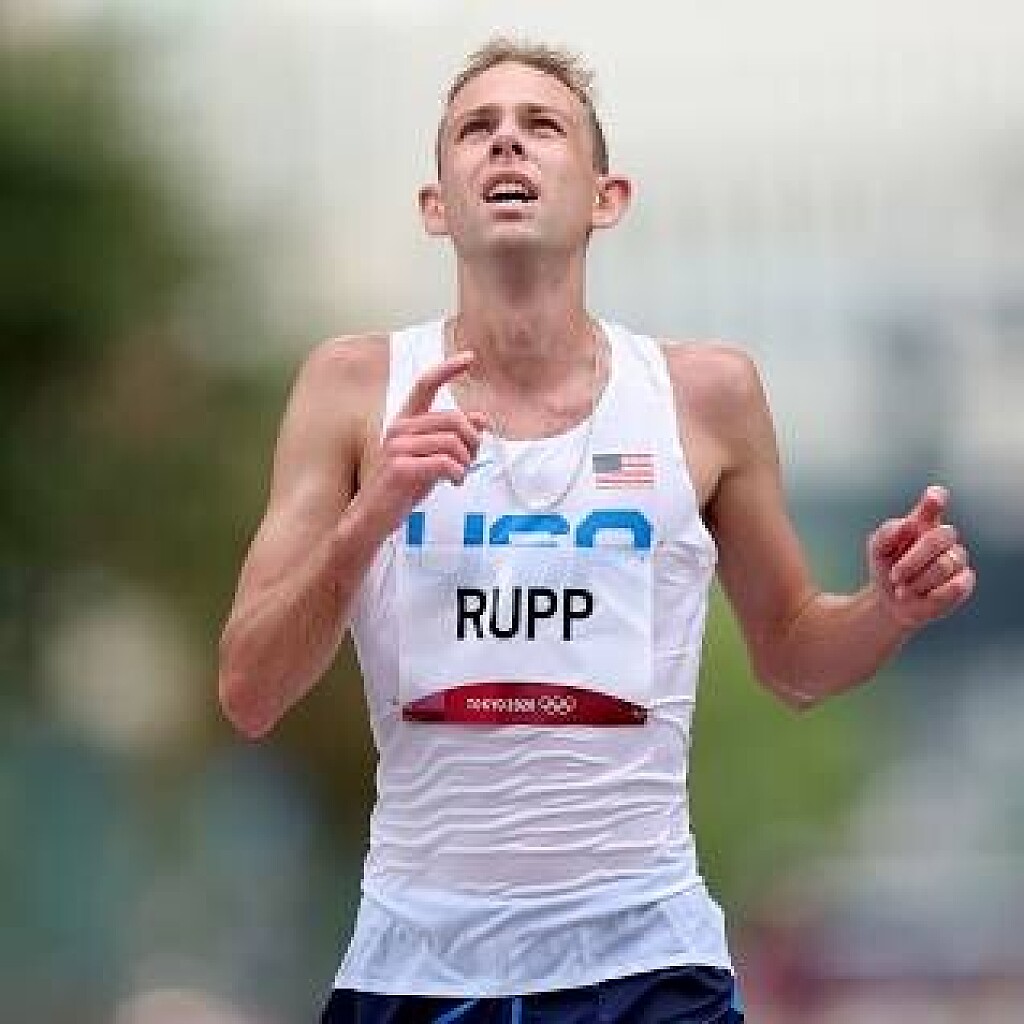
Galen Rupp: Healthy Again After Two Rough Years
The past two years have been the most difficult of Galen Rupp’s career.
The four-time Olympian’s racing in 2022 and the first nine months of 2023 have included a mix of subpar results and DNFs. The last time he finished a marathon was July 2022, when he ran 2:09:36 at the 2022 World Championships in Eugene, Oregon, and finished 19th. Cameras caught him walking for short stretches during the final miles of the race. Last November, he started the New York City Marathon but dropped out before 18 miles. At the NYC Half in March this year, which was the last time he raced, Rupp was 17th in 1:04:57.
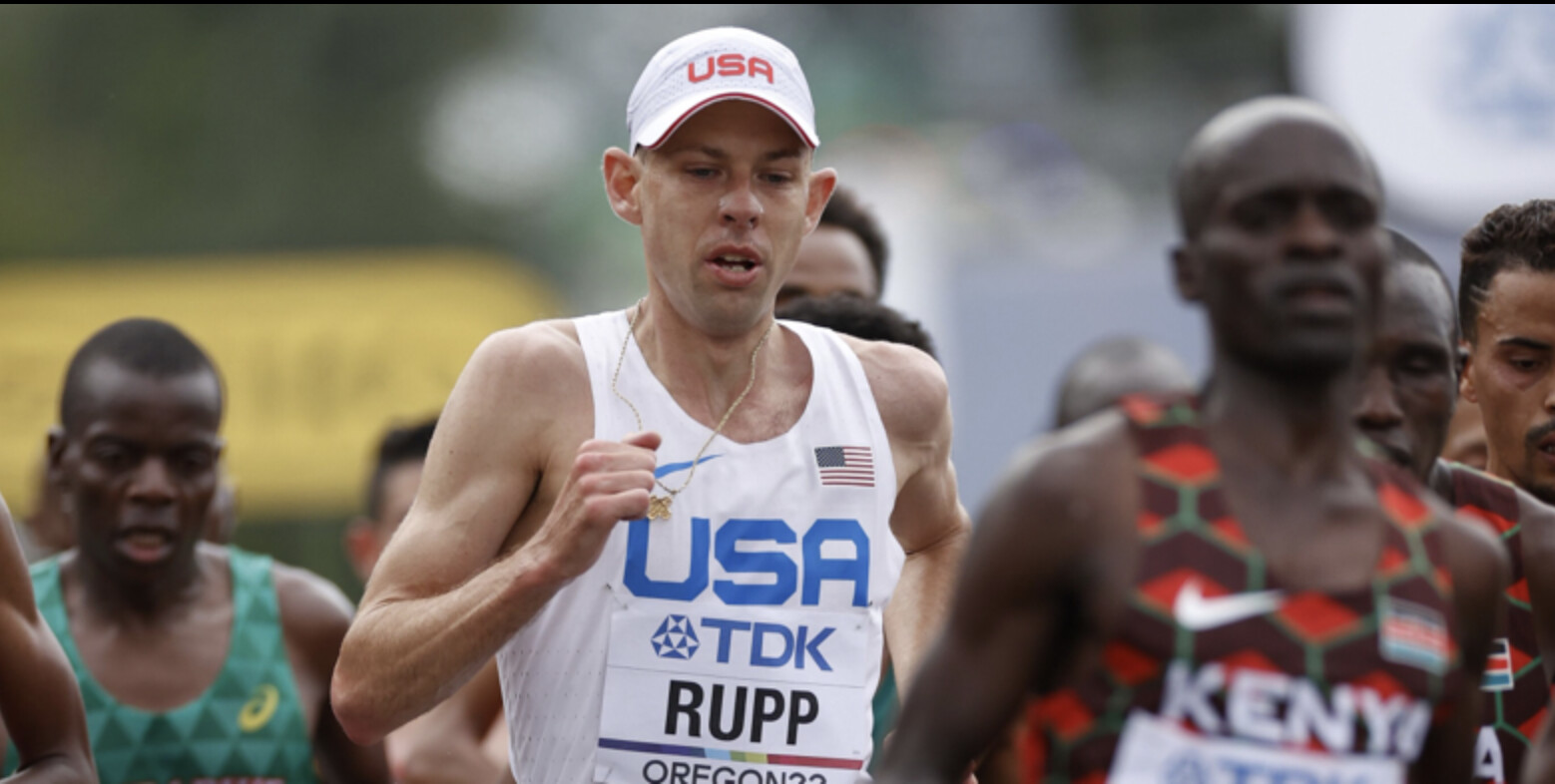
You’d have to go back to October 2021, when he finished second at the Chicago Marathon in 2:06:35, that he last had a result he was happy about.
Now, Rupp, 37, is back on the starting line at Chicago, having overhauled his mechanics and having spent the past two months away from Portland, Oregon, where he lives, and training in Flagstaff, Arizona, where his coach, Mike Smith, lives. For the first time in several years, Rupp is free of the back pain that had plagued him. He spoke to reporters at a press conference in Chicago. Here’s what we learned:
He was in pain just walking around last summer
After last year’s world championships, Rupp tried to push through the pain for his New York City Marathon buildup, but it didn’t work. Smith told Rupp that he needed to get fully healthy before he could start training again.
The NYC Marathon “was a really big wakeup call,” Rupp said, calling himself “hard-headed” in his attempt to run it, just getting through one workout at a time. “For a long time I was just surviving,” he said. “You can’t do that as an elite athlete.”
He’s been working on mechanics…
Rupp has been rebuilding his form, which he thinks was thrown off after his back injury. He’s been working with a team of therapists and running mechanics experts to fix what he called the “terrible” form he had in New York City last year. “That’s been the biggest thing I’ve been addressing,” he said. “I’ve got to clean that stuff up. It takes a lot of time. Running is such a repetitive motion. If you’re doing things a little funky or off, it starts to engrain in there. This past year, I’ve been trying to undo that.”
When pressed for specifics, Rupp cited the positioning of his hips, and how his left foot interacted with the ground. “My whole body was twisted up, in a nutshell,” he said.
…but now he’s training well
Rupp said his buildup has gone about as well as the one he did before Chicago two years ago and he’s returned to his previous volume, which at times has been 130 miles per week with 25-mile long runs. He was vague about his goals for Sunday, saying during the press conference portion of the day, “Above all else, I really just want to have a real solid race here.”
He’s unclear what role, if any, Alberto Salazar will have in his training going forward
Alberto Salazar, Rupp’s former coach with the Nike Oregon Project, was banned by the U.S. Anti-Doping Agency for 4 years in September 2019 for anti-doping violations. Subsequently, Salazar was banned permanently by the U.S. Center SafeSport for sexual misconduct.
Rupp was asked if he would use Salazar in a consulting role going forward.
“I’m not really going to get into that too much,” he said. “I am looking forward to having a personal relationship with [Salazar] going forward, but I’ve got to figure out what exactly the rules are. Things have been going good with Mike. It’s been a great buildup in Flagstaff. I’ve had enough to worry about getting ready for this race. I’ve been focusing on my training.”
He has no problem with the announced noon start at the Olympic Marathon Trials
Rupp said he is not a morning person, and whatever the weather conditions are like at the Trials, scheduled for noon on February 3, 2024, in Orlando, he’ll be ready. “That’s the one thing I absolutely hate about road running and the marathon. I’d rather run at 11 or 12 than 7 in the morning,” he said.
He also has no problem with the current Olympic marathon qualifications system, in which runners can “unlock” spots for their countries, based on running a qualifying time, finishing top 5 in a World Marathon Major, or being high enough in the world rankings.
But if an athlete unlocks a spot, he or she does not automatically get it. In the U.S., those spots go to the top three finishers of the Olympic Marathon Trials.
Rupp hasn’t paid much attention to it.
“The Trials to me has always come down to getting it done on that day,” he said. “You’ve got to get in the top three. That’s the way it’s always been. That pressure is a great thing. I learned at a young age, having to go through that process, about getting it right on that day, being ready and mentally dealing with all that pressure. I think it has served me well when I got to the Olympics.”
He has two Olympic medals to prove it.
He thinks he has several more years ahead of him.
Rupp isn’t giving thought to retiring any time soon. He hopes to get to the 2028 Olympics in Los Angeles, when his kids—he has 9-year-old twins and a 7- and 4-year-old—would be old enough to remember and appreciate it.
He doesn’t feel like age right now is a limiting factor. Staying healthy is.
“I truly believe, especially with the marathon, you can keep doing this well into your 40s,” he said. “A lot of it comes down to your health and how you’re moving. I really feel good about where I’m at.”
He also said he doesn’t lack for motivation, even after two Olympic medals and a Chicago Marathon title in 2017. He still enjoys getting the most out of himself as he can.
“I love movement, training, all that,” he said. “I love the journey of getting ready for races. That fire burns as hot as ever.”
by Runner’s World
Login to leave a comment
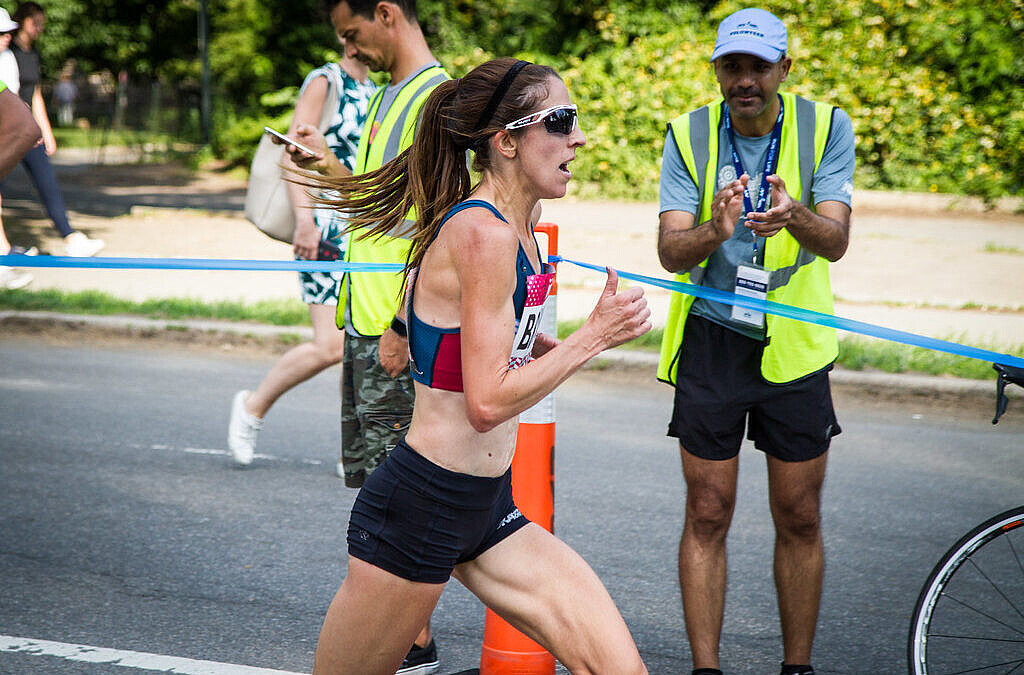
Stephanie Bruce on running while pregnant: “It doesn’t have to make sense to everyone”
"This is a gift–to be out doing what I love while growing a baby," Bruce says.
American marathoner Stephanie Bruce is not letting pregnancy slow her down. In May, 18 weeks into her third pregnancy, Bruce was the top female finisher at the Big Sur 12K in 45:41, coming in second overall, only a minute behind first place.
Known for her upfront talk about post-pregnancy running after the birth of her other two children, Bruce has been sharing social media updates chronicling the joys and challenges of running (and racing) while pregnant, noting, “It doesn’t have to make sense to everyone.”
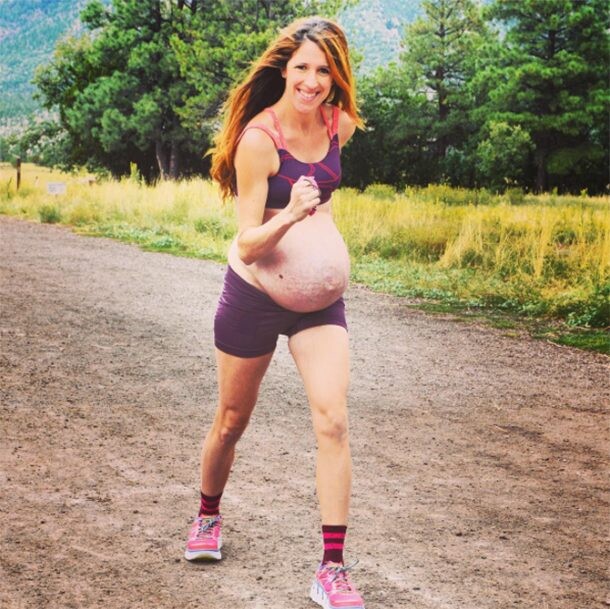
Bruce has had a prolific career in cross-country, representing the U.S. twice at the World Cross Country Championships, in 2017 and 2019. Bruce was the second American behind Emma Bates at the 2019 Chicago Marathon, where she ran her personal best time of 2:27:47, and she had a 10th place finish at the NYC Marathon in November (2:31:05). She has spent the last decade training with Ben Rosario’s Hoka NAZ Elite team in Flagstaff, Ariz.
In January 2022, Bruce announced she would be retiring at the end of the season, after she was diagnosed with a congenital heart condition called bicuspid aortic valve disease (BAVD), a dysfunction of the aorta valve limiting the amount of blood flowing from your heart to the body.
A few months later, in what she called “the pivot,” she changed her mind, sharing on her blog that “after a period of deep reflection–now I have had a change of heart. I am not ready to hang up my racing shoes.”
A few months later, Bruce announced her pregnancy. The athlete plans to return to racing competitively after her baby is born and has been documenting her journey to inspire others. Bruce says still she can still run reps between a 3:00 and 3:30 min/km pace, but is finding turning over in bed is becoming difficult. In her third trimester, she says that she misses competing.
Bruce explains her goal in sharing her pregnant running experience: “To show women our bodies can handle it, if we choose, not everyone and that’s ok if we stay on the couch and don’t feel motivated. Every pregnancy experience is different and I am simply sharing how mine is playing out.”
Bruce recently published a book, written with Rosario, titled Follow Your Heart, The Story of Stephanie Bruce’s Not-So-Final Season.
by Keeley Milne
Login to leave a comment
Kiptoo, Masai seeking big performances at Bolder Boulder
It's time to be bold for NAZ Elite.
The running team is sending Wesley Kiptoo and Alex Masai to the BOLDERBoulder 10K road race in Colorado set for Monday with the hopes of making some noise on the men's side of the prestigious event after producing some solid outings on the women's side the last few years.
Last year's BOLDERBoulder champion, in fact, was NAZ Elite's Aliphine Tuliamuk, who finished in third place at the 2019 edition of the race and was runner-up in 2018.
“We would love to win on the men’s side, but it’s really, really hard," NAZ Elite Executive Director Ben Rosario said Wednesday.
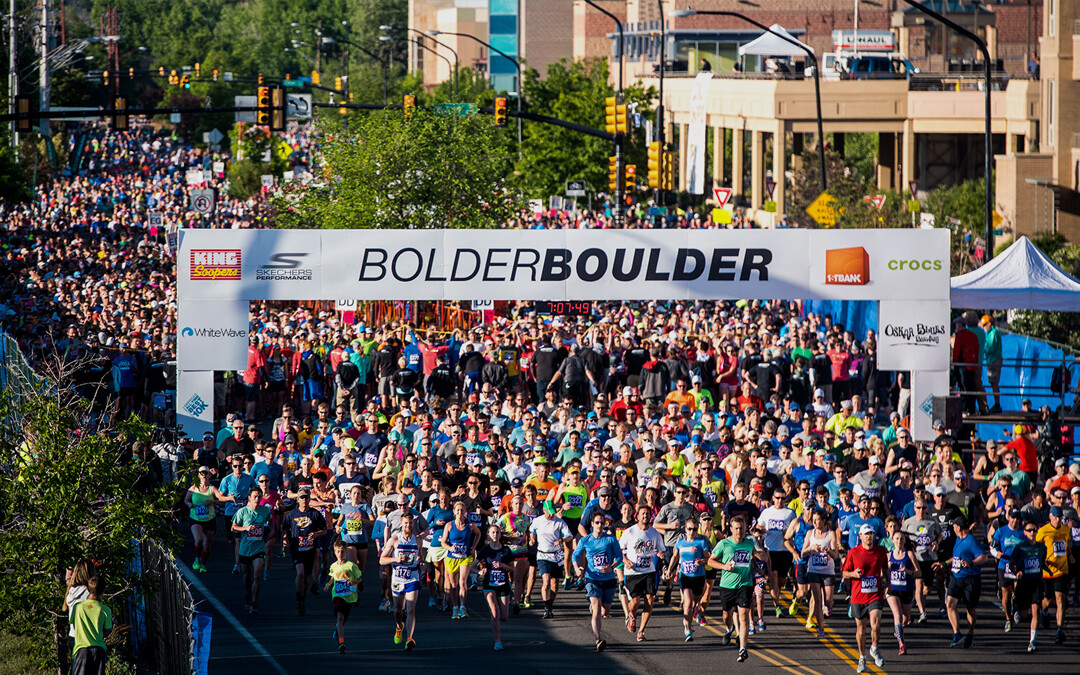
Only former member Scott Fauble has produced a top-10 finish in the men's race for NAZ Elite, taking sixth in 29:54 in 2016. This will be the eighth year that NAZ Elite has sent at least one athlete to the event since the team started racing in 2014.
The nature of the team-focused event typically leads to a loaded pack running up front, according to Rosario.
“When you have got three athletes from Kenya, three from Ethiopia, three from the U.S., et cetera, et cetera -- and they are all distance-running powerhouses -- it’s going to be hard to win the race because all these teams have somebody who could win.”
Rosario thinks that altitude also has something to do with how athletes perform at the race, which starts at 5,275 feet of elevation, peaks at 5,377 and ends at around 5,360 feet.
Fauble was born at altitude in Colorado, as was Tuliamuk, who is a Kenyan-born American. Both Kiptoo and Masai were born and raised in Kenya at an elevation higher than Flagstaff.
“It’s not a guarantee that they will run well, but I think they have a better chance to run well and race well at altitude than an athlete who was born and raised at sea level," Rosario said.
And both Kiptoo and Masai are in shape and coming off good performances.
Kiptoo won his last time out, repeating as the champion at the Pittsburgh Half Marathon on May 7. Meanwhile, Masai placed second in a 10,000-meter track event earlier this month and was fourth at the BAA 5K road race in mid-April with a time of 13:27.
“He’s look quite good in training over the last month," Rosario said of Masai, "and I would just say that he’s ready to go.”
Kiptoo normally draws energy from races that feature such strong talent up front, as the second-year pro likes competing with athletes who can produce the sort of times and results he hopes as his career unfolds.
“He’s certainly excited about the race. He’s shown so far in his young career that he enjoys these big road races, and when he is fresh and ready to go, he runs very, very well," Rosario said.
Before Monday's BOLDERBoulder, NAZ Elite will have two athletes in Krissy Gear and Katie Wasserman at Friday's USATF Distance Classic 1500m on the UCLA campus.
Rosario said there will be 17 athletes packed on the track for the "regular-season" race that will provided a chance for Wasserman to get some racing rust off her legs after a pause in racing due to illness and Gear to keep the momentum going and experience building.
Wasserman has not raced since mid-February at the USATF Indoor Championships, where she produced a 12th-place result in the 3000m.
by Mike Hartman
Login to leave a comment

BOLDER BOULDER
In 1979 we dreamt of attracting a few hundred of our friends to race though the streets of Boulder, Colorado to celebrate Memorial Day with our families. Fast forward almost 40 years and the Bolder BOULDER has grown to become one of the largest and most highly acclaimed 10K’s in the world. Almost 1.2 million runners, joggers, walkers and spectators...
more...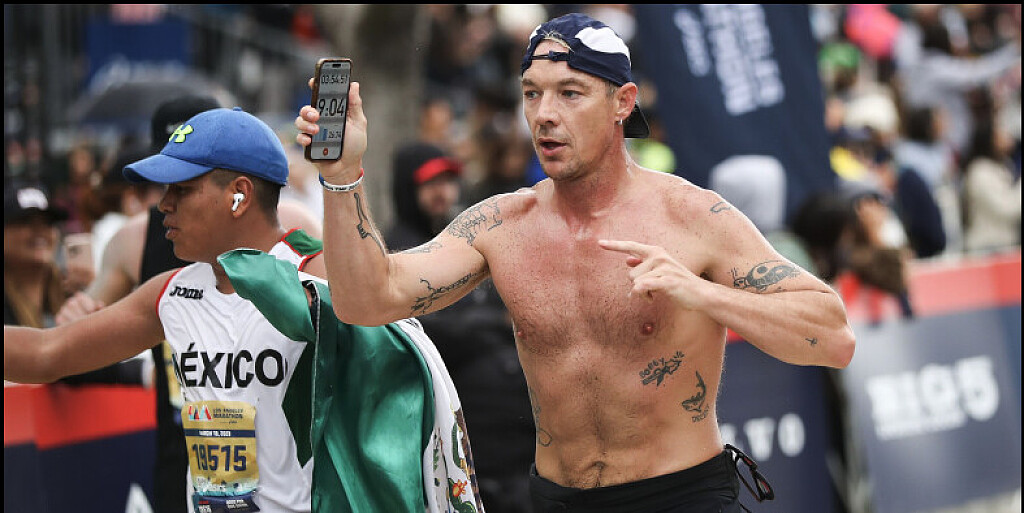
So It Turns Out Diplo Says He Ran the LA Marathon on LSD
Never try anything new on race day, unless you’re Diplo, I guess.
When Diplo ran the Los Angeles Marathon last weekend, breaking the four-hour mark with Olympian Alexi Pappas by his side, that was impressive enough. The 44-year-old DJ said he hadn’t done a proper marathon build in preparation; he was under-trained and pulled off a fantastic finishing time of 3:55:16 anyway. Now he claims the entire 26.2-mile footrace was one big acid trip.
On Wednesday, he revealed in an Instagram post that, because the longest he’d ever run previously was 11 miles (technically untrue according to his previous half marathon results), “I did what any normal person would do and took LSD” (the psychedelic drug, not “long slow distance”). Before the marathon, he’d also shared his oddly specific goal—which he met—of beating Oprah’s 1994 PR, when she ran the Marine Corps Marathon in 4:29. Some folks call it “the Oprah effect.” Diplo brought some bravado to Instagram on that front as well, saying, “I ate that. Sorry Oprah.”
He went on to thank Pappas for pacing him, and said, “Shout out my knees which will never be the same, and my kids for waiting for me at the finish line. If anyone needs me I’ll be sitting down.”
It’s not unheard of to run under the influence of psychedelics. At the Burning Man Ultramarathon, a 31-mile run looping around Black Rock City four times, at least one runner has done the whole thing on LSD. Sarah Rose Siskind, told nonprofit media outlet Psymposia, “I did one training run where I ran 20 miles on LSD, and I found that the main problem was that I ran extraordinarily slowly — I was so distracted by everything. So, I figured it wasn’t a performance-enhancing drug, exactly. But, it certainly wasn’t increasing my risk profile.”
Another runner, Michael Versteeg, has spoken about incorporating psilocybin mushrooms into his experience running the Cocodona 250, a 250+ mile ultramarathon from Black Canyon City to Flagstaff, Arizona. Versteeg microdoses for his long runs and says while it’s not the same as full on tripping, “you’re experiencing colors, you’re experiencing the landscape in a much more vivid way.”
The trusted advice many runners abide by is “nothing new on race day,” but Diplo doesn’t exactly play by the rules.
by Runner’s World
Login to leave a comment
Defending Champions Return to Run 50th Anniversary Credit Union Cherry Blossom 10 Mile
Organizers of the 50th annual Credit Union Cherry Blossom 10 Mile (CUCB) announced today the first of two rounds of news about this year’s invited field; look for the second announcement to come out on Wednesday, March 29. Today’s announcement features past champions and top-5 finishers expected to toe the respective men’s and women’s starting lines on Sunday, April 2. (The elite women will start first, at 7:18 a.m., followed by the men and the masses at 7:30 a.m.)
Three past champions are part of the women’s elite field: Susanna Sullivan, last year’s women’s champion from Reston, VA; 2021 champion Nell Rojas from Boulder, CO; and 2013 champion Caroline Rotich, a Kenyan who lives in Colorado Springs, CO. As part of the 50th celebration two additional former champions are entered: Colleen De Reuck from Boulder, CO, who won the race in 1998 and still holds the women’s course record of 51:16; and 1973 winner Kathrine Switzer.
Other top women finishers from past 10 Miles include: Carrie Verdon from Boulder, CO, who placed second last year; Paige (Stoner) Wood, last year’s third place finisher from Flagstaff, AZ; Sara Hall, also from Flagstaff, who placed fourth in 2014; and Flagstaff’s Diane Nukuri, who was fifth in 2018.
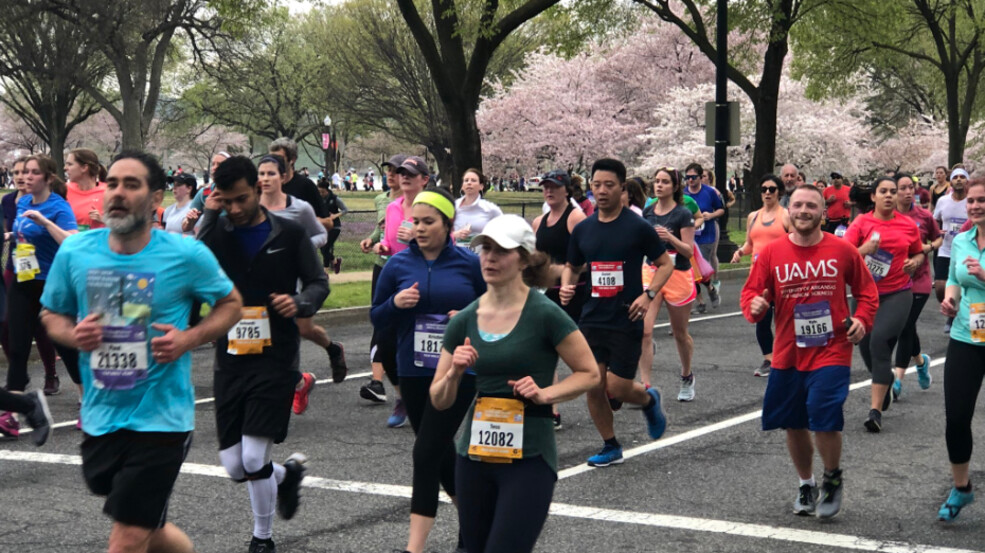
In the men’s race, the top-three finishers from 2022 return. All hailing from Kenya, they include champion Nicholas Kosimbei, second-place runner Wilfred Kimitei, and third-place finisher Shadrack Kimining. They’ll be joined on the starting line by second-place finisher in 2021 Abbabiya Simbassa from Flagstaff, AZ. Returning for the 50th running and starting a little bit farther back in the pack will be Bill Rodgers, from Boxborough, MA, who won the race four consecutive times between 1978 and 1981; placed second in 1982 and third in 1983; and has run CUCB a total of 22 times. Greg Meyer, whose American record of 46:13 still stands 40 years later, will be present for the 50th celebration, and will be holding the tape for the first American male finisher, who will be in hot pursuit of Greg’s mark — there’s a $50,000 shared bonus on the line for any American Records or World Bests set at the event.*
“It’s always a vote of confidence in the reputation of the event to see a large number of top finishers from previous years coming back. I am excited about this year’s set of repeaters, both past and present. This is another factor that will make our 50th anniversary special,” said Event Director Phil Stewart.
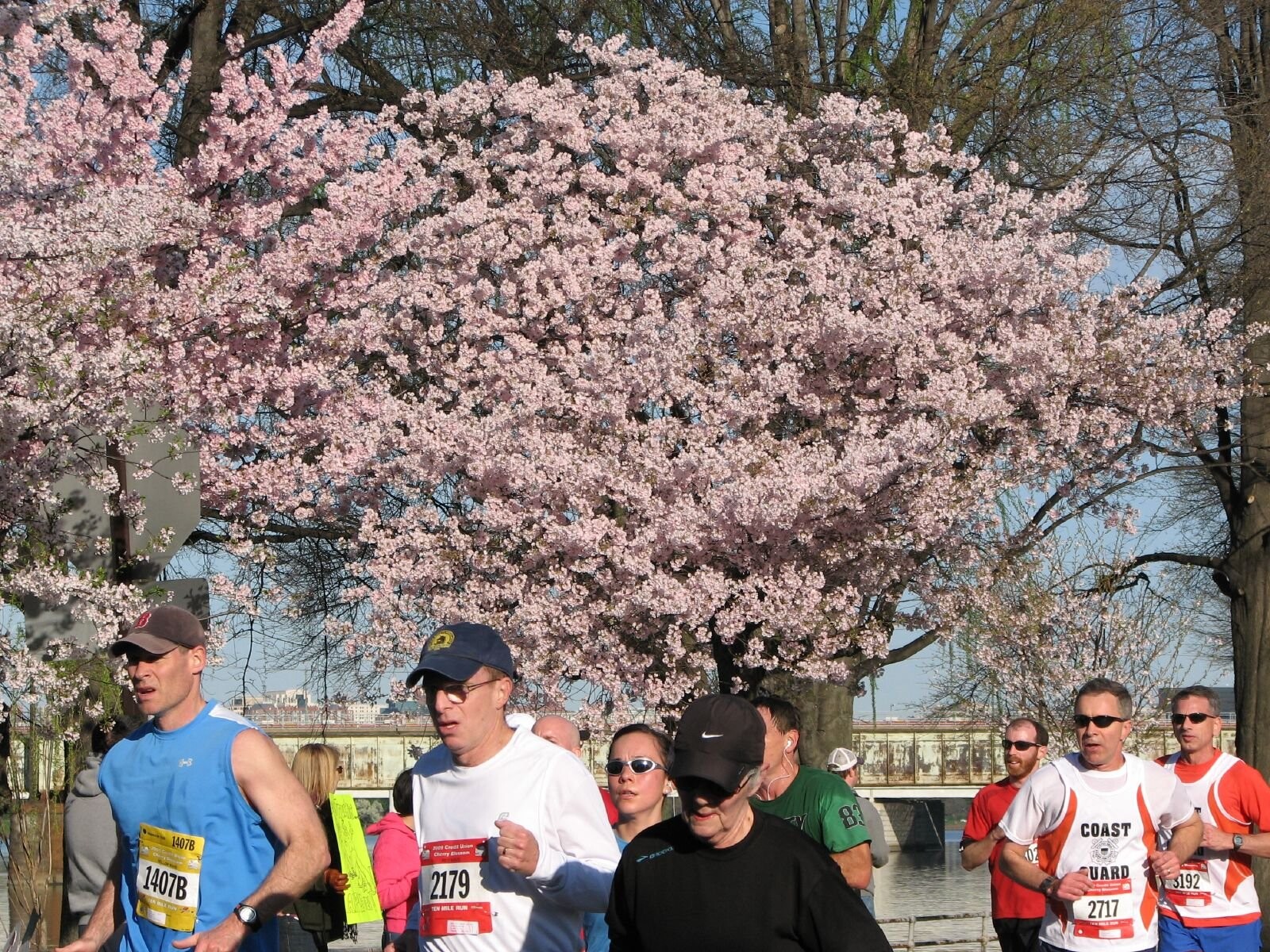
This year, international elite runners will be competing for $40,000 in prize money. The prize purse for Americans totals $25,000, and American runners placing in the top-10 overall are eligible to receive both open and American-only prize money. There is an additional $6,000 in RRCA RunPro Alumni Development Awards — runners eligible for the RRCA awards can also collect top-10 open and/or top-10 American payouts.
There is also a time-based set of bonus payments on offer for fast times:
• $50,000 to be shared by any runners setting a World Best or American Record*• Time incentives of $1,000 for the 1st male to run sub-46 minutes and 1st female to run sub-52 minutes, with an additional $750 on offer should a second male and/or female achieve those same sub-46 and sub-52 minute milestones.
The 10 Mile will serve as the USATF 10 Mile Championships, the RRCA National 10 Mile Championships, and the 2022-2023 Professional Road Racing Organization (PRRO) Circuit Championship.
Winners of the individual 2022-2023 PRRO Circuit events will be eligible for the $10,000 PRRO Super Bonus by winning the PRRO Championship (the bonus is split if an eligible male and female win the Championship). Susanna Sullivan and Nicholas Kosimbei are eligible for the PRRO Super Bonus. Any non-eligible winner of the PRRO Championship Super Bonus will earn $2500.
* If World Best times and American Records for men and women are set by the winners at the event (e.g. four records set), the $50,000 record bonus would be split into four $12,500 shares. If only one World or American record is set for either men or women, the athlete setting the record would get the full $50,000. If an American sets an American record and no other World or American records are set, he or she would receive the entire $50,000 as well. Currently, the times to beat are as follows:• Haile Gebreselassie’s (ETH) World Athletics Best of 44:24, run at the Tilburg 10 Mile in Tilburg, Netherlands, September 4, 2005;• Keira D’Amato’s World Athletics Best in a women’s only race of 51:23, run at the UpDawg 10 Mile in Washington, DC, November 24, 2020;• Greg Meyer’s American Record of 46:13, run at the Cherry Blossom 10 Mile in Washington, DC, March 27, 1983; and• Keira D’Amato’s previously mentioned World Best 51:23, which is also the American Record for a women’s only race.
For reference, the fastest CUCB time among the men’s field announced today is Kosimbei’s 45:15, which tied the event record set by Kenya’s Allan Kiprono in 2012. Among the elite women, Nell Rojas’s 52:13 from 2021 is the best CUCB finish time among this year’s elite entrants. Abbabiya Simbassa’s 46:18 from 2021 is the best CUCB mark among the American men, while Nell’s 52:13 is, of course, the leading mark among the American women.
The inaugural Cherry Blossom Ten Mile in 1973 was won by Sam Bair, in a time of 51:22; the women’s winner was Kathrine Switzer, in a time of 1:11:19; 127 men and 12 women ran that first race. Bill Rodgers holds the honor of most victories, with four consecutive wins between 1978 and 1981. Three women have each won the race three times: Julie Shea (1975-77), Lisa Weidenbach (1985, '89 and '90) and Lineth Chepkurui (2008-10). Ben Beach leads all Cherry Blossom finishers with an active streak of 49 years. A comprehensive media guide detailing a wide variety of statistics from the first 49 CUCB races is available here.
Thanks to Credit Union Miracle Day’s title sponsorship since 2002, the Credit Union Cherry Blossom Run has raised over $10.2 million for the Children’s Miracle Network Hospitals, including $323,000 in 2022.
About the Credit Union Cherry Blossom 10 Mile:
The Credit Union Cherry Blossom races, organized by Cherry Blossom, Inc., a 501c(3) chapter of the Road Runners Club of America, are known as “The Runner’s Rite of Spring®” in the Nation’s Capital. The staging area for Sunday’s 10 Mile is on the Washington Monument Grounds, and the course passes in sight of all of the major Washington, DC Memorials. In 2023, the reimagined Saturday 5K will stage on Freedom Plaza and traverse the route of Presidential Inaugurations down Pennsylvania Avenue before crossing the National Mall in the shadow of the Capitol Building and returning by the same route. The Kids Run is staged on the grounds of the National Building Museum. All events serve as a fundraiser for the Children’s Miracle Network Hospitals, a consortium of 170 premier children’s hospitals across North America. About one-third of the funds raised support Washington, DC’s own Children’s National (“Children’s Hospital”). The event also funds the Road Runners Club of America’s “Roads Scholar” program designed to support up-and-coming U.S. distance running talent.
Credit Union Miracle Day, Inc., a consortium of credit unions and credit union suppliers, is the title sponsor of the Credit Union Cherry Blossom 10 Mile, 5K, Kids Run and Virtual Run. Current presenting sponsors include ASICS, REI Co-op and Wegmans; supporting sponsors include CACI, Co-op Solutions, CUNA Mutual Group, FinisherPix, Gatorade Endurance, Guayaki, MedStar Health, PSCU, Potomac River Running, Suburban Solutions, The MO Apartments and UPS.
The 10 Mile is a proud member of the PRRO Circuit (PRRO.org), a series of this country’s classic non- marathon prize money road races with circuit stops in Washington, DC; Spokane, WA; and Utica, NY. The 2023 10 Mile will serve as the 2022-2023 PRRO Championship.
In addition to being sanctioned by USA Track & Field and the Road Runners Club of America, the Credit Union Cherry Blossom races have earned Gold Level Inspire Certification from the Council for Responsible Sport in recognition of its legacy of commitment to sustainability and thoughtful resource management.
To learn more, visit CherryBlossom.org and follow the event on social media @CUCB and #CUCB2023.
by David Monti
Login to leave a comment

Cherry Blossom Ten Mile Run
The Credit Union Cherry Blossom is known as "The Runner's Rite of Spring" in the Nation's Capital. The staging area for the event is on the Washington Monument Grounds, and the course passes in sight of all of the major Washington, DC Memorials. The event serves as a fundraiser for the Children's Miracle Network Hospitals, a consortium of 170 premier...
more...
After Mosquito Fire and Heavy Rains, Western States Trail Requires Serious Work
California's largest fire of 2022 never quite grew to a tenth of the size of 2021's nearby Dixie fire, but that isn't to say it did not have an oversized impact.
Over 46 days spanning a portion of September and October, the Mosquito Fire burned more than 76,000 acres of forest from the town of Foresthill up to the edge of the Sierra Crest near Olympic Valley, costing state and federal fire agencies $181 million in firefighting salaries and resources. Beyond the monetary cost of the fire, far greater impacts were felt in the surrounding communities, including the loss of 78 structures and residual effects to livelihoods. The U.S. Forest Service (USFS) has focused a lot of its efforts on recreational infrastructure because of its economic importance in the area. The USFS has since performed an internal study to quantify the impacts of the wildfire, and related these findings to local stakeholders including residents and businesses.

Existing within the boundaries of the Mosquito Fire is the Western States Trail, specifically, the 12.4 miles between Last Chance and Michigan Bluff, often known as the "canyons" of the Western States 100 course-one of the most well-known sections of the course. This relatively short section of trail ascends 5,226 feet and descends 6,406 feet, cresting at Devil's Thumb, traversing over 36 switchbacks, and passing Deadwood Cemetery that hosts the remains of the miners and Chinese laborers who built this trail, once among a litany of trails developed by the Washoe people that lived on this land, in the late 1850s.
Thankfully, for those chasing a golden ticket entry or already accepted into this year's race, the staff at Western States has been communicating with the USFS since the beginning of the blaze and have been "working full-time on getting the trail open ever since," said Craig Thornley, Western States race director. Thornley says an agreement has been reached between the race and the USFS, to leverage private funds in order to repair the trail and open in time for the late June race. This is anything but the normal or anticipated result, Thornley said.
"Both races I direct, the Waldo 100K and Western States, were impacted by wildfire in 2022, and that was in a relatively light fire year," he says. "What most race directors appear to do is take the approach of waiting for land managers to tell them when the trail can be used again. In this case we were front and center, asking: 'what do we need to do to get this open?' If we hadn't, it could be several years until the race would be feasible."
This work had, up until the December holiday break, included a number of volunteer days aimed at adding water bars and other trail fortifications to reduce erosion impacts from typical winter rains. These volunteer days were made feasible, in large part, thanks to the quick action of the USFS Burned Area Emergency Response (BAER) teams, which typically address wildfire areas to fell hazard trees and create plans for restoration work.
Wildfire had impacted this trail in the past, most notably during the American Fire of 2013, lending the Western States team experience as to how to ensure the event would go forward. Also, the 2008 Western States 100 was canceled because of poor air quality, due to numerous wildfires in the area.
Based on the efforts made last fall, Thornley believed the trail would re-open in plenty of time for the race this June. But that confidence was shaken at the end of December, when a number of atmospheric rivers crossed the Pacific Ocean and dumped heavy precipitation in California.
On the evening of January 5, 2023, a forest order was issued by the Tahoe National Forest, noting extreme damage to the burned sections of both Western States Trail and Mosquito Ridge Road, a key artery to access aid stations in this stretch. Due to the damage, the USFS issued an access closure until December 31, 2023, which would threaten the possibility of this year's race happening. In most cases, this closure would last until the USFS accrued funding and fully repaired the trail and road, which typically takes two to four years, with orders being renewed each calendar year, depending on the forest region budget.
A New Approach
The Western States team is confident that the order will be reversed once trail maintenance is completed. However, due to USFS budgetary constraints, this trail maintenance will be funded by private donors through the Western States nonprofit structure, on the behalf of the government, a strong partnership and plan between event promoters and land managers.
While it is impressive that the Western States staff has been able to, in all likelihood, stave off race cancellation or delay, there is a larger question to ask: what do individuals, race promoters, and sponsoring brands do under the face of rising hazards in the present and future?
In California, the Santa Ana winds have driven wildfires followed by rain events for centuries, but climate modelers warn that the number and severity of wildfires of the past several years, as well as the frequency of high-severity extreme precipitation events, highlight a worsening climate trend.
No longer is climate change and public land management solely impacting individual communities for discrete periods of time. It is also placing a serious threat to the start line of arguably the most lauded trail running event in North America. The burning of one trail, which will likely require hundreds of thousands of dollars to restore and treat for public safety, is forcing the hand of major race promoters, and the entire outdoor industry, to consider where climate change fits in their yearly budgets.
While the question as to what Western States runners should expect this year is clearly front and center, most see the writing on the wall-the industry must adapt to and address climate change. Fortunately, Western States will almost assuredly happen this year, but only because of the immense work ethic, generous donor giving, and long-term community building of the event staff.
While Western States has the funding to avert disaster this year, both Canyons Endurance Runs by UTMB and the Tevis Cup equestrian event are held in April and July, respectively, on the same trails. There is no guarantee the trail will be open and usable as early as April, or in good condition for horses by July. At the time of publication, UTMB staff were in communication with Western States and land managers to find solutions for Canyons in 2023. However, no official statement has been issued at this time.
Of course, these three races alone are not the first to be impacted by both natural disasters and a limited federal budget for trail restoration. For example, in the last decade, Santa Barbara's Nine Trails has seen the same cascading disaster chain. Such complications have also been experienced along trail systems in Flagstaff, Arizona, Glenwood Springs, Colorado, and across the Pacific Northwest.
Thornley credits the decade-long relationship building with the USFS, California State Parks, and private landowners for their ability to quickly avert closure, noting the volunteer trail work days and private fundraising the event has done in collaboration with these land managers over the years. Western States has acted as an exemplar for other events to emulate in the coming decades, under a shifting climate system. However, one must ask whether other trail running event organizers have considered the time necessary to build these relationships with land managers, and to make plans accordingly before the next natural disaster strikes. The future of the sport depends on the urgent planning and trust-building of these various stakeholders.
by Trail Runner Magazine
Login to leave a comment
