

Running News Daily
Running News Daily is edited by Bob Anderson and team. Send your news items to bob@mybestruns.com Advertising opportunities available.
Index to Daily Posts · Sign Up For Updates · Run The World Feed
Articles tagged #Seoul
Today's Running News
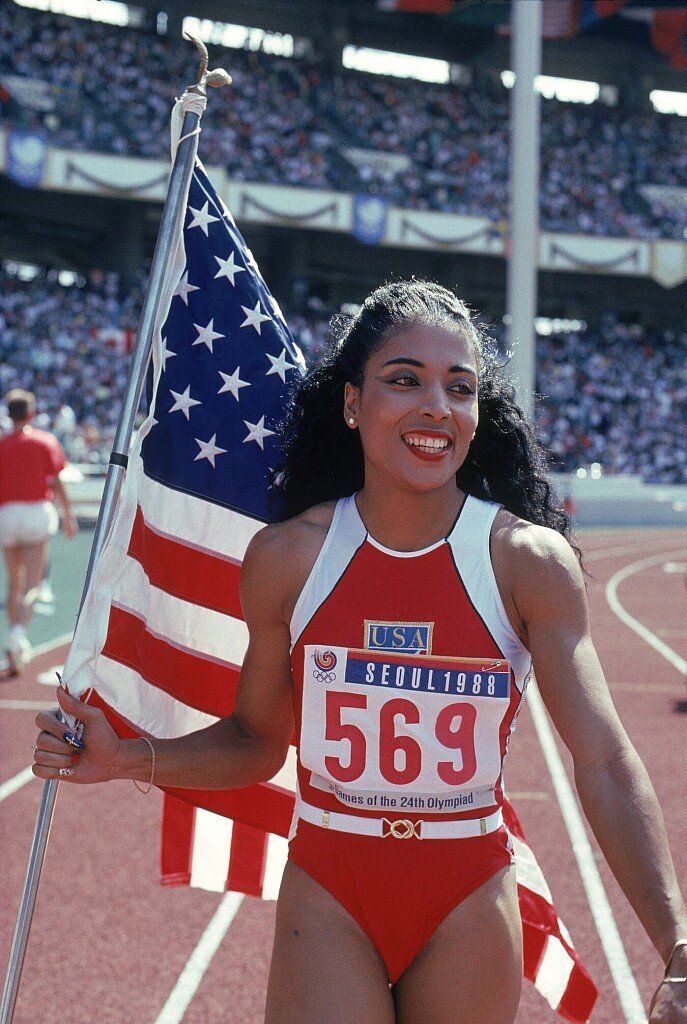


Florence Griffith-Joyner’s 21.34 Still Stands 38 Years Later
Thirty-eight years ago, Florence Griffith-Joyner produced a performance in Seoul that would go on to become one of the most enduring records in athletics history.
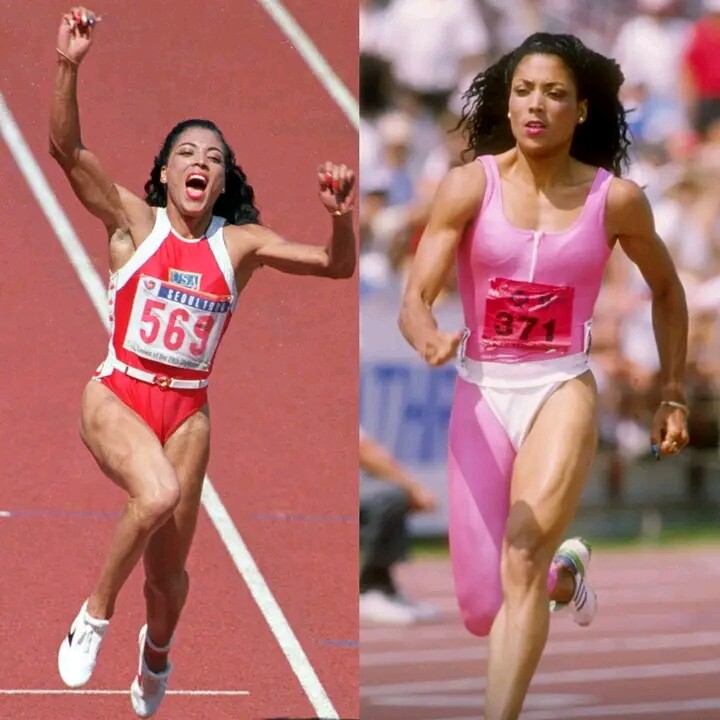
On September 29, 1988, the American sprint sensation lined up for the women’s 200m final at the Olympic Stadium in Seoul, South Korea, carrying the confidence of an athlete who had already announced herself as one of the stars of the Games.
What followed was extraordinary.
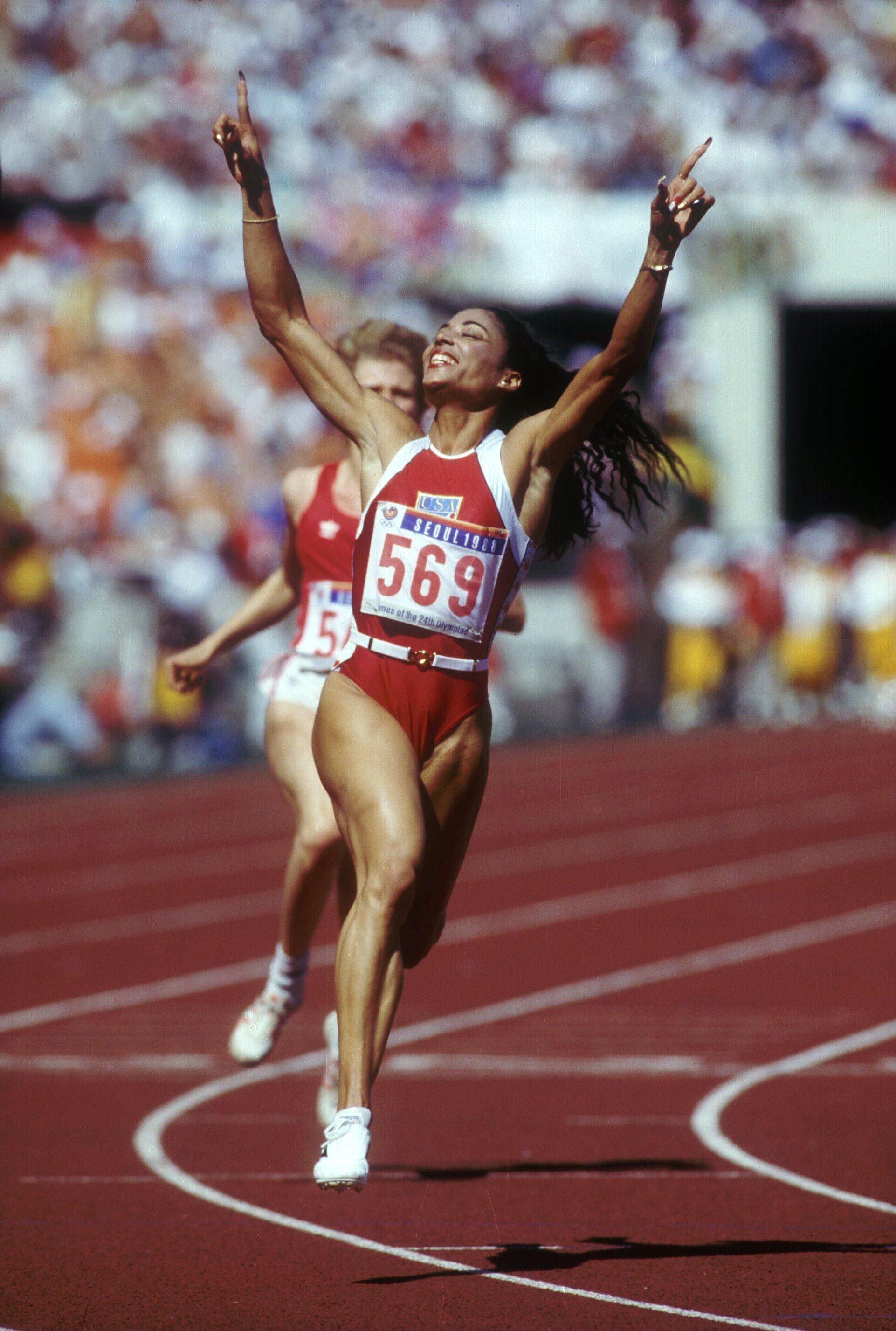
Griffith-Joyner stormed around the bend before unleashing an astonishing finish, stopping the clock in 21.34 seconds with a legal following wind of +1.3 m/s. The performance secured Olympic gold and shattered the world record she had set earlier that same day in the semifinal, when she ran 21.56.
It was not simply another Olympic victory. It was a performance that immediately entered sprinting folklore.
The 21.34 remains the women’s 200m world record, 38 years after it was established. World Athletics continues to list Griffith-Joyner at the top of the all-time rankings, with her mark standing ahead of every performance that has followed.
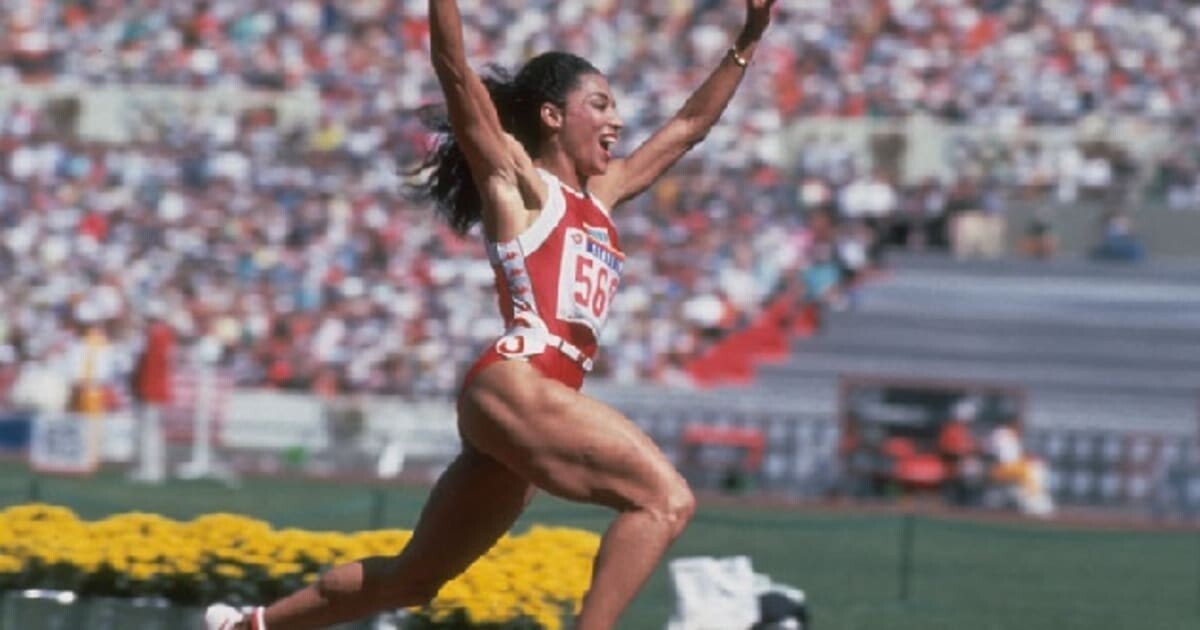
And there have been some remarkable attempts to take it down.
Jamaica’s Shericka Jackson came closer than anyone in recent years, running 21.41 to win the world title in Budapest in 2023 — just seven hundredths of a second away from Griffith-Joyner’s legendary mark. Elaine Thompson-Herah ran 21.53 in Tokyo in 2021, while Gabrielle Thomas has gone 21.61.
Yet 21.34 has continued to stand.
Griffith-Joyner’s Seoul campaign was remarkable beyond the 200m record. She won three Olympic sprint gold medals at the Games and established herself as one of the defining athletes of the 1988 Olympics. World Athletics records her as a three-time Olympic champion and the current world-record holder in both the 100m and 200m.
Her career also left behind an unmistakable visual legacy. The long, flowing nails, striking racing outfits and explosive sprinting made Flo-Jo one of the most recognisable figures the sport has ever produced.
But decades later, it is the number 21.34 that continues to command attention.
Generations of Olympic champions and world-class sprinters have come and gone. The event has evolved, training methods have advanced and the level of women’s sprinting has continued to rise. Still, Griffith-Joyner’s Seoul masterpiece remains untouched.
38 years. One legendary record. Still standing.
And with a new generation of elite 200m sprinters continuing to push the boundaries, the question remains fascinating: how much longer can Florence Griffith-Joyner’s 21.34 survive?
by Erick Cheruiyot for My Best Runs.
Login to leave a comment
The Olympic Gold That Korea Had To Wait 52 Years To Truly Claim
On August 9, 1936, Sohn Kee-chung crossed the finish line of the Olympic marathon in Berlin in 2:29:19.2, becoming the first Korean to win an Olympic gold medal.
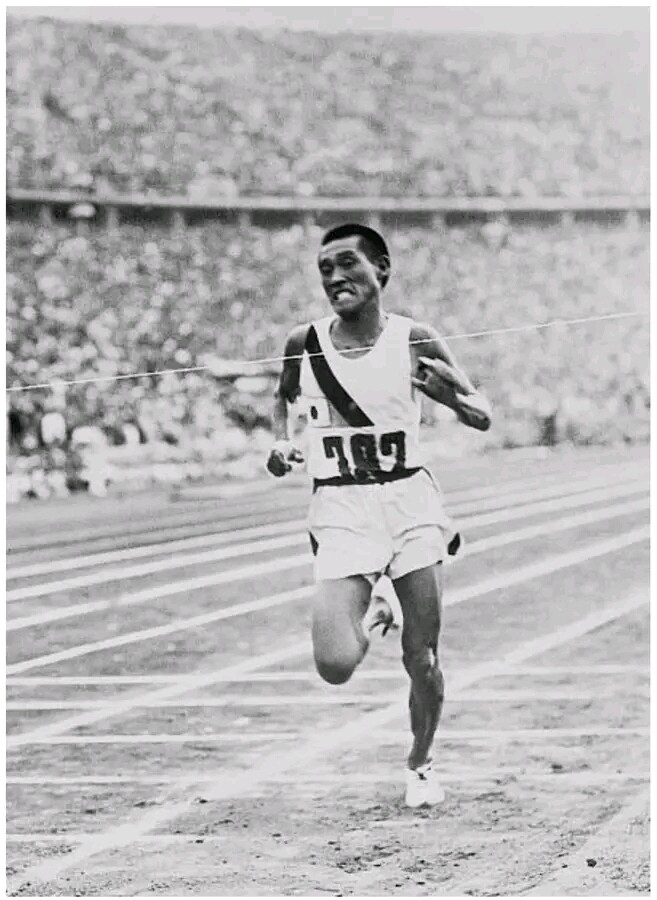
But there was a painful contradiction behind the triumph.
The scoreboard did not identify him as Sohn Kee-chung. It listed him as Kitei Son — the Japanese pronunciation of his Korean name. And instead of competing for Korea, he was officially entered as a member of the Japanese delegation because Korea had been under Japanese colonial rule since 1910.
Sohn was born in 1912 near Sinuiju, in what is now North Pyongan Province, and emerged as one of the outstanding distance runners of his generation. His talent became impossible to ignore in the 1930s, and in November 1935 he ran 2:26:42 in Tokyo to set a world marathon record.
By the time he arrived in Berlin, Sohn was already a world-class marathoner. Yet his greatest sporting achievement would unfold under an identity that had been imposed upon him.
He was not permitted to compete under his Korean name. He was not permitted to carry the Korean flag. His uniform bore the Japanese emblem.
And even after winning Olympic gold, he could not celebrate as a Korean champion.
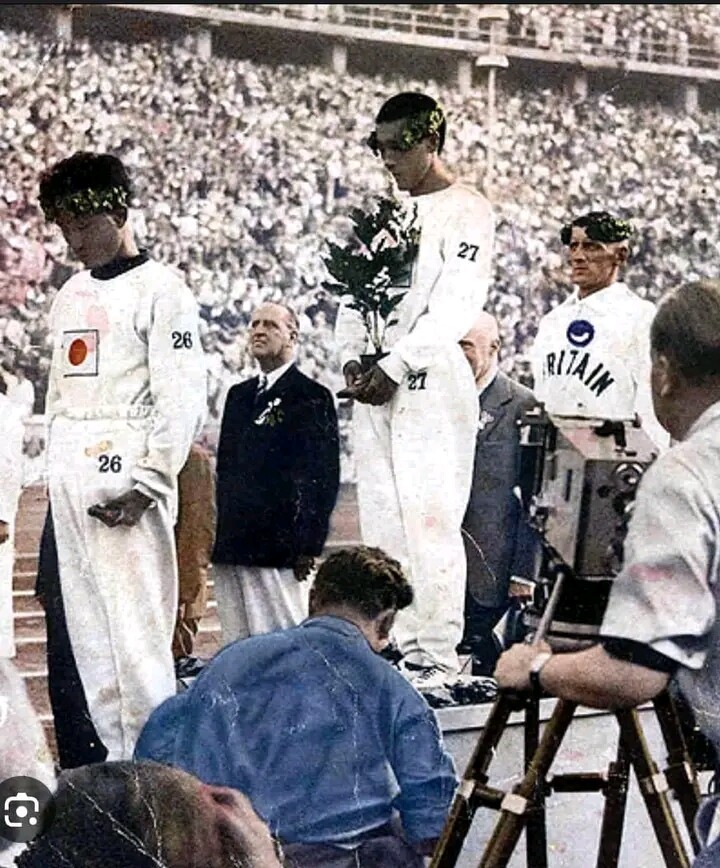
Sohn won the marathon ahead of Britain's Ernie Harper, while another Korean, Nam Sung-yong, claimed bronze. Sohn became the first Olympic marathoner to break the 2:30 barrier, with his 2:29:19.2 Olympic record standing as a remarkable achievement. Importantly, however, his Berlin time was not a world record — his world-best mark had come the previous year in Tokyo.
The medal ceremony became one of the most haunting images in Olympic history.
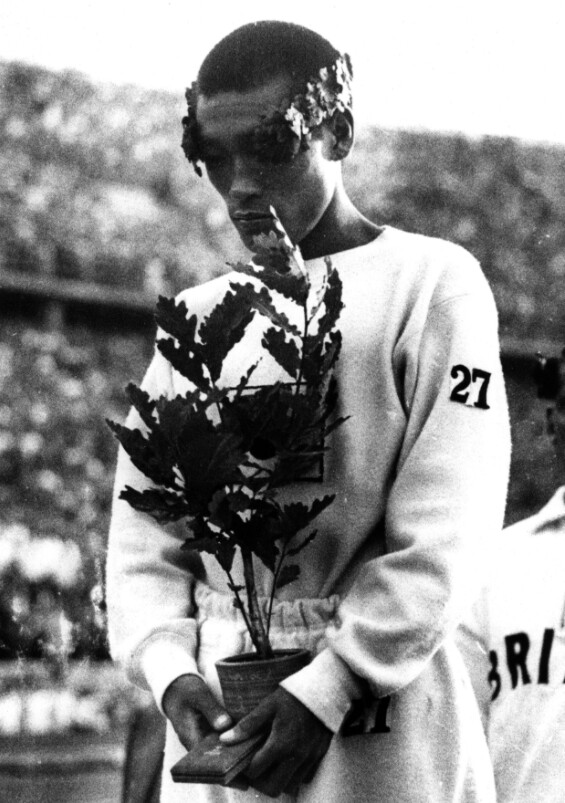
As the Japanese flag was raised and the Japanese anthem played, Sohn stood on the top step of the podium with his head lowered. Nam Sung-yong stood beside him on the third step. Neither athlete was able to represent the nation from which they came.
Sohn held the laurel wreath he had received for winning the marathon across his chest, concealing the Japanese flag on his uniform.
The gesture was silent.
But the message was powerful.
He had won the race for himself and for Korea, even though the official ceremony claimed him for Japan.
Back home, Koreans celebrated his victory with enormous pride. For many, Sohn's success was a rare moment of national affirmation during colonial rule. Yet the emotions were complicated. Some Korean nationalists viewed participation in the Japanese team as a painful compromise, while others saw Sohn's victory as a powerful act of resistance against the colonial claim that Koreans were inferior.
The reaction of the Korean press became another chapter in the story.
On August 25, 1936, the Dong-A Ilbo published the famous photograph of Sohn on the podium with the Japanese flag removed from his uniform. The newspaper's journalists had deliberately erased the emblem — an act of defiance against Japan's colonial authorities. The incident triggered a major crackdown. Multiple journalists were arrested, and the newspaper was forced to suspend publication for months. Historical accounts record that eight people involved were imprisoned and that the paper was suspended for roughly nine months.
The photograph became more than an image of an Olympic champion.
It became an image of a nation trying to preserve its identity.
After Korea was liberated in 1945, Sohn's life took a new direction. He became an influential coach and helped develop the next generation of Korean distance runners. Among those he guided were Suh Yun-bok, who won the Boston Marathon in 1947, and Ham Ki-yong, the 1950 Boston Marathon champion. Sohn also served in various athletic organizations in South Korea.
In 1948, he carried the flag for the newly independent Republic of Korea at the London Olympics — another deeply symbolic moment in a life that had begun with his identity being taken from him on an Olympic starting line.
Decades later, Sohn returned to Germany and, in 1972, attended the Munich Olympics. There, he was reunited with filmmaker Leni Riefenstahl, whose film Olympia had documented the 1936 Berlin Games.
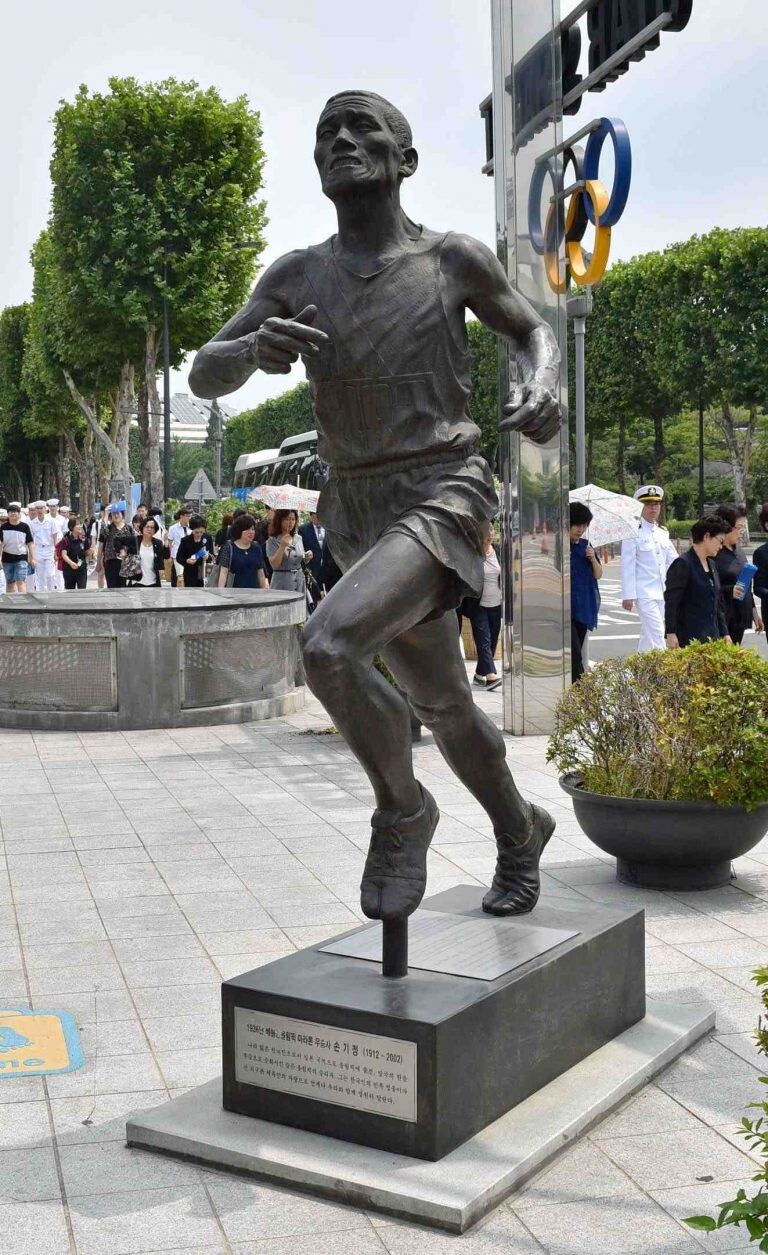
Today, Sohn Kee-chung’s legacy is also preserved in Seoul, South Korea, where a statue of the legendary marathoner stands at Sohn Kee-chung Athletic Park, near the memorial hall named in his honor. The memorial site includes a bronze head statue created in 1990, depicting Sohn in his later years, with scenes from his historic 1936 Berlin victory engraved below. Another statue, unveiled in 2016 to mark the 80th anniversary of his Olympic triumph, portrays the young Sohn proudly holding the Olympic trophy — this time with the South Korean flag in place of the Japanese emblem that had appeared on his uniform in Berlin.
But perhaps the most emotional chapter came in Seoul.
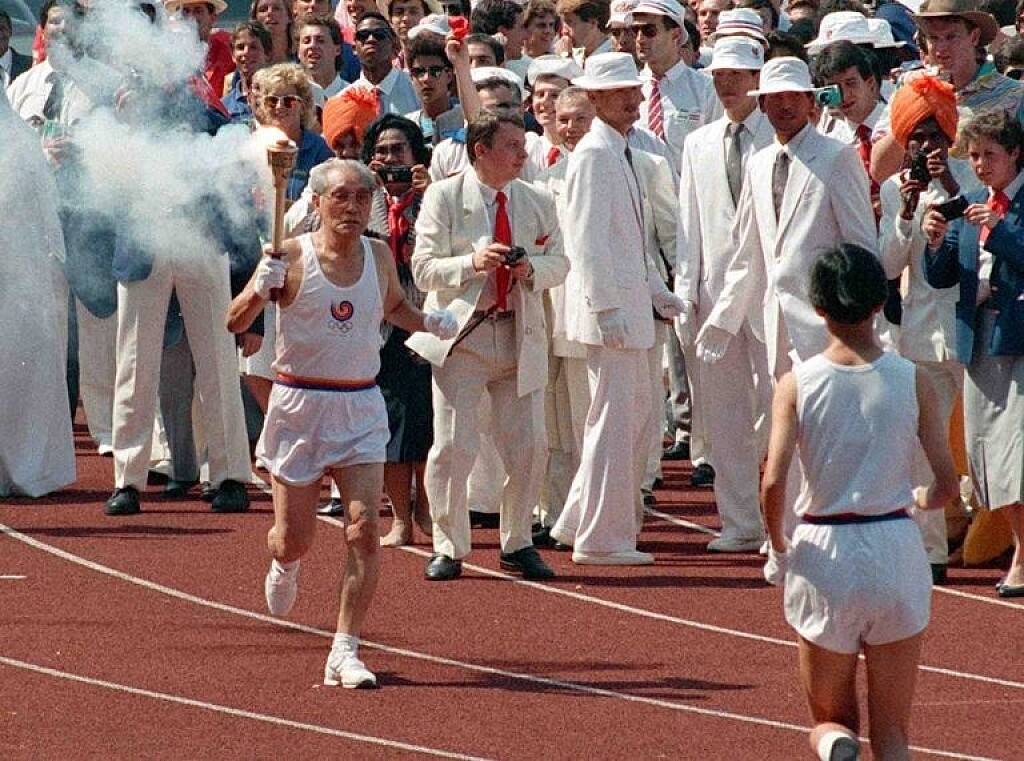
On September 17, 1988, 52 years after his Berlin triumph, the 76-year-old Sohn Kee-chung carried the Olympic torch into the stadium at the opening ceremony of the Seoul Olympics.
Think about what that moment represented.
In Berlin in 1936, he had stood on the Olympic podium beneath a foreign flag, unable to openly celebrate his victory as a Korean.
In Seoul in 1988, he entered an Olympic stadium carrying the flame for his own country.
The symbolism was almost impossible to miss.
The young runner who had once been forced to compete under the name Kitei Son was now an elderly Korean national hero, carrying the Olympic flame before his people.
He had spent more than five decades watching history slowly return his name to him.
Sohn Kee-chung died in November 15, 2002, aged 90, in Seoul, South Korea leaving behind far more than an Olympic medal. He left a story about athletic greatness, identity, dignity and resistance — a story in which a marathon victory became inseparable from the history of an entire nation.
His Berlin gold medal may have been officially recorded under Japan's name.
But in Korea, the champion was always Sohn Kee-chung.
And perhaps that is why the photograph of him standing on the podium, head bowed and the laurel wreath covering the Japanese emblem, remains so powerful.
He won the race in Berlin. But the world took decades to understand who had actually won it.
by Erick Cheruiyot for My Best Runs.
Login to leave a comment
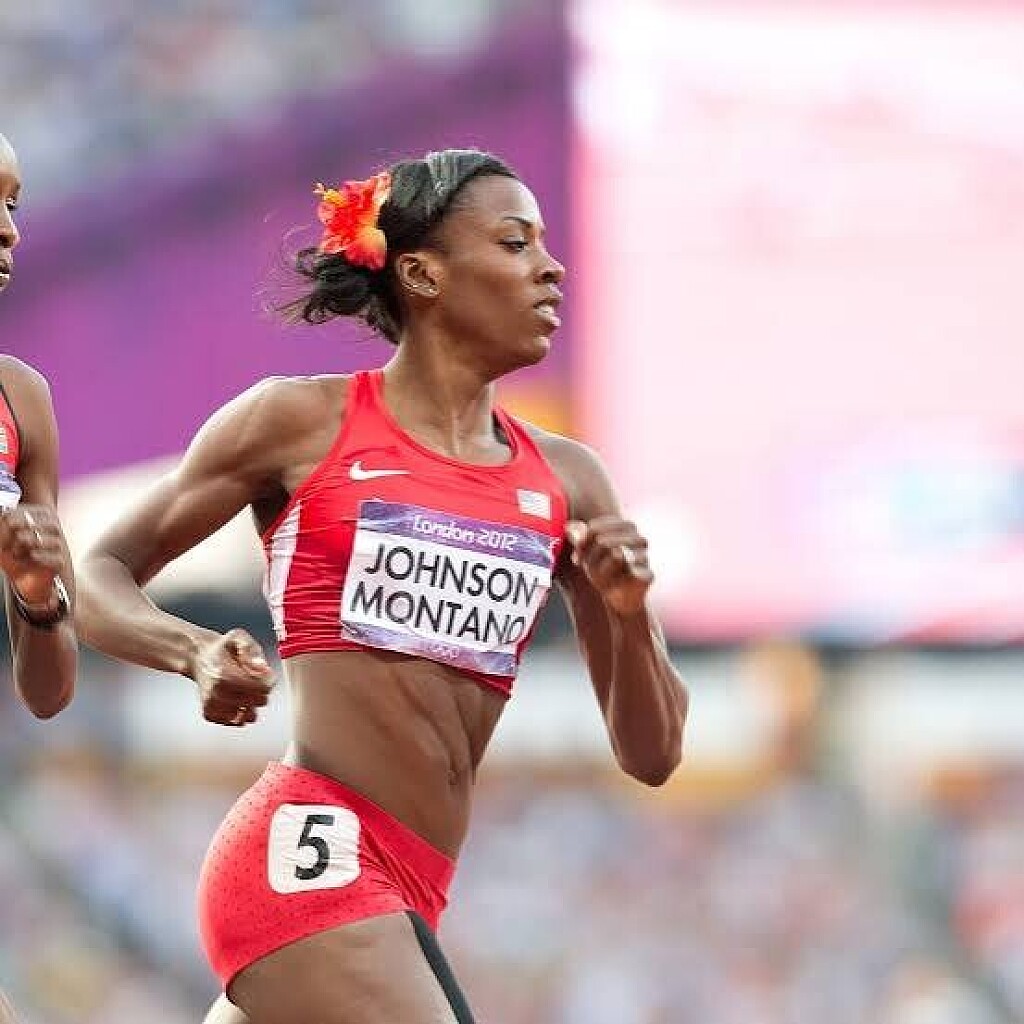
Olympic Justice Delayed: Alysia Montaño Finally Earns London 2012 Bronze After 14-Year Wait
Justice has finally caught up with one of the most controversial Olympic races in modern history.
Fourteen years after crossing the finish line in fifth place at the London 2012 Olympic Games, American middle-distance star Alysia Montaño has officially been awarded the Olympic bronze medal following the International Olympic Committee's latest medal reallocation.
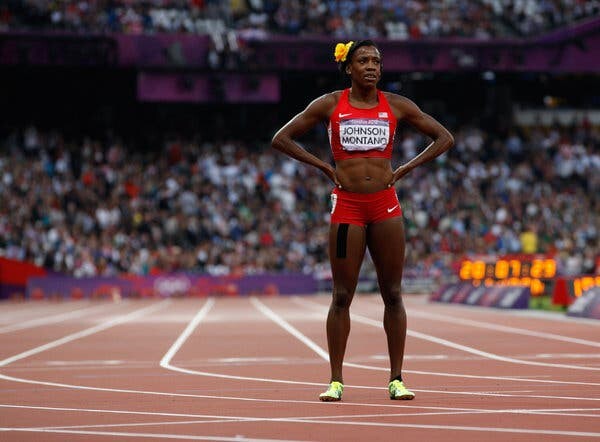
This week, the IOC Executive Board approved a revised set of results for the women's 800 metres, bringing another chapter of the event's long-running doping scandal to a close. South Africa's Caster Semenya remains the Olympic champion, while Kenya's Pamela Jelimo is elevated to the silver medal position. Montaño now claims the bronze medal she earned through clean competition.
The decision follows the disqualification of Yekaterina Guliyev, who represented Russia at the London Games under her maiden name, Yekaterina Poistogova. In 2024, the Court of Arbitration for Sport (CAS) ruled that Guliyev had committed anti-doping violations involving banned anabolic steroids. After her appeal was dismissed in May 2025, the IOC officially ratified the revised medal standings this week, making the changes final.
Guliyev's removal means three Russian athletes from the same Olympic women's 800m final have now been stripped of their results for doping offences. Mariya Savinova, the original gold medalist, was disqualified years earlier, while Elena Arzhakova also lost her result following anti-doping sanctions. The race has become one of the clearest examples of how widespread doping robbed clean athletes of their rightful Olympic moments.
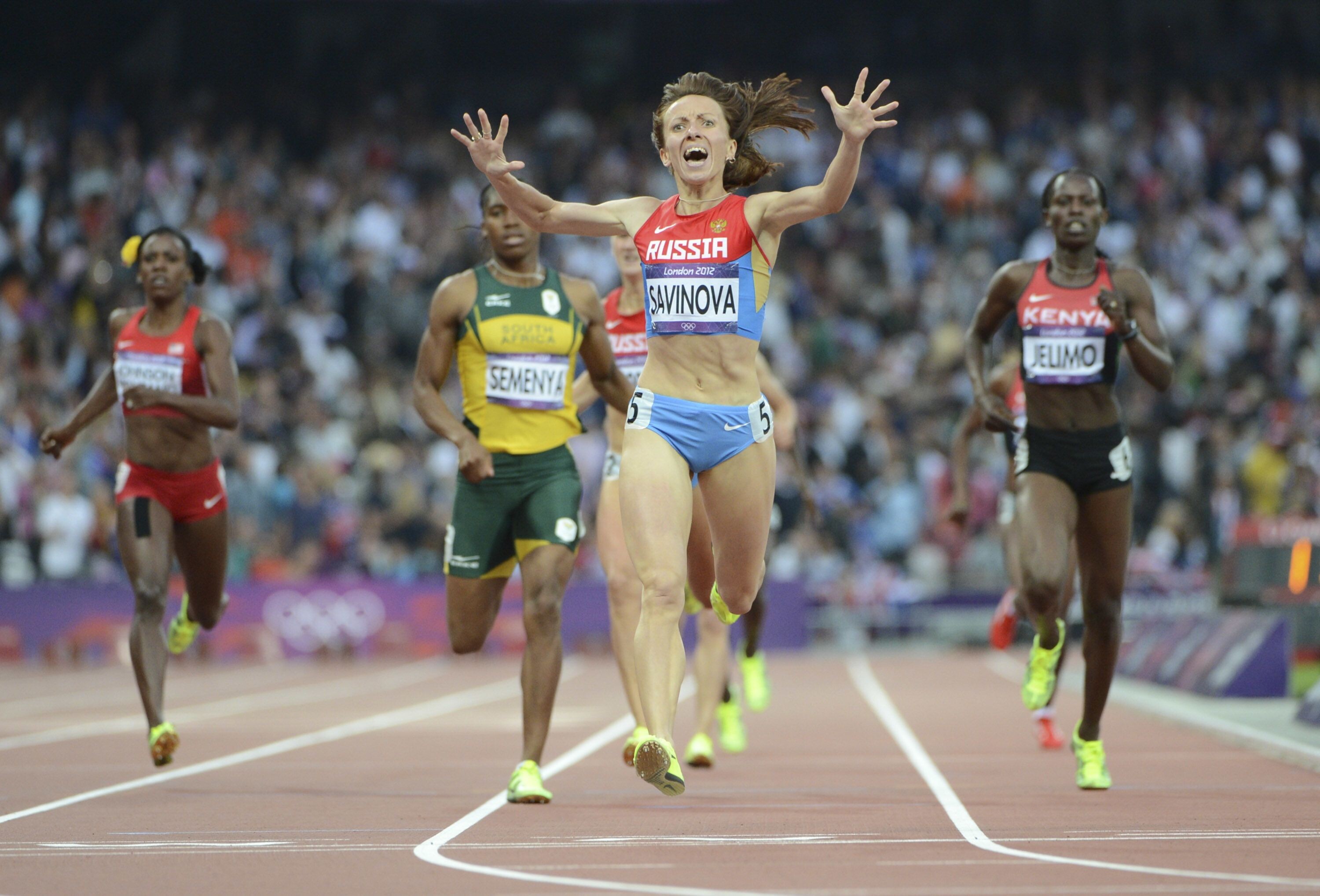
For Montaño, the medal is the reward for a courageous race. She boldly led the field through the opening 400 metres in 56.31 seconds before eventually finishing fifth as four athletes crossed the line ahead of her. Today, only two of those performances still stand.
Her promotion is also historically significant. Montaño becomes the first American woman to win an Olympic medal in the 800 metres since Kim Gallagher claimed bronze at the 1988 Seoul Olympics, ending a wait of more than three decades for the United States in the event.
Although the medal is finally hers, the years that have passed cannot restore the emotions of standing on the Olympic podium before a packed stadium and millions watching around the world. Montaño has often described the delayed recognition as both gratifying and heartbreaking—a victory that arrives without the unforgettable Olympic celebration every athlete dreams of.
Following the IOC's announcement, Montaño shared an emotional message on social media, celebrating the victory while acknowledging the long journey that still lies ahead before she finally receives her medal.
"Integrity and Truth always wins out. The IOC approved the medal reallocation ceremony at LA2028. More work to be done to ensure it's done right, but for now we celebrate one victory at a time. Swipe to see me patiently waiting till LA2028 to get my medal!"
Her message also revealed that the IOC has approved the medal reallocation ceremony to take place during the Los Angeles 2028 Olympic Games, giving Montaño the opportunity to finally receive her Olympic medal on one of sport's biggest stages. While nothing can replace the moment that was taken from her in London, the ceremony will provide long-overdue recognition of her achievement in front of the Olympic community.
Montaño's story serves as another powerful reminder that while anti-doping efforts can eventually correct the record books, justice delayed can never fully replace the memories, opportunities and emotions stolen from clean athletes.
Fourteen years after London 2012, the official results have finally been rewritten. Alysia Montaño is an Olympic bronze medalist at last—not because history changed, but because the truth finally caught up with it.
by Erick Cheruiyot for My Best Runs.
Login to leave a comment
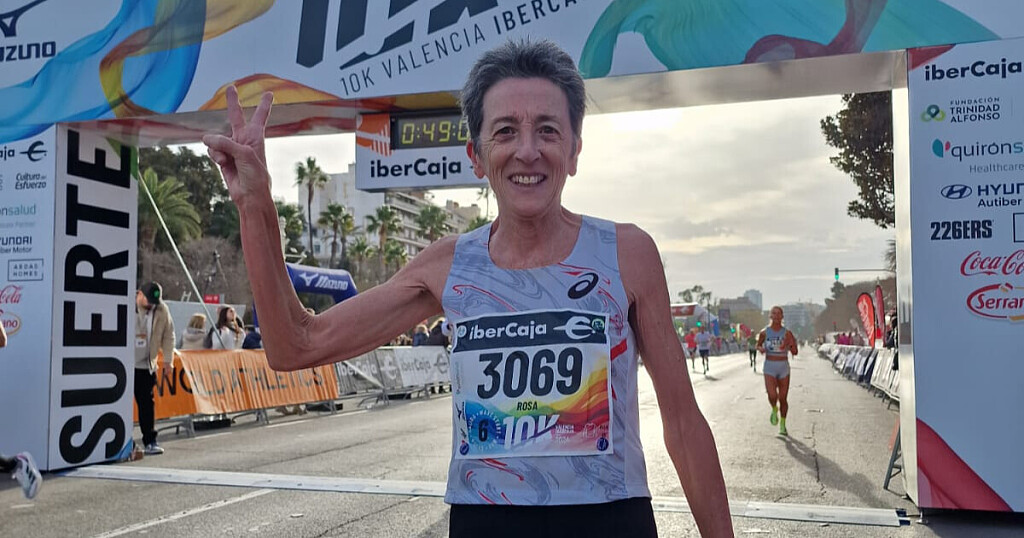
Rosa Mota: The Woman Who Refused to Accept Limits and Redefined Marathon Greatness
Long before women's distance running received the recognition it deserved, a young girl from the historic streets of Porto was quietly preparing to change the sport forever.
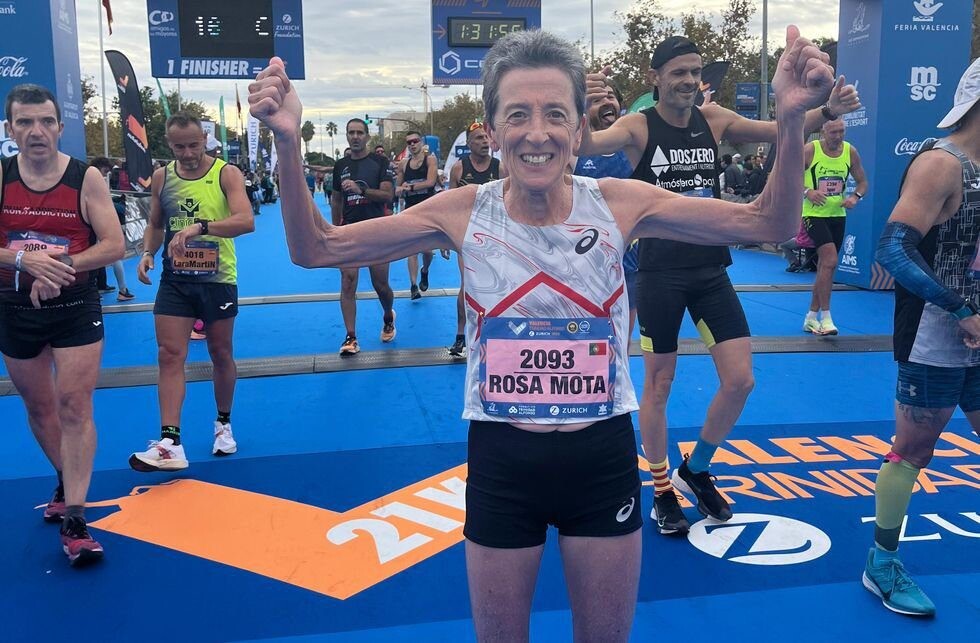
Born in the Foz Velha district of Portugal's second-largest city, Rosa Mota grew up battling asthma and sciatica—two conditions that might have convinced many that elite athletics was an impossible dream. In an era when opportunities for female athletes were scarce and expectations even lower, she was often reminded of her supposed limitations.
Rosa chose not to listen.
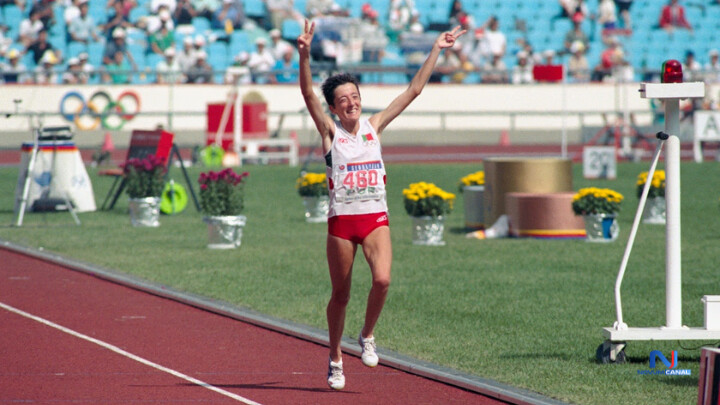
Instead, she ran.
She ran beyond the boundaries others placed around her. She ran beyond pain. She ran beyond doubt. And in doing so, she became one of the greatest marathon runners the world has ever known.
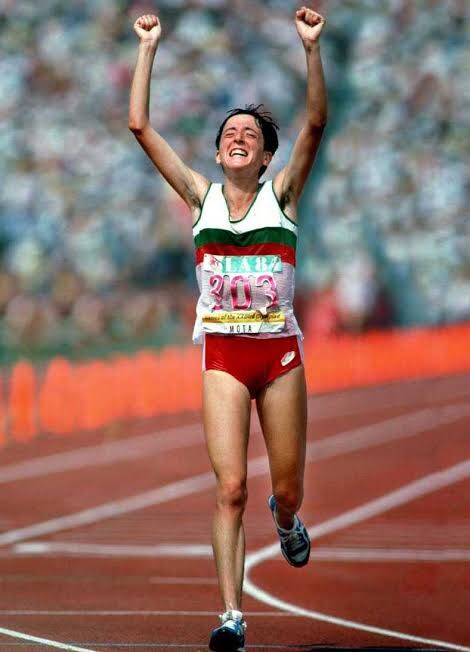
When the inaugural women's marathon was introduced at the 1982 European Championships in Athens, few outside Portugal expected Rosa Mota to be a contender. The race featured some of the finest distance runners of the era, including Norway's legendary Ingrid Kristiansen.
By the end of the race, expectations had been shattered.
Mota stormed to victory, announcing herself on the international stage and beginning a reign that would redefine women's marathon running. It was not merely a breakthrough win—it was the arrival of a champion whose influence would extend far beyond medals and records.
What made Rosa extraordinary was not overwhelming physical dominance. Her greatness stemmed from something deeper: an unbreakable resilience, remarkable tactical intelligence, and an ability to perform under the highest pressure. She carried herself with calm confidence, but beneath that calm was an iron determination that competitors found impossible to match.
Over the next decade, Mota assembled one of the most remarkable résumés in athletics history.
She became European champion, World champion, and Olympic champion—a combination no other woman has ever held simultaneously in the marathon. Her crowning achievement arrived at the 1988 Olympic Games in Seoul, where she produced a masterclass in championship racing.
With just two kilometres remaining, Mota launched a perfectly timed surge that left her rivals with no answer. She crossed the finish line 13 seconds clear of the field, securing Olympic gold and becoming the first Portuguese woman in history to win an Olympic title.
The victory elevated her from national hero to global icon.
Her success did not stop there.
In 1990, she captured her third Boston Marathon title, further cementing her status among the sport's elite. Later that same year, she defended her European Championship crown in Split in dramatic fashion. After building a commanding lead, she was gradually reeled in by Soviet athlete Valentina Yegorova. Yet when the race entered its decisive moments, Mota found another gear and held on to win by five seconds.
The triumph made history.
No athlete—male or female—had ever won three European marathon titles. Rosa Mota became the first.
Numbers alone illustrate the scale of her dominance. During a remarkable ten-year period, she contested 21 marathons and won 14 of them. Consistency at such a level is almost unheard of, particularly in an event as demanding as the marathon.
The sport itself eventually delivered its verdict.
The Association of International Marathons and Distance Races honoured Mota as the greatest female marathon runner of all time, a distinction reflecting not only her achievements but also the profound impact she had on the development of women's distance running worldwide.
Yet despite her accomplishments, her name is not always mentioned as frequently as some of her male contemporaries. It is one of the lingering injustices of sporting history: many pioneering women achieved greatness equal to any champion, yet their stories often received far less attention.
Rosa Mota deserves to be remembered among the sport's immortals.
Even after retiring from elite competition, she never drifted far from running. She carried the Olympic flame through Athens in 2004, received the prestigious Abebe Bikila Award for her contributions to long-distance running, and continued competing well into her sixties.
Remarkably, age did little to slow her down.
She won the Macau Mini Marathon multiple times and later set a world record for the women's 65–69 age category over 10,000 metres, proving that the spirit which drove her to Olympic glory never faded.
Today, a sports pavilion in Porto proudly bears her name—a fitting tribute to a woman whose achievements transcended generations.
Rosa Mota's story is not simply about medals, records, or championships. It is a story of perseverance. A story of breaking barriers when few believed they should be broken. A story of showing up, year after year, race after race, regardless of the obstacles.
Some champions are remembered because they were loud.
Others are remembered because they changed history.
Rosa Mota did both through the power of her performances alone.
She was a pioneer. She was a trailblazer. She was an Olympic champion.
And for many, she remains the greatest female marathon runner the sport has ever seen.
by Erick Cheruiyot for My Best Runs.
Login to leave a comment
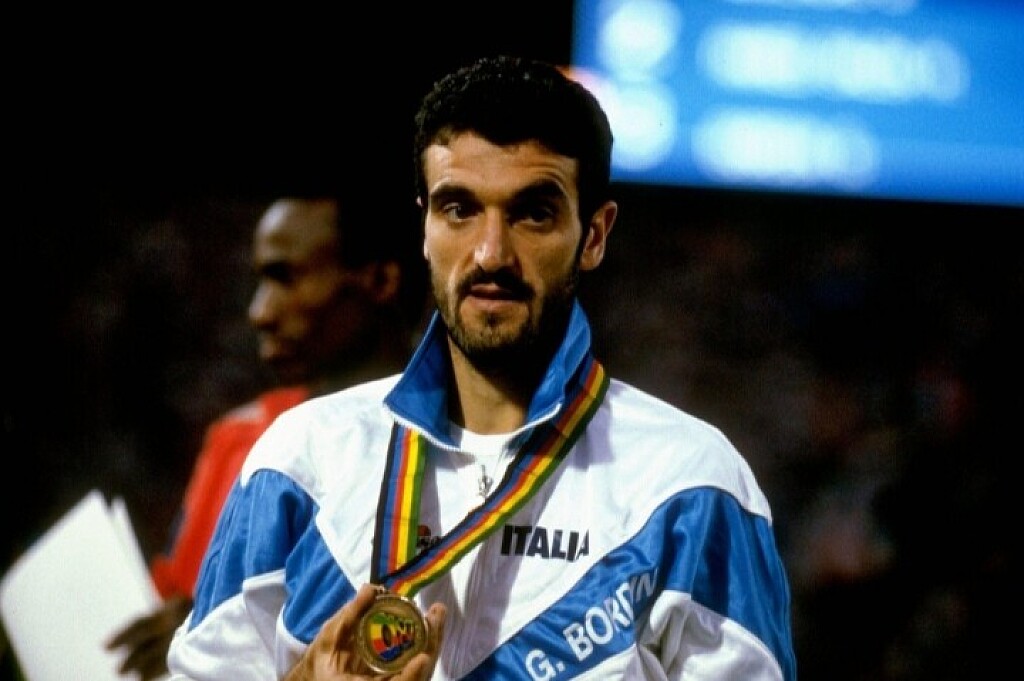
Gelindo Bordin: The Quiet Runner Who Chased Down Immortality
Not every sporting legend arrives wrapped in noise and spectacle. Some emerge gradually, almost unnoticed at first, built not on flamboyance but on resilience, discipline, and an unshakable belief in endurance. That was the essence of Gelindo Bordin — a man whose greatness unfolded not in dramatic declarations, but stride by stride across the unforgiving roads of marathon racing.
Long before Olympic glory found him, Bordin was simply a determined young runner from Vicenza, training with little indication that history was quietly preparing a place for his name. There was nothing theatrical about his rise. His running carried a calm rhythm, patient and controlled, yet beneath that composure lived a relentless competitive spirit waiting for the right stage to reveal itself.

That revelation began in earnest at the 1986 European Championships in Stuttgart. The marathon unfolded like a battle of endurance against fatigue, and Bordin mastered it with remarkable maturity. He did not dominate through reckless aggression; instead, he absorbed the suffering better than everyone else. As rivals faded in the closing stages, the Italian surged toward gold, announcing himself as one of the finest marathon runners of his generation.
A year later came another defining examination at the 1987 World Championships in Rome. The brutal heat transformed the race into a test of survival, punishing every tactical mistake. While others attacked too early, Bordin ran with restraint and intelligence, conserving both energy and composure for the decisive final kilometres. When exhaustion consumed the field after 35 kilometres, he moved forward with clinical precision, earning a hard-fought bronze medal that showcased not only physical strength, but extraordinary patience and tactical discipline.
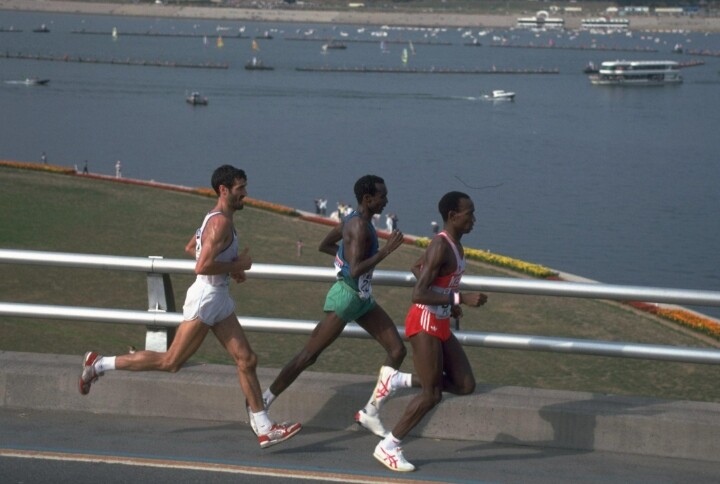
Yet it was at the 1988 Olympic Games in Seoul where Gelindo Bordin elevated himself from elite athlete to eternal icon.
The Olympic marathon began cautiously, with Bordin sitting quietly among the leading pack, unreadable and composed. As the race intensified beyond the halfway mark, the contenders gradually separated themselves from the rest. By the closing stages, only three men appeared capable of winning Olympic gold: Bordin, Kenya’s Douglas Wakiihuri, and Djibouti’s Ahmed Salah.
Then came the moment that seemed to decide the race.
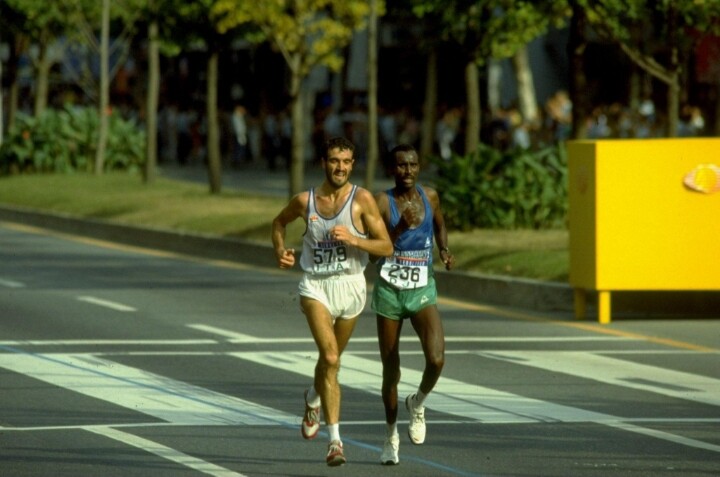
Ahmed Salah launched a ferocious acceleration, dragging Wakiihuri with him and opening a painful gap on the Italian. The marathon appeared settled. Spectators believed Bordin was fading toward bronze, honourable but beaten. The leaders looked gone.
But greatness often reveals itself in the darkest kilometres of a marathon.
Somewhere inside the agony of those final moments, Bordin discovered reserves that defied logic. He began clawing his way back with astonishing determination, reducing the gap metre by metre. First he reeled in Wakiihuri. Then he hunted down Salah himself. And once he surged into the lead, there was no hesitation left in him.
With less than a kilometre remaining, Gelindo Bordin was no longer merely competing for victory — he was running into history.
He crossed the finish line as Olympic champion, becoming the first Italian ever to win Olympic gold in the marathon. It remains one of the most courageous comeback victories the event has ever witnessed, a masterpiece forged through patience, timing, and refusal to surrender.
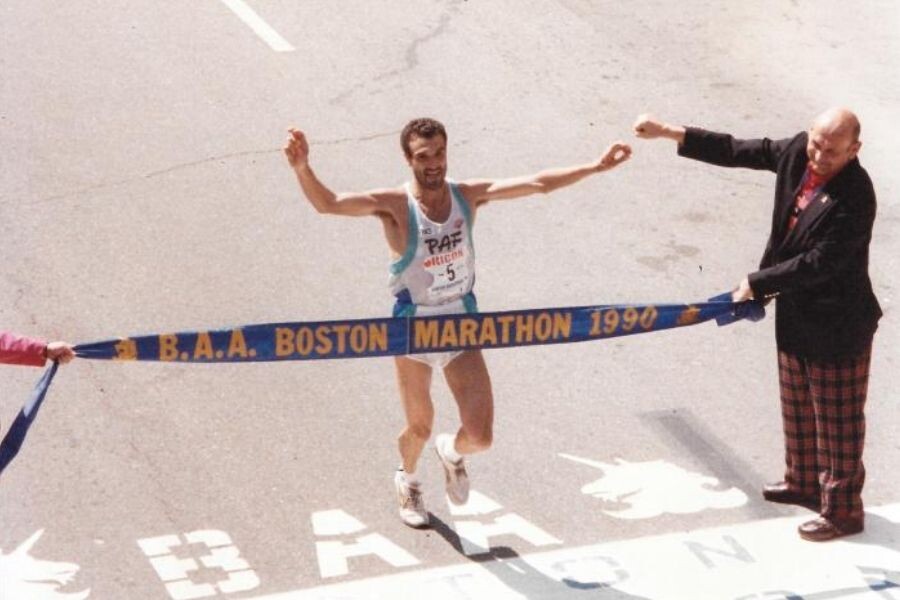
Bordin’s excellence did not end in Seoul. In 1990, he defended his European marathon title, becoming the first athlete in history to achieve that feat. That same year, he conquered the legendary Boston Marathon, a triumph he later described as the second-greatest performance of his career. Battling cold winds and the relentless demands of the Boston course, he delivered another unforgettable display of strength and tactical brilliance.
To this day, Gelindo Bordin remains the only athlete ever to win both the Olympic marathon and the Boston Marathon — a distinction that elevates his legacy into truly rare territory.
Like every great endurance athlete, however, his journey eventually encountered heartbreak. Tokyo brought disappointment. Barcelona in 1992 brought something even more painful: a groin injury that shattered his hopes of defending his Olympic crown midway through the race. Soon after, Bordin stepped away from professional competition.
His retirement carried the same quiet dignity that had defined his running career. He did not leave the sport defeated. He left it complete.
What endures most about Gelindo Bordin is not merely the medals or records, but the spirit behind them. His story is a timeless reminder that patience can become a weapon, that resilience often matters more than spectacle, and that the calmest competitors sometimes produce the loudest echoes in sporting history.
In an era that often celebrates noise, Gelindo Bordin proved that true greatness can still arrive in silence — and run straight into immortality.
by Erick Cheruiyot for My Best Runs.
Login to leave a comment
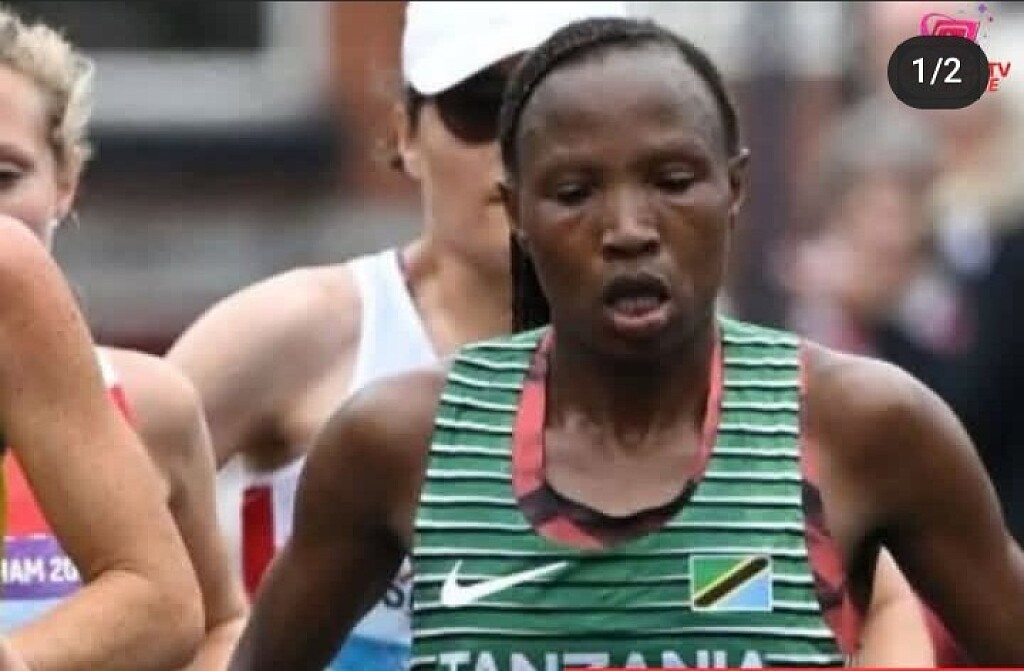
Ten-Year Ban Rocks Tanzanian Athletics as Jackline Sakilu Sanctioned for Doping Violations
In a development that has sent shockwaves across the African distance running community, Tanzanian marathoner Jackline Sakilu has been handed one of the most severe doping sanctions in recent years—a 10-year ban from competition by the Athletics Integrity Unit (AIU).
The ruling, which took effect on September 17, 2025, follows a comprehensive investigation that confirmed the presence of multiple prohibited substances linked to testosterone in the athlete’s system. The substances identified—Androsterone, Etiocholanolone, 5α-Adiol, and 5β-Adiol—are recognized metabolites indicative of exogenous testosterone use, constituting a clear violation under anti-doping regulations aligned with the World Anti-Doping Agency (WADA) code.
Sakilu, 39, had built a reputation as one of Tanzania’s leading marathon figures, highlighted by her victory at the Chongqing Marathon in China, where she clocked an impressive 2:21:27 under demanding heat and humidity. That performance, along with all her competitive results dating back to June 29, 2024, has now been officially annulled as part of the sanction.
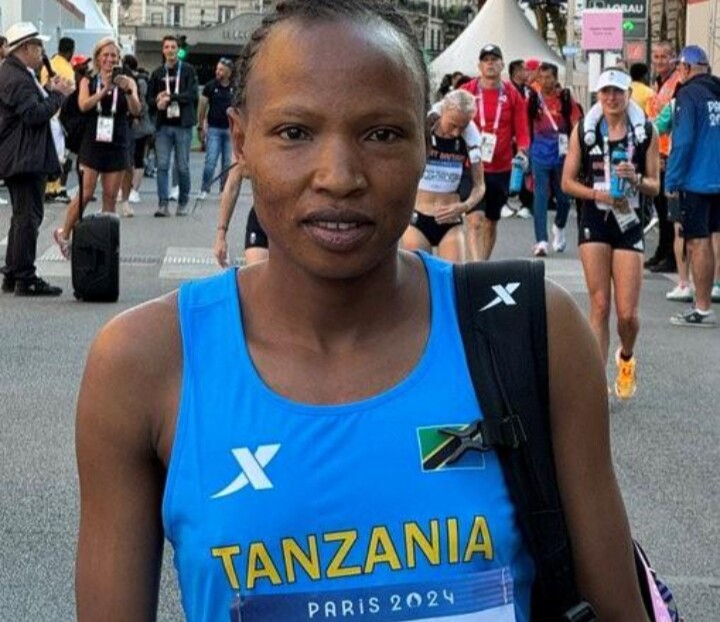
According to the AIU’s findings, multiple samples collected in both South Korea—during the Seoul Marathon—and in Arusha, Tanzania, tested positive for the banned substances. The consistency of the results reinforced the conclusion that the substances originated externally rather than naturally.
In her defense, Sakilu cited the use of common medications, including Ibuprofen and Prednisolone. However, these explanations were dismissed by investigators, who found no scientific link between the medications and the prohibited compounds detected. Furthermore, she did not possess a Therapeutic Use Exemption (TUE), weakening her case significantly.
The AIU classified the violation as aggravated, citing repeated use of banned substances over an extended period. This determination ultimately led to the imposition of the maximum-length sanction, sidelining Sakilu from the sport until 2035. In addition to the ban, she faces the forfeiture of titles, prize money, and rankings accumulated during the affected period.
The case stands as a stark reminder of the sport’s ongoing battle to uphold integrity and fairness. While Sakilu’s achievements once symbolized resilience and competitive excellence, this ruling redefines her legacy within a cautionary narrative that underscores the consequences of breaching anti-doping rules.
As global athletics continues to tighten its enforcement mechanisms, this decision reinforces a clear and uncompromising message: the future of the sport depends on clean competition, transparency, and unwavering accountability.
by Erick Cheruiyot for My Best Runs.
Login to leave a comment
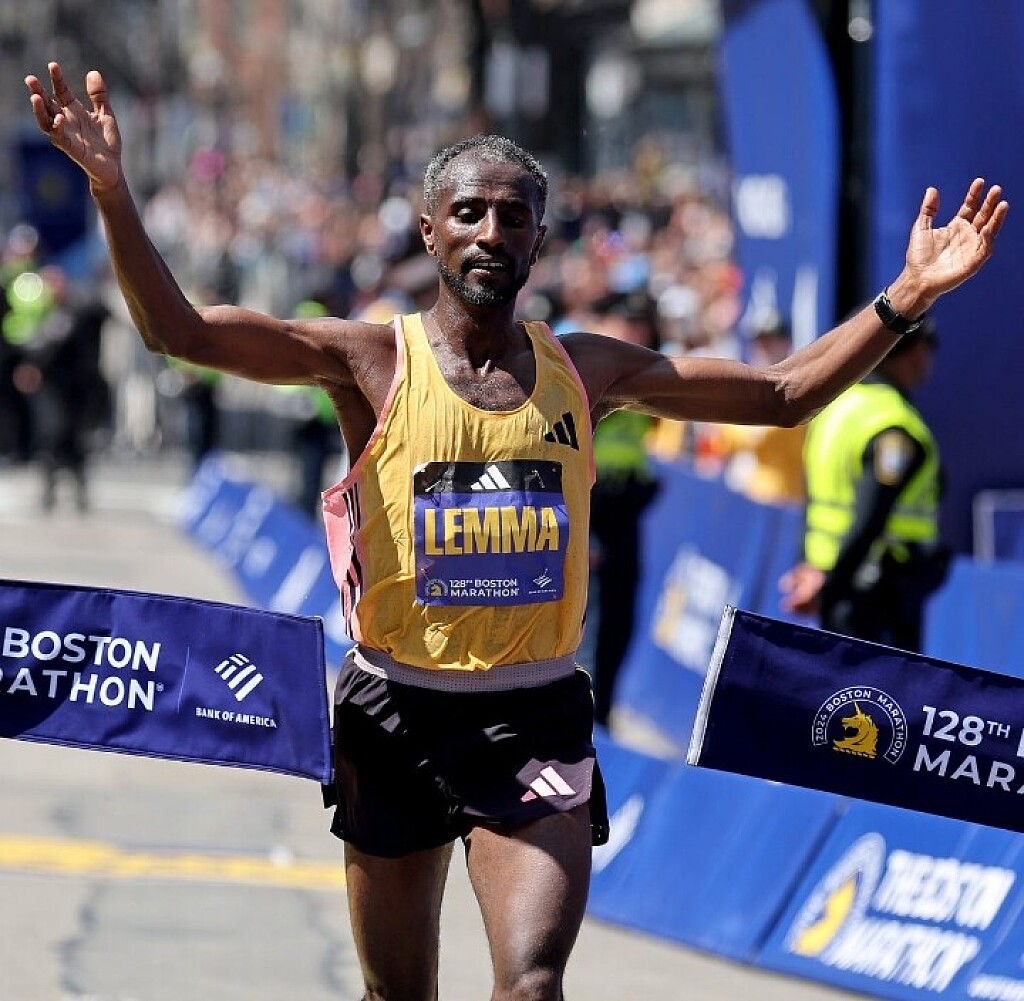
Sisay Lemma Headlines Powerful Elite Field as Seoul Marathon 2026 Promises High-Speed Showdown
The stage is set for a thrilling contest at the Seoul Marathon as a world-class men’s field prepares to race through the streets of the South Korean capital on Sunday, March 15, 2026. With a deep lineup featuring some of the fastest marathoners on the planet, the race is expected to deliver a captivating battle between seasoned champions and emerging contenders.
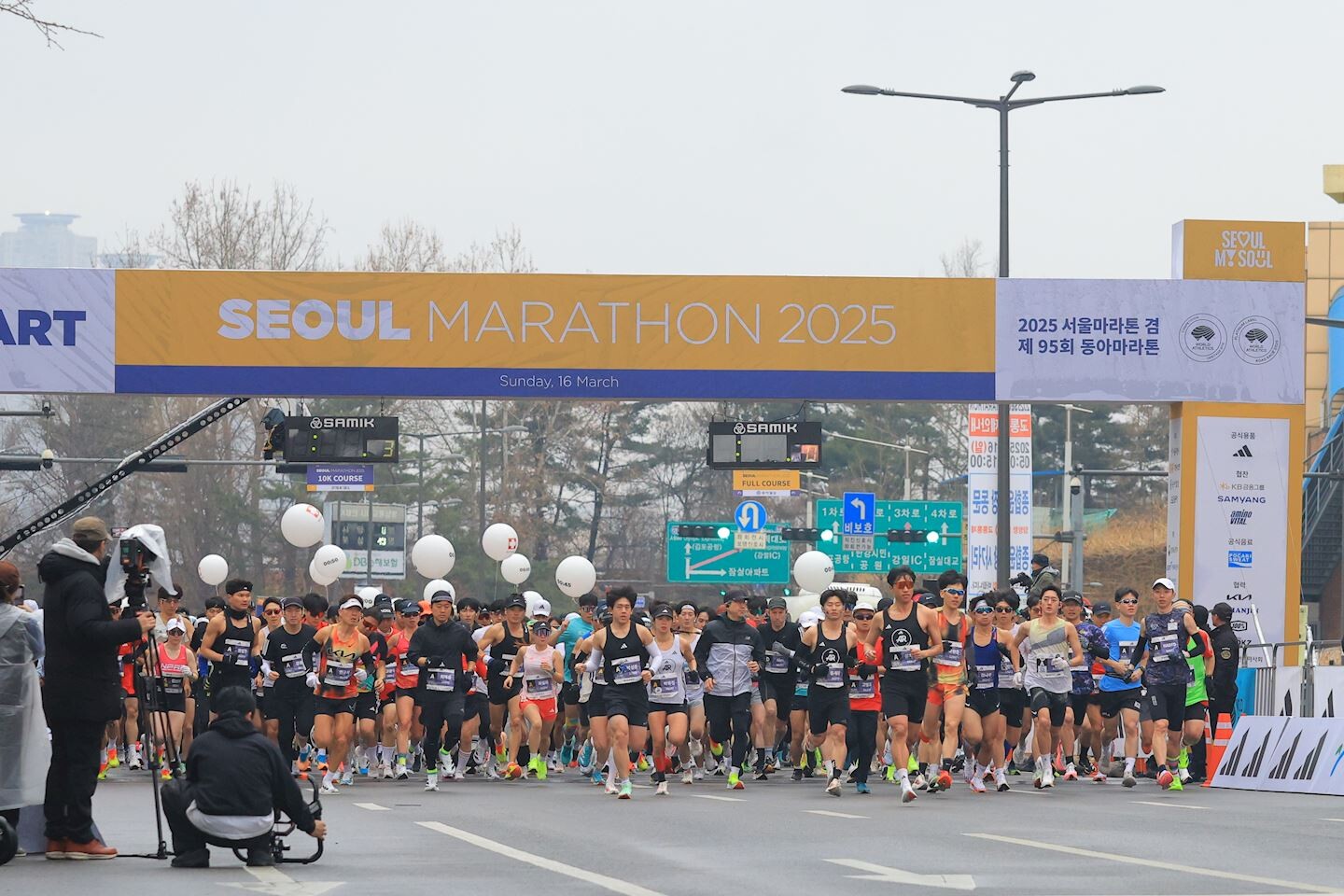
The marathon will begin at 7:30 a.m. local time in Seoul (KST). Fans around the world will tune in at different hours to follow the action: 1:30 a.m. in Kenya and Ethiopia (EAT), 11:30 p.m. on Saturday in Central Europe (CET), 3:30 p.m. Saturday on the U.S. West Coast (PST), and 9:30 a.m. Sunday in Australia’s east coast (AEDT) across Oceania.
Leading the field is Ethiopian marathon star Sisay Lemma, who enters the race as one of the clear favorites. With an impressive personal best of 2:01:48, Lemma has established himself among the world’s elite marathoners and arrives in Seoul with the kind of form capable of producing a very fast race.
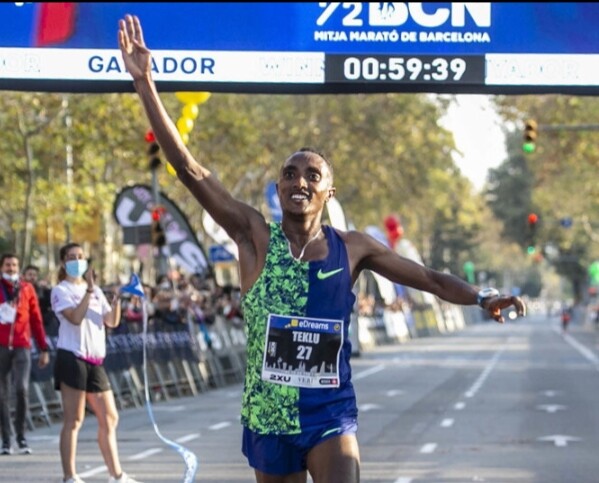
Standing in his path is defending champion Haftu Teklu, who returns determined to defend the title he captured last year. Teklu, whose personal best stands at 2:04:42, proved his strength on these roads before and will be eager to repeat that success.
Another major threat is Getaneh Molla, the winner of the prestigious Dubai Marathon in 2019. Molla’s outstanding 2:03:34 personal best highlights his ability to sustain an aggressive pace, making him one of the most dangerous competitors in the field.
Also in Ethiopia’s strong contingent is Tsegaye Getachew, known for consistent results across Europe, including strong performances at the Amsterdam Marathon and the Lisbon Marathon. With a personal best of 2:04:18, he remains firmly within striking distance of the leading contenders.

Kenya’s challenge will be spearheaded by experienced runners such as Sammy Kirop and Nick Kitundu, both capable of competing for podium positions. Their presence is reinforced by a strong Kenyan lineup that includes Enock Kinyamal, Gilbert Kibet, Collins Kipkurui, Edmond Kipngetich, and Felix Kipkoech, forming a deep and competitive squad.
Another intriguing entrant is Ethiopian athlete Haftamu Abadi, who enjoyed an impressive season last year with victories at the Vienna City Marathon and the Ljubljana Marathon. His appearance in Seoul marks his first marathon race in Asia, adding another layer of excitement to the elite contest.
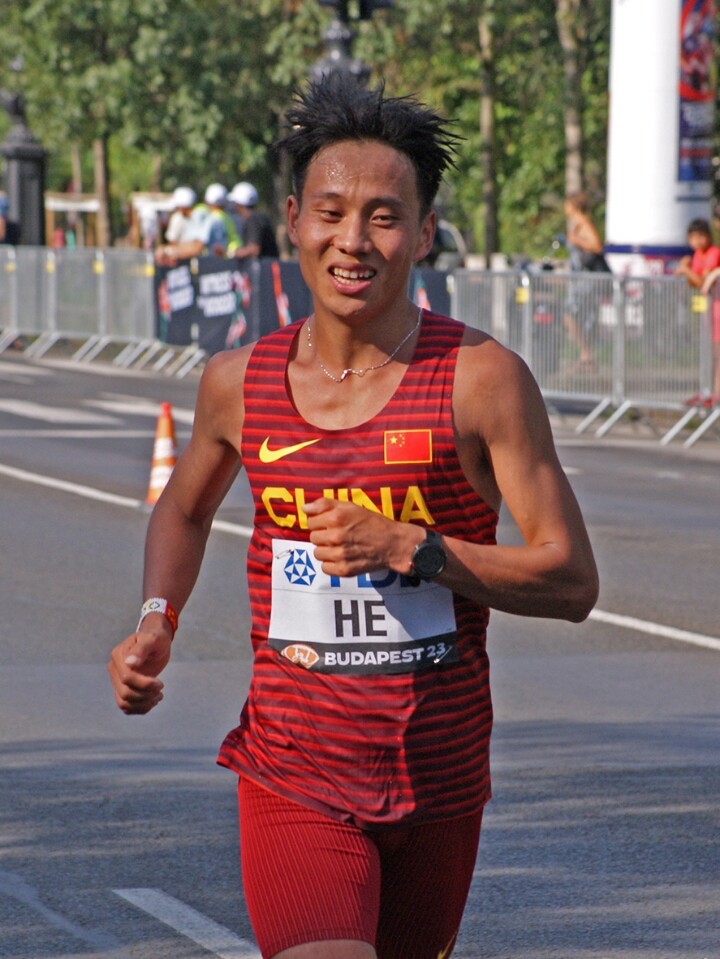
The race also highlights the growing global reach of marathon running, with athletes such as Japan’s Daisuke Uekado and China’s Jie He representing the host region.
With proven champions, hungry challengers, and a course historically known for fast times, the 2026 Seoul Marathon promises a gripping contest from start to finish. As the world’s elite converge on Seoul, the question remains: who will seize the moment and conquer one of Asia’s most prestigious marathons?
by Erick Cheruiyot for My Best Runs.
Login to leave a comment

Seoul International Marathon
The only marathon hosted in the heart of the Korean capital. Seoul marathon is the oldest marathon race hosted in Asia andis one of the fastestmarathon in the world. First held in 1931, Seoul marathon is the oldest marathon eventcontinuously held in Asia, and the second oldest in the world followingthe Boston Marathon. It embodies modern history of Korea, also...
more...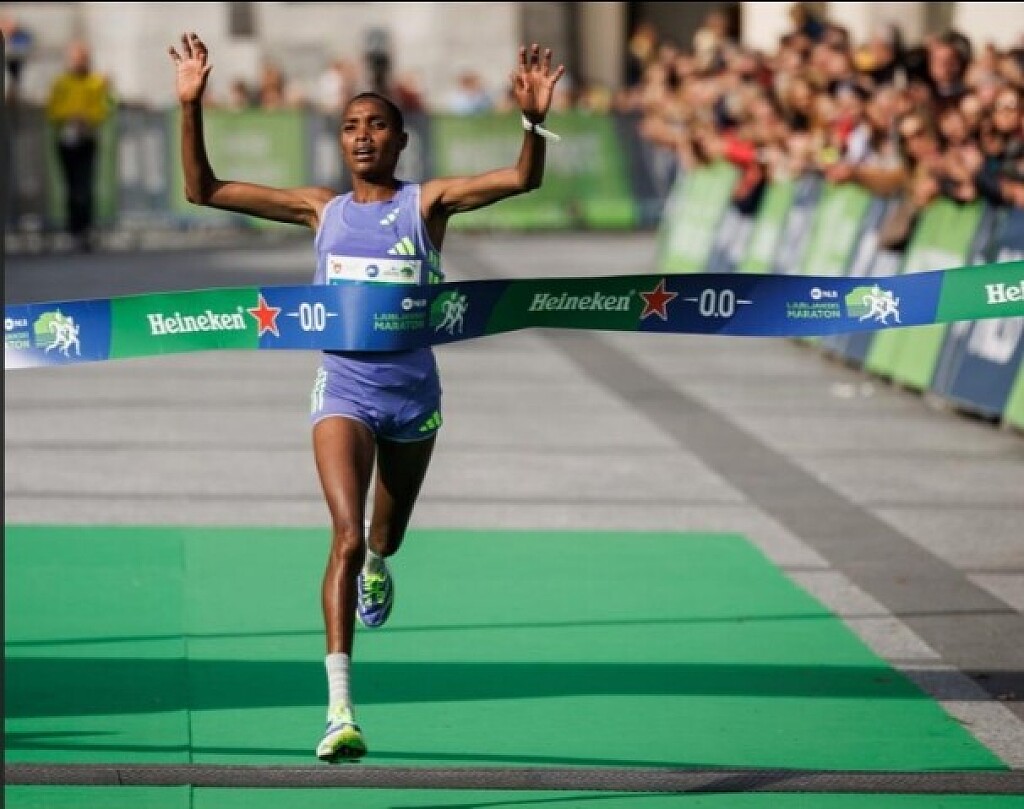
Tele Braces for Fierce Duel with Ethiopian Trio at Seoul Marathon
Kenyan marathoner Joyce Chepkemoi Tele is set to line up at the prestigious Seoul Marathon on March 15, 2026, in Seoul, South Korea, where she will face a formidable international field in one of Asia’s most respected road races.
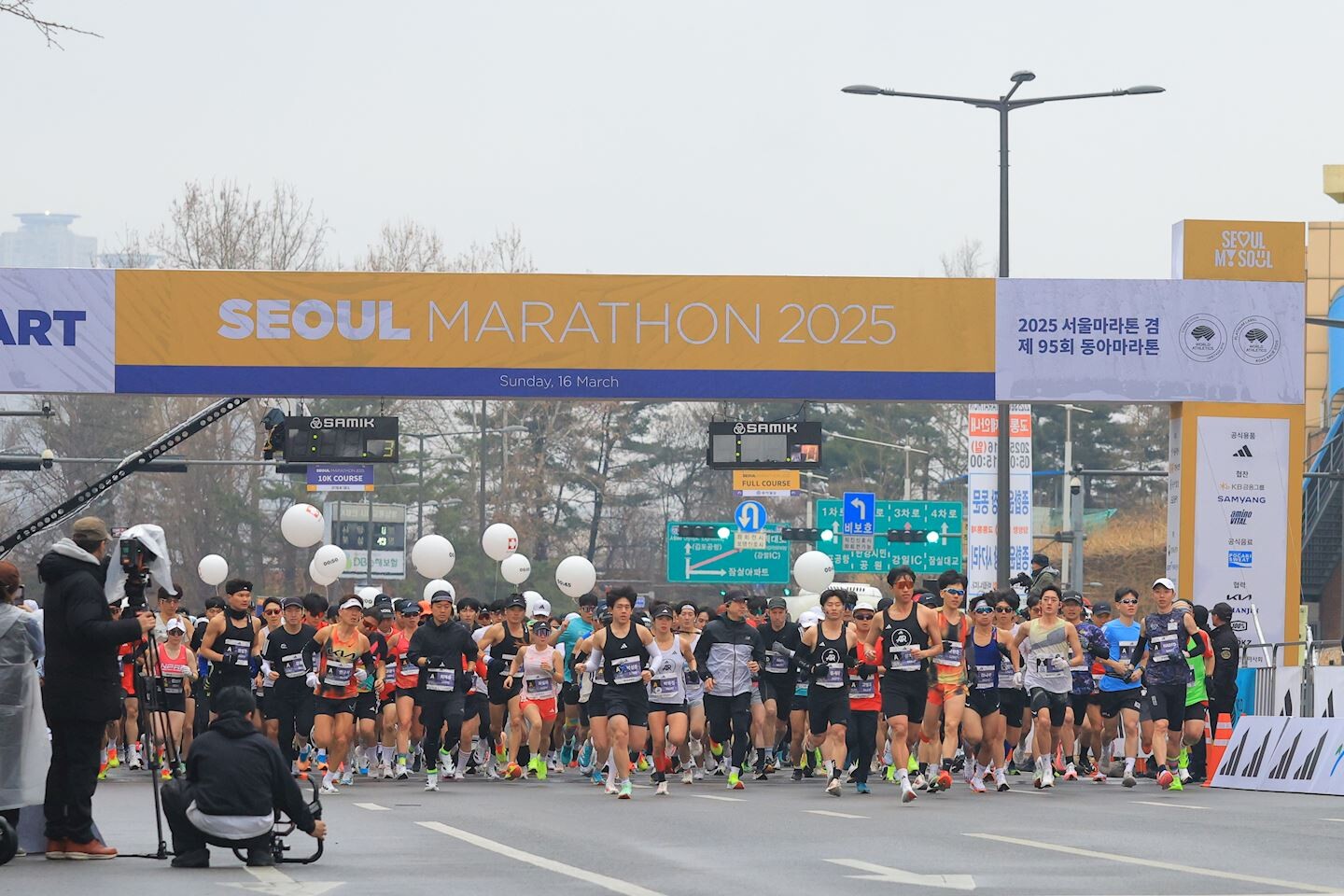
Tele, who holds a personal best of 2:20:17, heads into the race aiming to challenge some of the strongest marathon specialists on the circuit. The Kenyan has steadily built a reputation as a resilient and consistent performer over the classic distance, and the Seoul streets could provide the perfect stage for another major breakthrough.
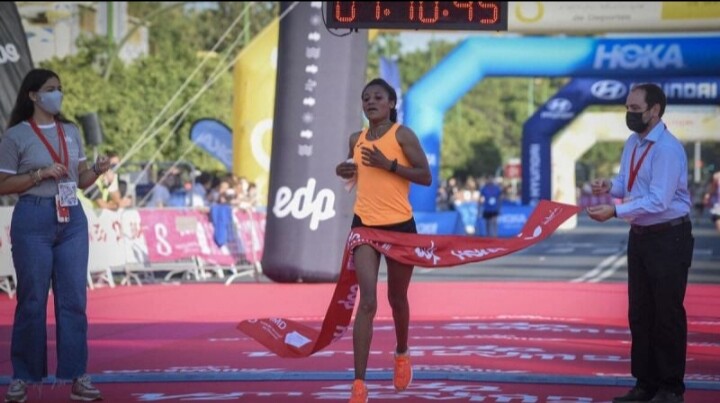
Awaiting her is a highly competitive lineup led by Ethiopia’s Tiruye Mesfin, the fastest entrant on paper with a personal best of 2:18:35. Mesfin’s experience and speed make her one of the clear favorites heading into the race.
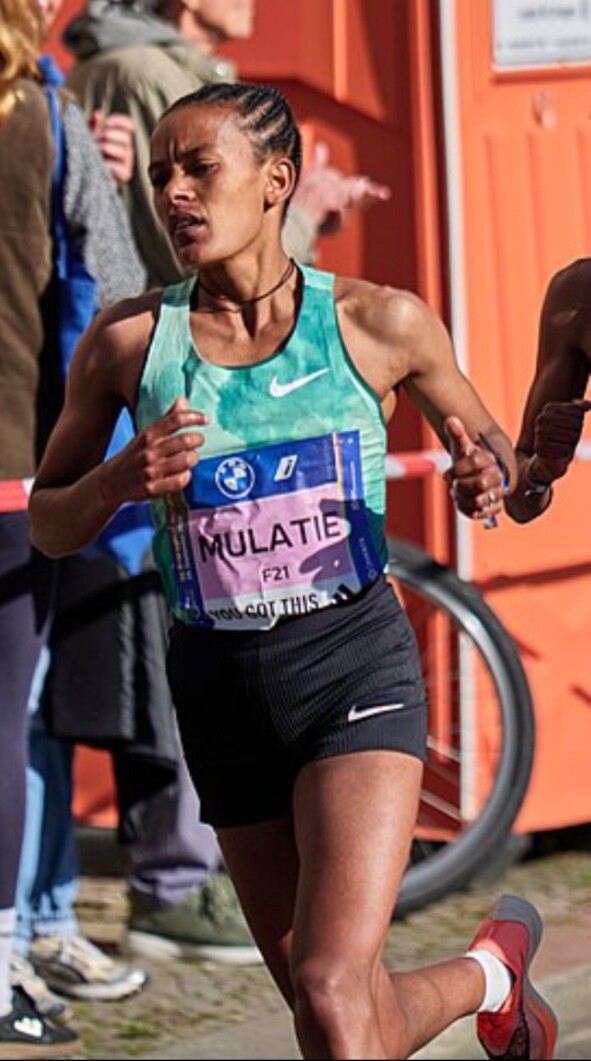
Another strong Ethiopian contender is Bosena Mulatie, who owns a 2:19:06 lifetime best and has demonstrated impressive strength in major city marathons. She will be joined by compatriot Bekelech Gudeta, whose personal best of 2:20:59 places her firmly among the athletes capable of shaping the outcome of the race.
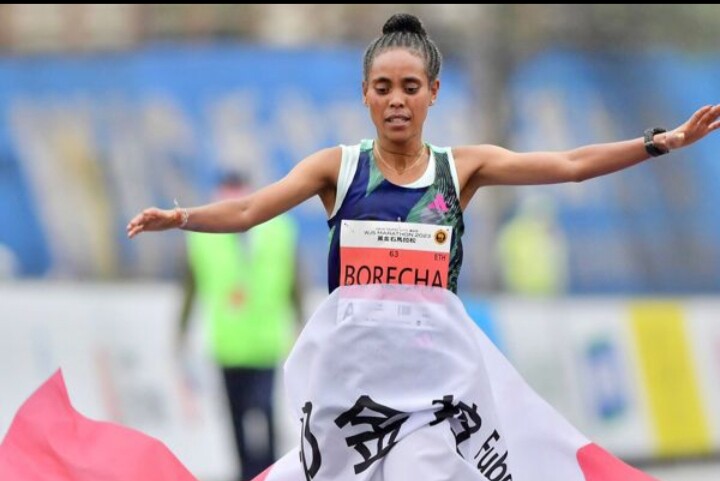
With several athletes clustered around the 2:18–2:26 range, the women’s race is expected to be fiercely contested from the early stages. The traditionally fast course in Seoul has often produced high-quality performances, especially when the pace is aggressive and weather conditions cooperate.
Elite Women’s Start List (PBs)
1. Bekelech Gudeta (Ethiopia) — 2:20:59
2. Tiruye Mesfin (Ethiopia) — 2:18:35
3. Bosena Mulatie (Ethiopia) — 2:19:06
4. Haven Hailu (Ethiopia) — 2:19:17
5. Joyce Chepkemoi Tele (Kenya) — 2:20:17
6. Zinash Gerado (Ethiopia) — 2:21:05
7. Anchelem Haymanote (Ethiopia) — 2:23:23
8. Meseret Gebre (Ethiopia) — 2:23:11
9. Betelihem Yemer (Ethiopia) — 2:23:20
10. Ayinadis Teshome (Ethiopia) — 2:25:50
11. Kebebush Yisma (Ethiopia) — 2:24:04
12. Medina Deme (Ethiopia) — 2:25:09
13. Wu Bing (China) — 2:25:01
14. Monica Chebet (Kenya) — 2:26:30
For Tele, the race represents an opportunity to measure herself against some of the finest marathon runners in the world while continuing to elevate Kenya’s strong presence on the global marathon stage. If the pace unfolds favorably, the Kenyan star could find herself in the thick of the battle as the race heads into its decisive closing kilometers.
As anticipation builds ahead of the March showdown, the women’s contest at the Seoul Marathon promises to deliver a thrilling clash between East Africa’s elite distance runners, with pride, prestige, and potentially fast times on the line.
by Erick Cheruiyot for My Best Runs.
Login to leave a comment
Seoul International Marathon
The only marathon hosted in the heart of the Korean capital. Seoul marathon is the oldest marathon race hosted in Asia andis one of the fastestmarathon in the world. First held in 1931, Seoul marathon is the oldest marathon eventcontinuously held in Asia, and the second oldest in the world followingthe Boston Marathon. It embodies modern history of Korea, also...
more...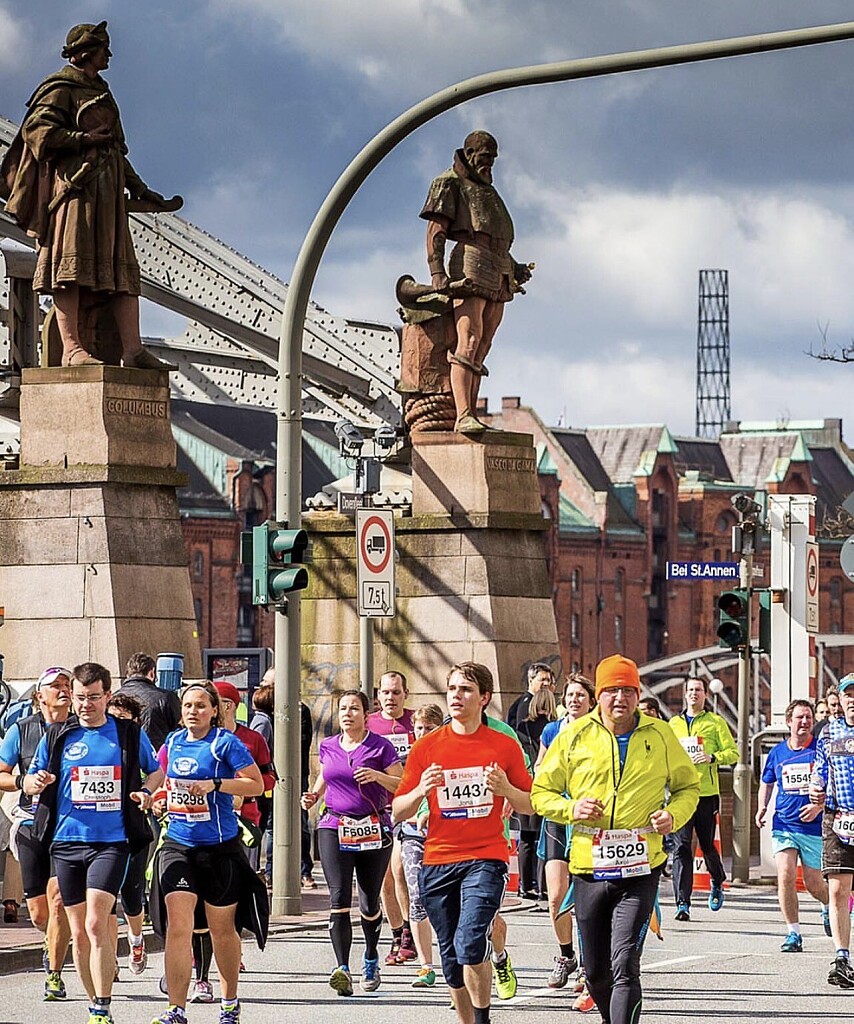
Bernard Koech Returns to Lead World Class Field at the 40th Haspa Marathon Hamburg Germany
The Haspa Marathon Hamburg in Germany returns on April 26 for its 40th edition and once again the race has assembled a powerful international field. Two time champion Bernard Koech (Kenya) headlines the event and will attempt to remain unbeaten on the streets of Hamburg.
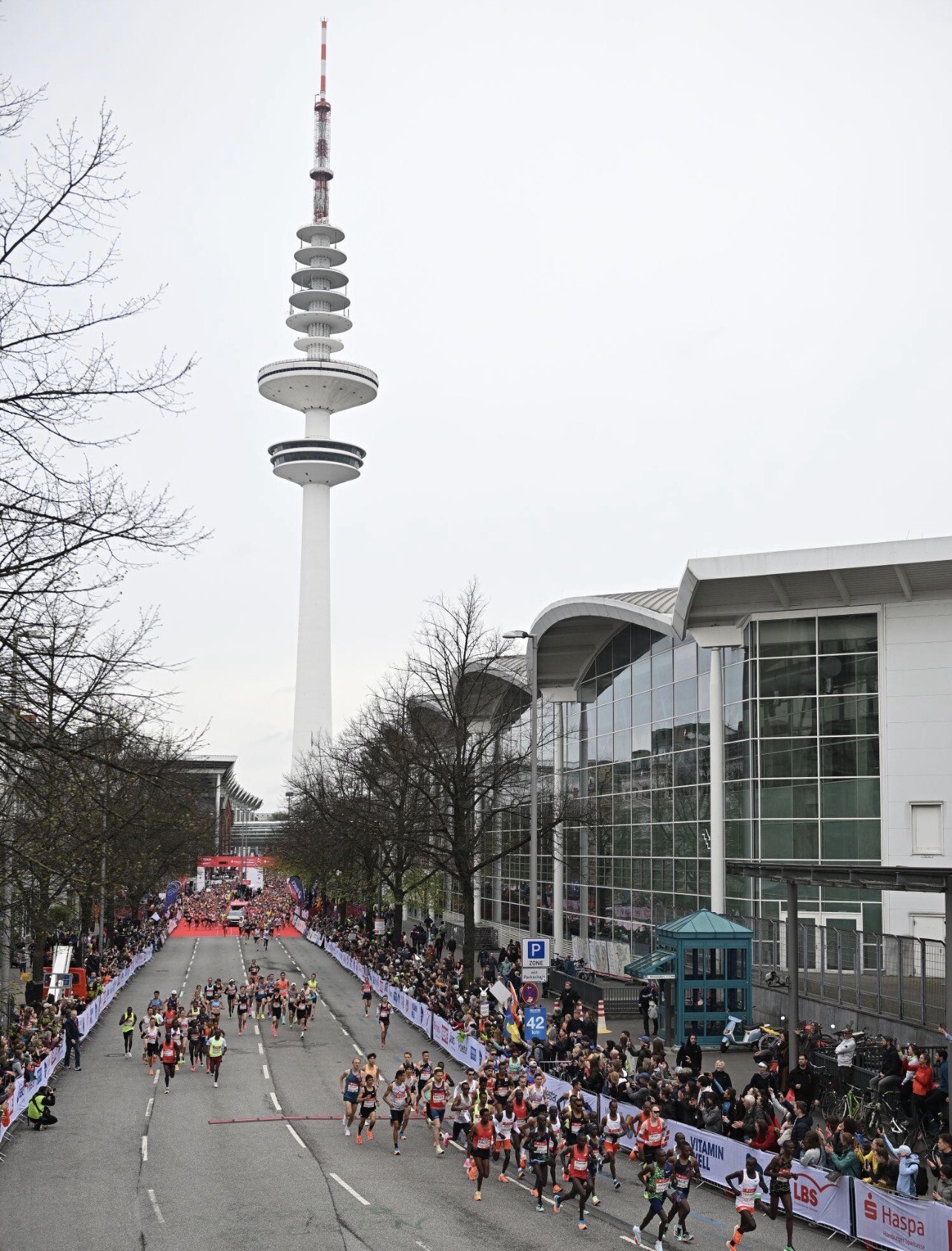
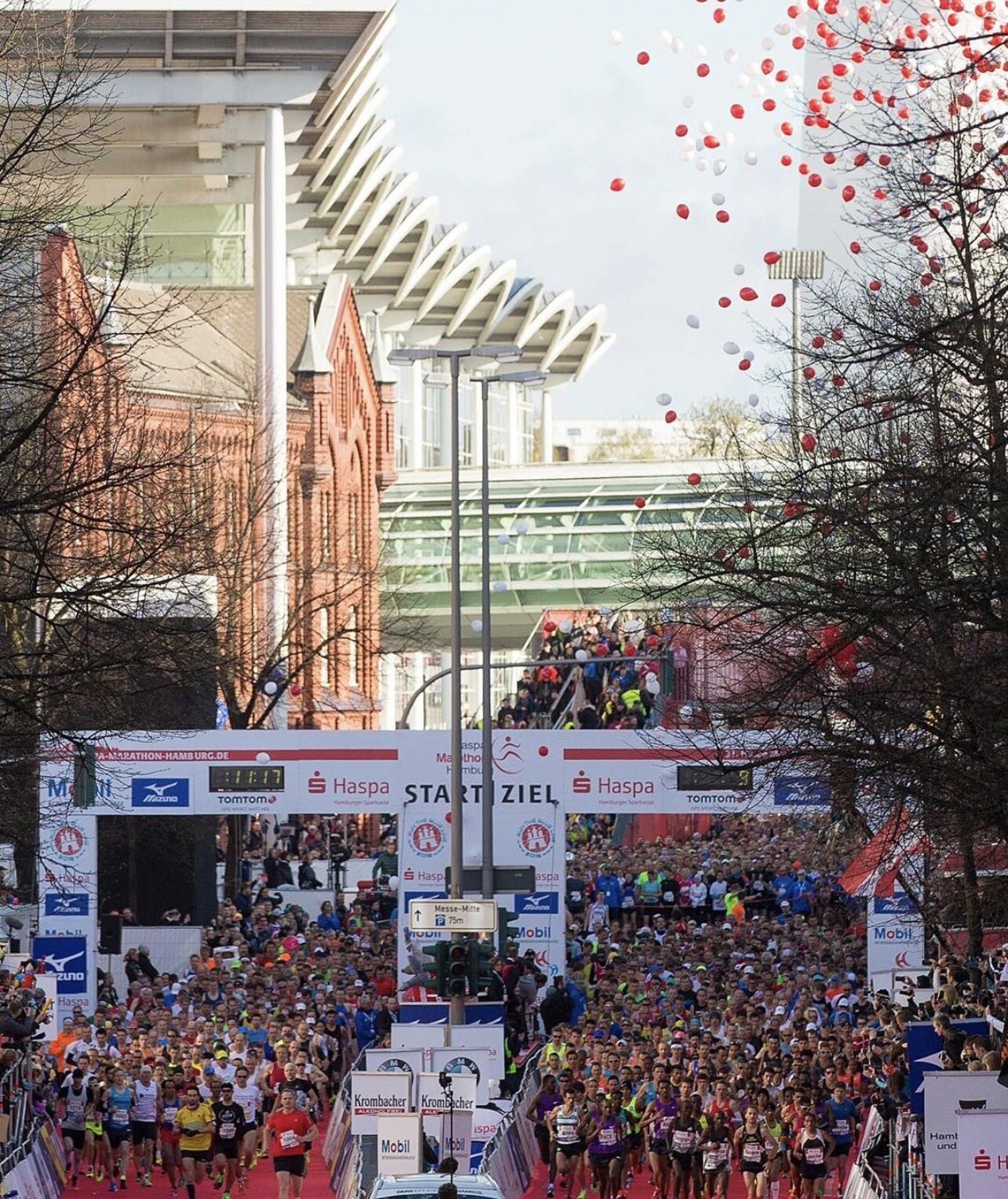
Over the past few years Hamburg has quietly become one of Europe’s fastest and most consistent marathon stages. In 2025 it surprisingly produced the strongest overall performances among Germany’s major marathons, reflecting the event’s continued rise. Organizers expect approximately 20,000 runners for this milestone edition.
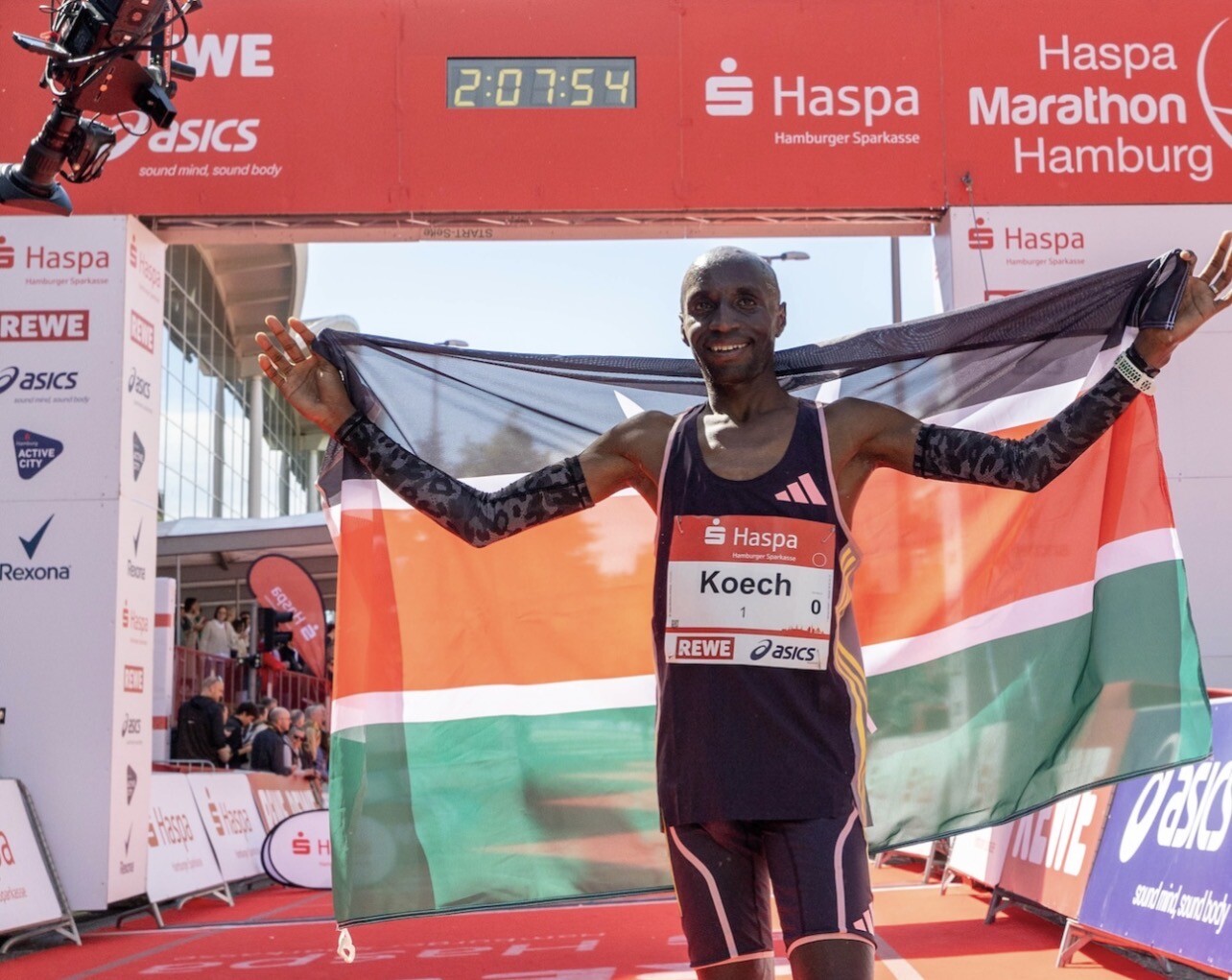
Chief organizer Frank Thaleiser said he is confident the 40th running will continue that momentum and produce another high quality race.
Bernard Koech Kenya

At 38 Koech returns to a course that has brought out his very best. He won here in 2023 in 2:04:09 which equals his personal best and followed that victory with another title in 2024 in 2:04:24. Hamburg clearly suits his rhythm and strength.
Last spring he placed third at the Seoul Marathon in 2:05:50 confirming he remains a serious contender on the global stage. A third consecutive victory in Hamburg would further cement his legacy at this race.
Stephen Kissa Uganda
Stephen Kissa (Uganda) returns to the site of his breakthrough marathon performance. In 2022 he finished second by just one second in his debut clocking 2:04:48 which at the time was a Ugandan national record and remains his personal best.
Hamburg’s flat profile and supportive crowds clearly fit Kissa’s style and he will arrive with confidence.
Abdisa Tola Ethiopia
Ethiopia’s Abdisa Tola (Ethiopia) adds further depth. The 25 year old won his marathon debut in Dubai in 2:05:42 in 2023 and ran 2:05:52 for third in Osaka last year. The younger brother of Olympic marathon champion Tamirat Tola he has both pedigree and proven speed to challenge for victory.
Samuel Fitwi Germany
Germany’s leading hope is Samuel Fitwi (Germany). He finished 15th at the Olympic Games and later broke the German national record in Valencia with 2:04:56. Although that record has since changed hands it remains his personal best and confirms his ability to compete at the highest level.
Fitwi said he is looking forward to racing the jubilee edition in Hamburg where strong local support could provide an extra lift.
Also on the elite start list are Sebastian Hendel (Germany) who improved his personal best to 2:07:33 after first breaking 2:10 in Hamburg and Aaron Bienenfeld (Germany) who will make his marathon debut after running 61:15 at the Houston Half Marathon earlier this year.
With a flat layout ideal spring conditions and a deep international field the 40th Haspa Marathon Hamburg Germany is positioned to deliver another memorable performance on April 26. A proven champion returns experienced challengers are back and emerging talent is ready to test itself on one of Europe’s fastest marathon stages.
by Race News Service
Login to leave a comment
Haspa Marathon Hamburg
The HASPA MARATHON HAMBURG is Germany’s biggest spring marathon and since 1986 the first one to paint the blue line on the roads. Hamburcourse record is fast (2:05:30), the metropolitan city (1.8 million residents) lets the euphoric atmosphere spill over and carry you to the finish. Make this experience first hand and follow the Blue Line....
more...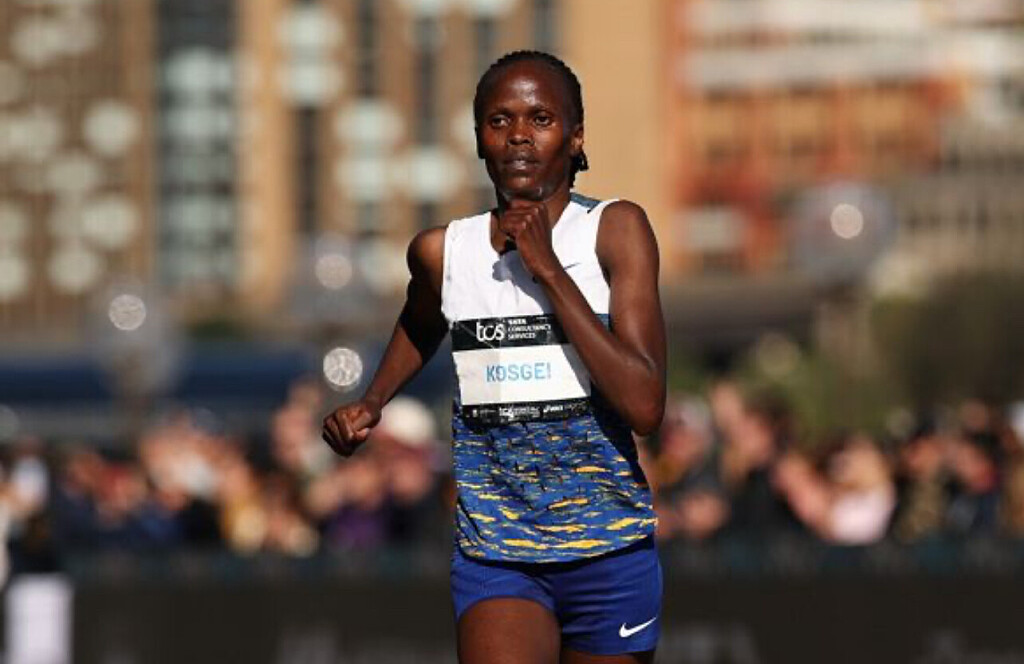
Stacked Fields Set for Sunday’s Shanghai Marathon as Kosgei and Kipchumba Return
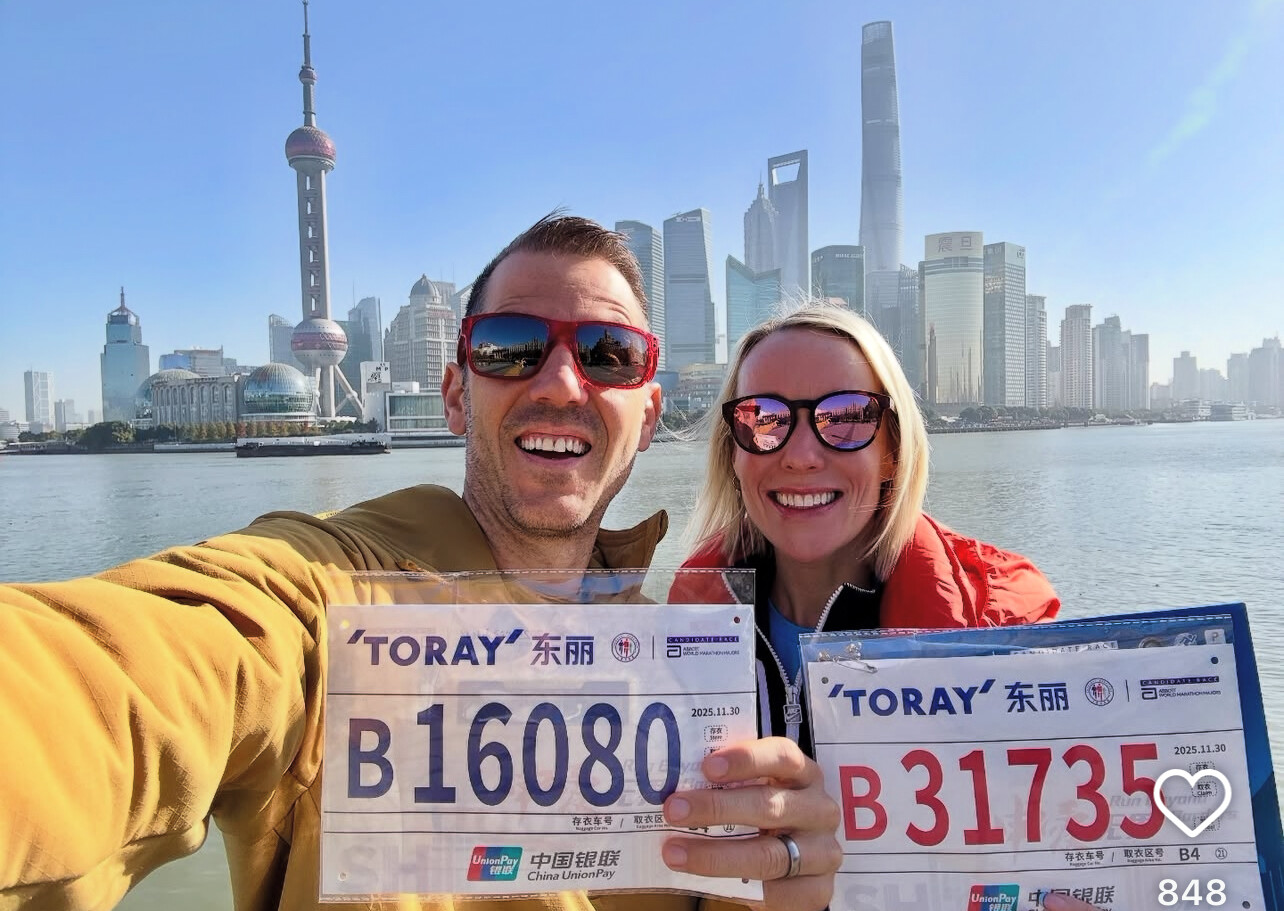
The 2025 Shanghai Marathon — a World Athletics Platinum Label event — is set for Sunday (30), and both the women’s and men’s races are shaping up as some of the strongest in the event’s history. Former world record-holder Brigid Kosgei and defending men’s champion Philimon Kiptoo Kipchumba headline a deep international lineup chasing fast times on one of Asia’s premier courses.
The mass start field in Shanghai will once again deliver the energy and depth that has become a signature of this Platinum Label event, with tens of thousands of runners pouring through the city streets behind one of the strongest elite line-ups of the season. Local club runners, age-group veterans, first-time marathoners, and international amateurs will all share the course with the world’s best, creating a fast, colorful, and highly competitive atmosphere from start to finish.
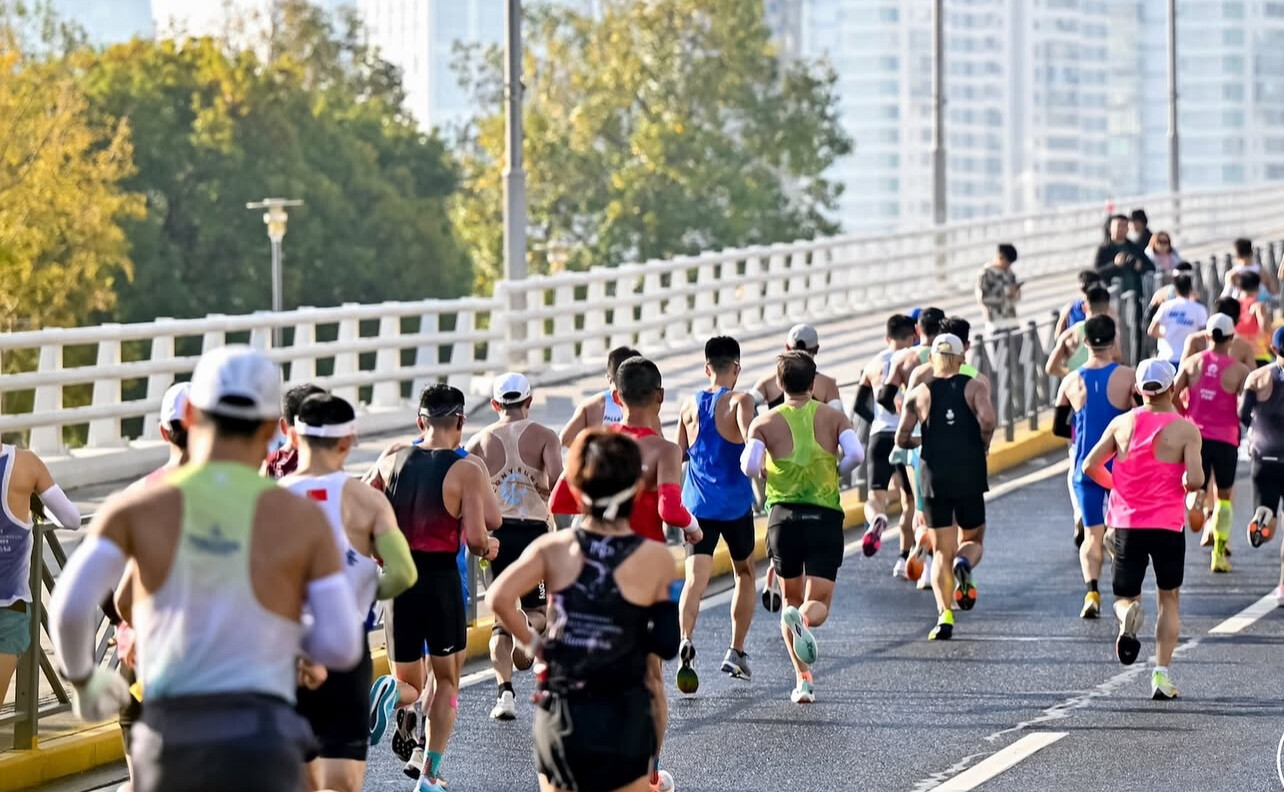
With ideal late-November conditions expected and Shanghai’s reputation for producing personal bests, the mass field is poised for another year of standout performances and unforgettable marathon moments.
Kosgei Targets First Win in Two Years — and a Course Record
Brigid Kosgei, whose 2:14:04 stood as the world record from 2019 to 2023, lines up for her third marathon of the year. The 31-year-old Kenyan has been consistently sharp in 2025—second in Hamburg (2:18:26) and again in Sydney (2:18:56).
A victory in Shanghai would be her first since Abu Dhabi 2023, but the stakes go beyond winning:
• The course record stands at 2:20:36 (Yebrgual Melese, 2018).
• Pacers have been asked to roll out at 2:17:50 pace, fast enough to challenge both the course mark and the Chinese all-comers’ record (2:18:09 by Ruti Aga, 2023).
Kosgei will not be alone. Two sub-2:20 performers stand in her way:
• Irine Cheptai (KEN) — PB 2:17:51, coming off strong runs in Chicago and Boston.
• Tiruye Mesfin (ETH) — PB 2:18:35, part of Ethiopia’s long history of dominance here.
Ethiopian women have won 10 of the last 14 editions, and Mesfin leads their charge again.
China brings a serious contender as well.
• Zhang Deshun, the No. 3 all-time Chinese marathoner (2:20:53 at Tokyo), returns just two weeks after winning the National Games.
Add in Bekelech Gudeta (ETH) — who won marathons in Seoul and Mexico City this year — and the women’s race becomes one of the most competitive in Shanghai’s history.
Four Sub-2:04 Ethiopians Lead Men’s Lineup

The men’s race may be even deeper. Ethiopia sends a quartet capable of pushing into all-time territory:
• Deresa Geleta (ETH) — 2:02:38, fastest in the field
• Birhanu Legese (ETH) — 2:02:48, two-time Tokyo champion
• Milkesa Mengesha (ETH) — 2024 Berlin winner
• Dawit Wolde (ETH) — former Xiamen champion
Geleta has been brilliant when healthy, clocking 2:02:38 in Valencia and 2:03:51 in Tokyo this year, though he dropped out of Wuxi and the World Championships. Legese tuned up with a 1:00:54 at the New Delhi Half.
But Ethiopia is far from guaranteed victory.
Kiptoo Kipchumba Returns to Defend His Title
Kenya’s Philimon Kiptoo Kipchumba, the 2023 champion, owns the Chinese all-comers’ record of 2:05:35 set in Shanghai. He hasn’t raced since placing 10th here last year, but he returns with unfinished business.
He is joined by a strong Kenyan contingent:
• Titus Kipruto — 2:04:54
• Solomon Kirwa Yego — 2:05:42
• Kenneth Keter — 2:05:53
• Edmond Kipngetich — 2:06:47
China’s biggest hope is Feng Peiyou, the second-fastest Chinese marathoner ever (2:07:06). A small improvement would break the national record of 2:06:57.
Pacers will target 2:58/km (≈2:05:00) — fast enough to threaten Kiptoo’s all-comers’ record.
Leading Entries
Women
• Brigid Kosgei (KEN) – 2:14:04
• Irine Chepet Cheptai (KEN) – 2:17:51
• Tiruye Mesfin (ETH) – 2:18:35
• Selly Chepyego Kaptich (KEN) – 2:20:03
• Zhang Deshun (CHN) – 2:20:53
• Bekelech Gudeta (ETH) – 2:21:36
• Veronicah Njeri Maina (KEN) – 2:24:46
• Xia Yuyu (CHN) – 2:25:45
• Wu Bing (CHN) – 2:26:01
• Li Meizhen (CHN) – 2:27:51
• Shen Ni (CHN) – 2:28:47
• Huang Xuemei (CHN) – 2:29:51
Men
• Deresa Geleta (ETH) – 2:02:38
• Birhanu Legese (ETH) – 2:02:48
• Dawit Wolde (ETH) – 2:03:48
• Haftu Teklu (ETH) – 2:04:42
• Titus Kipruto (KEN) – 2:04:54
• Philimon Kiptoo Kipchumba (KEN) – 2:05:35
• Solomon Kirwa Yego (KEN) – 2:05:42
• Kenneth Keter (KEN) – 2:05:53
• Edmond Kipngetich (KEN) – 2:06:47
• Feng Peiyou (CHN) – 2:07:06
• Challa Gossa (ETH) – 2:07:32
• Wu Xiangdong (CHN) – 2:08:04
by World Athletics
Login to leave a comment

Shanghai International Marathon
Shanghai International Marathon has established itself as the marquee running event on China’s Marathon calendar. Every November, tens of thousand participants run passing the many historical places of this city such as Bund Bull, Customs House, Shanghai Museum, Shanghai Grand Theater, Shanghai Exhibition center, Jing’an Temple, Nan Pu Bridge, Lu Pu Bridge, Long Hua Temple, Shanghai Stadium. The course records...
more...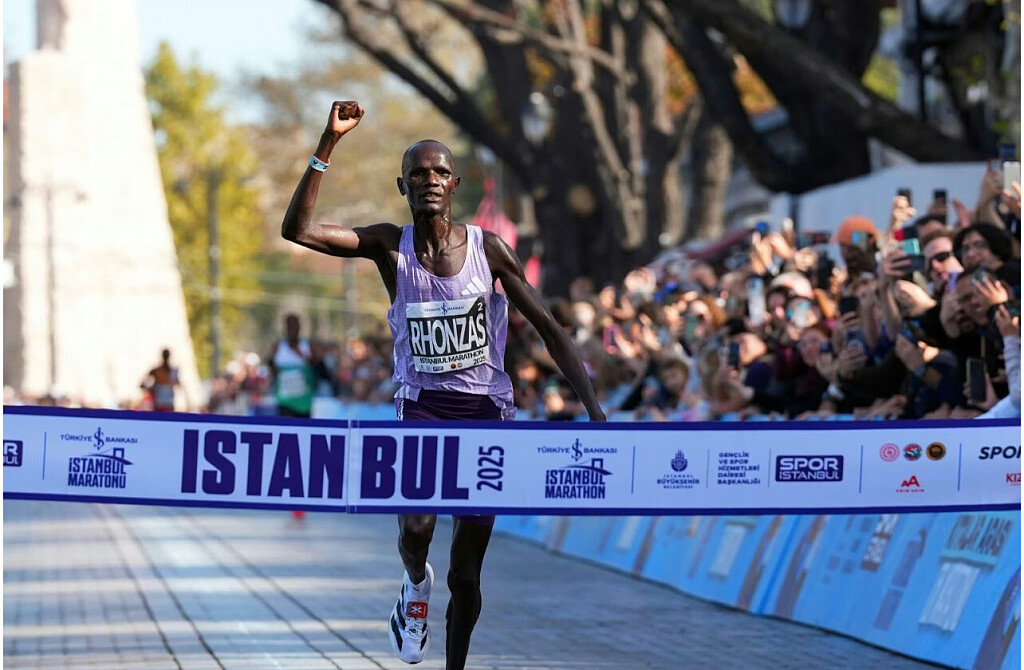
Rhonzas Kilimo and Bizuager Aderra Triumph in Thrilling Istanbul Marathon
ISTANBUL, November 2, 2025 — Kenya’s Rhonzas Kilimo and Ethiopia’s Bizuager Aderra claimed sensational victories at the 47th Türkiye İş Bankası Istanbul Marathon, both securing the biggest wins of their careers and pocketing $50,000 each.
In warm, sunny conditions, 29-year-old Kilimo edged out defending champion Dejene Debela in a fierce uphill battle to the finish, clocking 2:10:12. Debela was just 11 seconds back in 2:10:23, with fellow Ethiopian Sufaro Woliyi third in 2:10:26.
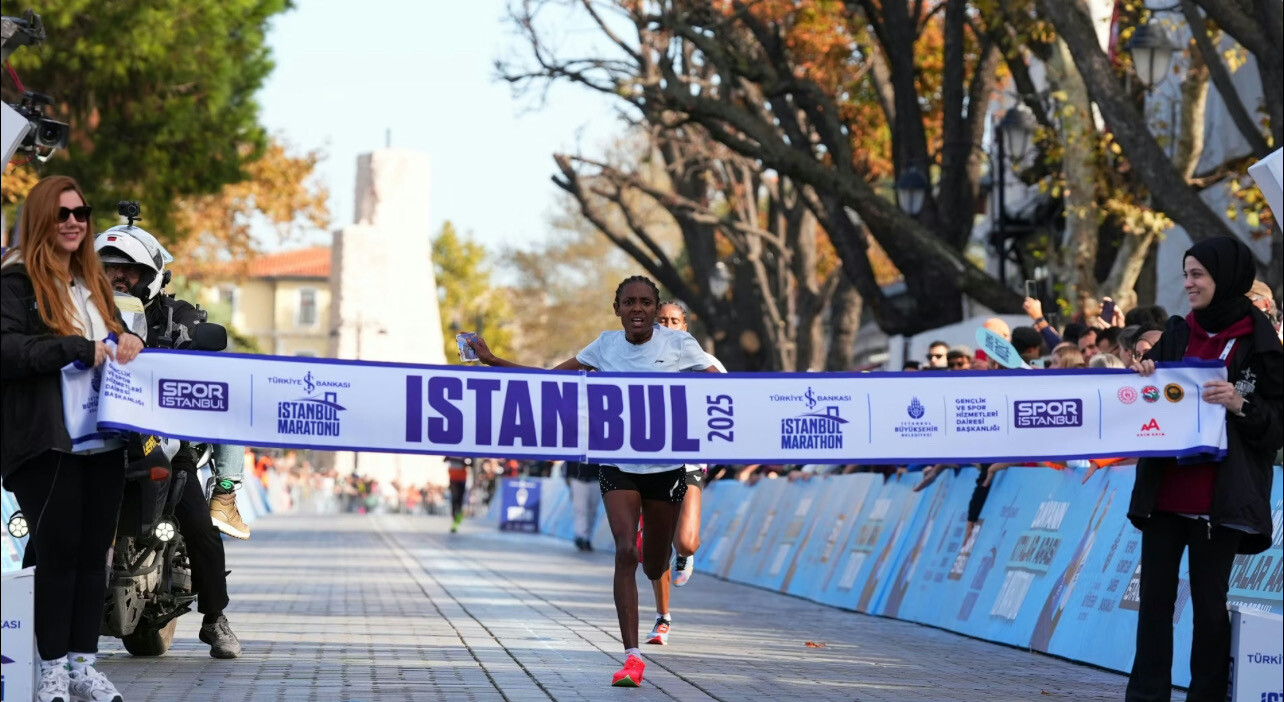
The women’s race delivered the closest finish in the marathon’s history. 22-year-old Bizuager Aderraemerged as a surprise champion, breaking her personal best with 2:26:19 — just two seconds ahead of Olympic steeplechase silver medalist Sofia Assefa. Kenya’s Joan Kilimo, unrelated to the men’s winner, finished third in 2:26:36.
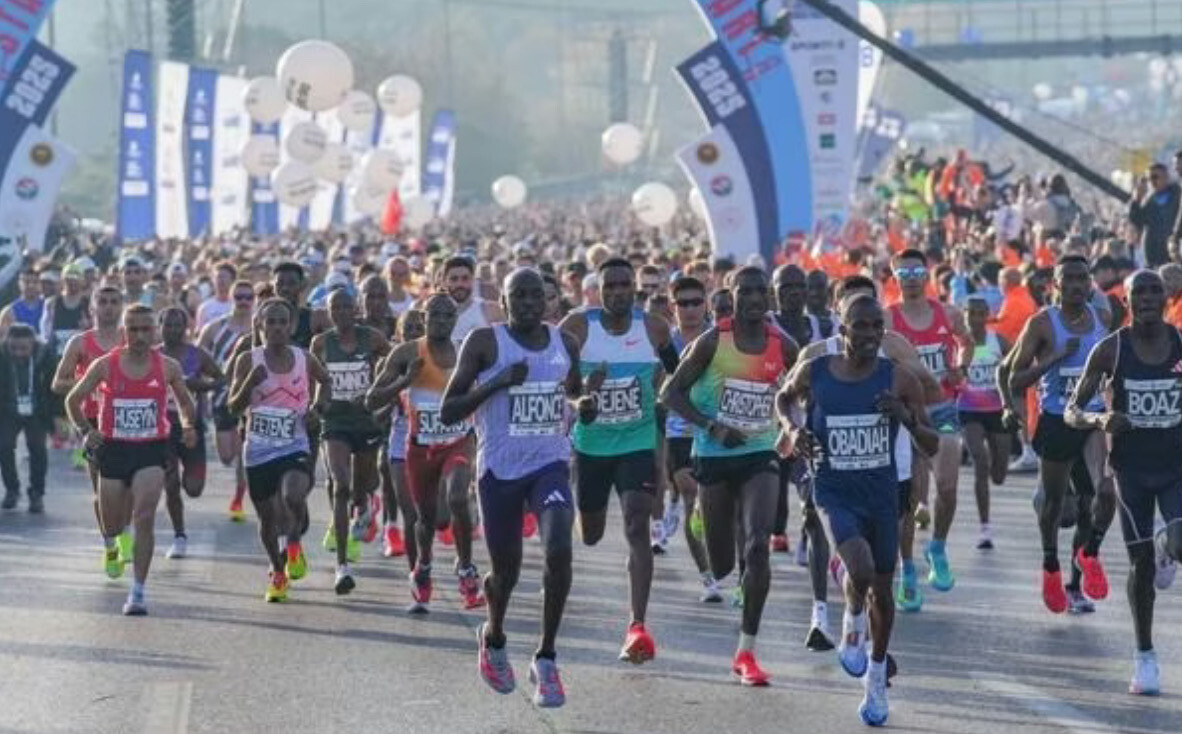
More than 6,000 runners competed in the marathon, with a total of 42,000 participants across all distances. The event holds a World Athletics Gold Label and is Turkey’s premier marathon.
Men’s Race: Kilimo Conquers the Hills
The men’s race began at an even pace, with the lead pack — including 16 athletes and four pacemakers — passing 10K in 30:41 and halfway in 1:04:41. Hopes of breaking the six-year-old course record (2:09:44 by Daniel Kibet) faded as the tempo dropped in the second half under 20°C heat.
As the runners approached the final mile-long climb, five men remained: Kilimo, Debela, Woliyi, Kenya’s Isaac Too, and Turkey’s Hüseyin Can. Too and Woliyi began to fade, leaving Kilimo and Debela to duel for victory.
“I had no clue about the uphill section at the end — it was a surprise to me,” Kilimo said afterward. “But I train in hilly areas around Iten, so I was ready.”
Kilimo, who ran a personal best of 2:06:09 in Seoul in 2024, crossed the line first in 2:10:12. “This was my biggest win so far,” he added. “My next goal is to run 2:03 on a fast course.”
Can delighted the home crowd by finishing fifth in a personal best of 2:10:58.
Women’s Race: Aderra’s Last-Minute Surge
The women’s field set an ambitious early pace — 33:38 at 10K and 1:11:22 at halfway — led by a pack of five: Ethiopians Bizuager Aderra, Sofia Assefa, Tigst Getnet, Gete Dukale, and Kenya’s Joan Kilimo.
As the temperature rose, the pace slowed. Assefa briefly fell behind but fought back, and with one kilometer to go, four women were still in contention. Assefa appeared to edge ahead, but Aderra responded with a decisive surge over the final 400 meters, sprinting into Sultan Ahmet Park to secure the win.
“This is the biggest win of my life — and a personal best,” said Aderra, whose previous mark was 2:28:27 from Rabat earlier this year. “My next goal is to go under 2:20.”
Top Results
Men
1. Rhonzas Kilimo (KEN) – 2:10:12
2. Dejene Debela (ETH) – 2:10:23
3. Sufaro Woliyi (ETH) – 2:10:26
4. Isaac Too (KEN) – 2:10:45
5. Hüseyin Can (TUR) – 2:10:58
6. Dickson Nyakundi (KEN) – 2:12:15
7. Charles Mneria (KEN) – 2:13:04
8. Dominik Bett (KEN) – 2:17:26
Women
1. Bizuager Aderra (ETH) – 2:26:19
2. Sofia Assefa (ETH) – 2:26:21
3. Joan Kilimo (KEN) – 2:26:36
4. Tigst Getnet (ETH) – 2:26:44
5. Gete Dukale (ETH) – 2:29:19
6. Roman Gidey (ETH) – 2:29:53
7. Rael Cherop (KEN) – 2:32:25
8. Yenenesh Tilahun Dinkesa (ETH) – 2:34:03
by Race News Service
Login to leave a comment
N Kolay Istanbul Marathon
At the beginning, the main intention was simply to organise a marathon event. Being a unique city in terms of history and geography, Istanbul deserved a unique marathon. Despite the financial and logistical problems, an initial project was set up for the Eurasia Marathon. In 1978, the officials were informed that a group of German tourists would visit Istanbul the...
more...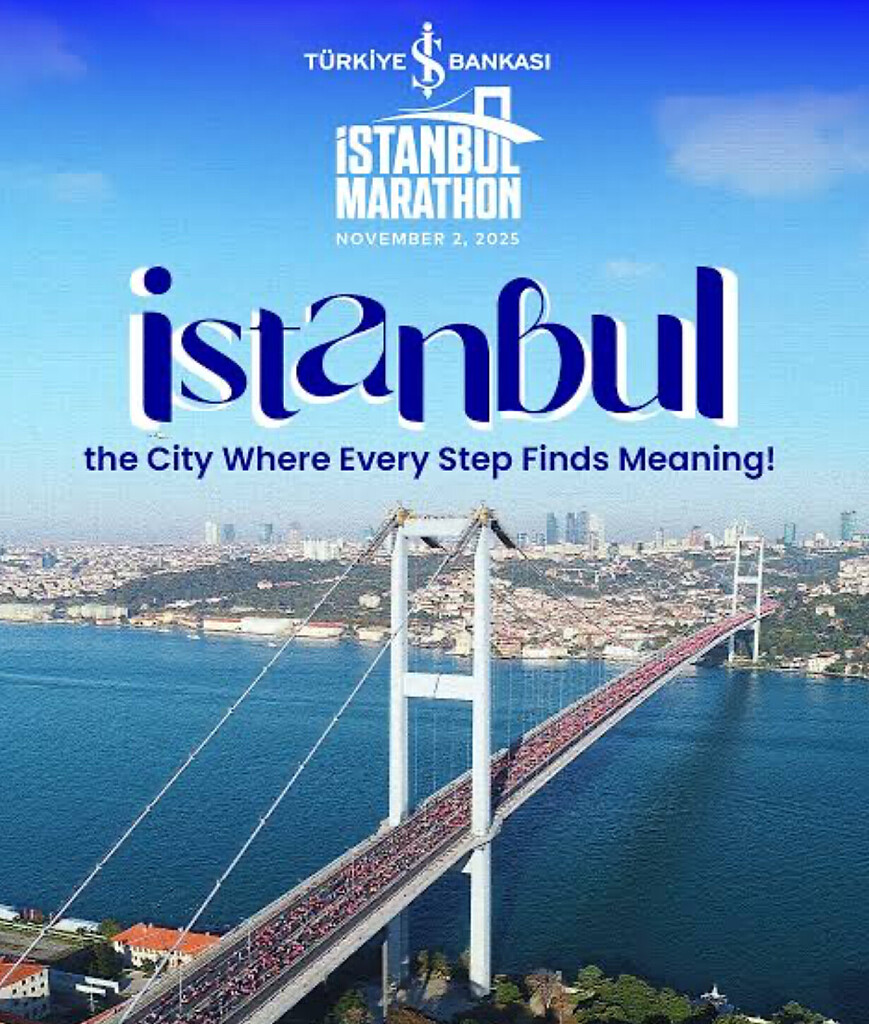
Debela and Jebet Set to Defend Titles at the World’s Only Intercontinental Marathon
Defending champions Dejene Debela of Ethiopia and Ruth Jebet of Bahrain are set to return for the Türkiye İş Bankası Istanbul Marathon on November 2. Both claimed victory last year in windy conditions and will be hoping for calmer weather to chase faster times this year.
Now in its 47th edition, Türkiye’s premier marathon continues to hold World Athletics Gold Labelstatus—an honor it has maintained without interruption since 2012, making it one of the longest-standing Gold Label races worldwide.
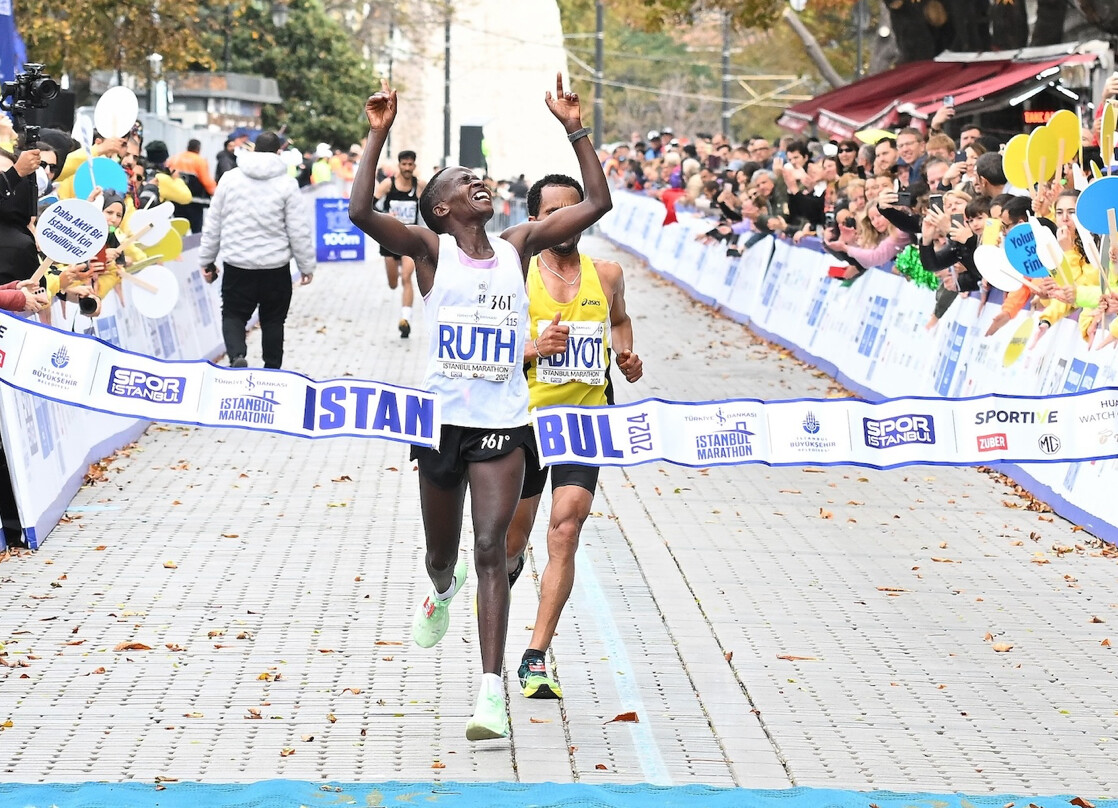
Organizers from Spor Istanbul have already registered 42,000 participants, including shorter-distance races, with around 6,000 runners tackling the full marathon. The unique course begins on the Asian side of Istanbul, crosses the July 15 Martyrs Bridge, and finishes in the historic old city near the Blue Mosque. Registration remains open until October 14 at maraton.istanbul.
“We are delighted to be organizing the Türkiye İş Bankası Istanbul Marathon, the world’s only intercontinental marathon, for the 47th time,” said Race Director Bilge Donuk. “The participation of defending champions clearly demonstrates the prestige and consistency of this race. Istanbul will, as always, offer participants a truly exceptional marathon experience on an international level.”
Men’s Race
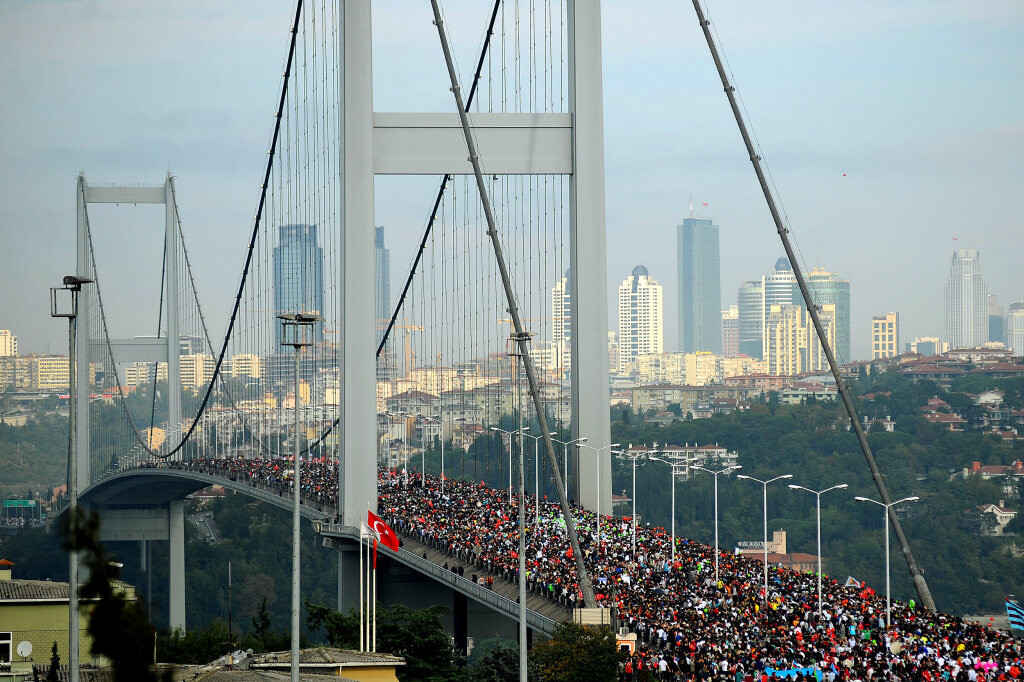
Debela, 30, bounced back from injury last year to win in 2:11:40, the biggest triumph of his career. With a personal best of 2:05:46 from Chicago 2019, he enters as the fastest man on the start list.
His main challengers include:
• Rhonzas Kilimo (Kenya) – PB 2:06:09, runner-up in Seoul 2024.
• Denis Chirchir (Kenya) – PB 2:07:17, winner in Kosice 2024, trained by renowned coach Renato Canova.
• Amanal Petros (Germany) – fresh off a silver medal at the World Championships in Tokyo, and a close training partner of Chirchir.
• Jake Robertson (New Zealand) – PB 2:08:26, returning from injuries but still a dangerous contender.
Women’s Race
Defending champion Ruth Jebet dominated last year with a 2:24:45 win—nearly nine minutes ahead of the field—despite tough winds. The 2016 Olympic steeplechase champion and former world record holder holds a marathon best of 2:23:08 and is targeting sub-2:20 in Istanbul.
Her challengers include:
• Tigst Getnet (Ethiopia) – PB 2:23:17, 5th in Dubai 2023.
• Sofia Assefa (Ethiopia) – PB 2:23:33, Olympic steeplechase silver medalist behind Jebet in 2016, now meeting her rival on the roads for the first time.
With strong returning champions and formidable challengers, Istanbul once again promises a world-class marathon staged in one of the most spectacular settings in global road running.
by Race News Service
Login to leave a comment
N Kolay Istanbul Marathon
At the beginning, the main intention was simply to organise a marathon event. Being a unique city in terms of history and geography, Istanbul deserved a unique marathon. Despite the financial and logistical problems, an initial project was set up for the Eurasia Marathon. In 1978, the officials were informed that a group of German tourists would visit Istanbul the...
more...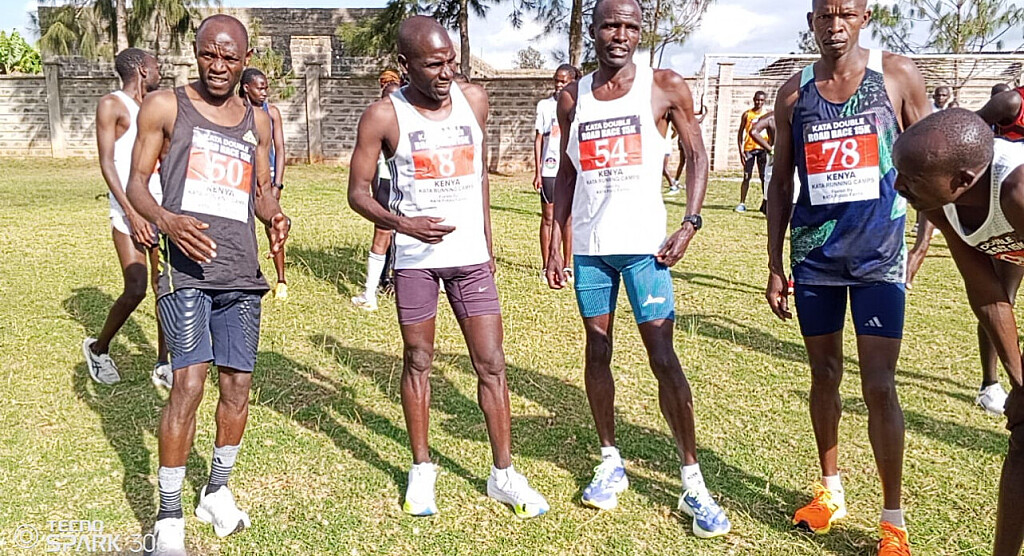
The fifth annual KATA Double Road Race in the making
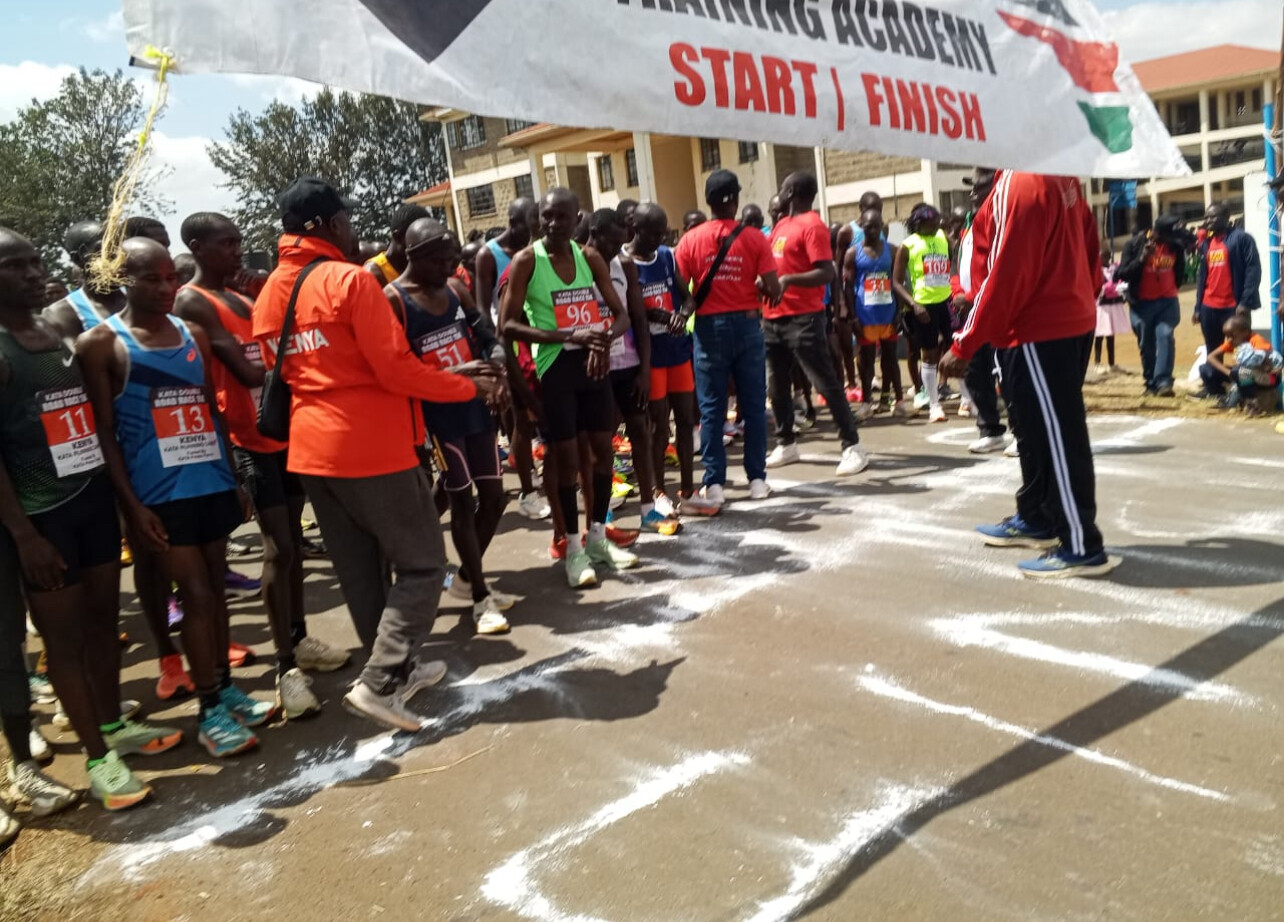
The small town of Thika is alive with excitement today. Athletes, coaches, families, and even farmers have gathered at the Kenya Athletics Training Academy (KATA) grounds for the 5th edition of the Double Road Race—a unique competition that, in just five years, has become a symbol of innovation in Kenya’s running culture.
Unlike conventional races, the Double Road Race challenges athletes to complete two segments with a rest break in between. Final standings are determined by combined times. It’s a test of speed, endurance, and resilience that forces runners to rethink race strategy and dig deeper than ever before.
The Birth of a Vision
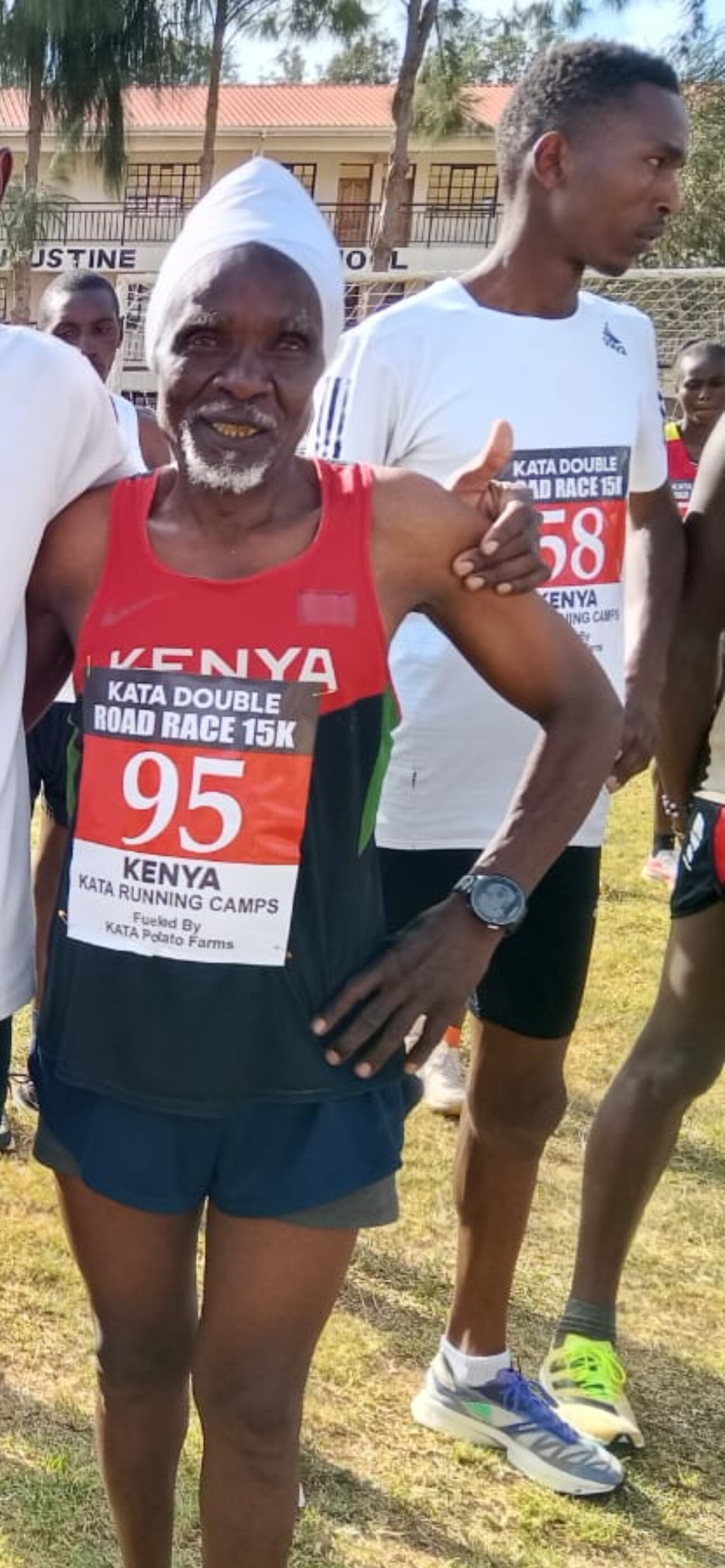
The idea for KATA was born thousands of miles away. Bob Anderson, American publisher and lifelong runner best known as the founder of Runner’s World magazine, was inspired by the immense talent in Kenya but also saw structural gaps that held many athletes back.
Anderson’s vision was radical: create a training academy in Kenya that produced champions while also empowering communities. From this dream, KATA was founded in Thika—and one of its cornerstones was introducing the Double Road Race format to Kenyan soil.
Enter Jimmy Muindi: From Star to Mentor
No story of KATA is complete without Jimmy Muindi. The six-time Houston Marathon champion and former coach of world record holder Patrick Makau embodies the blend of experience and inspiration KATA thrives on.
From steeplechase junior champion at the 1992 World Juniors in Seoul to victories in Rotterdam and Honolulu, Muindi’s career reads like a running epic. As a coach, his highest moment came when Makau broke the marathon world record.
“The double tests body, mind, and spirit,” Muindi says. “It forces athletes to dig deep in ways they are not used to. That is how champions are made.”
Coach John Matheri’s Guiding Hand
While Muindi brought international pedigree, respected Kenyan coach John Matheri rooted the project locally. Known for discovering village talent and molding disciplined athletes, Matheri has helped weave community runners into the Double Road Race fabric.
“Returning for the second run after your body is tired teaches resilience,” Matheri explains. “That is what separates ordinary runners from great champions.”
His philosophy has given countless young runners not only a chance to compete, but also recognition and hope.
The Power of Exposure
One of the Double Road Race’s most innovative features is its commitment to visibility. Every runner’s time—first or last—is posted on the official website. For Kenyan athletes who rarely enjoy digital exposure, this is game-changing.
“Even if you are the last, your time is posted,” Muindi emphasizes. “Managers and sponsors around the world can see it. That exposure is priceless.”
In an age where social media visibility can launch careers, Anderson’s decision to democratize exposure has made the Double Road Race a vital platform.
A Vibrant Turnout in Thika
This year’s participation proves the format’s momentum. Squads from across the region have confirmed attendance, including Kata 1, 3, 4, 7, 9, 10, 13, 14, 15, 16 (with an impressive 16 runners), 17, 18, 20, 23, 24, 25, 29, 30, 31, and 32.
Adding further depth, farmers’ groups F20, F24, and F31 are also present—evidence of KATA’s reach beyond athletics and into the heart of Kenyan communities.
As one organizer shared in a WhatsApp update: “What an amazing turnout we are going to have.”
Beyond Competition: Building a Culture
For runners, today is more than a race. It’s a chance to test themselves, mark progress, and belong to something larger. For KATA, it’s proof of concept: grassroots blending with elite, communities meeting global culture, and tradition reimagined through innovation.
The Double Road Race, once a bold experiment by an American visionary, has now become part of Kenya’s running story.
Looking Ahead
Five editions in, the Double Road Race is no longer a novelty—it’s becoming an institution. Under the Thika sun, young runners, seasoned coaches, and cheering farmers weave together a tapestry of resilience and hope.
Anderson’s ambition, supported by Kenyan mentors like Muindi and Matheri, is for KATA to nurture athletes from primary schools to the world stage. With support from federations, sponsors, and government, the academy could become a model far beyond Kenya.
For now, as the second leg unfolds, Thika celebrates not just a race but the journey of an idea that dared to be different. Kenya’s running legacy isn’t only about medals—it’s about reimagining what running can be, and building a future where every stride counts.
Photo Gallery: https://kata.ke/gallery.php?g=1
by Robert kibet
Login to leave a comment
How Ed Eyestone Created a Running Powerhouse
Ed Eyestone Has Spent Four Decades Shaping American Distance Running—As a Champion and Coach
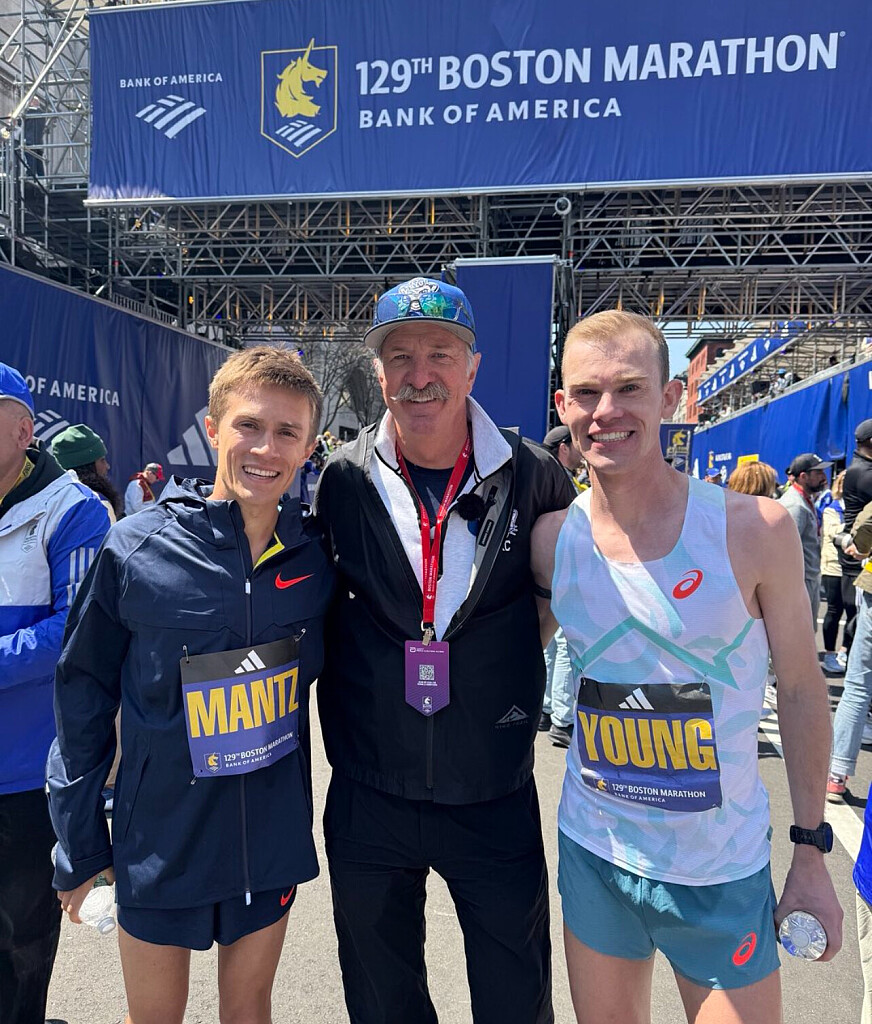
Ed Eyestone posted this right after this year's Boston Marathon, "Proud of my boys Conner Mantz and Clayton Young who scored big PRs in yesterday's Boston Marathon finishing in 4th and 7th! Shout out to Rory Linkletter for his big PR finish in 6th! 3 BYU Cougars in the top 7! Way to go lads!"
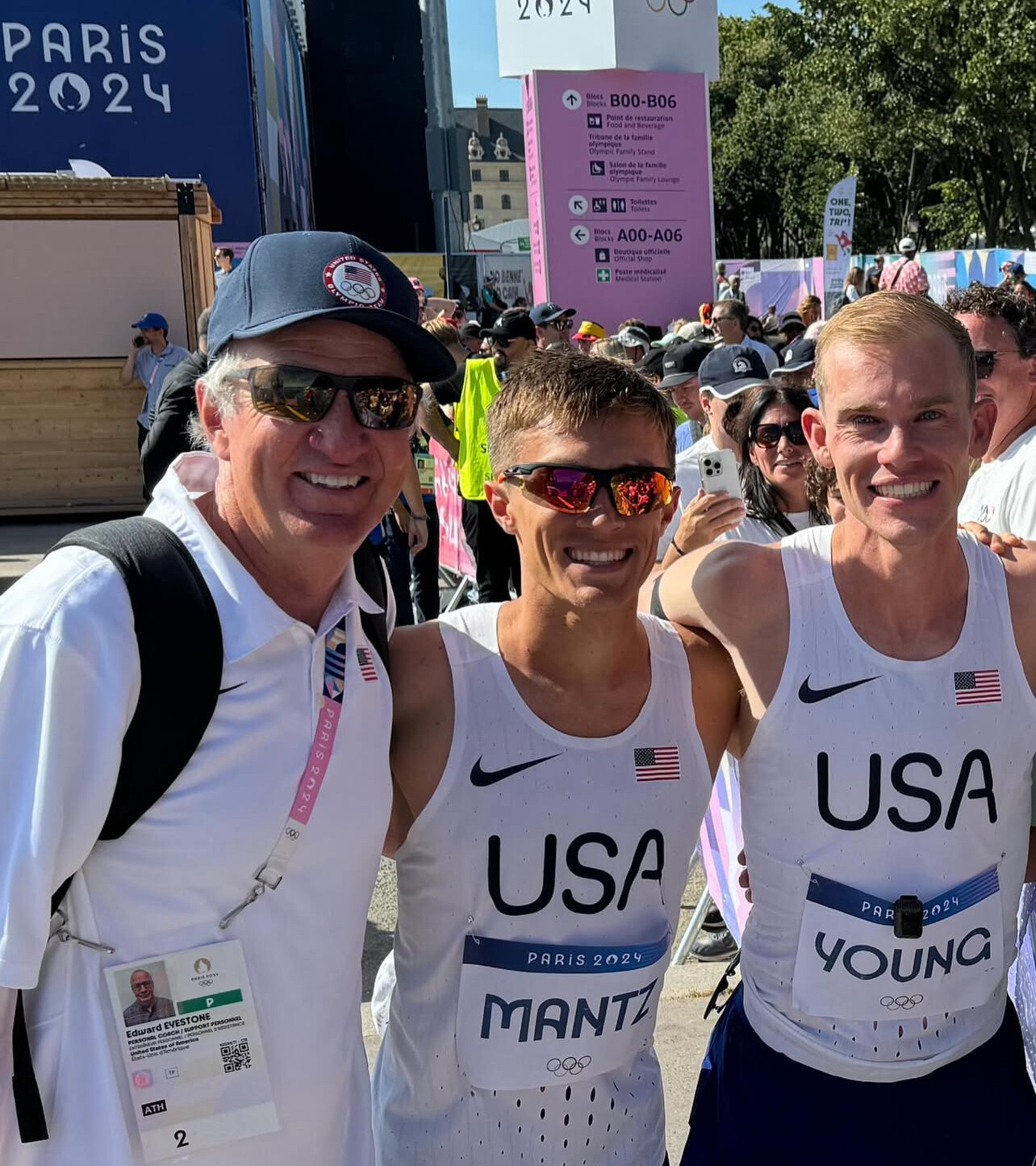
From setting records on the roads to building one of the strongest distance programs in the NCAA, Ed Eyestone has dedicated his life to distance running. A two-time Olympian and the long-standing head coach at Brigham Young University (BYU), Eyestone has left his mark on every level of the sport—and he’s still adding to his legacy.
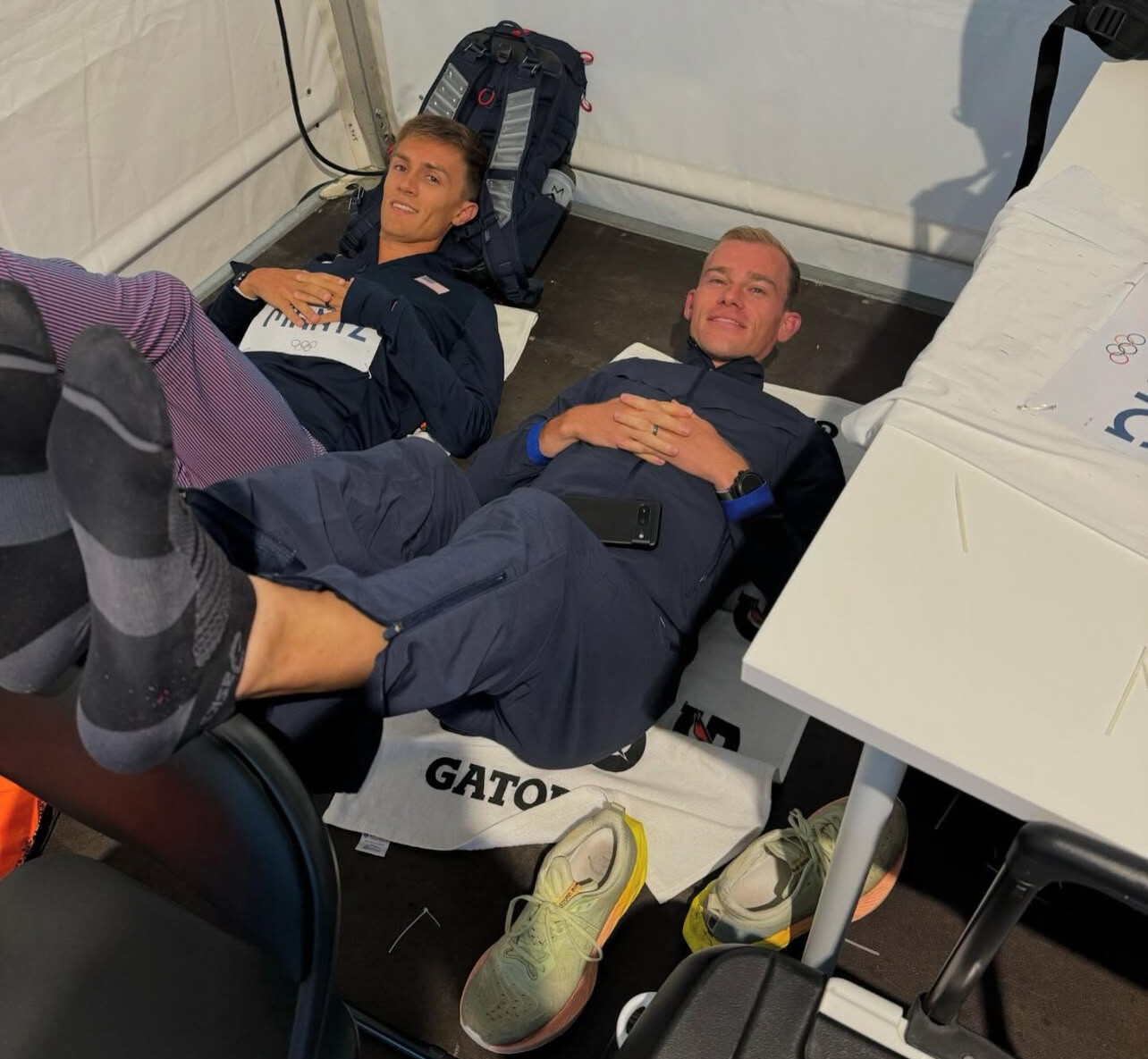
A Decorated Athlete Turned Mentor

Ed's running career began with dominance in the collegiate ranks. At BYU, he won an astonishing five NCAA individual titles, including the prestigious “Triple Crown” in 1985—claiming national championships in cross country, the 5,000 meters, and the 10,000 meters. Only three others have ever achieved this feat.

His elite career continued on the roads, where he represented the United States in the marathon at the 1988 Seoul Olympics (29th place) and again at the 1992 Barcelona Games (13th place). Along the way, he posted personal bests of:
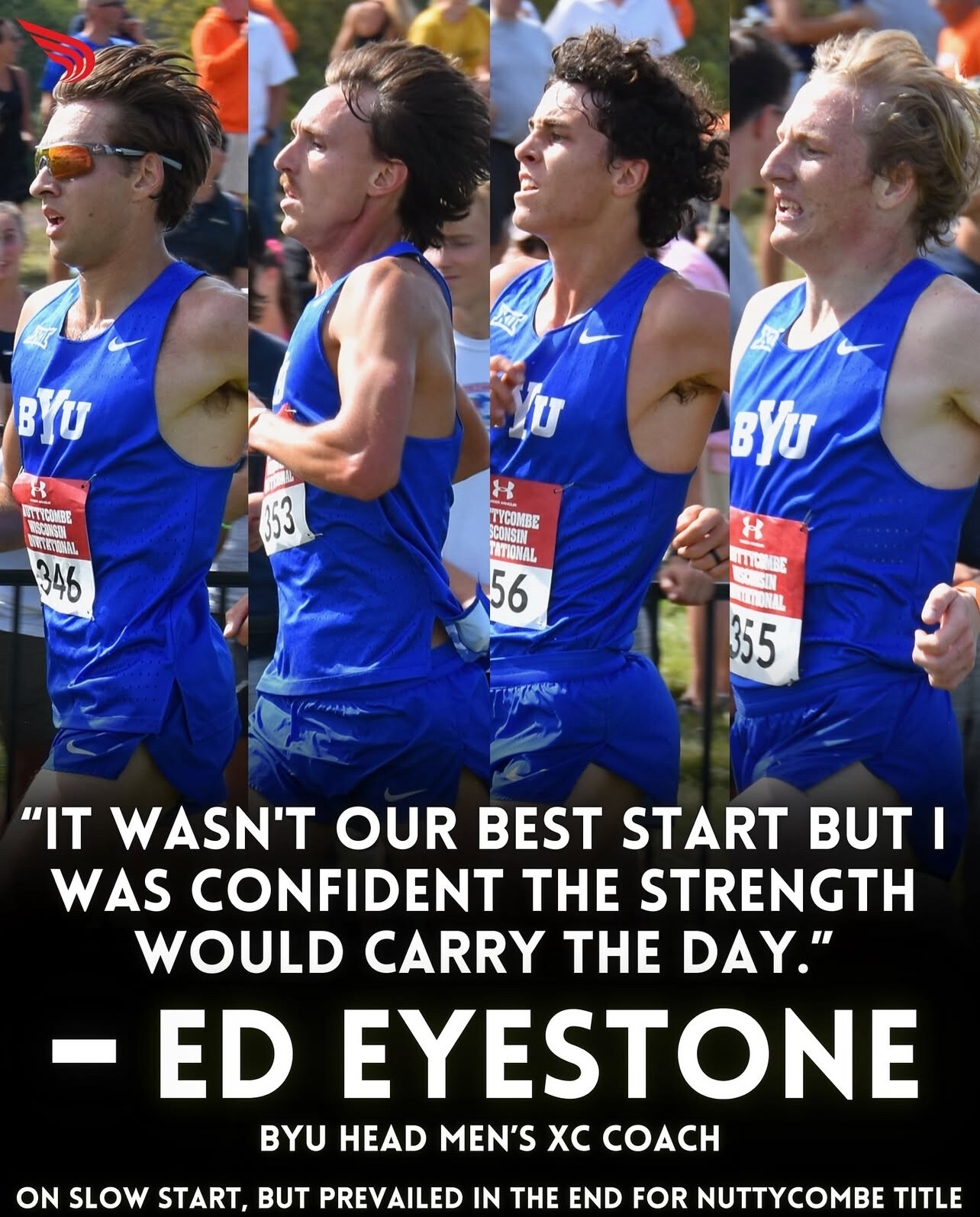
• Marathon – 2:10:59
• 10,000m – 27:41.05
• 5,000m – 13:32.52
He was named U.S. Road Racer of the Year five times and ranked among the top American marathoners for over a decade.
Coaching BYU to National Prominence
Since joining BYU’s coaching staff in 2000—and becoming head coach in 2013—Eyestone has built the Cougars into one of the most respected programs in the country.
In 2019, he led BYU to its first NCAA Division I Men’s Cross Country Championship, a long-awaited breakthrough fueled by strong depth, smart tactics, and years of strategic development. His teams regularly place in the top 10 nationally, both in cross country and on the track.
He’s coached more than 30 All-Americans and continues to develop runners into world-class competitors. His athletes consistently credit him for his calm presence, scientific approach, and deep understanding of racing.
In 2024, he was named NCAA Mountain Region Coach of the Year—an honor that reflects his enduring relevance and success in a constantly evolving sport.
The Conner Mantz Era
One of Eyestone’s most prominent pupils is Conner Mantz, a BYU standout who has quickly become one of the best marathoners in U.S. history.
Under Eyestone’s coaching, Mantz won back-to-back NCAA Cross Country titles in 2020 and 2021. Since turning pro, Mantz has continued working with Eyestone, now serving as his professional coach.
• 2024 U.S. Olympic Trials Champion
• 8th place finisher at the Paris Olympic Marathon
• Set the American half marathon record (59:17) in 2025
• Ran 2:05:08 at the 2025 Boston Marathon, the second-fastest time ever by an American on the course
Eyestone's steady mentorship remains a driving force behind Mantz’s rise. Their relationship—rooted in trust, precision training, and shared values—has helped elevate Mantz to the top of the international marathon scene.
Clayton Young: From NCAA Champion to Olympic Marathone
Another testament to Eyestone’s coaching prowess is Clayton Young, who has risen from collegiate success to international acclaim under Eyestone’s guidance.
• 2019 NCAA 10,000m Champion at BYU
• 2023 Chicago Marathon: 2:08:00, securing Olympic qualification
• 2024 U.S. Olympic Trials: 2nd place, earning a spot on Team USA
• 2024 Paris Olympics: 9th place finish with a time of 2:08:44
• 2025 Boston Marathon: Personal best of 2:07:04, finishing 7th
Young’s journey has been marked by resilience and determination. After undergoing knee surgery in early 2023, he made a remarkable comeback, achieving personal bests and representing the U.S. on the Olympic stage. His analytical approach to training, combined with Eyestone’s mentorship, has been pivotal in his success.
A Lasting Legacy
Now in his early 60s, Ed Eyestone continues to shape the future of American distance running. His fingerprints are on championship banners, personal bests, and Olympic dreams.
From 2:10 marathons to NCAA titles and Olympic breakthroughs, Eyestone’s impact spans generations. Whether you’re looking at his own performances or those of his athletes, one thing is clear—Ed Eyestone is one of the most influential figures in the history of American distance running.
by Boris Baron
Login to leave a comment
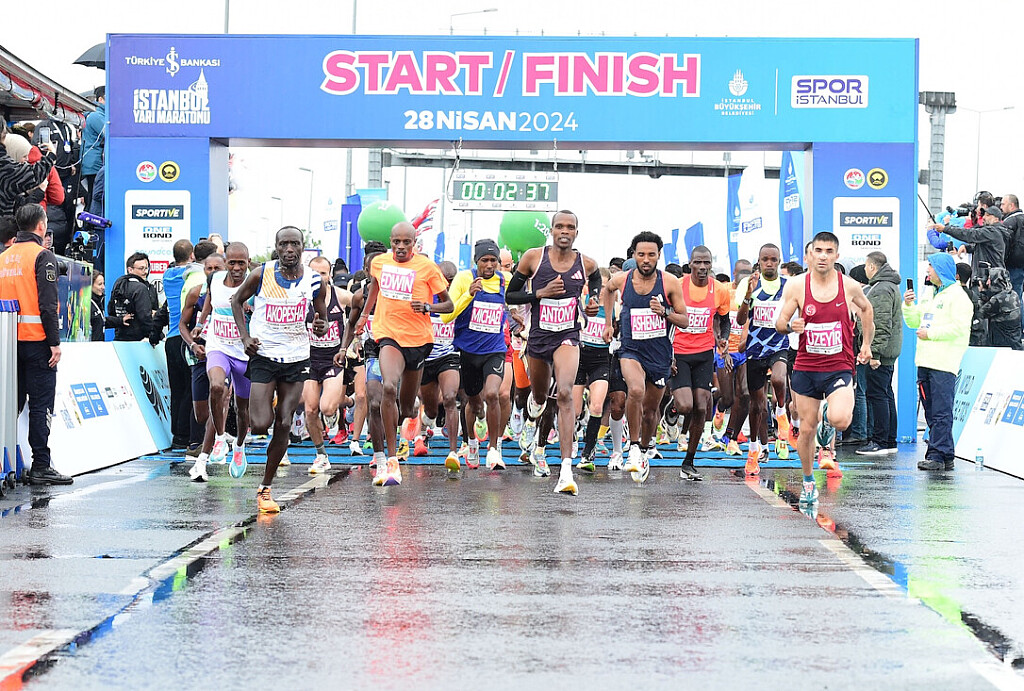
Türkiye Is Bankasi Istanbul Half Marathon to Feature World-Class Fields This Sunday
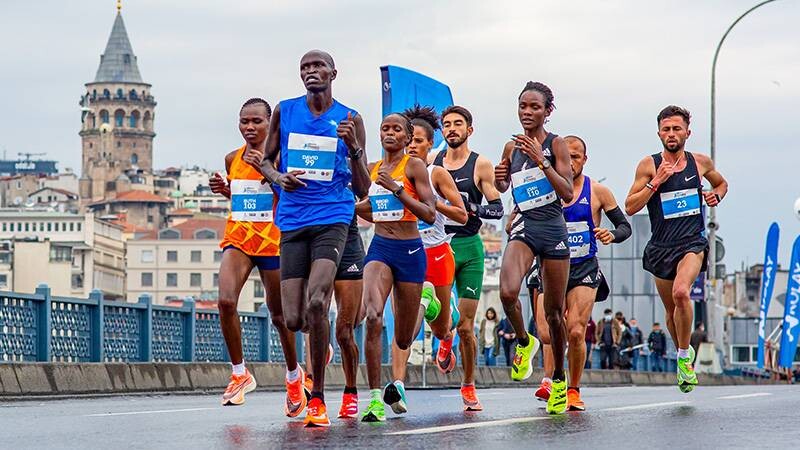
The 20th edition of the Türkiye Is Bankasi Istanbul Half Marathon is set to take place this Sunday, April 27, with a record number of runners and some of the strongest elite fields in the event’s history. Recognized as Türkiye’s premier road race and holding World Athletics Gold Label status, the race will once again highlight Istanbul’s growing stature on the global running calendar.
Race Director Renay Onur confirmed the event will go ahead as scheduled, noting that preparations remain on track and there is no cause for concern after a minor earthquake earlier in the week.
“We are proud to host the 20th edition of the Türkiye Is Bankasi Istanbul Half Marathon with a record number of participants. Life continues as usual here in Türkiye—including in sport,” said Onur.
Organizers expect around 17,000 runners, including those in the parallel 10K event. The half marathon will start at 9:15 AM local time.
Men’s Race: Eyes on a Sub-59 Performance
With a course record of 59:15, the men’s field includes several contenders capable of pushing the pace.
• Haftu Teklu (ETH) leads the entries with a personal best of 59:06 and is coming off a 2:05:42 marathon victory in Seoul.
• Alex Matata (KEN), winner of the Ras Al Khaimah Half Marathon in February with 59:20, has requested pacers for a sub-59:00 effort.
• Berehanu Tsegu (ETH), who clocked 59:42 in Lisbon and recently finished second in the Dubai Marathon with 2:05:14, adds further depth.
“I still want to run faster—into the 58s or even 57s,” Matata said, hinting that a breakthrough performance could come in Istanbul.
Women’s Race: Chelangat Returns, Kemboi Leads
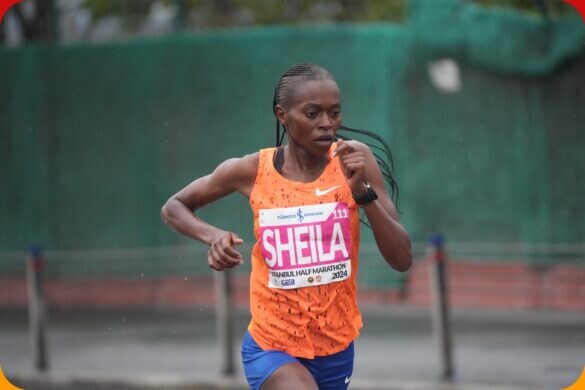
Defending champion Sheila Chelangat (KEN) returns after a standout 2024 season in which she ran four personal bests, including 66:06 in Valencia. But she’ll face a formidable challenge from Judy Kemboi (KEN), who clocked 65:43 in Copenhagen and recently ran 66:34 in Ras Al Khaimah.
Kemboi, in strong form, will be paced by her fiancé Crispus Korir on Sunday—a rare personal touch in elite competition.
With six women on the start list holding PBs under 67:00, the race promises to be one of the most competitive yet. The course record of 64:02, set by Ruth Chepngetich during the pandemic in 2021, is likely out of reach, but fast times are still expected.
Elite Start Lists
MEN
• Haftu Teklu (ETH) – 59:06
• Alex Matata (KEN) – 59:20
• Berehanu Tsegu (ETH) – 59:42
• Callum Hawkins (GBR) – 60:00
• Gemechu Bute (ETH) – 60:03
• Ali Kaya (TUR) – 60:16
• Mathew Samperu (KEN) – 60:27
• Shadrack Kipkurui (KEN) – 60:40
• Abel Mutai (KEN) – 61:00
• Aaron Bienenfeld (GER) – 61:39
• Laban Kipkemboi (KEN) – 62:01
WOMEN
• Judy Kemboi (KEN) – 65:43
• Sheila Chelangat (KEN) – 66:06
• Fikrte Wereta (ETH) – 66:28
• Hiwot Gebrekidan (ETH) – 66:28
• Bekelech Gudeta (ETH) – 66:35
• Gete Alemayehu (ETH) – 66:37
• Miriam Chebet (KEN) – 66:43
• Betelihem Afenigus (ETH) – 66:46
• Zewditu Aderaw (ETH) – 67:38
• Cynthia Kosgei (KEN) – 68:29
• Daisilah Jerono (KEN) – 69:44
• Fridah Ndinda (KEN) – 69:49
• Kristina Hendel (GER) – 70:38
Event Details
• Date: Sunday, April 27
• Start Time: 9:15 AM local time
• Livestream Available
by Race News Service with Boris Baron
Login to leave a comment
Istanbul Half Marathon
The Türkiye İş Bankası Istanbul Half Marathon is one of the fastest and most scenic races in the world, taking runners along the historic Golden Horn in Istanbul—once the heart of three great empires. Held annually in April, it attracts a world-class field and thousands of amateur runners. The flat, fast course makes it ideal for personal bests. The current...
more...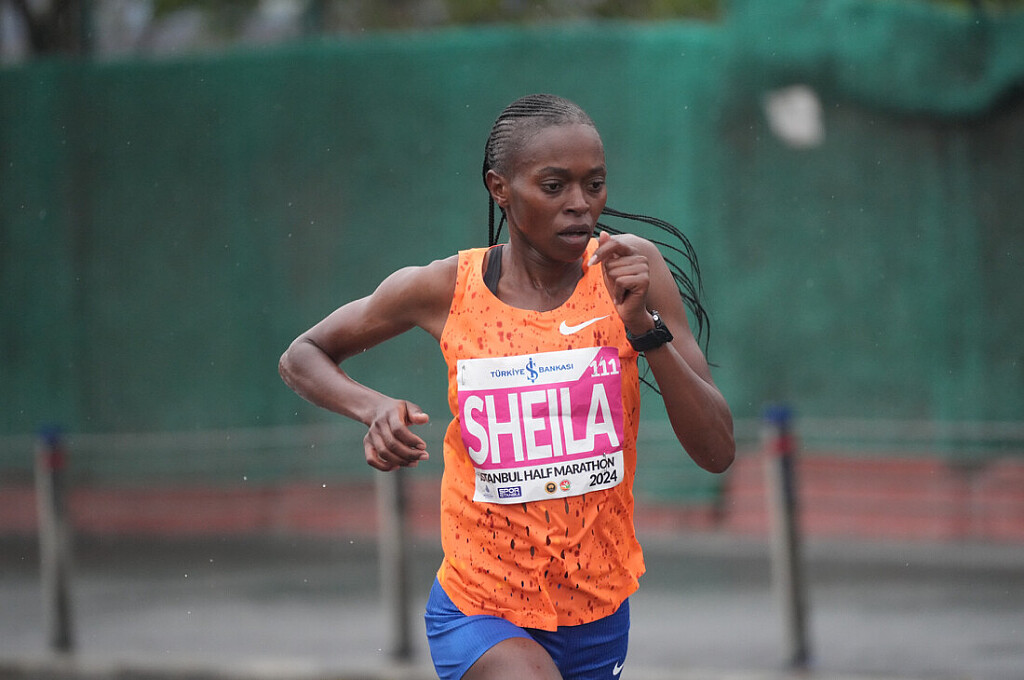
Defending Champion Sheila Chelangat Returns for the 2024 Türkiye İş Bankası Istanbul Half Marathon – April 27
Sheila Chelangat (first two photos) is set to defend her title at the 20th edition of the Türkiye İş Bankası Istanbul Half Marathon on April 27. The 26-year-old Kenyan, who claimed her biggest career win on this same course last year, headlines a deep elite field featuring several of Africa’s top distance runners.
Chelangat made headlines in 2023 when she dropped nearly three minutes from her personal best to clock 66:47 in Istanbul. She continued to shine in 2024, running 66:42 in Copenhagen and a new PB of 66:06 in Valencia. But despite her strong form, she’s not the fastest woman in the field this year.
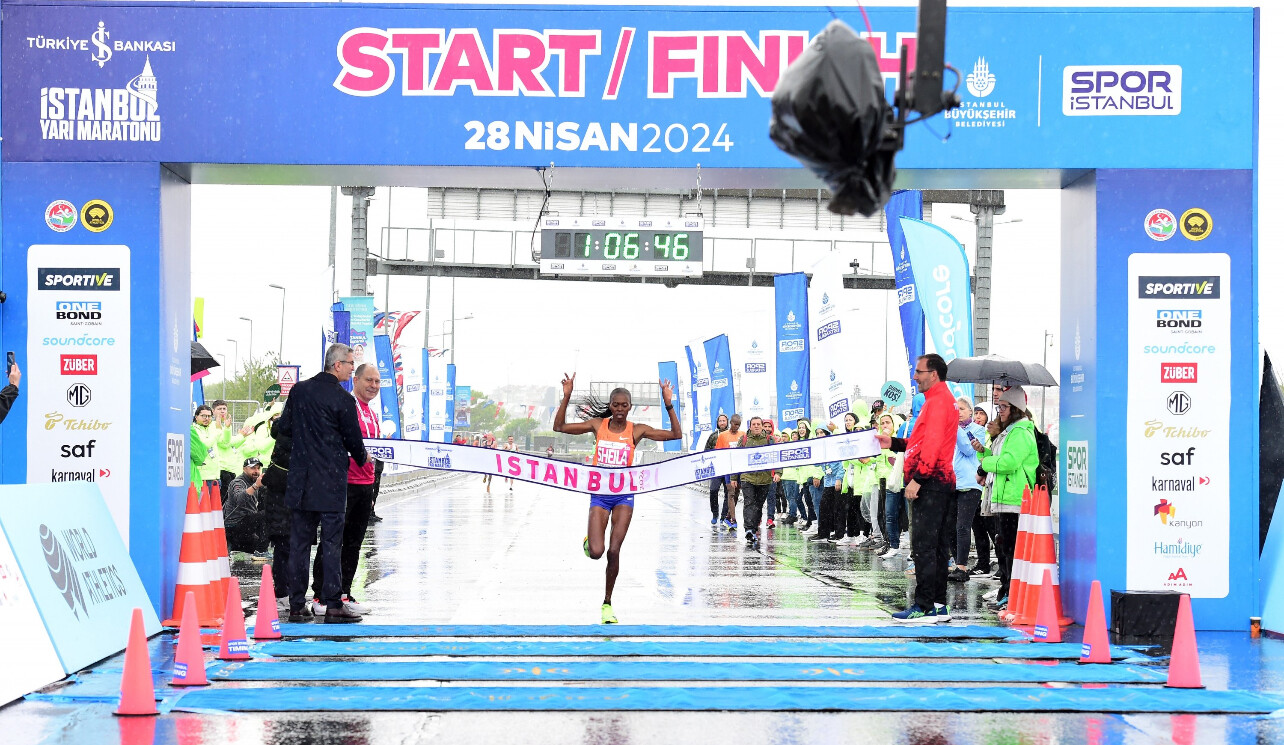
Fellow Kenyan Judy Kemboi, 25, enters as the top seed with a personal best of 65:43, set in Copenhagen. In just over a year, Kemboi has completed seven half marathons—winning five of them—including a strong second-place finish at this year’s Ras Al Khaimah Half Marathon (66:34) and a win in Guadalajara at altitude.
Another top contender is 29-year-old Winfridah Moseti, who recently proved her marathon strength with a 2:16:56 runner-up finish in Tokyo. Her half marathon PB stands at 65:59 from Malaga, but her recent form suggests she’s ready for more.
In the men’s race, Ethiopia’s Haftu Teklu and Kenya’s Alex Matata are expected to battle for the title. Teklu brings a 59:06 best and course experience—he finished third in Istanbul two years ago. Just days ago, he also won the Seoul Marathon in 2:05:42, confirming his top form.
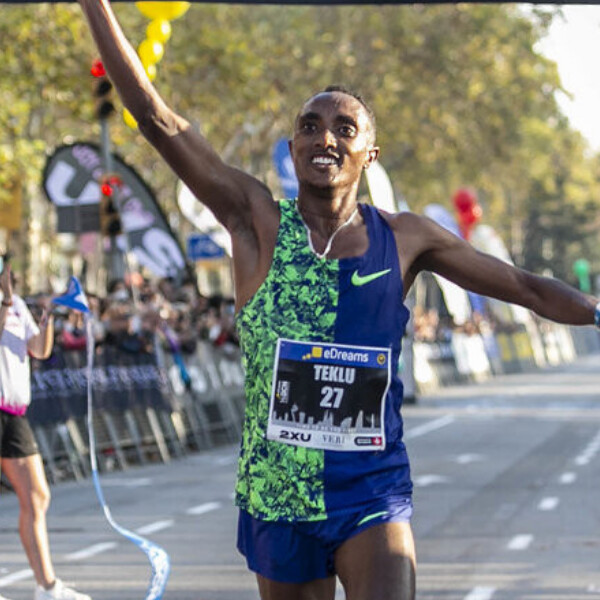
Matata, 27, is one of Kenya’s fastest-rising stars. He won the Ras Al Khaimah Half Marathon in February with a personal best of 59:20, despite headwinds. In just one year of international competition, he’s already won six of his seven half marathons.
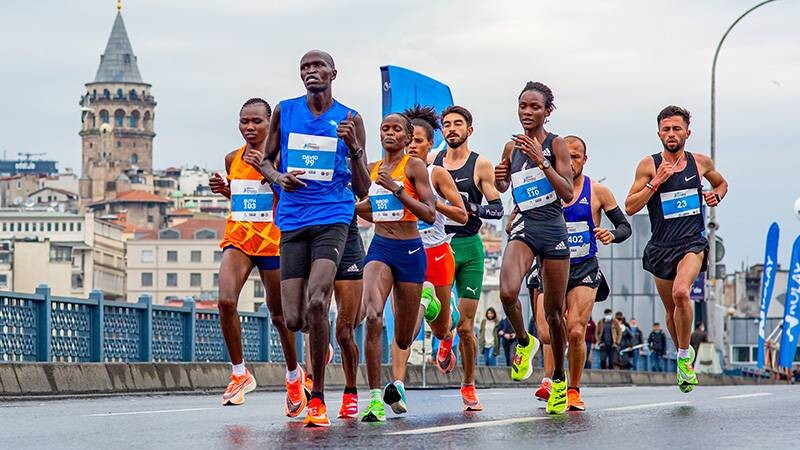
Not to be overlooked is Great Britain’s Callum Hawkins. A two-time World Championship marathon fourth-place finisher, Hawkins is returning to form and holds a half marathon PB of 60:00 from 2017.
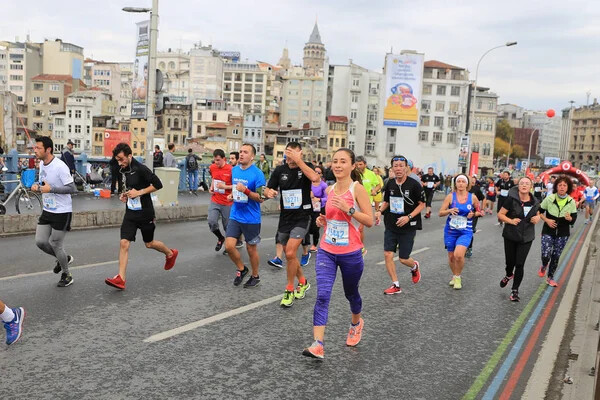
Organizers expect around 17,000 runners across both the half marathon and parallel 10K event, making it Turkey’s largest and fastest half marathon. Entries are still open.
“Running around the historic city once ruled by three empires—and along the Golden Horn—is a priceless experience,” said Race Director Renay Onur. “Every runner should experience this event. And when champions return, it shows that Istanbul is one of the best places in the world to run.”
Login to leave a comment
Istanbul Half Marathon
The Türkiye İş Bankası Istanbul Half Marathon is one of the fastest and most scenic races in the world, taking runners along the historic Golden Horn in Istanbul—once the heart of three great empires. Held annually in April, it attracts a world-class field and thousands of amateur runners. The flat, fast course makes it ideal for personal bests. The current...
more...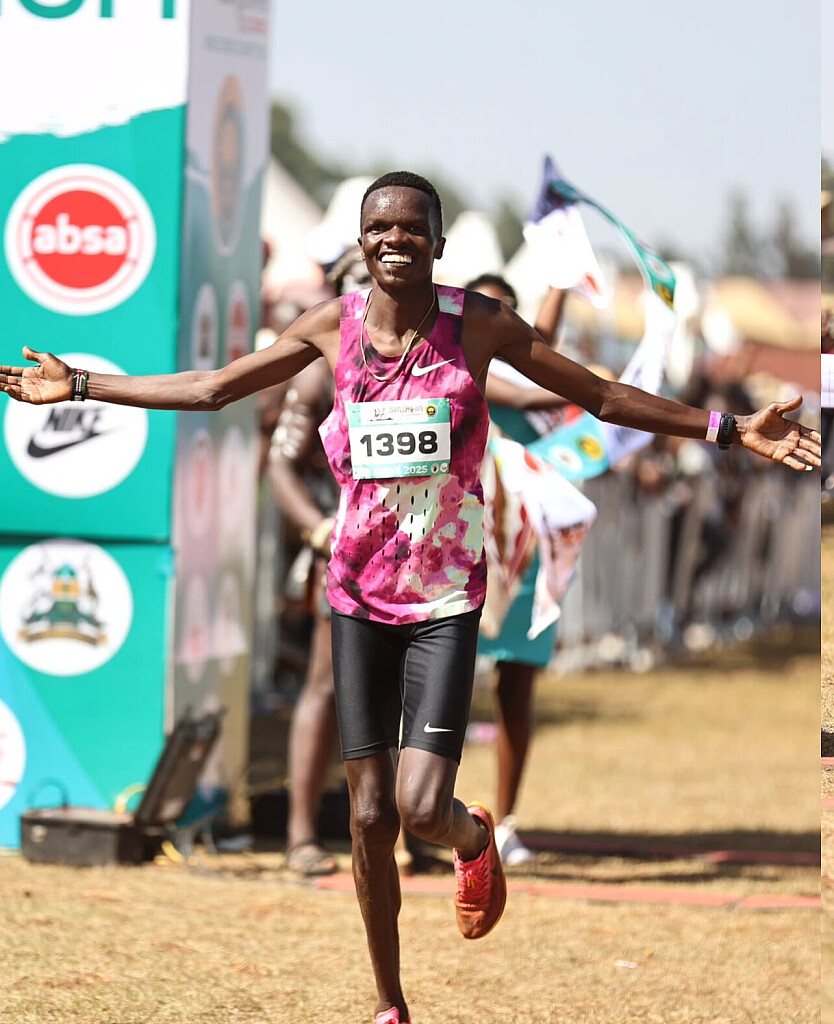
Daniel Simiu Ebenyo Sets Sights on 2025 Seoul Marathon After Dominating Cross Country Season
Reigning World 10,000m silver medallist Daniel Simiu Ebenyo has officially set his sights on the 2025 Seoul Marathon, scheduled for March 16. Fresh off a series of impressive victories, the Iten-based star is determined to translate his cross-country dominance into success on the streets of Seoul.
Ebenyo, a standout performer this season, recently captured the title at the National Cross-Country Championships held at the Eldoret Sports Club. He quickly followed up that victory with another commanding performance at the Absa Sirikwa Classic Cross Country Continental Tour, hosted at Lobo Village in Eldoret. In a tightly contested race, Ebenyo clocked an impressive 29:57 to claim the win, finishing ahead of Gideon Rono (30:07) and Nicholas Kimeli (30:15).
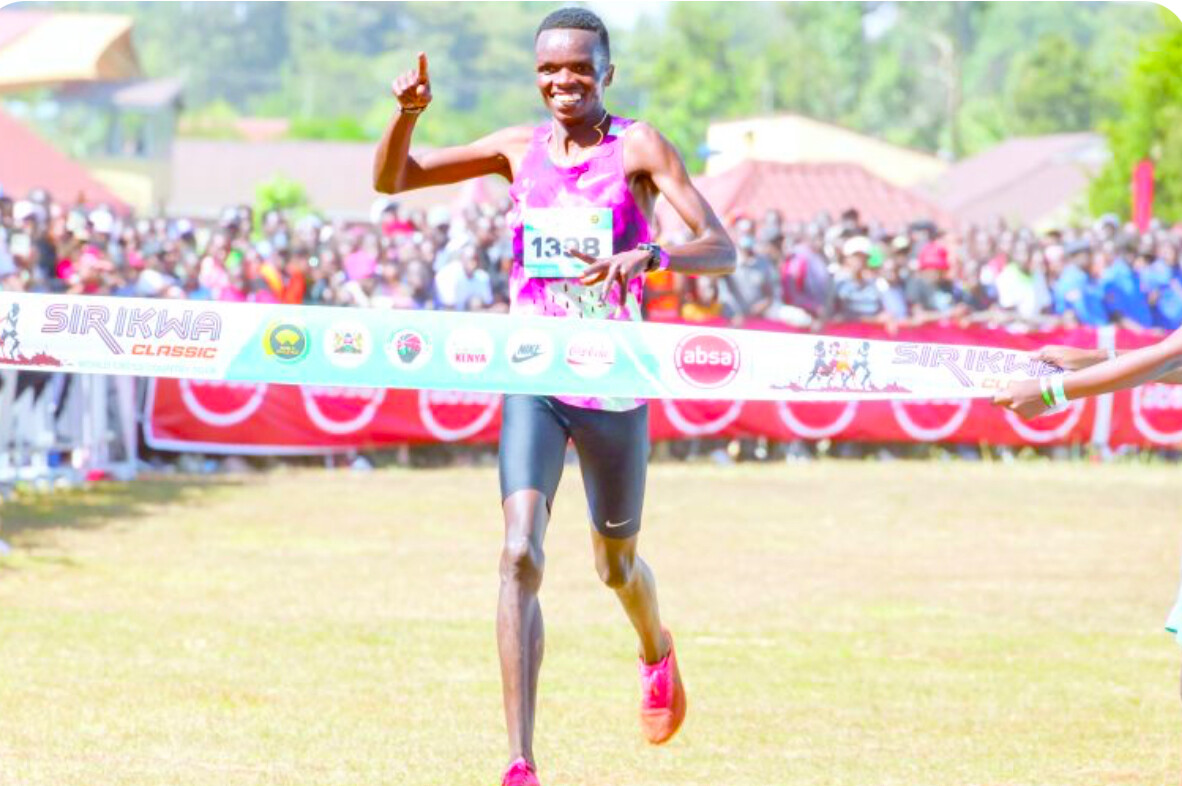
A National Police Service officer, Ebenyo made his marathon debut at the 2023 Chicago Marathon, where he finished fifth in 2:04:23—an impressive showing for his first 26.2-mile (42.195 km) challenge. Since then, he has successfully balanced his track and road racing career, and now, all eyes are on his upcoming performance in Seoul.
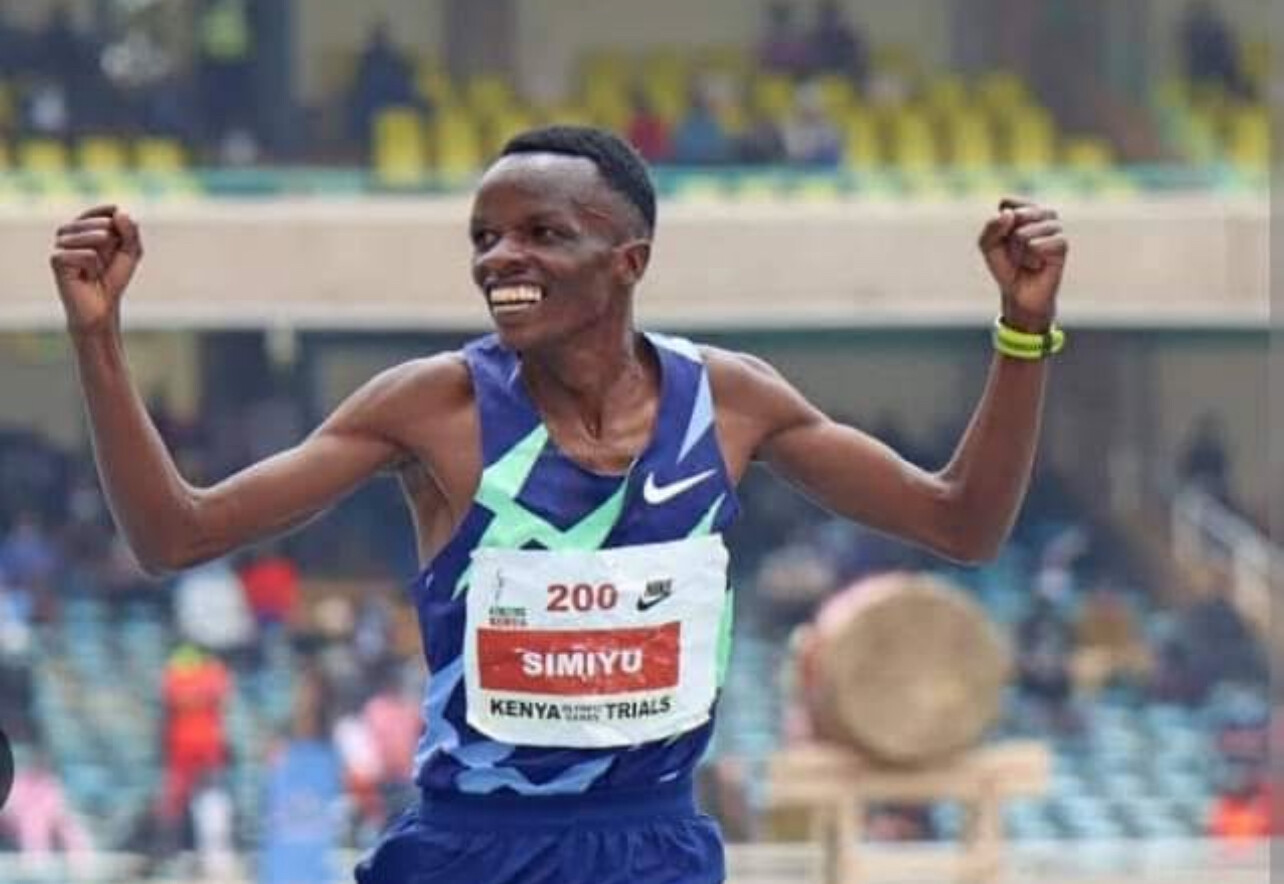
“I strongly believe I will perform well in the race and secure a podium finish,” Ebenyo said confidently. “Nobody knows what tomorrow holds, so let’s focus on the present.”

Ebenyo’s path to the marathon spotlight hasn’t been without challenges. The former African 5000m silver medallist endured a difficult 2023 season, missing out on the Paris Olympic Games after an unfortunate fall during the national trials. He finished eighth in that race, narrowly missing the chance to represent Team Kenya on the world’s biggest stage.
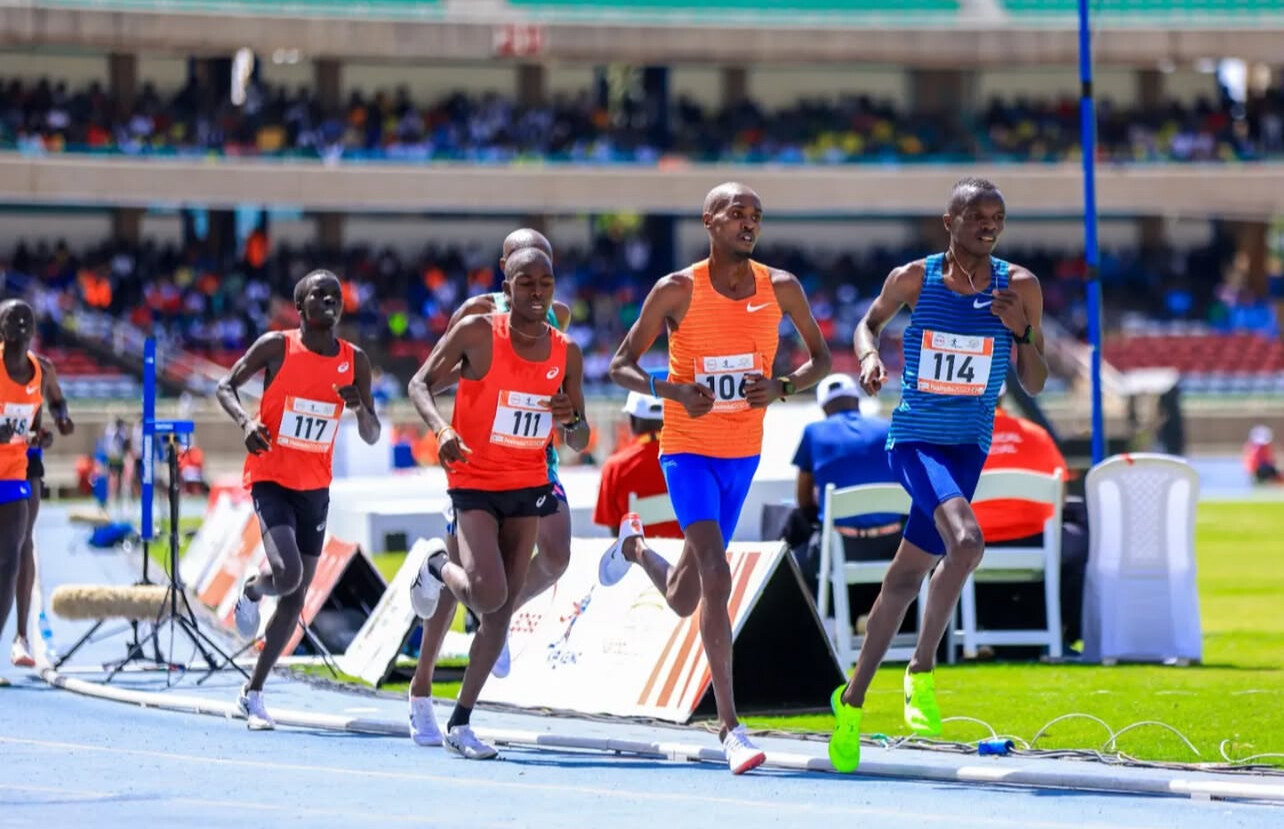
However, the resilient athlete quickly bounced back, proving his mettle both locally and internationally. In early 2024, he claimed victory at the prestigious Berlin Half Marathon, crossing the finish line in a swift 59:30. This win added to his growing list of accolades, including his standout performance at the 2023 World Athletics Championships in Budapest, where he secured the silver medal in the 10,000m.
As the countdown to the Seoul Marathon begins, Ebenyo’s rigorous training regimen in the high-altitude hills of Iten has intensified. He remains laser-focused on achieving his ultimate goal: standing atop the podium in Seoul.
About the Seoul Marathon
First held in 1931, the Seoul Marathon is the oldest continuously held marathon event in Asia and the second oldest in the world, following the Boston Marathon. The race starts at Gwanghwamun Square, a historic and cultural landmark in the heart of Seoul, and finishes at the Jamsil Sports Complex, offering runners a scenic route that showcases both the traditional and modern facets of the city. Known for its flat and fast course, the Seoul Marathon has been the stage for numerous record-setting performances and holds World Athletics Platinum Label Road Race status, attracting elite runners from around the globe.
As of now, specific details regarding other elite runners confirmed for the 2025 Seoul Marathon have not been publicly disclosed. However, given the event’s prestigious status, it is anticipated that a competitive field of top international athletes will participate, promising an exciting and high-caliber race.
With his current form and unwavering determination, Daniel Simiu Ebenyo is undoubtedly a contender to watch. If his recent performances are any indication, the streets of Seoul may very well witness another spectacular chapter in the career of one of Kenya’s finest distance runners.
by Boris Baron
Login to leave a comment
Seoul International Marathon
The only marathon hosted in the heart of the Korean capital. Seoul marathon is the oldest marathon race hosted in Asia andis one of the fastestmarathon in the world. First held in 1931, Seoul marathon is the oldest marathon eventcontinuously held in Asia, and the second oldest in the world followingthe Boston Marathon. It embodies modern history of Korea, also...
more...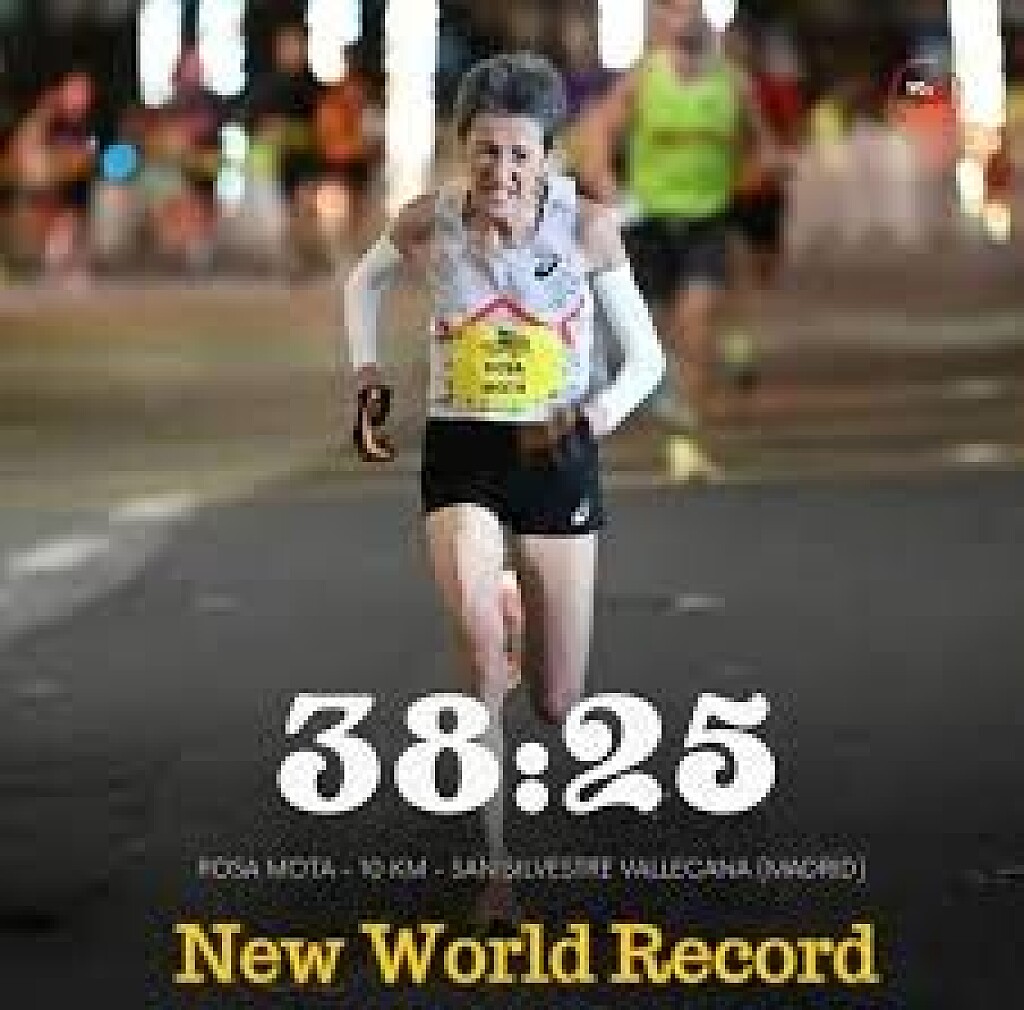
Rosa Mota: Defying Age with a 38-Minute 10K World Record at 66
At 66 years old, Rosa Mota, Portugal’s marathon icon and former Olympic champion, continues to prove that greatness knows no age. Most recently, she stunned the world by setting a new age-group world record for the 10K, finishing in an astonishing time of 38:25.This achievement not only cements her status as a legendary athlete but also highlights her remarkable longevity in a sport dominated by younger competitors.
The record-breaking performance occurred during the San Silvestre Vallecana 10K race, where Mota finished with a time of 38:25, significantly improving her previous W65 world record of 38:45, set in Valencia almost a year prior.
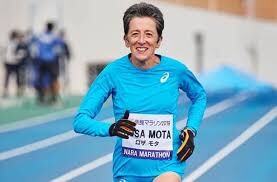
Rosa Mota rose to international fame in the 1980s, dominating the marathon scene and becoming one of the greatest long-distance runners in history. Born in Porto in 1958, she grew up with a love for running and quickly emerged as a standout athlete.
Her career highlights include winning the marathon gold medal at the 1988 Seoul Olympics and bronze at the 1984 Los Angeles Olympics. She also won the inaugural women’s marathon at the European Championships in 1982, setting the tone for her incredible career. Rosa claimed victories in major marathons worldwide, including Boston, Chicago, and London, and her legacy includes a World Championship title in 1987.
Pushing the Limits at 66:
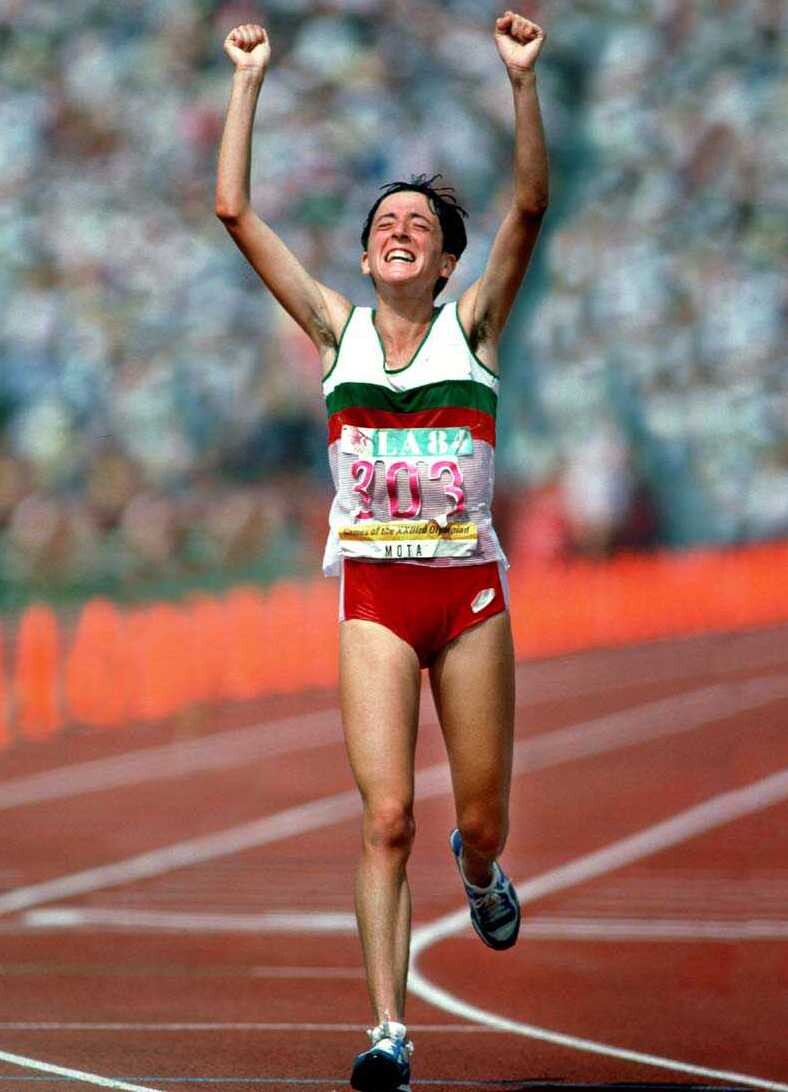
Rosa’s most recent feat is part of a series of record-breaking performances that have reignited her fame in the running world. Earlier this year, she set a W65 world record in the half marathon with a time of 1:25:52, followed by her stunning 10K record of 38:25. These times are exceptional not just for her age group but for athletes of any age, underscoring Rosa’s incredible dedication and talent.
Rosa attributes her success to a lifelong passion for running and disciplined training. “I never stopped loving this sport,” she said after her race. “I still wake up every day excited to run, to challenge myself, and to show others that age is not a limit—it’s an opportunity.”
The Secret Behind Rosa’s Success:
Rosa’s training has evolved over the years, focusing on smart, consistent workouts that prioritize recovery. She combines speedwork, long runs, and cross-training with strength exercises and yoga to maintain her agility and endurance. A balanced Mediterranean diet, rich in fruits, vegetables, and lean proteins, also contributes to her vitality.
“I listen to my body more now than I did in my younger days,” she explains. “Rest and recovery are just as important as the training itself.”
A Beacon of Inspiration:
Beyond her athletic achievements, Rosa Mota is a symbol of resilience and empowerment. She remains an active figure in the running community, advocating for health, fitness, and women’s participation in sports. Through her recent performances, she has inspired not only her peers but also younger generations of runners.
“I want people to know it’s never too late to dream big,” Rosa says. “Set goals, stay consistent, and believe in yourself. That’s how records are broken—on and off the track.”
Legacy of Greatness:
Rosa Mota’s 38-minute 10K record is more than just a number—it’s a testament to the power of determination, discipline, and a lifelong love for running. As she continues to push boundaries, she reminds us all that the human spirit can triumph over any obstacle, including the passage of time.
by Boris Baron
Login to leave a comment
Osaka International Women's Marathon Elite Fields announced
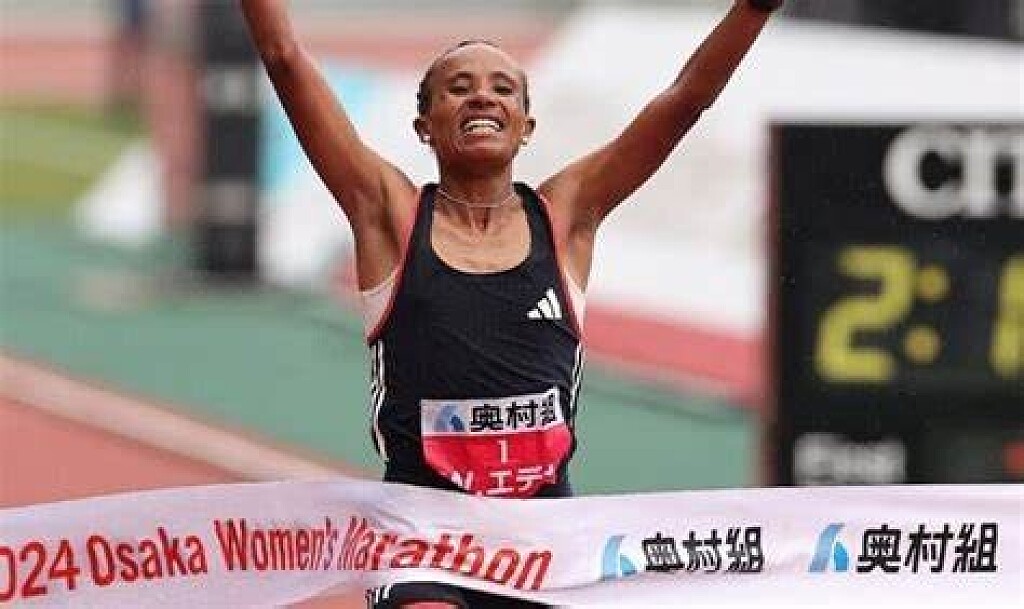
The elite field for the Jan. 26 Osaka International Women's Marathon is out, and it's a really short list, especially given Osaka International's World Athletics platinum label status. There's last year's winner Workenesh Edesa, 3rd-placer Mizuki Matsuda, 7th-placer Natsumi Matsushita, 9th-placer Madoka Nakano and 12th-placer Kana Kobayashi, top Japanese Paris Olympic marathon placer Yuka Suzuki, veteran Kenyan-born Israeli Lonah Chemtai Salpeter, the debuting Nanaka Izawa, and that's about it.
Workenesh outran Honami Maeda last year, both going under 2:19 and Workenesh getting the win in 2:18:51. She has to be viewed as the favorite. Salpeter has run as fast as 2:17:45 before, but she hasn't run under 2:25 in the marathon or under 1:10 in the half marathon since 2022, so there's not much reason to think she's going to be competitive in a faster race here. Matsuda and Suzuki both ran PBs in their last marathons, Matsuda a 2:20:42 in Berlin this fall and Suzuki a 2:24:02 while finishing 6th in the Paris Olympics. Kobayashi and Izawa are interesting, Kobayashi having run 2:29:44 last year as a non-track team student at Waseda University and then winning Hofu at the beginning of December in a 2:24:59 CR, and Izawa fresh off a great 1:08:25 PB at the Sanyo Ladies Half Marathon this month.
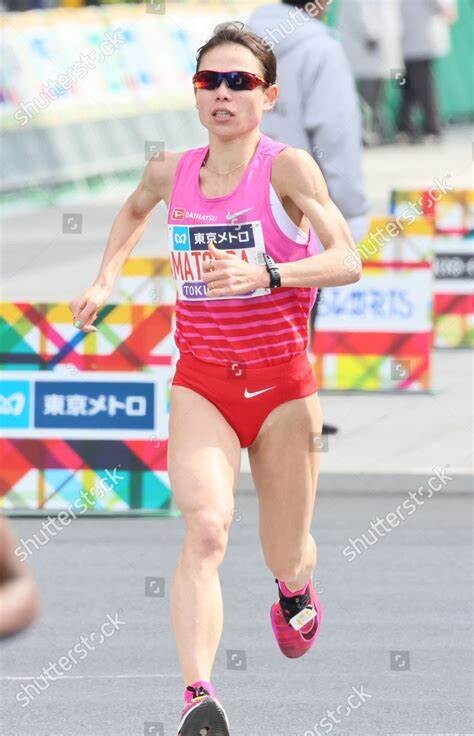
The Osaka Half Marathon is also happening in parallel with the marathon, and the fields there are decently competitive as always. Yuka Ando won the women's race in Osaka last year in a 1:08:18 PB and is back this time, facing sub-70 runner Sakiho Tsutsui, Mongolian NR holder Khishigsaikhan Galbadrakh and more. 1:00:41 Ethiopian Gebrie Erikhun leads a domestic men's field that includes Japan-based Patrick Mathenge Wambui and a million 61-minute Japanese men.
44th Osaka International Women's Marathon
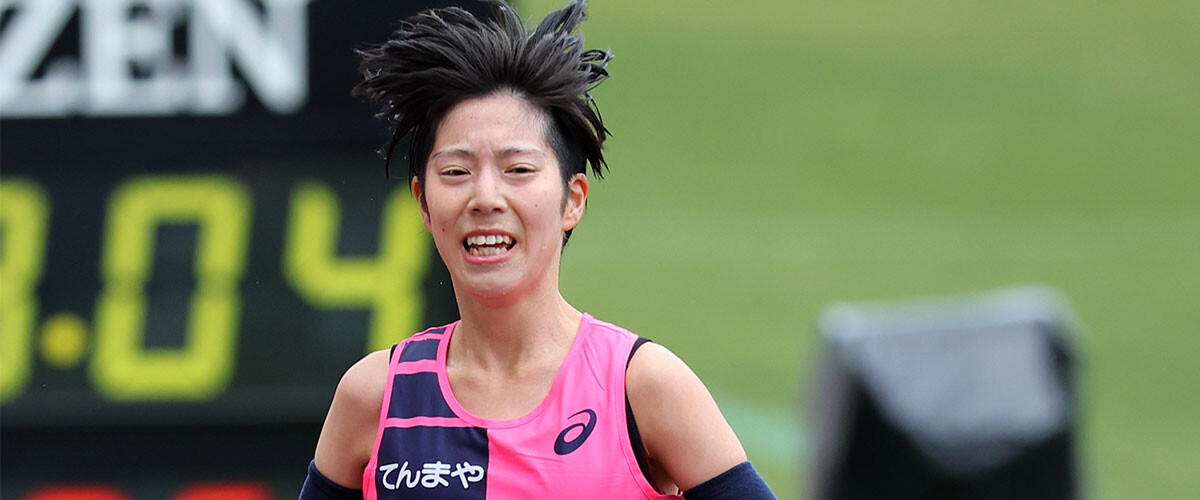
Elite Field Highlights
Lonah Chemtai Salpeter (Israel) - 2:18:45 (Nagoya 2022)
Workenesh Edesa (Ethiopia) - 2:18:51 (Osaka Women's 2024)
Mizuki Matsuda (Daihatsu) - 2:20:42 (Berlin 2024)
Natsumi Matsushita (Tenmaya) - 2:23:05 (Osaka Women's 2022)
Yuka Suzuki (Daiichi Seimei) - 2:24:02 (Paris Olympics 2024)
Kana Kobayashi (Otsuka Seiyaku) - 2:24:59 (Hofu 2024)
Yumi Yoshikawa (Chiba T&F Assoc.) - 2:25:20 (Osaka Women's 2023)
Chiharu Suzuki (Hitachi) - 2:25:59 (Osaka Women's 2023)
Madoka Nakano (Iwatani Sangyo) - 2:26:50 (Osaka Women's 2024)
Mao Kiyota (Suzuki) - 2:29:20 (Nagoya 2023)
Ayano Ikeuchi (Denso) - 2:32:26 (Seoul 2024)
Ayano Ikemitsu (Kagoshima Ginko) - 2:33:29 (Nagoya 2023)
Debut
Nanaka Izawa (Starts) - 1:08:25 (Sanyo Half 2024)
Rio Einaga (Osaka Gakuin Univ.) - 1:11:03 (National University Half 2023)
Kurumi Yoda (Osaka Gakuin Univ.) - 1:12:46 (Kansai University Half 2024)
Nanako Miwa (Kansai Gaikokugo Univ.) - 1:14:37 (Kansai University Half 2023)
by Brett Larner
Login to leave a comment

Osaka International Womens Marathon
The Osaka International Ladies Marathon is an annual marathon road race for women over the classic distance of 42.195 kilometres which is held on the 4th or 5th Sunday of January in the city of Osaka, Japan, and hosted by Japan Association of Athletics Federations, Kansai Telecasting Corporation, the Sankei Shimbun, Sankei Sports, Radio Osaka and Osaka City. The first...
more...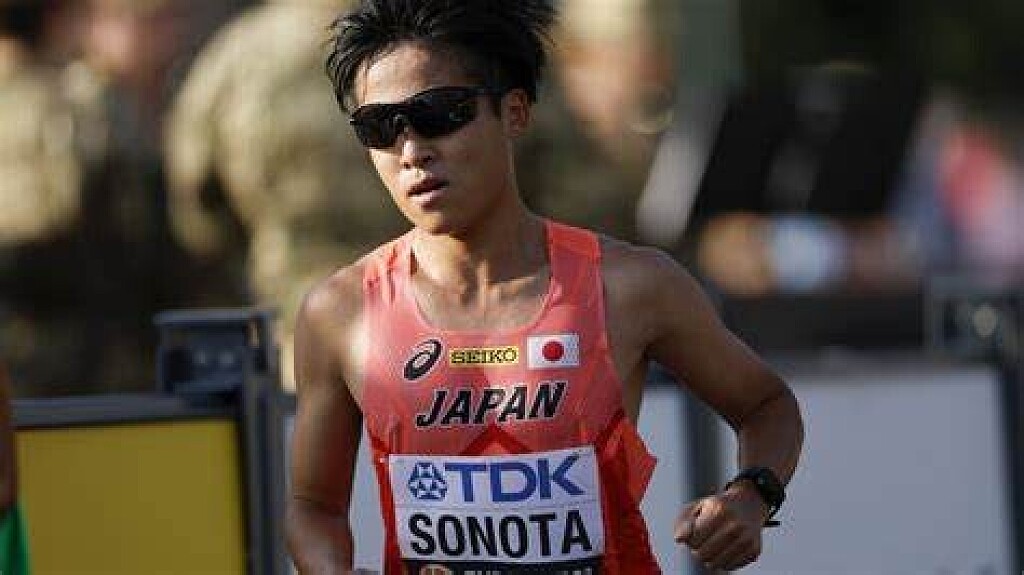
Fukuoka International Marathon Elite Field Released
Fukuoka International Marathon is the first of this winter season's big selection races for the home soil team for next year's Tokyo World Championships, and the domestic field is a great one.
Kenya Sonota, 2:05:59 in Tokyo last year, and 2:06 men Yusuke Nishiyama, Yuya Yoshida, Kazuya Nishiyama and Daisuke Doi make up the main contenders to get a spot, with internationals Lemeck Too, Jie He, Bethwel Yegon, Vincent Raimoi, last year's winner Michael Githae, and Shaohui Yang perfectly positioned to add momentum to the shot at the 2:06:30 Worlds standard that they'll all be taking.
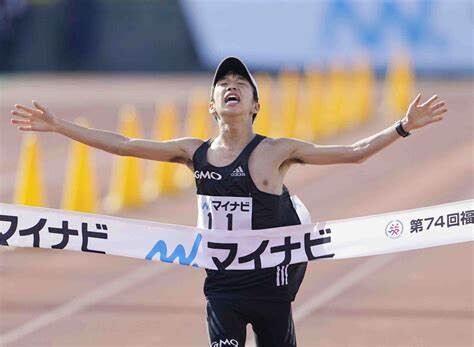
8 other Japanese men in the 2:07 to 2:09 range make it one of the most competitive Fukuoka editions in a long, long time.
Last year Githae outkicked Yang by 1 second to win 2:07:08 to 2:07:09, Yang with a Chinese NR that was broken a few months later by He in Wuxi. Chinese men's marathoning has momentum right now too, and it wouldn't be surprising to see either He or Yang become Fukuoka's first Chinese winner. Jianhua Peng, 2:09:59 last year in Seoul, and Bo Li, 2:11:23 in Nanchang, are also in the race.
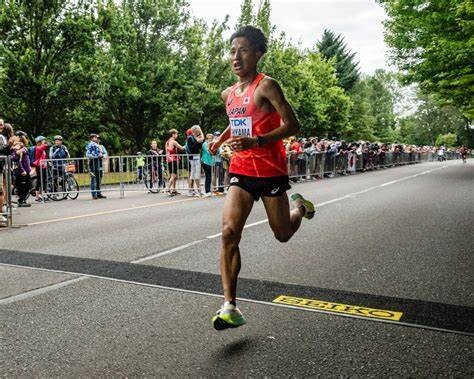
Fukuoka International Marathon Elite Field Highlights
Kenya Sonota (JR Higashi Nihon) - 2:05:59 (Tokyo 2023)
Lemeck Too (Kenya) - 2:06:29 (Rotterdam 2024)
Yusuke Nishiyama (Toyota) - 2:06:31 (Tokyo 2024)
Yuya Yoshida (GMO) - 2:06:37 (Osaka 2024)
Kazuya Nishiyama (Toyota) - 2:06:45 (Osaka 2023)
Daisuke Doi (Kurosaki Harima) - 2:06:54 (Osaka 2024)
Jie He (China) - 2:06:57 (Wuxi 2024)
Bethwel Yegon (Kenya) - 2:06:57 (Vienna 2023)
Vincent Raimoi (Kenya/Suzuki) - 2:07:01 (Fukuoka Int'l 2022)
Michael Githae (Kenya/Suzuki) - 2:07:08 (Fukuoka Int'l 2023)
Shaohui Yang (China) - 2:07:09 (Fukuoka Int'l 2023)
Koki Yoshioka (Kyudenko) - 2:07:28 (Osaka 2023)
Shin Kimura (Honda) - 2:07:34 (Tokyo 2024)
Derese Workneh (Ethiopia/Hiramatsu Byoin) - 2:07:58 (Beppu-Oita 2024)
Bedan Karoki (Kenya/Toyota) - 2:07:59 (Tokyo 2024)
Kazuya Azegami (Toyota) - 2:08:29 (Osaka 2023)
Kiyoshi Koga (Yasukawa Denki) - 2:08:30 (Beppu-Oita 2022)
Ryu Takaku (Yakult) - 2:08:38 (Fukuoka Int'l 2021)
Naoki Aiba (Chudenko) - 2:08:44 (Beppu-Oita 2022)
Kenta Murayama (Asahi Kasei) - 2:09:00 (Osaka 2024)
Kohei Futaoka (Chudenko) - 2:09:14 (Fukuoka Int'l 2021)
Jianhua Peng (China) - 2:09:59 (Seoul 2023)
Tesema Moges (Israel) - 2:10:31 (Rotterdam 2023)
Takumi Kumagai (Sumitomo Denko) - 2:10:41 (Fukuoka Int'l 2021)
Yusuke Tobimatsu (Hioki City Hall) - 2:10:47 (Hofu 2021)
Luka Musembi (Kenya/Tokyo T&F Assoc.) - 2:10:49 (Hokkaido 2022)
Asuka Tanaka (Runlife) - 2:11:09 (Tokyo 2022)
Bo Li (China) - 2:11:23 (Nanchang 2023)
Tadese Getahon (Israel) - debut - 1:00:47 (Copenhagen Half 2024)
by Brett Larner
Login to leave a comment

Fukuoka Marathon
The Fukuoka International Open Marathon Championship is one of the longest running races in Japan, it is alsoan international men’s marathon race established in 1947. The course record is held by Tsegaye Kebede of Ethiopia, running 2:05:18 in 2009. Frank Shorter won first straight years from 1971 to 1974. Derek Clayton set the World Record here in 1967 running 2:09:37. ...
more...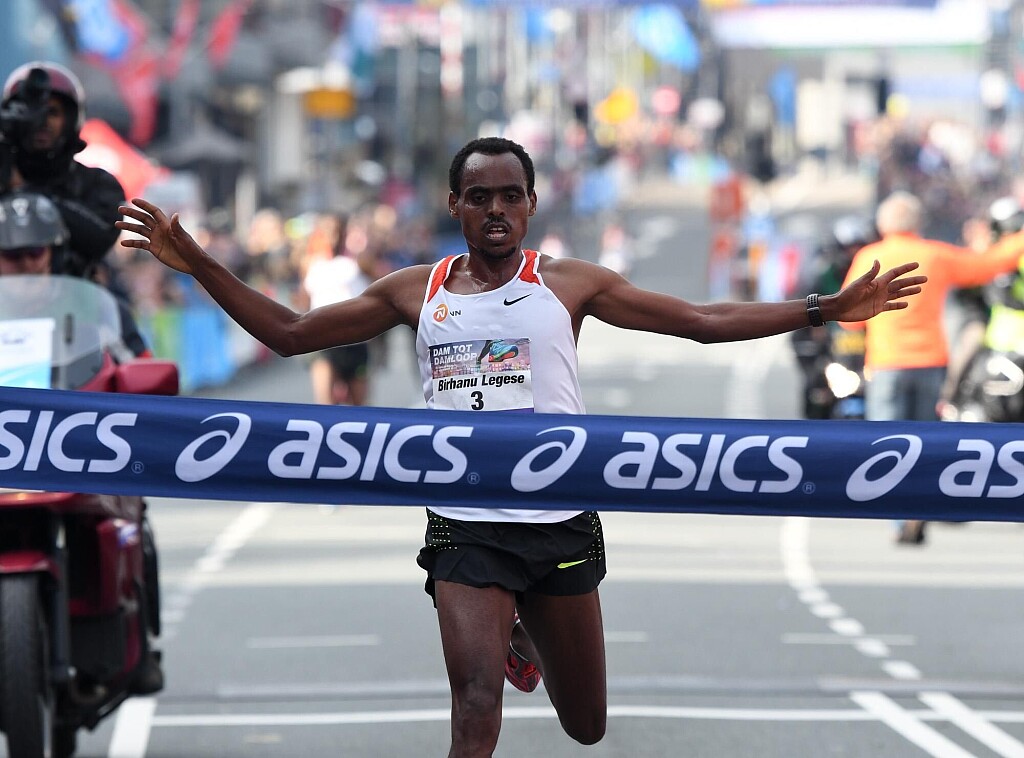
Legese and Chepngetich lead Chicago Marathon fields
Ruth Chepngetich heads to the Bank of America Chicago Marathon on the hunt for a hat trick, while Birhanu Legese is the fastest in the men’s field for the World Athletics Platinum Label road race on Sunday (13).
The women’s race features a clash between Chepngetich, her Kenyan compatriot Joyciline Jepkosgei and Ethiopia’s Sutume Kebede – three sub-2:17 runners who form part of a field that includes another six women to have dipped under 2:20.
Chepngetich, the 2019 world marathon champion, won in Chicago in 2021 and 2022, and followed that with a runner-up finish to Sifan Hassan last year. She clocked 2:14:18 on that occasion, while her PB of 2:14:18 set in Chicago in 2022 makes her the fourth fastest women’s marathon runner in history.
She ran 2:24:36 for her most recent marathon, in London in April, and placed ninth, but then clocked 1:05:58 to win the 21k Buenos Aires half marathon in August.
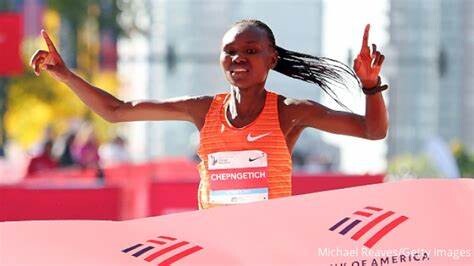
Jepkosgei, who won the London Marathon in 2021 and New York City Marathon in 2019, finished fourth in Chicago last year in 2:17:23.
She improved by one place when returning to marathon action in London in April, setting a PB of 2:16:24.
It’s Kebede who leads this season’s top list, thanks to the PB of 2:15:55 she set to win the Tokyo Marathon in March. That puts her at No.8 all time and she will be hoping to make the most of the fast course in Chicago.
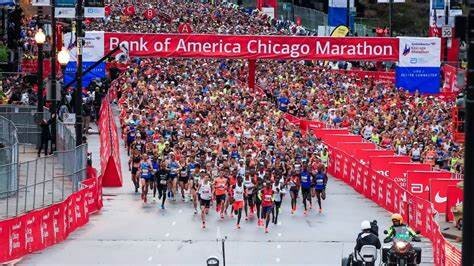
“After seeing what my teammate Kelvin Kiptum did last year, I want to come to Chicago to do something great,” said Kebede, who finished 15th in last year’s race.
Kiptum, who was part of Kebede’s training group, died in a road traffic accident in February, just four months after he set his world marathon record of 2:00:35 in Chicago. This year, the event will honour Kiptum’s legacy with a moment of silence at the start line.
Joining Chepngetich, Jepkosgei and Kebede on that start line will be three more women with PBs under 2:18 – Ethiopia’s Degitu Azimeraw, Ashete Bekere and Hiwot Gebrekidan – plus Kenya’s Irine Cheptai, who ran 2:18:22 in Hamburg in April.
The field also features the second and third fastest ever US women’s marathon runners, Keira D’Amato and Betsy Saina, who have also dipped under 2:20. They are joined in this competitive field by their compatriots Sara Hall and Emma Bates.
Ethiopia’s Legese leads the men’s field with the PB of 2:02:48 he ran in Berlin in 2019. That performance puts him sixth on the men’s world marathon all-time list but since then his highest marathon finish has been a third place, achieved in Rotterdam with a 2:05:16 run in April.
The two-time Tokyo Marathon champion will want to return to winning ways when he heads back to Chicago, where he placed 10th when making his World Marathon Majors debut in 2018, but he faces tough opposition.
Six other men in the field have PBs faster than 2:06, including Kenya’s Amos Kipruto, Vincent Ngetich and John Korir, and Ethiopia’s Dawit Wolde, Amedework Walelegn and Mohamed Esa.
Kipruto, the 2019 world bronze medallist, and Ngetich have matching PBs of 2:03:13. Kipruto won the London Marathon in 2022 and trains with Benson Kipruto, who won that year’s Chicago Marathon, while Ngetich was second in the Berlin Marathon last year, five places ahead of Kipruto. He was also third at this year’s Tokyo Marathon.
Korir ran his PB of 2:05:01 when finishing third in Chicago in 2022, while Wolde ran 2:03:48 in Valencia last year, Esa has a best of 2:05:05 from Amsterdam in 2022 and Walelegn clocked 2:04:50 in Rotterdam in April, finishing runner-up – one place ahead of Legese.
Looking to join them at the front of the field will be Kenya’s Daniel Ebenyo, the world 10,000m and half marathon silver medallist who makes his marathon debut. The 29-year-old ran a 59:30 half marathon in Berlin in April, 26 seconds off his PB set in Manama in 2022.
Ethiopia’s Jemal Yimer Mekonnen, who finished fourth in the half marathon at last year’s World Road Running Championships behind runner-up Ebenyo, is back in marathon action after his win in Seoul in March.
Among the athletes racing on home soil are USA’s Zach Panning, CJ Albertson and Brian Shrader.
Elite fields
WomenRuth Chepngetich (KEN) 2:14:18Sutume Kebede (ETH) 2:15:55Joyciline Jepkosgei (KEN) 2:16:24Degitu Azimeraw (ETH) 2:17:58Ashete Bekere (ETH) 2:17:58Hiwot Gebrekidan (ETH) 2:17:59Irine Cheptai (KEN) 2:18:22Keira D'Amato (USA) 2:19:12Betsy Saina (USA) 2:19:17Sara Hall (USA) 2:20:32Emma Bates (USA) 2:22:10Buze Diriba (ETH) 2:23:11Sara Vaughn (USA) 2:23:24Susanna Sullivan (USA) 2:24:27Gabi Rooker (USA) 2:24:35Lindsay Flanagan (USA) 2:24:43Stacey Ndiwa (KEN) 2:25:29 Lauren Hagans (USA) 2:25:56Annie Frisbie (USA) 2:26:18Jackie Gaughan (USA) 2:27:08Dominique Scott (RSA) 2:27:31Diane Nukuri (USA) 2:27:50Makena Morley (USA) 2:30:25Anne Marie Blaney (USA) 2:30:43Amy Davis-Green (USA) 2:33:09Aubrey Frentheway (USA) debut
MenBirhanu Legese (ETH) 2:02:48Amos Kipruto (KEN) 2:03:13Vincent Ngetich (KEN) 2:03:13Dawit Wolde (ETH) 2:03:48Amedework Walelegn (ETH) 2:04:50John Korir (KEN) 2:05:01Mohamed Esa (ETH) 2:05:05Jemal Yimer (ETH) 2:06:08Kyohei Hosoya (JPN) 2:06:35Toshiki Sadakata (JPN) 2:07:05Tatsuya Maruyama (JPN) 2:07:50Yuichi Yasui (JPN) 2:08:48Jorge Castelblanco (PAN) 2:09:24Zach Panning (USA) 2:09:28Brian Shrader (USA) 2:09:46CJ Albertson (USA) 2:09:53Tomoki Yoshioka (JPN) 2:10:03Reed Fischer (USA) 2:10:34Nathan Martin (USA) 2:10:45Colin Mickow (USA) 2:11:22Kevin Salvano (USA) 2:11:26Jacob Thomson (USA) 2:11:40Turner Wiley (USA) 2:11:59Shadrack Kipchirchir (USA) 2:13:02JP Flavin (USA) 2:13:27Charlie Sweeney (USA) 2:13:41Ben Kendell (USA) 2:15:49Phil Parrot-Migas (CAN) 2:15:53Aaron Gruen (USA) 2:15:56Daniel Ebenyo (KEN) debutPeter Lynch (IRL) debutAlex Maier (USA) debutAlex Masai (USA) debut
by World athletics
Login to leave a comment

Bank of America Chicago
Running the Bank of America Chicago Marathon is the pinnacle of achievement for elite athletes and everyday runners alike. On race day, runners from all 50 states and more than 100 countries will set out to accomplish a personal dream by reaching the finish line in Grant Park. The Bank of America Chicago Marathon is known for its flat and...
more...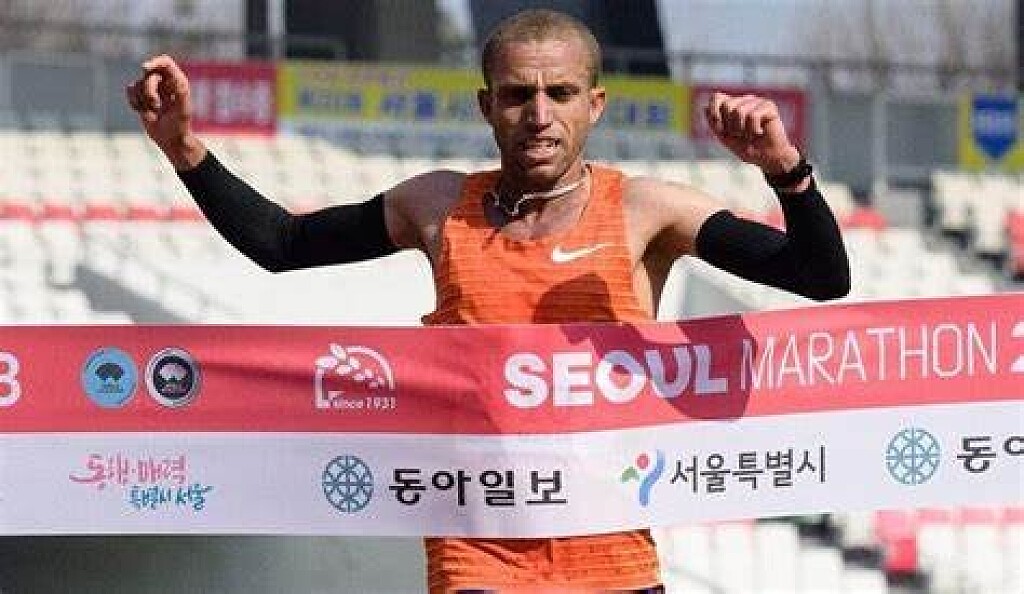
2024 Bank of America Chicago Marathon Elite Athlete: Amdework Walelegn will make his Marathon debut
The back-to-back winner of the 2022 and 2023 Seoul Marathons, Amdework Walelegn, will make his Abbott World Marathon Major debut with the 2024 Bank of America Chicago Marathon.
After winning consecutive Seoul Marathon wins from 2022 and 2023, Walelgn followed his victories up with a personal-best race in the 2024 Rotterdam Marathon, running 2:05:50 for a second-place finish.
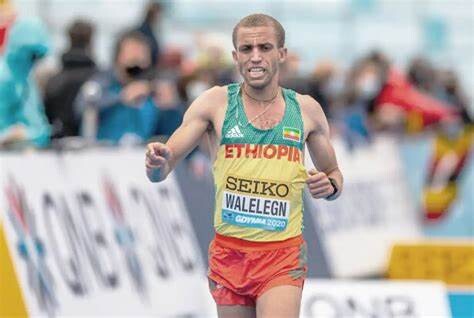
Walelgn is on a hot streak coming to Chicago. He's won back-to-back Seoul Marathons from 2022 and 2023.
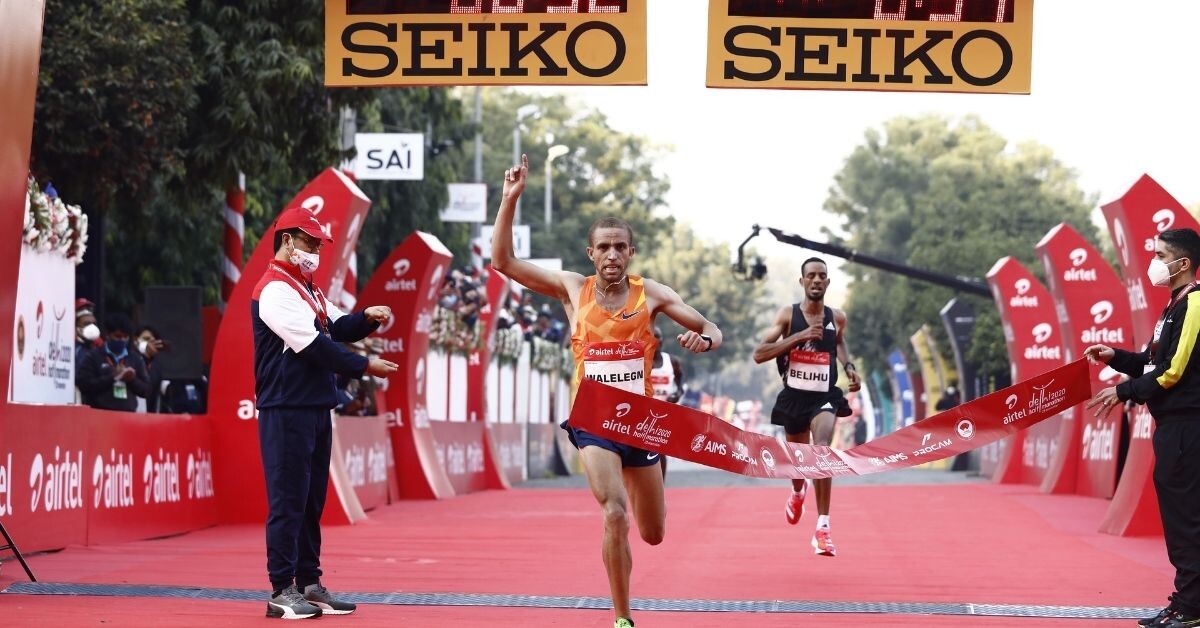
He recently set his personal best time at the 2024 Rotterdam Marathon. He also took a victory between his Seoul Marathon victories, earning the gold at the Serville Half Marathon with a 1:00:8 finish.
The 25-year-old has run a slew of half- and full marathons in his career. He ran his first marathon in 2015, finishing 15th in the Amsterdam Marathon with a 2:07:48 finish. His best half-marathon time of 58:40 comes from the 2022 Ras Al Khaimah Half Marathon, where he finished fourth place.
by NBC Sports Chicago Staff
Login to leave a comment
Bank of America Chicago
Running the Bank of America Chicago Marathon is the pinnacle of achievement for elite athletes and everyday runners alike. On race day, runners from all 50 states and more than 100 countries will set out to accomplish a personal dream by reaching the finish line in Grant Park. The Bank of America Chicago Marathon is known for its flat and...
more...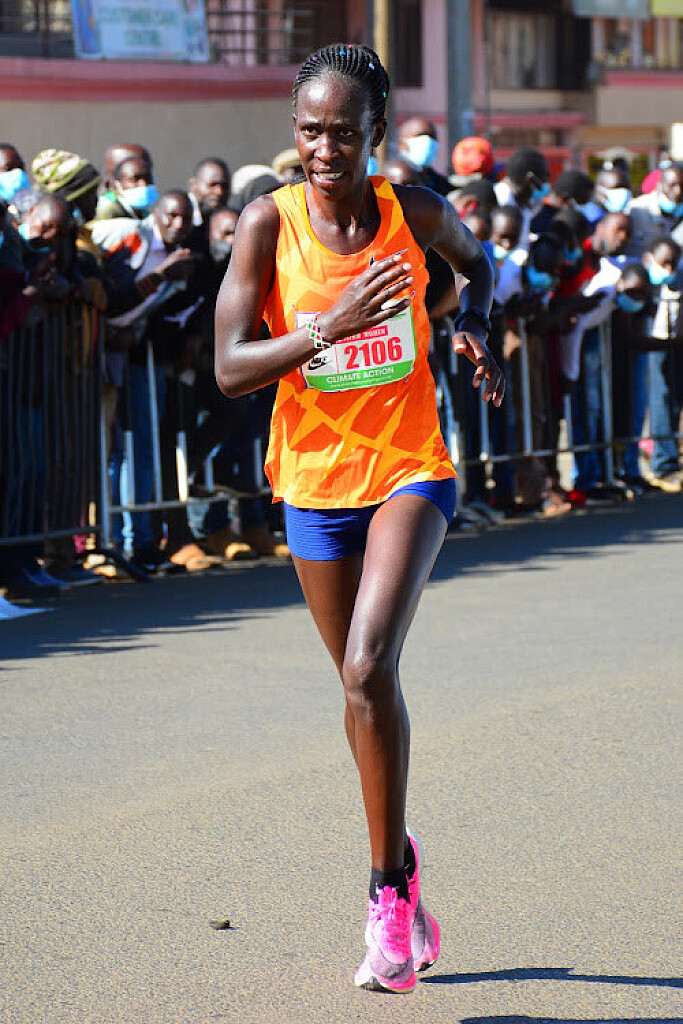
Korir and Gebreslase to lock horns at Sydney Marathon
The 2022 World Marathon silver medalist Judith Korir is set to rekindle her rivalry with the 2022 World Champion Gotytom Gebreslase of Ethiopia at the Sydney Marathon on September 15.
During their last meeting at the 2022 World Championships in Eugene, Gebreslase edged out Korir by nine seconds to claim the title in a course-record time of 2:18:11. Israel’s Lonah Chemtai was third in 2:20:18.
Race organizers have touted this year’s lineup as one of the most competitive as athletes eye glory in one of Australia’s most iconic cities.
“The calibre of athletes participating this year is a testament to Sydney’s allure as a world-class marathon destination. We’re excited to witness these extraordinary competitors race through our new course, against the backdrop of our iconic city,” said Sydney Marathon race director, Wayne Larden.
Korir, 28, takes a wealth of experience and success to Sydney, having won the 2022 Paris Marathon (2:19:48), 2021 Abu Dhabi Marathon (2:22:30) and Lugano Half Marathon (1:06:25), 2019 Venice Marathon (2:29:21) and the 2020 Izmir Marathon (2:33:59).
She finished sixth at last year’s London Marathon (2:20:41) and settled for fourth at the 2022 edition (2:18:43).
Gebreslase is a world marathon silver medalist from last year’s championships in Budapest, Hungary, in a time of 2:24:34, behind compatriot Amane Beriso (2:24:23) and ahead of Morocco’s Fatima Ezzahra (2:25:17).
The Ethiopian has victories from the 2021 Berlin Marathon (2:20:09) and the 2021 Bahrain Half Marathon (1:05:36).
At last year’s Ras Al Khaimah Half Marathon, she finished second in 1:05:51. She has finished third at the Hamburg Marathon (2:21:19), the 2022 Tokyo Marathon (2:18:18), 2022 New York Marathon (2:23:39) and the 2022 Liboa Half Marathon (1:07:11).
Korir will be joined by a formidable group of compatriots including Beatrice Cheptoo, the 2022 Istanbul Marathon champion, Rotterdam Marathon runner-up Viola Kibiwot and Sharon Chelimo, third place finisher at last year’s Frankfurt Marathon.
Two-time Frankfurt Marathon champion Brimin Kipkorir spearheads the Kenyan charge in the men's race.
Kipkorir bagged the 2022 Frankfurt title in 2:06:11 and defended it last year in a personal best of 2:04:53.
The 35-year-old is a two-time Nairobi Standard Chartered Marathon champion — 2017 (2:12:39) and 2019 (2:10:43).
He will be joined by Fukuoka Marathon champion Michael Mugo, 2017 Rotterdam Marathon third-place finisher Laban Korir and three-time Kosice Marathon winner Reuben Kerio.
They will face stiff competition from Ethiopia’s Leul Gebresilase, the 2022 world marathon bronze medalist, Seoul Marathon third-place finisher Haftu Teklu and last year’s Tokyo Marathon champion Deso Gelmisa.
by Teddy Mulei
Login to leave a comment

Sydney Marathon
The Sydney Marathon is a marathon held annually in Sydney, Australia. The event was first held in 2001 as a legacy of the 2000 Summer Olympics, which were held in Sydney. In addition to the marathon, a half marathon, 9 kilometres (5.6 mi) "Bridge Run", and a 3.5 kilometres (2.2 mi) "Family Fun Run" are also held under the banner...
more...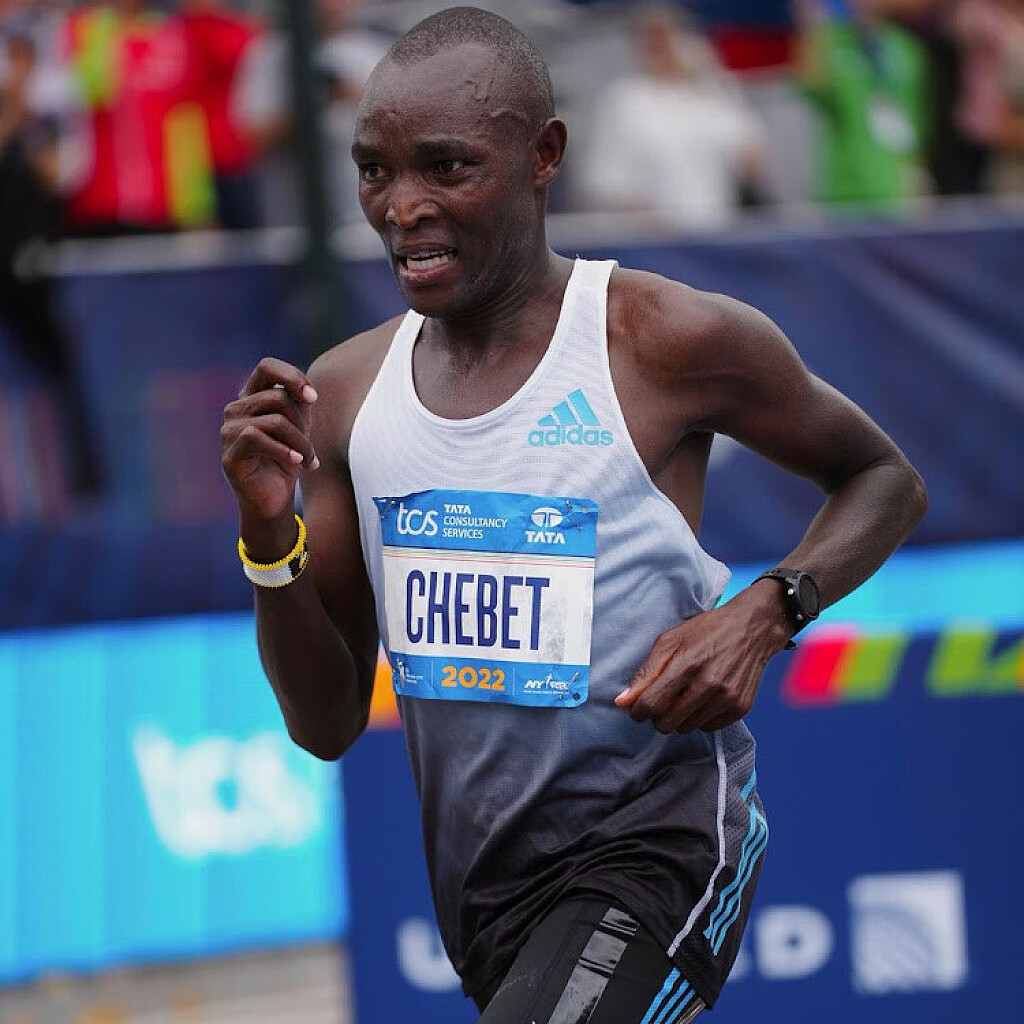
Chebet to test New York reediness at Sunday's Great North Run
Two-time Boston Marathon champion Evans Chebet will gauge his readiness for November’s New York Marathon at Sunday (September 8) when he lines up at the Great North Run, England.
The Great North Run is the largest half marathon in the world, and it is staged in North East England.
Chebet revealed he is looking to test his body as he aims for positive results ahead of the New York Marathon.
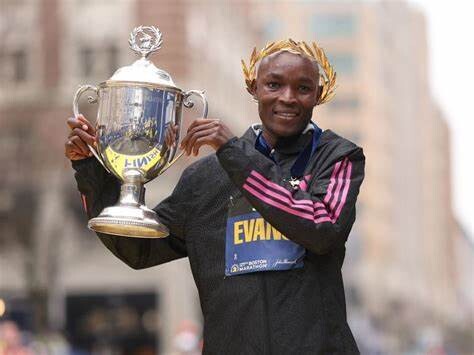
“I want to test my body in England and see how it responds. This race will be part of my preparations for the New York Marathon. I am confident of positive results in both races,” Chebet revealed.
Chebet sustained a tendon rapture during the Boston Marathon in April, dashing his hopes of a historic hat-trick.
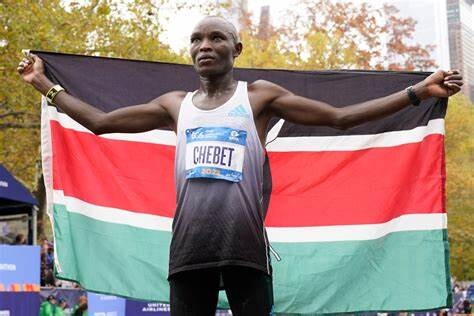
Despite the injury, he managed to secure a third-place finish with a time of 2:07:22, trailing Ethiopia’s Sisay Lemma (2:06:17) and Mohamed Esa (2:06:58).
Before that, he had picked up last year’s title with a time of 2:05:54, beating Tanzania’s Gabriel Geay (2:06:04) and Olympic bronze medalist Benson Kipruto (2:06:06).
He also led an all-Kenyan podium sweep during the 2022 edition—cutting the tape in 2:06:51 to lead Lawrence Cherono (2:07:21) and Kipruto (2:07:27) to the podium.
Now fully fit, the 35-year-old is determined to reclaim his winning form.
“My body feels great. I’m ready for the Great North Run and I am looking forward to positive results. I am also well prepared to win a second title in New York,” Chebet noted.
Chebet won the 2022 New York Marathon in 2:08:41 ahead of Ethiopia’s Shura Kitata (2:08:54) and the Netherlands' Abdi Nageeye (2:10:31).
Chebet’s resume also includes victories from the 2020 Valencia Marathon (2:03:00), the 2019 Buenos Aires Marathon (2:05:00) and the 2020 Lake Biwa Mainichi Marathon (2:07:29).
He placed third at the 2016 Berlin Marathon (2:05:31) and second at the 2016 Seoul Marathon (2:05:33) and 2019 Generali Milano Marathon (2:07:22).
Chebet is set to renew his rivalry with Lemma as he looks to assert revenge on the Ethiopian after he beat him to the Boston title.
The 2021 Valencia Half Marathon champion Abel Kipchumba will join Chebet on the start line as they look to secure a Kenyan 1-2 finish.
Other key competitors include Marc Scott, who will be representing the host nation. Scott clinched the 2021 title in 1:01:22, beating Edward Cheserek (1:01:31) and USA’s Galen Rupp (1:01:51).
In the women’s race, Rio 2016 Olympic 5,000m champion Vivian Cheruiyot leads a strong Kenyan contingent, including 2022 Commonwealth 10,000m bronze medalist Sheila Chepkirui and 2014 World Half Marathon silver medalist Mary Ngugi.
Their competition will come from 2015 World 5,000m silver medalist Senbere Teferi of Ethiopia and Britain’s record holder in the 10km Road race Eilish McColgan.
by Teddy Mulei
Login to leave a comment

Great North Run
Great North Run founder Brendan Foster believes Britain is ready to welcome the world with open arms after the launch of the event's most ambitious plan to date. The Great World Run campaign seeks to recruit one runner from every country in the United Nations – 193 in total – to take part in the iconic half marathon in...
more...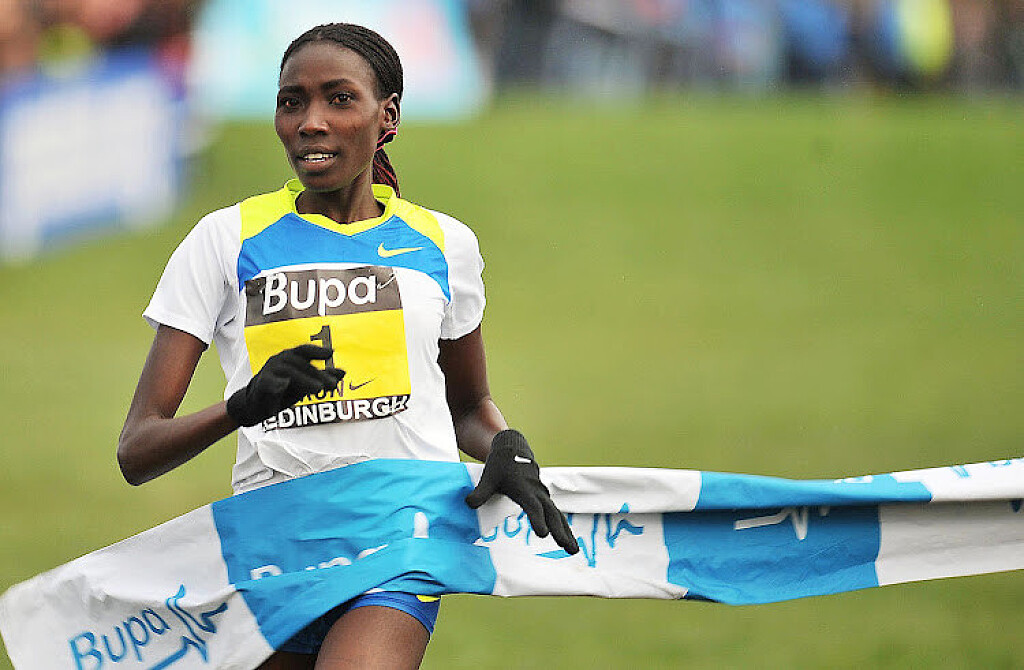
Masai, Kiptanui spearhead Kenya's charge at Frankfurt Marathon
The 2021 Chicago Marathon second runner-up Eric Kiptanui and Beijing 2008 Olympics 10,000m bronze medalist Linet Masai will spearhead Kenya’s charge at the Frankfurt Marathon set for October 27.
Race organizers anticipate a turnout of 12,000 participants, with expectations of a thrilling, fast-paced competition.
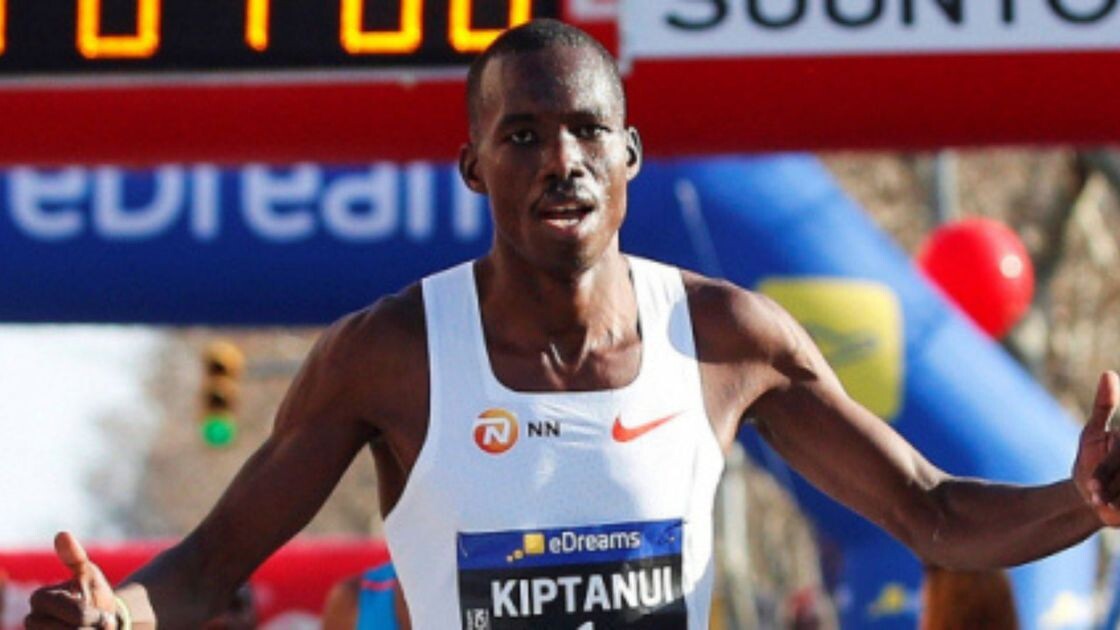
“We are looking forward to another high-class race that will certainly hold one or two surprises. After having the fastest race in the event's history last year in terms of the two winning times added together, we are excited to see what will be possible on October 27,” said race director Jo Schindler.
During last year’s race, Brimin Kipkorir sealed the title in 2:04:53 ahead of Ethiopian duo of Mulugeta Asefa (2:06:47) and Guye Idemo (2:07:44).
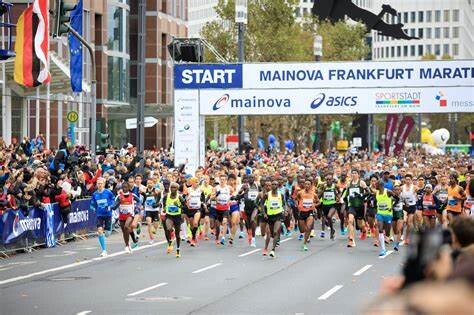
In the women’s elite race, Ethiopia’s Buzunesh Getachew (2:19:27) beat Winfred Moseti (2:20:55) and Sharon Chelimo (2:22:07) to the title.
Kiptanui enters the race with an impressive resume, including half marathon victories in Berlin (58:42) and Lisbon (1:00:05) in 2018, and Barcelona in 2019 (1:01:04).
In the marathon, he boasts a title from the Xiamen and Tuscany Marathon in 2021 (2:05:47-PB). He also secured runner-up finishes in Dubai 2020 (2:06:17) and Chicago 2021 (2:06:17).
His other accolades include a victory at the 2017 Madrid 10k Road race (27:34).
His main rival will be Ethiopia’s Herpasa Negasa, who finished second at the 2022 Seoul Marathon.
Negasa holds a personal best of 2:03:40 set during the 2019 Dubai Marathon where he placed second behind compatriot Getaneh Molla (2:03:34).
The Ethiopian’s accolades include runner-up finishes at the Hengshui 2018 Marathon (2:09:14), Lyon 2015 (2:10:17) and a second runner-up finish at the 2018 Warszawa Marathon (2:11:46).
In the women’s race, Masai will face a stern challenge from 2022 Berlin Marathon third-place finisher Tigist Abayechew.
Masai brings a rich trophy cabinet that includes bronze from the Beijing 2008 Games in the 10,000m (30:26.50) and a world title in the same event from the 2009 Berlin World Championships (30:51:24).
The 34-year-old is also a gold medalist from the 2007 World Cross Country Championships and a three-time silver medalist from Amman 2009, Bydgoszcz 2010 and Punta Umbria 2011.
In the full marathon, Masai holds a lifetime best of 2:23:46 from the 2018 Amsterdam Marathon where she finished fifth.
Abayechew holds a best of 2:18:03 she set during the Berlin Marathon, where she placed third behind Rosemary Wanjiru (2:18:00) and Tigst Assefa (2:15:37).
by Teddy Mulei
Login to leave a comment

Mainova Frankfurt Marathon
Frankfurt is an unexpectedly traditional and charming city, with half-timbered buildings huddled in its quaint medieval Altstadt (old city), cosy apple wine taverns serving hearty regional food, village-like neighbourhoods filled with outdoor cafes, boutiques and street art, and beautiful parks, gardens and riverside paths. The city's cache of museums is second in Germany only to Berlin’s, and its nightlife...
more...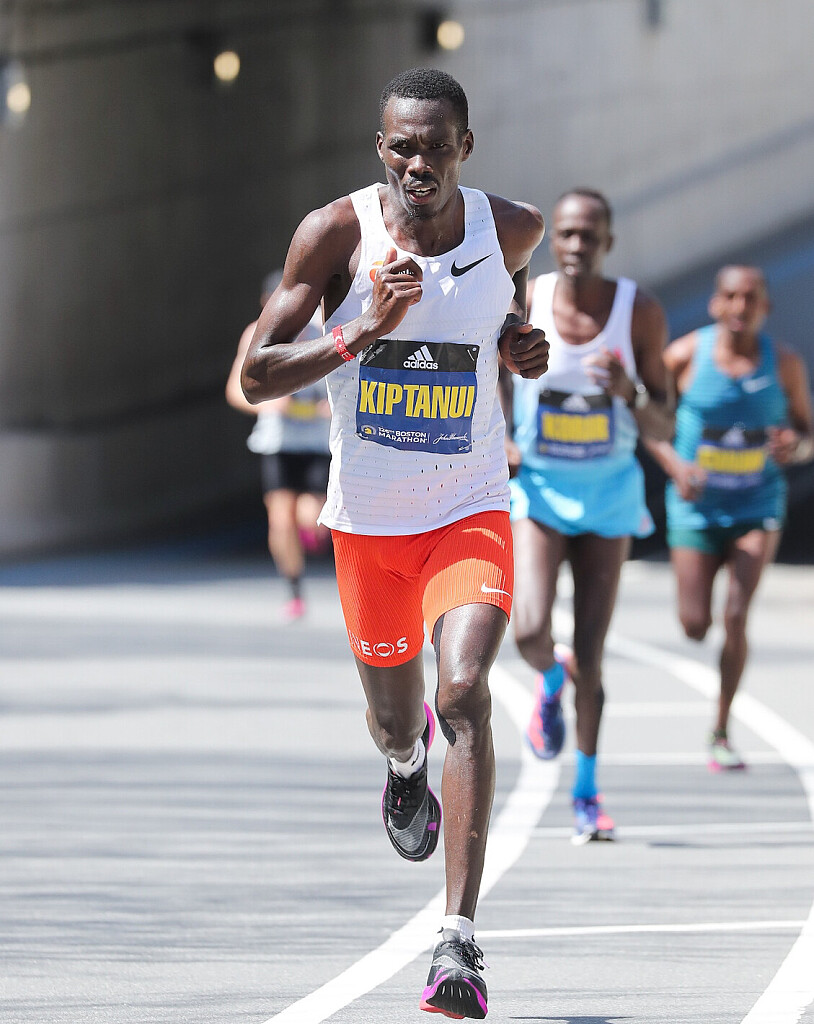
Mainova Frankfurt Marathon on 27th October: Negasa, Kiptanui, Masai and Abayechew look for new momentum in Frankfurt
A group of athletes who have achieved world-class results in different events in the past want to use the fast course of the Mainova Frankfurt Marathon to give their careers new momentum. Among the runners targeting fast times is Ethoipia’s Herpasa Negasa, who became the eighth fastest ever at the Dubai Marathon 2019, and Kenya’s 2009 World 10,000m Champion Linet Masai.
The 41st edition of the Mainova Frankfurt Marathon on 27th October is a World Athletics Elite Label Road Race. Organisers expect a total of over 25,000 athletes for their event, among them around 12,000 marathon runners.
“We look forward to another high-class race which could well produce surprises. After achieving the fastest combined winning time in the history of our race last year we are eager to see what will be possible on 27th October,“ said Race Director Jo Schindler.
Herpasa Negasa achieved a breakthrough at the Dubai Marathon 2019, when the Ethiopian was runner-up in a world-class time of 2:03:40. Two years ago he clocked another very good time in Seoul where he ran 2:04:49 and placed second once more. Now the 30 year-old intends to reach those levels again. Herpasa Negasa belongs to what currently is probably the world’s strongest marathon training group. Coached by Gemedu Dedefo in Addis Ababa Olympic Champion Tamirat Tola and current Boston winner Sisay Lemma are among his training partners.
Eric Kiptanui will be among Herpasa Negasa’s strongest challengers. As a newcomer he immediately established himself as one of the fastest half marathon runners of 2018. First the Kenyan took the Lisbon Half Marathon, then he ran a 58:42 course record in Berlin that still stands today. During a Corona lockdown he won one of very few high-class marathon races in Siena, Italy, in 2021 with 2:05:47. Despite fine results in Chicago 2021 (3rd) and Boston 2022 (5th) he could not yet improve his time from Siena. After a weaker year in 2023 the 34 year-old now wants to bounce back in Frankfurt.
For Linet Masai the Mainova Frankfurt-Marathon could be one of her last chances and may be the best one to achieve a late breakthrough in the marathon. The 34 year-old is the 10,000m World Champion from 2009 and won an Olympic bronze medal over this distance in 2008.
From 2009 to 2011 she took three silver medals in a row in the highly competitive World Cross Country Championships. However after a fine 2:23:46 debut in Amsterdam in 2018 (without the benefit of the new shoe technology) she was not able to build on this performance. In Frankfurt Linet Masai wants to finally break her PB.
Tigist Abayechew will be among the favourites on 27th October. Two years ago the 30 year-old Ethiopian smashed her personal best and improved to 2:18:03 for third place. After a break due to an injury she came back with a ninth place in Tokyo this March. Tigist Abayechew will now want to cross the line first in Frankfurt’s indoor finish at the Festhalle.
by Race news Service
Login to leave a comment
Mainova Frankfurt Marathon
Frankfurt is an unexpectedly traditional and charming city, with half-timbered buildings huddled in its quaint medieval Altstadt (old city), cosy apple wine taverns serving hearty regional food, village-like neighbourhoods filled with outdoor cafes, boutiques and street art, and beautiful parks, gardens and riverside paths. The city's cache of museums is second in Germany only to Berlin’s, and its nightlife...
more...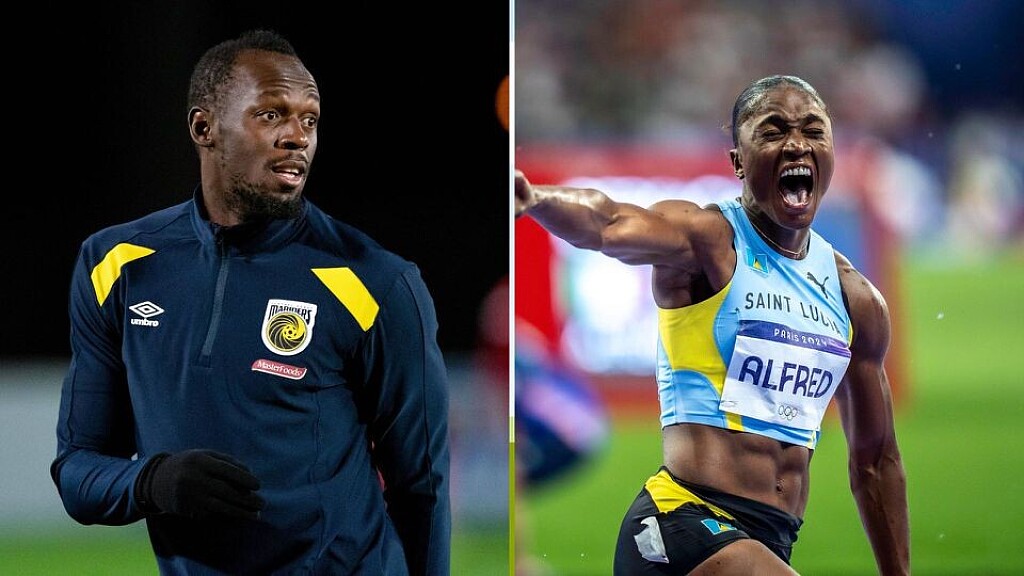
How Usain Bolt contributed to Julien Alfred's victory in the women's 100m at the Paris Olympics
Julien Alfred has narrated how Usain Bolt inspired her to victory in the women's 100m final at the Paris Olympic Games.
Julien Alfred is walking in the footsteps of the fastest man in the world, Usain Bolt, as she looks to obliterate the women’s 100m world record.
The world record was set by the late Florence Griffith Joyner who clocked an astonishing 10.49 seconds to win the 1988 Seoul Olympic Games.
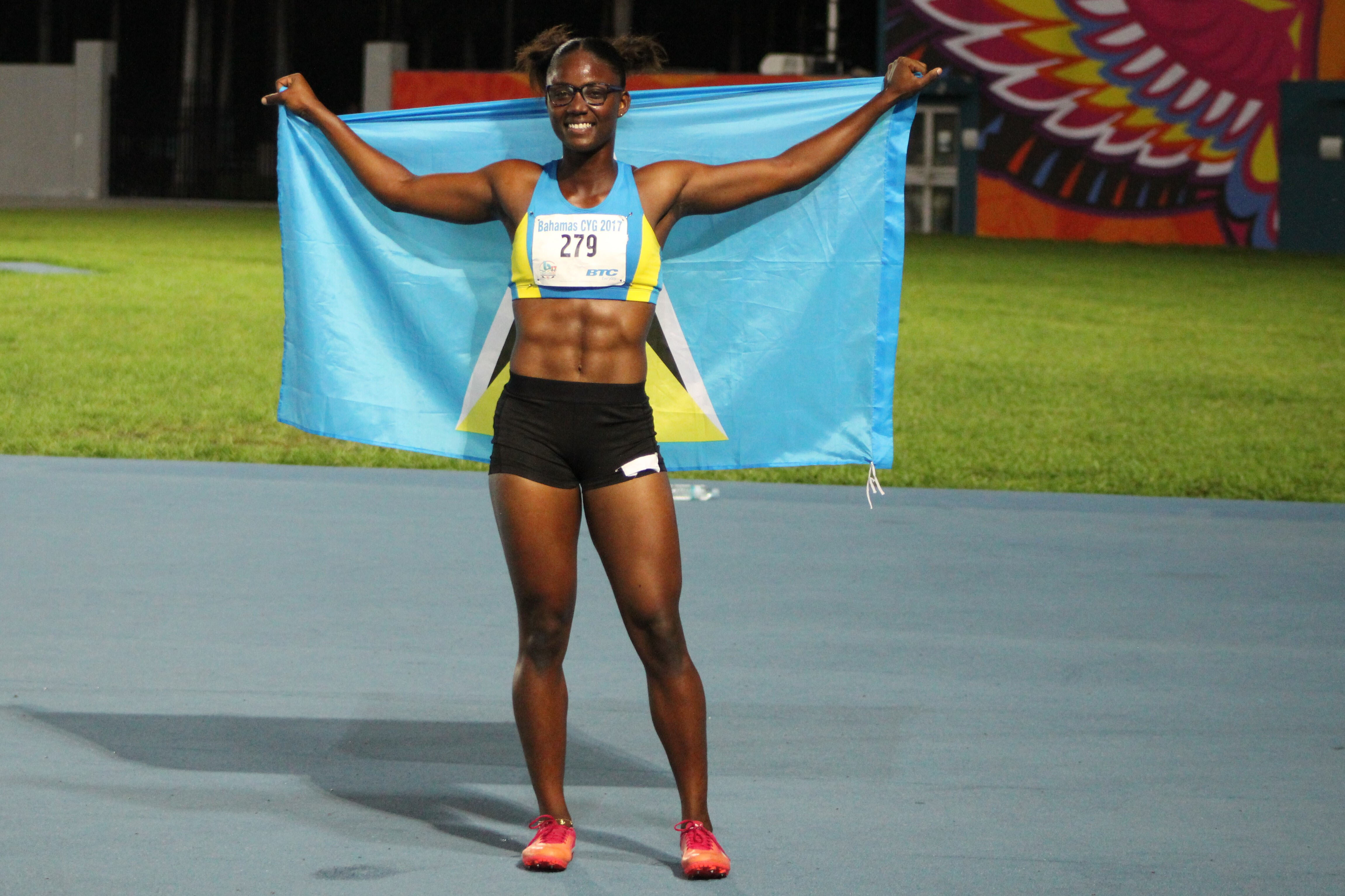
She explained that multiple Olympic champion Bolt contributed to her win at the Paris Olympic Games since she watched some of his videos before stepping on the track for the final. In an interview with the Times, Alfred noted that she wants to be one of the greatest ever.
She is slowly getting closer to achieving her dreams as she has been crowned Olympic champion. To achieve the feat, the St. Lucia sprinter had to beat a strong cast from the U.S. including the reigning world champion Sha’Carri Richardson and Melissa Jefferson who finished second and third.
“For me it was never the Olympics. I wanted to be the fastest woman in the world. I wanted to be unbeatable. It was almost child-like. I never saw being from a small place as a negative. I never thought it would make things impossible. I watched Usain Bolt be the fastest man and just knew what I wanted,” Alfred said.
“I wanted to help my family and I saw running as a way out. So I watched a few of his races before mine. I had to go back to my roots to see how he handled everything, from the pressure to the celebrations. He was an inspiration to me growing up and I wanted to be just like him,” she added.
After winning the Olympic 100m and claiming the 200m silver medal, Alfred noted that she felt a sense of being free.
She was unfazed by the presence of Richardson and noted that in such instances, she never feels the need to worry about the things happening around her. When she steps on the track, Alfred noted that she only focuses on herself.
“When I run fast I feel happy, like I’m on top of the world and nothing can stop me. Sometimes when you focus on racing, it can make you tense, but when you just focus on yourself you have that freedom. No worries. Unstoppable. That’s how I felt in Paris,” she revealed.
However, her journey to becoming an Olympic champion has been marred with challenges. Alfred admitted that she used to train on grass since there was no available track where she used to live.
“Every country has its own challenges. But Saint Lucia is a country full of life, very beautiful and rich in its own ways. I really hope I have put it on the map,” she added.
by Abigael Wafula
Login to leave a comment

Paris 2024 Olympic Games
For this historic event, the City of Light is thinking big! Visitors will be able to watch events at top sporting venues in Paris and the Paris region, as well as at emblematic monuments in the capital visited by several millions of tourists each year. The promise of exceptional moments to experience in an exceptional setting! A great way to...
more...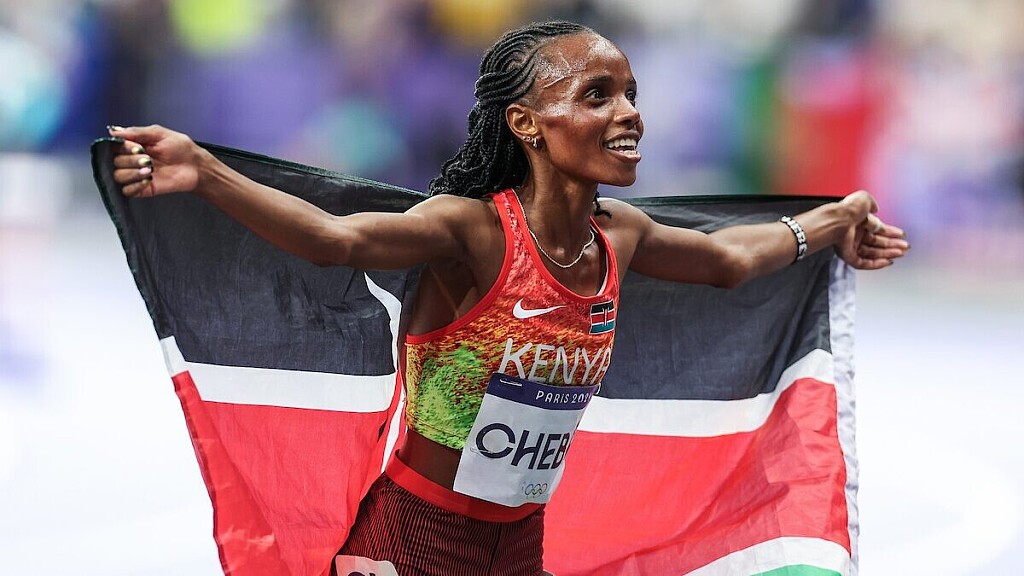
Kenya’s Beatrice Chebet wins 10,000m gold for historic distance double
Chebet is the first Kenyan athlete to win two Olympic gold medals in a single Games.
After winning the women’s 5,000m gold earlier in the week, Kenya’s Beatrice Chebet made history on Friday in the women’s 10,000m, taking gold to compete the Olympic distance double. Italy’s Nadia Battocletti set a national record to win silver in 30:43.35, and fan favourite Sifan Hassan of the Netherlands won her bronze of the Games in 30:44.12.
It’s the first time a Kenyan athlete has won two gold medals on the track in a single Olympics, and the first time a Kenyan has won gold in the women’s 10,000m since its addition to the Olympic program in Seoul 1988.
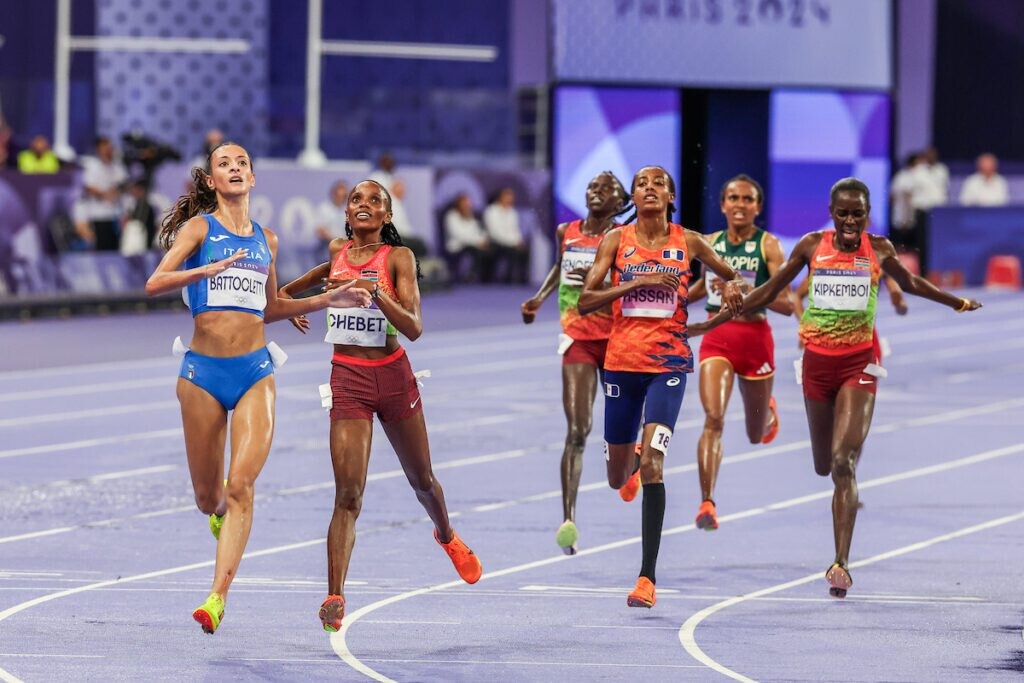
Chebet, the current world record holder in the 10,000m (28:54.15, set earlier this year) positioned herself near the front of the pack during the first few laps and remained there throughout, with Battocletti in the middle and Hassan running near the back, where she stayed until the final two laps. Chebet is also the 2024 world cross-country champion, a title she also won in 2023.
The group stayed tightly bunched through most of the race, with around a dozen women running closely together into the final laps. Chebet began to pick up the pace at the bell, followed by Battocletti, who finished fourth in the 5,000m final earlier in the week. Battocletti ran a tactically smart race, putting herself in an ideal position to strike in the final stretch.
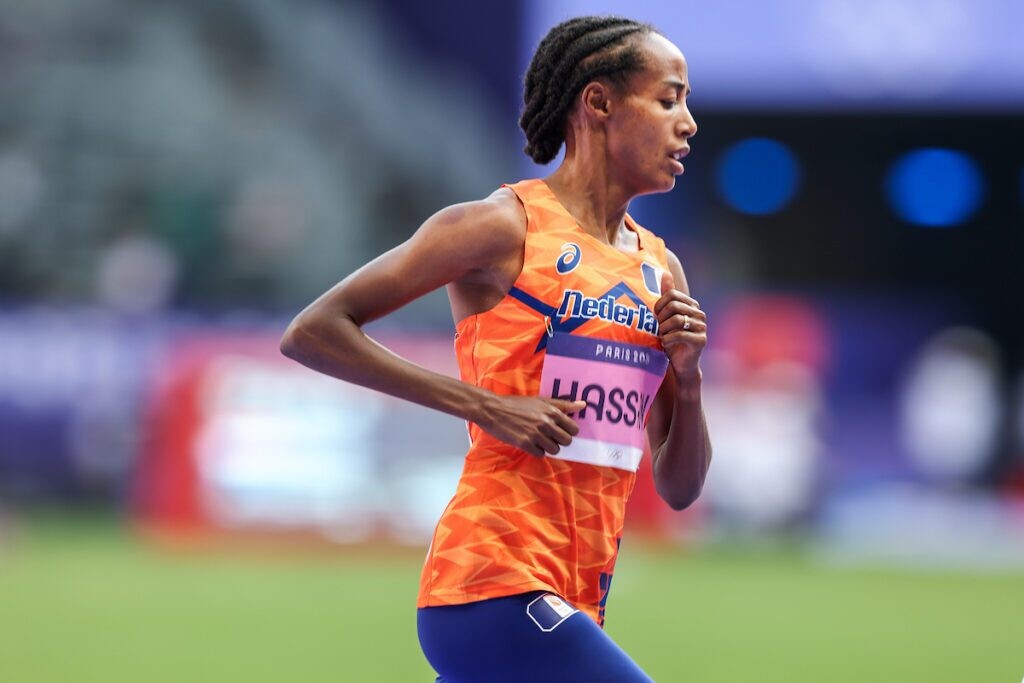
With 200m to go, Hassan, the defending Olympic champion, who had only begun moving up from the rear in the final two laps of the race, began a push toward the front of the lead group, eventually clinching third place and her second bronze medal of the Paris Olympics. (She won bronze in the 5,000 also.)
Hassan is attempting an ambitious triple, competing in the 5,000m, 10,000m and the marathon at these Olympics. She will have one day of rest on Saturday before tackling the women’s marathon on Sunday, the final day of the Games.
by Keeley Milne
Login to leave a comment
Paris 2024 Olympic Games
For this historic event, the City of Light is thinking big! Visitors will be able to watch events at top sporting venues in Paris and the Paris region, as well as at emblematic monuments in the capital visited by several millions of tourists each year. The promise of exceptional moments to experience in an exceptional setting! A great way to...
more...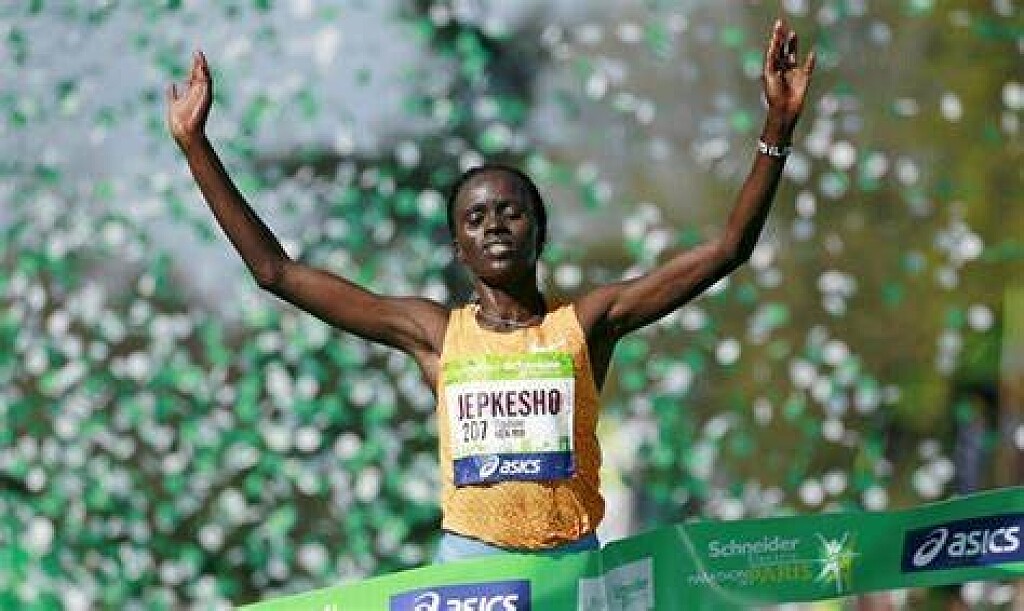
Jepkesho favorite to clinch Sunday's Gold Coast Marathon title
Seoul Marathon's second runner-up Visiline Jepkesho will start as the favorite in the elite women’s race on Sunday during the Gold Coast Marathon on the Eastern Coast of Australia.
Jepkesho is competing in her second marathon this year after finishing third in South Korea with a time of 2:22:52 on March 17.
The 34-year-old also boasts victories from the 2018 Rotterdam Marathon, where she clocked 2:23:47 and the 2016 Paris Marathon (2:25:53).
She also placed third in the 2015 edition of the Paris Marathon clocking 2:24:44 and placed second at the 2017 Istanbul Marathon (2:22:40).
Other top performances include the 2019 Nagoya women’s Marathon (2:22:58) and the 2017 Lille Half Marathon (1:08:12).
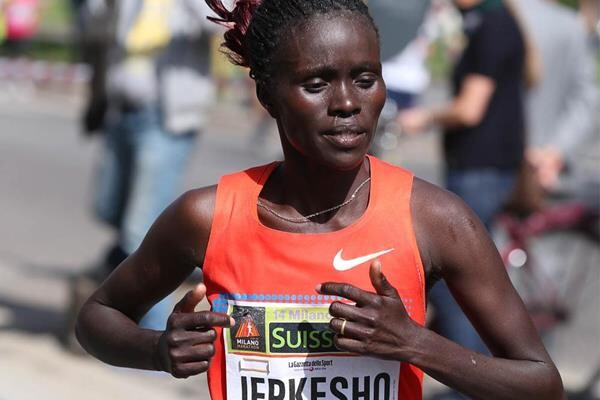
The seasoned long-distance runner will face stiff competition from Japan’s Rie Kawauchi and Misato Horie.
Kawauchi boasts titles from the Nagano Marathon (2:33:16) and last year’s Tokushima Marathon (2:33:50).
Horie is the 2016 Gold Coast champion, where she claimed the title in a time of 2:26:40. She also holds a title from the 2022 Osaka Marathon (2:32:10).
Jepkesho will be joined by compatriot Irene Jerobon, the Castellon Marathon runner-up (2:30:51).
She is also the Alpes-Maritimes Nice-Cannes Marathon champion with a time of 2:41:18. Milly Clark, the 2021 Melbourne Marathon champion, will be seeking to make a mark for the host nation.
Clark’s achievements include winning the 2021 Launceston Half Marathon (1:11:09) and securing silver at the 2019 Oceania Marathon (2:28:08) and 2017 Gold Coast Half Marathon (1:11:15).
The men’s field will be spearheaded by 2015 Praha Marathon Champion Felix Kandie.
Organizers termed the men’s race as the strongest in the event’s history with 12 athletes having run sub 2:10 times.
“ Twelve male athletes have sub 2:10 performances. This will be the strongest field to ever jump to the starting gun in the 44-year history of the ASICS Gold Coast Marathon,” the statement from the organizers read.
Kandie is a silver medalist in the 2017 Seoul Marathon (2:06:03) as well as the 2016 edition of the Praha Marathon (2:08:14).
He is a bronze medalist at the 2015 Valencia Marathon (2:07:07) and the 2018 Toronto Waterfront Marathon (2:08:30).
Kandie will be joined by fellow Kenyans Timothy Kattam, the 2023 Milano Marathon silver medalist (2:07:53), Geoffrey Birgen and Kenneth Omulo.
Japan’s Yuki Kawauchi, the 2016 Gold Coast runner-up (2:09:01), will provide formidable competition along with Uganda’s Kibet Soyekwo, the 2013 Dronten Half Marathon champion (1:03:45) and Ethiopia’s Belay Tilahun.
by Teddy Mulei
Login to leave a comment

MEA ANTRIM COAST HALF MARATHON
The MEA Antrim Coast Half Marathon 2022 has been approved by World Athletics as an Elite Event. The World Athletics certified course takes in some of the most stunning scenery in Europe, combined with some famous landmarks along the route. With it's flat and fast course, the race is one of the fastest half marathons in the world. Starting...
more...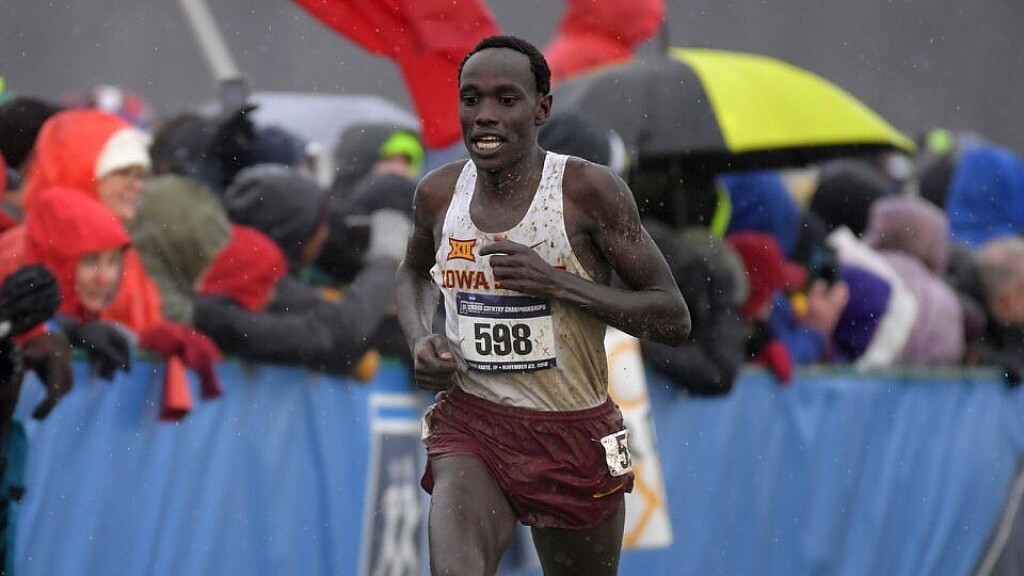
Edwin Kurgat confident of ending Kenya's 36-year wait for Olympics 5,000m title
Little-known Edwin Kurgat is inspired by his London Diamond League performance to win the 5,000m Olympics title that the country last claimed in 1988 Seoul Games.
Edwin Kurgat is now ready to stun the masses at the Paris Olympic Games and reclaim Kenya’s gold medal in the men’s 5000m following his London Diamond League Meeting third-place finish.
Kurgat, competing in the men’s 3000m, crossed the finish line third in 7:28.53 as Dominic Lobalu set a Swiss record, clocking a personal best time of 7:27.68 to win the race. Grant Fisher finished second in the hotly-contested race, clocking 7:27.99.
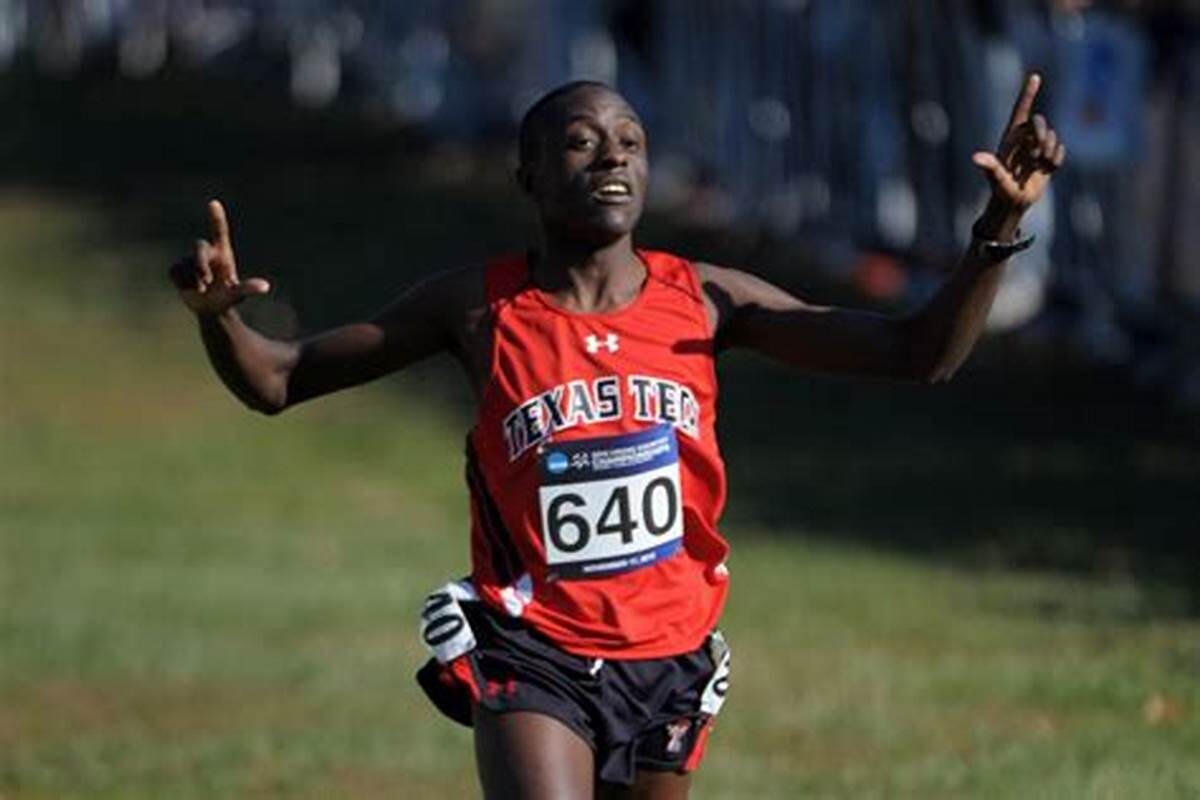
Kurgat admitted that the race is very vital as he heads to the Olympic Games. He disclosed that throughout the race, his body was feeling good and going under 7:30 is a sign of fireworks at the Olympic Games.
The last time Kenya won a gold medal at the Olympic Games in the men’s 5000m was at the 1988 Seoul Olympic Games courtesy of the late John Ngugi.

“Throughout the race I was feeling good, really composed. This was the race where I wanted to run good to get ready for the Olympics so I'm glad with how I ran,” Kurgat said.
“I'm feeling confident going in to Paris, running under 7:30 is a big achievement for me and now I'm just ready for what's to come. The crowd was amazing, they helped push me to get it finished,” he added.
The 28-year-old has been impressive this season, starting from his indoor campaign to the outdoor races. He opened his season with the 3000m and 5000m indoor races at the New Balance Indoor Grand Prix and Boston University John Thomas Terrier Classic respectively finishing second and first.
Kurgat finished fourth in the men’s 10,000m at the Prefontaine Classic, missing out on the Olympic team shortly but bounced back in the 5000m to finish third and automatically qualify for the event.
by Abigael Wafula
Login to leave a comment
Paris 2024 Olympic Games
For this historic event, the City of Light is thinking big! Visitors will be able to watch events at top sporting venues in Paris and the Paris region, as well as at emblematic monuments in the capital visited by several millions of tourists each year. The promise of exceptional moments to experience in an exceptional setting! A great way to...
more...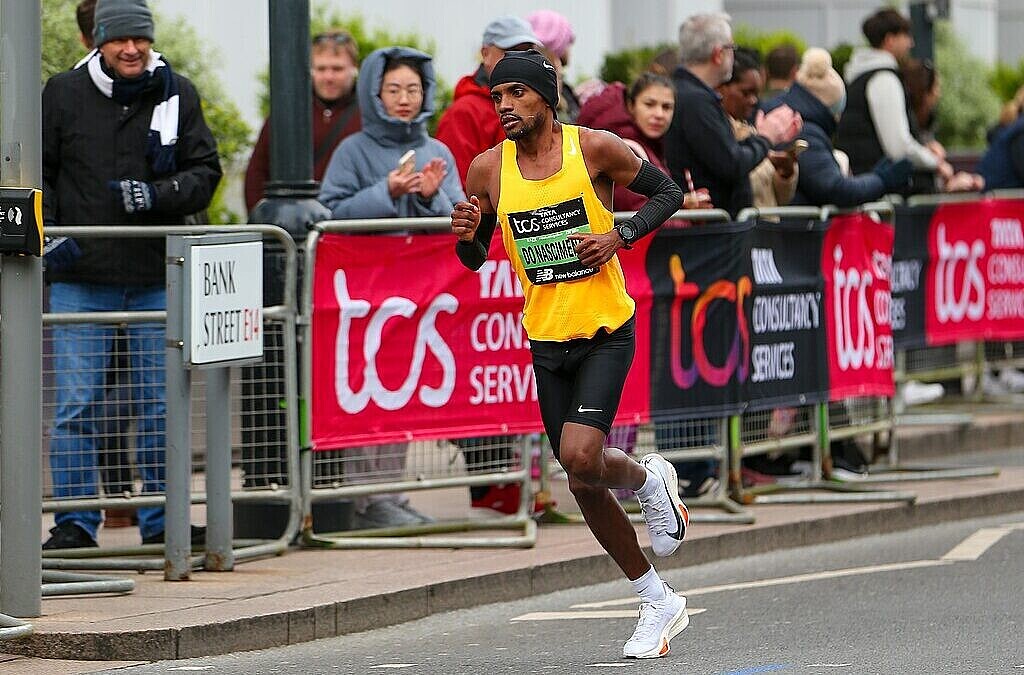
Brazilian Olympic marathoner receives doping suspension
Daniel do Nascimento, a 2:04 marathoner who famously fist-bumped Eliud Kipchoge during the last Olympic marathon, has been banned after testing positive for three illegal substances.
Brazil’s national marathon record holder and Paris Olympic-bound athlete, Daniel do Nascimento, has been provisionally suspended by the Brazilian Doping Control Authority (BDCA) after testing positive for three banned substances: drostanolone, methenolone and nandrolone.
According to Brazilian media outlet Globo, do Nascimento tested positive for the three anabolic steroids during an out-of-competition test conducted on July 4 while training in Kenya for the Paris Games. As a result, he will miss the Olympics. He was slated to run the marathon after qualifying at last year’s Hamburg Marathon with a time of 2:07:06. His personal best of 2:04:51 from the 2022 Seoul Marathon stands as the South American record.
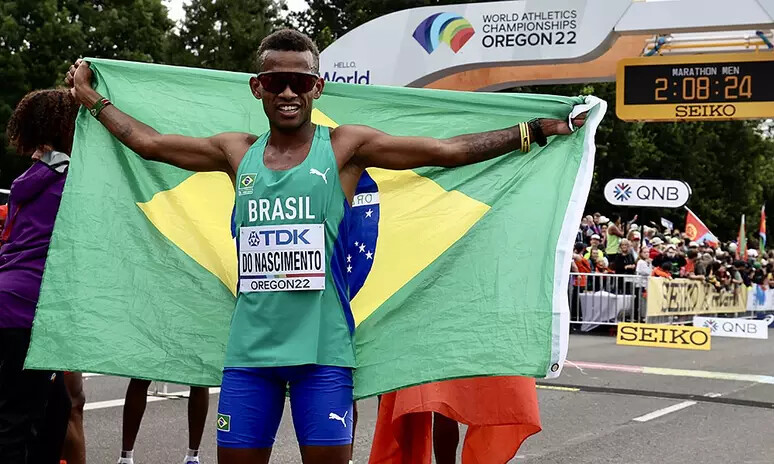
The three banned substances in Nascimento’s test are all anabolic steroids (precursors of testosterone). Do Nascimento will likely face a four-year ban from athletics, jeopardizing his dreams for the 2028 Olympics in Los Angeles. The 25-year-old’s suspension may be reduced to three years if he admits to the three anti-doping rule violations.
Do Nascimento’s girlfriend, Graziele Zarri, was also suspended earlier this year after testing positive for androstanediol and testosterone in a test conducted by the Anti-doping Agency of Kenya (ADAK). She ran 2:42:48 in her marathon debut last December in Valencia.
Beside being the South American record holder for the marathon, do Nascimento is most famous for taking a porta-potty stop while leading the 2022 New York City Marathon. He set a blistering pace for 30 km, but ended up collapsing and did not finish the race.
Do Nascimento also made headlines at the 2020 Olympic marathon in Tokyo for exchanging mid-race fist bumps with former world record holder Eliud Kipchoge. The moment went viral, making do Nascimento a well-known name in Brazil and the distance running world.
by Marley Dickison
Login to leave a comment
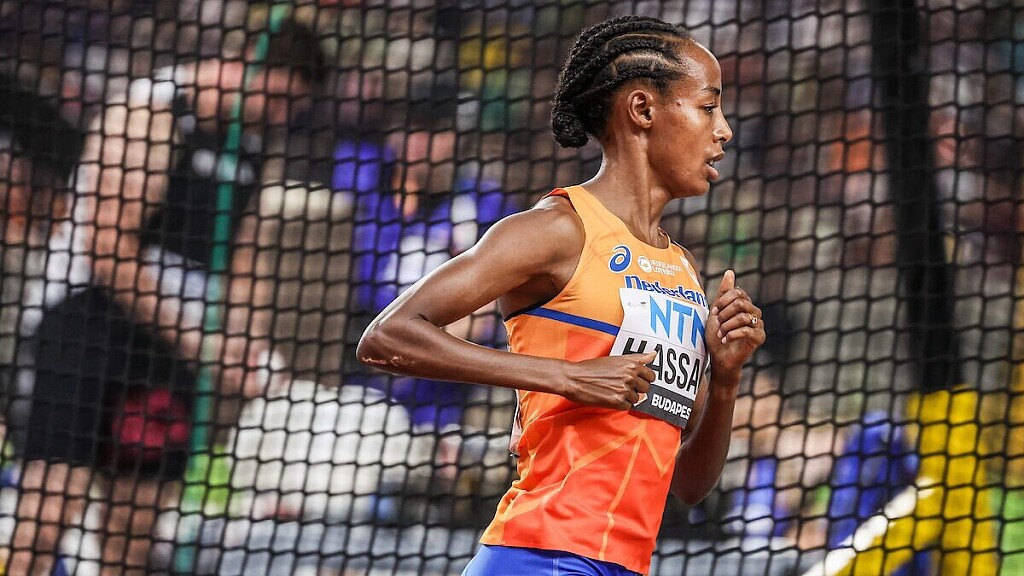
Sifan Hassan to race four events at Paris 2024 Olympics
At the Tokyo 2020 Olympics, Dutch distance runner Sifan Hassan made history by winning three individual medals across three different athletics disciplines, two golds and one bronze. She won golds in the women’s 5,000m and 10,000m events, and bronze in the women’s 1,500m behind Faith Kipyegon and Laura Muir. Well apparently three events didn’t keep Hassan busy enough, raising the stakes for Paris 2024 by competing in the 1,500m, 5,000m, 10,000m and the marathon—an unprecedented Olympic quadruple.
According to an announcement from the Dutch Olympic team, Hassan is entered in all four disciplines and will race a total of seven times over 10 days. Her most challenging stretch will be from Aug. 8-11, when she is scheduled to race the 1,500m semi-finals and finals, the women’s 10,000m final, and the women’s marathon on the final day of Paris 2024 (Aug. 11); all on consecutive days.
Hassan is the only athlete in Olympic history to have medaled in the 1,500m, 5,000m and 10,000m events at a single Games. She is also the first to qualify for and attempt this quadruple-distance feat.
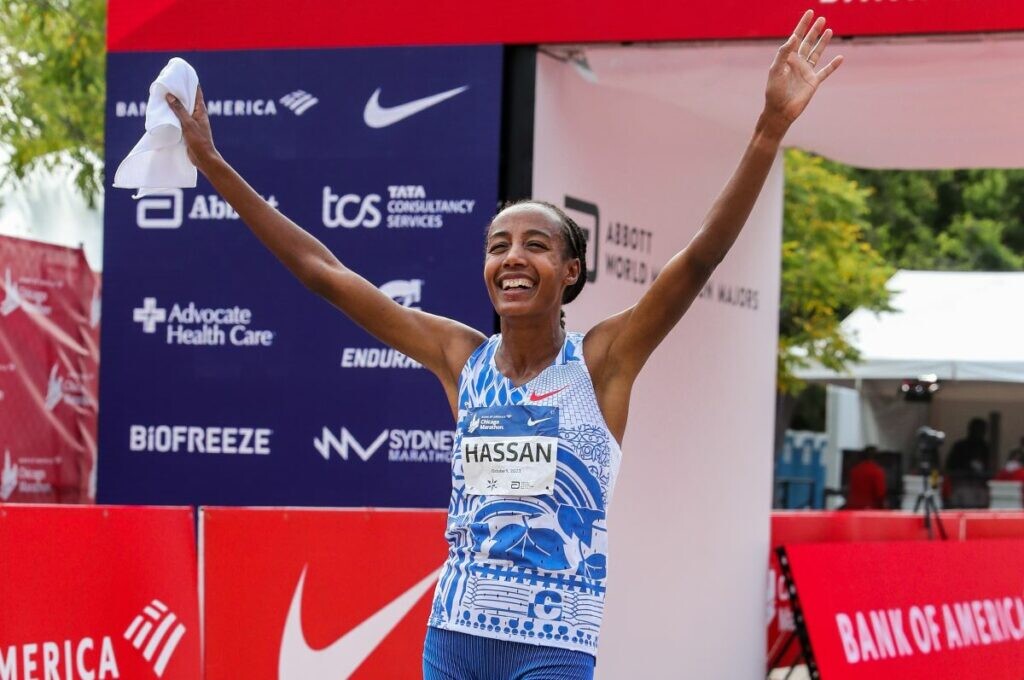
Last year, Hassan expanded her repertoire by adding the marathon to her list of racing disciplines. She won her marathon debut at the 2023 London Marathon and went on to clock the second-fastest women’s marathon time in history (2:13:44) to win the 2023 Chicago Marathon.
Hassan’s Paris 2024 schedule is ambitious. Although she is one of the greatest distance runners in history, replicating her Tokyo success will be incredibly challenging. The women’s 1,500m and 5,000m are two of the deepest events right now, featuring formidable competitors like defending world champion Faith Kipyegon, Laura Muir (Olympic silver medallist), Australia’s Jessica Hull (2,000m world record holder), Ethiopia’s Gudaf Tsegay (5,000m world record holder), and Kenya’s Beatrice Chebet (world XC champion). Hassan’s best chances for a medal lie in the women’s 10,000m final and the marathon, which come at the end of the Olympic schedule.
Here’s a look at Hassan’s Olympic schedule:
August 2: 5,000m, Round 1 – 6:10 p.m.
August 5: 5,000m, Final – 9:10 p.m.
August 6: 1,500m, Round 1 – 10:05 a.m.
August 8: 1,500m, Semifinal – 7:35 p.m.
August 9: 10,000m Final – 8:55 p.m.
August 10: 1,500m, Final – 8:25 p.m.
August 11: Marathon – 8:00 a.m.
Only two athletes have won four medals at a single Olympic Games: U.S. sprint icon Florence Griffith-Joyner, who won three golds and one silver (in the 4x400m relay) at Seoul in 1988, and Fanny Blankers-Koen of the Netherlands, who won four golds at the 1948 Olympics in London in the 100m, 200m, 4x100m relay, and 80m hurdles.
by Marley Dickison
Login to leave a comment
Paris 2024 Olympic Games
For this historic event, the City of Light is thinking big! Visitors will be able to watch events at top sporting venues in Paris and the Paris region, as well as at emblematic monuments in the capital visited by several millions of tourists each year. The promise of exceptional moments to experience in an exceptional setting! A great way to...
more...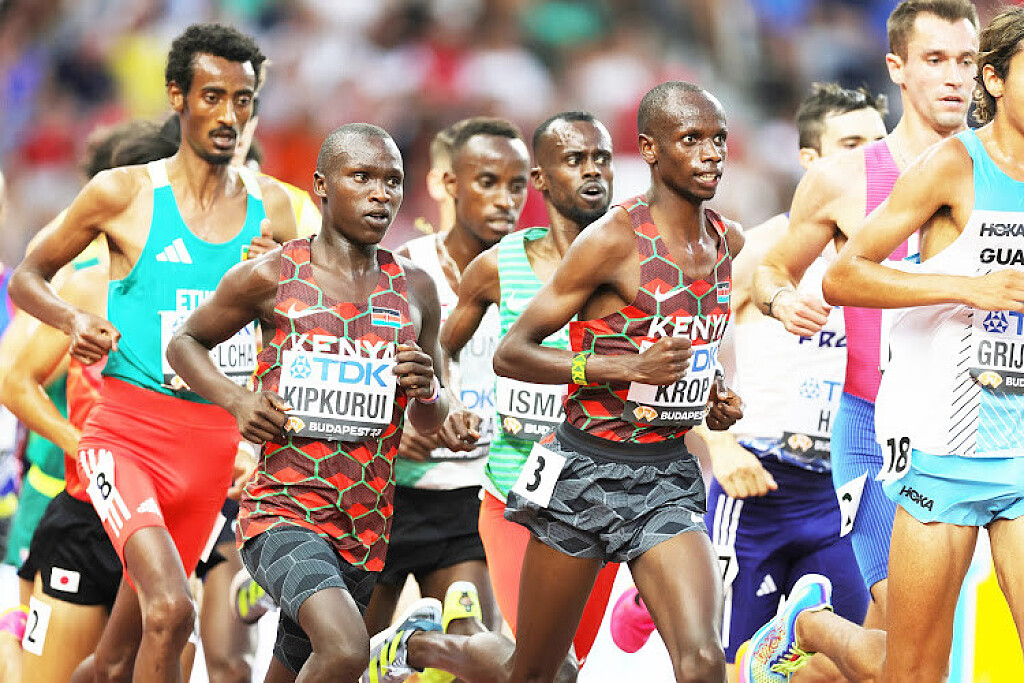
Krop to focus on mental strength ahead of the 2024 Paris Olympics
World 5,000m silver medalist Jacob Krop will focus on his mental strength ahead of the 2024 Paris Olympic Games later this month.
Krop, who won bronze at the 2022 Commonwealth Games, said being his first time at the Olympics, he wants to make an impact and that is why he will not just focus on running but also on mental strength.
“Running at the Olympics stage is good for me because you face the best of the best in the world.
"Remember running is not just about the body but also how strong one is mentally. This is what makes the difference on such a global stage," he noted.
He added: "It was not easy to make it to the Olympic Games and that is why I am keen to run well in Paris and make my country proud,” said Krop.
“Running is about the mind and I want to put a lot of emphasis on that and Kenyans should expect good results from me in Paris—probably gold,” said Krop after morning training at the Kipchoge Keino Stadium in Eldoret.
He said he has been improving with time and plans to end Kenya's long wait since John Ngugi won the title in the 1988 Olympics in Seoul.
“I have been doing very well recently and I want to win gold. It has been long since we won gold and I think the time is now,” said Krop, who will team up with Ronald Kwemoi and Edwin Kurgat for Team Kenya.
He said he has been improving with time and plans to end Kenya's long wait since John Ngugi won the title in the 1988 Olympics in Seoul.
“In 2021, I was in Form Four sitting my final examination and I couldn't make it for the Olympics. This is despite having featured in the trials and having placed fourth,” he said.
by Emmanuel Sabuni
Login to leave a comment
Paris 2024 Olympic Games
For this historic event, the City of Light is thinking big! Visitors will be able to watch events at top sporting venues in Paris and the Paris region, as well as at emblematic monuments in the capital visited by several millions of tourists each year. The promise of exceptional moments to experience in an exceptional setting! A great way to...
more...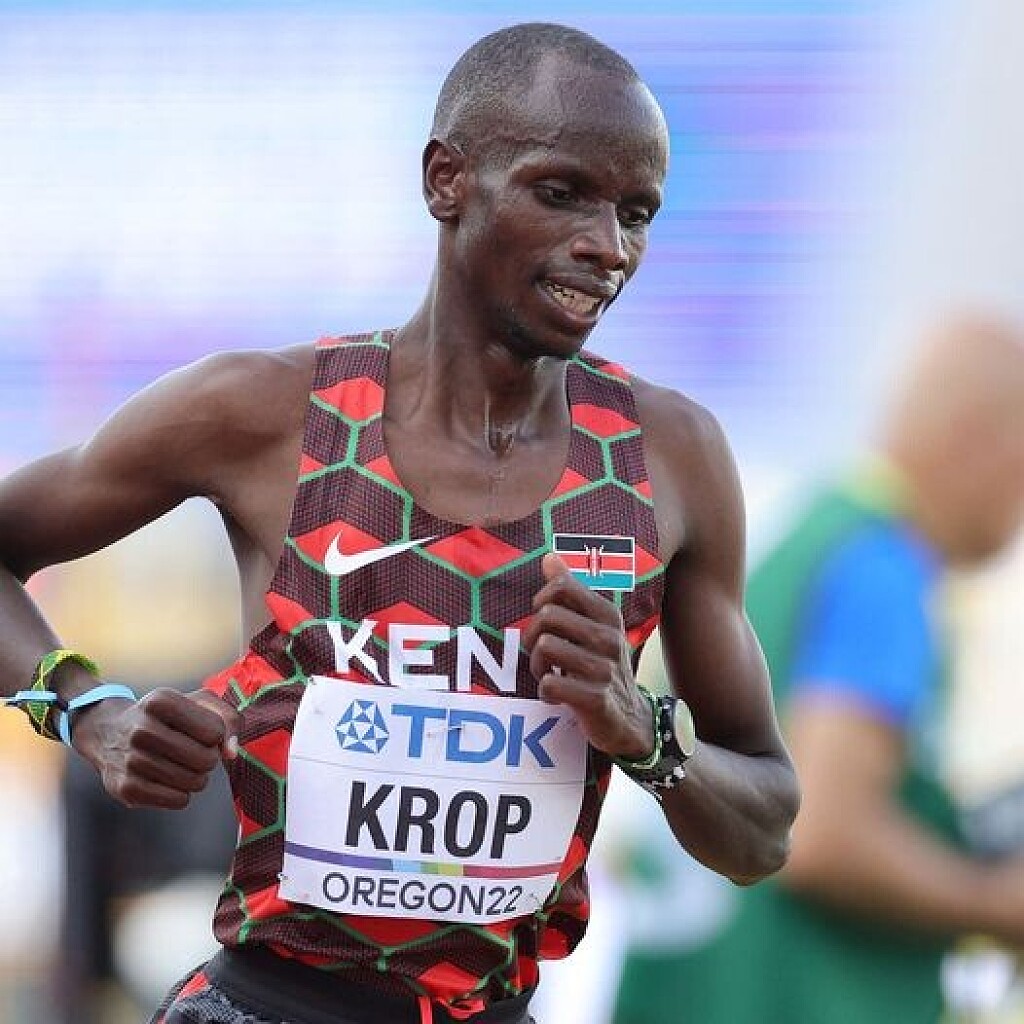
Ingebrigtsen, Cheptegei beware! Jacob Krop sets target after punching 5000m ticket to Olympic Games
Jacob Krop has sent a stark warning to Jakob Ingebrigtsen, Joshua Cheptegei, and other 5000m bound athletes after securing a ticket to the Olympic Games, following his relentless run at the Kenyan Olympic trials.
World 5000m bronze medallist Jacob Krop has promised to burn the midnight oil and ensure all the glory comes back to Kenya as he heads to the Paris 2024 Olympic Games.
Krop secured a direct ticket to the global showpiece, thanks to his relentless pursuit of greatness at the Olympic trials where he managed to finish second in the 5000m, clocking an impressive 13:27.54 to cross the finish line behind Ronald Kwemoi who won the race in 13:27.20. Edwin Kurgat completed the podium, clocking 13:27.75 to cross the finish line.
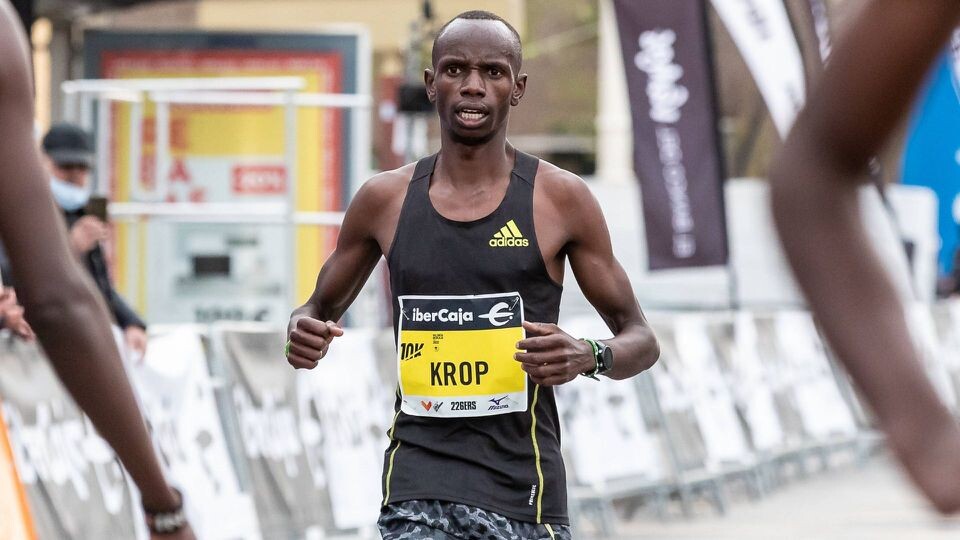
He will team up with Kwemoi and Krop believes they have the ability to silence serial winner Jakob Ingebrigtsen of Norway, defending champion Joshua Cheptegei and other opponents who have for long dominated the distance.
He disclosed that he moved to Japan and training there has been very effective since he has been able to work on certain areas of his training and he is now back.
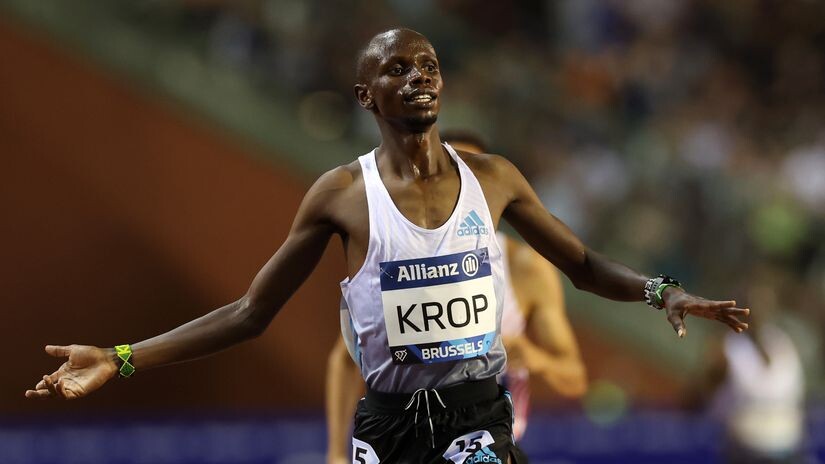
“This is my first time to make the cut to the Olympic team and I want my fans to expect something good. To bring the medals back home, we shall practice teamwork and invest more time in training.
“Everything is possible and I know it’s not easy but we shall work hard in training and see how things work out. I went to Japan and my stay there had been great since they always give me ample time to even come back to Kenya and train,” he said.
Meanwhile, Kenya last won the Olympic gold medal over the distance at the 1988 Seoul Olympics where John Ngungi beat a strong field to claim the coveted prize.
During the delayed 2020 Tokyo Olympic Games, no Kenyan made it to the podium as Cheptegei claimed the top honours with Canadian Mohammed Ahmed finishing second in the race as Kenyan-born American Paul Chelimo completed the podium.
As they head to the Olympics, Krop is aware of the tough opposition but he is sure anything is possible if they work hard and embrace team work.
by Abigael Wuafula
Login to leave a comment
Paris 2024 Olympic Games
For this historic event, the City of Light is thinking big! Visitors will be able to watch events at top sporting venues in Paris and the Paris region, as well as at emblematic monuments in the capital visited by several millions of tourists each year. The promise of exceptional moments to experience in an exceptional setting! A great way to...
more...
Noah Lyles says his goal is to win four gold medals in Paris
The world 100m champion appeared on The Tonight Show with Jimmy Fallon and said he wants to become the first male sprinter to win four Olympic gold medals.
The world 100m champion, Noah Lyles, appeared on The Tonight Show with Jimmy Fallon on Monday night to discuss his role in the upcoming Netflix documentary series “Sprint” and his goals for the Paris Olympics. Lyles confidently stated his ambition to achieve something no male track and field athlete has done before: win four gold medals at a single Olympics.
“Everyone knows Usain Bolt; I want to be faster and more decorated than Bolt,” Lyles told Jimmy Fallon. “He’s done three. I want four, that’s the Mount Rushmore–now you’re the greatest of the great.”
At the 2023 World Championships in Budapest, Lyles became the first athlete to win the sprint double (100m and 200m) at a major championship since Bolt did so at Rio 2016. He added another gold medal in the men’s 4x100m, where Team USA redeemed themselves after finishing second to Canada in 2022 on home soil.
For Lyles to win four gold in Paris, he would need to win the 100m and 200m, 4x100m relay and 4x400m relay.
Only two athletes have won four medals at one Olympic Games: U.S. sprint icon Florence Griffith-Joyner won three golds and one silver medal (in the 4x400m) at Seoul in 1988. Fanny Blankers-Koen of The Netherlands is the only athlete to win four golds–at the 1948 Olympics in London, where she won the 100m, 200m, 4x100m relay, and 80m hurdles.
When Fallon asked Lyles why he wanted to put extra pressure on himself for Paris, Lyles said his goal is to win Olympic medals and break world records. “It’s been a long time since someone has done it, but growing up, I’ve always felt like that title belongs to me.” Bolt’s world records of 9.58 in the 100m, and 19.19 in the 200m have been untouched for the past 15 years.
Despite being the world champion in the 100m and 200m, Lyles’s first test will come at the USATF Olympic Trials from July 21-30 in Eugene, Ore., where he will aim to make his second Olympic team. The top three finishers in each event at trials will secure a spot on the U.S. Olympic team, provided they have met the Olympic standard or are in the World Athletics rankings quota.
by Marley Dickinson
Login to leave a comment
Paris 2024 Olympic Games
For this historic event, the City of Light is thinking big! Visitors will be able to watch events at top sporting venues in Paris and the Paris region, as well as at emblematic monuments in the capital visited by several millions of tourists each year. The promise of exceptional moments to experience in an exceptional setting! A great way to...
more...
World-class fields will go for course records and target Olympic qualification in Sunday’s Haspa Marathon Hamburg
Kenya’s defending champion and course record holder Bernard Koech, who tied his personal best with 2:04:09 a year ago, is back while Gotytom Gebreslase, the World Champion from 2022, is the favorite in the women’s race.
The Ethiopian, who has a PB of 2:18:18, wants to secure the third spot for the Paris Olympic race in Hamburg. Fellow-Ethiopian Yalemzerf Yehualaw holds Hamburg’s course record of 2:17:23. Late entry Nienke Brinkman will also try to qualify for Paris. The Dutch runner is the bronze medalist from the European Championships in Munich in 2022.
Organizers of Germany’s biggest and fastest spring marathon have registered a record total of 38,210 runners. Among them are 15,000 athletes who will compete in the classic event. “If all goes well on Sunday and the pacemakers run a bit more even and slightly faster we could see similar results to last year. I am curious to see if Gotytom Gebreslase manages to qualify for Paris and if she is able to break the course record. But even a sub 2:20 time is something special since we only have one so far,“ said chief organizer Frank Thaleiser, who introduced an additional bonus of 20,000 Euros for the course records. All runners – men and women – who finish inside the course records share this amount. If there would be one man and three women who clock faster times than the previous records they would each receive 5,000 Euros. “This way we want to encourage the runners in a leading group to go for a fast time after the last pacemaker has dropped out,“ explained Frank Thaleiser.
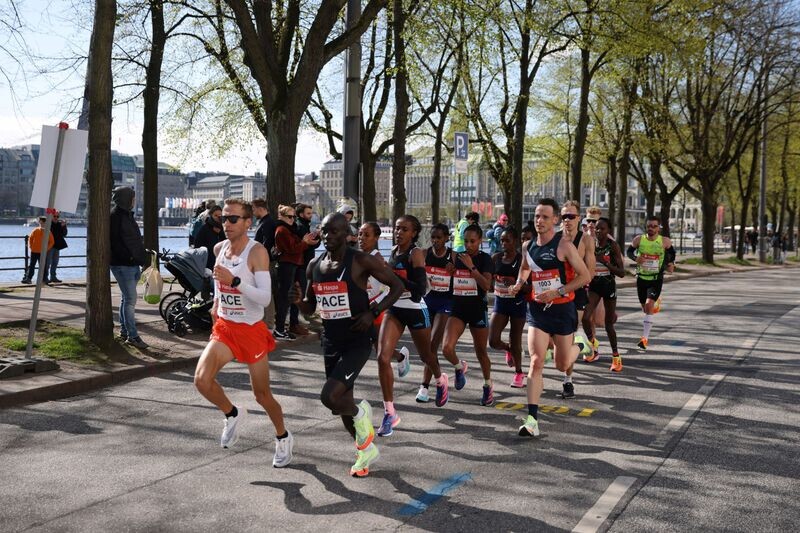
“Training was going well and compared to last year in Hamburg I have reached the same level. So if the weather conditions are fine then a fast time is possible,“ said Bernard Koech. It is highly unlikely that he could still be selected for the Olympic marathon, but he said: “I will give everything and if they should select me then I will be ready.“ Bernard Koech is one of seven runners in the race who feature personal bests of sub 2:05:00. While Ethiopia’s Getaneh Molla is the fastest on the start list with 2:03:34 he has not reached such times in recent years.
Brimin Misoi and Philemon Kiplimo are tipped to be among the strongest challengers for defending champion Koech. Both have done very well on German roads in the past. Misoi has won the Frankfurt Marathon twice in a row. When he defended his title last autumn the Kenyan improved to 2:04:53 despite windy and rainy conditions. He now intends to run faster in Hamburg. “I ran the Paris Marathon at the beginning of April. But because of breathing problems I dropped out and then decided to go for Hamburg,“ said Misoi. It was in Berlin last year, where Philemon Kiplimo improved to 2:04:56 and finished eighth in a very competitive race. “German roads are good for me, so I am looking forward to Sunday. I want to run with the leading group and improve my time,“ said Kiplimo, who has a superb half marathon PB of 58:11.
“We are planning a pace in the region of the course record, may be slightly faster. Additionally there will be a really big group of probably 25 athletes who will target the 2:08:10 Olympic qualifying time“, said Hamburg’s Elite Race Coordinator Jurrie van der Velden of Jos Hermens’ Global management. “We are not quite sure yet, but the women’s leading group might run a pace somewhere between 2:16 and 2:18. There is a group as well which targets Olympic qualification, running sub 2:26:50 pace.“
“It is my goal to qualify for the Olympics on Sunday,“ said Gotytom Gebreslase, who surprisingly won her debut marathon in Berlin in 2021, then went on to become World Champion in the following year and took the silver medal at last year’s global championships in Budapest. Jurrie van der Velden explained that the Ethiopian federation usually selects the two fastest runners during the qualifying window and then picks the athlete who performed best at major championships as long as that athlete confirms good form. When Gebreselase ran the Nagoya Marathon in March she did not finish. “I got stomach problems during the race and dropped out after 35k. Then I trained well and decided to run in Hamburg. I am in good form now and want to run sub 2:18 here. Perhaps I can attack the course record. I would think such a performance should be enough to get selected,“ said Gotytom Gebreslase.
Nienke Brinkman joined Hamburg’s elite field at short notice. The European bronze medalist from 2022 has still not achieved the qualifying time for the Olympics. She ran her PB of 2:22:51 in 2022, but that was outside the qualifying period. A year ago Brinkman clocked a fine 2:24:58 in Boston, but this course is not record eligible and results do not count as qualifying times. However it is a far easier task for Brinkman to achieve qualification in Hamburg than for Gebreslase. Reaching the qualifying standard of 2:26:50 should be enough for the former Durch record holder.
A debutant could well be in the mix for at least a place on the podium: Irine Cheptai is the World Cross Country Champion from 2017. “I started preparing for my marathon debut in January and training went very well. I think I will go with the second group on Sunday,“ said the Kenyan who has already run a very fast and promising half marathon time of 64:53.
Among a number of German runners Katharina Steinruck is probably the one who could produce the national highlight in Hamburg. She improved to 2:24:56 this winter and now hopes to break the family record: It was exactly 25 years ago when Katrin Dörre-Heinig, the bronze medalist of the 1988 Olympic marathon in Seoul, won the Hamburg Marathon with 2:24:35. For many years this remained the German marathon record. “It is my aim to break my Mum’s record and it would be great if I could do it in Hamburg,“ said Steinruck.
by AIMS
Login to leave a comment
Haspa Marathon Hamburg
The HASPA MARATHON HAMBURG is Germany’s biggest spring marathon and since 1986 the first one to paint the blue line on the roads. Hamburcourse record is fast (2:05:30), the metropolitan city (1.8 million residents) lets the euphoric atmosphere spill over and carry you to the finish. Make this experience first hand and follow the Blue Line....
more...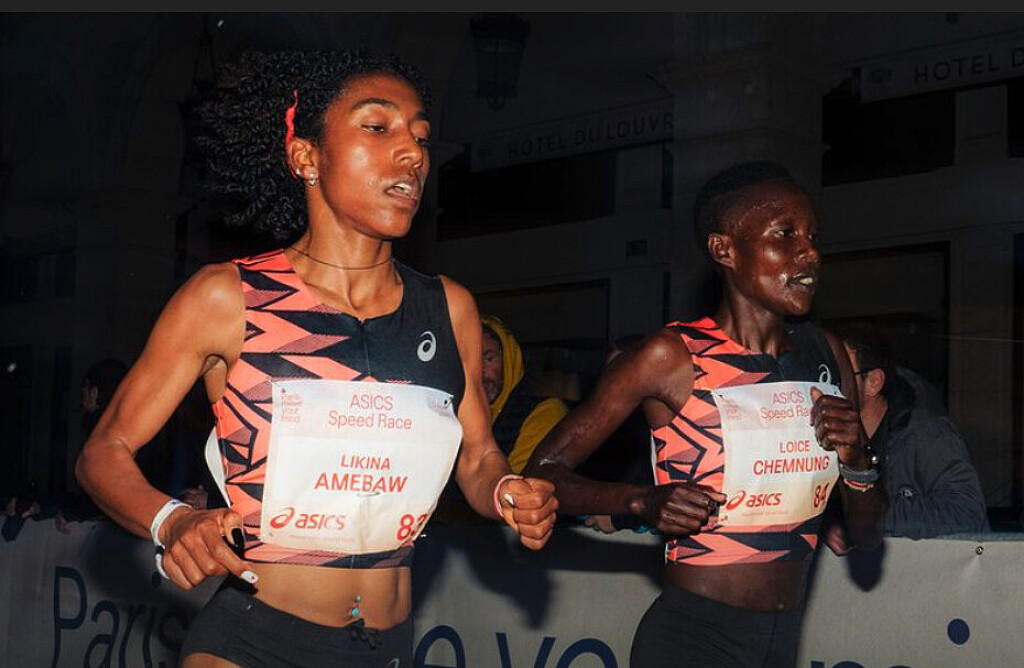
Amebaw and Yimer win 10km titles at Paris Festival of Running
Likina Amebaw, Jemal Yimer, Hagos Gebrhiwet and Caroline Nyaga were among the winners as athletes descended on Paris for the Festival of Running ASICS Speed Race 5km and 10km events on Friday (5).
Competition took place on an iconic 2.5km loop that started and finished at Palais-Royal in the shadow of the Louvre.
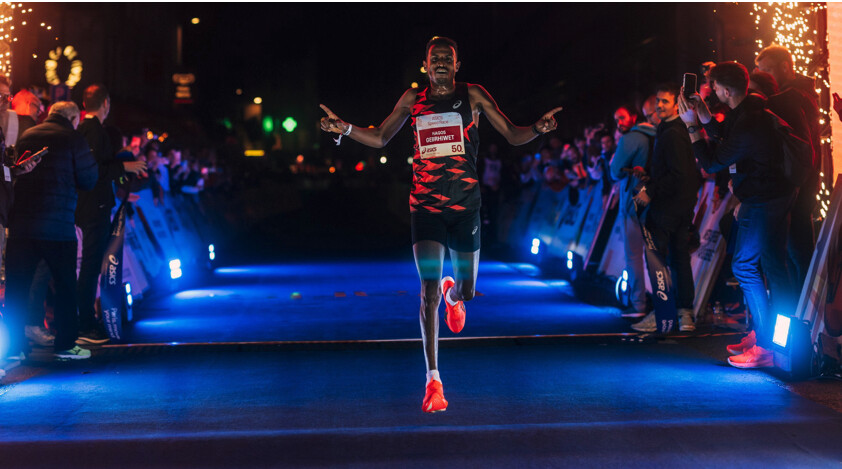
Ethiopia’s Amebaw and Kenya’s Loice Chemnung both dipped under 30 minutes in the women’s 10km, with Amebaw clocking a PB of 29:56 to win and Chemnung finishing just one second behind her. They were joined by Kenya’s Miriam Chebet during the first half of the race but Chebet was unable to maintain the pace and finished third in 30:41.
Finishing fourth, Nadia Battocletti improved her own Italian record to 31:19.
“It was a very amazing race. It was a fast race – I ran under 30 minutes, so I liked it,” said Amebaw, who was recently confirmed as joint runner-up in the 2023-2024 World Athletics Cross Country Tour.
She also voiced her ambition to return to Paris to compete in the No.1 Olympic sport at the Games in August.
“I have got to work hard, and I hope I will be at the Olympic Games,” she said. “Now I will get ready for track competition.”
Less than three weeks after his Seoul Marathon win in a PB of 2:06:08, Ethiopia’s Yimer matched his 10km best, running 27:43 to win the men’s race, also by one second.
Kenya’s Hillary Kipkoech was runner-up in 27:44 and his compatriot Vincent Kibet was third in 27:48.
Ethiopia’s multiple world and Olympic 5000m medallist Gebrhiwet was racing a couple of weeks out from his African Games 5000m victory, which followed a 5km win in the rain at the Podium Festival in Leicester, UK. In Paris he won the men’s 5km in 13:24 ahead of Mohamed Ismael (13:32) and Adel Mechaal (13:34).
Kenya’s Nyaga, who also raced in Leicester where she finished second, this time topped the women’s 5km as she secured a dominant win in 14:40 over Uganda’s Joy Cheptoyek and Belinda Chemutai, who ran 15:03 and 15:05, respectively.
by World Athletics
Login to leave a comment
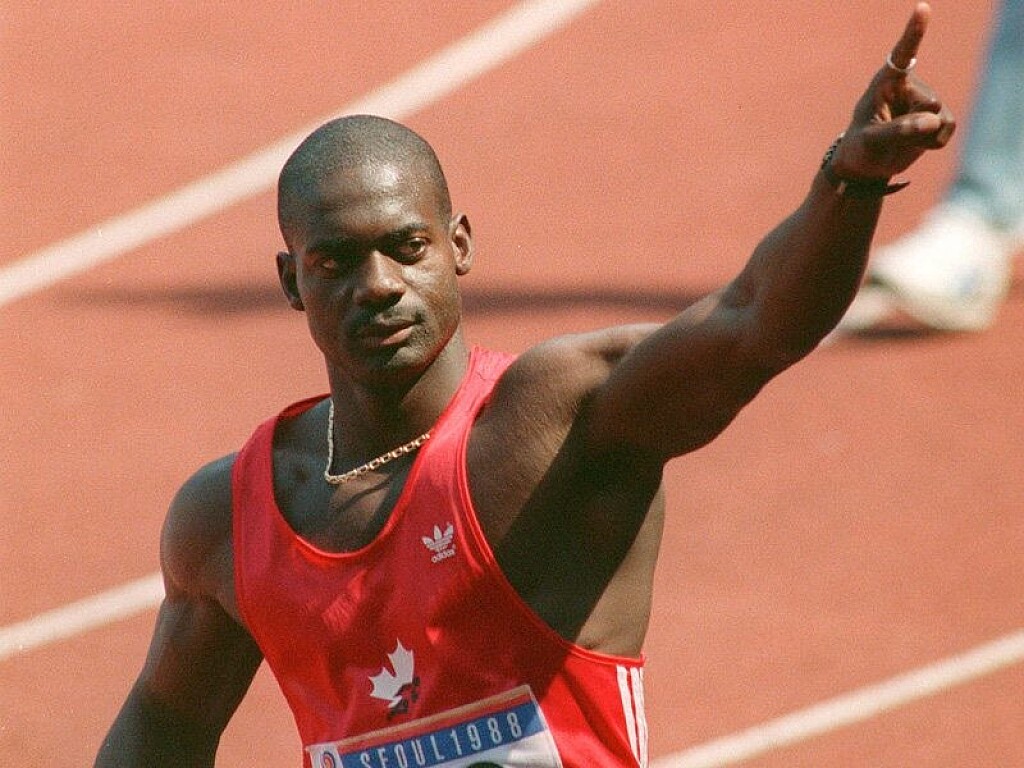
Ben Johnson thinks doping is worse than 30 years ago
Jamaican-born Canadian sprinter Ben Johnson made his name in track and field by winning the 100m dash at the 1988 Olympics in Seoul, which was dubbed the dirtiest race in history. Days after the race, Johnson’s urine sample came back positive for the steroid stanozolol, and he was stripped of his Olympic gold and issued a three-year ban. Though Johnson competed during a dirty time in track and field, the former world champion thinks the sport today is dirtier than it was 30 years ago.
In a March 27 interview with Radio Jamaica, Johnson said he believes not much has changed from his era to now, and that he is not surprised to see so many doping violations in athletics. “If it weren’t for the more powerful nations being beaten at their own game, doping wouldn’t be a big issue,” said Johnson.
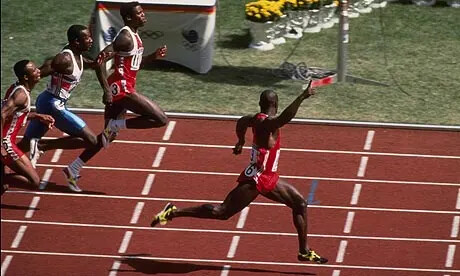
Johnson, now 62, was banned for life from athletics by the IAAF (now World Athletics) in 1993 after another positive doping test, this time for excess testosterone. Johnson believes countries like Jamaica are punching above their weight with its sprint rivalry against the U.S. “In my days, the Americans did not like someone from a small island beating them,” he said. “The opportunity to do well and make a living in track and field is hard. Americans blame others, but they also dope themselves.”
The 1988 Olympic 100m final was dubbed the dirtiest race ever, as six of the eight finalists had a positive doping test at some point in their careers. The bronze medallist, American Calvin Smith, was the only sprinter among the top five who never had a positive test.
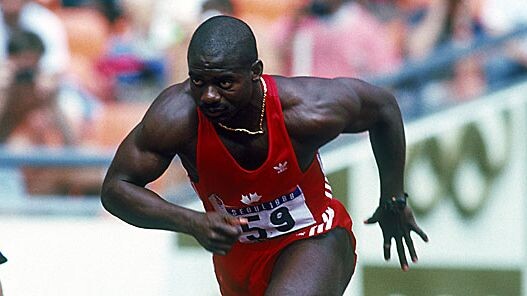
Johnson went on to say that he does not follow track and field as much as he used to, but still sees the times athletes are running on social media and sanctions posted by the Athletics Integrity Unit (AIU).
by Marley Dickinson
Login to leave a comment
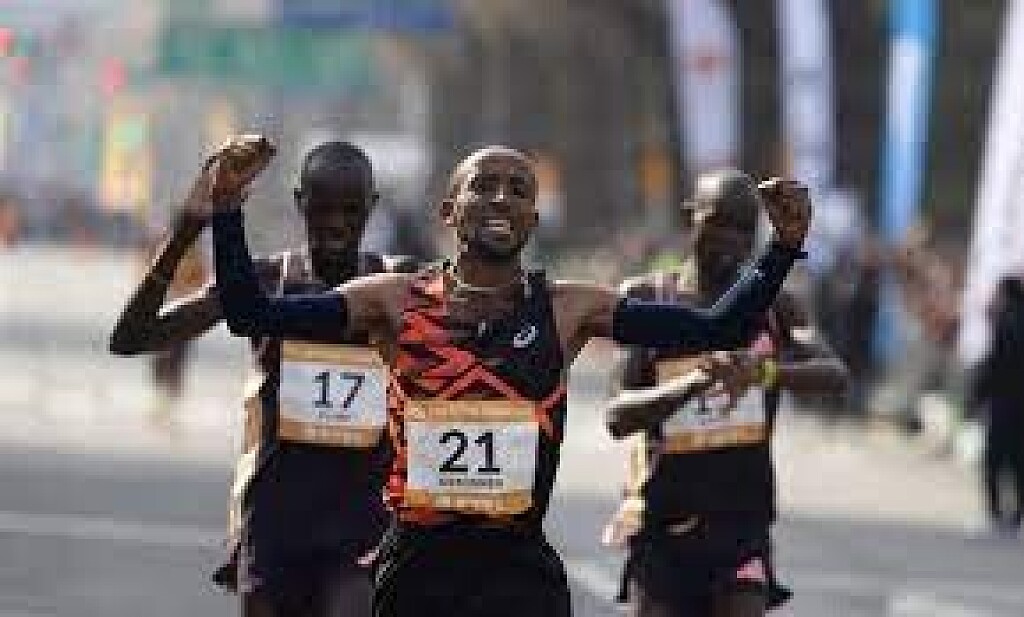
Yimer and Wereta secure Ethiopian double in Seoul
Jemal Yimer prevailed after a sprint finish in the men’s race, while Fikrte Wereta claimed a clear women’s race win to secure an Ethiopian double at the Seoul Marathon on Sunday (17).
It was a first World Athletics Platinum Label road race win for both athletes, two-time world half marathon fourth-place finisher Yimer continuing his marathon journey with an almost three-minute PB of 2:06:08 and Wereta also running a lifetime best of 2:21:32.
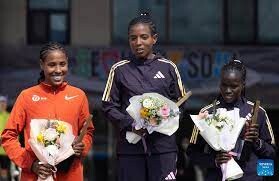
The men’s race saw a big group remain together until after 30km, when Yimer formed part of a breakaway group of seven. The 27-year-old had been happy to sit back in the pack up to that point, passing 10km in 29:43 and 20km in 59:54.
The pace remained consistent as he reached 25km in 1:14:37 and 12 athletes were still running together at the 30km mark, hit by the leaders in 1:29:35.
Yimer’s compatriot Guye Adola, the 2021 Berlin Marathon champion, had looked in control to that stage, as he and Kenya’s Mike Kiptum Boit continued to switch the lead. But Adola couldn’t maintain the pace and he was among the athletes to drop back over the next couple of kilometres.
A group of seven forged ahead and six athletes remained together as 35km was reached in 1:44:27.
Yimer still had four others for company as he hit 40km in 1:59:19 alongside his compatriot Balew Yihunie Derseh plus Boit and his Kenyan compatriots Edwin Kiptoo and Rhonzas Lokitam Kilimo.
But after doing much of the leading, Boit could only watch as Kilimo, Kiptoo and Yimer strode ahead.
Timing his kick to perfection, Yimer waited until the final corner to make his move. Glancing over his shoulder, he left Kilimo and Kiptoo behind and punched the air as he crossed the finish line.
He won in 2:06:08, with Kilimo a second behind him and Kiptoo a further second back.
Boit held on for fourth place in 2:06:20, while Derseh was fifth in 2:06:22.
In the women’s race, a nine-strong group running alongside male runners was on sub-2:20 pace for the opening kilometres but the tempo eased as the leaders reached 10km in 33:28, led by Kenya’s Celestine Chepchirchir.
Bahrain’s Desi Jisa Mokonin, looking to regain a title that she won in 2019, also took turns at the front and led as 15km was reached in 50:25 and 20km was passed in 1:07:29.
The main contenders remained together as an eight-strong group hit 30km in 1:41:05 and like in the men’s race, it was at around this stage that a significant move was made.
Jisa and Wereta were joined by Kenya’s Visiline Jepkesho and Ethiopia’s Betelihem Afenigus Yemer in a breakaway group and Wereta looked comfortable as she took her place at the front, with her challengers in single file behind her.
Wereta, Jisa and Yemer passed the 35km mark together in 1:57:42, with Jepkesho 11 seconds back at that point, and then Wereta attacked. She had built a lead of 23 seconds by 40km, passed in 2:13:54, as she was chased by Jisa (2:14:17), Yemer (2:14:43) and Jepkesho (2:15:01).
Wereta continued to stretch her lead and had an advantage of 47 seconds by the finish, which she crossed in 2:21:32.
Jisa secured the runner up spot in 2:22:19, while Jepkesho passed Yemer in the closing stages to claim third place – 2:22:52 to 2:23:20. Ethiopia’s Yebrgual Melese was fifth in 2:23:43.
Login to leave a comment
Seoul International Marathon
The only marathon hosted in the heart of the Korean capital. Seoul marathon is the oldest marathon race hosted in Asia andis one of the fastestmarathon in the world. First held in 1931, Seoul marathon is the oldest marathon eventcontinuously held in Asia, and the second oldest in the world followingthe Boston Marathon. It embodies modern history of Korea, also...
more...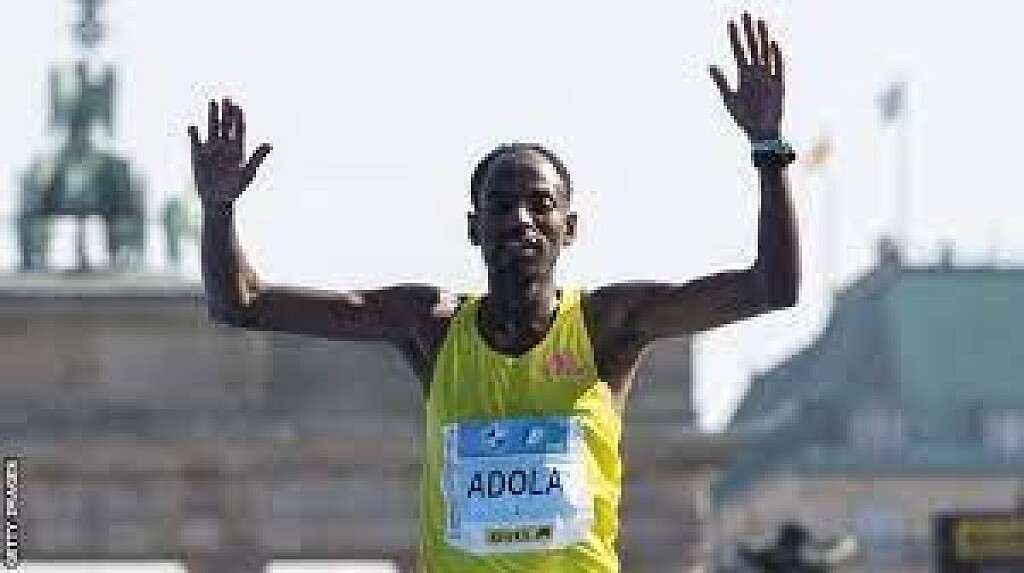
Competitive fields look to make a statement in Seoul
Ethiopia’s Guye Adola and Bahrain’s Desi Mokonin are among the athletes who will be looking to make a mark when they compete in the Seoul Marathon, this year’s sixth World Athletics Platinum Label road race, on Sunday (17).
While Adola competes in Korea for the first time, Mokonin has the benefit of race experience, as she returns to an event that she won in 2019.
Adola has the fastest PB among the entries, thanks to the 2:03:46 he ran to finish second when making his marathon debut in Berlin in 2017. The 2014 world half marathon bronze medallist returned to win in Berlin in 2021, running 2:05:45 for the third-fastest time of his career so far.
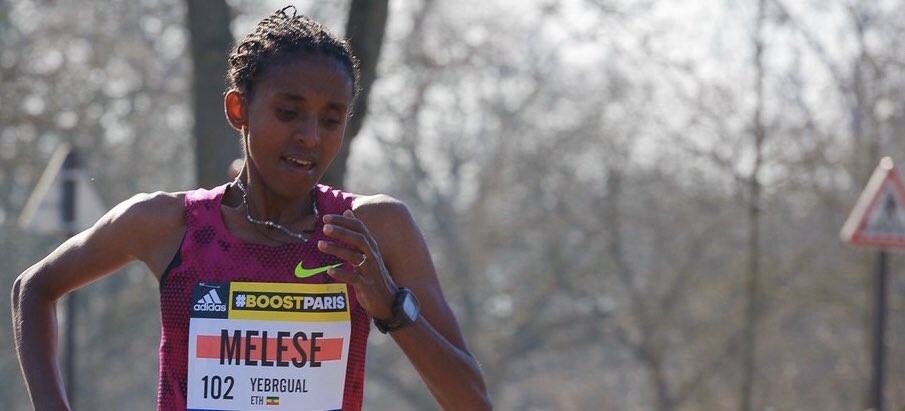
He is back in marathon action for the first time since October, when he placed third in Frankfurt after finishing runner-up in Paris in April.
There are a number of athletes who will want to challenge him in Seoul, where the men’s field features another six sub-2:06 athletes. The course record stands at 2:04:43, achieved by Mosinet Geremew in 2022.
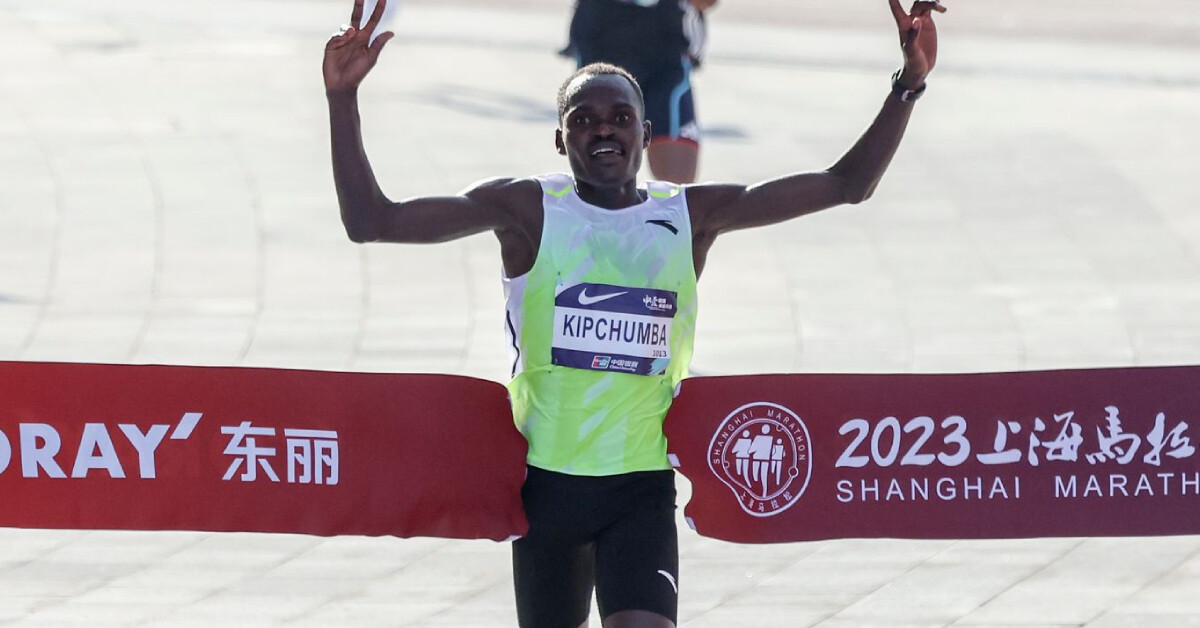
Kenya’s Philimon Kiptoo Kipchumba has won each of the four marathons he has completed so far, most recently winning the Shanghai Marathon in November in a PB of 2:05:35, but he withdrew when defending his Xiamen Marathon title in January.
His compatriot Solomon Kirwa Yego finished third in Shanghai in a PB of 2:05:42 and then placed eighth in Xiamen, while Joel Kemboi Kimurer ran his PB of 2:05:19 in Milan in 2021 and Laban Kipngetich Korir clocked his best of 2:05:41 in Amsterdam in 2022.
Ethiopia’s Derseh Kindie will be looking to build on the PB of 2:05:51 he set in Valencia in December and he’ll be joined on the start line by his compatriots Gebru Redahgne, who finished second in the 2022 Barcelona marathon in 2:05:58, and world half marathon fourth-place finisher Jemal Yimer.
China’s Feng Peiyou and Olonbayar Jamsran of Mongolia will be among those seeking Olympic qualification.
Ethiopia’s Yebrgual Melese is the quickest in the women’s field when it comes to PBs with the 2:19:36 she ran in Dubai in 2018, but the 2015 Chicago Marathon runner up’s last recorded result was a fifth-place finish in the 2020 Xiamen Marathon.
She’s the sole sub-2:20 runner in the women’s race but she will be joined by four others who have dipped under 2:22.
Those include Mokonin, who won the 2019 Seoul Marathon in 2:23:44 and clocked her PB of 2:20:47 in Doha just over a year ago. She ended 2023 with a 2:22:29 performance to finish seventh in Valencia.
Kenya’s Celestine Chepchirchir opens her 2024 campaign after having raced four marathons last year, topped by the 2:20:46 she ran to finish fourth in Valencia. Like Mokonin, she has previously raced in Seoul and it is where she recorded her PB of 2:20:10 set in 2022, when she finished fourth.
She lines up alongside her compatriot Janet Ruguru, who set a PB of 2:23:00 to finish second in Beijing in October and placed third in the Daegu International Marathon in the April.
Sisay Meseret Gola followed her 2:20:50 PB performance in Seville in 2022 with two 2:22 marathons in 2023 – in Osaka and Amsterdam. She withdrew from this year’s Osaka Women's Marathon in January but now returns to action in a field that also features her Ethiopian compatriot Fikrte Wereta, who ended 2023 with a win and a PB in Shenzhen, clocking 2:22:07.
Former Mongolian record-holder Munkhzaya Bayartsogt will be among those hoping to put themselves in the running for a place at the Paris Olympics.
The course record of 2:18:04 was set by Romania’s Joan Chelimo Melly in 2022.
Leading entries
Women
Yebrgual Melese (ETH) 2:19:36
Celestine Chepchirchir (KEN) 2:20:10
Desi Mokonin (BRN) 2:20:47
Sisay Meseret Gola (ETH) 2:20:50
Visiline Jepkesho (KEN) 2:21:37
Fikrte Wereta (ETH) 2:22:07
Sintayehu Tilahun (ETH) 2:22:19
Janet Ruguru (KEN) 2:23:00
Margaret Agai (KEN) 2:23:28
Sifan Melaku (ETH) 2:23:49
Munkhzaya Bayartsogt (MGL) 2:28:03
Marina Khmelevskaya (UZB) 2:29:28
Ayano Ikeuchi (JPN) 2:33:29
Men
Guye Adola (ETH) 2:03:46
Joel Kemboi Kimurer (KEN) 2:05:19
Philimon Kiptoo Kipchumba (KEN) 2:05:35
Laban Kipngetich Korir (KEN) 2:05:41
Solomon Kirwa Yego (KEN) 2:05:42
Derseh Kindie (ETH) 2:05:51
Gebru Redahgne (ETH) 2:05:58
Mark Kiptoo (KEN) 2:06:00
Felix Kandie (KEN) 2:06:03
Mike Kiptum Boit (KEN) 2:06:08
Ashenafi Moges Weldegiorgis (ETH) 2:06:12
Edwin Kiptoo (KEN) 2:06:52
Kibrom Desta Habtu (ETH) 2:07:05
Balew Yihunie Derseh (ETH) 2:07:12
Timothy Kipkorir (KEN) 2:07:53
Rory Linkletter (CAN) 2:08:01
Feng Peiyou (CHN) 2:08:07
Rhonzas Lokitam Kilimo (KEN) 2:08:08
Olonbayar Jamsran (MGL) 2:08:58
Huang Yongzheng (CHN) 2:10:49
Gantulga Dambadarjaa (MGL) 2:11:18
Jemal Yimer (ETH) 2:11:31
Evans Kipchumba (KEN) debut
by World Athletics
Login to leave a comment
Seoul International Marathon
The only marathon hosted in the heart of the Korean capital. Seoul marathon is the oldest marathon race hosted in Asia andis one of the fastestmarathon in the world. First held in 1931, Seoul marathon is the oldest marathon eventcontinuously held in Asia, and the second oldest in the world followingthe Boston Marathon. It embodies modern history of Korea, also...
more...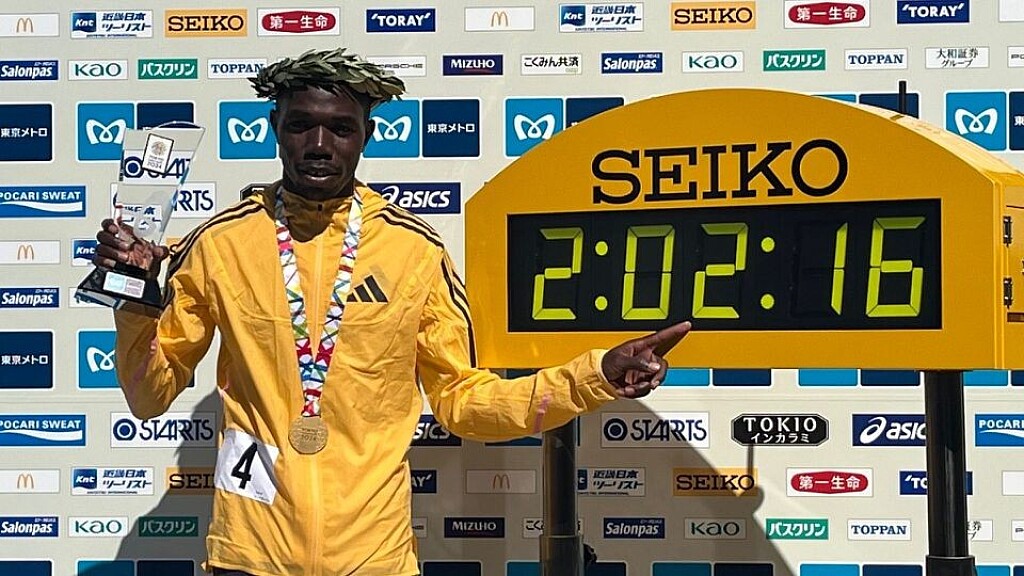
Why Benson Kipruto is Kenya’s best bet for marathon gold at Paris 2024 Olympics
Pulse Sports details the reasons that make 2024 Tokyo Marathon champion Benson Kiptruto Kenya’s best bet for marathon gold at the Paris Olympics.
Tokyo Marathon champion Benson Kipruto appears to be the early favorite to win Kenya gold at the Paris Olympics given his recent form.
Kipruto is still basking in the glory of his win in Tokyo last week when he clocked 2:02:16 to break the course record ahead of countrymen Timothy Kiplagat (2:02:55) and Vincent Ngetich (2:04:18).
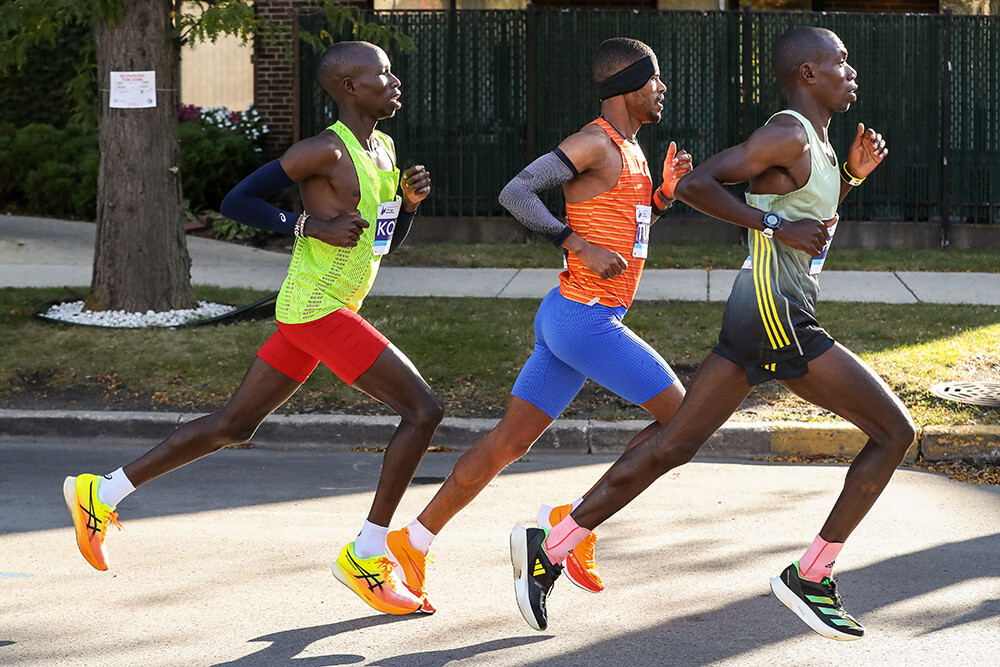
That was Kipruto’s fourth win in his last seven marathons, having also won in Prague and Boston in 2021 and Chicago in 2022. During that period, the 32-year-old has also not finished outside the top three, third in Boston in 2022 and 2023, as well as a second place in Chicago last year.
Looking at the provisional Team Kenya marathon team to Paris Olympics selected last December, only Kelvin Kiptum had better numbers, but the world marathon record holder is now deceased, which leaves Kipruto with a head start.
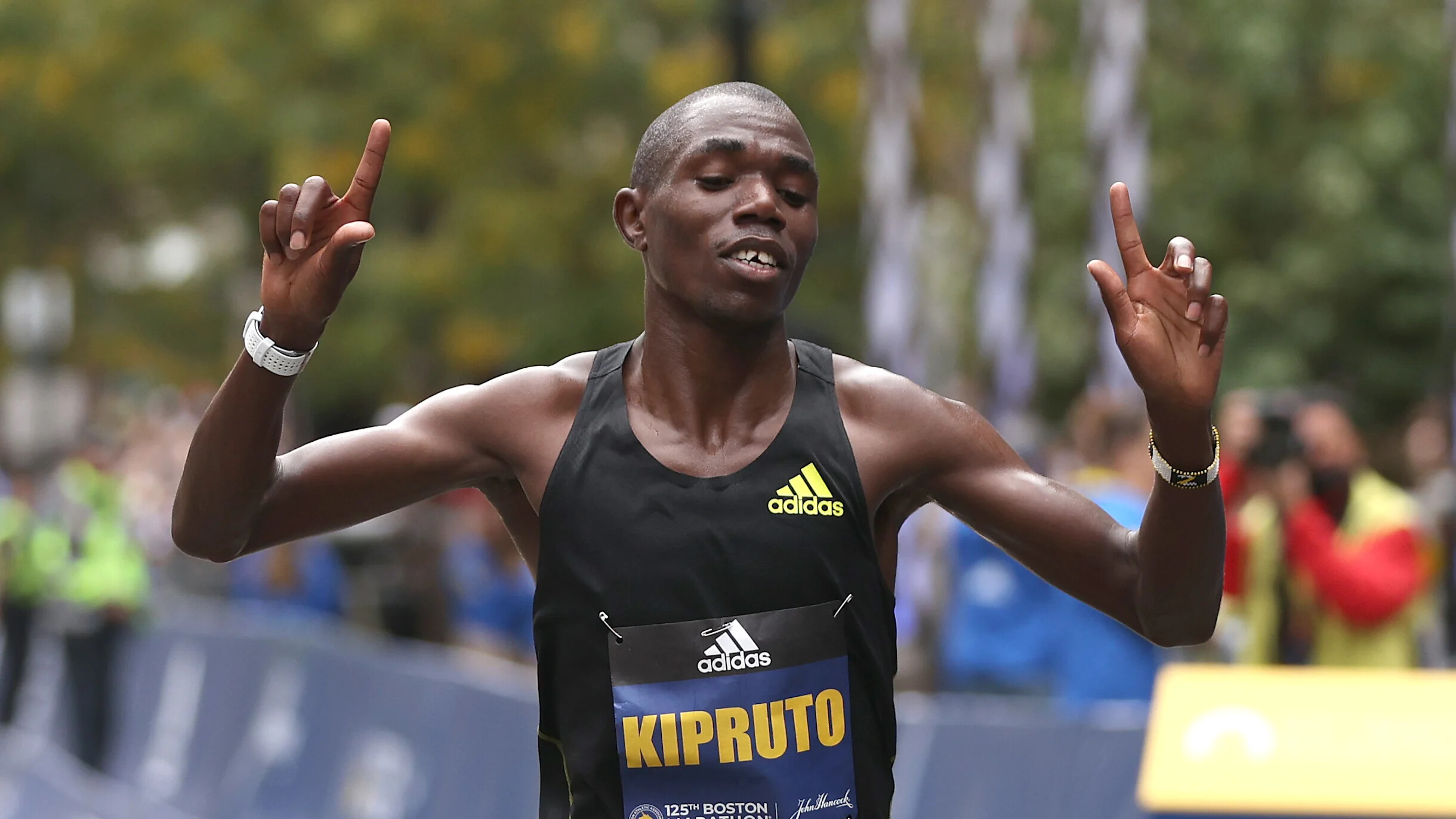
Kenya’s provisional squad of 10 had Kipruto, Kiptum, two-time Olympics champion Eliud Kipchoge, Ngetich, Timothy Kiplagat, Bernard Koech, two-time New York Marathon champion Geoffrey Kamworor, Cyprian Kotut, 2022 London Marathon champion Amos Kipruto and Titus Kipruto.
With Athletics Kenya (AK) making their selection based on World Athletics Road to Paris Marathon Rankings, two-time Boston Marathon champion Evans Chebet and Alexander Mutiso, third in Valencia in 2:03:29 on his debut in 2022, winner in Prague last year (2:05:09), before second place in Valencia 2023 (2:03:11) did not make the team.
Mutiso had not run Valencia when the team was unveiled while Chebet has been very consistent. After his marathon debut in 2013 in Seoul (2:11:26), Chebet has managed top four placings in all 15 marathons he has finished, including six wins and six runner-up finishes.
He won in Boston and New York in 2022 before defending his Boston title and he will be back again in April in a bid to make it three straight wins.
Athletics Kenya has yet to indicate if there will be alterations to the team in light of Kiptum’s demise, which could give Chebet or Mutiso a ticket to the Olympics, if they do well in Boston and London respectively next month.
If AK sticks to the original list, then Kipruto will be seen as the hot favourite given the recent form of defending champion Kipchoge.
Kipchoge finished a disappointing 10th in Tokyo after clocking 2:06:50, having come in as favorite following his win in Berlin last year (2:02:42) and the fact that he also won in the Japanese capital in 2021 (2:02:40).
However, his sixth place in Boston last year (2:09:23), which was blamed on the lack of pacemakers and the hilly course, and the latest in Tokyo prove that he is human after all, hence the need to look beyond him for gold in Paris.
by Joel Omotto
Login to leave a comment
Paris 2024 Olympic Games
For this historic event, the City of Light is thinking big! Visitors will be able to watch events at top sporting venues in Paris and the Paris region, as well as at emblematic monuments in the capital visited by several millions of tourists each year. The promise of exceptional moments to experience in an exceptional setting! A great way to...
more...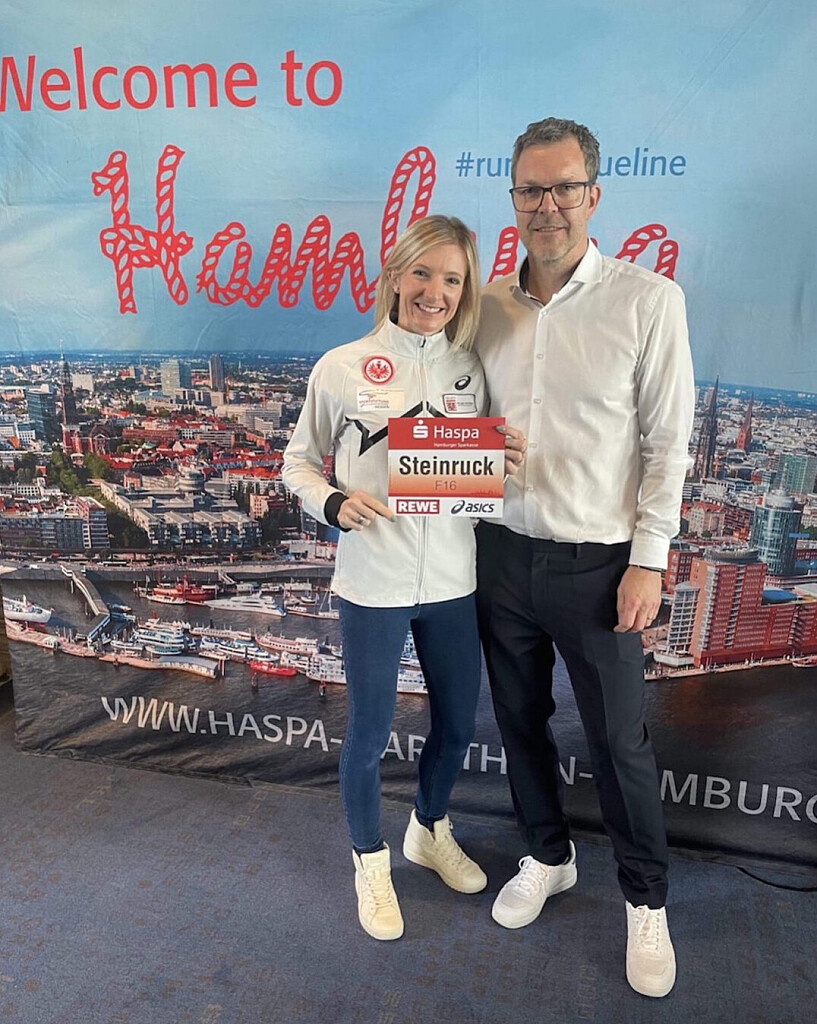
Former World Cross Country Champion Irine Cheptai runs marathon debut in Hamburg, Katharina Steinruck chases special record time
Irine Cheptai, Kenya’s World Cross Country Champion from 2017, will run her debut marathon in Hamburg on 28th April. This was announced by the organisers of the Haspa Marathon Hamburg, who released some of the top women’s contenders and presented Germany’s Katharina Steinruck during a press conference.
While Steinruck will chase a special family record on the fast Hamburg course it is Winfridah Moseti who heads the current women’s start list. The Kenyan has a personal best of 2:20:55. 14,000 runners are expected to compete in Germany’s biggest spring marathon on 28th April. Online registration for the race is still possible at: www.haspa-marathon-hamburg.de
Irine Cheptai has been very successful on the track as well before she focussed more on road running. In 2021 she was sixth in the Olympic 10,000 m final in Tokyo and a year later the Kenyan won the 10,000 m silver medal in the Commonwealth Games in Birmingham. Then she showed very promising half marathon races, culminating in a 64:53 PB in Valencia where she was second. With this time Cheptai was the fourth fastest half marathoner in the world in 2023.
Hamburg has seen great debut marathons in the past. In 2013 it was Eliud Kipchoge who won with a course record of 2:05:30. Two years ago Ethiopia’s Yalemzerf Yehualaw ran an unofficial world debut record of 2:17:23 which still stands as Hamburg’s course record. There are two more debutants on the women’s start list who could do very well on 28th April: Kenya’s Nelly Jepchumba has a half marathon PB of 67:00 while Roselida Jepketer of Bahrain has run 68:40 for the half.
Winfridah Moseti ran a huge personal best of 2:20:55 when she was runner-up in last year’s Frankfurt Marathon. While the Kenyan will want to build on this performance Frankfurt’s third place finisher will be among her rivals in Hamburg: Sharon Chelimo improved to 2:22:07 last October. Ethiopia’s Kidusan Alema and Canada’s record holder Natasha Wodak, who have personal records of 2:22:28 and 2:23:12 respectively, will also run their spring marathon in Hamburg.
Katharina Steinruck will be very much in the national focus when she hopes to break her mother’s family record. It was exactly 25 years ago when Katrin Dörre-Heinig, the bronze medallist of the 1988 Olympic marathon in Seoul, won the Hamburg Marathon with 2:24:35. For many years this was the German marathon record. “It is my aim to break my Mum’s record and it would be great if I could do it in Hamburg,“ said 34 year-old Katharina Steinruck, who is coached by her mother and improved to 2:24:56 in Osaka at the end of January. “Katha“ Steinruck returns to the race for the first time since 10 years and has good memories.
In 2013 and in 2014 she clocked personal bests of 2:34:20 and 2:33:56 in Hamburg as a young athlete. Ten years later running around ten minutes faster will be the goal. And there could not be a more fitting race than the Haspa Marathon Hamburg to break the family record.
Login to leave a comment
Haspa Marathon Hamburg
The HASPA MARATHON HAMBURG is Germany’s biggest spring marathon and since 1986 the first one to paint the blue line on the roads. Hamburcourse record is fast (2:05:30), the metropolitan city (1.8 million residents) lets the euphoric atmosphere spill over and carry you to the finish. Make this experience first hand and follow the Blue Line....
more...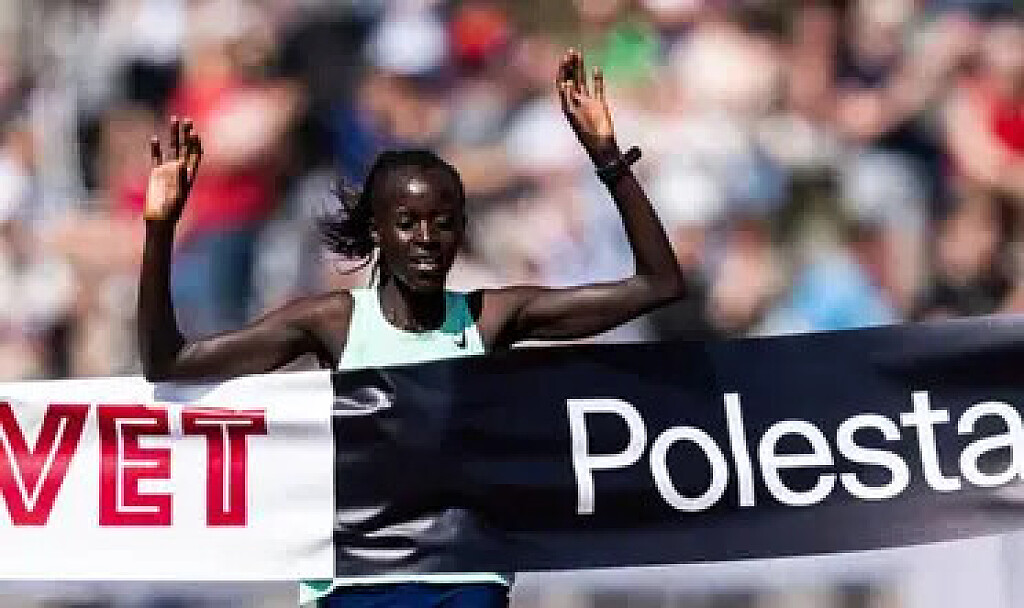
Susan Chembai is aiming for victory and a course record at the NN CPC Loop Den Haag
Susan Chembai is aiming for victory and a course record during the 48th NN CPC Run, current national half marathon champion, is also at the start. It was previously announced that Abdi Nageeye will launch an attack on his own Dutch record half marathon .
Susan ChembaiSusan Chembai is the big favorite among the women during the 48th NN CPC Run on Sunday, March 10. The 24-year-old Kenyan wants to give her performance at the NN Half Marathon extra shine with a course record. The fastest time ever run by an athlete in the royal city has been in the name of Lornah Kiplagat since 2000. The Dutch triumphed at the time in 1.06.56.
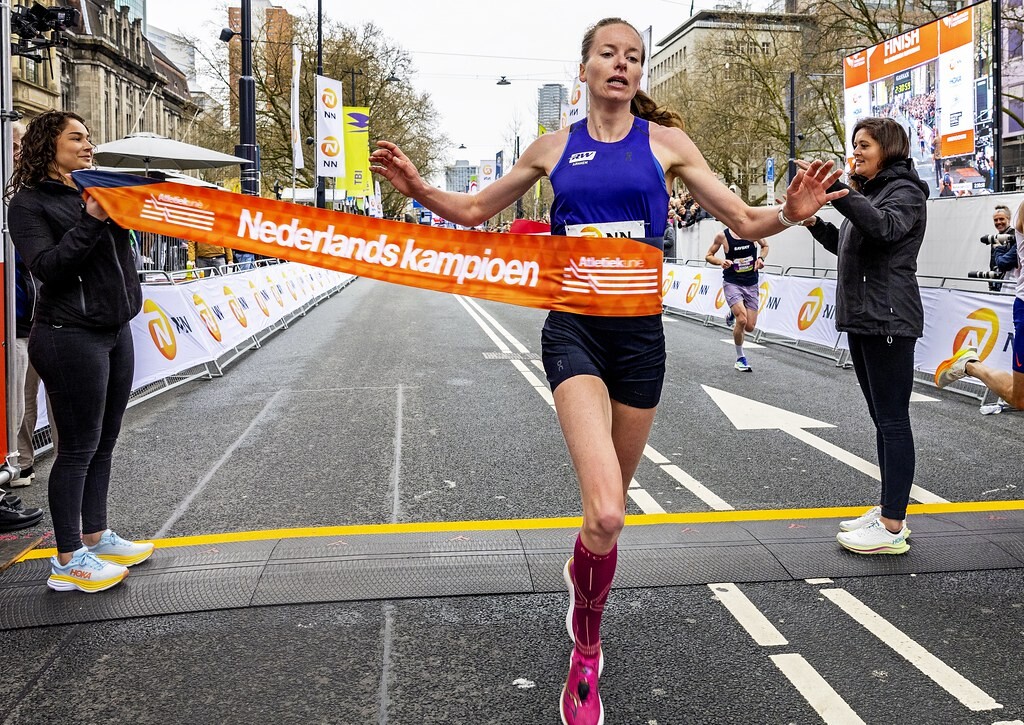
Chembai is a promising athlete who makes great progress every year. She improved her personal best in the half marathon from 1.13.22 (2021, Verona) via 1.11.34 (2022, Lisbon) to 1.09.26 (2023, Copenhagen). She wants to surpass herself again on the attractive and fast course of the NN CPC Run The Hague. Last year she also stood out with a PR of 52.48 during the CZ Tilburg Ten Miles.
Katharina SteinruckAnother eye-catching appearance in the field of participants is Katharina Steinruck. The 34-year-old athlete won gold with the German women's marathon team during the 2022 European Athletics Championships in Munich. In the same year she set her PR in the half marathon in Berlin: 1.09.38. Steinruck is the daughter of Katrin Dörre, an athlete with an impressive list of honors. Dörre ran more than forty marathons and finished first in Osaka (4x), London (3x), Tokyo (3x), Frankfurt (3x), Berlin, Hamburg and Enschede. The (East) German won the bronze medal at the Seoul Olympics (1988) and at the Tokyo World Championships (1991).Katharina Steinruck is getting closer to her mother's personal top times. In the half marathon: 1.09.38 versus 1.09.15. In the marathon: 2:24:56 versus 2:24:35. Katrin Dörre, now 62 and national coach, ran her last marathon in 1999. Striking detail: mother and daughter both won the Enschede marathon during their careers.
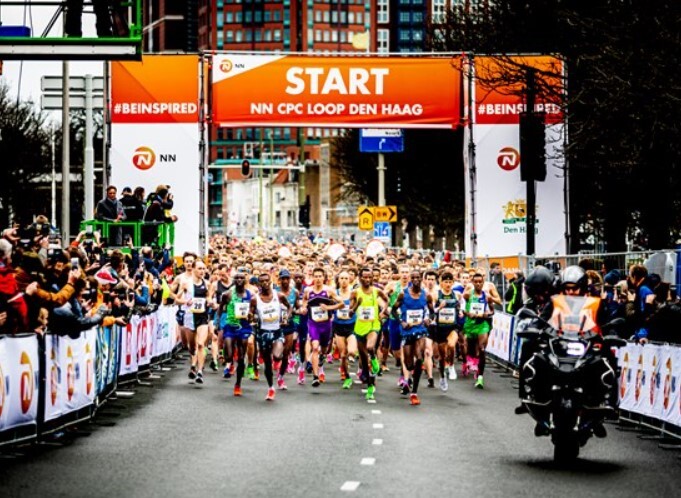
Anne LuijtenAnne Luijten (29) is a Dutch star who has already met the marathon limit for the Paris Olympic Games with 2.26.36. That part is on the program in the French capital on Sunday, August 11 at eight o'clock in the morning. Luijten, born in Rijswijk, is the reigning Dutch champion in the half and full marathon. Last year she set a personal record of 1.12.12 at the CPC Loop The Hague. The women's race was then won impressively by Nienke Brinkman (1.07.44).
MenWilbert Lek, organizer of the CPC Run The Hague: "Once again we can speak of an interesting field of participants among women. We count on just as exciting a race as last year, when Nienke Brinkman won with a strong personal record. Following in the footsteps of the top athletes, many recreational participants will again pursue their personal goals, because the 'CPC' is the inspiring running event for everyone. We will soon provide more information about the men.”
Running partyThe CPC Run is the largest running party in the residence and attracts more than 30,000 participants every year in an unprecedentedly atmospheric atmosphere. In addition to being a top sporting event, it is a fun and sporty 'outing' for the whole family. With distances up to and including the half marathon, the event is known as a spring classic. The event is almost completely sold out, there are only starting tickets available for the 10 KM Run.
All distances start and finish at the Malieveld. The courses run through the crowd-filled streets of The Hague. The main part, the Half Marathon, goes from the city to the iconic Pier in Scheveningen and then finishes back in the city.
Login to leave a comment

NN CPC Loop Den Haag
The City-Pier-City Half Marathon (NN CPC Loop Den Haag) was first held in 1975 and featured a 14.5km course. This was extended to the half marathon distance the following year. The competition has been used as the Dutch half marathon championships on a number of occasions. The course is a relatively flat one, which lends itself to fast times for...
more...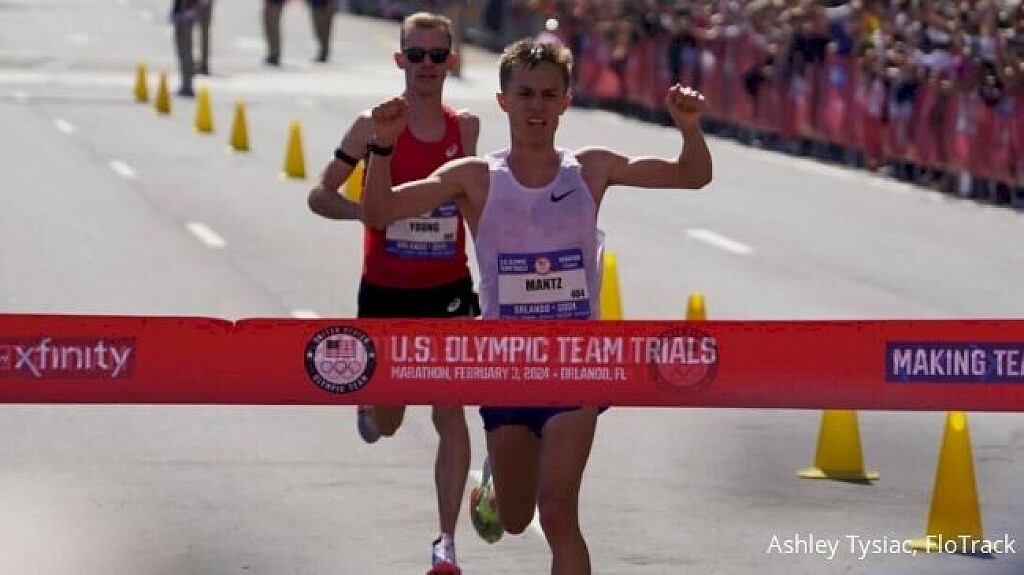
Conner Mantz, Clayton Young Finish 1-2 At U.S. Olympic Trials Mens Marathon
Conner Mantz and Clayton Young, the two former BYU teammates and training partners, took the top two spots with Mantz winning in 2:09:05 and Young finishing in 2:09:06 at the U.S. Olympic Marathon Trials in Orlando.
Leonard Korir finished third in 2:09:57.
As of right now, only the Mantz and Young have guaranteed their spots on the team. Mantz, who ran a 2:07:48 at the 2023 Chicago Marathon, and Clayton Young, who tallied a time of 2:08:00 in Chicago, earned their qualifying times prior to the Trials.
Because Korir did not finish under the Olympic qualifying standard of 2:08:10, he can qualify achieving a high enough world ranking on the World Athletics list by May 5, or via that third spot becoming unlocked by a U.S. men's Top 5 finish in any of the remaining platinum-level marathons (Tokyo, Seoul, Boston) within the qualification window.
Zach Panning controlled the race from its early stages. The three-time NCAA Division 2 champion from Grand Valley State took a group of eight men through the half in 64:07. The pack remained tight through 17 miles when things started to string out. Defending champion Galen Rupp was among those who began falling back at this point as a five-second gap formed between the top five and sixth place.
Panning pushed the tempo a bit more at Mile 19 and with Mantz and Young in tow, the trio pulled away from the field and established themselves as the prime contenders for the team. The three ran together for the next three plus miles until Mantz and Young made their move to the front at the 23 mile mark and quickly opened a 20-meter gap on Panning that continued to swell.
With a mile to go in the race, Panning faded badly. Now gapped by Mantz and Young by almost a minute, the chasers had a target to focus on again within striking distance of a shot at the Olympics. Elkanah Kibet and Korir were the first to pass Panning and dueled over the final mile for that third-place spot. With a half mile to go, Korir emerged as the stronger of the two and held position.
Kibet finished fourth in 2:10:02. CJ Albertson moved up in that final mile and finished fifth in 2:10:07 while Panning wound up sixth in 2:10:50.
Rupp, who was attempting to make a fifth Olympic team, placed 16th in 2:14:07.
Scott Fauble, the top American at the last two Boston Marathons, dropped from the lead pack in the eighth mile and pulled out before the half marathon mark.
Five-time Olympian Abdi Abdirahman, 47, dropped out of the race around the same time.
by Flo track by Joe Battaglia
Login to leave a comment

2028 US Olympic Trials Marathon
Most countries around the world use a selection committee to choose their Olympic Team Members, but not the USA. Prior to 1968, a series of races were used to select the USA Olympic Marathon team, but beginning in 1968 the format was changed to a single race on a single day with the top three finishers selected to be part...
more...
Ethiopians Jemal Yimer (60:42) and Sutume Kebede (64:37) won the overall titles in Houston Half
In what is becoming an annual tradition, Weini Kelati ran 66:25 on Sunday to break the American record at the 2024 Aramco Houston Half Marathon. It was the third straight year the record was broken in Houston as the 27-year-old Kelati, making her half marathon debut, followed in the footsteps of Sara Hall (67:15 in 2022) and Emily Sisson (66:52 in 2023) to become a record-breaker in Houston. Sunday marked the third time the record had been broken in the past year as Keira D’Amatolowered Sisson’s record to 66:39 at the Asics Half Marathon in Australia in July.
Kelati finished 4th overall as Ethiopia’s Sutume Kebede, a late addition to the women’s field, upset Hellen Obiri to win in 64:37, a US all-comers record that moves her into a tie for 9th on the all-time list. The time was a pb of more than three minutes for Kebede, who was previously best known for finishing 3rd at the 2020 Tokyo Marathon and running 2:18:12 at the 2022 Seoul Marathon. Obiri, who was with Kebede through 10k (30:28) faded over the second half and wound up a distant 2nd in 66:07.
The men’s race came down to a five-man sprint finish with Ethiopia’s Jemal Yimer, who won in Houston in 2020 and was 4th at the World Half Marathon Championships in October, prevailing in 60:42. Wesley Kiptoo of NAZ Elite and Kenya was 2nd for the second straight year in 60:43 with 2022 champ Milkesa Mengeshaof Ethiopia 3rd in 60:45.
Biya Simbassa was the top American man in 60:45 in 4th, just ahead of a resurgent Diego Estrada, who led for the first 20 minutes and finished 5th in a pb of 60:49. Galen Rupp, tuning up for the Olympic Marathon Trials three weeks from now, hung back from the leaders and finished 14th in 62:37.
In the Chevron Houston Marathon, contested simultaneously, former NAIA star Zouhair Talbi of Morocco won the men’s race in 2:06:39 to boost his chances of Olympic selection. 2016 NCAA XC champion Patrick Tiernan, now training as part of Alistair and Amy Cragg’s Puma Elite Running team in North Carolina, was 4th in 2:07:45, hitting the Olympic standard and moving to #2 on the all-time Australian marathon list.
Ethiopia’s Rahma Tusa, the runner-up behind American Betsy Saina in September’s Sydney Marathon, won the women’s marathon in Houston in 2:19:33.
The races featured temperatures in the low 40s with 10 mph winds and gusts up to 17 mph, which made for a challenging end to the half marathon as miles 9, 10, and 11 were run directly into the teeth of the wind.
Below, six takeaways from the day’s racing in Houston.
2024 Houston Half Marathon men’s top 51. 60:42 Jemal Yimer, Ethiopia2. 60:43 Wesley Kiptoo, Kenya3. 60:45 Milkesa Mengesha, Ethiopia4. 60:45 Biya Simbassa, USA5. 60:49 Diego Estrada, USA14. 62:37 Galen Rupp, USA
2024 Houston Half Marathon women’s top 51. 64:37 Sutume Kebede, Ethiopia2. 66:07 Hellen Obiri, Kenya3. 66:24 Buze Diriba, Ethiopia4. 66:25 AR Weini Kelati, USA5. 67:36 Mestawut Fikir, Ethiopia
by Jonathan Gault (Let’s Run)
Login to leave a comment

Aramco Houston Half Marathon
The Chevron Houston Marathon provides runners with a one-of-a-kind experience in the vibrant and dynamic setting of America's fourth-largest city. Renowned for its fast, flat, and scenic single-loop course, the race has earned accolades as the "fastest winter marathon" and the "second fastest marathon overall," according to the Ultimate Guide to Marathons. It’s a perfect opportunity for both elite athletes...
more...
Edwin Kiptoo is targeting Athens Marathon course record
Kenya’s Edwin Kiprop Kiptoo will make his debut in Greece at the 40th edition of the Athens Classic Marathon slated for this Sunday (12) in Athens, Greece.
The 30 year-old comes to this race with a life time best of 2:06.52 that he got last year at the Haspa Marathon where he finished in seventh place. This year in March he participated at the Seoul Marathon, finishing in seventh place in a time of 2:08.56.
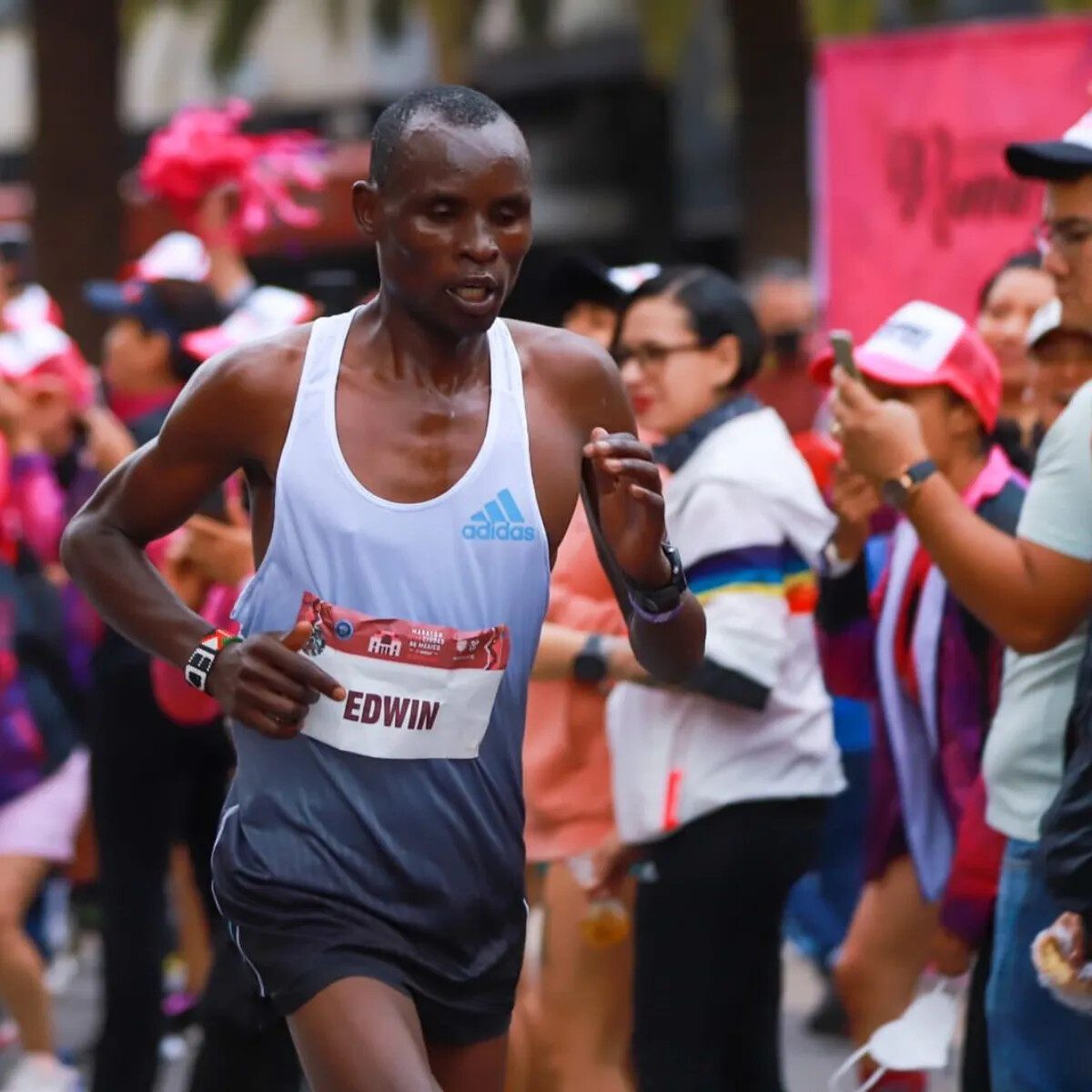
Kiptoo will not have an easy ride as he will have to get past his compatriot Rhonzas Lokitam Kilimo who comes to this race with the second fastest time on paper of 2:08.08 that he got this year in April at the Haspa Marathon where he crossed the finish line in fifth place.
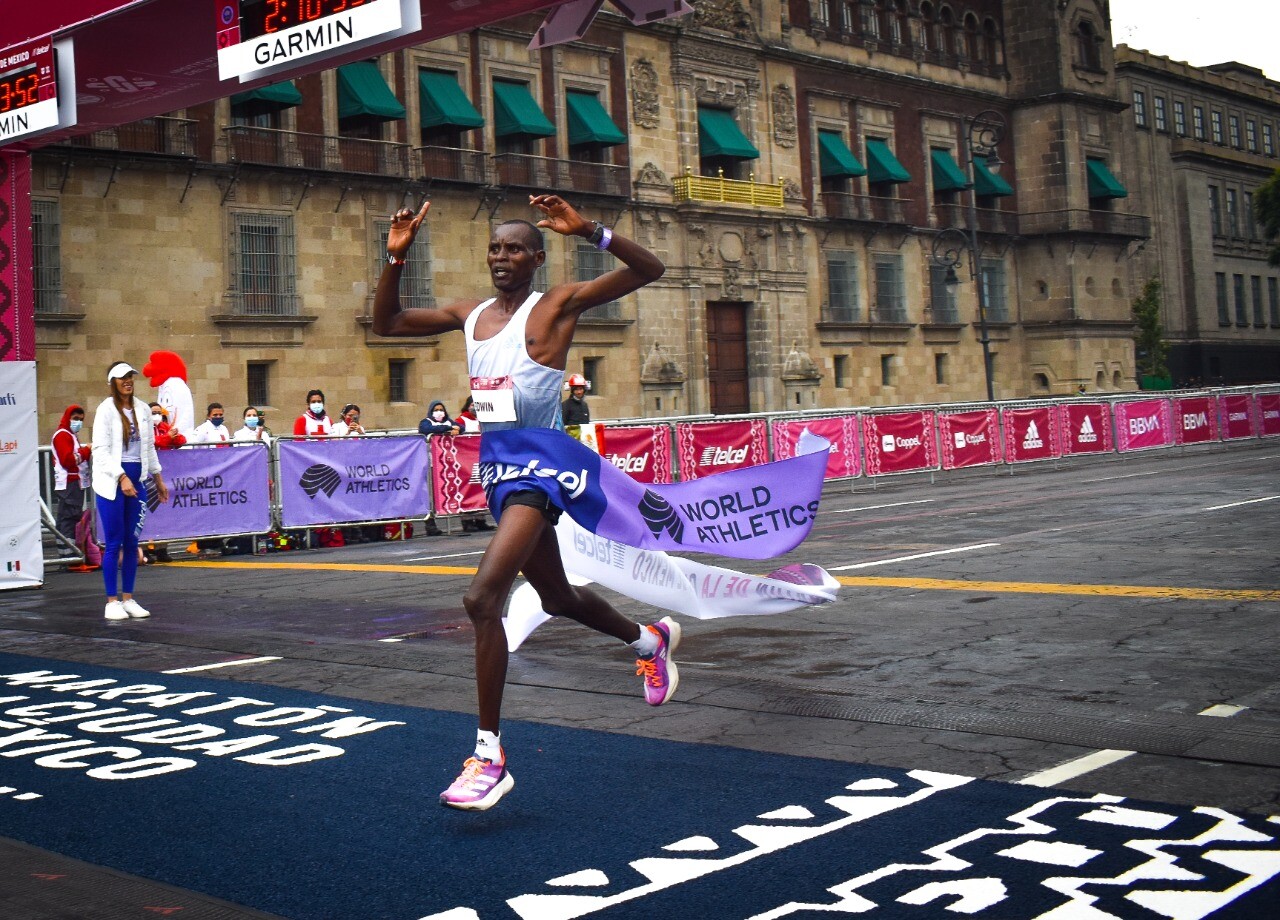
The two Kenyans will face-off with the defending champion and the Greece National Record Holder, Charalambos Pitsolis who won last year’s edition in time of 2:23.44. The 30 year-old who comes to this race with a personal best of 2:21.23 that he got early this year in Germany. Pitsolis will have an acid test from the Kenyans as the race organizers invited International elite athletes after three years of absence due to Covid-19 pandemic.
The organizers have assembled a strong deep elite field to try and chase the race course record of 2:10.37 that was set nine years ago by Felix Kipchirchir Kandie from Kenya.
by John Vaselyne
Login to leave a comment

Athens Marathon
The Athens Classic (authentic) Marathon is an annual marathon road race held in Athens, Greece, normally in early November. The race attracted 43.000 competitors in 2015 of which 16.000 were for the 42.195 km course, both numbers being an all-time record for the event. The rest of the runners competed in the concurrent 5 and 10 kilometers road races and...
more...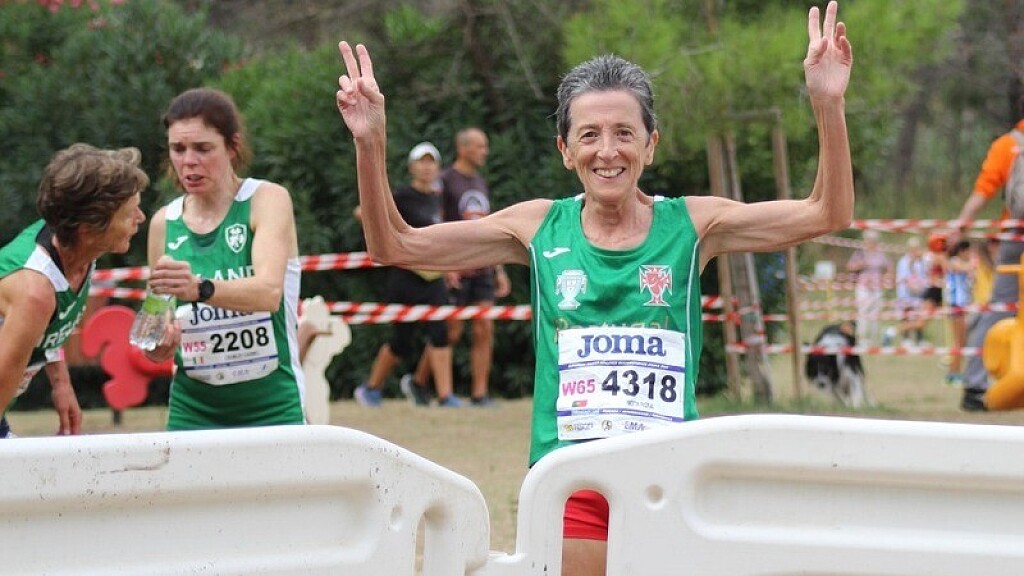
Portuguese Rosa Mota breaks half marathon world record for veterans running 1:26:16 in Riga
Portuguese Rosa Mota broke the half marathon world record for athletes between 65 and 69 years old, completing the distance in 1:26:16 hours, taking more than six minutes off the previous best mark.
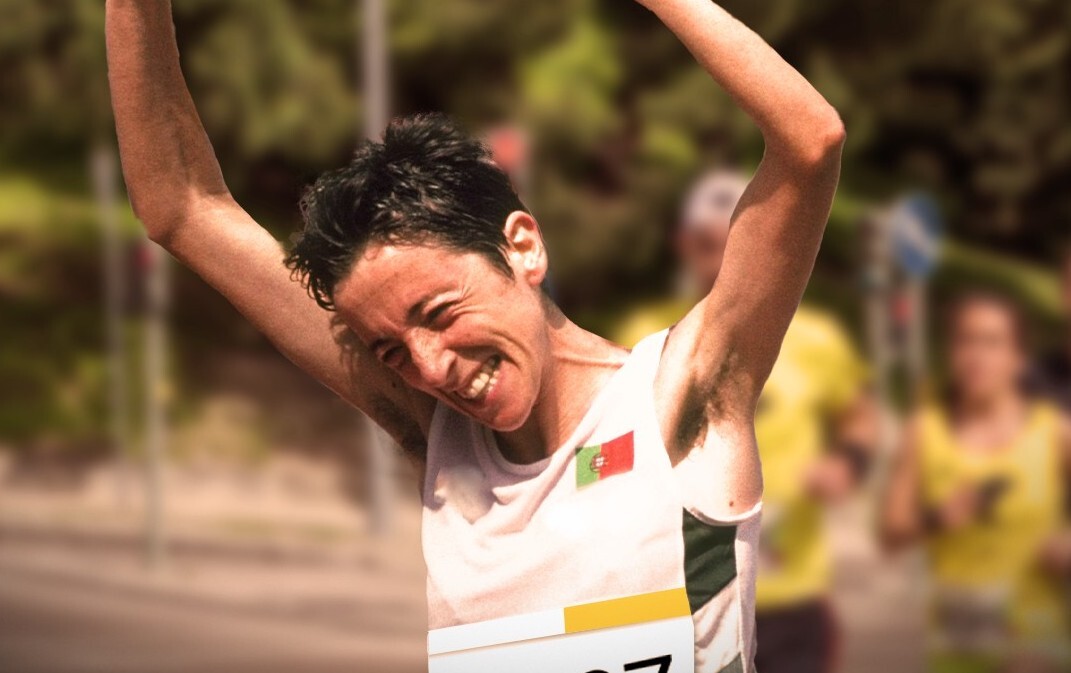
In the parallel race to the World Road Championships, the Olympic marathon champion in Seoul 1988 was 13th overall and won the race in her age group, surpassing the mark of Swiss Emmi Luthi, who had run in 1:32.56 in 2009.
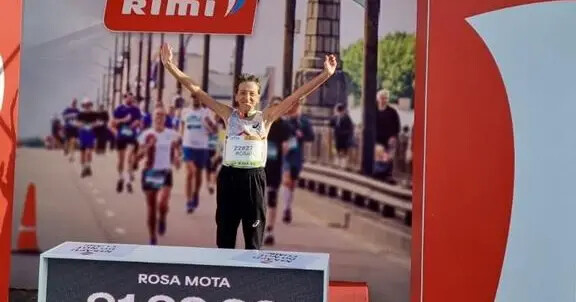
Rosa Mota was more than 22 minutes behind the runner-up, Finnish Kaarina Back (1:48.41).
Last week, Rosa Mota had won the European cross-country veterans championship, at the same level.
Login to leave a comment

World Athletics Road Running Championships
Six world champions and 65,000 runners just behind them. In September 2026, the heart of Copenhagen is expected to be the stage for Denmark’s largest-ever participant event. The World Athletics Road Running Championships Copenhagen 26 will take place on September 19-20, 2026. A total of 65,000 participants will join the running festivities behind the world’s fastest female and male athletes...
more...
How robotics tech can help elite athletes get faster
Runners wearing an exoskeleton suit were able to sprint nearly one second faster over 200 metres, a recent small study found. Researcher Giuk Lee out of Seoul, South Korea, has been working with a team to create an “exosuit” that helps people sprint faster, the New Scientist reported on its website. The suit may have the potential to help elite athletes significantly improve their running performance.
Lee explains that the exosuit weighs 4.4 kg and has electrical motors on its back that control two steel cables attached to the wearer’s hips and thighs, The length of the cable running between each hip and thigh shortens as the wearer extends their legs backward, assisting them and speeding up the motion.

The team asked nine non-elite runners to sprint 200 metres to test the exosuit’s performance, twice while wearing the suit and twice without it. The participants ran 0.97 seconds faster, on average, when wearing the suit. The team has recently developed an exosuit that weighs only 2.5 kilograms and are currently investigating whether this may be a potential tool for elite athletes to use in training.
“One of the elite runners has been training with the lighter exosuit and it has helped them run faster even without wearing it,” Lee said to New Science. “This may be because it helps them to feel and remember how to engage the right muscles to run faster.”
The team is working on a customized exosuit for Kyung-soo Oh, a former national elite runner in South Korea. They’re hoping Oh will be able to beat the world record for running 100 metres while wearing the suit. Jamaican sprinter Usain Bolt holds the men’s record is 9.58 seconds, set in 2009.
This is certainly not the first time robotic science and running have crossed paths. In 2022, a U.S. start-up called Shift Robotics launched a Kickstarter campaign for what they claim is the world’s fastest shoe. The “Moonwalker” apparently lets you walk at the speed of a run while maneuvering stairs, through crowds, hills and even getting on public transit. The Moonwalker is available for the public to order now for USD $999.
by Running Magazine
Login to leave a comment
Former Seoul Marathon gold medalist Franklin Chepkwony collapses and dies after training
Former Seoul Marathon gold medalist Franklin Chepkwony passed away after collapsing on Monday in Eldama Ravine, Baringo County.
The 39-year-old had just finished a 23km training schedule when he collapsed on his way home.
According to his training partner Mike Boit, Chepkwony was in high spirits during training before they parted ways.
“Our training went well and he was in high spirits. I was called when I got home that my friend had collapsed and died but I couldn’t believe it. I rushed to his home, where I confirmed indeed he was no more,” he said.
Boit said Chepkwony was among the athletes who took part in the Nairobi City Marathon on July 2, where he placed 54th in 2:16:43.
According to his uncle, Joseph Tele, a colleague of his tried to administer first aid before a good Samaritan arrived and rushed him to Eldama Ravine Hospital, where he was pronounced dead on arrival.
“I was called when he was rushed to the hospital and unfortunately he passed on. We are now planning his burial. We shall announce the date of his burial once we agree as a family,” Tele said.
His body has since been moved to Eldama Ravine Mortuary awaiting his burial.
Chepkwony first burst into the limelight in 2011 during the Standard Chartered Nairobi Marathon, where he came in second in 2:11:00 just five seconds behind Ernest Kebenei who won in 2:10:55.
His international debut came in 2012 at the Zurich Marathon, Switzerland, where he won with a time of 2:10:57.
Later that year, he set a personal best of 2:06:11 after finishing second at the Eindhoven Marathon in the Netherlands just 25 seconds behind the winner. The time ranked him 26th in the world that year.
In 2013, Chepkwony won the Seoul International Marathon on March 17th in a time of 2:06:59, bagging $80,000 for finishing the race under 2:10:00.He later ran his second marathon in the Netherlands in October but disappointingly finished seventh with a time of 2:09:53.
He later bounced back with an emphatic win at the Boulogne-Billancourt Half Marathon in France setting a course record of 1:00:11.
In 2014, Chepkwony participated in the Boston Marathon and finished third, his first top finish in World Marathon Majors.
Various Kenyan athletes took to social media to express their sorrow for the loss of a marathon great.
by Teddy Mulei
Login to leave a comment
Brimin Misoi determined to defend Nairobi Marathon title
Nairobi City Marathon 42km champion Brimin Misoi will be back on the streets of the Kenyan capital to attempt to defend the title he won in 2022.
The second edition of Africa's richest marathon in terms of winners' prize money will be held on Sunday and will be majorly run on the Expressway.
Misoi, the winner of the 2022 Frankfurt Marathon is full of confidence and believes he has what it takes to defend his title. He said he is currently enjoying top shape and has undergone intensive training.
"I feel great and I believe in my training. I trust my abilities and I believe no one will beat me to the title. Nairobi's altitude is a bit lower compared to Kapkitony, Elgeyo Marakwet County where I train thus making it easier for me to win," he said.
The double Nairobi Standard Chartered Marathon winner clocked two hours and 8:03 minutes to win the race in 2022 after breaking off from the leading pack at the 34km mark.
The 35-year-old had a poor run in Japan at the Tokyo Marathon in March, where he finished 13th in 2:07:36.
"My target is to defend my title and lower the time I set last year. I target to run sub-2:06:11, which is my PB set in Germany last year," Misoi added.
This year's edition has attracted more than 13,000 athletes with the organisers targeting 15,000.
On his quest for title defence, Misoi will be up against a group of elite athletes who have registered for the race.
Among the names to watch out for during the race include Edwin Kemboi with a personal best of 2:06:52 and who finished fourth in this year’s Seoul Marathon in March.
Joshua Kipsang (2:08:09), Simon Kipkosgei (2:07:07), and Robert Kipkemboi (2:07:09) are among the fastest athletes who have also registered for the 42km race.
An Ethiopian quartet led by Haile Mekonnen with a PB of 2:14:13, Maseret Yitbarek (2:11:34), Desta Tafa (2:11:13) and Haile Assefa will also be in the chase for the Sh3.5million winner's purse.
In the women’s 42km race, Lydia Simiyu (2:25:44), Sheila Chepkoech (2:27:04) and Sharon Cheimo (2:33:03) are among the fastest Kenyans who will battle it out in the women’s 42km race.
Defending champion Agnes Barsosio who clocked 2:24:45 in last year's event pulled out of Sunday's race after picking a hamstring injury in training.
by Samuel Nganga
Login to leave a comment

NAIROBI MARATHON
Nairobi Marathon is an annual road running competition over the marathon distance held in October in Nairobi, Kenya. First held in 2003, the competition expanded and now includes a half marathon race along with the main race. It was part of "The Greatest Race on Earth", fully sponsored by Standard Chartered Bank....
more...