

Running News Daily
Running News Daily is edited by Bob Anderson and team. Send your news items to bob@mybestruns.com Advertising opportunities available.
Index to Daily Posts · Sign Up For Updates · Run The World Feed
Articles tagged #France
Today's Running News
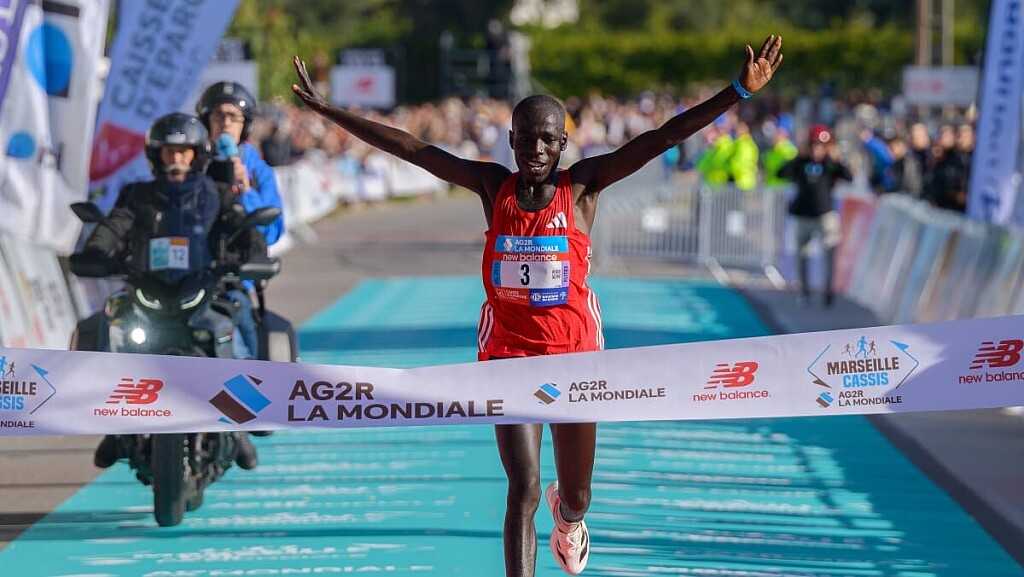


Kiprop Kimutai Smashes Course Record With Stunning 58:36 Victory At Marseille-Cassis 20K
Kenya’s Kiprop Kimutai produced a sensational performance at the 47th edition of the Marseille-Cassis 20K in France on Sunday, October 25, 2026, storming to victory in 58:36 and setting a new course record in one of Europe’s most celebrated road races.
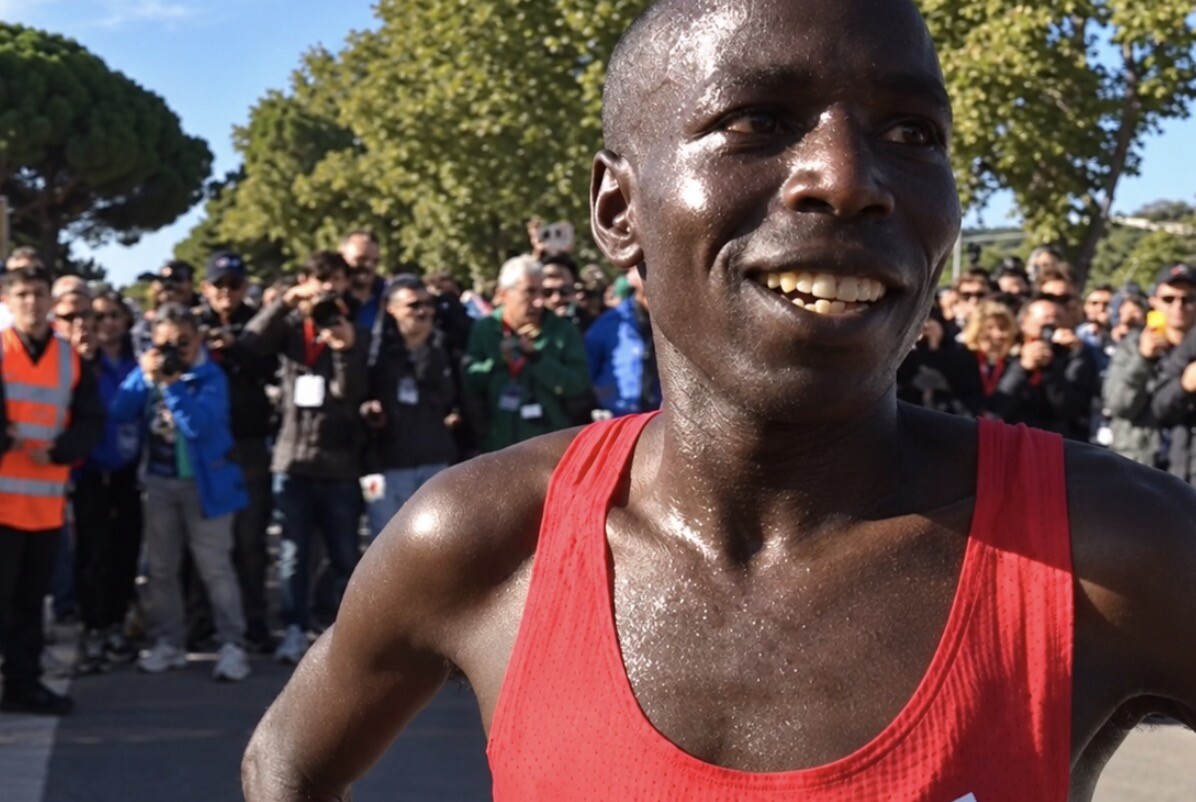
Kimutai delivered an outstanding display of strength, speed and endurance over the demanding 20-kilometre course, which is renowned for its challenging hills and spectacular Mediterranean scenery. His remarkable time of 58:36 underlined his dominance on the day, as he crossed the finish line well ahead of the chasing pack to claim a memorable victory.
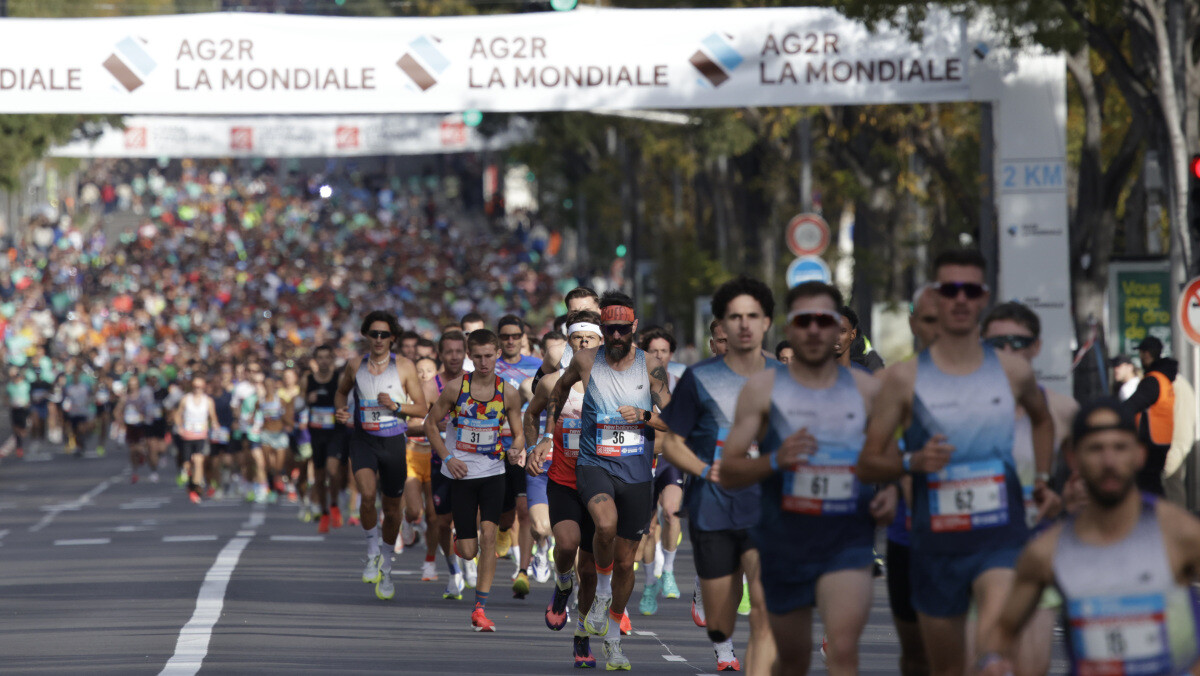
The Marseille-Cassis race has built a strong reputation for testing athletes with its demanding elevation changes, making Kimutai’s achievement particularly impressive. His performance added another memorable chapter to the event’s long history and highlighted Kenya’s continued strength in international road running.
Djibouti’s Houssein Sougueh secured second place in 1:00:07 after an impressive run, finishing more than a minute behind the Kenyan winner. Uganda’s Silas Boch completed the podium, taking third in 1:00:26 after a strong performance against a competitive international field.
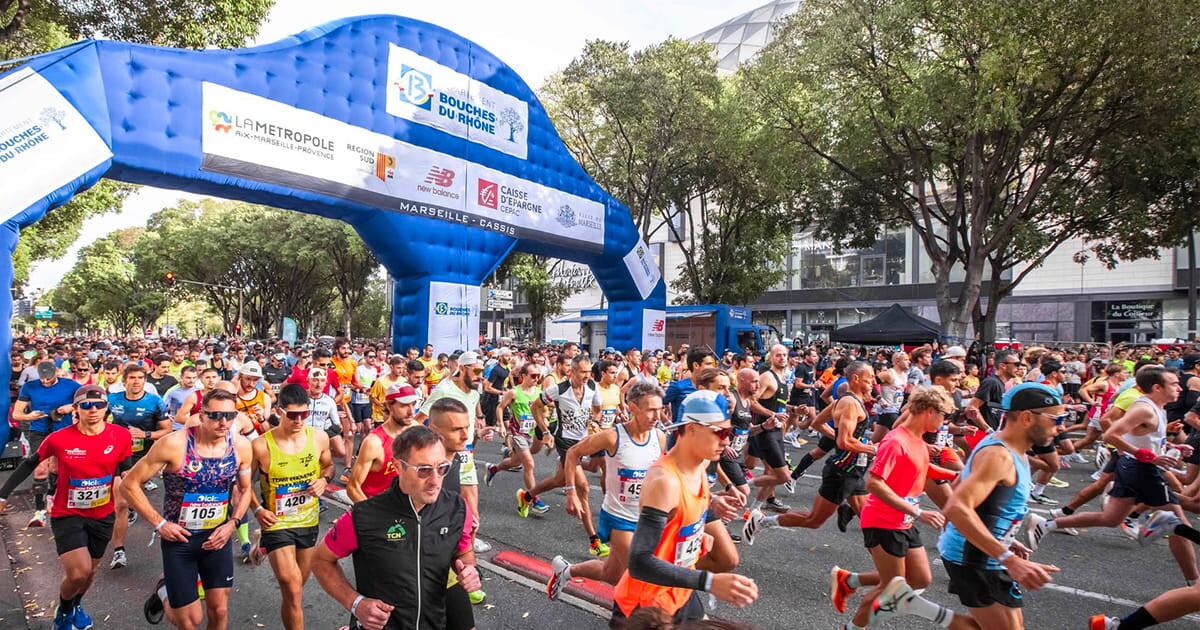
Kenya secured another top-four finish through Gilbert Kipkosgei Kiprotich, who clocked 1:00:28 to finish fourth, just two seconds behind Boch in a closely contested battle for the final podium positions.
Morocco’s Said Kaddour finished fifth in 1:01:04, followed by Congo’s Alex-Franck Ngouari-Mouissi in sixth in 1:01:17. France’s Enzo Couderchet placed seventh in 1:01:38, with compatriot Valentin Andre finishing eighth in 1:02:11. Alexis Miellet took ninth in 1:02:59, while Quentin Meyleu completed the top 10 in 1:03:34.
For Kimutai, the victory was more than a race win. Breaking the course record at such a prestigious event demonstrated his ability to excel on a challenging route while competing against a strong international field. His 58:36 performance will stand as the defining result of the 2026 edition.
The race once again showcased the depth of international road-running talent, with athletes from Kenya, Djibouti, Uganda, Morocco, Congo and France featuring prominently in the men's standings.
As the Marseille-Cassis 20K celebrated its 47th edition, Kimutai emerged as its outstanding performer, combining a commanding victory with a course-record achievement that will be remembered among the highlights of this year's race.
by Erick Cheruiyot for My Best Runs.
Login to leave a comment

Marseille Cassis
Once upon a time… How could we imagine one day of March 1979, the idea of organizing a race opened to everyone between Marseilles and Cassis could take such an International dimension? A very young athletic section, a group of close friends and the unfailing support of every sections of an “omnisport” club, the SCO Ste Marguerite, gave...
more...
Rodrigue Kwizera Sets Spanish Record With 58:03 Valencia Victory As Sheila Chepkirui Triumphs In Women’s Race
Rodrigue Kwizera produced a historic performance at the Valencia Half Marathon on October 25, 2026, storming to victory in 58:03 to set a new Spanish national record in the men’s half marathon.
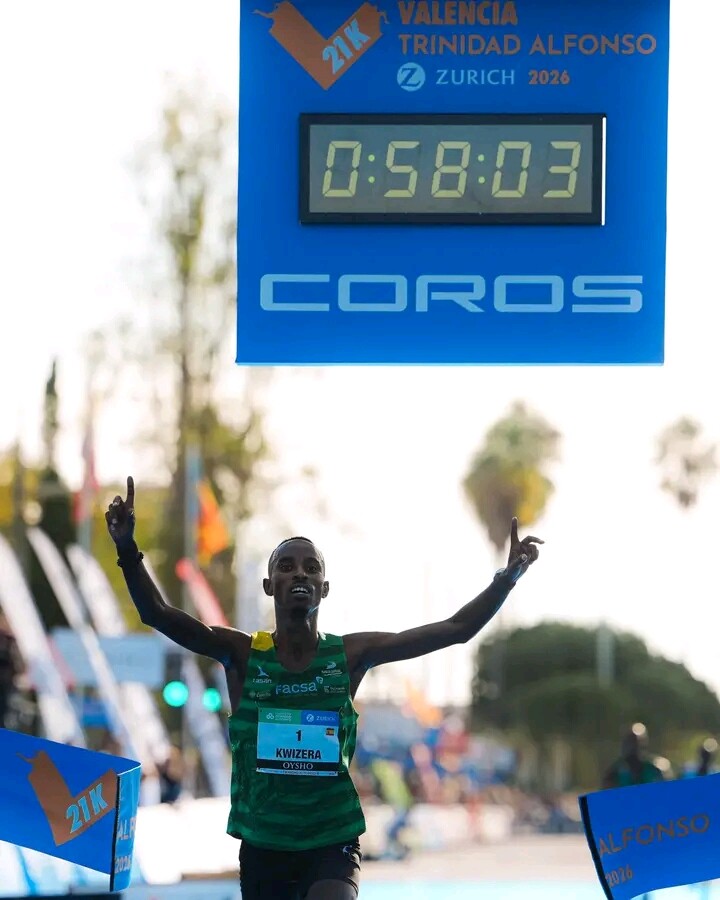
The Burundi-born distance runner, who represents Spain internationally, delivered a decisive finish after leading for much of the second half of the race. He unleashed a powerful final kick over the closing 800 metres to secure the title and cap a remarkable performance on one of the world’s fastest half-marathon courses.
Kwizera held off compatriot Thierry Ndikumwenayo, who finished second in 58:09, while Kenya’s Víctor Kipruto claimed third place in 58:13.
Ethiopia’s Tadesse Worku finished fourth in 58:33, followed by Kenya’s Owen Korir Kapkama in fifth in 58:42. Ethiopia’s Jemal Yimer placed sixth in 59:01, while Kenya’s James Kipkosgei finished seventh in 59:03 and compatriot Brian Kipkore took eighth in 59:12. Sudan’s Yaseen Abdalla secured ninth place in 59:20, finishing in the same time as France’s Emmanuel Roudolff-Levisse, who rounded out the top 10.
The men's contest showcased the fine margins separating victory from defeat at the highest level of road running. Kwizera's ability to maintain his position before accelerating in the closing stages proved decisive, allowing him to break away and secure a memorable victory.
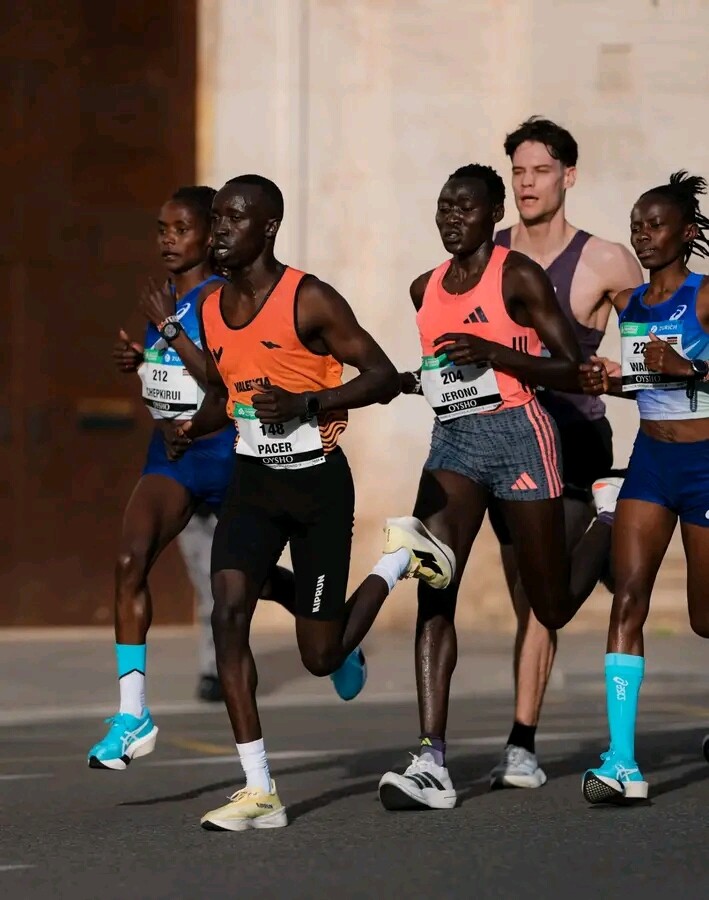
In the women’s race, Kenya’s Sheila Chepkirui claimed victory in 1:03:51, narrowly defeating compatriot Diana Wanza, who finished just one second behind in 1:03:52. Daisilah Jerono completed a Kenyan sweep of the podium in 1:04:11.
Chepkirui’s performance was particularly impressive, as she improved substantially on her listed personal best of 1:06:01, delivering a breakthrough performance against a strong international field.
The women's race featured a strong contingent of Kenyan and Ethiopian distance runners, with the leading athletes pushing each other to impressive times. Chepkirui maintained her advantage in a tightly contested finish, while Wanza came agonisingly close to taking the title.
Ethiopia’s Mizan Alem finished fourth in 1:04:54, followed by compatriot Senayet Getachew in 1:04:57. Kenya’s Caroline Gitonga placed sixth in 1:04:59, while Gladys Kwamboka finished seventh in 1:05:02. Jesca Chelangat took eighth in 1:05:29, followed by Miriam Chebet in 1:05:39. Ethiopia’s Aynadis Mebratu completed the top 10 in 1:05:40.
The depth of the women's results underlined the intensity of the competition, with six athletes finishing inside 1:05:00. Kenya's ability to secure the first three places further demonstrated the country's strength in international road racing.
For Kwizera, the victory represented more than another international title. His 58:03 performance established a new benchmark for Spain, adding a national-record achievement to a race defined by speed, tactical discipline and a decisive late surge.
Valencia's reputation as a destination for outstanding distance-running performances was once again reinforced by the quality of the racing. The fast course and deep international fields provided the setting for athletes to test their limits and deliver performances that will stand out in the season's road-running calendar.
With Kwizera celebrating a Spanish national record and Chepkirui leading a Kenyan sweep of the women's podium, the 2026 Valencia Half Marathon delivered a compelling double triumph, celebrating individual excellence and the remarkable depth of international distance running
by Erick Cheruiyot for My Best Runs.
Login to leave a comment
Valencia Half Marathon
The Trinidad Alfonso Valencia Half Marathon has become one of the top running events in the world. Valencia is one of the fastest half marathon in the world. The race, organized by SD Correcaminos Athletics Club, celebrated its silver anniversary in style with record participation, record crowd numbers, Silver label IAAF accreditation and an atmosphere that you will not find...
more...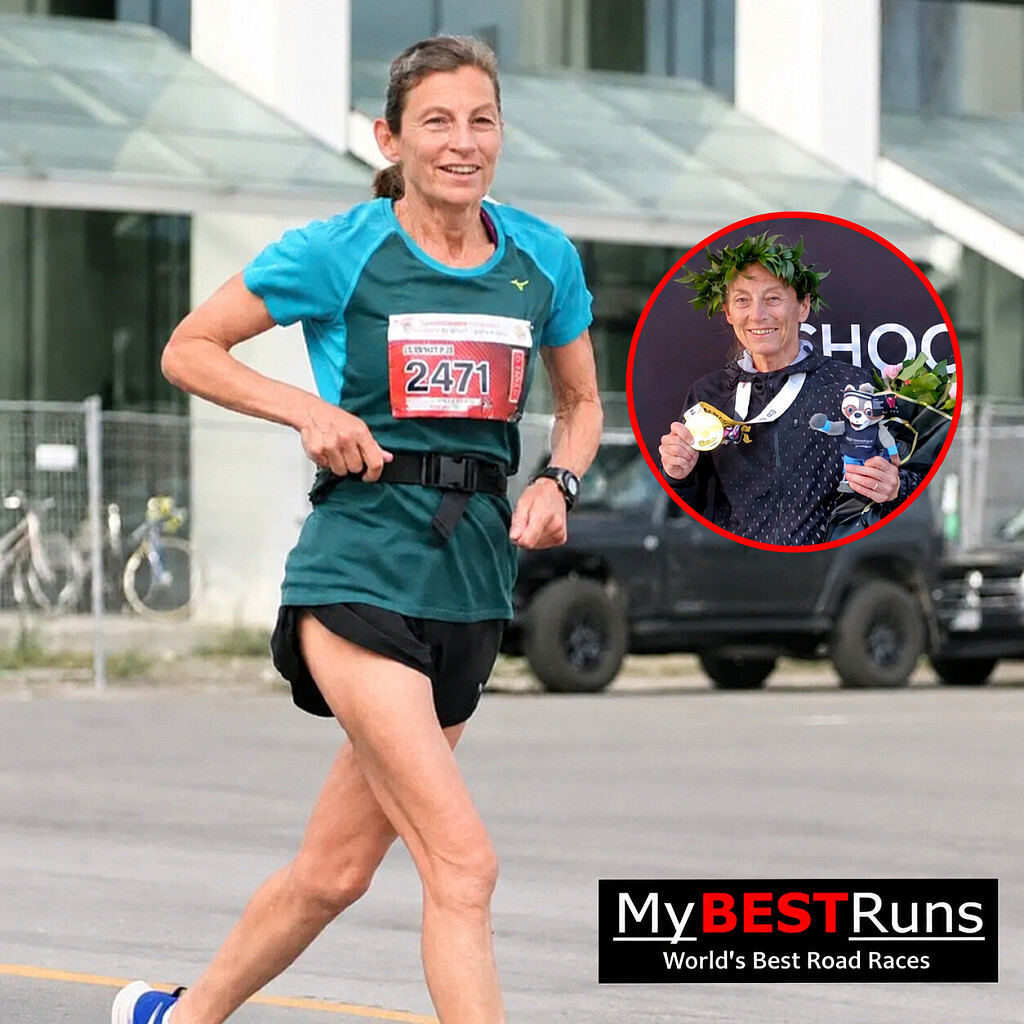
Jennifer MacDonell Runs 3:23:59 At 70 To Set Pending World Marathon Record In Toronto
At 70 years old, Canadian distance runner Jennifer MacDonell is challenging conventional expectations of ageing after producing a remarkable marathon performance that could rewrite the record books in masters athletics.
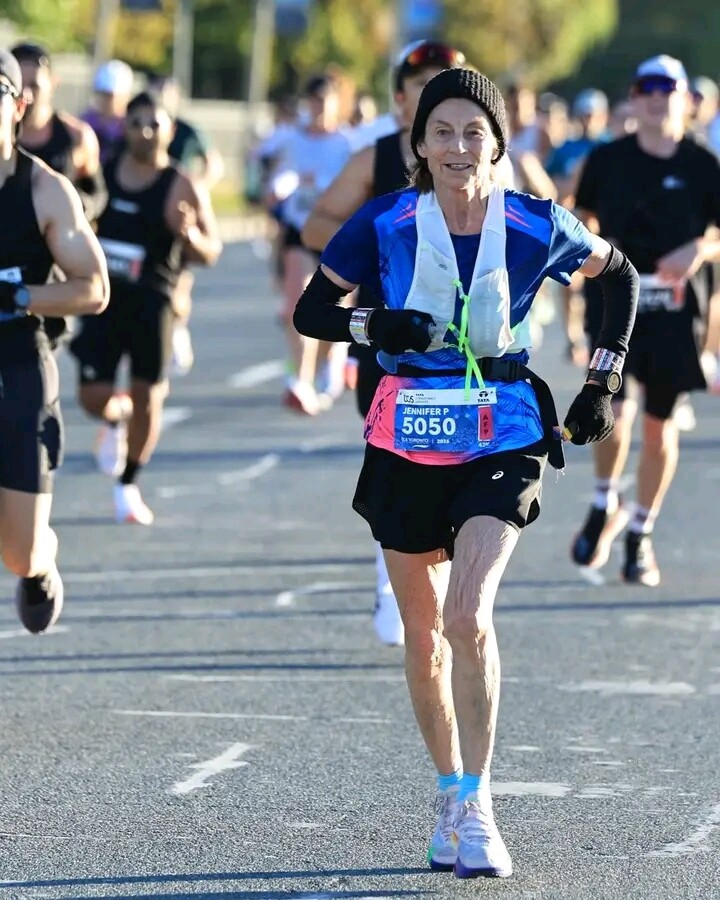
MacDonell, who hails from Ottawa, Canada, clocked an outstanding 3:23:59 at the TCS Toronto Waterfront Marathon, setting a pending world record in the women's 70–74 age category. Her performance eclipsed the previous mark of 3:27:00, set by France's Laurence Dupont Alnet in 2024, by more than three minutes.
Her extraordinary achievement stands as a powerful testament to the rewards of disciplined training, intelligent race preparation and a determination to continue competing at the highest possible level, regardless of age.
Completing the 42.195-kilometre distance in 3:23:59 required MacDonell to maintain an average pace of approximately 4:50 per kilometre, or 7:47 per mile, throughout the race. It was a phenomenal display of endurance from an athlete who continues to demonstrate that age alone does not define the boundaries of athletic performance.
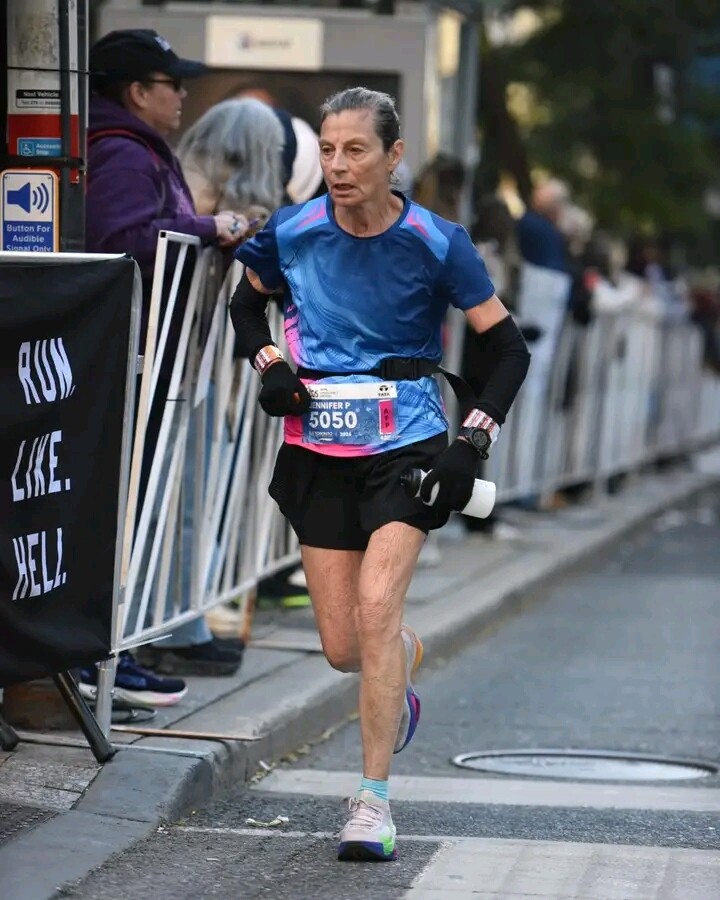
However, her marathon breakthrough was only the highlight of an extraordinary period of racing.
Just nine days before her performance in Toronto, MacDonell travelled to Montreal, where she set a Canadian age-group mile record with a time of 6:51. The following morning, she returned to the track and roads to record another national age-group mark, clocking 21:40 over 5km.
Producing two Canadian records on consecutive days before delivering a potentially world-record marathon performance little more than a week later highlights the remarkable consistency and preparation behind her achievements.
According to reports by Canadian Running Magazine, MacDonell devoted an entire year to studying the Toronto marathon course, carefully analysing its hills, anticipating potential headwinds and tailoring her training to meet the demands of race day.
That preparation proved crucial as she navigated the challenging course in pursuit of her ambitious goal. Even when a calf cramp emerged during the final two kilometres, threatening to disrupt her rhythm, she continued towards the finish line and completed one of the most impressive performances of her running career.
MacDonell's achievement also offers a compelling reminder of the importance of masters athletics, a competitive arena in which experienced runners continue to challenge records and redefine what is possible later in life.
While marathon running demands tremendous physical endurance at every age, maintaining the ability to compete at such a high level at 70 requires years of commitment, careful preparation and an enduring passion for the sport.
Her approach was driven by a fundamental question: how fast can the human body go?
In Toronto, MacDonell delivered an extraordinary answer, demonstrating that the pursuit of excellence does not have to end when an athlete reaches a milestone birthday.
Although her 3:23:59 performance remains subject to official ratification as a world record, the time has already established an impressive benchmark for women competing in the 70–74 age category.
For runners around the world, her story is about much more than a time on the clock. It is about setting ambitious goals, embracing the discipline required to achieve them and refusing to let age alone dictate the limits of one's ambitions.
At 70, Jennifer MacDonell is still chasing faster times, breaking records and inspiring others through her performances. Her remarkable run in Toronto sends a powerful message to the running community: the finish line of one achievement can always become the starting point for another.
by Erick Cheruiyot for My Best Runs.
Login to leave a comment
TCS Toronto Waterfront Marathon
The Scotiabank Toronto Waterfront Marathon, Half-Marathon & 5k Run / Walk is organized by Canada Running Series Inc., organizers of the Canada Running Series, "A selection of Canada's best runs!" Canada Running Series annually organizes eight events in Montreal, Toronto and Vancouver that vary in distance from the 5k to the marathon. The Scotiabank Toronto Waterfront Marathon and Half-Marathon are...
more...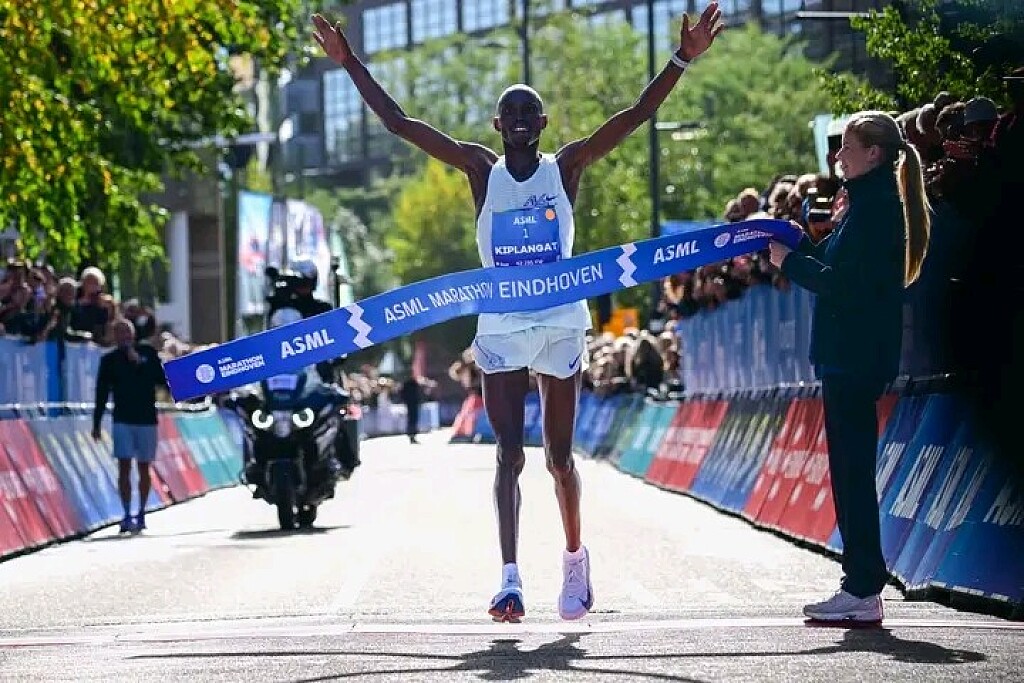
Davis Kiplangat Leads Kenyan Success At Eindhoven Marathon With 2:07:41 Victory As Lidya Cheruto Wins Women's Title
Kenyan distance running enjoyed a successful outing in the Netherlands on Sunday as Davis Kiplangat and Lidya Cheruto claimed victories at the Eindhoven Marathon, delivering impressive performances over the classic 42.195-kilometre distance.
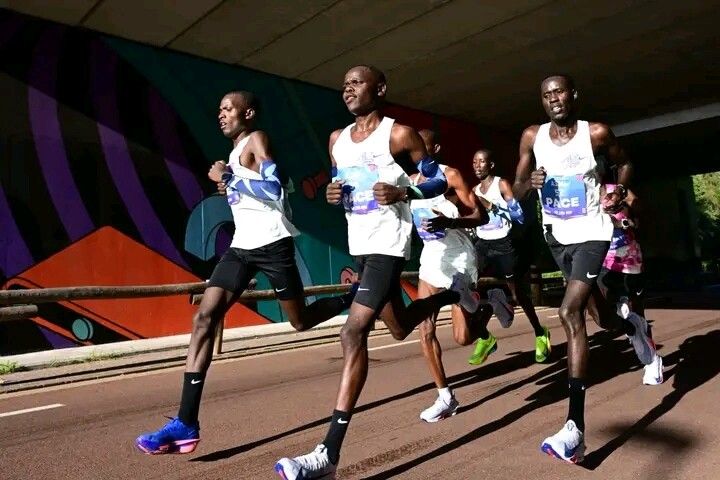
Kiplangat secured the men's title in 2:07:41, while compatriot Cheruto won the women's race in 2:32:46, ensuring Kenya celebrated victories in both categories at the Dutch road-running event.
The men's race was led by Kiplangat, who produced the fastest performance of the day to cross the finish line in 2:07:41. His victory highlighted his strength over the marathon distance and placed him ahead of a competitive international field.
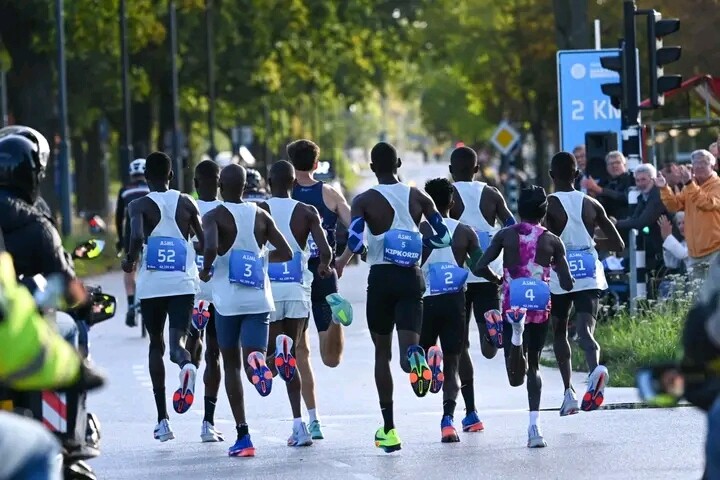
Kenya's Asbel Kipkorir finished second in 2:10:25, completing a strong performance behind the winner. Although he could not match Kiplangat's pace, Kipkorir secured the runner-up position with a time of 2:10:25.
Uganda's Levi Chelangat claimed third place in 2:16:34, giving the East African region two nationalities on the men's podium. His performance ensured that the leading three finishers represented Kenya and Uganda.
Belgium's Diego van Looy finished fourth in 2:18:17, making him the highest-placed Belgian athlete in the men's overall standings shown in the results. He followed the leading trio across the line after a demanding marathon contest.
The men's results also featured Tim Calliauw of Belgium, who recorded 2:20:23 in the men's 40–49 age category. His performance was among the age-group results published alongside the leading overall finishers.
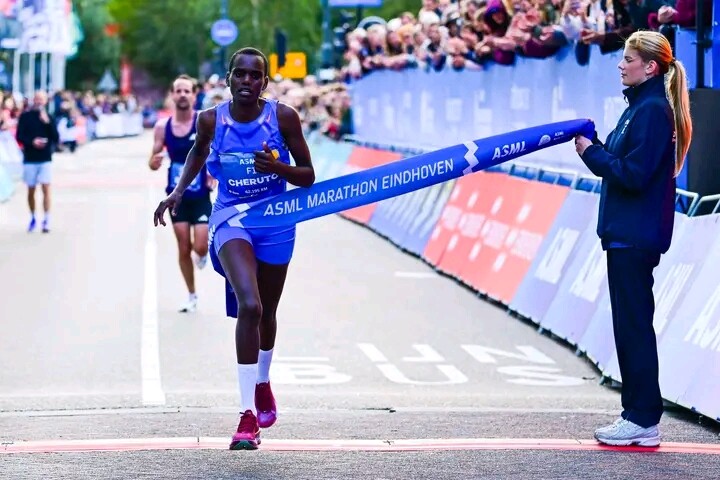
In the women's race, Kenya's Lidya Cheruto delivered another important victory, crossing the finish line in 2:32:46 to secure the title. Her performance placed her ahead of Belgium's Valentine Mathy, who finished second in 2:35:03.
Mathy's runner-up finish was followed by compatriot Elisa Vancolen, who clocked 2:37:44 to claim third place. The result gave Belgium two athletes on the women's podium behind the Kenyan winner.
Belgium's Karen van Proeyen finished fourth in 2:40:31, adding another strong result for the host country's neighbouring European running nation. Her time also appeared among the women's age-group results, where she was the leading finisher in the 40–49 category.
The women's podium therefore featured Kenya and Belgium, with Cheruto taking the overall honours ahead of Mathy and Vancolen. Their performances provided a clear picture of the leading competition in the women's marathon.
The published results also recorded Pawel Wojcik of Poland in the men's 50–59 category with 2:34:39. France's Willie Nijsten finished the men's 60–69 category in 2:57:24, while Gijs van den Hurk, also listed under France, recorded 3:24:44 in the men's 70-plus category.
In the women's age groups, Norway's Helle Blak recorded 2:59:55 in the 50–59 category, while Belgium's Silvia Lenaerts finished in 3:32:04 in the 60–69 category.
The results underline the international character of the Eindhoven Marathon, which brings together elite competitors, experienced club runners and athletes competing across a wide range of age categories.
For Kiplangat, the victory was the standout performance of the men's race, with his 2:07:41 placing him comfortably ahead of Kipkorir and Chelangat. The three leading finishers demonstrated the depth of East African distance running, with Uganda also represented on the podium.
Cheruto's victory was equally significant for Kenya, as she led the women's field in 2:32:46. Her win placed her ahead of two Belgian athletes, with Mathy and Vancolen completing the top three.
Belgium also enjoyed a notable presence among the leading finishers, particularly in the women's race, where its athletes occupied second, third and fourth positions. Van Looy's fourth-place finish in the men's race added to the country's representation among the leading competitors.
The Eindhoven Marathon once again offered a platform for athletes from different countries to test themselves over the marathon distance, while the age-group results highlighted the participation of runners across several generations.
For the Kenyan winners, the Dutch race provided another opportunity to turn preparation into success on the international stage. Kiplangat claimed the men's crown, while Cheruto led the women's field, giving Kenya a double victory.
As the marathon season continues, their performances will add to the growing list of results shaping the international road-running calendar. Eindhoven's latest edition concluded with Kenyan winners in both elite races and a strong showing from Belgian athletes, making it a memorable Sunday for the leading competitors.
by Erick Cheruiyot for My Best Runs.
Login to leave a comment

Marathon Eindhoven
The Eindhoven Marathon is an annual marathon held in the city of Eindhoven every second Sunday of October. It has been an annual race since 1990. There is also a half marathon, 10K and 5k. The 2018 race was the 35th annual event. Dickson Kiptolo Chumba and Georgina Rono are the men's and women's course record holders with times of...
more...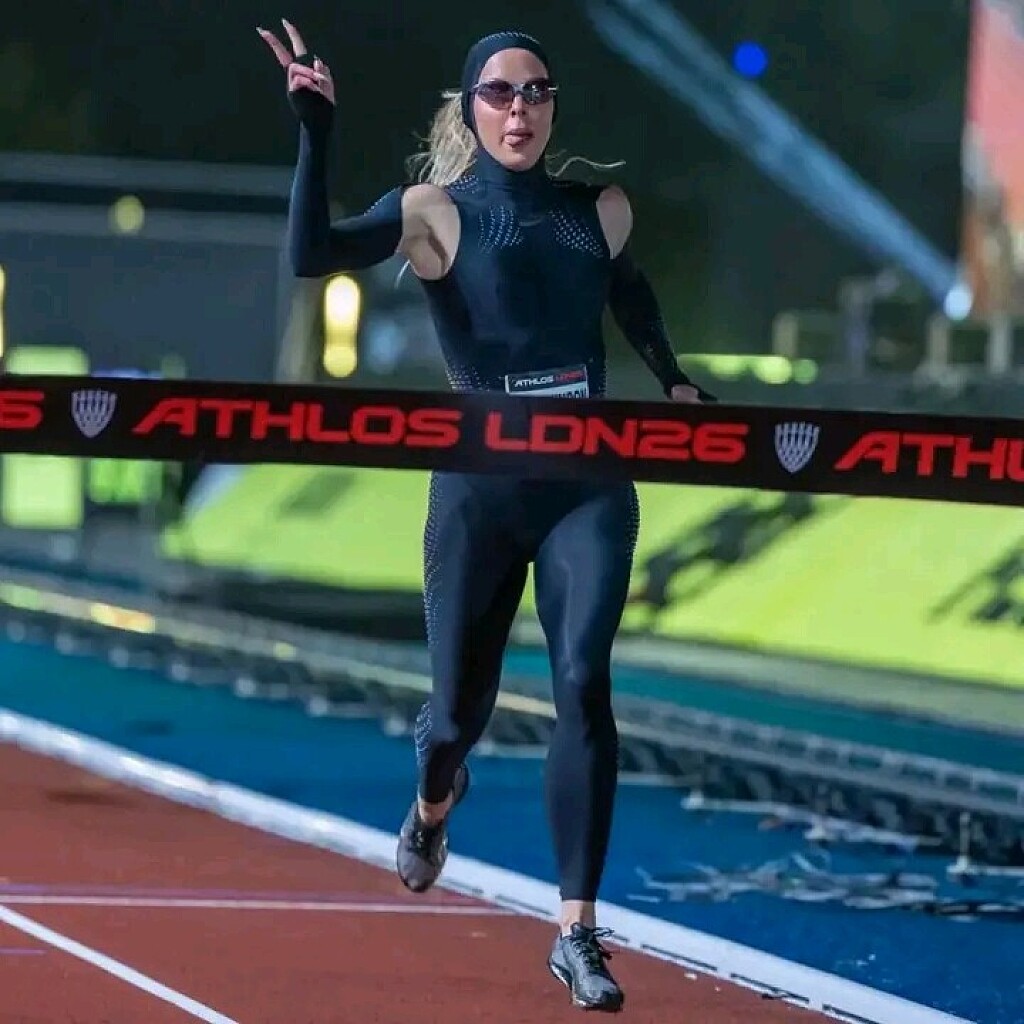
Richardson, Thomas, Hodgkinson And Kazimierska Shine At ATHLOS London
ATHLOS London brought the 2026 athletics season to a spectacular conclusion at StoneX Stadium, with a collection of global stars delivering standout performances across the sprints and middle-distance events.
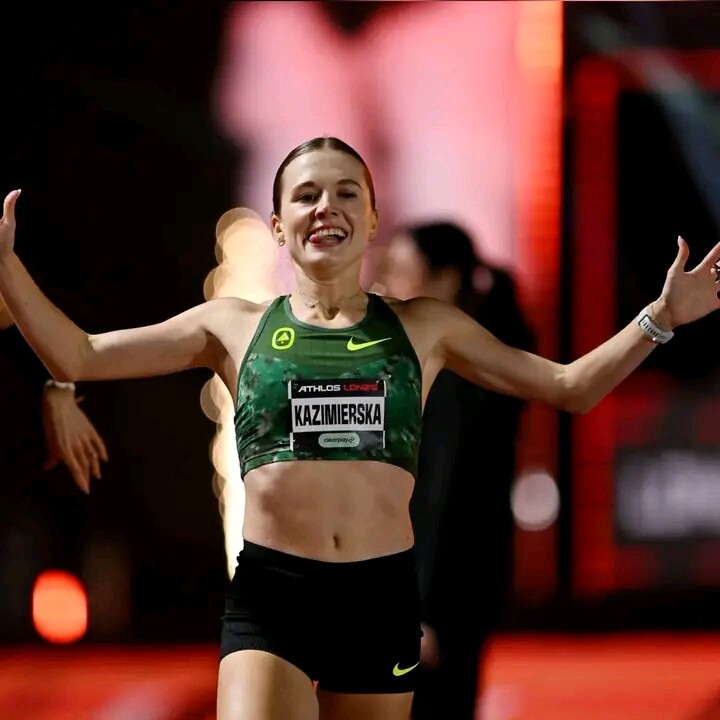
Among the biggest winners was Klaudia Kazimierska, who continued her extraordinary late-season run by claiming the women’s mile title in 4:19.43.
The Polish middle-distance star produced a powerful finishing kick to edge Britain’s Georgia Hunter Bell, who finished second in 4:19.54, while Kenya’s Dorcus Ewoi secured third in 4:19.84.
The victory completed a remarkable sequence for Kazimierska, who has now captured three major titles in succession. Her ATHLOS London triumph followed victories at the Diamond League Final and the inaugural World Athletics Ultimate Championship, giving her a remarkable finish to the 2026 season.
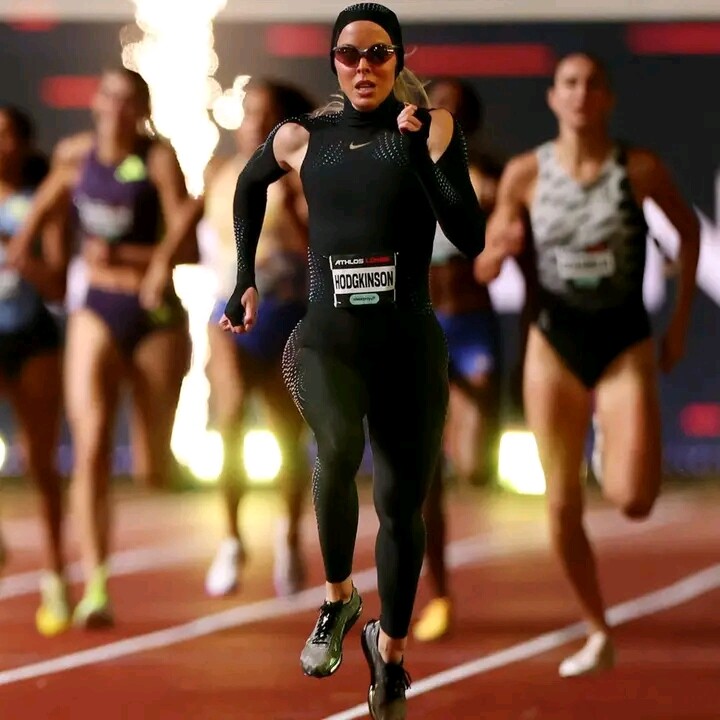
Kazimierska was not the only athlete to leave London with a major title, however, as Keely Hodgkinson produced a dominant performance to successfully defend her ATHLOS London 800m crown.
The British star took command from the opening stages and controlled the race from the front, building a substantial advantage before powering across the line in 1:56.40.
Her performance established a new ATHLOS London meeting record, with Hodgkinson finishing more than two seconds ahead of Switzerland’s Valentina Rosamilia, who ran 1:58.75. France’s Rénelle Lamote was third in 2:00.15.
American Juliette Whittaker finished fourth in 2:00.46, Ireland’s Sophie O’Sullivan was fifth in 2:00.53, and American Raevyn Rogers completed the field in 2:01.12.
The victory provided Hodgkinson with a powerful ending to a turbulent outdoor campaign that had included a canal accident and a hamstring injury, alongside silver-medal finishes at the European Championships and the World Athletics Ultimate Championship.
She also attracted attention with her specially designed Nike racing suit, a futuristic full-length black hooded design with an open back, created with mobility and aerodynamics in mind, complemented by Nike sunglasses.
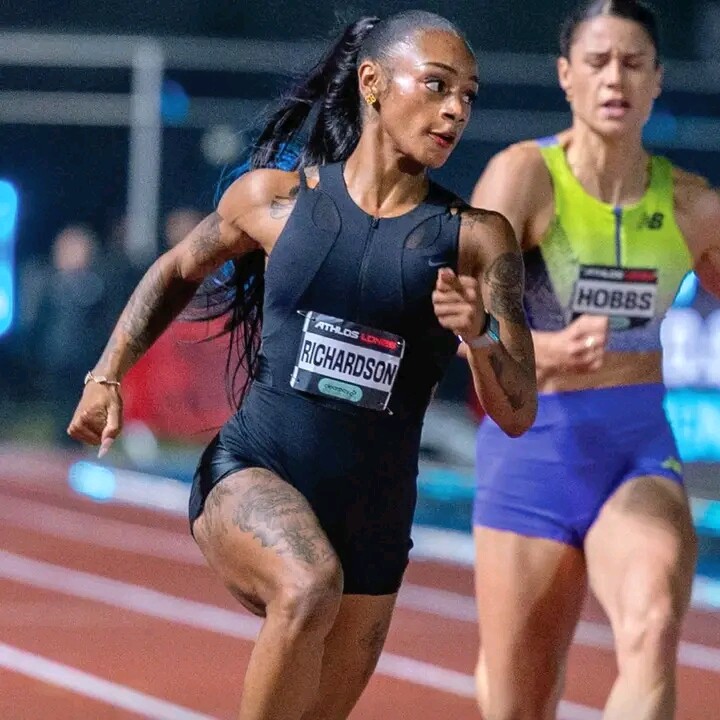
The sprint programme added even more star power to the night with Sha’Carri Richardson producing a meeting-record performance of her own in the women’s 100m.
Richardson stormed to victory in 10.80 seconds, with no wind assistance, to take the ATHLOS London title. New Zealand’s Zoe Hobbs finished second in 11.19, while American Anavia Battle claimed third in 11.25.
Britain’s Imani Lansiquot crossed fourth in 11.35, narrowly ahead of compatriot Daryll Neita, who clocked 11.36, while Canada’s Sade McCreath finished sixth in 11.47.
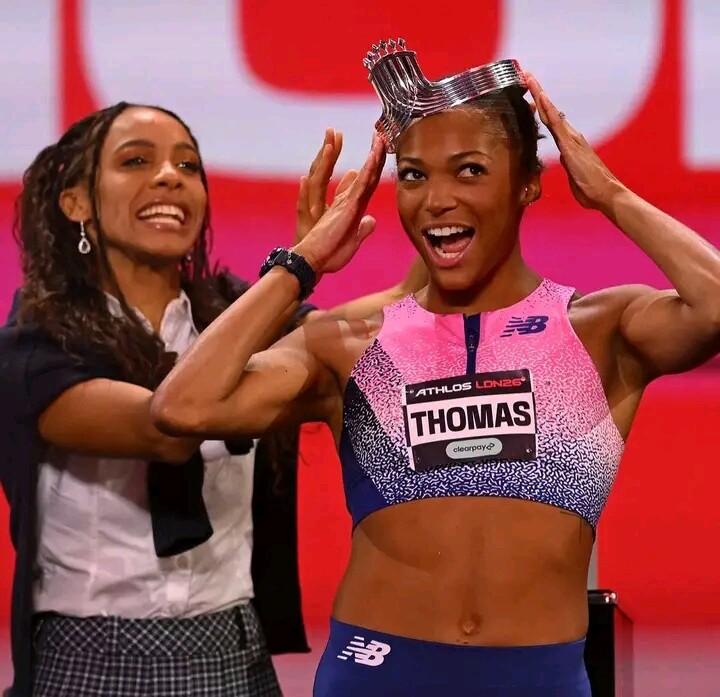
The American sprint success continued in the women’s 200m, where Gabby Thomas added another major title to her collection with a composed victory in 22.13 seconds.
Thomas held off fellow Americans Kayla White and Anavia Battle in a tightly contested final. White finished second in 22.40, while Battle, who had already secured third in the 100m, completed another podium appearance by taking bronze in 22.43.
Thomas’s victory further highlighted the depth of American sprinting at ATHLOS London, as the Olympic and world-level star produced another big-stage performance to close out her season with the 200m crown.
With Richardson and Thomas dominating the sprint headlines, Hodgkinson controlling the 800m and Kazimierska producing another decisive victory over the mile, ATHLOS London delivered an evening packed with major champions and fast performances.
For Kazimierska, the night completed an extraordinary run of three consecutive major titles. For Hodgkinson, it was a statement finish in front of her home crowd. Richardson and Thomas, meanwhile, ensured the American sprint contingent also left London with major victories.
ATHLOS London therefore closed the 2026 season in emphatic fashion, with several of the sport’s biggest names providing performances that will stand among the memorable moments of the year.
Login to leave a comment
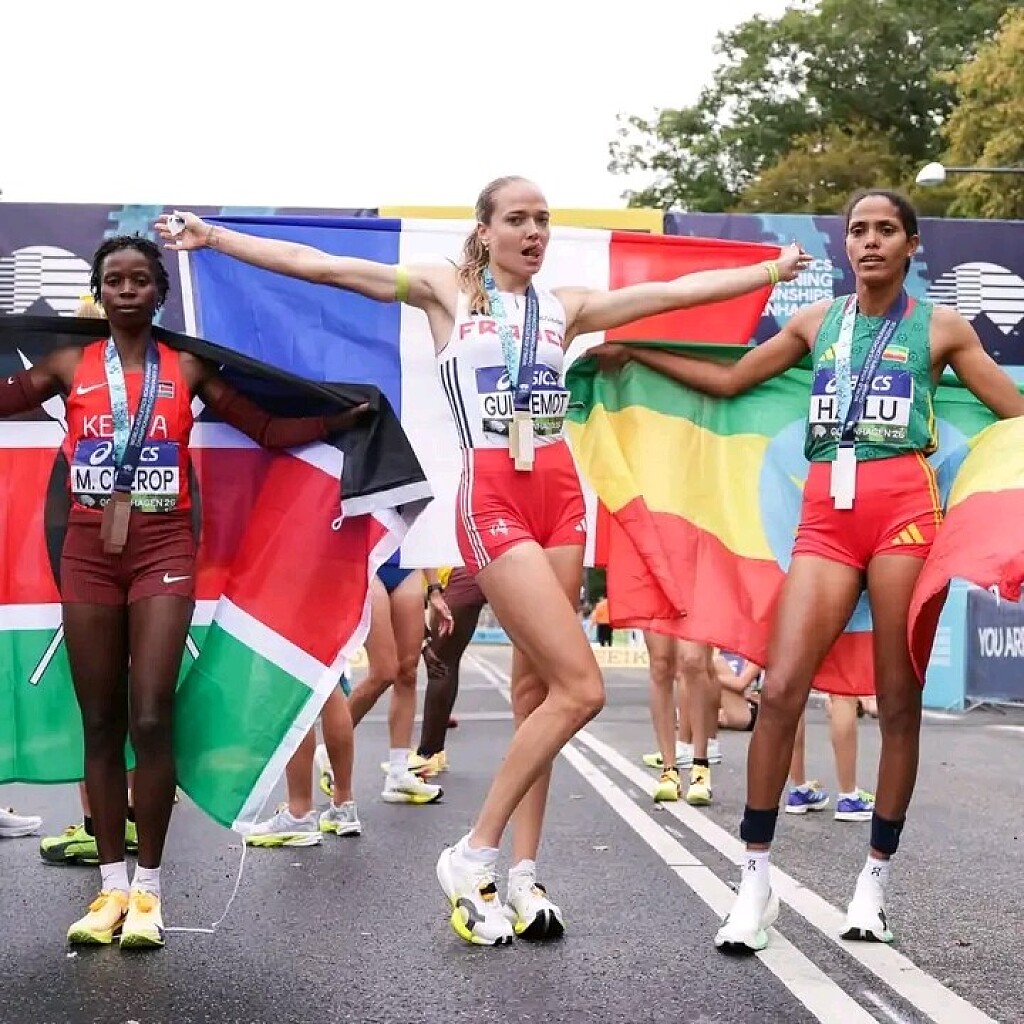
Agathe Guillemot Strikes Gold In Copenhagen As Mirriam Cherop Returns To The Global Podium
France’s Agathe Guillemot produced a breathtaking final surge to claim the women’s mile title at the 2026 World Athletics Road Running Championships in Copenhagen, securing the first individual global championship gold medal of her career.
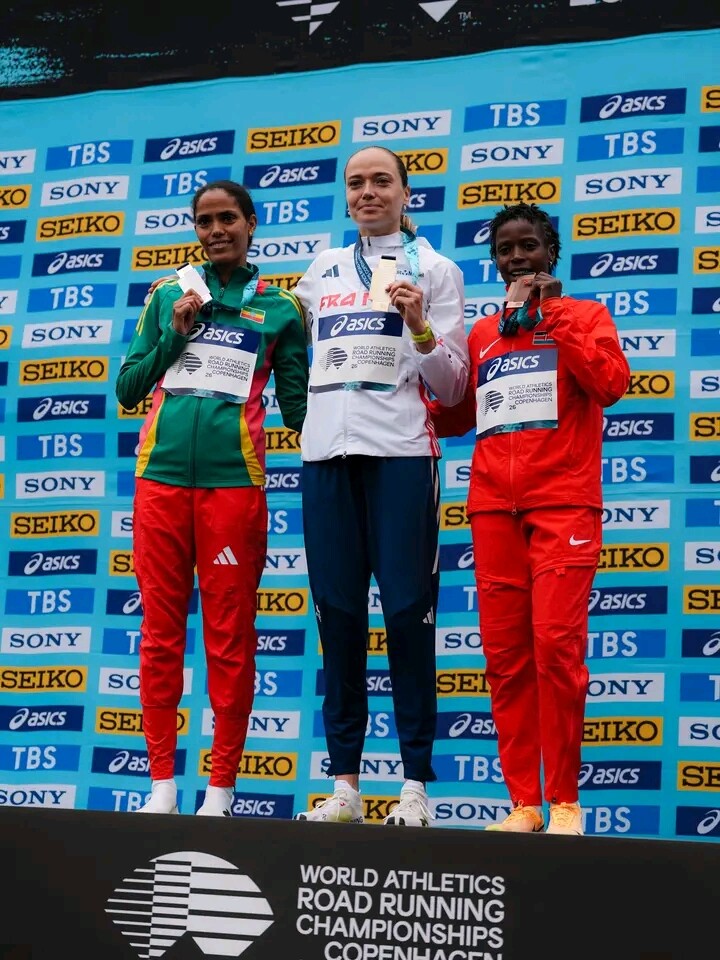
Guillemot remained composed through the early stages of a tightly contested race, staying within the leading group as the athletes patiently waited for the decisive moments. Rather than committing too early, the Frenchwoman conserved her energy and positioned herself perfectly for the closing stages.
As the race entered its dramatic final phase, Guillemot unleashed a powerful acceleration that immediately changed the complexion of the contest. Her devastating finishing speed carried her away from her rivals, allowing her to cross the line in 4:22.74 and celebrate a memorable world championship triumph.
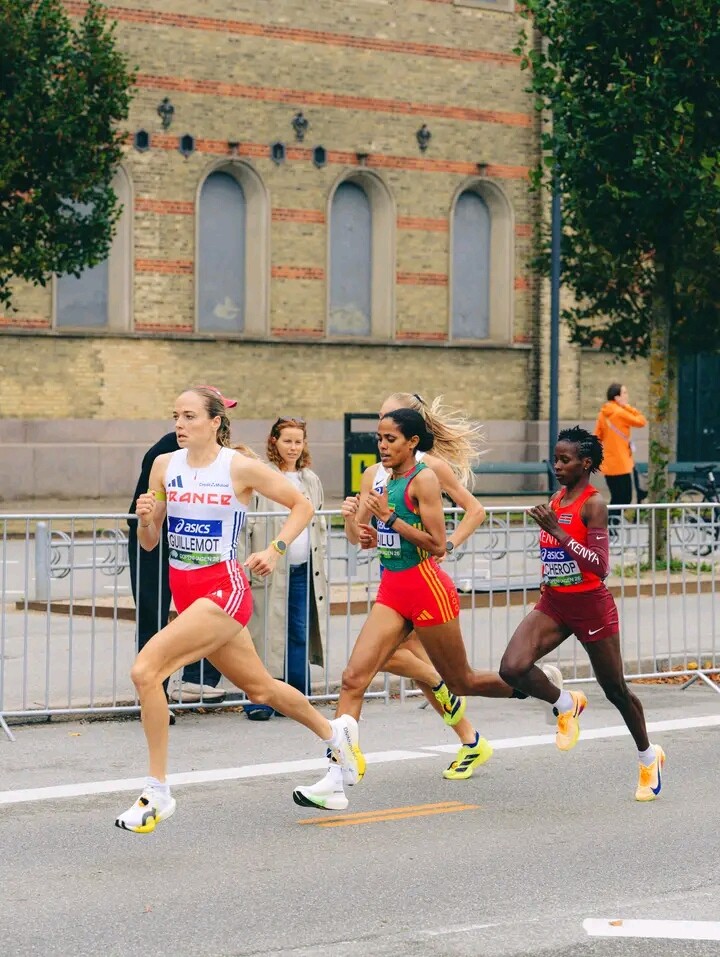
The victory was made even more remarkable by the quality of the performance. Guillemot’s winning time was a world-leading mark and a European record, taking almost half a second off the previous European record and moving her to fourth on the world all-time list.
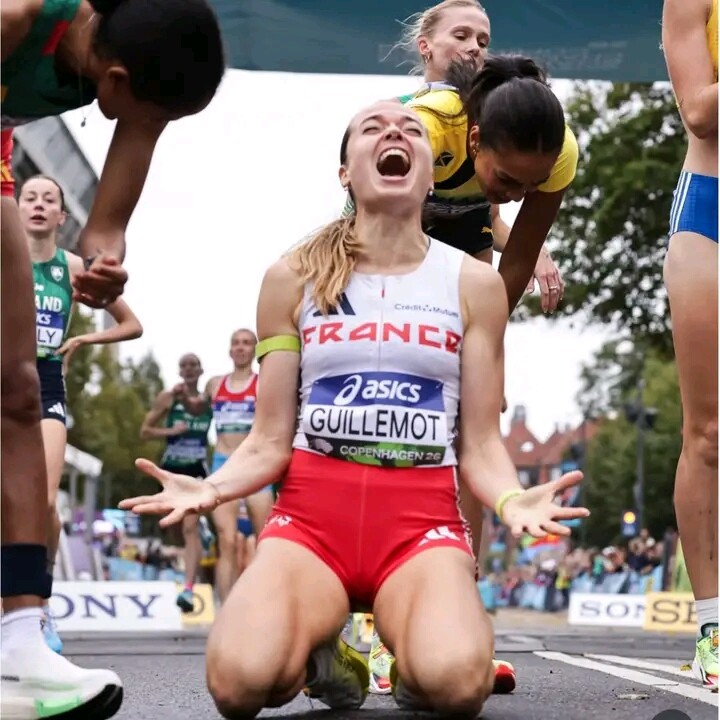
Ethiopia’s Freweyni Hailu delivered another strong championship performance to secure the silver medal in 4:24.35. Hailu remained firmly in contention throughout the race, but she was unable to respond to Guillemot’s explosive finishing burst. It was Hailu’s second consecutive silver medal at the World Road Running Championships after also finishing runner-up in the inaugural edition in Riga in 2023.
For Kenya, Mirriam Cherop produced a performance full of determination and patience to capture the bronze medal in 4:25.71, returning to the global podium eight years after her breakthrough on the world junior stage.
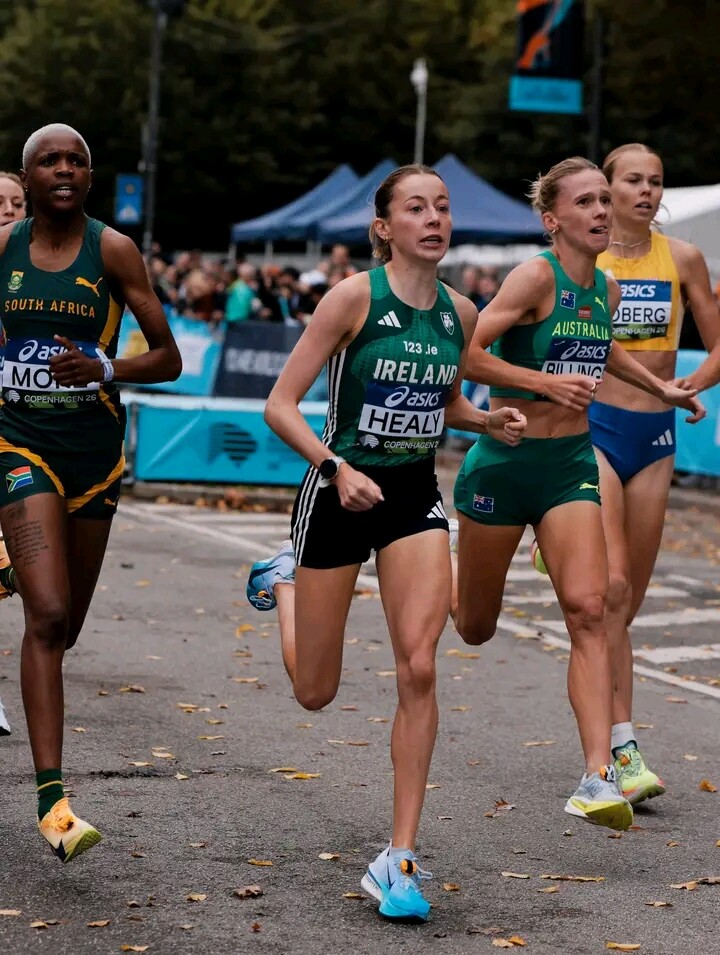
Cherop first announced herself as a major international talent at the 2018 World U20 Championships in Tampere, Finland, where she won silver in the women’s 1500m in 4:10.73. She finished behind Ethiopia’s Alemaz Samuel, with Switzerland’s Delia Sclabas taking bronze.
Now, eight years later, Cherop has added a senior global medal to that junior silver, completing a remarkable journey from the junior podium in Tampere to the senior podium in Copenhagen.
Her bronze in Copenhagen was also a season’s best, underlining the quality of her performance against a world-class field. Cherop remained in medal contention deep into the race before holding her position through the decisive final stages.
The Copenhagen race was a tactical battle for much of the distance, with the leading athletes refusing to make a decisive move too early. The pack stayed closely bunched through 800 metres before the race began to unravel in the closing stages.
Guillemot’s patience ultimately proved decisive. With little more than 20 seconds of racing remaining, the Frenchwoman moved to the front and accelerated hard, quickly creating daylight between herself and the chasing group.
Behind her, Hailu secured silver while Cherop fought her way to bronze, giving Kenya another moment to celebrate on the world stage.
The result represents another important chapter in Cherop’s career. From a World U20 silver medal in Tampere in 2018 to a senior World Road Running Championships bronze in Copenhagen in 2026, eight years have separated two global podium appearances — but the determination to remain among the best has endured.
For Guillemot, meanwhile, Copenhagen provided the perfect ending to a demanding season. The Frenchwoman had already competed at major championships and international meetings across track, cross country and road racing before producing her biggest moment of the year on the streets of Copenhagen.
The home crowd also had reason to celebrate as Denmark’s Annemarie Nissen finished fourth in a personal best of 4:26.78, while Kenya’s Naomi Korir followed in fifth with another personal best of 4:29.15.
In the end, Guillemot’s perfectly timed attack delivered France a world champion, Hailu claimed another global silver, and Cherop completed a remarkable eight-year journey back to the world podium.
From junior silver in Tampere to senior bronze in Copenhagen, Mirriam Cherop’s story has entered another memorable chapter — and Kenya once again has a global medal to celebrate.
Women’s Road Mile Top 5 — Copenhagen 2026
1. Agathe Guillemot (France) — 4:22.74 — World Lead, European Record
2. Freweyni Hailu (Ethiopia) — 4:24.35 — Season Best
3. Mirriam Cherop (Kenya) — 4:25.71 — Season Best
4. Annemarie Nissen (Denmark) — 4:26.78 — Personal Best
5. Naomi Korir (Kenya) — 4:29.15 — Personal Best
The women’s mile in Copenhagen delivered a compelling championship race, combining tactical patience, a dramatic late surge and a closely contested battle for the medals. Agathe Guillemot’s decisive finish secured the world title, Freweyni Hailu added another global silver to her résumé, while Mirriam Cherop completed the podium after a determined performance. With a world-leading time, a European record and a tightly fought medal battle, the race provided a memorable highlight of the World Athletics Road Running Championships.
by Erick Cheruiyot for My Best Runs.
Login to leave a comment
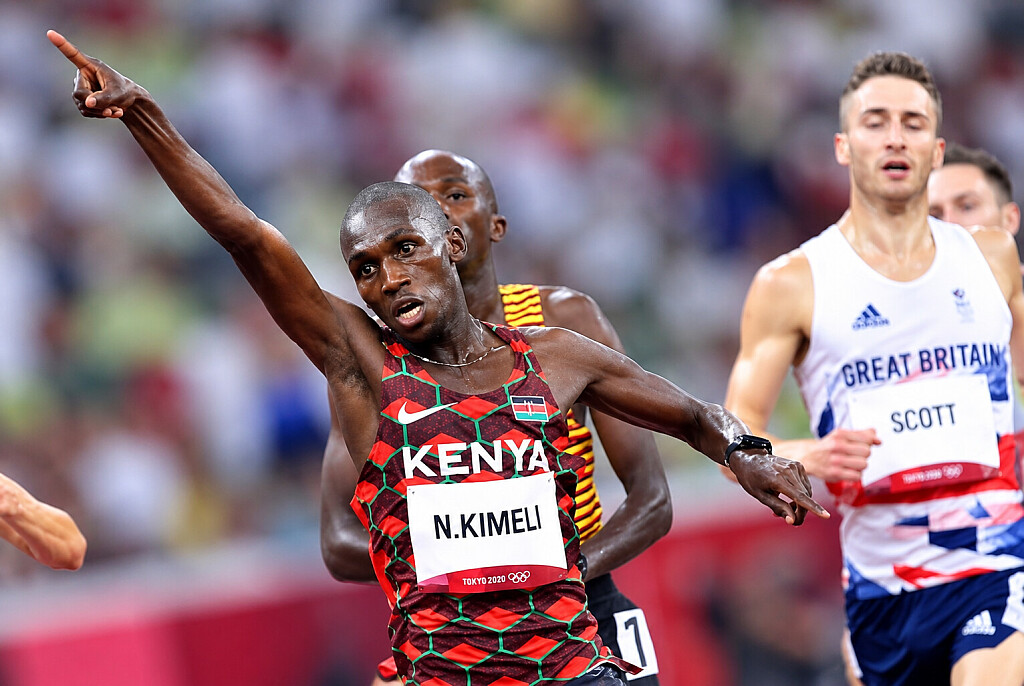
Nicholas Kipkorir Leads Star-Studded Men’s Half Marathon Field At World Road Running Championships
The stage is set for a spectacular men’s half marathon at the World Athletics Road Running Championships Copenhagen 26, with some of the world’s leading distance runners preparing to battle for global honours on Sunday, September 20.
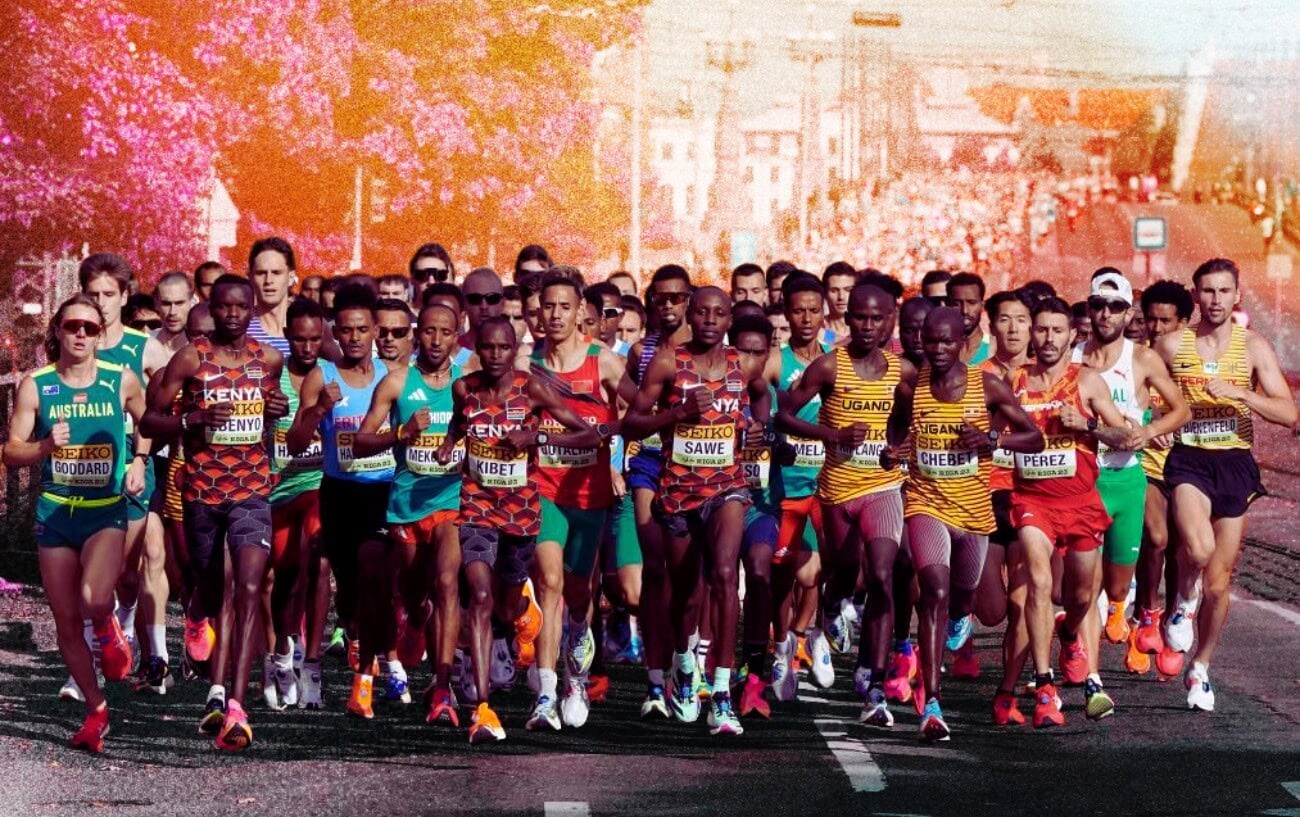
Kenya’s Nicholas Kipkorir headlines the field with a remarkable personal best of 58:08, the fastest mark among the athletes entered.
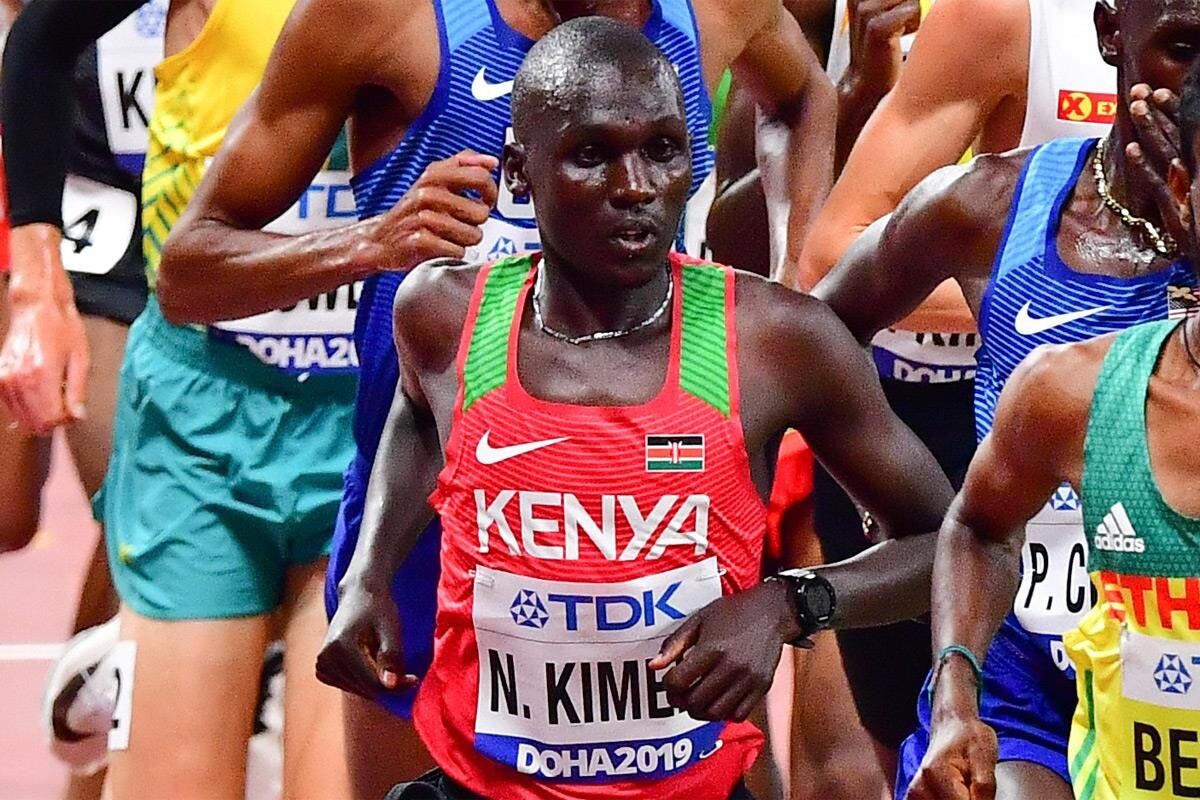
Kipkorir will face a formidable challenge from compatriot Gideon Kipkertich Rono, who owns a 58:38 personal best. Sweden’s Andreas Almgren also brings an exceptional 58:41 to the start line, while Ethiopia’s Tadese Worku has a 58:59 personal best.
Italy’s Yemaneberhan Crippa adds another major name to the field with a national record of 59:01, while Kenya’s Daniel Simiu Ebenyo enters with a 59:04 personal best and valuable championship experience.
Ebenyo won silver at the 2023 World Road Running Championships in Riga and will be looking to challenge for another medal in Copenhagen.
Uganda’s Joshua Cheptegei will bring enormous championship pedigree to the race. The Olympic and multiple world champion has a half marathon best of 59:21, making him another athlete capable of featuring prominently in the battle for the medals.
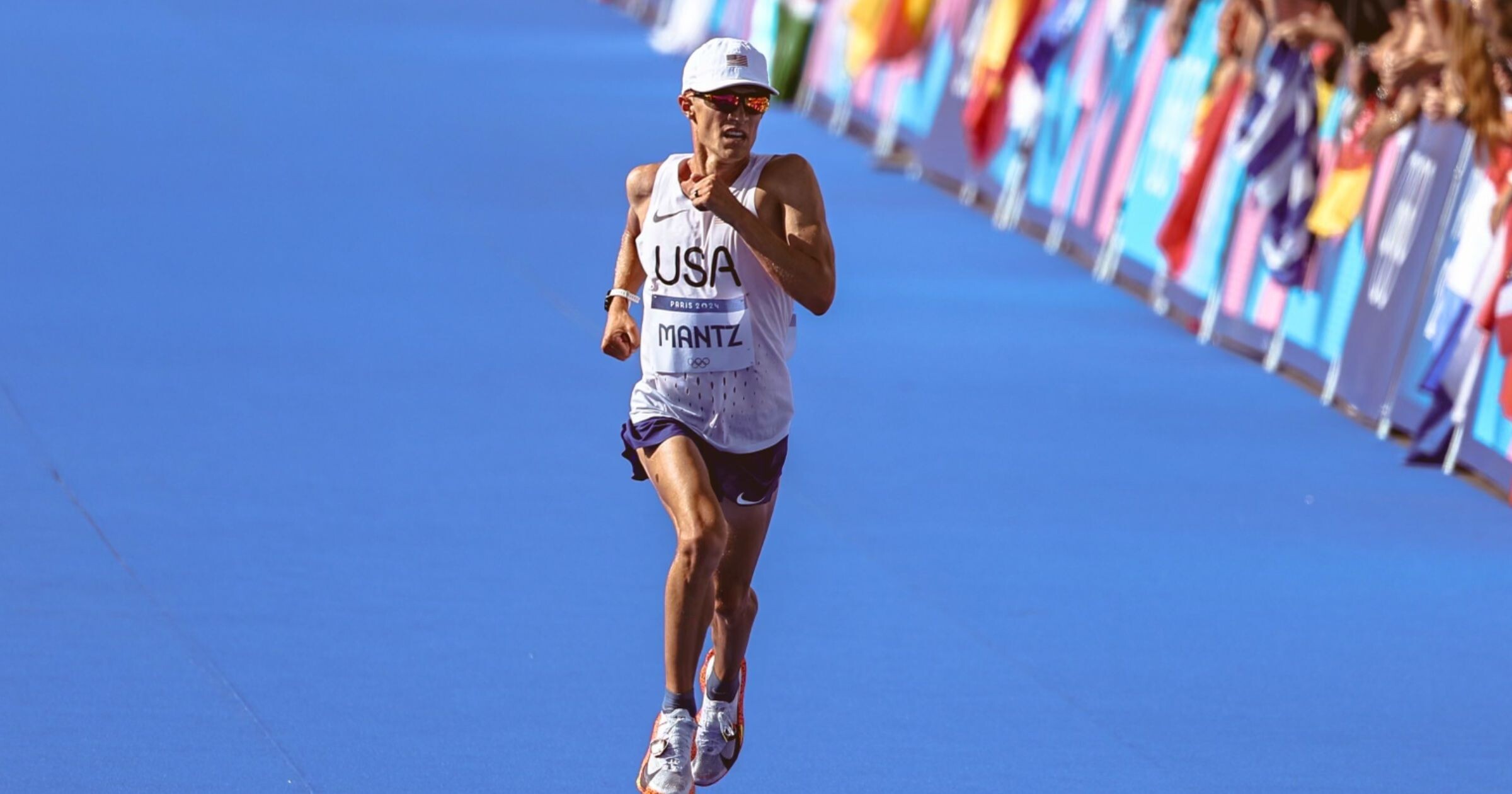
The American challenge will be led by Conner Mantz, who owns a 59:15 personal best. France’s Etienne Daguinos, Portugal’s Samuel Barata, Ethiopia’s Bereket Nega, France’s Jimmy Gressier, Canada’s Rory Linkletter, Australia’s Jack Rayner and Morocco’s Mohamed Reda El Aaraby further strengthen an already formidable international field.
Kenya will have particular interest in the championship, with several of its leading road runners lining up against some of the best athletes from Europe, Africa, North America, Asia and Oceania.
The race will be contested over the traditional 21.0975-kilometre distance, with the elite men scheduled to start at 9:45 a.m. local time on Sunday, September 20.
Leading Athletes And Personal Bests
1. Nicholas Kipkorir (Kenya) — 58:08
2. Gideon Kipkertich Rono (Kenya) — 58:38
3. Andreas Almgren (Sweden) — 58:41
4. Tadese Worku (Ethiopia) — 58:59
5. Yemaneberhan Crippa (Italy) — 59:01
6. Daniel Simiu Ebenyo (Kenya) — 59:04
7. Alex Nzioka Matata (Kenya) — 59:11
8. Conner Mantz (USA) — 59:15
9. Joshua Cheptegei (Uganda) — 59:21
10. Etienne Daguinos (France) — 59:27
11. Samuel Barata (Portugal) — 59:40
12. Bereket Nega (Ethiopia) — 59:43
13. Jimmy Gressier (France) — 59:45
14. Rory Linkletter (Canada) — 59:49
15. Peter Lynch (Ireland) — 59:52
16. Jack Rayner (Australia) — 59:53
17. Mohamed Reda El Aaraby (Morocco) — 59:54
18. Hillary Bor (USA) — 59:55
19. Zerei Kbrom Mezngi (Norway) — 1:00:01
20. Bastien Augusto (France) — 1:00:09
21. Mande Bushendich (Uganda) — 1:00:14
22. Jack Rowe (Great Britain) — 1:00:17
23. Cameron Levins (Canada) — 1:00:18
24. Ogikubo Tomoya (Japan) — 1:00:22
25. Bayelign Teshager (Ethiopia) — 1:00:22
26. Elroy Gelant (South Africa) — 1:00:22
27. Célestin Ndikumana (Burundi) — 1:00:23
28. Said Mechaal (Spain) — 1:00:24
29. Nishizawa Yuma (Japan) — 1:00:26
30. Namiki Neo (Japan) — 1:00:29
31. Othmane El Goumri (Morocco) — 1:00:30
32. Inyasi Nicodemus Sulley (Tanzania) — 1:00:31
33. Wesley Kiptoo (USA) — 1:00:34
34. Haftu Strintzos (Australia) — 1:00:36
35. Filmon Tesfu (Netherlands) — 1:00:38
36. Mustapha Akkaoui (Morocco) — 1:00:38
With such remarkable depth, the championship could remain finely poised until the closing stages. The presence of multiple sub-59-minute runners, experienced championship performers and strong finishers sets the scene for a race in which positioning, tactics and the ability to respond to late surges could prove decisive.
For Kipkorir, Ebenyo and their Kenyan teammates, Copenhagen provides an opportunity to turn impressive personal credentials into championship medals. But with a world-class field assembled behind them, the final outcome will only be determined when the leading runners reach the finish line.
by Erick Cheruiyot for My Best Runs.
Login to leave a comment
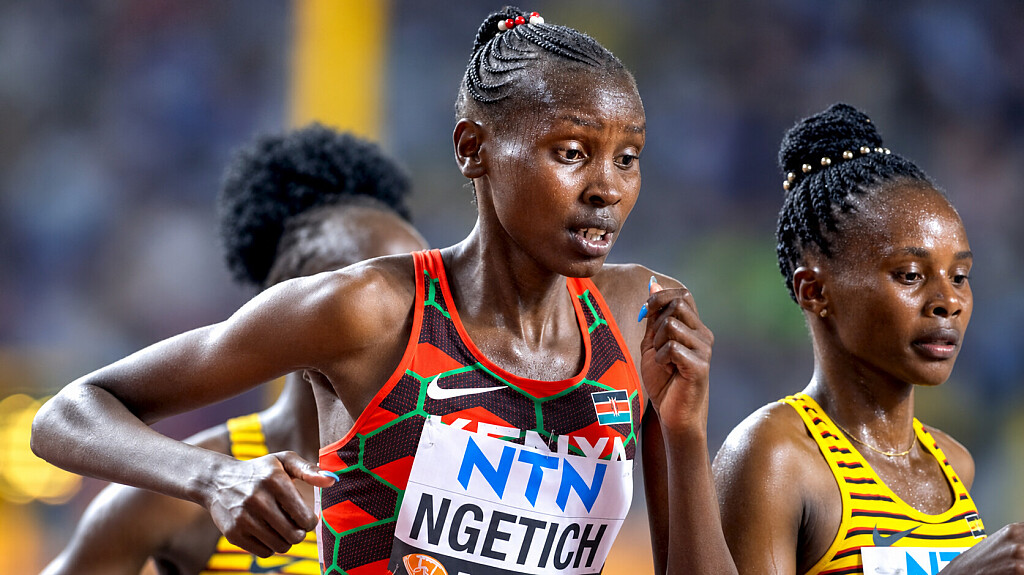
Agnes Ngetich Leads Star-Studded Women’s Half Marathon Field At World Road Running Championships
The stage is set for a spectacular women’s half marathon at the 2026 World Athletics Road Running Championships in Copenhagen, Denmark, with a deep international field ready to battle for the world title on Sunday, September 20.
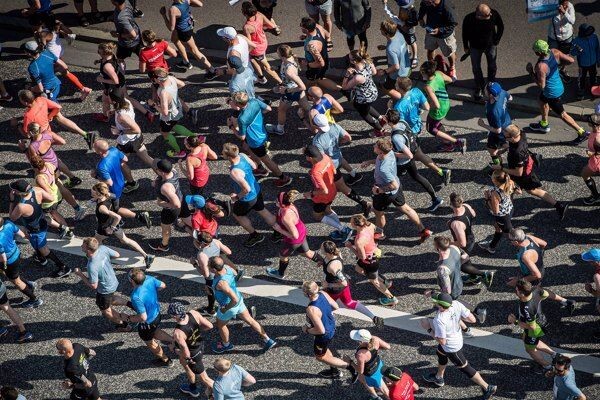
The elite women’s race will begin at 9:10 a.m. local time, with the 21.0975-kilometre championship race taking runners through the streets of Copenhagen before the finish on Øster Allé.
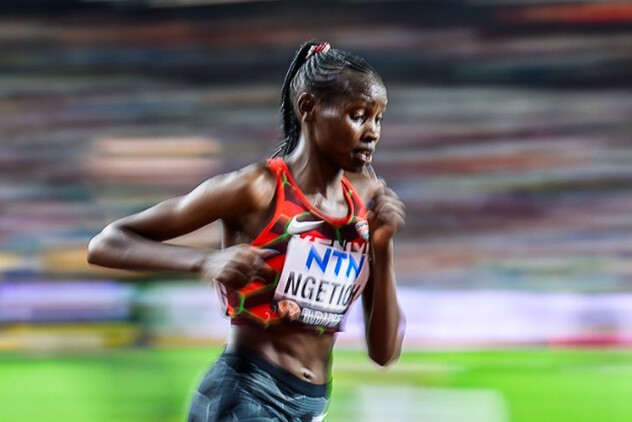
At the head of the entry list is Kenya’s Agnes Jebet Ngetich, who brings a sensational 1:03:04 personal best into the championship. She will lead a powerful Kenyan contingent that also includes Lilian Kasait Rengeruk, whose 1:03:32 is among the fastest times ever recorded over the distance.
Ngetich has established herself as one of the leading distance runners in the world, and her combination of speed and endurance makes her one of the major names to watch when the championship race gets underway.
Rengeruk provides another formidable Kenyan threat, while Daisilah Jerono, with a 1:05:21 personal best, and Veronica Loleo, with 1:05:35, add further depth to the Kenyan line-up.
Ethiopia will also arrive with serious firepower. Tsigie Gebreselama owns a remarkable 1:04:21 personal best, while Ftaw Zeray comes into Copenhagen with a 1:05:12 lifetime best.
The battle will not be restricted to the leading African nations, however. Weini Kelati Frezghi heads the American challenge with a 1:06:04 personal best, while Esther Chebet of Uganda has run 1:06:33.
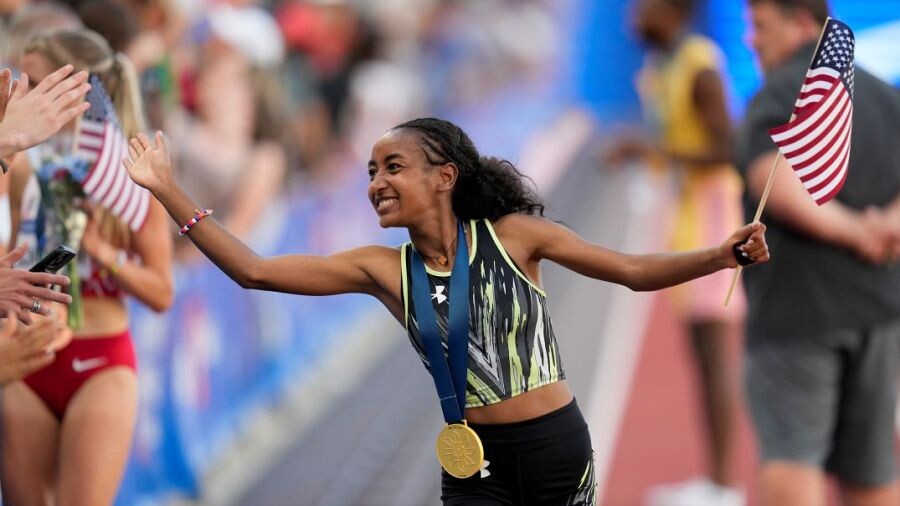
Europe will be represented by several accomplished athletes, including Slovenia’s Klara Lukan, who owns a 1:06:43 personal best, and Norway’s experienced Karoline Bjerkeli Grøvdal, whose best stands at 1:06:55.
South Africa’s Glenrose Xaba is another prominent name on the list with a 1:07:03 personal best, while Great Britain’s Samantha Harrison enters with 1:07:10.
Uganda has further depth through Rebecca Chelangat at 1:07:18, Annet Chemengich Chelangat at 1:08:12 and Rispa Cherop at 1:08:53.
The international field also includes Ethiopia’s Melat Siyoum and Baraky Redae, Rwanda’s Florence Niyonkuru and Emeline Imanizabayo, Mexico’s Laura Galván, Belgium’s Chloé Herbiet and Lisa Rooms, the United States’ Emma Grace Hurley, Ednah Kurgat, Carrie Ellwood and Jessica McClain, France’s Mekdes Woldu, Alessia Zarbo and Mélody Julien, Italy’s Sofia Yaremchuk and Elvanie Nimbona, China’s He Wuga and Liang Tiantian, and New Zealand’s Georgie Grgec.
Women’s Half Marathon Entry List
1. Agnes Jebet Ngetich — Kenya — 1:03:04
2. Lilian Kasait Rengeruk — Kenya — 1:03:32
3. Tsigie Gebreselama — Ethiopia — 1:04:21
4. Ftaw Zeray — Ethiopia — 1:05:12
5. Daisilah Jerono — Kenya — 1:05:21
6. Veronica Loleo — Kenya — 1:05:35
7. Weini Kelati Frezghi — United States — 1:06:04
8. Esther Chebet — Uganda — 1:06:33
9. Klara Lukan — Slovenia — 1:06:43
10. Karoline Bjerkeli Grøvdal — Norway — 1:06:55
11. Glenrose Xaba — South Africa — 1:07:03
12. Samantha Harrison — Great Britain — 1:07:10
13. Rebecca Chelangat — Uganda — 1:07:18
14. Melat Siyoum — Ethiopia — 1:07:21
15. Florence Niyonkuru — Rwanda — 1:07:22
16. Baraky Redae — Ethiopia — 1:07:31
17. Laura Galván — Mexico — 1:07:31
18. Chloé Herbiet — Belgium — 1:07:32
19. Emeline Imanizabayo — Rwanda — 1:07:35
20. Emma Grace Hurley — United States — 1:07:35
21. Annet Chemengich Chelangat — Uganda — 1:08:12
22. Mekdes Woldu — France — 1:08:20
23. Alessia Zarbo — France — 1:08:20
24. Ednah Kurgat — United States — 1:08:25
25. Sofia Yaremchuk — Italy — 1:08:27
26. He Wuga — China — 1:08:31
27. Liang Tiantian — China — 1:08:33
28. Carrie Ellwood — United States — 1:08:34
29. Jessica McClain — United States — 1:08:37
30. Elvanie Nimbona — Italy — 1:08:38
31. Lisa Rooms — Belgium — 1:08:40
32. Rispa Cherop — Uganda — 1:08:53
33. Georgie Grgec — New Zealand — 1:09:13
34. Mélody Julien — France — 1:09:15
With so many athletes separated by relatively small margins on paper, the championship race could develop into a fascinating tactical contest. Personal bests provide an indication of speed, but championship racing often comes down to positioning, patience and the ability to respond when the decisive moves arrive.
For Ngetich, Rengeruk, Gebreselama, Zeray and the rest of the field, the opportunity is clear: 21.0975 kilometres through Copenhagen with a world championship title waiting at the finish.
The World Athletics Road Running Championships Copenhagen 26 take place on September 19–20, with the women’s elite half marathon taking centre stage on Sunday, September 20, at 9:10 a.m.
Copenhagen is ready for a major championship showdown — and the women’s half marathon promises to be one of the highlights of the weekend.
by Erick Cheruiyot for My Best Runs.
Login to leave a comment
Jakob Ingebrigtsen And Jimmy Gressier Set For First-Ever Road Showdown In Copenhagen
COPENHAGEN — Two of the biggest names in modern distance running are about to take their rivalry onto unfamiliar territory.
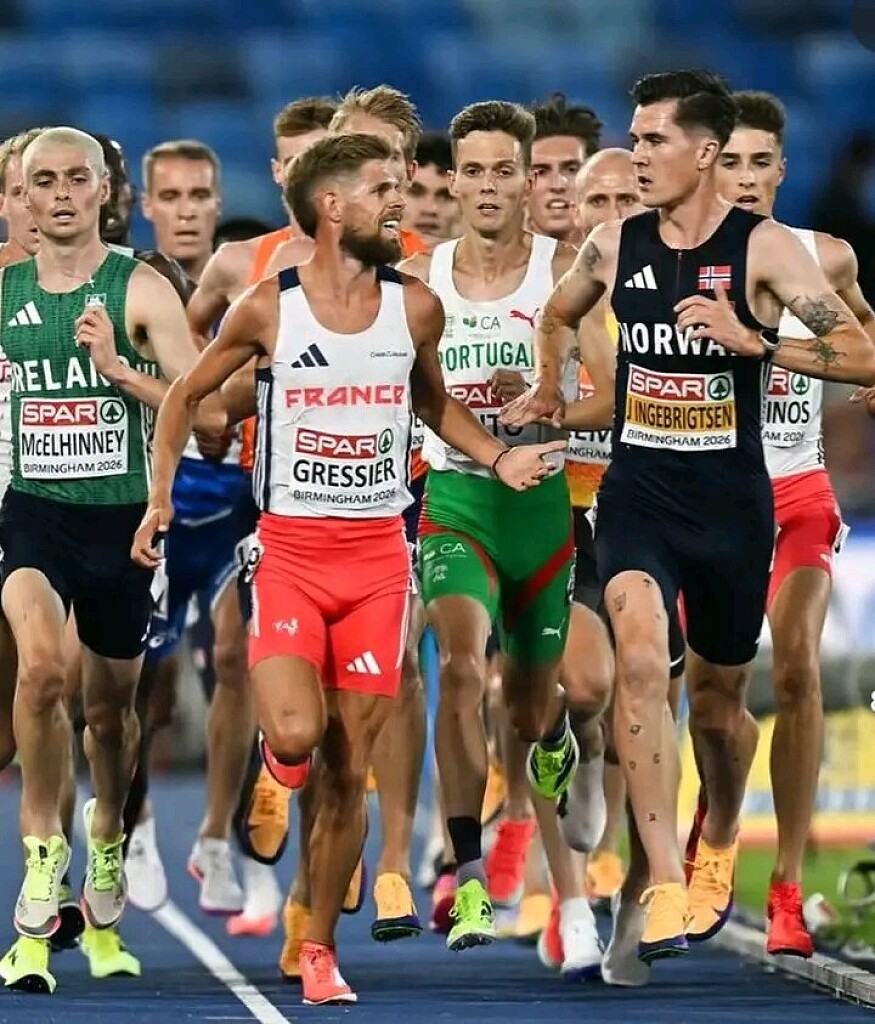
Norway’s Jakob Ingebrigtsen and France’s Jimmy Gressier are set to meet for the first time on the roads when the men’s 5km at the World Athletics Road Running Championships gets underway in Copenhagen on Saturday, September 19.
The highly anticipated clash brings together two athletes with very different paths to the start line, but an equally strong appetite for another global title.
Ingebrigtsen arrives in Denmark as the reigning Olympic 5000m champion and a four-time European 5000m champion. He has also just added the inaugural World Athletics Ultimate Championship 5000m title to his collection, producing a powerful 12:59.24 performance in Budapest only days ago.
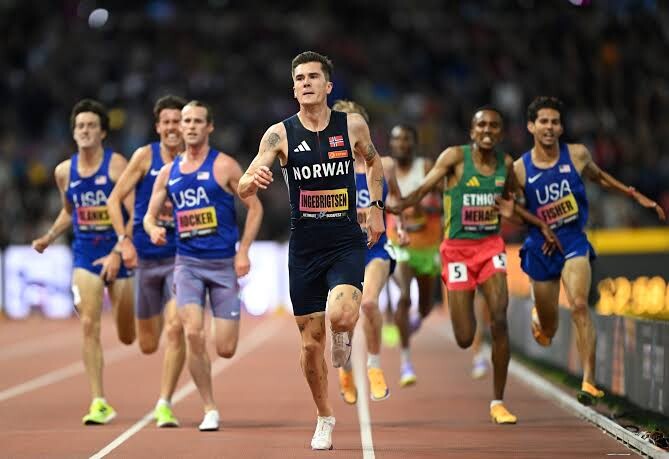
The Norwegian has already conquered some of the biggest stages in track and field. Now, Copenhagen presents a new challenge: winning a global title on the roads.
His road-racing experience over 5km is limited, however. World Athletics notes that Ingebrigtsen has raced the distance only once before, clocking 13:28 in Stavanger in 2020. He also raced his first and, so far, only half marathon in Copenhagen in 2024.
Standing in his way is a man who has already proved that he belongs among the very best road racers in the world.
Gressier enters Copenhagen as the reigning world 10,000m champion and the fastest man on the 5km entry list. In April, the Frenchman stormed to a European record of 12:51 in Lille, moving within just two seconds of the world record. Only Ethiopia’s Berihu Aregawi and Yomif Kejelcha have ever run faster over the distance.
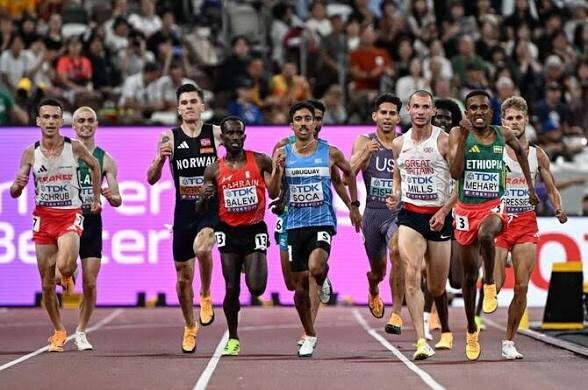
That performance also came with a warning for the rest of the field.
Ethiopia’s Addisu Yihune finished second behind Gressier in Lille in 12:54, a mark that places him fifth on the world all-time list. The two will meet again in Copenhagen, adding another major storyline to an already loaded championship race.
And Gressier is not stopping after one race.
The French star is entered for both the 5km on Saturday afternoon and the men’s half marathon on Sunday morning. With the 5km scheduled for 2:40 p.m. and the half marathon at 9:45 a.m. the following day, he will have only around 19 hours between the two championship races.
It is an extraordinary test of versatility. First comes a five-kilometre battle likely to demand close to all-out speed from the opening stages. Then, before a full day has passed, Gressier will have to return to the start line for 21.1 kilometres against a field packed with established road specialists.
Yet the 29-year-old is no stranger to the half marathon. He won the European half marathon title in 2025 in 59:45 and finished fifth at the 2023 World Road Running Championships in Riga in 59:46.
The 5km field, meanwhile, extends well beyond the headline names.
Kenya’s Mathew Kipsang arrives as the reigning Commonwealth 5000m champion, while Australia’s Ky Robinson, Burundi’s Egide Ntakarutimana, Norway’s Narve Gilje Nordås and Portugal’s José Carlos Pinto are among the other athletes capable of making the race highly competitive.
Copenhagen is therefore preparing for much more than a simple Ingebrigtsen-Gressier duel.
It is a meeting between a track superstar testing himself on the roads and a world champion who has already demonstrated extraordinary speed over the distance. Add Yihune’s 12:54, Kipsang’s championship pedigree and a deep international field, and the ingredients are there for a fiercely contested world title.
For Ingebrigtsen, the question is whether his world-class track speed and devastating finishing ability can translate seamlessly onto the roads.
For Gressier, the challenge is whether he can turn his remarkable 12:51 into a world championship crown — while keeping enough in reserve for the half marathon less than 24 hours later.
One thing is certain: when the gun fires in Copenhagen, the roads will provide a completely new chapter in the careers of two athletes who have already conquered some of the biggest stages in the sport.
And this time, there will be nowhere to hide.
Jakob Ingebrigtsen versus Jimmy Gressier.
Track royalty meets road-running firepower.
Copenhagen is ready.
by Erick Cheruiyot for My Best Runs.
Login to leave a comment
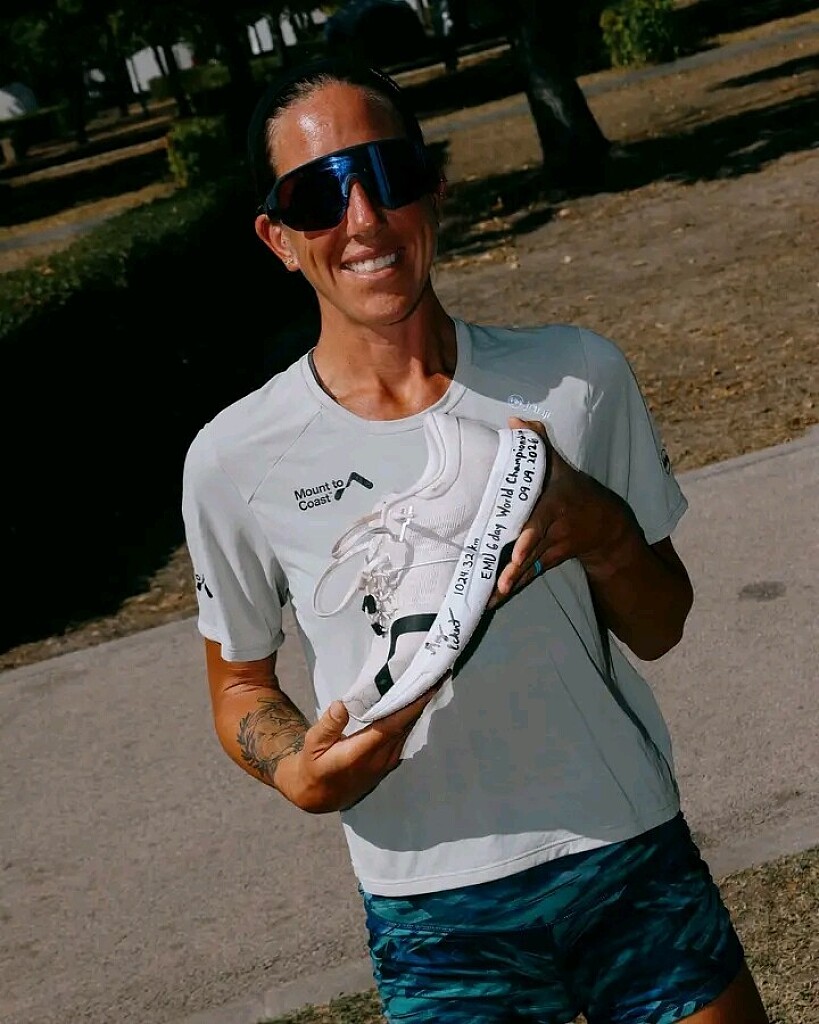
Megan Eckert Makes History With Stunning Six-Day World Record and 1,000km Breakthrough
Megan Eckert arrived in Hungary with an ambitious mission: to leave with two records. By the final morning of the EMU-GOMU 6-Day World Championships in Balatonfüred, she had achieved both—and then pushed herself into territory no woman had ever reached before.
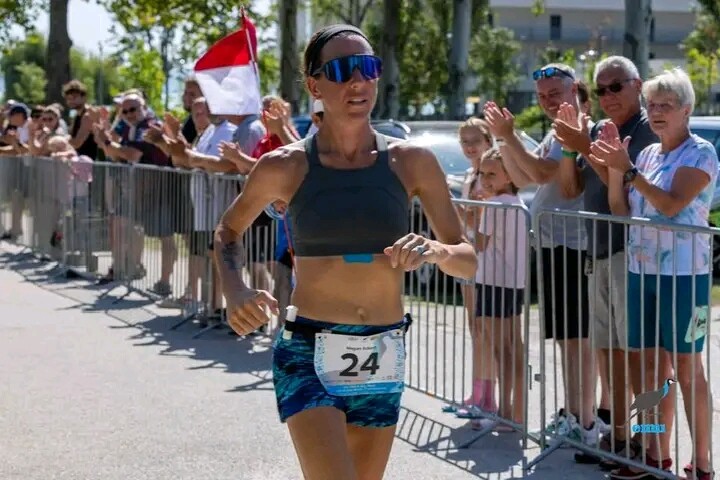
The American ultrarunner covered an astonishing 636.482 miles (1,024.3 kilometres) over six days, producing one of the greatest performances in the history of multi-day ultrarunning.
Her extraordinary total came after completing 1,140 laps of the 898.2-metre circuit, plus another 371 metres. Most remarkably, Eckert became the first woman in history to surpass 1,000 kilometres during a six-day race.
To put the magnitude of her achievement into perspective, Eckert averaged 4.42 miles per hour for the entire 144 hours of competition. That average included everything—not only her running, but also every minute spent walking, resting, eating and sleeping.
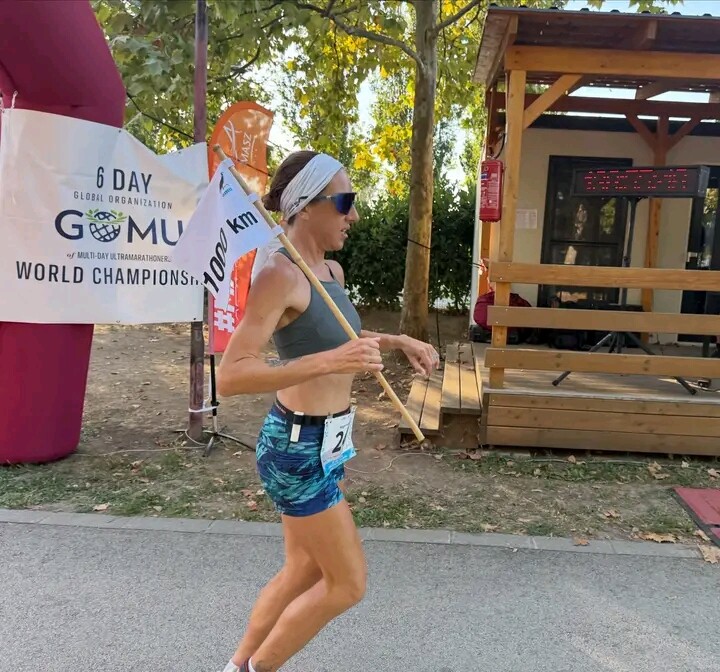
The first major milestone fell on Wednesday morning.
At 135 hours and 38 minutes, Eckert moved beyond her own previous record of 603.155 miles, set in France last year. Just 32 minutes later, she added another historic achievement by surpassing the overall American six-day record that had been held by Joe Fejes since 2015.
But Eckert was not finished.
With nearly eight hours remaining on the clock, she turned her attention to the magical 1,000-kilometre barrier. At 139:55:46, she crossed it, becoming the first woman ever to achieve the feat in a six-day race.
Her dominance was equally remarkable when measured against the rest of the field. Norway's Simen Holvik, who finished second, was almost 84 kilometres behind—a staggering margin that was even greater than the gap separating second and third place.
What makes Eckert's rise even more extraordinary is how recently she entered this demanding discipline. A mathematics and special education teacher at a middle school in Santa Fe, New Mexico, she has been competing in six-day races for only two years.
Yet in Hungary, experience was no barrier.
Over six days and six nights, Eckert combined extraordinary endurance, patience and mental strength to rewrite the American record books and establish a new standard for women's multi-day ultrarunning.
Two records. More than 636 miles. More than 1,000 kilometres. And a performance that has taken Megan Eckert into a completely new chapter of ultrarunning history.
by Erick Cheruiyot for My Best Runs.
Login to leave a comment
The Day Kip Keino And Ben Jipcho Put Kenya On Top In Munich
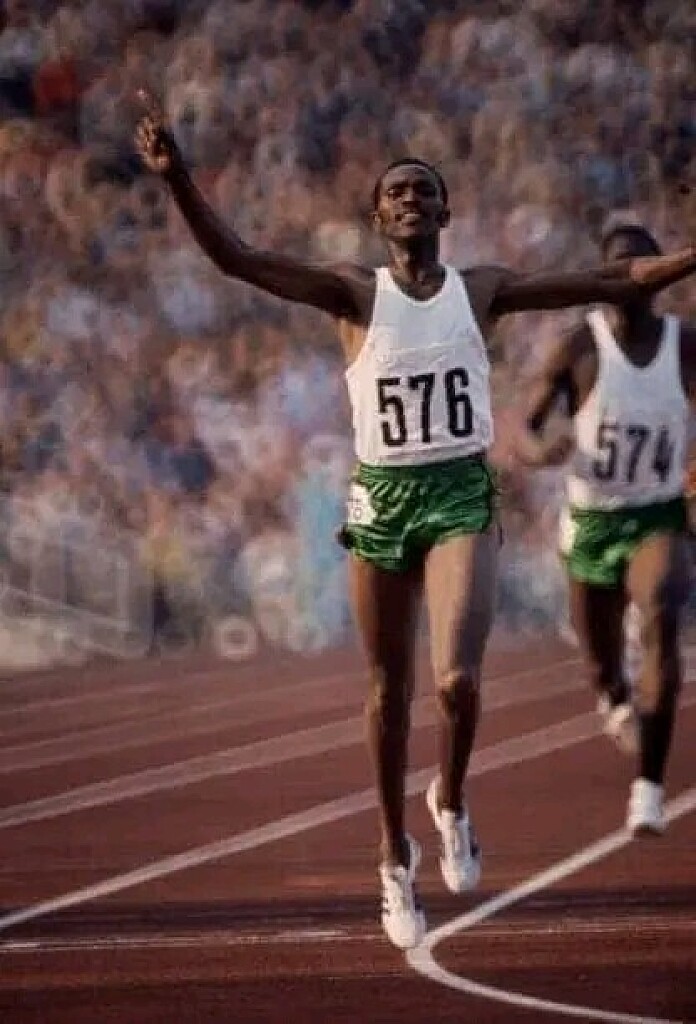
On 4 September 1972, Kenya once again announced its growing authority on the Olympic athletics stage as the country produced a spectacular one-two finish in the men’s 3,000m steeplechase at the Munich Olympic Games.
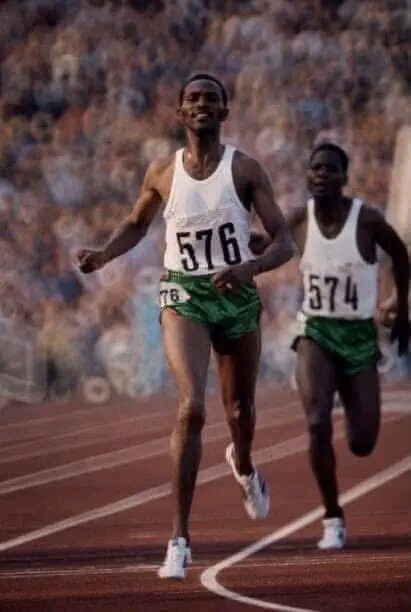
Kipchoge Keino delivered a commanding performance to capture the gold medal in 8:23.64, setting a new Olympic record in the process. His compatriot Benjamin Jipcho was equally impressive, crossing the line in 8:24.62 to take silver, while Finland’s Tapio Kantanen secured bronze in 8:24.66.
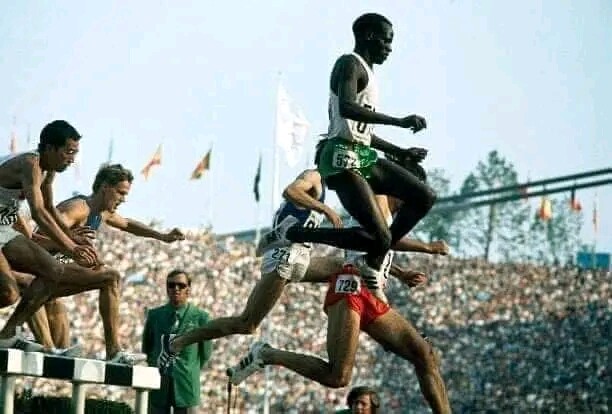
The final brought together a remarkable group of athletes, including Kenya’s defending Olympic champion Amos Biwott. Keino and Jipcho, however, proved too strong when the decisive moments arrived. As the race entered its closing stages, the leading group began to separate, with Keino positioning himself perfectly for the final charge.
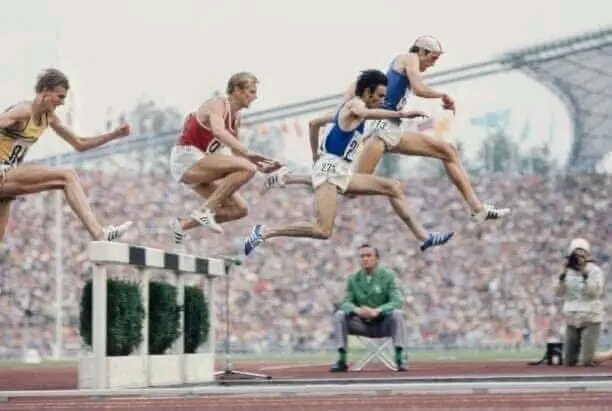
Keino then unleashed his finishing speed, pulling clear in the closing metres to secure another Olympic title. Jipcho fought his way into second, completing a memorable Kenyan one-two, while Kantanen held on for third. Biwott finished sixth in 8:33.48, giving Kenya three athletes among the top six finishers.
For Keino, the triumph added another remarkable chapter to an already extraordinary Olympic career. Four years earlier in Mexico City, he had won the 1,500m gold medal and taken silver in the 5,000m. In Munich, he demonstrated his versatility once again by conquering the demanding steeplechase, an event requiring not only endurance and speed but also exceptional rhythm and technique over the barriers and water jump.
Jipcho’s silver medal was equally significant. His performance confirmed that Kenya’s success in the steeplechase was no longer the achievement of a single exceptional athlete. A new generation of Kenyan runners was emerging, capable of challenging the very best on the world’s biggest stage.
The Munich final also carried a sense of continuity for Kenya. Biwott had won the Olympic steeplechase title at the 1968 Mexico City Games, and four years later his compatriots Keino and Jipcho ensured that the gold medal remained in Kenyan hands. It was becoming increasingly clear that the country had discovered a formidable formula for producing world-class steeplechasers.
Beyond the medals, the race helped strengthen Kenya’s growing reputation as a powerhouse in distance running. The combination of natural endurance, disciplined training and extraordinary competitive courage would continue to produce generations of Kenyan steeplechase champions, turning the event into one of the country's most celebrated Olympic disciplines.
The complete Munich 1972 final standings were:
1. Kipchoge Keino — Kenya — 8:23.64 — Olympic Record
2. Benjamin Jipcho — Kenya — 8:24.62
3. Tapio Kantanen — Finland — 8:24.66
4. Bronisław Malinowski — Poland — 8:27.92
5. Dušan Moravčík — Czechoslovakia — 8:29.06
6. Amos Biwott — Kenya — 8:33.48
7. Romualdas Bitė — Soviet Union — 8:34.64
8. Pekka Päivärinta — Finland — 8:37.17
9. Takaharu Koyama — Japan — 8:37.66
10. Mikko Ala-Leppilampi — Finland — 8:41.03
11. Jean-Paul Villain — France — 8:46.72
12. Mikhail Zhelev — Bulgaria — 9:02.59
More than five decades later, the Munich steeplechase remains a landmark moment in Kenyan athletics history. Keino’s golden run, Jipcho’s brilliant silver and Biwott’s determined sixth-place finish combined to create a performance that captured the depth of Kenya’s emerging distance-running strength.
It was not simply a victory for one athlete. It was a statement from a nation — and another unforgettable chapter in Kenya’s extraordinary Olympic athletics legacy.
by Erick Cheruiyot for My Best Runs.
Login to leave a comment
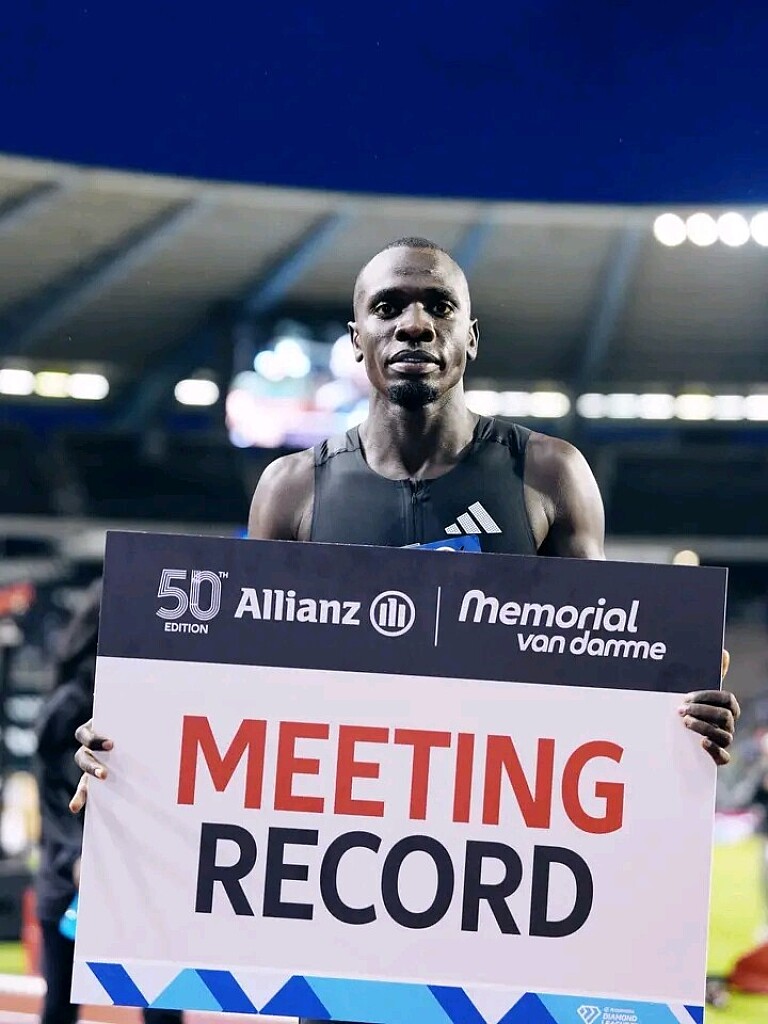
Emmanuel Wanyonyi Makes History With Four Straight Diamond League Final Triumphs In Brussels
Kenya’s Emmanuel Wanyonyi has once again stamped his authority on the men’s 800m, producing a commanding performance in Brussels to claim his fourth consecutive Diamond League Final title in spectacular fashion.
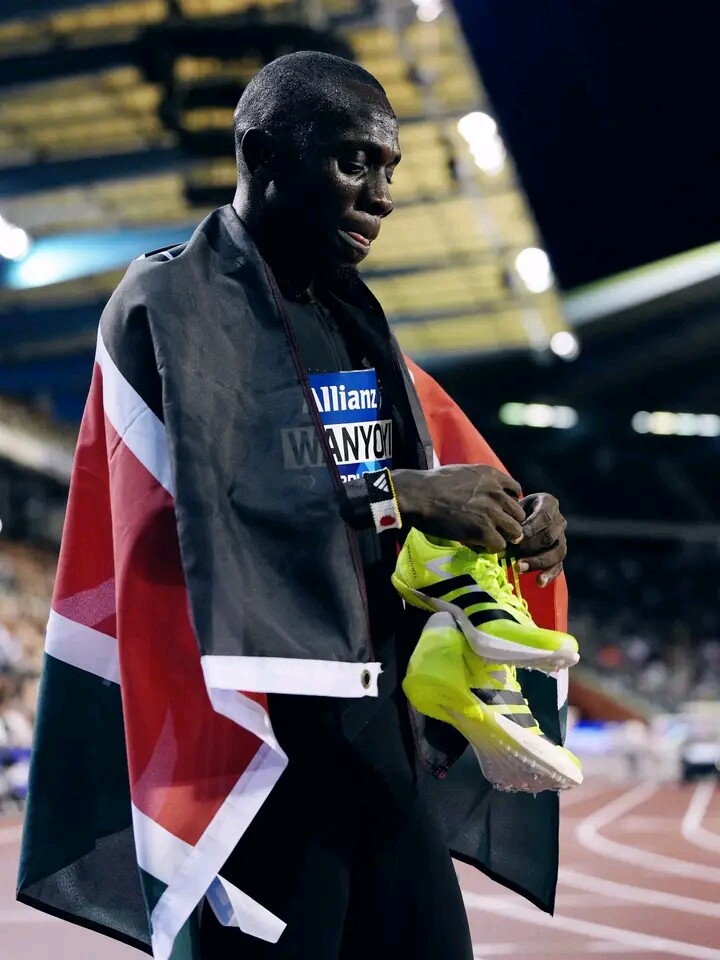
The Olympic champion delivered when it mattered most, surging clear of a fiercely competitive field and crossing the finish line in a brilliant 1:41.80. The performance not only secured another Diamond Trophy for the Kenyan star but also established a new meeting record, further underlining his remarkable consistency at the highest level of the sport.
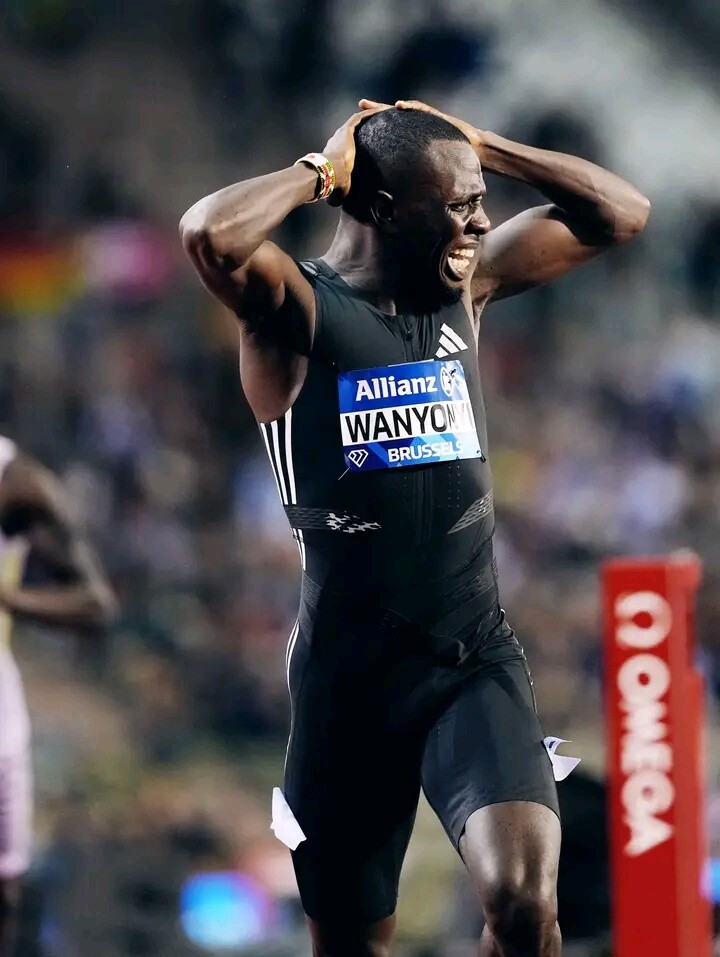
Wanyonyi controlled the race with characteristic confidence before unleashing his decisive move in the closing stages. Once he found another gear, his rivals could only watch as the Kenyan pulled away, transforming a tightly contested final into another memorable victory for one of the world's most formidable 800m runners.
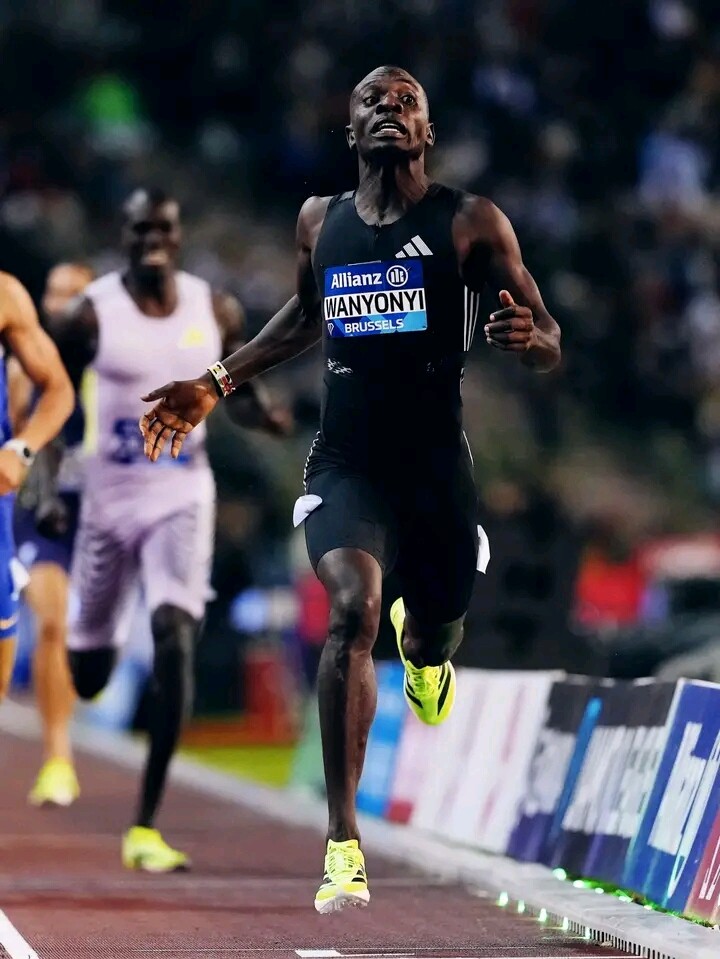
Algeria’s Djamel Sedjati produced an impressive run to finish second in 1:42.71, while France’s Yanis Meziane completed the podium in 1:42.87, smashing his personal best in a breakthrough performance on one of athletics’ biggest stages.
Meziane’s outstanding run carried an additional reward. As the highest finisher in the field who had not already secured qualification, his personal-best performance earned him a place at the World Ultimate Championships, adding another significant milestone to an already memorable night.
For Wanyonyi, however, the spotlight belonged entirely to his extraordinary achievement. Four Diamond League Finals, four victories and four Diamond Trophies — a level of dominance that places him in truly elite company.
His latest triumph is more than another title. It is another statement from a 22-year-old Kenyan who continues to combine speed, tactical intelligence, courage and an extraordinary competitive mentality. Year after year, Wanyonyi has shown that he thrives when the pressure is greatest, and Brussels provided yet another example of his championship pedigree.
Four finals. Four trophies. Four consecutive victories.
Emmanuel Wanyonyi has once again reminded the world why he is one of Kenya’s brightest athletics stars and one of the most feared 800m runners on the planet.
by Erick Cheruiyot for My Best Runs.
Login to leave a comment
Tisalema Triumphs In Stockholm While Marie Edges A Nail-Biting Men’s Battle
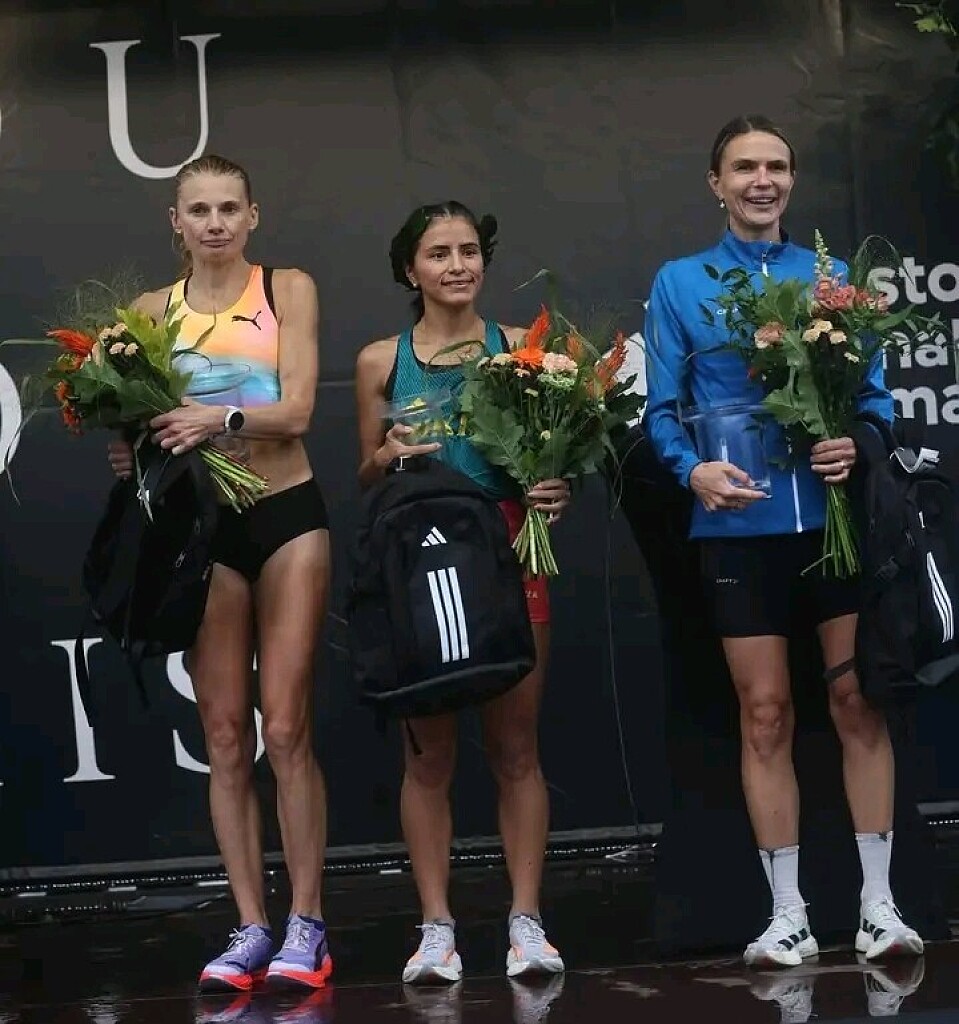
Ecuadorian distance runner Katherine Tisalema produced a commanding performance in Sweden this weekend, racing to victory at the Stockholm Half Marathon in an impressive 1:13:15.
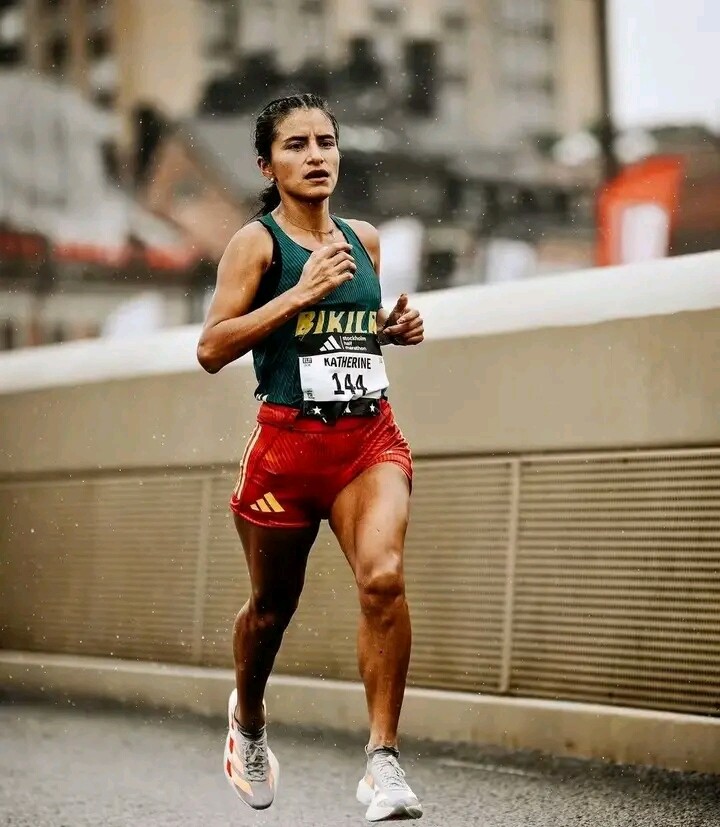
Tisalema controlled the women’s contest over the 21.1-kilometre distance, holding her composure through the closing stages to secure a memorable international victory. Sweden’s Hanna Lindholm finished second in 1:13:53, while compatriot Malin Starlet completed the podium in 1:15:47.
The women’s race delivered its own share of drama as Lindholm continued to chase down Tisalema, refusing to let the Ecuadorian disappear from sight. However, Tisalema remained composed when the pressure intensified, protecting her advantage all the way to the finish and sealing the victory in Stockholm.
Behind the winner, the fight for the remaining podium places added another layer of excitement. Lindholm ultimately held off Starlet to take second, while Starlet secured third and completed a strong showing for the host nation.
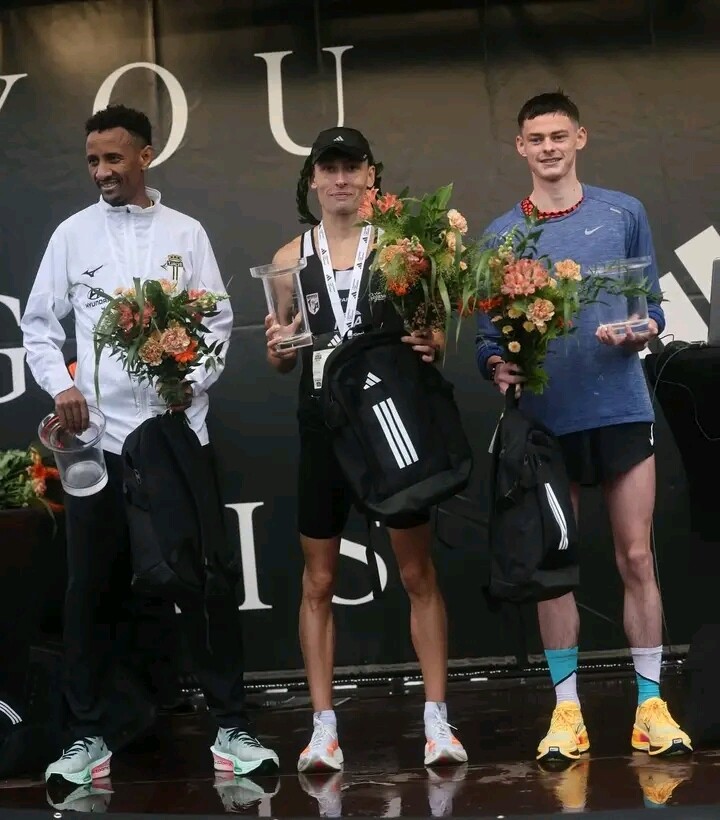
The men’s race was even more dramatic, producing a thrilling battle that was decided by just five seconds across the entire podium. France’s Enzo Marie emerged victorious in 1:03:35, but there was virtually nothing separating the leaders as they approached the finish.
Eritrea’s Senay Fissehatsion finished only three seconds behind Marie in 1:03:38, while Great Britain’s Lewis Hannigan was just two seconds further back in 1:03:40. The razor-thin margins meant that every surge, every stride and every second counted in the closing kilometres.
Marie ultimately found the decisive edge to claim the men’s title, with Fissehatsion and Hannigan forced to settle for second and third respectively after an absorbing battle to the line.
With Tisalema producing a strong winning performance in the women’s race and Marie surviving a fiercely contested men’s finish, the Stockholm Half Marathon delivered a compelling showcase of international distance-running talent and plenty of drama across the streets of the Swedish capital.
by Erick Cheruiyot for My Best Runs.
Login to leave a comment

Stockholm Half Marathon
Stockholm Half marathon has a unique course. Starting and running in the area between the castle, the Riksdaghuset and the Opera is special. And running in the middle of town is really a special feeling. The half marathon in Stockholm has been called Stockholm Halvmarathon (Stockholm Half Marathon) since 2007 but the race is actually much older. In 1927, the...
more...
Athletics Must Remain Number One” — Coe’s Final Challenge As The Race For His Successor Heats Up
The battle for the future of world athletics is already taking shape, but outgoing World Athletics President Sebastian Coe has made one message unmistakably clear: athletics must remain at the heart of the Olympic Games.
Speaking ahead of the Diamond League meeting in Zurich, Coe said he remains highly optimistic about the sport’s future and insisted that athletics must protect its position as the leading sport of the Olympic movement.

“There are only two truly global sports, one is football and one is athletics. We must maintain our position as the number one Olympic sport,” Coe said.
The 69-year-old Briton is approaching the final year of his presidency after first taking charge of the global governing body in 2015. He was re-elected for a third term in 2023, which, under World Athletics’ term limits, is his final mandate.
Coe will leave office in 2027, when the next World Athletics president is elected at the Elective Congress in Beijing, immediately before the 2027 World Athletics Championships. The new president will serve a four-year term covering 2027–2031.

And the succession battle is already gathering momentum.
Among the candidates declared eligible so far are prominent figures from within the sport’s leadership, including World Athletics Vice-Presidents Adille Sumariwalla of India, Raul Chapado of Spain and Ximena Restrepo of Colombia. The current list also includes Yuko Arimori of Japan, Hatem Fouda of Egypt, Ivan Garcia of Uruguay, Jean Gracia of France and Kenya’s Jackson Tuwei.
Restrepo brings a particularly distinguished competitive background to the contest. The Colombian won Olympic bronze in the women’s 400 metres at Barcelona 1992 and became the first woman elected as a World Athletics Vice-President in 2019.
For Coe, however, the final chapter of his presidency is not simply about preparing for his departure. He says his priority over the next year is to continue strengthening the sport so that his successor inherits an organisation capable of growing even further.
“I've never been more optimistic about the future of the sport,” Coe said, adding that whoever succeeds him will inherit “a very much stronger sport” than the one he took over in 2015.
His presidency has coincided with significant changes across the sport, including governance reforms, commercial development and efforts to make athletics more innovative and globally engaging. The launch of the new World Athletics Ultimate Championship in Budapest this September is another example of the organisation’s attempt to create a shorter, high-stakes competition featuring many of the world’s leading athletes.
But the next president will inherit an enormous responsibility.
Athletics is the foundation of the Olympic Games, producing some of the most iconic moments in Olympic history and bringing together athletes from virtually every corner of the world. The challenge for Coe’s successor will be to preserve that unique position while making the sport more commercially powerful, more accessible to younger audiences and even more compelling in an increasingly competitive global sporting landscape.
Coe believes the opportunity is there.
As he prepares to hand over the presidency in 2027, his challenge to the next generation of World Athletics leadership is clear: protect the sport’s Olympic identity, keep pushing its boundaries and make sure athletics remains the heartbeat of the Games.
The question now is not whether Coe will leave a significant mark on athletics, but who will have the vision, influence and leadership required to carry the sport into its next era.
Who do you think should lead World Athletics after Sebastian Coe?
by Erick Cheruiyot for My Best Runs.
Login to leave a comment
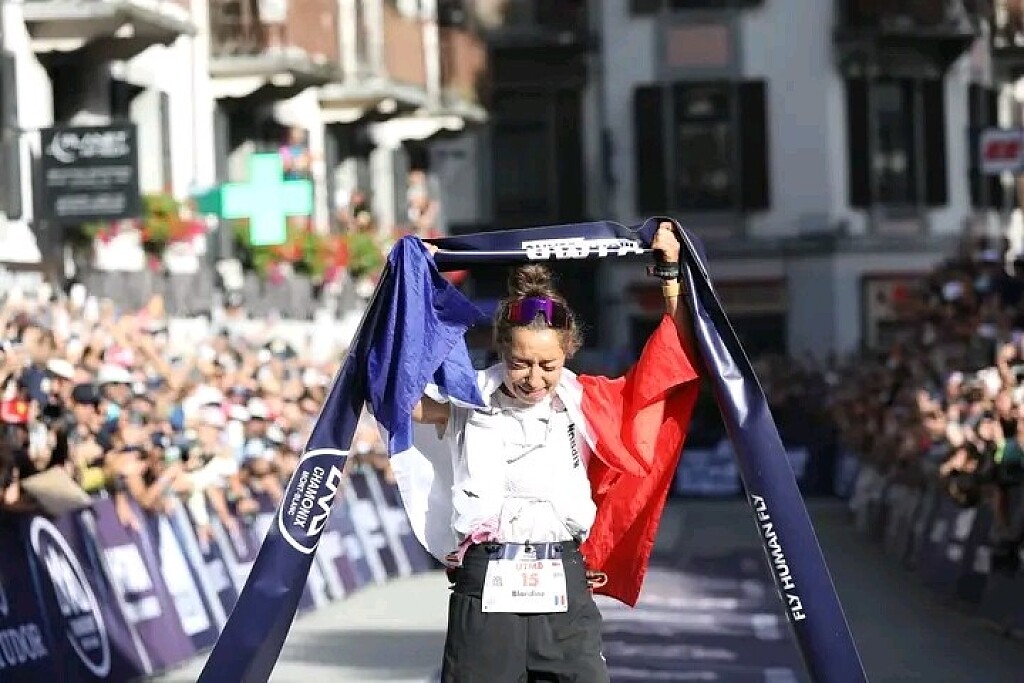
Blandine L’hirondel Creates French Magic In Chamonix With Historic UTMB Triple Crown
Pure goosebumps in Chamonix.
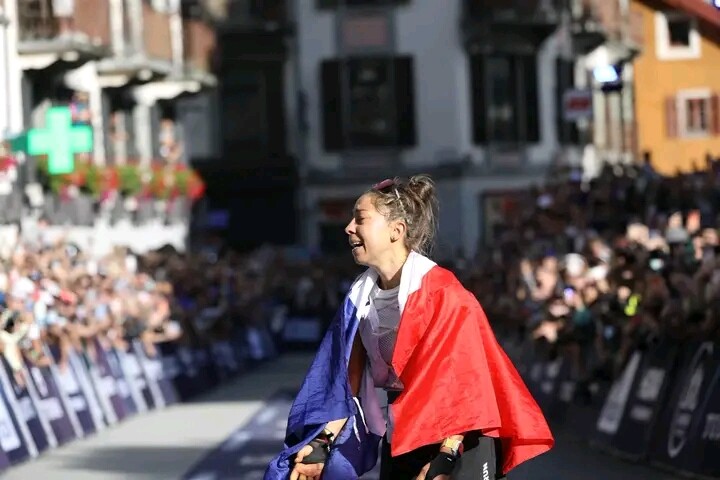
Blandine L’Hirondel has conquered the 2026 UTMB Mont-Blanc in extraordinary fashion, completing one of the rarest achievements in trail running while becoming the first woman ever to break the 22-hour barrier on the iconic 100-mile course.
The French star stopped the clock at a sensational 21:54:49, smashing the previous women’s course record and etching her name into the history of the sport.
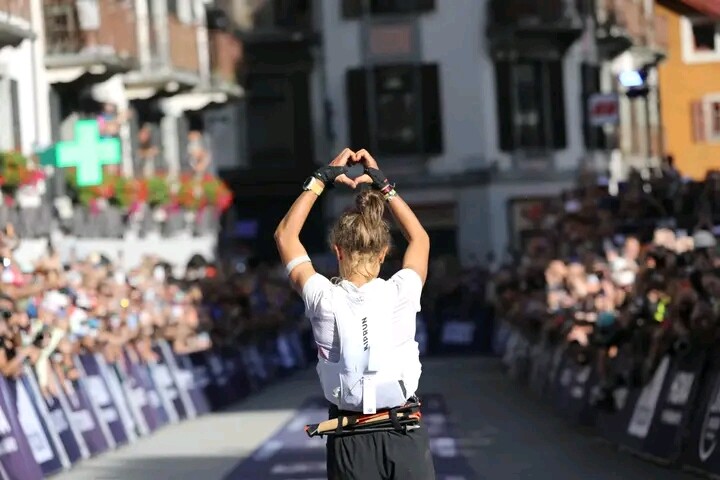
The scale of her performance becomes even clearer when placed alongside the recent record progression. L’Hirondel’s 21:54:49 eclipsed Katie Schide’s 22:09:31 from 2024, Ruth Croft’s 22:56:23 from 2025, Courtney Dauwalter’s 23:29:14 from 2023, and Schide’s 23:15:12 from 2022.
Most significantly, L’Hirondel became the first woman to run under 22 hours at UTMB.
But this was about far more than a number on the clock.
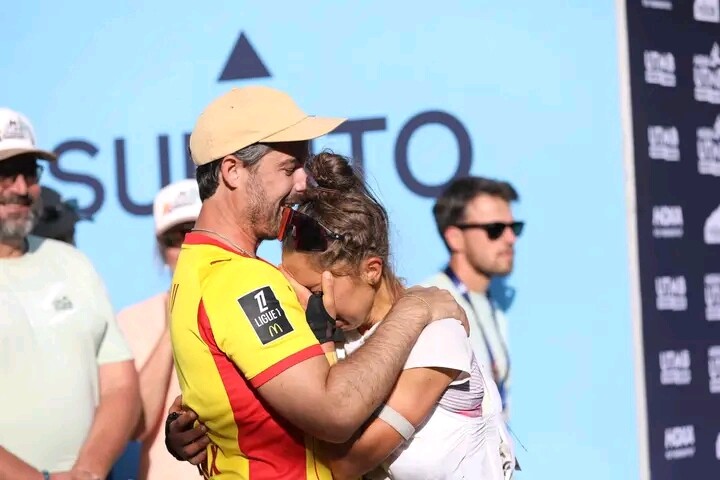
L’Hirondel’s victory was forged through a monumental battle of endurance, pain and determination. In the final kilometres, with exhaustion taking hold, the Frenchwoman suffered several heavy falls. Each time, she picked herself up and continued her relentless charge toward Chamonix.
Nothing was going to take the finish line away from her.
As she finally entered the streets of Chamonix, the home crowd erupted. Surrounded by roaring support, L’Hirondel fought back the emotion, raised her arms and crossed the finish line in 21:54:49, completing an unforgettable victory.
Falling down. Getting back up. Winning. That is trail running.
The achievement becomes even more remarkable because L’Hirondel has now completed a rare UTMB Mont-Blanc triple crown, winning all three of the event’s iconic races: the OCC, CCC and UTMB.
She first triumphed at the OCC in 2021, followed by victory in the CCC in 2022, before finally claiming the ultimate prize at UTMB.
With this achievement, L’Hirondel becomes only the third athlete in history — and the second woman — to complete the OCC, CCC and UTMB sweep.
It is a feat that demands extraordinary versatility, consistency and resilience across different distances and challenges. L’Hirondel has now conquered all three.
Her road to this moment had not been straightforward.
She finished third on her first UTMB appearance in 2023 and returned in 2024 to place fifth. But she kept coming back, determined to go one step further.
In 2026, everything came together.
With patience early in the race, resilience through the toughest sections and an extraordinary fighting spirit when her body was crying out for rest, L’Hirondel produced the performance of her life.
And she did it on home soil.
Ten years after Caroline Chaverot became the last French woman to win UTMB, L’Hirondel has brought the title back to France — and done so by breaking a barrier no woman had ever breached before.
From OCC to CCC to UTMB, Blandine L’Hirondel has completed a journey that very few athletes can even dream of making.
The triple crown is complete.
The 22-hour barrier is broken.
The women’s course record is hers.
And beneath the towering peaks of Mont-Blanc, in front of a roaring Chamonix crowd, L’Hirondel has written another unforgettable chapter in the history of trail running. 21:54:49, a historic triple crown and a record that now belongs to her — a truly remarkable moment for France and a breathtaking triumph on the world’s biggest trail-running stage.
by Erick Cheruiyot for My Best Runs.
Login to leave a comment
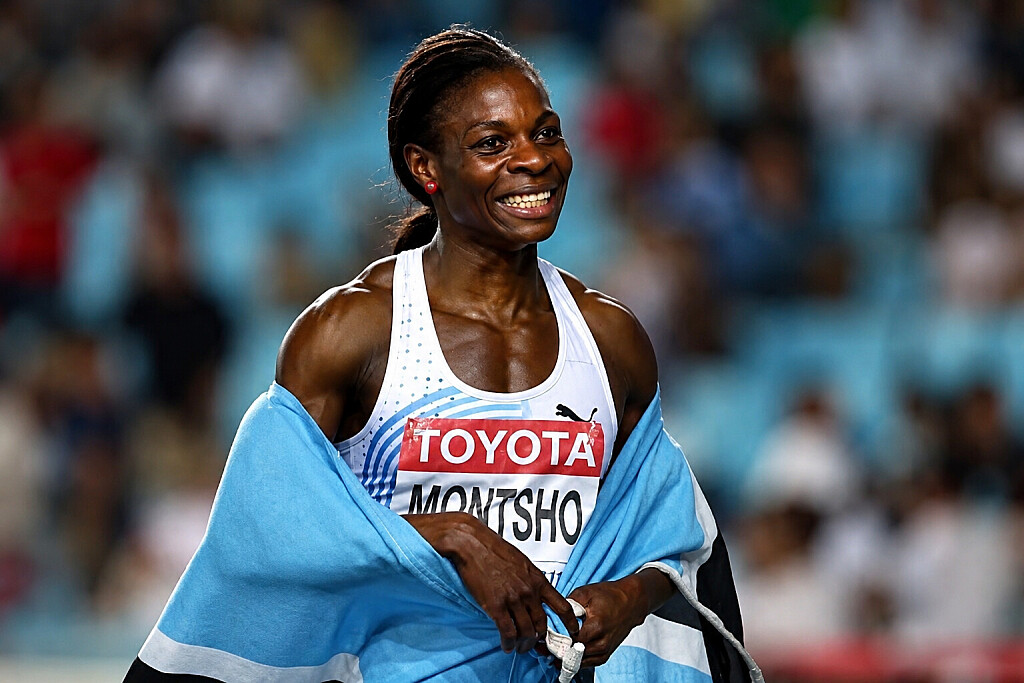
Montsho’s Historic 49.56: The Night Botswana Beat Allyson Felix in a Daegu Thriller
29 August 2011 — Daegu, South Korea
Some races are remembered for their times. Others are remembered for what they mean. The women’s 400m final at the 2011 World Championships in Daegu belonged firmly to the second category.
On 29 August 2011, Amantle Montsho produced one of the most important performances in Botswana’s athletics history, edging Allyson Felix by just three hundredths of a second to become the country’s first-ever World Championships gold medallist.
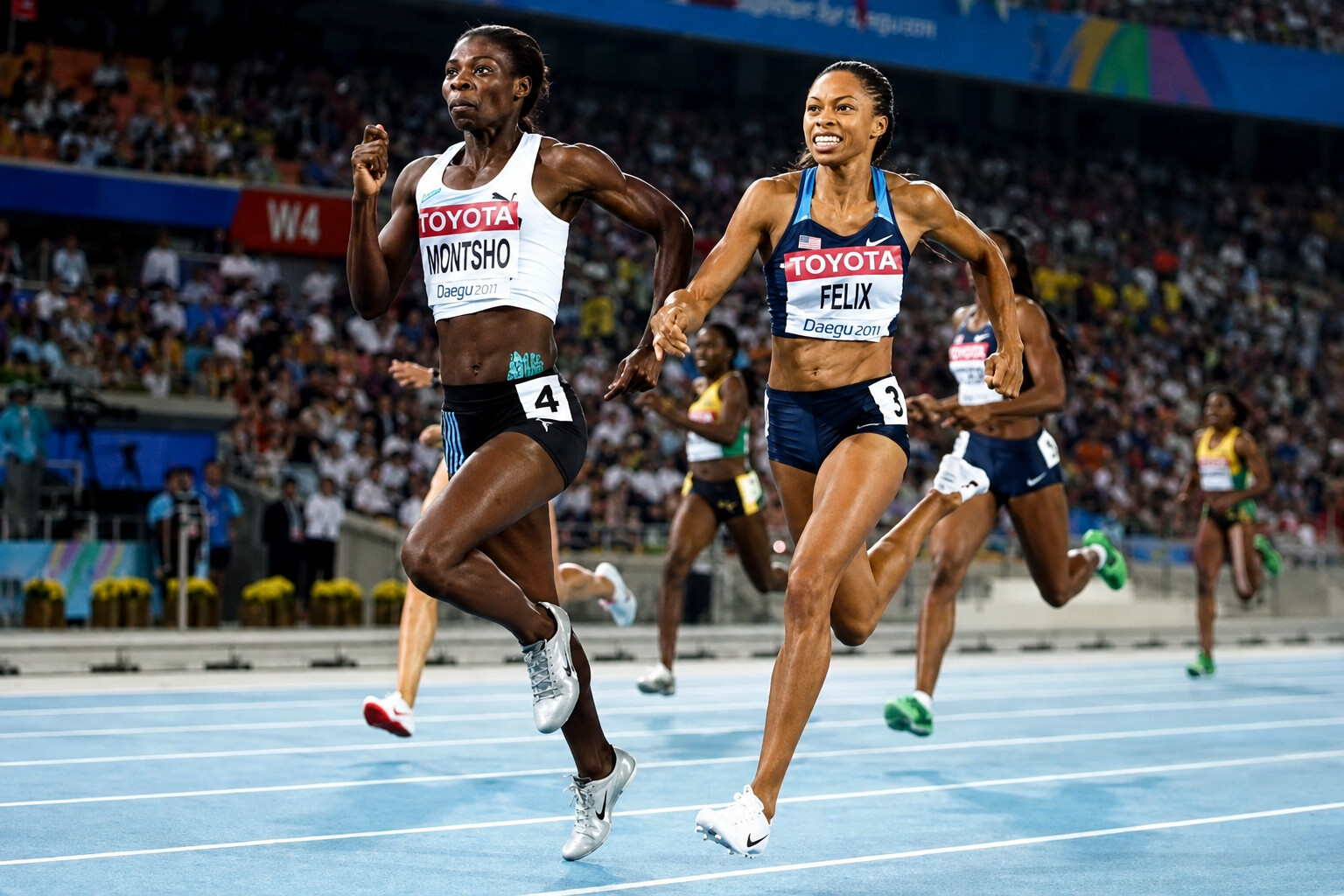
Montsho entered the final as one of the leading 400m runners in the world, having dominated much of the 2011 Diamond League season. But standing between her and global glory was a formidable field that included Olympic and world-class stars such as Felix, Sanya Richards-Ross, Shericka Williams and Anastasiya Kapachinskaya.
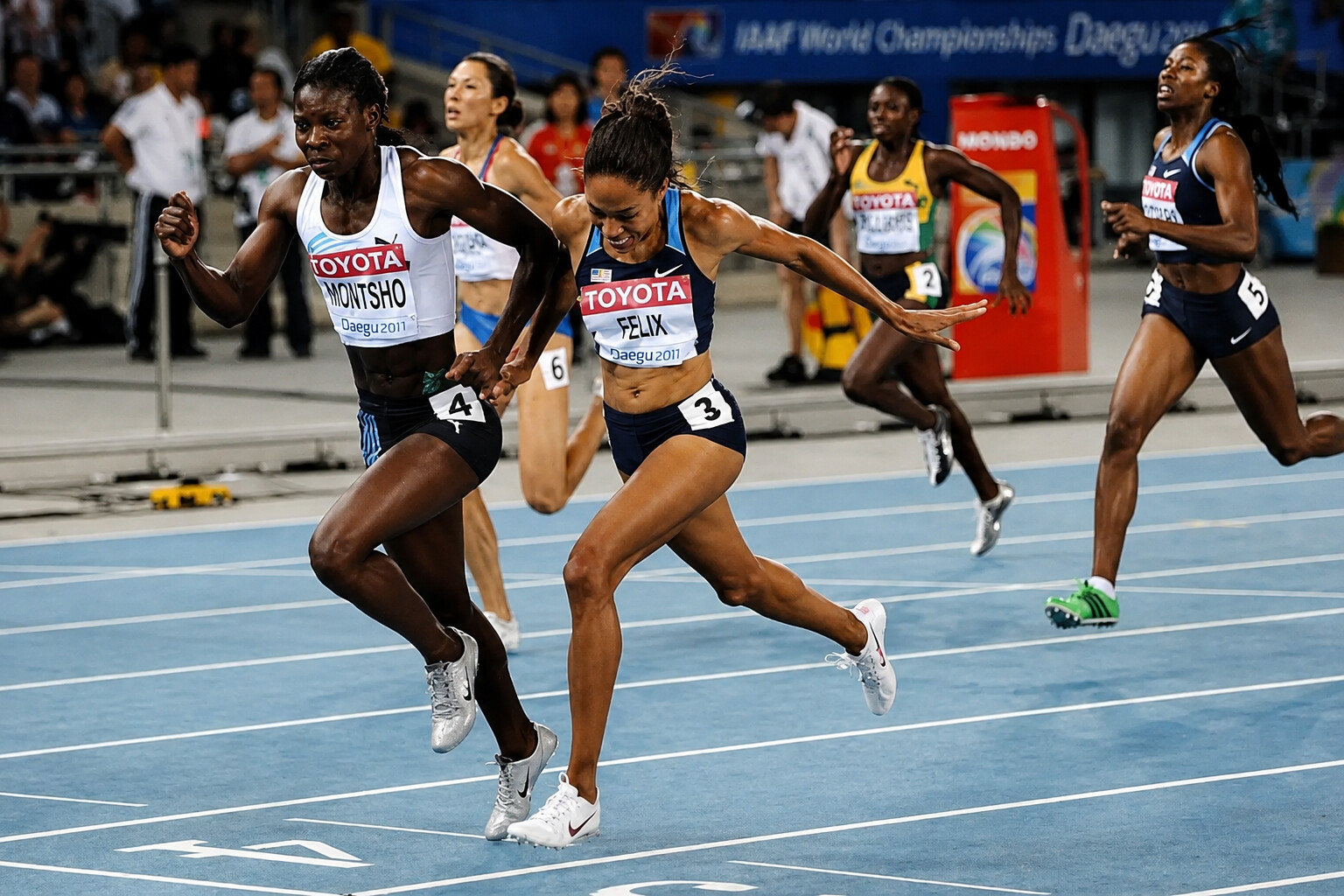
From the gun, Montsho attacked the race with purpose. Running in lane four, she carried tremendous momentum through the opening half of the lap and entered the home straight with a narrow advantage. Felix, drawn immediately inside her in lane three, responded brilliantly and began closing the gap as the two charged towards the finish.
The final metres became a straight fight between Botswana and the United States.
Felix threw everything at Montsho in the closing stages, but the Botswana star refused to surrender. She crossed the line in 49.56 seconds, with Felix just behind in 49.59. The margin was only 0.03 seconds, but it was enough to make history.
Montsho's winning time was not only a personal breakthrough but also a Botswana national record. It made her the first athlete from Botswana to win a World Championships gold medal and gave the southern African nation its first-ever World Championships medal in the process.
For Felix, the silver medal came with a remarkable performance of her own. Her 49.59 was a personal best and represented one of the finest 400m races of her career at that point. Despite coming agonisingly close to gold, Felix had pushed Montsho all the way to the finish line in one of the closest major championship 400m finals in history.
Behind the leading pair, Francena McCorory delivered another strong performance. Having already run a personal best of 50.24 in the semi-finals to qualify for the final, the American clocked 50.45 in the championship race. At the time, she crossed the line in fourth behind Kapachinskaya, who ran 50.24.
But the medal standings would later change.
Kapachinskaya was subsequently disqualified as part of a doping case involving violations dating back to the 2008 Olympic Games. As a result, her Daegu result was annulled, and McCorory was officially promoted from fourth to bronze medal position. World Athletics later recognised McCorory among the athletes receiving reallocated medals in 2017.
That change gave the race an additional historical dimension. What began as a breathtaking battle between Montsho and Felix ultimately became a championship podium of Montsho, Felix and McCorory.
More than a decade later, the image of Montsho and Felix racing shoulder-to-shoulder down the Daegu straight remains one of the defining moments of the 2011 World Championships. For Botswana, it was a breakthrough moment that announced Montsho on the biggest stage. For Felix, it was another chapter in a career filled with major championship success.
And for fans of the 400m, it was simply a spectacular race — 49.56 versus 49.59, with only three hundredths separating gold from silver.
by Erick Cheruiyot for My Best Runs.
Login to leave a comment
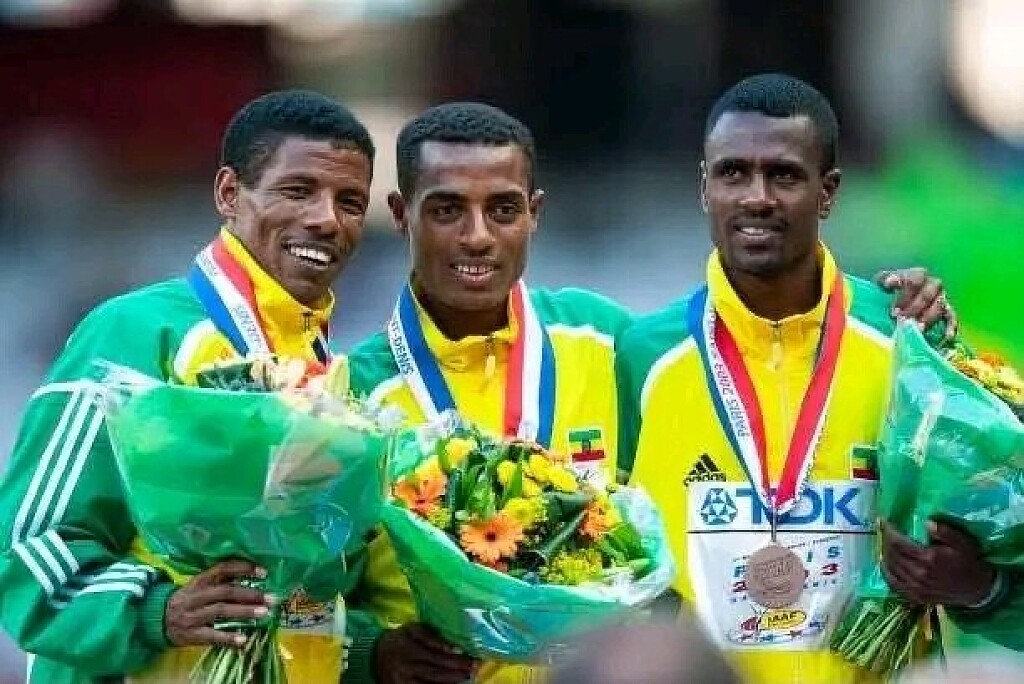
Kenenisa Bekele’s Paris Coronation: The Night Ethiopia’s Distance Running Dynasty Changed Forever
Paris, France — August 24, 2003.
The Stade de France witnessed far more than a World Championship 10,000m final that night. It witnessed the beginning of a new era.
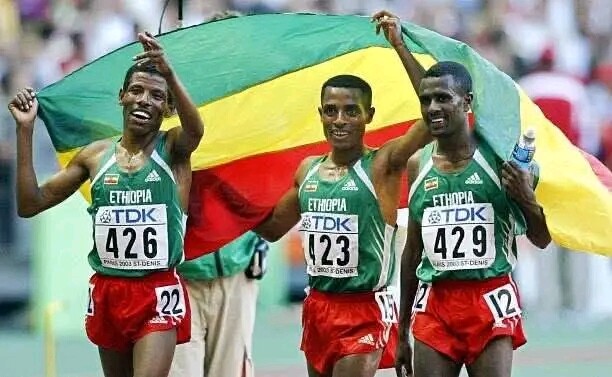
For years, Haile Gebrselassie of Ethiopia had stood virtually untouchable at the summit of world distance running. He arrived in Paris as a two-time Olympic champion and four-time World Champion over 10,000m, carrying the reputation of a man who had dominated the track for much of the previous decade.
But waiting in the same race was a 21-year-old Ethiopian whose running style looked remarkably familiar.
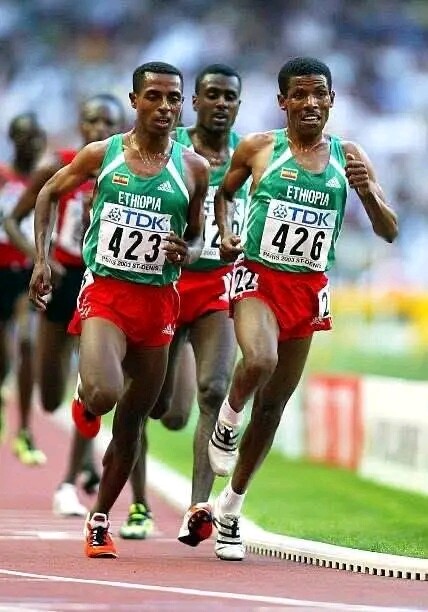
His name was Kenenisa Bekele.
The younger Ethiopian had already shown flashes of extraordinary potential, but Paris was where potential became reality.
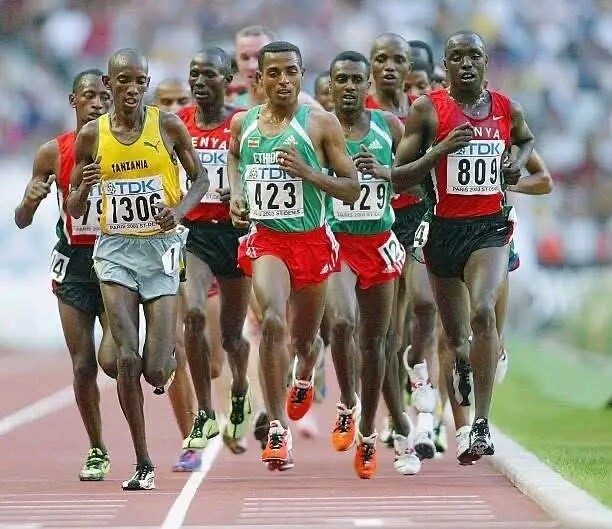
As the race unfolded, Gebrselassie ran aggressively, repeatedly applying pressure in an attempt to break the field and shake off his young compatriot. One by one, the world's best distance runners were dropped, including a strong Kenyan contingent.
Yet Bekele refused to disappear.
He stayed glued to Gebrselassie's shoulder, matching every surge and every change of pace. Behind them, Sileshi Sihine of Ethiopia remained in contention, setting the stage for what would ultimately become a historic Ethiopian sweep.
Then came the decisive moment.
With only 200 metres remaining, Bekele made his move.
Gebrselassie, famous for his devastating finishing speed, tried to respond. But this time, there was no answer. Bekele powered away down the final straight, creating daylight between himself and his legendary compatriot.
The changing of the guard had arrived.
Bekele crossed the finish line in 26:49.57, becoming the first athlete to break 27 minutes at these World Championships and setting a championship record.
Behind him, Gebrselassie finished second in 26:50.77, while Sihine completed an extraordinary Ethiopian clean sweep with 27:01.44.
It was not simply a victory for Bekele.
It was the moment the young star announced that he was ready to inherit the throne.
Paris 2003 — Men's 10,000m Final
1. Kenenisa Bekele — Ethiopia — 26:49.57 CR
2. Haile Gebrselassie — Ethiopia — 26:50.77
3. Sileshi Sihine — Ethiopia — 27:01.44
4. Ahmad Hassan Abdullah — Qatar — 27:18.28
5. John Cheruiyot Korir — Kenya — 27:19.94
6. Wilberforce Talel — Kenya — 27:33.60
7. Charles Kamathi — Kenya — 27:45.05
8. Kamiel Maase — Netherlands — 27:45.46
9. Karl Keska — Great Britain — 27:47.89
10. Ismail Sghyr — France — 27:54.87
11. David Galván — Mexico — 27:55.31
12. John Yuda Msuri — Tanzania — 27:56.21
13. Fabiano Joseph Naasi — Tanzania — 28:06.36
14. Alan Culpepper — United States — 28:14.92
15. Teodoro Vega — Mexico — 28:31.71
16. Mebrahtom Keflezighi — United States — 28:35.08
17. Cathal Lombard — Ireland — 28:36.43
18. Tomoo Tsubota — Japan — 28:37.10
19. Dan Browne — United States — 29:01.60
Bekele's Paris triumph proved to be the beginning of something much bigger. He went on to win Olympic 10,000m gold in Athens the following year and established himself as the dominant track distance runner of his generation.
At the 2008 Beijing Olympics, he completed the extraordinary 5,000m and 10,000m double, cementing his place among the greatest distance runners in history.
Gebrselassie, meanwhile, successfully reinvented himself beyond the track. He turned increasingly toward the 10km, half marathon and marathon, where he continued rewriting the record books and building another extraordinary chapter of his career.
But Paris remains special.
On August 24, 2003, one Ethiopian legend was still fighting to protect his kingdom while another was stepping forward to claim it.
Kenenisa Bekele didn't simply win a World Championship gold medal that night. He announced the arrival of a new era in distance running.
by Erick Cheruiyot for My Best Runs.
Login to leave a comment
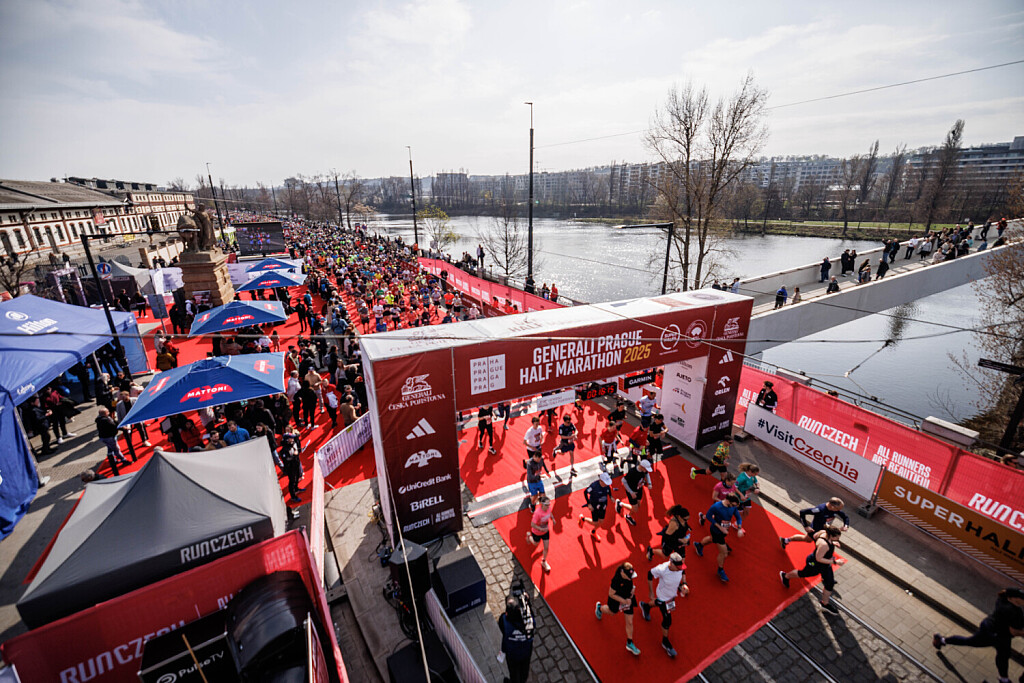
Prague Half Marathon’s First Ballot Draws More Than 70,000 Applications
The Generali Prague Half Marathon has entered a new era of unprecedented demand, with more than 70,000 runners reportedly applying for places in the race’s first-ever ballot for the 2027 edition.
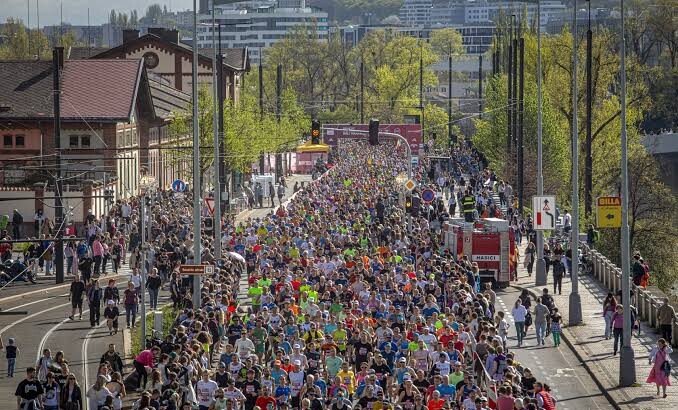
The remarkable response underlines the extraordinary international appeal of one of Europe’s most celebrated half marathons. With the race limited to 17,000 participants, the number of applications means demand exceeded available places by more than four times. RunCzech confirmed that the ballot attracted more than six times the race capacity in applications.
The move to a random draw marks a significant change from the previous registration system. In 2026, the 17,000-place field disappeared within just 2 hours and 23 minutes of registration opening, demonstrating how fiercely contested entry had become. Rather than rewarding those who happened to be quickest online, the new system gives applicants an equal opportunity through a random selection process.
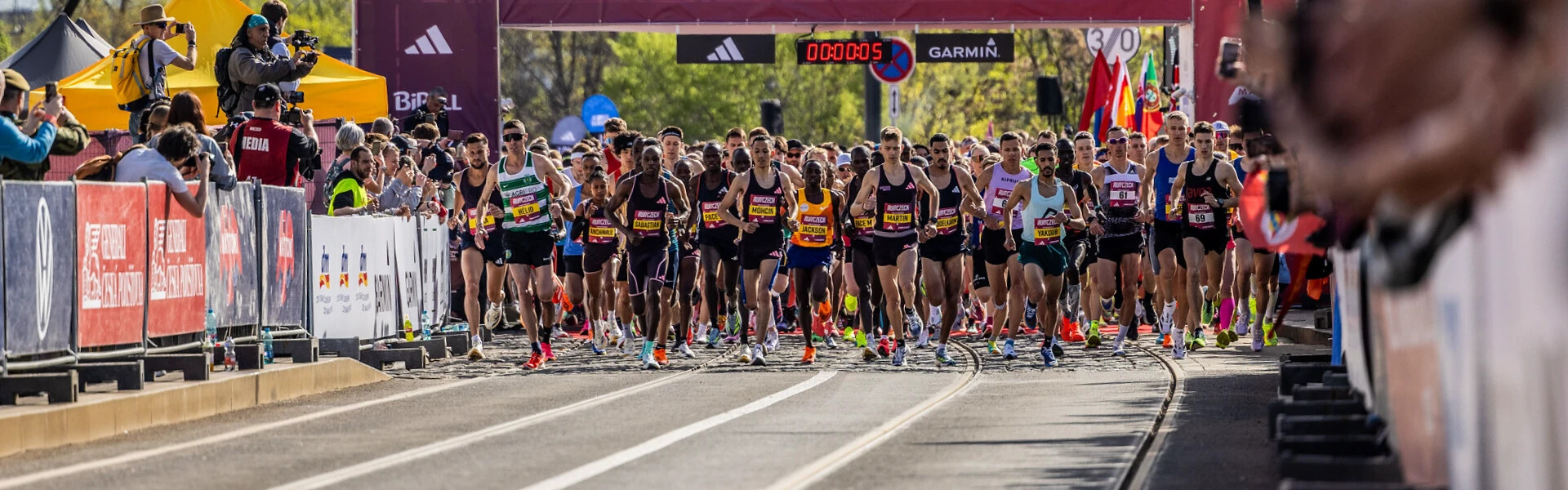
Applications opened on July 21 and closed at midnight heading into August 12, bringing three weeks of intense anticipation to an end. The draw is scheduled to take place this week, with every applicant due to receive the outcome by email no later than August 21. Those fortunate enough to secure a place will then have seven days to complete their registration before any unclaimed entries are returned to the pool.
The scale of the international interest is particularly striking. Applicants came from 161 countries, with 77 per cent of all applications submitted from outside the Czech Republic. The United Kingdom and Germany provided the largest overseas applicant groups, while Spain, Poland, Portugal, Italy and France were also strongly represented. Almost 1,300 applications came from Brazil and more than 700 from the United States.
For runners chasing the prestigious SuperHalfs series, Prague carries even greater significance. The race is one of the six founding members of the European half-marathon series, alongside Berlin, Copenhagen, Lisbon, Valencia and Cardiff, making a place on the start line highly coveted among runners pursuing the full collection. Around 45 per cent of ballot applicants already hold a SuperHalfs passport.
The 27th Generali Prague Half Marathon will take place on Saturday, April 3, 2027, taking runners through the historic heart of the Czech capital. The event also holds World Athletics Elite Label status, reinforcing its reputation not only as a mass-participation spectacular but also as a race capable of attracting world-class athletes and producing elite performances.
The huge ballot has transformed the meaning of simply getting to the start line in Prague. For thousands of runners, preparation has already begun, but their next step is not a training session or a race-plan decision—it is an email. This time, the fastest internet connection cannot guarantee a place; chance will decide who gets to experience the roar of the crowds, the historic streets and the unmistakable atmosphere of Prague at 21.1 kilometres.
The first ballot has therefore delivered a message that is impossible to ignore: Prague is no longer merely a race runners want to run—it is a race runners are competing to enter. With more than 70,000 applications chasing 17,000 places, the 2027 edition is already shaping up to be one of the most sought-after starts on the European road-racing calendar.
by Erick Cheruiyot for My Best Runs.
Login to leave a comment

Prague Half Marathon
Start the RunCzech season with one of the biggest running events in the Central Europe! Every year the Sportisimo Prague Half Marathon excites spectators with performances of elite athletes breaking records. Enjoy a course with incomparable scenery in the heart of historic Prague that follows along the Vltava river and crisscrosses five beautiful bridges. Take in majestic views of the...
more...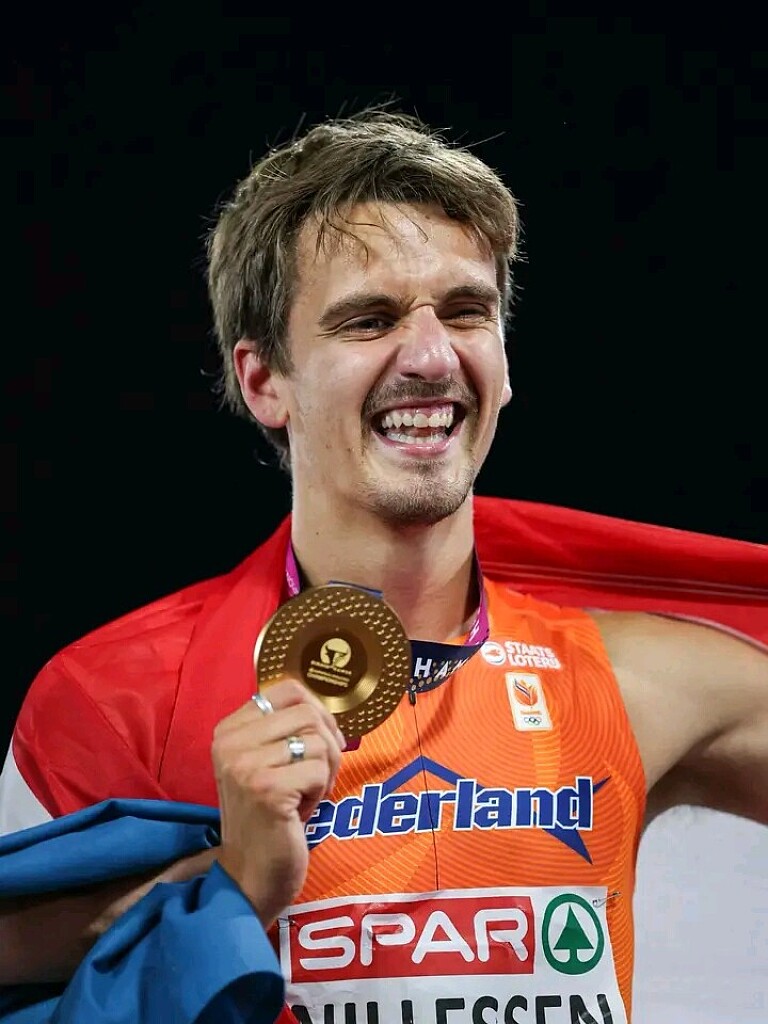
Stefan Nillessen Produces Blistering Finish to Win European 1500m Gold in Birmingham
Stefan Nillessen has been crowned European champion in the men’s 1500m after producing a sensational finishing burst to win a thrilling final at the 2026 European Athletics Championships in Birmingham.
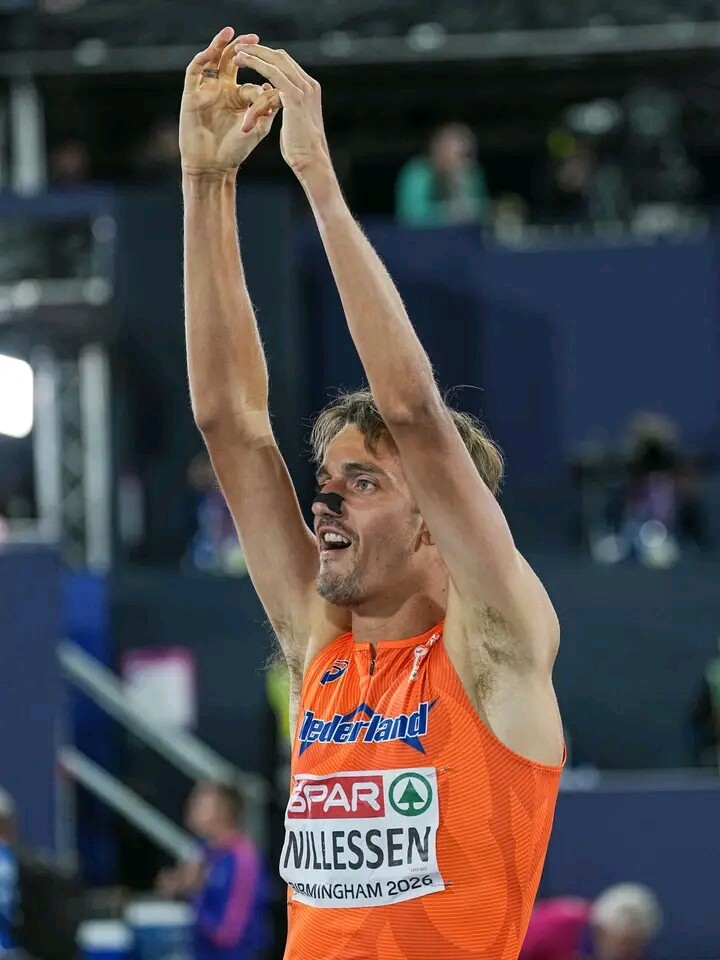
The Dutchman timed his decisive move to perfection, unleashing a blistering final 100 metres in approximately 12.6 seconds to stop the clock at 3:35.70 and claim the European title in spectacular fashion.
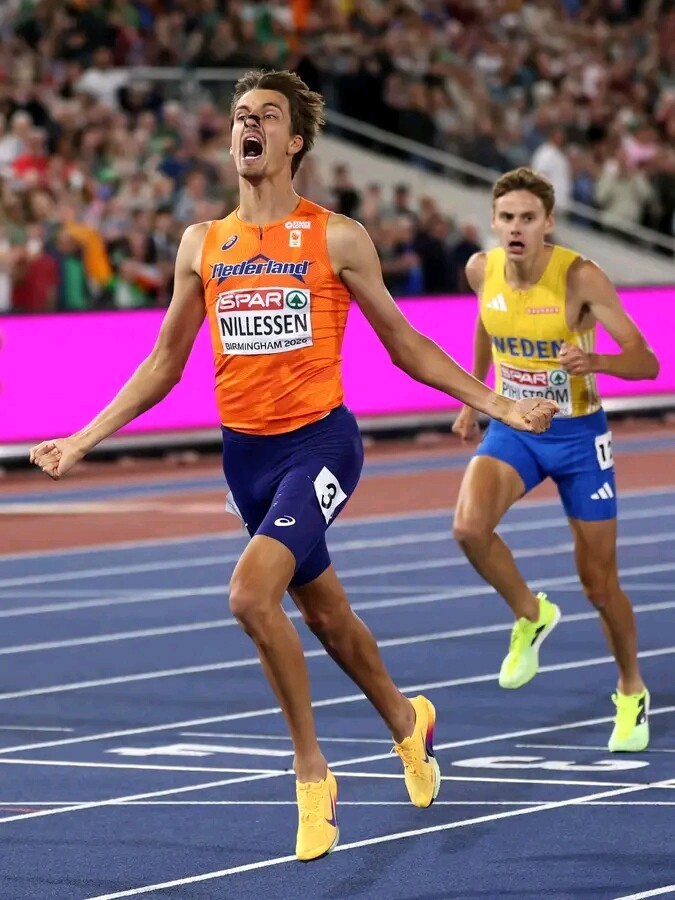
The race appeared to be leaning towards the home favourites as Jake Heyward and Jake Wightman led the field into the final 200 metres. But as the pace intensified and the medals came into view, Nillessen produced a devastating change of speed that carried him past the leading contenders and into gold-medal position.
Nillessen’s finishing kick proved too strong for the chasing pack. He powered down the home straight and opened enough of a gap to secure his first European 1500m title, turning what had been a closely packed tactical contest into a memorable individual triumph.
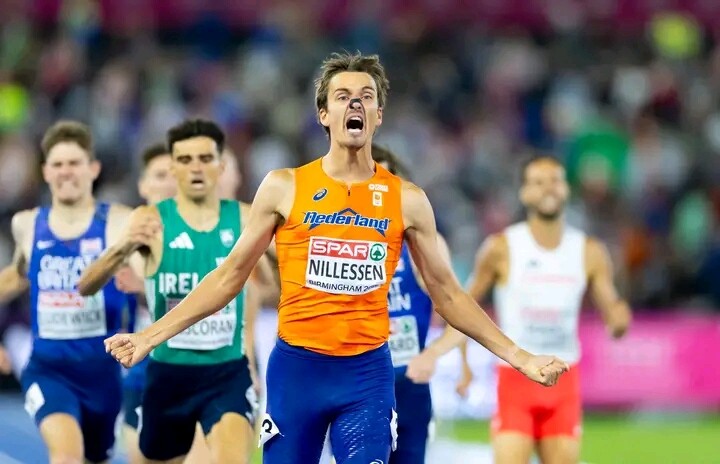
Behind him, Samuel Pihlström of Sweden produced a strong final sprint of his own to take the silver medal in 3:36.16, while Ireland’s Andrew Coscoran held on for bronze in 3:36.24. Just 0.08 seconds separated the two athletes, highlighting the extraordinary closeness of the battle for the remaining podium places.
Heyward, who had helped shape the race at the front in the closing stages, ultimately finished fourth in 3:36.40, with fellow Briton Arlo Ludewick fifth in 3:36.65. Wightman, another of the athletes at the sharp end with 200 metres remaining, crossed the line sixth in 3:37.18.
Norway’s Narve Gilje Nordås finished seventh in 3:37.31, followed by France’s Romain Mornet in 3:37.37 and Germany’s Robert Farken in 3:37.49. France’s Azeddine Habz was 10th in 3:37.61, while Italy’s Pietro Arese finished 11th in 3:38.15.
The biggest disappointment of the final was reigning world champion Isaac Nader of Portugal. One of the leading names in the field before the race, Nader struggled to respond to the repeated tactical changes and eventually finished 12th in 3:39.69.
For Nillessen, however, Birmingham delivered a defining championship moment. With the race still wide open entering the final 200 metres, he remained composed before unleashing the fastest closing burst of the field. His 12.6-second final 100m was the difference between a podium finish and European gold.
Men’s 1500m Final — Results
1. Stefan Nillessen (NED) — 3:35.70
2. Samuel Pihlström (SWE) — 3:36.16
3. Andrew Coscoran (IRL) — 3:36.24
4. Jake Heyward (GBR) — 3:36.40
5. Arlo Ludewick (GBR) — 3:36.65
6. Jake Wightman (GBR) — 3:37.18
7. Narve Gilje Nordås (NOR) — 3:37.31
8. Romain Mornet (FRA) — 3:37.37
9. Robert Farken (GER) — 3:37.49
10. Azeddine Habz (FRA) — 3:37.61
11. Pietro Arese (ITA) — 3:38.15
12. Isaac Nader (POR) — 3:39.69
The final showcased everything that makes championship 1500m racing so compelling: tactical positioning, changing momentum, a dramatic final lap and a decisive sprint for the medals. In the end, it was Nillessen’s extraordinary finishing speed that settled the contest and placed the Netherlands at the top of the European 1500m podium.
by Erick Cheruiyot for My Best Runs.
Login to leave a comment

European Athletics Champioships
The27thEuropean Athletics Championshipswill be held from 10 to 16 August 2026 at theAlexander StadiuminBirmingham, United Kingdom.[1] This is the first time that a British city will have staged the European Athletics Championships although Birmingham has hosted many high-profile events, including the2007 European Athletics Indoor Championships, the2003and2018 IAAF World Indoor Championshipsand the2022 Commonwealth Games. Alexander Stadium was renovated between 2019 and...
more...
Andreas Almgren Dominates European 10,000m Final with Championship Record
Sweden’s Andreas Almgren produced a breathtaking performance in the European 10,000m final, powering to the continental title in a championship-record 27:23.44.
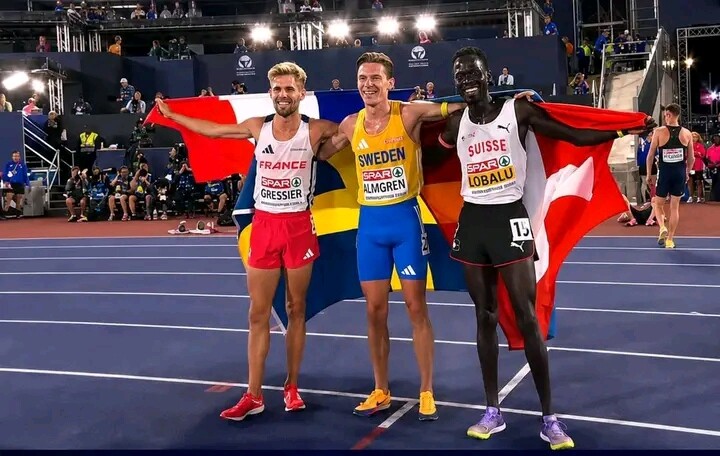
After making a strong impression on the roads earlier this season, Almgren transferred that form to the track with a display of sustained speed, patience and control. The Swede gradually established a decisive advantage before breaking clear in the closing stages, turning the race into a one-sided contest.
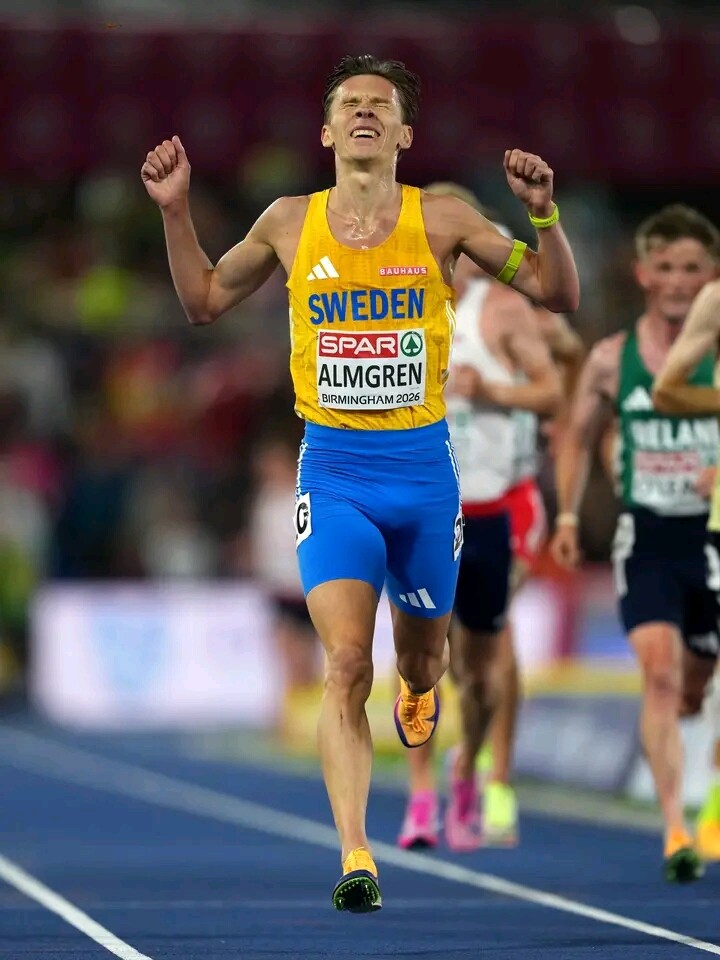
Almgren crossed the finish line almost 20 seconds ahead of his nearest challenger, underlining the scale of his superiority. His winning time of 27:23.44 also erased the oldest championship record in the event, surpassing the mark that had stood since 1978.
The victory carried additional historical significance for Swedish athletics. It was Almgren’s first European Championship title and made him the first Swedish athlete to win the European 10,000m crown.
Dominic Lokinyomo Lobalu produced a strong performance to secure the silver medal in 27:42.67, finishing well clear of the rest of the field as Almgren raced alone at the front.
Jimmy Gressier also secured a place on the European 10,000m podium after a hard-fought battle with Italy’s Yemaneberhan Crippa. The French world champion maintained his composure through the closing stages to claim bronze in 28:07.90, adding another major championship medal to his growing collection. His determined performance ensured France had a presence on the podium as Almgren and Lobalu dominated the race for gold and silver.
For Almgren, the triumph represents another major milestone in an increasingly impressive season. Having already demonstrated his ability over longer distances on the roads, he has now confirmed that his strength and endurance translate just as effectively to championship racing on the track.
His 27:23.44 will now stand as one of the defining performances of the Birmingham championships, combining a historic championship record with a landmark first European title for both Almgren and Sweden.
by Erick Cheruiyot for My Best Runs.
Login to leave a comment
European Athletics Champioships
The27thEuropean Athletics Championshipswill be held from 10 to 16 August 2026 at theAlexander StadiuminBirmingham, United Kingdom.[1] This is the first time that a British city will have staged the European Athletics Championships although Birmingham has hosted many high-profile events, including the2007 European Athletics Indoor Championships, the2003and2018 IAAF World Indoor Championshipsand the2022 Commonwealth Games. Alexander Stadium was renovated between 2019 and...
more...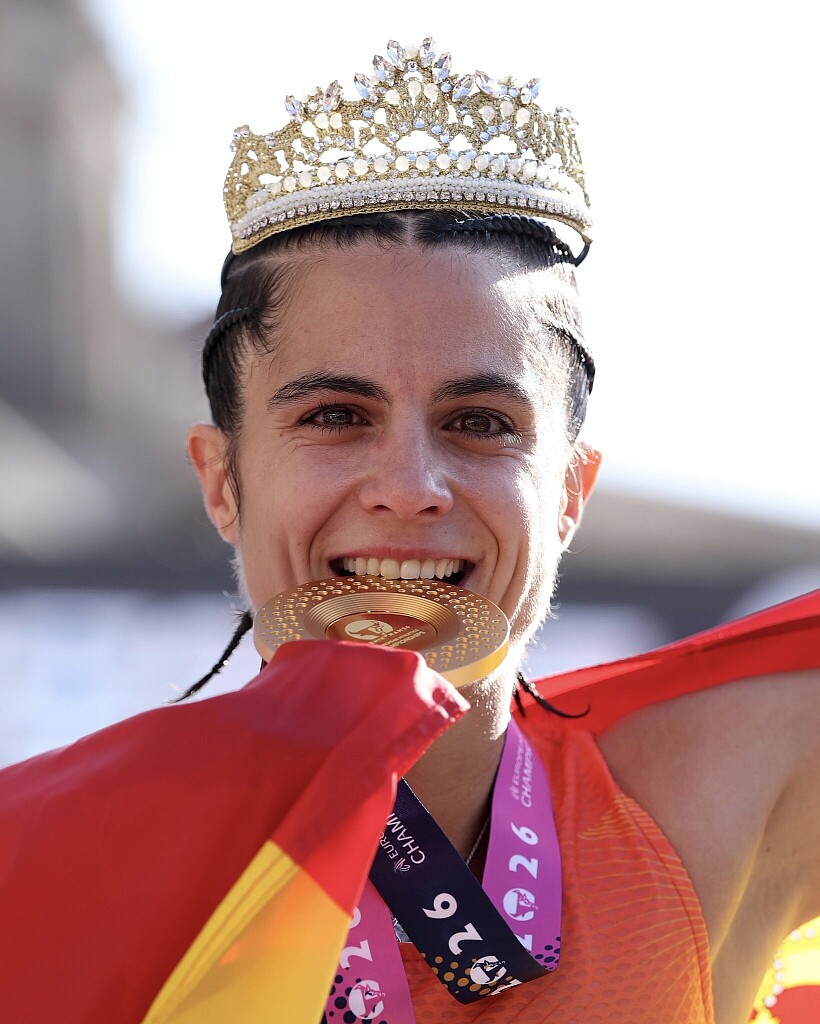
María Pérez Makes History with World Record and Inaugural European Half-Marathon Race Walk Gold
Spain’s María Pérez produced a breathtaking performance in Birmingham, storming to the inaugural European Athletics Championships women’s half-marathon race walk title in a stunning world record of 1:30:06*.
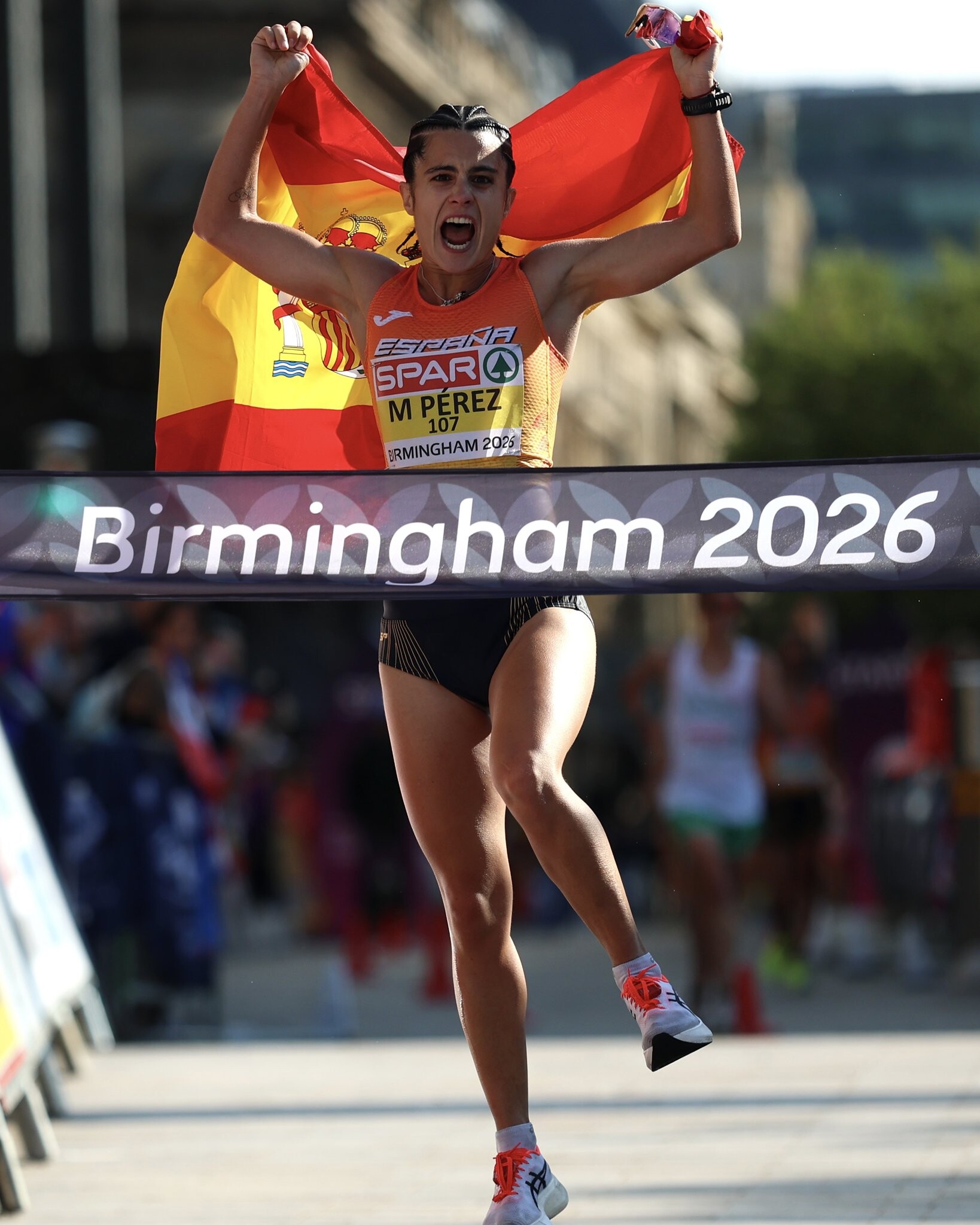
The 30-year-old Spaniard delivered a commanding display on the streets of Birmingham, pulling away from the field in the closing stages to win the gold medal by almost a minute. Her performance established the first championship benchmark for the new European half-marathon race walk event and placed Pérez firmly at the centre of another historic moment in race walking.
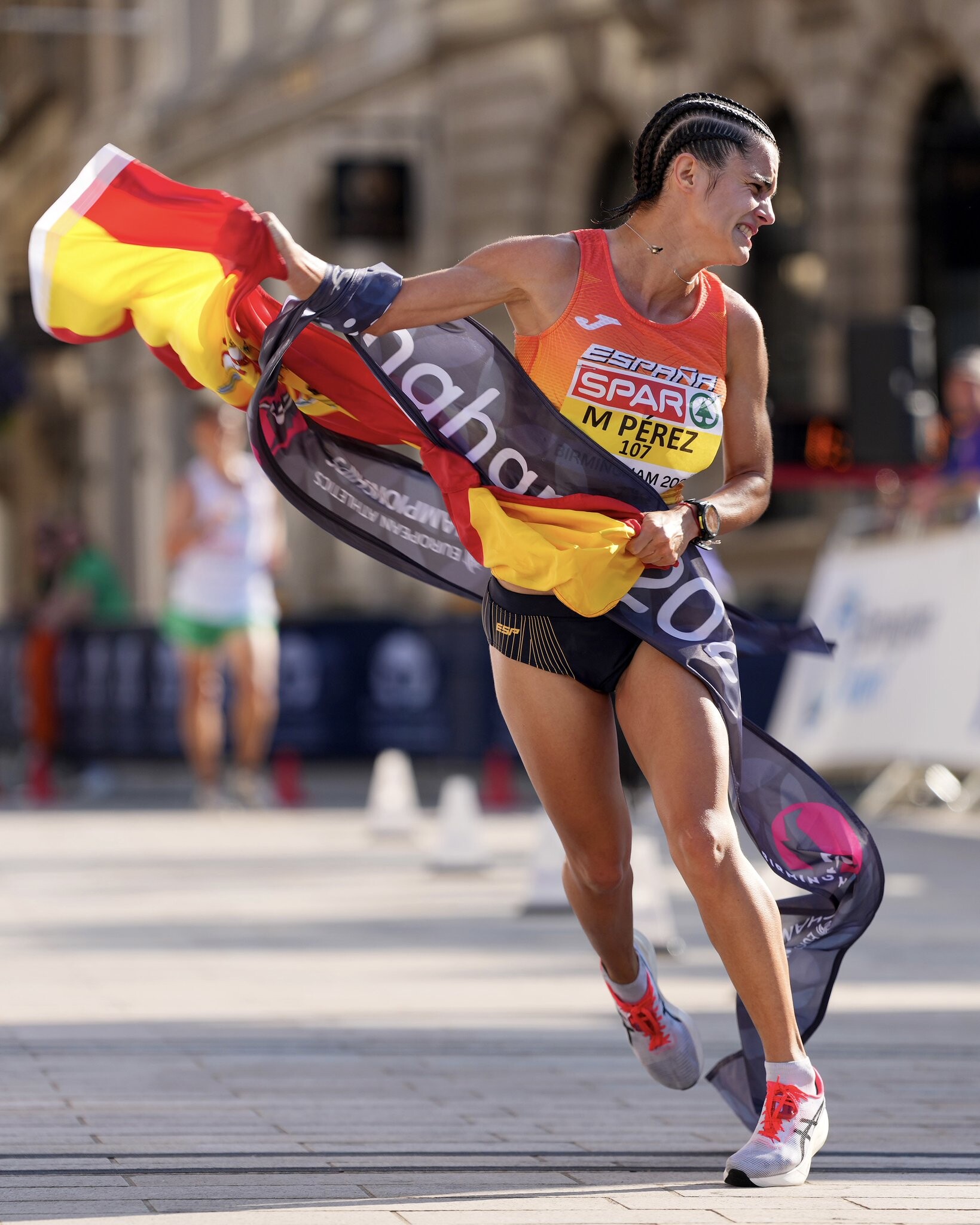
Pérez’s winning time smashed the previous world-best mark of 1:31:39, producing a remarkable improvement of 1 minute and 33 seconds. Italy’s Alexandrina Mihai followed in second in 1:31:04, while Ukraine’s Lyudmyla Olyanovska secured bronze in 1:31:07. France’s Pauline Stey was fourth in 1:31:12, meaning the top four all finished inside the previous world-record mark.
The victory adds another prestigious chapter to Pérez’s already remarkable career. Already the world-record holder over 35km, the Spanish star now has a second European title to her name, eight years after she captured the 20km race walk gold at the 2018 European Championships in Berlin.
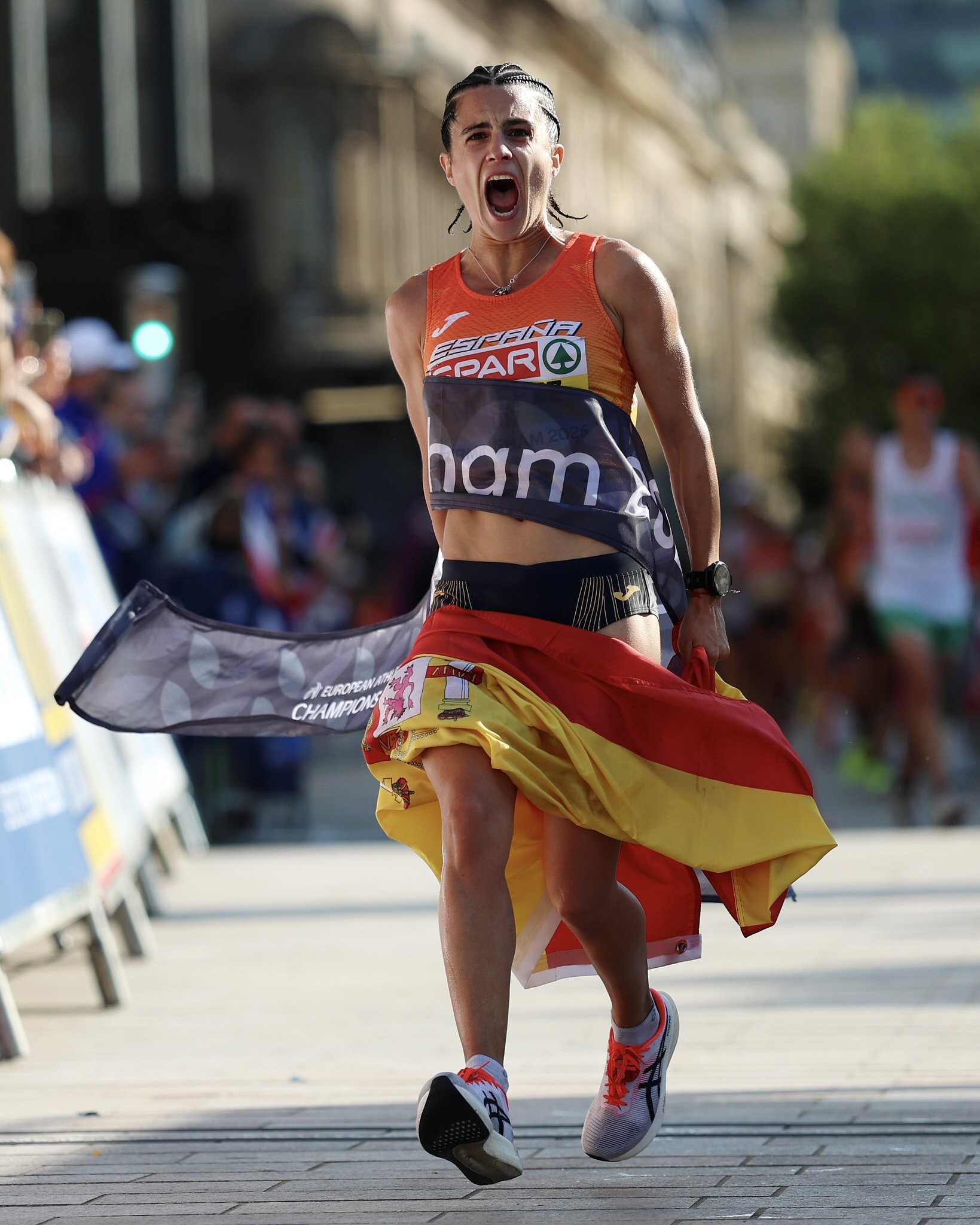
Pérez has also established herself as one of the dominant figures of modern race walking, having won world titles over both 20km and 35km. Her latest triumph demonstrates once again her ability to rise to the biggest occasions and set new standards while doing so.
The Birmingham race was therefore more than a European title. It was a landmark performance that gave the newly introduced half-marathon race walk its first championship champion and a world-record benchmark to chase.
María Pérez has done it again — another European crown, another record and another unforgettable chapter in her extraordinary career.
World record pending the usual ratification procedure.
by Erick Cheruiyot for My Best Runs.
Login to leave a comment
European Athletics Champioships
The27thEuropean Athletics Championshipswill be held from 10 to 16 August 2026 at theAlexander StadiuminBirmingham, United Kingdom.[1] This is the first time that a British city will have staged the European Athletics Championships although Birmingham has hosted many high-profile events, including the2007 European Athletics Indoor Championships, the2003and2018 IAAF World Indoor Championshipsand the2022 Commonwealth Games. Alexander Stadium was renovated between 2019 and...
more...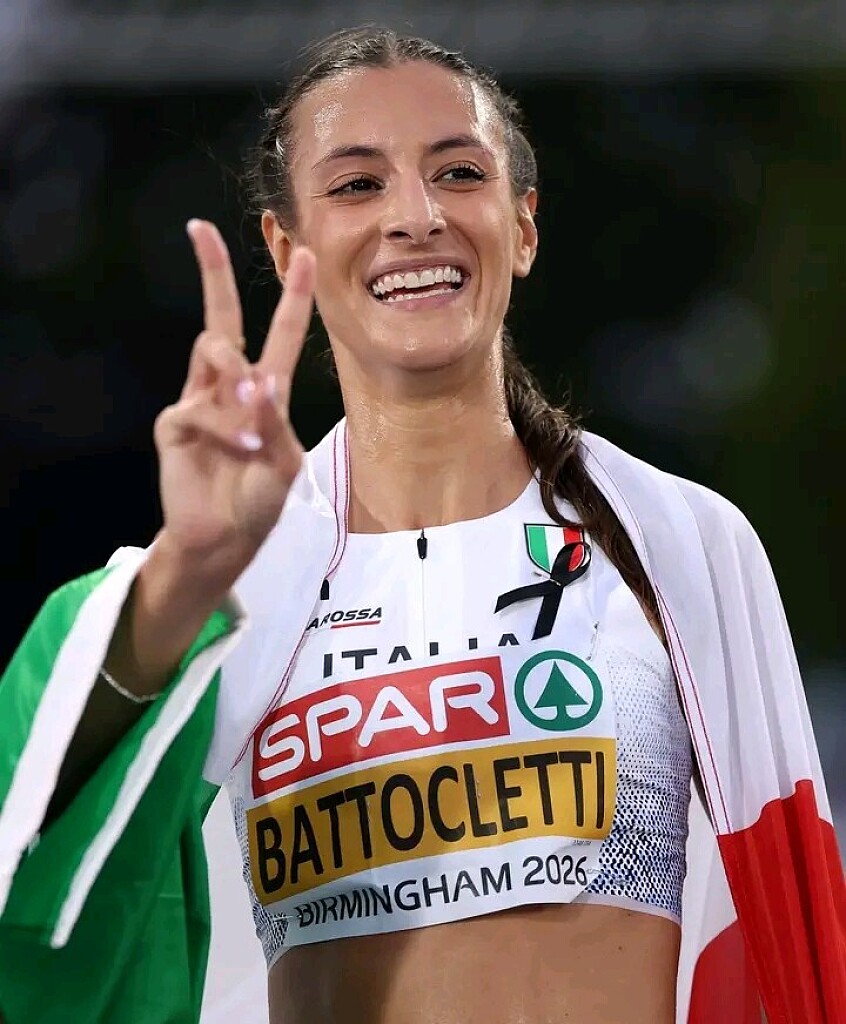
Nadia Battocletti Completes Golden Double to Reign Supreme in European Distance Running
Nadia Battocletti has once again stamped her authority on European distance running, producing a composed and decisive performance to win the women’s 10,000m at the 2026 European Athletics Championships in Birmingham.
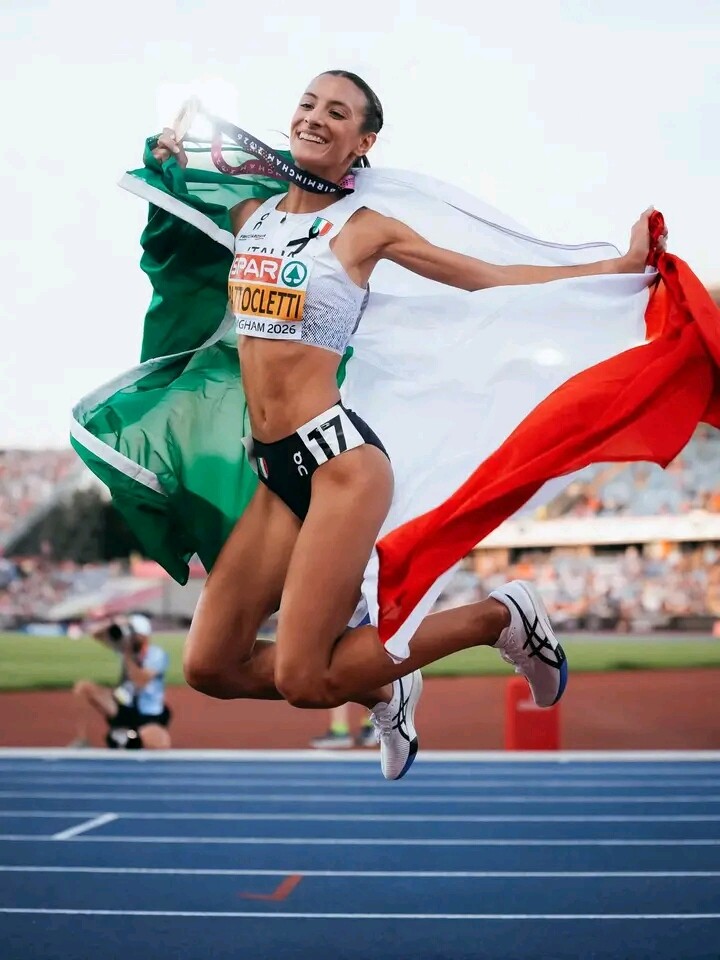
The Italian crossed the line in 31:41.17 to successfully defend her European 10,000m title and complete a remarkable 5000m–10,000m golden double at the championships. Her latest triumph further underlines her status as one of the continent’s outstanding long-distance runners.
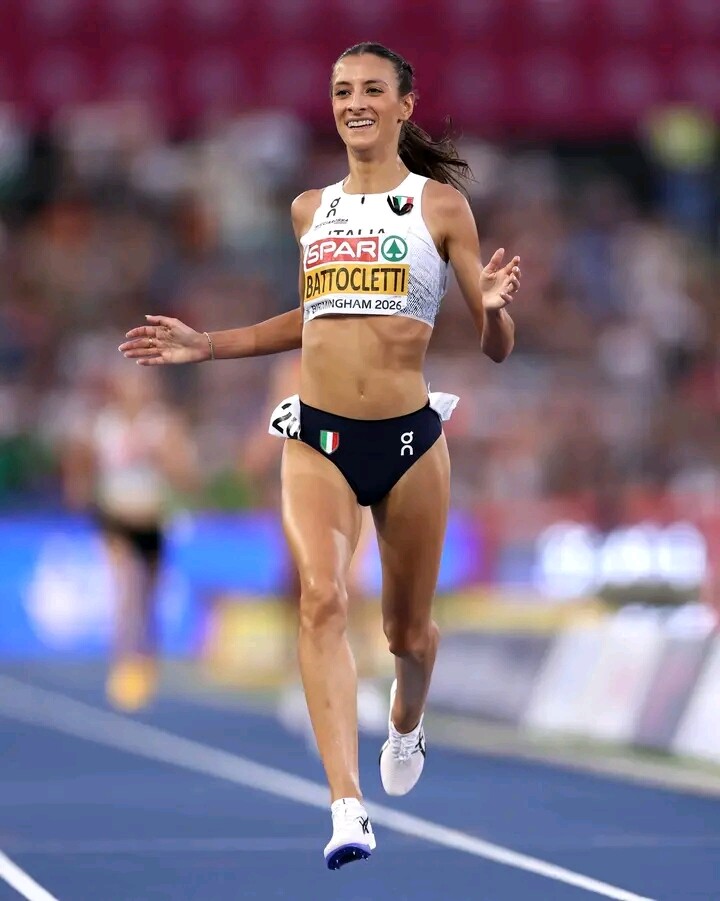
Battocletti had already demonstrated her exceptional class earlier in the championships by retaining the women’s 5000m title. She returned to the Alexander Stadium with another major challenge ahead, but once again displayed the tactical intelligence, patience and finishing strength that have become hallmarks of her racing.
The 10,000m final developed into a fiercely contested battle, with Battocletti having to withstand strong challenges from Maureen Koster of the Netherlands and Belgium’s Jana van Lent. In the decisive stages, however, the Italian found the extra gear required to break clear and secure another European crown.
Koster produced an outstanding performance to take silver in 31:45.76, while Van Lent completed the podium with bronze in 31:47.81.
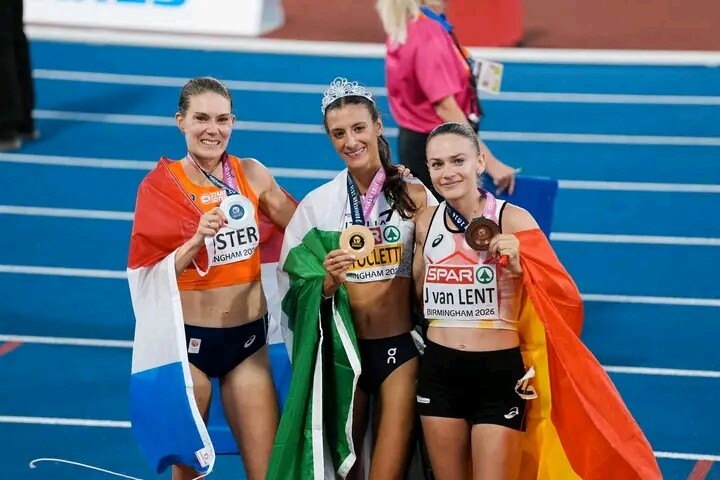
Spain’s Idaira Prieto was fourth in an impressive 31:59.84, setting a personal best, while Italy enjoyed further success as Elisa Palmero and Federica del Buono finished fifth and sixth respectively in 32:00.06 and 32:01.42. The result gave Italy an impressive three athletes inside the top six.
Maruša Mišmaš Zrimšek of Slovenia finished seventh in 32:02.57, followed by Great Britain’s Megan Keith in 32:04.81, a season best. Germany’s Lisa Merkel was ninth in 32:09.07, while Belgium’s Lisa Rooms completed the top 10 with a personal-best 32:10.22.
The depth of the final was reflected throughout the field, with Chloé Herbiet of Belgium recording a season best of 32:11.71, Slovenia’s Klara Lukan running a season-best 32:18.16, and several other athletes producing performances around the 32-minute barrier.
For Battocletti, though, the night belonged entirely to her.
Winning one European title is a remarkable achievement. Winning two individual distance titles at the same championships is a statement of extraordinary consistency, endurance and competitive maturity. By completing the 5000m and 10,000m double, Battocletti has reinforced her position at the summit of European distance running and added another defining chapter to her rapidly growing legacy.
Her Birmingham campaign has therefore become more than a collection of medals. It has been a demonstration of control, versatility and championship excellence from an athlete who continues to thrive when the stakes are highest.
Women’s 10,000m final — Birmingham 2026
1. Nadia Battocletti (Italy) — 31:41.17
2. Maureen Koster (Netherlands) — 31:45.76
3. Jana van Lent (Belgium) — 31:47.81
4. Idaira Prieto (Spain) — 31:59.84 PB
5. Elisa Palmero (Italy) — 32:00.06
6. Federica del Buono (Italy) — 32:01.42
7. Maruša Mišmaš Zrimšek (Slovenia) — 32:02.57
8. Megan Keith (Great Britain) — 32:04.81 SB
9. Lisa Merkel (Germany) — 32:09.07
10. Lisa Rooms (Belgium) — 32:10.22 PB
11. Chloé Herbiet (Belgium) — 32:11.71 SB
12. Elzbieta Glinka (Poland) — 32:16.65
13. Klara Lukan (Slovenia) — 32:18.16 SB
14. Mariana Machado (Portugal) — 32:27.09
15. Hanne Mjøen Maridal (Norway) — 32:32.12
16. Izzy Fry (Great Britain) — 32:37.22
17. Anna Marie Nordengen Sirevåg (Norway) — 32:41.21
18. Jennifer Gulikers (Netherlands) — 32:48.71
19. Carla Gallardo (Spain) — 33:02.58
20. Fiona Everard (Ireland) — 33:08.60
21. Alessia Zarbo (France) — 33:13.10
22. Eva Dieterich (Germany) — 33:32.38
23. Poppy Tank (Great Britain) — 34:03.99
Did not finish: Niamh Allen (Ireland), Diane van Es (Netherlands)
Did not start: Ilona Mononen (Finland)
Battocletti’s double is now one of the defining performances of Birmingham 2026 — a golden statement from Italy’s distance-running queen.
by Erick Cheruiyot for My Best Runs.
Login to leave a comment
European Athletics Champioships
The27thEuropean Athletics Championshipswill be held from 10 to 16 August 2026 at theAlexander StadiuminBirmingham, United Kingdom.[1] This is the first time that a British city will have staged the European Athletics Championships although Birmingham has hosted many high-profile events, including the2007 European Athletics Indoor Championships, the2003and2018 IAAF World Indoor Championshipsand the2022 Commonwealth Games. Alexander Stadium was renovated between 2019 and...
more...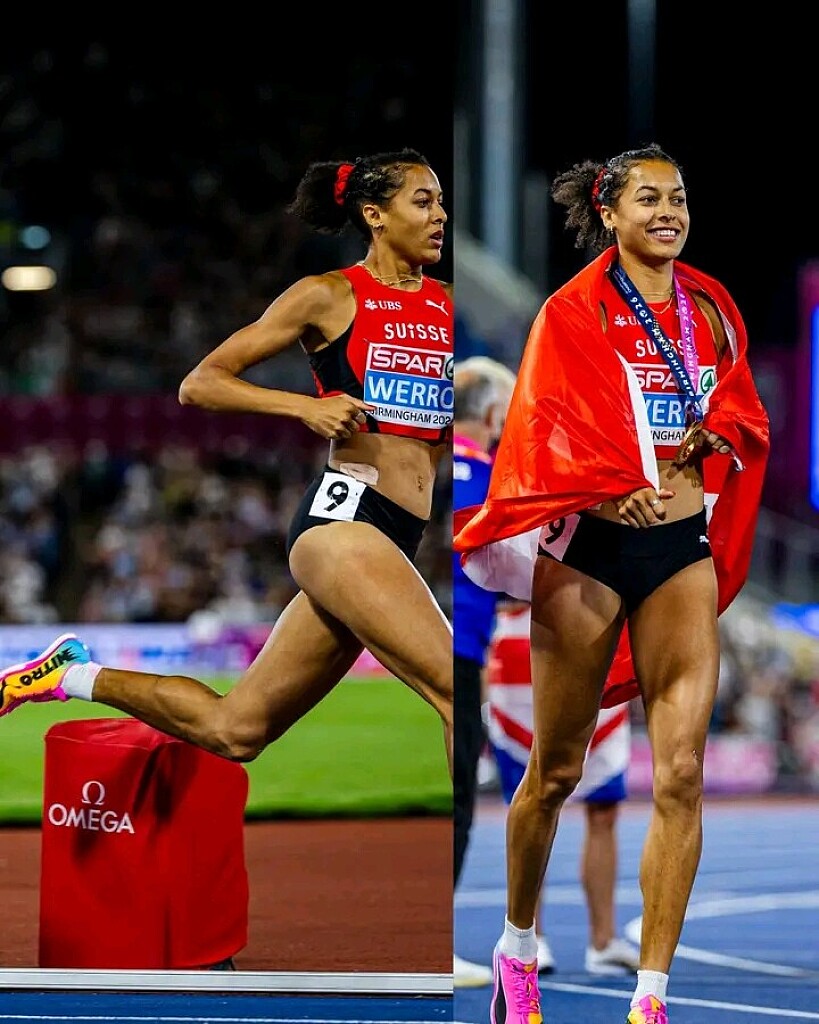
Audrey Werro Rules the European 800m as the Big Three Deliver a Birmingham Classic
Audrey Werro has firmly established herself among the world's leading 800m runners after producing a breathtaking performance to claim European Championship gold in Birmingham, winning one of the most eagerly anticipated finals in recent middle-distance history.
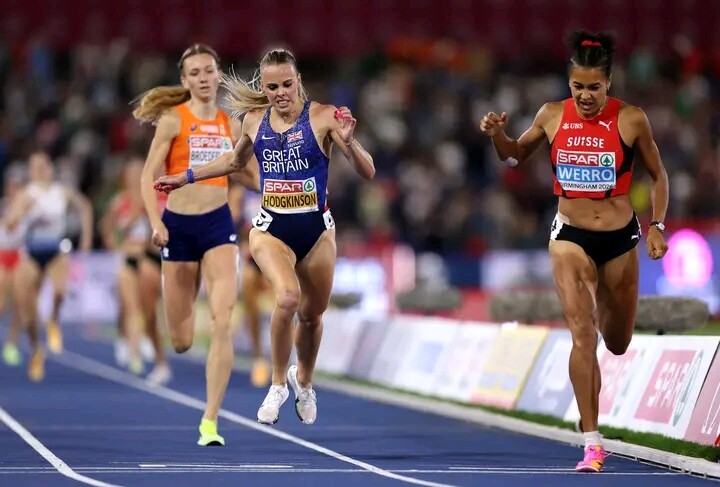
The Swiss star delivered when it mattered most, stopping the clock at a sensational 1:54.81 to set a new European Championships record and hold off Britain's Olympic champion and defending European champion, Keely Hodgkinson, who took silver in 1:55.01.
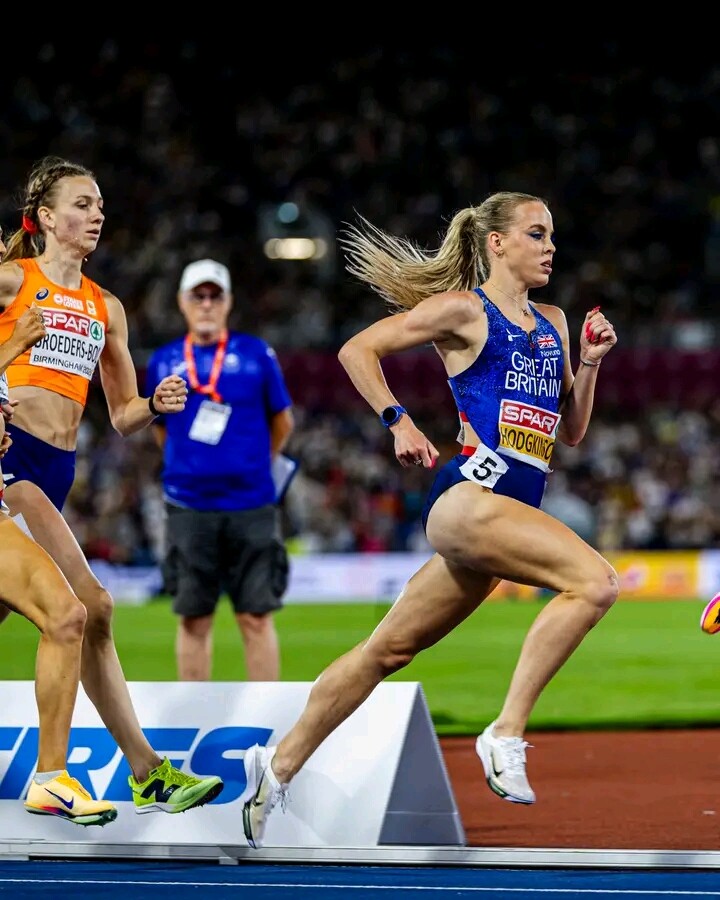
The Netherlands' Femke Broeders-Bol completed an extraordinary podium, charging home to secure bronze in 1:55.54, a time that equalled the Dutch national record.
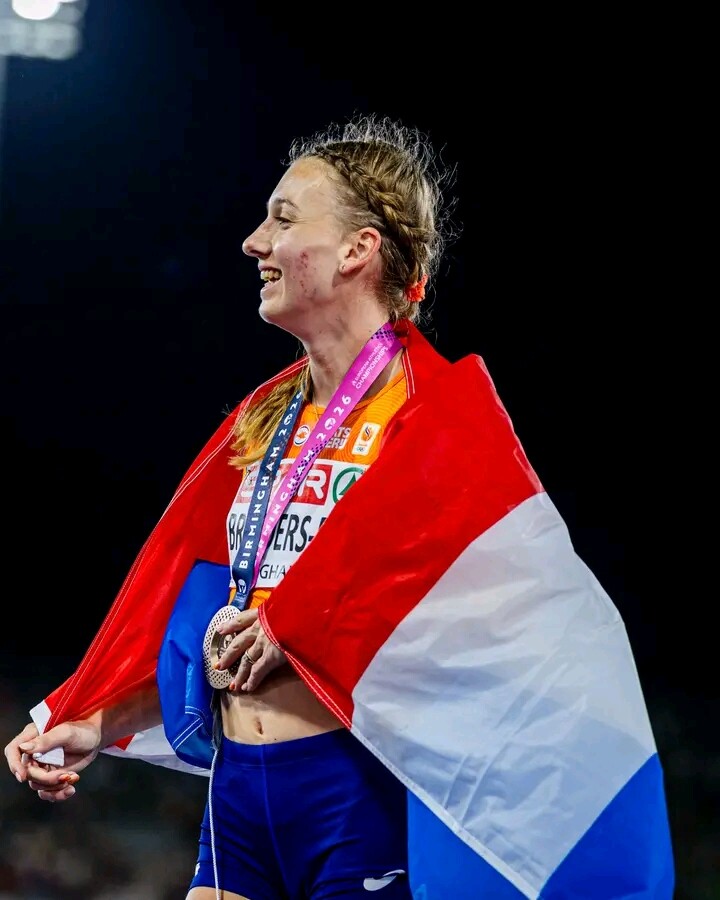
It was everything the build-up had promised.
For months, anticipation had surrounded the possibility of seeing Werro, Hodgkinson and Broeders-Bol finally line up together in the same major championship final. In Birmingham, the "Big Three" finally came together—and the track wrote its own remarkable story.
Werro won gold. Hodgkinson held onto silver. Broeders-Bol brought home bronze.
The quality of the performances was extraordinary. Werro seized control of the race and displayed remarkable strength and composure through the closing stages. Hodgkinson, propelled by the energy of her home crowd, refused to surrender and fought desperately down the finishing straight, but the Swiss athlete had just enough in reserve to stay clear.
The margin was only 0.20 seconds, underlining just how fiercely contested the final was.
Behind the leading pair, Broeders-Bol produced another outstanding performance to cross the line in 1:55.54, matching the Dutch national record and becoming part of an exceptional three-way battle at the front.
The top three were in a different class from the rest of the field, with all three breaking the 1:56 barrier and finishing almost four seconds ahead of the remainder of the finalists.
For Werro, the victory represents far more than another medal. It is a statement of intent.
The Swiss athlete arrived in Birmingham as one of the fastest 800m runners in the world and leaves the championships as European champion and championship-record holder.
Her triumph is even more remarkable considering the drama that preceded the final. Werro fell during her semi-final after contact with France's Anaïs Bourgoin and initially failed to qualify, before a successful Swiss appeal reinstated her in the final.
Less than 24 hours later, she transformed that setback into one of the defining performances of the championships.
Werro's season has already been extraordinary. She had previously run 1:53.80 in Paris, placing her among the fastest women ever over 800m. Now she has added a European title and championship record to her growing résumé.
For Hodgkinson, the result was undoubtedly a disappointment after arriving in Birmingham with hopes of completing a hat-trick of consecutive European 800m titles. The British star had won European gold in Munich in 2022 and Rome in 2024, but her quest for a third successive title ended with silver on home soil.
Nevertheless, Hodgkinson's 1:55.01 was itself a world-class performance, and she pushed Werro all the way to the line in a race that demanded extraordinary speed, strength and composure.
While the spotlight naturally fell on Werro and Hodgkinson, Broeders-Bol produced a performance worthy of its own headline. Her 1:55.54 secured the bronze medal while simultaneously equalling the Dutch national record, adding another remarkable dimension to an already historic final.
The official results placed Gabija Galvydytė fourth in 1:59.12, followed by Britain's Jemma Reekie in 1:59.15 and Italy's Eloisa Coiro in 1:59.35. Switzerland's Valentina Rosamilia finished seventh in 1:59.42, with compatriot Veronica Vancardo eighth in 2:00.17. France's Anaïs Bourgoin was ninth in 2:00.65, while Clara Liberman completed the field in 2:01.84.
But the night belonged overwhelmingly to the three women at the front.
Three athletes under 1:56. A championship record. A national record. A reigning champion forced to settle for silver. And a new European champion standing proudly at the top of the podium.
The Big Three finally came together in the final, and the story was written—Werro wins gold, Hodgkinson holds onto silver and Broeders-Bol brings it home in bronze.
Who needs fairytales when the track is writing stories like this?
The women's 800m final at the Birmingham 2026 European Championships delivered everything a championship race should: drama, speed, history, heartbreak and a thrilling battle between three exceptional athletes.
And when the story was finally written, Audrey Werro was the woman wearing the crown.
Gold for Werro. Silver for Hodgkinson. Bronze for Broeders-Bol.
A spectacular night for the 800m—and potentially the beginning of one of the most compelling rivalries in women's middle-distance running.
by Erick Cheruiyot for My Best Runs.
Login to leave a comment
European Athletics Champioships
The27thEuropean Athletics Championshipswill be held from 10 to 16 August 2026 at theAlexander StadiuminBirmingham, United Kingdom.[1] This is the first time that a British city will have staged the European Athletics Championships although Birmingham has hosted many high-profile events, including the2007 European Athletics Indoor Championships, the2003and2018 IAAF World Indoor Championshipsand the2022 Commonwealth Games. Alexander Stadium was renovated between 2019 and...
more...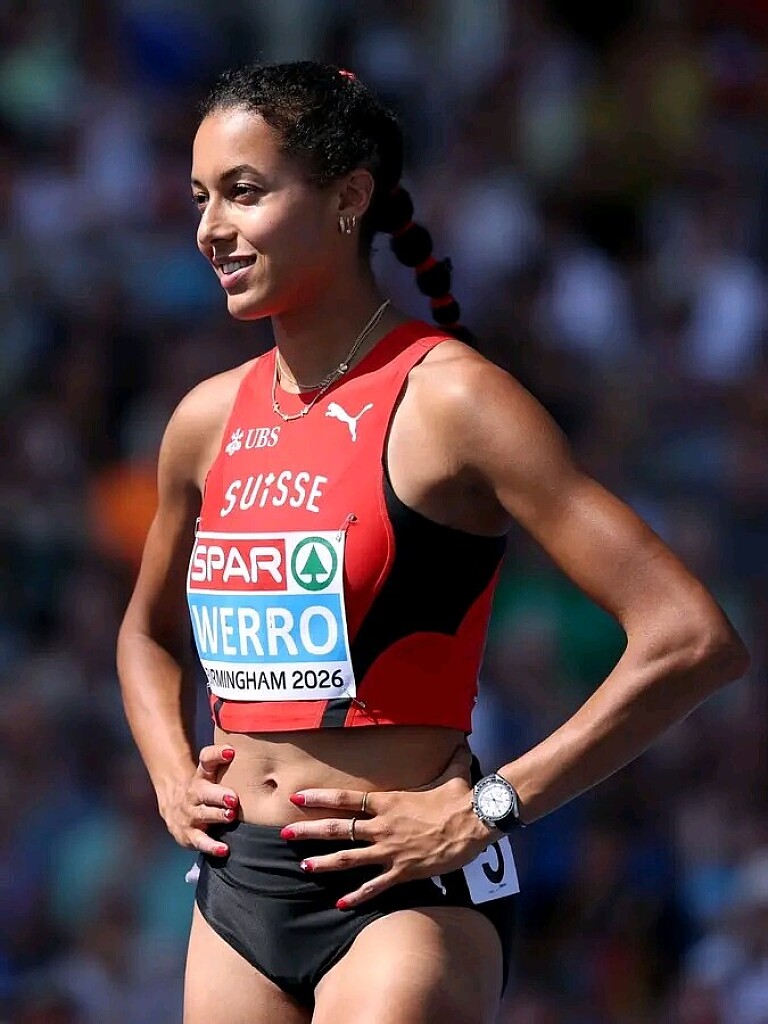
Dramatic Fall, Dramatic Reprieve: Werro Advances to 800m Final as Hodgkinson Leads the Way
The women’s 800m semifinals at the 2026 European Athletics Championships in Birmingham produced a dramatic sequence of events, with Keely Hodgkinson strengthening her title credentials and Audrey Werro receiving a remarkable reprieve after a late-race fall.
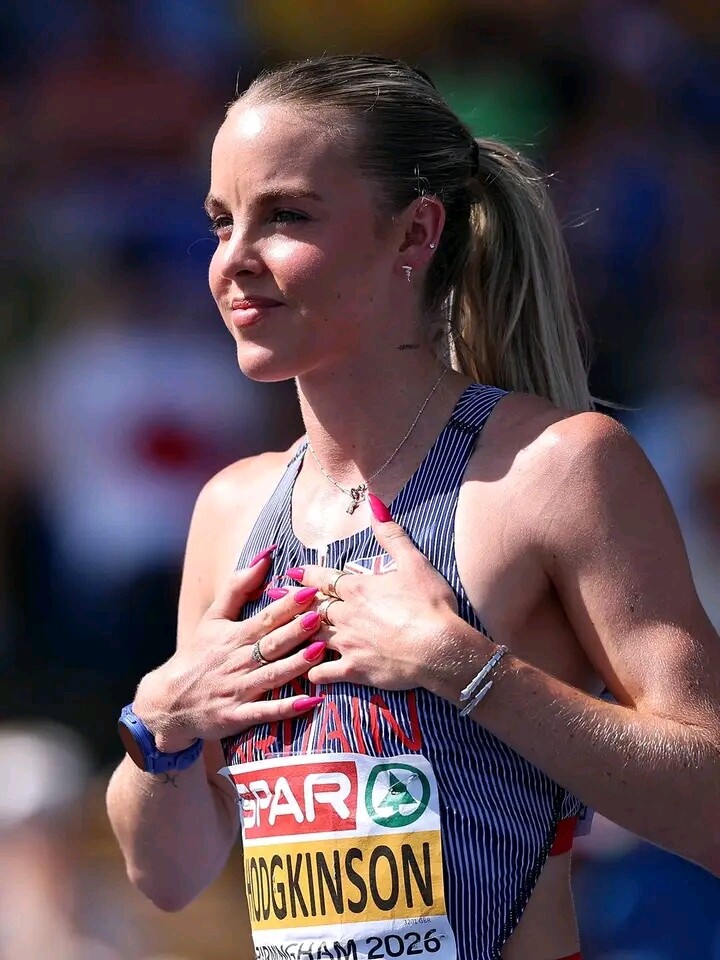
Hodgkinson delivered a composed and powerful performance in the second semifinal, winning in 1:57.38 to book her place in the final. The British favorite was pushed hard by the Netherlands’ Femke Broeders-Bol, who finished just 0.08 seconds behind in 1:57.46.
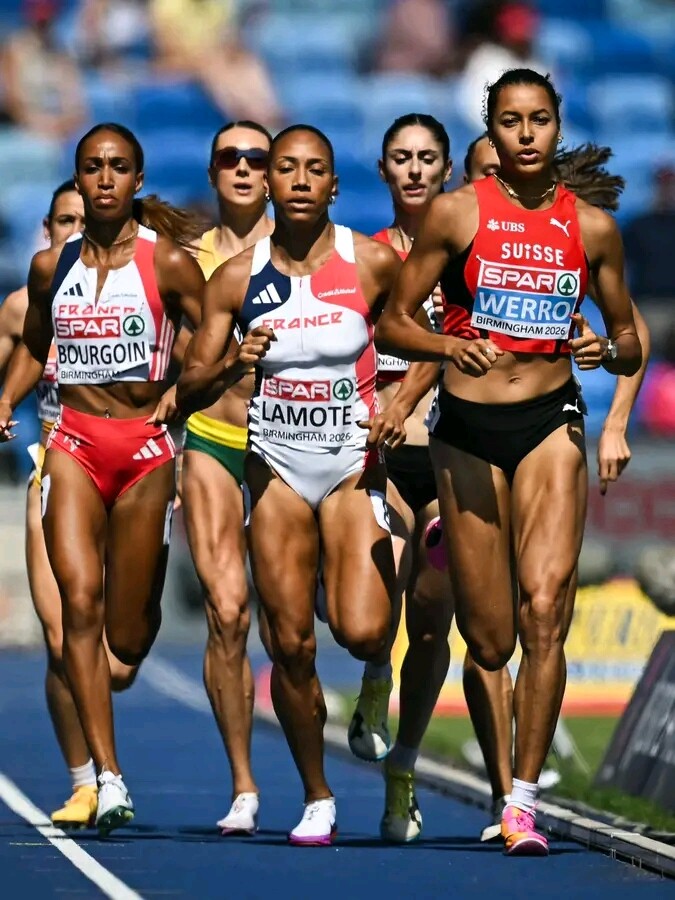
Italy’s Eloisa Coiro followed in 1:57.74, while Switzerland’s Valentina Rosamilia and France’s Clara Liberman advanced as time qualifiers after clocking 1:58.16 and 1:58.19, respectively.
Jemma Reekie also looked strong, securing automatic qualification in 1:58.61, with France’s Anaïs Bourgoin and Switzerland’s Veronica Vancardo joining her after finishing in 1:58.84 and 1:59.14.
But it was the opening semifinal that produced the most extraordinary moment of the night.
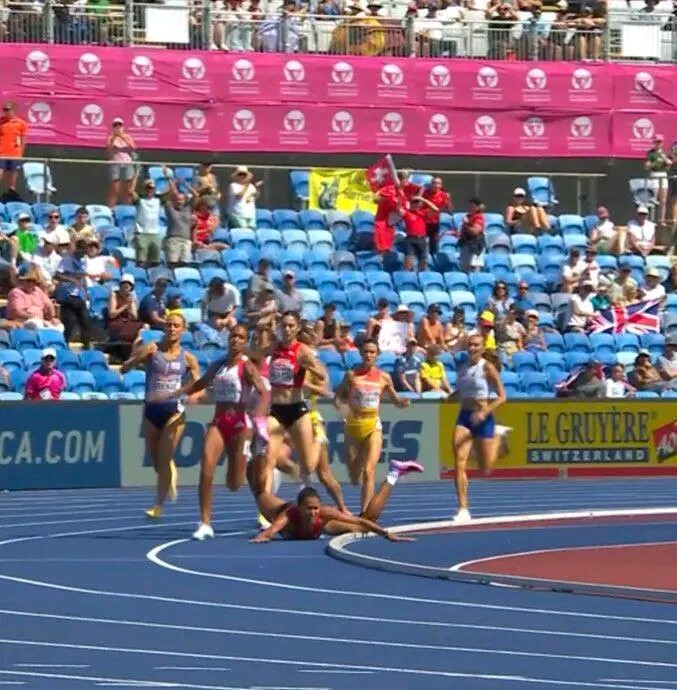
With just 150 metres remaining, Switzerland’s Audrey Werro was suddenly involved in a dramatic incident that appeared to end her race and potentially her championship.
As the runners entered the closing stages, Werro’s right foot made contact with the left hand of France’s Anaïs Bourgoin. The contact disrupted Werro’s stride at a crucial moment, causing the Swiss athlete to lose her balance and tumble heavily.
For several tense moments, it appeared that Werro’s hopes of reaching the final had disappeared. She eventually crossed the finish line in 2:35.35, far outside the qualifying times, after the fall had cost her significant ground.
But the drama did not end at the finish line.
Following a review of the incident, the referees determined that Werro had been impeded and advanced her to the women’s 800m final.
The decision gives the Swiss star a remarkable second chance. What initially looked like a devastating end to her semifinal has instead turned into one of the most dramatic qualification stories of the championships.
Lithuania’s Gabija Galvydyte was also advanced by referee decision after finishing in 2:03.59, meaning the final will feature an unusual 10-athlete field.
Women’s 800m Final Qualifiers
1. Keely Hodgkinson (Great Britain) — 1:57.38 Q
2. Femke Broeders-Bol (Netherlands) — 1:57.46 Q
3. Eloisa Coiro (Italy) — 1:57.74 Q
4. Valentina Rosamilia (Switzerland) — 1:58.16 q
5. Clara Liberman (France) — 1:58.19 q
6. Jemma Reekie (Great Britain) — 1:58.61 Q
7. Anaïs Bourgoin (France) — 1:58.84 Q
8. Veronica Vancardo (Switzerland) — 1:59.14 Q
9. Gabija Galvydyte (Lithuania) — 2:03.59 qR
10. Audrey Werro (Switzerland) — 2:35.35 qR
Q = qualified automatically
q = qualified by time
qR= advanced by referee decision
Werro’s reinstatement has completely changed the complexion of the final. Instead of watching the championship from the sidelines after a heartbreaking fall, the Swiss athlete will return to the track with another opportunity to fight for a place on the podium.
Hodgkinson, meanwhile, heads into the final with the fastest semifinal time and renewed confidence. But with Broeders-Bol, Reekie, Coiro and the rest of the field ready to challenge, the European 800m title is still firmly up for grabs.
After one of the most dramatic semifinals of the championships, 10 athletes will now line up for the final — and Werro will be among them.
by Erick Cheruiyot for My Best Runs.
Login to leave a comment
European Athletics Champioships
The27thEuropean Athletics Championshipswill be held from 10 to 16 August 2026 at theAlexander StadiuminBirmingham, United Kingdom.[1] This is the first time that a British city will have staged the European Athletics Championships although Birmingham has hosted many high-profile events, including the2007 European Athletics Indoor Championships, the2003and2018 IAAF World Indoor Championshipsand the2022 Commonwealth Games. Alexander Stadium was renovated between 2019 and...
more...
Berlin’s Women’s Marathon Field Brimming With Elite Talent as Star-Studded Line-Up Takes Shape
The women’s field for the 2026 BMW BERLIN-MARATHON is rapidly developing into one of the most intriguing marathon line-ups of the year, bringing together world-class champions, established contenders and an exciting collection of athletes determined to make their mark on one of the sport’s fastest stages.
At the forefront is Ethiopia’s Tigst Assefa, whose extraordinary marathon career has already placed her among the all-time greats. Assefa is the current women-only marathon world-record holder, having improved her own mark to 2:15:41 at the 2026 TCS London Marathon, where she successfully defended her title.
Her place in marathon history was secured even earlier in Berlin. At the 2023 BMW BERLIN-MARATHON, Assefa stormed to 2:11:53, smashing the then women’s world record by more than two minutes. The performance was subsequently ratified by World Athletics and remains among the fastest women’s marathon ever recorded in a mixed-gender race.
Kenya’s Rosemary Wanjiru, with a 2:16:14 personal best, provides another formidable presence at the sharp end of the race, while Ethiopia’s Bedatu Hirpa adds yet another major threat to an already exceptional field.
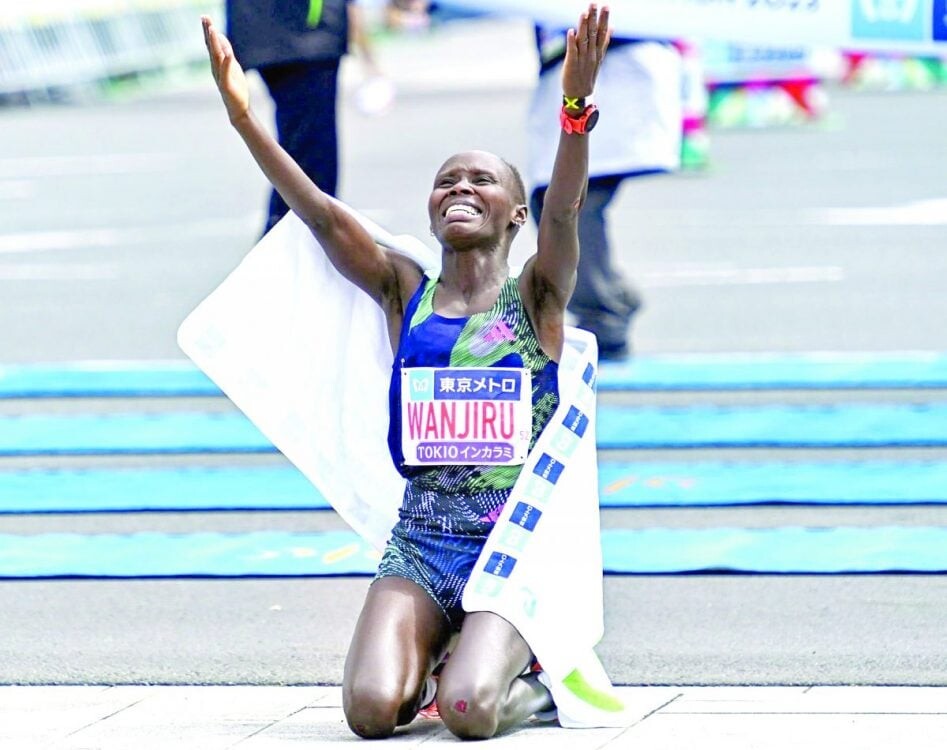
The 27-year-old Hirpa has built an impressive marathon résumé in a remarkably short period. She owns a 2:18:27 personal best, achieved when she won the Dubai Marathon, before continuing her winning momentum with victory at the Paris Marathon just months later. She also underlined her consistency this year with a second-place finish at the Osaka Marathon in 2:19:54. With her combination of speed, confidence and major-marathon experience, Hirpa could be one of the athletes capable of challenging the leading names in Berlin.
The Ethiopian challenge does not end there. Dera Dida (2:18:32), Zeineba Yimer (2:18:47), Bosena Mulatie (2:19:00), Misgane Alemayehu (2:19:08), Bekelech Gudeta (2:19:39), Gadise Mulu (2:20:59), Eebbisee Addunya (2:21:13) and Aminet Ahmed (2:21:24) give Ethiopia extraordinary depth, with every one of them boasting a personal best inside 2:22.
Kenya will also have strong representation through Evaline Chirchir (2:20:33) and Pascaline Jelagat (2:22:44), adding further firepower to a nation renowned for producing world-class marathon talent. China’s Deshun Zhang (2:20:53) also brings a sub-2:21 credential to the starting line.
Japan arrives with a deep group of proven marathoners. Rika Kaseda (2:21:55), Mao Uesugi (2:22:11), Natsuki Omori (2:23:45) and Rino Goshima (2:24:44) all possess impressive personal bests and could play an important role as the race develops. Morocco’s Fatima Gardadi (2:24:06) adds another strong international presence, while France’s Manon Trapp (2:23:38), the United States’ Jacqueline Gaughan (2:24:40) and Kodi Kleven (2:24:48), and Great Britain’s Lucy Reid (2:26:37) further strengthen the international depth.
Germany will have plenty to cheer for on home soil, with a sizeable contingent led by Kristina Hendel (2:27:29), who will be looking to rediscover the form that made her one of the country’s leading marathoners. After injury setbacks interrupted her progress, Hendel returns with the ambition of rebuilding her momentum on one of the biggest stages in the sport.
Anna Langerwisch is another German athlete attracting considerable interest. The 24-year-old has emerged rapidly among the country’s promising marathoners, winning the Hanover Half Marathon in 70:53 before improving her marathon personal best to 2:32:13 in Prague, remarkably in only her second marathon. Her recent 32:17 over 10 kilometres at the adidas Runners City Night in early August has added further intrigue around what she might produce over the full marathon distance.
Germany’s depth extends further, with Thea Heim (2:33:25), Cara Zollenkopf (2:36:05), Esther Pfeiffer (2:37:00), Katja Fischer (2:40:13), Sophia Wunsch (2:40:49) and Jule Vetter (2:42:18) also listed for the race. Their presence gives the home nation a broad representation across the field and adds another layer to an already fascinating international contest.
With Assefa’s extraordinary pedigree, Wanjiru’s proven class, Hirpa’s growing reputation and a supporting cast filled with athletes boasting sub-2:25 credentials, Berlin is shaping up for a women’s race packed with possibilities.
For Assefa, the return to Berlin carries an added historical dimension. It was on these very streets in 2023 that she produced the 2:11:53 performance that changed the landscape of women’s marathon running. Now, after lowering the women-only world record to 2:15:41 in London, she returns with another opportunity to write a new chapter in her remarkable career.
For the established stars, Berlin will be a chance to reaffirm their place among the marathon elite; for the emerging contenders, it could be the moment they announce themselves on one of the sport’s grandest stages.
The BMW BERLIN-MARATHON is renowned for fast racing and ambitious performances, and with such remarkable depth already assembled, the 2026 edition promises to deliver a captivating battle from the opening kilometres to the iconic finish on the Straße des 17. Juni.
by Erick Cheruiyot for My Best Runs.
Login to leave a comment

BMW Berlin Marathon
The story of the BERLIN-MARATHON is a story of the development of road running. When the first BERLIN-MARATHON was started on 13th October 1974 on a minor road next to the stadium of the organisers‘ club SC Charlottenburg Berlin 286 athletes had entered. The first winners were runners from Berlin: Günter Hallas (2:44:53), who still runs the BERLIN-MARATHON today, and...
more...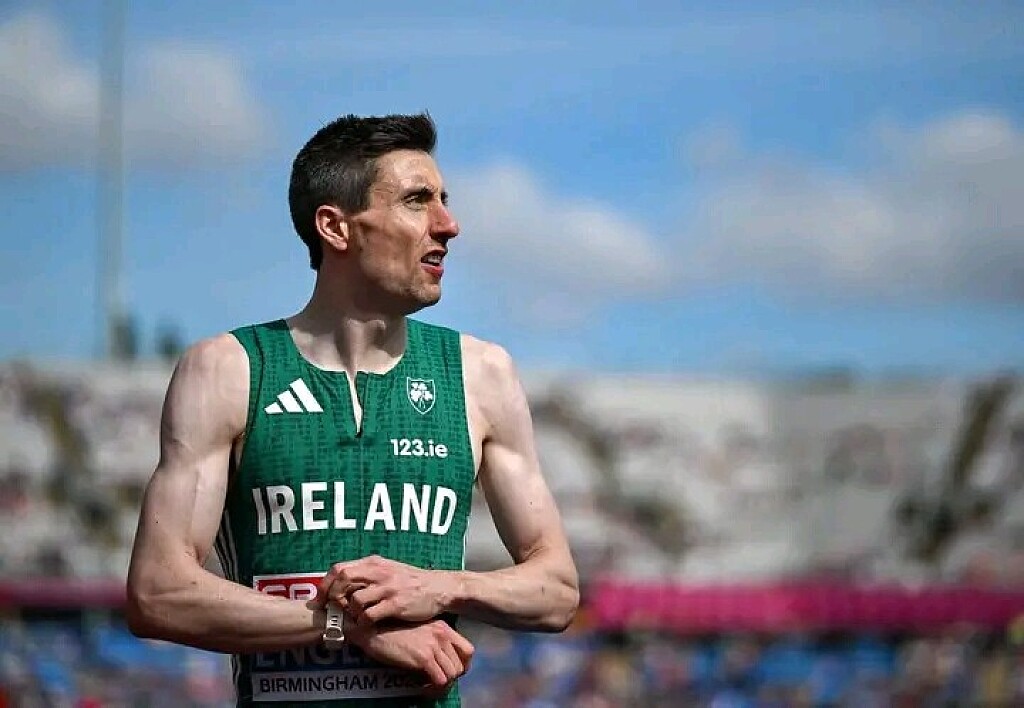
Mark English Shatters 48-Year-Old Championship Record as Birmingham 800m Final Promises Fireworks
Ireland’s Mark English produced one of the defining performances of the 2026 European Athletics Championships in Birmingham, storming to a breathtaking 1:43.49 to win his men’s 800m semi-final and rewrite the championship record books.
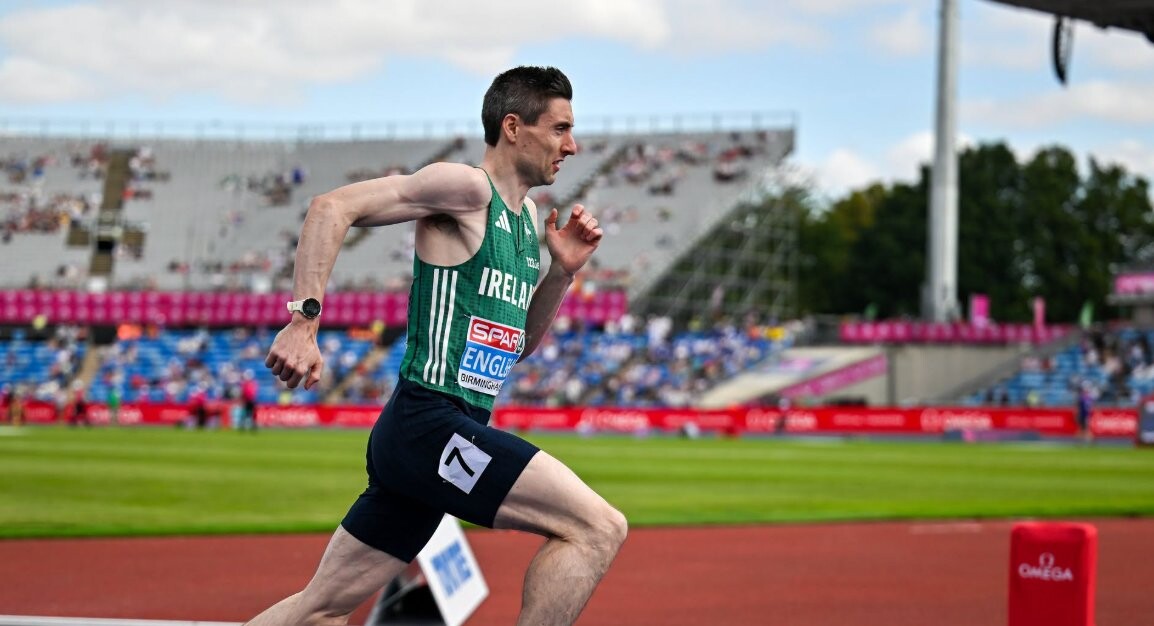
The 33-year-old Donegal native delivered a perfectly judged display of speed, strength and composure, attacking the race with confidence before unleashing a powerful finish that carried him through the line in a sensational time.
English passed the bell in 51.36 before maintaining his relentless rhythm over the second lap. As the race entered its decisive stages, he found another gear and powered away from his challengers, stopping the clock at 1:43.49 to become the fastest qualifier for the final.
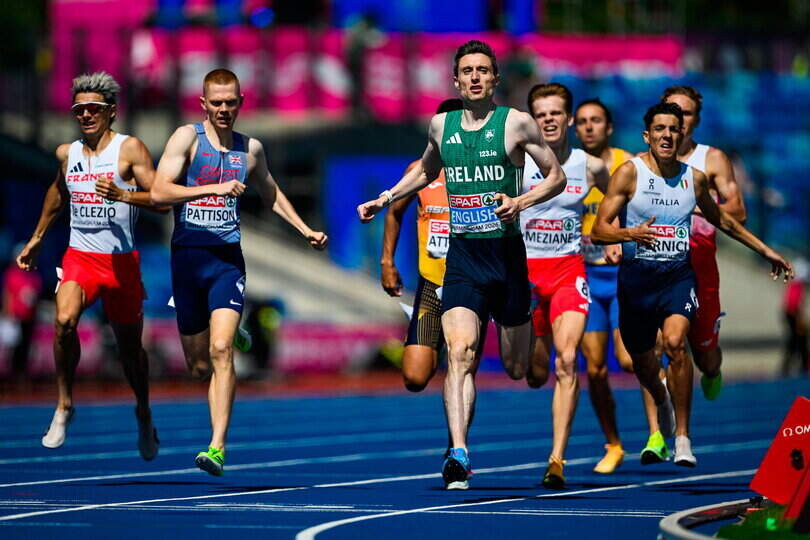
More significantly, his performance erased a record that had stood for nearly half a century. English lowered Olaf Beyer’s 1:43.84 championship record by 0.35 seconds, bringing an extraordinary 48-year chapter of European 800m history to a close.
The performance also underlined just how fiercely competitive the Birmingham final will be. Five athletes broke the 1:44 barrier in the semi-finals, setting the stage for what promises to be one of the most explosive 800m finals of the championships.
Great Britain’s Ben Pattison emerged as the second-fastest finalist in 1:43.72, while France’s Corentin Le Clezio ran a personal best of 1:43.80 to secure the third-fastest qualifying time. Spain’s Mohamed Attaoui followed with a season’s best of 1:43.82, while Italy’s Francesco Pernici completed the group of athletes under 1:44 with 1:43.84.
Great Britain’s Max Burgin advanced in 1:44.73, Croatia’s Marino Bloudek clocked 1:44.96, and Spain’s David Barroso also stopped the clock at 1:44.96 to complete the eight-man final field.
But all eyes will inevitably turn to English.
Having already dismantled a record that survived generations of European 800m runners, the Irishman now enters the final as the man everyone will be chasing. His 1:43.49 has not only established him as the championship’s fastest qualifier but has also raised the tantalising question of how much faster he can go when the medals are on the line.
With five finalists already under 1:44, Birmingham is ready for another spectacular battle.
And after making history in the semi-final, Mark English has given himself the perfect opportunity to write an even bigger chapter in the final.
by Erick Cheruiyot for My Best Runs.
Login to leave a comment
European Athletics Champioships
The27thEuropean Athletics Championshipswill be held from 10 to 16 August 2026 at theAlexander StadiuminBirmingham, United Kingdom.[1] This is the first time that a British city will have staged the European Athletics Championships although Birmingham has hosted many high-profile events, including the2007 European Athletics Indoor Championships, the2003and2018 IAAF World Indoor Championshipsand the2022 Commonwealth Games. Alexander Stadium was renovated between 2019 and...
more...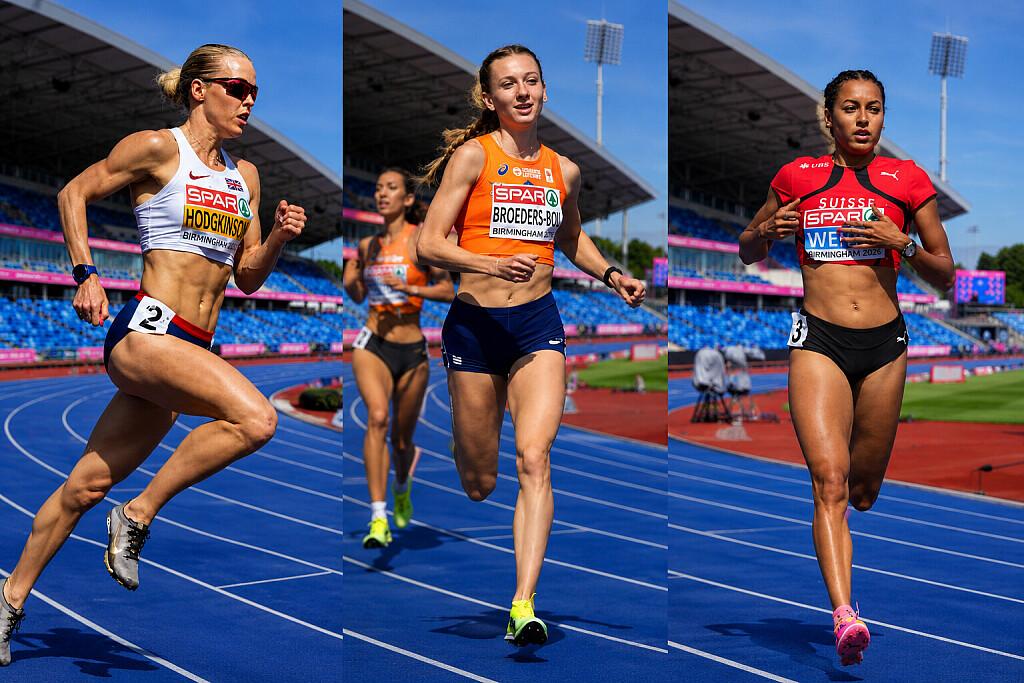
Hodgkinson Leads European 800m Charge as Coiro Smashes Italian Record in Birmingham
Keely Hodgkinson made an emphatic start to her European Athletics Championships campaign in Birmingham, delivering the fastest performance of the women’s 800m opening rounds as the defending champion immediately underlined her ambitions for another continental title.
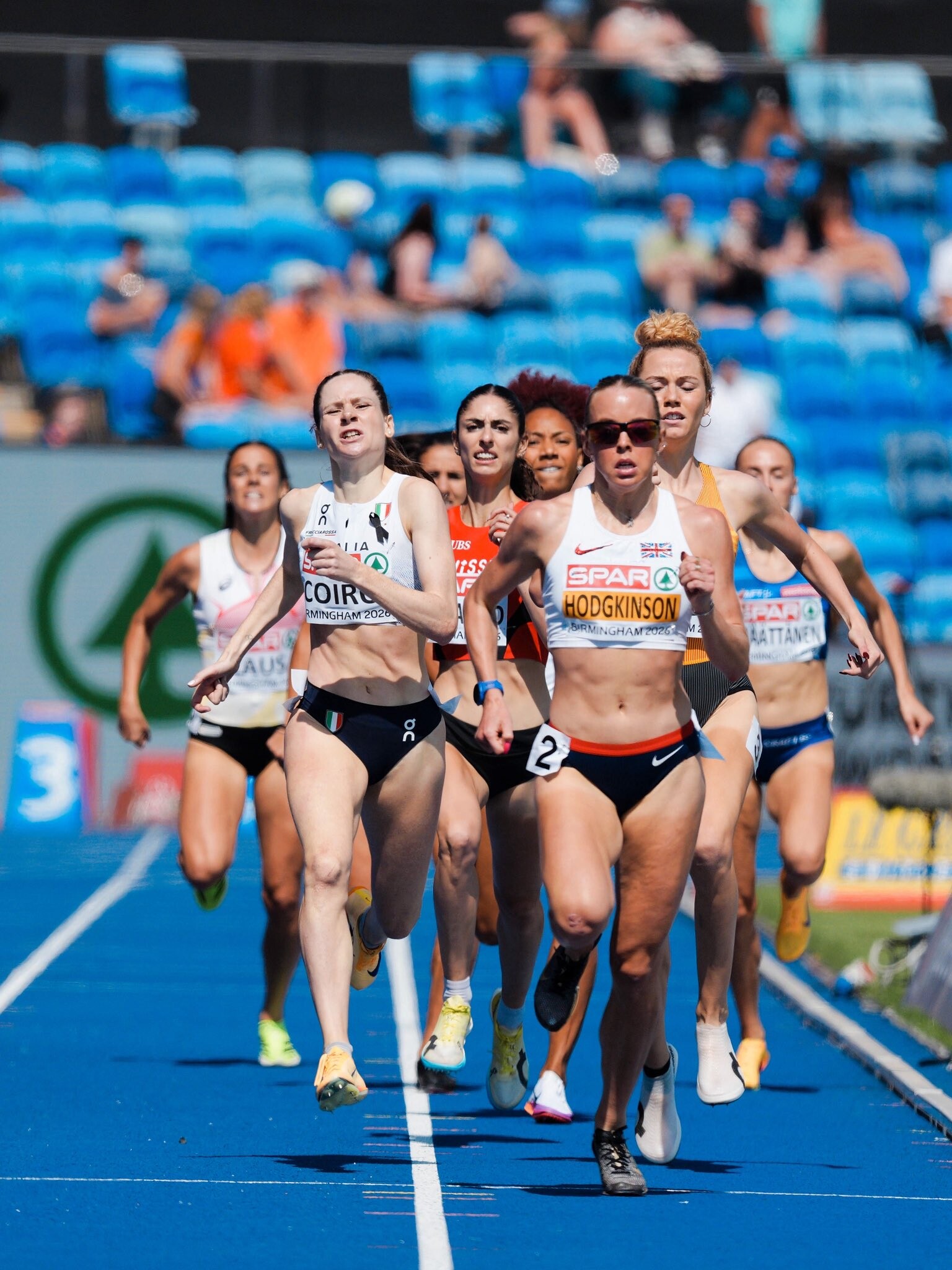
The British star looked relaxed yet authoritative throughout her heat, producing a controlled 1:57.28 to qualify fastest for the semifinals. Hodgkinson, who has established herself as one of Europe’s leading middle-distance athletes, never appeared troubled as she secured her progression with plenty of confidence.
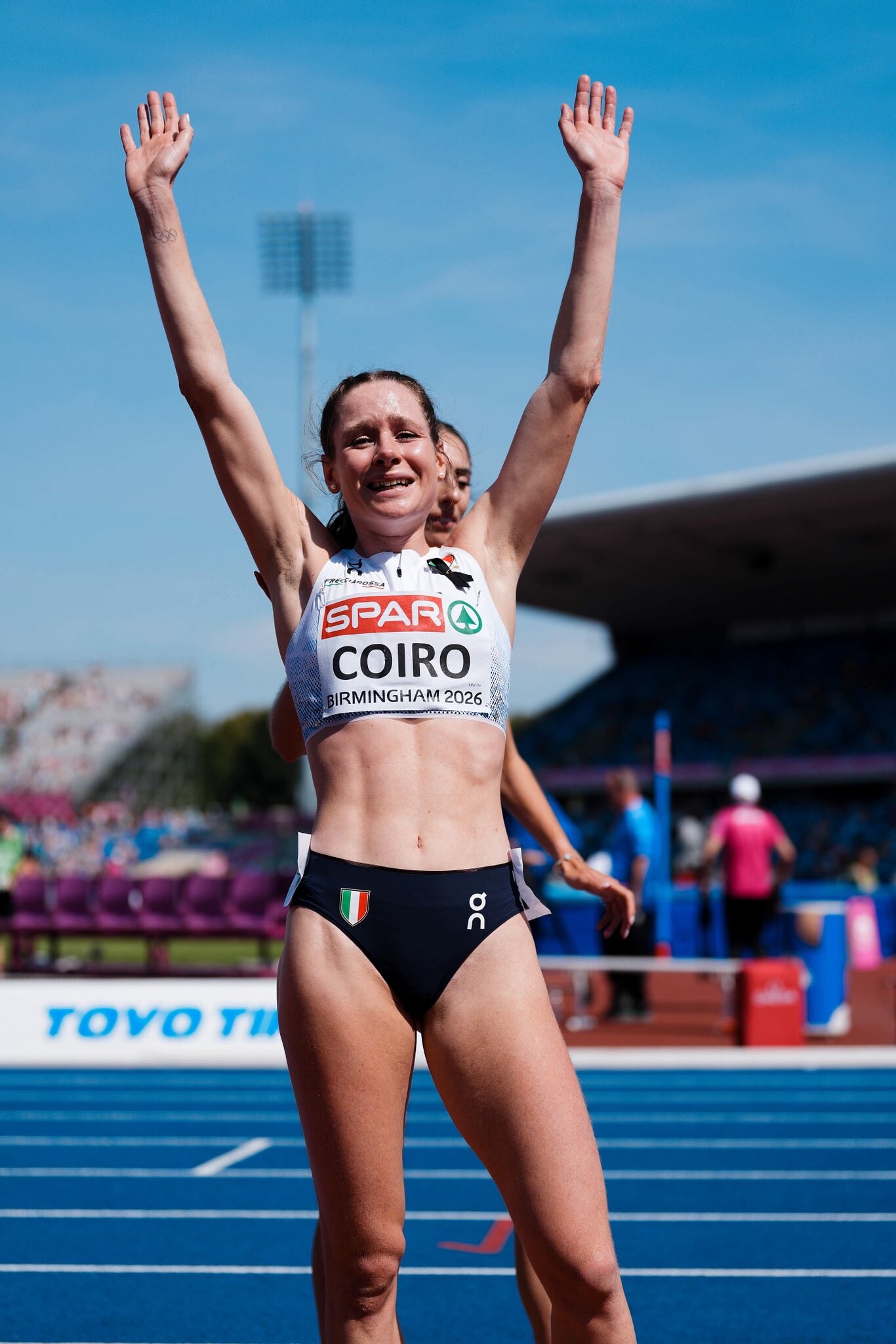
Behind her, Italy’s Eloisa Coiro produced one of the standout performances of the opening round. The Italian clocked 1:57.56, setting a new national record and advancing with a performance that immediately placed her among the leading contenders for the medals.
Germany’s Majtie Kolberg also impressed with 1:57.80, while Switzerland’s Audrey Werro followed closely in 1:57.83. Both athletes advanced automatically, adding further depth to an already formidable semifinal field.
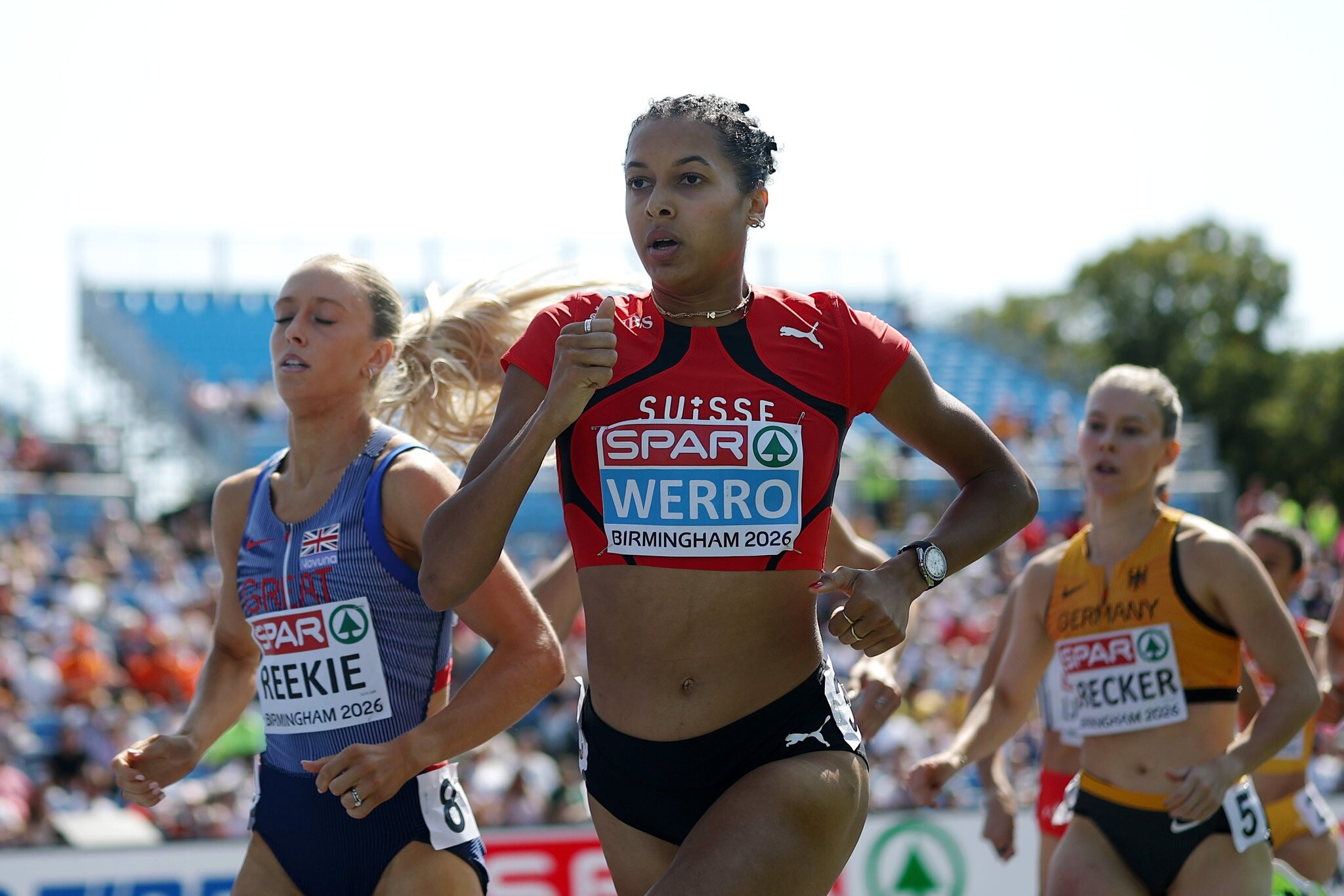
The battle for the remaining places was equally competitive. Italy’s Elena Bellò Vancardo ran 1:58.20, while France’s Clara Liberman stopped the clock at 1:58.23. Croatia’s Elena Vuković followed in 1:58.38, with Britain’s Jemma Reekie qualifying in 1:58.45.
Spain’s Lorea Mitjans and France’s Anaïs Lamotte also broke 1:59, recording 1:58.52 and 1:58.65 respectively. Lithuania’s Gabrielė Galvydytė, Switzerland’s Valentina Rosamilia and France’s Anaïs Bourgoin all advanced after running under 2:00.
The Netherlands’ Femke Broeders-Bol completed her heat in 1:59.96, while Slovakia’s Gabriela Gajanová and Spain’s Lorena Martín Royo secured the final automatic qualification places in 2:00.27 and 2:00.62.
With Hodgkinson, Werro, Reekie and Broeders-Bol safely through, and Coiro arriving in the semifinals with a new Italian record, the women’s 800m is already shaping up as one of the most fiercely contested events of the Birmingham championships.
Hodgkinson has made her intentions clear: the European crown remains hers to defend. But with Coiro producing a national-record performance and several of Europe’s strongest 800m runners advancing in impressive fashion, the road to another title is unlikely to be straightforward.
The semifinals now await — and the real fight for European supremacy is only beginning.
by Erick Cheruiyot for My Best Runs.
Login to leave a comment
European Athletics Champioships
The27thEuropean Athletics Championshipswill be held from 10 to 16 August 2026 at theAlexander StadiuminBirmingham, United Kingdom.[1] This is the first time that a British city will have staged the European Athletics Championships although Birmingham has hosted many high-profile events, including the2007 European Athletics Indoor Championships, the2003and2018 IAAF World Indoor Championshipsand the2022 Commonwealth Games. Alexander Stadium was renovated between 2019 and...
more...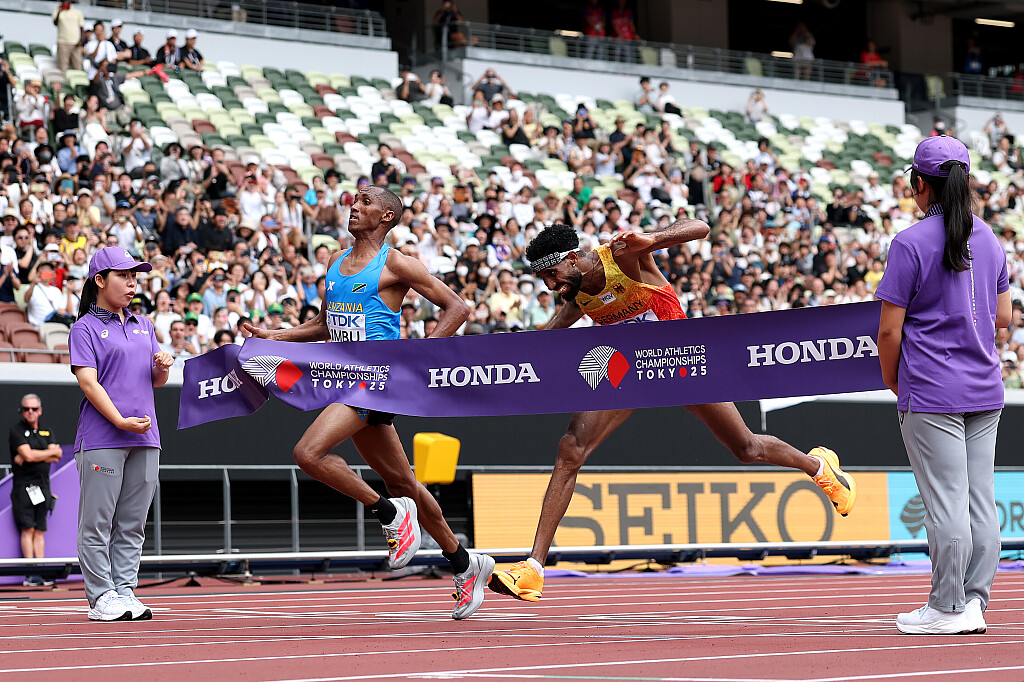
Can Amanal Petros Finally Turn Heartbreak into European Gold in Birmingham?
All eyes will be on Amanal Petros when the men’s marathon takes centre stage at the 2026 European Athletics Championships in Birmingham, with the German star chasing the major championship title that has repeatedly slipped through his fingers.
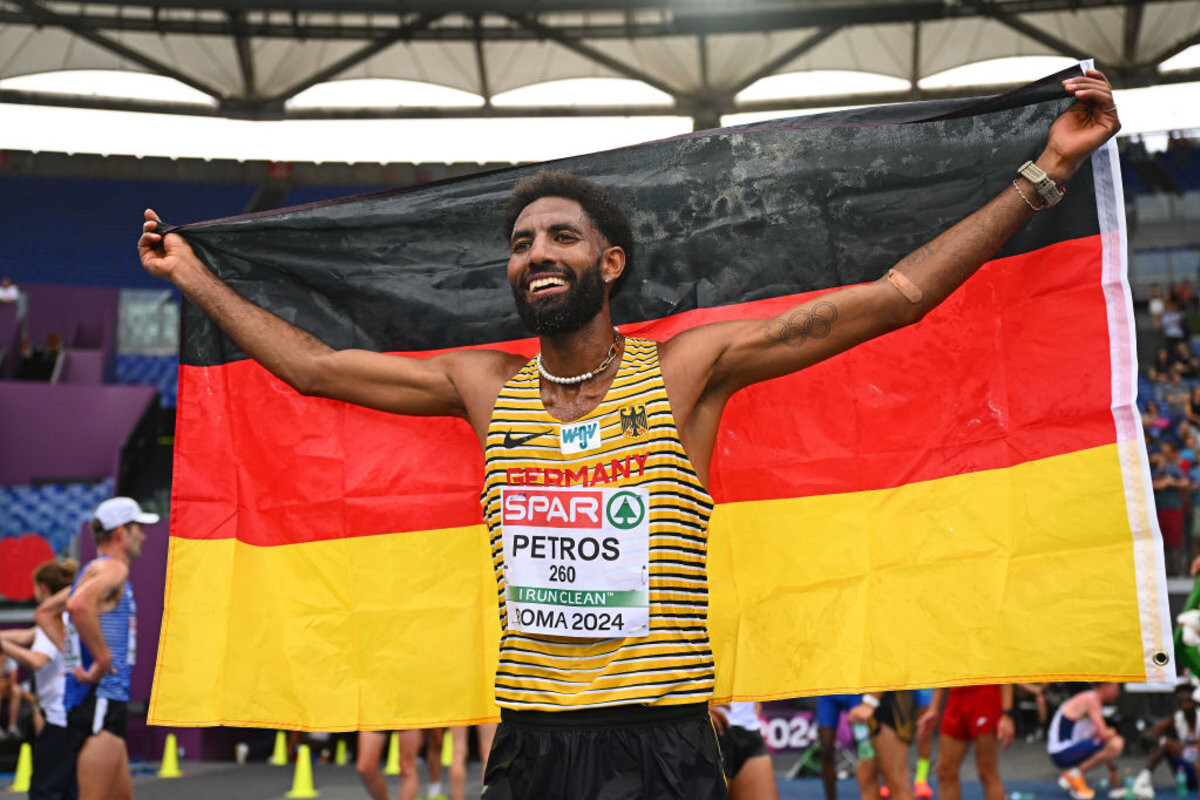
Petros arrives with one of the strongest résumés in the field and the credentials to challenge for gold. At 2:04:03, he is the third-fastest European marathoner of all time, behind Belgium’s Bashir Abdi (2:03:36) and France’s Morhad Amdouni (2:03:47). That level of performance underlines Petros’ ability to compete with the very best, although his career has also been marked by agonisingly narrow defeats on the biggest stages.
His most recent heartbreak came at the 2025 World Athletics Championships in Tokyo, where Tanzania’s Alphonce Simbu edged him out by just 0.03 seconds in one of the closest finishes in championship history. That defeat underlined both Petros’ quality and the fine margins that have prevented him from claiming an individual global title.
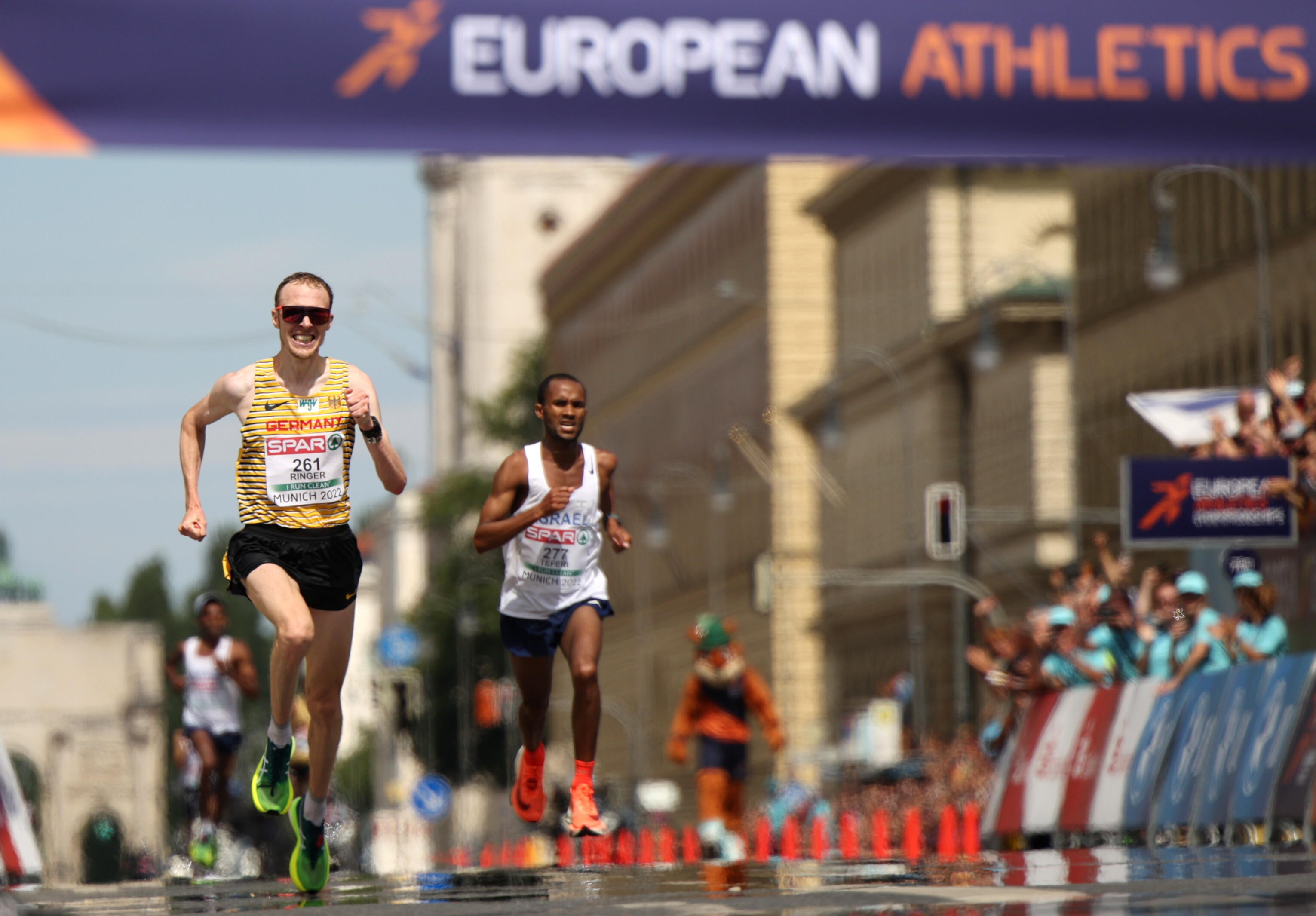
The European Championships have also brought frustration. At the 2024 European Athletics Championships, Petros took bronze in the half marathon after being beaten in a three-way finish by Italy’s Yemaneberhan Crippa. Two years earlier in Munich, he was unable to stay with the medal contenders during the decisive stages of the marathon.
Now Birmingham presents another opportunity—and Petros has every reason to believe this could finally be his moment.
His season-best of 2:08:31 does not tell the full story. At the London Marathon, Petros passed halfway in a blistering 61:16, initially targeting Bashir Abdi’s European record of 2:03:36, before easing during the latter stages. His 2:04:03 runner-up performance at the Valencia Marathon last December is arguably a much better indication of his true potential.
Standing in his way will be a strong German contingent, led alongside Petros by defending European champion Richard Ringer. Ringer produced one of the most memorable performances of the 2022 championships in Munich, unleashing a dramatic late surge during the final kilometre to overtake three athletes—including Petros—and snatch a remarkable victory.
At 37, Ringer continues to compete at an exceptional level. He produced the fastest marathon of his career in April, running 2:04:47 at the Boston Marathon to finish eighth overall while recording the fastest European time in the race.
Germany’s strength does not end there. Samuel Fitwi has been even faster in 2026, recording a personal best of 2:04:45 when finishing second at the Hamburg Marathon. That performance makes him the fastest athlete on the Birmingham entry list based on season’s bests.
With Petros, Ringer and Fitwi forming a formidable German trio, the team will have serious ambitions of collecting individual medals while also challenging for the team title. Their depth could prove particularly valuable in a championship marathon, where tactical racing and team strength can be just as important as raw personal-best times.
France’s Emmanuel Roudolff is among the principal threats to the German challenge. He established a personal best of 2:05:58 when finishing sixth at the Paris Marathon and has the speed to remain in contention if the race develops into a fast affair.
Veteran Kaan Kigen Özbilen will also bring considerable experience to the starting line. The Kenyan-born Turkish athlete, who once held the European record with 2:04:16, remains capable of competing at the highest level. He ran 2:05:59 for fifth in Barcelona earlier this year.
Israel will also arrive with a strong team, having won the marathon team title in Munich four years ago. Maru Teferi and Gashau Ayale, who claimed silver and bronze respectively in Munich, return with valuable championship experience and will hope to challenge for more medals in Birmingham.
Italy’s hopes will centre on Pietro Riva. With Crippa focusing on the 10,000m and Iliass Aouani sidelined by shin problems, Riva becomes Italy’s leading marathon contender. He finished second behind Crippa and ahead of Petros in the half marathon at the 2024 European Championships, giving him another opportunity to challenge the German favourite on the European stage.
For the home crowd, one of the most intriguing stories will be Mahamed Mahamed, who could give Britain a realistic shot at its first men’s European marathon medal in decades.
Great Britain has not won a men’s marathon medal at these championships since Ian Thompson claimed gold in Rome in 1974. Mahamed has emerged as a genuine contender after producing a lifetime best of 2:06:14 at the London Marathon in April. That performance made him the second-fastest British marathoner in history behind Mo Farah, while also placing him fourth among the Birmingham entrants based on 2026 season’s bests.
With a home crowd behind him and confidence gained from his breakthrough performance in London, Mahamed could become one of the most dangerous outsiders in the field.
Birmingham therefore promises a fascinating battle between proven championship performers, emerging German strength and a collection of experienced international challengers. Petros, however, remains the man at the centre of the story.
He has already come agonisingly close to major championship glory. He possesses the speed, experience and proven ability to run under 2:05. What remains is to produce the decisive performance when the medals are on the line.
After years of near misses, Birmingham could finally be the stage where Amanal Petros turns silver and heartbreak into European gold.
by Erick Cheruiyot for My Best Runs.
Login to leave a comment
European Athletics Champioships
The27thEuropean Athletics Championshipswill be held from 10 to 16 August 2026 at theAlexander StadiuminBirmingham, United Kingdom.[1] This is the first time that a British city will have staged the European Athletics Championships although Birmingham has hosted many high-profile events, including the2007 European Athletics Indoor Championships, the2003and2018 IAAF World Indoor Championshipsand the2022 Commonwealth Games. Alexander Stadium was renovated between 2019 and...
more...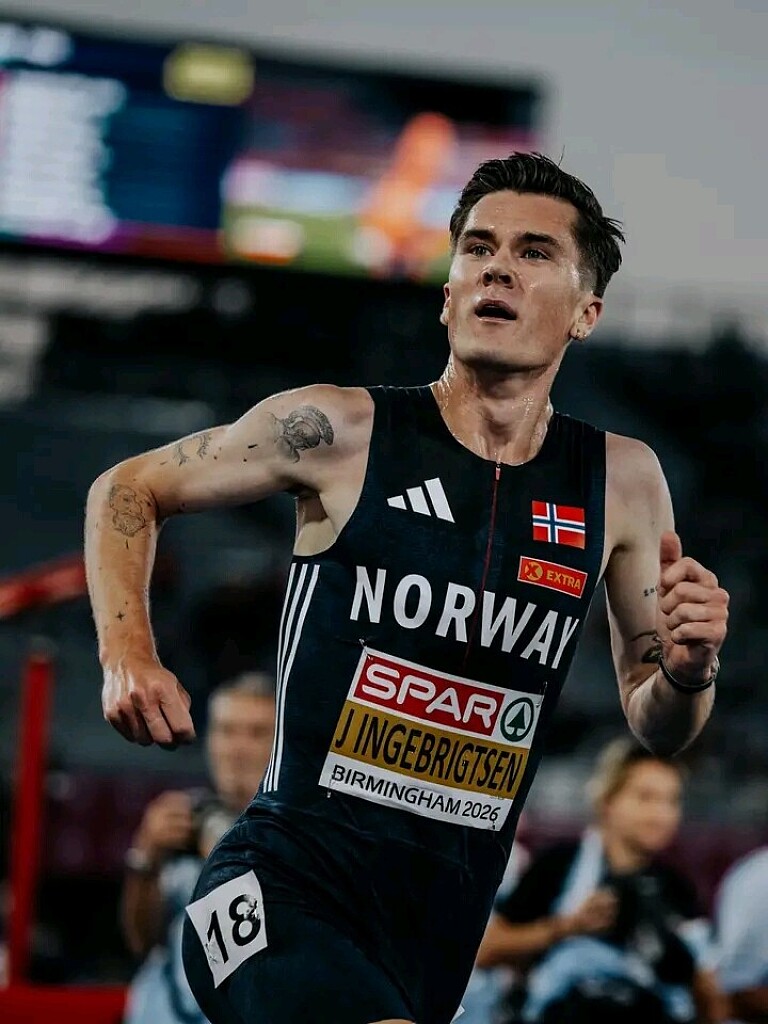
Jakob Ingebrigtsen Returns In Style With Fourth Straight European 5000m Gold
After 11 months away from competitive racing, Jakob Ingebrigtsen reminded the athletics world exactly why he remains one of distance running’s most formidable forces.
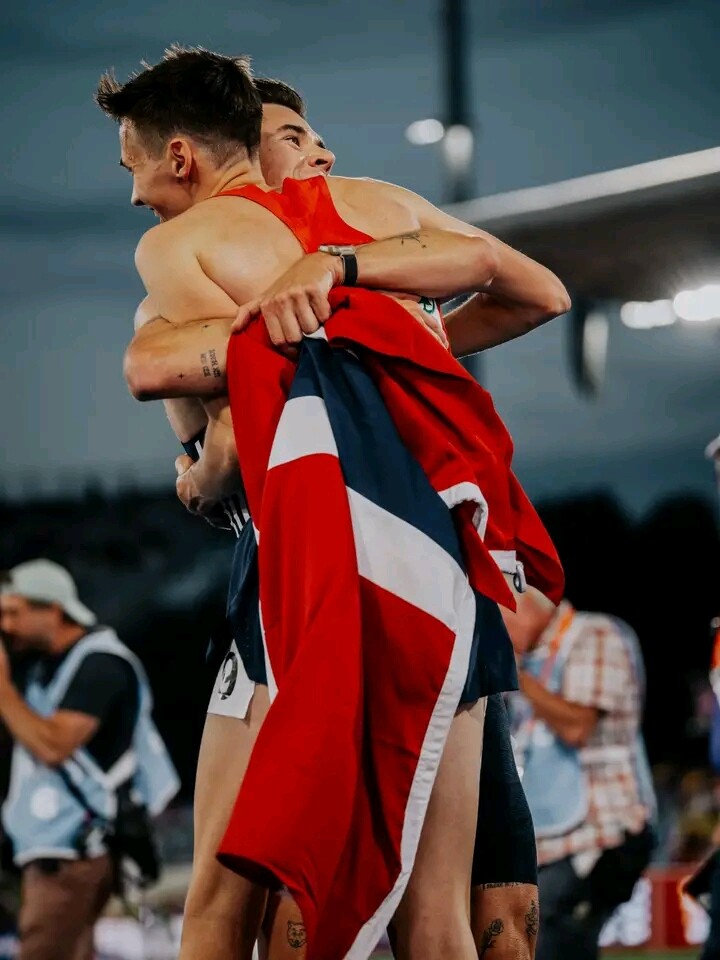
The Norwegian superstar made a spectacular return at the European Athletics Championships in Birmingham, producing a trademark finishing surge to capture his fourth consecutive European 5000m title in 13:15.29.
Making his first competitive appearance since 2025 following an Achilles injury and surgery earlier this year, Ingebrigtsen approached the race with patience. Rather than forcing the pace early, the Olympic champion remained composed through the opening stages, conserving energy for the decisive moments.
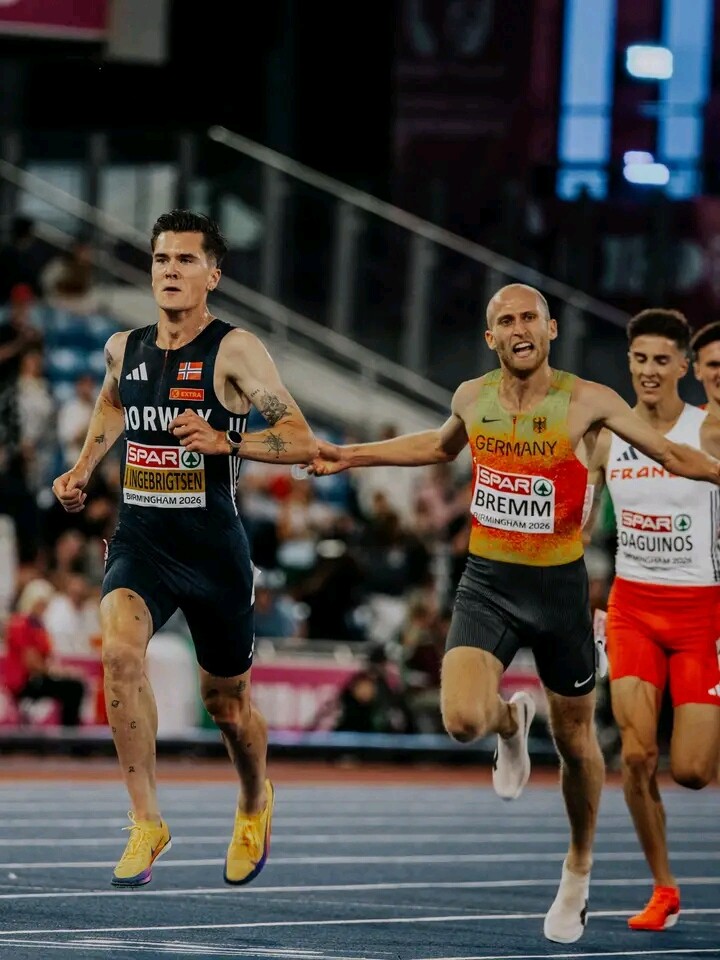
With the field still tightly packed entering the closing stages, the race came down to a final-lap battle. Ingebrigtsen moved into contention around the final bend before unleashing a devastating kick over the closing 100 metres.
Jimmy Gressier of France and Germany’s Florian Bremm were among those fighting for the medals, but neither could match the Norwegian’s acceleration. Ingebrigtsen powered clear to cross the line first in 13:15.29, with Bremm taking silver and France’s Etienne Daguinos claiming bronze.
The victory extends an extraordinary European Championships record for Ingebrigtsen. He has now won the 5000m title at four consecutive editions, while his latest gold also further strengthens his status as the most successful male athlete in the history of the European Athletics Championships.
What made the performance even more remarkable was the uncertainty surrounding his return. Ingebrigtsen had not raced at all during the 2026 season as he worked his way back from Achilles surgery. His participation in Birmingham was only confirmed in late July, with his management stressing that the decision would depend on his readiness.
Yet when the moment arrived, the 25-year-old delivered in familiar fashion — staying calm, trusting his strength and producing an explosive finish when the medals were on the line.
The comeback victory also sets up an intriguing next chapter. Ingebrigtsen is scheduled to return to the Diamond League circuit at the Weltklasse Zürich meeting on August 27, where he is expected to contest the 1500m alongside a formidable field that includes Olympic champion Cole Hocker, Yared Nuguse and Isaac Nader. The Zürich meeting is scheduled for August 27.
After nearly a year away, Jakob Ingebrigtsen is back — and his first race of the comeback has already produced another European title.
The next test will come over 1500 metres in Zürich, where the Norwegian will face a very different challenge and an entirely different level of speed.
For now, though, one message rings loud across European athletics:
Jakob Ingebrigtsen is back.
by Erick Cheruiyot for My Best Runs.
Login to leave a comment
European Athletics Champioships
The27thEuropean Athletics Championshipswill be held from 10 to 16 August 2026 at theAlexander StadiuminBirmingham, United Kingdom.[1] This is the first time that a British city will have staged the European Athletics Championships although Birmingham has hosted many high-profile events, including the2007 European Athletics Indoor Championships, the2003and2018 IAAF World Indoor Championshipsand the2022 Commonwealth Games. Alexander Stadium was renovated between 2019 and...
more...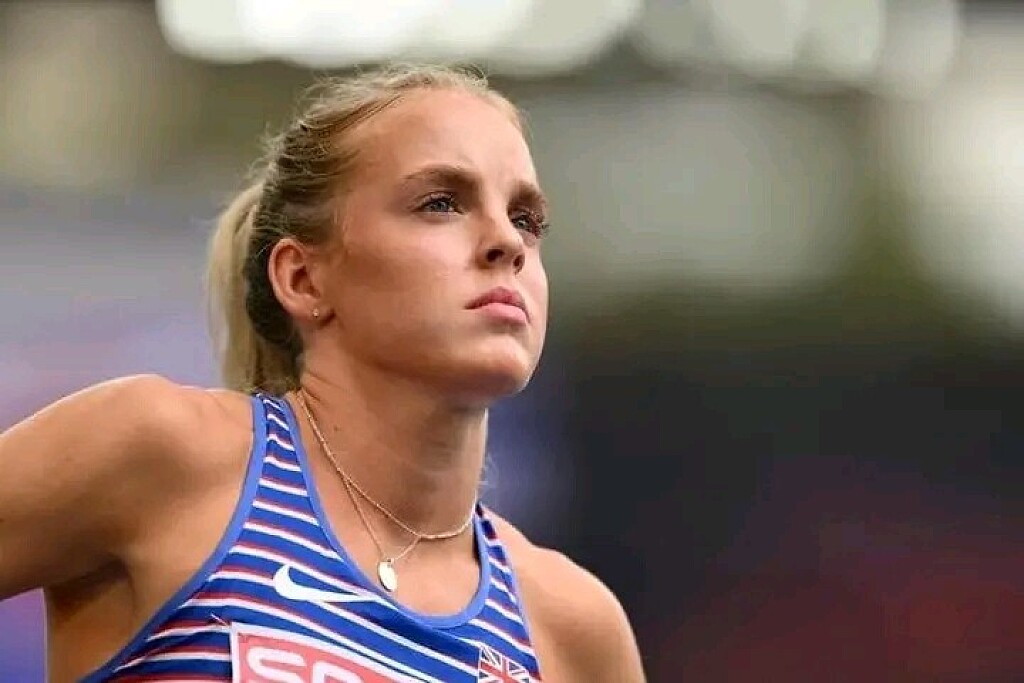
Keely Hodgkinson Embraces Fierce 800m Challenge In Bid For Third European Crown
Keely Hodgkinson is relishing the quality of competition awaiting her in Birmingham as she prepares to defend her European 800m title and pursue an unprecedented hat-trick on home soil.
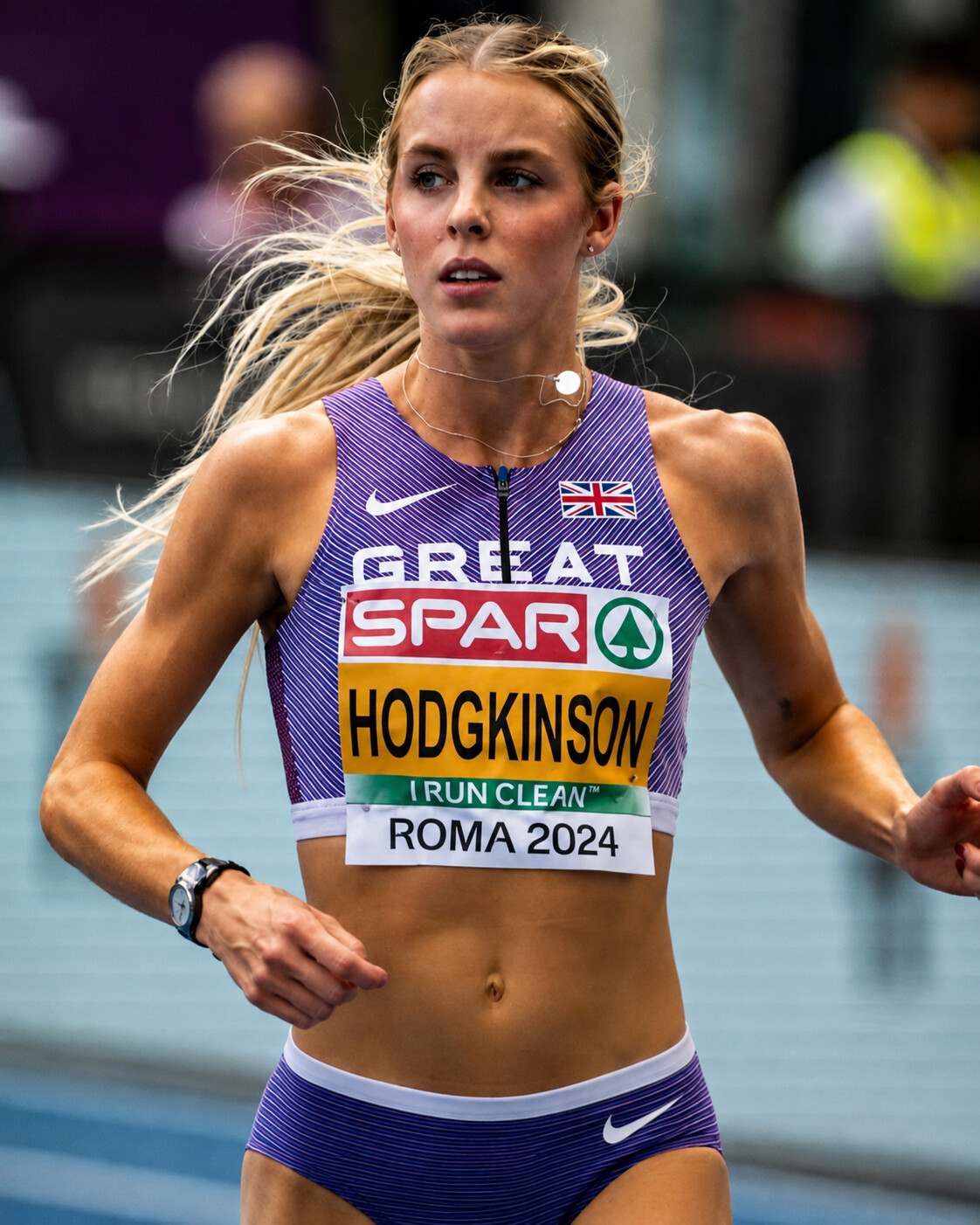
The Olympic champion arrives at the European Athletics Championships as the reigning two-time European champion over two laps, having successfully defended the title in Rome in 2024 after first winning European gold in Munich in 2022. Now, with a home crowd expected to rally behind her, Hodgkinson has another opportunity to underline her place among the leading 800m runners of her generation.
Her credentials are formidable. Hodgkinson produced the fastest race of her career at the Stockholm Diamond League, clocking 1:54.33 to break the British record and move to second on the world list for 2026. Only Austria’s Audrey Werro has gone faster this year, with her 1:53.80 placing her at the top of the rankings.
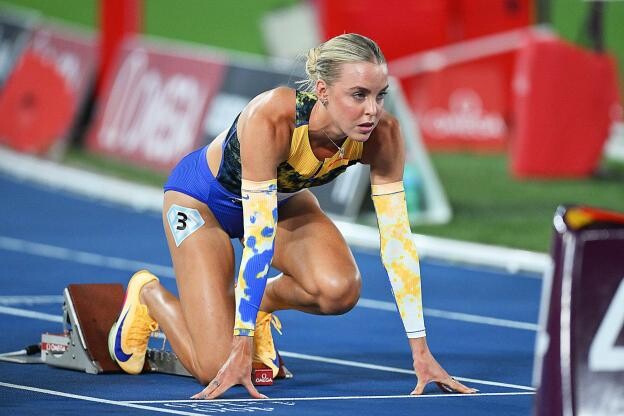
The Birmingham field also includes formidable opposition, with Femke Broeders-Bol at 1:55.60 and France’s Anaïs Bourgoin at 1:55.65, ensuring Hodgkinson will have little room for error if she is to extend her European reign.
Yet the 24-year-old Briton is not allowing the weight of expectation to overshadow what she has already achieved. Reflecting on her British-record performance in Stockholm, Hodgkinson emphasised that the mark represents the fastest she has ever run and something she wants to appreciate rather than take for granted.
“It was my fastest time ever and I’m going to remind myself of that because I’m proud of that,” Hodgkinson said.
Her perspective on the European Championships has also evolved as the standard of women’s 800m running across the continent has risen dramatically.
Looking back to the 2024 European Championships in Rome, Hodgkinson pointed to how much the event has progressed since then. She noted that the improvement in the European standard means winning a continental title now carries a significance comparable to a global championship.
“It means that a European title is just as important and just as fun as a world title at this point,” she said.
That transformation has added another layer to Hodgkinson’s challenge in Birmingham. She is not simply defending a title; she is entering an 800m environment that has become increasingly competitive, with several athletes now capable of producing times that would previously have been considered exceptional.
For Hodgkinson, however, the pressure of a home championship appears to be part of the attraction. With two European titles already secured, an Olympic gold medal in her collection and a new British record to her name, she arrives in Birmingham with both experience and ambition.
The target is clear: another European crown, another chapter in her remarkable 800m career and, potentially, a third consecutive continental title in front of a home crowd.
by Erick Cheruiyot for My Best Runs.
Login to leave a comment
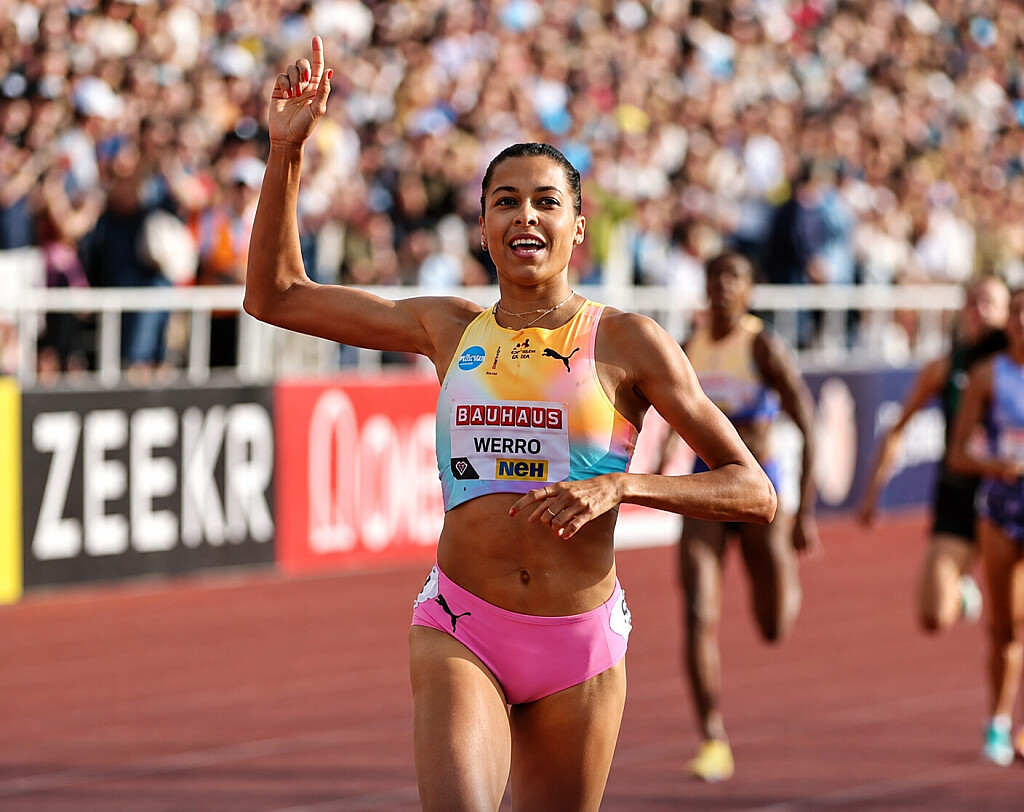
Audrey Werro Heads to Birmingham With History in Her Sights as Europe’s 800m Elite Prepare for a Blockbuster Showdown
Audrey Werro will arrive at the 2026 European Athletics Championships in Birmingham carrying more than just the hopes of Switzerland. The 22-year-old middle-distance star has established herself as the woman to beat in the women’s 800m, and she will enter Alexander Stadium with a world-leading time, extraordinary momentum and a realistic opportunity to chase one of athletics’ longest-standing records.
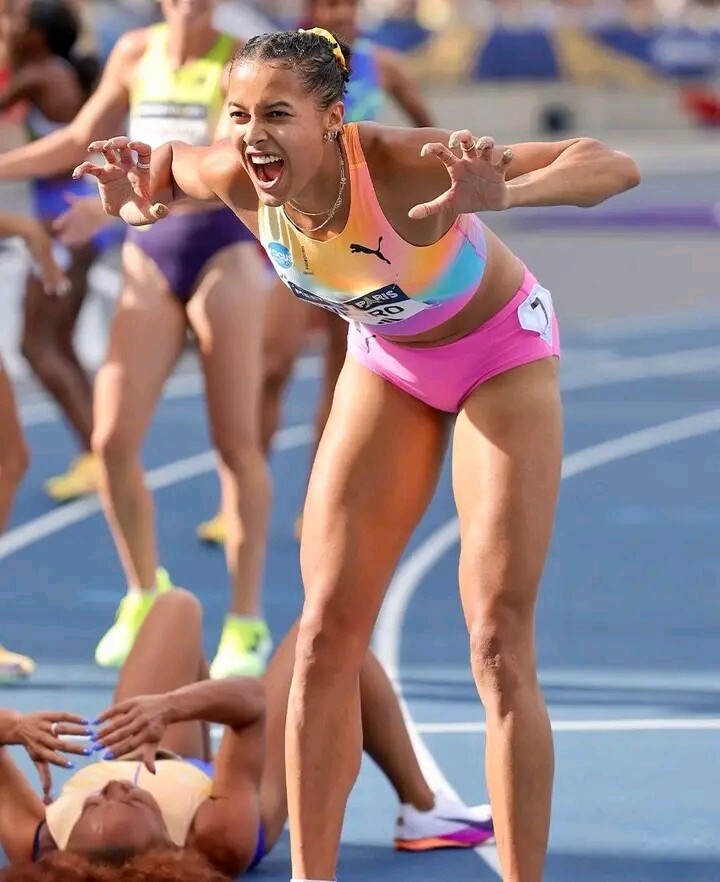
The European Championships will be held in Birmingham from August 10 to 16, with the women’s 800m among the events expected to command enormous attention.
Werro has already produced one of the defining performances of the 2026 season. At the Paris Diamond League on June 28, she stormed to 1:53.80, becoming only the third-fastest woman in history over 800m and moving within 0.52 seconds of Jarmila Kratochvílová’s world record of 1:53.28, which has stood since 1983.
Even more remarkable is that Paris was not an isolated performance.
Earlier in June, Werro stunned Olympic champion Keely Hodgkinson in Stockholm, producing 1:53.98 to claim another Diamond League victory. Hodgkinson followed in a personal best of 1:54.33, setting the stage for what could become one of the defining rivalries of the championship.
The numbers underline just how extraordinary the 2026 women’s 800m season has become.
Werro leads the world with 1:53.80, followed by Hodgkinson at 1:54.33. Femke Broeders-Bol has made a spectacular transition to the two-lap event, running 1:55.60 in Paris, while France’s Anaïs Bourgoin followed with a national record of 1:55.65. Britain’s Georgia Hunter Bell has also broken 1:56, clocking 1:55.93 in Birmingham earlier in the season.
That depth makes Birmingham particularly intriguing. Werro may be the fastest woman in the world this year, but she will not be racing in isolation. Hodgkinson brings Olympic and European championship pedigree, Broeders-Bol possesses exceptional finishing speed after moving across from the 400m hurdles, while Bourgoin and Hunter Bell have demonstrated that they are capable of staying in the conversation when the pace becomes ferocious.
Werro’s remarkable form has extended beyond the 800m. On June 23 in Biel, she ran 1:22.85 for 600m, the fastest mark on the 2026 world list for the event.
Her development has been equally impressive over the longer sprint distance. Werro owns a 400m personal best of 51.03, highlighting the speed reserve behind her increasingly dominant 800m performances.
The Swiss star has therefore arrived at a fascinating point in her career. She is no longer simply a promising young athlete. After being named European Athletics’ 2025 Women’s Rising Star and winning the European U23 title, Werro has now moved firmly into the senior elite.
And Birmingham could provide the biggest stage yet for her growing reputation.
The question is no longer whether Werro can run under 1:54. She has already done it twice this season. The question now is whether she can find the fractions required to move from an extraordinary performance to something historic.
The world record of 1:53.28 is only 0.52 seconds away.
With the European title on the line, Hodgkinson seeking another major championship triumph and a rapidly improving field ready to challenge for the podium, the women’s 800m could become one of the races of the entire Birmingham championships.
For Werro, however, the objective is simple: arrive ready, execute the perfect two laps and see just how close she can get to history.
Birmingham awaits. And Audrey Werro has already shown that she is ready.
by Erick Cheruiyot for My Best Runs.
Login to leave a comment
European Athletics Champioships
The27thEuropean Athletics Championshipswill be held from 10 to 16 August 2026 at theAlexander StadiuminBirmingham, United Kingdom.[1] This is the first time that a British city will have staged the European Athletics Championships although Birmingham has hosted many high-profile events, including the2007 European Athletics Indoor Championships, the2003and2018 IAAF World Indoor Championshipsand the2022 Commonwealth Games. Alexander Stadium was renovated between 2019 and...
more...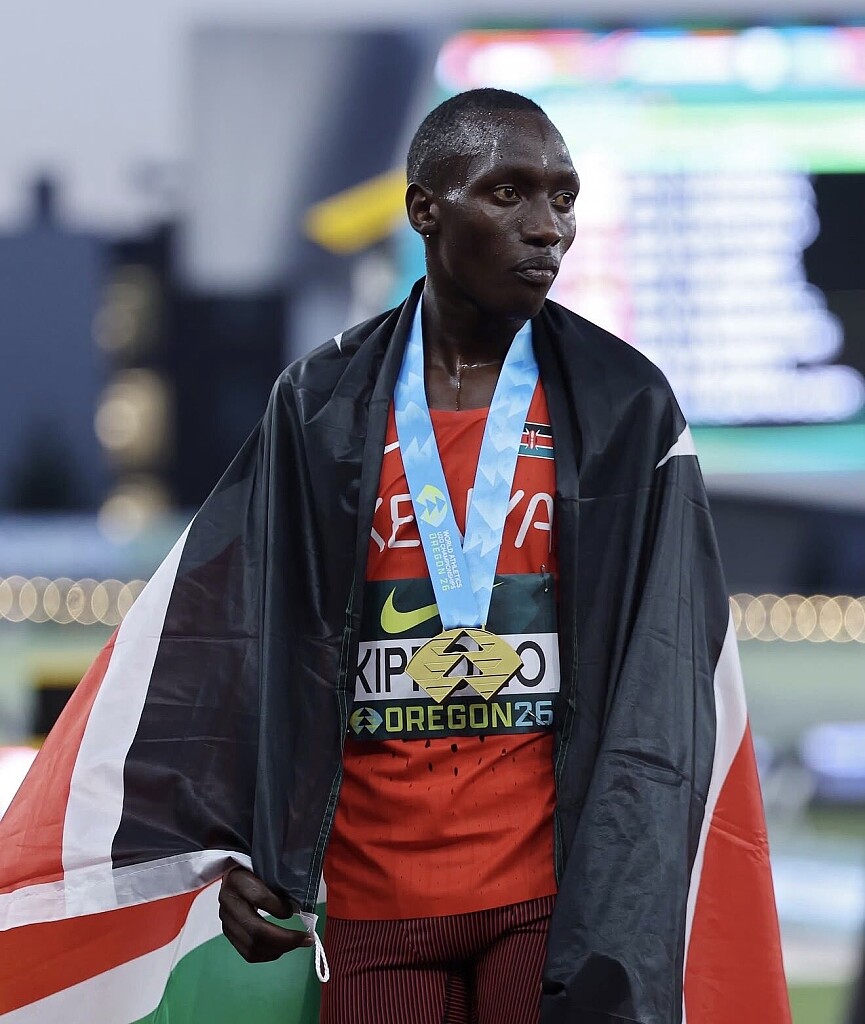
Emmanuel Kiprono Storms to World U20 3,000m Gold in Championship-Record 7:28.28
Kenya’s Emmanuel Kiprono has announced himself as one of the brightest young distance-running talents in the world after producing a sensational solo performance to win the men’s 3,000 metres gold medal at the World Athletics U20 Championships in a championship-record 7:28.28.
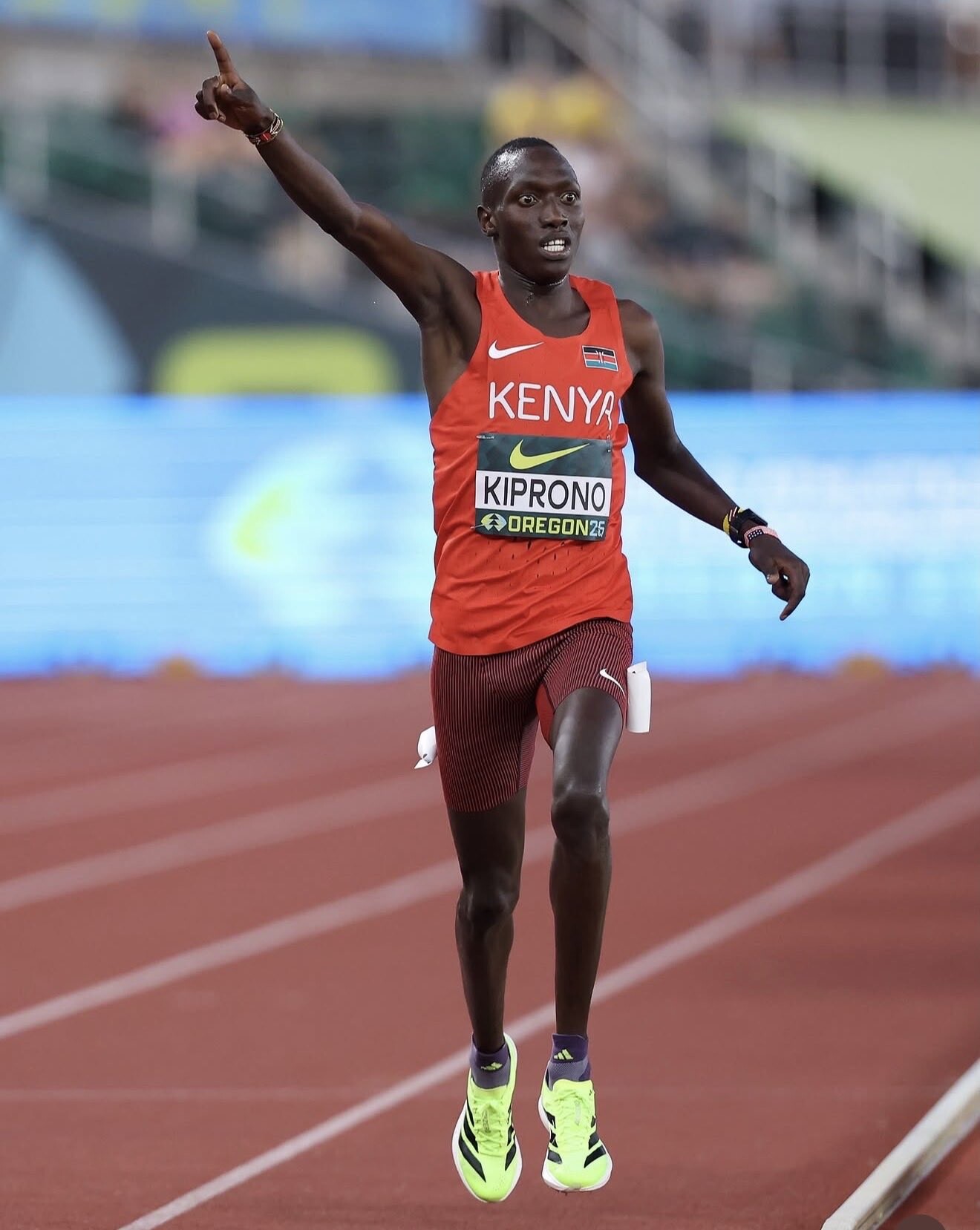
Just 17 years old, Kiprono took control from the opening metres and never looked back. Running completely alone for virtually the entire race, the Kenyan dictated the tempo with remarkable confidence and gradually transformed the final into a one-man race.
Kiprono passed 1,000 metres in 2:26.52, reached 1,600 metres in 3:54.58, and continued his relentless charge through 2,000 metres in 4:55.43. With every lap, the gap behind him grew larger as his rivals struggled to match his extraordinary pace.
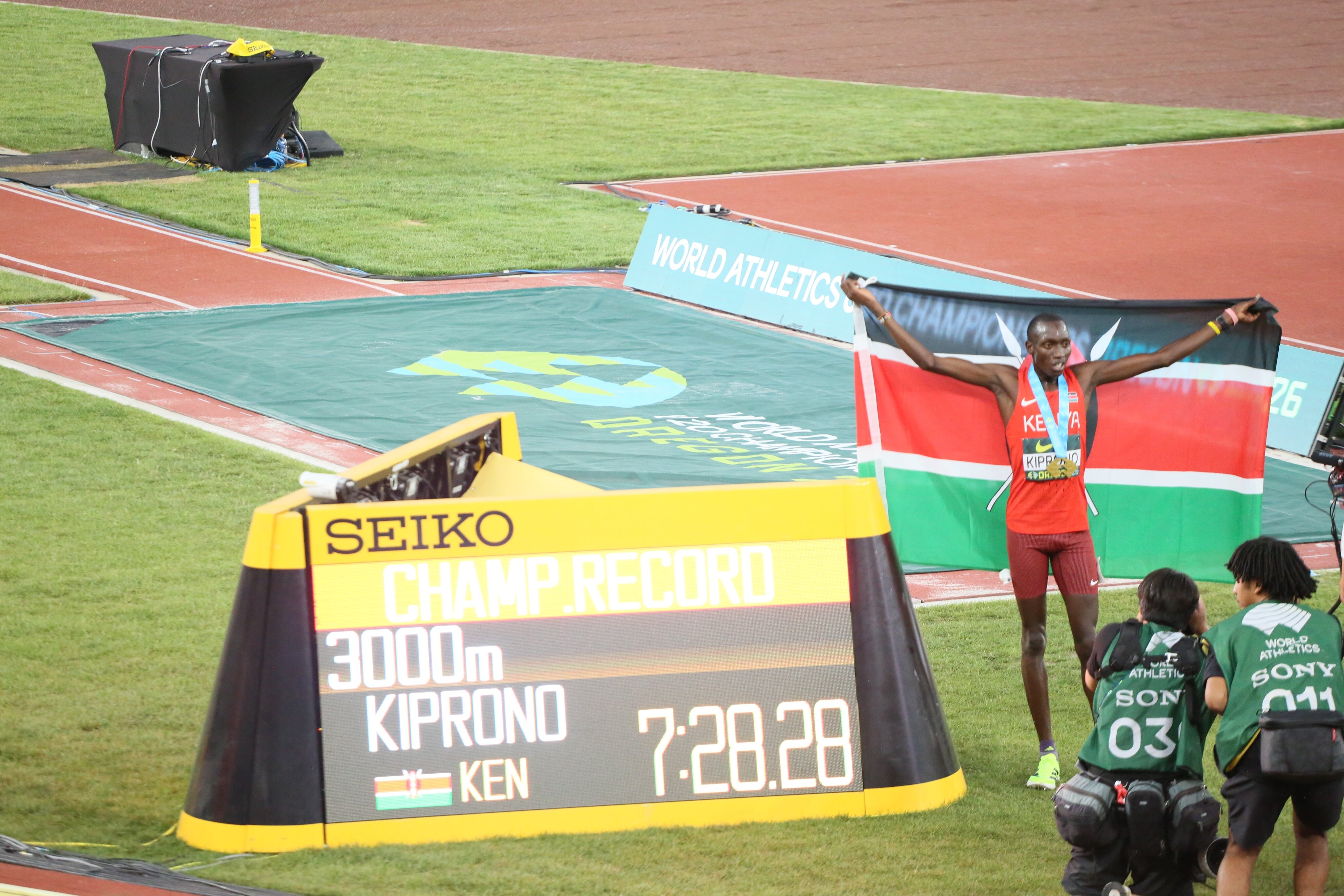
He eventually crossed the finish line in 7:28.28, smashing the championship record and coming agonisingly close to the world U20 record of 7:28.20, set by Ethiopia’s Yomif Kejelcha. Kiprono missed the global junior mark by just 0.08 seconds.
The margin of victory was equally spectacular. He finished 19 seconds ahead of France’s Alois Abraham, who took silver in 7:47.79, while Japan’s Ojiro Honda secured bronze in 7:48.49, setting a Japanese U20 record.
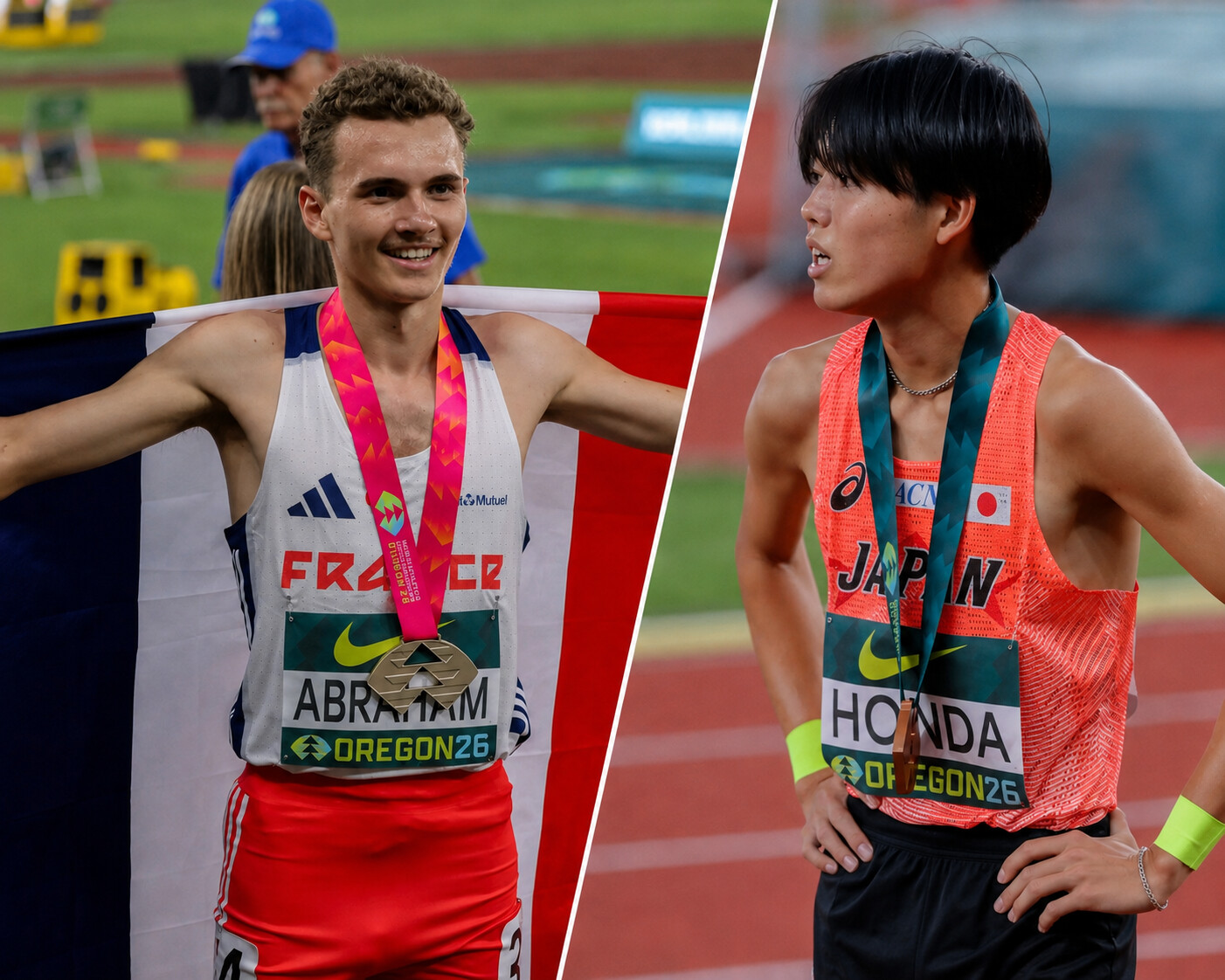
Men’s 3,000m Final
1. Emmanuel Kiprono — Kenya — 7:28.28 (Championship Record)
2. Alois Abraham — France — 7:47.79
3. Ojiro Honda — Japan — 7:48.49 (National U20 Record)
4. Liam Conway — Great Britain — 7:50.10 (Personal Best)
5. Aleksi Ahlfors — Finland — 7:50.56 (Personal Best)
6. Tzu-Chieh Chien — Chinese Taipei — 7:51.18 (National U20 Record)
7. Ilyes Druez — Belgium — 7:51.67 (Personal Best)
8. Sebastian Lörstad — Sweden — 7:51.94 (Personal Best)
9. Edwin Elkana — Kenya — 7:51.94 (Personal Best)
10. Owen Powell — United States — 7:53.35 (Personal Best)
Kiprono’s breakthrough is particularly significant given his performances earlier this year. The 17-year-old finished second in the U20 race at the World Cross Country Championships, establishing himself as one of the leading prospects in the new generation of Kenyan distance runners.
But on the track, he produced something even more extraordinary.
There was no tactical waiting game, no final-lap sprint and no group to shelter behind. Kiprono simply went to the front and challenged himself against the clock. His splits — 2:26.52 at 1,000m, 3:54.58 at 1,600m and 4:55.43 at 2,000m — demonstrate the remarkable consistency and courage behind the performance.
After the race, Kiprono celebrated with the Kenyan flag draped around him before posing beside the SEIKO championship-record display, which showed his historic 7:28.28.
His championship record also came with a tantalising glimpse of what might have been. Had he found even a fraction more in the closing metres, the world U20 record could have fallen as well. Nevertheless, coming within eight hundredths of the mark while running almost the entire race alone makes the achievement all the more remarkable.
Emmanuel Kiprono has not merely won a world junior title — he has made a statement. At only 17, his extraordinary front-running, championship record and near-world-record performance suggest that Kenyan distance running may have another major talent ready to emerge onto the global stage.
by Erick Cheruiyot for My Best Runs.
Login to leave a comment
World U20 Relay History Rewritten As Great Britain Breaks Fresh Record After Australia's Brief Reign
Records were rewritten twice within the space of a few unforgettable minutes as the inaugural World Athletics U20 Mixed 4x100m relay produced one of the most dramatic sessions of the World Athletics U20 Championships in Eugene, Oregon.
Australia ignited the excitement in the opening heat by storming to a world U20 record of 41.64 seconds, becoming the first team ever to reach that mark and briefly claiming a place in history. For five memorable minutes, the Australian quartet of Uwezo Lebenda, Maya Taber, Kelechi Ekwomadu and Thewbelle Philp stood as world record holders after a sensational performance that also secured their place in Saturday's final.
Their celebration, however, proved to be short-lived.
Moments later, Great Britain delivered an even more electrifying display in the second heat, clocking 41.60 to erase Australia's newly established mark and set a fresh World U20 record. It was a masterclass in speed, precision and flawless baton exchanges that propelled the British team into the history books.
The record-breaking quartet of Divine Iheme, Savannah McKenzie Morgan, Mathew Ajayi and Sophie Thomas combined brilliantly from start to finish to produce the fastest mixed U20 4x100m relay ever recorded. Sophie Thomas, who is set to compete for the University of Connecticut (UConn) this year, produced a composed anchor leg to seal the landmark performance.
The extraordinary back-to-back world records underlined the remarkable depth of sprint talent on display, with several other nations also producing outstanding performances to qualify for the final.
Italy impressed with a personal best of 41.74, while the United States advanced comfortably in 41.82. Nigeria also produced a personal best of 41.91 to secure qualification.
Jamaica (42.08 PB), Germany (42.12 PB), France (42.16 PB) and Poland (42.18 PB) completed the eight-team final after delivering strong performances in one of the fastest mixed relay qualifying rounds ever witnessed at the U20 Championships.
With two world records already falling in rapid succession, anticipation is now soaring ahead of Saturday's final. If the qualifying heats are any indication, the newly established global mark of 41.60 may once again come under serious threat as the world's best young sprinters chase another piece of athletics history.
by Erick Cheruiyot for My Best Runs.
Login to leave a comment
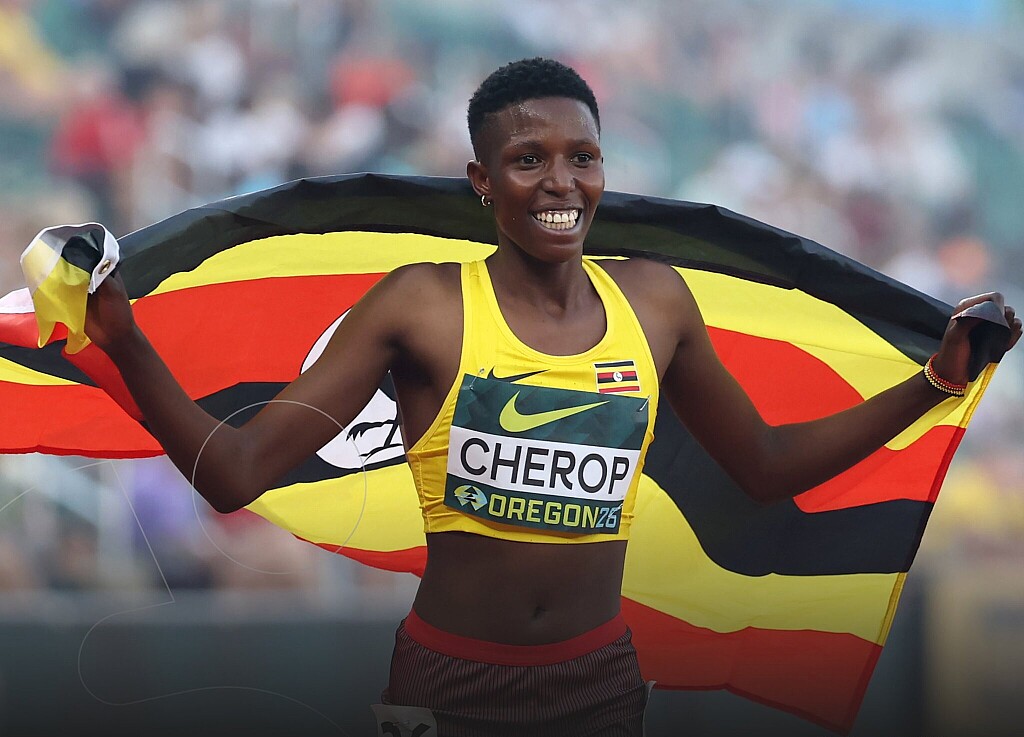
From Silver to Gold: Charity Cherop Storms to World U20 5000m Crown with Tactical Masterclass
Uganda's 19-year-old long-distance sensation Charity Cherop delivered the performance of her young career, producing a championship masterclass to capture the women's 5000m title at the 2026 World Athletics U20 Championships at Hayward Field in Eugene, Oregon.
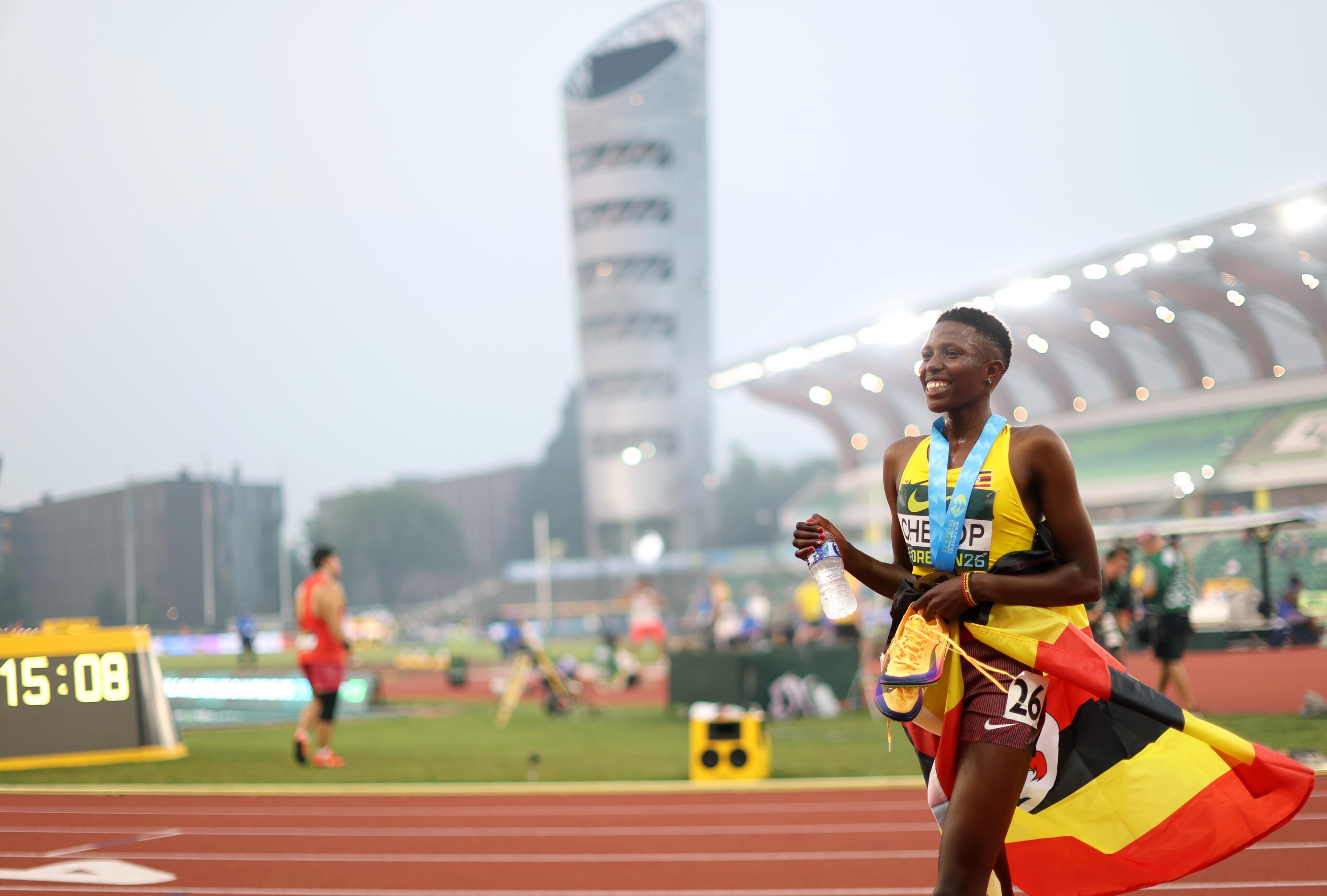
Born on July 4, 2007, Cherop executed a tactically brilliant race, remaining patient throughout the early stages before unleashing a devastating surge over the final kilometre. Her perfectly timed move proved decisive as she crossed the finish line in 15:03.88, becoming the new World U20 champion.
The victory was more than just a world title—it completed a remarkable journey from silver to gold. After finishing runner-up at the previous World Athletics U20 Championships in Lima, Cherop returned to the global stage stronger and more determined, upgrading her silver medal to gold and confirming herself as one of the brightest young stars in international distance running.
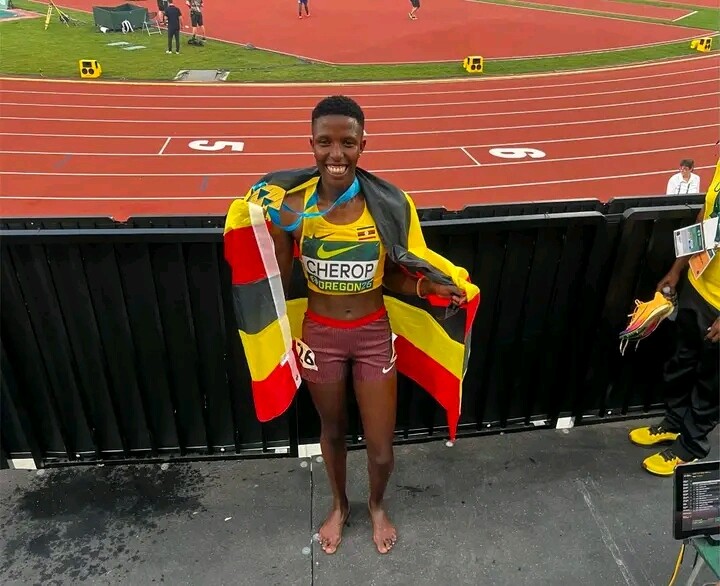
Behind the Ugandan star, Ethiopia's Shito Gumi fought bravely to secure the silver medal in 15:07.91, while Kenya's Joyline Chepkemoi delivered an outstanding performance to claim bronze in 15:09.08, setting a new personal best in the process. The battle for the podium remained fiercely contested until the closing stages, with every medal decided through courage, tactical awareness, and a powerful finishing kick.
Kenya narrowly missed placing two athletes on the podium as Cynthia Chepkirui finished a strong fourth in 15:14.86, while Sweden's Carmen Cernjul rounded out the top five in 15:22.18.
Ethiopia's Emebet Tilahun placed sixth in 15:32.51, followed by Japan's Yui Onotora in seventh with 15:37.33. Uganda celebrated another top-10 finish through Bentalin Yeko, who finished eighth in 15:48.35, underlining the nation's impressive depth in women's distance running.
Germany's Julia Ehrle claimed ninth in 16:09.53, with France's Lamia Mourabit completing the top ten in 16:10.80.
Further down the field, Portugal's Carolina Correia impressed with an 11th-place finish in a personal best 16:11.47, while Norway's Venus Teffera also celebrated a lifetime best of 16:12.07 in 12th. Germany's Gloria Herold added another personal best, clocking 16:13.75 for 15th place.
France's Laly Porentru, Japan's Ayami Yoshida, the Netherlands' Rosalie Ten Bruggencate, Italy's Sofia Ferrari and Mimosa Miari Fulcis, Spain's Fatima Hernandez, Switzerland's Anina Hirzel, Great Britain's Eliza Nicholson, Canada's Airlie Downie-Back and Athena Andrecyk, Mexico's Kenya Cuahutle, and Australia's Libby Mantay and Imogen Baker all battled courageously to the finish, highlighting the exceptional depth and global talent assembled for the championship final.
The only athlete unable to start the race was the United States' Emily Wisniewski, who was listed as DNS.
The women's 5000m final showcased the very best of championship distance running—patience, tactical intelligence, and a thrilling finish. On the biggest stage of her junior career, Charity Cherop produced a race worthy of a world champion, transforming silver in Lima into gold in Eugene and writing another unforgettable chapter in Uganda's rich distance-running legacy.
by Erick Cheruiyot for My Best Runs.
Login to leave a comment

Sophie Woods Rewrites the Record Books With Historic Fastest Crossing of the Alps
New Zealand ultra-endurance runner Sophie Woods has etched her name into mountain running history after completing the entire length of the Alps in the fastest time ever recorded, becoming the first person to conquer the legendary route in under 30 days.
The 42-year-old reached the Mediterranean coastline in Monaco on Saturday night, bringing to an end an extraordinary 2,000-kilometre journey along the iconic Via Alpina. Her remarkable crossing took just 29 days, shattering both the overall and women's fastest known times on one of Europe's most demanding long-distance routes.

Woods began her challenge in Trieste, Italy, on July 4 before traversing seven countries—Italy, Slovenia, Austria, Germany, Liechtenstein, Switzerland and France—across some of the continent's most rugged and unforgiving mountain terrain.
The scale of the achievement is almost difficult to comprehend. Over the course of the expedition, Woods climbed a cumulative elevation equivalent to ascending Mount Everest 12 times, while covering relentless daily distances through alpine passes, remote trails and rapidly changing weather conditions.

Her record-breaking performance eclipsed the previous overall fastest known time, established by British ultra-runner Jake Catterall in 2024, by an astonishing six days. She also lowered the women's benchmark, previously held by Dutch endurance athlete Tessa Caspers, by nine days, setting a new standard that will be difficult to match.
The journey, however, was far from straightforward. Woods endured a brutal European heatwave, battled powerful mountain storms, navigated around wildfires that forced a five-kilometre detour, and pushed through relentless swarms of horseflies. As the finish drew closer, she made perhaps her greatest sacrifice—cutting her sleep to as little as 90 minutes to two-and-a-half hours per night to ensure the record remained within reach.
Despite the physical exhaustion, the New Zealander refused to let adversity slow her pursuit of history. Her resilience, meticulous planning and unwavering determination carried her across one of the world's toughest mountain traverses at a pace never before achieved.
Moments after reaching Monaco, the magnitude of the accomplishment began to sink in.
"I can't believe I did it. I am ecstatic but knackered."
With her unforgettable 29-day crossing, Sophie Woods has not only rewritten the record books but also delivered one of the most remarkable endurance performances the ultra-running world has witnessed, raising the bar for future athletes dreaming of conquering the Alps.
by Erick Cheruiyot for My Best Runs.
Login to leave a comment

Two Continents, Two Extraordinary Endurance Feats: Hartmuth and Sanchez Rewrite Trail Running History in a Single Day
July 25, 2026, will be remembered as one of the most remarkable days in the history of endurance running. Thousands of kilometers apart, on two vastly different landscapes, two athletes delivered performances that redefined what many believed possible. Germany's Katharina Hartmuth and France's Aurélien Sanchez each erased long-standing benchmarks, proving that the limits of human endurance continue to be pushed further than ever before.
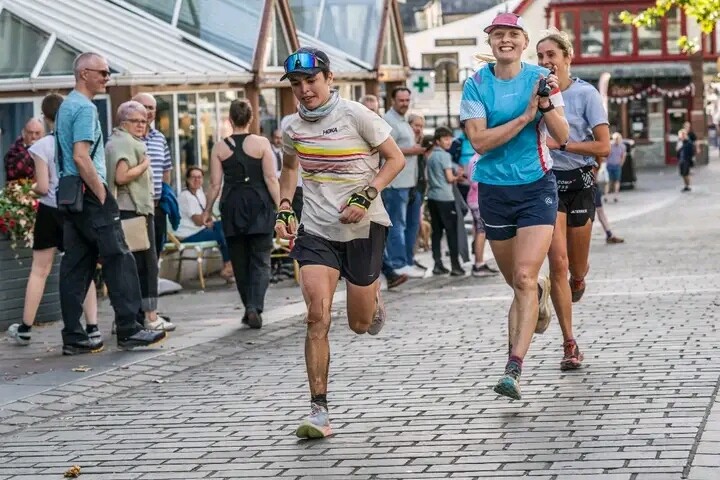
In the rugged mountains of England's Lake District, Hartmuth produced a breathtaking performance on the legendary Bob Graham Round, one of the world's most demanding mountain-running challenges. Covering the iconic circuit of 42 fells with approximately 8,200 metres of relentless climbing, she completed the route in an astonishing 14 hours, 11 minutes and 58 seconds, slicing an incredible 22 minutes from the women's record established by Beth Pascall in 2020.
The Bob Graham Round is far more than a race against the clock. It is a brutal examination of endurance, mountain skills, navigation, and mental resilience. Participants must conquer steep ascents, technical descents, unpredictable terrain, and the notoriously unforgiving weather of the Lake District. The challenge is only officially completed if runners return to the historic George Fisher shop in Keswick within 24 hours, making every second count until the very end.

After crossing the finish, Hartmuth described the achievement as "the coolest day of my running life," a fitting reflection on a performance that instantly secured her place among the greatest mountain runners ever to tackle the historic route.
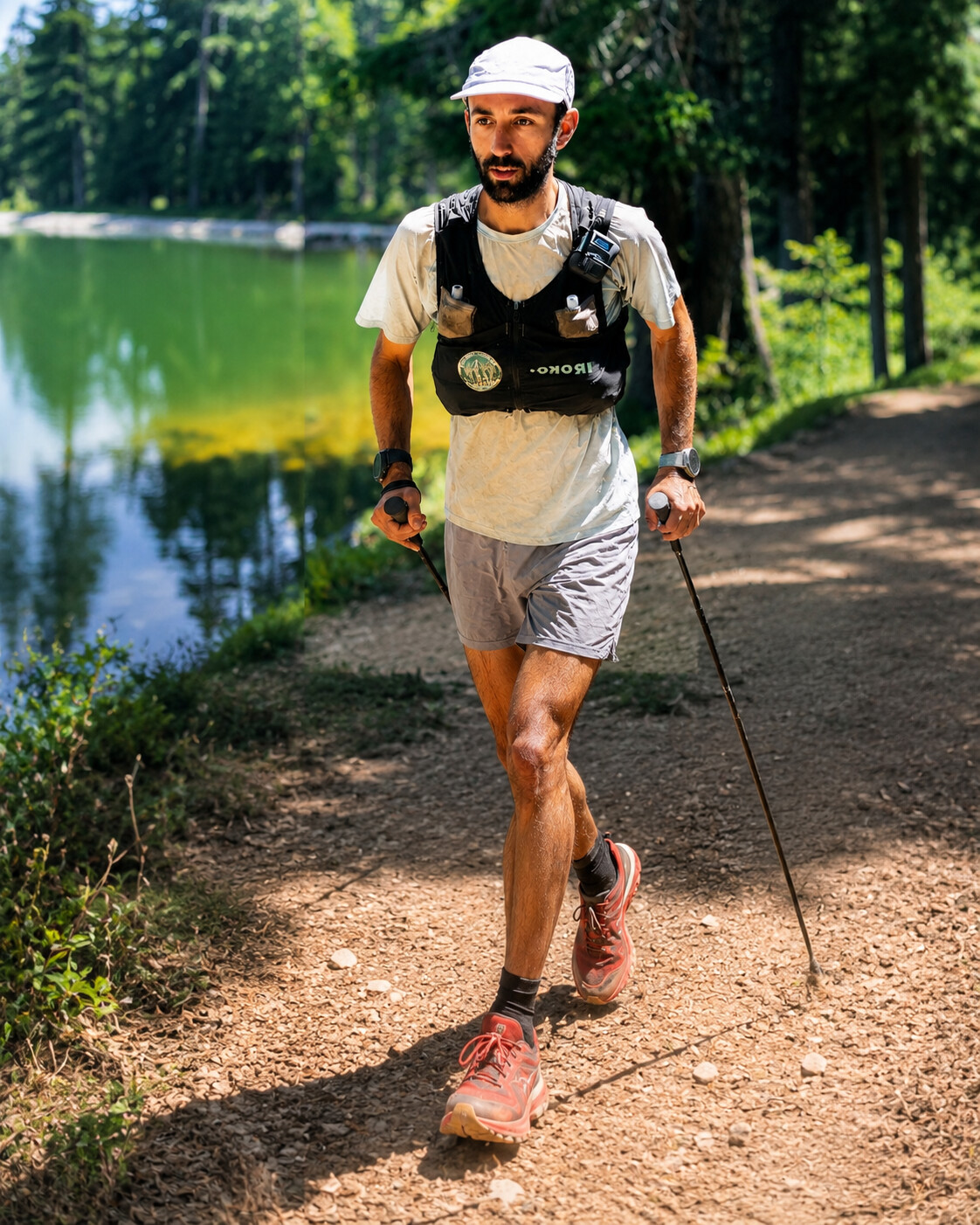
While Hartmuth was celebrating in northern England, another historic effort was unfolding on the opposite side of the globe.
French ultrarunner Aurélien Sanchez completed one of the most demanding point-to-point adventures in trail running by setting a new fastest known time (FKT) on the iconic Pacific Crest Trail. Beginning at the Mexican border on June 8, Sanchez covered the trail's staggering 4,270-kilometre length before reaching the Canadian border in 45 days, 20 hours and 15 minutes.
His remarkable journey eclipsed the previous record, set by Belgium's Karel Sabbe in 2023, by 16 hours. The achievement was anything but straightforward. Sanchez reached the halfway point trailing Sabbe's pace, but an extraordinary surge over the second half saw him average nearly 95 kilometres every day, allowing him to overturn the deficit and finish with a new record.
The Pacific Crest Trail presents one of the toughest endurance challenges on Earth, stretching through scorching deserts, the rugged Sierra Nevada, and the volcanic peaks of the Cascade Range. Covering such diverse and unforgiving terrain demands not only exceptional physical strength but also unwavering determination, meticulous planning, and the ability to endure weeks of relentless fatigue.
Although Sanchez's FKT is still awaiting official verification, Hartmuth's Bob Graham Round record has already been ratified, cementing her place in mountain-running history.
The two achievements could hardly have been more different. One unfolded over a single day across steep British fells, while the other spanned nearly seven weeks across an entire continent. Yet both performances shared the same defining qualities—extraordinary courage, relentless perseverance, and an unwavering belief that records exist to be broken.
On one unforgettable Friday, two athletes, separated by oceans but united by ambition, reminded the running world that endurance has no boundaries and history can be rewritten in more than one place at the same time.
by Erick Cheruiyot for My Best Runs.
Login to leave a comment

Sprint Royalty: Noah Lyles And Usain Bolt Share A Special Moment At FIFA World Cup Semifinal
Some moments transcend sport, reminding fans that greatness recognizes greatness.

That was the scene during the FIFA World Cup semifinal between Spain and France, where American sprint star Noah Lyles and Jamaican icon Usain Bolt delighted fans with a memorable courtside encounter. Lyles seized the opportunity to snap a selfie with the fastest man in history, creating a picture that instantly resonated across the sporting world.
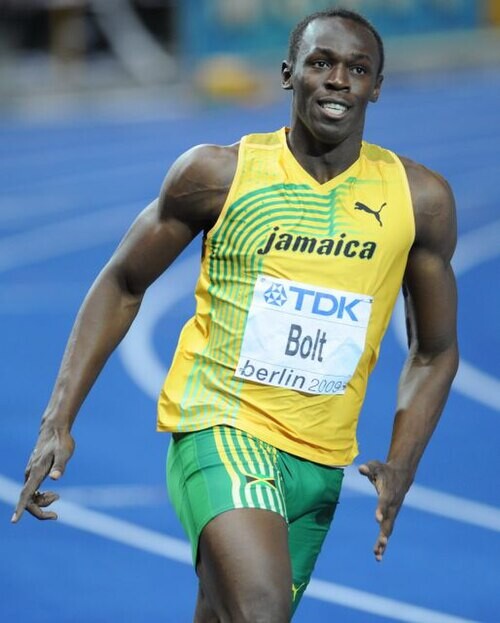
While football commanded the spotlight on the pitch, two of track and field's biggest names stole a memorable moment off it. The photograph brought together two athletes whose careers have helped shape different eras of sprinting—Bolt, the undisputed legend who redefined speed with his eight Olympic gold medals and world records in the 100m and 200m, and Lyles, the world record holder in 150m and modern-day sprint sensation carrying the sport into a new generation.
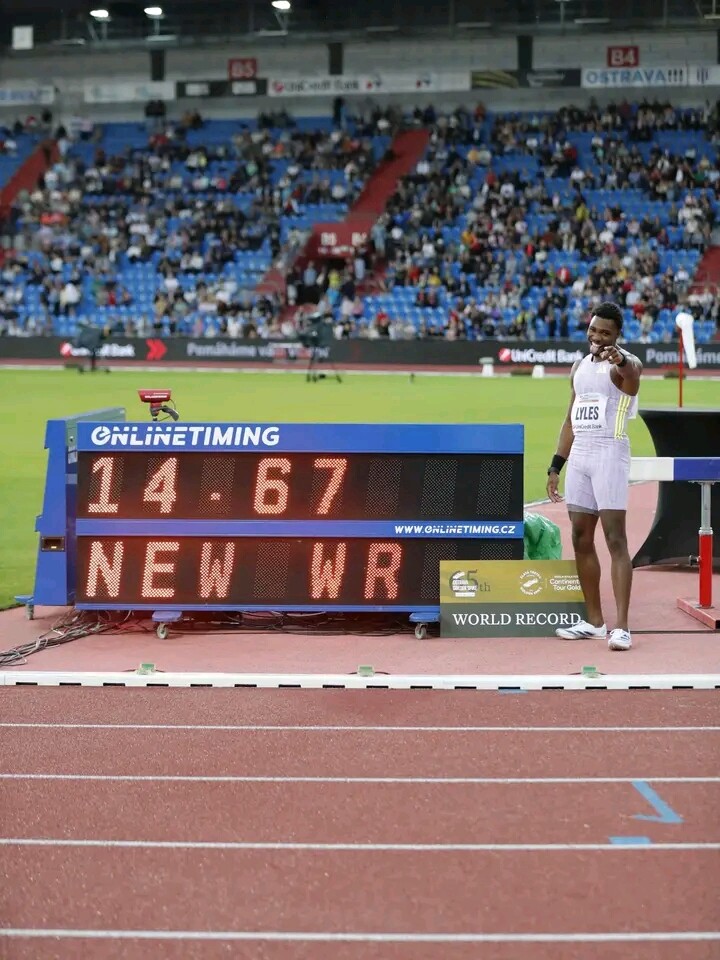
For Lyles, the selfie represented more than a simple photograph. It symbolized respect for the man who inspired countless young sprinters around the globe, including many of today's elite athletes. Bolt's dominance transformed athletics, while Lyles has emerged as one of the sport's biggest personalities, combining world-class performances with charisma and confidence.
The meeting served as a powerful reminder of the bond that exists among champions. Although they belong to different competitive eras, both have become global ambassadors for athletics, drawing new audiences to the sport through their achievements and larger-than-life presence.
As Spain and France battled for a place in the World Cup final, fans were equally captivated by the sight of sprinting royalty sharing a light-hearted moment. It was a celebration of excellence, mutual admiration, and the enduring legacy of athletics.
When legends meet, the result is more than just a selfie—it becomes a timeless image that connects generations of greatness.
by Erick Cheruiyot for My Best Runs.
Login to leave a comment
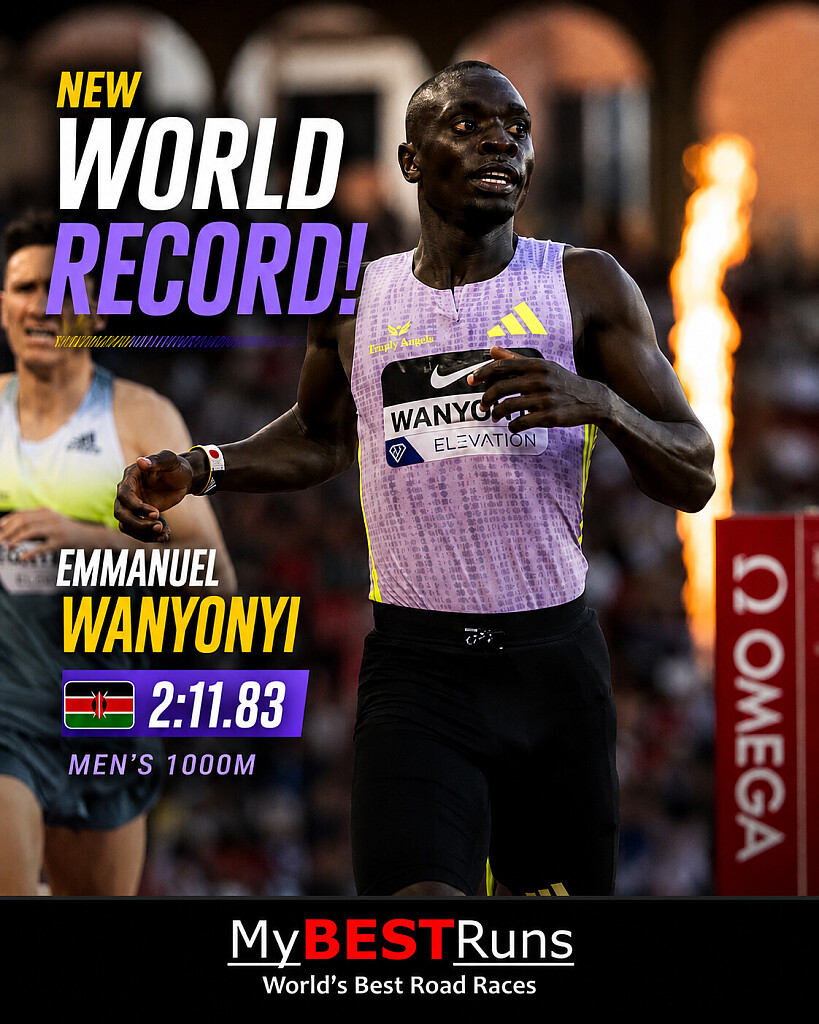
BREAKING: Emmanuel Wanyonyi Destroys 27-Year World Record in Monaco as Kenya Reigns Supreme Once Again
Kenya is celebrating another historic milestone after Olympic 800m champion Emmanuel Wanyonyi produced one of the greatest middle-distance performances ever witnessed, shattering the men's 1000m world record at the Monaco Diamond League.
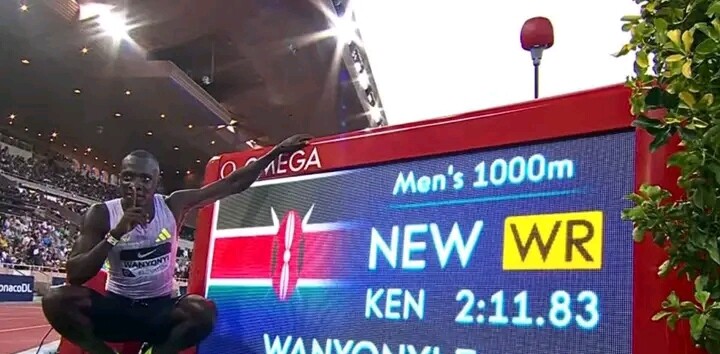
The 21-year-old sensation stormed to victory in a breathtaking 2:11.83, eclipsing the legendary 2:11.96 set by fellow Kenyan Noah Ngeny in September 1999. For 27 years, the record stood as one of athletics' most untouchable marks, surviving challenges from generations of Olympic and World champions before finally falling on a memorable night in Monaco.
Wanyonyi's run was nothing short of extraordinary. Displaying incredible pace, flawless rhythm and remarkable strength over the closing metres, the Kenyan powered away from a world-class field to rewrite the history books. As he crossed the finish line, the stadium erupted before the giant scoreboard confirmed what many could hardly believe—a new men's 1000m world record of 2:11.83.
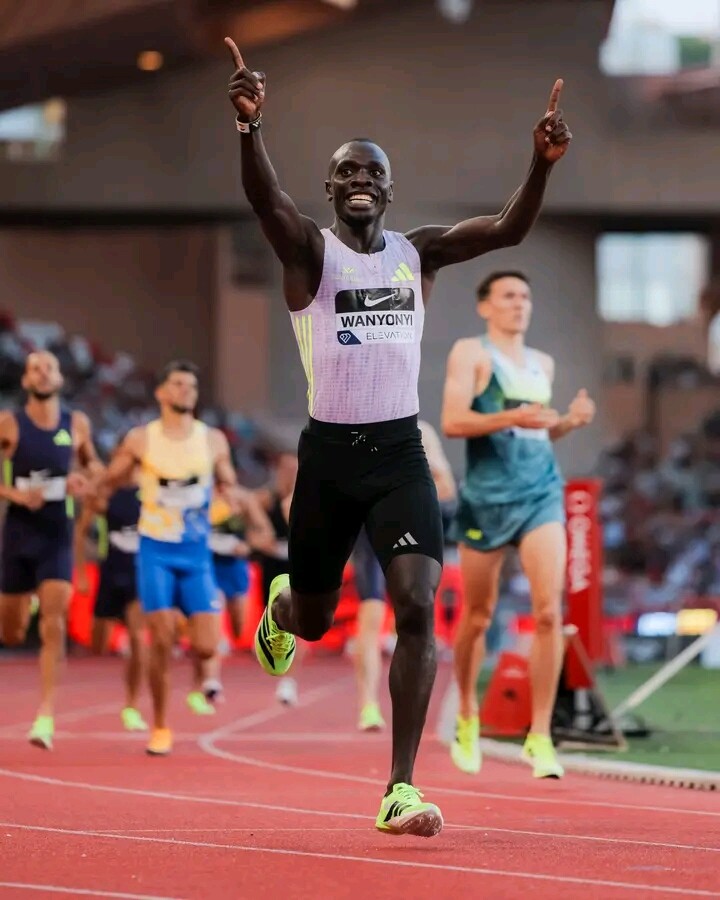
The victory was made even more impressive by the quality of the competition. Great Britain's Jake Wightman finished second in an outstanding 2:12.77, while Algeria's Djamel Sedjati claimed third in 2:13.94. France's Azeddine Habz crossed the line fourth in 2:14.02, ahead of Great Britain's Ben Pattison, who finished fifth in 2:14.11, while France's Gabriel Tual completed the top six in 2:14.97.
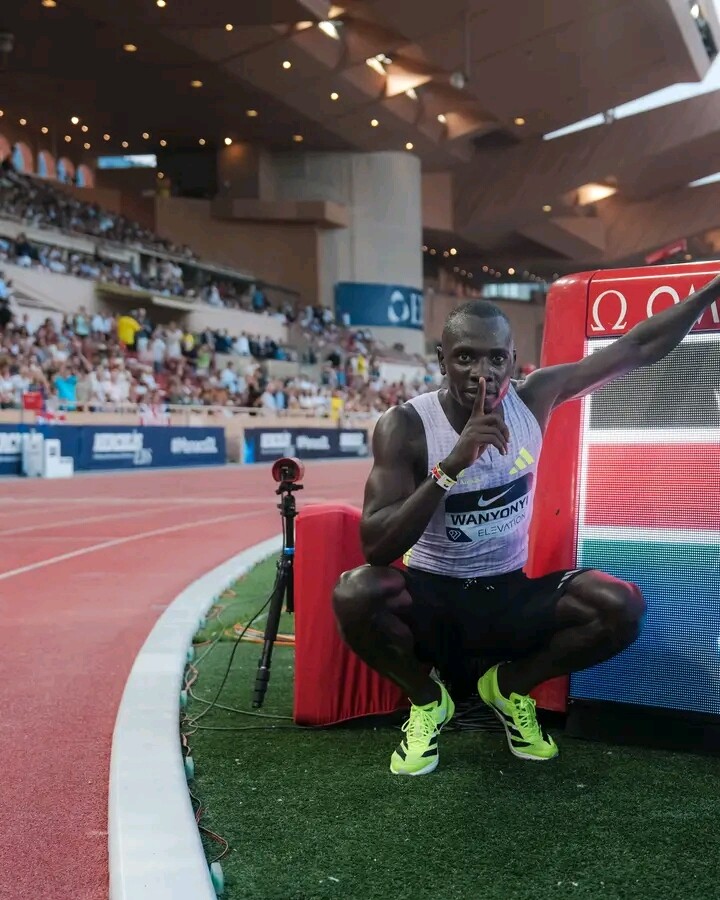
Despite the strength of the field, none could match Wanyonyi's relentless pace as he produced a performance destined to become one of the defining moments of modern athletics.
Breaking a world record by 0.13 seconds may appear small on paper, but in elite middle-distance running it represents a monumental achievement. It brought an end to one of the longest-standing men's world records and confirmed Wanyonyi as the fastest man ever over the rarely contested 1000 metres.
The achievement further cements the young Kenyan's status as one of the brightest stars in world athletics. Already an Olympic 800m champion, Wanyonyi has continued to raise the standard with every major appearance, proving he possesses not only devastating speed but also the endurance and tactical brilliance required to dominate beyond his signature event.
Perhaps the most remarkable aspect of the historic feat is that the record remains in Kenyan hands. Noah Ngeny held the global mark with pride for nearly three decades, and now another Kenyan has inherited that legacy, ensuring the world record continues to belong to the nation renowned for producing some of history's greatest middle-distance runners.
As celebrations swept across Monaco and throughout Kenya, Wanyonyi's performance instantly became one of the biggest stories in global athletics. He did more than win a race—he ended a 27-year reign, conquered a record many believed would never fall, and inspired a new generation of athletes with a run that will be remembered for decades.
From Noah Ngeny to Emmanuel Wanyonyi, the crown remains in Kenya.
A legendary record has fallen. A new champion has risen. And on an unforgettable night in Monaco, Emmanuel Wanyonyi reminded the world that when it comes to middle-distance running, Kenya continues to set the gold standard.
by Erick Cheruiyot for My Best Runs.
Login to leave a comment
Olympic Triathlon Champions Alex Yee and Cassandre Beaugrand Take on Track's Biggest Test at Monaco Diamond League
The world's finest triathletes are stepping into unfamiliar territory on Friday night as Olympic champions Alex Yee of Great Britain and Cassandre Beaugrand of France trade swim caps and bicycles for spikes, taking on some of the fastest distance runners on the planet at the Monaco Diamond League.
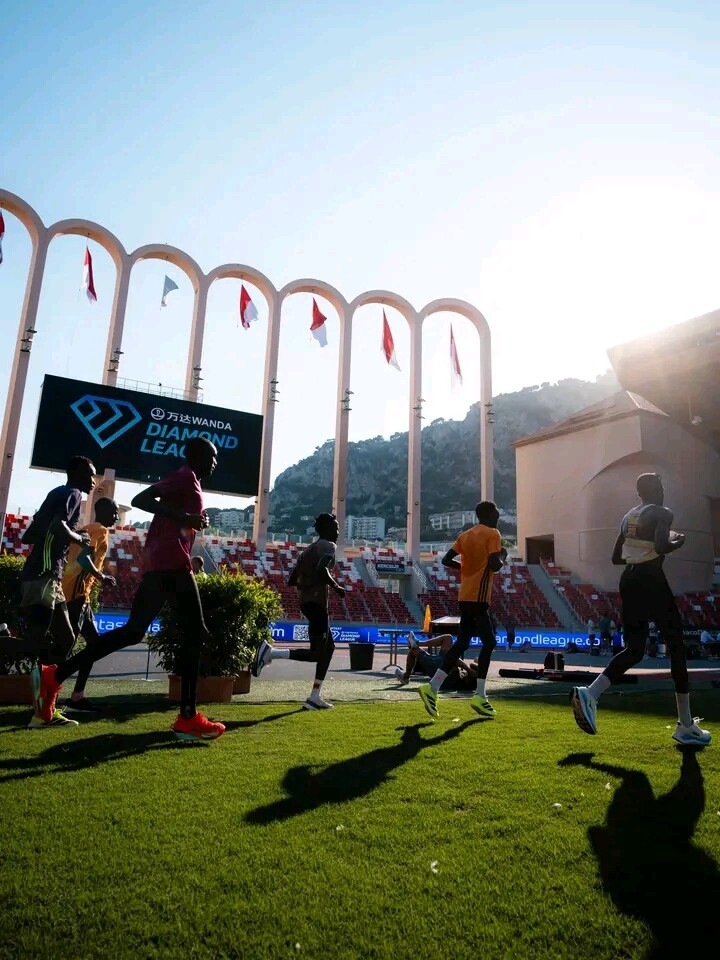
The appearance of the reigning Paris Olympic triathlon champions at one of athletics' most prestigious meetings is a rare crossover between two elite endurance disciplines. While both have built their reputations through the demanding combination of swimming, cycling, and running, Monaco offers a completely different test—one where there is nowhere to hide against the world's best specialist distance runners.

For Yee, the meeting marks his long-awaited return to the Diamond League, his first appearance on the circuit since 2019. The Olympic champion will line up in a world-class men's 5,000 metres carrying a personal best of 13:13.89, eager to measure his progress against an elite field after shifting much of his focus toward longer-distance running.
The Briton's endurance credentials have grown significantly since his Olympic triumph. Earlier this year, he stunned the distance-running world by clocking an outstanding 2:06:38 at the Valencia Marathon, becoming the second-fastest British marathon runner in history. That performance demonstrated that his running ability extends far beyond the final leg of a triathlon and established him as a genuine force over the longer distances.
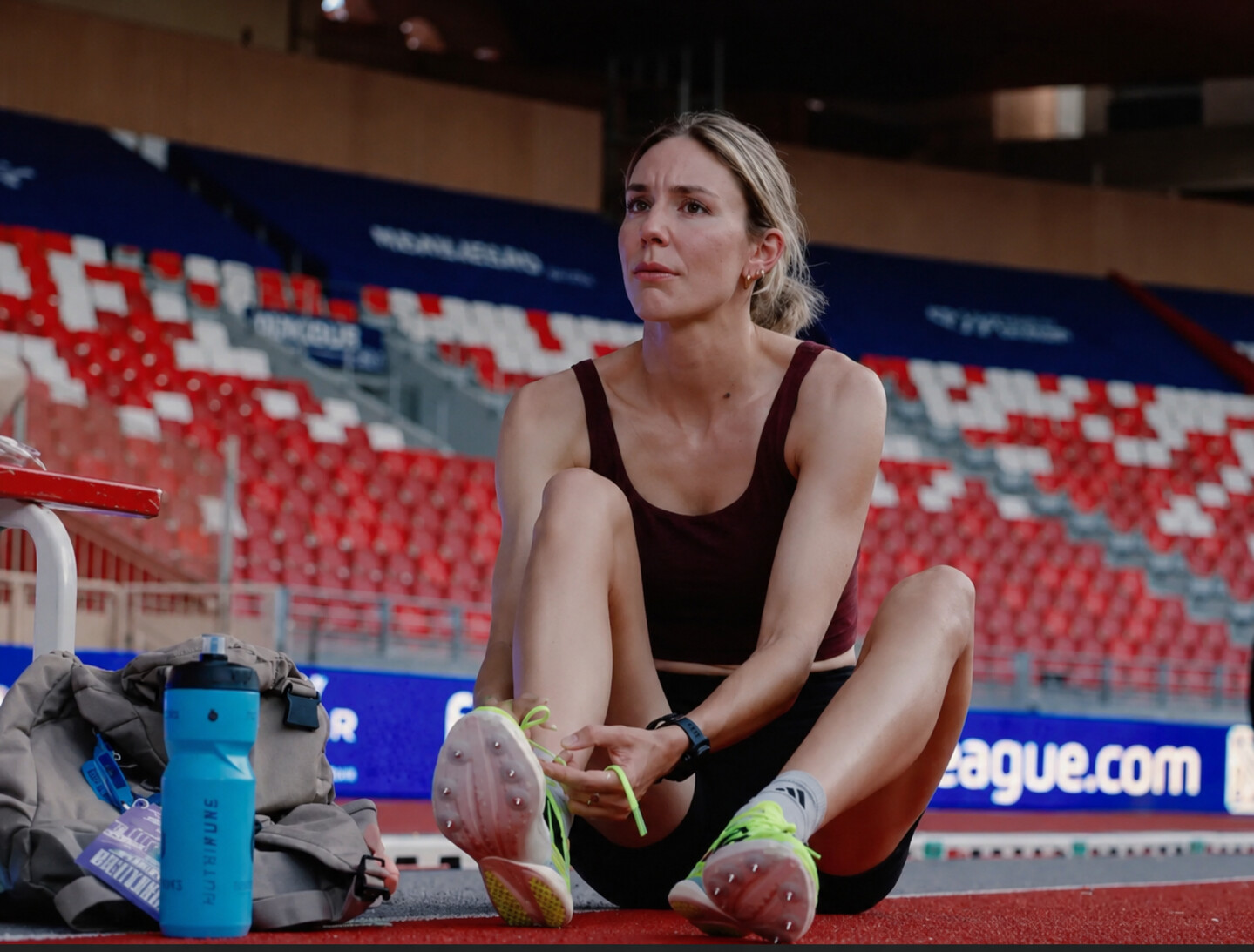
Beaugrand's appearance in the women's 3,000 metres carries even deeper personal significance. The French star will compete in Monaco, where she spent her childhood racing for local club AS Monaco, making her Diamond League debut at the venue a dream years in the making. Returning to the same track where her athletic journey began adds an emotional dimension to one of the biggest races of her career.
Her transition to pure running has been equally remarkable. Over the past year, Beaugrand has rewritten the French record books, setting a national record of 30:52 for the 10km road race before lowering the French 5,000-metre record to 14:40.77. Those performances have confirmed that she possesses the speed to challenge world-class specialists, even if Monaco presents her toughest examination yet.
Neither athlete will enjoy an easy introduction to the Diamond League.
Beaugrand faces one of the strongest women's fields assembled this season, featuring Kenyan legend Faith Kipyegon, world indoor champion Nadia Battocletti, world leader Freweyni Hailu, and world record holder Agnes Ngetich. Every lap promises relentless pace against athletes who have made track racing their sole focus.
Yee's challenge is equally formidable. His rivals include French distance star Jimmy Gressier, world silver medallist Isaac Kimeli, and several of the world's leading 5,000-metre specialists, ensuring that every position will have to be earned.
While neither Olympic triathlon champion enters Monaco as the favourite, both arrive with exceptional running pedigrees that have already blurred the line between multisport excellence and elite distance running. Their presence adds a fascinating storyline to an evening renowned for producing fast times and unforgettable performances.
As the lights shine on Stade Louis II, all eyes will be on whether two Olympic triathlon champions can prove they belong among the world's fastest track athletes. Regardless of the outcome, their bold decision to embrace one of the sport's toughest stages is another reminder that true endurance champions are never afraid to test their limits.
by Erick Cheruiyot for My Best Runs.
Login to leave a comment
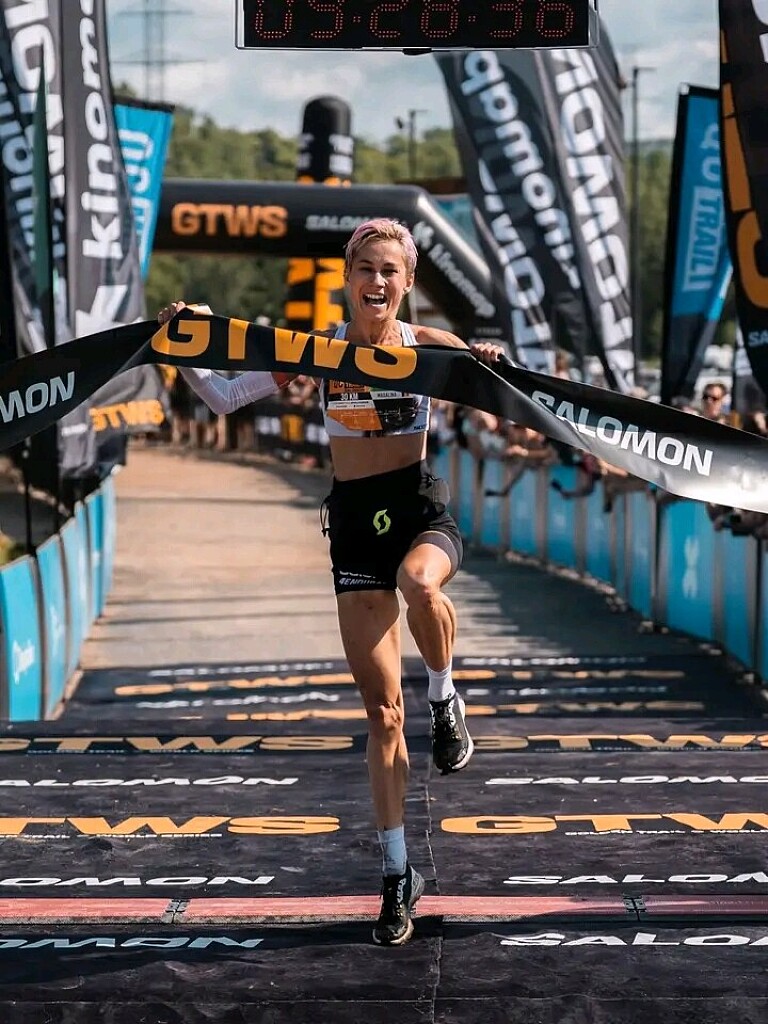
Madalina Florea Conquers Québec Mega Trail 30K to Seize Golden Trail World Series Lead
Romania's Madalina Florea delivered a commanding performance at the Québec Mega Trail 30K on Sunday, conquering one of the most demanding courses on the Golden Trail World Series calendar to claim victory and move to the top of the overall standings.
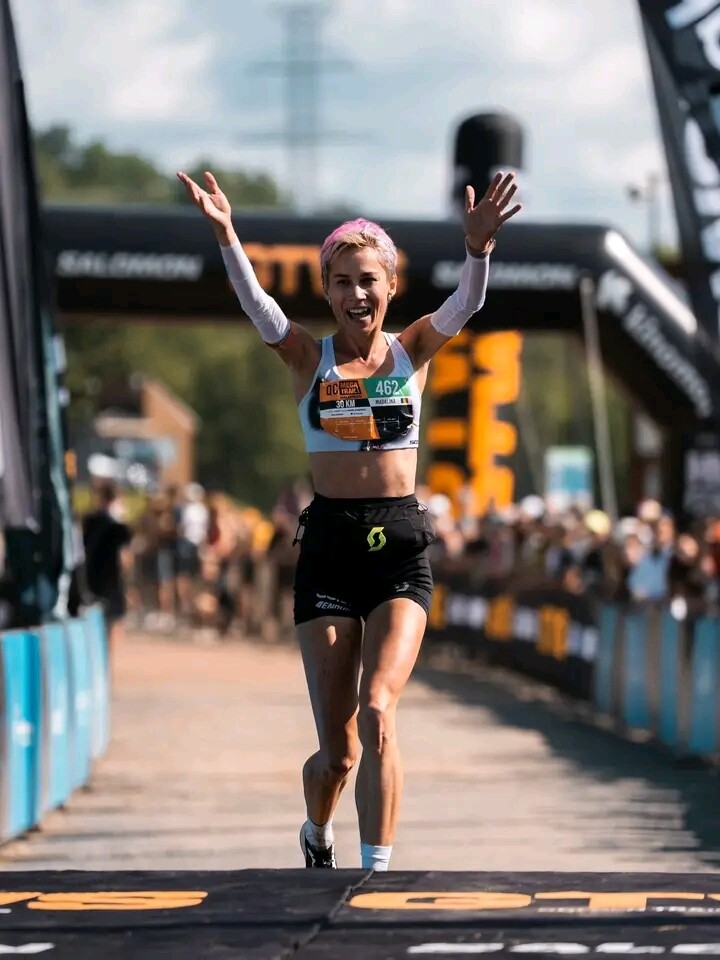
The reigning Golden Trail World Series champion crossed the finish line in 2:27:12, producing another masterclass in mountain racing on a brutal 28.7-kilometre course featuring 1,397 metres of elevation gain, two punishing ascents of Mont-Sainte-Anne, and highly technical descents across steep ski slopes.
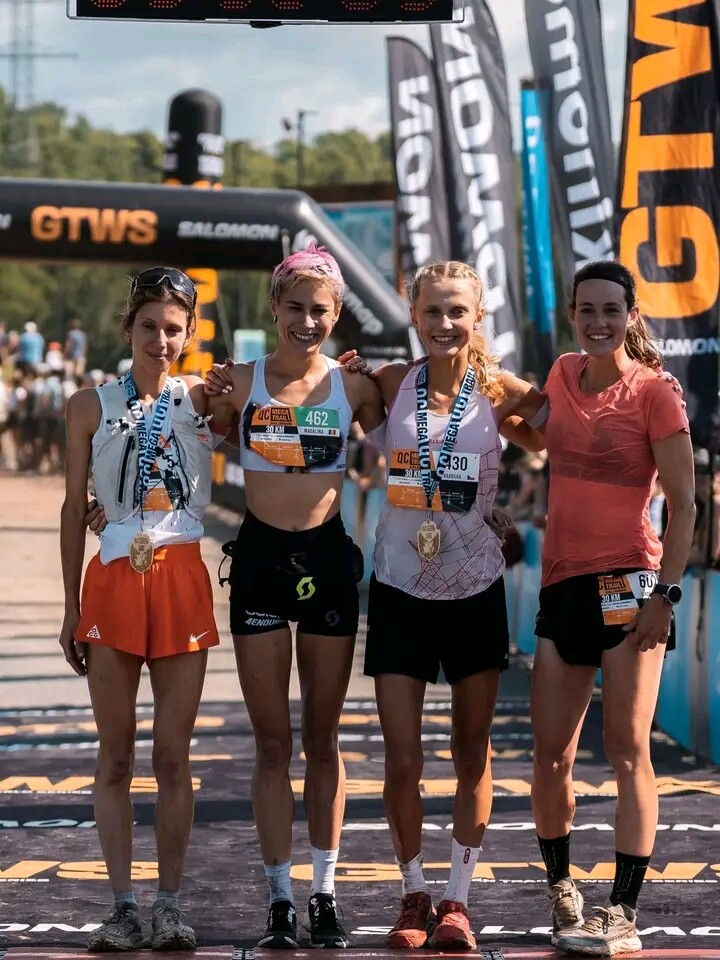
The race began at a relentless pace as Caroline Kimutai surged to the front, continuing the aggressive strategy that has defined her season. Florea, however, remained composed, keeping the Kenyan well within reach during the opening climb before launching her decisive move on the first descent.
From that moment, the Romanian steadily tightened her grip on the race. She extended her advantage on the second ascent and never looked back, controlling the remainder of the contest with remarkable strength and technical precision.
France's Marie Nivet secured second place, finishing more than seven minutes behind the winner, while Kimutai faded after her fast start to complete the podium in third.
The victory propels Florea to the summit of the Golden Trail World Series rankings with 442 points, overtaking Kimutai, who now sits second on 408 points. Nivet's runner-up finish also lifts her into third place in the overall standings, setting up an intriguing battle for the remainder of the season.
With the Québec triumph, Florea has once again underlined why she is the defending series champion. Her ability to combine patience, tactical awareness and exceptional climbing and descending skills proved decisive on one of the circuit's toughest tests.
The Golden Trail World Series now pauses before returning on August 1 in Austria, followed by the iconic Sierre-Zinal race in Switzerland a week later. As the championship enters its decisive phase, Florea has firmly established herself as the athlete everyone else will be chasing.
by Erick Cheruiyot for My Best Runs.
Login to leave a comment
Six Countries, Six 5Ks, One Extraordinary Day: Young Runners Create a World-First Endurance Feat
What does it take to run six competitive 5Ks in a single day across six different countries? For five determined young athletes from Michigan, it took endurance, meticulous planning, and an unwavering passion for running.
In one of the most remarkable distance-running achievements of the year, the group completed a 5-kilometre race in Austria, Liechtenstein, Switzerland, France, Germany, and Luxembourg—all within a single day. Their extraordinary journey has earned them a unique world record, showcasing that age is no barrier to ambition.
The challenge began at 6:00 a.m. in Austria, where the runners lined up for the first of six races. After each 5K, they quickly climbed into a van and travelled across international borders before taking on the next event. The demanding schedule continued from country to country until the final race was completed just before sunset in Luxembourg.
Ranging in age from 10 to 15 years, the young athletes covered a total of 30 kilometres (18.6 miles) of racing while crossing six international borders in less than a day. It was a true test of endurance, resilience, and determination, requiring them to repeatedly recover, refocus, and perform under physically demanding conditions.
More than just a record-breaking adventure, the achievement highlights the power of youthful determination and the limitless possibilities that come with setting bold goals. Completing one 5K is a memorable accomplishment for many runners; completing six in six different nations on the same day is something almost unimaginable.
In a sport filled with incredible performances, this stands out as one of the most original and inspiring running achievements of the year—a celebration of endurance, teamwork, and the adventurous spirit that continues to redefine what is possible.
by Erick Cheruiyot for My Best Runs.
Login to leave a comment
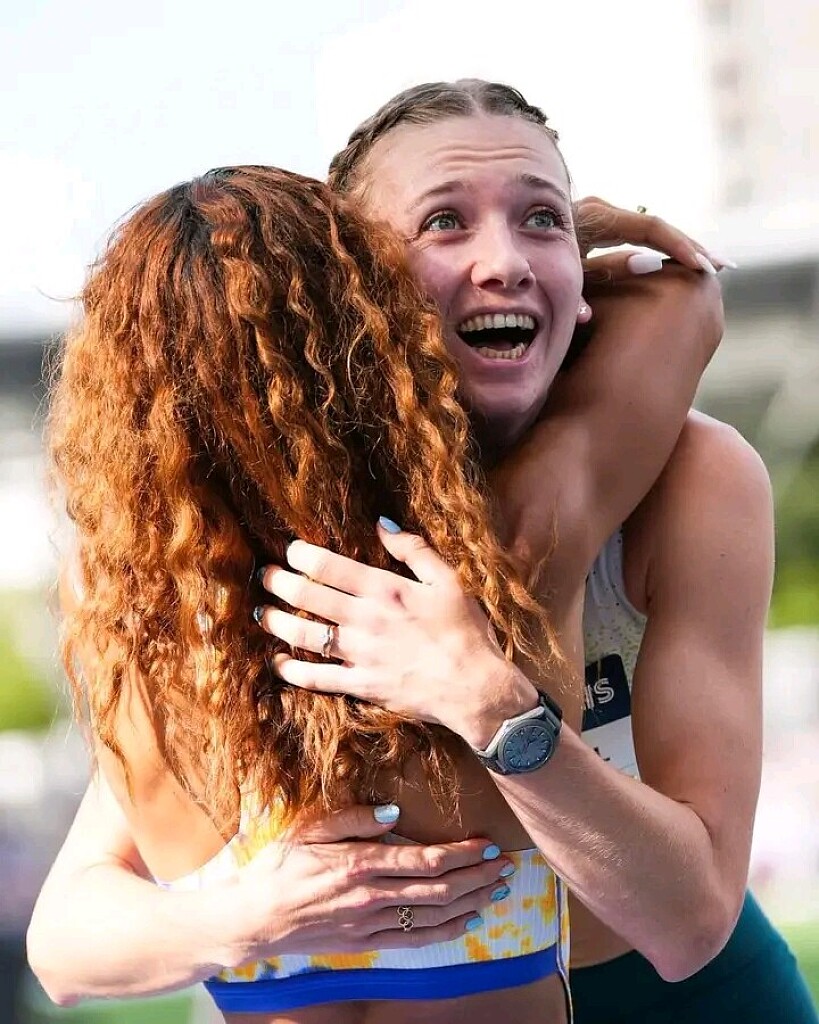
A New Era of Women's 800m Running: Why 2026 Is Producing Extraordinary Performances
Women's 800m running is experiencing one of its most remarkable seasons in recent memory, with elite athletes consistently delivering performances once considered almost unimaginable. As the 2026 campaign unfolds, a growing question echoes across the athletics world: what has changed to produce such exceptional times?
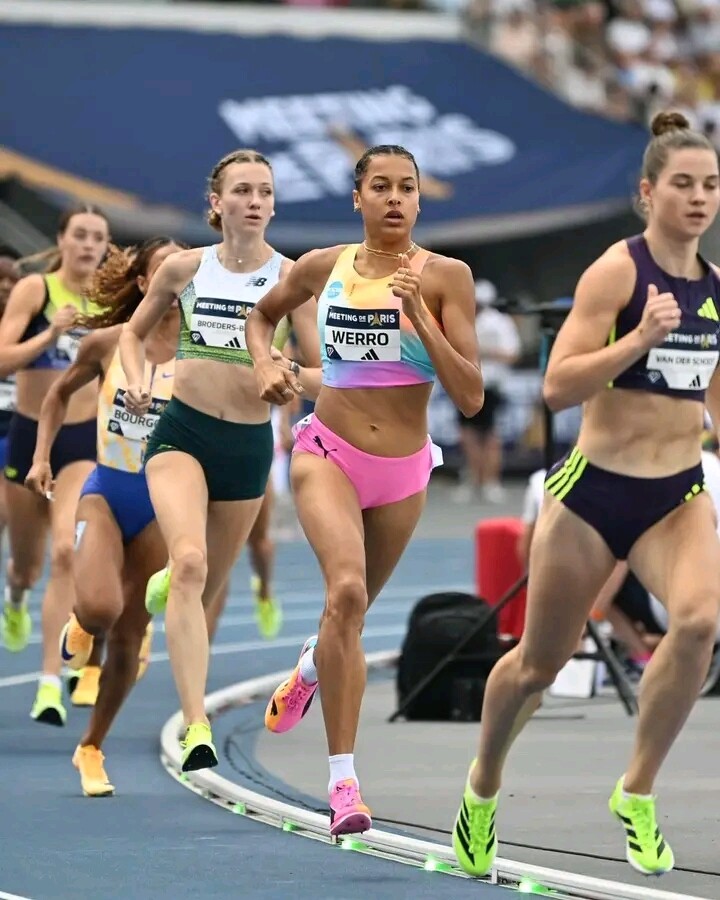
Leading this extraordinary surge is Audrey Werro, whose breathtaking consistency has rewritten expectations. The Swiss star has already clocked 1:53 on two separate occasions this season, becoming the first woman in history to break the 1:54 barrier more than once. Her repeated brilliance has transformed what was once regarded as a once-in-a-career performance into a new benchmark for excellence.
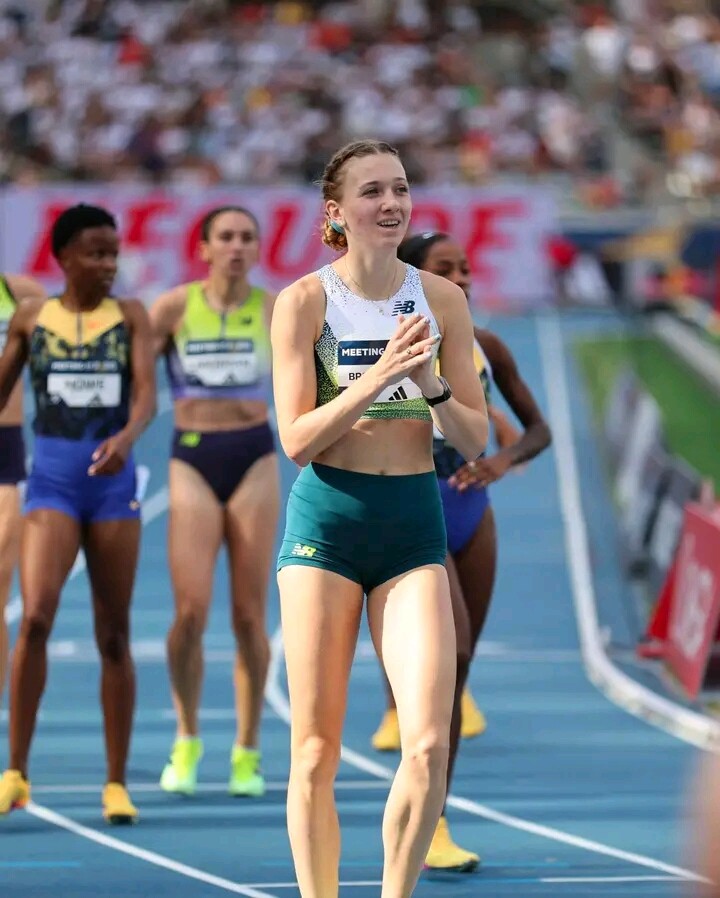
The momentum extends far beyond Werro. Dutch sensation Femke Bol, renowned globally for her dominance in the 400m hurdles, launched her Diamond League campaign with an outstanding 1:55 over two laps. Her impressive transition highlights not only her remarkable versatility but also the increasingly competitive standard now defining the women's 800m.

Meanwhile, France's Anaïs Bourgoin delivered one of the season's most inspiring breakthroughs. At the age of 29, Bourgoin produced the performance of her career by breaking the 1:56 barrier for the first time, proving that significant improvement remains possible even after years at the highest level of the sport.
The wave of fast times has prompted widespread discussion throughout the athletics community. Improved training methodologies, advances in sports science, enhanced race pacing, deeper international competition and growing confidence among athletes appear to be combining to elevate the event to unprecedented heights. With multiple women now capable of challenging world-class marks in the same race, the competitive landscape has become stronger than ever.
What once seemed extraordinary is rapidly becoming the new standard. Every major meeting now carries the possibility of another historic performance, and the women's 800m has emerged as one of the most captivating disciplines in global athletics.
If the first half of the season is any indication, the biggest performances may still lie ahead. As the world's finest middle-distance runners continue to push each other beyond previous limits, 2026 is shaping up as a defining year that could permanently reshape the history of the women's 800 metres.
by Erick Cheruiyot for My Best Runs.
Login to leave a comment
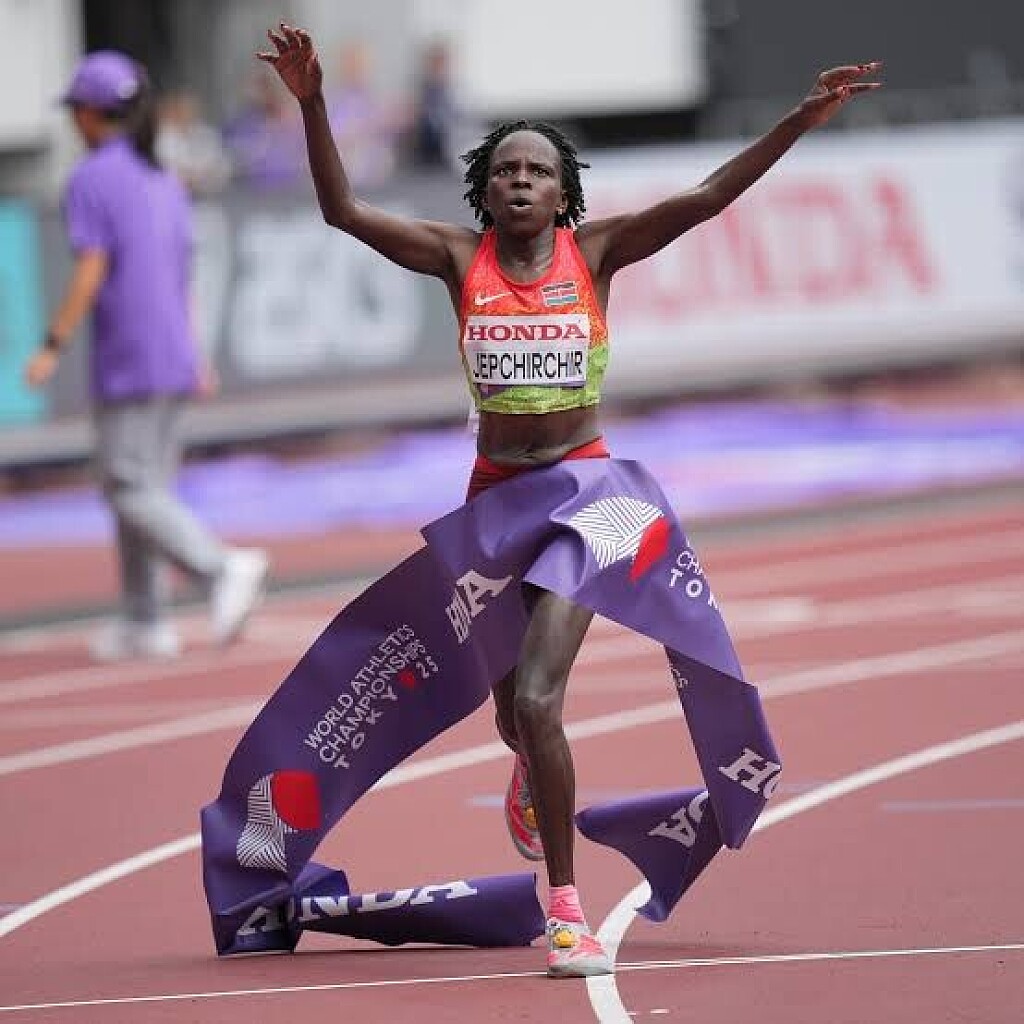
Sydney Set for a Historic Showdown as Record-Breaking Women's Elite Field Assembles
The TCS Sydney Marathon presented by ASICS is set to deliver one of the most captivating marathon spectacles of the year, with the strongest women's elite field ever assembled on Australian soil preparing to battle for glory.
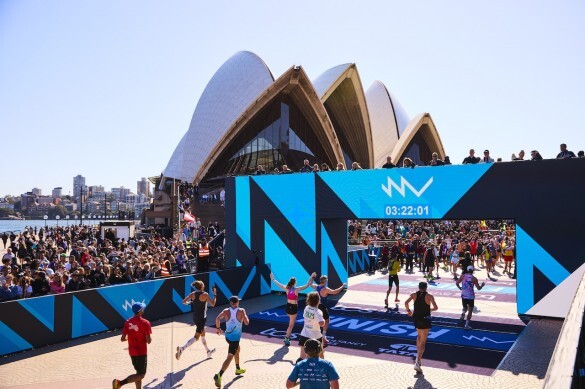
Headlining the star-studded lineup is reigning World Marathon Champion Peres Jepchirchir Ngeno, whose remarkable personal best of 2:14:43 makes her the fastest athlete in the field. The Kenyan arrives as one of the sport's most accomplished marathoners and will carry the weight of expectation as she leads an exceptionally deep and competitive international field.
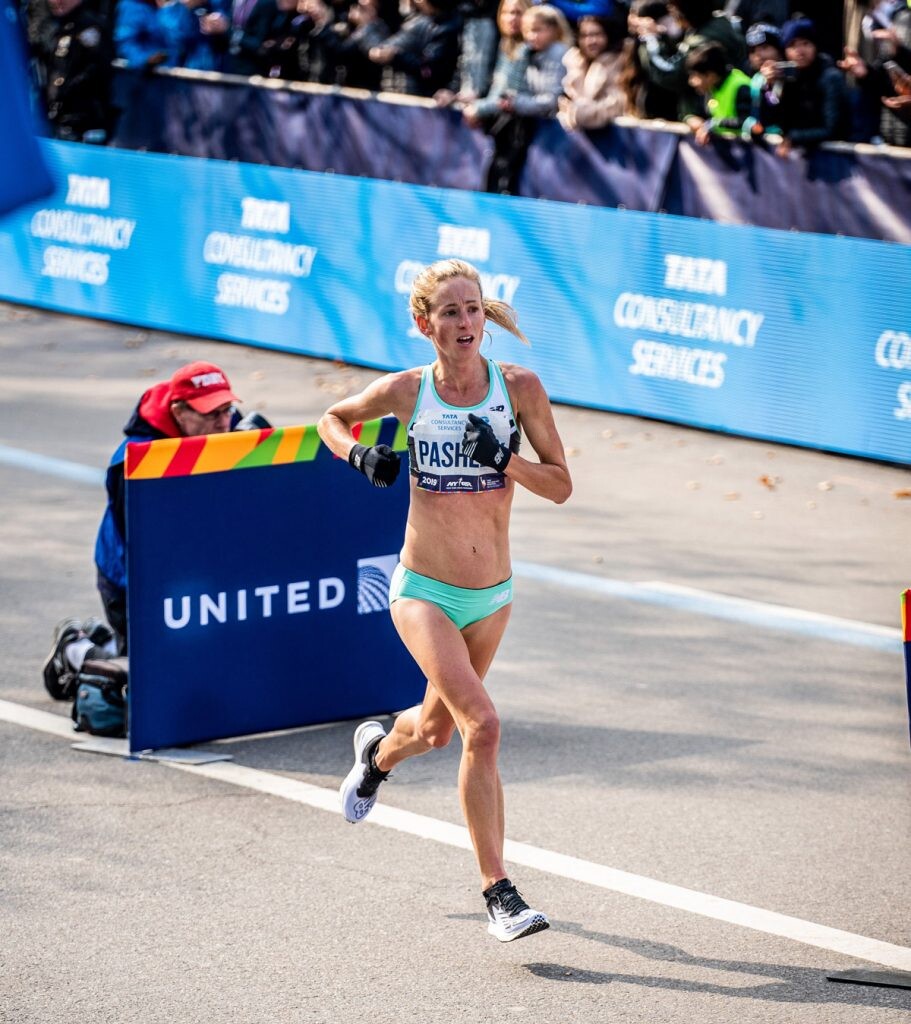
Kenya's challenge extends far beyond its world champion. Irine Cheptai (2:17:51), Vivian Cheruiyot (2:18:31), Sharon Chelimo (2:19:33), Joyce Tele (2:19:50), Jackline Cherono (2:21:14) and Priscah Cherono (2:25:17) add tremendous depth, reinforcing the nation's reputation as the dominant force in women's marathon running.
Ethiopia will be equally formidable, boasting an impressive squad led by Ruti Aga (2:18:09), Shure Demise (2:18:34), Haven Hailu (2:19:09), Meseret Abebayehau (2:19:50), Aberu Ayana (2:20:20), Waganesh Mekasha (2:20:26), Azmera Gebru (2:20:48) and Fikrte Wereta (2:21:32). With such remarkable depth, Ethiopia has every opportunity to challenge for victory and dominate the podium.
The international flavor continues with Magdalena Shauri of Tanzania (2:18:03), Uganda's Stella Chesang (2:18:26), American-based Biruktayit Degefa (2:21:34), France's Melody Julien (2:25:01), Morocco's Kaoutar Farkoussi (2:25:12), Japan's Mizuki Nishimura (2:25:54) and Australia's leading hopes Ellie Pashley (2:26:21), Caitlin Scott (Adams) (2:30:26) and Rebecca Lowe (2:30:50).
With multiple women boasting personal bests under 2:20, the race promises relentless pace from the opening kilometres. The combination of proven championship pedigree, world-class experience and emerging talent sets the stage for what could become the fastest and most competitive women's marathon ever contested in Australia.
As the TCS Sydney Marathon presented by ASICS continues to cement its status among the world's premier marathons, the 2026 edition is shaping up to be a defining moment in the event's history. Fans can expect a fierce contest where every second will matter and marathon excellence will be on full display.
by Erick Cheruiyot for My Best Runs.
Login to leave a comment

Sydney Marathon
The Sydney Marathon is a marathon held annually in Sydney, Australia. The event was first held in 2001 as a legacy of the 2000 Summer Olympics, which were held in Sydney. In addition to the marathon, a half marathon, 9 kilometres (5.6 mi) "Bridge Run", and a 3.5 kilometres (2.2 mi) "Family Fun Run" are also held under the banner...
more...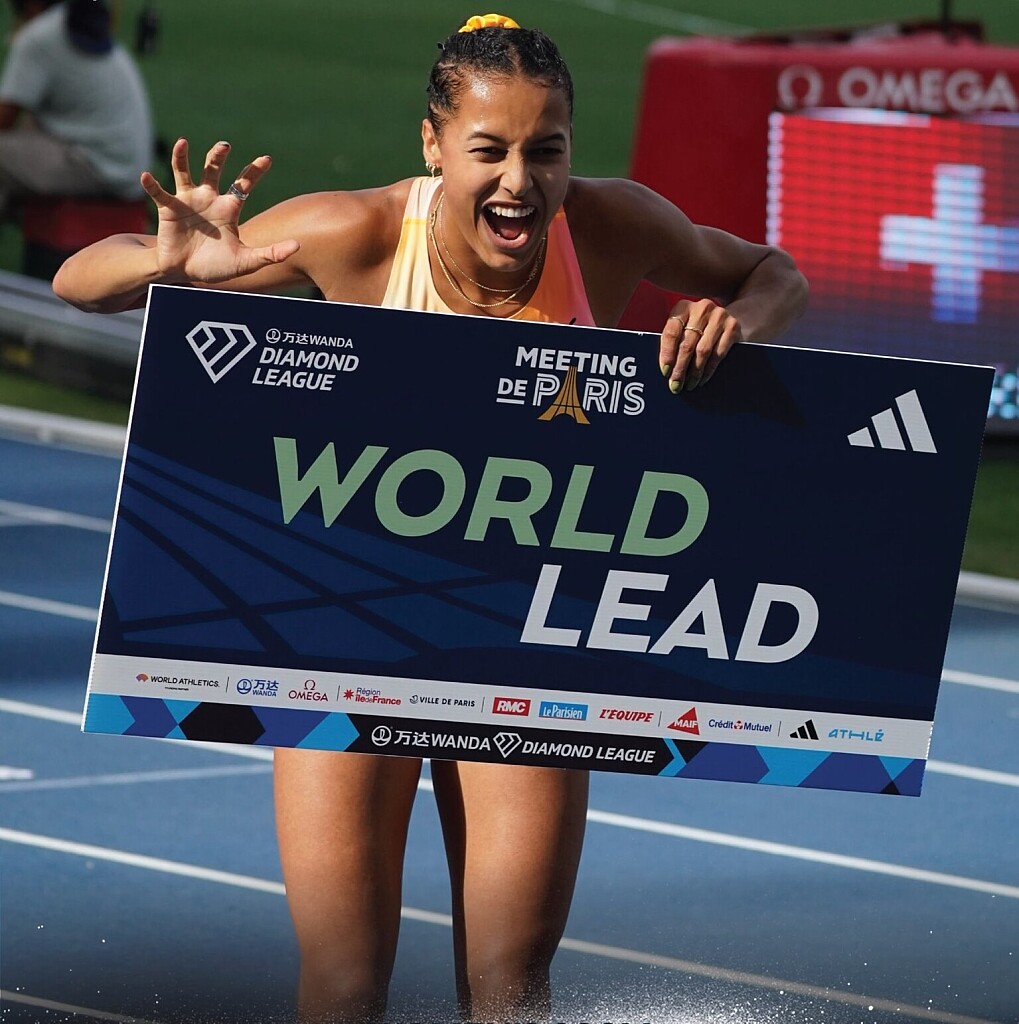
AUDREY WERRO MAKES HISTORY AGAIN WITH STUNNING PARIS DIAMOND LEAGUE TRIUMPH
Swiss middle-distance sensation Audrey Werro continues to redefine the limits of women's 800m running after producing another breathtaking performance at the Paris Diamond League, storming to victory in a remarkable 1:53.80.
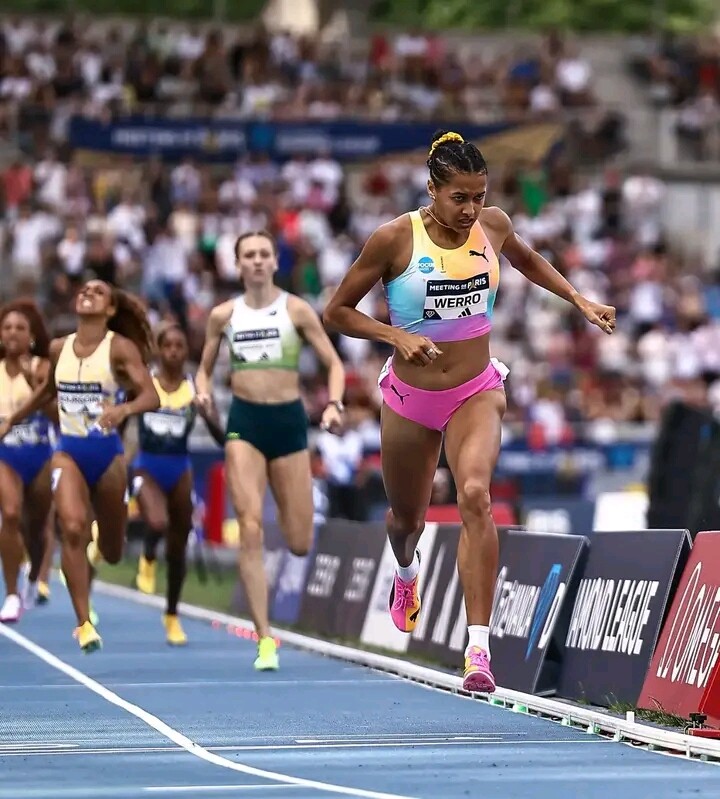
The 22-year-old delivered a perfectly judged race from start to finish, lowering her own Diamond League record while moving to third on the all-time world list. More significantly, Werro etched her name even deeper into athletics history by becoming the first woman ever to break the 1:54 barrier on more than one occasion—an extraordinary milestone that underlines her growing dominance in the event.
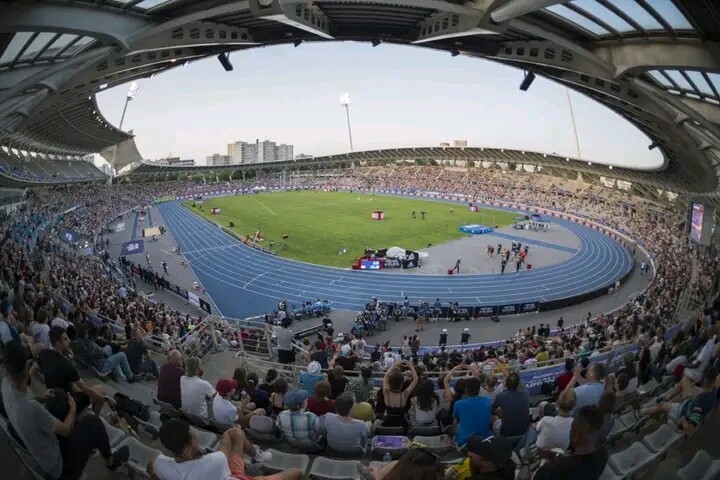
With another world-class performance added to her rapidly expanding résumé, Werro has firmly established herself as the woman to beat this season. Her consistency at a level once thought almost unattainable is transforming the landscape of women's middle-distance running and fueling excitement about what could come next.
Behind the Swiss star, the race also produced outstanding performances from her rivals. Dutch athlete Femke Broeders-Bol continued her impressive rise over two laps, smashing her personal best with a superb 1:55.60 to finish second.
The home crowd was then sent into celebration as France's Anaïs Bourgoin produced the race of her life, clocking a national record of 1:55.65 to secure third place and cap off a memorable evening in Paris.
The women's 800m once again proved to be one of the highlights of the Diamond League season, but the evening ultimately belonged to Audrey Werro. With history continuing to fall at her feet, the Swiss star is rapidly building a legacy that could redefine one of athletics' most prestigious events.
by Erick Cheruiyot for My Best Runs.
Login to leave a comment
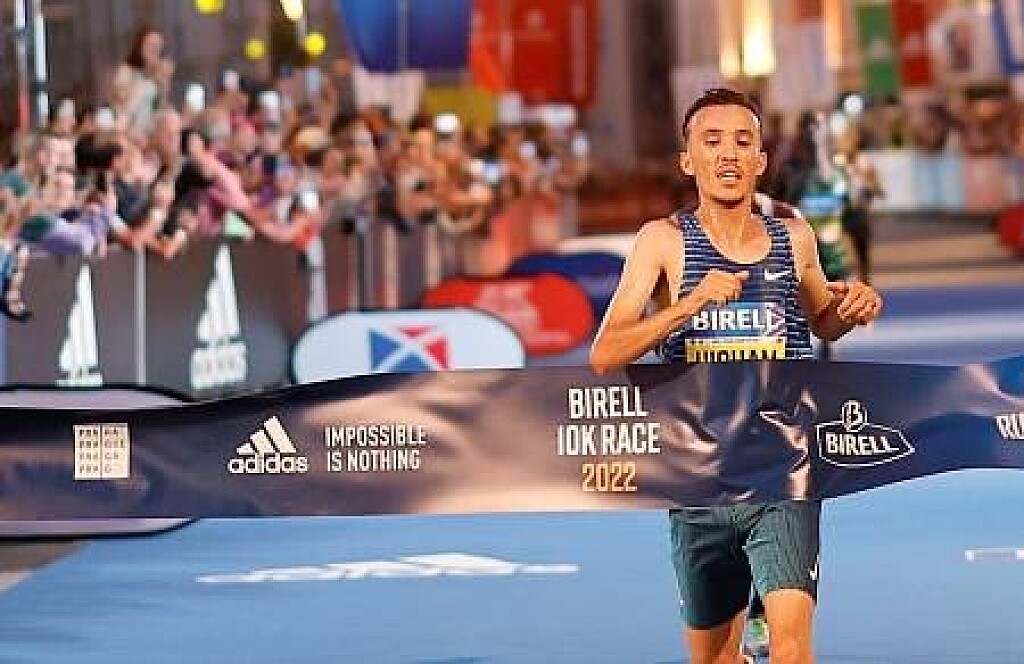
Top European and African Stars Headline tRUNsylvania International 10K Cluj
One of Eastern Europe’s strongest road races takes center stage this Sunday (June 28) as the tRUNsylvania International 10K Cluj, powered by Joma, brings together an exceptional field of elite athletes from Europe and Africa in Cluj-Napoca, Romania.
Run on a fast four-lap circuit through the city’s vibrant center, with the start and finish inside Cluj Arena, the race features numerous athletes capable of producing world-class performances.
Morocco’s Hicham Amghar leads the men’s field with a personal best of 27:09, set when he won the tRUNsylvania 10K in Brașov two years ago. He will face a deep international lineup that includes Norway’s European 10,000-meter silver medalist Zerei Kbrom Mezngi (27:39), France’s Mehdi Frere (27:44), Dutch marathon standout Filmon Tesfu (27:45), Spain’s Juan Antonio Perez (27:45), Kenya’s Moses Cheruiyot (27:51), Italy’s former national marathon record holder Eyob Faniel (28:10), Algeria’s Abderrazak Charik (28:12), Eritrea’s Seare Weldezghi (28:14), the Netherlands’ Noah Schutte (28:19), Spain’s Yago Rojo (28:21), and Australia’s James Whelan (28:26).
Several of Europe’s top runners will also be chasing qualifying standards for the 2026 European Athletics Championships, adding even more significance to the competition.
The women’s race is equally impressive and may prove to be the highlight of the day.
Uganda’s Joy Cheptoyek, the World Cross Country Championships silver medalist, headlines the field with an outstanding personal best of 30:03. Kenya’s Jackline Chepkoech, the 2021 World Under-20 3,000-meter steeplechase champion, will make her highly anticipated 10K road debut after recording an impressive 8:57.35 on the track.
Belgium’s reigning national 10K champion Julie Voet enters with a 31:54 best, while Ireland’s Fiona Everard follows closely at 31:58. The international field also includes France’s Ines Hamoudi (32:20), Ethiopia’s Meselech Alemayehu (32:20), Spain’s Beatriz Alvarez (32:21 on the track), Ireland’s Niamh Allen (32:25), Israel’s Maor Tiyouri (32:29), Türkiye’s Nursena Ceto (32:34), Hungary’s Lilla Bohm (32:41), and Spain’s Cristina Espejo (32:52).
With championship qualifying marks on the line, a fast course, and one of the deepest international fields ever assembled for a road race in Romania, the tRUNsylvania International 10K Cluj is set to deliver exciting competition and fast times from start to finish.
by Boris Baron
Login to leave a comment
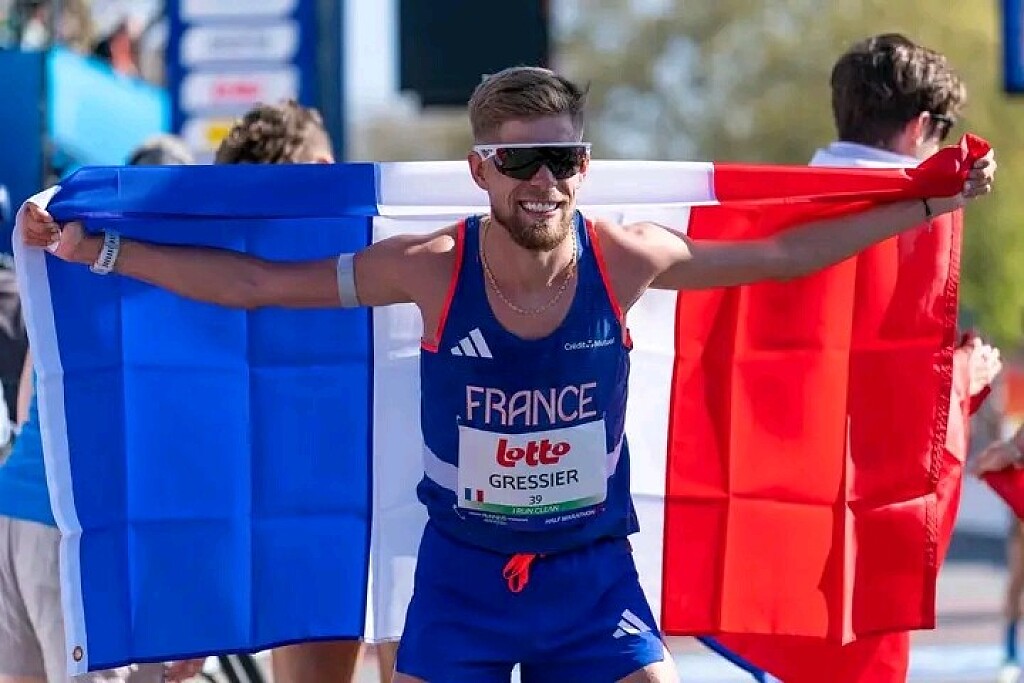
Paris Diamond League Men's 5000m: Global Distance Stars Set for a High-Stakes Clash in the French Capital
The countdown to the 2026 Paris Diamond League is almost over, and one of the most anticipated events on the programme is the men's 5000m. Scheduled for Sunday, June 28, the race has assembled an impressive international field featuring established champions, emerging talents, and national record holders, setting the stage for what could become one of the fastest 5000m races of the season.

France's Jimmy Gressier will carry the hopes of the home crowd as he headlines the event. Renowned for his fearless front-running style and relentless pace, Gressier will be eager to produce another memorable performance on home soil against one of the deepest fields assembled this year.
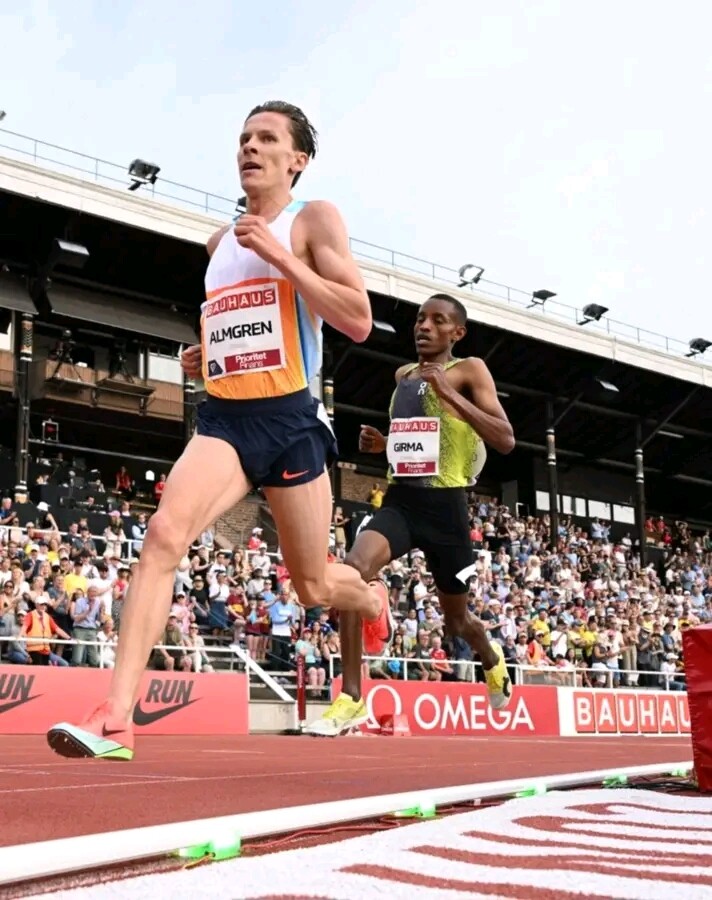
The race also features Sweden's Andreas Almgren, whose remarkable rise over the longer distances has made him one of Europe's strongest contenders. Eritrea's Saymon Amanuel, Ethiopia's Getnet Wale, Kuma Girma, Lamecha Girma, Khairi Bejiga, and Addisu Yihune further strengthen an already formidable lineup, bringing world-class credentials and proven championship experience.
Kenya enters the contest with a talented quartet comprising Cornelius Kemboi, Frankline Kibet, Mathew Kipchumba Kipsang, and Jacob Krop. With Kenya's rich tradition in distance running, the four athletes will be looking to assert themselves against a field packed with elite competitors and continue the country's dominance on the global stage.
The international flavour of the race extends even further with competitors from the United States, Germany, Spain, Mexico, Burundi, Uruguay, Bahrain, and the Netherlands, highlighting the Diamond League's status as the premier meeting point for the world's finest track athletes.
With so many athletes capable of producing sub-13-minute performances, fans can expect an aggressive pace from the opening laps. Whether the race develops into a tactical championship-style battle or an all-out assault on the clock, every indication points to a thrilling spectacle under the Paris lights.
As the Diamond League season gathers momentum, Sunday's men's 5000m promises more than just valuable points—it offers athletes a golden opportunity to test themselves against world-class opposition, build confidence ahead of major championships, and perhaps deliver one of the standout performances of the year.
The stage is set. The field is loaded. Paris is ready for another unforgettable moment of distance running.
by Erick Cheruiyot for My Best Runs.
Login to leave a comment
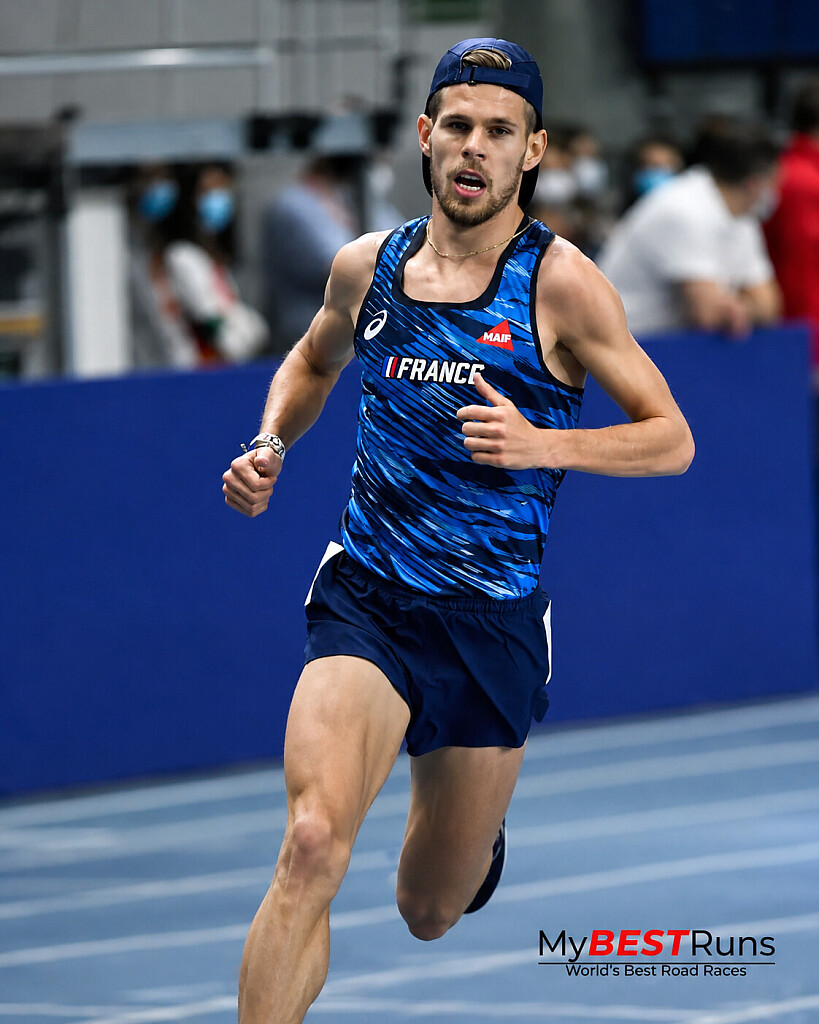
Jimmy Gressier Targets French 3000m Record in High-Stakes Montreuil Showdown
French distance-running star Jimmy Gressier is set for one of the biggest challenges of his career tonight as he takes aim at the national 3000m record in front of a home crowd in Montreuil.
Fresh from his rise to the top of European distance running and carrying the confidence of a reigning world champion, Gressier will attempt to rewrite the French record books by surpassing the long-standing national mark of 7:29.38. The performance would not only cement his status among France's greatest distance runners but also underline his growing influence on the global stage.
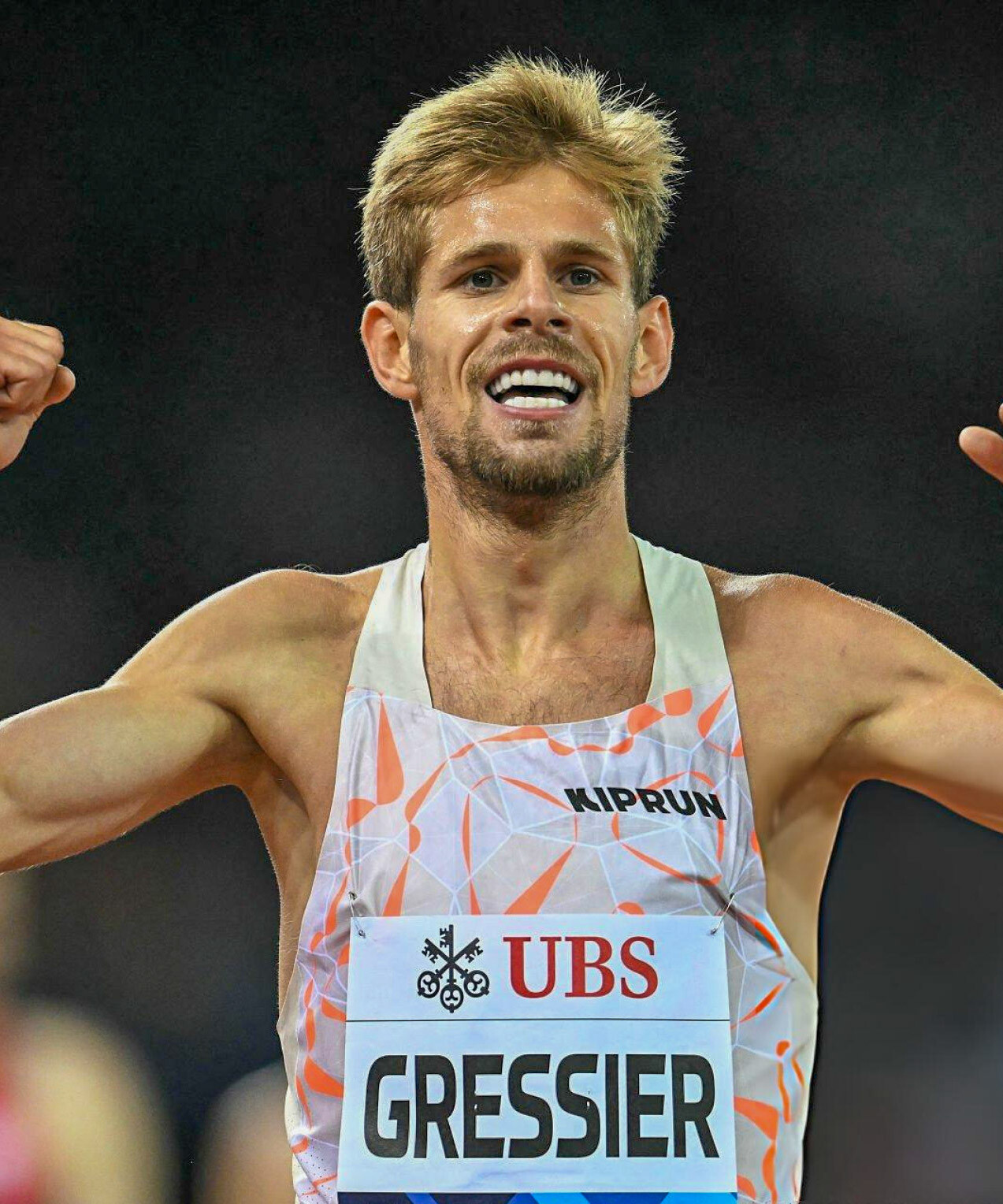
To achieve the feat, Gressier will need to maintain a relentless pace of approximately 2:29 per kilometre, a demanding rhythm that leaves little margin for error over the seven-and-a-half-lap contest. Recognizing the magnitude of the task, organizers have arranged for three pacemakers to guide the early stages of the race and help keep the record attempt on schedule.
The Montreuil meeting has quickly become one of the most anticipated athletics events of the week, with fans eager to witness whether Gressier can deliver a historic performance on home soil. Known for his fearless racing style and willingness to push the pace from the front, the Frenchman has repeatedly demonstrated that he thrives when chasing ambitious targets.
A successful record-breaking run would add another milestone to an already remarkable career and provide yet another statement of intent ahead of the major championships still to come this season.
All eyes will be on Montreuil tonight as Jimmy Gressier steps onto the track with history in his sights. With ideal pacing support, strong form, and a passionate home crowd behind him, the stage is perfectly set for a memorable assault on the French 3000m record.
by Erick Cheruiyot for My Best Runs.
Login to leave a comment
Tshepo Tshite Stuns Olympic Champion Cole Hocker in Thrilling 3,000m Showdown at USATF LA Grand Prix
The men's 3,000m final at the 2026 USATF LA Grand Prix delivered one of the most electrifying distance races of the season, as South Africa's Tshepo Tshite produced a perfectly timed finishing surge to defeat Olympic and world champion Cole Hocker in a breathtaking battle to the line.
In front of an energized crowd, the race unfolded as a tactical contest before exploding into a furious sprint over the final lap. With several athletes still in contention as they entered the homestretch, Tshite demonstrated remarkable composure and racing intelligence, unleashing a devastating kick when it mattered most.
The South African crossed the finish line in a sensational 7:37.57, securing one of the biggest victories of his career and proving once again that he belongs among the world's elite distance runners.
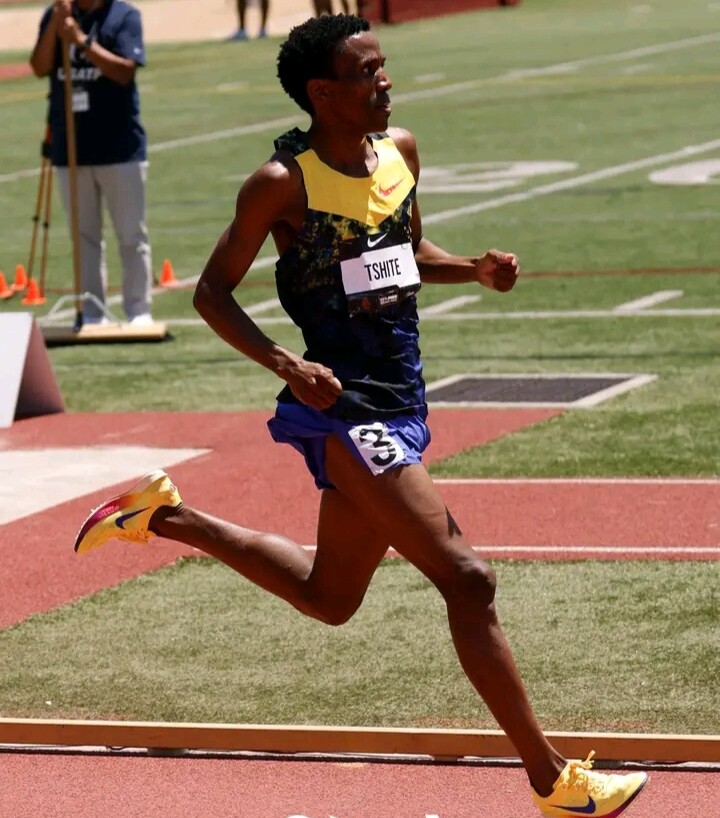
Behind him, American star Cole Hocker fought relentlessly to defend home soil. The reigning Olympic and world champion responded to Tshite's move and closed hard in the final metres, but the finish line arrived just too soon. Hocker settled for second place in 7:37.77, only two-tenths of a second behind the winner after an unforgettable duel.
Mexico's Eduardo Herrera completed a memorable podium after producing one of the finest performances of his career. Running fearlessly against a world-class field, Herrera stayed in contention throughout the race before securing third place in 7:38.53, further establishing himself as one of the leading distance runners in the Americas.
The depth of the field was highlighted by Great Britain's David Mullarkey, who narrowly missed the podium by just five hundredths of a second. His fourth-place finish in 7:38.58 was rewarded with a new personal best, underlining the exceptional pace and competitiveness of the race.
Australia's Jackson Sharp rounded out the top five in 7:41.50, while Americans Dylan Jacobs and Kasey Knevelbaard finished sixth and seventh respectively. France's Romain Legendre completed the finishers in eighth place.
Unfortunately, the race also saw two athletes unable to reach the finish, with Great Britain's Sam Atkin and American Davis Bove both recording DNFs.
Beyond the times and positions, the race served as a reminder of why the 3,000m remains one of track and field's most compelling events. A world champion, an Olympic champion, emerging stars, and seasoned competitors all arrived at the final straight with victory still within reach. In the end, it was Tshite who found the decisive answer, producing a championship-caliber finish that left spectators on their feet and added another memorable chapter to the 2026 USATF LA Grand Prix.
by Erick Cheruiyot for My Best Runs.
Login to leave a comment
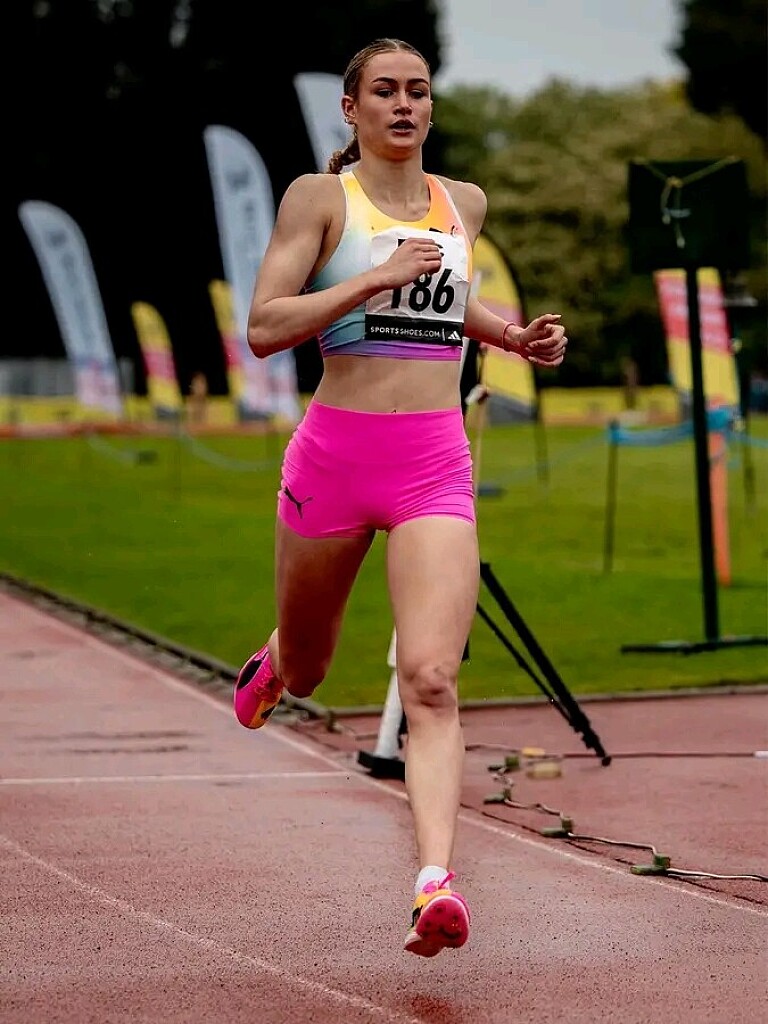
Gill Continues Encouraging Comeback with Marseille 800m Victory
British middle-distance talent Phoebe Gill took another significant step forward in her return to top form, producing a determined victory over 800 metres at the Meeting de Marseille in France on Wednesday.
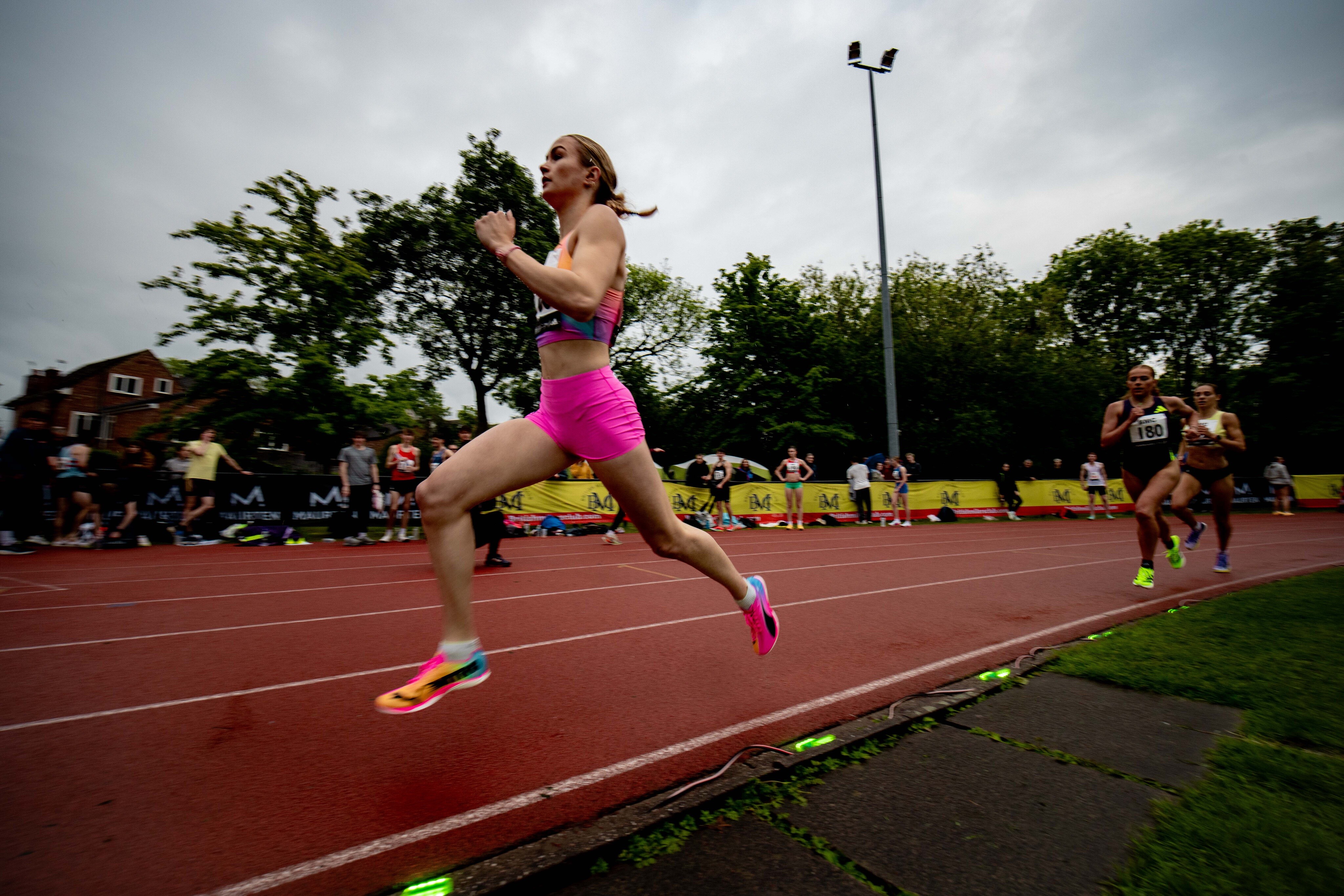
Competing in challenging, wind-affected conditions, the 19-year-old demonstrated both resilience and composure as she held off a late charge from Switzerland's Veronica Vancardo to secure the win in 2:00.81. Vancardo finished just three hundredths of a second behind in 2:00.84, underlining the fiercely contested nature of the race.
While the margin of victory was narrow, the result represented another encouraging milestone for Gill as she continues to rebuild momentum following her injury setback. The young Briton showed impressive race awareness and strength in the closing stages, maintaining her advantage despite the difficult conditions that made fast running a challenge throughout the evening.
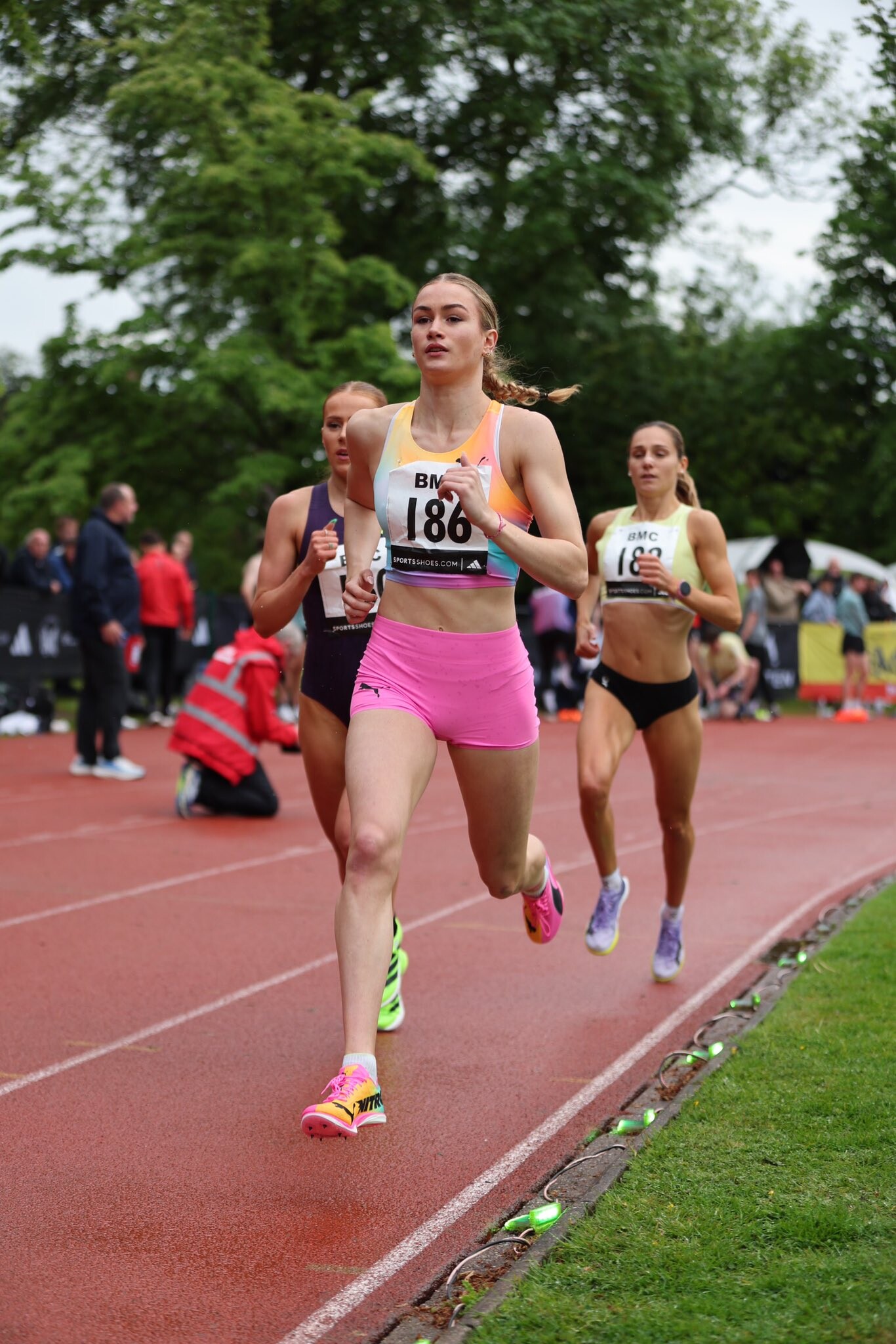
The Marseille triumph adds to a growing body of evidence that Gill is steadily progressing toward her best form. Earlier in her comeback campaign, she clocked 2:01.50 for 800m in Bydgoszcz before demonstrating her versatility with a strong 4:05.53 performance over 1500 metres at the BMC Grand Prix meeting in Trafford.
Those performances have highlighted not only her improving fitness but also her ability to compete across multiple distances as she carefully builds her season. The Marseille victory now provides further confirmation that the European junior star is moving in the right direction.
Gill emerged as one of Britain's most exciting middle-distance prospects through a series of breakthrough performances as a teenager, earning widespread recognition for her fearless racing style and remarkable maturity. Injury temporarily interrupted that upward trajectory, but her recent results suggest she is steadily rediscovering the form that made her one of the sport's brightest young talents.
With each race, the signs of progress become increasingly evident. Winning in difficult conditions and under pressure from a quality field is often a stronger indicator than a fast time alone, and Gill's latest success demonstrated exactly those qualities.
As the summer season gathers pace, the Marseille victory offers another confidence boost for the British teenager, whose return continues to gain momentum. If her recent progression is any indication, Gill could soon find herself back among the leading names on the European middle-distance circuit.
by Erick Cheruiyot for My Best Runs.
Login to leave a comment
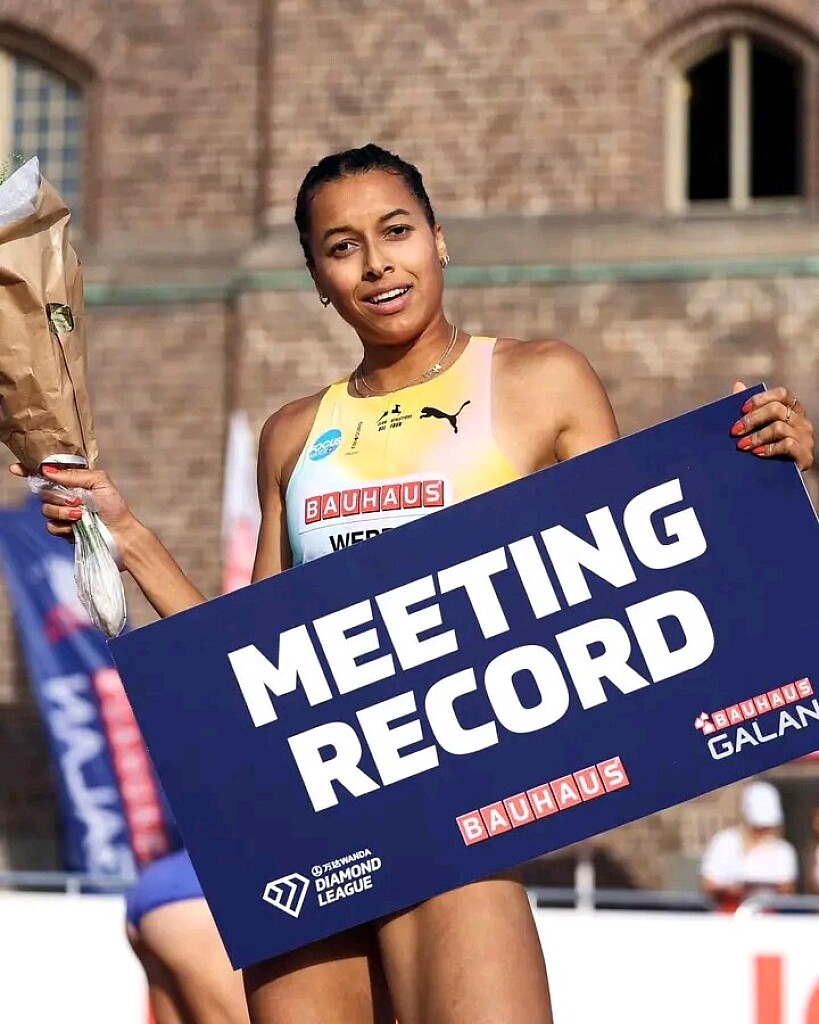
STOCKHOLM SHOCKWAVE: AUDREY WERRO BLASTS 1:53.98 IN ONE OF THE FASTEST 800M RACES EVER RUN
Stockholm delivered pure middle-distance history as the Wanda Diamond League witnessed a truly extraordinary women’s 800m—one that will be remembered as one of the fastest races in the event’s modern era.
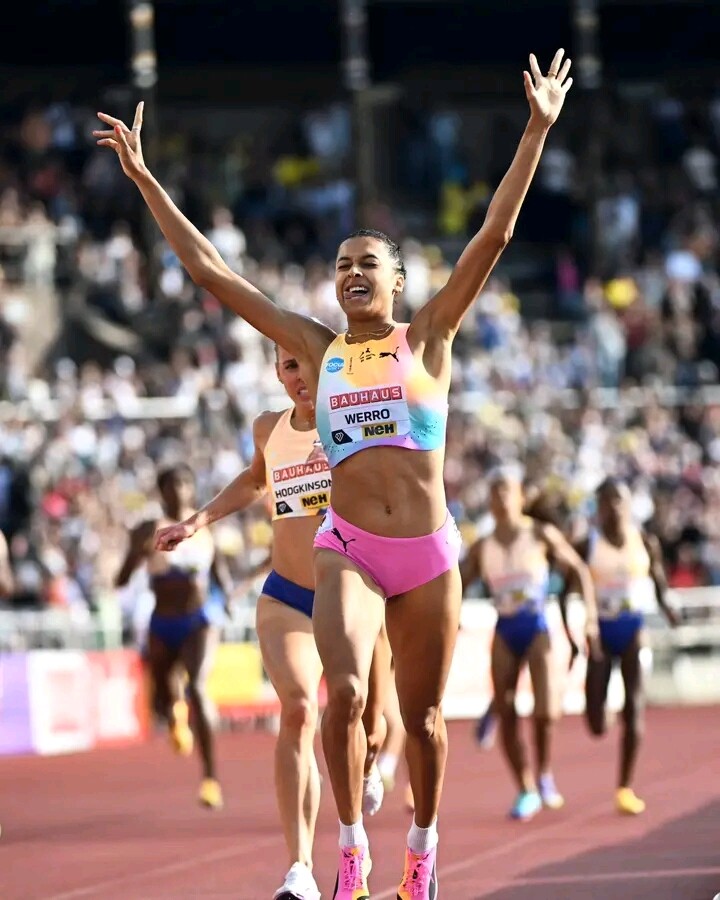
Switzerland’s rising star Audrey Werro produced the performance of her life, storming to victory in a breathtaking 1:53.98, a world-leading mark and a national record. In doing so, she became the third-fastest woman in history over 800m, coming within just 0.70 seconds of the legendary world record of 1:53.28 set by Jarmila Kratochvílová in 1983.
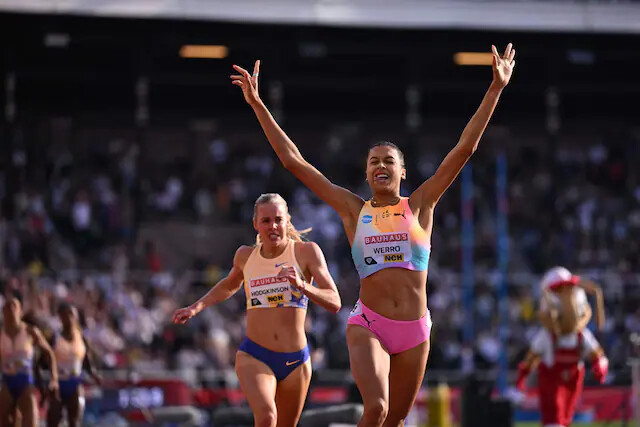
It was a fearless, perfectly timed run—controlled early, explosive down the back straight, and devastating in the final 200 metres as Werro pulled away in a finish of historic quality.
Right behind her, Keely Hodgkinson from Great Britain once again proved her consistency at the very highest level. The British star delivered a sensational 1:54.33, setting a new British national record and securing her place as the third-fastest woman in history. Despite finishing second, her performance was another statement of world-class dominance in a golden era for women’s 800m running.
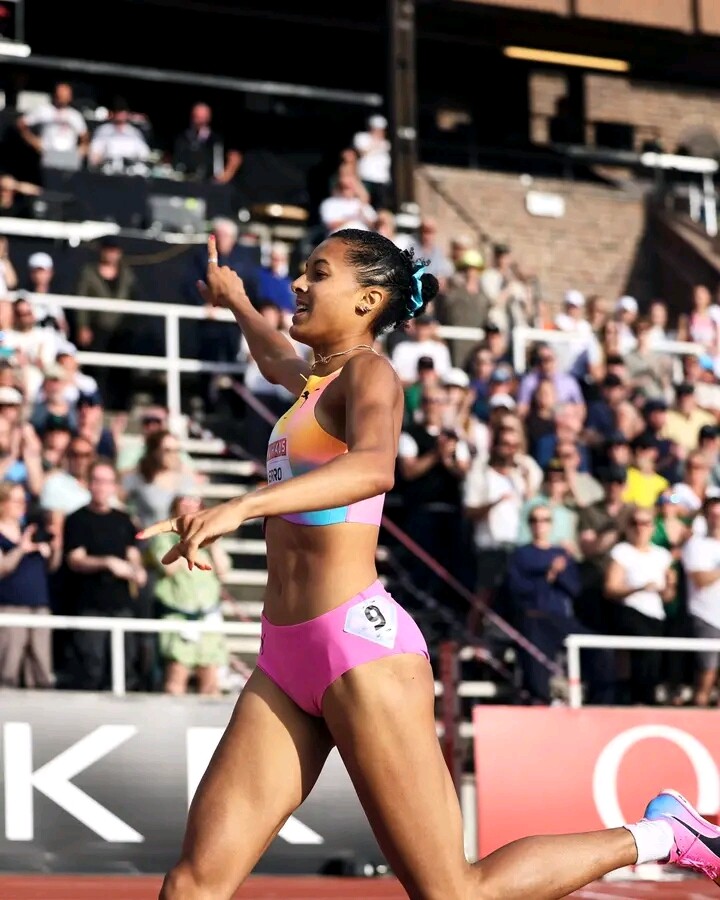
Behind the leading duo, the rest of the field produced high-quality performances in a race where almost every athlete was pushed to season’s or personal best levels.
Official Results – Women’s 800m (Stockholm DL)
1. Audrey Werro — Switzerland — 1:53.98 (WL, NR)
2. Keely Hodgkinson — Great Britain — 1:54.33 (NR)
3. Roisin Willis — United States — 1:57.56 (PB)
4. Anaïs Bourgoin — France — 1:57.68
5. Prudence Sekgodiso — South Africa — 1:57.70
6. Anna Wielgosz — Poland — 1:57.92 (PB)
7. Raevyn Rogers — United States — 1:57.94 (SB)
8. Sage Hurta-Klecker — United States — 1:58.26
9. Nigist Getachew — Ethiopia — 1:58.59
10. Pernille Karlsen Antonsen — Norway — 1:58.82 (PB)
11. Gabriela Gajanová — Slovakia — 2:02.88
DNF. Rachel Klopfenstein (Pacer)
From start to finish, the race unfolded at an unforgiving pace, with the front pack shredding expectations and rewriting the limits of women’s 800m running. Multiple athletes dipped under 1:58, highlighting just how exceptional the conditions and competition were.
As the dust settles in Stockholm, one question now rises above the rest: are we witnessing the beginning of a new era where the long-standing world record from 1983 finally comes under serious threat?
If this race is any indication, history may not only be under pressure—it may already be closing in.
by Erick Cheruiyot for My Best Runs.
Login to leave a comment
