

Running News Daily
Running News Daily is edited by Bob Anderson and team. Send your news items to bob@mybestruns.com Advertising opportunities available.
Index to Daily Posts · Sign Up For Updates · Run The World Feed
Articles tagged #Alps
Today's Running News
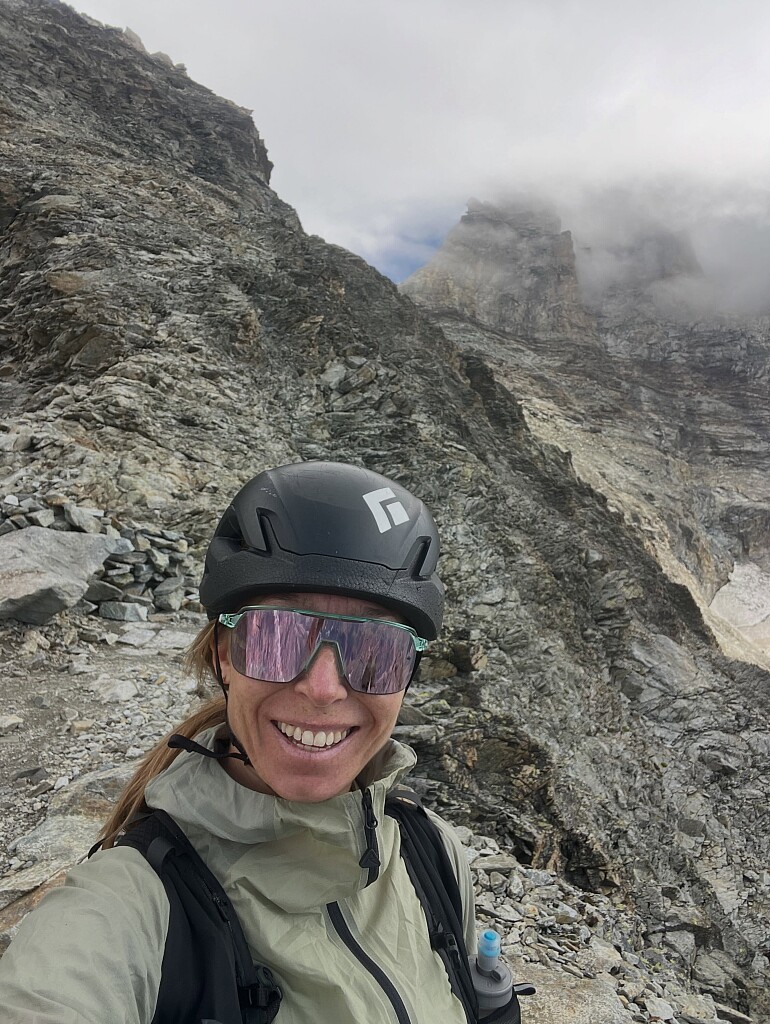


Lost on the Matterhorn: Search Continues for Canadian Trail Runner Kalie McCrystal
The dedicated helicopter search for 38-year-old Canadian mountain runner and lawyer Kalie McCrystal has been suspended after an intensive operation failed to find any trace of her on the Matterhorn in Italy.
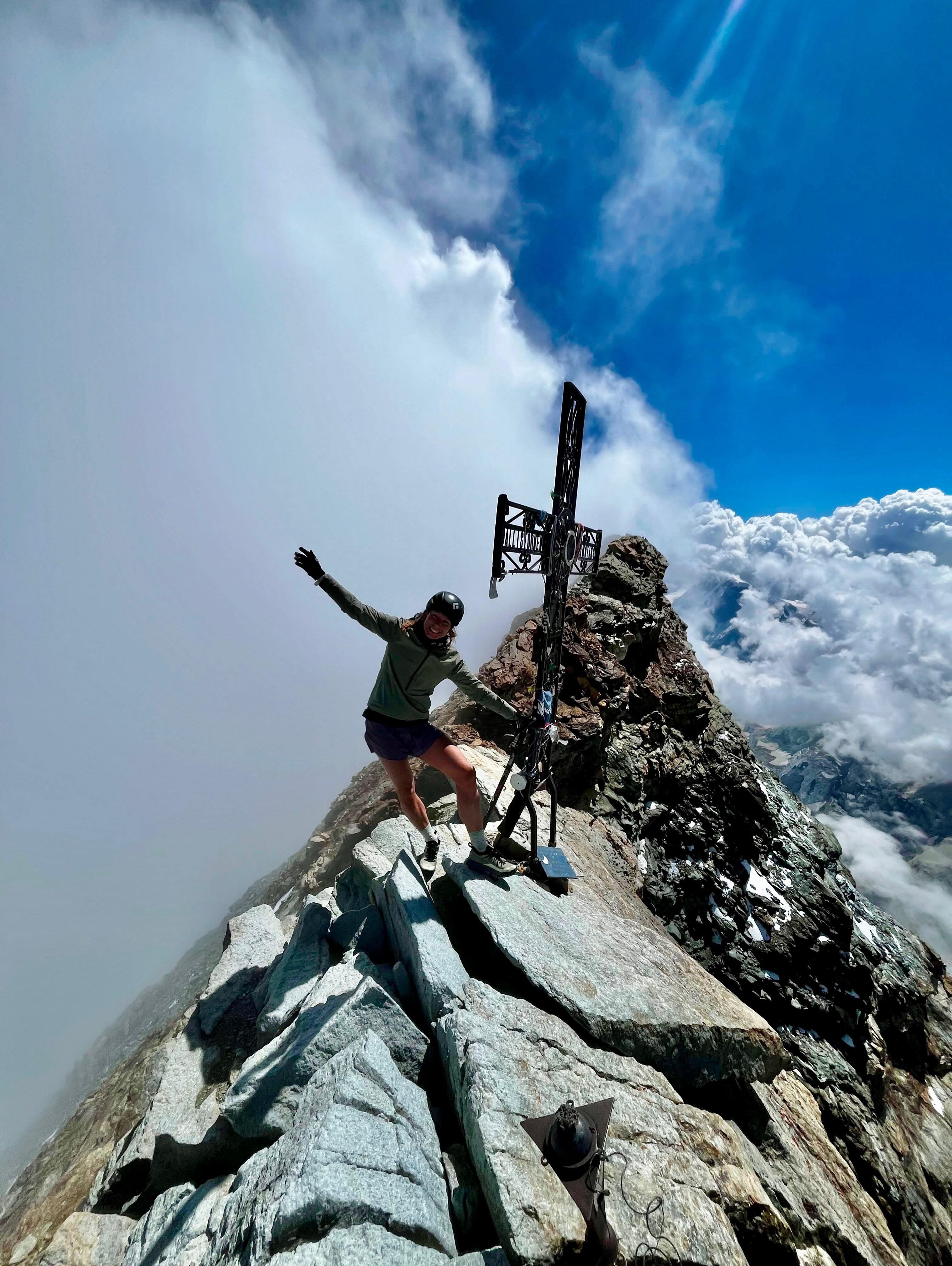
McCrystal, from Squamish, British Columbia, was last seen on Tuesday, September 1, at around 3,830 metres above the Jean-Antoine Carrel Hut on the Italian side of the Matterhorn. A mountain guide reportedly saw her continuing towards the summit at a fast pace, with McCrystal telling the guide that she was training for an attempt to break the mountain's ascent-and-descent record.
The disappearance has triggered a major search operation across one of the Alps' most challenging environments. Rescue teams conducted repeated helicopter sweeps of the Matterhorn, examining steep cliffs, narrow gullies and other difficult sections of the route on both the Italian and Swiss sides.
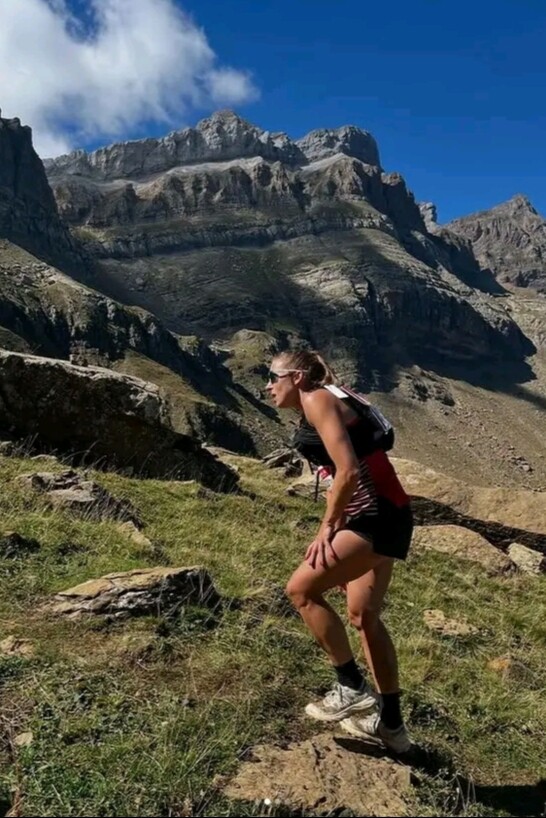
A large air ambulance was initially deployed before rescuers switched to a smaller helicopter that could operate closer to the mountain's hazardous rock faces and couloirs. Despite the closer and repeated searches, however, no sign of McCrystal was found.
Authorities also deployed a helicopter-mounted RECCO detector, a technology designed to locate compatible rescue reflectors that can sometimes be incorporated into outdoor clothing or equipment. No signal was detected. Attempts to locate McCrystal through her cellphone also failed to produce a result.
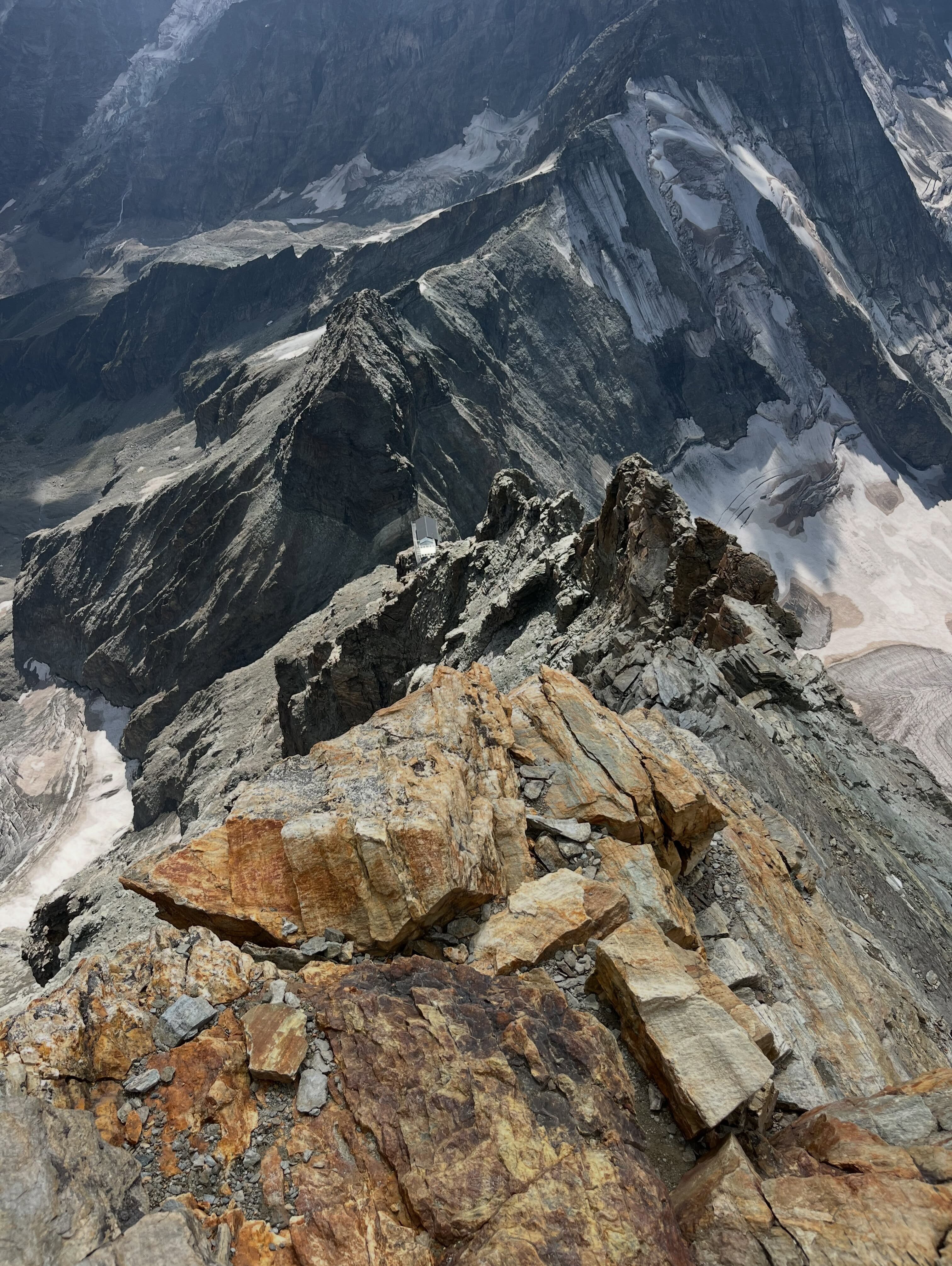
McCrystal had been staying near Cervinia, Italy, as she prepared for a record attempt via the Lion Ridge, the principal Italian route up the Matterhorn. Rising to 4,478 metres, the iconic peak straddles the border between Switzerland and Italy and is renowned for its steep, exposed and technically demanding terrain.
For McCrystal, the planned challenge represented another ambitious chapter in an already impressive mountain-running career. An experienced skyrunner and mountaineer, she has built a reputation for tackling some of the world's most demanding mountain races and routes.
Earlier this year, she won Argentina's 4 Refugios Non-Stop, covering approximately 40 kilometres with 3,350 metres of elevation gain.
Her preparation for the Matterhorn had also included a remarkable solo effort. Just weeks before her disappearance, McCrystal completed a solo ascent and descent of the Matterhorn from Zermatt via Switzerland's Hörnli Ridge in 6:47:33, according to the Fastest Known Time database. Only 10 days later, she competed in Italy's demanding Trofeo Kima skyrunning race.
Her previous experience on the Matterhorn highlights how familiar she was with high-altitude alpine terrain. Athletics Canada describes McCrystal as an experienced skyrunner and mountaineer with extensive knowledge of technical and high-altitude mountain environments. Her planned record attempt was therefore the latest in a series of demanding challenges undertaken at the highest level of mountain running.
Although the dedicated helicopter operation has now been suspended, the search for McCrystal has not completely ended. Mountain guides who regularly climb the Matterhorn are continuing to remain alert for any possible signs, while rescuers are awaiting additional information from police that could potentially lead to a new, more targeted search.
Athletics Canada has also appealed to the media to help raise awareness of McCrystal's disappearance and support the ongoing efforts to locate her.
The news has left the Canadian mountain-running community, as well as many international athletes and supporters who have followed McCrystal's achievements, deeply concerned. Her family is working directly with mountain-rescue services as efforts to determine her whereabouts continue.
At this difficult time, thoughts remain with Kalie McCrystal's family, friends, teammates and everyone involved in the search, with the mountain-running community continuing to hope for answers and her safe return.
by Erick Cheruiyot for My Best Runs.
Login to leave a comment
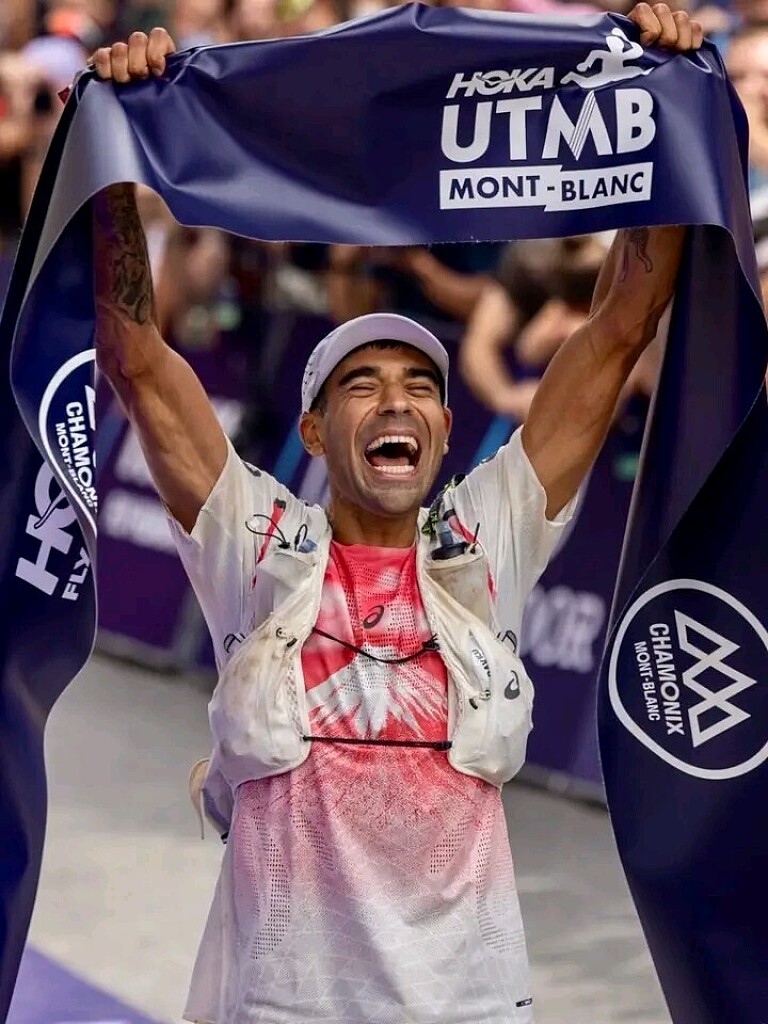
Ben Dhiman Shatters UTMB Course Record As 19-Hour Barrier Falls In Epic Mont-Blanc Triumph
Ben Dhiman has delivered a performance for the ages at UTMB Mont-Blanc, rewriting the history of the iconic 100-mile race with a stunning course-record run of 18:16:29.
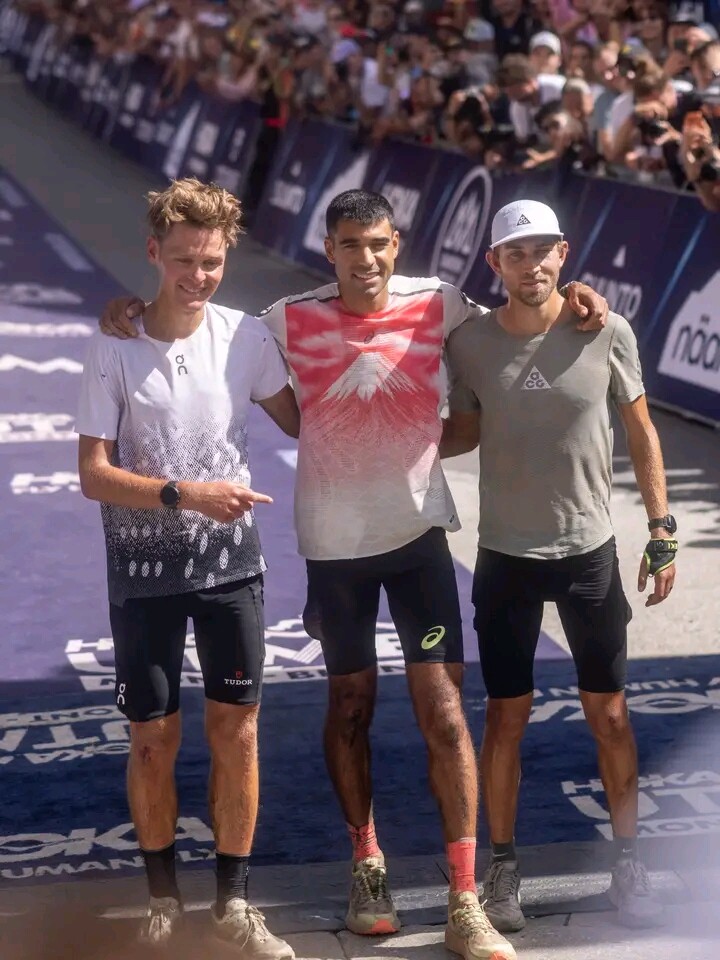
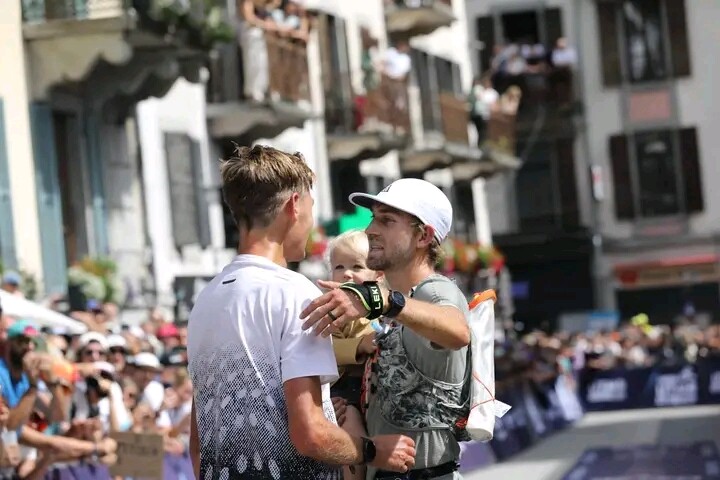
The American ultrarunner took control of the Ultra-Trail du Mont-Blanc at La Balme, 41 kilometres into the race, and once he moved to the front, he never surrendered the lead. More than 130 kilometres later, Dhiman arrived in Chamonix on Saturday afternoon to complete a remarkable journey through the Alps in 18:16:29 — becoming the first man to finish UTMB inside 19 hours.
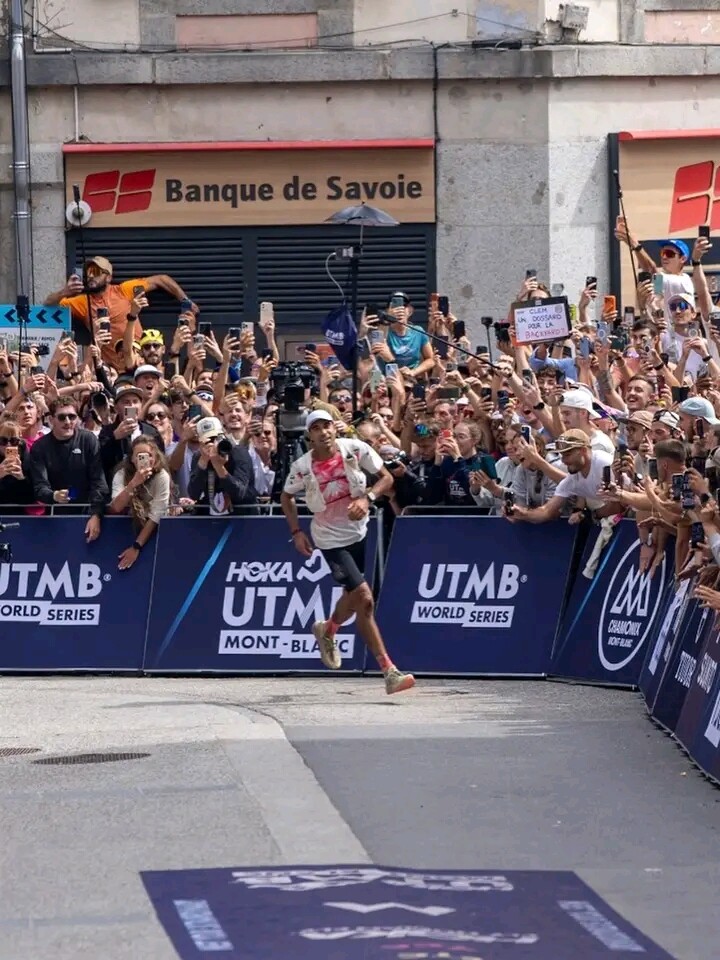
It was an extraordinary display of endurance, strength and determination, but Dhiman’s achievement becomes even more impressive when placed in the context of the conditions surrounding this year’s race. Organizers altered the course on the eve of the event, removing the Pyramides Calcaires section on the Italian side and delaying the start by two hours because of forecast thunderstorms.
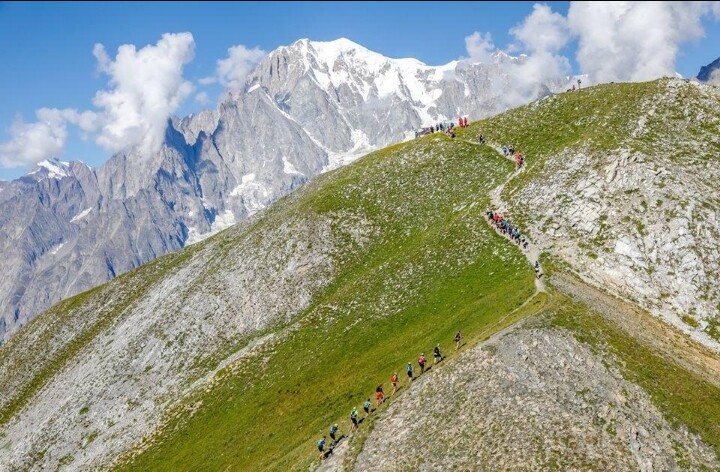
Those changes left the field facing a 173.6-kilometre course with approximately 9,700 metres of elevation gain. Despite the demanding terrain and the revised race conditions, Dhiman maintained an astonishing level of consistency from the moment he took control.
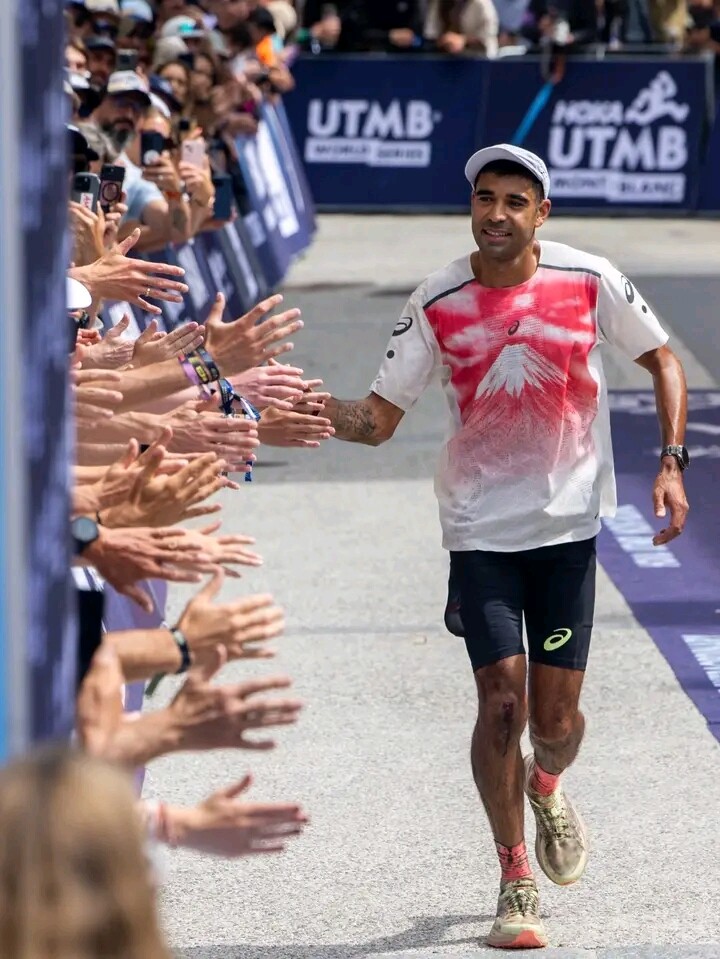
His winning time demolished the previous course record of 19:18:58, set by Britain’s Tom Evans in 2025, by an astonishing 1 hour, 2 minutes and 29 seconds. This was not a marginal improvement to an already formidable mark; it was a seismic leap that has dramatically reset the benchmark for one of the world’s most prestigious and demanding ultramarathons.
The scale of Dhiman’s progression is perhaps best illustrated by what happened 12 months ago. He finished second at UTMB last year in 19:51:37 on a nearly identical course. This time, he returned to Mont-Blanc and was 1 hour, 35 minutes and 8 seconds faster, transforming a runner-up finish into one of the most dominant performances in the race’s history.
Even more remarkable was his efficiency over the enormous distance. Dhiman spent just 9 minutes and 23 seconds stopped across the entire race, allowing him to maintain momentum while his rivals battled the relentless demands of the mountain course.
For years, the UTMB course record has represented the outer limits of human endurance. Vincent Bouillard’s 19:54:23 in 2024 and Jim Walmsley’s 19:37:43 in 2023 demonstrated the extraordinary level required to attack the race at record pace, while Kilian Jornet’s 19:49:30 in 2022 further underlined the rapid evolution of elite trail running.
Tom Evans then raised the standard to 19:18:58 in 2025.
Now Dhiman has taken it to an entirely different level.
Behind the runaway winner, Baptiste Chassagne produced a superb performance to finish second in 18:47:38. Caleb Olson completed the podium in 18:48:24, but his fight for second provided one of the race’s most dramatic closing chapters.
Olson was still 6 minutes and 32 seconds behind Chassagne with seven kilometres remaining, yet he unleashed a remarkable final descent, covering the closing section in just 29:08. His late surge brought him within touching distance of second place, ultimately finishing only 46 seconds behind Chassagne.
Beyond the clock and the final standings, Dhiman’s triumph was a powerful demonstration of what it takes to master ultra-trail running. The challenge demanded patience, concentration and an extraordinary ability to keep moving when fatigue was at its most unforgiving. Every climb, descent and technical section tested his limits, but Dhiman remained composed when it mattered most.
For Dhiman, crossing the finish line after such a gruelling Alpine journey represented the culmination of a remarkable transformation. After 18 hours, 16 minutes and 29 seconds of relentless effort, he could finally celebrate not only becoming the 2026 UTMB champion, but also establishing a new benchmark that could stand for years.
And his record-breaking run has immediately opened another fascinating chapter for the sport.
Can anyone break the 18-hour barrier?
With more than an hour removed from a record that had stood at 19:18:58, the once-unthinkable 18-hour mark suddenly feels closer than ever. Yet breaking it would require another extraordinary combination of sustained speed, climbing power, descending skill, nutrition, favourable weather and near-perfect execution across the immense Alpine course.
Dhiman has set the bar exceptionally high.
The 19-hour barrier has fallen.
The 18-hour barrier is now the next frontier.
Dhiman’s historic victory brought the men’s race to a spectacular conclusion, capping an extraordinary day of ultra-trail running in which the American not only claimed the UTMB crown but also shattered a record that had appeared almost untouchable. His 18:16:29 will now stand as the new benchmark at Mont-Blanc, setting an imposing challenge for the elite field that will return in search of glory in the years ahead.
Mont Blanc has a new king, and the next chapter of UTMB history has already begun.
by Erick Cheruiyot for My Best Runs.
Login to leave a comment
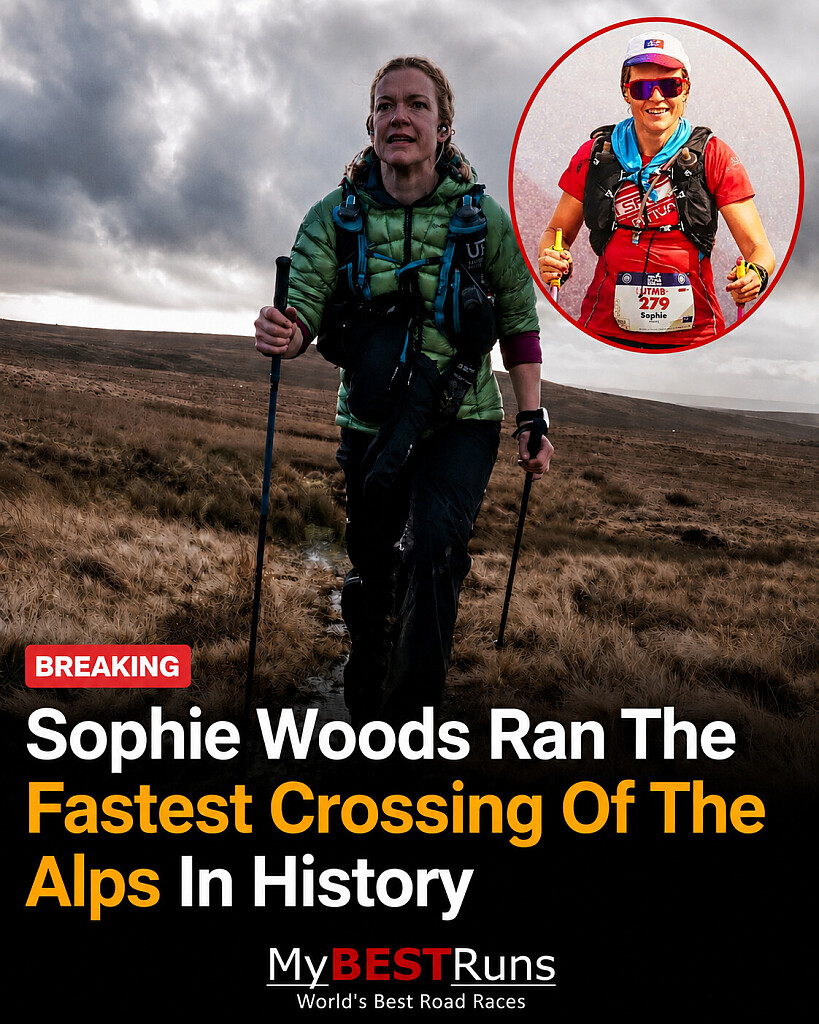
Sophie Woods Rewrites the Record Books With Historic Fastest Crossing of the Alps
New Zealand ultra-endurance runner Sophie Woods has etched her name into mountain running history after completing the entire length of the Alps in the fastest time ever recorded, becoming the first person to conquer the legendary route in under 30 days.
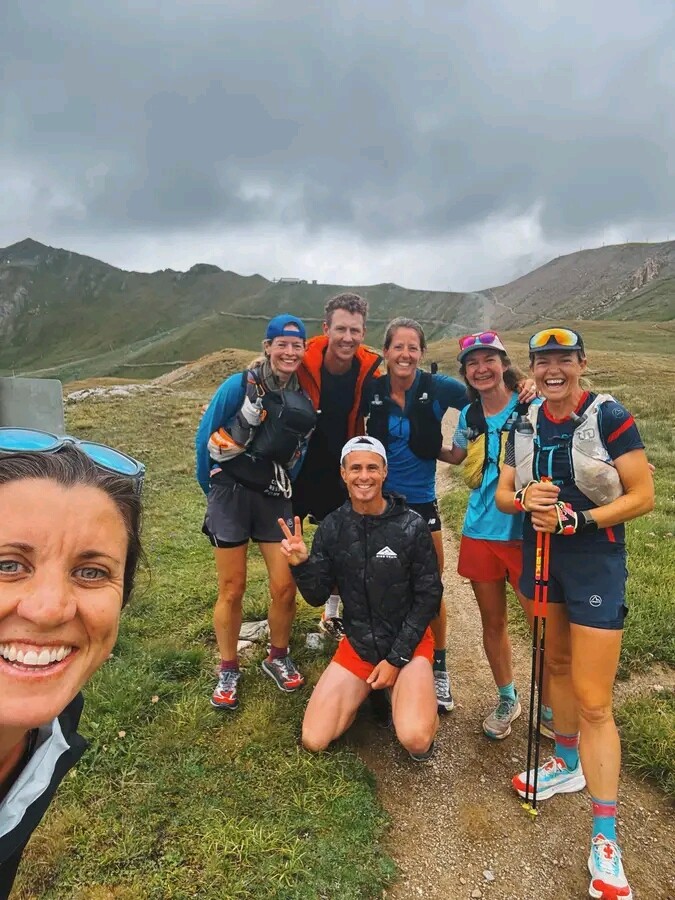
The 42-year-old reached the Mediterranean coastline in Monaco on Saturday night, bringing to an end an extraordinary 2,000-kilometre journey along the iconic Via Alpina. Her remarkable crossing took just 29 days, shattering both the overall and women's fastest known times on one of Europe's most demanding long-distance routes.
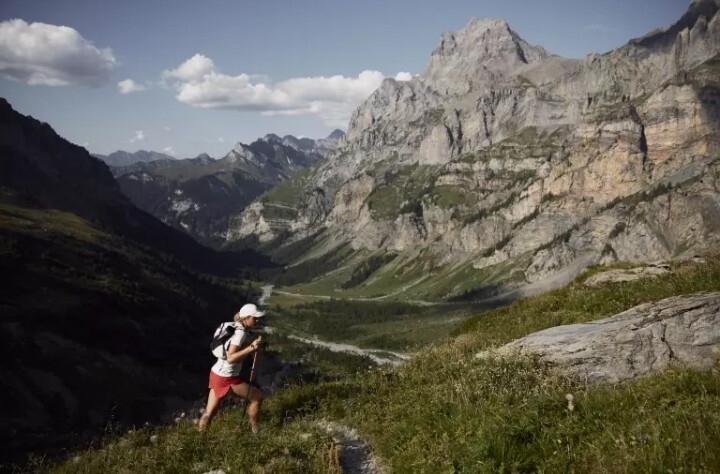
Woods began her challenge in Trieste, Italy, on July 4 before traversing seven countries—Italy, Slovenia, Austria, Germany, Liechtenstein, Switzerland and France—across some of the continent's most rugged and unforgiving mountain terrain.
The scale of the achievement is almost difficult to comprehend. Over the course of the expedition, Woods climbed a cumulative elevation equivalent to ascending Mount Everest 12 times, while covering relentless daily distances through alpine passes, remote trails and rapidly changing weather conditions.
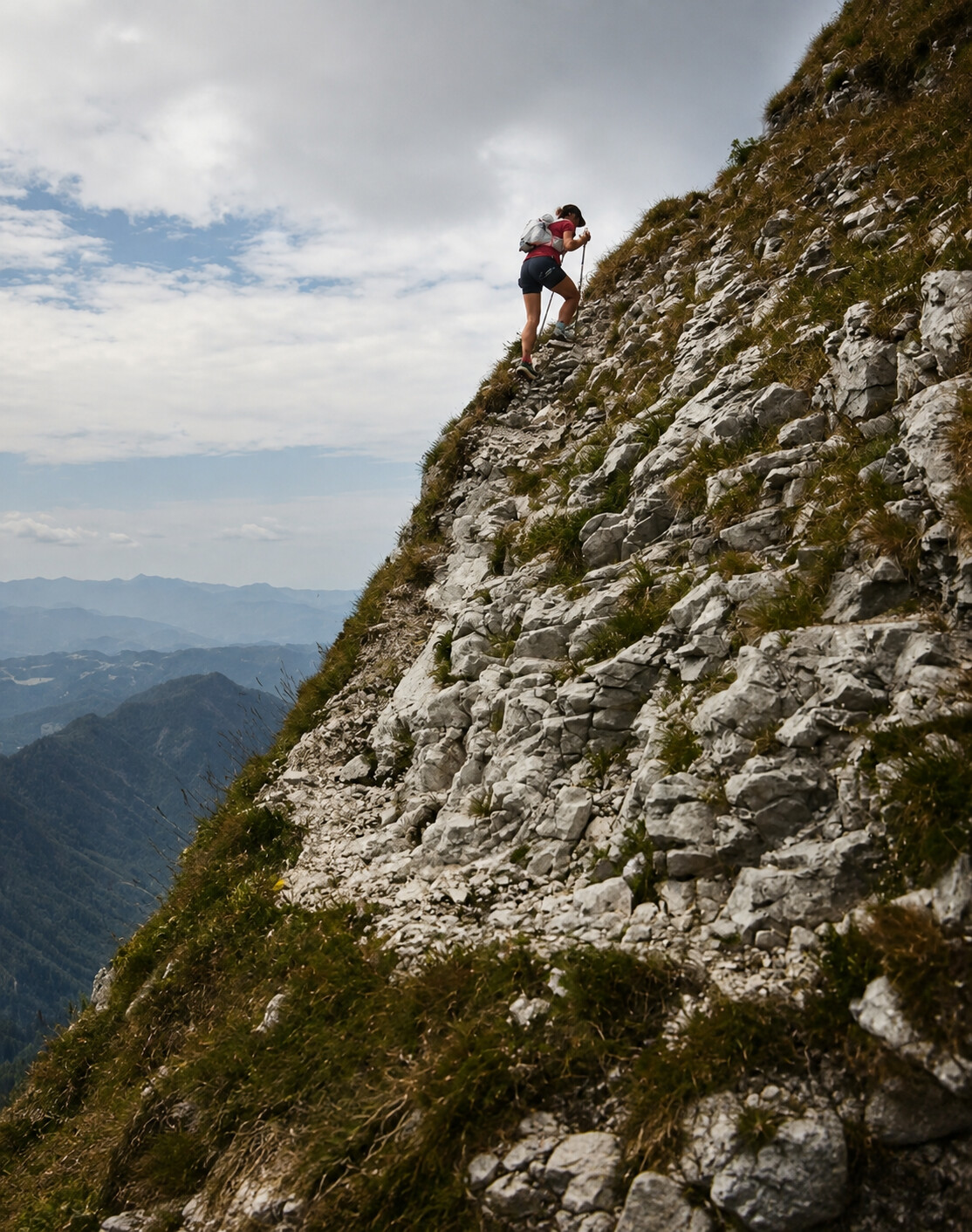
Her record-breaking performance eclipsed the previous overall fastest known time, established by British ultra-runner Jake Catterall in 2024, by an astonishing six days. She also lowered the women's benchmark, previously held by Dutch endurance athlete Tessa Caspers, by nine days, setting a new standard that will be difficult to match.
The journey, however, was far from straightforward. Woods endured a brutal European heatwave, battled powerful mountain storms, navigated around wildfires that forced a five-kilometre detour, and pushed through relentless swarms of horseflies. As the finish drew closer, she made perhaps her greatest sacrifice—cutting her sleep to as little as 90 minutes to two-and-a-half hours per night to ensure the record remained within reach.
Despite the physical exhaustion, the New Zealander refused to let adversity slow her pursuit of history. Her resilience, meticulous planning and unwavering determination carried her across one of the world's toughest mountain traverses at a pace never before achieved.
Moments after reaching Monaco, the magnitude of the accomplishment began to sink in.
"I can't believe I did it. I am ecstatic but knackered."
With her unforgettable 29-day crossing, Sophie Woods has not only rewritten the record books but also delivered one of the most remarkable endurance performances the ultra-running world has witnessed, raising the bar for future athletes dreaming of conquering the Alps.
by Erick Cheruiyot for My Best Runs.
Login to leave a comment
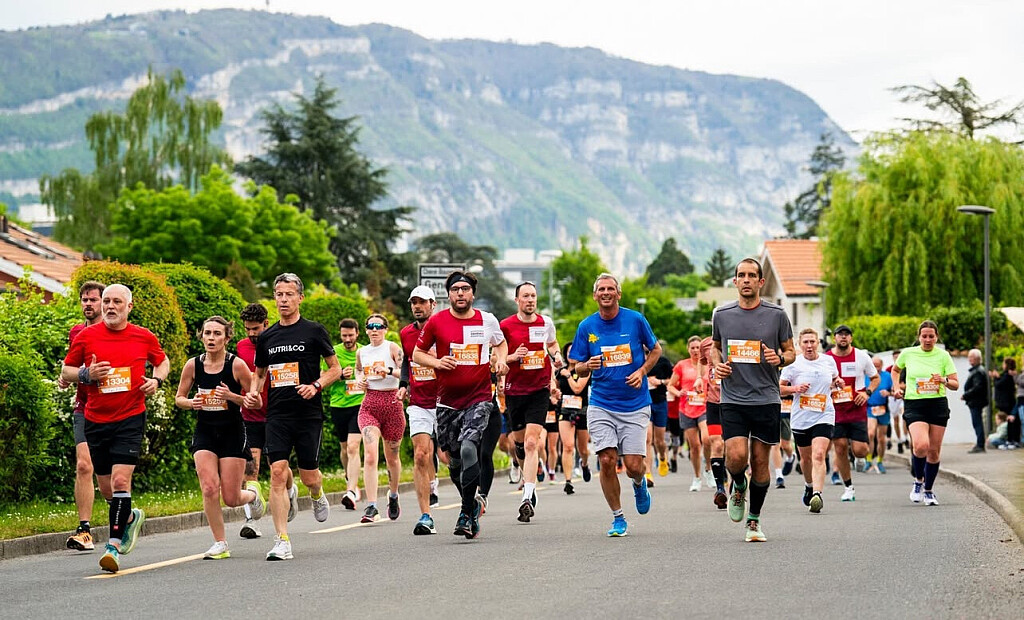
Geneva Marathon Blends Alpine Beauty with Personal Best Potential
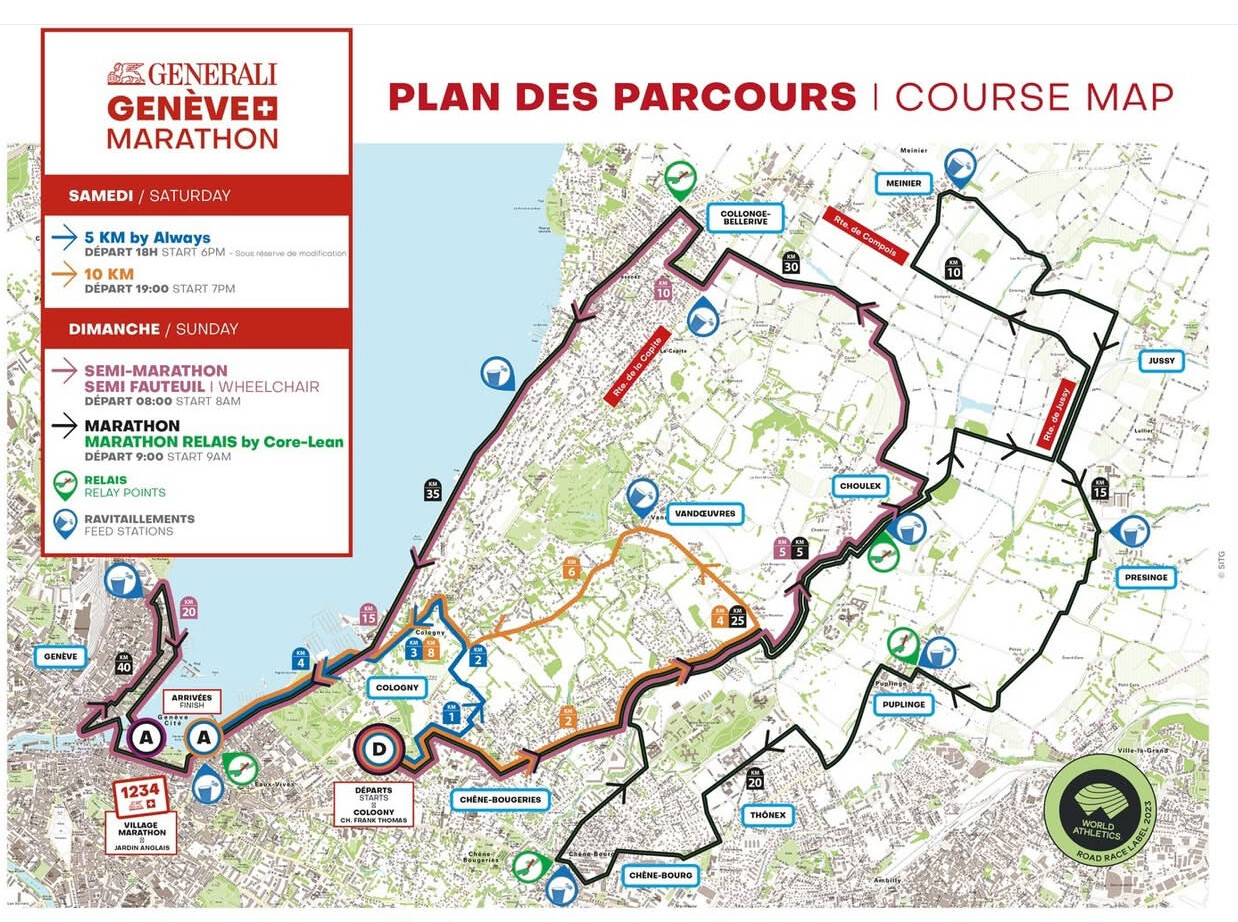
The Generali Genève Marathon, scheduled for May 11, 2025, stands out as one of Europe’s most picturesque city marathons. Its course offers a unique blend of natural beauty and urban charm, attracting thousands of runners from over 140 nationalities each year.
The marathon route begins in the serene countryside of Cologny, meandering through open fields and quaint villages with the Alps rising in the distance. Runners then follow the shores of Lake Geneva before entering the heart of the city and finishing in front of the iconic Jet d’Eau fountain—one of Geneva’s most recognizable landmarks.
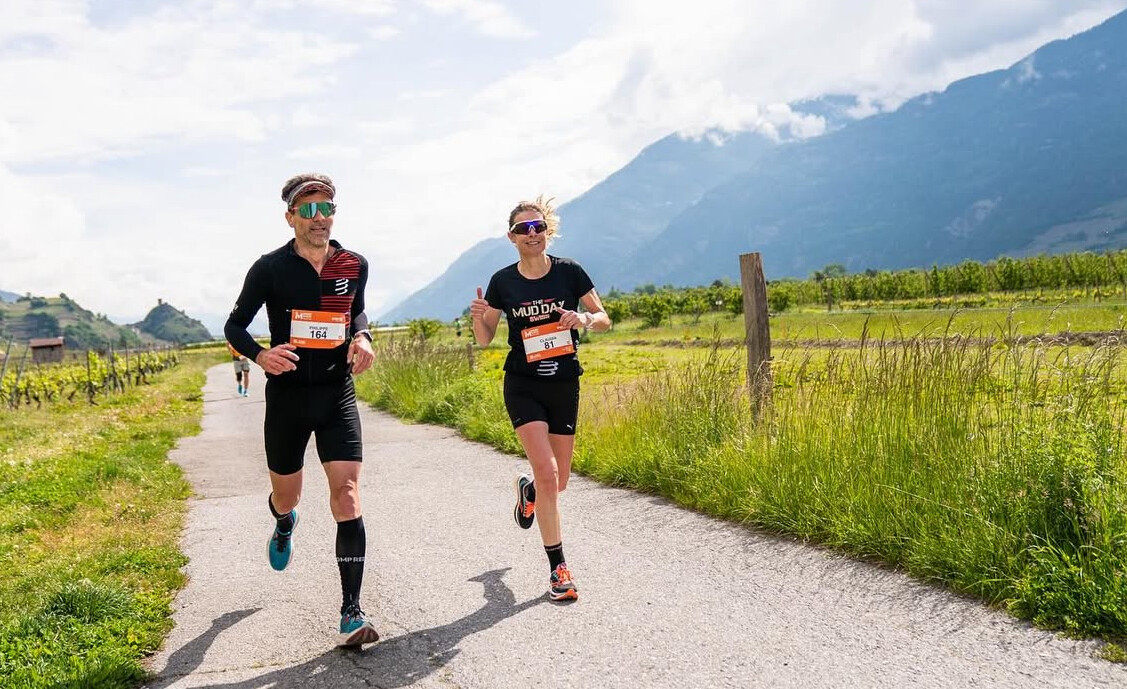
While the course is praised for its flat profile and smooth terrain—making it ideal for personal bests among amateur runners—it has not yet produced world-class times comparable to the fastest marathons like Berlin or London. The current men’s course record stands at 2:09:35 and the women’s at 2:29:14, solid performances but well outside the global elite tier. Still, many participants find Geneva’s tranquil surroundings, minimal elevation changes, and cool spring weather to be excellent conditions for running strong times.
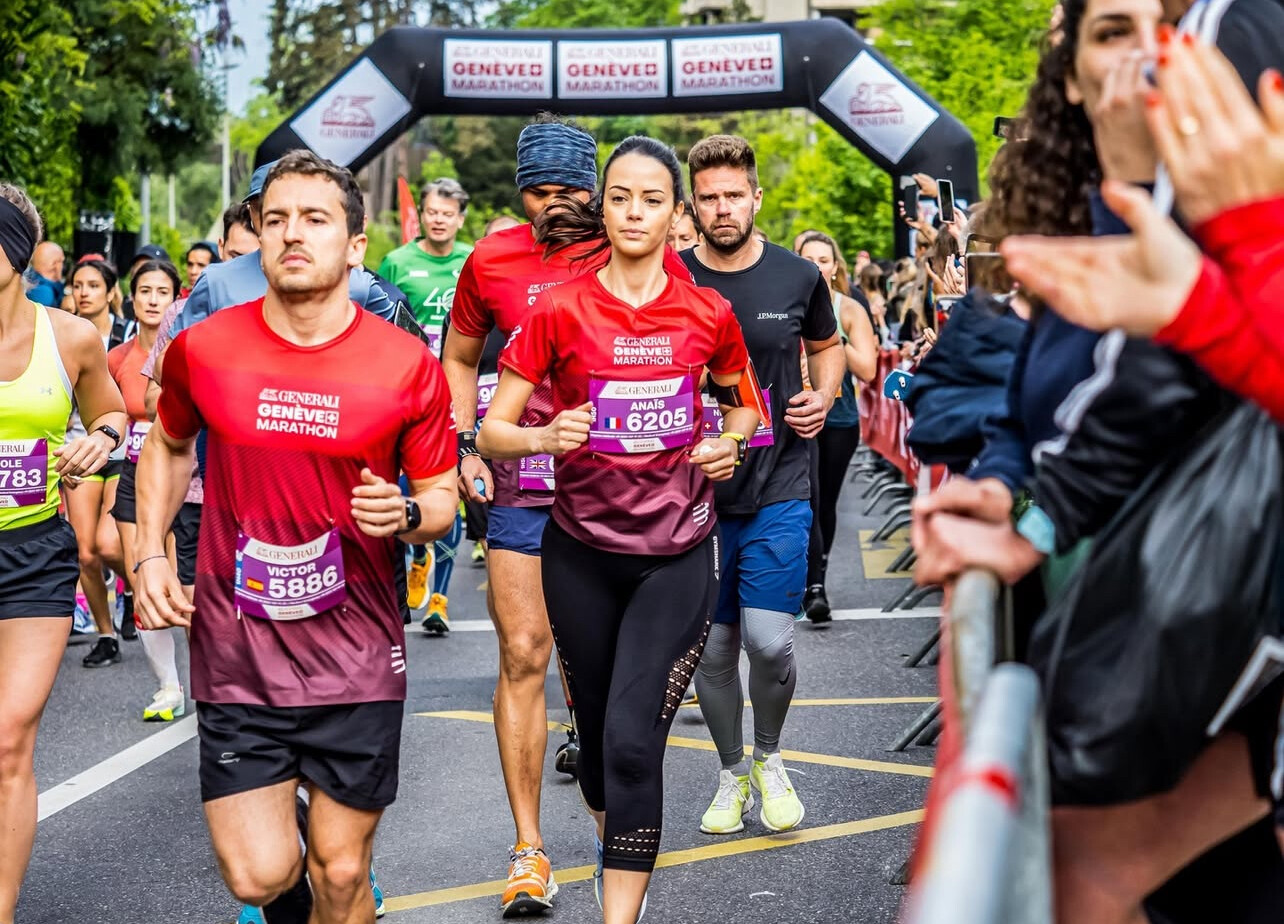
The marathon weekend includes several events: a half marathon, relay marathon, and children’s races, creating a vibrant festival atmosphere. The race also supports a larger mission, partnering with UNICEF to raise funds that provide clean drinking water and sanitation to children in need around the world.
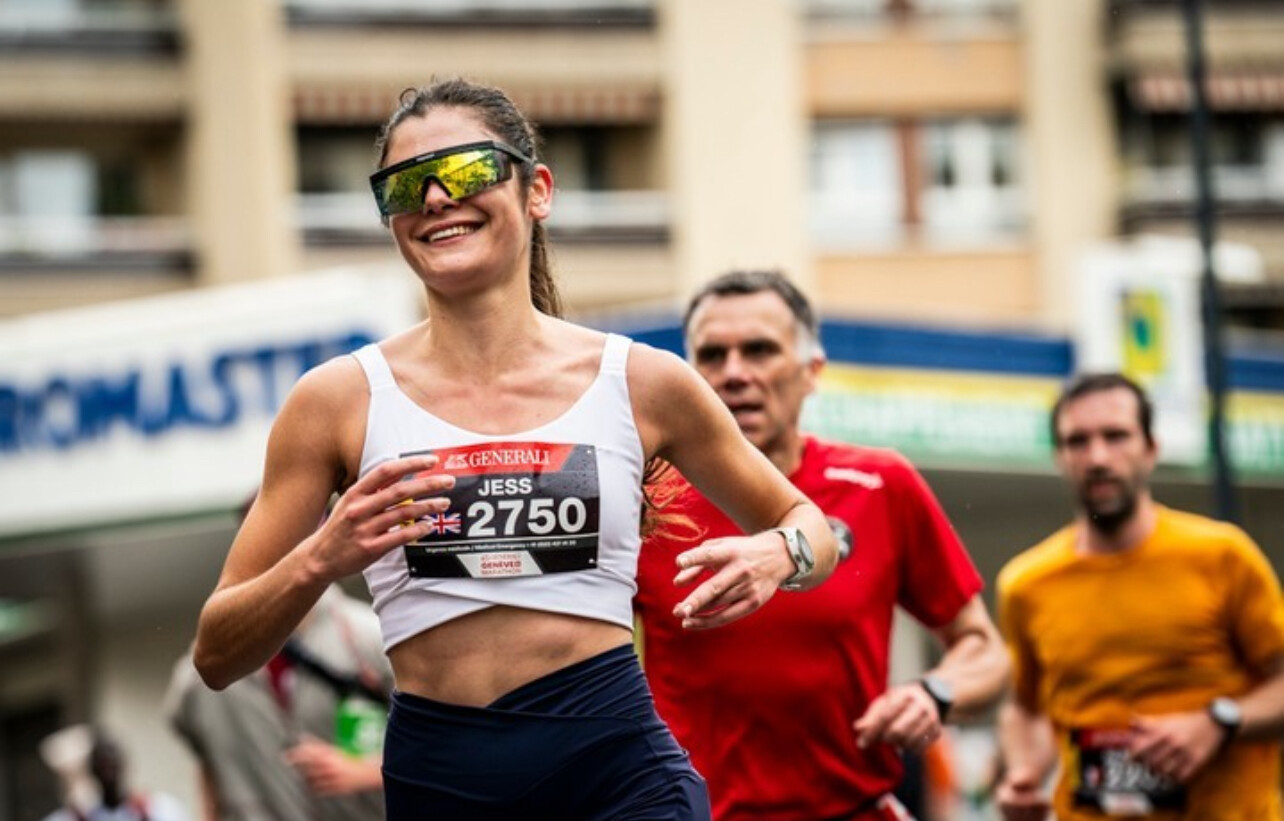
As one of the top spring marathons in Europe, the Geneva Marathon continues to grow in popularity, offering runners a memorable mix of competition, cause, and stunning Swiss scenery.
Fast facts:
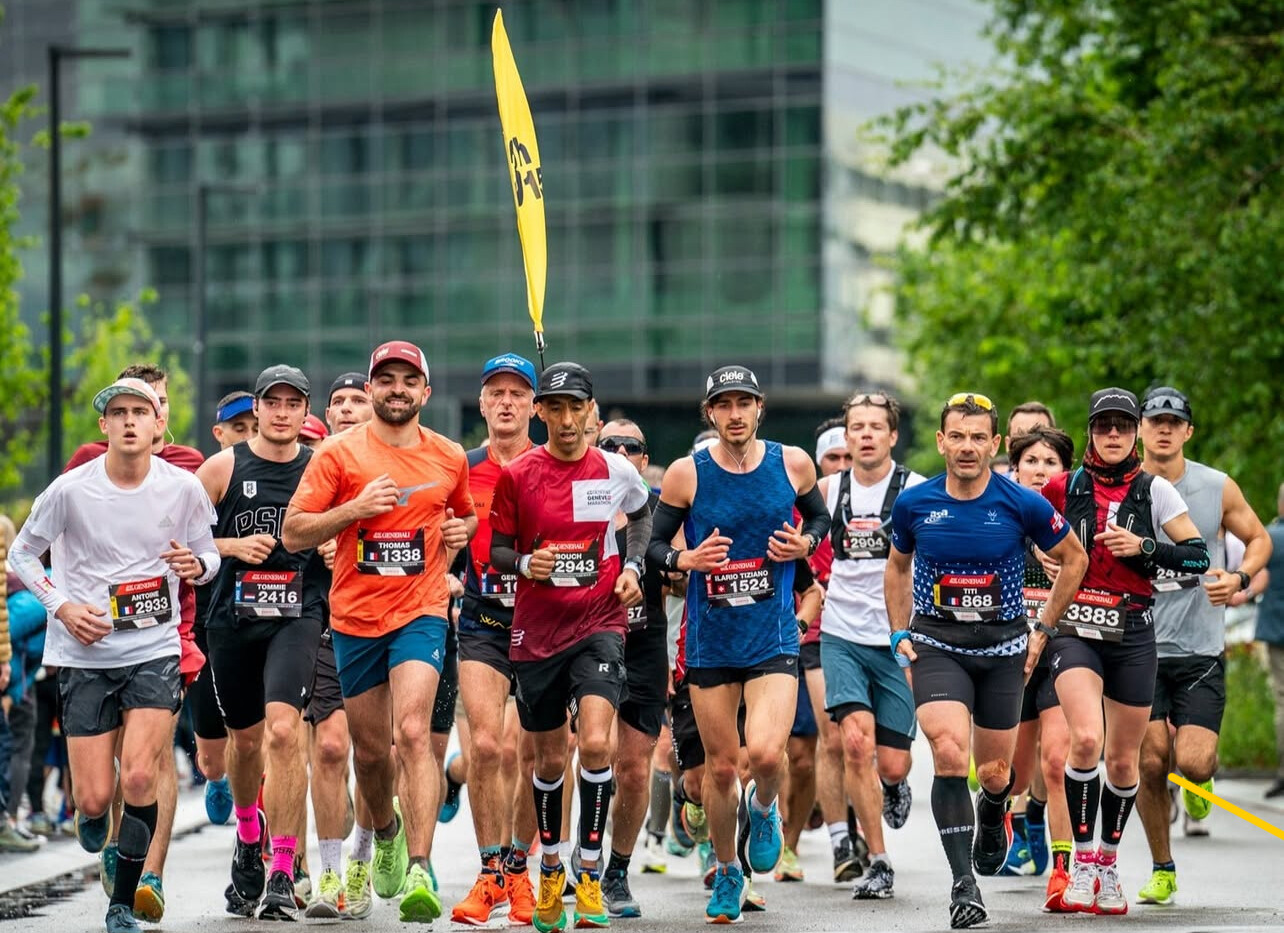
• Date: Sunday, May 11, 2025
• Start: Cologny countryside
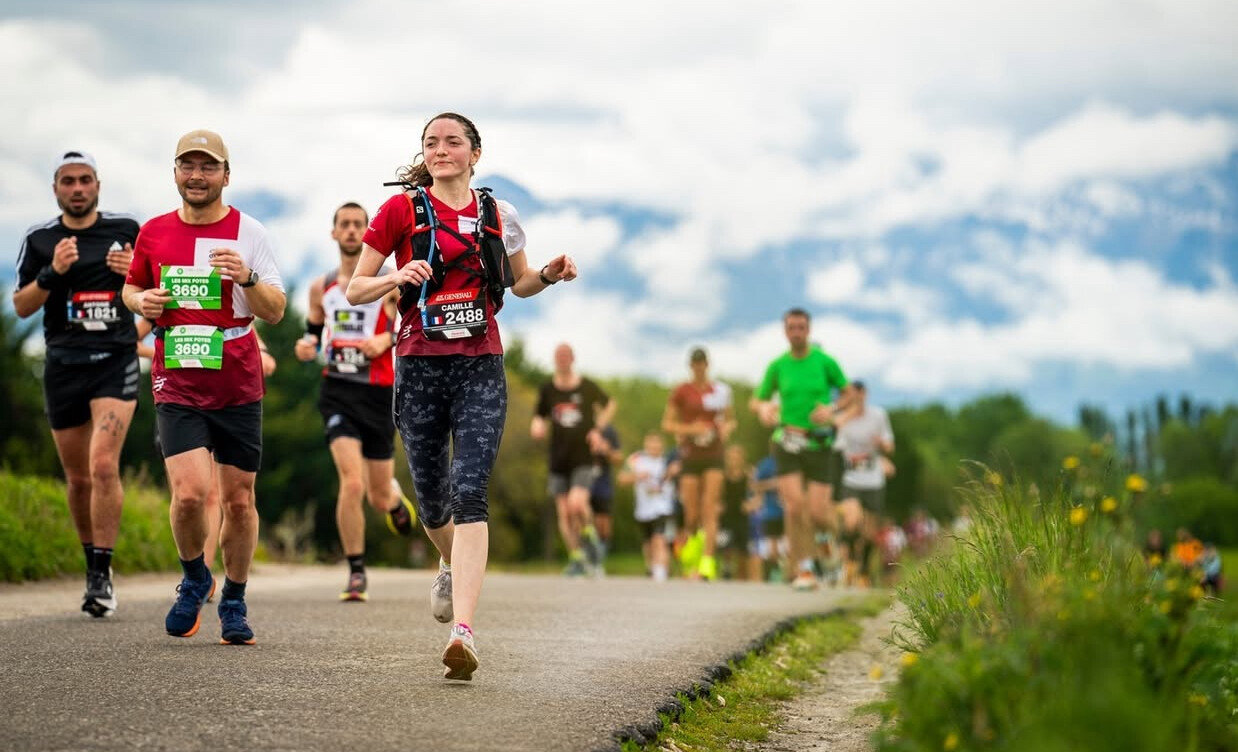
• Finish: Pont du Mont-Blanc near the Jet d’Eau
• Course records:
• Men: 2:09:35 – Hosea Kipkemboi (Kenya)
• Women: 2:29:14 – Jane Kiptoo (Kenya)
Participant Quotes:
• “It was a great experience, full of touching moments I will treasure, full of excitement before, during, and after. Just hope to participate again next year, thanks!” — Rivero, Spain
• “It was a great event: well-organised, fun atmosphere, beautiful route. Thank you!” — Trushna, Geneva
by Boris Baron
Login to leave a comment

Harmony Geneva Marathon
The Harmony Geneva Marathon for Unicef is arguably one of the most picturesque city marathons in Europe and unquestionably one of the fastest. The course takes in the countryside nestled between mountains and the shore of Lake Geneva before finishing in the heart of the city in front of the famous Jet d’Eau. Thousands of runners from more than 120...
more...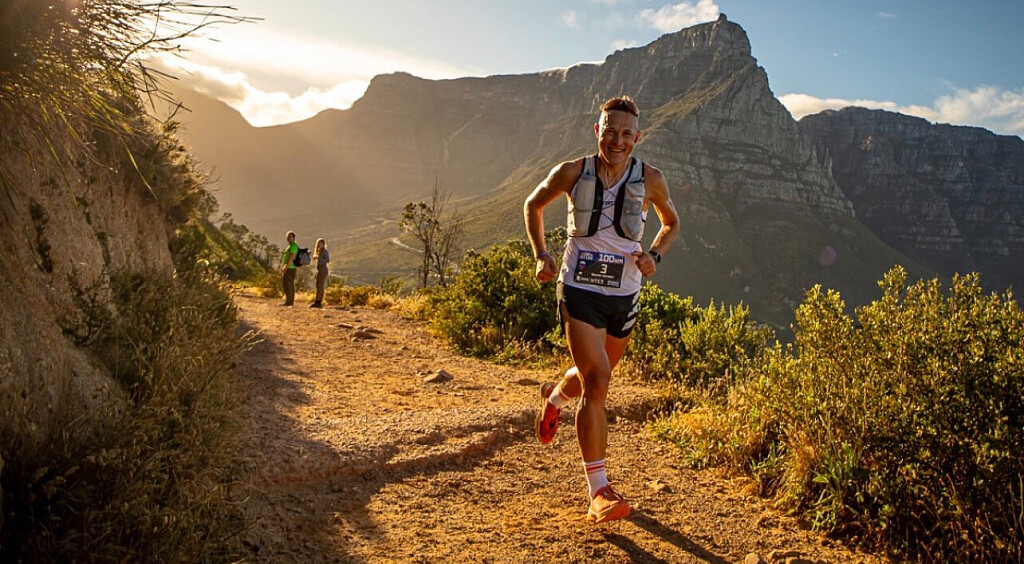
How Trail Races Are Redefining the Running Boom
In recent years, the global running community has seen a dramatic shift in where and how people race. While traditional road marathons still draw massive crowds, trail races—once considered a niche segment—are experiencing a surge in popularity. From rugged mountain paths to dense forests and desert crossings, more runners are lacing up to compete off-road, seeking challenge, solitude, and a deeper connection to nature.
The Rise of Trail Runnimg
Trail running has grown rapidly in the past decade, but its momentum accelerated after the COVID-19 pandemic, when road races were canceled and people turned to nature for both fitness and sanity. What started as necessity turned into passion for many, and race organizers took note. Events that once attracted a few hundred now sell out in minutes.
Today, races like the UTMB (Ultra-Trail du Mont-Blanc) in France, the Western States 100 in California, and the Ultra-Trail Cape Town in South Africa are globally recognized—drawing elites and amateur runners alike. These races offer not just distance and competition, but elevation, terrain variety, and breathtaking backdrops.
More Than a Race—A Journey
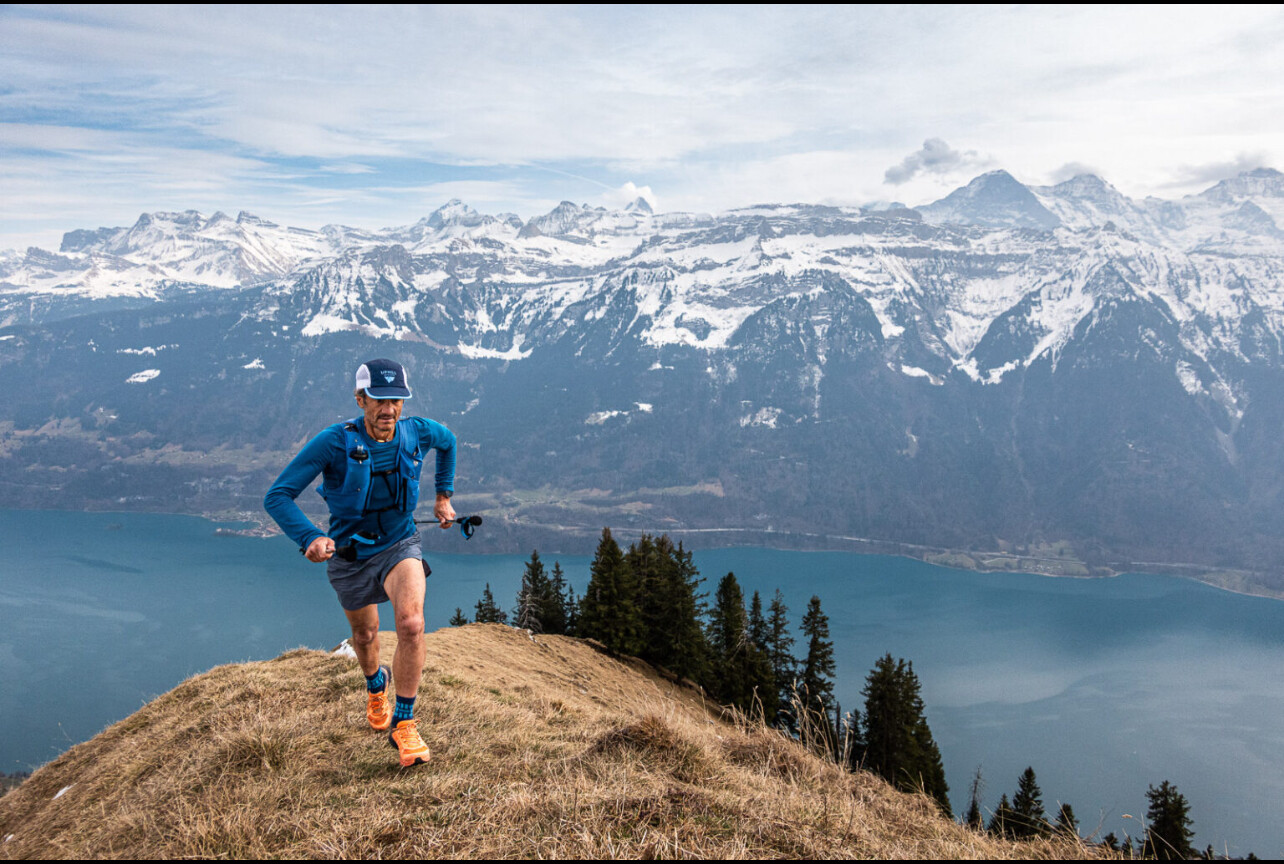
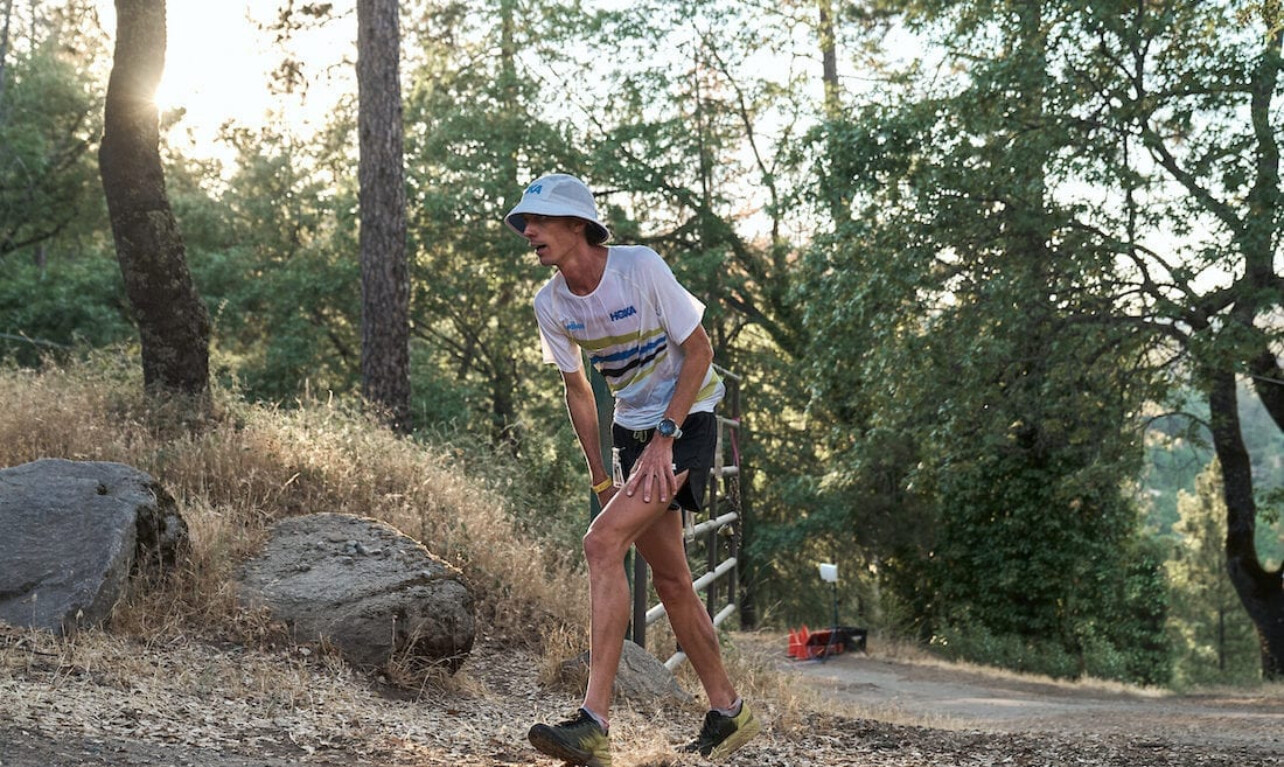
Unlike a typical 10K or marathon, trail races often require navigation, climbing, and mental fortitude. Weather and terrain can change quickly. Aid stations may be miles apart. But it’s exactly these demands that attract runners hungry for something deeper than just speed or medals.
“There’s something primal about running in the wilderness,” says 2023 UTMB finisher Sara Delgado. “It’s not just about pace—it’s about presence.”
Elite Trail Runners on the Rise
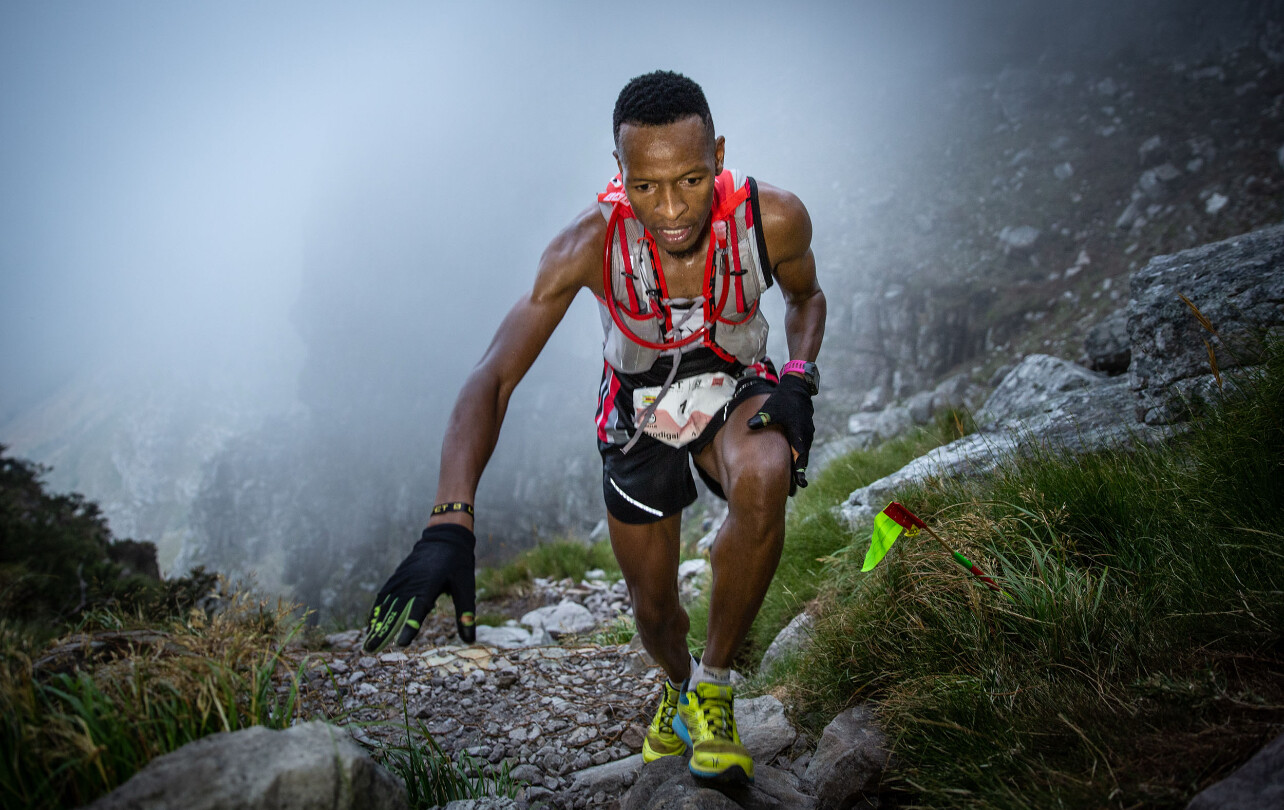
Top road racers are taking notice too. Marathoners like Jim Walmsley and Kilian Jornet have made trail dominance a core part of their legacy. Meanwhile, athletes like Courtney Dauwalter are redefining what endurance looks like, regularly winning 100-mile races overall—not just in the women’s field.
Sponsors have followed the talent. Major brands are investing in trail running gear, shoes, and media coverage, making the sport more visible and viable for elite athletes and growing its appeal for weekend warriors.
Global Appeal
From Portugal’s Douro Valley to the jungles of Costa Rica and the peaks of Japan’s Alps, trail races are being launched in every corner of the world. Many combine local culture with intense landscapes, turning these events into destination experiences.
Travel-based trail running adventures—3-day stage races, run-and-yoga retreats, and culinary trail tours—are also gaining traction. It’s no longer just a race, but a way to see the world, one footstep at a time.
What This Means for the Future
Trail running is redefining the running boom by offering what many road races cannot: quiet, challenge, authenticity, and unfiltered connection to the earth. As the sport continues to grow, it’s likely we’ll see more hybrid athletes, crossover races, and increased visibility across the media.
The road will always have its place, but for a growing number of runners, the real race begins where the pavement ends.
by Boris Baron
Login to leave a comment
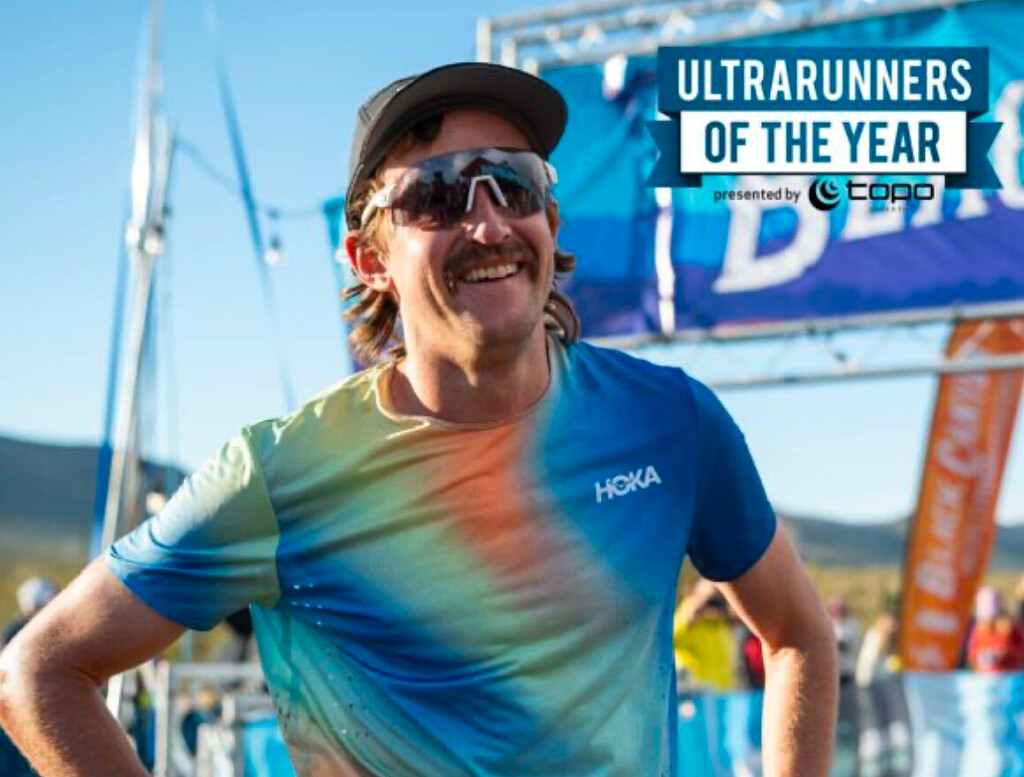
Hayden Hawks Named 2024 UltraRunner of the Year
Hayden Hawks has been named the 2024 UltraRunner of the Year, cementing his status as one of the most accomplished athletes in ultrarunning. The recognition comes after a stellar season highlighted by victories in some of the world’s most prestigious ultra-distance races.
The Cedar City, Utah native delivered standout performances, including a victory at the Courmayeur-Champex-Chamonix (CCC) 101K on Mont Blanc. Known as one of the toughest races in the Ultra-Trail World Tour, the CCC is a proving ground for elite ultrarunners, and Hawks’ 10:20:11 finish solidified his dominance on the global stage.
He also claimed victory at the highly competitive Black Canyon 100K in Arizona, where he not only won but set a new course record with a time of 7:30:18. His season was rounded out with podium finishes at races like the Western States 100, where he placed third in 14:24:31, and the Julian Alps Ultra-Trail in Switzerland, where he finished second.
Hawks lives in Cedar City with his wife, Ashley, and their two children. Balancing a demanding training schedule with family life, he credits his support system for his success, calling his family his “greatest motivation.”
Hawks’ achievements in 2024 highlight his versatility across different terrains and conditions. Whether racing on the mountainous trails of Europe or the arid landscapes of the American West, Hawks has consistently demonstrated his ability to adapt and excel. His Black Canyon course record and CCC triumph underscore his speed, endurance, and tactical prowess.
As the 2024 UltraRunner of the Year, Hayden Hawks has not only etched his name into the sport’s history but also inspired countless runners worldwide to push their limits. With a career that continues to rise, the running community eagerly awaits what 2025 will bring for this ultrarunning star.
Login to leave a comment
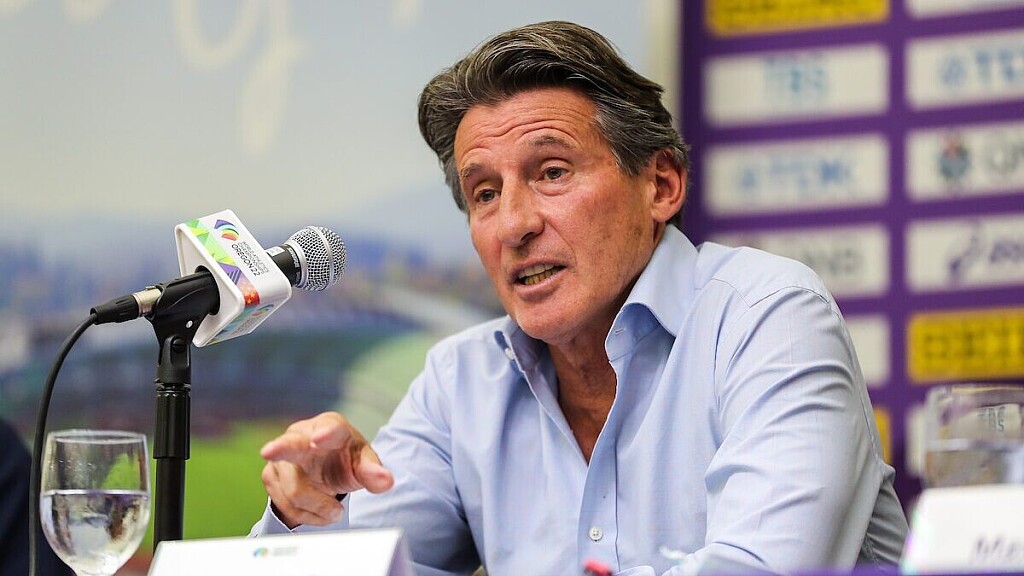
World Athletics president pushing cross country for 2030 Olympics
It’s no secret that World Athletics president Seb Coe has ambitions to take over the International Olympic Committee (IOC) president position in the organization’s 2025 election. He looks to succeed Thomas Bach, who has served as president of the IOC for 12 years. Coe’s presidential manifesto pledges a clean and fair Olympics, and potentially the addition of some traditional summer and fall sports to the Winter program—including cross country.
During Coe’s year-end meeting with the media, he alluded to the need for the Winter Olympics to become “more accessible and open to new ideas.” The highest participation for the Winter Games was 93 countries at the 2018 Games in PyeongChang, South Korea, whereas the Paris 2024 Summer Games saw athletes from over 200 nations.
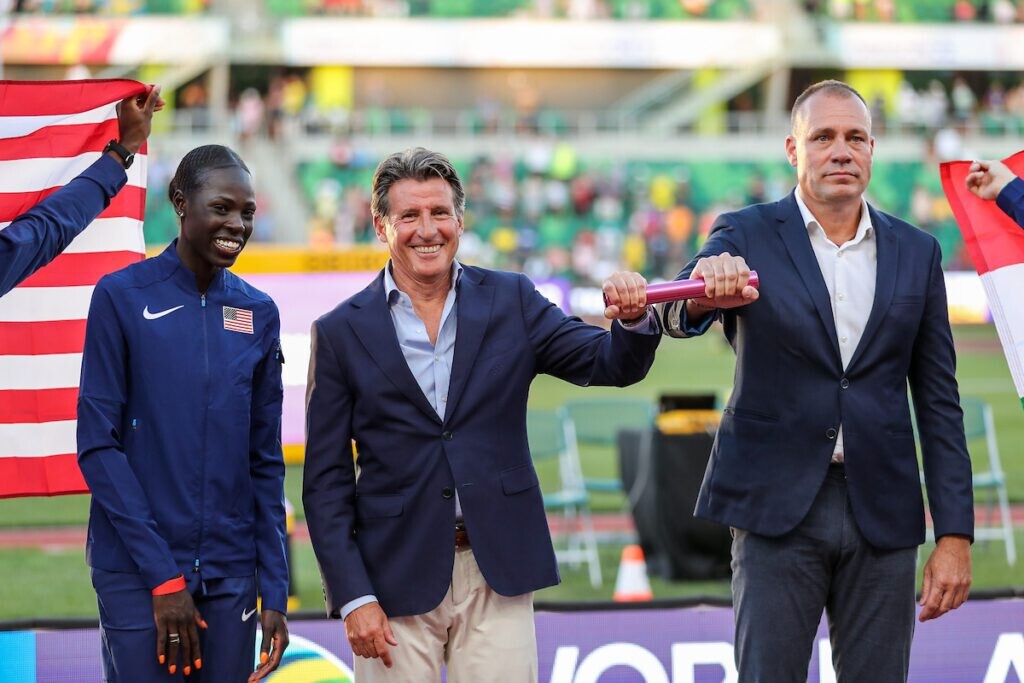
To expand the global audience, Coe believes the addition of fall or indoor sports into the Winter program could attract athletes and viewers from regions of the world that might not have snow. Cross country (running) and cyclo-cross (cycling) are at the forefront of this push, offering the opportunity to expand the Winter Games without straying too far from its profile or mission.
Cross country has faltered on the World Athletics calendar since the pandemic. The 2023 championships held in Bathurst, Australia, were too late in the season (February, two months after the cross-country season), which made it a lengthy commitment of time and travel for any athlete. The 2024 meet, originally scheduled for Croatia on Feb. 10-11, was reassigned to Serbia on March 30 when it emerged that Croatia was not ready to host. Although Serbia did all it could on six months’ notice, the event was heavily criticized for its course, spectator-friendly experience, and timing, as it was held (again) well after the cross-country season.
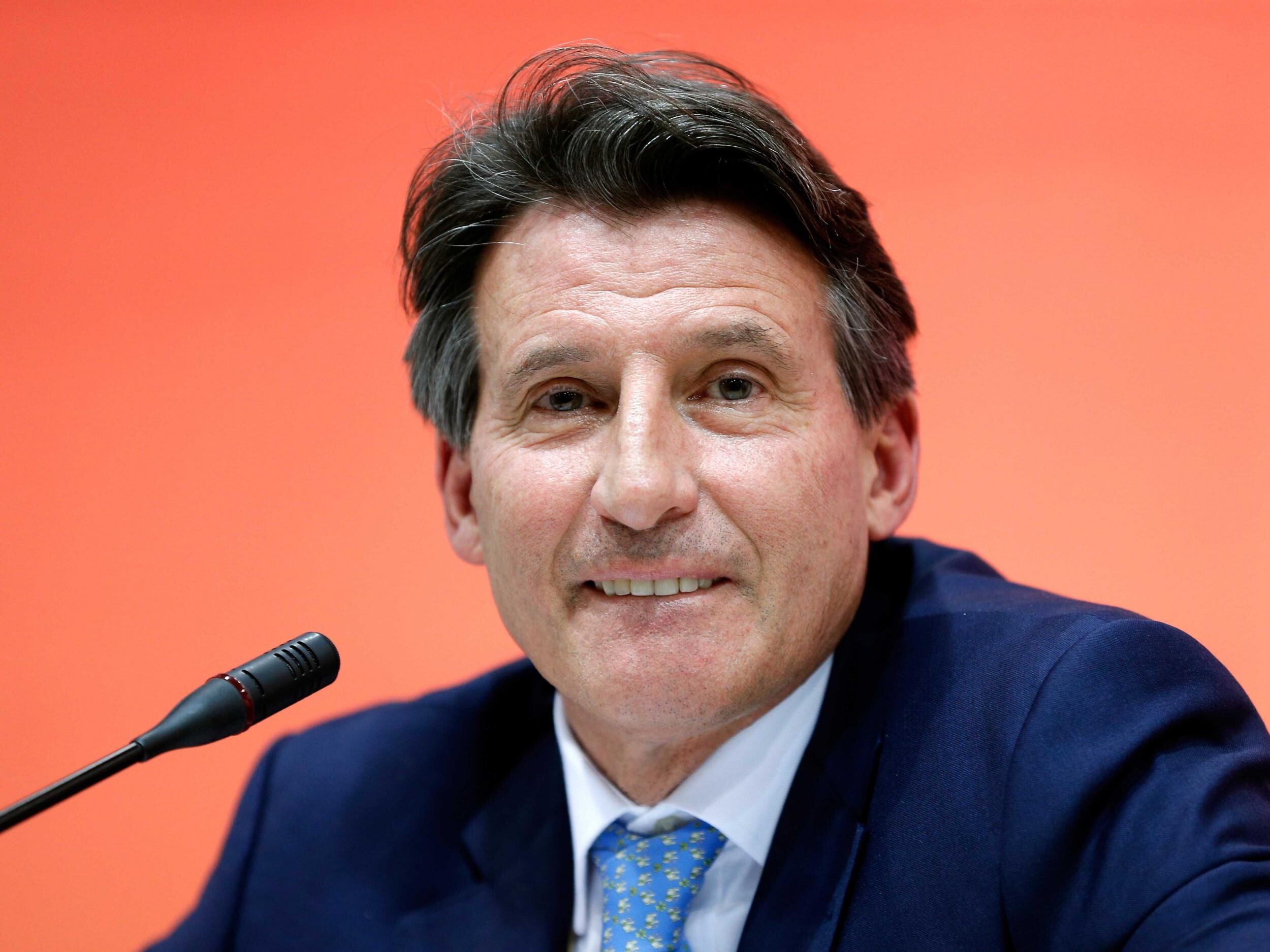
Coe has made it clear, on multiple occasions, that he believes there is a place for cross country in the professional running calendar, but there needs to be a way to make it more attractive to fans. “I’m a great adherent of cross country, and I think it’s a really important part of the endurance paradigm,” said Coe. “But it needs help… it needs space.”
The program for the 2026 Winter Olympics in Milan-Cortina D’Ampezzo, Italy is already set, but Coe is targeting the inclusion of the two sports by the 2030 and 2034 Olympics, which were awarded to the French Alps and Salt Lake City earlier this year.
If Coe is elected as the next president of the IOC in March 2025, he will vacate his current position as the head of World Athletics. The 68-year-old has served as World Athletics president since 2015 and was re-elected to a third (and final) four-year term in 2023. Coe was a two-time Olympic gold medalist during his own career and delivered the immensely popular London Olympics as chairman of the local organizing committee.
by Marley Dickinson
Login to leave a comment
Is FKT Fever Coming to the Himalayas?
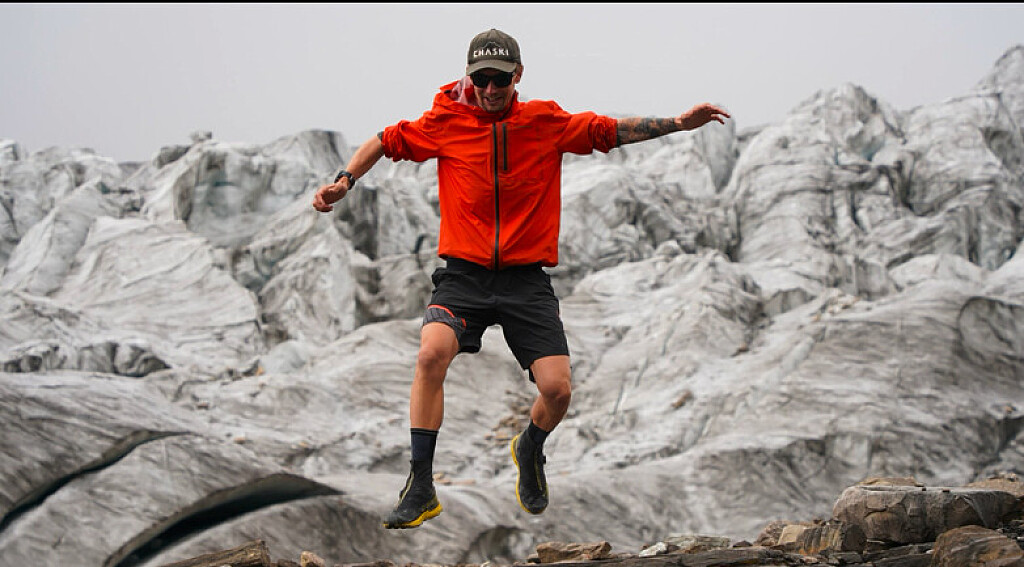
American runner Tyler Andrews just set the speed record on Manaslu, running from base camp to the summit while using an ultralight setup. Will more runners flock to the world’s highest peaks to prove themselves?
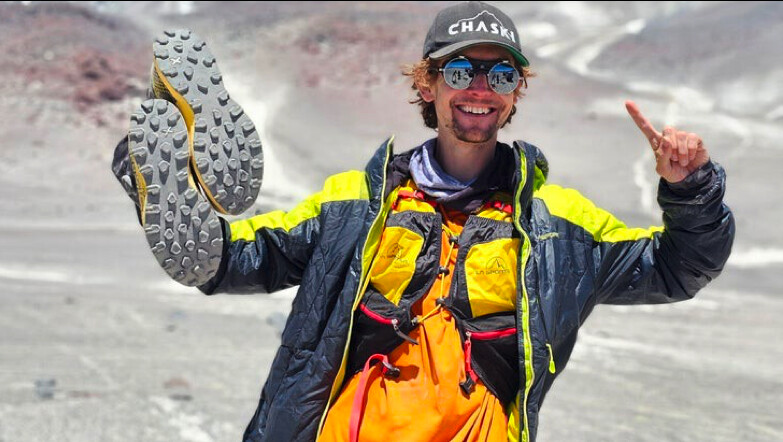
On September 19, 34-year-old American mountain runner Tyler Andrews ascended Nepal’s 26,781-foot Manaslu in a mind-bending 9 hours and 52 minutes. The time shaved more than two hours off the previous speed record on the peak, set in 2023 by Nepalese climber Pembe Gelji Sherpa. Before that, Francois Cazzanelli, an alpinist and guide from Italy, summited in 13 hours, in 2019.
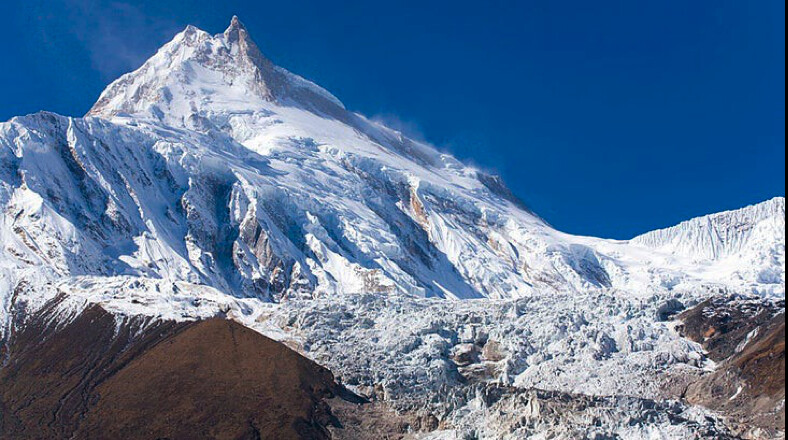
Manaslu is one of the world’s 14 peaks above 8,000 meters. These mountains have traditionally been the realm of mountaineers and professional high-alpine guides, not trail runners.
But Andrews believes that’s about to change. “I think we’re going to start seeing more mountain runners going this way,” Andrews told Outside from Manaslu base camp.
His belief stems in part from his own experience on the peak, and from changing dynamics he’s seeing in the world of ultrarunning and the pursuit of fastest known times. Andrews is part of a new generation of mountain runners seeking out increasingly bigger, more challenging, and more daunting speed records. “If you start with the Colorado fourteeners, then go to the Alps, then the Andes, the natural progression is to the Himalayas and the 8000ers,” he told Outside.
Instead, ascents on Nepal’s highest mountains, including those resulting in speed records, have historically been tracked by the Himalayan Database. But that’s changing, and Andrews is one reason behind the shift. He actually works part-time for Fastest Know Time as Regional Editor for Latin America and the Himalayas. Part of his job is to create routes and then help FKT track records on them.
“I think in the past, the team didn’t want to be trying to verify routes that required rock climbing because you can’t just use a GPS watch to track something that’s vertical,” Andrews says. “But Manaslu is not like that, so tracking it is really no different than other mountains on there, like Cotopaxi or Denali.”
When Andrews returns from Manaslu base camp—he’s currently supporting a friend attempting a ski descent—he will submit his GPX data to Fastest Known Time for approval. He also plans to submit his data to the Himalayan Database.
Manaslu and 26,864-foot Cho Oyu in Tibet are considered the easiest of the 14 8,000-meter peaks. On Manaslu, the nine-mile route from base camp to the summit requires less technical climbing than harder peaks, like K2 or Nanga Parbat. Still, Manaslu isn’t easy. The trail gains nearly 11,000 feet of elevation, requires the use of fixed ropes in many sections, and travels over steep sections of snow and ice. Climbers must also survive in what mountaineers call the “Death Zone”—elevations above 26,000—because there’s not enough oxygen for human beings to survive more than a day or two.
Andrews ran up Manaslu without using supplemental oxygen, and he did so with an extremely lightweight setup. He wore a pair of waterproof trail running shoes designed to shed snow, a puffy jacket, lightweight pants, and a windbreaker. He carried a 30-liter backpack containing bare essentials: harness, helmet, goggles, ice axe, water, snacks, and energy gels.
In 2013 he ran straight up 15,780-foot Mont Blanc, typically a two-day mountaineering ascent, in less than 5 hours while wearing shorts and a t-shirt. In 2017 he ascended Mount Everest twice in the same week.
Jornet’s ascents prompted some trail runners to take on similar challenges, setting off a flurry of mountain-top FKTs, and inspiring a new generation of endurance athletes.
Similarly, Andrews thinks the time is right for athletes to “push back on some of the conventional wisdom” for ascending 8,000-meter peaks. Instead of ascending Manaslu overnight, as is typical (“so you don’t get roasted by the sun”), Andrews did it mostly during daylight, which allowed him to use more conventional footwear, due to the warm temperatures.
Andrews also brought a stationary bike to base camp, which he said was “absurd.” But the device enabled him to get his heart rate higher than he would have while running.
But Andrews cautions that Himalayan ascents aren’t for untested trail runners. “I didn’t just step off the track and onto an 8,000-meter mountain,” he says. Andrews has been mountaineering for 15 years, and much more seriously in the last five. In recent years he’s ascended 22,841-foot Aconcagua in Argentina, 19,347-foot Cotopaxi in Ecuador, and 22,349-foot Ama Dablam in Nepal, among other peaks.
He lives and trains at high altitude, splitting time between Flagstaff, Arizona and Quito, Ecuador. And Andrews has extensive experience running at higher altitudes in the Andes.
Prior to Manaslu, Andrews ran dozens of trails above 16,000 feet in the Himalayas. His FKT on Manaslu was his second attempt on the mountain in two years. He didn’t summit the first time. “I got my ass kicked,” Andrews says. “But I learned a lot.” Both times, he hired expert local outfitter Dawa Steven Sherpa of Asian Trekking to manage logistics.
For 2025 and beyond, Andrews hopes to add more Nepali trails to the Fastest Known Times database. “There’s an absolute smorgasbord of mountain trail running here,” he says. “Really epic beautiful routes that most people do in a few days to a few weeks that
by Outside Online
Login to leave a comment
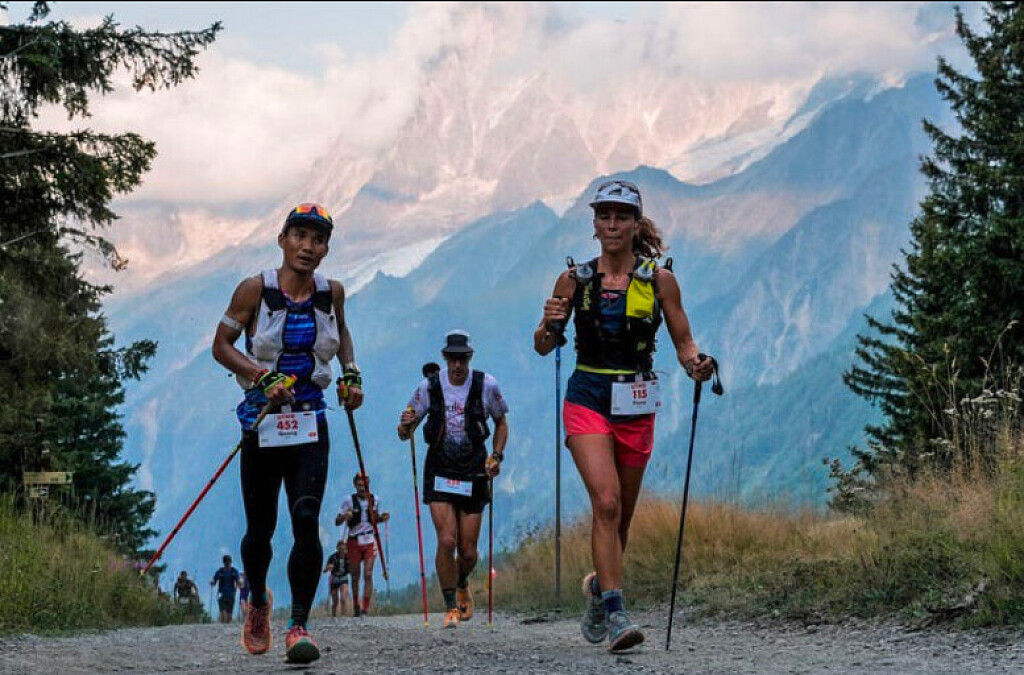
How Recreational Runners Get Through UTMB: 'It's All About Digging Deep into Yourself'
Wearing purple shorts, a blue and white tie-dyed T-shirt, a bright pink hat, a light blue Salomon hydration pack, fluorescent yellow-rimmed Oakley sunglasses, and a pair of Hoka Speedgoat 5 shoes, Chaiwen Chou was a vibe as she crossed the finish line of Ultra-Trail du Mont-Blanc (UTMB) on Sunday afternoon in Chamonix, France.
Chou, who had also freshened up the pink and purple tint of her hair before the race, stood out among the numerous other dusty and weary runners clad in more traditionally colored trail garb as they took their final strides in the epic 106-mile race around the Mont Blanc massif.
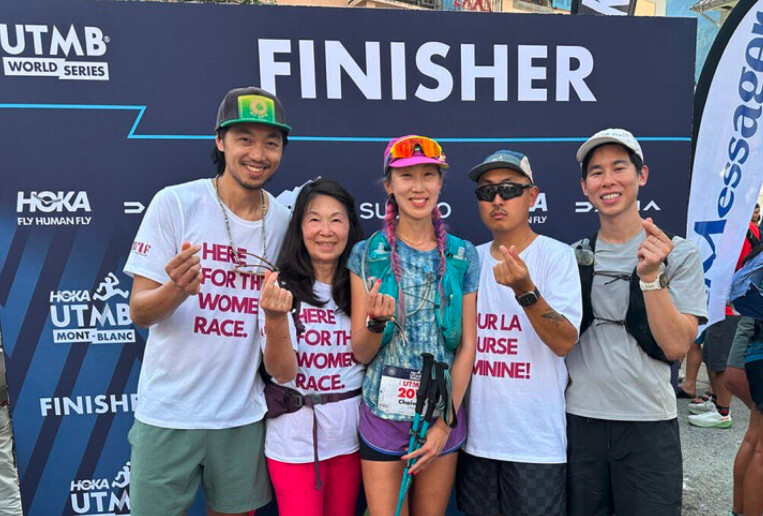
But what was most remarkable about the 41-year-old software developer from New York City was the huge smile on her face and expression of pure joy that emanated from her. When she arrived at the finish line after 45 hours and 15 minutes of running-about 75 minutes before the cutoff-she was beaming ear to ear and greeted with big hugs from her mom, brother, partner, and a good friend who helped crew her on her journey.
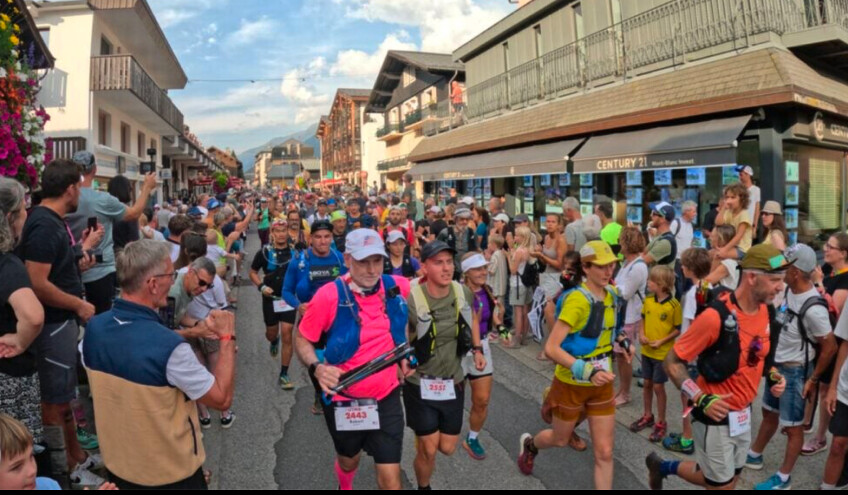
While her interest in running started on a bit of a whim a decade ago, her continued passion and progression have led her to run more than 30 trail running races, including the biggest and most celebrated one in the world. On Sunday, she was one of 95 American runners to complete the grueling UTMB course.
"So when I turned 30, I had this typical New Year's resolution, like, I want to get fit, I want to learn how to run," said Chou, who grew up in Massachusetts. "And then I met a friend who ran, and I started running with him and doing group runs. And then we started running trails, and we specifically entered The North Face Endurance Challenge, and that's where I ran my first marathon, and fell in love with trail running and then learned about ultrarunning and this whole world that I never even knew existed."For many recreational ultrarunners from around the world like Chou, UTMB sits at the top of their lifelong bucket list. It means starting at the same time as the elite professional runners on Friday evening in Chamonix, and maneuvering through the same rugged and aesthetic 106-mile loop with a daunting 32,000-feet plus of climbing and descending. It's historic, and the crowds and the energy around it are unparalleled.
It's also a monumental challenge to complete.
Trail Running's Infectious Buzz
Ultra-trail running is having a moment right now-especially since the end of the Covid pandemic-but it probably started a decade ago as the urge to run beyond the marathon gained mainstream traction and destination races around the world started to become desirable goal races for recreational runners.The North Face Endurance Challenge began as a singular 50-mile championship-style trail race near San Francisco in 2006 with a $30,000 prize purse, but it evolved into a multi-distance race weekend (from 10K to 50 miles) aimed at encouraging runners of all abilities to immerse themselves in the sport. After a few successful years of the event in Mill Valley, California, it expanded to several locations across the U.S.-upstate New York, Madison, Wisconsin, and Washington D.C., among others-and around the world.
Although The North Face pulled the plug on the series in late 2019 with a suggestion that it was going to reimagine the event format, nothing ever materialized after the Covid-19 pandemic temporarily disrupted the world-and specifically running events-in 2020. But those events played a big role in introducing runners and non-runners alike to the unique aspects of trail running, and many of those who caught the bug-like Chou-have continued to chase their passion in global events like the UTMB World Series.
Chou and her friends returned to The North Face Endurance Challenge four years in a row and she upped the ante each time, going from the marathon to the 50K and finally to consecutive finishes in the 50-miler. She competed in the 50-mile race in San Francisco in 2017 and 2019 and then started traveling to other races around the U.S. and eventually around the world. By 2020, she had completed the Madeira Island 115K race in Portugal and the Tarawera Ultramarathon 100-miler in New Zealand.
Once Covid subsided, Chou set her sights on trying to get into UTMB, which she did by collecting running stones and finishing seventh at the Grindstone 100 amid torrential rain storms last September in northwest Virginia. Her training for UTMB was interrupted in February when, just a week after she found out she secured an entry into UTMB through the lottery, she broke her ankle. Then once she got to Chamonix a week before the race, she smashed her left knee on a shakeout run and it swelled up pretty badly.
As such, her UTMB experience was rougher than she had hoped-the 80-degree heat and the 32,000 feet of vertical gain and descent pushed her to her limits-as she had challenges fueling consistently and also got sick several times. But she persevered and reached her primary goal of finishing.
Officially, she was the 1,542nd finisher out of 1,760 runners who completed the full loop. (A total of 1,001 runners started but did not finish.) She did whatever it took and she crossed the finish line.
"So this is the first time I've been in the Alps, and I'm just blown away by how beautiful it is," she said. "Even though I was in pain pretty much the whole race because the climbing and the elevation gain here are insane compared to the East Coast! But it was just so beautiful everywhere. It's pretty crazy. But you get to be out there all day though, so that's fun."Every Runner Has a Story
Becky Convery only started running four years ago in the middle of the Covid lockdown. What started as short, occasional runs turned into a passion for trail running that was fueled, in part, by doing group runs with the Virginia Happy Trails Running Club.
Like Chou, Convery also qualified for UTMB through the Grindstone 100. The 58-year-old Washington D.C. attorney almost quit that race, but she dug deep to finish. During UTMB, Convery dealt with GI issues from early on in the race and couldn't keep any food down. It was so bad, she almost dropped out at the 51.5-mile aid station in Courmayeur, Italy. But then she thought of Wayne Chang, a running buddy from Virginia, who did just that last year and immediately regretted it. With her friend's experience top of mind as she struggled, Convery persevered and finished in 45:27 with an hour to spare."I wanted to quit at Grindtone last fall. I was miserable and just wanted to go to bed, but he wouldn't let me quit," Convery said. "He's like, 'Look, I quit UTMB and I woke up a couple hours later, and I was like, 'Oh my God, what have I done?' So when it got hard out there (during UTMB), I thought of Wayne, and even though I couldn't keep food down, I said to myself, 'What would Wayne do?' He'll kill me if I quit, so I knew I couldn't quit. So I just kept going."
As much as UTMB gets considerable international notoriety for the livestream and media coverage around the elites-and understandably so, it draws many of the world's best runners-at the heart, UTMB is a personal journey of courage, commitment, and hope for most of the 2,800 runners who toe the starting line.
And really, that's what the entire sport of ultra-trail running is all about and what differentiates it from road racing. For many, it's not about racing at all-competing against other runners or even the clock-it's about challenging yourself and the natural terrain in pursuit of a dream that might seem like it's on the realistic edge of your abilities.
"It's all about digging deep into yourself," Convery said. "With this race, it's so international and there are so many nations represented, it's just an amazing time up there. Even though most people don't speak each other's language, everybody gets it. Everyone is pulling for each other. It's a great environment out there. I'm glad I made it."
Going the Distance
That's always been the case for 67-year-old Mike Smith, a retired resident of Santa Fe, New Mexico, who reached the finish line 15 minutes after Convery. It was Smith's second year in a row finishing UTMB, and because he won his age group at the Canyons 100K in April, he'll likely be back next year.
"The best part about it is always the people," Smith says. "But, oh gosh, chasing the time cutoff at that last aid station, that hike up to the La Flegere ski area, that's always a challenge."Smith relishes in those kinds of ultra-trail challenges. By reaching the finish line in Chamonix, he recorded the 224th 100-mile trail race finish of his career dating back to the mid-1990s. According to an ultrarunning history site, he ranks No. 2 in the world in all-time 100-mile finishes and first among 100-mile trail races. (Last year's UTMB was his 205th finish, which means he completed 18 100-mile ultra-trail races in the interim.
"This is always a spectacular finish," said his wife, Sandra, who wrote a book about what it's like to crew her husband at races. "This is one of the most exciting finish lines there is. The finish lines at smaller races are exciting because there's such a close community of people, but here, there are so many people from around the world, and that's just wonderful."
In all, 2,761 runners started this year's UTMB and 1,760 finished, including 95 U.S. runners who reached the finish line (out of 152 American starters) under the cutoff. Frenchman Vincent Bouillard was the overall winner in 19:54:23 on Saturday afternoon, but 20 hours later there were still about 1,000 runners moving toward the finish line and trying to beat the 46.5-hour cutoff on Sunday afternoon. Among the 95 U.S. finishers, 41 completed the course after the 40-hour mark.
Lamont King, 51, a runner from Roseville, California, has watched and been inspired by runners finishing in the golden hour of the Western States 100 as a fan and as a board member of the race for years. So finishing UTMB on his first try in 45:59-about 30 minutes before the cutoff-was a special moment for him.
"The race was very, very tough. We just don't have that kind of vertical in California where I'm from," said King, who has been trail running for 20 years. "But it's just amazing to be in this scenery in the mountains. It's just fantastic, and it makes up for a little bit of pain. I did have to push a little bit more than I probably would've liked, but I got it done. Coming in with all those people cheering for you in that final finish is almost overwhelming. It's just beautiful."
by Trail Runner Magazine
Login to leave a comment
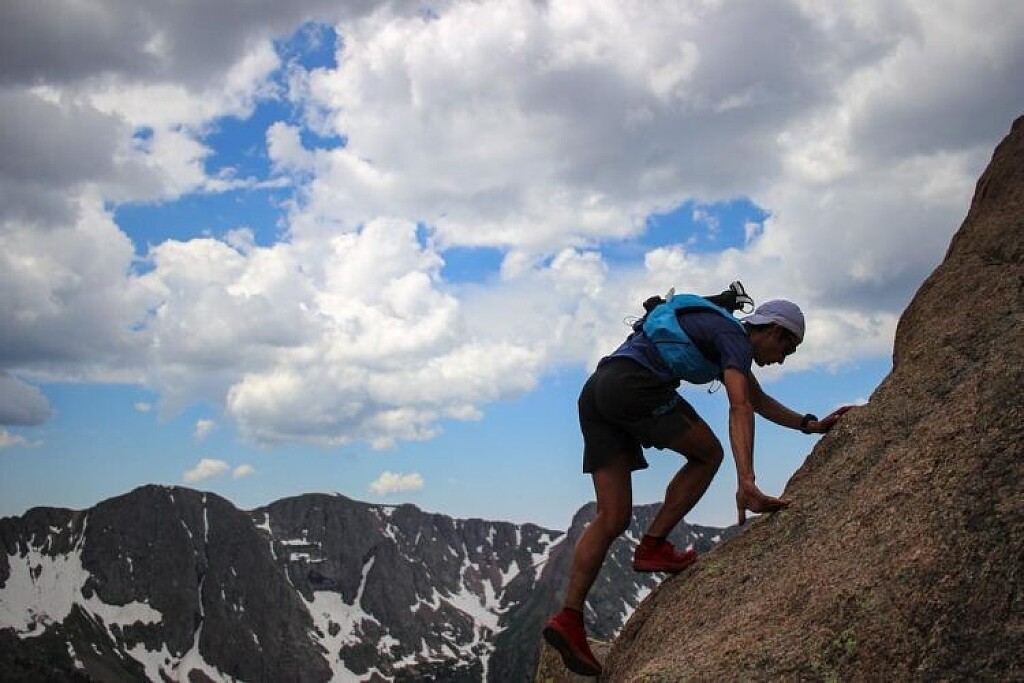
Kilian Jornet summits 82 Alpine peaks in 19 days
On Monday, Spain’s Kilian Jornet, four-time UTMB champion and a legend in ski mountaineering and climbing, completed his monumental mountain challenge to summit all 82 Alpine peaks over 4,000m high in only 19 days. Jornet shattered the previous Fastest Known Time (FKT) of 62 days, set in 2015 by Swiss alpinist Ueli Steck, who used a combination of cycling and paragliding.
Following his remarkable 10th victory at the Sierre-Zinal race (where he beat his own course record by a single second), Jornet embarked on a quest, dubbed “Alpine Connections,” to ascend as many of the 4,000-metre peaks in the Alps as possible, using only human-powered methods to travel between them. This endeavour seamlessly combined trail running, mountaineering, climbing and cycling.
In 2023, Jornet took on his toughest challenges yet, summiting all 177 peaks over 3,000 metres in the Pyrenees in just eight days. Reflecting on the feat at the time, he called it “one of the most difficult things I’ve ever done.” With the “Alpine Connections” project, Jornet pushed his limits even further as he continued to use only running or cycling between mountains, being careful to leave no trace that he was there.
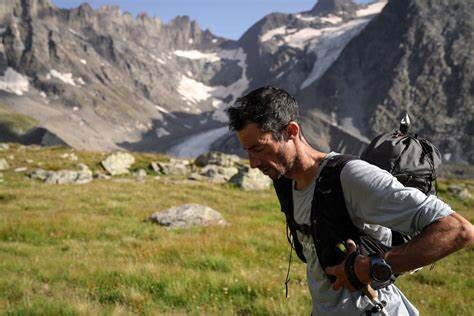
Jornet started his journey in the Bernina range of eastern Switzerland. In just a few days, he conquered 10 peaks, covering 423 km with a staggering 19,831m of elevation gain. The early stages of the challenge tested both his physical and mental endurance, and Jornet worked closely with scientists to track the physical and mental demands of his trek. He also provided daily recaps, stats and tracking on the Nnormal blog, Strava and @nnormal_official.
Jornet faced other, more humourous challenges during his journey: at one point, police threatened to tow his vehicle when work needed to be done on the parking lot he had left it in—2,500km away, and 4,000 metres below him.
Upon reaching the summits of Dôme and Barre des Écrins (the westernmost peaks in the series) on Instagram, Jornet shared his thoughts on Instagram. “This was, without any doubt, the most challenging thing I’ve ever done in my life, mentally, physically, and technically, but also maybe the most beautiful.”
“It’s difficult to process all my emotions just now, but this is a journey that I will never forget. It’s time for a bit of rest now.”
by Keeley Milne
Login to leave a comment

The Incredibly Specific, Occasionally Gross Food We Eat to Fuel Our Ultras
The strangest and most distinct snacks we can’t live without when we’re on the trail all day The Ultra-Trail du Mont-Blanc (UTMB) World Series Finals kick off on August 26 and run through September 1. The annual finale is made up of three races: the Ultra Trail du Mont Blanc Orsières-Champex-Chamonix (50K), the Ultra Trail du Mont Blanc Courmayeur-Champex-Chamonix (100K), and the classic UTMB (100M), across France, Italy, and Switzerland.
Sure, crowds come for the world-class athletes and spectacular views of the Alps, but, some might argue, another big draw is the food—and even the race participants get a taste on the course. Much of the fuel at aid stations are sourced from nearby communities, who bring their best. Think: locally made croissants, bread, cheese, and prosciutto.
But for those of us who haven’t had the pleasure of running by tents filled with freshly baked French baguettes on our long runs, here’s the weird, the specific, and the sometimes gross on how we fuel our adventures.
On a 13-hour, nearly 10,000-vertical foot ridge scramble/romp through the high peaks in New Mexico a few years ago, I fueled with the food of the gods: birthday cake in a bag. I had somehow scammed my way into having three cakes at my birthday dinner a few nights prior and figured the calorie-to-weight ratio of buttercream frosting couldn’t be far off from Gu. So I cut a generous piece of birthday cake, put it in a Ziploc, and stashed it in my pack. By the time I went to eat it, it had lost all structure and I could easily squeeze it directly into my mouth from a hole —Abigail Barronian, senior editor, Outside
The last time I ran 100 miles, it was a self-supported multi-day journey through the English countryside. The bad news: no aid stations. The good news: pubs and cafes at far greater frequency. I was able to refill my vest with raisin scones and coffee every ten miles. By itself, a scone is pretty dry. But combined with a mouthful of coffee (or even water), it becomes an easy-to-digest, carby snack that’s just the right amount of sweet. Plus, it’s perfectly sized to fit in a chest pocket.
—Corey Buhay, interim managing editor, Backpacker
I have been blessed with a rock-solid stomach and have never had gastrointestinal issues during any run or race. That gives me the freedom to consume just about anything, but I notably veer away from energy gels and opt for real food—either the breakfast burritos or ramen noodles available at aid stations or peanut butter tortilla wraps (sometimes with Nutella) and Pay Day candy bars (because they don’t melt and have a good blend of calories, carbs, fat and protein). I have also been known to drink pickle juice straight from the jar for the sodium content. I love the taste!
—Brian Metzler, editor-in-chief, RUN
I’m all about having a variety of guilty pleasure snacks on hand during an ultra! My favorite is a specific mix from Trader Joe’s called Many Things Snack Mix, with honey-roasted peanuts, sweet and spicy Chex-like cereal squares, pretzel sticks, and bread chips. It’s basically Chex mix. I put it in a Ziploc bag and relish being able to eat it without guilt during my run (because when I eat it at home, it’s never really fulfilling any kind of nutritional need and I always eat too much of it!).
I’ll also pack a Ziploc bag with gummy bears, and then another one with half of a peanut butter and jelly sandwich. Peanuts and peanut butter go down easy for me while also providing a bit of a “stick to your ribs” satiety, while the gummy bears have a fun texture and come with a sugar rush. A PB&J sandwich kind of combines both sides of that, and then the Chex mix—as long as it has some spicy pieces—wakes up my taste buds.
Login to leave a comment
This Teen Ultrarunner Wants to Take on the World's Most Prestigious Races
Last November, 17-year-old Sebastian Salsbury received an email reminder. He had 13 days to decide about entering the race lottery for the 2024 Western States 100 Mile Endurance Run, regarded as one of the most prestigious trail events in the world.
Rules stipulate that each lottery applicant must be at least 18 years old on race day. On January 20, Salsbury will finally meet the age requirement, five years after he technically ran a qualifying time to enter the lottery for the first time.
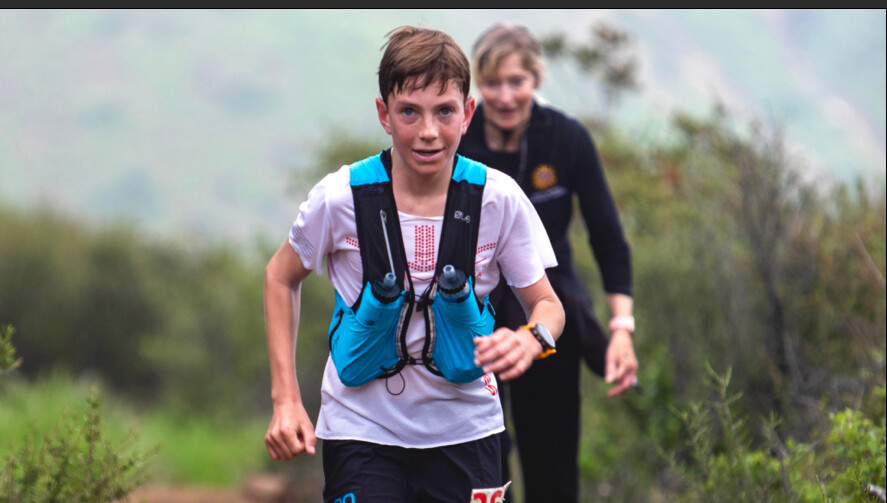
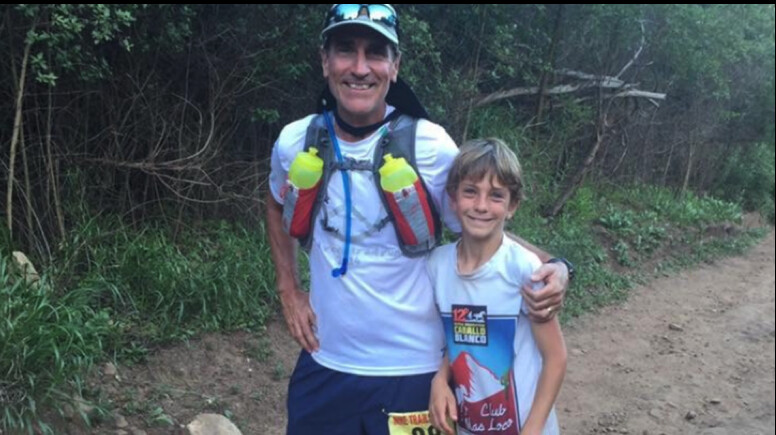
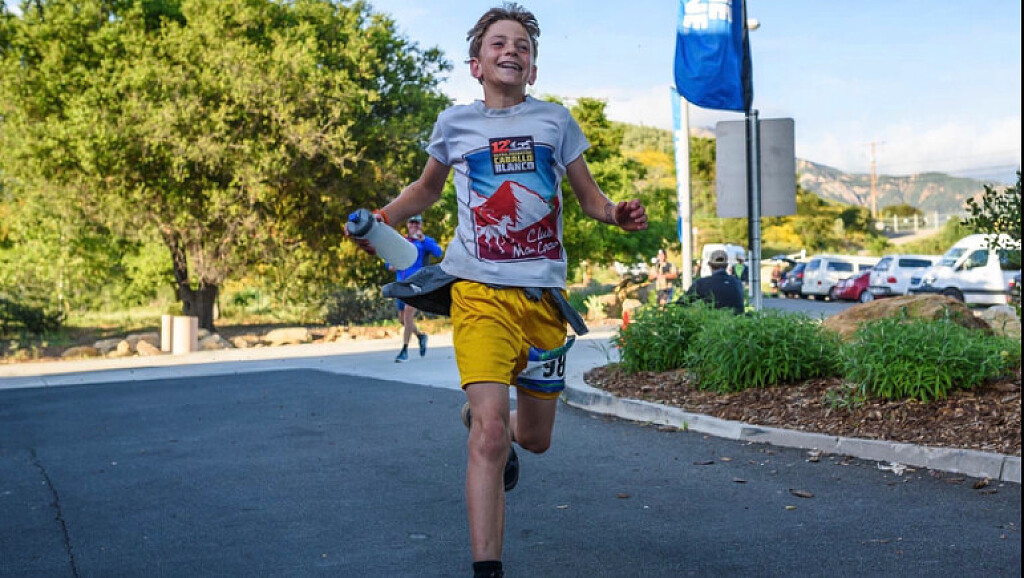
It's been a goal he's been progressing toward for years. In 2020, when Salsbury was 13, he completed the Black Canyon 100K in Arizona in 15 hours 49 minutes and 32 seconds, well within the 17-hour time limit necessary to qualify for the Western States lottery.
"It's hard to put that experience into words," Salsbury says. "It was one of the most beautiful courses I've ever been on. That race made me feel like I was doing the right thing in my life."
Starting Young
Salsbury, who grew up in Santa Barbara, California, was attracted to the trails at a young age. Throughout his childhood, his parents often brought him to nearby trails to hike. The hikes gradually transitioned into jogs, and Salsbury's relationship with the outdoors continued to grow. The mountains, he says, were a playground.
Though Salsbury played basketball, football, and soccer growing up, his love for running took over. He quit the other sports after junior high school to minimize risk for injury, he says, and to dedicate more time to running.
A few years after Salsbury's entry into racing-his first was a local 5K on the road when he was four-he ran the Santa Barbara Red Rock Trail Run. Despite being just nine, he kept up with his father for all 28 miles. The following year, for the Santa Barbara Nine Trails, Salsbury traversed 35 miles with nearly 12,000 feet of vertical gain from the Jesusita trailhead to Romero Canyon trailhead and back, again alongside his father, a road marathoner.
Next, Salsbury entered the Black Canyon 100K in Arizona. He recalled the point-to-point race as one of his most difficult running experiences to date.
"I was basically crying," Salsbury remembers, adding that his hydration vest kept digging into his ribs. "I loved the feeling of working hard and going through really low moments and overcoming them. I crave it."
Supported for the last 20 miles by his coach at the time, Tyler Hansen, Salsbury crossed the finish feeling both defeated and uplifted. The Black Canyon race gave him the confidence to continue challenging himself in ultrarunning.
"My best friends don't understand," Salsbury says about the pursuit of ultras, which he envisions including some of the most technically demanding and prestigious races in the world: the Western States 100 in California, Ultra-Trail du Mont-Blanc through the French Alps, as well as the Hardrock Hundred Mile Endurance Run in Colorado. Salsbury admits that running disrupts his social life, and also that he doesn't mind the solitude the sport necessitates. In fact, he welcomes it.
"I like the feeling of being alone in the mountains," Salsbury says. "It's a great way to free your mind."
Given that he is still a teen-the average age of trail runners is in the mid-30s-Salsbury has not been immune to negative comments over the years. "It's not cool at all to hate, but I can still see where someone would be coming from, seeing a kid doing all that stuff," Salsbury says. "There are going to be people that troll and hate for no reason. That's just life."
A Purposeful Progression
The training required to undertake ultras is out of this world for a typical high school runner. To ensure he's programming himself with sufficient miles without overloading his still-developing body, Salsbury sought the guidance of his longtime role model, pro trail runner Hayden Hawks. The two met when Salsbury was 14, and their camaraderie clicked naturally.
"I had lots of mentors help me at a young age in my running journey, and I felt the responsibility to do the same with Sebastian," says Hawks, 32. "We have taken a patient and gradual approach, developing strength, speed, and a foundation that will help him build into the longer distance races at an older age."
Hawks has coached Salsbury for the past two years, carefully mapping out a plan that tallies 50 miles weekly spread across six days. Salisbury complements the mileage with a combination of hiking, mountain biking, and intervals on an indoor bike as part of his cross training. Three days a week, he does strength exercises at Varient Training Lab in Santa Barbara. To fit it all in so he could have ample opportunity to train and compete, prior to the Covid-19 pandemic, Salsbury enrolled in West River Academy, an online private school program.
"I have zero regrets," Salsbury says. "The opportunity that it's given me to travel with my family and run and be able to guide my days how I want and learn at my own pace, I'm grateful for that."
The online program lasts up to three hours a day, which is "a lot less than standard high school," Salsbury chuckles. In 2022, he researched computer engineering and built a computer from scratch. This year, as part of the online curriculum, he's learning to speak German in addition to researching for a project about coffee and sustainability, which he is especially interested in as a part-time certified barista. Salisbury works at a local coffee shop twice a week.
So far, he's enjoying the unique balance of online learning and ultrarunning. "I like to keep myself busy," he says. "I've always had this next-level energy. Obviously it goes into running, but it's who I am as a person."
His days are hardly routine compared to the average high schooler. On a recent Thursday, Salsbury started the day with a three-minute cold plunge before he spent the remainder of the morning packing running shoes, thermal layers, his COROS watch, and a heart rate monitor ahead of a four-day trip to Boulder, Colorado, to train with a friend at altitude.
Living at sea level in Santa Barbara, Salsbury doesn't often have the opportunity to run at altitude beyond twice a year, mostly "just a vacation with my family where I get to do some running," he says.
As much as he has run over the years, Salsbury says he's been fortunate to never have had any serious injuries. This year, a growth spurt of eight inches led to severe shin splints, and Salsbury, who is now 6-foot-4 and 162 pounds, took four months off from running.
Now, life is back to business as usual. Salsbury is planning ahead. His next race is the La Cuesta Ranch 25K in San Luis Obispo, California, in late January. After he graduates from high school in June 2024, he wants to pursue a running career ideally full-time, though he hasn't stated when he aims to turn professional.
"I've always had the intention to be one of the greatest ultrarunners in the world one day. That will continue to be my goal," Salsbury says. "I want to leave a positive impact on the sport and be an inspiration to other athletes of any age, but obviously the youth because that's how I grew up. People can judge and say whatever they want, but I do want to be the best of all time."
by Trail Runner Magazine
Login to leave a comment
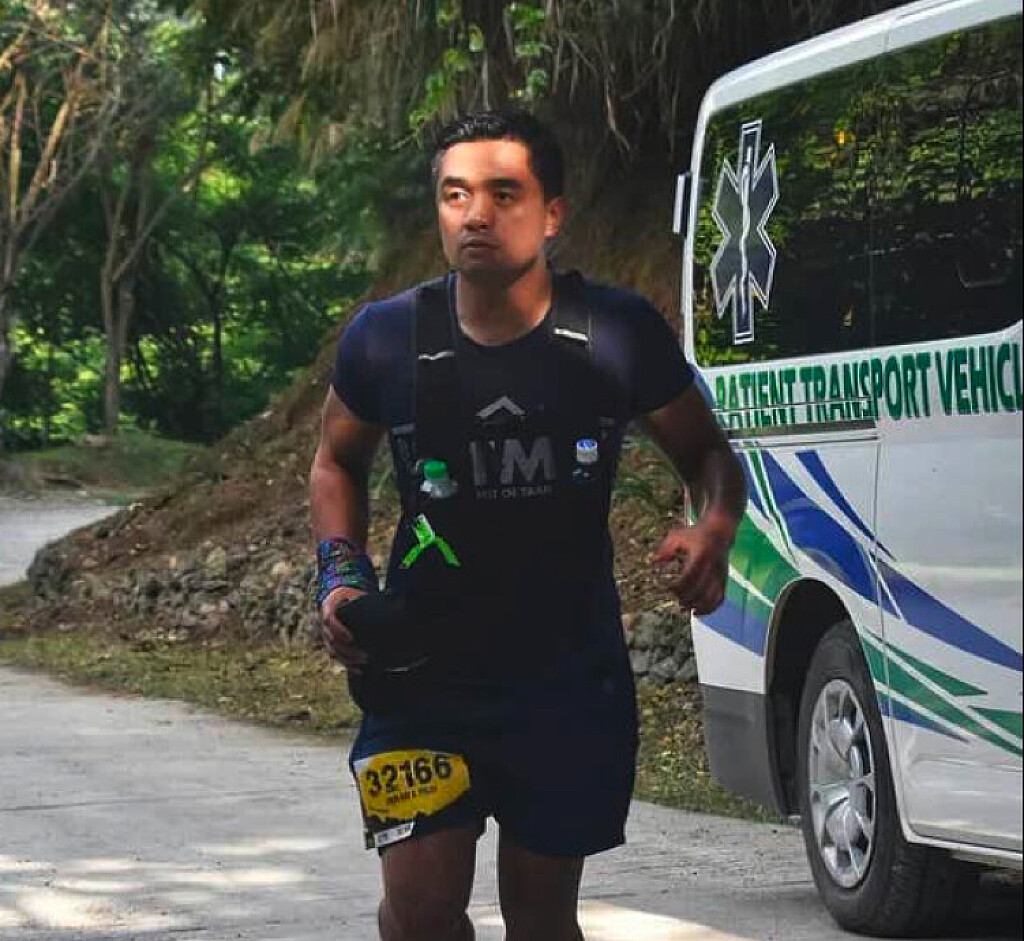
Running For 12 Hours Straight Taught Me Real Confidence
You’re stronger than you think.
When I hear people say, “You can do it!” I’m usually skeptical.
People tend to say that when they have nothing else more encouraging to say. So that kind of positive affirmation — while appreciated — does not exactly provide the substantial and “real” encouragement I’m looking for.
Nowadays, when I find myself lacking in self-confidence, or when I’m feeling like a big failure as a writer because my short stories and essays keep getting rejected by publications, I find myself thinking about that fateful morning in early 2018 — when I first started to get into trail running.
It took me 12 hours to finish my first 25-kilometer mountain race.
For those unfamiliar with trail running, 12 hours is a long, long time to finish 25K. The race’s cut-off time is 8 hours — which is already generous. Yet, I didn’t make it.
Nevertheless, that 12-hour 25K run taught me what real confidence is.
It was the Mount Ugo Marathon, which had qualifying points for UTMB. The UTMB, set in the French Alps, is one of the biggest and most prestigious mountain races in the world. To qualify, a runner has to gather enough points from difficult, qualifying races — like the Mount Ugo Marathon.
The Marathon offered 50K and 25K distances. And since it was my first time, I joined the 25K.
We started at the base of a mountain in Kayapa, Nueva Vizcaya. The first few kilometers were paved roads. Then it turned into dirt roads and eventually trails. Over mountain ranges, it was 10 kilometers of almost vertical uphill.
I’d lift each leg over the other and feel my ankles threaten to rip from the constant battle against gravity. I no longer bothered to look up because the damn mountain just kept going on and on. And I cursed myself for not having more uphill training.
Eventually, we reached a more forgiving part of the trail — flat enough that I could jog it. And I started gaining speed and momentum.
When I hear people say, “You can do it!” I’m usually skeptical. People tend to say that when they have nothing else more encouraging to say.
At the turning point for 25K runners (the 50K runners had a different route), a race official told me I was running 11th. I was excited. I thought if I maintained my pace and outran another runner, I’d be part of the top 10! Not a bad way to finish my first half-marathon.
I reached an intersection that had no marks or ribbons. I was confused. And I kind of assumed trail races would be like roads; you just keep going, and you’ll eventually find the right way because the signs will be so obvious. This is a big mistake because, I would later learn, mountain trails don’t work that way at all!
But I wanted to get that Top 10 so bad that I simply picked a path, hoped it was the right one, and gunned through.
I thought I’d turn back if I didn’t see any markings/ribbons after five minutes of running. But then I saw one! So I kept going.
A few mountains later, the ribbons suddenly stopped appearing. I started getting nervous.
Am I on the right path?
But the ribbon indicated this trail path. There were no intersections so far.
Should I keep going? Maybe there’s another ribbon ahead.
I’d later learn I followed some old markings from the previous year’s race. I guess the race organizers didn’t thoroughly remove all markings in that area since it was supposedly far from the designated route. If only I studied the course map, I’d have known something was wrong. But I didn’t, so I kept running through the previous race’s 50K route.
Back then, I didn’t have a smartphone. I had an old Nokia from my dad; the kind that can only call and text. And the signal was bad. So I had no way of knowing where I was via GPS, and I also couldn’t call someone for help.
I decided to reach the peak of the closest mountain I could find.
Maybe if I can get an overview of the place, I’ll have a better idea of where I am.
I reached the mountain’s summit and stared at a panorama of rice fields and cows. No houses or humans in sight. I knew then that I was very much lost.
At that point, I’d been running for over five hours in the mountains. The sun was high above, painful on the skin. I’d traveled so far from the race route that I’d run out of food and water. I only had one last bottle of Gatorade left. And not a single morsel of food.
The fatigue was growing underneath my muscles. My legs felt like chunks of cement blocks; they felt so heavy I could barely lift them.
I thought of Bear Grylls and whether I had to drink my pee while waiting for rescue.
I took a sip of my dwindling Gatorade and tried to push the panic away; those thoughts attack you when you’re in a vulnerable state. Thoughts that I might end up dying on that mountain of hunger or thirst or wild buffaloes. Or that they’d find me delirious, babbling about cows and rice fields, after days of searching.
I started walking back, slowly. I climbed one hill after another. Midway up the last hill, I sat on the trail. My legs couldn’t walk anymore. Like, literally. People often say, “I can’t walk anymore” — even if, with enough willpower, they still can. But for the first time, regardless of willpower, I felt that my legs couldn’t take another step. So I sat in the middle of that trail.
My calves cramped for the third time and I screamed in pain.
The pain came along with the panic. Am I going to go Bear Grylls from here?
Freaking Bear Grylls. Why did I have to think of the man in the middle of a crisis?
I focused on my breathing to calm myself. I have to survive. So I rested for a bit. And slowly, while conserving my energy, I made my way back up, one super slow step after another.
When I finally returned to the intersection where I first got lost, some race officials were there. They were sweepers — race marshals who were going through the route to support laggards and slowpokes like me. At that point, more than eight hours had passed. The sweepers pointed me in the right direction. And I limped until I reached the final Aid Station, which was 10 kilometers away from the finish line.
My body had never felt so broken, so tired, so truly and utterly exhausted.
At the aid station, I thought I saw a bunch of angels — helpful, smiling volunteers who fed me fruits and nuts and marshmallows and chocolates. They gave me water and electrolyte drinks. They sprayed my legs with something that helped ease the cramps. It was one of the happiest moments in my life.
After I recovered enough to speak, I said to one of the volunteers:
“I don’t think I can walk the next 10 kilometers. When does the sweeper transport arrive?”
The transport was used to ferry people who could no longer finish the race on their own feet.
“The last transport just left,” the volunteer replied. “Another truck would arrive in four hours to sweep the 50K runners who’ll drop out.”
I took a deep breath. Four more hours. What do I do? Wait?
I’ve already lost the race. Even if I reached the finish line now, I’d still be a non-official finisher. But how do I go home and not feel super bad about the failure of my first 25K? Then a small thought came:
Why don’t I try limping my way down? Maybe the transport will arrive earlier and they’ll be able to pick me up along the way. Or if not, another sweeper will pass me by and help me.
Since the volunteers at the aid station couldn’t leave their posts to assist me, I decided to see how far I could go.
I filled my running vest with food and my bottles with electrolyte drinks. I bid farewell to those angels at the aid station, and then, finally, I dragged my feet and started limping.
I limped my way to the finish line after 12 hours.
I avoided the finish line itself. I was embarrassed to have people see my race bib and know that I was actually from the 25K, not the 50K, and that it took me 12 hours to reach the finish line. But apparently, the race director knew about this lost 25K runner after the sweepers reported it. And he kindly welcomed me and congratulated me for finishing — even if it wasn’t an “official” finish.
I made it back on my own two feet.
And that’s when I realized it: I did it even though I thought and fully believed I couldn’t.
I did it, even when I felt like giving up. I did it, even when I didn’t believe in myself.
So whenever I face something that destroys my self-confidence, I often return to that memory.
When I feel like giving up, or I’m spent and exhausted, and my brain and body are telling me I can’t do it anymore — I push myself to take one more tiny step. Just a little step forward, to see how far I can go.
Because I have done it before and succeeded. And I’m confident I can do it again.
Login to leave a comment
How to Train For Any Race Using Short Distances
When stepping up to a new distance, it can help by focusing on short intervals you're familiar with.
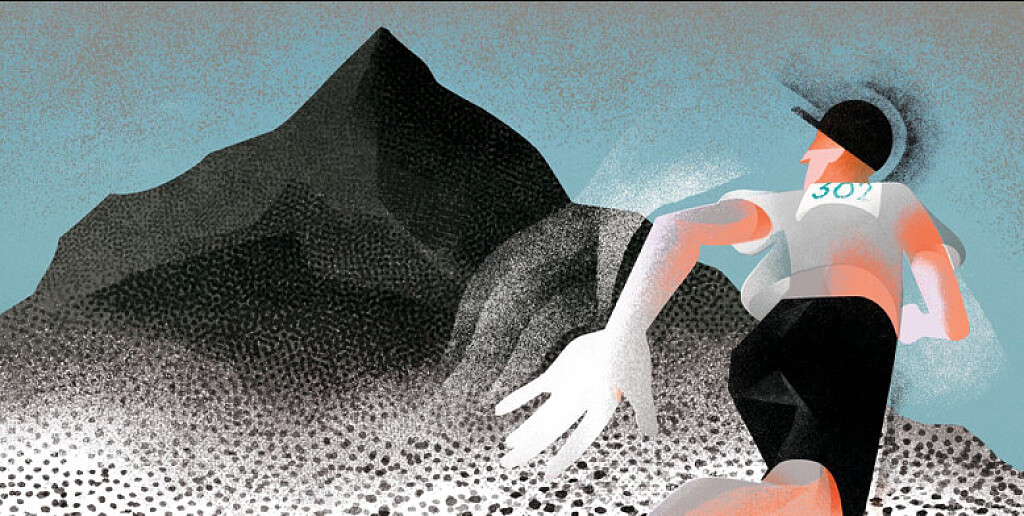
Up. Tap the pole. Down. Tap the Bridge. Up. Tap. Down.… Over the weekend, on one of many hill-repeat sessions, I came to the realization that the majority of my training for a 200-mile trail race through big mountain terrain has been on a single mile. It’s not even a trail, and, in fact, some of it is even paved. How can I possibly prepare for such a big goal on such seemingly wildly inappropriate training grounds?
There was a time when I could go out on any given weeknight and run for three or four hours. But: life. Now I find myself having to balance running with family obligations, keeping a new dog from chewing up all my shoelaces, and doing work on a new home. And it’s so easy these days, especially with Strava and social media, to fall into a trap of comparing my own training to people putting in loads of miles in the Alps or the Rockies. But the reality is no matter what goals we runners are training for, we have to work with what we’ve got. A few years ago, when COVID shut down my local trails, I found myself turning to a few of these short segments, and ping-ponging from end to end purely because there was nowhere else to go. While it was not the most scenic running I’ve ever done, I found myself getting stronger physically and mentally. It turns out I inadvertently adopted a training concept known as “chunking” in place of doing big majestic loops.
By necessity, I found out that I train better when I take a big, ambitious goal and break it down into things that seem reasonable: Each run or workout chips away at the goal, taking something that at the outset seems like a massive weight and bringing it down to something more manageable, more recognizable—like a carver tapping away with a chisel. No matter how small of a hill you might have to train on, or even if you’re confined to a track, or maybe not running at all due to injury—even the smallest chip you can manage whittles away at that giant block.
Two hundred miles is of course an extreme example, but when I first started running, as with so many runners, even a single mile sounded impossible. Even if you start with just one minute of running, you are breaking down whatever bigger goal you might have. For me, on race day, no matter what distance I’m doing, as the miles add up and the legs and lungs burn, I know I can focus, just as I did in training, on hearing that next tap.
Pat Heine-Holmberg, Runner’s World’s Senior Video Producer, spends more time on trails in pursuit of going farther and higher than he does faster. PRs racked up during the 2023 Tor des Géants include earliest time to vomit (mile three), most ice cream eaten during a race (four bars), and worst night of sleep (an hour on the floor in an under-construction sports center).
by Runner’s World
Login to leave a comment
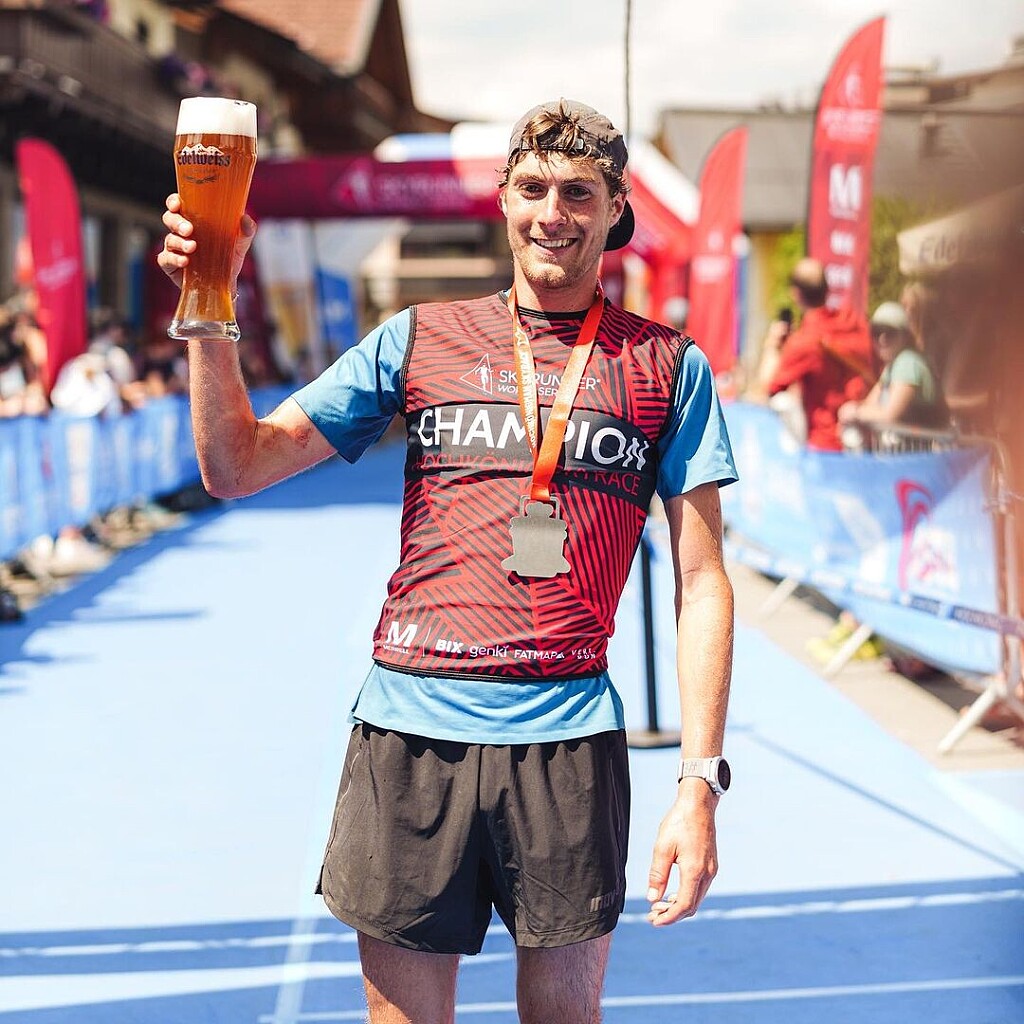
French trail running champion dies in ski mountaineering accident
French skyrunning champion Esteban Oliviero, 22, has died after a ski touring accident in the French Alps. Oliviero was on the descent after a ski touring ascent of La Blanche in the Ecrins massif, BNN reported, and was found after his roommates alerted emergency services when he had not returned by nightfall.
Originally from Var, France, Oliviero had recently moved to the Ecrins Massif area to pursue his passions for both trail running and mountaineering.
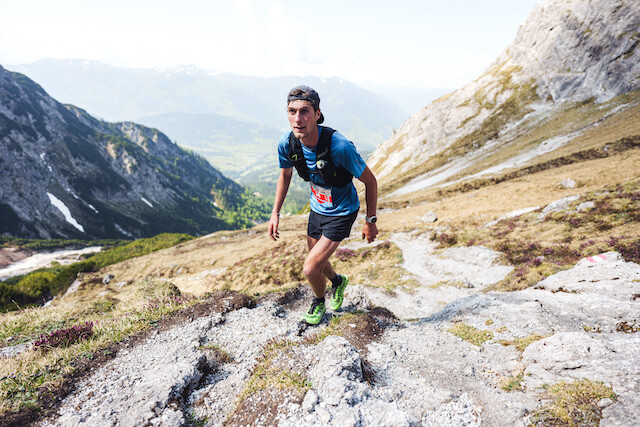
Oliviero had established himself as a remarkable trail runner with notable achievements despite his young age. In June 2023, Oliviero took first at the Grand Trail des Acrins 34K race in Vallouise, France, won the Hochkönig Skyrace 50K in Maria Alm, Sweden, won the French U23 Trail Running Championships and was ninth at the Grigne SkyMarathon.
He was beloved not only among his athletic peers, but also for his role as a summer caretaker at the Nice refuge in Mercantour, France.
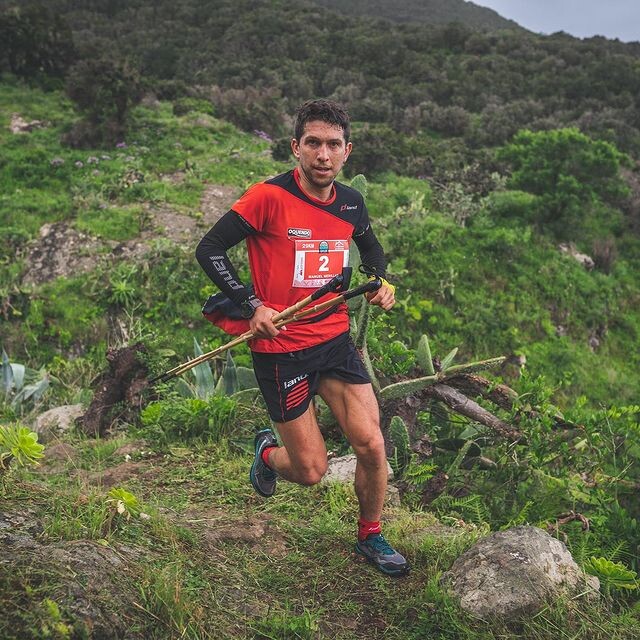
The French Athletics Federation (FFA) expressed condolences, sharing on their website that “the entire trail running community in France and elsewhere is mourning the death of an athlete highly esteemed by his peers. Esteban will leave a great memory.” Olivier was known not only for his racing ability but his kind and joyful nature. “A runner recognized for his talent during the effort but also during the post-race moments, his smile and his infectious good humor made him a much-appreciated comrade,” they added.
Olivier ran for the UK-based shoe company, Inov8 France, who expressed their sadness over Olivier’s death on social media: “Esteban was a brilliant mountain runner and a fun, honest young man. He will be sadly missed by many.”
The news of Oliviero’s death has prompted an outpouring of tributes across the global athletic community. “You will be with us on every start line and on every summit,” the Skyrunner World Series shared on Instagram. Florent Besses, coordinator of the National Excellence Ski Mountaineering Group (GESAN) where Oliviero was a member, paid homage to his exceptional qualities and deep connection to the mountains on the GESAN website. “Despite his very high level, he was simple and humble, with an infectious joy, very invested in the group. A bon vivant, far from the image of the ascetic. His disappearance is very hard to bear.”
by Keeley Milne
Login to leave a comment
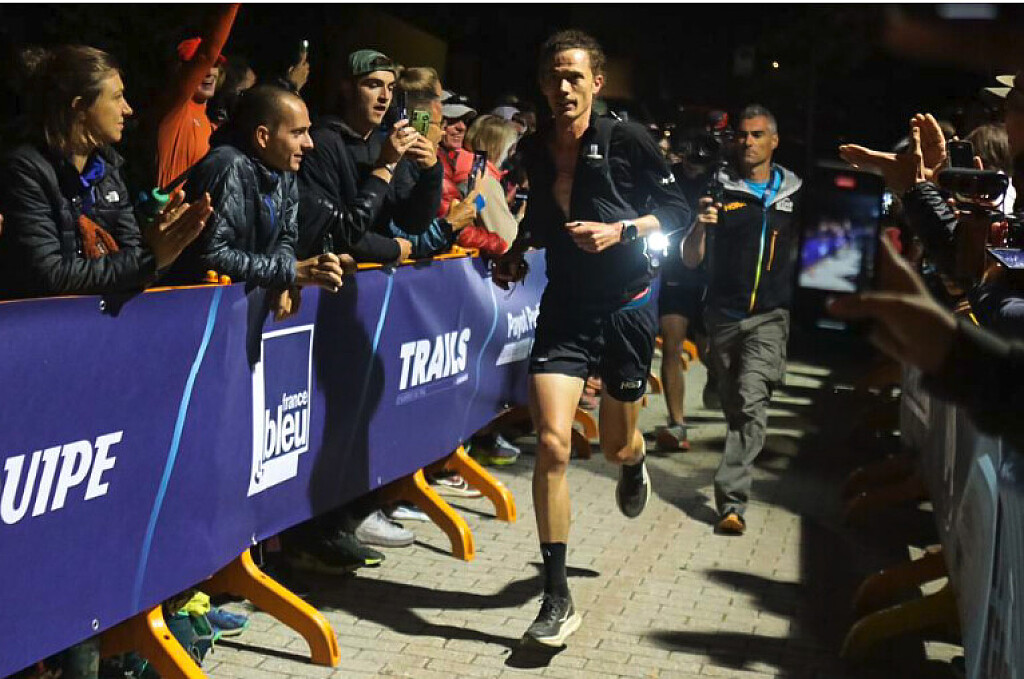
2023 UTMB Men’s Race
After a history of struggling with UTMB, the American men showed up this year with Jim Walmsley and Zach Miller (pre-race interview) taking the top two-spots on the podium. Two vastly different racers with different approaches to the event, the two were able to push each other from start to end, with Walmsley’s ever-consistent pace finally winning out in the end with a new course-record time of 19:37:43. But with a stacked field, with nine of last year’s top 10 back for another crack at the race, and last year’s champion Kilian Jornet out with injury, it was anyone’s bet throughout most of the race of who would come out on top.
There’s never a non-chaotic start to UTMB, and this year was no different. With nerves and excitement running high, it was France’s Arthur Joyeux-Bouillon (pre-race interview) who led at Saint-Gervais, 21 kilometers in, with the entire rest of the field hot on his heels. But as darkness fell on the race and the kilometers ticked by, several distinct groups began to form. Coming into Les Contamines, 32 kilometers in, it was Zach Miller, Jim Walmsley, and the U.K.’s Tom Evans (pre-race interview) bunched up and running together. It looked like there would be the potential of a repeat of the Miller-Evans bromance from 2022, with the addition of Walmsley as a third. Frenchman Mathieu Blanchard (pre-race interview) and Petter Engdahl (pre-race interview), a Swede who lives in Norway, teamed up just a minute behind the leading trio, and the rest of the top-10 men came in within five minutes of the leaders.
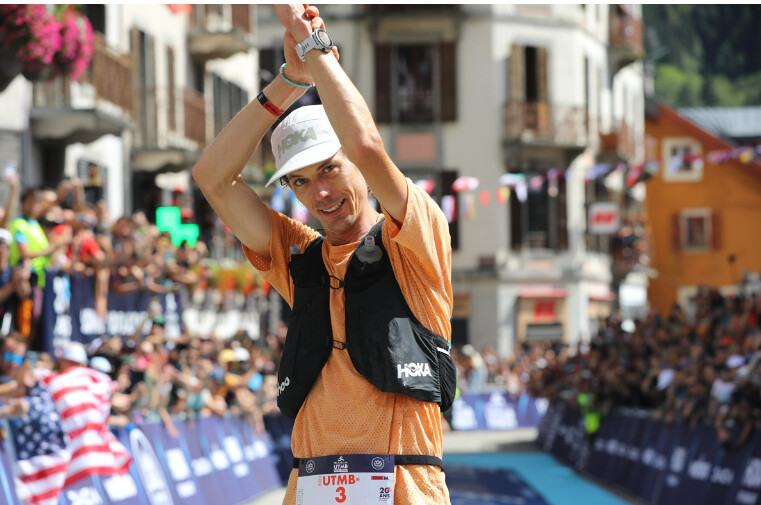
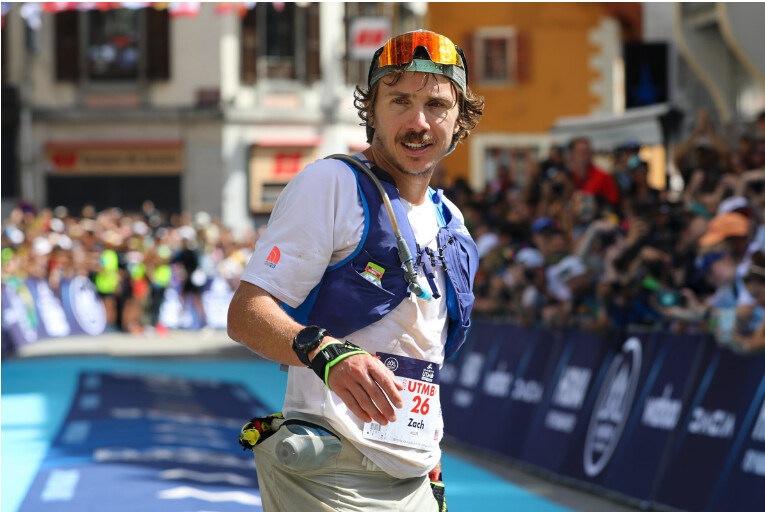
By Col du Bonhomme at 44 kilometers, it was clear that Walmsley was there to put his mark on the race. Miller doggedly hung on 30 seconds back, and Evans came through another 30 seconds in arrears, looking decidedly worse than the two men in front of him. France’s Germain Grangier (pre-race interview), Blanchard, Engdahl, and Joyeux-Bouillon continued to run together just eight minutes off the lead.
The head of the race remained amazingly consistent over the coming kilometers to Courmayeur, 81 kilometers into the race. Walmsley led Miller by a handful of minutes, Engdahl and Grangier followed, running close to each other in third and fourth, at under 20 minutes back after Evans decided to call it a day. Joyeux-Bouillon and Blanchard stayed within half an hour of the leader in fifth and sixth.
Ever the aggressive racer, Miller made his move before Arnouvaz, 99 kilometers in. He came through the checkpoint leading a fatigued-looking Walmsley by two-and-a-half minutes. Many wondered if this was just another instance of Walmsley taking the early race out too hard and paying for it later. Grangier, Joyeux-Bouillon, and Engdahl all came through the checkpoint within 30 minutes of Miller, still well within striking distance if either of the two Americans fell back. The rest of the top-10 men also remained close, with a large group containing New Zeakland’s Scotty Hawker, France’s Thibaut Garrivier, Blanchard, Switzerland’s Jean-Philippe Tschumi, and Germany’s Hannes Namberger coming in hot and fast.
Coming over a dark and foggy Grand Col Ferret at 103 kilometers, Miller extended his lead to nearly four minutes, but Walmsley looked determined and seemed to have found a second wind. Grangier continued to hold strong just 12 minutes behind the leader, and the chase pack of the rest of the top 10 remained relatively unchanged with several of the men teaming up to run the final kilometers to daybreak together.
It’s always a question of when the actual racing at UTMB starts. That is, when do runners make their move and hope that it sticks? Coming into Champex-Lac at kilometer 126 on Saturday morning, it was starting to seem like perhaps Miller’s early move might be the one that worked for the American. With an 11-minute gap over Grangier and Walmsley, who were now running together, Miller looked strong and focused. But there was still a lot of racing to do, and a lot of mountains between him and the finish.
Whether Walmsley was actually in a spot of bother in the later hours of the night, or if it was all part of his strategy to hold back until daylight, everything changed when the sunlight lit up the Alps. By kilometer 139 at La Giète, he’d whittled his gap to Miller down to two minutes, and by Trient six kilometers later, he’d moved back into the lead of the race, a position he wouldn’t relinquish. Grangier continued to run in third, with fourth, fifth, and sixth place, Joyeux-Bouillon, Blanchard, and France’s Ludovic Pommeret, all moving together 44 minutes back from the battle up front.
With the kilometers ticking by, Walmsley’s lead only continued to grow. At kilometer 154 at Vallorcine, he was more than 13 minutes ahead of a struggling Miller. Seven kilometers later at Tête de Béchar, the gap was up to 16 minutes. From here, it would be just one more climb up to La Flégère before the course tipped downward to Chamonix. Grangier maintained his third place up the final climb, with Blanchard in fourth and Pommeret in fifth, more than an hour back on the leader. Garrivier ran in sixth, while Hawker and Joyeux-Bouillon were seventh and eighth, 92 minutes back from the lead.
Once on the final descent, there was no touching Walmsley, and one can only imagine the thoughts and emotions that must have been going through his head. After five attempts at the race, the ultimate student of the course had finally figured out how to put together the race everyone thought he was capable of. He crossed the finish line to huge cheers from the crowd with a time of 19:37:43, breaking Kilian Jornet’s course record of 19:49:30. Wiping away tears while receiving congratulations from past UTMB champion François D’Haene, it was clear how much this victory meant to him.
Fellow American Miller came across the line in second with a time of 19:58:58, looking completely spent. This was his best finish during what can only be called an extended relationship with UTMB starting in 2016. Granger completed the podium with a 20:10:52.
Blanchard, last year’s second-place UTMB finisher, ended just off the podium in fourth. Maybe one of the more impressive results of this years race was of Pommeret in fifth. The 48-year-old masters athlete, who was the 2016 UTMB champion and 2022 TDS winner, showed that age really is just a number. The other surprise in the top 10 has to be Tyler Green, the American who made a late race move to finish in seventh. He didn’t move into the top 10 until Tête de Béchar, 161 kilometers in.
Race favorite Petter Engdahl withdrew at Champex-Lac, 126 kilometers into the race.
by Eszter Horanyi I run far
Login to leave a comment
North Face Ultra Trail du Tour du Mont-Blanc
Mountain race, with numerous passages in high altitude (>2500m), in difficult weather conditions (night, wind, cold, rain or snow), that needs a very good training, adapted equipment and a real capacity of personal autonomy. It is 6:00pm and we are more or less 2300 people sharing the same dream carefully prepared over many months. Despite the incredible difficulty, we feel...
more...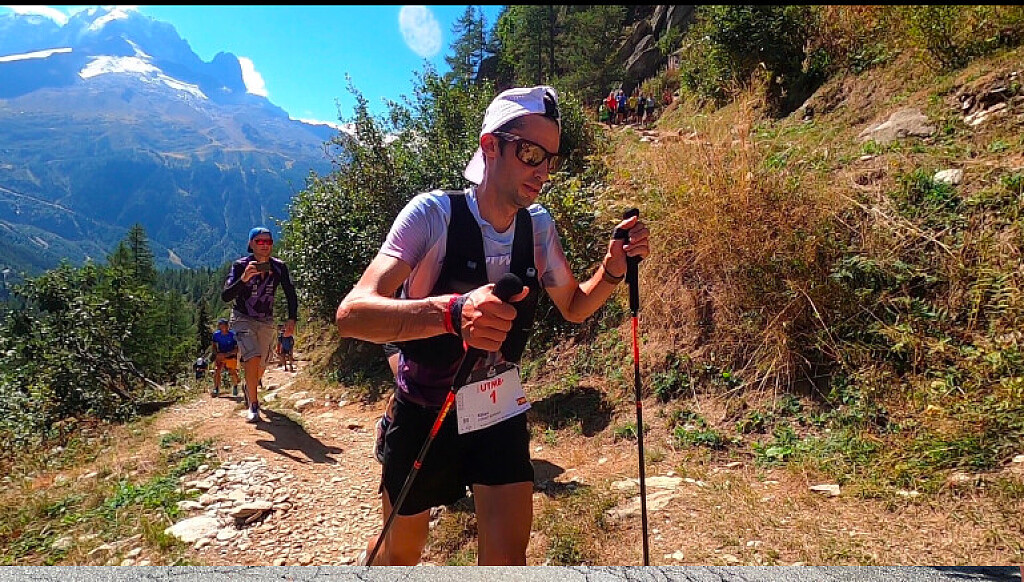
What is the UTMB? Meet trail running’s most difficult race
We answer all of your questions about this hellacious footsport event
If you’re starting to dip your toes into the crazy sport of ultrarunning, a couple of things will happen. First, you’re going to need several pairs of the best trail running shoes in rotation at any given time to put up with all those miles pounding rocky trails, and second, it won’t be long before you hear mention of the UTMB.
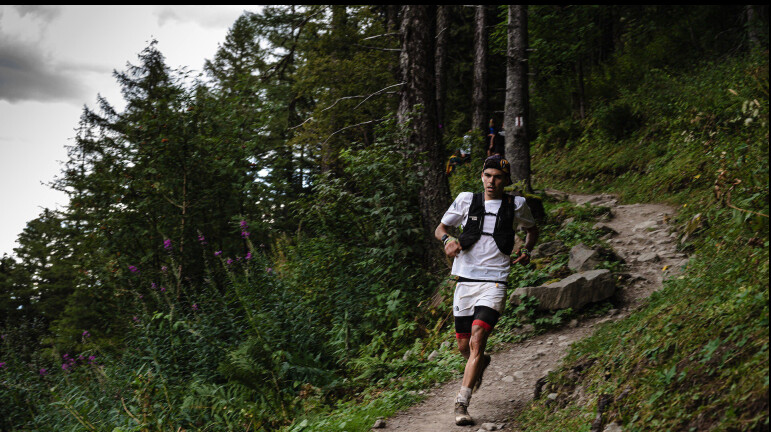
In fact, I recently attended the Arc’teryx Alpine Academy in Chamonix which holds a number of trail running clinics, and over the course of four days it was rare to have a conversation where the UTMB didn’t come up. Other participants in the academy wanted to know if our mountain guides had run it, how many times and whether they liked it (they don’t, considering it a tourist event) and mountain guides were keen to complain about how busy it made their favorite running trail.
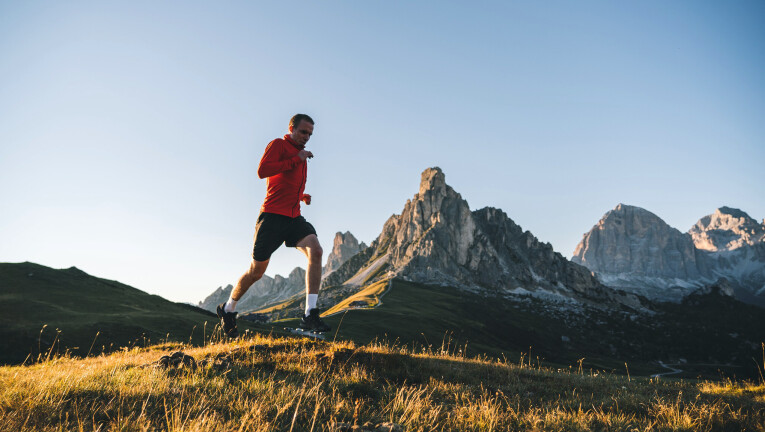
But what is the UTMB exactly? Is it the ultimate goal for all trail runners? Why is it so hard? Here, we answer all of your questions about this hellacious footsport event.
What is the UTMB race?
UTMB stands for Ultra-Trail du Mont Blanc and is considered one of the world's premier trail ultra marathons. This demanding annual event follows the route of the Tour du Mont Blanc, a classic long distance hiking trail which circles the Mont Blanc Massif over 106 miles and passes through France, Switzerland and Italy. The UTMB begins and ends in Chamonix and is regarded as one of the most difficult races in the world.
The race takes place on the last weekend of August or first weekend of September and is today the ultimate in a series of events that take place around the world. Runners from all over the world aspire to compete in the UTMB. In the first year of the race, there were 700 participants, but these days, participation is capped at around 2,300 runners and other events have been created to allow for more participation.
The maximum cutoff for the race is 46.5 hours. In 2022, Kilian Jornet became the first to complete the UTMB in less than 20 hours (check out his race data to find out how he managed it) but most mere mortals can expect to have to run for two days and two nights to complete the race. Better bring some running gels then!
How does the UTMB race work?
Due to the event’s extreme popularity, you need to qualify to run the UTMB. That involves accumulating points through qualifying trail races over a two-year period. Qualifying races take place all over the world, from elsewhere in the Alps to Snowdonia, California, Mexico, Hong Kong and Australia. So if you’re serious about participating, you’ll have lots of time to train.
For each event you participate in and complete you’ll receive one running stone, which you can then enter into the lottery to be selected. You can enter the lottery at the UTMB website.
Why is UTMB so hard?
Besides the fact that at over 100 miles, it’s very long, competitors in the UTMB are also looking at 32,940 feet of elevation gain. In comparison, over roughly the same distance you could run the Leadville 100 in Colorado and gain only 11,000 feet (though at much higher altitude) or the West Highland Way in Scotland where you’d gain 10,300 feet.
The highest point of the route is 8,743 feet, which you’ll reach twice, in both Switzerland and France. That’s not extremely high altitude and it’s unlikely you’d experience altitude sickness at that height, but you’ll definitely notice shortness of breath and more challenging conditions, especially if you’re not already used to this altitude.
What you can also expect is more extreme conditions that come with trail running in the Alps. The altitude combined with the season means that the days might be swelteringly hot, while the temperatures at night could drop down around freezing at night.
How much does it cost to enter UTMB?
In 2023, the UTMB itself cost €335 to enter, plus administration fees. Of course, you’ll also have to pay registration fees for your qualifying events too. Your race will also include the cost of traveling to and from Chamonix, and accommodation while you’re there, but on the plus side the aid stations will be on hand to feed you during the race so you can save a little on those pricey Chamonix restaurants.
How many people have died in UTMB?
Sadly, deaths do occur in ultrarunning events and it’s perhaps more remarkable that for 17 years, no fatalities occurred during the UTMB, which not only places runners’ under extreme physical stress but entails a lot of night running. There have now been two deaths of runners in the UTMB, occurring in 2021 and 2022, both as the result of falls.
Do people sleep during UTMB?
Some runners somehow manage to do the UTMB without sleeping at all while others do sleep, but they’re not carrying a bivy sack and grabbing eight hours if that’s what you’re wondering. Sleeping during the UTMB looks like cat napping, and according to a 2015 study of 17 UTMB runners, the average time spent resting was between 12 and 17 minutes in total, and hallucinations were a common complaint, understandably.
Can you walk the UTMB?
Can you walk the UTMB? Well, yeah you could. Since the race is 106 miles and you have 46.5 hours to complete it, you technically could walk at a 2.3 mile per hour pace without any breaks and make the cutoff. Obviously though, you could just walk it at a time when the race isn't going on, save yourself €335 and enjoy far fewer people on the trail.
In all seriousness though, if you don’t already know, ultrarunning is actually hiking, and you’re not going to be running at the same pace you do on the tarmac back home. Even Jornet ran at an adjusted pace of around five miles per hour which isn’t exactly turbo speed (though it is if you maintain that for 20 hours). You’ll most likely walk the uphills and slow down or walk for rest periods, making up time on the downhills. And sorry, there aren’t many flats to speak of.
Login to leave a comment
Kenyan Patrick Kipngeno bags gold for Kenya on Day One of the World Mountain and Trail Running Championships
Team Kenya started their World Mountain and Trail Running Championships on a high with Patrick Kipng’eno bagging gold in the 7.3 km vertical race —featuring 1020m of elevation gain.
Kipng’eno, who became the first Kenyan to win a mountain running world title last year, clocked 40:18 to win gold on Day One of the championship being held in Innsbruck-Stubai Austria. He beat 130 athletes who entered the race.
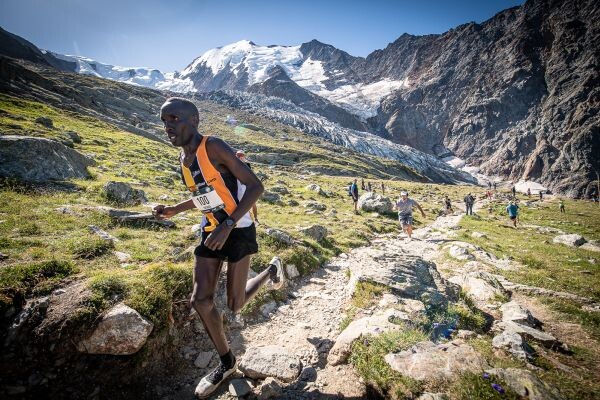
He beat Uganda’s Levi Kiprotich (41:51) to silver while Kenya’s Josephat Kiprotich (42:04) completed the podium finish.
Kenya’s other representatives—last year’s silver medalist Philemon Kiriago (42:54) and Hillary Maiyo —settled for the 7th and 12 positions respectively.
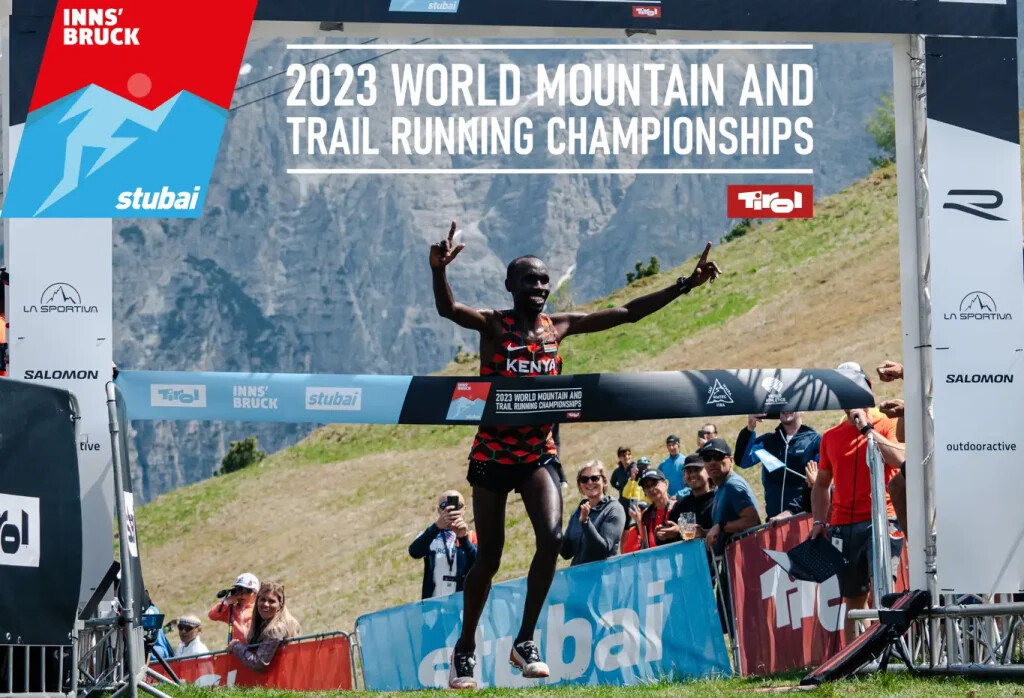
They will be in action again on Saturday when they take part in the Mountain Classic event, featuring looped 15.5km races for senior men and women.
In the women’s category, Kenya’s Philaries Kisang was beaten to gold by Austria’s Andrew Mayr.
The home girl, who won silver in last year’s championships, clocked 48:14 to win gold while Kisang settled for silver in 48:51. USA’s Grayson Murphy claimed bronze in 49:22. Valentine Ruto (49:59) and Joyce Muthoni (52:09) were 5th and 10th respectively.
Kenya is represented by seven athletes after two Geoffrey Gikuni and Ezekiel Kirui missed out due to visa hitches. Kirui was scheduled to compete in the 85 km long trail while Gikuni was to take part in the 45km short trail.
Athletics Kenya mountain Running chairman Peter Angwenyi accompanied the team to Austria.
More than 1,100 of the world’s top runners from 68 countries are participating in the second edition of the World Mountain and Trail Running Championships in the Austrian Alps. The inaugural event was held last November in Chiang Mai, Thailand.
Alessio Punzi, Head of Running and Mass Participation at World Athletics said: “The World Championships are a dream come true started in 2017. In the future, we want to attract more and more athletes and make it more and more difficult for everybody to ignore.”
by Angwengyi Gichana
Login to leave a comment
World Mountain and Trail Running Championships
Welcome all athletes, officials, coaches, and families to THE AMAZING THAILAND WORLD MOUNTAIN & TRAIL RUNNING CHAMPIONSHIPS 2021 (WMTRC2021). The event will feature 80km and 40km trail races, classic up and down and uphill only mountain races. It replaces World Championships previously hosted with World Athletics, WMRA (mountain running) and IAU and ITRA (trail). The Amazing Thailand World Mountain and...
more...
Australian athlete Erchana Murray-Bartlett runs record-breaking 107 consecutive marathons
On a very warm August morning Erchana Murray-Bartlett began running from Cape York, Australia, to Melbourne (the tip to the toe of Australia, inspiring the name of her fundraiser, “tip to toe 2022”). On Sunday, Dec. 3, 107 days later, she achieved one of her goals–setting the Guinness World Record for running the most marathons in a row by a woman.
After meeting her parents at the finish line to celebrate, she rested and re-fueled so she could start again in the morning, raising money for endangered animals along the way. She’s not stopping until she hits 150.
Murray-Bartlett, 32, has a master’s degree in nutrition and has been an elite runner for a decade. “The sport has provided me with many opportunities to travel, meet new people and push my physical boundaries,” she says, adding that she runs every day regardless of conditions. She credits her partner, Ryan, with helping get her project rolling, taking video footage, and supporting her along the way.
“I have always wanted to cross the country on foot, but the real kicker started when I watched a documentary of Beau Miles running 650km through the Australian Alps when I was stuck in hotel quarantine during the covid pandemic,” Murray-Bartlett explains. We caught up to Murray-Bartlett after Sunday’s record-breaking run.
CR: What inspired you to start this record attempt (and to go for the 150 days)?
I love Australia’s native animals. I think they’re incredibly unique, with fun personalities and interesting characteristics. We have some globally iconic wildlife, yet Australia is a world leader in biodiversity loss. We have almost 500 native animals currently sitting on the endangered list. This number has risen by 8 per cent since 2016.
Extinction is a choice and we need to educate our policymakers to ensure we are making the right one. So, I’m running to be the voice of our native animals and the wild places they call home. I wanted to counteract a bad world record (Australia being a world leader in biodiversity loss) with a good world record (breaking the GWR for most consecutive marathons by a female).
CR: What does it feel like to run 107 marathons in a row? How is your body doing?
To be honest, I’m exhausted. My hips, feet, legs and back ache. I feel a little bit emotionally exhausted too after reaching the record last Sunday–the challenge is now to just keep going, and I’m excited to see what my body can do.
The hardest part was the first month. My body was still adjusting and I found myself with three injuries, all on my left leg. Now, the daily grind is a familiar feeling and I’m finding I’m actually feeling stronger and stronger as time goes by. Mentally, I’m very motivated and extremely excited to continue the journey to Melbourne. There are some incredible places to see in my immediate future and some great people to meet!
CR: What does a typical day look like?
I wake up really early to avoid the intense Aussie sun and hit the road after a quick coffee and bowl of oats with banana. I’ll run south for around four hours, passing through national parks, coastal paths, and taking gorgeous backroads, until I hit the 42.2 km mark.
The afternoons are what vary–we set up camp, eat a big meal, and shower in any body of water. Then I spend the afternoons visiting schools, grassroots volunteer programs, or engaging with the media about the cause. I try and spend a little bit of each day recovering, but sometimes this actually gets pushed down the priority list.
What do you eat to keep you going out there? Any favorite fuel?
I eat loads! About 5,000 calories per day, with a big breakfast, coffee, and then snacks throughout the run. This includes fruit, Clif bars, Hydralite, and anything else I can get my hands on. I have lunch, and then often a second lunch (a wrap, a burger, or nachos) and a giant dinner.
Since we’re camping it has to be anything that can be cooked on a gas stove top. And always, without fail, some dark chocolate for dessert. I’ve actually sampled every ice cream down the East Coast of Australia so far!
So far you’ve raised nearly $50, 000 AUD for at-risk wildlife. How can our readers learn more about your fundraiser?
I’m taking donations via my GoFundMe page. Funds will go a long way towards helping the Wilderness Society continue its amazing work fighting extinction. Let’s work together to keep wild places wild!
by Running Magazine
Login to leave a comment
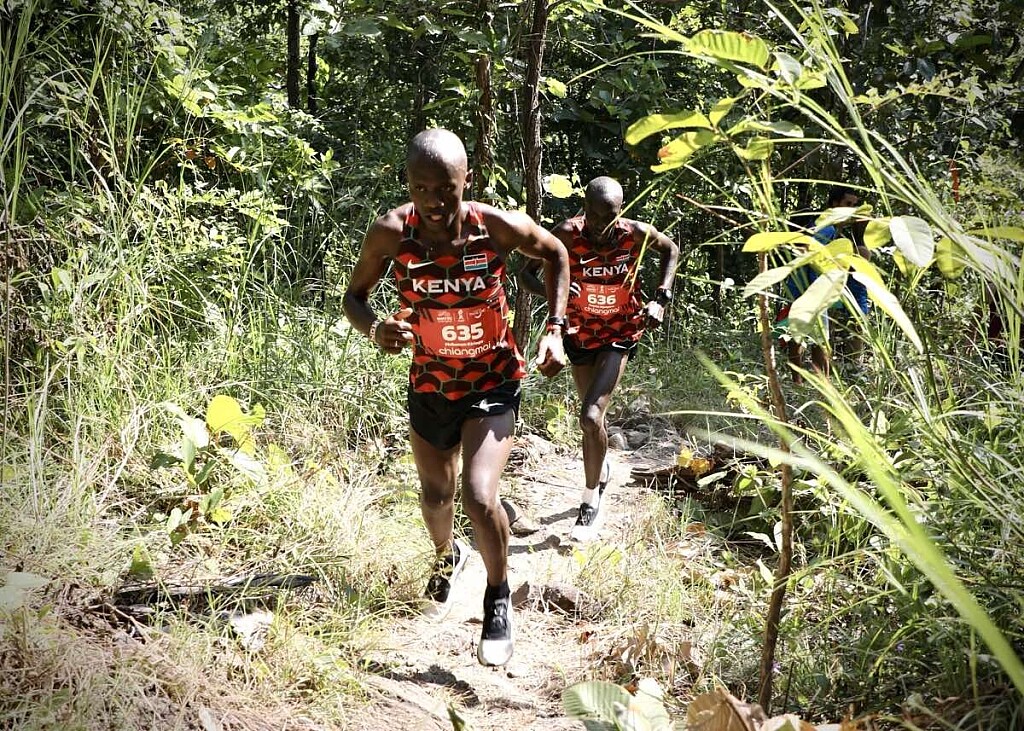
Kibet and Cheptegei mark triumphant day for Uganda as World Mountain and Trail Running Championships conclude
Ugandan athletes capped a successful week of racing at the inaugural World Mountain and Trail Running Championships in Chiang Mai, Thailand, as Samuel Kibet, Rebecca Cheptegei and Leonard Chemutai won three of the four titles on offer on Sunday (6), the final day of competition.
Kibet and Cheptegei won the senior men’s and women’s up and down mountain races respectively, both held over 11.2km with 475m ascent. Chemutai, meanwhile, took the junior men’s up and down title and Jessica Bailey led a British 1-2 in the junior women’s race, both competing over a 6.4km course with 224m ascent.
Uganda set out their stall early in the senior men’s race as Kibet formed part of a small lead group alongside compatriots Timothy Toroitich, Leonard Chemonges and Eliud Cherop, with Mexico’s Everado Moreno also trying his best to stick with them. The rest of the field was some 30 metres behind, Friday's uphill gold and silver medallists Patrick Kipngeno and Philemon Kiriago of Kenya leading the chase.
Eight kilometres later, Kibet emerged first from the trees, holding a 19-second advantage over Toroitich and Kipngeno who were locked together in second and third. Kipngeno eventually managed to pull away from Toroitich narrowed the gap to the leader, but it wasn't enough.
Kibet swept across the line to take the title, the sixth for a Ugandan senior man in the past eight World Championships. Kipngeno was 10 seconds behind, becoming the first double medallist at the new expanded championship format. Toroitich held on for bronze ahead of teammates Chemonges and Cherop in fourth and fifth. Spain's Andreu Blanes followed four seconds later, placing sixth.
With four athletes in the top five, Uganda was a clear winner of the team competition. Spain took silver with Italy just a single point behind, both teams placing three athletes inside the top 15.
The Ugandan dominance continued in the final race of the championships as Rispa Cherop, Rebecca Cheptegei and Annet Chelangat pushed the pace from the start with only Saturday's uphill world champion Allie McLaughlin of the USA able to hang on.As was the case with the senior and junior men’s races, it soon became a question of which of the Ugandan athletes would take the title. Cheptegei, still looking remarkably smooth, flew into the race's final kilometre with a 20-second gap over her teammate Chelangat and was jubilant as she tore across the finish line, flag in hand, to become the second Ugandan woman to win a mountain running world title.
Chelangat was no less ecstatic in second and the pair had time pose for the cameras before McLaughlin came in to take bronze, the second medal in a remarkable weekend for the US runner.
Romania's Monica Florea, both knees bleeding, came in fourth, just as she did in Friday's uphill race, confirming herself as one of the most consistent performers in mountain running, as did Britain’s Scout Adkin, who finished a minute further back in fifth.
With Cherop – one of the pre-race favourites – unable to finish, it meant Uganda didn’t have enough finishers to contend for the team title, opening the door for another country. Switzerland, with three finishers in the top 15, stepped up to take the team title, adding to the two sets of team medals they earned in the uphill race on Friday. Britain took team silver, while USA capped a strong championships with bronze.
Just as they did with the senior races on Sunday, Uganda dominated the junior men's event, filling the top four places to sweep the individual medals and earn team gold. Leonard Chemutai was a dominant winner ahead of teammates Caleb Tungwet, Denis Kiplangat and Silas Rotich.
Britain’s Finlay Grant was fifth individually but helped his country to secure team bronze, while France took team silver.
The junior women’s up and down mountain race was the only event on Sunday not won by Ugandan athletes. Jessica Bailey led a British 1-2 from teammate Rebecca Flaherty, also picking up gold in the team standings.
Italy's Axelle Vicari was third individually and a comfortable second in the team contest ahead of France.
Next year the championship heads to Europe and the spectacular trails of the Austrian Alps when the 2023 World Mountain and Trail Running Championships will take place in Innsbruck-Stubai, Tyrol from 6-10 June.
by World Athletics
Login to leave a comment
World Mountain and Trail Running Championships
Welcome all athletes, officials, coaches, and families to THE AMAZING THAILAND WORLD MOUNTAIN & TRAIL RUNNING CHAMPIONSHIPS 2021 (WMTRC2021). The event will feature 80km and 40km trail races, classic up and down and uphill only mountain races. It replaces World Championships previously hosted with World Athletics, WMRA (mountain running) and IAU and ITRA (trail). The Amazing Thailand World Mountain and...
more...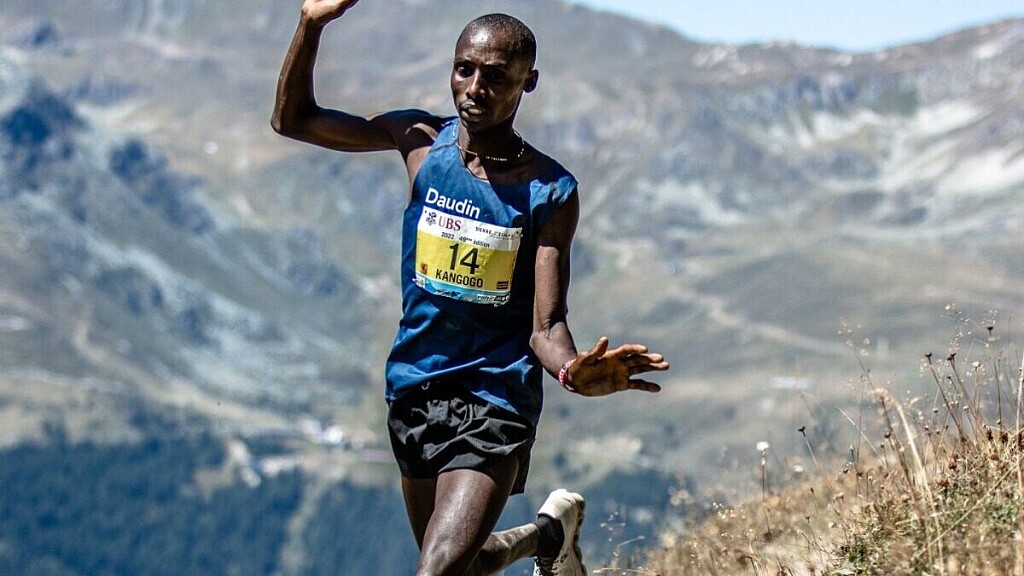
Sierre-Zinal champion Mark Kangogo of Kenya receives three-year doping ban
The trail running community has been rocked after the winner of Sierre-Zinal, a mountain race in the Swiss Alps, was slapped with a three-year ban for two prohibited substances (norandrosterone and triamcinolone acetonide). The Athletics Integrity Unit (AIU) has disqualified all of the results from Mark Kangogo of Kenya, dating to Aug. 13 (the date of the race) and Sierre-Zinal has decided to ultimately disqualify Kangogo.
In the past two months, Kangogo has collected victories at Sierre-Zinal and the Jungfrau Marathon, plus finished second at Thyon-Dixense, a 16.35 km trail race also in Switzerland.
The athlete provided an in-competition urine sample at the Sierre-Zinal, World Mountain Running Association (WMRA) World Cup race, held in Switzerland. The sample reported the presence of norandrosterone and triamcinolone acetonide.
Norandrosterone (19-NA) is the principal metabolite of the anabolic steroid nandrolone, which is used to aid recovery from injuries and increase muscle size, strength and power to help them train harder and longer. Triamcinolone acetonide is a steroid to aid muscle recovery and inflammation.
According to his coach, Julien Lyon, Kangogo has been removed from the On-sponsored Milimani Runners team. This team is a project from On that aims to bring trail running culture closer to athletes in Kenya.
Lyon released a statement that Kangogo will be excluded from the team. “There is no excuse and no possible explanation for doping,” says Lyon. “It will take time for us to heal the painful feeling of being betrayed by a training partner, but we will continue to train with the same motivation and determination.”
Sierre-Zinal released a statement Thursday on the disqualification of Kangogo and including a change in the final men’s results of the 2022 edition: “Andreu Blanes (ESP) has officially become the winner of Sierre-Zinal 2022. He won the race in a time of 2:29:19.”
The race also expressed zero tolerance for doping.
As part of the Golden Trail World Series, Sierre-Zinal has implemented the “Quartz” anti-doping program to preserve the health and fairness of all athletes.
Blanes, who came second to Kangogo, and Kilian Jornet, who finished fifth, both took to social media to comment on the issue.
Kangogo, 31, acknowledged the offence, accepted a sanction and waived his right of appeal. His three-year ban will expire on Aug. 13, 2025.
by Marley Dickinson
Login to leave a comment
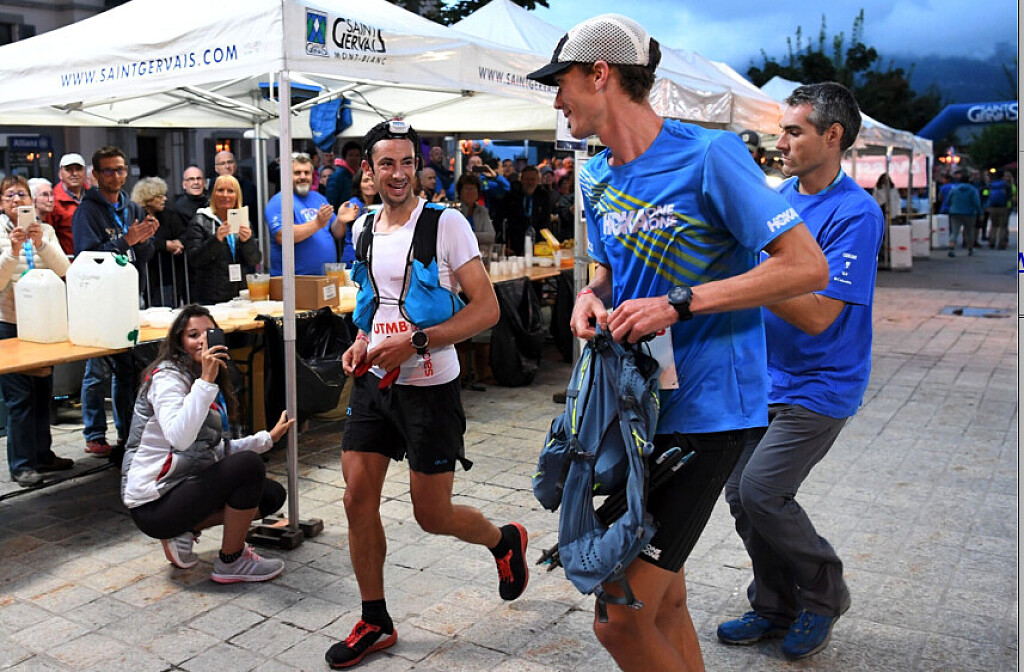
Will Jim Walmsley Be the First American Man to Win UTMB?
Jim Walmsley has always been an outlier among American trail runners.
Not only is he as fast and talented as any ultrarunner the U.S. has ever produced, but he's also been bold and even a little brash about his intentions. His off-the-front racing style is something to be revered-and respected if you're one of his competitors -because the lanky 32-year-old Hoka-sponsored runner from Flagstaff, Arizona, has proven time and time again that it works for him.
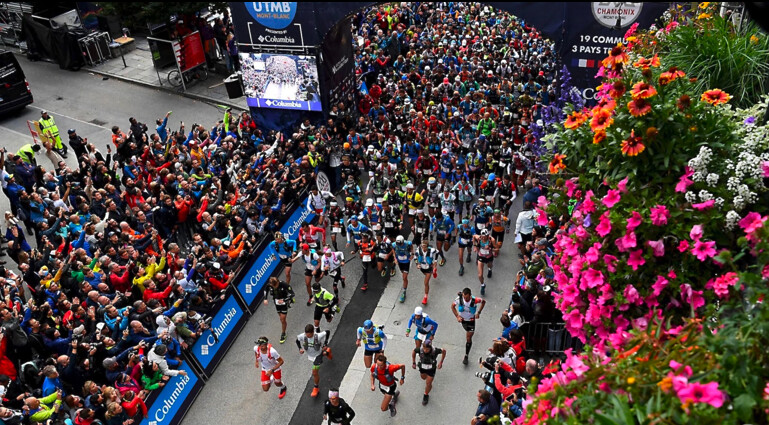
On August 26 in Chamonix, France, Walmsley will embark on his latest and most prodigious quest yet: to win Ultra-Trail du Mont-Blanc (UTMB). It's his fourth attempt at trying to follow up on his stated intention of becoming the first American man to win the race, but he's gone to extra lengths this year to prepare for it. It would certainly add to what has already been a great year, given that he and longtime girlfriend Jessica Brazeau got married on May 4 in Silverton, Colorado.
But if Walmsley is going to pull it off this year, he will have to fend off three-time UTMB winner and 2022 Hardrock champion Kilian Jornet, of Spain, among other strong runners in the talent-loaded field.
UTMB has been one of the pinnacle events in the sport of trail running since its inception in 2003. Not only does the course send runners on a grueling 171.5K loop (106.5 miles) around the Mont Blanc massif with nearly 33,000 feet of vertical gain, it also brings together the deepest international field of the year and more hype and media attention-including epic coverage and commentary via livestream-than any other event in the world by far.
One of several top-tier Americans in this year's UTMB field, Walmsley skipped the Western States 100 this year and since June has been living and training in the mountains of the Rhne Alpes region of France near Beaufort, not far from good friend Franois D'Haene, who knows a thing or two about training for big mountain ultras.
Last year, D'Haene not only became the first male runner to win UTMB for a fourth time, but he also became the first runner to win both Colorado's Hardrock 100 and UTMB in the same year.
The Frenchman was crewed and paced by Walmsley at Hardrock in 2021 and was one of the first people to suggest that Walmsley spend a summer training in the French Alps in order to best prepare for UTMB, rather than showing up in Chamonix 7-10 days before as he-and many other American men-have in the past.
Aside from Jornet, who won this year's Hardrock 100 for the fifth time on July 16, the top international runners include Frenchman Aurelien Dunand-Pallaz, the runner-up at UTMB last year; Germany's Hannes Namberger; New Zealand's Scott Hawker; and Spain's Pau Capell, who won the race in 2019.
D'Haene certainly thinks Walmsley is capable of winning UTMB, but points out that there are always numerous capable runners who are contenders and it all depends on how the race plays out. The idea of Walmsley stating his intent out front-that he wants to win UTMB-is more of a bold American approach, D'Haene says, as opposed to a more subtle European style he prefers.
"Just to explain to people, 'I am here to be the first American to win the UTMB,' puts a lot of pressure on him," D'Haene says. "He thinks UTMB, he sleeps UTMB, he eats UTMB, so it's a lot of pressure. If you take the approach that I just want to smash that course and win that race, then it's a lot of pressure. I'm not sure if he'll win or not win, but at least he's training well in the Alps and his confidence is up."
Walmsley has raced UTMB three times already-taking fifth in 2017 but DNF-ing in 2018 and 2021. The fact that no American man has ever won UTMB is irrelevant in the scope of this year's race, but it certainly adds a heightened focus in Walmsley's quest and a brighter spotlight on him before and during the race.
Whereas four American women have won the women's UTMB race a total of seven times-including the 2019 and 2021 champion Courtney Dauwalter-only a handful of U.S. men have made it to the UTMB podium. The highest finish came when when Topher Gaylord and Bradon Sybrowsky tied for second in the inaugural race in 2003.
While Walmsley appears to be the top American this year, it would be foolish to focus on him as the only American capable of winning. Other U.S. runners with momentum and motivation heading into UTMB include Tim Tollefson, who finished second at CCC in 2015 and third in UTMB in 2016 and 2017; Tyler Green, fourth at Western States 100 this year and 10th in the TDS 145K in Chamonix last year; Zach Miller, winner of the CCC 100K in 2015 and sixth and ninth, respectively, in UTMB in 2016 and 2017.
Miller went for broke trying to win UTMB in 2016 and held a 35-minute lead beyond the halfway point. He still led at the 100K mark, only to struggle over the final 50K and wind up sixth. What makes UTMB different, he says, is that the endless string of long climbs and descents demands a more moderate rhythm and effort over the first half of the course so you don't blow up before the race really begins.
"I don't think there's a super-secret code to crack. We've had a number of really good American men run there, it's just we have to have one of them have a good day all day one of these years," Miller says. "It's not anything we can't figure out or accommodate for. I think we've done it in other European-style races. It's just this one has kind of eluded us. I think it's possible that someone is going to have that 'right' day, but you almost have to have to get a little lucky, too."
Tollfeson is coming off three DNFs at UTMB in 2018, 2019, and 2021, and had a tough Western States this year (21st). Miller also DNF'ed at UTMB in 2018 and 2019 and then was away from racing because of injuries. He finished his first long ultra in several years in late June, winning the Andorra 100K to earn his place in Chamonix.
Other Americans in the field include David Laney (third at UTMB in 2015), Jason Schlarb (fourth in 2014), Seth Swanson (fourth in 2015 and seventh at TDS last year) and Sage Canaday (48th at UTMB in 2017), who is back after suffering a pulmonary embolism and a devastating house fire in 2021.
As for Walmsley, his front-running style has helped him snag three Western States 100 titles, three JFK 50 wins, a 50-mile world-best time, a 100K American record and the Fastest Known Time running across the Grand Canyon and back. It also helped him produce a solid 2:15:05, 22nd-place effort at the 2020 U.S. Olympic Marathon Trials.
Most recently, he tore up the trails (and the competition) at the rough and rugged Madeira Island Ultra Trail 115K in Portugal in April. Otherwise is been running in the Beaufortain Mountains with D'Haene and training a lot on a Wahoo bike trainer in France. Two weeks ago, he completed the arduous 114K (71-mile) Ultra Tour du Beaufortain loop with 7,300 meters (25,000 feet) of vertical gain as one of his last big training days.
"I hope Jim can change it this year," D'Haene says. "I hope he will be OK and can run a good race, of course, but it's UTMB and, of course, it's always difficult."
by Trail Runner Magazine
Login to leave a comment
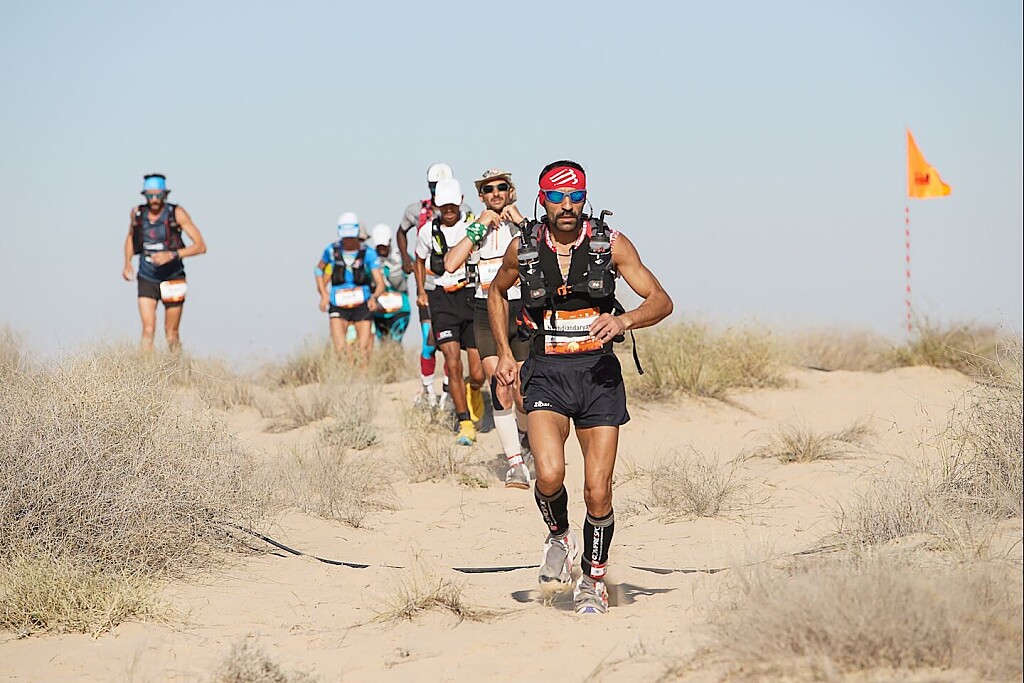
Ultra running is exploding in popularity around the world, but what actually is an ultramarathon?
The term Ultra covers a broad range of races, from mountains to road
Ultra running is fast becoming a mainstream sport. Once, it was the realm of a few crazy runners, and not the pastime of everyone from your boss to your neighbour. But what actually is an ultramarathon?
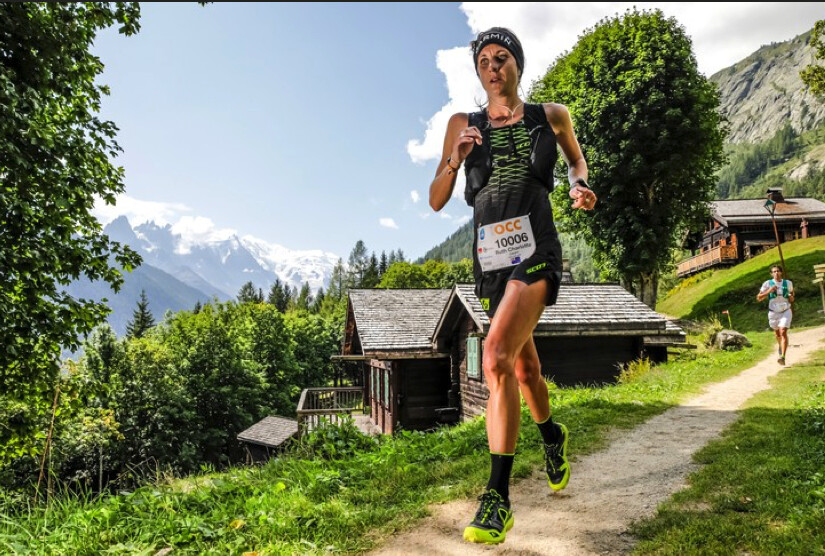
How long is an ultramarathon?
An ultramarathon is anything longer than a marathon, which is 26.2 miles (42.195km). So, you could complete a marathon and run back to your car and you’ve technically run an ultra distance.
Typically, ultramarathons start at 50km and go up from there. Standard distances are 50km, 100km and 161km (100 miles), the latter often being referred to as a “miler”.
While a marathon is never longer than 26.2 miles, ultras tend to vary a bit. For example, the Hong Kong 100 is in fact 103km. And the Ultra Marathon du Mont Blanc, a miler, is in fact 171km. Others are a bit shorter than advertised, too.
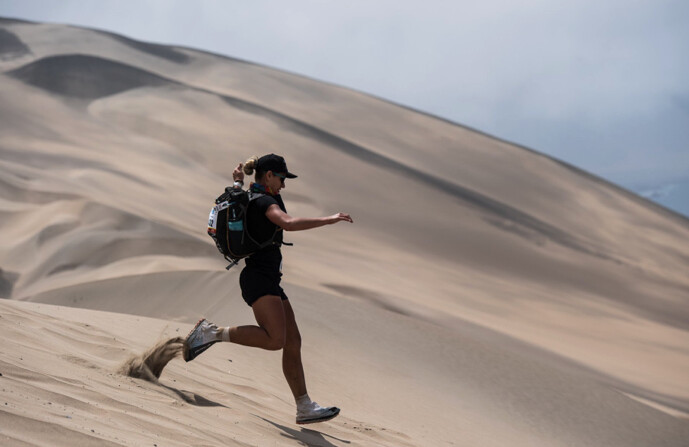
Aside from the above three types, there are ultra races of all sorts of distances and formats. As long as it’s more than a marathon, the distances and formats can be limitless.
An increasingly popular format is 250km split over stages, such as the Marathon Des Sables. Runners complete different distances each day, some less than an ultra, and sleep at night.
As the sport continues to grow, others try to push the boundaries – such as the 298km Hong Kong Four Trails Ultra Challenge, which is non-stop and has no support on the trails. Runners finish the distance in between around 48 and 70 hours.
The formats are becoming increasingly imaginative. A backyard ultra, for example, is around a 6.7km loop. The runners start on the hour every hour until there is just one runner left, so the distance is not set. It keeps going and going. Runners have gone on for more than 80 hours.
Outside organised events, runners often complete ultramarathons just for fun, to set a personal best or a Fastest Known Time (FKT), which is ultra terminology for a specific course record. This can be anything from the 44km Hong Kong Trail, which takes a few hours, to the 4,172km Pacific Crest Trail, which has an FKT of almost two months.
What terrain is an ultramarathon on?
With an infinite range of distances come infinite terrains. An ultramarathon can be road, flat, track, pavement, mountain, trail, snow and more. As long as you can run on it, you can run an ultramarathon on it.
A famous road ultramarathon is the 246km Spartathlon. It follows the legendary route run by Pheidippides, who ran from Athens to Sparta before the Battle of Marathon in Ancient Greece, thus inventing the marathon.
The most high-profile mountain ultra is the Ultra Marathon du Mont Blanc, which has a total of 10,040 metres accumulative elevation gain in the Alps.
Track ultras often take the format of a set time rather than distance. For example, how far you can travel in 24 hours, round and round the same athletics track.
When Zach Bitter set the 100-mile world record, which has since been broken again, he ran it around a 443m track by doing 363 laps.
The distances and terrains are so varied race to race they are essentially different sports. Kilian Jornet is considered one of the best ultra-mountain runners ever, but comparing him with Yiannis Kouros, considered one of the best ultra road runners ever, is like asking who is better at football: Tom Brady or Lionel Messi.
Is an ultra harder than a marathon?
The word ultra refers to the distance, not difficulty. An ultramarathon is inherently hard, but not inherently harder than a marathon or any other distance for that matter.
If you have a specific and demanding finishing time in mind for your marathon, you will have to stick to a specific split, keep your legs spinning and spinning, all the time concentrating on your pace and pushing your body.
Is that easier or harder than a 24-hour 100km over mountains, with variation in terrain and elevation, when you walk some parts and rest at check points?
What about a 5km? If you want to run a fast 5km, you will be at your absolute limit for the entire time and collapse over the finish line.
Non-runners often think an ultramarathon is the “next step” for runners looking for a new challenge. Searching for a faster time is just as challenging as searching for a longer distance.
Either can be harder than the other – it’s down to the runner.
The same is true within ultra running. Ruth Croft, one of the best runners, dominates races around 50km. She was repeatedly asked when she would do a 100 miler once she had “completed” a 50km. Croft resisted the urge to cave to the pressure to run further until she was ready, understanding that fast and far are two often incomparable metrics.
When you consider all of the above, the simple definition of “longer than a marathon” does not quite do justice to the massive range of events encapsulated by the term ultramarathon.
Login to leave a comment
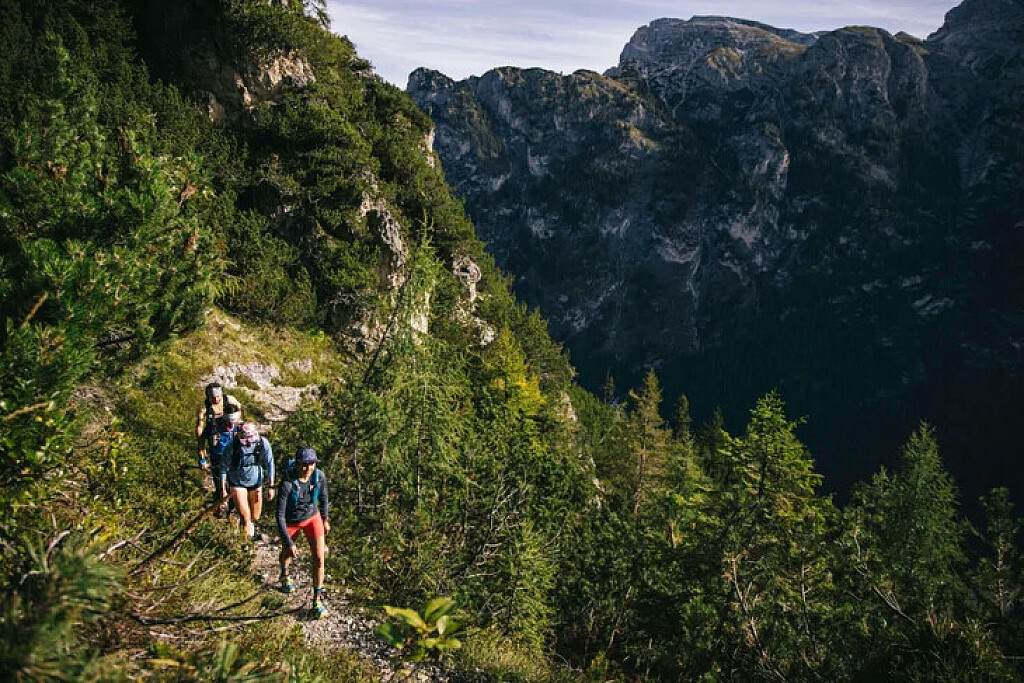
How one runner made a bucket list trail running trip into reality - The Dream: Running Hut-to-Hut in the Dolomites
By Andy COCHRANE
I was no more than 8 years old when I saw my first photo of someone running in the Dolomites. Red windbreaker, dark shorts, storm brewing over a line of jagged peaks. I cut it out of the magazine (don’t tell my mom) and still have it in my wallet today. For years, trail running in the Italian Alps wasn’t on my bucket list; it was my bucket list.
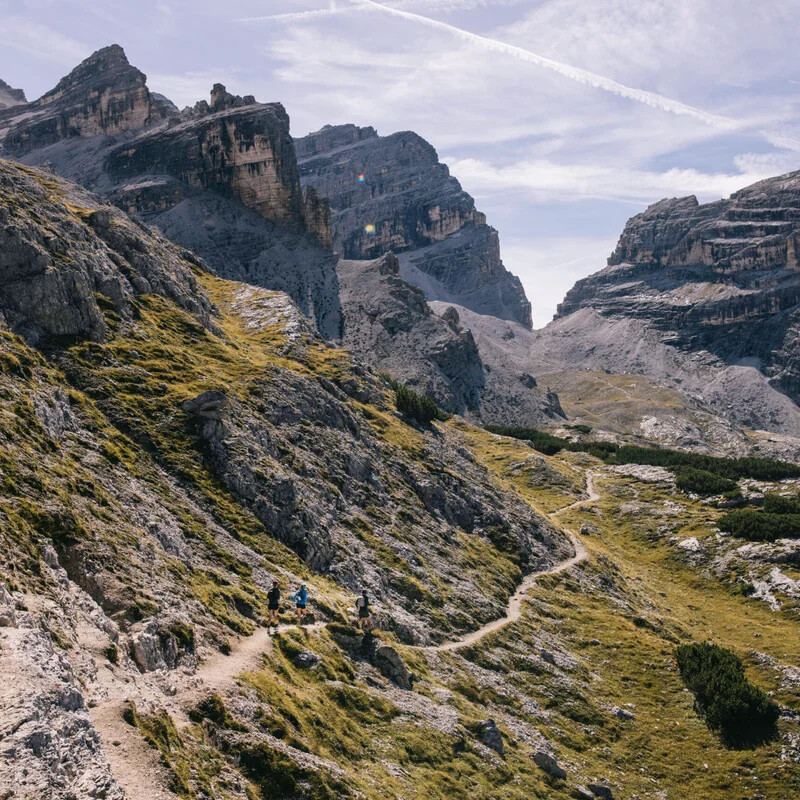
This fall, I finally got to check it off. Along with two friends and my coach Magda Boulet, I flew to Venice and drove north into the Dolomites. We spent a week running from hut to hut, meandering 20 miles each day, stopping for cappuccinos and strudel and staying at small, family-run rifugios high up in the mountains.
It was a trip of hearty laughs, long meals, stout climbs, loose descents and a handful of exposed ledges to tiptoe across. But the top of the long list of highlights was the people we met. The kindness and care we received from total strangers was unlike anything I’d ever experienced.
Route & Rifugios
We worked with a local guiding company, Dolomite Mountains, that made our planning easy. They offered suggestions on trails, places to sleep and peaks to climb. Our route took us 100 miles from San Candido to Compatsch, along a few of the major thoroughfares. We ran through the Sesto subgroup of mountains, on the border of Italy’s German-speaking South Tyrol and the Italian Veneto region, which was the frontier of Austria and Italy in World War I.
Many of the trails here were developed by soldiers– old trenches, defensive barricades and forts are still visible in many places. On our first day we ran under Tre Cime, a trio of peaks that reminded me of home in the Tetons. We continued through remote valleys and high passes in Fanes-Sennes-Braies Nature Park, through the iconic Alta Badia valley, past Puez Nature Park to Val Gardena, through a beautiful alpine meadow called Alpe di Siusi, then summited Plattkofel and climbed up Rosszahnscharte, our last major pass, before running all the way down to Compatsch.
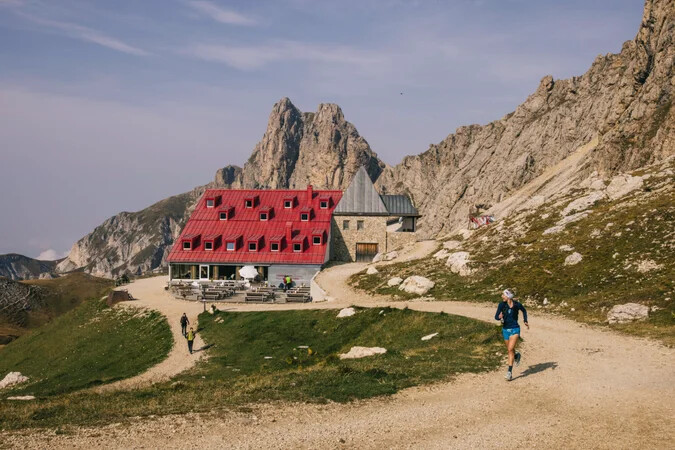
For the first two days we were led by Paolo Posocco, a local runner and incredibly knowledgeable guide, who offered a steady buffet of insights on the ecology, history and trails of the area. After two days with Paolo, we were sad to see him go– and still stay in touch to this day.
There are dozens of bucolic rifugios, but a few stand out from the rest. Drei Zinnen Blick is in a valley adjacent to a beautiful lake, close to Tre Cime. Rifugio Fodara Vedla is perched high in the range, with no cell service and warm and friendly hosts that make you feel like family. Rifugio Sassopiatto has some of the best views, perched on a ridgeline. Gostner Schwaige, a small restaurant near the very end of our run, was hands down the best food we had all trip.
Weather & Seasons
We spent the last week of September in the Dolomites, which is squarely in the fringe season. With cool temperatures (we had more than one frosty morning), leaves changing color and admittedly fickle weather, I think it was the perfect time to visit. There were considerably fewer tourists than during the peak seasons, making trails more fun to run. Midday rifugio stops were quieter and we had a lot more options for places to stay, making our interactions with hosts and immersion into local culture that much more intimate.
Gear We Used & Loved
Outdoor Voices Exercise Dress– OV only recently started making gear for the running scene and hit the mark with this dress. Breathable fabric, adjustable straps, two pockets and a built-in liner make it great for long days in the mountains.
Outdoor Voices Fast Track Shortsleeve– Less is often more. This running tee is comfortable, breathes well and is lightweight, everything I ask for in a good running base layer.
Stio Fremont Stretch Fleece Jogger– We had a lot of cold mornings when shorts wouldn’t quite cut it. These breathable fleece tights move with you and are some of the comfiest tights we’ve ever tested.
Stio Alpiner Hooded Jacket– A must-have layer for any high-output alpine missions, the Alpiner rarely overheats even when you’re sweaty. Stretchy and water resistant, it was perfect for our cool, misty days.
Tracksmith Brighton Base Layer– One of the brand’s most popular pieces for a reason. With a Merino wool mesh that’s more open around the core, it keeps your extremities warm while not overheating the rest of you. Plus it’s odor resistant, which is a huge bonus on a week-long trip.
Tracksmith Off Road Shorts– Designed for long days on the trail, these 2-in-1 shorts have a light outer layer with compression shorts underneath, a back belt for carrying an extra layer, two waist pockets for snacks and liner pockets for your phone or keys.
Ciele ALZCap– The newest iteration of the widely popular GOCap, it has more mesh coverage to maximize breathability and a more fitted, low profile look than previous versions.
Skida Nordic Hat– The brand’s first product hasn’t changed in years, for good reason. Originally designed for cross country skiing, we found the Nordic hat to be perfect for fall running. It wicks moisture while keeping you comfy and warm, and is easy to stow when not in use.
Brooks Catamount Trail Shoe– The trails in the Dolomites are rocky and rough, which means a shoe with good traction is key. With a unique rubber grip, foam cushioning and a protective midsole layer, the Catamount helped us get up and down half a dozen mountain passes.
Coros Apex Pro Watch– With an incredibly long battery life, accurate tracking and well-designed mapping features, the Apex Pro played a key role in keeping us on route and on time.
by Trail Runner Magazine
Login to leave a comment
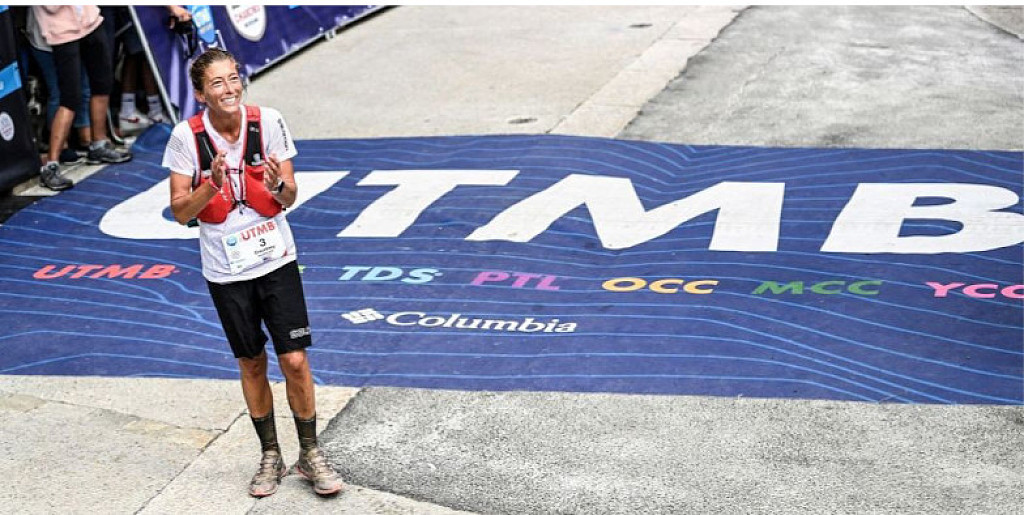
Courtney Dauwalter Smashed the Women’s Record at UTMB and Knocked Over 2 Hours Off Her Previous Best
In her second appearance at the French race, she knocked over two hours off her previous best and placed 7th overall.
Courtney Dauwalter returned to the 106-mile Ultra-Trail du Mont-Blanc (UTMB) to defend her 2019 crown and did not disappoint in her second appearance in Chamonix, France.
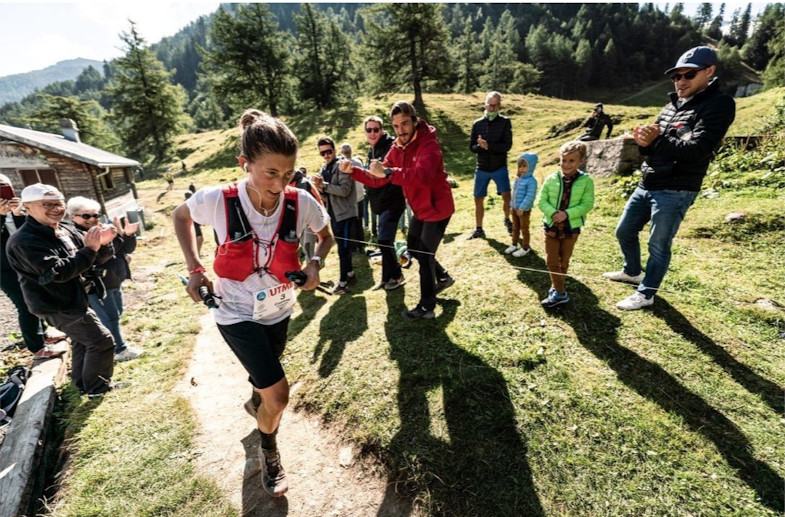
The 36-year-old from Golden, Colorado, led wire to wire in the women’s race, running into only a few minor issues along the way to set a new course record in 22:30:54 and finish seventh overall.
“It was an incredible experience again, and we were so excited to be back, immersed in that community,” Dauwalter told Runner’s World. “I didn’t know what to expect from the race, but I knew that I was lining up healthy and physically and mentally as ready as I could be.”
UTMB was a redemption race for Dauwalter, who was forced to drop out at mile 62 of the Hardrock 100 in July because of stomach issues.
Since then, Dauwalter said she has been tweaking her fueling strategy with her husband and crew chief, Kevin Schmidt. With solid foods causing issues at a certain point, she found that she should take in liquids only.
What happened at Hardrock turned out to be a blessing for her second time through the Alps. Similar problems arose around mile 50 at the Courmayeur aid station. Dauwalter was well ahead with only Mimmi Kotka of Sweden near her, but solid food wasn’t going down. Though she initially planned to switch to liquids only at mile 70, she and Schmidt opted to make the change earlier.
This meant Dauwalter relied on drinking a lot at aid stations and only fueling with the single liter she carried with her between aid stations.
“Climbing out of Courmayeur and coming to the top, I lost my lunch a little bit,” Dauwalter said. “But once it happened, it never happened again and I felt fine. I don’t know if my body was rejecting the fluids I put into it, but it ended up not being a big deal.”
Dauwalter then opened up a massive lead in the women’s race, picking off male competitors one by one. She said there were still low points in the latter part of the race—her legs felt shredded with each climb—but in those moments, she turned to her old friend, the iPod Shuffle.

“It literally has just the play button,” Dauwalter said. “It’s the best. Helps occupy my brain space with upbeat music. It basically has a playlist that started in 2010 and has just been added to since. So an eclectic mix of country music, Michael Jackson, Prince, some early 2010s pop and rap, and Taylor Swift.”
Dauwalter led the women’s race by over an hour as she made the final climb out of Vallorcine at mile 93 and descended back into Chamonix. Dauwalter found herself overjoyed upon seeing the mass of spectators welcoming her back into town.
As she ran through the streets and across the line, Dauwalter said she had no idea her time of 22:30:54 had set a new course record. Her time bested fellow American Rory Bosio, who set the previous record in 2013 (22:37:26) on a course that was three kilometers shorter.
“I feel very happy to have made the entire loop,” Dauwalter said. “After DNFing Hardrock, I wanted to finish UTMB no matter what it took. I’m grateful to my legs, my body, and Kevin and I were able to make the whole 100-mile adventure together. It’ll make for another great memory.”
Not only did Dauwalter make history with her time, she also finished seventh overall in the race. The rest of the women’s podium rounded out with French runner Camille Bruyas taking second (24:09:42) and Kotkas taking third (25:08:29). You can find the full results here.
“It’s a very cool time in the sport,” Dauwalter said. “There’s a lot of women pushing the limits and seeing what is possible. I feel lucky to be in this sport right now and sharing miles with those women and sharing races with these women.”
Dauwalter celebrated at the finish with Schmidt and her Salomon team. Having a beer was her top priority, so she grabbed a light beer that was handed to her. The next event on her race calendar is Big’s Backyard in October.
In the men’s race, French runners took the top five spots, led by now four-time champion Francois D’haene (2012, 2014, 2017, and 2021), who finished in 20:45:59.
American men continued their struggles at the event with Jim Walmsley and Tim Tollefson dropping out. The top American male was Luke Jay, who finished as the second American and 34th overall in 25:54:40. No American man has ever won UTMB.
Login to leave a comment
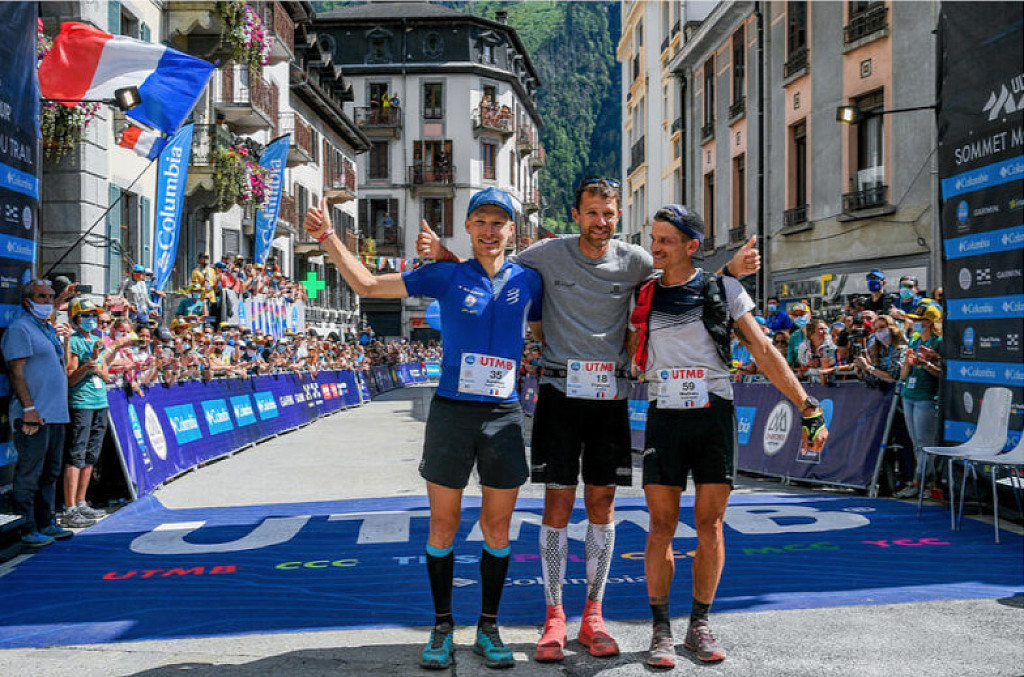
The world's best finish lines
Whether you are running your first or 50th race, there is no better feeling than crossing the finish line. We appreciate all finish lines in life no matter your goals, but we take a look at some of our favourite finish lines in races across the running world.
Boston Marathon (U.S.)
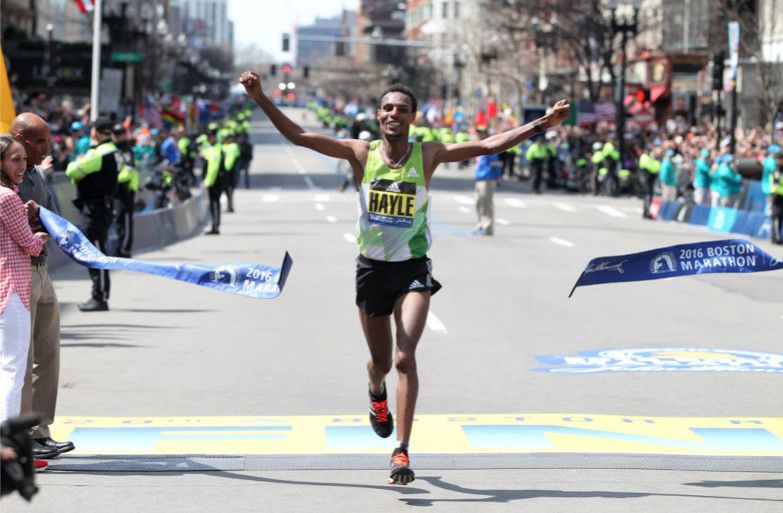
It would be hard to leave the finish line of the prestigious Boston Marathon off the list. Right on Hereford, left on Bolyston and you can see the finish line, with 500m to go. It’s a memory Boston marathoners remember forever. To hear fans, family members and Bostonians screaming at you as you run toward the line certainly gives you a final push to the finish.
Ultra de Trail Mont-Blanc (France)
This UTMB finish line sits right in the heart of Chamonix, surrounded by picturesque views of the French Alps. Ultrarunners descend from the mountain into the village after 171 km of racing, and hear the roar of the crowd as they run through narrow cobblestone streets toward the finish.
Olympic Marathon (Various)
The Olympic marathons always take place on the final two days of athletic events at the Games. Although fans were not allowed in the stadium in Tokyo, there were people lining the marathon course in Sapporo, which was one of the advantages of it being moved to that city. The raw emotion of athletes celebrating as they complete the Olympic marathon is a moment like no other.
Around the Bay 30 km (Canada)
Canada’s Around the Bay 30 km road race has a unique finish line, in which runners finish go through the lower level of a hockey arena to finish at centre ice of Hamilton’s FirstOntario Centre. Friends and families sit inside the arena to watch runners cross the line. Spectators will also sit inside to avoid the freezing temperatures of the March race.
Melbourne Marathon (Australia)
Similar to Canada’s Around the Bay race, the Melbourne Marathon finishes inside one of the world’s top 10 largest stadiums: the Melbourne Cricket Ground (MCG). The MCG has a seating capacity of 100,000 people and is home to the AFL Grand Final and Australia’s cricket team. Runners enter the MCG after completing 41 kilometres around the streets of Melbourne, to finish the marathon at midfield.
Great Wall Marathon (China)
The Great Wall of China Marathon starts and finishes inside the village of Huanyaguang’s Yin & Yang Square. Despite the steep climbs on the iconic Great Wall of China, runners are rewarded by the breathtaking views along the course. In the last two kilometres, as you reach the village from the wall, spectators will be cheering as they have a traditional festival for runners.
Comrades Ultra Marathon (South Africa)
The Comrades Marathon is a point-to-point 90 km ultramarathon in South Africa, starting at City Hall in Pietermaritzburg and finishing at the Sahara Kingsmead Cricket Stadium in Durban. Race spectators wait at the finish in Durban in front of a big screen, waiting for entrants to cross the line. The race has a challenging time limit, as runners must complete the distance in less than 12 hours.
Login to leave a comment
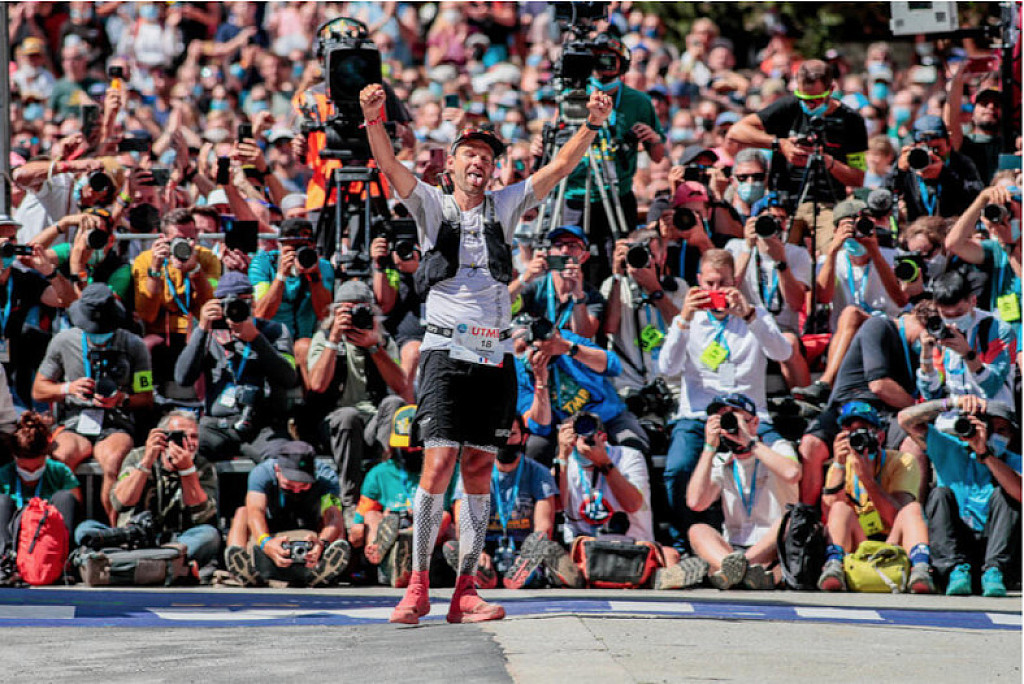
Francois D'haene claims his fourth victory at UTMB
Frenchman Francois D’haene delivers once again in the Alps, achieving his fourth victory at Ultra-Trail du Tour Mont Blanc. D’Haene finished in 20 hours and 45 minutes to cover the 170km course, climbing over 10,000m up and down the valleys of Mont Blanc.
This is D’haene’s fourth win in his fourth attempt at UTMB. He now single-handedly holds the record for most wins since the race began in 2003, passing Spain’s Kilian Jornet who holds three.
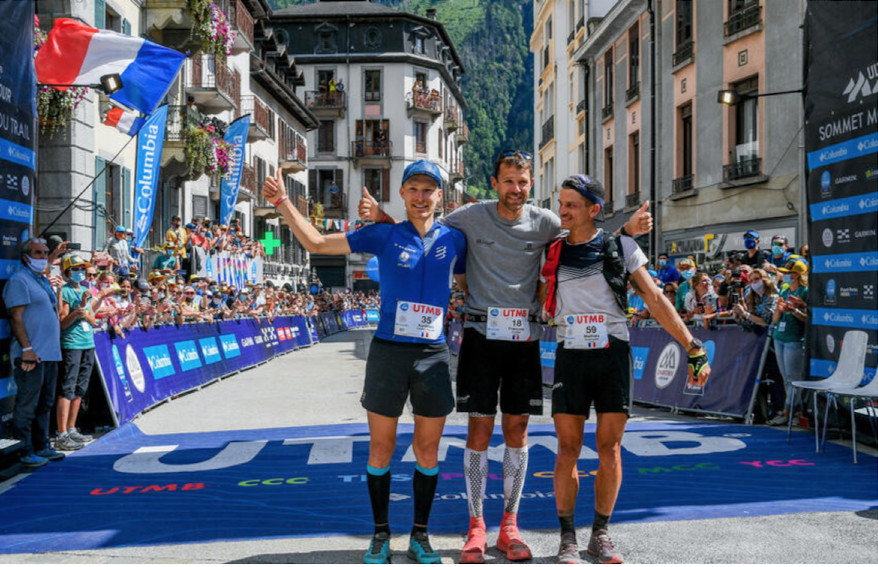
D’haene lead since the first breakaway and started a second breakaway group with American Jim Walmsley, as they began the climbing in Italy, D’haene dropped Walmsley and charged on towards the finish line. Walmsley dropped out of the race after failing to stay on pace with D’haene.
French-Canadian, who lives and trains around Montreal but was born in France, Mathieu Blanchard finished third to round out the podium. This marks the highest finish by a Canadian ever at UTMB. Aurélien Dunand-Pallaz of France was second to round out the French sweep of the podium, for the first time in history at UTMB.
In the women’s race, it was American Courtney Dauwalter who rose to glory. Dauwalter won the previous edition of the race, becoming the third woman to successfully defend her title on the hills of Mont Blanc. Dauwalter broke fellow American Rory Bosio’s course record finishing in 22 hours and 30 minutes. Dauwalter finished seventh in the overall standings, the highest finish ever by a woman.
Login to leave a comment
North Face Ultra Trail du Tour du Mont-Blanc
Mountain race, with numerous passages in high altitude (>2500m), in difficult weather conditions (night, wind, cold, rain or snow), that needs a very good training, adapted equipment and a real capacity of personal autonomy. It is 6:00pm and we are more or less 2300 people sharing the same dream carefully prepared over many months. Despite the incredible difficulty, we feel...
more...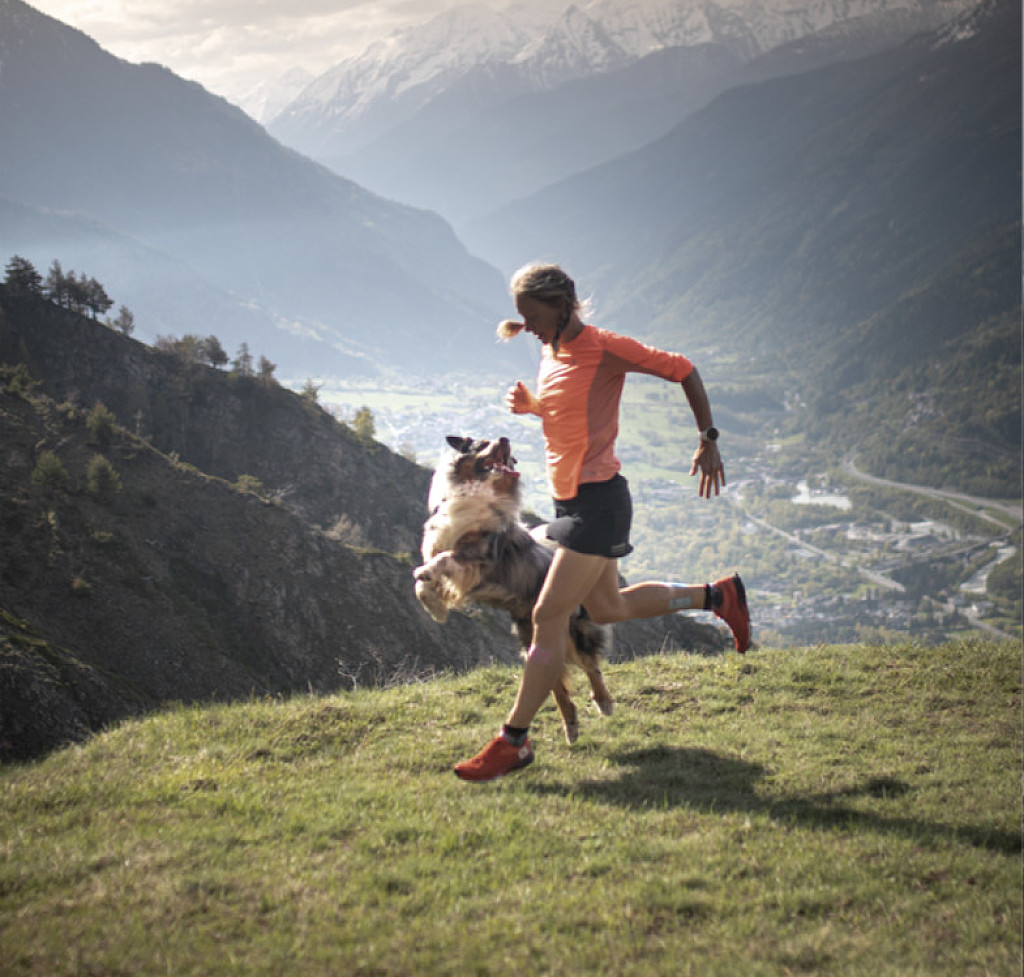
Meet Chamonix's Trail Running Dog
Here's a lesser-known fact about Chamonix, France, one of the world's renowned trail running towns: it might just have the planet's highest density of tough mountain dogs. Here, there are dogs living at high mountain huts, guarding livestock, rescuing avalanche victims and even climbing ladders bolted to cliff sides. Dogs saunter along the pedestrian center of Chamonix, often unaccompanied, and wander into cafes and restaurants as if they own the places. And, in a sense, they do.
Into this mix, and reigning over the high northeast end of this 20-kilometer-long valley is the fluffy-but-tough Enzo Molinari Spasenoski Kotka, longtime trail-running partner to one of the world's strongest ultrarunners, Sweden's Mimmi Kotka.
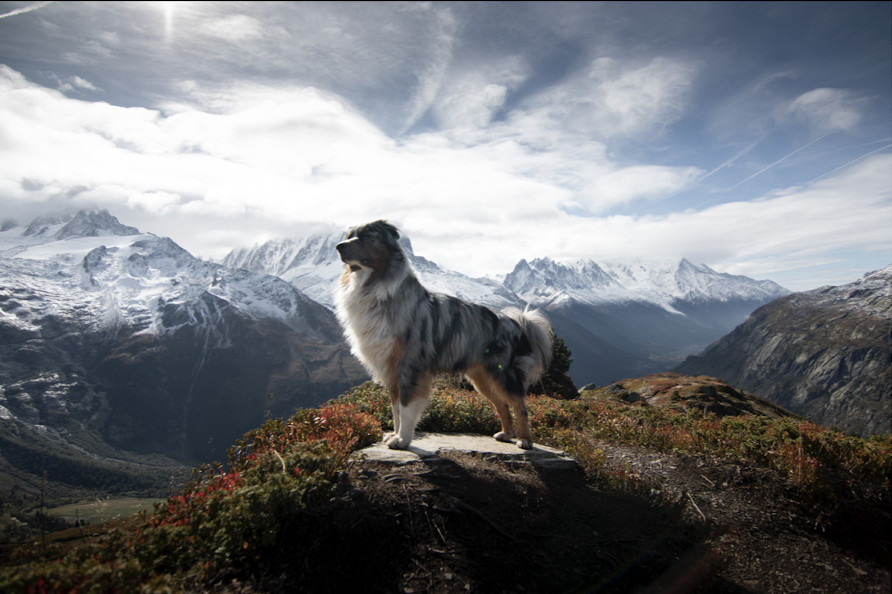
Kotka, 39, though she lives a low-profile life with her husband Toni Spasenoski, is well known in the valley. Sponsored by La Sportiva, she has a litany of top finishes in the world's most competitive ultras. In Chamonix alone, she has won three races: the 90K in the Mont Blanc Marathon series, the Ultra-Trail du Mont-Blanc (UTMB) 101K CCC and the 119K UTMB TDS, during which she set a course record. Modest and easy-going, you will never hear Kotka brag about her successes. Well, almost never. Once, a few days after winning TDS, Kotka was stopped on a trail and got to deliver a line many dream of uttering. "Did you run one of the UTMB races?" a passerby asked. Kotka admitted that, why yes, in fact, she had. The questioning continued. "So, how did you do?" Kotka chuckled and beamed. "I won!"
Kotka, who has a Masters of Science in Molecular Nutrition and is a partner in Moonvalley, an organic sports food company, lives in the village of Le Tour, just below the Swiss border, with her husband Spasenoski, who works remotely as a high-tech project manager. And, rounding out the family, there is Enzo.
Spend more than a day or two on the quiet, rugged trails in this part of the valley and your paths will cross with Mimmi and Enzo. They are so often together, it's more common to hear Mimmiandenzo than the former without the latter.
Enzo, now 4, it must be said, is beautiful and highly photogenic. His thick, mottled coat of blue-gray, brown, black and white fur is perfectly suited for a life herding sheep high in Italy's Gran Paradiso region from where he came.
Kotka's trail-running partner seems to know just how gorgeous he is. "He's kind of a Diva," Kotka says. "He just wants attention. He'll lie down in front of onlookers, expecting to be admired and cuddled. We spoiled him, and we got the dog we deserve."
These days, Enzo is getting plenty of time in the limelight. Kotka's Instagram feed is filled with striking photos, taken by Spasenoski, of the two out in the mountains in all seasons. Spasenoski joins the two for runs, taking photos and struggling to maintain the pace. Enzo knows the drill, often climbing up to view points, puffing his chest like the Lion King surveying his kingdom. "He thinks he's a mountain guide, but really he's an influencer," Kotka laughs.
With or without the lens eye, however, Mimmiandendzo have a tight bond on the trail. Together, they have run to glaciers halfway up Mont Blanc and high-mountain huts like the Refuge Albert Premier perched on the jagged skyline high above their Le Tour home.
"Sometimes, when I'm running with him, I feel one energy." Kotka pauses, trying to explain the sensation. "I feel very connected to him." When she stumbles, she says, Enzo immediately runs back to her to make sure she's okay.
There are the inevitable bumps, of course. Herding is part of Enzo's DNA, and there's no off switch, either. Running high above their village, Enzo once spotted a sheep away from its flock.
"He went completely nuts," says Kotka. "He was barking like mad and not listening to me. At the time, I didn't understand the instincts of a shepherd dog." At other times, Enzo's been known to herd escaped sheep back to the right side of their fenced-in pastures.
For better or worse, those herding instincts apply when the animal has two legs, too-that can make for awkward moments when Kotka is running with friends and the group spreads out. "I feel sorry for the runner in the back," explains Kotka. "Enzo literally nibbles at their butt."
Like every mountain runner, Enzo has had his accident or two. Descending from the Possettes, a dramatic ridgeline that is part of the course of the Mont Blanc Marathon, he took a tumble over a cliff band. The two heard Enzo barking, far below. Early spring, he fortunately landed on a snowfield but had taken a long slide.
"He was OK, but frazzled," says Spasenoski. "I've done the same thing!" And a few winters ago, out with Kotka while she was ski mountaineering, Enzo injured his eye in a freak accident when he hit a metal object buried in the snowpack. An infection and cataracts ensued. To protect his eyes after the incident, their Italian adoptee received dog goggles for Christmas. They did not go over well.
"He wouldn't move. He was like a statue," says Spasnoski. "He was like, 'What the hell am I wearing?'" These days, Enzo takes a timeout during the rugged Alps winter season.
Along the thousands of kilometers of mountain trails they've shared together, Enzo has been a teacher as well. "I've learned a lot from Enzo," says Kotka. "I wasn't expecting that." [TK-any specific lessons?]
What other life lessons has their social media star imparted to the family? "Some days can be pretty crummy," says Spasnoski, "But then you see this guy," he says, gesturing downward. "And everything is OK."
"Enzo makes us a family," Kotka adds. "We have someone to care about. He's been good for our relationship. Besides, she adds, "He's such a character, and makes us laugh. And he has a good heart. Right, Enzo?"
The tail thumps once on the floor. Definitely.
Name: Named after Enzo Molinari, a character from Kotka and Spasenoski's favorite film, The Big Blue, about the world's greatest free diver. Before discovering trail running, Kotka had a brief obsession with free diving. All that remains are, she notes, a lifelong addiction to the film and a bad diver tattoo on her back. Molinari had a big personality and a kind heart.
Birthplace: Enzo was born at an organic honey farm in Valsavarenche, Italy, next to northern Italy's wild Gran Paradiso National Park. One of six pups, his mom is Australian Shepherd. His father has been narrowed down to one of three likely suspects, but has not come forward.
Age: Four, or 32 in dog years. Enzo turns 5 on June 12th.
Weight: 30 kilos, about 65 pounds.
Favorite animals: A very large, fat cat used to be part of the family, and to this day Enzo loves cats. (As a rule, they do not love him back.)
Running Routine: 10 to 20 kilometers a day. "Around here, that's a lot," says Kotka, alluding to the challenging nature of the terrain around Chamonix. Enzo avoids runs of more than a few hours, and during the warm summer months prefers to run in the early morning or later in the day ."He could easily go for 10 hours," says Kotka, who is cautious about the miles logged on Enzo's pads. "He loves riding lifts," she adds.
Longest Trail Run: The pair did a two-day reconnaissance of parts of UTMB's technical TDS course. "We went slowly," says Kotka, "and made plenty of stops."
Favorite food: Homemade cheese pizza. "Eating some of a pizza I made was the only time he didn't greet Mimmi," says Spasenoski. "He's Italian. What do you expect?"
When he's not trail running: Napping on cool surfaces and sniffing human butts.
House rules: Enzo's not allowed in the bed. "It's too hot for him, anyway," says Kotka. Instead, he sleeps near the drafty balcony door. After breakfast, he'll often sleep outside in the cool mountain air that blows off the nearby Le Tour glacier.
by Trail Runner Magazine
Login to leave a comment
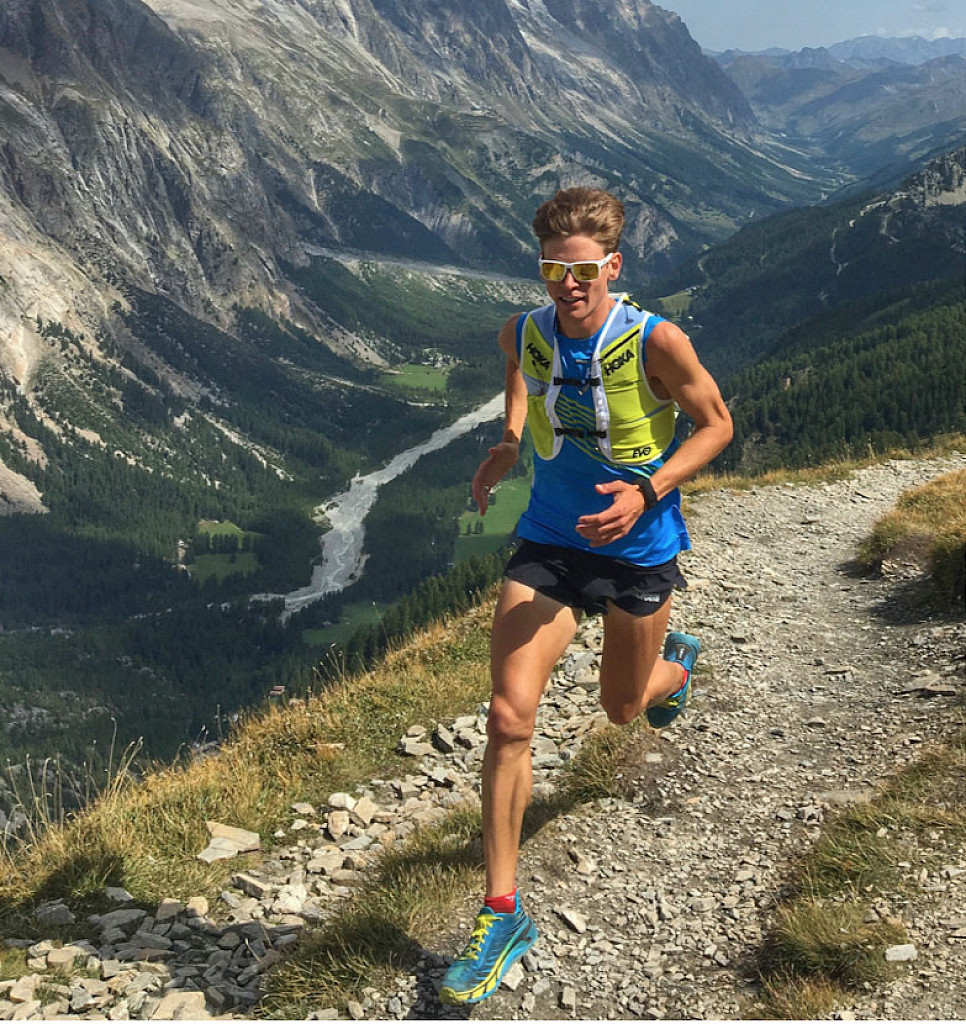
UTMB Is Back!
The world's most important trail race is driving forward-pandemic or not-and despite a tough year across the board, it seems to only be gaining steam.
While many races struggle to fill their 2021 entry slots, that was not a problem for UTMB, Chamonix, France's Ultra-Trail du Mont-Blanc-now six races from 40 to 300 kilometers, all of which take place during the final week of August in the legendary mountain town at the base of Mont Blanc. Despite a year off due to the global pandemic, interest in the race series remains very strong.
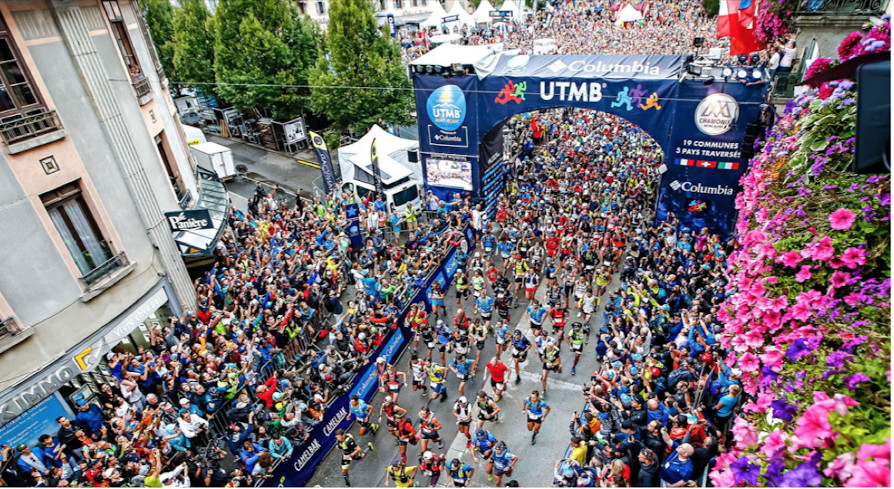
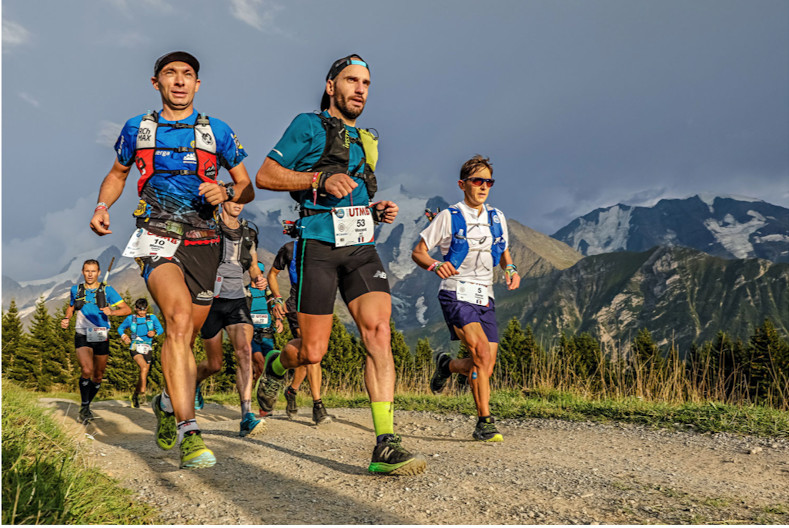
For the 16th time in a row, the UTMB races have sold out, with 10,000 runners slated across all the races. With the pandemic continuing to complicate international travel, the event's mix of nationalities has shifted, with more participants from within Europe and fewer from China and Japan. Despite the long-haul travel involved, U.S. interest in UTMB continues to grow, up slightly to 338 participants.
The UTMB organization is contemplating a number of changes this year, including a streamlined bib pickup system and wave starts with a few hundred runners in each block. Runners will have to wash their hands on their way into aid stations, with social distancing and masks being de rigeur. Shared food bins will be a thing of the past, and it's possible runner assistance areas may be altered or eliminated.
Despite the global uncertainty, 2021's marquee race around 15,774-foot high Mont Blanc looks to be among the most competitive trail races ever, on a par with 2017, which some observers have considered the most stacked trail race in the history of the sport. That year, France's Francois D'Haene edged out Catalonia's Kilian Jornet by 15 minutes, and Spain's Nria Picas won in a down-to-the-wire race, edging out Switzerland's Andrea Huser by under three minutes.
How did such a strong field coalesce? "It was really just organic. We didn't do anything specific to make it happen," says UTMB's Press Officer, Hugo Joyeux. One example is a post by three-time UTMB winner D'Haene, who asked on Instagram, "Who's coming back to take part in the party? I'll be there!" D'Haene went on to tag his top challengers, gently teasing them into showing up at the starting line next to the Mayor's office in the old part of Chamonix this August 27th. Most are in, with Jornet notably absent as he continues to reduce his trail-racing schedule to focus on mountaineering objectives.
The USA's top runners didn't need a social media ribbing from D'Haene to add the race to their calendars. Starting for the women will be Courtney Dauwalter, aiming for a second consecutive UTMB win, along with Katie Schide, Kaytlyn Gerbin, Brittany Peterson and Stephanie Howe. Schide, second in the CCC race in 2018, and 6th in the UTMB in 2019, currently lives in the south of France, in the maritime Alps region, and is easily the most experienced European racer among the U.S. women's elite entrants.
"UTMB reliably draws the most competitive field of the year," says Schide. With top runners coming out of an usual pandemic year-plus, Schide is eager to go head-to-head. "Time trials and personal challenges are fun, but racing is where I'm really able to find the absolute limits."
The U.S. men's delegation is equally competitive-with a dose of angst added, too. In 18 years, no American male has ever won UTMB. It's long since started to be a topic of discussion. Flagstaff, Arizona's Jim Walmsley has started UTMB twice, finishing fifth in 2017 and dropping out in 2019, while Tim Tollefson, from Mammoth Lakes, California, has had four starts, with two third-place finishes. In 2018, he took a serious fall, fileting a quadricep-yet he still managed to run another 90 kilometers before having to drop. The wound ended up requiring eight stitches. The following year, he showed up at the starting line feeling ill, and eventually dropped.
About 2021, Tollefson says, "It's going to be another barn burner," revealing that comparisons with others toeing the start line has been something with which he has struggled over the years. "Contrary to what most may believe, anxiety over who is or isn't in a field has tormented me historically," he explains. "Insecurities over training, fraudulent thoughts of belonging, self punishment and disrupted sleep were commonplace."
For Tollefson, that mix of emotions has added up to sleepless nights and high levels of stress. This past year, counseling has offered him a better perspective. In addition to the usual training, he's working on "becoming mindful in life and believing that the quest to become the best version of myself-which is not dependent on the love, acceptance or applause of anyone else-is the ultramarathon worth mastering."
"I left the Chamonix valley in 2018 full of anger, guilt and shame. What brewed over the next 12 months was a toxic cocktail of unchecked emotions and coping strategies," says Tollefson. "No matter how much I lied to myself and others, I simply did not want to be there."
How will he feel, arriving in Chamonix valley this August? "For the first time in years, the thought of being back in the valley, truly present, is beginning to excite me."
The restart of UTMB this summer is welcome news to this Alps tourist hub, which historically welcomes close to 100,000 guests for the race series at the close of each August. When last August's races were cancelled, the organization refunded 55 percent of the entrance fees for the 10,000 registered runners. The split created grumblings on social-media platforms. Meanwhile, the staff of 30, which includes UTMB's international races, suffered its own share of disruptions. They began working from home starting with the first French lockdown on March 17th, and didn't return to the office until this past December. They now operate with 50 percent of the staff in the office-masks required.
by Trail Runner Magazine
Login to leave a comment
Adventurous Trail Running Is Good for Your Mental Health
Trail running taps into something that road running does not: a sense of adventure that comes from rambling through the woods, hopping from step to step around rocks, roots and ruts, surrounded by nature in all her glory. Some of us - maybe all of us, deep down - have an innate need for adventure. We crave it.
A paper published in the Journal of Adolescence (2016) titled, "Mental Benefits of outdoor adventures: Results from two pilot studies," investigated mental health benefits of outdoor and adventure education programs. Studies on the two separate groups, one a school group of 14-year-olds who hiked through the Alps for nine days, and one a group of adults who spent eight days in the Norwegian wilderness, found notable mental health benefits. Participants reported improved life satisfaction, increased mindfulness, self-efficacy and decreases in the perceptions of stressful demands.
This may all sound obvious: It's why companies like Outward Bound exist, and why many of us head to the hills when we're stressed.
But the question is this: Do we all have an innate need for adventure? And if so, how can we maximize the benefits from mini-adventures such as short and safe trail runs?
"Even a short trail run can spark joy in our day-to-day aspect by allowing our minds to be activated on the task at hand, which requires much more focus than a road run," says Dr. Hillary Cauthen, Psy.D., CMPC, executive board member for the Association for Applied Sport Psychology. "Because of the varying movements, and the excitement of what's to come, trail running has a beautiful quality of activating creativity and imagination," she adds. "Being in this wanderlust situation, and moving in a somewhat childlike way, allows freedom and creativity to come to you."
It's not that road running doesn't allow any mental health benefits - far from it. Cauthen ran track and cross country at the University of New Hampshire and Miami Ohio, and now runs both roads and trails in Austin, Texas. She points out that the relaxing repetitive movement of road running's linear process allows us to focus on calming thoughts and breath control.
But trail running's varying movements and immersion in nature activates our minds in a different way. "Especially trail runs that are adventurous, where you think, 'Maybe I'll veer off on this trail, it looks fun,'" she says. "Get lost in the woods for a moment and you come out feeling free."
When we have these little adventures afforded by trail runs, even runs on dirt paths in urban parks, we're outside of our regular comfort zones. Finding confidence in completing a trail run, according to Cauthen, can lead to better productivity, higher endorphins, greater happiness and a greater ability to regulate our emotions.
"Those feelings are contagious," she says, "and can lead to better relationships, and a better work life balance." Cauthen adds that trail runs, where we have childlike moments of exploration and our bodies can sometimes feel a little out of control, can help us feel calm.
by Trail Runner Magazine
Login to leave a comment
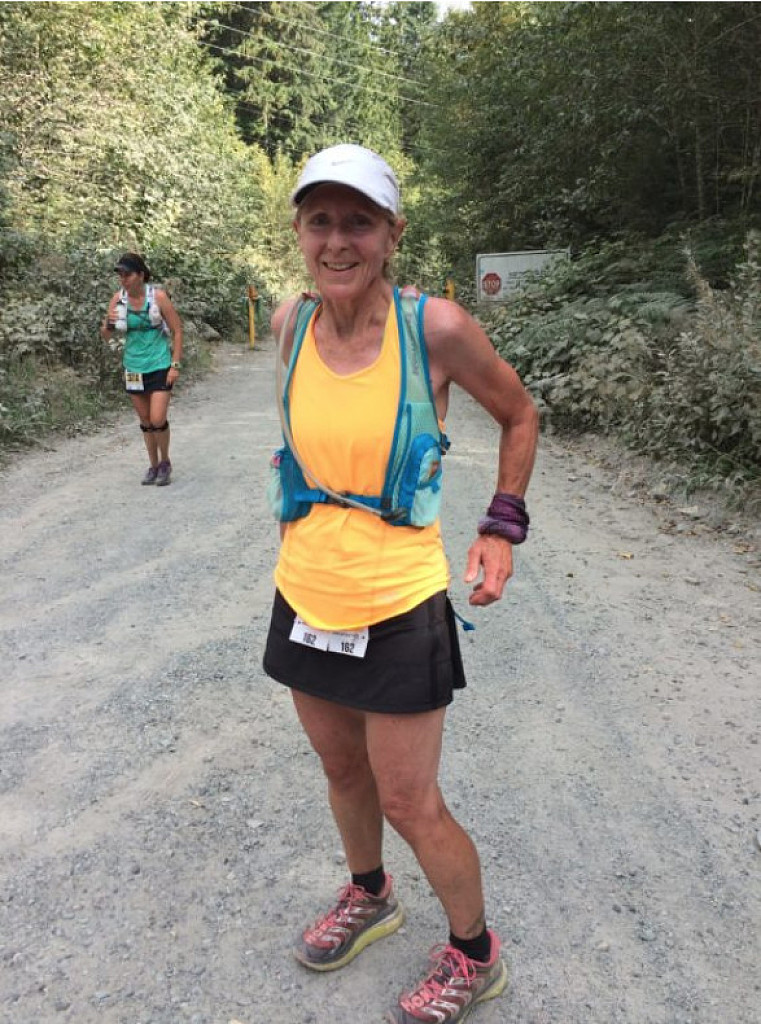
Trail running after 50: “I’m not an ageâ€
Karen Craigie began trail running when she was 59 years old, and her adventures are just getting started
Karen Craigie, 68, had always played soccer. But she considered trail running a different beast. It wasn’t until she finished her first 15K trail race that things began to click. Once the switch went off, there was no turning back. A retired nurse, Craigie was hooked on exploring trails over bigger and bigger distances. From there, she began tackling 20K to 50K adventures in the mountains and on the trails, and beyond.
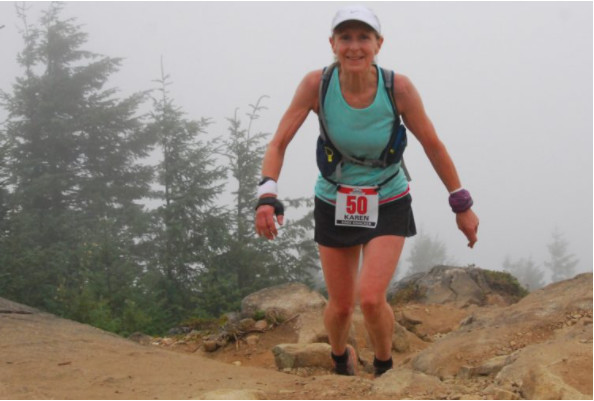
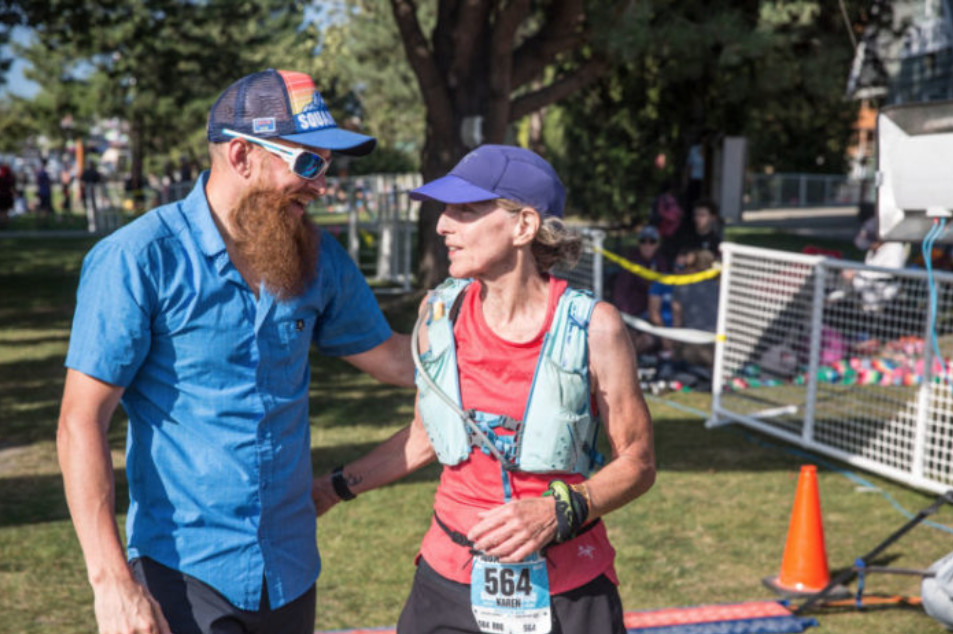
The beginning
It all began when Craigie was 59 years old. She signed up for a trail running clinic in North Vancouver, and three months later she finished her first 15K trail race, The Dirty Duo. Motivated by her partner Linda, who is 11 years younger, Craigie never knew what the trails would offer. She was amazed at what it did for her mind, body, and spirit. Despite living in North Vancouver, it wasn’t until she began participating in trail running clinics that she started exploring the trails in her backyard.
Craigie and Linda decided to sign up for the next clinic to train for a 25K trail race. Nowadays, her favourite distance is 50K. “What I love most about trail running though, are the adventure runs. There is no stress or pressure about meeting cutoff times and one can just really enjoy the scenery.”
Next steps
Craigie has always had the mental toughness to get through tough times on the trail. But as her running goals continued to grow, she hired a coach. “When I retired, my goals got loftier, so I decided I needed a coach. Gary Robbins kindly agreed without hesitation. I completely attribute my successes to having two great coaches,” she says. Robbins and Eric Carter continue to coach her to this day.
Running resume
Just as Craigie is not defined by her age, the distances she loves have no limits. Her ultrarunning and trail running resume is stacked for someone of any age. Once she toes the line, there’s no turning back. She has completed every race she’s started and has yet to come in DFL. “I usually win my age group. However, at times, I am the only one in their 60s.”
So far, Craigie has raced the notorious Knee Knacker 48K race twice, Mount Hood 50K, Sun Mountain 50K, The Golden Ultra 60K, Survival of the Fittest 35K, Squamish 50K, WAM 55K, and over seven races 23-25K in distance. In 2014 she did the Vancouver BMO Marathon, and was reminded how much she truly loves the trails.
In October 2015, Craigie ran across the Grand Canyon with friends. They found themselves under the desert stars in the middle of the night in the canyon, which was a definite highlight. In July 2018, she created her own adventure run in Ireland. Craigie and friends ran 208K over seven days. Each day ranged from 20-42K covering north, west, and southeast coasts. Next year, she plans on running somewhere in the Alps, continuing to abide by the notion she is “not an age.”
by Running Magazine
Login to leave a comment

Run across Europe (virtually) in this 2,500K race
The Great European 2,500 is a virtual relay that takes runners the distance of London to Budapest
If your motivation is waning after months without races, the Great European 2,500 could be the slump-buster to get you excited to run again. The virtual race is a 2,500K run for teams of up to six, 12 or 24 people with a route that starts at Buckingham Palace in the U.K. and weaves through eight countries before its finish line in Budapest, Hungary. In the year when you can’t travel wherever you would like for a race, you can participate in a virtual run through some of the best places Europe has to offer. The event starts on October 3, and teams have until December 3 to collectively complete the 2,500K run.
How it works
“Run anywhere,” a promotional video for the event says, “and race across Europe.” You don’t even have to run, actually. Organizers say any time you travel by foot — whether that’s on a training run, a walk with your dog or a hike — you can log your mileage. Using any tracking app you like, from Strava to MapMyRun or something else, participants track their individual kilometres and upload them to the race website. If you don’t have a GPS watch or a phone to track mileage, you can manually log the distance you ran, but organizers note this is not encouraged.
Teams are split into groups based on the number of members and their genders. There are open (more than 50 per cent male), female and co-ed (at least 50/50 men and women) categories, and teams can have up to six, up to 12 or up to 24 racers (although you can have fewer participants than the total allotment in each category, such as four runners in the “up to six” division). As you and your teammates log your runs, you’ll be able to see your progress on a map of Europe and where you stand compared to the rest of the field.
You have two months to complete the 2,500K route. Registration for this event closes on October 24 at 11:59 p.m. If you want to race but can’t find anyone to run with, organizers recommend visiting the Great European 2,500 Facebook page to find any teams who are looking for extra runners.
What you’ll “see”
Race organizers will follow along as each team runs across Europe, highlighting different parts of the virtual route along the way. For example, the route takes runners through Paris and by the Eiffel Tower, over the Swiss Alps, past former Olympic sites in Germany and so many other global attractions. You won’t be there in person, but you can learn about the different places you run by, even if it is virtual.
To learn more about the race and to sign up, click here.
Login to leave a comment
Pam Rickard has been running since the 1980’s and running sober since 2006
Pam Rickard is all smiles while running the 2019 Boston Marathon. (First photo)
Pam Rickard participated in a seven-day running adventure across China’s Gobi Desert in June 2012 in which she won her age group. (Second photo)
While some people would say Pam Rickard is addicted to running, she would disagree. Rickard, who runs about 2,000 miles a year, has been running since the 1980s and running sober since 2006.
“If I’m living in healthy recovery, I don’t use running in an unbalanced, unhealthy way. I appreciate it as a gift and a tool of healthy living,” Rickard said.
Rickard is director of Active Engagement for Herren Project, heading up Team Herren Project, engaging people to run, walk and participate in healthy activities, helping each other, and others, live stronger, healthier lives. She said she is grateful to be able to use her running, through her job, to raise awareness and funding for Herren Project’s mission, which includes providing prevention and addiction recovery resources and support for all affected by the disease.
In the 1980s and 1990s she graduated from Ohio University, started running, moved to Roanoke, Virginia to work for The Roanoke Times, married Tom Rickard and moved to Franklin County. As a runner, she has won races, earned best times in different age groups and completed seven marathons. Although drinking a lot during those years, she was high functioning and never drank while pregnant, nursing her children or seriously training.
After her third daughter was born in 2003, Rickard’s drinking escalated. In 2005-06, within 18 months, she received three DUIs.
“I know now that I was an alcoholic from the first drink at the age of 14,” said Rickard, who is now 58. “But as often the case with addiction, it’s progressive, but on its own timeline. In the ‘80s, ‘90s and early 2000s, I appeared to have it all together; did well in school, married the love of my life who I met in college, was an accomplished member of the local running community, a successful professional and eventually, a devoted mom.”
She added, “In truth, I was anxious and fearful much of the time, self-medicating with alcohol, trying desperately to keep my struggles hidden. Over a very long period of time, I began spiraling out of control. I tried to ‘fix’ my problems myself, declined even the notion of asking for help, and ended up in a ‘perfect storm’ of arrogance and fear. I finally surrendered to my God and my disease when I entered addiction treatment on April 17, 2006 – and took my first steps into sobriety.”
She described her treatment at The Farley Center in Williamsburg in April and May of that year as scary and hard, but after only a few days, she said she felt better and hopeful. She had to listen and follow directions and was relieved to not have to “run the show” anymore. She quickly realized what she got out of treatment was what she put into it.
After pleading guilty to her third DUI, Rickard served three months in the Roanoke City Jail from Sept. 28 to Dec. 31, 2006. Rickard was five months sober when she went to jail. As hard as things got, she hung onto the fact that God and her sobriety could not be taken from her.
“My only plan was to survive. God had other plans though, and while I ended up having some very ugly experiences, I also connected with many women who were broken … not bad, just in an extremely unhealthy cycle that went back generations,” she said. “When I walked out of that jail, the seeds had been planted that would ultimately grow into my desire to help those fighting battles similar to mine.”
Rickard didn’t drive for three years after her conviction. She said she hated inconveniencing her family, but she learned invaluable lessons. As part of her treatment after care, she committed to attending 90 recovery meetings in 90 days.
“It was ridiculously challenging with no license and living in the country, but I did that, and more,” she said.
Running is what connected Rickard to Herren Project. Over a 35-plus year running career, she has completed numerous races, including more than 80 marathons and ultramarathons. Her races have included a seven-day adventure across China’s Gobi Desert and a 100k (62 miles) trek through the Alps from Italy to France. She was a member of the 2016, six-person Icebreaker Run team, running across the U.S. to bring awareness to mental health issues. She has run the New York City Marathon 10 times and the Boston Marathon 10 times, including the 2013 race in which she finished 20 minutes before the bombs went off.
Of all the races she’s done, the one that stands out the most is her 2007 New York City Marathon.
“That was my first sober marathon,” she said. “Then it was my 50th sober marathon in 2018. Without that desire to run one more marathon as a sober person, I wouldn’t be where I am today. I believe I would be right where I should be, but that experience opened up so many opportunities. It began to teach me the priceless truth that I don’t run to stay sober, I get to run because I am.”
For those who struggle or have struggled with substance use disorder, Rickard said, “I encourage myself, and others, to ask for help when you need it, offer help when you can, follow direction of those who have what you want and trust the process.”
Rickard added, “The fact that I can run at all now, let alone do it while building a community and helping others through the work of Herren Project, is a priceless gift.
“Whether it’s a 3-mile training run, or a major event, my mantra is, ‘I don’t have to run, I get to.’”
by Leigh Prom
Login to leave a comment
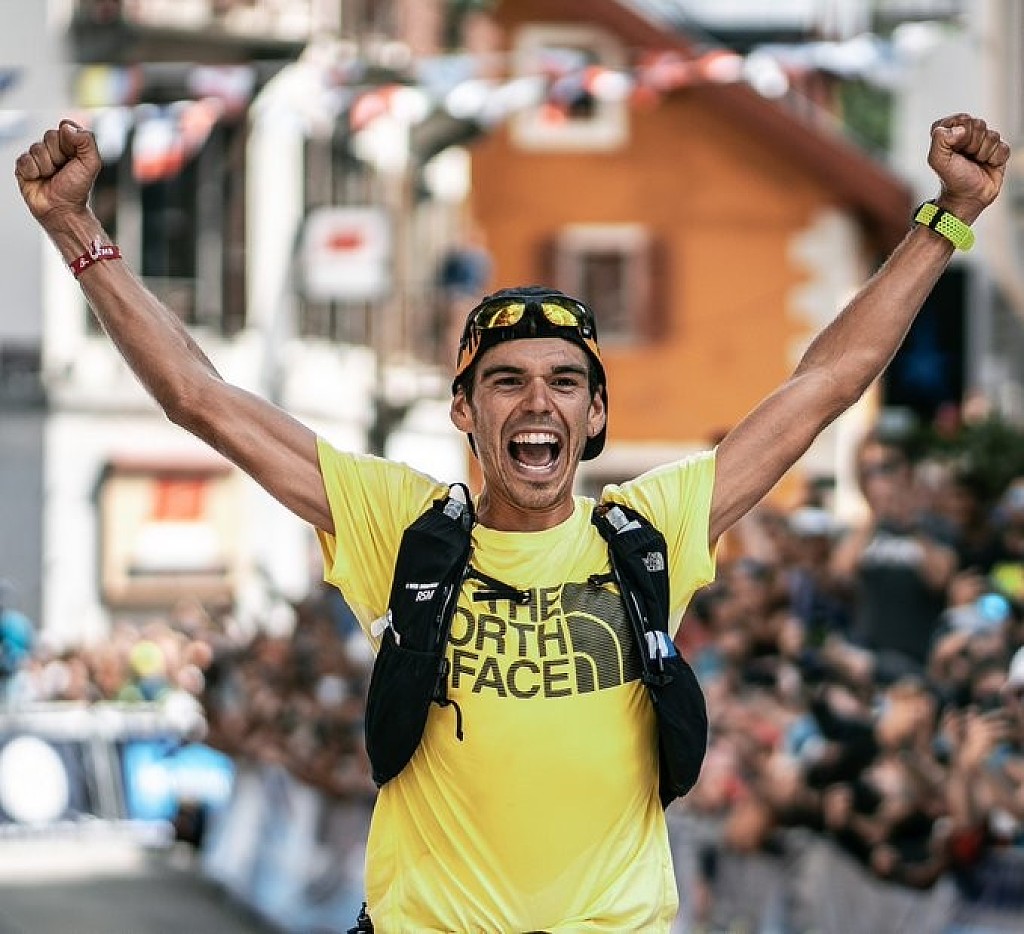
2019 champion is running UTMB anyway
Spanish ultrarunner Pau Capell says he plans on running the 171K UTMB Mont-Blanc route even though the race is cancelled
On May 20, race organizers for the Ultra-Trail du Mont-Blanc announced that the 2020 edition was officially cancelled. The UTMB features seven events (all of which start in Chamonix every August), the most famous being the gruelling 171K ultra that takes runners through the Alps in France, Italy and Switzerland. Runners around the world were of course disappointed when the race was called off, no matter how inevitable that cancellation seemed to be. The men’s champion from 2019, Pau Capell of Spain, isn’t accepting the cancellation, and he has announced that he will be running the route on his own in late August.
Capell made this announcement soon after the UTMB was officially cancelled (just two days later), posting on Twitter and Instagram to say, “I will run UTMB! Alone, without a bib and with my support team.” He also posted that he plans to start the run at 6 p.m. on August 28, four days after the event was set to officially start.
There are many issues that could arise and ruin Capell’s plan, including potential travel restrictions and further lockdowns in his home country of Spain or in France. Both countries were under strict lockdowns for the past two months, and restrictions have only recently been loosened in each country. Many public health officials around the world have forecast a second wave of the coronavirus, so by August, Spain, France and the rest of the world could be back in lockdown, which would stop Capell from going.
There’s also the moral question of whether it’s OK to go and do this race when it’s been cancelled. UTMB organizers called the race off because it was the best way to keep everyone safe, and although Capell running on his own with a small support crew is much different than thousands of runners coming to race the UTMB events, it’s still a questionable decision.
Capell is an experienced ultrarunner, and he will undoubtedly come well prepared with enough supplies and a good crew, but there’s the possibility that people will follow in his footsteps and take on the UTMB solo as well. If this happens, it’s very possible that other runners won’t be as well prepared as Capell, and that could create issues for themselves and other runners around them.
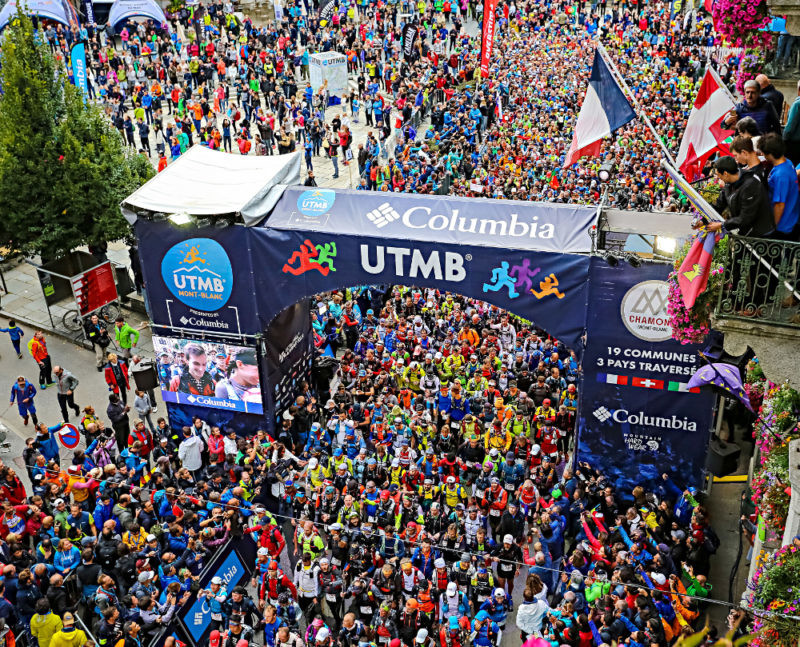
If Capell is able to go through with his solo run, it will be interesting to see how it goes. When he won the race in 2019, he covered the 171K course in 20:19:07. It’s hard to imagine that he could beat that time without the adrenaline shot delivered from a real race with cheering spectators and other competitors, but we’ll just have to wait and see what type of run he can produce if the time comes.
by Running Magazine
Login to leave a comment
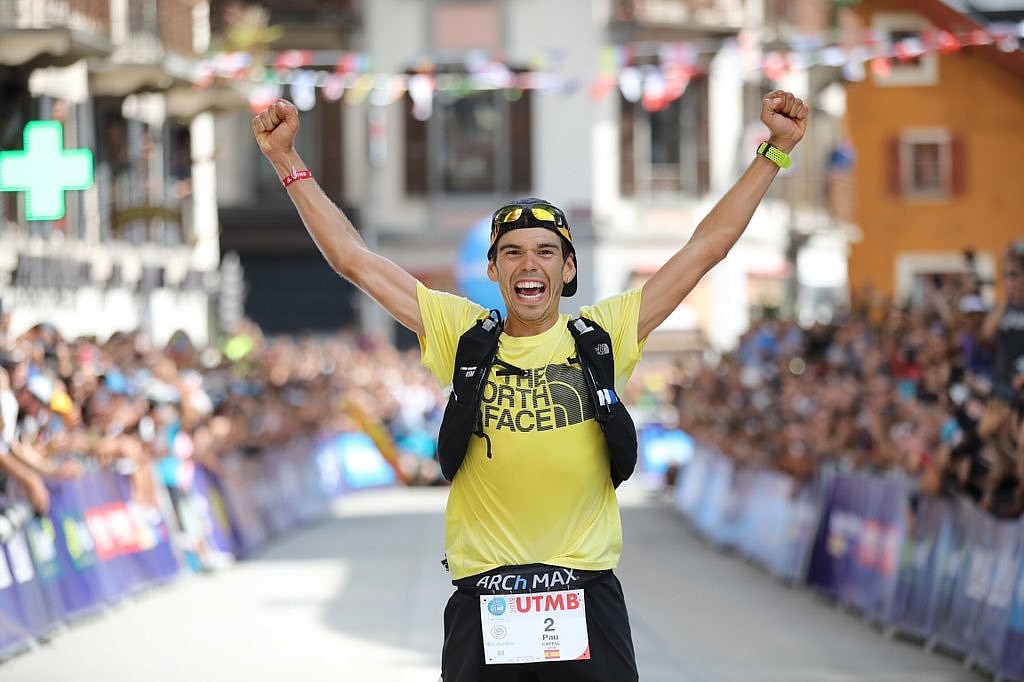
Spanish ultrarunner Pau Capell says he plans on running the 171K UTMB Mont-Blanc route even though the race is cancelled
On May 20, race organizers for the Ultra-Trail du Mont-Blanc announced that the 2020 edition was officially cancelled. The UTMB features seven events (all of which start in Chamonix every August), the most famous being the gruelling 171K ultra that takes runners through the Alps in France, Italy and Switzerland.
Runners around the world were of course disappointed when the race was called off, no matter how inevitable that cancellation seemed to be. The men’s champion from 2019, Pau Capell of Spain, isn’t accepting the cancellation, and he has announced that he will be running the route on his own in late August.
Capell made this announcement soon after the UTMB was officially cancelled (just two days later), posting on Twitter and Instagram to say, “I will run UTMB! Alone, without a bib and with my support team.” He also posted that he plans to start the run at 6 p.m. on August 28, four days after the event was set to officially start.
There are many issues that could arise and ruin Capell’s plan, including potential travel restrictions and further lockdowns in his home country of Spain or in France. Both countries were under strict lockdowns for the past two months, and restrictions have only recently been loosened in each country.
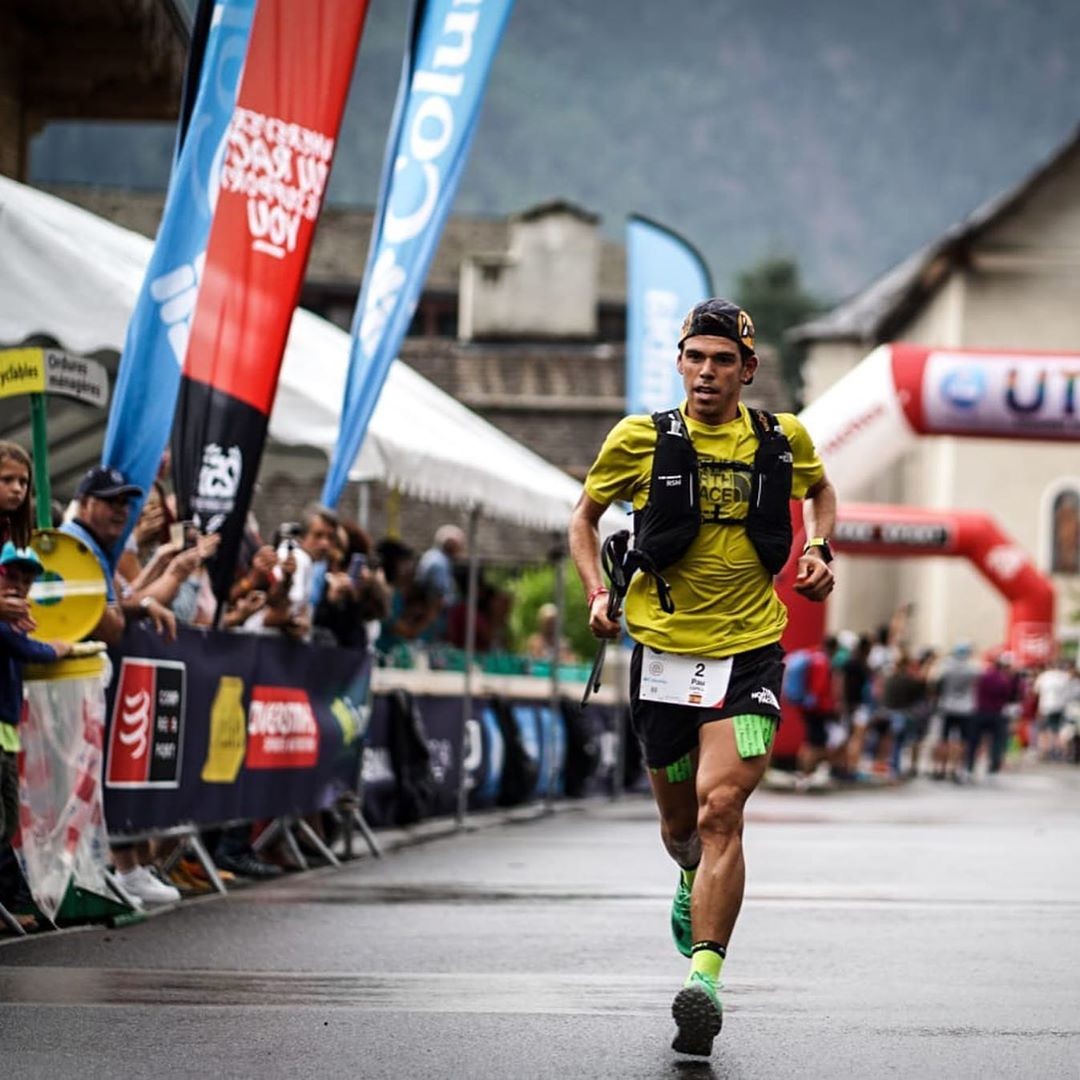
Many public health officials around the world have forecast a second wave of the coronavirus, so by August, Spain, France and the rest of the world could be back in lockdown, which would stop Capell from going.
There’s also the moral question of whether it’s OK to go and do this race when it’s been cancelled. UTMB organizers called the race off because it was the best way to keep everyone safe, and although Capell running on his own with a small support crew is much different than thousands of runners coming to race the UTMB events, it’s still a questionable decision.
Capell is an experienced ultrarunner, and he will undoubtedly come well prepared with enough supplies and a good crew, but there’s the possibility that people will follow in his footsteps and take on the UTMB solo as well. If this happens, it’s very possible that other runners won’t be as well prepared as Capell, and that could create issues for themselves and other runners around them.
If Capell is able to go through with his solo run, it will be interesting to see how it goes. When he won the race in 2019, he covered the 171K course in 20:19:07. It’s hard to imagine that he could beat that time without the adrenaline shot delivered from a real race with cheering spectators and other competitors, but we’ll just have to wait and see what type of run he can produce if the time comes.
by Ben Snider-McGrath
Login to leave a comment
North Face Ultra Trail du Tour du Mont-Blanc
Mountain race, with numerous passages in high altitude (>2500m), in difficult weather conditions (night, wind, cold, rain or snow), that needs a very good training, adapted equipment and a real capacity of personal autonomy. It is 6:00pm and we are more or less 2300 people sharing the same dream carefully prepared over many months. Despite the incredible difficulty, we feel...
more...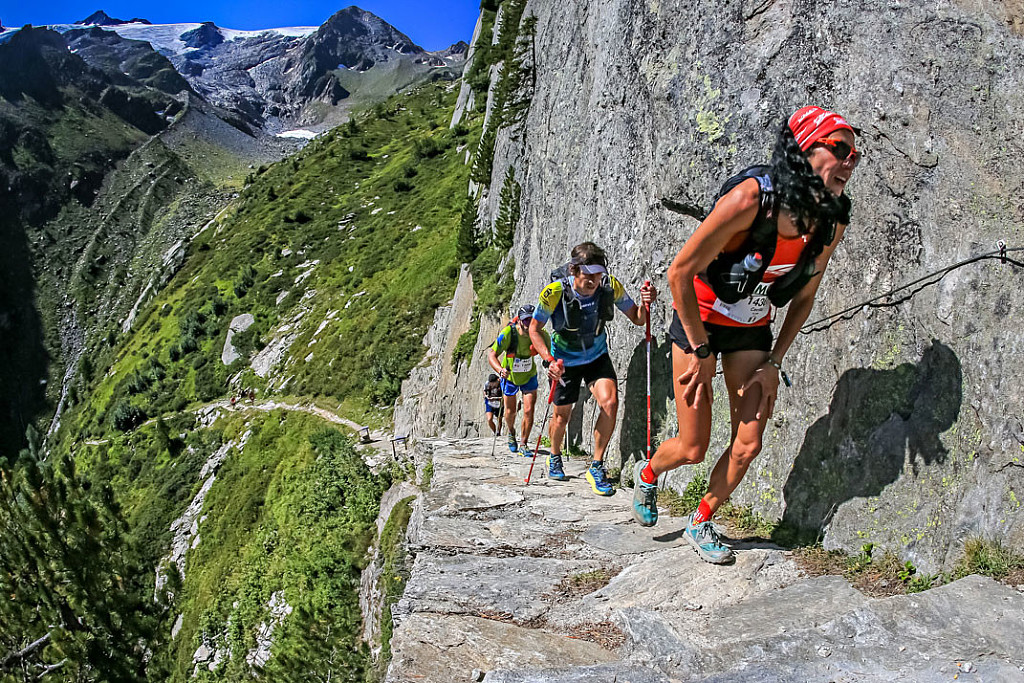
The 2020 edition of the UTMB might be cancelled, but now you can look back and enjoy the 2019 race coverage for free
This week, the Ultra Trail du Mont-Blanc was officially cancelled for 2020, and as a result, race organizers are releasing the 2019 event footage to runners and fans for free. This would have been the eighteenth edition of the trail race, but athletes will have to wait until 2021 to race through France, Italy and Switzerland again.
Luckily, fans of the event can rewatch last year’s run, and although it’s not as good as the 2020 race going ahead as planned, it’s still some good news in these hard times. The race footage can be viewed at the Endurance Sports TV website.
The UTMB is an event with seven different races, all of which take place in Chamonix, France, each August. The biggest of these events is the 171K UTMB Mont-Blanc race, which takes runners through the the Alps in France, Italy and Switzerland. Runners also have to climb more than 10,000m over the 100-mile event, which is higher than Mount Everest.
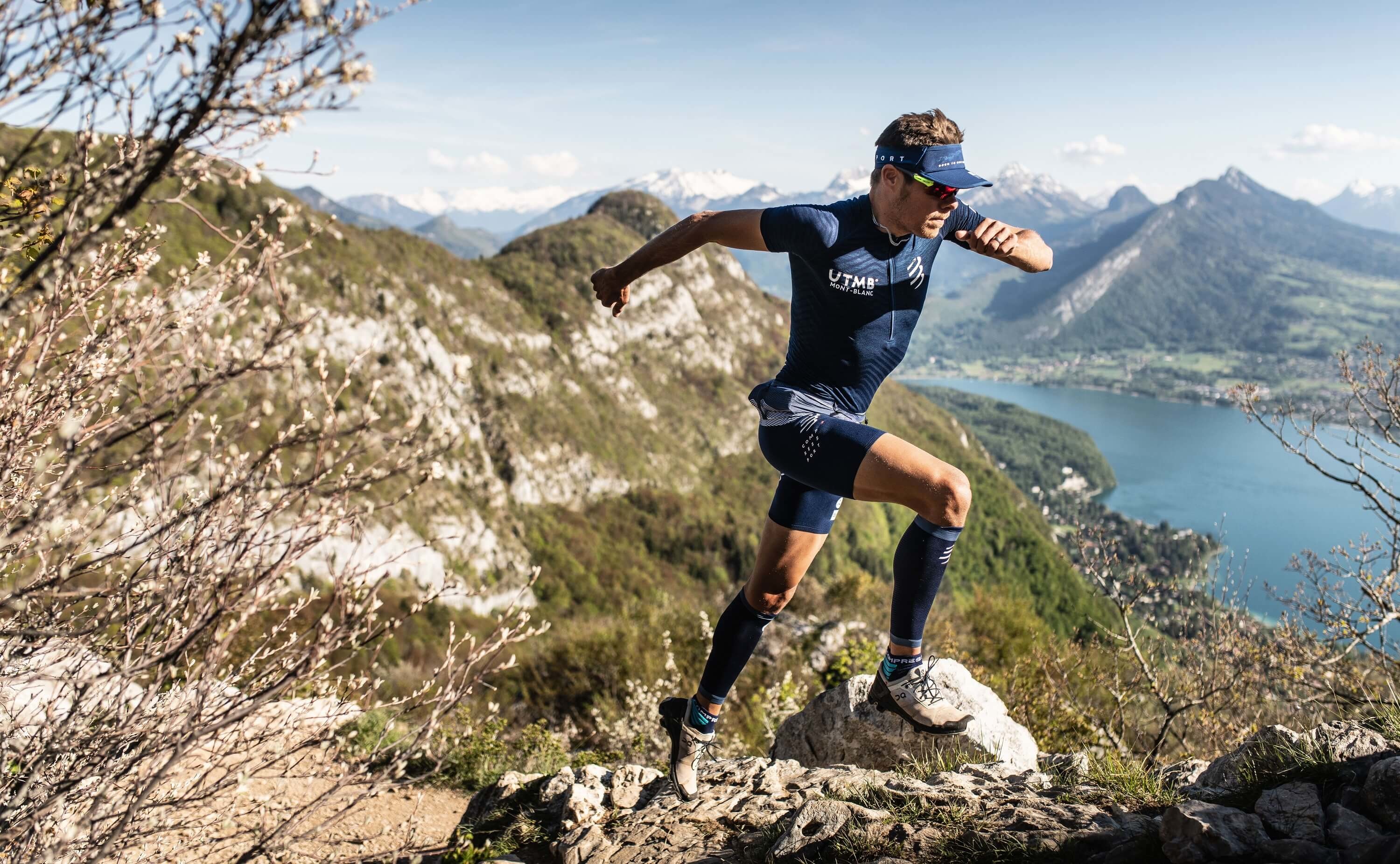
It is an epic race and challenge, and each year thousands of runners travel to France to see how they fare in one of the seven races (although a third of the UTMB Mont-Blanc runners don’t make it to the finish line). If you’ve never watched this event, you’ll definitely want to check it out.
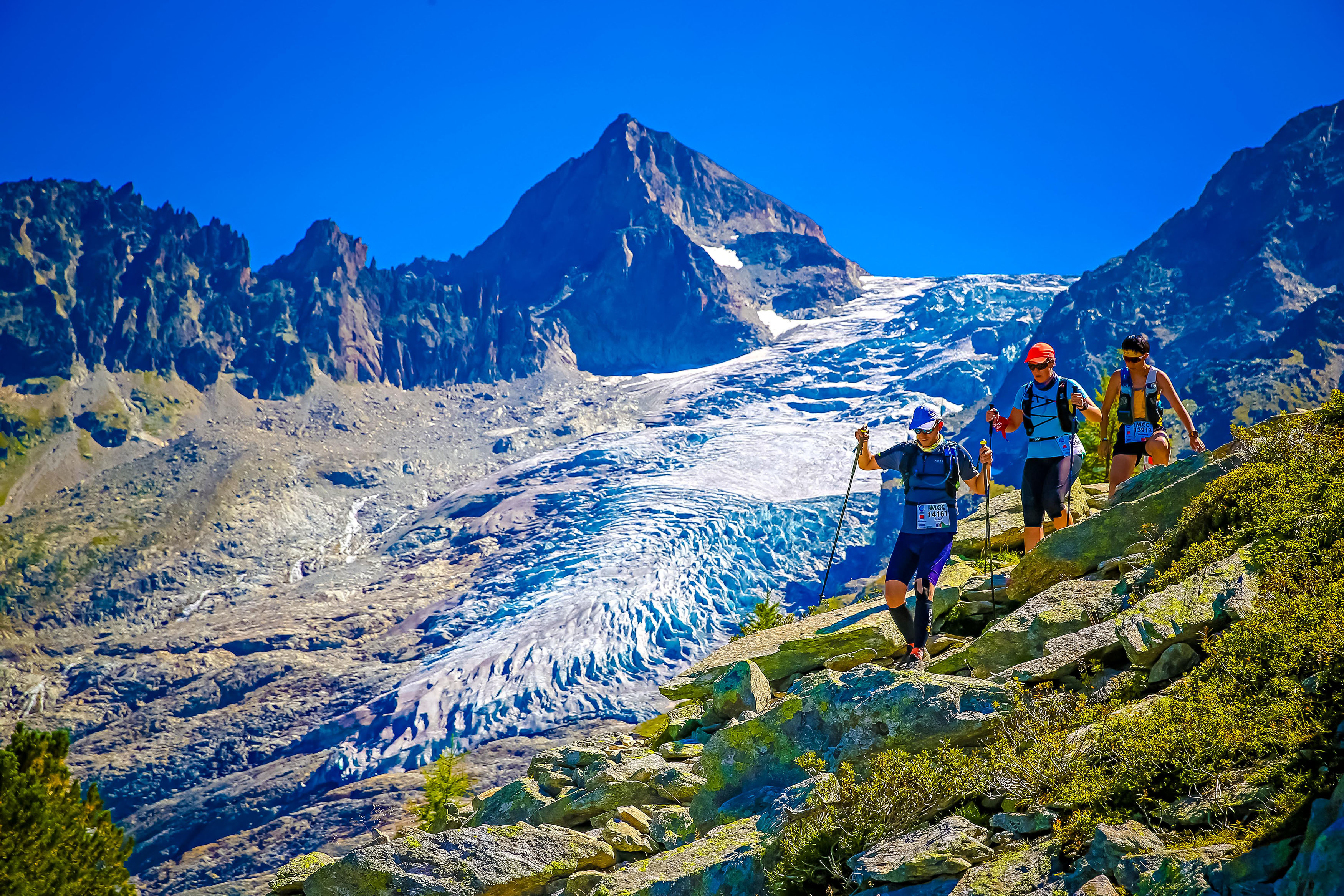
“The UTMB is a huge event to be cancelled this year, yet we don’t want fans to miss out, and have therefore opened up all of last year’s content for free,” said co-founder of Endurance Sports TV Paul Shanley. “We hope that this will give runners the next best thing to look back on all of the action from 2019.”
The 2019 edition of the UTMB saw thrilling results, including American Courtney Dauwalter‘s win in 24 hours, 34 minutes and 26 seconds. This was Dauwalter’s first try at the UTMB, and she nailed it, beating the second-place female, Kristin Berglund of Sweden, by almost exactly an hour. Dauwalter finished in 21st place overall, and she was the second American finisher, crossing the line just seven minutes after fellow American Jason Schlarb.
Rewatching this event, or watching it for the first time, is a great way to get motivated for your own training. It can be tough to find inspiration to train right now during COVID-19 with no races to work toward, but watching UTMB 2019 will certainly give you the boost you need to get back into action.
by Madeleine Kelly
Login to leave a comment
North Face Ultra Trail du Tour du Mont-Blanc
Mountain race, with numerous passages in high altitude (>2500m), in difficult weather conditions (night, wind, cold, rain or snow), that needs a very good training, adapted equipment and a real capacity of personal autonomy. It is 6:00pm and we are more or less 2300 people sharing the same dream carefully prepared over many months. Despite the incredible difficulty, we feel...
more...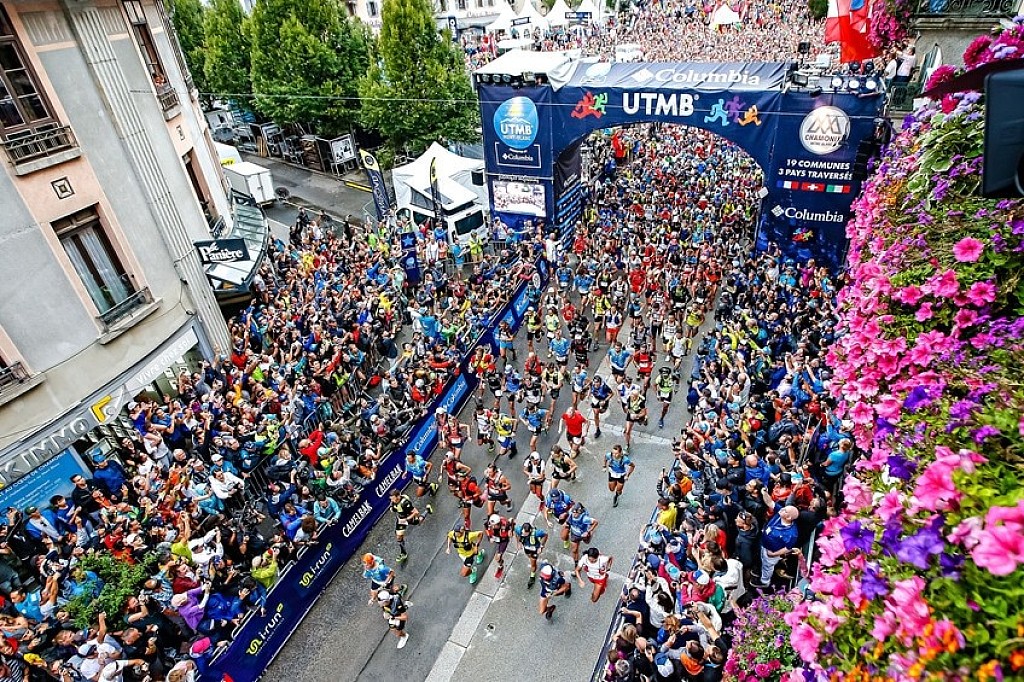
One of the world’s biggest ultramarathons UTMB officially cancelled after a month of uncertainty
For almost a month, a lot of uncertainty has surrounded the Ultra-Trail du Mont Blanc (UTMB). With the race scheduled for August 24 to 30 in Chamonix, the French government announced in late April that major sporting events were cancelled until at least September.
But UTMB organizers gave athletes and the running community hope, saying the race would likely still be run, just with a few alterations so it could fit the government’s guidelines. Satisfying these guidelines proved to be unsuccessful, and this morning, it was announced that the 2020 edition of UTMB has been officially cancelled.
The UTMB route—which is 171K long—starts and finishes in Chamonix, located in the French Alps, and takes runners through Italy and Switzerland before they return to France. The event has been run since 2003, and this year would have been its 18th edition. Although poor weather has forced organizers to shorten the event in years past (2010, 2012 and 2017), 2020 will be the first year they’ve been forced to cancel the race outright.
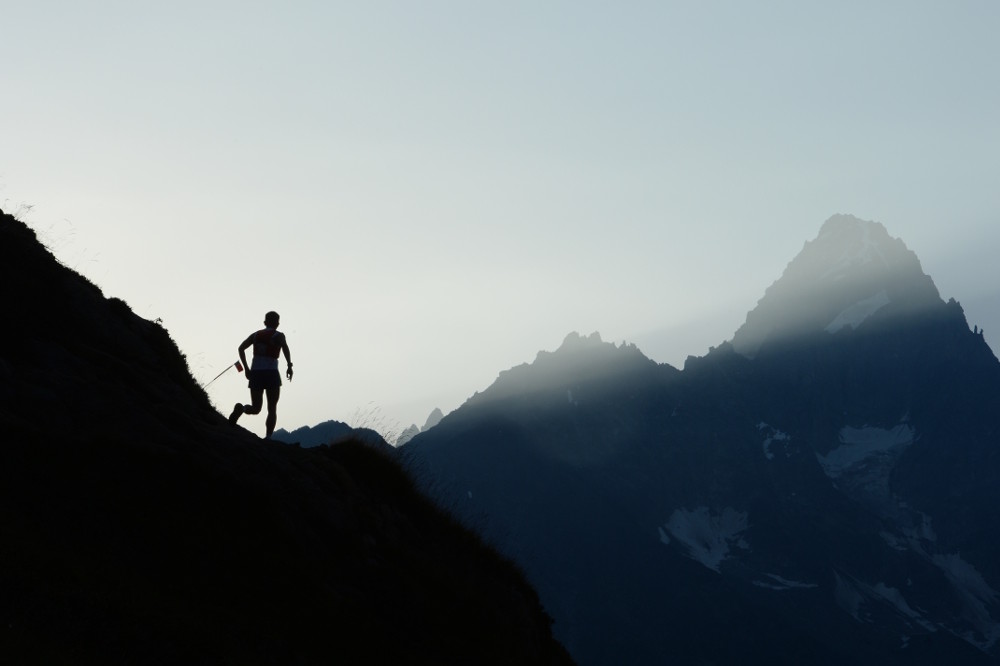
In the cancellation notice, event organizers listed their reasons for calling the event off, the biggest of which was the health and safety of participants. There were 10,000 runners registered for the 2020 event, and the UTMB site says these athletes came from more than 100 different countries.
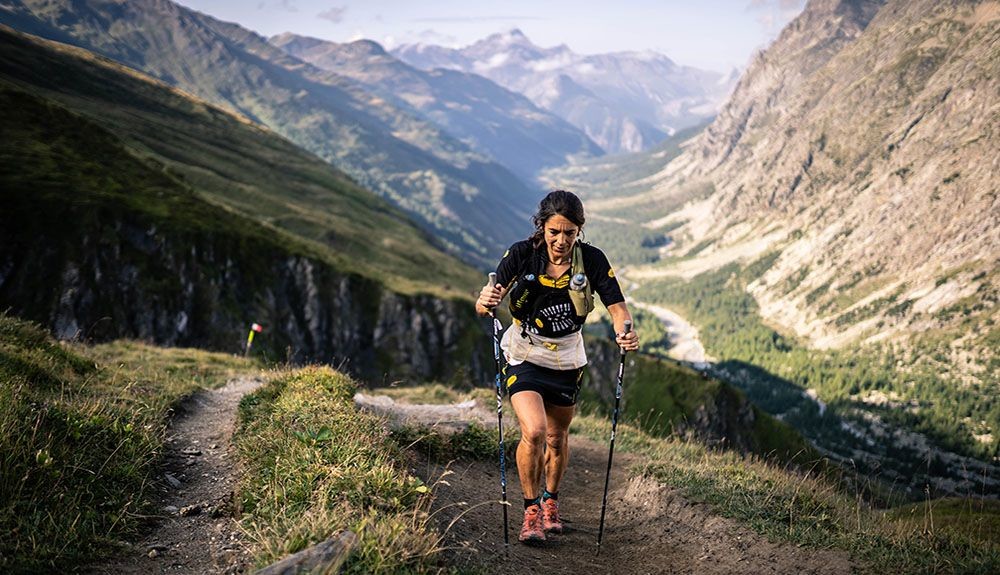
In April, UTMB co-founder Catherine Poletti proposed the possibility of cutting that number to 5,000 competitors, but that still couldn’t feasibly work with the French public health rules. Organizers ultimately decided that cancelling was “the most responsible decision to preserve the health and safety of all participants, which include runners, inhabitants of the Mont-Blanc region, visitors, suppliers, partners and volunteers.”
Runners registered for the 2020 event will receive a refund of 55 per cent of their original entry fee. UTMB officials have also given participants the option to turn down this refund and donate it to charity, which can be done through the event’s website.
UTMB is not a race you just sign up for—runners undergo a long qualifying process for this event. With this in mind, organizers will give 2020 runners the opportunity to reserve their spots in the 2021, 2022 or 2023 events.
by Ben Snider-McGrath
Login to leave a comment
North Face Ultra Trail du Tour du Mont-Blanc
Mountain race, with numerous passages in high altitude (>2500m), in difficult weather conditions (night, wind, cold, rain or snow), that needs a very good training, adapted equipment and a real capacity of personal autonomy. It is 6:00pm and we are more or less 2300 people sharing the same dream carefully prepared over many months. Despite the incredible difficulty, we feel...
more...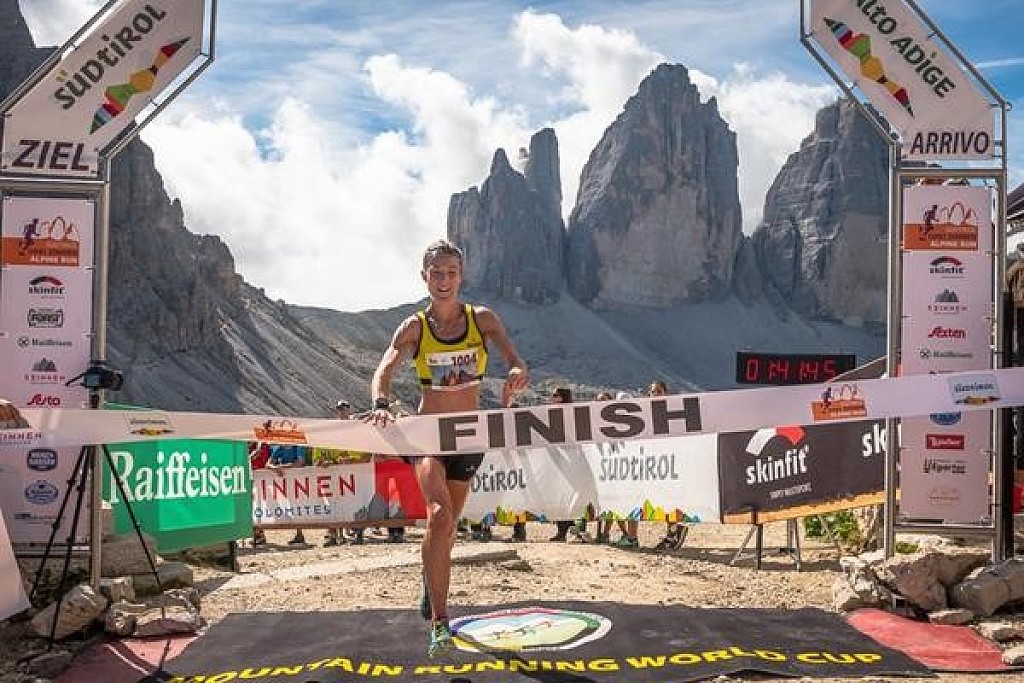
For more than a decade, Briton Sarah Tunstall has been among the most successful and visible runners on the World Mountain Running Association
A bronze medal at the 2008 European Championships at 22 and World Championships the following year thrust her into the scene's spotlight. In 2015, she won the WMRA World Cup and in 2017 raced to European silver and took a second world bronze. A fourth place finish in the World Cup standings last year at 33 showed that she's not disappearing from the circuit any time soon, even as the New coronavirus pandemic wreaks havoc with the mountain running season calendar as well.
"2020 looks like it is going to be a strange and stilted season," Tunstall says. "Many races I would run have already been cancelled throughout France, Italy and Switzerland, and rightly so. I’d love to think we could be racing towards the end of the summer but after having the winter off I was in no rush to race anyway and I was already playing the early season by ear."
That also means that she isn't currently based in her usual early season training base in the French Alps, a regular part of her routine since 2015, when she was drawn to the region by a stubbornness to finally get back into the shape of her early career successes after a string of injury setbacks derailed her ambitions.
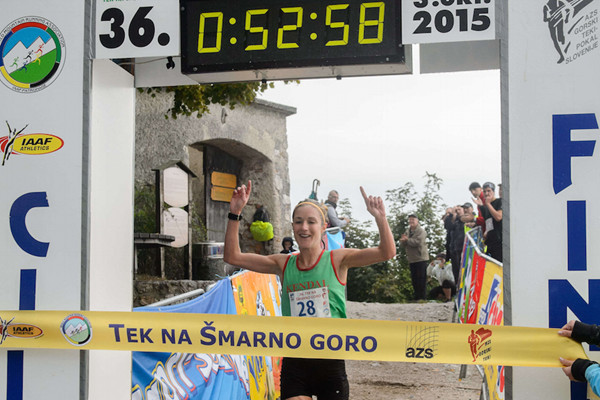
“I was citing the World Championships in Wales as my main excuse to be there - which it was - but having spent so much time there it became very difficult to return to the UK. We've been spending time in the Alps regularly ever since and will try to make it last as long as we can.”
She probably didn’t foresee that alpine lifestyle when she competed in regional and national cross country competitions and fell races as a junior athlete.
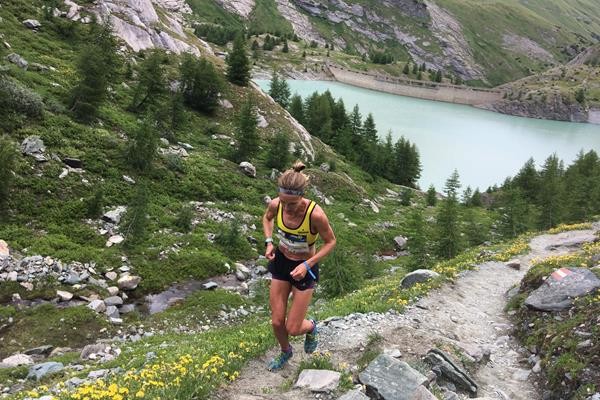
“I would make County cross country and England Fell teams but my best result - which I was delighted with - was finishing 10th at the English National Cross Country in my final year. It sounds like a cliché but I think that enjoying the sport is the main factor that will ensure a good transition (from junior to senior competition). Luckily this should be more likely in the fell/mountain scene as it can be less regimented or monotonous compared to track or road training.”
“If you’re still enjoying running,” she says, “that can be a big part of making the jump up to senior as running becomes more of a personal choice and if you enjoy it you will choose to keep running.”
She made two national teams as a senior in cross country, finishing second in the U23 race at the 2008 European Cross Country Championships and 55th at the World Cross Country Championships the following year. Yet her career and strongest interest still gravitated towards the mountains.
“On a selfish front I’d love them to stay that way so I can enjoy the simplicity of the beautiful races but I don’t want them to die out or get lost amongst the big brands or long, gnarly and overhyped races. I may be a traditionalist, but I find it quite conflicting to the understated sport of mountain running and think that the mountains should be able to sell themselves without excessive marketing."
by World Athletics
Login to leave a comment
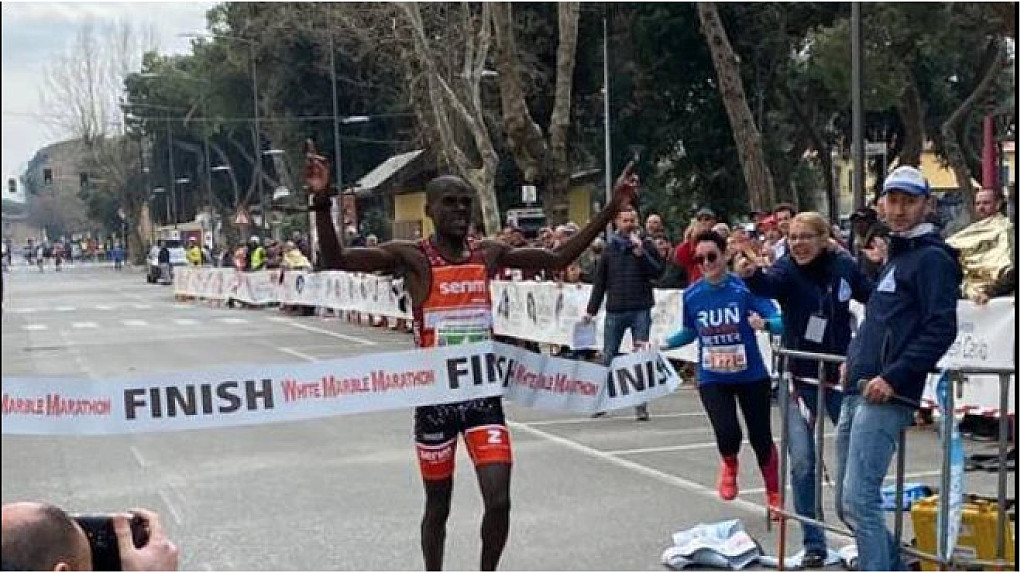
White marble marathon and half Marathon continues to grow
Jean Baptiste Simukeka from Rwanda wins the fourth edition of the White marble marathon in two hours, 20 minutes and 26 seconds. Great success for the running competition of our coast that was held this morning, organized by Paolo Barghini and supported by the Marble Foundation. A competition that also saw the participation of Nausicaa and Gaia as "plastic free" and schools in support of the organization of the race, in the refreshment and sponging points. At the starting line 1700 people, divided into 259 for the competitive marathon, 546 for the Half Marathon (with the Italian Veterans of the sport championship inside), 254 for the 30 km.
In the female category Maurizia Cunico won clocking 2:47:09.
For the half marathon Joel Maina Mwangi, Kenyan, training at the UjENA Fit Club Training Camp in Thika, finished the 21 kilometers in 1:05:58.
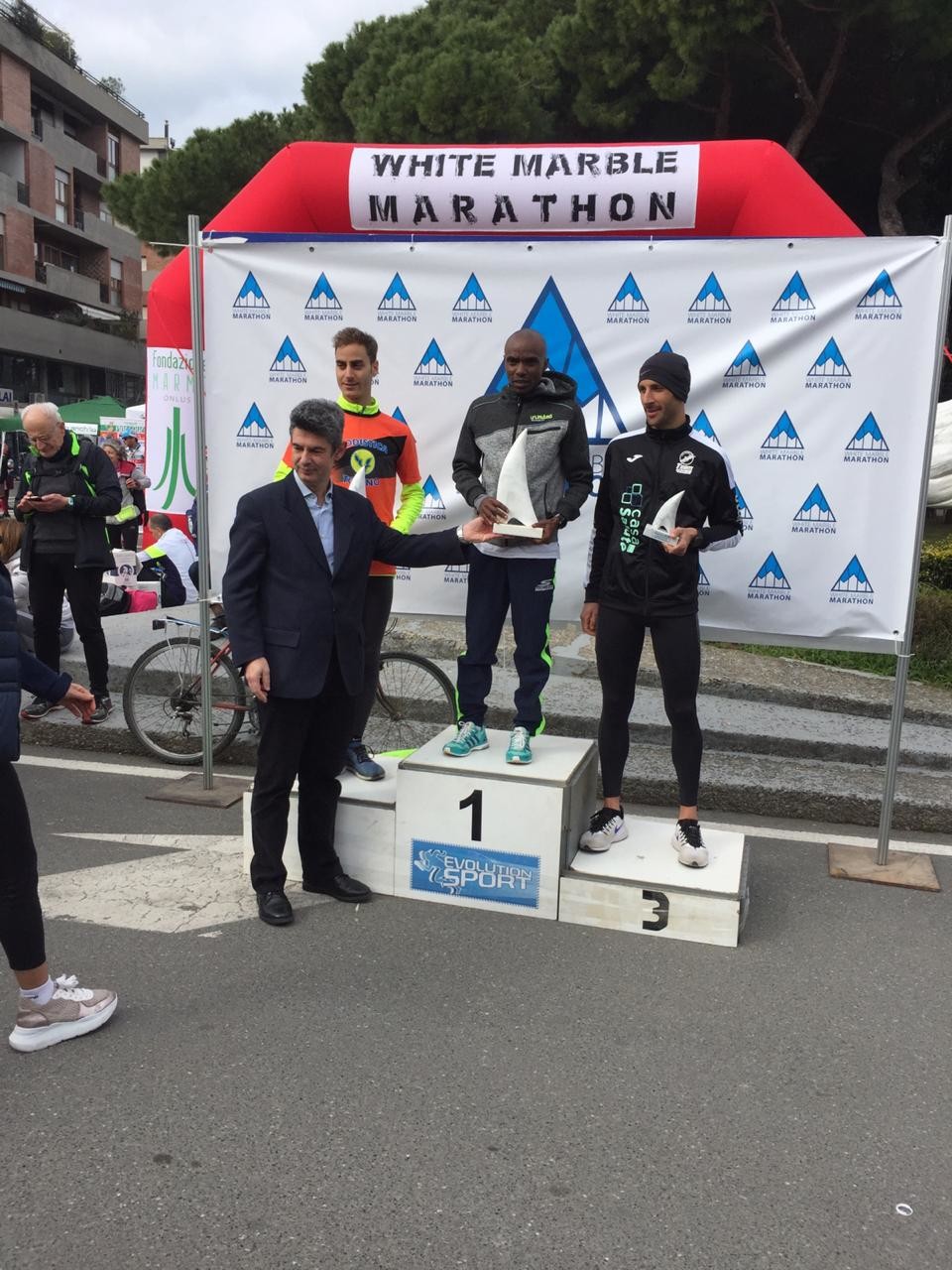
For women the first was the Italian Federica Proietti of Calcestruzzi Corradini Excels in 1:19:39 (18th position).
As for the Marble heroto bring home the medal was Federico Bordigon of the Vicenza marathon with 1:41:37. For women Concetta Santini (run card) with 2:01:19. First Apuan Francesco Salvatori of the Uisp Marina di Carrara. Diego Garbugino of the Apuan Alps Park (ninth position) won the section of the Italian Veterans of Sports Championship.
The patron Paolo Barghini was also satisfied with the way the marathon took place: “Running a marathon is always complicated. The race from a sporting point of view went well and the weather was also perfect.
Login to leave a comment

White Marble Marathon
This year the White Marble Marathon will be the first plastic free marathon to be held in Italy. Here is how the event will be managed. First of all, in the race pack there will be nothing in plastic that is not reusable.So no bars or gels will be distributed in the race pack.This does not mean...
more...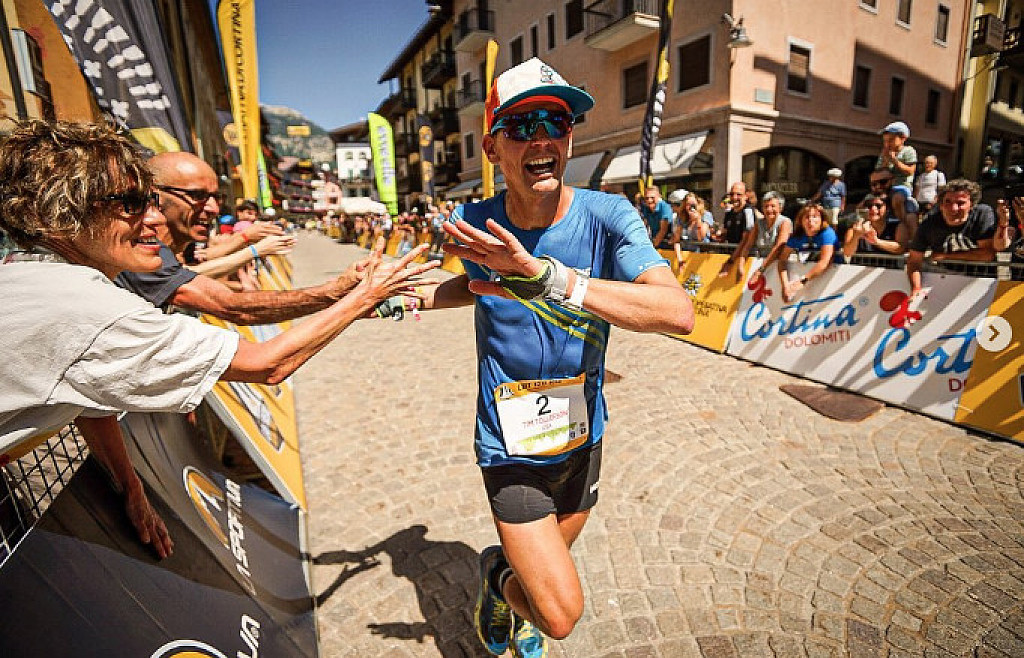
Tollefson, Dauwalter Lead a Strong Pack of Americans at 2019 UTMB
A year after a bad fall ended Tim Tollefson’s latest effort to be the first American atop the podium at the Ultra-Trail du Mont-Blanc (UTMB), the ultrarunner is returning with reignited determination—but also a heavy heart.
Twice a third-place finisher of the daunting 171K, the Mammoth Lakes, California, pro is primed and ready to compete in this epic race through the French, Italian, and Swiss Alps between Friday and Saturday. This comes after Tollefson’s bid in 2018 ended around the 48K mark when a fall required stitches in his left quad, forcing him to withdraw, but not leading to any long-term damage.
Though a disappointing way to end his day and his hunt for first, he’s put that behind him as he once again tries to become the first American man to finish atop the podium in the 17-year history of the race.
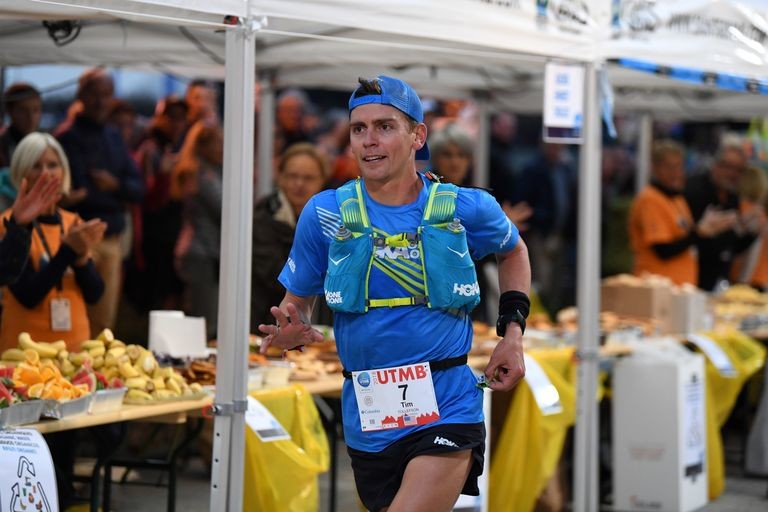
“Last year doesn’t haunt me, but it’s something I would like to avenge,” Tollefson told Runner’s World. “It serves more of a constant reminder that I need to come back here and prove something to myself because I think I have unfinished business. I think this race in particular plays to experience, and I’d like to think that I now have enough experience and the skill set to put together the performance I have dreamt of.”
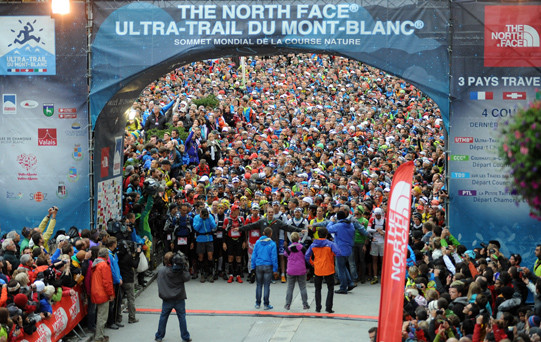
Training was slightly different this year to prepare. The 34-year-old physical therapist added about 20 percent more vertical gain during his weekly training, especially on long runs. This included dozens of 20- to 30-mile runs with about 9,500 feet of vertical gain. He also won the popular 120K Lavaredo Ultra Trail in June in Cortina, Italy, with a time of 12:18:47.
With more than 32,000 feet of vertical gain and often inclement weather, the UTMB course has been known to crush even the strongest and fittest runners. Tollefson proved worthy of the challenge in 2016 and 2017 with third-place efforts, not to mention his runner-up showing in the adjacent CCC 100K in 2015.
This year, Tollefson is competing for more than just his personal goals: He is running to honor a fallen friend. On August 14, friend and fellow Mammoth Lakes resident Cody Tuttle, a 32-year-old professional filmmaker and photographer who documented Tollefson for several projects, died in a paragliding accident near Lone Pine, California.
“It was a tragic loss for the community,” Tollefson said. “It’s a sobering reminder that every time we go into the mountains, there is an inherent risk, and yet there is a reason we are all drawn to this type of rugged mountain environment.”
Tollefson will have heavy competition as he strives for his goal. As usual, the men’s field of the race is deep, with Frenchman Xavier Thévenard, a three-time winner and defending champion as the clear favorite. Last year’s runner-up Robert Hajnal of Romania is also in the field, but Americans Zach Miller, twice a top-10 finisher at UTMB, Alex Nichols, who was second at the 2018 Hong Kong 100K, Hayden Hawks, who has had big success at 50K and 100K races, and Jason Schlarb, who has been on a tear since turning 40, could all be contenders.
“I feel like I’ve finally acquired the climbing skills that allows me to run with the Europeans and be able to be confident coming into this race,” Tollefson said. “It still comes down to executing the race, but I’m really psyched to get out there and run another lap around Mont Blanc.”
The women’s field is also intriguing, especially from an American point of view. Although defending champion Francesca Canepa of Italy returns, all eyes are on Courtney Dauwalter, who has dominated women’s ultrarunning in recent years, right up to the point when she dropped out of the Western States Endurance Run in late June with a hip injury. The 34-year-old Golden, Colorado, resident is healthy, but admits she didn’t do the training she had hoped while recovering from her injury.
“It’s a long race and, from what I hear, it’s a grind, so it’s not a fast 100-miler,” Dauwalter told Runner’s World. “I’m not sure how my skills and experience will play into it, but I’m going to take each section as they come and run as efficiently as possible and see what happens. These mountains are awesome and the challenge will be big.”
Two-time winner Rory Bosio (2013, 2014) from Truckee, California, is also back after running the shorter OCC in 2017 and the longer TDS last year, while Nebraska’s Kaci Licktieg, who took third at Western States Endurance Run this year, and Katie Schide, an American living in Switzerland, both could be poised to compete for podium finishes.
“I don’t know if I can be competitive; the women’s field is bonkers this year, and I think that’s great,” Bosio told Runner’s World. “Winning those races back to back seems so long ago, almost like it happened to a different person. But it’s going to be an exciting race, no matter what because it’s UTMB.”
More than 2,300 runners from 90 countries will start the race at noon ET on Friday. You can follow along live here.
by Runner’s World
Login to leave a comment
North Face Ultra Trail du Tour du Mont-Blanc
Mountain race, with numerous passages in high altitude (>2500m), in difficult weather conditions (night, wind, cold, rain or snow), that needs a very good training, adapted equipment and a real capacity of personal autonomy. It is 6:00pm and we are more or less 2300 people sharing the same dream carefully prepared over many months. Despite the incredible difficulty, we feel...
more...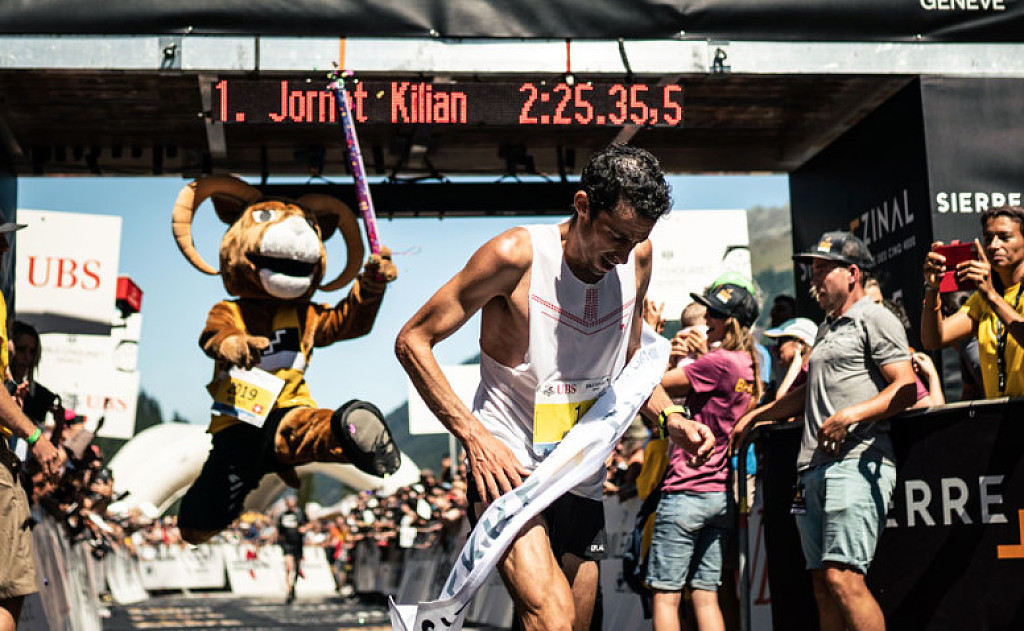
Kilian Jornet crushed Sierre-Zinal, and has now set his sights on Pikes Peak
Ten years ago, a 21-year old Catalan trail runner showed up in the end-of-the-valley village of Zinal, in Switzerland’s Valais Canton, not far from the Italian border. He had a list with him.
“It was just a sheet of paper with names of races,” says Chamonix, France-based trail-running author Alain Bustin. “It wasn’t races he wanted to win, or course records he wanted to break. All he wanted to do was take part. Sierre-Zinal was on the list.”
Even then, Sierre-Zinal was iconic. The 31-kilometer race that started in the valley village of Sierre and finished in Zinal was already established as one of the most competitive trail races in the world. And that year, the young runner won.
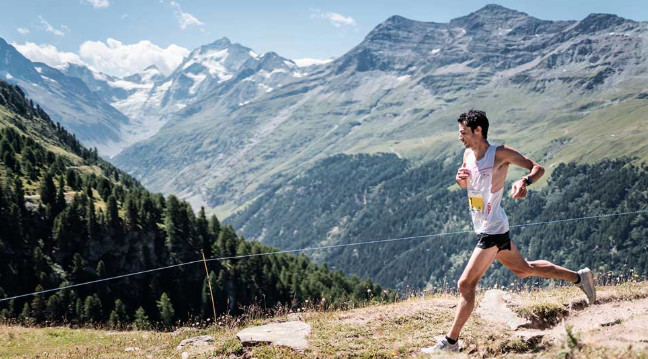
A few weeks later, he won the 171-kilometer Ultra-Trail du Mont-Blanc.
That runner, of course, is Kilian Jornet. And last weekend in Zinal, he won “S-Z” for a seventh time, further surpassing Mexican runner Richardo Meija’s five wins between 1998 and 2005. And this time Jornet did something that no one had done in 16 years. He broke one of trail-running’s most-coveted course records with a time of 2:25:35—not by seconds, but by 3 minutes 37 seconds.
The 2:29:12 record had been held all those years by the New Zealander Jonathan Wyatt, now 46, indisputably one of his generation’s greatest mountain runners. Starting more than two decades ago, Wyatt began racking up records from the Alps to the United States, at races as diverse as Switzerland’s Jungfrau Marathon (2:49:01 in 2003) and New Hampshire’s Mount Washington Road Race (56:41 in 2004.) Both are still course records.United States runner Jim Walmsley had a notable success, finishing third in his first running of the famed course, in a time of 2:31:52—a result that in any other year would likely have had him breaking the finish-line tape.
While Sierre-Zinal is arguably one of the most competitive trail races in the world, and much of the attention focusses on the elite runners, it has a wide and diverse following. This year, more than 5,000 runners took part. Recreational runners started five-and-a-quarter hours earlier, a special aspect of the race-day schedule that allows recreational runners to watch elites arrive, several hours after most of them have crossed the finish line.
Nicknamed “The New York Marathon of the Alps,” the race’s rich history makes for a special day for runners from around the world. It’s a vibe that was felt by runners like Mike Ambrose, formerly the North American Marketing Manager for Salomon, and now based out of the company’s world headquarters in Annecy, France.
“Running across that ridgeline with the flowy singletrack, I felt the legends before me,” says Ambrose. “That’s the first time ever in a race that I was putting myself out there with the greatest and the pioneers of the sport. Maybe I wasn’t running at the same speed, but I was part of the history. I actually felt that energy. “
For Jornet, there are few records left to shatter. At age 31, he has Fastest Known Times from the Matterhorn to Mount Everest. He has won trail running’s most prestigious races, some of them multiple times, with course records around the world. It’s hard not to imagine that Jornet might begin to turn his attention to other projects. With Skyrunning Champion Emelie Forsberg, he now has a five-month-old baby—and an energetic labradoodle, Maui, to boot.
As he watched Jornet from a jumbo screen not far from the Sierre-Zinal finish line, Bustin, a longtime acquaintance of Jornet’s, was in a contemplative mood. “Kilian, he’s not just special because of his records at Sierre-Zinal or the UTMB,” he said. “He’s broken mountaineering records and ski alpinism (ski mountaineering) records, too.”
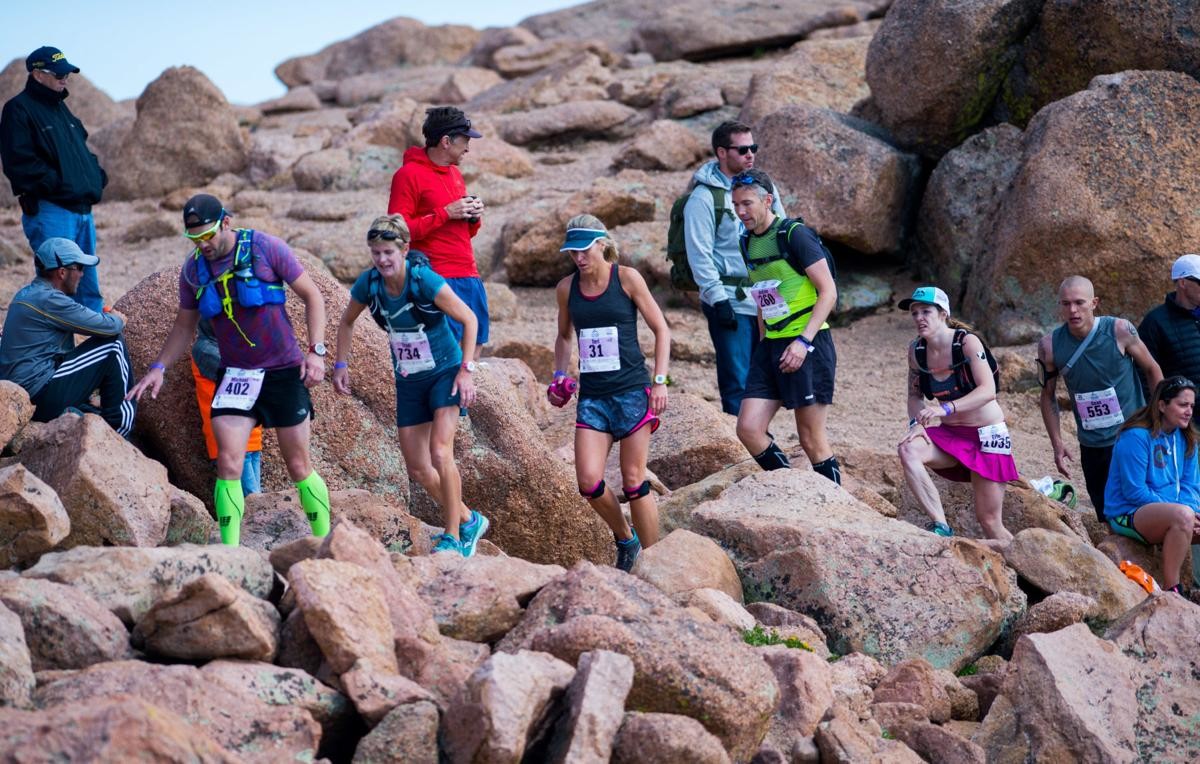
Bustin paused with thousands of other onlookers, as race officials announced to the crowd that Jornet was now 20 seconds ahead of Wyatt’s historic course record. On the screen, Jornet looked fluid and in control, calmly, steadily, smoothly “running the tangents” along a rocky section of the course.
“He’s a fantastic guy, with a great mentality about mountain sports. Maybe he’s about to say to the young runners, ‘Hey guys, I’ve done my time. Now it’s up to you,’” added Bustin. Taking in the weight of what he had just considered out loud—that the world’s greatest trail runner could soon be winding down his long stretch of highly competitive racing days—he looked back up to the screen, saying to no-one in particular, “He has nothing to prove to anyone.”
Well, maybe not quite. There is, arguably, at least one notoriously difficult-to-beat record remaining: Colorado’s Pikes Peak Marathon. In 1993, Matt Carpenter set a confoundingly fast course record there, with a time of 3:16:39. On August 25, Jornet will be there. It’s hard not to imagine he wouldn’t like to cross the tape with a time quicker than Carpenter’s. The trail-running world will be watching.
Login to leave a comment
Pike's Peak Marathon
A Journey to the Top and Perhaps Back The Pikes Peak Ascent® and Pikes Peak Marathon® will redefine what you call running. Sure, they start out like a lot of races on Any Street, USA. But your first left turn will have you turning in the direction of up! During the next 10 miles, as you gain almost 6,000...
more...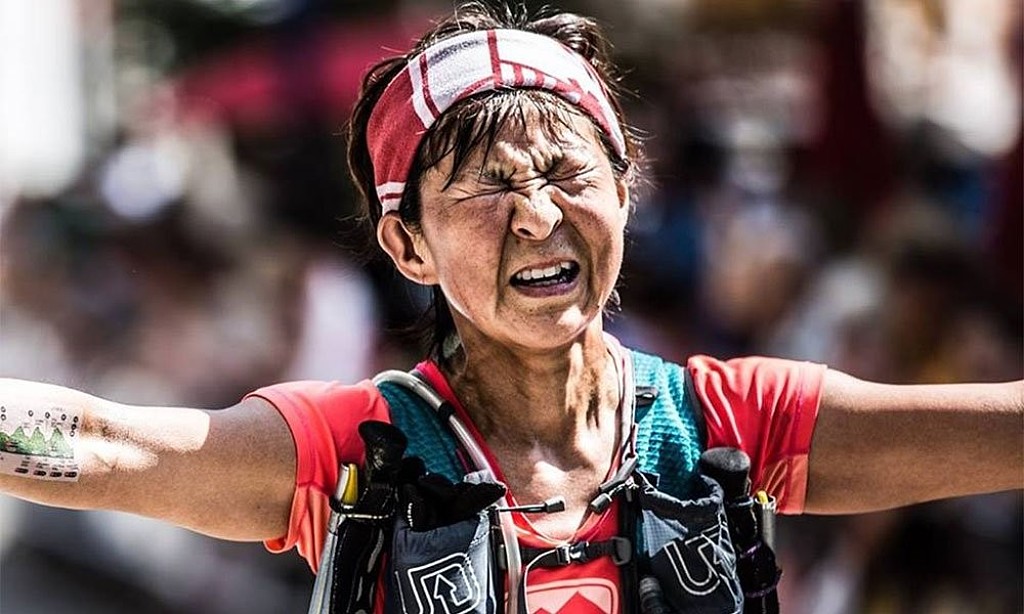
Junko Kazukawa is the first person to finish the Leadville Race Series and the Grand Slam of Ultrarunning in a single season, she is now training for the Leadville Trail 100 MTB
Kazukawa was in the best shape of her life in 2005 when she learned she had cancer. She was 42, training for the Leadville Trail 100 MTB race, and found a lump on her left breast. First, there was denial, then anger: She was an athlete. A professional trainer. She was healthy. “Why me? I was shocked,” Kazukawa says. But she was also lucky. Doctors were able to remove the lump surgically, and Kazukawa continued training, even completing the mountain bike race that same year.
While she felt like the event was hard, she figured the Leadville Trail 100 ultramarathon would be more challenging for her. Immediately after the Leadville Trail 100 MTB, she made a commitment to compete. “I felt that life is short,” Kazukawa says. “I don’t know what will happen tomorrow, so if there’s something I want to do, I need to do it.”
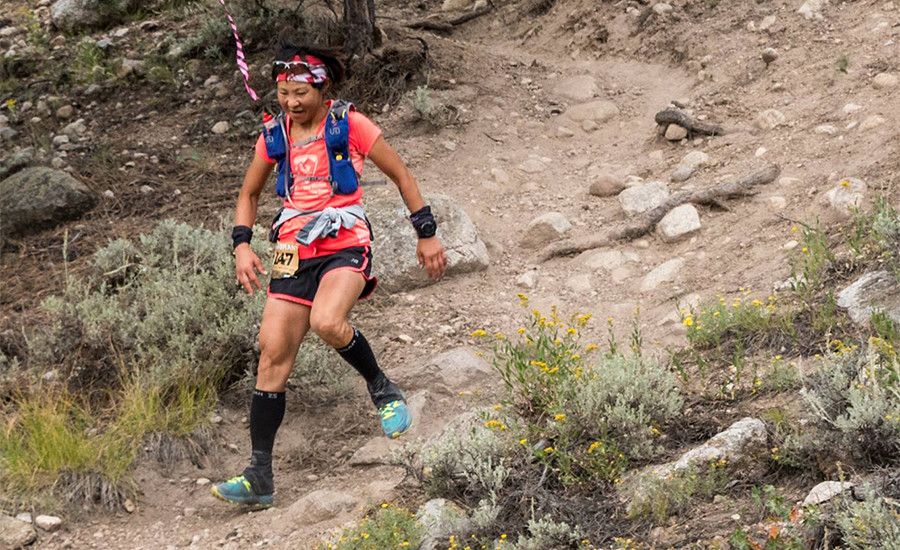
That sense of mortality served Kazukawa well as she rebounded from her first bout of cancer to become an accomplished ultrarunner, only to discover another lump four years later. This time, the cancer was more serious, requiring a mastectomy and chemotherapy. But she never gave up running. A month after finishing chemo, she completed the New York City Marathon. “I thought it was a good way to give closure to that terrible disease,” Kazukawa says. “And with the New York City Marathon, if I got tired, I could just take the subway to the finish.”
Kazukawa continued to grow as a trail runner. In 2015, she became the first person to finish the entire Leadville Series and the Grand Slam of Ultrarunning in a single season. The Leadville Race Series involves running the Leadville Marathon in June, the Leadville 50 in July, and completing the Leadville 100 MTB, Leadville 10K, and Leadville 100 in August. To complete the Grand Slam of Ultrarunning, she had to finish Western States, the Vermont 100, and the Leadville 100 in just three months. Accomplishing either of these series is a career-worthy triumph.
Doing both in a single season is next level. Kazukawa doesn’t know of any other person who has completed the same feat, although Australian ultrarunner Dion Leonard is attempting to do so this year.
“It sounds hard, but if you plan ahead and have a good base and pay attention to strength training, it’s not that bad,” Kazukawa says. “By the time I hit Western States, I had built up my fitness, so I just raced and recovered.”
Kazukawa, now 56, didn’t take up running until she moved from her childhood home in Japan to the United States for college. Even then, it was just short distances to stay in shape. She began teaching group fitness classes in 1989 as an undergraduate, continuing to do so while working toward a masters in exercise physiology. After that, she started running marathons, then trail marathons, then ultras. “I love the challenge of an ultra, because you’re right on that edge of what you can do and what you can’t do,” Kazukawa says. “Once you finish, you know you’re alive. It’s a confidence builder.”
Kazukawa completed a 100-mile race in Wyoming in June and will run the Leadville 100 in August for the seventh time. In September, she is hoping to take her running to the next level and tackle a new distance, 200 miles, in the Italian Alps.
by Graham Averill
Login to leave a comment

Leadville Trail 100 Run
The legendary “Race Across The Sky” 100-mile run is where it all started back in 1983. This is it. The race where legends are created and limits are tested. One hundred miles of extreme Colorado Rockies terrain — from elevations of 9,200 to 12,600 feet. You will give the mountain respect, and earn respect from all. ...
more...
Norwegian Runner Dies After Being Struck by Lightning During Italian Ultramarathon
Extreme weather this past weekend in Italy claimed the life of a 44-year-old woman from Norway who was participating in an ultramarathon after she was struck by lightning on Saturday.
According to a release on the Südtirol Ultra Skyrace's Facebook page, the incident occurred around 7:15 p.m. near a lake called Lago di San Pancrazio. The dangerous weather issues prompted race officials to suspend the race 30 minutes prior, but many runners — like the woman — were between aid stations with no way of receiving the news.
Nearby runners that witnessed the strike called emergency personnel, who transported her by helicopter to Bolzano Hospital where she succumbed to her injuries.
"We are shocked and deeply shaken by this tragic accident," said Josef Günther Mair, chair of the race's organizing committee. "We express our deepest condolences to the family of the athlete."
The victim's name has yet to be made public.
Südtirol Ultra Skyrace race dubs itself "the most extreme experience in the Alps" along a trail called "Hufeisentour" in the Sarntaler Alps. Runners travel 121 kilometers (more than 75 miles) over three days and climb almost five miles in altitude.
Login to leave a comment
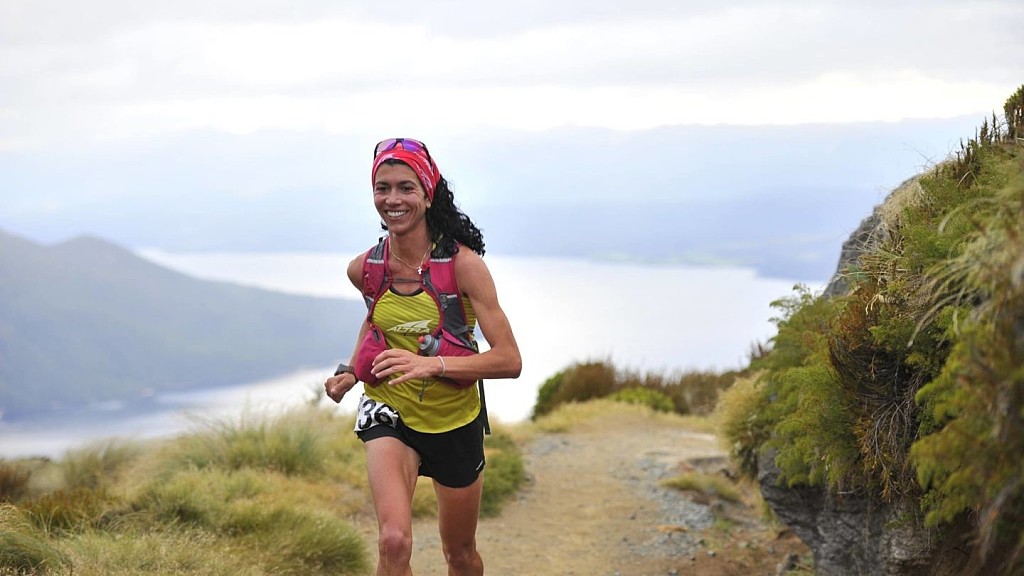
Cecilia Flori often smiles through pain, but now she’s hoping an injury doesn’t keep her from competing at the 2019 Western States 100-mile race
The gap between elites and amateurs can feel wide indeed, but one area of common ground is an injury that threatens the start line of an important race. That’s the relatable place elite ultrarunner Cecilia Flori finds herself as she struggles with a foot injury a few weeks out from the Western States Endurance Run, the 100-mile race on June 29, from Squaw Valley to Auburn, California.
Expected to be a favorite in this year’s event, Flori arrived in California more than a month before the race, hoping to train on the course. The 38-year-old Italian physicist, who currently calls New Zealand home, earned bib F5 and says she was feeling as fit as ever when her foot began to hurt.
“I’ve been working on my speed by running marathons this year,” she said. “I think the Western course suits my strengths and I was more than ready for it.”
Relatively new to the ultra scene—and running in general—Flori made a big entrance to the sport, nabbing a podium spot at the North Face Endurance 50-miler in Canada in 2015.
“I’ve always loved the outdoors and was a climber before a triathlete friend convinced me to run a half marathon with him,” she said. “I really enjoyed it and I was hooked.”
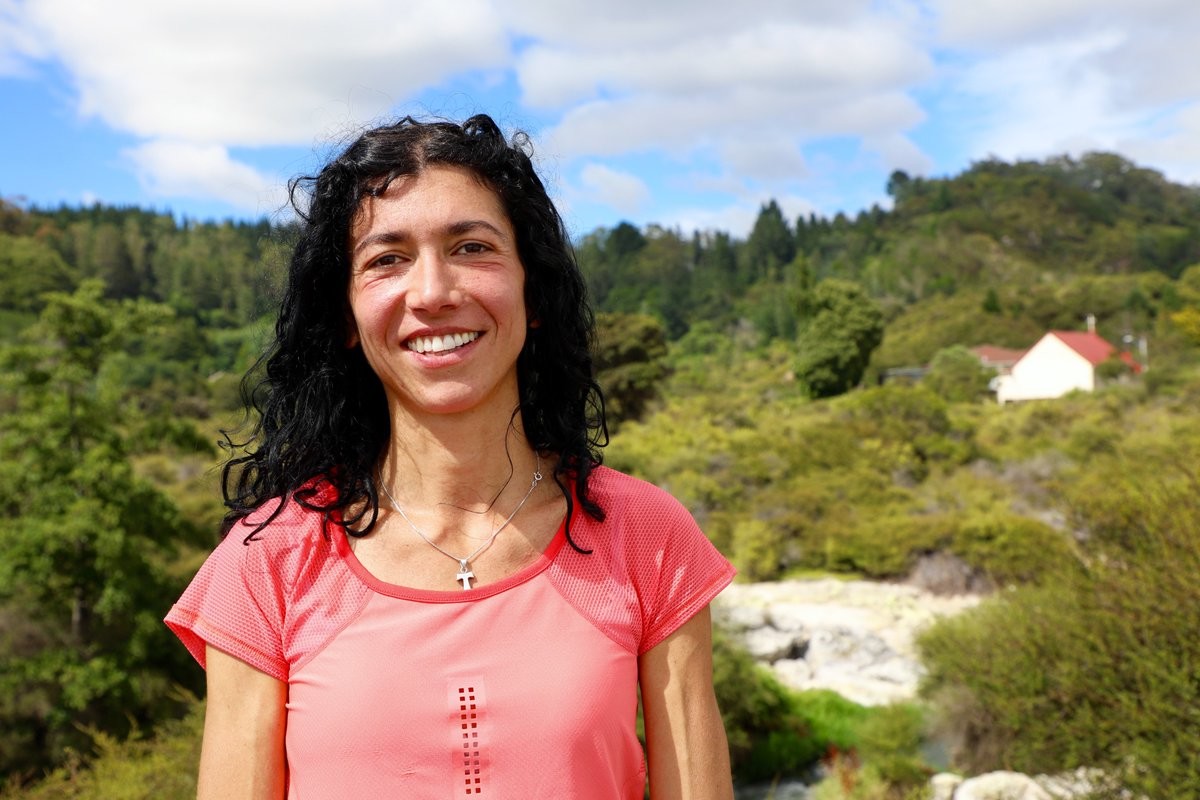
Flori says the flow of running is what drew her in. “The repetitive motion makes me feel alive,” she said. “It’s a primal feeling—I’m at one with nature when I’m on trails.”
Relocating for her research to scenic New Zealand in 2016, Flori migrated entirely from climbing to running, joining a running club for training. She took on some shorter distance trail races and then won the Taupo 100K. “I started thinking that maybe I was good at endurance,” she says. “In 2017, I entered the Tarawera 100 and took third behind [2008 U.S. Olympic marathoner] Magda Boulet and [2017 Comrades champion] Camille Herron. I was shocked but I realized I could compete on an international level.”
Herron has since become Flori’s coach, and it was that Tarawera race that made Herron take note.
“I watched her run neck-and-neck with Magda Boulet,” Herron said. “What I remember most as I looped around and saw her was the big smile on her face.”
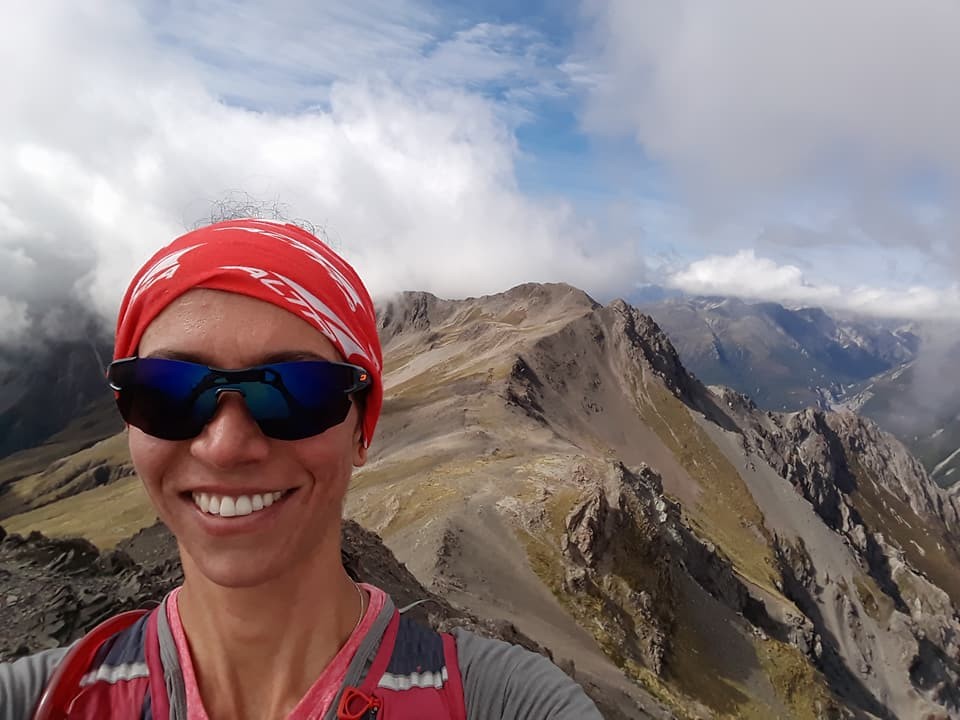
Since then there have been few hiccups in Flori’s ascent to the upper echelons of ultras. She pulled off fifth at last year’s Western States in 19:44 and followed it up with a 10th place finish at the 101K CCC in the French Alps last September, which she admits, tested her. “It was a learning experience,” she said. “I was sick and had to stop at aid stations quite a bit. But I still managed 10th and I’m proud of myself.”
Herron says Flori has a bright future ahead of her. “I saw that same smile on Cecilia’s face at 62 miles into Western last year. For someone to look that good in fifth place tells me she has lots more to give.
by Amanda Loudin
Login to leave a comment

Western States 100
The Western States ® 100-Mile Endurance Run is the world’s oldest and most prestigious 100-mile trail race. Starting in Squaw Valley, California near the site of the 1960 Winter Olympics and ending 100.2 miles later in Auburn, California, Western States, in the decades since its inception in 1974, has come to represent one of the ultimate endurance tests in the...
more...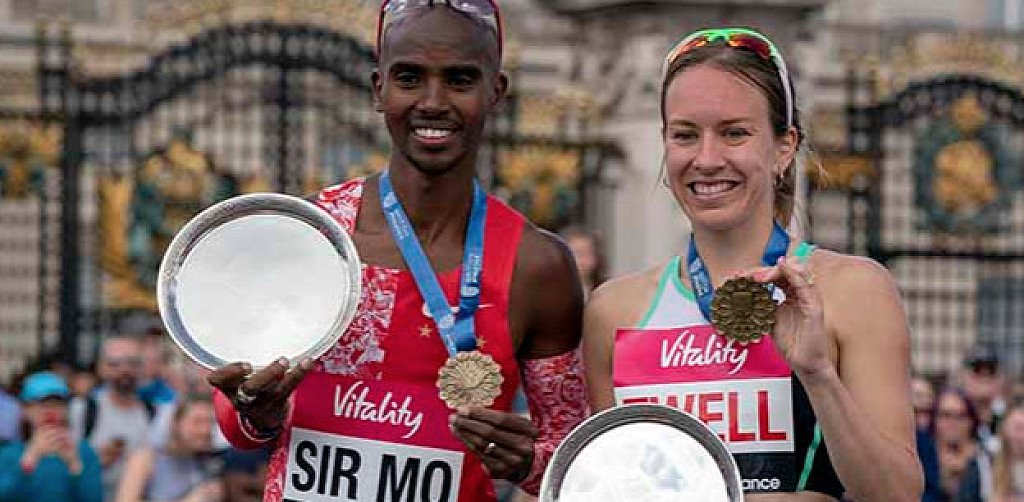
London 10,000: Britons Mo Farah and Steph Twell win men's and women's titles
Sir Mo Farah and Steph Twell retained their British 10K road race titles at the Vitality London 10,000 this morning as thousands turned out to run through the sun-bathed streets of the British capital.
For Farah it was his seventh win in seven races on the famous central London course, while Twell took two seconds from her personal best to win the women’s crown for a second time just 24 hours after setting a world mile record for running hand-in-hand.
In the end Farah’s win was easy enough but the four-times Olympic champion was pushed hard by Rio Olympian Andy Butchart and former British Mile champion Nick Goolab before prevailing in 28:15.
“I really enjoyed it today,” said Farah, who was racing for the first time since finishing fifth in the Virgin Money London Marathon last month. “I love coming to London and particularly running on this course. It’s fantastic to win for a seventh time.
“The London Marathon is behind me now. I was a bit disappointed not to run quicker there but I have recovered well and was confident today.”
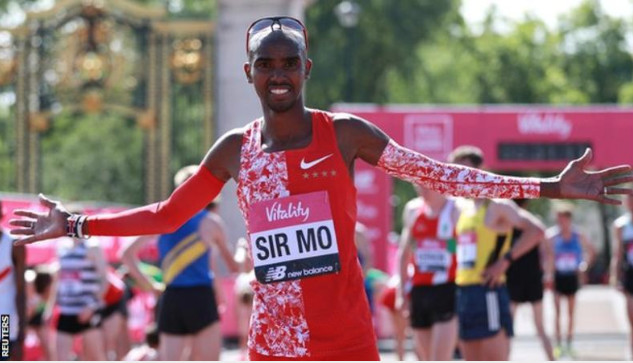
Goolab led the trio through halfway in 14:08 before he dropped back, but Butchart hung on until the last two kilometres, when Farah finally kicked away and put more than 100m between the pair.
“I knew Andy and Nick are both running well and I would have to keep my eyes on them,” said Farah. “We got rid of Nick, but Andy kept pushing and pushing and pushing.
“I thought, ‘When am I going to get rid of you?’ He did very well, but I was confident I could do it in the end. This is my race.”
Butchart may have failed to add to his victories here in 2016 and 2017, but the Scot was pleased enough to finish runner-up just 13 seconds behind, matching his personal best from 2016.
“I knew I would have to do the hard work,” said Butchart, who led for most of the first 5K. “But Mo was just chilling really. It’s really hard to lead a 10K and get away from someone like him.
“I wanted a good run and got that. It was only in the last 2K that he pulled away and I’m pleased to equal by PB. It shows I’m ready to run fast in the track.”
As for Twell, she set off at a pelt in the women’s race, running with a small group of male club runners as she established an unassailable lead that grew with every step.
On Sunday she and husband Joe Morwood had smashed the Guinness World Record for the fastest road mile holding hands, but that effort did little to dent her 10K title defence.
Twell passed halfway in 15:33 and eventually won by nearly 40 seconds from Stockport’s Jess Piasecki with Verity Ockenden of Swansea taking third.
“This is a great course and a great event,” said the two-time Olympian who stopped the clock at 31:55. “A personal best and a world record in one weekend can’t be bad.
“My legs were fine after yesterday, but I think I felt it in my arms a bit. The bigger races always bring out the best in me, and this is one of the biggest and the best.
“Today was London in its full glory and the crowds were fantastic. I’m just delighted.”
The unheralded Piasecki was also pleased as she clinched the runner-up spot in her best time of 32:33, while Ockenden also took some well-known scalps from a race loaded with internationals as she pinched the last podium place in 32:39, a PB for her by nearly two minutes.
“I saw Steph go off and I knew that was too fast for me,” said Piasecki. “But I ran quite within myself until the last kilometre. That was tough but it was worth it to finish second.”
As an aside, My Best Runs publisher and founder Bob Anderson placed third in the 70 plus division clocking 49:22. “What a great event,” says Bob. “This is for sure a Bucket List race. It may only be 10k but it is worth traveling too. Congrats to Mo and Steph, the winners today.” (Third photo) Bob with Barrie Nicholls (65-year-old runner/actor from London) at the finish line.
Login to leave a comment

Vitality London 10,000
The Vitality London 10,000 takes you past many landmark sites, including the London Eye, Buckingham Palace and the Bank of England – so you even get to do a bit of sightseeing along the way! You will run alongside elite runners and have coverage from the BBC, making this 10km one of the highest in profile of its kind....
more...
Australian’ 24-year-old Jacqui Bell is the youngest person lining up for the 323K Alps 2 Ocean Ultra in New Zealand
24-year-old Australian ultra-marathon runner Jacqui Bell is in New Zealand to tackle her longest ultra-marathon.
Bell is lining up in the Alps 2 Ocean Ultra on Sunday with 120 others from 14 countries to run 323 kilometers from Aoraki/Mt Cook to Oamaru in seven days mostly following the off road Alps 2 Ocean cycle trail.
Speaking from Christchurch New Zealand Airport on Wednesday, she told Stuff she expected the race to be "brutal". Completing it will bring her a step closer to being the youngest person in history to run an ultra-marathon on every continent in the world.
"I'm hoping the scenery makes up for the toughness of it. It's a lot of kms, and my body hasn't done any more than 250kms every.
"It's kind of like going into the unknown in that next 73km ... but I'll just try and enjoy it."
Bell said she was looking forward to the "beautiful landscape" in New Zealand.
"I can't wait to clock off from the everyday stresses of life and get to run every day in the mountains.
"I've never been to New Zealand ... I'm not sure what I'm in for."
Bell said she couldn't resist the idea of running 323km.
"It's going to be amazing," she said.
Login to leave a comment

Alps 2 Ocean Ultra
New Zealand's First Ultra Staged Run. Starting at the base of New Zealand's highest mountain, travelling on foot 316 kms to the small harbour of Oamaru, located on the shores of the Pacific Ocean. The ultimate adventure race, Alps 2 Ocean Ultra, was a dream that quickly became a reality. And it’s now only weeks until the 126 entrants will...
more...
New Zealand's first Ultra staged Run starts on Sunday
Epic Running Adventures
Login to leave a comment
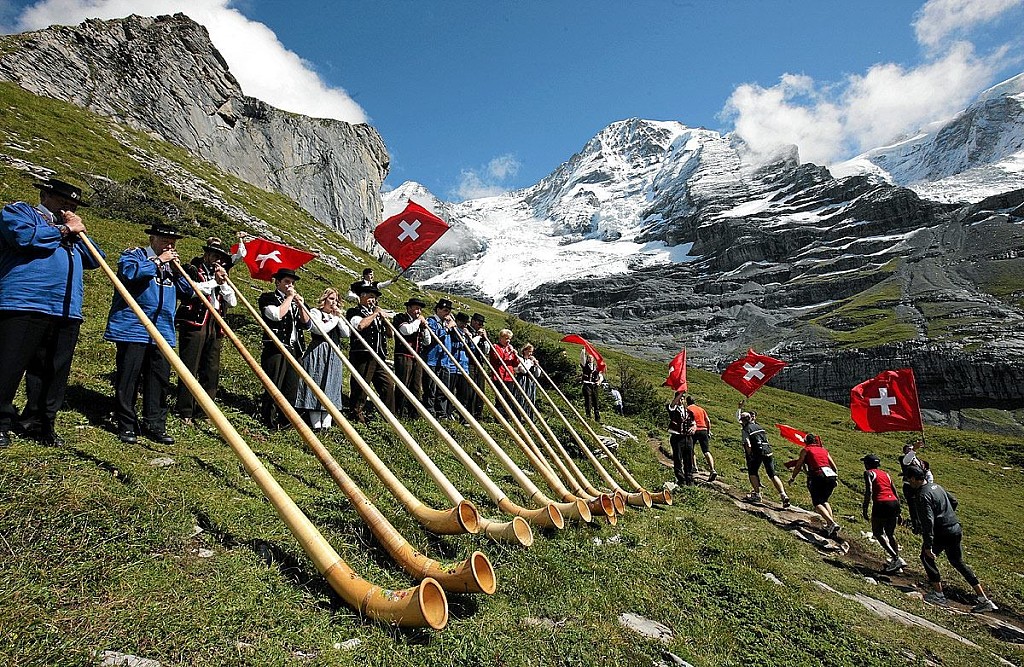
Maybe the Most Beautiful Course in the World?
Login to leave a comment
