

Running News Daily
Running News Daily is edited by Bob Anderson and team. Send your news items to bob@mybestruns.com Advertising opportunities available.
Index to Daily Posts · Sign Up For Updates · Run The World Feed
Articles tagged #Kipchoge Keino
Today's Running News



Nairobi 2029: Kenya Wins Historic Bid to Bring World Athletics Championships to Africa
Africa finally has its moment. Kenya has won the race to host the 2029 World Athletics Championships, turning years of ambition into a landmark reality for the continent.
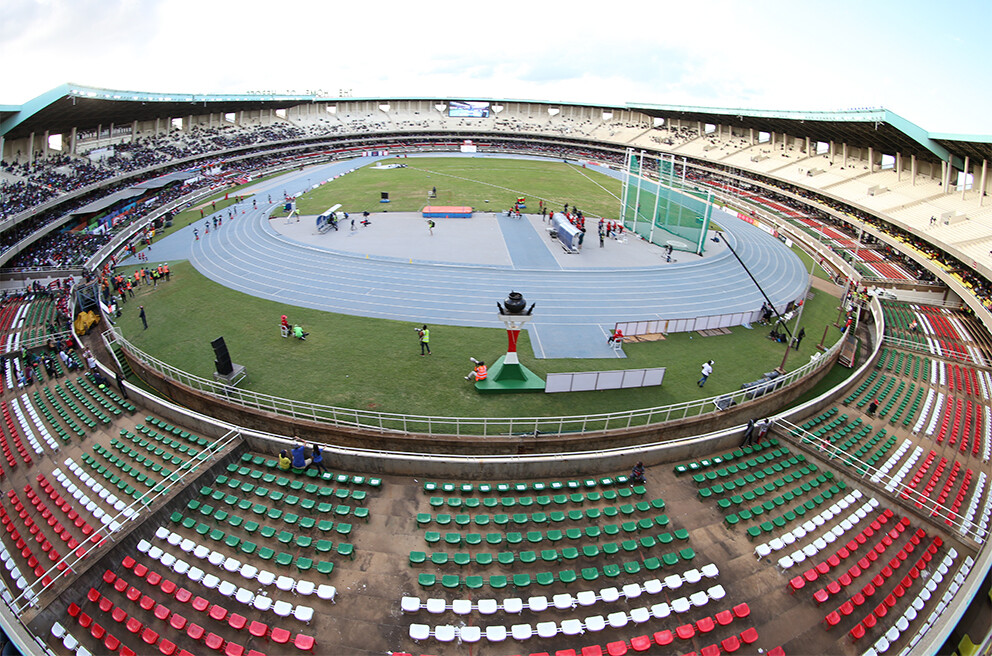
In a historic decision announced in Budapest, Nairobi has been selected to host the 2029 World Athletics Championships, making Kenya the first African nation to stage the senior global track and field championships.
World Athletics confirmed that Nairobi and Munich have been selected to host the 2029 and 2031 World Athletics Championships respectively, following what the governing body described as one of the strongest bidding processes in the history of its flagship event.
For Kenya, the announcement represents far more than a successful hosting bid. It is the latest chapter in a remarkable athletics story built over generations.
The Kenyan capital overcame strong competition from London, Rome and Munich to secure the 2029 edition, bringing the world's biggest senior athletics championship to African soil for the first time.

The championship will be staged at the Moi International Sports Centre, Kasarani, in Nairobi, giving Kenya the opportunity to welcome the world's greatest athletes to a country that has produced countless champions of its own.
For generations, Kenya has established itself as one of the most influential nations in global athletics.
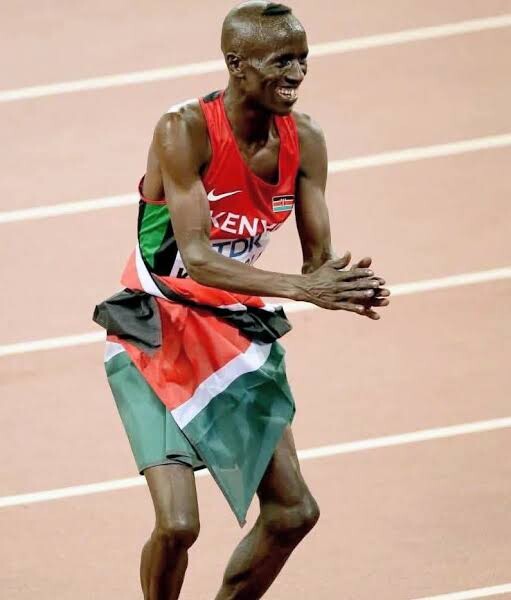
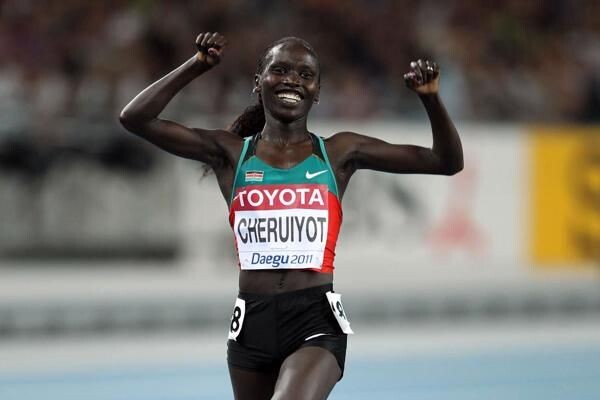
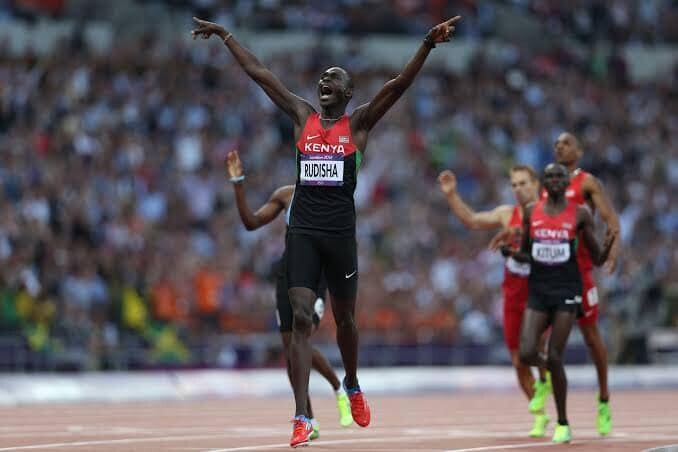
From pioneering Olympic champion Kipchoge Keino and distance-running legend Tegla Loroupe among others to modern icons such as Eliud Kipchoge, Faith Kipyegon, David Rudisha, Faith Cherotich, Vivian Cheruiyot and Ezekiel Kemboi among others. Kenyan athletes have repeatedly conquered the world's biggest stages.
Their Olympic victories, world titles, records and unforgettable performances have made Kenya one of the most recognizable names in track and field.
But Kenya's athletics identity extends far beyond medals.
Running is deeply rooted in communities across the country, while the high-altitude training regions of the Rift Valley have become synonymous with the development of world-class distance runners. Behind the champions are coaches, families, training partners and communities that have helped create an athletics culture admired around the world.
Now, for the first time, that culture will become the backdrop for the sport's biggest senior global championship.
Nairobi 2029 will be historic before the first race even begins.
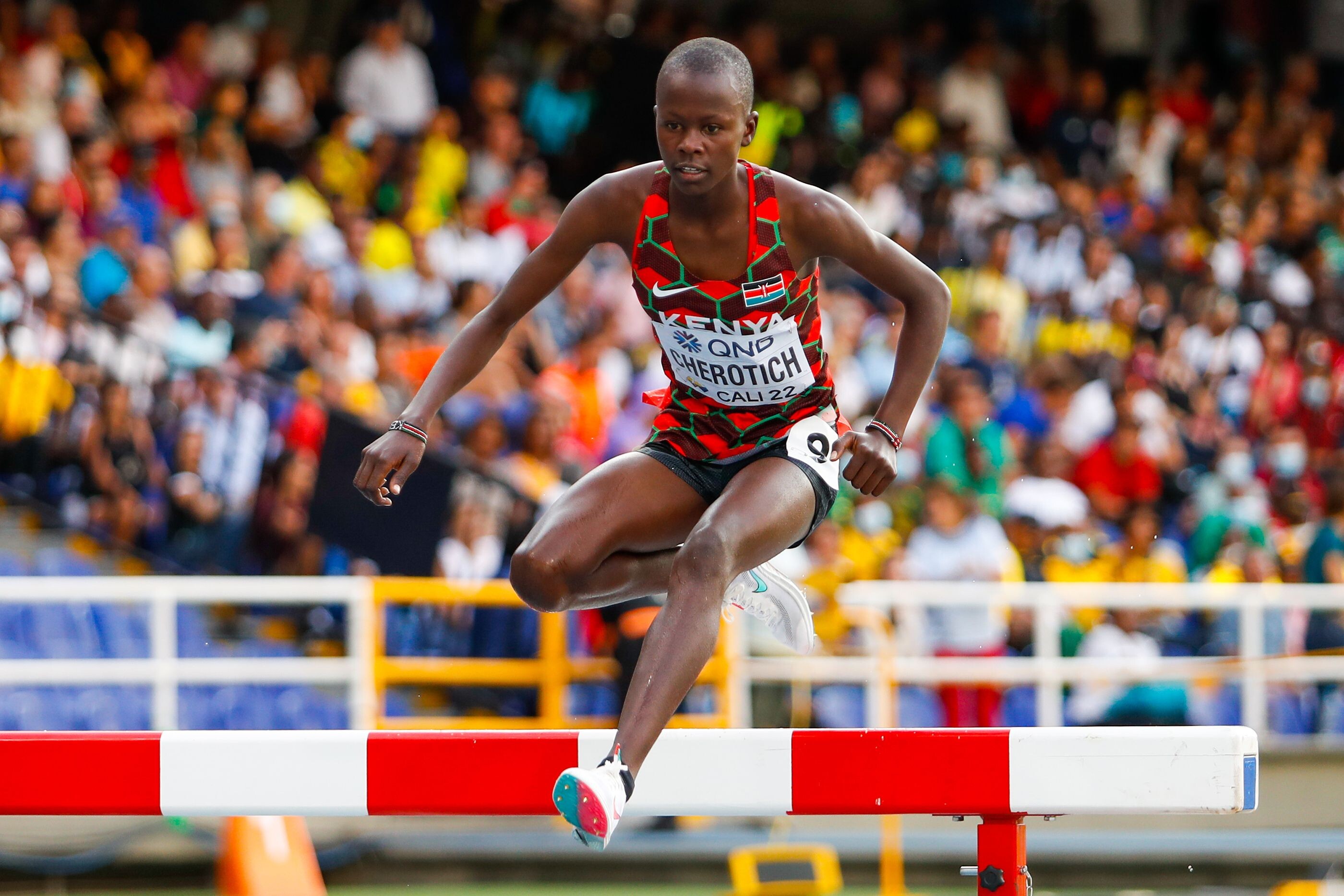
Kasarani, already an important venue in Kenya's sporting history, will take center stage as athletes from across the globe descend on Nairobi in pursuit of world titles.
For Kenyan fans, the opportunity to watch the world's greatest sprinters, middle-distance runners, distance stars, hurdlers, field-event athletes and relay teams compete on home soil will be extraordinary.
For the country's next generation of athletes, the impact could be even greater.
Young runners who have grown up watching Kenyan champions compete around the world will now have the chance to experience a World Championships in their own country. The sight of the world's best athletes competing at Kasarani could inspire a new generation to believe that they, too, can reach the highest levels of the sport.
The significance, however, stretches well beyond Kenya's borders.
Africa has produced generation after generation of Olympic champions, world champions and global athletics icons. From Kenya and Ethiopia to Uganda, Morocco, South Africa and numerous other nations, African athletes have played a central role in shaping the history of track and field.
Yet the continent had never hosted the senior World Athletics Championships.
Nairobi 2029 changes that forever.
The successful Kenyan bid therefore represents a major breakthrough for African athletics and a powerful recognition of the continent's contribution to the sport.
World Athletics' decision also secures the future of the championships beyond Nairobi. Munich will host the 2031 World Athletics Championships, creating a two-edition sequence that will see the global showpiece move from Africa to Germany.
But the spotlight now belongs to Nairobi.
The announcement in Budapest has transformed what was once an ambitious bid into a confirmed date with history.
In 2029, Kenya will not simply send athletes to compete for world titles.
Kenya will welcome the world.
It will be a celebration of the pioneers who laid the foundation, the champions who carried the country's name across the globe and the young athletes who represent the future of African athletics.
After decades of producing champions for the world, Kenya will finally have the opportunity to bring the world's greatest athletics stars into its own backyard.
For Africa, this is more than a hosting victory.
It is a breakthrough. It is recognition. It is a new chapter.
And when the athletes walk into Kasarani for the 2029 World Athletics Championships, they will be stepping into a moment that will belong not only to Kenya, but to an entire continent.
NAIROBI 2029 — THE WORLD IS COMING TO AFRICA.
by Erick Cheruiyot for My Best Runs.
Login to leave a comment

Nairobi 2029: Could Kenya Finally Bring the World Athletics Championships to Africa?
Tomorrow could be a defining day for Kenyan athletics — and potentially for the entire African continent.

The World Athletics Council is expected to announce the host of the 2029 World Athletics Championships, with Nairobi's bid carrying the hopes of a continent that has produced generations of extraordinary athletes but has never staged the senior global championships.
For Kenya, the moment could represent the culmination of decades of dominance, sacrifice and achievement on the international athletics stage.
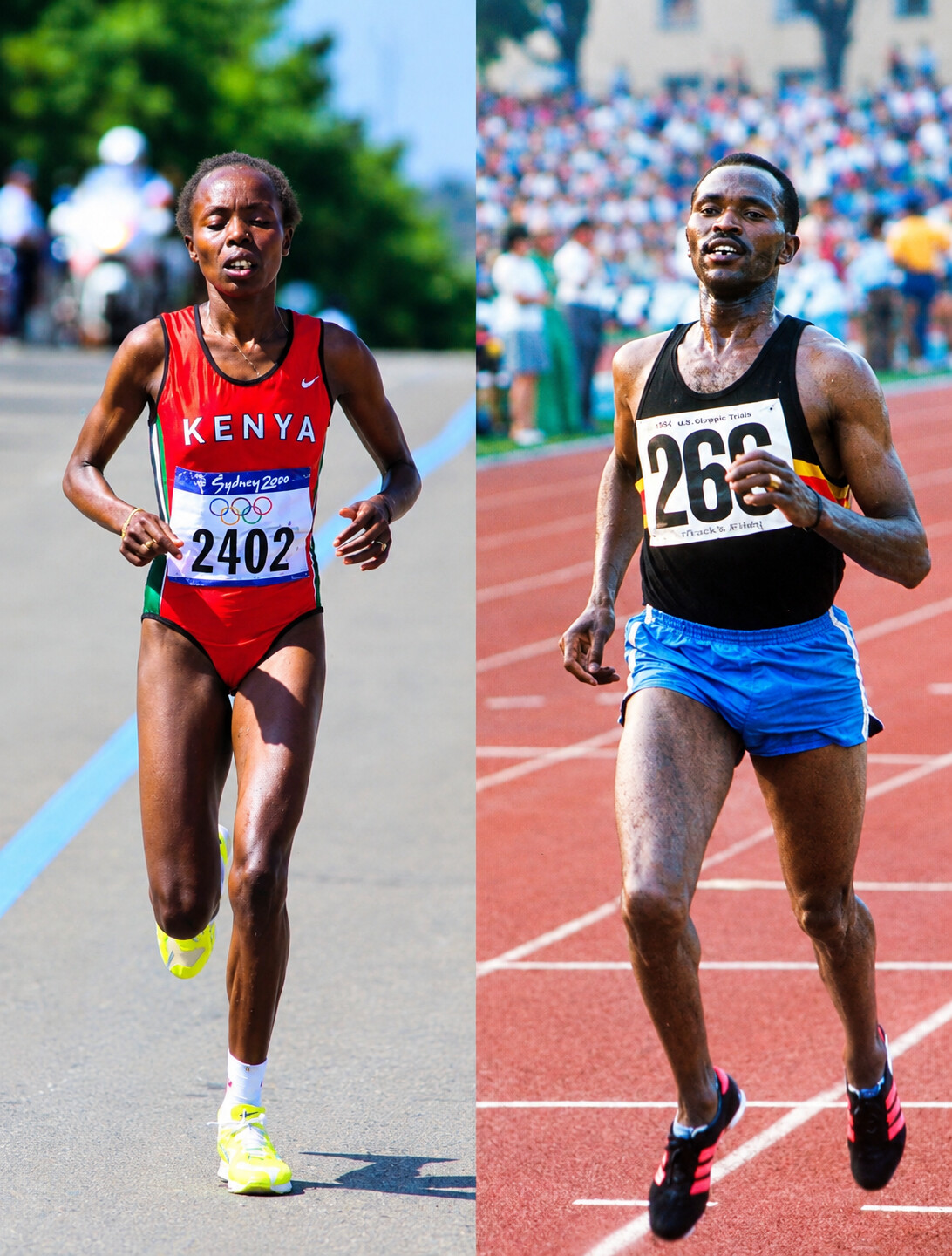
For generations, Kenya has built one of the most remarkable traditions in track and field. From pioneering legends such as Kipchoge Keino and Tegla Loroupe to modern icons including Eliud Kipchoge, Faith Kipyegon, David Rudisha, Sebastian Sawe, Beatrice Chebet and Ezekiel Kemboi among others. Kenyan athletes have repeatedly stood on the biggest stages in world sport.
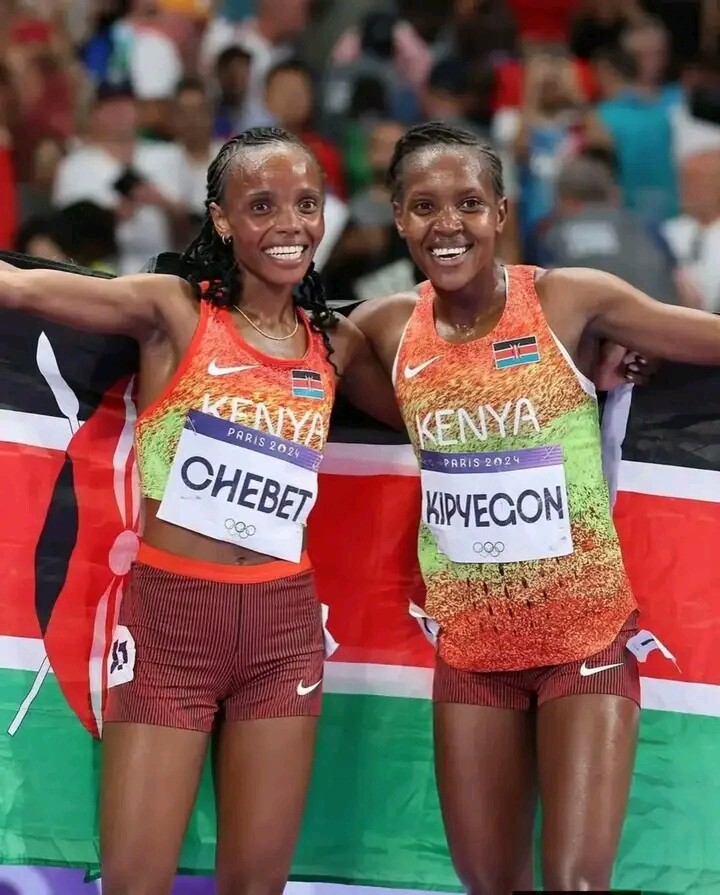
Their achievements have helped make Kenya one of the most respected names in global athletics. Olympic triumphs, world titles, records and unforgettable performances have carried the country's name across every corner of the sporting world.
But Kenya's relationship with athletics extends far beyond its medal collection.
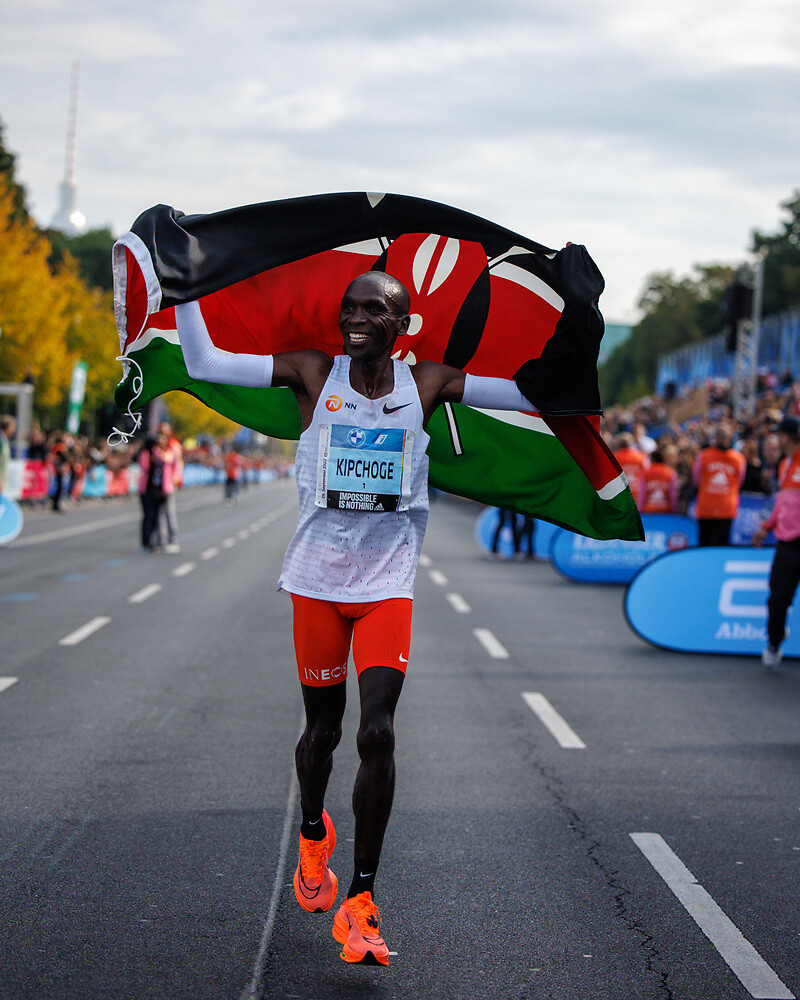
Running is deeply rooted in communities throughout the country, while the high-altitude training environments of the Rift Valley have become famous worldwide for producing elite distance runners. Behind every champion is a network of coaches, families, training partners and communities that have helped sustain Kenya's extraordinary athletics culture.
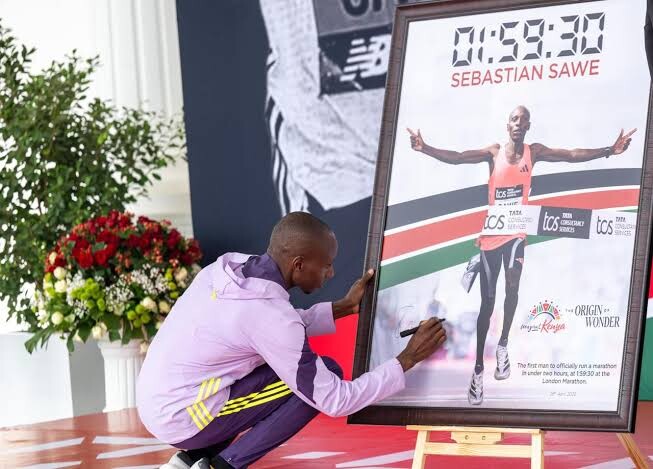
Now Nairobi is seeking to bring the world's biggest track and field championship to the country where so many champions have been produced.
The proposed centerpiece of Kenya's bid is Moi International Sports Centre, Kasarani, a venue already deeply connected to Kenyan athletics. If the bid succeeds, Kasarani could become the stage where the world's finest athletes gather in 2029 to compete for global titles.
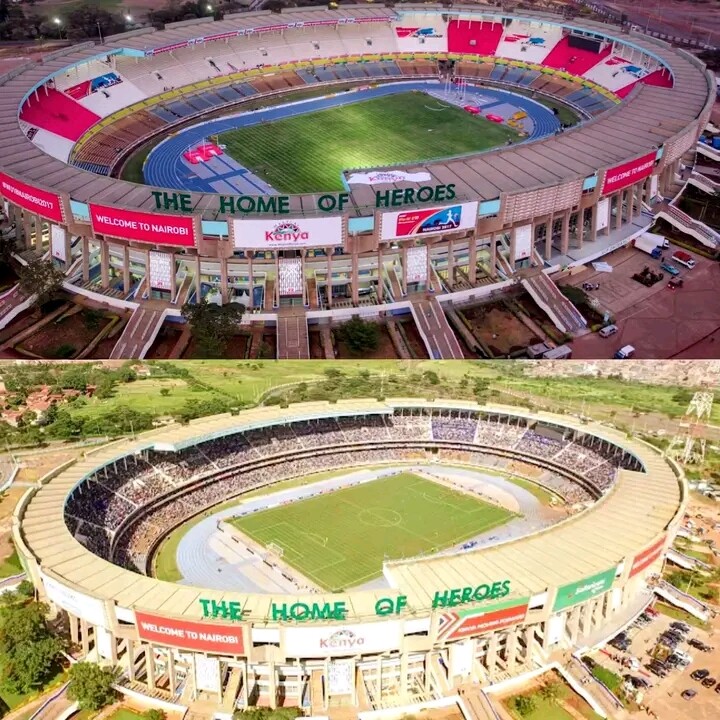
And the significance would extend far beyond Kenya.
Africa has produced some of the greatest athletes in athletics history, yet the continent has never hosted the World Athletics Championships. Nairobi's bid could change that.
Kenya's proposal is therefore not simply about staging another major sporting competition. It represents an opportunity to bring the championships to African soil for the first time and introduce millions of international fans to the continent's remarkable athletics culture.
However, Nairobi is facing formidable competition.
Kenya's bid is competing against proposals from London, Rome and Munich, three European cities with established sporting traditions and significant experience hosting major international competitions.
That sets up a fascinating choice for World Athletics.
Will the organization take the championships to a continent that has never hosted the event, creating a historic first for Africa? Or will the competition return to one of Europe's traditional athletics powerhouses?
For Nairobi, the stakes could hardly be higher.
A successful bid would give Kenyan athletes the opportunity to compete at a World Championships in front of their home supporters. It would give young runners across the country the chance to watch the world's best athletes compete in their own backyard. And it would place Kenya's extraordinary athletics heritage at the center of global attention.
It could also provide an opportunity to celebrate the champions who came before — athletes whose achievements helped establish Kenya as an athletics superpower — while inspiring the generation that will carry that legacy forward.
Imagine Kasarani filled with thousands of passionate supporters, the world's best athletes arriving in Nairobi, and Kenyan stars stepping onto the track knowing that the biggest championship in their sport is being staged on home soil.
For a country whose identity is so closely intertwined with running, it would be a remarkable sight.
And for Africa, it could be a moment of enormous symbolic importance.
Tomorrow, Kenya — and Africa — could hear its name called.
One decision. One host. One opportunity to make history.
If Nairobi is chosen, the story would not simply be about Kenya winning a bid. It would be about Africa finally welcoming the World Athletics Championships to its own soil.
It would be a celebration of the pioneers, the champions, the coaches, the communities and the generations of athletes who have helped make African athletics a global force.
And perhaps the headline of 2029 would already be waiting:
Kenya, the home of champions, has finally brought the world to its own backyard.
Nairobi 2029 — could this finally be Africa's moment?
by Erick Cheruiyot for My Best Runs.
Login to leave a comment
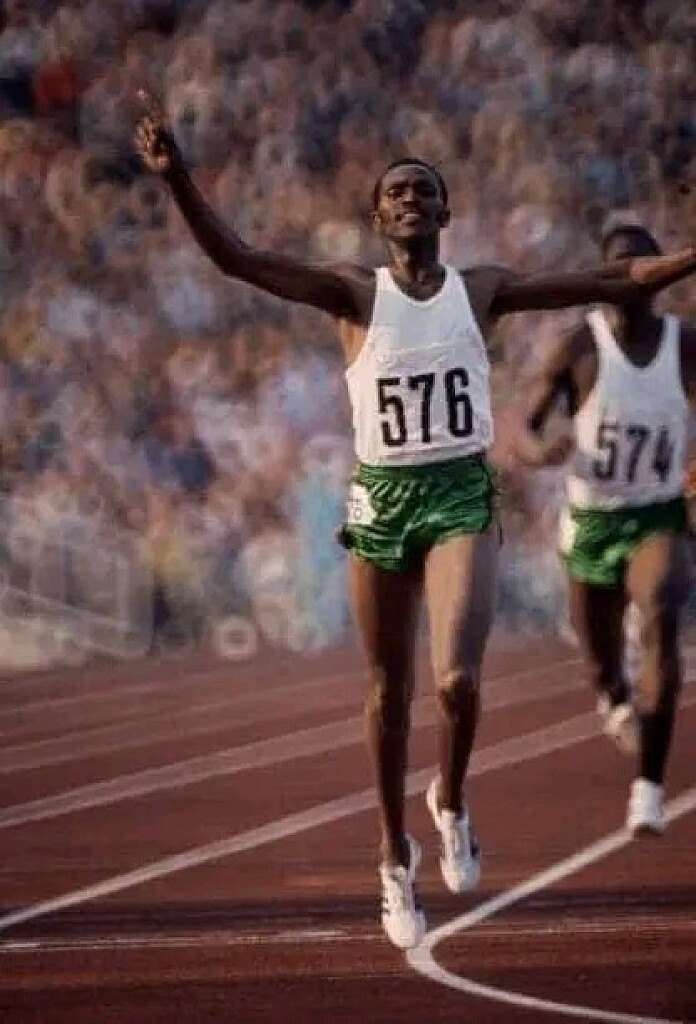
The Day Kip Keino And Ben Jipcho Put Kenya On Top In Munich
On 4 September 1972, Kenya once again announced its growing authority on the Olympic athletics stage as the country produced a spectacular one-two finish in the men’s 3,000m steeplechase at the Munich Olympic Games.
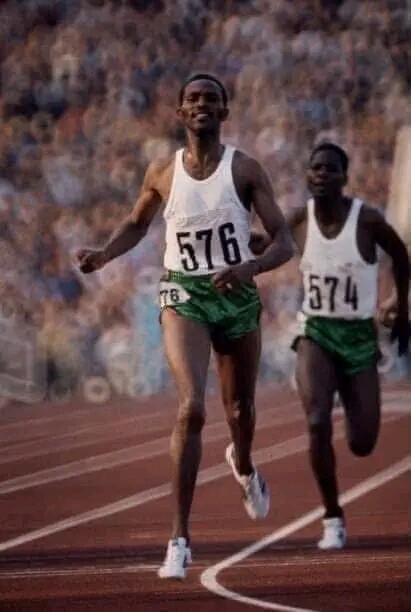
Kipchoge Keino delivered a commanding performance to capture the gold medal in 8:23.64, setting a new Olympic record in the process. His compatriot Benjamin Jipcho was equally impressive, crossing the line in 8:24.62 to take silver, while Finland’s Tapio Kantanen secured bronze in 8:24.66.
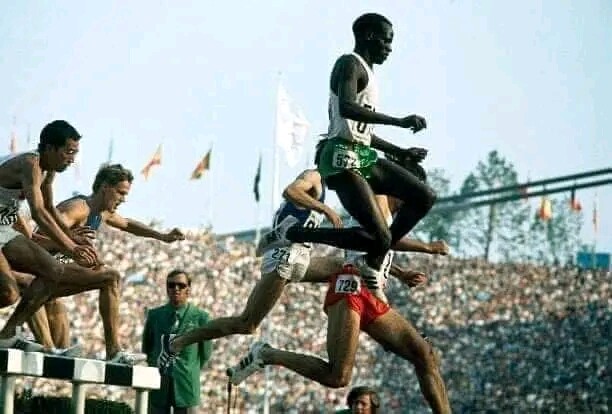
The final brought together a remarkable group of athletes, including Kenya’s defending Olympic champion Amos Biwott. Keino and Jipcho, however, proved too strong when the decisive moments arrived. As the race entered its closing stages, the leading group began to separate, with Keino positioning himself perfectly for the final charge.
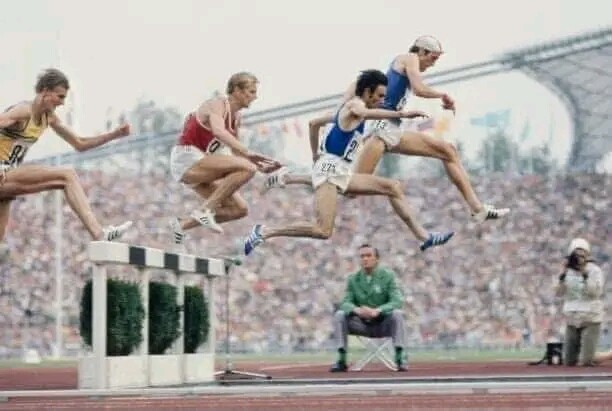
Keino then unleashed his finishing speed, pulling clear in the closing metres to secure another Olympic title. Jipcho fought his way into second, completing a memorable Kenyan one-two, while Kantanen held on for third. Biwott finished sixth in 8:33.48, giving Kenya three athletes among the top six finishers.
For Keino, the triumph added another remarkable chapter to an already extraordinary Olympic career. Four years earlier in Mexico City, he had won the 1,500m gold medal and taken silver in the 5,000m. In Munich, he demonstrated his versatility once again by conquering the demanding steeplechase, an event requiring not only endurance and speed but also exceptional rhythm and technique over the barriers and water jump.
Jipcho’s silver medal was equally significant. His performance confirmed that Kenya’s success in the steeplechase was no longer the achievement of a single exceptional athlete. A new generation of Kenyan runners was emerging, capable of challenging the very best on the world’s biggest stage.
The Munich final also carried a sense of continuity for Kenya. Biwott had won the Olympic steeplechase title at the 1968 Mexico City Games, and four years later his compatriots Keino and Jipcho ensured that the gold medal remained in Kenyan hands. It was becoming increasingly clear that the country had discovered a formidable formula for producing world-class steeplechasers.
Beyond the medals, the race helped strengthen Kenya’s growing reputation as a powerhouse in distance running. The combination of natural endurance, disciplined training and extraordinary competitive courage would continue to produce generations of Kenyan steeplechase champions, turning the event into one of the country's most celebrated Olympic disciplines.
The complete Munich 1972 final standings were:
1. Kipchoge Keino — Kenya — 8:23.64 — Olympic Record
2. Benjamin Jipcho — Kenya — 8:24.62
3. Tapio Kantanen — Finland — 8:24.66
4. Bronisław Malinowski — Poland — 8:27.92
5. Dušan Moravčík — Czechoslovakia — 8:29.06
6. Amos Biwott — Kenya — 8:33.48
7. Romualdas Bitė — Soviet Union — 8:34.64
8. Pekka Päivärinta — Finland — 8:37.17
9. Takaharu Koyama — Japan — 8:37.66
10. Mikko Ala-Leppilampi — Finland — 8:41.03
11. Jean-Paul Villain — France — 8:46.72
12. Mikhail Zhelev — Bulgaria — 9:02.59
More than five decades later, the Munich steeplechase remains a landmark moment in Kenyan athletics history. Keino’s golden run, Jipcho’s brilliant silver and Biwott’s determined sixth-place finish combined to create a performance that captured the depth of Kenya’s emerging distance-running strength.
It was not simply a victory for one athlete. It was a statement from a nation — and another unforgettable chapter in Kenya’s extraordinary Olympic athletics legacy.
by Erick Cheruiyot for My Best Runs.
Login to leave a comment
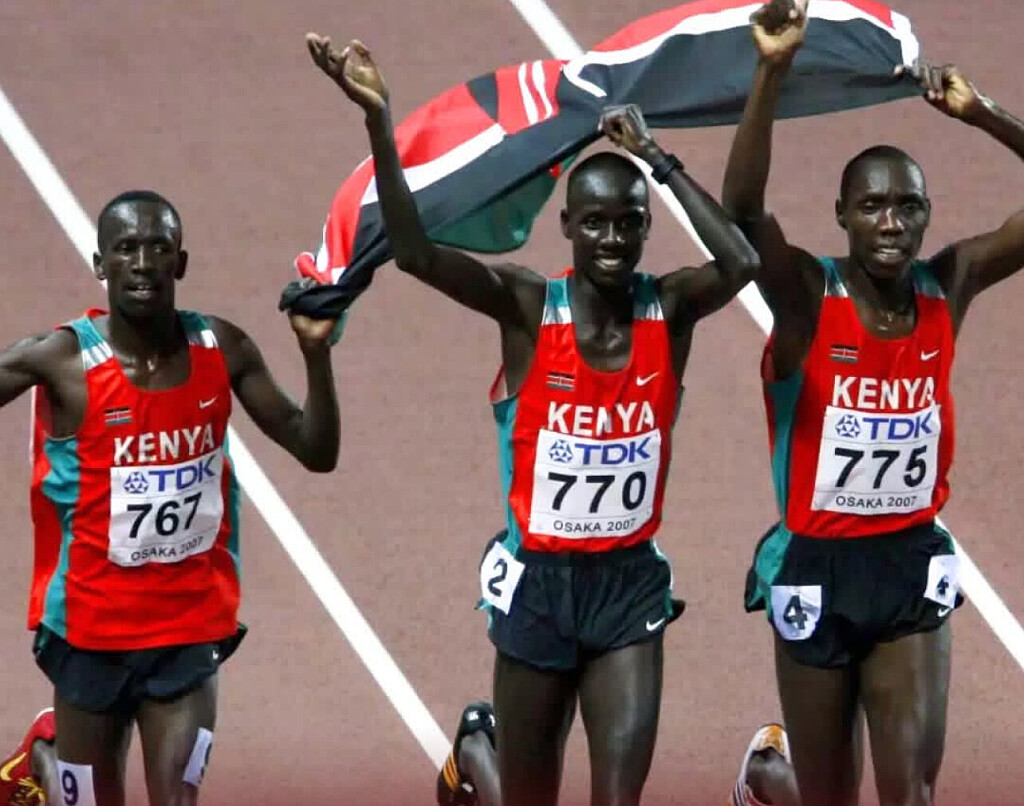
How One Tribe in Kenya Came to Dominate Global Distance Running
There may be no statistic in all of sports more astonishing than this one.
The Kalenjin, an ethnic group—often referred to as a tribe—in Kenya, make up about 13.4% of the country’s population, roughly 6.3 million people. On a global scale, they represent about one out of every 1,000 people worldwide.
Yet this small community has produced an overwhelming share of the world’s greatest distance runners.

Their dominance has been so complete, and so sustained, that it has been described as “the greatest geographical concentration of achievement in the annals of sport.” And it is hard to argue otherwise.
From the Rift Valley to the World Stage
Most elite Kalenjin runners come from Kenya’s Rift Valley region, particularly areas such as Nandi, Elgeyo-Marakwet, Uasin Gishu, and Baringo, where elevations range from 2,000 to 2,400 meters (6,500–8,000 feet) above sea level.
Here, running is not a hobby—it is part of daily life.
Children grow up walking and running long distances, often on dirt roads. Training at altitude is the norm, not a strategy. And success stories are local and visible, creating a powerful cycle of belief and opportunity.
Champions Across Eras
The Kalenjin impact on global athletics stretches back more than half a century.
Kipchoge Keino, one of the pioneers of Kenyan distance running, won Olympic gold in the 1500 meters at the 1968 Mexico City Games and the 3000-meter steeplechase in 1972, helping place Kenyan runners on the world map.
Since then, Kenyan athletes—many of them Kalenjin—have dominated:
• The 3000-meter steeplechase, winning Olympic gold in nearly every Games since 1968
• The 5,000 meters and 10,000 meters at World Championships
• The marathon, particularly at the World Marathon Majors
Masters of the Marathon
Perhaps nowhere is this dominance more visible than in the marathon.
Kalenjin runners have repeatedly won and controlled races such as:
• Berlin Marathon
• London Marathon
• Chicago Marathon
• Boston Marathon
• New York City Marathon
These victories are not isolated moments—they are part of a long, uninterrupted pattern.
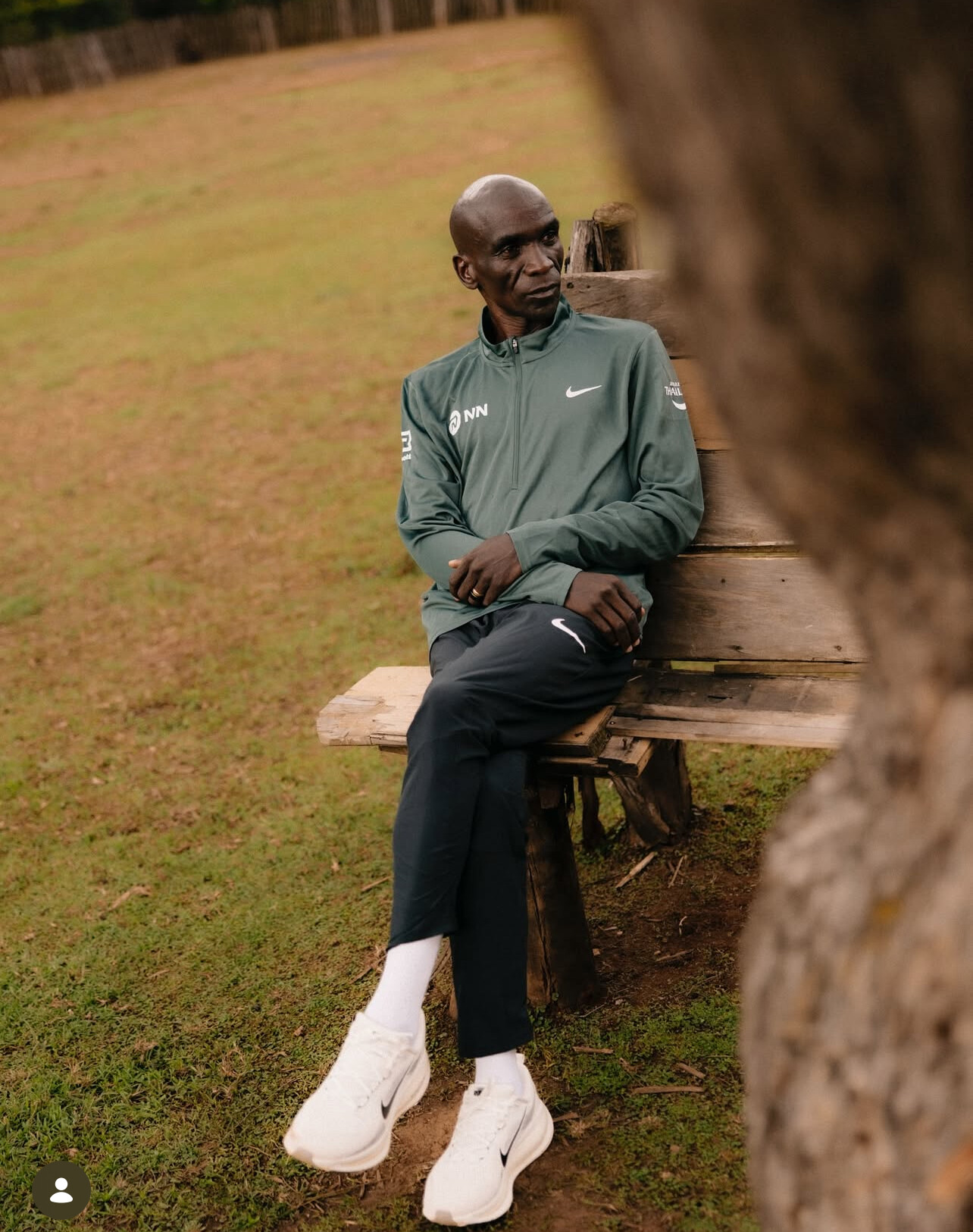
At the center of it all stands Eliud Kipchoge, widely regarded as the greatest marathon runner in history. A member of the Kalenjin community, Kipchoge has:
• Won two Olympic marathon gold medals (2016, 2021)
• Set a world record of 2:01:09 at the Berlin Marathon
• Become the first human to run 26.2 miles in under two hours
He is not an exception. He is the most refined expression of a system that has been producing champions for generations.
Why This One Tribe?
No single explanation tells the whole story, but several factors come together in the Rift Valley:
• Geography: High altitude, rolling terrain, and ideal training conditions
• Physiology: Exceptional running economy and efficient biomechanics
• Culture: Running as a respected path to success and opportunity
• Environment: Group training, competition, and long-term development from a young age
Together, these elements have created something unmatched in sport.
A Phenomenon Without Parallel
Great athletes come from everywhere. But nowhere else has such a small, specific populationproduced such sustained global dominance across events, generations, and decades.
Not sprinting.
Not swimming.
Not cycling.
Not soccer.
Only distance running.
From the highland paths of the Rift Valley to Olympic podiums and marathon finish lines around the world, the story of the Kalenjin remains one of the most extraordinary achievements in human performance.
And it is still being written.
by Boris Baron
Login to leave a comment
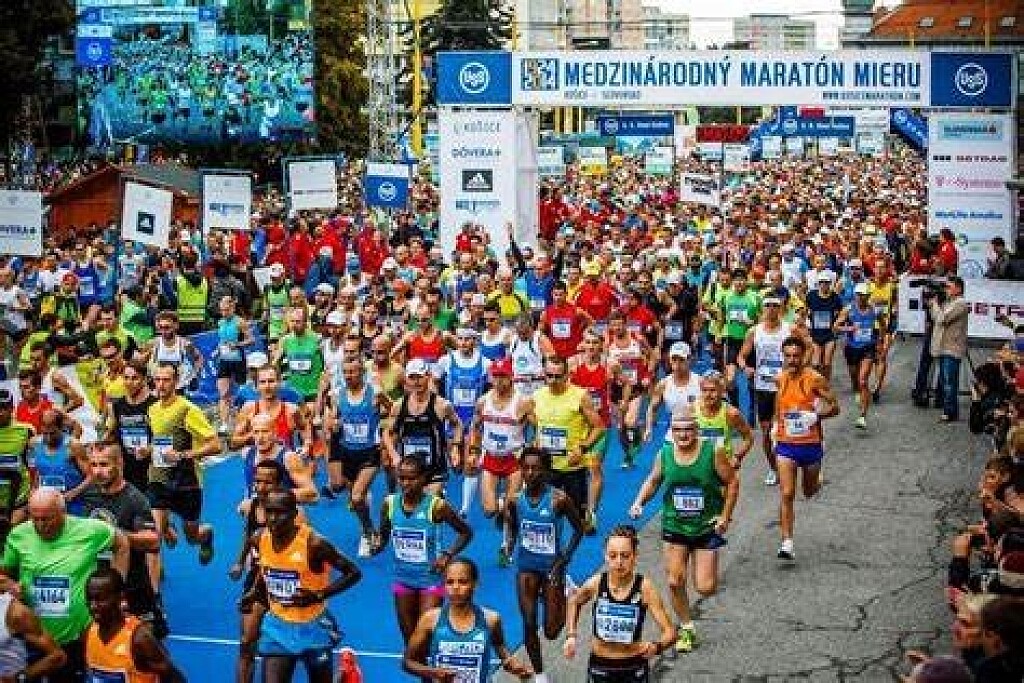
Košice Peace Marathon’s origins from Paris Olympic Marathon in 1924
The Košice Peace Marathon returns to Paris after 100 years
The inspiring and authentic story of the founder of the Košice Peace Marathon (KPM), Vojtech Bukovsky, has captivated the world. In the venue of the 2024 Olympic Games in Paris, the Maison Slovaque – the Slovak Olympic House – hosted the ceremonial presentation of Europe’s oldest marathon.
Today in the Slovak Olympic House, the organisers of the KPM, representatives of the Marathon Club, the Slovak Olympic and Sports Committee and the City of Košice presented the history of the race’s creation. The breathtakingly inspiring story of Vojtech Bukovsky was told through the premiere of a documentary film dedicated to the 100th anniversary of the founding of the Košice Marathon.
Among the invited guests were Mr. Christophe Najdovski, Vice Mayor of the City of Paris, Ms. Kirsty Coventry, Member of the Executive Committee of the International Olympic Committee and Minister of Sport of Zimbabwe, Mr. Dobromir Karamarinov, President of European Athletics, H.E. Ján Šoth, Ambassador of the Slovak Republic to France, and Mr. Jean-Michel Brun, Member of the Executive Board of the European Olympic Committee and Vice President of the French Olympic Committee.
“Over the weekend we will learn the names of the new Olympic winners in the marathon. We will pay tribute to them in the same way as Vojtech Bukovsky, the founder of the marathon in Košice, did here in Paris on 13 July 1924, when he stood up at the Colombes stadium to greet the Finnish runner Albin Stenroos and all his rivals in the finish line. 100 years have passed since then. We watch today’s battles under the Eiffel Tower with enthusiasm and are filled with pride that we can stand here and tell the story of the centenary of the marathon in Košice to the whole world. It is a story filled with courage, friendship, perseverance and the desire for peace and comfort. Vojtech Bukovsky was enchanted by the Paris Olympics 100 years ago and by the ideas of Baron Pierre de Coubertin. He said, among other things, that the most important thing in life is not to win, but to compete. And these words of his fully capture one of the basic philosophies of the modern marathon today. Let’s stay true to it,” said Branislav Koniar, Race Director of the Košice Peace Marathon.
The metropolis of France and the Olympic ideals have a very special place in the birth certificate of the Košice Peace Marathon. The impulses leading to its creation are very stronglylinked to Paris, where, as today, the 1924 race was held under the five rings. The 30-year-old Vojtech Bukovský was also watching closely the competition that time. He came from Košice to experience this sporting event first-hand as a sports enthusiast, journalist and referee. When he applauded Albin Stenroos, the Finnish winner of the Olympic marathon, on 13 July, a dream was born in his mind, which he turned into reality just three months later.
“The Košice Peace Marathon marks an extraordinary milestone of its history. Inspired by the Olympic spirit of Paris 1924, it is a living example of the power of Olympic ideals to unite nations and celebrate peace through sport. At the Maison Slovaque, the Slovak Olympic House in Paris, we symbolically linked two historical moments. After 100 years, the story of one of the biggest and most important events in Slovak sport has once again returned to the city where the inspiration for its creation came from. Symbolically, it happened again at the time of the Olympic Games. This precious legacy reminds us that the Olympic Games are more than just a competition. They are an impulse that can inspire and change the world. We are proud at the Slovak Olympic and Sports Committee that the dream of one man inspired by the Olympic marathon continues today, uniting endurance athletes from around the world in the name of peace and understanding," said Slovak Olympic and Sports Committee Secretary General, Jozef Liba.
The courage with which Vojtech Bukovský set about organising the marathon is still an amazing act also on a global scale. Despite the fact that this sporting adventure did not come easily, today the marathon enjoys prestige and an important position on the world athletics map. In Košice, the tradition has become an event with a society-wide impact, representing the city and its inhabitants in a unique way. “The marathon is always a special event for us. And we, the citizens of Košice, are happy that runners from all over the world come back to us. But it is not for the records or the financial bonuses. They come for the people of Košice and the unrepeatable atmosphere. I also feel the need to recall the message of the Olympics, which is ekecheiria – that is, peace to arms, because the message of the Kosice Marathon is exactly that – peace. It is the strongest value for all of us, even in these times,” adds the Mayor of the City of Košice, Jaroslav Polaček. The City of Košice is one of the most important partners of the KPM, and it participates not only financially and organizationally, but also technically and personally in the preparations of the biggest sporting event.
The presentation of the KPM in Paris is the best invitation to the anniversary edition of the event. In addition to the sporting feats of elite runners, the performances of “mortals”, amateur or weekend runners, who sign up in their thousands for the Košice marathon course, will also resonate. This community has always been the soul of the KPM. “Millions of runners from all continents constantly confirm us that sport and marathon can unite people of every religion, every skin colour, every nationality. The strength of this community is unparalleled. And it gives strength to us in Košice. Without it, we would certainly not have been able to overcome the most diverse obstacles for 100 years. Let us wish that tomorrow’s marathon mission here in Paris will be a success for everyone – both for the medal winners and for those who finish later. It will certainly be the same on 6 October 2024 in Košice. Come to see it, come to experience it. You will be cordially welcome,” – concludes Ján Sudzina, the President of the Košice Marathon Club.Part of this commemorative meeting was also the presentation of miniaturized replicas of the statue of the marathoner, which has been a landmark of the city and the marathon itself since 1962. They will go to Paris City Hall and also to the International Olympic Committee and Europaen Athletics represented at this ceremony by President Dobromir Karamanirov.
And of course, there was talk of the actual Olympic marathon, which will become a hugely watched event on Saturday, 10th August. In addition to the best marathon runners, more than 20,000 runners from all over the world will take to the track in a unique project that has so far been unprecedented at the Games under five rings. The starting field of hobby runners will include those from Slovakia. Three of them have accepted the invitation from the Marathon Club and will personally take part in the ceremony. They are Milan Šimoník, Lukáš Jáchym and Marián Vidra. From the hands of Branislav Koniar and Jan Sudzina they have received symbolic starting numbers, with which they will take part in tomorrow’s marathon in Paris. They carry the logo and the message of the mutual relationship between the two cities, which was born from the enthusiasm of Vojtech Bukovsky 100 years ago.
Let us also add that two legendary athletes were also present at the ceremony. Kipchoge Keino of Kenya became the first African to win Olympic gold in track and field in Mexico City in 1968 and defended his title four years later in Munich. His compatriot Tegla Loroupe competed in Košice in 1997 and won a gold medal at the World Half Marathon Championships held in the city. After winning the world’s biggest marathons and retiring from her career, she became a special UN ambassador with the aim of putting together repeatedly a team of athletes made up of refugees who have had to leave their country for war or humanitarian reasons. Such a team is also starting this time at the Games in Paris.
by AIMS
Login to leave a comment

kosice Peace Marathon
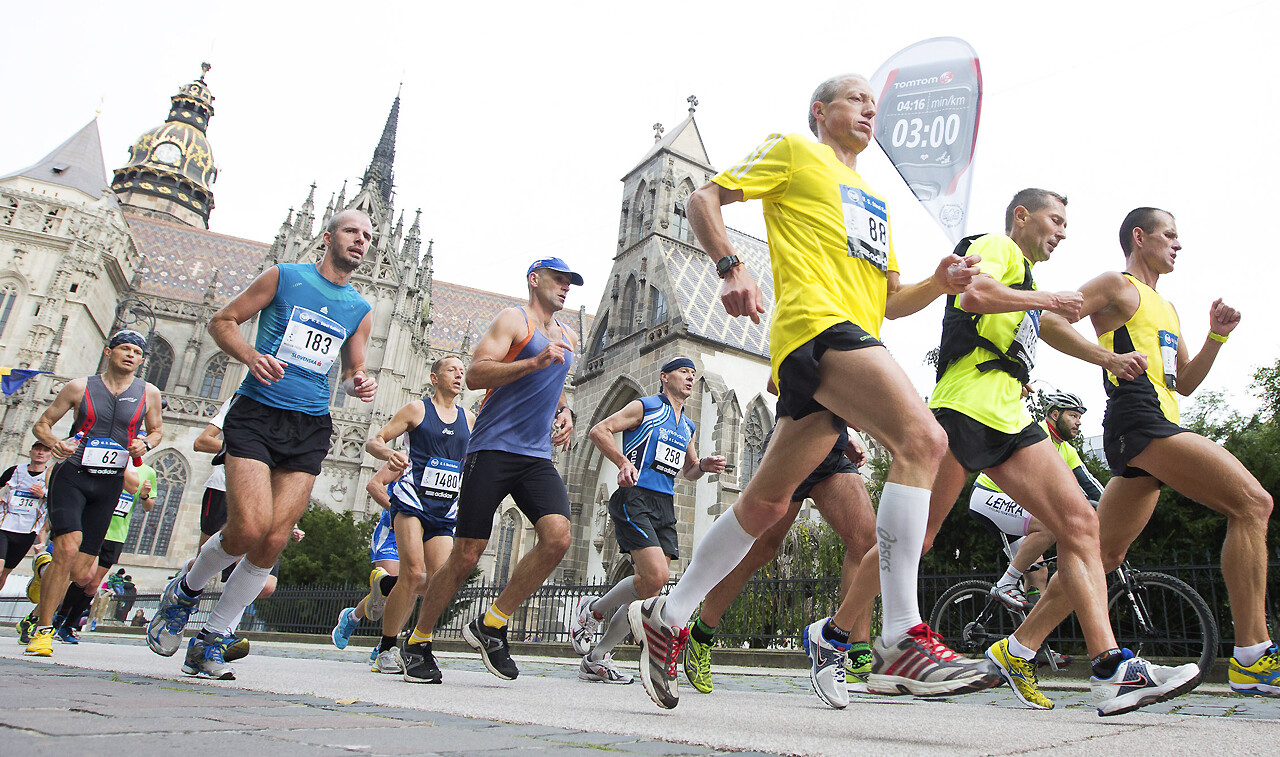
The Kosice Peace Marathon is the oldest European marathon.This year for the organizers of Kosice Peace Marathon is also about memories and flashbacks. One of the fastest marathon courses has been created in Košice 20 years ago on that occasion it was the 1997 IAAF World Half Marathon Champioships. Tegla Loroupe and Shem Kororia were awarded from the hands of...
more...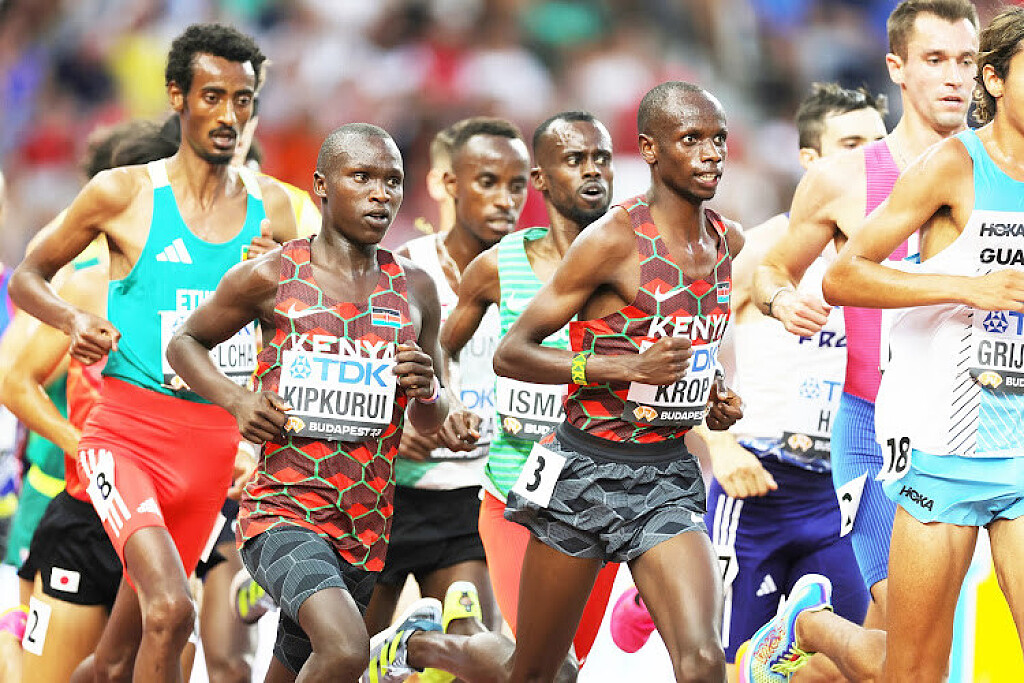
Krop to focus on mental strength ahead of the 2024 Paris Olympics
World 5,000m silver medalist Jacob Krop will focus on his mental strength ahead of the 2024 Paris Olympic Games later this month.
Krop, who won bronze at the 2022 Commonwealth Games, said being his first time at the Olympics, he wants to make an impact and that is why he will not just focus on running but also on mental strength.
“Running at the Olympics stage is good for me because you face the best of the best in the world.
"Remember running is not just about the body but also how strong one is mentally. This is what makes the difference on such a global stage," he noted.
He added: "It was not easy to make it to the Olympic Games and that is why I am keen to run well in Paris and make my country proud,” said Krop.
“Running is about the mind and I want to put a lot of emphasis on that and Kenyans should expect good results from me in Paris—probably gold,” said Krop after morning training at the Kipchoge Keino Stadium in Eldoret.
He said he has been improving with time and plans to end Kenya's long wait since John Ngugi won the title in the 1988 Olympics in Seoul.
“I have been doing very well recently and I want to win gold. It has been long since we won gold and I think the time is now,” said Krop, who will team up with Ronald Kwemoi and Edwin Kurgat for Team Kenya.
He said he has been improving with time and plans to end Kenya's long wait since John Ngugi won the title in the 1988 Olympics in Seoul.
“In 2021, I was in Form Four sitting my final examination and I couldn't make it for the Olympics. This is despite having featured in the trials and having placed fourth,” he said.
by Emmanuel Sabuni
Login to leave a comment

Paris 2024 Olympic Games
For this historic event, the City of Light is thinking big! Visitors will be able to watch events at top sporting venues in Paris and the Paris region, as well as at emblematic monuments in the capital visited by several millions of tourists each year. The promise of exceptional moments to experience in an exceptional setting! A great way to...
more...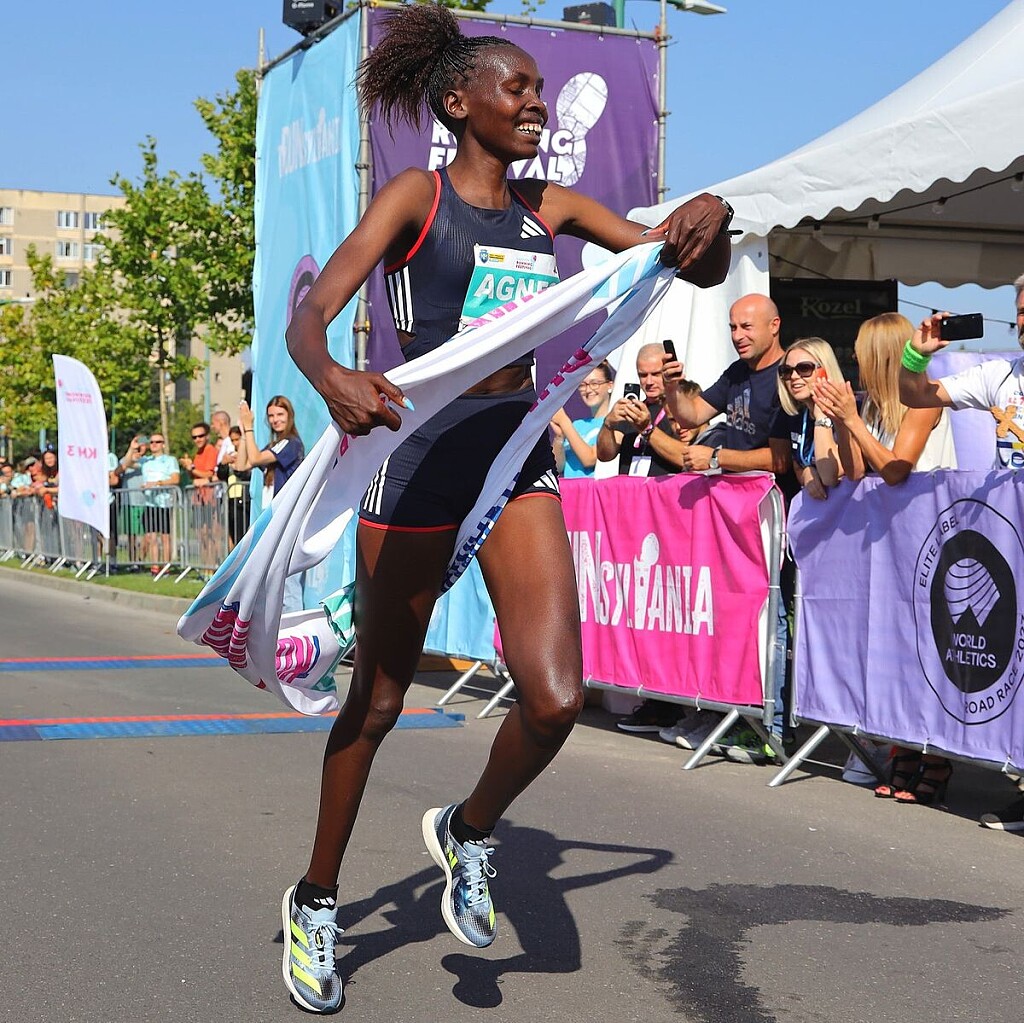
Ngetich vows to break the world 10km record again if not ratified
World cross-country bronze medallist Agnes Ngetich has vowed to set another record if her current world 10km record is not ratified by the World Athletics.
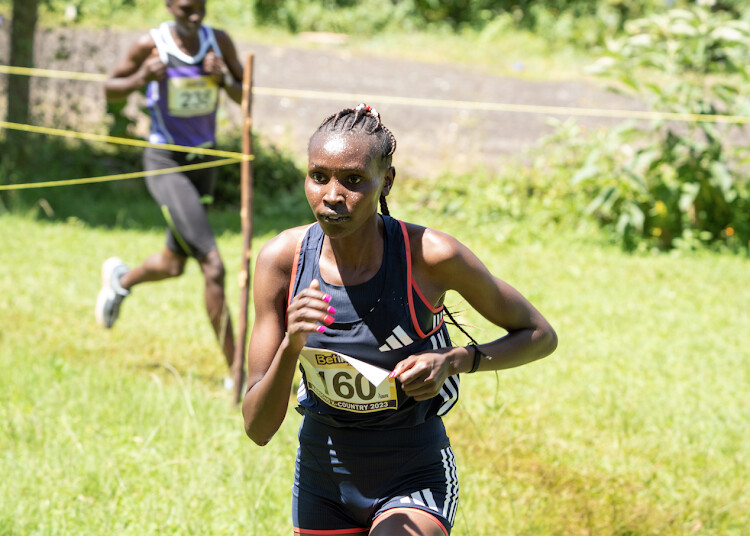
Speaking in Kapsokwony after winning the 10km senior women's title in the second leg of the Athletics Kenya (AK) cross-country meeting at the Kapsokwony High School ground in Bungoma County, Ngetich said it was not her blunder that the course was short.
“If my world record will not be ratified, I still have time to set another one because I did not create the mess that happened on the course,” said the two-time East Africa under-20 champion.
She said even if the course was 25 meters less, she could have either set her personal best or even broken the world record. “I had a chance to go ahead and set the world record because I was not only also in great shape but determined to make history," she noted.
"Even with the addition of the 25 meters, I believe I would have comfortably run 30:00 minutes. All the same, I still have time on my side and I will do it again," she insisted.
Ngetich broke the women-only world 10km record in the Transylvania 10km in Brasov, Romania, last month after posting 29:24 to surpass the initial time of 30:01 set by the late Agnes Tirop in Herzogenaurach, Germany in 2021.
Meanwhile, former athlete Tegla Sang has welcomed the move by the government to change the name of Kericho Green Stadium to Wilson Kipkurugut Chumo Stadium.
During the Mashujaa Day celebrations held in Kericho County, President William Ruto announced that the facility will now be known as the Kipkurgut Chumo Stadium.
The move is aimed at celebrating the first Kenyan to win an Olympic medal—the 800m bronze —during the 1964 Olympic Games in Tokyo, Japan.
"Allow me to celebrate Kiprugut Chumo, the first Kenyan to win an Olympic medal by renaming the Kericho Green Stadium in his name," he noted.
Sang, a former All Africa Games 400m champion, said the government is doing a good thing to support the legends who brought fame to the country.
“This is a good move to celebrate legends that brought fame to the nation,” said Sang, the first Kenyan to compete for the country at the 1968 Olympic Games in Mexico City, Mexico.
The late Chumo, who was the first Kenyan to win an Olympic medal for the country, died last year aged 84.
Sang said as much as the government's move is good, it's long overdue. " We don't have to wait for some athletes to die to recognize them," she noted.
She said the government should also offer monetary awards to retired athletes because they did not earn much during their time.
“Majority of former athletes did not earn any money from running, unlike the current athletes. With the government handing goodies to any medal winner, they should always remember those who laid that foundation,” she said.
She added that medical insurance for retired athletes would go a long way in cushioning them during their current old age.
Sang cited Nyantika Maiyoro, Amos Biwott, Kipchoge Keino, the late Naftali Temo, Naftali Bon, Ben Jipcho, Lydia Stephens, Elizabeth Jemeli Chesire, Hezekiah Nyamau, and Charles Asati as other deserving cases in as far as recognition and awards is concerned.
by Emmanuel Sabuni
Login to leave a comment
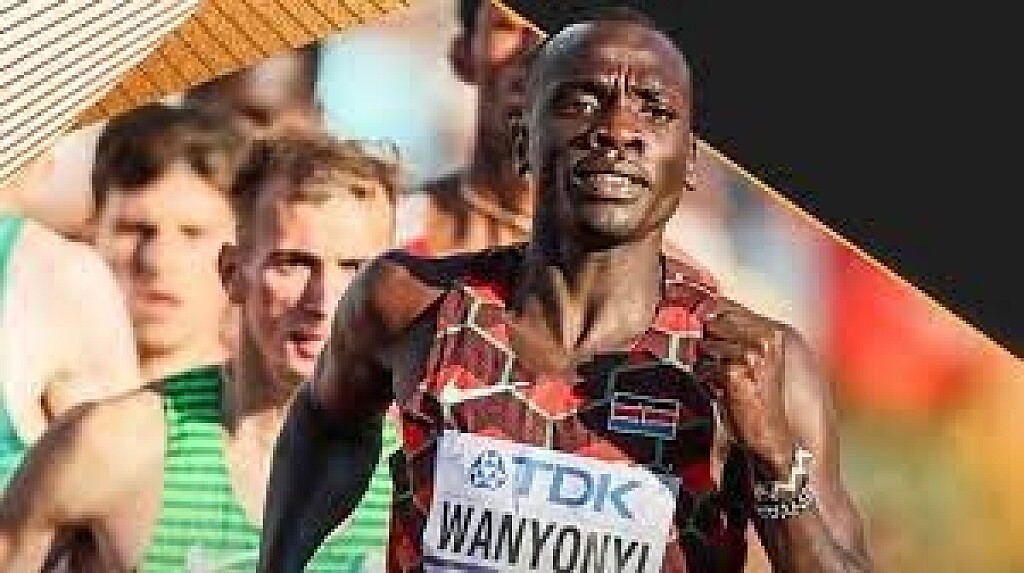
Kimutai wants to emulate Wanyonyi ahead of Budapest
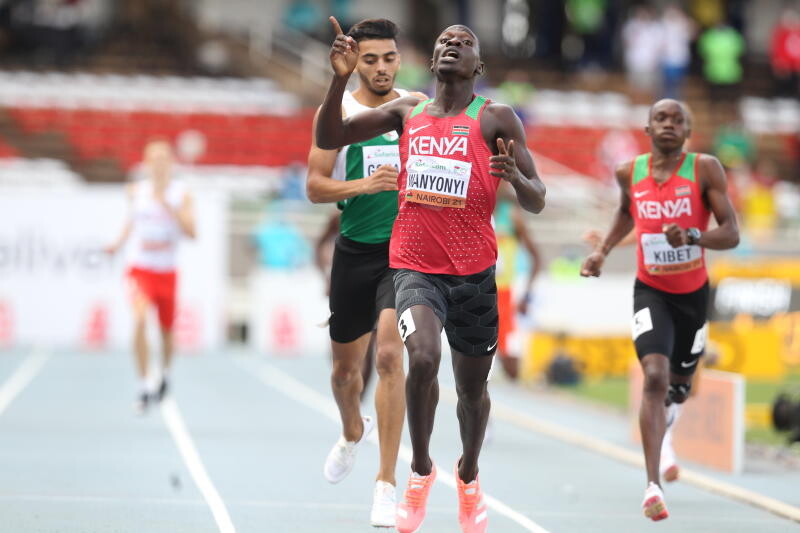
Fast-rising Kelvin Koech Kimutai is looking to emulate former world under-20 800m champion Emmanuel Wanyonyi in the two-lap race. Kimutai, who also won the East Africa 800m title, has set his focus to represent Kenya at the World Athletics Championships in Budapest Hungary, in August.
To realize his dream, Kimutai is hoping to finish on the podium when he lines up at the national athletics championships next week at the Nyayo Stadium in search of the qualifying time for Budapest.
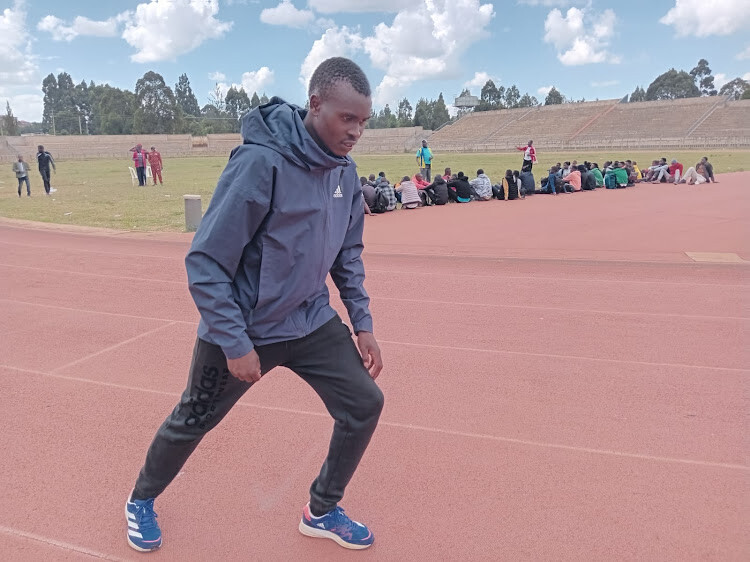
Last Saturday, he finished second in both the 400m and 800m during the AK Central Rift Championships at the Kipchoge Keino stadium in Eldoret. “I managed to double in the 400m and 800m finishing second but I want to run well and be in position one at the national championships next week,” he noted.
The 17-year-old says he wants to run well so that he can qualify for world championships come August. He said he is motivated by the consistency he has displayed in his past assignments.
“I won my first medal at East Africa Championships in Tanzania and went on to win in Lusaka during Africa U-18/20 Championships. These wins have motivated me to look for more accolades,” said Kimutai.
Koech is a Form Four student at the Kosirai Secondary School in Nandi County. Wanyonyi, who has now won two back-to-back Diamond League series titles—Rabat and Paris—also attended the same school.
“My dream is to keep winning on the international stage and fly the country’s flag high. Wanyonyi, who is my role model and a former schoolmate inspires me with his performance,” he revealed.
by Africa-Press
Login to leave a comment

World Athletics Championships Budapest 23
From August 19-27, 2023, Budapest will host the world's third largest sporting event, the World Athletics Championships. It is the largest sporting event in the history of Hungary, attended by athletes from more than 200 countries, whose news will reach more than one billion people. Athletics is the foundation of all sports. It represents strength, speed, dexterity and endurance, the...
more...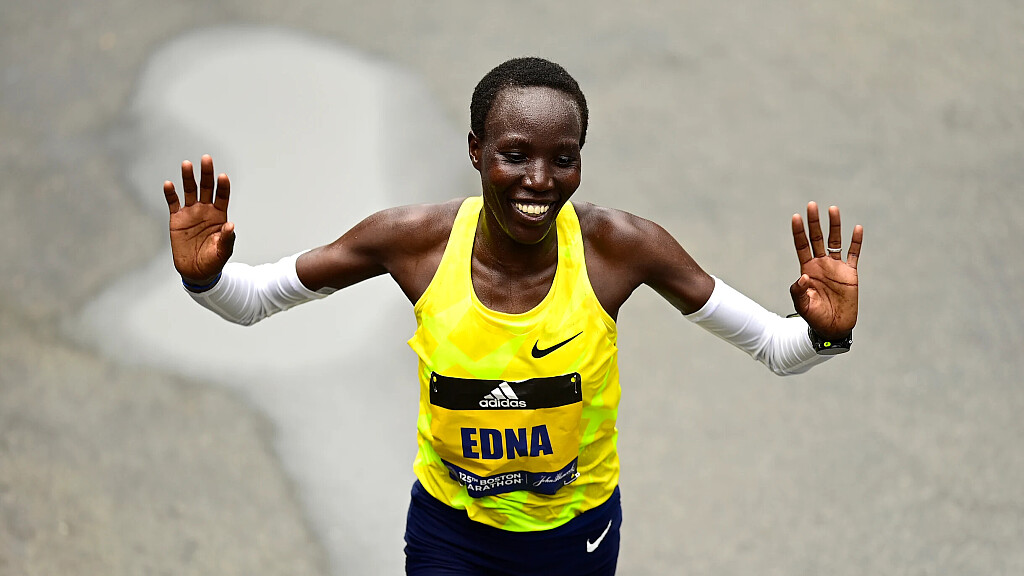
Indefatigable Edna Kiplagat to tackle Boston course again, at 43
It is commonly said that age is nothing but a number.
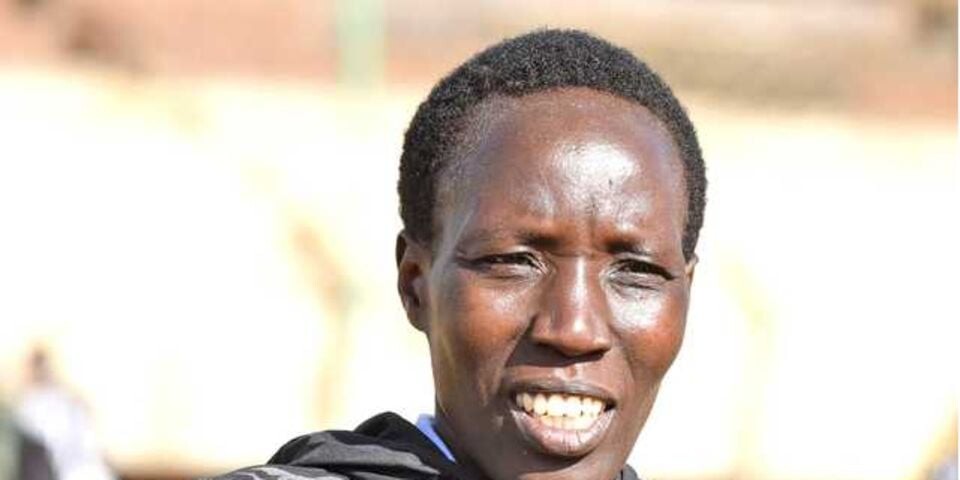
At 43 years old, two-time world marathon champion Edna Kiplagat will be out to prove that when she lines up among the elite athletes for the 127th Boston Marathon race on April 17 in the USA.
She will be heading to Boston for the sixth time where she is optimistic of good results after training for the last four months.
Nation Sport caught up with her at Kipchoge Keino Stadium in Eldoret, Uasin Gishu County while she was doing her speed session in readiness for the race.
Maiden win
Kiplagat won the title at her first attempt in Boston in 2017. She returned the following year but finished ninth, in 2019 she was second. The 2020 edition was postponed due to the Covid-19 pandemic.
She went back in 2021, finishing second behind Diana Kipyokei, but was later declared the winner after Kipyokei was banned for using a banned substance.
Kiplagat was fourth last year.
Kiplagat who lives and trains in Colorado, USA said she shifted her training to Kenya which has favourable weather conditions.
“I started training in December last year when I learned that I will be racing in Boston. But in January and February, it was so cold in the US, I decided to come to Kenya because the weather is favourable,” said Kiplagat.
She will be competing against Kericho-based Sheila Chepkirui, former New York Marathon champion Joyciline Jepkosgei, 2021 Amsterdam Marathon Angela Tanui and Fancy Chemutai.
Also in the elite field are Maurine Chepkemoi, Mary Ngugi, Viola Cheptoo, Vibian Chepkirui and Hellen Obiri.
by Bernard Rotich
Login to leave a comment

Boston Marathon
Among the nation’s oldest athletic clubs, the B.A.A. was established in 1887, and, in 1896, more than half of the U.S. Olympic Team at the first modern games was composed of B.A.A. club members. The Olympic Games provided the inspiration for the first Boston Marathon, which culminated the B.A.A. Games on April 19, 1897. John J. McDermott emerged from a...
more...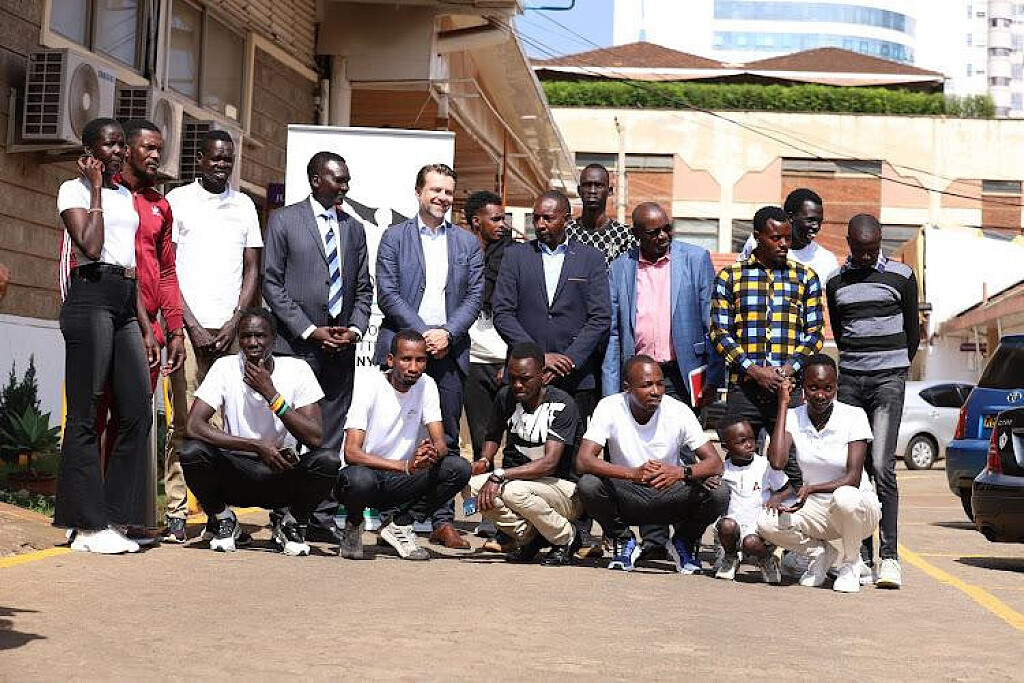
Refugee Olympic Team for Paris 2024 to have base in Kenya
The Refugee Olympic Team (EOR) will have a base in Kenya to prepare for the next year's Olympic Games in Paris, with eight athletes set to train in the North Rift of the country.
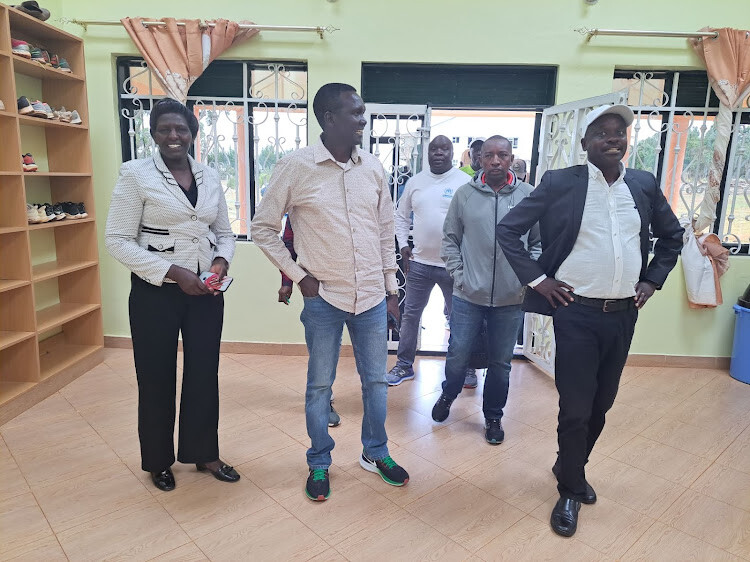
The National Olympic Committee of Kenya (NOC-K) has worked with the United Nations High Commission of Refugees and Athletics Kenya to find athletics training bases starting this month, with these visits led by its President Paul Tergat.
Kenya hosted five EOR athletes prior to Rio 2016 - all from South Sudan - with another four coming to the country from the same nation ahead of Tokyo 2020.
During a visit, the NOC head praised the work of Olympian and former women's marathon world-record holder Tegla Loroupe for their work in including refugees into sports programmes, like this one.
"The first batch of the athletes competed during the Rio 2016 Olympic Games and Loroupe was the Chef de Mission of the [EOR] Team," said Tergat, the double Olympic 10,000 metres silver medallist, according to Kenyan publication The Star.
"We are very proud of the work and achievements that Loroupe, through her Foundation, has done in giving opportunities to these athletes."
This time, eight athletes are set to be at the training base.
Anjelina Nadai Lohalith is hoping to compete in her third Olympic Games as part of the EOR team with the South Sudanese athlete ready to race the women's 1500m again.
Dominic Lokolong, also from the country that spent seven years officially in a civil war, is to race the men's 1500m at his first Games.
Kun Waar and Rose Ihisa, competing in the men's and women's 400m respectively and originally from South Sudan, are on the team; as are their compatriots John Lokibe and Josephine Tein in the men's and women's 800m.
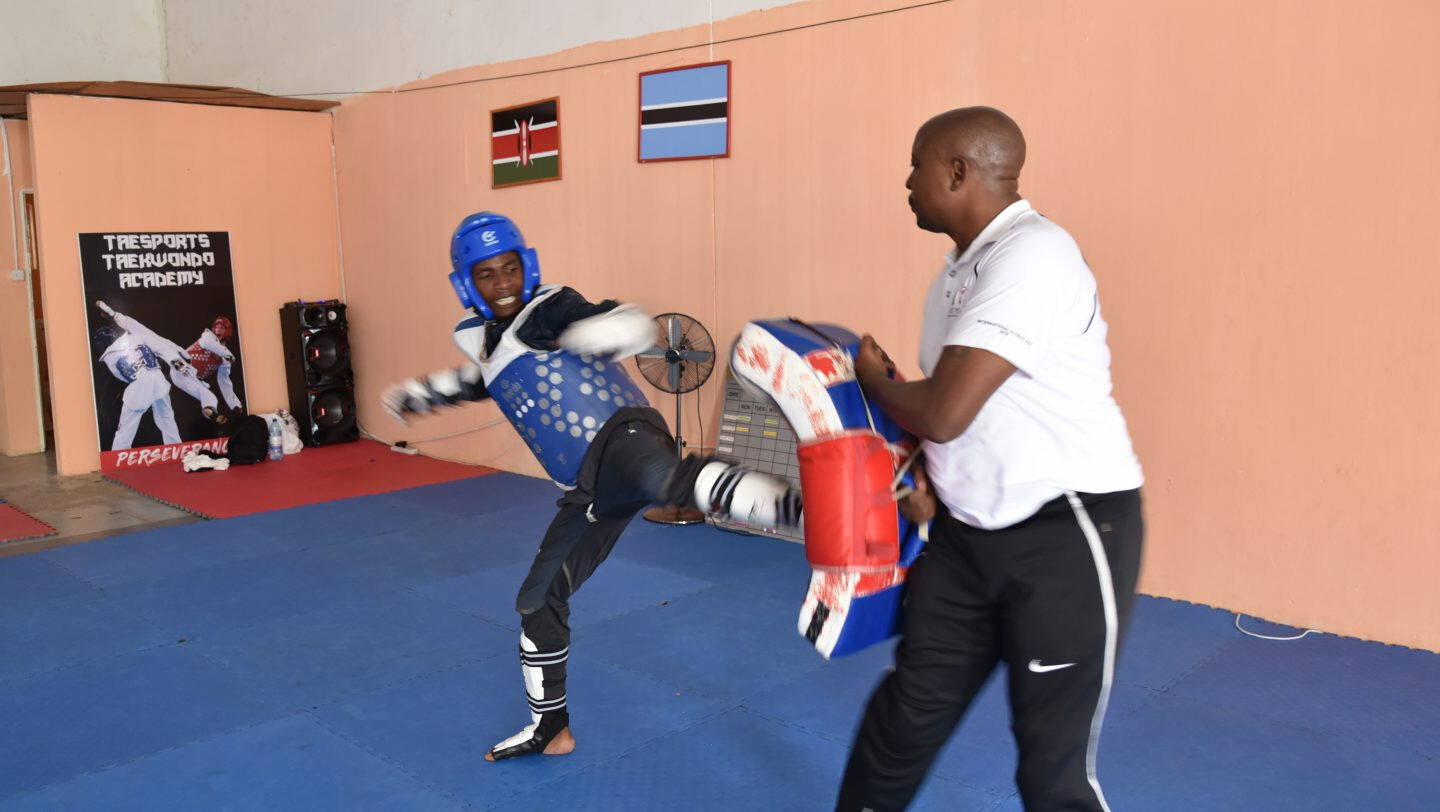
Emmanuel Ntagunga of the Democratic Republic of the Congo is to enter the men's 5,000m, while Gasto Nsazumukiza, also from this country, is the only member of the EOR team in Kenya who will not compete in athletics.
Nsazumukiza is set to compete in taekwondo.
NOC-K secretary general Francis Mutuku promised they would continue working with the refugees throughout the build-up to Paris 2024.
"The Refugee Team will now be working under NOC-K and we want to ensure that we get a good place for their training and produce proper results," said Mutuku.
"These athletes will fly the International Olympic Committee flag.
"We are not just looking at training camps but a good place for them to train.
"We are working hand in hand with Athletics Kenya and UNHCR to ensure that they perform well."
Parties visited the Complete Sports in Kaptagat, Lornah Kiplagat High Altitude Performance Centre in Iten, Kipchoge Keino facility and Ndura Sports Complex in Kitale as part of its training camp inspections.
The Paris 2024 Olympics are scheduled to take place from July 26 to August 11 2024, followed by the Paralympics from August 28 to September 8.
by Michael Houston
Login to leave a comment
Paris 2024 Olympic Games
For this historic event, the City of Light is thinking big! Visitors will be able to watch events at top sporting venues in Paris and the Paris region, as well as at emblematic monuments in the capital visited by several millions of tourists each year. The promise of exceptional moments to experience in an exceptional setting! A great way to...
more...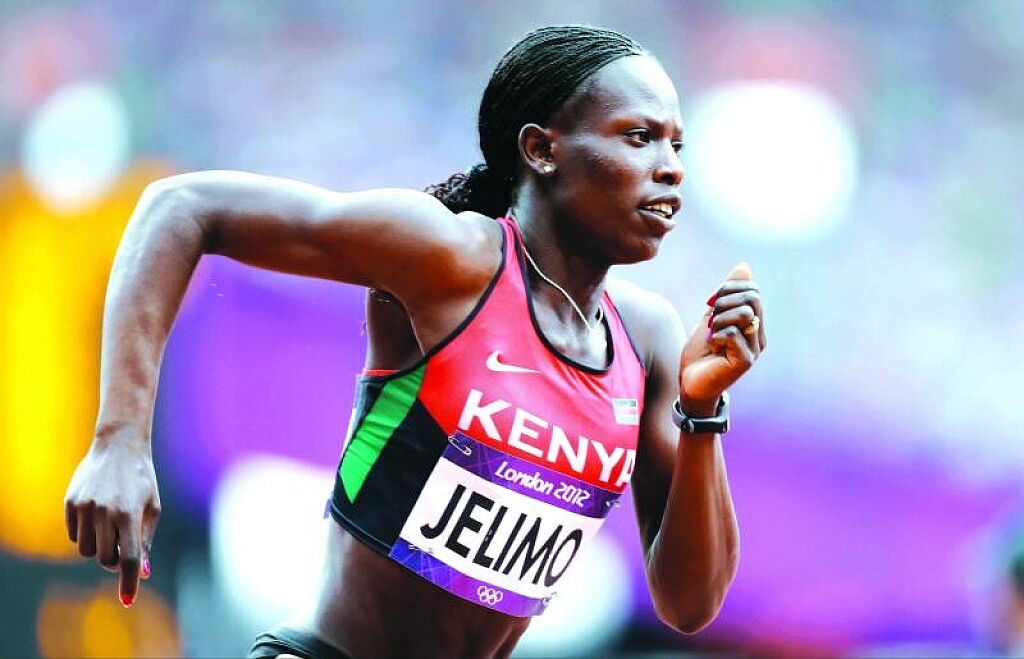
10 years later: Pamela Jelimo to receive London Olympics bronze
Though out of the public limelight, the history-making Pamela Jelimo is still winning.
Jelimo, the first Kenyan woman to win an Olympic gold medal with her exploits in 800m at the 2008 Beijing Summers Games, is set to receive yet another medal.
Jelimo, the 2008 Africa 800m and 2012 World Indoor 800m champion, who finished fourth in one minute and 57.59 second set to benefit after race winner Mariya Savinova from Russia, was stripped of the gold medal for doping.
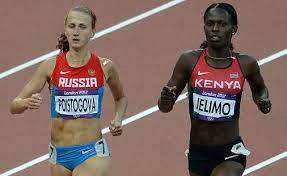
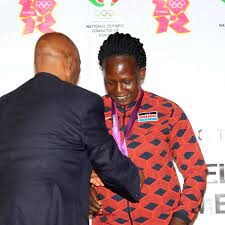
Jelimo, who celebrated her 32nd birthday on December 5, is set to receive her bronze medal from the 2012 London Olympic Games on Wednesday at the National Olympic Committee of Kenya (NOC-K) office, Gallant House, Nairobi.
Legendary Kipchoge Keino, who is an International Olympic Committee (IOC) member alongside NOC-K president, Paul Tergat, will preside over the presentation ceremony.
South Africa’s Caster Semenya and another Russian Ekaterina Poistogova, who had settled for silver and bronze, were scaled to gold and silver with their times of 1:57.23 and 1:57.53 respectively.
Kenya’s 2007 World 800m champion Janeth Jepkosgei, who had settled eighth in the race in 2:00.19 and Hellen Obiri, who came eighth in women’s 1,500m at the same Olympics, will receive their certificates.
Another Russian Elena Arzhakova, who finished sixth in 1:59.21 in the same race was also banned for having doped too.
With Savinova and Arzhakova banned, Jepkosgei, who had settled eighth in the race in 2:00.19 was upgraded to sixth.
On November 9, 2015, the Independent Commission Investigation of the World Anti-Doping Agency (WADA) asked for a lifetime ban for doping for Savinova, who had won gold and Poistogova, who had won bronze.
In February 2017, it was announced that Savinova was stripped of her gold medal but Poistogova was suspended in 2017 for two years, backdated to October 2014. Her London result, though, was not affected.
Alysia Johnson Montaño (1:57.93) from the United States of America and Burundi’s Francine Niyonsaba (1:59.63) finished fourth and fifth in the women’s 800m final.
A record four athletes that finished ahead of Obiri, who had settled 12th, were suspended for doping- Aslı Çakır Alptekin and Gamze Bulut from Turkey, who had won gold and silver respectively, Natallia Kareiva of Belarus, who had finished fifth and Russian Yekaterina Kostetskaya, who came sixth.
Maryam Yusuf Jamal (Bahrain), Tatyana Tomashova (Russia) and Abeba Aregawi (Ethiopia) were all scaled to gold, silver and bronze.
Aregwai, who changed allegiance to Sweden was suspended for doping in 2016.
This is the second time Olympics medals or certificates are being awarded in Kenya years later.
Asbel Kiprop received his gold medal from the 2008 Beijing Olympics in Nairobi in 2011 after the winner, Rashid Ramzi , was flagged down for doping.
by Ayumba Ayodi
Login to leave a comment
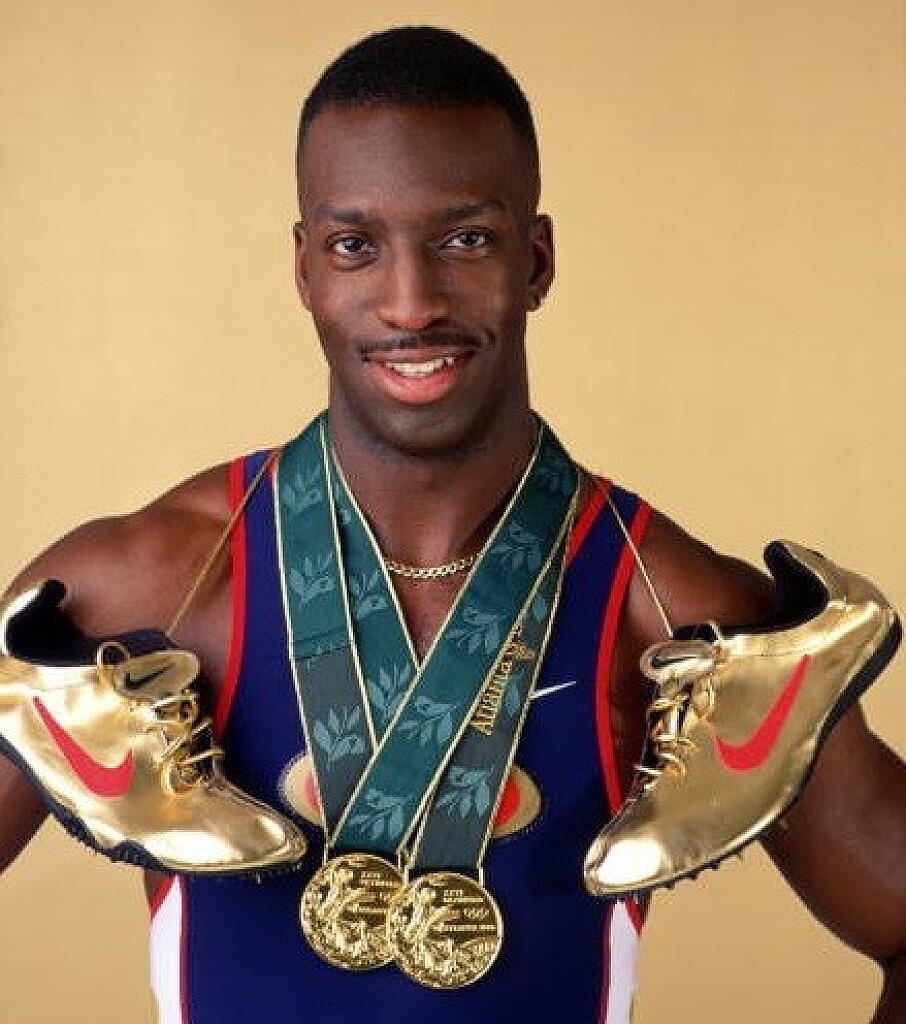
Michael Johnson's iconic gold spikes join the Heritage Collection
To mark the 226th World Athletics Council Meeting in Monaco, a special Heritage display was staged this week in the foyer of Le Meridien Beach Plaza. The exhibit contained 15 recent acquisitions made by the World Athletics Heritage Collection, which will soon be on display in glorious 3D in the virtual Museum of World Athletics (MOWA).
One of the oldest artefacts exhibited was a solid silver trophy donated by Kenya’s Olympic legend Kipchoge Keino, and one of the youngest items on show was a Tokyo 2020 Olympic Torch.
Yet arguably the greatest recent addition to the collection are three running spikes worn by eight-time world champion and four-time Olympic Games gold medalist Michael Johnson.
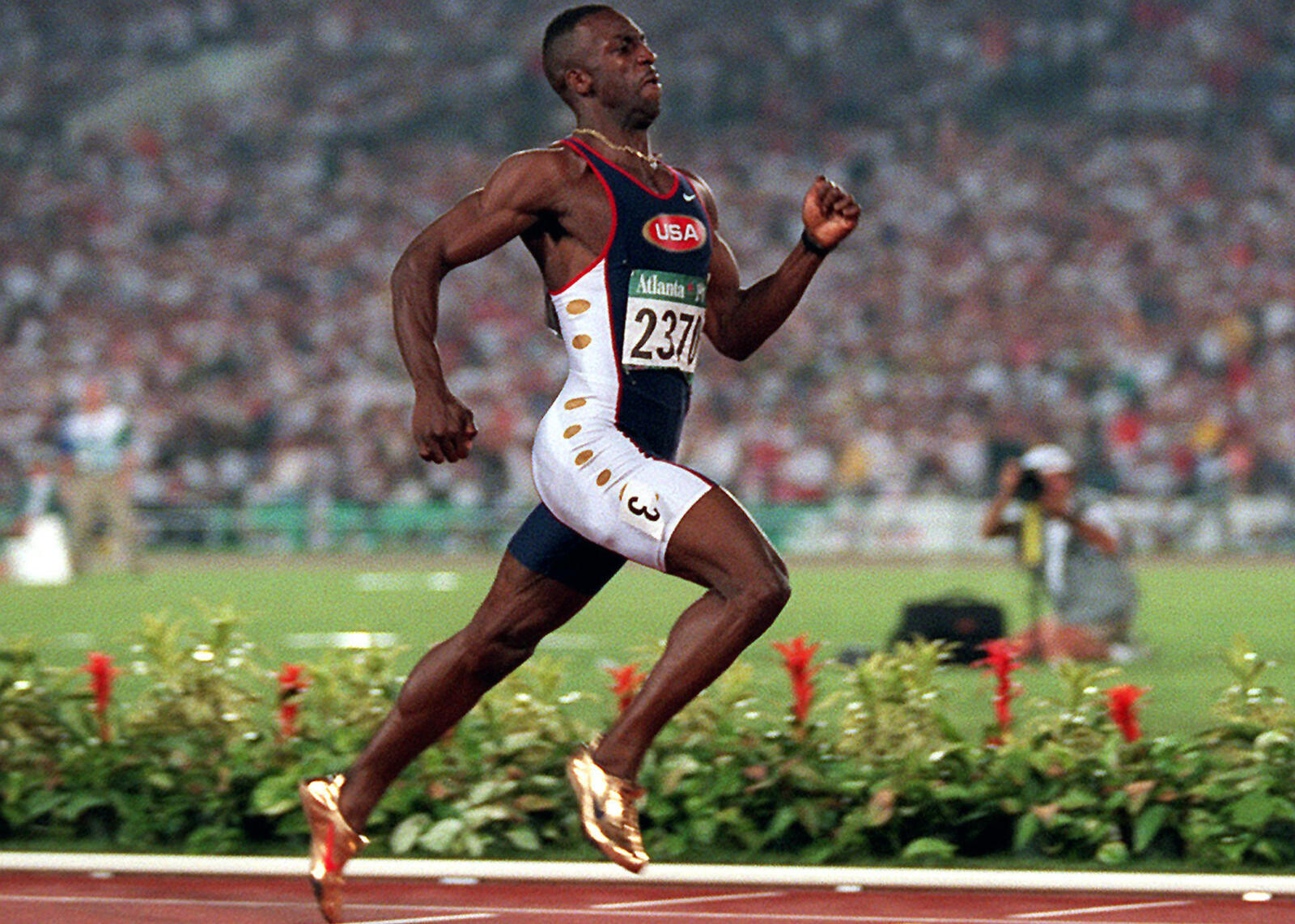
Entering the collection is one of Johnson’s iconic gold spikes from Atlanta 1996 (right foot), one from Sydney 2000 (left foot), and thirdly, a shoe from Johnson’s final race in 2001 (right foot). Each shoe is autographed.
“I can still vividly remember the chills I felt…”
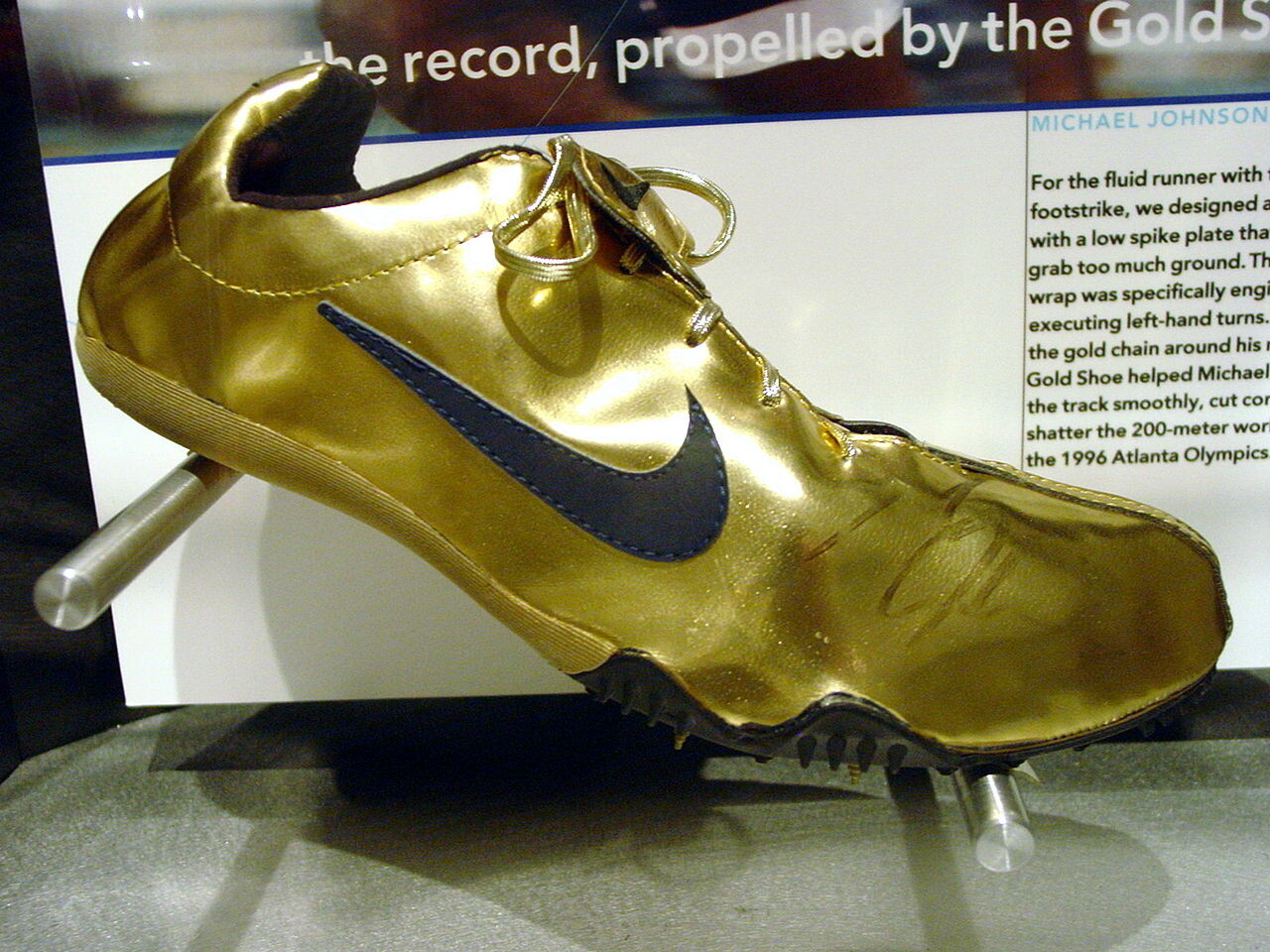
The trio now form part of the World Athletics Heritage Collection thanks the extraordinary generosity of Brad Hunt, who was Johnson’s agent during his outstanding running career.
“I visited the Heritage exhibition while at the 2019 World Athletics Championships in Doha,” commented Hunt. “The scale of the collection was particularly impressive, considering it had only been created in 2018.
“The historic display of artefacts included items from the careers of Jesse Owens, Carl Lewis and Usain Bolt. In men’s sprinting history, there was one glaring omission. By offering the spikes which Michael (Johnson) gave me after some of his most memorable races, I hope to have helped fill that gap in the World Athletics Heritage Collection,” added Hunt.
Johnson stunned the world of sport in 1996. At the Atlanta Games he won an unprecedented Olympic men’s 200m and 400m double. In the process, with a 19.32 clocking, Johnson destroyed his own 200m world record (19.66) which he had set less than two months before the Games on the same track at the US Olympic Trials.
“Both Olympic shoes were given to me two or three weeks following the Games they were used in,” confirmed Hunt. “The 1996 shoe was given to me in Hawaii, where we travelled for our post-Olympic celebrations. The 2000 shoe was given to me in Los Angeles.
“I can still vividly remember the chills I felt when I became the first person Michael told of his decision to wear gold spikes in the 1996 Olympic Games. We were sitting on a flight to Los Angeles from the Atlanta Olympic Trials to Los Angeles for Michael's first appearance on The Tonight Show with Jay Leno.
“Michael had just set his first world record (19.66 200m) the day before (23 June). We were discussing how much attention his purple spikes had received when he declared he would be wearing gold in the Games.”
14c gold in the material
Four years later, Johnson retained his Olympic 400m title in Sydney, Australia. Johnson had become world record-holder for the distance (43.18) at the World Championships in Seville, Spain, the previous year.
“Although the 2000 shoe is made with actual 14c gold in the material, thus making them shinier (with significantly more material value), the 1996 shoe is my favourite because these gold shoes were an actual media phenomenon!
“The amount of secrecy involved with the shoes' clandestine development and historical Olympic debut created one of the strongest identities an athlete has ever had with his or her footwear,” concluded Hunt.
The following year Johnson undertook his ‘Golden Victory Lap’ tour, finishing his career at the Goodwill Games in Brisbane. It is one of the shoes which he wore in that last season which completes this extra special induction of footwear into the World Athletics Heritage Collection.
The three spikes will soon be on display in the virtual MOWA.
In 2022, the spikes will also go on public show at MOWA’s onsite public exhibitions in Portland and Oregon, USA, in the lead into and during the World Athletics Championships Oregon22.
by World Athletics
Login to leave a comment
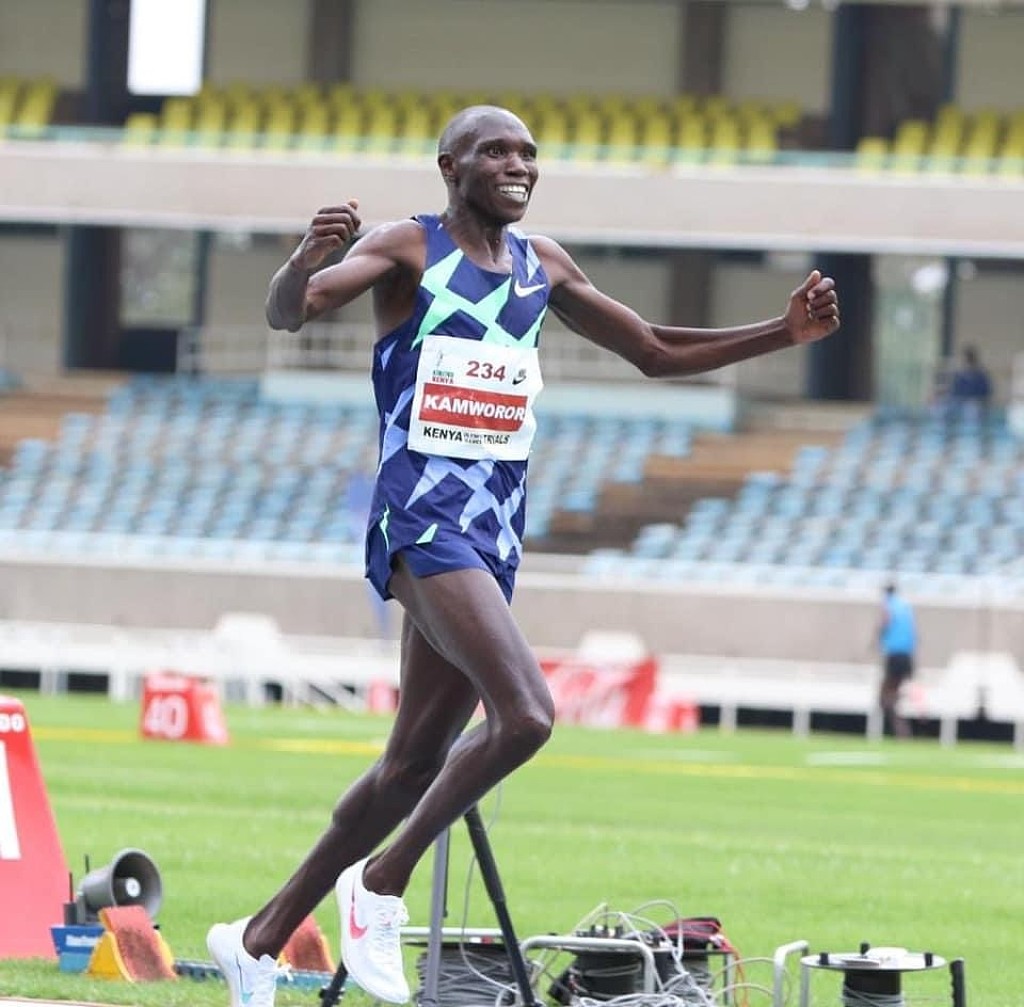
Geoffrey Kamworor ran the fastest time for 10000m in history at altitude
The 10000m race at the Kenyan Olympic Trials was one amazing event. The Kenyan Tokyo Olympic Trials happening June 17 to June 19 were moved from the Kipchoge Keino Stadium in Eldoret, to Moi International Sports Centre (MISC), Kasarani. Kasarani is located approximately 10 kilometres outside of Nairobi.
Athletics Kenya (AK) announced via press release that the changes are needed to test systems and requirements in readiness for the World Athletics Under-20 Championships which are planned for Aug. 17 to Aug. 22.
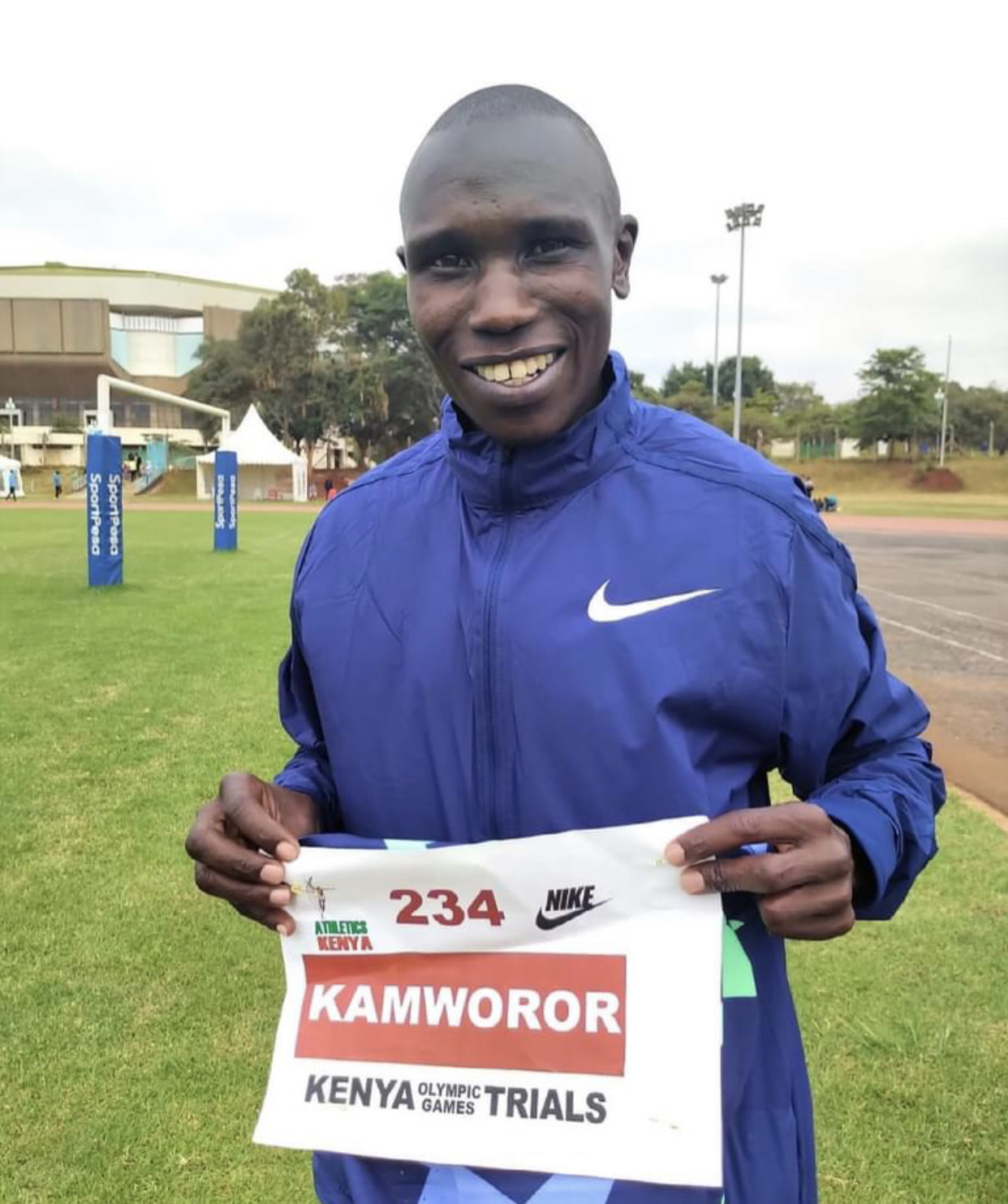
Geoffrey Kamworor clocked 27:01 for 10000m in the Kenyan Olympic Trials today. No one has run faster at altitude.
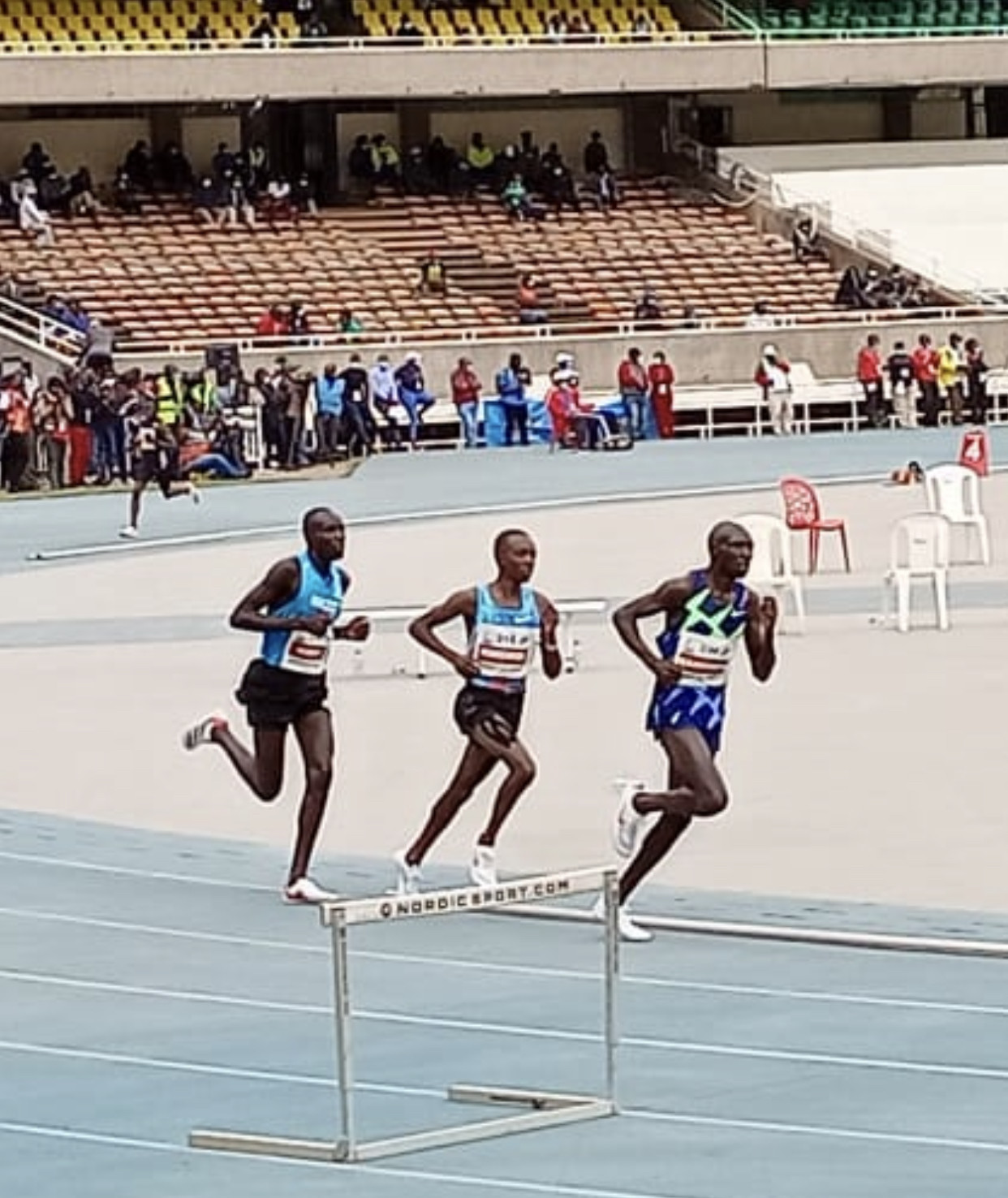
"I'm really happy to have qualified for the Olympics by running the fastest time in history in altitude. Now, we’re building on towards the bigger goal ahead," says Geoffrey Kamworor.
The altitude at the stadium is 1865 meters or 6118 feet.
Rodgers Kwemoi was second in a very fast 27:05.51 and Weldon Kipkirui Langat was third clocking 27:24.73. Ronex lead from the start but dropped out at 7k.
Geoffrey and Kwemoi were behind, when Geoffrey decided to break, Kwemoi resisted but with two laps to go Geoffrey made his big break and widen the gap winning by just over four seconds.
Login to leave a comment
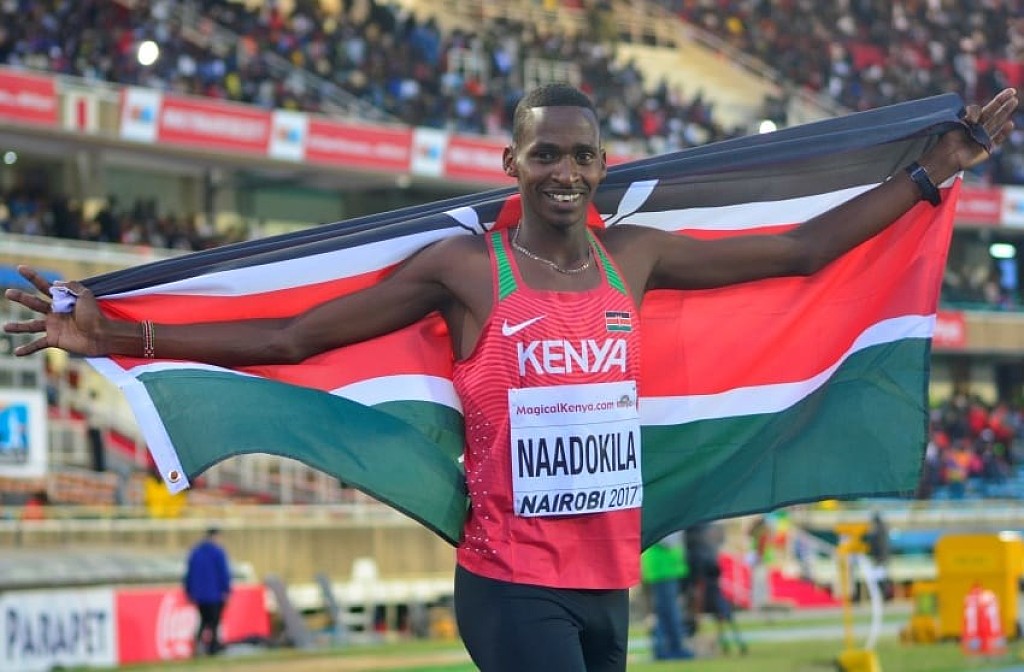
Kenya's 2017 World Under-18 400m hurdles silver medalist Moitalel Mpoke has qualified for the Tokyo Olympic Games.
The 20-year-old Mpoke clocked 48.89 seconds to win his 400m hurdles on Saturday during the South Eastern Conference Outdoor Championships at the E.B Cushing Stadium, Texas, United States.
Mpoke met the Olympic qualifying standard by 0.01 seconds to also improve his personal best within three weeks by 0.72 seconds.
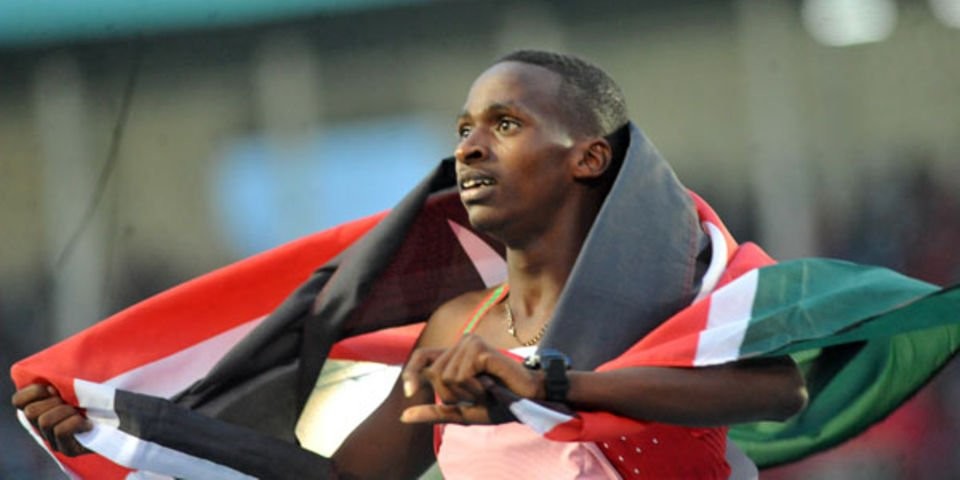
Following his win, Mpoke became the first athlete in the history of Texas University to run a sub 49 seconds in the 400m hurdles breaking a 34-year-old record of 49.05, which was previously held by Craig Calk.
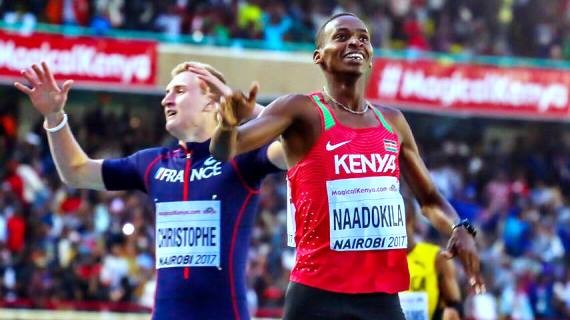
Mpoke becomes third athlete from Kenya to qualify for Tokyo Olympic Games in sprint events after Hellen Syombua and Emmanuel Korir all in 400m.
However, Korir, who is a specialist in 800m qualified for Tokyo Olympics when he doubled up in 400m and 800m at the 2019 Doha World Athletics Championships.
Surprisingly, Korir reached the semi-finals in 800m but stormed the final of the 400m to finish sixth. He run an Olympic qualifying standard time of 44.37 seconds in the semis.
Syombua qualified during the 2019 African Games trials running 51.09 seconds to also set a new 400m national record.
So far 51 Kenyan athletes have attained the Olympic qualifying standards ahead of the national trials set for June 17 to 19 at Kipchoge Keino Stadium, Eldoret.
However, the number includes eight athletes named in the final men and women's marathon team.
Login to leave a comment

Tokyo 2020 Olympic Games
Fifty-six years after having organized the Olympic Games, the Japanese capital will be hosting a Summer edition for the second time, originally scheduled from July 24 to August 9, 2020, the games were postponed due to coronavirus outbreak, the postponed Tokyo Olympics will be held from July 23 to August 8 in 2021, according to the International Olympic Committee decision. ...
more...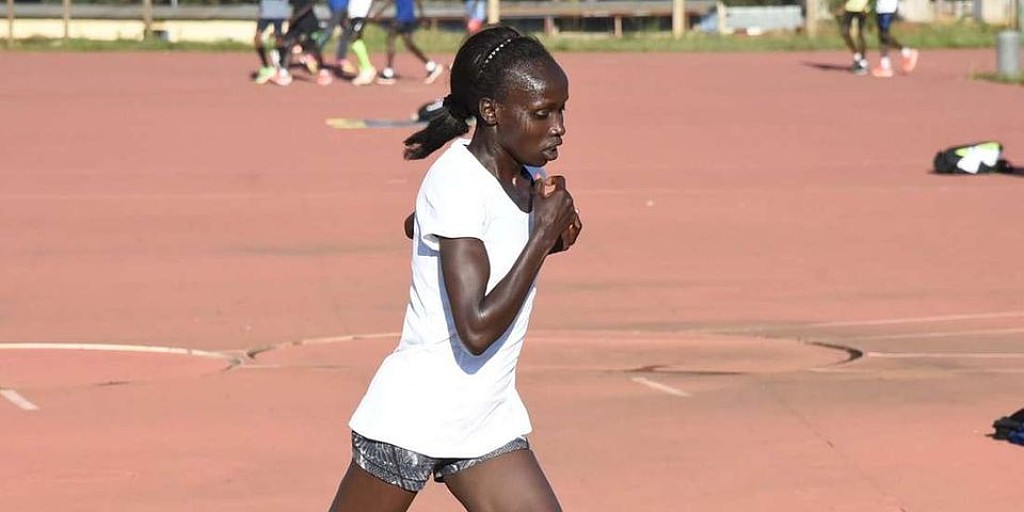
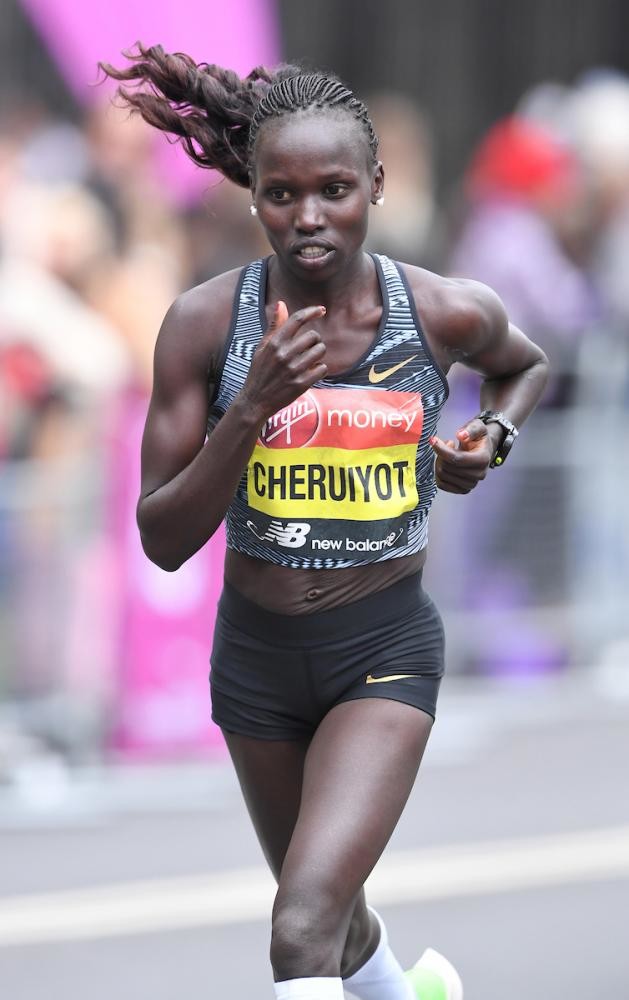
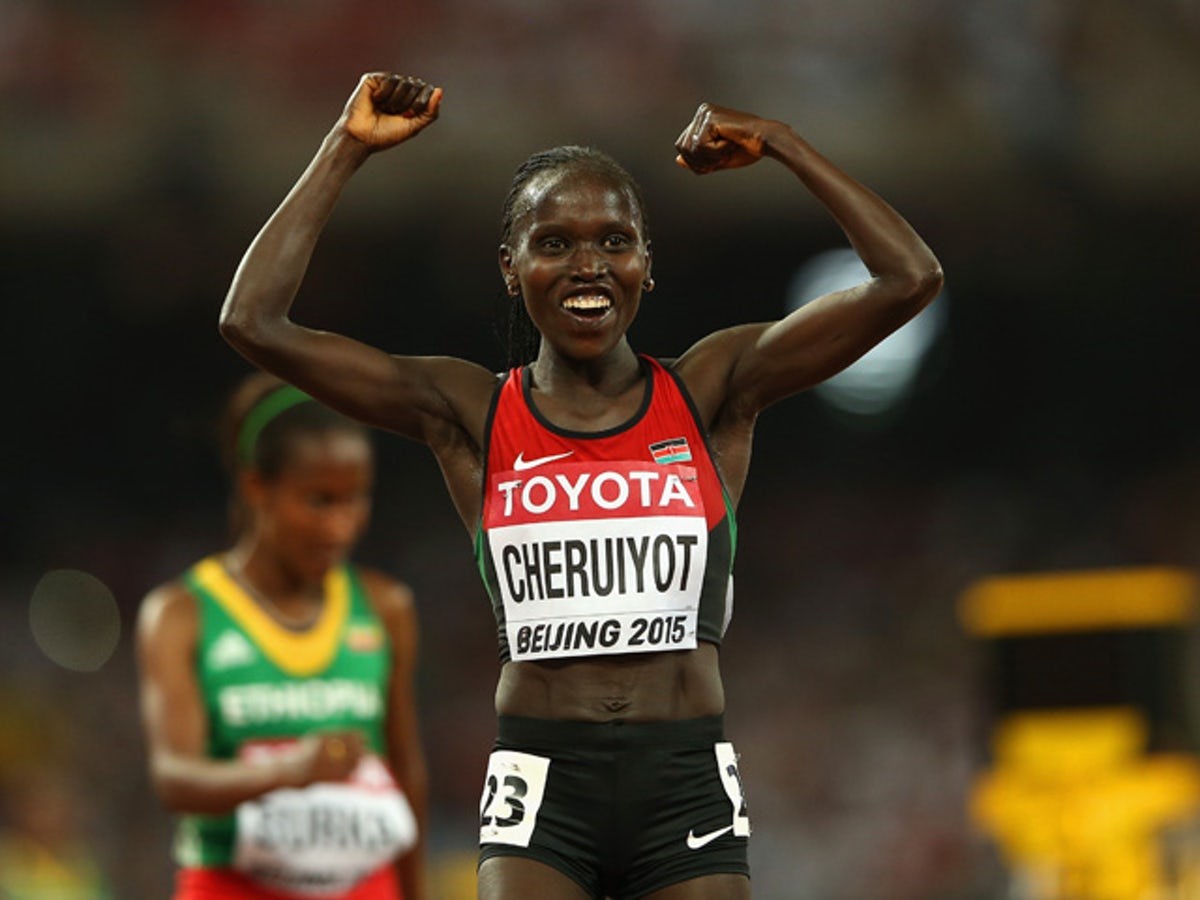
Vivian Cheruiyot will be heading to London Marathon for the fourth time
Cheruiyot is on the celebrity elite list of athletes who will jet out Sunday night for the eagerly-anticipated London Marathon next weekend.
Big names will be on parade in the women’s race. Cheruiyot will be up against compatriots; world marathon champion Ruth Chepng’etich, Frankfurt Marathon champion Valary Jemeli Aiyabei, world marathon record holder Brigid Kosgei, who is also the defending champion, and debutant Edith Chelimo.
There will be special focus on the men’s race which has two of the finest athletes over the distance competing. World marathon record holder Eliud Kipchoge and Berlin Marathon champion, Kenenisa Bekele.
Cheruiyot mainly trained in Kaptagat and Eldoret. She scaled down her training schedule a bit when the race was postponed from April 26 to October 4 due to the coronavirus pandemic.
Cheruiyot told Nation Sport she was in great shape before the race was cancelled. The athlete, who spoke after a speed session at Kipchoge Keino Stadium in Eldoret, said she was disappointed when the race was put off.
“I had finished my programme and I was ready to conquer the world. If the race was to be held then, I would have been in a very good position,” she said.
After the setback, Cheruiyot encouraged herself that things will return to normal since health was more important.
“Everyone has been affected by the virus because it is a worldwide pandemic. We are happy that athletics is opening up slowly, which is a good sign,” she said.
“My preparations for the race have been thorough for the last two months. So far, so good. I expect stiff competition on Sunday, but I am ready for the challenge ahead,” Cheruiyot said.
Asked if she is in good shape compared to 2018 when she last won the race, Cheruiyot said that she feels "much better."
“My prayer is to run well and clock a personal best. But the most important thing is to win the race. There are able competitors in the race because everyone has trained hard. I will focus on my race,” Cheruiyot said.
She said usually there is the pre-race anxiety over how the race will unfold, but she does not fear her opponents because she has prepared adequately.
“I don’t fear anybody, but there is always tension over how the big day will turn out. Every runner is good in her own right. The thought that may stick in your head is the position you will be after the 42 kilometres race,” she said.
Cheruiyot said running in a loop will be an advantage though doing that for 42km is really challenging, but she will do her best.
“The route was changed due to the virus. I love going one way instead of running in a loop which is not hard because I have done this before in the track events. But I will concentrate on the race. I’m aiming for good results."
Cheruiyot said that training for speed was very important because it helps an athlete prepare for anything that might come up towards the end of the race.
The athlete, fondly known as “pocket rocket”, has won many accolades in her career.
Cheruiyot started participating in international races in 1998 when she represented Kenya in the World Cross Country Championships in Marrakech, Morocco. She emerged fifth in the junior category.
Cheruiyot later switched to track events with her specialty being the 5,000m and 10,000m races where she registered mixed results.
by Bernard Rotich
Login to leave a comment

TCS London Marathon
Since its inaugural edition on March 29, 1981, the TCS London Marathon has grown into one of the world's most prestigious road races, blending elite competition with an extraordinary charitable legacy. Founded by former Olympic champion and journalist Chris Brasher alongside Welsh athlete John Disley, the event has been staged every year and has been held in the spring annually...
more...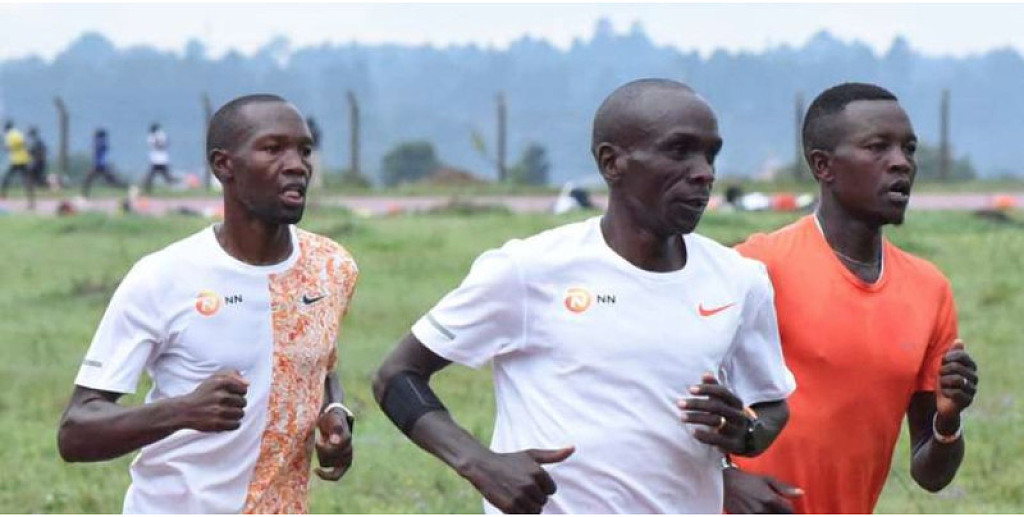
Why Kipkemboi is relishing to pace at London Marathon
In 2011, Kipkemboi joined Rock High School in Tororo, Uganda after his brother,Eliud Kibet Too, who is also an athlete secured a place for him. He sat his Form Four exams and when he was unable to continue to Form Five, Kipkemboi returned home.
That is when he started training after being inspired by what his brother was doing. Kipkemboi joined Complete Sports stable before shifting to Global Sports Communication.
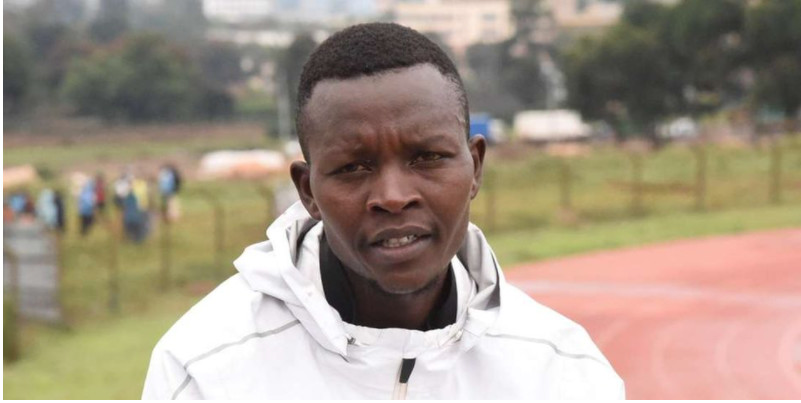
When London Marathon was postponed due to the Covid-19 pandemic, Kaptagat-based athlete Noah Kipkemboi engaged high gear in training instead of reverse considering the importance of the race.
His mind had been set on the initial April 26 race date, but organisers moved the event to October 4 owing to travel restrictions and Covid-19 health concerns. Now only elite races for men, women and wheelchair athletes will be held in an enclosed loop.
Coronavirus scuttled the global sports calendar that resulted in the cancellation of major events including the Olympic Games that were postponed to next year in Tokyo, Japan.
Kipkemboi is one of the pacemakers for some of the best athletes in the world. Defending champion and world marathon record holder Eliud Kipchoge (2hours:01 minute:39 seconds), Rotterdam Marathon champion Marius Kipserem, Amsterdam Marathon champion Vincent Kipchumba and 2016 Mumbai Marathon champion Gideon Kipketer will line up on the big day in London.
The spotlight will be on Kipchoge, the first man to run a sub-two hours (1:59:40) in the INEOS 1:59 Challenge in Vienna, Austria, last October as he goes head-to-head with his great rival, Ethiopian legend Kenenisa Bekele.
Nation Sport recently caught up with Kipkemboi training at Kipchoge Keino Stadium in Uasin Gishu County.
Together with his colleagues from the Global Sports Communication stable, the athletes were tying up loose ends as they prepare for the race.
Kipchoge, who is also the Olympic marathon champion, Kipkemboi and Victor Chumo, who was also a pacemaker in Vienna, took turns to set the pace when we found them training at the Kipchoge Stadium.
In an interview with Nation Sport, Kipkemboi said that he is privileged to be among the pacemakers who will be leading some of the best athletes in the world. He is satisfied with his preparations.
"It will not be an easy task because some of the best athletes will be competing in the race. That means the pace will be fast, but I’m ready for the assignment,” said Kipkemboi.
He said that after competitions were cancelled because of the virus in April, he was disappointed. He had to train alone and he followed the Ministry of Health directives on social distancing.
“It was not easy training alone because athletes are used to training in a group. Nevertheless, I stayed focused. I am in good shape. My colleagues and I are putting some final touches. I believe I will perform well in the huge task ahead,” said the runner.
Kipkemboi said he was delighted when he was picked as one of the athletes who will set the pace in London.
“It will be my first time to pace in a major marathon. This has made me work extra hard in training because this race will need effective preparations. I don’t want to disappoint anyone,” he said.
Kipkemboi joined the Global Communications stable in 2017 and has been rising steadily. He was among the athletes who paced for Kipchoge during the sub-two project in Monza, Italy, where he missed the mark.
Kipkemboi was again selected last year among the 41 pacemakers for Kipchoge in the INEOS 1:59 Challenge in Vienna. Kipkemboi rates the Vienna race as one of the best he has ever participated in.“That was a good race because it brought together many athletes from different countries for a worthy course,” said Kipkemboi.
Last year, he finished in ninth position in the Lisbon Half Marathon in a personal best of 60:52, before emerging third in Sevenhills Road Race in Netherlands.
Kipkemboi was second during the Kass Half Marathon in 2018 and he was also second in the Kakamega Half Marathon last year.
Kipkemboi was born in 1993 in Legetet, Uasin Gishu County. He went to school at Legetet Primary School and then proceeded to Ndubeneti Secondary School. However, he dropped out of school for lack of fees.
In 2011, he joined Rock High School in Tororo, Uganda after his brother ,Eliud Kibet Too, who is also an athlete secured a place for him. He sat his Form Four exams and when he was unable to continue to Form Five, Kipkemboi returned home.
That is when he started training after being inspired by what his brother was doing. Kipkemboi joined Complete Sports stable before shifting to Global Sports Communication.
Login to leave a comment
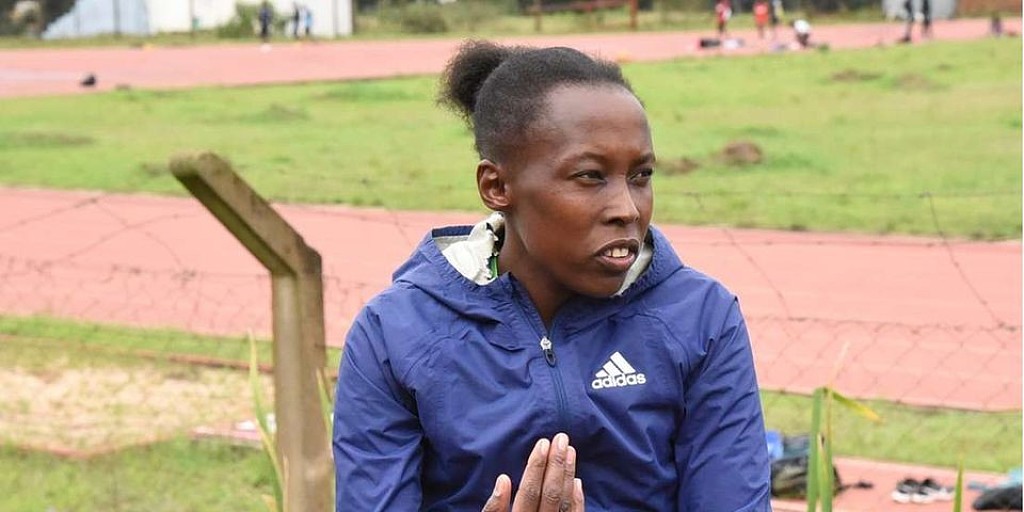
Lydia Njeri Mathathi is among the pace-makers for next month’s London Marathon
First Lady’s Half Marathon champion Lydia Njeri Mathathi is among the pace-makers for next month’s London Marathon.
Yes, you guessed it! She is a sister of the famous distance running star, Martin Irungu Mathathi, bronze medallist at both the 2006 World Cross Country Championships (Fukuoka) and in the 10,000 metres at the 2007 World Championships (Osaka).
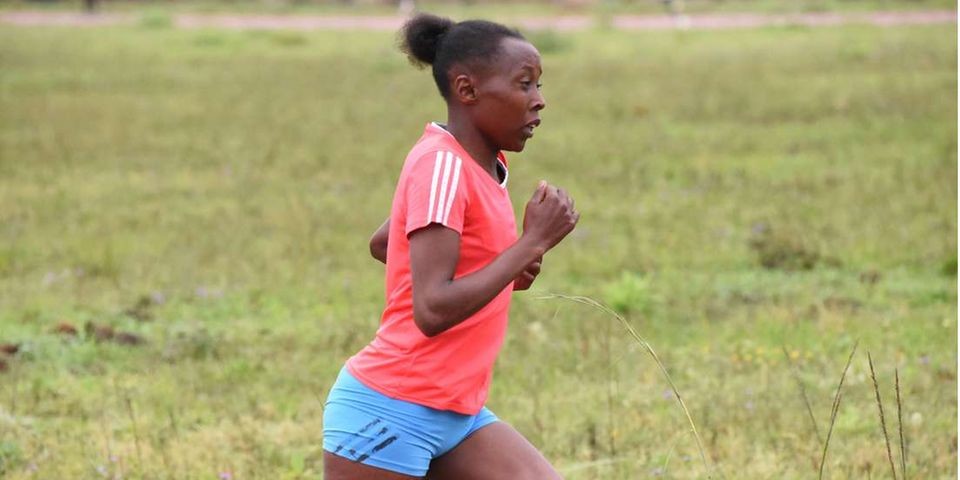
Lydia will be playing “rabbit” in a major race for the second time and has been delegated the responsibility to pace for the second group of athletes.
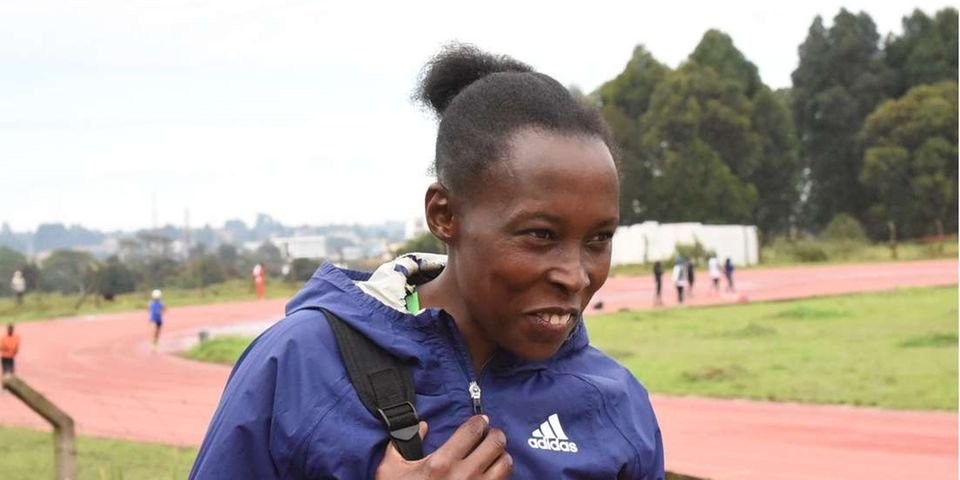
The time target for this group is two hours and 23 minutes.
Apart from pacing various athletes, Lydia is also an accomplished athlete in her own right, and has competed in various races on the road, catching the eye of race directors.We caught up with her at Kipchoge Keino Stadium in Eldoret, Uasin Gishu County, last week where she was sharpening her skills in a speed work session.
Just like other athletes across the country, Lydia was forced to retreat from serious training when the coronavirus struck forcing the government to ban group training.
She said, that forced her to continue training alone due to the rules from the government but she is happy the country is slowly opening up and she is up to the task ahead.
“It has been a long journey in training because of the virus which sent us back to the drawing board where we missed the whole season of athletics,” said the younger Mathathi.
Lydia bagged victory in First Lady’s Half Marathon in Nairobi (one hour, 12 minutes and three seconds) with Londiani-based Emily Chebet coming in second in1:12:30 and Pacifica Jeptoo closing the podium in 1:12:44.
This was after disappointment from the Paris Half Marathon where they were forced to fly back home after the race was cancelled due to coronavirus.
"We flew all the way to Paris only for the organisers to cancel the race in the last minute due to the coronavirus pandemic which had started spreading across the world. I’m happy because I managed to bag victory in the First Lady’s Half Marathon and since then we have just been training at home,” she said.
“I used to participate in various races in school and this was because my brother was an athlete and I wanted to be like him. I’m happy because my brother has been of great help in my career and I will be going for nothing but the best,” said Lydia, who has a personal best of 67:51 in the half marathon.
by Bernard Rotich
Login to leave a comment
TCS London Marathon
Since its inaugural edition on March 29, 1981, the TCS London Marathon has grown into one of the world's most prestigious road races, blending elite competition with an extraordinary charitable legacy. Founded by former Olympic champion and journalist Chris Brasher alongside Welsh athlete John Disley, the event has been staged every year and has been held in the spring annually...
more...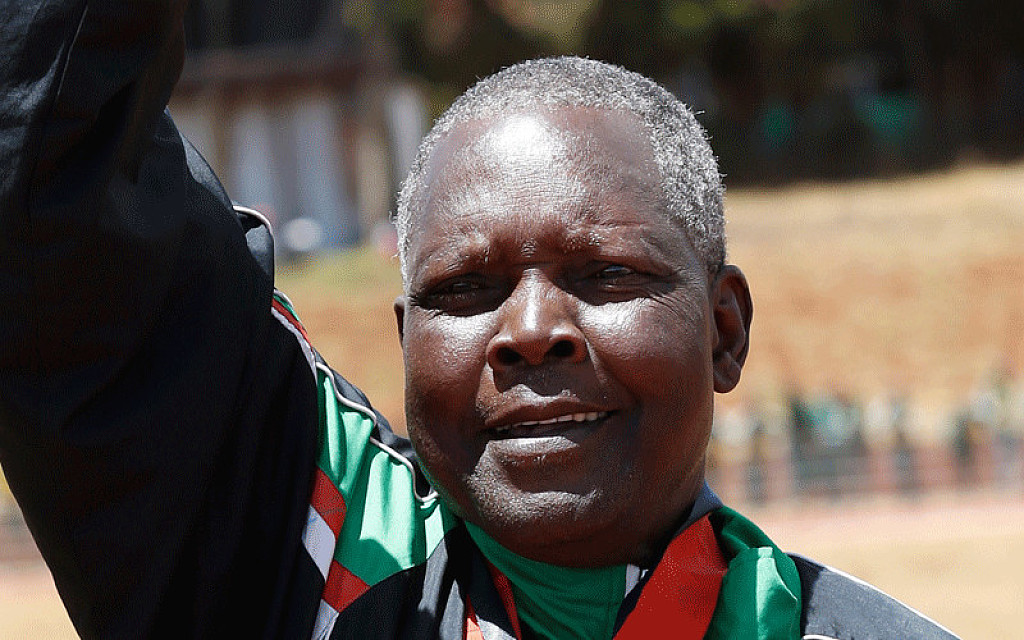
1972 Olympic silver medalist Ben Jipcho, a pioneering Kenyan middle distance runner, died on Friday
World Athletics is deeply saddened by the news that Ben Jipcho, a pioneering Kenyan middle distance runner, died on Friday (24). Jipcho, the 1972 Olympic silver medallist in the 3000m steeplechase and former world record holder in the event, was 77.
Jipcho died of multiple organ failur at the Fountain Hospital in Eldoret where he had been hospitalised since Wednesday (23).
"We are saddened by the loss of Jipcho, a pioneer of athletics in Kenya. My heartfelt condolences to his family and Kenyans at large," said Paul Tergat, President of the National Olympic Committee of Kenya.
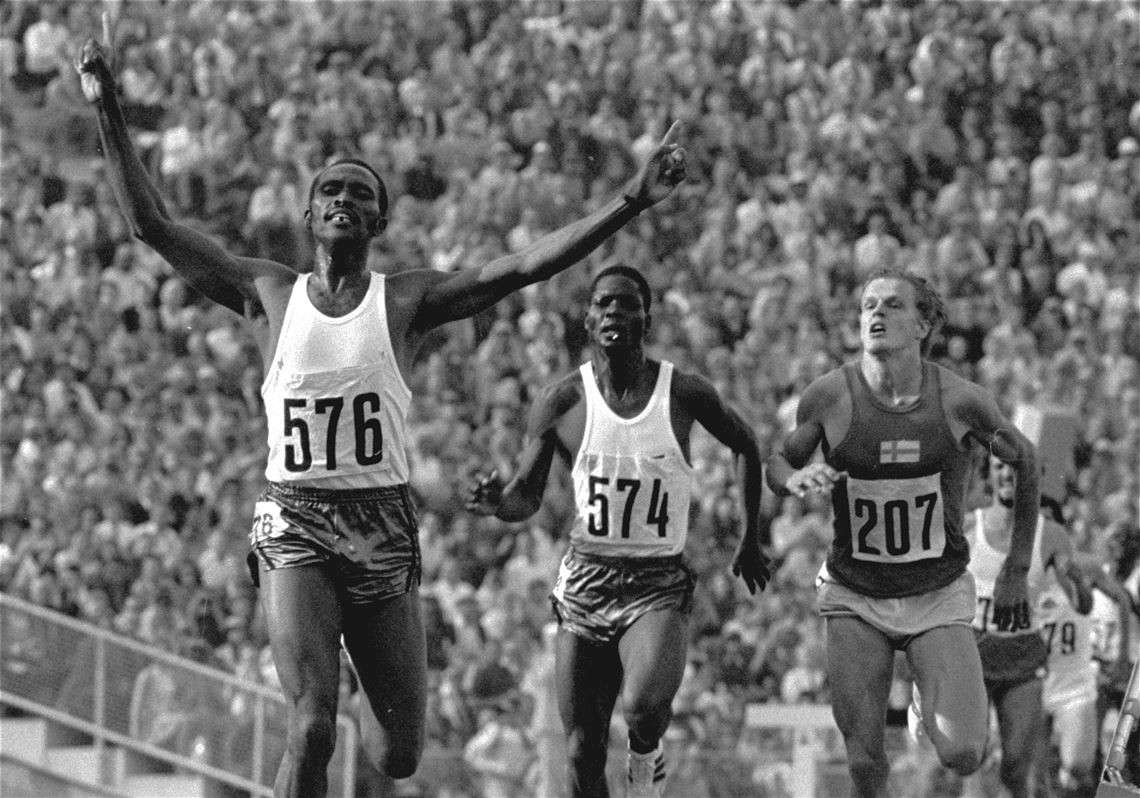
Jipcho, who began his running career in the mid 1960s, rose to prominence in the 1968 Olympic 1500m final in Mexico City where he sacrificed his own ambitions to figure in the medal battle by acting as a pacesetter for Kipchoge Keino, who went on to win the title over Jim Ryun. Jipcho set out on a world record pace, covering the first lap in 56 seconds and bringing Keino through 800m in 1:55.3. Keino won in 3:34.91, an astounding performance given Mexico City's high altitude, an Olympic record that stood for 16 years while Jipcho eventually crossed the line tenth.
He returned to the Olympic stage four years later, and again in the same race with Keino, this time the 3000m steeplechase. Keino won again in Olympic record time by Jipcho caught Finn Tapio Kantanen at the line to take silver by a scant 0.02 in 8:24.62.
His finest championship performances came at the 1974 Commonwealth Games in Christchurch, New Zealand, where he raced race to victory in the 5000m and 3000m steeplechase and taking bronze in the 1500m.
He also won the 5000m title at the 1973 All-Arica Games and silver in the steeplechase at the 1970 Commonwealth Games.
Jipcho broke the world record in the 3000m steeplechase twice over the course of eight days in 1973, first clocking 8:19.8 on 19 June then smashing that performance with an 8:14.0 run on 27 June, both times in Helsinki.
Jipcho was later among the key stars of the International Track Association (ITA), a short-lived professional tour in the United States in the early 1970s.
In a post on the government's Facebook page, Kenyan President Uhuru Kenyatta eulogised Kipcho "as a pioneer athlete who helped cement Kenya's profile on the international stage as a top athletics nation".
Wesley Korir, the 2012 Boston Marathon champion and a former Kenyan MP, told The Standard, "Jipcho gave us a foundation which we used to build our running career. We have lost a pillar that will be hard to replace."
by World Athletics
Login to leave a comment
The former member of the International Olympic Committee, Charles Mukora dies at 83
National Olympic Committee of Kenya President Paul Tergat has described his late predecessor Charles Mukora as the man responsible for the firm entrenchment of Kenya into the Olympic movement.
Mukora, 83, died on Thursday after a long illness.
The former member of the International Olympic Committee (IOC) will also be remembered as one of the forces behind Kenya’s breakthrough into international track and field as pioneer coach, nurturing the careers of Kenyan legends Naftali Temu and Kipchoge Keino, among many others.
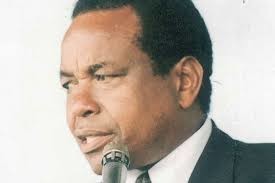
“Charles was one of the founding pillars of the National Olympic Committee of Kenya (Nock) and his tenure saw Kenya firmly established in the global Olympic movement,” said Tergat, an Olympic silver medallist and former world marathon record holder, in his condolences statement.
Athletics Kenya President Jack Tuwei paid tribute to Mukora, who also served as Laikipia East Member of Parliament, as a “dedicated sports leader.”
Login to leave a comment
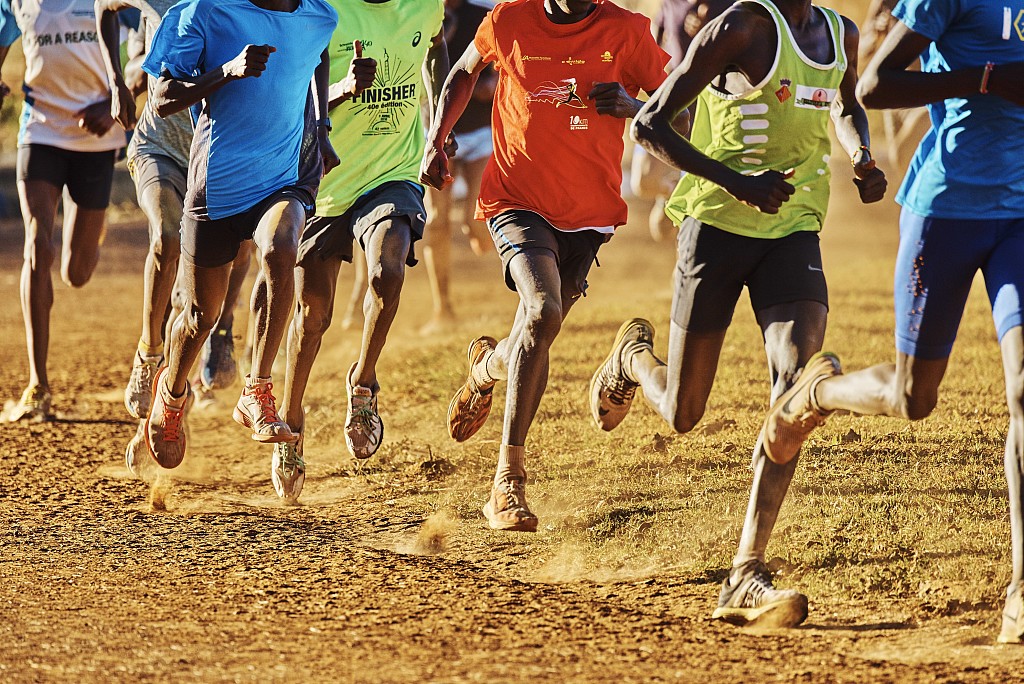
Thousands of Kenyan runners have the same dream Part 1: The Real Running Scene in the country of Kenya
by Willie Korir reporting from Kenya
Login to leave a comment
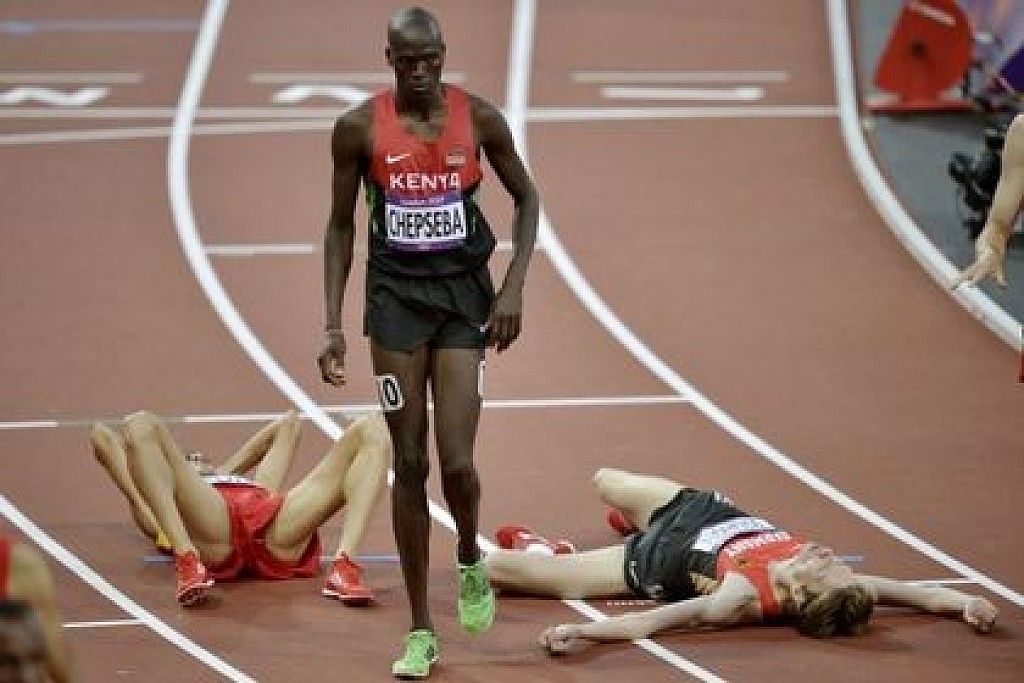
Many of the top runners in the world come from Kenya and here is a good answer why
Kenya is known around the world as the home of champions and we wanted to know why. One tribe in Kenya that stands out more than others is the Kalenjins.
At the 1968 Olympics Kalenjin runner Kipchoge Keino defeated world-record holder Jim Ryun.
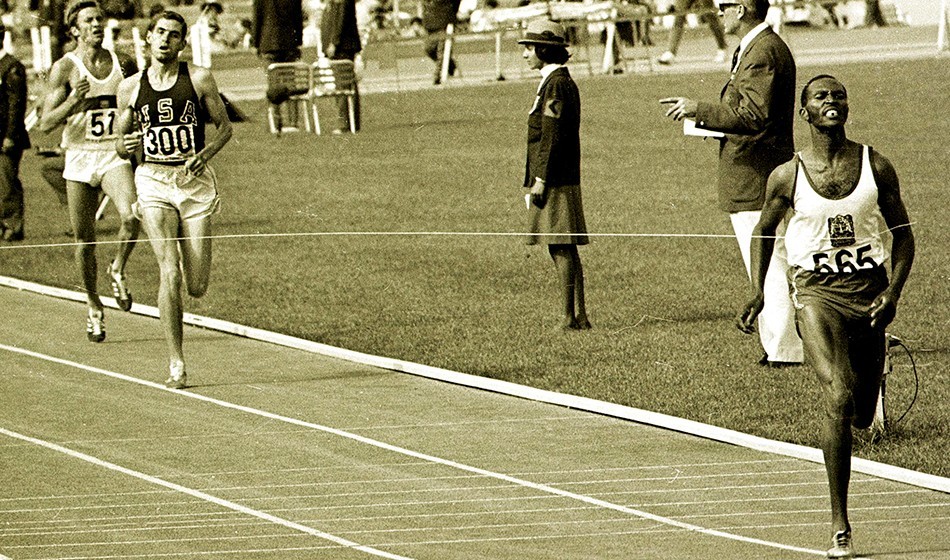
That day Keino not only won gold, but he also ushered in an era of Kenyan dominance. Since then a considerable number of the races are won by Kenyans and many world records are held by Kenyans. Many of these runners are of the Kalenjin tribe.
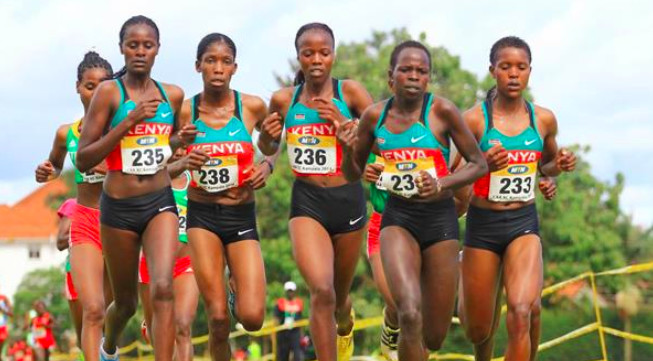
The feats have just bafflled the world. David Epstein a renown sports editor who authored a book called “The Sports Gene'” noted that many world-class runners in Kenya come from the tribe of Kalenjins. In his book, he explores possible genetic factors that might be the reason behind this.
He notes that Kalenjins have thin ankles and calves which makes their legs resemble a pendulum and eases their movement. According to his explanation, the more weight you have farther away from your center of gravity, the more difficult it is to swing.
The vice versa applies to Kalenjins. Some studies have also discovered that Kenyans, in general, have less mass for their height, longer legs, shorter torsos and more slender limbs. These physical traits can be viewed as relatively “streamlined” and improve efficiency while running.
Lastly, there is a controversial cultural argument that Kalenjins become great runners because they ran several miles to and from school barefoot on a daily basis.
Login to leave a comment
