

Running News Daily
Running News Daily is edited by Bob Anderson and team. Send your news items to bob@mybestruns.com Advertising opportunities available.
Index to Daily Posts · Sign Up For Updates · Run The World Feed
Articles tagged #Golden Trail World Series
Today's Running News
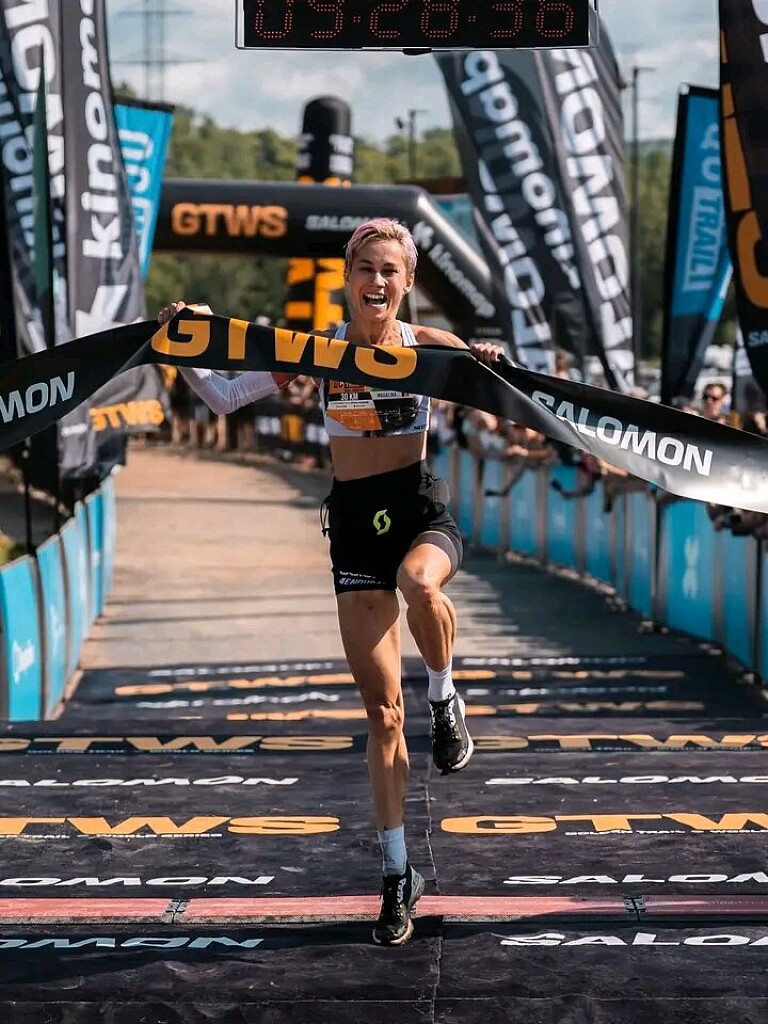


Madalina Florea Conquers Québec Mega Trail 30K to Seize Golden Trail World Series Lead
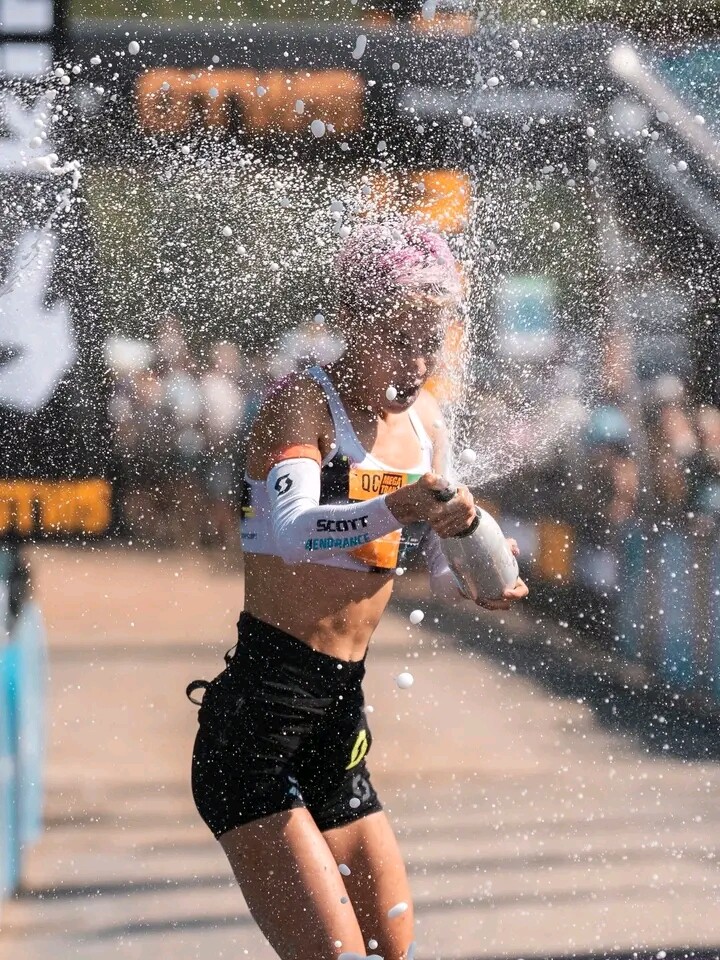
Romania's Madalina Florea delivered a commanding performance at the Québec Mega Trail 30K on Sunday, conquering one of the most demanding courses on the Golden Trail World Series calendar to claim victory and move to the top of the overall standings.
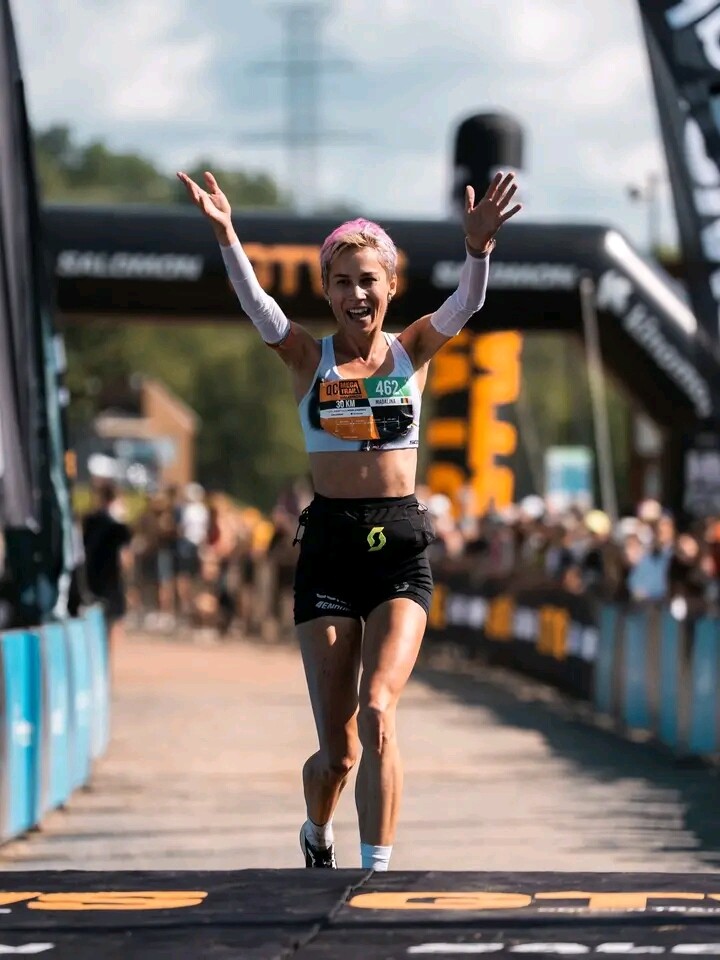
The reigning Golden Trail World Series champion crossed the finish line in 2:27:12, producing another masterclass in mountain racing on a brutal 28.7-kilometre course featuring 1,397 metres of elevation gain, two punishing ascents of Mont-Sainte-Anne, and highly technical descents across steep ski slopes.
The race began at a relentless pace as Caroline Kimutai surged to the front, continuing the aggressive strategy that has defined her season. Florea, however, remained composed, keeping the Kenyan well within reach during the opening climb before launching her decisive move on the first descent.
From that moment, the Romanian steadily tightened her grip on the race. She extended her advantage on the second ascent and never looked back, controlling the remainder of the contest with remarkable strength and technical precision.
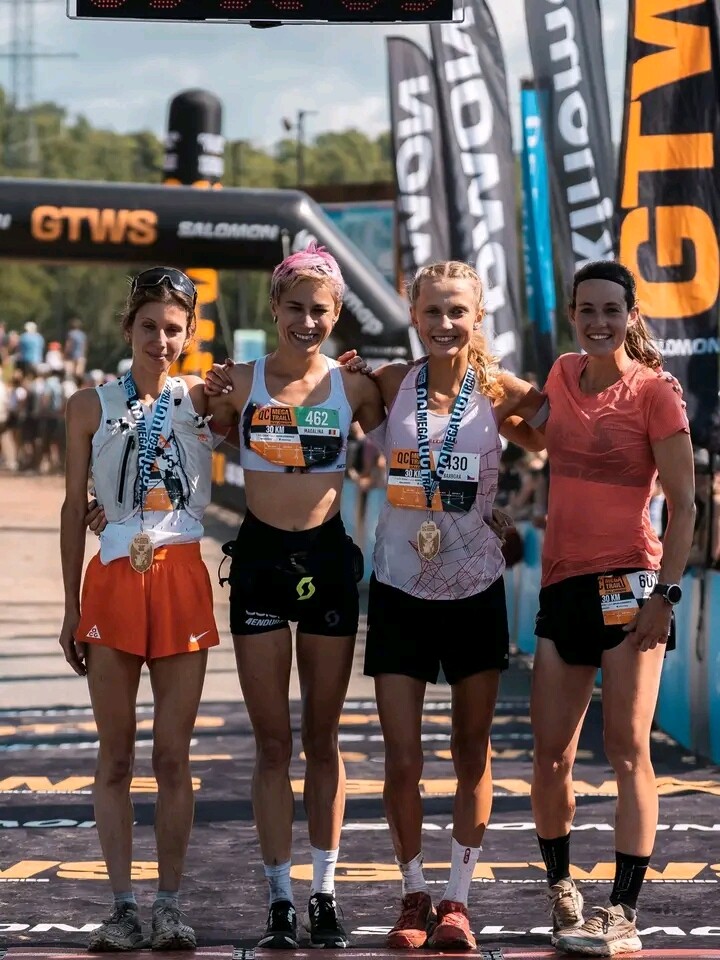
France's Marie Nivet secured second place, finishing more than seven minutes behind the winner, while Kimutai faded after her fast start to complete the podium in third.
The victory propels Florea to the summit of the Golden Trail World Series rankings with 442 points, overtaking Kimutai, who now sits second on 408 points. Nivet's runner-up finish also lifts her into third place in the overall standings, setting up an intriguing battle for the remainder of the season.
With the Québec triumph, Florea has once again underlined why she is the defending series champion. Her ability to combine patience, tactical awareness and exceptional climbing and descending skills proved decisive on one of the circuit's toughest tests.
The Golden Trail World Series now pauses before returning on August 1 in Austria, followed by the iconic Sierre-Zinal race in Switzerland a week later. As the championship enters its decisive phase, Florea has firmly established herself as the athlete everyone else will be chasing.
by Erick Cheruiyot for My Best Runs.
Login to leave a comment
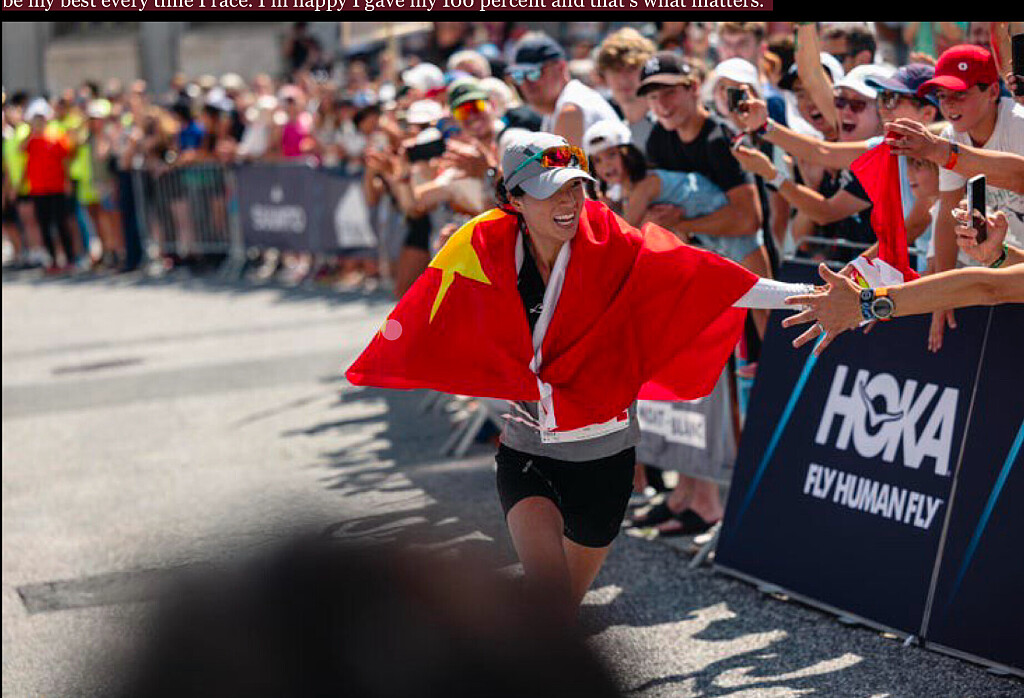
USA’s Eli Hemming and China’s Miao Yao Make History at 2024 OCC
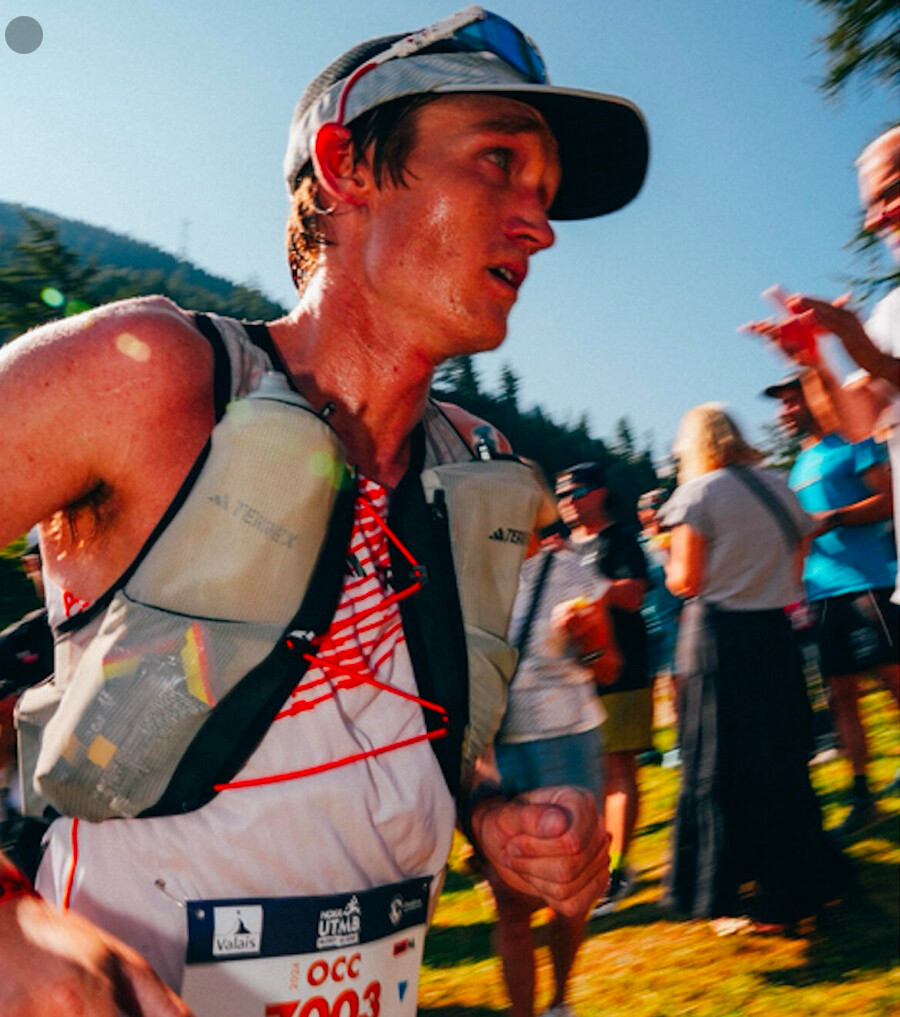
It’s the first time an American or Chinese runner has won the prestigious 57K trail race that serves as a de facto global trail running championship. All year, Eli Hemming said his primary focus was charging up and over the La Flégère ski resort on the last climb of the Orsières-Champex-Lac-Chamonix (OCC) race at the UTMB World Series Finals to then break the finish line tape in Chamonix, France, as the champion.
That’s almost exactly how it played out on Thursday afternoon. The 29-year-old runner from Kremmling, Colorado, fended off the world closing in around him as he overheated under a humid, sunny 80 degree day, as well as a hard-charging Francesco Puppi, to win the 57K (36-mile) race in 5 hours, 11 minutes in 48 seconds. In doing so, he not only claimed a UTMB-Mont Blanc Finals title and the 13,000 euro (about $14,400) prize, he became the first American ever to win the prestigious race that serves as the de facto global championship at the shorter ultra distances.
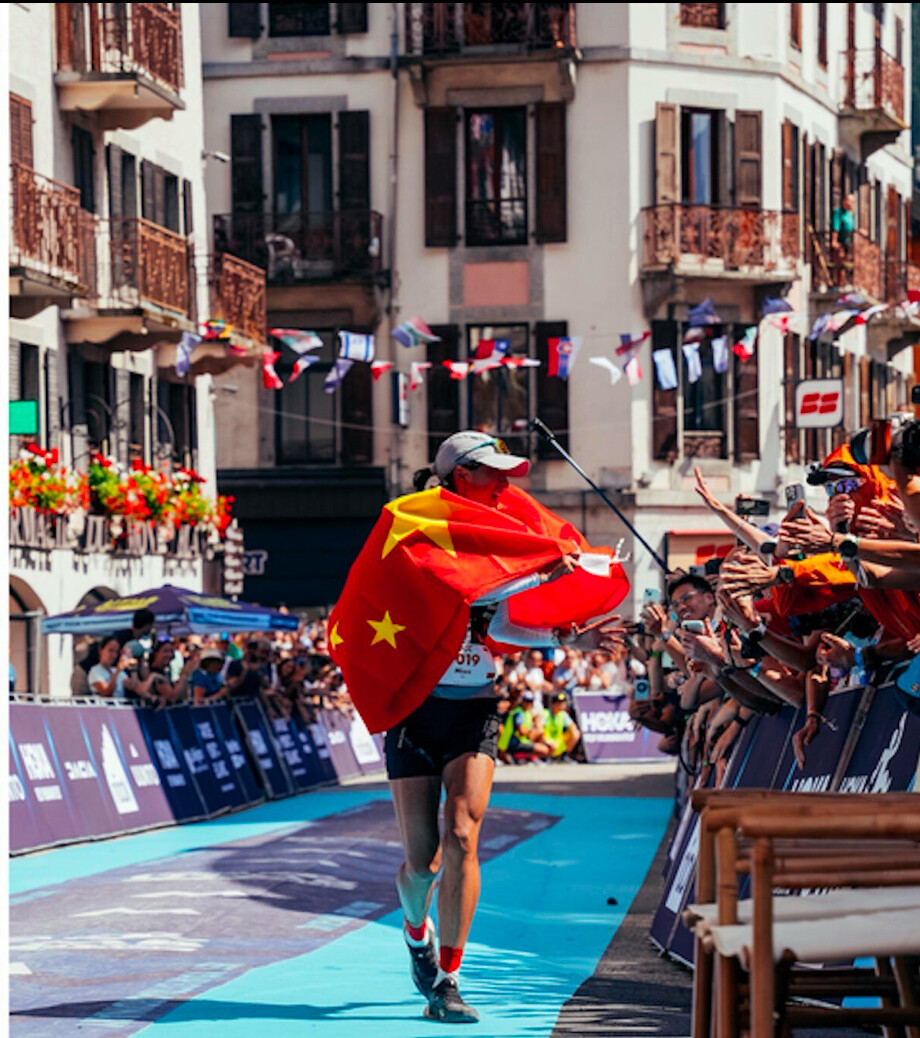
But the race was a dastardly tilt, and Hemming had to turn himself inside out to get the win. It figured to be a grueling battle, both because of the 11,500 feet of elevation gain and descent but also because of the strong field of international runners and hot, humid weather with sunny skies soaring into the 80s under the early afternoon sun. Hemming went out hard early in the race, but he didn’t feel compelled to challenge for the lead up the first two climbs over the first 9 miles. That’s because fellow American Christian Allen was absolutely flying off the front, as the 26-year-old runner from Orem, Utah, surged to the lead from the gun and led by more than 2 minutes through the 15-mile mark as he passed through Swiss the village of Trient. But that’s where the runners faced the toughest test of the race, a spikey 4-mile, 2,300-foot technical climb to the Chalet des Grands before continuing upward on slightly less steep terrain to the Col de Balme mountain pass. In all, it’s a 3,000-foot ascent over about 6 miles to the 7,200-foot high point on the course.
That was the first crux of the race, and that’s where Hemming took charge. As Allen faded, Hemming surged up the big climb as several other speedy runners gave chase, including Swiss runner Remi Bonnet who is known for his uphill running abilities. But Hemming had been waiting for this all year and specifically trained on long mountain ascents near Breckenridge, Colorado. He continued to surge across the Swiss-French border and up to the pass, building a nearly 7-minute lead over Spanish runner Antonio Martinez Perez.
From there, Hemming extended his lead to 10 minutes on the 7-mile, 3,000-foot descent to the French village of Argentière. But with one more big climb—a 3.5-mile, 2,000-foot technical grind to 6,200 feet atop the ski resort—he was anything but home free. Early in the climb, he slowed from a run to a walk, and even stopped at one point midway through the climb, bent over and rested his hands on his knees. He looked in distress, but eventually gathered himself and started running slowly up the hill again.
Perez had been charging up the mountain behind him and there was a brief moment where it looked like Hemming’s lead might be in jeopardy. But he managed to reach the final checkpoint at the 50K La Flégère aid station in first, and immediately looked better as he began the 4-mile descent down to Chamonix. Although he had gained ground, Perez felt the impact of the climb, too, and was caught by Italian runner Francesco Puppi before reaching the ski resort aid station. After a cordial acknowledgement as he passed, Puppi suddenly had a new spring in his step. He surged up the final 200 meters to reach the checkpoint about 4 minutes after Hemming then began bombing down the rocky, rooty dirt trail in pursuit of the leader.
Up front, Hemming had recovered slightly, running smoothly albeit without the intensity of a couple hours earlier. Puppi was clearly running faster. What had been a 10-minute lead at the 28.2-mile mark had greatly diminished with less than 3 miles to go. But with every stride, Hemming was one step closer to his year-long goal of winning OCC and he wasn’t going to let it slip away.
When he reached the edge of the Chamonix pedestrian village, he was quickly re-energized by the throngs of cheering spectators and increased his pace briefly as he dashed through the winding 200-meter section before slowly slightly on the final blue-carpeted approach to the finish line.
“I was trying to pace it as well as I could, and I knew if I made it over Col de Balme with a good gap, unless I blow up—which I did a little bit—I knew I could hold up pretty well to the end,” Hemming said. “It ended up being a bit of a grind. I knew I had about a 10-minute lead at Argentière, but I was very much overheated and the walls started closing in a bit. I tried to take a little time to cool down, but I knew I had to keep moving and just make it to the top.”
Still running hard, Puppi dashed through the village three minutes later to finish second in 5:14:46, followed by Perez in third at 5:17:56, China’s Juwei Zi in fourth (5:22:17), and Aritz Egea Caceres in 5th (5:27:07). Nick Handel, a 32-year-old runner from San Francisco, was the second American runner in the men’s race, finishing 13th in 5:41:08. The victory is the first big international win for Hemming, who transitioned into trail running in 2021 after several years as a professional triathlete. Hemming has won several domestic 50K races in the US, including the Canyons Endurance Runs 50K on April 26 in Auburn, California. Last year, he placed second to Bonnet in the Mont-Blanc Marathon and also finished fifth in the Golden Trail World Series Final 20K championship in Noli, Italy. For a while, it looked like Hemming, and his 27–year-old wife, Tabor, might be on the verge of one of the best trail running stories of the year. They decided to part ways with sponsor Salomon, in the offseason, and sign with the Adidas-Terrex team at the start of the year. While they both raced well early in the season—Tabor took third at the Canyons 50K in April and third at the Broken Arrow Skyrace 25K in June—they opted not to race as much this year as they’ve been known to. They also decided not to join their new teammates at an extended Chamonix training camp in late July and instead stay home and train at high-altitude in central Colorado.
Knowing what they’d be facing on the course, they sought out long climbs near Breckenridge and Frisco that topped out between 12,000 and 13,000 feet—including Wheeler Pass between Copper Mountain ski resort and the community of Blue River. “The course is fast and steep, but it’s also very runnable,” Tabor said. “We knew we could get quality training at home, so we used those climbs to train, so we were happy to stay at home and run the places we know best.”
Tabor looked great early in the race, running with a strong pack of lead women that included Judith Wyder of Switzerland, Clementine Geoffray of France, and Miao Yao of China, plus Spain’s Sara Alonso, New Zealand’s Caitlin Fielder, and fellow Americans Dani Moreno and Allie McLaughlin.
Wyder was the early leader and figured to be tough to beat—despite a recent bout of COVID. She had earned the silver medal in the 50K race at last year’s World Mountain and Trail Running Championships in Austria, and more recently took second in the 20K mountain running race at the European Championships and first at the Mont-Blanc Marathon in early July. Wyder led Geoffray, Moreno, McLaughlin, and Yao through the initial 4.5-mile climb to Champex, then expanded her lead to the top of the second climb at the 6,200-foot summit of La Giete as Yao and Alonso maneuvered into the second and third spots. But following a similar strategy as her husband, Tabor took the lead on the long downhill into Trient and began to surge on the technical climb up to Chalet des Grands with Yao, Wyder, Alonso and McLaughlin in tow. Hemming ran in the lead for part of the climb, but she paid for the aggressive move. Wyder and Yao overtook her and those two separated from the rest of the field. They dueled back and forth but Yao took the lead over Col de Balme and would never relinquish it. She seemed to get stronger as the race went on and she extended the gap on Wyder to 4 minutes at La Flégère ski resort.
From there, Yao cruised into Chamonix to secure the first win by a Chinese athlete at OCC in 5:54:03. With a 2018 CCC win already under her belt, she also enters the rarified air of having two UTMB World Series Finals championship titles to her name. Wyder was second in 6:00:05, followed by Geoffray in third at 6:02:10, Alonso in fourth (6:05:15), and Fielder in fifth (6:05:46). Moreno, who was third in the OCC in 2022 and dropped out last year, ran a strong second half to finish sixth as the top American in 6:06:59. Tabor Hemming continued up and over Col de Balme but slowed significantly and eventually dropped out at Argentière.
“I’m really happy about my race. It was really fun out there to compete with such strong ladies,” Wyder said, “Miao Yao was flying in the end. I’m so proud of myself to be back and to be able to be racing healthy. I didn’t think about [having COVID recently]. Today I was really happy with my performance and with my legs today.”
Login to leave a comment
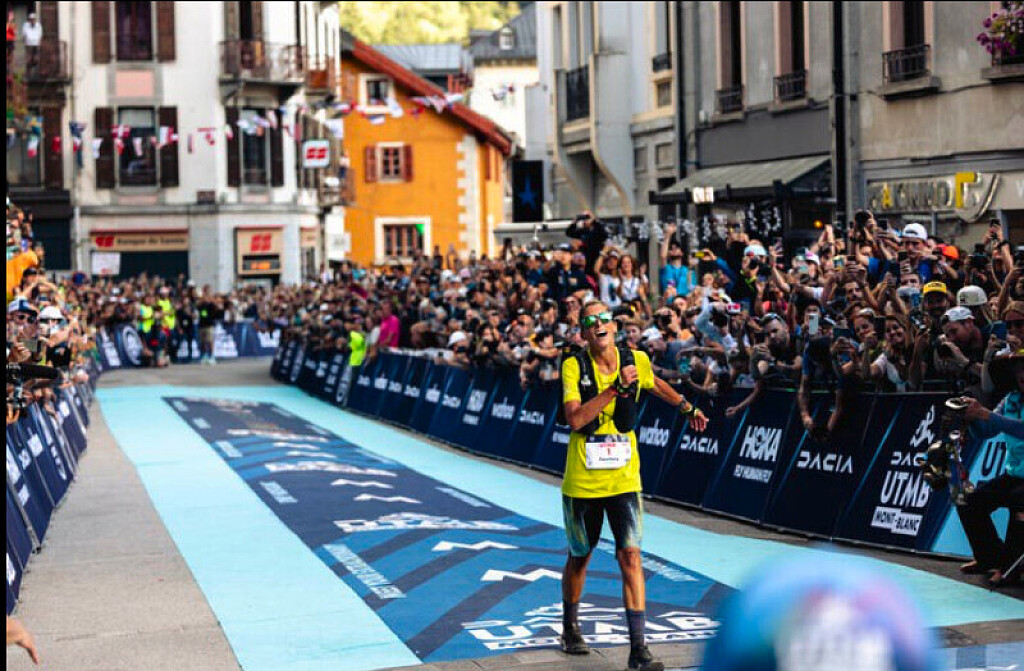
UTMB Is Having a Golden Moment. But It’s Delicate.
After a year that included a maelstrom of controversy, the world’s most prominent ultra-trail running event has righted its path
“It felt like a golden era of trail running.”
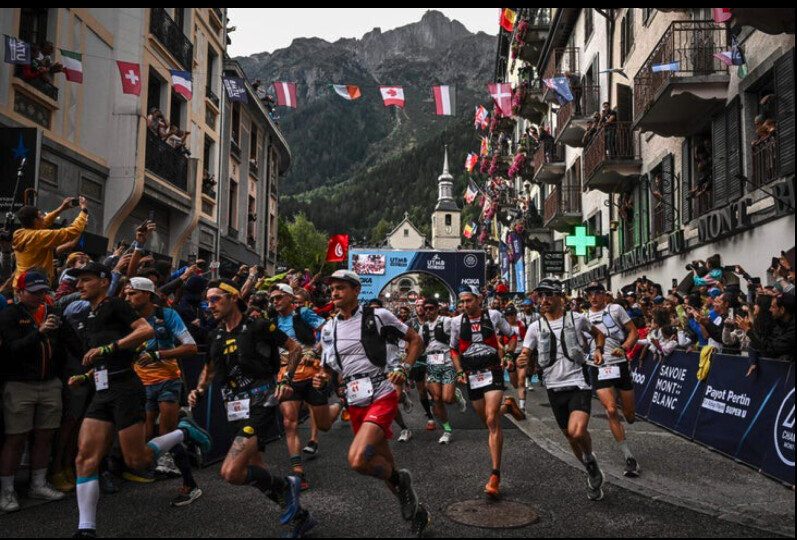
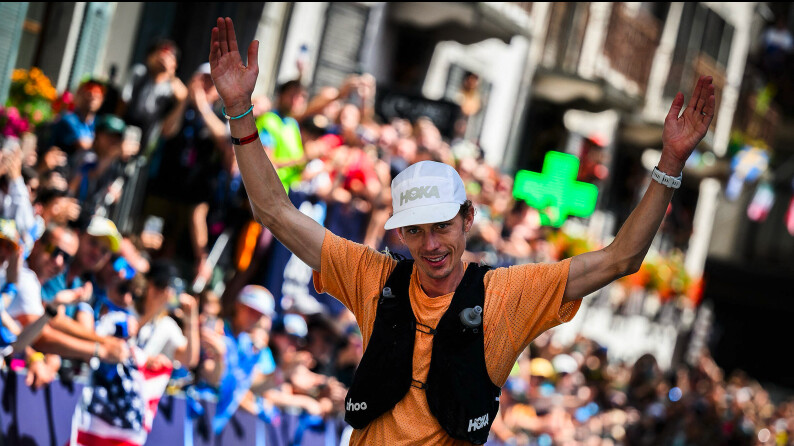
That quote came from Keith Byrne, a senior manager at The North Face and a UTMB live stream commentator for nearly a decade, who was talking about last summer’s UTMB World Series Finals in Chamonix, France.
The UTMB races during the last week of August last summer were, I thought, the most alluring in the event’s 20-year history.
After years of being frustrated by the course, American Jim Walmsley finally put it all together for a victorious lap around Mont Blanc. In doing so he became the first U.S. man to win the race, setting a course record of 19:37:43. He and his wife, Jess, had moved from Arizona to live full-time in France to make it happen. And then there was Colorado’s Courtney Dauwalter, who won the race handily in 23:29:14 to notch her third victory and continue the strong legacy of American women on the course. The win felt extra historic because it made her the first person to win Western States, Hardrock, and UTMB in the same year—arguably the three most legendary and competitive 100-mile events in the world, and she dominated each one.
The events came off without a hitch and included record crowds in Chamonix, plus a record 52 million more tuning into the livestream.
Throughout the fall and winter, harmony and happiness seemed to give way to chaos and discontent. But a year later, as the UTMB Mont Blanc weeklong festival of trail running kicks off on August 26, everything seems back to normal in Chamonix. What happened along the way is a tale of drama, perhaps both necessary and unnecessary, all of it culminating in course corrections by the multinational race series.
In short, what a year it has been for UTMB.
And now, hordes of nervous and excited runners from all corners of the globe are descending on Chamonix for this year’s UTMB Mont-Blanc races. Registration for UTMB World Series events is reportedly up about 35 percent year over year with even greater growth in interest for OCC, CCC and UTMB race lottery applications. There is more media coverage, more pre-race hype, and more excitement than ever before. More running brands are using the UTMB Mont Blanc week to showcase their new running gear with media events, brand activations, and fun runs. Even The Speed Project—although entirely unrelated to UTMB—chose Chamonix as the starting point of its latest so-called underground point-to-point relay race to try to catch some of the considerable buzz UTMB is generating.
So what happened? Did the UTMB organization do its due diligence and make amends with several significant changes in the spring? Was the angst and stirring of emotions just not as widely felt as the fervent bouts of Instagram activism claimed it to be? Have the participants and fans of the ultra-trail running world suffered amnesia or become ambivalent? Or is it all a sign of the race—and the entire sport of trail running—going through growing pains as it adjusts to the massive global participation surge, increased professionalism, and heightened sponsorship opportunities?
On the eve of another 106-mile lap around the Mont Blanc massif, I wanted to take a look at what happened and the current state of UTMB’s global race series that culminates here in Chamonix this week.
We caught a glimpse of what was to come shortly before UTMB last year, when the race organization announced the European car company Dacia as its new title sponsor. A fossil-fuel powered conglomerate didn’t sit well with some fans of the event, coming amid an era of widespread climate doom (even though the brand would be highlighting its new Spring EV at the UTMB race expo.) The Green Runners, an environmental running community co-founded by British trail running stars Damian Hall and Jasmin Paris, called it an act of “sportswashing” and released a petition calling on UTMB to denounce the partnership. (Hall even traveled all the way to Chamonix to deliver the petition in person.)
These grumblings of discontent and others that followed exploded into a social media firestorm shortly after UTMB. In October, it became public that UTMB had moved to launch a race in British Columbia, Canada, just as a similar event in the same location was struggling with permitting. A he-said, she-said back-and–forth left onlookers with whiplash. Then on December 1, UTMB livestream commentator Corrine Malcolm announced on Instagram that she had been fired and in late January, a leaked email from elite runners Kilian Jornet and Zach Miller to fellow athletes called for a boycott of the race series. All of it, jet fuel for social media algorithms.
“We’re at a turning point in trail running, but we can keep the core values if the community stands up,” the Pro Trail Runners Association secretary, Albert Jorquera, told me at the time.
In the midst of these dramas, I interviewed race founders Catherine and Michel Poletti over lunch at a Chamonix cafe. For nearly a decade now, I have met with the couple for candid conversations that helped frame online articles and magazine stories, and most recently for the book, The Race that Changed Running: The Inside Story of UTMB.
I plunged headlong into two articles with hopes of explaining it all. There was so much heat swirling around the UTMB stories, and so little light.
“The very thing that made ultrarunning so bonding was being torn apart by the community itself through social media,” said Topher Gaylord. A former elite runner who tied for second in the inaugural UTMB in 2003, Gaylord engineered UTMB’s first title sponsorship with The North Face and has been a close supporter of the Polletis for 20 years. “Some players are using social media to divide the community. That’s super disappointing.”
To me, it felt like the aggressive online activists were winning the day. Trail running suddenly seemed polarized, infected with the intertwined social media viruses of false indignation and close-mindedness. Twice, I deep-sixed my article drafts. Friends and editors convinced me they wouldn’t be read dispassionately. Who wants to be handed a fire extinguisher, when your goal is to torch the house?
Well, what a difference eight months can make. We now have some perspective and, with it, some answers.
Since its earliest days, UTMB’s volunteer founding committee believed in the values of the sport. The very first brochure produced for the race—a mere sheet of paper—featured a paragraph on values. In later years that statement became much more comprehensive, expanding to cover a wide range of topics and the race’s mission to support and protect them.
But maintaining those values in an organization that has gone from a singular race with a literal garden-shed office to a 43 global event series with a staff of more than 70 full-time employees is tricky at best. In an interview once, Michel Poletti paused, asking if I had seen a photo of a mutual friend that was making the rounds. He was climbing one of Chamonix’s famed needle-sharp aiguilles, one foot on each side of a razor sharp ridge—a perilous balancing act, big air on each side. It was his metaphor for trying to move ever up, while balancing business growth and heartfelt values.
Over the course of dozens of hours of interviews with the Polettis, I came to learn one thing: UTMB always moves forward up the ridge. In the process, UTMB corrects its course. It starts with a careful analysis after each edition, evaluating pain points in areas such as logistics, security, media, traffic, and others, discussing how they can be addressed. Historically, those course corrections haven’t been at the pace others might want—especially since the social unrest that developed during the Covid pandemic—but the organization has a reliable pattern of steadily addressing concerns.
And so, not too many weeks after that lunch meeting, UTMB set to work. First came a heartfelt effort they kept under the radar—traveling around the U.S. to listen and learn. They spent two weeks in the U.S. in February, visiting with American athletes, race directors, journalists, consultants, and their Ironman partners. “We need to learn from our mistakes and from this crisis,” Michel said.
Methodically over the ensuing months, UTMB rolled out a series of changes. Some were aimed at directly addressing the controversies, others were overdue for what is, by any metric, the world’s premier ultra-trail running event.
“My hope is that the trail running community understands that we are human,” Catherine had told me over the winter.
Four months ago, at the end of April, the race organization announced that Hoka would become the new title sponsor of UTMB Mont-Blanc and the entire UTMB World Series through 2028. It was a huge move because Hoka, one of the biggest running brands in the world, essentially doubled-down on its support of UTMB and trail running in general. The five-year deal brought benefits other than cash, too. Hoka has a strong history of inclusivity and growing representation among marginalized communities, an area UTMB has announced it intends to focus more on beginning this year. The deal also moved Dacia out of the title sponsor limelight, instead bringing a brand with a strong reputation in trail running to the fore.
Dacia was shifted to the role of a premier partner in Europe, and now plays an integral part in a new eco-focused mobility plan UTMB updated in July. Fifty of their cars can be signed out for use by over 70 staff and 2,500 volunteers, encouraging them to arrive in Chamonix using public transportation instead. The move is estimated to eliminate 200 vehicles driving into the valley. (The organization’s new mobility plan will transport an estimated 15,000 runners and supporters, eliminating the need for approximately 6,000 cars during the UTMB Mont-Blanc week. On average, a bus will run every 15 minutes between Chamonix and Courmayeur, Italy, and Chamonix and Orsières, Switzerland.)
In May, UTMB announced a new anti-doping policy it had developed with input from PTRA. The organization committed to spending at least $110,000 per year, money that will be allocated to test all podium finishers and a randomized selection of the 687 elite athletes in attendance. The new policies will be implemented by the International Testing Association, an independent nonprofit that has also conducted two free informational webinars for the 1,400 UTMB Mont Blanc elite runners.
Not long after the announcement, Catherine Poletti suggested this was just a start. Speaking at TrailCon, a new conference held in Olympic Valley, California, on June 26, she said, “It’s a first big step for us. And we’ll continue to develop this policy.” (The most important anti-doping protocol may still be beyond UTMB, however. “The elephant in the room is that we need a coordinated approach to establish out-of-competition testing,” Tim Tollefson, an elite U.S. runner and director of the Mammoth TrailFest in California, who spearheaded independent testing at his event in 2023. “Individually, we’re just lighting our money on fire.”)
In mid-June, UTMB addressed a longtime issue with top runners—prize money. A chunk of the funding from the ratcheted-up Hoka sponsorship was directed to supporting the bigger prizes for the OCC, CCC and UTMB races in Chamonix—about $300,000 this year, nearly double of 2023—as well as more prize money for the three UTMB World Series Majors. (The sequence was intentional. The organization wanted a new doping policy in place before increasing prize purses, since large cash awards are often thought to lead to a growth in doping.)
It’s a move that was long overdue—the most celebrated marquee event in any sport should reward its top athletes more than any other event—but not possible without Hoka’s increased involvement. The proposal was shared with PTRA in advance of the announcement, and the group provided feedback that was incorporated into the final divvying up of the purse. The total amount spent on prize money across all UTMB races is now more than $370,000.
“We increased the prizes quite dramatically,” said UTMB Group CEO Frédéric Lenart. “It’s very important for us to support athletes in their living.”
Finally, just last week, UTMB announced a new department within the company called “Sport and Sustainability.” The group is headed by longtime UTMB staffer Fabrice Perrin. He was a driving force behind the creation of UTMB’s live coverage back in 2012. Heading up relations with the pro athletes will be longtime elite trail runner Julien Chorier. Nicolas LeGrange, UTMB’s Director of Operations, will be in charge of sustainability and DEI, Diversity, Equity Inclusion.
On the DEI front, UTMB is calling its strategy “leave no one behind,” and they promise new initiatives coming this fall so that, according to Perrin, “every athlete feels a sense of belonging within our community,” he says. “I am committed to ensuring that we perfect symbiosis with the entire community of trail running.”
UTMB has already begun to embrace adaptive athletes, something it was criticized for lacking as recently as last year. This year’s UTMB Mont Blanc races will feature a team of 12 adaptive athletes who will be participating in the MCC, OCC and UTMB races. Under the direction of adaptive athlete and team manager Boris Ghirardi, who lost his left foot and part of his left leg after a motorcycle accident in 2019, the race organization recruited the athletes from around the world to showcase how adaptability and resilience are key elements of the UTMB values.
“I proposed this program to make a concrete action around adaptive athletes and the inclusion policy, and to prove that it was possible,” he said this weekend. “If you really get everyone working on this, you can change the game.”
And with that, UTMB Mont-Blanc 2024 is underway, resuming the golden era status that Byrne raved about last August. Starting this past weekend, banners have been unfurled over Place du Triangle de l’Amitié in the heart of Chamonix, kicking off the carefully choreographed trail running Super Bowl that is UTMB. The excitement begins on August 26 and culminates as the race for UTMB individual crowns reach a tipping point on August 31. (The golden hour of the final finishers on September 1 will be something to behold, too.)
“It’s like wrapping the Tour de France, Burning Man, and the biggest industry trade show into one giant, week-long festival,” Gaylord says. “It’s an amazing week for our sport, one of the biggest showcases we have.”
The aura of Chamonix and the opportunity to run a race there is drawing as much or more interest than ever before. It is perhaps the essence of what will keep the UTMB World Series afloat into the distant future. Runners will continue to chase Running Stones at qualifying events around the world, knowing the carrot of running one of the races around the Mont Blanc massif is second to none.
Trail running is booming on a global scale, and it’s not just UTMB shouldering the burden or reaping the benefits. The Golden Trail World Series, Spartan Trail Running, Xterra Trail Running—and even the World Trail Majors, Western States 100, and dozens of other more prominent trail races—are all trying to get a bigger piece of the pie, either by way of money or relevance.
UTMB Mont Blanc, as trail running’s most important race, is at the very beating heart of it all. And trail running is a soul sport, so when change and growth happen, it can feel threatening to all of us whose lives have been changed for the better by time spent with dirt underfoot and blue sky above. UTMB is big enough now that it’s urgently important that it make changes judiciously and preemptively.
As the world’s most significant trail race, the consequences of UTMB’s choices will ripple throughout the ecosystem. UTMB understands this. “Do we owe something to trail running? Yes, of course we do,” Michel Poletti once told me. That’s truer than ever now.
At TrailCon in June, Catherine Poletti summed up UTMB’s challenge. “Trail running is changing around the world. We’ve seen that evolution over 20 years. We need to adapt, to find a good balance, to accept different models and ways of organizing.”
Back in August 2021, I wrote an article here called, “UTMB, Don’t Break Our Hearts.” It came the summer after the organization announced its investment from the Ironman Group. Change– big change– was everywhere. Could the race around Mont Blanc maintain its soul and passion amid talk of multinational sports marketing, we all wondered? Michel Poletti closed the interview by saying, “Nous prenons un rendez-vous dans trois ans.” Simply translated: “We’ll schedule an interview in three years.”
Three years is now, and both UTMB and trail running’s landscape have changed dramatically, if not literally then certainly figuratively. We’ve seen UTMB adjust its rudder this past year, responding to concerns. Perhaps not at the pace any individual or specific group would like, and not to the extent some would wish. But it’s happening, and for that we should all breathe a cautious sigh of relief. Because if you love trail running, you have to care about what happens at the world’s biggest trail race.
As I write this in Chamonix very early on the morning of August 26, overcast skies are parting and blue skies are in the offing. The forecast for the week ahead is for bright sun with a few clouds. It’s a workable enough metaphor for trail running’s future. But one thing has to happen for it to come true. The race that changed running needs to continue to listen to its stakeholders around the world, and engage with them as it grows and develops in the days ahead. If that happens, Byrne’s vision of the golden age of our sport just might linger on. I can hope.
by Outside Online
Login to leave a comment
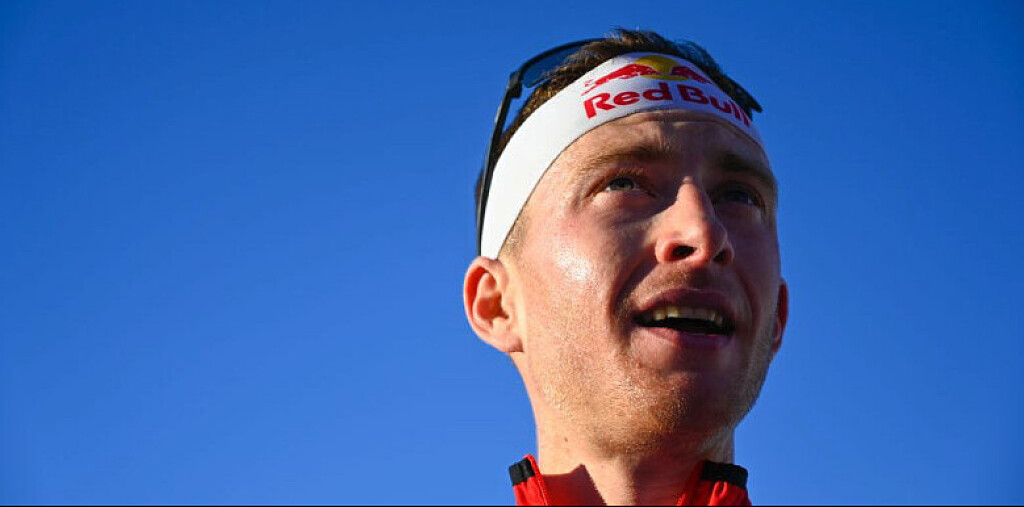
Rémi Bonnet Breaks Longtime Pikes Peak Ascent Record
The Swiss runner scaled the 14,115-foot Colorado peak in just over two hours, taking down a 30-year-old record.
It was a record-breaking attempt 30 years in the making, but over the weekend, Matt Carpenter’s long-standing record for the fastest ascent up Pikes Peak was finally broken by Swiss runner Rémi Bonnet. The 28-year-old navigated the famous 14,115 peak in just 2:00:20, breaking Carpenter’s record of 2:01:06 from the 1993 Pikes Peak Marathon. Bonnet set the record at this year’s Pikes Peak Ascent on September 16. The 13.3 mile race set off in Manitou Springs, Colorado, with a grueling incline of 11 percent over the 7,800 feet to the summit. The last 3 miles were littered with snow (in addition to his running pursuits, Bonnet is also an accomplished ski mountaineer).Bonnet was the defending champion from the event, winning last year’s race in 2:07:02. He knew it would take a special day to unseat Carpenter, whose record was considered one of the toughest in the sport.
“I’m really pleased to have beaten this record! People thought it was impossible, but I did it, and I’m really proud to show who the world’s best climber is,” Bonnet told Run247. “Now I need to come back and go under the 2-hour barrier!”
Bonnet won the $3,000 first-place prize in this year’s Golden Trail World Series race but failed to get the $10,000 time bonus for finishing under two hours—though toppling the record is probably a grand consolation prize.Bonnet has made a name for himself in recent years for uphill running, re-setting his own fastest time on the Manitou Springs Incline, a 2,000-foot climb, the week before his record-breaking run at Pikes Peak.
Patrick Kipngeno of Kenya, a two-time World Mountain Running Championships Uphill race winner, placed second with a time of 2:04:09, the third-best time on the course behind only Carpenter and now Bonnet. American Eli Hemming was third in the event with a time of 2:07:40 after placing fourth last year.
American Sophia Laukli won the women’s race in 2:35:54, followed by Judith Wyder (2:39:35) and Anna Gibson (2:43:59).
by Runner's World
Login to leave a comment
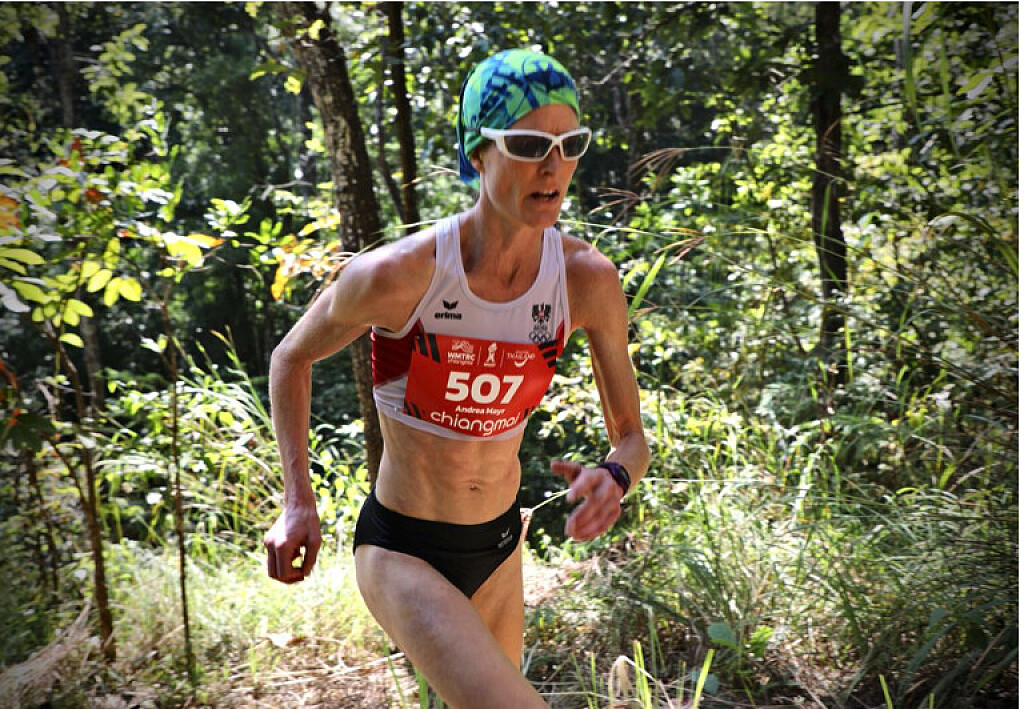
2022 World Mountain Running Championships Uphill Results: McLaughlin and Kipngeno Win
It’s finally happening! Years of postponements are done and the first-ever combined World Mountain and Trail Running Championships have started. The festivities are all just outside of Chiang Mai, Thailand, a city of 127,000 people in the mountainous northern part of the country.
Friday’s Uphill race went 8.5 kilometers uphill and with 1,065 meters of gain. Alternately, that’s 5.3 miles and 3,500 feet of elevation gain.
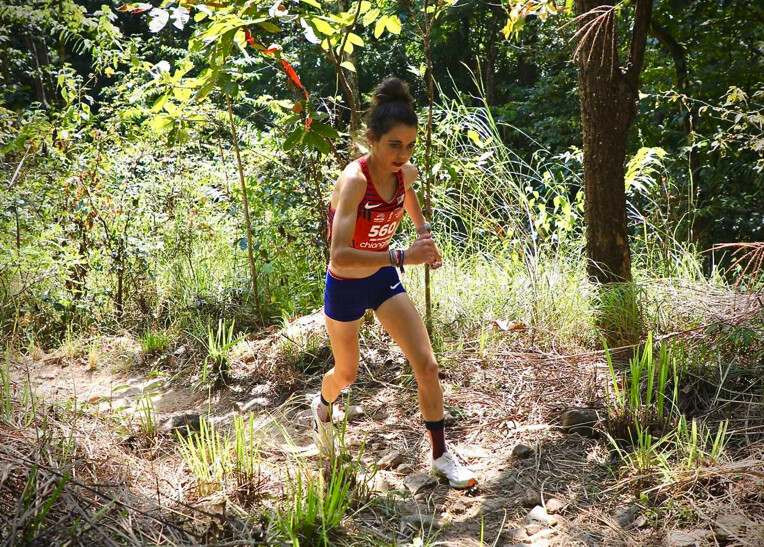
Allie McLaughlin (USA) dethroned Andrea Mayr (Austria) for the women’s crown. The pair raced up in 55:15 and 55:41, and Maude Mathys (Switzerland) was just behind in 56:00 for third.
McLaughlin just came off the Golden Trail World Series Finals in Portugal. Mayr, now 43 years old, is a six-time World Mountain Running Champion, typically excelling in uphill years. All three are expected to double back for the Classic Up and Down race on Sunday.
Monica Madalina Florea (Romania) and Onditz Iturbe (Spain) were fourth and fifth in 57:44 and 57:56.
[In 2015, Maude Mathys received a warning without suspension from the Disciplinary Chamber for Doping Cases of Swiss Olympic for two positive tests for clomifene (previously clomiphene) after it was determined that she was mistakenly taking the drug without first obtaining a World Anti-Doping Agency Therapeutic Use Exemption.]
n the teams competition, Team USA took gold, Great Britain and Northern Ireland took silver, and Switzerland rounded out the podium in third.
by I Run Far
Login to leave a comment
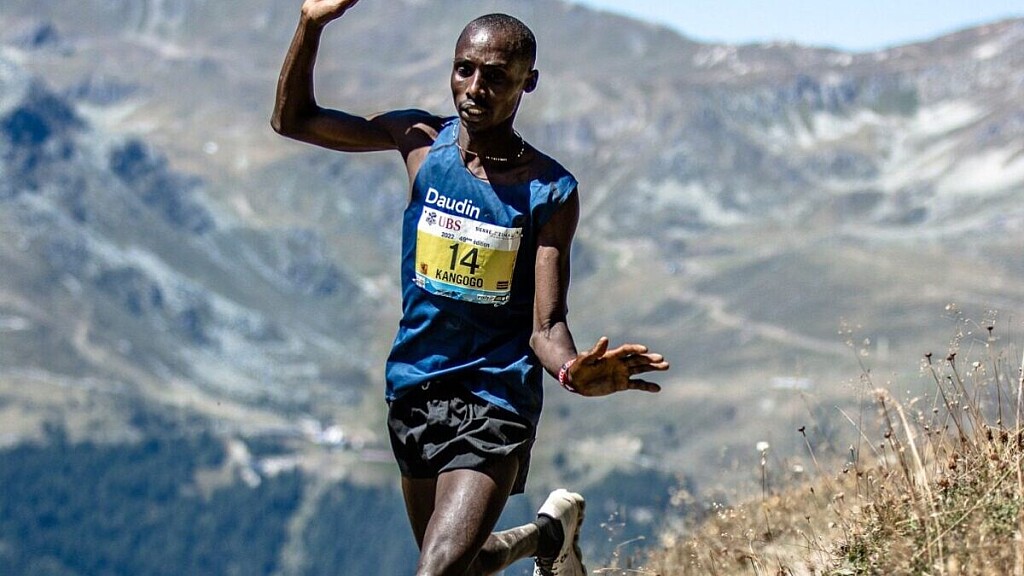
Sierre-Zinal champion Mark Kangogo of Kenya receives three-year doping ban
The trail running community has been rocked after the winner of Sierre-Zinal, a mountain race in the Swiss Alps, was slapped with a three-year ban for two prohibited substances (norandrosterone and triamcinolone acetonide). The Athletics Integrity Unit (AIU) has disqualified all of the results from Mark Kangogo of Kenya, dating to Aug. 13 (the date of the race) and Sierre-Zinal has decided to ultimately disqualify Kangogo.
In the past two months, Kangogo has collected victories at Sierre-Zinal and the Jungfrau Marathon, plus finished second at Thyon-Dixense, a 16.35 km trail race also in Switzerland.
The athlete provided an in-competition urine sample at the Sierre-Zinal, World Mountain Running Association (WMRA) World Cup race, held in Switzerland. The sample reported the presence of norandrosterone and triamcinolone acetonide.
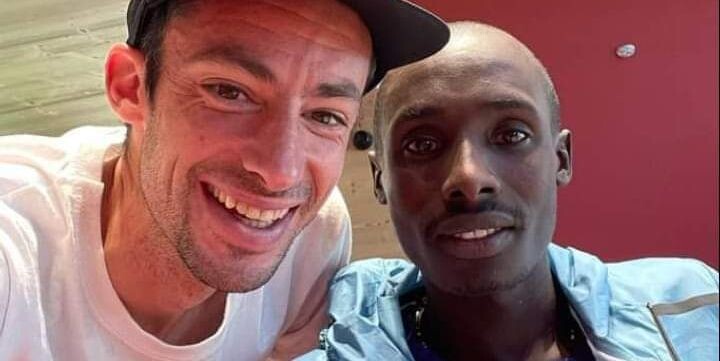
Norandrosterone (19-NA) is the principal metabolite of the anabolic steroid nandrolone, which is used to aid recovery from injuries and increase muscle size, strength and power to help them train harder and longer. Triamcinolone acetonide is a steroid to aid muscle recovery and inflammation.
According to his coach, Julien Lyon, Kangogo has been removed from the On-sponsored Milimani Runners team. This team is a project from On that aims to bring trail running culture closer to athletes in Kenya.
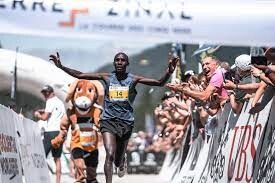
Lyon released a statement that Kangogo will be excluded from the team. “There is no excuse and no possible explanation for doping,” says Lyon. “It will take time for us to heal the painful feeling of being betrayed by a training partner, but we will continue to train with the same motivation and determination.”
Sierre-Zinal released a statement Thursday on the disqualification of Kangogo and including a change in the final men’s results of the 2022 edition: “Andreu Blanes (ESP) has officially become the winner of Sierre-Zinal 2022. He won the race in a time of 2:29:19.”
The race also expressed zero tolerance for doping.
As part of the Golden Trail World Series, Sierre-Zinal has implemented the “Quartz” anti-doping program to preserve the health and fairness of all athletes.
Blanes, who came second to Kangogo, and Kilian Jornet, who finished fifth, both took to social media to comment on the issue.
Kangogo, 31, acknowledged the offence, accepted a sanction and waived his right of appeal. His three-year ban will expire on Aug. 13, 2025.
by Marley Dickinson
Login to leave a comment
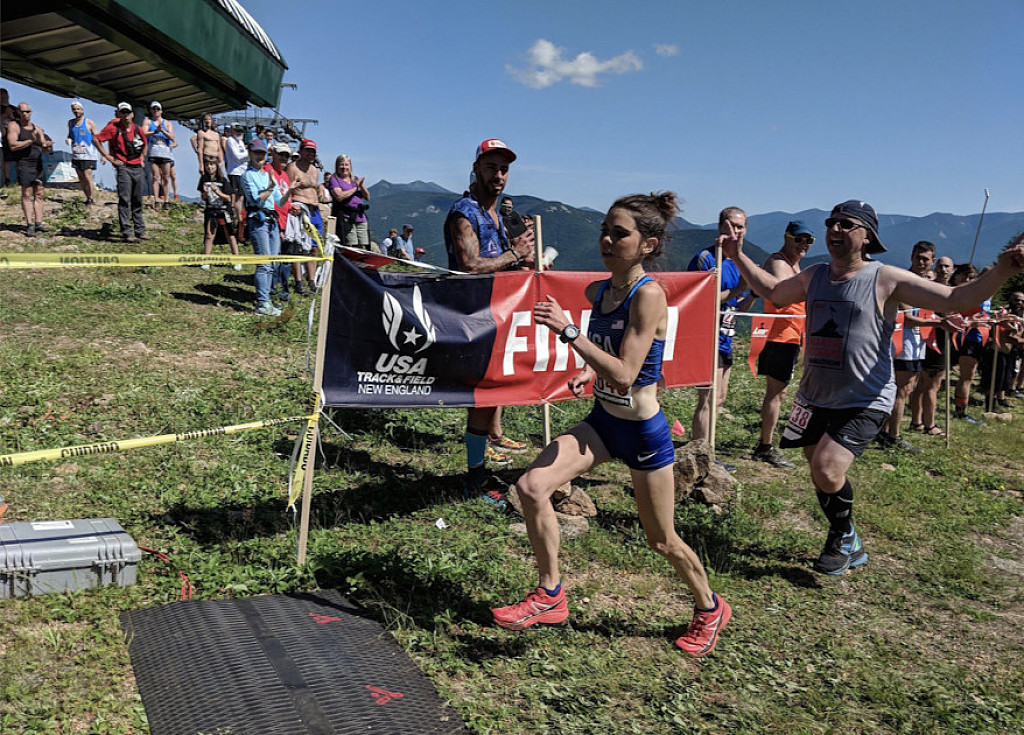
Allie McLaughlin wins Pikes Peak Ascent, then places 2nd in the marathon
2019 U.S. trail running champion Allie McLaughlin had an incredible weekend in Colorado Springs, Colo., winning the Pikes Peak Ascent race on Saturday in 2:49:40. On Sunday, she followed it up with a second-place finish in the Pikes Peak Marathon in 4:38:06.
McLaughlin is a former track and cross-country runner from the University of Colorado, and intended to complete the double last year, but wasn’t able to, due to a fall on the downhill portion of the course. This year she bounced back, completing her goal of the Pikes Peak double, the Ascent (21 km) and marathon on back-to-back days.
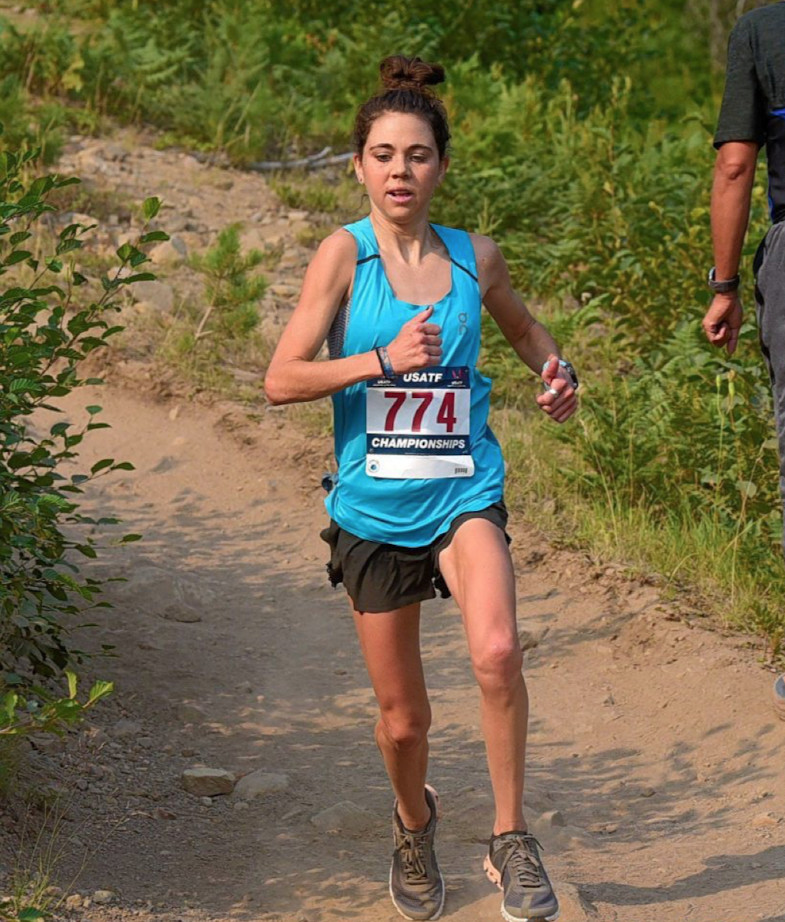
When we asked McLaughlin about her Pikes Peak double, she said, “The key was sticking to my routine and staying relaxed. Both seemed to really help me mentally. I felt way less pressure on the second day and just ran. There were times I could’ve pushed harder but first and foremost I wanted to complete my goal and finish healthy.”
The Ascent and the marathon distances require runners to climb 1,690-metres across 21 km to reach the summit of Pikes Peak.
Trail running veteran Stevie Kremer won the Pikes Peak marathon in 4:34:35. The 2014 Sierre-Zinal champion has made a return to trail racing after becoming a mother in 2018.
In the men’s race, Seth DeMoor won his second straight Pikes Peak Marathon in 3:36:31, setting the record for the masters’ age group. DeMoor decided at the last minute that he try to defend his title. DeMoor is a well-known YouTuber/runner with over 140,000 subscribers, with videos on training, shoes and a glimpse inside his trail races.
Pikes Peak Marathon is the second race in the North American Golden Trail World Series and the next race is at Whistler Alpine Meadows 50K on Sept. 24, in Whistler B.C
by Running Magazine
Login to leave a comment
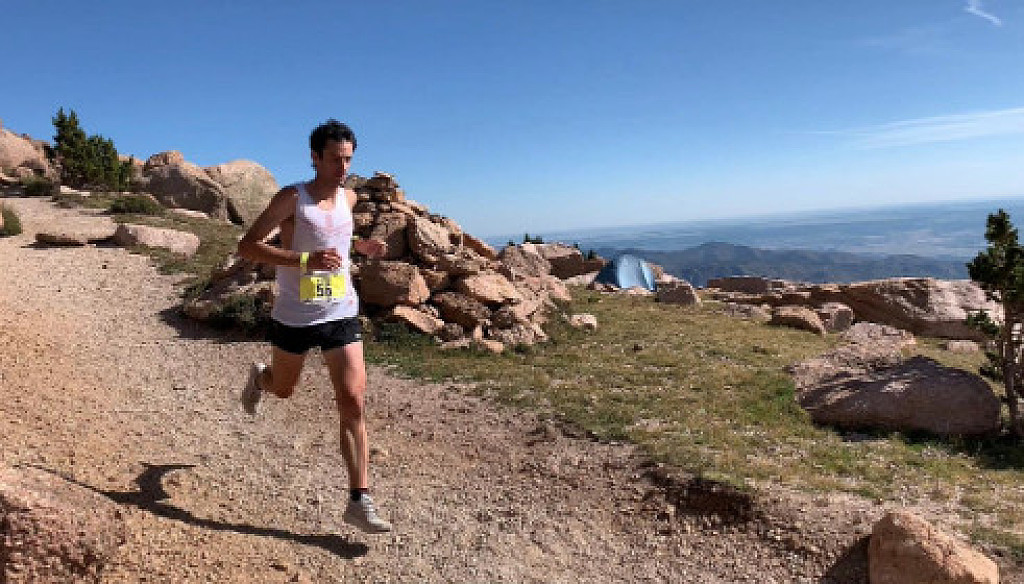
Kilian Jornet falls short of Pikes Peak Marathon record as Maude Mathys obliterates women’s mark set last year
Catlan runner ran 3:27:39, nearly 11 minutes shy of Matt Carpenter’s record, which has stood for 26 years
One of the most revered records in American mountain running has withstood a challenge from this generation’s greatest ultrarunner.
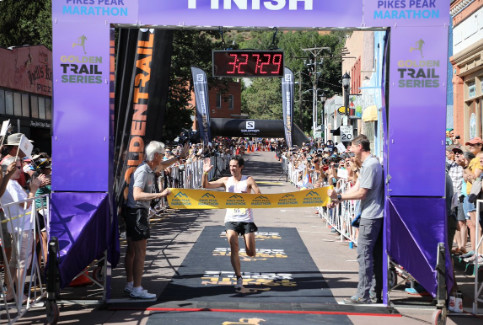
Despite an early fast pace, Catalan mountain running superstar Kilian Jornet fell short of breaking Matt Carpenter’s ascent and overall course record in the 64th edition of the Pikes Peak Marathon on Sunday, finishing in 3 hours, 27 minutes, 29 seconds — nearly 11 minutes slower than Carpenter’s 3:16:39, set in 1993.
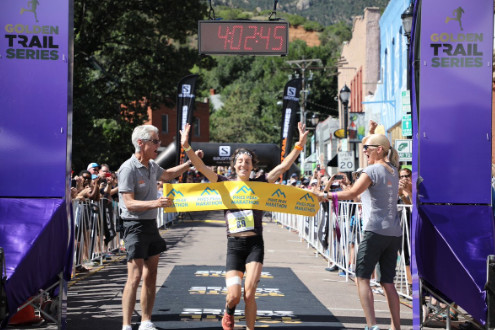
But Swiss ultrarunner Maude Mathys still provided reason to celebrate. Mathys won the women’s division in 4:02:45, crushing the course record set by Megan Kimmel last year in 4:15:04.
Carpenter’s course record has stood for 26 years. Jornet came to the Pikes Peak Marathon as part of the Salomon Golden Trail World Series, a collection of some of the top mountain races in the world, racing in the hopes of breaking the record after also falling short in 2012.
But he said afterward that his legs felt heavy during his morning warmup. He set a course record at the Sierre-Zinal trail race in Switzerland just two weeks ago, but he said that the short turnaround wasn’t a factor in his race today.
At the halfway mark — the summit of Pikes Peak — the record quest appeared to be in jeopardy. Jornet summited in 2:09:15, more than eight minutes behind Carpenter’s 2:01:06 ascent record, which Carpenter set in the same race he recorded the overall record.
For Carpenter, now 55, Pikes Peak is and remains his domain. He has won the marathon 12 times and the ascent-only run — held the day before the marathon — six times. He has lived in Manitou Springs for years and trained frequently on the Pikes Peak course, learning how to handle the altitude while navigating the flats, switchbacks and steep sections.
In recent years, trail running has exploded in popularity throughout the U.S. and the world, ushering a sport from the fringes of distance running to the mainstream. That has brought a new era of young, accomplished runners who have broken and rebroken records and so-called fastest-known times — thought to be untouchable. Despite the onslaught, Carpenter’s records at both Pikes Peak and the Leadville 100 still stand years after they were set.
The Pikes Peak Marathon course starts in Manitou Springs at 6,300 feet, before climbing more than 7,700 feet to Pikes Peak’s summit at 14,115 feet. The race is the second-oldest marathon in the United States and was the first in the U.S. to record an official women’s finisher.
Just past the first mile, Jornet was already leading the pack by a few steps. Just before five miles, he had built up his lead to more than 90 seconds, on pace to hit the summit in under two hours. But his legs soon caught up with him, and he slowed, summiting in 2:09:15.
Jornet had run this race in 2012, winning in 3:40:26. But he also competed with a heaver race schedule then.
Pikes Peak is one of only three races Jornet will do all year. Already, Jornet holds the course record counterclockwise and clockwise for the Hardrock 100, one of Colorado’s other esteemed ultra runs that starts and finishes in Silverton and loops through Ouray, Telluride and Lake City in the San Juan Mountains, forcing runnings to ascend some 33,000 feet over 100.5 miles.
Login to leave a comment

Pike's Peak Marathon
A Journey to the Top and Perhaps Back The Pikes Peak Ascent® and Pikes Peak Marathon® will redefine what you call running. Sure, they start out like a lot of races on Any Street, USA. But your first left turn will have you turning in the direction of up! During the next 10 miles, as you gain almost 6,000...
more...