

Running News Daily
Running News Daily is edited by Bob Anderson and team. Send your news items to bob@mybestruns.com Advertising opportunities available.
Index to Daily Posts · Sign Up For Updates · Run The World Feed
Articles tagged #Daniel Komen
Today's Running News



Daniel Komen and Cameron Myers: Two Generations, One Extraordinary Gift for Speed
Athletics has a remarkable way of connecting generations.
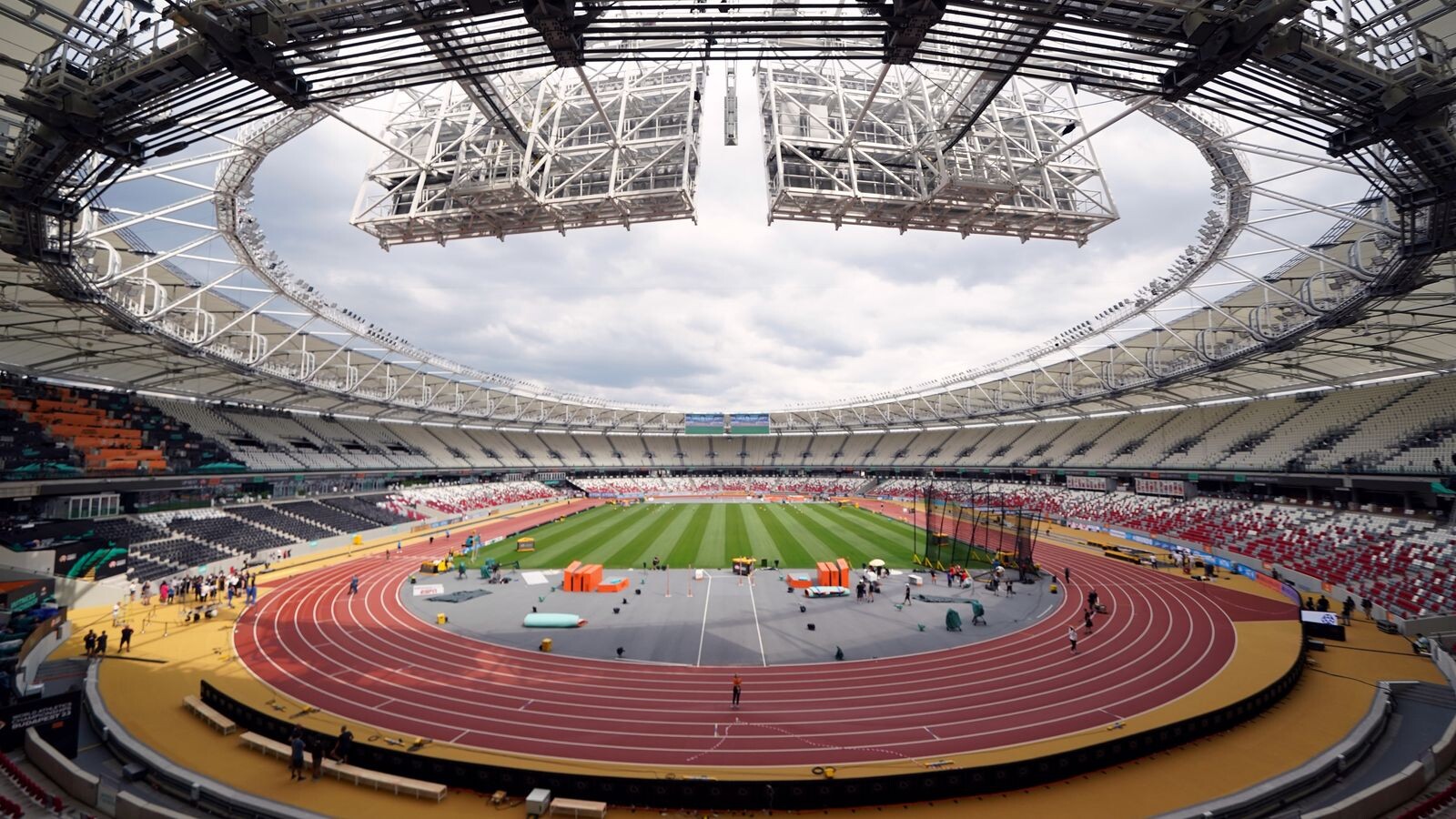
Sometimes, decades apart, two athletes emerge with a rare combination of speed, endurance and fearlessness that makes the extraordinary appear almost effortless. Kenya’s Daniel Komen and Australia’s Cameron Myers are separated by an era and a continent, but their careers share one fascinating thread — an exceptional ability to run incredibly fast over middle and long distances.
Daniel Komen — the Kenyan phenomenon
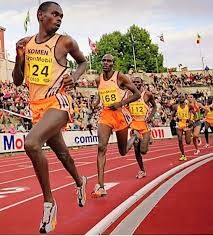
During the 1990s, Daniel Komen was one of the most feared distance runners on the planet.
At just 20 years old, Komen produced a performance that would become one of the defining moments of his career, running 7:20.67 for 3000m in Rieti, Italy, in 1996. The world record remained untouched for nearly 28 years before Jakob Ingebrigtsen finally broke it in 2024.
Komen followed that achievement with another performance that remains etched in distance-running history. In 1997, he ran 7:58.61 for two miles in Hengelo, becoming the first man to break the eight-minute barrier over the distance.
His brilliance was not limited to one event.
Komen possessed an extraordinary range, becoming only the second man after Algeria’s Saïd Aouita to break 3:30 for 1500m, 7:30 for 3000m and 13 minutes for 5000m.
Those performances established Komen as one of the most versatile and naturally gifted distance runners of his generation.
Cameron Myers — Australia's rising star
Almost three decades later, another young runner is beginning to capture the imagination of the athletics world.
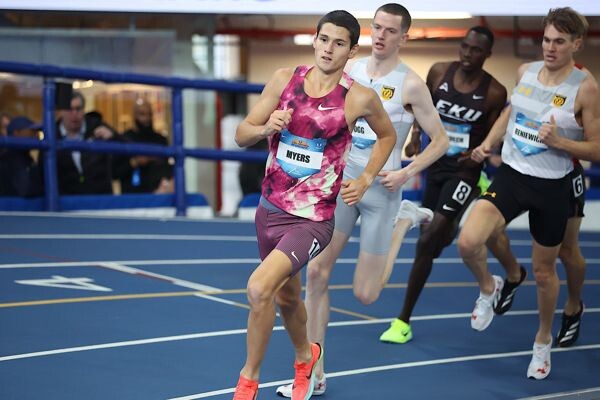
Cameron Myers first made headlines as a teenager when, at 16, he ran 3:55.44 for the mile. The performance made him the second-youngest athlete ever to break four minutes for the distance and confirmed that Australia had a remarkable middle-distance talent on its hands.
But Myers has not allowed the hype surrounding his teenage achievements to define him.
Now 20, he is increasingly proving himself against the world's best senior athletes.
His breakthrough continued in 2026 when he produced a spectacular 3:28.00 personal best for 1500m in Paris, firmly establishing himself among the world's elite over the distance.
Then came Brussels.
At the Diamond League Final on September 4, Myers delivered perhaps the biggest statement of his young career, winning the 1500m in 3:30.14 against a world-class field. The victory came in a race featuring some of the biggest names in the event, including Jakob Ingebrigtsen and Olympic champion Cole Hocker.
For Myers, it was another important step from promising prodigy to established senior star.
He is no longer simply the talented teenager everyone was waiting to see develop.
Cameron Myers has arrived.
Different eras, remarkable similarities
Comparing athletes from different generations is always difficult. The competition, training methods, technology and circumstances change, and every great athlete deserves to be judged within the context of their own era.
But the similarities between Komen and Myers are still fascinating.
Komen showed the world in the 1990s that extraordinary speed could be combined with exceptional endurance. Myers is now demonstrating that same fearless approach as he takes on the strongest 1500m fields in the world.
Komen has already secured his place in athletics history.
Myers is only beginning to write his.
The Australian still has many years ahead of him, and whether he can eventually build a legacy comparable to Komen's remains impossible to predict. What is certain, however, is that his progression has already been remarkable.
From a teenager breaking four minutes for the mile to a 20-year-old running 3:28.00 and winning a Diamond League Final, Myers has moved through the ranks at extraordinary speed.
Daniel Komen was one of the athletes who made the impossible look normal. Cameron Myers now has an opportunity to create his own version of that magic.
Different generations. Different countries. Different journeys.
But one extraordinary gift — the ability to run very, very fast.
by Erick Cheruiyot for My Best Runs.
Login to leave a comment
Daniel Komen's Timeless Masterpiece: The Night A Kenyan Legend Redefined Human Endurance
Exactly 29 years ago today, athletics witnessed a performance so extraordinary that it continues to stand among the greatest distance-running feats ever produced.
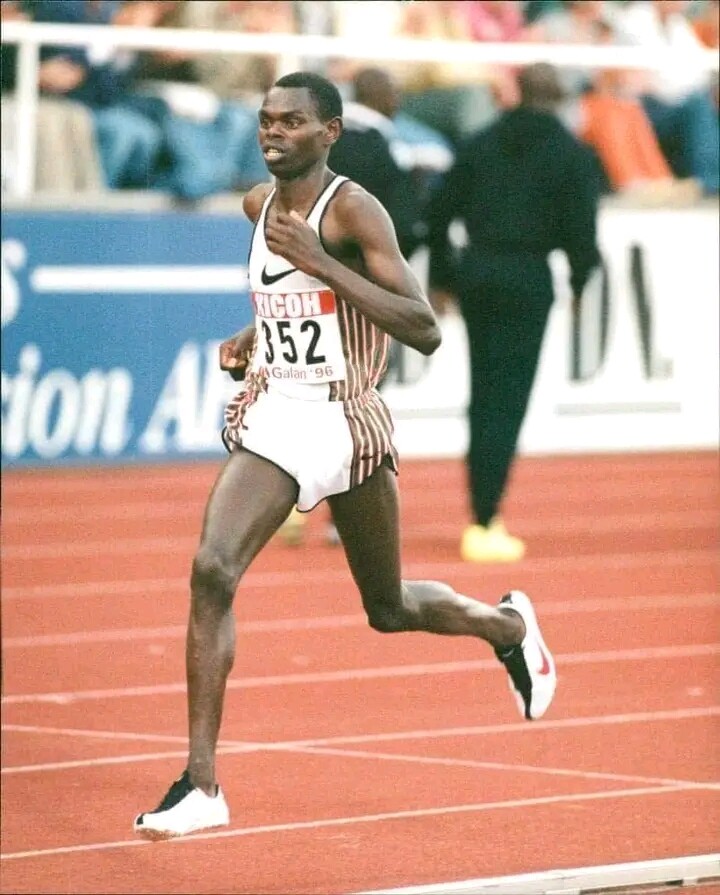
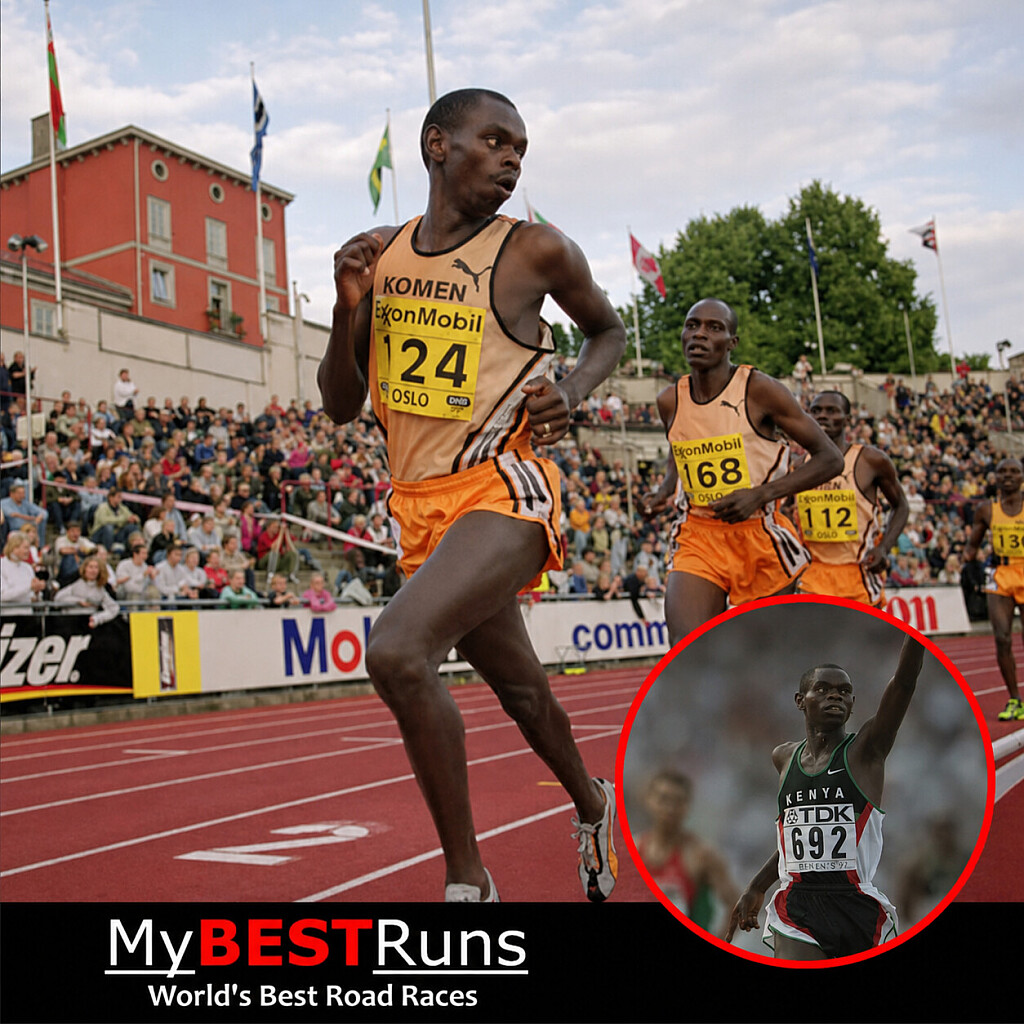
On July 19, 1997, under the lights of the KBC Night of Athletics in Hechtel, Belgium, Kenya's Daniel Komen delivered a race that seemed to defy the limits of human endurance. In an era long before carbon-plated shoes and today's advanced sports science, Komen ran a staggering 7:58.61 for two miles, becoming the first athlete in history to break eight minutes for the distance.
What made the performance even more astonishing was the way it unfolded. Komen effectively ran two consecutive sub-four-minute miles, covering each mile in approximately 3:59.3—an achievement that had never been accomplished within a single race. It was a display of relentless speed, flawless rhythm, and remarkable resilience that left the athletics world in awe.
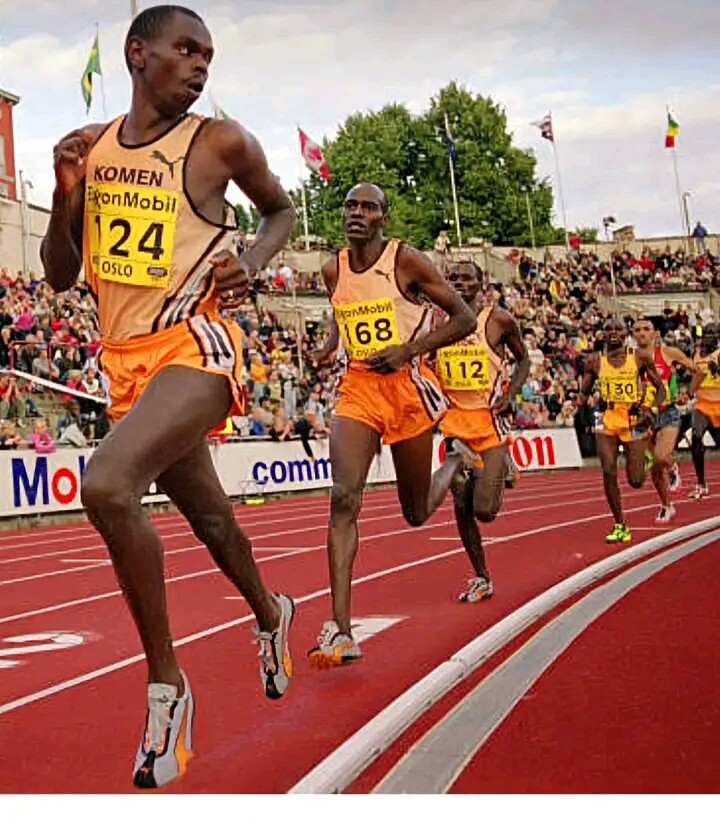
For the next 26 years, Komen's world record stood untouched despite generations of world-class middle- and long-distance runners attempting to rewrite history. It was only in 2023 that Norway's Jakob Ingebrigtsen finally lowered the mark to 7:54.10, bringing an end to one of the longest-standing records in elite distance running.
Yet even with the record no longer in his possession, Komen's legacy remains unmatched in one extraordinary respect. He is still the only athlete in history to have broken the eight-minute barrier for two miles more than once—a testament to a level of consistency and excellence that has never been replicated.
Komen's Hechtel masterpiece was more than a world record. It was a statement that greatness is measured not only by the clock but by the courage to venture into territory where no one has gone before. His breathtaking run raised the standard for distance running and inspired generations of athletes to believe that seemingly impossible barriers exist only until someone is bold enough to break them.
Nearly three decades later, Daniel Komen's unforgettable night in Belgium remains one of Kenya's finest moments on the global athletics stage—a performance that continues to command admiration, celebrate Kenyan excellence, and remind the world why some achievements transcend time.
by Erick Cheruiyot for My Best Runs.
Login to leave a comment
From Komen to Ingebrigtsen: The Race That Rewrote Distance Running History
For nearly three decades, one number stood untouched in distance running mythology: sub-eight minutes for two miles.
It was not merely fast — it felt untouchable.
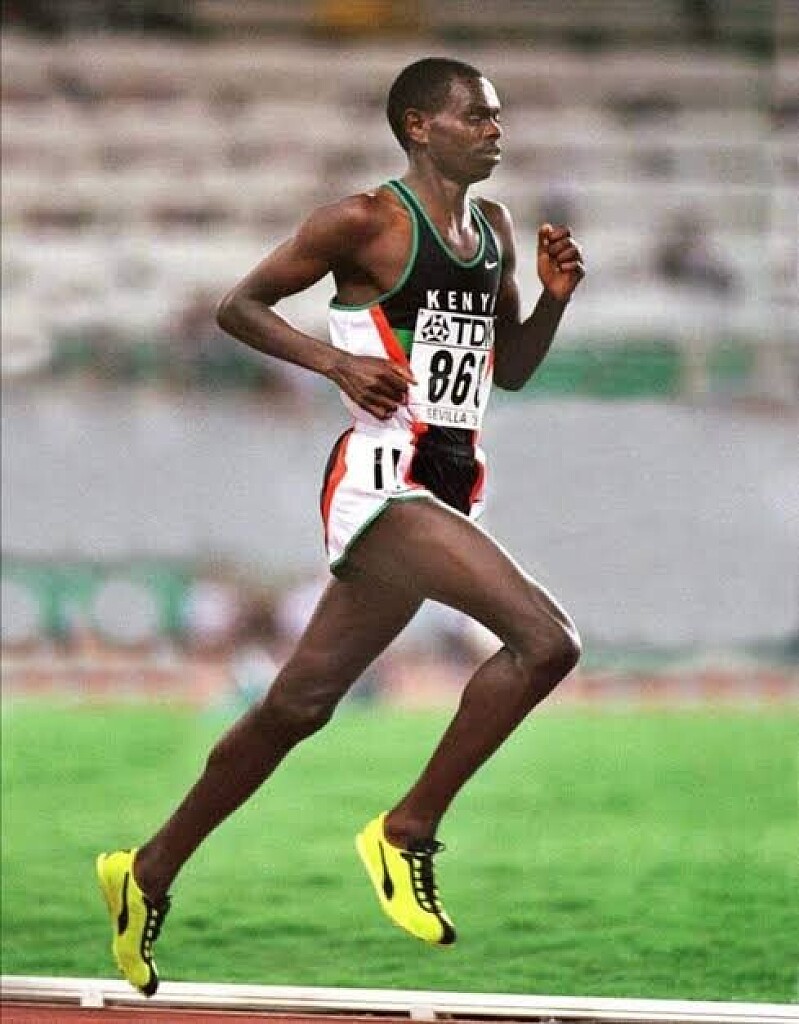
Back in 1996, long before Jakob Ingebrigtsen was even born, Daniel Komen delivered one of the most astonishing performances the sport has ever witnessed. At just 21 years old, the Kenyan phenomenon stormed through two miles in 7:58.61, shattering conventional understanding of human endurance and speed.
Many assumed the performance belonged to another dimension of athletics — a record destined to survive generations.
Then Komen returned in 1997 and proved it was no accident, running 7:58.91. Those two races became the only sub-eight-minute two-mile performances in history, isolated in a universe of their own.
For years, the record felt protected by time itself.
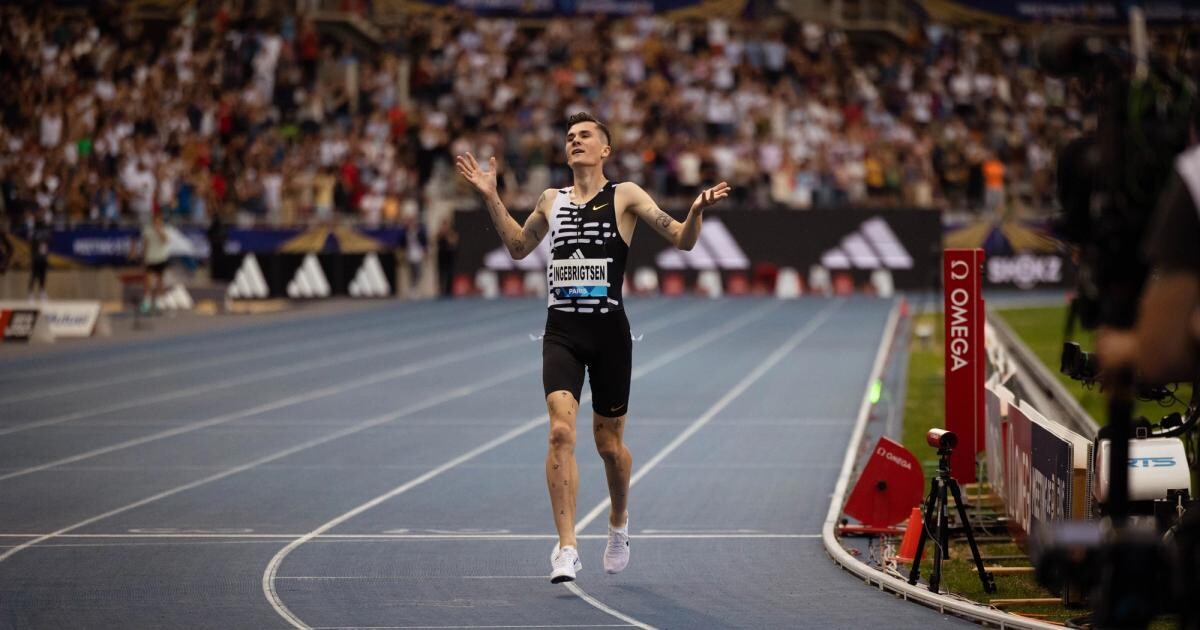
But distance running evolves. And eventually, a new heir emerged from Norway.
By his early twenties, Ingebrigtsen had already built a résumé that bordered on absurd. The Norwegian star possessed the rare combination every distance runner dreams of: raw middle-distance speed fused with championship endurance. Personal bests of 1:46.44 for 800m, 3:26.73 for 1500m, 12:48.45 for 5000m, and even 27:54 for 10,000m painted the portrait of a complete athlete — one engineered for greatness across every layer of distance running.
What made the comparison to Komen so compelling was not just the statistics, but the style. Ingebrigtsen runs with a chilling sense of control, as though pace itself bends around him. Lap after lap, he dismantles elite fields with relentless precision rather than desperation.
And suddenly, Komen’s once-untouchable kingdom no longer looked immortal.
Then came Paris.
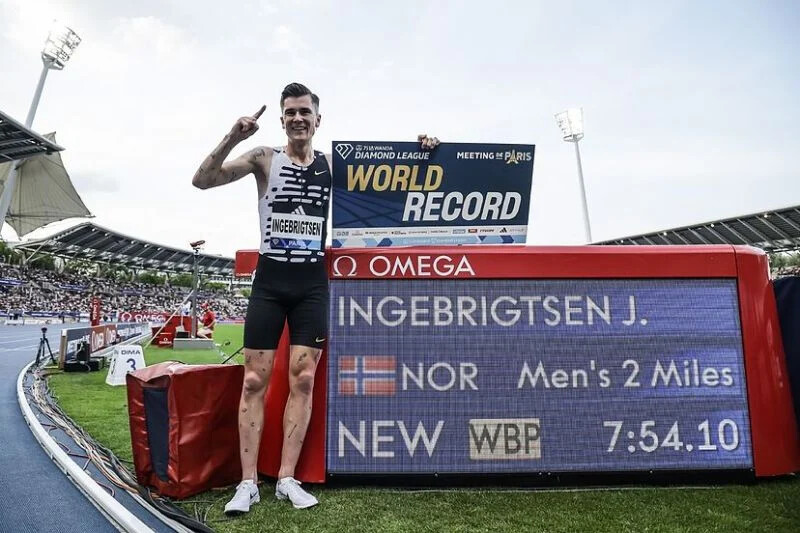
At the Stade Charléty in 2023, under the lights of one of athletics’ fastest tracks, Ingebrigtsen produced the race many had imagined for years. Still only 22 at the time, the Norwegian unleashed a breathtaking assault on the historic mark, covering two miles in 7:54.10 — not merely breaking the record, but obliterating it.
The performance was ruthless, elegant, and almost surreal in its execution.
For nearly 27 years, the sport had waited for someone capable of entering Komen’s territory. In one unforgettable night, Ingebrigtsen didn’t just enter it — he redrew the map entirely.
Records in athletics are often described as barriers waiting to fall. But some become legends because they seem immune to history. Komen’s sub-eight masterpiece belonged to that category.
Until another generational talent arrived and made the impossible look inevitable.
by Erick Cheruiyot for My Best Runs.
Login to leave a comment
Breaking Barriers Across Three Frontiers: The Rare Triple of Middle- and Long-Distance Greatness
In the demanding world of distance running, versatility at the highest level is almost mythical. Speed specialists dominate the shorter races, while endurance kings reign supreme over longer distances. Yet, a select group of extraordinary athletes have managed to blur those boundaries—delivering world-class performances across three iconic events: the 1500m, 3000m, and 5000m.
To run under 3:30 in the 1500m, under 7:30 in the 3000m, and under 13:00 in the 5000m is not just a statistical milestone—it is a testament to a rare fusion of speed, stamina, tactical intelligence, and longevity. Across decades of elite competition, only eight men in history have achieved this remarkable “triple crown” of distance running.
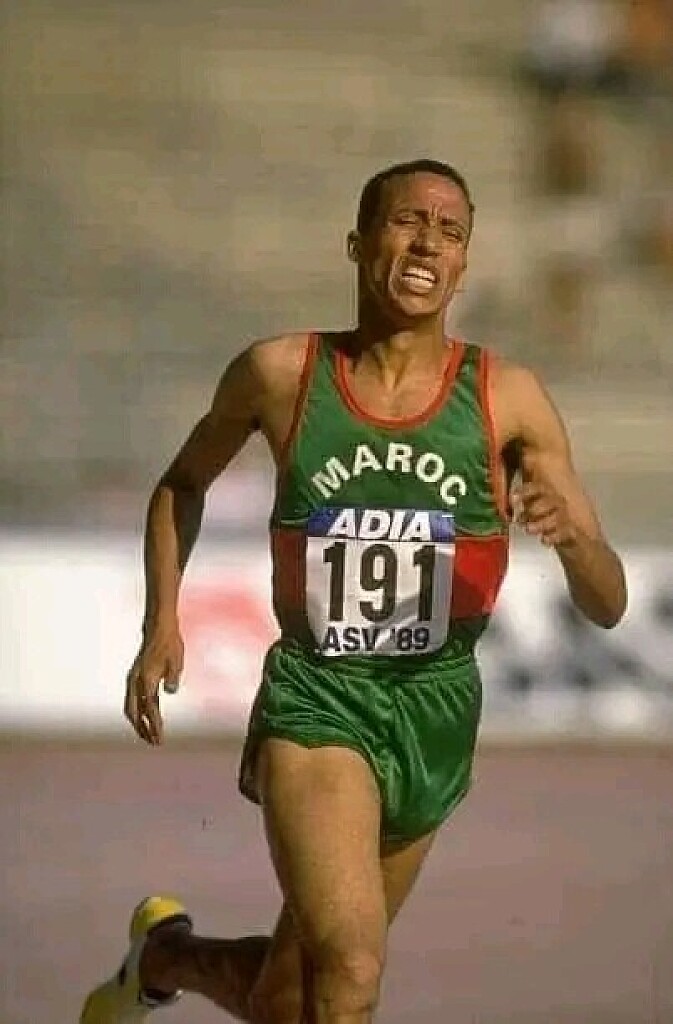
The story begins with Saïd Aouita, the Moroccan trailblazer who set the standard in 1989. Aouita’s revolutionary range redefined what was possible, proving that an athlete could dominate from the metric mile to the longer track events with equal authority.
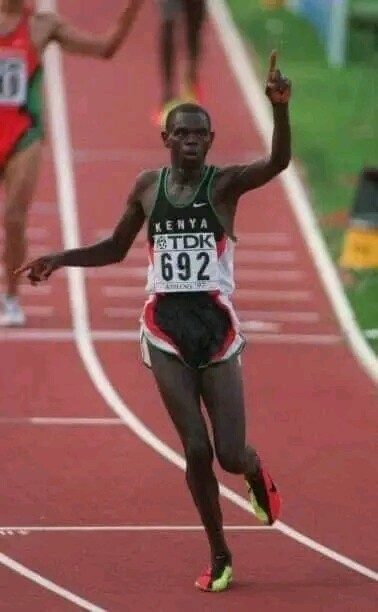
Years later, Kenya’s Daniel Komen elevated the benchmark in 1997, combining raw power and relentless pace to cement his place among the sport’s most feared competitors. His performances remain etched in athletics history as a symbol of controlled aggression and precision.
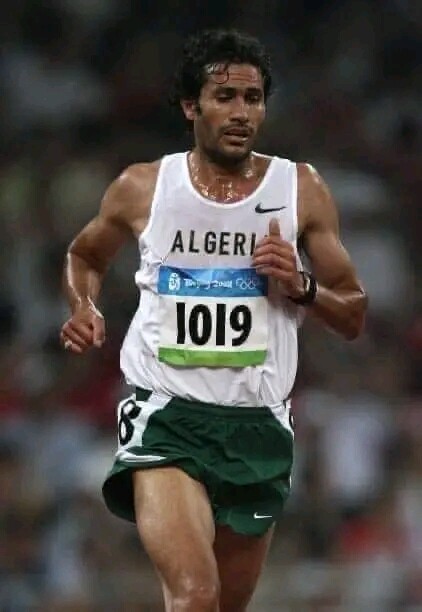
Algeria’s Ali Saïdi-Sief followed in 2001, showcasing a seamless blend of endurance and finishing speed, while another Moroccan icon, Hicham El Guerrouj, added his name in 2003. El Guerrouj, widely regarded as one of the greatest middle-distance runners of all time, embodied elegance and dominance, conquering distances with unmatched fluidity.
Kenya continued its proud tradition through Augustine Choge in 2009, a quiet yet consistent force whose versatility often flew under the radar, and Bernard Lagat in 2010. Lagat’s inclusion was particularly remarkable, highlighting not only his range but also his longevity, as he remained competitive across generations.
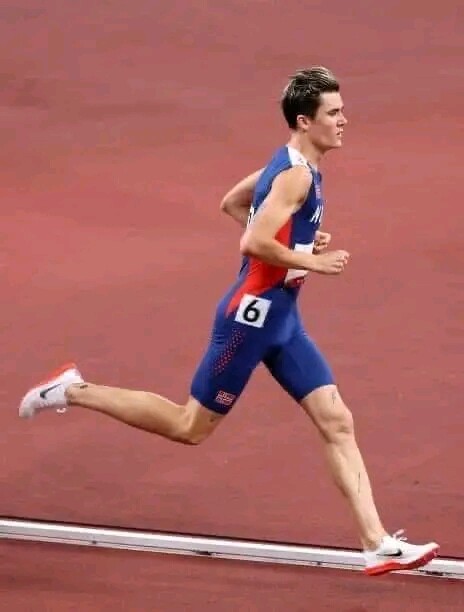
The modern era has witnessed a resurgence of this rare versatility. Norway’s Jakob Ingebrigtsen joined the elite list in 2021, redefining contemporary distance running with his fearless front-running style and relentless pursuit of fast times. That same year, Spain’s Mohamed Katir matched the feat, further proving that the boundaries between speed and endurance continue to be pushed.
What unites these eight athletes is not just their times, but their ability to transcend specialization in an era that increasingly demands it. Each performance reflects years of meticulous training, tactical brilliance, and an unwavering commitment to excellence.
In a sport often defined by margins of seconds, this sub-3:30, sub-7:30, sub-13:00 combination stands as one of the purest indicators of all-around greatness. It is a benchmark that few can approach—and even fewer can conquer.
As athletics continues to evolve, the question remains: who will be next to join this exclusive club? For now, these eight names stand alone, guardians of one of the sport’s most demanding and prestigious achievements.
by Erick Cheruiyot for My Best Runs.
Login to leave a comment

Andreas Almgren Stuns the World with 12:44.27 in Stockholm 5000m, Smashing European Record and Entering All-Time Top 10
Swedish distance star Andreas Almgren delivered the race of his life at the Stockholm Diamond League, clocking a breathtaking 12:44.27 to win the men’s 5000m and send shockwaves through the global distance running world. His time not only shattered the European Record (ER) and the meet record, but it also catapulted him into the top 10 fastest performers in history, now ranking #8 all-time.
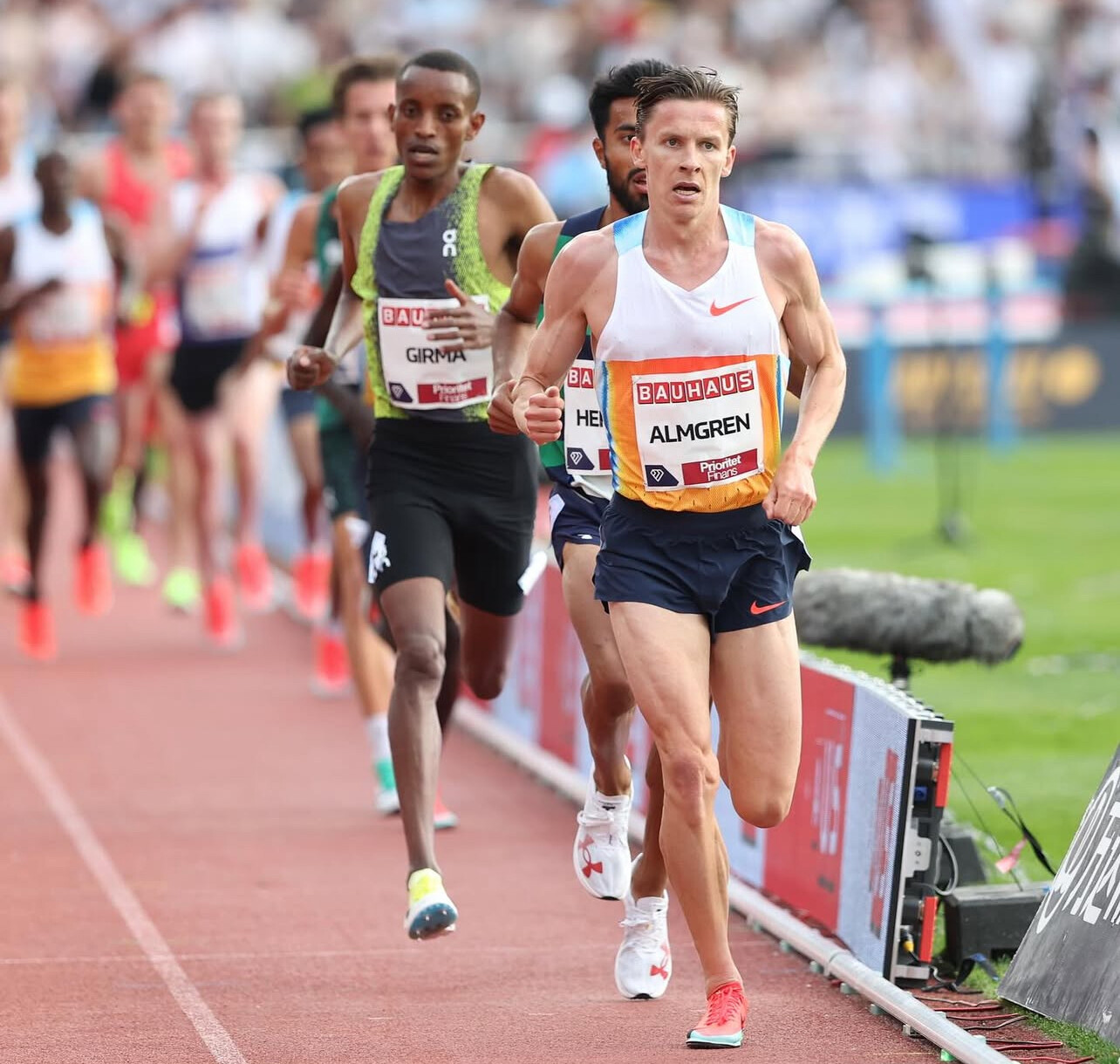
The home crowd in Stockholm witnessed a historic moment as Almgren, traditionally known for his prowess over 800m and 1500m, made a stunning statement in the long-distance arena. He became the first European ever to dip under 12:45 and now holds the fastest 5000m time ever run by a European athlete, surpassing Spain’s Mohamed Katir (12:45.01 from 2023).


? Top Results – Men’s 5000m (Stockholm Diamond League)
1. Andreas Almgren (Sweden) – 12:44.27 ?? ER MR
2. Kama Girma (Ethiopia) – 12:57.46 ??
3. Ky Robinson (Australia) – 12:58.38 ??
4. Mike Foppen (Netherlands) – 13:02.43 ??
5. Kenneth Kiprop (Uganda) – 13:02.69 ??
6. Denis Kipkoech (Kenya) – 13:07.02 ??
All-Time Men’s 5000m Rankings (As of June 2025)
Andreas Almgren now stands 8th on the all-time global list, behind legends like Cheptegei, Bekele, and Gebrselassie.
|
Rank |
Athlete |
Country |
Time |
Year |
|
1 |
Joshua Cheptegei |
UGA |
12:35.36 |
2020 |
|
2 |
Kenenisa Bekele |
ETH |
12:37.35 |
2004 |
|
3 |
Haile Gebrselassie |
ETH |
12:39.36 |
1998 |
|
4 |
Daniel Komen |
KEN |
12:39.74 |
1997 |
|
5 |
Hagos Gebrhiwet |
ETH |
12:42.18 |
2023 |
|
6 |
Selemon Barega |
ETH |
12:43.02 |
2018 |
|
7 |
Mohamed Katir |
ESP |
12:45.01 |
2023 |
|
8 |
Andreas Almgren |
SWE |
12:44.27 |
2025 ✅ |
|
9 |
Yomif Kejelcha |
ETH |
12:46.79 |
2023 |
|
10 |
Berihu Aregawi |
ETH |
12:46.91 |
2021 |
Pace Breakdown – Almgren’s 12:44.27
• Per kilometer: 2:32.85/km
• Per mile: 4:05.57/mile
(12:44.27 = 764.27 seconds total
5000 meters = 5 kilometers or 3.10686 miles)
A New Era in Distance Running?
The Stockholm performance underscores a growing shift in elite distance running. For decades, Kenya, Ethiopia, and Uganda have been dominant in the 5000m and 10,000m, but Almgren’s performance—alongside strong finishes by Australia’s Ky Robinson and the Netherlands’ Mike Foppen—suggests a broader international resurgence.
As the World Championships in Tokyo loom, Almgren’s breakout raises the stakes. Can the Swede replicate this form against the likes of Cheptegei and Barega on the biggest stage of all?
One thing is clear: the race to the podium in global distance running is no longer limited to East Africa. Andreas Almgren has kicked open the door—and the world is watching.
by Boris Baron
Login to leave a comment
Four World Records Ratified by World Athletics
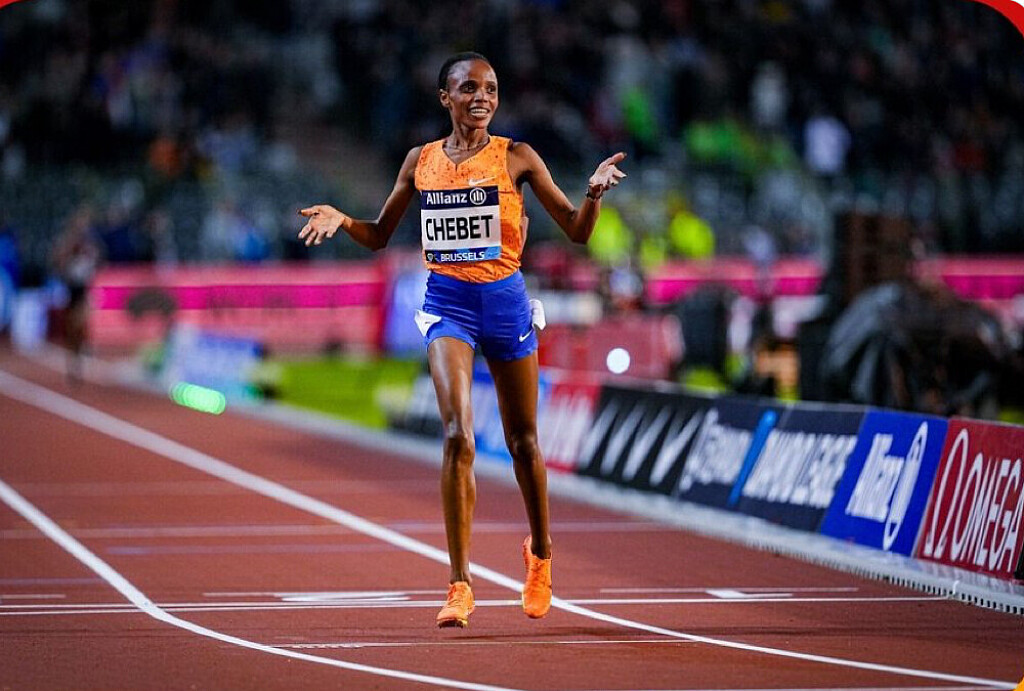
World Athletics has officially ratified four remarkable world records set by Beatrice Chebet, Mondo Duplantis, Jakob Ingebrigtsen, and Toshikazu Yamanishi, underscoring a period of exceptional performances in track and field.
Beatrice Chebet: First Woman Under 14 Minutes for 5km
On December 31, 2024, Kenya’s Beatrice Chebet made history at the Cursa dels Nassos in Barcelona by completing the 5km road race in 13:54. This performance shattered the previous world record by 19 seconds, making her the first woman to break the 14-minute barrier for the distance on any surface.
Mondo Duplantis: Elevating the Pole Vault Record
Sweden’s Mondo Duplantis continued his dominance in pole vaulting by clearing 6.26 meters at the Wanda Diamond League meeting in Chorzów, Poland. This achievement added another centimeter to his own world record, marking his 11th career world record and solidifying his status as the greatest pole vaulter in history.
Jakob Ingebrigtsen: Breaking a Long-Standing 3000m Record
Norway’s Jakob Ingebrigtsen set a new world record in the 3000m with a time of 7:17.55 at the Wanda Diamond League meeting in Silesia. This performance broke the previous record of 7:20.67 set by Kenya’s Daniel Komen in 1996, ending a 28-year reign.

Toshikazu Yamanishi: Setting a New Standard in Race Walking
Japan’s Toshikazu Yamanishi established a new world record in the 20km race walk by finishing in 1:16:10 at the Japanese 20km Race Walking Championships in Kobe. This time surpassed the previous record of 1:16:36 set by fellow Japanese athlete Yusuke Suzuki in 2015.

by Boris Baron
Login to leave a comment
Newly-crowned world record holder in four-hour police interrogation over feud with his father
The Olympics champion, who set a new world record at the weekend, had to endure a long grilling exercise by Norwegian authorities in a case where his father is accused of abuse.
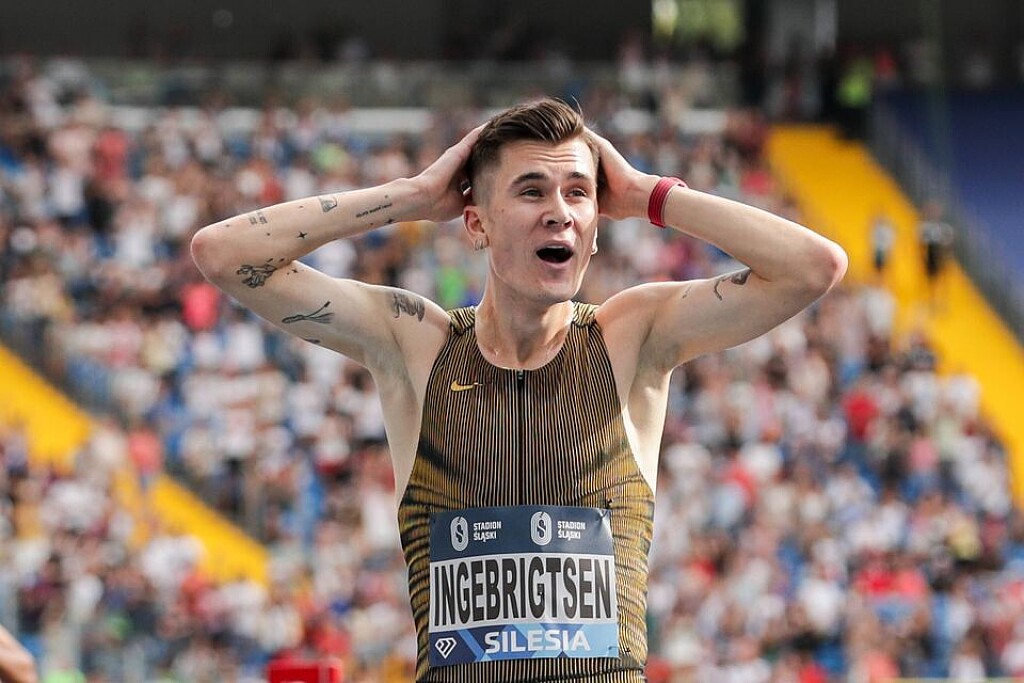
Newly-crowned world 3,000m record holder Jakob Ingebrigtsen was interrogated by police in Norway over a case where his father Gjert Ingebrigtsen has been accused of mistreating his children.
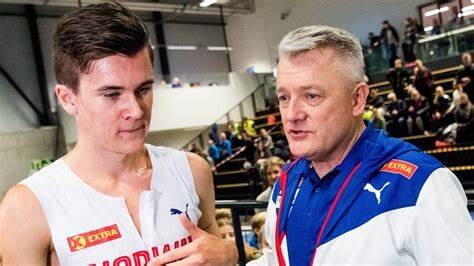
Jakob Ingebrigtsen was grilled for four hours in Stavanger on Wednesday, his lawyer Mette Yvonne Larsen, saying it was in relation to the case of violence against a family member involving his father that took place between 2018 and 2022.
"There has been follow-up of his previous interrogations and timing of events. It has gone very smoothly,” Larsen told Norwegian media.

"Are there plans for new interrogations? Since he has now been in three long interrogations, and that there will be a subsequent reading of these, I do not think it will be relevant to re-examine him.”
When Gjert Ingebrigtsen was charged with mistreatment of one of his children, the police dropped the cases against several of the other children but the decision was overturned following an appeal by Jakob Ingebrigtsen.
The hearings would be postponed until August after the athlete sought ample time to rest and prepare for the Paris 2024 Olympics in July.
He went on to win gold in the 5,000m, after a disappointing fourth place finish in the 1,500m, and announced his intentions of finishing the season strongly by lowering the 3,000m world record at the Silesia Diamond League in Poland last weekend.
The 23-year-old smashed the 3,000m world record of 7:20.67 set by Kenya’s Daniel Komen in 1996, setting a new mark of 7:17.55, in the Polish city.
Gjert Ingebrigtsen, the father and former coach of Jakob Ingebrigtsen, was charged with one count of physical abuse against a family member by Norwegian authorities.
In October 2023, brothers Henrik, Filip and Jakob Ingebrigtsen came forward with claims of physical violence and abusive behavior by their father and former coach, who has denied all the allegations.
by Joel Omotto
Login to leave a comment

Out of this world!
Jakob Ingebrigtsen obliterates the 3000m world record at the Memoriał Kamili Skolimowskiej with 7:17.55.
He goes more than 3 seconds faster than the previous world record!
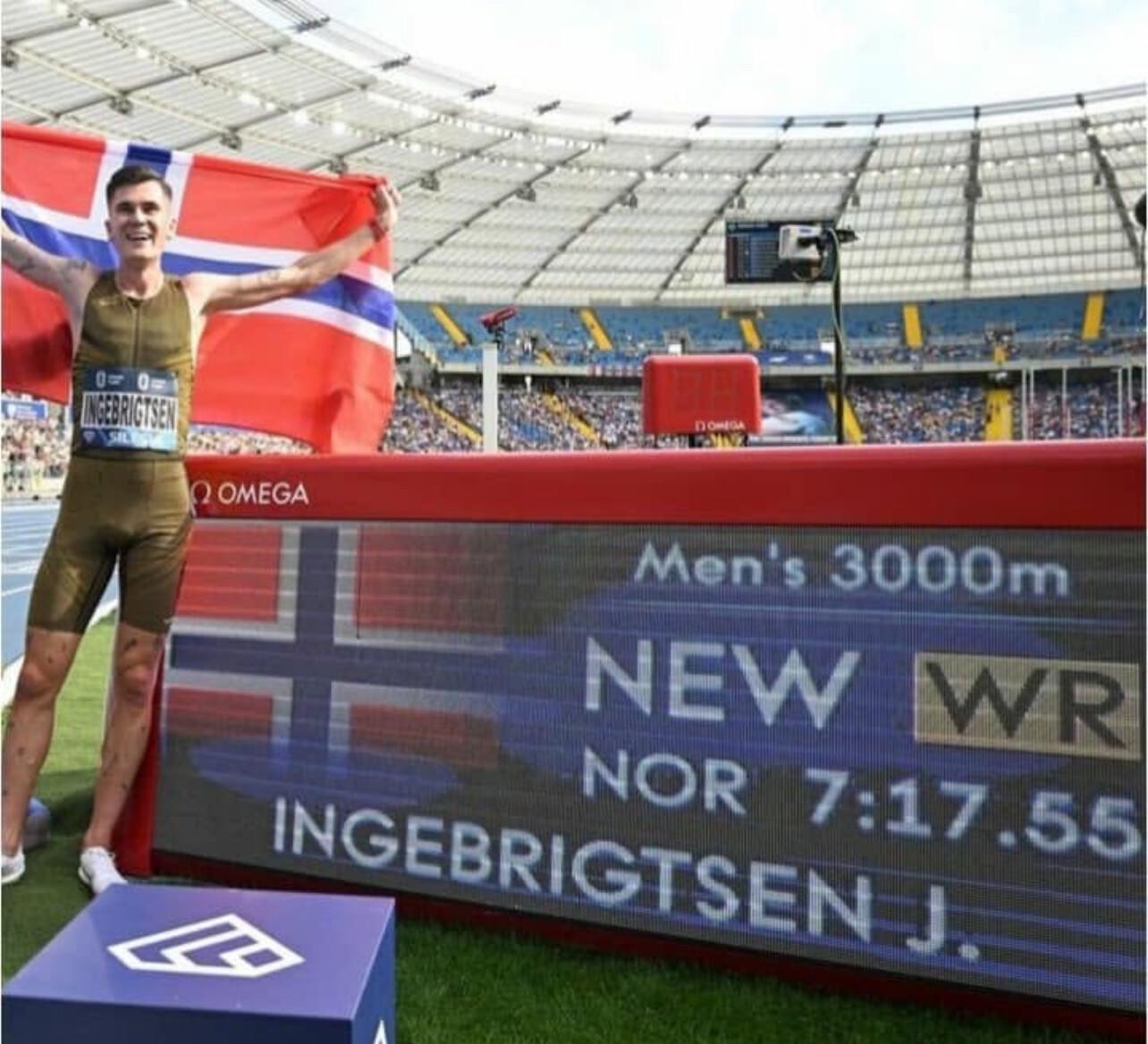
Norway’s Jakob Ingebrigtsen shattered the world 3000m record in the Silesia Diamond League on Sunday (25) afternoon with 7:17.55 to become the first athlete in history to break the 7:20-barrier for the seven-and-a-half lap distance.
The Olympic 5000m champion slashed more than three seconds off the previous mark of 7:20.67 which had stood to Kenya’s Daniel Komen since 1996, the longest standing world record in an individual men’s track event.
But the 23-year-old Norwegian took the record into uncharted territory, churning out the last two laps in 57.46 and 55.47 respectively - 1:52.93 for the last 800 metres - to break away from Ethiopia’s Berihu Aregawi and take a significant chunk of 3.12 seconds off Komen’s enduring record.
“It feels special, amazing. I was hoping to challenge the world record here but based on my training, I can never predict exactly what kind of time I am capable of. I would not have imagined I could run 7:17, though,” said Ingebrigtsen.
. “I would not have imagined I could run 7:17, though. At the beginning the pace felt really fast, but then I started to feel my way into the race and found a good rhythm.
“[The] 3,000 is a tough distance,” continued Ingebrigtsen. “After four-five laps you feel the lactic acid, but you need to get going. The conditions were difficult with the heat today, but it is the same for everyone. Now I want to challenge world records at all distances, but it is one step at a time.”
He finished ahead of a trio of Ethiopians, with the Paris Olympics 10,000m silver medallist, Berihu Aregawi. second in a personal best and the third-fastest time in history (7:21.28). Yomif Kejelcha was third.
Three days ago, the Norwegian had exacted a small measure of revenge over the American Cole Hocker by winning the men’s 1500m in Lausanne in 3:27.83, two weeks after Hocker shocked the Olympic field to win gold in Paris.
He won $50,000 for setting the record.
Login to leave a comment
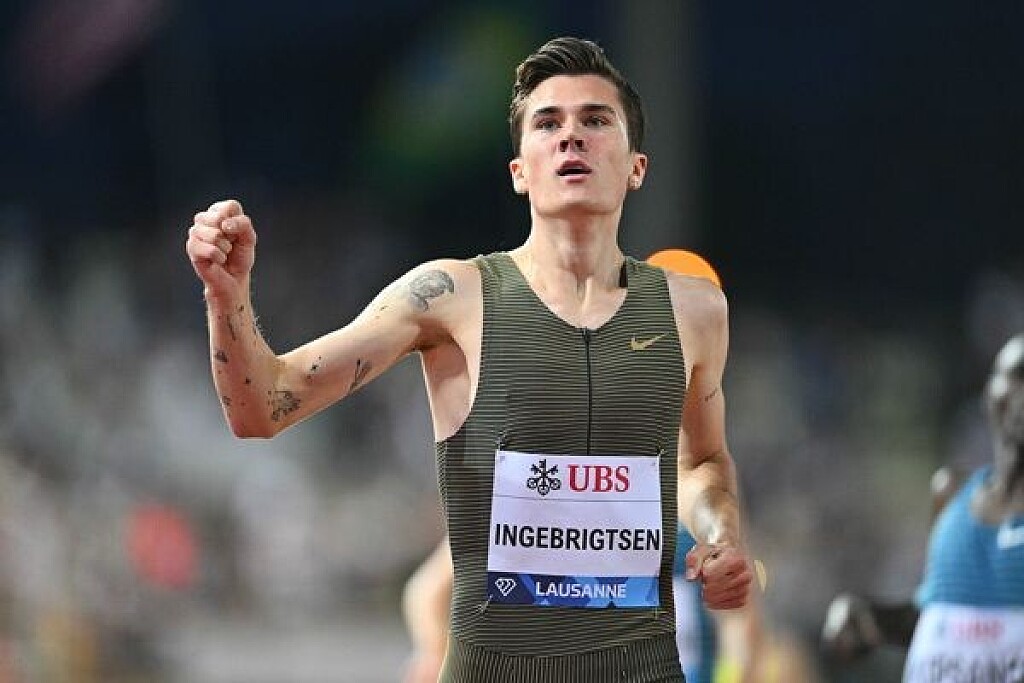
Ingebrigtsen and Girma go head-to-head in hunt for fast 1500m in Lausanne
Jakob Ingebrigtsen and Lamecha Girma both made history earlier this month in Paris, where they set a world two-mile best and a world 3000m steeplechase record, respectively. Now they have the chance to push each other to fast 1500m performances when they return to Wanda Diamond League action in Lausanne on Friday (30).
Norway’s Ingebrigtsen, who broke the world indoor 1500m record by running 3:30.60 in Lievin in February, clocked 7:54.10 in Paris to improve Daniel Komen’s world best for two miles. Despite still having that race in his legs, the 22-year-old improved his own European 1500m record to 3:27.95 in Oslo six days later – a time that places him sixth on the world all-time list.
Although the world record had not been his aim in Oslo, Lausanne’s Athletissima gives Ingebrigtsen another opportunity to take further strides toward Hicham El Guerrouj’s almost 25-year-old world record of 3:26.00.
“I 100% have more left in me,” Ingebrigtsen said after his performance in Oslo. “I just have to keep focused on each race ahead in the build-up to Budapest (World Championships), where it really matters.”
Girma will hope to be up there with him. The Ethiopian 22-year-old stormed to a time of 7:52.11 for his specialism in Paris, taking 1.52 seconds off the world 3000m steeplechase record set by Said Saeed Shaheen in 2004, and then turned his attention to attacking the Ethiopian 1500m record of 3:29.91 at the Continental Tour Gold meeting in Ostrava on Tuesday (27). He still looked like he had plenty left in the closing stages but having to run wide down the home straight, he focused on the win, running a PB of 3:33.15 that he will aim to improve again in Lausanne.
It will be the first time that Ingebrigtsen and Girma have clashed in any discipline.
In Oslo, Ingebrigtsen led the first eight men under 3:30 for the first time in history, and this time the line-up includes two other men who have dipped under that barrier so far in their careers: Britain’s Olympic bronze medallist Josh Kerr and Australia’s Stewart McSweyn. They are joined on the entry list by Ethiopia’s Teddese Lemi, New Zealand’s Sam Tanner and Britain’s Neil Gourley.
In the 5000m – the discipline in which Ingebrigtsen won world gold last year after his 1500m silver – Olympic champion Joshua Cheptegei will take on Olympic 10,000m gold medallist Selemon Barega, world 5km record-holder Berihu Aregawi, Telahun Haile Bekele, Birhanu Balew and their fellow sub-13:00 runner Muktar Edris.
In the women’s 3000m steeplechase, world U20 silver medallist Sembo Almayew is back on the track after her world-leading PB performance of 9:00.71 to win in Florence. The 2021 world U20 gold medallist, Jackline Chepkoech, was second on that occasion and is also racing, along with world record-holder Beatrice Chepkoech and world bronze medallist Mekides Abebe.
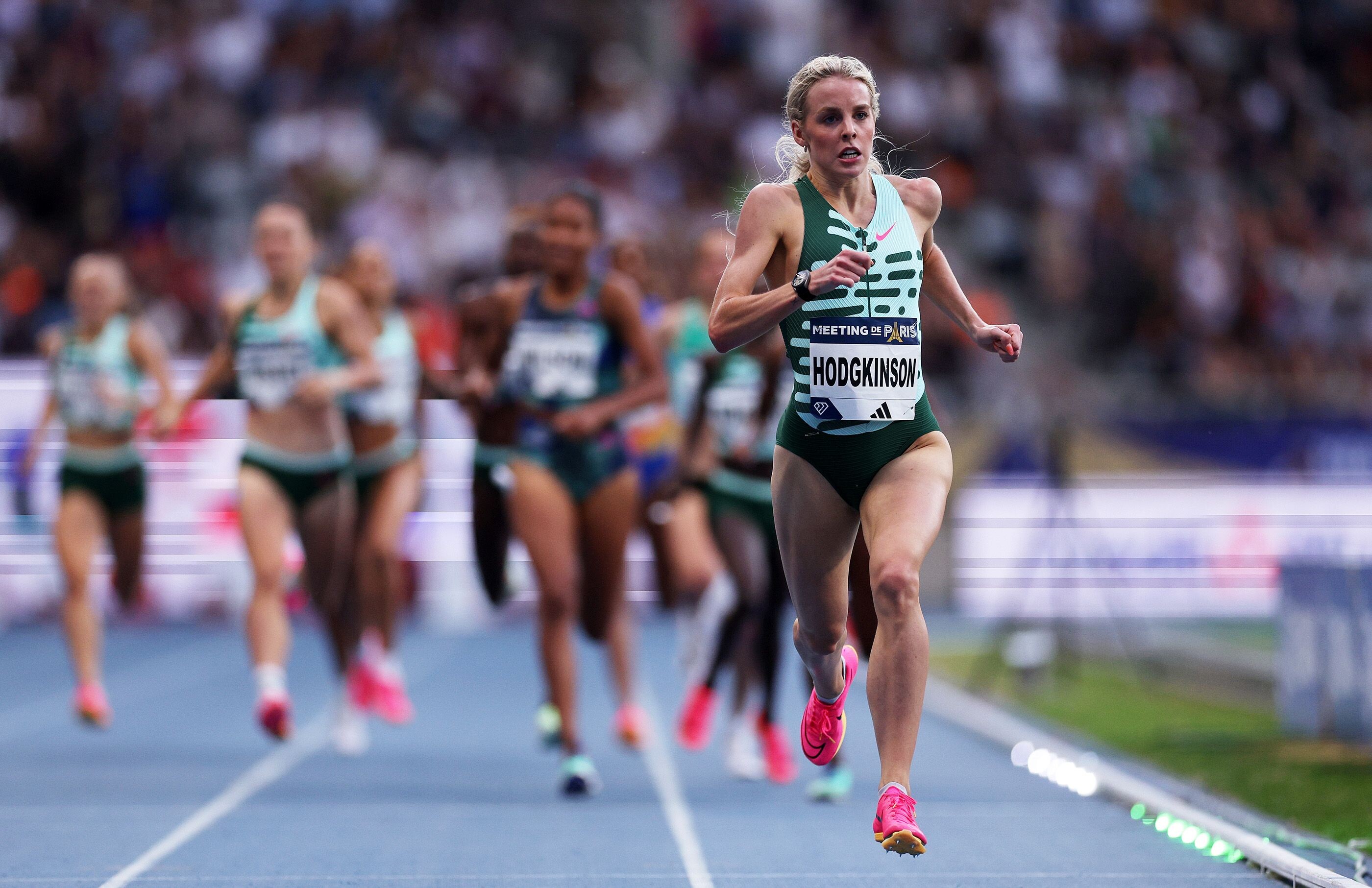
The world leader also heads the entries in the women’s 800m, where world and Olympic silver medallist Keely Hodgkinson – who improved her British record to 1:55.77 to win in Paris – will look to make another statement as she renews her rivalry with Kenya’s Mary Moraa.
World bronze medallist Moraa, who won Commonwealth Games and Diamond League titles ahead of Hodgkinson last year, has run a best of 1:58.72 so far this season and the strong field also features Habitam Alemu, Noelie Yarigo, Jemma Reekie, Catriona Bisset, Natoya Goule and Switzerland's Audrey Werro, who recently ran a world U20 1000m record of 2:34.89 in Nice.
by World Athletics
Login to leave a comment
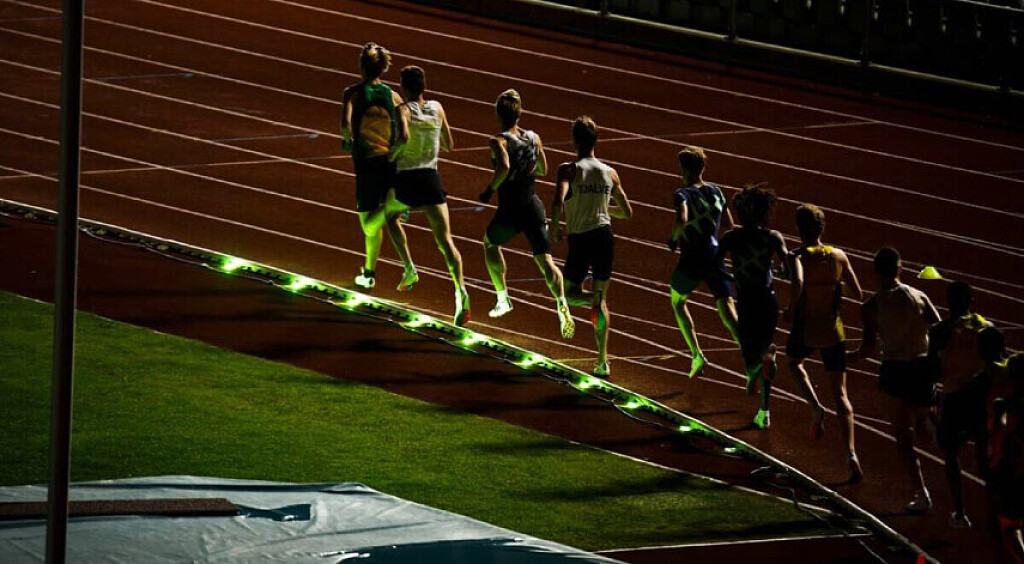
Is Wavelight technology good for the sport?
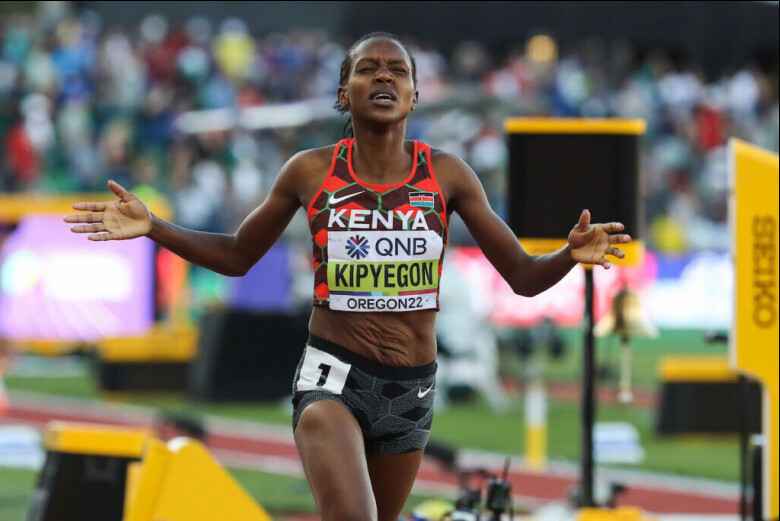
Last week at the Paris Diamond League, we witnessed one of the most extraordinary single-day spectacles in the history of the sport. Over the course of two hours, two world records and a world best were shattered; the races were nothing short of spectacular, particularly when Faith Kipyegon skilfully closed the gap on the Wavelight during the final two laps, leaving Ethiopia’s Letesenbet Gidey in the dust and achieving the seemingly impossible: a new women’s 5,000m world record.
The question of whether Wavelights are beneficial for the sport remains subjective, with opinions among track fans varying. On one hand, they enhance the performance and make races more engaging for spectators at the track or watching from home. On the other hand, they provide a precise pacing strategy for elite athletes, potentially facilitating faster times and diminishing the traditional element of intense competition.What is Wavelight technology?
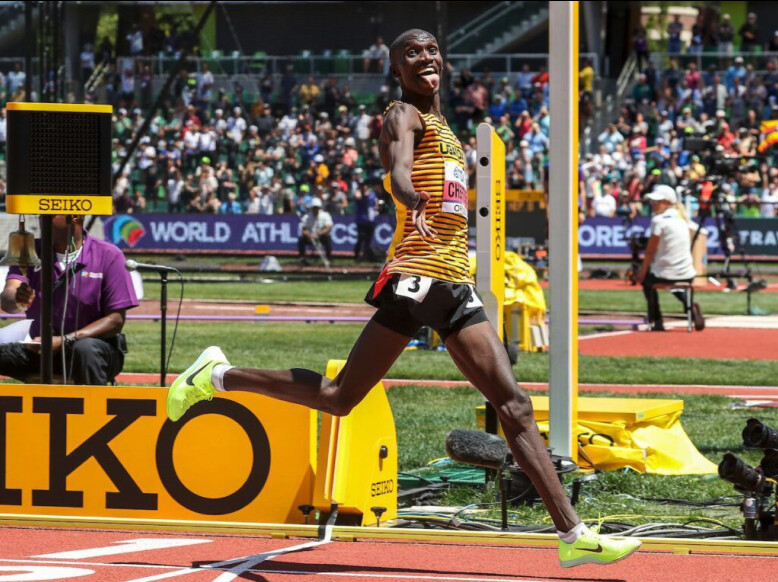
Wavelight technology, named for the Mexican Wave, was introduced by World Athletics in 2019. It serves as a tool for athletes and spectators, offering assistance with pacing and providing a visual representation of the race’s progression. A wave of lights appears along the inside edge of the track, moving at the desired pace for the race. Typically used in distance events like the 800m, 1,500m, or 5,000m, these lights are programmed to signify specific benchmarks, such as world championship standards, meeting records or world record times.Pros
People are drawn to track and field events to witness athletes breaking records, and Wavelight can serve as a valuable tool for athletes to gauge their paces and attempt to break records. A notable example: at the Paris Diamond League on June 9, where Jakob Ingebrigtsen of Norway and Lamecha Girma of Ethiopia ran ahead of the lights to set new records in their respective races. In Girma’s case, the lights pushed and challenged him throughout the 3,000m steeplechase, with Girma narrowly staying ahead in the final 100m to break the previous world record by one second.
Girma’s reliance on the lights became evident as his pace dropped off after 1,000m, and he had to dig deep to maintain the pace set by the flashing lights. Without them, it is unlikely he would have achieved the record.Track and field has faced challenges since the departure of Usain Bolt in 2017, with the sport seeking its next superstar. The success of major events like the World Championships and the Olympic Games significantly increases the sport’s popularity.
World Athletics recognizes the importance of world or national records in the Diamond League circuit, which contribute to increased viewership. The implementation of Wavelight technology allows athletes to run faster and challenge these record times, catering to the audience’s desire for exciting and fast-paced performances.While not every race will produce record-breaking times, Wavelight enhances the potential for thrilling performances that captivate viewers and generate greater interest in the sport.
Cons
When Ingebrigtsen shattered Daniel Komen’s two-mile record, which had stood for 26 years, my immediate thought was how fast Komen could have run with today’s technology. Komen had pacers guide him through the first 2,000m before running the final kilometre alone against the clock. Similarly, Ingebrigtsen had pacers until around the 2,000m mark, but they gradually dropped off, leaving him with a lead of 10-15 metres over the lights.
Depending on the race style or purpose, I believe Wavelight can have a positive impact on the sport. But they also detract from what track and field is fundamentally about—the world’s best athletes competing against one another. Watching a Diamond League event where one athlete outpaces the rest of the field by 15 to 20 seconds in the 3,000m steeplechase does not benefit the sport. While celebrating superstars is important, track and field legends like Komen, Kenenisa Bekele, Genzebe Dibaba and David Rudisha never had events specifically set up for them to chase world records.
They achieved their records in the heat of competition, racing against other competitors. This is where I believe Wavelight technology crosses a line.A compelling comparison was published in Track & Field News in 2020, analyzing the current and former 10,000m world records—Joshua Cheptegei’s record with pace lights versus Bekele’s record without them. The analysis revealed that Cheptegei maintained much more even splits than Bekele, with a variance of less than a second (0.8s) between his kilometres, which is truly remarkable. In contrast, Bekele’s variance was five times greater, with a difference of nearly five seconds between his fastest and slowest kilometres.I am not suggesting that Wavelights are ruining the sport of track and field, but I believe their use should be limited to specific situations, such as aiming for world standards or being present only during the final lap or two of distances ranging from 1,500m to 10,000m.
By implementing such limits, World Athletics can strike a balance between using technology for pacing assistance and preserving the essence of competitive racing.
by Running Magazine
Login to leave a comment
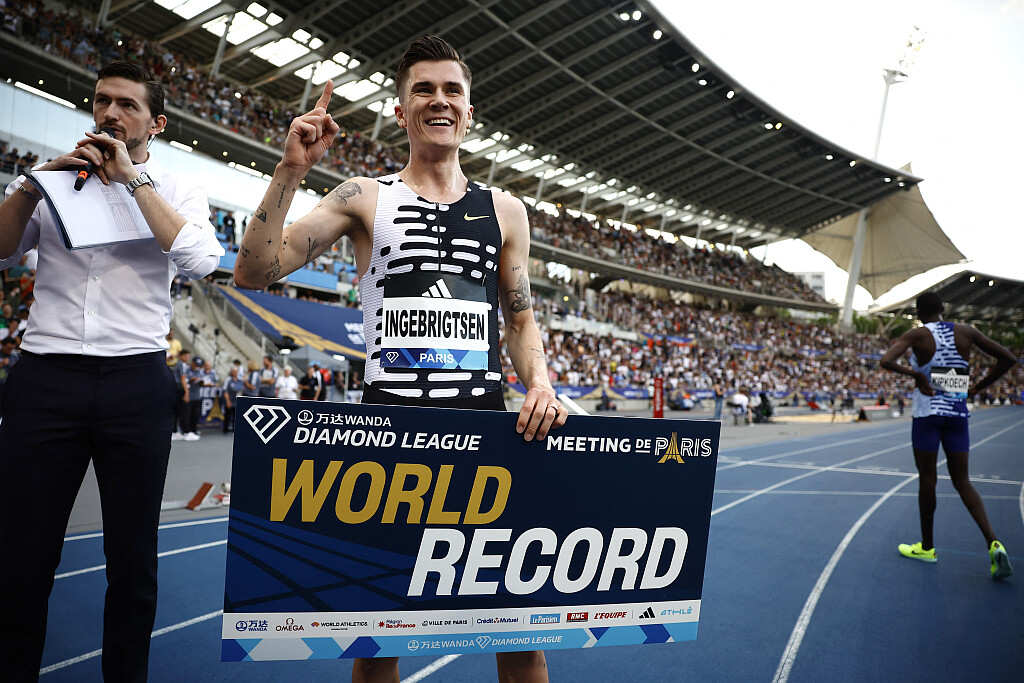
Jakob Ingebrigtsen shattered the two mile world record in Paris
Jakob Ingebrigtsen made history on Friday in Paris, running 7:54.10 in the two mile to break Daniel Komen’s mark that had stood since 1997.
Though the event isn’t frequently run, Komen’s time of 7:58.61 had taken on a mythical quality because of its longevity.
The distance was a perfect combination for Ingebrigtsen who has global gold medals in the 1500m and 5000m.
On Friday, the Norwegian was accompanied by two rabbits from the start and quickly separated himself from the rest of the pack. Ingebrigtsen never wavered from the pace, following the pacers through splits of 2:29.07 for 1000m and 4:56.95 for 2000m.
With 400 meters remaining, Ingebrigtsen only needed a 60-second close to get the record. He had much more to give than that, ripping off a 56-second 400m to obliterate the old mark.
En route, Ingebrigtsen passed 3000m in 7:24.07. That’s the third fastest time in history behind Komen and Hicham El Guerrouj
The race was just the second of Ingebrigtsen’s outdoor campaign. He opened his season with a victory in the Rabat Diamond League in 3:32.59.
Ingebrigtsen also owns the fastest time in history in the indoor 1500m, a 3:30.60 from Lievin.
by Flo Track
Login to leave a comment
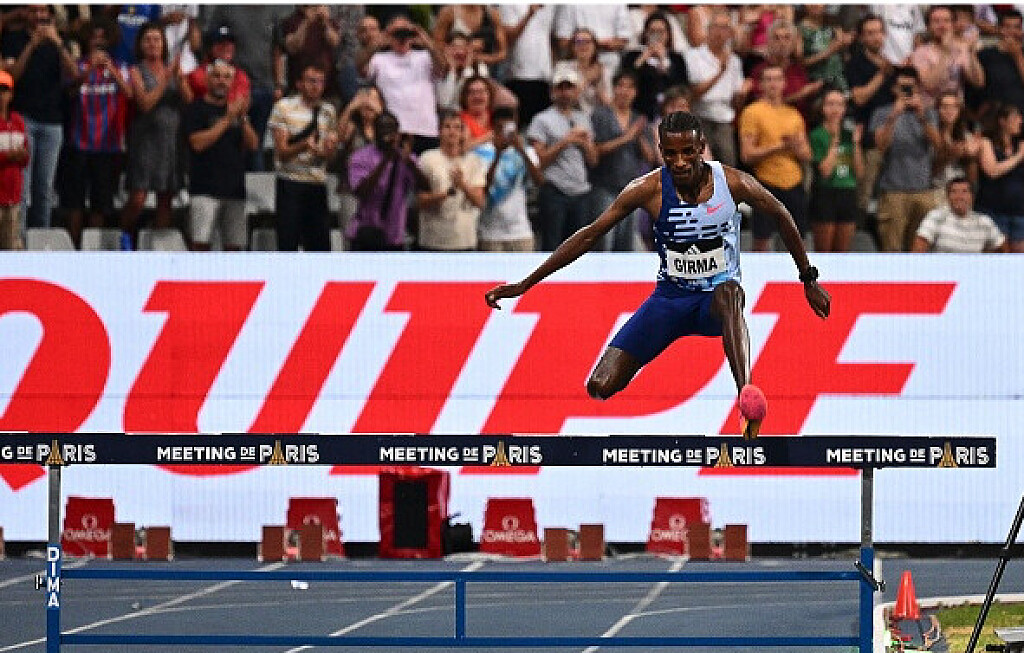
Men’s 3000m Steeplechase: Mr Second Place, Gets His Second World Record of 2023
For most of his career, Lamecha Girma was known for finishing second.
At the 2019 World Championships in Doha, Girma got the silver medal in the steeplechase losing to Conseslus Kipruto of Kenya. At the 2021 Olympics in Tokyo, he got the silver medal losing to Soufiane El Bakkali. At the 2022 World Indoor Championships in Belgrade, he got the silver medal in the 3,000m flat losing to his fellow countryman Selemon Barega.
Finally, in Eugene last year for the World Championship, he got the silver medal once more, losing to the man who is now his fiercest rival, El Bakkali.
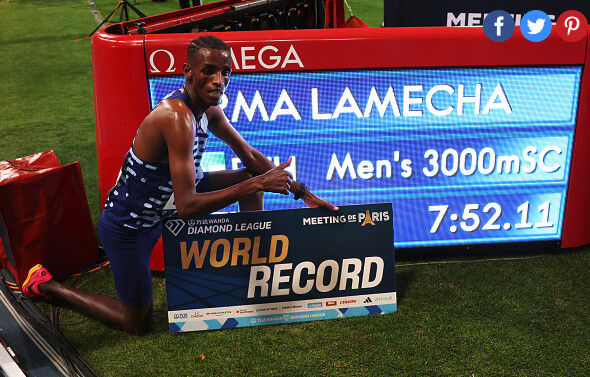
Girma’s fate has changed in 2023 and second took on a whole different meaning Friday night in Paris as Girma ran a sensational 7:52.11 in the 3000m steeplechase to break Saif Saaeed Shaheen’s nearly 19 year-old world record of 7:53.63. It was Girma’s second world record of 2023, to go with his 7:23.81 indoor 3000m record.
The RaceGirma was hot on the pace right from the gun, pressing the two pacers in front of him as soon as the three of them were in a single-file line together. The wavelight technology was set to the WR of 7:53.63, so Girma knew exactly where he was in relation to making history. The pacemaker’s assignment was not clear watching the race, as Girma went by the second pacemaker with more than four laps remaining in the race. Passing the pacemaker who was on schedule for the world record displayed the fact that Girma meant business. The wavelights were well behind him as he hit 4:41 with three laps remaining.
His second kilometer was a blistering 2:35, hitting 2,000m at 5:12.5, a full six seconds faster than Shaheen during his world record performance. As the laps went on, Girma definitely was tiring, as the water jumps looked to take more and more out of him. As he hit the bell, the distance from him to the front of the wavelight (the previous WR) was shrinking.
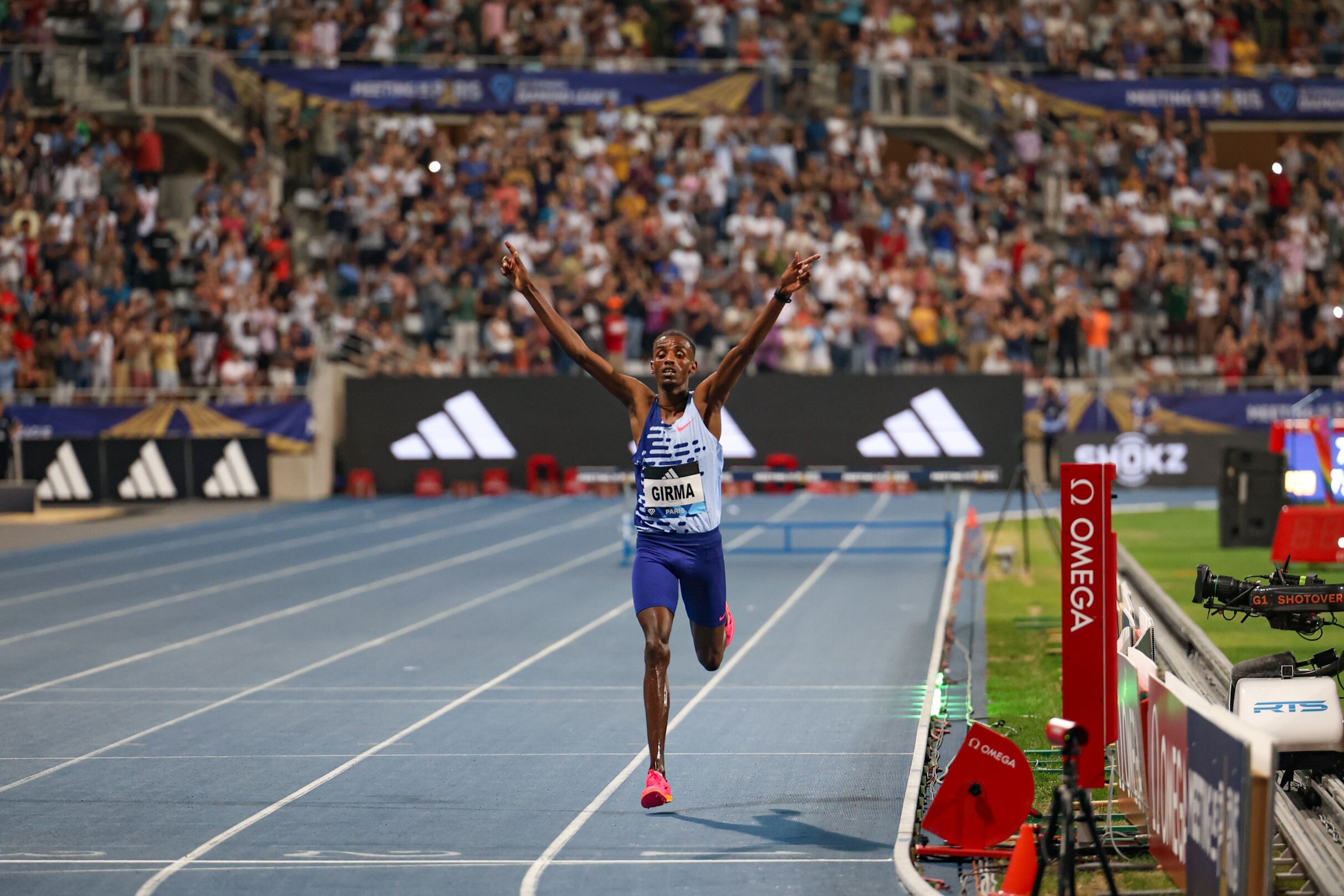
The Ethiopian was about even with the lights with 300m to go and looked exhausted, but he found another gear and lengthened his lead from the lights with 200m to go and cleanly cleared the final two barriers en route to his new WR of 7:52.11.
Quick Take: Girma’s WR was no surprise to him
On the LetsRun.com homepage, 80% of voters said that Girma would not take down the steeplechase world record. Nonetheless, there was reason to believe in Girma tonight. Girma broke Daniel Komen’s indoor 3,000m WR less than four months ago and Komen’s records are known as some of the most elusive on the books. If that was too far away for your liking, Girma also ran a 7:26.18 outdoor 3,000m in Doha in May to beat a very strong field. He even beat his rival El Bakkali by approximately seven seconds in that race.
After the race, Girma said “I felt so fast during the race, so confident. The world record is not a surprise, I planned to beat it tonight in Paris. It’s a result of full determination.”
by Let’s Run
Login to leave a comment
Kipyegon, Girma and Ingebrigtsen make history in Paris
It will go down in history as one of the greatest nights in athletics.
Between them, Faith Kipyegon, Lamecha Girma and Jakob Ingebrigtsen broke two world records* and one world best at the Meeting de Paris on Friday (9), providing the standout moments at a highly memorable Wanda Diamond League meeting in the French capital.
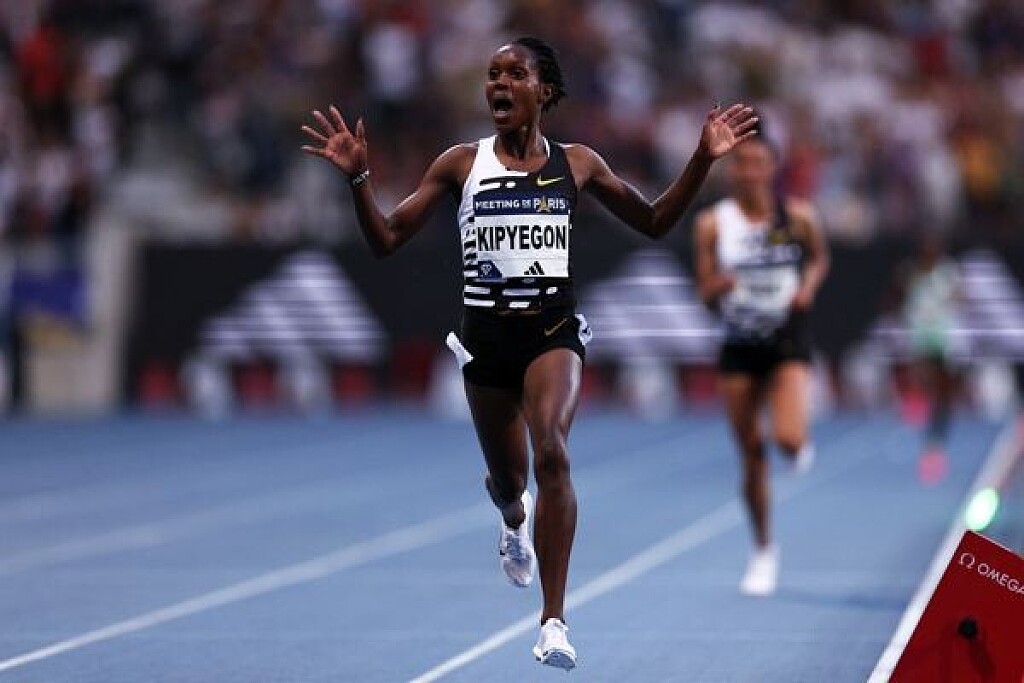
A week after breaking the 1500m world record in Florence, Kipyegon etched her name into the record books for 5000m, winning in 14:05.20.
Ahead of the race, the world and Olympic champion hadn’t made too much noise about a possible world record attempt in tonight’s 5000m. It was, after all, just her third ever race at the distance, and her first 5000m outing in eight years.
But, as is always the case with Kipyegon, the 29-year-old Kenyan showed no fear as she navigated her way through the race, the early pace – 2:52.31 at 1000m and 5:42.04 at 2000m – seemingly no bother for the two-time world U20 cross-country champion.
Steeplechase world record-holder Beatrice Chepkoech was the third and final pacemaker, leading the field through 3000m in 8:31.91. At this point, world record-holder Letesenbet Gidey led from Kipyegon with Ethiopia’s Ejgayehu Taye, the world 5km record-holder, a few strides behind.
Kipyegon took the lead with about 600 metres to go, but Gidey kept close contact. They were about six seconds outside of world record pace, but Gidey also knew what Kipyegon is capable of. The world 10,000m champion knew that Kipyegon had the finishing speed to break Gidey’s world record.
Kipyegon – now speeding up with each and every stride – hit the bell in 13:04.1, needing a final lap of about 62 seconds to break Gidey’s record. She did exactly that, covering the last 400m in 61.1 seconds to cross the line in 14:05.20 – a 1.42-second improvement on Gidey’s mark.
Gidey, competing for the first time since her unfortunate episode at the World Cross Country Championships in Bathurst, finished second in 14:07.94, the third-fastest time in history. Taye was third in 14:13.31, while the next three women – Lilian Kasait Rengerek, Freweyni Hailu and Margaret Chelimo Kipkemboi – all finished inside 14:24.
“I didn’t think about the world record, I don’t know how I made it,” said a delighted and surprised Kipyegon. “I just focused on the green light and tried to stay relaxed and enjoy the race. When I saw that it was a world record, I was so surprised – I just wanted to improve on my PB, the world record was not my plan. I just ran after Gidey – she is an amazing lady.
“I do not know what will be next – I’ll have to discuss it with my coach and my management,” she added. “If my body is healthy, anything is possible.”
Girma had requested an ambitious pace for the men’s 3000m steeplechase – one that would result in a finishing time of about 7:52. The world and Olympic silver medallist almost got a bit carried away mid-race, though, and ran well ahead of the wavelights through the middle section of the race.
With two laps to go, the lights almost caught up with the Ethiopian – who by now was well ahead of the rest of the field. But the sound of the bell and the reaction of the crowd seemingly gave him added impetus on the final lap as he moved clear of the lights once more.
He sped around the final lap in about 64 seconds, crossing the line in 7:52.11, taking 1.52 seconds off the world record set 19 years ago by Said Saeed Shaheen.

“I feel so happy,” said Girma, who started his year world a world indoor record over 3000m. “I’m happy and very proud. I felt so fast during the race, so confident. The world record is not a surprise; it was my plan to beat it tonight in Paris. It’s the result of my full determination.”
Two miles not be an official world record distance, but that mattered not to Jakob Ingebrigtsen – or indeed the sell-out crowd at the Stade Charlety – as the Norwegian won the event in a world best of 7:54.10.
The race wasn’t a scoring discipline on this occasion, and as such was held outside of the main broadcast window. But that didn’t deter the world and Olympic champion, who stuck to the pacemakers throughout, passing through 1000m in 2:29.07 and then moving closer to the second pacemaker – and, significantly, ahead of the green wavelights.
Once the pacemakers had done their job, Ingebrigtsen maintained his tempo and breezed through 3000m in an official split of 7:24.00 – a European record and the third-fastest performance of all time for that distance. At this point he had a 13.5-second lead over Ethiopia’s Kuma Girma. Victory was Ingebrigtsen’s; his next target was Daniel Komen’s world best.
He charged through the final 218 metres, roared on by the crowd, and crossed the finish line in 7:54.10, winning by 15 seconds.
“Being able to break this mark feels amazing,” he said. “It is my first world best outdoors. The pace felt very smooth for me, coming out of the 1500m. The public was amazing; without their help, it would have been more difficult. I was a bit surprised by the time in the end.”
World leads for Hodgkinson, Wanyonyi and Holloway
World and Olympic silver medallist Keely Hodgkinson opened her outdoor season in stunning fashion in the women’s 800m, winning by more than two seconds in a world-leading national record of 1:55.77.
The European champion stuck to the pacemaker and covered the first lap in 57.7 seconds, already a stride or two ahead of the rest of the field. With 200 metres to go, there was clear daylight between Hodgkinson and Jamaica’s Natoya Goule, who was being pursued by world indoor champion Ajee Wilson.
But none of them could get near Hodgkinson, who eased down the home straight to cross the line in 1:55.77, taking 0.11 off the British record she set two years ago in Tokyo. Wilson finished second in 1:58.16 and Goule was third in 1:58.23.
by World Athletics
Login to leave a comment
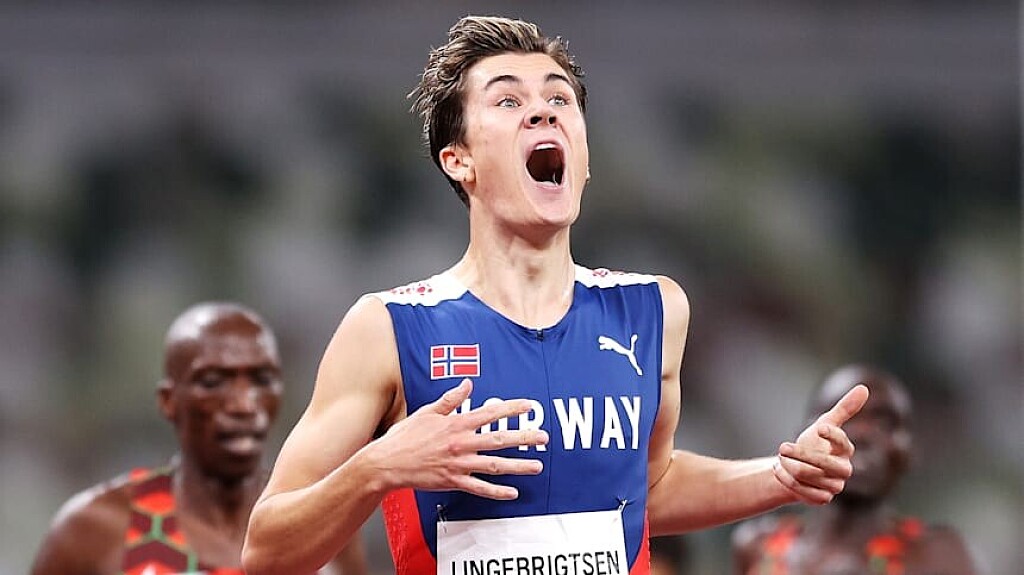
Going for the Two mile world record on June 9th
Jakob Ingebrigtsen doesn’t like talking about world records. But many others in the world of athletics are doing just that as the Norwegian prepares to compete in the non-Olympic distance two-mile event at the 2023 Paris Diamond League on 9 June.
Everything is set up for Ingebrigtsen to attempt to beat Daniel Komen’s time of 7:58.61 - a record that has stood since 1997. Not only will an elite field of pacers set the tempo, but the athletes racing will also have the benefit of Wavelight technology, which uses lights on the inside of the track to show the pace of the world record in real time.
If Ingebrigtsen breaks the record, he will have succeeded where many other of the world’s most celebrated distance runners have failed.
Mo Farah, Eliud Kipchoge and Joshua Cheptegei are just some of the big name athletes to have attempted the distance yet failed to beat Komen’s mark, with the nearest time an 8:01.08 set by the great Ethiopian Haile Gebrselassie less than two months before Komen’s historic run.
Login to leave a comment
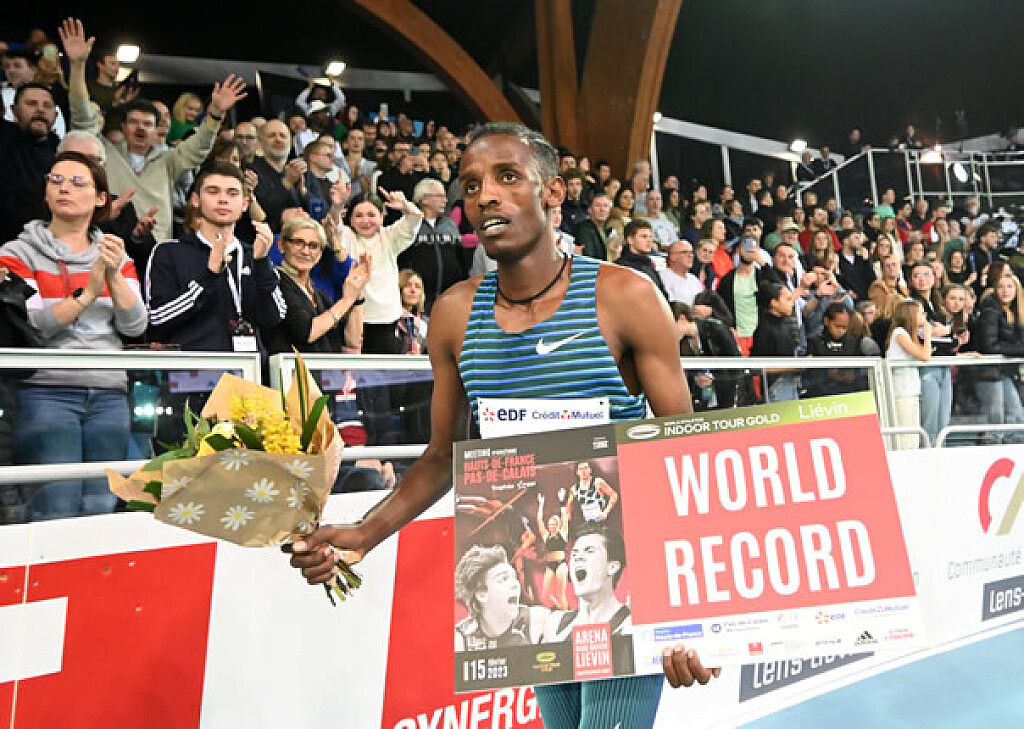
Ethiopia’s Lamecha Girma breaks indoor 3,000m world record
Girma averaged 2:28 per kilometer over 3,000m to break Daniel Komen's world record, which has stood for 25 years.
All eyes at the World Athletics Indoor Tour meeting Hauts-de-France Pas-de-Calais in Lievin, France, were on Norway’s Jakob Ingebrigtsen in the men’s 1,500m, but Lamecha Girma of Ethiopia stole the show in the men’s 3,000m, setting a new world record of 7:23.81.
Girma smashed the 25-year-old indoor 3,000m record of Kenya’s Daniel Komen (7:24.90), which has stood since 1998. Girma’s time was so fast that even his pacemakers couldn’t keep up, dropping out of the race one mile in. World 1,500m bronze medalist Mohamed Katir of Spain held to Girma’s heels until the final lap, falling off for second in a European record of 7:24.68 (now the second fastest time in history).
To put Girma’s time in perspective, his pace over the 3,000m was two minutes and 28 seconds per kilometer and 3:58 per mile. Girma went through 1,500m in 3:42 and through 2,000m in a mind-boggling four minutes and 55 seconds.
The U.S. 5,000m and 10,000m record holder Grant Fisher finished fifth with a new indoor 3,000m personal best of 7:35.82.
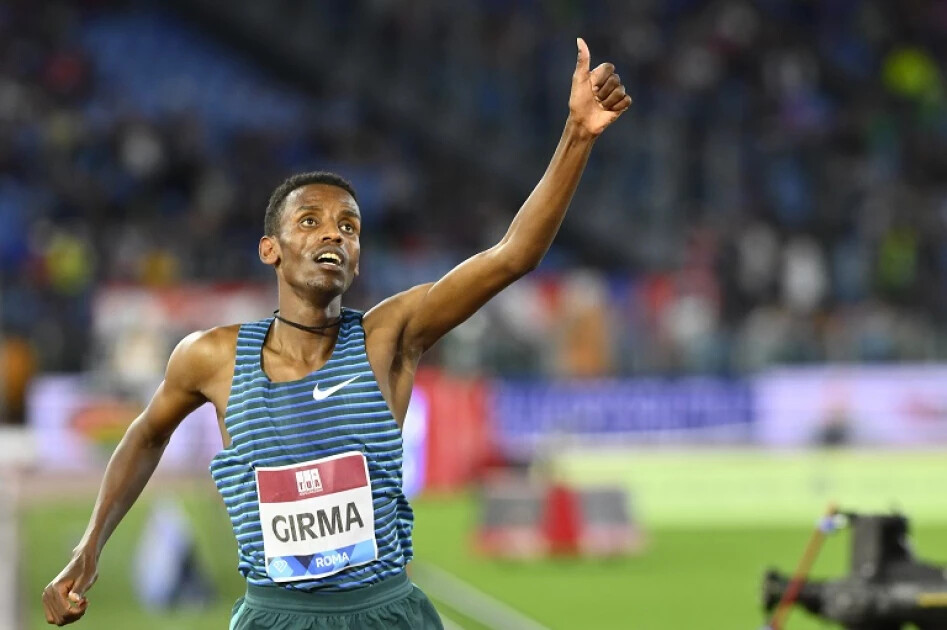
At the 2020 Olympics, Gimra won the silver medal in the 3,000m steeplechase with an 8:10.38 clocking, only behind Morocco’s Soufiane El Bakkali in 8:08.90. He followed his Olympic performance with a 2022 World Indoor Championship silver medal in the 3,000m in Belgrade, Serbia, and another silver medal at the World Athletics Championships in his signature event, the 3,000m steeplechase.
Ingebrigtsen ended up setting a world lead and meeting record of 3:32.38 in the men’s 1,500m but ultimately missed his indoor world record of 3:30.60 that he aimed for.
Girma is also the Ethiopian national record holder in the 3,000m steeplechase and is listed as the 12th fastest of all time.
by Marley Dickinson
Login to leave a comment
The Rome Diamond League did not disappoint, with several meet records shattered
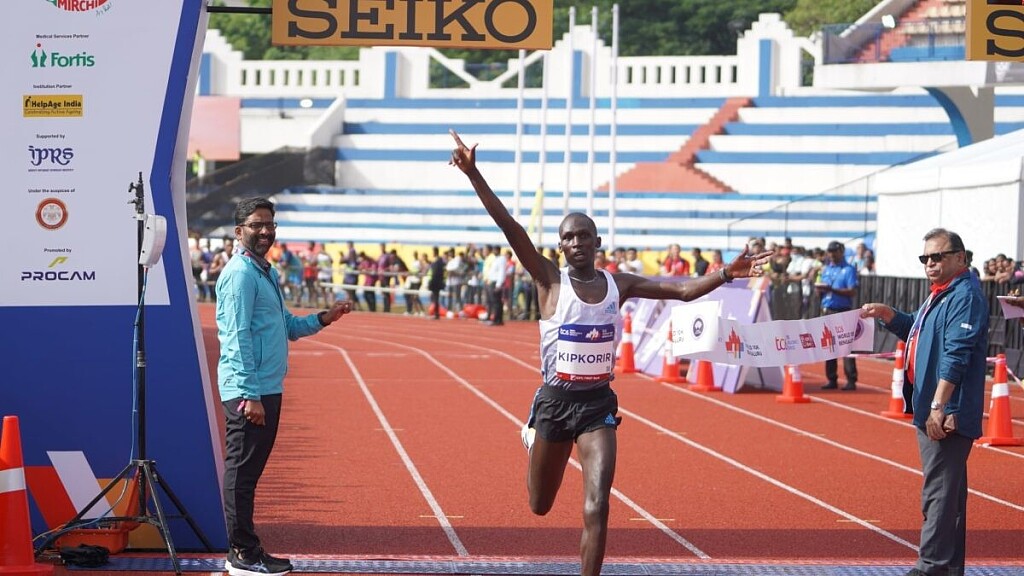
The Rome Diamond League did not disappoint on Thursday afternoon. Several meet records were smashed, including Eliud Kipchoge’s 5,000m meet record of 12:46.53–by his compatriot, Nicholas Kimeli,who clocked a world-leading time of 12:46.33.
Kimeli’s time was the seventh-fastest ever over 5,000m, and only six seconds behind the Kenyan national record held by Daniel Komen at 12:39.74.
The 23-year-old Kenyan came into the race in great form, winning the TCS World 10K in Bengaluru, India, in mid-May in course record time and setting a Kenyan national record over 5K on the roads in April (12:55).
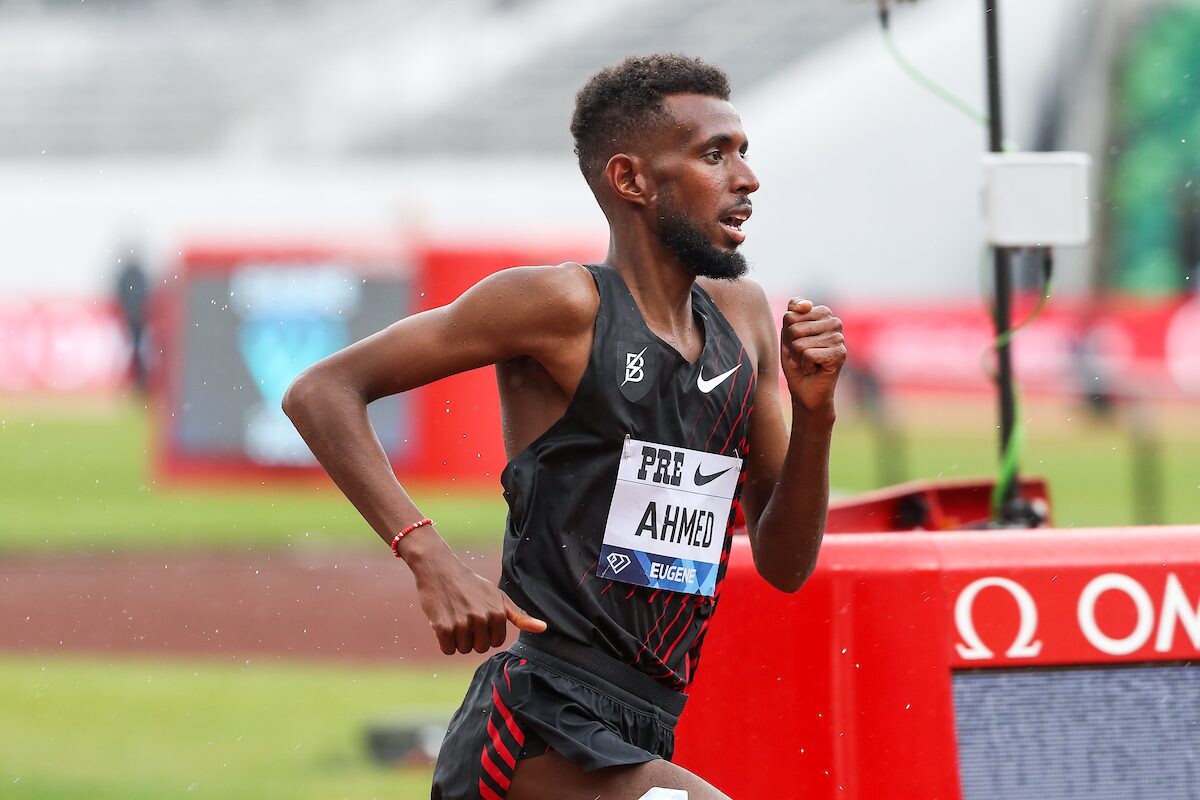
The men’s 5,000m was speedy from the start, with the pace set for 2:35/km at the front. Yomif Kejelcha of Ethiopia led the race until one lap to go, when Kimeli and his Kenyan compatriot, Jacob Krop, took over the race with 300m to go. Krop and Kimeli battled over the final 200m until Kimeli put a gap on Krop with less than 100m to go, setting a new personal best, meet record and world lead over 5,000m. Krop finished second in a personal best time of 12:46.79, while Canada’s Mohammed Ahmed (second photo) ran a season’s best time of 12:55.88 to finish fifth.
In the women’s 800m, Athing Mu made a statement, winning the race in a world-leading time of 1:57.01. Mu sat on the heels of the pacer for the first 400m, coming around in 56-high. Once the pacer fell off, the 20-year-old American phenom took over, winning the race by almost two seconds.
by Running Magazine
Login to leave a comment
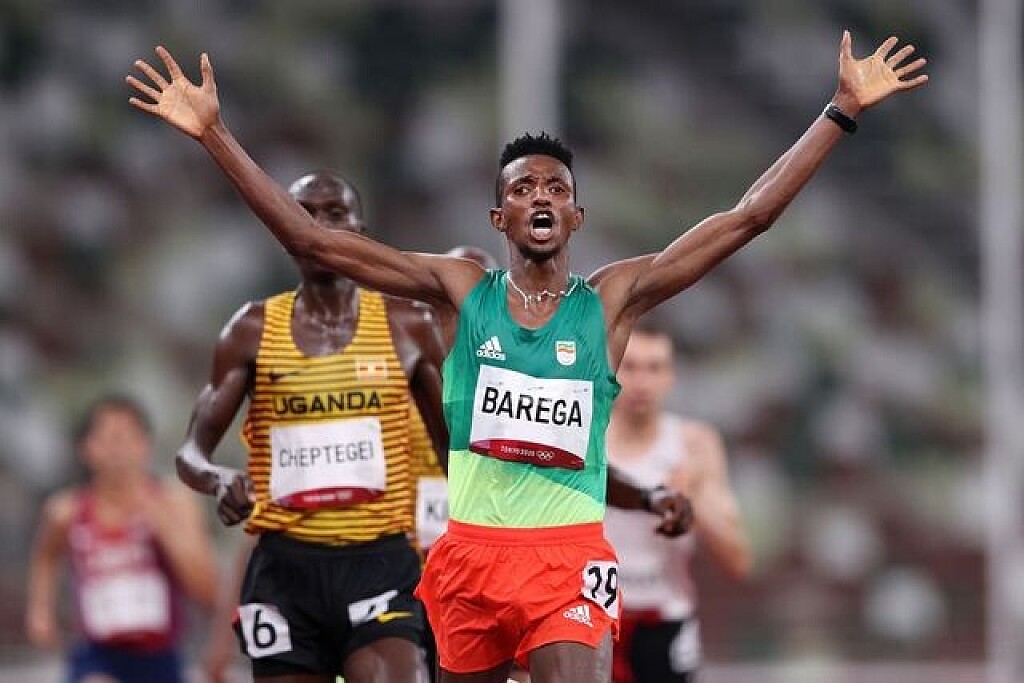
Ethiopia's Selemon Barega returns to Lievin with world record target
Organizers have announced that Ethiopia's Selemon Barega is to return to the Meeting Hauts-de-France Pas-de-Calais – a World Athletics Indoor Tour Gold meeting – in Lievin on 17 February, to tackle the world indoor 3000m record.
The world indoor silver medalist moved to third on the world indoor all-time list with his performance in Lievin last year, the 21-year-old clocking 7:26.10 to finish second behind his compatriot Getnet Wale who ran 7:24.98 to just miss Daniel Komen’s long-standing world record of 7:24.90.

Barega went on to win over 1500m at World Indoor Tour meetings in Torun, where he set an indoor PB of 3:32.97, and Madrid, before becoming the Olympic 10,000m champion in Tokyo.
Barega has also been announced for the Copernicus Cup in Torun on 22 February, where he is set to be joined by Wale and Lamecha Girma, who finished third behind his compatriots in Lievin last year, clocking 7:27.98. Before that race, just six men had bettered 7:30 for 3000m indoors. Now the figure stands at 10, with the fourth-place finisher in Lievin last year, Berihu Aregawi, also dipping under the mark with 7:29.24.
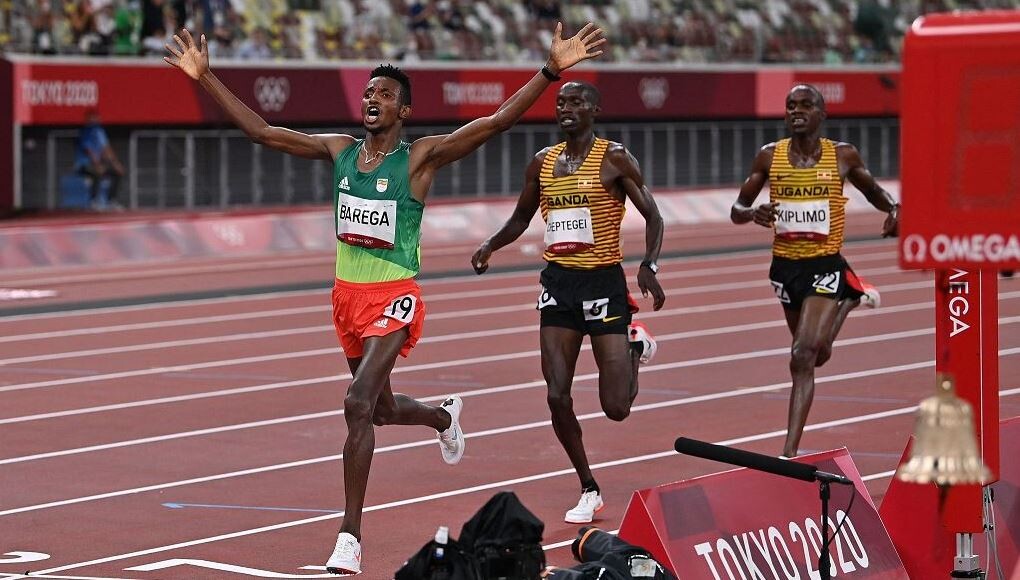
Also among those returning to Lievin is Gudaf Tsegay, who broke the world indoor 1500m record last year and this time races the mile.
Other athletes announced for the meeting include world indoor 60m hurdles record-holder Grant Holloway, Olympic 100m champion Marcell Jacobs and Olympic 1500m champion Jakob Ingebrigtsen.
by World Athletics
Login to leave a comment
Ugandan Joshua Cheptegei misses 3K WR in Ostrava
All eyes were on Joshua Cheptegei ahead of Wednesday’s Ostrava Golden Spike meet in the Czech Republic, as the 24-year-old Ugandan was looking to break the 3,000m world record. Cheptegei ended up running to a disappointing finish, falling well short of the record, but the meet was far from uneventful, as several other athletes posted remarkable times. Among these impressive performances were runs from teenaged Brits Max Burgin and Keely Hodgkinson in the men’s and women’s 800m races and an amazing showing from Cheptegei’s compatriot Jacob Kiplimo in the 10,000m.
Cheptegei falls short
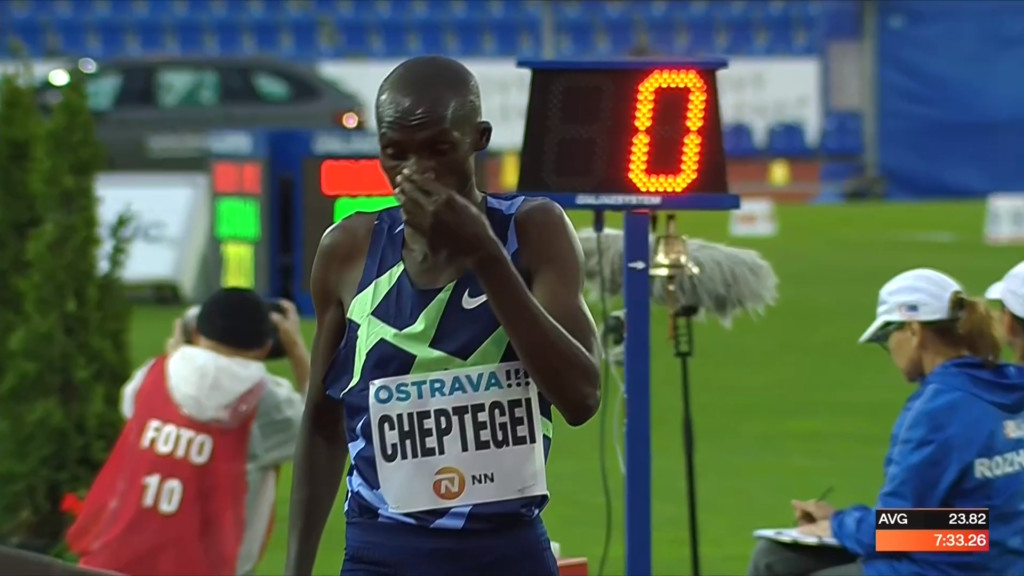
Cheptegei had an incredible 2020 season that saw him run three world records (5K, 5,000m and 10,000m) in four races. He had already raced twice in 2021 ahead of Wednesday’s meet, and he was itching to add another record to his resume, so he targeted Kenyan Daniel Komen‘s 3,000m mark of 7:20.67, which has been the time to beat for 24 years.
Before the run, Cheptegei’s agent, Jurrie van der Velden, told LetsRun.com that this record could be the toughest one Cheptegei has tried to beat, and after he finished 13 seconds behind Komen’s time on Wednesday, that appears to be true. Cheptegei opened the race on world record pace, and he passed through the first 1,600m in 3:55. He proceeded to slow considerably in the following few laps, though, and crossed the line far off the world record.

British domination
Young Brits won both 800m races. Hodgkinson’s win wasn’t too much of a surprise, as she has had a tremendous season so far. The 18-year-old opened her season in Austria in January with a U20 indoor 800m world record of 1:59.03 (which American Athing Mu lowered a month later with a 1:58.40 run in Arkansas), and she followed that up with a win in the women’s 800m at the European Indoor Championships. On Wednesday, she broke two minutes for the first time outdoors, winning the women’s race in Ostrava in 1:58.89, which is a new U20 European record.
The men’s 800m was the first race of the season for Burgin, but he ran extremely well and took the win in 1:44.14. Like Hodgkinson, Burgin (who turns 19 on Thursday) now owns the U20 European 800m record, and his result in the Czech Republic is a new world-leading time for 2021. Both Hodginson’s and Burgin’s times are under the Olympic 800m standards.
Kiplimo crushes the 10,000m
With all of the attention on Cheptegei, Kiplimo managed to fly under the radar until his race. Then, lining up in the men’s 10,000m, the 20-year-old flew away from the rest of the field, and 25 laps later, he stopped the clock in 26:33.93. This is a new world-leading time, it crushed the second-place finisher (who crossed the line in 27:07.49) and it shattered Kiplimo’s previous PB of 27:26.68 by close to a full minute. Before the race, Kiplimo said he was hoping to break 27 minutes, and he accomplished this goal with ease. His result now puts him at seventh-best in history at the distance.
Canadian sprints
Canadian sprinters Andre De Grasse and Aaron Brown were both in action in Ostrava. De Grasse raced the 100m, and he crossed the line in 10.17 seconds. He finished in third place behind American Fred Kerley (9.96) and Justin Gatlin (10.08). Brown also finished in third place, although he raced the 200m. Brown ran 20.40 seconds, and he finished behind Kenny Bednarek of the U.S. (19.93) and Kerley (20.27). Both De Grasse and Brown are set to race at the Gateshead Diamond League on Sunday in the U.K.
Login to leave a comment
Joshua Cheptegei will go for Komen's legendary 3000-Meter World Record on Wednesday
Last year, Uganda’s Joshua Cheptegei set world records in the 5,000 and 10,000 meters as part of an unforgettable 2020 season.
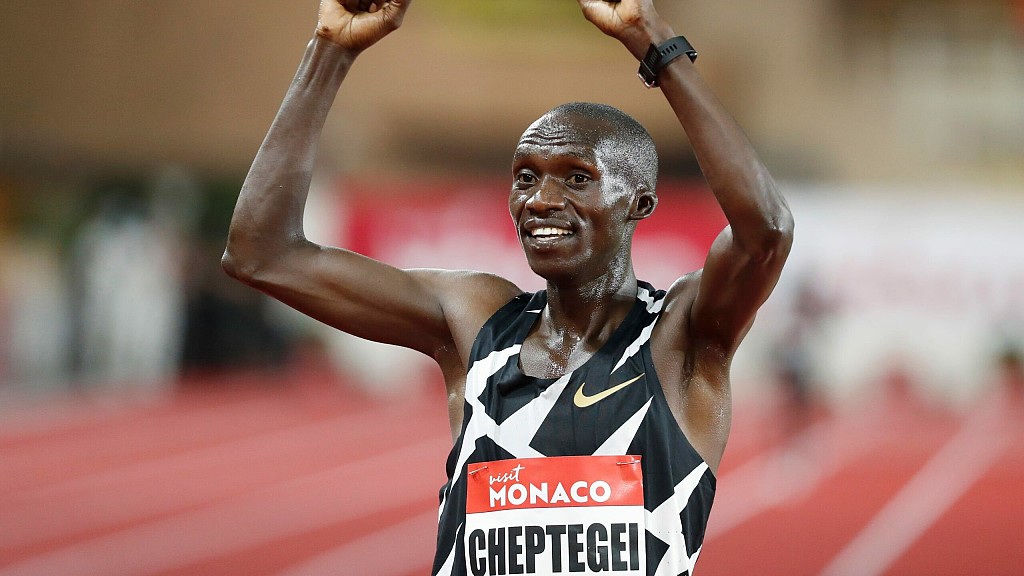
On Wednesday at the Golden Spike meet in Ostrava, he will try to go one better and become just the third man to hold the 3,000, 5,000, and 10,000 records simultaneously. Yes, that’s right. Cheptegei will attempt to break Daniel Komen‘s legendary 7:20.67 3,000-meter world record which has stood for nearly 25 years — since September 1, 1996.
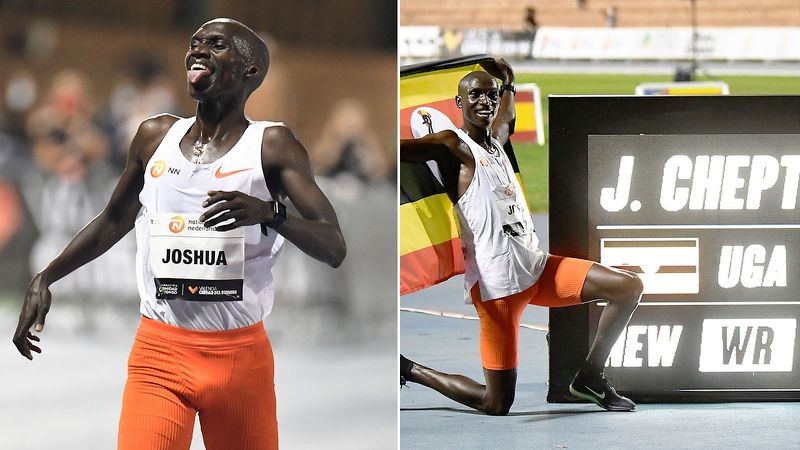
Cheptegei´s camp is under no illusions as to the difficulty of the feat.
“It’s a big ask for Joshua to break [the 3,000-meter world record], we have to be realistic about that,” Cheptegei’s agent Jurrie van der Velden told LetsRun.com. “But we believe it’s possible with the training he’s done. It will be the toughest attempt for him thus far.”
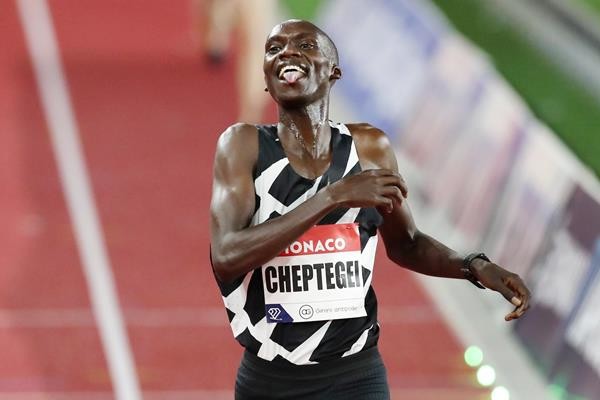
There are several reasons why. First is the 3,000-meter record itself is one of the longest-standing men’s world records and has scarcely been challenged since. Only Hicham El Guerrouj, who ran 7:23.09 in 1999, has come within four seconds of the mark. Even the great Kenenisa Bekele, previous holder of the 5,000 and 10,000 records, never ran faster than 7:25.79.
Second is Cheptegei’s skillset. While the World Athletics scoring tables say 7:20 is equivalent to 12:36 and 26:15 for 5,000 and 10,000 — both marks Cheptegei has bettered — it will be tougher for Cheptegei who, as a distance specialist, is more suited to the longer events. He will need a lot of speed to break 7:20.67 — it’s 3:56 mile pace for seven-and-a-half laps — and Cheptegei, whose 3,000 pb is 7:33.26, has yet to demonstrate the raw 1500 speed of Komen, who had a personal best of 3:29.46.
In Cheptegei’s defense, he has barely raced the 1500. His Tilastopaja profile lists just three races at the distance, the most recent of which was a pb of 3:37.36 on April 24 in Kampala (elevation: 3,937 feet). He will have to run close to that pace for twice the distance to break Komen’s record.
Cheptegei does have a few things working in his favor, however. He has an ace pacemaker in Australia’s Stewart McSweyn, who ran 3:30 and 7:28 last year, and will also benefit from the pacing light system that aided Cheptegei in his world records in Monaco and Valencia last year. The pace is scheduled for 2:26-2:27 per kilometer, with Dutchman Richard Douma serving as the first pacer through 1200 meters before giving way to McSweyn, who will attempt to go through 2000.
Cheptegei also has Nike’s superspikes, which have made Komen’s once-untouchable record seem more attainable. For eight years — from 2012 through 2019 — no man broke 7:28 for 3,000. In the last eight months, five men have done it, all in Nike spikes.
by Jonathan Gault
Login to leave a comment
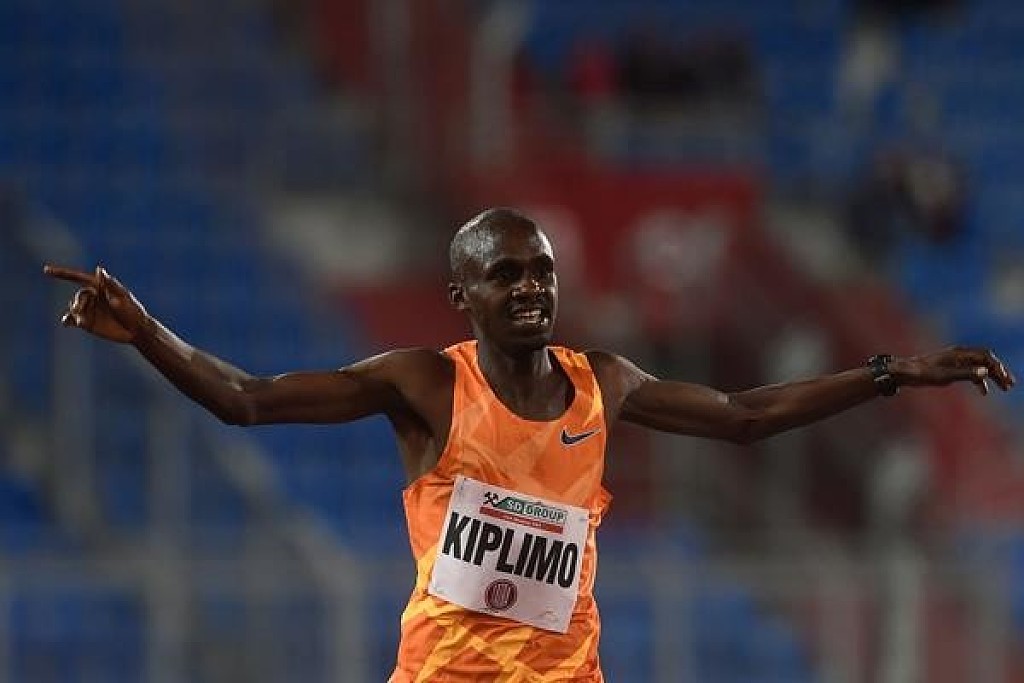
World record-holders will headline a stunning cast of athletic talent for the 60th edition of the Golden Spike in Ostrava
Paul Chelimo, Joshua Cheptegei, Genzebe Dibaba, Barbora Spotakova and Anita Wlodarczyk have all gone where no other athlete in history has, while with his indoor world record of 18.07m earlier this year, Hugues Fabrice Zango showed he has the potential to one day surpass Jonathan Edwards’ triple jump world record of 18.29m.
With 1500 fans allowed in the stadium, every set of eyes will be trained on Cheptegei when he takes to the track for the men’s 3000m, the final event on the programme. Edged by Duplantis for Male World Athlete of the Year in 2020, the Ugandan 24-year-old has been untouchable on the track since 2019, setting world records at 5000m and 10,000m.
Cheptegei’s current best for 3000m is 7:33.26, but the enlisting of Australia’s Stewart McSweyn – a 7:28 man – as pacemaker suggests the Ugandan is ready to take a massive chunk off that. If conditions are favourable, he looks primed to challenge Daniel Komen’s 3000m world record of 7:20.67, which has stood for 25 years. The world 10,000m champion sharpened his speed last month with a 3:37.36 1500m PB at altitude in Kampala. Olympic 5000m silver medallist Paul Chelimo is likely to be his closest pursuer.
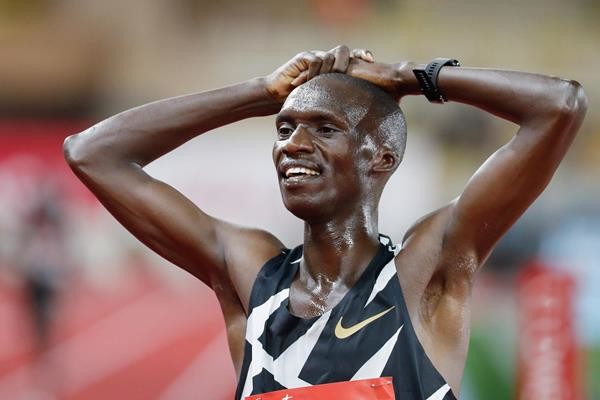
Elsewhere in the distance events, world half marathon champion Jacob Kiplimo will open his season over 10,000m where it seems the 20-year-old Ugandan’s personal best of 27:26.68 is due for serious revision. In the men’s 3000m steeplechase, 2019 Diamond League champion Getnet Wale of Ethiopia will be looking to improve on his best of 8:05.21, having clocked a blazing 7:24.98 for 3000m indoors back in February.
Poland’s world bronze medalist Marcin Lewandowski takes on Ugandan record-holder Ronald Musagala in the men's 1500m. European Indoor 800m champion Patryk Dobek will race the two-lap distance in Ostrava, and the Pole remains undecided between the 800m and the 400m hurdles for the Tokyo Olympics. He should get a good indicator of his medal chances at the longer distance on Wednesday as he takes on seasoned veterans Adam Kszczot and Amel Tuka.
Genzebe Dibaba is the star attraction in the women’s 1500m, her first outing at the distance in which she holds the world record since August 2019. The Ethiopian made an eye-catching half marathon debut last December when clocking 1:05:18 in Valencia, but she failed to finish on her only outing since, an indoor 3000m in February. Uganda’s Winnie Nanyondo should be her biggest rival. In the women’s 800m, European indoor champion Keely Hodgkinson should be tough to beat.
Richardson takes on Schippers and Okagbare
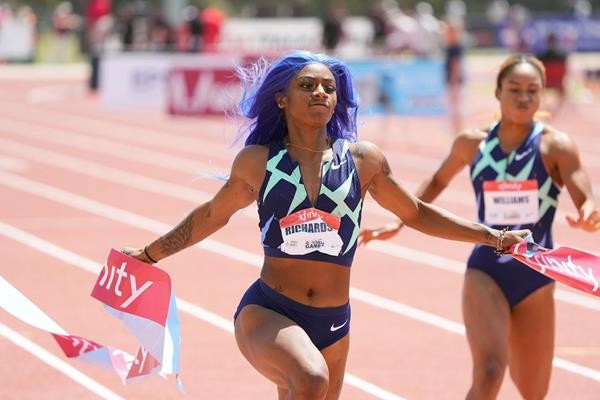
In the sprints, the women’s 200m will take top billing, with fans eager to see what Sha’Carri Richardson can produce after her red-hot form in recent weeks. The 21-year-old US sprinter clocked wind-legal 100m times of 10.72, 10.74 and 10.77 already this season and she seems primed to dip below 22 seconds over 200m for the first time. Also in the field is two-time world champion Dafne Schippers and Nigeria’s Blessing Okagbare.
Olympic 100m bronze medallist Andre De Grasse will face 2004 Olympic champion Justin Gatlin in the men’s 100m and while both have edged below 10 seconds this year, they will have it all to do to beat 400m specialist Fred Kerley, who clocked 9.91 (2.0m/s) in Miami last month.
Kerley is also slated for the 200m, which takes place 80 minutes after the 100m. In the latter, Kenny Bednarek should prove tough to beat, having run 19.94 behind Noah Lyles at the USATF Golden Games recently.
In the men’s 400m, 2012 Olympic champion Kirani James will be looking to return to his best as the clock counts down towards the Tokyo Games. The Grenadian opened his season with a 44.88-second clocking in Phoenix, USA, last month, though Vernon Norwood is the quickest in the field this year with his 44.64.
Olympic bronze medallist Yasmani Copello headlines the men’s 400m hurdles, while Denmark’s Sara Slott Petersen is the quickest on paper in the women’s event.
by World Athletics
Login to leave a comment

Ethiopia's Gudaf Tsegay breaks world indoor 1500m record in Lievin with 3:53.09
On an evening of stunning middle-distance performances at the Meeting Hauts-de-France Pas-de-Calais, Ethiopia's Gudaf Tsegay produced the highlight by taking two seconds off the world indoor 1500m record*, winning at the World Athletics Indoor Tour Gold meeting in 3:53.09.
The world bronze medallist followed the swift early tempo as the pacemaker led the field through 400m (58.97) and exited just before 800m, which Tsegay passed in 2:05.94. With three laps to go, Tsegay had a four-second lead over double European indoor champion Laura Muir but she showed no signs of slowing down, passing through 1000m in 2:37.36.
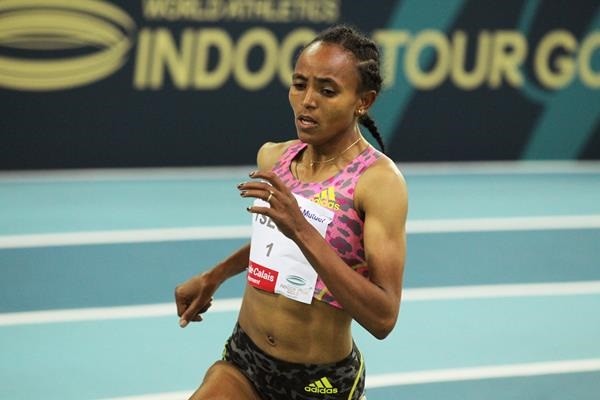
The clock read 2:52.9 with two laps to go and Tsegay maintained her pace with another lap just outside 30 seconds. She dug in for the final circuit and crossed the line in 3:53.09, taking more than two seconds off the world indoor record set by compatriot Genzebe Dibaba in Karlsruhe in 2014.
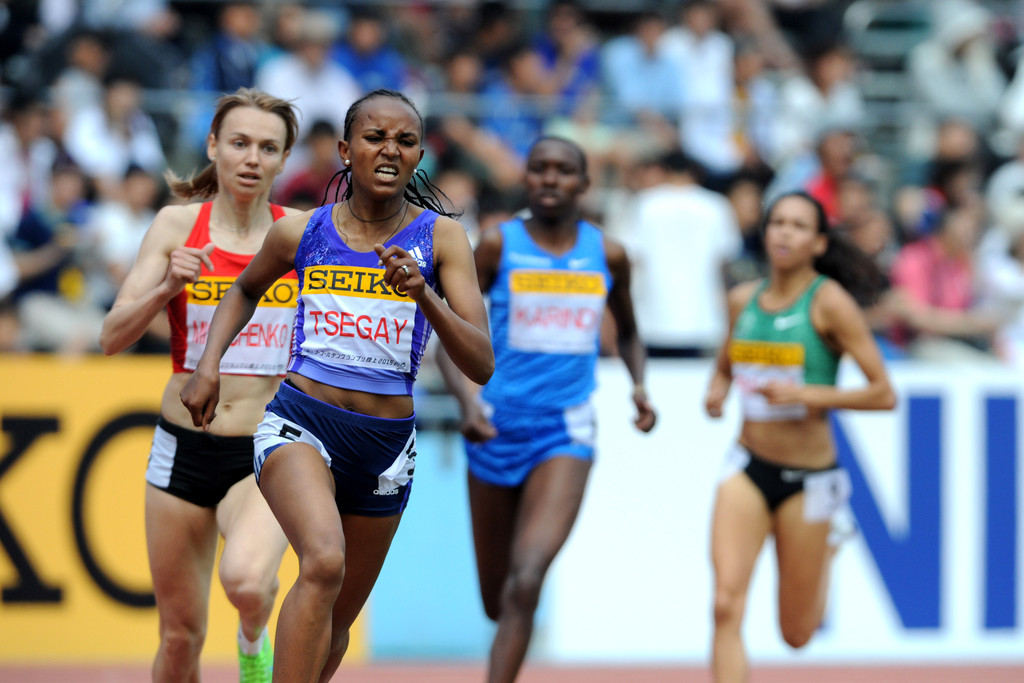
Muir finished second in a British indoor record of 3:59.58 with teammate Melissa Courtney-Bryant taking third in 4:04.79.
“I’m very happy to set a world indoor record,” said Tsegay. “I have been training really hard and I set myself a target to break the world indoor record.”
Tsegay's record-breaking performance was book-ended by two other athletes who very nearly broke world records.
Ethiopian steeplechase specialist Getnet Wale won the men's 3000m in 7:24.98, the second-fastest indoor performance in history, while USA's Grant Holloway won the men's 60m hurdles in 7.32, just 0.02 shy of the world indoor record.
Wale, still only 20 years old, led an Ethiopian 1-2-3-4 finish in the men’s 3000m as Daniel Komen’s long-standing world record of 7:24.90 was put under serious threat. The pace was fast and even as Vincent Keter led the field through the opening 1000m in 2:31.05 with the second kilometre covered in 2:30.
World 5000m silver medallist Selemon Barega hit the front with three-and-a-half laps to go with fellow Ethiopians Wale and world steeplechase silver medallist Lamecha Girma close behind. Wale took a turn at the front with two laps to go, then Girma kicked hard with 300 metres to go. Having seemingly misjudged his finish, Girma eased off the gas slightly with one lap remaining, allowing Wale and Barega to pass him.
by World Athletics
Login to leave a comment
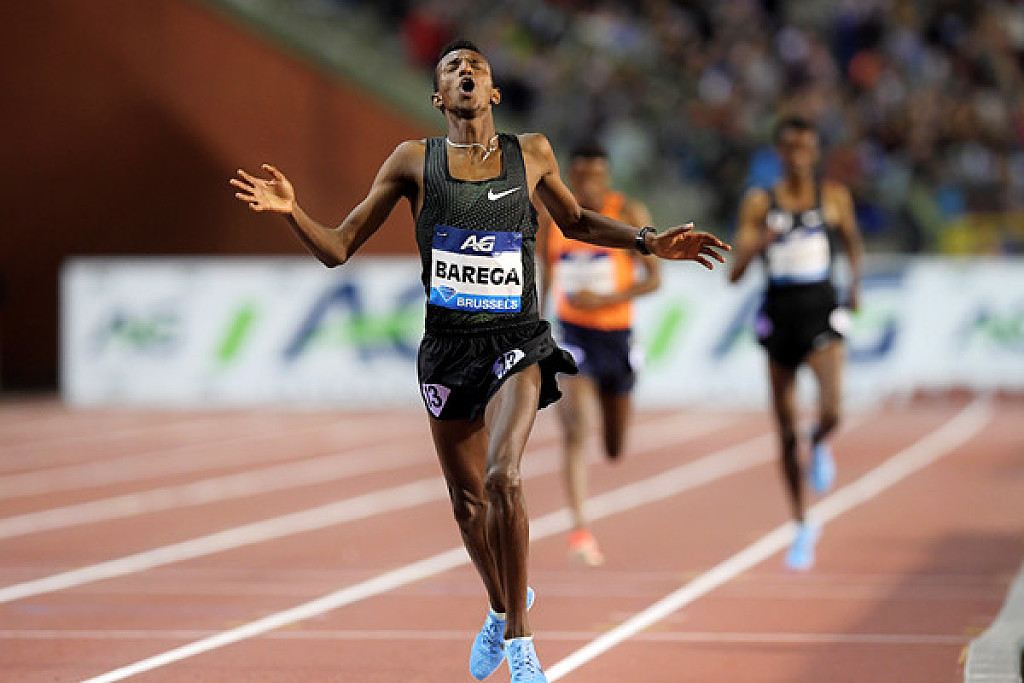
18-year-old Selemon Barega clocked the fourth fastest time ever for 5000m winning in 12:43:02
Login to leave a comment
