

Running News Daily
Running News Daily is edited by Bob Anderson and team. Send your news items to bob@mybestruns.com Advertising opportunities available.
Index to Daily Posts · Sign Up For Updates · Run The World Feed
Articles tagged #Poland
Today's Running News


Lili Anna Vindics-Tóth Shatters Hungarian Marathon Record With Historic Warsaw Run
Hungary’s Lili Anna Vindics-Tóth delivered a remarkable performance at the 48th Warsaw Marathon on Sunday, September 27, 2026, smashing the Hungarian marathon record and setting a new women’s course record with a stunning time of 2:24:48.
Vindics-Tóth produced a breakthrough performance on the streets of the Polish capital, improving her previous personal best of 2:27:21 by more than two minutes. Her 2:24:48 also eclipsed the previous Warsaw Marathon women’s course record of 2:28:35 by almost four minutes.
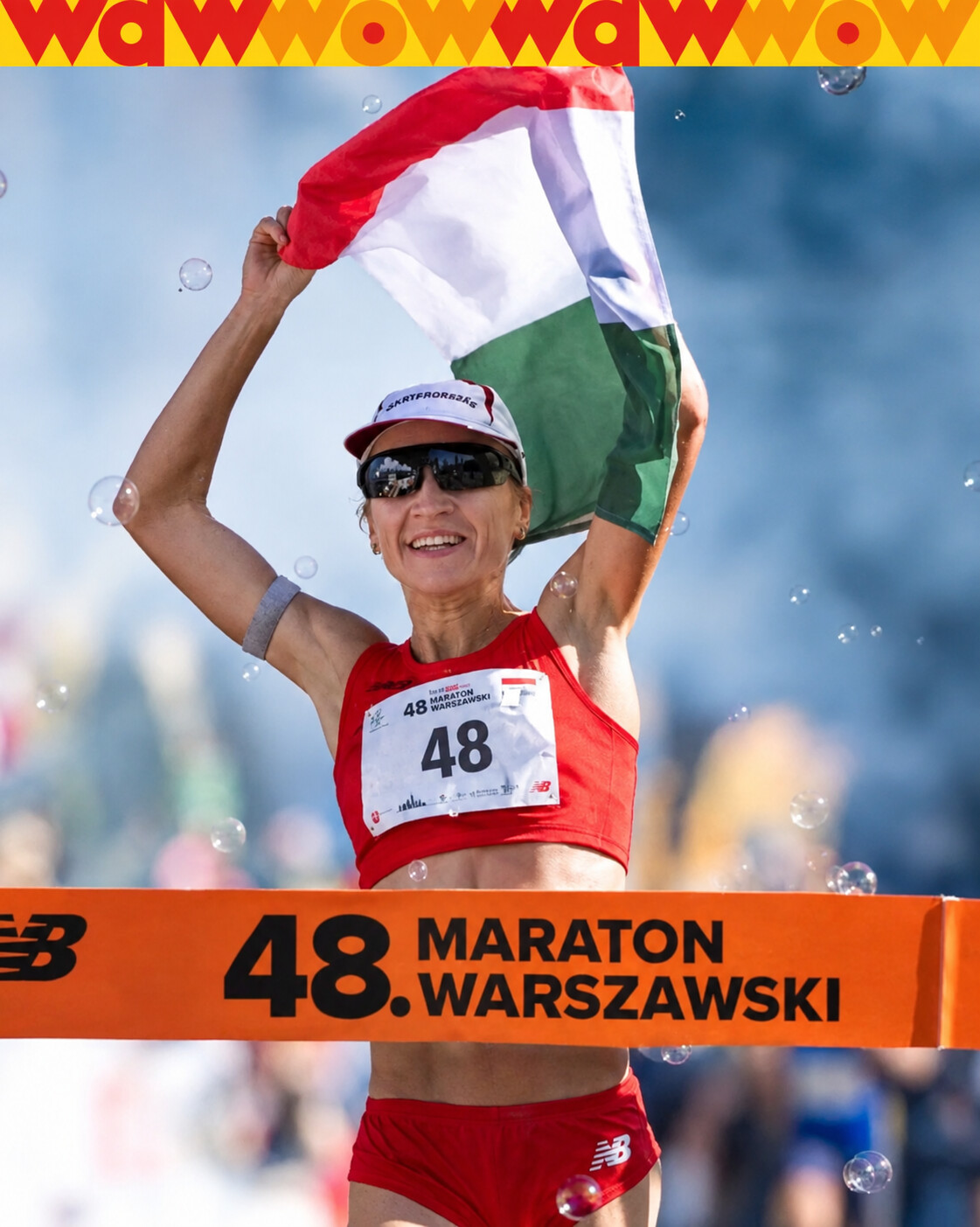
The Hungarian’s performance was particularly significant, as she became the fastest woman ever recorded over the marathon distance in a race held in Poland, according to the race organizers.
Her remarkable run also represented a major improvement on her previous 2026 best of 2:27:28, recorded in Copenhagen in May. The new Hungarian record marks a defining moment in her career and places her among Europe’s leading marathon runners.
Vindics-Tóth Leads Historic Women’s Podium
Vindics-Tóth secured the women’s title in 2:24:48, narrowly holding off Ethiopia’s Gelane Senbete, who finished second in 2:24:57.
Kenya’s Vivian Jerotich Kosgei claimed third place in 2:28:34, while Ethiopia’s Addis Alem Belay completed the top four in 2:30:31.
The women’s race produced a competitive contest at the front, with Vindics-Tóth’s record-breaking performance highlighting the growing depth of international distance running in Europe.
Stephen Kibor Leads Men’s Race
Kenya’s Stephen Kibor claimed overall victory in the men’s marathon, crossing the finish line in 2:09:19 to secure the title in Warsaw.
Kibor led an international podium, with Uganda’s Victor Kwemboi finishing second in 2:12:20, followed by compatriot Ezekiel Mutai, who took third place in 2:12:36.
Sweden’s Emil Millán de la Oliva completed the top four in 2:13:13, rounding off a competitive men’s race featuring athletes from several countries.
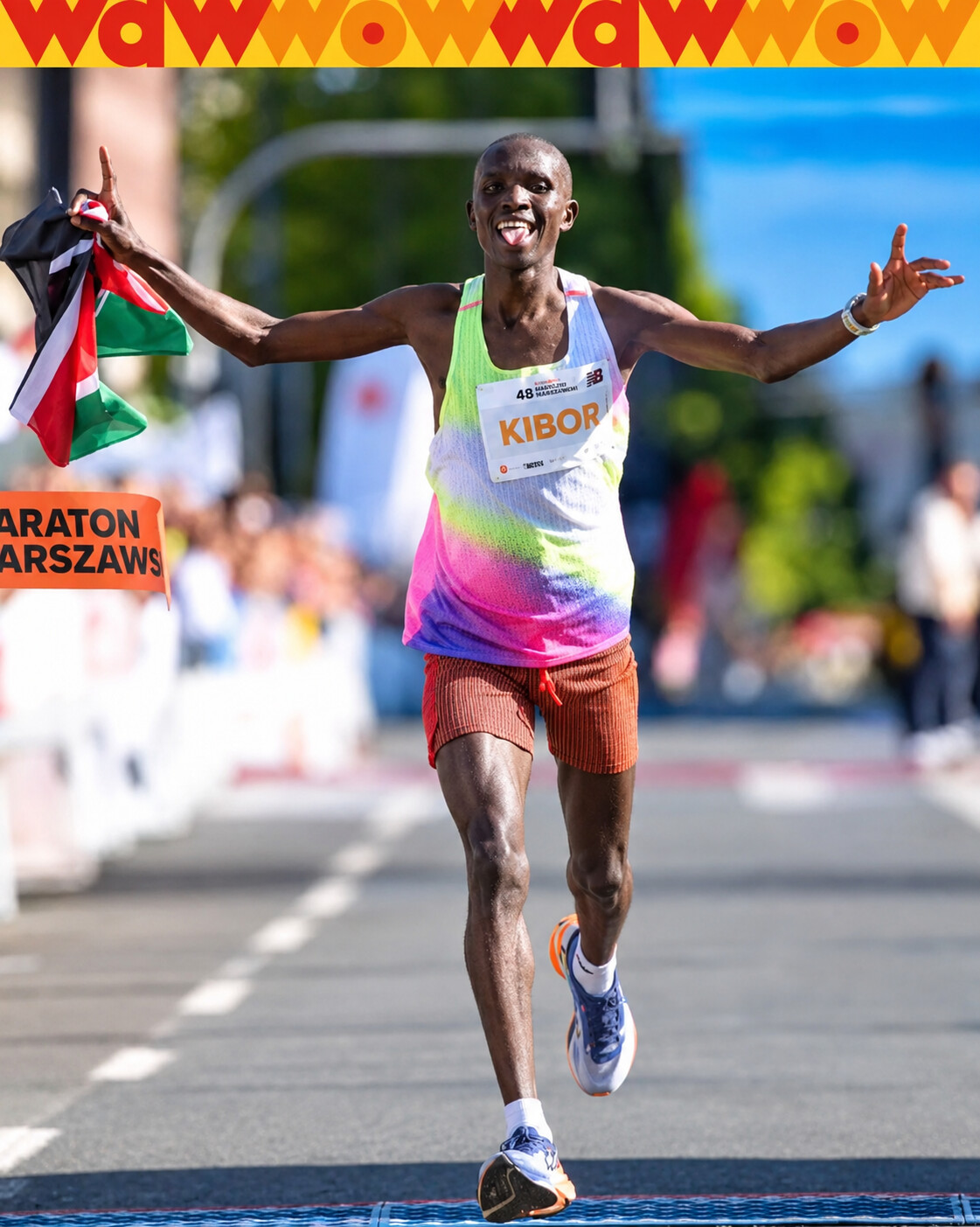
Kibor’s victory added another Kenyan success to the country’s long history of producing elite marathon runners who have excelled on major European road-racing courses.
International Field Takes on Warsaw’s Streets
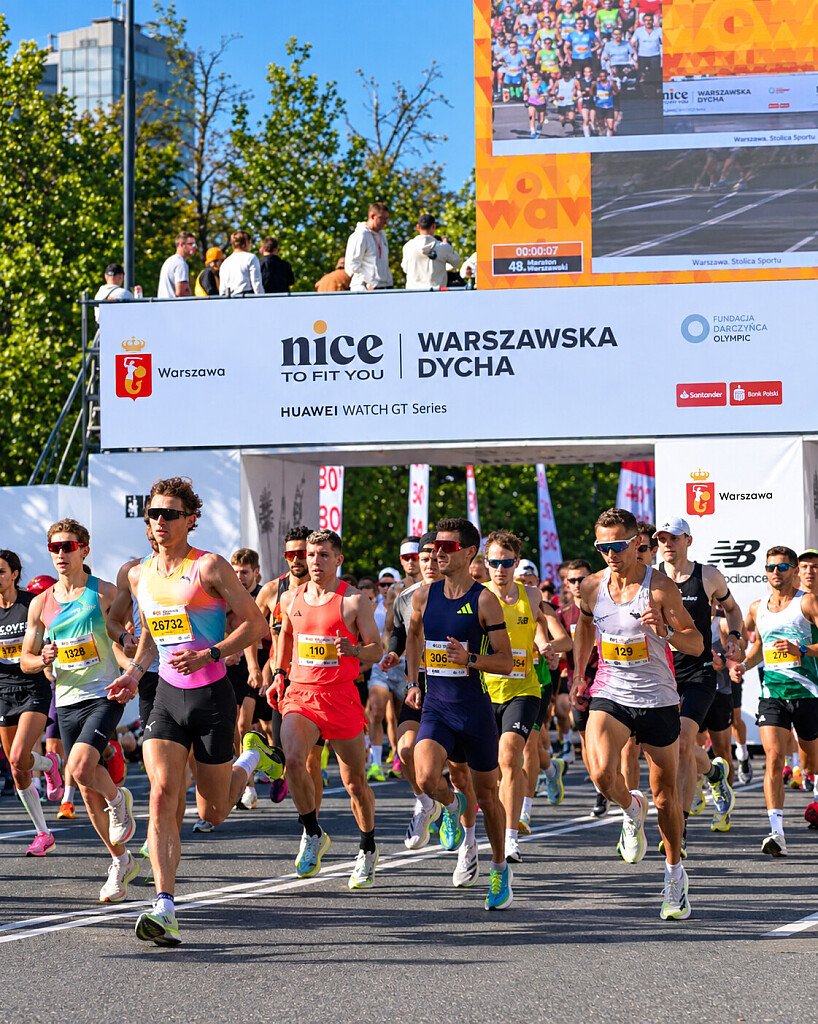
The 48th Warsaw Marathon began at 9:00 a.m. around Świętokrzyska Street, near the Palace of Culture and Science, with the certified 42.195-kilometre course taking runners through the Polish capital.
This year’s edition attracted an international elite field alongside thousands of mass-participation runners, with spectators lining the streets to support the athletes throughout the race.
The organizers had targeted a significant improvement to the women’s course record, with pacemakers assigned to support a pace corresponding to approximately 2:24–2:26.
Vindics-Tóth ultimately delivered a performance that surpassed expectations, turning the Warsaw Marathon into the biggest race of her career so far and etching her name into the event’s history.
The Warsaw Marathon has remained a major fixture on the European road-running calendar since its first edition in 1979, continuing to attract elite athletes and recreational runners from around the world.
With a Hungarian national record, a new women’s course record and an impressive international podium, the 2026 edition produced a memorable day of marathon racing in the Polish capital.
Lili Anna Vindics-Tóth — 2:24:48. A Hungarian record, a Warsaw course record and a breakthrough performance that will be remembered for years to come.
by Erick Cheruiyot for My Best Runs.
Login to leave a comment

PZU Warsaw Marathon
The course of the PZU Warsaw Marathon, offers great support of the residents of the capital and tourists along it and bands giving positive rhythm in densely spaced cheering points for the over 6,500 participants. You are cordially invited to Warsaw – the capital city of Poland – a city worth seeing. Be our guest here and let yourself get...
more...
Agnes Ngetich Rewrites Peres Jepchirchir’s Record: Two Historic Half Marathons, One Second Apart
Kenya’s Agnes Jebet Ngetich has added another remarkable chapter to the country’s extraordinary half-marathon history, breaking the women-only world half-marathon record in Copenhagen on Sunday, September 20, 2026.
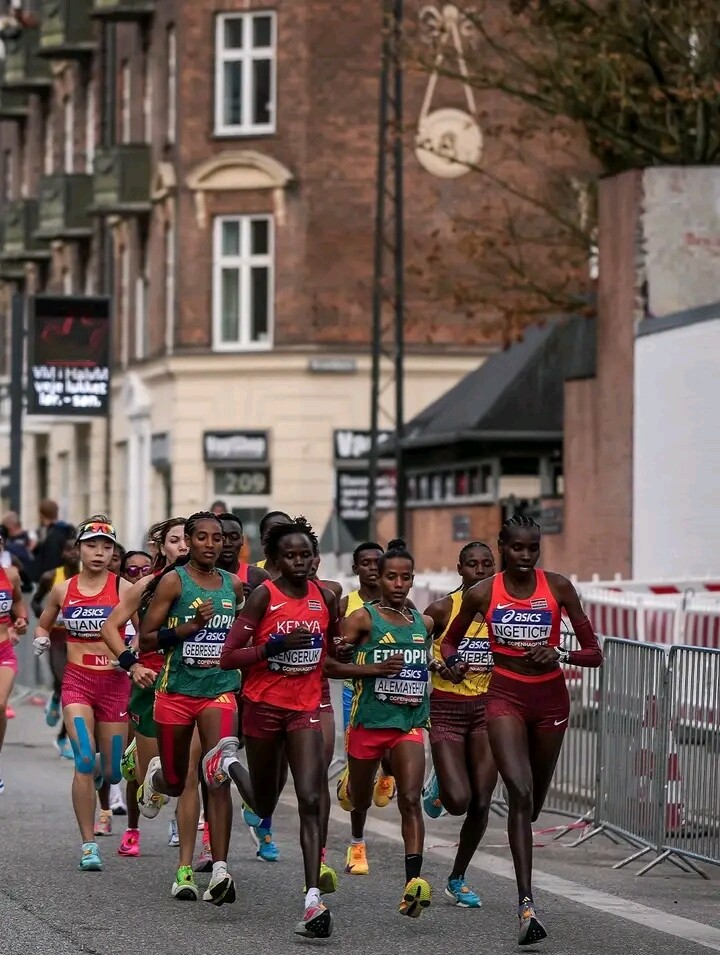
Ngetich clocked 1:05:15 to win the women’s half marathon at the World Athletics Road Running Championships, lowering the previous women-only world record of 1:05:16 set by fellow Kenyan Peres Jepchirchir in Gdynia, Poland, in 2020.
Jepchirchir originally established the record on October 17, 2020, when she won the World Athletics Half Marathon Championships in Gdynia in 1:05:16. That performance came just weeks after she had first broken the women-only record in Prague with 1:05:34 on September 5, 2020.
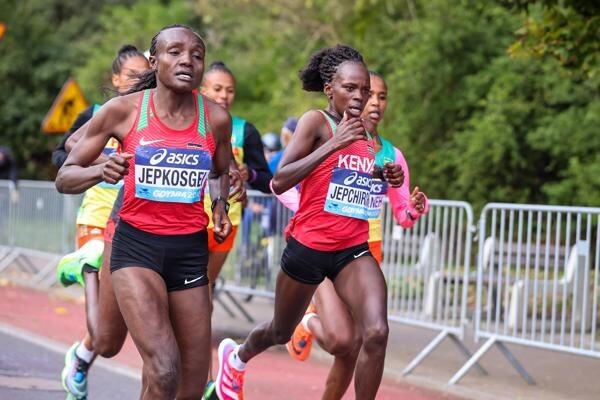
Five years later, Ngetich finally moved the mark forward—but by the narrowest possible margin.
The Copenhagen race also provides an intriguing statistical contrast between the two record-breaking performances. Their final times are separated by only one second, yet their races unfolded in noticeably different ways.
Ngetich attacked from the beginning, passing the opening 5km in 15:12. She then maintained remarkable consistency, reaching the next 5km in 15:27, followed by 15:38 and 15:39 for the subsequent 5km segments. With the final section covered in 3:19, she stopped the clock at 1:05:15.
Jepchirchir’s 2020 record followed a different rhythm. She passed the corresponding stages in 15:20, 15:27, 15:37 and 15:40, before producing a dramatically faster final section of 2:36 to complete her historic run in 1:05:16.
The split comparison highlights the contrasting ways in which the two Kenyans reached almost identical finishing times. Ngetich established her advantage early and maintained it through the middle kilometres, while Jepchirchir gradually built her race and delivered a particularly powerful closing section.
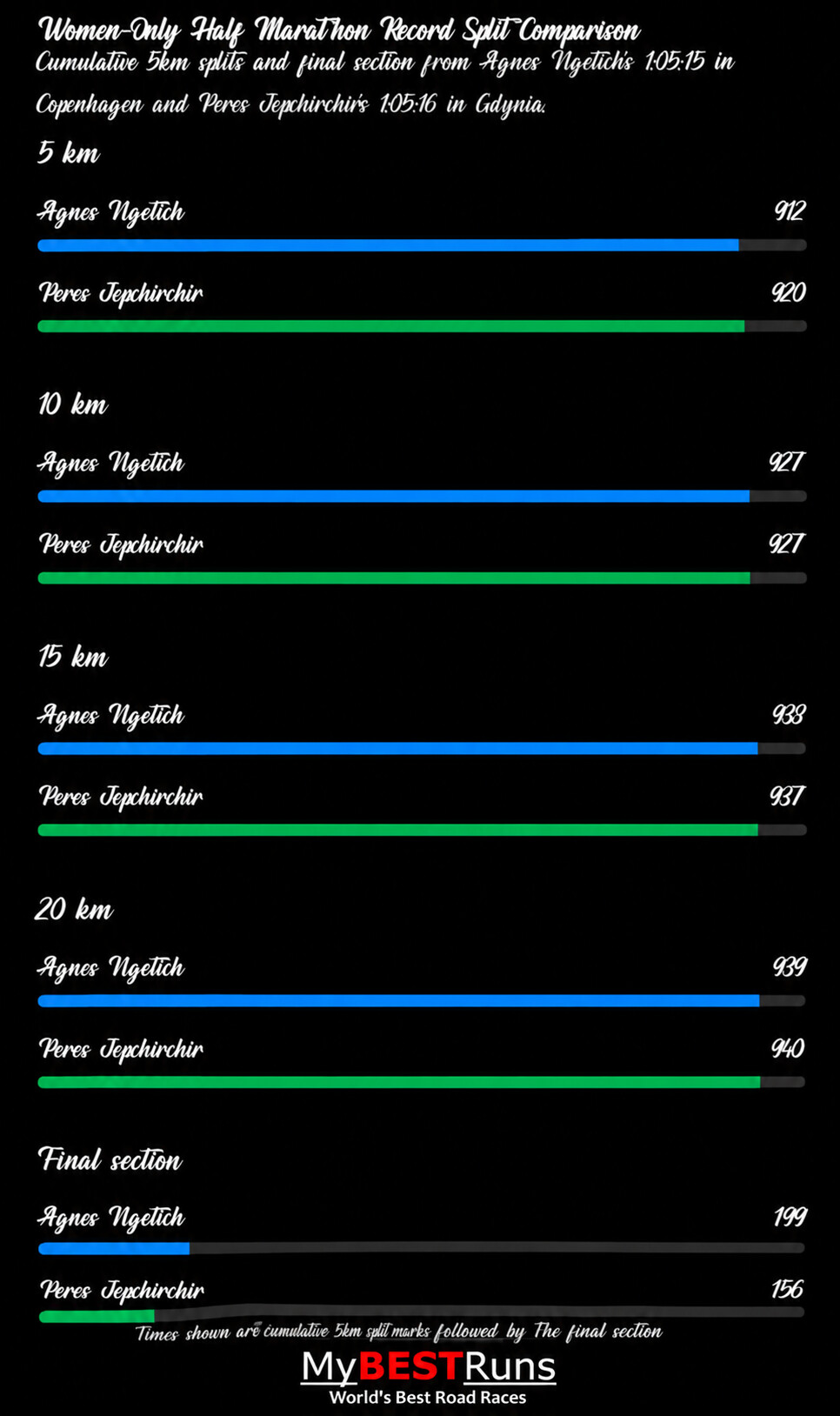
That is what makes the comparison so fascinating. Ngetich’s 1:05:15 and Jepchirchir’s 1:05:16 were produced five years apart, in different races and under different circumstances, yet the two performances sit almost perfectly together in the record books.
The split comparison is not a direct race between the two athletes, but rather a look back at how two Kenyan champions produced historic performances through contrasting pacing strategies. Ngetich’s performance was built on an exceptionally fast opening and sustained consistency, while Jepchirchir’s record was characterized by a stronger acceleration toward the finish.
For Jepchirchir, the 1:05:16 in Gdynia represented a defining moment in 2020. For Ngetich, the 1:05:15 in Copenhagen marked the moment she finally moved that record forward.
One second separates them. Five years separate the performances. Together, the two times provide a striking statistical snapshot of two historic Kenyan half-marathons.
by Erick Cheruiyot for My Best Runs.
Login to leave a comment

World Athletics Road Running Championships
Six world champions and 65,000 runners just behind them. In September 2026, the heart of Copenhagen is expected to be the stage for Denmark’s largest-ever participant event. The World Athletics Road Running Championships Copenhagen 26 will take place on September 19-20, 2026. A total of 65,000 participants will join the running festivities behind the world’s fastest female and male athletes...
more...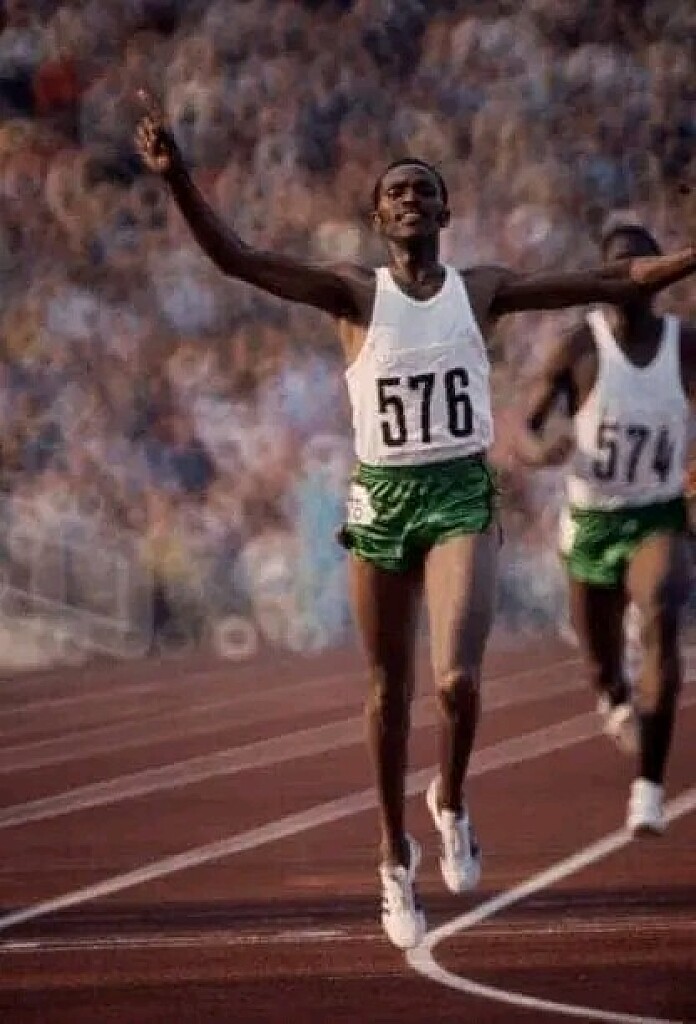
The Day Kip Keino And Ben Jipcho Put Kenya On Top In Munich
On 4 September 1972, Kenya once again announced its growing authority on the Olympic athletics stage as the country produced a spectacular one-two finish in the men’s 3,000m steeplechase at the Munich Olympic Games.
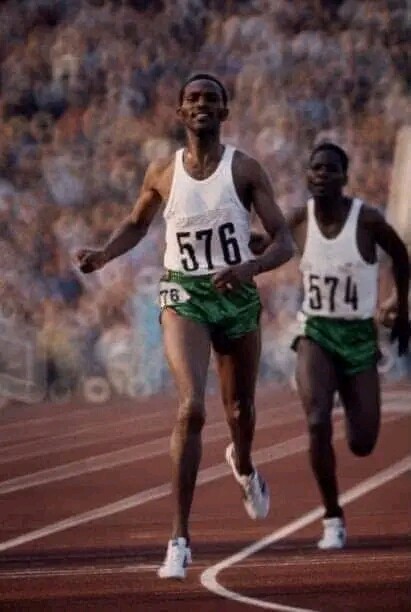
Kipchoge Keino delivered a commanding performance to capture the gold medal in 8:23.64, setting a new Olympic record in the process. His compatriot Benjamin Jipcho was equally impressive, crossing the line in 8:24.62 to take silver, while Finland’s Tapio Kantanen secured bronze in 8:24.66.
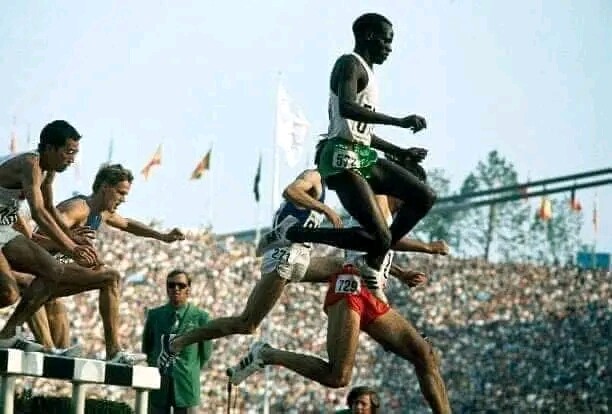
The final brought together a remarkable group of athletes, including Kenya’s defending Olympic champion Amos Biwott. Keino and Jipcho, however, proved too strong when the decisive moments arrived. As the race entered its closing stages, the leading group began to separate, with Keino positioning himself perfectly for the final charge.
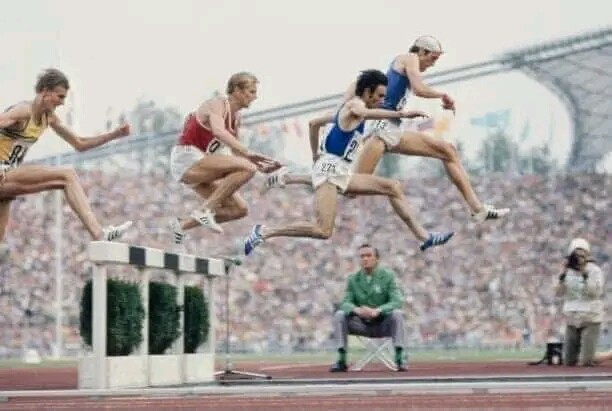
Keino then unleashed his finishing speed, pulling clear in the closing metres to secure another Olympic title. Jipcho fought his way into second, completing a memorable Kenyan one-two, while Kantanen held on for third. Biwott finished sixth in 8:33.48, giving Kenya three athletes among the top six finishers.
For Keino, the triumph added another remarkable chapter to an already extraordinary Olympic career. Four years earlier in Mexico City, he had won the 1,500m gold medal and taken silver in the 5,000m. In Munich, he demonstrated his versatility once again by conquering the demanding steeplechase, an event requiring not only endurance and speed but also exceptional rhythm and technique over the barriers and water jump.
Jipcho’s silver medal was equally significant. His performance confirmed that Kenya’s success in the steeplechase was no longer the achievement of a single exceptional athlete. A new generation of Kenyan runners was emerging, capable of challenging the very best on the world’s biggest stage.
The Munich final also carried a sense of continuity for Kenya. Biwott had won the Olympic steeplechase title at the 1968 Mexico City Games, and four years later his compatriots Keino and Jipcho ensured that the gold medal remained in Kenyan hands. It was becoming increasingly clear that the country had discovered a formidable formula for producing world-class steeplechasers.
Beyond the medals, the race helped strengthen Kenya’s growing reputation as a powerhouse in distance running. The combination of natural endurance, disciplined training and extraordinary competitive courage would continue to produce generations of Kenyan steeplechase champions, turning the event into one of the country's most celebrated Olympic disciplines.
The complete Munich 1972 final standings were:
1. Kipchoge Keino — Kenya — 8:23.64 — Olympic Record
2. Benjamin Jipcho — Kenya — 8:24.62
3. Tapio Kantanen — Finland — 8:24.66
4. Bronisław Malinowski — Poland — 8:27.92
5. Dušan Moravčík — Czechoslovakia — 8:29.06
6. Amos Biwott — Kenya — 8:33.48
7. Romualdas Bitė — Soviet Union — 8:34.64
8. Pekka Päivärinta — Finland — 8:37.17
9. Takaharu Koyama — Japan — 8:37.66
10. Mikko Ala-Leppilampi — Finland — 8:41.03
11. Jean-Paul Villain — France — 8:46.72
12. Mikhail Zhelev — Bulgaria — 9:02.59
More than five decades later, the Munich steeplechase remains a landmark moment in Kenyan athletics history. Keino’s golden run, Jipcho’s brilliant silver and Biwott’s determined sixth-place finish combined to create a performance that captured the depth of Kenya’s emerging distance-running strength.
It was not simply a victory for one athlete. It was a statement from a nation — and another unforgettable chapter in Kenya’s extraordinary Olympic athletics legacy.
by Erick Cheruiyot for My Best Runs.
Login to leave a comment
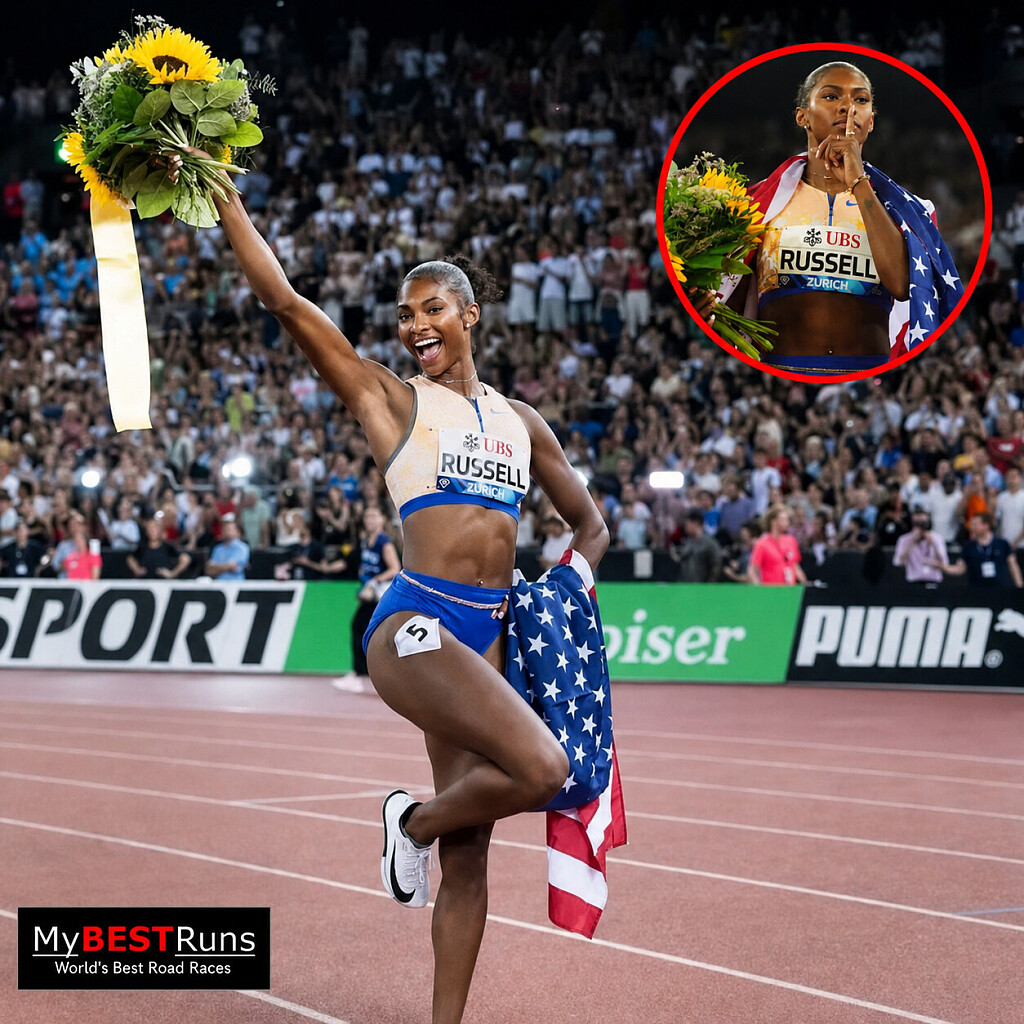
Can Anyone Stop Masai Russell? Brussels Hurdles Final Set for Epic Showdown
The women’s 100m hurdles is set for a spectacular showdown at the Brussels Diamond League Final on September 5, where Olympic champion Masai Russell will lead one of the strongest fields of the season in the battle for the coveted Diamond Trophy.
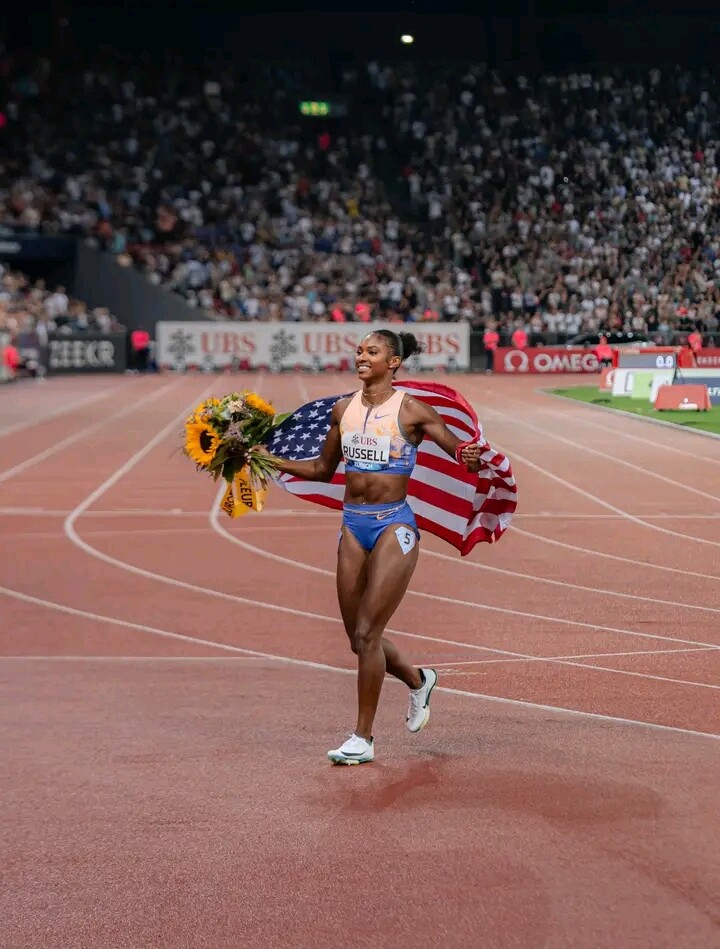
Russell arrives in Brussels in extraordinary form and as the athlete everyone will be chasing. The American star has enjoyed a remarkable season, combining consistency with breathtaking speed, and recently delivered another unforgettable performance when she ran a sensational 12.09 seconds in Zurich to break the world record.
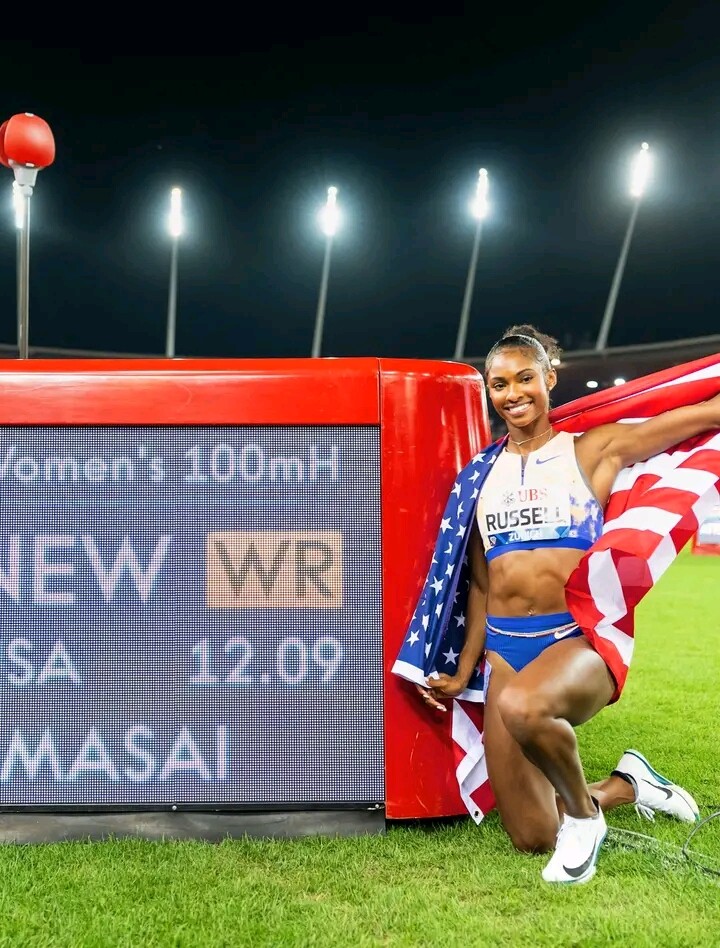
That performance further strengthened Russell’s position as the dominant force in the event. Her remarkable consistency has been equally impressive, with the Olympic champion winning all 10 of her finals so far this season. With 48 points, she also finished at the top of the Diamond League standings during the regular season.
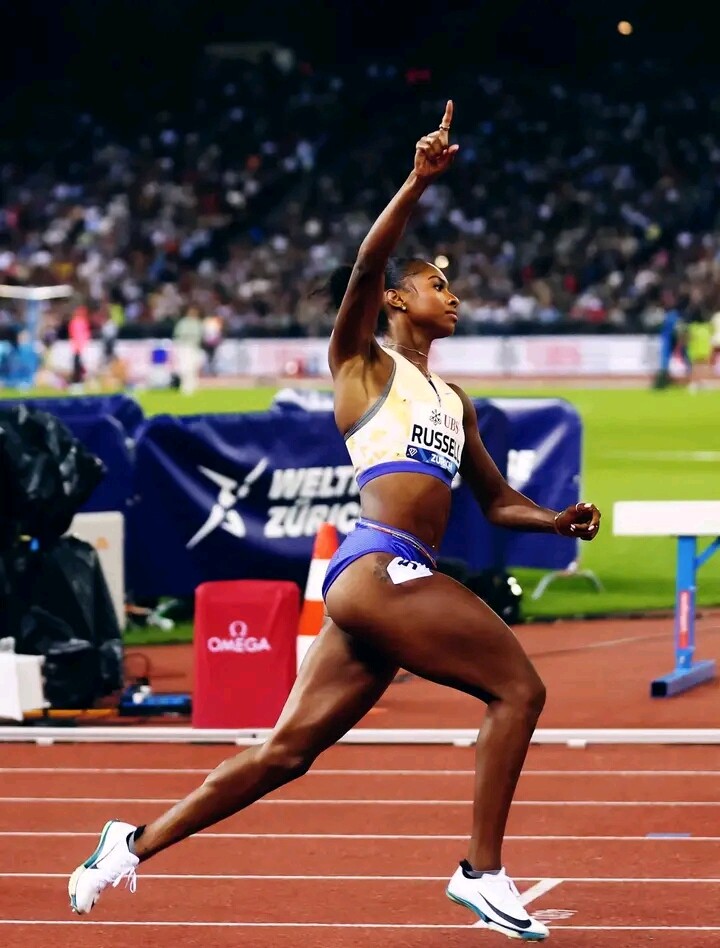
However, the points race is now behind her. In Brussels, everything comes down to one final. The Diamond League Final offers no room for complacency, and Russell will have to defeat an exceptional collection of world-class hurdlers to leave Belgium with the Diamond Trophy.
Among her biggest challengers is Nigeria’s Tobi Amusan, one of the finest hurdlers of her generation and a former world record holder. The field also includes Dutch star Nadine Visser, Bahamas standout Devynne Charlton and Poland’s Pia Skrzyszowska, ensuring that Russell will face serious opposition over every hurdle.
American Alaysha Johnson, Jamaica’s Megan Simmonds and Belgium’s Yanla Ndjip-Nyemeck complete a fascinating eight-athlete lineup for what promises to be one of the highlights of the Diamond League Final.
With Russell’s unbeaten record, her recent world-record performance and the Diamond Trophy on the line, the pressure will be immense when the athletes take their marks. Yet in an event as unpredictable and technically demanding as the 100m hurdles, one mistake can completely change the outcome.
Russell may arrive as the overwhelming favourite, but Brussels offers her rivals one final opportunity to produce something special. The stage is set for a thrilling race between the fastest and most accomplished hurdlers in the world—and after a season of dominance, Russell now has one more hurdle to clear in her pursuit of Diamond League glory.
Women’s 100m Hurdles Final Start List
1. Masai Russell — United States
2. Tobi Amusan — Nigeria
3. Nadine Visser — Netherlands
4. Devynne Charlton — Bahamas
5. Pia Skrzyszowska — Poland
6. Alaysha Johnson — United States
7. Megan Simmonds — Jamaica
8. Yanla Ndjip-Nyemeck — Belgium
One race. Eight elite hurdlers. One Diamond Trophy. Will Masai Russell complete another unforgettable chapter of her remarkable season, or will Brussels produce a surprise?
by Erick Cheruiyot for My Best Runs.
Login to leave a comment
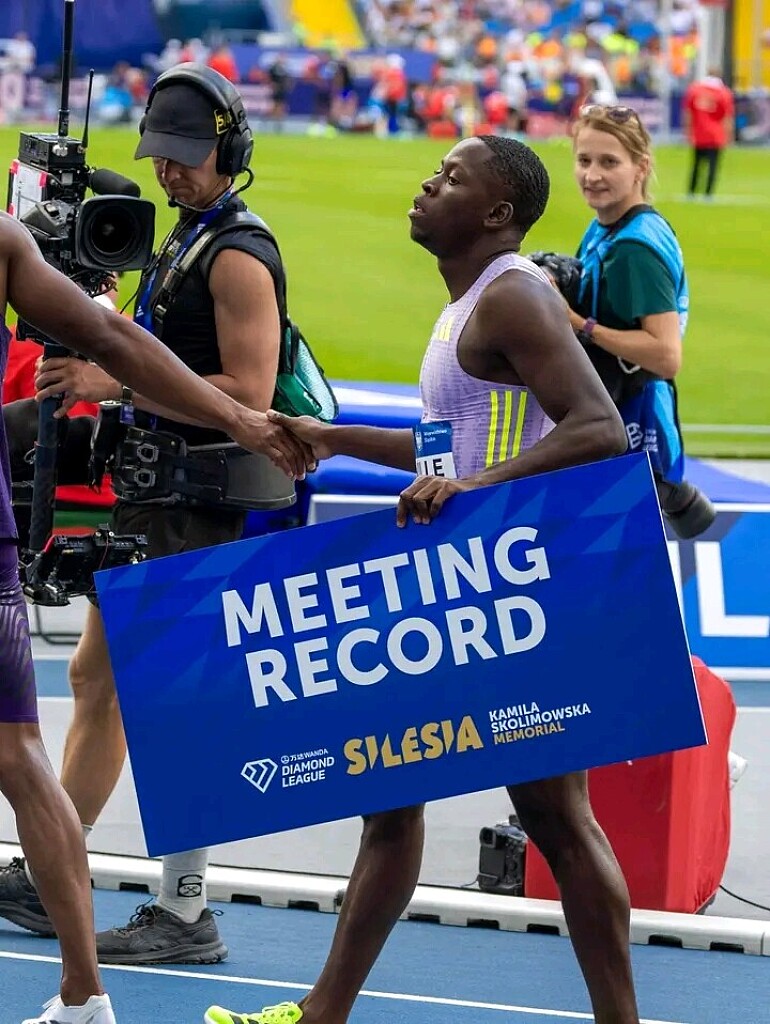
Oblique Seville Blazes to Meeting Record in Historic All Nine-Sub-10 Silesia Showdown
Jamaica’s Oblique Seville delivered another sensational statement at the Silesia Wanda Diamond League, storming to victory in a breathtaking men’s 100 metres and setting a new meeting record of 9.83 seconds that made sprinting history in Chorzów, Poland.
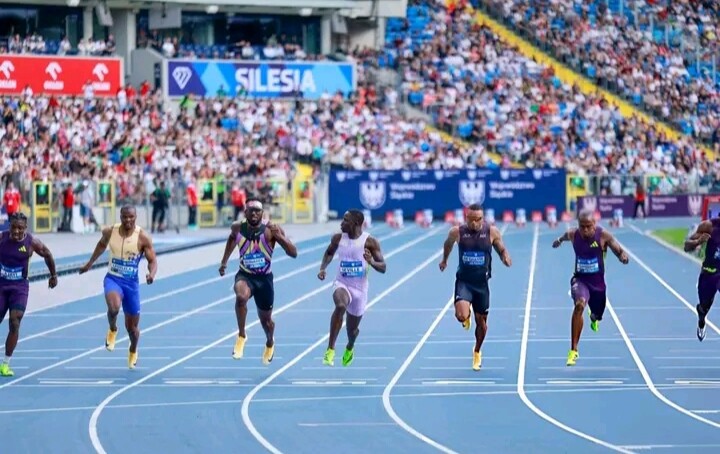
In one of the deepest and most extraordinary sprint races ever witnessed, Seville powered clear of a world-class field to take the win, with Kenneth Bednarek of the United States finishing second in 9.87 and fellow American Christian Coleman completing the podium in 9.93.
But Seville’s meeting-record victory was only one part of the remarkable story. For the first time in history, all nine athletes in a single men's 100m race broke the 10-second barrier, producing an unprecedented display of sprinting depth.
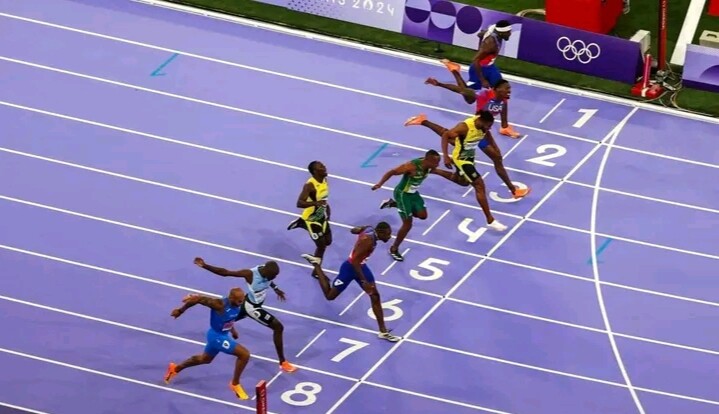
The historic race also marked only the second time that every athlete in a men's 100m final had broken 10 seconds, following the eight-man final at the Paris 2024 Olympic Games. In Silesia, however, the achievement went even further, with an entire nine-man field dipping below the iconic barrier.
Nigeria’s Kayinsola Ajayi produced another impressive performance to finish fourth in 9.94, while South Africa’s Gift Leotlela followed in fifth with 9.95. Canada’s Olympic champion Andre De Grasse clocked 9.96 in sixth, with South African star Akani Simbine recording the same time in seventh.
American Ronnie Baker added another sub-10-second performance with 9.97 for eighth place, while Cameroon’s Emmanuel Eseme ensured the historic sweep was complete by running 9.99 in ninth.
Men's 100m Results – Silesia Wanda Diamond League
1. Oblique Seville (Jamaica) — 9.83 Meeting Record
2. Kenneth Bednarek (United States) — 9.87
3. Christian Coleman (United States) — 9.93
4. Kayinsola Ajayi (Nigeria) — 9.94
5. Gift Leotlela (South Africa) — 9.95
6. Andre De Grasse (Canada) — 9.96
7. Akani Simbine (South Africa) — 9.96
8. Ronnie Baker (United States) — 9.97
9. Emmanuel Eseme (Cameroon) — 9.99
For Seville, the victory was another emphatic demonstration of his exceptional form and his ability to rise to the occasion against the strongest opposition. His 9.83 not only secured the Diamond League win but also lowered the Silesia meeting record, putting an exclamation mark on a performance of the highest quality.
Nine men went under 10 seconds. Seville went under 9.84. On an unforgettable day in Silesia, the Jamaican stood tallest in a race that pushed the boundaries of what men's sprinting has ever seen.
by Erick Cheruiyot for My Best Runs.
Login to leave a comment
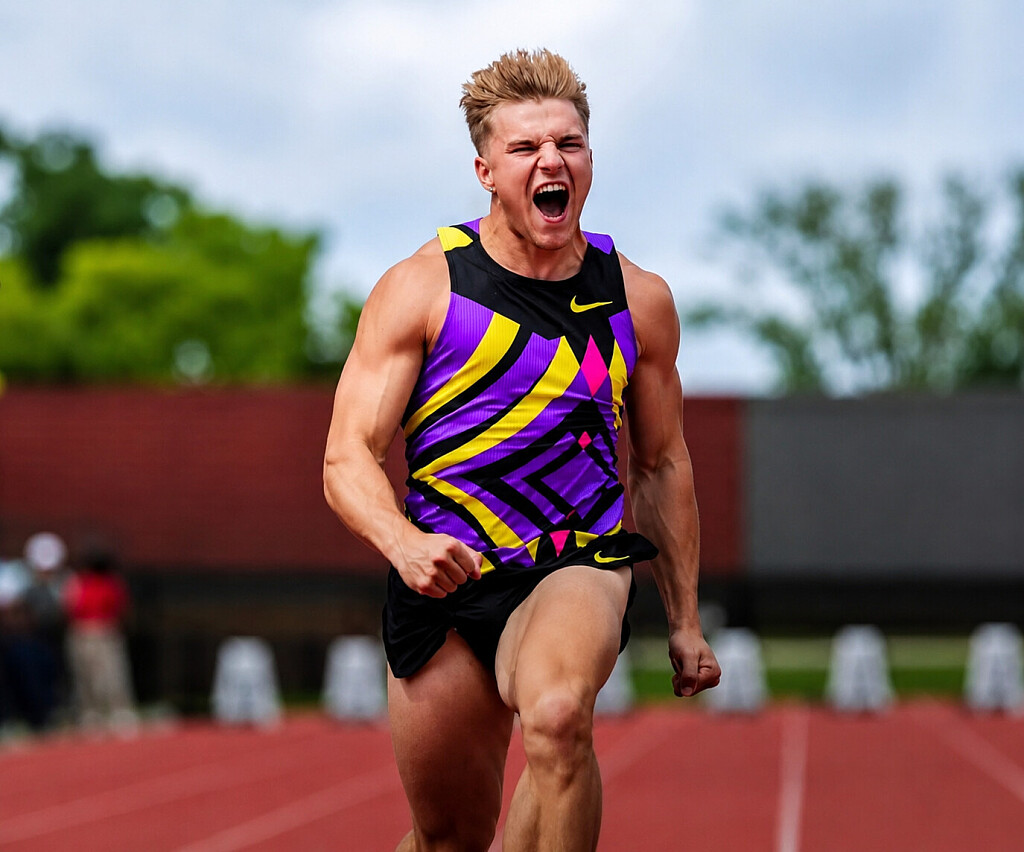
American Sprint Star Sam Blaskowski Begins Bid to Represent Poland After Discovering Family Roots
American sprint standout Sam Blaskowski is taking steps toward an international future with Poland after uncovering a powerful connection to his family's ancestral homeland.
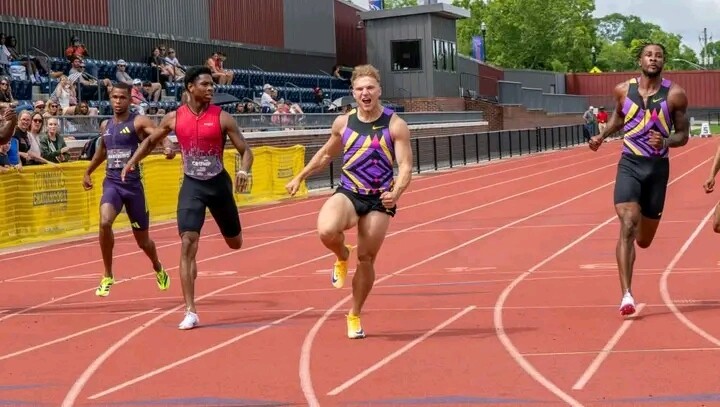
The 23-year-old sprinter, who has established himself as one of the fastest Americans of his generation with a personal best of 9.89 seconds in the 100 metres, has begun the process of obtaining Polish citizenship with the aim of eventually representing Poland in international competition.
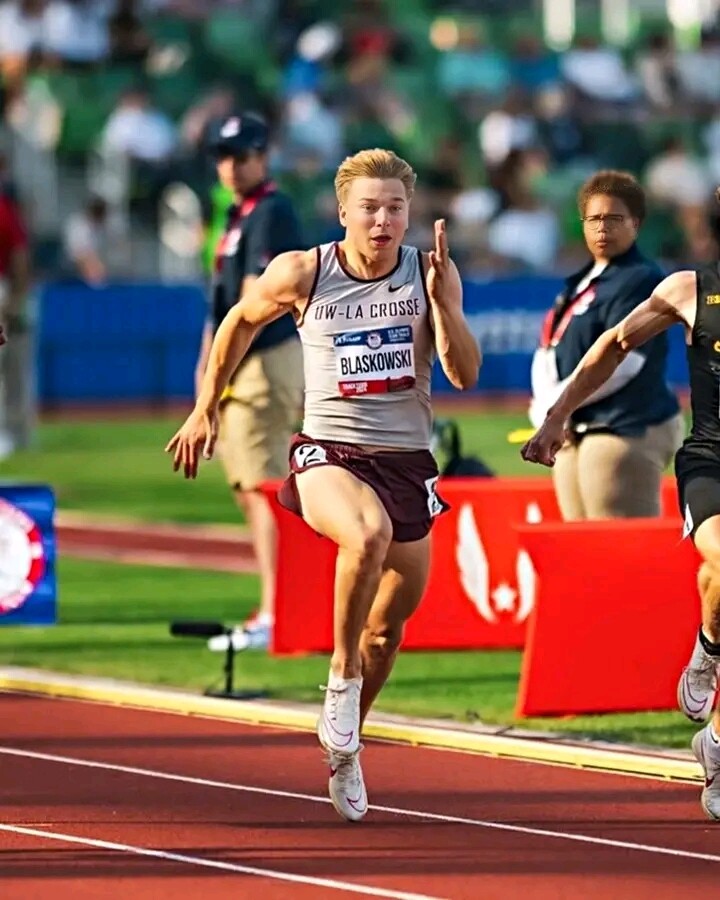
Blaskowski's connection to the country traces back through his great-grandparents, Franciszek and Julian Błaszkowski, who emigrated from Poland to the United States in 1905. Their journey more than a century ago has now opened an unexpected new chapter for their descendant, whose athletic ambitions could soon carry the Błaszkowski name back onto the international stage under Polish colours.
The sprinter has already received support from the Polish Athletics Association as he works through the citizenship and eligibility process. Should his transfer of allegiance be completed, Blaskowski could become a significant addition to Poland's sprint programme.
His credentials certainly make the prospect an exciting one. In addition to his sub-10-second speed over 100 metres, Blaskowski owns a personal best of 19.93 seconds in the 200 metres, demonstrating the kind of versatility that could prove valuable both individually and in Poland's 4x100m relay squad.
For Blaskowski, however, the move is about more than simply changing national colours. It represents an opportunity to reconnect with his family's heritage while pursuing his ambitions at the highest level of the sport.
With his sights set on becoming part of Poland's international sprint team and competing for relay medals, Blaskowski's journey from discovering his Polish roots to potentially representing the country of his ancestors could become one of the most fascinating allegiance stories in world athletics.
A century after Franciszek and Julian Błaszkowski left Poland for America, their family's story may now be coming full circle—this time at full sprint.
by Erick Cheruiyot for My Best Runs.
Login to leave a comment
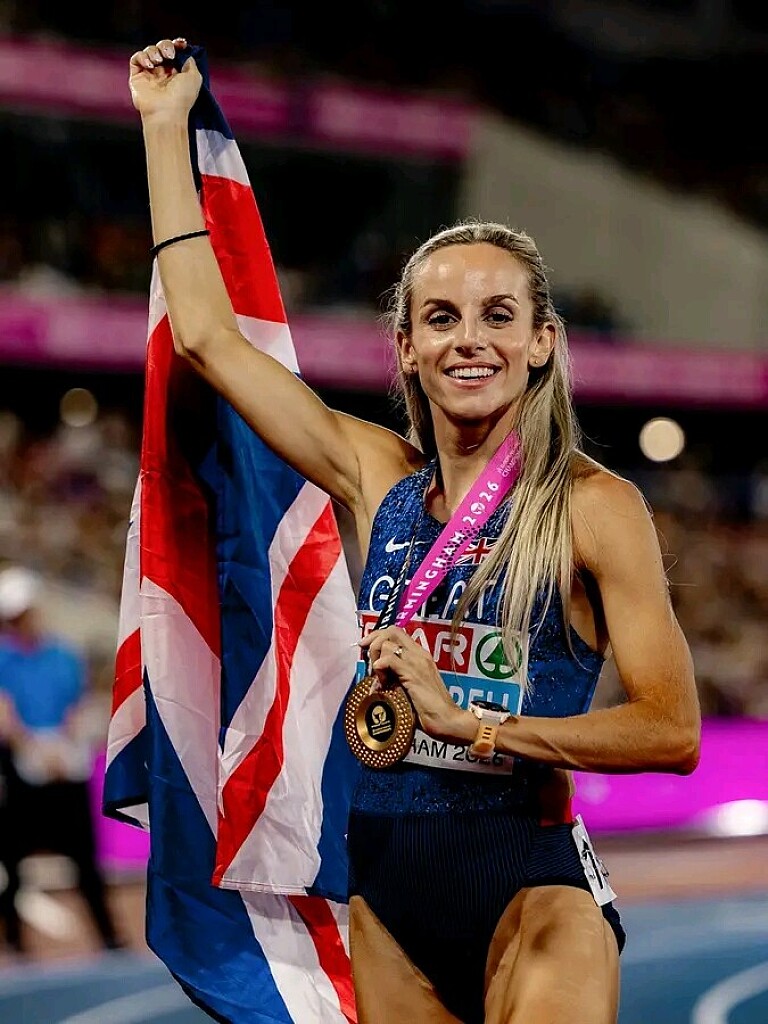
Georgia Hunter Bell Completes a Golden Hat-Trick in Birmingham
Georgia Hunter Bell is turning the 2026 season into a remarkable display of consistency, composure and championship brilliance.

The British middle-distance star added another major title to her growing collection in Birmingham, producing a perfectly judged tactical performance to win the women’s 1500m at the European Athletics Championships in 4:07.78.
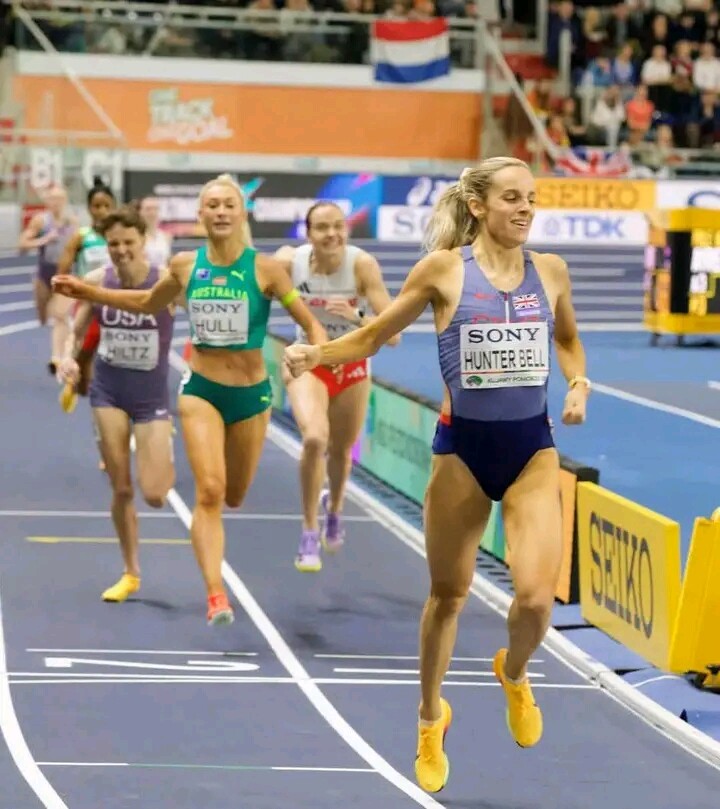
It was her third major championship gold of the season, underlining just how exceptional her campaign has become. Rather than relying on a blistering early pace, Hunter Bell remained patient through the tactical opening stages before making her decisive move when the race began to unfold.
Her latest triumph follows her victory in the 1500m at the World Athletics Indoor Championships in Toruń, Poland, and her Commonwealth Games success over 800m in Glasgow. Three major championships, three gold medals — across two different distances — is a remarkable achievement.
The European title also highlighted Hunter Bell’s versatility. She has repeatedly demonstrated that she can adapt to different race scenarios, whether the pace is aggressive from the gun or the championship demands patience, positioning and a perfectly timed finish.
Now, with three major titles already secured, attention turns to the final piece of what could become an extraordinary championship clean sweep: the World Athletics Ultimate Championship in Budapest, Hungary.
If Hunter Bell can add another victory there, she would complete one of the most impressive major-championship campaigns of the season — a golden run built not only on speed, but on intelligence, resilience and an ability to deliver when the stakes are highest.
Georgia Hunter Bell has already made 2026 a season to remember. One more major title could make it truly unforgettable.
by Erick Cheruiyot for My Best Runs.
Login to leave a comment
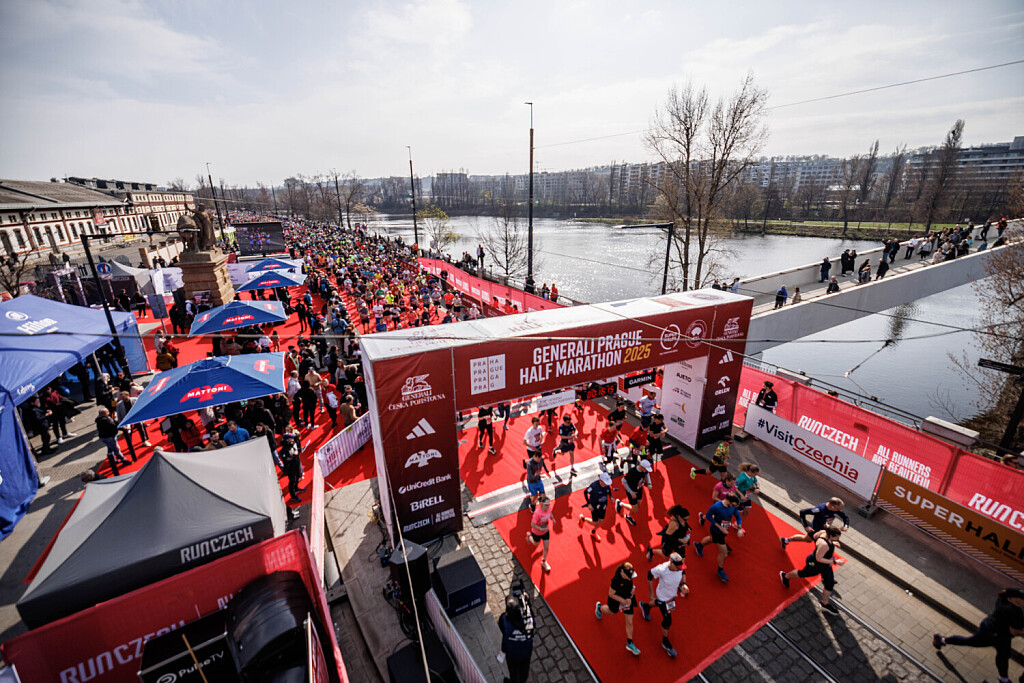
Prague Half Marathon’s First Ballot Draws More Than 70,000 Applications
The Generali Prague Half Marathon has entered a new era of unprecedented demand, with more than 70,000 runners reportedly applying for places in the race’s first-ever ballot for the 2027 edition.
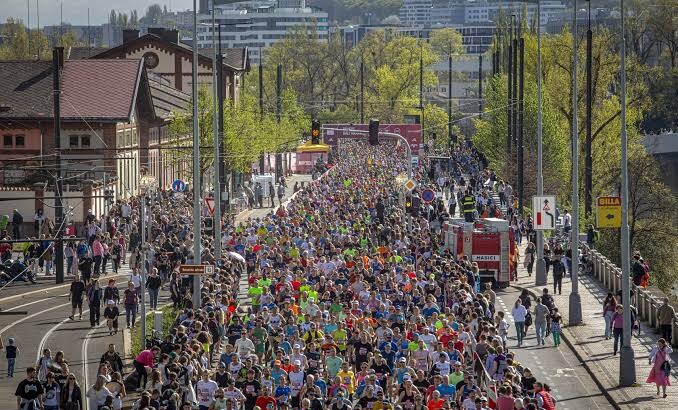
The remarkable response underlines the extraordinary international appeal of one of Europe’s most celebrated half marathons. With the race limited to 17,000 participants, the number of applications means demand exceeded available places by more than four times. RunCzech confirmed that the ballot attracted more than six times the race capacity in applications.
The move to a random draw marks a significant change from the previous registration system. In 2026, the 17,000-place field disappeared within just 2 hours and 23 minutes of registration opening, demonstrating how fiercely contested entry had become. Rather than rewarding those who happened to be quickest online, the new system gives applicants an equal opportunity through a random selection process.
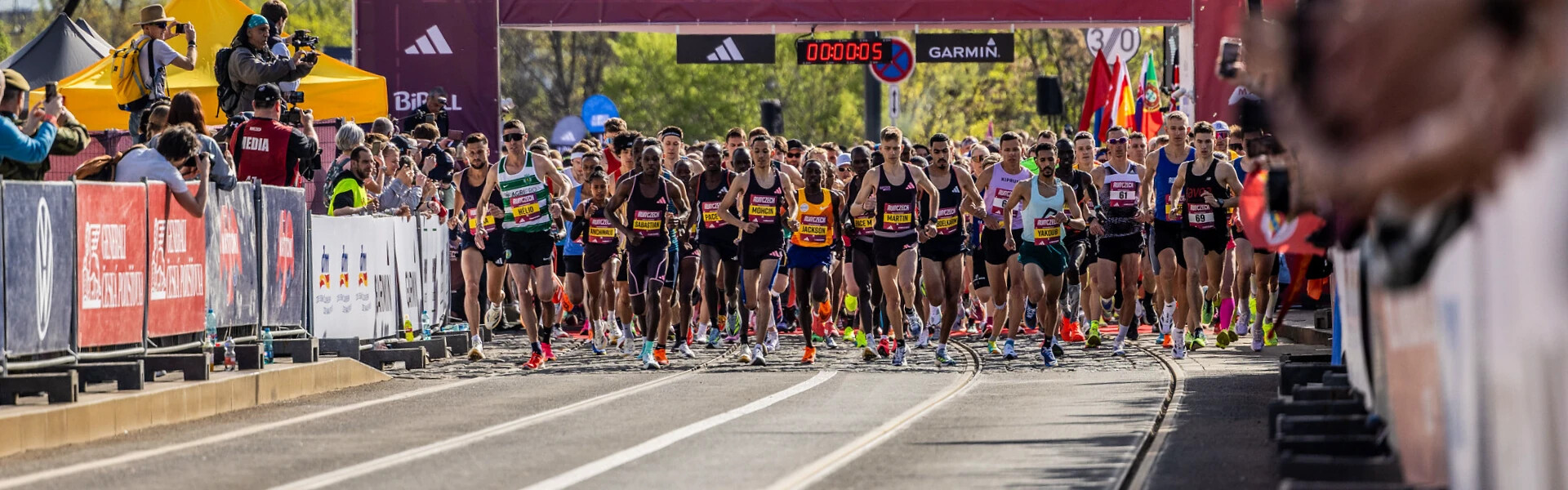
Applications opened on July 21 and closed at midnight heading into August 12, bringing three weeks of intense anticipation to an end. The draw is scheduled to take place this week, with every applicant due to receive the outcome by email no later than August 21. Those fortunate enough to secure a place will then have seven days to complete their registration before any unclaimed entries are returned to the pool.
The scale of the international interest is particularly striking. Applicants came from 161 countries, with 77 per cent of all applications submitted from outside the Czech Republic. The United Kingdom and Germany provided the largest overseas applicant groups, while Spain, Poland, Portugal, Italy and France were also strongly represented. Almost 1,300 applications came from Brazil and more than 700 from the United States.
For runners chasing the prestigious SuperHalfs series, Prague carries even greater significance. The race is one of the six founding members of the European half-marathon series, alongside Berlin, Copenhagen, Lisbon, Valencia and Cardiff, making a place on the start line highly coveted among runners pursuing the full collection. Around 45 per cent of ballot applicants already hold a SuperHalfs passport.
The 27th Generali Prague Half Marathon will take place on Saturday, April 3, 2027, taking runners through the historic heart of the Czech capital. The event also holds World Athletics Elite Label status, reinforcing its reputation not only as a mass-participation spectacular but also as a race capable of attracting world-class athletes and producing elite performances.
The huge ballot has transformed the meaning of simply getting to the start line in Prague. For thousands of runners, preparation has already begun, but their next step is not a training session or a race-plan decision—it is an email. This time, the fastest internet connection cannot guarantee a place; chance will decide who gets to experience the roar of the crowds, the historic streets and the unmistakable atmosphere of Prague at 21.1 kilometres.
The first ballot has therefore delivered a message that is impossible to ignore: Prague is no longer merely a race runners want to run—it is a race runners are competing to enter. With more than 70,000 applications chasing 17,000 places, the 2027 edition is already shaping up to be one of the most sought-after starts on the European road-racing calendar.
by Erick Cheruiyot for My Best Runs.
Login to leave a comment

Prague Half Marathon
Start the RunCzech season with one of the biggest running events in the Central Europe! Every year the Sportisimo Prague Half Marathon excites spectators with performances of elite athletes breaking records. Enjoy a course with incomparable scenery in the heart of historic Prague that follows along the Vltava river and crisscrosses five beautiful bridges. Take in majestic views of the...
more...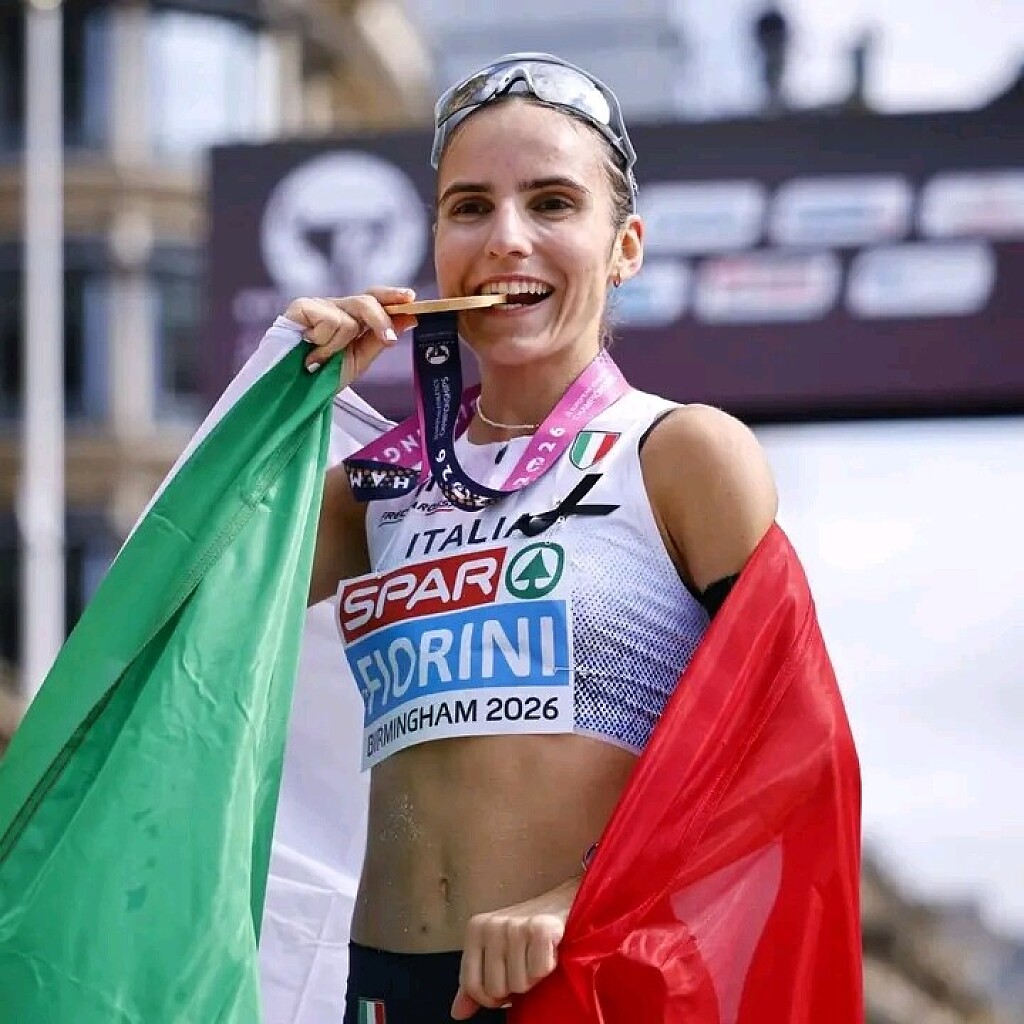
Sofia Fiorini Storms to World Record and European Gold in Birmingham
Italy’s Sofia Fiorini produced a stunning performance in Birmingham on Saturday, rewriting the women’s marathon race walk world record while cruising to European Championships gold in emphatic fashion.
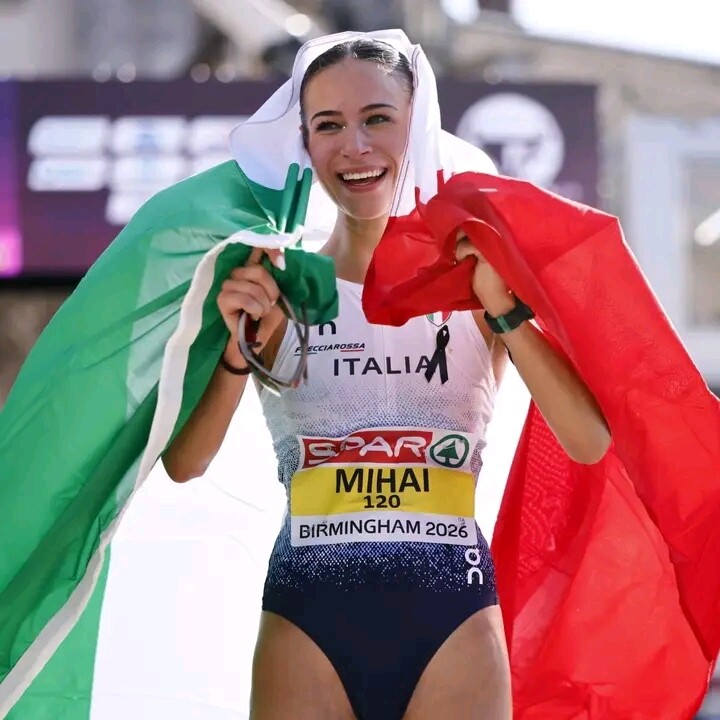
Fiorini crossed the finish line in 3:15:11, smashing the existing world-record benchmark of 3:17:00 and delivering the defining performance of her young career. The mark remains subject to the usual ratification procedures.
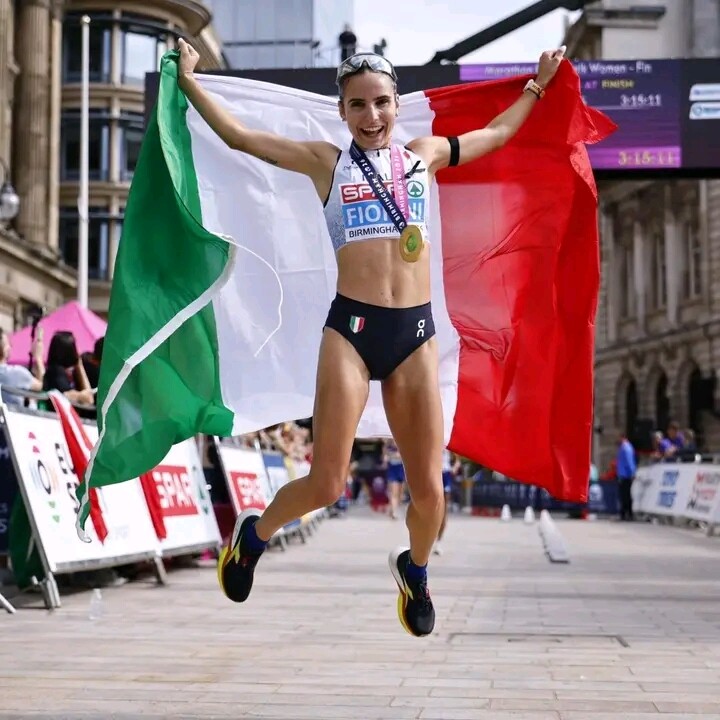
The 21-year-old Italian controlled the race with remarkable authority before making a decisive move inside the final 10 kilometres. From there, she opened an unbridgeable gap and powered away from the chasing pack to secure the European title in spectacular style.
Her winning margin was more than four and a half minutes, underlining just how dominant Fiorini was over the marathon distance. Poland’s Katarzyna Zdzieblo took silver, while Spain’s Raquel González completed the podium with bronze in 3:20:49.
Fiorini’s breakthrough comes just four months after she claimed silver at the World Athletics Race Walking Team Championships in Brasília. There, she set a European U23 record of 3:25:42, finishing behind Ecuador’s Paula Milena Torres.
That performance had already established Fiorini as one of the emerging forces in the new marathon race walk discipline. In Birmingham, however, she took another extraordinary leap forward, improving her personal best by more than 10 minutes and moving herself into the history books with a world-record performance.
For Italy, it was a remarkable statement of strength on the European stage. For Fiorini, it was the perfect combination of endurance, confidence and tactical precision — a commanding victory that transformed her from a rising talent into a world-record holder.
Sofia Fiorini: European champion, world-record holder and the undisputed queen of the Birmingham marathon race walk.
by Erick Cheruiyot for My Best Runs.
Login to leave a comment

European Athletics Champioships
The27thEuropean Athletics Championshipswill be held from 10 to 16 August 2026 at theAlexander StadiuminBirmingham, United Kingdom.[1] This is the first time that a British city will have staged the European Athletics Championships although Birmingham has hosted many high-profile events, including the2007 European Athletics Indoor Championships, the2003and2018 IAAF World Indoor Championshipsand the2022 Commonwealth Games. Alexander Stadium was renovated between 2019 and...
more...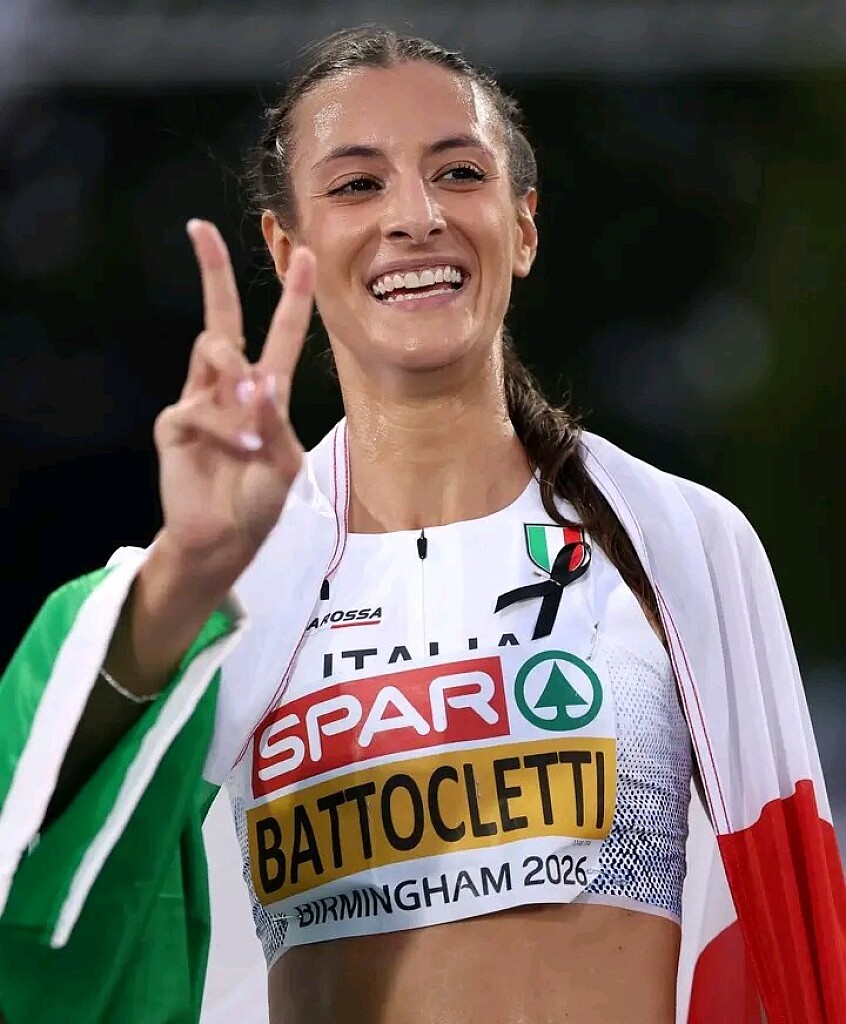
Nadia Battocletti Completes Golden Double to Reign Supreme in European Distance Running
Nadia Battocletti has once again stamped her authority on European distance running, producing a composed and decisive performance to win the women’s 10,000m at the 2026 European Athletics Championships in Birmingham.
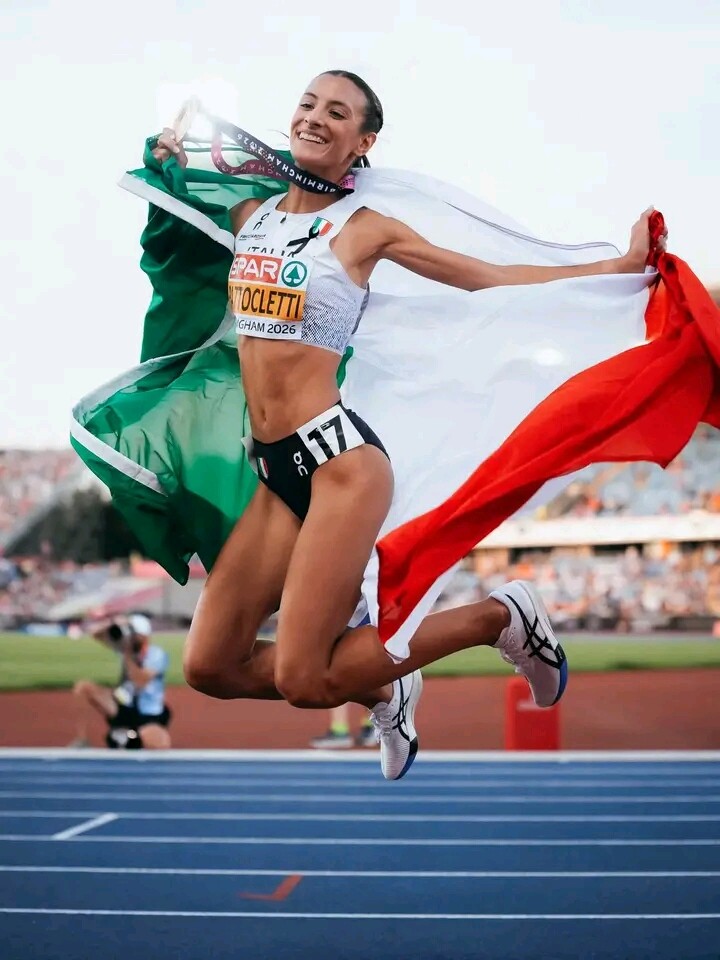
The Italian crossed the line in 31:41.17 to successfully defend her European 10,000m title and complete a remarkable 5000m–10,000m golden double at the championships. Her latest triumph further underlines her status as one of the continent’s outstanding long-distance runners.
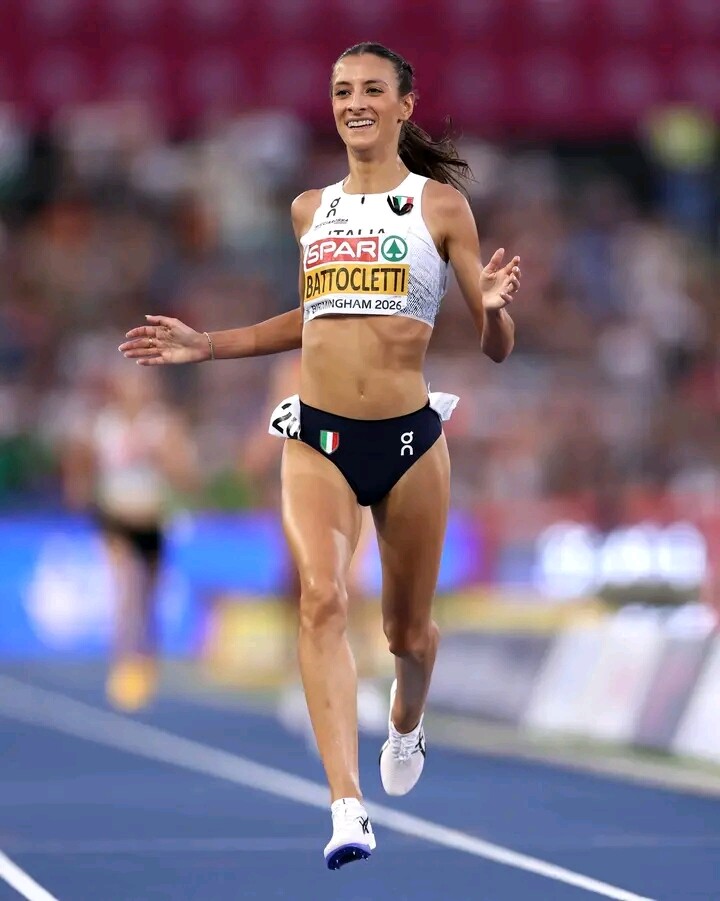
Battocletti had already demonstrated her exceptional class earlier in the championships by retaining the women’s 5000m title. She returned to the Alexander Stadium with another major challenge ahead, but once again displayed the tactical intelligence, patience and finishing strength that have become hallmarks of her racing.
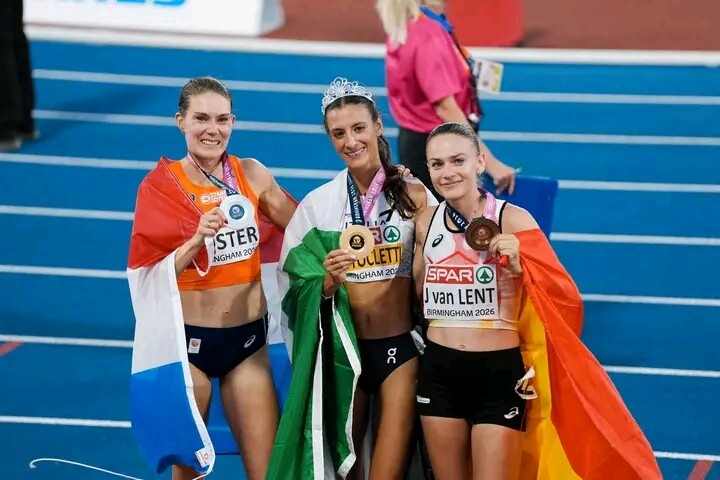
The 10,000m final developed into a fiercely contested battle, with Battocletti having to withstand strong challenges from Maureen Koster of the Netherlands and Belgium’s Jana van Lent. In the decisive stages, however, the Italian found the extra gear required to break clear and secure another European crown.
Koster produced an outstanding performance to take silver in 31:45.76, while Van Lent completed the podium with bronze in 31:47.81.
Spain’s Idaira Prieto was fourth in an impressive 31:59.84, setting a personal best, while Italy enjoyed further success as Elisa Palmero and Federica del Buono finished fifth and sixth respectively in 32:00.06 and 32:01.42. The result gave Italy an impressive three athletes inside the top six.
Maruša Mišmaš Zrimšek of Slovenia finished seventh in 32:02.57, followed by Great Britain’s Megan Keith in 32:04.81, a season best. Germany’s Lisa Merkel was ninth in 32:09.07, while Belgium’s Lisa Rooms completed the top 10 with a personal-best 32:10.22.
The depth of the final was reflected throughout the field, with Chloé Herbiet of Belgium recording a season best of 32:11.71, Slovenia’s Klara Lukan running a season-best 32:18.16, and several other athletes producing performances around the 32-minute barrier.
For Battocletti, though, the night belonged entirely to her.
Winning one European title is a remarkable achievement. Winning two individual distance titles at the same championships is a statement of extraordinary consistency, endurance and competitive maturity. By completing the 5000m and 10,000m double, Battocletti has reinforced her position at the summit of European distance running and added another defining chapter to her rapidly growing legacy.
Her Birmingham campaign has therefore become more than a collection of medals. It has been a demonstration of control, versatility and championship excellence from an athlete who continues to thrive when the stakes are highest.
Women’s 10,000m final — Birmingham 2026
1. Nadia Battocletti (Italy) — 31:41.17
2. Maureen Koster (Netherlands) — 31:45.76
3. Jana van Lent (Belgium) — 31:47.81
4. Idaira Prieto (Spain) — 31:59.84 PB
5. Elisa Palmero (Italy) — 32:00.06
6. Federica del Buono (Italy) — 32:01.42
7. Maruša Mišmaš Zrimšek (Slovenia) — 32:02.57
8. Megan Keith (Great Britain) — 32:04.81 SB
9. Lisa Merkel (Germany) — 32:09.07
10. Lisa Rooms (Belgium) — 32:10.22 PB
11. Chloé Herbiet (Belgium) — 32:11.71 SB
12. Elzbieta Glinka (Poland) — 32:16.65
13. Klara Lukan (Slovenia) — 32:18.16 SB
14. Mariana Machado (Portugal) — 32:27.09
15. Hanne Mjøen Maridal (Norway) — 32:32.12
16. Izzy Fry (Great Britain) — 32:37.22
17. Anna Marie Nordengen Sirevåg (Norway) — 32:41.21
18. Jennifer Gulikers (Netherlands) — 32:48.71
19. Carla Gallardo (Spain) — 33:02.58
20. Fiona Everard (Ireland) — 33:08.60
21. Alessia Zarbo (France) — 33:13.10
22. Eva Dieterich (Germany) — 33:32.38
23. Poppy Tank (Great Britain) — 34:03.99
Did not finish: Niamh Allen (Ireland), Diane van Es (Netherlands)
Did not start: Ilona Mononen (Finland)
Battocletti’s double is now one of the defining performances of Birmingham 2026 — a golden statement from Italy’s distance-running queen.
by Erick Cheruiyot for My Best Runs.
Login to leave a comment
European Athletics Champioships
The27thEuropean Athletics Championshipswill be held from 10 to 16 August 2026 at theAlexander StadiuminBirmingham, United Kingdom.[1] This is the first time that a British city will have staged the European Athletics Championships although Birmingham has hosted many high-profile events, including the2007 European Athletics Indoor Championships, the2003and2018 IAAF World Indoor Championshipsand the2022 Commonwealth Games. Alexander Stadium was renovated between 2019 and...
more...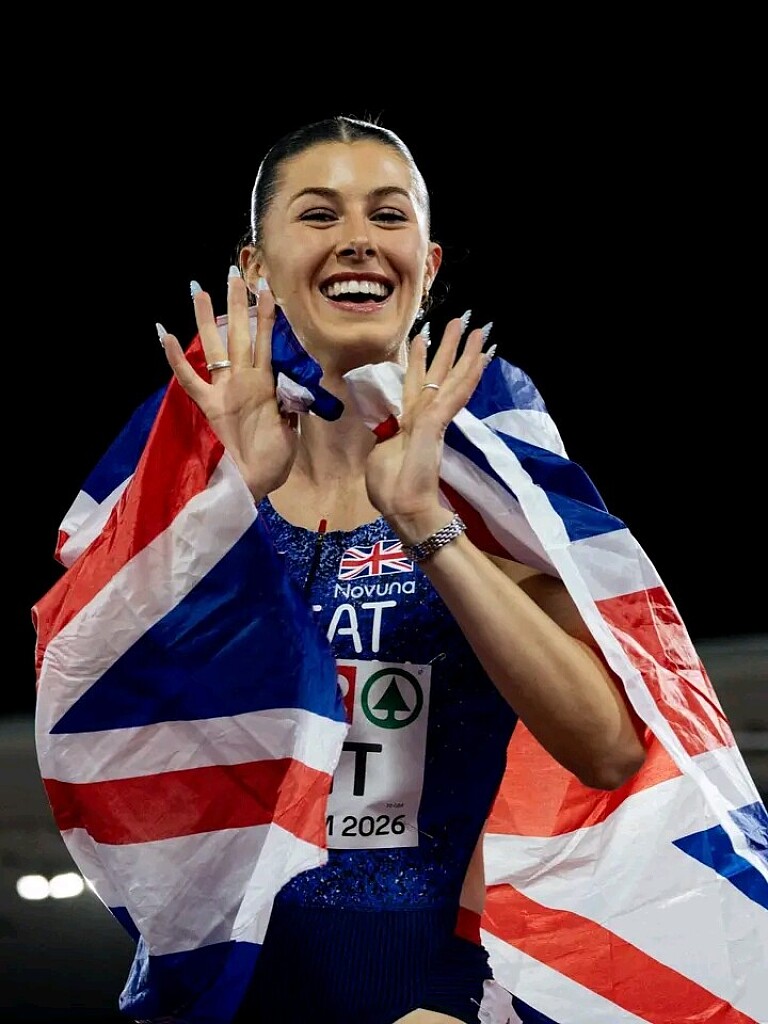
Amy Hunt Completes a Remarkable Full-Circle Journey with European 100m Gold in Birmingham
Amy Hunt has become the queen of the 100m in Birmingham, producing a magnificent home victory at the European Athletics Championships to complete one of the most satisfying full-circle stories of her career.
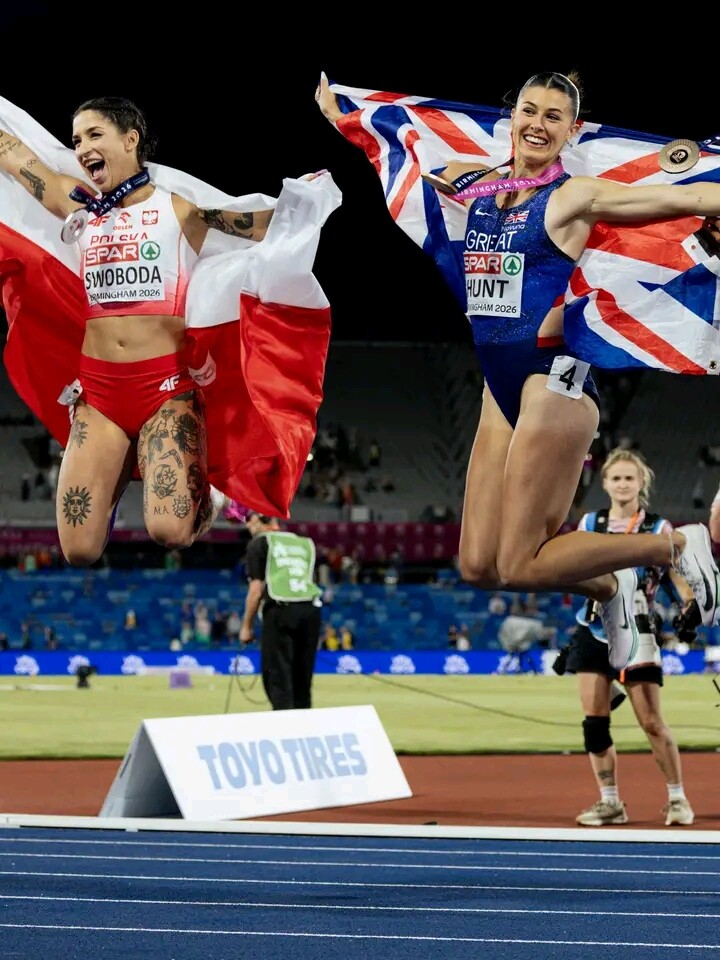
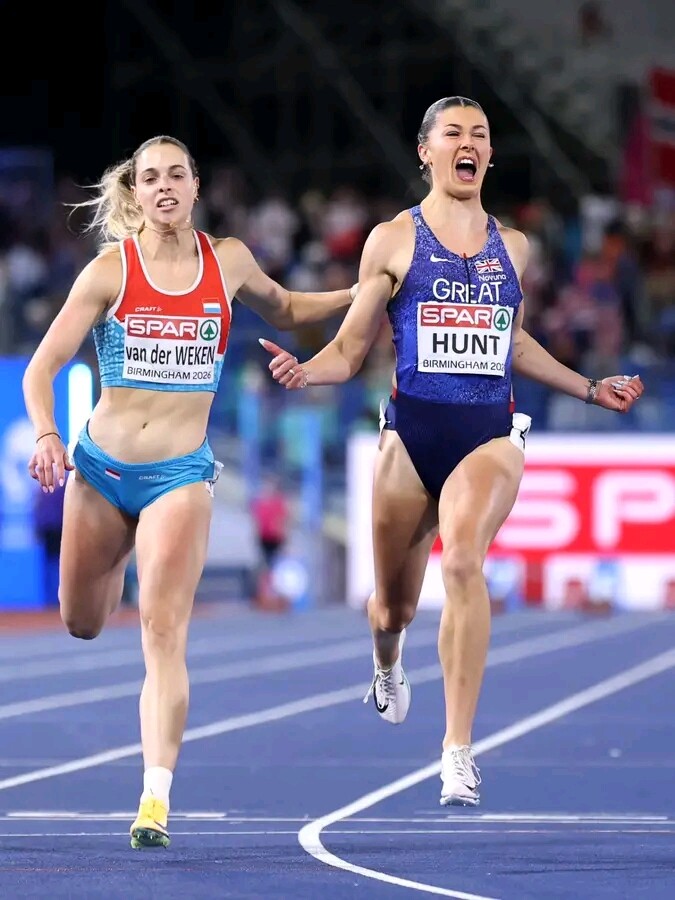
The British sprinter delivered when it mattered most at Alexander Stadium, powering to the European title in 11.00 seconds with a legal following wind of 1.0m/s. Hunt held her nerve in a fiercely contested final to finish ahead of Poland’s Ewa Swoboda, who clocked 11.02, while Belgium’s Delphine Nkansa took bronze in 11.06.
For Hunt, however, the significance of the victory went far beyond the medals and the times.
Only recently, she stood on the same podium at the Commonwealth Games after winning silver in the 100m. In Birmingham, she has gone one step further, upgrading silver to gold and claiming continental glory in front of a home crowd.
And the venue could hardly have been more appropriate.
In 2017, a teenage Hunt won the English Schools 100m title at Alexander Stadium, taking her first major steps towards the international stage. Almost a decade later, she returned to the same track with a European championship final ahead of her — and left it as European champion.
The connection to her past was not lost on Hunt. Speaking after her victory, she reflected on the extraordinary number of familiar faces around the stadium.
“There are people here who literally worked at those championships [English Schools],” she said.
Those words captured the remarkable nature of the moment. The same stadium that witnessed Hunt’s emergence as a promising young sprinter has now hosted one of the defining victories of her senior career.
Her 11.00-second performance was a display of composure and belief under immense pressure. With Swoboda only two hundredths behind and Nkansa another four hundredths adrift, there was little room for error, but Hunt produced a perfectly timed performance to claim gold.
The victory also represents another significant chapter in her progression. From English Schools champion in Birmingham to Commonwealth Games silver medallist and now European champion on the same home track, Hunt’s journey has been marked by steady progression and an ability to deliver on major championship occasions.
For British athletics, it was an especially memorable moment: a home-grown sprinter returning to the stadium where her international ambitions first began and turning those early dreams into European gold.
Amy Hunt did not simply win the 100m in Birmingham. She completed the circle.
by Erick Cheruiyot for My Best Runs.
Login to leave a comment
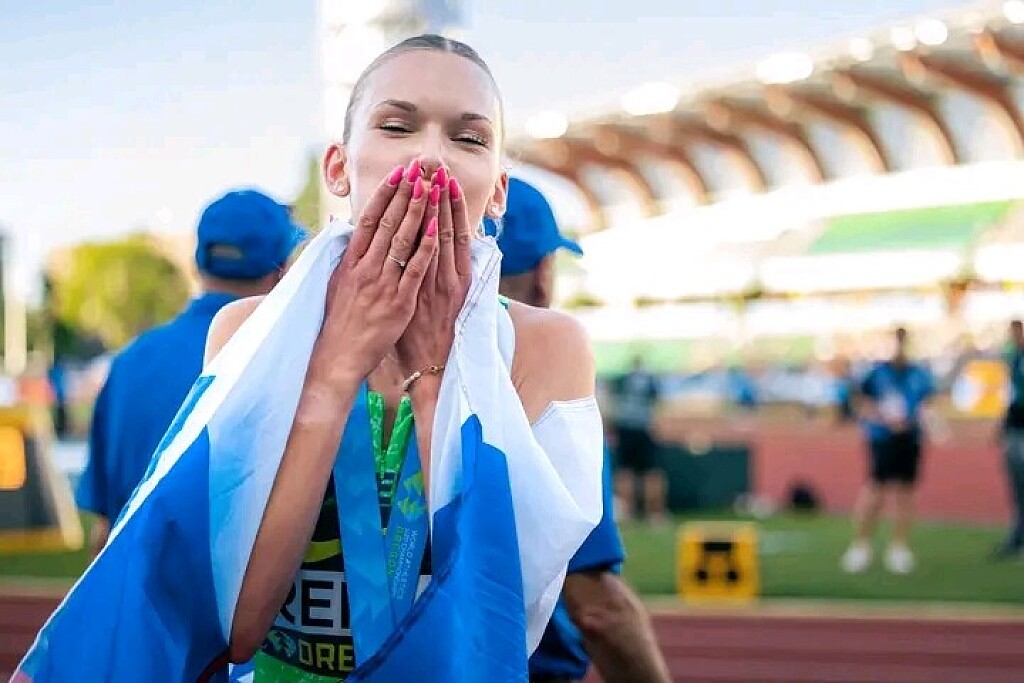
Živa Remic, 16, Stuns The World With Dramatic U20 800m Triumph
Sixteen years old and already a world champion. Slovenia’s Živa Remic produced a sensational performance in the women’s 800m final at the World Athletics U20 Championships, delivering a perfectly timed finishing surge to capture the gold medal in one of the closest races of the championships.
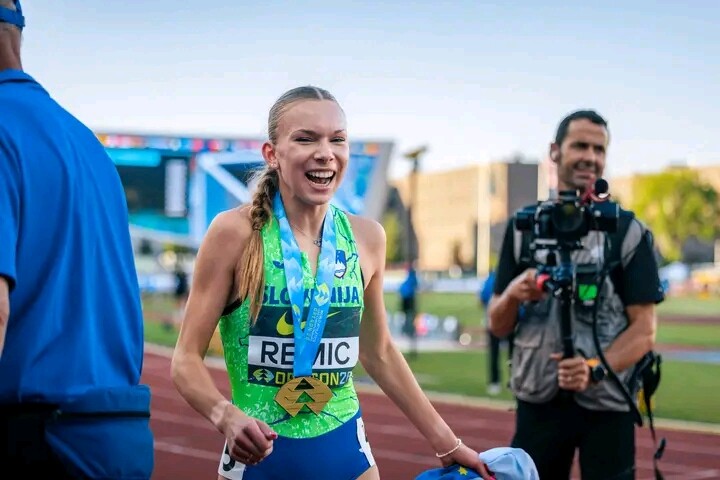
Remic remained firmly in contention throughout the race before unleashing her decisive move in the closing metres. With the medals still up for grabs, the young Slovenian found another gear approaching the line and edged clear at precisely the right moment, stopping the clock at 2:03.03.
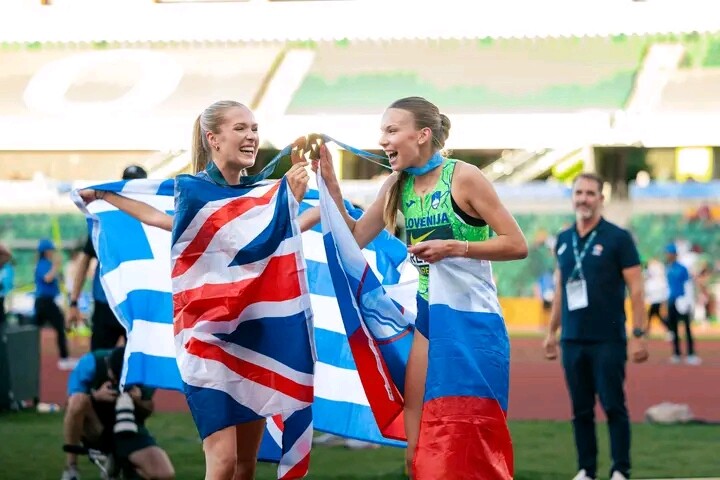
Greece’s Ioulianna Roussou refused to surrender and pushed Remic all the way to the finish. Roussou crossed the line in 2:03.08, just 0.05 seconds behind the champion, turning the final into an extraordinary battle decided by the smallest of margins.
Great Britain’s Shaikira King also produced an impressive performance to secure the bronze medal in 2:03.52, completing a podium separated by less than half a second.
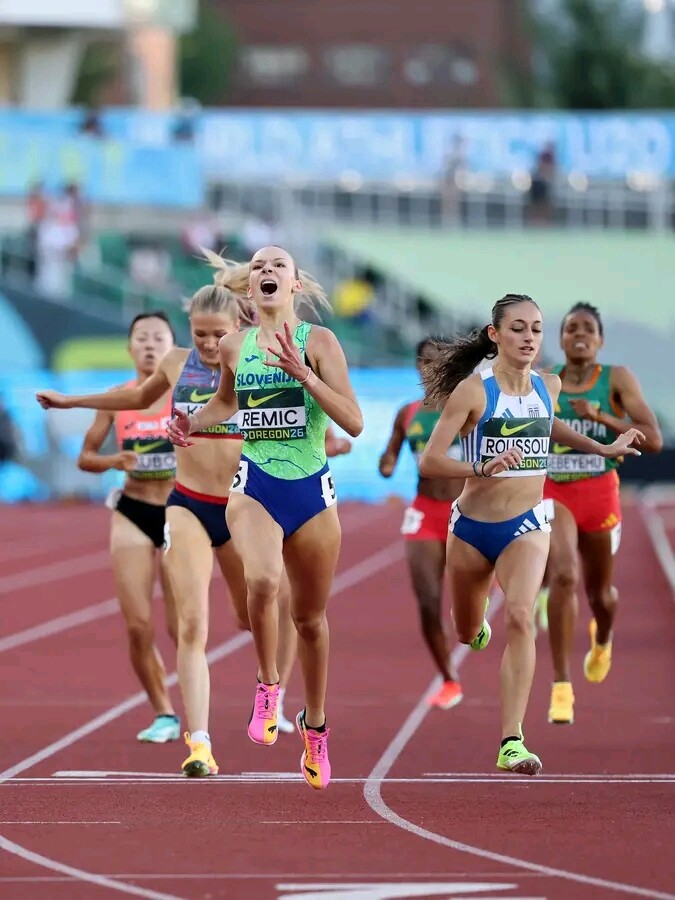
For Remic, the victory represents a major breakthrough on the global stage. At an age when many athletes are still gaining experience at major championships, she has already demonstrated the composure and finishing speed required to win a world title against some of the strongest young 800m runners in the world.
The Slovenian’s victory is even more remarkable considering the depth of talent in the final. Ethiopia’s Habtam Gebeyehu led the African challenge, finishing fourth in 2:03.99, while Japan’s Rin Kubo followed closely in fifth with 2:04.00. Canada’s Chloe Symon was sixth in 2:04.24, with Ethiopia’s Derartu Shibiru seventh in 2:04.81.
American Paige Sheppard finished eighth in 2:06.94, while Poland’s Róża Olchawa completed the final in 2:10.64.
Remic’s triumph also adds another chapter to what is becoming an extraordinary rise in the 800m. The teenager has already shown that she possesses the speed and competitive confidence to challenge at the highest level of junior athletics, and her ability to produce such a composed finish under championship pressure suggests there could be much more to come.
The defining image of the final was Remic surging toward the line while her closest rivals battled desperately behind her. When the clock stopped at 2:03.03, Slovenia had its newest world champion.
At just 16, Živa Remic has already reached the top of the world in her age category. Her golden finish was not only a victory—it was a powerful introduction to a young athlete whose name could become increasingly familiar in international middle-distance running.
by Erick Cheruiyot for My Best Runs.
Login to leave a comment
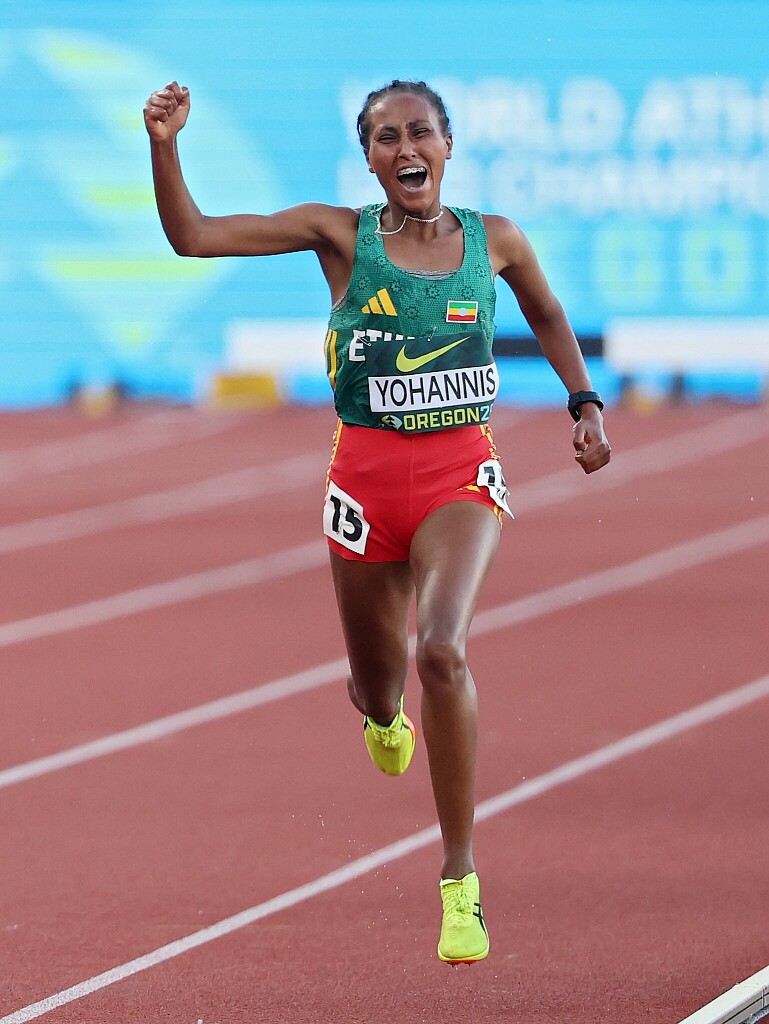
Almaz Yohannis Leads Ethiopian 1-2 in Spectacular World U20 Steeplechase Triumph
Ethiopia produced a spectacular display of emerging talent as Almaz Yohannis was crowned world champion in the women’s 3000m steeplechase at the 2026 World Athletics U20 Championships in Oregon, powering to a commanding victory in 9:15.81.
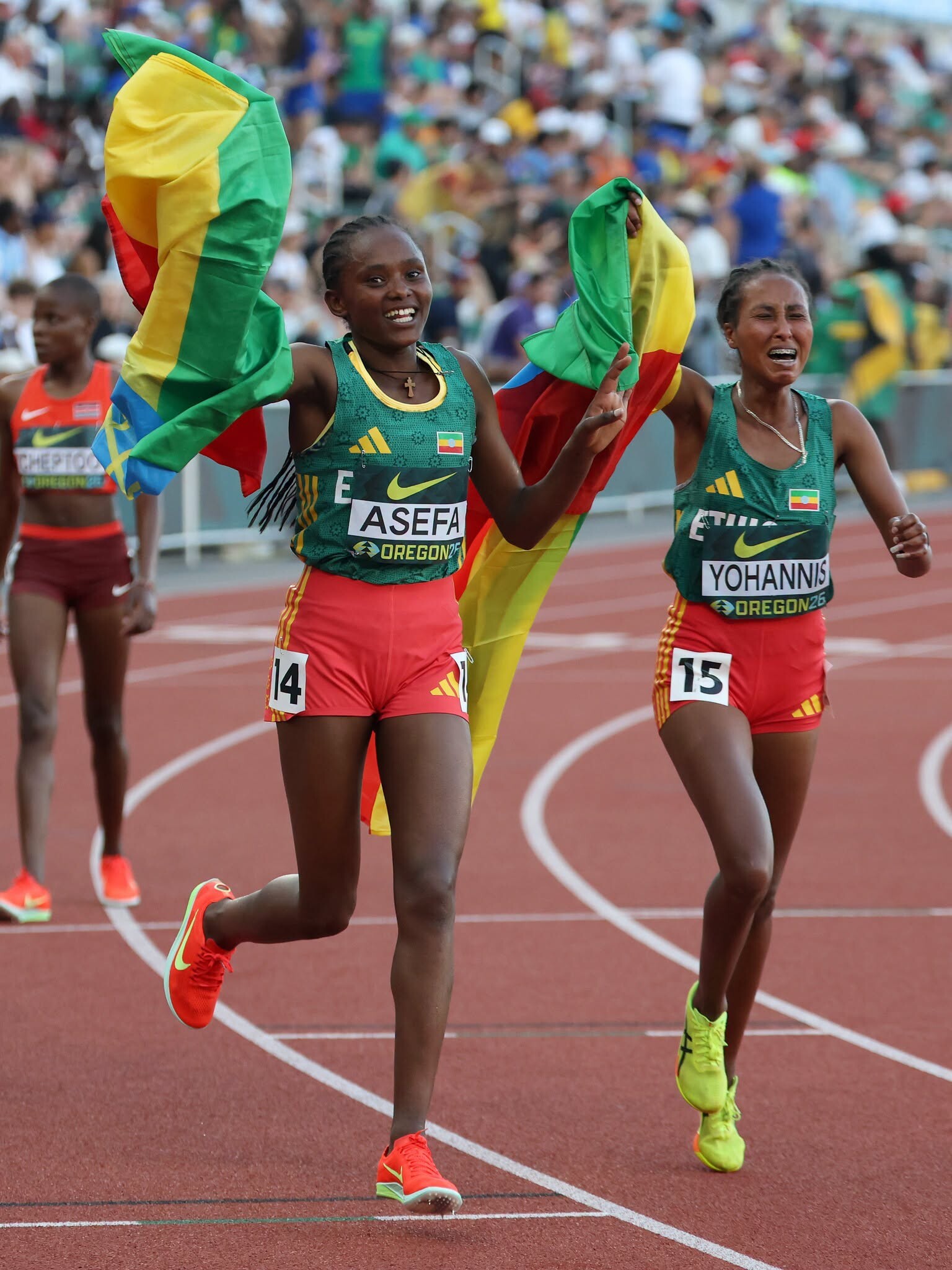
Yohannis delivered a superb performance to secure the gold medal and, in the process, recorded a World U20 Leading time (WU20L), underlining the strength of her performance on the global junior stage.
The young Ethiopian established herself as the athlete to beat, maintaining her composure and strength throughout the demanding eight-lap steeplechase before crossing the finish line well clear of the field. Her winning mark of 9:15.81 provided a fitting reward for a dominant championship performance.
Ethiopia’s celebrations were doubled when Wosane Asefa secured the silver medal in 9:30.50, producing a season’s best (SB) and completing an impressive Ethiopian one-two.
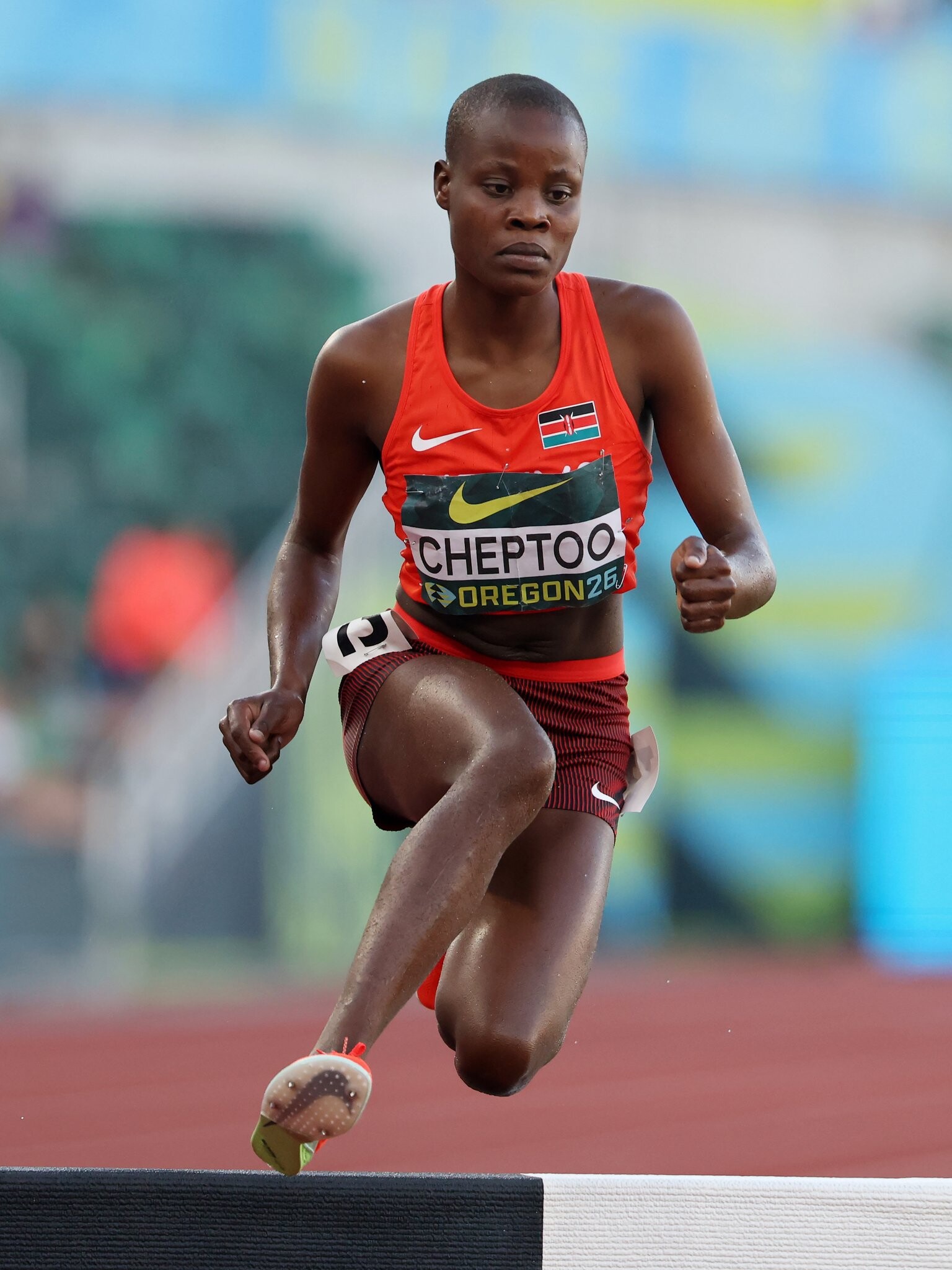
Kenya’s Anatasha Cheptoo ensured there was East African representation on all three steps of the podium, fighting her way to the bronze medal in 9:37.18.
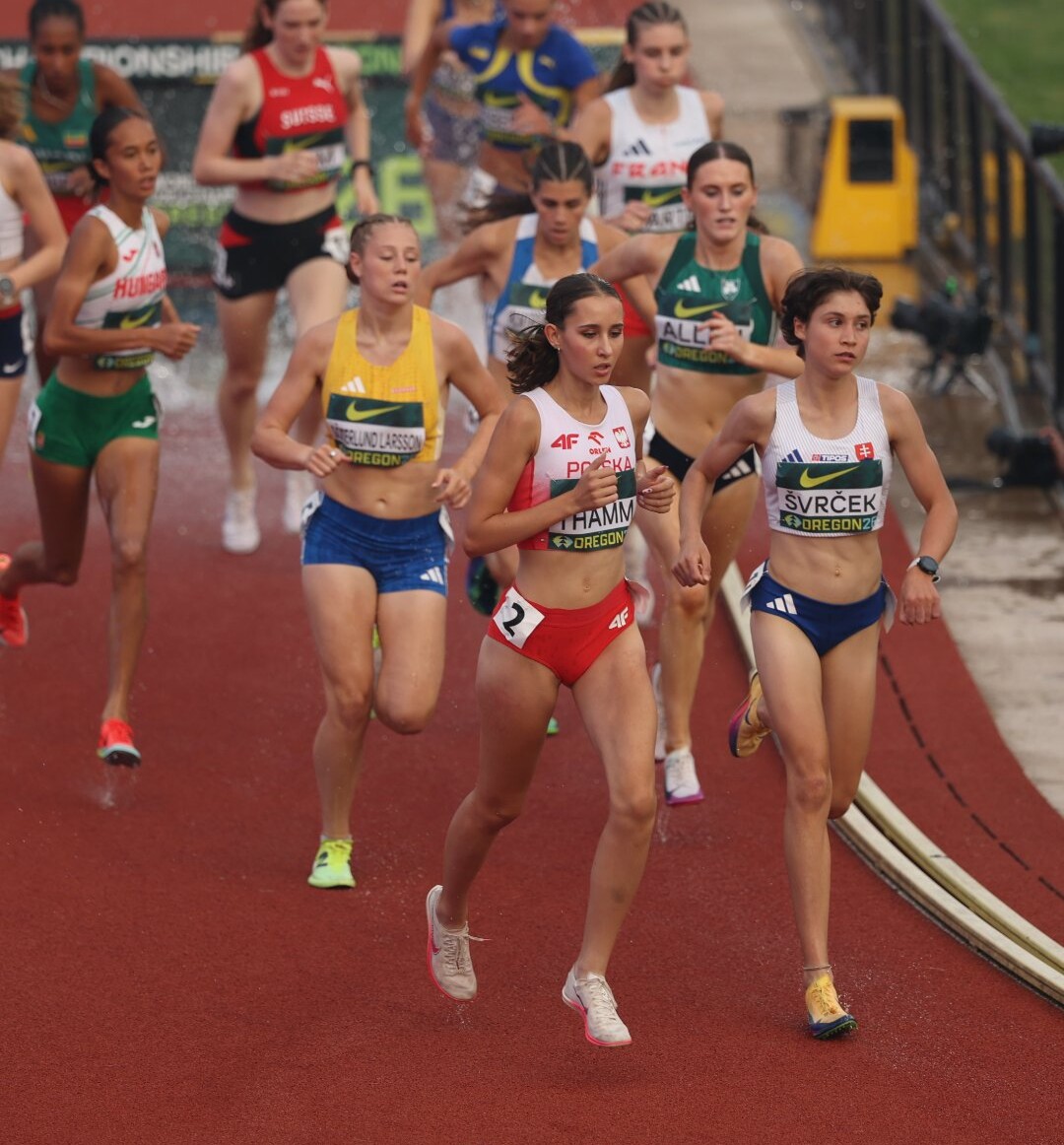
Behind the medalists, Sweden’s Majken Söderlund Larsson finished fourth in 9:48.01, setting a national U20 record (NU20R), while Czech Republic’s Ema Berková followed in fifth with 9:49.06, also recording a national U20 record.
Sweden’s Fanny Szalkai placed sixth in 9:55.06, a personal best, while Greece’s Anna Dafni Almyroudi Stroumpou finished seventh in 10:00.63, another national U20 record.
Egypt’s Malak Abdelghany Abdalla Ibrahim crossed eighth in 10:04.52, also establishing a national U20 record. Slovakia’s Anna Švrček was ninth in 10:05.91, followed by Japan’s Rei Taya in 10:12.37.
Portugal’s Lara Roque finished 11th in 10:15.69, setting a national U20 record, while Poland’s Zuzanna Szymańska took 12th in 10:15.94, a personal best. Great Britain’s Ava James was 13th in 10:18.96, followed by American Sierra Wall in 14th with 10:21.21.
Poland’s Michalina Thamm completed the finishers in 15th place in 10:39.01.
Kenya’s Mercy Chepngeno Koskey, who had also lined up as part of the Kenyan challenge, was unfortunately unable to finish the race.
The final podium therefore belonged to three of East Africa’s rising stars, with Yohannis and Asefa delivering a memorable Ethiopian one-two, while Cheptoo secured bronze for Kenya.
Women’s 3000m Steeplechase — Official Results
1. Almaz Yohannis (Ethiopia) — 9:15.81 (WU20L)
2. Wosane Asefa (Ethiopia) — 9:30.50 (SB)
3. Anatasha Cheptoo (Kenya) — 9:37.18
4. Majken Söderlund Larsson (Sweden) — 9:48.01 (NU20R)
5. Ema Berková (Czech Republic) — 9:49.06 (NU20R)
6. Fanny Szalkai (Sweden) — 9:55.06 (PB)
7. Anna Dafni Almyroudi Stroumpou (Greece) — 10:00.63 (NU20R)
8. Malak Abdelghany Abdalla Ibrahim (Egypt) — 10:04.52 (NU20R)
9. Anna Švrček (Slovakia) — 10:05.91
10. Rei Taya (Japan) — 10:12.37
11. Lara Roque (Portugal) — 10:15.69 (NU20R)
12. Zuzanna Szymańska (Poland) — 10:15.94 (PB)
13. Ava James (Great Britain) — 10:18.96
14. Sierra Wall (United States) — 10:21.21
15. Michalina Thamm (Poland) — 10:39.01
DNF: Mercy Chepngeno Koskey (Kenya)
Yohannis’ victory marked the highlight of a brilliant Ethiopian performance, with her 9:15.81 World U20-leading mark setting the tone for a memorable championship final and announcing another exciting young talent onto the international athletics scene.
by Erick Cheruiyot for My Best Runs.
Login to leave a comment
World U20 Relay History Rewritten As Great Britain Breaks Fresh Record After Australia's Brief Reign
Records were rewritten twice within the space of a few unforgettable minutes as the inaugural World Athletics U20 Mixed 4x100m relay produced one of the most dramatic sessions of the World Athletics U20 Championships in Eugene, Oregon.
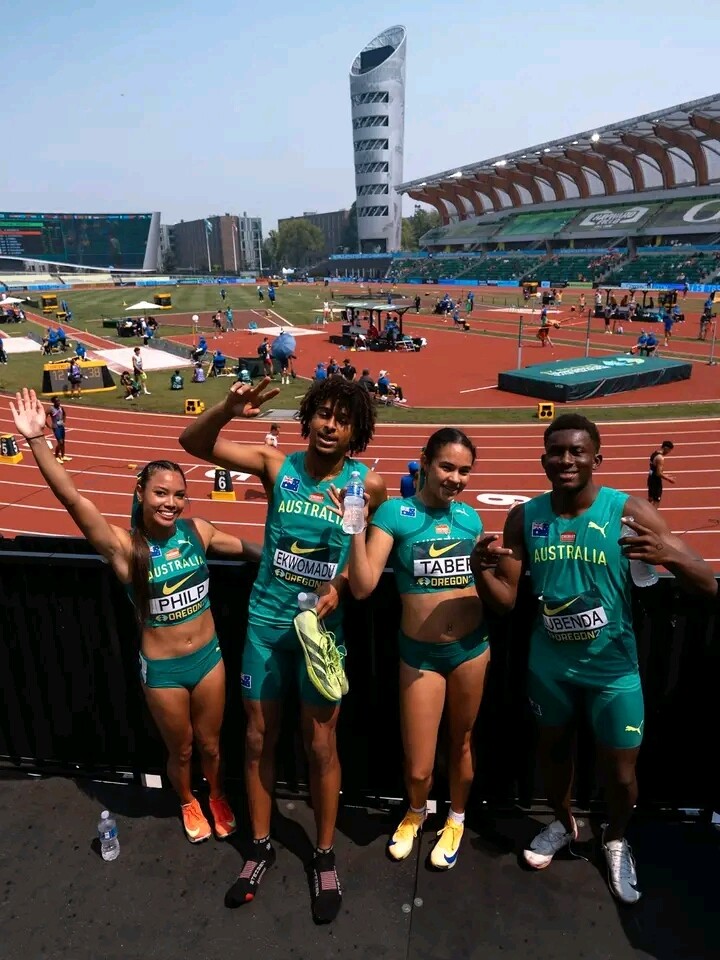
Australia ignited the excitement in the opening heat by storming to a world U20 record of 41.64 seconds, becoming the first team ever to reach that mark and briefly claiming a place in history. For five memorable minutes, the Australian quartet of Uwezo Lebenda, Maya Taber, Kelechi Ekwomadu and Thewbelle Philp stood as world record holders after a sensational performance that also secured their place in Saturday's final.
Their celebration, however, proved to be short-lived.
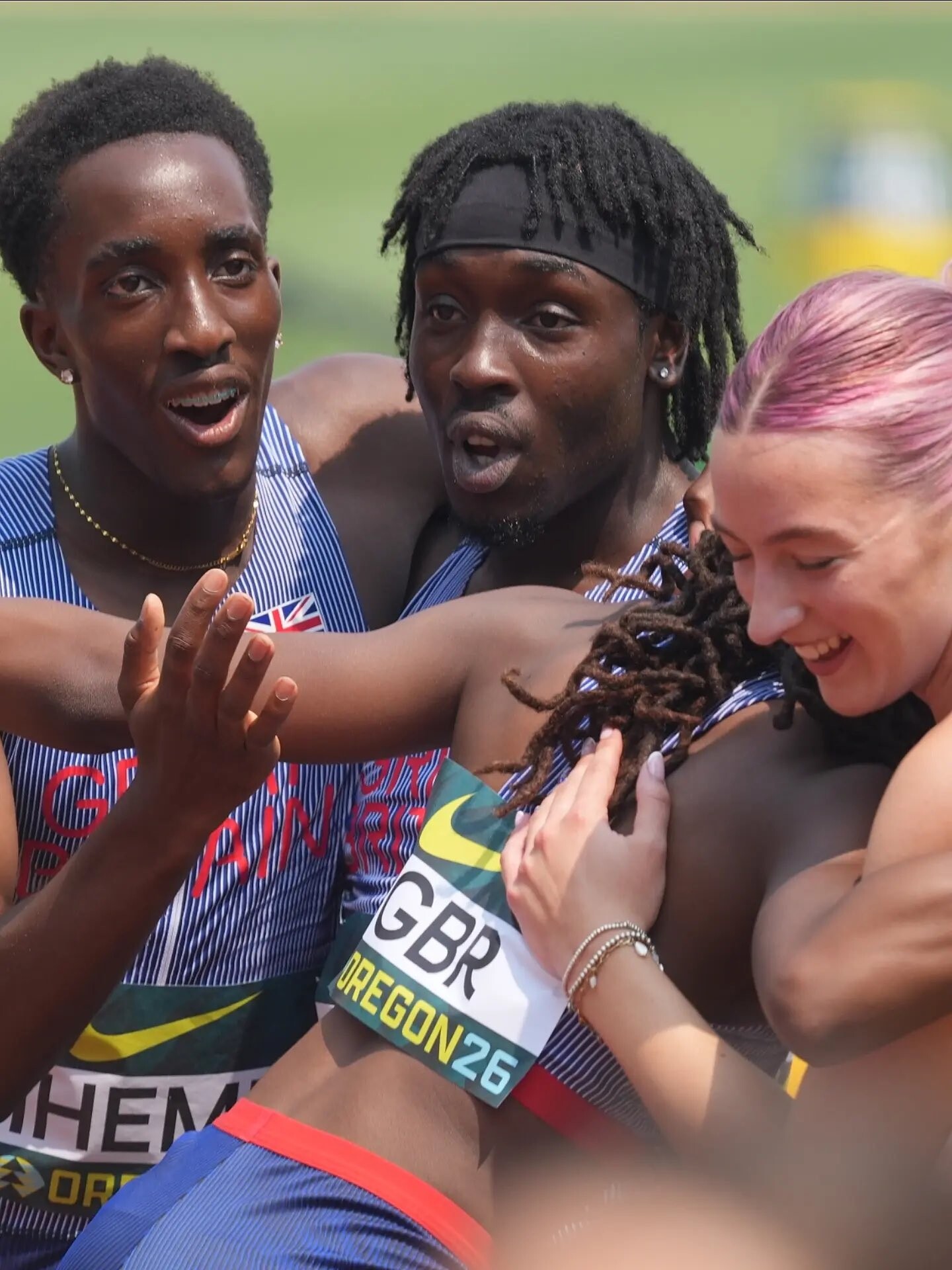
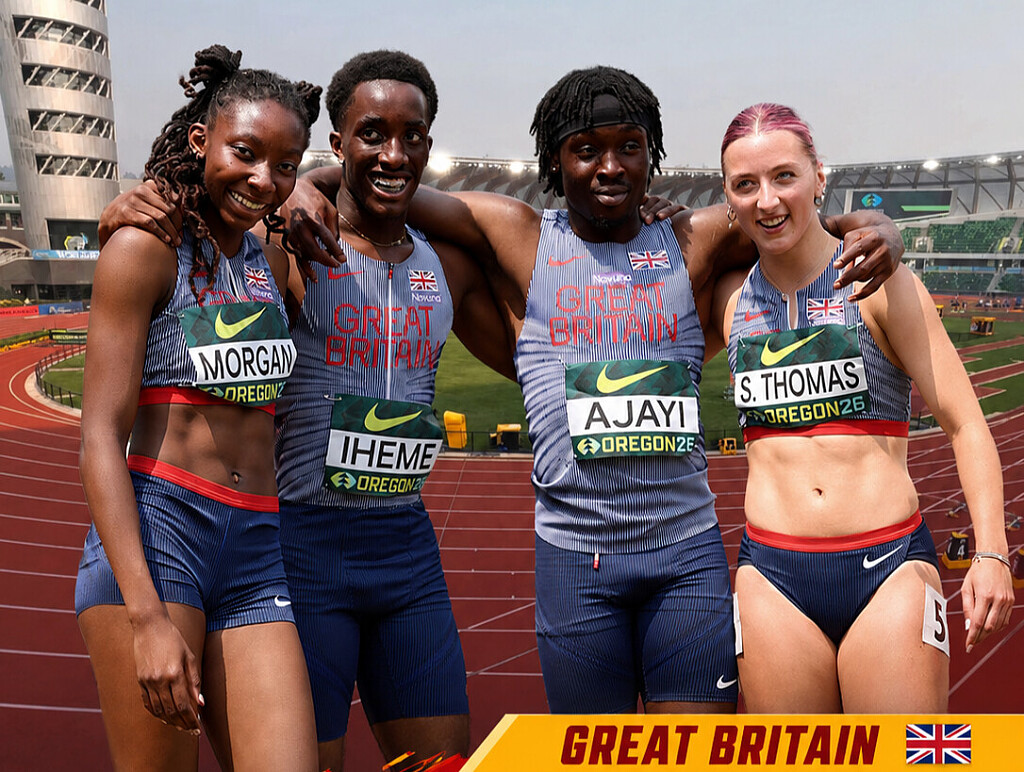
Moments later, Great Britain delivered an even more electrifying display in the second heat, clocking 41.60 to erase Australia's newly established mark and set a fresh World U20 record. It was a masterclass in speed, precision and flawless baton exchanges that propelled the British team into the history books.
The record-breaking quartet of Divine Iheme, Savannah McKenzie Morgan, Mathew Ajayi and Sophie Thomas combined brilliantly from start to finish to produce the fastest mixed U20 4x100m relay ever recorded. Sophie Thomas, who is set to compete for the University of Connecticut (UConn) this year, produced a composed anchor leg to seal the landmark performance.
The extraordinary back-to-back world records underlined the remarkable depth of sprint talent on display, with several other nations also producing outstanding performances to qualify for the final.
Italy impressed with a personal best of 41.74, while the United States advanced comfortably in 41.82. Nigeria also produced a personal best of 41.91 to secure qualification.
Jamaica (42.08 PB), Germany (42.12 PB), France (42.16 PB) and Poland (42.18 PB) completed the eight-team final after delivering strong performances in one of the fastest mixed relay qualifying rounds ever witnessed at the U20 Championships.
With two world records already falling in rapid succession, anticipation is now soaring ahead of Saturday's final. If the qualifying heats are any indication, the newly established global mark of 41.60 may once again come under serious threat as the world's best young sprinters chase another piece of athletics history.
by Erick Cheruiyot for My Best Runs.
Login to leave a comment

Noah Lyles: A Decade of Sprinting Greatness from World U20 Star to Global Icon
Ten years ago, a fearless teenager stepped onto the track at the World U20 Championships in Bydgoszcz, Poland, and introduced himself to the athletics world with a performance that hinted at an extraordinary future. On that memorable stage, Noah Lyles captured the men's 100m title in 10.17 seconds before anchoring the United States to victory in the 4×100m relay, marking the beginning of one of the most remarkable sprinting careers of the modern era.
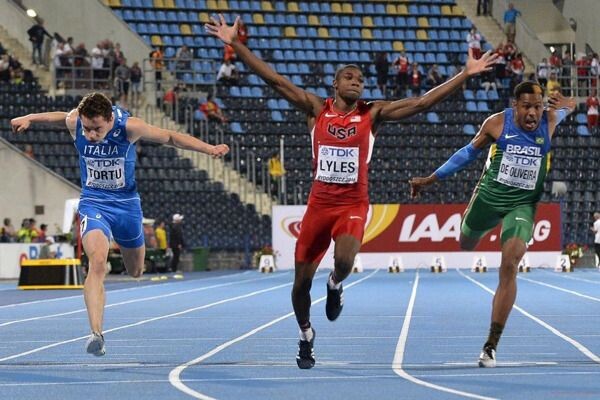
A decade later, that promising young talent has evolved into one of the greatest sprinters of his generation, building a legacy defined by championship success, consistency, and breathtaking speed.
Lyles has rewritten the American record books with a sensational 19.31 seconds over 200 metres, surpassing Michael Johnson's long-standing U.S. record and producing one of the fastest performances in history. The run firmly established him among the all-time greats in the event.
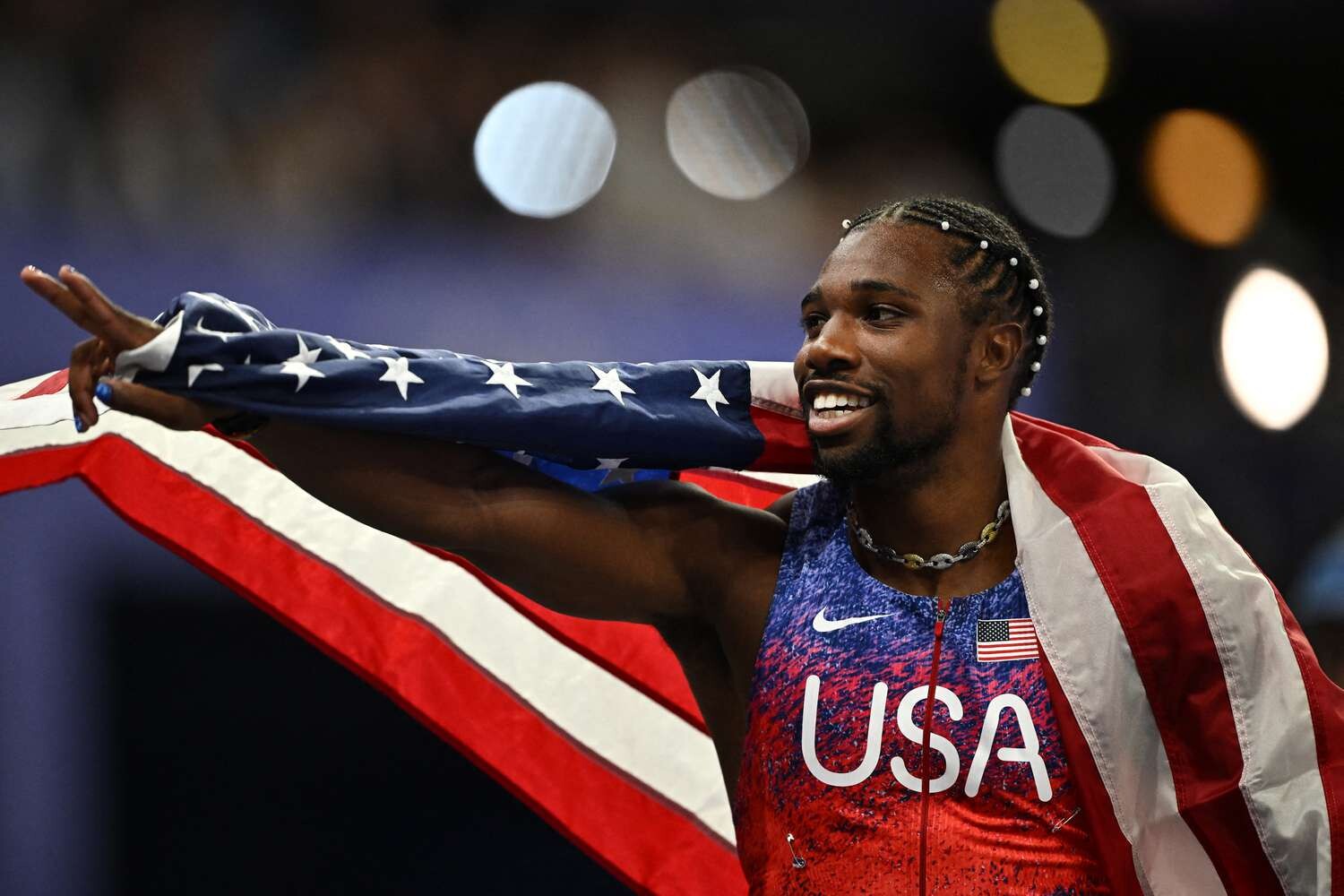
His greatest Olympic triumph came at the Paris 2024 Olympic Games, where he claimed the men's 100m gold medal in one of the closest finishes ever witnessed. Lyles crossed the line just 0.005 seconds ahead of the field, delivering one of the most dramatic victories in Olympic sprint history and cementing his place as the world's fastest man.
His dominance has extended across multiple World Athletics Championships, where he has amassed eight gold medals in the 100m, 200m, and 4×100m relay. Among those achievements, his remarkable streak of four consecutive world titles in the 200m stands as a testament to his sustained excellence and unrivalled consistency at the highest level.
Even after a decade at the top, Lyles continues to prove he remains the benchmark in global sprinting. Most recently, he successfully defended his U.S. men's 100m title, matching his lifetime best of 9.79 seconds to reaffirm that he is still one of the sport's most formidable competitors.
From a confident teenager announcing his arrival on the international stage in Poland to an Olympic champion, American record holder, and multiple-time world champion, Noah Lyles has transformed talent into an enduring legacy. His journey over the past ten years has inspired a new generation of athletes while redefining excellence in sprinting.
Ten years have passed since his breakthrough in Bydgoszcz, but for Noah Lyles, the pursuit of greatness is far from over. If anything, the next chapter promises to be just as compelling as the first.
by Erick Cheruiyot for My Best Runs.
Login to leave a comment
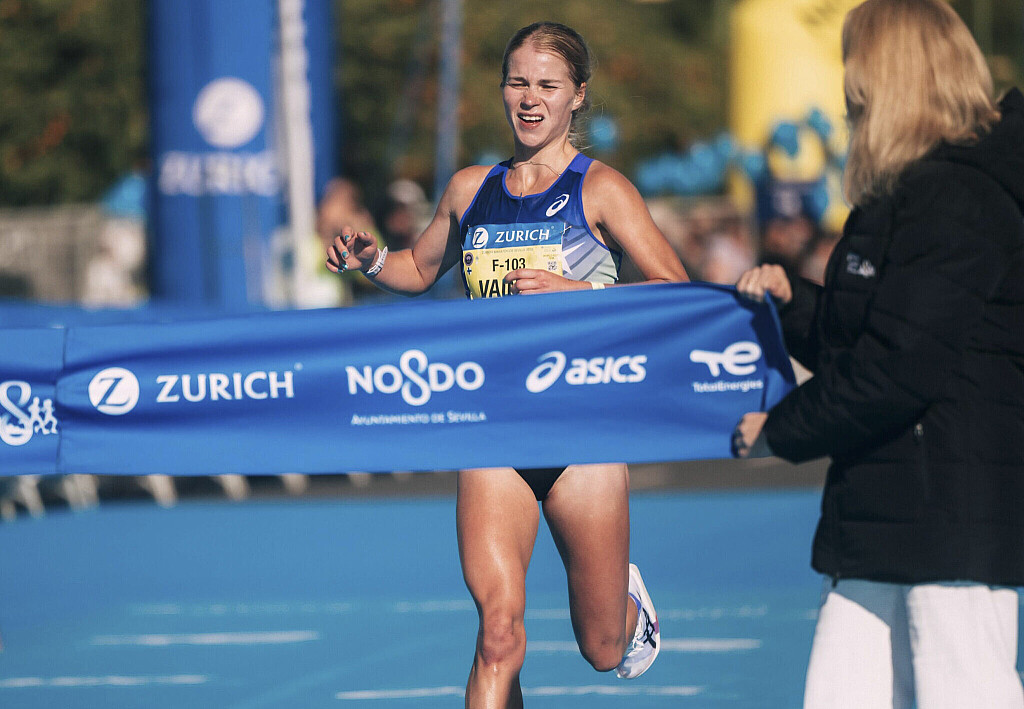
Europe's Elite Women Marathoners Ready for Thrilling Championship Battle in Birmingham
The women's marathon at the 2026 European Athletics Championships is set to be one of the most eagerly anticipated races of the championships, bringing together an exceptional field of experienced championship performers, rising stars, and defending medalists in what promises to be a fascinating battle for European glory.
While Finland's Alisa Vainio enters Birmingham as the fastest European woman this season after clocking a brilliant 2:20:39 at the Seville Marathon, she faces stiff competition from some of the continent's strongest marathon nations, including Germany, Spain, Poland, Ireland, and host nation Great Britain.
Vainio's journey to the top has been years in the making. Widely regarded as one of Europe's brightest teenage distance-running prospects, she qualified for the marathon for the Rio 2016 Olympic Games at just 18 years old but was unable to compete because she did not meet the minimum age requirement. Instead of fading from the spotlight, she steadily rebuilt her career and has now matured into one of Europe's premier marathon runners.
Her breakthrough came at the 2025 World Athletics Championships in Tokyo, where she produced a composed and intelligent race in oppressive heat and humidity to finish fifth overall as the first European athlete across the finish line. Just three weeks later, she shattered the Finnish marathon record with a solo 2:23:06 performance at the national championships in Vantaa.
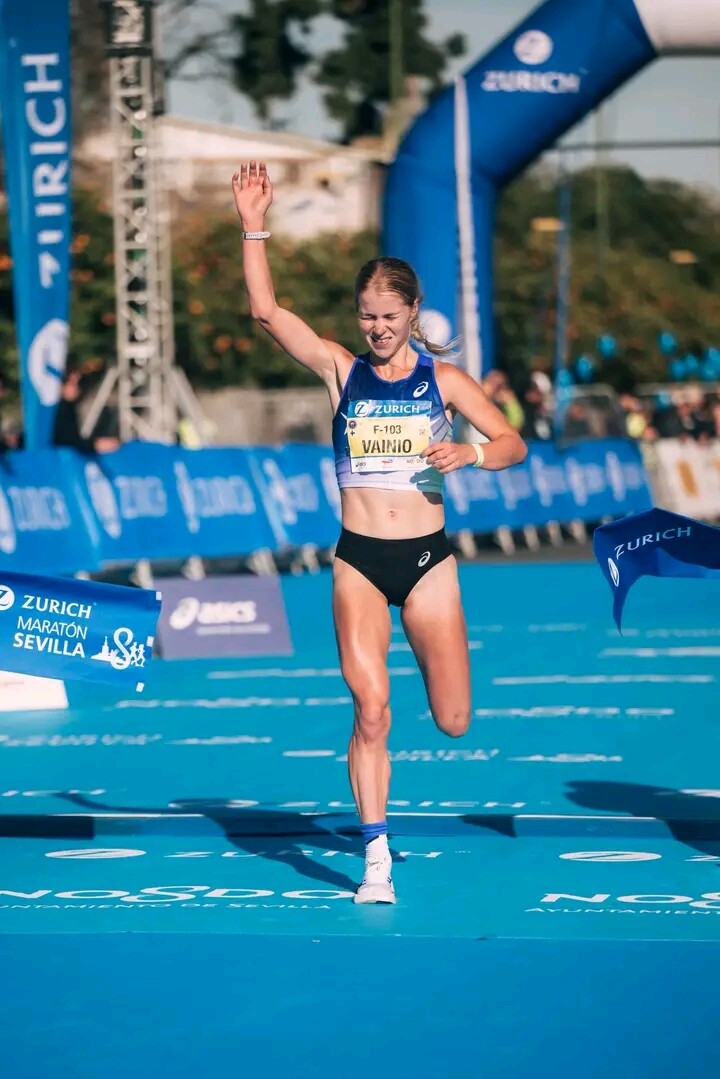
Vainio has continued her remarkable momentum ever since. She completed three additional marathons, highlighted by a commanding victory at the Seville Marathon, where she lowered the Finnish record once again while setting the European-leading mark of 2:20:39, establishing herself as the athlete to beat heading into Birmingham.
Germany arrives with one of the deepest squads in the championship and will be aiming to defend the women's team title won in Munich four years ago. Fabienne Königstein leads the German challenge after setting a personal best of 2:22:17 with a sixth-place finish at the Berlin Marathon. She is joined by the versatile Laura Hottenrott, who added another major achievement to her career earlier this year by winning silver in the uphill race at the European Athletics Off-Road Running Championships.
Spain also boasts an exceptionally strong lineup and is expected to challenge for both the individual and team honors. Fatima Azzahraa Ouhaddou Nafie demonstrated her championship resilience by recovering from a mid-race fall to win the marathon at the 2025 European Running Championships. Laura Luengo brings a personal best of 2:22:31, while Meritxell Soler, Ester Navarrete, and Carolina Robles complete a formidable squad. Impressively, every Spanish athlete in the team owns a lifetime best under 2:25, highlighting the country's remarkable marathon depth.
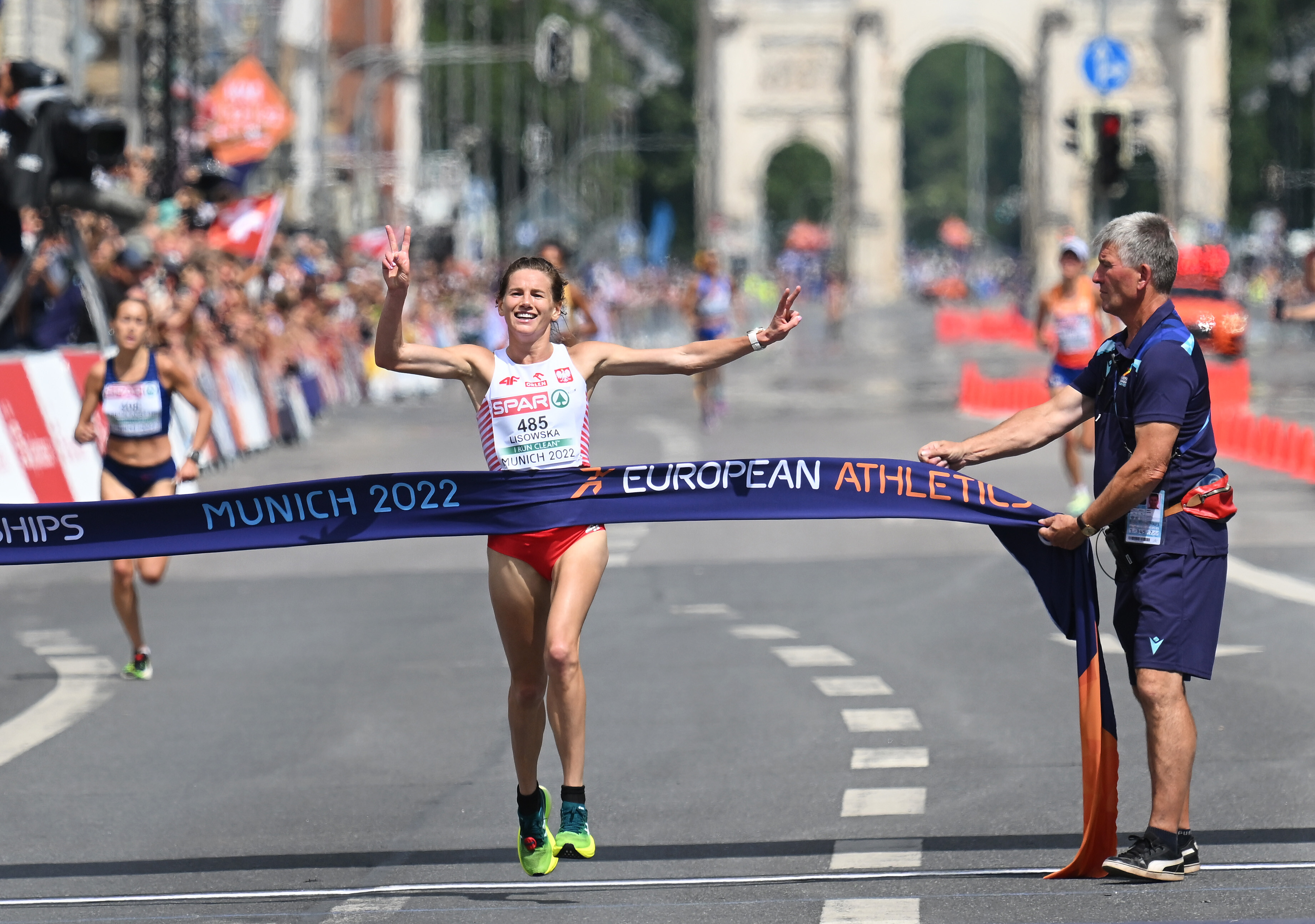
Defending champion Aleksandra Lisowska of Poland cannot be overlooked despite not being among the pre-race favorites. Her surprise victory in Munich four years ago proved that championship marathons often reward tactical brilliance, patience, and resilience rather than raw speed alone. Having already demonstrated her ability to thrive under championship pressure, the Polish star remains a genuine threat in Birmingham.
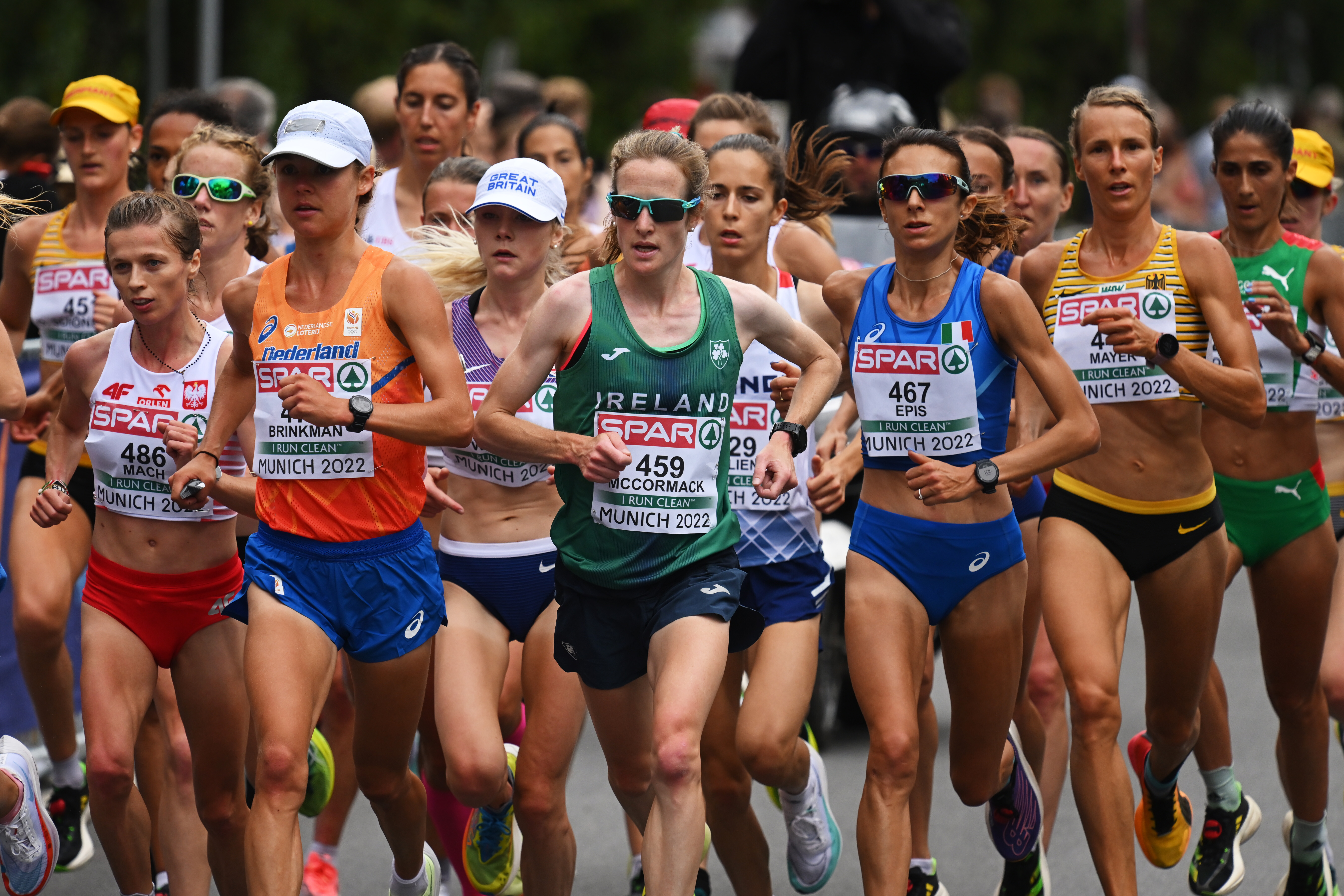
Ireland's Fionnuala McCormack will also be one of the most compelling athletes to watch. Just weeks before her 42nd birthday, the experienced marathoner continues her pursuit of a first European Championships medal after several near misses during her distinguished career. She finished fourth twice in the 10,000m at previous championships and was seventh in the marathon in Munich before producing another impressive performance with ninth place at the 2025 World Athletics Championships, finishing second among the European athletes behind Vainio.
Host nation Great Britain will be eager to make history on home roads. British women have never won an individual medal in the European Athletics Championships marathon since the event was introduced in 1982. Their hopes rest with Paris Olympians Rose Harvey and Clara Evans, alongside 2023 European cross-country bronze medallist Abbie Donnelly, who made an impressive marathon debut with a time of 2:24:11 in Frankfurt last year.
With proven champions, emerging contenders, experienced veterans, and deep national teams all chasing medals, the women's marathon is expected to deliver one of the most competitive races of the championships. Whether the title is decided by relentless pace, tactical patience, or a decisive late surge, Birmingham is set to provide a memorable contest worthy of the European crown.
by Erick Cheruiyot for My Best Runs.
Login to leave a comment
European Athletics Champioships
The27thEuropean Athletics Championshipswill be held from 10 to 16 August 2026 at theAlexander StadiuminBirmingham, United Kingdom.[1] This is the first time that a British city will have staged the European Athletics Championships although Birmingham has hosted many high-profile events, including the2007 European Athletics Indoor Championships, the2003and2018 IAAF World Indoor Championshipsand the2022 Commonwealth Games. Alexander Stadium was renovated between 2019 and...
more...
WORLD RECORD FORM MEETS WORLD-LEADING SPEED IN LONDON
The stage is set for one of the most eagerly anticipated middle-distance races of the season as three of the world's fastest 800m stars prepare to collide at the London Diamond League on Saturday, 18 July 2026. With Olympic glory, world-leading performances, national records and personal pride all on the line, the British capital is ready for a race that could redefine the event this season.
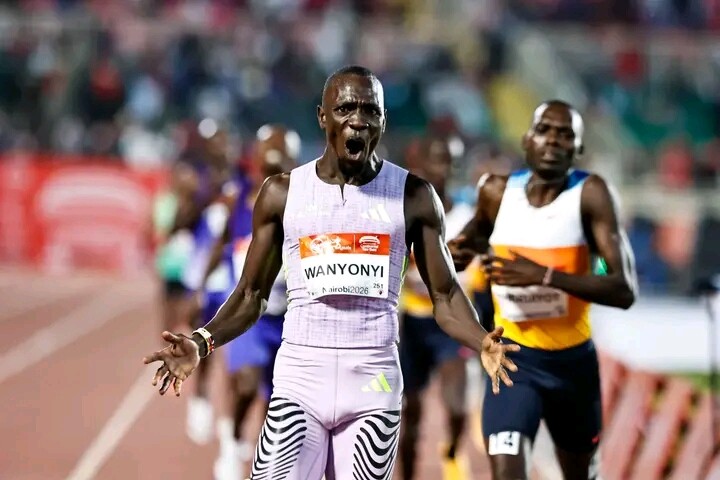
Leading the charge is Kenya's Emmanuel Wanyonyi, the reigning Olympic champion, who arrives in London riding an extraordinary wave of confidence. The 21-year-old has been virtually unstoppable in recent weeks and reminded the world of his exceptional talent when he produced a sensational 2:11.83 over 1,000m at the Monaco Diamond League on 10 July, smashing a world record that had stood for nearly three decades.
Now Wanyonyi returns to a track where he created unforgettable memories a year ago, storming to victory in a meeting-record 1:42.00. His mission this weekend is straightforward but far from easy—defend his London crown against the strongest field assembled this year.
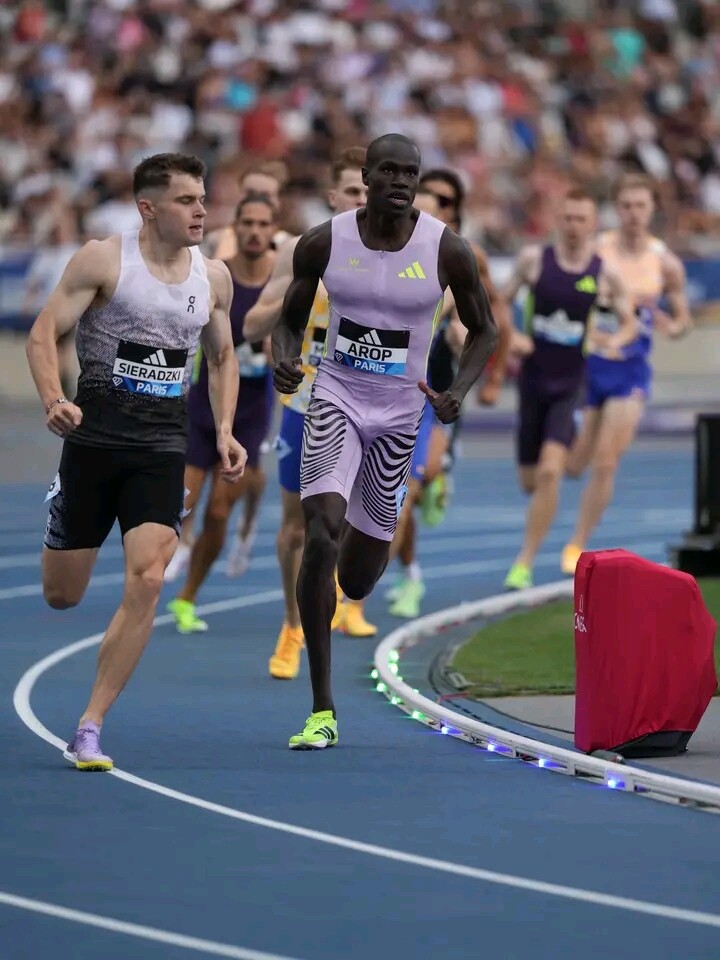
Standing in his way is Canada's Marco Arop, who has looked every bit the athlete capable of dominating the global 800m scene. The Olympic silver medallist currently owns the fastest two-lap performance in the world this season after an emphatic 1:41.84 victory at the Paris Diamond League in late June. Combining blistering speed with remarkable strength over the closing stages, Arop has established himself as one of Wanyonyi's greatest rivals.

Adding another fascinating dimension is Great Britain's Max Burgin, who will enjoy the full backing of a passionate home crowd. Burgin already proved earlier this season that Wanyonyi can be beaten, producing a stunning upset in Rabat where he claimed victory in 1:42.98. Returning to compete on home soil, he now has an even greater target in sight—Sebastian Coe's British record of 1:41.73, a mark that has stood as one of the nation's most iconic athletics achievements for decades.
But the battle extends well beyond the headline trio.
The race features one of the deepest fields of the Diamond League season, with American star Bryce Hoppel, former world champion Jake Wightman, Australian standout Peter Bol, Ireland's experienced Mark English, Britain's Ben Pattison, Norway's Tobias Grønstad, Ireland's rising talent Cian McPhillips, and Poland's Patryk Sieradzki all capable of influencing the outcome.
With so much quality assembled on one start line, there will be little room for hesitation. Every tactical decision, every move through the bell lap and every stride over the final 200 metres could determine who emerges victorious.
London has witnessed countless unforgettable 800m battles over the years, but this edition promises something truly special. A reigning Olympic champion chasing another statement victory. The world's fastest man of the season determined to confirm his dominance. A home favourite inspired by the roar of the crowd and chasing history.
When the starter's gun fires, reputations will matter little. For two laps, only courage, speed and perfectly judged tactics will decide the champion.
The countdown is over. London is ready for another classic, and the men's 800 metres promises to be nothing short of spectacular.
by Erick Cheruiyot for My Best Runs.
Login to leave a comment
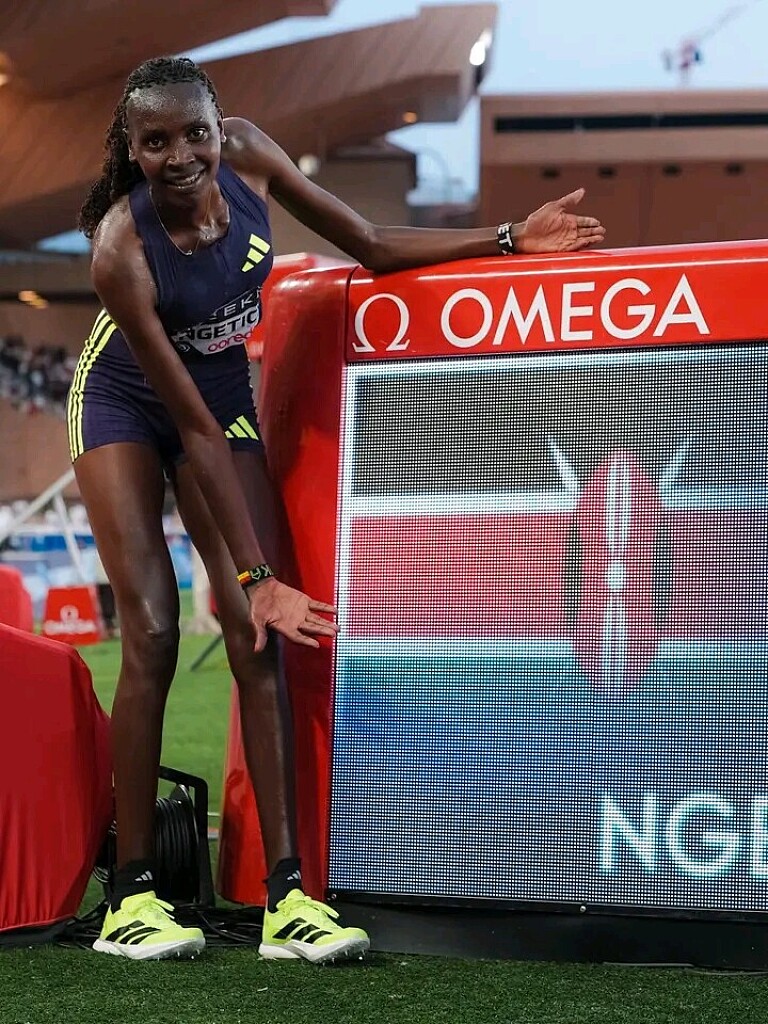
Agnes Ngetich Storms Into History as the Third-Fastest Woman Ever Over 3000m in Monaco Masterclass
Kenya's Agnes Jebet Ngetich delivered the performance of her career at the Monaco Diamond League, producing a breathtaking run that has rewritten the history books and firmly established her among the greatest women's distance runners of all time.
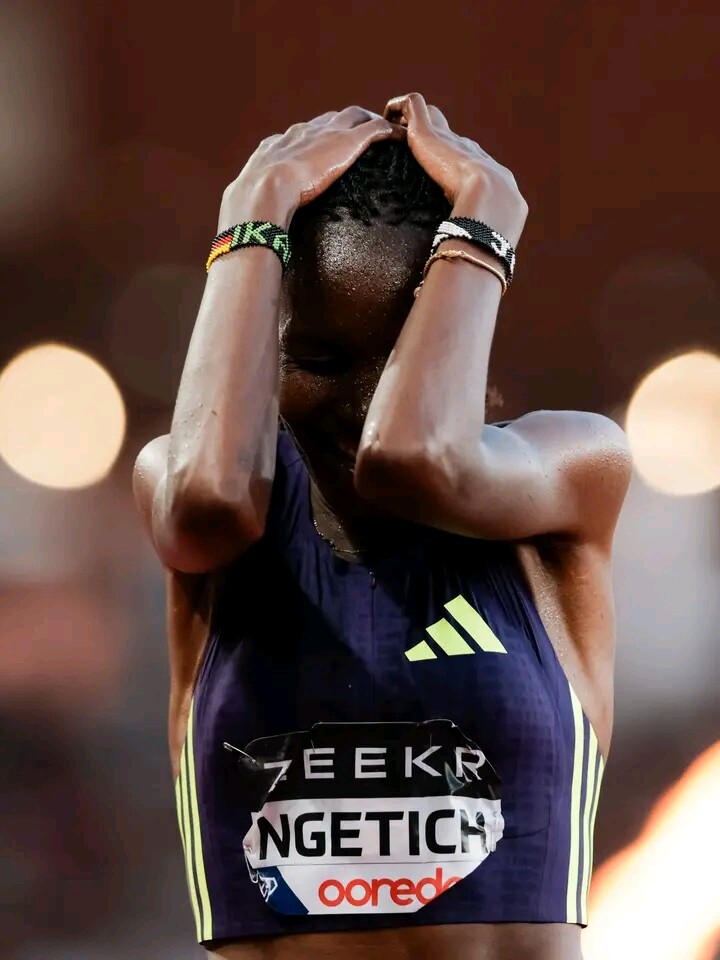
The 25-year-old clocked an astonishing 8:08.95, shattering the meeting record, setting a new personal best by more than 14 seconds, and recording the fastest women's 3000m time in the world this season. It was a sensational display that propelled her to third on the all-time world rankings, behind only China's Wang Junxia and fellow Kenyan Faith Kipyegon.
Ngetich's remarkable performance eclipsed Beatrice Chebet's 8:11.56, moving her onto the all-time podium and underlining her rapid rise as one of the sport's most formidable distance runners. Even more impressive was the fact that Monaco marked her first track race of the season, making her achievement all the more extraordinary.
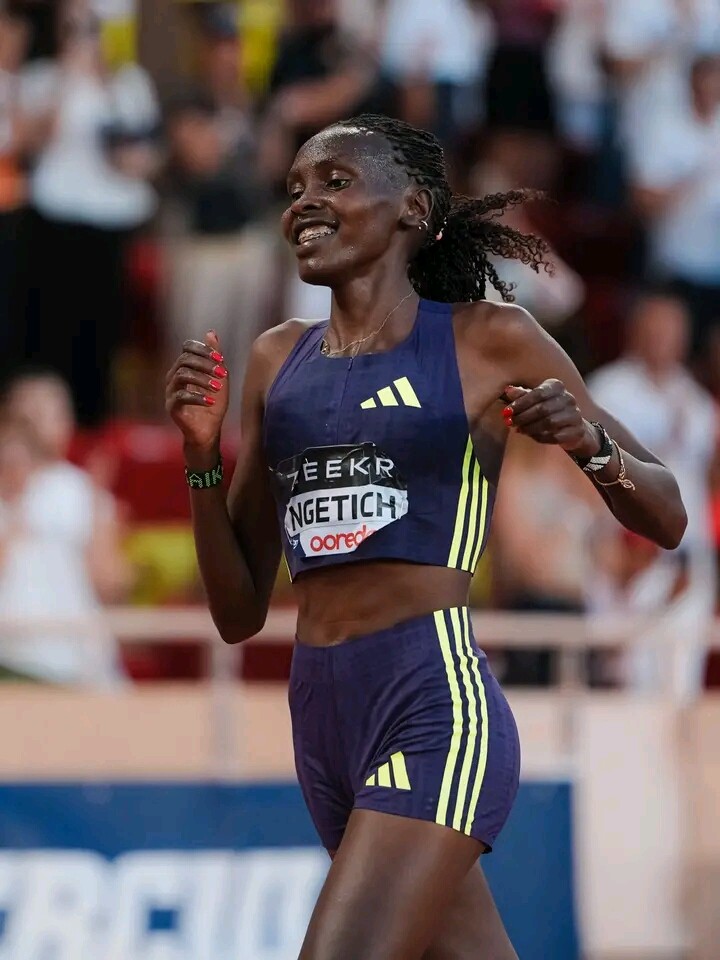
The race also highlighted Kenya's remarkable dominance in the event. For the first time in history, three Kenyan women now occupy three of the top four fastest performances ever recorded over 3000 metres—Faith Kipyegon, Agnes Ngetich, and Beatrice Chebet—cementing the nation's position as the global powerhouse in women's distance running.
Ngetich crossed the finish line alone in 8:08.95, while Ethiopia's Aleshign Baweke finished second in a personal best of 8:23.81, followed by compatriot Senayet Getachew, who also set a lifetime best of 8:24.02. Olympic champion Faith Kipyegon placed fourth in 8:24.21, her fastest performance of the season.
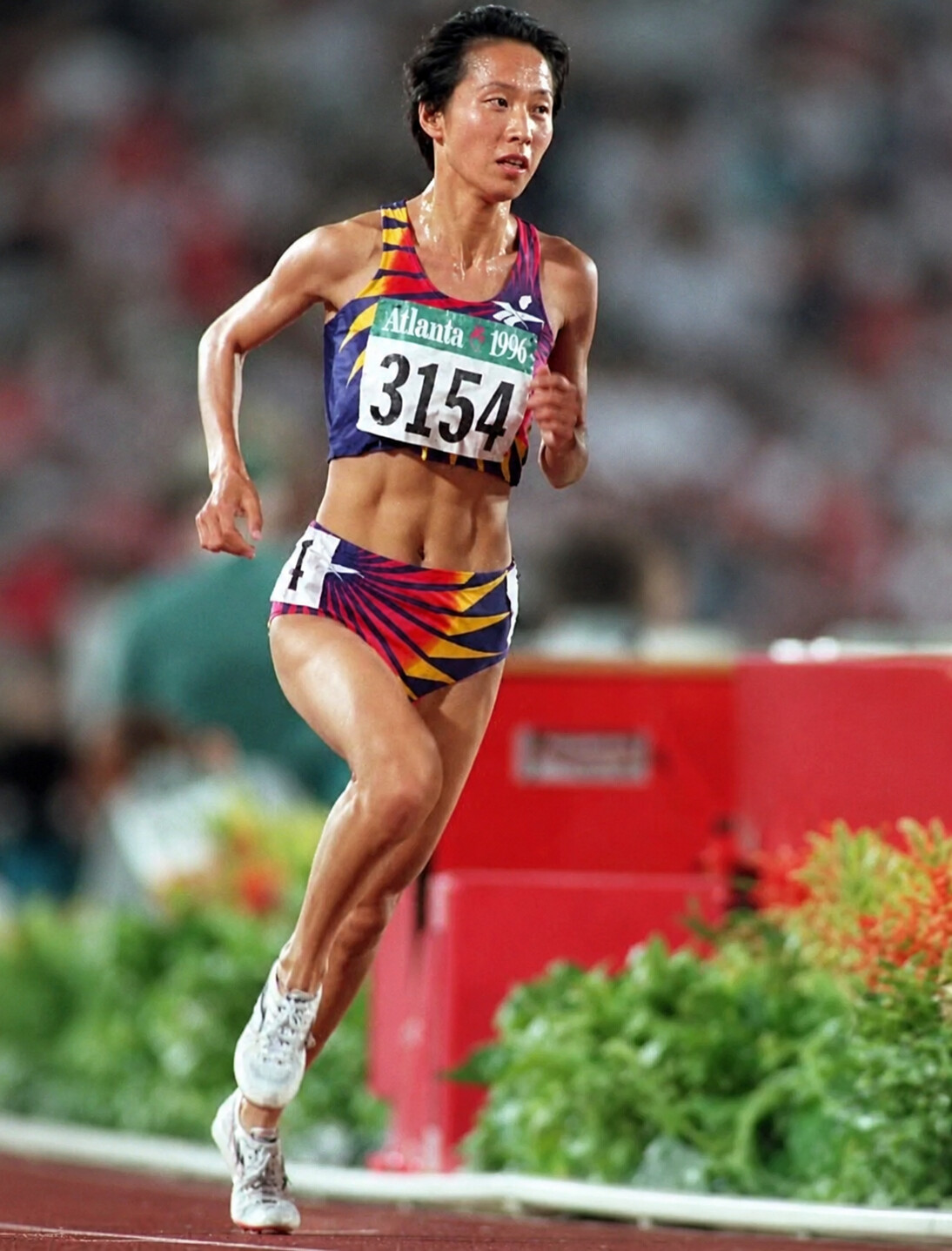
Ngetich's stunning run has also reignited one of athletics' longest-standing discussions—the pursuit of Wang Junxia's legendary world record.
Wang produced her iconic 8:06.11 in Beijing on 13 September 1993, a mark that has now stood for 33 years. It remains tdata:text/mce-internal,higgles,Wang%20Junxiahe oldest women's world record over a major distance still on the books and the final surviving global mark from an extraordinary week at the Chinese National Games.
That championship became one of the most controversial chapters in athletics history. Under coach Ma Junren, six Chinese women combined to produce 14 world-record performances across the 1500m, 3000m, and 10,000m in what became an unprecedented display of dominance. While the performances stunned the sporting world, they also sparked questions that have lingered for decades.
Since then, two of those historic world records have fallen. Ethiopia's Almaz Ayana erased the women's 10,000m record, while compatriot Genzebe Dibaba broke the 1500m world record in Monaco. Wang's 8:06.11 over 3000 metres is now the only record from that remarkable week that continues to stand.
For years, the record appeared untouchable. That perception has changed dramatically over the past 12 months.
Last August in Poland, Faith Kipyegon came within just 0.93 seconds of the record when she stormed to 8:07.04, the closest any athlete has ever come to surpassing Wang's mark. Earlier, Beatrice Chebet had produced 8:11.56 in Rabat to become one of the fastest women in history. Now, Agnes Ngetich has joined them with her sensational 8:08.95, creating an unprecedented era for women's distance running.
Kipyegon has made no secret of her ambition to attack the world record, while Chebet possesses the endurance, speed, and finishing strength to challenge it. With Ngetich now emerging as another genuine contender, the once-daunting gap has virtually disappeared. A record that remained more than ten seconds beyond reach for an entire generation is now separated from the world's best by less than a second.
Some world records survive because they are simply extraordinary. Others endure because the right challengers never arrive. Wang Junxia's 3000m record now faces relentless pressure from an exceptional generation of Kenyan athletes who have transformed the event.
If Monaco was any indication, the countdown has truly begun. After 33 years of survival, one of athletics' most iconic and debated world records has never looked more vulnerable. With Faith Kipyegon, Beatrice Chebet, and now Agnes Ngetich all closing in, the race to rewrite history may soon reach its unforgettable conclusion.
by Erick Cheruiyot for My Best Runs.
Login to leave a comment
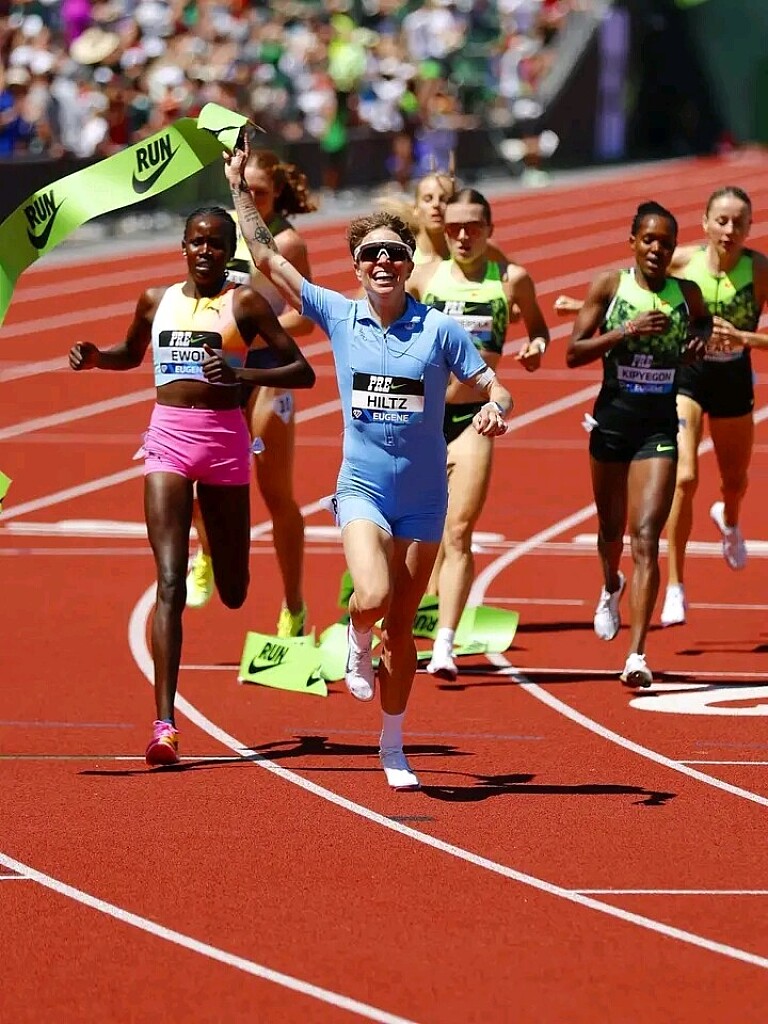
Faith Kipyegon's Five-Year Unbeaten Run Ends as Nikki Hiltz Shatters Meet Record at Prefontaine Classic
One of the biggest shocks of the 2026 athletics season unfolded at Hayward Field as Kenya's middle-distance queen, Faith Kipyegon, suffered her first defeat over the 1500m/mile on the track since the 2021 Rome Diamond League, bringing an end to an extraordinary unbeaten streak that had lasted nearly five years.
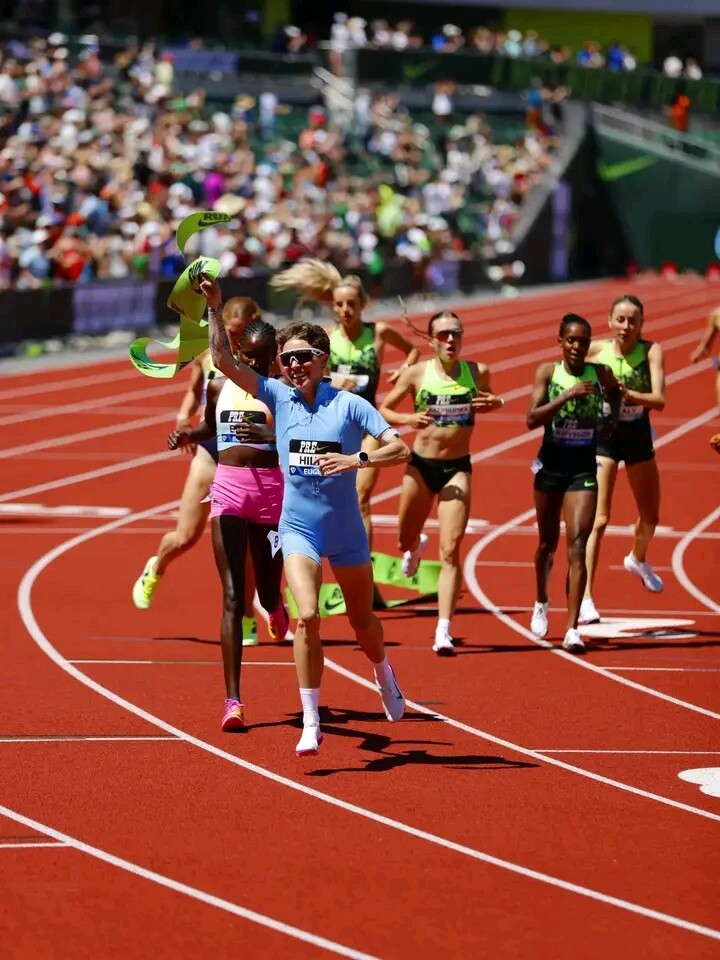
The athlete who ended that remarkable run was American star Nikki Hiltz, who produced the race of a lifetime to win the women's mile in a world-leading 4:17.49. Backed by a roaring home crowd, Hiltz timed the race to perfection before unleashing a decisive finishing kick to secure one of the most significant victories of her career.
The victory carried even greater significance as Hiltz also erased a 38-year-old Prefontaine Classic meet record, adding another historic milestone to an unforgettable evening at Hayward Field.
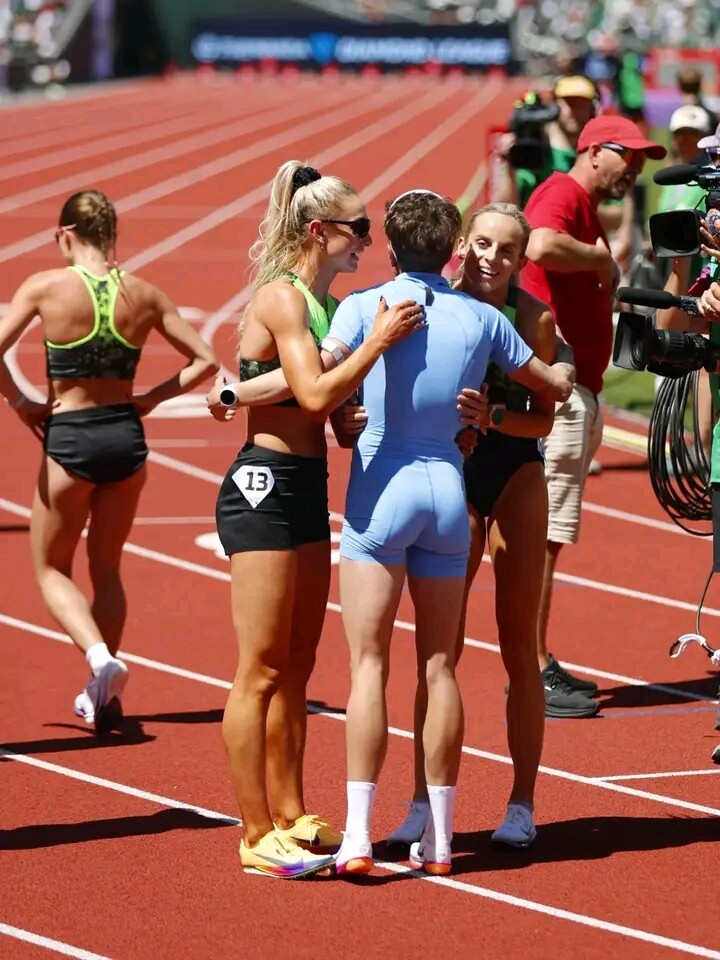
Kenya still had reason to celebrate as Dorcus Ewoi delivered an exceptional performance to finish second in 4:17.62, proving she belongs among the world's elite middle-distance runners.
Kipyegon, widely regarded as the greatest female middle-distance runner in history, battled bravely over the final lap but could not produce her trademark finishing burst. She crossed the line third in 4:17.80, a rare result for the five-time world champion and multiple Olympic gold medalist.
The remarkable depth of the race was evident throughout the field. Poland's Klaudia Kazimierska placed fourth in 4:17.90, narrowly ahead of Australia's Jessica Hull, who finished fifth in 4:18.03. Emily Mackay, Sarah Healy, and Georgia Hunter Bell completed a world-class lineup in one of the fastest mile races of the season.
While Kipyegon's third-place finish will undoubtedly generate headlines, it does little to diminish a legacy built on years of unmatched consistency and dominance. Every great champion eventually faces defeat, and the Kenyan icon has repeatedly shown an extraordinary ability to respond with even greater performances.
For Nikki Hiltz, however, this was far more than just another Diamond League victory. Ending Kipyegon's unbeaten run, setting a world-leading time, and breaking a meet record that had stood for nearly four decades is a defining statement ahead of the season's major championships.
The result has injected fresh excitement into women's middle-distance running, serving as a reminder that even the sport's greatest champions can be challenged. As the championship season approaches, the battle for global supremacy has suddenly become far more open—and far more compelling.
by Erick Cheruiyot for My Best Runs.
Login to leave a comment
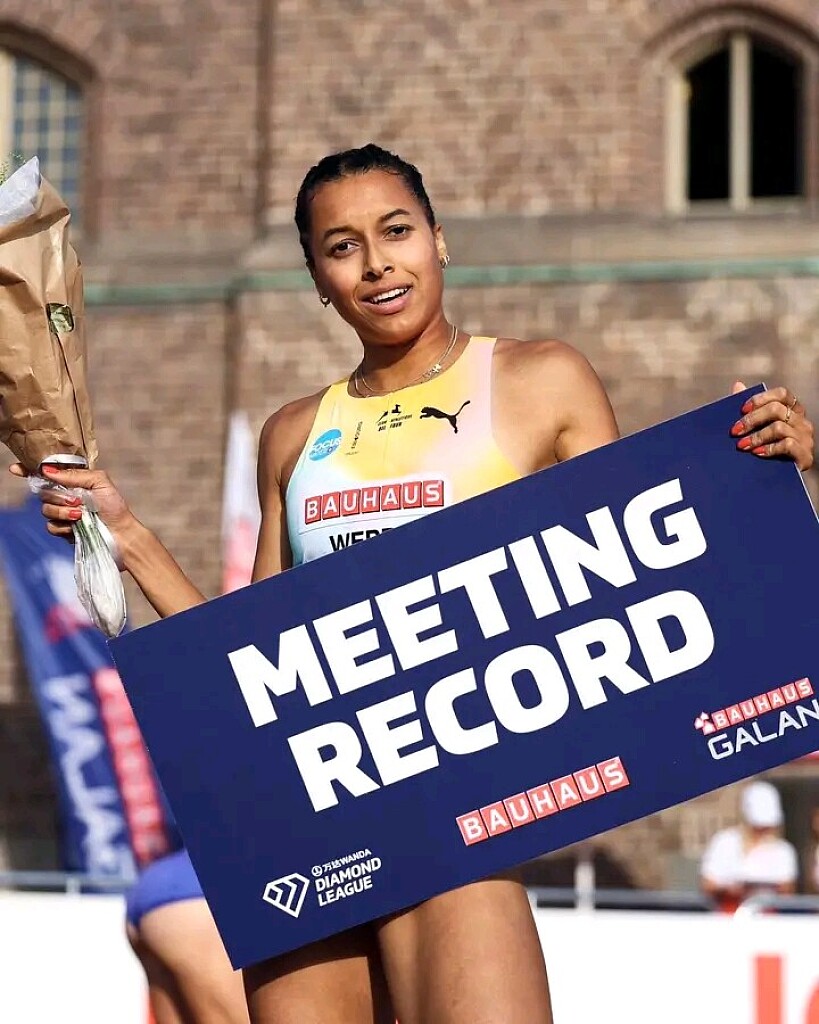
STOCKHOLM SHOCKWAVE: AUDREY WERRO BLASTS 1:53.98 IN ONE OF THE FASTEST 800M RACES EVER RUN
Stockholm delivered pure middle-distance history as the Wanda Diamond League witnessed a truly extraordinary women’s 800m—one that will be remembered as one of the fastest races in the event’s modern era.
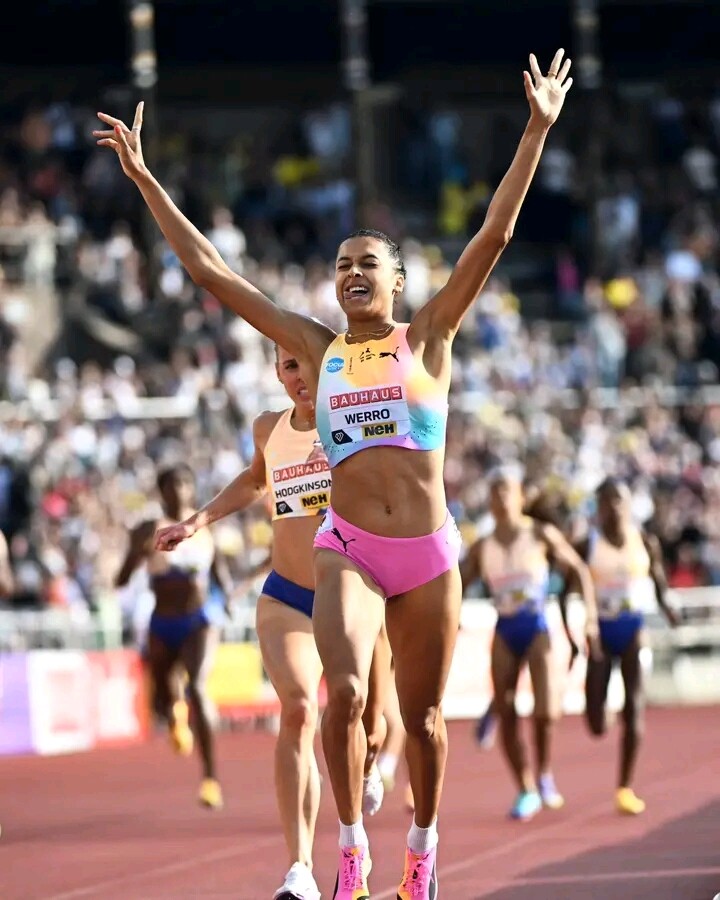
Switzerland’s rising star Audrey Werro produced the performance of her life, storming to victory in a breathtaking 1:53.98, a world-leading mark and a national record. In doing so, she became the third-fastest woman in history over 800m, coming within just 0.70 seconds of the legendary world record of 1:53.28 set by Jarmila Kratochvílová in 1983.
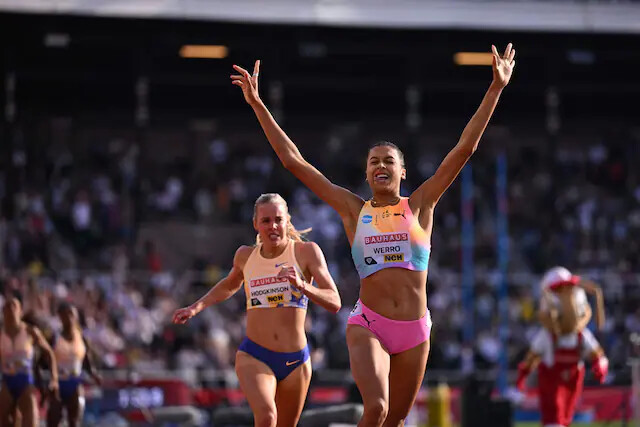
It was a fearless, perfectly timed run—controlled early, explosive down the back straight, and devastating in the final 200 metres as Werro pulled away in a finish of historic quality.
Right behind her, Keely Hodgkinson from Great Britain once again proved her consistency at the very highest level. The British star delivered a sensational 1:54.33, setting a new British national record and securing her place as the third-fastest woman in history. Despite finishing second, her performance was another statement of world-class dominance in a golden era for women’s 800m running.
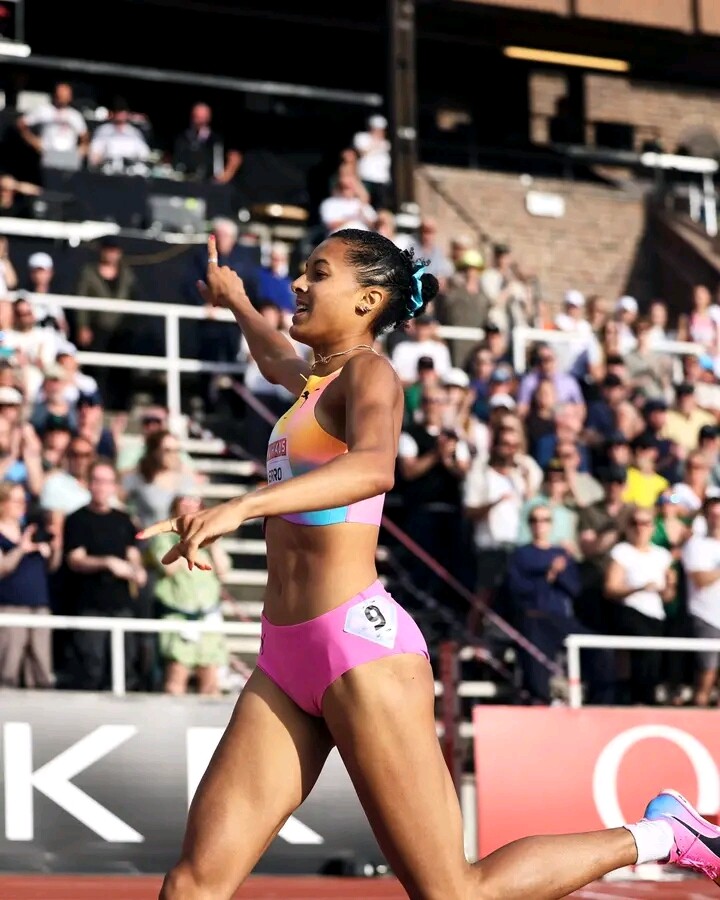
Behind the leading duo, the rest of the field produced high-quality performances in a race where almost every athlete was pushed to season’s or personal best levels.
Official Results – Women’s 800m (Stockholm DL)
1. Audrey Werro — Switzerland — 1:53.98 (WL, NR)
2. Keely Hodgkinson — Great Britain — 1:54.33 (NR)
3. Roisin Willis — United States — 1:57.56 (PB)
4. Anaïs Bourgoin — France — 1:57.68
5. Prudence Sekgodiso — South Africa — 1:57.70
6. Anna Wielgosz — Poland — 1:57.92 (PB)
7. Raevyn Rogers — United States — 1:57.94 (SB)
8. Sage Hurta-Klecker — United States — 1:58.26
9. Nigist Getachew — Ethiopia — 1:58.59
10. Pernille Karlsen Antonsen — Norway — 1:58.82 (PB)
11. Gabriela Gajanová — Slovakia — 2:02.88
DNF. Rachel Klopfenstein (Pacer)
From start to finish, the race unfolded at an unforgiving pace, with the front pack shredding expectations and rewriting the limits of women’s 800m running. Multiple athletes dipped under 1:58, highlighting just how exceptional the conditions and competition were.
As the dust settles in Stockholm, one question now rises above the rest: are we witnessing the beginning of a new era where the long-standing world record from 1983 finally comes under serious threat?
If this race is any indication, history may not only be under pressure—it may already be closing in.
by Erick Cheruiyot for My Best Runs.
Login to leave a comment
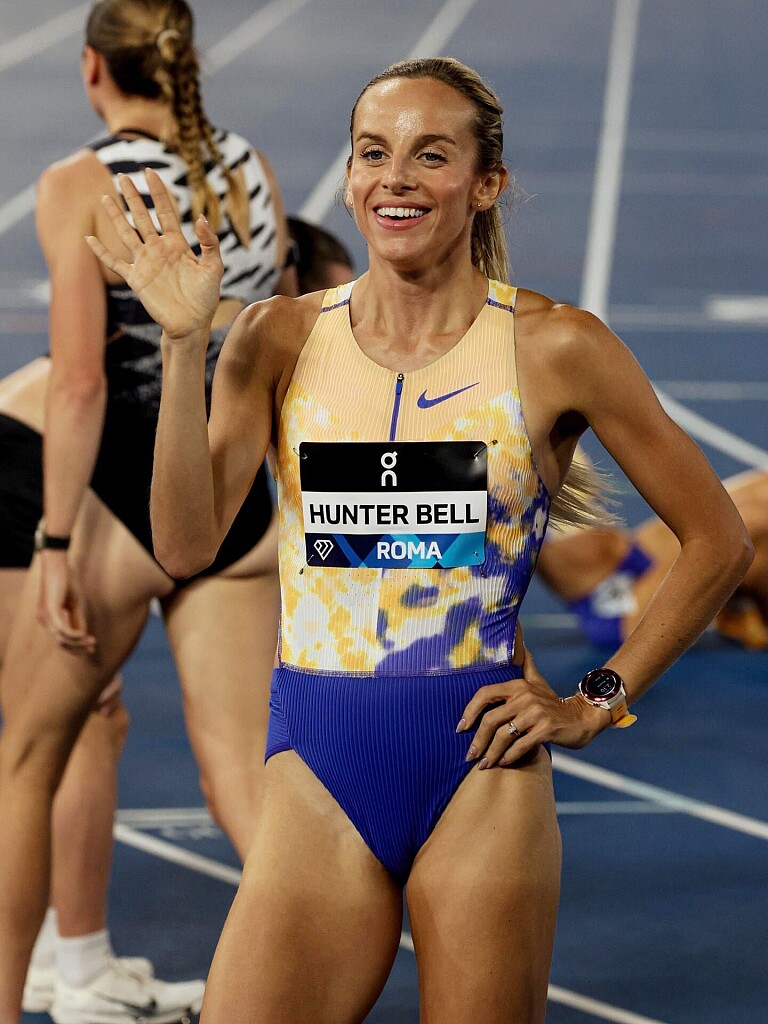
Champion's Class on Display as Hunter Bell Storms to 1500m Glory in Rome
Fresh from her World Indoor Championship triumph, Georgia Hunter Bell proved once again why she is one of the most formidable middle-distance runners in the world, producing a commanding performance to win the women's 1500m at the Rome Diamond League.
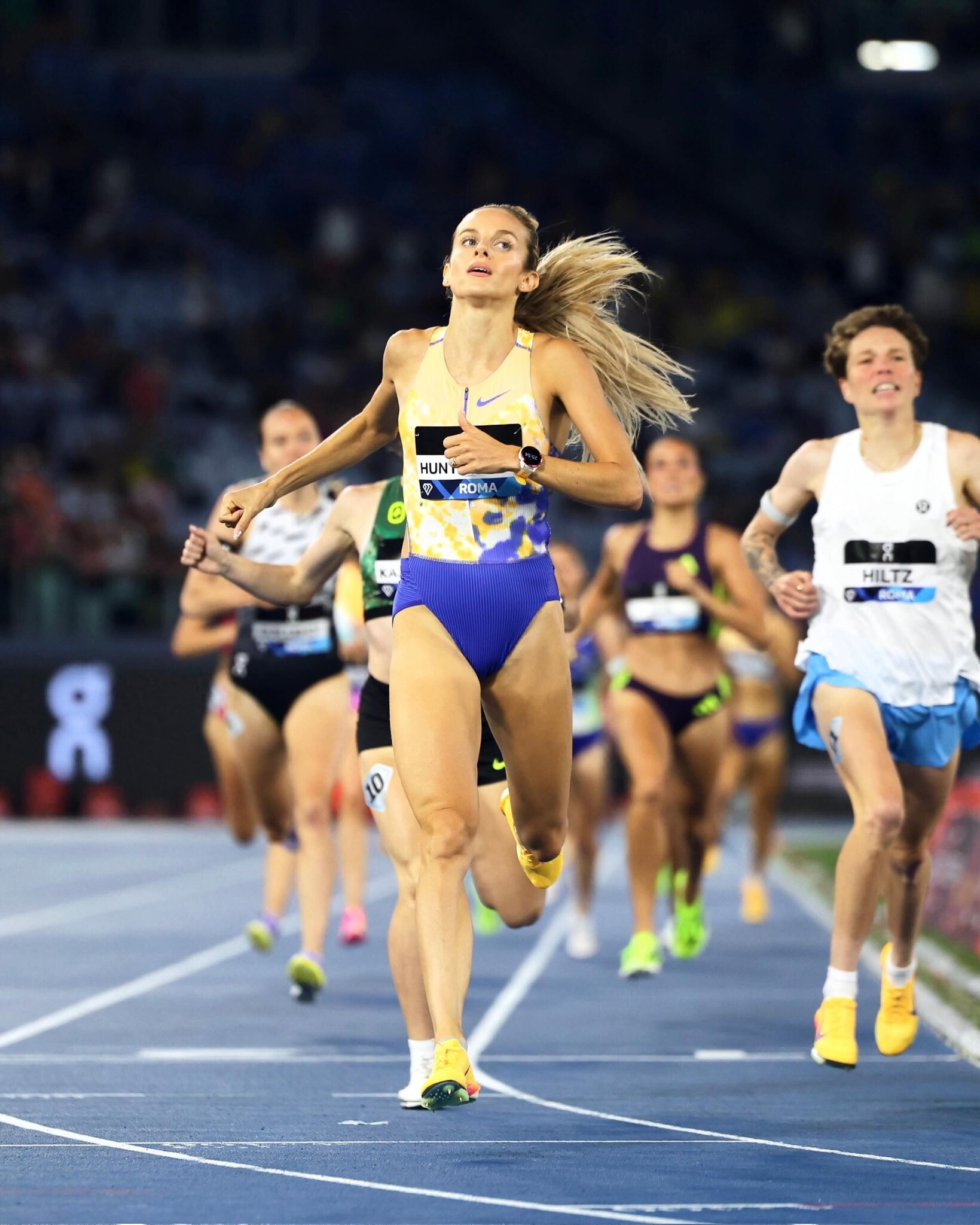
The British star showcased both patience and power as she expertly navigated a highly competitive field before unleashing a decisive surge over the final 700 metres. With the race hanging in the balance entering the closing stages, Hunter Bell shifted gears and gradually separated herself from her rivals, leaving no doubt about the outcome as she crossed the finish line in an impressive 3:58.63.
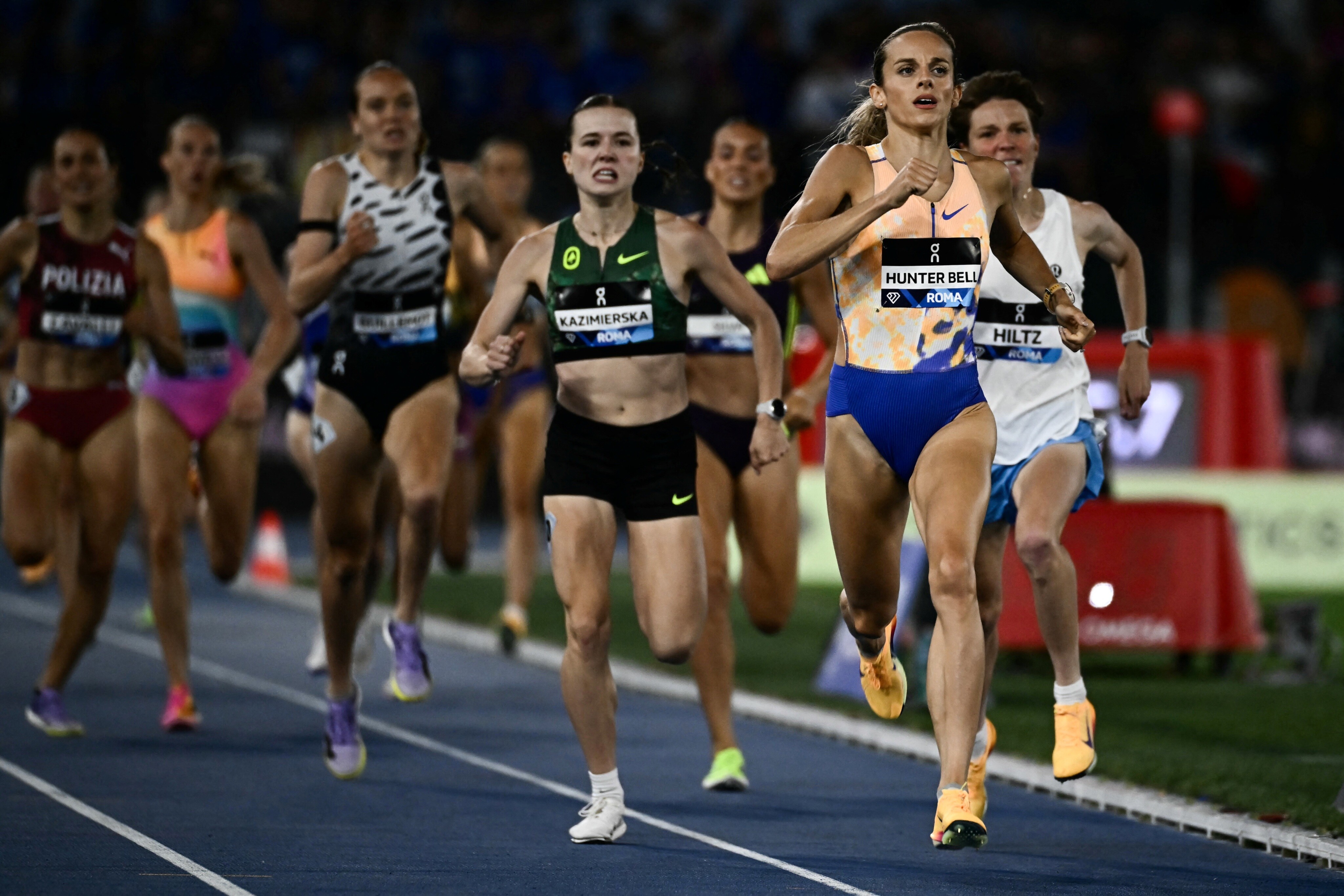
Her victory marked a successful return to Diamond League competition following her World Indoor title, underlining her growing reputation as a championship performer capable of delivering on the biggest stages.
Behind her, the battle for the remaining podium places provided plenty of drama. Poland's Klaudia Kazimierska produced a strong finishing kick in the home straight, timing her run to perfection before edging past American Nikki Hiltz in a thrilling lean at the finish line.
Kazimierska secured second place in a personal-best 3:59.24, narrowly defeating Hiltz, who was credited with third in 3:59.26 after one of the closest finishes of the evening.
The race highlighted the exceptional depth currently present in women's middle-distance running, with three athletes breaking the four-minute barrier in a contest that combined tactical awareness with blistering finishing speed.
For Hunter Bell, however, the night belonged entirely to her. The reigning World Indoor champion arrived in Rome carrying the momentum of a breakthrough season and departed with another major victory, sending a clear message to her rivals that she remains a force to be reckoned with as the outdoor campaign gathers momentum.
With confidence soaring and championship pedigree already established, Hunter Bell's dominant display in the Italian capital suggests there may be even bigger performances still to come in 2026.
by Erick Cheruiyot for My Best Runs.
Login to leave a comment
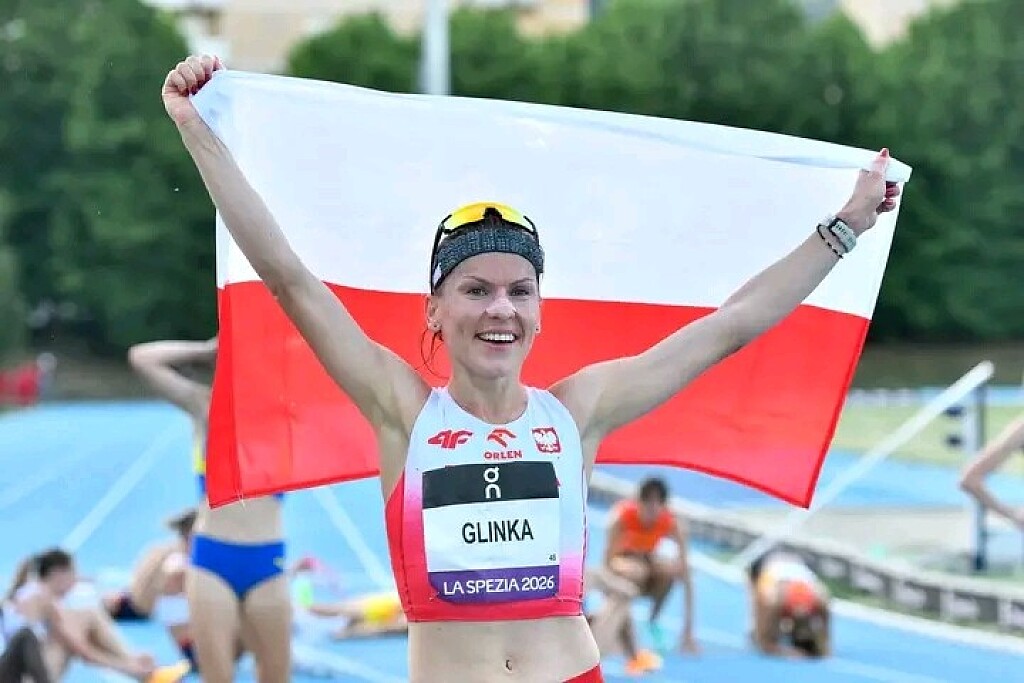
Ela Glinka Strikes Gold in Spezia as Years of Perseverance Deliver a Historic Triumph for Poland
Polish distance runner Ela Glinka produced the performance of her career at the European 10,000m Cup in Spezia, Italy, capturing a historic gold medal while smashing her personal best in a remarkable display of determination and resilience.
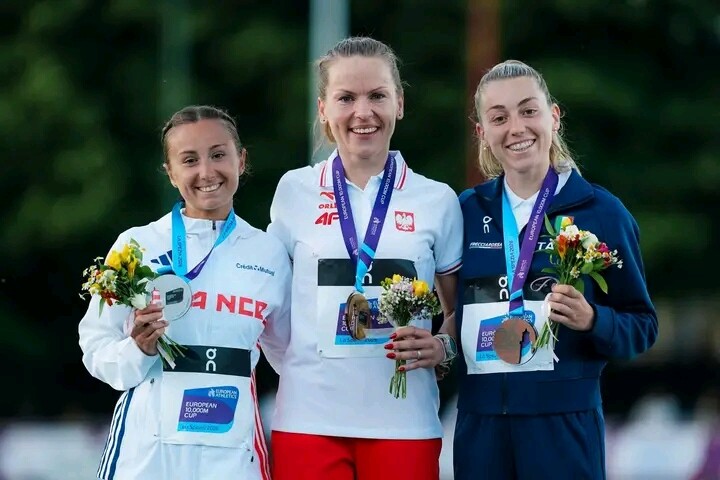
Glinka crossed the finish line in an outstanding 31:45.37, a time that not only marked a significant personal breakthrough but also secured the qualifying standard for the upcoming European Championships in Birmingham. Her victory added another memorable chapter to Polish athletics, earning the nation a prestigious gold medal on one of Europe's biggest distance-running stages.
The achievement carried far greater significance than the medal itself. As the Polish national anthem echoed across the podium during the medal ceremony, it symbolized the culmination of years of relentless effort, sacrifice, and unwavering belief. Behind the golden moment stood countless training sessions, difficult setbacks, periods of self-doubt, and the courage to continually search for solutions when progress seemed elusive.
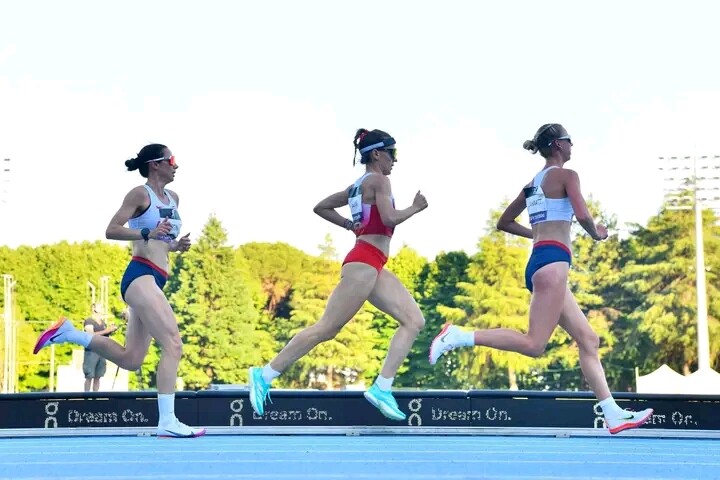
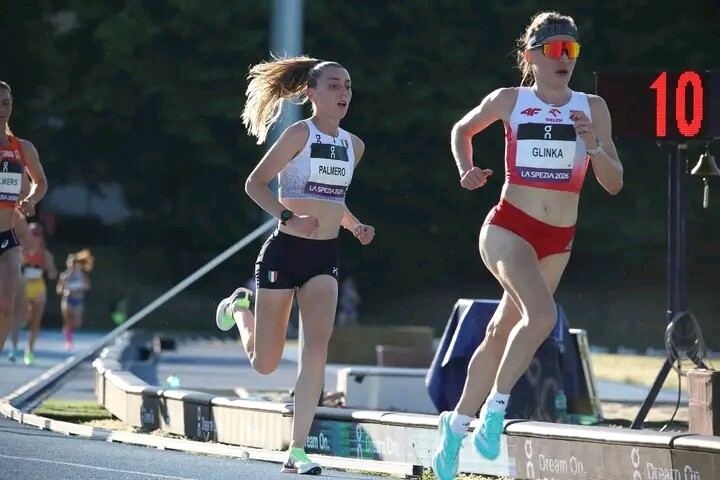
For Glinka, the road to Spezia was far from straightforward. Like many elite athletes, she faced moments when success appeared distant, requiring her to take risks, invest in her development, and push through barriers that might have discouraged others. Yet those challenges ultimately became the foundation of her breakthrough performance.
Her victory in Italy now stands as one of the most significant achievements of her career and a proud milestone for Polish athletics. More importantly, it serves as proof that persistence can transform years of hard work into unforgettable success.
With her European Championship qualification secured and confidence at an all-time high, Glinka's historic triumph in Spezia may prove to be only the beginning of an even greater chapter. The gold medal is a reward for everything she has overcome—but it is also a powerful source of motivation for what lies ahead.
by Erick Cheruiyot for My Best Runs.
Login to leave a comment
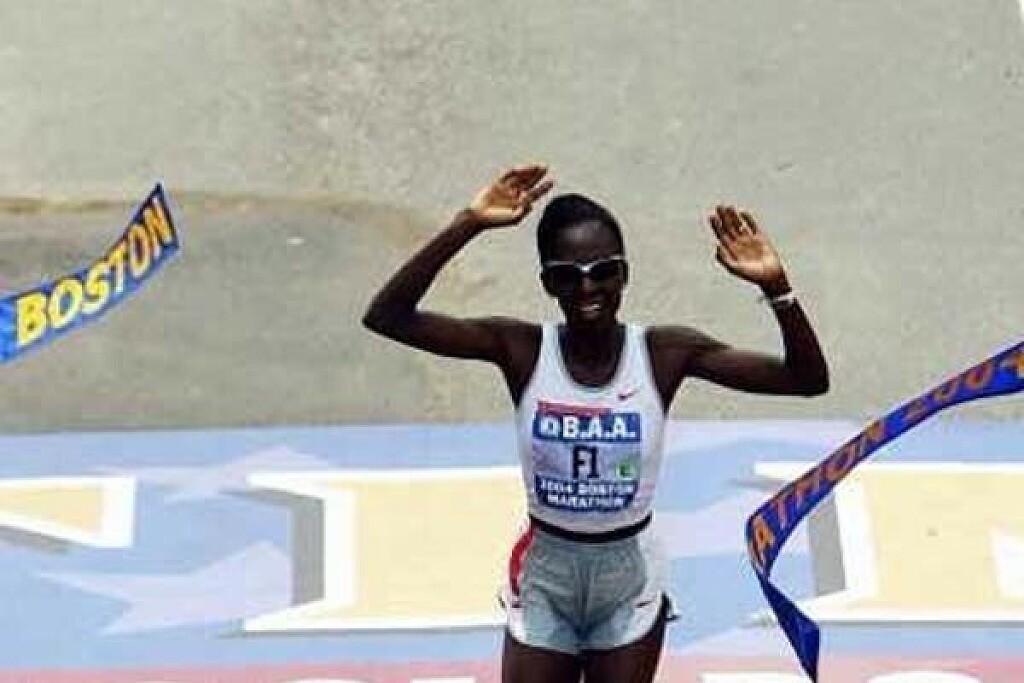
Silver Jubilee of Greatness: Remembering Catherine Ndereba’s Brilliant 2001 Boston Marathon Triumph
Twenty-five years ago, the streets of Boston witnessed the rise of one of long-distance running’s greatest queens. On a day like today, April 16, 2001, Kenya’s legendary Catherine Ndereba delivered a masterclass of endurance, strength, and tactical brilliance to win the women’s race at the prestigious Boston Marathon.
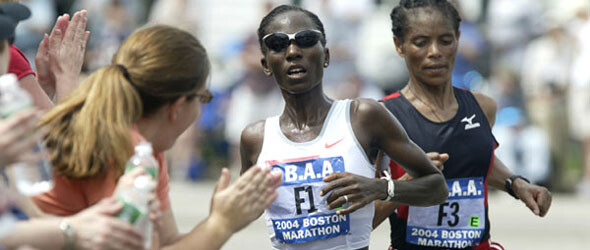
Ndereba crossed the finish line in an outstanding 2:23:53, securing a memorable victory and confirming her place among the world’s elite marathoners. It was a performance built on discipline and resilience, as she conquered the famous Boston course with the confidence of a champion.
Behind the Kenyan star came Poland’s Małgorzata Sobańska, who claimed second place in 2:26:42, while Russia’s Lyubov Mogunova completed the podium in 2:27:18 after a determined run.

The race also highlighted the depth of African excellence, with Kenya’s Lornah Kiplagat finishing fourth in 2:27:56, while Ethiopia’s Fatuma Roba took fifth in 2:28:08.
Further down the top ten were Russia’s Irina Timofeyeva (2:28:50), Lyudmila Petrova (2:29:23), China’s Wei Yanan (2:29:52), Italy’s Bruna Genovese (2:30:39), and Japan’s Kaori Tanabe, who rounded out the top ten in 2:31:31.
Ndereba’s victory was more than just another race win—it was the beginning of an unforgettable legacy in Boston. She would go on to become one of the most celebrated marathon runners in history, admired for her grace, consistency, and remarkable ability to shine on the biggest stages.
A quarter of a century later, her 2001 triumph remains a proud chapter in Kenyan athletics history and a reminder that true greatness never fades.
by Erick Cheruiyot for My Best Runs.
Login to leave a comment
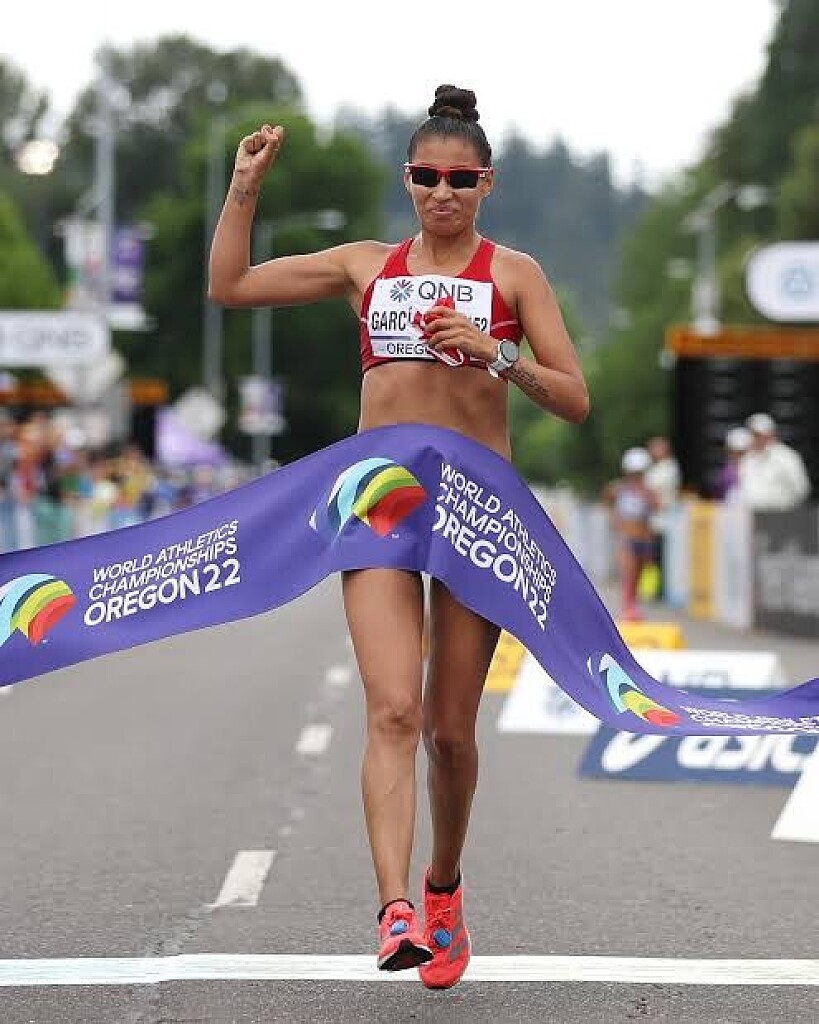
New Era Unfolds in Brasília as Race Walking Stars Chase Historic Half Marathon Glory
A fresh chapter in global race walking is set to be written in Ciaxa World Athletics Race Walking Team Championships Brasília 26, where the women’s half marathon makes its long-awaited championship debut in the Brazilian Capital. On Sunday, April 12, the Brazilian capital will host a compelling mix of proven champions and rising contenders, all navigating the uncertainty of a distance that promises both opportunity and unpredictability.
With 74 athletes representing 28 nations, the race introduces a new tactical dimension to elite race walking. The one-kilometre loop course in Brasília will test not only endurance and pacing but also adaptability, as athletes transition from the traditional 20km format to this slightly longer challenge.
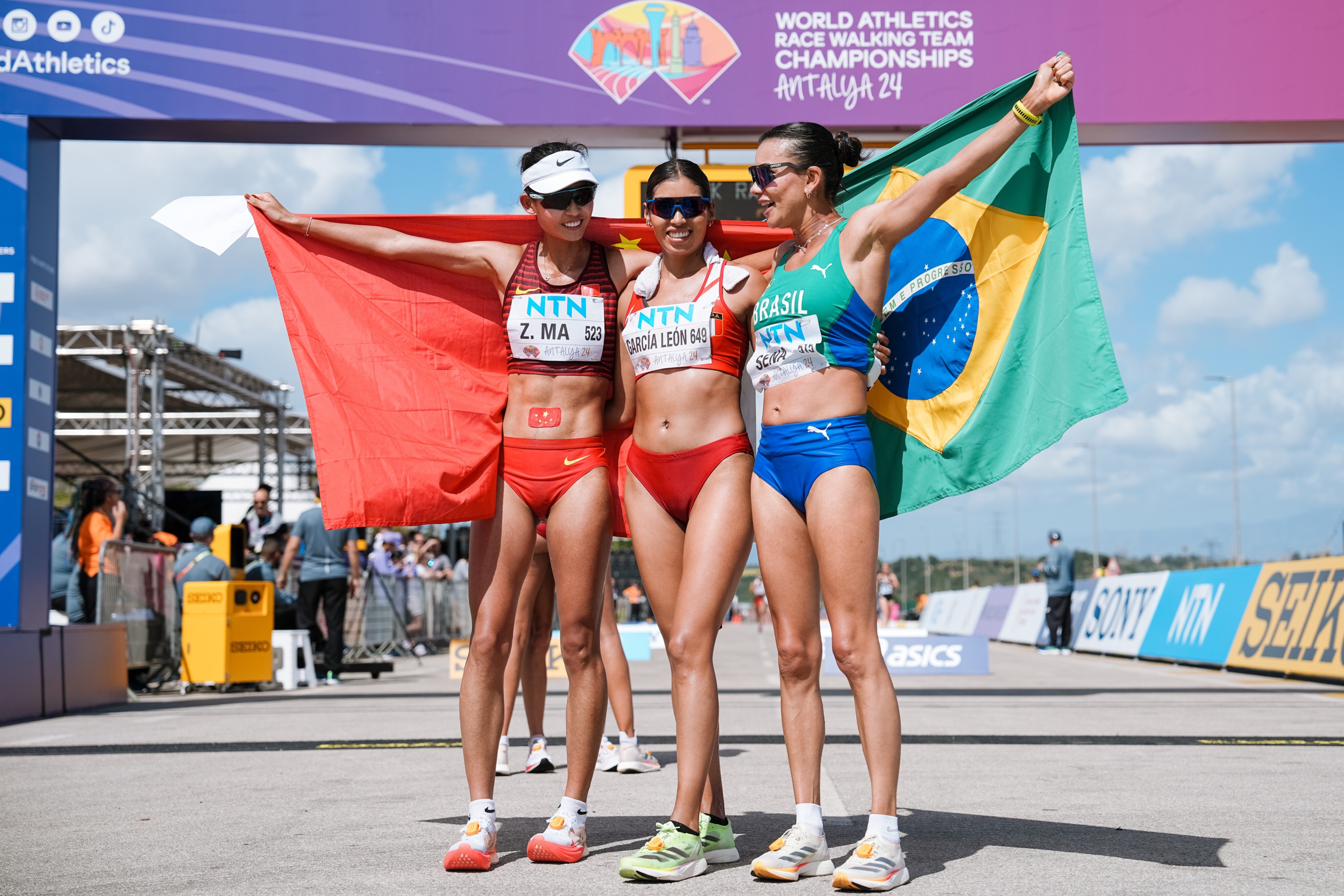
Leading the charge is Peru’s Kimberly García, a double world champion from 2022 and the reigning 20km champion from the previous edition. García has opened her 2026 season in impressive fashion, clocking a personal best of 1:34:17 at Dudince, underlining her readiness to contend for top honours. Her consistency and championship pedigree make her one of the standout names heading into this historic race.
She is joined by compatriot Evelyn Inga, who arrives with momentum after a breakthrough victory at the Dudinská 50, where she set a South American record of 1:33:49. Together, the Peruvian duo not only strengthens their individual medal prospects but also boosts their nation’s chances in the team standings, having narrowly missed out on the title in the previous championships.
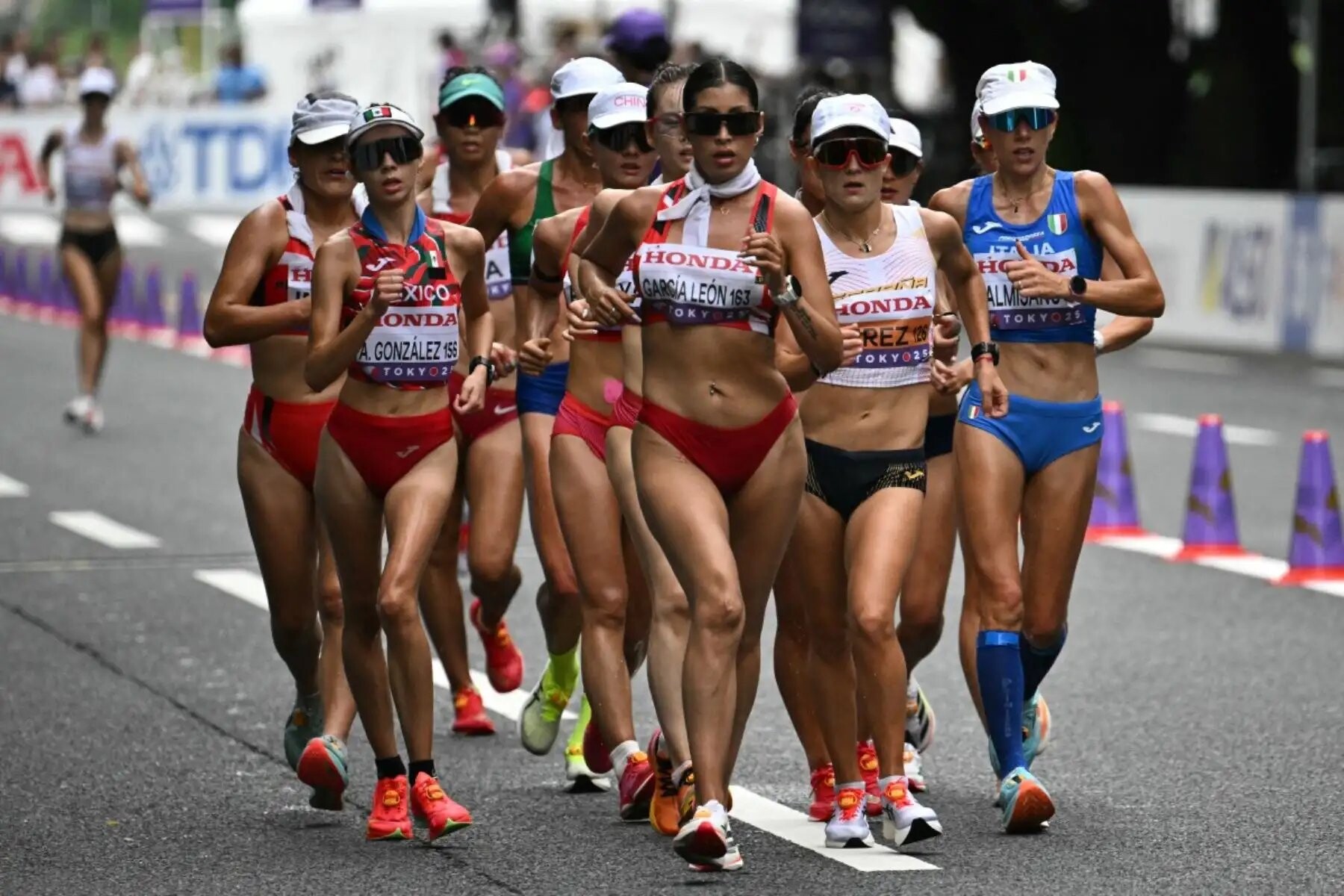
China, however, looms large once again. With exceptional depth, the Asian powerhouse fields five of the six fastest entrants. At the forefront is Ji Haiying, who leads the field with a world-class 1:32:22 recorded in Taicang. She is closely backed by Guo Na (1:32:24) and Dou Maocuo (1:32:27), forming a formidable trio that places China as overwhelming favourites for the team crown.
Spain’s Antía Chamosa adds further intrigue. The 26-year-old has steadily climbed the ranks and enters the championships in peak form after securing the national title with a personal best of 1:33:45. Her progression, combined with a strong showing at recent global events, suggests she could be a serious threat in this new format.
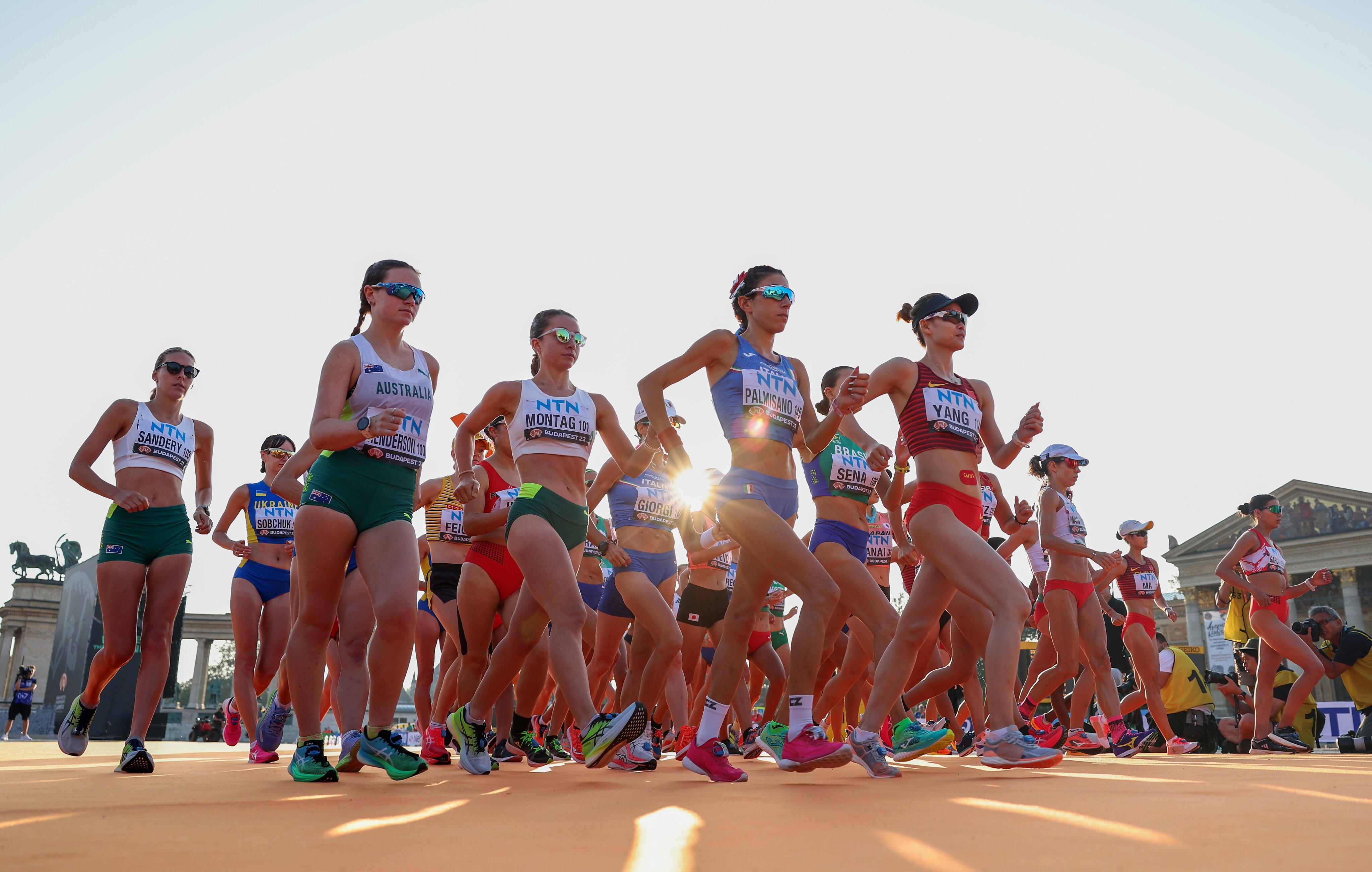
Meanwhile, Poland’s Katarzyna Zdziebło brings invaluable experience. A double world silver medallist, she thrives in high-pressure championship races. Although yet to record a time over the half marathon distance, her tactical awareness and finishing strength could prove decisive in what is expected to be a closely contested race.
Australia also enters the fray with genuine medal ambitions. Rebecca Henderson recently surged to a personal best of 1:32:25 to claim her national title, placing her among the fastest in the field. Alongside her, Olivia Sandery adds depth, having finished second domestically with 1:34:09, ensuring Australia remains competitive in both individual and team battles.
Elsewhere, Mexico’s Alejandra Ortega—third in Dudince—continues to show consistent form, while France’s emerging talent Pauline Stey is steadily gaining ground on the global stage and could challenge the established names.
Italy’s Nicole Colombi remains an intriguing wildcard, having entered both the half marathon and marathon events, with her final decision still pending.
Notably absent, however, are two of the sport’s biggest names: Spain’s double world champion María Pérez and Italy’s Olympic champion Antonella Palmisano. Their absence leaves the podium wide open, creating a rare opportunity for new champions to emerge.
As the sport embraces this new distance, Brasília stands as the stage for innovation, ambition, and history. With no established blueprint for success, the women’s half marathon promises a race defined not just by speed, but by strategy, resilience, and the courage to master the unknown.
by Erick Cheruiyot for My Best Runs.
Login to leave a comment
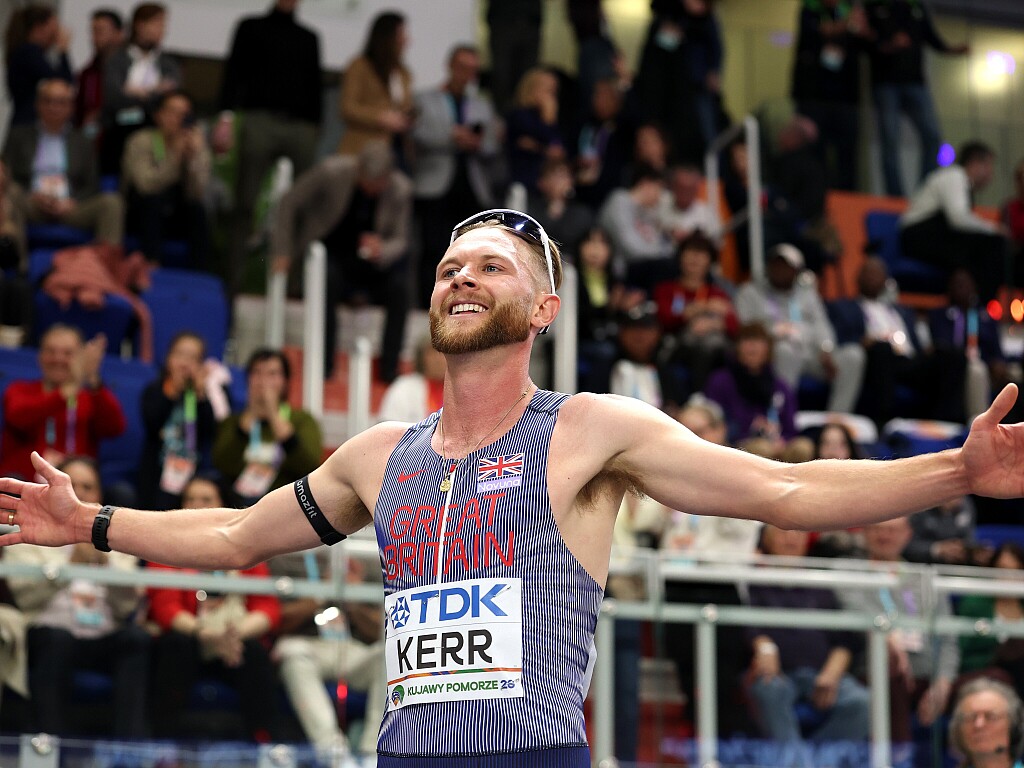
Project 222: Josh Kerr’s Relentless Chase of a 27-Year Mile Legacy
With unwavering belief and calculated precision, Josh Kerr is preparing to confront one of the most revered records in athletics—the 3:43.13 mile world record set by Hicham El Guerrouj in 1999. A performance that has stood unchallenged for 27 years now faces a serious and deliberate assault.
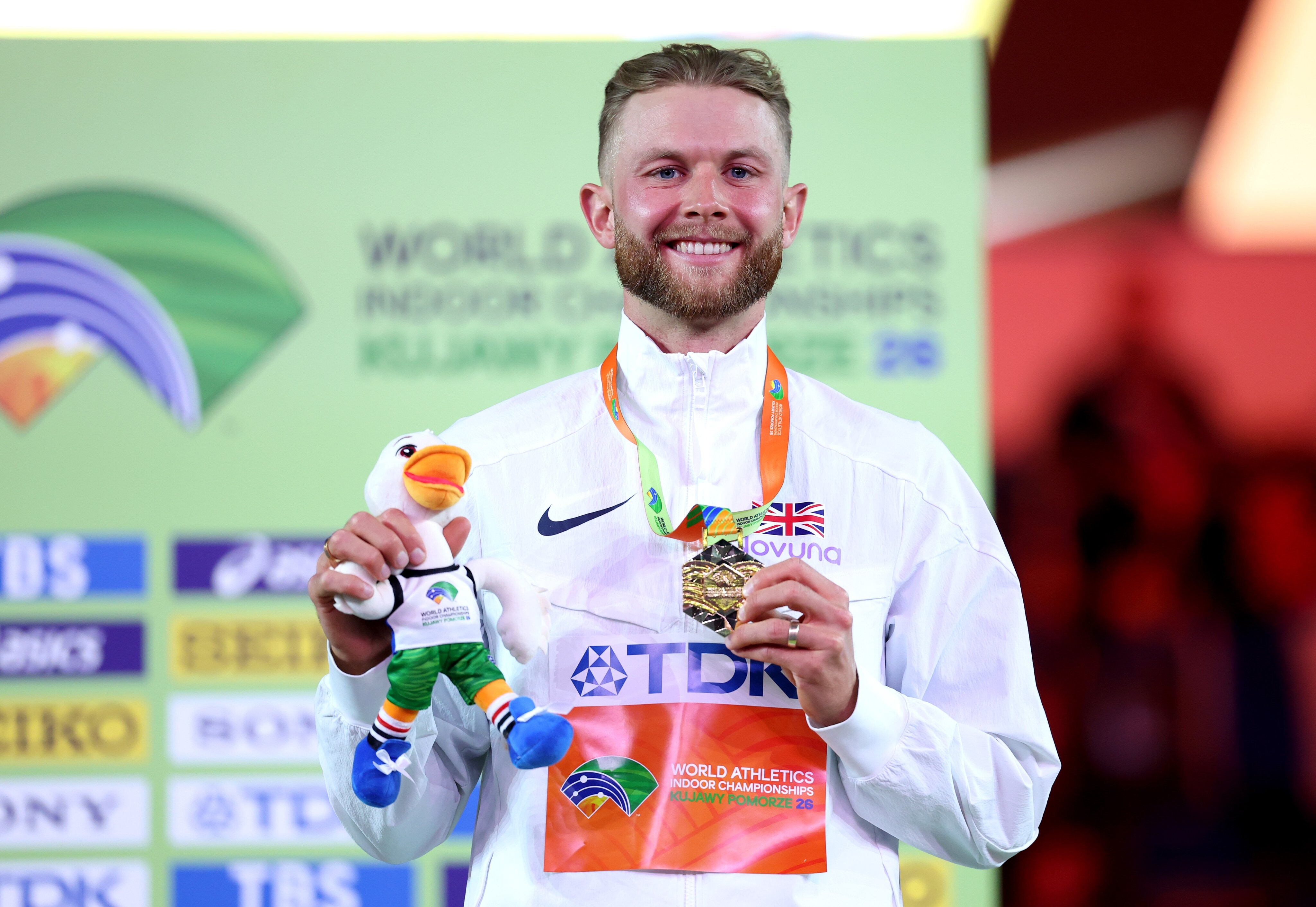
The reigning world 1500m champion and double world indoor 3000m gold medallist has made his intentions unmistakably clear. His campaign, boldly titled Project 222, is centered on a singular objective: to cover the mile in 222 seconds—3:42—surpassing a mark long considered untouchable. It is not merely a target, but a statement of intent.
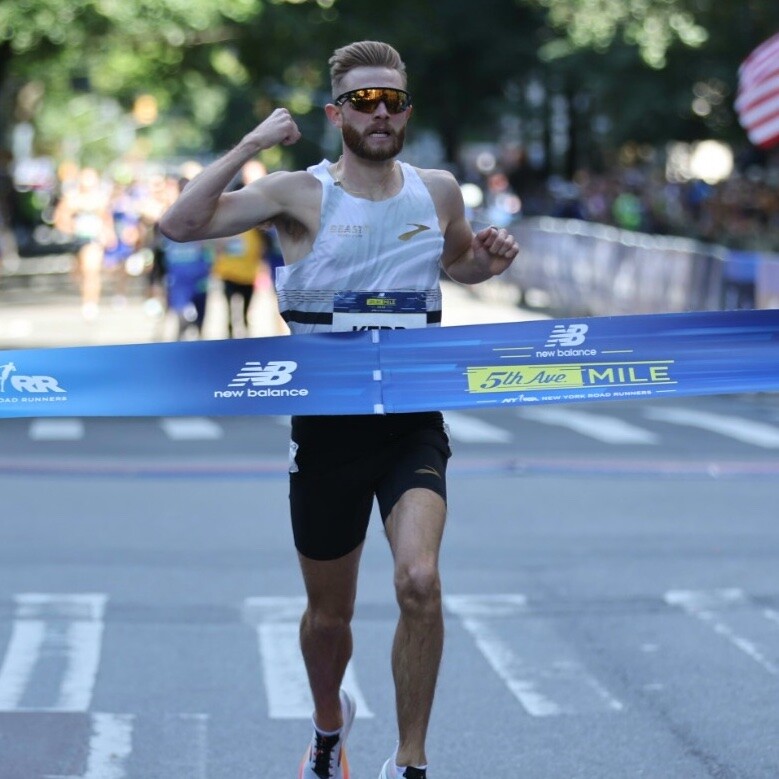
Kerr will take on this historic challenge at the London Diamond League on July 18, 2026, where every variable—from pacing to conditions—must align with near perfection. At this level, the margin between greatness and immortality is measured in fractions, and Kerr must find over two seconds beyond his personal best of 3:45.34, set in Eugene in 2024. That time not only secured him the British record but also placed him sixth on the all-time list—firmly among the sport’s elite.
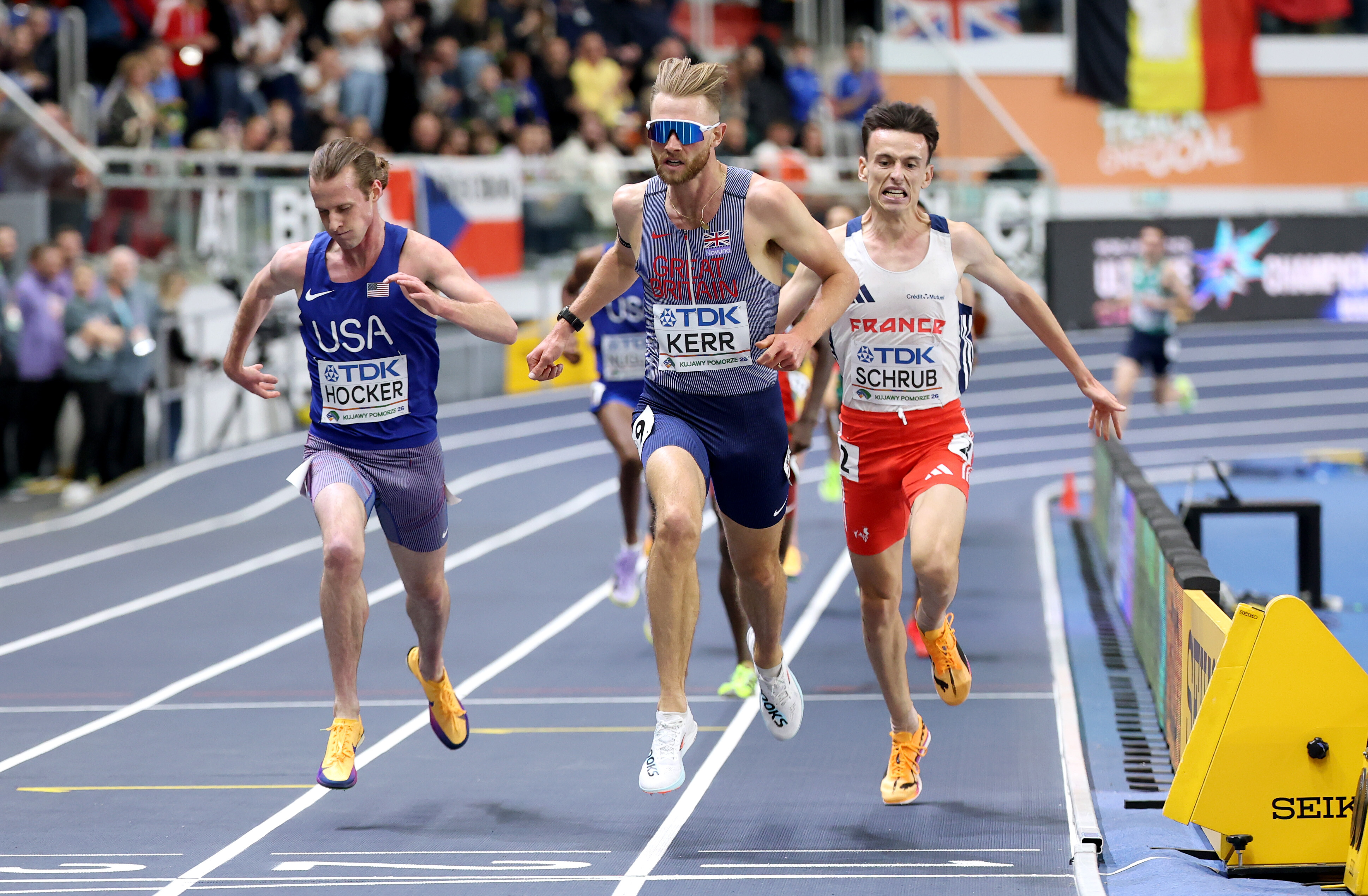
He enters this outdoor campaign in formidable form, having recently claimed his second world indoor 3000m title, holding off a fierce late challenge from Cole Hocker in Toruń, Poland. It was a performance that reaffirmed both his tactical strength and finishing authority—qualities that will be indispensable in his pursuit of history.
Behind the scenes, Kerr’s long-time partner Brooks is committing fully to the mission. The collaboration extends far beyond standard sponsorship, evolving into a comprehensive performance project. At its core is a custom-engineered racing spike, meticulously designed around Kerr’s biomechanics and expected to comply with all World Athletics regulations, incorporating advanced cushioning and a finely tuned carbon plate system for optimal propulsion.

In addition, Kerr has been testing multiple aerodynamic speed suit concepts, acting as the sole athlete refining their design for race-day efficiency. Complementing the physical preparation is a detailed physiological support program from the Brooks Run Research Lab, focusing on sleep optimization, hydration strategies, and recovery protocols—each element calibrated to extract peak performance when it matters most.
As anticipation builds, fans will be given a rare inside look into the journey. A series of behind-the-scenes features documenting Kerr’s preparation, alongside the rich history of the mile, is set to be released across his and Brooks’ platforms in the lead-up to July 18.
This is more than a race. It is a meticulously engineered pursuit of greatness—where science, preparation, and belief converge. And if everything aligns under the London lights, Josh Kerr may not just challenge history—he may finally rewrite it.
by Erick Cheruiyot for My Best Runs.
Login to leave a comment
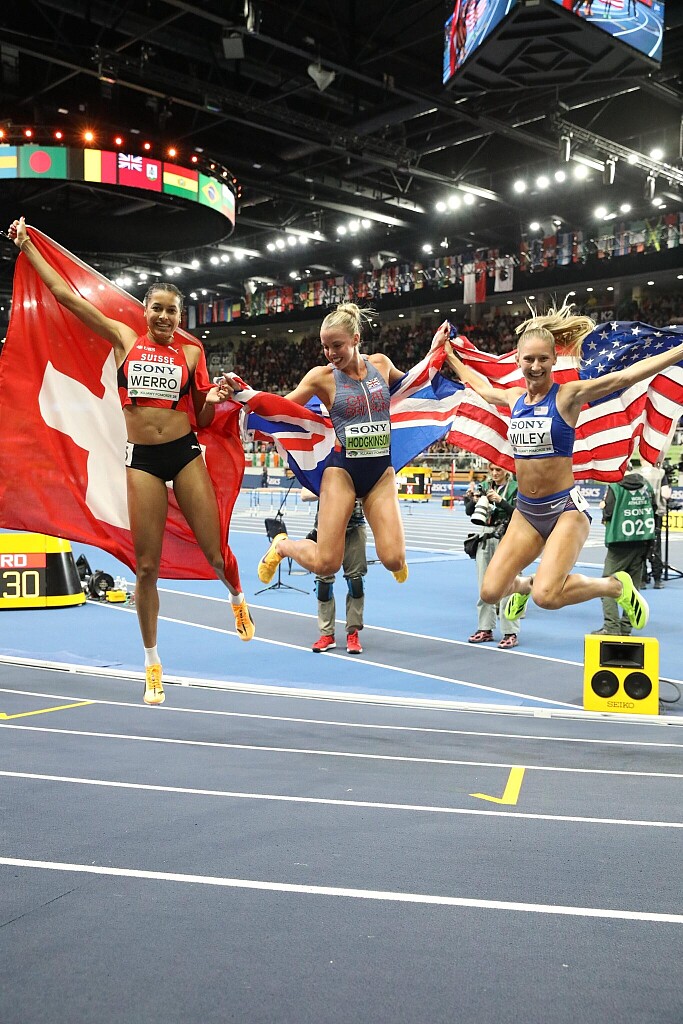
Unmatched Depth, Unrivaled Glory: USA Conquered the Global Stage
The curtain has fallen on a thrilling three days of elite competition at the World Athletics Indoor Championships Kujawy Pomorze 2026, and the final medal table tells a compelling story of dominance, depth, and rising global ambition. Staged in Poland, the championship delivered electrifying performances across track and field, culminating in a decisive victory for the United States, whose supremacy was reflected not just in gold, but in remarkable overall consistency.
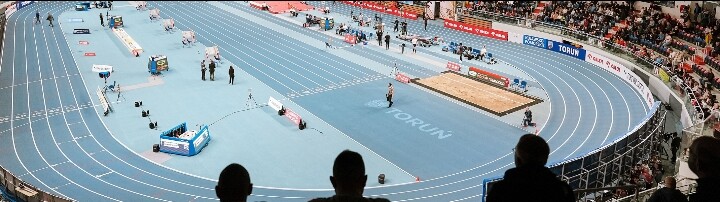
American Mastery: Depth Beyond Gold
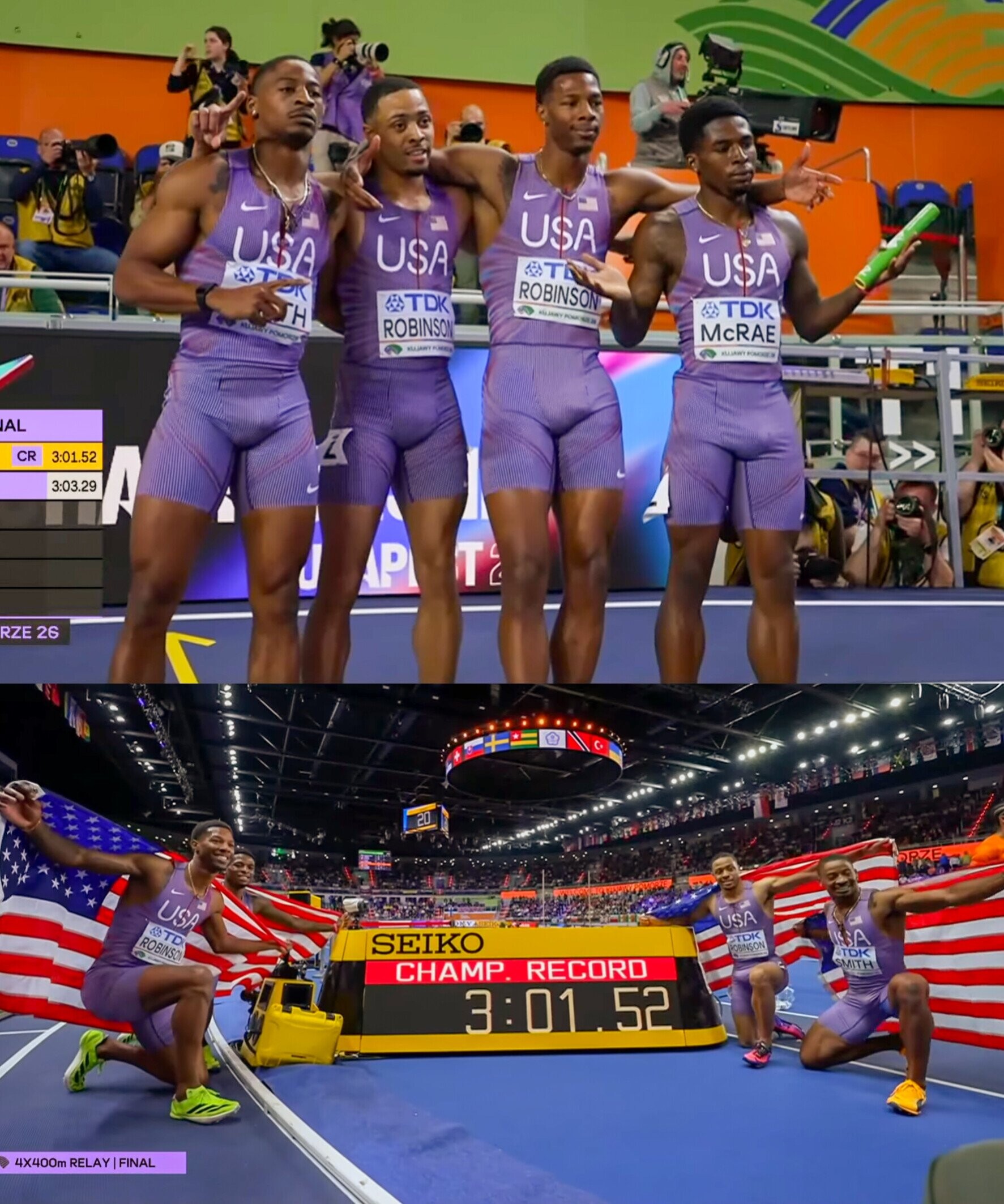
The United States topped the standings with an impressive haul of 18 medals (5 gold, 7 silver, 6 bronze)—a testament to their unmatched squad depth. Rather than relying on a handful of standout victories, the Americans showcased strength across multiple disciplines, consistently placing athletes on the podium. It was a campaign built on balance, resilience, and a culture of excellence that continues to define their global athletics presence.
British Efficiency: Gold-Focused Brilliance
In second place, Great Britain and Northern Ireland delivered a sharply efficient performance, collecting 4 gold medals without a single silver or bronze. Their strategy was clear—peak for victory. Each triumph carried weight, highlighting a system finely tuned for championship success rather than medal volume.
Italy’s Balanced Rise
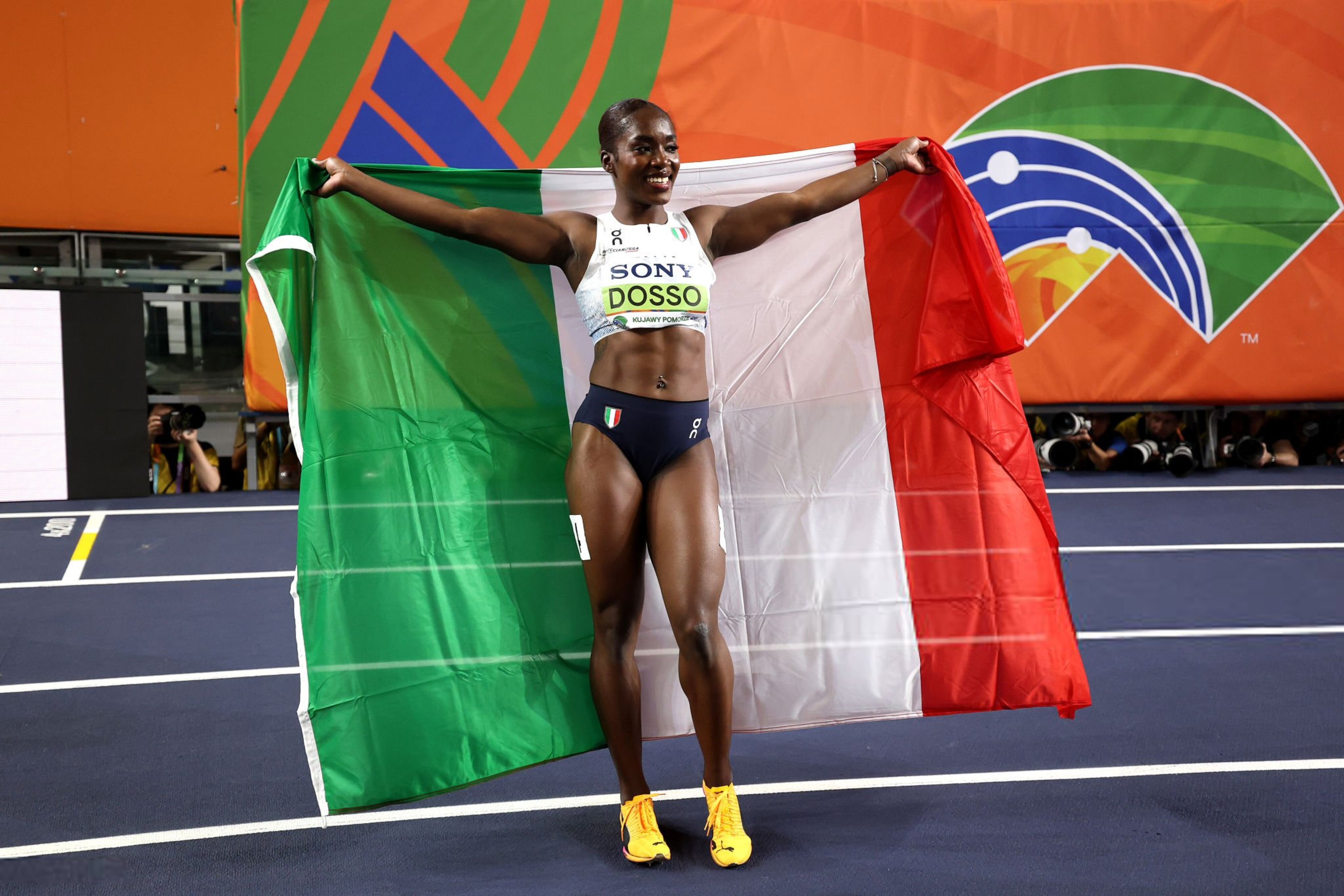
Finishing third, Italy demonstrated both quality and depth with 3 gold and 2 silver medals. The Italians have steadily evolved into a formidable indoor force, and their presence near the top signals a sustained upward trajectory in European athletics.
Europe’s Stronghold
The championships saw a powerful showing from across Europe. Portugal and Ukraine shared fourth place with identical tallies of 2 gold and 1 silver each, while Spain impressed with a well-rounded 5 medals (1 gold, 2 silver, 2 bronze).
Further down the table, nations like Netherlands, Belgium, and host nation Poland added to Europe’s dominance, each contributing meaningful podium finishes that underscored the continent’s competitive depth.
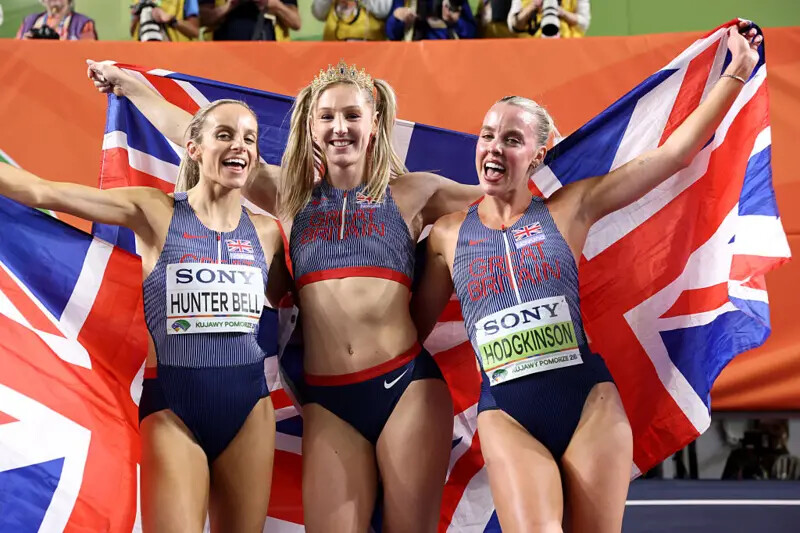
Global Contenders Hold Their Ground
Beyond Europe and North America, several nations made their presence felt. Canada secured two medals, while New Zealand and Sweden each claimed a gold and a bronze.
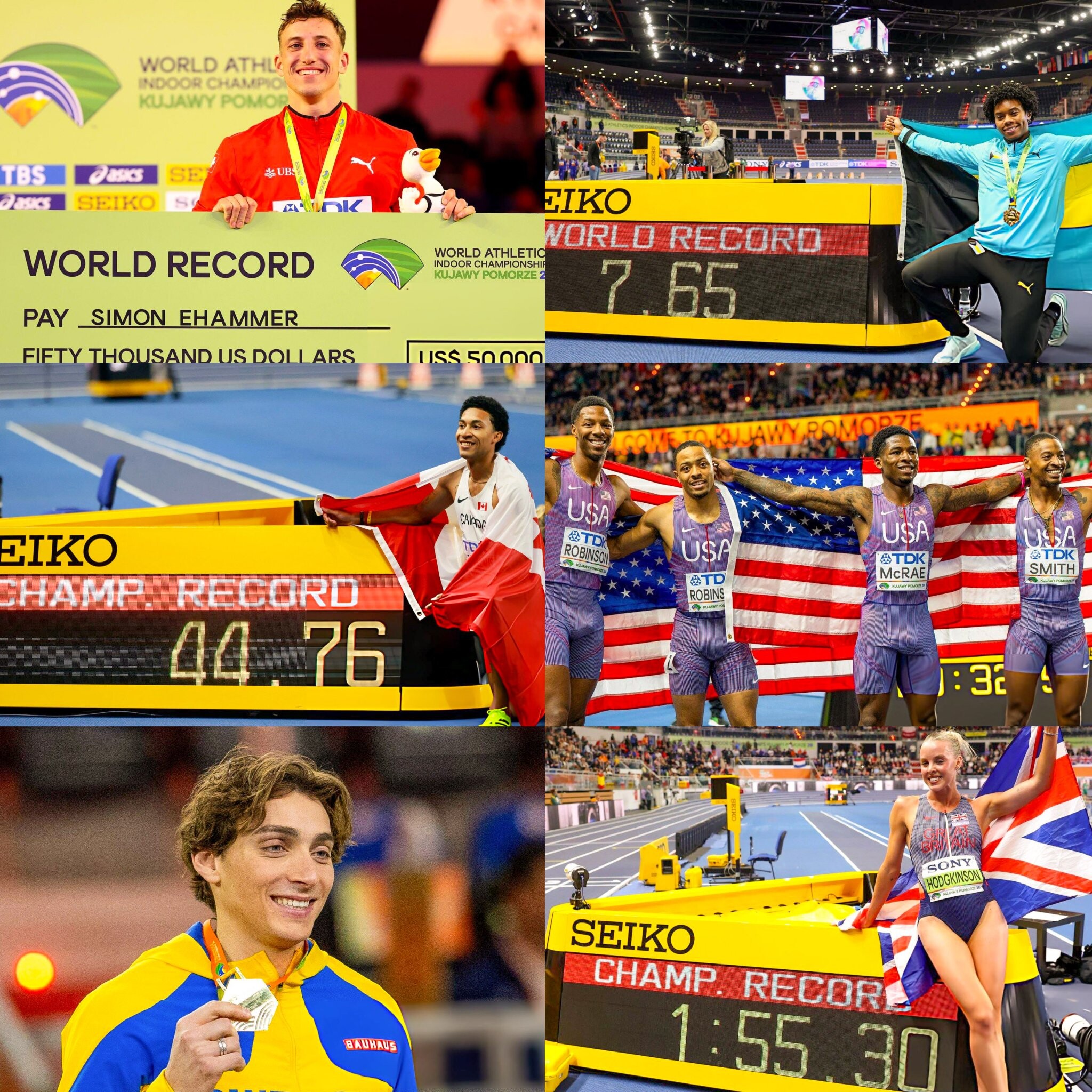
In the Caribbean, Bahamas and Cuba each captured gold, maintaining their tradition of producing explosive talent on the global stage. Meanwhile, Jamaica collected four medals—though notably without gold—hinting at fierce competition in sprint events.
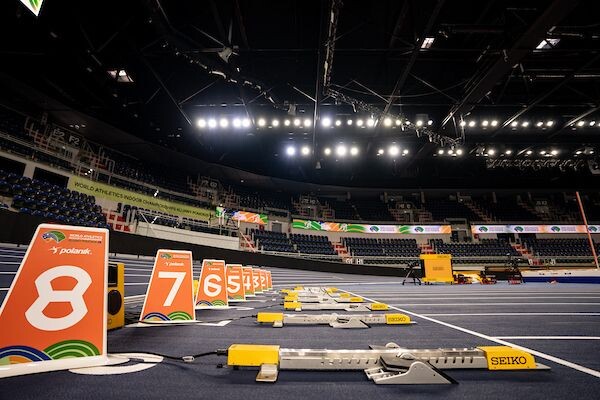
Emerging Nations and Historic Moments
The medal table also reflected the growing inclusivity of global athletics. Countries such as Greece, Mexico, Serbia, and Slovenia each celebrated podium finishes, marking significant milestones for their programs.
Nations like Algeria, Colombia, Senegal, and Trinidad and Tobago also secured bronze medals, proving that the competitive landscape continues to widen with every championship.
A Championship Defined by Depth and Diversity
What set Kujawy Pomorze 2026 apart was not just the medal count, but the distribution. With dozens of nations reaching the podium, the event showcased athletics as a truly global sport—where opportunity, preparation, and belief converge on the world stage.
As the lights dim on this edition of the indoor championships, one truth stands clear: while the United States remains the benchmark of consistency, the gap is narrowing. Across continents, nations are rising, systems are improving, and the race for supremacy is becoming ever more unpredictable.
The road to the next global showdown has already begun—and if Kujawy Pomorze 2026 is any indication, the future of athletics promises even greater drama, diversity, and brilliance.
by Erick Cheruiyot for My Best Runs.
Login to leave a comment

World Athletics Indoor Championships
World-Class Competition Lands in Poland: 2026 World Athletics Indoor Championships The 21stWorld Athletics Indoor Championshipsare being held from 20 to 22 March 2026 at theKujawsko-Pomorska Arena ToruńinToruń,BiT City,Kuyavian–Pomeranian,Poland. It is the second time the country has held the event after the2014 editioninSopot. The venue previously hosted the2021 European Athletics Indoor Championships. On 22 March 2023, the World Athletics Council...
more...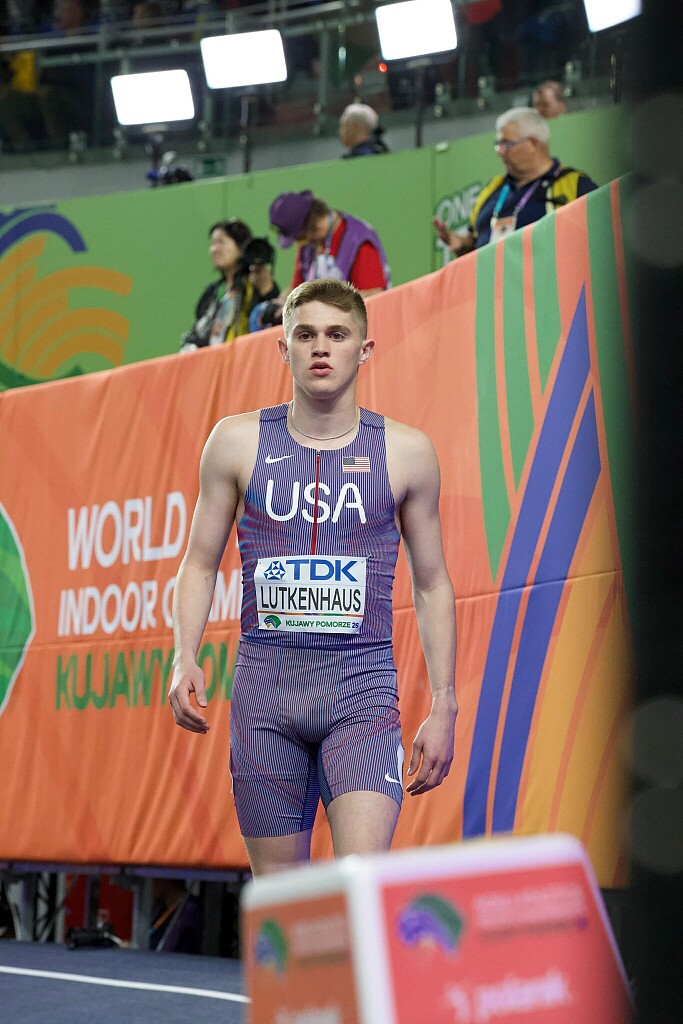
Teenage Thunder: Lutkenhaus Rewrites History with Stunning World Title
In a sport where experience is often the dividing line between promise and greatness, a fearless teenager from the outskirts of Fort Worth has shattered expectations and etched his name into the record books.
At just 17 years old, Cooper Lutkenhaus delivered a performance far beyond his years, storming to victory in the 800 meters at the World Indoor Track Championships in Toruń, Poland. In doing so, he became the youngest individual world champion in track and field history—a milestone that signals not just a breakthrough, but the arrival of a generational talent.
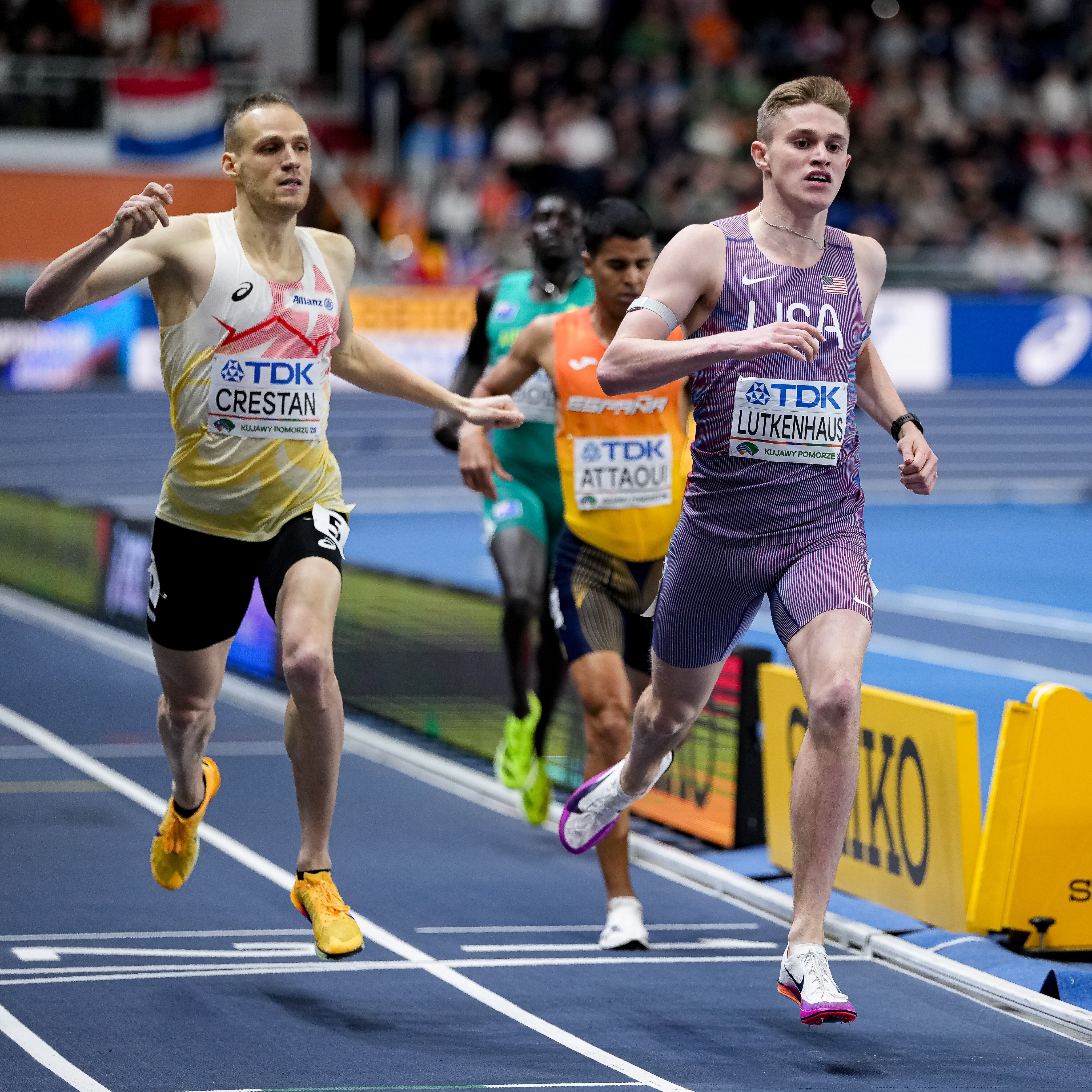
Still a junior at Northwest High School in Justin, Lutkenhaus entered the global stage as an outsider, but ran like a seasoned professional. Composed under pressure and tactically sharp, he navigated the two-lap race with a maturity rarely seen at his age. When it mattered most, he unleashed a decisive finishing kick, leaving more experienced competitors scrambling in his wake.
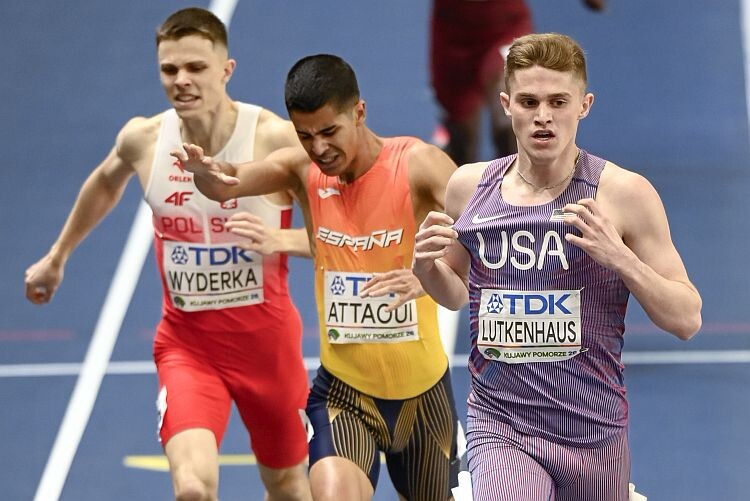
What makes this achievement even more remarkable is not just the gold medal itself, but the context surrounding it. The 800 meters is one of the most demanding events in athletics—a delicate balance of speed, endurance, and race intelligence. For a high school athlete to conquer the world at this level speaks volumes about Lutkenhaus’ rare blend of physical talent and mental resilience.
His victory in Toruń is more than a personal triumph; it is a statement to the global athletics community. A new force has emerged, unburdened by expectation and driven by fearless ambition. For fans of the sport, it offers a glimpse into an exciting future—one where youth is no longer a limitation, but a weapon.
As the celebrations settle, one thing is certain: this is only the beginning. The name Cooper Lutkenhaus has now crossed from promise into history—and the world will be watching closely to see just how far this teenage sensation can go.
by Erick Cheruiyot for My Best Runs.
Login to leave a comment
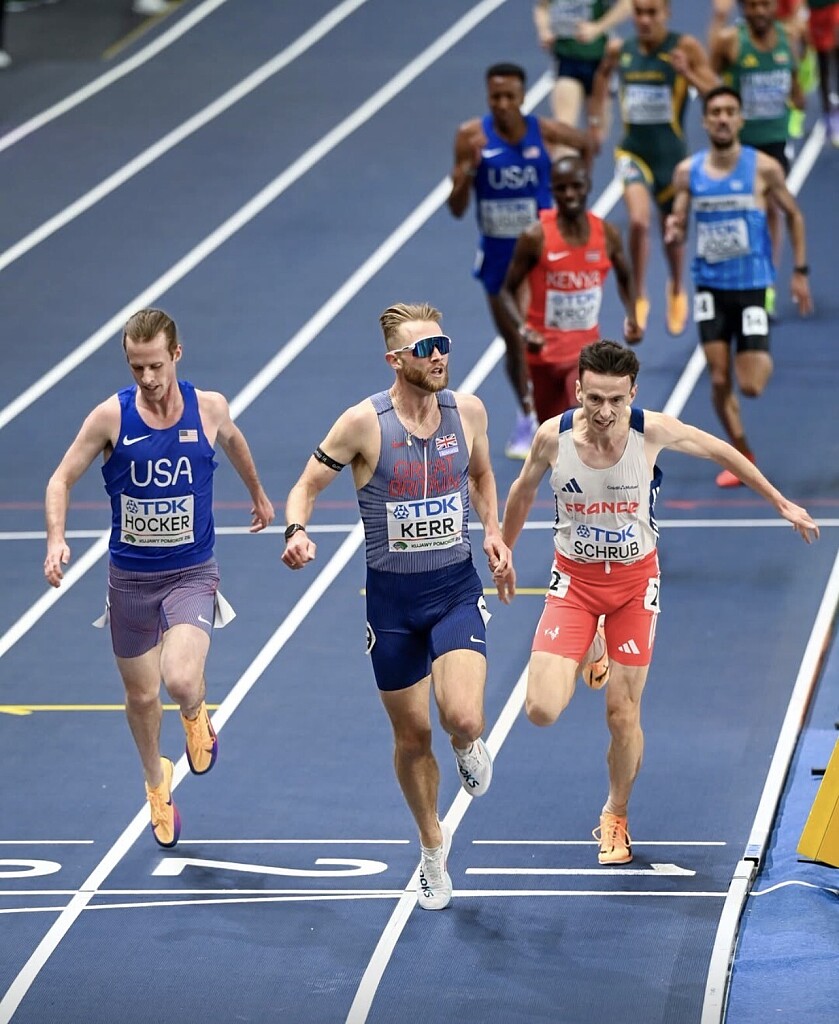
Josh Kerr Times It Perfectly to Win World Indoor 3000m Title in Toruń
It came down to timing—and Josh Kerr got it exactly right.
In a championship race defined by patience, positioning, and one decisive move, Kerr surged past Cole Hocker in the closing laps to win the men’s 3000m at the 2026 World Athletics Indoor Championships in Toruń, Poland.
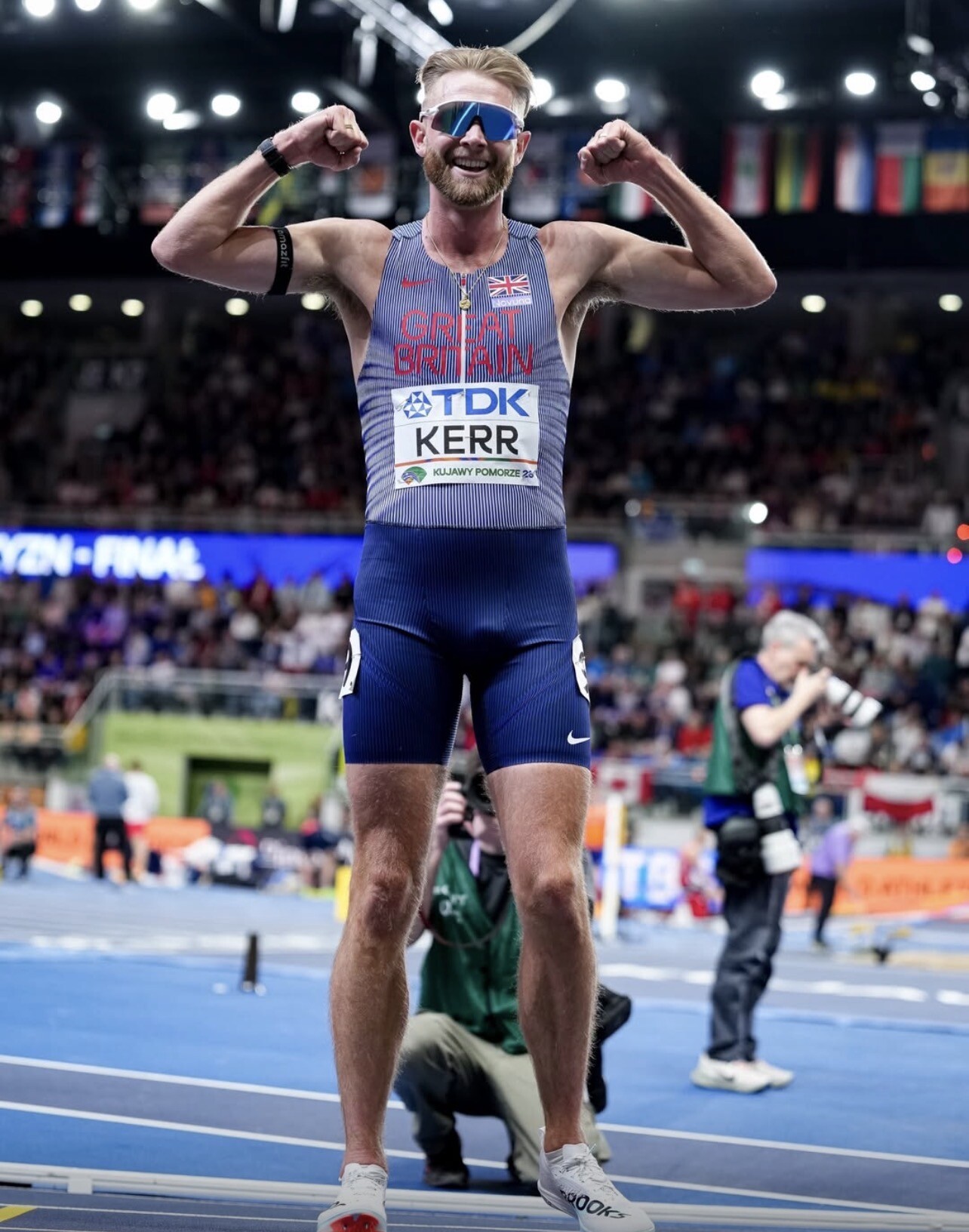
Hocker dictated the early pace, taking the field through 400 meters in a controlled 62 seconds, keeping all 15 runners tightly packed. With no one willing to commit too early, the race settled into a tactical rhythm. Jacob Krop, Yared Nuguse, and Yann Schrub stayed close, waiting for the inevitable shift.

Kerr stayed relaxed mid-pack, watching everything unfold.
By halfway, subtle surges began to stretch the field, but no one broke away. Kerr gradually worked his way forward, moving up smoothly without wasting energy. The pace remained honest—just under 63 seconds per lap—setting the stage for a fast finish.
With two laps to go, the race finally ignited.
Kerr made his move, slipping past Hocker and opening just enough space to take control. Down the final straight, Hocker fought back, and Schrub charged hard on the outside, but Kerr had already done enough.
He crossed the line in 7:35.56, holding off Hocker (7:35.70) and Schrub (7:35.71) in one of the closest finishes of the championships.
Three men separated by just 0.15 seconds.
Behind them, Krop (7:36.76) and Nuguse (7:37.08) completed a deep and highly competitive final, underlining the global strength of middle-distance running right now.
For Kerr, this was more than just a win—it was a masterclass in championship racing. He didn’t lead early, didn’t panic, and didn’t waste a step. He simply waited for the right moment—and took it.
The victory also places him in rare company as one of the few European men to win this title twice, reinforcing his status as one of the sport’s premier tacticians.
Men’s 3000m Final – Toruń 2026
1. Josh Kerr (GBR) – 7:35.56 SB
2. Cole Hocker (USA) – 7:35.70 SB
3. Yann Schrub (FRA) – 7:35.71
4. Jacob Krop (KEN) – 7:36.76
5. Yared Nuguse (USA) – 7:37.08
6. Valentin Soca (URU) – 7:37.10 SB
7. Luan Munnik (RSA) – 7:37.94 PB
8. Addisu Yihune (ETH) – 7:38.60
9. Nicholas Griggs (IRL) – 7:39.03
10. Pol Oriach (ESP) – 7:39.78
11. Azeddine Habz (FRA) – 7:39.87
12. Getnet Wale (ETH) – 7:40.21
13. Andrew Coscoran (IRL) – 7:43.89
14. Geordie Beamish (NZL) – 7:45.05
15. Alexander Tesfay (ERI) – 7:48.24 PB
by Robert Kibet for My Best Runs
Login to leave a comment
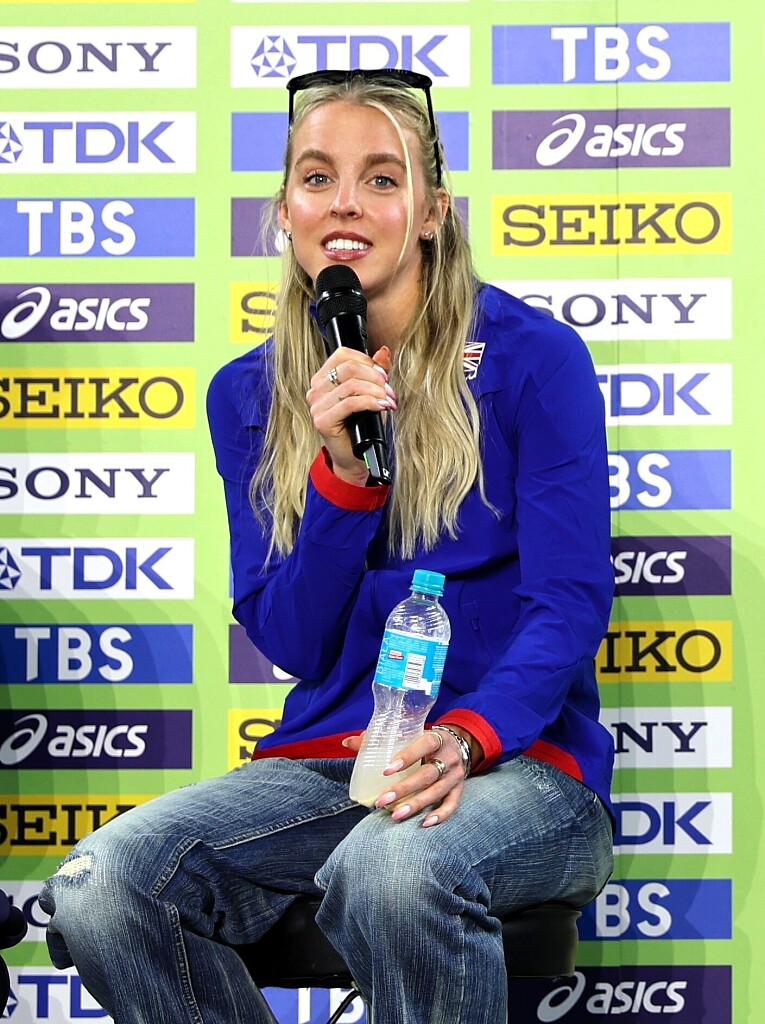
Hodgkinson Rolls Into the Final: A Champion in Complete Control
In championship racing, there is a fine line between competing and commanding—and Keely Hodgkinson is operating firmly on the latter side.
March 21, at the World Indoor Championship 2026 in Poland, the Olympic champion and world indoor record holder delivered a performance of pure authority in the 800m semifinals, winning her heat in a composed 1:58.53. From the gun, she imposed her rhythm on the race, dictating the tempo with a confidence that left no room for doubt. There was no visible strain, no moment of pressure—just a seamless display of control from start to finish.
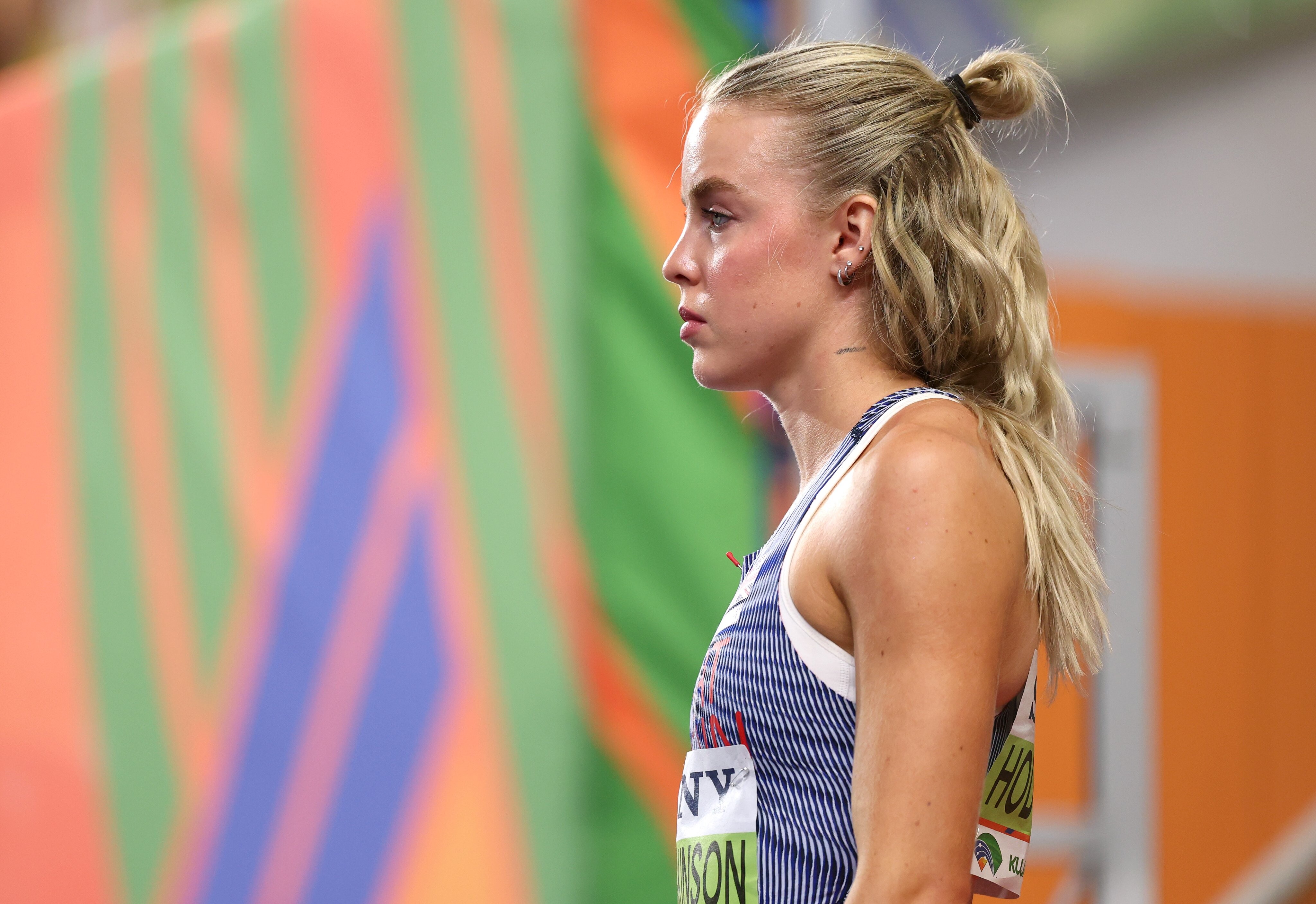
What makes the performance even more striking is its context. Just weeks ago in Liévin, Hodgkinson rewrote history with a stunning 1:54.87 to set a new indoor world record—an achievement that continues to cast a long shadow over this championship.
Behind her, the race for qualification brought its own intensity. Addison Wiley (USA) surged to a personal best of 1:58.75, securing second place with authority. Switzerland’s Audrey Werro followed impressively in 1:59.27, comfortably booking her place in the final, while Ethiopia’s Nigist Getachew clocked 1:59.46 to continue her strong run.
Australia’s Hayley Kitching maintained her excellent indoor form, winning her heat in 2:00.06 to advance, and France’s Clara Liberman rounded out the finalists with a composed 2:00.28.
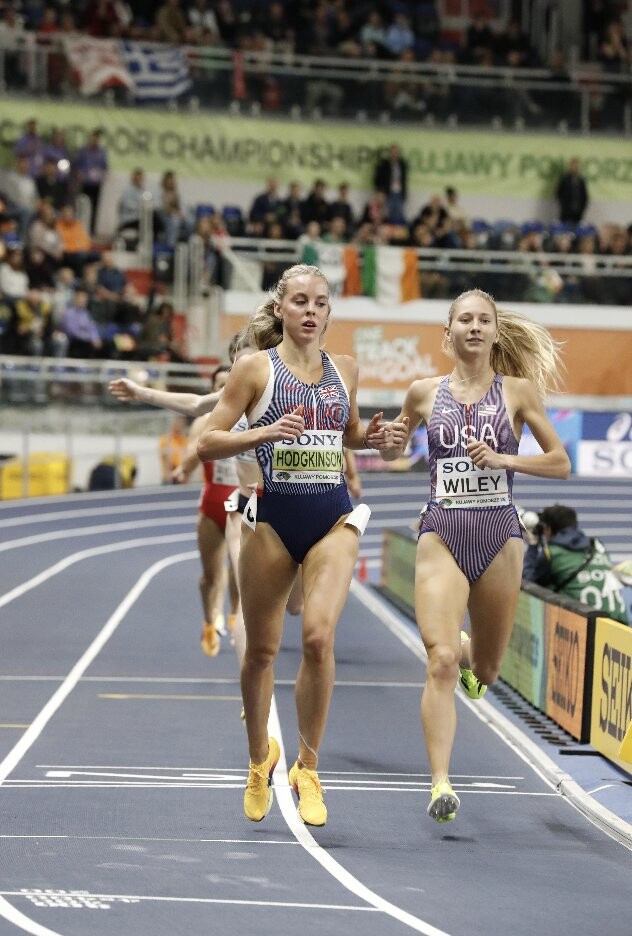
Finalists at a Glance:
1. Keely Hodgkinson (Great Britain) – 1:58.53
2. Addison Wiley (USA) – 1:58.75
3. Audrey Werro (Switzerland) – 1:59.27
4. Nigist Getachew (Ethiopia) – 1:59.46
5. Hayley Kitching (Australia) – 2:00.06
6. Clara Liberman (France) – 2:00.28
Yet as the championship builds toward its climax, the narrative remains clear. Hodgkinson is not merely advancing—she is dictating the tone of the competition. Her semifinal run was a statement of control, precision, and quiet dominance.
The 800m final now promises to be something truly special. The field is deep, the margins are fine, and the tension is rising. The times suggest a fiercely competitive showdown, but momentum—and perhaps inevitability—currently belong to one athlete.
And right now, it truly feels like Keely Hodgkinson’s world.
by Erick Cheruiyot for My Best Runs.
Login to leave a comment
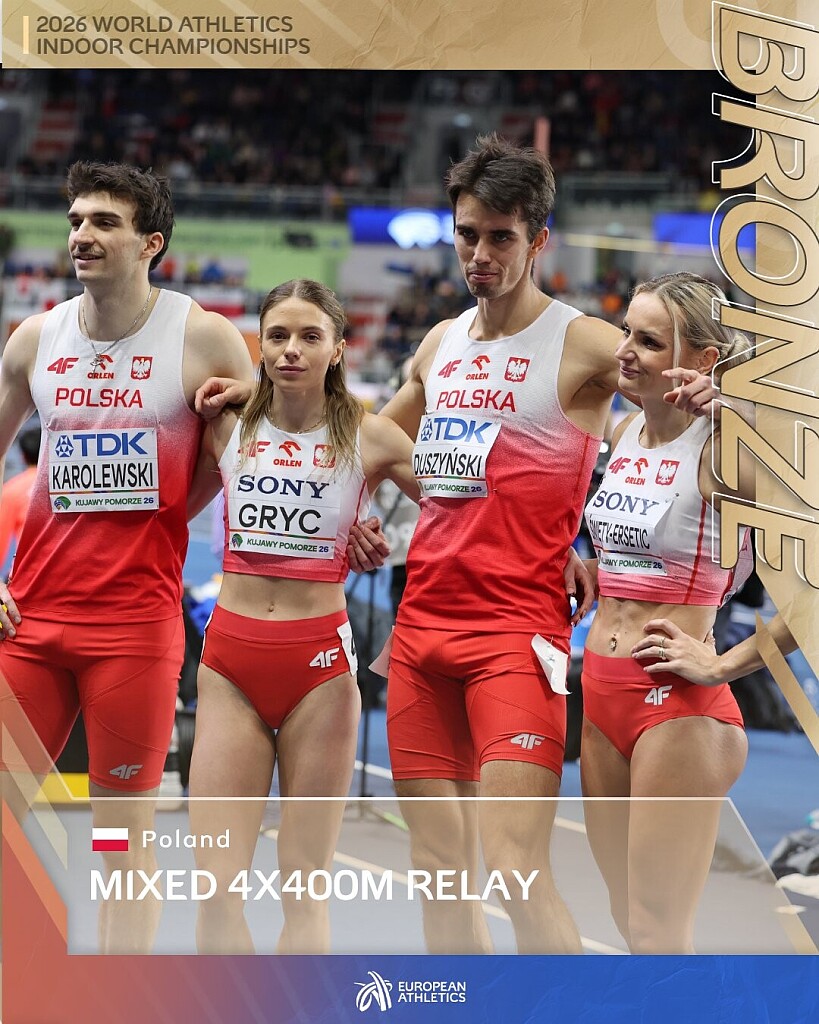
Poland’s Moment of Glory: A Bronze Forged in Patience and Justice
History has unfolded in dramatic fashion at the World Athletics Indoor Championships, delivering a long-awaited moment of celebration for the host nation, Poland. What began as uncertainty has now transformed into triumph, as Poland are officially awarded the bronze medal in the Mixed 4x400m Relay following a decisive review that led to Jamaica’s disqualification.
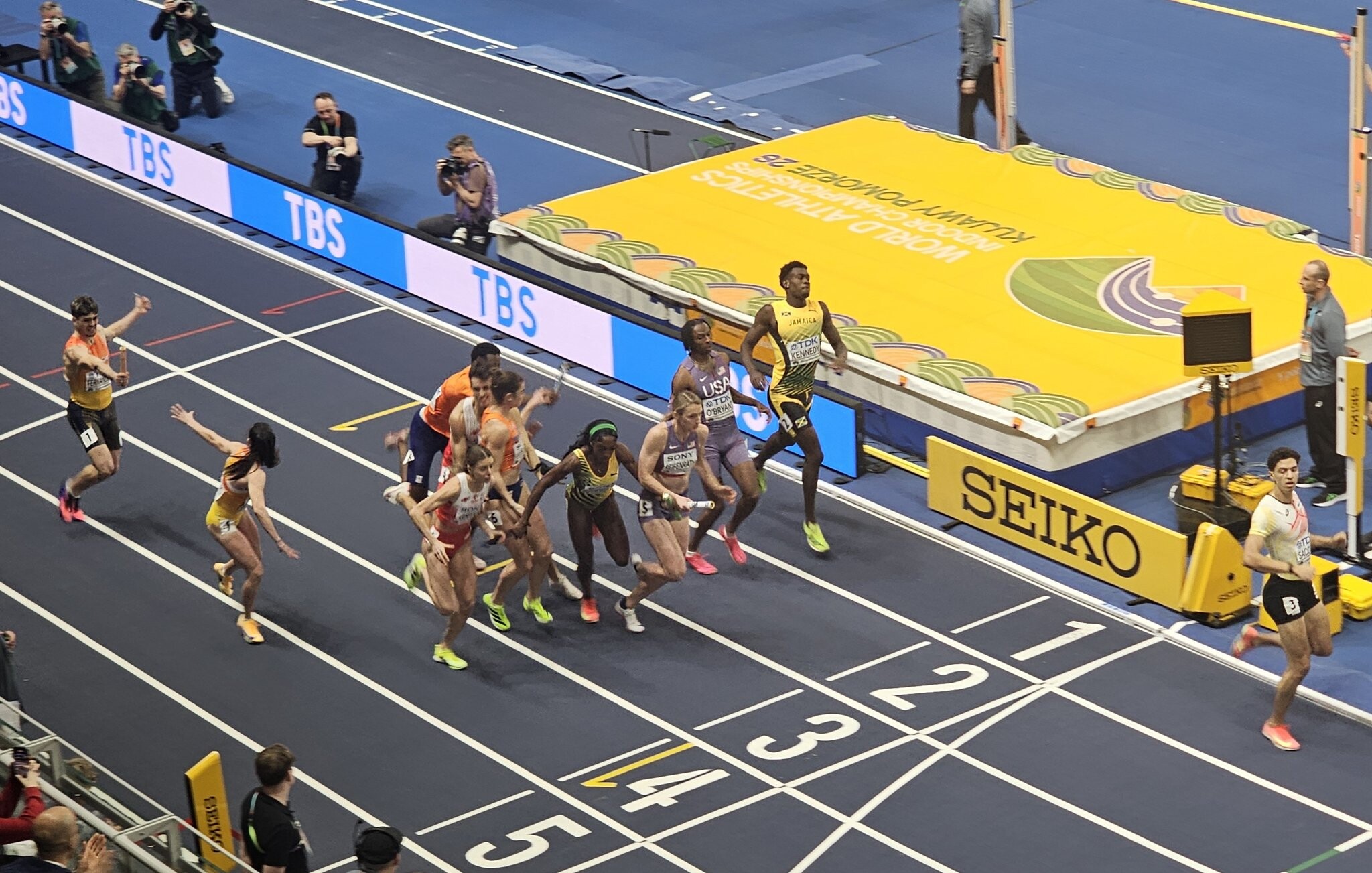
In a competition defined by intensity and razor-thin margins, the relay initially concluded without Poland on the podium. However, the narrative took a compelling turn after officials conducted a thorough post-race evaluation. The ruling ultimately altered the final standings, elevating the host nation into the medal positions—an outcome that carries both emotional weight and historical significance.
The turning point came with the disqualification of Jamaica, who were found to have violated relay regulations—specifically exchanging positions before the takeover zone, a breach under rule TR24.22. In relay events, strict adherence to exchange procedures is crucial, and any premature movement or positional change before the baton is passed is deemed illegal. This technical infringement, though occurring in the heat of competition, proved decisive in reshaping the final results.
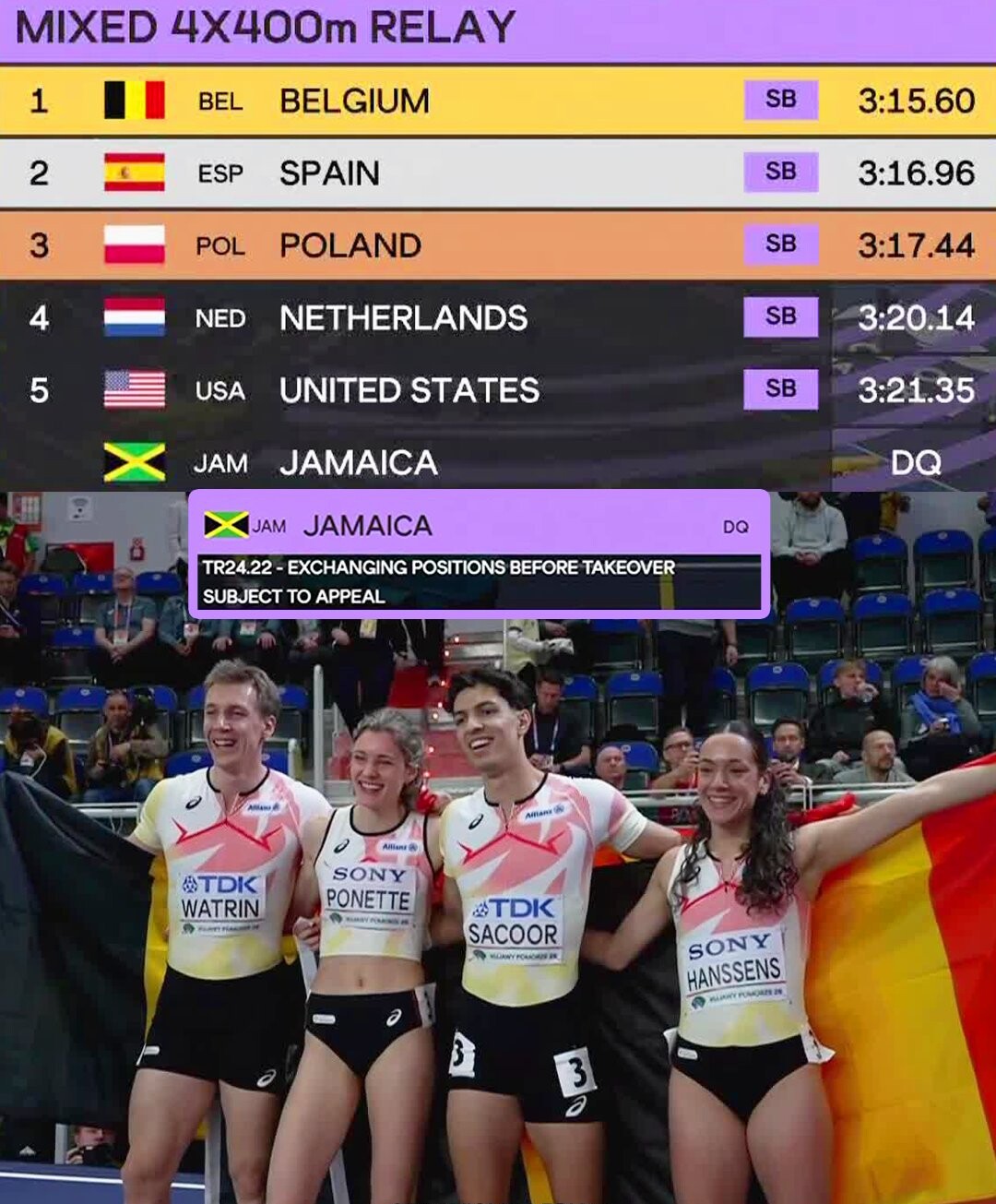
For Poland, this bronze medal is more than just a podium finish; it represents their first medal at these Championships, achieved on home soil in front of a passionate and expectant crowd. The significance of that milestone cannot be overstated. It is a testament to resilience, perseverance, and the unpredictable beauty of sport, where fortunes can shift long after the finish line has been crossed.
The Mixed 4x400m Relay, one of athletics’ most dynamic and strategic events, once again proved its capacity for drama. With men and women combining efforts in a seamless display of speed and teamwork, every leg carries immense pressure. Poland’s athletes executed their race with determination, keeping themselves within striking distance—an effort that ultimately paid dividends when the final decision was rendered.
While the circumstances surrounding Jamaica’s disqualification may spark debate, Poland’s elevation to bronze stands as a rightful recognition of their performance and persistence. It is a reminder that in elite sport, every detail matters, and every moment counts.
As the celebrations begin, this achievement will be etched into Poland’s sporting history—a breakthrough moment at the highest level of indoor athletics. For the athletes and the fans alike, it is a reward not only for what was seen on the track, but for the belief that no effort is ever in vain.
On a stage where dreams are chased at full speed, Poland have claimed theirs—proving that sometimes, history is not just written in seconds, but in decisions that follow.
by Erick Cheruiyot for My Best Runs.
Login to leave a comment
Grace Under Pressure: Mercy Oketch Storms Into World Indoor Semi-Finals in Style
On a charged afternoon of elite competition at the World Athletics Indoor Championships in Poland, Kenya’s sprint sensation Mercy Oketch delivered a composed and commanding performance to secure her place in the semi-finals of the women’s 400 metres. With the world watching and the stakes soaring, Oketch rose to the moment, clocking an impressive 51.57 seconds to finish second in Heat 6—an effort defined by both control and quiet confidence.
From the crack of the starter’s gun, Oketch ran with purpose, gliding through the opening lap with measured precision before unleashing a strong finishing drive down the final stretch. Against a field packed with global talent, her ability to maintain form under pressure underscored not only her growing maturity on the international stage but also her readiness to challenge the very best.
This performance adds another compelling chapter to what is fast becoming a remarkable season for the Kenyan national record holder. Earlier this year, she set her indoor personal best of 51.53 seconds in Metz, signaling her intent long before arriving on this grand stage. Her outdoor pedigree is equally formidable—highlighted by a blistering 50.14 seconds run at the prestigious Kip Keino Classic in 2025, a mark that firmly established her among the world’s elite quarter-milers.
What makes Oketch’s progression particularly captivating is the seamless transition she continues to make between outdoor dominance and indoor excellence—a rare blend that speaks volumes about her versatility, discipline, and competitive spirit. Each stride she takes now carries the weight of expectation, yet she meets it with remarkable composure.
As the semi-finals beckon, anticipation continues to build. With momentum on her side and confidence surging through her veins, Mercy Oketch is no longer just participating—she is contending, asserting, and inspiring. And if her performance in the heats is anything to go by, the best may still be yet to come.
by Erick Cheruiyot for My Best Runs.
Login to leave a comment
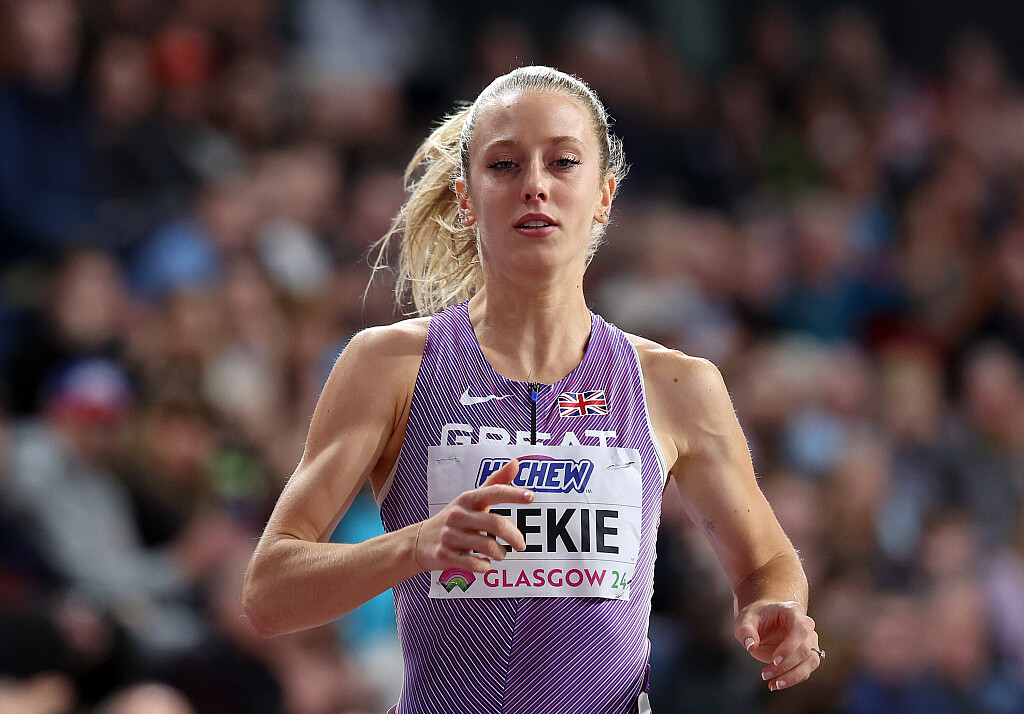
Eyes on Glory: Jemma Reekie’s Bold Vision for a Glasgow 2026 Double
As the indoor season gathers momentum, Scottish middle-distance star Jemma Reekie stands at a pivotal crossroads—balancing immediate ambitions with a long-term dream that could define her career. While her focus is firmly set on the upcoming World Athletics Indoor Championships in Poland, her eyes are already drifting toward a grander stage: the Commonwealth Games 2026 on home soil.
For Reekie, the indoor championships represent more than just another competition. It is an opportunity to sharpen her racing edge, test her form against world-class opposition, and build momentum. Yet beneath that immediate goal lies a deeper, more personal aspiration—one that has begun to take shape in her own words and quiet confidence.
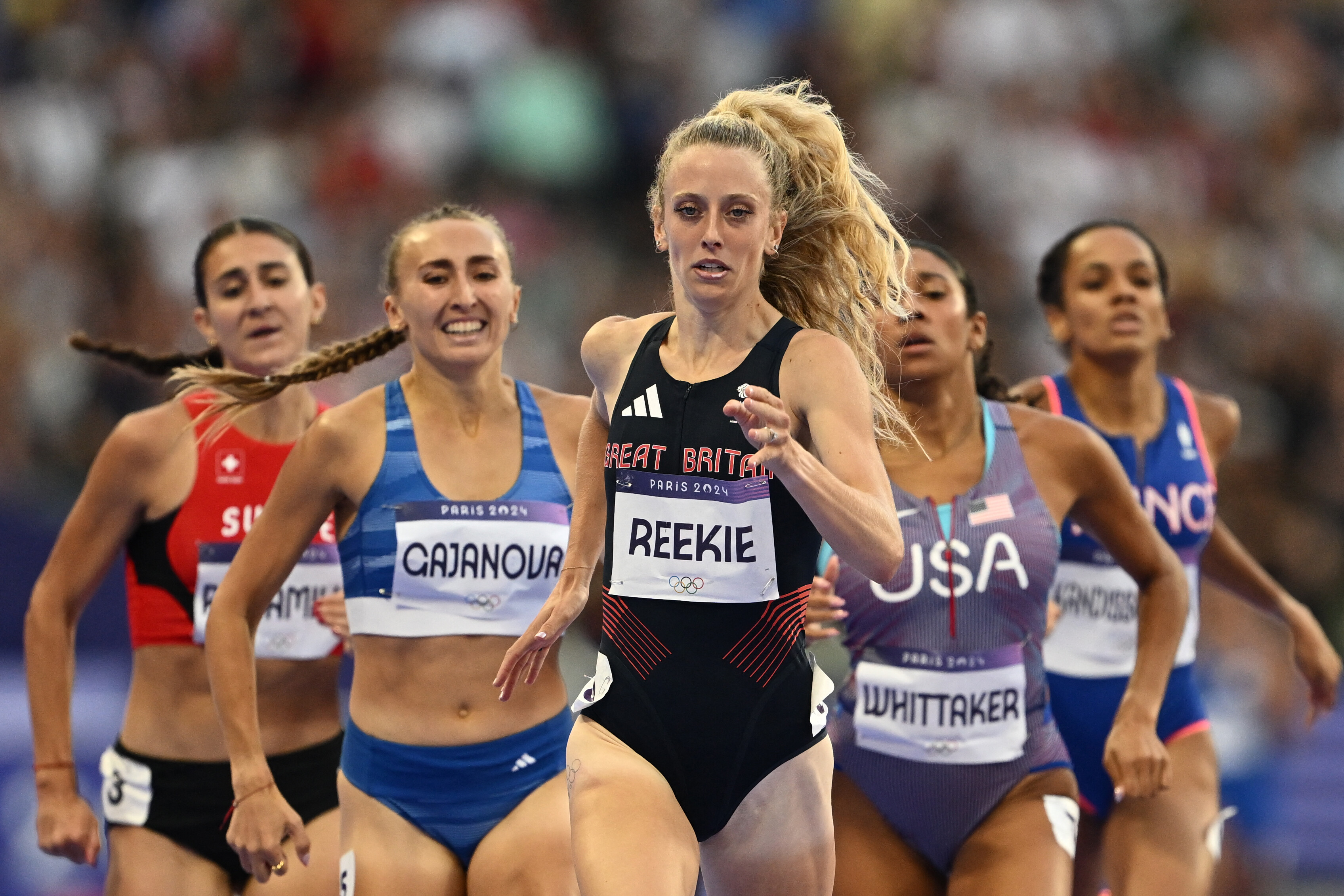
Speaking to the BBC, the Kilbarchan AAC athlete revealed her excitement at the prospect of competing in Glasgow, where the roar of a home crowd could fuel something extraordinary. The venue, Scotstoun Stadium, is set to host athletics during the Games, offering a familiar and electrifying stage for Scottish athletes.
What makes her vision particularly compelling is the scale of her ambition. Reekie is not merely aiming to participate—she is contemplating a middle-distance double, a feat that demands not only elite endurance and speed but also precise tactical execution across rounds. Balancing events such as the 800m and 1500m at a major championship requires resilience, recovery, and an unshakable competitive mindset.
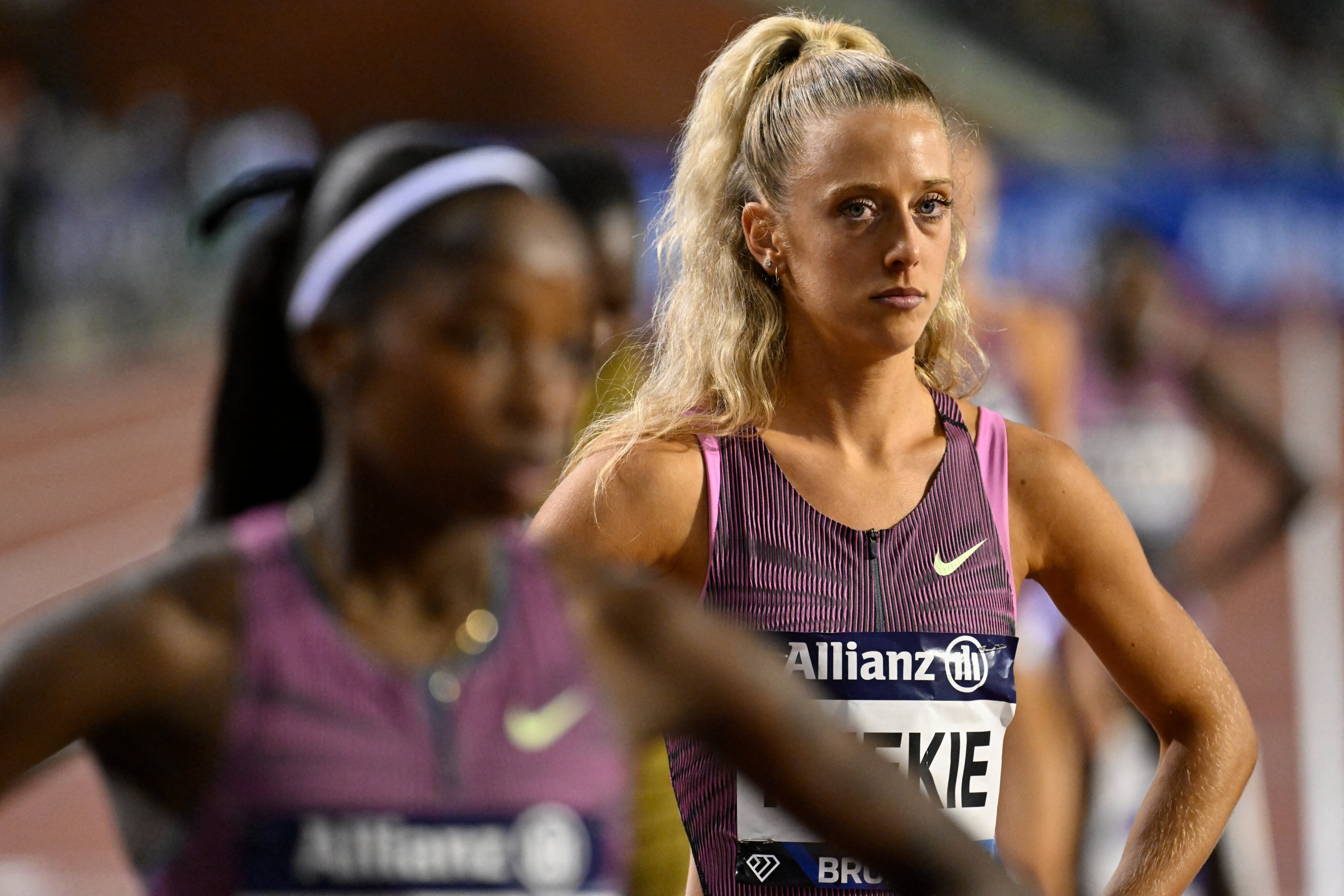
This ambition reflects the evolution of an athlete who has steadily matured on the global stage. Once known primarily as a rising talent, Reekie has developed into a seasoned competitor capable of challenging the very best. Her performances in recent seasons have demonstrated consistency and courage, qualities essential for anyone daring to attempt a championship double.
The timing of the Glasgow Games adds another layer of intrigue. Competing at home is both a privilege and a pressure. Expectations will be high, but so too will be the support—a powerful force that has historically lifted athletes to career-defining performances. For Reekie, the idea of delivering a standout showing in front of a Scottish crowd is as motivating as it is daunting.
As she heads into Poland for the indoor championships, every stride, every split, and every tactical decision will serve a dual purpose. It is not just about medals in the present—it is about laying the groundwork for something greater in 2026.
In many ways, this moment captures the essence of elite sport: the constant interplay between now and next, between preparation and possibility. For Jemma Reekie, the journey to Glasgow has already begun—not with a starting gun, but with a vision bold enough to inspire.
And if that vision becomes reality, the home crowd at Scotstoun may witness not just participation, but history in the making.
by Erick Cheruiyot for My Best Runs.
Login to leave a comment
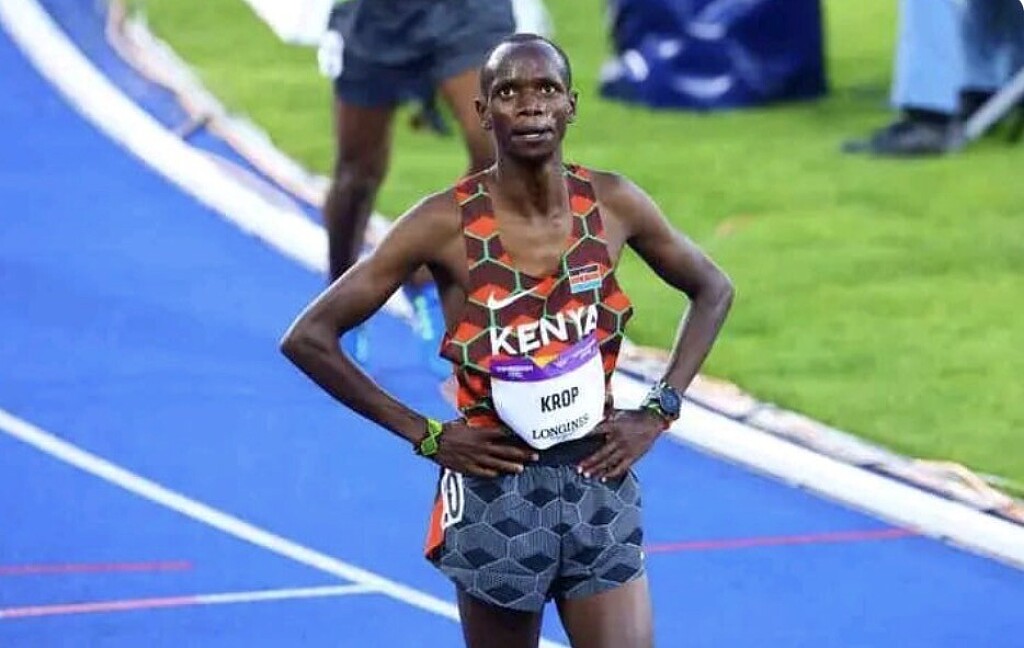
Kenya Sends Fearless Indoor Squad to World Championships Despite Having No Indoor Tracks
Kenya, a country synonymous with world-beating runners, is sending a small but formidable squad to the 2026 World Athletics Indoor Championships in Kujawy Pomorze, Poland, from March 20–22, despite having no indoor track facilities at home. For these athletes, the absence of dedicated indoor arenas makes their achievements—and ambitions—all the more remarkable.
Trailblazers and Record Holder
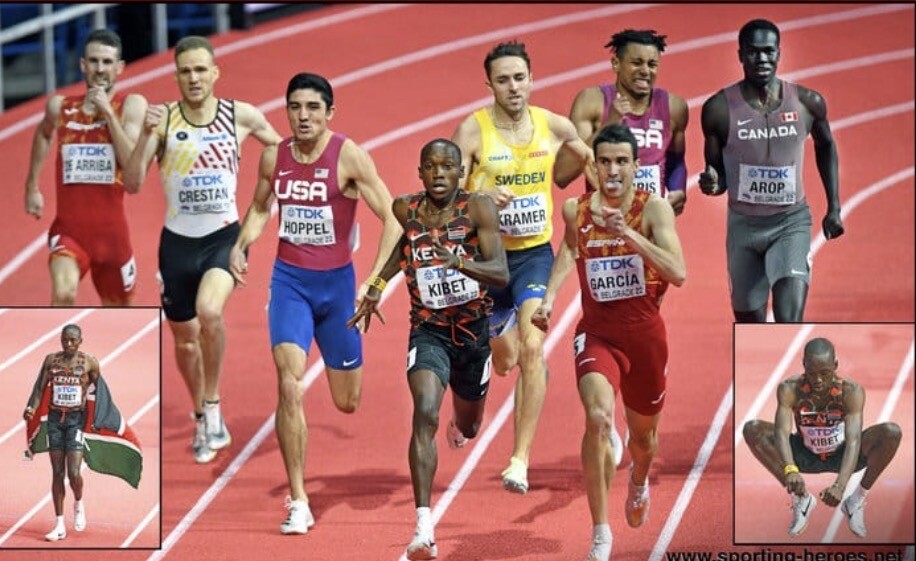
Leading the charge is Brian Omari Tinega, Kenya’s national indoor record holder in the 400 meters with a blistering 45.68. Tinega, who trains within the U.S. collegiate system, has had to adapt much of his preparation to outdoor tracks in Kenya—braving wind, rain, and uneven surfaces while preparing for the tight curves and fast rhythm of indoor competition.
His goal in Poland’s Arena Toruń is clear: improve both his personal best and the Kenyan national record while competing against the world’s top quarter-milers.
In the middle-distance events, Noah Kibet, the 2022 World Indoor 800m silver medalist, returns hoping to climb one step higher on the podium. Training entirely outdoors presents challenges when preparing for the tactical, high-speed racing typical of indoor championships, but Kibet’s experience makes him a serious contender.
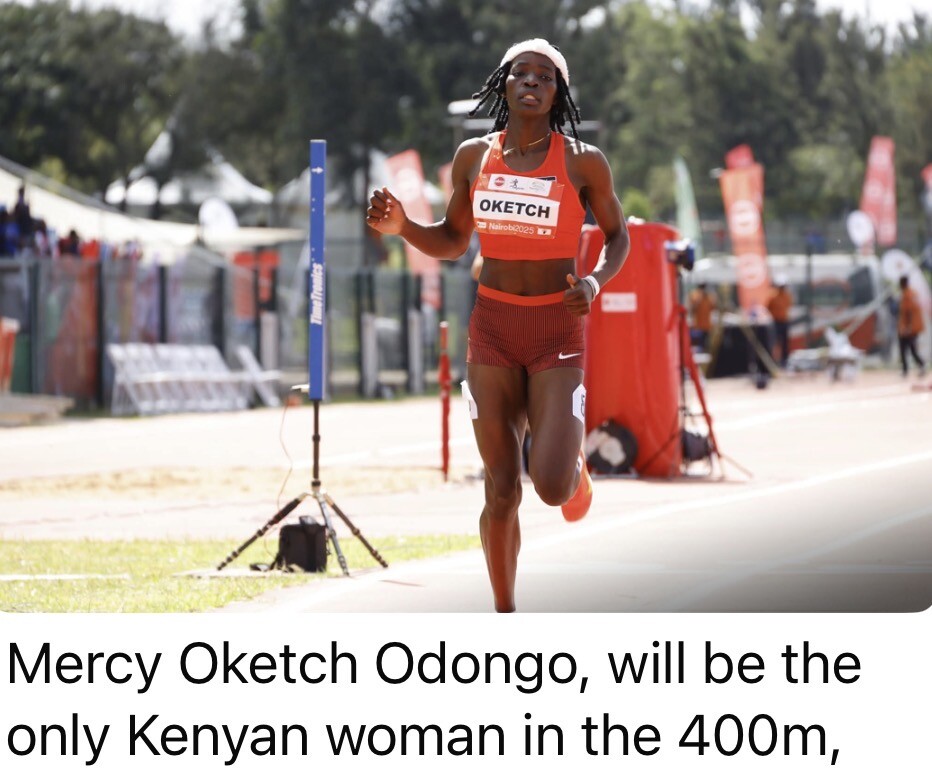
Joining him is Jacob Krop, a 3000-meter specialist who won silver in the 5000 meters at the World Championships. Krop will be aiming to translate his outdoor success to the indoor arena while improving on his fifth-place finish at the 2022 World Indoor Championships.
Women Breaking New Ground
On the women’s side, Mercy Adongo Oketch is making history as only the second Kenyan woman ever to compete in the indoor 400 meters, following Esther Kavaya’s appearance in 1987. Oketch, the Kenyan indoor record holder, carries both national expectations and the symbolic role of blazing a trail for future Kenyan women in an event historically dominated by athletes from Europe and North America.
In the 800 meters, Rosemary Longisa continues her rapid rise. A freshman at Washington State University, she has adapted quickly to the U.S. collegiate system and recorded an impressive 1:59.71 indoors this season.
Meanwhile, experienced 1500-meter runner Susan Lokayo Ejore adds depth and stability to the squad with her international racing experience.
Training Against the Odds
Kenya’s athletes face a stark contrast compared with competitors from countries such as Poland, the United States, and Germany, where dedicated indoor arenas, climate-controlled facilities, and banked tracks allow year-round preparation.
These nations often employ advanced training technology—from motion sensors to video analytics—to refine stride mechanics, pacing, and recovery specifically for indoor racing.
In Kenya, preparation requires creativity and resilience. Athletes train on outdoor tracks at varying altitudes, simulate indoor curves where possible, and adjust sprinting and pacing strategies to prepare for the tighter indoor lanes.
The result is a team shaped not by cutting-edge infrastructure but by adaptability, determination, and natural talent.
Kenya’s Growing Indoor Legacy
Few African countries regularly produce elite indoor competitors, making Kenya’s presence at the World Athletics Indoor Championships particularly notable.
The squad includes record holders in both the men’s and women’s 400 meters, a World Indoor silver medalist, and emerging middle-distance talent. For Oketch especially, this championship represents more than a personal milestone—it symbolizes growing opportunities for Kenyan women in indoor track events.
Chasing Medals in Poland
Beyond personal bests, Kenya’s athletes are targeting podium finishes.
Tinega and Oketch aim to push their national records even further, while Kibet and Krop will look to build on their previous championship performances. Longisa and Ejore represent the next generation of Kenyan middle-distance talent ready to challenge the global elite.
As Arena Toruń welcomes athletes from across the world from March 20–22, Kenya’s runners will once again remind the global track community that elite performance is not defined by facilities alone.
For this small but determined team, the mission is clear: compete with the best, chase medals, and prove that the Kenyan running tradition can thrive indoors just as it has outdoors for decades.
by Robert Kibet for My Best Runs
Login to leave a comment
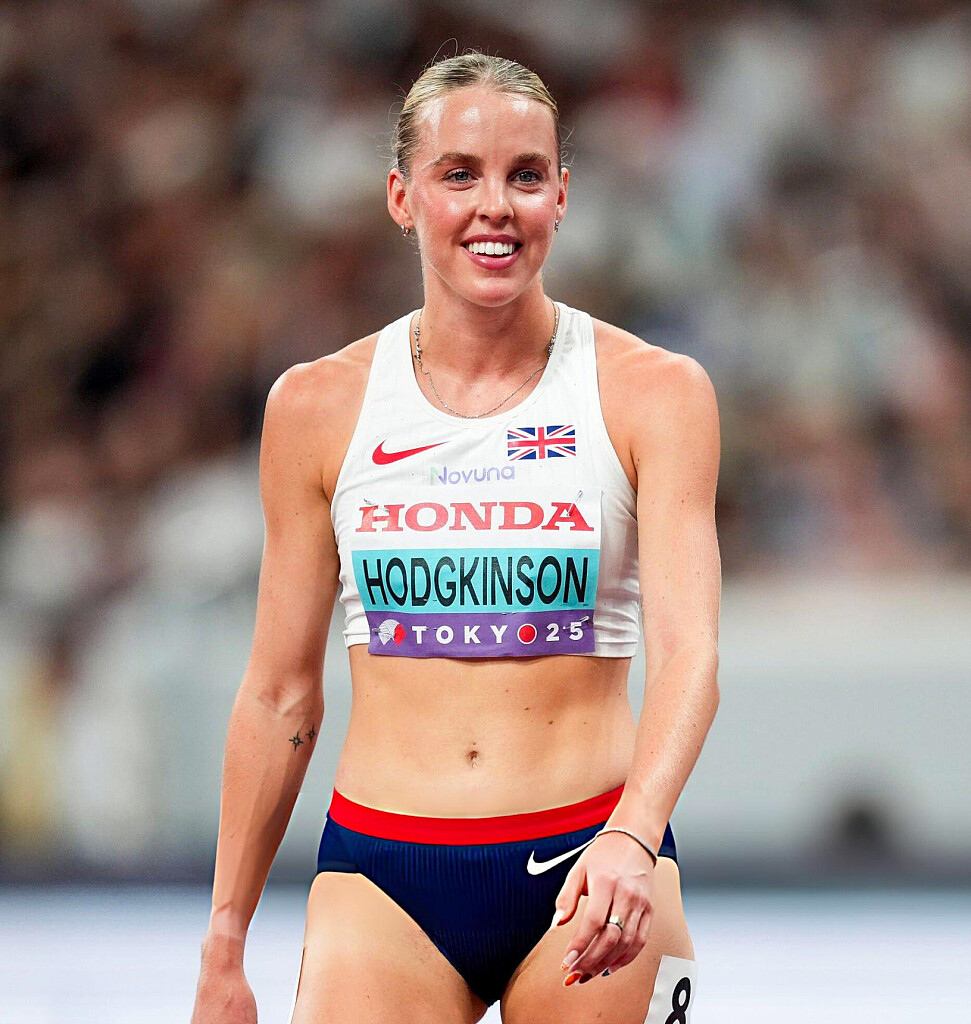
Women’s 800m Set to Ignite the 2026 Indoor Season
The women’s 800 metres is already shaping up to be one of the most thrilling events of the indoor season, with early performances pointing to a fierce and highly competitive showdown at the upcoming 2026 World Athletics Indoor Championships — the global indoor spectacle scheduled for March 20–22 in Kujawy-Pomorze, Poland.
At the top of the 2026 world list stands Britain’s Olympic champion Keely Hodgkinson, who has delivered an early-season statement with a world-leading 1:54.87. The performance places her firmly ahead of the field and confirms that the British middle-distance star is once again operating at an exceptional level as the championship season approaches.
Yet Hodgkinson’s commanding mark does not mean the race is settled. The women’s 800m is quickly becoming one of the deepest and most competitive events of the indoor circuit this year. Switzerland’s rising talent Audrey Werro sits second on the global list with 1:57.27, underlining her growing status as one of Europe’s most promising young middle-distance runners.
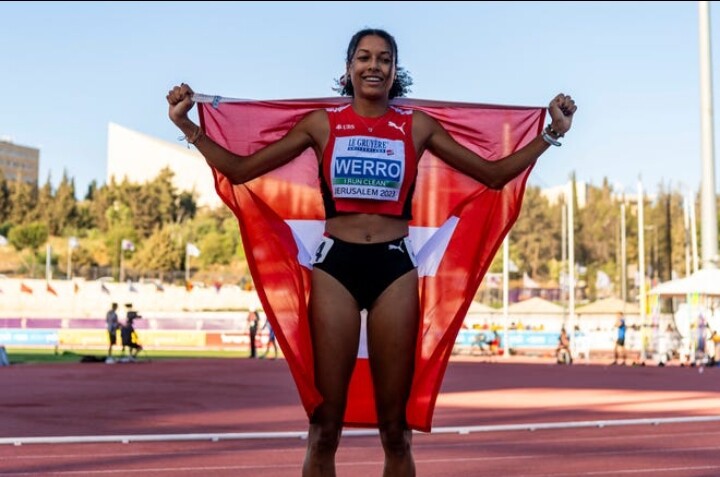
Great Britain’s strength in the event is further highlighted by the presence of Isabelle Boffey and Georgia Hunter Bell, who currently hold the third and fourth fastest times of the season with 1:57.43 and 1:57.80 respectively.
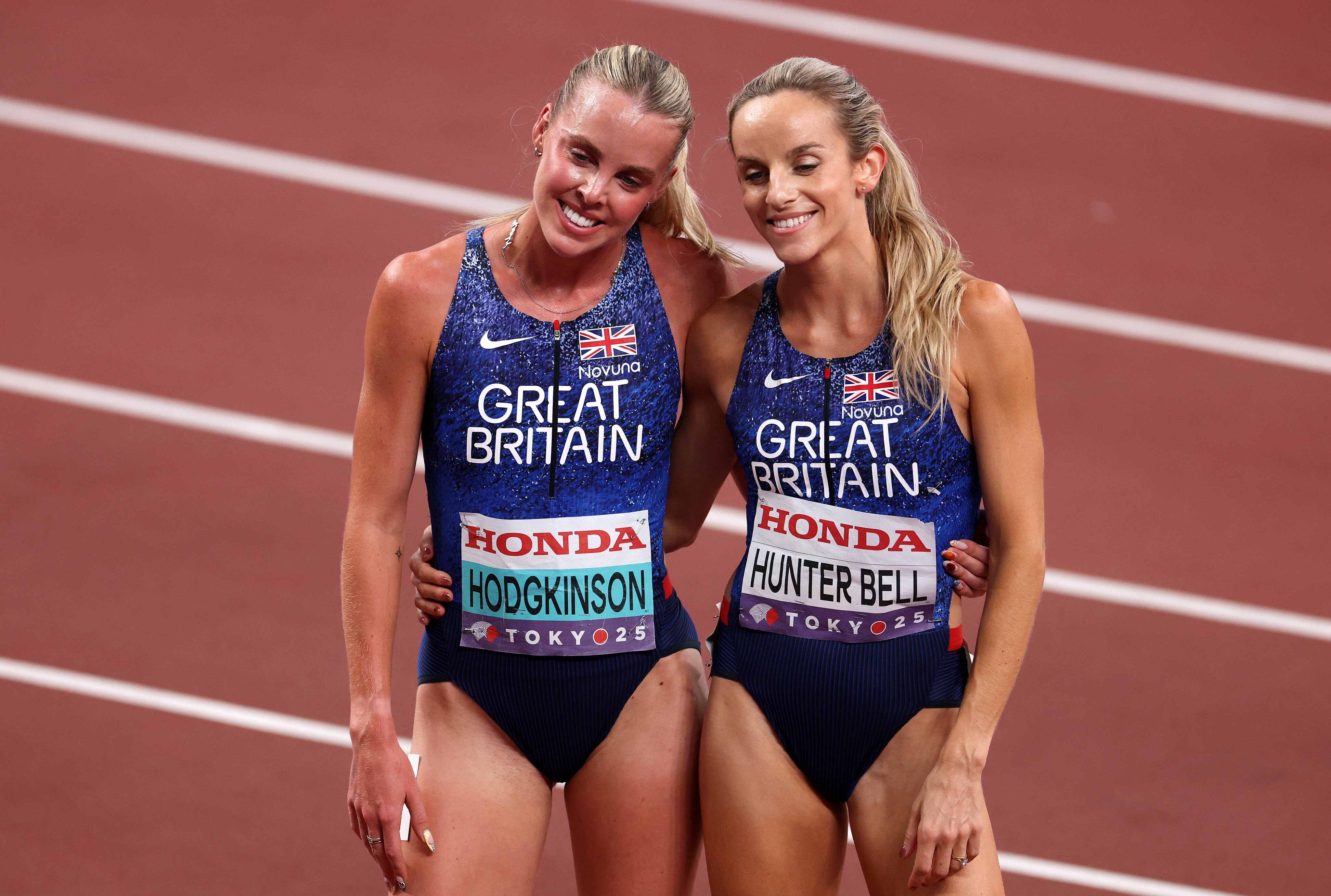
Across the Atlantic, the United States is also well represented among the early leaders. Roisin Willis has clocked 1:57.97, while compatriot Sage Hurta-Klecker follows with 1:58.78, ensuring that the American challenge remains a significant factor heading into the championship season.
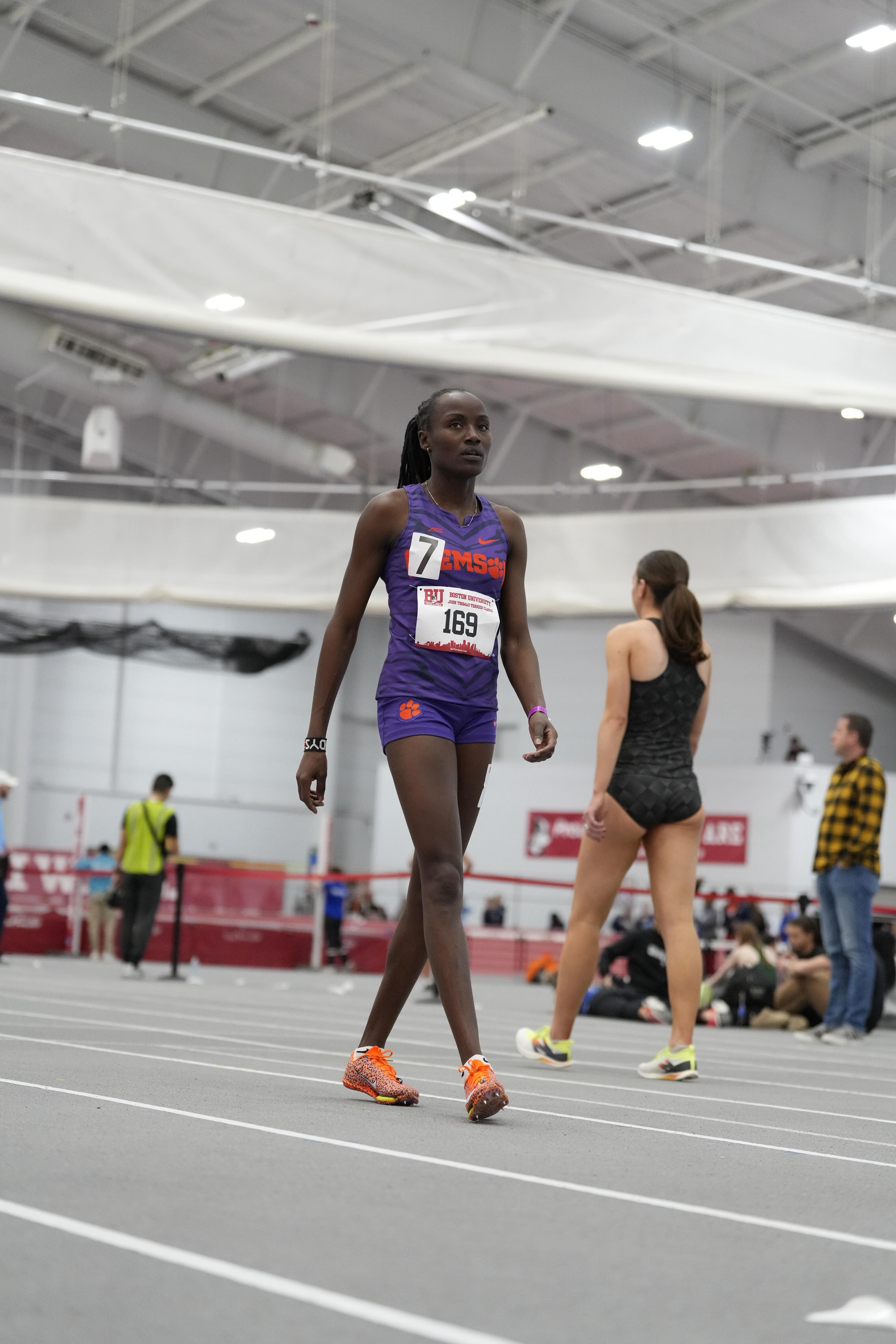
Africa also features on the list through Kenya’s Gladys Chepngetich and Ethiopia’s Tsige Duguma, who are tied at 1:58.81, both demonstrating the capability to challenge the front runners when it matters most.
Adding further intrigue is Dutch star Femke Bol. Known globally for her dominance in the 400 metres and the hurdles, Bol has also entered the 800m rankings with 1:59.07, showcasing her remarkable range on the track. American athlete Olivia Baker completes the current top ten with 1:59.18.
With multiple athletes already breaking the 1:58 barrier and the season still unfolding, the women’s 800m is rapidly emerging as one of the most compelling events to watch. Tactical awareness, finishing strength, and championship composure will all play decisive roles once the world’s best line up indoors.
As the countdown continues toward the March 20–22 showdown in Kujawy-Pomorze, one question looms large: can anyone challenge Keely Hodgkinson when the world’s best gather for the ultimate indoor battle?
by Erick Cheruiyot for My Best Runs.
Login to leave a comment
Kenya Unveils Six-Athlete Squad for Global Indoor Showdown in Poland
Kenya has officially named a compact but promising team for the upcoming World Athletics Indoor Championships 2026, with Athletics Kenya selecting six athletes to carry the nation’s hopes at the global indoor spectacle scheduled for March 20–22 in Kujawy-Pomorze, Poland.
The carefully chosen squad blends experience with emerging talent, reflecting Kenya’s growing ambitions on the indoor stage. Traditionally renowned for its dominance in middle- and long-distance events outdoors, the country continues to expand its presence indoors, where speed, tactics, and adaptability on the tight 200-metre track often define success.
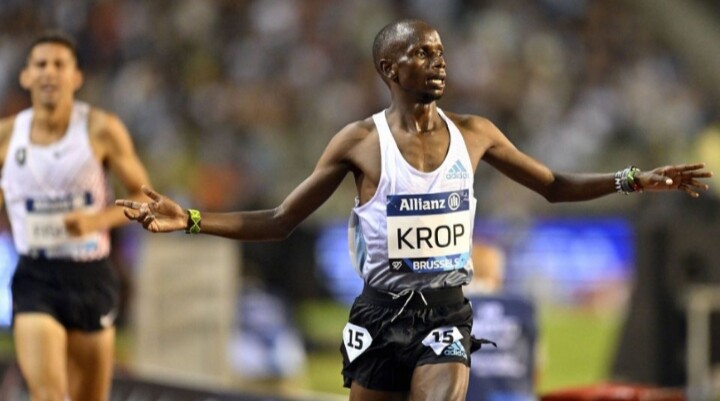
Leading the men’s lineup is Brian Omari Tinega, who will represent Kenya in the 400 metres, an event that demands both explosive speed and disciplined pacing. In the men’s 800 metres, the responsibility falls on Noah Kibet, one of the country’s rising middle-distance prospects known for his aggressive racing style. Completing the men’s side is Jacob Krop, who has been entrusted with the 3000 metres, bringing his proven endurance and championship experience to the indoor arena.
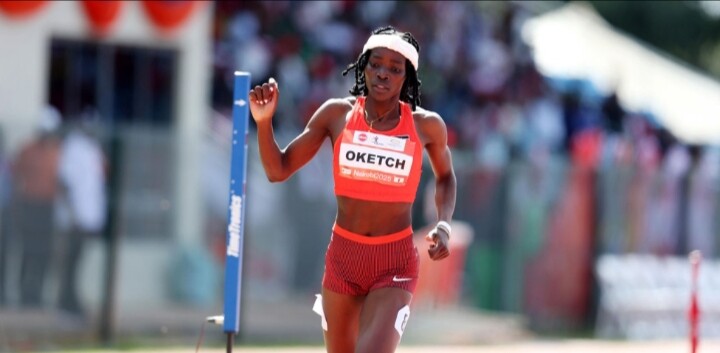
The women’s team mirrors that balance of speed and middle-distance strength. Mercy Adongo Oketch will compete in the women’s 400 metres, aiming to deliver a strong performance in an event where fractions of a second often separate medalists from the rest of the field. In the 800 metres, Rosemary Longisa will look to showcase Kenya’s depth in middle-distance running, while Susan Lokayo Ejore takes on the women’s 1500 metres, an event where tactical awareness and finishing speed are critical.
According to the federation, the selected athletes represent a strategic mix designed to maximize Kenya’s competitiveness across both sprint and middle-distance events. While indoor championships present unique challenges — from tighter tracks to faster tactical races — they also offer a valuable platform for athletes to test themselves against the world’s elite early in the season.
The three-day championship is expected to attract top indoor specialists from across the globe, creating an intensely competitive atmosphere. For Kenya’s six representatives, it will be an opportunity not only to chase podium finishes but also to strengthen the country’s growing reputation in indoor athletics.
As preparations intensify ahead of the trip to Poland, hopes remain high that the small but determined Kenyan delegation will rise to the occasion and leave a strong mark on one of the sport’s most prestigious indoor stages.
by Erick Cheruiyot for My Best Runs.
Login to leave a comment

Teenage Phenom Rises: Cooper Lutkenhaus Storms to U.S. Indoor 800m Crown in 1:46.68
Under the bright lights and electric tension of the national stage, 17-year-old Cooper Lutkenhaus delivered a performance far beyond his years, capturing the men’s 800 meters title at the USATF Indoor Championships in a stunning 1:46.68.
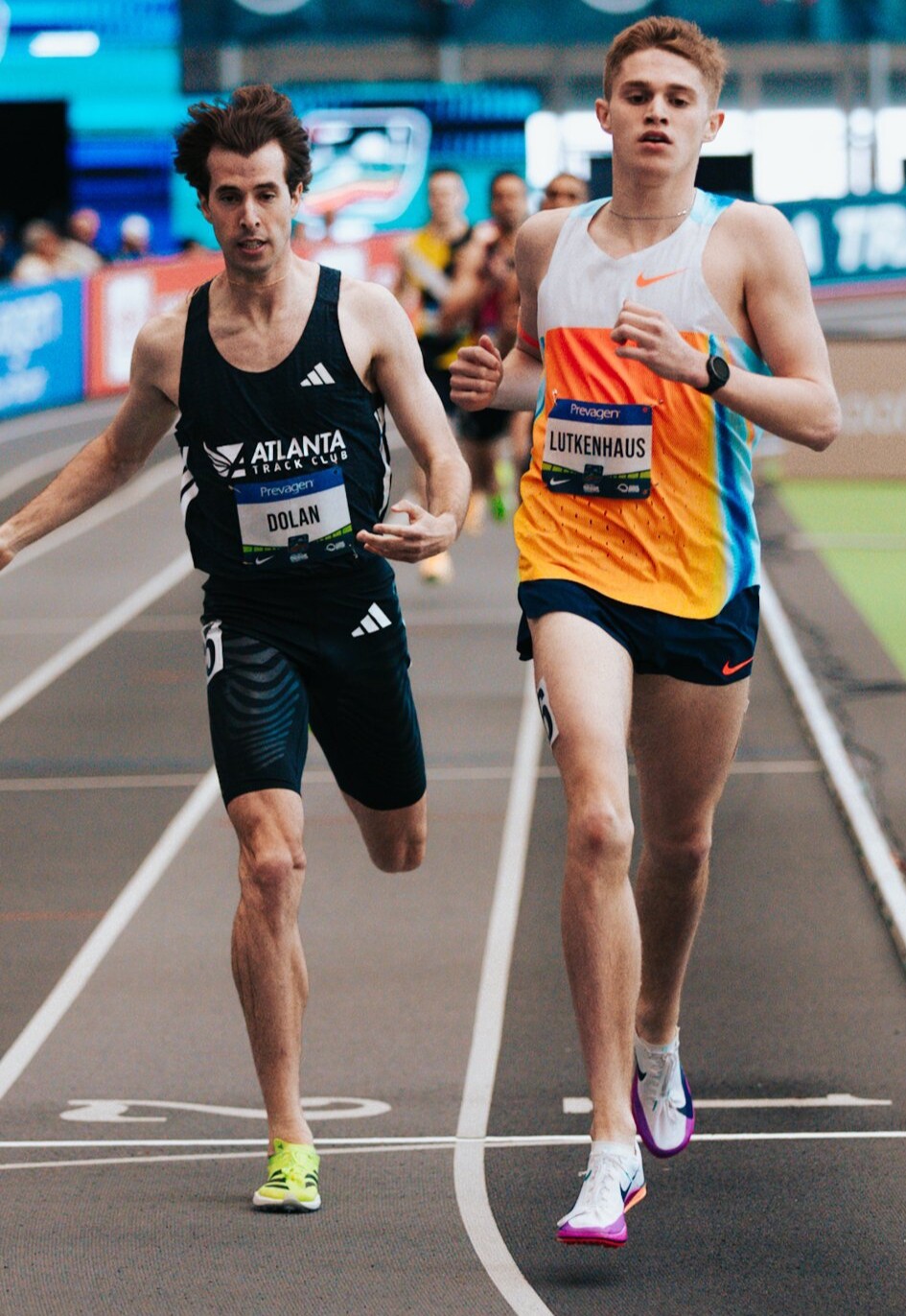
In a race stacked with seasoned professionals and established names, the teenage sensation refused to be intimidated. Instead, he ran with authority—composed through the early laps, patient in positioning, and fearless when it mattered most. As the bell rang and the field tightened, Lutkenhaus surged with conviction, driving down the homestretch and powering through the tape to secure a national crown in emphatic fashion.
His winning mark of 1:46.68 was not merely a personal triumph; it was a statement. At just 17, Lutkenhaus demonstrated tactical maturity and raw speed that signal a future brimming with possibility. The indoor oval, often unforgiving and tactical, demands precision and resilience. On this stage, he showed both.
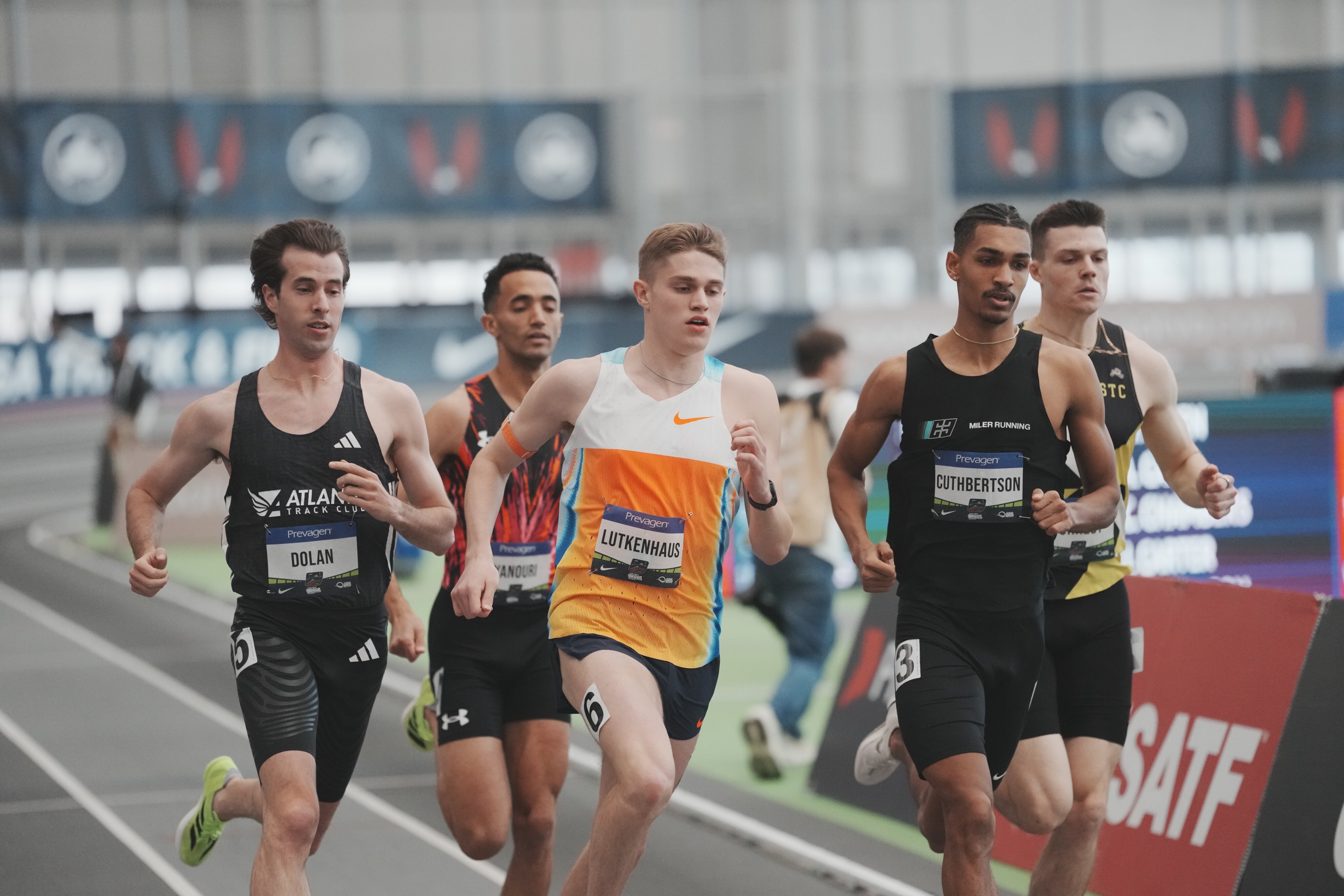
Behind him, the competition was fierce. Sean Dolan of Atlanta TC claimed second in 1:47.16, while Isaiah Harris followed closely in 1:47.22. Olympic finalist Isaiah Jewett crossed in 1:47.55, just ahead of Brannon Kidder (1:47.57). Joe Waskom rounded out the top finishers in 1:48.48. In such a tightly contested field, margins were razor-thin—yet Lutkenhaus stood clear when it counted.
Beyond the medal and the time, the victory carries broader significance. Lutkenhaus has already expressed his ambition to represent Team USA on the international stage, with Poland looming as his next target. For a young athlete balancing youth with elite expectations, this triumph marks the beginning of a compelling new chapter.
The roar at the finish line was more than applause for a race well run—it was recognition of emerging greatness. In a discipline where experience often reigns supreme, Cooper Lutkenhaus has rewritten the script, proving that age is no barrier to excellence.
If this performance is any indication, American middle-distance running has found its next standard-bearer.
by Erick Cheruiyot for My Best Runs.
Login to leave a comment

2026 USAFT Indoor Championships
The 2026 USATF Indoor Championships, presented by Prevagen, are set to take place on February 22-23 at the Ocean Breeze Athletic Complex in Staten Island, New York. This premier event will feature the nation's top track and field athletes competing for national titles and spots on the U.S. team for the 2025 World Indoor Championships in Nanjing, China. The Ocean...
more...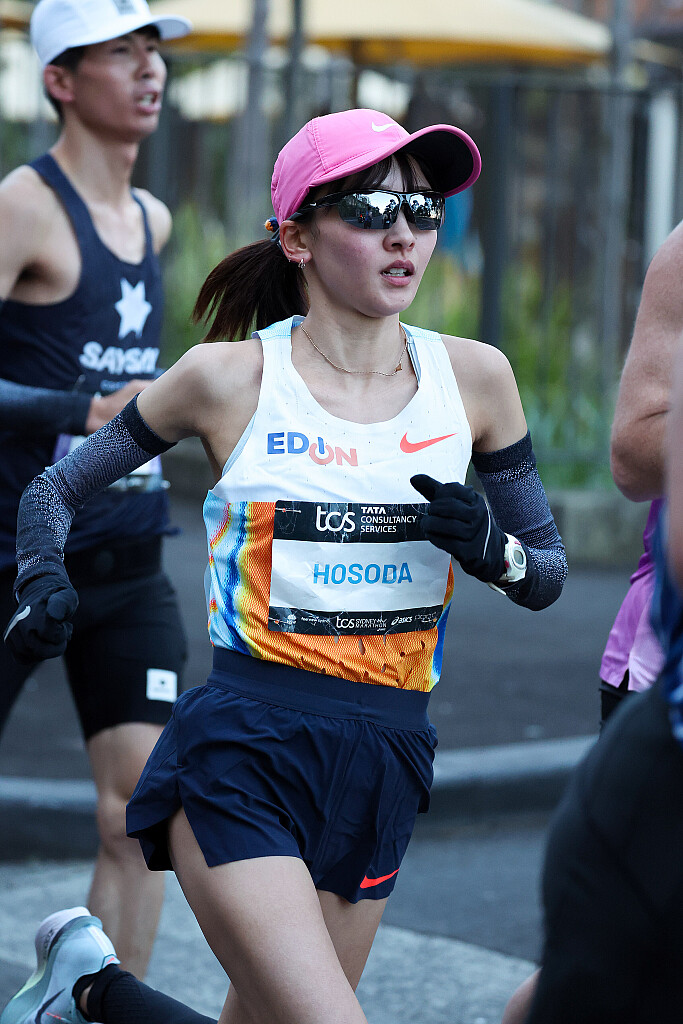
Queens of the Marathon: A Loaded Women’s Field Set to Ignite Tokyo 2026
The women’s race at the 2026 Tokyo Marathon to be staged on 1st March in Tokyo, Japan is shaping up to be one of the deepest and most compelling contests in recent marathon history, blending reigning champions, global major winners, national icons, and seasoned veterans into a single high-stakes showdown. At the center of the narrative stands Ethiopia’s formidable title defender Sutume Asefa Kebede, who returns to Tokyo chasing a third consecutive victory after dominating the previous two editions and establishing herself as the course record holder.
Kebede’s authority in Tokyo has been built on tactical intelligence and relentless pace control, but her path to another triumph will be far from straightforward. Among the most dangerous challengers is compatriot Hawi Feysa, who finished third in Tokyo last year before ascending to global prominence with victory at the 2025 Chicago Marathon. Her breakthrough confirmed what many suspected — that she possesses the finishing speed and endurance to win on any major stage.
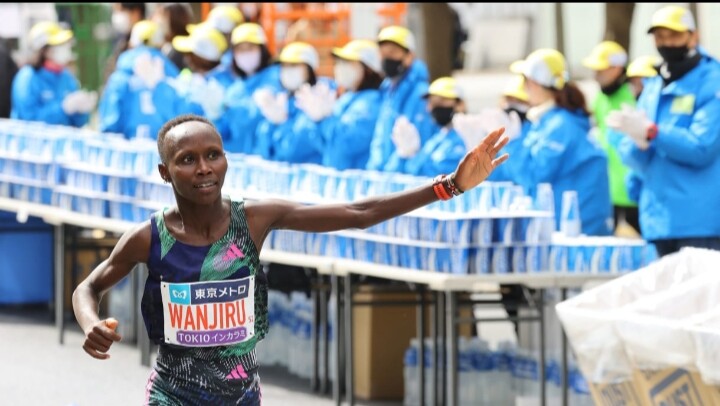
Another major threat comes from Kenya’s Rosemary Wanjiru, the 2025 Berlin Marathon champion, whose consistency at the highest level continues to make her one of the most dependable performers in elite women’s marathoning. With proven championship composure and a powerful late-race surge, Wanjiru enters Tokyo as a genuine title contender capable of disrupting Ethiopian dominance.
The depth extends even further with a wave of major champions from the past two seasons. Ethiopia’s Megertu Alemu, winner in Valencia in 2024, arrives with one of the fastest personal bests in the field, while Bertukan Welde brings confidence from her victory in Prague in 2025. Adding to the Ethiopian strength is Mestawut Fikir, who captured the Paris Marathon crown in 2024, and Waganesh Mekasha, winner of Osaka the same year — further proof of the nation’s extraordinary marathon pipeline.
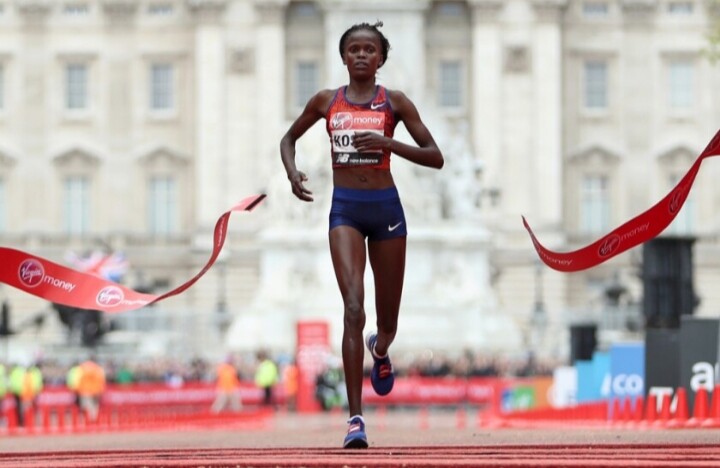
Yet perhaps the most recognizable name in the field remains Kenya’s Brigid Kosgei, the former world record holder whose 2:14:04 still ranks among the fastest performances ever recorded by a woman. Kosgei’s experience, championship pedigree, and proven ability to handle aggressive pacing make her presence alone a psychological factor for the entire field.
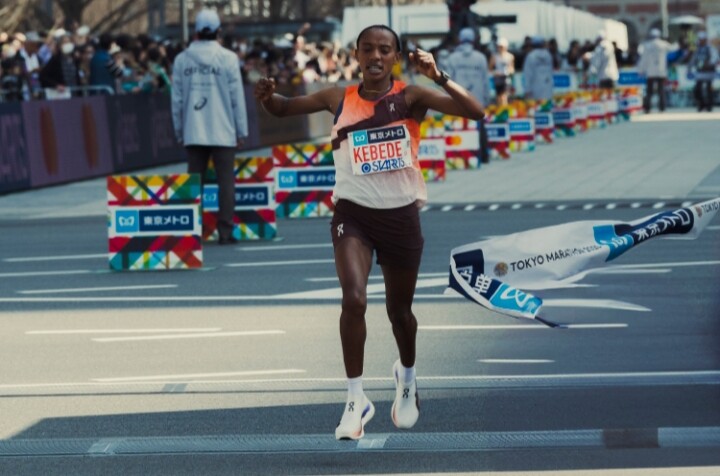
Japan’s hopes will largely rest on Ai Hosoda, currently the nation’s seventh-fastest woman in history. Hosoda produced a career-best 2:20:31 in Berlin in 2024 and recently announced that Tokyo will serve as her farewell race. The emotional weight of competing at home in her final marathon could provide an added dimension of motivation, especially after she secured qualification for the 2028 Olympic Trials with a strong performance in Sydney last year.
Beyond the headline names, the international depth remains impressive. Canada’s Malindi Elmore brings championship experience and resilience, while American veteran Sara Hall continues to defy expectations deep into her career. China fields a strong contingent led by Yuyu Xia, joined by Poland’s Aleksandra Brzezińska and Australia’s Vanessa Wilson, all capable of influencing the race dynamics if conditions or tactics shift.
What makes Tokyo particularly fascinating is the blend of proven speed and competitive hunger. Several athletes own personal bests under 2:18, creating the possibility of a historically fast race if pacing conditions align. But Tokyo is rarely predictable. Weather, pack strategy, and the psychological battle after 35 kilometers often determine the final outcome more than raw times on paper.
As the world turns its attention to Japan’s capital, one question dominates: can Kebede secure a historic three-peat, or will a new champion emerge from one of the strongest women’s marathon fields assembled this season?
by Erick Cheruiyot for My Best Runs.
Login to leave a comment

Tokyo Marathon
The Tokyo Marathon is a world-renowned annual marathon held in Tokyo, Japan. As one of the prestigious Abbott World Marathon Majors, it attracts elite and amateur runners from around the globe. The race holds World Athletics Platinum Label status, recognizing its high competitive standards, top-tier organization, and international appeal. Sponsored by Tokyo Metro, the Tokyo Marathon has grown into one...
more...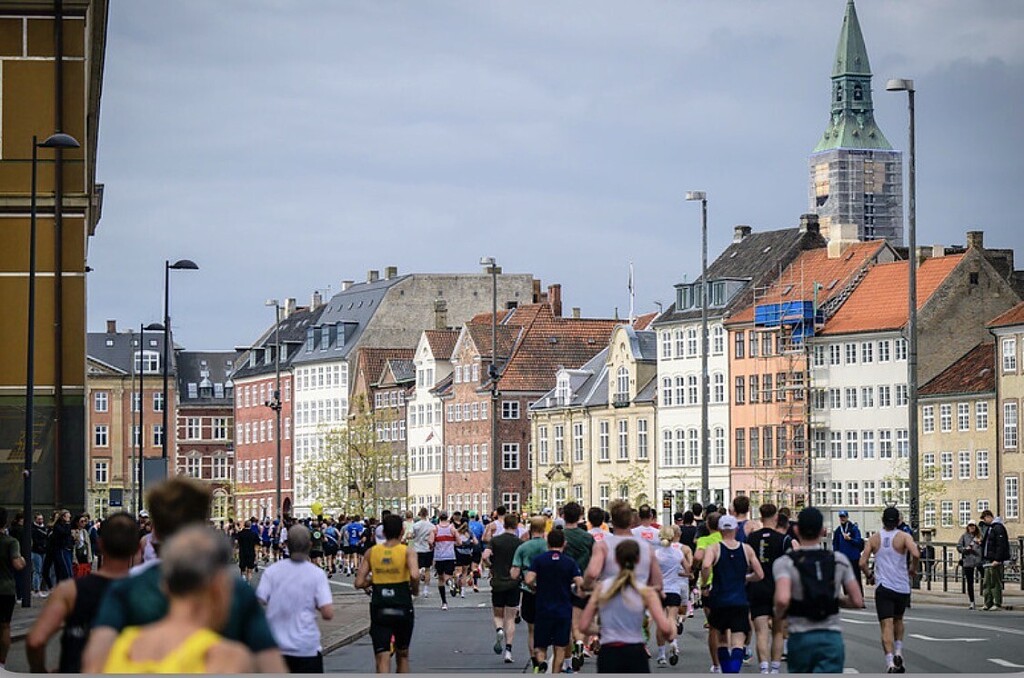
European Marathon Classics Launches New Era for Distance Running
A new chapter in European marathon running was unveiled on February 25, 2026, when organizers introduced the European Marathon Classics, a series linking eight of the continent’s most established races into one long-term challenge for runners.
The announcement was made in Vienna at the historic Schönbrunn Palace, bringing together race directors and organizers from across Europe. The concept is simple: one distance, eight cities, and a shared journey through some of Europe’s most celebrated marathon courses.
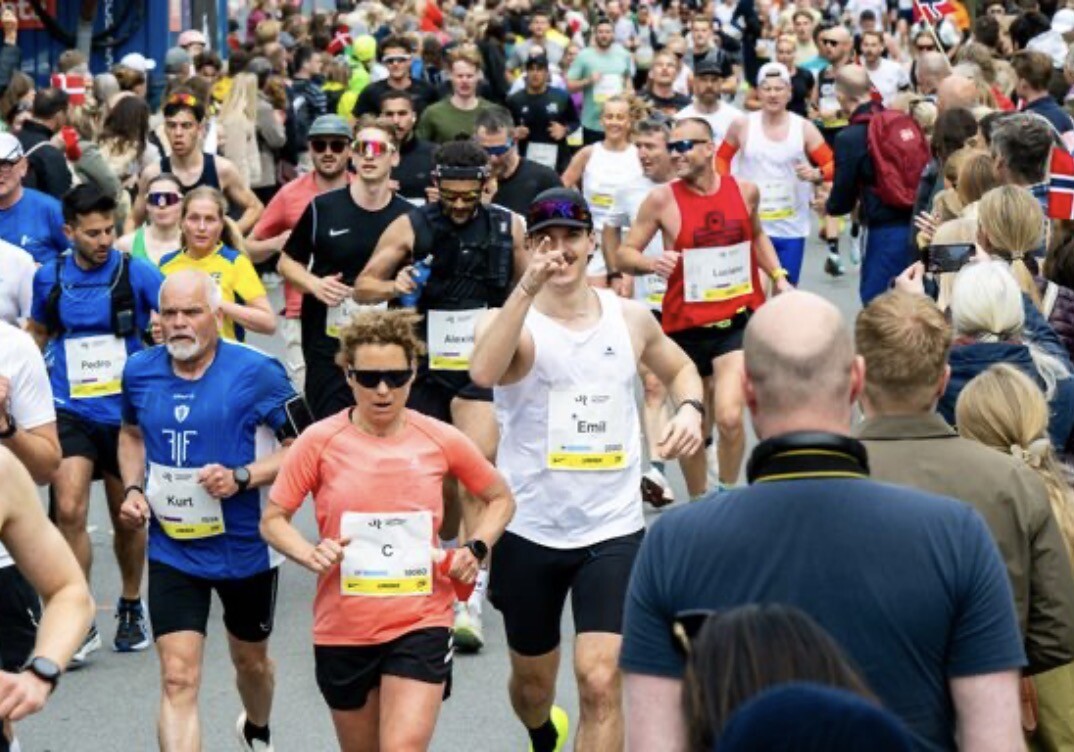
The new series connects races that already have strong identities of their own. By linking them together, organizers hope to inspire runners to explore different countries, cultures, and running traditions while pursuing a personal challenge.
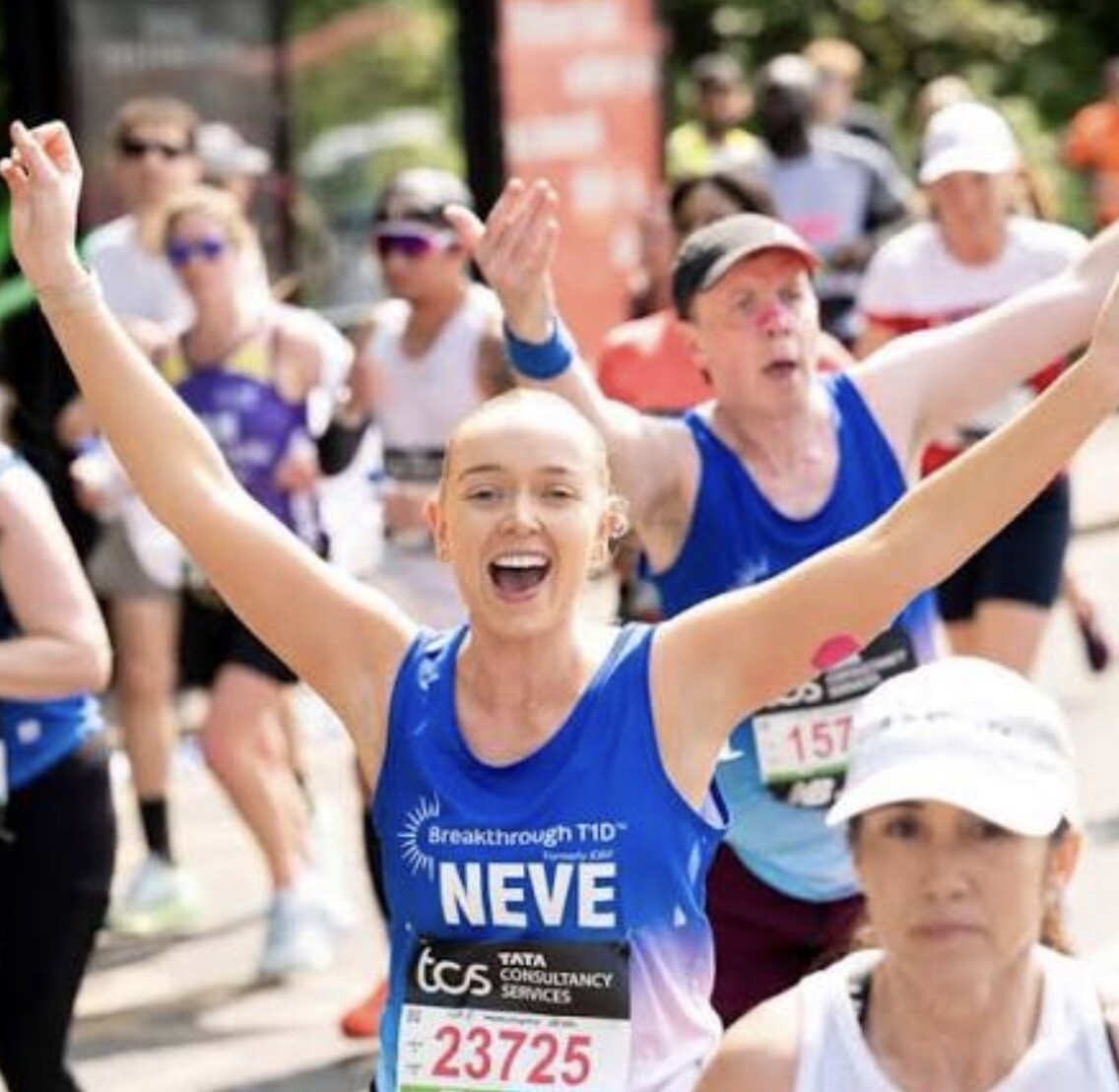
To earn the title European Marathon Classics Finisher, runners must complete five of the eight marathons, each in a different city. There is no time limit, allowing participants to build their journey over several seasons.
The eight races in the series form a calendar stretching from early spring to autumn:
2026 European Marathon Classics Schedule
March 22 – Rome Marathon (Italy)
April 19 – Vienna City Marathon (Austria)
April 26 – London Marathon (United Kingdom)
April 26 – Madrid Marathon (Spain)
May 10 – Copenhagen Marathon (Denmark)
September 27 – Warsaw Marathon (Poland)
October 10 – Lisbon Marathon (Portugal)
October 25 – Frankfurt Marathon (Germany)
Runners who complete five races will receive a commemorative medal designed to reflect the journey. The medal includes magnetic elements that allow athletes to add a marker for each marathon they finish.
One unusual feature of the project is that past results will count. Organizers say runners will be able to register historical performances from earlier editions of the races, recognizing the long traditions behind these events.
London Marathon Event Director Hugh Brasher said the idea is meant to highlight what connects runners across the continent.
by Bob Anderson for My Best Runs
Login to leave a comment
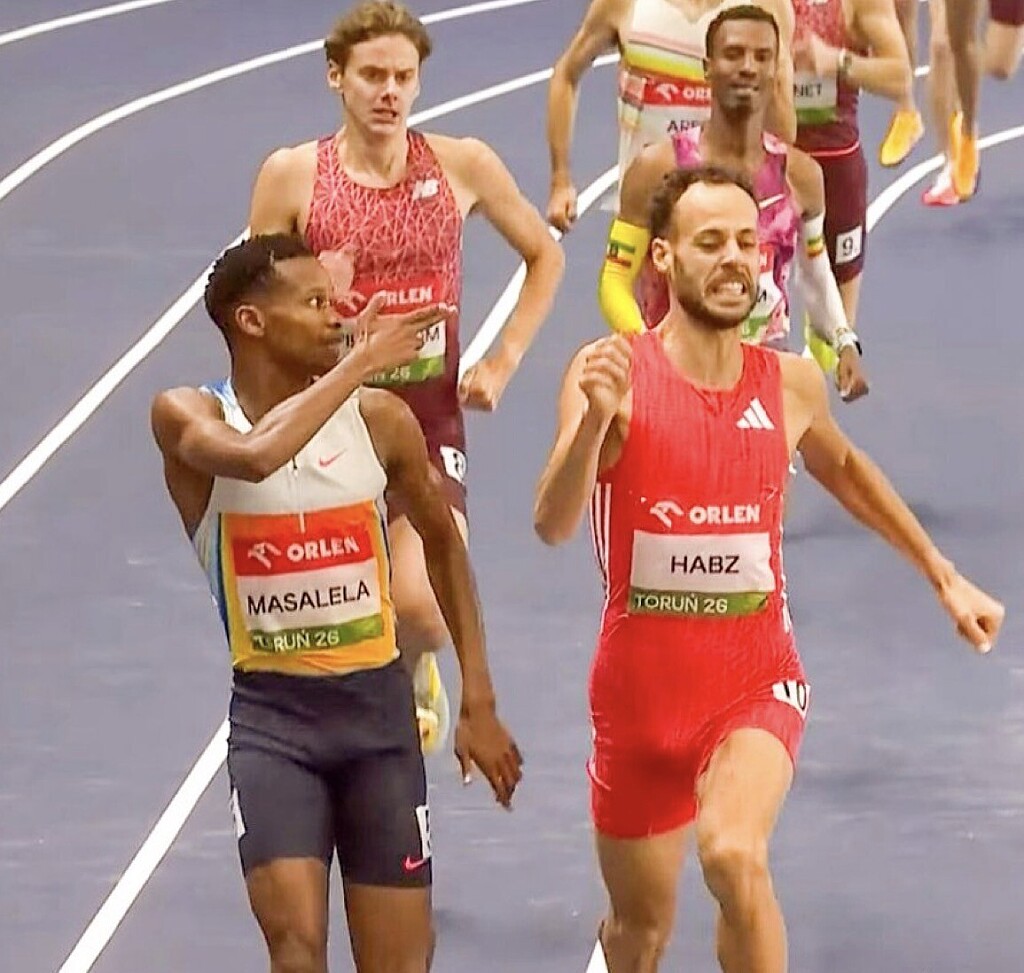
Victory Taken Away in Toruń Masalela Disqualified After Dramatic 1500m Finish
The men’s 1500 meters at the 2026 Orlen Copernicus Cup in Toruń, Poland produced one of the most dramatic finishes of the indoor season—only for the result to change minutes later.
South Africa’s Tshepiso Masalela crossed the line first in 3:32.55, appearing to claim a major victory at the World Athletics Indoor Tour Gold meeting held on February 16, 2026.
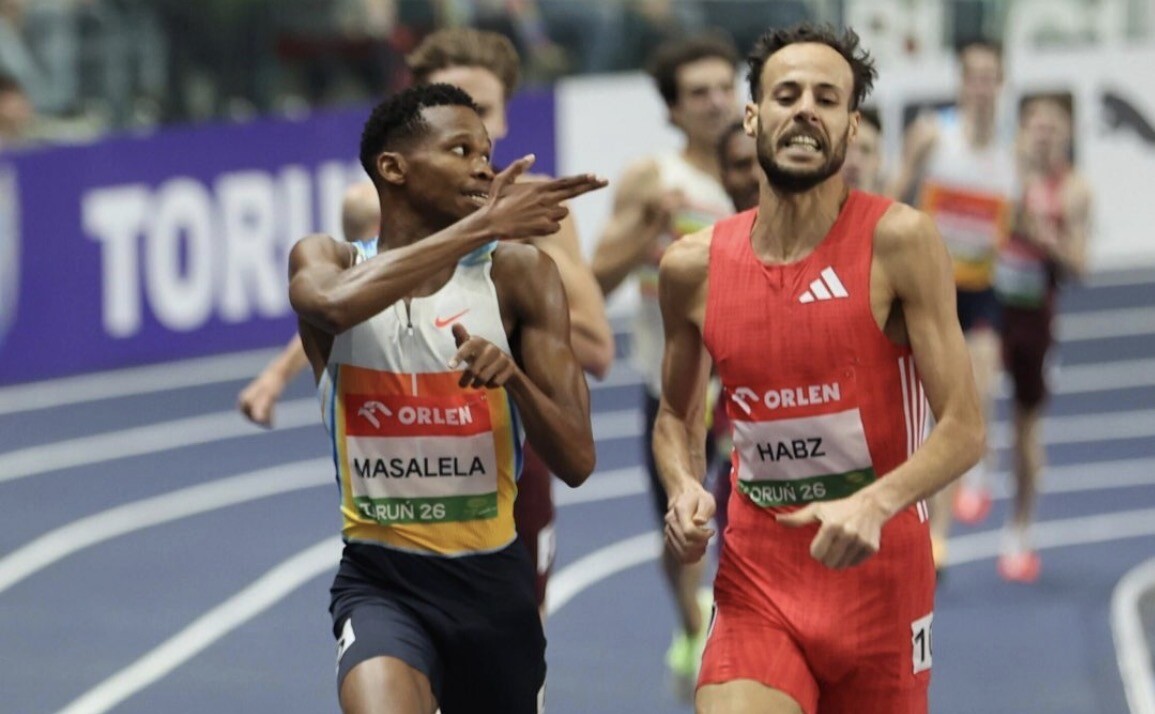
But the celebration was short-lived.
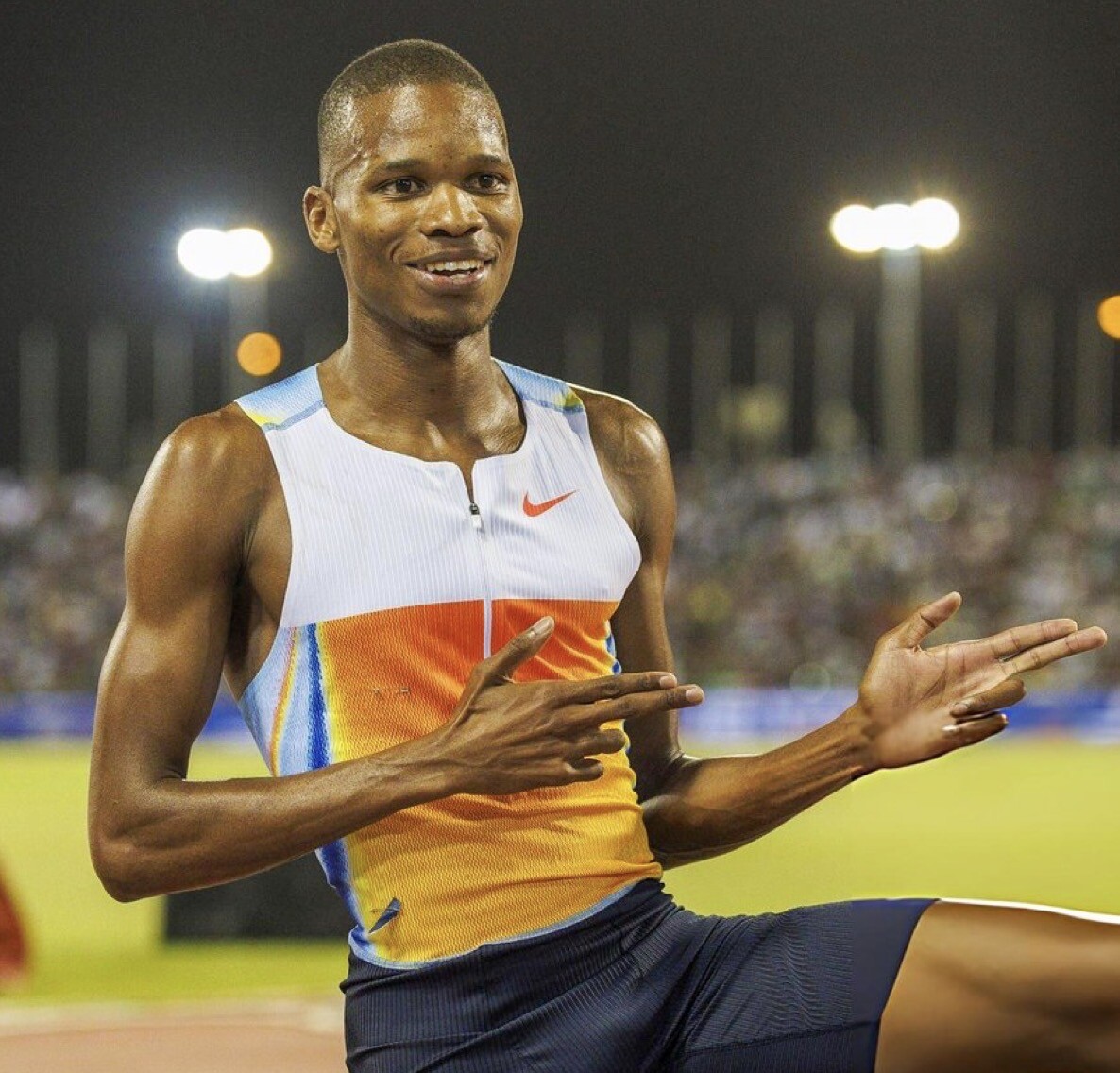
Officials reviewed the race and disqualified Masalela for unsportsmanlike conduct after he gestured aggressively toward Morocco’s Azeddine Habz during the final sprint down the homestretch.
With the disqualification enforced, Habz was awarded the victory in 3:32.56, just one hundredth of a second behind Masalela at the finish.
Officials ruled that the gun gesture violated Rule TR 7.1 (improper conduct) under World Athletics’ competition regulations. The rule addresses behaviour considered unsportsmanlike or inappropriate during competition.
The incident unfolded in the final meters of a fiercely contested race. As the athletes drove toward the line, Masalela appeared to turn and gesture toward Habz while still sprinting. Officials ruled the action violated competition rules governing athlete conduct.
The decision immediately changed the outcome of one of the fastest indoor 1500-meter races of the season.
The Orlen Copernicus Cup is one of the premier meets on the World Athletics Indoor Tour, often serving as a key tune-up ahead of championship racing. The fast indoor track in Toruń has produced numerous world-class performances over the years, and this race looked destined to be remembered purely for its speed before the post-race ruling shifted the spotlight.
For Habz, the victory stands as an important result in a season building toward the World Athletics Indoor Championships in Toruń next month.
For Masalela, it was a painful lesson in how quickly a victory can disappear—even after crossing the finish line first.
by Boris Baron
Login to leave a comment
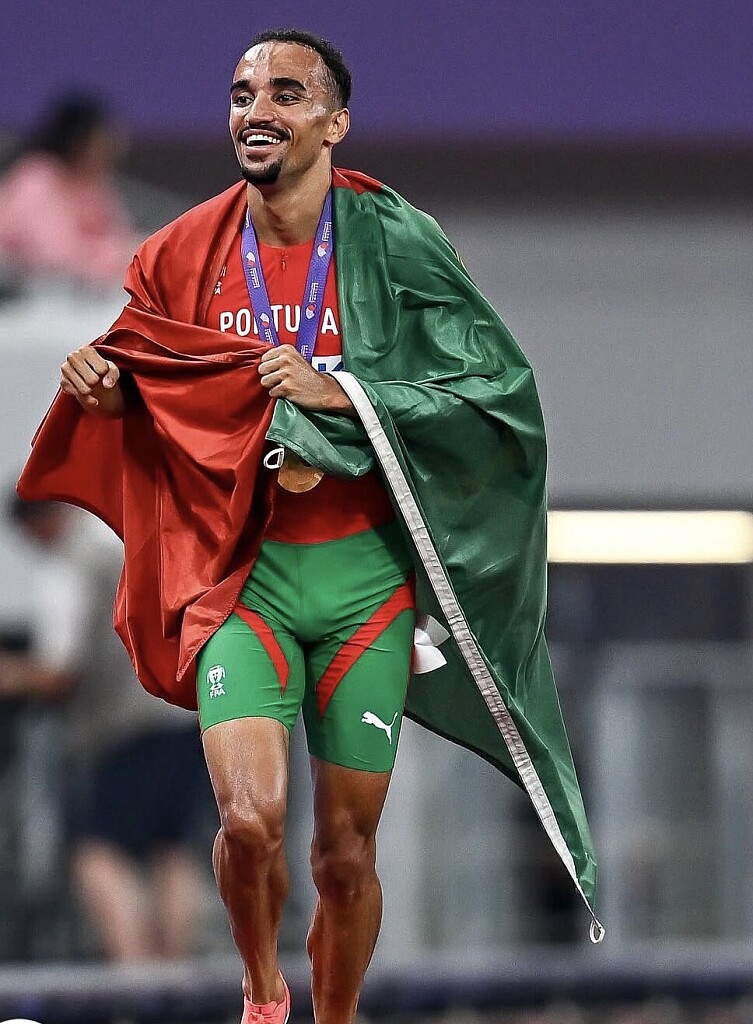
Isaac Nader’s Liévin Precision Sets Up Toruń Showdown
If the men’s 1500 meters at the World Athletics Indoor Championships in Toruń, Poland (March 20–22, 2026) comes down to the final 150 meters — as indoor championship races so often do — Portugal’s Isaac Nader may already hold the tactical edge.
On February 19, 2026, at the Meeting Hauts-de-France Pas-de-Calais in Liévin, France, Nader focused on a single objective: the 1500m. He did not attempt a double. He did not divide his attention across events. He executed with discipline and left with a composed victory in 3:32.44.
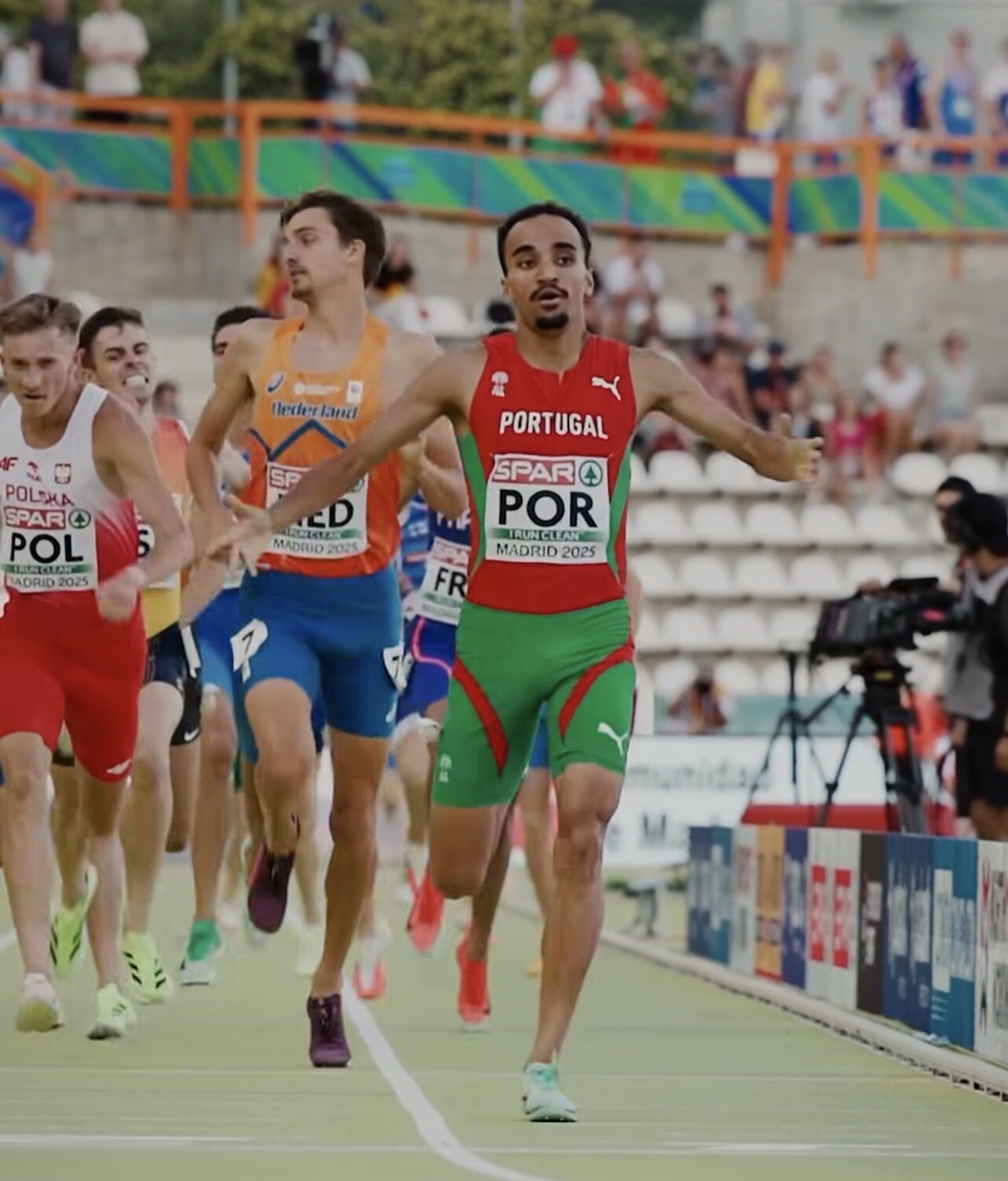
The time was strong. The execution was even stronger.
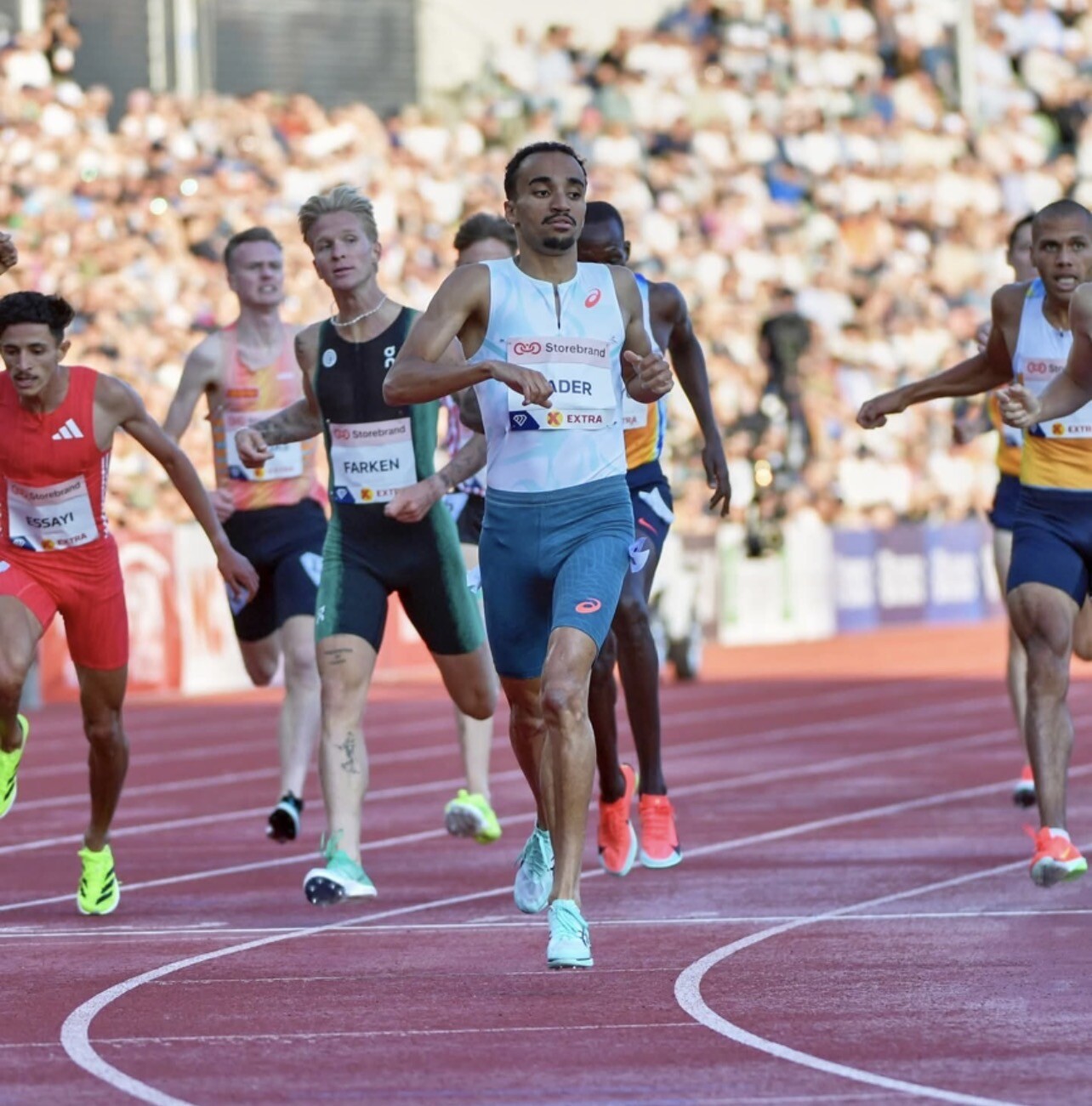
Indoor medals are rarely won through reckless aggression. They are earned through positioning, patience, and precise decision-making under pressure. In Liévin, Nader displayed all three.
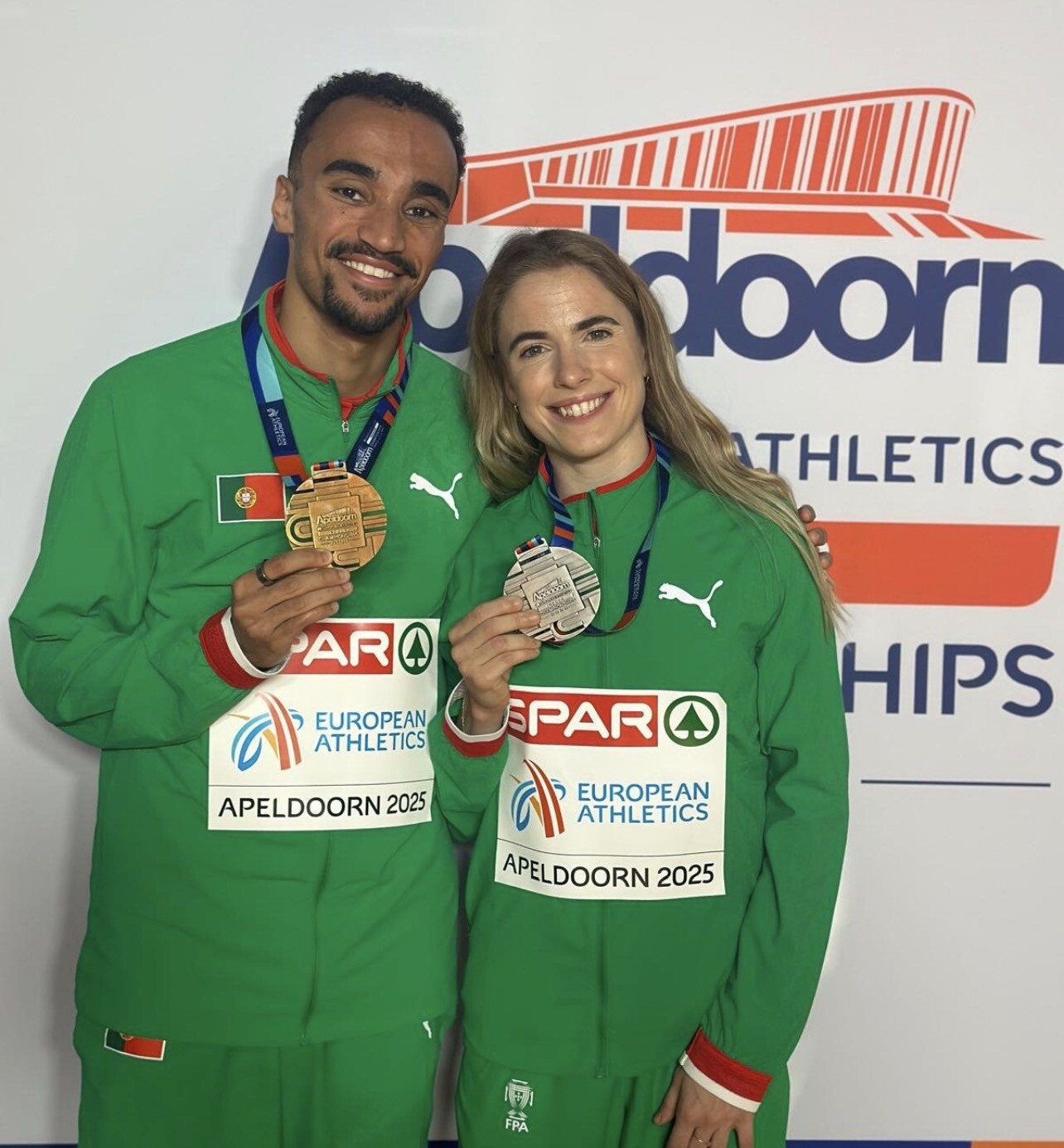
A Race Built on Control
From the opening laps, Nader resisted the temptation to dictate pace. On a 200-meter oval where every bend compresses space and every surge risks being trapped on the rail, spatial awareness is everything. He remained close enough to stay dangerous, yet far enough to avoid unnecessary contact.
As the field tightened entering the decisive stages, the tension that defines elite indoor 1500-meter racing became visible. No one wanted to commit too early. No one wanted to be exposed before the bell.
Nader waited.
With roughly 200 meters remaining, he shifted gears — controlled, decisive, without panic. By the time his rivals reacted, the separation had formed. Indoors, that margin is often enough.
He did not win through chaos. He won through timing.
Why the Focus Matters
The World Indoor Championships will demand a heat and a final in compressed succession. Energy management becomes strategic. Athletes who stretch themselves thin across the indoor season often arrive sharp but fatigued.
By concentrating solely on the 1500m in Liévin, Nader signaled clarity of purpose. He sharpened one blade rather than swinging several.
That focus aligns with championship success.
The Tactical Landscape in Toruń
The field in Poland is expected to include athletes willing to test the pace early. Yet indoor finals frequently stall on the penultimate lap as runners hesitate, calculating risk versus reward.
That hesitation is where races are decided.
Nader’s Liévin performance suggests he thrives in contained tension. He absorbs surges rather than initiating them. He maintains structural positioning — avoiding being boxed, preserving outside options, and striking only when the window fully opens.
In tight indoor racing, composure can outweigh raw speed.
The Question Ahead
The issue is not whether Nader has the closing speed. Liévin confirmed that. The question is whether his rivals in Toruń can neutralize his patience.
Championship 1500-meter racing is rarely won by the athlete who leads longest. It is won by the athlete who controls the decisive movement.
If the race in Poland evolves into a tactical contest rather than an all-out tempo effort, Isaac Nader will not simply be in the final.
He will be the athlete everyone must account for.
by Robert Kibet for My Best Runs
Login to leave a comment
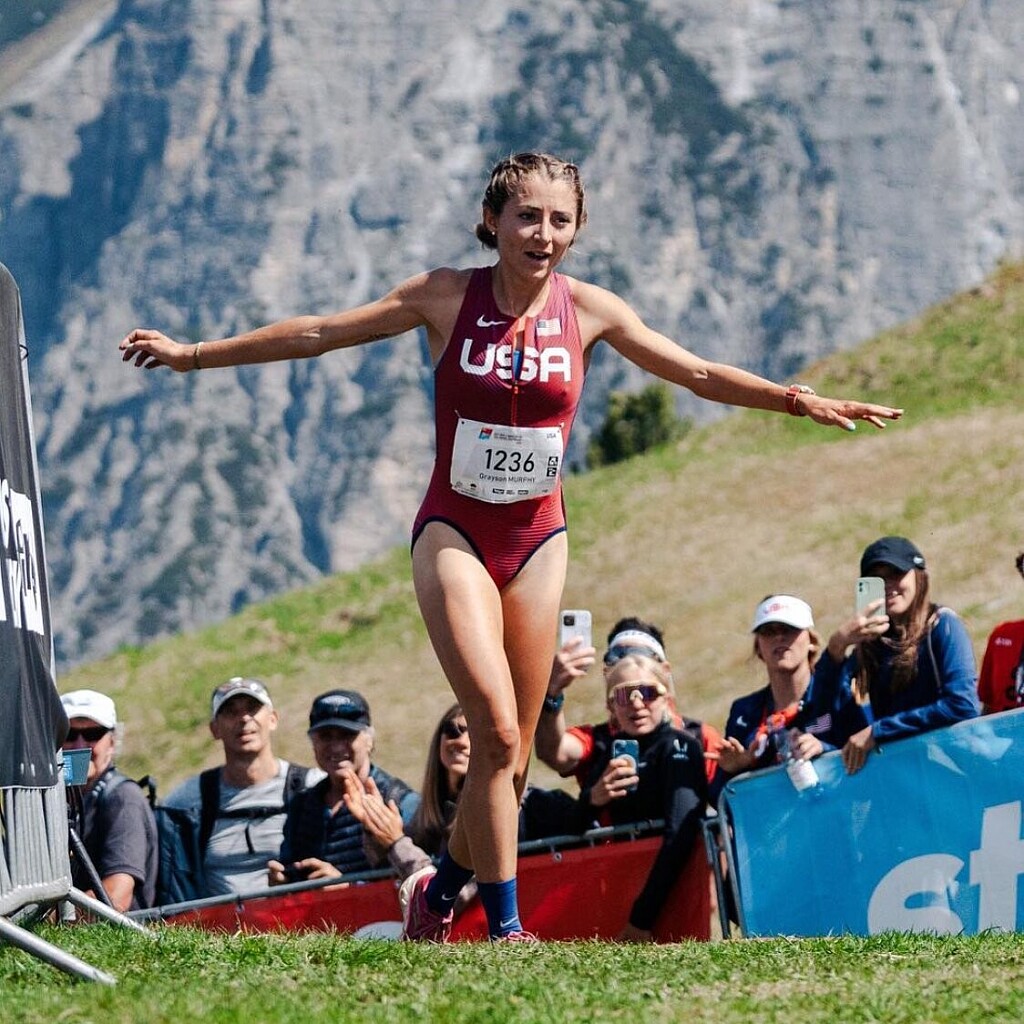
Chasing Summits, Defining Limits: Inside the 2026 World Mountain Running Cup Journey
With only sixty days remaining before the season opener, the anticipation surrounding the 2026 World Mountain Running Cup is reaching a powerful crescendo. Organized by the World Mountain Running Association (WMRA), this global series stands as the pinnacle of competitive mountain running — a demanding arena where athletic precision, endurance, and mental resilience intersect with some of the most dramatic landscapes on Earth.

Mountain running is not merely a sport; it is an encounter between human ambition and vertical terrain. Unlike road racing, where predictability dominates, mountain racing introduces variables that cannot be controlled — altitude, weather volatility, technical descents, and the relentless resistance of gravity. Success belongs not only to the strongest athlete, but to the most adaptable mind.
The 2026 season promises exceptional intensity as elite runners and rising talents converge across multiple continents, competing in three primary formats: Uphill, Up & Down, and Long Distance. Each discipline demands a distinct physiological and tactical approach, ensuring that only the most versatile athletes can contend for the overall title.

From volcanic ridgelines and alpine glaciers to forested mountain corridors and historic highland communities, every race contributes to a narrative larger than sport itself — a celebration of exploration, resilience, and the pursuit of excellence in its purest form.
2026 World Cup Race Calendar
19 April — Portugal
São Brás de Alportel Cross — Up & Down
25–26 April — China
Beijing Changping Yanshou Trail Challenge — Uphill | Up & Down
7–9 May — Spain
Transvulcania — Uphill | Long
19–21 June — United States
Broken Arrow Skyrace — Uphill | Long
5 July — Austria
Grossglockner Mountain Run — Up & Down
18–19 July — France
Serre Che Trail Salomon — Uphill | Up & Down
8 August — Switzerland
Sierre-Zinal — Long
5–6 September — Italy
Trofeo Nasego — Uphill | Long
19 September — Poland
Maraton Trzech Jezior — Long Distance Final
10–11 October — Canada
Défi des Couleurs Simard — Uphill | Up & Down (World Cup Finals)
Beyond the competitive rankings, the World Cup embodies a deeper philosophy — trust in preparation, respect for nature, and belief in human potential. Athletes are not simply racing against one another; they are confronting terrain, fatigue, and uncertainty. Every climb becomes a negotiation with physical limits, and every descent demands courage under pressure.
The 2026 circuit also reflects the accelerating global growth of mountain running. Increased participation, improved race organization, and expanding media coverage are propelling the sport into a new era of recognition. For emerging athletes, this season represents opportunity; for established champions, it is a test of legacy.
As the countdown continues, training camps intensify, strategies evolve, and ambitions sharpen. Soon, starting lines will replace anticipation, and preparation will give way to performance.
In mountain running, there are no shortcuts — only the path upward and downward.
by Erick Cheruiyot for My Best Runs.
Login to leave a comment
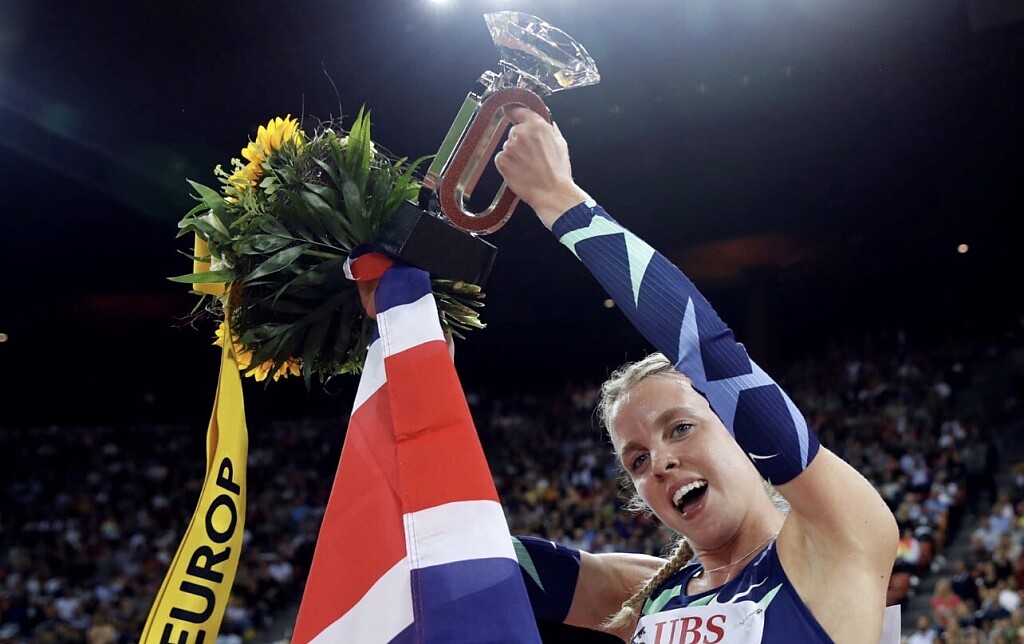
British Stars Ignite Birmingham Showdown as World Indoor Dreams Hang in the Balance
National pride, global ambition, and coveted places on the British team for Toruń will converge this weekend as Britain’s finest athletes gather at the Utilita Arena Birmingham for the Novuna UK Indoor Championships, set for February 14–15, 2026. With national titles on the line and performances carrying significant weight ahead of next month’s World Indoor Championships in Poland, the arena will become a stage where pressure, precision, and opportunity intersect.
Among the headline attractions is Olympic 800m champion Keely Hodgkinson, whose return to the national indoor stage carries both symbolic and competitive importance. Injury disrupted her progress at this point last season, but her presence in Birmingham immediately reshapes the women’s 800m landscape. Hodgkinson has indicated she intends to contest only the heats as she carefully manages her preparation for upcoming international targets. Still, her reputation as one of the most composed and tactically brilliant athletes in the sport ensures every stride will be closely watched. Even a controlled appearance offers valuable insight into her readiness as she builds toward another major global campaign.
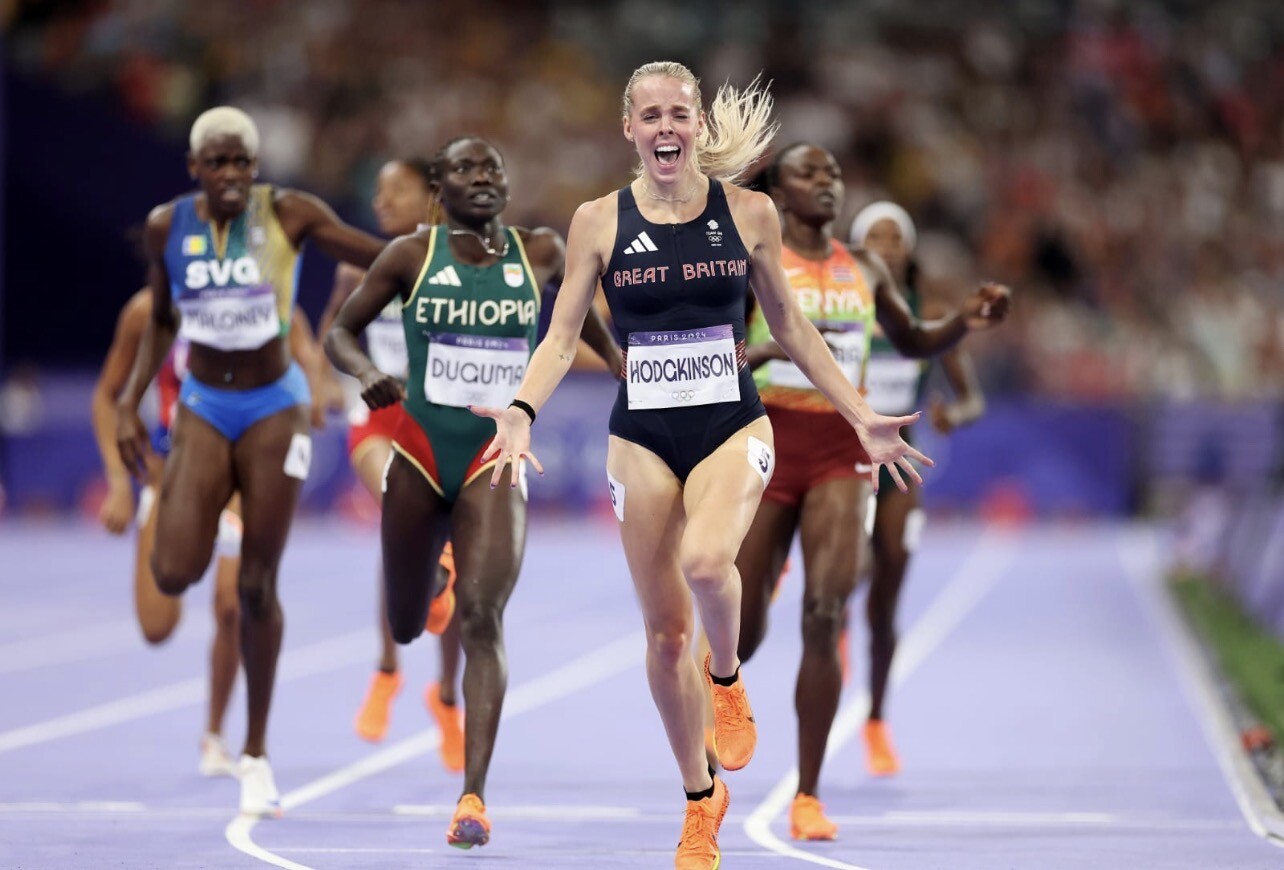
The men’s 800m brings its own compelling narrative with Ben Pattison at a pivotal moment in his career. His electrifying 1:42.27 performance in Monaco in 2024 elevated him to second on the UK all-time list behind the legendary Sebastian Coe, confirming his place among Britain’s finest two-lap runners. Injury interruptions have since challenged his momentum, but a healthy and uninterrupted indoor season now provides the opportunity to reestablish his authority. Birmingham represents more than a national championship—it is a chance for Pattison to reaffirm his position among the world’s elite and demonstrate that his trajectory remains firmly upward.
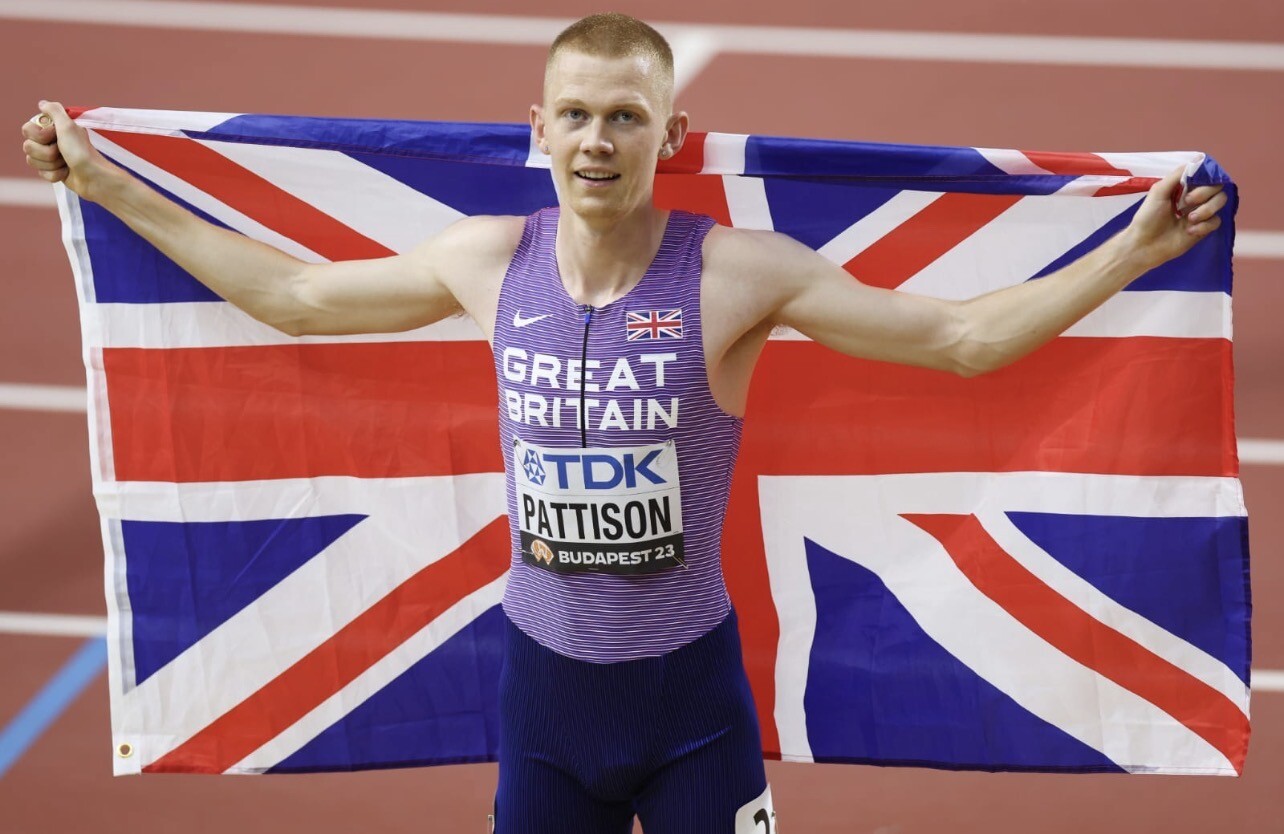
Attention in the distance events will focus on reigning UK 5000m and indoor 3000m champion Hannah Nuttall, whose consistency at the highest levels has steadily elevated her profile. A finalist at consecutive European Indoor Championships and a top-eight finisher over 5000m at the World Championships in Tokyo, Nuttall combines endurance, tactical discipline, and championship experience. Indoor racing, however, leaves no margin for error. Success depends on precise positioning, measured patience, and decisive timing. In Birmingham, she will be expected not only to defend her title but to deliver a performance that reinforces her standing as a major contender internationally.
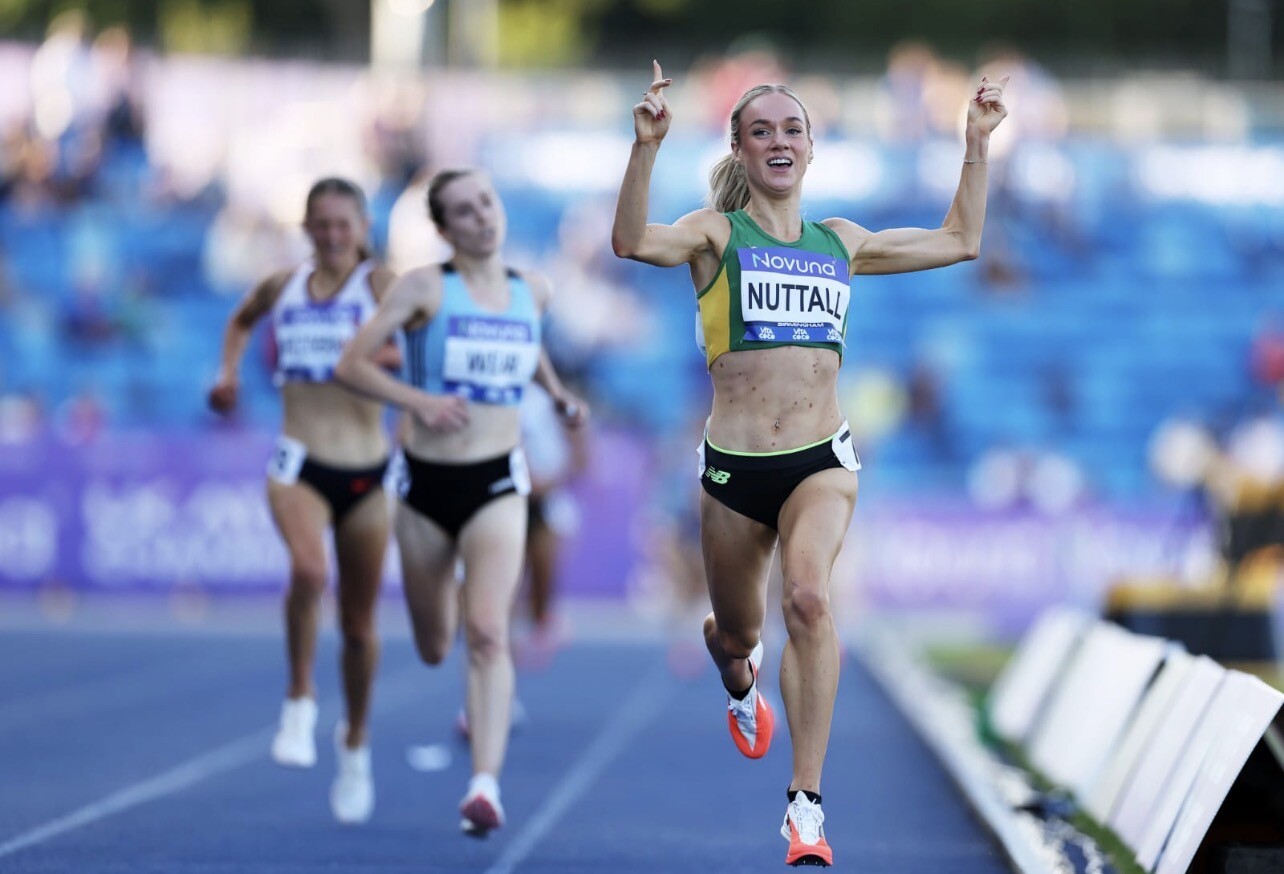
Adding further prestige to the championships is world champion Josh Kerr, an athlete who has built his career on delivering when the stakes are highest. The reigning world indoor 3000m gold medalist and 2023 world 1500m champion continues to expand his range and influence. His recent duel with Olympic champion Cole Hocker over two miles at the Millrose Games highlighted both his competitive sharpness and his appetite for world-class competition. Kerr enters Birmingham not merely to compete, but to assert control and set the tone for the season ahead.
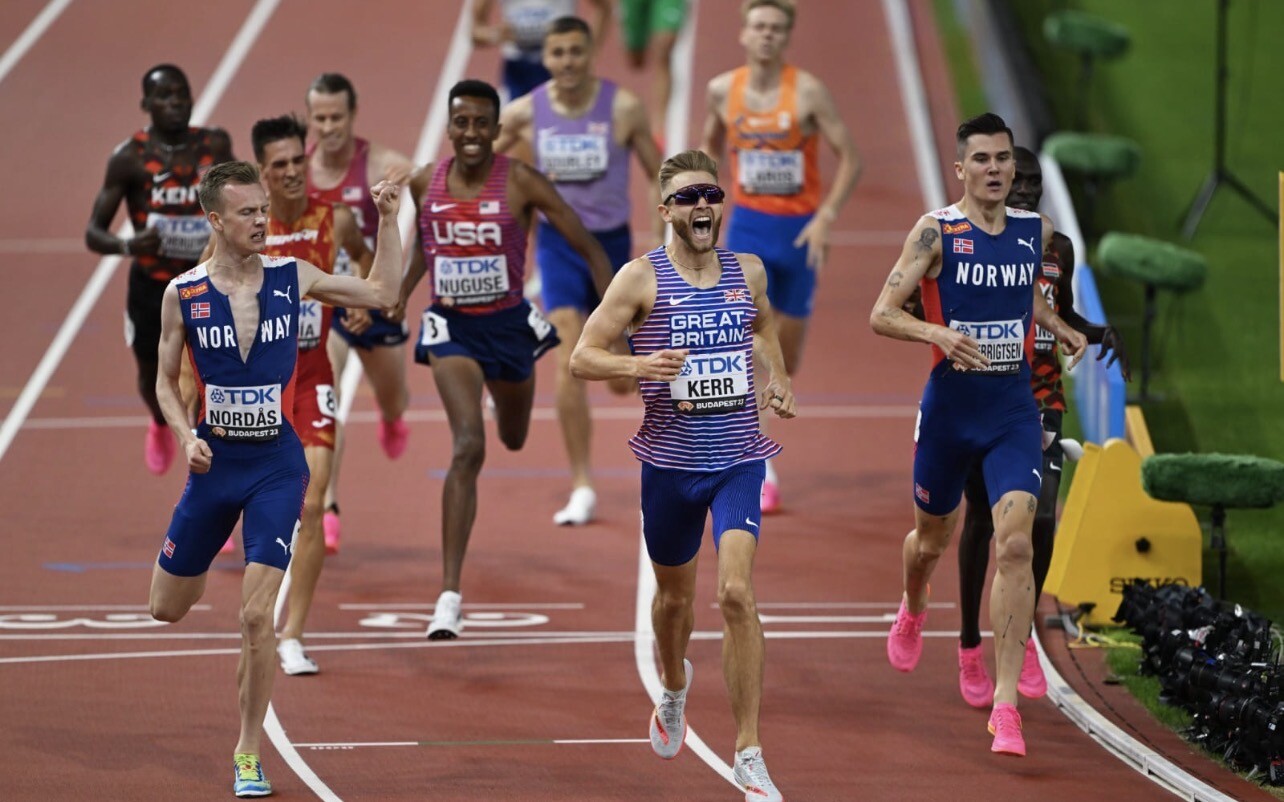
As the lights illuminate the arena and the tension builds, Birmingham will serve as a proving ground for Britain’s top athletes. For Hodgkinson, Pattison, Nuttall, and Kerr, the Novuna UK Indoor Championships represent more than national titles. They are an essential step toward global competition, where performances this weekend will help determine who carries Britain’s ambitions onto the world stage. The path to Toruń narrows here, and only those who deliver with conviction will move forward with momentum.
by Erick Cheruiyot for My Best Runs
Login to leave a comment
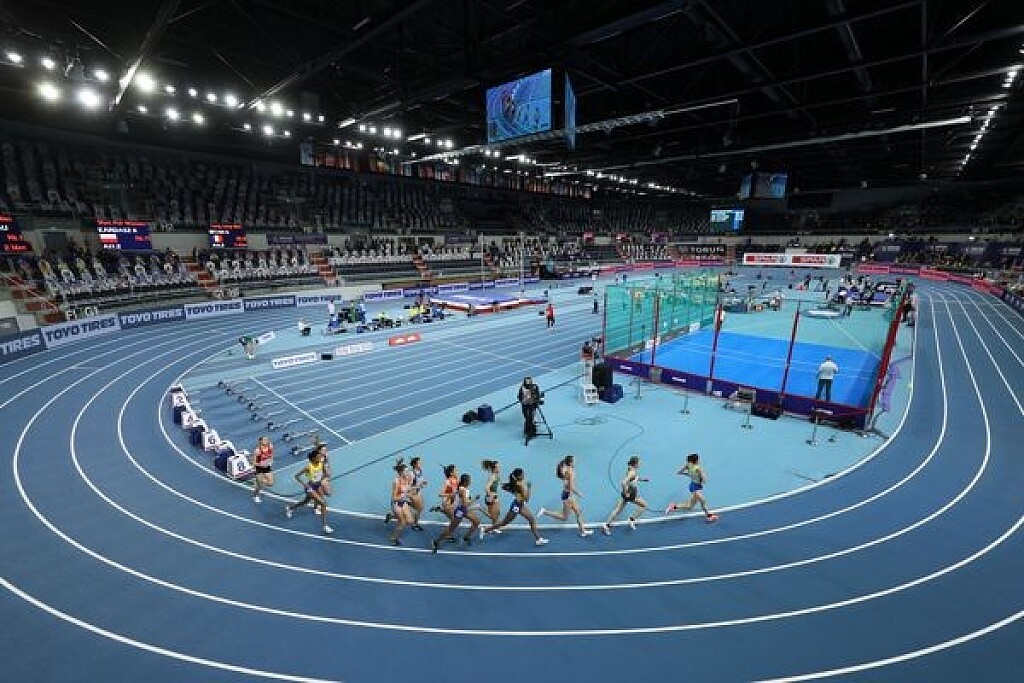
Athletics Kenya Cancels World Indoor Trials, Turns to Merit-Based Selection for Poland 2026
Athletics Kenya has officially cancelled the World Athletics Indoor Trials that were scheduled to take place in Nairobi on January 30–31, 2026, dealing a significant change to the country’s indoor season plans. The federation confirmed the decision through an official notice addressed to athletes, officials, and key stakeholders.
According to Athletics Kenya, the trials were called off due to unavoidable circumstances, making it impossible to stage the event as planned. While specific details were not disclosed, the federation emphasized that the decision was made after careful consideration, prioritising organisational, logistical, and competitive integrity concerns. The move underscores the challenges involved in hosting high-level indoor competitions and the need to ensure proper conditions for fair athlete selection.

Despite the cancellation, Athletics Kenya reassured athletes that the process of selecting Team Kenya for the upcoming global championships remains firmly on course. Instead of trials, the federation will adopt a time-based and merit-based selection system, relying on verified performances achieved during the official qualification window. Athlete monitoring will continue closely across approved competitions listed on the Athletics Kenya calendar.
The selection process will cover key indoor disciplines including 60m (men), 60m hurdles (women), 400m, 800m, 1500m, and 3000m for both men and women. Final team selection will only be confirmed after the World Athletics qualification period closes on March 8, 2026, ensuring all eligible performances are fully assessed.
Athletes have been advised to remain focused on training and competition, as strong and consistent performances during the qualification period will now play an even more decisive role in securing national team slots. The federation also pledged to issue further updates should any changes arise.
Attention now turns to the global stage, where Kenya will aim to make a strong impact at the World Athletics Indoor Championships Kujawy Pomorze 26. The championships will be held in Toruń, Poland, from March 20–22, 2026, bringing together over 2,000 athletes from approximately 150 countries for one of the biggest indoor athletics events on the calendar.
The Toruń championships will mark a historic milestone for the host nation — the second time Poland has staged a World Athletics Indoor Championships, and notably the first time the event will be hosted in the Kujawy and Pomorze Region. With elite global competition and high stakes, Team Kenya will be aiming to arrive fully prepared, despite the absence of national trials, ready to compete on one of athletics’ biggest indoor stages.
by Erick Cheruiyot for My Bestruns.
Login to leave a comment
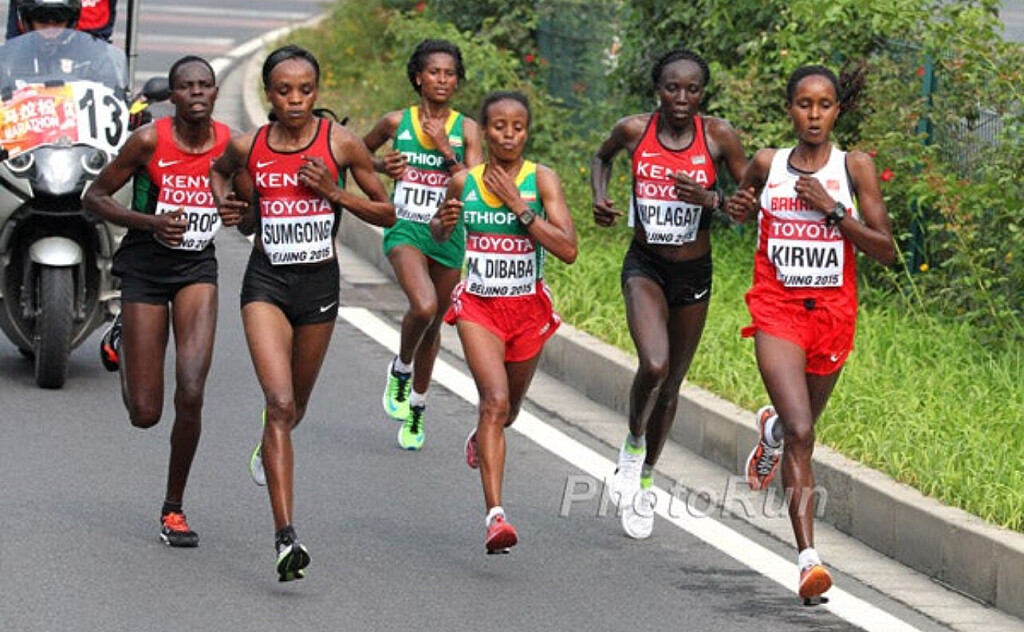
Women’s Marathon Power by Nation: What the Fastest Times Ever Reveal About Global Depth
When we talk about greatness in the women’s marathon, records and medals often dominate the conversation. A world record here, an Olympic podium there. But those moments, as extraordinary as they are, don’t always tell the full story.
A deeper question matters just as much:
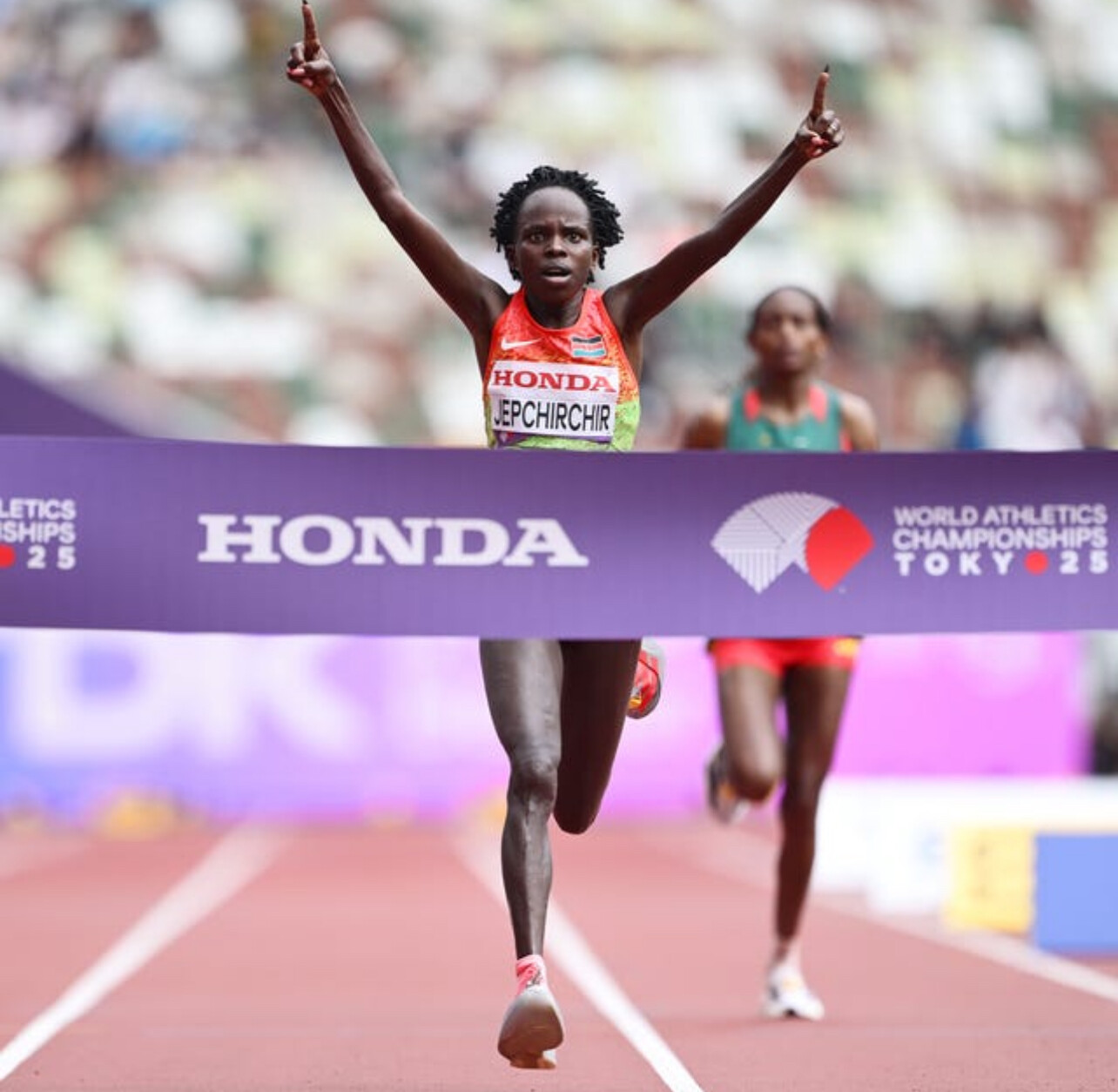
Which countries consistently produce elite women marathoners—year after year, athlete after athlete?
To answer that, analysts have stepped away from single seasons and headline performances and instead examined historical depth. The result is a ranking based on the average of the 10 fastest women’s marathon times ever recorded by each country, compiled as of December 31, 2025.
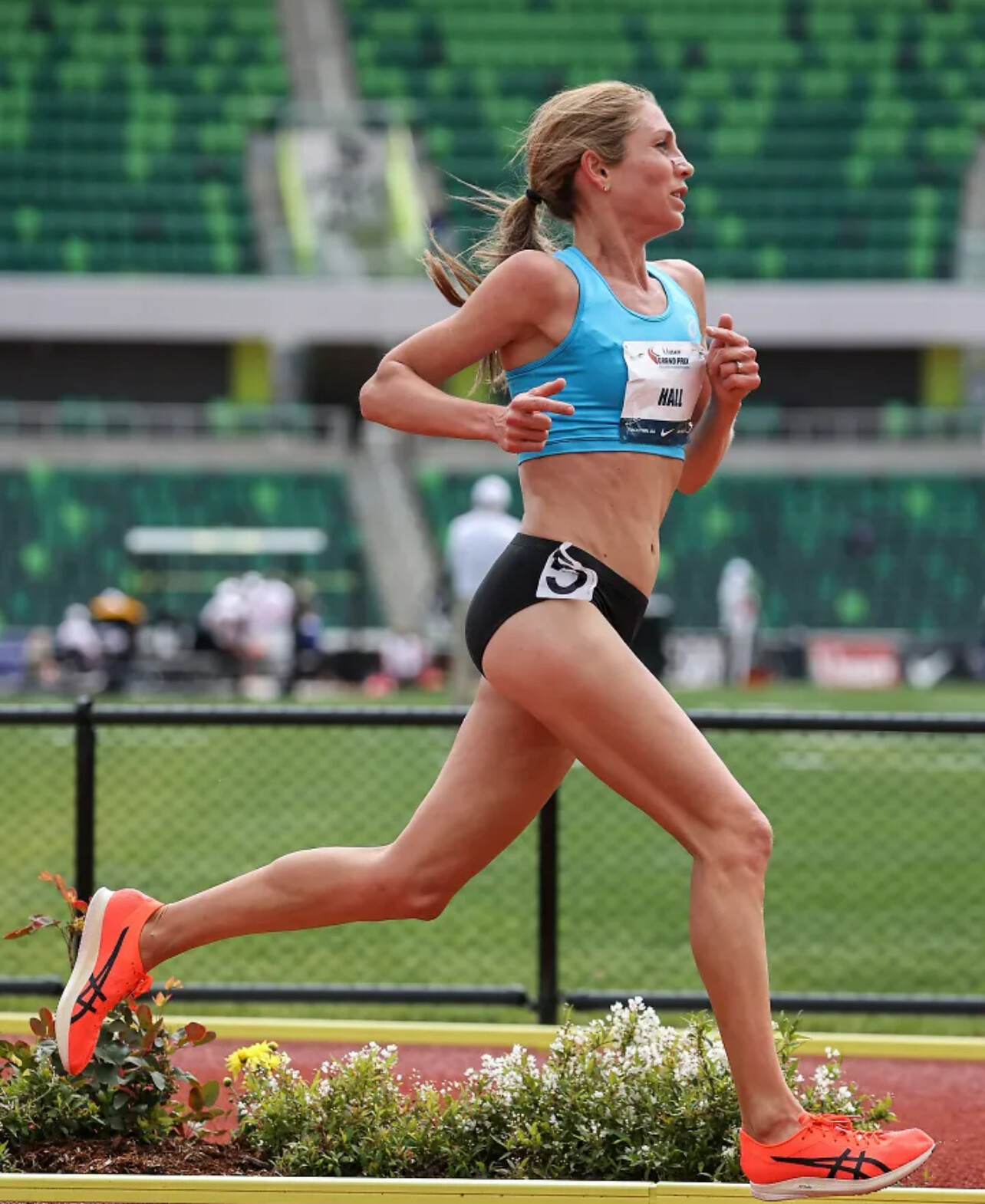
This is not about who ran best in 2025.
This is about who has built lasting excellence.
How the Rankings Were Calculated
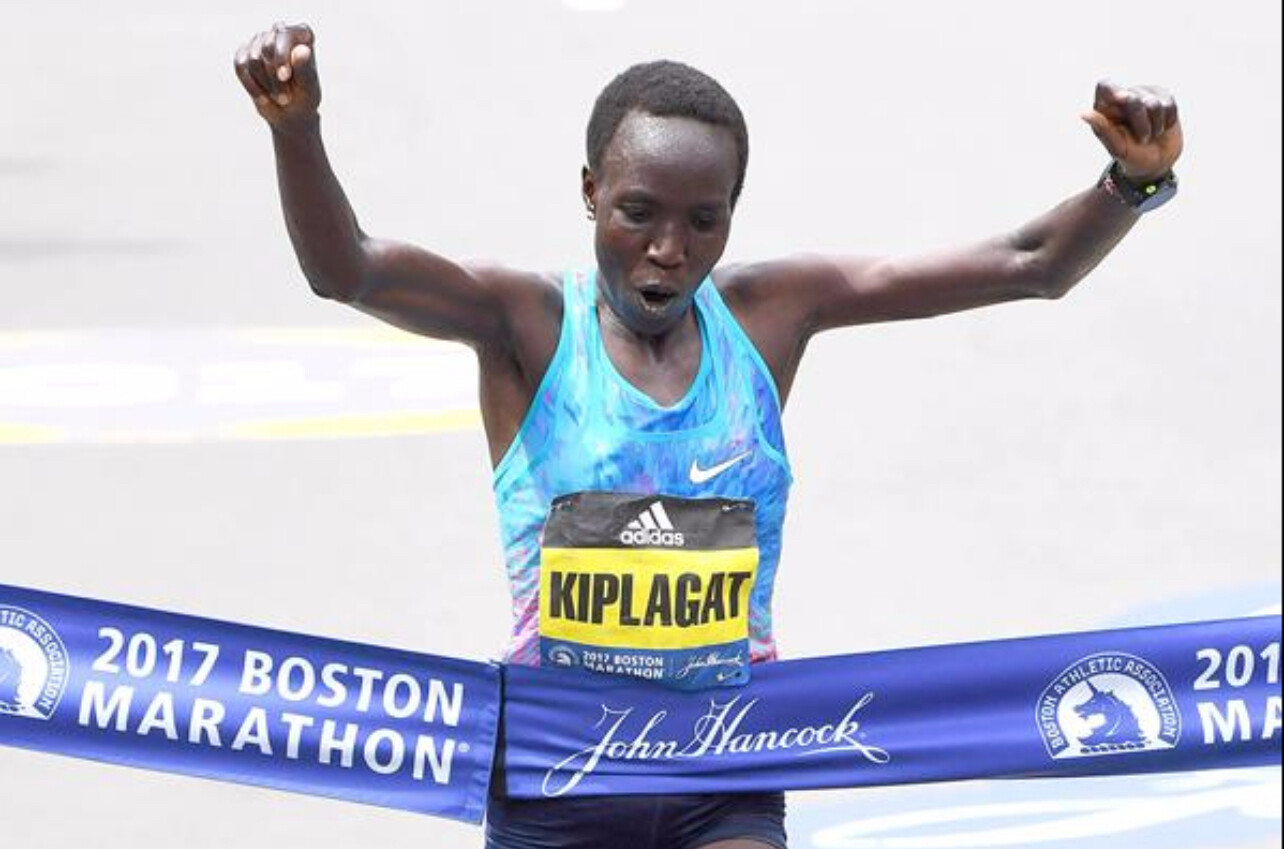
For each country:
• All women’s marathon performances in the historical record were reviewed
• The 10 fastest marathon times ever recorded by women from that country were identified
• Those ten times—regardless of year—were averaged
• The resulting figure represents that country’s all-time marathon depth
The year a performance occurred does not matter. An athlete needed only to run a marathon once to be included, as long as the time ranked among the nation’s fastest ten ever.
This approach shifts the lens from short-term form to long-term system strength.
A Dead Heat at the Top
At the summit of women’s marathon history sit two familiar giants—and they are inseparable.
Ethiopia and Kenya, both averaging 2:17:10, are tied at the top.
This is not the work of a single superstar. It reflects ten separate performances from each nation that, when averaged, would place comfortably on the podium at nearly any major marathon in the world. It is dominance built on depth—high-altitude environments, strong road-racing cultures, and generations of knowledge passed forward.
Japan and the United States: Different Systems, Similar Results
Behind the East African leaders, Japan (2:23:14) and the United States (2:23:39) stand out.
Japan’s strength comes from a uniquely structured system: corporate teams, deep domestic racing calendars, and an enduring cultural reverence for distance running. The consistency is remarkable.
The United States, by contrast, reflects a more decentralized model—athletes emerging from NCAA programs, professional training groups, and a growing focus on marathon specialization. The result is increasing depth at the elite level, even without a single dominant pipeline.
Europe’s Collective Strength
Europe does not produce women’s marathoners in quite the same numbers as East Africa, but its breadth is unmistakable.
Great Britain, Germany, the Netherlands, France, Spain, and others cluster tightly in the mid-2:20 range. No single nation dominates the continent, but together they form a strong competitive core, driven by improved sports science, professional racing opportunities, and increased global exposure.
Expanding Global Reach
One of the most telling aspects of this ranking is how widely excellence is distributed.
From Australia to China, from Bahrain to Peru, competitive women’s marathon running is no longer confined to a handful of regions. National programs, migration, dual citizenship, and professional opportunities have reshaped the global map.
Even countries lower on the list demonstrate something important: producing ten world-class marathon performances is no longer rare—it is becoming achievable.
Why This Ranking Matters
This list is not meant to replace medals, championships, or seasonal rankings. Instead, it complements them by answering a different question:
Who has built a system capable of producing elite marathon performances over time?
By focusing on all-time best performances rather than a single season, the rankings reward:
• Development, not just talent
• Consistency, not just peaks
• Depth, not just stars
In the modern era of women’s marathon running, that depth is what sustains greatness.
The Bigger Picture
The women’s marathon has never been deeper, more global, or more competitive than it is today. And as more countries invest in athlete development, the next reshuffling of this list may come from unexpected places.
What will not change is the lesson this ranking makes clear:
Greatness in the marathon is not built in one race or one year—it is built over generations.
Countries Included in This Ranking (with Average Times)
The following countries are represented in the women’s marathon depth analysis, based on the average of their 10 fastest women’s marathon performances ever recorded, compiled as of December 31, 2025:
• Ethiopia — 2:17:10
• Kenya — 2:17:10
• Japan — 2:23:14
• United States — 2:23:39
• Bahrain — 2:24:34
• Great Britain — 2:25:28
• Australia — 2:25:53
• China — 2:26:31
• Germany — 2:26:43
• Morocco — 2:26:43
• Netherlands — 2:27:56
• North Korea — 2:27:29
• France — 2:28:04
• Spain — 2:28:13
• Russia — 2:31:18
• Peru — 2:32:25
• Canada — 2:33:19
• South Korea — 2:33:19
• Poland — 2:35:01
• Sweden — 2:35:16
by Boris Barron
Login to leave a comment
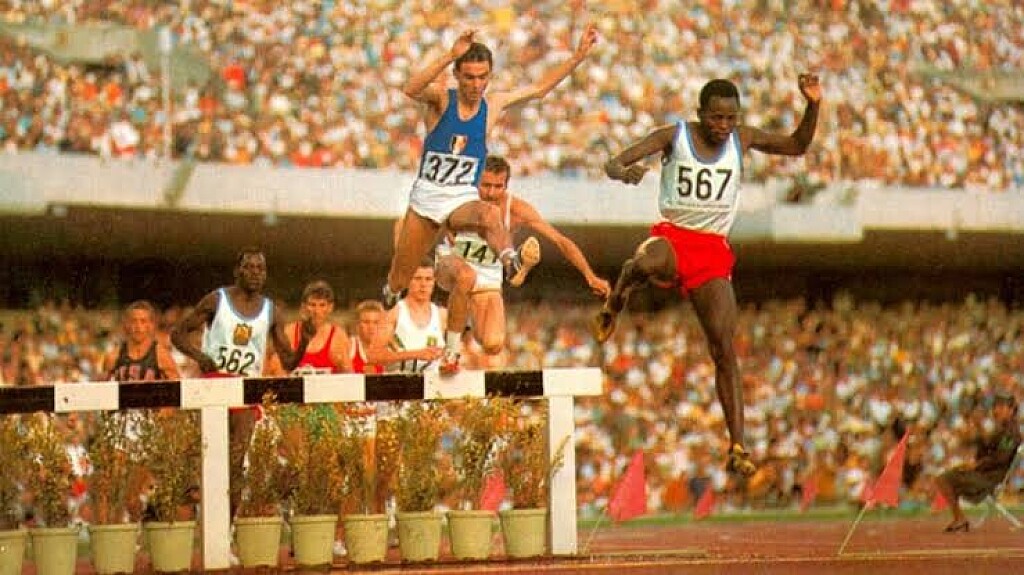
Kenya’s Steeplechase Dynasty Under Siege: Edmund Serem Keeps Hope Alive with Tokyo Bronze
For decades, the men’s 3000m steeplechase was as Kenyan as tea fields in Kericho or herds grazing the Rift Valley floor. Since Amos Biwott (first photo) struck Olympic gold in 1968, generations of Kenyan athletes turned the event into a national pig treasure, piling up Olympic and World titles with almost mechanical consistency. But the 2025 World Championships in Tokyo told a different story—one of fading dominance, foreign breakthroughs, and a teenager fighting to keep the flame alive.
A Race That Shook Tradition
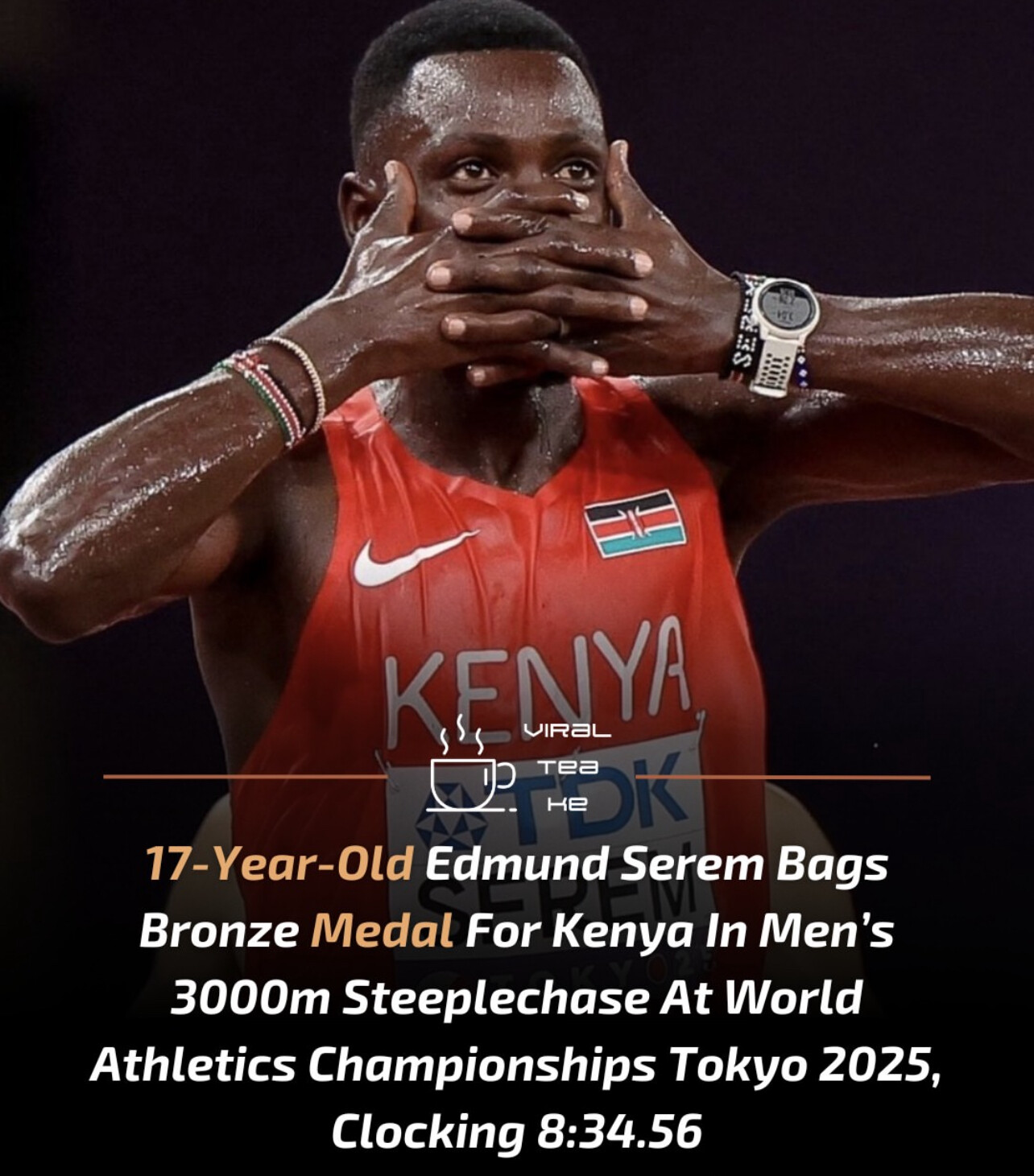
On a humid evening inside Tokyo’s National Stadium, 17-year-old Edmund Serem—younger brother of 2021 World U20 champion Amos Serem—lined up against the world’s best: Olympic champion Soufiane El Bakkali, Ethiopia’s Lamecha Girma, New Zealand’s rising star Geordie Beamish, and a host of challengers from Europe, North America, and Asia.
For Serem, the mission was clear: keep Kenya’s flag on a podium that has become increasingly elusive.
From the gun, he ran bravely, shadowing Germany’s Karl Ruppert in the early laps, exchanging leads and refusing to yield. Ethiopia’s Samuel Firewu, Canada’s Jean-Simon Desgagnés, Poland’s Krzysztof Michalski, and Japan’s Ryuji Miura all joined the fight, turning the race into a tactical chess match.
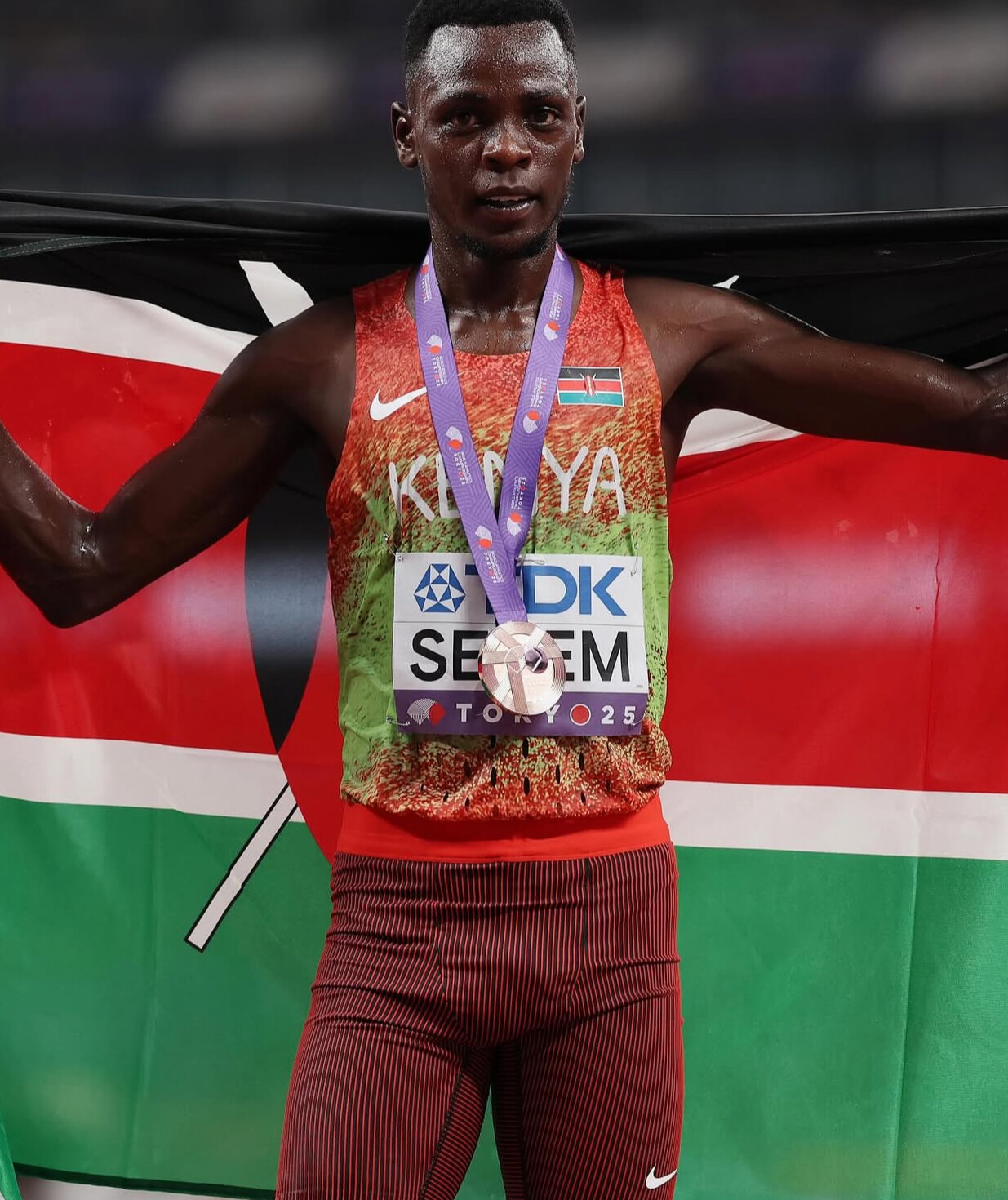
With five laps to go, Serem was still in contention. But as the tempo shifted, the global pack pressed harder. Girma and El Bakkali moved menacingly forward, Desgagnés surged, and Michalski stunned the field by briefly taking the lead.
Then came the bell lap. In a race once synonymous with Kenyan processions, the battle had become a global dogfight. Beamish timed his kick to perfection, flying past Girma and fending off El Bakkali to seize a historic gold in 8:33.88. El Bakkali took silver in 8:33.95, while Serem, showing maturity beyond his years, held his ground to claim bronze in 8:34.56.
A Bittersweet Podium
For Kenya, the bronze carried mixed emotions. Serem’s medal, won by a teenager not yet old enough to vote, proved the country’s future is bright. Yet it also underscored a sobering reality: the days of near-total dominance are gone.
Speaking after the race, Serem was humble but defiant:
“It was tough out there, but I told myself Kenya must be on that podium. I am only 17, and I know this is just the beginning. One day, I will bring the gold back home.”
The Crumbling Fortress
The numbers tell the story. Since Conseslus Kipruto’s World title in 2019, Kenya has not won a global steeplechase gold. Instead, El Bakkali, Girma, and now Beamish have rewritten the script, dismantling the aura of invincibility once carried by legends like Ezekiel Kemboi, Brimin Kipruto, and Stephen Cherono.
Even with Abraham Kibiwot also in Tokyo, Kenya could not tilt the balance back. What was once fortress Kenya is now open territory.
Lessons and a Call to Action
Beamish’s victory offered a warning. New Zealand has no steeplechase tradition, yet through structured NCAA development and consistent Diamond League racing, Beamish matured into a world champion. Kenya, by contrast, must adapt: better coaching, tactical planning, and holistic athlete support are now non-negotiable.
Serem’s bronze provides a flicker of hope. His resilience against seasoned opponents shows promise, but it also highlights the urgent need for reinvestment. Athletics Kenya’s famed pipeline of school and military talent remains deep, but without evolution, history and reputation alone will not win medals.
The Future
As Edmund Serem stood on the Tokyo podium, the Kenyan flag draped over his shoulders, pride and resolve mixed in his eyes. Behind the applause lay a challenge: reclaim what has been lost.
If the steeplechase is to remain the beating heart of Kenya’s athletics heritage, Tokyo 2025 must not mark the continuation of decline, but the beginning of a fightback. And perhaps—just perhaps—it will be Serem, the teenager who dared to dream, who leads the revival.
by Robert Kibet
Login to leave a comment
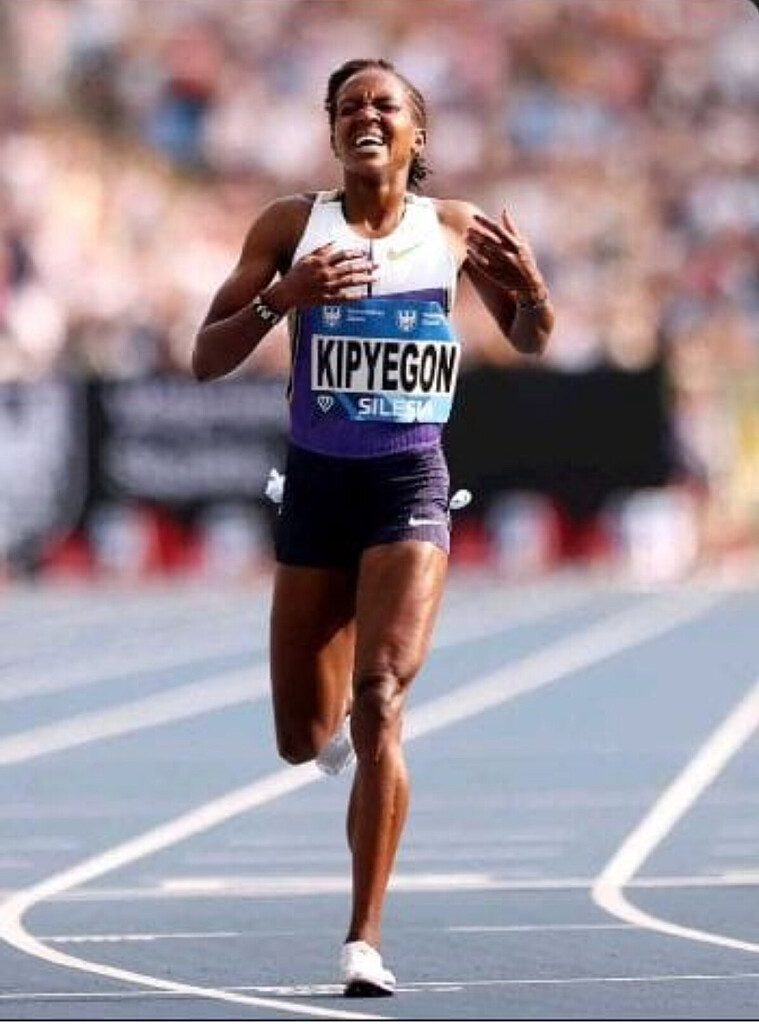
Faith Kipyegon Breaks Diamond League Record in Silesia with Second-Fastest 3000m in History
Silesia, Poland – August 16, 2025 — Kenya’s Faith Kipyegon once again delivered a masterclass in middle-distance running, storming to victory in the women’s 3000m at the Diamond League meeting in Silesia. Her time of 8:07.04 not only set a new Diamond League record but also established an African record, a meeting record, and the second-fastest performance in history.
A Perfect Setup from the Pacemaker
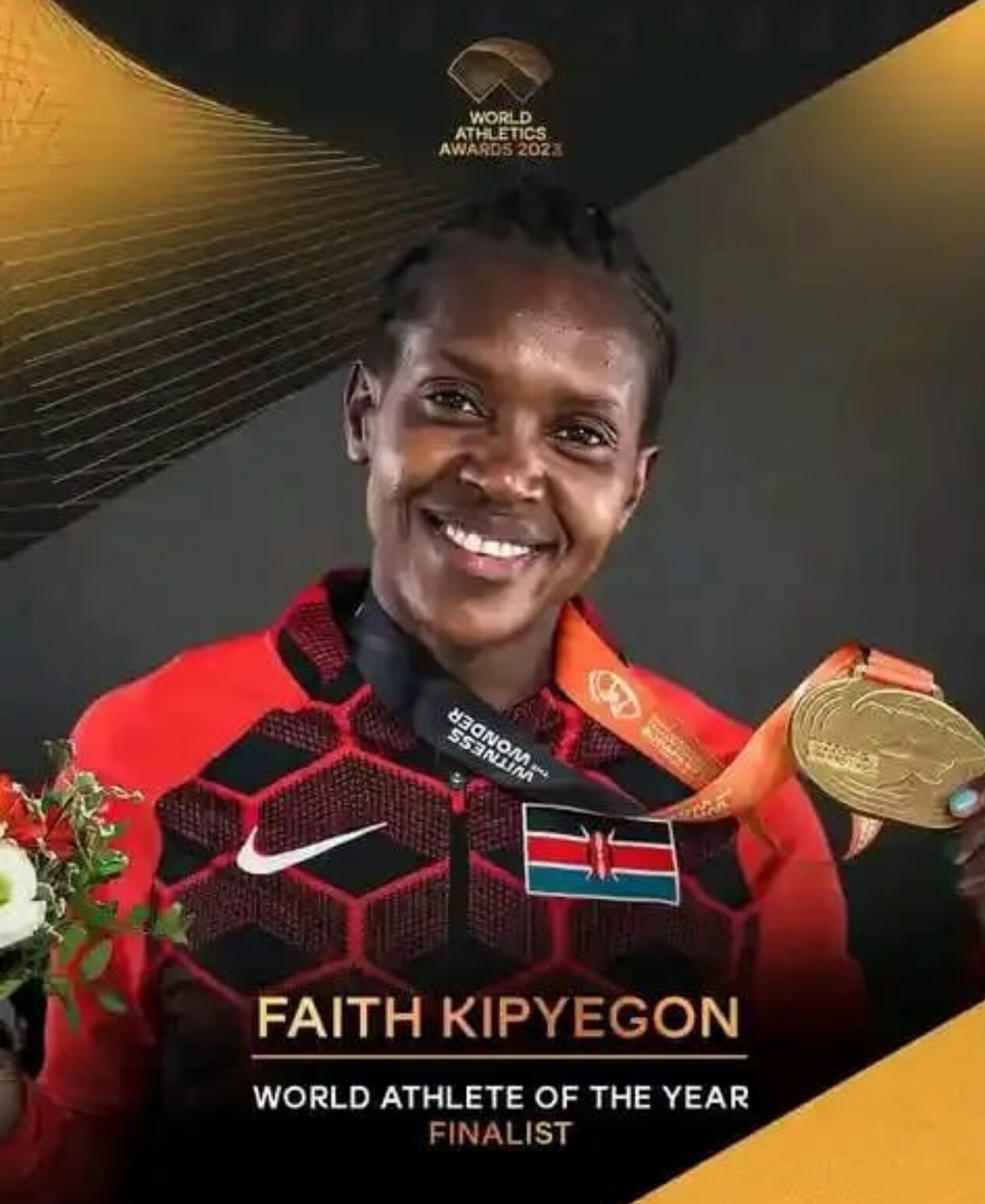
Kipyegon started the race tucked in behind Australia’s Jessica Hull, who paced the first 2000m with precision. Hull, the world record holder at 2000m (5:19.70 from July 2024), provided the ideal tempo before stepping aside, leaving Kipyegon to attack the final kilometer alone.
The Chase for History
With the green pacing light signaling world-record pace, Kipyegon powered through the last 1000m in a determined bid to eclipse the mark of 8:06.11. Down the final straight, it looked as though she might catch it, but she crossed just over a second shy.
Despite missing the world record by a whisker, Kipyegon’s 8:07.04 was good enough to rewrite multiple record books:
• Diamond League Record (DLR)
• African Record (AR)
• Meeting Record (MR)
• National Record (NR)
• World-Leading Time (WL)
Cementing Her Legacy
This performance reinforces Kipyegon’s dominance across distances from 1500m to 5000m. It also marks yet another historic milestone in a career already decorated with Olympic and World Championship titles.
Her run in Silesia was not only one of the fastest in history but also a reminder that she remains within touching distance of the 3000m world record — and that record may soon fall if she lines up for another attempt.
by Boris Baron
Login to leave a comment
Doreen Waka Is Sprinting Toward History—If Kenya Will Let Her
At the 2025 Athletics Kenya Trials held at Nairobi’s Ulinzi Sports Complex, Doreen Waka blasted out of the blocks and powered through a stiff -2.0 m/s headwind, crossing the finish line in 12.02 seconds to win the women’s 100m final. The performance not only secured her a gold medal but also earned her a coveted spot on Team Kenya for the upcoming World Championships in Tokyo.
She defeated a talented field, including Loice Nyanchoka Morara (12.09), South Sudan’s Lucia William Moris (12.10), and Delisha Atyang (12.14), while veterans like Monica Safania and Eunice Kadogo did not start. But for Waka, the win was about more than medals. It marked a defining moment in a career built on resilience, sacrifice, and an unshakable belief in her sprinting potential.
Running Barefoot, Dreaming Without Limits
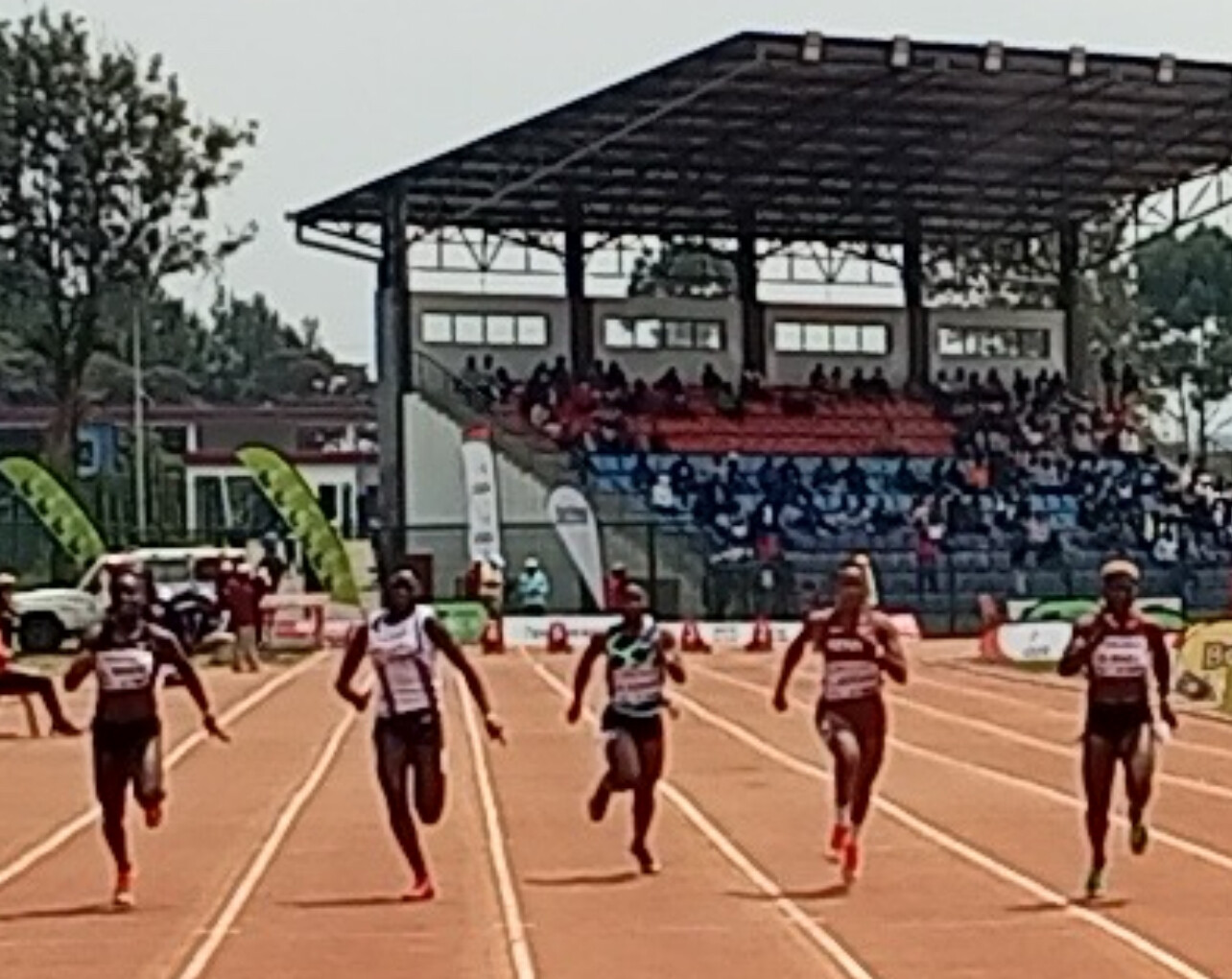
When Doreen takes to the track, what you see is explosive speed. What you don’t see are the barefoot years spent training on gravel roads, the financial struggles, or the countless setbacks that nearly derailed her dream.
Born on November 13, 1994, in Kiambu County, Doreen discovered her athletic talent in primary school. She ran the 400m in Standard Four but didn’t qualify for competition—she was too young. A perceptive teacher, however, encouraged her to shift focus to the 100m and 200m, a piece of advice that changed her life.
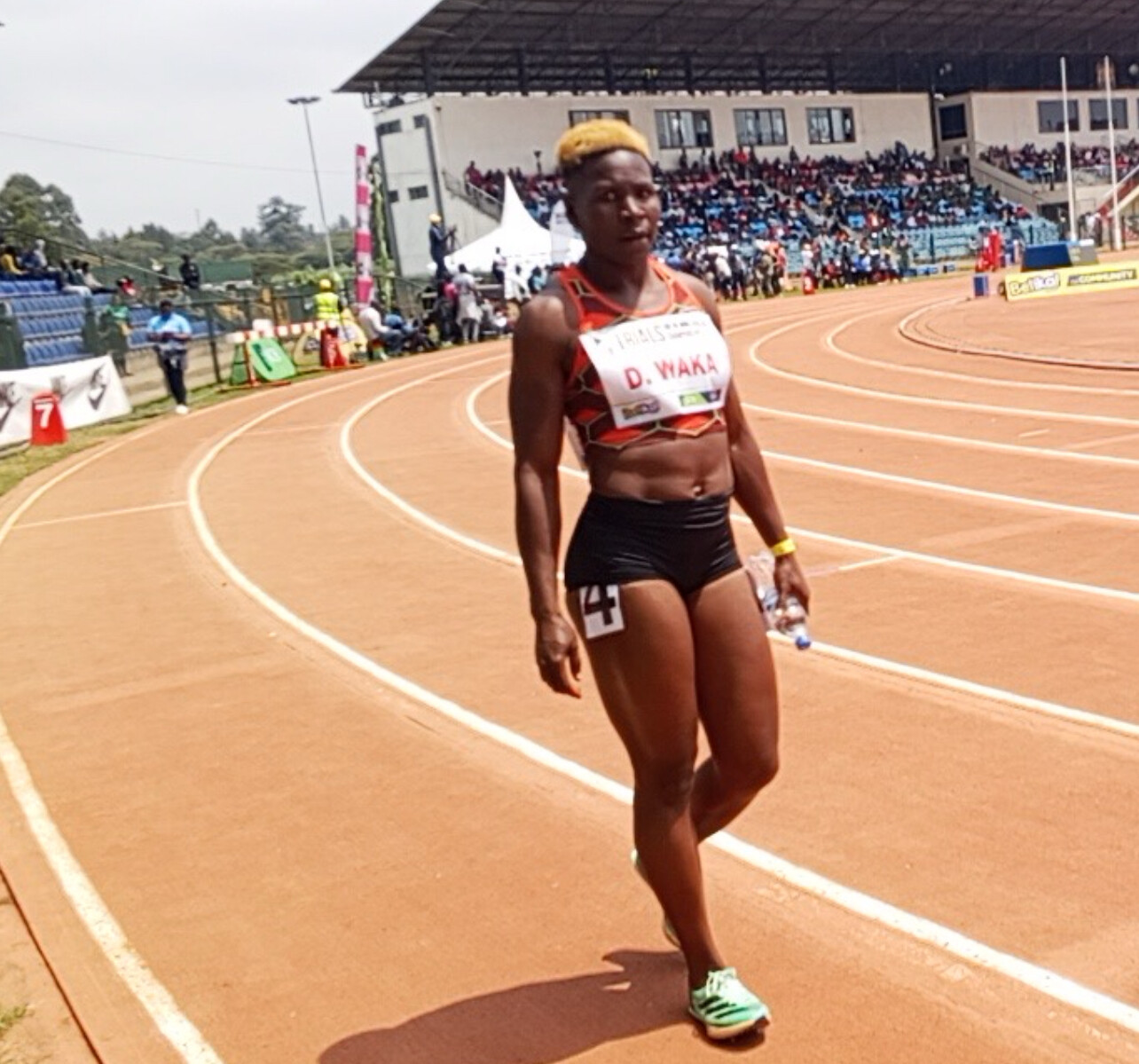
By Class Five, she had qualified for the national primary school championships in Nyahururu, placing 4th in the 100m and 3rd in the 200m. A year later, she won silver in the 100m at an East African schools meet in Kampala, Uganda.
Despite early success, life at home was difficult. Her family lacked the resources to support her athletics career. After finishing Class Eight, a well-wisher helped her join Brokhurst Senior School in Machakos County, where she again reached the national stage in Form Three. But in Form Four, she was barred from sports in order to focus on final exams—just when she needed exposure the most.
A Coach, a Believer, a Lifeline
In 2017, everything changed. Doreen met sprinter Kalewi Awange, who introduced her to Coach Julius Migwi (often called Coach Julious). At the time, she was living in Githurai, Nairobi, with her mother.
“When I told my mom I wanted to train, she hesitated,” Doreen recalls. “Coach Migwi had to come home and explain everything. Eventually, she gave me her blessing: ‘You’re the one who will help me.’”
Coach Julious remembers their first meeting clearly.
“She had no shoes. No passport. No real support. We took her in like family,” he says. “I’ve been acting as her parent ever since.”
Since then, Coach Julious has supported her with food, rent, transport, and training costs—often from his own pocket. Despite the challenges, Doreen has never wavered. Most days, she trains without proper spikes or access to a gym, using rough murram fields instead of tracks.
“If she had the facilities athletes in Botswana or South Africa have,” Julius says, “she’d already be running 10.9.”
A Boost from KATA—and a Call to Bob Anderson
Though resources remain limited, Doreen has received small but meaningful support from the Kenya Athletics Training Academy (KATA), founded by Bob Anderson, the American entrepreneur and lifelong runner who created Runner’s World magazine.
“KATA has helped in important ways,” says Julius. “Bob understands athlete development. Now we’re appealing to him directly: please consider supporting Doreen with gear, gym access, and small financial support so she can focus fully on her training.”
Doreen echoes the plea:
“I’m not looking for a shortcut. Just a chance. Bob, give me one international race, one opportunity—and I will make you and Kenya proud.”
Denied, But Never Defeated
Doreen’s path has been lined with near-misses and painful exclusions. In 2019, she qualified for the World Relays during trials in Iten—but couldn’t travel. She didn’t have a passport.
Later that year, during the COVID-19 lockdowns, she trained inside the grounds of Kamiti Prison, staying with a friend near the facility. Her perseverance finally paid off in 2021, when she represented Kenya in the 4x200m relay at the World Relays in Poland. She returned home and won the national 100m title.
Yet again in 2023, after qualifying for the African Championships in Ghana, she was left off the final team list.
“It didn’t kill my spirit,” she says. “This year I qualified again. But they didn’t take a women’s 4x100m team.”
A Voice for the Overlooked
Now 29, Doreen Waka is more than just a sprinter—she’s a voice for the many under-supported female sprinters across Kenya.
“Athletics Kenya should not conclude that Kenyan women can’t sprint. We just need the opportunity.”
Coach Julious adds:
“She’s already inspiring others. Hurdler Gladys Ngure, who ran 14.05 at nationals, joined our camp because of Doreen. These girls are training in KSh 50 gyms. Imagine what they could do with real support.”
A Camp Like No Other
In a bold move, Coach Julius recently established a KATA Running Camp and KATA Potato Farm, part of a larger initiative spearheaded by Bob Anderson, who has now launched 25 KATA camps across Kenya since May 25.
“I think my camp is the only running camp that exclusively trains sprinters in all of Kenya,” says Julius. "Thanks, Bob, for listening and helping Doreen go after her goals.”
This unique camp not only nurtures sprinters like Doreen but also provides food and economic support through potato farming, helping athletes stay focused on training while building a more stable future.
The Goal: Sub-11 and a Global Stage
Doreen Waka’s goal is clear: run 10.8 or 10.9 and place Kenyan women’s sprinting on the global map. With the right shoes, coaching, nutrition, and gym access, she believes it’s within reach.
“I believe in myself. I just need one solid chance.”
And with people like Coach Julius KATA, and Bob Anderson behind her, that chance may finally be coming.
Doreen Waka At a Glance
• Born: November 13, 1994 – Kiambu County, Kenya
• 2024 Trials: 1st in 100m (12.02s, -2.0 m/s headwind)
• International Debut: 2021 World Relays, Poland (4x200m)
• Coach: Julius Migwi
• Goal: Sub-11 in 100m and a global podium finish
• Camp: KATA Running Camp for Sprinters – the only sprint-exclusive KATA camp in Kenya
by Robert Kibet
Login to leave a comment
Jakob Ingebrigtsen Returns to Altitude Training in St. Moritz Following Injury and Personal Turmoil
Olympic champion Jakob Ingebrigtsen is heading back to the mountains of St. Moritz to resume altitude training after a difficult first half of the 2025 season marked by injury and family challenges. The 23-year-old Norwegian has been recovering from a strained Achilles tendon that derailed his early outdoor campaign and forced him to miss several key meets.
Recovery First
Ingebrigtsen initially planned to train at altitude in Sierra Nevada in the spring, but his Achilles issue required a change of course. He instead remained home to focus on recovery, missing high-profile events in Oslo, Ostrava, the Pre Classic, and the London Diamond League.

In a recent update shared on social media, Jakob acknowledged the long road back but said he was grateful for the time spent with his young daughter and dogs. “At least I had the best company,” he wrote, sharing photos from a forest outing. His message suggests a turning point in his recovery, both physically and emotionally.
Altitude Training in St. Moritz
Coach Filip Ingebrigtsen has confirmed that Jakob will now join Norway’s altitude group in St. Moritz for a three- to four-week training block. The plan is to carefully build back fitness without rushing into competition. If all goes well, Jakob could return to racing in mid-August, with the Silesia Diamond League meeting in Poland emerging as a likely target.

While his return has been delayed, confidence remains high. Ingebrigtsen’s indoor season earlier this year was exceptional—he broke the world indoor records for both the 1500m and mile. In June, shortly before his Achilles flare-up, he set a new European 1500m record of 3:27.95 and clocked 7:54.10 in the two-mile, a world best.
Personal Challenges and Legal Closure
In the midst of his recovery, Ingebrigtsen also had to navigate a difficult legal chapter. On June 23, his father, Gjert Ingebrigtsen, was convicted of minor assault against Jakob’s younger sister, Ingrid, for an incident involving a wet towel. Gjert received a 15-day suspended sentence and was ordered to pay damages. He was acquitted of similar charges involving Jakob due to lack of evidence.
The verdict marks a formal conclusion to a painful and public family dispute that first came to light in late 2023. With this chapter behind him, Jakob appears ready to shift focus fully back to his training and racing.
Looking Ahead
Jakob Ingebrigtsen’s approach to 2025 has been cautious but strategic. Rather than forcing an early comeback, he’s prioritized recovery, stability, and preparation. If his return to St. Moritz goes as planned, fans can expect to see him back on the track in top form later this summer—potentially just in time to contend for another global title.
by Boris Baron
Login to leave a comment
Olympic 5000m medalist Edwin Soi joins new KATA Running Camp in Kericho — a unique Kenyan training program blending elite coaching and community impact.
From Olympic bronze to farming for the future, Edwin Soi’s journey reflects both speed and sustainability.
In the world of distance running, Edwin Soi is a name etched in excellence. At the 2008 Beijing Olympics, Soi captured the bronze medal in the 5000 meters, finishing with a time of 13:06.22behind Kenenisa Bekele and Eliud Kipchoge—an iconic race that cemented his place among the greats of Kenyan running.
Now, over 15 years later, Soi continues to perform at an elite level. In early 2025, he placed on the podium at a major half marathon in Poland, proving that his speed and endurance have stood the test of time. But the accomplished Olympian is now expanding his impact beyond the track.
This year, Soi has teamed up with Bob Anderson, the founder of Runner’s World and the visionary behind the Kenyan Athletics Training Academy (KATA). Together, they are launching a unique initiative in Kericho, Kenya that combines world-class training with sustainable farming.
“I am very excited to be working with Bob Anderson on this new, unique program,” says Soi. “Bob has created something very special for athletes, and combining it with his ideas about farming KATA Potatoes gives us the opportunity to be sustainable. It’s perfect.”
A Vision Rooted in History
Bob Anderson’s connection to Kenyan running spans nearly four decades.
“I first traveled to Kenya in 1987 and saw and met many runners. I knew then that a program like what we have now set up was needed,” Anderson explains. “I returned with my wife Catherine in 2014 and met Elam and Joel. That’s when the idea for the Kenyan Athletics Training Academy (KATA) in Thika really started to take shape.”
KATA officially opened in 2019, offering elite Kenyan athletes a base to train and grow. But the vision didn’t stop there.
In 2023, Anderson and longtime friend Brock Hinzmann (last photo) a 2:19 marathoner from Los Altos Hills, California, piloted the first KATA farm. The goal was to integrate agriculture into athlete development—creating a model where training and sustainability go hand in hand.
“We established a KATA farm in 2023 working with Brock, but the program needed some refinements. I finalized our new format in May of 2025. I told Edwin Soi about our program and he told me he loved the idea and jumped right on it,” says Anderson.
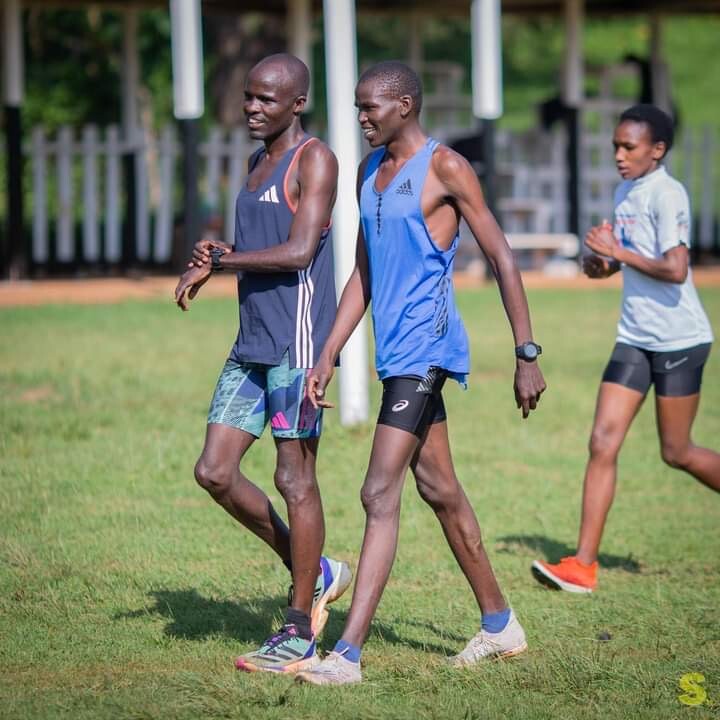
Kuresoi: A New Chapter
Now, with Soi’s leadership, the KATA Running Camp and Potato Farm in Kuresoi is set to become a flagship model for the future. Athletes will not only receive top-level training from one of the greatest distance runners of his generation, but they’ll also participate in sustainable farming practices—planting, maintaining, and harvesting KATA-branded potatoes.
The program provides housing, coaching, food, and competition opportunities—with the added benefit of long-term revenue from agriculture. It’s a model designed not just to develop athletes, but to support their lives beyond running.
“Edwin Soi brings credibility, passion, and wisdom to this project,” says Anderson. “It’s not just about winning races anymore—it’s about building something that lasts.”
Looking Ahead
With KATA camps now expanding across Kenya—including recent launches in Kapcherop, Molo, Nyandarua, and Kuresoi—the partnership between Bob Anderson and Edwin Soi represents a new chapter in Kenyan running. One where elite performance and local empowerment go hand in hand.
Soi’s journey—from Olympic bronze to coaching, mentoring, and planting the seeds of a new future—demonstrates what’s possible when world-class talent meets a visionary purpose.

by Boris Baron
Login to leave a comment
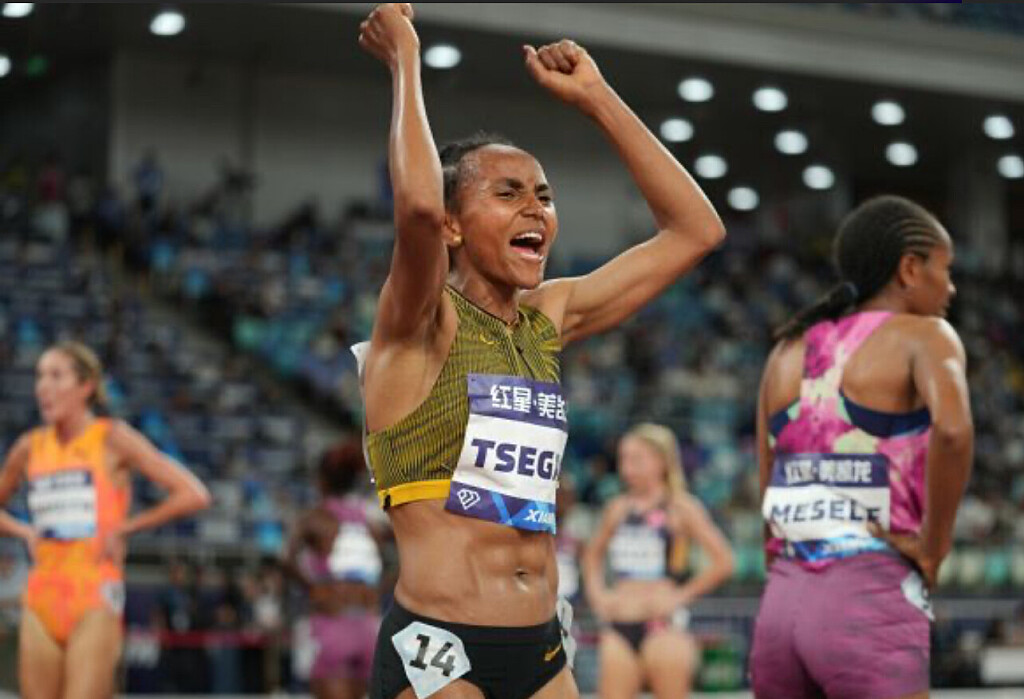
Diamond League 2025 Begins Saturday in Xiamen: Distance Stars Ready to Shine on Global Stage
The 2025 Wanda Diamond League kicks off this Saturday, April 26, in Xiamen, China, launching the most prestigious one-day series in global track and field. With 15 elite meets on the calendar, this year’s circuit serves as both a proving ground and a preview for the World Athletics Championships in Tokyo this September.
While Olympic champion Grant Holloway will headline the sprint hurdles, it’s the middle- and long-distance events in Xiamen that promise some of the most compelling matchups of the weekend.
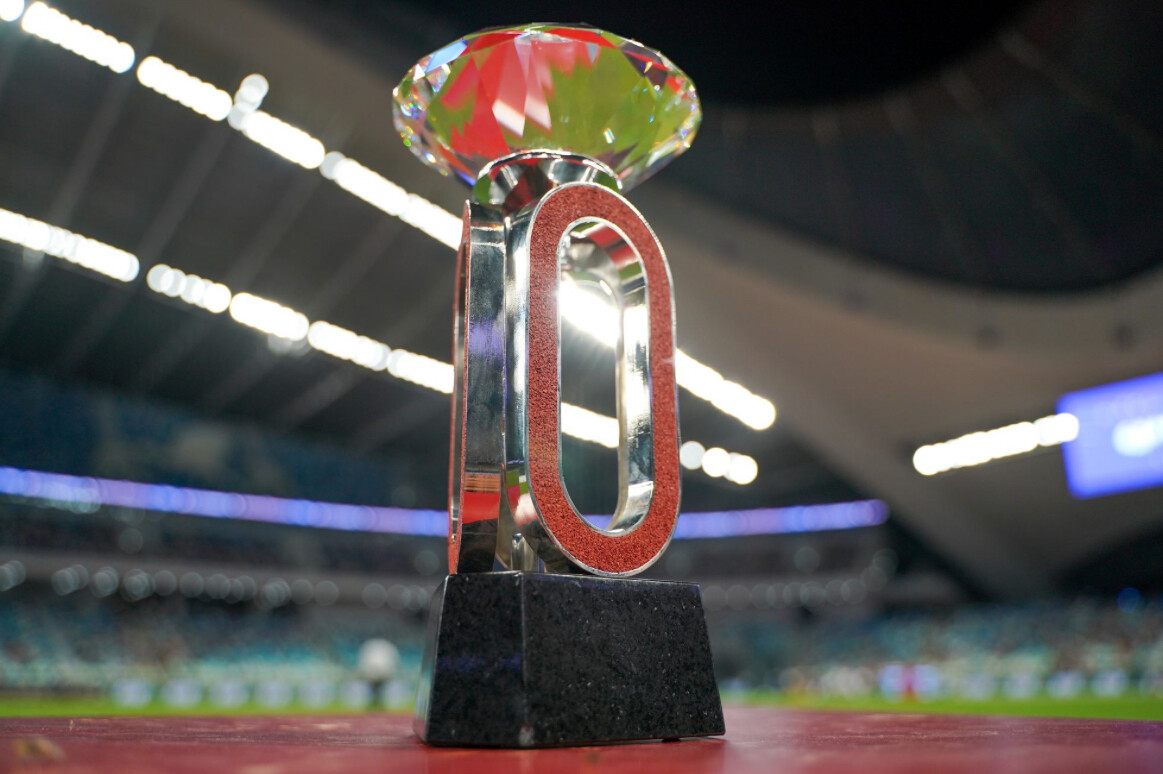
Chebet vs. Tsegay in the Women’s 5000m
Saturday’s most anticipated race may be the women’s 5000m, featuring a classic Kenya vs. Ethiopia showdown.
Beatrice Chebet, the reigning Olympic champion and world record holder in the 10,000m, opens her Diamond League campaign against Gudaf Tsegay, the reigning 5000m world champion and world record holder. With personal bests of 14:05.92 (Chebet) and 14:00.21 (Tsegay), the two are expected to push each other deep into record territory.
They’ll be challenged by rising Ethiopian talents Freweyni Hailu and Birke Haylom, both capable of delivering world-class performances.
Kipyegon Returns in the 1000m
Also making her season debut is Kenyan superstar Faith Kipyegon, who will race the rarely-run 1000m. The two-time Olympic and world champion is the current world record holder in both the 1500m and the mile.
In Xiamen, she’ll face Jamaica’s Natoya Goule-Toppin and Uganda’s Halimah Nakaayi, both of whom are known for their championship pedigree over 800m. The 1000m offers an ideal distance for Kipyegon to sharpen her speed and stamina heading into the summer.
Men’s 3000m Steeplechase: A Deep Field Emerges
The men’s 3000m steeplechase will feature a stacked lineup, with top athletes from Kenya, Ethiopia, and Morocco vying for early-season dominance. With the event’s tradition of upsets and tactical drama, this race will be one to watch for fans of distance racing.
2025 Wanda Diamond League Schedule
Following Xiamen, the Diamond League tour travels to 14 more cities before the two-day final in Zurich. Here’s the full schedule:
• April 26 – Xiamen, China
• May 3 – Shanghai/Suzhou, China
• May 16 – Doha, Qatar
• May 25 – Rabat, Morocco
• June 6 – Rome, Italy
• June 12 – Oslo, Norway
• June 15 – Stockholm, Sweden
• June 20 – Paris, France
• July 5 – Eugene, USA
• July 11 – Monaco
• July 19 – London, UK
• August 16 – Silesia, Poland
• August 20 – Lausanne, Switzerland
• August 22 – Brussels, Belgium
• August 27–28 – Zurich, Switzerland (Diamond League Final)
The series leads directly into the 2025 World Athletics Championships, set for September 13–21 at Japan National Stadium in Tokyo.
by Boris Baron
Login to leave a comment
