

Running News Daily
Running News Daily is edited by Bob Anderson and team. Send your news items to bob@mybestruns.com Advertising opportunities available.
Index to Daily Posts · Sign Up For Updates · Run The World Feed
Articles tagged #Steeplechase
Today's Running News
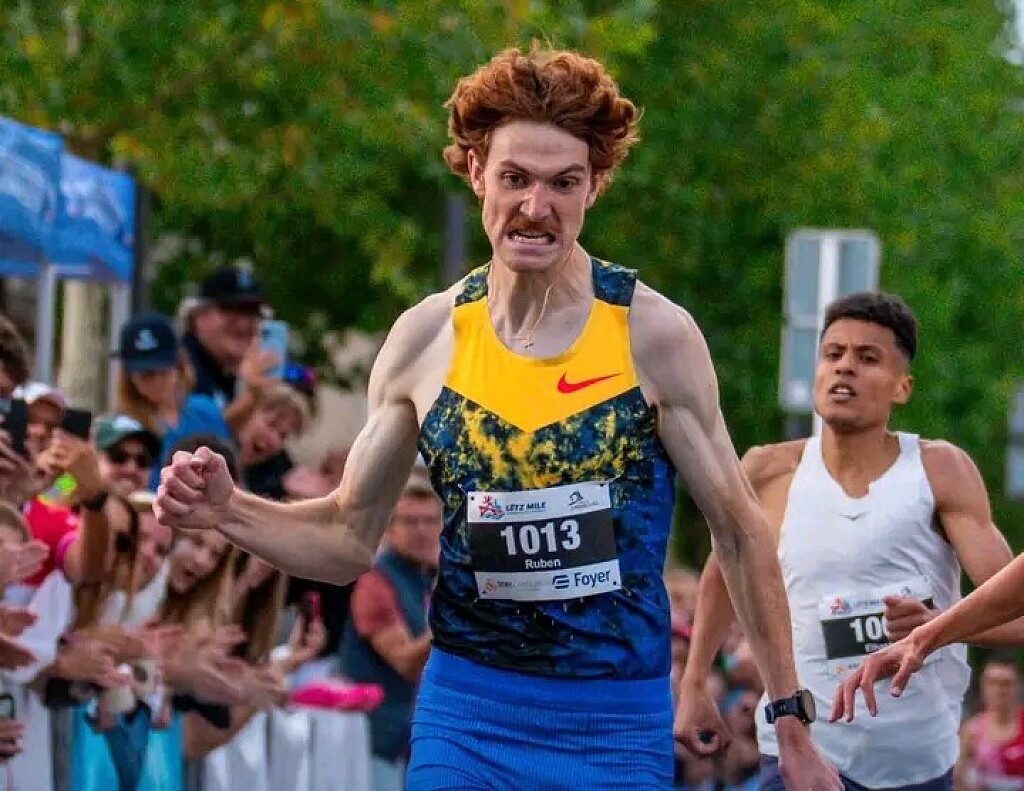


Ruben Querinjean Strikes Again With Another Luxembourg National Record
Ruben Querinjean has added another remarkable chapter to his breakthrough 2026 season, setting a new Luxembourg national record over the road mile at the LËTZ MILE – Luxembourg City Road Mile.
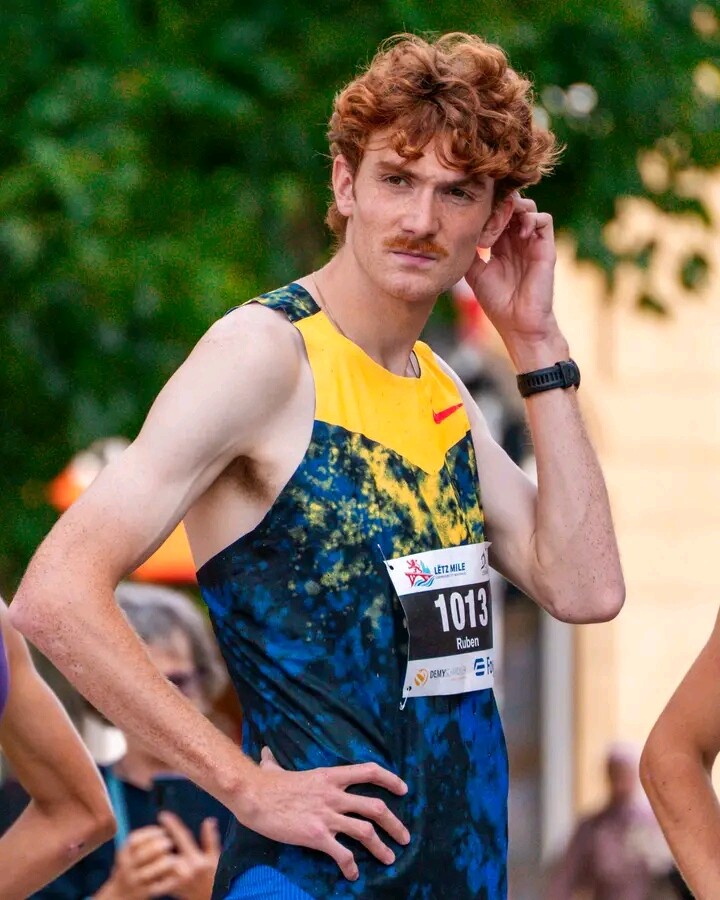
Querinjean stopped the clock at an impressive 4:03.03, producing another standout performance only a few weeks after setting a national record in the 3,000m steeplechase.
The Luxembourg star has been enjoying an outstanding season, establishing himself as one of the country's leading distance runners while continuing to push the national record books into new territory.
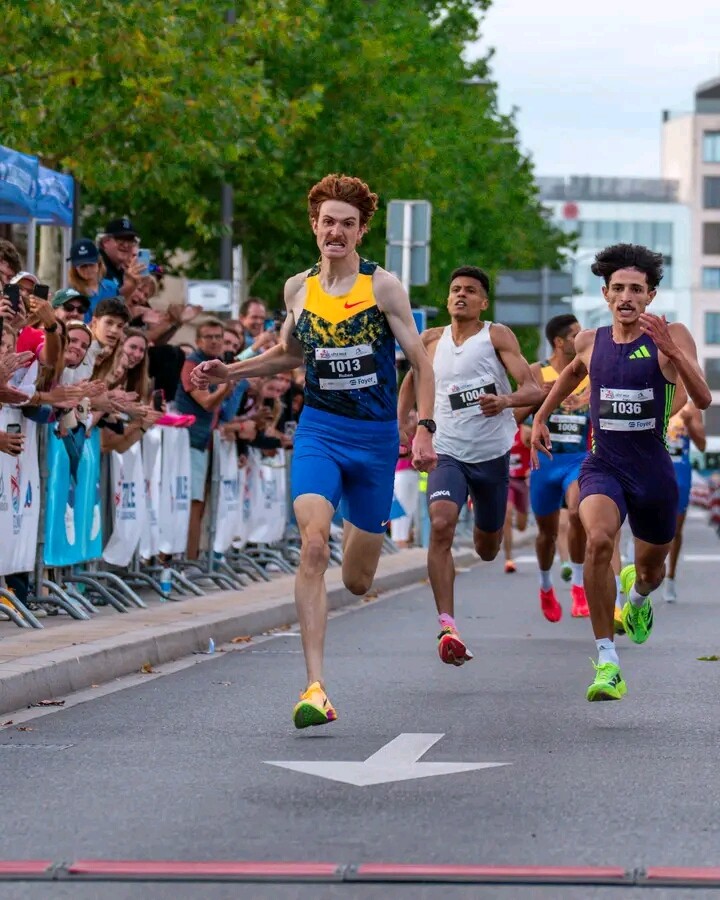
His latest achievement also highlights his versatility. Best known for his performances over the steeplechase barriers, Querinjean has shown that his speed and endurance translate exceptionally well to the roads, with the mile requiring a combination of strength, pace and finishing speed.
The 4:03.03 performance gives Querinjean another national mark to celebrate during a season that has already delivered several major milestones. His continued progression has made him an increasingly prominent figure on the European distance-running scene.
For Luxembourg athletics, performances like this represent an exciting period for the sport. Querinjean's ability to challenge national records across different disciplines is a strong indication of the depth of his talent and the level he is reaching.
With another national record now secured, Querinjean can look ahead with even greater confidence as he continues his impressive 2026 campaign.
Another record. Another milestone. Another unforgettable chapter in Ruben Querinjean's remarkable season.
by Erick Cheruiyot for My Best Runs.
Login to leave a comment
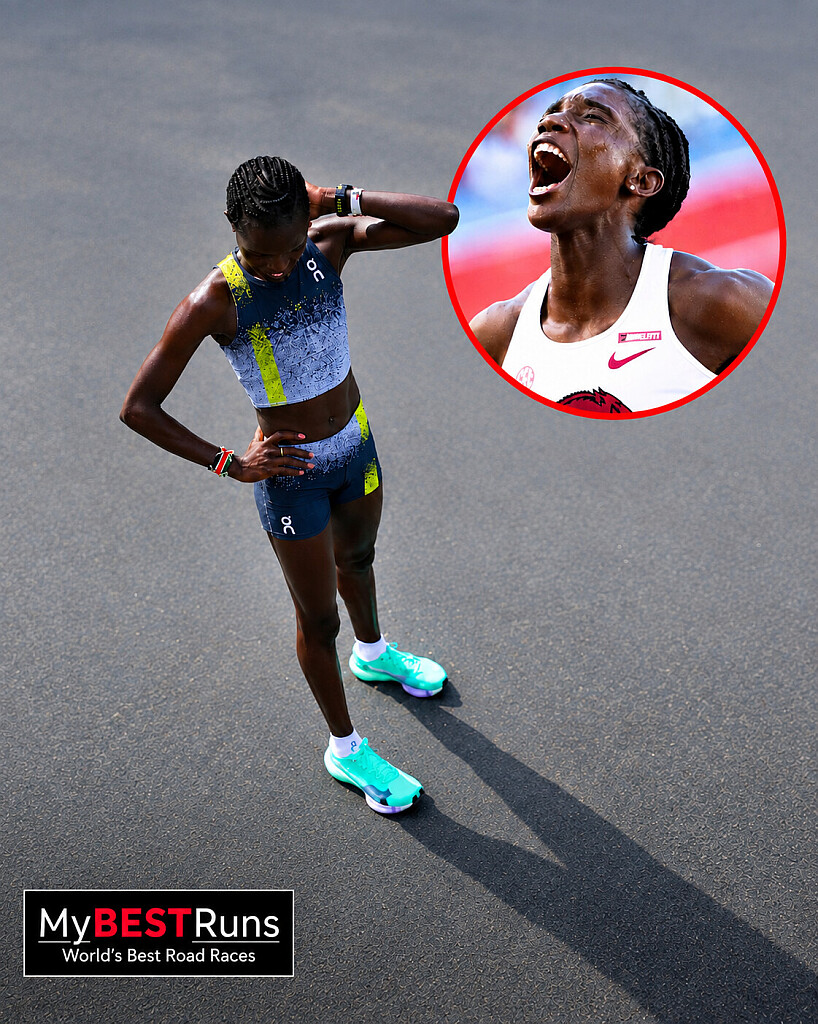
Doris Lemngole Turns Professional With On After Remarkable NCAA Career
Kenyan steeplechase star Doris Lemngole has officially turned professional after signing a contract with Swiss sportswear brand On, marking the beginning of a new chapter for one of the most accomplished young distance runners in the sport.
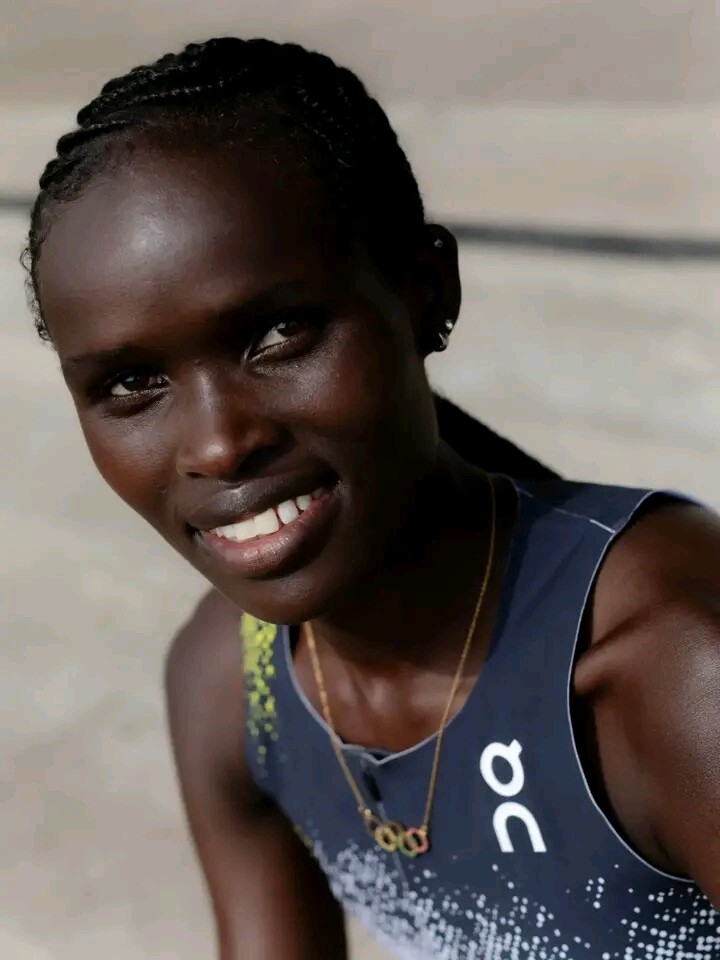
On announced the move on Thursday, September 10, confirming that the 24-year-old has been elevated from the NIL partnership she signed with the brand in August 2025 to its professional athlete roster.
The decision comes after Lemngole completed a spectacular collegiate career at the University of Alabama, where she established herself as one of the most dominant distance runners in NCAA history. She leaves Tuscaloosa as a five-time NCAA champion, a collegiate record-holder and the winner of The Bowerman, the highest individual honor in American collegiate track and field.
Her breakthrough came in the 3,000m steeplechase, an event in which she repeatedly pushed the boundaries of collegiate running. In 2025, she clocked 8:58.15 to become the first woman in NCAA history to break the nine-minute barrier in the event. She also captured consecutive NCAA outdoor steeplechase titles in 2024 and 2025.
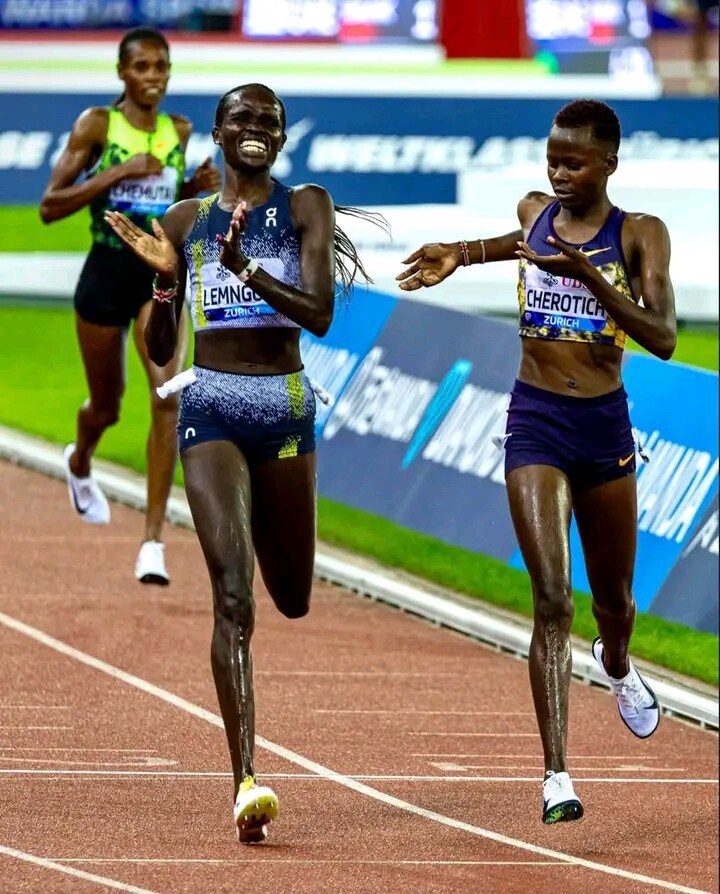
Lemngole was equally impressive over cross country. At the 2025 NCAA Championships in Missouri, she defended her national title in 18:25.4, producing the fastest winning performance in NCAA championship history by a considerable margin. Her consistency and dominance across disciplines ultimately helped her secure The Bowerman in December 2025, making her the first Alabama athlete and first Kenyan to receive the prestigious award.
Her transition from collegiate standout to international contender has been remarkably rapid. Still competing as an Alabama athlete, Lemngole won her Diamond League debut in the 3,000m steeplechase at Athletissima in Lausanne in August 2025 before going on to represent Kenya at the World Championships in Tokyo, where she finished fifth.
Now, just days before her professional announcement, Lemngole produced perhaps the strongest performance of her career. At the Diamond League Final in Brussels on September 4, she stormed to a massive personal best of 8:52.86 for second place in the 3,000m steeplechase. Only five women in history had previously run faster, underlining just how extraordinary the performance was. Faith Cherotich won in a meeting-record 8:51.61, while Olympic champion Winfred Yavi finished third in 8:53.54.
That performance provided a fitting bridge between Lemngole's collegiate dominance and her professional future. She is no longer simply one of the NCAA's brightest talents; she has now established herself firmly among the world's leading steeplechasers.
For On, the decision represents a natural continuation of a relationship that began when Lemngole joined its NIL roster in 2025. The Swiss brand said her ability to dominate at the collegiate level while immediately challenging the world's best made the move to its professional roster a natural progression.
For Lemngole, the signing is about much more than a new contract. It represents the next stage of a journey that has taken her from NCAA champion and record-breaker to Bowerman winner and international title contender.
With her collegiate chapter now complete and a sub-8:53 performance already on the record, the Kenyan has made her intentions clear: **the next challenge is to see just how far she can take her extraordinary talent on the global stage.**
by Erick Cheruiyot for My Best Runs.
Login to leave a comment
The Day Kip Keino And Ben Jipcho Put Kenya On Top In Munich
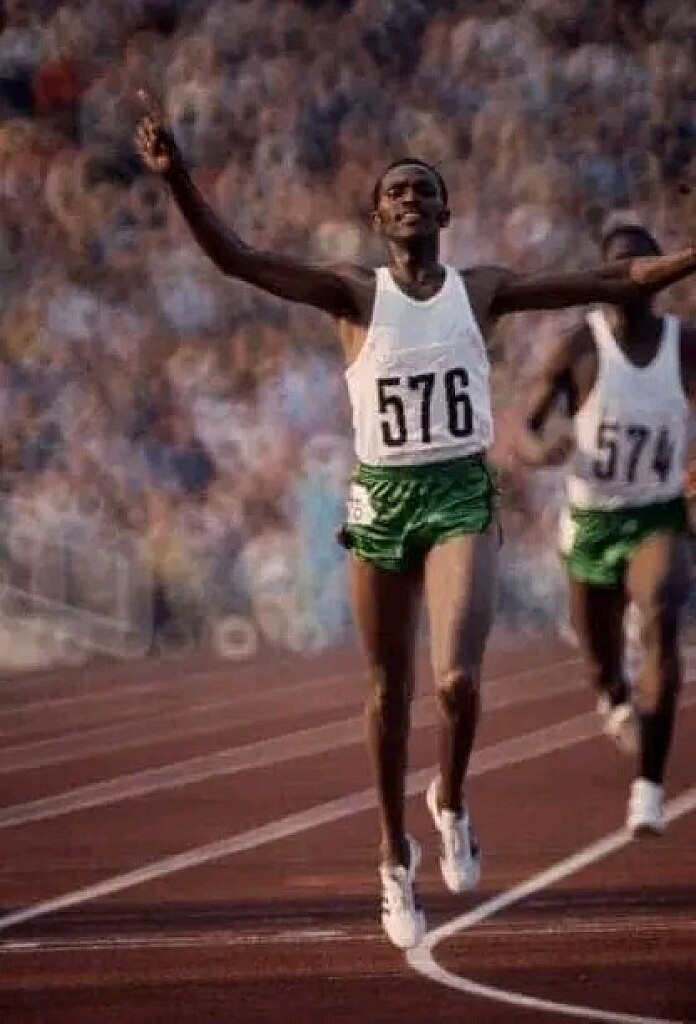
On 4 September 1972, Kenya once again announced its growing authority on the Olympic athletics stage as the country produced a spectacular one-two finish in the men’s 3,000m steeplechase at the Munich Olympic Games.
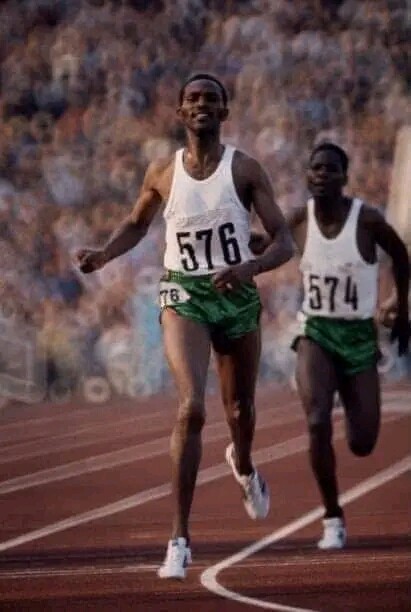
Kipchoge Keino delivered a commanding performance to capture the gold medal in 8:23.64, setting a new Olympic record in the process. His compatriot Benjamin Jipcho was equally impressive, crossing the line in 8:24.62 to take silver, while Finland’s Tapio Kantanen secured bronze in 8:24.66.
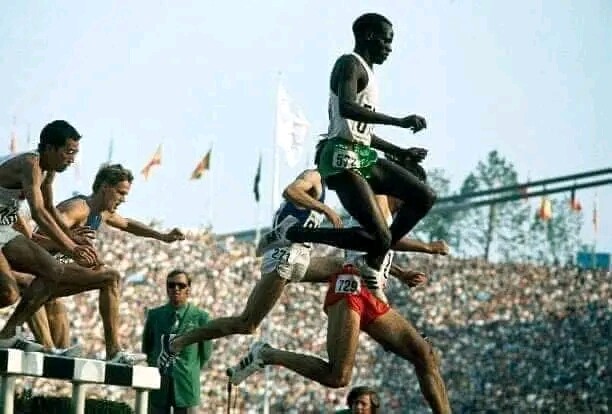
The final brought together a remarkable group of athletes, including Kenya’s defending Olympic champion Amos Biwott. Keino and Jipcho, however, proved too strong when the decisive moments arrived. As the race entered its closing stages, the leading group began to separate, with Keino positioning himself perfectly for the final charge.
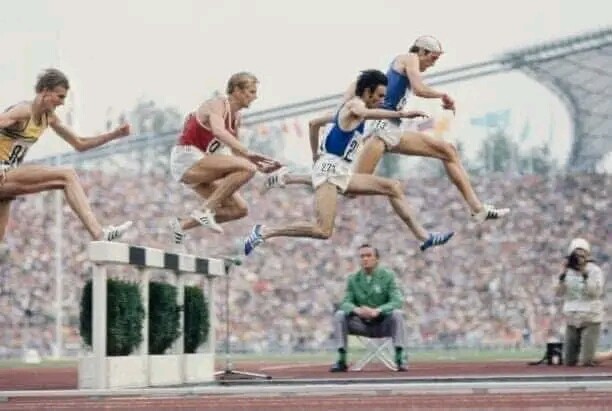
Keino then unleashed his finishing speed, pulling clear in the closing metres to secure another Olympic title. Jipcho fought his way into second, completing a memorable Kenyan one-two, while Kantanen held on for third. Biwott finished sixth in 8:33.48, giving Kenya three athletes among the top six finishers.
For Keino, the triumph added another remarkable chapter to an already extraordinary Olympic career. Four years earlier in Mexico City, he had won the 1,500m gold medal and taken silver in the 5,000m. In Munich, he demonstrated his versatility once again by conquering the demanding steeplechase, an event requiring not only endurance and speed but also exceptional rhythm and technique over the barriers and water jump.
Jipcho’s silver medal was equally significant. His performance confirmed that Kenya’s success in the steeplechase was no longer the achievement of a single exceptional athlete. A new generation of Kenyan runners was emerging, capable of challenging the very best on the world’s biggest stage.
The Munich final also carried a sense of continuity for Kenya. Biwott had won the Olympic steeplechase title at the 1968 Mexico City Games, and four years later his compatriots Keino and Jipcho ensured that the gold medal remained in Kenyan hands. It was becoming increasingly clear that the country had discovered a formidable formula for producing world-class steeplechasers.
Beyond the medals, the race helped strengthen Kenya’s growing reputation as a powerhouse in distance running. The combination of natural endurance, disciplined training and extraordinary competitive courage would continue to produce generations of Kenyan steeplechase champions, turning the event into one of the country's most celebrated Olympic disciplines.
The complete Munich 1972 final standings were:
1. Kipchoge Keino — Kenya — 8:23.64 — Olympic Record
2. Benjamin Jipcho — Kenya — 8:24.62
3. Tapio Kantanen — Finland — 8:24.66
4. Bronisław Malinowski — Poland — 8:27.92
5. Dušan Moravčík — Czechoslovakia — 8:29.06
6. Amos Biwott — Kenya — 8:33.48
7. Romualdas Bitė — Soviet Union — 8:34.64
8. Pekka Päivärinta — Finland — 8:37.17
9. Takaharu Koyama — Japan — 8:37.66
10. Mikko Ala-Leppilampi — Finland — 8:41.03
11. Jean-Paul Villain — France — 8:46.72
12. Mikhail Zhelev — Bulgaria — 9:02.59
More than five decades later, the Munich steeplechase remains a landmark moment in Kenyan athletics history. Keino’s golden run, Jipcho’s brilliant silver and Biwott’s determined sixth-place finish combined to create a performance that captured the depth of Kenya’s emerging distance-running strength.
It was not simply a victory for one athlete. It was a statement from a nation — and another unforgettable chapter in Kenya’s extraordinary Olympic athletics legacy.
by Erick Cheruiyot for My Best Runs.
Login to leave a comment
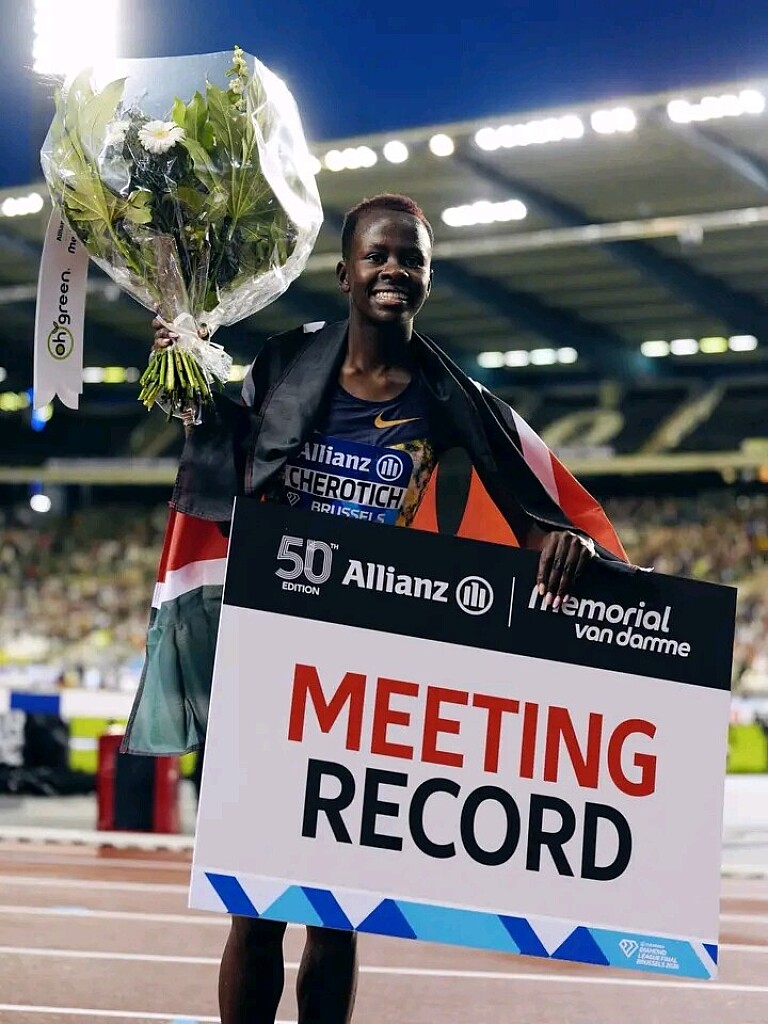
Faith Cherotich Unleashes A Devastating Final Kick To Seal Third Diamond Trophy In Brussels
Faith Cherotich produced a spectacular display of speed and determination in Brussels, storming to victory in the women’s 3000m steeplechase and securing her place among the event’s elite with another Diamond League triumph.
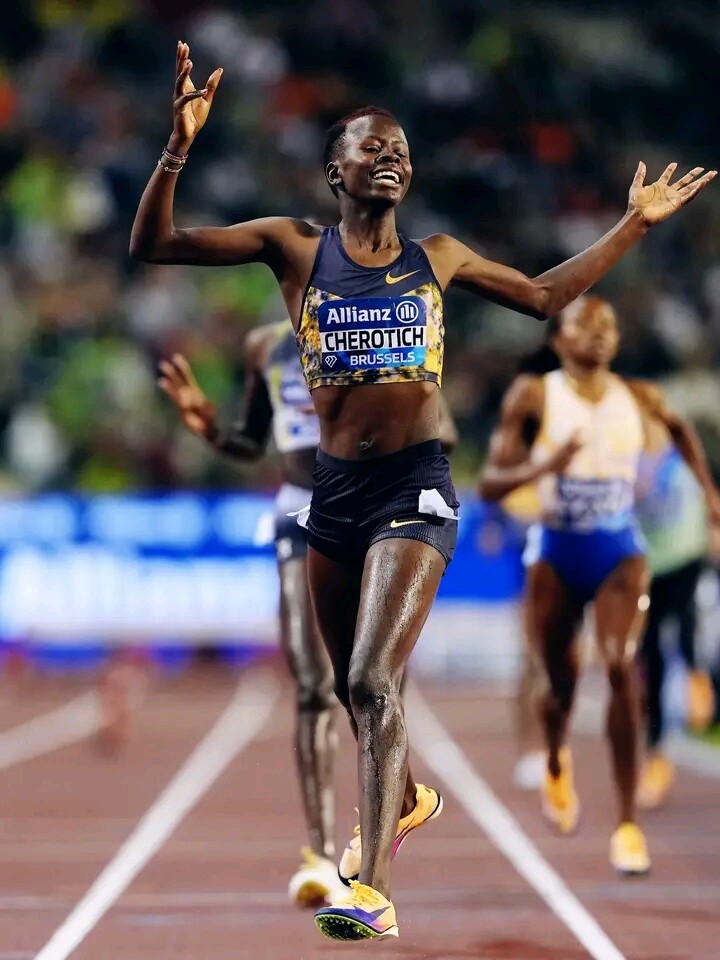
The Kenyan star saved her most devastating weapon for the closing stages, unleashing a breathtaking final kick over the last 100 metres to pull decisively away from Winfred Yavi. Cherotich surged clear when it mattered most, crossing the finish line in a superb 8:51.61 to set a new meeting record.
It was a performance built on patience, tactical intelligence and extraordinary finishing speed. Cherotich remained composed through the barriers and water jump before producing a remarkable acceleration in the final straight that left her rivals struggling to respond.
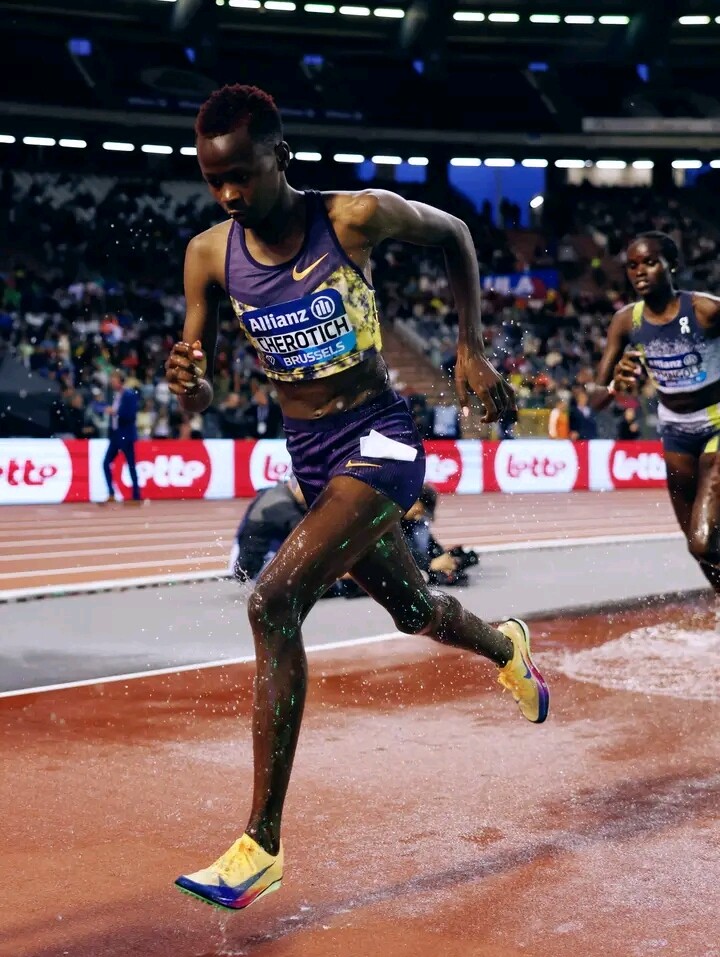
The victory was particularly significant as it made Cherotich a three-time Diamond Trophy champion, adding another prestigious achievement to an already impressive career. Her ability to repeatedly deliver on the biggest Diamond League stage demonstrates the consistency and competitive strength that have made her one of Kenya’s outstanding steeplechase stars.
Behind her, Kenya completed a magnificent 1-2 finish as Doris Lemngole produced a brilliant closing surge of her own. Lemngole powered past Yavi in the final stages to secure second place in a superb personal best of 8:52.86, ensuring that the Kenyan flag flew proudly at the top two positions on the podium.
The result turned the Brussels steeplechase into a celebration of Kenyan strength, with Cherotich and Lemngole occupying first and second, while Yavi was forced to settle for third after being overtaken by the fast-finishing Lemngole.
For Cherotich, however, the spotlight belonged entirely to her. Her meeting-record 8:51.61 was the culmination of a perfectly executed race, capped by a finishing burst that showcased the raw speed and confidence required to dominate one of athletics’ most demanding events.
The Brussels triumph also sends a powerful message ahead of the next major challenges. Cherotich has once again demonstrated that she possesses not only the endurance to survive the gruelling barriers and water jump but also the finishing speed to destroy the opposition in the final metres.
With another Diamond Trophy secured and a meeting record added to her résumé, Faith Cherotich continues to strengthen her reputation as one of the most formidable names in women’s steeplechase.
by Erick Cheruiyot for My Best Runs.
Login to leave a comment
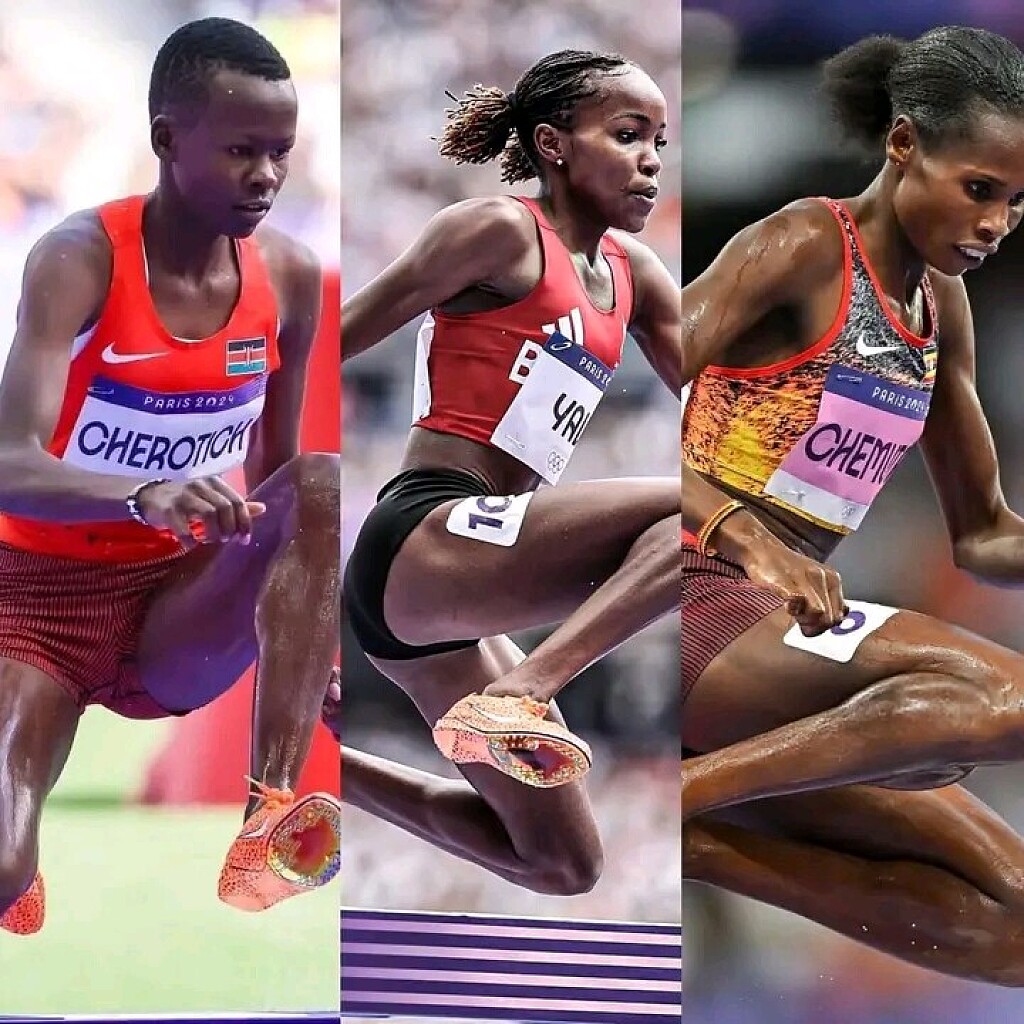
Diamond Trophy on the Line: Cherotich, Chemutai and Yavi Set for Epic Brussels Steeplechase Showdown
BRUSSELS, Belgium — The Diamond Trophy will be the ultimate prize when three of the world’s leading 3,000m steeplechase stars collide in a highly anticipated showdown at the Wanda Diamond League Final in Brussels.
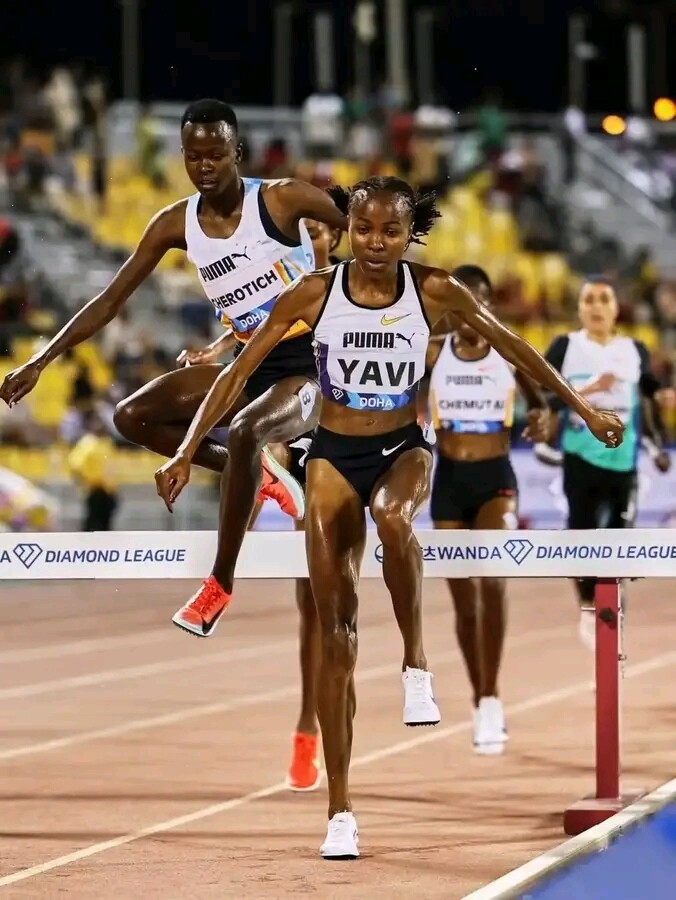
Kenya’s Faith Cherotich, Uganda’s Peruth Chemutai and Bahrain’s Winfred Yavi headline a competitive field on the opening day of the two-day season finale, with all three targeting a strong finish to their Diamond League campaigns.
With the prestigious Diamond Trophy at stake, the race is expected to provide another compelling chapter in the rivalry between three athletes who have established themselves among the leading figures in women’s steeplechase.
Cherotich will be among the athletes carrying significant expectations into the final. The Kenyan has continued to establish herself at the highest level of the event and will be looking to convert her season-long consistency into a victory on one of the biggest stages of the Diamond League.
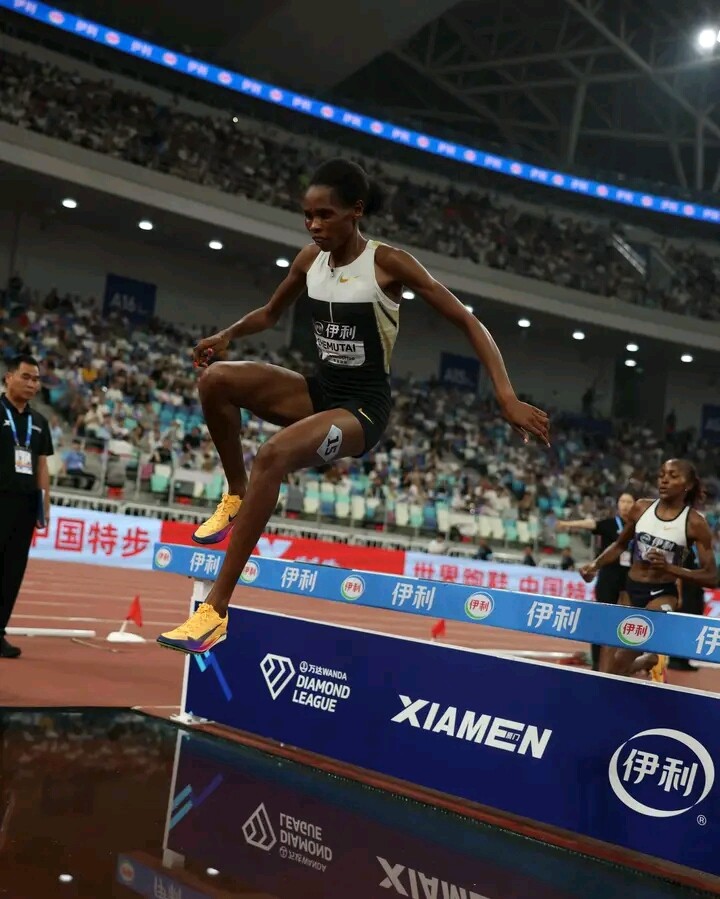
She will face a major challenge from Peruth Chemutai, the Olympic champion from Uganda. Known for her championship experience and ability to perform under pressure, Chemutai has the pedigree to remain in contention when the race reaches its decisive stages.
Winfred Yavi will also be central to the contest. The Bahrain representative possesses the speed and strength required to change the complexion of a steeplechase in the closing stages and will be among the leading contenders for the Diamond Trophy.
However, the race is not limited to the three headline names.
Kenya’s Doris Lemngole will look to challenge the established order and push herself into the podium conversation. Her presence adds another dimension to a field in which several athletes could influence the outcome.
Germany’s Olivia Gürth and Lea Meyer, Tunisia’s Marwa Bouzayani, the United States’ Lexy Halladay and Gabrielle Jennings, Great Britain’s Elise Thorner, and Ethiopia’s Kena Tufa complete the 11-athlete field.
The race could ultimately be decided by positioning, rhythm and the ability to negotiate the barriers efficiently before the final lap. With the Diamond Trophy on the line, every tactical decision is likely to carry added significance.
Full Start List
1. Marwa Bouzayani — Tunisia
2. Peruth Chemutai — Uganda
3. Faith Cherotich — Kenya
4. Olivia Gürth — Germany
5. Lexy Halladay — United States
6. Gabrielle Jennings — United States
7. Doris Lemngole — Kenya
8. Lea Meyer — Germany
9. Elise Thorner — Great Britain
10. Kena Tufa — Ethiopia
11. Winfred Yavi — Bahrain
Ultimately, the Brussels final promises to be a closely contested race in which tactics, positioning and the ability to handle the pressure of a high-stakes finish could prove decisive. With several athletes capable of challenging for the podium, the outcome is difficult to predict, setting the stage for an intriguing conclusion to the Diamond League steeplechase season.
by Erick Cheruiyot for My Best Runs.
Login to leave a comment
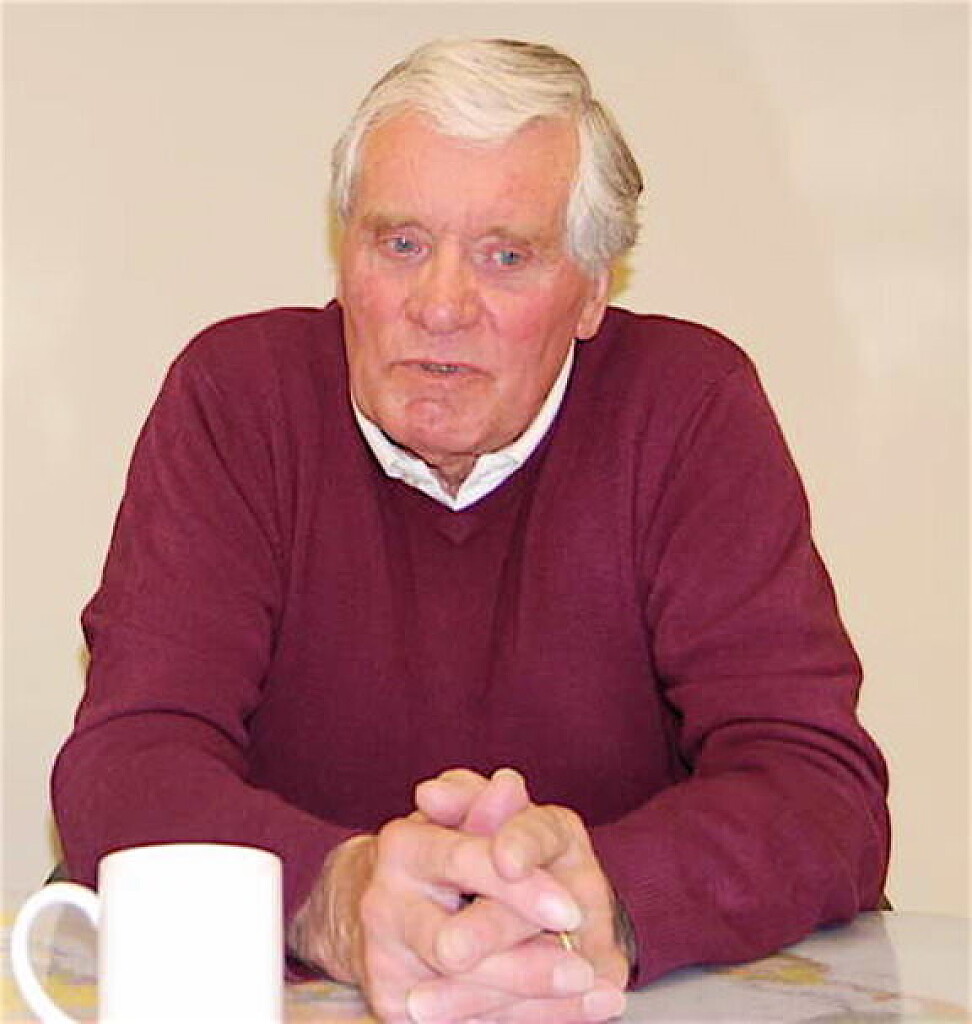
Maurice Herriott: Olympic Silver Medallist and Steeplechase Great Dies Aged 86
British athletics is mourning the loss of one of its most accomplished steeplechasers, Maurice Herriott, who has died aged 86 following a short illness.
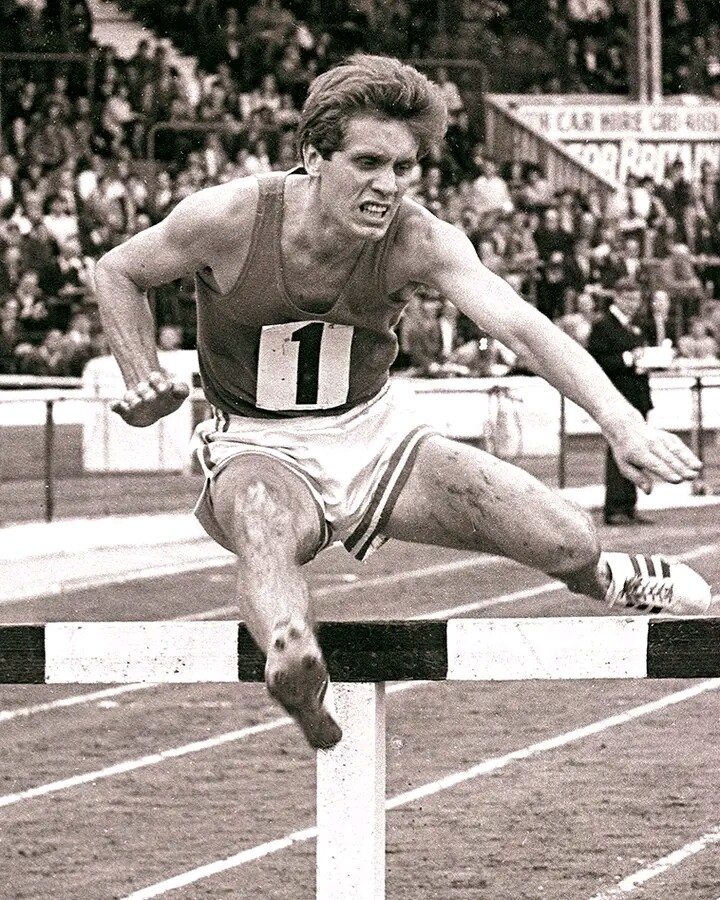
Herriott leaves behind a remarkable legacy, highlighted by his unforgettable silver-medal performance in the men’s 3000m steeplechase at the 1964 Tokyo Olympic Games. Competing for Great Britain, he clocked 8:32.4 to finish second behind legendary Belgian runner Gaston Roelants, who won in an Olympic record of 8:30.8.
It was a performance that underlined Herriott’s extraordinary determination. He was not a full-time professional athlete. Away from the track, he worked at the Birmingham Small Arms (BSA) motorcycle factory, combining demanding full-time employment with the training required to compete at the highest level of international athletics. Team GB notes that he held down a full-time job on the BSA motorcycle production line while competing at the Olympics.
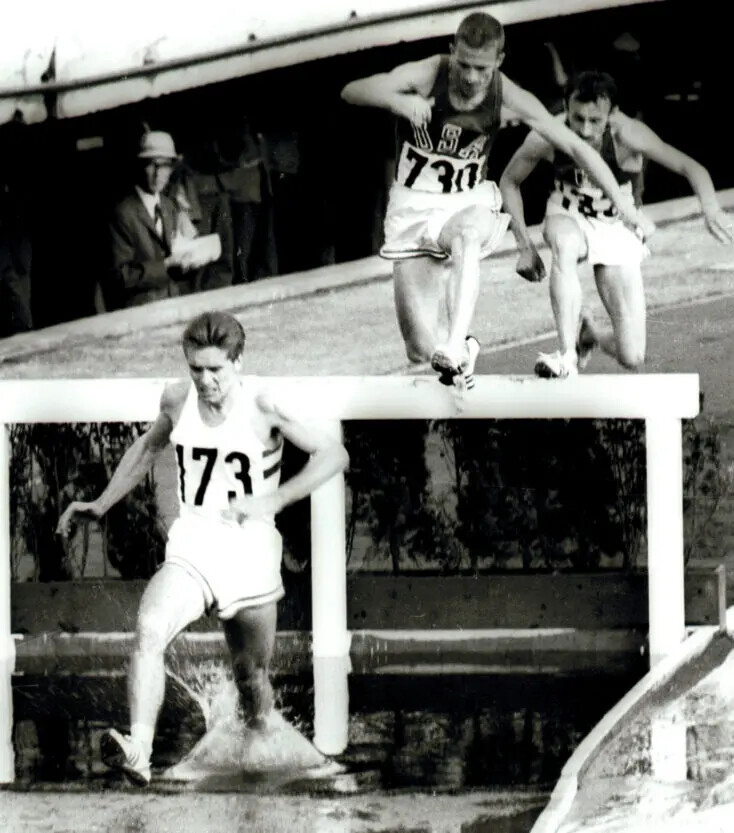
His Tokyo silver was the defining moment of a career built on consistency and resilience. In the Olympic final, Roelants established a commanding lead, but Herriott produced a powerful finish to move into second and close the gap considerably. He finished only 1.6 seconds behind the Belgian, with Soviet runner Ivan Belyayev taking bronze in 8:33.8.
Herriott had already established himself as a dominant force on the British scene. He won an astonishing eight AAA 3000m steeplechase titles, beginning with his first championship in 1959 and then claiming seven consecutive titles from 1961 through 1967.
His achievements also earned recognition beyond the medal table. In 1963, Herriott became the first British Athletics Writers' Association Male Athlete of the Year, an honour that reflected the esteem in which he was held during the peak of his career. He was also voted the award again in 1965.
His international career extended beyond Tokyo. Herriott had won Commonwealth Games silver in the steeplechase at Perth in 1962 and later represented Great Britain again at the 1968 Mexico City Olympics, where he reached the heats.
Born on 8 October 1939 in Great Wyrley, South Staffordshire, Herriott represented Birmingham-based Sparkhill Harriers and remained closely associated with the club, eventually becoming an honorary lifelong member.
His career is a reminder of an era when elite athletes could combine extraordinary sporting ambition with demanding working lives. Herriott did not simply win medals; he built a legacy through years of discipline, consistency and determination.
The British athletics community now says goodbye to a man who stood among the country's finest steeplechasers and whose silver medal in Tokyo remains one of the memorable achievements of British distance running.
Maurice Herriott — Olympic medallist, eight-time AAA champion and pioneer of British steeplechasing — will be remembered with great respect.
Herriott leaves behind an enduring legacy in British athletics, remembered not only for his Olympic silver medal but also for his remarkable consistency, determination and contribution to steeplechasing. He was 86.
by Erick Cheruiyot for My Best Runs.
Login to leave a comment
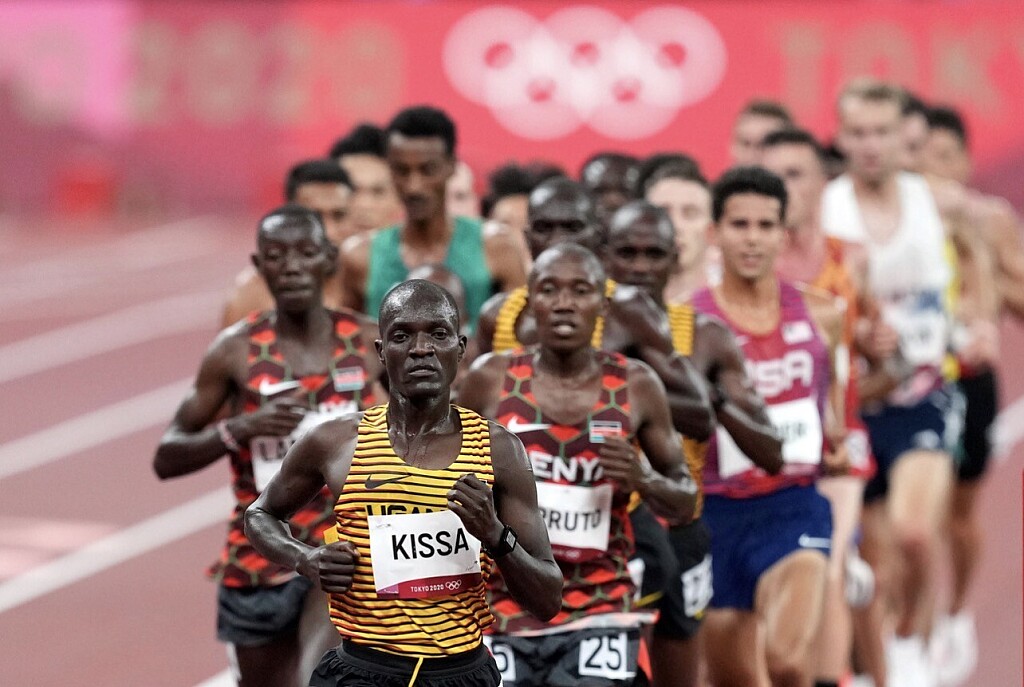
Stephen Kissa Carrying Ugandan Hopes at TCS Toronto Waterfront Marathon
Ugandan long-distance runners have emerged from the shadows of their legendary East African neighbours to earn distinction at the highest level.
Now Stephen Kissa will represent his nation at the 2026 TCS Toronto Waterfront Marathon on October 18 against a strong contingent of Kenyan and Ethiopian athletes. The event is once again a World Athletics Elite Label race.
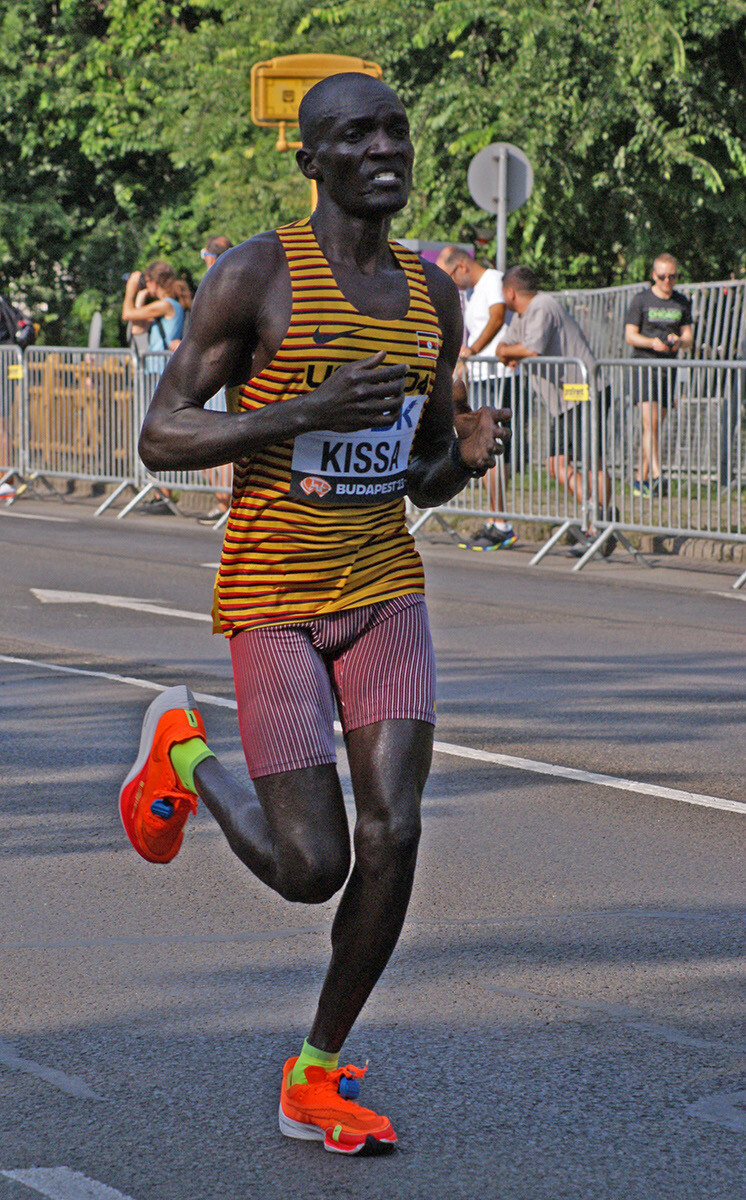
Kissa set a Ugandan national record of 2:04:48 when he finished second in his 2022 marathon debut in Hamburg. That record was only broken this year. He was subsequently selected for Uganda’s 2023 World Championships marathon team, finishing fifth on the streets of Budapest.
He has also represented his country twice at the Olympics and competed at the World Cross Country Championships. With such experience, the 37-year-old is intent on challenging for Toronto’s $25,000 Canadian first-place prize.
“When I come to Toronto, I will do my best,” he declares with a broad smile. “I will be really happy if I can run 2:03 or 2:04.
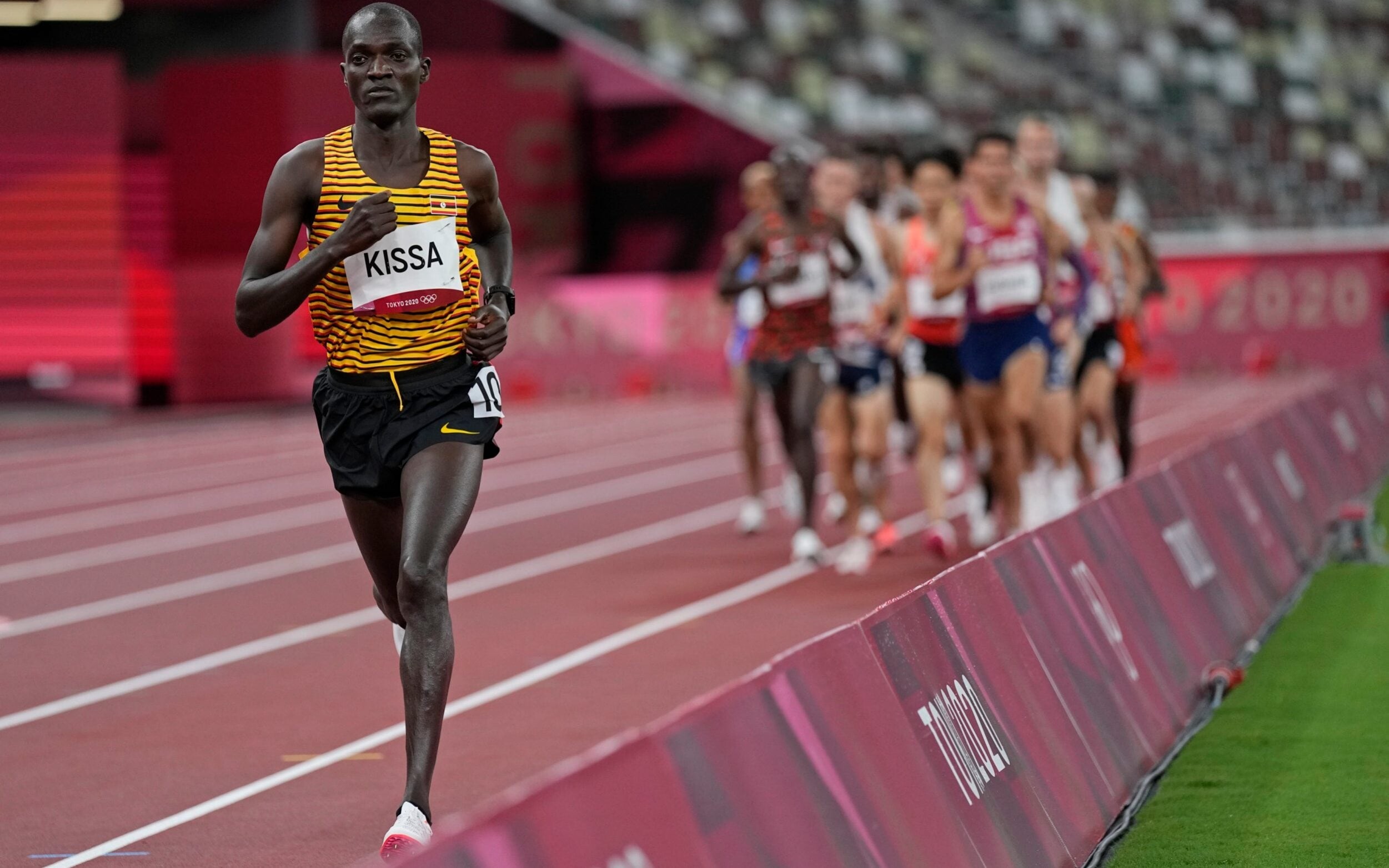
“With training, we have been comparing the past to now, and we have come up with a solution. We do long runs and tempo runs ranging from 25km and 28km to 30km and up to 40km. I am running around 120km a week but will go up closer to 200km.”
Kissa is not the first of his compatriots to compete in the Toronto Waterfront Marathon. Stephen Kiprotich, the 2012 Olympic champion, finished seventh in the 2018 race. Kiprotich remains a national hero in Uganda, and his success has contributed significantly to the nation’s emergence as a distance-running power.
“I was really inspired a long time ago by Stephen Kiprotich,” Kissa admits. “He did some tremendous work, and I can say he is our mentor. We really respect him.
“He has given me advice. He told me, ‘Our sport is not a one-day journey. It is a long journey that takes a lot of patience and commitment. If you have commitment, patience and work hard, you will go far.’”
Kiprotich has been an occasional and welcome visitor to the training camp in Kapchorwa that Kissa calls home for most of the year. It sits at an altitude of 2,500 metres, or 8,200 feet.
From Monday through Saturday, Kissa trains there with a group that includes two-time Olympic champion Joshua Cheptegei, 2023 world marathon champion Victor Kiplangat and 2022 Olympic 3,000m steeplechase champion Peruth Chemutai.
The centre was built by their management company, Global Sports Communications, with a contribution from Cheptegei. The athletes return home to their families on Saturday evenings.
Kissa lives in Kapchorwa’s town centre, about 14 kilometres away, in an area dominated by Mount Elgon, an extinct volcano estimated to be 24 million years old. He lives there with his wife and two young children.
“Right now they are at school,” he says of his children. “They are about to come home for a holiday. That’s when I will meet them. At school, they concentrate on their studies unless there is a problem. Then they will call me.”
The training camp includes a dormitory, dining room, kitchen and recreation room where the group gathers to watch sports. The recent FIFA World Cup generated great interest, and Kissa admits enjoying the play of Spanish winger Lamine Yamal. When asked what he does to relax, he smiles.
“I can play pool. I like that,” he says, adding with a laugh, “Not for money. We also play cards.
“Sometimes, when I have time, I cook chapati. It is made from wheat flour. We also have potatoes and ugali, which is made from corn.”
The group holds a prayer before each workout. Victor Kiplangat is an assistant pastor at a nearby church called Temple of the Most High God, but the others, including Kissa, also take turns leading prayers.
For more than a decade, the group was coached by Addy Ruiter. After the 2024 Paris Olympics, the Dutchman returned home. He continues coaching the athletes remotely through WhatsApp, with an on-site team led by fellow Dutchman Roy Hoornweg.
“Kapchorwa is a hilly, mountainous area,” Kissa explains. “The tempo runs are done on a plateau where it is flat. Our training differs depending on the location. You can’t do long runs in the hilly area, so we go to the plateau. We also have flatlands where we can do long runs and tempo runs.”
Kissa understands that he is approaching the later stages of his running career and must look toward life beyond competition. Still, he laughs when asked how many more years he can compete.
“Maybe 10 years! I will be happy if I can run 2:03 or 2:04,” he says.
“If Toronto goes really well, I will look to invest in assets in town, build apartments and start a business. I can really say thank you for inviting me to Toronto. If it goes well, I will be very proud.”
Kissa won’t be the only Ugandan presence at the TCS Toronto Waterfront Marathon. At the Runner’s Expo on October 16 and 17 at the Better Living Centre, a Uganda Tourism booth will offer information about the Mount Rwenzori Marathon and Great Lakes Safaris.
On the starting line, Kissa can be confident that he has the international experience and talent to compete with anyone. As for his ultimate goals, he is succinct.
“I pray that in the years to come I will stand on the podium at the Olympics or World Championships,” he says. “That is what I am really looking forward to.”
A victory in Toronto would bolster that ambition.
by Paul Gains
Login to leave a comment
TCS Toronto Waterfront Marathon
The Scotiabank Toronto Waterfront Marathon, Half-Marathon & 5k Run / Walk is organized by Canada Running Series Inc., organizers of the Canada Running Series, "A selection of Canada's best runs!" Canada Running Series annually organizes eight events in Montreal, Toronto and Vancouver that vary in distance from the 5k to the marathon. The Scotiabank Toronto Waterfront Marathon and Half-Marathon are...
more...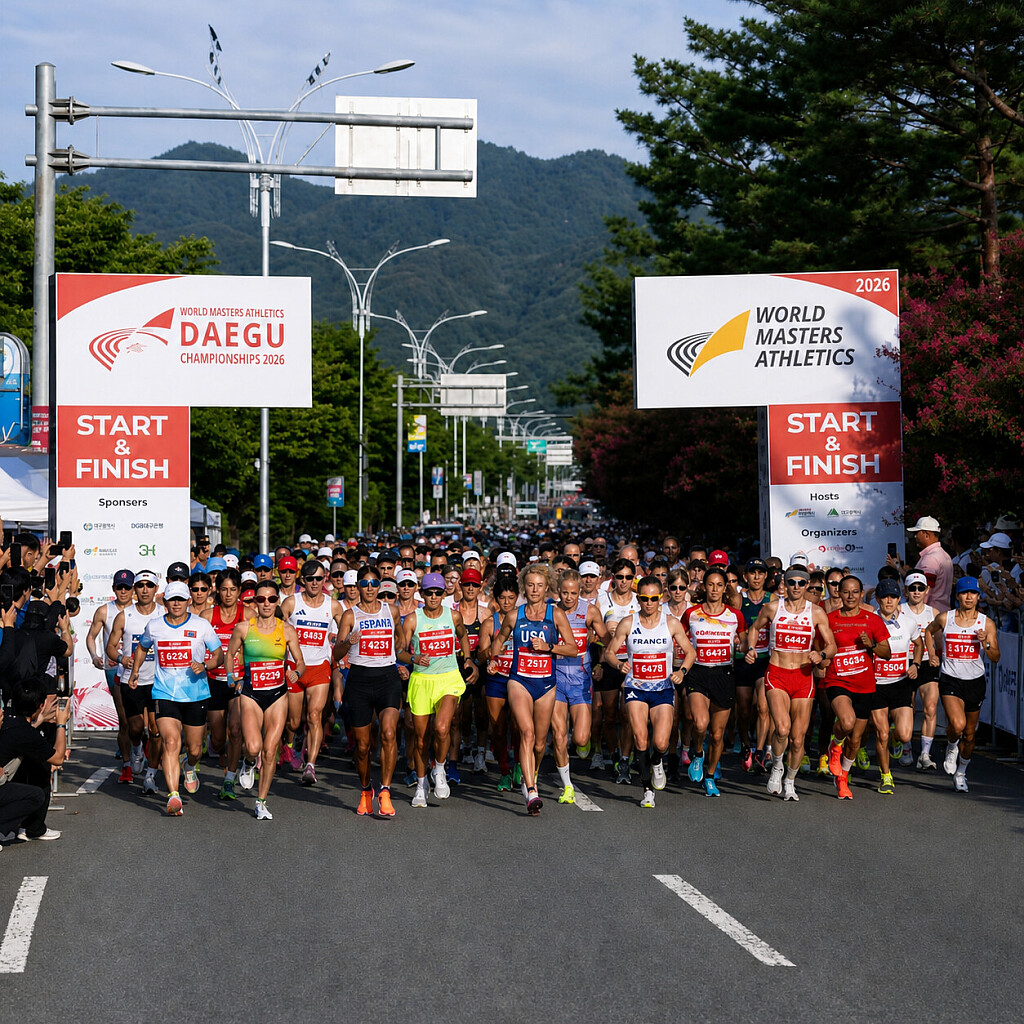
Four World Records Fall as Daegu Masters Championships Explode Into Life
The World Masters Athletics Championships in Daegu, South Korea, are only three days old, but the competition has already produced a remarkable display of speed, endurance and longevity, with four world records shattered and another 10 championship records rewritten.
The record-breaking action began on the opening day when the United States’ Richard Lee produced a stunning performance in the M65 2,000m steeplechase. Lee stopped the clock at 7:09.29, winning gold while lowering the existing world record in the age group.
Day two proved even more dramatic, delivering three world records in quick succession.
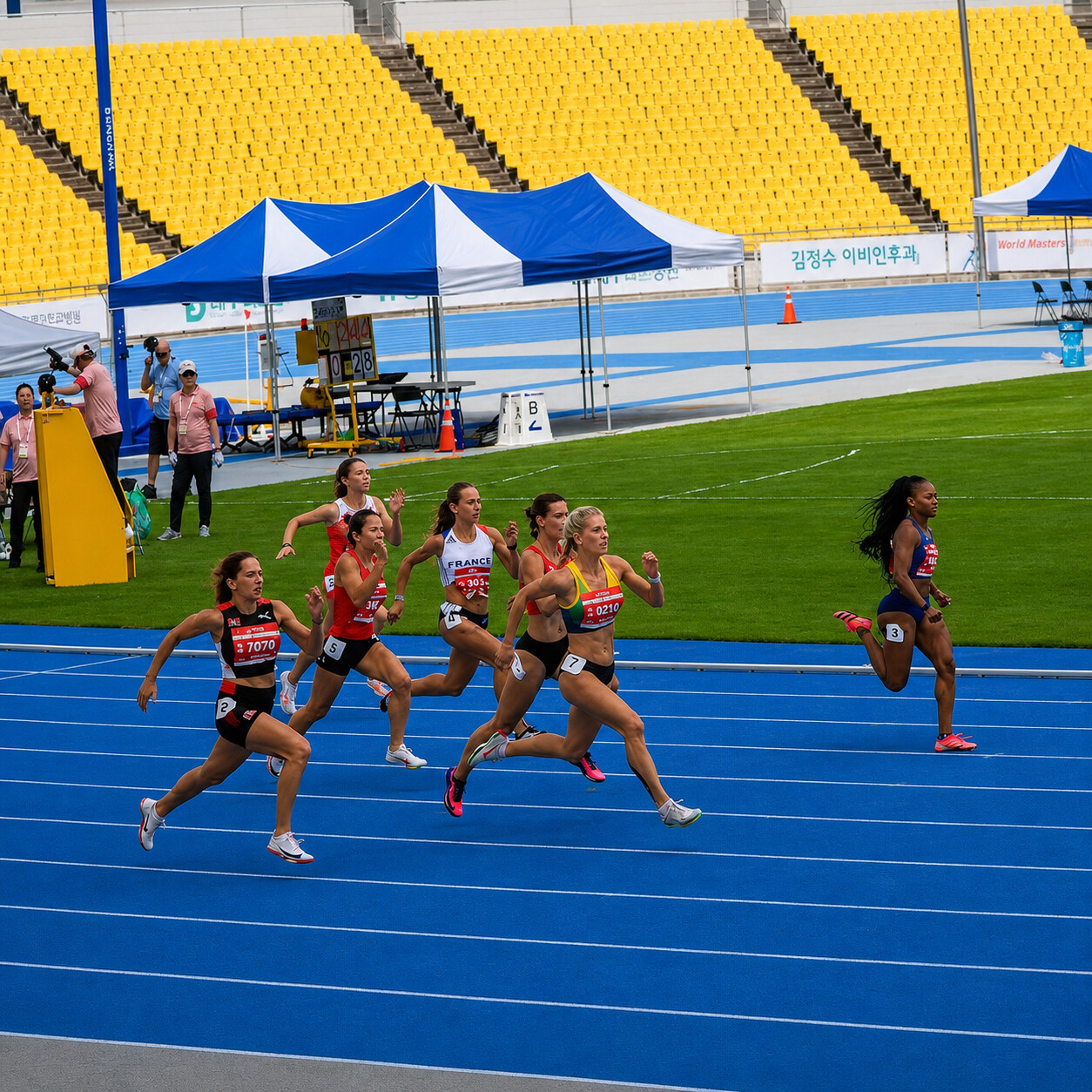
Great Britain’s John Wright was first to strike, clocking 12.03 seconds to win the M65 100m. In doing so, the veteran sprinter improved his own world record of 12.15, set in 2024, underlining his remarkable consistency at the highest level of masters competition.
Only minutes later, the United States’ Kenton Brown produced another record-breaking run in the M80 100m. Brown crossed the line in 14.16, taking 0.05 seconds off his own previous world record of 14.21, which he established last year.
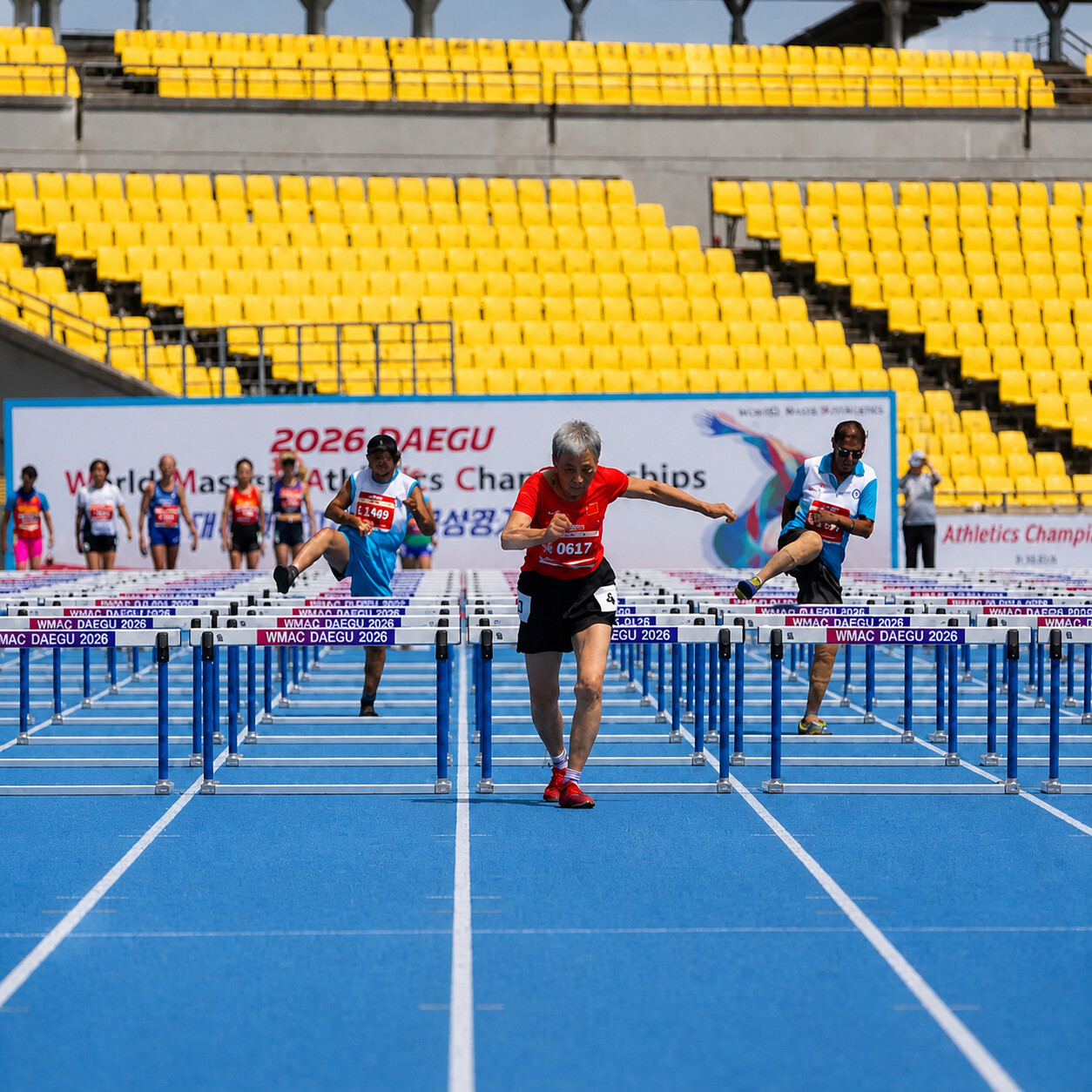
Thailand then added another name to the growing list of Daegu record-breakers. Somsanga Boonnok won the W70 80m hurdles in 15.61, breaking a world record that had belonged to Austria’s Marianne Maier since 2016.
Four world records in just three days tell only part of the story. Across the championships, 10 championship records have already fallen, highlighting the extraordinary standard being produced by athletes competing across the masters age groups.
Canada has also made its presence felt on the medal podium. Johana Flipsen captured W70 10K race walk gold in 1:04:18, while Vern Christensen won the M85 2,000m steeplechase in 14:48.25.
Canadian athletes have continued to add to the medal tally, with Lynne Wawryk Epp taking bronze in the W70 800m in 3:21.04, while Vanessa Johnson secured silver in the W40 race walk after finishing in 1:05:52.
But one of the most intriguing storylines to watch as the championships continue belongs to Canada’s Wendy Alexis.
At 71 years old, Alexis has arrived in Daegu with a world record firmly within reach. She is just 0.04 seconds away from the W70 100m world record of 14.37 seconds, and after targeting the championship throughout the season, she now has the opportunity to turn that ambition into history.
Alexis will contest her semifinal on Tuesday morning, with the final scheduled for later that evening.
With four world records already gone, 10 championship records broken and some of the world’s finest masters athletes still waiting to take to the track, Daegu is proving that age is no barrier to extraordinary performance.
And if the opening three days are anything to go by, the record books may have plenty more rewriting to come.
by Erick Cheruiyot for My Best Runs.
Login to leave a comment
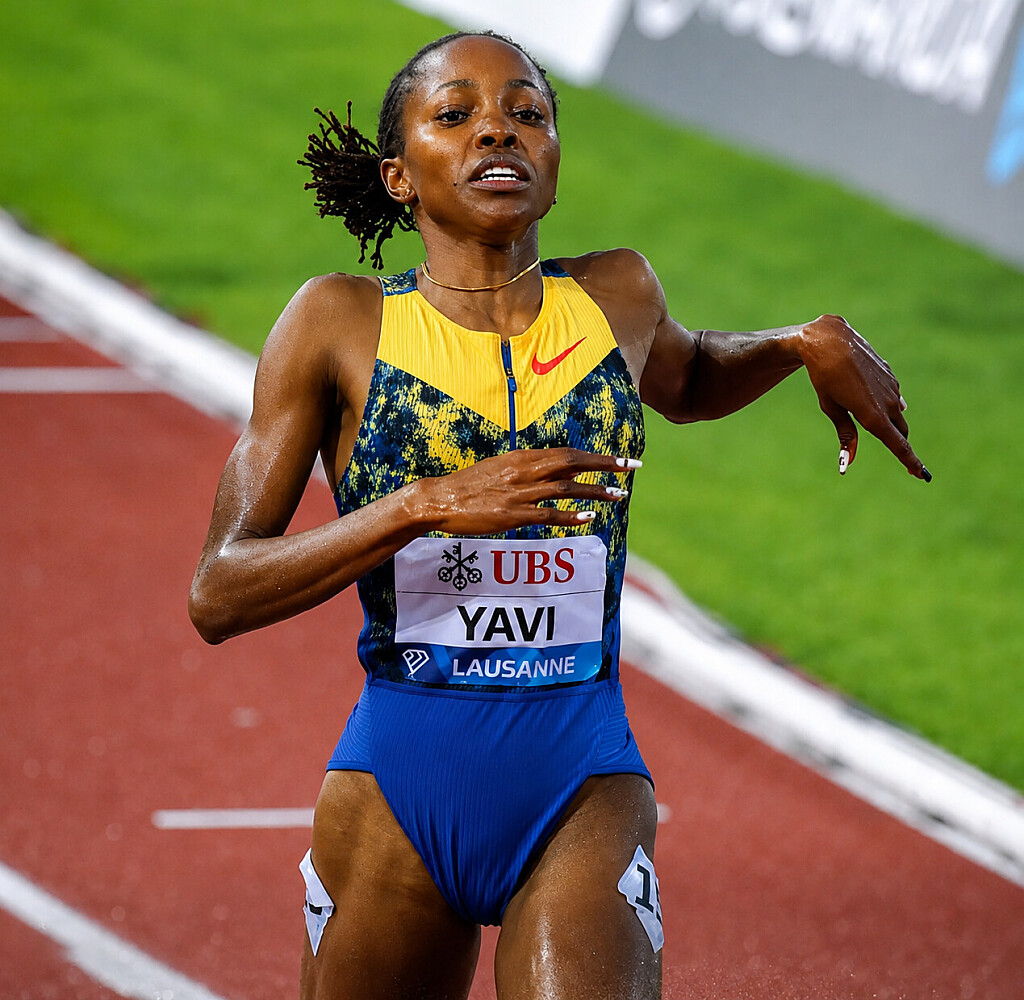
Olympic Champion Winfred Yavi Beats World Champion Faith Cherotich in Lausanne Steeplechase Thriller
Winfred Yavi delivered a statement performance at the Lausanne Diamond League, defeating reigning world champion Faith Cherotich in a thrilling women's 3000m steeplechase showdown and taking the lead in their increasingly compelling 2026 rivalry.
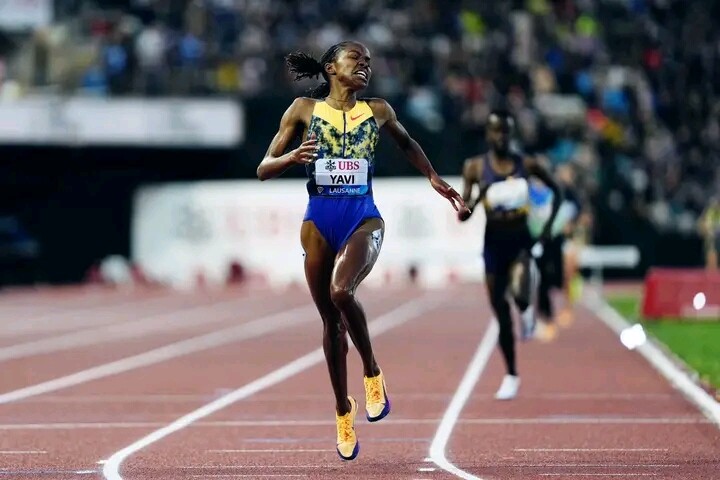
The Bahraini star, the 2024 Olympic steeplechase champion, led from the opening stages and never surrendered control, crossing the line in a meet record of 9:00.04. Cherotich, the reigning world champion, fought hard throughout but had to settle for second in 9:01.90.
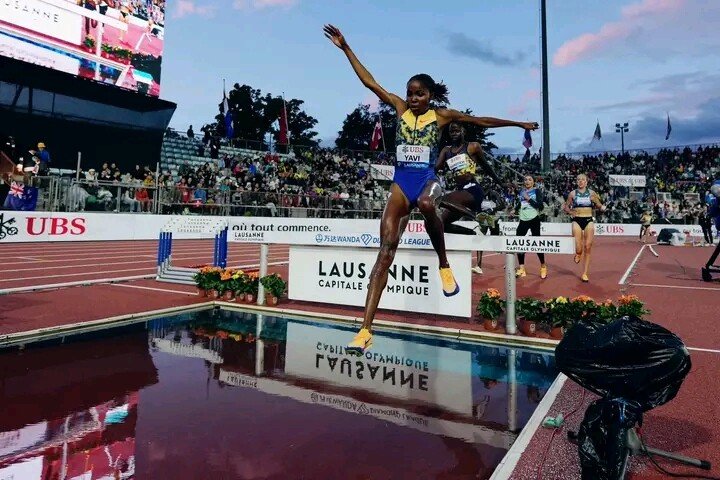
The victory gave Yavi the upper hand in their head-to-head battles this season, with the Olympic champion now holding a 2-1 advantage over Cherotich in their three meetings in 2026.
For much of the race, Cherotich remained within striking distance of Yavi, staying close as the two stars negotiated the barriers at a relentless pace. However, Yavi refused to give her Kenyan rival an opportunity to take control, maintaining the lead and producing another powerful display when the pressure intensified in the closing stages.
It was a fascinating battle between two of the dominant figures in women's steeplechasing. The reigning Olympic champion against the reigning world champion lived up to expectations, and on this occasion, Yavi had the answers.
Tunisia's Marwa Bouzayani completed the podium in 9:05.55, while Kenya's Doris Lemngole finished fourth in 9:07.09. American Lexy Halladay rounded out the top five with a personal best of 9:08.35.
Yavi's winning time was not only enough to secure another important victory over her biggest rival but also established a new Lausanne meet record, underlining the exceptional standard of the race.
With Yavi now leading their season series 2-1, the rivalry between the Olympic champion and the world champion is becoming one of the most exciting battles in women's distance running. Lausanne belonged to Yavi, but Cherotich remains close enough to ensure that their next meeting could produce another spectacular contest.
by Erick Cheruiyot for My Best Runs.
Login to leave a comment
Noah Kipkemboi Hopes It Will Be Third Time Lucky in Toronto
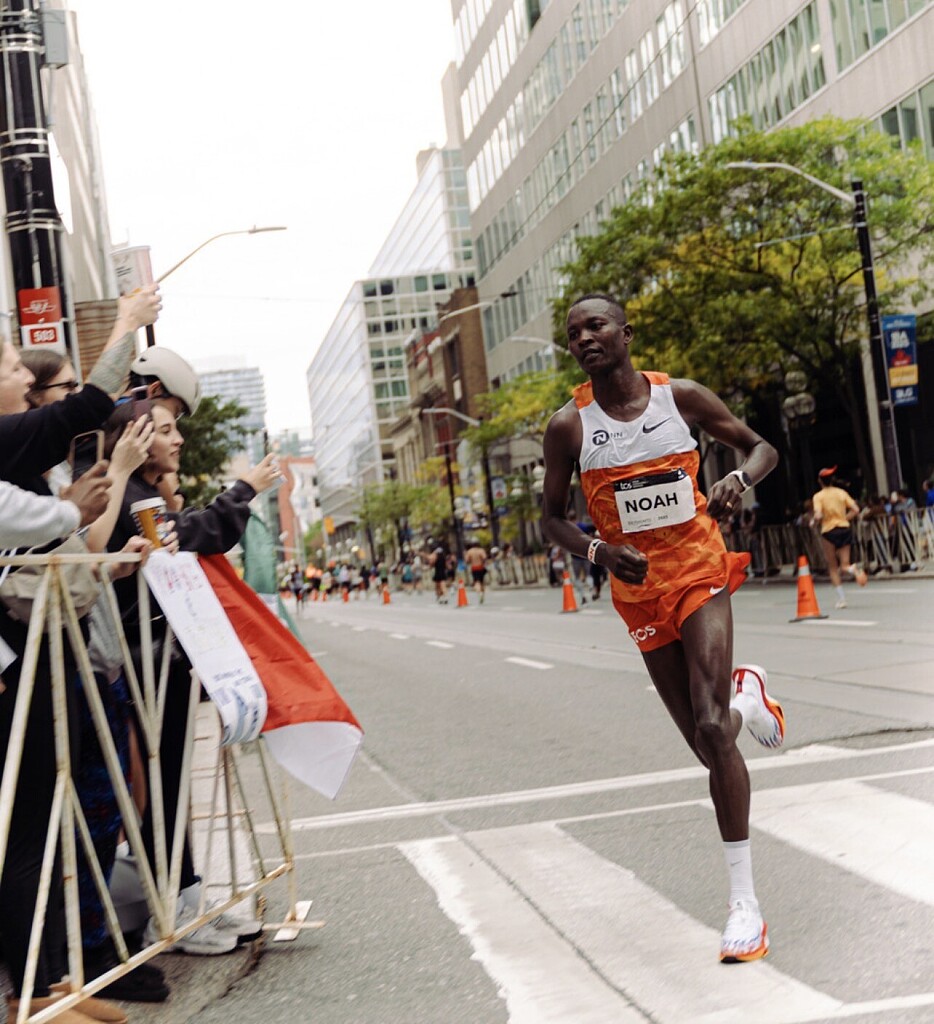
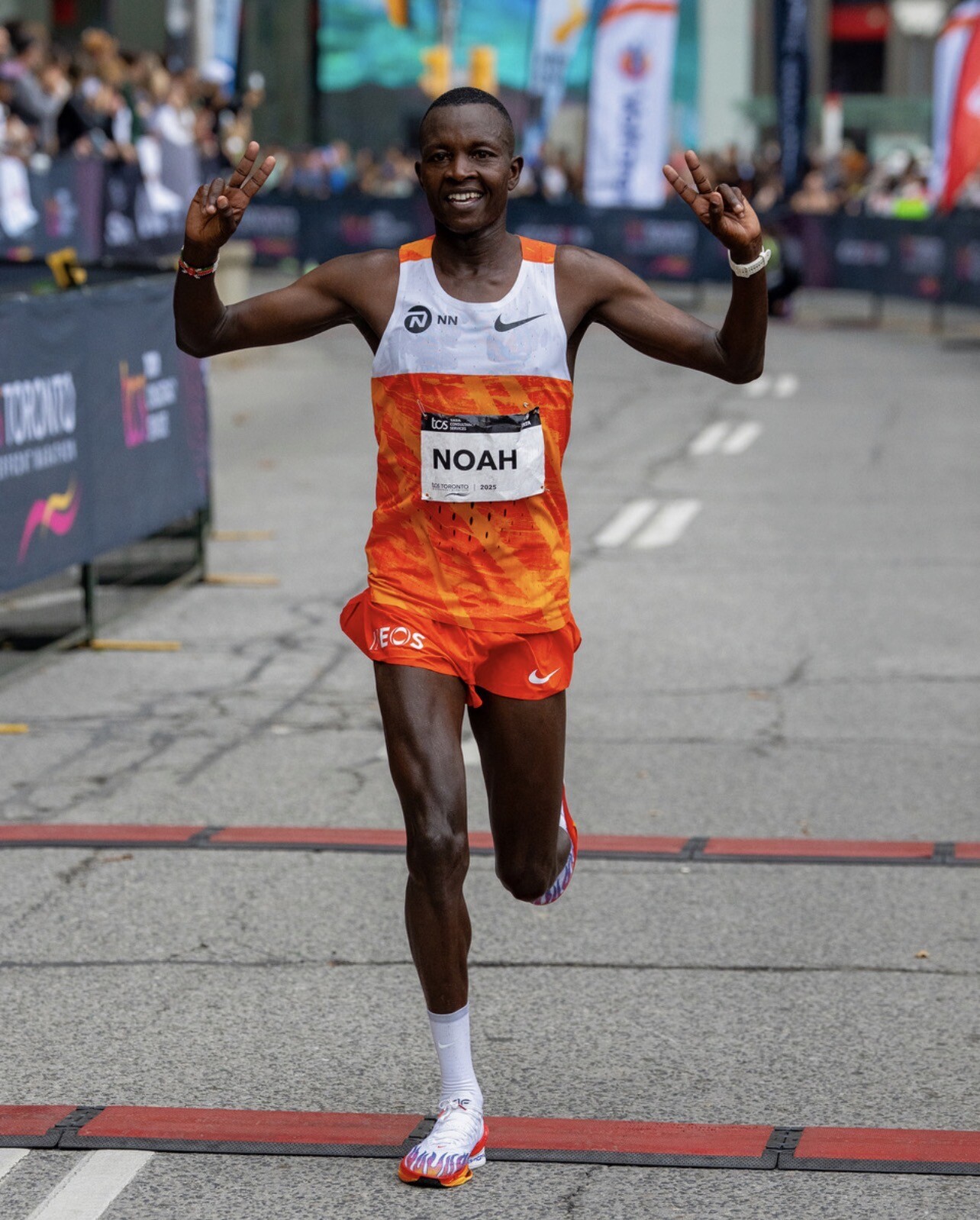
Will it be a case of third time lucky at the TCS Toronto Waterfront Marathon for Noah Kipkemboi?
In his first appearance at the TCS Toronto Waterfront Marathon in 2024, the Kenyan star finished third. Last year, he moved up one place to finish second. Now, with the benefit of knowing the course intimately, he returns intent on reaching the top step of the podium.
“It’s really my hope to run well on the course again and to be on the podium,” he says of the October 18 race. “It is my pleasure if I come position one this time. Now I am in training and preparing for the race.”
Kipkemboi’s personal best remains the 2:07:31 he ran during his initial Toronto appearance, and improving on that time would be especially satisfying. Clearly, his two visits have endeared him to the event and the people he has met in Toronto. At the finish line and during the post-race press conference, he kindly served as an interpreter for 2025 winner Leonard Langat, who is more comfortable speaking Kiswahili than English.
“Please say hello to everyone in Toronto,” he begins during a WhatsApp video interview. “It is a beautiful city, and thank you for inviting me back.
“I really like when people from the Toronto communities where we run through are happy and cheering us. Here, everyone is shouting ‘go,’ giving us motivation. Being cheered, you can get power and keep going better.
As a Christian, Kipkemboi has also been inspired by hearing the Canadian national anthem traditionally sung at the race start, especially the line “God keep our land glorious and free.” But it is the competition that initially attracts world-class runners.
The TCS Toronto Waterfront Marathon serves as both the official Athletics Canada Canadian Marathon Championship and a World Athletics Elite Label race. The $25,000 Canadian prize offered to each winner is especially meaningful to the runners. Kipkemboi has put his earnings to good use, raising three young children of his own while also contributing to the school fees of two other children in his village. There have also been medical expenses to consider.
“During the two times racing in Toronto, I have been having difficulty before the race,” he reveals. “The first Toronto race, my daughter Phoebe was not feeling comfortable, and after the 2025 race, she was having a second kidney operation.
“I was on the start line praying that I would win so my kids would be happy. Now she is okay. My happiness, if I come position one, it will be so beautiful, so my kids will be happy.”
Kipkemboi has been represented by the Dutch-based Global Sports Communication throughout his career. From Monday through Saturday, he lives and trains at the organization’s camp in Kaptagat, while his family remains at their home in Eldoret, 24 kilometres away. Such living arrangements are typical among Kenya’s world-class runners.
Among Kipkemboi’s training partners is the legendary Eliud Kipchoge, the former world marathon record holder and two-time Olympic marathon champion. Kipkemboi served as a pacer during Kipchoge’s 2022 world-record performance in Berlin.
Another close friend and former training partner, Philemon Rono, won the Toronto Waterfront Marathon three times and holds the course record of 2:05:00.
“He has gone to another management group, but we are still friends,” Kipkemboi says of his compatriot. “His camp is not far from our camp. Mostly, when we are training in the forest, we meet them and wave.
“He asked me, ‘Are you going back to Toronto? Can we go together this time?’ We were chatting about Toronto. He said, ‘You go this time and win that race!’”
These days, Kipkemboi is running as much as 200 kilometres a week in preparation for Toronto. Between training sessions, life at the camp consists of daily household chores divided among the runners, physiotherapy and massage sessions, and meals. For relaxation, the runners enjoy watching football together.
“Yes, we normally watch football. Me, I like Arsenal,” he says with a smile. “Most of us in the camp, most of the athletes, are fans of Arsenal. The Commonwealth Games steeplechase champion Edmund Serem likes Arsenal. When he won the gold medal, he did what Arsenal striker Viktor Gyökeres does in celebration.”
With that, Kipkemboi interlocks his fingers to form a mask below his eyes, as the Swedish footballer does after scoring—a reference to the Batman villain Bane in “The Dark Knight Rises.”
Like many successful Kenyan runners, Kipkemboi is planning for life after his competitive career comes to an end. With prize money from his first Toronto appearance, he opened a general store in Eldoret that sells everything from candy and flour to soap and perfume. He also farms a plot of land.
Victory at the TCS Toronto Waterfront Marathon will not come easily. But Kipkemboi feels at home on the streets of Toronto, and that could very well make it third time lucky.
by Paul Gains
Login to leave a comment
TCS Toronto Waterfront Marathon
The Scotiabank Toronto Waterfront Marathon, Half-Marathon & 5k Run / Walk is organized by Canada Running Series Inc., organizers of the Canada Running Series, "A selection of Canada's best runs!" Canada Running Series annually organizes eight events in Montreal, Toronto and Vancouver that vary in distance from the 5k to the marathon. The Scotiabank Toronto Waterfront Marathon and Half-Marathon are...
more...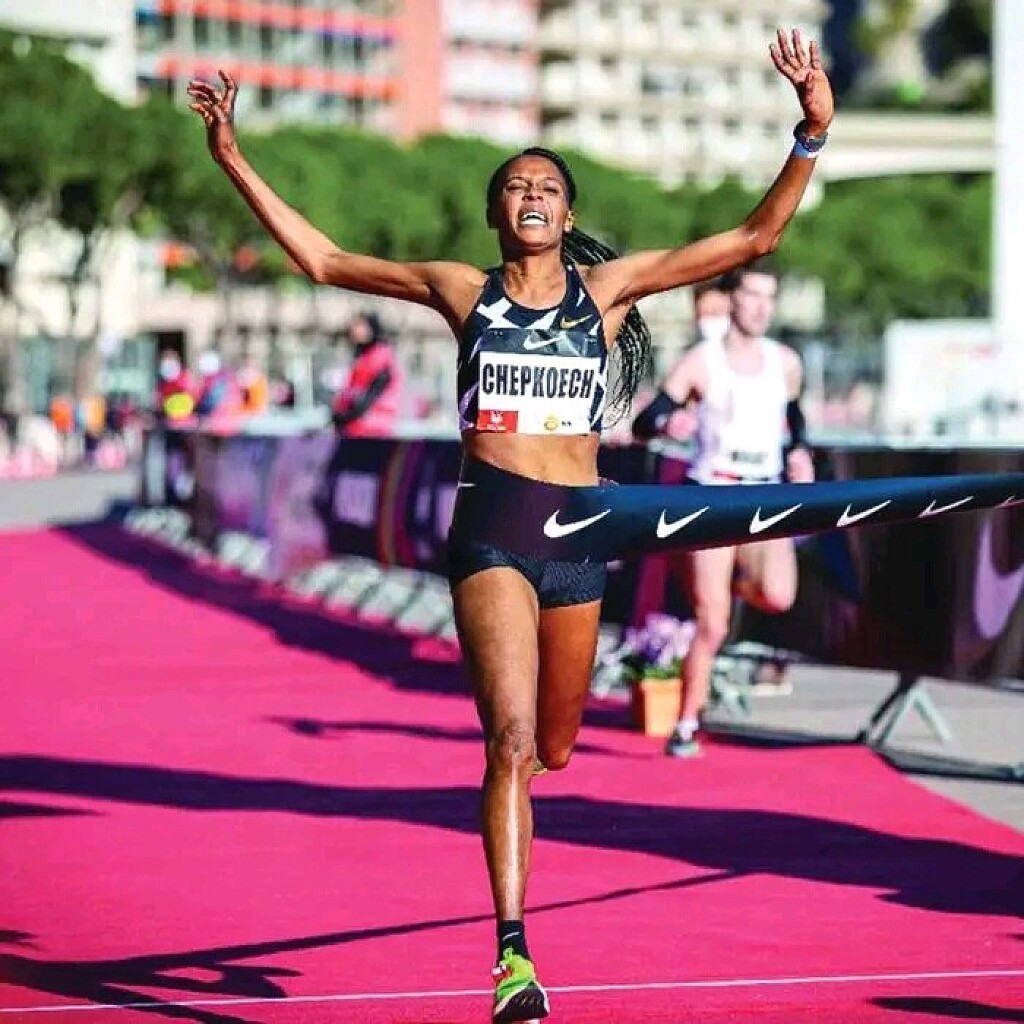
Beatrice Chepkoech Sets Her Sights on Sub-15 Glory at Inaugural Antrim Coast 5K
Kenya’s Beatrice Chepkoech is set to bring her world-class pedigree to the inaugural Antrim Coast 5K on Sunday, August 23, with the world 3000m steeplechase record holder targeting a remarkable sub-15-minute performance on the fast Northern Irish course.
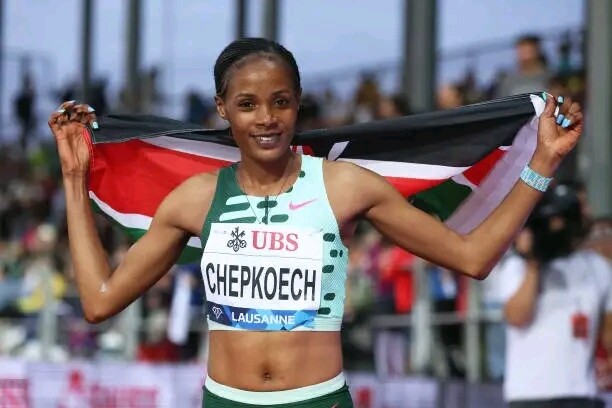
For Chepkoech, the race represents more than another appearance on the road. It is an opportunity to test her speed and endurance over 5 kilometres while pursuing a time that would underline the extraordinary range of one of Kenya’s most accomplished distance athletes.
The former world champion has built her reputation through years of excellence on the track, most notably in the 3000m steeplechase, where her world-record performance established her among the finest athletes the event has ever produced. Her move to the Antrim Coast 5K adds another intriguing chapter to her already distinguished career.
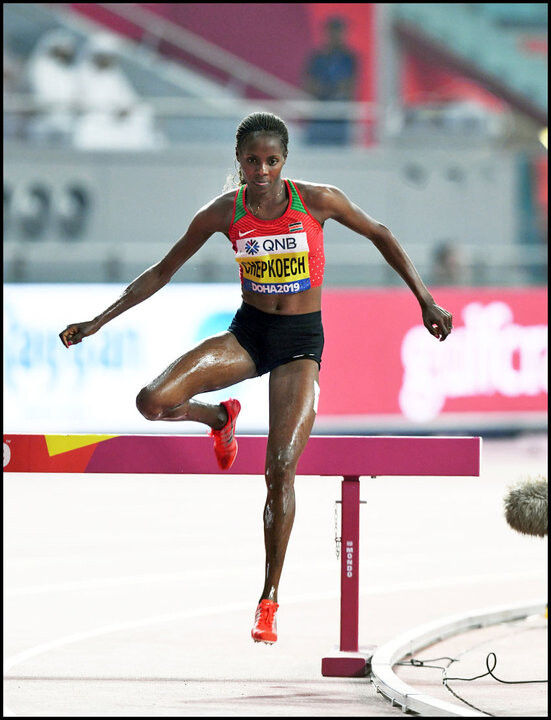
A sub-15-minute clocking would be a significant statement on the road, particularly given the calibre of athlete attempting it. Chepkoech will arrive with the experience, competitive instinct and proven finishing speed required to make the challenge compelling, while the fast nature of the Antrim Coast course could provide the ideal platform for an ambitious performance.
However, the Kenyan star will not have the spotlight to herself.
The men’s race is expected to provide its own major attraction, with Ethiopia’s Ermais Girma among the headline names in a strong international field. His presence adds further depth to an event designed to bring together elite athletes and ambitious teams on a course where fast racing is expected to be at the heart of the action.
Ireland and Scotland will also add an international dimension, fielding teams that will turn the inaugural event into much more than a straightforward individual contest. With athletes competing for personal ambitions while representing their respective teams, the Antrim Coast 5K promises a fascinating race within a race.
For Chepkoech, though, the equation is simple: arrive ready, embrace the pace and chase the clock.
A sub-15-minute performance would give the Kenyan superstar another impressive mark to her name and provide a fitting headline for the first edition of the Antrim Coast 5K. With her reputation for attacking races and her ability to deliver under pressure, all eyes will be on Chepkoech when the field takes to the fast Antrim Coast course.
Sunday’s race could therefore become an important showcase of just how much speed remains in the legs of one of Kenya’s most celebrated champions—and whether Chepkoech can turn her bold sub-15 ambition into reality.
by Erick Cheruiyot for My Best Runs.
Login to leave a comment
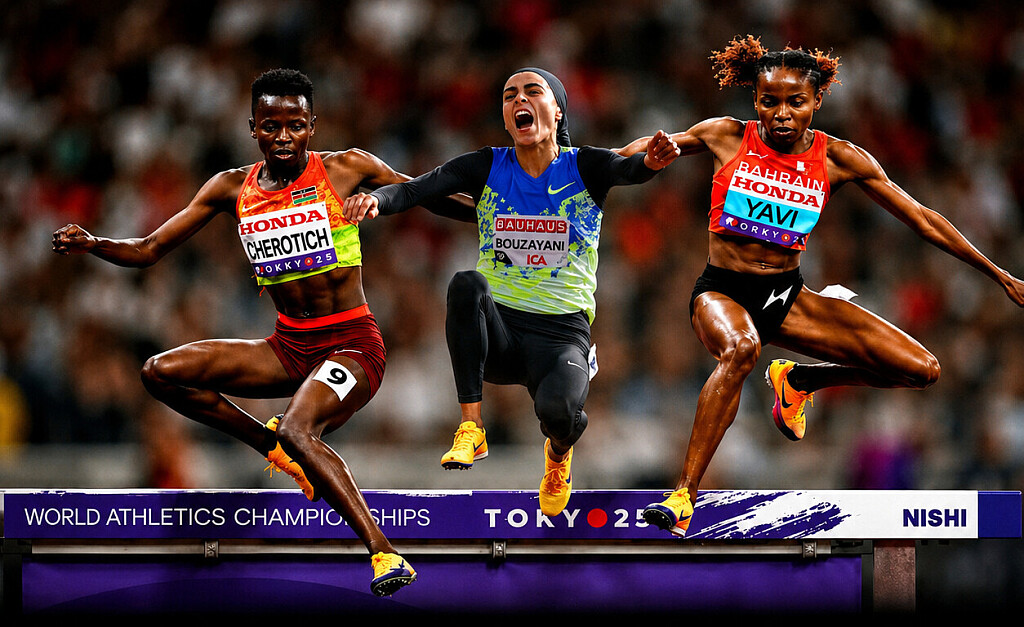
Cherotich, Yavi and Bouzayani Set for Lausanne Diamond League Steeplechase Showdown
The women’s 3000m steeplechase is shaping up as one of the most enticing distance events at the 2026 Athletissima Lausanne Diamond League, with Kenya’s Faith Cherotich, Bahrain’s Winfred Yavi and Tunisia’s Marwa Bouzayani confirmed for a mouth-watering clash on 21 August. The meeting will bring together three athletes who have each made a strong impression on the international steeplechase scene this season.
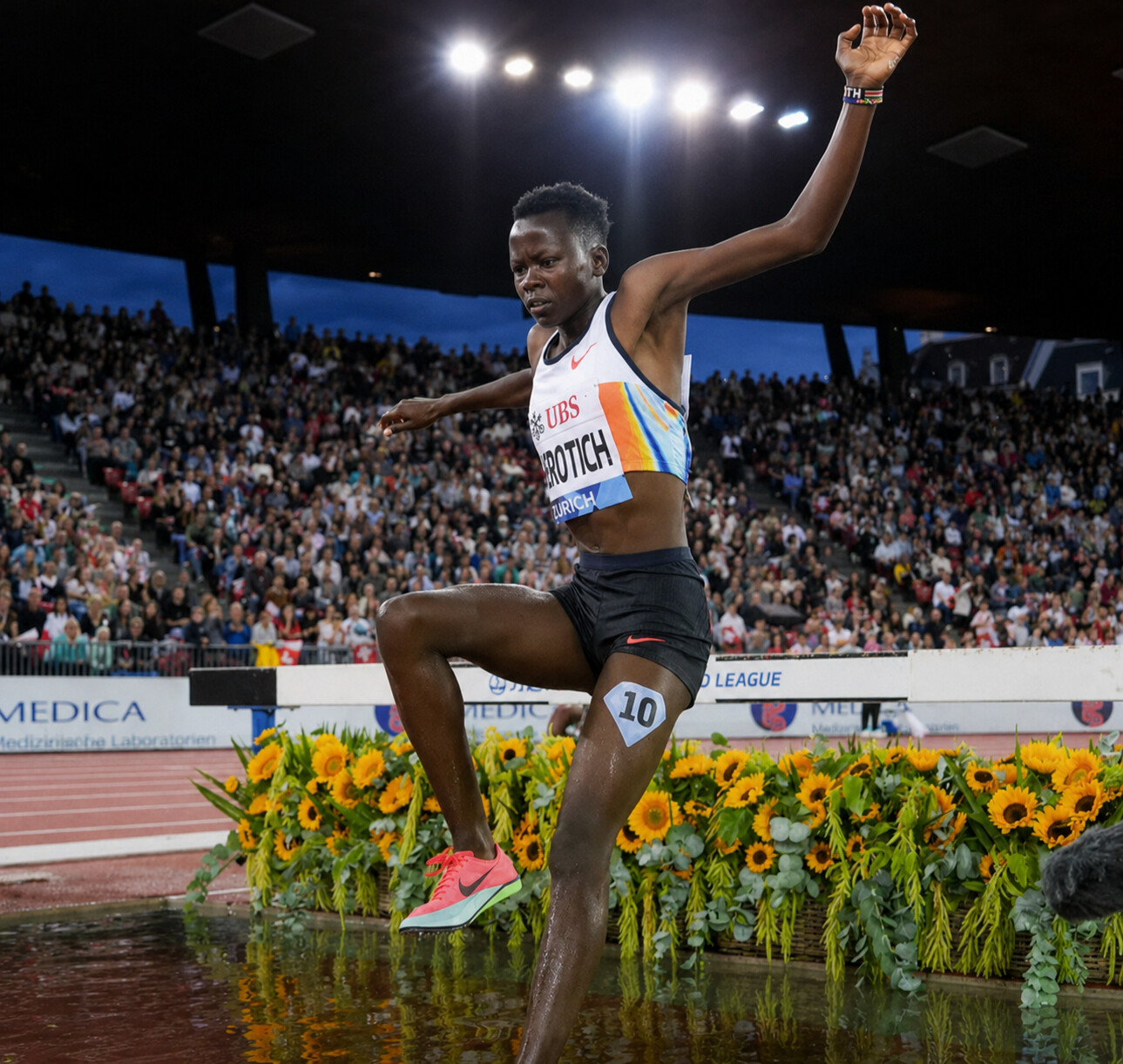
Cherotich heads to Lausanne with formidable credentials. The Kenyan is the reigning world champion and two-time Diamond League champion, and she has continued to show her class in 2026. She opened her Diamond League campaign with 8:51.48 for second place in Shanghai/Keqiao before producing a winning 8:51.74 at the Prefontaine Classic in Eugene.
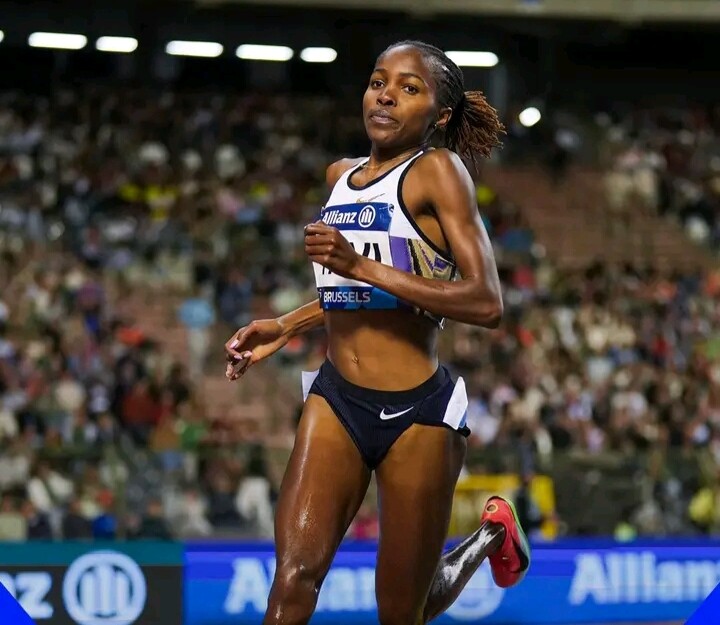
Standing in her way will be Yavi, the Paris 2024 Olympic champion and one of the most accomplished steeplechasers of her generation. The Bahrain star has developed a compelling rivalry with Cherotich, with the two repeatedly pushing each other towards extraordinary performances. Their encounters have become a highlight of the Diamond League season, making their latest meeting in Lausanne particularly intriguing.
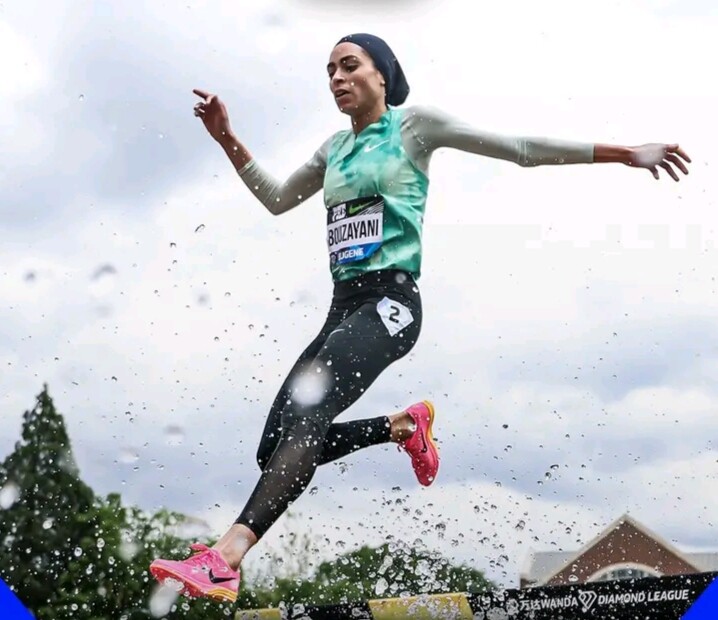
Bouzayani, meanwhile, arrives with perhaps the biggest surge in confidence. The Tunisian produced a spectacular breakthrough in Stockholm in June, winning her first Diamond League steeplechase in a meeting-record 8:59.28. That came after she had already shattered the Tunisian record with 8:58.09 in Shanghai/Keqiao, becoming the first Tunisian woman to break nine minutes for the event.
Her progress has transformed Bouzayani from an emerging challenger into a genuine contender capable of mixing it with the world’s best. Her performance in Eugene further underlined that development, as she ran a national record 8:54.32 for third behind Cherotich and Yavi. The three athletes were separated by less than three seconds, setting the stage for another fascinating contest in Switzerland.
Lausanne could therefore provide another beautiful chapter in an increasingly captivating steeplechase story. Cherotich brings the authority of a world champion, Yavi the experience and confidence of an Olympic champion, while Bouzayani carries the momentum of a breakthrough season. Over 3,000 metres of barriers, water jumps and relentless racing, the smallest details could decide who emerges strongest when the final straight arrives.
With the three stars now set to share the same starting line, anticipation is already building for what could be a swift, elegant and fiercely contested battle under the Swiss lights. For fans of distance running, Lausanne promises a race where every barrier clearance, every surge and every final stride could carry the weight of victory.
by Erick Cheruiyot for My Best Runs.
Login to leave a comment
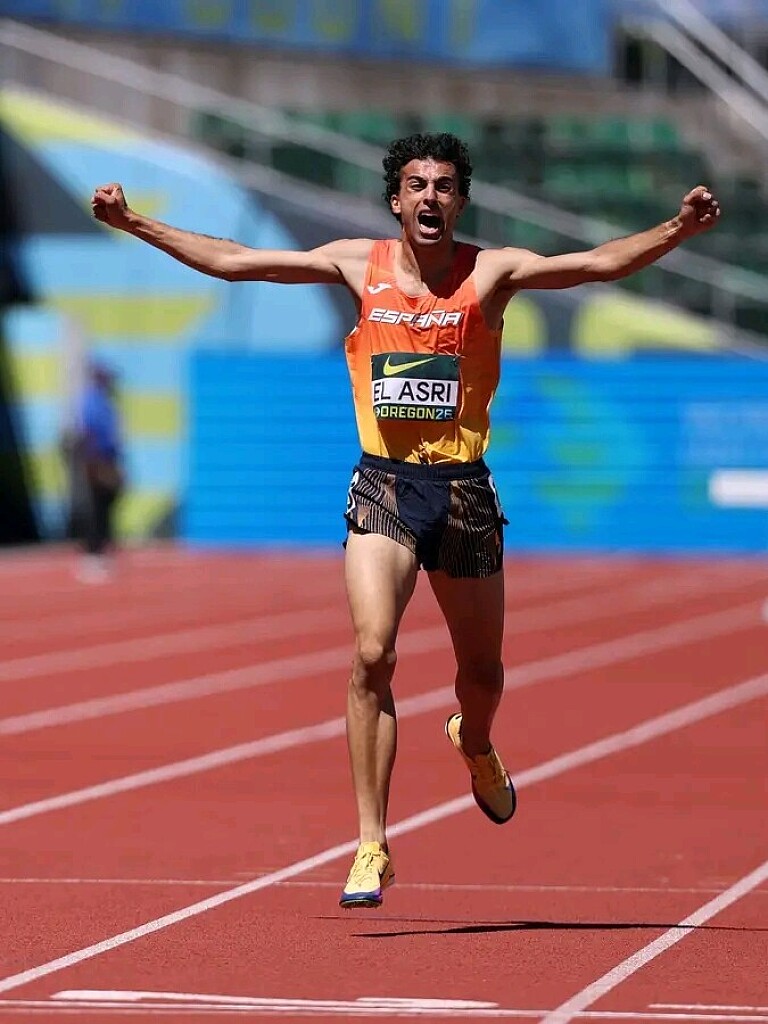
El Asri Sets European U20 Record As Lemiso Takes Silver And Losiwareng Fights Back For Dramatic Bronze
Kenya secured a double podium finish in a fiercely contested men’s 3000m steeplechase final at the World Athletics U20 Championships in Eugene, with Emmanuel Lemiso Someki taking silver and Nicholas Kitum Losiwareng battling his way to bronze.
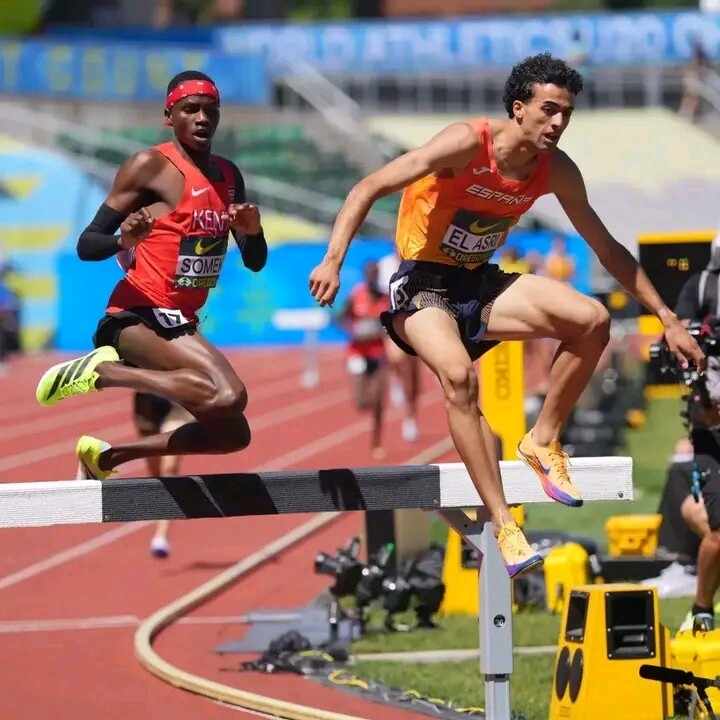
Spain’s Bakr El Asri Mohsine produced the decisive move when it mattered most, surging away in the closing stages to claim the gold medal in 8:28.35 and set a new European U20 area record.
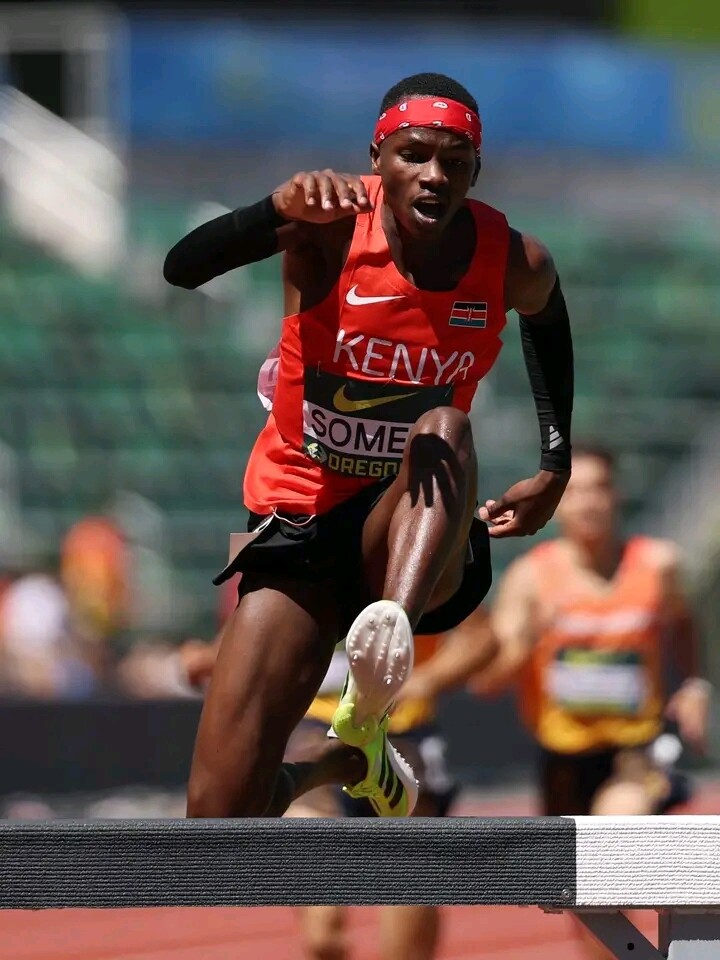
Lemiso, the African U20 champion, had positioned himself at the front of the race and moved into the lead around the 2,300-metre mark as Kenya looked capable of producing another major championship sweep in the event.
But El Asri remained within striking distance. With two laps remaining, the Spaniard began to close the gap before unleashing a powerful finishing surge that ultimately carried him clear of Lemiso and towards the biggest victory of his young career.
Lemiso refused to surrender his position, holding on strongly for silver in a personal-best 8:32.81. It was a significant performance from the Kenyan, who converted his front-running effort into a world U20 championship medal.
Behind him, the battle for bronze delivered perhaps the most dramatic moment of the race.
Losiwareng appeared to lose valuable ground after a stumble at one of the barriers late in the race. Rather than allowing the mistake to end his medal hopes, however, the Kenyan regrouped and launched an aggressive sprint over the final 100 metres.
That charge brought him back into contention with Spain’s Martí Torregrossa. The two athletes fought all the way to the line, with Losiwareng eventually securing third in 8:38.05, just 0.08 seconds ahead of his Spanish rival.
The result gave Kenya two medals from a race that had threatened to slip away in the final stages. Lemiso’s silver and Losiwareng’s bronze also underlined the depth of Kenya’s young steeplechase talent on the international stage.
For El Asri, the victory marked a breakthrough performance, while Kenya could take considerable encouragement from placing two athletes on the podium despite missing out on the title.
The final standings were:
1. Bakr El Asri Mohsine (Spain) — 8:28.35, European U20 Area Record
2. Emmanuel Lemiso Someki (Kenya) — 8:32.81, Personal Best
3. Nicholas Kitum Losiwareng (Kenya) — 8:38.05
In a race decided by the final two laps, El Asri had the speed to take gold, Lemiso had the strength to secure silver, and Losiwareng had the resilience to fight back from adversity and complete Kenya’s double podium finish.
by Erick Cheruiyot for My Best Runs.
Login to leave a comment
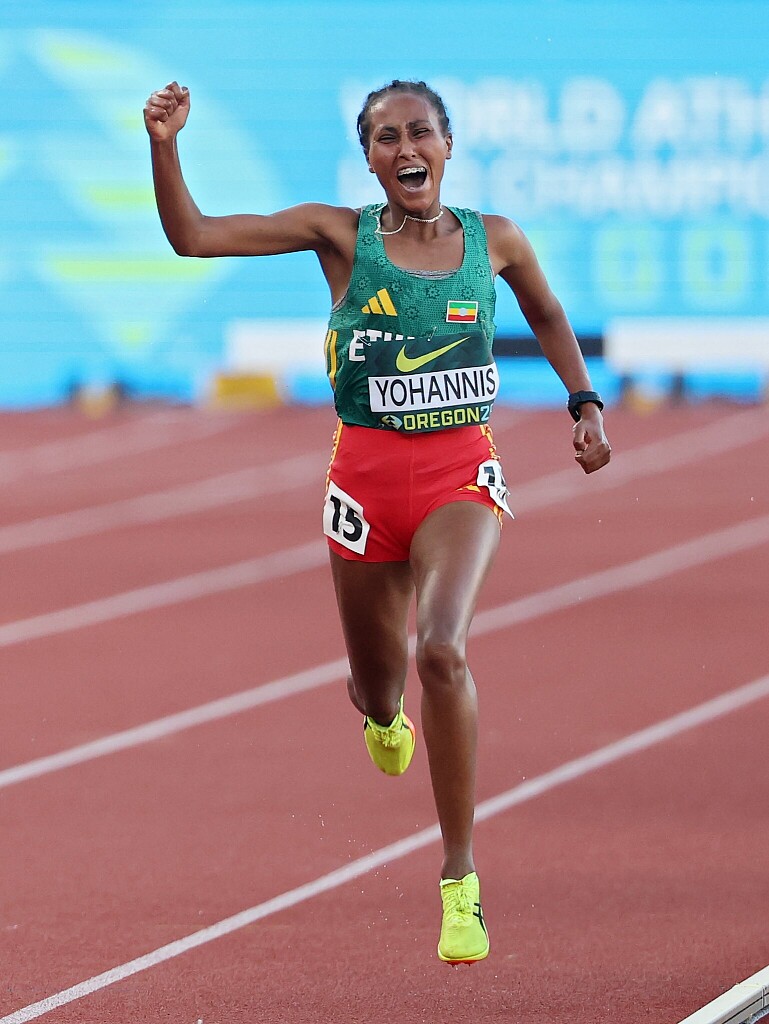
Almaz Yohannis Leads Ethiopian 1-2 in Spectacular World U20 Steeplechase Triumph
Ethiopia produced a spectacular display of emerging talent as Almaz Yohannis was crowned world champion in the women’s 3000m steeplechase at the 2026 World Athletics U20 Championships in Oregon, powering to a commanding victory in 9:15.81.
Yohannis delivered a superb performance to secure the gold medal and, in the process, recorded a World U20 Leading time (WU20L), underlining the strength of her performance on the global junior stage.
The young Ethiopian established herself as the athlete to beat, maintaining her composure and strength throughout the demanding eight-lap steeplechase before crossing the finish line well clear of the field. Her winning mark of 9:15.81 provided a fitting reward for a dominant championship performance.
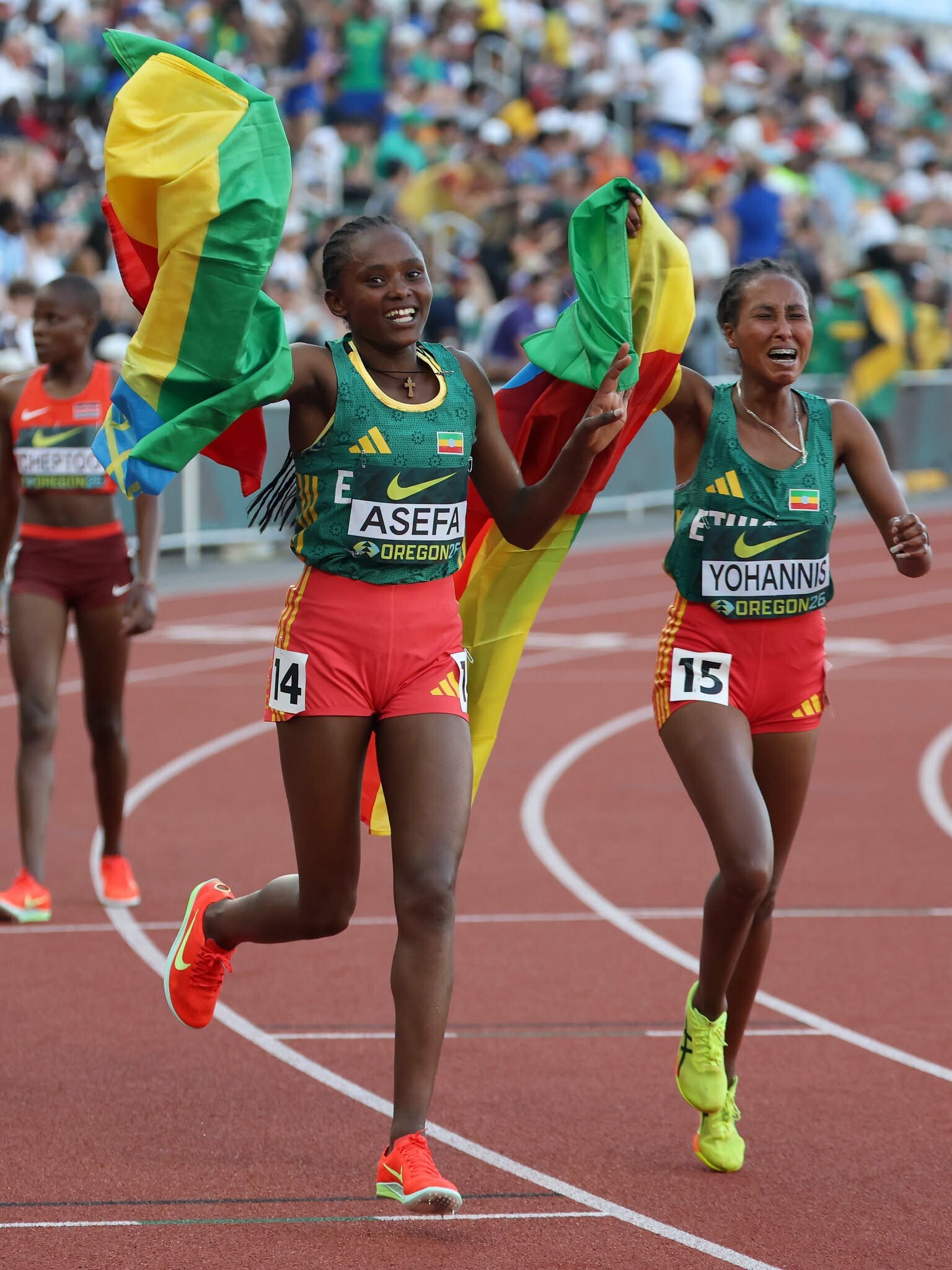
Ethiopia’s celebrations were doubled when Wosane Asefa secured the silver medal in 9:30.50, producing a season’s best (SB) and completing an impressive Ethiopian one-two.
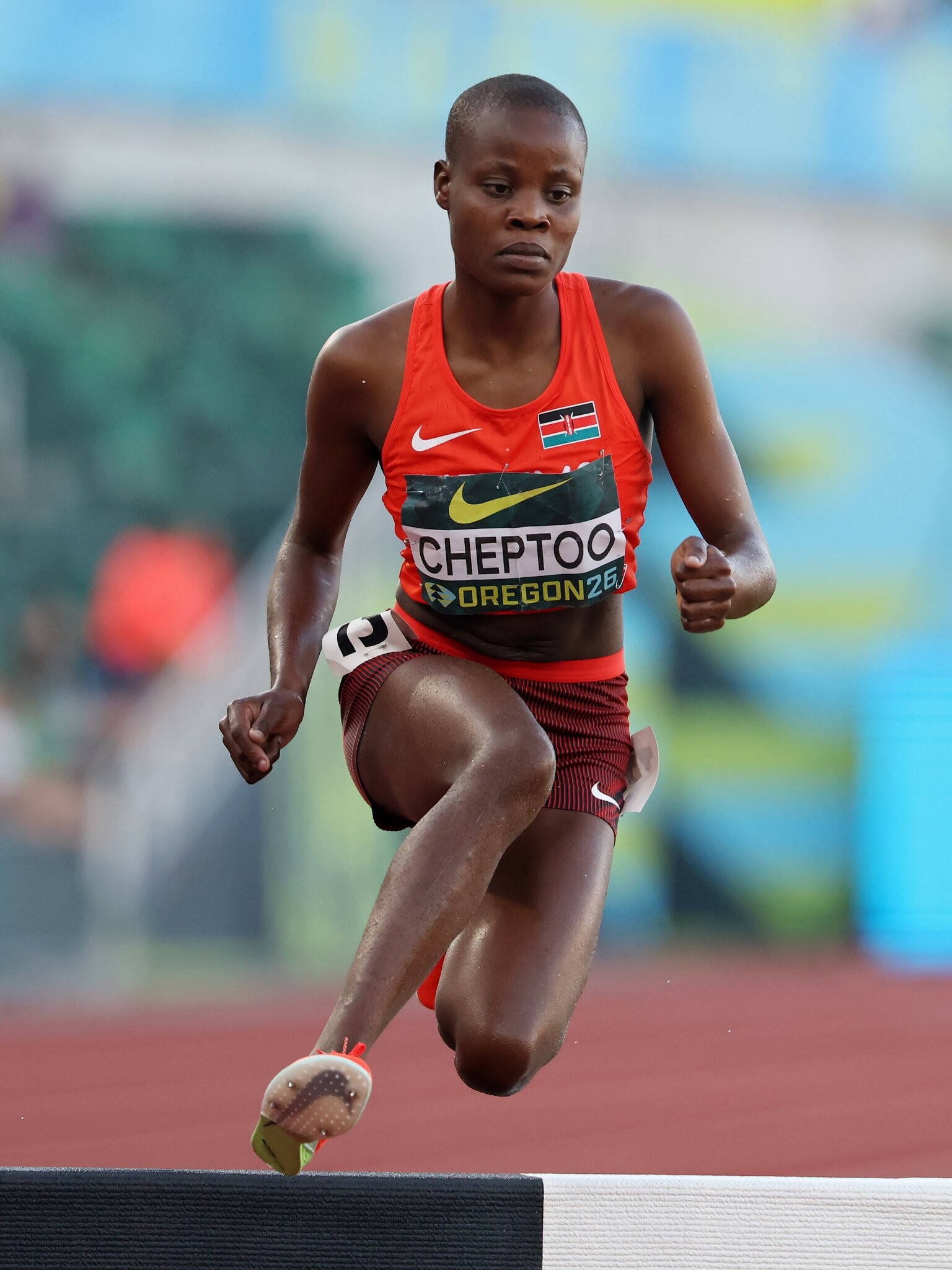
Kenya’s Anatasha Cheptoo ensured there was East African representation on all three steps of the podium, fighting her way to the bronze medal in 9:37.18.
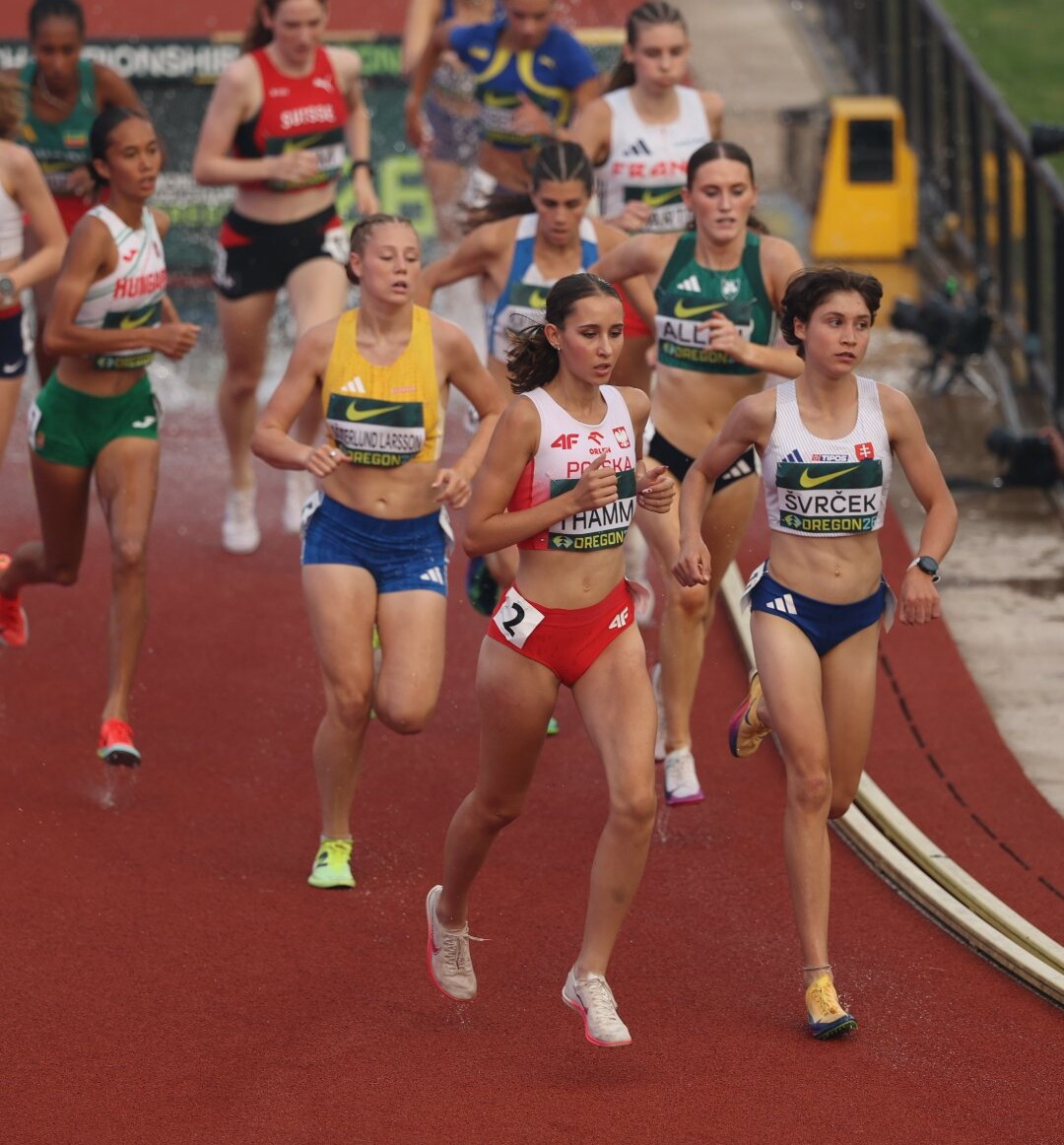
Behind the medalists, Sweden’s Majken Söderlund Larsson finished fourth in 9:48.01, setting a national U20 record (NU20R), while Czech Republic’s Ema Berková followed in fifth with 9:49.06, also recording a national U20 record.
Sweden’s Fanny Szalkai placed sixth in 9:55.06, a personal best, while Greece’s Anna Dafni Almyroudi Stroumpou finished seventh in 10:00.63, another national U20 record.
Egypt’s Malak Abdelghany Abdalla Ibrahim crossed eighth in 10:04.52, also establishing a national U20 record. Slovakia’s Anna Švrček was ninth in 10:05.91, followed by Japan’s Rei Taya in 10:12.37.
Portugal’s Lara Roque finished 11th in 10:15.69, setting a national U20 record, while Poland’s Zuzanna Szymańska took 12th in 10:15.94, a personal best. Great Britain’s Ava James was 13th in 10:18.96, followed by American Sierra Wall in 14th with 10:21.21.
Poland’s Michalina Thamm completed the finishers in 15th place in 10:39.01.
Kenya’s Mercy Chepngeno Koskey, who had also lined up as part of the Kenyan challenge, was unfortunately unable to finish the race.
The final podium therefore belonged to three of East Africa’s rising stars, with Yohannis and Asefa delivering a memorable Ethiopian one-two, while Cheptoo secured bronze for Kenya.
Women’s 3000m Steeplechase — Official Results
1. Almaz Yohannis (Ethiopia) — 9:15.81 (WU20L)
2. Wosane Asefa (Ethiopia) — 9:30.50 (SB)
3. Anatasha Cheptoo (Kenya) — 9:37.18
4. Majken Söderlund Larsson (Sweden) — 9:48.01 (NU20R)
5. Ema Berková (Czech Republic) — 9:49.06 (NU20R)
6. Fanny Szalkai (Sweden) — 9:55.06 (PB)
7. Anna Dafni Almyroudi Stroumpou (Greece) — 10:00.63 (NU20R)
8. Malak Abdelghany Abdalla Ibrahim (Egypt) — 10:04.52 (NU20R)
9. Anna Švrček (Slovakia) — 10:05.91
10. Rei Taya (Japan) — 10:12.37
11. Lara Roque (Portugal) — 10:15.69 (NU20R)
12. Zuzanna Szymańska (Poland) — 10:15.94 (PB)
13. Ava James (Great Britain) — 10:18.96
14. Sierra Wall (United States) — 10:21.21
15. Michalina Thamm (Poland) — 10:39.01
DNF: Mercy Chepngeno Koskey (Kenya)
Yohannis’ victory marked the highlight of a brilliant Ethiopian performance, with her 9:15.81 World U20-leading mark setting the tone for a memorable championship final and announcing another exciting young talent onto the international athletics scene.
by Erick Cheruiyot for My Best Runs.
Login to leave a comment
Composed Under Pressure: Anatasha Cheptoo Overcomes Early Drama to Secure World U20 Steeplechase Final Berth
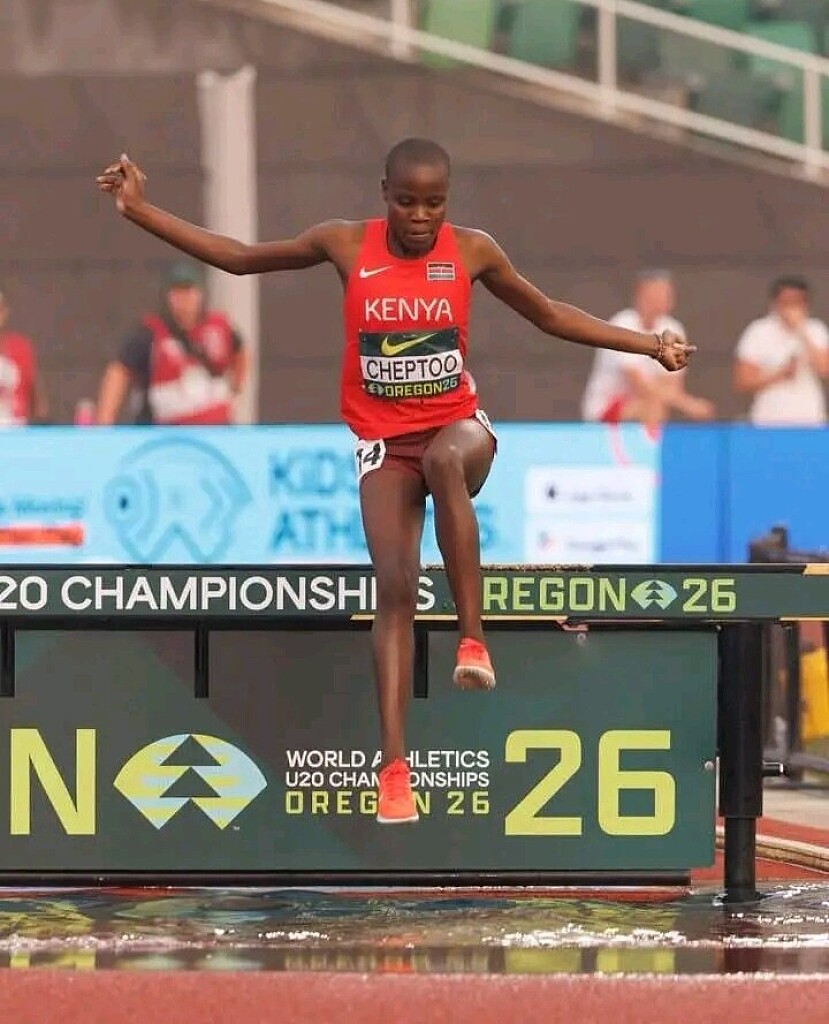
Kenya's Anatasha Cheptoo produced one of the most memorable moments of the opening round of the women's 3,000m steeplechase at the World Athletics U20 Championships in Oregon, USA, displaying remarkable composure after an early setback to comfortably qualify for the final.
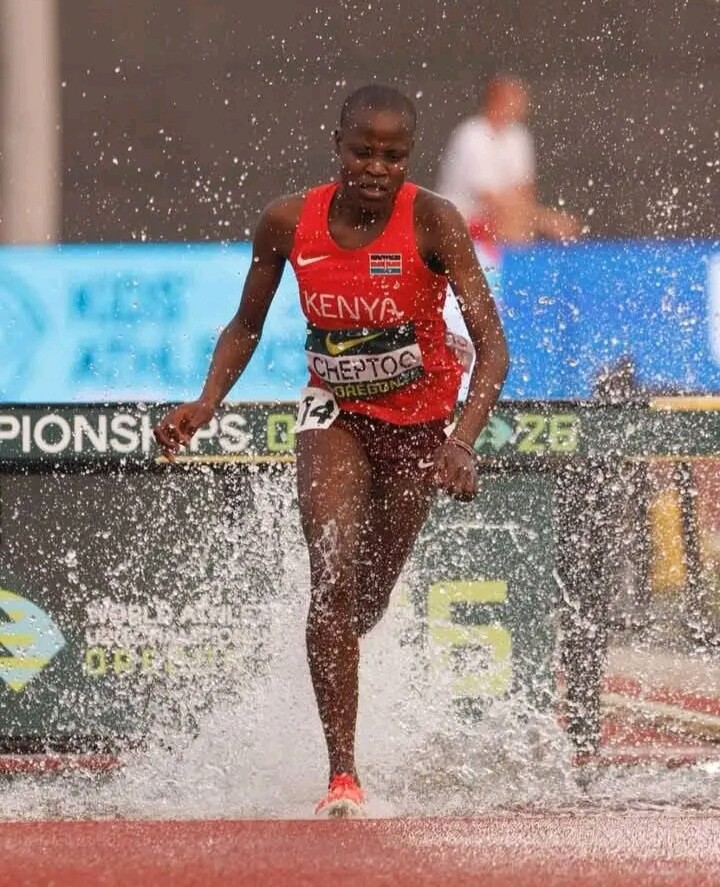
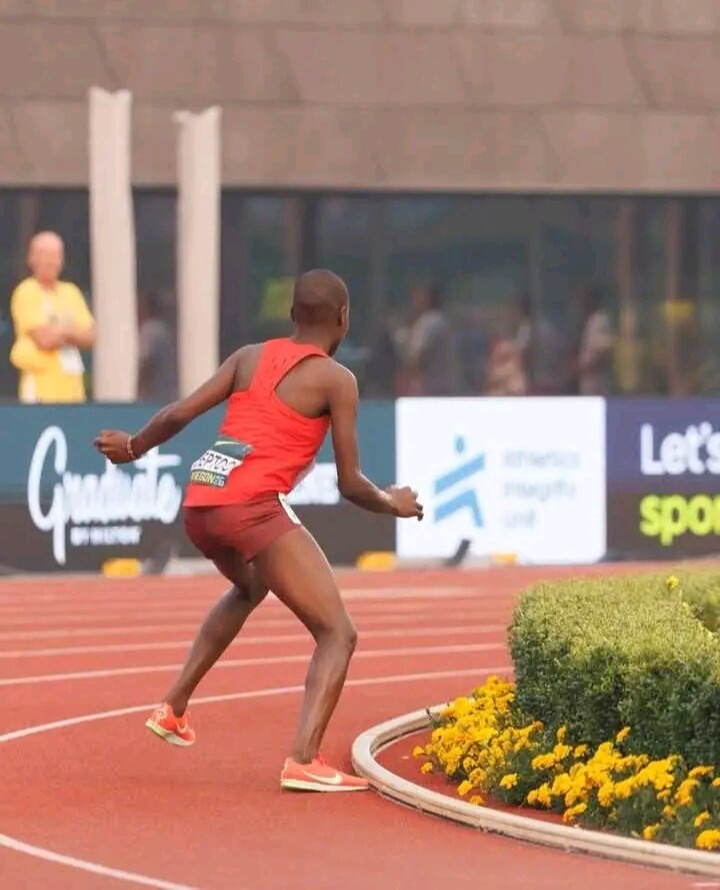
In a dramatic sequence during her heat, Cheptoo accidentally missed the water jump. Realizing the mistake almost immediately, she turned back, retraced her steps and cleared the obstacle correctly before rejoining the race. Although the incident briefly disrupted her rhythm, the young Kenyan refused to panic.
Showing maturity beyond her years, Cheptoo gradually worked her way back through the field with a determined and controlled performance. Her resilience paid off as she crossed the finish line in second place in 9:51.02, safely booking her place in the championship final.
What made the performance even more impressive was the way she transformed a potentially race-ending mistake into a qualification-worthy run. Many athletes would have struggled to recover after losing valuable seconds and momentum, but Cheptoo's calm decision-making and unwavering determination turned adversity into one of the championship's standout moments. It was a powerful reminder that championship racing is as much about mental toughness as it is about speed.
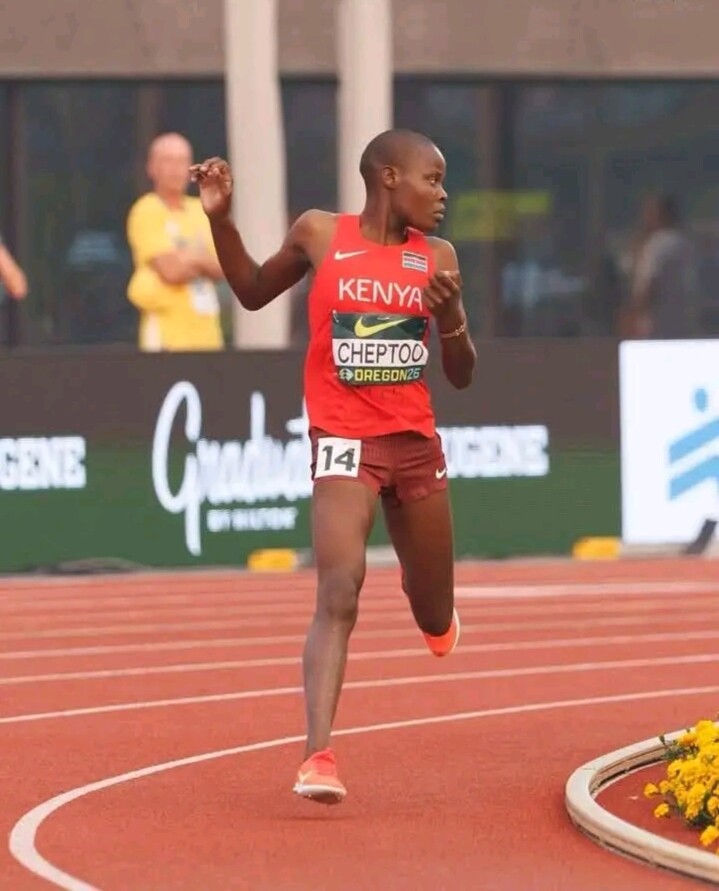
The qualification also reinforces Kenya's enduring reputation as a powerhouse in the steeplechase. For decades, Kenyan athletes have dominated the barriers and water jump on the global stage, and Cheptoo's fearless display suggests another exciting talent is emerging to carry that proud tradition into the future. Her ability to remain composed under immense pressure will make her one of the athletes to watch when the medals are decided.
Cheptoo will now shift her focus to the women's 3,000m steeplechase final, where she will be aiming to challenge for a place on the podium and add another medal to Kenya's campaign at the World Athletics U20 Championships.
The final is scheduled for Friday, 7 August 2026, and after her remarkable recovery in the heats, athletics fans will be eager to see whether the resilient Kenyan can transform an unforgettable qualification into a medal-winning performance.
by Erick Cheruiyot for My Best Runs.
Login to leave a comment
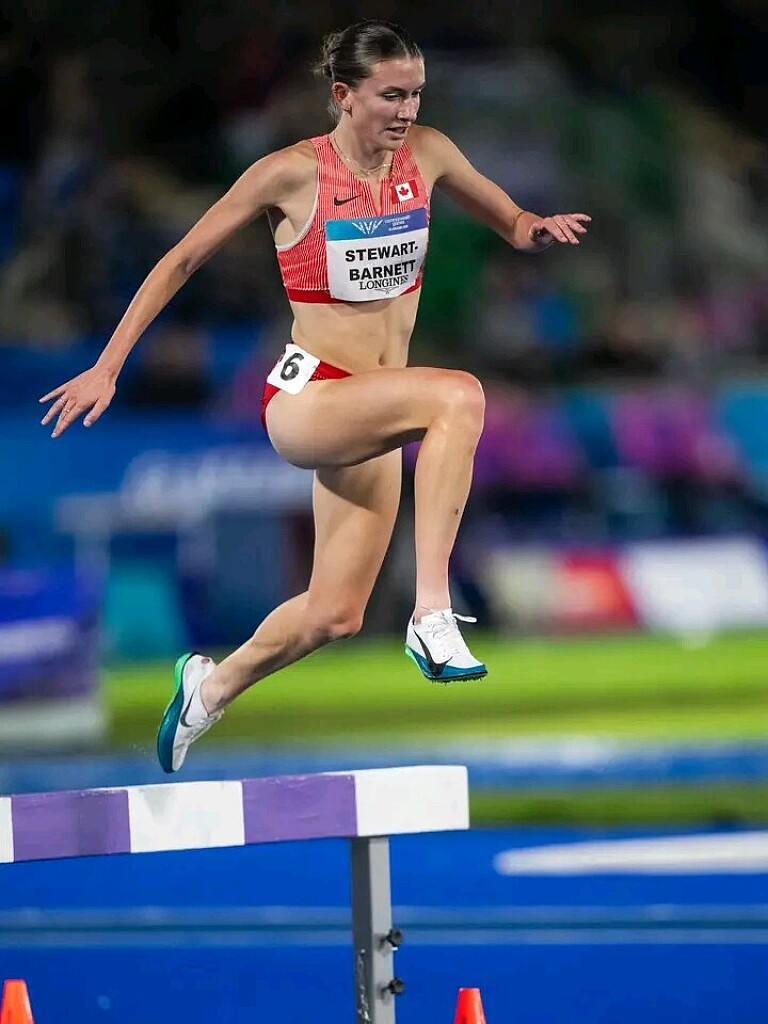
Two Canadians, One Big Statement: Fetherstonhaugh and Stewart-Barnett Shine in Commonwealth Steeplechase Final
Canada's Grace Fetherstonhaugh delivered the finest championship performance of her career on Wednesday night, producing a superb personal best of 9:27.49 to finish among the top six in the women's 3000m steeplechase final at the 2026 Commonwealth Games.
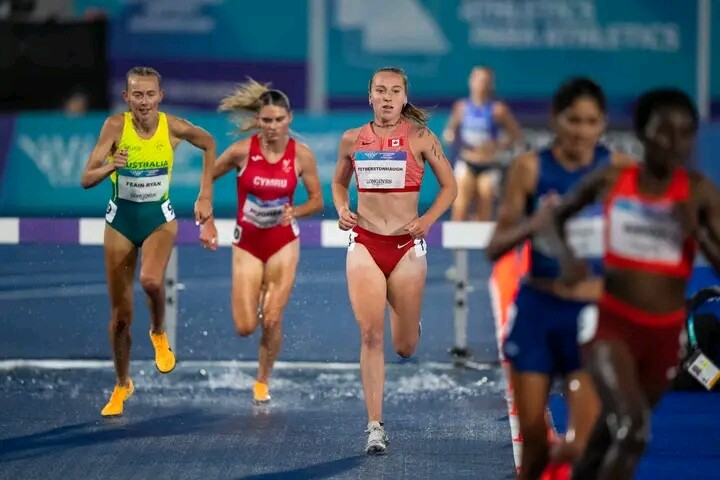
Competing against one of the strongest steeplechase fields assembled at the Games, Fetherstonhaugh showed remarkable composure from the opening laps. She stayed in contention throughout the demanding race, clearing each barrier with confidence before finishing strongly to slice valuable seconds off her previous lifetime best.
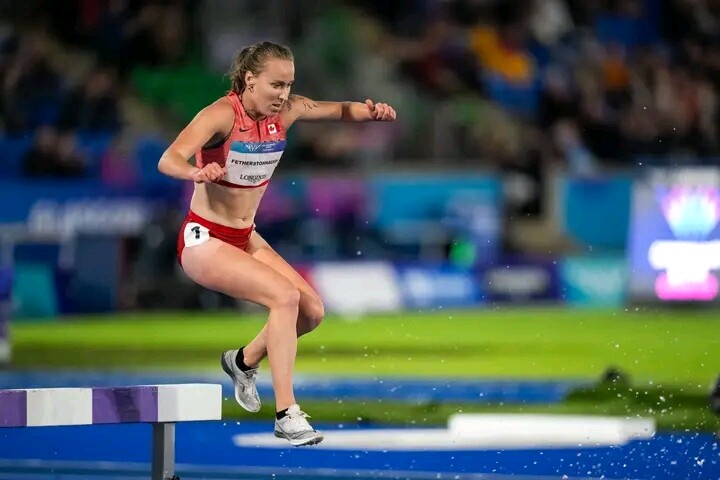
Her time of 9:27.49 not only marked a new personal record but also underlined her continued rise as one of Canada's most promising distance runners. Producing a career-best performance on one of the sport's biggest stages demonstrated both her physical preparation and her ability to thrive under championship pressure.
Canada's success in the final extended beyond Fetherstonhaugh's impressive run. Making her debut at a major international multi-sport Games, Katelyn Stewart-Barnett delivered an encouraging performance of her own, finishing ninth in 9:46.98. Competing on one of the biggest stages of her career, she raced with determination and poise, gaining invaluable championship experience while announcing herself as another emerging talent in Canadian distance running.
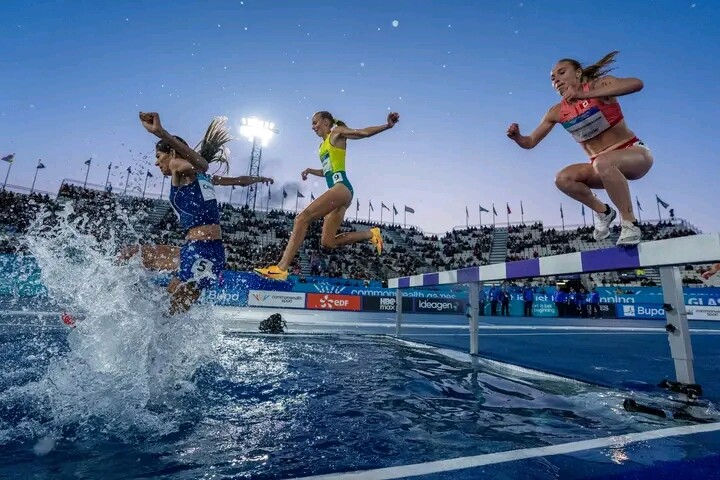
Although the medals were fiercely contested, Fetherstonhaugh's top-six finish and Stewart-Barnett's confident debut highlighted the depth of Canada's women's steeplechase program. Both athletes demonstrated resilience and composure against a world-class field, providing further evidence that Canada's future in the event is exceptionally bright.
The race also provided valuable championship experience that could prove instrumental in the years ahead. Performing at such a high level against elite opposition will give both athletes added confidence as they continue their development and prepare for future global championships.
For Canada, the performances were another encouraging sign of the nation's growing strength in women's distance running. By combining tactical discipline, technical efficiency over the barriers, and determined finishing efforts, Fetherstonhaugh and Stewart-Barnett left Glasgow with performances that will serve as important milestones in their careers.
Beyond the impressive times on the clock, both athletes showcased resilience and consistency throughout the demanding race. Their performances reflected not only months of preparation but also the determination required to succeed in one of athletics' most technically challenging events.
With a new personal best and a top-six Commonwealth Games finish now on her résumé, Fetherstonhaugh has taken another significant step forward in her career. Stewart-Barnett, meanwhile, can leave her first major international Games with confidence after a composed top-10 finish that signals an exciting future. Together, their performances marked a memorable night for Canadian athletics and offered plenty of optimism for the seasons ahead.
by Erick Cheruiyot for My Best Runs.
Login to leave a comment

Elise Thorner Delivers the Race of Her Life to Capture Historic Commonwealth Silver
Elise Thorner produced the performance of her career with a breathtaking display of determination and courage, storming to a sensational silver medal in the women's 3000m steeplechase at the Glasgow 2026 Commonwealth Games.
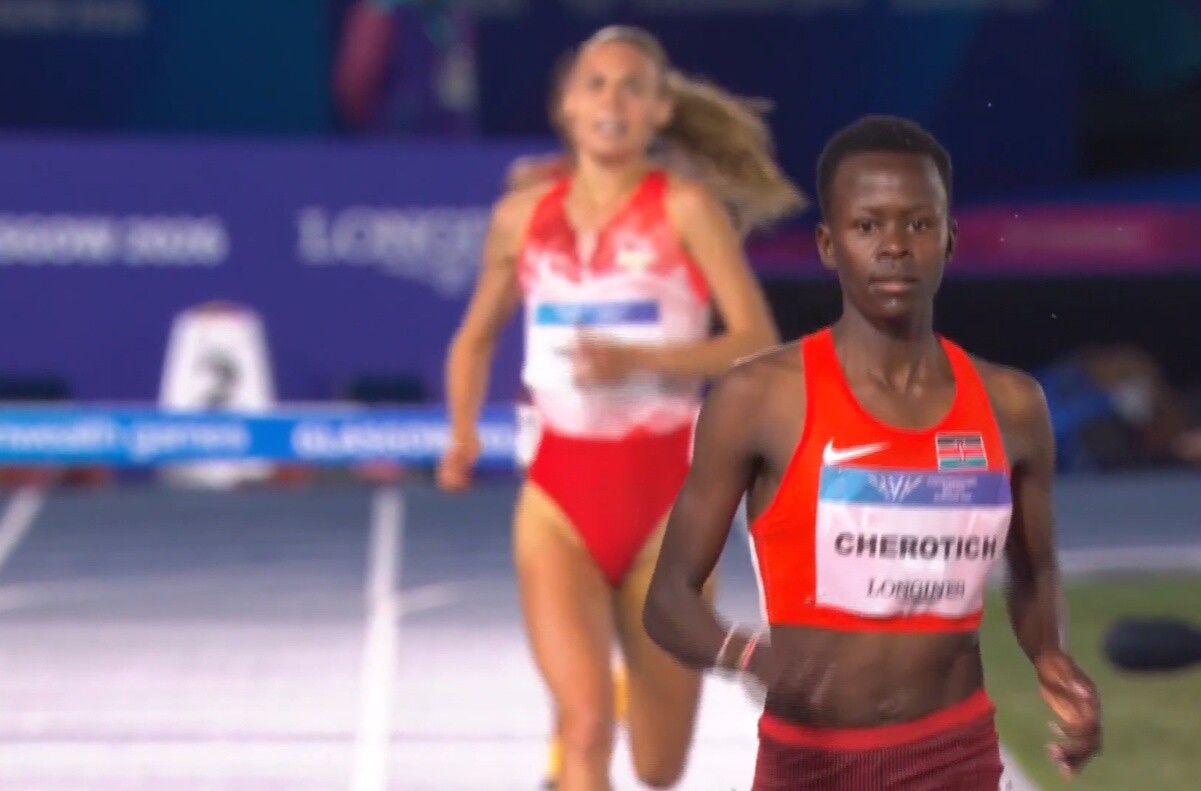
The England star delivered a remarkable final-lap charge in one of the most dramatic races of the championships, overturning what had looked like a secure position for Uganda's Olympic champion Peruth Chemutai. With every stride, Thorner closed the gap before surging past her rival in the closing stages to seal an unforgettable second-place finish.
She crossed the finish line in a lifetime best of 9:05.45, smashing her previous personal best and earning the first senior international medal of her career. It was a breakthrough performance on one of the biggest stages in athletics, confirming her arrival among the world's elite steeplechasers.
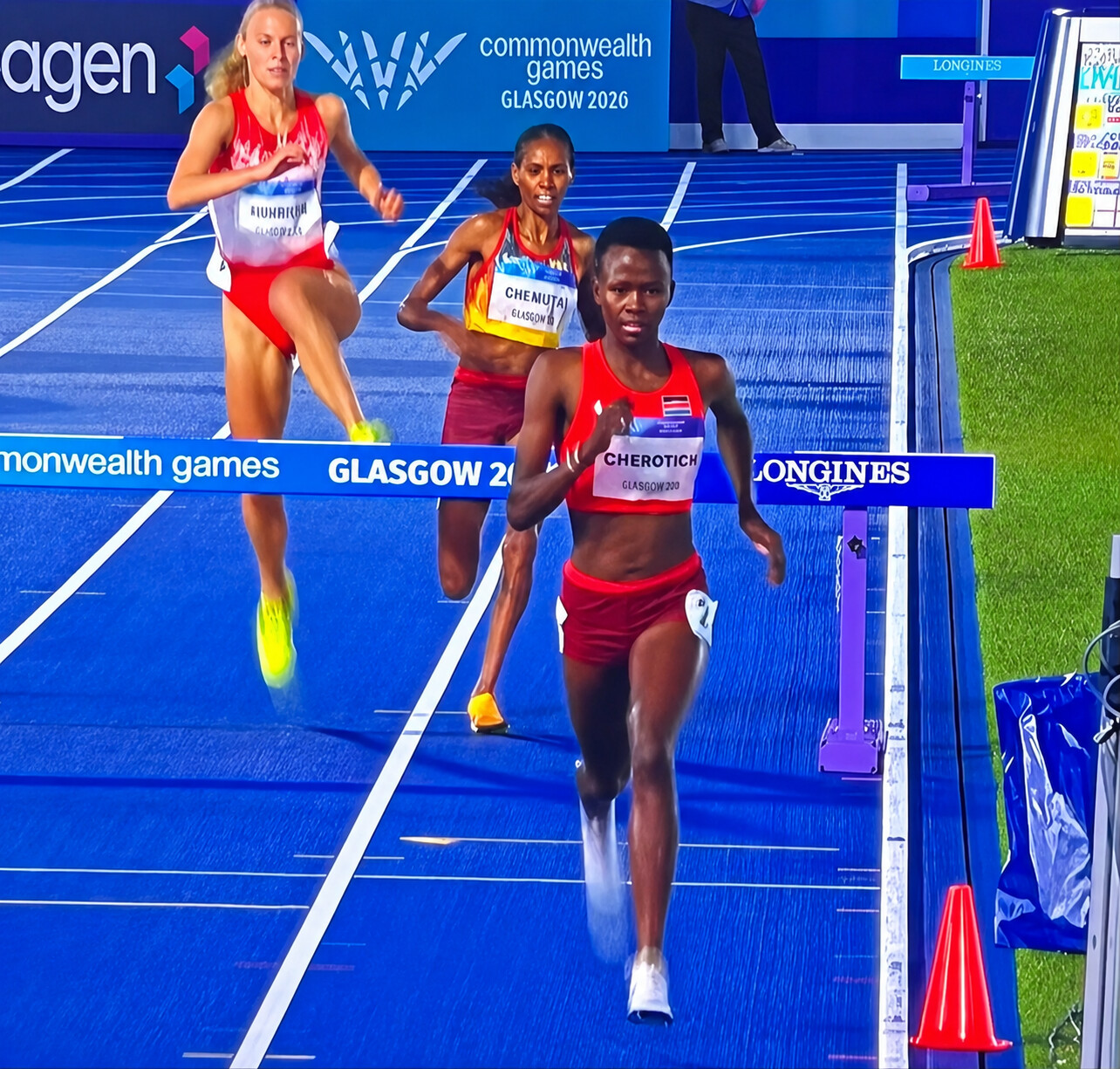
Thorner's outstanding run came agonizingly close to rewriting British history. Her time finished just 1.10 seconds outside Lizzie Bird's British record of 9:04.35, underlining the exceptional quality of her performance and suggesting that a national record could soon be within reach.
The race itself was an electrifying contest from start to finish, but it was Thorner's fearless closing lap that stole the spotlight. Refusing to surrender despite trailing late in the race, she unleashed a devastating kick that transformed an already impressive run into a career-defining moment.
The magnitude of her achievement only truly became clear after she crossed the finish line. Still trying to process what she had accomplished, an emotional Thorner admitted she was overwhelmed by the outcome. “When I crossed the line I was honestly in shock. I didn’t really know what happened!” she said after claiming the Commonwealth silver medal. Her heartfelt reaction perfectly reflected the disbelief and joy of an athlete who had just delivered the race of her life, producing a stunning personal best of 9:05.45 while finishing just over a second shy of Lizzie Bird's British record.
For England, the silver medal represents far more than a place on the podium. It marks the emergence of a new championship contender capable of challenging the very best, while for Elise Thorner, Glasgow 2026 will forever be remembered as the night she announced herself on the international stage with a performance of extraordinary class.
by Erick Cheruiyot for My Best Runs.
Login to leave a comment
Faith Cherotich Rewrites Commonwealth Games History with Record-Breaking Steeplechase Triumph
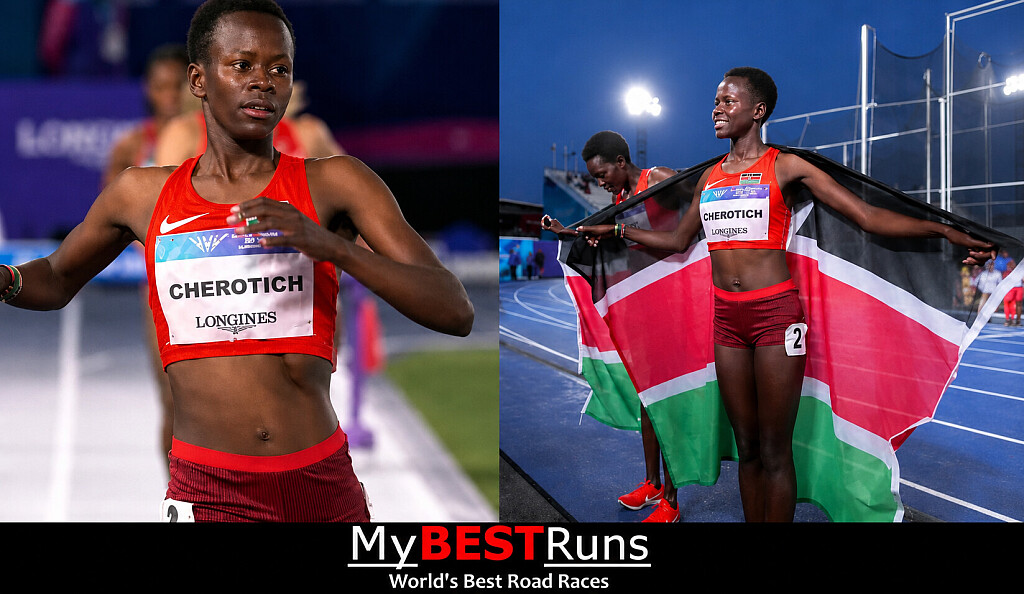
Faith Cherotich delivered one of the greatest performances of the Glasgow 2026 Commonwealth Games, producing a breathtaking run to capture the women's 3,000m steeplechase gold medal while rewriting the championship record books.
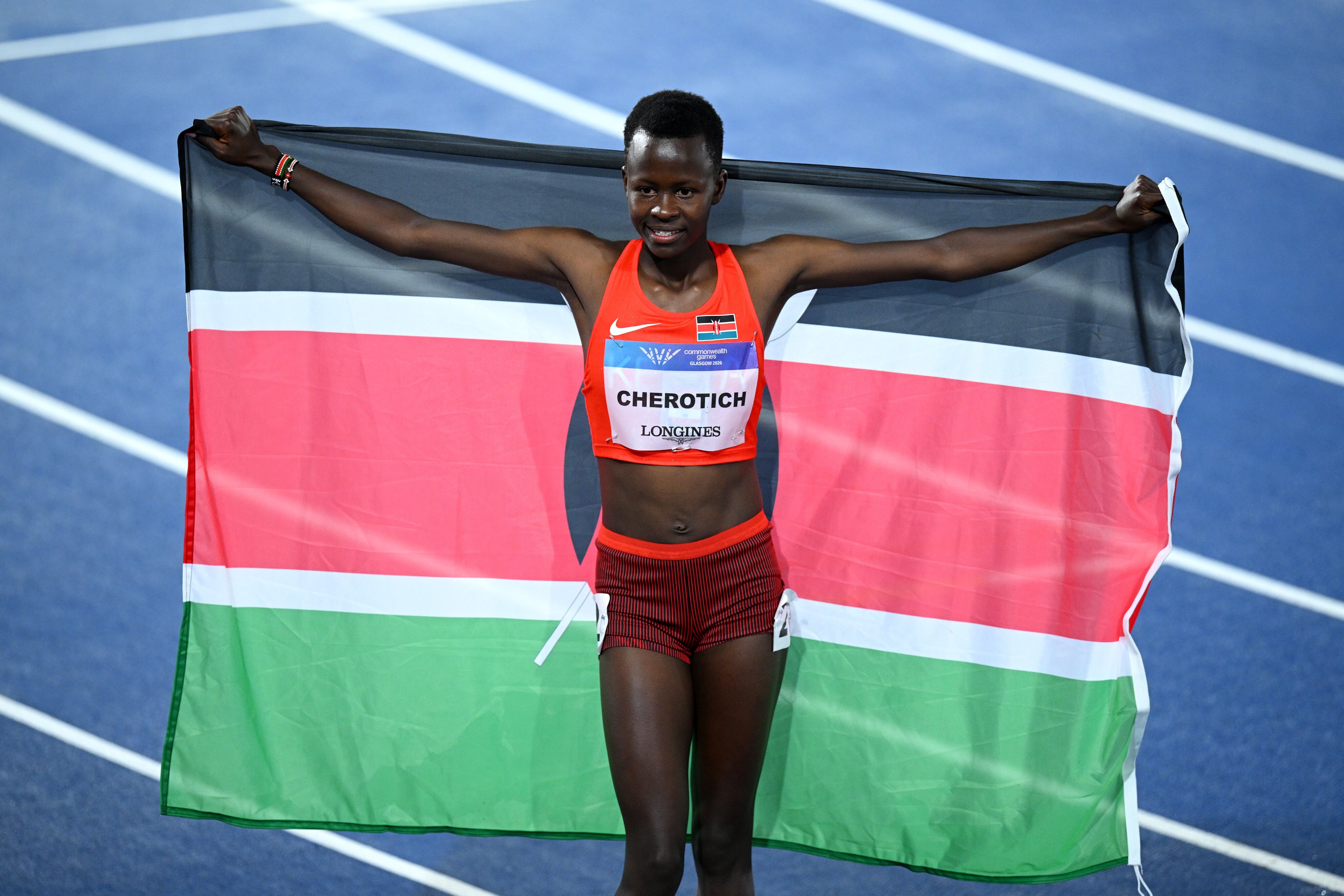
The Kenyan sensation powered away from the field with authority, crossing the finish line in a remarkable 9:01.76 to claim the Commonwealth title in unforgettable fashion. Her stunning performance erased the previous Commonwealth Games record of 9:15.68, set by fellow Kenyan Jackline Chepkoech at the Birmingham 2022 Games, underlining Kenya's continued dominance in one of its signature events.
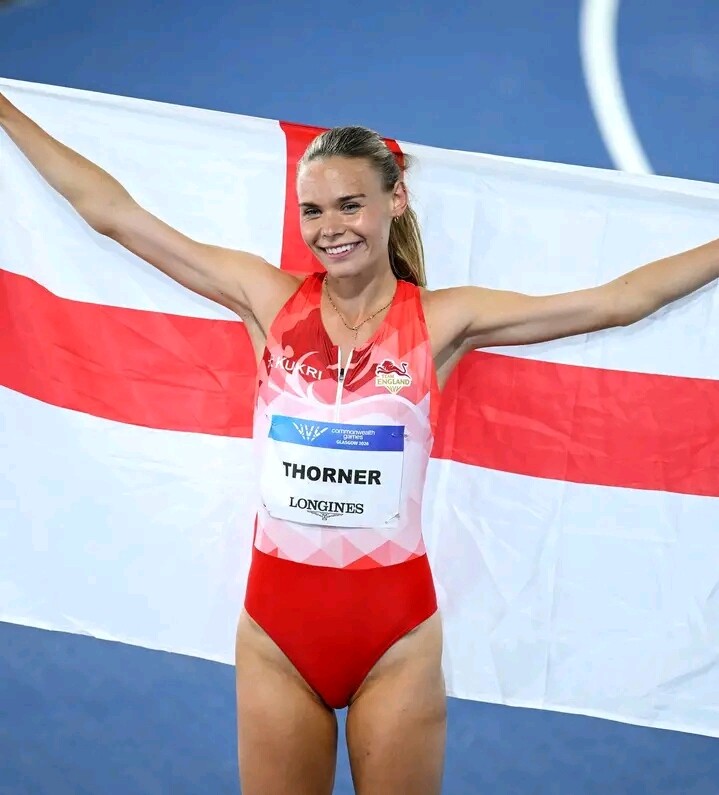
From the opening laps, Cherotich looked composed and determined, confidently controlling the race before unleashing a devastating surge that none of her rivals could answer. Clearing every barrier with precision and maintaining a relentless rhythm, she transformed the closing stages into a celebration of world-class steeplechasing.
The battle for the medals was every bit as captivating. England's Elise Thorner produced a lifetime best of 9:05.45 to secure the silver medal, while Olympic champion Peruth Chemutai of Uganda claimed bronze in 9:09.96 after another courageous performance. Australia's Cara Feain-Ryan finished fourth in 9:22.07, with India's Parul Chaudhary taking fifth in 9:26.75. Canada's Grace Fetherstonhaugh crossed the line sixth in a personal best 9:27.49, while Kenya's Celestine Jepkosgei Biwot added a strong seventh-place finish in 9:33.61.
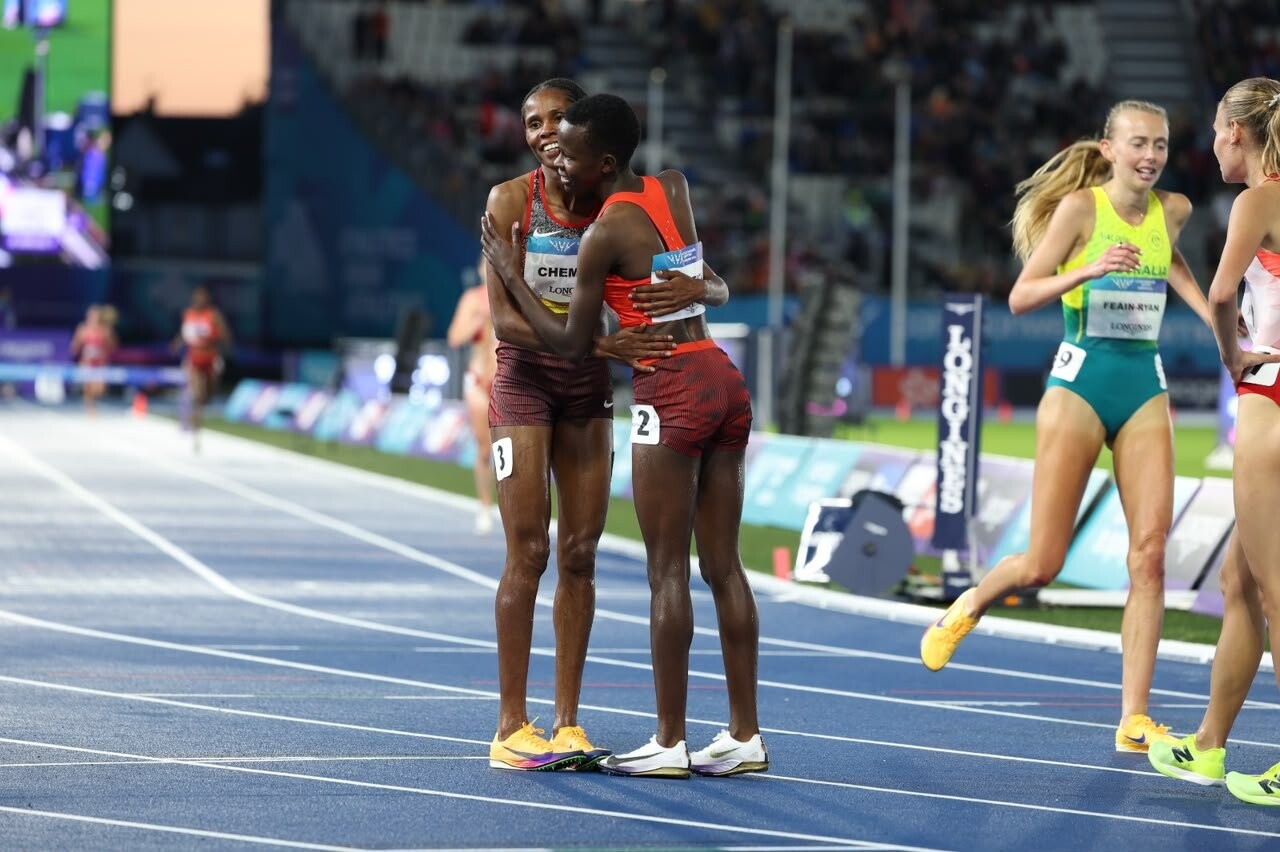
Women's 3000m Steeplechase Final – Glasgow 2026 Commonwealth Games
1. Faith Cherotich (Kenya) – 9:01.76 (Gold, Commonwealth Games Record)
2. Elise Thorner (England) – 9:05.45 (Silver, Personal Best)
3. Peruth Chemutai (Uganda) – 9:09.96 (Bronze)
4. Cara Feain-Ryan (Australia) – 9:22.07
5. Parul Chaudhary (India) – 9:26.75
6. Grace Fetherstonhaugh (Canada) – 9:27.49 (Personal Best)
7. Celestine Jepkosgei Biwot (Kenya) – 9:33.61
8. Cari Hughes (Wales) – 9:40.71 (National Record)
9. Katelyn Stewart-Barnett (Canada) – 9:46.98
10. Sarah Tait (Scotland) – 9:47.41
Cherotich's victory not only earned Kenya another gold medal but also reinforced the nation's remarkable legacy in the women's steeplechase. Breaking the Commonwealth Games record by nearly 14 seconds is a statement that echoes far beyond Glasgow, confirming the young Kenyan as one of the world's finest athletes in the event.
On a night filled with memorable performances, Faith Cherotich stood above them all. Draped in the Kenyan flag after her historic triumph, she celebrated a victory that will be remembered for years to come—a performance defined by courage, speed, and history-making brilliance.
by Erick Cheruiyot for My Best Runs.
Login to leave a comment

The Commonwealth Games
The Commonwealth Games are coming to Victoria - bringing an action packed sports program to our regional cities and delivering a long-term legacy for our future. From 17 to 29 March 2026, Geelong, Bendigo, Ballarat, Gippsland and Shepparton will be on the world stage, attracting millions of viewers and creating thousands of jobs. The multi-city model will...
more...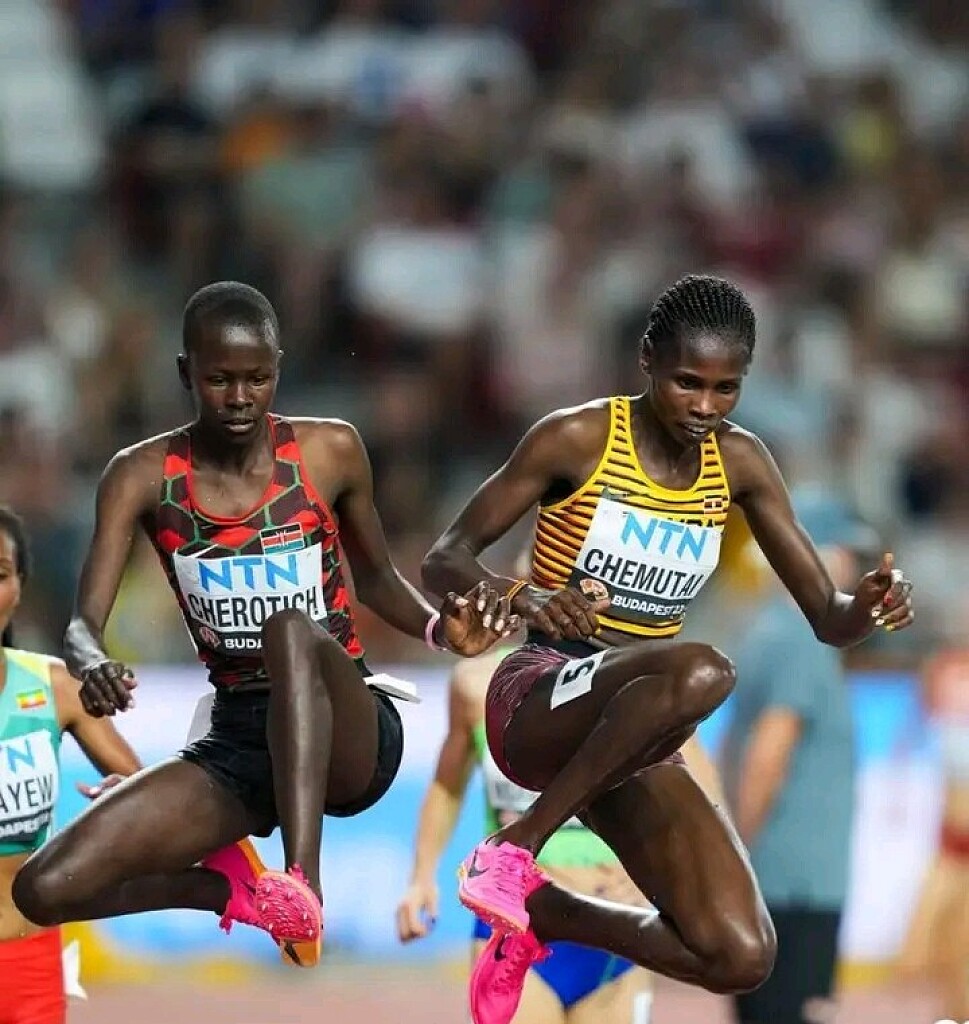
Faith Cherotich and Peruth Chemutai Set for Blockbuster Commonwealth Games Steeplechase Final in Glasgow
One of the most eagerly anticipated distance races of the 2026 Commonwealth Games will take center stage tonight in Glasgow as the women's 3,000m steeplechase final brings together two of the world's finest barrier specialists in a captivating battle for Commonwealth gold.
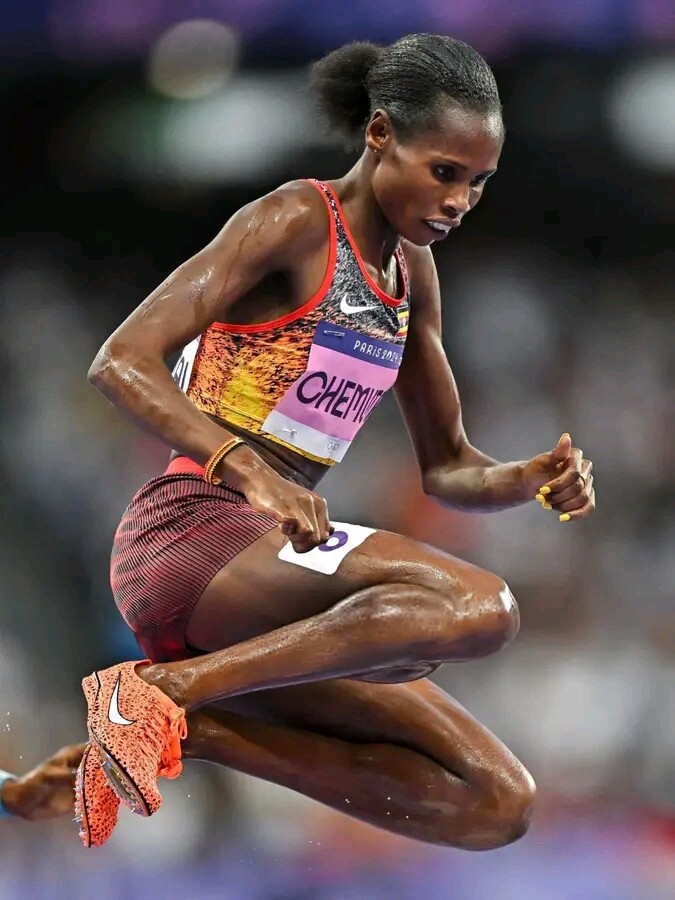
All eyes will be on Kenya's Faith Cherotich and Uganda's Peruth Chemutai, whose remarkable form this season has set the stage for what promises to be an unforgettable showdown. With both athletes arriving in Glasgow separated by less than half a second on the season's rankings, the margin for error could hardly be smaller.
Chemutai, the Olympic champion from Uganda, enters the final with the fastest season's best in the field at 8:51.06, while Kenya's rising star Cherotich has clocked an equally impressive 8:51.48. Even more remarkably, both women own personal bests under 8:49, highlighting the exceptional quality expected in the final.
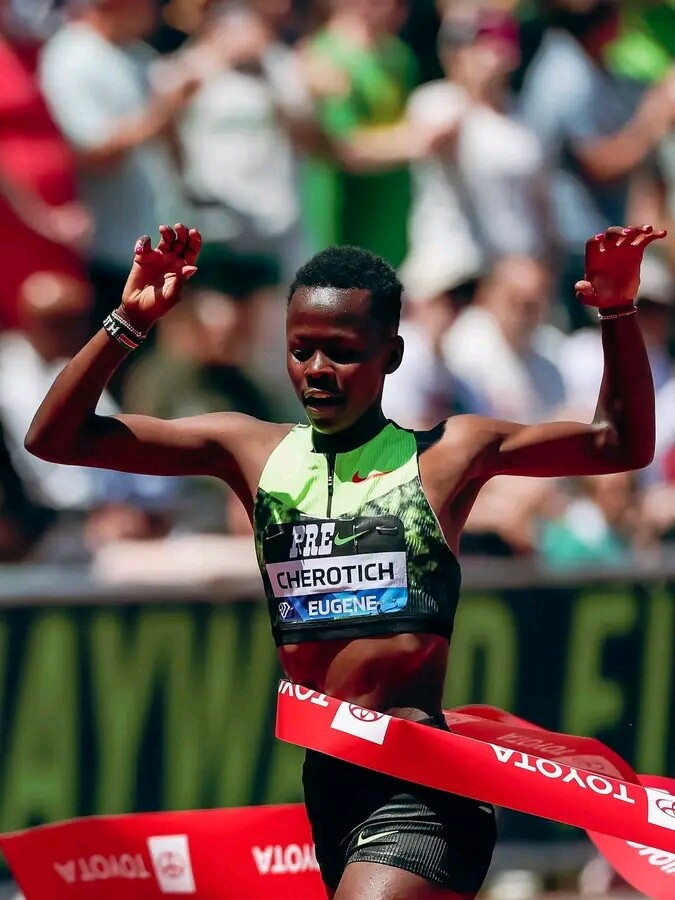
The race is expected to be a fascinating clash of styles. Chemutai's experience and relentless rhythm over the barriers will be tested by Cherotich's fearless racing instincts and devastating finishing speed. If the pace remains honest throughout, the outcome may not be decided until the final water jump or the last sprint down the home straight.
Although the spotlight naturally falls on the East African rivals, the battle for the medals extends well beyond them. England's Elise Thorner, boasting a personal best of 9:07.39, arrives as a genuine podium contender, while India's Parul Chaudhary has consistently demonstrated her ability to compete at the highest international level. Scotland's Sarah Tait will also enjoy passionate home support as she attempts to challenge the established favorites.
Kenya's Celestine Jepkosgei Biwot adds further depth to a competitive field that also includes Canada's Grace Fetherstonhaugh and Katelyn Stewart-Barnett, Australia's Cara Feain-Ryan, and Wales' Cari Hughes, ensuring the race will feature talent from across the Commonwealth.
Women's 3,000m Steeplechase Final – Start List
1. Grace Fetherstonhaugh (Canada) – PB: 9:28.42 | SB: 9:31.98
2. Faith Cherotich (Kenya) – PB: 8:48.71 | SB: 8:51.48
3. Peruth Chemutai (Uganda) – PB: 8:48.03 | SB: 8:51.06
4. Sarah Tait (Scotland) – PB: 9:18.66 | SB: 9:40.92
5. Parul Chaudhary (India) – PB: 9:12.46 | SB: 9:12.84
6. Katelyn Stewart-Barnett (Canada) – PB: 9:33.21 | SB: 9:36.69
7. Elise Thorner (England) – PB: 9:07.39 | SB: 9:07.39
8. Celestine Jepkosgei Biwot (Kenya) – PB: 9:17.06 | SB: 9:26.12
9. Cara Feain-Ryan (Australia) – PB: 9:21.35 | SB: 9:21.35
10. Cari Hughes (Wales) – PB: 9:41.66 | SB: 9:59.89
With two world-class athletes at the peak of their powers, national pride on the line, and a Commonwealth title at stake, Glasgow is set for a spectacular night of steeplechasing. Whether it is Chemutai's championship experience or Cherotich's youthful brilliance that prevails, fans can expect an electrifying contest that could become one of the defining races of the 2026 Commonwealth Games. The stage is set, the athletes are ready, and tonight promises to deliver a thrilling battle all the way to the finish line.
by Erick Cheruiyot for My Best Runs.
Login to leave a comment
The Commonwealth Games
The Commonwealth Games are coming to Victoria - bringing an action packed sports program to our regional cities and delivering a long-term legacy for our future. From 17 to 29 March 2026, Geelong, Bendigo, Ballarat, Gippsland and Shepparton will be on the world stage, attracting millions of viewers and creating thousands of jobs. The multi-city model will...
more...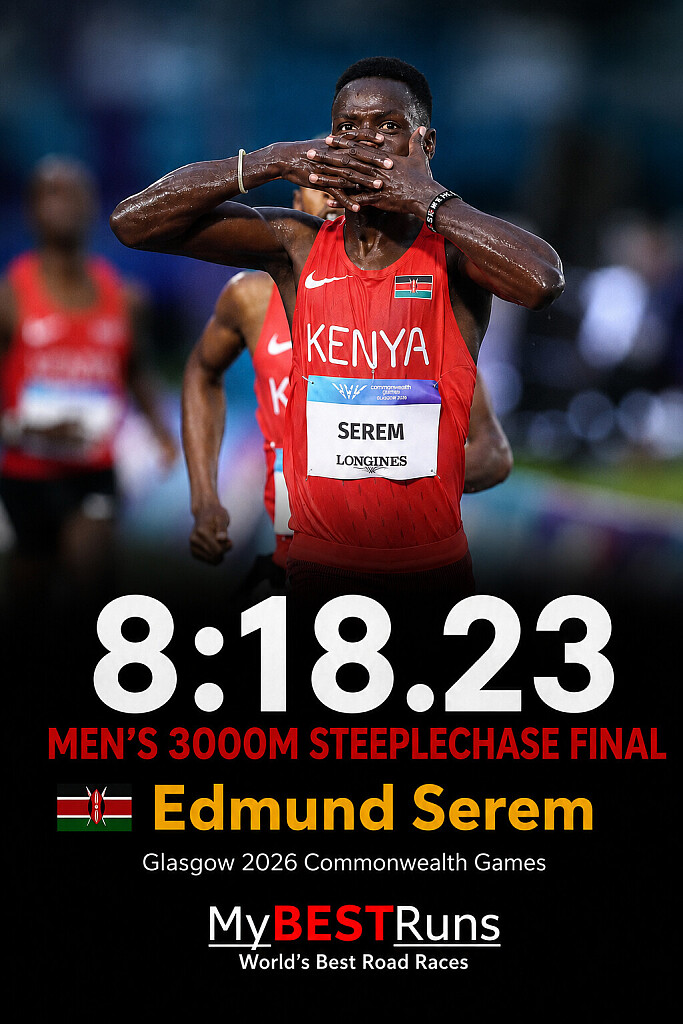
Kenya Reclaims Steeplechase Supremacy with Historic 1-2-3 Sweep at Glasgow 2026 Commonwealth Games
Kenya emphatically reaffirmed its status as the undisputed powerhouse of the men's 3000m steeplechase by producing a sensational podium clean sweep at the 2026 Commonwealth Games in Glasgow. In a commanding display of tactical brilliance, endurance, and finishing speed, Edmund Serem, Simon Kiprop Koech, and Leonard Kipkemoi Bett shut out the rest of the field to secure all three medals in one of Kenya's most treasured athletics events.
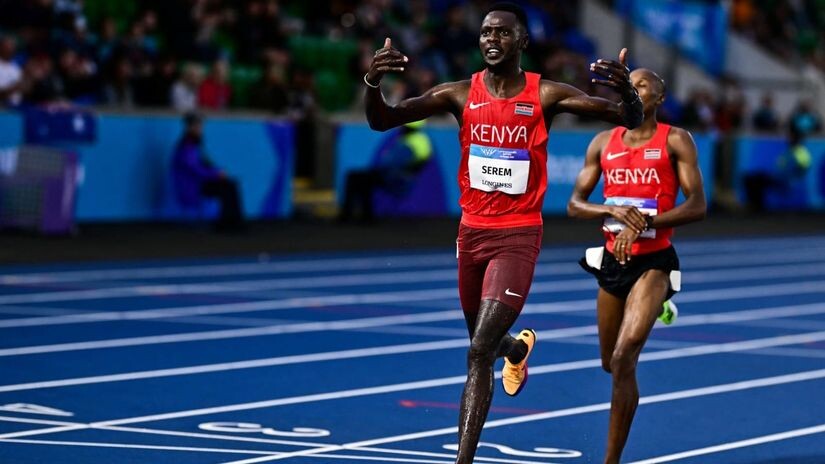
The Kenyan trio remained patient through the early stages before steadily increasing the pace over the closing laps. As the race reached its decisive moments, they broke clear of the chasing pack, leaving reigning world champion Geordie Beamish of New Zealand and the rest of the field unable to match their relentless surge.
Edmund Serem produced the winning move over the final barriers, powering away in the closing metres to capture the Commonwealth title in 8:18.23. Simon Kiprop Koech, who had led the race at the bell, battled all the way to the finish and claimed the silver medal in 8:18.59, while Leonard Kipkemoi Bett completed the historic sweep with bronze in 8:21.63, ensuring an unforgettable day for Team Kenya.
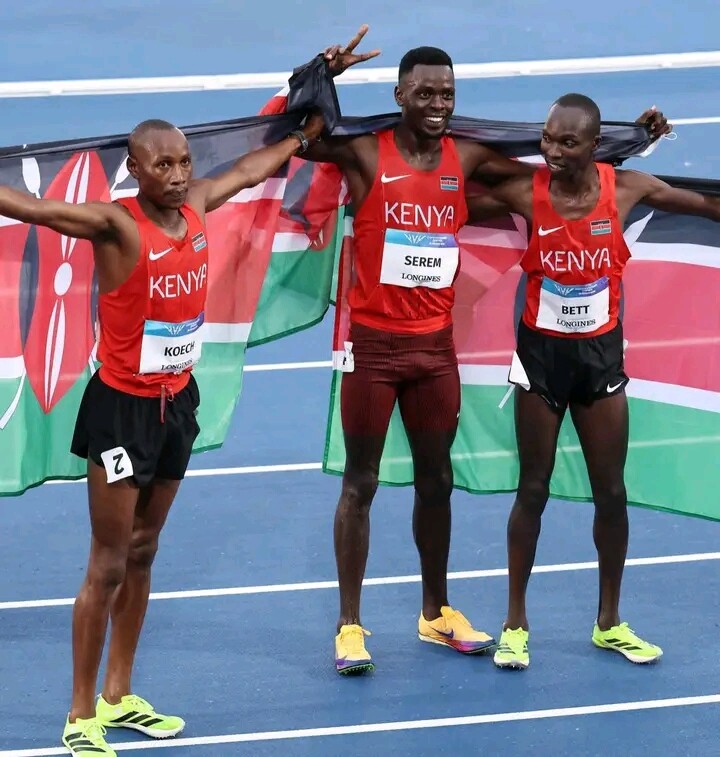
The achievement marks one of Kenya's defining moments of the Glasgow Games and restores the nation's complete dominance in an event that has long been synonymous with Kenyan distance running excellence. It also serves as a powerful response to the 2022 Commonwealth Games in Birmingham, where India's Avinash Sable ended Kenya's remarkable run of podium sweeps by winning the silver medal. Four years later, Serem, Koech, and Bett emphatically returned the men's steeplechase podium entirely to Kenyan hands, reaffirming the country's unrivalled legacy in the discipline.
Behind the Kenyan trio, reigning world champion Geordie Beamish finished fourth in 8:24.09, while Canada's Jean-Simon Desgagnes and Aaron Ahl placed fifth and sixth respectively. England's Kristian Imroth and Mark Pearce completed the top eight.
Men's 3000m Steeplechase Final – Glasgow 2026 Commonwealth Games
1. Edmund Serem (Kenya) — 8:18.23
2. Simon Kiprop Koech (Kenya) — 8:18.59
3. Leonard Kipkemoi Bett (Kenya) — 8:21.63
4. Geordie Beamish (New Zealand) — 8:24.09
5. Jean-Simon Desgagnes (Canada) — 8:25.43
6. Aaron Ahl (Canada) — 8:31.71
7. Kristian Imroth (England) — 8:38.12
8. Mark Pearce (England) — 8:42.39
The performance once again highlighted the extraordinary depth of Kenya's steeplechase talent, proving that a new generation is ready to carry forward one of the nation's greatest traditions in global athletics. Their flawless execution, unwavering composure, and dominant finish left no doubt that Kenya remains the standard bearer in the men's 3000m steeplechase.
by Erick Cheruiyot for My Best Runs.
Login to leave a comment
The Commonwealth Games
The Commonwealth Games are coming to Victoria - bringing an action packed sports program to our regional cities and delivering a long-term legacy for our future. From 17 to 29 March 2026, Geelong, Bendigo, Ballarat, Gippsland and Shepparton will be on the world stage, attracting millions of viewers and creating thousands of jobs. The multi-city model will...
more...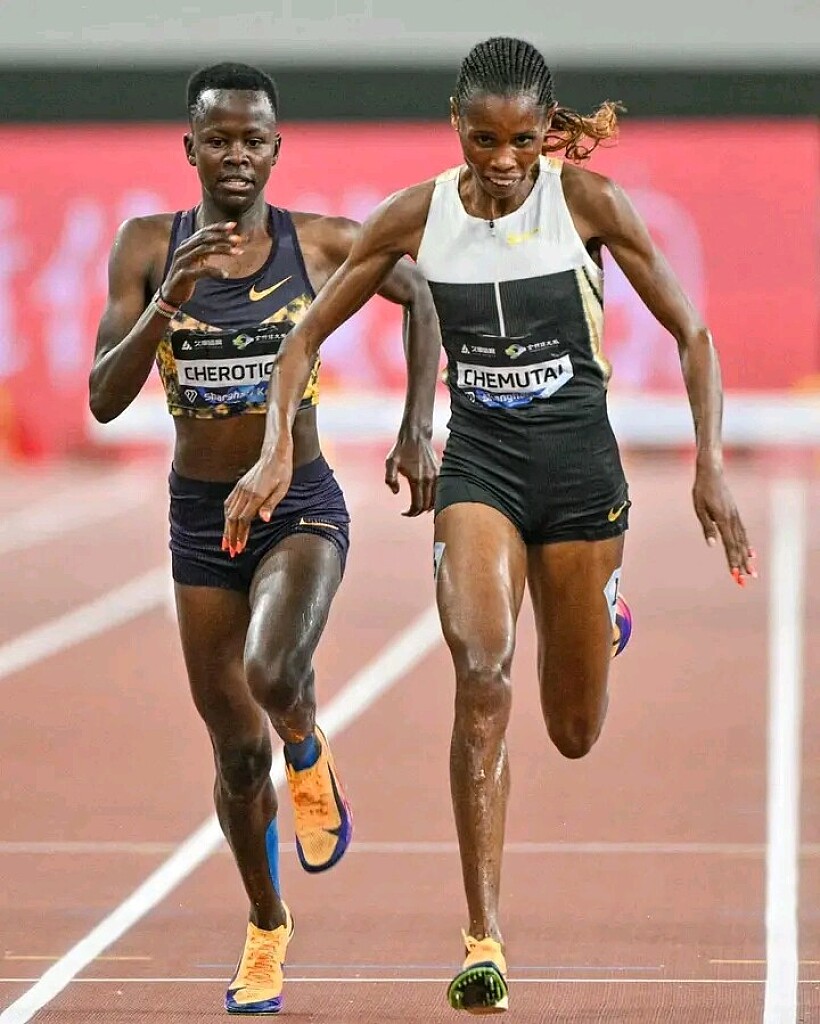
Commonwealth Games Women's Steeplechase Set for a Classic Showdown as Faith Cherotich and Peruth Chemutai Renew Their Rivalry
The women's 3,000-meter steeplechase promises to be one of the standout distance races of the 2026 Commonwealth Games when a talented field lines up on July 29, headlined by two of the world's finest barrier specialists: Kenya's Faith Cherotich and Uganda's Peruth Chemutai.
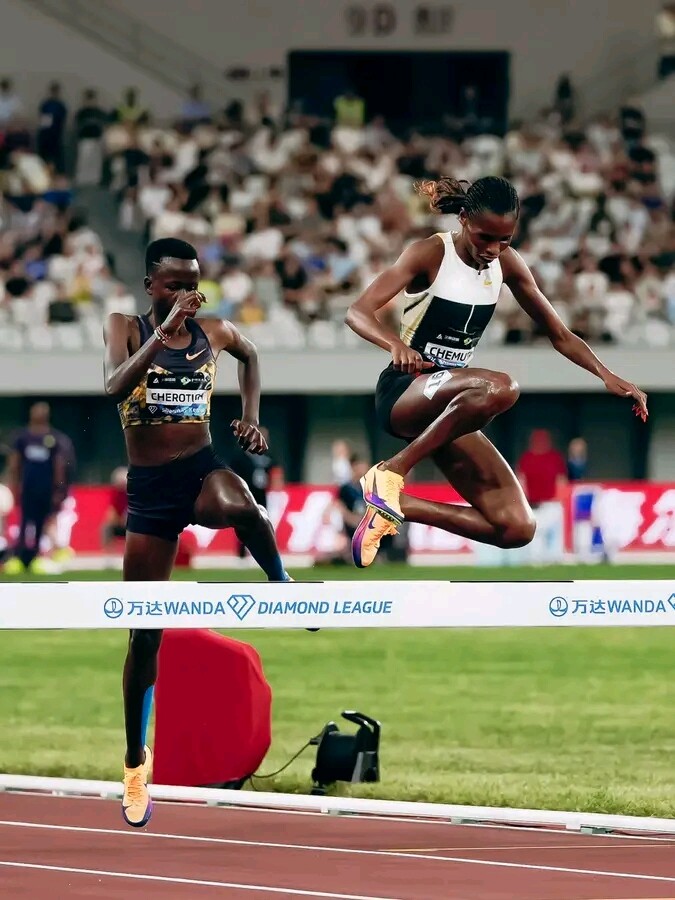
With personal bests separated by less than a second, the race has all the ingredients of a championship classic. Olympic medalists, emerging stars, and national champions will all be chasing Commonwealth glory, but much of the spotlight will naturally fall on the fierce rivalry between Cherotich and Chemutai.
Cherotich arrives as one of the fastest women ever over the barriers with a personal best of 8:48.71, a mark that underlines her remarkable rise to the top of global steeplechasing. The young Kenyan has established herself as one of the sport's brightest talents through her fearless front-running, smooth hurdling technique, and devastating finishing speed.
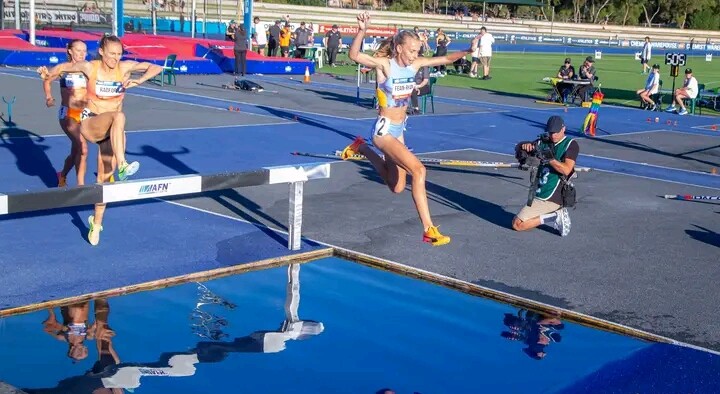
Standing in her way is Uganda's Peruth Chemutai, whose personal best of 8:48.03 makes her the fastest athlete in the field on paper. The Olympic champion has repeatedly proven she thrives in championship racing, combining tactical intelligence with years of experience on the biggest stages. Her ability to produce her very best when medals are on the line makes her an exceptionally dangerous competitor.
Kenya also boasts impressive depth through Celestine Jepkosgei Biwot, who owns a personal best of 9:19.06 and could play a significant role in the race if the early pace becomes tactical. A Kenyan podium sweep may be difficult against such quality opposition, but Biwot has shown she is capable of competing with the continent's elite.
England's Elise Thorner enters as one of the strongest challengers outside East Africa. With a personal best of 9:07.39, she has consistently demonstrated the ability to race aggressively and could place herself firmly in medal contention if the favorites hesitate.
India's Parul Chaudhary brings another compelling storyline after lowering her personal best to 9:12.46, establishing herself as one of Asia's leading steeplechasers. She will be aiming to deliver one of India's strongest distance performances of the Games.
Australia's Cara Feain-Ryan (9:21.35), Scotland's Sarah Tait (9:18.66), Canada's Grace Fetherstonhaugh (9:31.98), Canada's Katelyn Stewart-Barnett (9:36.69), and Wales' Cari Hughes (9:41.66) complete a diverse and competitive field representing six Commonwealth nations.
While personal bests provide an indication of form, championship racing often rewards patience, tactical awareness, and flawless barrier technique as much as outright speed. Every water jump and every barrier could prove decisive in a race where momentum can change within seconds.
The start list suggests a fascinating battle between proven championship performers and ambitious newcomers eager to announce themselves on one of athletics' biggest stages. If the pace is honest from the opening laps, spectators could witness one of the fastest Commonwealth Games steeplechase finals in history.
With continental pride, championship medals, and Commonwealth supremacy at stake, all eyes will turn to the women's 3,000-meter steeplechase on July 29, where Faith Cherotich and Peruth Chemutai are set to write another thrilling chapter in one of distance running's most exciting rivalries.
by Erick Cheruiyot for My Best Runs.
Login to leave a comment
The Commonwealth Games
The Commonwealth Games are coming to Victoria - bringing an action packed sports program to our regional cities and delivering a long-term legacy for our future. From 17 to 29 March 2026, Geelong, Bendigo, Ballarat, Gippsland and Shepparton will be on the world stage, attracting millions of viewers and creating thousands of jobs. The multi-city model will...
more...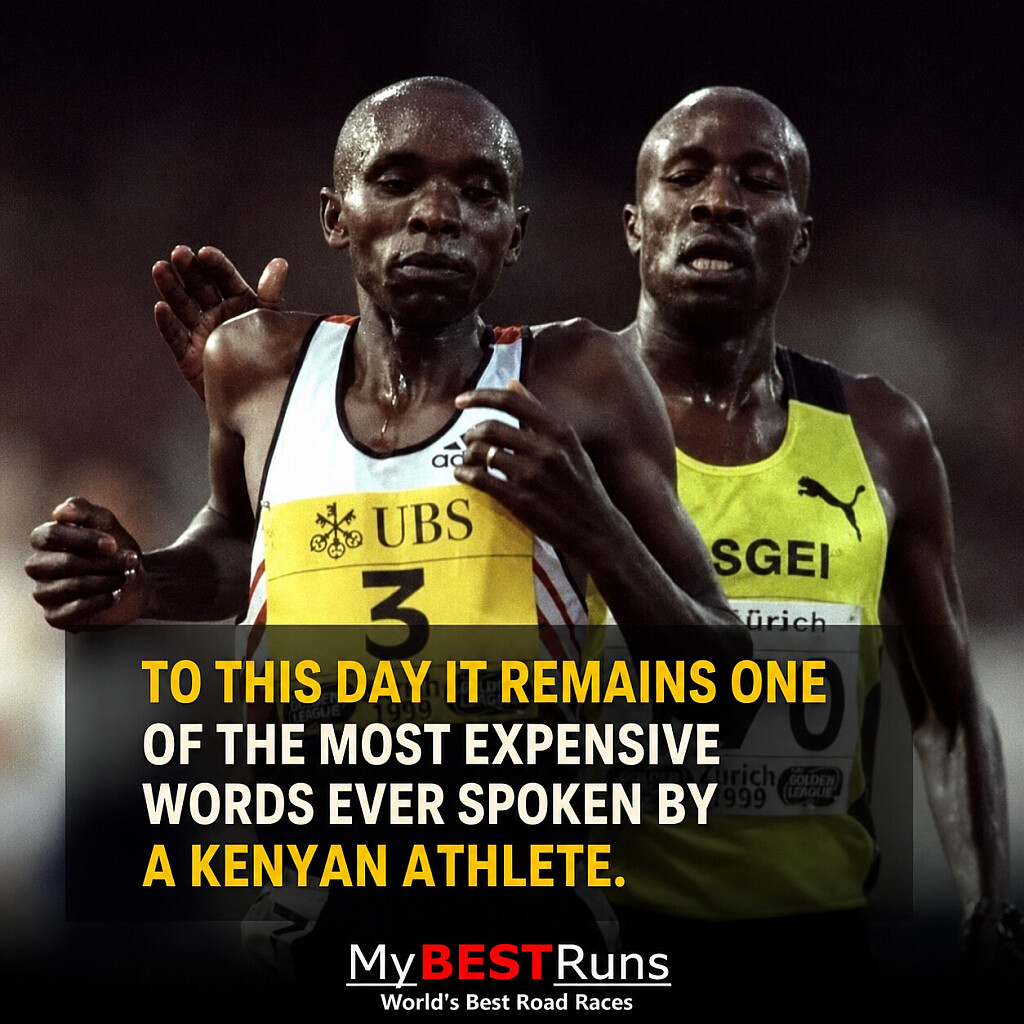
One Word, One Million Dollars Lost: How "Metowo" Cost Benard Barmasai the Biggest Payday of His Career
In the history of Kenyan athletics, few moments have become as legendary—or as costly—as a single word spoken in the final moments of a race. That word was "Metowo," a Kalenjin expression meaning "leave it to me." What seemed like a simple plea between two close friends ultimately denied one of Kenya's greatest steeplechasers a life-changing fortune.

The dramatic episode unfolded at the 1999 Weltklasse Zurich Golden Meeting, one of the prestigious stops on the IAAF Golden League circuit. At the time, the Golden League offered an extraordinary incentive: any athlete who won five of the seven designated meetings in a single season would claim a US$1 million jackpot. It was the richest prize in track and field, equivalent to approximately KSh 70 million then and well over KSh 100 million in today's value.
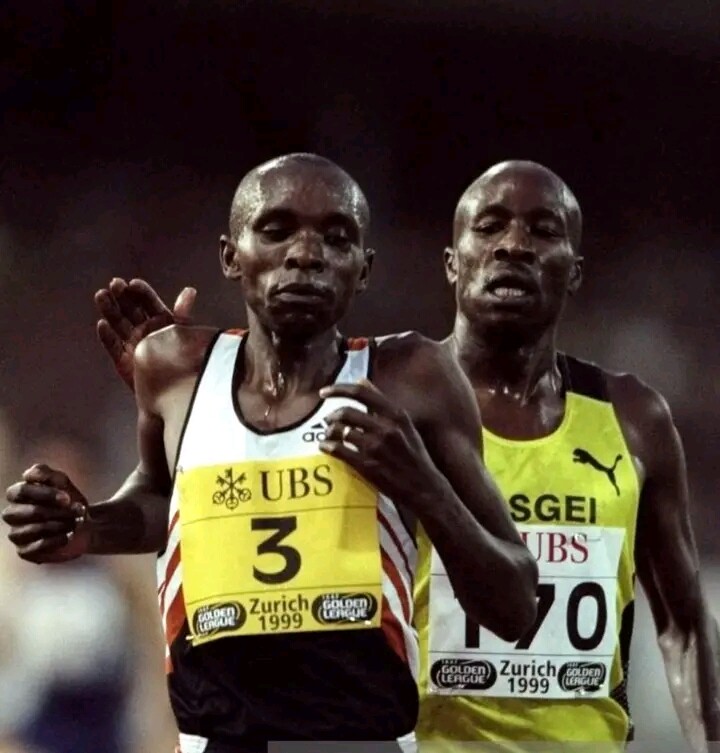
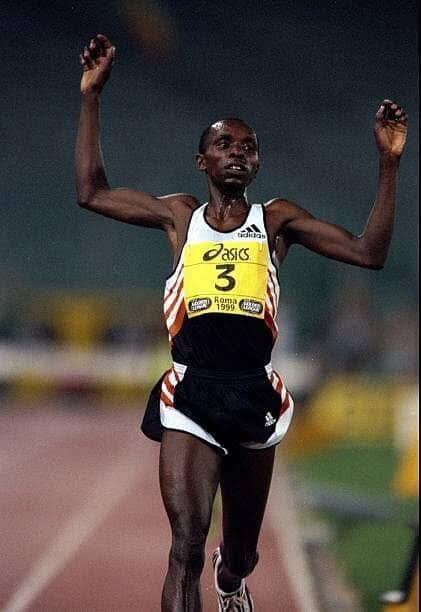
By the time the circuit reached Zurich, Benard Barmasai stood on the brink of history. The Kenyan steeplechase star had already secured four victories and needed just one more triumph to unlock the million-dollar reward. Everything he had worked for that season came down to one final race.
The men's 3,000-meter steeplechase unfolded exactly as Barmasai had hoped. Determined to leave nothing to chance, he took command from the opening laps, setting a relentless pace while most of the field struggled to keep contact. Running alongside him was fellow Kenyan Christopher Koskei, a close friend and training companion.
As the race entered its closing stages, fatigue began to catch up with Barmasai. Koskei, younger and carrying more strength in the final lap, surged forward and appeared ready to seize victory. In that decisive moment, Barmasai turned to his compatriot and uttered one word that would echo through athletics history:
"Metowo."
In Kalenjin, the word translates to "Leave it to me," or "Niachie" in Swahili language.
Koskei responded immediately. Rather than continuing his challenge, he eased his pace and allowed Barmasai to regain control. Barmasai crossed the finish line first in 8:05.16, with Koskei following in 8:05.43. To spectators, the finish appeared unusual. To race officials, it raised immediate suspicions.
The International Association of Athletics Federations (IAAF), now known as World Athletics, launched an investigation into the race. After reviewing the circumstances, officials concluded that the finish had been manipulated and ruled that Barmasai's victory did not qualify for the Golden League jackpot.
The consequences were devastating.
Despite winning four previous Golden League races and crossing the line first in Zurich, Barmasai was stripped of eligibility for the US$1 million prize. A season that had promised the richest reward in athletics ended without the jackpot, all because of a brief exchange in the final meters of the race.
More than two decades later, the story remains one of the most remarkable lessons in the sport. It serves as a reminder that elite competition is built not only on speed and endurance, but also on integrity. In the pursuit of greatness, every stride matters—and sometimes, so does every word.
For Benard Barmasai, "Metowo" became far more than a Kalenjin expression. It became the word forever linked to one of the most expensive moments in the history of Kenyan athletics—a split-second decision that cost him a million-dollar dream.
by Erick Cheruiyot for My Best Runs.
Login to leave a comment
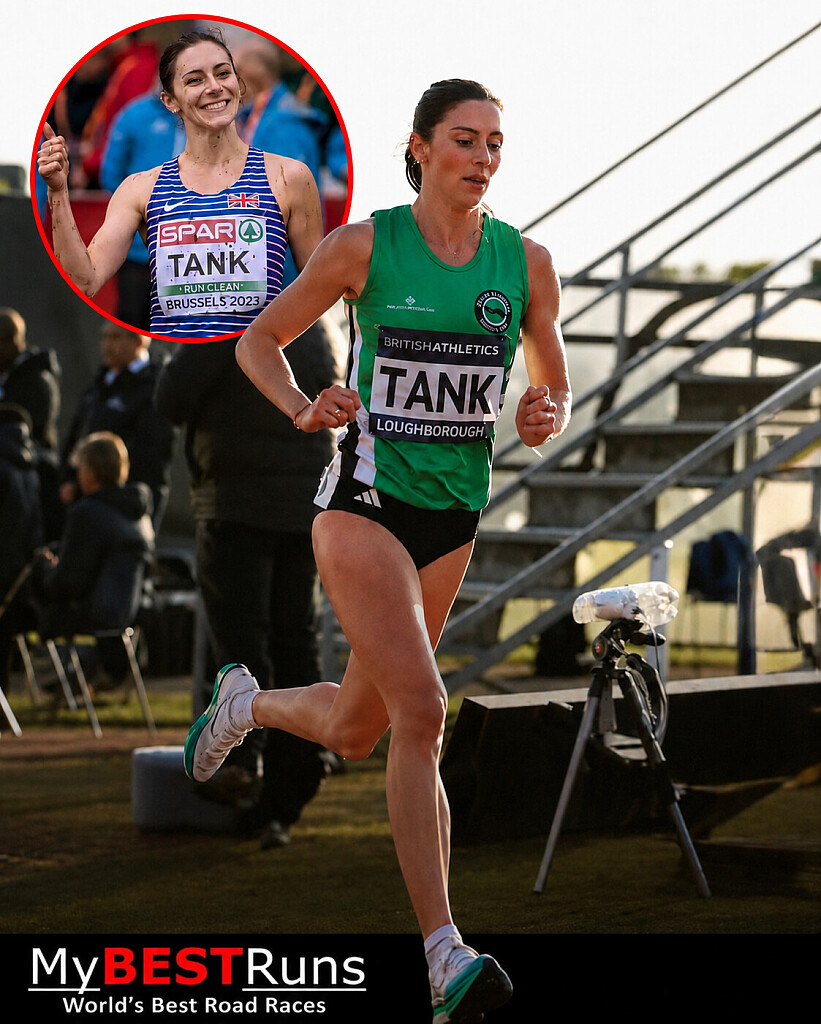
From eBay Shoes to the Commonwealth Games: Self-Coached Poppy Tank's Extraordinary Journey to the England Team
In a sport where many elite athletes benefit from professional coaches, lucrative sponsorships, sports science support, and cutting-edge equipment, Poppy Tank has reached the international stage by relying on little more than determination, discipline, and belief in herself.
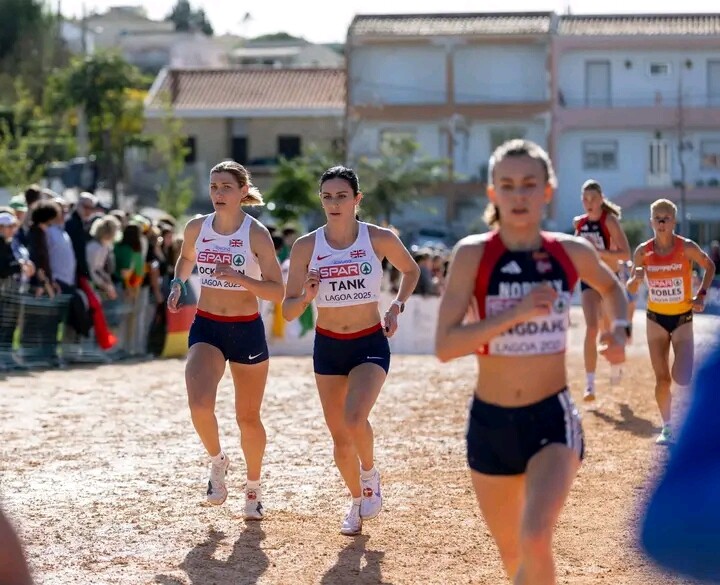
Later this month, the 28-year-old from Plymouth will proudly represent England in the women's 10,000m at the Commonwealth Games in Glasgow. It will be her first appearance at a major track championships, making the achievement even more remarkable considering she has no central funding, no shoe contract, and no dedicated support team.
Tank's journey is one of resilience and self-reliance. Her Instagram biography sums it up in just three words: Self-coached. Unsponsored. Distance runner. Behind those words lies years of sacrifice, careful planning, and relentless hard work.
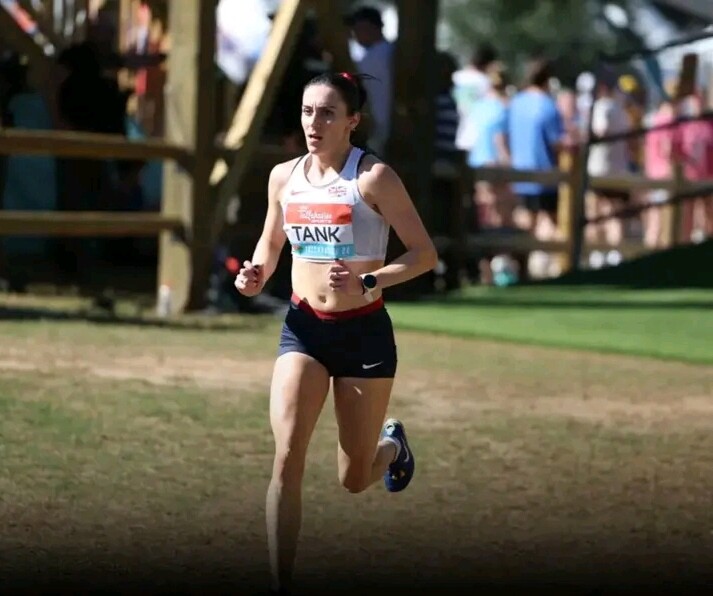
Unlike many of her international rivals, Tank manages every aspect of her athletic career herself. She designs her own training, plans her race schedules, monitors her recovery, and finances virtually every part of her pursuit of excellence.
"I'm self-funded so every spare bit of cash I have I'm spending it on training camps, buying shoes, buying kit, paying for races and accommodation," Tank told BBC Radio Devon. "I have to be very savvy with my shoes. I buy them often off eBay on discount. So I'm very, very good at finding ways of saving money."
While many Commonwealth-level athletes receive free equipment from major sports brands, Tank has become an expert at stretching every pound, purchasing discounted racing shoes online and carefully managing every expense to keep her dream alive.
Her rise through British athletics has been built steadily over several seasons. Tank first established herself as one of Britain's finest endurance runners in cross country, helping Great Britain win team gold at the 2023 European Cross Country Championships before contributing to a team silver medal the following year. She also claimed the British 3,000m steeplechase title in 2023 and represented Great Britain at the World Cross Country Championships, demonstrating her versatility across different disciplines.
Despite those achievements, a place at a major international track championships remained elusive until this summer, when England selected her for the Commonwealth Games.
Away from the track, Tank balances elite sport with an equally demanding academic career. She is pursuing a PhD at the University of Birmingham, where her research focuses on developing better ways to recycle medical implants. Her daily routine often begins with a demanding 12-mile training session before lunchtime, followed by an hour and a half in the gym, all while spending long hours in the laboratory preparing and analysing research samples.
"My supervisor is incredibly supportive of my running," she explained. "But ultimately I still have to go and do the studying."
Her Commonwealth Games selection is the reward for outstanding form during the 2026 season. Tank produced a lifetime best to finish second behind Izzy Fry at the British 10,000m Championships in Loughborough in May, before lowering that mark again just weeks later with an impressive 32:04.36 performance in the Netherlands.
Those performances secured her place on England's team, where she and Fry will both make their Commonwealth Games debuts in the women's 10,000m.
Although Tank heads to Glasgow ranked in the second half of the field on paper, she has never allowed rankings to define her ambitions. Time and again, she has shown an ability to rise to the occasion when it matters most, and she intends to do exactly that on one of the biggest stages of her career.
"It is so much hard work, I couldn't even begin to detail how many hours has gone into this," Tank said. "But when things like this happen where you get selected for your goals, it really, really makes it so worth it."
Her story serves as a powerful reminder that success is not always built on financial backing or world-class facilities. Sometimes, it is forged through unwavering commitment, countless unseen hours of hard work, and the courage to believe in your own process.
When Poppy Tank steps onto the track in Glasgow wearing the England vest, she will represent far more than her country. She will embody perseverance, independence, and the belief that even without sponsorships, professional coaching, or expensive support systems, extraordinary dreams can still become reality.
by Erick Cheruiyot for My Best Runs.
Login to leave a comment
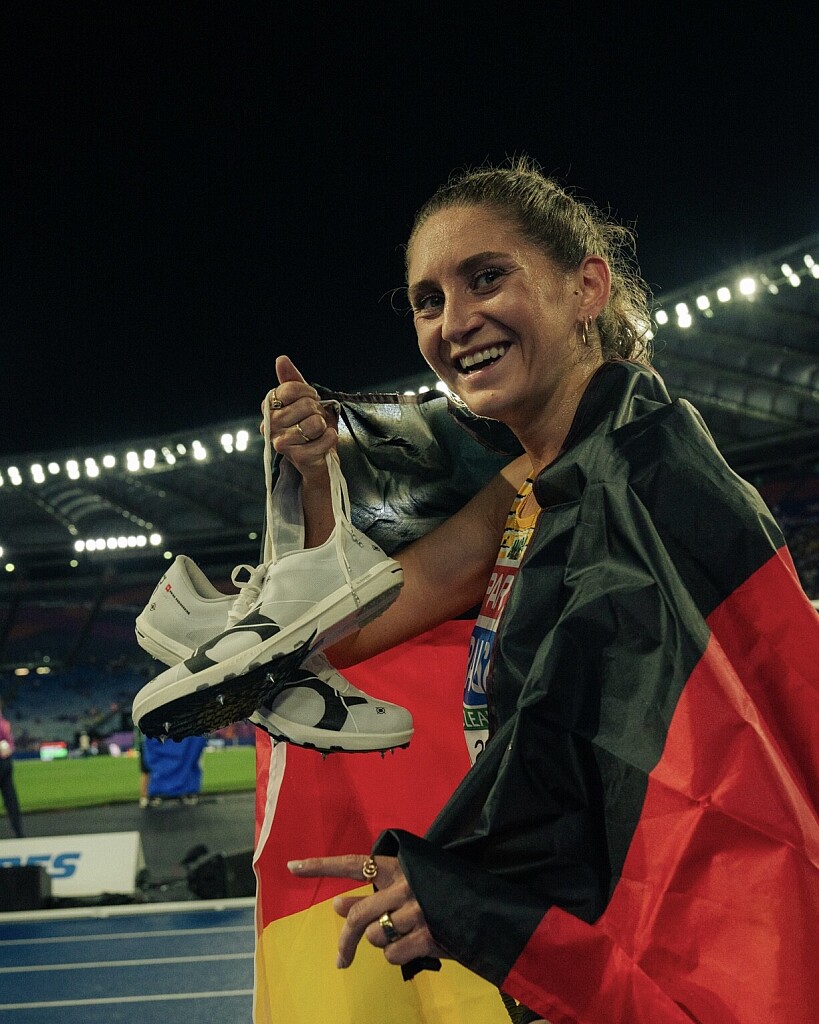
Clash of Olympic Giants Set to Ignite the Women's 3000m Steeplechase at the Prefontaine Classic
One of the most eagerly anticipated races of the 2026 Prefontaine Classic is set to unfold on July 4 at Hayward Field, where an exceptional women's 3000m steeplechase field promises a contest worthy of the global stage.
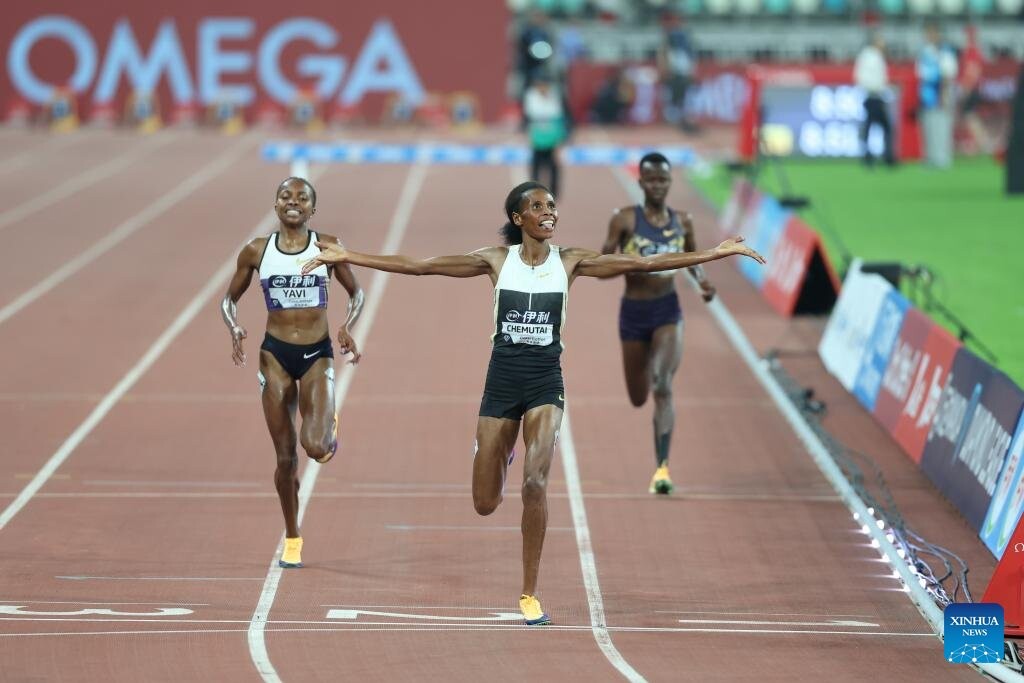
Leading the lineup is reigning Olympic champion Winfred Yavi of Bahrain, whose remarkable personal best of 8:44.32 makes her one of the fastest steeplechasers in history. Standing in her way is Uganda's Olympic silver medalist Peruth Chemutai (8:48.16), alongside Kenya's rising sensation and Olympic bronze medalist Faith Cherotich, who owns an impressive lifetime best of 8:48.71.
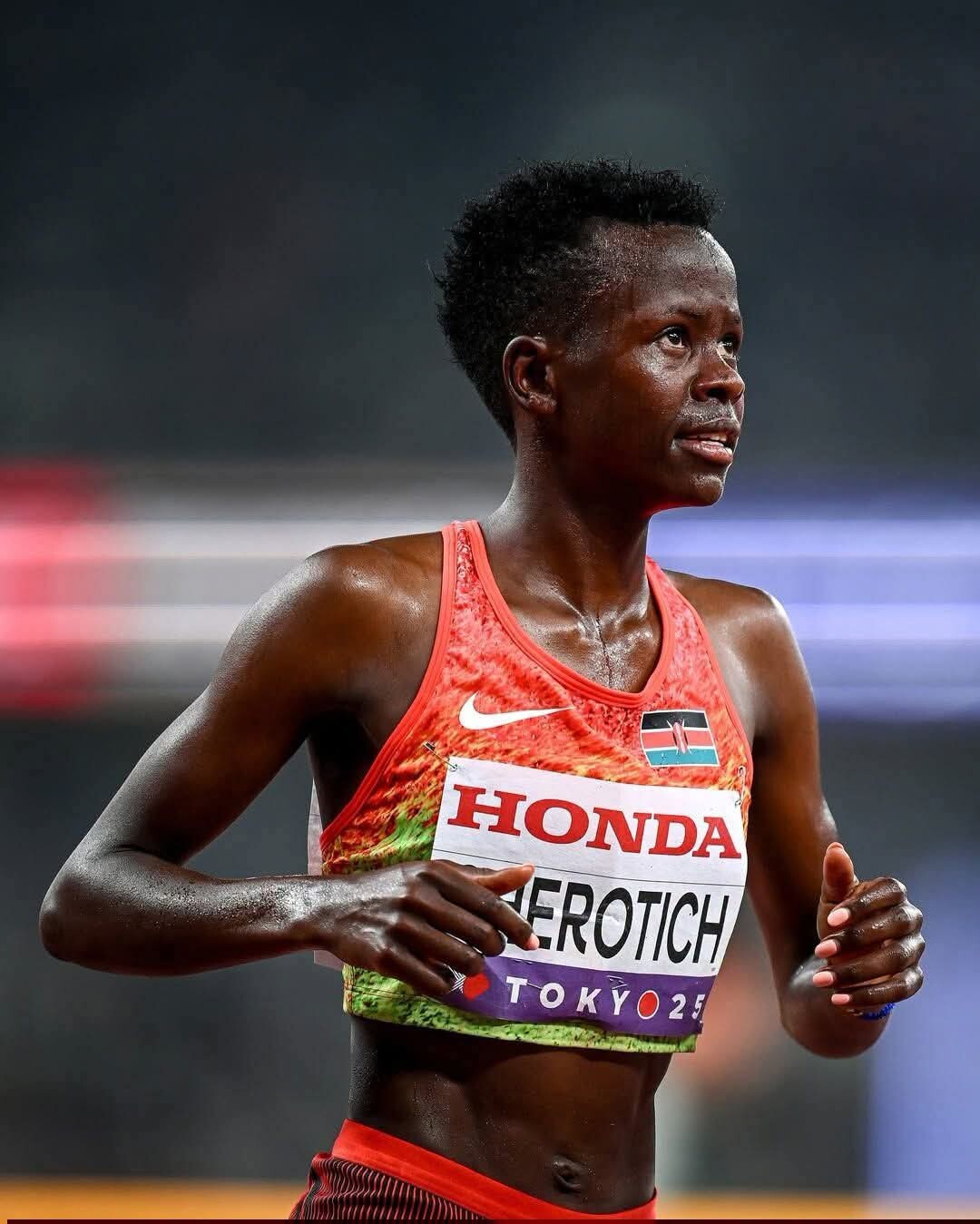
The trio captivated the athletics world with their unforgettable podium sweep at the Paris Olympic Games, and they now renew one of the sport's most exciting rivalries. With all three athletes in outstanding form, the race has every ingredient to produce another historic performance, with the elusive 8:45 barrier once again coming into sharp focus.
The battle, however, extends well beyond the Olympic medalists. Former world champion Norah Jeruto of Kazakhstan adds further quality to an already world-class field, while American icon Emma Coburn returns to compete before a passionate home crowd. Germany's multiple-time European champion Gesa Felicitas Krause also headlines a deep international lineup determined to challenge the frontrunners.
Kenya will also be represented by the talented Doris Lemngole, whose continued rise has added another exciting dimension to the country's strength in the event.
With Hayward Field renowned for producing unforgettable distance races, fans can expect relentless pace, fearless barrier running, and a thrilling contest from the opening lap to the final water jump. The combination of Olympic champions, world-class veterans, and emerging stars makes this one of the standout events of the meeting.
As the world's best steeplechasers gather once again, the stage is perfectly set for another memorable chapter in one of athletics' most captivating disciplines.
by Erick Cheruiyot for My Best Runs.
Login to leave a comment

Prefontaine Classic
The Pre Classic, part of the Diamond League series of international meets featuring Olympic-level athletes, is scheduled to be held at the new Hayward Field in Eugene. The Prefontaine Classicis the longest-running outdoor invitational track & field meet in America and is part of the elite Wanda Diamond League of meets held worldwide annually. The Pre Classic’s results score has...
more...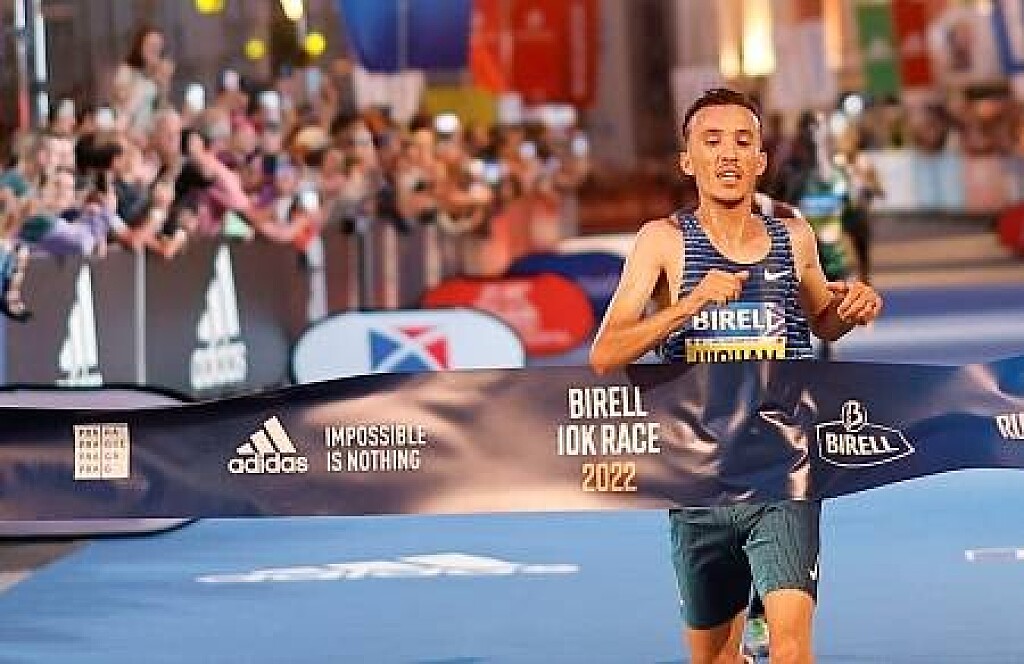
Top European and African Stars Headline tRUNsylvania International 10K Cluj
One of Eastern Europe’s strongest road races takes center stage this Sunday (June 28) as the tRUNsylvania International 10K Cluj, powered by Joma, brings together an exceptional field of elite athletes from Europe and Africa in Cluj-Napoca, Romania.
Run on a fast four-lap circuit through the city’s vibrant center, with the start and finish inside Cluj Arena, the race features numerous athletes capable of producing world-class performances.
Morocco’s Hicham Amghar leads the men’s field with a personal best of 27:09, set when he won the tRUNsylvania 10K in Brașov two years ago. He will face a deep international lineup that includes Norway’s European 10,000-meter silver medalist Zerei Kbrom Mezngi (27:39), France’s Mehdi Frere (27:44), Dutch marathon standout Filmon Tesfu (27:45), Spain’s Juan Antonio Perez (27:45), Kenya’s Moses Cheruiyot (27:51), Italy’s former national marathon record holder Eyob Faniel (28:10), Algeria’s Abderrazak Charik (28:12), Eritrea’s Seare Weldezghi (28:14), the Netherlands’ Noah Schutte (28:19), Spain’s Yago Rojo (28:21), and Australia’s James Whelan (28:26).
Several of Europe’s top runners will also be chasing qualifying standards for the 2026 European Athletics Championships, adding even more significance to the competition.
The women’s race is equally impressive and may prove to be the highlight of the day.
Uganda’s Joy Cheptoyek, the World Cross Country Championships silver medalist, headlines the field with an outstanding personal best of 30:03. Kenya’s Jackline Chepkoech, the 2021 World Under-20 3,000-meter steeplechase champion, will make her highly anticipated 10K road debut after recording an impressive 8:57.35 on the track.
Belgium’s reigning national 10K champion Julie Voet enters with a 31:54 best, while Ireland’s Fiona Everard follows closely at 31:58. The international field also includes France’s Ines Hamoudi (32:20), Ethiopia’s Meselech Alemayehu (32:20), Spain’s Beatriz Alvarez (32:21 on the track), Ireland’s Niamh Allen (32:25), Israel’s Maor Tiyouri (32:29), Türkiye’s Nursena Ceto (32:34), Hungary’s Lilla Bohm (32:41), and Spain’s Cristina Espejo (32:52).
With championship qualifying marks on the line, a fast course, and one of the deepest international fields ever assembled for a road race in Romania, the tRUNsylvania International 10K Cluj is set to deliver exciting competition and fast times from start to finish.
by Boris Baron
Login to leave a comment
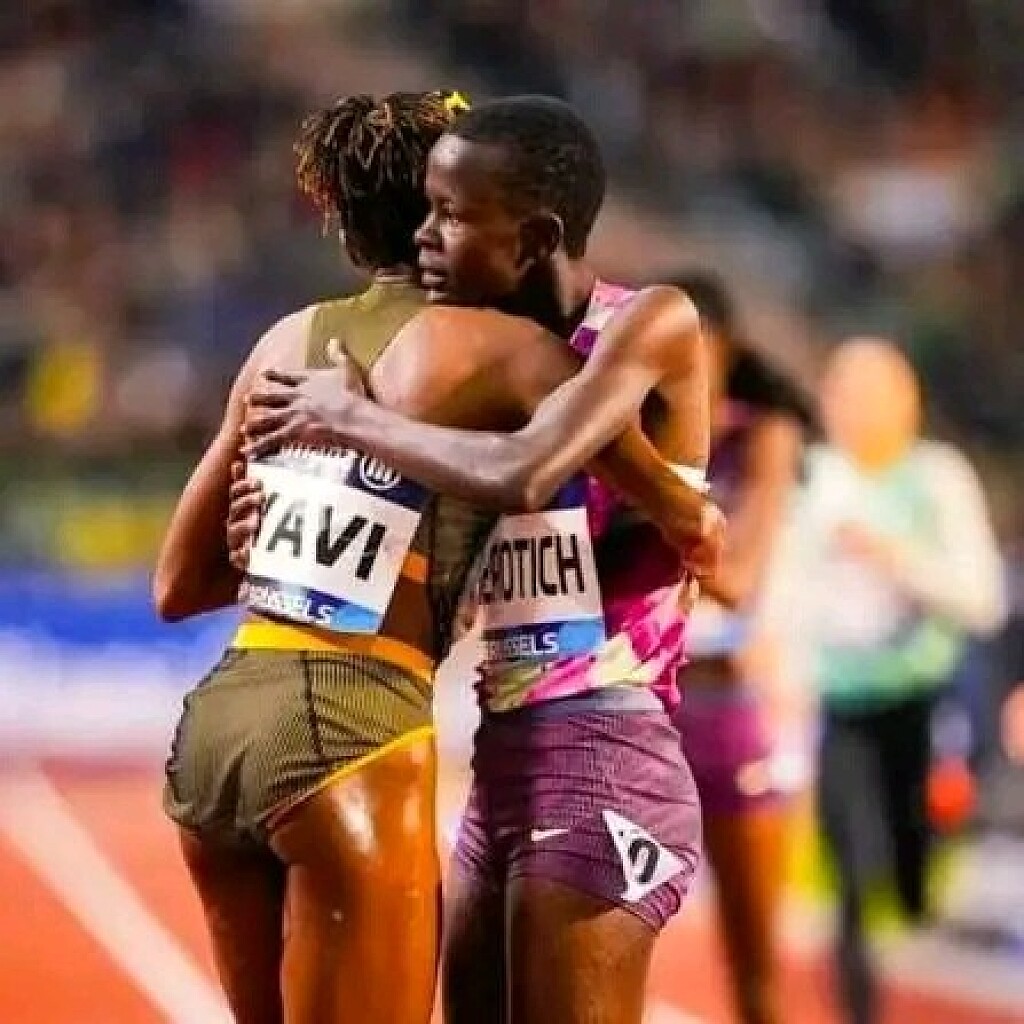
Eugene Awaits: Cherotich, Chemutai and Yavi Set for Blockbuster 3000m Steeplechase Battle
The women's 3000m steeplechase at the upcoming Prefontaine Classic is shaping up to be one of the most anticipated distance races of the season, with a world-class field led by Kenya's rising sensation Faith Cherotich, Uganda's Olympic champion Peruth Chemutai, and Bahrain's formidable record-holder Winfred Yavi.
Scheduled for July 3–4 in Eugene, Oregon, the race promises a fascinating clash of generations, styles, and ambitions as some of the sport's biggest names battle for supremacy on one of athletics' most iconic stages.
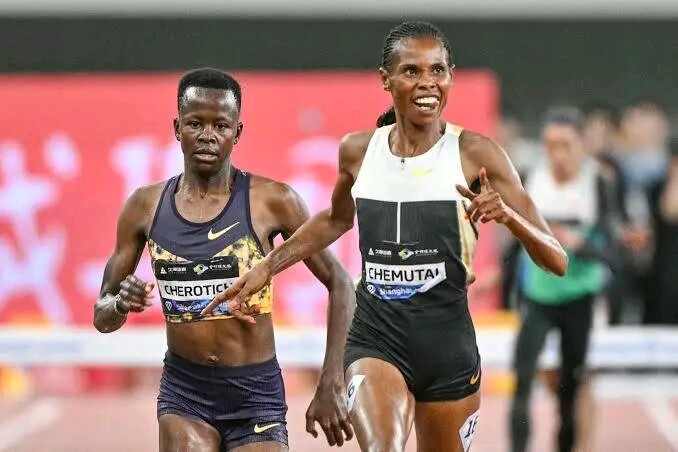
All eyes will undoubtedly be on Cherotich, whose meteoric rise has established her as one of the brightest stars in global steeplechasing. The Kenyan youngster has consistently demonstrated remarkable composure against elite opposition, combining fearless front-running with a devastating finishing kick. Facing another stacked international field, she will be eager to reaffirm her status among the discipline's elite.
Standing in her path is Chemutai, the Ugandan trailblazer whose championship pedigree and tactical brilliance have made her one of the most respected athletes in the event. Known for her ability to deliver under pressure, Chemutai arrives in Eugene with the experience and confidence required to challenge for victory against the world's best.
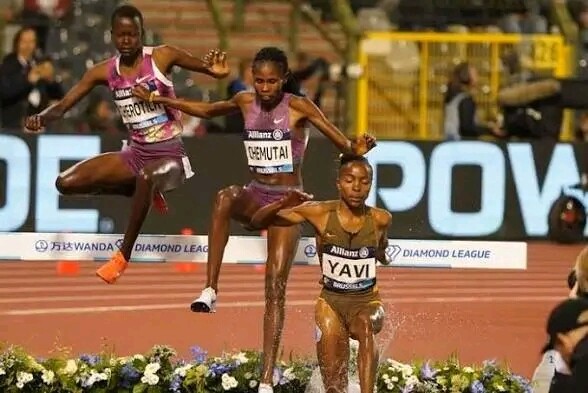
Adding further intrigue is Yavi, whose relentless pace and exceptional barrier technique have transformed her into one of the most dominant steeplechasers of recent years. Whenever Yavi steps onto the track, records and winning times immediately come into the conversation, making her a serious contender for top honours once again.
The depth of the field extends far beyond the headline trio. Kenya's emerging talent Doris Lemngole and experienced campaigner Norah Jeruto add further firepower, while a strong American contingent featuring Lexy Halladay, Gracie Hyde, Olivia Markezich, Gabrielle Jennings, Courtney Wayment and Angelina Napoleon will be eager to impress before a home crowd.
The international challenge is further strengthened by Morocco's Marwa Bouzayani and Germany's accomplished duo of Gesa Felicitas Krause and Lea Meyer, ensuring that every lap will be fiercely contested.
With Olympic and world medalists sharing the track alongside emerging stars hungry for a breakthrough, the stage is set for a thrilling contest that could produce one of the fastest women's steeplechase races of the year. As the athletics world turns its attention to Eugene, fans can expect a captivating battle over barriers and water jumps, where every stride could make the difference between victory and defeat.
The countdown has begun, and if the entry list is anything to go by, the Prefontaine Classic is poised to deliver another unforgettable chapter in the rich history of women's steeplechase racing.
by Erick Cheruiyot for My Best Runs.
Login to leave a comment
Prefontaine Classic
The Pre Classic, part of the Diamond League series of international meets featuring Olympic-level athletes, is scheduled to be held at the new Hayward Field in Eugene. The Prefontaine Classicis the longest-running outdoor invitational track & field meet in America and is part of the elite Wanda Diamond League of meets held worldwide annually. The Pre Classic’s results score has...
more...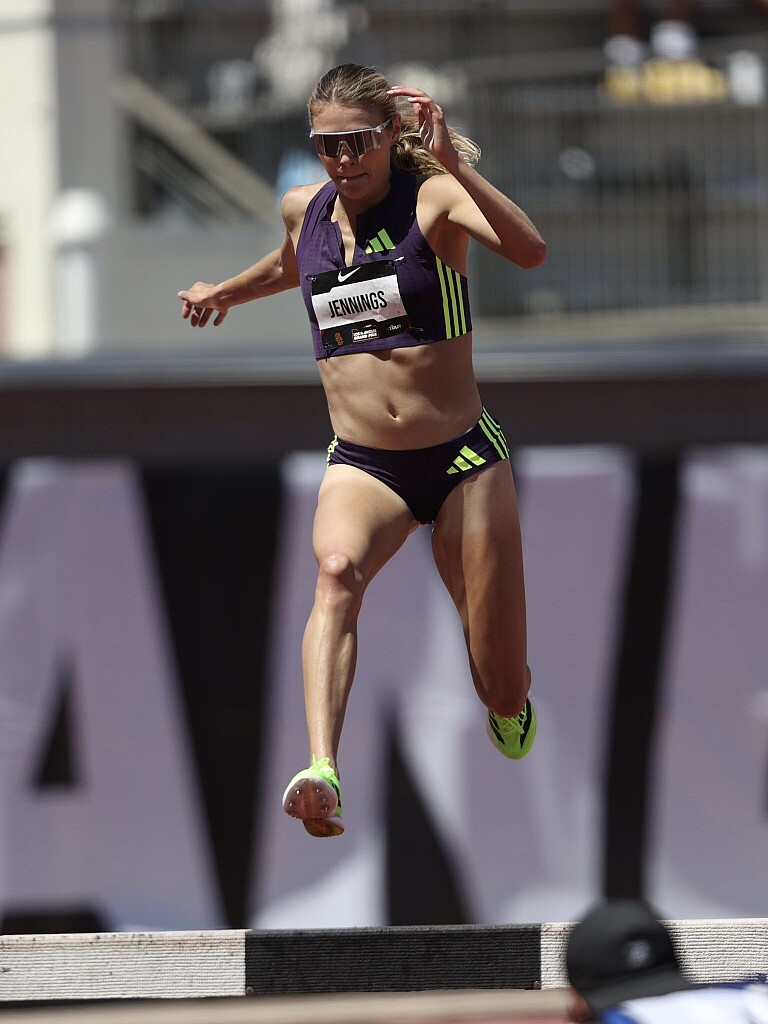
Gabrielle Jennings Shatters Meet Record with Brilliant Steeplechase Masterclass in Los Angeles
Gabrielle Jennings delivered one of the standout performances of the USATF LA Grand Prix, producing a breathtaking display of strength, rhythm, and determination to claim victory in the women's 3000m steeplechase and rewrite the meet record books.
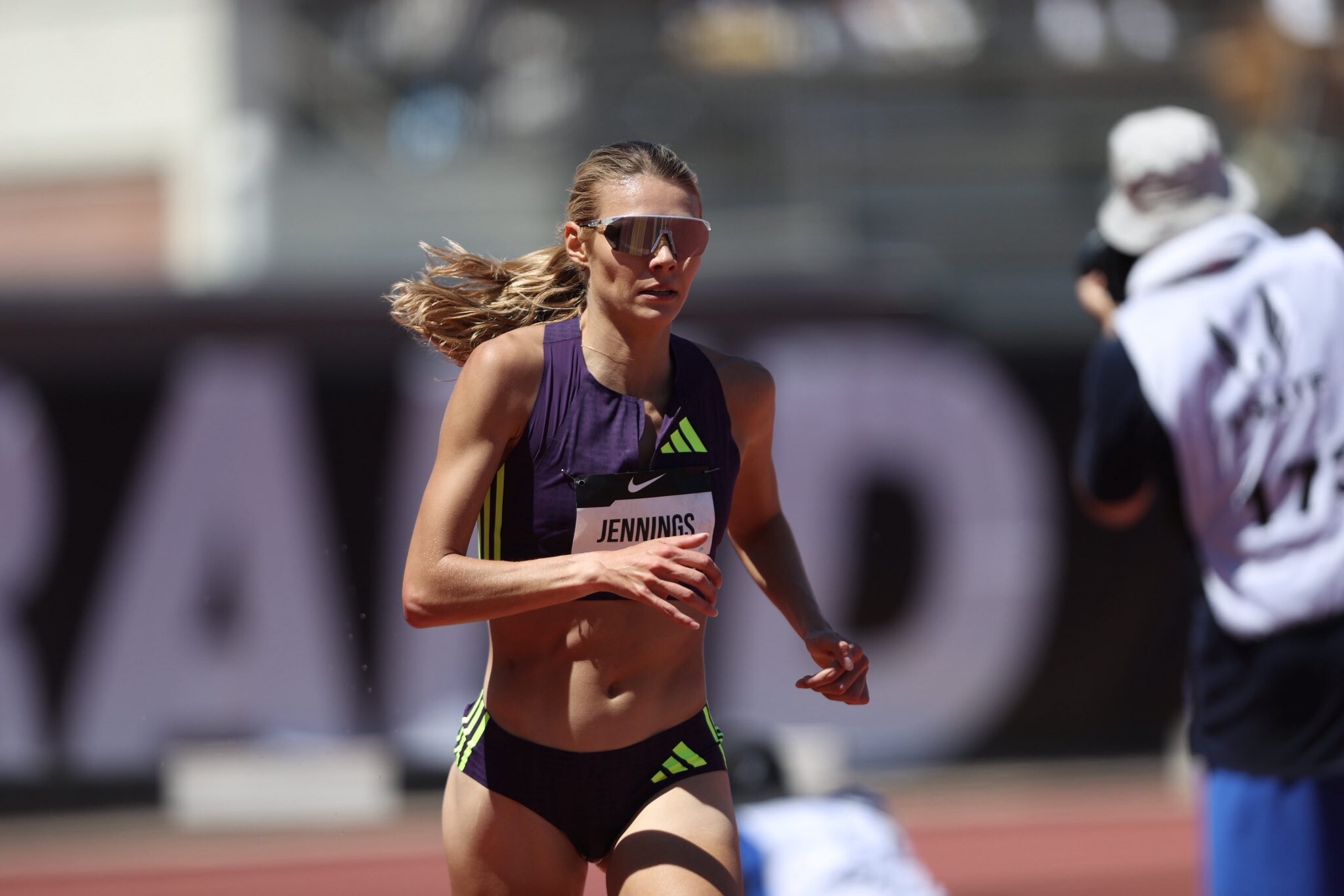
On a night packed with elite competition, Jennings surged clear of a talented field to cross the finish line in a season's best 9:11.72, smashing the previous meet record and improving her position among the world's fastest steeplechasers this year. The performance also strengthened her standing in the 2026 global rankings, underlining her growing reputation as one of the premier athletes in the event.
From the opening laps, Jennings looked composed and in complete control. She settled into an efficient rhythm over the barriers and water jumps, conserving energy before gradually increasing the pressure on her rivals. As the race entered its decisive stages, she separated herself from the field with a powerful surge that none of her competitors could match.
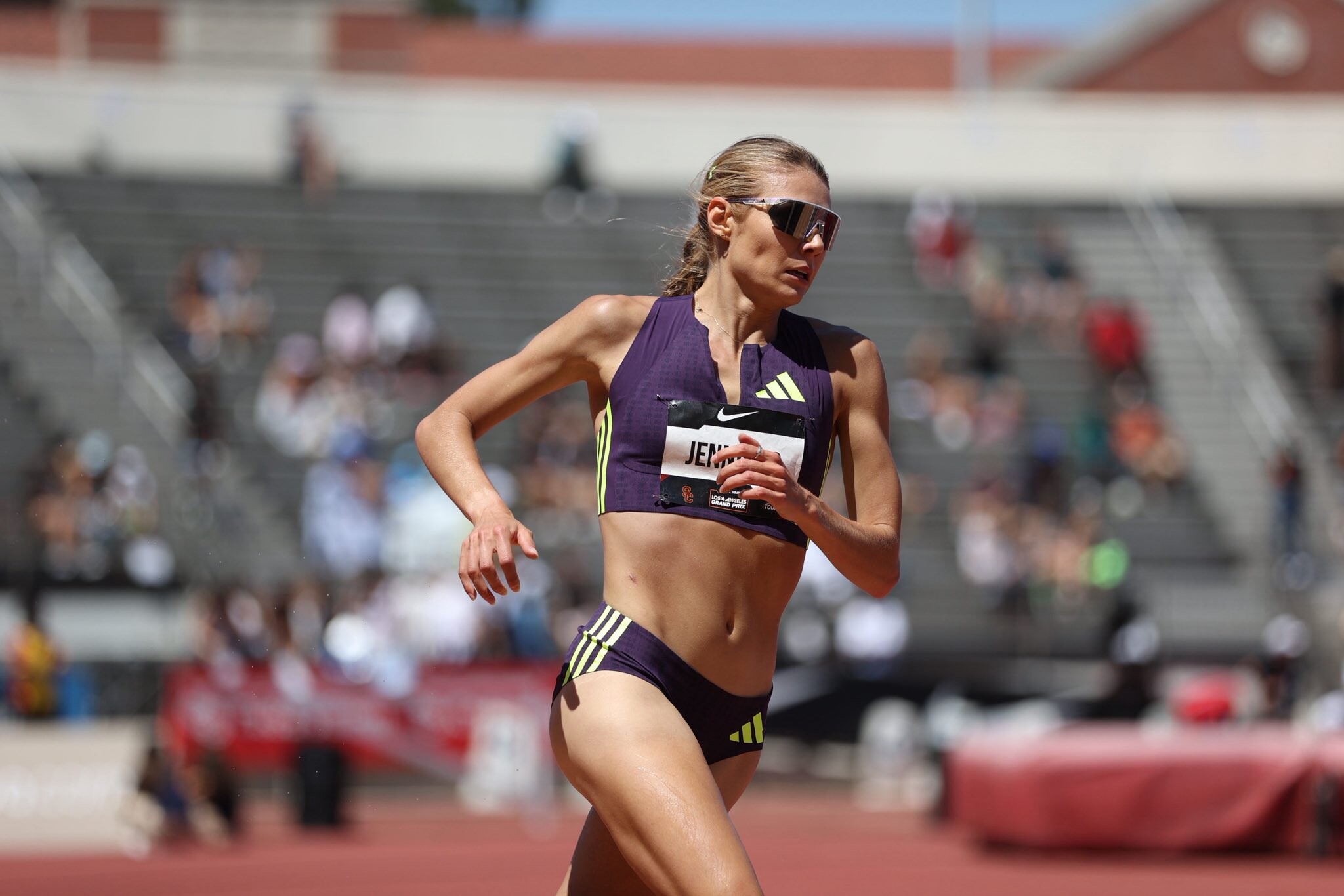
Her winning time of 9:11.72 was not only a personal statement of intent but also one of the fastest performances produced by an American woman this season. The run showcased her exceptional endurance, technical precision, and tactical intelligence—qualities that have made her a rising force on the international circuit.
Behind Jennings, Lexy Halladay produced an impressive run of her own to secure second place in 9:22.89, while Courtney Wayment completed the podium in 9:23.94 after a determined effort throughout the race.
Veteran steeplechase star Emma Coburn continued her return to top-level competition with a solid fourth-place finish in 9:29.38. Just fractions of a second behind her was Angelina Ellis, who rounded out the top five in 9:29.41 after a fiercely contested battle over the closing laps.
The result adds another major milestone to Jennings' 2026 campaign and sends a clear message ahead of the championship season. With her confidence soaring, a meet record now to her name, and her fastest performance of the year on the board, the American star appears poised for even bigger achievements in the months ahead.
by Erick Cheruiyot for My Best Runs.
Login to leave a comment
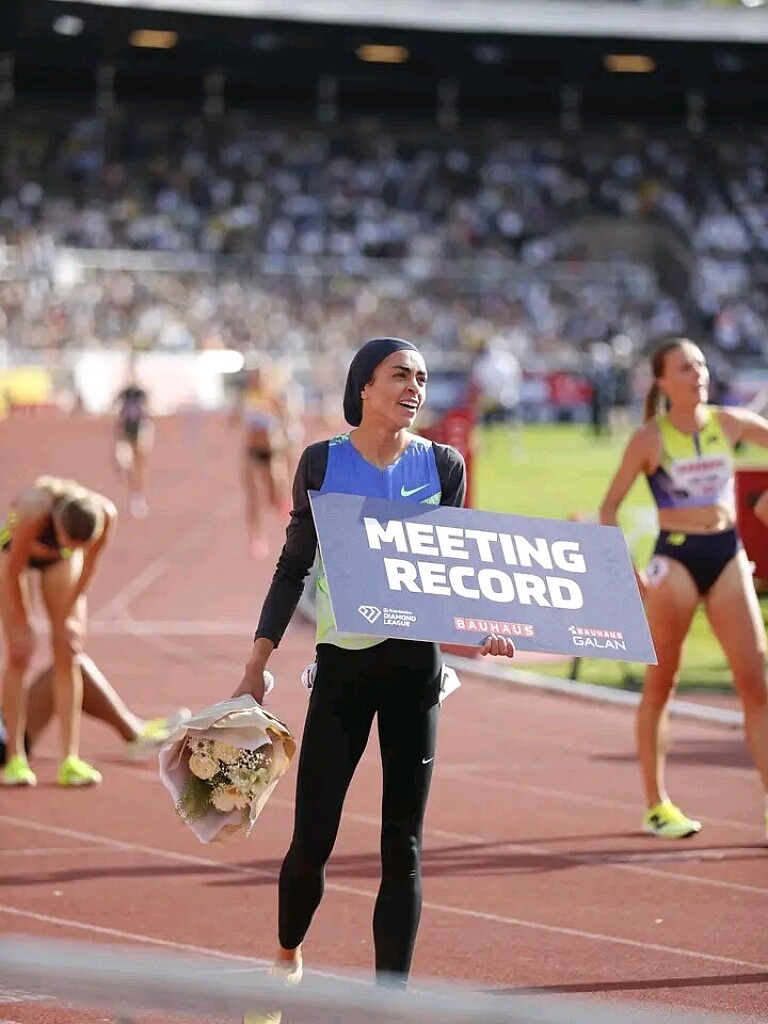
Marwa Bouzayani Smashes Stockholm Meeting Record with Dominant Steeplechase Display
Marwa Bouzayani produced a performance of pure class and authority at the Stockholm Diamond League, storming to victory in the women's 3000m steeplechase and rewriting the meeting record books with a sensational time of 8:59.28.
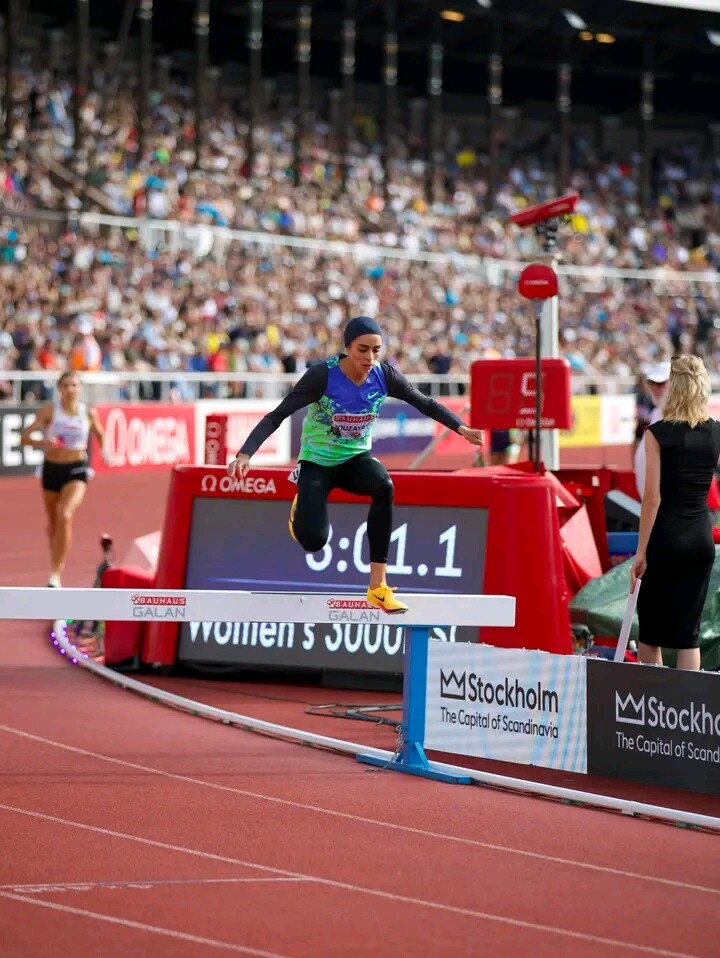
The Tunisian star was simply untouchable as she attacked the race from the front, clearing the barriers with remarkable efficiency and maintaining a relentless pace that none of her rivals could match. As the laps ticked by, Bouzayani steadily increased her advantage, turning the contest into a solo exhibition of strength, endurance, and tactical brilliance.
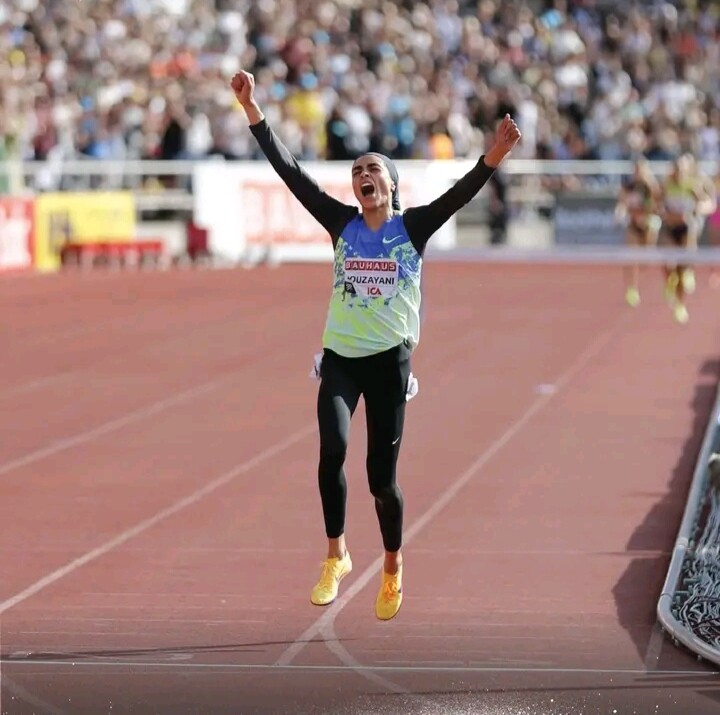
Crossing the finish line in 8:59.28, she not only secured a commanding victory but also shattered the previous Stockholm Diamond League meeting record, becoming the standout performer of the event. Her sub-nine-minute run underlined her status among the world's premier steeplechasers and provided another major statement ahead of the season's biggest championships.
Behind the runaway winner, Great Britain's Elise Thorner delivered an impressive performance to claim second place in 9:11.01, while American Gabrielle Jennings completed the podium with a season's best 9:12.02 after a determined effort throughout the race.
Bouzayani's triumph was more than just a victory—it was a masterclass in front-running. From the opening stages to the final water jump, she controlled every aspect of the race, displaying the confidence and composure of an athlete operating at the peak of her powers.
On a night packed with world-class performances, it was Bouzayani who stole the spotlight. Her record-breaking run in Stockholm will be remembered as one of the defining performances of this year's Diamond League campaign and a powerful reminder of her growing influence on the global stage.
by Erick Cheruiyot for My Best Runs.
Login to leave a comment
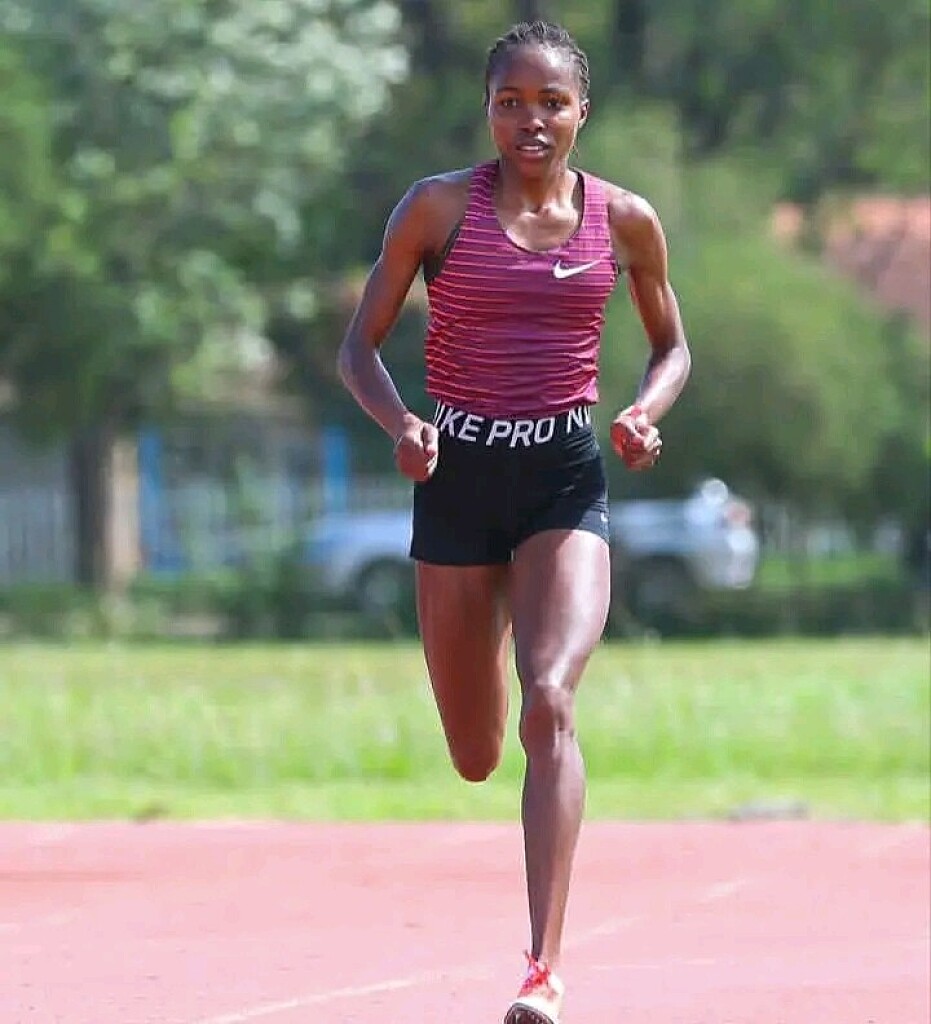
Winfred Yavi Set for Exciting 5000m Test at Rome Diamond League
Olympic and world champion Winfred Yavi will step out of her renowned steeplechase comfort zone on Thursday evening as she takes on a strong women's 5000m field at the Golden Gala Pietro Mennea, the fourth stop of the 2026 Wanda Diamond League in Rome.
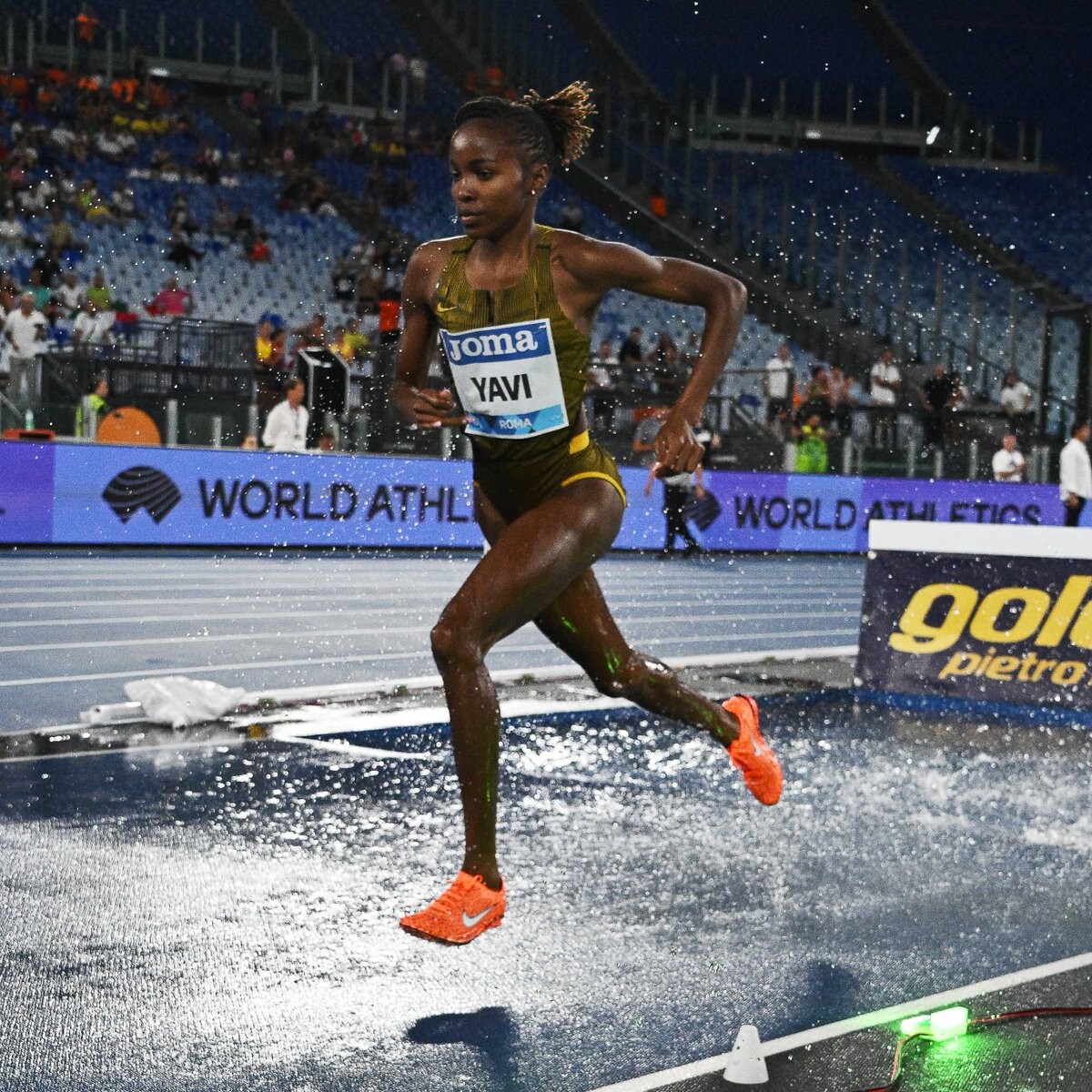
The Bahraini star arrives in the Italian capital carrying impressive credentials over the distance. Yavi owns a personal best of 14:41.99 and currently holds Bahrain's national record in the women's 5000m, underlining her versatility beyond the barriers that have brought her global fame.
Rome holds special memories for Yavi. The Stadio Olimpico was the scene of one of the finest performances of her career in 2024 when she produced the second-fastest women's 3000m steeplechase time in history, narrowly missing the world record. Now she returns to the Eternal City with a different challenge ahead as she looks to make her mark in one of the deepest distance races of the evening.
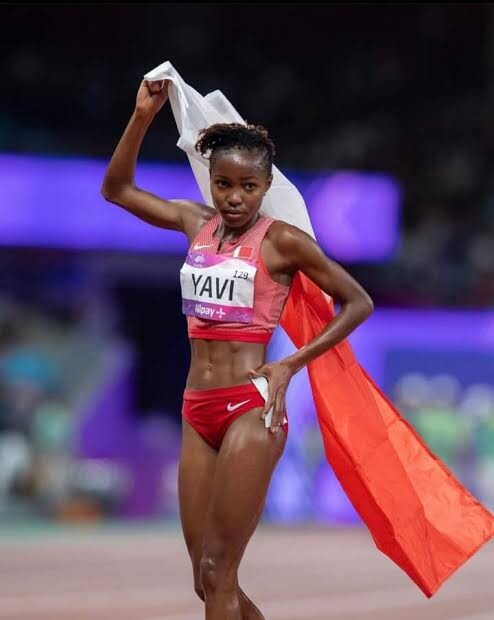
The 27-year-old will face a quality field featuring rising Kenyan talent Caroline Nyaga, Margaret Akidor, Ethiopia's Likina Amebaw and Hirut Meshesha, as well as fellow Kenyan Purity Chepkurui. With several proven performers on the start line, the race promises to be a fierce battle from the opening laps.
Adding further intrigue is the standard set by the event itself. The current world record of 13:58.06 belongs to Kenyan superstar Beatrice Chebet, who became the first woman in history to break the 14-minute barrier for 5000m.
Although Yavi's primary focus remains the steeplechase, her growing strength on the track has made her a genuine threat in longer flat races. Every appearance outside her signature event offers another glimpse into the remarkable range that has transformed her into one of the world's most complete distance runners.
As the lights shine on Rome tonight, all eyes will be on Yavi to see whether she can translate her championship pedigree into another memorable performance. A victory would further cement her reputation as one of the most versatile stars in global athletics and provide a major statement as the Diamond League season gathers momentum.
by Erick Cheruiyot for My Best Runs.
Login to leave a comment
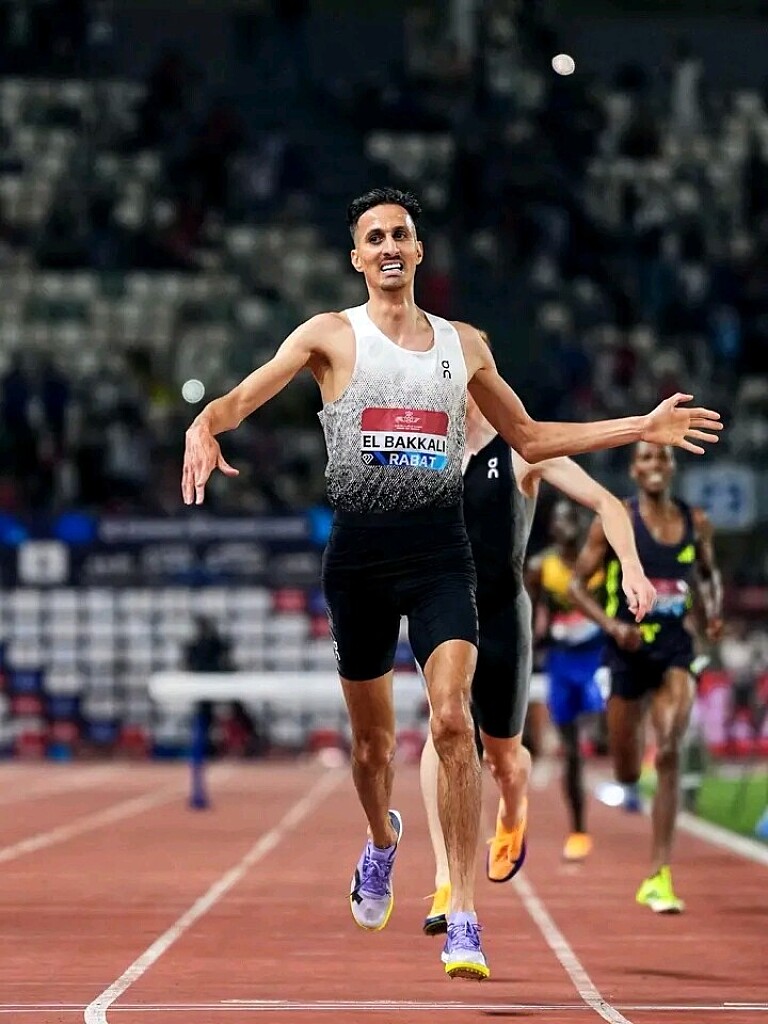
Sub-8 Barrier Falls as El Bakkali Shines and Ruppert Rewrites European History
The men's 3000m steeplechase produced one of the most electrifying races of the season as Morocco's Soufiane El Bakkali stormed to a world-leading performance, headlining a night that saw history made, records shattered, and new names emerge among the event's elite.
El Bakkali, the reigning Olympic and world champion, once again demonstrated why he remains the undisputed king of the steeplechase. Running with supreme confidence from start to finish, the Moroccan star crossed the line in a world-leading 7:57.25, becoming the first athlete this season to break the coveted eight-minute barrier.
The race, however, was far more than a one-man show.
Germany's Frederik Ruppert delivered the performance of his career, producing a stunning 7:57.80 to finish second and obliterate the European record. Ruppert's breakthrough run not only established him as one of the continent's greatest steeplechasers but also marked his arrival as a genuine medal contender on the global stage.
The evening also belonged to Kenya's Simon Kiprop Koech, who achieved a major career milestone by joining the exclusive sub-eight-minute club. Koech clocked a remarkable personal best of 7:59.44, becoming one of the few athletes in history to break the barrier and confirming his growing status among the world's leading steeplechasers.
Fellow Kenyan Edmund Serem continued his impressive rise with another personal best, stopping the clock at 8:01.61. Although just outside the historic eight-minute mark, the performance highlighted his immense potential and further strengthened Kenya's depth in the discipline.
Behind the front quartet, several athletes also produced notable performances, underlining the exceptional quality of the race. The blistering pace pushed competitors to new limits and transformed the contest into one of the fastest steeplechase races ever witnessed.
With El Bakkali setting the world-leading mark, Ruppert rewriting the European record books, and Koech earning membership into one of athletics' most exclusive clubs, the race served as a powerful statement ahead of the championship season.
If this performance is any indication, the men's steeplechase is entering a new era—one where the eight-minute barrier is no longer an untouchable dream but a target increasingly within reach for the world's very best.
by Erick Cheruiyot for My Best Runs.
Login to leave a comment
Soufiane El Bakkali Set to Ignite Rabat as Olympic Champion Returns to Home Soil
The spotlight of the athletics world will shine brightly on Morocco this weekend as hometown hero Soufiane El Bakkali prepares to headline a blockbuster men’s 3000m steeplechase at the Rabat Diamond League on May 31.
The double Olympic champion returns to familiar territory carrying the hopes of an entire nation, with thousands expected to pack the stadium in anticipation of another unforgettable performance from Morocco’s greatest distance-running star of his generation. Whenever El Bakkali races on home soil, the atmosphere transforms into something far beyond a regular Diamond League meeting — a celebration of national pride, excellence, and sporting passion.
After cementing his legacy on the global stage with Olympic glory and multiple world titles, El Bakkali now faces one of the strongest steeplechase fields assembled this season. The Moroccan ace will lead an elite international lineup featuring some of the most dangerous names in world distance running, setting the stage for a fiercely competitive showdown in Rabat.
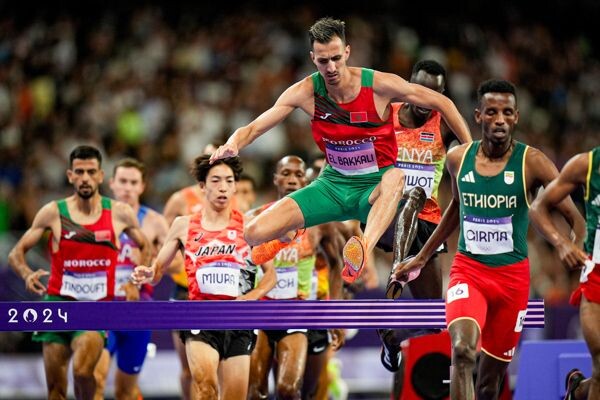
Among the top challengers is Ethiopia’s Samuel Firewu, whose aggressive racing style and finishing speed make him a serious contender over the barriers. Kenya will also arrive heavily represented with Olympic medalist Abraham Kibiwot, rising talent Edmund Serem, and the experienced Simon Kiprop Koech all chasing a major Diamond League victory.
The international depth continues with New Zealand star Geordie Beamish, Spain’s Daniel Arce, Germany’s Frederik Ruppert, France’s Djilali Bedrani and Alexis Miellet, Tunisia’s Mohamed Amin Jhinaoui, and American athlete Matthew Wilkinson. Morocco will also have additional home support through Salah Eddine Ben Yazide, adding even more local excitement to the event.
Despite the world-class opposition, the spotlight will remain firmly fixed on El Bakkali. The Moroccan icon has become synonymous with dominance in the steeplechase, ending years of Kenyan supremacy in the event and inspiring a new generation of North African athletes through his remarkable consistency on the biggest stages.
Rabat’s Diamond League meeting has steadily grown into one of the most electrifying stops on the international athletics calendar, and this year’s steeplechase could become one of the defining races of the season. With Olympic champions, global medalists, and emerging stars all sharing the same start line, fans can expect a tactical and high-intensity contest from the opening lap.
For Morocco, however, this race means more than points or rankings. It represents the return of a national hero whose achievements have elevated the country’s status in world athletics. As the crowd roars inside the stadium on Sunday, El Bakkali will once again carry the weight of expectation — and the energy of an entire nation behind him.
If history is any indication, Rabat may be about to witness another magical chapter in the remarkable career of Soufiane El Bakkali.
by Erick Cheruiyot for My Best Runs.
Login to leave a comment

Road to Beijing 2027: World Athletics Unveils Tougher Qualification System for Global Championships
The road to the 2027 World Athletics Championships in Beijing has officially begun — and earning a place on athletics’ biggest stage is about to become even more demanding.
World Athletics has now confirmed the qualification system and entry standards for the championships set for September 2027 in Beijing, China, introducing a major adjustment that could reshape the battle for global qualification across distance running and track events.

Under the newly announced structure, only around 40 percent of athletes will qualify automatically through direct entry standards, while the remaining 60 percent of places will be awarded via the World Athletics Rankings system. The change represents a clear shift away from the previous 50-50 balance used in recent championships.
The updated model places greater emphasis on consistency throughout the season rather than relying solely on one exceptional performance. Athletes will now need to compete regularly at high-level meetings, collect ranking points, and maintain elite performances across an extended qualification period.
For distance runners, the standards remain exceptionally demanding, highlighting the increasing depth and competitiveness of global athletics.

In the men’s marathon, athletes must run 2:06:00 or faster to secure an automatic qualification mark, while the women’s standard has been set at 2:23:20. The qualifying window for the marathon opened on November 3, 2025, and will close on Midnight May 2, 2027.
The men’s 10,000m standard has been fixed at 26:48.00, with the women required to run 30:40.00. In the 5000m, athletes must clock 12:50.00 for men and 14:36.00 for women to gain direct entry.
Middle-distance events will also demand world-class performances. The men’s 1500m standard stands at 3:30.00, while women must achieve 3:58.00. In the 800m, the entry standards are 1:43.00 for men and 1:57.50 for women.
Sprint events remain brutally competitive. Athletes targeting the men’s 100m must break 10 seconds with a qualifying standard of 9.95, while the women’s requirement has been set at 10.96. In the 200m, the standards stand at 20.07 for men and 22.45 for women.
The hurdles events also demand elite-level precision and speed, with qualifying marks of 13.18 in the men’s 110m hurdles and 12.60 in the women’s 100m hurdles.
Meanwhile, the 3000m steeplechase standards have been fixed at 8:08.00 for men and 9:06.50 for women — times that underline the growing global standard in one of athletics’ most physically demanding disciplines.
World Athletics says the revised qualification pathway is designed to create stronger, more competitive championship fields while maintaining strict control of athlete numbers across all disciplines.
Qualification windows for the 10,000m, race walks, combined events, and relays will run from February 23, 2026, through August 22, 2027. For all other track events, athletes can qualify between August 23, 2026, and August 22, 2027.
The new system is expected to intensify competition across the entire athletics calendar, with ranking points now becoming more valuable than ever before. Athletes will no longer depend solely on one breakthrough race; instead, sustained excellence across multiple competitions may prove decisive in securing a ticket to Beijing.
As preparations begin worldwide, the countdown to Beijing 2027 has already sparked anticipation for what could become one of the most fiercely contested World Championships in recent history.
by Erick Cheruiyot for My Best Runs.
Login to leave a comment
Ezekiel Kemboi at 44: The Enduring Legacy of a Steeplechase Legend
Few athletes have ever dominated the 3000m steeplechase with the brilliance, charisma and longevity of Ezekiel Kemboi. Born on May 25, 1982, in Matira, Kenya, Kemboi grew into one of the most iconic figures the event has ever produced, turning the steeplechase into both a spectacle and an art form.
Inspired by legendary Kenyan steeplechaser Moses Kiptanui and later mentored by Paul Ereng, the 1988 Olympic 800m champion, Kemboi developed the confidence and competitive mentality that would define his extraordinary career.
From the moment he emerged on the international stage, Kemboi brought a fearless approach to the barriers and water jumps. He raced with unmatched courage, often controlling championship finals with tactical intelligence and explosive finishing speed. His style made him one of the most difficult athletes to defeat under pressure.
Kemboi became a two-time Olympic champion in the 3000m steeplechase, winning gold in Athens in 2004 before reclaiming the Olympic crown in London in 2012. His ability to remain at the top for nearly a decade separated him from many great champions before him.
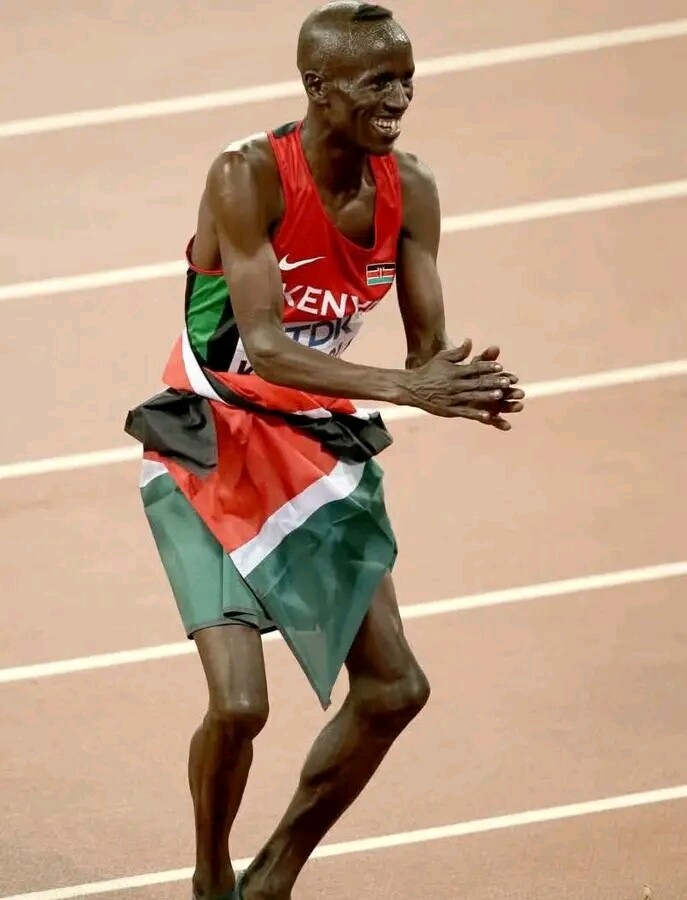
Even more impressive was his dominance at the World Championships, where he won four consecutive world titles in 2009, 2011, 2013 and 2015 — one of the greatest championship streaks in steeplechase history.
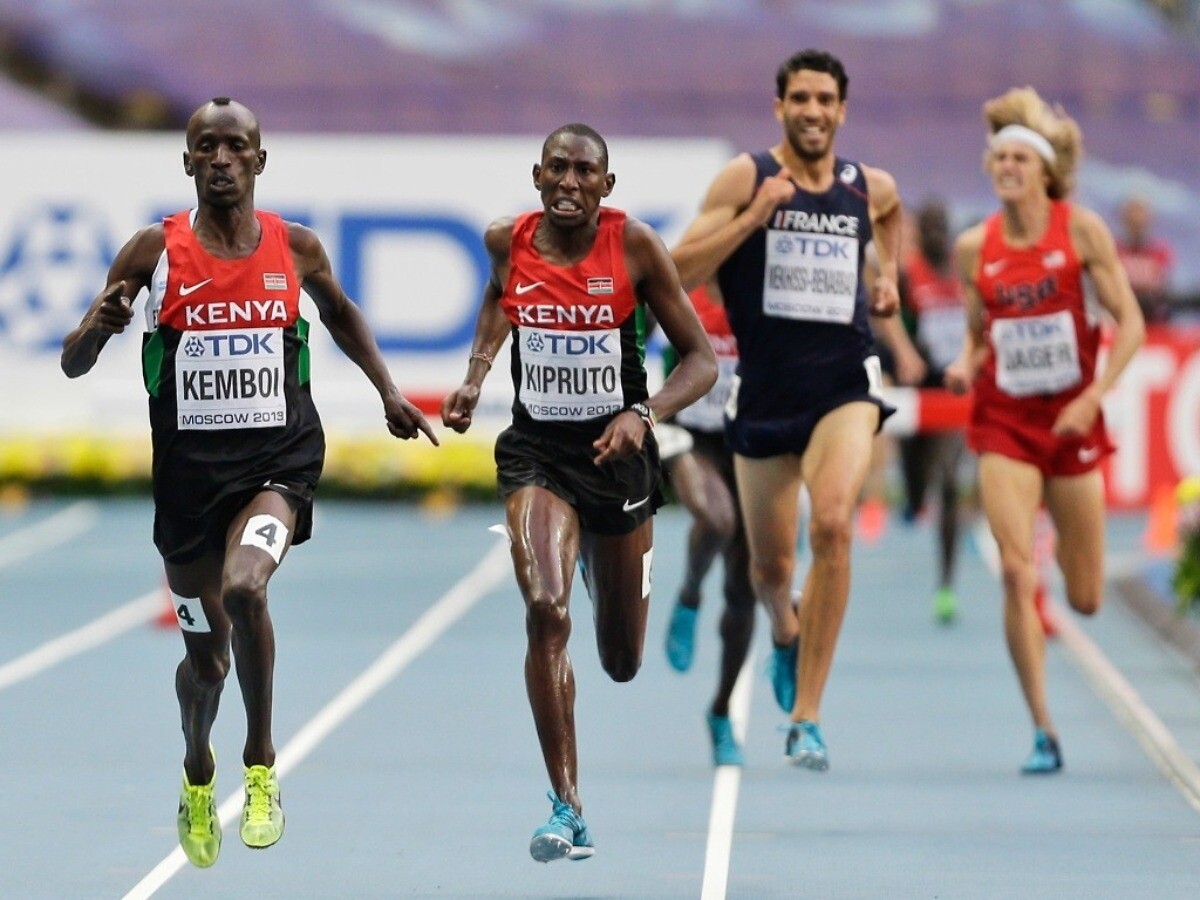
Throughout his remarkable journey, Kemboi collected an astonishing 15 major championship medals:
7 gold medals
6 silver medals
2 bronze medals
He collected those medals across the Olympic Games, World Championships, African Championships and Commonwealth Games, consistently proving himself against the very best athletes in the world. His ability to deliver year after year at the highest level highlighted not only his remarkable talent, but also his resilience, longevity and championship mentality.
Beyond the medals, Kemboi became famous for bringing excitement and personality to the event. His unforgettable finish-line dances became iconic moments in athletics, turning victories into celebrations that fans across the world eagerly anticipated. He showed that a champion could dominate fiercely while still expressing joy and individuality.
Kemboi’s brilliance was also reflected in his incredible speed. His personal best of 7:55.76, set in Monaco in 2011, places him among the fastest steeplechasers in history and remains one of the standout performances ever recorded in the event.
For many young athletes, especially in Kenya, Ezekiel Kemboi’s story continues to serve as a powerful source of inspiration. From a small village in Kenya to Olympic and world glory, he proved that discipline, belief and fearlessness can elevate an athlete to legendary status.
Today, his legacy stands far beyond medals and records. Ezekiel Kemboi transformed steeplechase into a global spectacle and inspired an entire generation to dream bigger every time they approach the barriers.
by Erick Cheruiyot for My Best Runs.
Login to leave a comment
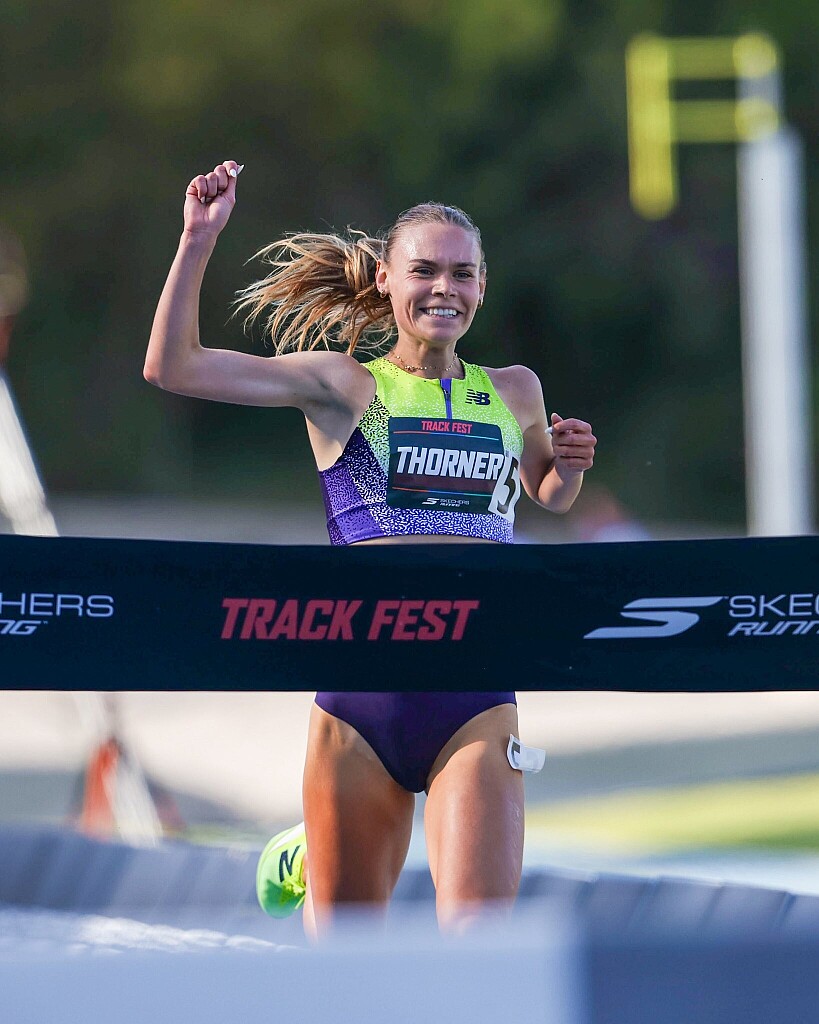
Elise Thorner Announces Herself Among Britain’s Steeplechase Elite with Brilliant Los Angeles Victory
Elise Thorner delivered the race of her career in Los Angeles, producing a stunning breakthrough performance in the women’s 3000m steeplechase at the Sound Running Track Festival.
The British distance runner stormed to victory in a massive personal best of 9:07.39, completely dominating the field and crossing the finish line an astonishing 14 seconds clear of her nearest rival. It was not only the biggest win of her season so far, but also a statement performance that firmly places her among the finest steeplechasers Britain has produced.
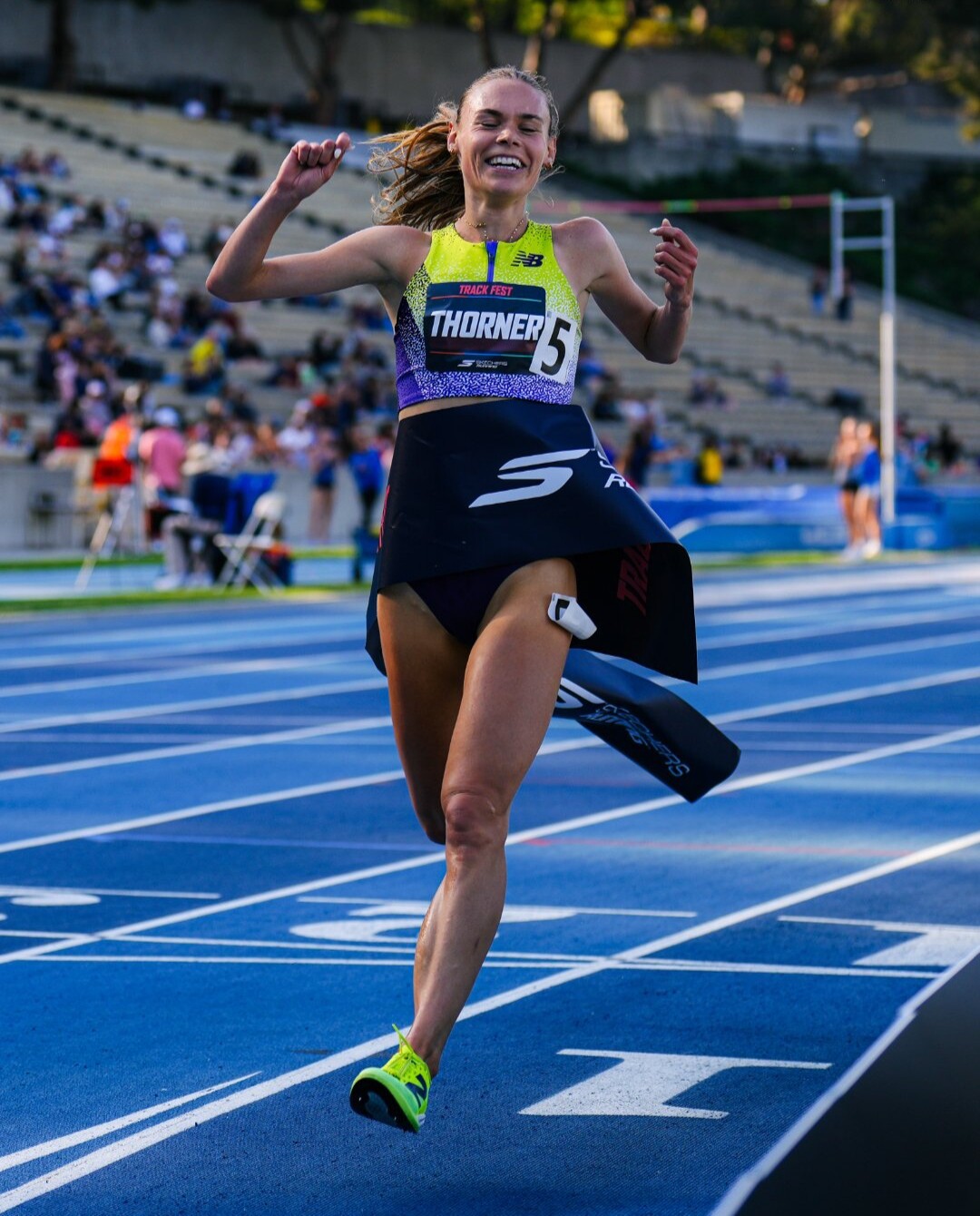
Under the California evening sky, Thorner looked composed and fearless from the opening laps. She attacked the barriers with confidence, maintained a relentless rhythm throughout the race and gradually pulled further and further away from the chasing pack. By the closing stages, the contest had turned into a solo run to the line as she powered home to one of the fastest times ever recorded by a British woman in the event.
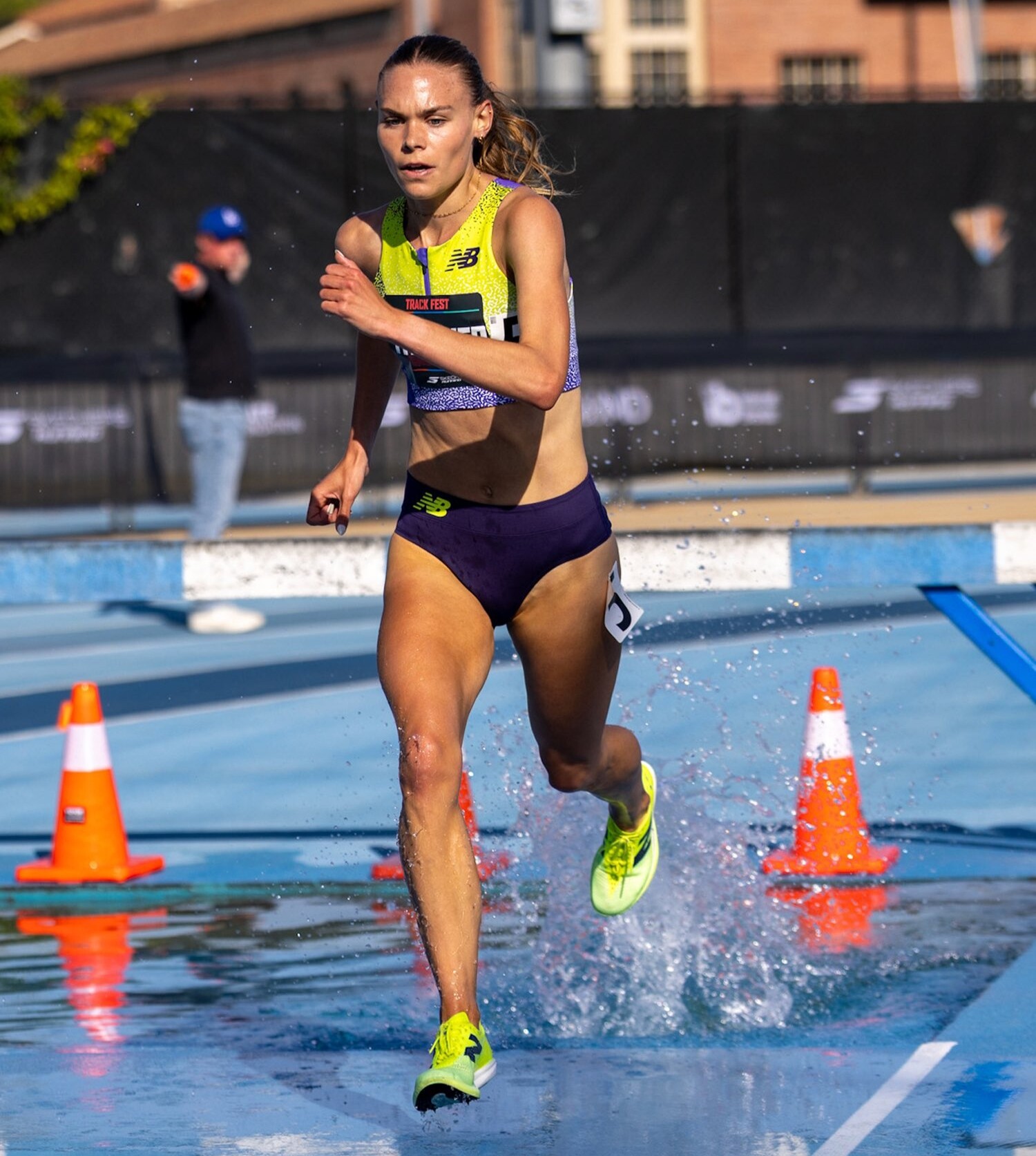
Her remarkable run now moves her to second on the British all-time list, behind only Lizzie Bird’s national record of 9:04.25. More significantly, Thorner and Bird remain the only British women in history to break the prestigious 9:10 barrier in the 3000m steeplechase — a reflection of just how exceptional the performance was.
The improvement also highlights the rapid rise of the talented Briton, who continues to make giant strides on the international stage. Cutting several seconds from an already impressive personal best is no small achievement at elite level, yet Thorner made it look effortless with a performance full of maturity, strength and tactical intelligence.
With the summer season still gathering momentum, attention will now shift toward the British record. On current form, Bird’s long-standing mark suddenly looks vulnerable, and Thorner appears to be developing into a genuine contender for major championship success.
For now, Los Angeles belongs to Elise Thorner — an evening where talent, confidence and preparation came together perfectly to produce a career-defining performance.
by Erick Cheruiyot for My Best Runs.
Login to leave a comment
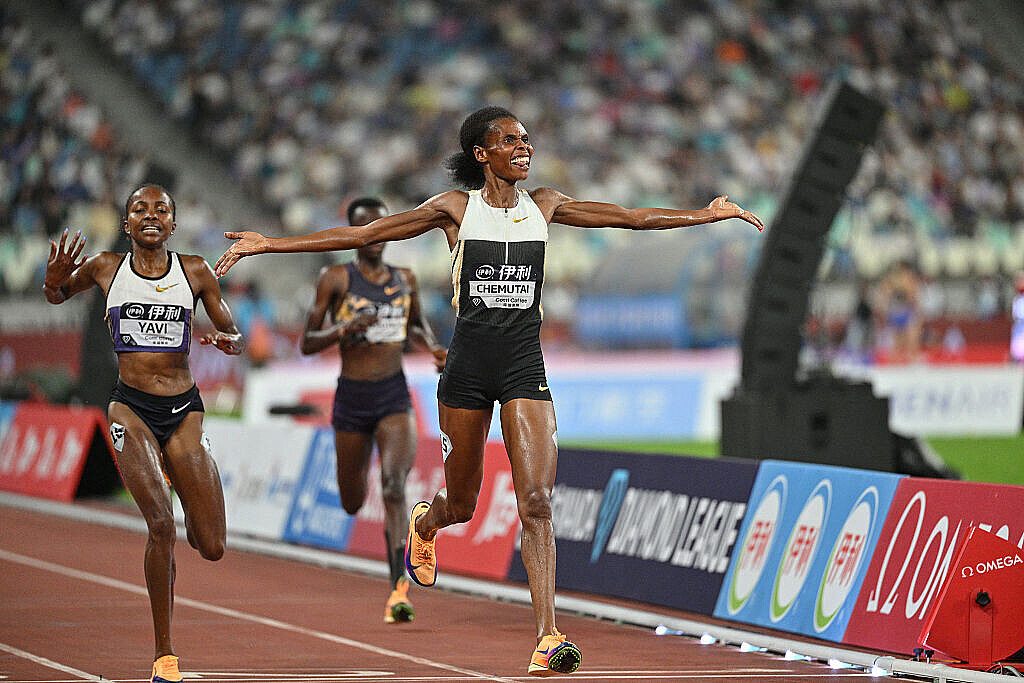
Chemutai Completes Diamond League Double with Stunning Xiamen Masterclass
Ugandan star Peruth Chemutai continued her brilliant start to the season with another world-class display, storming to victory in the women’s 3000m steeplechase at the Xiamen Diamond League in a world-leading 8:51.06.
The triumph completed a remarkable early-season Diamond League double for Chemutai, who had already opened her campaign with victory in Keqiao. Carrying that momentum into Xiamen, the Olympic champion once again proved why she remains one of the most formidable athletes in global distance running.
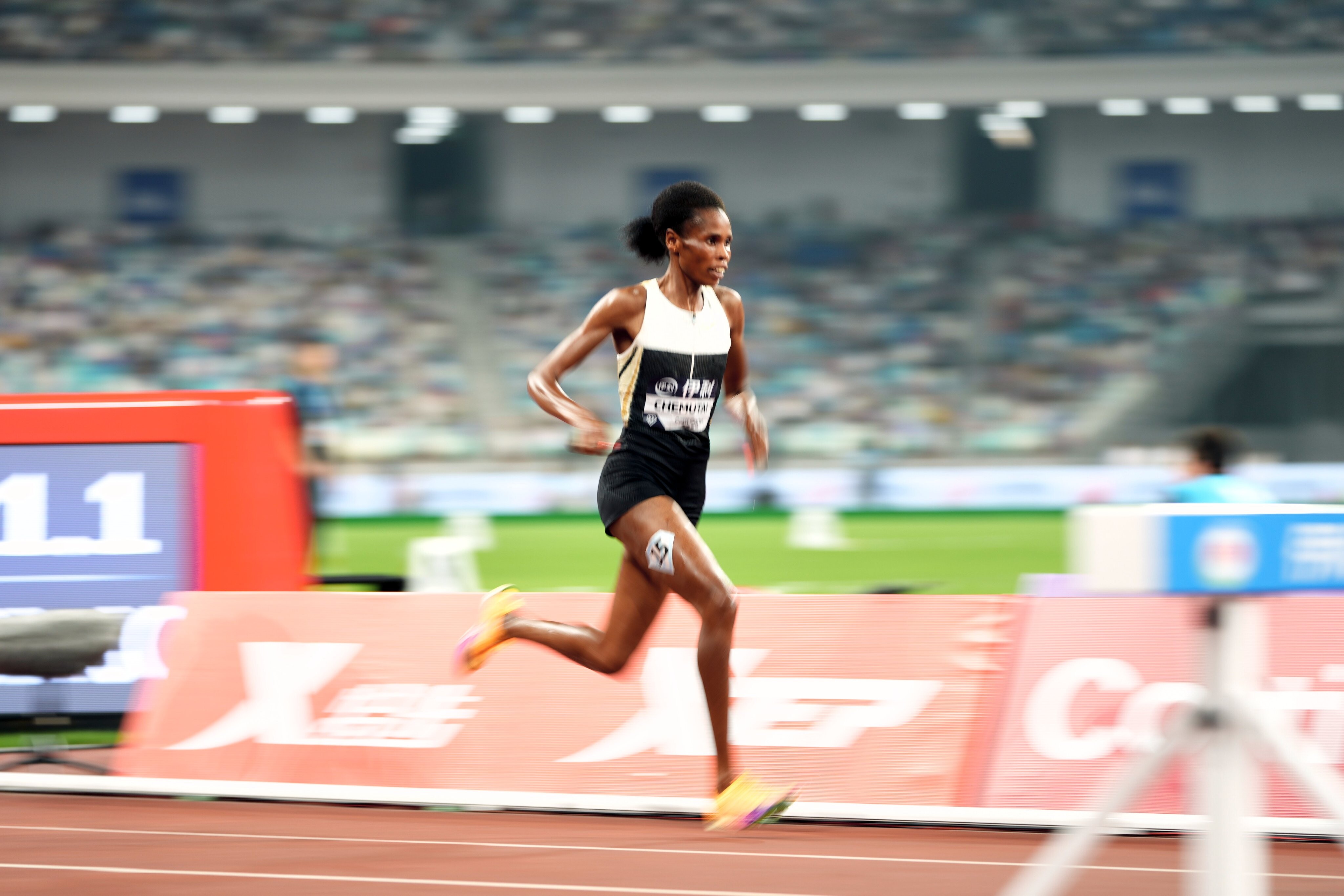
Against an elite field featuring the last two global champions, Chemutai delivered a composed and commanding performance from start to finish. She timed her race perfectly, maintaining relentless rhythm over the barriers before unleashing a decisive finishing surge that none of her rivals could match.
Bahrain’s Winfred Yavi, the reigning world champion, pushed hard throughout the contest and crossed second in 8:51.54, while Kenya’s Faith Cherotich finished third in 8:52.53 after another impressive run on the international stage.
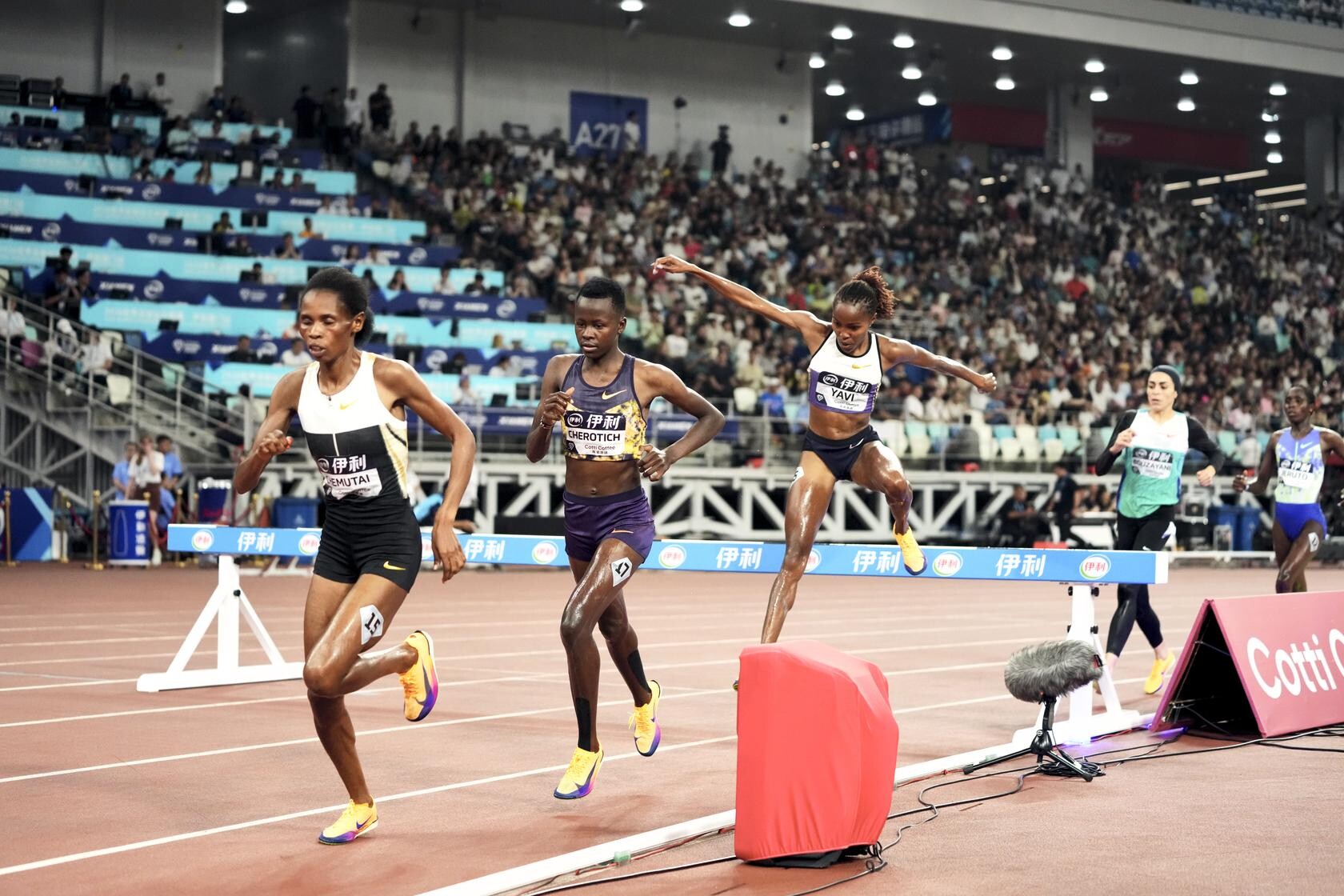
The quality of the race underlined just how exceptional Chemutai’s performance truly was. Beating both of the sport’s most recent global champions in one of the fastest races ever run this early in the season sent a powerful message to the rest of the athletics world.
From the opening laps, the pace was aggressive and unforgiving, yet Chemutai looked completely in control. Her barrier technique remained smooth and efficient, while her strength over the final kilometer separated her from the field in spectacular fashion. By the final water jump, the Ugandan had already stamped her authority on the race.
Beyond the fast time and the meeting record, the victory symbolised something even bigger — consistency at the very highest level. After battling difficult moments in recent seasons, Chemutai now appears sharper, stronger and more confident than ever.
Her back-to-back Diamond League victories have instantly established her as one of the standout athletes of the season, and with the major championships approaching, the Ugandan star looks ready to challenge for even greater glory.
In Xiamen, the women’s steeplechase once again showcased extraordinary global depth. But on a night filled with champions, it was Peruth Chemutai who stood tallest.
by Erick Cheruiyot for My Best Runs.
Login to leave a comment
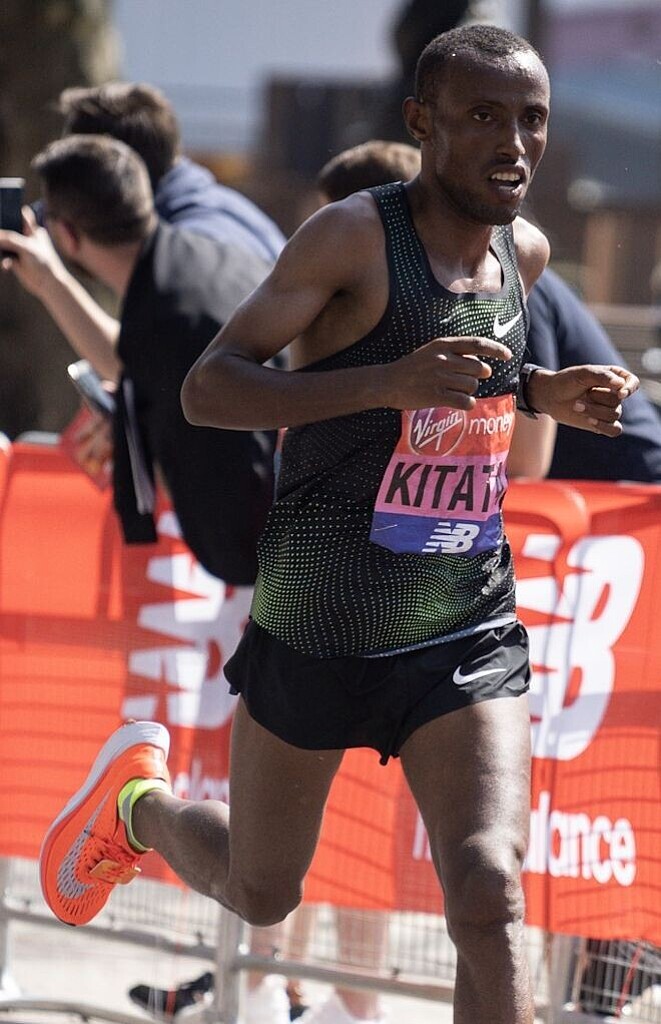
Shura Kitata Leads Star-Studded Field for 2026 Ottawa International Marathon
The 2026 Ottawa International Marathon is shaping up to be one of the most competitive editions in recent years, with Ethiopian marathon star Shura Kitata set to headline a powerful men’s elite field in the Canadian capital.
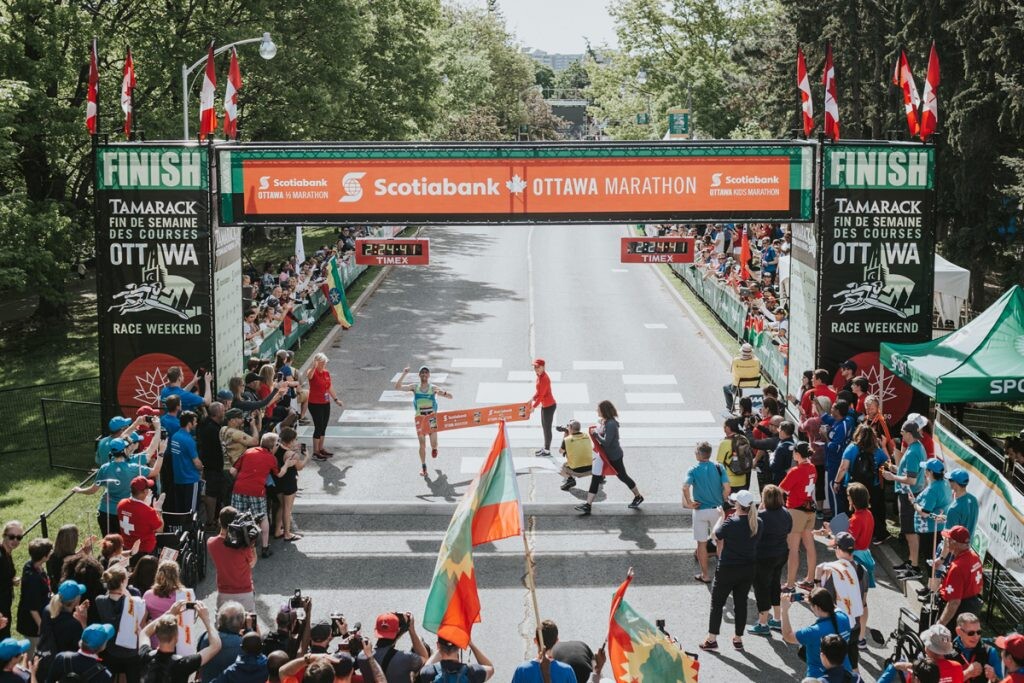
Scheduled for Sunday, May 24, the race has attracted a deep lineup of accomplished distance runners from across the globe, promising a thrilling battle through the streets of Ottawa. Kitata arrives as the marquee name of the event, carrying a personal best of 2:03:59 and the reputation of being one of the most experienced marathon competitors on the international circuit.
The Ethiopian veteran has built his career on consistency and tactical brilliance, earning victories and podium finishes at some of the world’s biggest marathons. His presence instantly raises the profile of the race and positions him as the athlete to beat.
However, the road to victory will be anything but straightforward.
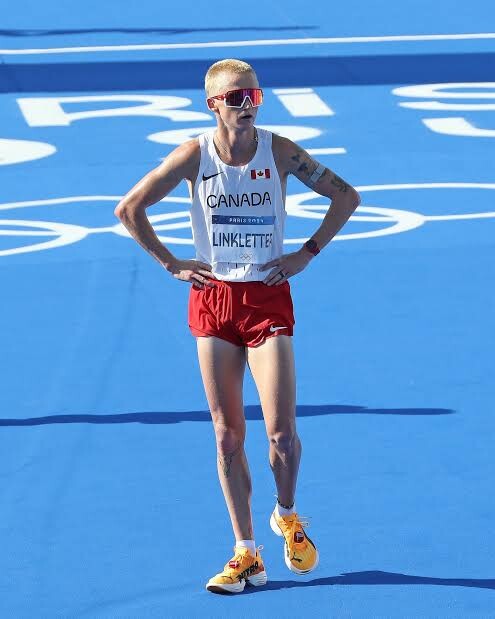
Fellow Ethiopian Asrar Hiyrden also enters with an identical personal best of 2:03:59, setting the stage for what could become a dramatic head-to-head duel between the two East African stars. Canada’s Rory Linkletter will carry home hopes into the race after clocking an impressive 2:06:04, while Gebretsadik Abraha and Mulugeta Debasu add even more Ethiopian depth to an already stacked field.
The elite lineup also features strong contenders such as Gizealew Ayana, Afewerk Mesfin, Daniel Mesfun, Luke Kibet Cheruiyot, Elvis Cheboi and Kipsambu Kimakal, creating a truly international contest packed with proven marathon talent.
One of the most intriguing names on the start list is Canadian athlete John Gay, who is set to make his marathon debut. Known primarily for his achievements on the track and over the steeplechase, Gay’s transition to the marathon will be closely watched by fans and analysts alike.
With multiple athletes boasting personal bests under 2:07 and several more capable of breakthrough performances, the 2026 Ottawa International Marathon could produce one of the fastest races ever seen on Canadian soil.
Beyond the times and statistics, the event represents another major showcase for global marathon running, blending established champions with rising stars hungry for a defining performance. As anticipation builds, all eyes will be on Shura Kitata and the elite field as they prepare to deliver a spectacular showdown in Ottawa.
by Erick Cheruiyot for My Best Runs.
Login to leave a comment

Ottawa Marathon
As one of two IAAF Gold Label marathon events in Canada, the race attracts Canada’s largest marathon field (7,000 participants) as well as a world-class contingent of elite athletes every year. Featuring the beautiful scenery of Canada’s capital, the top-notch organization of an IAAF event, the atmosphere of hundreds of thousands of spectators, and a fast course perfect both...
more...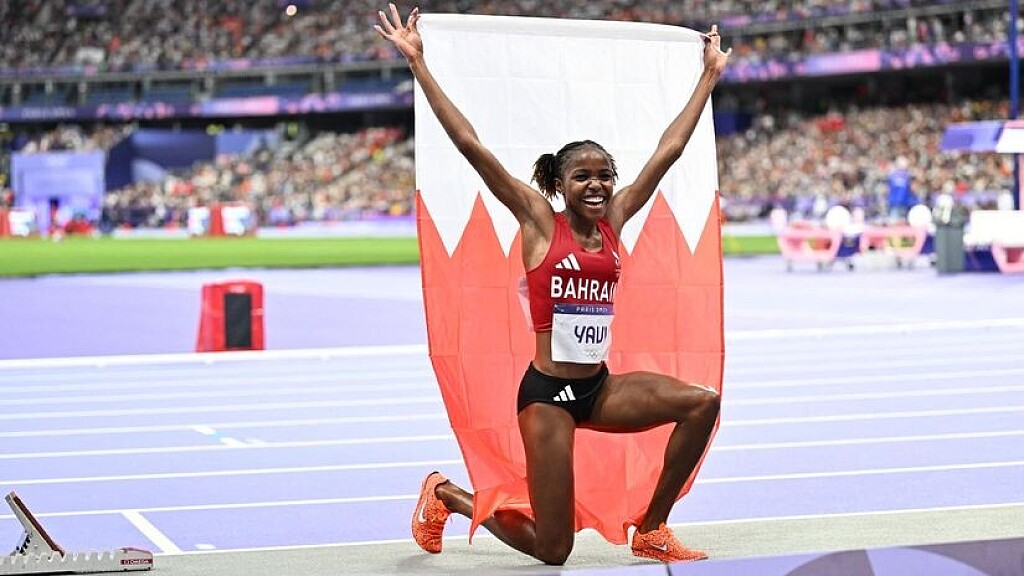
Yavi Returns as Cherotich and Chemutai Renew Fierce Rivalry in Xiamen
The women’s 3000m steeplechase is rapidly developing into one of the fiercest rivalries in global athletics, and another thrilling chapter is expected to unfold at the Xiamen Diamond League on May 23 in China.
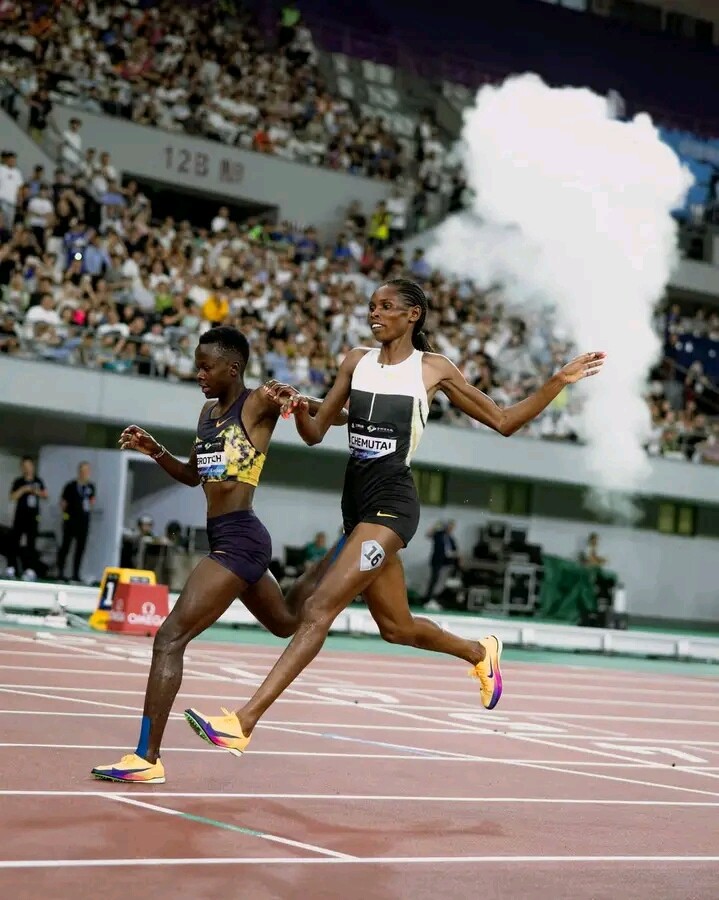
Fresh from a breathtaking contest in Shanghai, where Uganda’s Peruth Chemutai clocked a world-leading 8:51.47 to narrowly defeat Kenya’s Faith Cherotich, attention has now shifted to Xiamen for what promises to be another unforgettable showdown. Chemutai arrives carrying momentum and confidence after delivering one of the fastest performances of the season, while Cherotich heads into the race eager to respond and reclaim control of the rivalry.
But the battle is no longer just between two athletes.
Standing firmly in their path is reigning Olympic champion Winfred Yavi of Bahrain — a runner whose presence instantly transforms the intensity of any race she enters. Yavi has established herself as the benchmark in the women’s steeplechase, consistently forcing the pace and pushing the field into world-class territory. Whenever she lines up, the margin for error disappears.
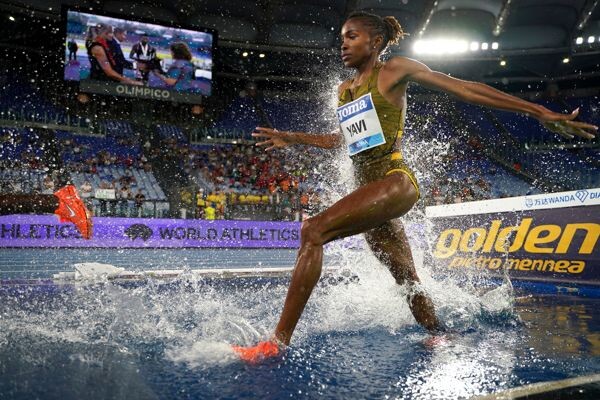
Her arrival in Xiamen adds another layer of intrigue to an already stacked contest. Known for her relentless front-running style and exceptional strength over the barriers, Yavi remains one of the most feared competitors in the discipline. With Chemutai coming off a statement victory and Cherotich determined to answer back, the stage is perfectly set for a high-stakes clash between three of the event’s biggest stars.
Cherotich, still among the brightest young talents in distance running, has built her reputation through fearless racing and explosive finishing speed. The Kenyan star will be chasing more than revenge in Xiamen — she will also be aiming to prove she can rise above the strongest field in women’s steeplechase today.
Chemutai, meanwhile, looks sharper and more dangerous with every race. The Ugandan Olympic champion appears to have rediscovered her peak form, and her recent performances suggest she is ready to dominate the Diamond League circuit this season.
With three elite athletes carrying different motivations into the same race, the women’s steeplechase in Xiamen is shaping up to be one of the standout moments of the Diamond League calendar. The pace is expected to be aggressive from the opening laps, and another world-class performance could be on the horizon.
As anticipation continues to build, one question now captures the attention of athletics fans worldwide: who will conquer Xiamen when the barriers clear and the final lap begins?
by Erick Cheruiyot for My Best Runs.
Login to leave a comment
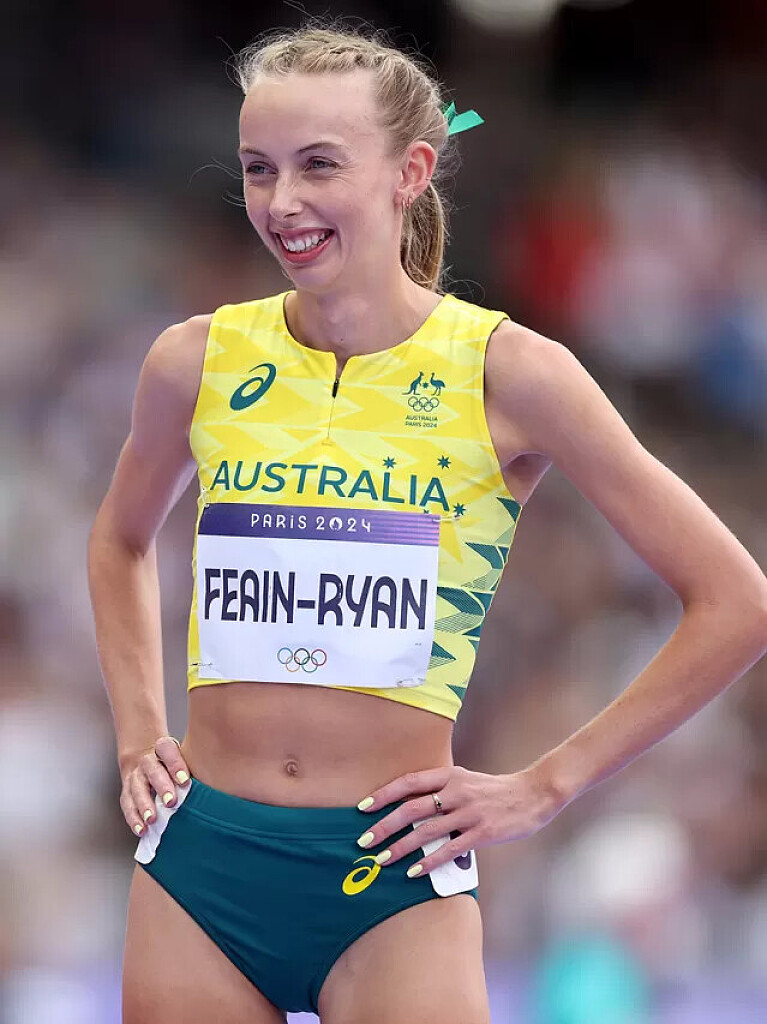
Star-Studded Women’s Steeplechase Showdown Set for Xiamen Diamond League
The women’s 3000m steeplechase at the upcoming Xiamen Diamond League is shaping up to be one of the most fiercely contested distance races of the season, with Olympic champions, world medallists, and emerging young stars all set to collide on 23 May.
Leading the spotlight is Bahrain’s Winfred Yavi, one of the most dominant figures in global steeplechase running. Renowned for her fearless front-running and devastating finishing speed, Yavi enters the race as a major favourite in what promises to be a high-tempo contest from the gun.
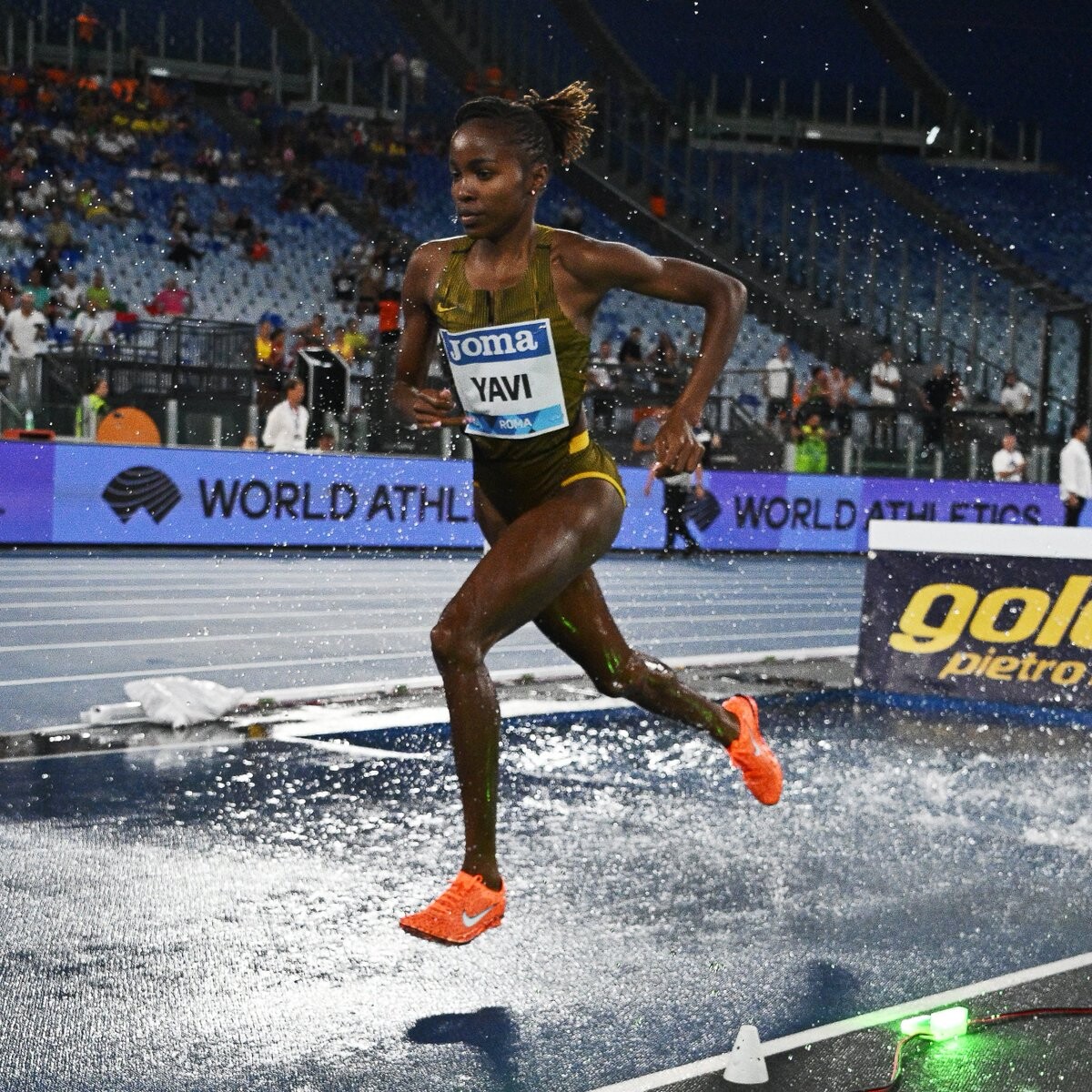
However, Kenya’s teenage sensation Faith Cherotich will be eager to continue her rapid rise on the international stage. The gifted Kenyan has already established herself among the world’s elite despite her young age, and Xiamen offers another golden opportunity to test herself against the very best in the discipline.
Olympic champion Peruth Chemutai of Uganda also headlines the loaded field. Chemutai’s tactical brilliance and championship experience make her one of the most dangerous competitors in any major race, especially in championship-style battles where positioning and patience become decisive.
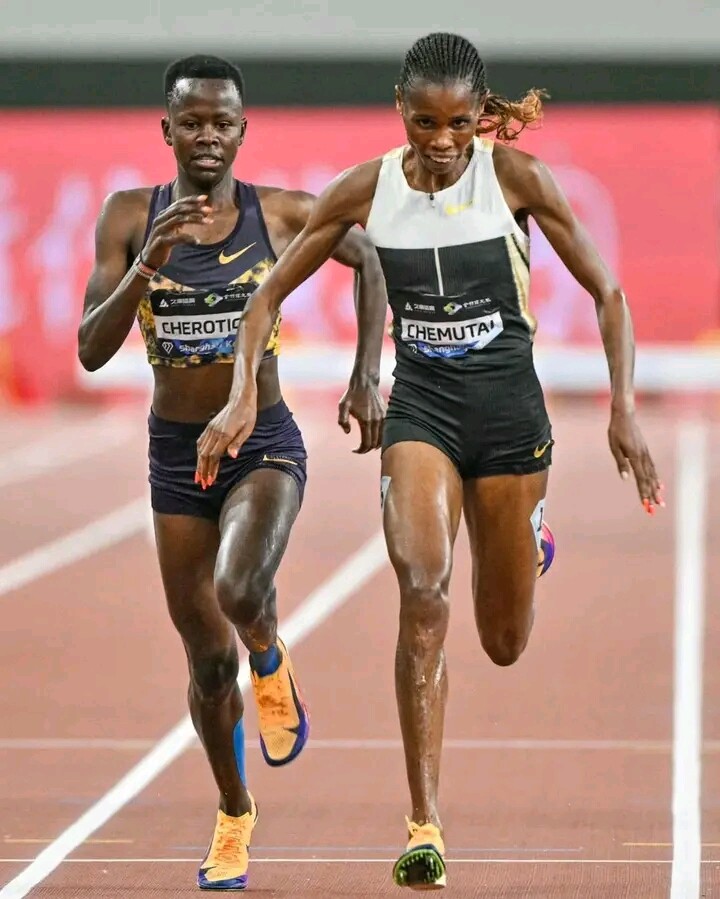
France’s Alice Finot, who has enjoyed a remarkable resurgence in recent seasons, adds further quality to the lineup alongside Tunisia’s Marwa Bouzayani and Kazakhstan’s Norah Jeruto, the former world champion whose return to the top level continues to attract significant attention.
The Ethiopian contingent arrives with impressive depth through Wosane Asefa, Firehiwot Gesese, Kena Tufa, and Alemnat Walle, while the United States fields a strong squad featuring Lexy Halladay, Olivia Markezich, Courtney Wayment, Kaylee Mitchell, and Angelina Ellis.
The race also features several exciting European names, including Dutch athlete Veerle Bakker, Germany’s Olivia Gürth, Australia’s Cara Feain-Ryan, Israel’s Adva Cohen, and China’s home representative Luo Xia, who will undoubtedly enjoy strong local support.
With such extraordinary depth assembled, the women’s steeplechase in Xiamen is expected to produce one of the fastest and most dramatic races of the Diamond League season. From seasoned global champions to fearless young challengers, the event promises relentless pace, tactical battles over the barriers, and a thrilling fight for supremacy on Chinese soil.
All eyes will now turn to Xiamen as the world’s finest steeplechasers prepare to launch another unforgettable chapter in one of athletics’ most demanding events.
by Erick Cheruiyot for My Best Runs.
Login to leave a comment
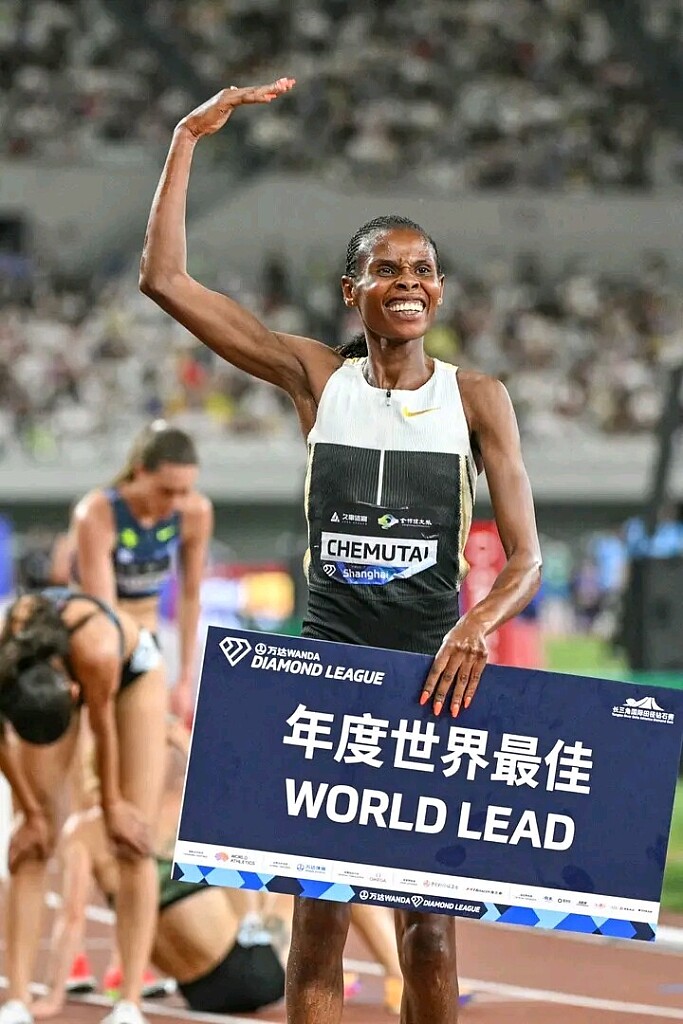
Peruth Chemutai Edges Faith Cherotich in Thrilling Shanghai Steeplechase Showdown
The women’s 3000m steeplechase at the Shanghai Diamond League delivered one of the most dramatic distance races of the season as Uganda’s Peruth Chemutai produced a world-leading performance to narrowly deny Kenya’s Faith Cherotich in a breathtaking sprint finish.
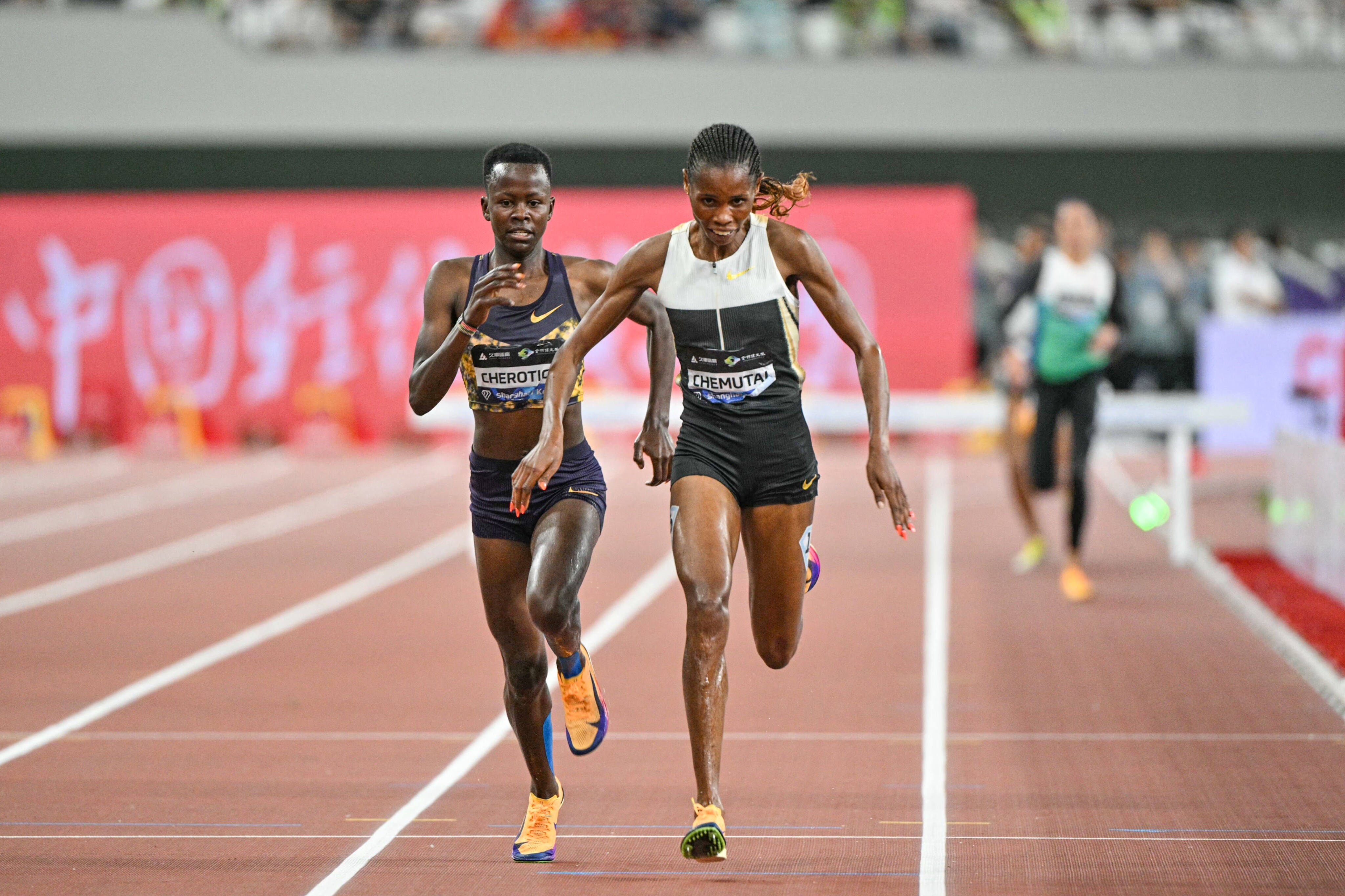
Chemutai stormed to victory in 8:51.47, smashing the meeting record and posting the fastest time in the world this year. But the Olympic champion was pushed to the absolute limit by the fearless teenage Kenyan sensation Cherotich, who crossed the line just one hundredth of a second later in 8:51.48 for a season’s best performance.
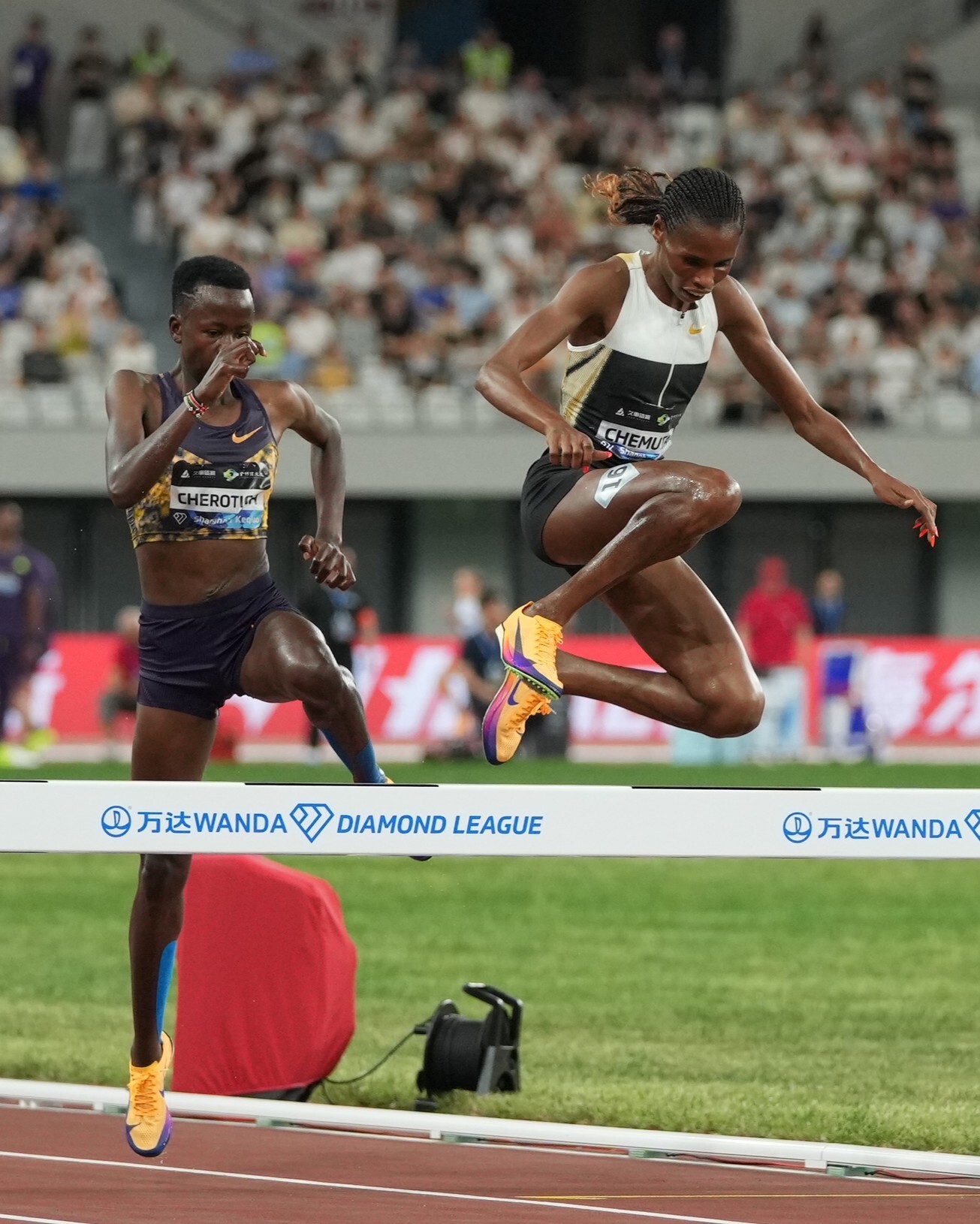
From the opening laps, the pace was aggressive and relentless. The leading pack quickly separated itself from the field, with Chemutai and Cherotich exchanging control throughout the race while maintaining metronomic rhythm over the barriers and water jumps. As the bell rang for the final lap, the stadium atmosphere intensified with both athletes refusing to yield.
Cherotich launched a powerful challenge over the closing stages and looked capable of pulling off a major victory, but Chemutai found one final surge in the home straight to clinch the win in one of the closest finishes seen on the Diamond League circuit this season.
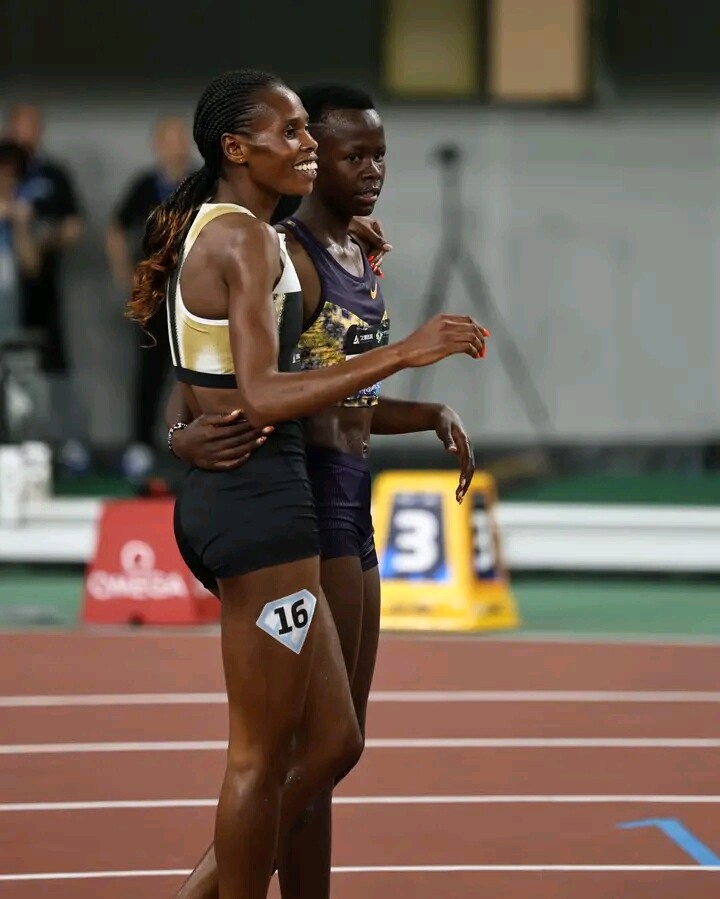
Behind the leading duo, Tunisia’s Marwa Bouzayani delivered a historic run to finish third in 8:58.09, setting a new national record and becoming the first Tunisian woman to break the nine-minute barrier in the event. Ethiopia’s Kena Tufa also impressed with a personal best of 8:59.66 to place fourth, while compatriot Alemnat Walle clocked a season’s best 9:10.05 for fifth.
Representing Kazakhstan, former world champion Norah Jeruto continued her return to top-level competition with a season’s best 9:10.90 to secure sixth place.
The race confirmed that the women’s steeplechase is entering another golden era, with established champions and rising stars pushing each other to extraordinary levels. For Kenya, Cherotich’s performance was another strong reminder that the country’s future in the event remains exceptionally bright despite missing victory by the narrowest possible margin.
Women’s 3000m Steeplechase Results — Shanghai Diamond League
1. Peruth Chemutai (Uganda) – 8:51.47 (MR, WL)
2. Faith Cherotich (Kenya) – 8:51.48 (SB)
3. Marwa Bouzayani (Tunisia) – 8:58.09 (NR)
4. Kena Tufa (Ethiopia) – 8:59.66 (PB)
5. Alemnat Walle (Ethiopia) – 9:10.05 (SB)
6. Norah Jeruto (Kazakhstan) – 9:10.90 (SB)
7. Parul Chaudhary (India) – 9:12.84 (SB)
8. Lexy Halladay (USA) – 9:13.99 (SB)
9. Angelina Ellis (USA) – 9:20.53 (PB)
10. Cara Feain-Ryan (Australia) – 9:21.35 (PB)
11. Olivia Markezich (USA) – 9:22.15 (SB)
12. Kaylee Mitchell (USA) – 9:24.26 (SB)
13. Firehiwot Gesese (Ethiopia) – 9:25.13 (PB)
Peruth Chemutai’s stunning victory in Shanghai was more than just another Diamond League win — it was a powerful statement to the rest of the world that she remains one of the greatest forces in women’s steeplechase. Clocking a world-leading and meeting record performance under immense pressure, the Ugandan star once again showcased her extraordinary composure, strength, and championship mentality. In a race filled with elite talent and relentless pace, Chemutai proved that true champions rise when the stakes are highest, further cementing her place among the finest steeplechasers of her generation.
by Erick Cheruiyot for My Best Runs.
Login to leave a comment
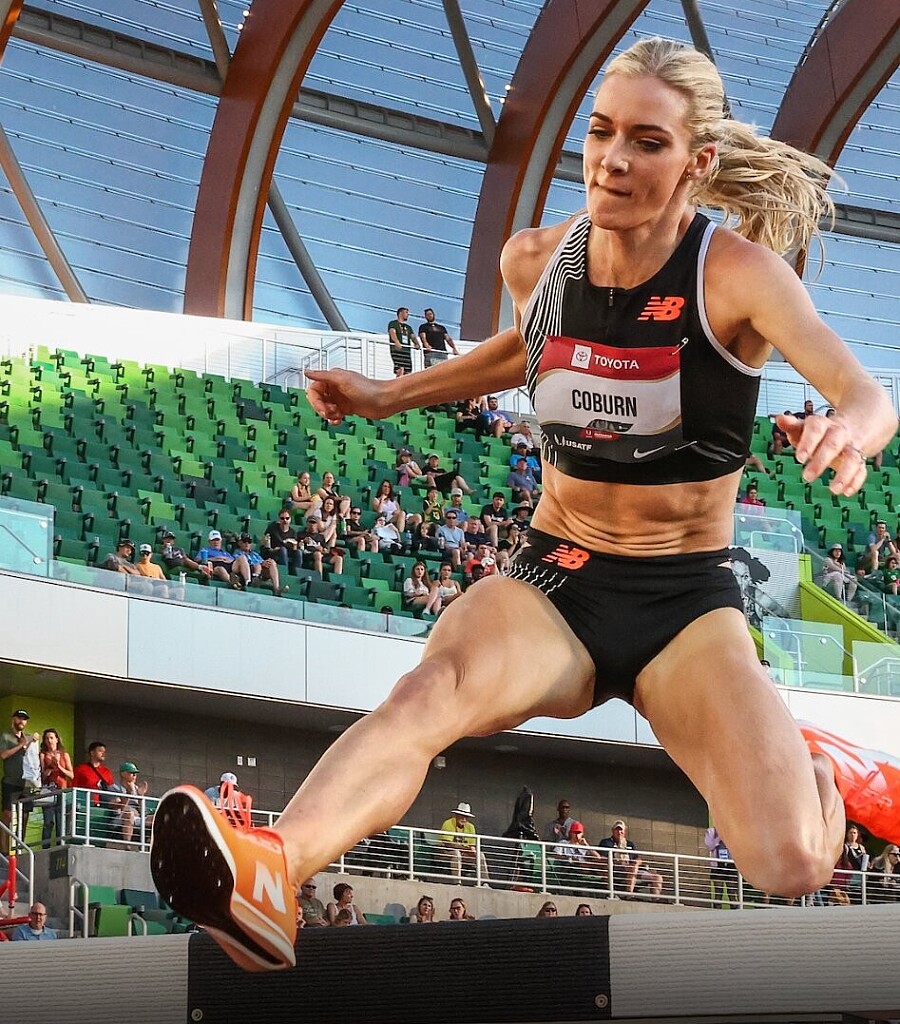
Emma Coburn Set For Emotional Return To The Steeplechase In 2026
After nearly two years away from her signature event, Emma Coburn is finally preparing for a long-awaited return to the steeplechase, marking one of the most anticipated comeback stories of the 2026 athletics season.
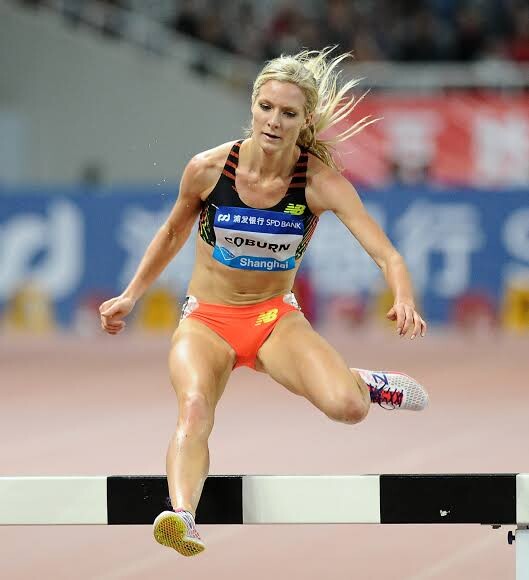
The American distance star is expected to compete in the women’s 3000m steeplechase at Sound Running’s Track Fest, which would officially be her first steeplechase appearance since suffering a devastating ankle injury at the Shanghai Diamond League meeting in April 2024.
Coburn’s injury abruptly halted a career that has long been defined by consistency, resilience, and championship-level performances on the global stage. The former world champion and Olympic medalist endured a lengthy rehabilitation process after breaking her ankle in Shanghai, forcing her away from competition and raising uncertainty about when she would return to full fitness.
Now, signs point toward a fresh chapter.
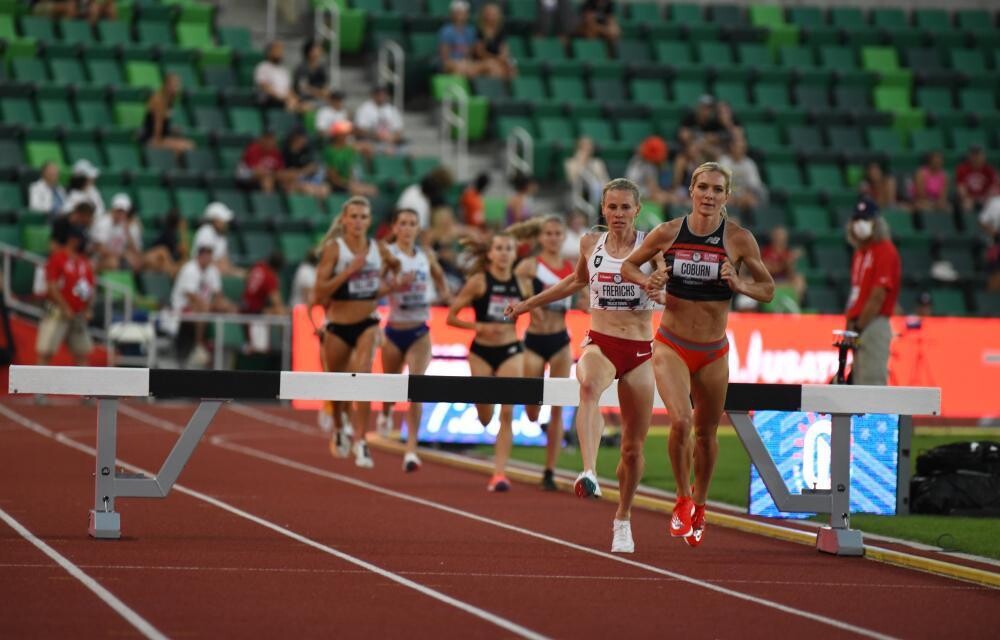
Her entry into Track Fest has generated excitement across the athletics world, with fans eager to see one of the sport’s most recognizable steeplechasers back on the track. The race is also expected to mark Coburn’s first competition of any kind in over a year, having last appeared at the New Balance Indoor Grand Prix in 2025.
The timing could not be more symbolic. As the 2026 season continues to deliver remarkable comeback stories across athletics, Coburn’s return adds another emotional layer to a year already filled with redemption narratives.
Beyond the results, her comeback represents perseverance through one of the most difficult periods of her career. Injuries of that magnitude can end careers or permanently alter an athlete’s trajectory, yet Coburn has remained determined throughout her recovery journey.
Track Fest will not simply be about times or finishing positions. It will be about the return of a proven competitor whose presence has shaped women’s steeplechase for more than a decade.
If all goes according to plan, the starting line in Los Angeles will mark the beginning of Emma Coburn’s next chapter — one built on resilience, patience, and the hunger to compete once again at the highest level.
by Erick Cheruiyot for My Best Runs.
Login to leave a comment
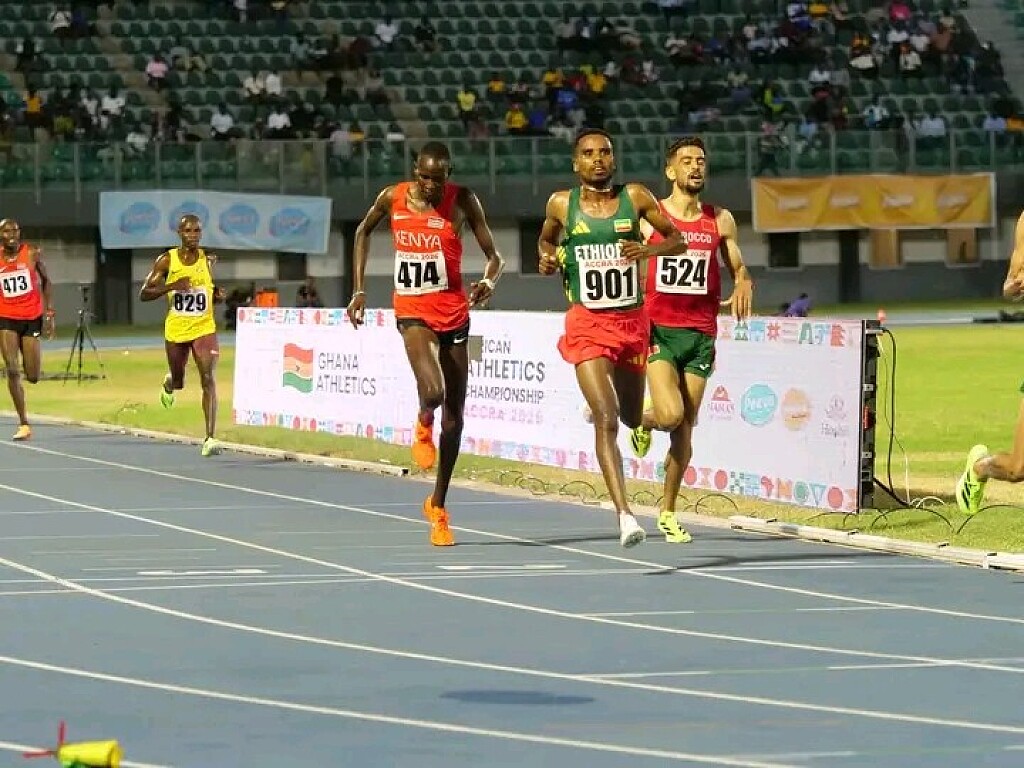
Ethiopia Reigns Supreme in the Steeplechase as Baneta Strikes Gold in Accra
The men’s 3000m steeplechase at the 2026 African Senior Athletics Championships in Accra delivered another powerful reminder of Ethiopia’s growing dominance over the barriers. With tactical brilliance, relentless rhythm, and fearless finishing speed, Ethiopian athletes once again stamped their authority on one of athletics’ most demanding events.
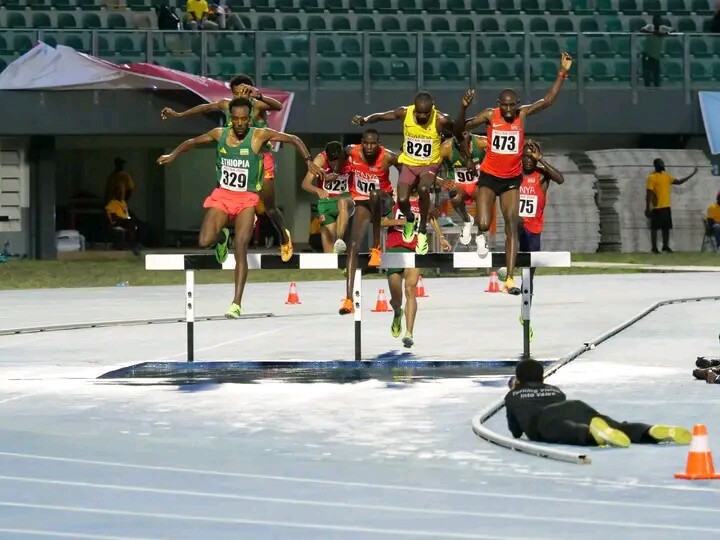
Leading the charge was Gemechu Goda Baneta, who produced a composed and commanding performance to secure the African title in 8:38.37. From the opening laps, Baneta looked sharp and in control, handling the water jumps and barriers with remarkable efficiency before breaking away when it mattered most. His victory crowned Ethiopia with another continental steeplechase gold and confirmed the nation’s rising strength in the discipline.
Morocco’s Salaheddine Benyazid fought bravely throughout the race and earned the silver medal in 8:41.02 after a determined final lap battle. Ethiopia completed a strong double podium finish thanks to Samuel Firew Fiche, who claimed bronze in 8:41.67 to underline his country’s depth in distance running.
The race unfolded with patience and tactical discipline before exploding into life over the closing stages. As fatigue began to hit the field, the Ethiopian runners remained composed, gliding over the barriers with confidence while others struggled to maintain momentum. Baneta’s decisive surge in the final laps ultimately separated him from the chasing pack and sealed a memorable championship triumph.
For years, the African steeplechase scene has been defined by East African excellence, and the performance in Accra showed that Ethiopia is continuing to elevate its presence among the continent’s elite barrier specialists. The gold-and-bronze finish was not only a celebration of individual brilliance but also a statement of Ethiopia’s growing power in championship distance racing.
The atmosphere inside the stadium reflected the magnitude of the moment as Ethiopian supporters celebrated another proud achievement on the continental stage. In a race packed with intensity, endurance, and tactical battles, the men in green, yellow, and red once again proved why East Africa remains the heartbeat of world distance running.
by Erick Cheruiyot for My Best Runs.
Login to leave a comment
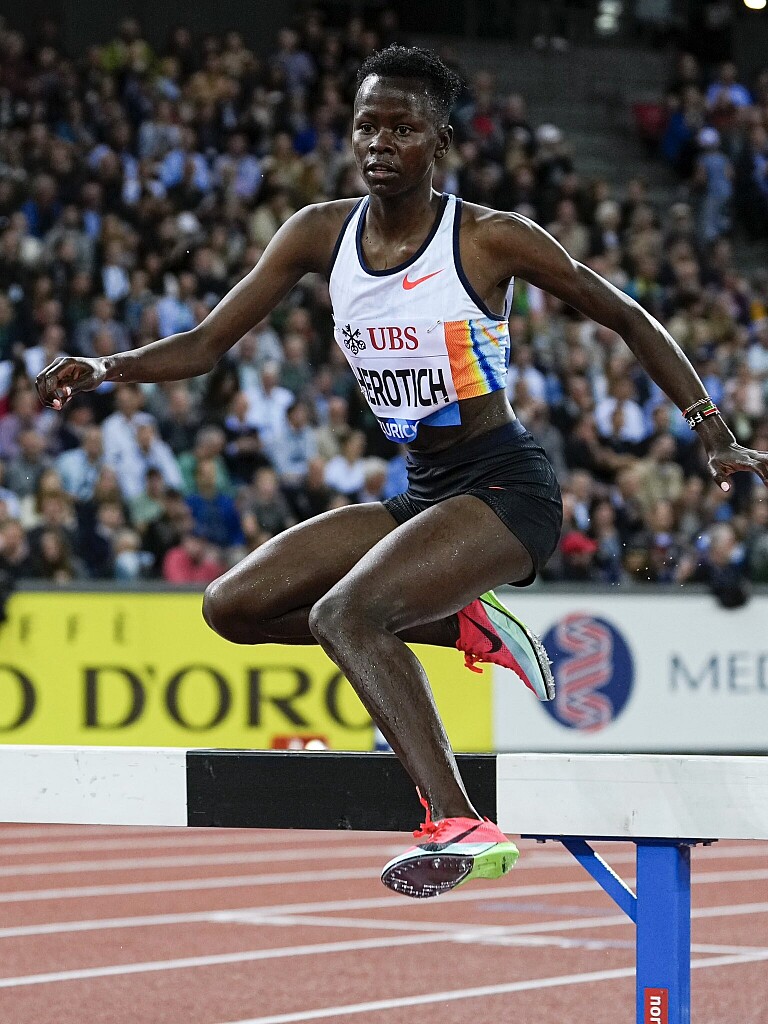
Battle of Champions: Cherotich, Yavi, Chemutai and Jeruto Headline Xiamen Showdown
On May 23, 2026, the spotlight of the Diamond League shifts to Xiamen, where the women’s 3000m steeplechase promises not just a race—but a confrontation of extraordinary talent, nerve, and precision.
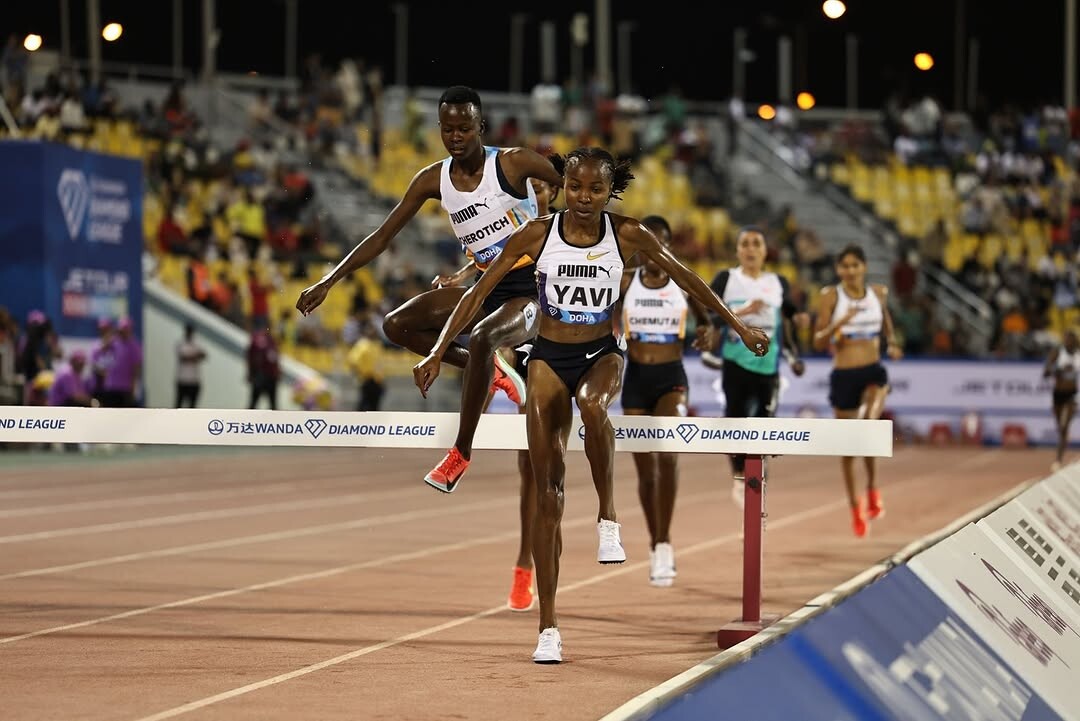
This is no ordinary field. It is a collision of champions from across the globe.
Leading the charge is Faith Cherotich of Kenya, the rising force whose fearless front-running and smooth hurdling have marked her as the next big name in the event. She faces a fierce challenge from Winfred Yavi, representing Bahrain, a tactically sharp competitor with a devastating finishing kick.
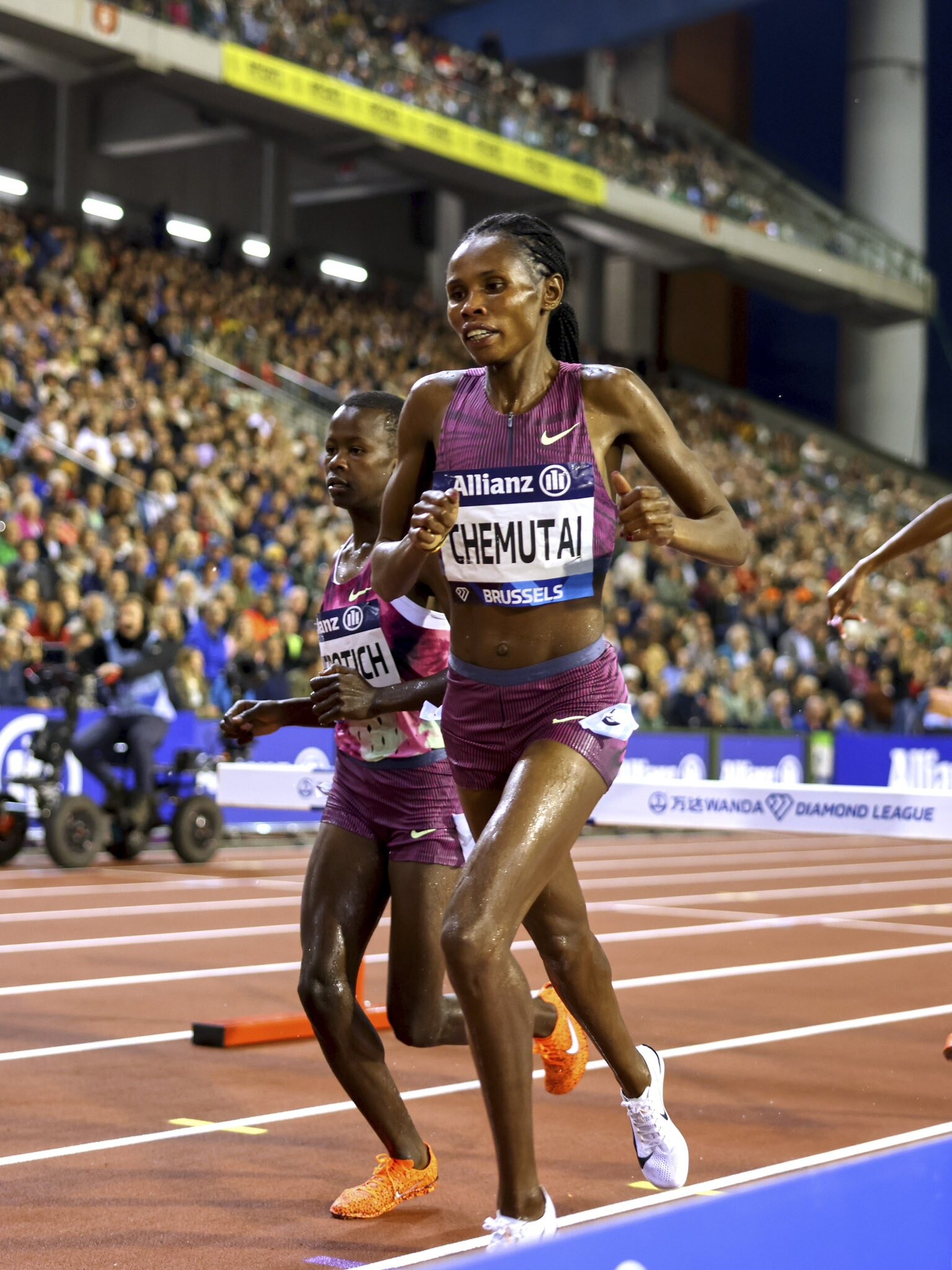
From Uganda comes Peruth Chemutai, the Olympic champion renowned for her composure, timing, and ability to rise in decisive moments. Meanwhile, Norah Jeruto carries the flag of Kazakhstan, bringing championship pedigree and a proven ability to dismantle elite competition on the biggest stages.
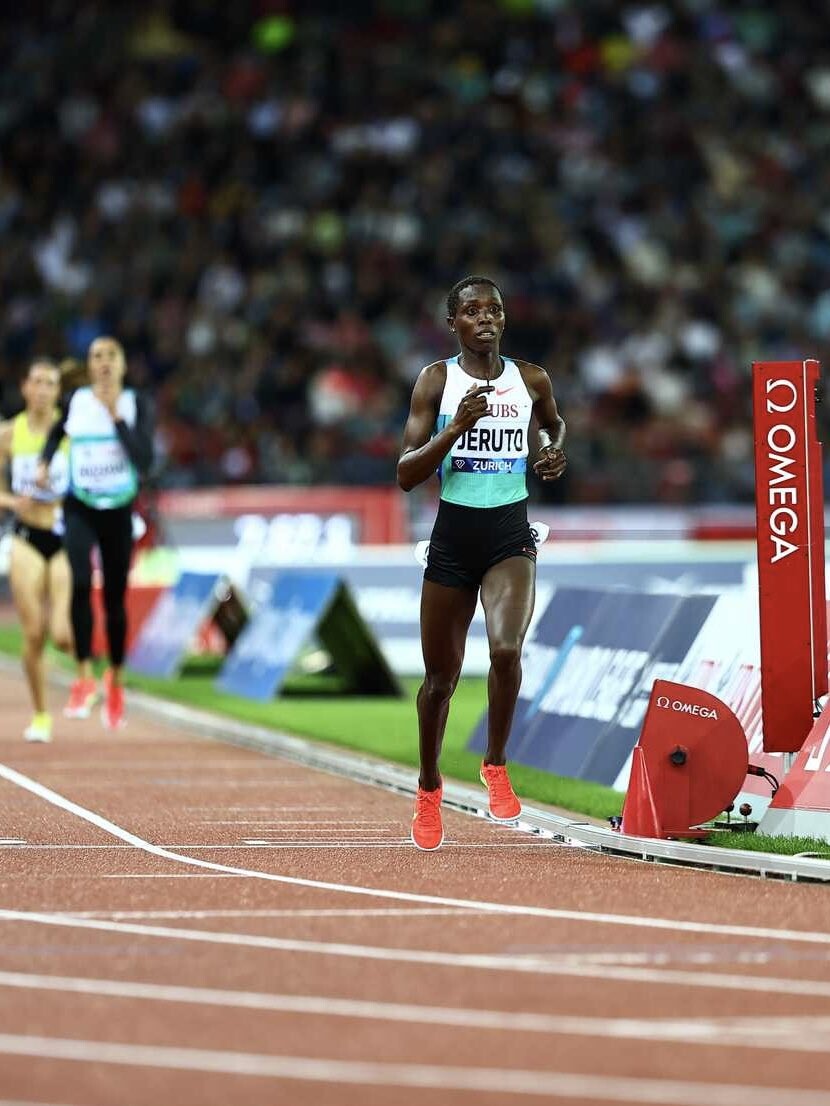
Four athletes. Four nations. One unforgiving event.
The steeplechase is where rhythm meets chaos—where a single mistimed barrier or misjudged water jump can undo even the strongest contenders. At this level, the margins are razor-thin, and the outcome could hinge on the final lap, or even the final leap into the water.
Xiamen’s track will not merely host a race; it will stage a tactical battle. Expect aggressive positioning early on, calculated surges in the middle laps, and a dramatic crescendo as the bell rings. Each contender brings a distinct strength—Cherotich’s boldness, Yavi’s finishing speed, Chemutai’s championship calm, and Jeruto’s relentless consistency.
Calling a winner in such a field is no easy task. If the race turns into a brutal test of endurance, Yavi’s closing strength could prove decisive. Yet Cherotich’s fearless racing style, Chemutai’s experience, and Jeruto’s big-stage mentality ensure that nothing is guaranteed.
One thing is certain: this will be more than a race. It will be a battle for supremacy over barriers, water, and willpower.
The stage is set. The tension is rising. And in Xiamen, only one nation—and one athlete—will stand tallest.
by Erick Cheruiyot for My Best Runs.
Login to leave a comment

A Monument to Greatness: Washington State University Immortalizes Henry Rono
In a gesture both historic and deeply symbolic, Washington State University unveiled a statue honoring one of distance running’s most extraordinary figures, Henry Rono. It is a tribute not merely cast in bronze, but in legacy — a permanent reminder of a man whose feats redefined the limits of human endurance.
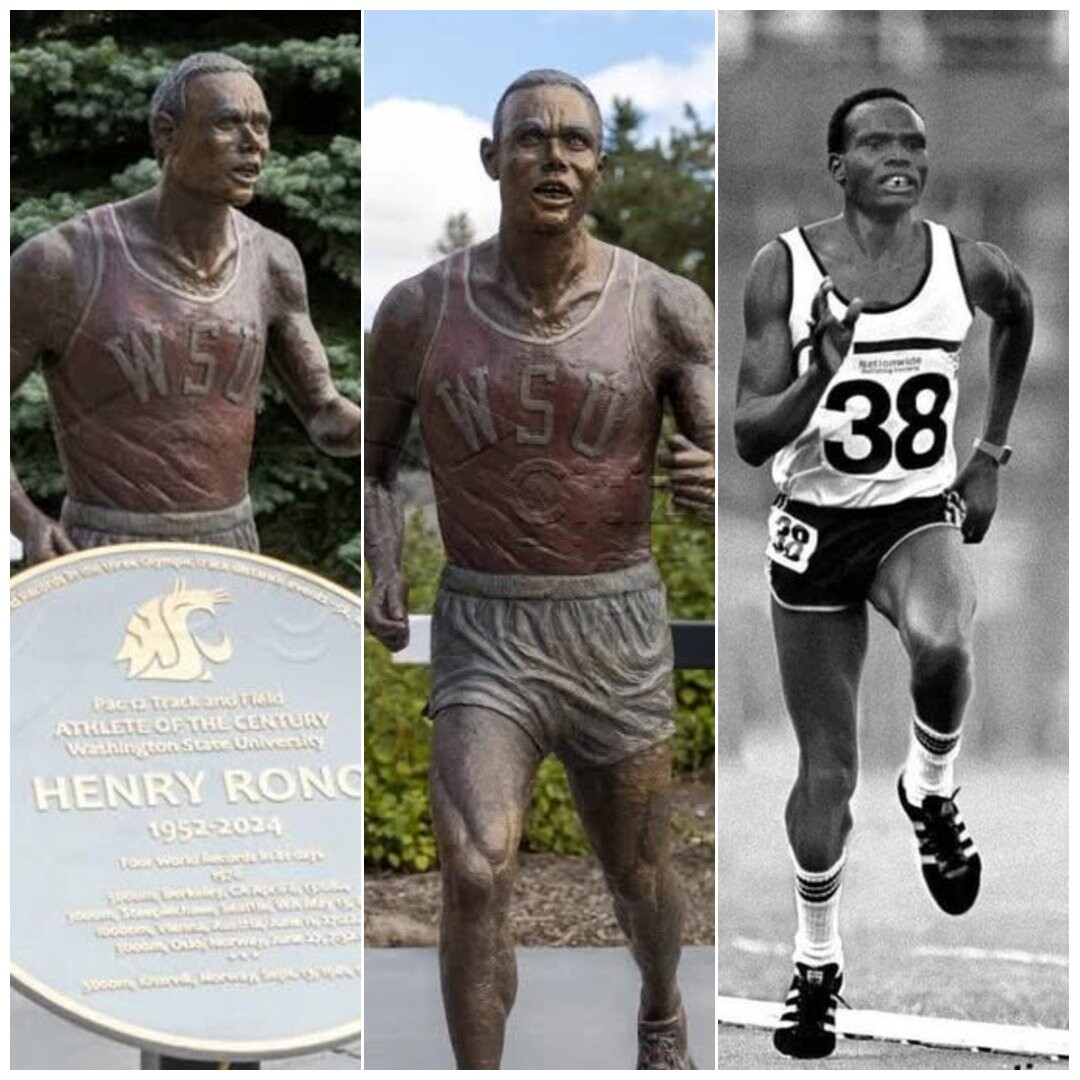
Rono’s name is etched indelibly into the annals of athletics, most notably for his astonishing run in 1978 — a season that remains unmatched in the sport’s history. In a span of just 81 days, he achieved what many would deem impossible: breaking four world records across four demanding distances. From the grueling 10,000 meters to the tactical precision of the 3,000-meter steeplechase, Rono conquered them all with a dominance that stunned the global athletics community.
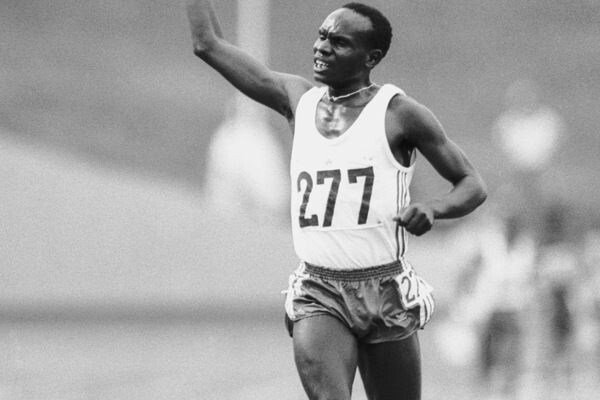
His times were not just record-breaking; they were transformative. He clocked 27:22.5 in the 10,000 meters, slicing nearly eight seconds off the previous mark. In the 5,000 meters, his 13:08.4 shaved off an impressive 4.5 seconds. The 3,000-meter steeplechase saw him set 8:05.4, lowering the standard by 2.6 seconds, while his 7:32.1 in the 3,000 meters carved out a full three-second improvement. Each performance was a statement — not incremental progress, but a bold leap into a new era of distance running.
What makes Rono’s achievement even more remarkable is the compressed timeline in which it occurred. To dominate across multiple disciplines in such a short period demands not only physical brilliance but an extraordinary mental resolve. It was a convergence of talent, discipline, and timing that the sport has rarely, if ever, witnessed again.
Now, decades later, that brilliance finds a new form of expression. The statue at Washington State University stands as both a homecoming and a celebration. It honors Rono’s collegiate roots while ensuring that future generations — students, athletes, and admirers alike — encounter the story of a man who once bent time and distance to his will.
Though he is no longer here, Henry Rono’s spirit endures — in every stride taken by aspiring runners, in every barrier challenged, and in every dream that dares to stretch beyond perceived limits. His legacy is not confined to records or history books; it lives on, vibrant and unyielding, inspiring a new generation to believe that greatness is not only possible, but attainable.
by Erick Cheruiyot for My Best Runs.
Login to leave a comment
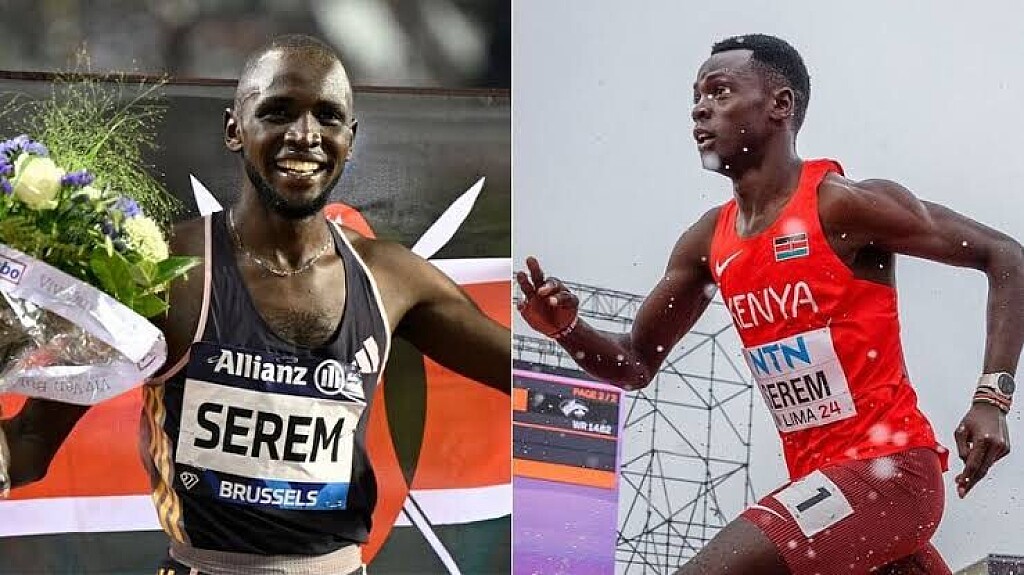
A Champion’s Gratitude: Edmund Serem’s Heartwarming Gesture Before Kip Keino Classic
Today April 24th as anticipation builds for the 2026 Kip Keino Classic in Nairobi, Kenya, one of Kenya’s rising stars has already created a special moment long before stepping onto the track. Emerging steeplechase talent Edmund Serem has flown his father to Nairobi ahead of the prestigious event, setting the stage for an emotional family reunion before one of the nation’s biggest athletics showcases.
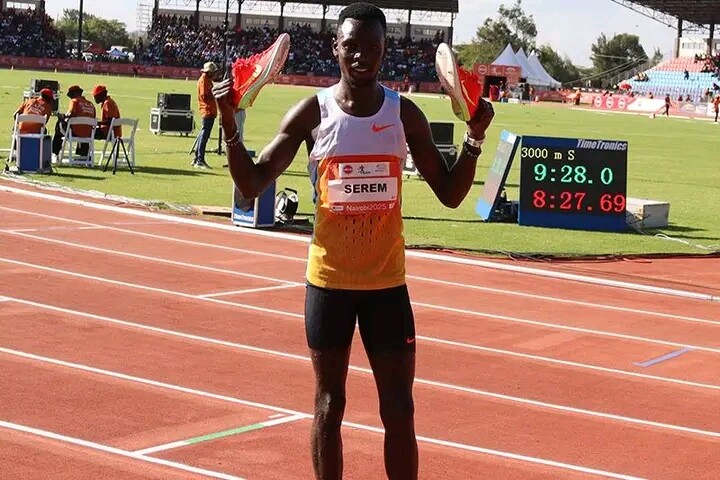
For many athletes, success is measured in medals, records, and podium finishes. But for Edmund, this gesture reflects something deeper — gratitude, family pride, and appreciation for the journey that brought him to this level. Bringing his father to witness the occasion adds powerful meaning to what is already shaping up to be a defining season.

Edmund comes from a household where running excellence is no stranger. He is the younger brother of Amos Serem, another gifted Kenyan athlete who has also made his mark in the 3000m steeplechase. Together, the Serem brothers are preparing to give everything this season as they chase success on both local and international stages.

With talent, hunger, and growing experience, Edmund and Amos represent the next wave of Kenya’s proud steeplechase tradition. Their shared ambition and family bond make them one of the most exciting sibling stories in athletics today.
Now, with the Kip Keino Classic set to bring elite competition to Nairobi, Edmund has the opportunity to shine on home soil in front of family, fans, and the wider athletics world. Competing in Kenya always carries special significance, and with his father in the stands, the motivation will be even greater.
The Kip Keino Classic has become an important platform for East African stars to test themselves against world-class opposition while giving local supporters the chance to celebrate their own heroes. For Edmund Serem, however, this year’s edition may carry a meaning beyond medals and times.
It is about family. It is about legacy. And it is about two brothers, Edmund and Amos Serem, ready to give everything in pursuit of greatness this season.
by Erick Cheruiyot for My Best Runs.
Login to leave a comment
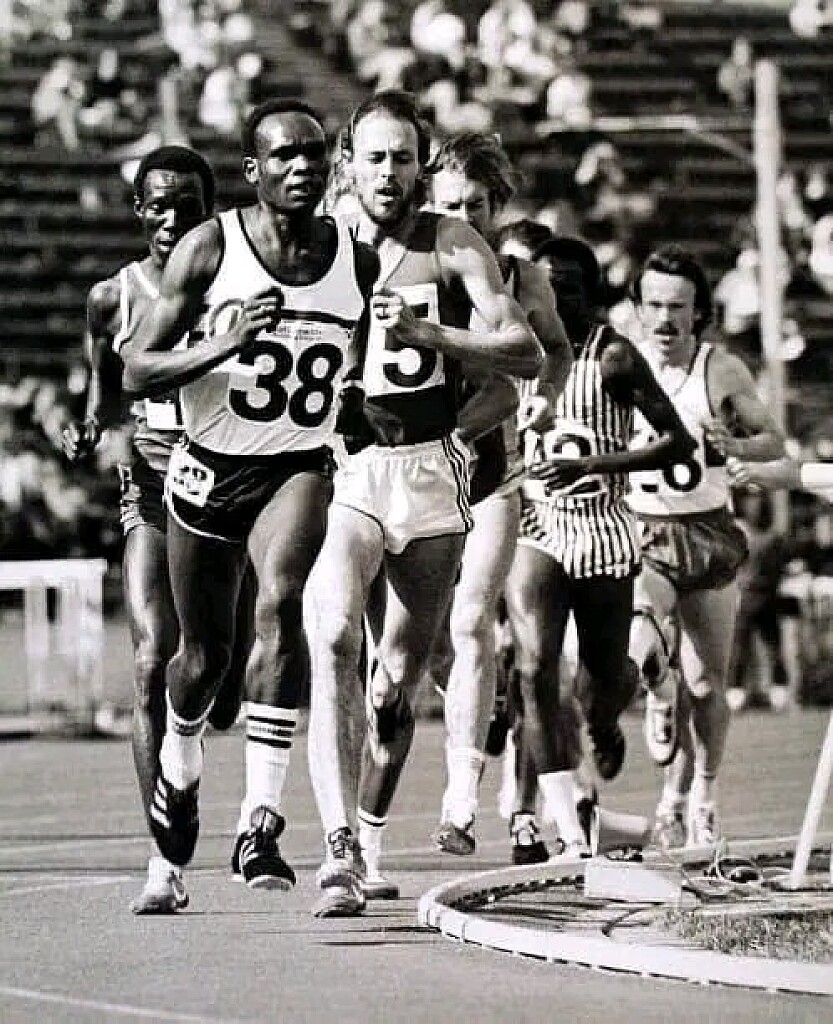
Today in History: Henry Rono’s 5000m Masterpiece Redefined Distance Running
On this day—April 8, 1978—the world of athletics witnessed a performance of rare brilliance in Berkeley, as Kenya’s Henry Rono produced one of the most iconic runs in distance running history.
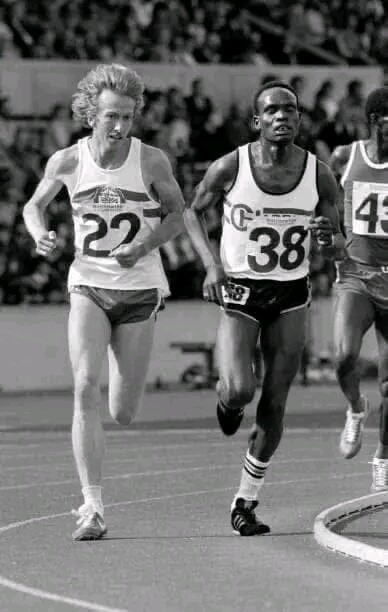
Rono surged to a stunning 13:08.4 in the 5000 metres, setting a new world record and announcing himself as a dominant force on the global stage. In doing so, he erased the previous mark of 13:12.9 set by New Zealand’s Dick Quax in Stockholm less than a year earlier. The margin—4.5 seconds—was enormous at that level, underlining just how extraordinary Rono’s run truly was.
Yet, this historic performance was only the opening chapter of an astonishing streak.
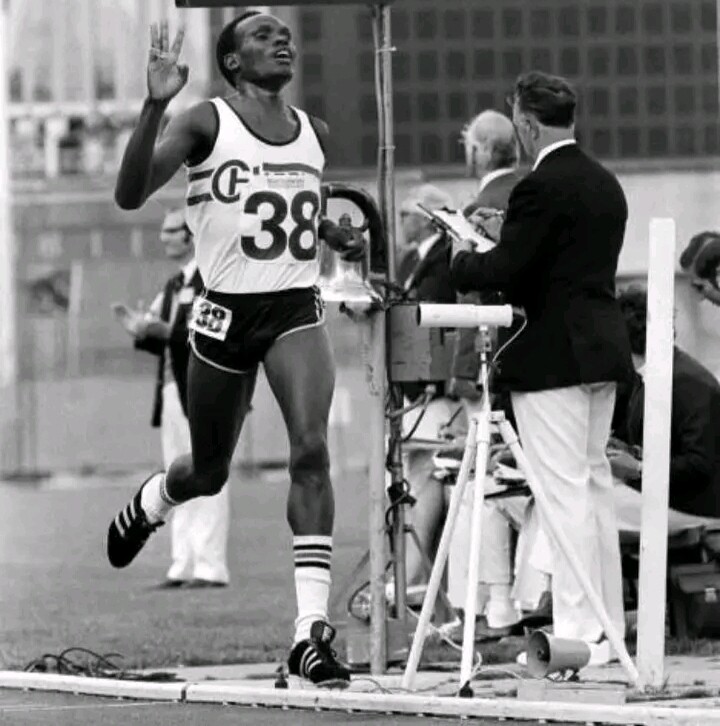
Within the following ten weeks, Rono would achieve what few athletes in history have come close to matching—breaking four world records across different distance events. Alongside his 5000m triumph, he set new global standards in the 3000 metres steeplechase, 10,000 metres, and 3000 metres, showcasing unmatched endurance, versatility, and dominance.
His 5000m time in Berkeley would go on to stand the test of time in remarkable fashion, remaining the outdoor collegiate record for 44 years until finally being surpassed in 2022—an enduring symbol of its greatness.
Today, we remember not just a record-breaking run, but a defining moment that reshaped distance running. Henry Rono’s legacy continues to inspire generations, a testament to the heights that can be reached through talent, courage, and relentless pursuit of excellence.
by Erick Cheruiyot for My Best Runs.
Login to leave a comment
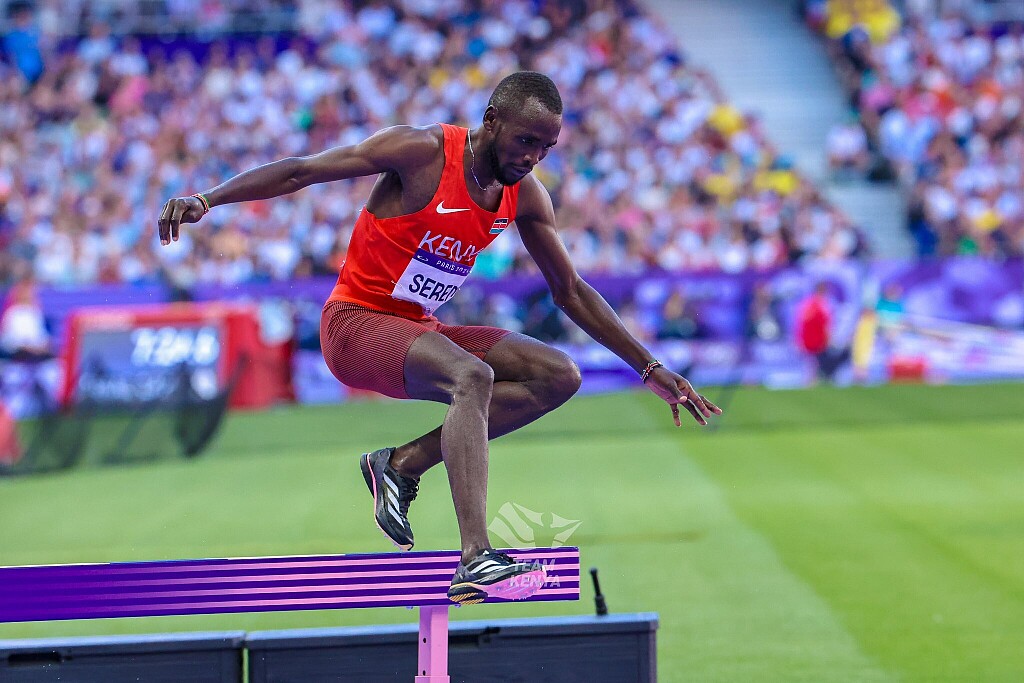
Serem’s Comeback Ignites Steeplechase Showdown at Kip Keino Classic
Kenya’s distance running faithful are set for a thrilling spectacle as Amos Serem makes his highly anticipated return to competition at the Kip Keino Classic on April 24. After months on the sidelines, the 2024 Diamond League Final champion is back—not just to compete, but to reclaim his place among the very best.
Serem’s 2025 campaign was abruptly halted by a serious leg injury sustained during a mistimed landing at a water barrier, a cruel twist in an otherwise promising season. The incident raised concerns about his future, but in true champion fashion, he has battled through recovery with resilience and focus. Now fully fit, his return sets the stage for one of the most compelling steeplechase contests on home soil this year.
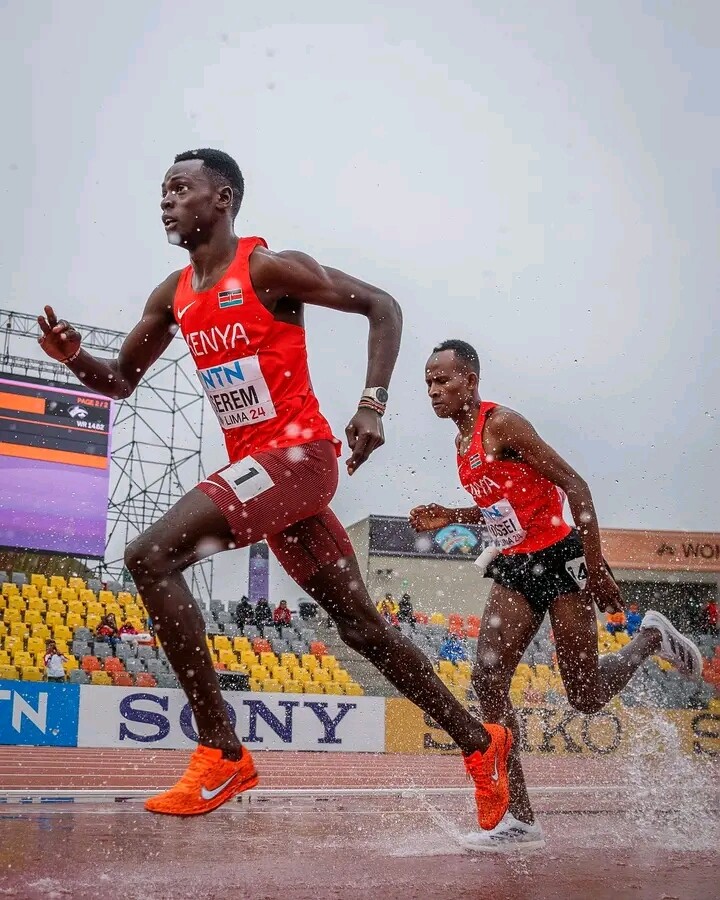
Awaiting him is formidable opposition led by fellow Kenyan Edmund Serem, the reigning world bronze medallist whose rise has added fresh intensity to the national ranks. Also in the mix is Abraham Kibiwot, the Olympic bronze medallist renowned for his tactical awareness and consistency on the global stage.
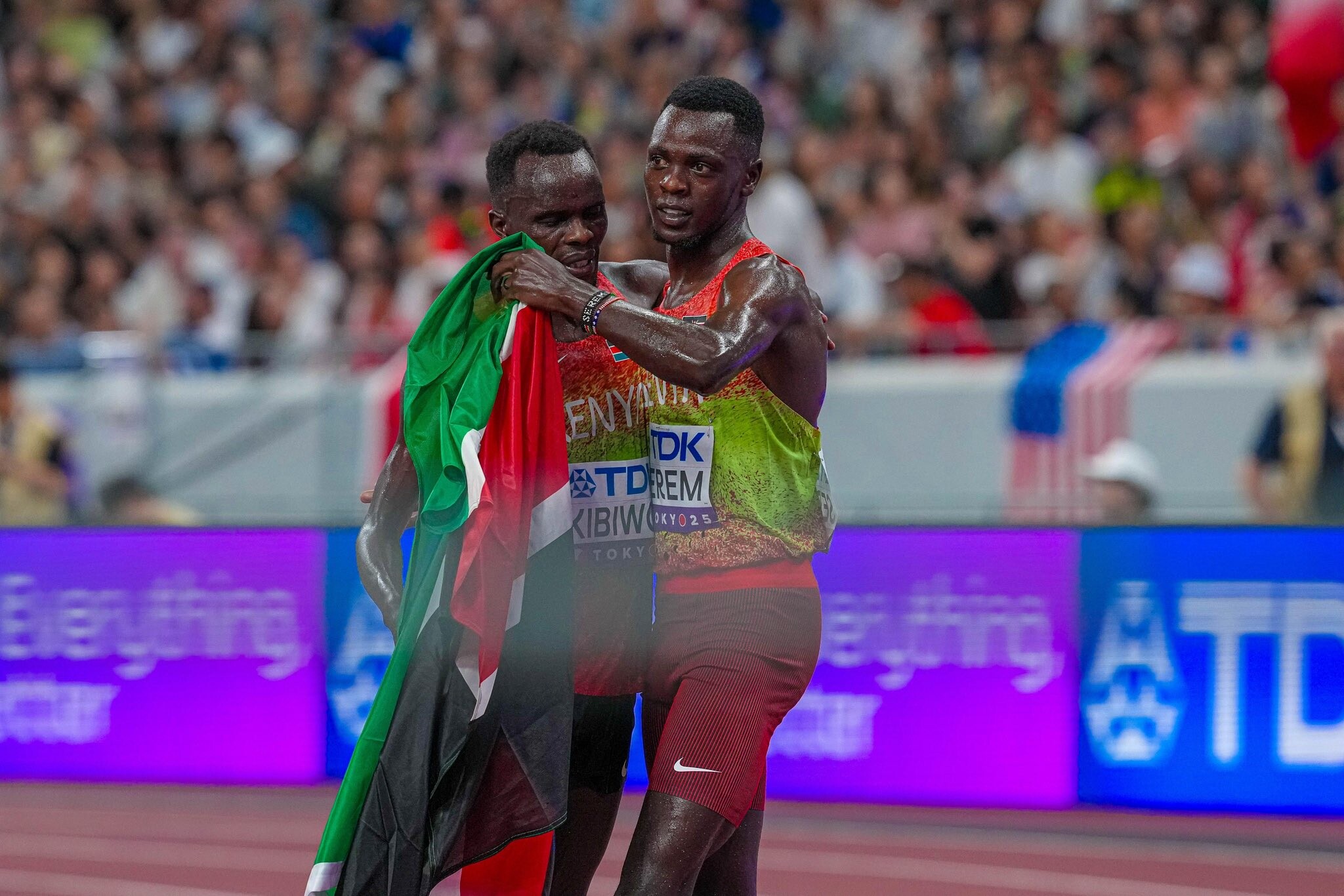
With three elite athletes bringing contrasting strengths—experience, momentum, and hunger—the race promises more than just fast times. It is a battle of endurance, precision, and mental grit over the unforgiving barriers and water jumps of the steeplechase.
As the Kip Keino Classic approaches, anticipation continues to build. For Amos Serem, this is more than a return—it is a statement. For his rivals, it is a test of dominance. And for fans, it is a rare opportunity to witness world-class competition where only the mentally strongest will prevail.
by Erick Cheruiyot for My Best Runs.
Login to leave a comment
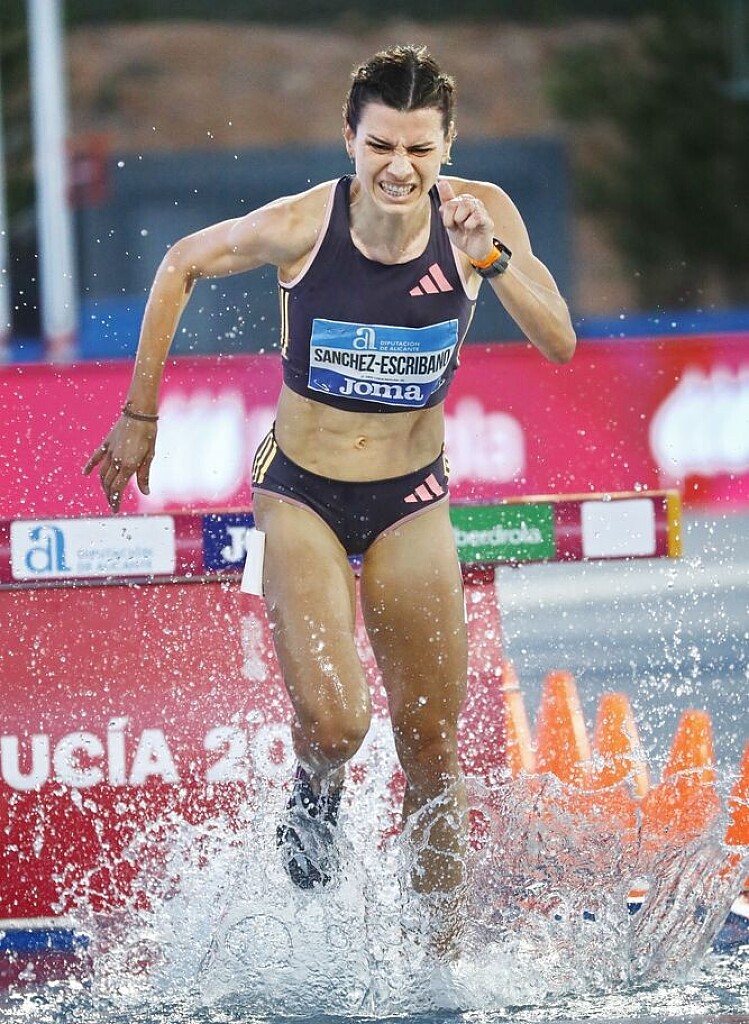
Back with Purpose: Irene Sánchez-Escribano’s Inspiring Return to Racing
After a year defined by change and new beginnings, Irene Sánchez-Escribano has made a compelling return to competitive running in 2026, reminding the athletics world of both her class and resilience. Following a successful 2024 season, the Spanish star stepped away from racing in 2025 to embrace motherhood — a decision that marked a deeply personal chapter in her life and career.
Now back on the roads, Sánchez-Escribano signaled her resurgence with a strong performance at the 10K Bilbao Rural Kutxa on March 7, 2026. Clocking 32:35, she delivered a result that speaks volumes about her steady rebuilding process and enduring competitive edge. While not yet at her personal best level, the run stands as a clear indication that she is firmly on the path back to top form.
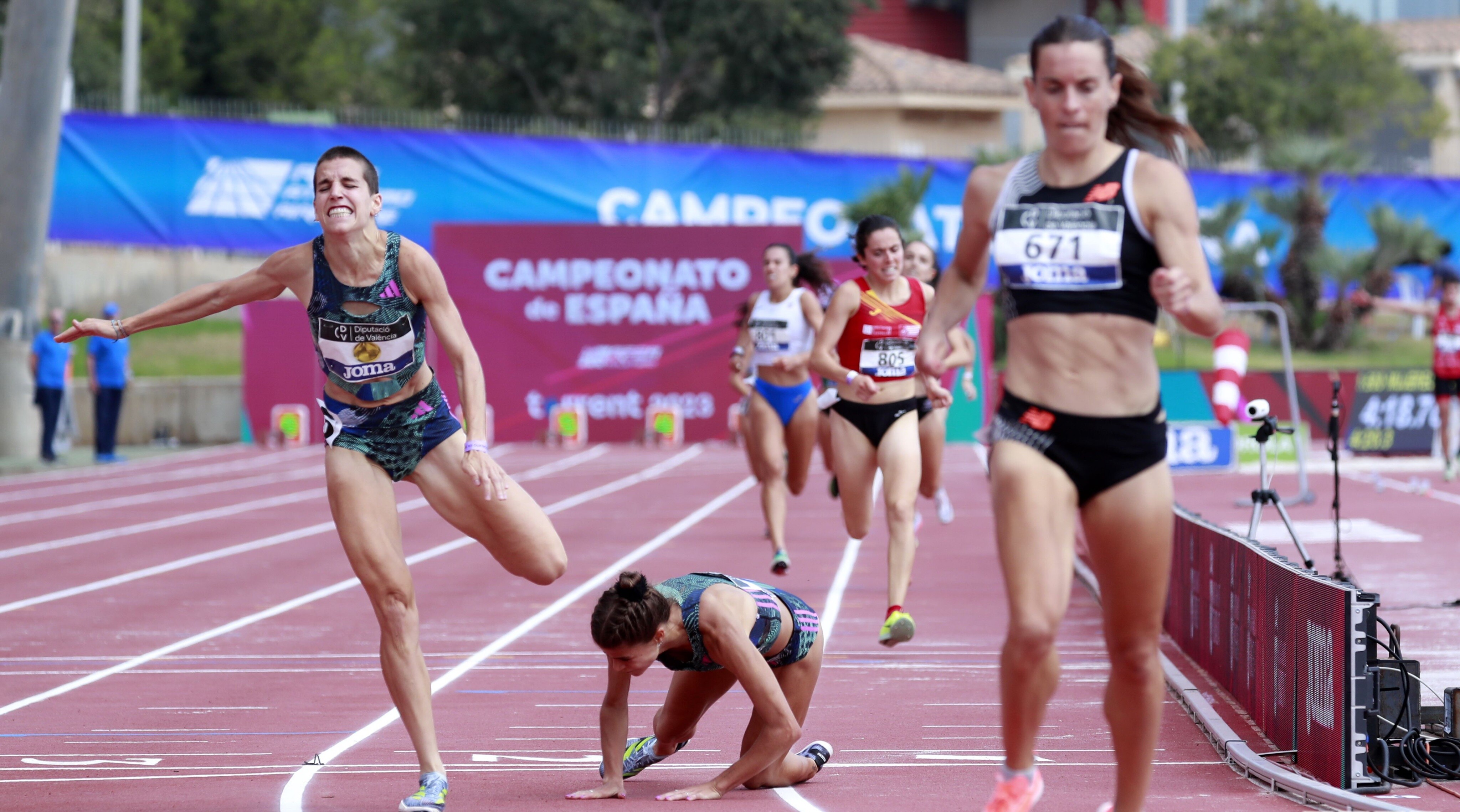
What makes her return particularly compelling is the level she had reached prior to her break. In 2024, she established herself among Europe’s elite distance runners, setting impressive personal bests of 31:35 for 10 kilometers on the road and 1:09:10 in the half marathon. These performances, combined with her proven pedigree in the steeplechase, highlight her versatility and strength across disciplines.
Her transition back into racing is not just about times and results — it is about rediscovering rhythm, confidence, and competitive sharpness. Athletes returning from maternity often face a unique set of physical and mental challenges, making each race not just a performance, but a statement of perseverance.
As the 2026 season unfolds, Sánchez-Escribano’s journey will be one to watch closely. With a solid foundation already re-established, it is only a matter of time before she begins to threaten her personal bests once again. More than just a comeback, this is the continuation of a career shaped by determination, adaptability, and quiet strength — qualities that now define her more than ever.
by Erick Cheruiyot for My Best Runs.
Login to leave a comment
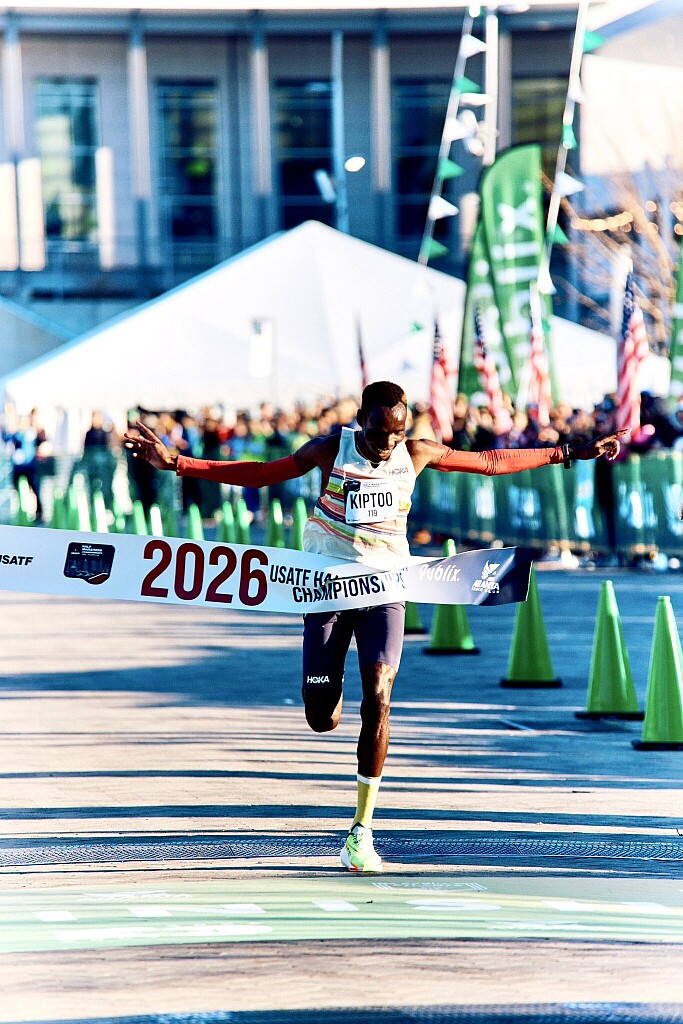
Copenhagen Calling: Kiptoo Leads a Commanding Podium Sweep at the USATF Half Marathon Championships
The road to Copenhagen has officially begun, and it was paved with grit, precision, and championship composure at the USATF Half Marathon Championships.
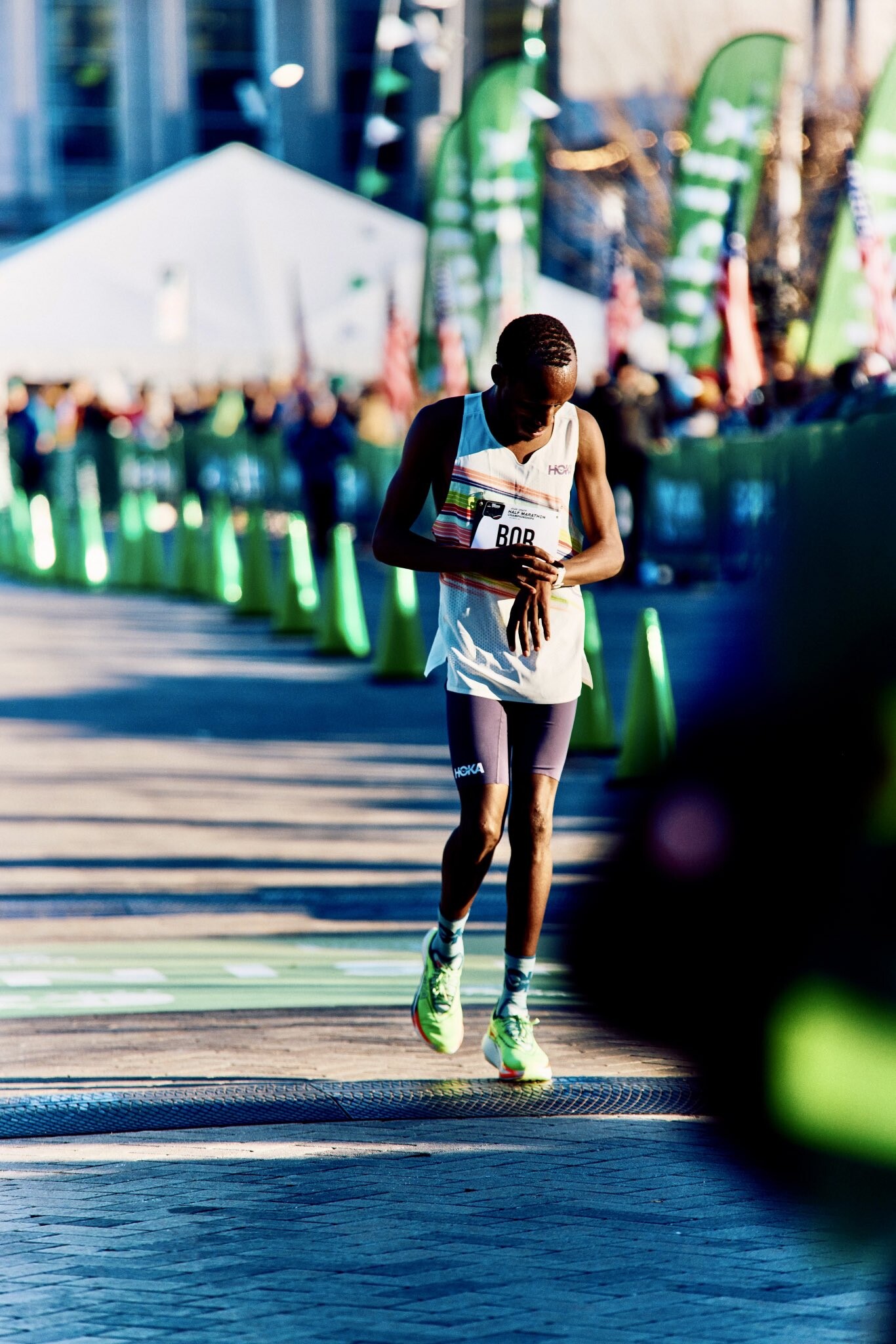
On a fiercely competitive day that tested both patience and pace judgment, Wesley Kiptoo surged to gold in a commanding 1:01:15, stamping his authority on the national stage and confirming his place among America’s most formidable distance runners. His victory was not merely about time—it was about control. From the early miles through the decisive closing stretch, Kiptoo demonstrated tactical maturity, waiting for the perfect moment to assert dominance before powering away with unmistakable confidence.
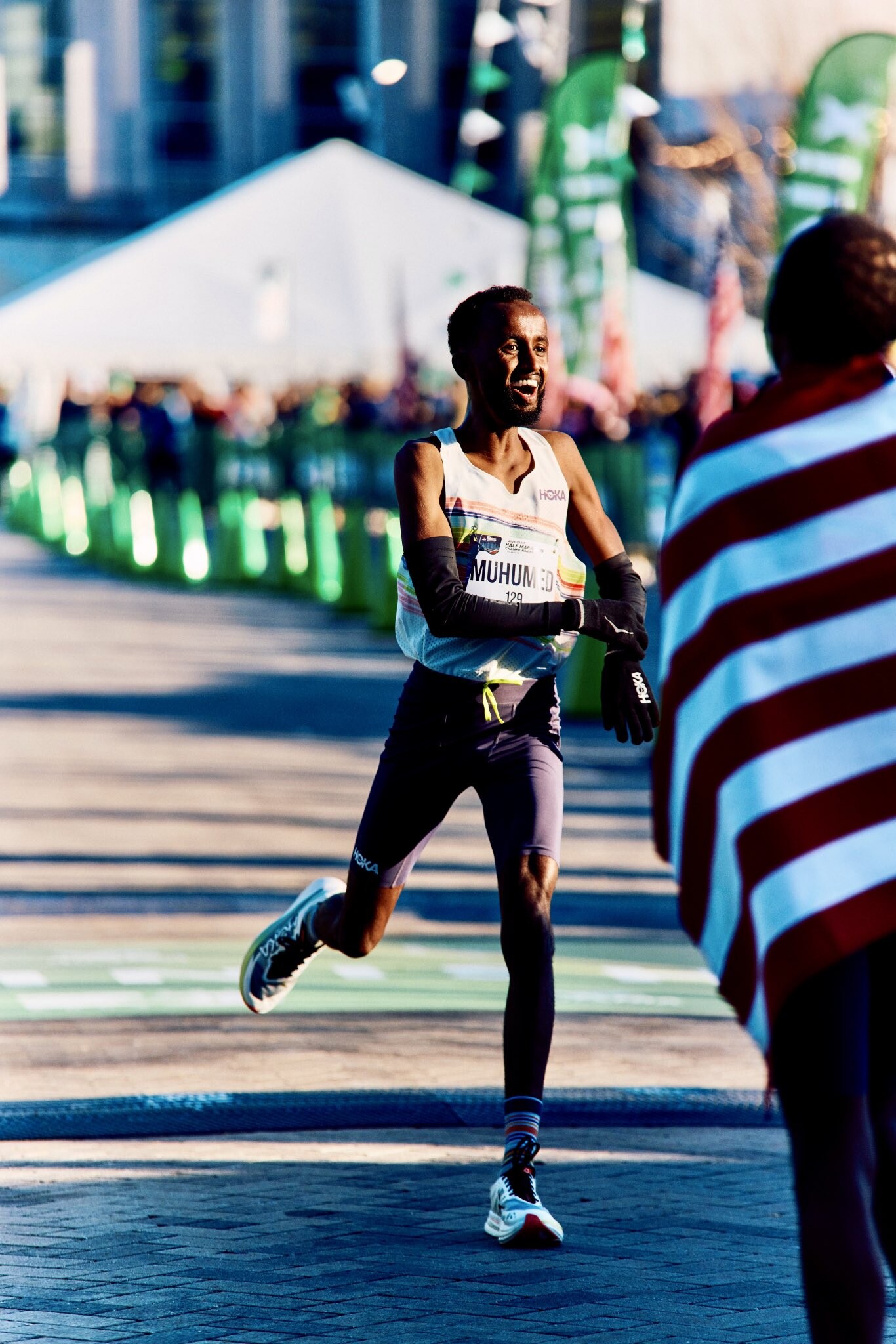
Close behind, Hillary Bor delivered a courageous performance to secure silver in 1:01:30. Known primarily for his prowess over barriers on the track, Bor once again proved that his endurance extends far beyond the steeplechase. His transition to the roads continues to gain momentum, and his performance here signals a seamless blend of speed and stamina that will serve him well on the global stage.
Completing the podium was Ahmed Muhumed, who crossed the line in 1:01:51 to claim bronze. Muhumed’s race was a testament to resilience. Maintaining composure through shifting race dynamics, he held firm in the closing miles to secure the final automatic qualifying spot. His measured effort reflected both discipline and growing international ambition.
Together, the trio now turns its focus to the World Athletics Road Running Championships in Copenhagen, where they will represent the United States against the world’s finest road specialists. The Danish capital awaits, promising a championship atmosphere steeped in tradition and intensity. For Kiptoo, Bor, and Muhumed, this is more than a selection—it is an opportunity to measure themselves against global excellence.
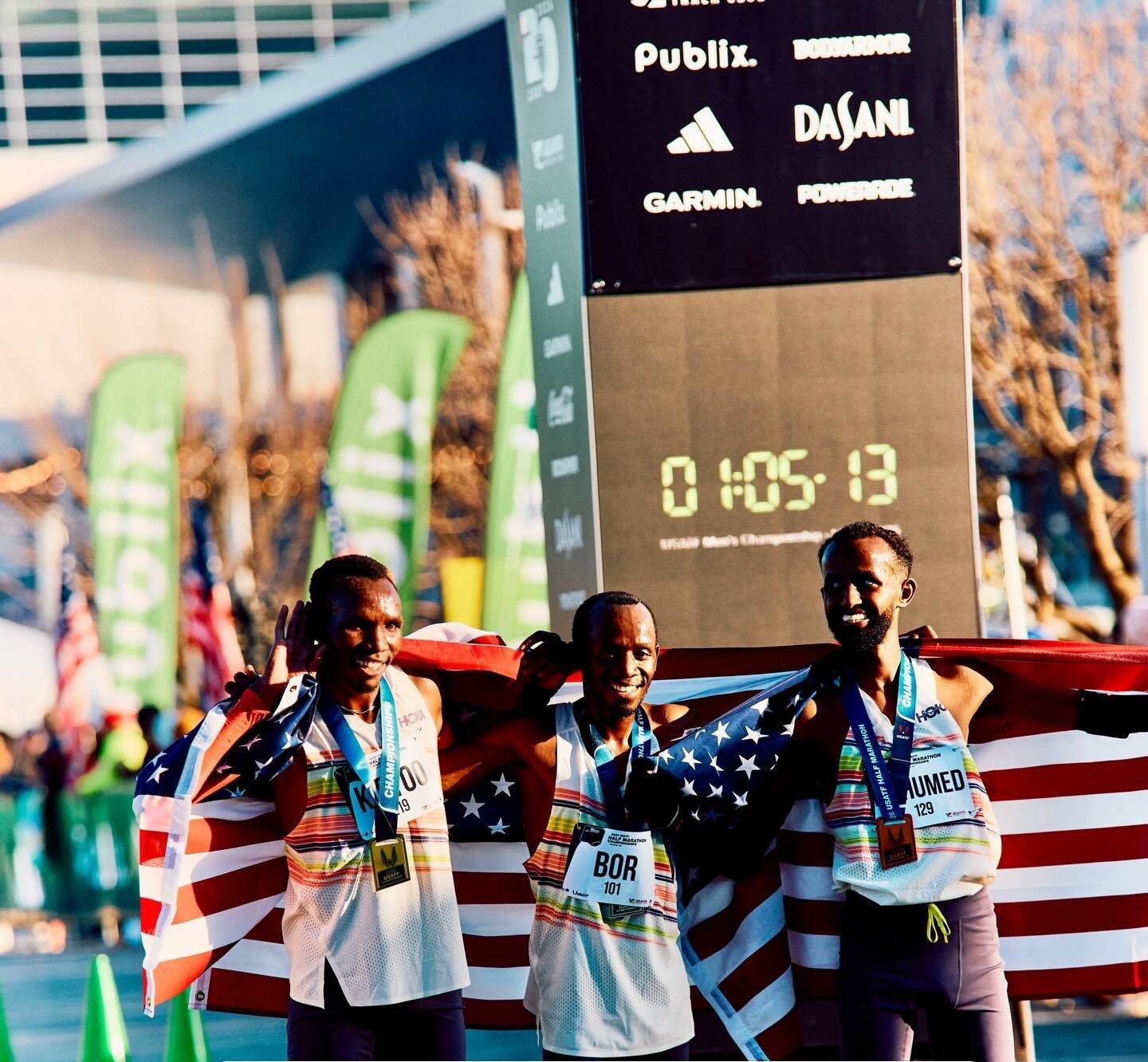
Their performances at the national championships were not accidental peaks but calculated statements of readiness. Each athlete displayed a unique racing identity: Kiptoo’s commanding surge, Bor’s relentless strength, and Muhumed’s composed determination. Collectively, they form a balanced and dangerous squad capable of making a profound impact on the international stage.
As Copenhagen draws nearer, anticipation builds. The half marathon is often described as a race of controlled aggression—fast enough to demand courage, long enough to punish impatience. If their championship performances are any indication, the United States will arrive not just with participants, but with contenders ready to shape the narrative.
by Erick Cheruiyot for My Best Runs.
Login to leave a comment
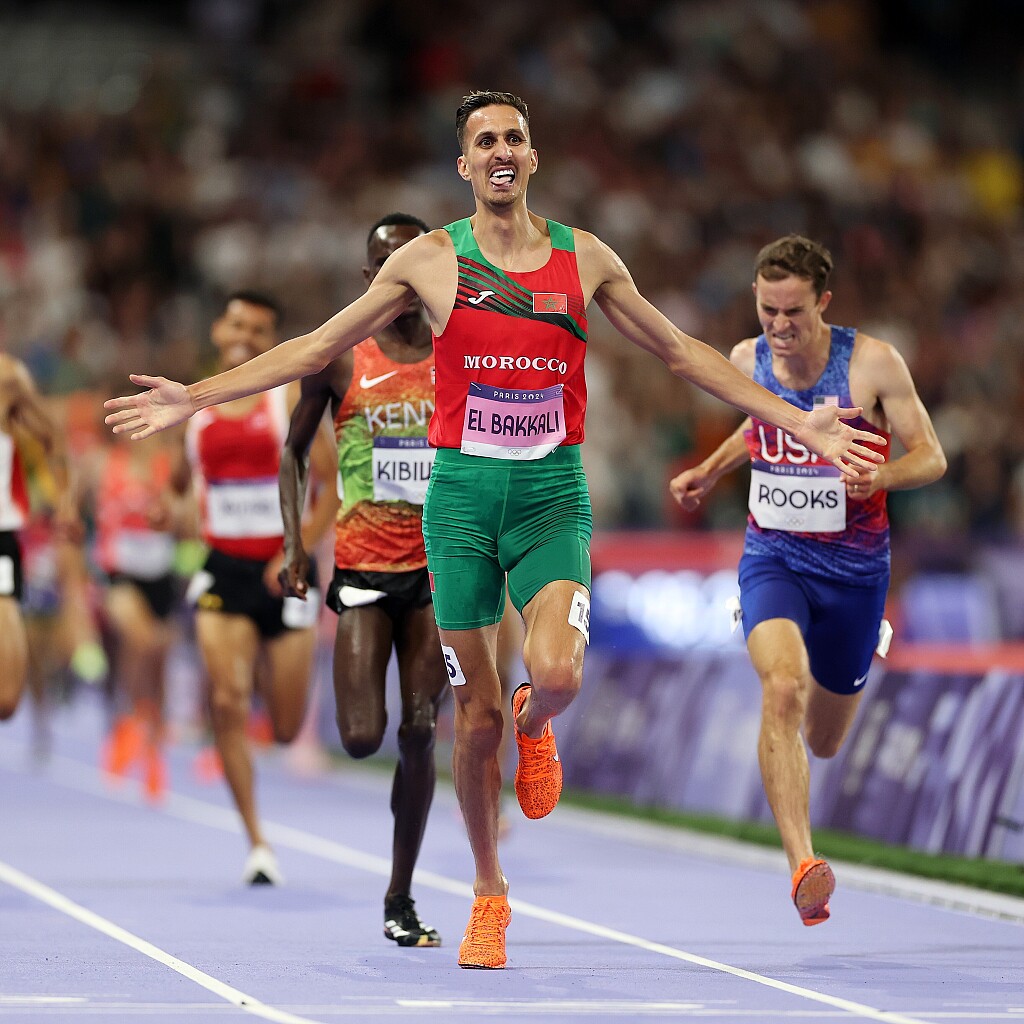
Soufiane El Bakkali Enters a New Era as He Joins On Running
Moroccan steeplechase legend Soufiane El Bakkali has officially begun a fresh chapter in his illustrious career after signing with On Running, marking a significant sponsorship change for one of athletics’ most dominant champions. The move brings together a proven winner and a fast-rising performance brand, united by a shared vision for the future.
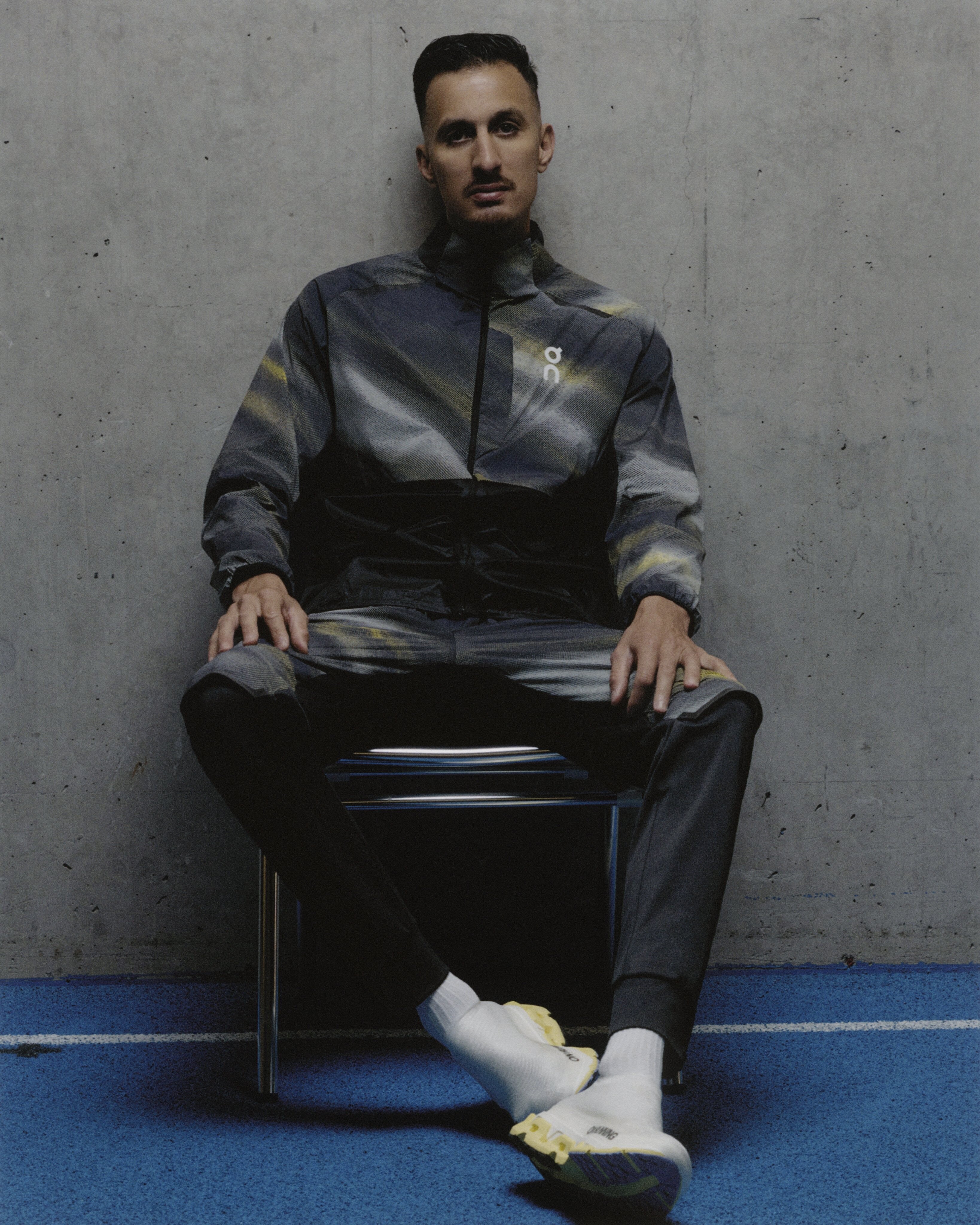
A two-time Olympic champion and multiple world champion, El Bakkali has long been the benchmark in the men’s 3000m steeplechase. His ability to deliver on the biggest stages has defined an era, from Olympic triumphs in Tokyo 2020 and Paris 2024 to world titles in Eugene 2022 and Budapest 2023. Now, with On Running at his side, the Moroccan star is focused on sustaining that dominance and reaching even greater heights.
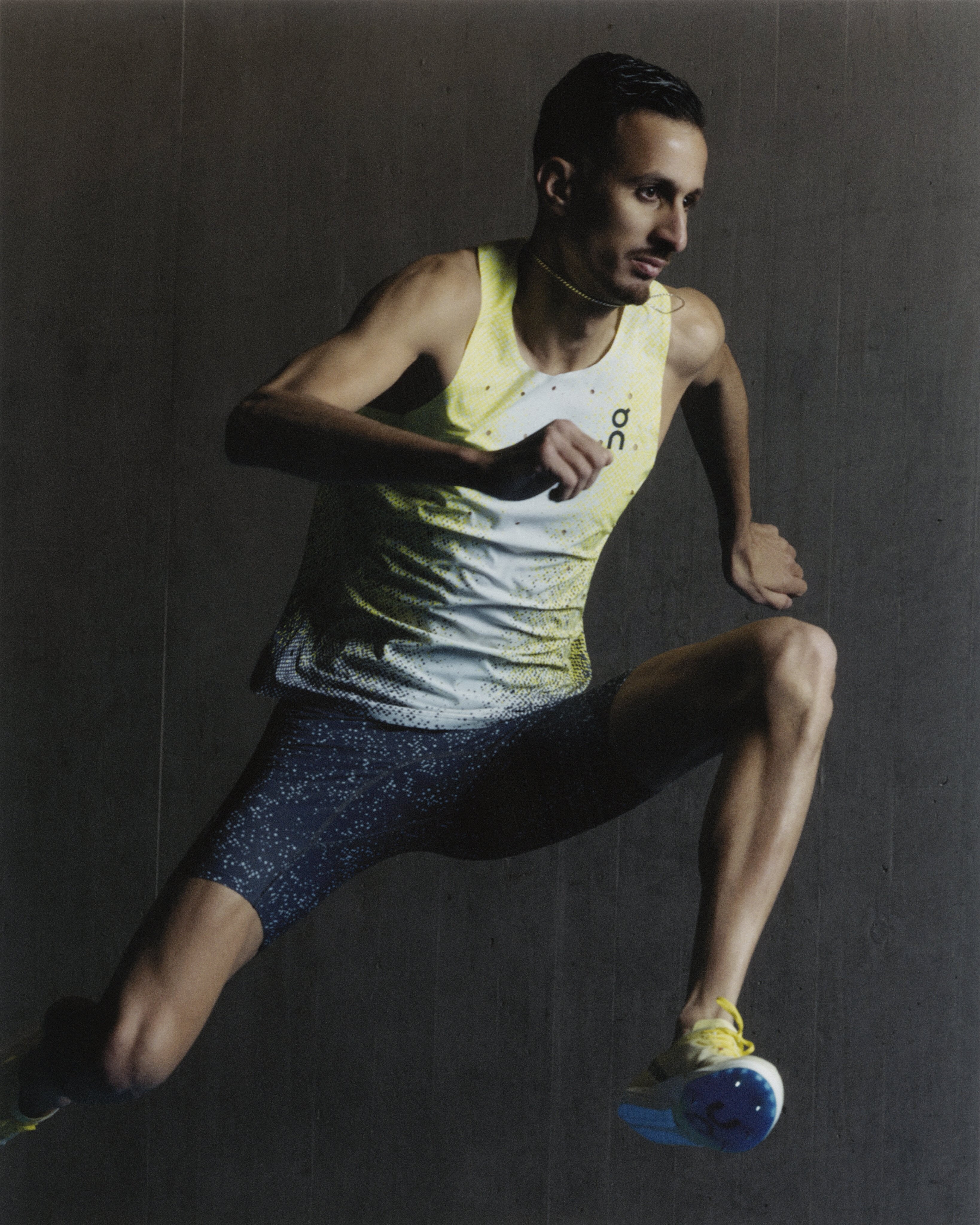
Explaining his decision, El Bakkali pointed to the long-term ambition behind the partnership, saying he was drawn to On by the clarity of their project and shared goals. Confident in the path ahead, he expressed his desire to keep shining and to achieve even more in the years to come.
El Bakkali’s success is built on consistency as much as brilliance. He reached world number one in 2023, set a personal best of 7:56.68 in the steeplechase in Rabat, and has shown his range with a 12:55.49 5000m performance in Paris. Alongside his Olympic and world medals, his Diamond League title in 2022 further underlined his authority in the event.
More than just a change of footwear, the partnership with On Running represents momentum—an alignment of innovation, ambition, and championship mentality. As El Bakkali continues to carry the Moroccan flag with pride, this new alliance signals that the king of the steeplechase is not done writing history.
by Erick Cheruiyot for My Bestruns.
Login to leave a comment
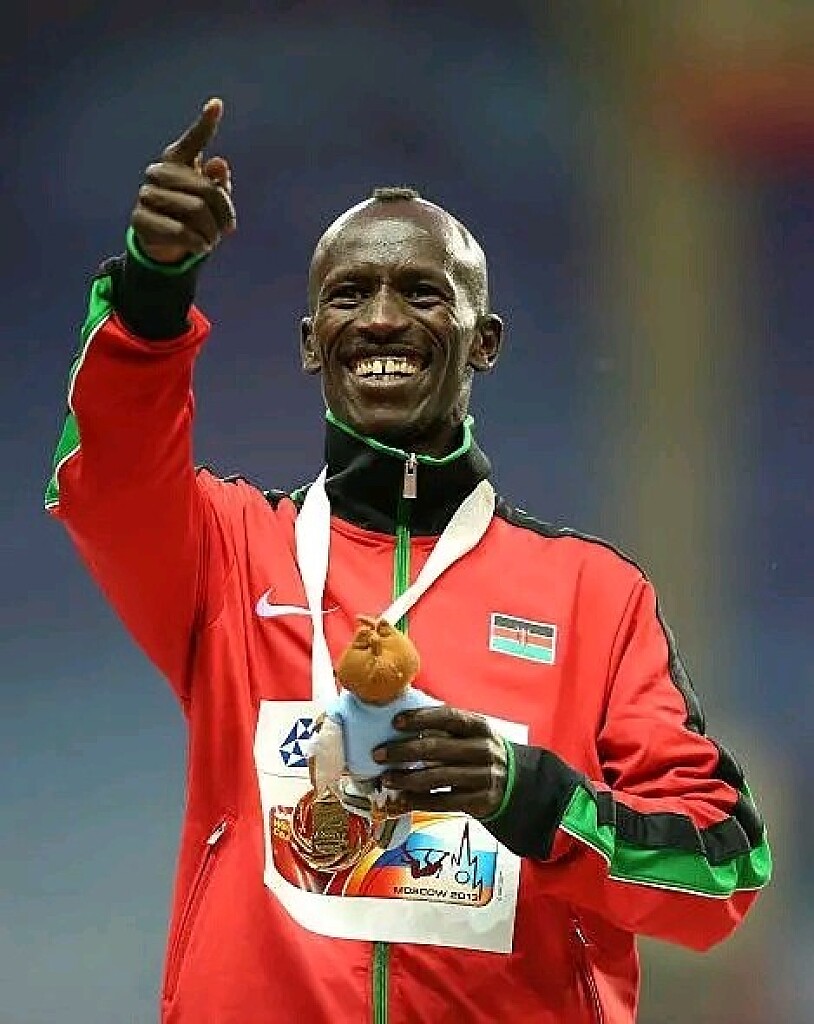
The Champion Who Carried His Culture
Some champions are remembered for what they won.
Others are remembered for how they expressed victory.
Ezekiel Kemboi belongs to the second kind.
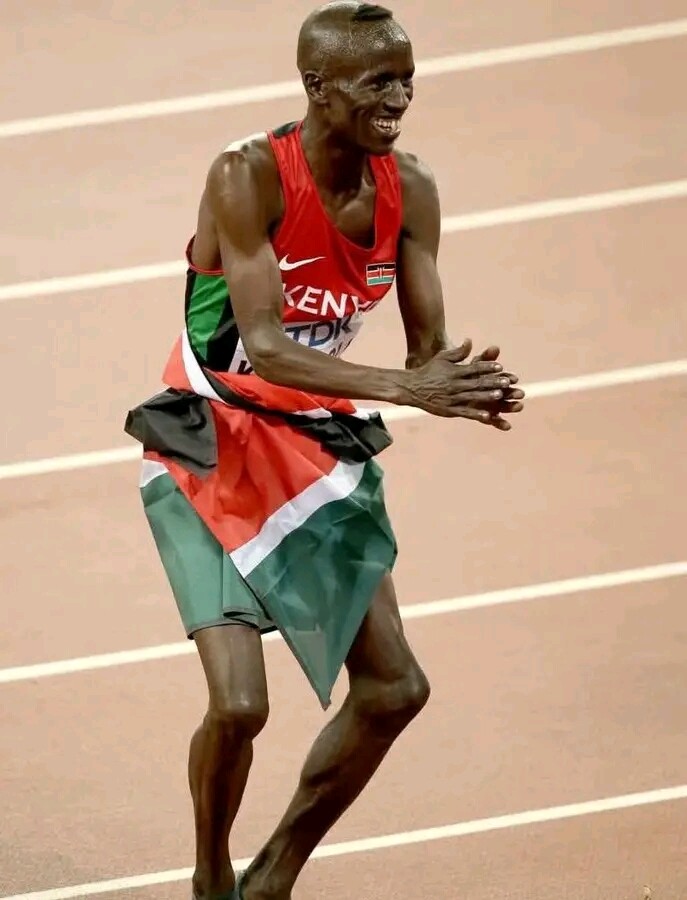
From the quiet paths of rural Kenya to the thunder of Olympic stadiums, Kemboi carried more than speed. He carried belief, personality, and an unmistakable rhythm. In a discipline built on pain and precision, he introduced freedom. Where restraint was expected, he delivered expression.
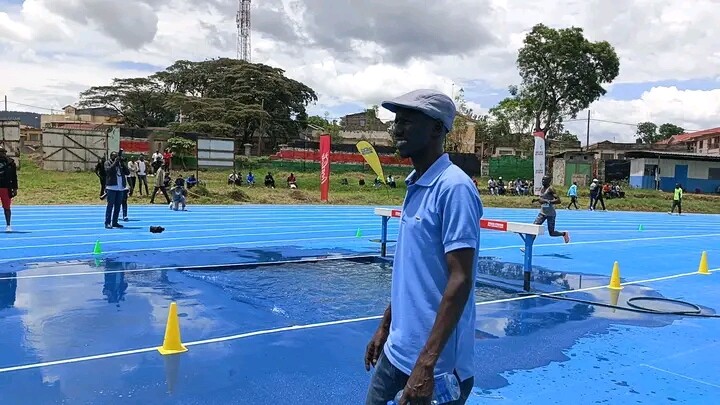
Every barrier on the track became a statement. Fear or confidence. Silence or celebration. Kemboi chose confidence. He ran with joy when the race demanded suffering, and he remained relaxed when pressure tightened around him.
And when the race was won, Kemboi did something the world would never forget.
After every major victory, he danced.
Not as an afterthought—but as a signature. His celebrations were playful, deliberate, and deeply personal, blending African rhythm with sporting triumph. They were moments of release after struggle, expressions of gratitude after endurance, and messages to the world that winning did not have to look the same for everyone.
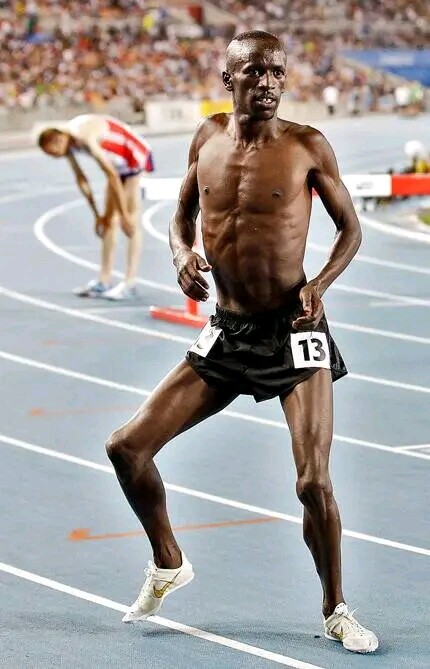
His record speaks for itself: Olympic gold medals, world championship titles, and performances that redefined steeplechase excellence. Yet his most lasting achievement lies beyond results. He expanded the meaning of victory.
Through his movement and his dance, Kemboi taught young athletes that identity is not a weakness. That joy can exist alongside discipline. That greatness does not require silence or conformity. His steps after the finish line became as iconic as his strides before it.
Across Africa and far beyond, his influence continues—on village tracks, school fields, and in the dreams of runners who learned from him without ever meeting him.
The lesson he left behind remains timeless: talent may open the door, but belief carries you through it. Face pressure with confidence. Run your race with purpose. And when your moment arrives—celebrate it fully.
Ezekiel Kemboi did not just win races.
He performed them.
He danced through them.
And in doing so, he changed the rhythm of the sport forever.
by Erick Cheruiyot for My Bestruns.
Login to leave a comment
