

Running News Daily
Running News Daily is edited by Bob Anderson and team. Send your news items to bob@mybestruns.com Advertising opportunities available.
Index to Daily Posts · Sign Up For Updates · Run The World Feed
Articles tagged #Kenyan Athletics Training Academy (KATA)
Today's Running News
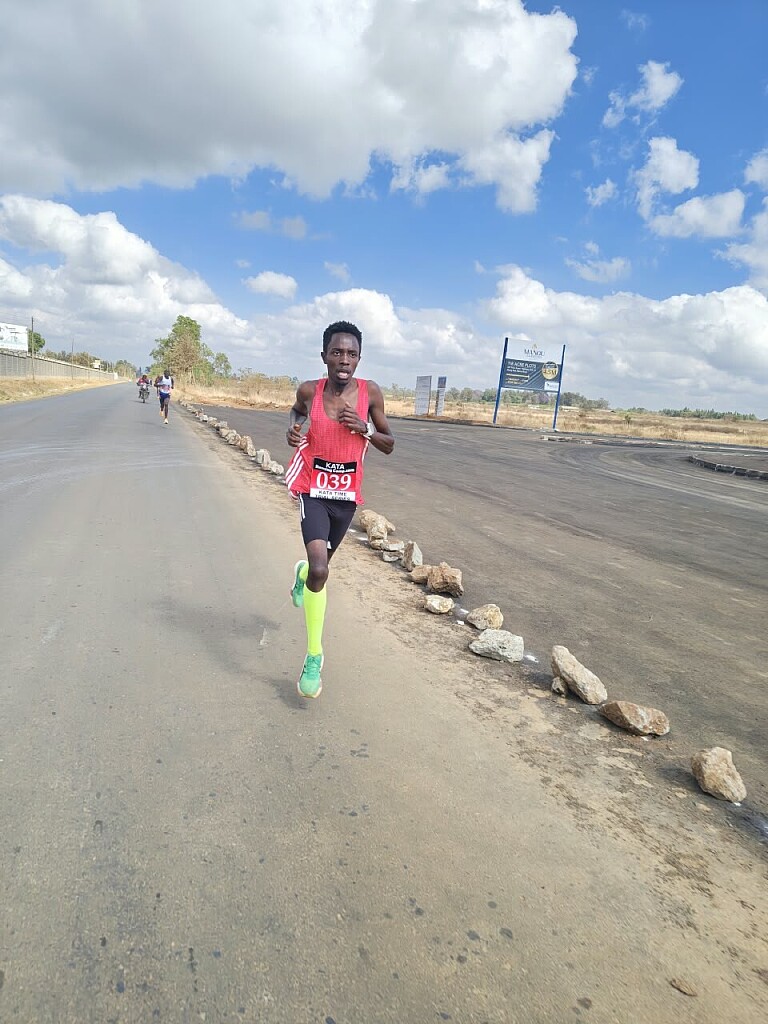


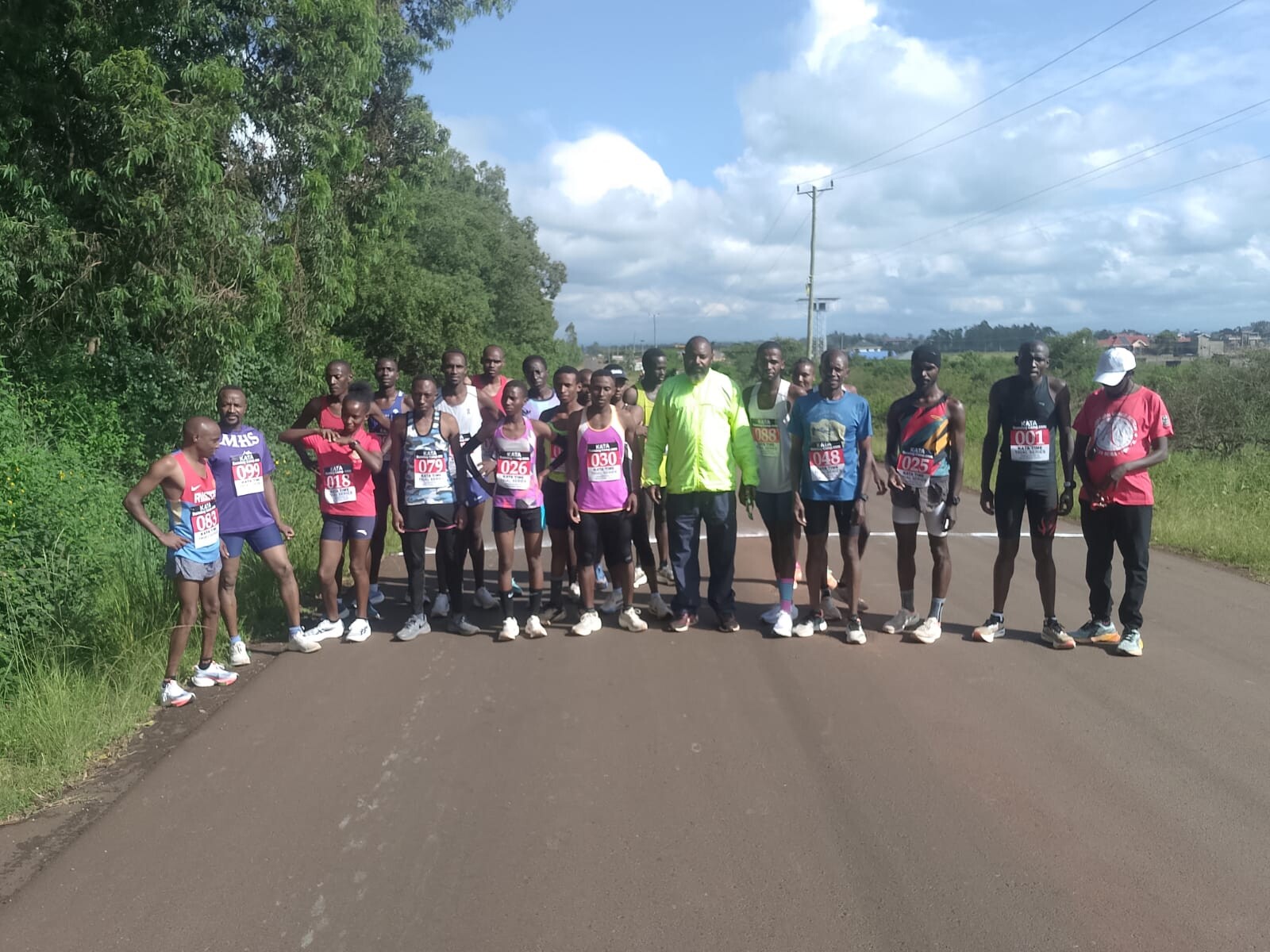
KATA Time Trial Series:Kelvin Ng'ang'a Leads Men’s 10km as Runners Battle Warm, Humid Conditions at 60th Edition
The Kenyan Athletics Training Academy (KATA) marked a significant milestone on Wednesday, October 14, 2026, with the successful staging of the 60th edition of its Time Trial Series in Thika, Kenya. Athletes took to the course across the 10km and 5km distances, testing their fitness and racing the clock in conditions characterised by relatively high temperatures and humidity.
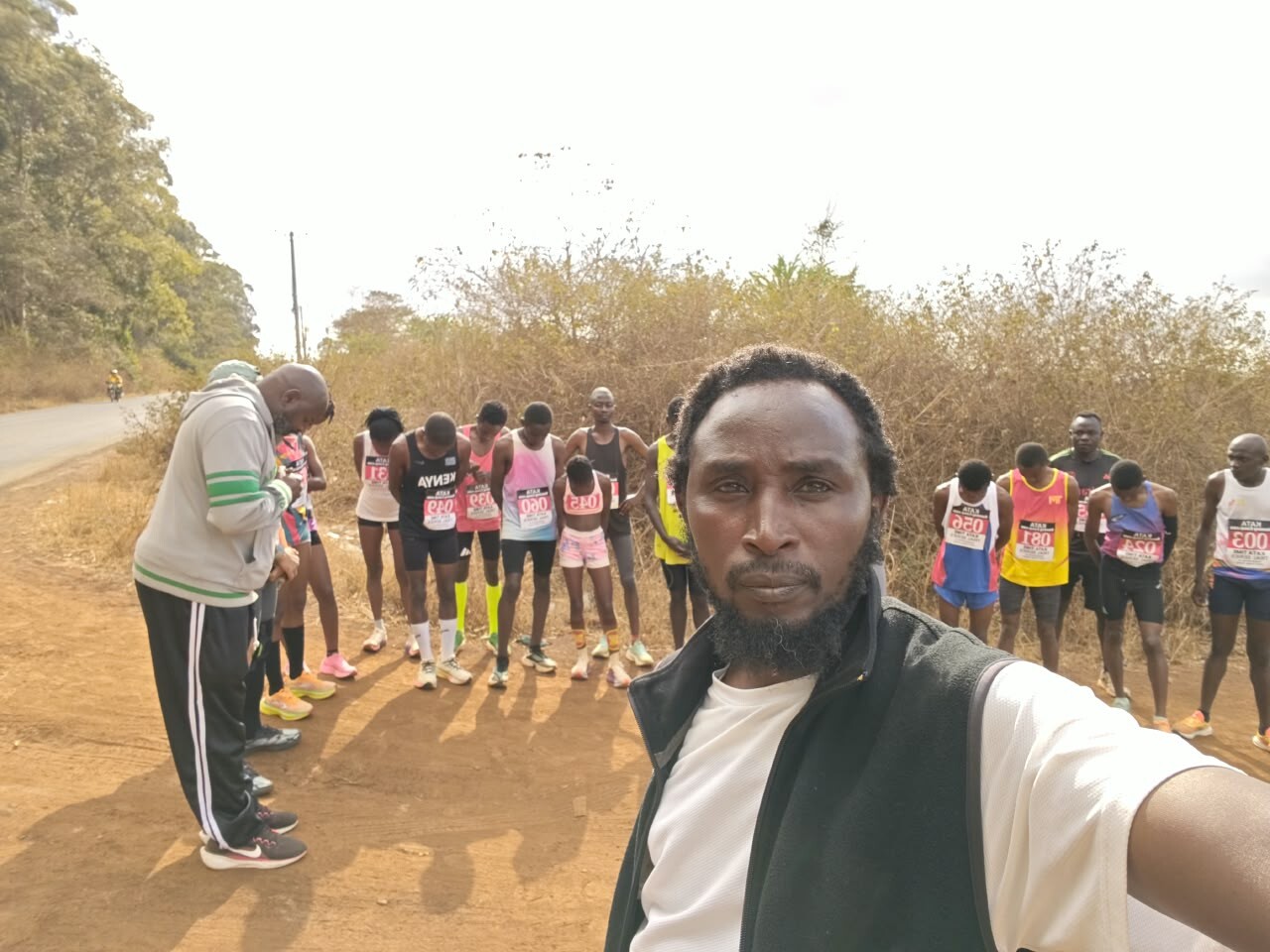
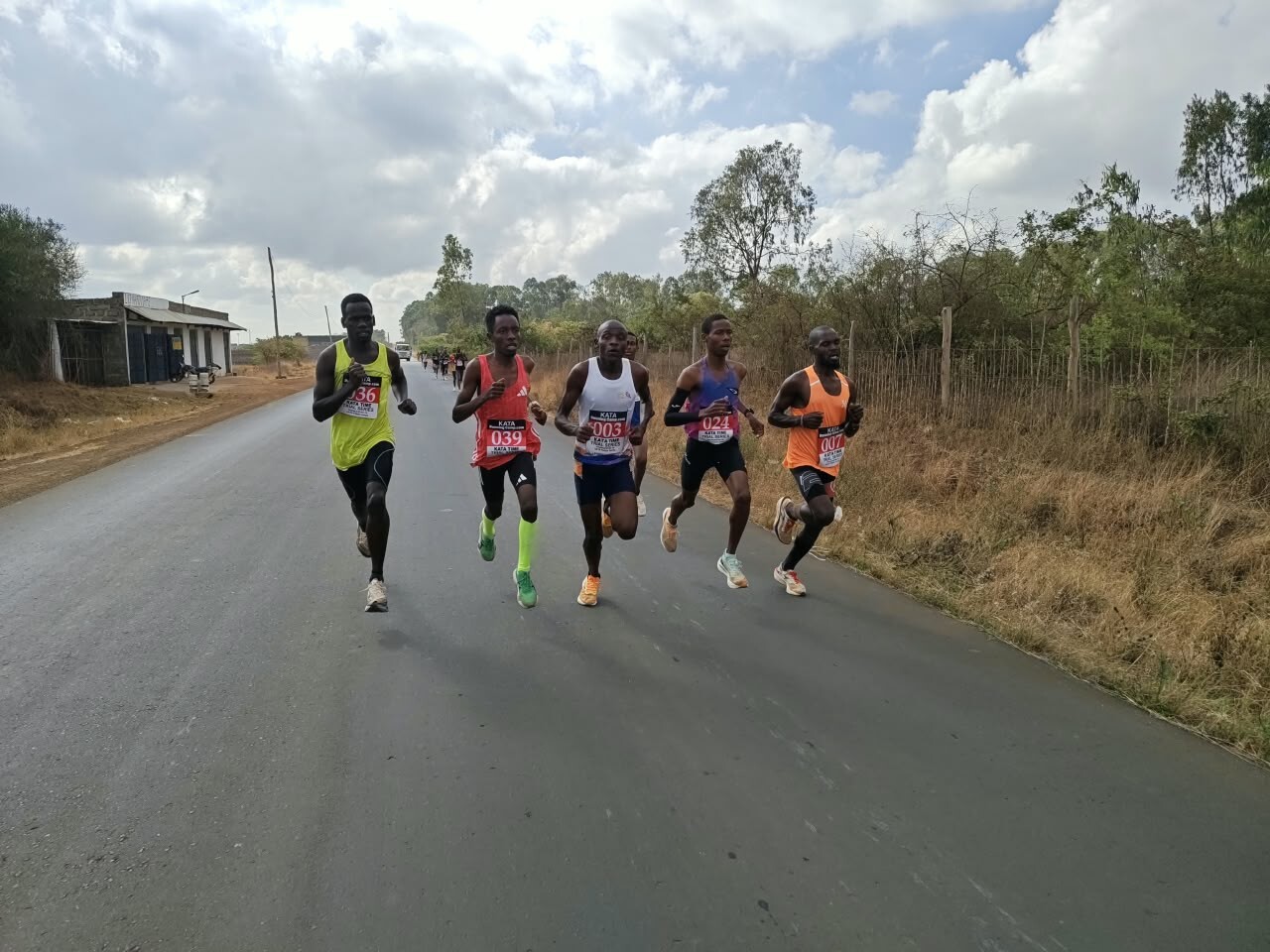
Despite the challenging weather, the runners delivered competitive performances, with Kelvin Ng'ang'a leading the men's 10km in 30:48. Charles Wanjora finished second in 30:55, while Erick Cheruiyot completed the top three in 31:02, as the leading trio crossed the finish line within 14 seconds of one another.
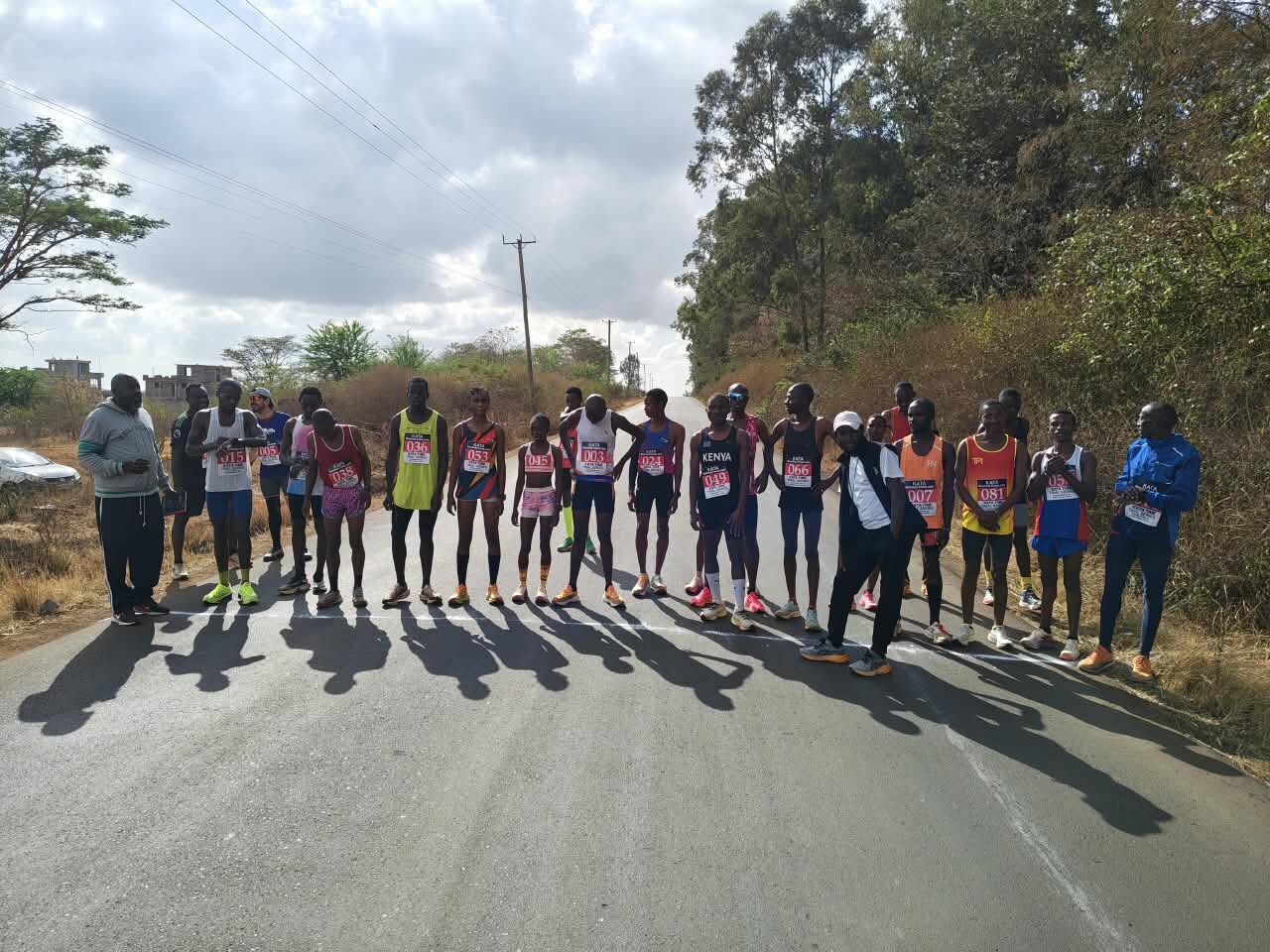
The close contest highlighted the competitive nature of the series, where athletes have an opportunity to measure their progress, assess their race readiness and identify areas for improvement through timed competition.
Justus Nyamai finished fourth in 31:22, followed by Robert Ndegwa in 32:35. Francis Maina placed sixth in 32:51, while Ishmael Mburu took seventh in 33:22. Vincent Kiprotich finished eighth in 34:47, ahead of David Muriuki, who clocked 34:58. Ezekiel Kitorit completed the top 10 in 35:09.
Bernard Gicheha followed in 35:14, with Eugene Wambua recording 35:28. Lewis Kamau finished in 36:28, Paul Ng'ang'a in 37:21, George Mwangi in 37:34 and Simon Ngereza in 37:41, rounding out the men's 10km results.
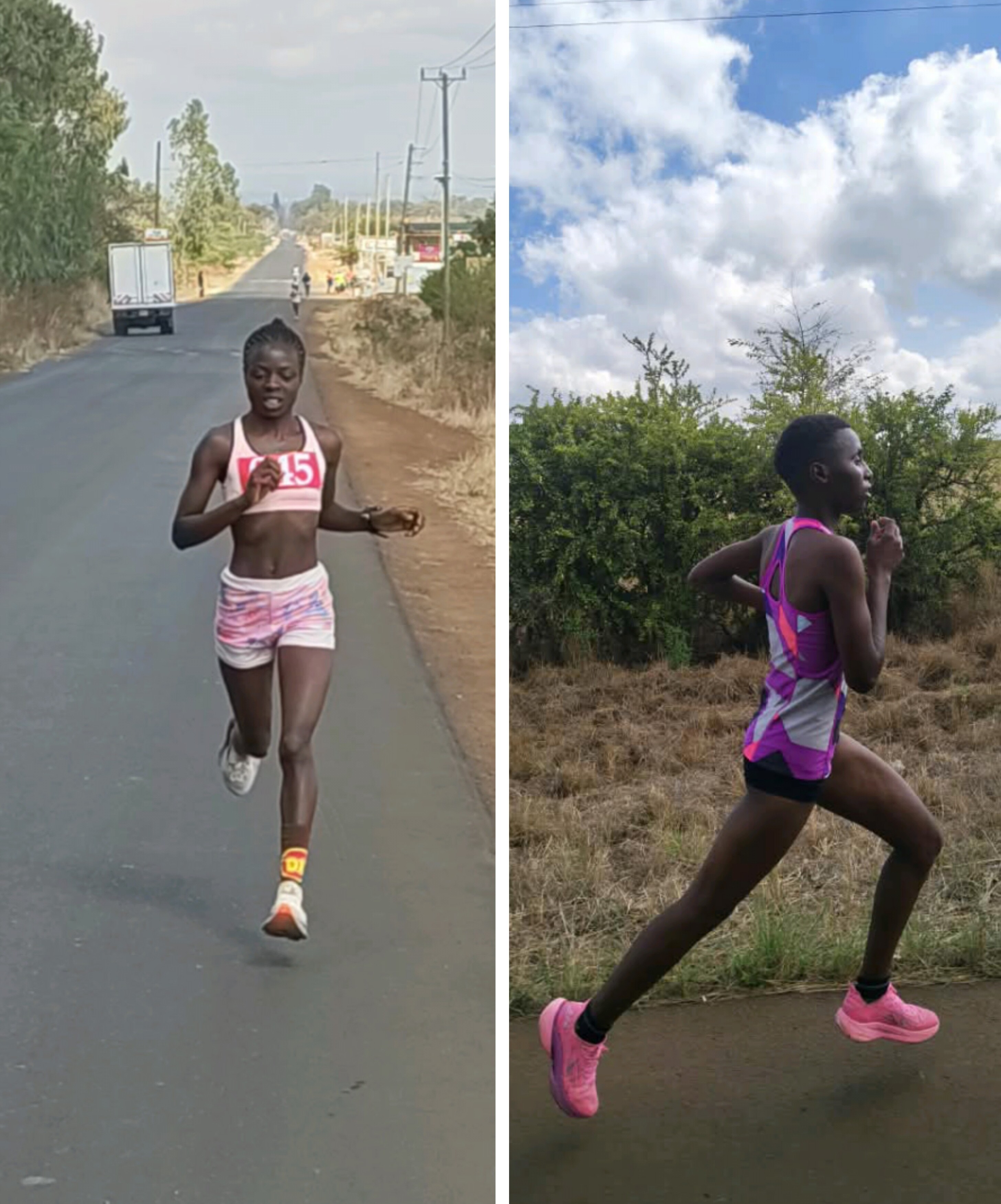
In the women's 10km, Ruth Maina emerged victorious in 36:31. Felister Maina followed in 37:08, while Regina Sandiki finished third in 38:56. Felister Mbatha completed the four-woman field in 44:38.
The performances came under conditions that demanded careful pacing and determination. With temperatures relatively high and humidity adding to the challenge, the time trial provided athletes with a practical opportunity to assess how their current fitness responds to less-than-ideal racing weather.
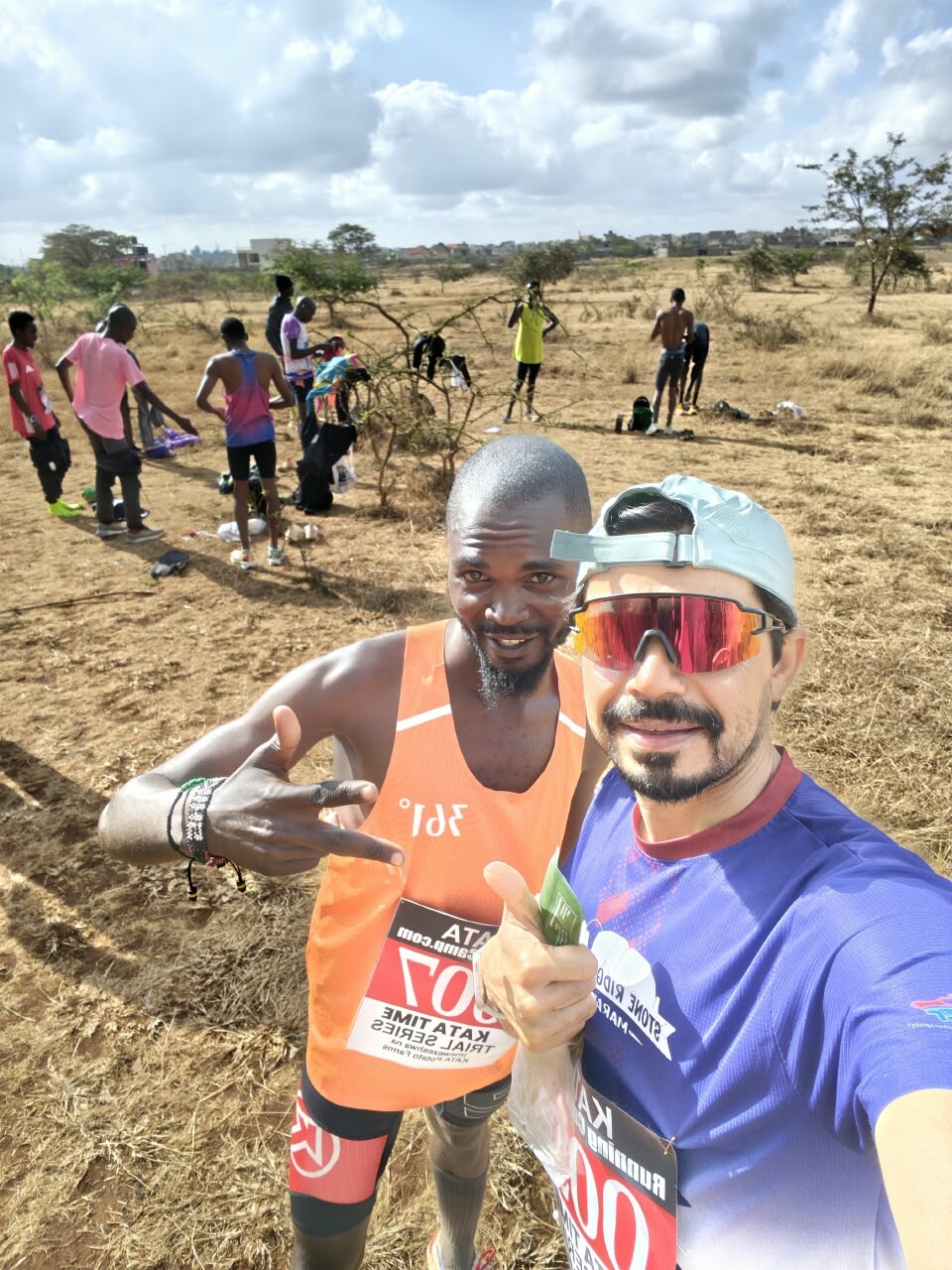
The 5km race added another highlight to the day's programme, with Elam Okato taking finishing with 25:46. Guest runner Rohan Kohli, visiting from India, also completed the distance in 25:46. The 5km race produced a dead heat, with a finish joint first in the race.
Kohli's participation added an international dimension to the milestone edition, bringing a guest runner from India into the KATA running environment. His appearance highlighted how athletics can bring together people from different backgrounds through a shared passion for running.
KATA 60TH TIME TRIAL SERIES RESULTS Wednesday, October 14, 2026 Thika, Kenya
MEN’S 10KM
- Kelvin Ng'ang'a – 30:48
- Charles Wanjora – 30:55
- Erick Cheruiyot – 31:02
- Justus Nyamai – 31:22
- Robert Ndegwa – 32:35
- Francis Maina – 32:51
- Ishmael Mburu – 33:22
- Vincent Kiprotich – 34:47
- David Muriuki – 34:58
- Ezekiel Kitorit – 35:09
- Bernard Gicheha – 35:14
- Eugene Wambua – 35:28
- Lewis Kamau – 36:28
- Paul Ng'ang'a – 37:21
- George Mwangi – 37:34
- Simon Ngereza – 37:41
WOMEN’S 10KM
- Ruth Maina – 36:31
- Felister Maina – 37:08
- Regina Sandiki – 38:56
- Felister Mbatitha – 44:38
5KM
- Elam Okato – 25:46
- Rohan Kohli (India) – 25:46
NOTE: Elam Okato and Rohan Kohli recorded identical times of 25:46.
Beyond the finishing positions, the 60th edition reinforced the purpose of the KATA Time Trial Series: providing athletes with a consistent platform to evaluate their preparation and monitor their development.
Unlike major championship races, where medals and titles dominate the conversation, time trials offer a different measure of success. Athletes can assess their pacing, endurance and ability to maintain their effort across a set distance. Coaches can also use the results to evaluate training progress and make adjustments ahead of future competitions.
Wednesday's warm, humid conditions added another variable to that assessment. Weather can influence how runners feel and perform, making it important to consider the conditions when interpreting times and comparing results across different editions.
For athletes working towards personal bests and improved performances in road races, track events and longer-distance competitions, these opportunities to test fitness remain an important part of the preparation process.
Reaching its 60th edition represents a notable milestone for the KATA Time Trial Series and its continuing role in the Thika running community. By bringing athletes together for regular, timed competition, the series offers a practical environment for tracking progress, building competitive experience and maintaining focus on long-term goals.
From Nganga's leading performance in the men's 10km to Ruth Maina's victory in the women's race and the shared finishing time in the 5km, the day's results provided another snapshot of athletes at different stages of their development.
As the runners return to training, the times recorded in this edition will serve as a reference point for their next phase of preparation. For some, the priority will be improving speed; for others, it will be strengthening endurance, refining pacing or preparing for upcoming races.
At KATA, the principle remains straightforward: show up, put in the work, test your fitness and let the stopwatch tell the story.
The 60th edition is now in the books, but for the athletes who took part, the next challenge has already begun.
by Erick Cheruiyot for My Best Runs.
Login to leave a comment

KATA Time Trial Series
Welcome to the KATA Monthly Time Trial Held at the Kenyan Athletics Training Academy in Thika, Kenya, the KATA Monthly Time Trial is a unique and inclusive event designed to support runners of all levels in achieving their goals and showcasing their fitness. This event offers both 10K and 5K distances on an accurate, certified course, providing participants with...
more...
KATA Time Trial Series Set for Landmark 60th Edition as Athletes Prepare to Test Their Limits in Thika
The Kenyan Athletics Training Academy (KATA) is preparing to welcome runners back to Thika, Kenya, on Wednesday, October 14, 2026, for the landmark 60th edition of the KATA Time Trial Series. The event promises another exciting opportunity for athletes to test their abilities, measure their fitness and assess the progress they have made through their training.
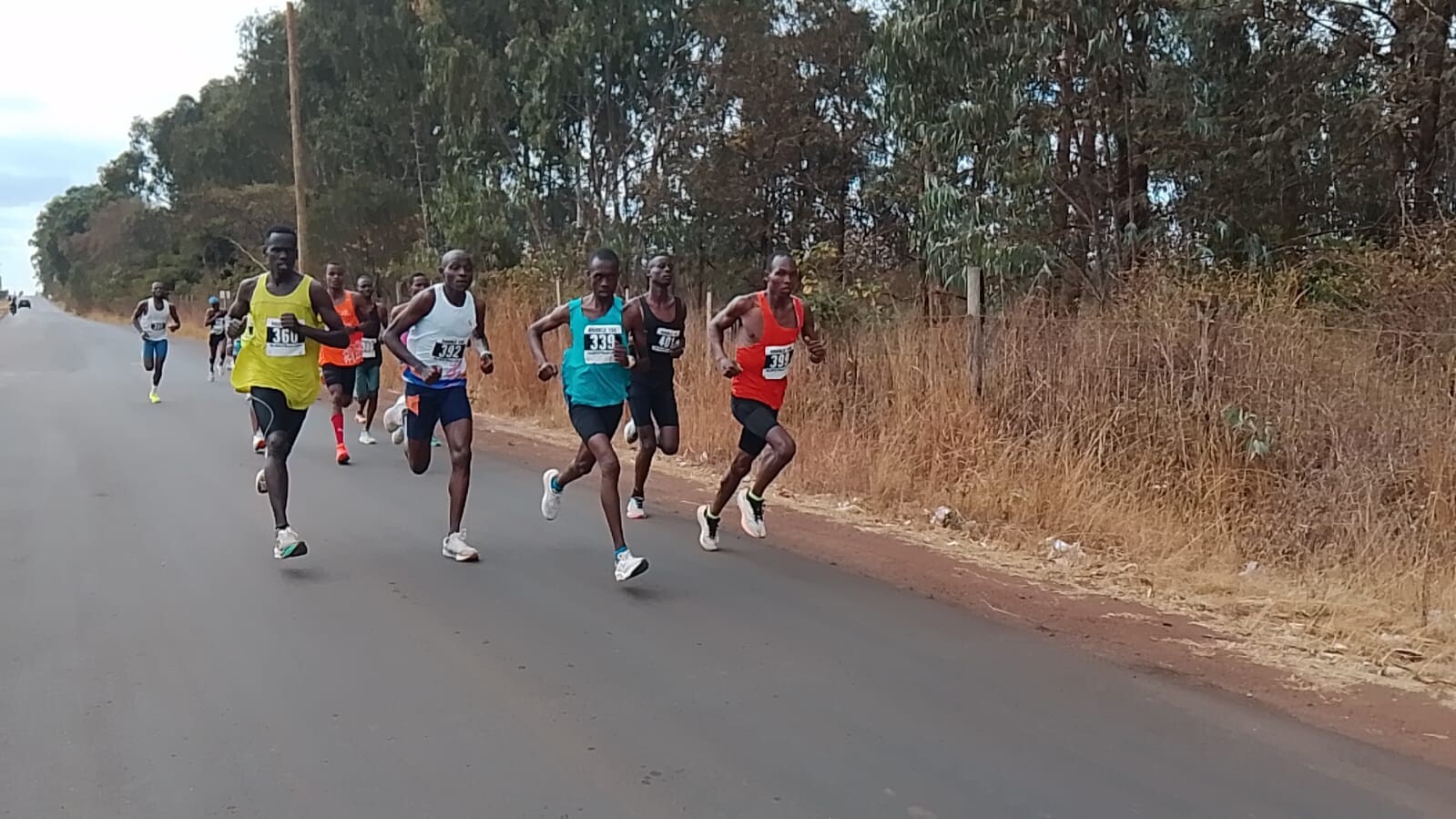
Over the years, the KATA Time Trial Series has established itself as a valuable platform for runners seeking to evaluate their performance under competitive conditions. As the series reaches its 60th edition, athletes will once again have the chance to challenge themselves against the clock, gauge their current form and determine how effectively their training is translating into performance.
The previous edition, the 59th, delivered an impressive display of determination across the 5km and 10km distances. Peter Wanyoike produced the standout performance in the men's 10km, winning in 30:36, followed by Robin Musa in 30:51 and Charles Wanjora in 31:01. In the women's 10km, Felister Maina claimed victory in 37:37, narrowly ahead of Naomi Wambui Muriuki, who finished in 37:52.
The shorter distances also produced competitive performances. Edwin Muasa won the men's 5km in 16:17, while Rachel Njeri took the women's 5km title in 22:21. These results demonstrated the determination of athletes using the series to assess their capabilities and measure their progress against the stopwatch.
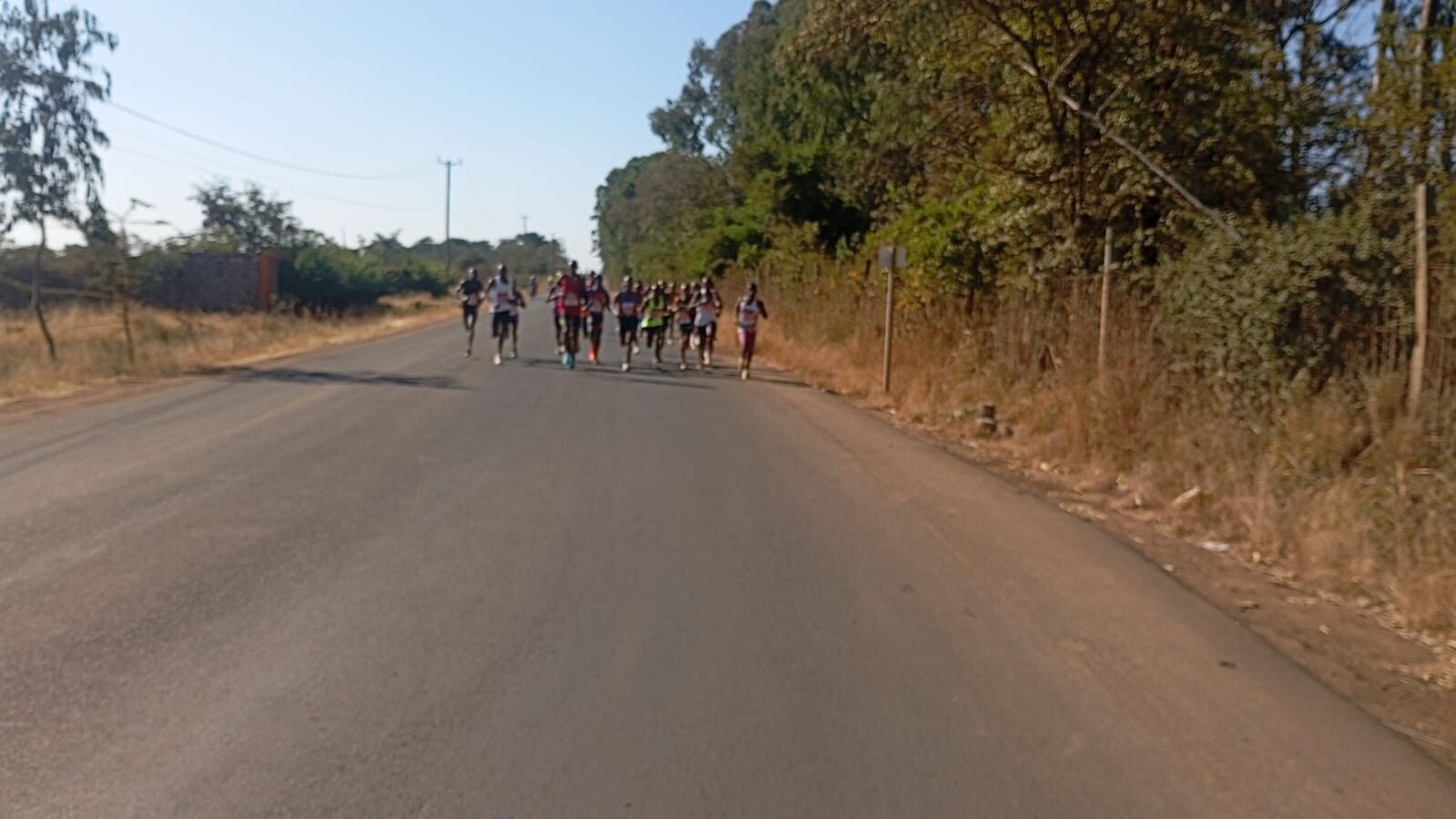
With the 60th edition approaching, runners will have another opportunity to establish personal benchmarks, evaluate their race pace and determine their readiness for upcoming competitions. Whether targeting a personal best, assessing endurance or checking current speed, the time trial provides a practical measure of an athlete's fitness and competitive form.
Beyond the finishing positions, the KATA Time Trial Series places emphasis on consistency, discipline and measurable improvement. Every second counts, and each performance provides useful feedback about an athlete's current strengths, limitations and overall preparation. Comparing results from previous editions can help runners understand their development and identify areas that may require further attention.
The series also brings together athletes with different levels of experience and ambitions, creating a competitive environment in which runners can challenge one another while pursuing individual targets. For emerging athletes, it offers valuable exposure to timed competition, while experienced runners can use the results to assess their form against established personal standards.
As the countdown to Wednesday continues, athletes are encouraged to prepare for another morning of competitive running and honest self-assessment. Reaching the 60th edition marks a significant milestone for the KATA Time Trial Series and reflects its continued role in providing runners with a platform to measure their abilities through organised competition.
For runners in Thika and the surrounding areas, the event presents an opportunity to put their preparation to the test, compete against the clock and discover what their current fitness can deliver.
The date is Wednesday, October 14, 2026. The mission is simple: test your ability, measure your progress and see what the stopwatch reveals.
by Erick Cheruiyot for My Best Runs.
Login to leave a comment
KATA Time Trial Series
Welcome to the KATA Monthly Time Trial Held at the Kenyan Athletics Training Academy in Thika, Kenya, the KATA Monthly Time Trial is a unique and inclusive event designed to support runners of all levels in achieving their goals and showcasing their fitness. This event offers both 10K and 5K distances on an accurate, certified course, providing participants with...
more...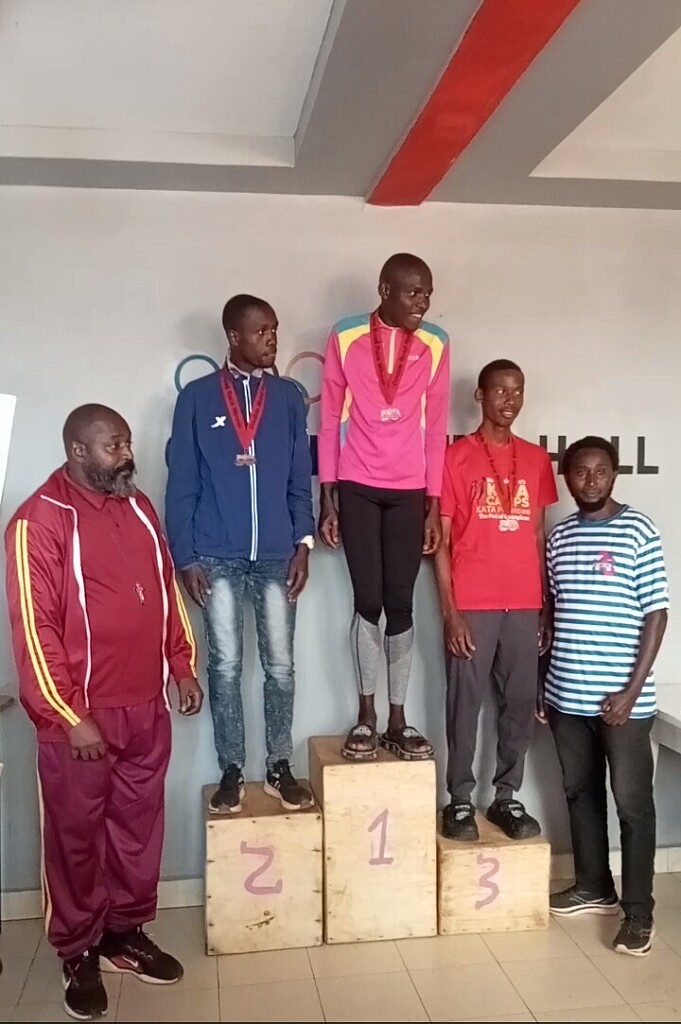
Charles Wanjora Leads 6th Annual KATA Double Road Race 15K As Ruth Maina Claims Women’s Victory In Thika
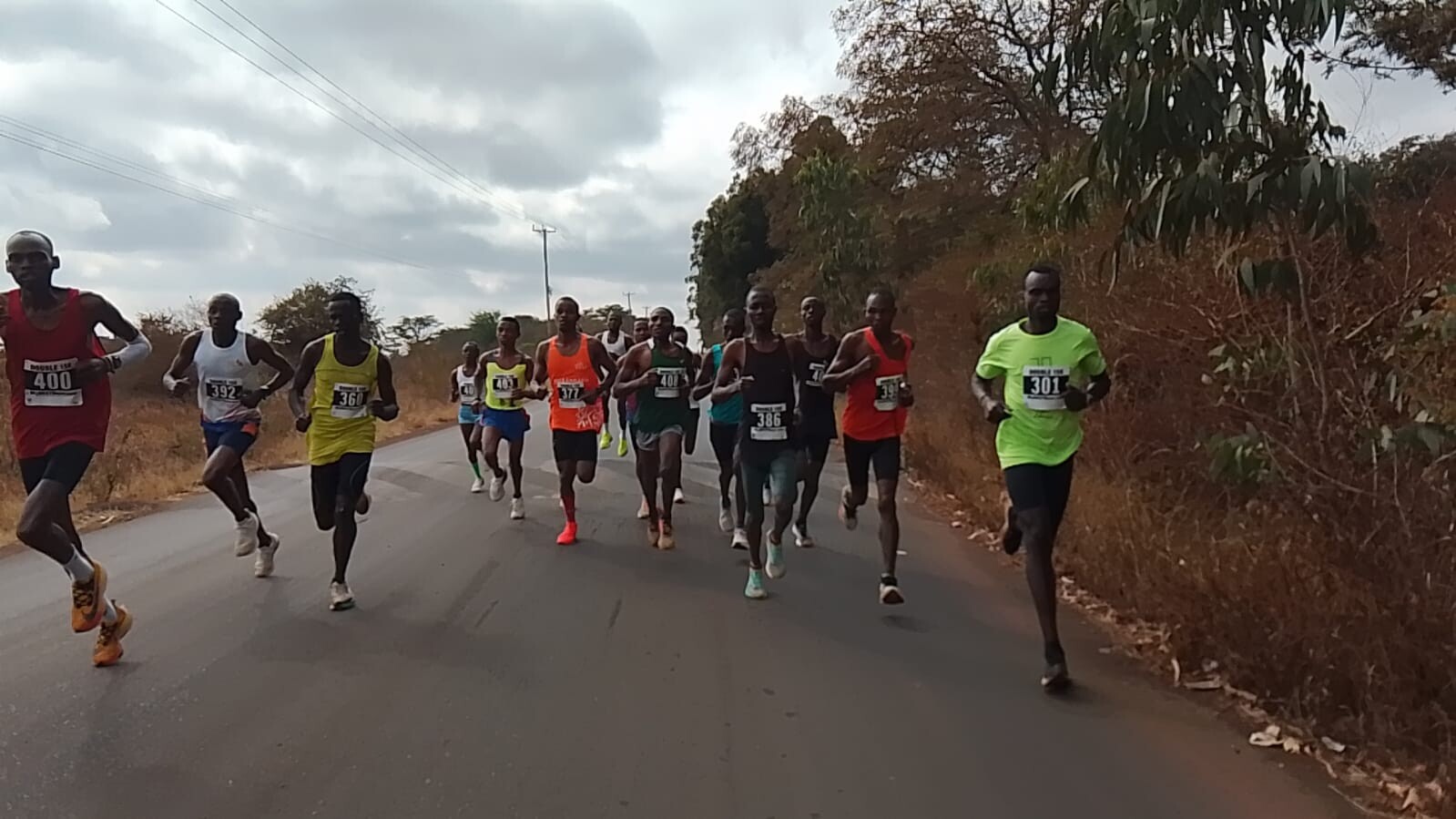
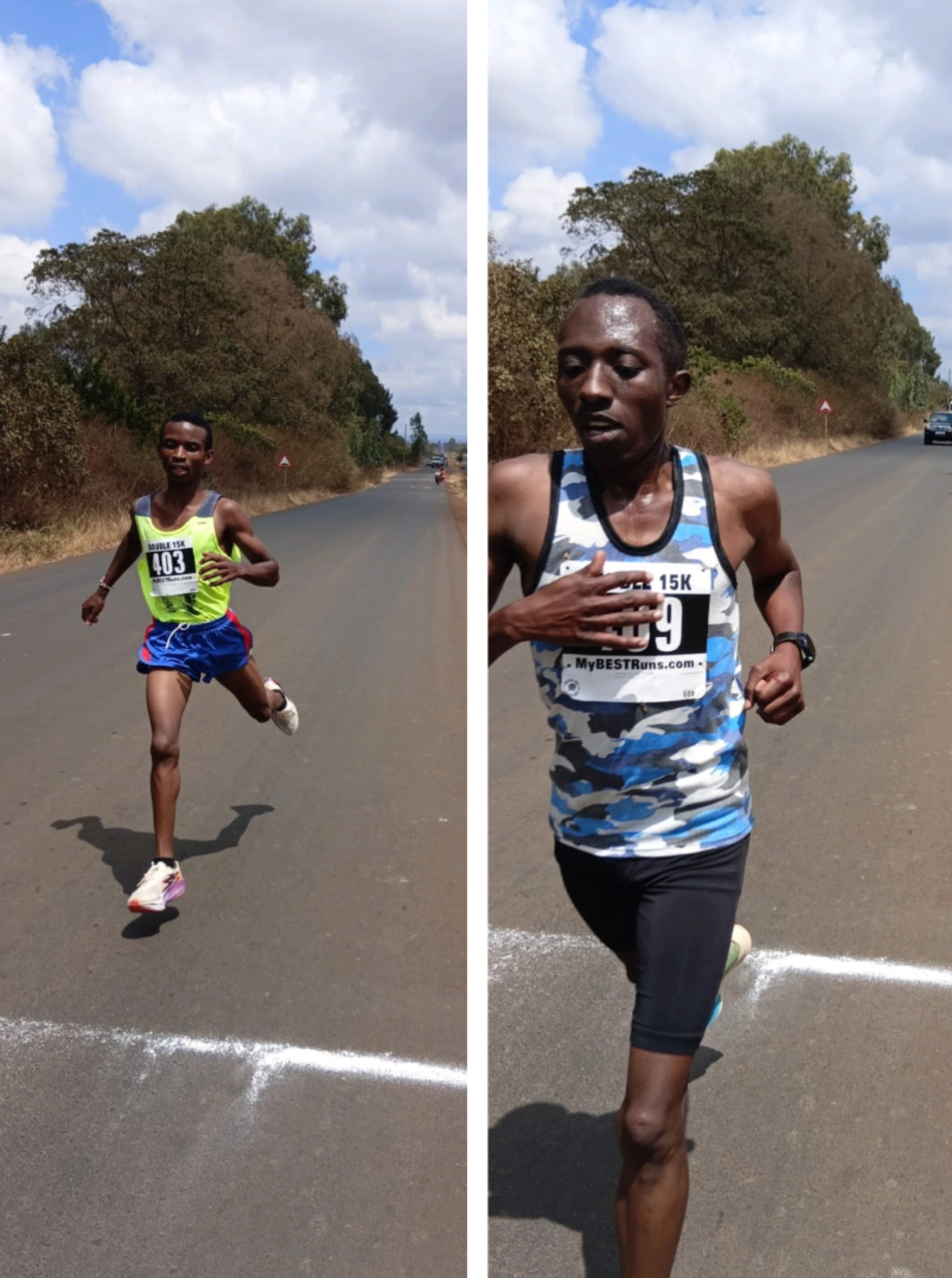
THIKA, Kenya — Charles Wanjora emerged victorious at the 6th Annual KATA Double Road Race 15K in Thika on Saturday, September 19, 2026, leading a competitive field in a unique two-stage contest that demanded endurance, careful pacing and the ability to recover before returning for another hard effort.
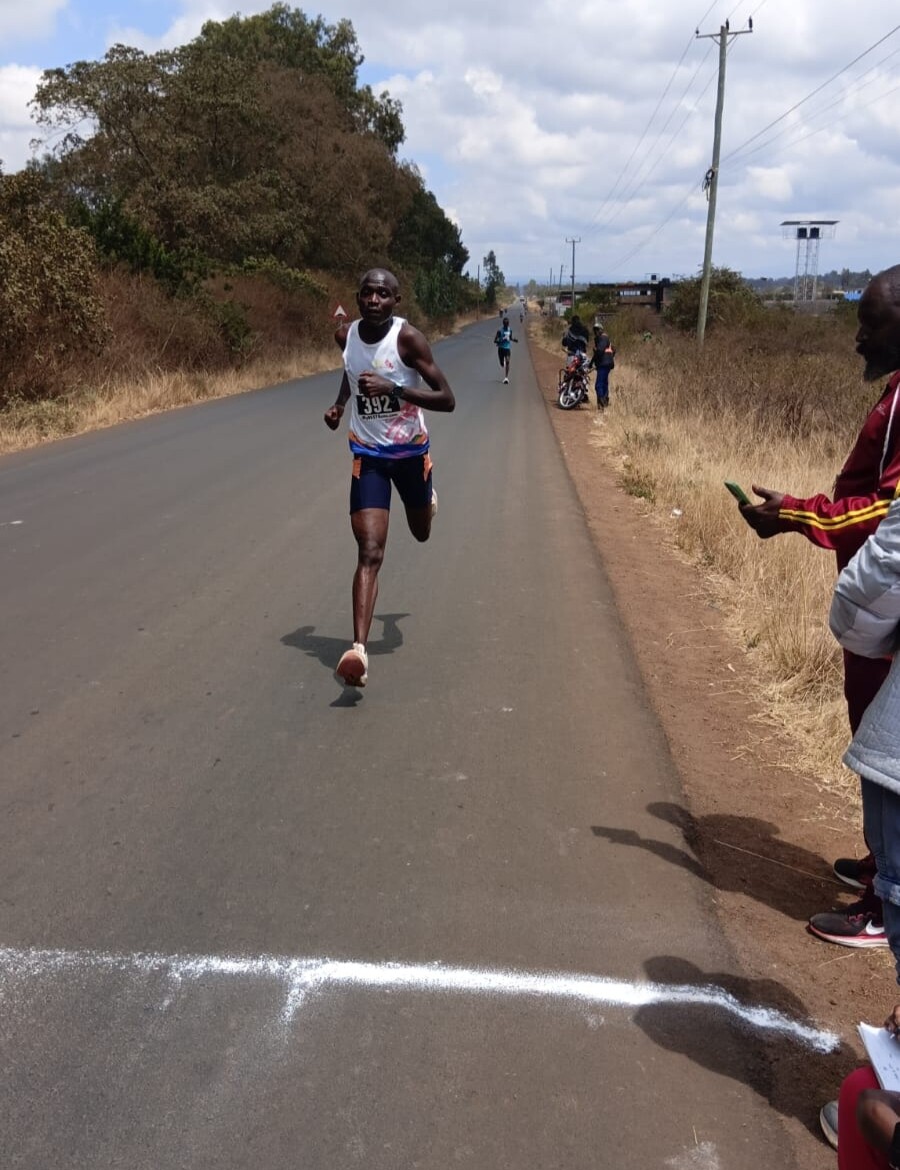
Wanjora won the men’s race in a combined time of 46:02, finishing 15 seconds ahead of Joshua Kibet, who was second in 46:17. Justus Nyamai completed the men’s podium in 47:10.
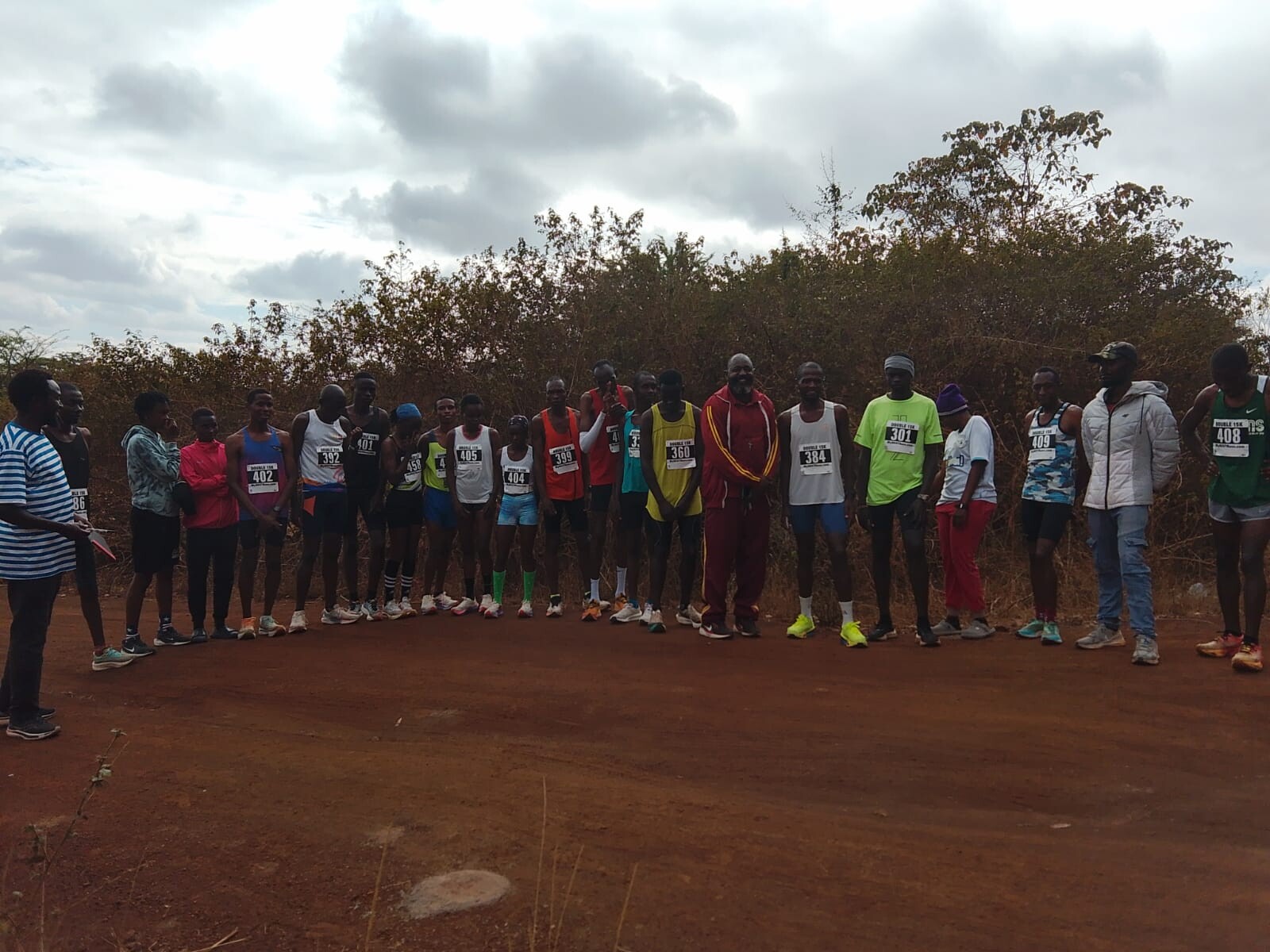
Erick Cheruiyot finished fourth in 48:01, followed by Francis Maina in 48:25. Joseph Nyota placed sixth in 49:49, while Vincent Kiprotich was seventh in 50:15.
Vincent Kariuki finished eighth in 50:54, narrowly ahead of Gideon Kiplang'at, who was ninth in 50:55. David Mwangi completed the top 10 in 51:19.
Ezekiel Itorik finished 11th in 53:03, Tom Ndiwa was 12th in 54:10, and George Munyagi completed the men’s field in 54:19.
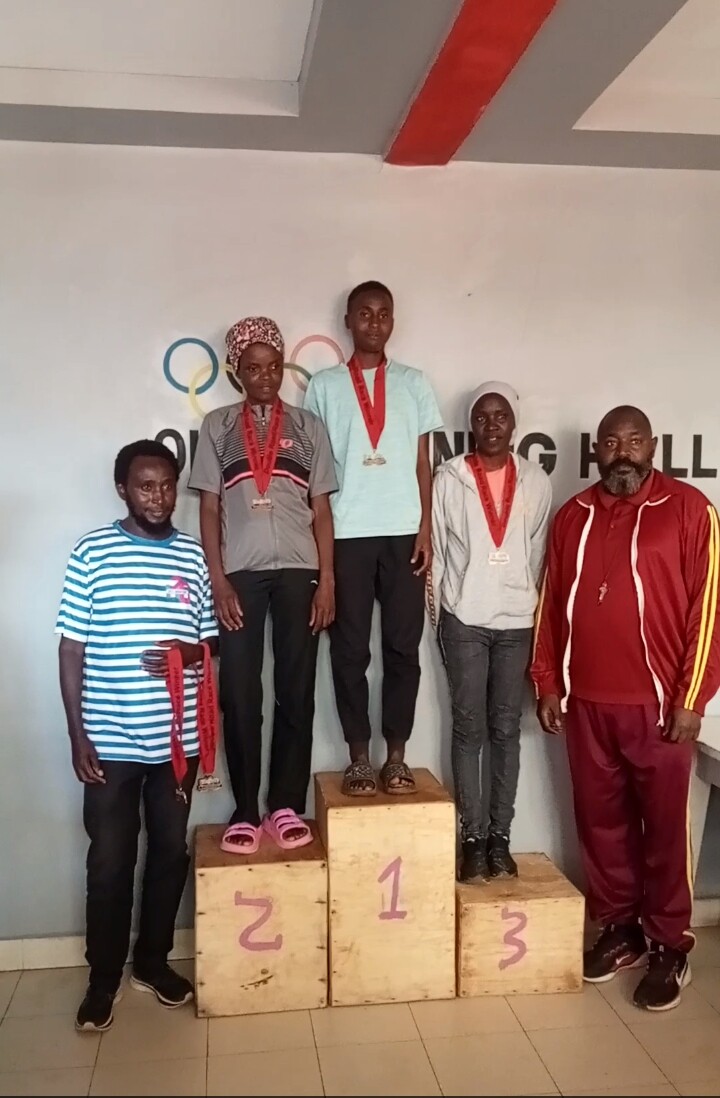
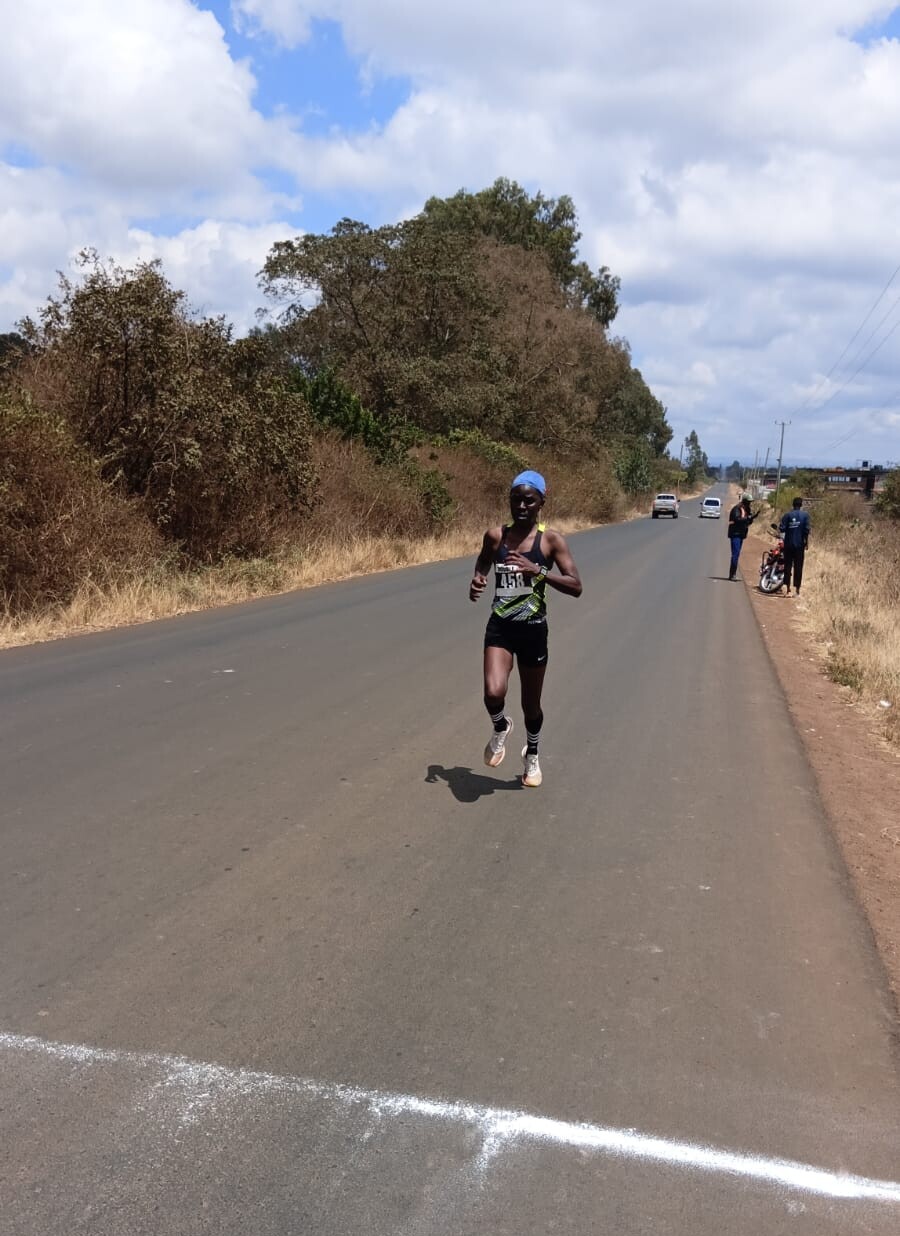
In the women’s race, Ruth Maina took the top position in a combined time of 54:55. Felister Maina finished second in 55:14, while Pennina Kamau completed the women’s podium in 57:20.
The final results represent the combined times from the opening 10K and the concluding 5K, with athletes’ performances from both stages added together to determine the overall standings.
The KATA Double Road Race 15K is unlike a conventional continuous 15-kilometre race. Athletes first tackle a 10K leg, followed by a scheduled recovery period before returning for the final 5K leg. The second leg starts one hour and 45 minutes after the start of the first 10K, giving runners time to recover, take refreshments and prepare mentally for another competitive effort.
The start, finish and halftime recovery area are based near the Kenyan Athletics Training Academy (KATA) in Thika, making the event a distinctive fixture for both KATA athletes and other competitors.
The concept of Double Racing was created by Bob Anderson, the founder of Runner’s World magazine, in 2010. Between October 2010 and October 2012, seven smaller Double races were held in Mexico under the name Bob Anderson 15K Challenge as the format developed.
The first official Double Road Race was staged in December 2012 in Pleasanton, California, attracting nearly 1,400 participants. Its signature format was the Double 15K, consisting of a 10K followed by a 5K and separated by a one-hour-and-45-minute recovery period known as the Restart.
The unusual format once again tested the athletes in Thika, with the conditions adding another layer of difficulty. The weather was noticeably hot, requiring runners to manage their effort carefully during the opening stage while preserving enough strength for the final 5K.
The humid air also made the conditions feel heavier as the competition progressed. After completing the first stage, athletes had to use the recovery period effectively before returning to the course and facing another demanding effort.
The two-stage structure can produce significant changes in momentum, with athletes having an opportunity to recover and challenge their positions during the final 5K. Ultimately, however, it is the combined performance across both stages that determines the final result.
Wanjora handled the demands of the format most effectively in the men’s competition, while Ruth Maina led the women’s field to claim the top spot.
2026 KATA Double Road Race 15K Final Results
Men
1. Charles Wanjora — 46:02
2. Joshua Kibet — 46:17
3. Justus Nyamai — 47:10
4. Erick Cheruiyot — 48:01
5. Francis Maina — 48:25
6. Joseph Nyota — 49:49
7. Vincent Kiprotich — 50:15
8. Vincent Kariuki — 50:54
9. Gideon Kiplang'at — 50:55
10. David Mwangi — 51:19
11. Ezekiel Itorik — 53:03
12. Tom Ndiwa — 54:10
13. George Munyagi — 54:19
Women
1. Ruth Maina — 54:55
2. Felister Maina — 55:14
3. Pennina Kamau — 57:20
The sixth edition of the KATA Double Road Race 15K once again demonstrated that the event demands more than conventional road-running speed. Athletes must combine endurance, intelligent pacing, recovery and composure to perform across two separate stages.
On a hot and humid day in Thika, Wanjora and Ruth Maina emerged at the top of their respective fields, while the full results reflected the depth of competition in this distinctive Worldwide road-running event.
by Erick Cheruiyot for My Best Runs.
Login to leave a comment
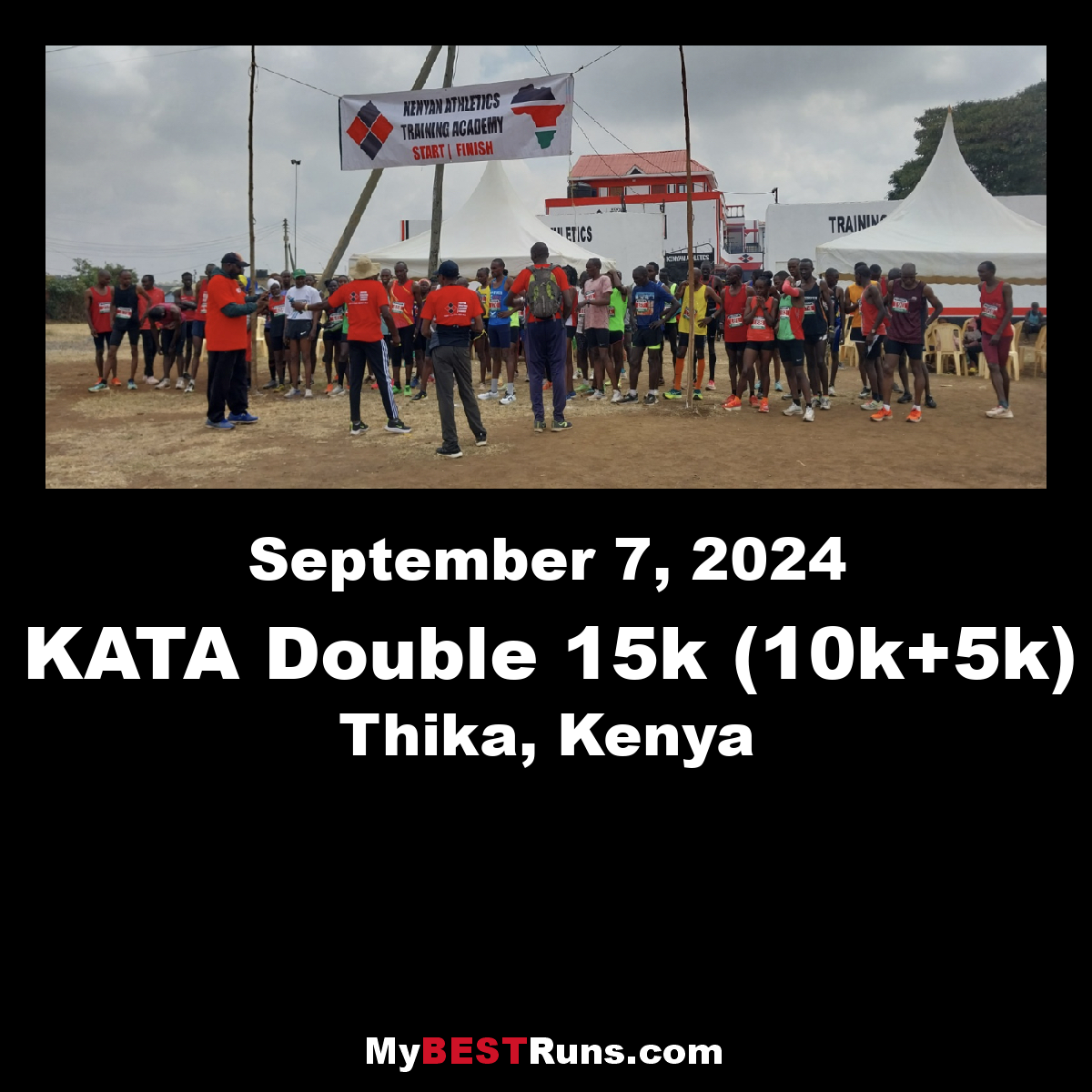
KATA Double Road Race 15K
5th Annual KATA Double Road Race 15K Set for September 20, 2025, at KATA Thika The 5th Annual KATA Double Road Race 15K will be held on September 20, 2025, at the Kenyan Athletics Training Academy (KATA) in Thika, Kenya. The event includes a 10K leg, a break, followed by a 5K leg — a format designed to challenge runners...
more...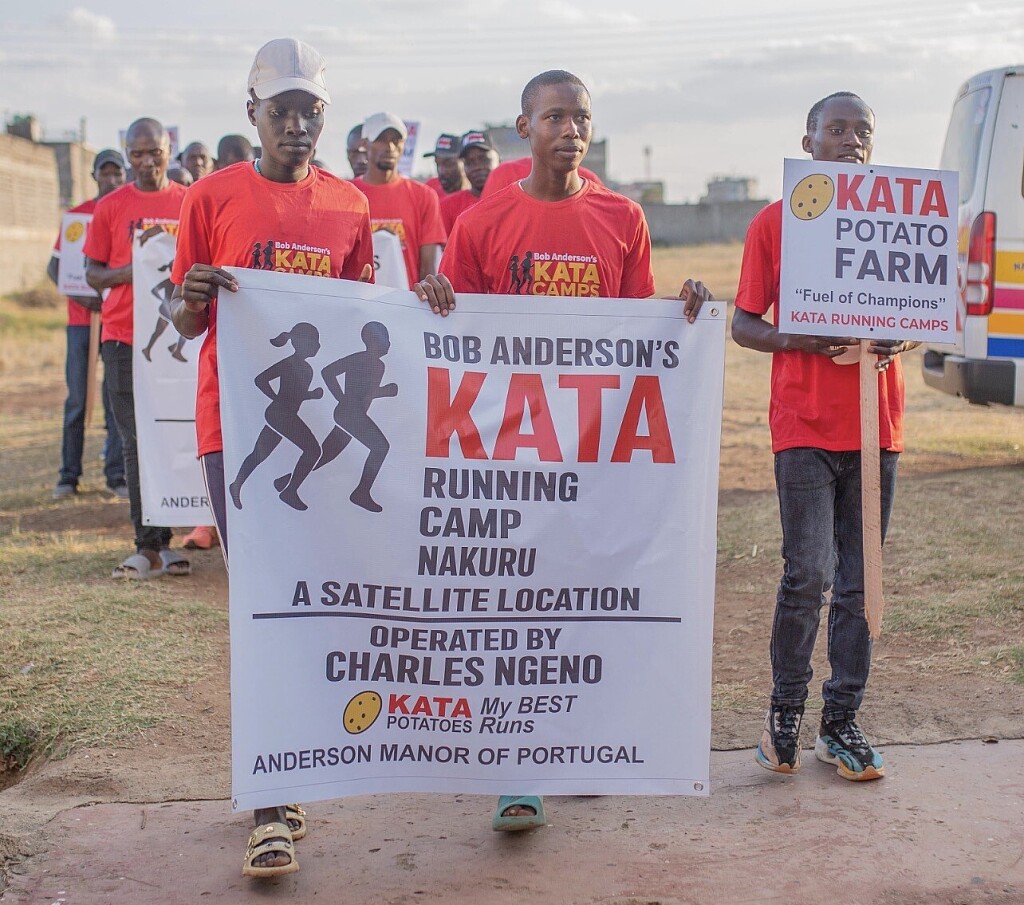
Was KATA’s Vision Too Grand? The 60-Camp Network That Could Have Supported 1,800 Kenyan Runners
KATA had assembled 30 running camps and planned to double that number. Its model used repayable, interest-free startup financing and potato farming to create a self-sustaining national network—but the expected repayments never materialized.
By Robert Kibet
Could a network of 60 self-supporting training camps have transformed life for 1,800 promising Kenyan runners?
That was the vision behind the Kenyan Athletics Training Academy (KATA) programme created by Bob and Catherine Anderson.
KATA had assembled 30 running camps and planned to expand to at least 60. At 30 athletes per camp, the completed network could have provided accommodation, food and high-level training for approximately 1,800 runners at one time.
The objective was not simply to produce champions. KATA sought to improve daily living and training conditions for developing athletes while strengthening grassroots coaching.
The programme was ambitious, but it was not intended to depend permanently upon money from the Andersons.
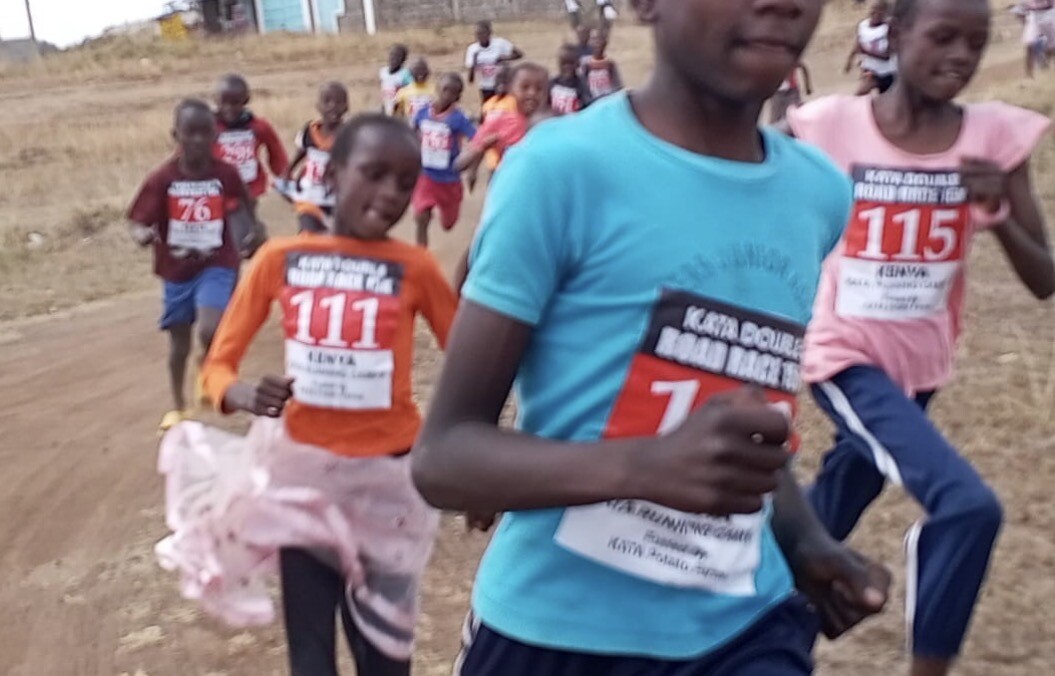
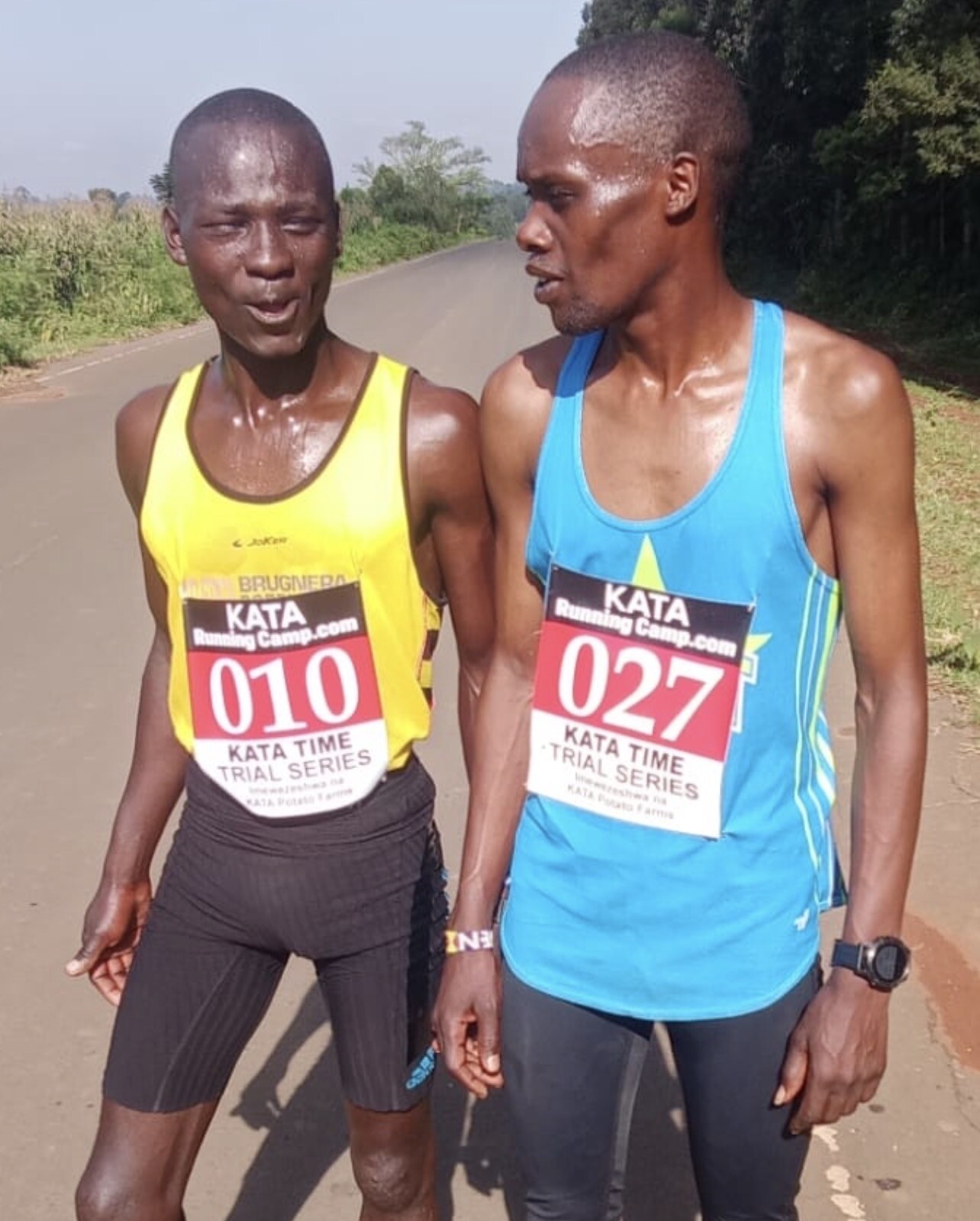
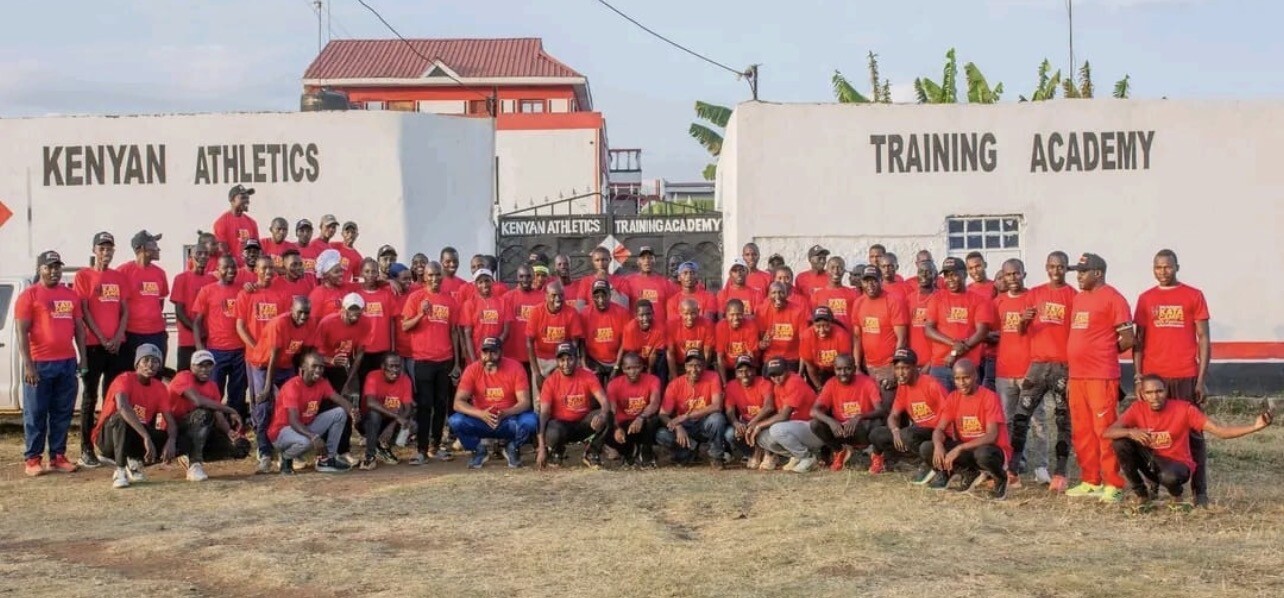
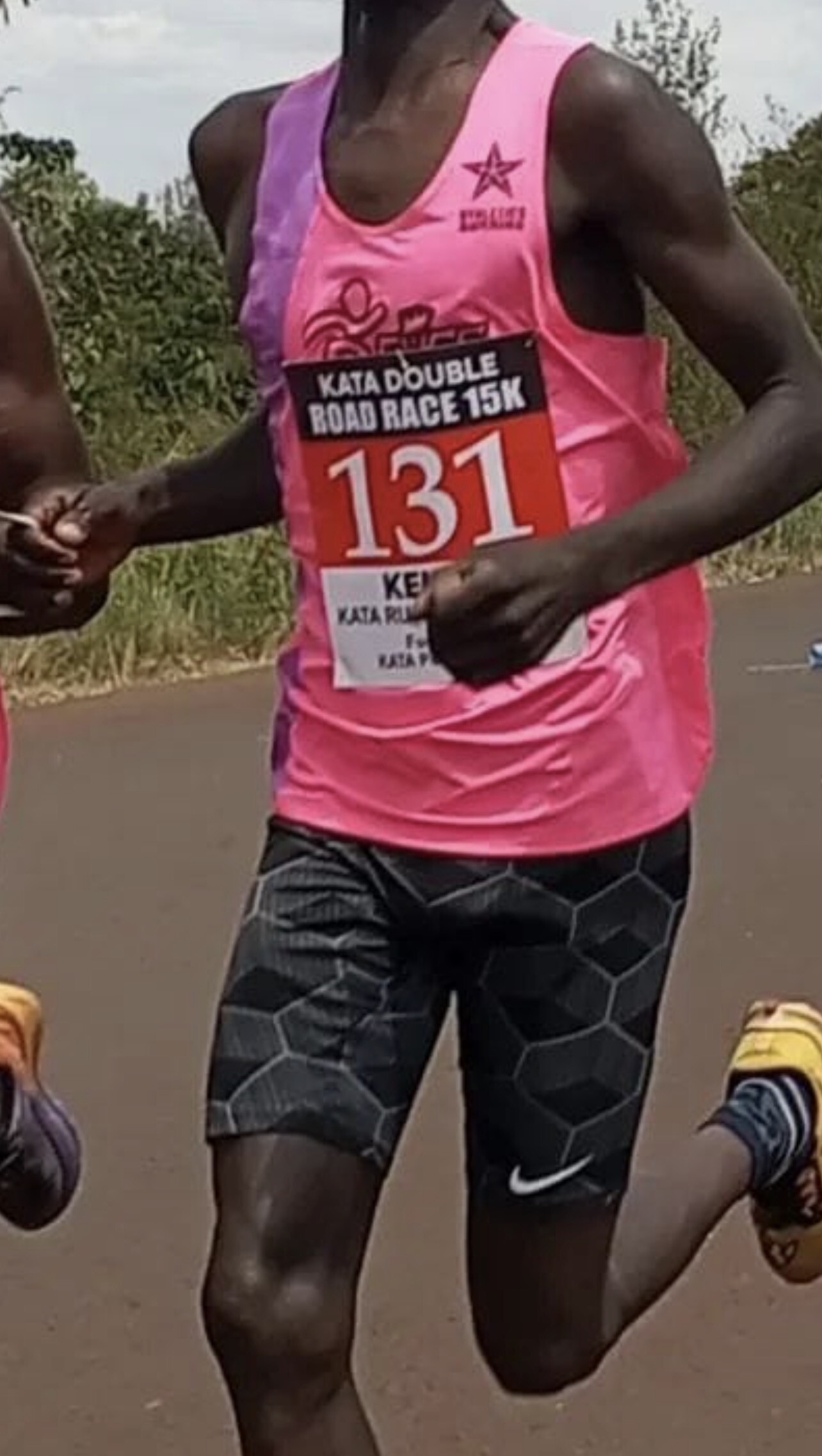
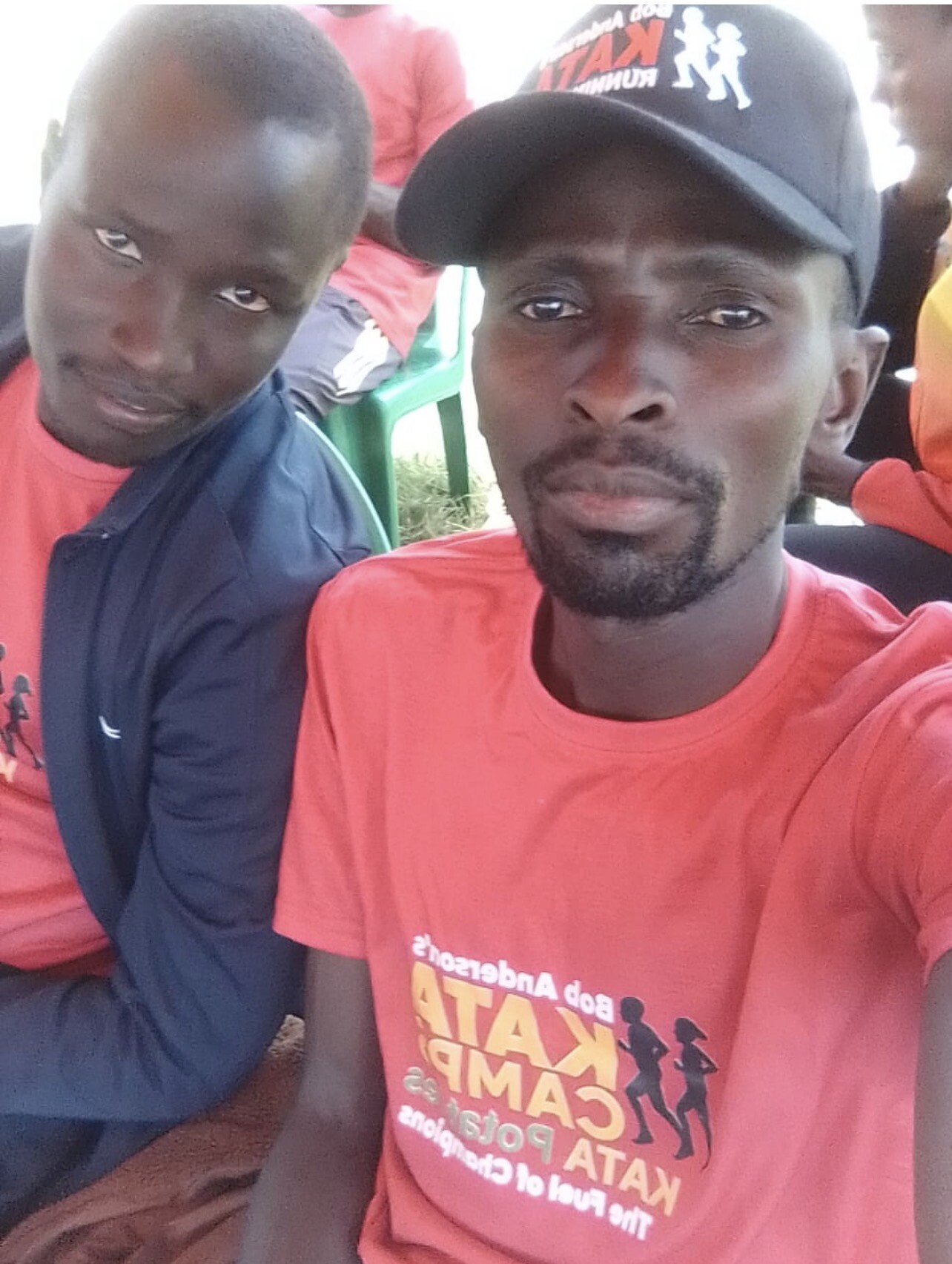
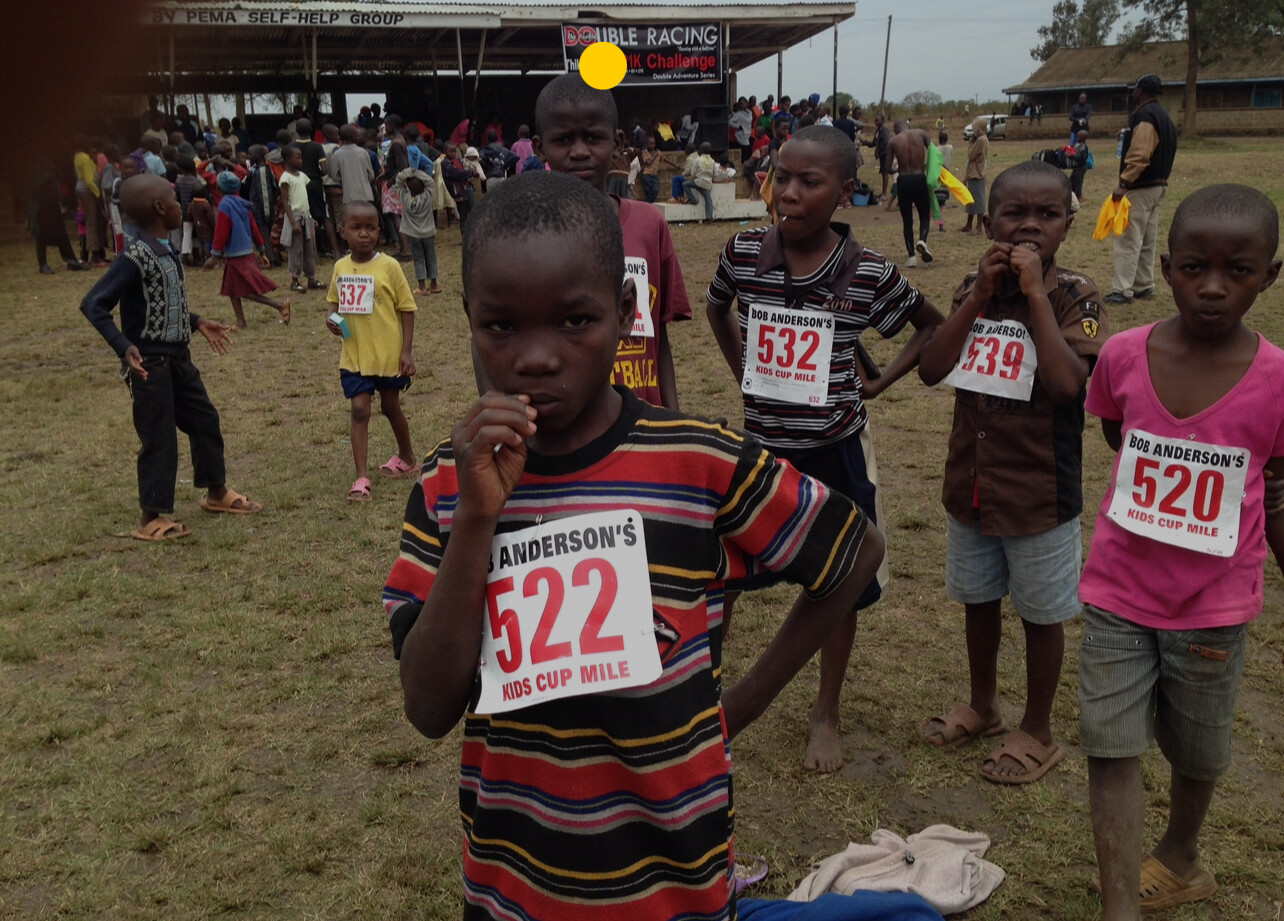
(These eight photographs were among more than 5,000 images sent to KATA founder Bob Anderson and his team as evidence of how the programme was progressing.
The photographs showed why individual coaches and camp operators believed they should receive interest-free loans and become part of the KATA family. Others documented the development of the camps, potato farming activities and the required 10-kilometre time trials held every two months.

In September 2025, athletes from most of the 30 KATA camps travelled to Thika to compete in the KATA Double Road Race, where KSh100,000 in prize money was awarded. At that point, the programme appeared to be working as planned.
The situation changed shortly afterward. Potato harvests were completed and crops were sold, but despite repeated explanations and delays, very little of the money collected was returned to KATA.)

How a camp was supposed to become self-supporting
KATA’s financial model began with two interest-free loans.
The first supplied the capital required to open a running camp. An approved operator could receive as much as KSh500,000 for rent, beds, mattresses, furniture, food and other startup needs.
That money remained a debt to KATA. It was not a gift, grant or donation.
A second interest-free loan financed potato cultivation at a projected cost of approximately KSh100,000 per acre.
The plan called for the harvest revenue to retire both debts—the farming advance and the camp-establishment advance—before the remaining proceeds were used locally.
Potatoes were chosen because they are Kenya’s second-most important food crop after maize and form an industry worth an estimated US$400 million to US$500 million annually.
KATA’s working projection placed gross sales from a successful acre at about KSh400,000. This was a programme estimate rather than a guaranteed or national average result. Actual returns depended upon production, disease, weather and selling prices.
The projected economics of three acres illustrate the plan:
Estimated cultivation loan: KSh300,000;
Projected gross sales: KSh1.2 million;
Repayment of cultivation financing: KSh300,000;
Repayment of camp startup financing: up to KSh500,000; and
Potential balance for athletes and the next season: approximately KSh400,000.
Under this model, one strong three-acre harvest could potentially clear the money advanced to establish the camp and grow the crop. The following season could then help pay for food, housing and training while keeping the farm productive.
“We did not give away startup money,” Anderson said. “We provided interest-free loans that had to be repaid. The potatoes were the engine intended to repay both loans and create continuing income for the athletes.”
From 30 camps to a potential 60
Bob and Catherine Anderson say they invested more than KSh42 million in the wider programme.
Approximately KSh36 million was provided as interest-free financing, with more than KSh6 million spent on Kenyan independent contractors and related operational expenses.
The Andersons did not form a Kenyan company. Their California-based operation directed the programme and retained independent contractors in Kenya for coordination and monitoring.
If 75 percent of participating coaches, farmers and operators had repaid their loans, Anderson believes KATA would have had enough revolving capital to strengthen the 30 camps and expand to 60.
“The money was supposed to keep moving,” he said. “A repayment from one harvest could help establish or strengthen another camp. We would not have needed to start again with new outside money every season.”
A 60-camp network supporting 1,800 runners could also have developed a significant voice within Kenyan athletics.
“KATA was not created to oppose Athletics Kenya,” Anderson said. “But an independent programme improving conditions for 1,800 athletes would naturally have carried influence.”
Anderson has wondered whether that potential might have concerned people who wanted to control opportunities within the sport. He emphasizes that he has no evidence Athletics Kenya attempted to undermine KATA.
Charles Ngeno and claims of high-level access
While developing two proposed KATA camps, coach Charles Ng’eno repeatedly portrayed himself to Anderson as closely connected to leading figures in Kenyan athletics.
On July 22, 2025, Ng’eno wrote:
“I need to brief you tomorrow about good news we discussed with AK PRESIDENT about KATA.”
The message did not explain the “good news,” and no response from the Athletics Kenya president has been provided to confirm that discussion.
Ng’eno also sent photographs appearing to show him attending Athletics Kenya functions, including one in which he sat behind an Athletics Kenya nameplate and another showing him addressing a gathering.
The photographs indicate attendance at athletics-related events. They do not prove that AK supported KATA or authorized Ng’eno to speak on its behalf.
Ng’eno also supplied Anderson with messages addressed to senior athletics official Barnabas Korir.
In one, Ng’eno told Korir:
“You expressed happiness with KATA.”
He further attributed to Korir statements about protecting KATA because of its importance in empowering young people.
The screenshots do not show Korir confirming the statements. It remains unclear whether all the communications were sent, received or answered.
Prominent athletes and coaches
Ng’eno strengthened the appearance of influence by invoking other respected names.
In June 2025, he sent Anderson a message addressed to Faith Kipyegon in which he described himself as her “grassroots coach.” The screenshot contains no response from Kipyegon and does not independently establish the extent of Ng’eno’s early coaching role.
Ng’eno later said prominent coach Bernard Rono had consulted him about KATA and joined the programme.
“We are glad to have him with us at KATA,” Anderson replied. “We have a strong group of operators!”
Anderson says the combined effect of the messages and AK photographs was significant.
“Charles made it appear that he was plugged into the highest levels of Kenyan athletics,” Anderson said. “That gave me confidence that he could build successful camps and bring respected people into the KATA network.”
Whether Ng’eno accurately described those relationships remains unconfirmed.
Two camps appeared to be taking shape
Ng’eno supported his requests for money with budgets, reports, photographs and videos.
After confirming receipt of KSh40,000 in June 2025, he sent a photograph of a truck at a residential property and said he was installing items at the camp.
He later requested financing for nearby land, reported renting a house in Nakuru and sought money for beds and mattresses.
On August 3, Ng’eno submitted figures for the proposed Olenguruone and Nakuru camps. His presentation referred to a combined KSh1.3 million budget and reported KSh531,400 used for farming and camp expenses.
The KSh1.3 million was the proposed allocation—not the amount Anderson ultimately transferred.
Anderson says Ng’eno actually received KSh1,077,500. The funding was intended to establish two camps and cultivate six acres.
A video Ng’eno sent on August 5 appeared to show young athletes training indoors.
“These are the real stars,” he wrote, predicting they could reach the next World Cross Country Championships.
The material led Anderson to believe the camps were progressing.
“I could see athletes training and equipment apparently arriving,” he said. “It looked as though the programme was creating exactly what we intended.
Red flags halted further funding
Ng’eno continued presenting expansion plans, but promised repayments did not arrive.
In November 2025, he told Anderson nearly KSh600,000 would be paid before the end of December, followed by another KSh200,000 in January or February.
Ng’eno also referred to a plot of land allegedly worth KSh1.5 million that could be sold to clear the debt.
At the same time, he continued seeking additional money. When an account was restricted because no repayment had arrived, Ng’eno suggested that funds be sent through his wife’s M-Pesa number or another person.
Anderson refused to bypass the restriction.
In January 2026, Ng’eno made another commitment:
“Yes Bob, I need to start with 400,000 ksh.”
He said he was responsible and “must do payments.” He also attributed the delay to money spent constructing a residential building that would become a KATA camp.
Anderson says the KSh400,000 was not paid.
Ng’eno later attempted to persuade him to finance another six acres with approximately KSh600,000 in additional interest-free funding.
Anderson declined.
“I probably would have sent more if the promised repayments had started,” he said. “Fortunately, each missed date raised another red flag. I stopped after KSh1,077,500.”
What is known—and what remains unverified
The available communications show that Ng’eno:
Claimed to have discussed KATA with the Athletics Kenya president;
Attributed favorable statements about KATA to Barnabas Korir;
Presented himself as connected to leading athletes and coaches;
Supplied budgets and reports for two camps;
Sent images appearing to show camp development and athletes training;
Continued seeking new funding; and
Made several substantial repayment promises.
They do not establish whether Athletics Kenya endorsed or opposed KATA, whether the named officials made the statements attributed to them or how all the money was ultimately used.
There is no current evidence that Athletics Kenya developed or participated in a plan to stop KATA.
There is evidence that Ng’eno’s representations increased Anderson’s confidence in the camps and the wider programme.
Questions for Ng’eno and Athletics Kenya
Ng’eno should be asked:
What did he discuss with the Athletics Kenya president?
Did Barnabas Korir make the statements attributed to him?
What official athletics positions did Ng’eno hold?
How many athletes lived and trained at the two camps?
Was the residential building completed and operated as a KATA camp?
How was the KSh1,077,500 used?
What income was produced by the six acres?
Why were the promised repayments not made?
Did he own the reported KSh1.5 million property?
Athletics Kenya and the officials named in Ng’eno’s messages should have an opportunity to clarify what they knew about KATA and whether their positions were represented accurately.
Grand—but not impossible
KATA’s vision was undeniably large: 60 camps capable of supporting 1,800 runners.
Its financial premise was that repaid loans would become revolving capital. Each successful camp and harvest would help finance the next cycle of athlete support.
“The vision may have been grand, but it was not impossible,” Anderson said. “We already had 30 camps. What failed was the repayment system and our reliance on reports that were not independently verified.”
Whether Ng’eno truthfully described his Athletics Kenya discussions remains unanswered. Whether AK understood KATA’s potential scale is also unclear.
What is clear is that the programme was not offering free startup money. Every camp and agricultural advance was an interest-free loan that had to be returned.
Without those repayments, the revolving system stopped—and the planned network of 60 camps has never became a reality. If only most of the KATA operators had paid back their loan! "When they do things could still get back on track," says Bob Anderson.
by Robert Kibet
Login to leave a comment
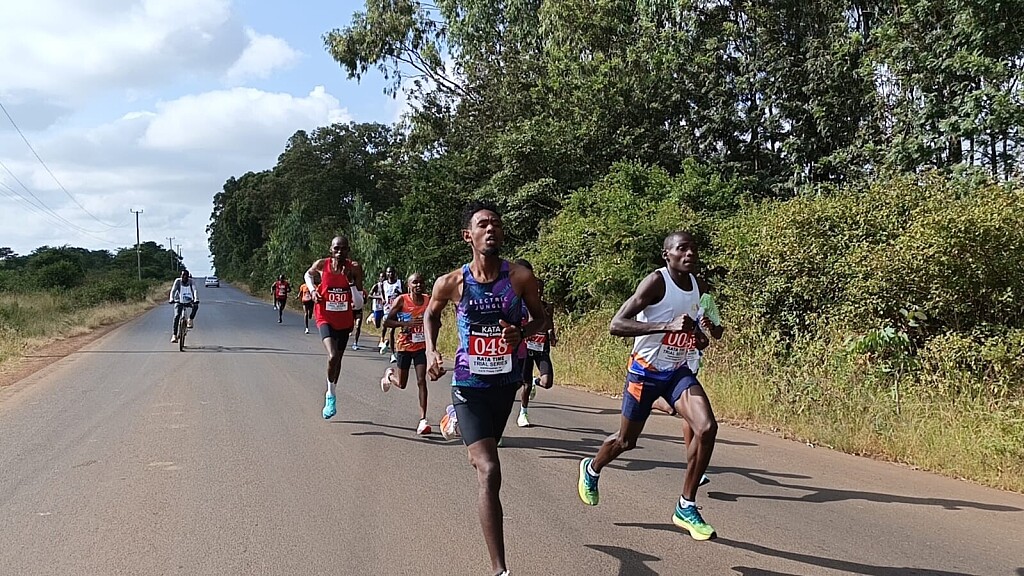
Personal Bests and Promising Performances Highlight the 57th KATA Time Trial Series in Thika
The stopwatch once again took centre stage in Thika as athletes gathered for the 57th edition of the KATA Time Trial Series, an event that continues to serve as one of Kenya's most respected platforms for measuring progress and pursuing excellence.
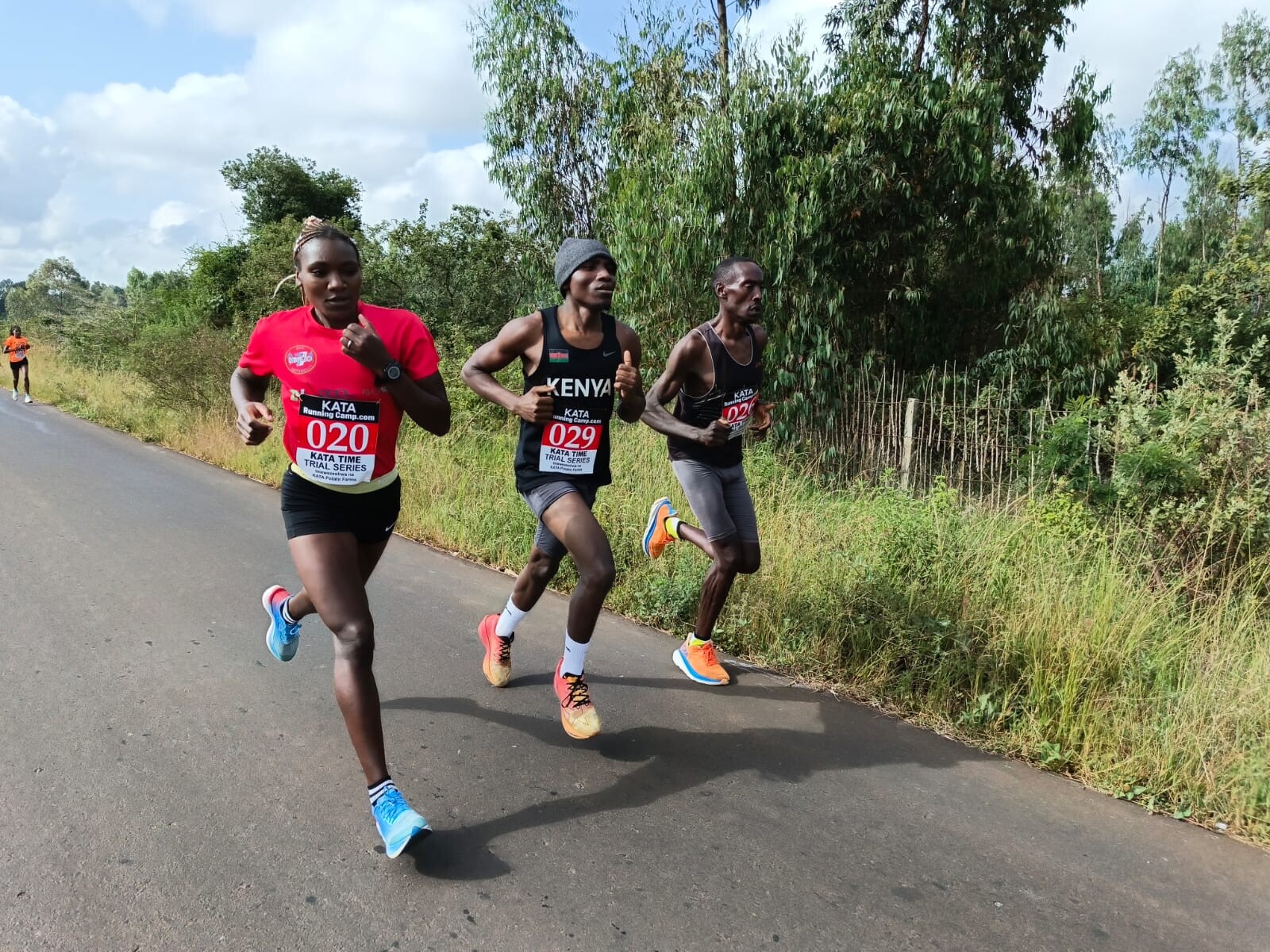
Held on the familiar roads surrounding the Kenyan Athletics Training Academy (KATA), the latest edition brought together runners at different stages of their athletic journeys, all united by a common objective: to test their fitness, challenge their limits, and chase new personal bests.
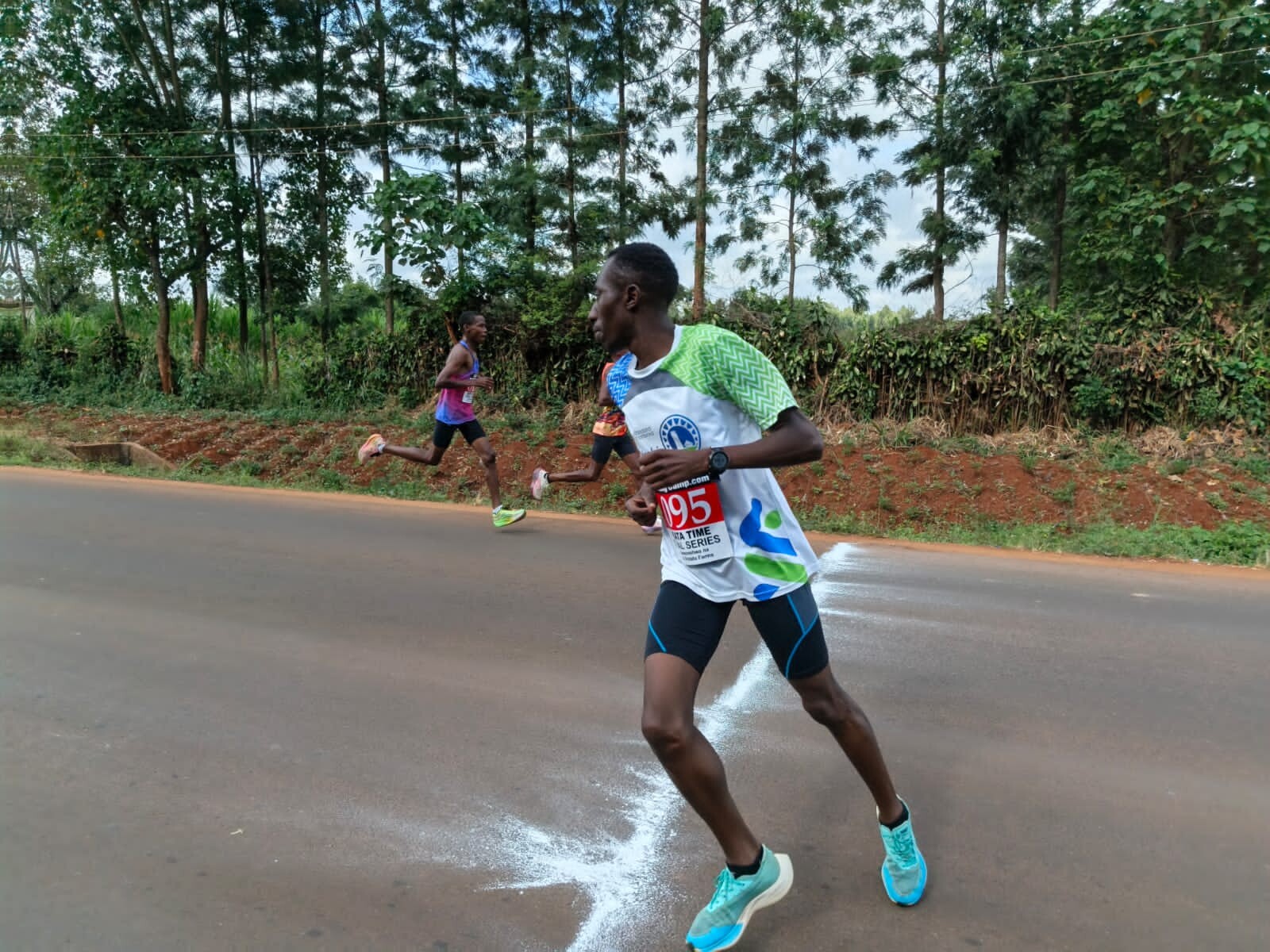
As expected, the competition was less about medals and fanfare and more about honest performances against the clock. Every athlete arrived carrying the weight of weeks and months of disciplined training, hoping to see that effort reflected in the final results.
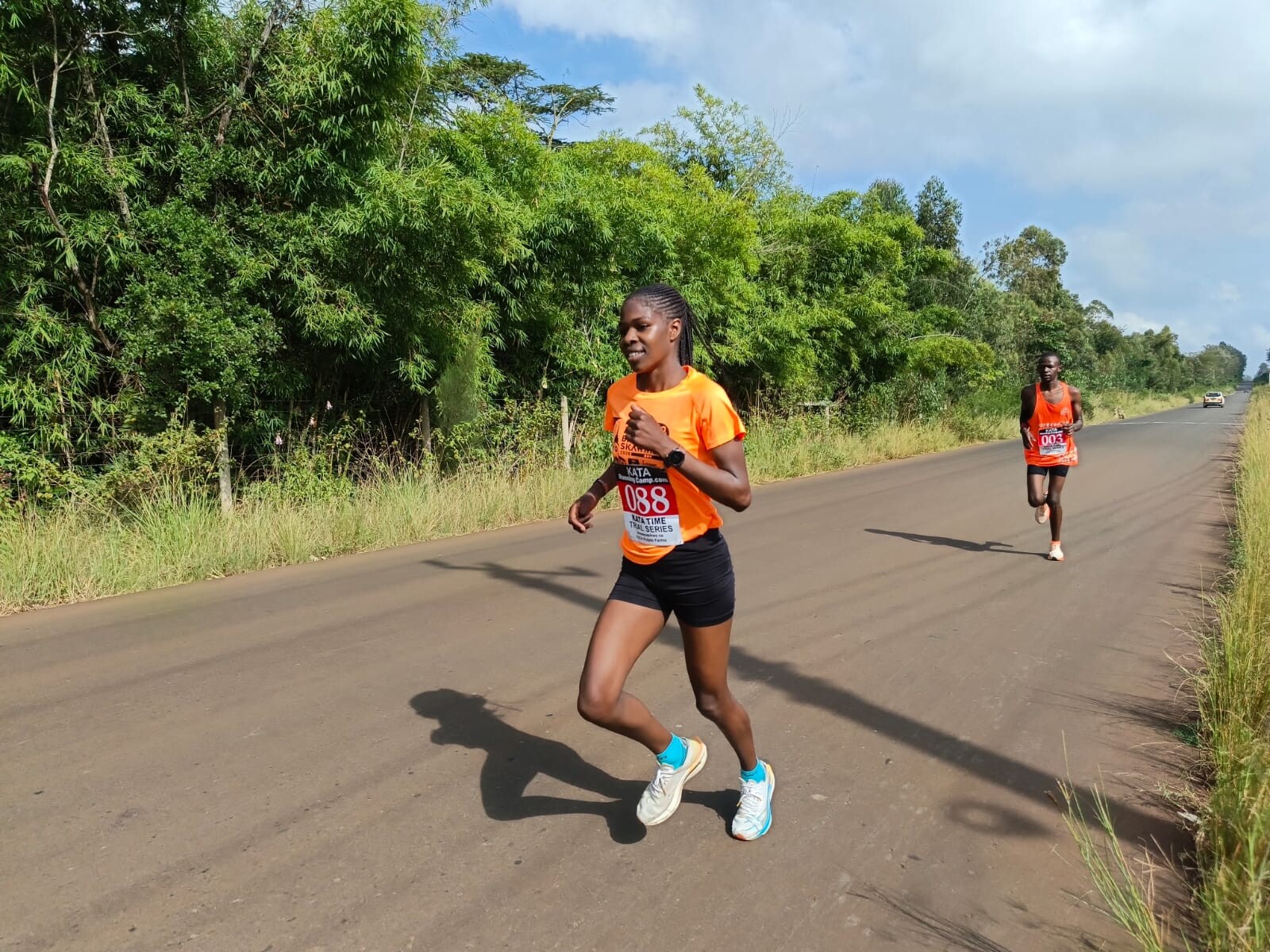
In the men's 5km race, John Ndung'u produced the fastest performance of the day, crossing the line in 15:36. Anthony Kariuki followed in 16:15, while Eugene Nambua secured third place in 17:44. Simon Ngereza completed the leading group with a time of 18:31.
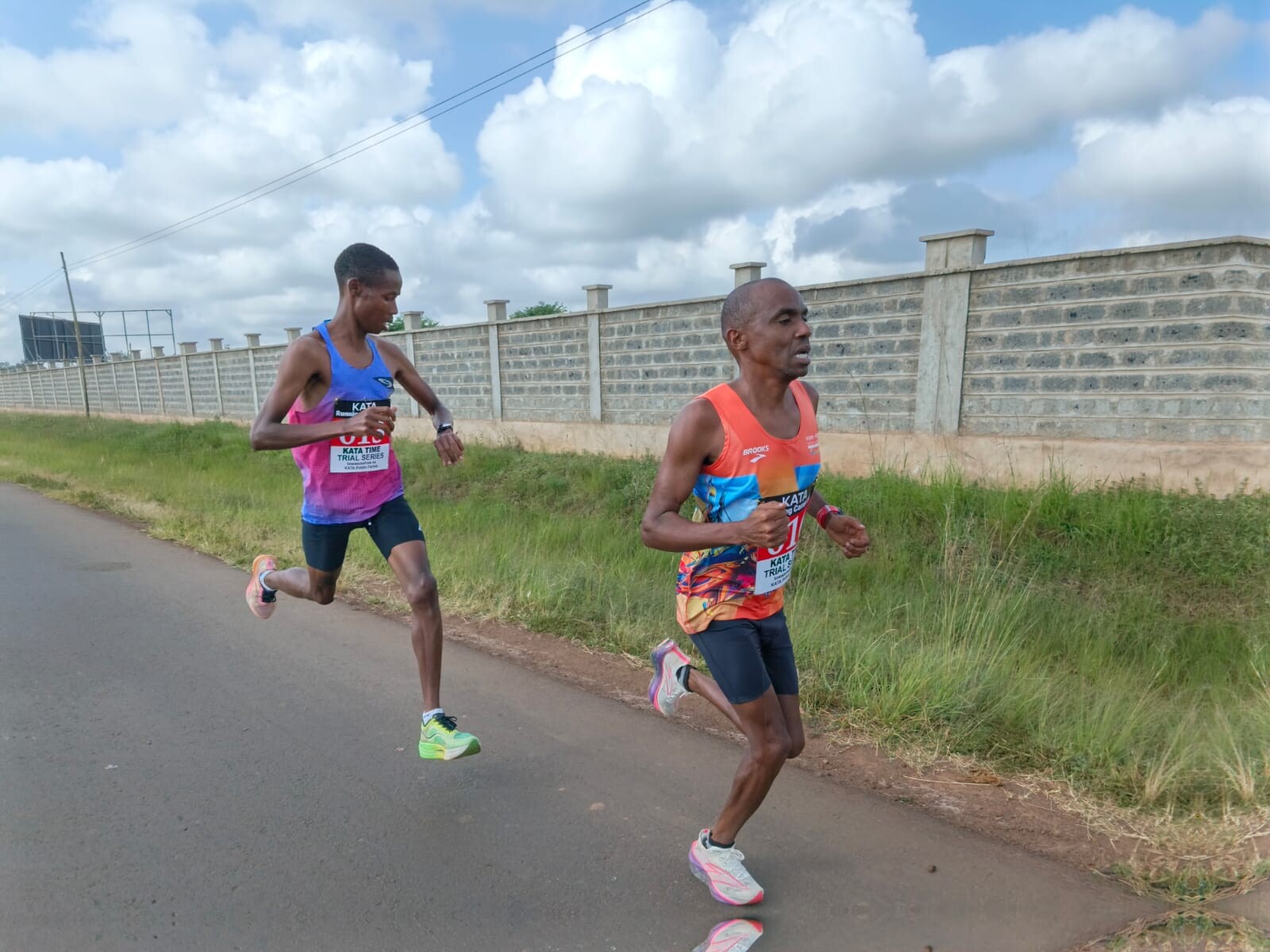
The women's 10km race delivered a closely contested battle at the front. Jane Wanja emerged victorious in 36:16 after a strong and controlled run, holding off Caren Chepkwony, who finished just nine seconds behind in 36:25. The narrow margin highlighted the competitive nature of the race and the determination shown by both athletes throughout the morning.
The deepest field of the day came in the men's 10km event, where several runners produced encouraging performances. John Chege led the standings with an impressive 30:12, demonstrating both strength and consistency over the distance. Charles Wanjora followed in second place with 30:54, while Erick Cheruiyot claimed third in 31:42 after a well-executed effort.
Joel Maina continued the strong pace of the leading pack to finish fourth in 32:26, while Justus Nyamai completed the top five in 33:24. David Mwangi recorded 35:24 for sixth place, followed by Paul Nganga in 35:38. Ewand Niyukiru crossed the line in 36:27, with Charles Ndirangu clocking 37:21 and Brandon Mutugi completing the top ten in 38:31.
KATA Time Trial Series – 57th Edition Results
Thika, Kenya | June 10, 2026
Men's 5km
1. John Ndung'u – 15:36
2. Anthony Kariuki – 16:15
3. Eugene Nambua – 17:44
4. Simon Ngereza – 18:31
Women's 10km
1. Jane Wanja – 36:16
2. Caren Chepkwony – 36:25
Men's 10km
1. John Chege – 30:12
2. Charles Wanjora – 30:54
3. Erick Cheruiyot – 31:42
4. Joel Maina – 32:26
5. Justus Nyamai – 33:24
6. David Mwangi – 35:24
7. Paul Nganga – 35:38
8. Ewand Niyukiru – 36:27
9. Charles Ndirangu – 37:21
10. Brandon Mutugi – 38:31
Beyond the finishing positions, the true success of the KATA Time Trial lies in what the numbers represent. Every result tells a story of early mornings, demanding workouts, sacrifices, and the relentless commitment required to improve in one of the world's most competitive athletics environments.
For some athletes, Wednesday's performances marked confirmation that their training is moving in the right direction. For others, the results provided valuable lessons and clear targets for the weeks ahead. Such is the nature of time trials: they offer an honest assessment of where an athlete stands and where improvement is still needed.
The KATA Time Trial Series has earned its reputation not through spectacle but through consistency. Edition after edition, it provides athletes with a stage to evaluate their progress, sharpen their racing instincts, and build confidence ahead of larger competitions.
As the 57th edition comes to a close, the performances recorded on the roads of Thika serve as another reminder that success in athletics is rarely achieved overnight. It is built through patience, resilience, and the willingness to keep chasing improvement. On this occasion, the clock once again revealed stories of ambition, determination, and the enduring pursuit of personal excellence.
by Erick Cheruiyot for My Best Runs.
Login to leave a comment
KATA Time Trial Series
Welcome to the KATA Monthly Time Trial Held at the Kenyan Athletics Training Academy in Thika, Kenya, the KATA Monthly Time Trial is a unique and inclusive event designed to support runners of all levels in achieving their goals and showcasing their fitness. This event offers both 10K and 5K distances on an accurate, certified course, providing participants with...
more...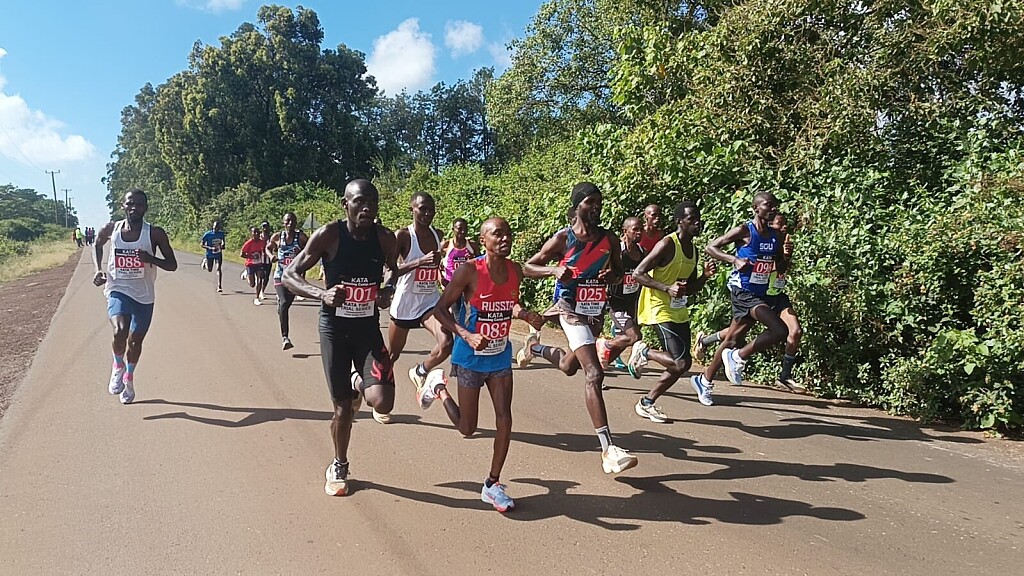
Chasing the Clock: Athletes Target Personal Bests at the 57th KATA Time Trial in Thika
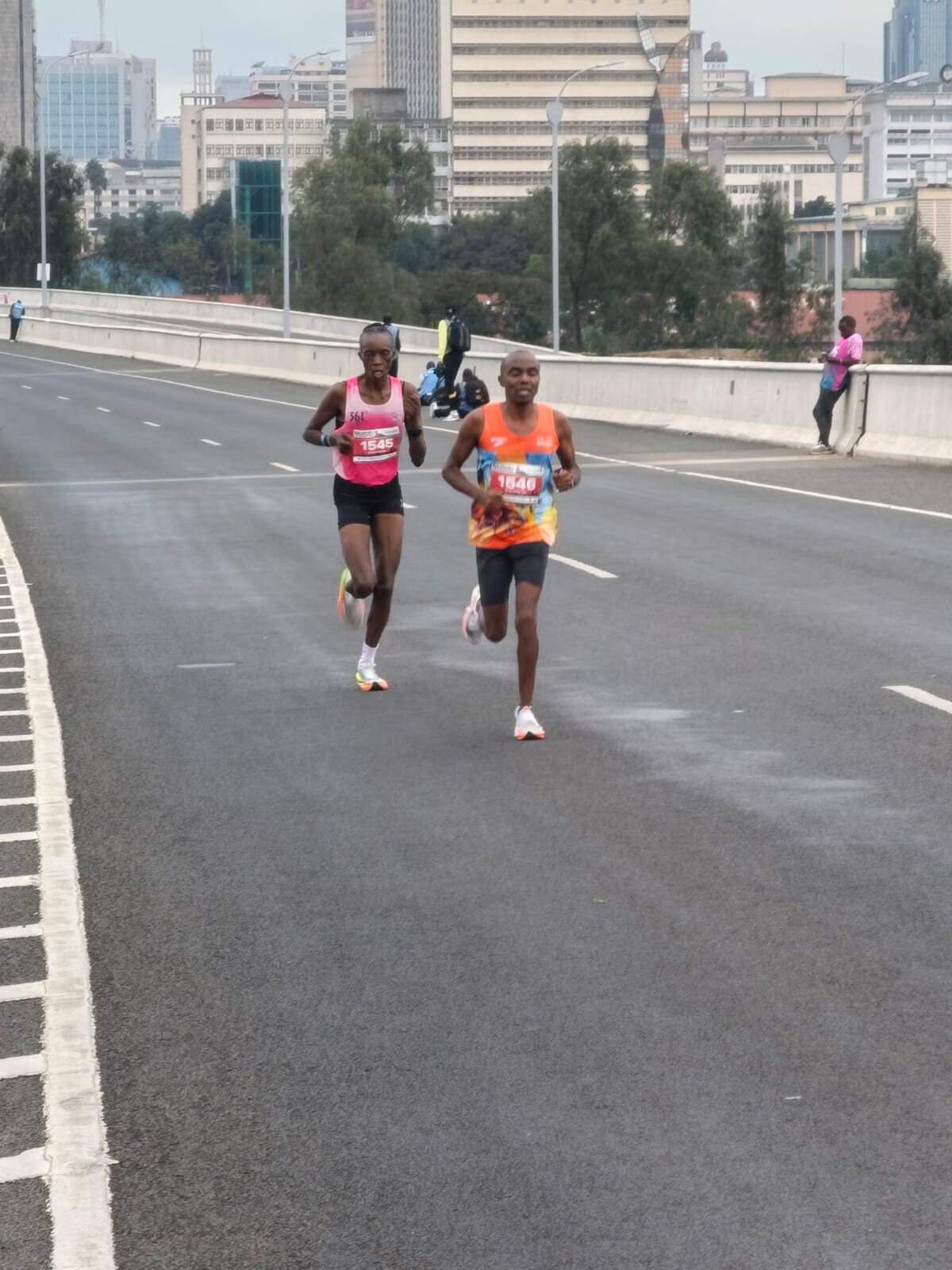
Before sunrise breaks over Thika and before the wider athletics world begins to follow the results, a competitive field of determined runners will already be locked in a battle against the clock, their limits, and their ambitions. On Wednesday, June 10, 2026, the 57th edition of the KATA Time Trial Series returns to the quiet roads around the Kenyan Athletics Training Academy (KATA), offering athletes another invaluable opportunity to test their progress and pursue new personal bests.
While major championships often capture global headlines, events like the KATA Time Trial remain the heartbeat of athlete development in Kenya. There are no packed grandstands, dramatic presentations, or lavish celebrations. Instead, the focus is placed squarely where it belongs—on performance, discipline, and the relentless pursuit of improvement.
Over the years, the KATA Time Trial has built a reputation as one of the country's most respected performance-testing platforms. For emerging talents and experienced competitors alike, it serves as a crucial checkpoint where months of demanding training are measured against the unforgiving honesty of the stopwatch.
This edition is expected to attract athletes eager to evaluate their fitness levels and, above all, lower their personal bests. For many runners, a personal record represents far more than a number on a results sheet. It symbolizes countless kilometres covered before dawn, punishing interval sessions, sacrifices made away from competition, and the unwavering belief that hard work will eventually be rewarded.
The programme will once again feature the traditional 5km and 10km races, each presenting its own unique challenge. The 5km demands speed, courage, and the ability to sustain a relentless pace from start to finish. The 10km, meanwhile, requires patience, tactical awareness, and exceptional endurance, rewarding athletes who can distribute their effort wisely over the longer distance.
As always, intelligent pacing is expected to play a decisive role. Athletes are likely to work together through the opening kilometres, sharing the workload and maintaining consistent rhythm in pursuit of faster times. In a race where every second matters, a controlled start often proves more valuable than an aggressive surge. Those who judge their effort correctly can unlock breakthrough performances, while those who miscalculate their pace risk seeing their ambitions fade before the finish line.
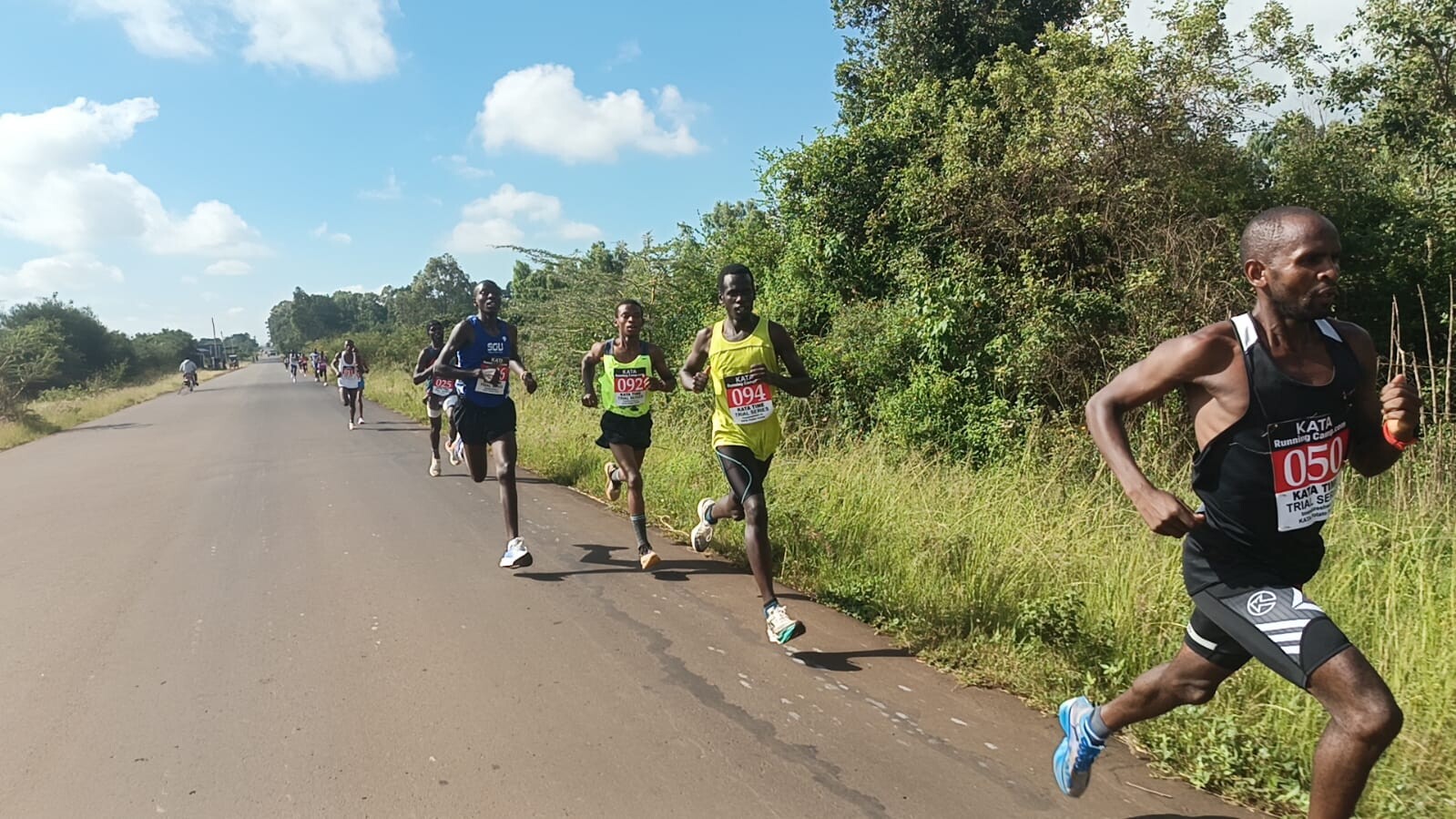
The roads of Thika have witnessed countless stories of progress throughout the history of the series. Some athletes have announced their arrival with career-defining performances, while others have gained valuable lessons that later shaped future success. Every edition adds another chapter to that legacy, and the 57th installment promises to be no different.
Weather and course conditions are expected to favour athletes who combine patience with determination. The runners who remain composed during the early stages will likely be the ones producing their strongest performances when fatigue begins to take hold in the closing kilometres.
Yet beyond the times and finishing positions, the true significance of the KATA Time Trial lies in what it represents. It is a celebration of continuous growth, a proving ground for ambition, and a reminder that excellence is built through consistency rather than spectacle.
When the final watches stop on Wednesday morning, the results will reveal much more than who ran the fastest. They will tell stories of perseverance, dedication, and dreams pursued one stride at a time. For many athletes lining up in Thika, the ultimate victory will not be defeating their rivals—it will be conquering their previous best and taking another important step forward in their athletic journey.
by Erick Cheruiyot for My Best Runs.
Login to leave a comment
KATA Time Trial Series
Welcome to the KATA Monthly Time Trial Held at the Kenyan Athletics Training Academy in Thika, Kenya, the KATA Monthly Time Trial is a unique and inclusive event designed to support runners of all levels in achieving their goals and showcasing their fitness. This event offers both 10K and 5K distances on an accurate, certified course, providing participants with...
more...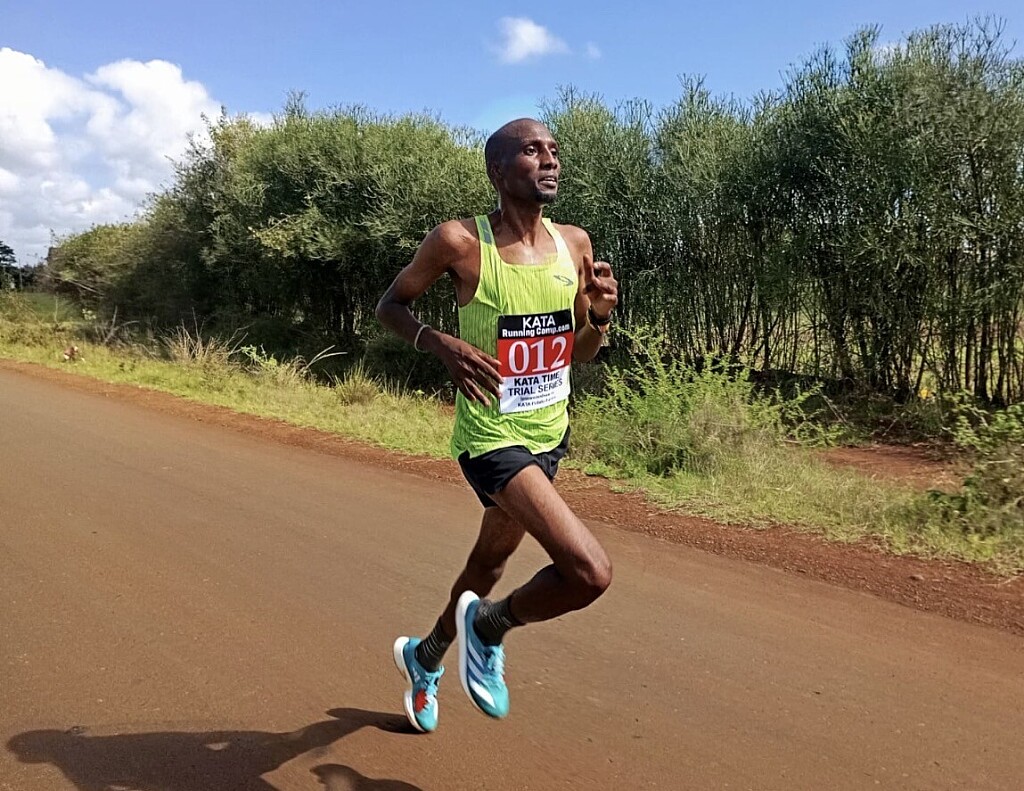
Under Warm and Humid Skies, Athletes Deliver Strong Performances at the 54th KATA Time Trial
The familiar stretch of tarmac in Thika, running alongside the Kenyan Athletics Training Academy (KATA), once again came alive as athletes gathered for the 54th edition of the KATA Time Trial, a session defined by quiet determination, controlled pacing, and purposeful competition. Under mostly sunny skies, the morning carried a noticeable layer of warmth and humidity, conditions that subtly tested the discipline and race management of every runner who lined up across the 5km and 10km distances.
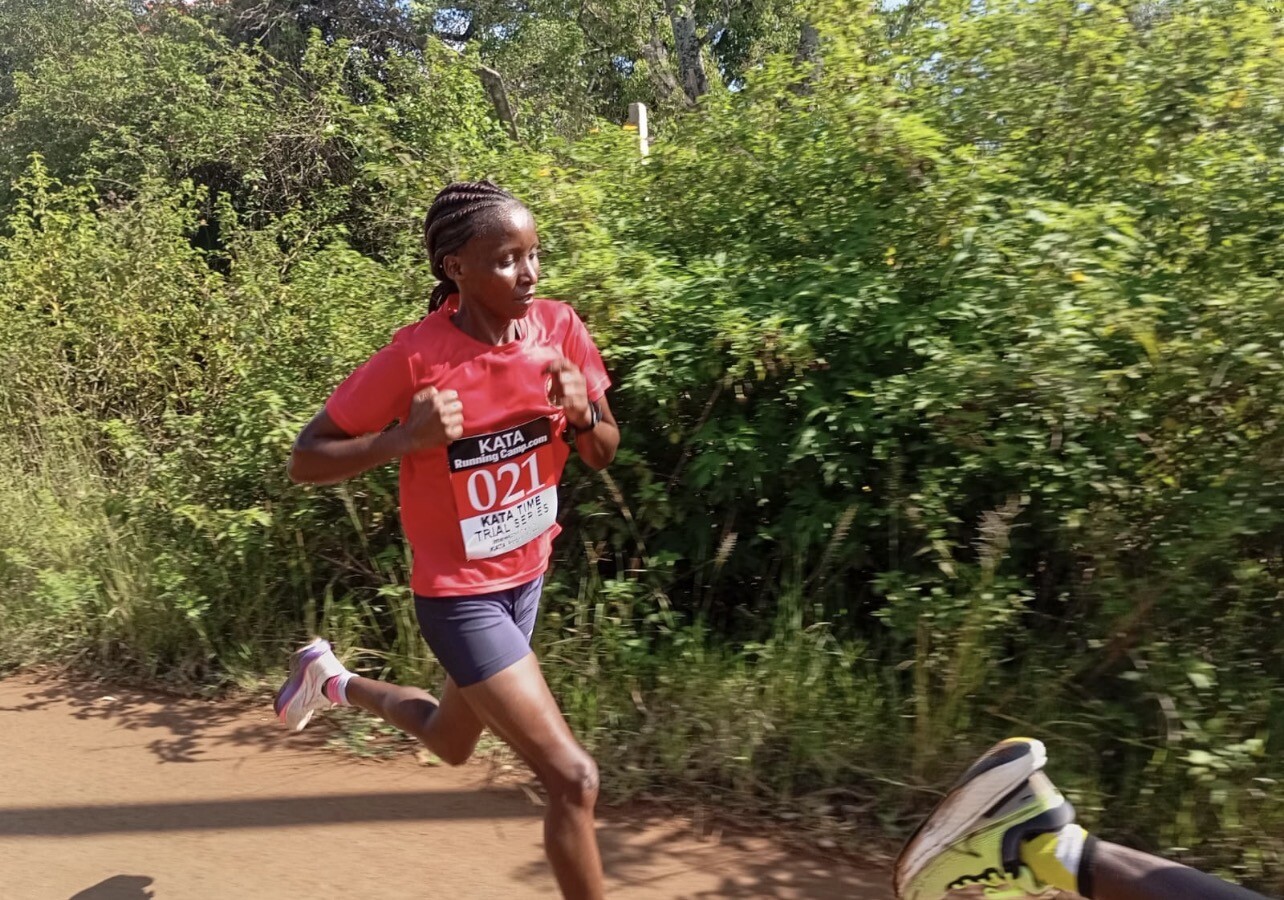
From the outset, the atmosphere demanded patience. The combination of heat and humidity meant that athletes had to measure their effort carefully, balancing ambition with composure as they navigated the now-familiar loop. Yet such conditions have always been part of the character of the KATA time trials — a training ground where athletes refine not only their speed but also their judgment, learning to listen to their bodies while maintaining rhythm through every stride.
In the women’s 5km race, Naomi Wambui produced a confident and well-controlled performance to claim victory in 18:21. Running with composure from the early stages, Wambui settled into a steady rhythm and maintained her form despite the rising warmth. Her stride remained relaxed through the middle stages before she closed strongly, delivering a performance that reflected both experience and control. Felister Mbatha followed in 22:21, showing determination and steady effort throughout the course as she secured second place.
The men’s 5km brought an energetic display from Francis Maina, who ran decisively to take the win in 16:46. His race was defined by an assertive tempo and efficient cadence that allowed him to maintain momentum from start to finish.
Just behind him, the enduring Dennis Musau reminded everyone that experience is sometimes the most valuable training partner. Clocking 19:46, the veteran moved through the course with the calm rhythm of someone who has seen many race mornings come and go. While the younger runners pushed hard up front, Musau seemed to glide along with a knowing smile, almost as if he was quietly reminding them that endurance running is not only about speed — it’s also about patience, wisdom, and the occasional ability to make it look easier than it really is. His performance added a light and enjoyable touch to the race, proving that the sport always has room for both youthful fire and seasoned composure.
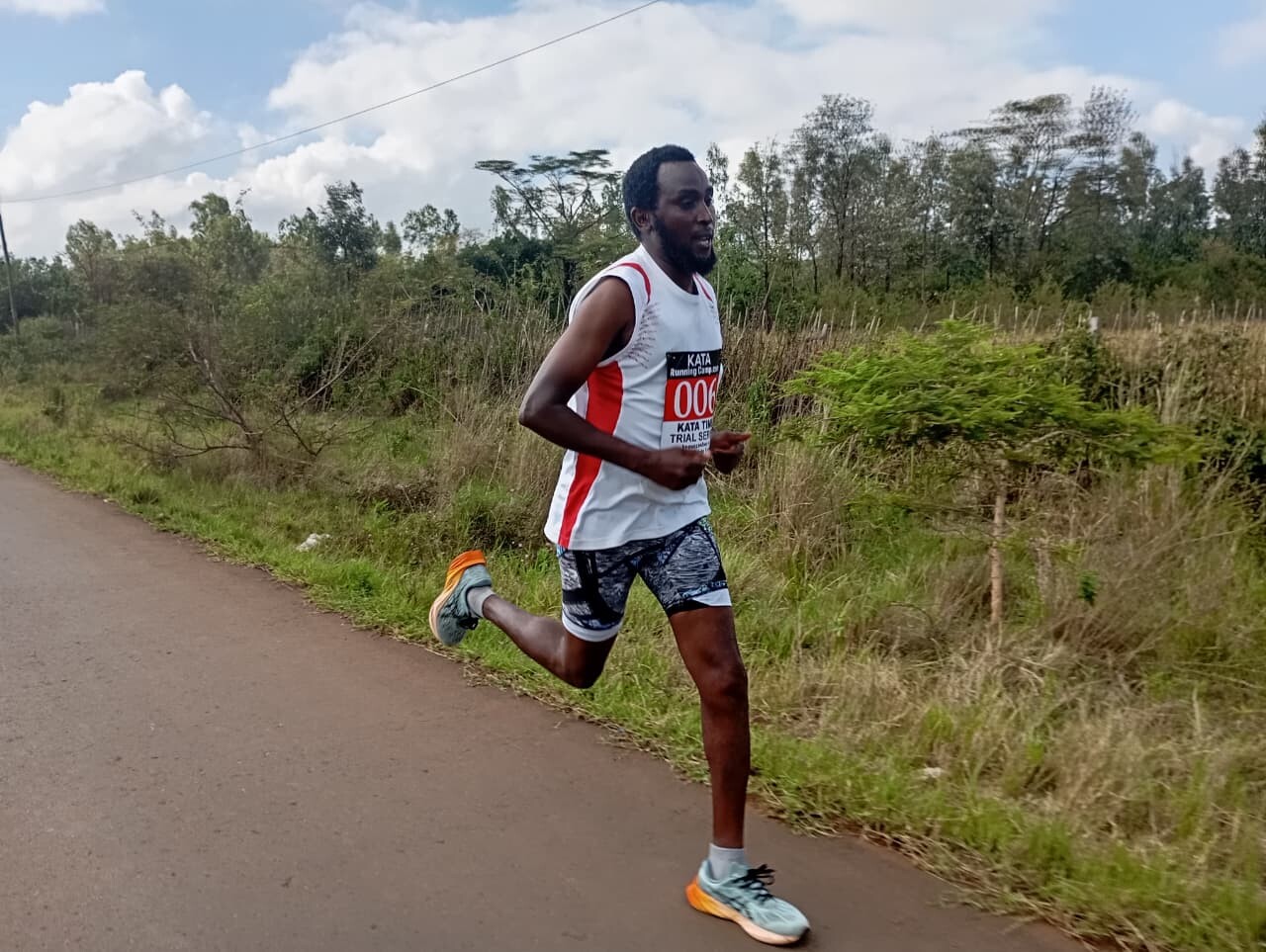
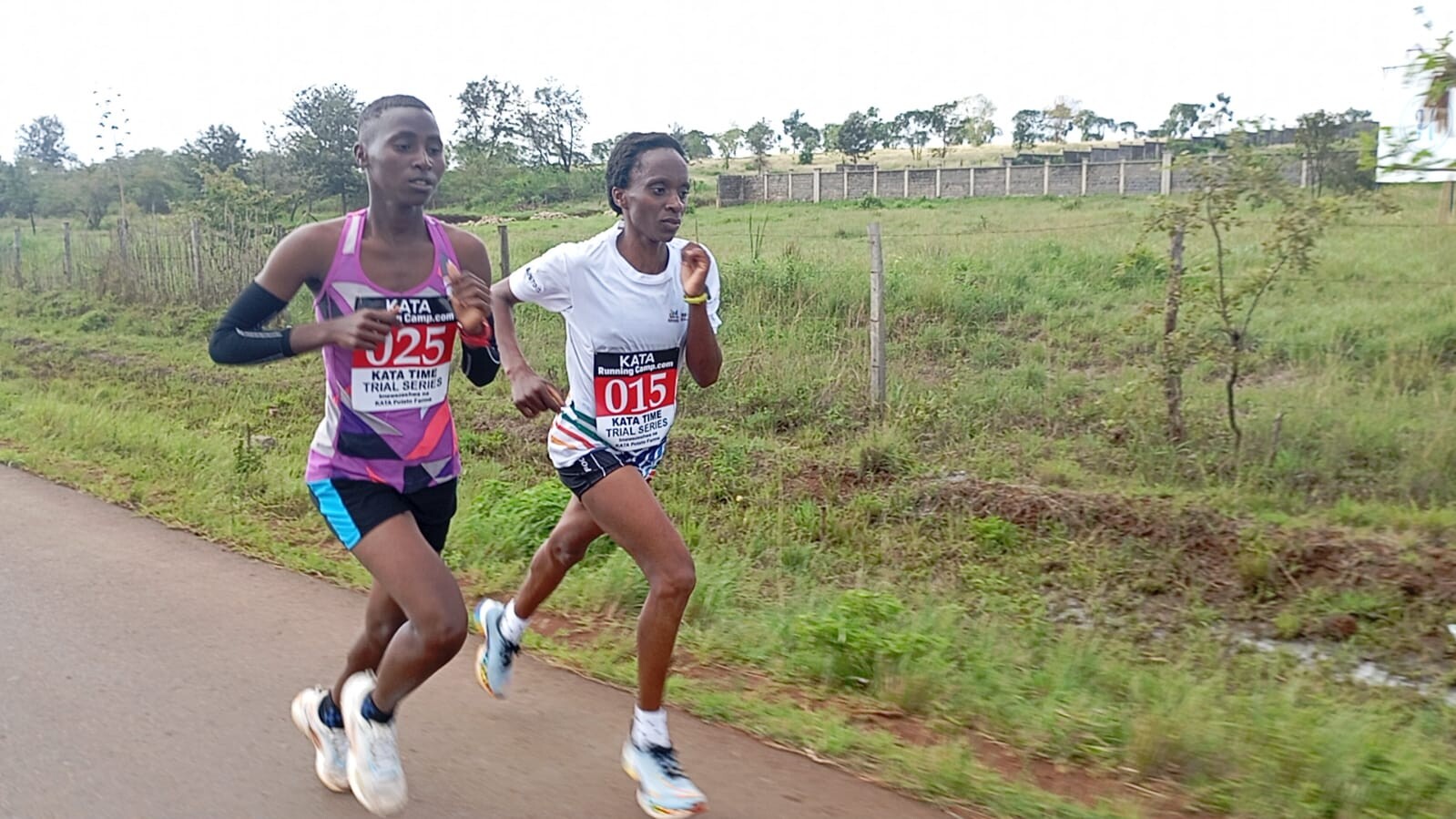
As attention shifted to the longer distance, the 10km races demanded greater endurance and discipline. In the women’s contest, Kellen Waithera delivered one of the most composed performances of the morning, crossing the finish line in 34:58. Her run was marked by consistency and intelligent pacing, holding a steady tempo across each kilometer despite the humidity that hung in the air. Regina Sandiki followed with a determined 36:57, maintaining her rhythm and finishing strongly to secure second place.
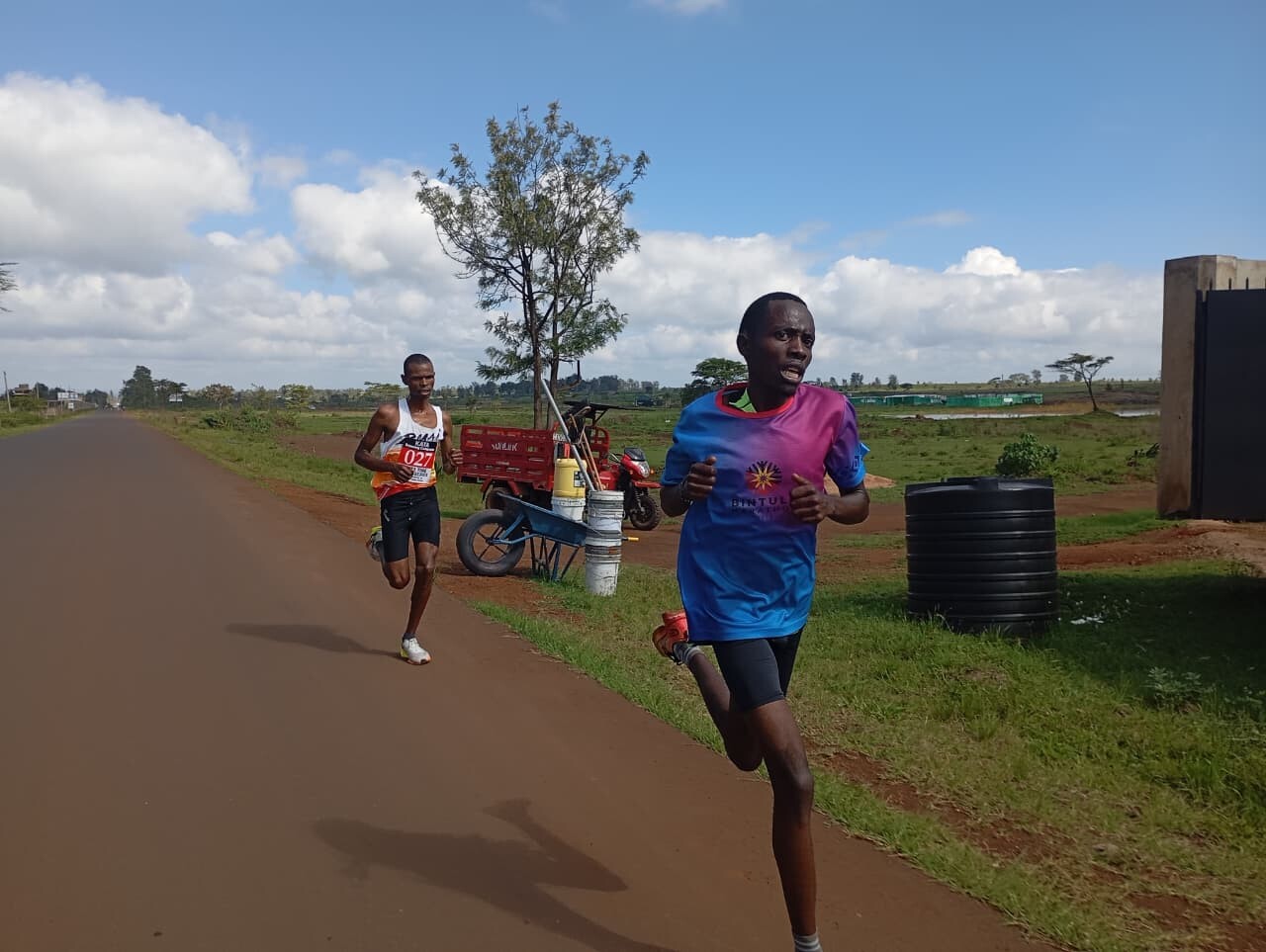
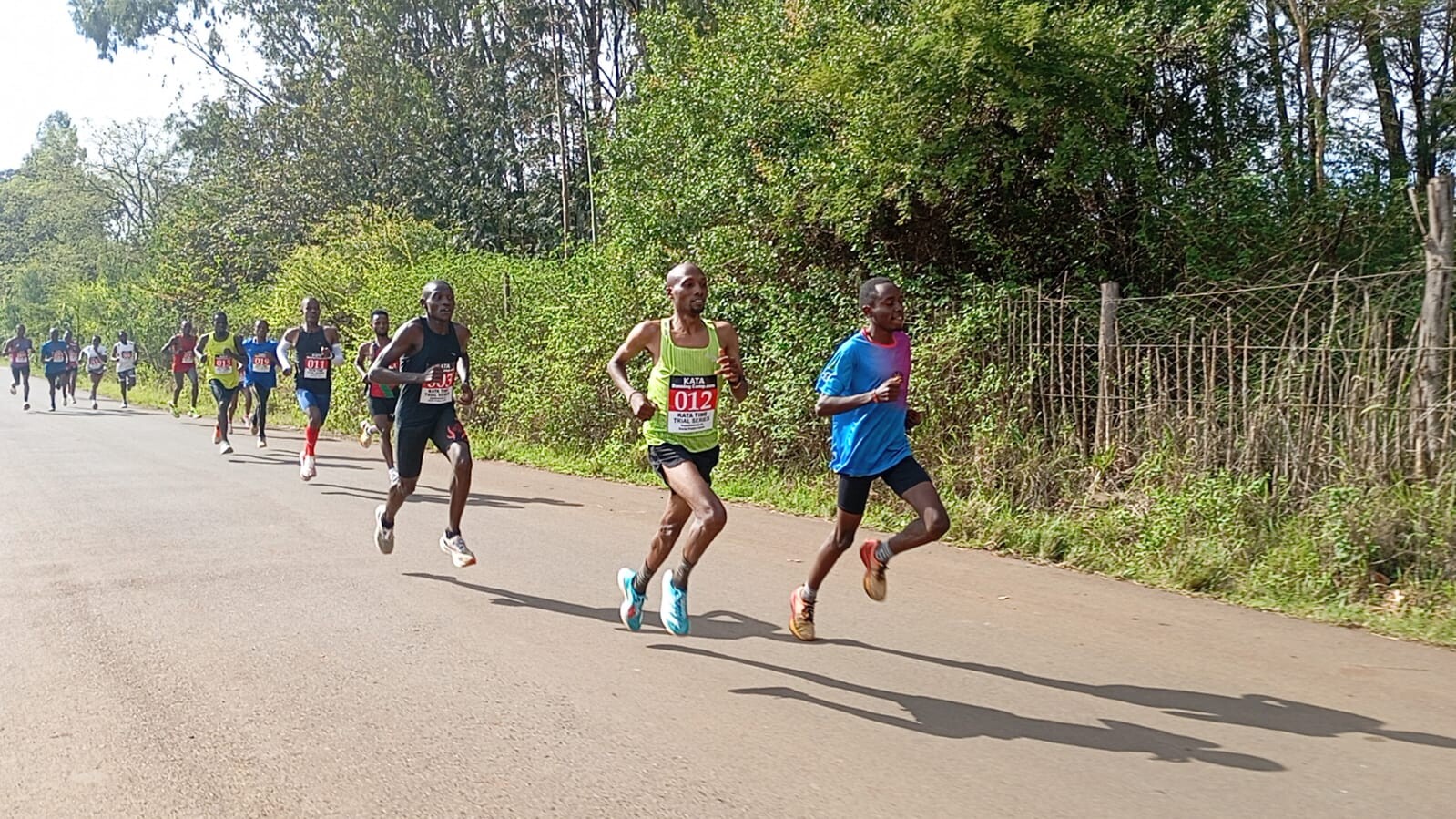
The men’s 10km proved to be the deepest and most competitive event of the day. Bernard Musau set the benchmark with a commanding 29:24, establishing control early before sustaining a strong and balanced pace through the final kilometers. His performance stood as the fastest of the morning and highlighted impressive endurance on the demanding course. Close behind, Kelvin Nganga finished in 29:41, while John Kuria completed the top three in 29:46, underlining the competitiveness at the front of the field.
Further down the standings, strong performances continued to emerge as athletes maintained disciplined pacing despite the warm and slightly humid conditions. Bernard Waweru crossed in 30:38, followed by Erick Cheruiyot in 31:07 and Charles Wanjora in 31:29. A deep field continued through the results, with determined efforts from Joel Maina, Joseph Makeri, Joseph Nyota, Justus Wambua, Vincent Kiprotich, Paul Nganga, and veteran runner Charles Ndirangu, whose resilience over the distance added another layer of inspiration to the morning’s competition.
Results
Women 5km
1. Naomi Wambui — Age 41 — Bib 15 — 18:21
2. Felister Mbatha — Age 19 — Bib 26 — 22:21
Men 5km
1. Francis Maina — Age 19 — Bib 19 — 16:46
2. Dennis Musau — Age 43 — Bib 06 — 19:46
Women 10km
1. Kellen Waithera — Age 39 — Bib 21 — 34:58
2. Regina Sandiki — Age 19 — Bib 25 — 36:57
Men 10km
1. Bernard Musau — Age 30 — Bib 12 — 29:24
2. Kelvin Nganga — Age 24 — Bib 02 — 29:41
3. John Kuria — Age 30 — Bib 27 — 29:46
4. Bernard Waweru — Age 40 — Bib 01 — 30:38
5. Erick Cheruiyot — Age 30 — Bib 28 — 31:07
6. Charles Wanjora — Age 24 — Bib 03 — 31:29
7. Joel Maina — Age 43 — Bib 20 — 31:36
8. Joseph Makeri — Age 41 — Bib 14 — 32:51
9. Joseph Nyota — Age 20 — Bib 11 — 33:11
10. Justus Wambua — Age 18 — Bib 09 — 33:22
11. Vincent Kiprotich — Age 24 — Bib 13 — 34:56
12. Paul Nganga — Age 43 — Bib 29 — 34:57
13. Charles Ndirangu — Age 64 — Bib 23 — 38:02
As the final runners crossed the line and the morning warmth lingered over the Thika tarmac, the 54th KATA Time Trial once again revealed what makes these sessions special. Beyond the stopwatch and finishing order lies a culture built on discipline, growth, and shared purpose. Here, young athletes chase new limits while experienced runners quietly remind them that progress is a long road. With every stride, every split, and every edition, the KATA time trials continue to shape not just stronger runners, but a community bound together by the simple, enduring rhythm of the run.
by Erick Cheruiyot for My Best Runs.
Login to leave a comment
KATA Time Trial Series
Welcome to the KATA Monthly Time Trial Held at the Kenyan Athletics Training Academy in Thika, Kenya, the KATA Monthly Time Trial is a unique and inclusive event designed to support runners of all levels in achieving their goals and showcasing their fitness. This event offers both 10K and 5K distances on an accurate, certified course, providing participants with...
more...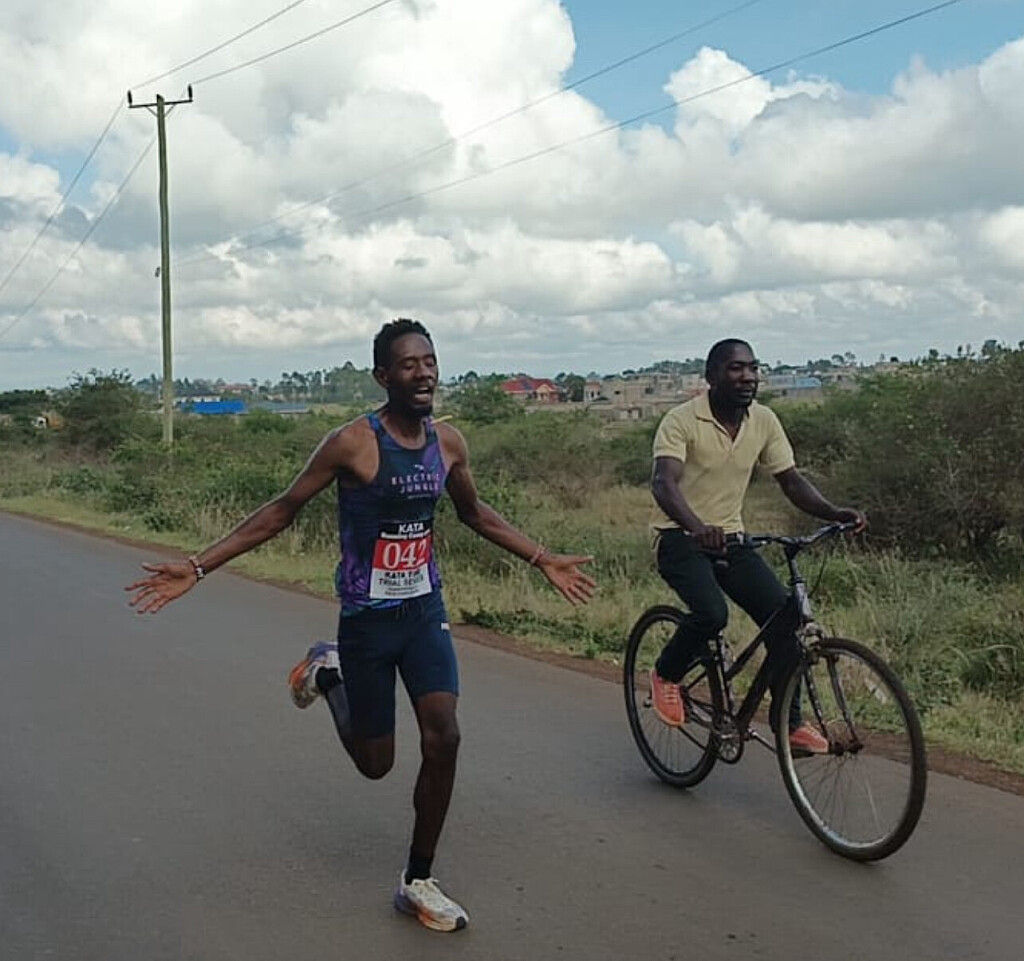
KATA Thika Hosts 51st Monthly Time Trial as Youth and Experience Deliver Strong Performances
The 51st KATA Monthly Time Trial was held today in Thika, Kenya, continuing a tradition that has become a cornerstone of athlete development at the Kenyan Athletics Training Academy (KATA).
With competitive fields in the 5K and 10K for both men and women, today’s time trial highlighted emerging junior talent alongside experienced runners, reinforcing KATA’s depth across age groups.
Men’s 10K: John Chege Powers to Solo Victory
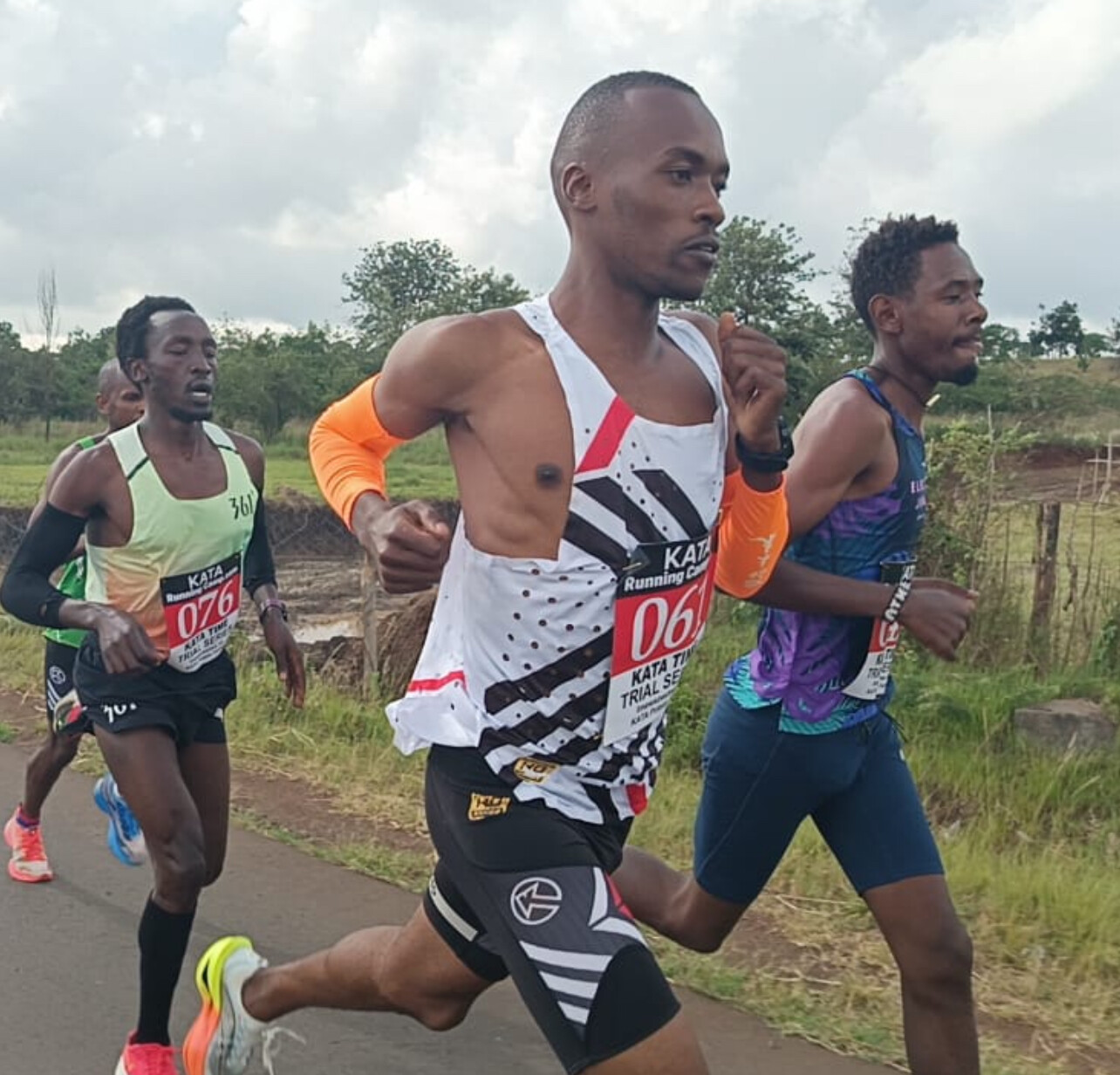
The men’s 10K saw John Chege (21, Bib 042) take control early and push on alone for much of the race, stopping the clock at 29:49 for a convincing win. Chege said afterward that he felt ready to run under 29 minutes, but acknowledged how difficult it was to maintain pace without company.
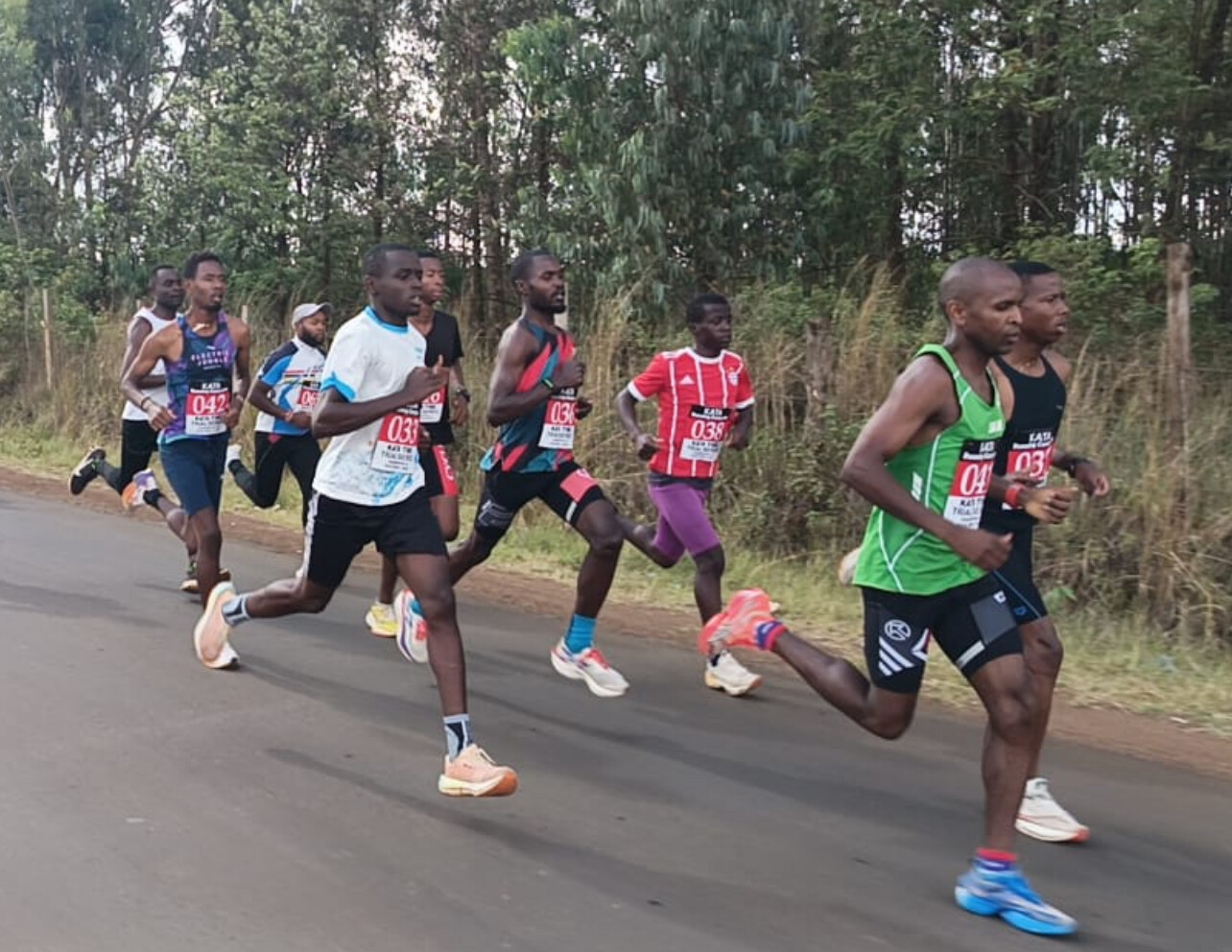
Stephen Ngigi (22, Bib 061) claimed second place in 30:04, followed by Raphael Karita (26, Bib 043) in 30:22.
Men’s 10K Results
1. John Chege (21, 042) – 29:49
2. Stephen Ngigi (22, 061) – 30:04
3. Raphael Karita (26, 043) – 30:22
4. Bernard Waweru (40, 041) – 30:38
5. Erick Mutuku (23, 040) – 30:39
6. Kristian Muthini (29, 074) – 31:57
7. Charles Ndirangu (24, 031) – 32:26
8. Erick Cheruiyot (30, 032) – 32:32
9. Fredrick Wambua (20, 073) – 32:56
10. Ismael Mburu (25, 036) – 33:31
11. Joseph Wanjiru (40, 064) – 34:12
12. John Wekesa (29, 045) – 34:27
13. Joseph Nyota (20, 035) – 35:05
14. Paul Ng’ang’a (43, 039) – 35:44
15. Joel Maina (40, 062) – 35:56
16. Kelvin Waiganjo (29, 065) – 43:23
Women’s 10K: Susan Njuu Leads, Chepkemoi Sets PB
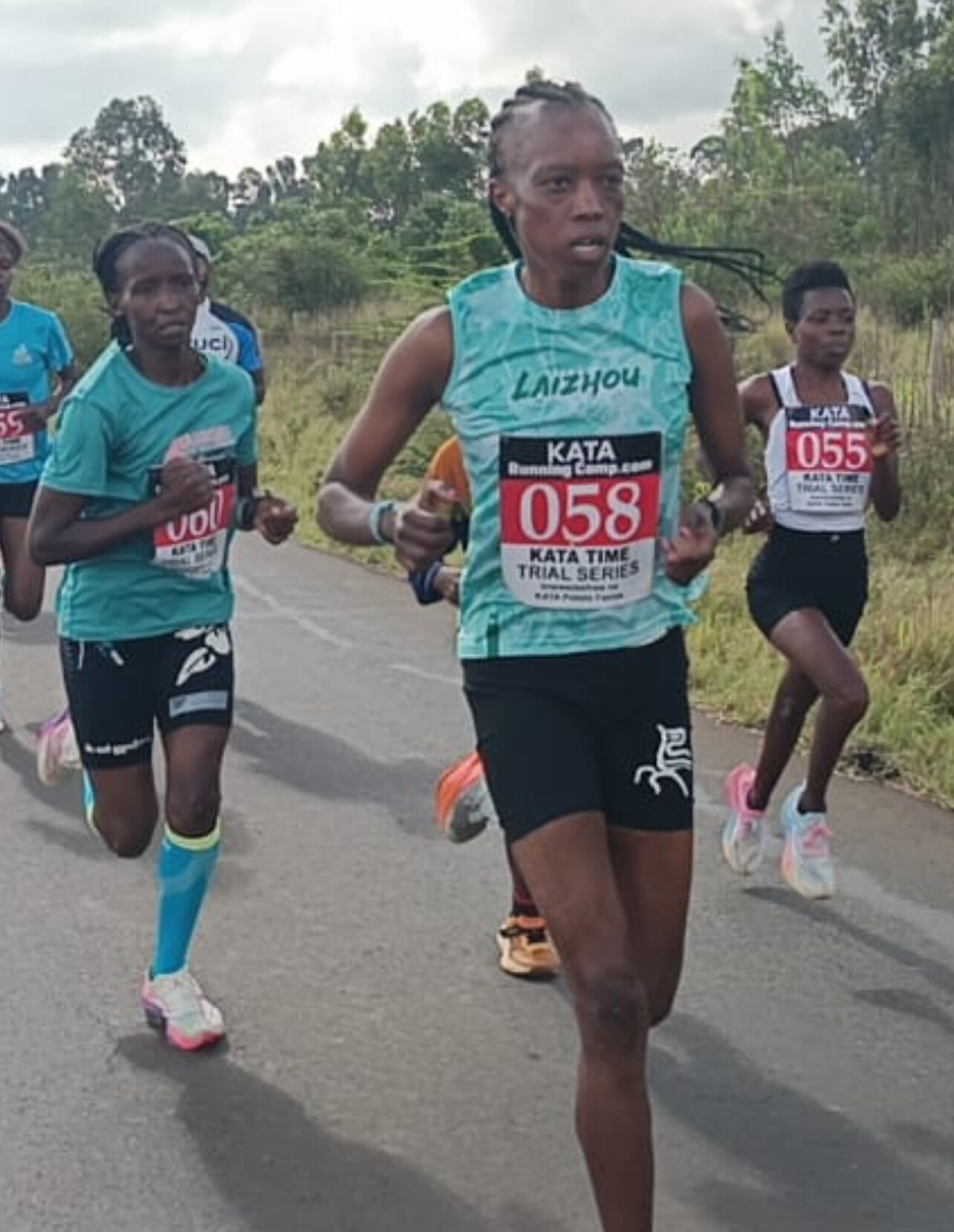
In the women’s 10K, Susan Njuu (40, Bib 058) took the win in 35:58, showing strength and consistency throughout the race.
She was followed closely by Caren Chepkemoi (24, Bib 059), who ran a personal best of 36:12, taking more than 30 seconds off her previous mark. Naomi Wambui (40, Bib 057) completed the podium in 36:44.
Women’s 10K Results
1. Susan Njuu (40, 058) – 35:58
2. Caren Chepkemoi (24, 059) – 36:12 (PB)
3. Naomi Wambui (40, 057) – 36:44
4. Ruth Maina (23, 055) – 38:46
5. Mary Wangari (34, 077) – 39:32
6. Regina Sandiki (19, 048) – 40:22
7. Faith Mutua (16, 052) – 44:38
Men’s 5K: Teenagers Set the Pace
The men’s 5K belonged to Robin Musa (17, Bib 072), who delivered an impressive performance to win in 15:46. Close behind was Justus Nyamai (18, Bib 037) in 15:51, with Kelvin Mutunga (19, Bib 053) taking third in 16:34.
Men’s 5K Results
1. Robin Musa (17, 072) – 15:46
2. Justus Nyamai (18, 037) – 15:51
3. Kelvin Mutunga (19, 053) – 16:34
4. James Wahome (16, 033) – 16:48
5. Timothy Juma (20, 046) – 17:25
6. Erick Mwaura (18, 038) – 17:33
7. Samuel Maingi (14, 045) – 17:39
8. John Nzioka (16, 071) – 20:40
9. Ryan Kiarie (17, 075) – 23:28
Women’s 5K: Macharia Returns Strong Despite Injury
Despite nursing an injury, Ruth Macharia (27, Bib 056) topped the women’s 5K field, winning in 20:44.
She was followed by Irene Kameme (12, Bib 050), who impressed with a 21:50 run, while Assumpta Mwende (17, Bib 051) placed third in 22:08.
Women’s 5K Results
1. Ruth Macharia (27, 056) – 20:44
2. Irene Kameme (12, 050) – 21:50
3. Assumpta Mwende (17, 051) – 22:08
4. Winfred Munini (17, 047) – 22:26
5. Agnes Kavuu (13, 049) – 23:27
6. Catherine Waithera (22, 063) – 23:21
Consistency Builds Champions
Now 51 editions strong, the KATA Monthly Time Trial remains a vital proving ground for athletes across Kenya. Held today under competitive conditions, the event once again demonstrated how regular racing, honest competition, and a supportive training environment continue to produce measurable progress.
by Boris Baron
Login to leave a comment
KATA Time Trial Series
Welcome to the KATA Monthly Time Trial Held at the Kenyan Athletics Training Academy in Thika, Kenya, the KATA Monthly Time Trial is a unique and inclusive event designed to support runners of all levels in achieving their goals and showcasing their fitness. This event offers both 10K and 5K distances on an accurate, certified course, providing participants with...
more...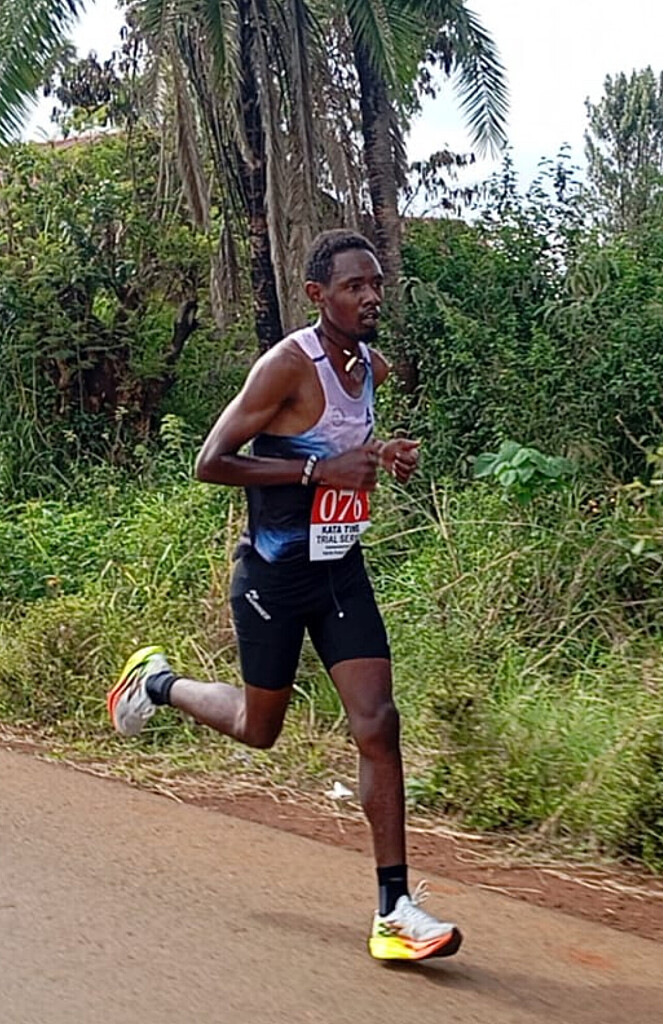
KATA Time Trial 50 Marks Milestone with Strong Performances in Thika
THIKA, Kenya — November 12, 2025 — The 50th edition of the KATA Time Trial was held today at the Kenyan Athletics Training Academy (KATA) in Thika, marking a major milestone for the event that continues to nurture and test athletes under challenging conditions. Despite the warm, humid air and gusty winds, runners delivered impressive performances across both the 5km and 10km distances.
In the men’s 5km race, Charles Ndirangu, still recovering from injury, displayed determination and class to cross the finish line first in 15:32. Sixteen-year-old James Lawrence followed with a strong run of 18:01, showing promise as one of KATA’s rising young athletes. Eric Mwaura, 18, clocked 18:07to round out the top three.
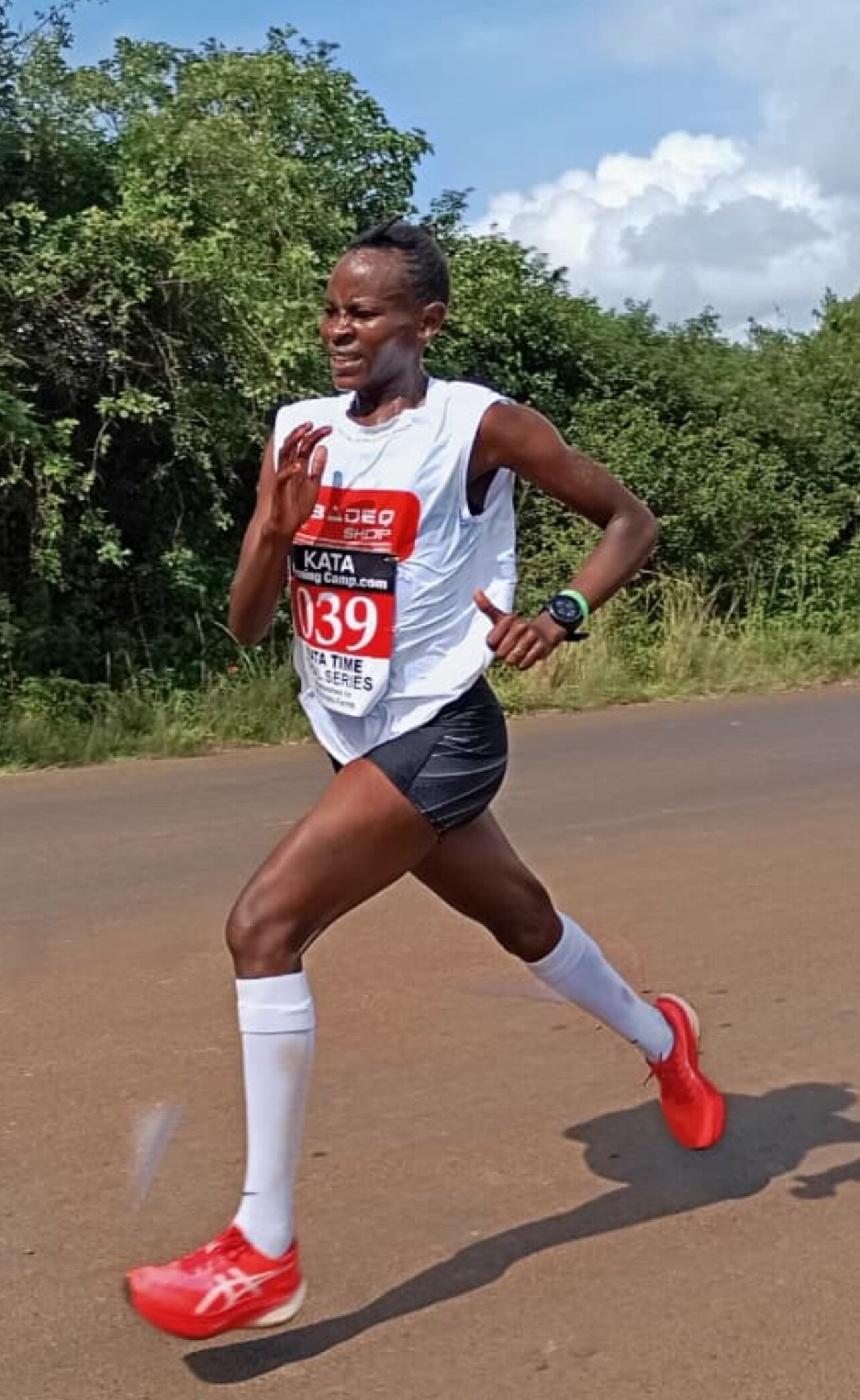
The women’s 5km race saw Agnes Wanjiru take to the course solo, clocking 19:21. Having recently battled illness, her performance reflected admirable resilience and commitment to the KATA program.
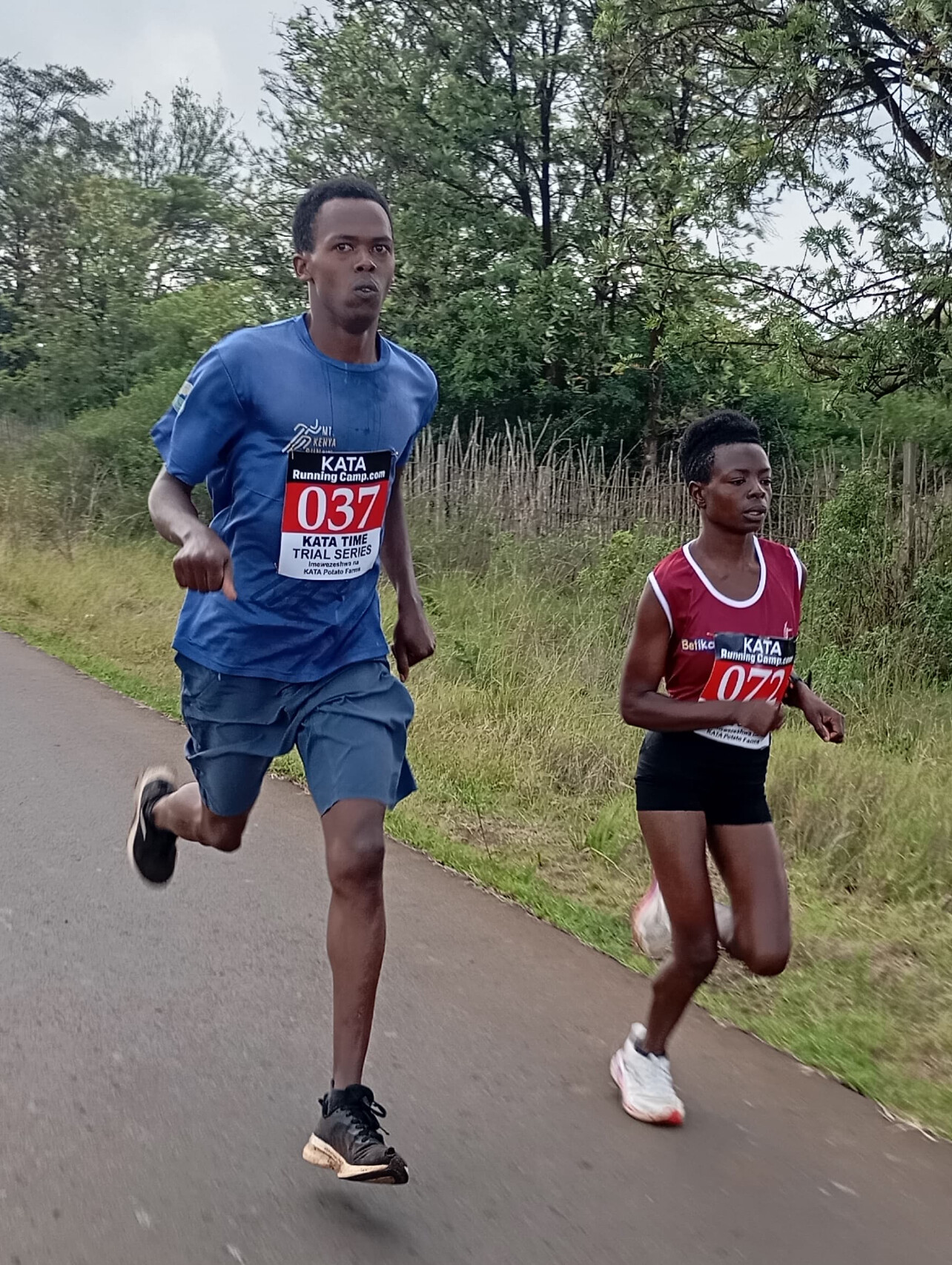
The men’s 10km was one of the most competitive fields of the day. John Chege, 21, took command early and maintained his lead to win in 29:49. He was followed by Bernard Waweru (40) in 30:29, with Stephen Ngigi, 22, close behind in 30:36 to complete the podium.
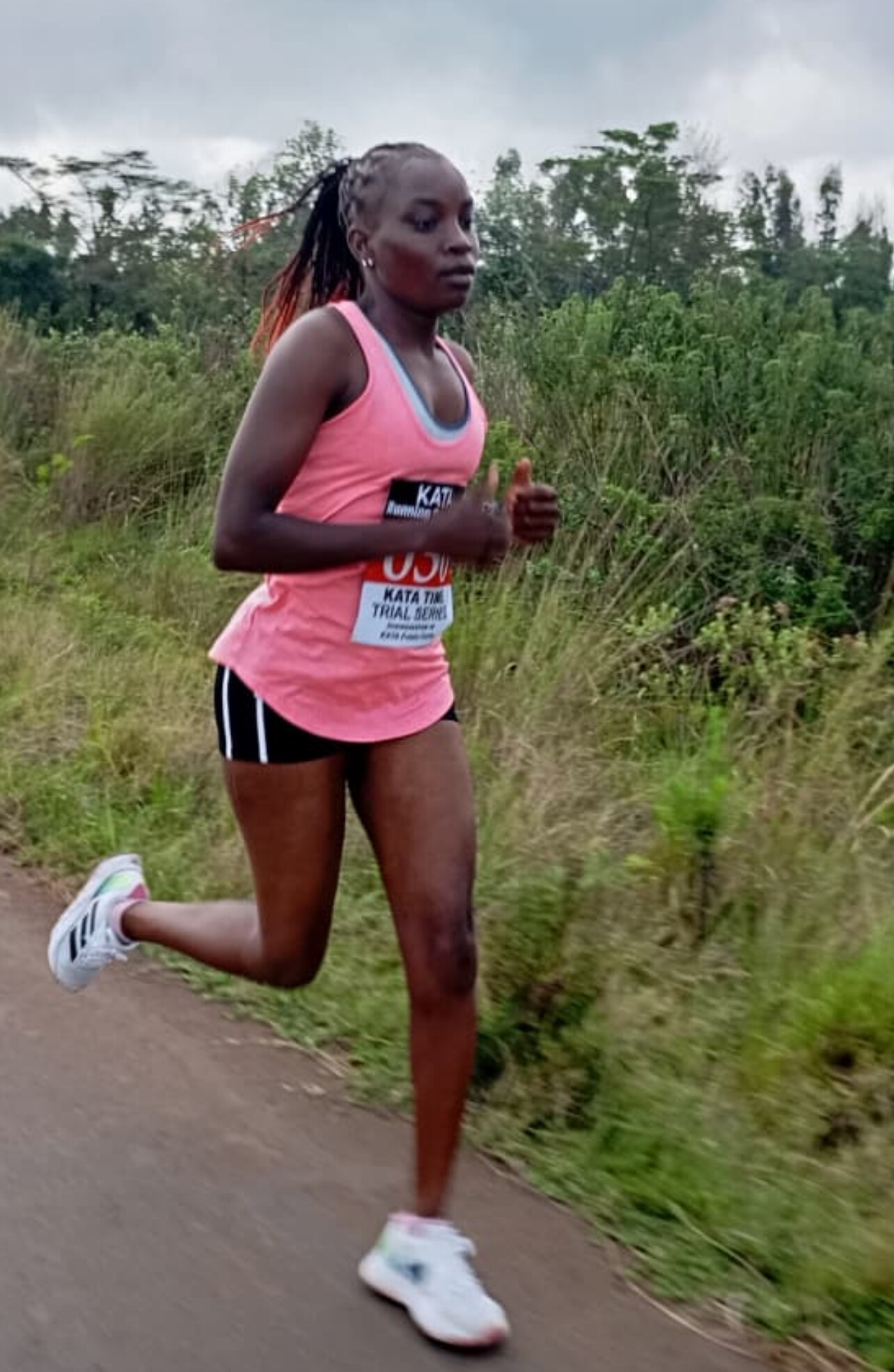
The women’s 10km produced another standout performance, with Loise Kiarie, 24, setting a new personal best of 33:49, improving her previous time by 30 seconds despite the less-than-ideal weather. Jacinta Kamau, also 24, claimed second in 34:48, while Kellen Waithira (38) finished third in 36:11.
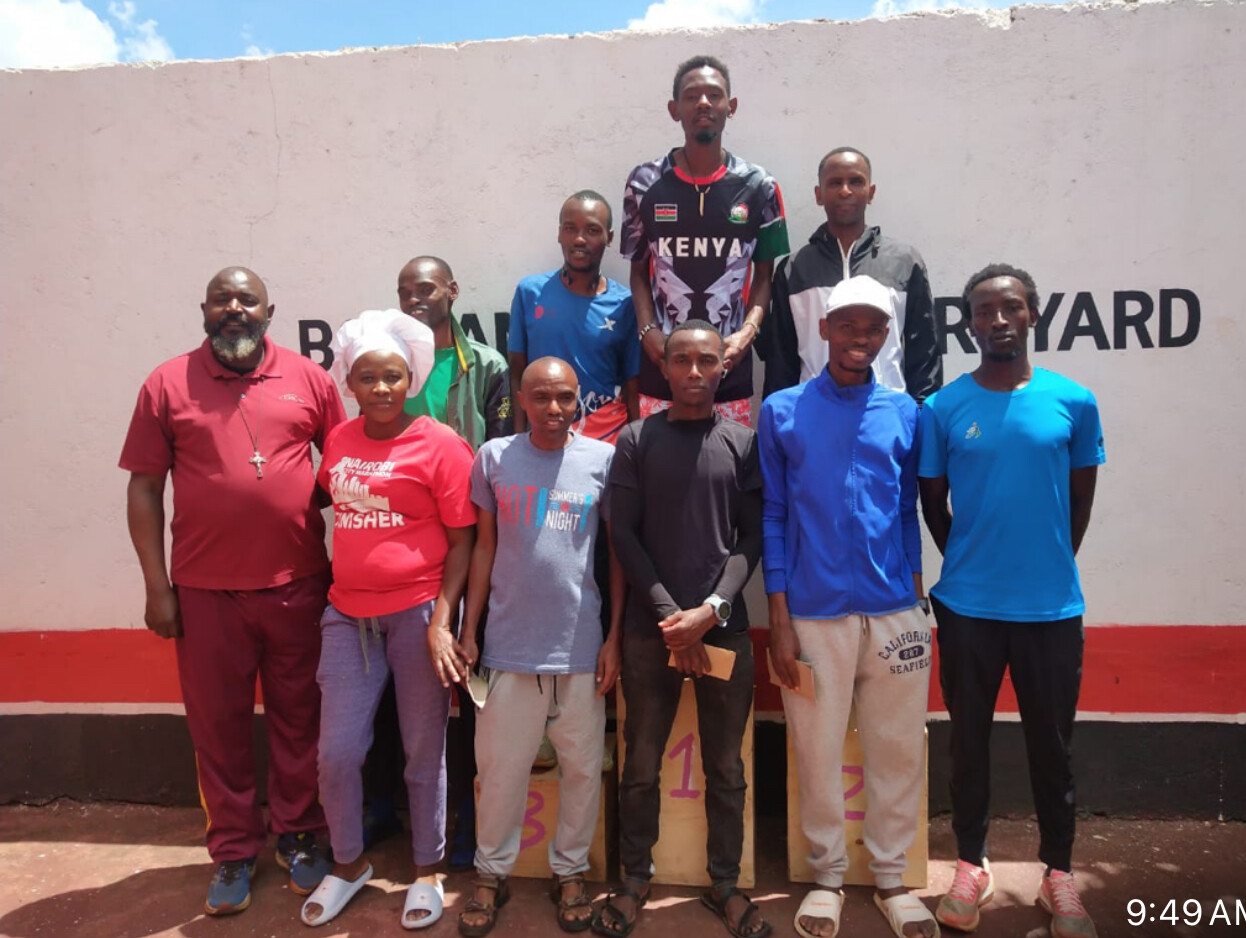
The KATA Time Trials, founded by Bob Anderson, continue to provide a world-class platform for Kenyan athletes to measure progress and stay race-ready between competitions. Today’s edition celebrated not only endurance and improvement but also the spirit of consistency that has defined the KATA community since its inception.
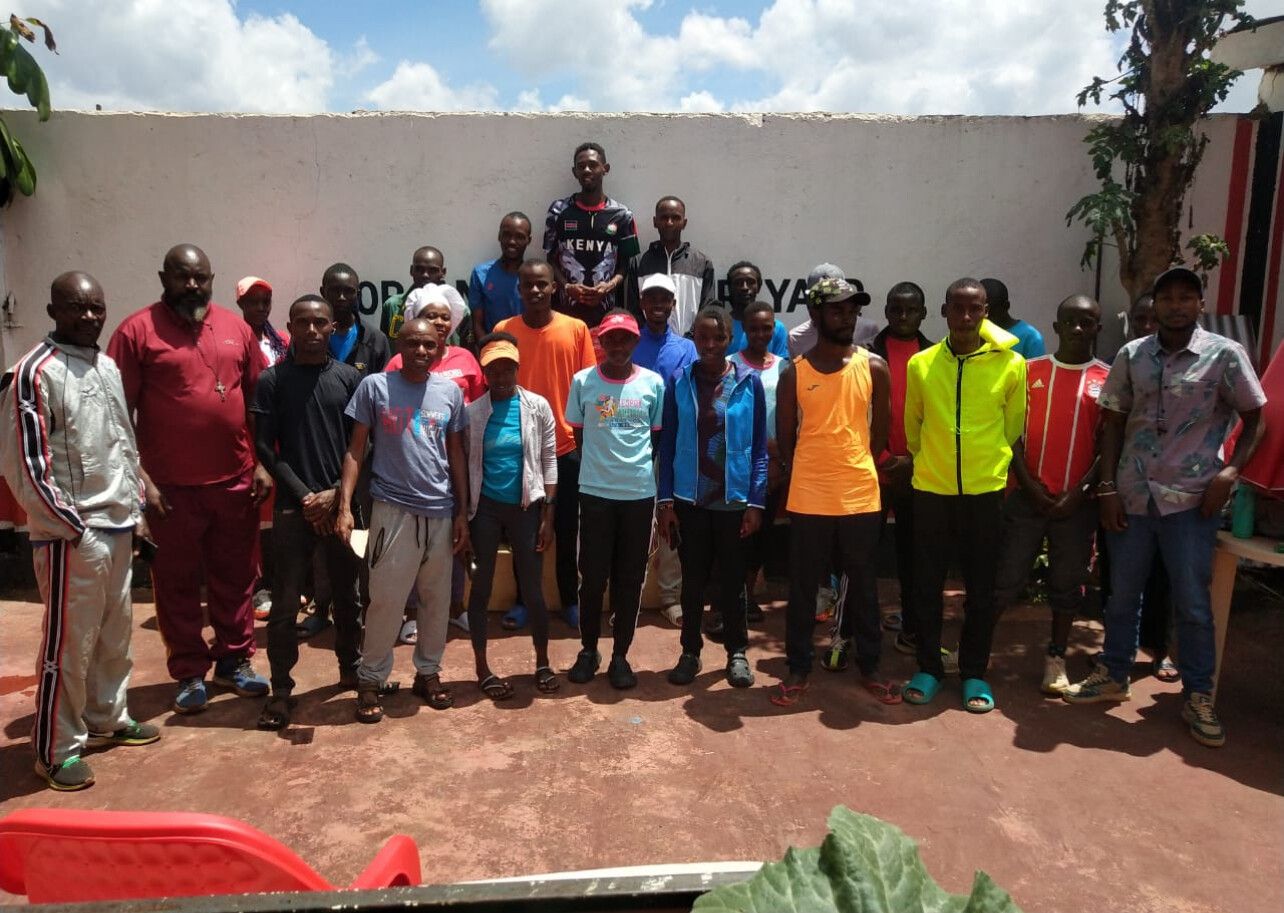
The next KATA Time Trial will take place on December 17, both in Thika and at most of KATA’s satellite running camps across Kenya, as the program continues to expand its reach and provide competitive opportunities to athletes nationwide.
KATA Time Trial #50 – Official Results
5km Men
- Charles Ndirangu – 24 yrs – Bib 74 – 15:32
- James Lawrence – 16 yrs – Bib 73 – 18:01
- Eric Mwaura – 18 yrs – Bib 35 – 18:07
- Tobias Kosgei – 16 yrs – Bib 73 – 18:50
5km Women
- Agnes Wanjiru – 20 yrs – Bib 33 – 19:21
10km Men
- John Chege – 21 yrs – Bib 76 – 29:49
- Bernard Waweru – 40 yrs – Bib 31 – 30:29
- Stephen Ngigi – 22 yrs – Bib 71 – 30:36
- Boniface Mungai – 30 yrs – Bib 77 – 30:53
- Dan Lolngojine – 19 yrs – Bib 49 – 31:01
- John Kuria – 30 yrs – Bib 40 – 31:33
- Joel Maina – 43 yrs – Bib 41 – 32:15
- Justus Nyamai – 18 yrs – Bib 48 – 33:25
- Ismael Mburu – 25 yrs – Bib 50 – 33:44
- Eric Cheruiyot – 30 yrs – Bib 46 – 33:55
- Joseph Nyota – 20 yrs – Bib 32 – 34:05
- Peter Mukundi – 27 yrs – Bib 37 – 36:46
- Charles Ndirangu – 65 yrs – Bib 53 – 38:02
10km Women
- Loise Kiarie – 24 yrs – Bib 39 – 33:49 (PB)
- Jacinta Kamau – 24 yrs – Bib 38 – 34:48
- Kellen Waithira – 38 yrs – Bib 54 – 36:11
- Susan Njuu – 40 yrs – Bib 52 – 36:34
- Lilian Nyamai – 25 yrs – Bib 47 – 37:04
- Karen Cheokemoi – 24 yrs – Bib 51 – 37:29
- Ruth Maina – 23 yrs – Bib 72 – 37:36
- Felistas Maina – 37 yrs – Bib 34 – 40:04
- Mary Wangari – 35 yrs – Bib 36 – 40:04
by Boris Baron
Login to leave a comment
KATA Time Trial Series
Welcome to the KATA Monthly Time Trial Held at the Kenyan Athletics Training Academy in Thika, Kenya, the KATA Monthly Time Trial is a unique and inclusive event designed to support runners of all levels in achieving their goals and showcasing their fitness. This event offers both 10K and 5K distances on an accurate, certified course, providing participants with...
more...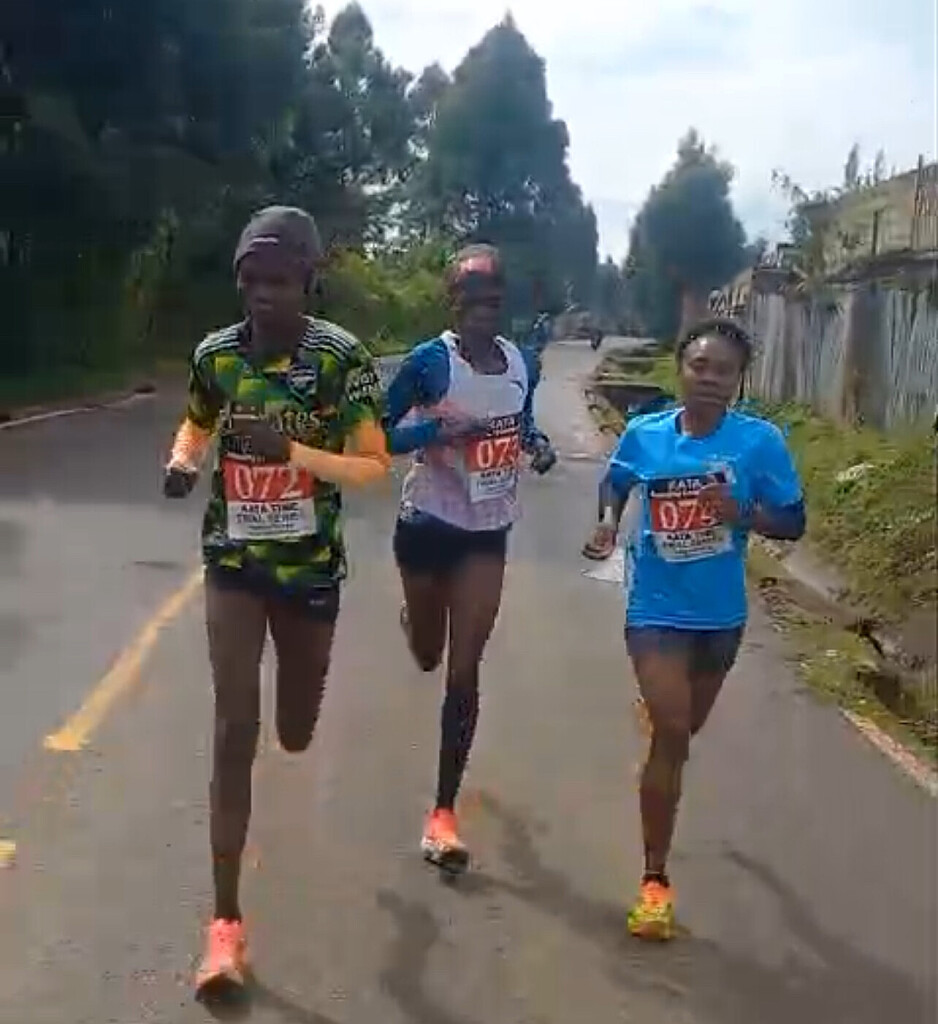
KATA Kerenget Runners Excel in 10K Time Trial Despite Challenging Weather
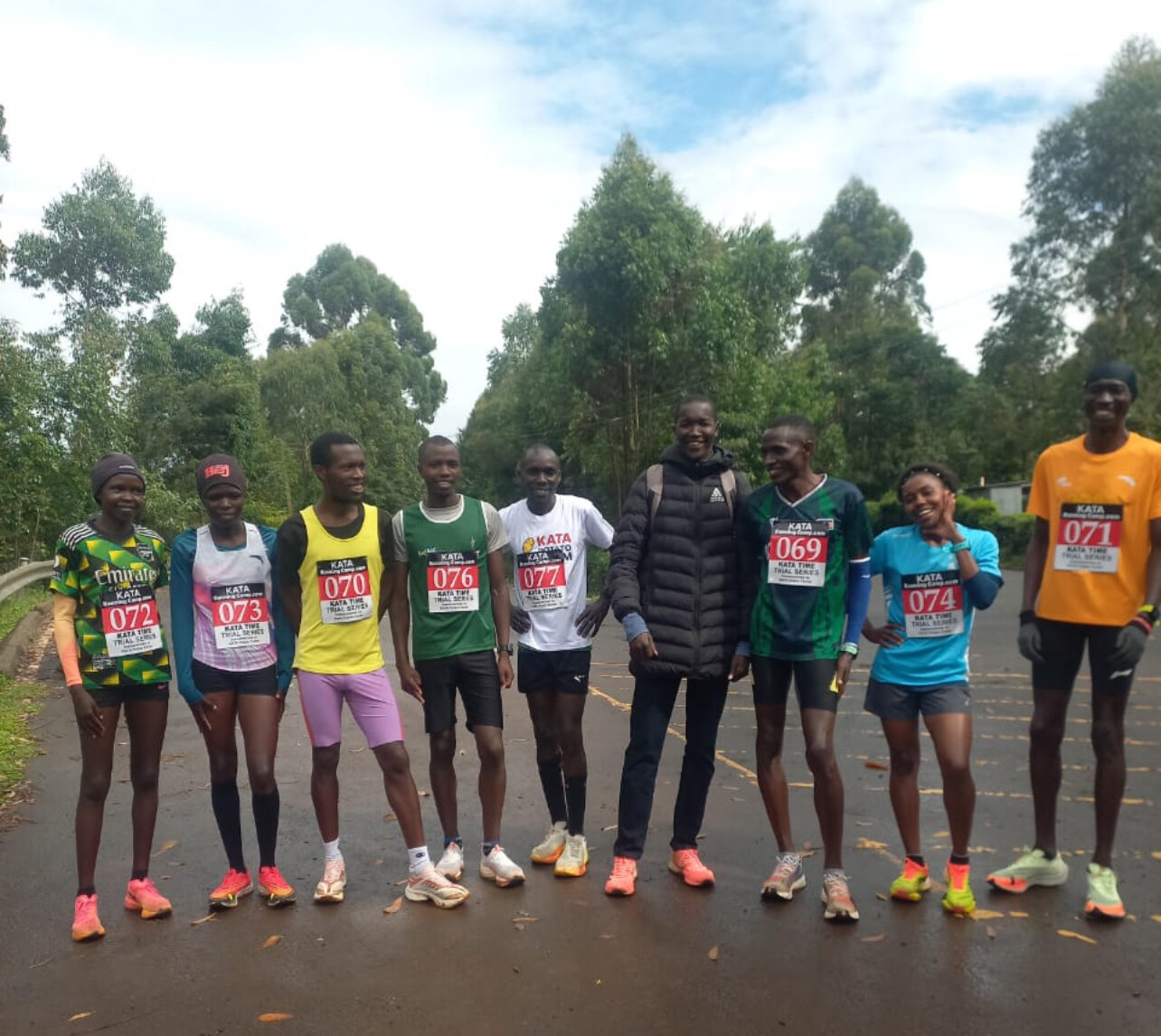
Athletes at the KATA Kerenget Running Camp (ID K03), operated by Sammy Dismas, showcased their determination and talent during a 10K time trial held today under tough weather conditions. Despite the challenge, the event was a success, demonstrating the resilience and dedication that define the KATA spirit.
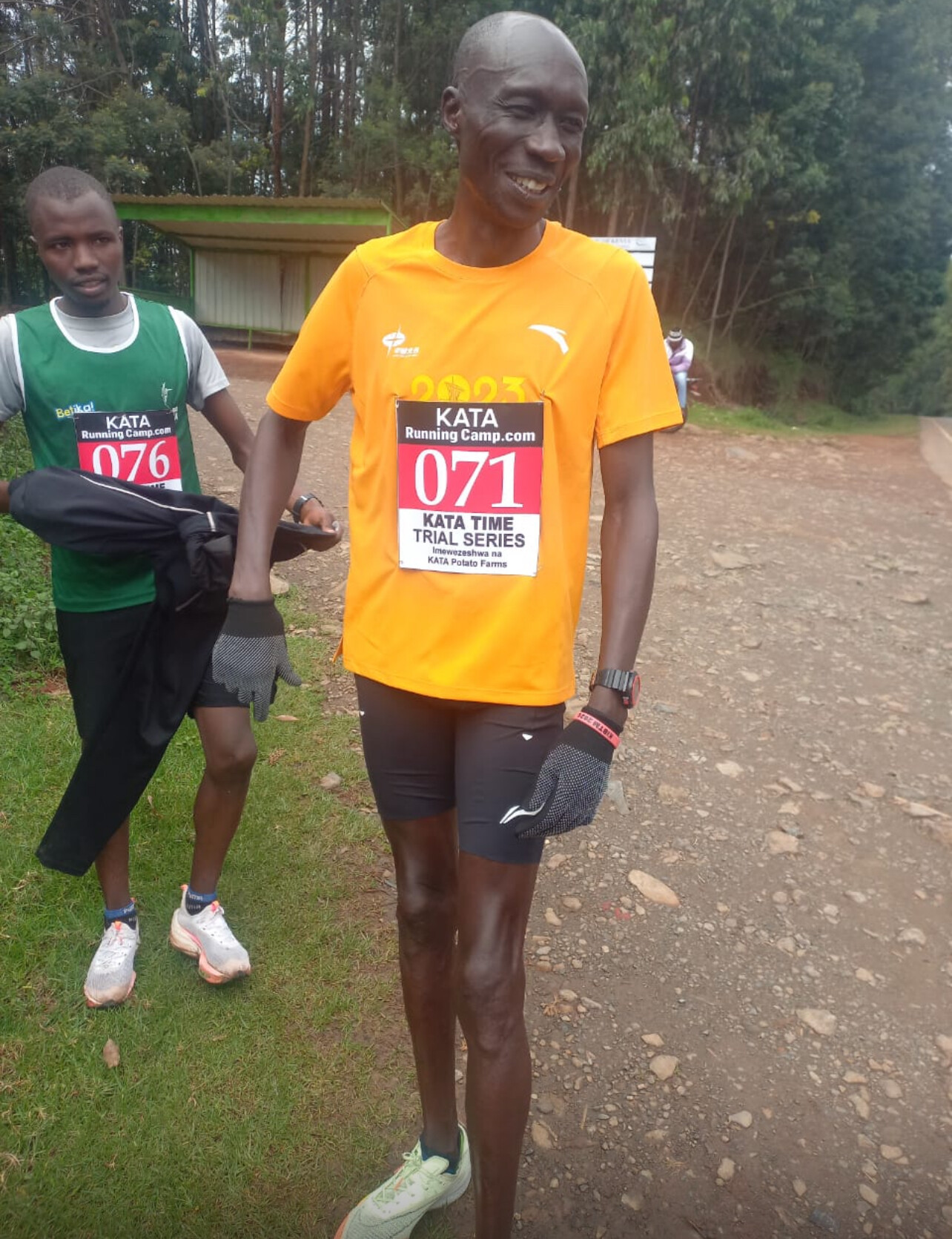
In the men’s 10K, Amos Kirui (Bib 076) claimed victory with an impressive time of 29:56, edging out Jackson Koech (Bib 069), who finished close behind in 30:01. Cosmas Mutai (Bib 070) secured third place in 30:20, while Benard Kibilo (Bib 071) and camp operator Sammy Dismas (Bib 077) followed in 30:32 and 30:51, respectively. Simon Toli (Bib 070) rounded out the top six with a strong 31:00 finish.
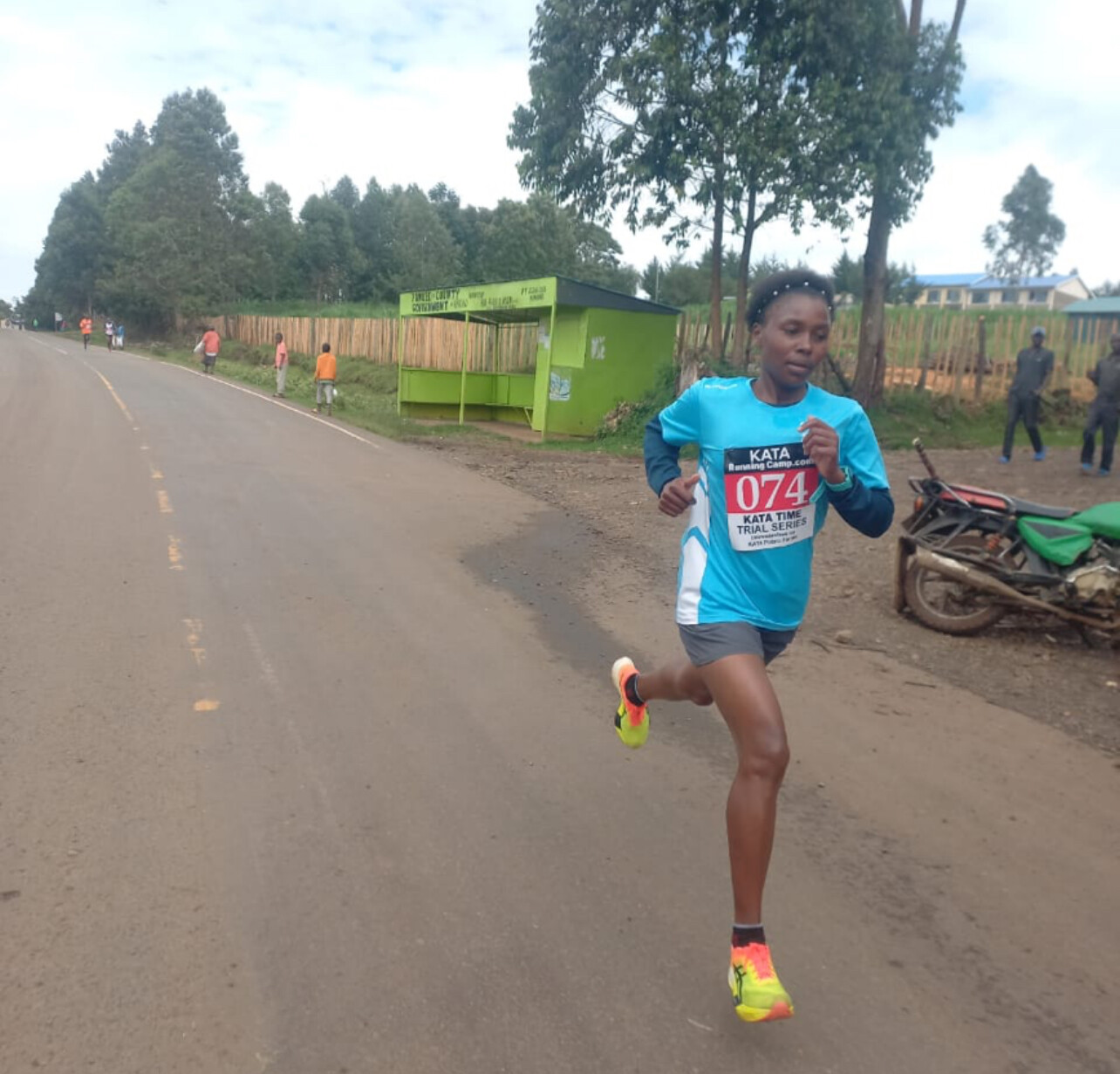
In the women’s 10K, Daphine Kiptoo (Bib 072) led from the front to take the win in 35:00, followed by Sharon Ndanu (Bib 074) in 35:40 and Mercy Chepngeno (Bib 073) in 36:15.
“Even though the weather was not favorable, we did our best to ensure everything went on well,” reported the Kerenget Camp team. Their commitment ensured another smooth and competitive trial for the KATA athletes.
The KATA Kerenget Running Camp is one of 31 KATA Running Camps, mostly located in Kenya’s Rift Valley, that help athletes reach their potential under the Kenyan Athletics Training Academy (KATA)program. With regular time trials like this, runners continue to refine their form and fitness as they prepare for upcoming races both locally and internationally.
by Boris Baron
Login to leave a comment

KATA Launches Half-Million Bonus for Top Potato Farmers
Expanding its spirit of competition from the track to the fields, KATA rewards excellence in both running and farming.
KATA is taking its competitive spirit from the track to the fields with the new KATA Potato Farmer Half-Million Bonus Prize Package. This program will reward five KATA farmers with 50,000 Kenyan Shillings each, recognizing those who achieve the best yield per acre.

The first payout will be made on December 31, followed by a second on June 30. Each cycle, five farmers with the top single-acre harvests will receive the bonus, totaling half a million shillings annually.

Yields will be measured in 50 kg bags and must be sold to verified buyers. Results will be confirmed by CTO Dennis, Sales Directors Gideon and John, and Accounts Manager Fridah. The one bag each farmer keeps for home use will not count, and only bags sold and confirmed as paid to KATAwill qualify.

“We offer prize money for races, and with all the hard work it takes to grow KATA potatoes, I thought—why not turn this into a competition as well?” says Bob Anderson, KATA Founder and Director.

A farmer can win twice a year if they achieve the best results in both seasons. The initiative mirrors KATA’s philosophy—rewarding effort, precision, and perseverance whether it’s on the course or in the soil.

From Running to Farming Excellence

The Kenyan Athletics Training Academy (KATA), founded by Bob Anderson, the creator of Runner’s World and My Best Runs, began as a world-class training center for runners in Thika, Kenya. Today, it has grown into a dynamic network that includes over 30 KATA Running Camps and 60+ KATA Potato Farms across Kenya, and an international headquarters at Anderson Manor in Portugal.
Each KATA farm operates under a system that combines athletics and agriculture, offering farmers interest-free loans and ongoing support to grow certified Shangi potatoes. The harvests are marketed through KATA’s coordinated sales network, ensuring fair prices and dependable returns for each farmer.
Many KATA farmers are also runners—or closely connected to the athletic community—bringing the same discipline, teamwork, and endurance to farming that they apply to training.
Empowering Champions in Every Field
From the start, KATA’s mission has been to help people reach their potential through endurance, consistency, and community. The new Half-Million Bonus Prize Package celebrates that mission—recognizing those who deliver exceptional results through focus and commitment.
As Anderson explains, “Whether it’s crossing a finish line or bringing in a record harvest, both take focus, endurance, and belief in yourself. That’s what KATA is all about.”
The first group of winners for the KATA Potato Farmer Half-Million Bonus Prize will be announced on December 31, 2025.
Additional KATA Running Camps and KATA Potatoe farms are going to be confirmed starting in December. Confirm your interest by contacting Bob Anderson on WhatsApp.
by Boris Baron
Login to leave a comment
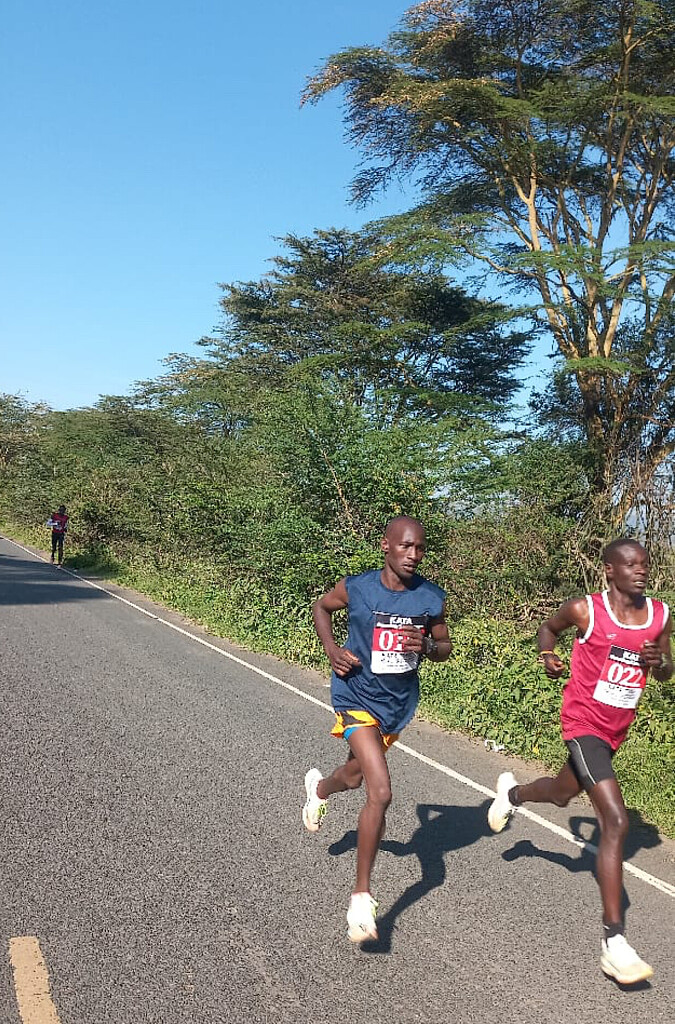
From Potatoes to Personal Bests: How Amos Chirchir Is Growing Athletes and a Future in Sachang’wan
In the highland village of Sachang’wan in Molo, Nakuru County, the land rises boldly toward the sky. The area sits on the edge of the dramatic Rift Valley escarpment, overlooking the vast Menengai Crater — Africa’s second-largest volcanic caldera — its silent ridges brooding in the morning mist.
Behind it, the rolling hills of Molo stretch endlessly, stitched with neat rows of potato farms that define the region’s identity. To the south lies Salgaa, a town better known for its flower farms, where long greenhouse tunnels shimmer like silver ribbons across the plains. Beyond this agricultural heartland, winding dirt roads climb toward Sachang’wan — where another kind of farming is taking root: the farming of athletic talent.
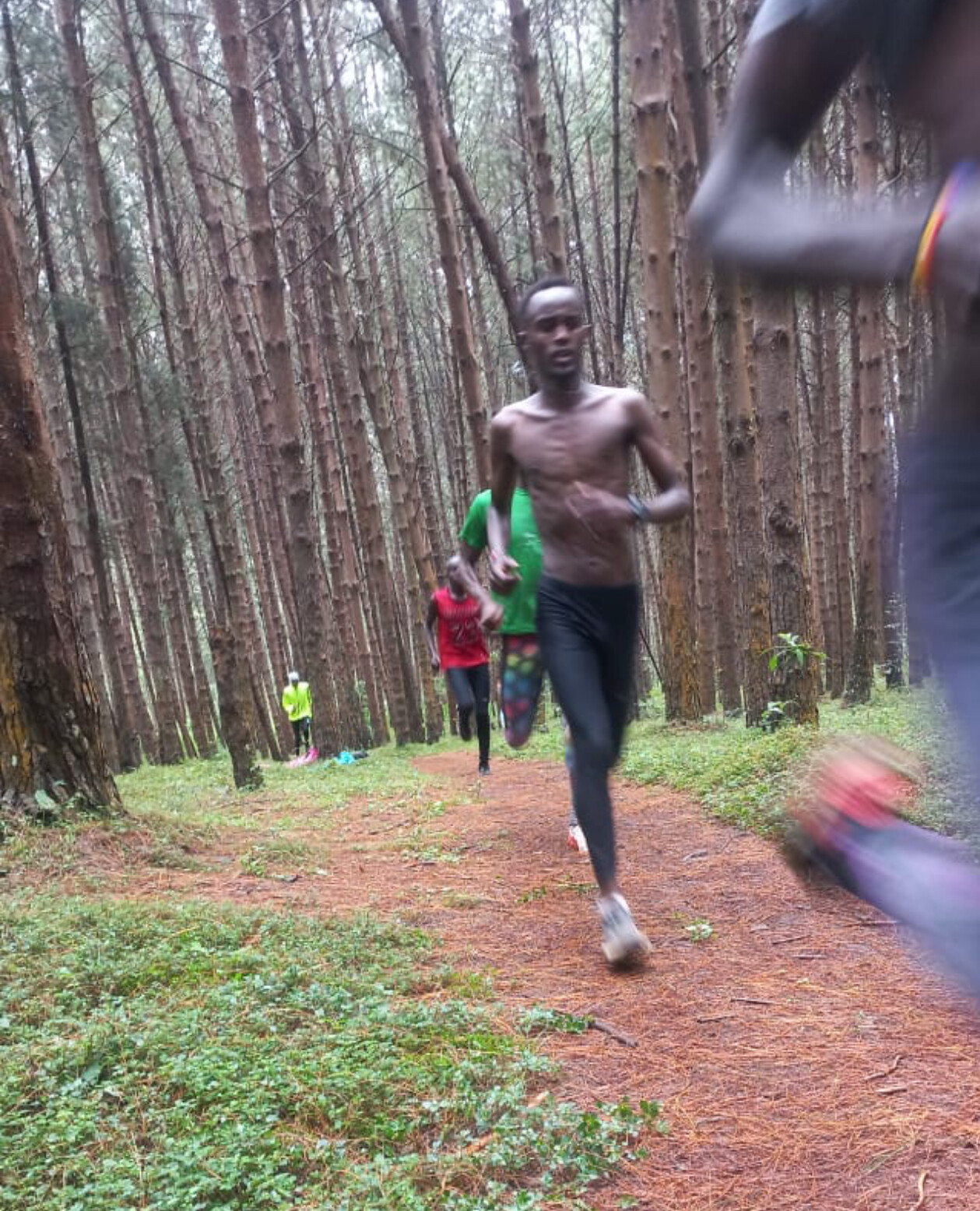
Here, where the air is thin and crisp, mornings begin before sunrise. Frost melts from the grass as a small group of determined athletes powers up a steep incline, their breath visible in the cold air. Leading them is 27-year-old Amos Kibet Chirchir, stopwatch in hand, eyes sharp with focus.
To an outsider, he might look like any other coach on a country road. But to his athletes — and to the growing Kenyan Athletics Training Academy (KATA) movement — Amos represents something much bigger: a new generation of homegrown leaders cultivating both champions and sustainability.

The Making of a Leader
Amos, the fifth-born in a family of eight, grew up in the cold, fertile highlands of Molo, raised by farming parents who taught him the value of hard work. Athletics runs deep in his family — his father was a 400m hurdler in the 1970s, competing when Kenyan track was just finding its rhythm.
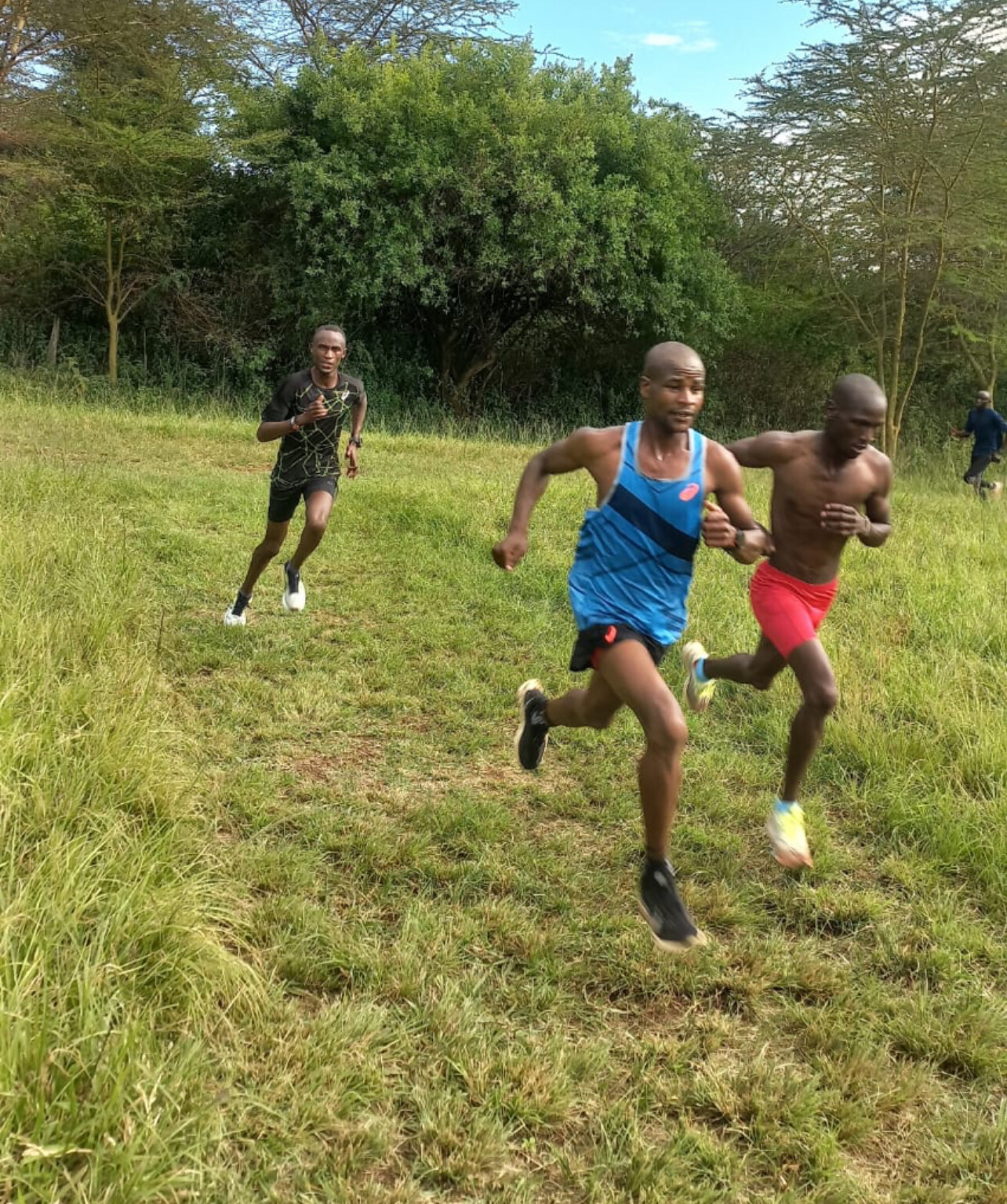
“I didn’t just choose running,” Amos says with a smile. “Running found me.”
After excelling in local school competitions, Amos nearly saw his running dream fade — until June 2022, when he earned a place at KATA Thika, founded by American running innovator Bob Anderson, the visionary behind Runner’s World magazine.
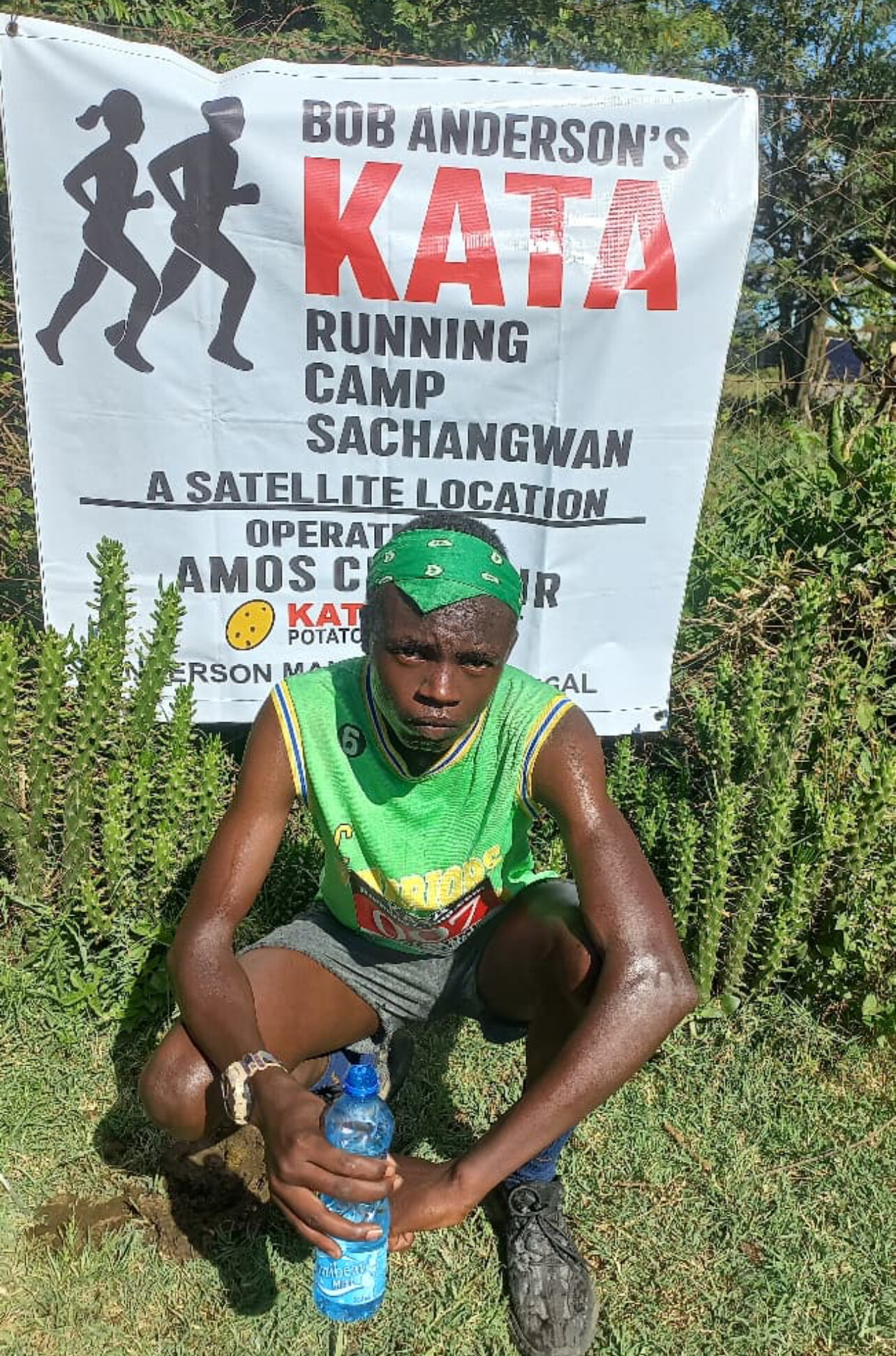
“That changed everything,” he recalls. “For the first time, I could train without worrying about daily survival. KATA didn’t just build me as an athlete — it prepared me to lead.”
Building a High-Altitude Training Hub

When Anderson announced plans to expand KATA through athlete-led satellite camps, Amos seized the opportunity. He returned home and launched KATA Sachang’wan Camp with just five athletes — three men and two women. Today, the camp has grown to eight committed runners, with more young talents eager to join.
The camp sits at an altitude of 2,400 meters, ideal for endurance training. For faster sessions, they descend to 1,800 meters, creating a natural high-low altitude system similar to what world-class runners use in Iten, Kaptagat, and Eldoret.

Already, results are emerging:
• Weldon Kibet Lang’at clocked 30:36 (10K) and 14:55 (5K) at the Double Road Race before improving to 30:16 in the October 15 time trials.
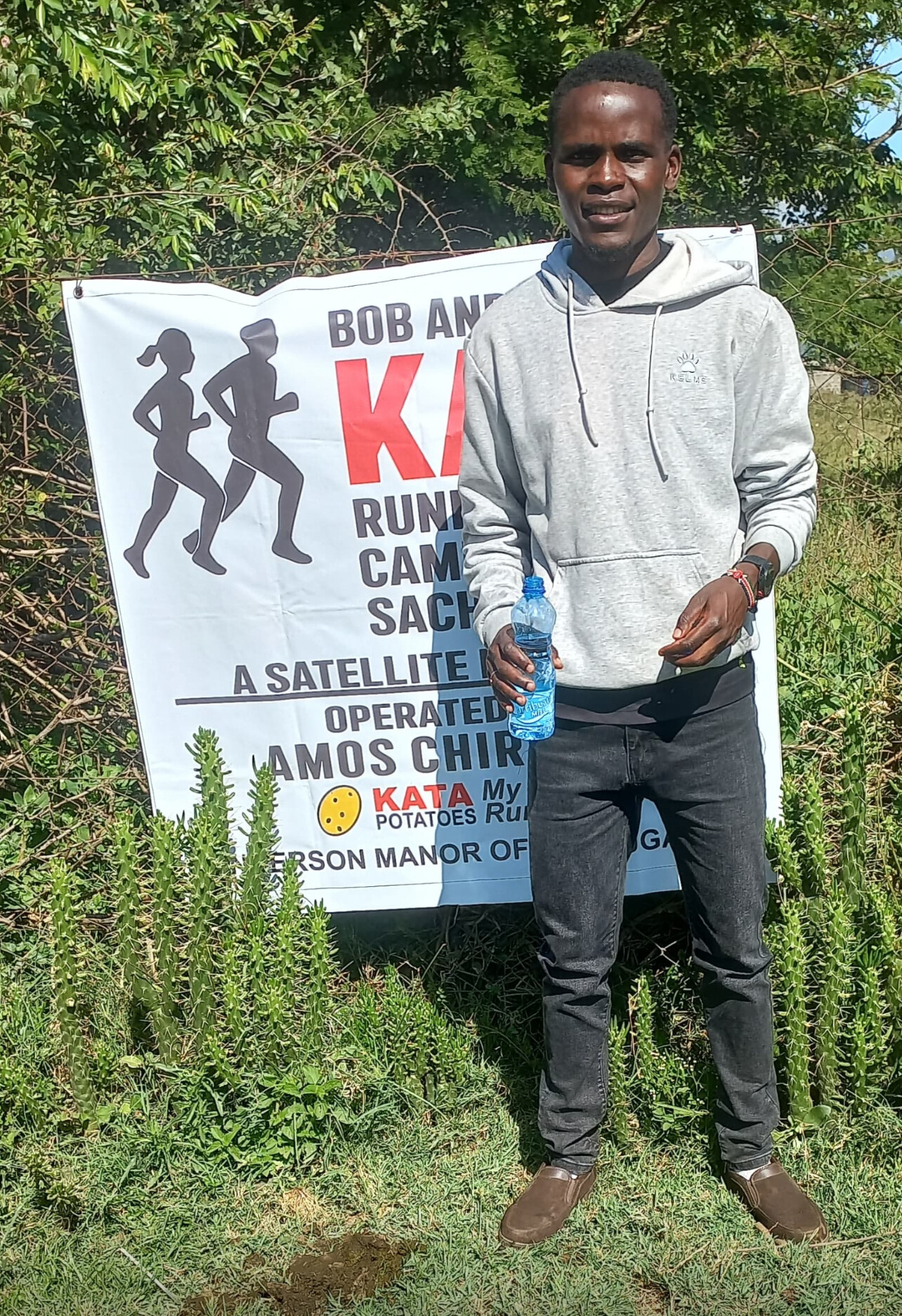
• Elizabeth Wambui, who joined just two months ago, cut her 5K time from 19:00 to 17:35 at the same event.
Amos himself remains in strong competitive shape, with personal bests of 30:51 (10K) and 14:32 (5K).
“I want to build champions — not just athletes who run fast, but athletes who think beyond medals,” he says.
Farming Hope: The KATA Potato Project
Alongside athletics, the Sachang’wan camp thrives on another discipline — agricultural sustainability. Inspired by Bob Anderson’s belief in empowering athletes for life beyond competition, Amos integrated potato farming into his training model.
He began with two acres of KATA potatoes, a move that initially drew laughter from locals.
“At first, people thought I was crazy,” he recalls. “They said farming was a step backward for an athlete. Now they’re copying me.”
Today, the farm helps feed the athletes, generates income for camp operations, and inspires local farmers — many now shifting from maize to potatoes after seeing his success.
“Athletes must think about life after running,” Amos says. “This program lets us build something real, not just chase medals.”
Training Champions, Growing Futures
With schools now closed, Amos plans to recruit junior athletes from nearby villages — guiding them early and keeping them away from idleness and drugs.
“Talent is going to waste in villages like ours because nobody guides young runners. I want to change that,” he says.
His long-term dream is to build dormitories, expand training facilities, and turn KATA Sachang’wan into a full-fledged center of excellence — powered by athletics and farming.
“Bob Anderson’s Vision Is Working”
Amos believes that KATA is redefining the future of Kenyan athletics.
“This is more than running,” he says. “Bob Anderson’s program teaches us responsibility, teamwork, leadership, and self-reliance. We’re not waiting for sponsors — we’re building ourselves.”
From the cold ridges of Sachang’wan overlooking Menengai Crater, a quiet revolution is growing — one built on sweat, soil, and belief. Here, potatoes fuel champions, and running fuels dreams.
And at the heart of it all stands a young leader — stopwatch in one hand, hoe in the other — cultivating both athletes and a future for Kenya.
by Robert Kibet
Login to leave a comment

Edwin Soi Going After the World Record at the 5th Annual KATA Double Road Race in Thika Kenya
Over 130 KATA athletes will compete alongside many other runners in a field expected to be the deepest yet, all chasing glory and a share of 100,000 KES in prize money.
When the 5th Annual KATA Double Road Race returns to Thika on September 20, it will not be just another date on the calendar. It will be a celebration of endurance, strategy, and Kenyan running tradition. And at the heart of it all will be Edwin Soi, the Olympic bronze medalist whose longevity and tactical brilliance have made him one of Kenya’s most respected distance runners.

This year’s event also offers a prize purse of 100,000 KES, making the stakes even higher.
“Over 130 KATA athletes are expected to be on the line, joined by many more competitors from across the country and beyond,” says KATA founder Bob Anderson. “I am so proud of our KATA family and what we are building. This is just the beginning—athletics fueled by hard work and growing KATA potatoes.”
The Challenge of the Double
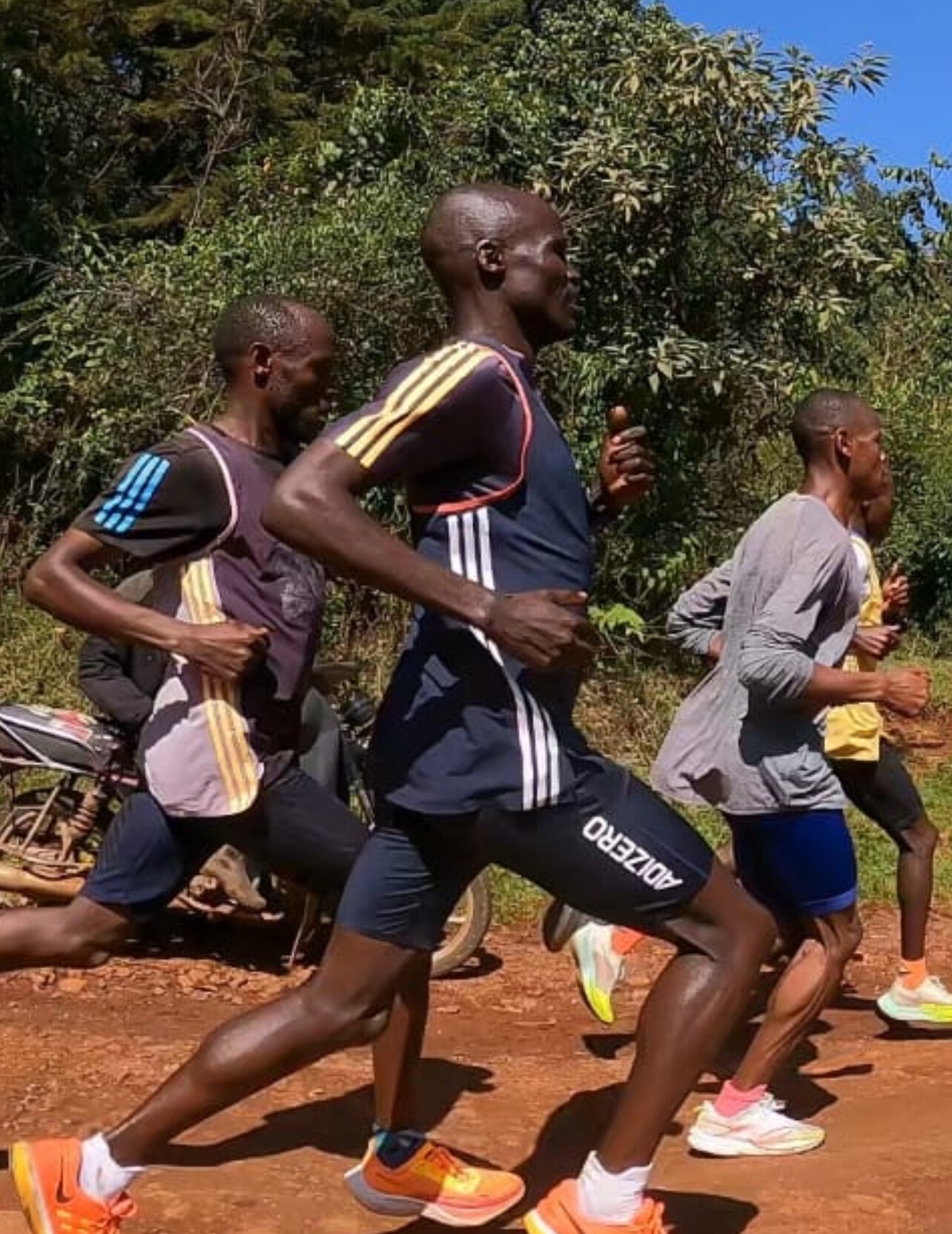
The Double is unlike any other race. Athletes first run a 10K, then take a halftime break where food and drink are provided as they prepare for the second leg. They return to the start line for a 5K. This is a two-leg event, and the times from each leg are added together for the final score.
For Soi—still formidable with career bests of 27:14 (10,000m) and 12:51 (5,000m)—the race is as much about mental strength as physical preparation.
“While others might wonder if they can even start the second race, my mind is already on pacing, form, and tactics,” Soi says. “Years of hard training and the right mental approach make a world record achievable.”
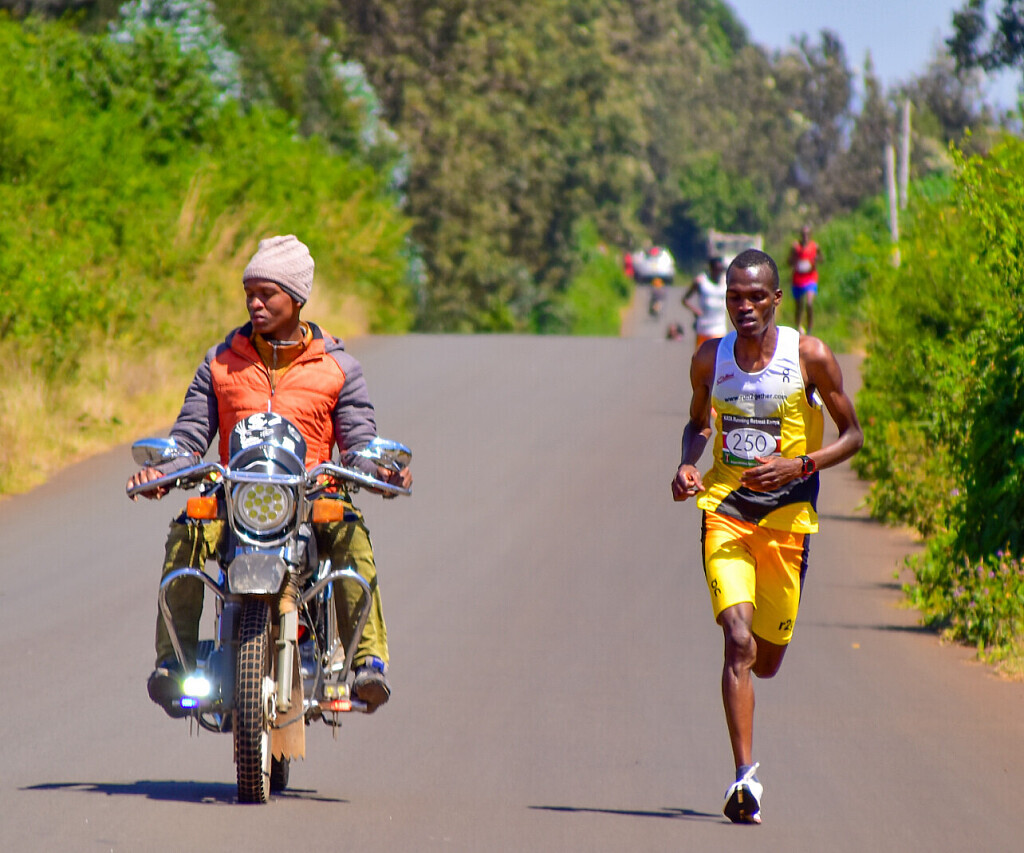
A Visionary Race with Kenyan Roots
The Double Road Race was created by Bob Anderson, founder of Runner’s World, to combine endurance with strategy. After pilot events in Mexico, the first official Double took place in Pleasanton, California, in 2012 with nearly 1,400 runners (5th photo).
Kenya quickly became a natural home. In 2014, races in Thika and Nyahururu introduced the longer Double 21K. By 2021, the Kenyan Athletics Training Academy (KATA)—also founded by Anderson—hosted Africa’s first Double 15K. Last year, Shadrack Kenduiywo (4th photo) set the world best of 42:34 on the Thika course, cementing Kenya’s place as the epicenter of the Double.
Soi’s Enduring Fire
At 39, Soi has experienced the full arc of an elite career. His defining moment remains the 2008 Beijing Olympics, where he won bronze in the 5,000m behind Ethiopia’s Kenenisa Bekele.
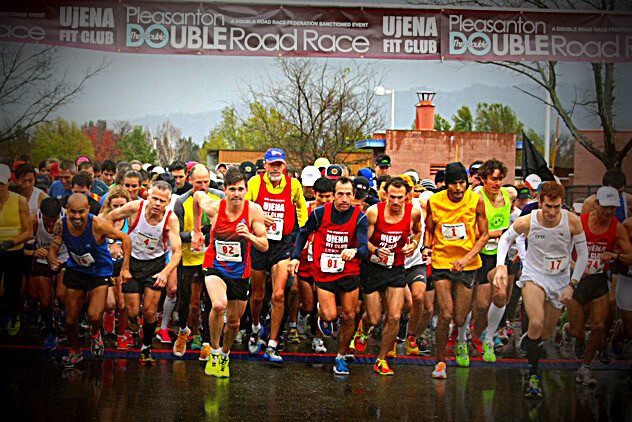
“Just making the Kenyan Olympic team drove me to push beyond limits,” Soi recalls. “I carried the hopes of more than 30 million Kenyans on my shoulders, and that choice ultimately led to my Olympic medal. My life changed—and my legacy changed.”
Since then, Soi has collected world championship medals and road titles worldwide. But today, what sets him apart is not only his victories but also his willingness to mentor and build the future.
Building Futures at KATA
Soi now heads the Kuresoi training camp under the KATA umbrella, guiding a new generation of athletes. His mentorship blends running discipline with life lessons, extending beyond training sessions.
KATA supports athletes with housing, nutrition, and income from sustainable farming projects like potato cultivation—ensuring both food security and financial independence. For Soi, this holistic model is crucial.
“I was fortunate to be mentored, and I feel a deep responsibility to pass that on. My victory will be in their success,” he says.
He also stresses integrity. With doping controversies tarnishing Kenyan athletics, Soi is determined to show that excellence can come from discipline, clean sport, and mentorship.
Why Thika Matters
The Thika Double has become more than a race; it is a stage where Kenyan athletes showcase strategy and resilience to the world. For the community, it is a festival of pride. For Soi, it is a chance to extend his legacy—competing for the clock, for his athletes, and for the values he believes in.
When the starter’s gun sounds on September 20, Soi will not only be racing 10K, resting, and running 5K. He will be carrying with him the arc of his career—from Olympic glory to mentorship—and the hopes of a new generation ready to follow in his footsteps.
The Double demands more than speed. It asks for resilience, intelligence, and composure. And with Edwin Soi on the line in Thika, chasing the world record, it promises to be a race—and a story—that inspires far beyond the finish.
by Robert Kibet
Login to leave a comment
KATA Double Road Race 15K
5th Annual KATA Double Road Race 15K Set for September 20, 2025, at KATA Thika The 5th Annual KATA Double Road Race 15K will be held on September 20, 2025, at the Kenyan Athletics Training Academy (KATA) in Thika, Kenya. The event includes a 10K leg, a break, followed by a 5K leg — a format designed to challenge runners...
more...
Brothers From the UK Reconnect With Roots Through Running at KATA Thika Retreat
THIKA, Kenya, August 18, 2025 – When Amit and Mitul Pankhania landed in Kenya this August, it was more than a family visit. The brothers, both based in the United Kingdom, had come to see their parents, but they also sought something deeper—a chance to immerse themselves in the heartbeat of Kenyan running.
Their week-long stay at the Kenyan Athletics Training Academy (KATA) Thika Retreat, founded and directed by long-distance running enthusiast and My Best Runs publisher Bob Anderson, blended cultural reconnection with athletic discovery. It all culminated in their participation in the retreat’s monthly time trials, a hallmark of KATA’s training culture that attracts both local and international athletes.
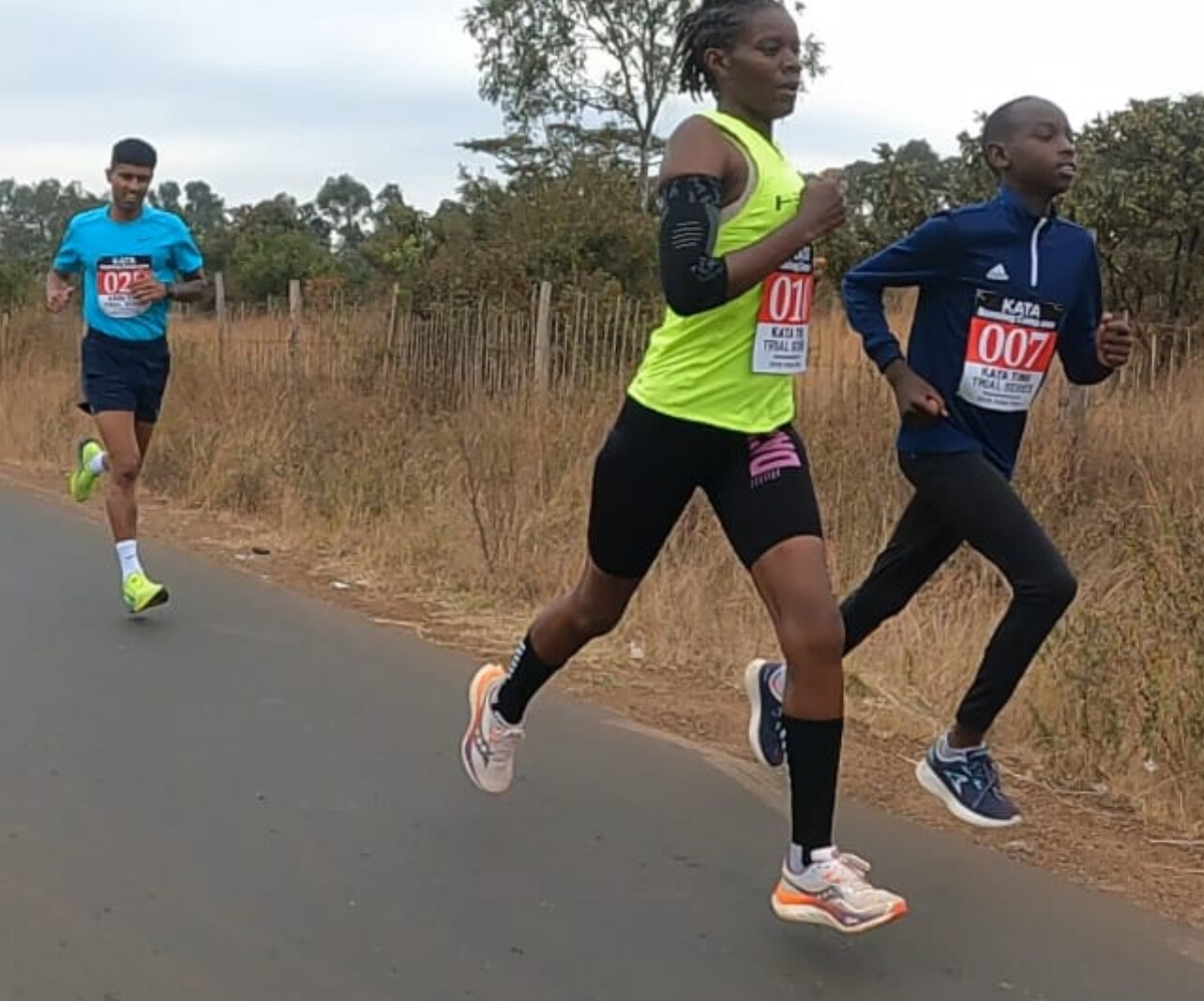
A Shared Passion for Running
Though both hold demanding professional careers in the UK, Amit and Mitul share a love for fitness and recreational running. For them, the sport is about more than paces and splits—it’s about discipline, resilience, and connection.
“Kenya has always been close to our hearts,” Amit said after completing the time trial. “This time, instead of just visiting family, we wanted to experience what makes Kenyan athletes the best in the world. Staying at KATA Thika gave us that chance.”
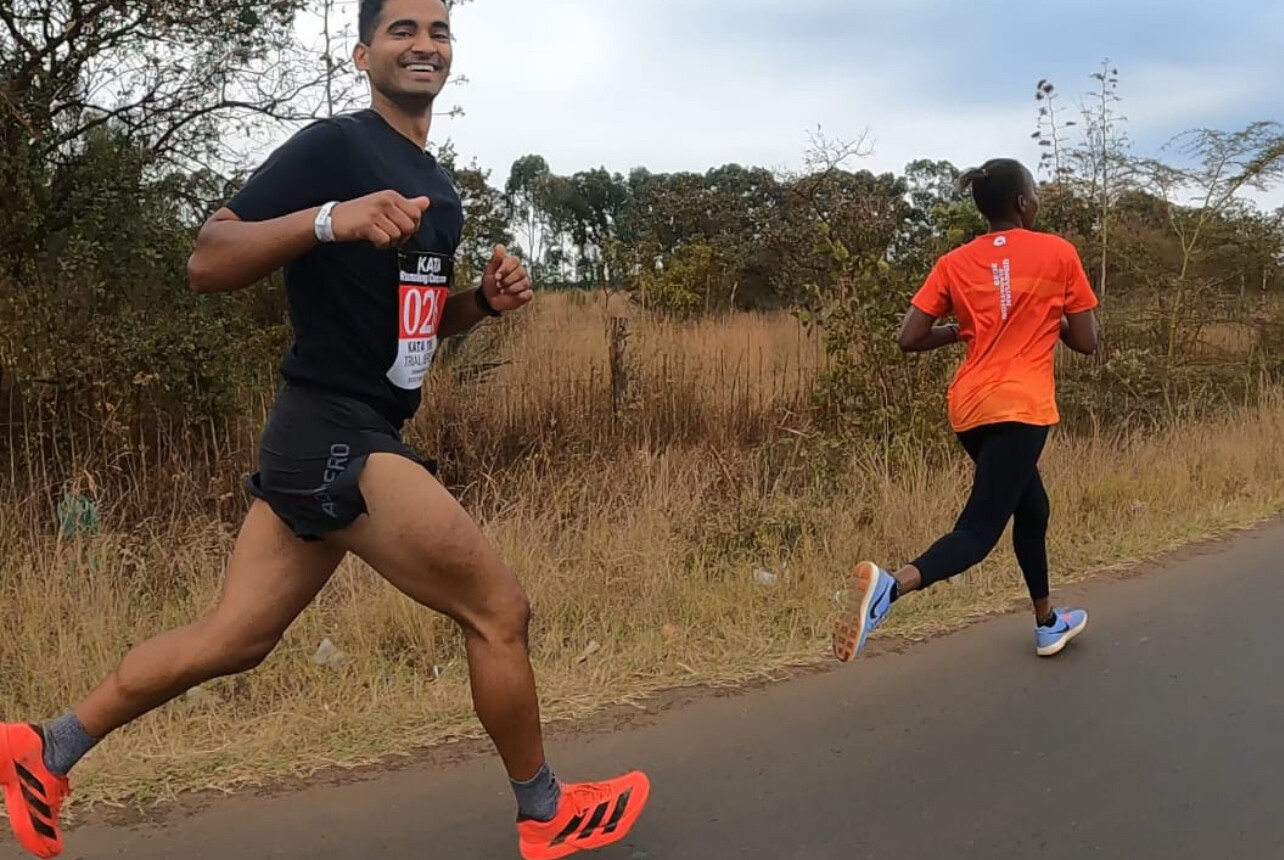
“It was inspiring to see the level of dedication here. Athletes wake up early, train hard, and push each other in ways you don’t often see back in the UK. Being part of that environment, even briefly, was eye-opening.”
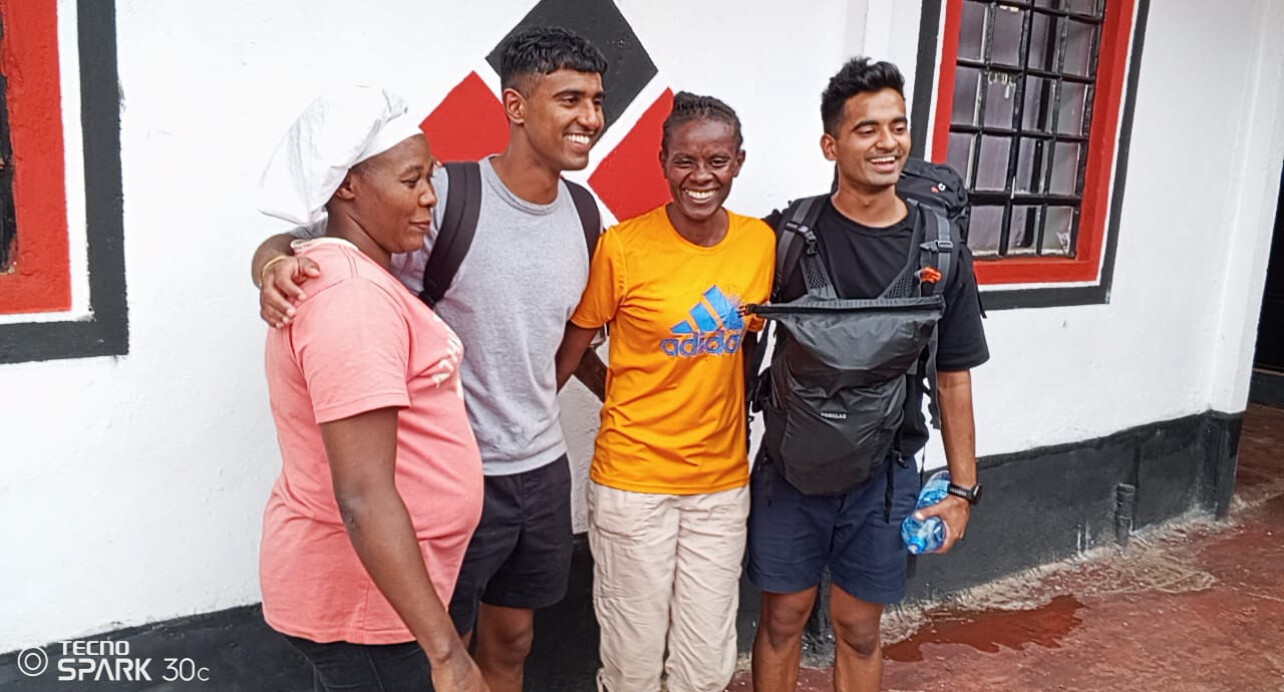
Training the Kenyan Way
For seven days, the brothers lived like KATA athletes. Mornings began with runs along Thika’s rolling hills, afternoons were spent on drills and strength work, and evenings turned into conversations about races, goals, and sacrifices.
“They didn’t come just as guests—they trained with us, ate with us, and encouraged everyone,” said Coach John, who leads training at the Thika Retreat. “That kind of interaction is important. Our athletes see how running connects people across continents.”

The Monthly Time Trials
The highlight of their visit came on Wednesday, August 13, at the retreat’s 5K and 10K time trials. On Thika’s undulating roads, the brothers lined up alongside dozens of local athletes, from young up-and-comers to seasoned competitors.
They weren’t there to chase podiums but to soak in the atmosphere. With nerves giving way to rhythm, Amit and Mitul pushed through the course, greeted at the finish line with cheers and applause.
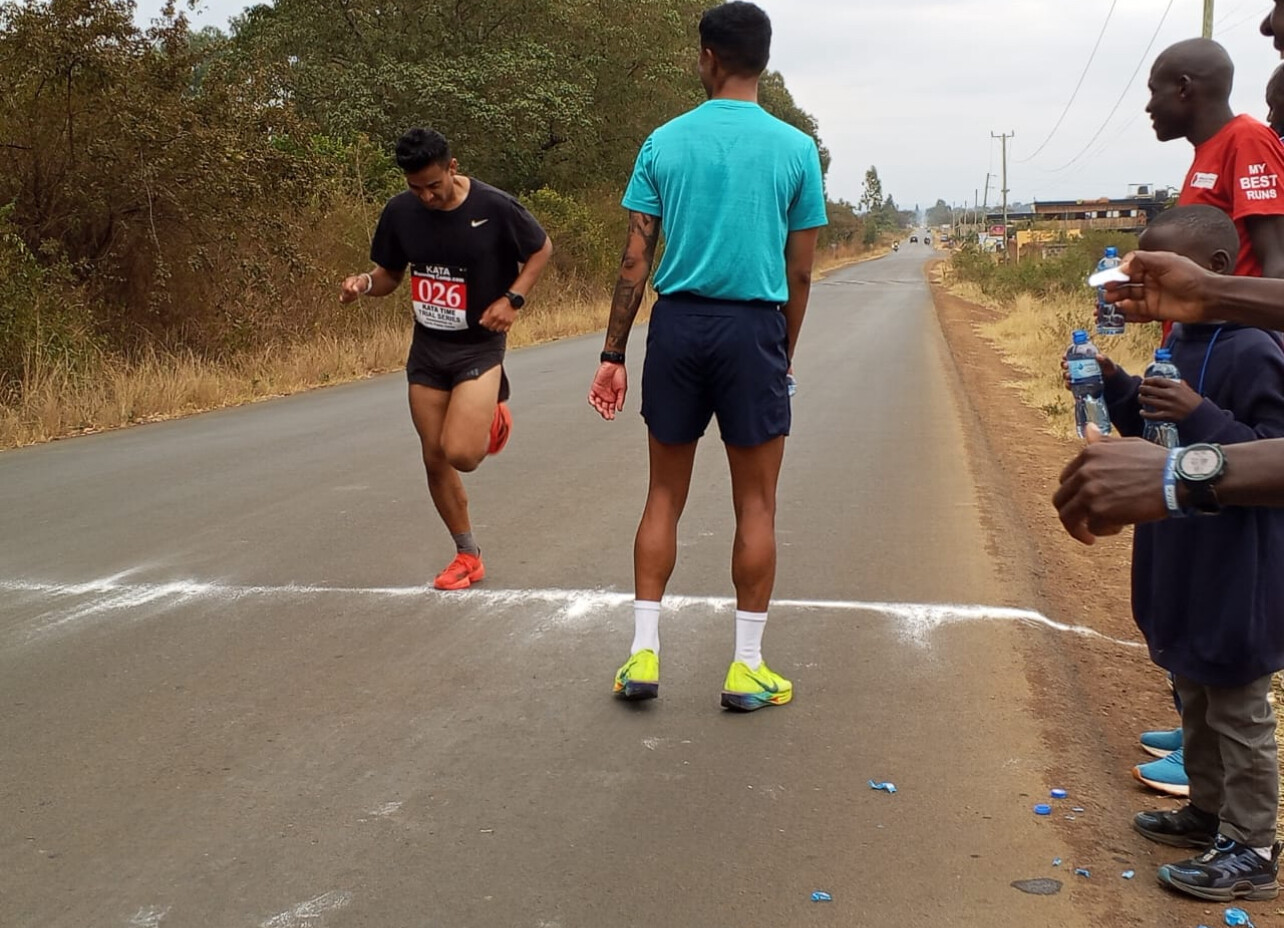
“The time trial was unforgettable,” Amit said. “It wasn’t about beating anyone—it was about being part of something bigger, a tradition that has shaped champions.”
Family, Roots, and Identity
Beyond training, the trip carried a personal weight. Visiting their parents in Kenya has always been a return to family roots. But staying at KATA Thika Retreat gave the journey new meaning.
“We grew up hearing about Kenyan running legends,” Mitul explained. “Being here, training in the same environment, made us proud of our heritage. Kenya isn’t just where our parents live—it’s a place of inspiration.”
Their parents, who visited the retreat one evening, were moved to see how athletics had deepened their sons’ connection to Kenya. It was a bridge across generations and cultures.
A Global Running Village
For Christopher Muiruri, who manages KATA Thika Retreat, stories like Amit and Mitul’s reflect its mission.
“When runners from abroad come here, it’s not just about training—it’s about learning, sharing, and inspiring,” he said. “The Pankhania brothers brought incredible enthusiasm, and they left with memories that will last a lifetime.”
Indeed, their journey underscored how running transcends borders. Whether on the streets of London or the roads of Thika, the sport continues to connect people in powerful ways.
Looking Ahead
As they return to the UK, Amit and Mitul carry more than memories. They take with them the rhythm of early-morning runs, the camaraderie of shared meals, and the spirit of Kenyan running that has inspired athletes worldwide.
“We’ll be back,” Amit promised. “And next time, we’ll bring friends to share this magic.”
Mitul added with a smile, “Running brought us closer to our heritage on this trip. That’s something you can’t put a price on.”
For KATA Thika Retreat, the visit was a reminder that athletics isn’t only about producing champions—it’s about building bridges. And for the Pankhania brothers, it was a journey that blended family, fitness, and the enduring heartbeat of Kenyan running.
by Robert Kibet
Login to leave a comment
5th Annual Kenya’s Double Road Race 15K Set for September 20, 2025, at KATA Thika
The 5th Annual Kenya Double Road Race 15K will be held on September 20, 2025, at the Kenyan Athletics Training Academy (KATA) in Thika, Kenya. The event ins a two stage race. First is the 10k leg then a break, followed by a 5K leg. Legs are added together for scoring. A format designed to challenge runners of all levels. Do then double! The start, finish, and halftime break will be based near the KATA campus. The second leg starts one hour and 45 minutes after the start of the first leg.
Double Racing was created by Bob Anderson, founder of Runner’s World magazine, in 2010. From October 2010 to October 2012, seven small Double races were held in Mexico under the name Bob Anderson 15K Challenge. The format evolved, and in December 2012, the first official Double Road Race was held in Pleasanton, California, with nearly 1,400 participants. The signature race was the Double 15K — 10K followed by 5K, separated by a 1 hour and 45-minute recovery break known as the Restart.
“Double Racing is doable for runners at all levels,” says Bob Anderson. “It’s a new challenge for many, while others have done many already.”
Anderson staged two Double races in Kenya previously — in Thika (2014) and Nyahururu (2015) — both were Double 21Ks (10 miles + break + 5K). These visits inspired the creation of KATA Thika, which officially opened in September 2021, and hosted the first Double 15K in Africa on September 4, 2021. Donikal Komon won that race in 44:42 — the fastest ever run in Africa at that time.
In 2022, Joseph Njoroge shaved two seconds off that mark. But it was in 2024 when history was made.
A New World Record in 2024
At the 4th Annual KATA Double Road Race 15K held on September 14, 2024, Shadrack Kenduiywo, 24, smashed the world record by clocking 42:34, eclipsing the long-standing record of 43:11 held by Julius Koskei since 2015. Kenduiywo ran 28:33 for the 10K leg and 14:01 for the 5K.
“This was my first Double race, and I was happy. I knew the record was in sight,” he said. “During the break, I relaxed, drank water, ate fruit, and did a 20-minute warmup.”
Despite warm conditions (21°C), his performance was unstoppable. He led from the second kilometer, clocking 2:52, 2:50, 2:57… all the way to a 2:50 final kilometer. His 5K splits were 2:47, 2:48, 2:51, 2:47, and 2:44.
Kenduiywo’s personal bests at the time included:
• Half marathon: 61:24 (Padova, Italy)
• 25K: 1:15 (Berlin)
• 8K: 23:43
• 5K: 13:55 (Udeni)
He promises he’ll run even faster next time.
2024 Podium Highlights
Top Men
1. Shadrack Kenduiywo – 42:34 (28:33 + 14:01)
2. Martin Mumo – 43:18
3. Zachariah Kirika – 43:37
4. Collins Kiplagat – 44:39
5. John Njuguna – 45:11
Top Women
1. Alice Koigi – 50:00
2. Monica Wanjiku – 51:30
3. Susan Njuu – 53:07
Men Masters
1. Charles Ndirangu, 64 – 56:21
2. David Mwangi, 70 – 64:49
3. Joseph Kiraio, 72 – 73:40
Women Masters
1. Julia Njari, 47 – 60:43
2. Sheila Mbaku, 54 – 62:30
The event also included Bob Anderson’s Kids Mile (won by 12-year-old Benjamin Ndaro in 4:54), and a 5K youth race won by Denis Chege, 16, in 17:48.
With over 120 Double 15K races held globally and a new world record established at KATA Thika, the 5th edition promises to be the most exciting yet.
Click here to see top time lists and age group records:
https://www.doubleroadrace.com/records
Join us September 20, 2025, in Thika, Kenya, and experience Double Racing at its best.
by Boris Baron
Login to leave a comment
KATA Double Road Race 15K
5th Annual KATA Double Road Race 15K Set for September 20, 2025, at KATA Thika The 5th Annual KATA Double Road Race 15K will be held on September 20, 2025, at the Kenyan Athletics Training Academy (KATA) in Thika, Kenya. The event includes a 10K leg, a break, followed by a 5K leg — a format designed to challenge runners...
more...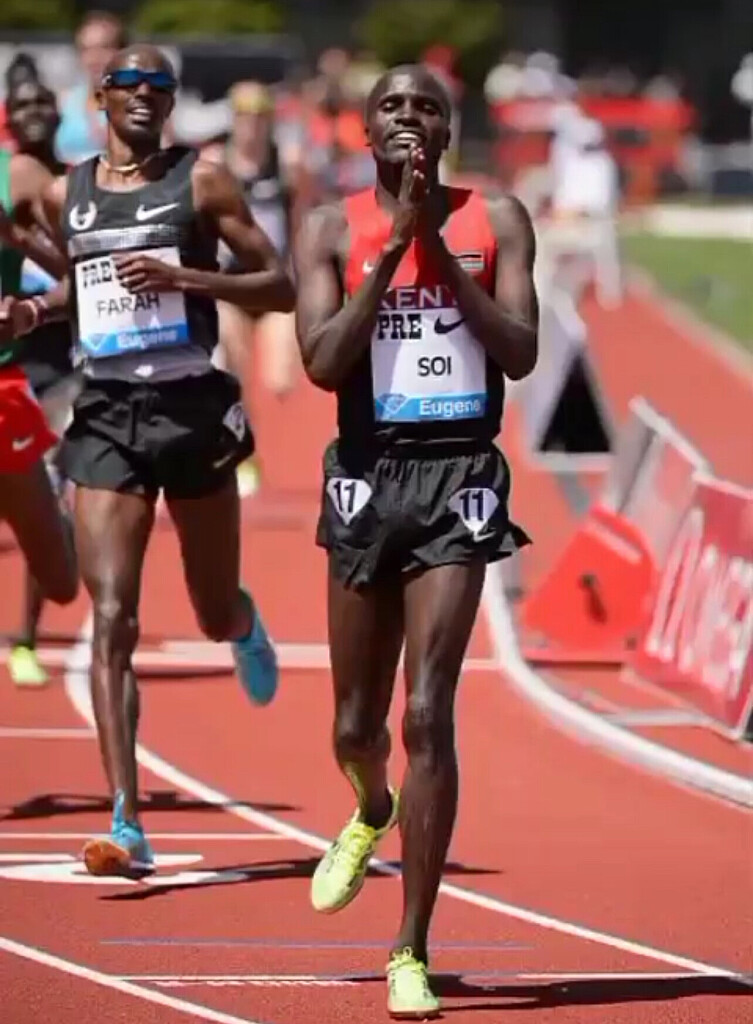
Support Athletes. Uplift Communities. Help Shape the Future of Kenyan Running
.For decades, Bob Anderson—founder of Runner’s World and a lifelong champion of distance running—has believed in the transformative power of athletics. In 2019, inspired by visits to Kenya dating back to 1987, he launched the Kenyan Athletics Training Academy (KATA) in Thika to give promising athletes the opportunity to rise. In 2024, Anderson expanded the vision internationally, opening a second training retreat in Portugal.
Until now, every KATA camp and retreat has been fully funded by Bob himself. But as momentum builds, he’s extending an invitation: become a KATA Partner and help expand this game-changing model—while earning a meaningful return on your investment.
“We’ve proven the model works,” says Anderson. “Now we want visionary partners to help take KATA to the next level. This isn’t charity—it’s an investment in performance, purpose, and people.”
What Is the KATA Partner Program?
The KATA Partner Program offers a ground-floor opportunity to support elite athlete development and rural progress through a unique model that combines world-class coaching with sustainable agriculture.

Each KATA Running Camp is paired with a three-acre KATA Potato Farm. Athletes live, train, and work part-time on the farm—25 hours per week—in exchange for full room and board plus expert coaching. In return, they contribute 15% of any prize money they earn back to their camp. The rest is theirs to keep.

As a KATA Partner, you help fund and launch a new camp. In return, you:

• Earn a share of revenue from potato farm sales and athlete prize winnings
• Gain naming rights to the camp (e.g., [Your Name or Organization Name] KATA Running Camp)
• Empower athletes and uplift local communities through long-term partnership
Two Pathways to Partnership
International Partner Program
• One-time KATA membership fee: $5,000 USD in 2025
• Fee increases to $6,500 USD starting January 1, 2026
• Annual dues: $1,000 USD (starting year two)
• Share of revenue:
• 15% of potato farm revenue
• 15% of athlete prize money
Kenyan National Partner Program
• One-time KATA membership fee: KES 900,000
• Annual dues: KES 50,000 (starting year two)
• Each additional acre: KES 100,000 (plus KES 25,000 in annual dues)
• Share of revenue:
• 10% of potato farm revenue
• 10% of athlete prize money
This is not a donation—it’s a purpose-driven investment with a guaranteed revenue share. You’re helping athletes succeed and communities thrive, while building your own legacy.
KATA Handles Everything
Whether you want to be hands-on or prefer a passive role, KATA takes care of:
• Finding and securing land and housing
• Recruiting qualified operators (often Olympic medalists and elite coaches)
• Setting up the farm and camp
• Managing all agricultural operations and logistics
Current camps are operated by respected figures like Olympic medalists Paul Kipsiele Koech and Edwin Soi, coaching veterans such as Charles Ngeno, and long-time team members like Elam Wangerwo, who has worked with KATA since 2014.
Why It Matters
This program isn’t just about running—it’s about changing lives. KATA gives talented young runners the platform to pursue greatness while bringing food security and economic opportunity to rural Kenya.
“If you’ve ever wanted to be part of something that matters—something that delivers both impact and return—this is your moment,” says Anderson.
Join the KATA Movement
To learn more or become a KATA Partner, contact:
Bob Anderson via WhatsApp: +1 (650) 400-6643
The next great Kenyan runner is already out there. Let’s make sure they have a place to grow—on the track and in their community.
by Bob Anderson
Login to leave a comment
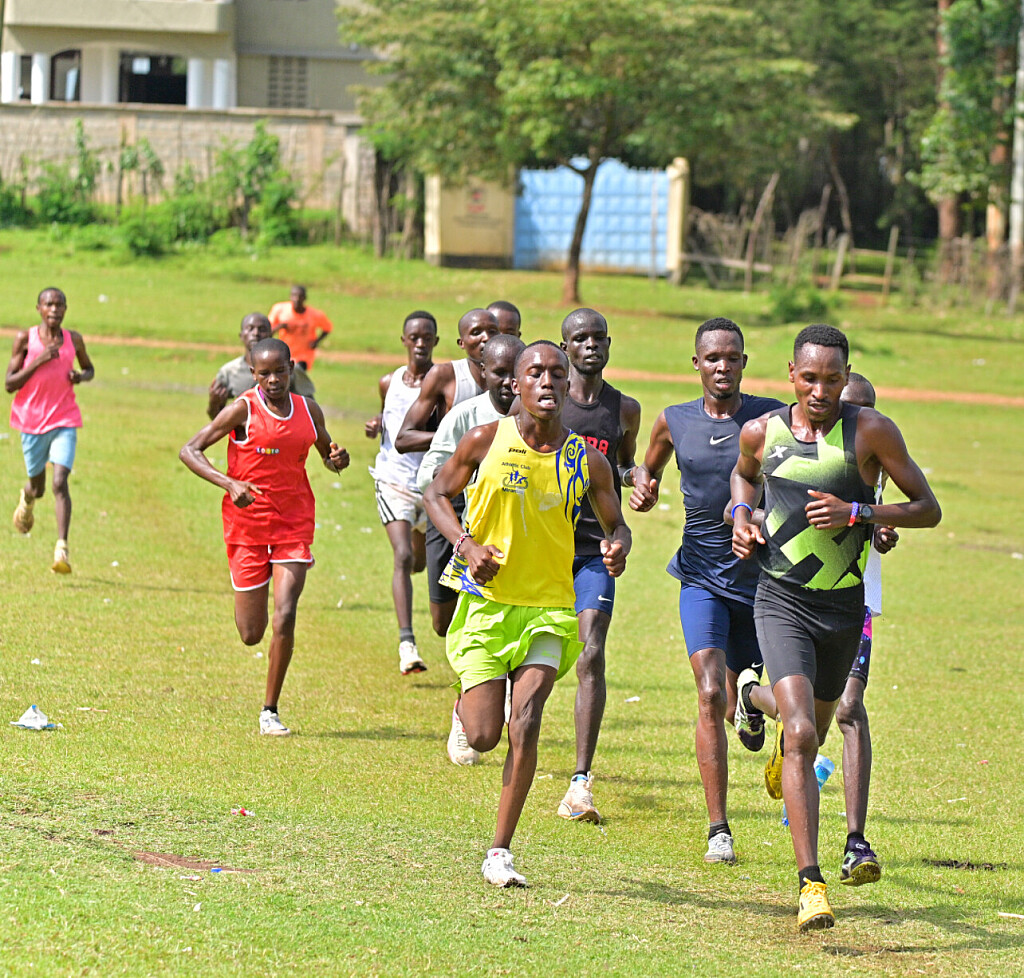
KATA Running Camps Expand to 10 Locations in Kenya with Ruth Chumo Leading New Site in Eldoret
The Kenyan Athletics Training Academy (KATA) has reached a major milestone with the launch of its 10th KATA Running Camp, as the movement continues to grow rapidly across Kenya. This bold initiative, which blends elite athletic training with sustainable agriculture, is transforming the future of distance running.
The two newest camps are now confirmed:
• KATA Camp 9 in Kamoi, led by coach David Kirui
• KATA Camp 10 in Eldoret, operated by Coach Ruth Chumo
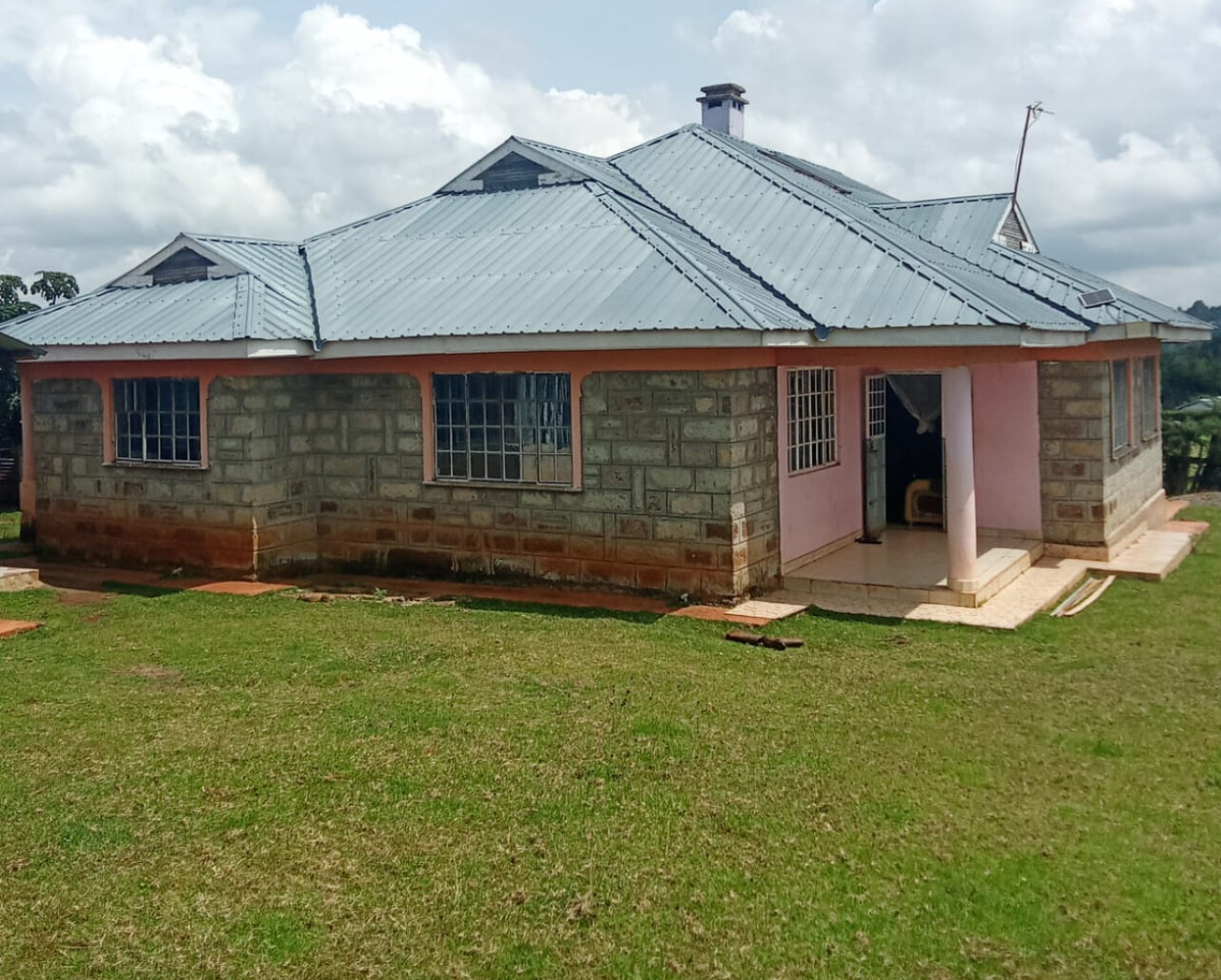
Coach Ruth Chumo brings exceptional experience to the program. Based in Eldoret—the heart of Kenyan distance running—she has built her reputation training both abled and para-athletes at the highest level. Her deep commitment to athlete development and her proven leadership make her a vital addition to the KATA family.
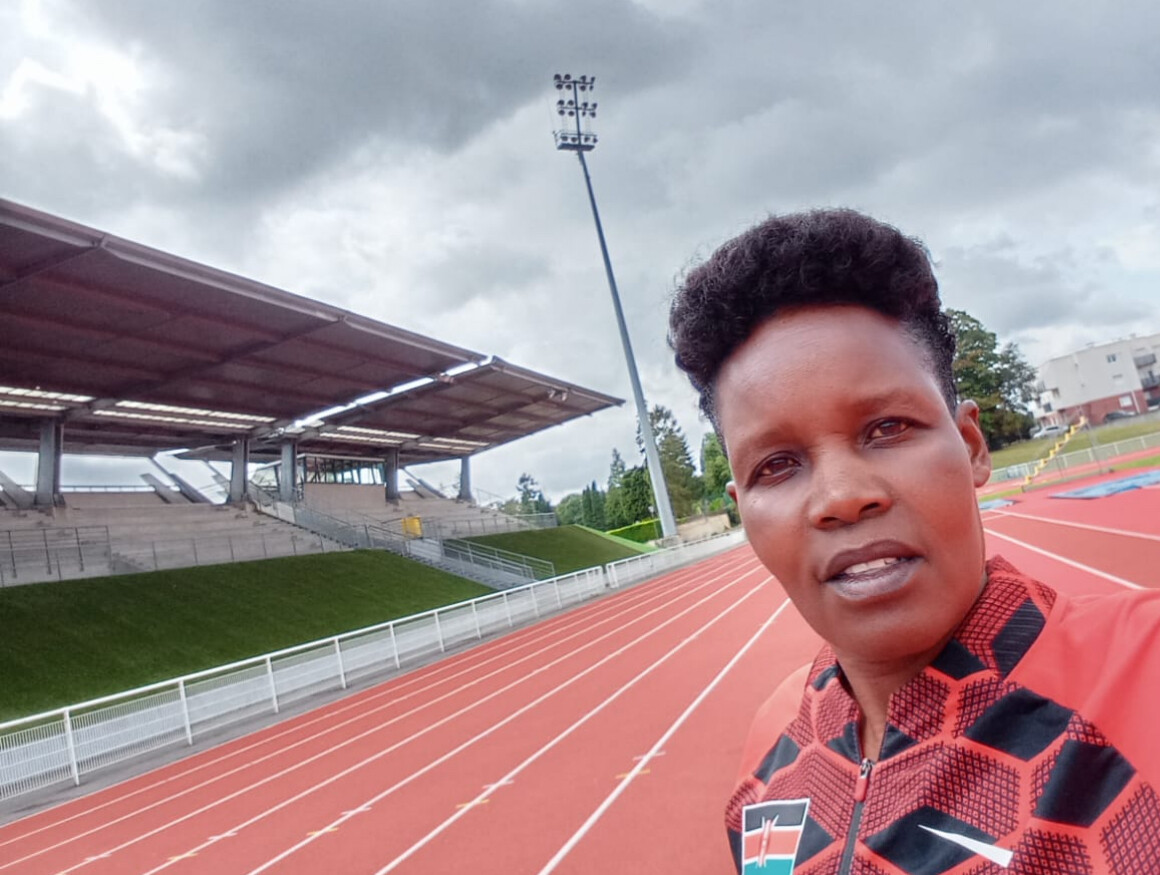
“I am so excited about the group of operators we have put together,” says KATA Director Bob Anderson, founder of Runner’s World magazine. “Each of our operators is fully committed to the program and understands the importance of our KATA Potato Farm component. This provides year-round revenue that allows us to sustain and grow. Every camp already includes top-level athletes, and we’re going to achieve big things.”

Two of the current camps have already planted their first acre of KATA potatoes, marking an important step forward in the program’s sustainability model. These three-acre farms, tied to each running camp, are a core part of the KATA mission—providing food, responsibility, and revenue that keep the entire system running year-round.
The program is also delivering results on the track. Just last weekend, Olympic bronze medalist Edwin Soi, operator of the Kericho KATA Camp, ran an astonishing 27:30 for 10,000 meters, dominating his race and sending a strong message about the level of athletes being developed within the KATA system.
KATA’s leadership includes two Olympians:

• Edwin Soi, 5000m bronze medalist from the Beijing Olympics
• Paul Kipsiele Koech, one of the most accomplished steeplechasers in history, now operating the KATA Camp in Sotik
Their presence brings unmatched experience, mentorship, and international credibility.
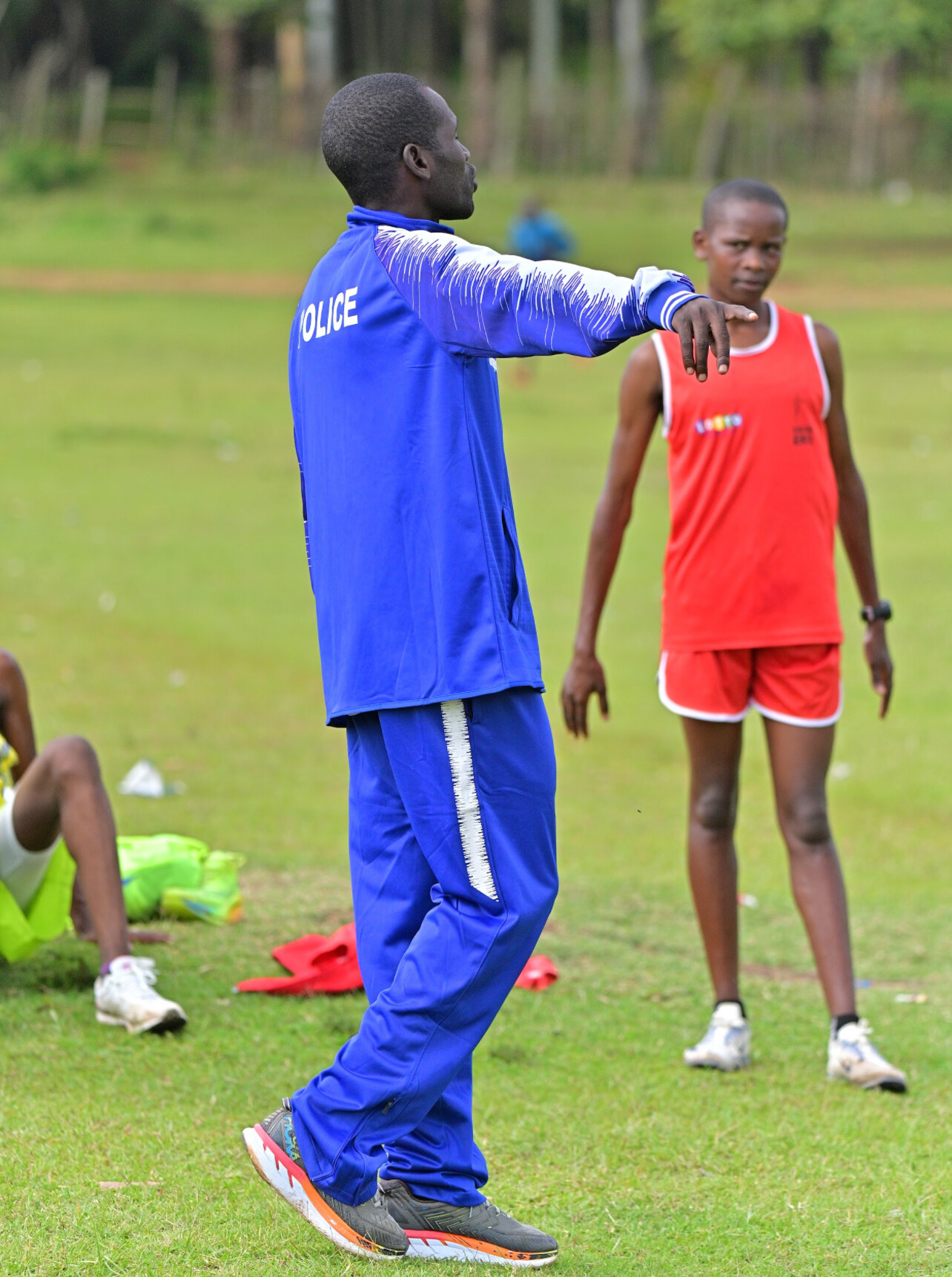
At the heart of KATA is a powerful, dual-purpose model: athletes receive world-class training while also helping manage a working farm. The result is a program that builds champions and sustains itself through community-driven agriculture.
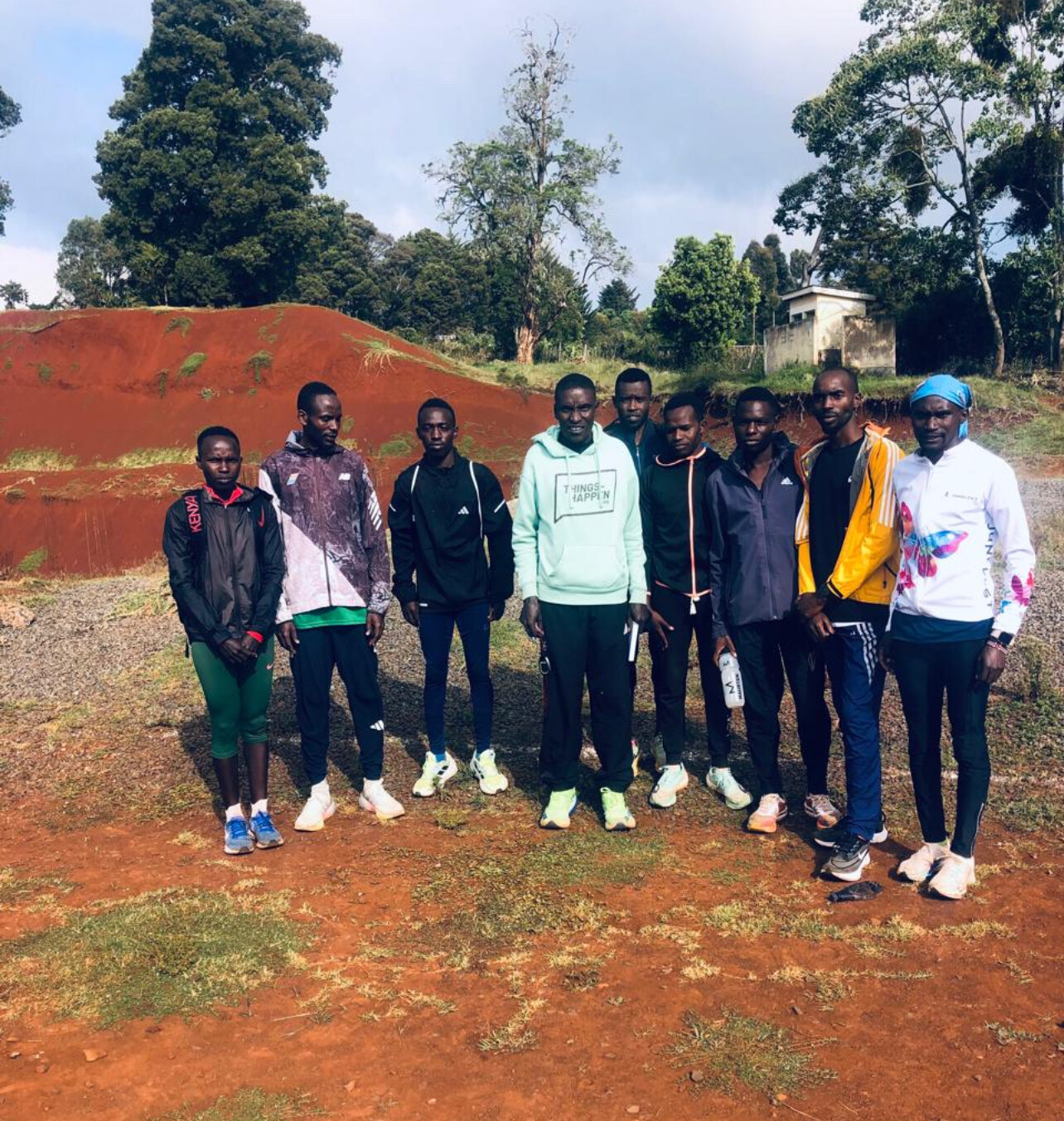
Round Two Begins October 1
The momentum is building. On October 1, KATA will launch Round Two of its program, aiming to establish 10 additional camps by November 1—doubling the total to 20.
“This is only the beginning of our aggressive, unique program,” says Anderson.

The long-term vision: 50 fully operational KATA Running Camps within three years, directly supporting nearly 1,000 elite Kenyan runners.
The KATA Partner Program
To help reach that goal, KATA is inviting select partners to be part of the movement and make a lasting impact.
Each partner:
• Can have their name on a camp. You too can now have your own training camp in Kenya under the umbrella of KATA.
• May choose to be actively involved (like coaching and selecting your own athletes) or take a passive role. (KATA will set everything up.)
• Will share in the gross revenue from the sale of KATA potatoes
• Will also participate in a percentage of prize money earned by athletes at their partnered camp
This is a rare opportunity to support a program built on performance, purpose, and sustainability—while being directly connected to the success of the next generation of Kenyan champions.
Want to get involved?
WhatsApp Bob Anderson at +1-650-400-6643 to learn how you can support or partner with KATA today.
Photos: Paul Kipsiele Koech KATA team in Sofia 2. Ruth Chumo 3. Ruth's KATA Camp outside of Eldoret 4. KATA athletes planting potatoes in Molo under the direction of camp operator Eric 5. KATA ten camps 6. KATA athletes in Iten 7. Preparing potatoes in Kapcherop 8. Paul Kipsiele Koech coaching his KATA athletes in Sotik.
by Boris Baron
Login to leave a comment
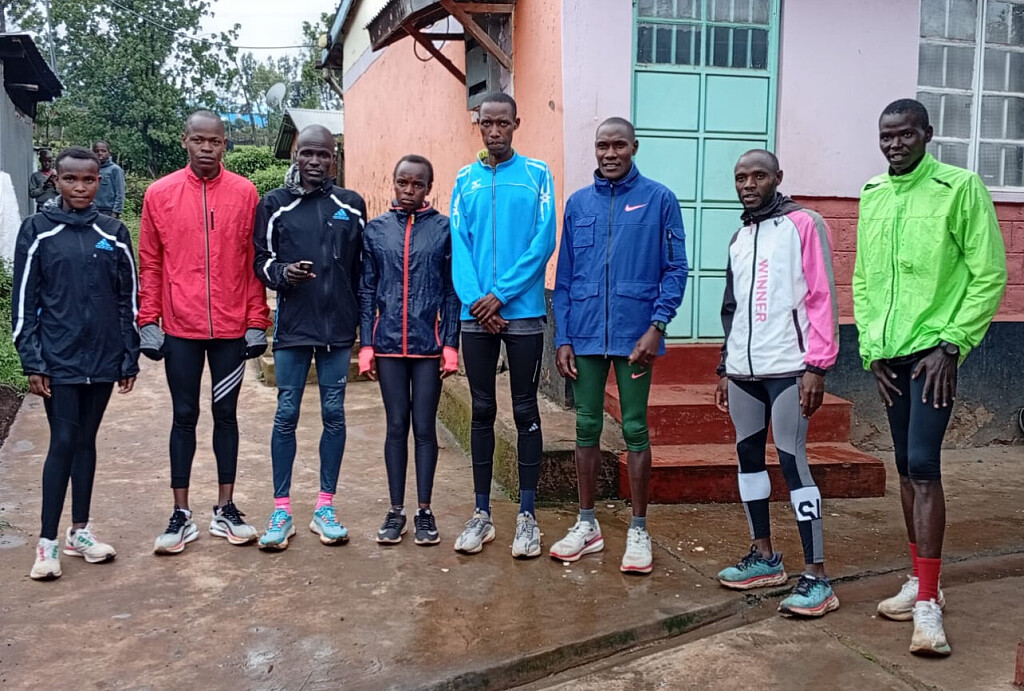
KATA Running Camps Launch a Bold New Era for Distance Running in Kenya
In a bold move to reshape the future of distance running, Bob Anderson, the legendary founder of Runner’s World and lifelong runner, has launched a groundbreaking initiative that’s taking root across Kenya. What began in 2019 with the Kenyan Athletics Training Academy (KATA) in Thika, and expanded to Portugal earlier this year, is now flourishing into a national movement—with eight KATA Running Camps already confirmed, and ten expected by July 1, plus two full-service KATA Retreats in Thika and Monforte da Beira, Portugal.
photos: 1. Edwin's KATA team reporting to his camp today in Kericho. 2. Eric's KATA in Molo will be planting their first acre of KATA potatoes tomorrow.

"As far as I know, there’s nothing like what we are doing,” says Bob Anderson. “My team and I believe we’re going to make a big difference in the running world. We’ll have nearly 200 KATA athletes by July. We have so much talent, and with strong leadership and support, we can help them become world-class stars
A Sustainable Model with a Powerful Vision
What sets KATA apart is its innovative self-sustaining model that combines elite athletic training with agriculture and community building.
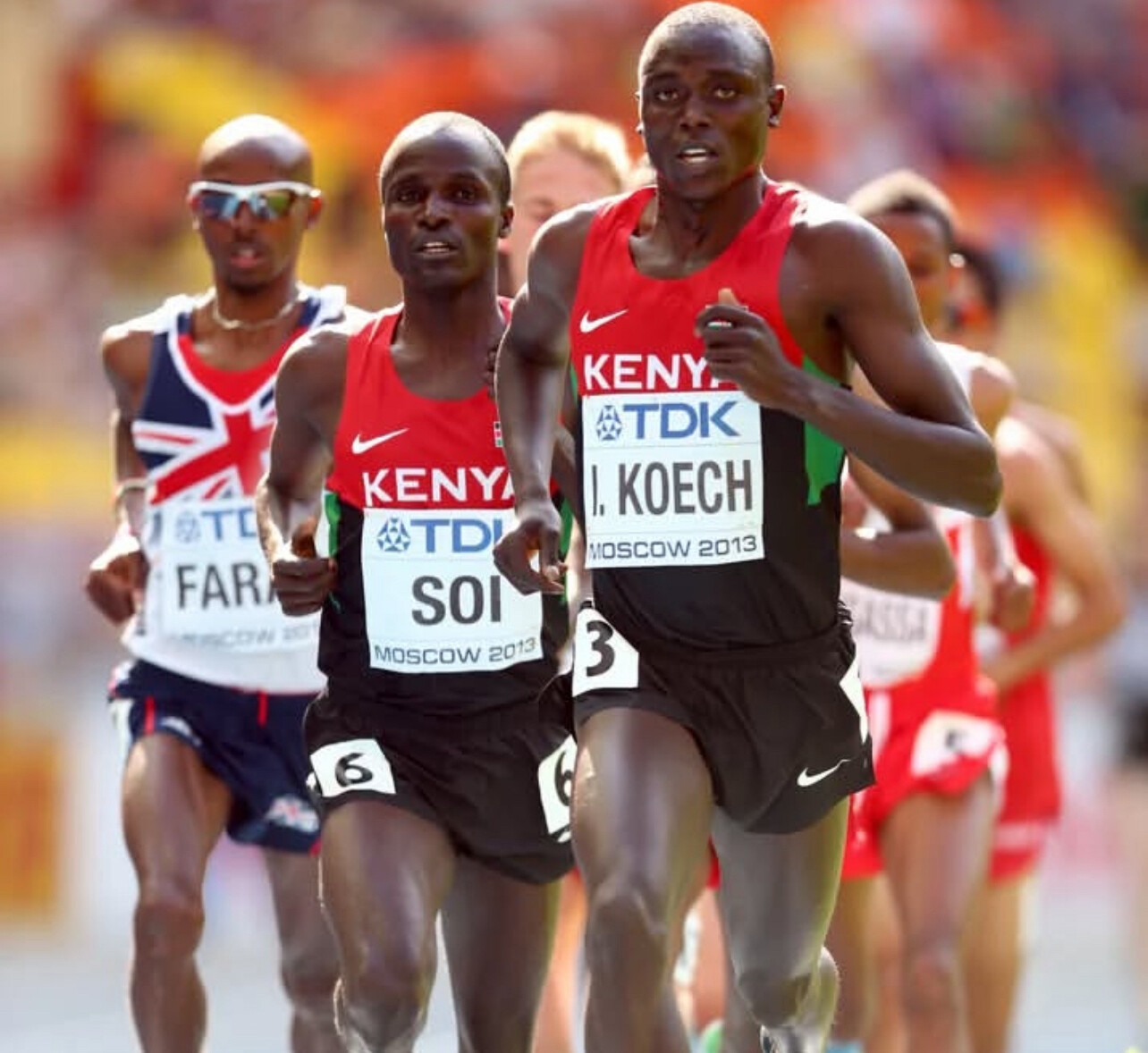
Each KATA Running Camp:
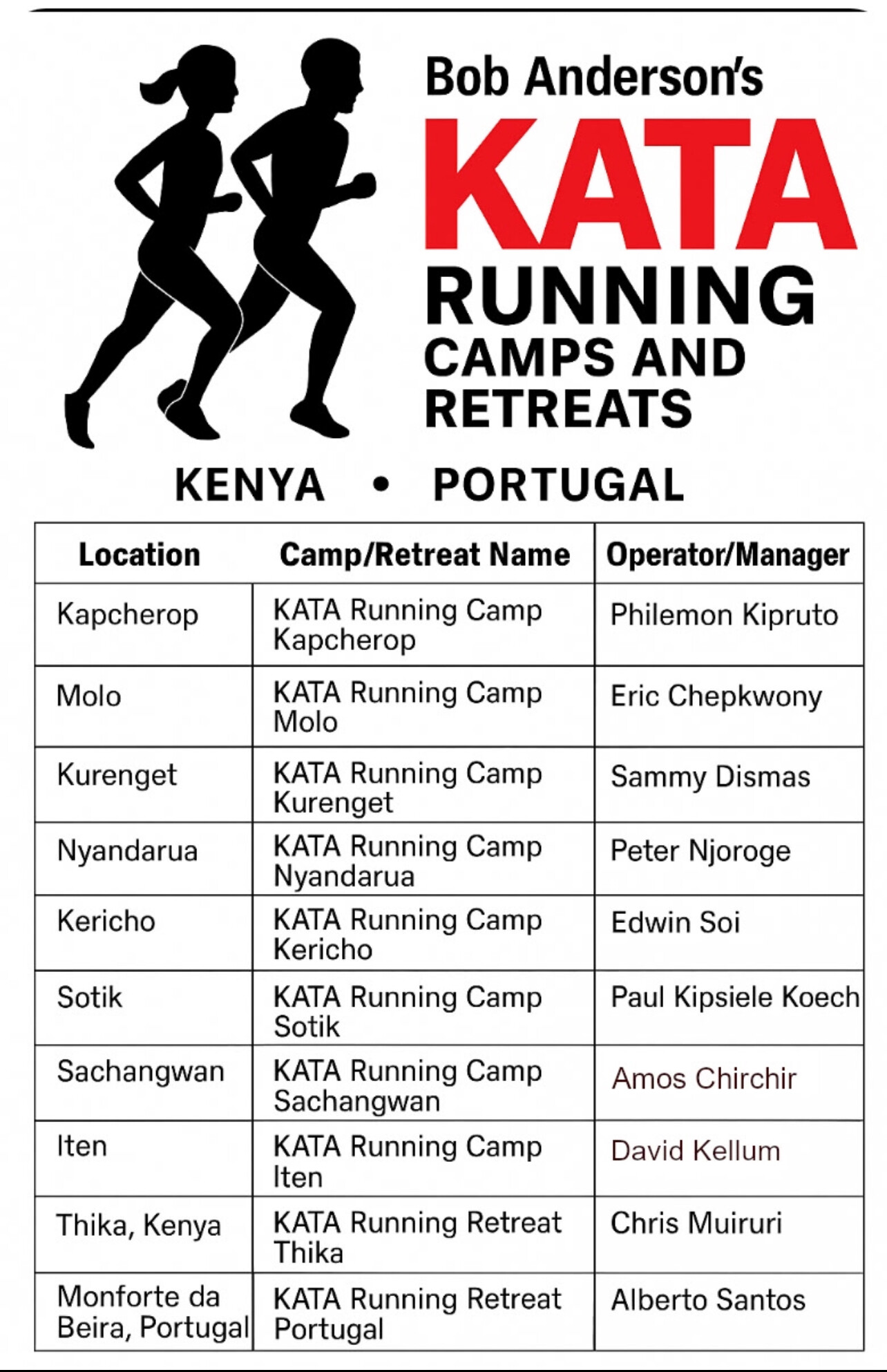
• Supports 3 acres of KATA potato farms
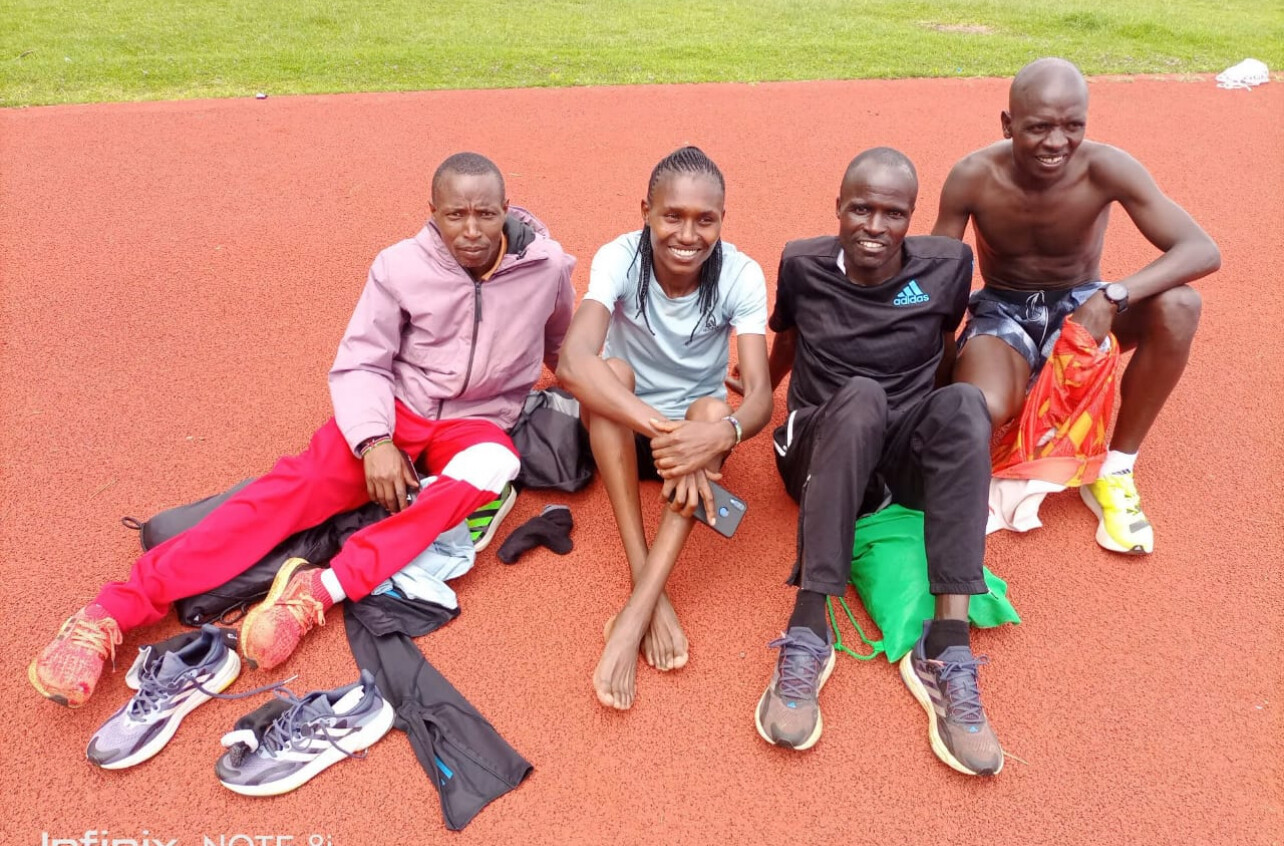
• Requires athletes to work 25 hours per week on the farm
• Asks athletes to contribute 15% of any prize money earned to support their camp
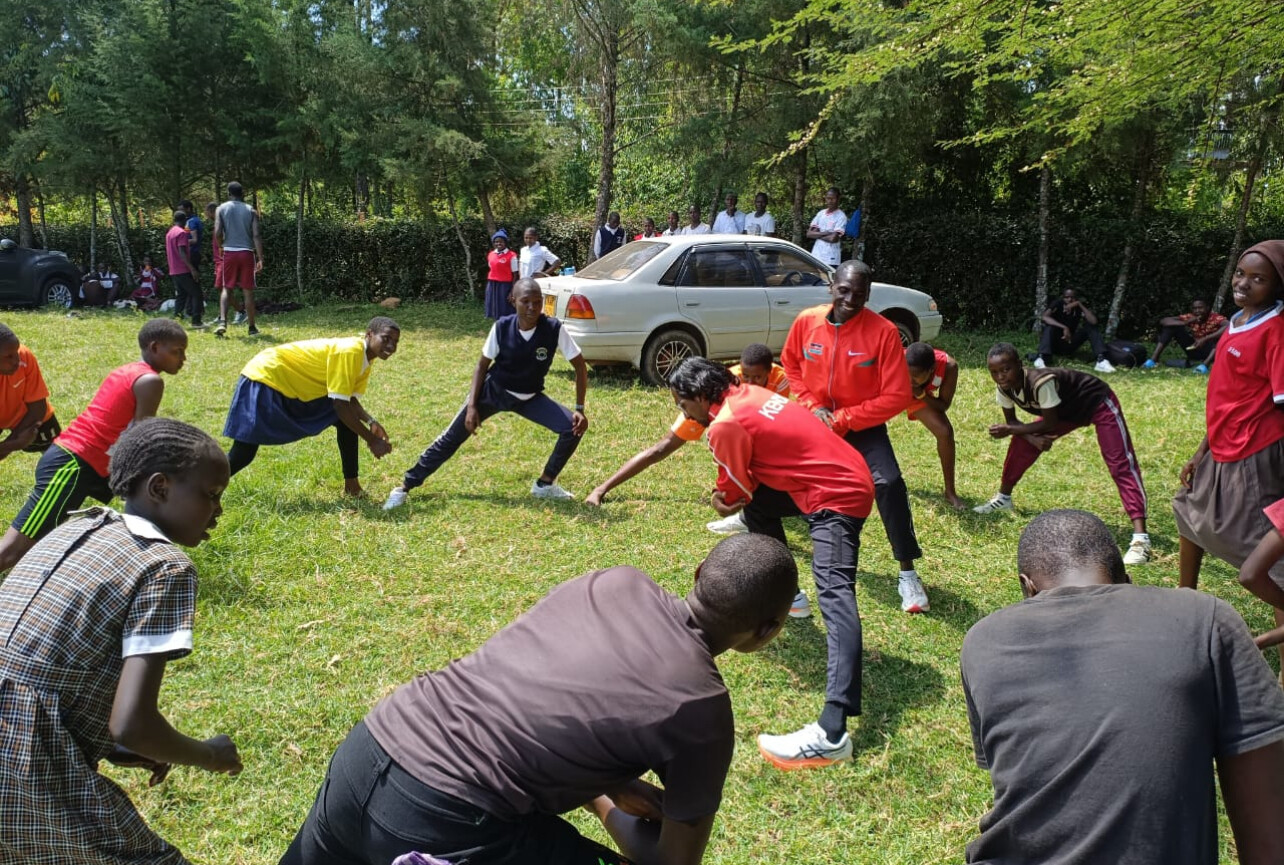
In return, every KATA athlete receives:
• Free lodging
• Three nutritious meals daily
• World-class coaching
“Within six months, all camps will be fully self-sustaining,” Anderson says. “This is not just a running camp—it’s a lifestyle, a community, and a path to opportunity.
Powered by Champions
Two of KATA’s confirmed camp operators are Olympic medalists who bring unmatched experience to the program:
• Edwin Soi, bronze medalist in the 5000m at the 2008 Olympics, now leads KATA Kericho. He’s still racing—and proving his form. On June 15, he clocked a blazing 27:30 for 10,000 meters on the track.
• Paul Kipsiele Koech, bronze medalist at the 2004 Olympics in the 3000m steeplechase, heads KATA Sotik, bringing leadership, discipline, and deep tactical knowledge.
A Vision for 50 Camps, 1,000 Athletes
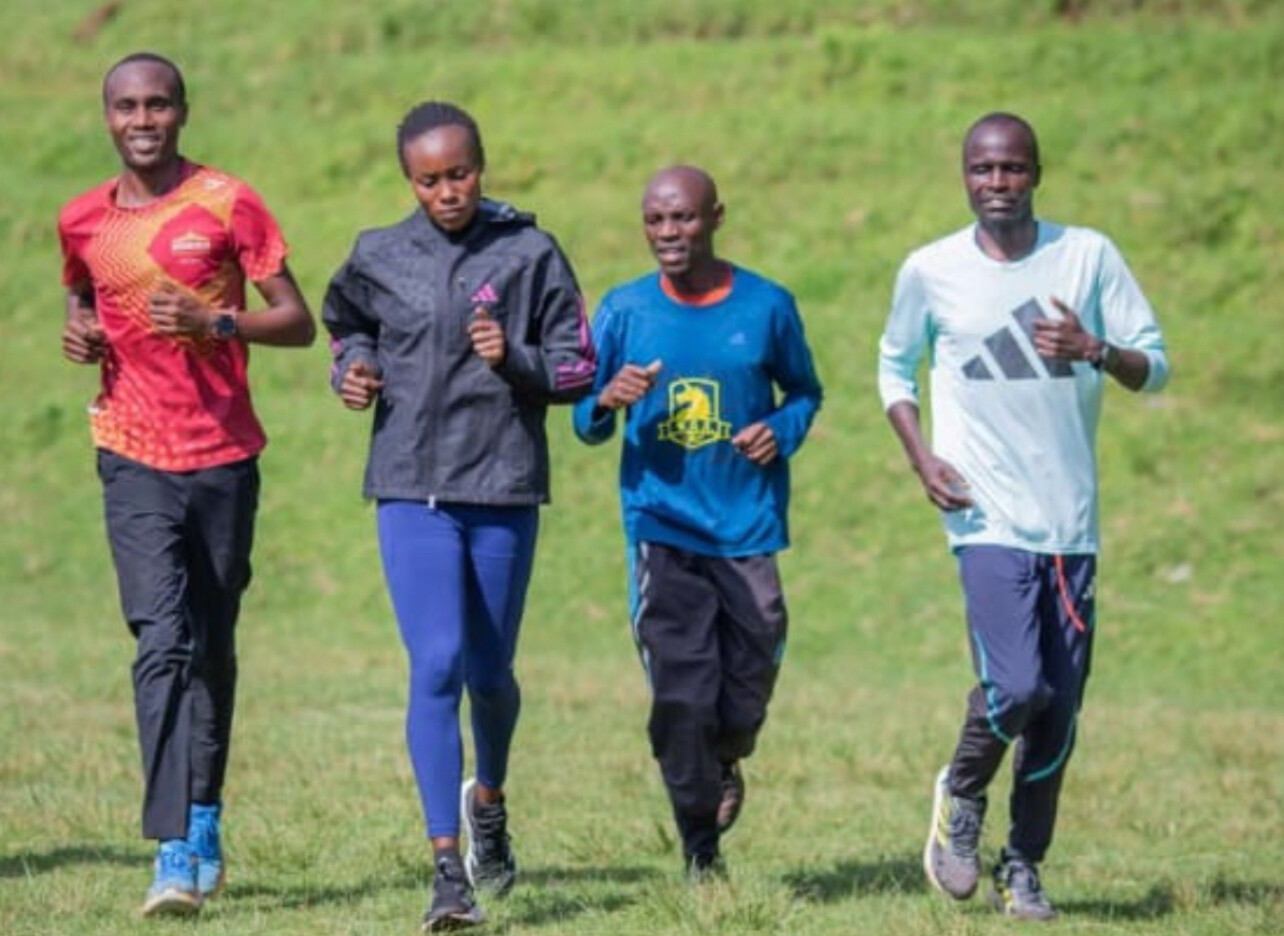
Anderson’s vision is as ambitious as it is inspiring:
“We hope to build a network of 50 KATA Running Camps to train nearly 1,000 athletes. At the same time, we’re working closely with local communities to promote healthier lifestyles through running, nutrition, and education.”
Each camp is embedded within its local area—supporting food security through farming, developing young talent, and strengthening communal ties.
More Than a Camp. A Movement.
KATA is not just about producing the next world record holder. It’s about giving hundreds of athletes the opportunity to reach their full potential—on the track, in life, and within their communities.
By combining sport with sustainability, and elite training with grassroots outreach, Bob Anderson’s KATA is poised to become one of the most impactful distance running projects in the world.
by Boris Baron
Login to leave a comment
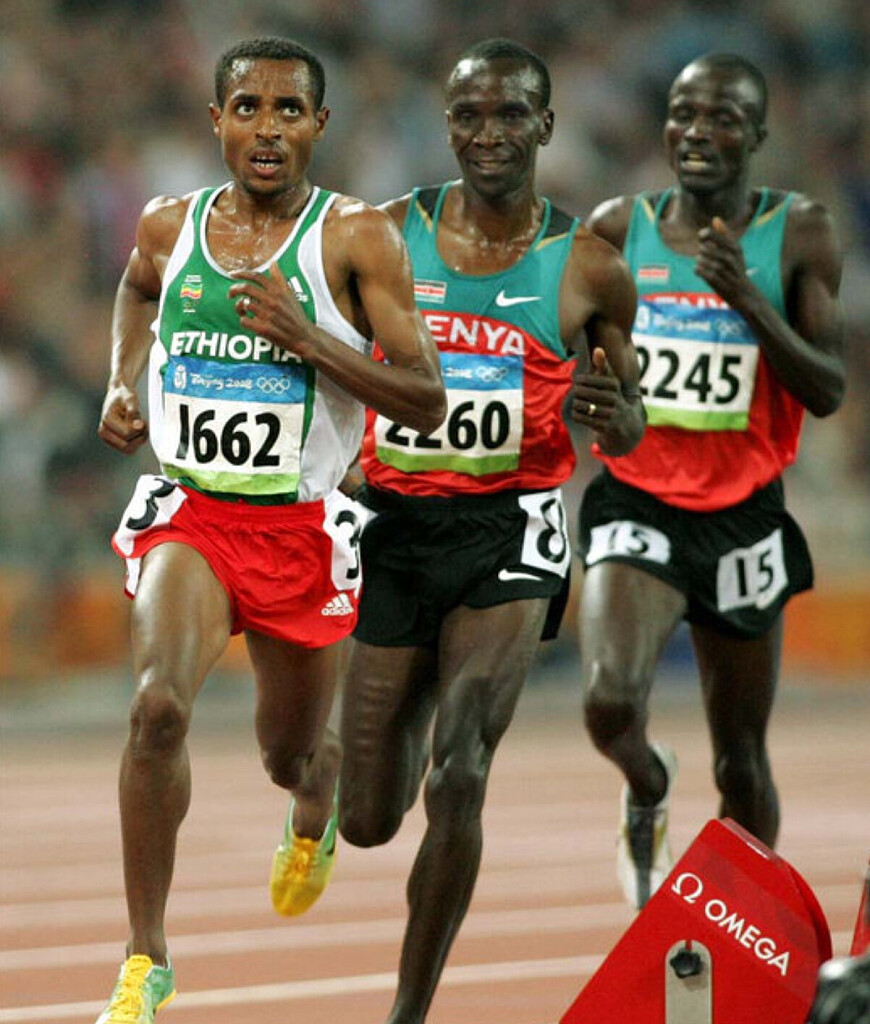
Olympic 5000m medalist Edwin Soi joins new KATA Running Camp in Kericho — a unique Kenyan training program blending elite coaching and community impact.
From Olympic bronze to farming for the future, Edwin Soi’s journey reflects both speed and sustainability.
In the world of distance running, Edwin Soi is a name etched in excellence. At the 2008 Beijing Olympics, Soi captured the bronze medal in the 5000 meters, finishing with a time of 13:06.22behind Kenenisa Bekele and Eliud Kipchoge—an iconic race that cemented his place among the greats of Kenyan running.
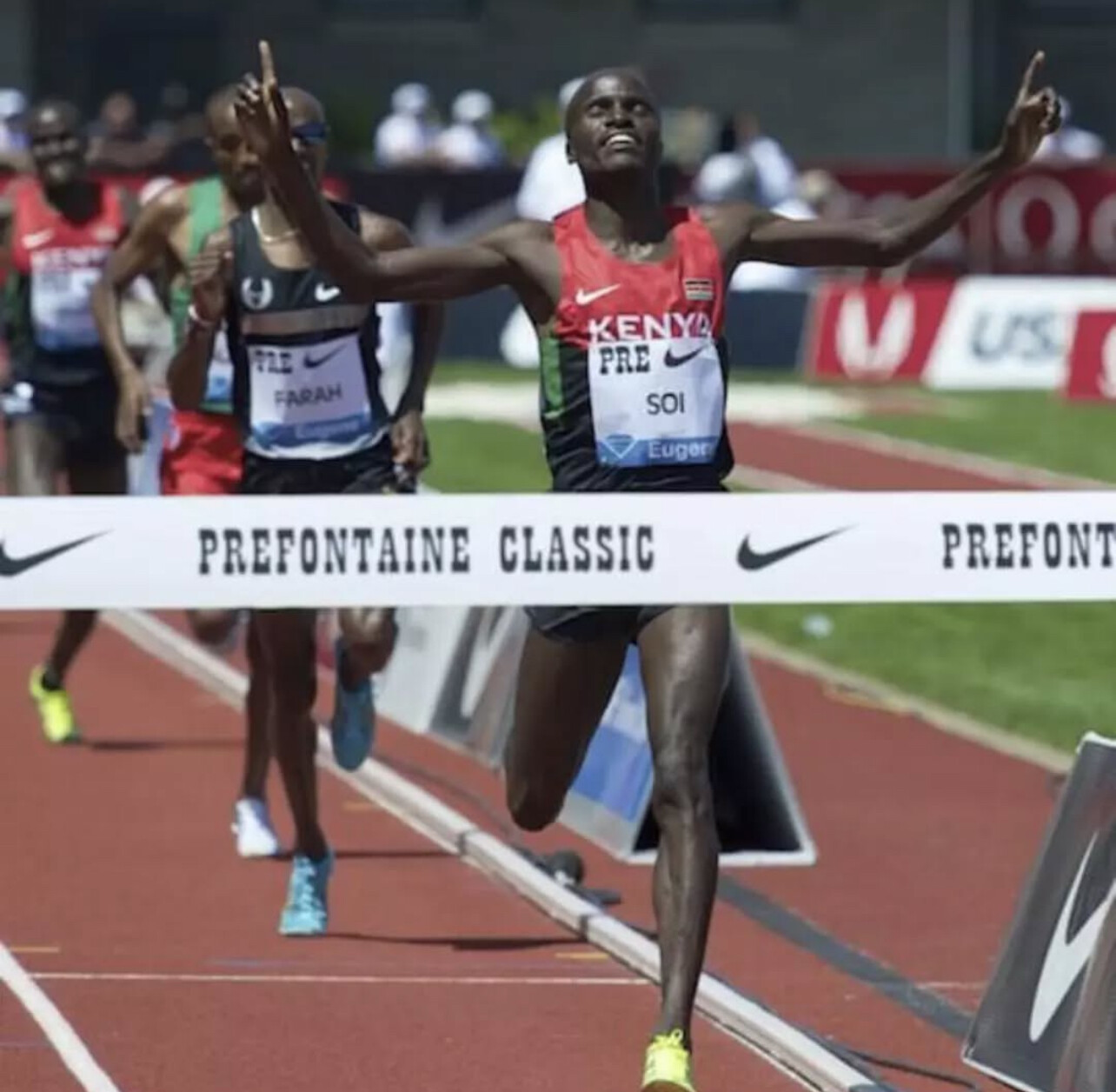
Now, over 15 years later, Soi continues to perform at an elite level. In early 2025, he placed on the podium at a major half marathon in Poland, proving that his speed and endurance have stood the test of time. But the accomplished Olympian is now expanding his impact beyond the track.
This year, Soi has teamed up with Bob Anderson, the founder of Runner’s World and the visionary behind the Kenyan Athletics Training Academy (KATA). Together, they are launching a unique initiative in Kericho, Kenya that combines world-class training with sustainable farming.
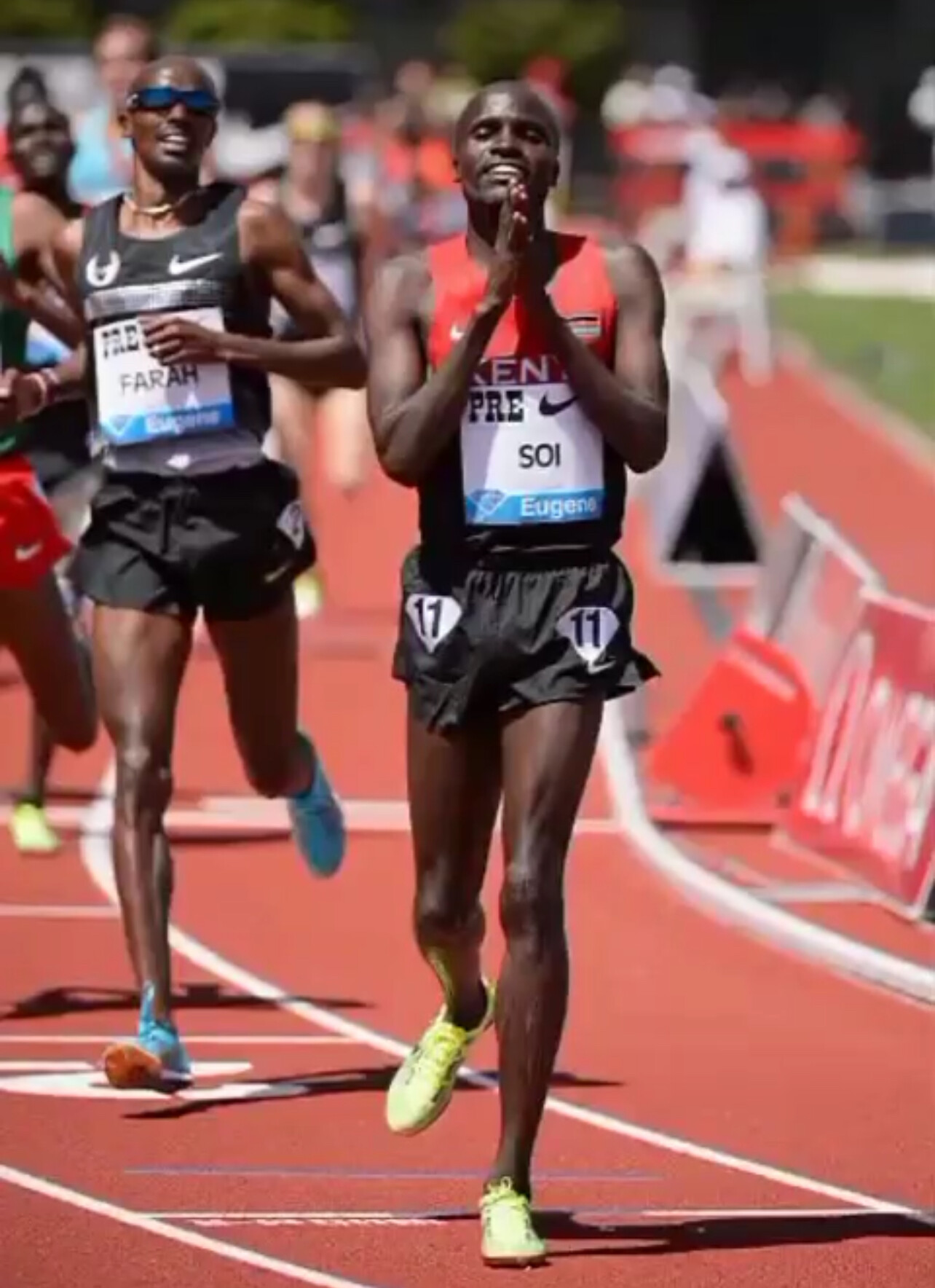
“I am very excited to be working with Bob Anderson on this new, unique program,” says Soi. “Bob has created something very special for athletes, and combining it with his ideas about farming KATA Potatoes gives us the opportunity to be sustainable. It’s perfect.”
A Vision Rooted in History
Bob Anderson’s connection to Kenyan running spans nearly four decades.
“I first traveled to Kenya in 1987 and saw and met many runners. I knew then that a program like what we have now set up was needed,” Anderson explains. “I returned with my wife Catherine in 2014 and met Elam and Joel. That’s when the idea for the Kenyan Athletics Training Academy (KATA) in Thika really started to take shape.”
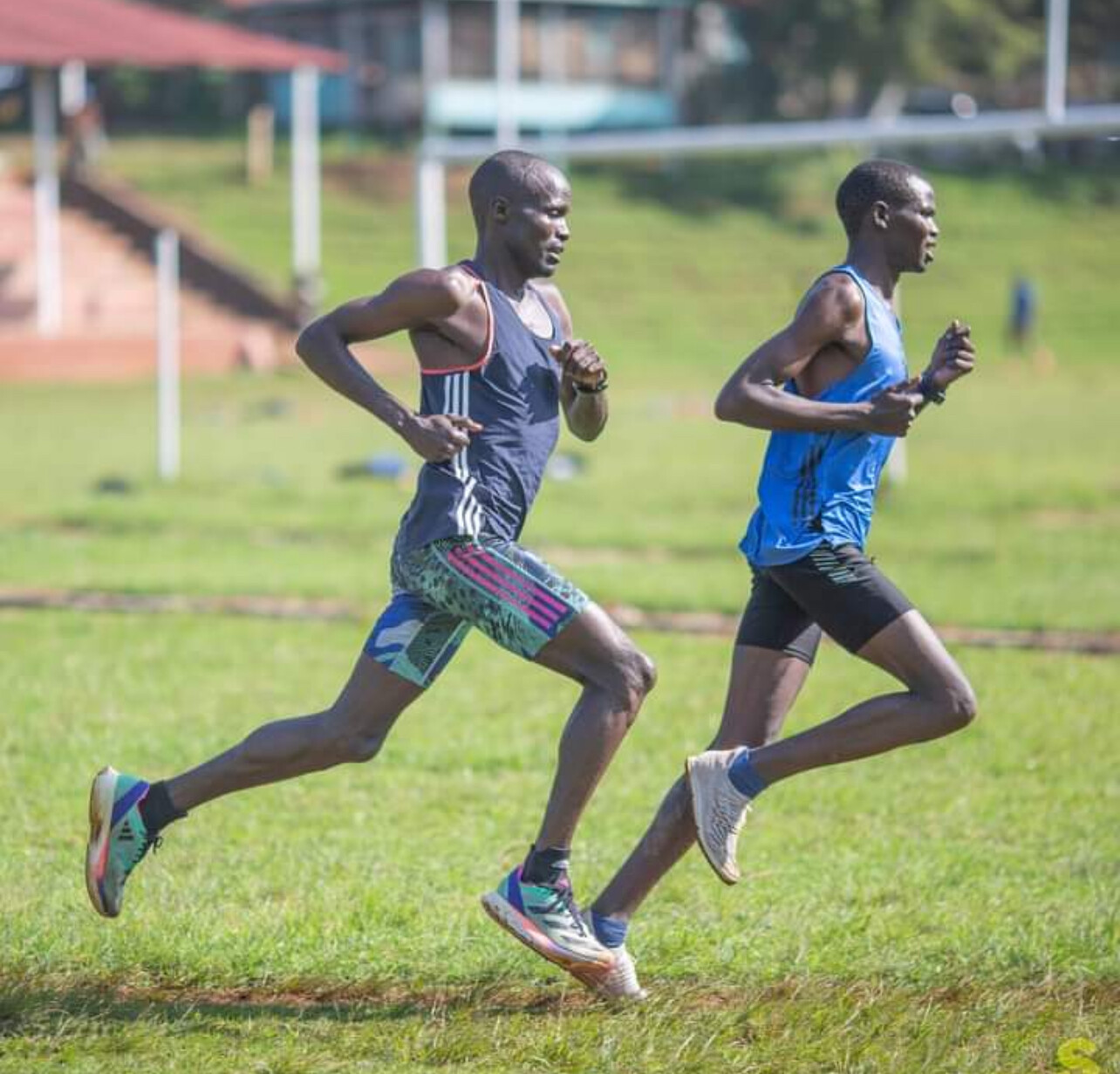
KATA officially opened in 2019, offering elite Kenyan athletes a base to train and grow. But the vision didn’t stop there.
In 2023, Anderson and longtime friend Brock Hinzmann (last photo) a 2:19 marathoner from Los Altos Hills, California, piloted the first KATA farm. The goal was to integrate agriculture into athlete development—creating a model where training and sustainability go hand in hand.
“We established a KATA farm in 2023 working with Brock, but the program needed some refinements. I finalized our new format in May of 2025. I told Edwin Soi about our program and he told me he loved the idea and jumped right on it,” says Anderson.
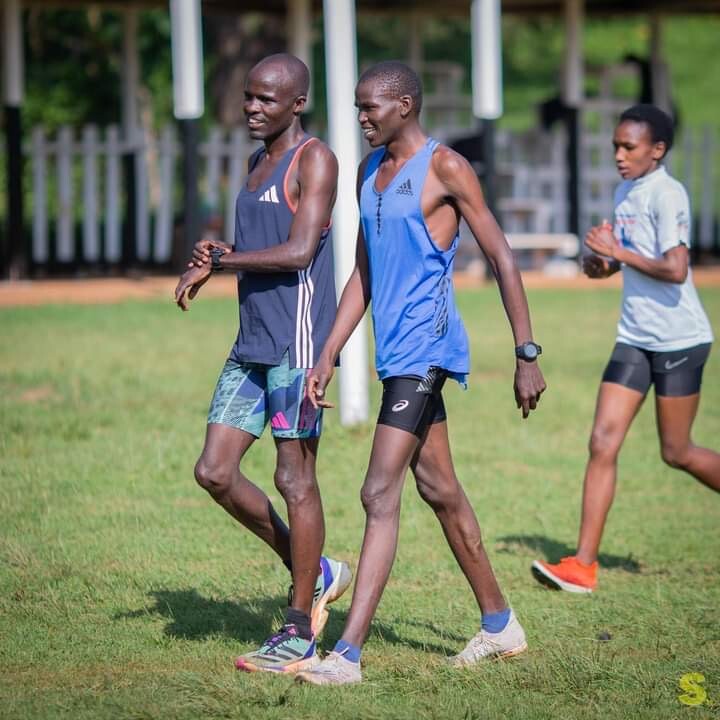
Kuresoi: A New Chapter
Now, with Soi’s leadership, the KATA Running Camp and Potato Farm in Kuresoi is set to become a flagship model for the future. Athletes will not only receive top-level training from one of the greatest distance runners of his generation, but they’ll also participate in sustainable farming practices—planting, maintaining, and harvesting KATA-branded potatoes.
The program provides housing, coaching, food, and competition opportunities—with the added benefit of long-term revenue from agriculture. It’s a model designed not just to develop athletes, but to support their lives beyond running.
“Edwin Soi brings credibility, passion, and wisdom to this project,” says Anderson. “It’s not just about winning races anymore—it’s about building something that lasts.”
Looking Ahead
With KATA camps now expanding across Kenya—including recent launches in Kapcherop, Molo, Nyandarua, and Kuresoi—the partnership between Bob Anderson and Edwin Soi represents a new chapter in Kenyan running. One where elite performance and local empowerment go hand in hand.
Soi’s journey—from Olympic bronze to coaching, mentoring, and planting the seeds of a new future—demonstrates what’s possible when world-class talent meets a visionary purpose.

by Boris Baron
Login to leave a comment

KATA Expands Global Footprint with Five New Running Camps Opening in June 2025
The Kenyan Athletics Training Academy (KATA) is advancing its mission to develop world-class runners and uplift rural communities by launching five new KATA Running Camps across Kenya in June 2025. These new satellite locations build upon KATA’s two well-established international retreats—in Thika, Kenya, and Monforte da Beira, Portugal—forming a growing global network grounded in endurance, discipline, and opportunity.
Five New Camps Opening in June
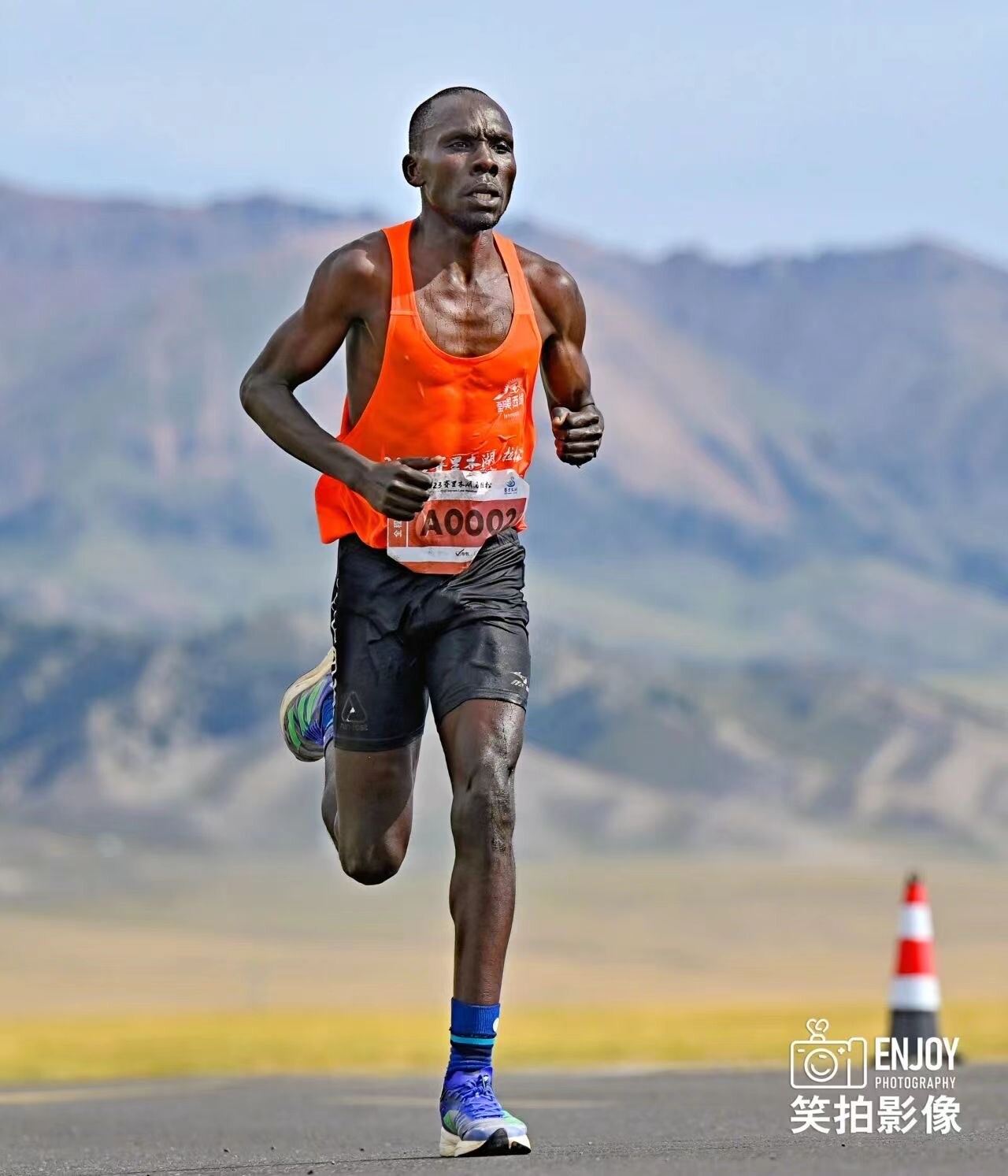
Each new camp will be led by accomplished athletes and coaches who deeply understand the training demands of distance running:
• Kericho, Kenya (~2,500m / 8,200 ft) – Operated by Edwin Soi, Olympic 5000m bronze medalist (2008) and road racing legend. The location offers quiet roads and soft dirt trails, ideal for interval training and long runs.
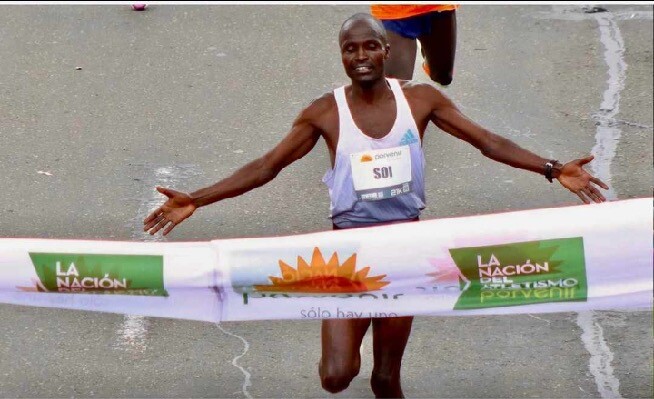
• Molo, Kenya (~2,440m / 8,000 ft) – Operated by Eric Chepkwony, a seasoned distance runner and coach. The terrain features hilly roads and scenic countryside paths that simulate real race conditions.
• Keringet, Kenya (~2,600m / 8,530 ft) – Operated by Sammy Dismas, a world-class runner and proven coach with numerous victories to his name. The camp features a mix of flat and rolling terrain ideal for tempo and progression workouts.
• Kapcherop, Kenya (~2,400m / 7,875 ft) – Operated by Philemon Kipruto, a respected local coach. Athletes benefit from forest trails and undulating village roads perfect for aerobic development.

• Nyandarua, Kenya (~2,300m / 7,550 ft) – Operated by Peter Njoroge, a dedicated coach with strong community roots. The camp includes grassy trails and high-elevation road loops ideal for base building.
Each of these camps blends elite training with mentorship, while also promoting sustainability through the KATA Potatoes project, a unique initiative that connects athletics to local agriculture and economic growth.
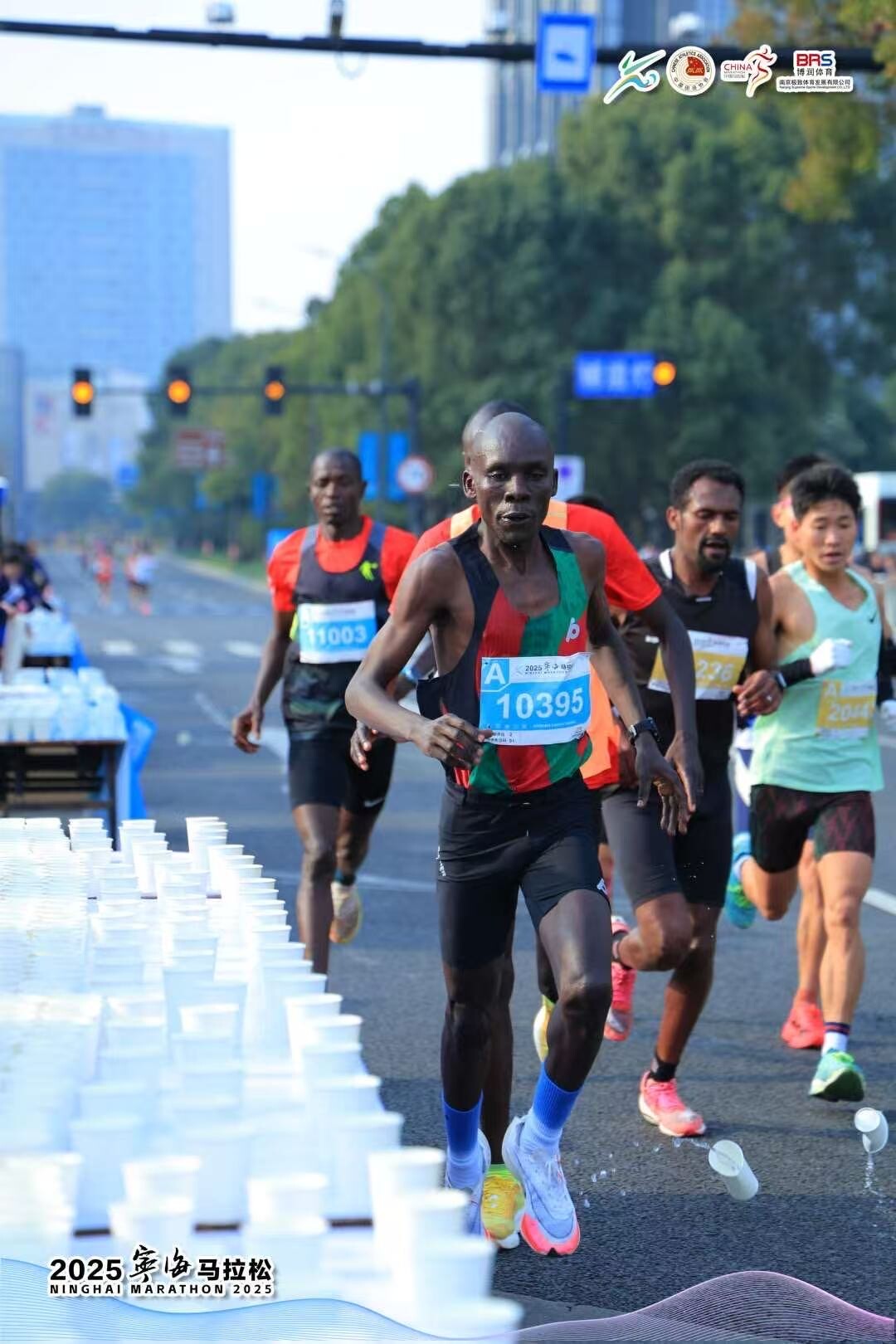
Established KATA Retreats in Kenya and Portugal
KATA’s flagship retreat in Thika, Kenya (~1,530m / 5,020 ft) continues to serve as a high-performance training hub. Managed by Christopher Muiruri, the retreat features a mix of paved loops, dirt roads, and peaceful paths—making it ideal for both elite athletes and visiting guests. KATA head coach John currently trains 20 KATA athletes and works closely with guest runners of all levels.
In 2024, KATA expanded into Europe with a retreat in Monforte da Beira, Portugal (~470m / 1,540 ft). Managed by Alberto Santos, the retreat is located at the historic Anderson Manor, just one hour from the Spanish border. The setting features technical trails, scenic roads, and a wellness-focused environment. Bob Anderson and his wife Catherine now spend about 35% of their time at this location, which serves as a perfect base to teach the Kenyan training philosophy. At least one accredited Kenyan coach is on-site at all times.

A Vision Rooted in Training and Transformation
KATA was founded by Bob Anderson, creator of Runner’s World and a lifelong runner—he has been running since February 19, 1962. His vision goes beyond athletic excellence. It’s about building stronger communities through sport and shared purpose.
“This is not just about running fast,” says Anderson. “It’s about building strong roots—on the track, in the field, on the road, and within the community.”
Looking ahead, Anderson adds:

“We’re planning to open another five KATA Running Camps in Kenya by the end of the year. This is a new concept, and the feedback so far has been overwhelmingly positive.”
by Boris Baron
Login to leave a comment
 It's a new dawn for kata. Kata is the best training camp to be - Elam wangwero 6/6 8:40 am  This idea of KATA started with a dream I shared with Elam back in 2014. - Bob Anderson 6/6 11:26 am |
Kip Keino Sparked a Running Revolution in Kenya
When Kipchoge “Kip” Keino lined up for the 1500 meters at the 1968 Olympic Games in Mexico City, few could have predicted the historic ripple effect his victory would unleash. But when he crossed the line in 3:34.91—a new Olympic record—Keino did more than win gold. He ignited a revolution that would forever change the face of distance running.
Born on January 17, 1940, in Kipsamo, Kenya, Kip Keino didn’t grow up with elite training facilities or professional coaches. He ran barefoot to school, often covering several miles a day across the highlands of the Rift Valley. His athletic gifts and work ethic set him apart early, but it wasn’t until the mid-1960s that he began competing internationally.
At the 1964 Tokyo Olympics, Keino finished a respectable fifth in the 5000m. But it was four years later in Mexico City—at altitude—that his legend was born. In one of the most iconic Olympic moments, he defied a painful gallbladder infection and a last-minute rush to the stadium to win gold in the 1500m and silver in the 5000m. His triumph was not just personal—it was symbolic. Kenya, and indeed all of Africa, had arrived on the global distance running stage.
Kip Keino’s career personal bests include:
• 1500 meters: 3:34.91 (1968 Olympic gold medal)
• Mile: 3:54.2 (1965, a world record at the time)
• 5000 meters: 13:24.2
• 3000 meters steeplechase: 8:23.6
“Kip Keino showed the world that Kenyans could not only compete, but win—and do so with grace, humility, and heart,” says Bob Anderson, lifetime runner, founder of My Best Runs, and Director/Owner of the Kenyan Athletics Training Academy (KATA), which operates in both Thika, Kenya, and Monforte da Beira, Portugal. “He laid the foundation for what has become the most dominant force in distance running today. We train the Kenyan way at both of our locations, following in Kip Keino’s footsteps.”
Following his victories, Keino became a national hero. But instead of fading into the spotlight, he turned to mentorship, helping to guide the next generation of Kenyan athletes. He was instrumental in shaping the careers of countless stars, including Henry Rono, Paul Tergat, and Ezekiel Kemboi. He also founded schools, an orphanage, and the Kip Keino High Performance Training Centre in Eldoret, promoting education and sport side by side.
Now 85 years old, Kip Keino continues to be active in athletics and public service. A former chairman of Kenya’s Olympic Committee, he has remained a respected elder statesman of sport and a vocal advocate for youth empowerment through athletics. He resides on a farm in Eldoret, Kenya, where he oversees charitable organizations for orphans and continues to inspire the next generation of Kenyan runners—not just through words, but through action.
Today, when Kenya is mentioned in the same breath as elite distance running, it all traces back to Kip Keino. His influence is felt in every marathon start line, every training camp in the Rift Valley, and every young athlete who dares to dream of greatness.
More than 50 years after that golden night in Mexico City, Keino’s legacy is alive and well—not just in the record books, but in the hearts of every Kenyan runner who followed in his footsteps.
by Boris Baron
Login to leave a comment
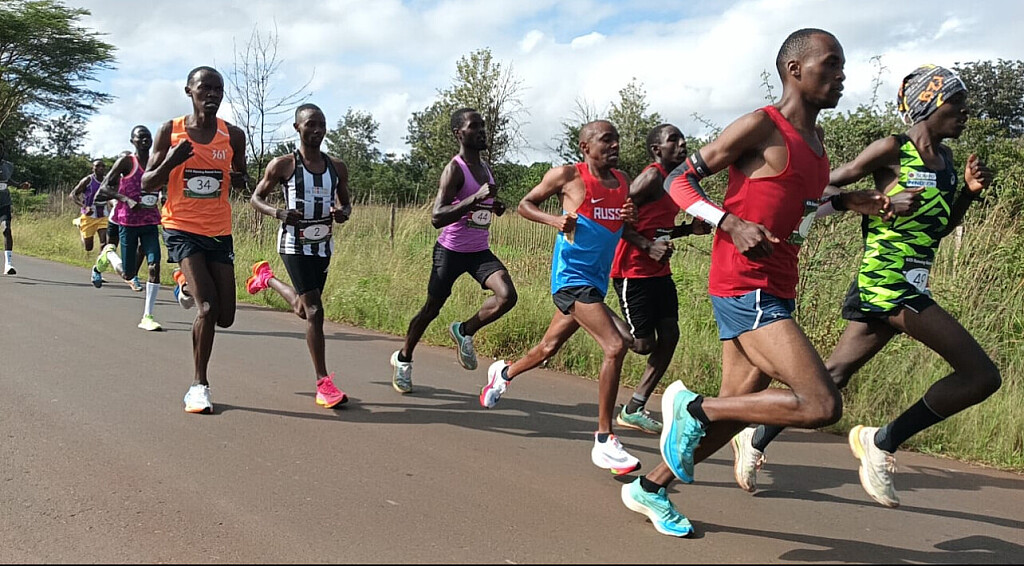
Kelvin Lagui and Nymph Kiteta Dominate at KATA Monthly Time Trial
The latest KATA Time Trial No 44 was held this morning (April 16) at the Kenyan Athletics Training Academy (KATA) in Thika, Kenya, with 27 athletes lining up across 10K and 5K distances. The event showcased elite-level efforts and exciting breakthroughs from developing runners—including multiple personal bests and promising performances from junior athletes.
Men’s 10K: Kelvin Lagui Holds Off Ngigi in Close Finish
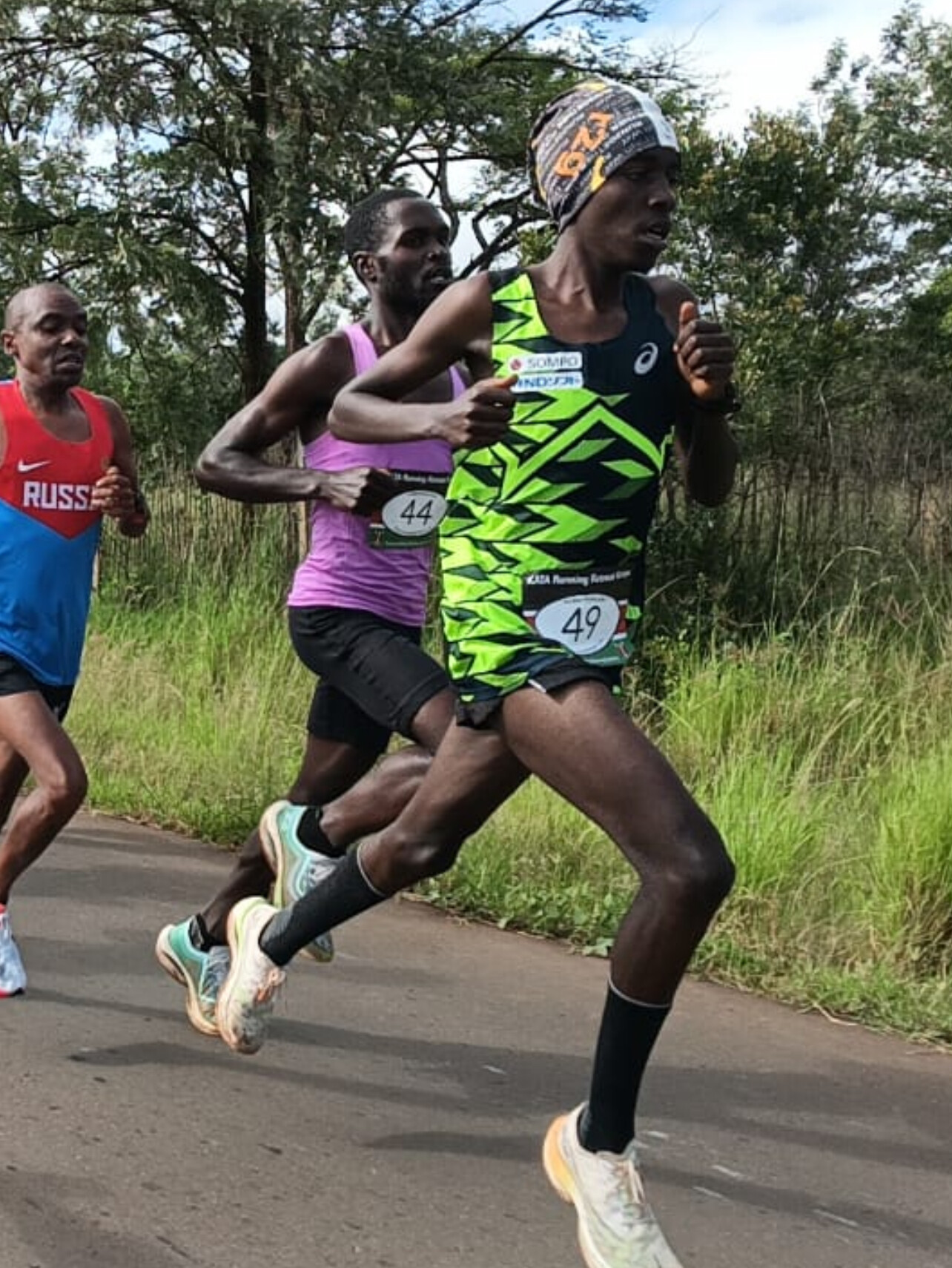
Kelvin Lagui (age 22, bib #49) led the men’s field with a time of 30:37, just five seconds ahead of Stephen Ngigi (age 20, bib #11), who clocked 30:42.
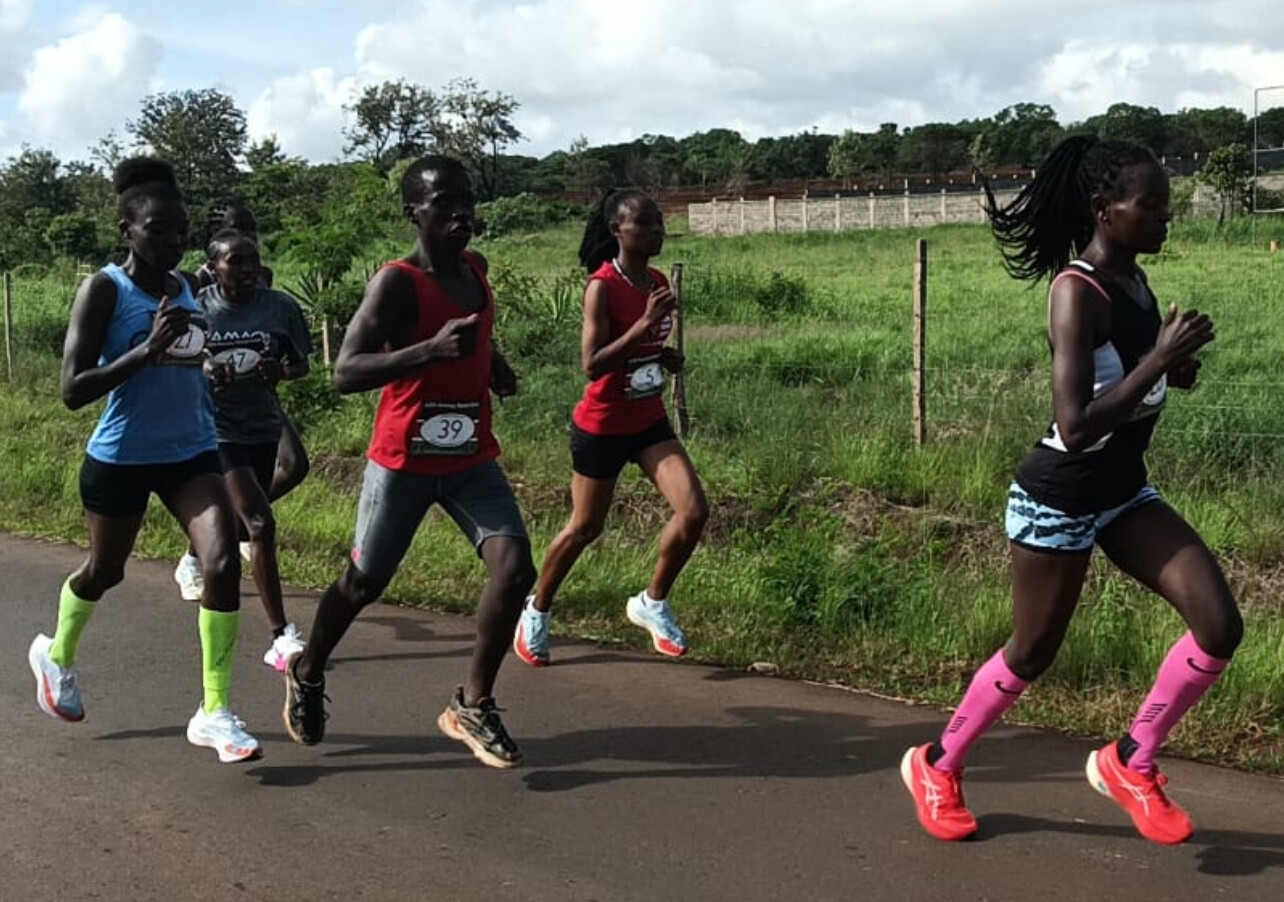
KATA’s rising star Charles Ndirangu (age 24, bib #3) finished 4th in 31:20, slicing 20 seconds off his previous personal best set last month. Having transitioned from sprinting, Ndirangu continues to impress.
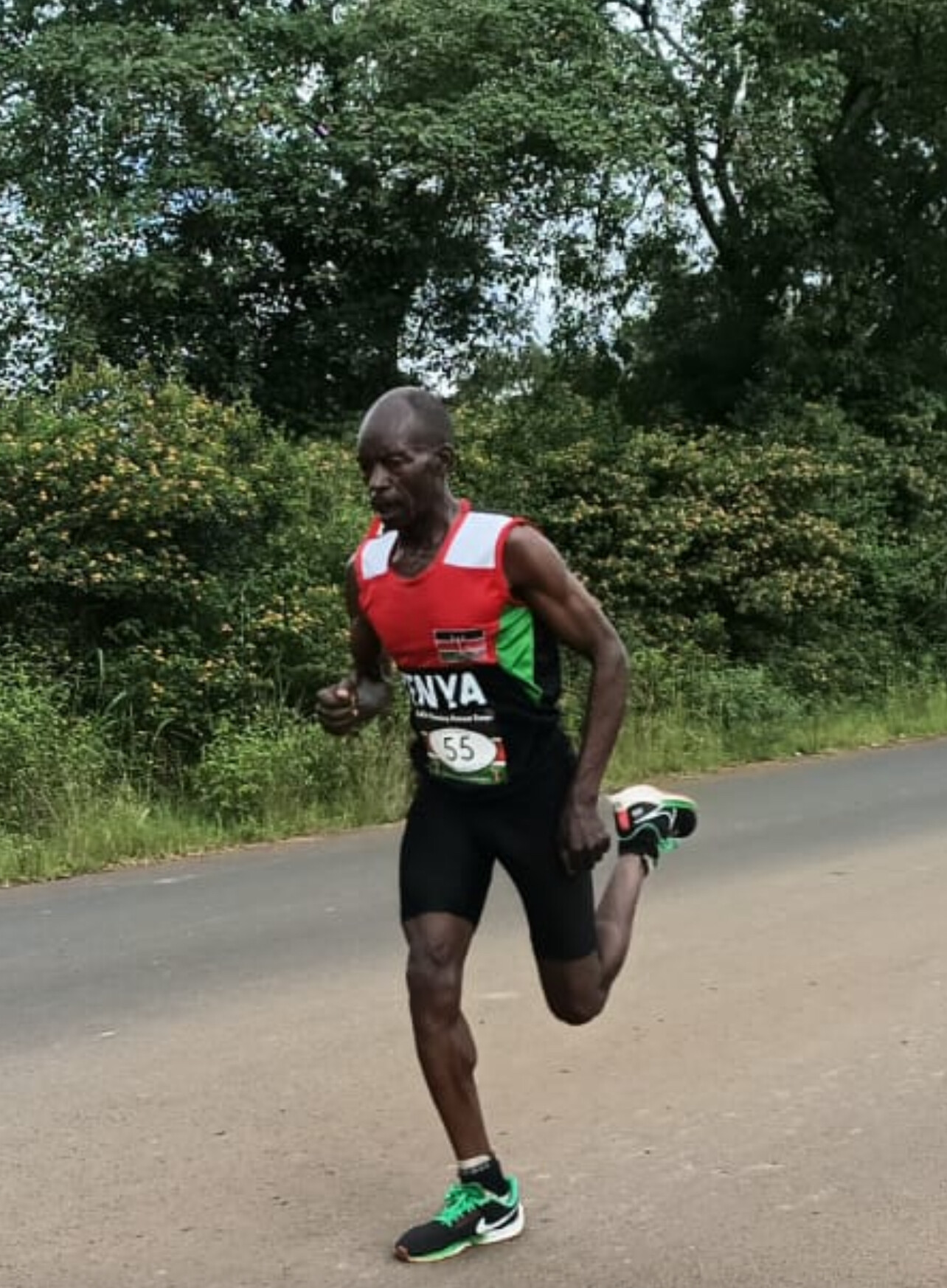
“Charles is developing exactly how we hoped,” said Coach John. “He came in with sprinting form and raw power—now he’s learning how to pace, hold rhythm, and finish strong over distance. We really believe in him.”
Top 10 Men’s 10K Results
1. Kelvin Lagui – 22 yrs – Bib 49 – 30:37
2. Stephen Ngigi – 20 yrs – Bib 11 – 30:42
3. Robert Ndegwa – 20 yrs – Bib 32 – 31:19
4. Charles Ndirangu – 24 yrs – Bib 3 – 31:20 (PB)
5. Zachariah Kirika – 24 yrs – Bib 34 – 32:27
6. Joseph Wanjiru – 39 yrs – Bib 2 – 32:36
7. Joseph Karanja – 42 yrs – Bib 19 – 33:04
8. Ali Rashid – 22 yrs – Bib 223 – 33:16
9. Ishmael Mburu – 26 yrs – Bib 27 – 33:30
10. David Muriuki – 39 yrs – Bib 77 – 34:03
Other finisher:
11. Bernard Gicheha – 34 yrs – Bib 18 – 34:28
12. Charles Ndirangu – 67 yrs – Bib 55 – 37:32
Women’s 10K: Kiteta Cruises to Victory
Nymph Kiteta (age 20, bib #22) set the pace in the women’s 10K, finishing in 34:02. Lois Karie (age 24, bib #26) followed in 35:55, with consistent performances by KATA athletes throughout the field.
Top Women’s 10K Results
1. Nymph Kiteta – 20 yrs – Bib 22 – 34:02
2. Lois Karie – 24 yrs – Bib 26 – 35:55
3. Jacinta Kamau – 24 yrs – Bib 27 – 37:02
4. Karen Chepkoech – 24 yrs – Bib 53 – 37:59
5. Ruth Maina – 22 yrs – Bib 4 – 40:29
6. Lilian Nyamai – 24 yrs – Bib 5 – 45:46
7. Lucy Muritu – 39 yrs – Bib 13 – 48:03
Men’s 5K: Frendric Wambua Leads Juniors with PB
Former sprinter Frendric Wambua (age 20, bib #1) broke new ground with a 15:42 finish in the men’s 5K. His performance highlighted the depth and promise of KATA’s junior ranks.
“Frendric is hitting a new level,” said Coach John. “He leads a group of juniors who are serious, consistent, and motivated. These young athletes are the future.”
Men’s 5K Results
1. Frendric Wambua – 20 yrs – Bib 1 – 15:42
2. Godfrey Kahura – 17 yrs – Bib 66 – 16:07
3. Peter Waititu – 17 yrs – Bib 51 – 17:03
4. Justus Nyamai – 17 yrs – Bib 42 – 17:13
5. Branton Mutungi – 17 yrs – Bib 28 – 17:47
6. Collins Mutungi – 18 yrs – Bib 10 – 17:53
7. Eric Mwaura – 18 yrs – Bib 39 – 18:39
Women’s 5K: Ruth Wambua Sets the Bar
In the women’s 5K, Ruth Wambua (age 17, bib #40) ran a confident race to claim the win in 18:39—a strong marker of her growing talent in the sport.
Women’s 5K Result
1. Ruth Wambua – 17 yrs – Bib 40 – 18:39
Looking Ahead: May 14th Time Trial
The next KATA Time Trial is proposed for May 14th, with continued 10K and 5K events expected. The April time trial affirmed that the depth of talent at KATA continues to grow, with performance breakthroughs coming from both veteran athletes and rising stars.
by Boris Baron
Login to leave a comment
KATA Time Trial Series
Welcome to the KATA Monthly Time Trial Held at the Kenyan Athletics Training Academy in Thika, Kenya, the KATA Monthly Time Trial is a unique and inclusive event designed to support runners of all levels in achieving their goals and showcasing their fitness. This event offers both 10K and 5K distances on an accurate, certified course, providing participants with...
more...
The Global Sub-60 Chase: Why Breaking 60 Minutes in the Half Marathon Is the New Benchmark
In the world of distance running, certain time barriers carry iconic weight: the four-minute mile, the two-hour marathon, and now, perhaps more than ever before, the sub-60-minute half marathon.
Running 13.1 miles at an average pace of under 4:35 per mile (approximately 2:50 per kilometer) was once a feat reserved for only a handful of legends. Today, more than 100 men have accomplished the mark—transforming what was once historic into a new global benchmark. From the streets of Valencia to the avenues of Houston, the sub-60 chase has reshaped the competitive landscape.
At the heart of this movement is Uganda’s Jacob Kiplimo, arguably the most exciting half marathoner on the planet. In 2021, Kiplimo smashed the world record by clocking 57:31 in Lisbon, Portugal—a performance that combined raw power, impeccable pacing, and near-perfect weather. His fluid stride and ability to surge at will have made him the gold standard for half marathon excellence.
Kiplimo’s brilliance lies not just in his times, but in his consistency. He’s one of the few runners who can deliver near-world-record performances while battling the best in championship-style races, such as his victory at the 2020 World Half Marathon Championships in Gdynia, Poland.
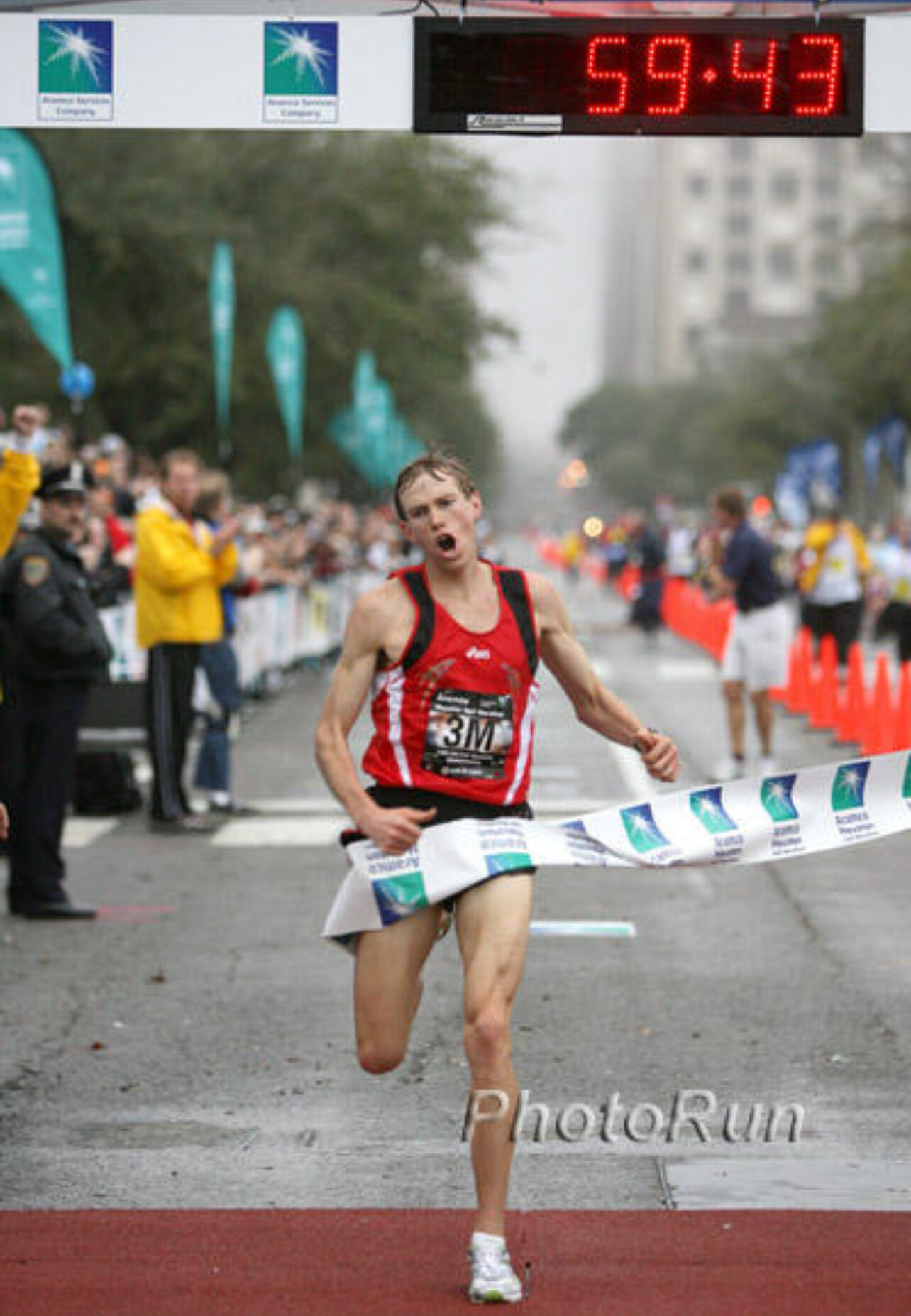
So, what does it take to go sub-60? It’s more than just genetic talent. Athletes training at the Kenyan Athletics Training Academy (KATA) in Thika and at the KATA Retreat in Portugal are learning that going under an hour requires a perfect storm of speed, endurance, tactical racing, and recovery. Former 2:07 marathoner Jimmy Muindi, now coaching at KATA Portugal, emphasizes the importance of training specificity: “It’s not just about the miles—it’s about the right workouts, at the right time, and the right rest.”
Technology has also played its part. Super shoes, optimized pacing, and faster courses have contributed to faster times, but the core remains the same: the athlete. And sub-60 remains a sacred number—an invisible finish line that continues to pull the best out of the world’s elite.
American Runners Breaking the Sub-60 Barrier
For years, American distance running lagged behind East African dominance in the half marathon. However, significant breakthroughs have occurred over the past two decades:
• Ryan Hall made history in 2007 by becoming the first American to break the one-hour barrier, finishing the Houston Half Marathon in 59:43. This performance stood as the American record for 18 years.
• Galen Rupp, a two-time Olympic medalist, joined the sub-60 club in 2018 with a time of 59:47 at the Roma-Ostia Half Marathon, showcasing his versatility across distances.
• Conner Mantz recently set a new American record by completing the Houston Half Marathon in 59:17, demonstrating the rising talent in U.S. distance running.
These achievements signify a new era for American distance runners, who are now competing at the highest levels on the global stage.
“The new super shoes have helped runners from at least 10 countries achieve a sub-60-minute half marathon,” says MBR editor Bob Anderson.
This surge in international performances underscores the evolving landscape of elite distance running, where advancements in technology and training are enabling athletes worldwide to reach new milestones.
With the 2025 racing calendar heating up, all eyes will be on the next generation of half marathoners. Who will be the next to join Kiplimo in the sub-58 club? And how long until sub-59 becomes the norm?
As the sport evolves, one thing is clear: the chase for sub-60 isn’t just about times—it’s about what’s possible.
by Bob Anderson with Boris Baron
Login to leave a comment

The Fueling Strategy of a Champion—Jimmy Muindi’s Approach to Nutrition and Race Preparation - Part three
In Parts One and Two, we explored Jimmy Muindi’s remarkable journey from a young barefoot runner to an elite marathoner, and his transition into coaching at the Kenyan Athletics Training Academy (KATA) in Portugal (all photos taken at KATA located at Anderson Manor Retreat in Monforte da Beira Portugal). Now, in Part Three, we delve into a critical element of running success—nutrition and hydration.
Training alone isn’t enough to maximize performance. Proper fueling and strategic race preparation play a major role in an athlete’s ability to perform at their best. Muindi has learned firsthand, through years of competing at the highest level, that what and when you eat can make or break a race.
At KATA Portugal, Muindi applies these same principles to his coaching, ensuring that runners understand not just how to train, but also how to eat and hydrate for peak performance.

The Key to Fueling: Why Two Nights Before the Race Matters Most
Many runners focus on carb-loading the night before a race, but Muindi emphasizes that the most important meal happens two nights before the race.

“If you eat too much the night before, your body doesn’t have enough time to fully process and store the energy properly,” Muindi explains. “Instead, it’s two nights before when you need to eat your biggest meal. That’s when your body is in the best position to absorb the nutrients and store glycogen for race day.”
This strategy is a hallmark of elite Kenyan runners. While they do eat a balanced meal the night before, it’s more about maintaining energy stores rather than overloading.

The Kenyan Runner’s Diet: Simple, Natural, and Effective
For decades, Kenyan distance runners have followed a diet that is both simple and highly effective. Muindi is no exception.
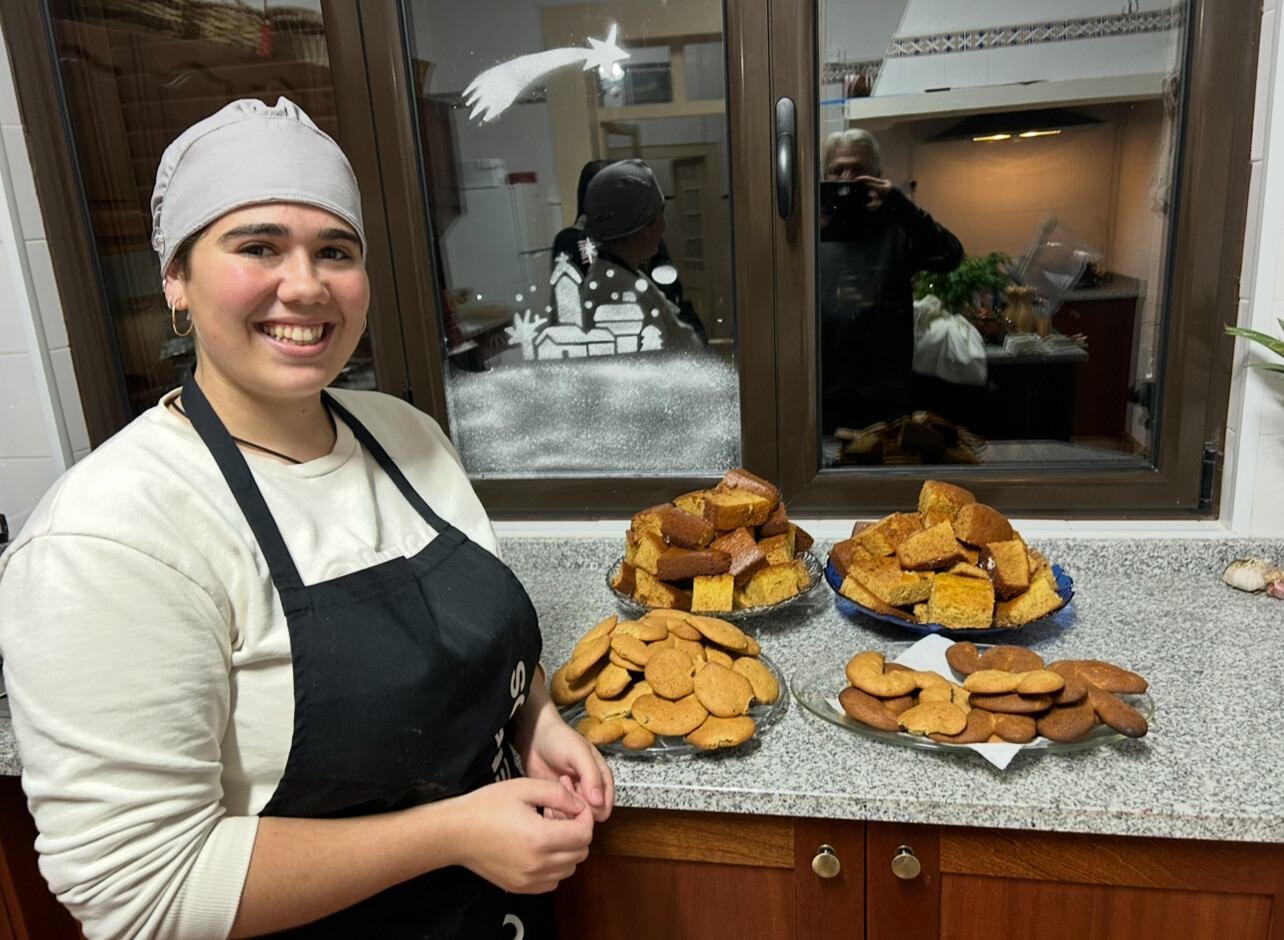
At the core of this diet are:
• Carbohydrates (about 75-80% of daily intake)– Ugali (a maize-based staple), rice, and potatoes provide the primary energy sources.

• Vegetables– Greens such as sukuma wiki (collard greens), spinach, and cabbage are common.
• Proteins (about 10-15%)– Beans, lentils, eggs, and occasionally meat (usually chicken, goat, or beef, but not in excess).

• Healthy fats– Avocados, nuts, and milk from cows or goats.
• Tea with milk and sugar– This is an important part of a Kenyan runner’s daily routine. Tea is consumed multiple times a day, often before and after training sessions. The combination of milk and sugar provides quick energy while keeping hydration levels up.

What’s notably absent from the traditional Kenyan diet is excessive processed foods. While sugar is used in tea, highly refined snacks and artificial ingredients are avoided. Instead, the focus is on whole, home-cooked meals with natural ingredients.
Pre-Race Nutrition Strategy
Muindi breaks his pre-race nutrition plan into three key phases:
1. Two Nights Before the Race – The Most Important Meal
• Large serving of ugali or rice for carbohydrates
• Protein source (beans, lentils, or chicken)
• Cooked greens for vitamins and minerals
• Hydration: Water and tea with milk and sugar
2. The Night Before the Race – Keeping It Light
• A smaller portion of carbohydrates (usually rice)
• Light vegetables
• Minimal protein (to avoid digestion issues the next morning)
• Hydration: Water, tea with milk and sugar, no heavy or fatty foods
3. Race Day Morning – Quick, Easily Digestible Energy
• A slice of bread with honey
• A banana for quick energy
• Black tea or tea with milk and sugar
• No heavy meals—just enough to keep energy levels stable without causing stomach discomfort
Hydration Strategy: Timing Matters
Muindi's approach to hydration during a marathon is disciplined and strategic. Unlike recreational runners who may sip water frequently, he does not take any water until after the 5K mark. From that point onward, he drinks water every 5K, adjusting based on weather conditions.
“For me, being out there for just over two hours, I don’t need to drink too much,” Muindi explains. “I know my body, and I hydrate well before the race, so I only take small amounts of water every 5K.”
However, Muindi acknowledges that this approach isn’t suitable for everyone.
“If you are running at a four-hour pace or longer, your hydration needs change. For runners expecting to be on the course for four, six, or even eight hours, regular hydration is critical. In these cases, you need to take in more fluids and also consume calories—things like bananas or energy gels—to maintain energy levels.”
Muindi emphasizes that each runner should plan their hydration strategy according to their race pace, experience, and the race-day conditions.
At KATA Portugal, Muindi teaches runners how to fine-tune their hydration plans so they don’t overhydrate but also don’t risk dehydration. He helps runners determine when and how much to drink based on their training intensity and expected race time, ensuring they develop an optimal balance of water intake, electrolyte replenishment, and fuel consumption.
Collaborative Coaching at KATA Portugal
Muindi works closely with Bob Anderson, a lifetime runner and the founder of KATA. Anderson, who started Runner’s World magazine in 1966 at the age of 17, has dedicated his life to the sport of running. His passion led him to establish KATA in Kenya in 2019, and subsequently, KATA Portugal in 2024. Anderson and his wife, Catherine, spend approximately 45% of their time at KATA, actively engaging with the running community and supporting the academy’s mission.
The academy ensures that there is always a certified Kenyan coach available, providing authentic training experiences rooted in Kenyan running culture. This collaborative environment fosters a holistic approach to training, combining Muindi’s expertise with the rich traditions of Kenyan athletics.
Beyond Running: A Retreat for All
KATA offers more than just a running camp. It also caters to hikers, walkers, and individuals seeking relaxation and a respite from the hectic world. Nestled in the village of Monforte da Beira in central Portugal, with a population of just 310 people, KATA provides the quiet environment that many people seek. This tranquil setting allows guests to unwind, explore scenic trails, and immerse themselves in the local culture, making it an ideal destination for both active and leisure pursuits.
How Muindi Teaches Nutrition at KATA Portugal
At KATA Portugal, Muindi ensures that guests learn by doing. The training program isn’t just about running—it’s also about understanding how to fuel like a champion.
• Meals at KATA Portugal follow the same principles as the Kenyan elite training camps. Guests experience a diet that emphasizes complex carbohydrates, natural proteins, and proper hydration.
• Workshops and discussions provides insight into meal timing, nutrient absorption, and the importance of eating for recovery.
• Pre-race meal planning helps runners adjust their own routines based on what has worked for world-class marathoners.
One of the most valuable lessons Muindi imparts is that nutrition is about consistency, not last-minute changes. Runners at KATA Portugal learn how to eat for performance long before race week, making proper fueling a habit rather than a stress factor.
by Boris Baron
Login to leave a comment
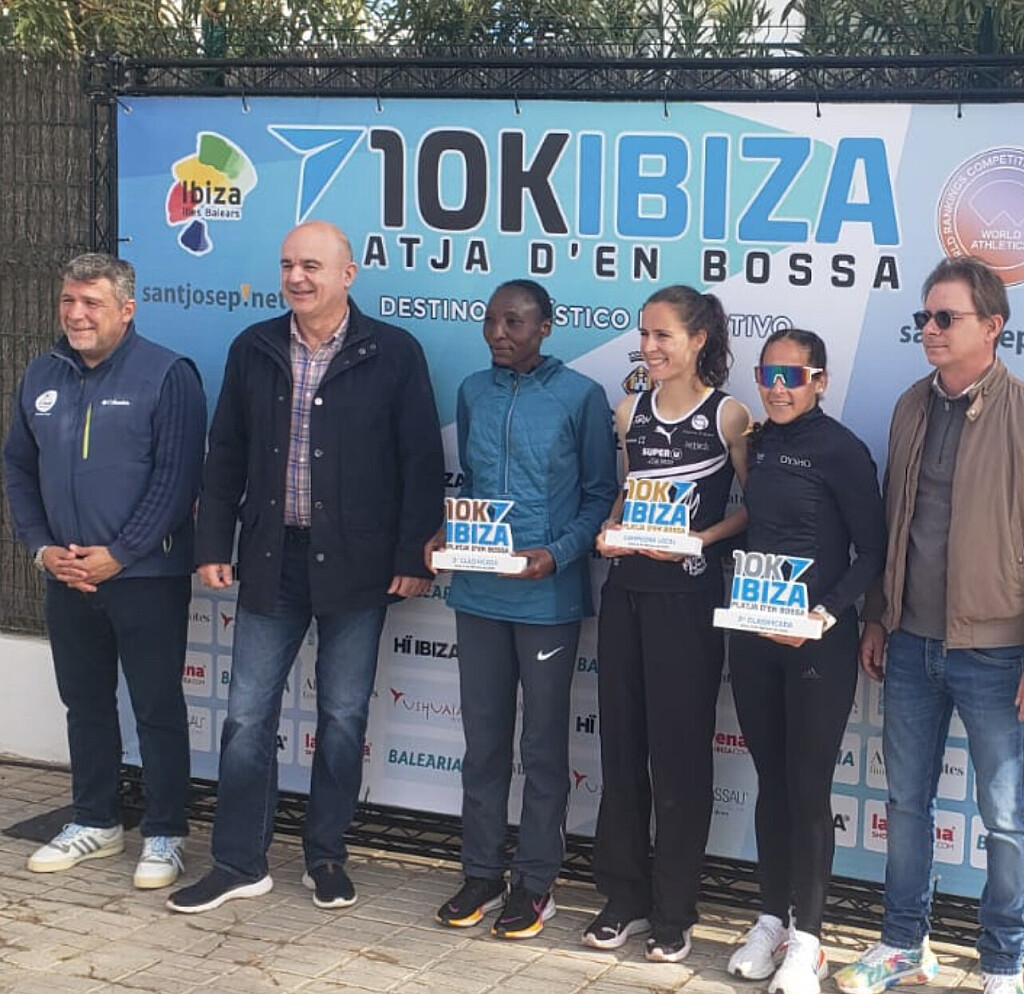
Risper Gesabwa Shines at 10K Ibiza While Training at KATA Portugal at Anderson Manor
For the past five weeks, elite Kenyan/Mexican runner Risper Gesabwa has been training at KATA Portugal, based at Anderson Manor in Monforte da Beira. Using the retreat as her European training base, Gesabwa has been fine-tuning her speed and endurance while competing in races across Spain. On February 9, 2025, she delivered a strong performance at the 10K Ibiza, placing second with a time of 32:44.
KATA Portugal, an extension of the Kenyan Athletics Training Academy (KATA), has provided Gesabwa with an ideal environment to sharpen her fitness. The retreat, located in the peaceful Portuguese countryside, offers top-tier training facilities, structured sessions, and a supportive atmosphere that mirrors the disciplined approach of Kenyan training camps.
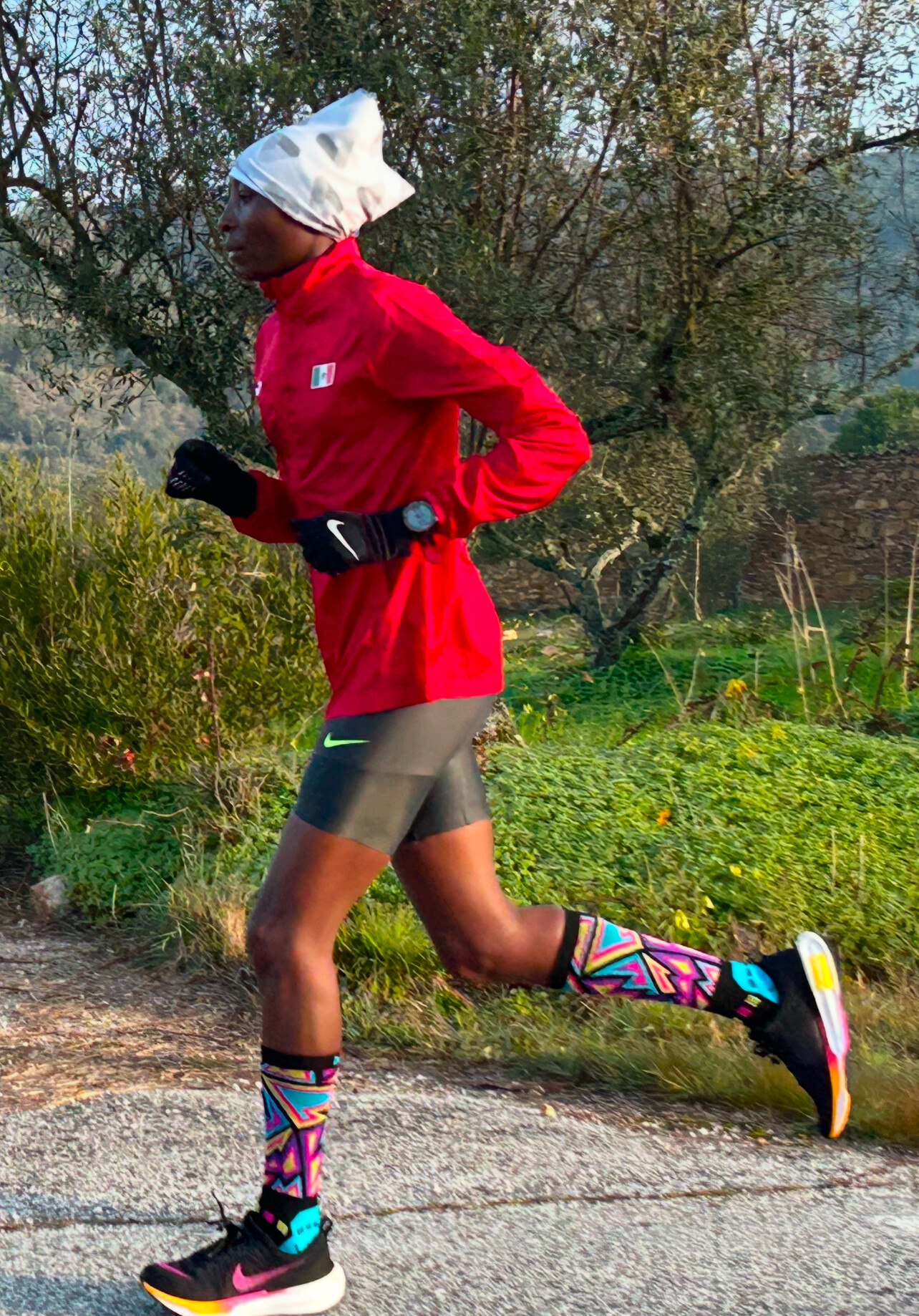
Her performance at the 10K Ibiza demonstrated her current form as she pushed the pace against a strong field. Running a 32:44 10K, she showcased her endurance and strength, reinforcing her reputation as a tough competitor. This performance is just the beginning, as she continues her racing season.
Following her successful European campaign, Gesabwa is returning to Mexico, where she resides, to prepare for upcoming competitions, including the highly anticipated Half Marathon Trials for the World Championships. With her current form and the strong foundation built at KATA Portugal, she is well-positioned to compete for a spot on the world stage.
Since arriving at Anderson Manor, Gesabwa embraced the structured training, cross-training options, and serene recovery environment. The retreat has proven to be a strategic base for athletes of all abilities looking to compete in Europe while maintaining the discipline and rigor of high-performance training.
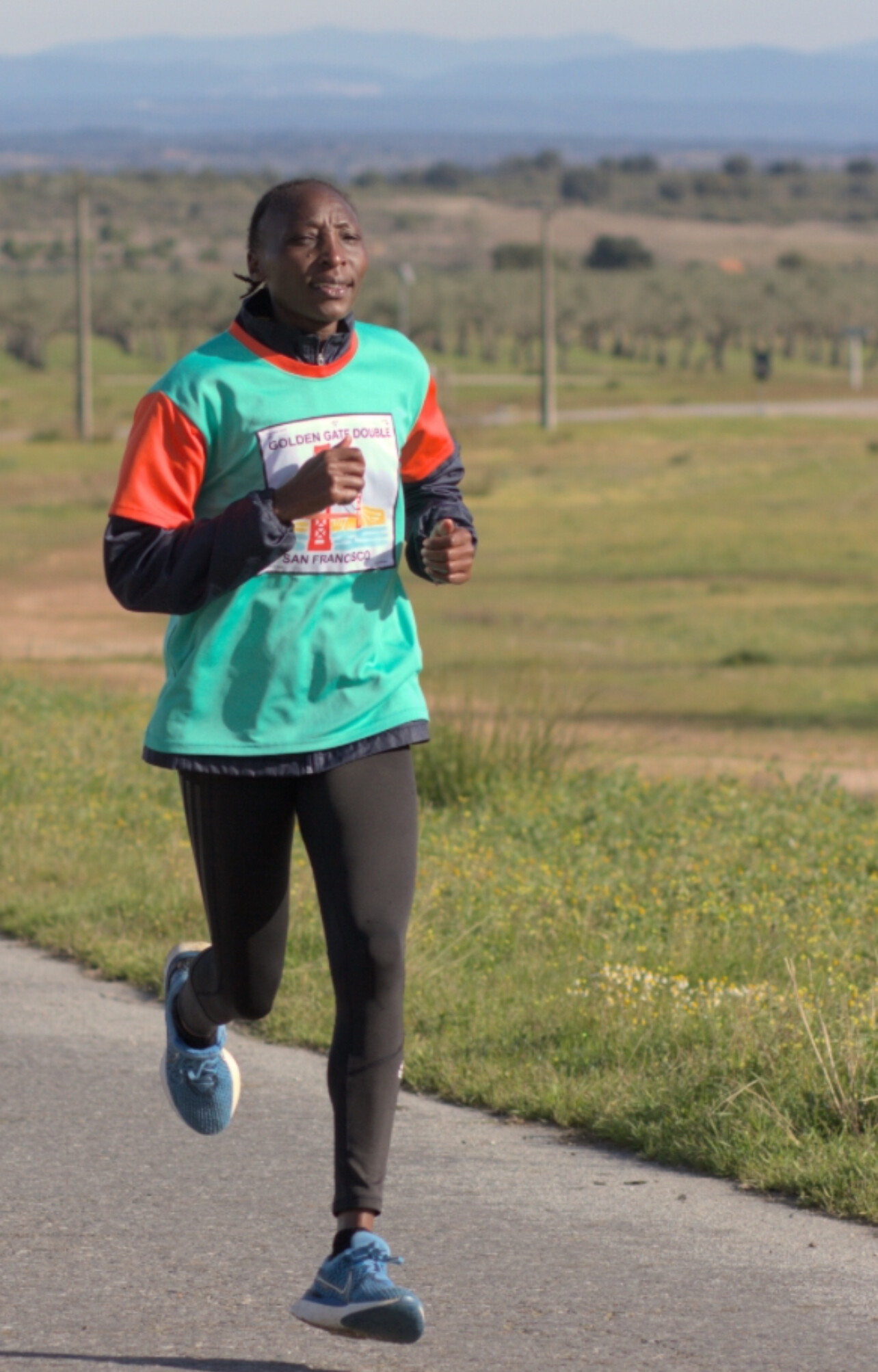
Her next goal is to continue improving and securing top finishes in upcoming races. With KATA Portugal at Anderson Manor providing the perfect blend of intensive training, rest, and recovery, Gesabwa is in prime position to achieve even greater success on the road racing circuit.
As she prepares for her next competition, her time at KATA Portugal underscores the growing reputation of Anderson Manor as a premier training destination for athletes looking to make an impact on the international stage or just to improve their besty times.
by Bob Anderson
Login to leave a comment

10K Ibiza-Platja d'en Bossa
The 10K Ibiza-Platja d'en Bossa is an international road race renowned for its flat and fast course, making it one of the most attractive circuits in Spain. The event has received the prestigious World Athletics Label, underscoring its significance in the global running community. The race route offers participants a scenic experience, bordering the Ses Salines Natural Park and passing...
more...
Embracing Challenges as "Situations" in a Lifetime of Running
Bob Anderson laced up his running shoes for the first time on February 16, 1962, setting in motion a journey that has spanned over six decades. Now 77 years old, Bob continues to average 35 miles a week, a combination of running and walking split between his homes in Los Altos, California, and Monforte da Beira, Portugal.
Beyond his personal fitness, Bob is the founder of KATA Running Retreat in Portugal (and KATA Kenya), where runners from around the world train under the guidance of accredited Kenyan coaches, learning the art of running the Kenyan way.
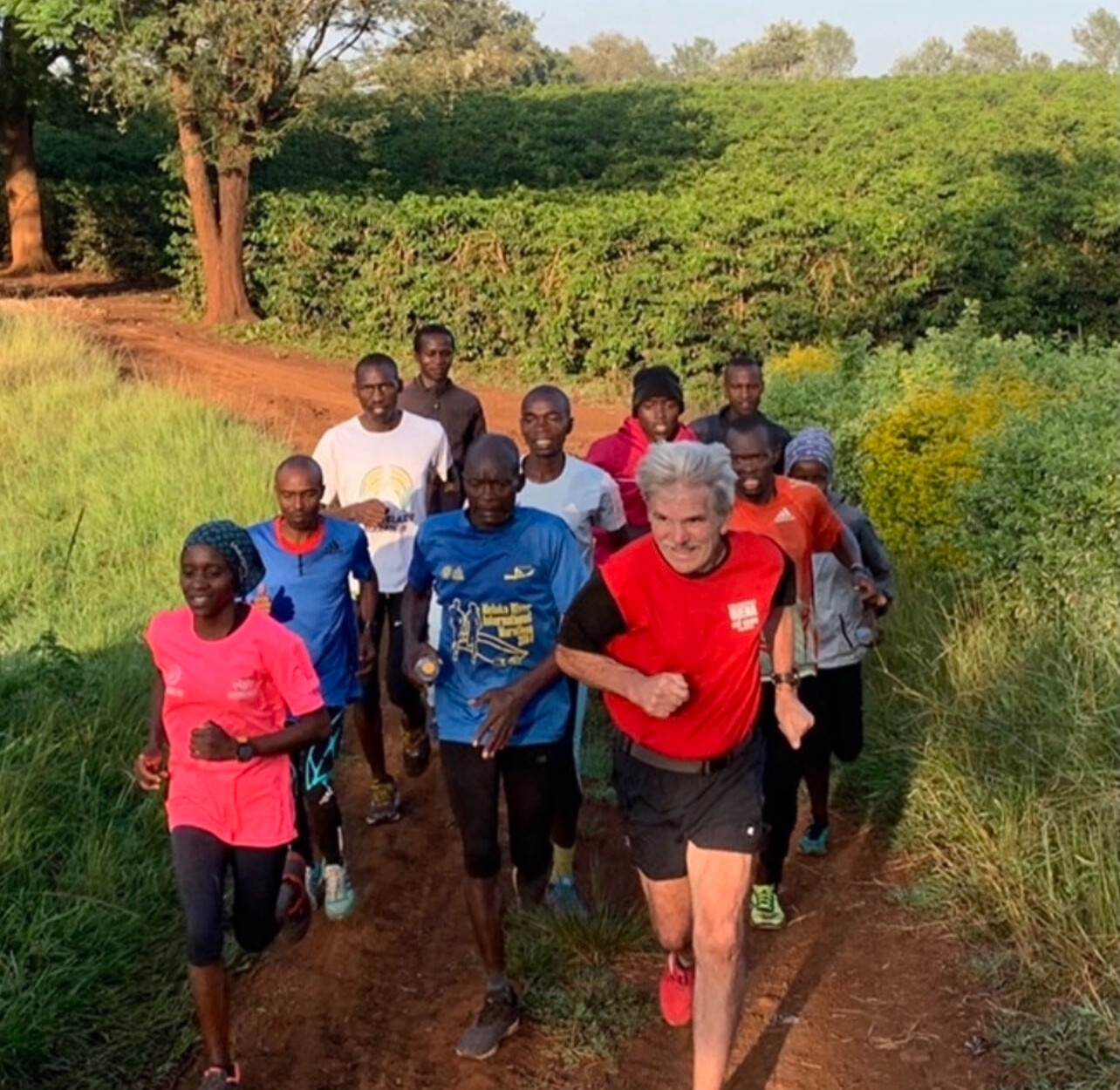
For Bob, running is not just an activity—it’s a way of life. Yet, like any long-term runner, he has faced his share of physical setbacks. What makes Bob's perspective unique is how he approaches these challenges. He refuses to call them "injuries." Instead, he reframes them as "situations," each with its own solution.
Turning Challenges into Opportunities
“I feel it’s more positive to see problems as situations,” Bob explains. “Every situation has a solution. It’s about finding it and moving forward.”

This mindset has carried Bob through countless running-related issues over the years. Most recently, he encountered a tendon situation in his right calf, which he describes as feeling like “an ice pick stuck in my calf.” For many, such a setback could mean frustration or discouragement. For Bob, it was simply another situation to navigate.
The calf issue emerged six weeks ago, temporarily sidelining him from running. “At one point, I could only walk a 32-minute mile,” he recalls. “It was a low point, but I knew I just had to focus on walking instead of running. The solution was to keep moving, even if it wasn’t at the pace I wanted.”
Today, Bob is on the cusp of full recovery. The pain has subsided, and he’s back to building his strength and endurance. “Now, I have to get in shape to get in shape,” he says. It’s a sentiment that many runners recovering from setbacks can relate to: the road back to peak performance often starts with small, deliberate steps.
A Lifetime of Solutions
Over the decades, Bob has faced numerous "situations," from shin splints to plantar fasciitis, and even the natural slowing of pace that comes with age. Yet his ability to adapt, learn, and persevere has kept him running—and walking—well into his 70s. Adding walking to his routine has not only helped him stay active through setbacks but has also introduced a new dimension to his training.
“Walking isn’t just a fallback,” Bob says. “It’s a powerful way to stay connected to the movement and keep your body engaged, even when running isn’t possible.”
Inspiring Others Through KATA
Bob’s passion for running extends beyond his personal journey. At KATA Running Retreat in Portugal, he shares his wisdom with runners of all levels. The retreat offers a chance to train with world-class Kenyan coaches, combining the cultural richness of Portuguese countryside with the legendary endurance techniques of Kenya.
“KATA is about helping runners achieve their personal best,” Bob says. “Whether it’s overcoming a situation, improving your times, or learning to enjoy the process, we’re here to support every step of the journey.”
Moving Forward with Optimism
As Bob continues to recover from his latest situation, he remains optimistic. His story is a testament to the power of resilience, adaptability, and a positive mindset. For him, running is not just about miles or pace—it’s about the journey and the lessons learned along the way.
“At the end of the day, it’s not about being perfect,” Bob reflects. “It’s about showing up, finding solutions, and keeping your passion alive.”
For Bob Anderson, every mile—whether walked or run—is a victory. And every situation is just another step toward the next solution.
The Legacy of KATA
Bob’s vision for running has extended far beyond himself. In 2021, he founded the Kenyan Athletics Training Academy (KATA) in Thika, Kenya, a place where runners from around the world come to train alongside Kenyan athletes. KATA Thika has quickly become a hub for endurance athletes seeking to learn from Kenya’s rich running culture and expertise.
Building on this success, Bob opened KATA Portugal in October 2024. Located at his estate in Monforte da Beira, Portugal, this retreat offers runners the opportunity to train in a serene and inspiring environment while working with world-class Kenyan coaches. Together, the two KATA locations represent Bob’s lifelong commitment to fostering the global running community and empowering athletes to achieve their dreams.
Photos: 1. Bob in Monforte da Beira with coach Dennis, and guests Risper and Jane. 2. Bob on a training run in KATA Kenya 3. Bob getting in miles on the way to lunch in California
https://katarunningretreat.com/
by Boris Baron
Login to leave a comment
Bob Anderson: A Lifetime Dedicated to Running
Bob Anderson, born on December 28, 1947, in Manhattan, Kansas, has devoted his life to the sport of running. His journey began on February 16, 1962, and since then, he has consistently maintained an impressive regimen, averaging 46 miles per week of running and, more recently since 2023 walking/running.
In 1966, at the age of 17, Bob founded Distance Running News, a mimeographed newsletter he produced from his home in Manhattan. In 1969, he rebranded the publication as Runner’s World, a magazine that played a pivotal role in the American running boom of the 1970s and beyond.
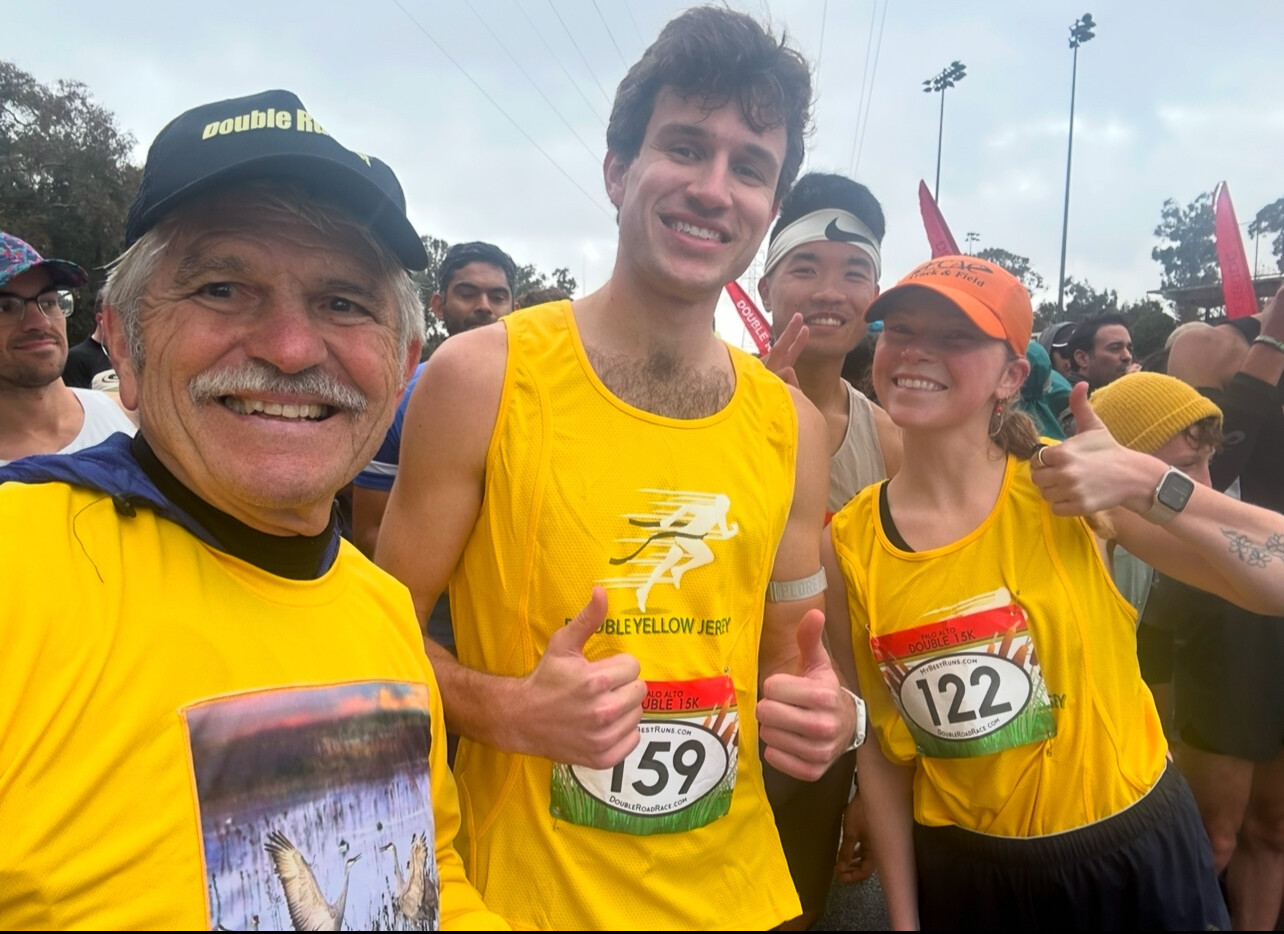
After selling Runner’s World to Rodale Press in 1984, Bob channeled his entrepreneurial spirit into founding Ujena Swimwear and Around Town Productions. In 2012, he introduced a groundbreaking new sport called Double Racing, a two-stage running event with a halftime recovery period. To promote this innovative concept, he established the Double Road Race Federation, further diversifying his contributions to the running community.
In 2014, Bob launched My Best Runs, a website dedicated to highlighting the world’s most intriguing and unique races. He also edits Running News Daily, a popular column that harkens back to his early days with Distance Running News.
Bob’s passion for running extends well beyond publishing and event organization. In 2012, to mark 50 years of running, he completed 50 races totaling 350.8 miles, achieving an average pace of 6:59 per mile. This extraordinary feat was captured in the film A Long Run.

In recent years, Bob and his wife Catherine have focused on global running initiatives. Their efforts brought them to Kenya, where they produced Double Racing events and established the Kenyan Athletics Training Academy (KATA) in Thika. This facility provides a unique environment for athletes to live and train. In 2024, they expanded their vision by opening Anderson Manor in Monforte da Beira, Portugal, which also serves as the home for KATA Portugal. Both locations attract runners from around the world, offering training opportunities in inspiring environments.
As Bob celebrates his 77th birthday on December 28, 2024, his enduring dedication to running continues to inspire athletes worldwide. His lifelong contributions have left an indelible mark on the running community, fostering a global appreciation for the sport.
by Boris
Login to leave a comment
The Evolution of Marathon Running: A Kenyan Perspective
I can still vividly remember when 2:08:32 in the marathon seemed like an unbreakable barrier. Derek Clayton of Australia set this world record back in 1969 at the Antwerp Marathon—a time so remarkable that it stood for nearly 12 years. Now, hundreds of runners have far surpassed that mark. Today, running a sub-2:05 marathon has become almost routine, particularly for athletes from Africa.
On the women’s side, the achievements are just as groundbreaking. Ruth Chepngetich of Kenya recently made history at the 2024 Chicago Marathon by breaking the 2:10 barrier, finishing in a stunning 2:09:56. While this remarkable time is still awaiting ratification, it is set to redefine the boundaries of women’s marathon running. This performance follows the previous world record of 2:11:53, set by Tigst Assefa of Ethiopia at the 2023 Berlin Marathon. These times show just how far women’s marathon performances have progressed in recent years.
While advancements like “magic” shoes have undoubtedly played a role in these extraordinary performances, it’s important to note that better pacing by other professional runners, now a standard practice, has also made a significant difference. These pacesetters help keep athletes on target through much of the race, ensuring consistency and reducing mental strain. However, the story of record-breaking runs runs much deeper than technology and pacing strategies.
In Kenya alone, there are at least 80,000 distance runners who dream of nothing else but becoming professional athletes. For them, running isn’t just a passion—it’s a path to success and stability.
At the Kenyan Athletics Training Academy (KATA), the training camp I established in Thika, Kenya, we house, feed, and train aspiring athletes. I Each week, I receive messages from 10 or more runners hoping to join our program. For these athletes, running is not a hobby or a pastime. It’s a career aspiration, with the ultimate goal of winning races and securing prize money. They love running, but make no mistake—their drive is fueled by the potential to achieve financial security and support their families.
Contrast this with the United States, where very few runners train with the sole focus of becoming professional athletes. Instead, many children grow up dreaming of careers in sports like baseball, basketball, football, or, more recently, soccer. The talent pool for these sports is massive, and from this base, the superstars emerge.
That said, American marathoners have delivered incredible performances. Ryan Hall’s 2:04:58 at the 2011 Boston Marathon remains a monumental achievement, showcasing what U.S. athletes are capable of on a favorable course. On the women’s side, runners like Keira D’Amato (2:19:12) and Emily Sisson (2:18:29, an American record) are setting new benchmarks, proving that the U.S. can compete at the highest levels.
In the U.S., running is often a lifestyle choice rather than a career ambition. Recreational and “fun” runners dominate the scene, which has its benefits—contributing to a higher average life expectancy (76 years in the U.S. compared to 63 in Kenya). In Kenya, it’s rare to see runners over 40 years old out training. The focus there is on younger athletes whose primary goal is to make a living through running.
For many in Kenya, running is the equivalent of pursuing a high-paying job in other fields. This mentality dates back to pioneers like Kip Keino, who opened the door for countless Kenyan athletes to achieve global success. His legacy inspired generations, and today, Kenyan runners—both men and women—continue to push the limits of human potential.
As marathon times keep dropping and prize money continues to grow, I believe we’ll see even faster performances from both men and women—especially in Africa, where running is deeply ingrained as a pathway to opportunity.
by Bob Anderson
Login to leave a comment
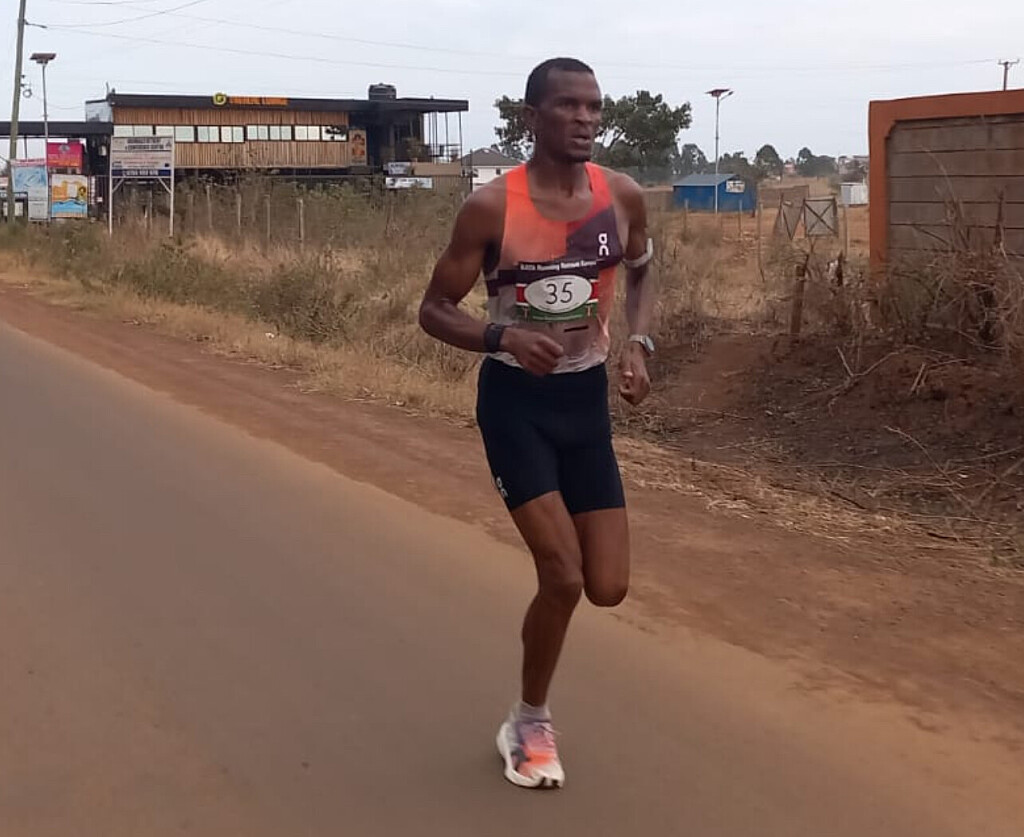
Fast times in the 38th monthly KATA Time Trial in Thika Kenya
The Kenyan Athletics Training Academy (KATA) monthly time trial took place today October 16th. We had 37 total registered athletes, 10 women and 27 men. Stephen ngigi opened the day with victory in the 5km MEN posting 14:28. This was his first time in the distance.
He was followed closely by Levis kuria who finished two seconds later stopping the clock at 14:31, a new personal best. Levis lowered his previous time of 14:49 by 18 seconds. Kelvin ragui finished third place and stopped the clock at 14:58, 8 seconds slower than his previous time. Kellen waithira took the victory in 5km Women in time of 17:01 followed by Lois wambui who stopped the clock at 17:22.
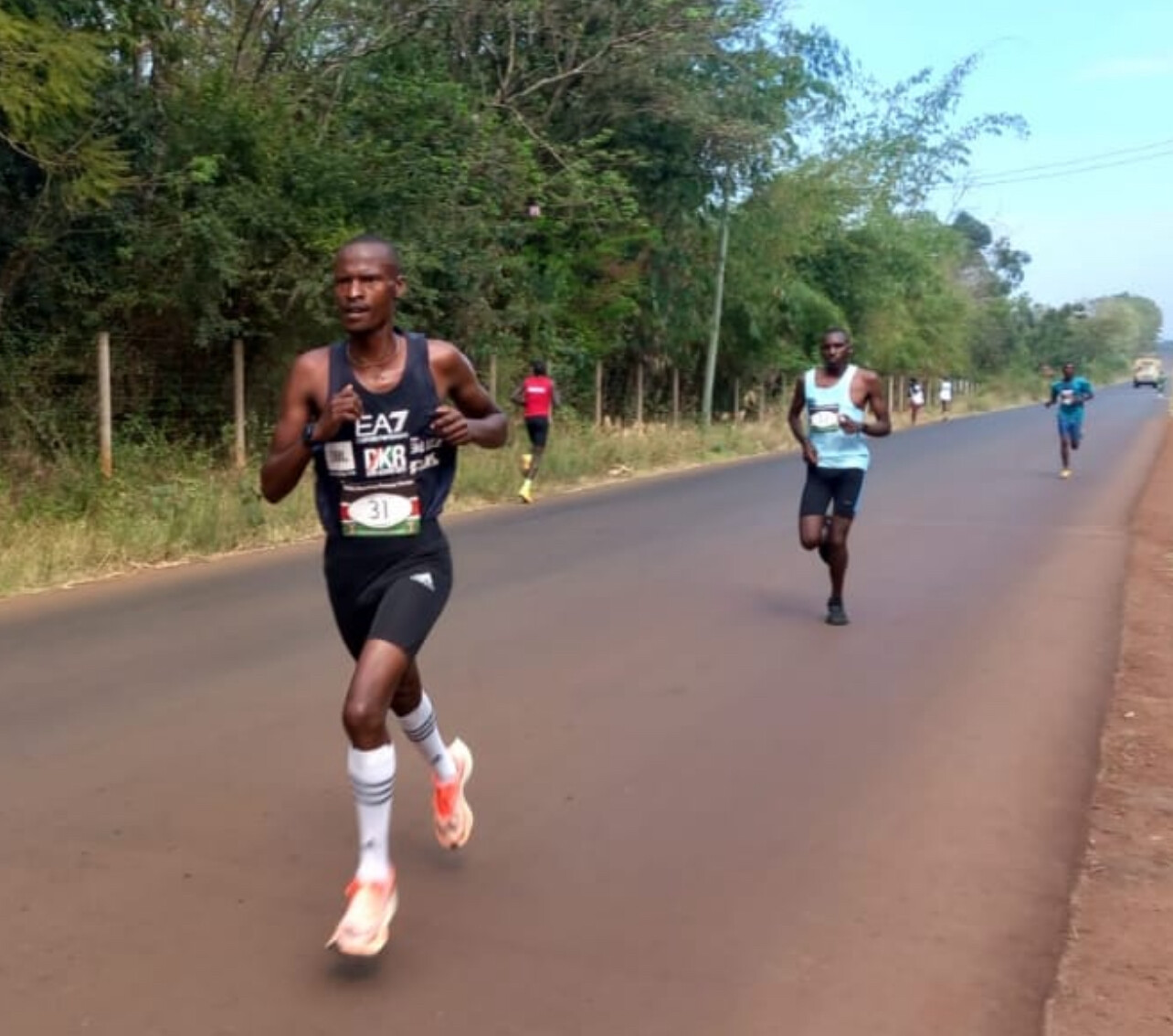
Athanas kioko (first photo) who is coming back from an injury won the men 10km race in a time of 29:16. He was followed by Peter mwaniki who is also nursing an injury clocked 29:47. Michael chege finished in third place posting a scintillating time of 29:59, a new personal best. Chege took off more than 40 seconds from his previous time.
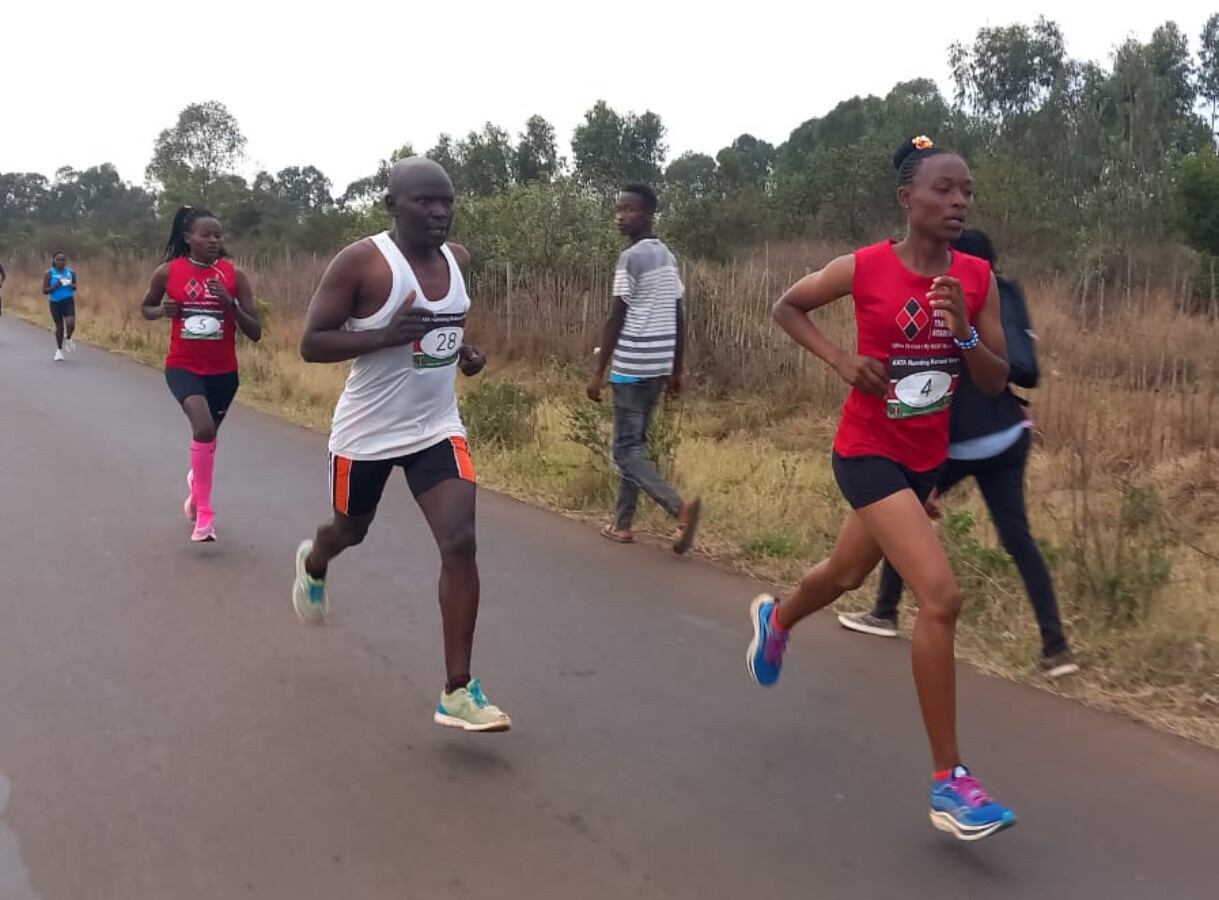
KATA Kenya and KATA Portugal
5km WOMEN
1 Kellen waithira 36 30 17:01
2 Lois wambui 23 5 17:22
3 Jacinta kamau 22 3 17:35
4 Lilian nyamai 23 4 17:59
5 Karen chepkwony 22 40 18:34
5km MEN
1 Stephen ngigi 20 18 14:28
2 Levis kuria 23 2 14:31
3 Kelvin ragui 23 13 14:58
4 Peter maina 33 34 15:02
5 John njuguna 29 36 15:03
6 Charles ndirangu 23 10 15:18
7 kappua Anthony 23 25 15:22
8 David muriuki 28 16 15:51
9 Amos chirchir 23 39 16:02
10 Peter mulua 24 14 16:42
11 Fredrick mwenda 18 11 17:47
12 William mbugua 21 12 17:55
13 Geoffrey mwangi 44 28 18:19
14 Michael oriko 24 24 20:38
15 Benjamin oriko 24 20 20:40
10km WOMEN
1 Monica wanjiku 22 29 33:34
2 Rachael ndungu 32 19 34:06
3 Virginia wanjiru 22 6 35:43
4 Karen chepkemoi 22 27 35:55
5 Vyonne nyawira 24 20 36:22
10km MEN
1 Athanas kioko 29 35 29:16
2 Peter mwaniki 27 31 29:47
3 Michael chege 17 15 29:59
4 Peter wanyoike 28 33 30:01
5 Bernard Baruka 30 23 30:42
6 Kenneth gichoya 27 32 30:49
7 Fredrick kiprotich 23 1 31:34
8 Bernard giceha 33 35 32:24
9 Joseph muniu 21 38 33:21
10 Paul kariuki 25 22 33:43
11 John ndungu 22 21 35:14
12 Charles ndirangu 64 37 37:57
Login to leave a comment
KATA Time Trial Series
Welcome to the KATA Monthly Time Trial Held at the Kenyan Athletics Training Academy in Thika, Kenya, the KATA Monthly Time Trial is a unique and inclusive event designed to support runners of all levels in achieving their goals and showcasing their fitness. This event offers both 10K and 5K distances on an accurate, certified course, providing participants with...
more...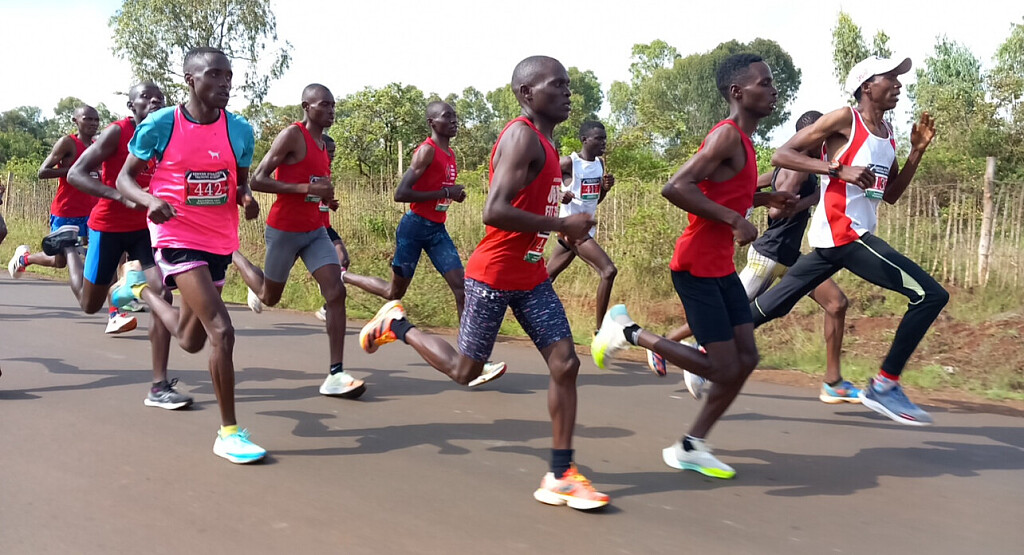
The monthly KATA Time Trial was started in Sept 2021 and it just keeps getting better
The monthly Kenyan Athletics Training Academy (KATA) Time trial for April was held today on a cold wet morning near Thika Kenya.
The attendance was good with 55 participants. Kelvin ragui opened the day with a win in the 5km with a personal best lowering his previous time by two seconds clocking 14:51. He was followed by Fredrick kiprotich 15:27. Charles ndirangu finished in third posting a personal best of 15:42.
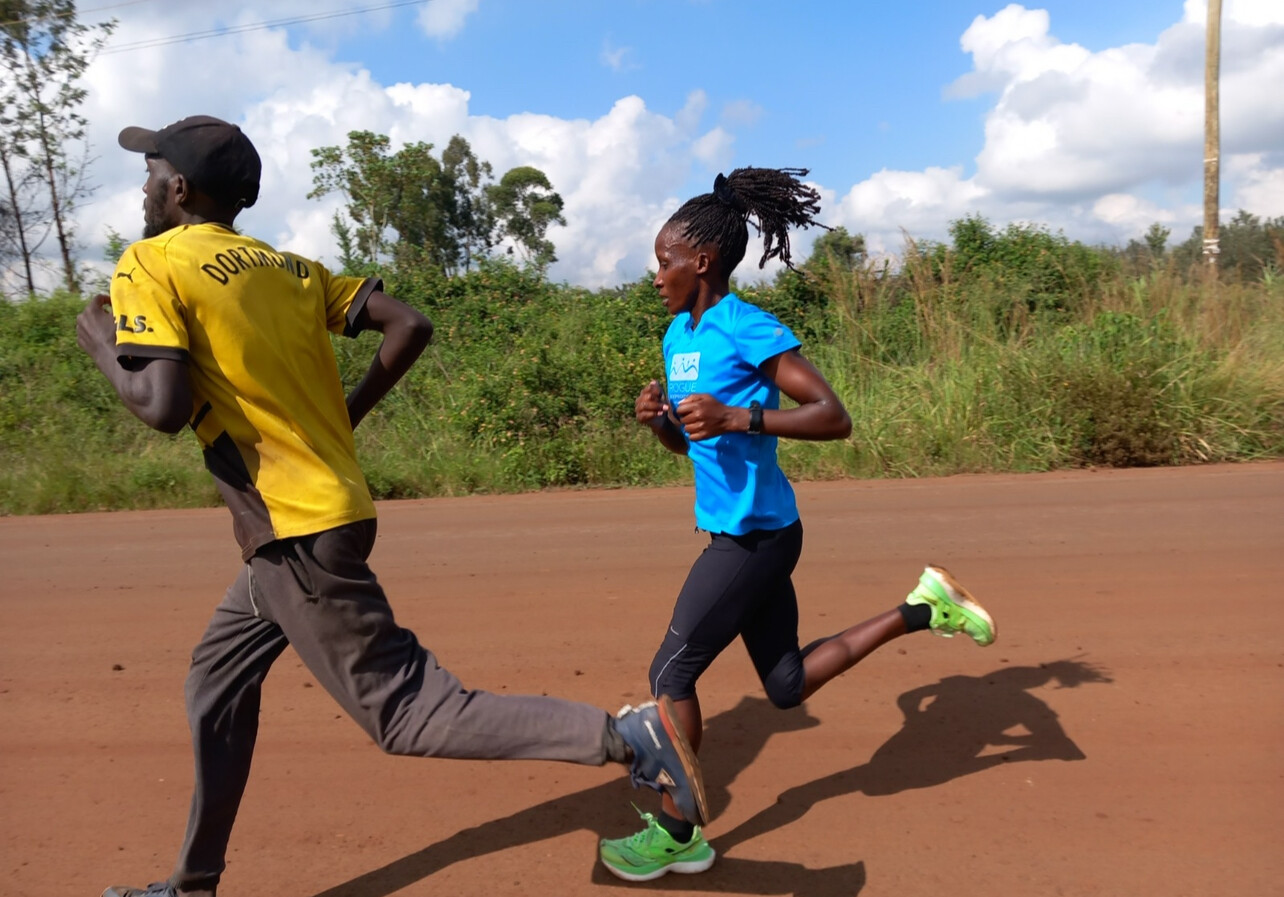
Ismael mburu who finished in 7th position as well captured a personal best of 16:32, lowering his previous time by more than 40 seconds.
Karen chepkemoi won the women 5km race in 17:55. Lilian musenya came in second with a personal best of 18:50.
Raphael karita won the Men's 10km clocking 29:11 which was only two seconds off his personal best time. He was followed by job kamande who posted a personal best of 29:33. Peter mwangi posted a very impressive time, 29:29 a personal best.
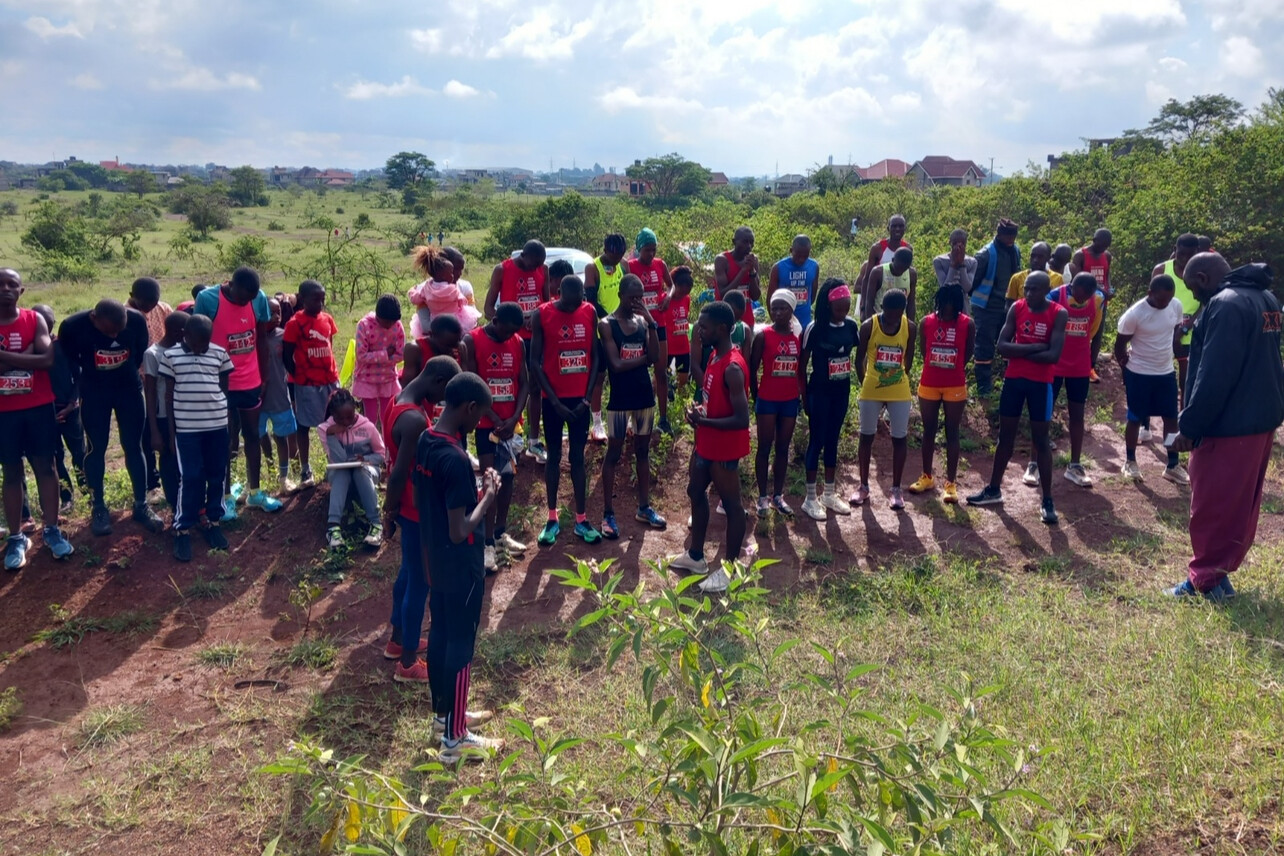
Charles ndirangu ( 64 years old) posted 37:37 lowering his previous time by 54 seconds. This is a world class time and is 91.98% age graded.
Jacinta kamau won the crown in the women's 10km race in a personal best of 35:11 by more than 30 seconds. Virginia wanjiru who finished in 4th place in a time of 37:01 also lowered her personal best by 29 seconds.
It was a good day of racing. The 33rd KATA Time trial will be held May 8, 2024. "Come join us," says director/owner Bob Anderson who is currently in Monforte da Beira Portugal setting up the second KATA Running Retreat opening in June 2024. 5km Men
1 Kelvin ragui 21 488 14:51
2 Fredrick kiprotich 23 326 15:27
3 Charles ndirangu 23 311 15:42
4 Amos chirchir 23 158 15:56
5 Gabriel gikeri 19 140 16:03
6 Clinton otieno 23 417 16:31
7 Ismael mburu 23 312 16:32
8 Ramadhan ambani 24 247 16:46
9 kariuki wangari 24 202 16:47
10 Geoffrey ngama 50 133 17:04
11 Jeremiah obura 20 146 17:26
12 peter Mukundi 25 84 17:54
13 Charles kabuthia 28 318 17:56
14 lewis mwangi 15 320 18:10
15 John kiragu 28 322 18:44
16 Zachary onyimbo 24 191 18:51
17 Alex kamau 22 253 19:20
18 Dennis kamau 14 162 23:15
19 Samuel maina 14 435 24:06
20 Donald gatunga 21 319 24:28
5km women
1 Karen chepkemoi 22 389 17:55
2 Lilian musenya 22 321 18:50
3 Anastasia muthoni 21 415 20:22
4 Emily wanjiku 17 254 22:22
10km Men
1 Raphael karita 24 246 29:11
2 Job kamande 23 251 29:23
3 peter mwangi 27 442 29:29
4 Dismas okioma 19 490 29:30
5 John njuguna 25 473 30:04
6 John muthui 48 264 30:17
7 Joshua kibet 26 250 30:22
8 Zachary kirika 22 992 30:31
9 Brian wekesa 26 130 30:46
10 peter ndungu 24 189 31:40
11 lewis kuria 22 188 31:49
12 Charles mwangi 21 198 31:50
13 Gabriel kahura 41 44 32:00
14 Anthony Mukundi 35 444 32:03
15 kiriuki karanja 50 314 34:16
16 Stephen ngigi 20 150 34:26
17 Bernard gicheha 33 315 34:49
18 Samuel kiroko 22 143 36:02
19 Charles ndirangu 64 317 37:37
20 Emanuel mang'anyi 23 249 40:37
21 Nahashion kiarie 33 185 40:38
10km women
1 Jacinta kamau 22 414 35:11
2 Lois wambui 23 455 36:04
3 Susan njeri 30 316 36:49
4 Virginia wanjiru 22 419 37:01
5 Lucy muritu 38 248 49:23
The KATA April sprint trials was good despite the weather conditions. The KATA sprinters tried their best. We are the only club that is training long distance, middle and sprints,last month three of our own athlete were selected for all African games,400m hurdles, rahab wanjiru,and also Gladys ngure was selected for South Africa relay ,our sprint star Doreen waka was also in the team to ghana but due to some logistics she was left behind, I coach Julius do believe in change ,we can produce the best with time.
KATA sprinters time trials at kasarani stadium April 17, 2024
100m Women
1.Doreen waka 11:90
2.shelmith rono. 12:35
200m Women
1.peris chege. 25.8 sec
2.Emma wavinya 25:9
400m women
1.Emma wavinya 57:5
Men 100m
1.festus waita 10.8
2.Antony Owino 11.0
3.chris mutahi 11.5
200m men
1.festus waita 21.7 sec
2.Antony Owino 22.5
400m men
1.Alvin mise 50.6 sec
2.benjamin mulanda 51.5
3.gerald orero 52.4
4.joseph kamau 53.1
Login to leave a comment
KATA Time Trial Series
Welcome to the KATA Monthly Time Trial Held at the Kenyan Athletics Training Academy in Thika, Kenya, the KATA Monthly Time Trial is a unique and inclusive event designed to support runners of all levels in achieving their goals and showcasing their fitness. This event offers both 10K and 5K distances on an accurate, certified course, providing participants with...
more...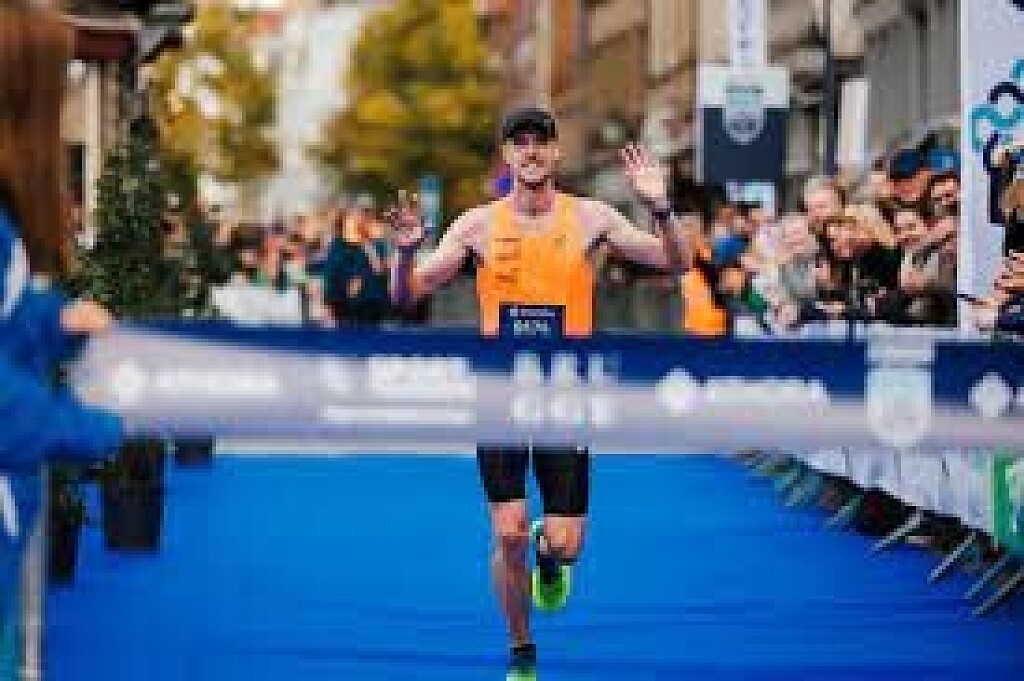
'I’ve found my spot in Iten'- Belgian marathoner training in Kenya ahead of Paris 2024 Olympics
A Belgian long-distance runner has opened up about how training in Kenya has changed his mindset ahead of the Paris 2024 Olympic Games.
Koen Naert, a Belgian long-distance runner loves training in Kenya and he also has a favorite spot he loves training at as he gears up for the Olympic Games in Paris, France later this year.
The 34-year-old already qualified for the Olympic Games, clocking a stunning personal best of 2:06:56 at last year’s Rotterdam Marathon.
The Belgian is targeting a top-eighth finish after finishing 22nd at the 2016 Rio Olympics and then improved that with a 10th-place finish at the delayed 2020 Tokyo Olympics.
To achieve the goal, Naert has been burning the midnight oil in Kenya, and in an interview with Athletics Weekly, he explained how it feels training in his new-found spot in Iten.
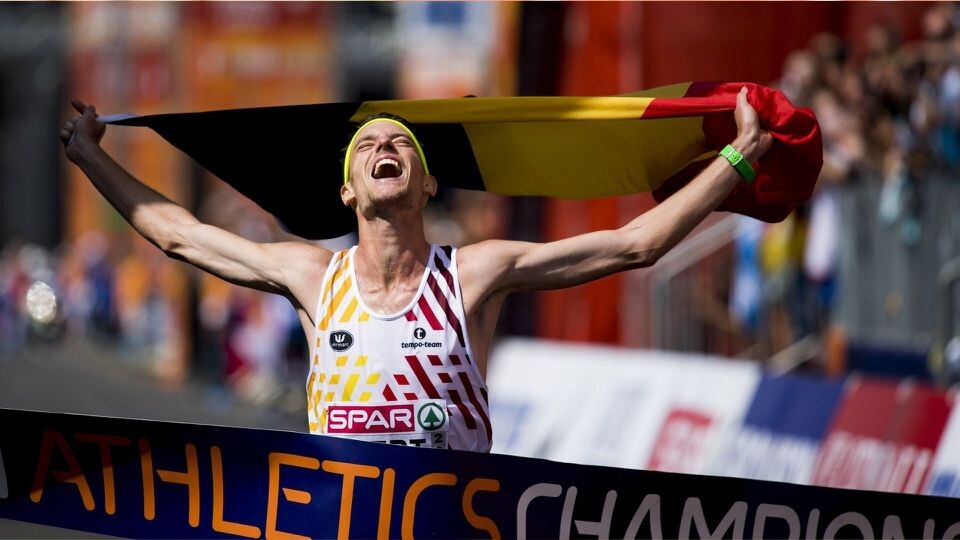
He explained that being in Kenya has helped him work on different aspects of his training since he is away from family and has time to work.
“It depends on the build-up. I think right now I’m doing 100km of running and a 50/60km alternative on the Elliptical Machine. In between my marathon blocks, I’ll do a lot of alternative training like aqua jogging but during the marathon block itself – the 12 weeks preceding my marathon – I’ll run 200km a week. Sometimes even 240km or 250km.
“I meditate at least twice a day and when I’m on camp at altitude I do a lot more sessions of meditation. That’s one advantage of being in Kenya. I also like to train in the US and have been to train with Deena Kastor’s group on occasion.
“Since 2021 however, I’ve found my spot in Iten. I waited a long time to go to Kenya because I was a little bit afraid of the food and life there but once you are on the ground, there’s no distraction and it’s a bit like living like a monk on a mountain,” he told Athletics Weekly.
He added that Olympic success for him would be to have to be honest with himself and he explained that he would need a little miracle to get on the podium.
“However, sometimes miracles exist and you never know. It will be challenging with the weather and the course. I will prepare myself the best I can but the top eight is my absolute goal. I was pretty close in Tokyo but we will see and every race/championship is different,” he said.
There are a lot of training camps in Kenya. One of the best is the KATA Running Retreat located near Thika. At any one time there are 20 or more athletes training at the Kenyan Athletics Training Academy (KATA).
by Abigael Wuafula
Login to leave a comment

Paris 2024 Olympic Games
For this historic event, the City of Light is thinking big! Visitors will be able to watch events at top sporting venues in Paris and the Paris region, as well as at emblematic monuments in the capital visited by several millions of tourists each year. The promise of exceptional moments to experience in an exceptional setting! A great way to...
more...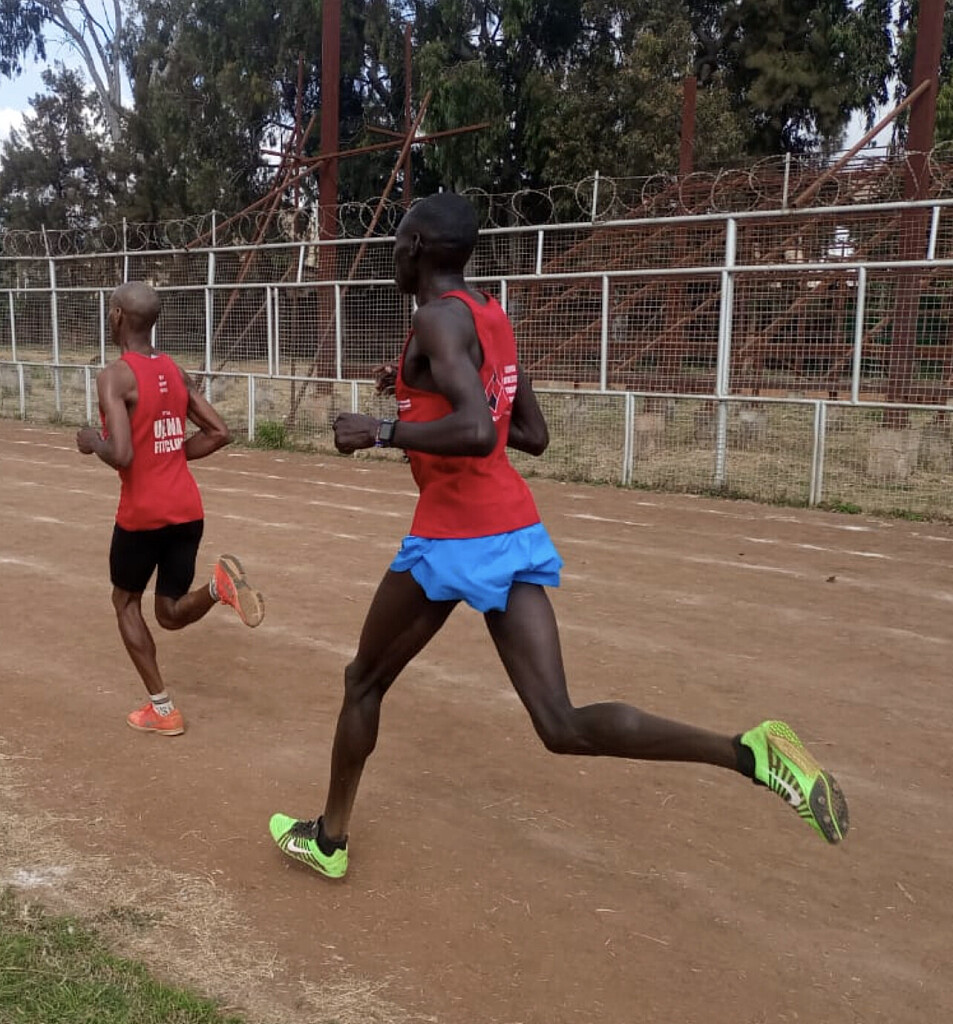
The monthly KATA Time Trial in Thika Kenya was the 23rd in the series
The Kenyan Athletics Training Academy (KATA) time-trial series for the month of July continued on Wednesday at Thika Stadium as the season move to a new phase.
Coming a week after engaging in tough competitions, Evans Kiguru dominated the 10,000metres event while Zakaria Kirika was comfortable in the shorter 5,000m.
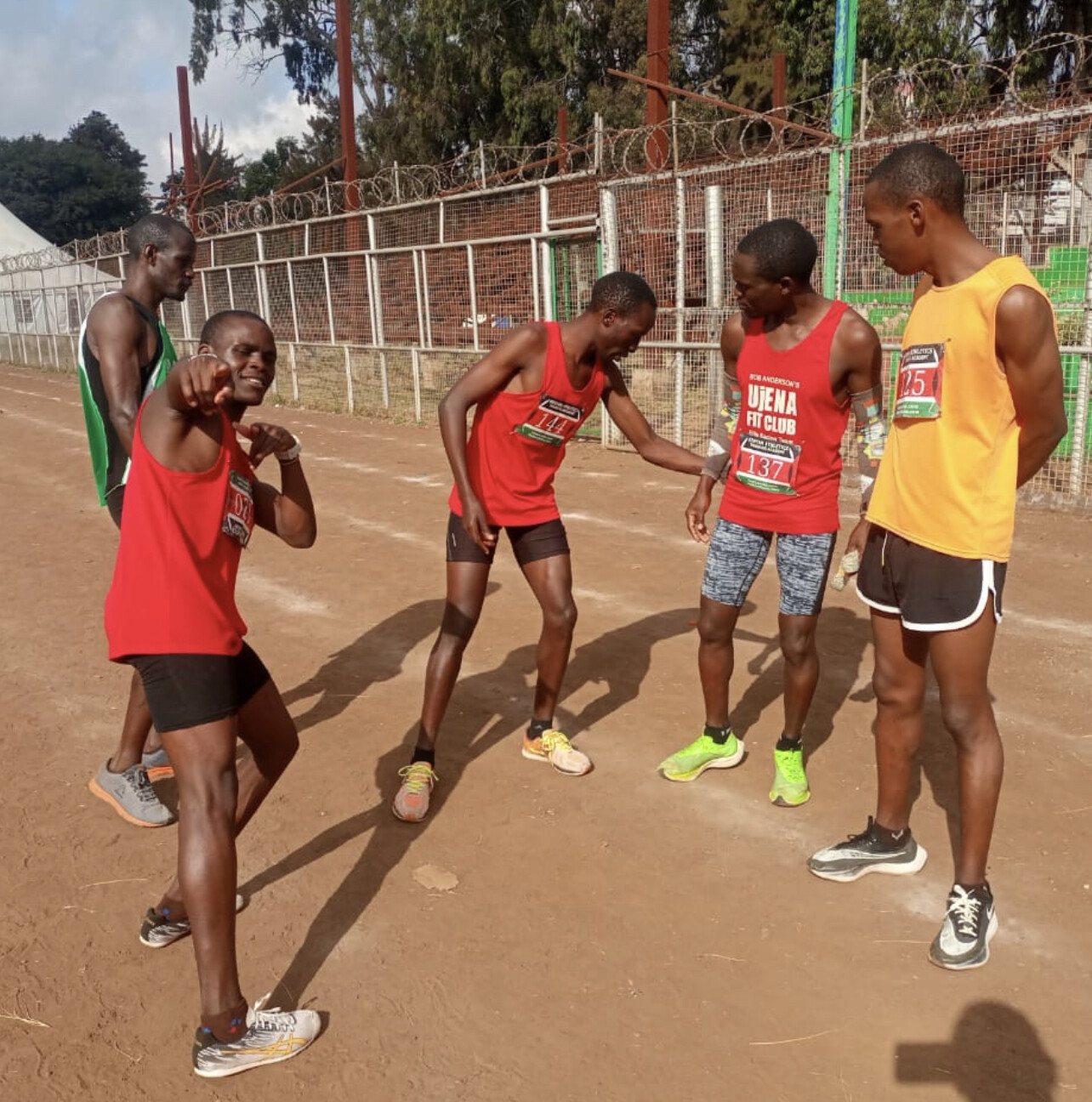
Hitting the podium for the first time, Evans registered 31:38.9 to level his June’s 31:38.8 whereas Zakaria timed 15:04.8 as the duo worked to fight off the Nairobi City Marathon’s fatigue that saw them run against the elite class.
Fredrick Kiprotich emerged second behind Evans in 32:00.7 with newcomer Benard Gicheha chalking 34:32.7. Anthony Mukundi(2:24.3 in City Marathon) timed 15:32.0 while University’s National Cross-Country Champion Boniface Mungai finished third in 15:52.6
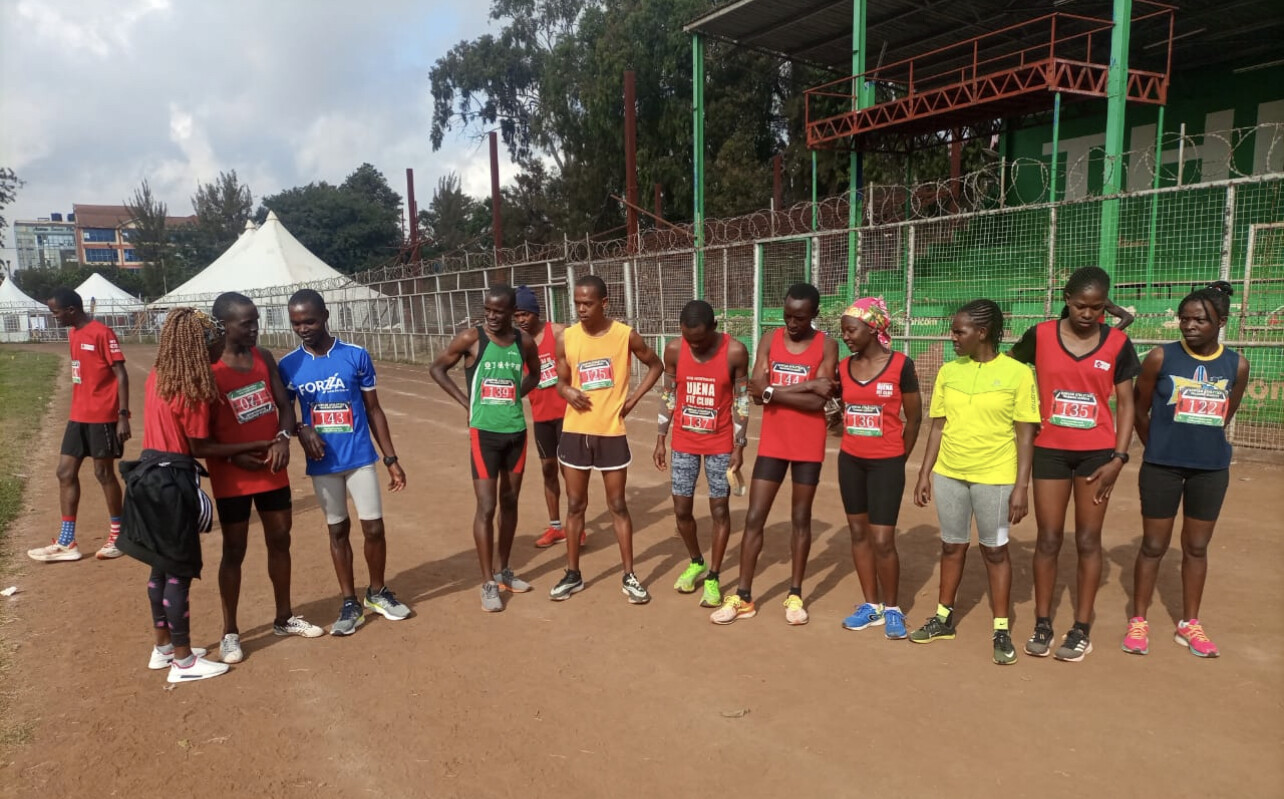
New entrant Pricilla Biwott (58) was the sole Master in 10,000m where she clocked an impressive 41:11.9 while upcoming Caren Chepkemoi timed 18:43.0 to win the women 5,000metres.
The 24th edition is scheduled for August 16thand will be held on the Ndarugo-Mangu Road, 5kilometres West of the KATA.
10,000 Metres
1. Evans Kiguru 27 141 31:38.9
2. Fredrick Kiprotich 23 140 32:00.7
3. Benard Gicheha 33 149 34:32.7
4. Ismael Mburu 23 143 35:19.9
5. Pricilla Biwott 58 142 41:11.9
5,000 Metres
1. Zakaria Kirika 114 22 15:04.8
2. Anthony Mukundi 137 35 15:32.0
3. Boniface Mungai 144 25 15:52.6
4. Amos Chirchir 120 23 16:07.3
5. Peter Mukundi 125 25 17:07.0
6. Caren Chepkemoi 135 21 18:53.0
7. Nancy Githaiga 84 35 20:50.0
8. Virginia Wanjiru 136 21 21:16.4
9. Jacinta Mwende 122 21 21:29.8
by Coach Joseph
Login to leave a comment
KATA Time Trial Series
Welcome to the KATA Monthly Time Trial Held at the Kenyan Athletics Training Academy in Thika, Kenya, the KATA Monthly Time Trial is a unique and inclusive event designed to support runners of all levels in achieving their goals and showcasing their fitness. This event offers both 10K and 5K distances on an accurate, certified course, providing participants with...
more...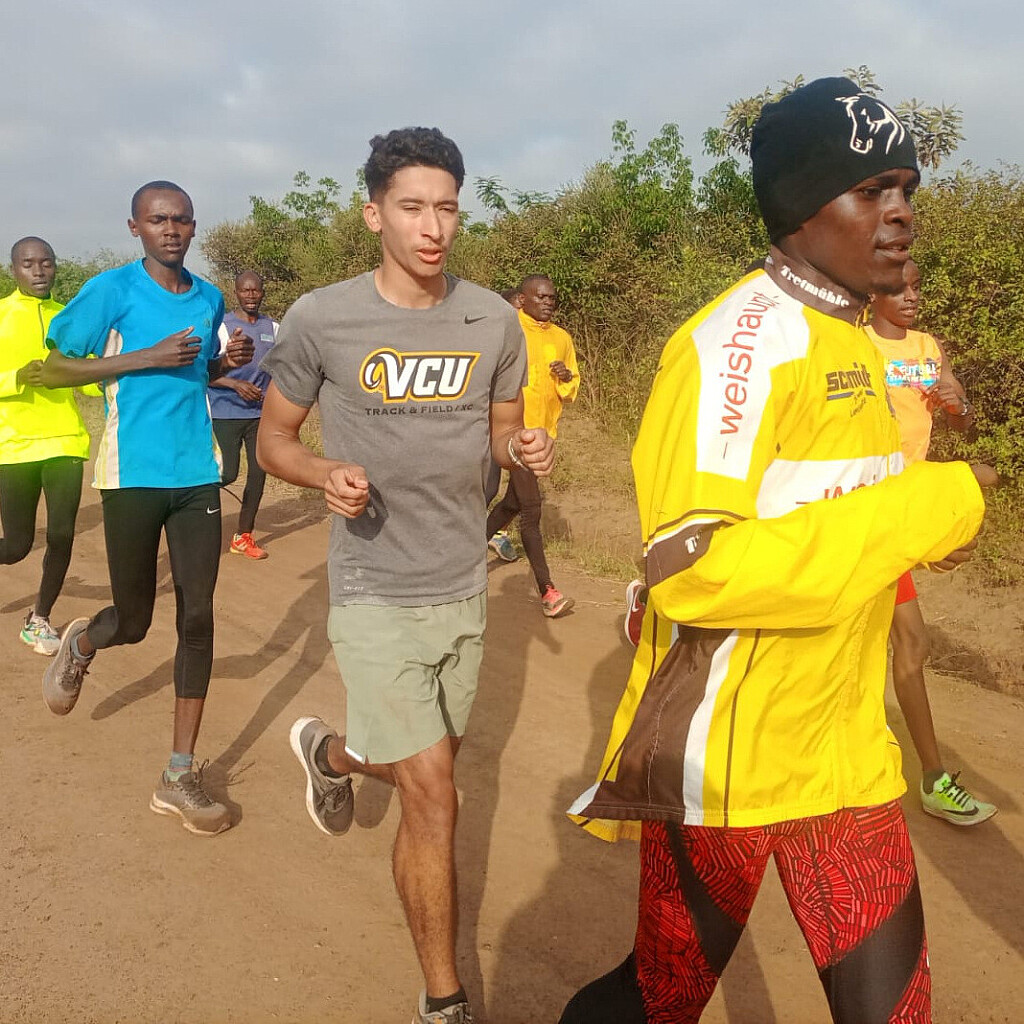
You too can Train the Kenyan Way in Kenya
Kenyan runners and many non-Kenyan runners training in Kenya have had good success. But why? These four things stand out as the reasons behind their success.
1. Training is a big part of their secrets including sloop training, intervals, fartlek and many exercise drills. They train twice a day, six times per week with the evening run easy.
2. Equally important is their diet, the Kenyan's runner diet is starch based very high in carbohydrates. Kenyan runners get 76 percent of their daily calories from carbs.
3. Almost all Kenyans train in groups, many at training camps.
4. Kenyans runners are surrounded by inspiration and positive thinking. You must believe you can run a 2:01 marathon to be able to do it. Visualization is a big part of this.
Many runners outside of Kenya have thought about training in Kenya with Kenyan runners. Some have made the trip and have had great success. But for most runners making the trip to Kenya and training for a month or more there never become more than a dream.
The main reason why it only remains a dream is because it just has not been easy to set it up. Lifetime runner Bob Anderson who also was the founder of Runner's World Magazine in 1966 and most recently the publisher of My Best Runs has made it easy for runners to come to Kenya and Train The Kenyan Way.
Bob and his wife Catherine first travelled to Kenya in 2013 and staged a race in Thika. It was during this trip he met up with Elam Wangwero, a 29-minute 10k runner who just loved all aspects of athletics. Bob and Elam talked about setting up a training camp in Thika (just an hour outside of Nairobi) during that trip.
Work started on the Kenyan Athletics Training Academy (KATA) some years later. Bob brought on board Florence Kimiti to be the manager and then hired Coach Joseph Ngure to be the head coach.
Construction was finished in September 2021. For the last two years the KATA staff have been working with Kenyan staff athletes getting them ready to accept guest athletes from around the world. The KATA staff athletes are training to become professional runners (some already are) and to help guests achieve their goals.
“COVID did slow things down for a while, says Bob Anderson, "but on June 14, 2023 we welcomed our first guest."
KATA has six private rooms for guests, each with a double bed and private bath with a shower. KATA has a total of 26 rooms including staff athletes’ rooms, office, a runners Lounge with a large TV screen, Olympic Dining Hall, Laundry room, Kitchen, massage room and a courtyard and garden so athletes can relax in between workouts.
KATA is solely set up for athletes who are interested in improving, running new PR's, becoming campions or being a professional runner. "We offer world-class training, quality Kenyan runner's food in a relaxed inspirational atmosphere with the emphasis on distance running, " says Director/Owner Bob Anderson working from his office in Mountain Views, California USA.
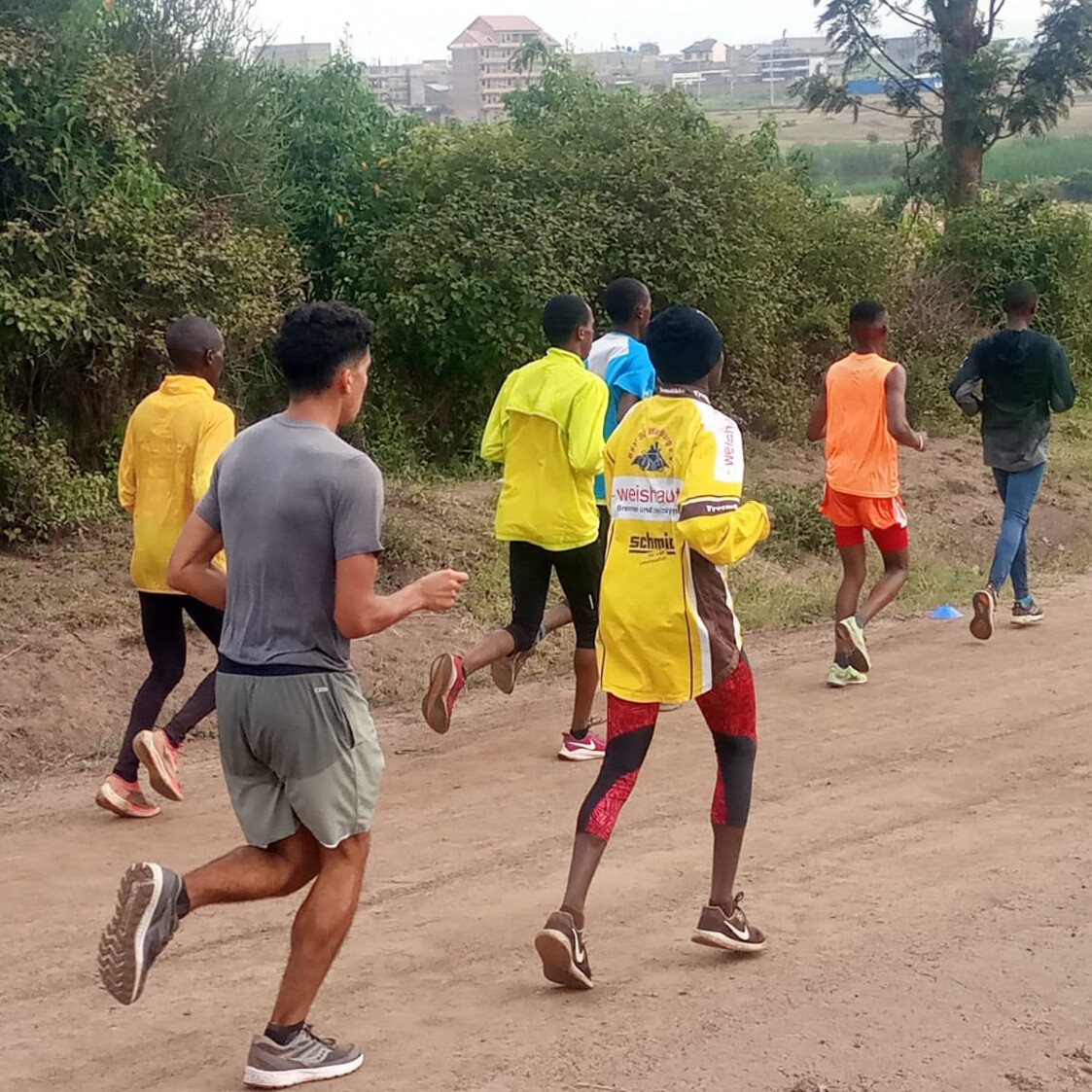
KATA’s first guest arrived on June 14th and is staying for six weeks. 20-year-old Nahim Abdallah (first and second photo) is a college student at Virginia Commonwealth University. He has clocked a 4:22 mile and recently ran a 14:31 5000m. He wants to be in top form for the upcoming cross-country season. His goal is to get under 14 minutes for 5k during his stay.
The second confirmed guest checking in July 2 for 12 weeks is Max Barnett (third photo) from England. He ran a 3:45 marathon in Paris a few weeks ago and wants to break three hours by October in Lisbon. "This is an aggressive goal," says Coach Joseph, "but we are going to help him make it happen."
"I have spoken with Max several times," says Bob Anderson "and I think we can help make this happen because of the passion Max has for running. His focus for 90 days will be running where now in England he just has too many other things getting in the way."
Bob Anderson and the team are very dedicated to this program and feel their setup is different than most. "We just have a cozy personal feel here," says onsite manager Florence. "So much positive inspiraton."
"This is your chance to Train the Kenyan Way," says Bob. All you need is a passport/visa and an airline ticket to Nairobi, Kenya. KATA will take care of everything else including picking you up at the airport. "Of course, you have to have the desire to become a better runner," says Florence, who was also a 1:59 800m runner as a junior.
"KATA offers training programs for 800m to 1-mile, 5k, 10k, Half Marathon and the Marathon" says KATA's onsite senior AK coach Joseph Ngure. "We will work with you and help you achieve your goals. Just let us know your starting point and your goals and we will provide the coaching to help you achieve it."
At any one time 12-20 Kenyan KATA staff runners are training at KATA. Most live and eat at KATA while others live nearby. These Kenyan athletes set the style of KATA as they work hard to become better runners themselves and help and support our guests.
You might be thinking that something like this must be very expensive. It is not, the cost is just $375US weekly with a minimum stay requirement of four weeks. This covers all your costs including a private room, three meals a day and world-class training.
For more info go to: www.KenyanAthletics.com
by Lisa Wall
Login to leave a comment
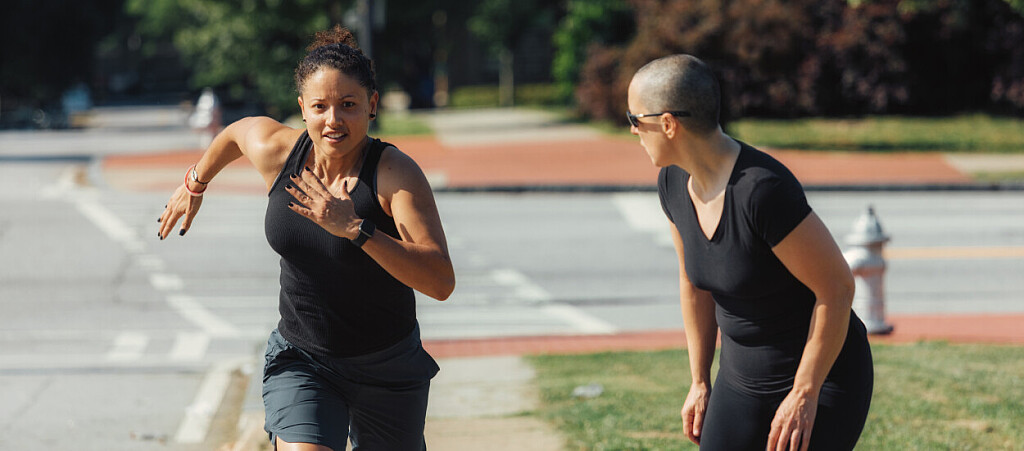
Six tips on finding the right running coach
This time of year is the most popular for running, and challenging yourself to sign up for summer and fall races is a fantastic way to achieve personal goals. If you’re new to the sport or looking to take your running to the next level, working with a running coach can be a game-changer. Finding the right coach can be tough, but it can provide guidance, structure and expertise to help you reach your full potential. But how do you find the right running coach for your specific needs? Here are some essential tips and ideas to help you in your search.
1.- Align your goals

Before you begin your search for a running coach, take some time to write down your running goals. Are you aiming to complete a marathon, improve your speed in a 5K, or simply learn to run? Understanding your goals can help you find a coach best suited for your objectives, since different coaches specialize in various areas of running, such as the marathon, track and field, or recreational running. If you know what you’re looking to accomplish, it can help you narrow down your options and find a coach who can best assist you in reaching your goals.
2.- Do your research
When finding a running coach, it’s crucial to research their experience and ask for referrals from other runners. You should also consider their track record of coaching success, including testimonials from some of their athletes or former clients, to gauge their satisfaction and the effectiveness of their training approaches. The last thing you want is to have someone who doesn’t know what they are doing or crosses personal boundaries. The internet can be an incredible resource when trying to find the right coach-a quick Google search of their name to see accomplishments or reviews can go a long way.
3.- The two C’s
The two Cs might be the most crucial tip of the four. Compatibility and good communication are essential factors in finding a great coach. You want to make sure you find a running coach who understands you as a person and your running goals. The purpose of a running coach is not only to enhance your performance, but also to provide you with motivation, accountability, and valuable insights to help you become a better runner.
It is good to arrange an initial meeting or consultation with a few coaches to discuss your goals, training preferences, and expectations. This meeting will help determine if their personality and coaching styles align. An open line of communication, where you feel comfortable asking questions and providing feedback, is crucial for a coach to understand your needs and tailor their guidance accordingly.
4.- Consider your schedule
Unless you’re a professional runner, odds are you will be training while managing school or a full-time job, so finding time to squeeze in training sessions isn’t always easy. Before hiring a coach, make sure their approach and plan work with your schedule. A good coach should be able to adapt to each individual’s circumstances, considering factors like work, sleep, family commitments, and personal limitations.
Many coaches will offer an initial trial or assessment session to evaluate your running form and fitness level, determining where you’re at in your training. This trial period will allow you to experience the coach’s training approach and assess if their style suits your needs.
5.- Find your budget
It’s important to find a coach who fits your budget. Be sure to ask yourself how much you are willing to spend on a coach. Running coaches may have varying rates, but they usually charge annually, monthly, or per training plan. When inquiring, always ask about their pricing structure and what is included in their coaching services. Some coaches offer different tiers or options, such as one-on-one coaching, online training plans, or group sessions, each with different price points. Consider the level of support and guidance you require and find a coach whose fees align.
6. - Train the Kenyan Way
Kenyan runners have proven that hard work pays off as many races around the world are won by Kenyan runners. What is their secret? Kenyan runners don't only put in lots of miles. It is a whole program guided by a coach. In Kenya there are many running camps helping Kenya runners as well as other runners from around the world. One of the best camps offering an all-inclusive pacakage is the Kenyan Athletics Training Academy (KATA) in Thika just one hour from Nairobi.
Everything is included in their program and the cost is just $375 per week with a four week minimum. A guest runner from England booked a 12 week stay starting July 1. Max ran a 3:45 marathon in Paris and want to get under three hours by October at the Lisbon Marathon. An aggressive goal but one KATA Coach Joseph Ngure and team feel is possible.
KATA has made it easy for runners all over the world to now Train the Kenyan Way in Kenya.
by Marley Dickinson
Login to leave a comment
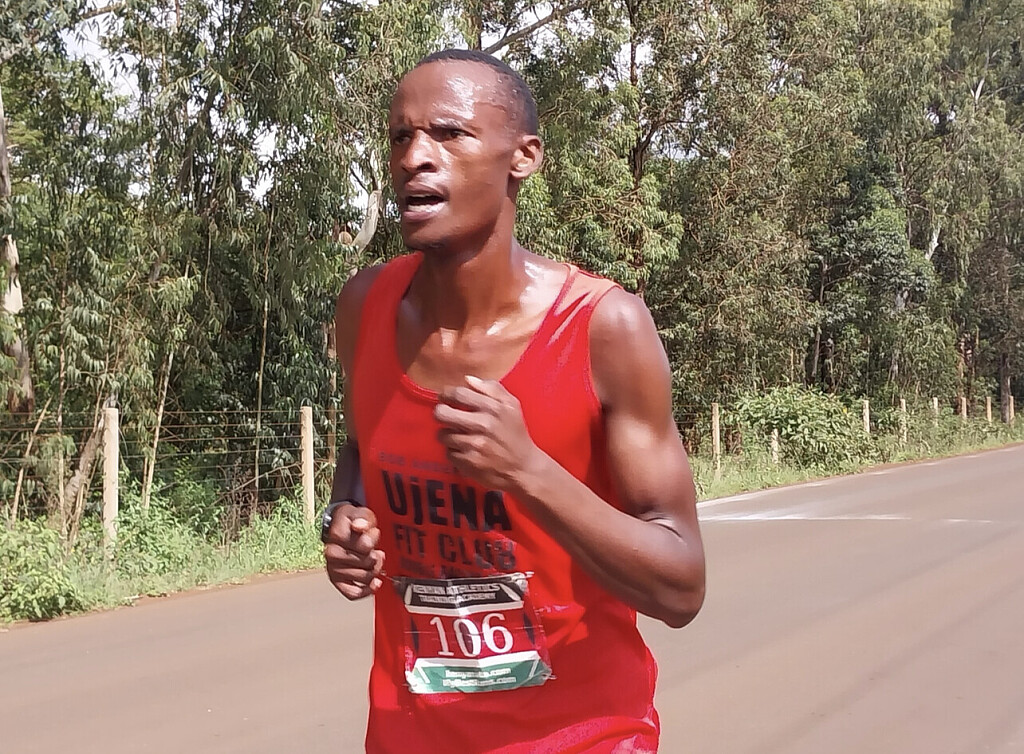
Peter Mwaniki again wins the 20th edition of the KATA monthly time trial in Thika Kenya clocking 29:17.5
The 20th edition of Kenyan Athletics Training Academy (KATA) time trial were held in Thika Kenya this Wednesday with on-form Peter Mwaniki and Fredrick Kiprotich retaining their titles.
Peter bettered his 29:42.6 attained in February to clock 29:17.5 on the 10Kilometres Course while Fredrick, who finished first in last month’s 5,000metres on the track, defended the 5Kilometres class after timing 15:34.7.
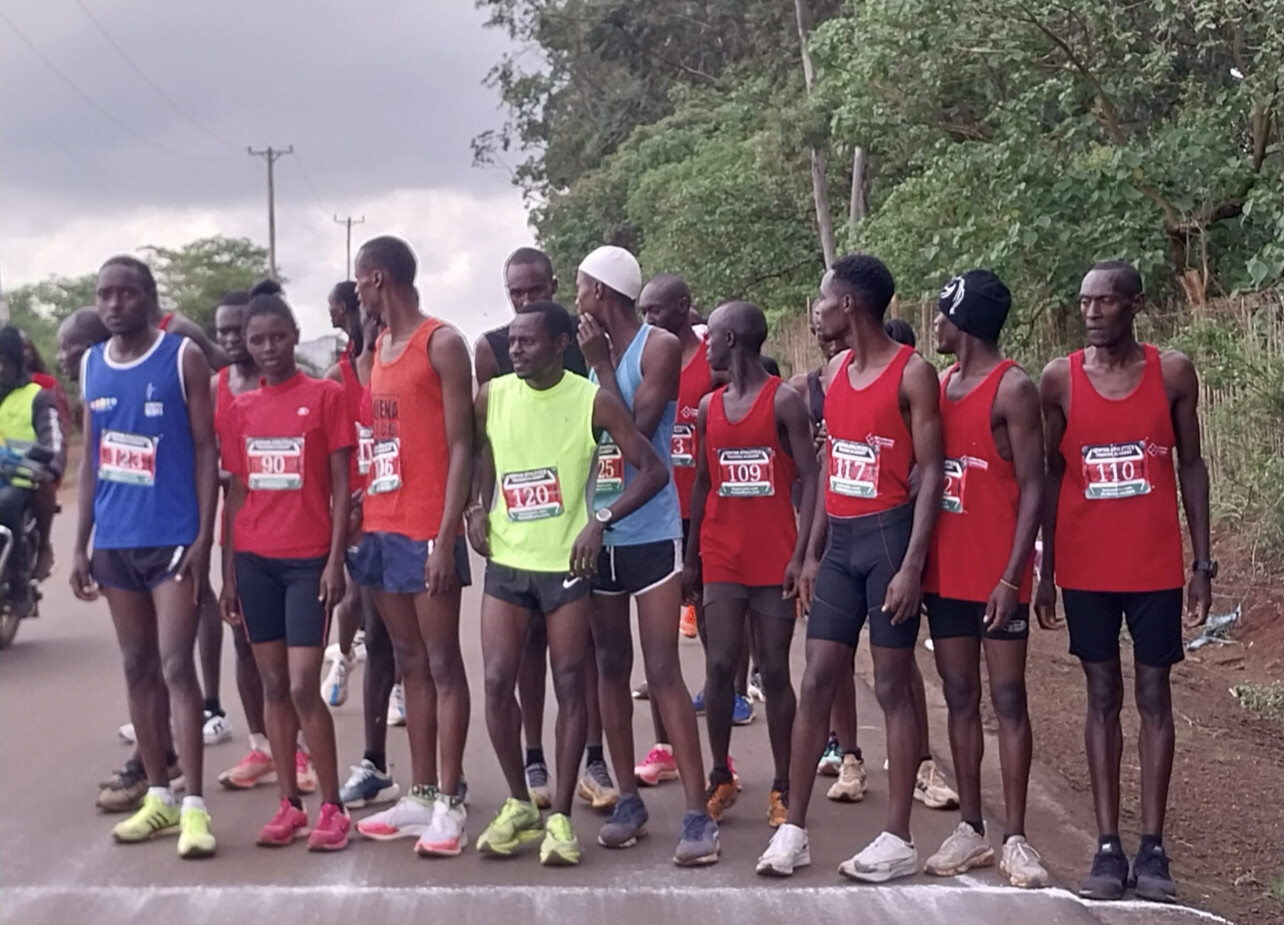
Zakaria Kirika followed the winner in the 10Km clocking 29:58.4 with 3rd-placed Raphael Gacheru clocking 30:54.2.
Peter Mburu and Evans Kiguru followed in 31:04.5 and 31:08.1.
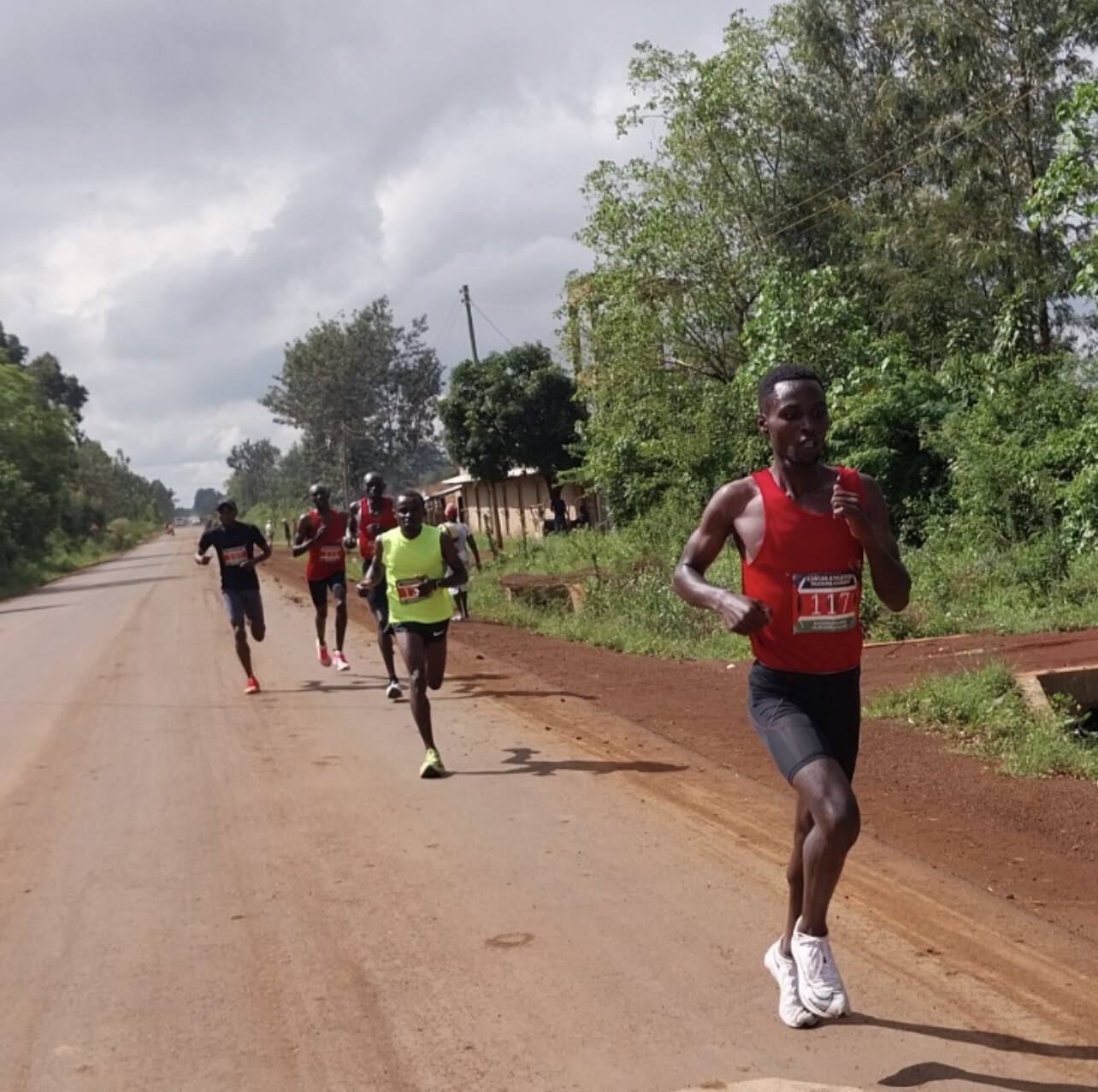
In the 5Kilometres, visiting athlete Daniel Kishoyan from Narok came second in 15:48.5 while upcoming John Mutiso,19, clocked 16:49.0 during the trial held at the traditional Mang’u-Bob Harries Road, just 5Km from KATA.
In Ladies, Marathoner Kellen Waithera,36, improved her time from 36:38.3 to 34:36.3 while Caren Chepkemoi posted 38:08.2 for second place.
Paul Ng’ang’a clocked 35:21.1 to come first in the 40-44 master’s class while Charles Ndirangu, 60, clocked an excellent 36:26.9 to win his category.
20th KATA TIME-TRIAL
10Kilometres
1.Peter Mwaniki 106 24 29:17.5
2.Zakaria Kiriki 124 22 29:58.4
3. Raphael Gacheru 117 24 30:54.2
4. Peter Mburu 123 26 31:04.5
5. Evans Kiguru 115 27 31:08.1
6. Simon Mwangi 107 21 31:08.5
7. Simon Ngumbao 120 28 31:50.3
8. Boniface Mungai 111 24 32:06.8
9. Anthony Mukundi 84 35 32:12.9
10.Eliud Muthike 127 28 34:22.5
11. Kellen Waithera 121 36 34:36.3
12. Paul Ng’ang’a 110 42 35:21.1
13. Charles Ndirangu 118 60 36:26.9
14. Caren Chepkemoi 89 21 38:08.2
15. Chris Kamande 114 38 48:53.6
5Kilometres
1.Fredrick Kiprotich 108 23 15:34.6
2. Daniel Kishoyan 93 21 15:48.5
3. John Mutiso 119 19 16:49.0
4. Amos Chirchir 122 23 16:52.7
5. Lawrence Maina 112 24 18:14.3
6. Francis Kariuki 120 16 18:20.8
7. Lewis Mwangi 109 16 18:22.9
8. Paul Kariuki - 24 19:00.0
9. Virginia Wanjiru 126 21 25:12.5
10. Hannah Njeri 90 23 26:08.2
by Coach Joseph Ngure
Login to leave a comment
KATA Time Trial Series
Welcome to the KATA Monthly Time Trial Held at the Kenyan Athletics Training Academy in Thika, Kenya, the KATA Monthly Time Trial is a unique and inclusive event designed to support runners of all levels in achieving their goals and showcasing their fitness. This event offers both 10K and 5K distances on an accurate, certified course, providing participants with...
more...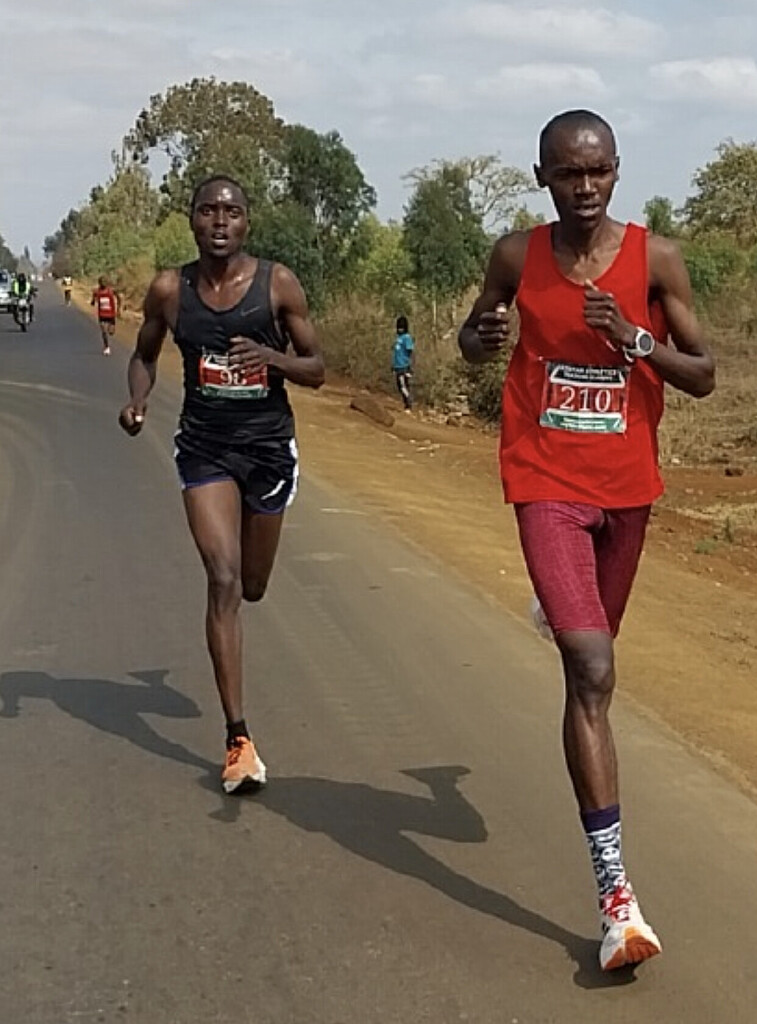
Peter Mburu clocks 29:38.2 10k at the 14th KATA monthly Time Trial
In the absence of KATA's Peter Mwaniki and Peter Wanyoike (both competing in Italy) another Peter took over the driver's seat during the 14th edition of Kenyan Athletics Training Academy (KATA) on Saturday.
Peter Mburu is the new champion of the 10Km Trial that saw half of KATA Athletes improving their Personal Records.
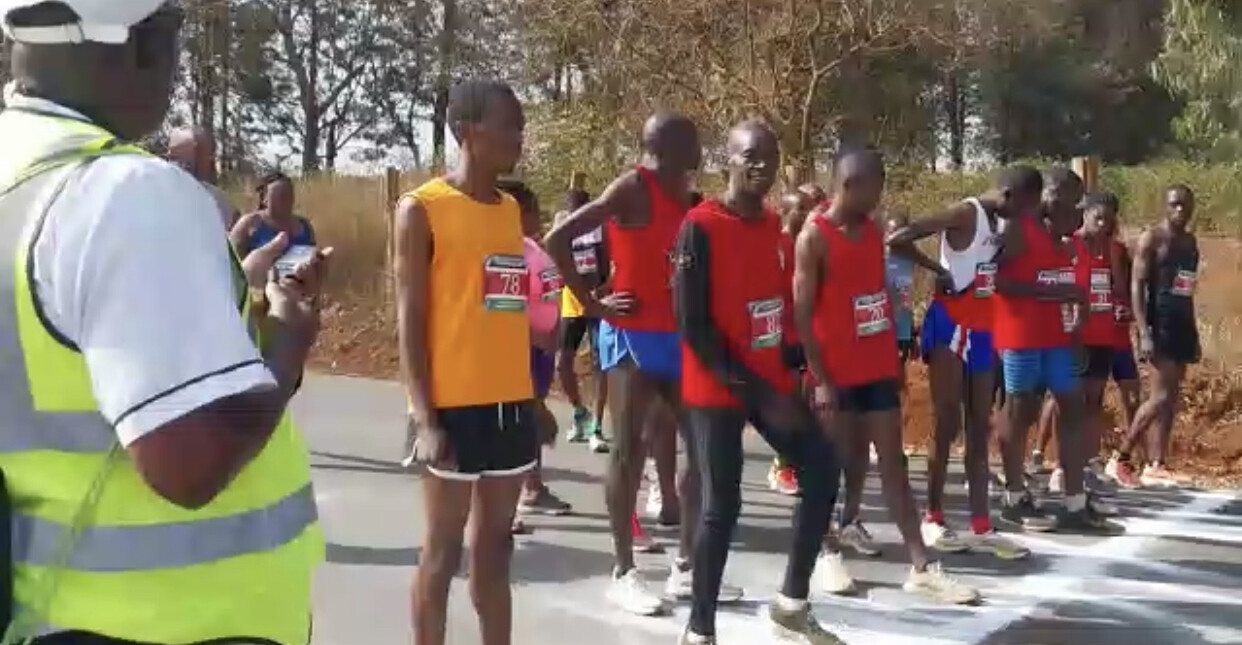
Mburu, who has been struggling with an injury since May, timed 29:38.2, bettering his previous 30:13.8 with the ever-green Zachariah Kirika finishing second in a new Personal Best of 29:44.5, chopping off 10 seconds from his April’s 29:54.4 Personal Best.
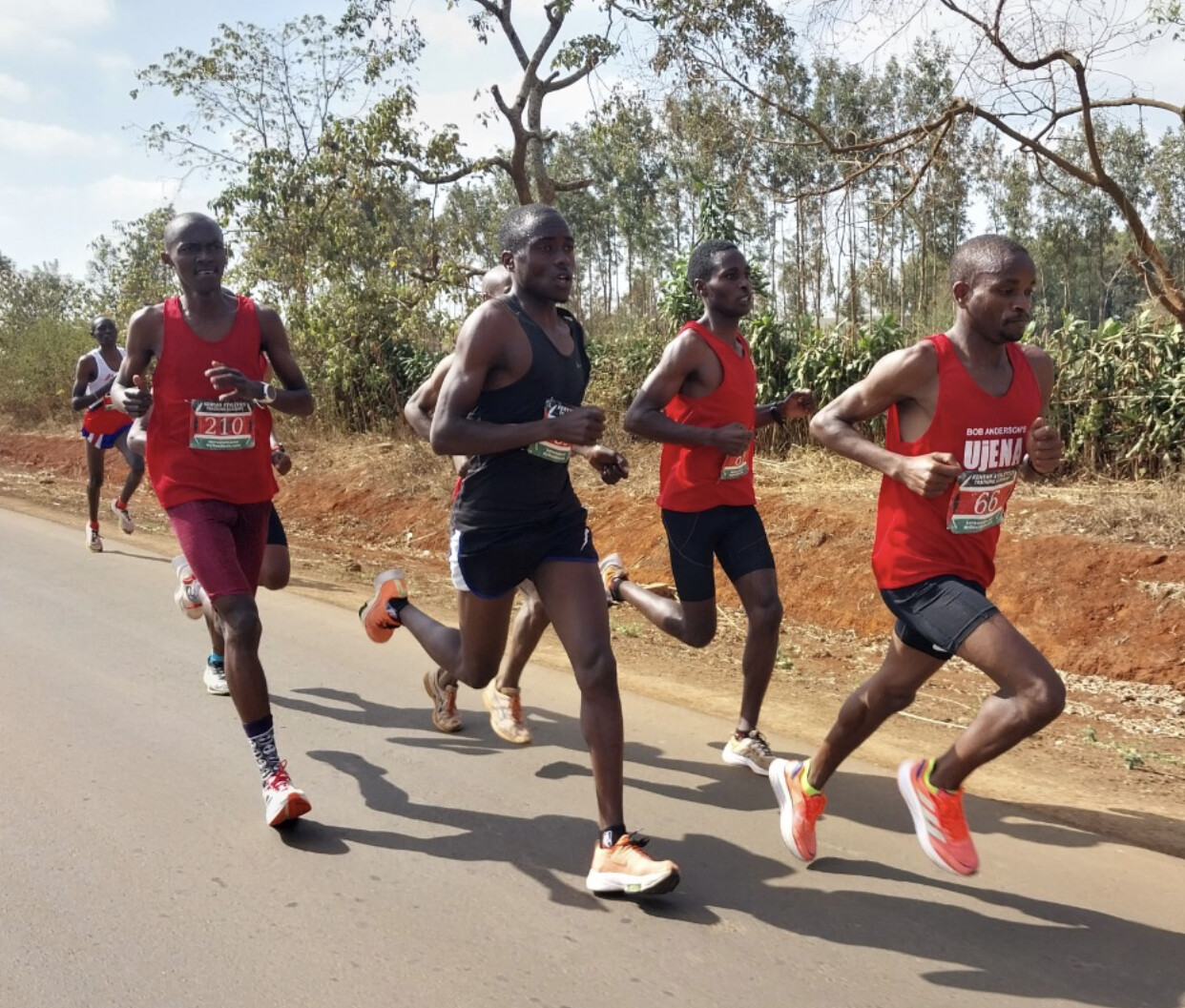
The monthly time-trial that took place near Thika on a 5Km loop with 22 participants, saw half of KATA Athletes register their personal best times as they step up their training for Standard Chartered Nairobi Marathon at the end of the month where most of them will compete in 21km and 10Km respectively.
KATA's 60-year-old Charles Ndirang’u clocked 39:50 which is 83.8% age-graded.
The next time-trial will take place on the track November 19 at the Jomo Kenyatta University of Agriculture and Technology Track, and will include the 5,000m as well as 10,000m.
Full Results:
name, bib, age, time
1. Peter Mburu 98 26 29:38.2
2. Zachariah Kirika 210 20 29:44.5
3. Erick Mutuku 66 20 29:55.6
4. John Kuria 72 26 30:06.6
5. Raphael Gacheru 81 22 30:43.2
6. Evans Kiguru 85 27 31:12.9
7. Eston Mugo 70 29 31:37.6
8. Fredrick Kiprotich 500 23 32:36.0
9. Anthony Mukundi 80 36 33:23.4
10. Paul Ng’ang’a 443 44 34:18.2
11. John Mutiso 127 18 35:45.1
12. Simpson Njoroge 217 38 36:03.6
13. Joseph Wanjiru - 36 37:05.8
14. Susan Njeri 20 36 38:01.1
15. Caren Chepkemoi 94 19 39:43.0
16. Charles Ndirang’u 82 60 39:50.0
17. Kellen Waithera 100 35 39:50.5
18. Peter Mukundi 78 27 43:41.1
19. Hannah Njeri 95 23 52:29.0
Login to leave a comment
KATA Time Trial Series
Welcome to the KATA Monthly Time Trial Held at the Kenyan Athletics Training Academy in Thika, Kenya, the KATA Monthly Time Trial is a unique and inclusive event designed to support runners of all levels in achieving their goals and showcasing their fitness. This event offers both 10K and 5K distances on an accurate, certified course, providing participants with...
more...
Thousands of Kenyan runners dream about becoming a professional runner but most can not find the support needed to make it happen. Their conditioning fades as does their dream.
Most Kenyans under the age of 25 or so who run seriously are not doing it as recreation or for health reasons, they run because they think they have the ability to be a professional runner. A career where they can win enough prize money to provide for themselves and their family.
In the United States most runners of all ages run for recreation and or for health reasons. Most Americans do not even know a runner can make a living, a very good living from running races. The sport of professional running did not start until 1986 officially.
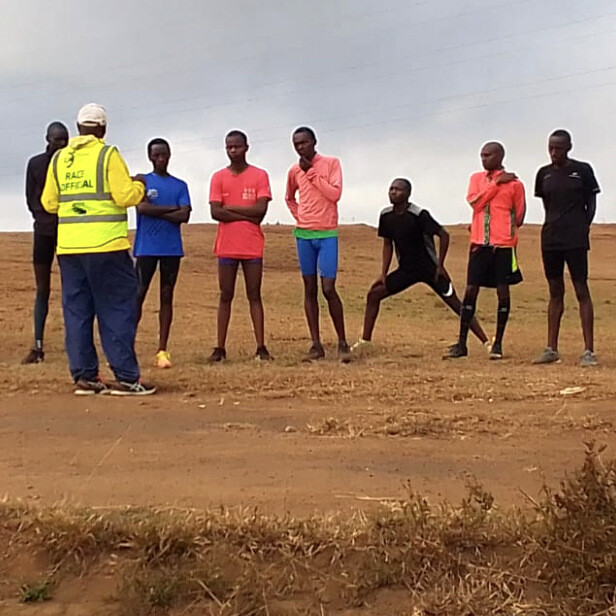
There are as many as 80,000 Kenyans who feel they have the talent to make it as a pro runner. Some have made it but most have not. Many feel they have the talent to become the next Eliud Kipchoge, the most well-known marathoner in history.
(First photo) Some of over 100 athletes who have trained at KATA since 2019. Charles (red shirt) is one of the top 60-69 runner in all of Kenya and has been part of the KATA since the beginning.
Eliud is their hero, and everyone knows Eliud is earning millions of dollars for his efforts and well deserved too. He has lowered the world record to 2:01:09 and he thinks he can run even faster.
The professional sport of running as become very competitive. Gone are the days where a man could run a half marathon in one hour and five minutes or a woman one hour eleven minutes and expect to win the race.
Maybe these times are still fast enough to win a race that does not offer prize money or very little but not races that pay out several thousand of dollars to their winners.

(Second photo) Coach Joseph going over a recent workout from KATA in Thika.
"There are thousands of Kenyans who want to be the next Kipchoge," says Joseph Ngure, Kenyan Athletics Training Academy in Thika (KATA) head coach. "They know they have at least some talent. They know they have the passion. They dream about winning races all the time.
"But many do not have any support. Their family may be very poor and have very little money, even for food. Their parents may not even know that professional running is a way for their son or daughter to make a living, in fact a very good living."
The family, however expects their son or daughter to go out and get a job so they can bring home money for food. Maybe a job on a farm or even in an office building. Yes, this would take care of the immediate issue of not having food and many potential professional runners have no choice but to take this path.
However, this most likely will make it almost impossible for them to fulfill their real dream. A much better career than working in the fields on a farm."It takes a lot of training these days to make it as a professional runner," says coach Joseph. "We train twice daily six days per week. And our athletes do more than just run 10 miles a day. It is a total program aimed at getting the most from the runner."
"And can you imagine training hungry," says Dan Sutich a coach from Washington. "It takes a lot of fuel to train to be a world class athlete. Just not going to happen if you are missing meals."
The talented runner needs support to make running their profession. If their parents can't help, who do they turn too? In most cases there is no one else. They attempt to do the necessary training (because they know they are talented) on their own and basically eat once in awhile.
But this is not going to last very long. And the chances of being discovered is almost impossible. Their shape will start fading away and they will just become another dreamer who never made it.
Also the type of training necessary to run quality times, burns a lot of calories that need to be replaced. Food they do not have without support.
If a son or daughter in the United States wants to be a professional soccer player and it is clear they are talented, they most likely would get the support they needed. They certainly would not be missing meals or going to bed regularly hungry.
Most parents in the US and in many other countries find a way to support their kids to pursue their passion. Or there are programs, like schorships offering support. This type of support does exist in Kenya but not for many.
Bob and Catherine Anderson created the Kenyan Athletics Training Academy (KATA) in Thika to help Kenyan runners become professional runners. The 23-room Academy trains, feed and house these runners was opened in 2020. Training for the location was started in 2019.
KATA offered the support they were not getting, three meals a day, twice a day training six days a week, a monthly time trial to gauge their fitness level and a clean place to sleep.
(Third photo) Peter Mwaniki leading one of the monthly KATA Time Trials. He clocked 29:00.9 for 10k. Then Oct 2, 2022 he won a half marathon in Italy clocking 1:00:29.
The Kenyan runner does not pay anything for these services. They are, however required to work 20 hours per week at KATA on things like cleaning, painting, computer work on the website My Best Runs (like posting results, links, etc.) and now operational duties for the KATA Hunger Project.
KATA also does not take a commission from their prize money if and when this happens. KATA does not manage runners, finding races and booking their travel. Managers come to KATA to find talent.
Coach Joseph, KATA's head coach has over 30 years of experience as a AK senior coach. He is very well respected. Additionally, he is working on a series of four books called Train the Kenyan Way which will be available over the next six months.
In a short period of time the training programs he has put together at KATA are showing good results.
Eston Mugo checked into KATA 14 months ago. He had run 36:50 for 10k, not a bad time but not good enough to make it as a pro runner. Eston was getting no support and not able to eat regularly. He needed support and he contacted KATA.
With a lot of hard work, Eston has already gotten his 10k time down to 30:04 (during a KATA monthly time trial) and will soon be under 30 minutes. He could already win many pro races, especially in the US and once he shaves off another minute he will be ready to travel to Europe.
Eston spends his required 20 hours a week mosly on the My Best Runs website. He has improved his computer skills in doing so and he is teaching other KATA athletes these skills as well.
Another example of coach Joseph's KATA success, is Peter Mwaniki. Peter's family and even his brother offered him no support. They did not believe that running could be a profession. They were poor and could not provide any support. He had run a 32:30 10k, a very good time for a recreational runner but not for a pro. Peter sought out KATA for support.
"After 13 weeks it was clear he was very talented," says KATA manager Florence Kimiti. "Our 13-week program was not officially established yet but the program had already been born."
KATA asked him to stay and he can for sure call himself a professional runner now. During the monthly KATA time trial he clocked a 29:00.9 10k at altitude. A manager picked him up and sent him to Italy to run races. Most recently he clocked a 1:00:29 half marathon (Oct 2, 2022), setting a new course record while winning by nearly two minutes.
KATA's new program is called the KATA Hunger Project (just launched August 1, 2022). The program offers support for runners from poor families for 13-weeks.
For now these runners would come to KATA in Thika for training and support. At the end of each week, they would be given four kilos of home-grown fresh fruits and vegetables grown on a KATA Fresh Farm.
The number of Kenyans in Need KATA can support will be based on the amount of contributions received by supporters. In addition to runners this program also supports women farmers.
During the 13-week time frame, he or she would be required to do our workouts and run in our monthly KATA time trial. The results along with a story and photos are posted on My Best Runs giving international exposure. These KATA time trials were started Sept, 2021 and have been held monthly without fail. Most have been 10ks but difference distances and surfaces are being added going forward.
Obviously in just 13-weeks almost no runners could improve so fast to make it as a pro. However, let say the monthly time trial is 10k, a male runner runs 36 minutes. Four weeks later he runs 32 minutes. And then runs 29:30 four weeks later.
"We know from experience this person has the DNA to become a star. a professional runner," says coach Joseph.
With the exposure he would get through My Best Runs and social media, he most likely will get picked up by a running camp or a manager. Or KATA will offer to take him or her in. The runner would have made the big step toward being a professional runner.
Right now the only training location is in Thika at KATA. "However, we will be setting up training at the KATA Fresh Farm about 10k from Embu and other locations," says KATA manager Florence.
In all cases, there will be daily (six days per week) training sessions, a monthly time trial and weekly four kilos of KATA food available for pick up. Those showing great promise may also be asked to come live, train and eat at KATA in Thika sooner than 90 days.
"We hope this project is going to help a lot of Kenyans," says Bob's wife Catherine. "As one of our supporters wrote, I can not imagine going without food wrote Dan Sutich." Dan contributed $114.40 to the project.
by Bob Anderson
Login to leave a comment
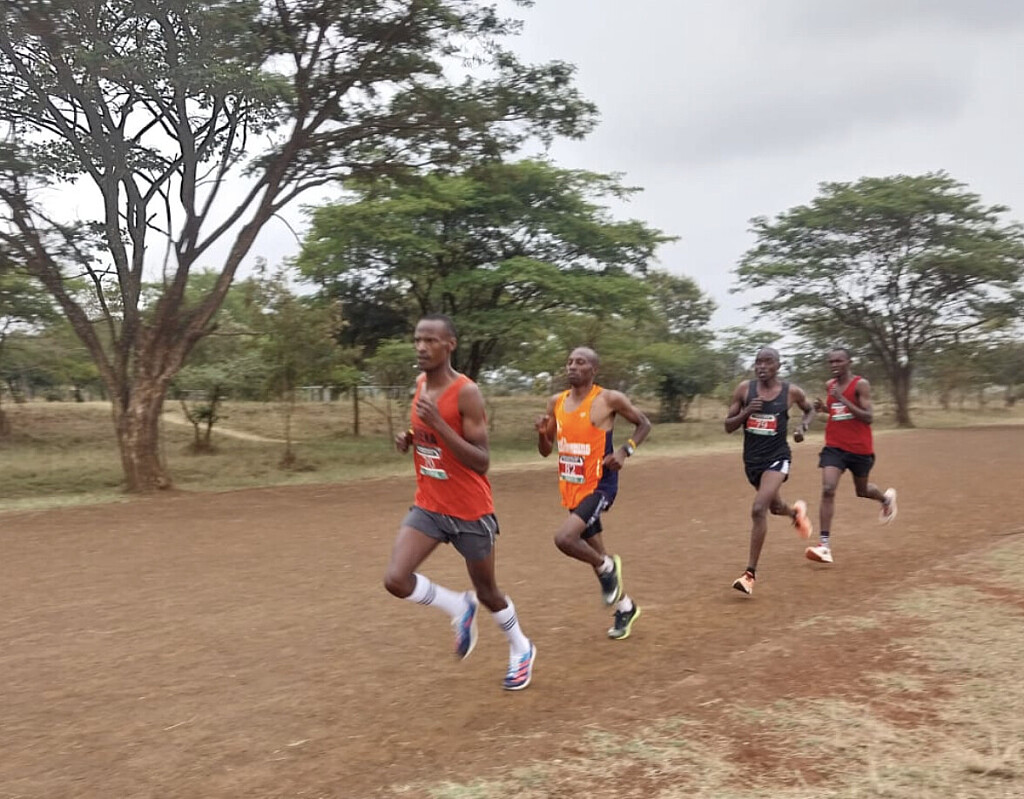
Monthly KATA Time Trial series was run on the track with good success
The August Kenyan Athletics Training Academy (KATA) Time-Trial was held on the Track in Thika Kenya for the first time toady (August 17) with Peter Mwaniki and Fredrick Kiprotich winning the 10,000m and 5,000m respectively. The 5000m was added this time around.
Running on the 400m training track at Jomo Kenyatta University of Agriculture and Technology, Mwaniki transferred his winning from the road to complete the 25 laps in 29:24.4 followed by new addition Bernard Musau who finished in 30:02.8 while seasoned Zakariah Kirika maintained the third position clocking 30:17.9.
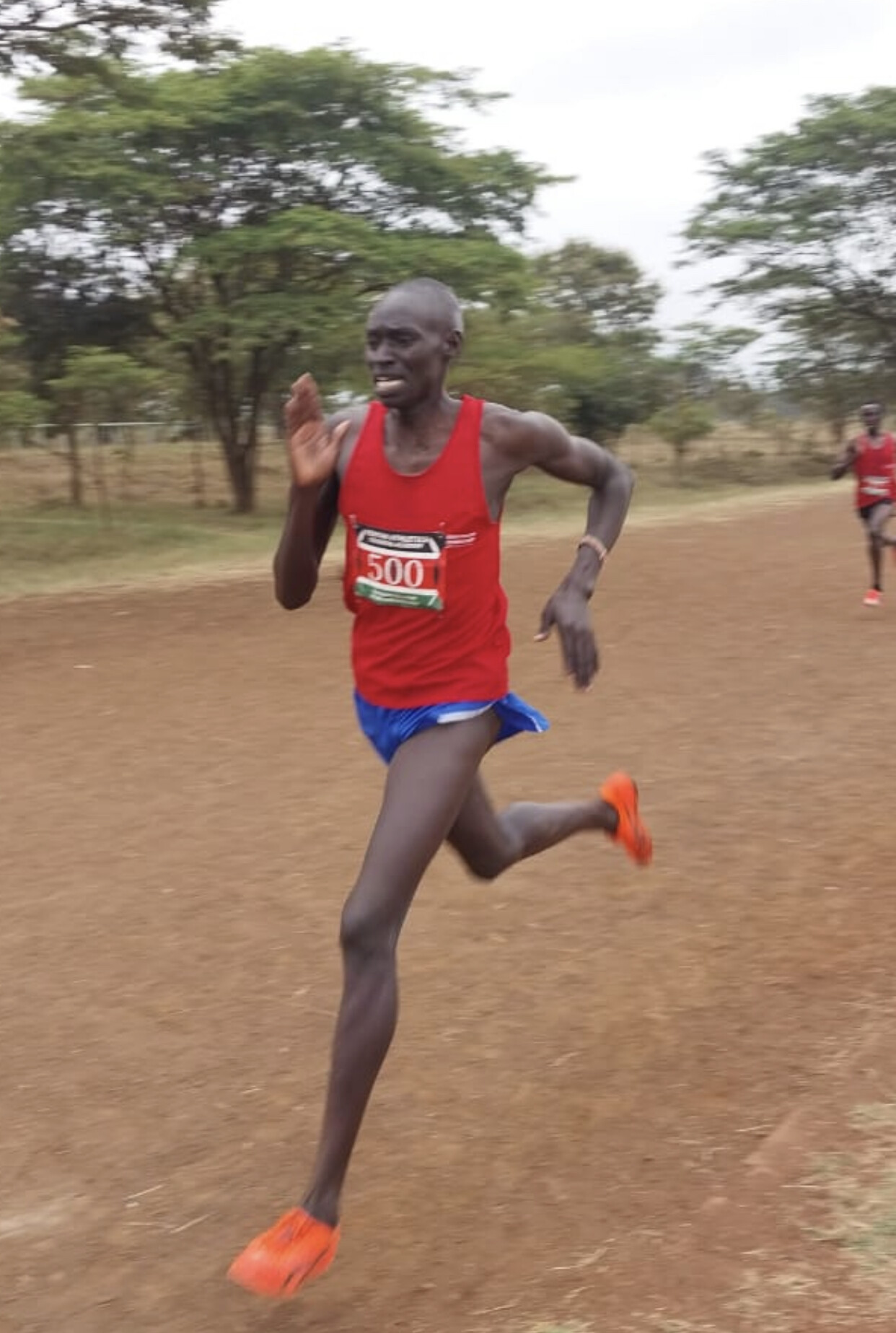
In the shorter 5,000m, middle distant runners and upstarts got motivated to running in their preferred distance. Fredrick clocked 15:22.5 just edging out Boniface Mungai (15:23.9) with Alfred Kamande just behind clocking 16:11.9.
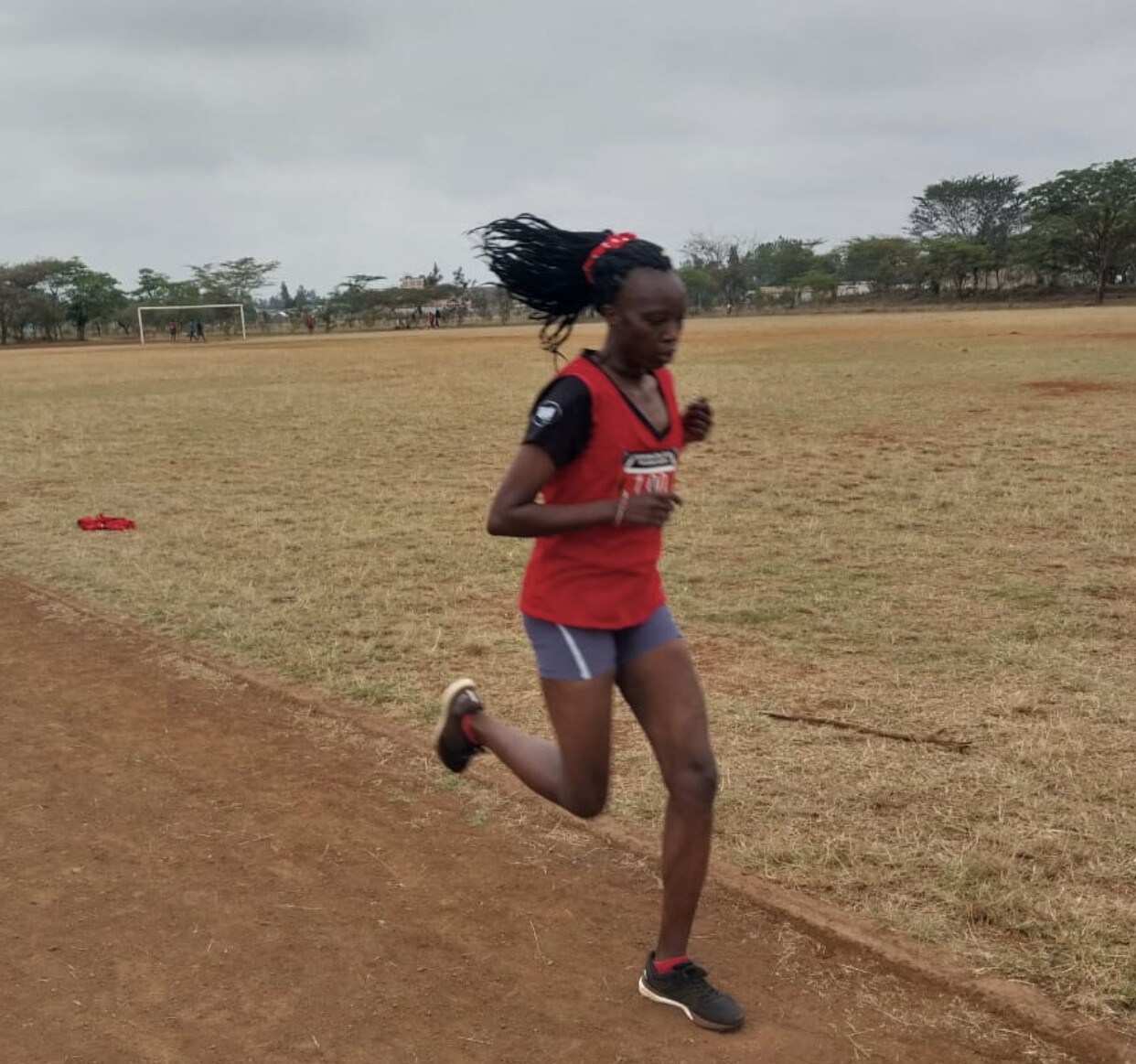
The August time-trial will now usher in the September race that will be the Second edition of the Double 15k (10k+break+5k) race as the Kenyan Athletics Training Academy marks it's first Anniversary. The September event will be held on 14th starting and finishing outside the Academy. "All runners are invited to run in the second annual KATA Double 15k," says KATA Director Bob Anderson from his office in Mountain View, California. "There were many world class times clocked a year ago."
10,000metres
1. Peter Mwaniki (bib 70) 29:24.4
2. Bernard Musau (82) 30:02.8
3. Zakariah Kirika (98) 30:17.9
4. Peter Mburu (79) 30:54.9
5. Nicholas Kitundu (72) 31:36.0
6. Evans Kiguru (85) 32:01.5
7. Anthony Wanjiru (80) 33:57.8
8. Joseph Nyota (66) 36:57.2
9. Caren Chepkemboi (76) 38:15.6
10. Susan Njeri (100) 38:58.5
5,000metres
1. Fredrick Kiprotich (500) 15:22.5
2. Boniface Mungai (77) 15:23.9
3. Alfred Kamande (67) 16:11.9
4. Gipson 17:19.8 (81) 17:19.8
5. Hannah Njeri (83) 26:02.3
by Coach Joseph Ngure
Login to leave a comment
KATA Time Trial Series
Welcome to the KATA Monthly Time Trial Held at the Kenyan Athletics Training Academy in Thika, Kenya, the KATA Monthly Time Trial is a unique and inclusive event designed to support runners of all levels in achieving their goals and showcasing their fitness. This event offers both 10K and 5K distances on an accurate, certified course, providing participants with...
more...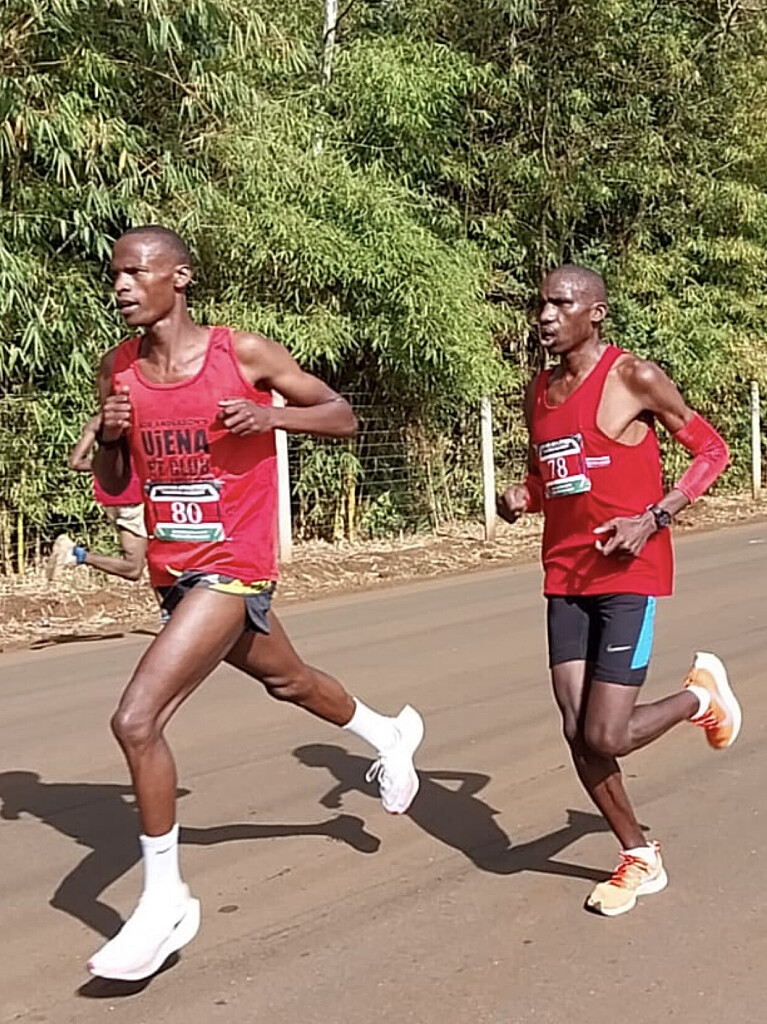
Peter Mwaniki Njeru sets new course record at the KATA 10k Time Trial clocking 29:00.9
Peter Mwaniki Njeru used his international experience to produce scintillating performance at the Kenyan Athletics Training Academy (KATA) 10 Kilometres monthly time trial held in Thika Kenya on Wednesday morning (July 13).
Njeru bounced back to victory and chalked new course record of 29:00.81 to surpass his previous mark while his namesake Peter Wanyoike, the winner of the last four editions, also beat his personal record after timing 29:18.88, eclipsing his time of 29:53.19 attained last month.
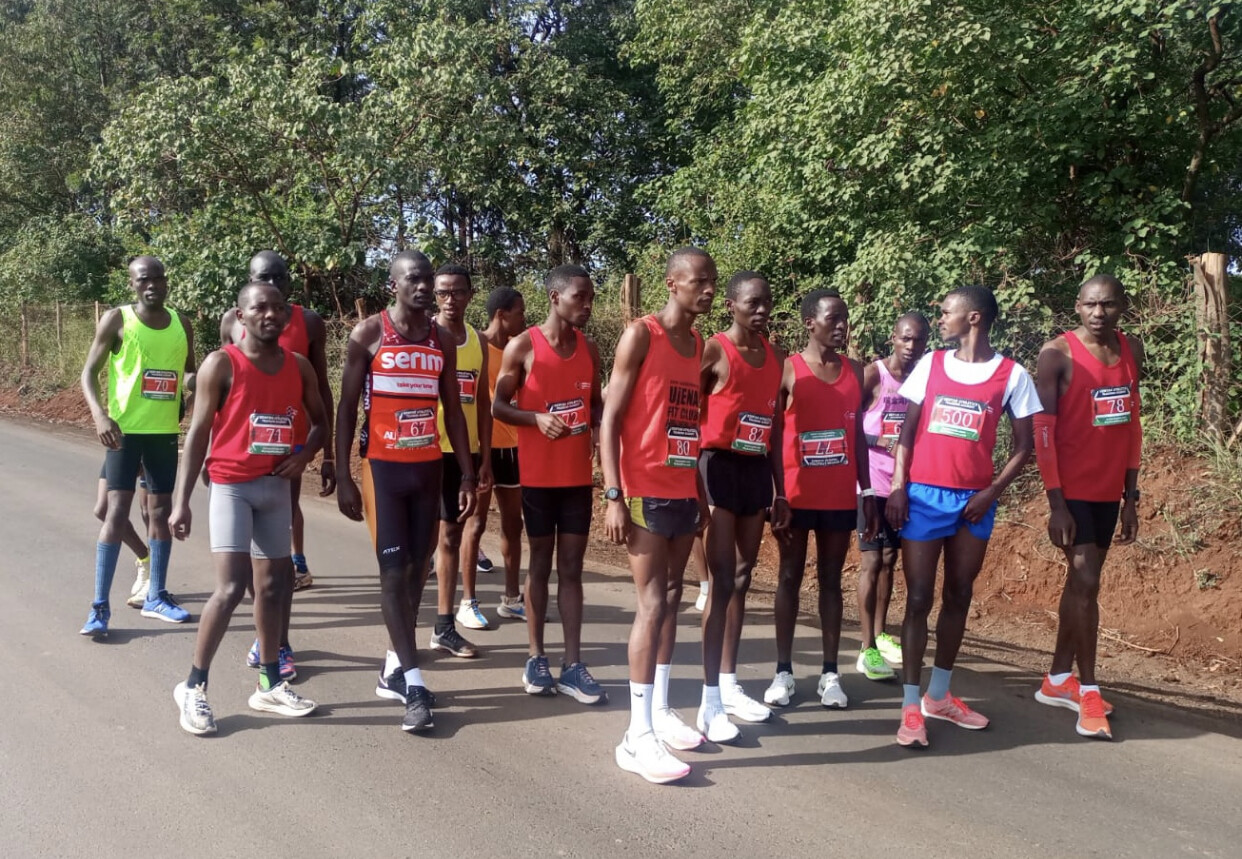
The victory, coming soon after the winner resumed his training after competing in Europe, aided the champion to focus on the programe for faster times in August.
“I was just testing my body after doing good loading the last two weeks. I know I will do better in my next races,” said Njeru, whose races are centralized in Italy.
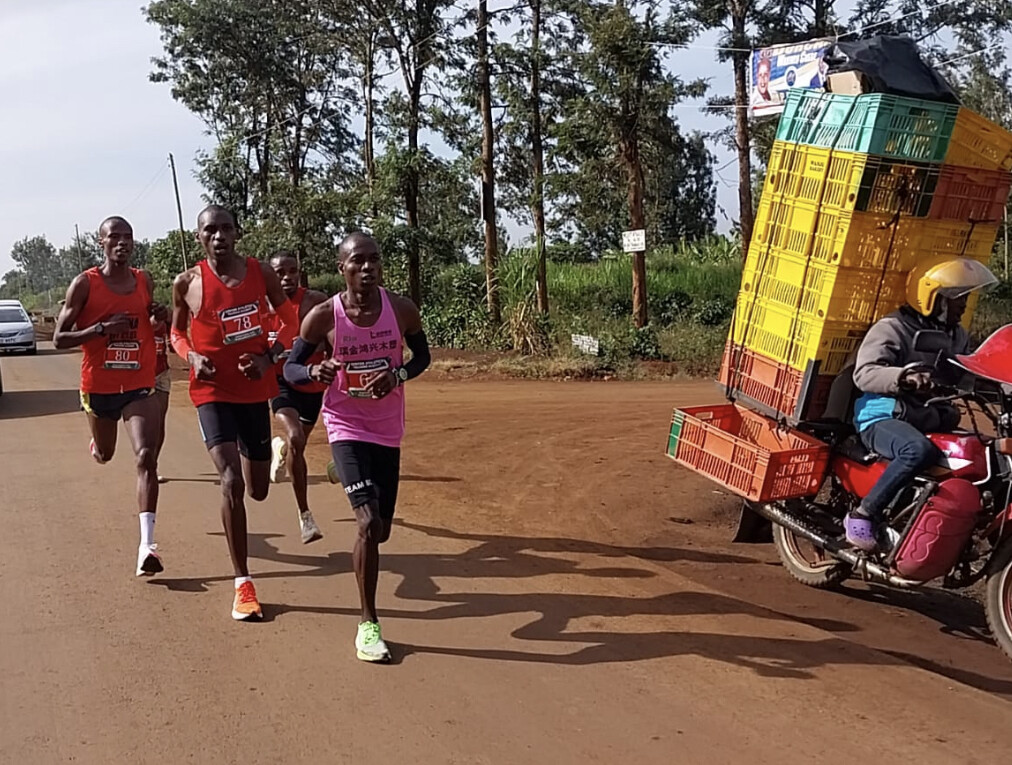
The monthly time-trial also ushered in newcomers KepharNamtala from Nyahururu and Evans Kiguru of Murang’a who clocked 30:29.6 and 30:40.4 and finished 3rd and 4th respectively during the event held on a five kilometres paved stretch of road not far from KATA.
In the absence of consistent and regular Zakariah Kirika, rising star Nicholas Kitundu registered new 30:46.3, erasing his previous 31:13.3 to finish in position five as the Academy, located near Mang’u High School, off Thika Superhighway, marked 11th months since it officially opened.
The next time-trial, will be moved to the track to introduce variety, is scheduled for August 17th this year.
KATA 10k Time Trial #11 Results:
Name Bib Age Time
1. Peter Njeru 80 23 29:00.9
2. Peter Wanyoike 78 26 29:18.9
3. Kephar Namtala 66 23 30:29.6
4. Evans Kiguru 79 27 30:40.4
5. Nicholas Kitundu 500 22 30:46.3
6. Johnson Kaberia 81 25 31:10.4
7. Raphael Gacheru 72 22 31:26.9
8. Boniface Mungai 77 23 31:46.3
9. Levis Kuria 82 21 32:04.1
10. Fredrick Kiprotich 100 23 33:26.8
11. Erick Mutuku 99 20 33:27.4
12. Alfred Kamande71 24 34:17.8
13. Martin Mambo 98 27 34:18.2
14. Peter Mukundi 85 25 37:59.8
15. Jackson Cheruiyot 70 29 38:01.5
16. Eston Mugo 73 29 D N F
17. Robinson Mwaura 67 29 DNF
by By Coach Joseph Ngure
Login to leave a comment
KATA Time Trial Series
Welcome to the KATA Monthly Time Trial Held at the Kenyan Athletics Training Academy in Thika, Kenya, the KATA Monthly Time Trial is a unique and inclusive event designed to support runners of all levels in achieving their goals and showcasing their fitness. This event offers both 10K and 5K distances on an accurate, certified course, providing participants with...
more...
Inspired by his dream of competing in the Boston Marathon, Bob Anderson started Distance Running News In 1966
Bob Anderson (publisher of My Best Runs) started Distance Running News in 1966, while he was still a high school student. Retitled Runner’s World in 1970, the magazine played a pivotal role in establishing running’s credentials as a legitimate sport.
Feature articles on training, diet, race tactics, and hotly contested reviews of running shoes delivered Runner’s World an audience in the millions, before the company was sold in 1984. Nearly 40 years later, Bob is still an exercise evangelist and a serial entrepreneur. Just don’t call him a jogger, he was only interested in racing!
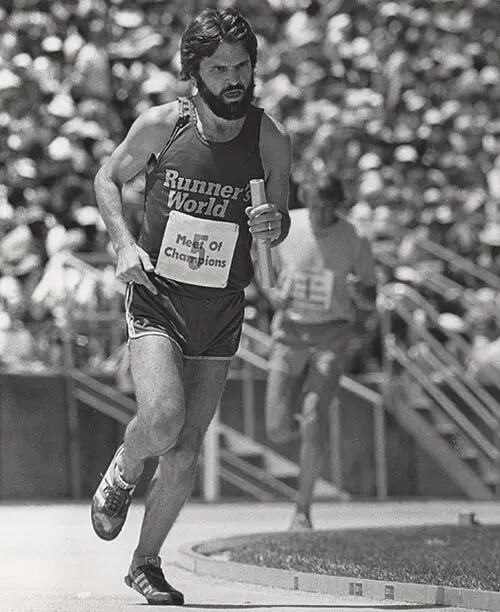
ANDERSON HAS COMPETED IN NEARLY 1000 RACES
1. Why do you love running so much?
I love running simply because it gives me a lot of self-confidence. Plus you can run anyplace, anywhere, anytime — all you need is a good pair of shoes! It’s just you and your body in the fresh air. I also love that feeling when your heart’s pumping, things are clicking and you’re running as fast as you can. It’s an adrenaline rush. I’m 74 years old and I still run about 30 miles a week and walk another 30 miles. My little dog Daisy joins me for about half of this.
2. That is an amazing effort. Back in the early 70s, running wasn’t considered a sport in the way that football or baseball is, was it? How would you describe it?
Well, my dad, when he was in his 40s, wouldn’t have been caught dead in a pair of running shorts outside, it was just way too weird! I grew up in Kansas and ran cross-country and track in high school. But once the season ended, there was nothing, and college running was really only for superstars. People just didn’t run for fun and fitness. There were a few pockets of hardcore runners (like in San Franciso), and the Boston Marathon was around, but only a few hundred people entered races in those early years.

A STACK OF HISTORY
3. A lot of things conspired to create the jogging boom in the late 1970s. How did the marathon become a phenomenon?
I have to say one thing about jogging — I’ve never jogged a mile in my life! I run, and I run races! Anyway, what really helped put running on the map was when Dr. Kenneth Cooper came out with the book Aerobics. A few years earlier, President John F. Kennedy started the 50-mile hike challenge. Those two events really jumpstarted the running scene in America.
In January 1966, I published the first issue of Distance Running News. Even though I only printed a thousand copies, lots of people wanted to read it. The next thing I knew, people started sending in subscription money. New Balance was one of my first advertisers. I think they paid $10 for a little ad.
4. Bargain!
It started with two issues a year, then we went from four to six, then monthly. We went from black and white photos to colour. I started with a hundred bucks, and by the time I sold the magazine in 1984, we had 2,500,000 readers! We changed the name to Runner’s World in 1970, and the magazine became the Bible of running.
5. Did you have a grand plan for the business?
Not really. I was still in high school at the time! I was interested in running the Boston Marathon but had no idea how to train or go about it. I was reading every single word I could find about running, which wasn’t much. On the way to a cross-country meet one day I said to my best friend (Dave Zimmerman), "I want to start a magazine about running. We’ll call it Distance Running News!" He said great!
A YOUNG BOB BESIDE HIS HANDY WORK
6. It sounds like the magazine fostered a great sense of community.
Absolutely. You’re right, it was all about bringing people together, which is exactly what social media does for people today. A kid living in Cheyenne, Wyoming, who absolutely loved running, but was into it by himself, was suddenly able to find out what was happening in the world of running by reading the magazine.
We covered all sorts of topics, including articles on how to break through the pain barrier when you hit the wall at 20 miles, training information, dietary advice, running after 40, and women’s running. When I started Runner’s World, a woman was not allowed to run more than a half-mile.
7. Whoa! I have never heard that before.
I mean, it’s hard to believe that was the case, but a lot of people thought the female body was just not made to run beyond a half-mile. As far as I was concerned, people are people, and it didn’t matter if you were a man or a woman. I didn’t care if you were 10 years old or 75 years old — or even 100 years old! — the fact of the matter is running should be for everyone. I remember Kathy Switzer was thrown out of the Boston Marathon in 1967. It was crazy, but women were not allowed to run 26 miles at that time. That rule didn’t change until 1972. Anyway, those are the sorts of things we were dealing with in those early days, and we covered it all.
8. The athletic brands were also in their infancy during this period. Did you have any inkling how big brands like New Balance would become?
I wish I could say I did. [laughs] At the time, the sneaker companies were really small firms. New Balance was based up in the North East of the USA and other brands were dotted around America. To put things into perspective, back in those days, a best-selling running shoe maybe sold a thousand pairs. That’s how small the business of running was.
In 1968 I asked some experienced runners if 10,000 subscribers was possible. They told me that figure was just unbelievable and that I’d never reach it. Those people I talked to clearly thought I was just a kid with crazy dreams, but I didn’t start Runner’s World to make money — I just wanted to help the sport! In my mind that was a much bigger goal.
9. Well, I’d say you had the last laugh. Do you remember when your first running shoe edition was printed?
Oh yeah, our first shoe issue came out in 1967, and we reported on all the brands. As the years went on we did it annually, and it became the biggest issue of the year by far, with close to four million readers. We hired Peter Kavanaugh at Penn State University — who we paid $25,000 for equipment — and sent him all the shoes to test. We included feedback from readers in the results too. We would end up ranking the shoes starting with the number one running shoe of that year.
10. Sounds like a recipe for drama and intrigue.
Yeah, it was. [laughs] Because we rated a shoe number one, the controversy was never far away. Some brands felt we had too much power and … actually one company thought that we were being ‘influenced’ and decided to pull out of the shoe issue, thinking that their second place ranking should have been higher. Funnily enough, we sold more copies of that October shoe issue than we ever had because the controversy made the national news. We were fully investigated and cleared, of course, because we were doing nothing wrong. We just presented the facts as we saw them.
11. What are your memories of working with Jim Davis, president of New Balance?
First of all, Jim was very personable and he didn’t need to be in the limelight. He seemed like a really hardworking guy who really cared about running shoes and making the very best product that he could. I was very impressed, and you just got the feeling he was gonna make his brand work. He made and sold shoes in different width sizes, and he was willing to roll the dice on that. And here we are today, New Balance is a huge company. It’s a very impressive story.
(Jim Davis bought a small Boston Shoemaker in 1972 and turned it into a $3.6 billion New Balance company. Jim is the chairman of New Balance and his wife Anna joined the company in 1977 and is the vice chairman. Jim and Anna's net worth is estamated to be 4.6 billion dollars.)
12. You sold Runner’s World in 1984, by which time you had 300 employees…
We had 350 employees actually. [laughs] I was going through a divorce at that time and needed to sell the company. It’s funny, I started the magazine because I wanted to run the Boston Marathon, but I literally became a weekend runner only because my day was pretty full from six in the morning until eight at night. However, I was still able to run sub-six-minute miles in races on the weekend.
13. That’s quite ironic, isn’t it?
Yeah, it is. I wish I had followed my own advice. As I’ve gotten older, when I look back, my whole life was Runner’s World before the age of 35. Instead of taking off for an afternoon run, I just worked really hard. Luckily I’m still running 30 to 35 miles every week. I finally ran the Boston Marathon in 2013. It only took me 45 years to be on the starting line.
14. And was it as amazing as you thought it would be?
Oh my gosh, I’ve run close to a thousand races in my life but the Boston Marathon is number one. It was just an incredible experience and I was thrilled my wife and son Michael were with me that day. At the same time, that was also the year of the terrible bombing. Luckily I finished about a half hour before that happened. I ran 3:32:17 that day at age 65. I was proud of my time but it only gave me like 9th in my age division.
15. I didn’t connect that tragic year with the Boston race. That should have been a great day for you and a lot of other people.
Yeah, it was great, right up until the point the bomb went off. The experience of finally running through Boston and seeing the crowds was just beyond words. That doesn’t overshadow the victims and all the other people whose lives were destroyed that day, but the Boston Marathon is still an incredible race. What a tragic contrast to the joy that running brings.
16. One last question. You just can't stay away from being part of the running world!
I just love running and it will be part of my life until the end. I am the editor/publisher of our website My Best Runs. As of 2022 we have nearly one million unique readers annually. In 2010 I started a new sport called Double Racing and we established the Double Road Race Federation. The double is a two stage race. Our most popular disance is the Double 15k. We run 10K and then a 5k one hour and 45 minutes after the start of the 10k. Times are added together for scoring. In 2012 I ran 50 races over the course of a year covering 350.8 miles averaging 6:59/mile. A movie A Long Run the movie covers the event.
I also started the Kenyan Athletics Training Academy (KATA) in Thika Kenya (one hour outside of Nairobi) and officially opened it Sept 4, 2021. We currently have 13 Kenyan runners living and training there. We do a monthly 10K time Trial and we have had four of our runners already break 30 minutes. We have a lot of plans and have just started. I am working with an amazing team there who takes care of the day to day. Many have already told us we have one of the nicest if not the nicest "camp" in all of Kenya.
I love running and I love turning on as many people as I can to this amazing sport...Running and Racing!
by Woody (Sneaker Freakers)
Login to leave a comment
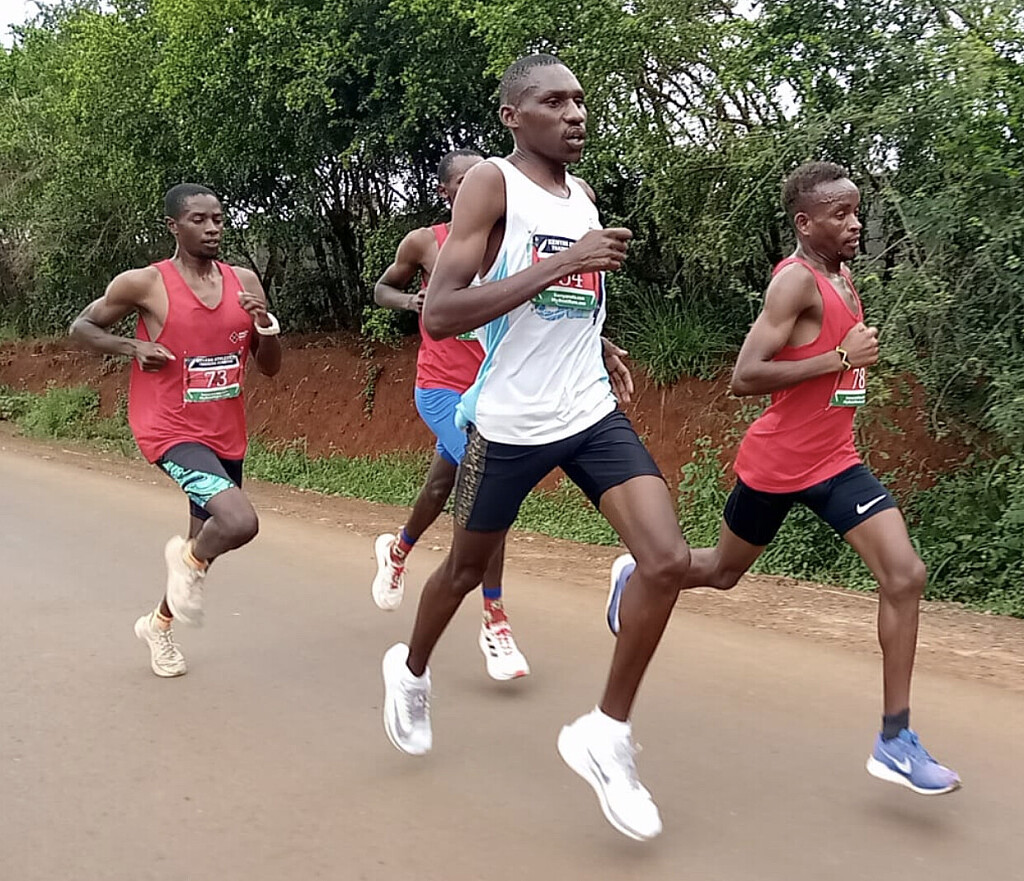
Only five seconds separated the top three at KATA 10K Time Trial
Sibling rivalry and Excitement marked the May Kenyan Athletics Training Academy (KATA) 10k Time Trial with elite athletes fighting hard to keep their positions.
The event, the 9th since the inception of KATA, was a motivating factor for all those who posted their personal records during the trials that took place on Wednesday May 18 in Thika Kenya.
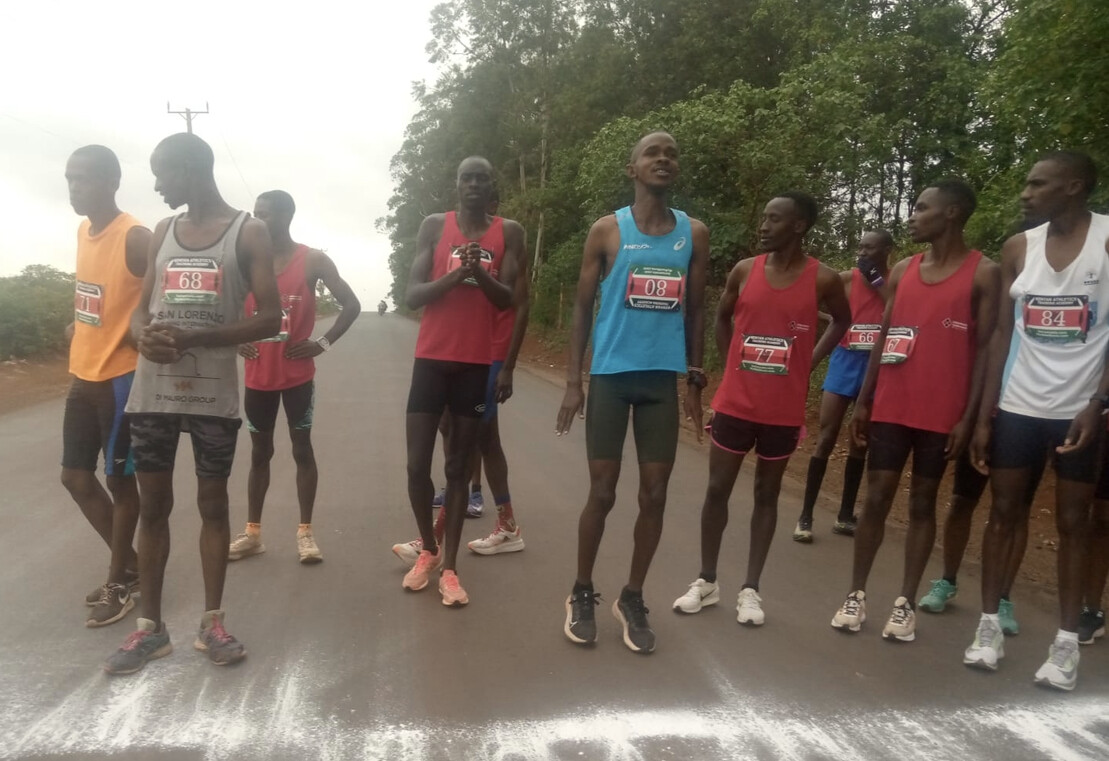
However, Peter Wanyoike and Zakariah Kirika were unstoppable as they fought tooth and nail to keep their top positions three times in a row.
Doing the trial a week after running his local marathon in Kenya, Wanyoike led Kirika to a 1-2 finish with Eston Mugo finishing third after recovery from an Injury.
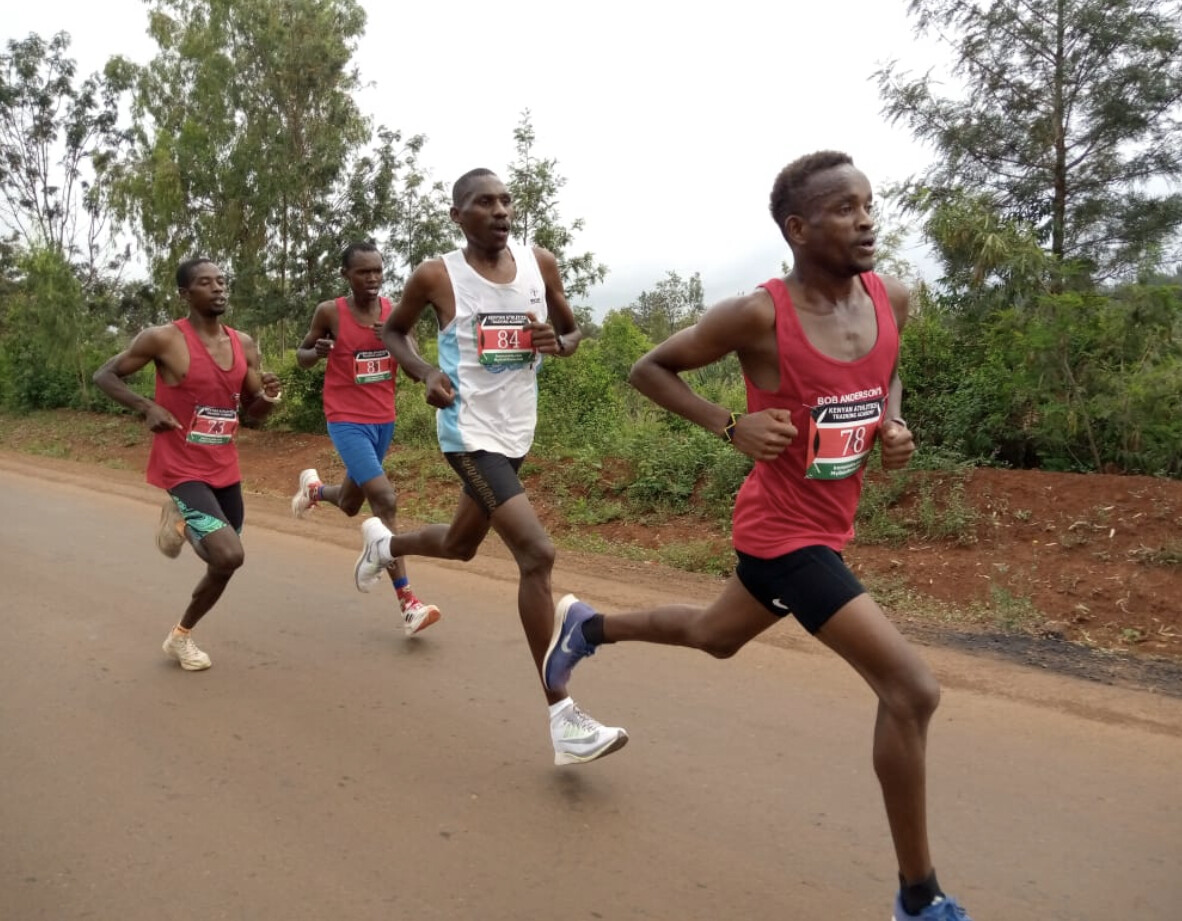
Though the top two could not better their previous times, it was a relief for all the rest after knocking down several minutes and second from their previous times.
Wanyoike, who ran 2:25.04 ten days ago, registered 30:01.3 while his avid rival, who also ran 30:04, maintained 30:02.4 to keep his runners-up position.
Eston Mugo was shade over 30 minutes to click 30:06.3 from his April’s 33:22.1 with the all the rest attaining their Personal Best times during the trial that were held under cloudy weather.
60-year-old Charles Ndirangu clocked a fine 36:13.
The next KATA 10k Time Trial will be held on June 15th with better times being anticipated on the same course. Runners of all abilities are welcome to compete.
Names BIB Age Gender Time April Time
1. Peter Wanyoike 213 26 M 30:01.3 (29:53.7 April time)
2. Zakaria Kirika 237 21 M 30:02.4 (29:54.4)
3. Eston Mugo 224 26 M 30:06.3 (33:22.1)
4. Erick Mutuku 216 20 M 30:14.7 (31:41.3)
5. Raphael Gacheru 233 22 M 31:35.9 (32:28.4)
6. Fredrick Kiprotich 79 23 M 31:41.5 - - --
7. Nicholas Kitundu 80 22 M 32:06.9 ------
8. Boniface Mungai 235 23 M 32:30.5 (33:05.6)
9. Levis Kuria 214 21 M 33:04.5 (33:11.6)
10. Charles Ndirangu 82 60 M 36:13.2 ------
11. Samuel Muiruri 68 27 M 36:55.7 (42:30.8)
12. Peter Mukundi 71 25 M 39:16.5 New
13. Caren Chepkemoi 127 19 M 42:06. (42:30.5)
14. Susan Njeri 76 36 M 45:11.9 (45:30.2)
by Coach Joseph Ngure
Login to leave a comment
KATA Time Trial Series
Welcome to the KATA Monthly Time Trial Held at the Kenyan Athletics Training Academy in Thika, Kenya, the KATA Monthly Time Trial is a unique and inclusive event designed to support runners of all levels in achieving their goals and showcasing their fitness. This event offers both 10K and 5K distances on an accurate, certified course, providing participants with...
more...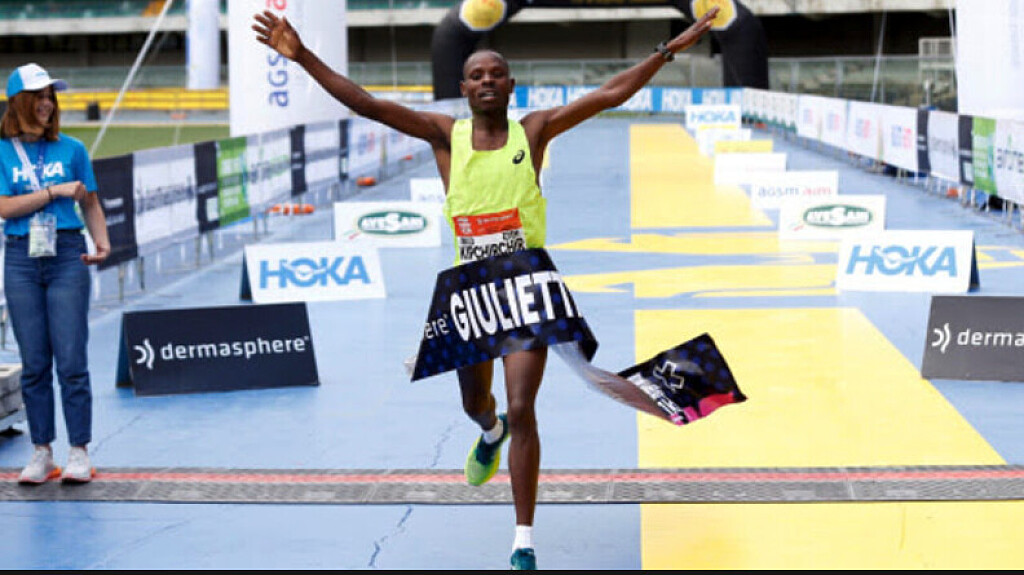
Giulietta & Romeo Half Marathon in Verona: Alfred Kipchirchir and Meseret Gola win
The Dermasphere Giulietta & Romeo Half Marathon and Avesani Monument Run 10k experienced another historic day of great international sport and strong solidarity with the A Casa far from Home project "Emergency Sick Children of Ukraine - We help sick little ones on the run"They traveled half the world to come to Verona starting from the endless African highlands to become the new champions of the Dermasphere Giulietta & Romeo Half Marathon.
The 'Romeo' of 2022 is Kenyan and bears the name of Alfred Kipchirchir, he is the winner of the 15th edition of the Verona half marathon where he crossed the finish line in 1h00'57 ".

The 'Juliet', on the other hand, is very shy but when she runs she has grit and class to spare, her name is Meseret Gola and she comes from Ethiopia. He took the success in 1h10'09 ".
Two excellent performances, even if both failed to beat their personal bests or even to beat the records of the course. It is difficult to do so at this point of the season that sees the great road racing competitions finish. The satisfaction of winning the prestigious Verona race was nevertheless great.A great event as usual was the one organized by the organizers of Gaac 2007 Verona Marathon Asd, in collaboration with the Municipality of Verona, which maintained organizational standards of excellence, confirming the Gold Label Fidal.

Official start complete with a gunshot entrusted to the mayor Federico Sboarina and for the following waves also to the Sports Councilor Filippo Rando present at the start to greet the thousands of Italian and foreign participants.
Surprise second in the standings was placed by the Polish Ada Nowicki in 1h02'51 ", delighted at the arrival for having established a new personal best. He beat his 1h03'11 "which he had done at the Napoli City Half Marathon last February. Place of honor again for the colors of Kenya with Bernard Musau Wambua with 1h02'57 ". First of the Italians is the South Tyrolean Hannes Perkmann (Atl. Valli Bergamasche Leffe), sixth in 1h05'03 ". Kenyan Athletics Training Academy (KATA) athlete Peter Njeru finished fifth clocking 1h03'53 just 30 seconds back of 4th place.
Female podium completed by the Kenyan Lilian Lelei (Atl. Castello), second in 1h14'04 "and third the Ethiopian Meseret Ayele (G.s. Il Fiorino) with 1h15'25". Holding the Italian flag high is Arianna Lutteri, the current Italian marathon champion, who ran in 1h21'40 ". Avesani Monument Run 10k, real 9.7km, which was won by Alessandro Comai (Venus Triathlon) in 29'19 ", while among women the success of Claudia Andrighettoni (Us Quercia) in 34'23". Hundreds of people also participated in the non-competitive Avesani Monument Run 10k.
Gianni Pistis, coach and runner of the Charity Partner A Casa Away From Home, engaged in the project "Emergency Sick Children of Ukraine - We help sick little ones on the run" has more than hit the target.
Leaving last, Gianni had the task of overcoming a minimum of a thousand athletes, for each of which a company from Varese, which wishes to remain anonymous, will donate a thousand euros. Gianni honored his commitment by finishing in general position 204 with a time of 1h28'18 "and thus surpassing over 2 thousand athletes.
Login to leave a comment

Giulietta & Romeo Half Marathon
The Giulietta & Romeo Half Marathon is held in the spring in Verona, a beautiful city of art and culture, and the setting for Shakespeare's Romeo and Juliet play. It's a very popular early-season road running event that attracts a crowd of more than 5,000 half marathon runners and 500 relay teams (10km+11km)....
more...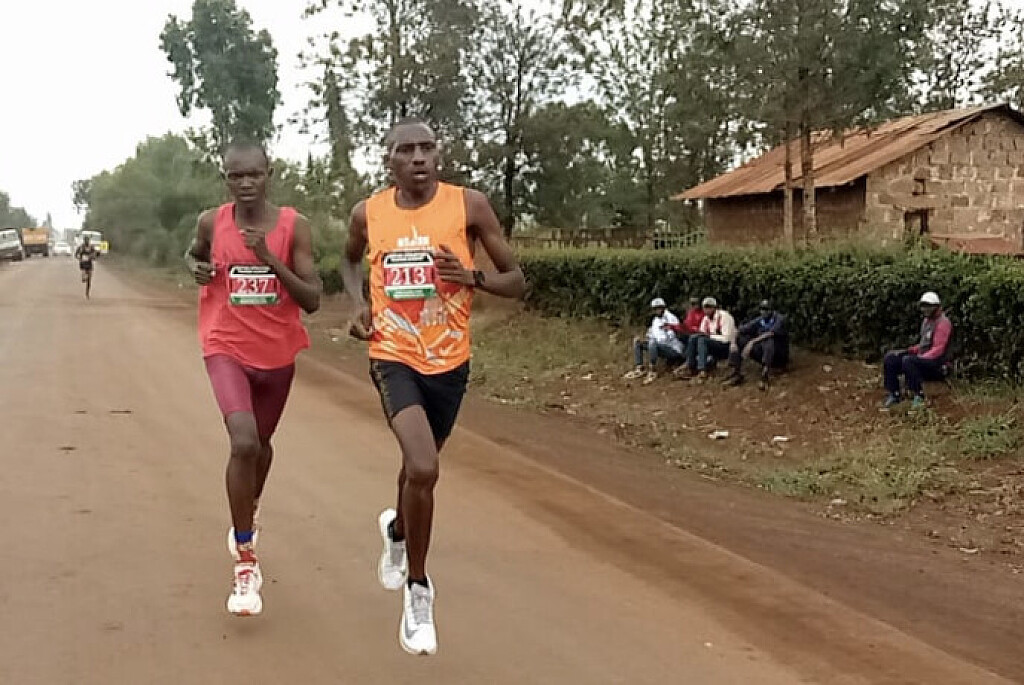
WANYOIKE DEFENDS HIS TITLE AS JUNIORS SPARKLE AT EIGHTH KATA 10K TIME TRIAL
The Eighth Edition of Kenyan Athletics Training Academy (KATA) Time-Trial took place on Wednesday morning (April 13) in Thika Kenya with upcoming athletes recording remarkable improvement.
However, experience and international exposure was at play where Peter Wanyoike remained unbeaten for the second time after winning the race back- to-back.
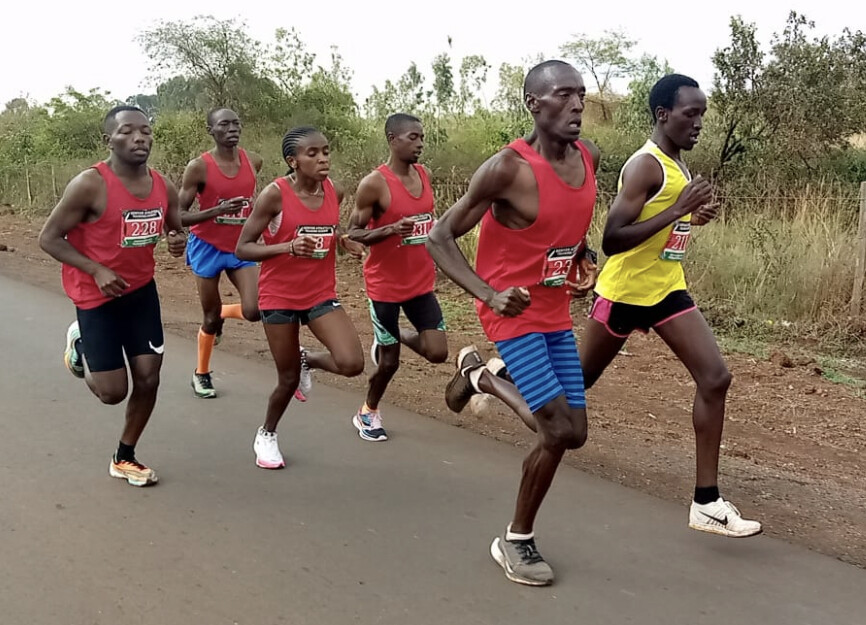
Wanyoike did not only win the 10Kilometres event but also improved his previous 29:57.8 after clocking 29:53.7. It was not easy for the winner as he had to resort to experience to fight off strong opposition from upcoming Zakaria Kirika who stuck on his shoulders from the beginning.
Zakariah managed a sub-30 clocking 29:54.4 in second position during the race that brought together 19 athletes. Levis Kuria out-grew himself to finished 7th with an impressive 33:11. His personal best was 35:38.8
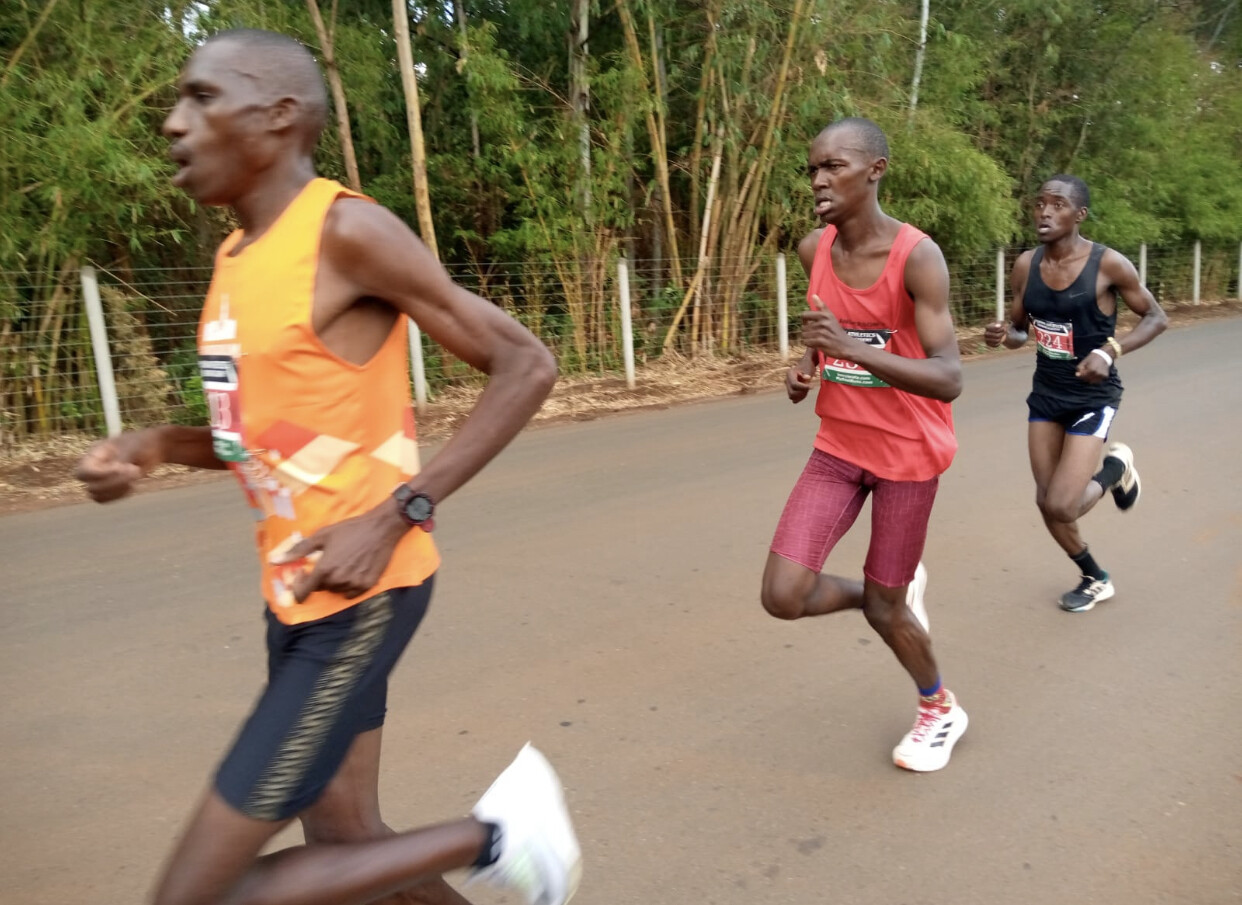
In women, Lucy Muli, has just started her training after racing in Europe in January, February,and March, set a new course record of 33:22.5 in winning the ladies trophy. Her December course record was 34:58.3.
The trial came ahead of Regional Athletics Championships that was moved to 22nd and 23rd. The trial was also be used to select a KATA team that will participate in the Uhuru Marathon Classic that will be held on 8th May in Nairobi.
The 9th Edition of the monthly 10k time trial series is set for May 18th on the same out and back course about 5k from KATA (Kenyan Athletics Training Academy) where over 20 athletes are training under coach Joseph. Twelve are living, eating, training and working at KATA. "I am so proud of our runners," says KATA Director Bob Anderson from his office in Los Altos California USA. "They are getting stronger and stronger. Our monthly 10k series is a first for Kenya and is helping our athletes (and guests) both mentally and physically."
Overall Resuls:
Names Age Gender Time
1. Peter Wanyoike 26 M 29:53.7
2. Zakaria Kirika 21 M 29:54.4
3. Peter Mburu 26 M 30:13.8
4. Erick Mutuku 20 M 31:41.3
5. Raphael Gacheru 22 M 32:28.4
6. Boniface Mungai 23 M 33:05.6
7. Levis Kuria 21 M 33:11.6
8. Eston Mugo 29 M 33:22.1
9. Lucy Muli 23 F 33:22.5
10. Paul Ng’ang’a 42 M 33:33.4
11. Alfred Kamande 24 M 34:19.1
12: Samuel Chege 24 M 34:32.7
13. Wilfred Mang’eni 32 M 35:22.8
14. John Mwangi 40 M 41:05.8
15. Karren Chepkemoi 19 F 42:30.5
16. Samuel Muiruri 27 M 42:30.8
17. Susan Njeri 36 F 45:30.2
by Coach Joseph Ngure
Login to leave a comment
KATA Time Trial Series
Welcome to the KATA Monthly Time Trial Held at the Kenyan Athletics Training Academy in Thika, Kenya, the KATA Monthly Time Trial is a unique and inclusive event designed to support runners of all levels in achieving their goals and showcasing their fitness. This event offers both 10K and 5K distances on an accurate, certified course, providing participants with...
more...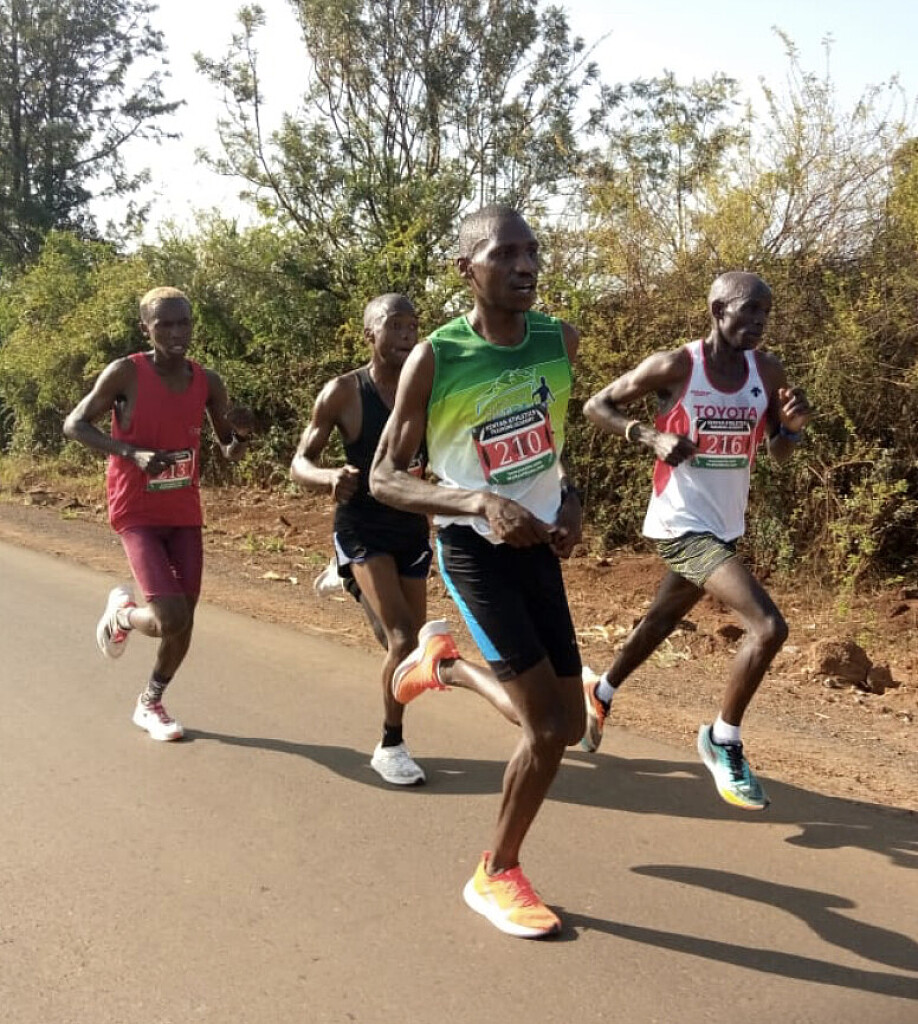
Peter Wanyoike and Catherine Njihia are the March 2022 Kenyan Athletics Training Academy (KATA) 10K Time Trial champions with individual personal records
Peter Wanyoike edged out 42-year-old Peterson Wachira from Nyahururu during the 10k time trial held in Thika Kenya on Wednesday morning (March 16) on the newly upgraded Bob Harris Road. He completed the course in 29:57.8 after covering the first 5Km in a slow 15:40.5 while Peterson finished in 30:06.0 which is a 95.79% age-graded.
The monthly time-trial, the 7th since Kenyan Athletics Training Academy was officially opened in September last year, saw most KATA athletes post their Personal Bests with third-place finisher Zakariah Kirika and women champion Catherine Nikihia maintaining remarkable consistency.
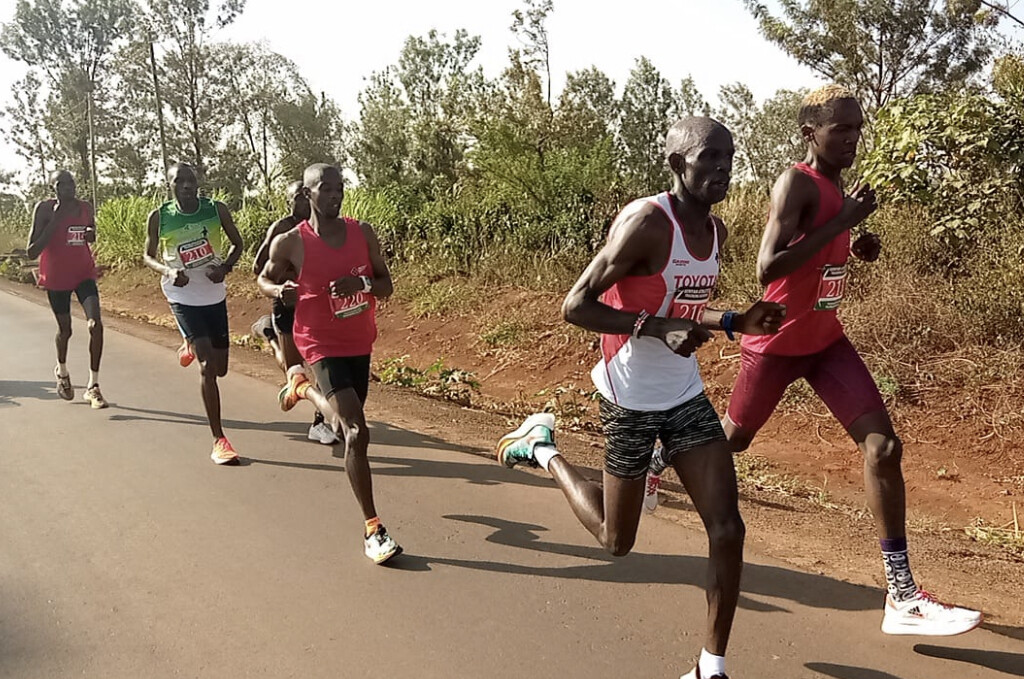
Zakariah clocked 30:25.7, bettering his previous 30:41.9 while Catherine, the winner of the women category clocking 35:35.2. Her December time on the same course was 36:54.1.
Others with positive results included Peter Mburuwho clocking 30:43.5 from December’s 31:28.2, Paul Ng’ang’a 34:01.7, improving his 34:31.9 and Alfred Kamande who timed 34:41.4. Alfred did 35:16.5 in December.
60-year-old KATA athlete Charles Ndirangu clocked 38:08 which is 87.54% age-graded.
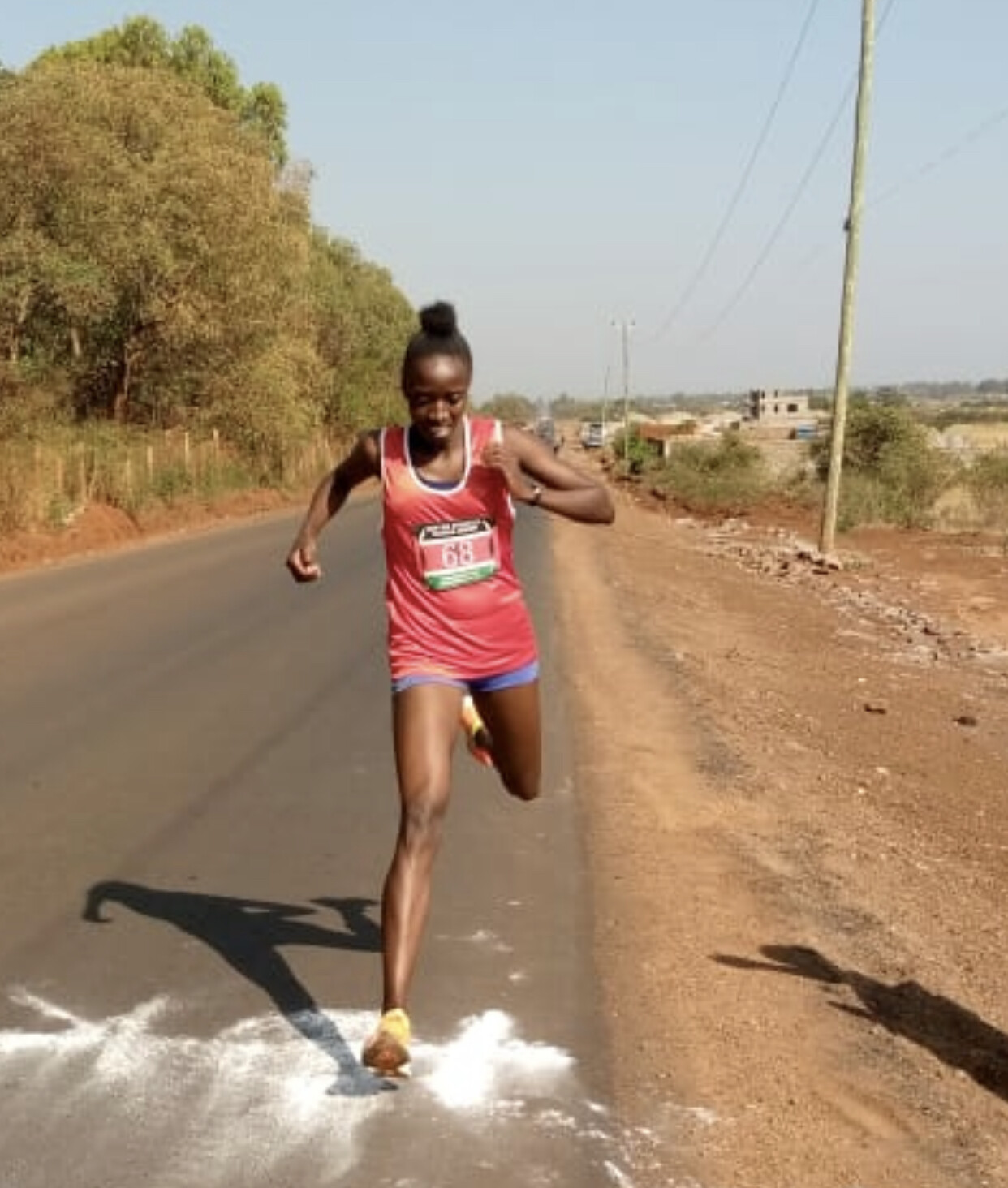
With Athletics Kenya lining up a lot of activities in April, the KATA 10k Time Trial 8th edition is slated for 20th.
"We welcome runners to our next event in Thika, Kenya," says director Bob Anderson. "We do not charge an entry fee and there is no prize money. What we offer is an official 10k time. Times are published on our sponsor My Best Runs website."
Place, name, time, bib number and age.
1.Peter Wanyoike M 29:57.8 (210) Age 262. Peterson Wachira M 30:06.0 (216) Age 423. Zakariah Kirika M 30:25.7 (213) 214. Peter Mburu M 30:43.5 (211) 265. Peter King’ori M 31:38.7 (218) 256. Eston Mugo M 31:45.3 (220) 297. Erick Cheruiyot M 32:10.5 (214) 278. Raphael Gacheru M 32:48.3 (225) 239. Christian Muthini M 33:00.4 (234) 2910. Paul Ng’ang’a M 34:01.7 (224) age 4211. Alfred Kamande M 34:41.4 (217) age 2412. Samuel Chege M 34:59.4 (236) age 2513. Nicholas Kitundu M 35:19.6 (233) age 2214. Catherine Njihia F 35:35.2 (68) age 2315. Levis Kuria M 35:38.8 (231) age 2116. John Mwangi M 36:24.0 (235) age 4017. Solomon Njenga M 37:04.6 (232) age 3818. Lamech Cheleket M 37:32.1 (228) age 2319. Samuel Kamau M 38:01.7 (73) age 2720. Charles Ndirangu M 38:08.6 (237) age 60
Karren Chepkemoi F 20:37.9 (5KM) 69 age 21
Erick Mutuku M 15:05.8 (5KM) 229 age 20
Login to leave a comment
KATA Time Trial Series
Welcome to the KATA Monthly Time Trial Held at the Kenyan Athletics Training Academy in Thika, Kenya, the KATA Monthly Time Trial is a unique and inclusive event designed to support runners of all levels in achieving their goals and showcasing their fitness. This event offers both 10K and 5K distances on an accurate, certified course, providing participants with...
more...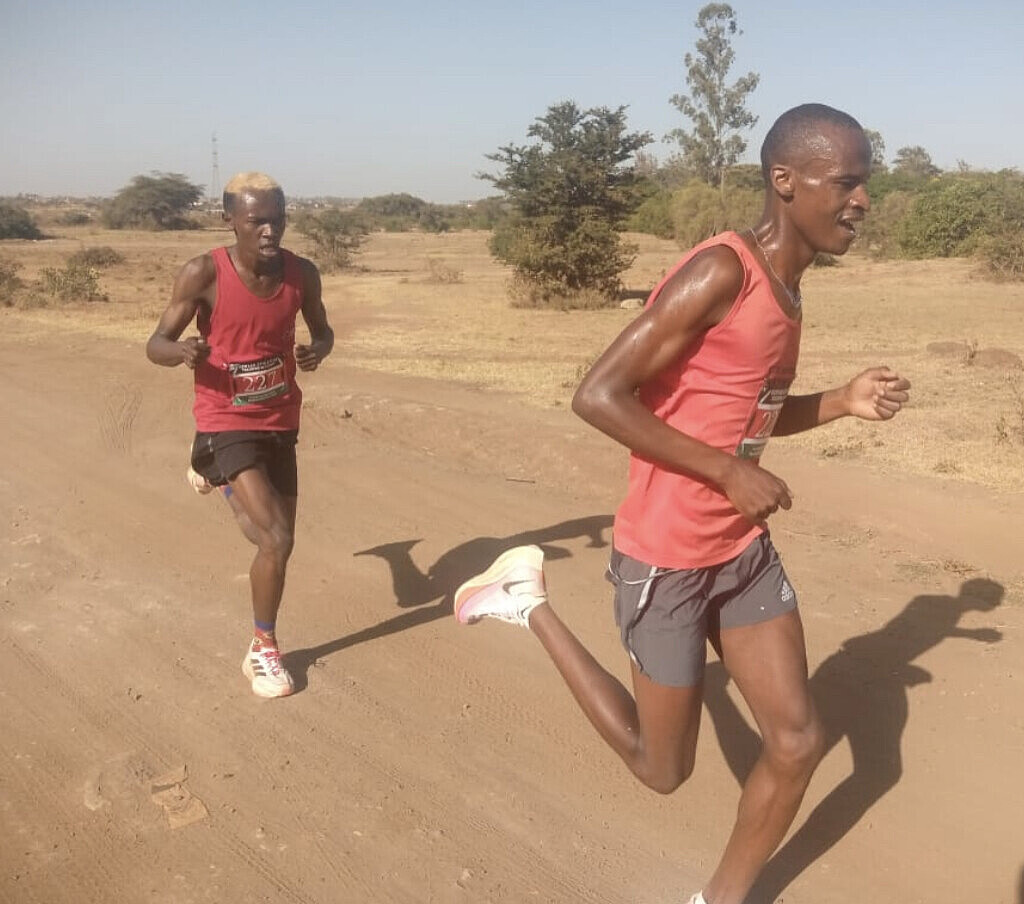
6th KATA 10k Time Trial Series continues in Thika
The Kenyan Athletics Training Academy (KATA) 6th edition of the 10K Time-Trials series was held on the 5Km loop course outside KATA in Thika Kenya Feb 16.
Peter Mwanikie was the winner.
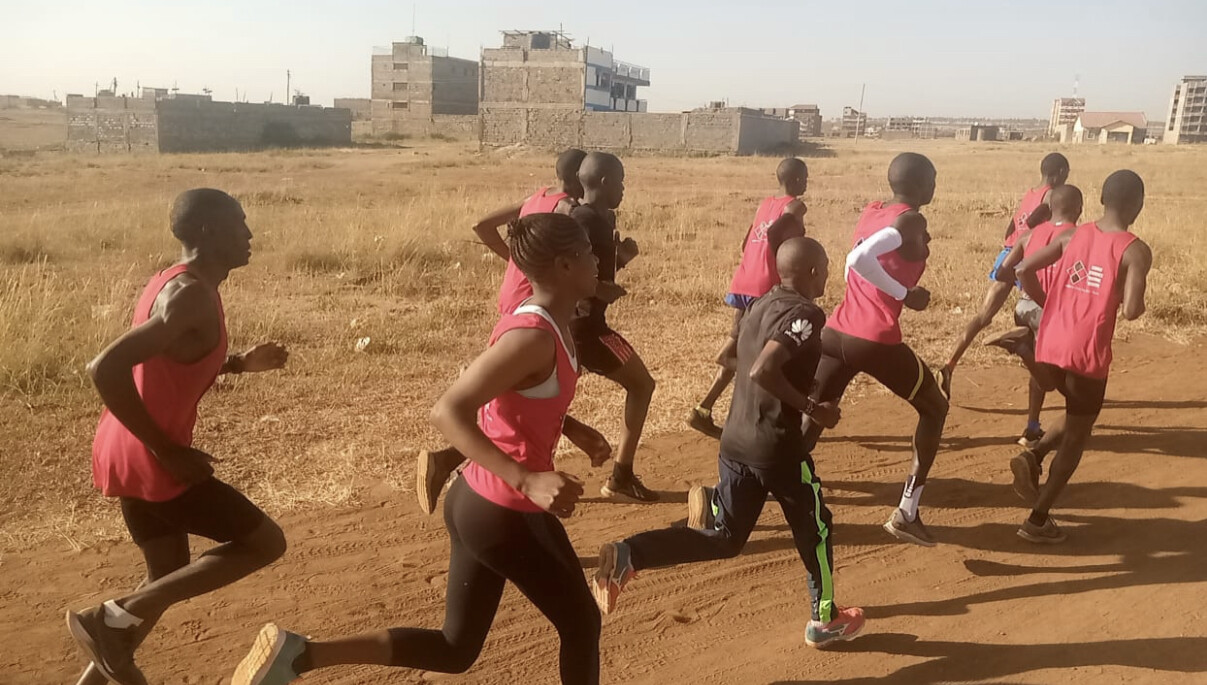
Peter, the winner of last month’s edition, broke away from closest rival Zakari Kirika in the last 20 meters after running shoulder to shoulder most of the ways to finish in 31:39.9
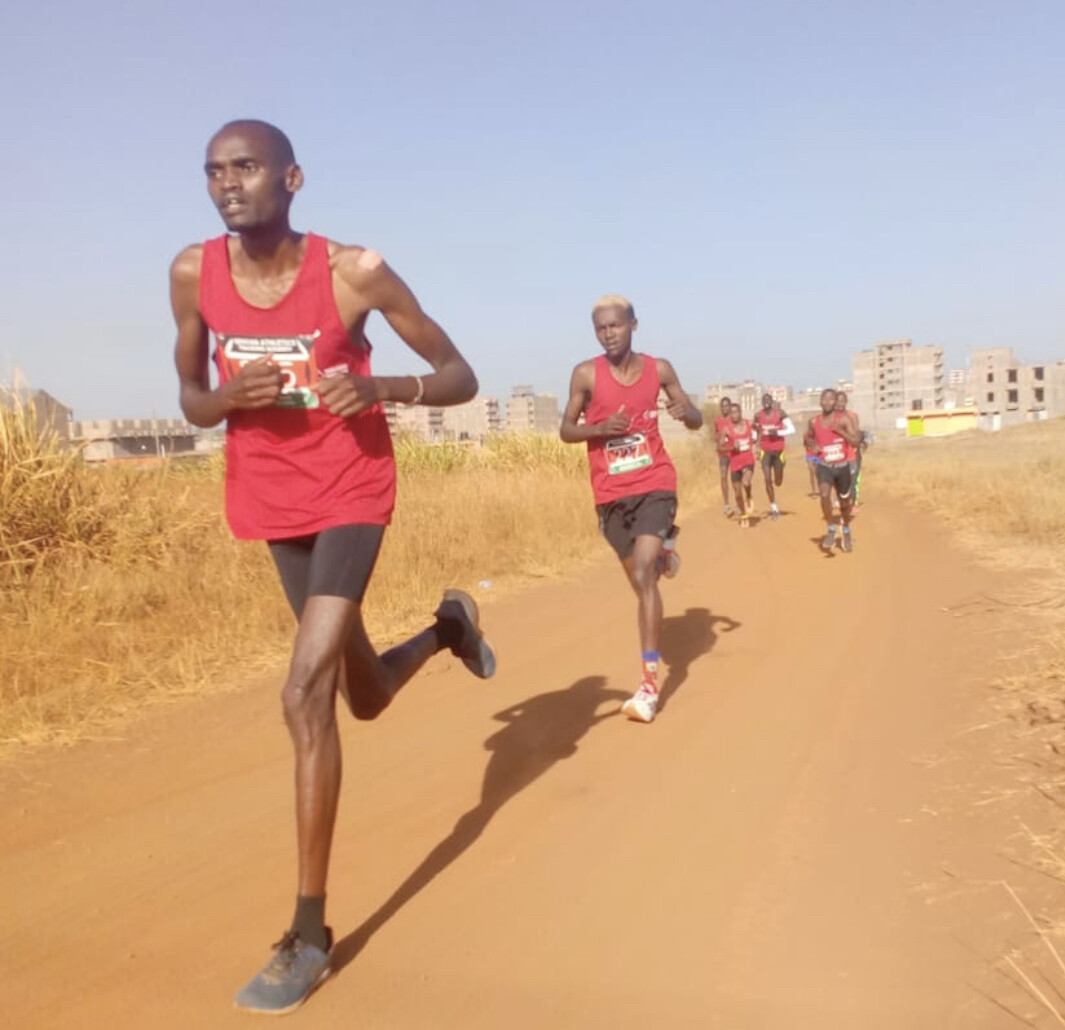
Zakari, who finished 4th in January, clocked 31:44.8 followed by Erick Mutuku in 33:01.6 on the winding and rough course starting and finishing outside the Academy.
The lone lady, Caren Chepkemboi, fresh from High school and a week old in the Academy, did 50:29.4. The monthly event sponsored by KATA and My Best Runs had 15 participants.
The date for the 7th edition will be held March 16th. The series is for athletes training at KATA and for others. There is no entry fee and no prize money. "This is a good event to measure your fitness and to see your results published online," says KATA director and My Best Runs publisher Bob Anderson working from his office in Mountain View California.
"We run our series on two courses. This is the tougher one," says head coach Joseph. "The course record on this course is 29:59. The course record on the other course 5k from KATA is 29:40."
The results (two lap course by KATA)
1. Peter Mwaniki 24 31:39.9
2. Zakari Kirika 21 31:44.8
3. Erick Mutuku 20 33:01.6
4. Erick Cheruiyot 26 33:50.6
5. Fredrick Kiprotich 23 34:22.2
6. Raphael Gacheru 23 35:07.4
7. Lamech Cheleket 21 36:56.8
8. Paul Ng’ang’a 42 36:59.1
9. Alfred Kamande 24 37:44.2
10. Godfrey Migwi 22 41:32.8
11. Caren Chepkemboi 21 50:29.4
Login to leave a comment

KATA Time Trial Series
Welcome to the KATA Monthly Time Trial Held at the Kenyan Athletics Training Academy in Thika, Kenya, the KATA Monthly Time Trial is a unique and inclusive event designed to support runners of all levels in achieving their goals and showcasing their fitness. This event offers both 10K and 5K distances on an accurate, certified course, providing participants with...
more...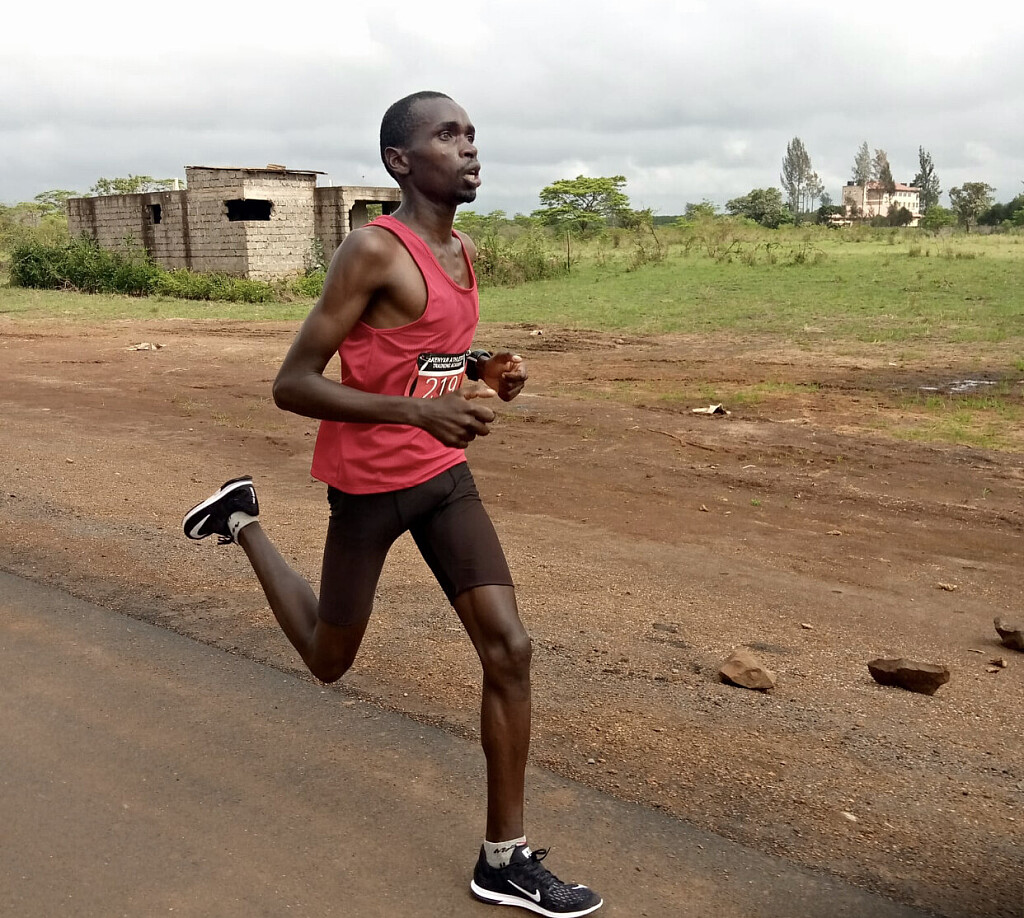
Good times at the 4th KATA 10k Time Trial Series in Thika kenya
The Kenyan Athletics Training Academy (KATA) is concluding the year strongly after athletes posted impressive times during the 4th edition of KATA monthly 10 Kilometres Time-Trial on Wednesday morning in Thika Kenya.
The time-trial, held on a new course West of the Academy, saw Solomon Gachoka, the winner of the 2nd edition in October, clocked 29:44.23, bettering his previous time of 31:22.10 during the event that attracted 23 participants.
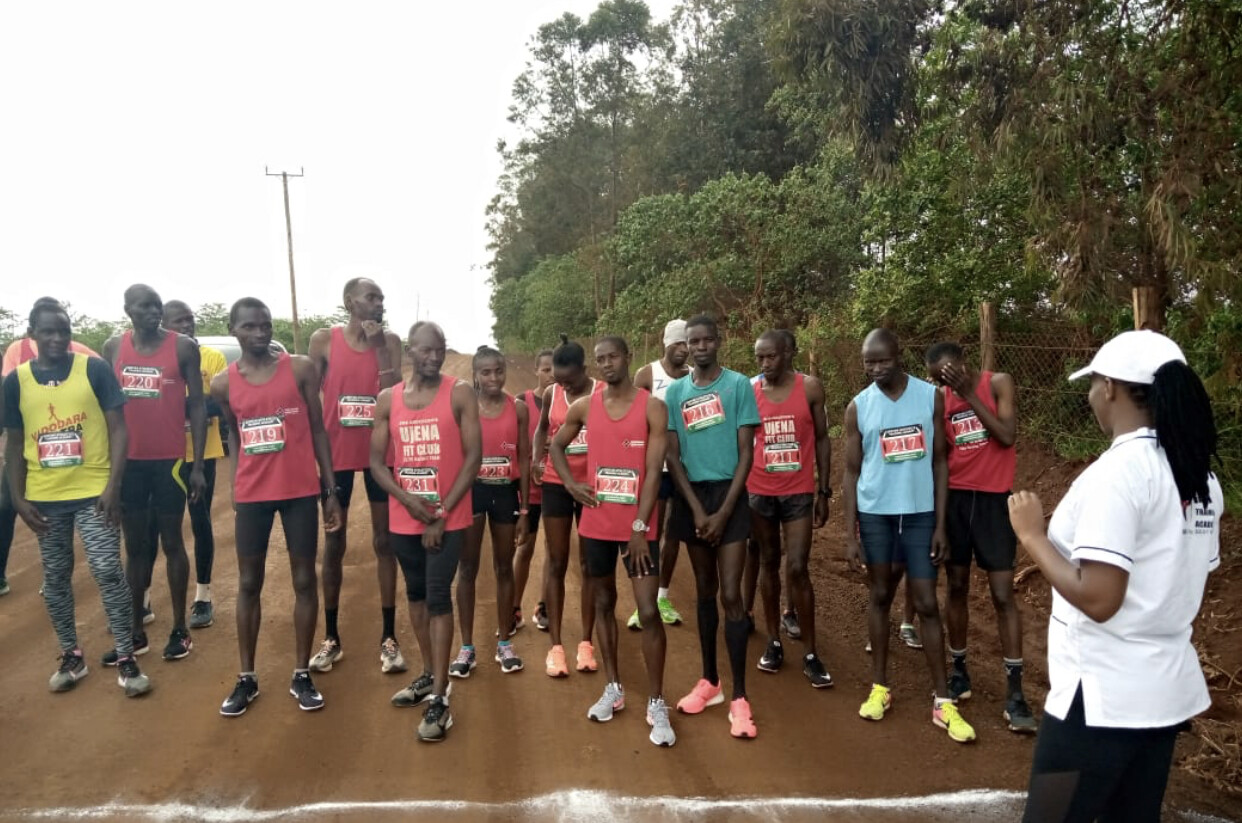
Solomon dislodged Elisha Tarbei, the November winner while new entrants, Evans Kibet, finished 3rd. Tarbei timed 30:05.91, chopping off 1minute and 28 seconds from his previous 31:34.45. Kibet was timed at 31:02.35.
In women, Lucy Mwende Mawia regained her footing ruling in the category just a week after returning to Kenya from Europe where she dominated her races.
She clocked 34:58.24 ahead of Catherine Njihia and Monica Njeri who finished second and third timing 36:38.86 and 44:05.20.
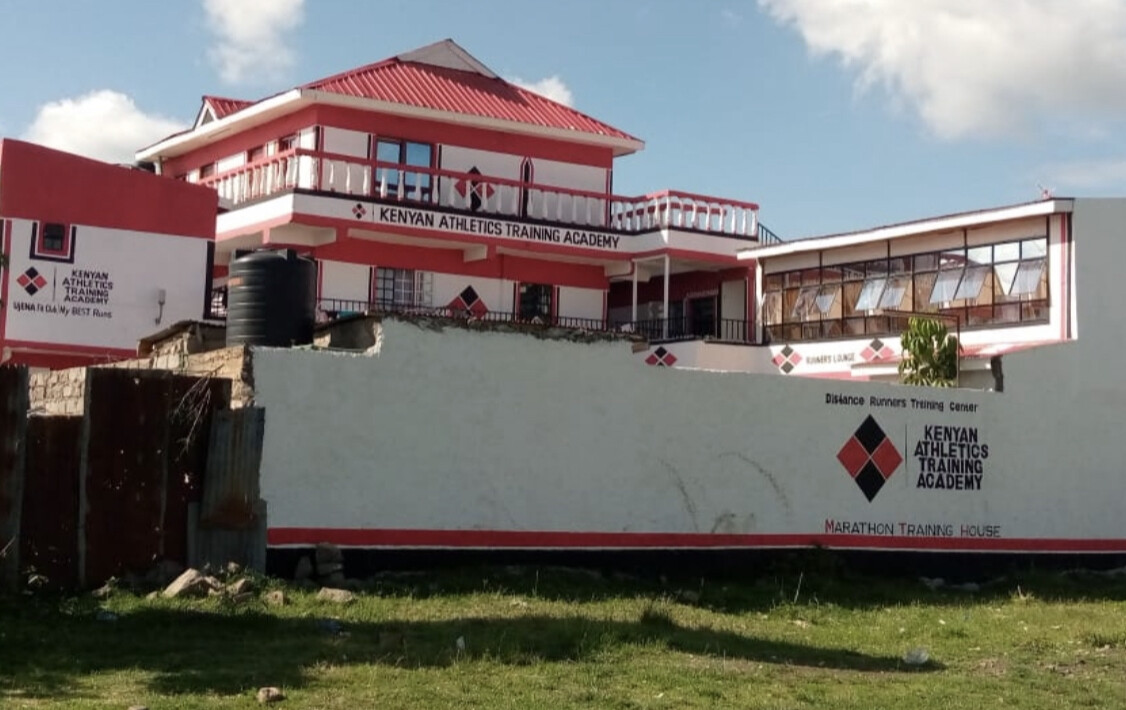
Both the winning times for men and women are KATA 10k Time Trial best performances for the monthly series.
Kenyan Athletics Training Academy Competition Director Joseph Ngure has hailed the results and predicted better times in future from all the Athletes.
“This is our 4th edition since the Academy was opened officially on 4th of September. All our athletes have been posting impressive times and we are expecting more next year,” summed up the Director, also a senior Middle and Long Distant coach.
Three of our elite athletes- Joel Maina, Peter Mwaniki and Lucy Mawia, fresh from winning several races in Europe, also participated in the monthly time trial.
"Our 5th edition will take place on Wednesday January 19th and will act as a warm-up for those who would be competing for the Regions on 22nd," says KATA head coach Julius.
KATA manager Florence days,"Some people want it to happen,others wish it happens,and others makes it happen. Our Kenyan athletic training academy time trial is one of a kind, where you can make it happen."
For more info of our monthly time trial please get in touch with academy manager florence at 0729074388 or 0104074388 in Thika Kenya.
December 15th KATA 10k Time Trisl Results:
1. Solomon Gachoka 29:44.23 (31)
2. Elisha Tarbei 30:05.91 (32)
3. Evans Kibet 31:02.35 (31)
4. Zakaria Kirika 31:27.60 (20)
5. Peter Kimwetich 31:34.92 (32)
6. Erick Cheruiyot 31:39.29 (26)
7. Peter Mwaniki 32:00.25 (23)
8. Alex Ekesa 32:17.41 (39)
9. Eston Mugo 32:32.26 (28)
10. Fredrick Kiprotich 32:44.45 (22)
11. Paul Ng’ang’a 33:47.05 (43)
12. Collins Kibet 34:56.08 (22)
13: Lucy Mwende 34:58.24 23) F
14: Joel Maina 35:44.45 (36)
15. Alfred Kamande 35:44.47 (23)
16: Charles Ndirang’u 36:25.84 (57)
17: Catherine Njehia 36:38.86 (22) F
18. Martin Ndung’u 38:18.50 (31)
19. Levis Kuria 41:06.06 (20)
20. Lamech Cheleket 44:05.19 (23)
21. Monica Njeri 44:05.20 (23) F
by Joseph Ngure
Login to leave a comment
KATA Time Trial Series
Welcome to the KATA Monthly Time Trial Held at the Kenyan Athletics Training Academy in Thika, Kenya, the KATA Monthly Time Trial is a unique and inclusive event designed to support runners of all levels in achieving their goals and showcasing their fitness. This event offers both 10K and 5K distances on an accurate, certified course, providing participants with...
more...