

Running News Daily
Running News Daily is edited by Bob Anderson and team. Send your news items to bob@mybestruns.com Advertising opportunities available.
Index to Daily Posts · Sign Up For Updates · Run The World Feed
Articles tagged #Olympics
Today's Running News
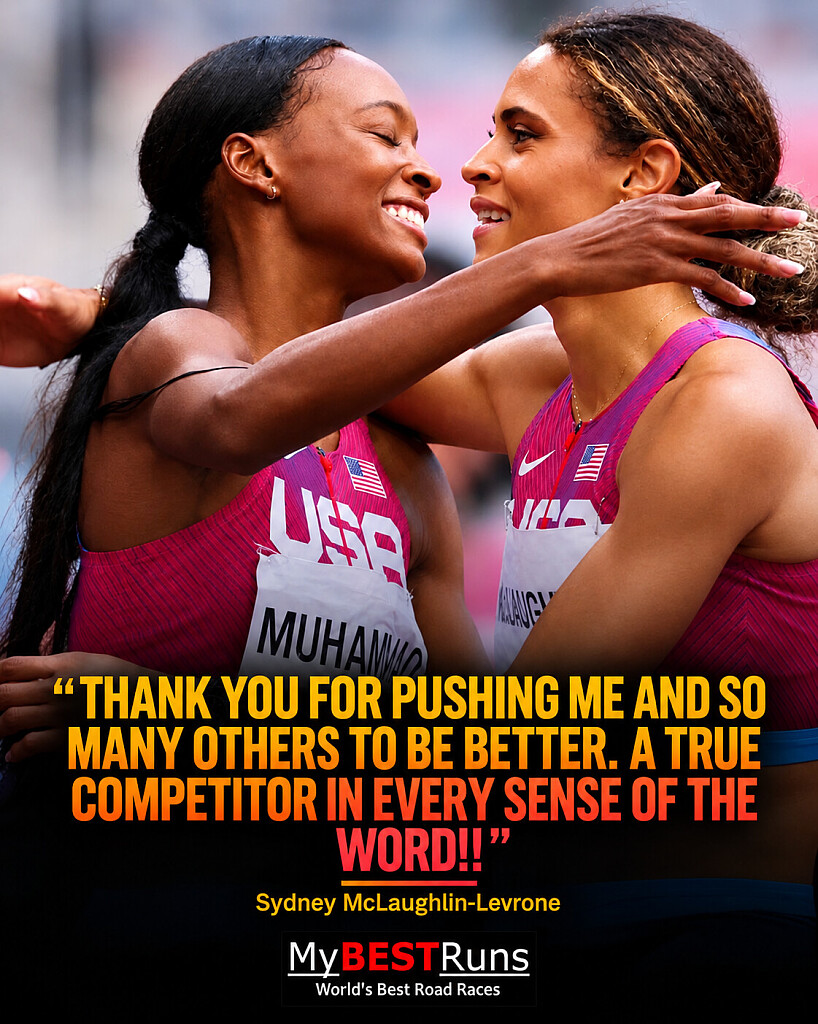


Sydney McLaughlin-Levrone Pays Emotional Tribute As Dalilah Muhammad’s Legendary Career Comes To An End
Some rivalries create champions. Others change an entire sport.
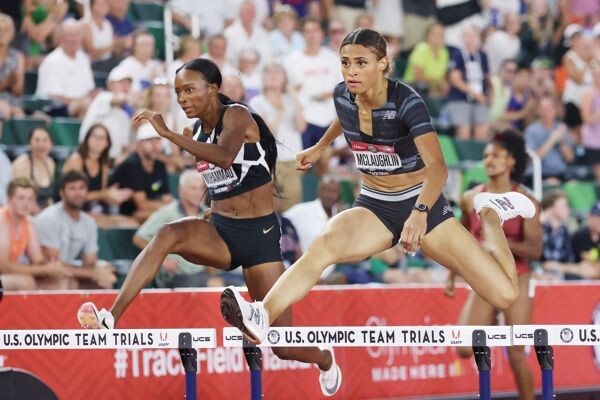
For Sydney McLaughlin-Levrone and Dalilah Muhammad, their extraordinary rivalry did both.
As Muhammad took the final 400m hurdles race of her remarkable career at the World Athletics Ultimate Championship Budapest 26, McLaughlin-Levrone paid tribute to the woman who helped push her to another level — not only as a competitor, but as one of the athletes who helped redefine what was possible in the event.
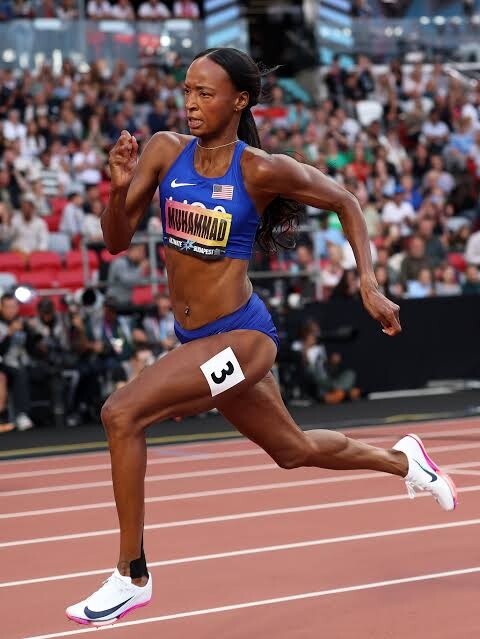
“Dalilah, you truly did just change the game for all of us.”
Those words carry particular weight because few athletes understand Muhammad’s impact better than McLaughlin-Levrone.
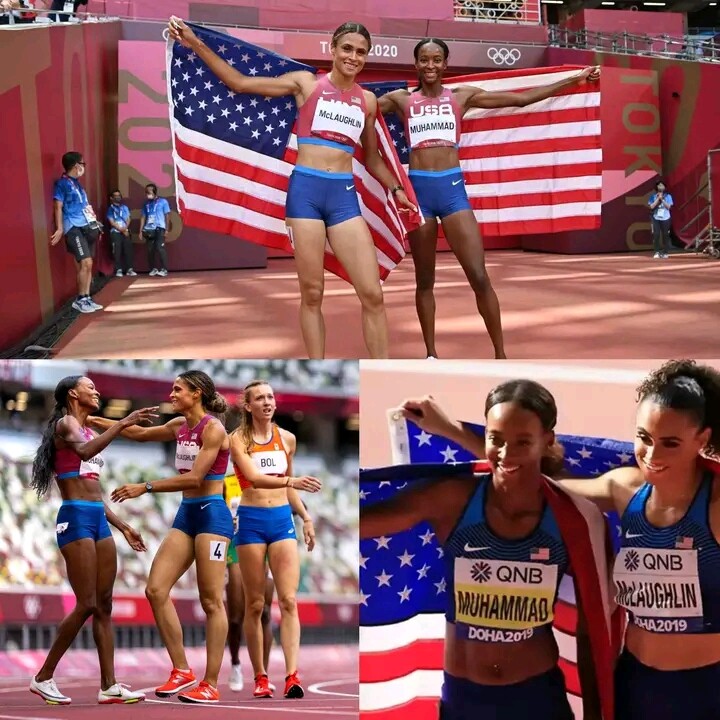
Their rivalry became one of the defining stories of modern women’s athletics. In 2019, Muhammad broke a world record that had stood for almost 16 years, clocking 52.20 seconds at the US Championships. Later that year, she lowered it again to 52.16 while winning the world title in Doha, with McLaughlin-Levrone finishing second in 52.23.
But Sydney was not content to simply chase Muhammad.
She kept coming.
At the Tokyo Olympics, McLaughlin-Levrone broke the world record with 51.46 seconds to win gold, while Muhammad followed closely in 51.58. Their performances demonstrated how dramatically the event had evolved in just a few years.
McLaughlin-Levrone continued to push the limits, eventually taking the world record down to 50.68 seconds in 2022 before producing an astonishing 50.37 at the Paris 2024 Olympics.
Yet behind those numbers was something more meaningful than a succession of records.
There was respect.
Muhammad had established a standard that forced McLaughlin-Levrone to chase something greater, while McLaughlin-Levrone’s rise helped create another level of competition for everyone following them.
That is the essence of “iron sharpens iron.”
One athlete pushes.
The other responds.
And the sport moves forward.
Their relationship also extended beyond individual competition. They represented the United States together and shared Olympic success as teammates, including the American women’s 4x400m relay gold medal at Tokyo 2020.
Now, years after their most memorable battles, Muhammad has taken her final bow.
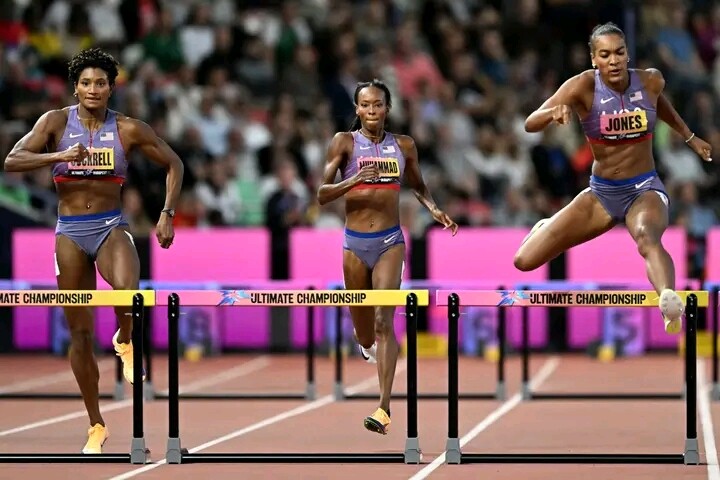
At the inaugural World Athletics Ultimate Championship in Budapest, the former Olympic champion and world record-holder finished fourth in 53.11 seconds, just 0.02 behind fellow American Anna Cockrell.
Jasmine Jones won the title in a season-best 52.45 seconds, with Emma Zapletalová taking second in 52.68 and Cockrell finishing third in 53.09.
For Jones, the victory represented the biggest breakthrough of her career. After finishing fourth at the Paris 2024 Olympics and claiming silver at the 2025 World Championships, she finally reached the top of a major international podium.
And there was something particularly fitting about Muhammad sharing her final race with an athlete from a younger generation.
The baton was not literally being passed, but the symbolism was impossible to miss.
Muhammad helped establish a new standard.
McLaughlin-Levrone took that standard even higher.
And now athletes such as Jones are beginning to write their own stories in an event transformed by those who came before them.
For Muhammad, the legacy goes far beyond medals and world records. She became one of the defining figures in the history of the women’s 400m hurdles, helping elevate the event through years of extraordinary competition.
That is why McLaughlin-Levrone’s tribute feels so much bigger than a farewell.
“Thank you for pushing me and so many others to be better. A true competitor in every sense of the word!!”
There was a time when Sydney was chasing Dalilah.
Then Sydney became the athlete everyone else had to chase.
But their story was never simply about one athlete replacing another. It was about competition creating excellence — about two extraordinary athletes raising the standard until the impossible began to look achievable.
Muhammad pushed the door open.
McLaughlin-Levrone ran through it.
And now a new generation is stepping forward.
As Muhammad leaves the track for the final time, the records will remain in the history books and the medals will become part of her remarkable legacy. But perhaps her greatest contribution will be found in the athletes she inspired, challenged and helped make better.
One pushed.
One answered.
Both changed the game.
That is what iron sharpens iron truly means.
And for one unforgettable era, Dalilah Muhammad and Sydney McLaughlin-Levrone showed the world exactly what happens when two great competitors refuse to let each other settle for ordinary.
by Erick Cheruiyot for My Best Runs.
Login to leave a comment
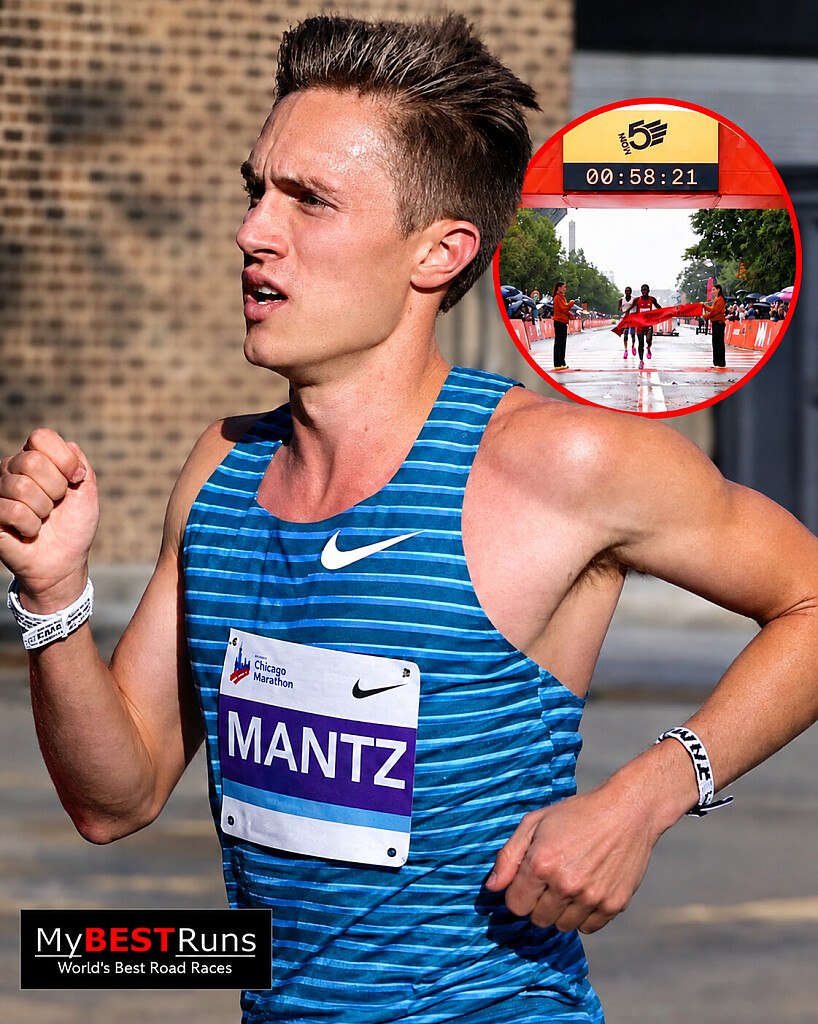
Conner Mantz’s Long Road Back: From American Record Holder to World Championship Return
Less than a year ago, Conner Mantz was rewriting American distance-running history. Now, after months of injury, rehabilitation and rebuilding, the American record holder is preparing for another major test — this time on the world stage in Copenhagen.
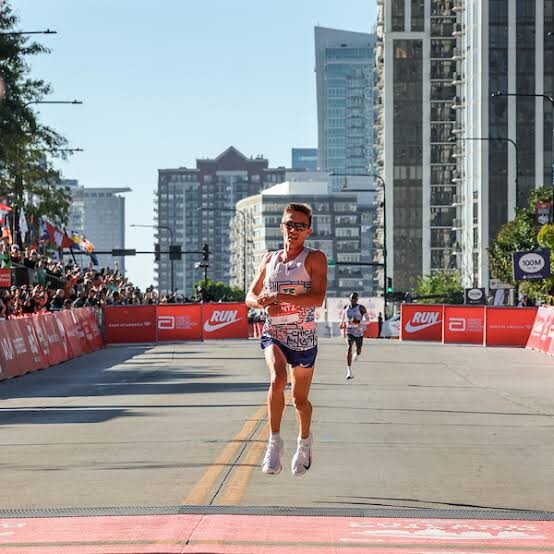
On October 12, 2025, Mantz produced the performance of his career at the Chicago Marathon, running 2:04:43 to break Khalid Khannouchi’s long-standing American record of 2:05:38, set in London in 2002. The performance made Mantz the fastest American marathoner in history and confirmed his place among the country’s elite distance runners.
But what followed was far removed from the glory of Chicago.
Only weeks after the marathon, Mantz began experiencing hip pain that was eventually diagnosed as a sacral stress fracture. The injury forced him away from running for 12 weeks and disrupted what had been shaping up to be another important season. He ultimately withdrew from the 2026 Boston Marathon during race week after acknowledging that his fitness had not returned sufficiently.
Rather than forcing the comeback, Mantz had to rebuild from the ground up.
Swimming became a major part of that process. Long sessions in the pool gradually became faster, with his pace progressing from around 1:43 per 100 yards to below 1:30. Some sessions stretched close to three hours. Cycling also became part of his training, while running was carefully introduced whenever his body allowed it — and stopped whenever the injury demanded caution.
For an athlete accustomed to racing at the highest level, it was a frustrating period of patience.
Mantz finally returned to competition at the ASICS Falmouth Road Race in August, almost ten months after his historic Chicago performance. He finished as the second American, a result that may not have been the comeback statement he wanted, but was nevertheless an important step forward.
Now comes a much bigger examination.
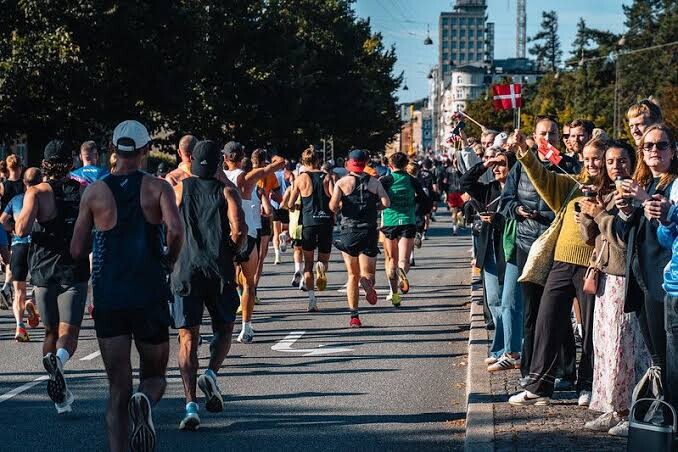
On Sunday, September 20, Mantz will line up in Copenhagen for the men's half marathon at the 2026 World Athletics Road Running Championships. It will be his first global championship appearance since the Paris 2024 Olympics.
And Mantz is not arriving merely as another member of the American team. He is the reigning American record holder in the half marathon.
That record came in 2025, when he ran 59:17 in Houston to erase Ryan Hall's 59:43 American record, which had stood for 18 years.
In the same year, Mantz would go on to claim the American marathon record as well.
Two national records. One extraordinary season. Then an injury that forced him to step away from the racing world for months.
Now, the question is no longer simply how fast Mantz can run on his best day. It is about what remains after everything he has been through.
Copenhagen offers the perfect stage for that answer. With the world's best runners gathered for a global title, Mantz will have the opportunity to measure himself against the strongest competition while continuing his journey back to his best.
He has already shown that he can break records. He has already shown that he can compete with the world's best.
This time, he is simply trying to rediscover the runner who did it.
Records can redefine the ceiling. Injuries can force an athlete to rediscover the foundation. On Sunday in Copenhagen, we will find out just how much of the old Conner Mantz is back — and how much stronger the journey has made him.
by Erick Cheruiyot for My Best Runs.
Login to leave a comment
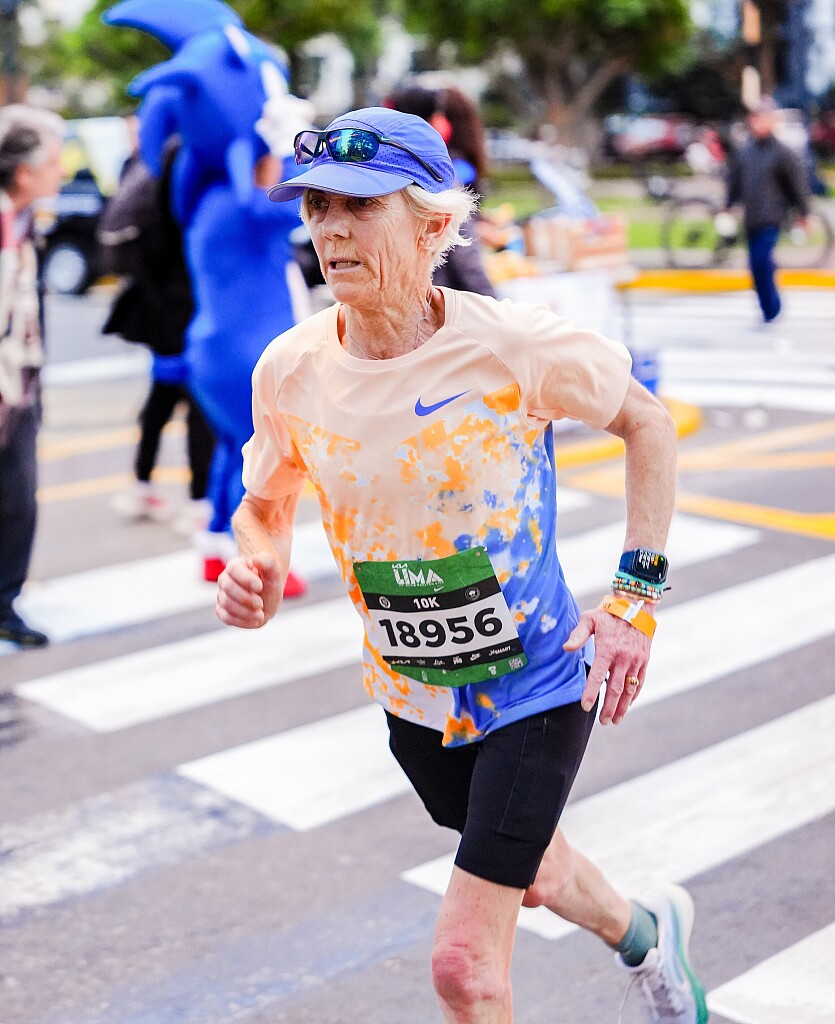
69 And Still Running: Joan Benoit Samuelson Inspires Lima With Another Remarkable 10K
At an age when many athletes have long since stepped away from competition, Joan Benoit Samuelson continues to remind the running world that the finish line is never defined by a number.
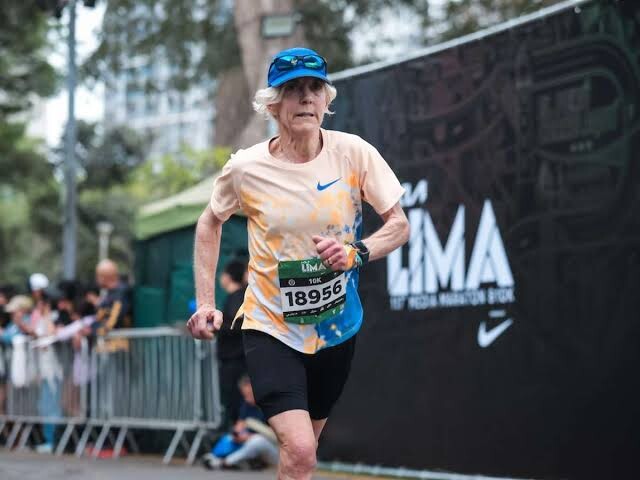
On Sunday in Lima, Peru, the pioneering American distance runner lined up for the 10K at the 117th KIA Media Maratón de Lima & 10K, and at 69 years old, she crossed the finish line in an impressive 47:49 — averaging approximately 7:43 per mile.
It was another chapter in a remarkable running life that has stretched across more than four decades, taking Samuelson from the roads of New England to Olympic history and, now, to the streets of Lima.
The first Olympic women's marathon champion, Samuelson was in Peru as part of a Nike-backed trip, experiencing a race course that links Lima's historic heart with its modern districts. The event attracted around 21,000 runners, creating a spectacular celebration of running in one of South America's most historic cities.
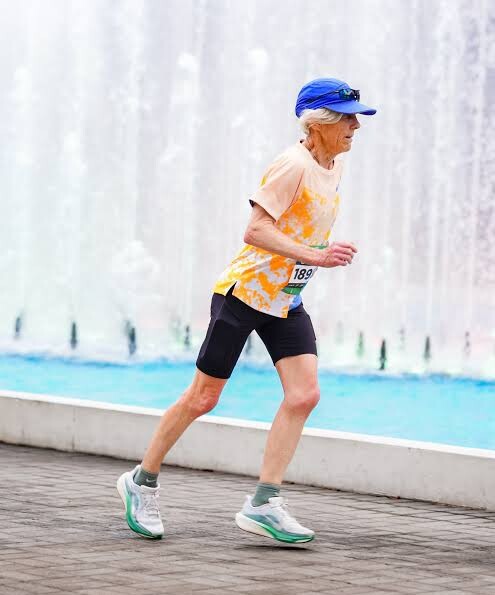
The half marathon accompanying the 10K carries an extraordinary legacy of its own. First staged in 1909, the race is billed as the world's oldest half marathon, adding another layer of history to Samuelson's appearance.
But Samuelson herself needs little introduction when it comes to the history of women's distance running.
Her career helped redefine what was possible for women on the marathon course. She won the Boston Marathon in 1979 and again in 1983, then produced a stunning American record of 2:22:43 in her marathon debut that same year.
A year later, she reached the summit of the sport.
At the 1984 Los Angeles Olympics, Samuelson captured gold in the inaugural women's Olympic marathon, running 2:24:52 and finishing 1 minute 26 seconds ahead of legendary Norwegian Grete Waitz. It was a victory that became one of the defining moments in the history of women's athletics.
And she was far from finished.
In 1985, Samuelson won the Chicago Marathon in 2:21:21, setting another American record that remained untouched for 18 years. Her achievements became part of the foundation upon which the modern era of women's distance running was built.
Yet perhaps the most remarkable part of her story is not what she accomplished four decades ago, but the fact that she is still curious, still competing and still eager to learn from the sport.
Before Sunday's race, Samuelson praised the growing strength of Peruvian distance running, telling local media: “Runners from Peru are starting to show up on the world stage, and they are doing it very well.”
Those words capture something that has defined her journey for generations: a belief that running is not simply about records, medals or victories. It is about discovery, connection and the endless possibility of seeing how far the human spirit can go.
Four decades after making history in Los Angeles, Samuelson is still answering the starting gun.
At 69, the Olympic champion is no longer chasing the clock she once conquered. She is chasing something far more enduring — the joy of running itself.
And in Lima, thousands of runners had the privilege of watching a living legend continue to do what she has always done best: inspire people to keep moving forward.
by Erick Cheruiyot for My Best Runs.
Login to leave a comment

26 Years Later, Vivian Cheruiyot Returns To Sydney As A Kenyan Distance-Racing Legend
Twenty-six years ago, a 17-year-old Vivian Cheruiyot arrived in Sydney carrying the dreams of a young Kenyan athlete and the promise of a remarkable future.
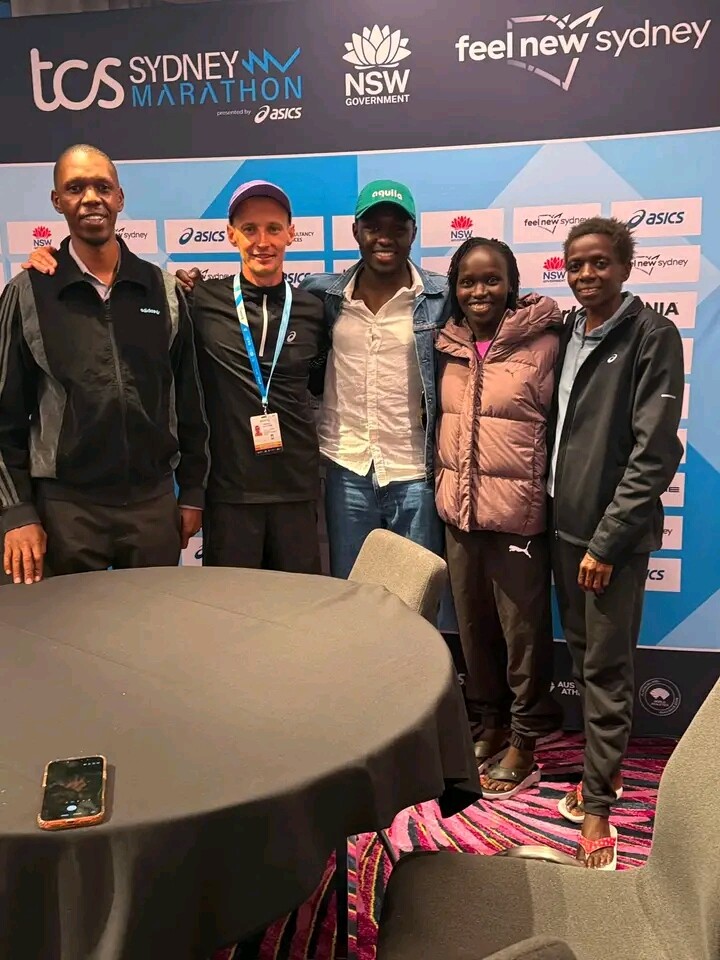
Today, she returns to the same Australian city as something far greater — an Olympic champion, four-time world champion, world cross-country champion, London Marathon winner, Laureus Sportswoman of the Year and one of Kenya’s most accomplished distance runners.
At 42, Cheruiyot will line up for the TCS Sydney Marathon on Sunday, August 30, completing an extraordinary full circle in a career that has stretched across more than two decades and transformed her from a teenage Olympian into one of the defining figures of her generation.
When Cheruiyot first competed in Sydney at the 2000 Olympic Games, few could have imagined the heights she would eventually reach. Still only 17, she advanced to the 5000m final and finished 14th — an experience that became the first chapter of an Olympic journey that would eventually span four Games.
The years that followed brought an extraordinary collection of victories.
Cheruiyot became world 5000m champion in 2009, then produced one of the greatest championship performances of her career in Daegu in 2011, winning both the 5000m and 10,000m titles while also claiming World Cross Country gold earlier that year. She added another world 10,000m title in Beijing in 2015, taking her tally to four senior world championships.
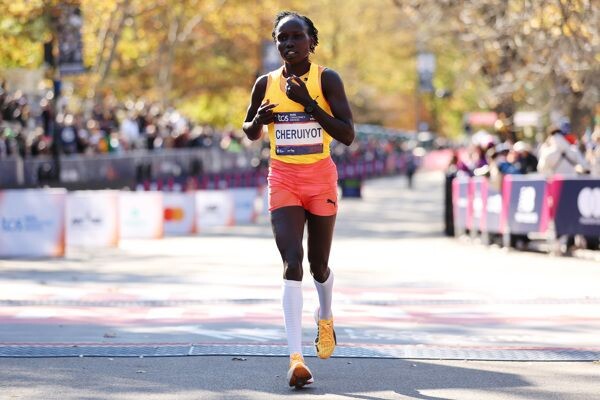
But the Olympic gold medal remained the one prize missing from her collection.
That changed dramatically in Rio in 2016.
After winning silver in the 10,000m, Cheruiyot returned to the track for the 5000m final and delivered a masterclass in championship racing. She surged away from Ethiopia’s Almaz Ayana in the closing stages to win Olympic gold in 14:26.17, finally completing the collection of major titles she had chased for so many years.
“I said I want to win,” Cheruiyot recalled after that historic victory. “This was my fourth Olympics and I’ve been dreaming about this since the very start.”
Her brilliance was not confined to the track.
After moving into marathon running, Cheruiyot established herself among the world’s best over 42.195km. She finished fourth in her London Marathon debut in 2017 before returning the following year to produce a stunning victory in 2:18:31 — a performance that placed her fourth on the world all-time list at the time and remains her marathon personal best.
She also finished runner-up in the New York City Marathon in 2018 and second in London in 2019, further demonstrating that her extraordinary competitive instinct had successfully followed her from the track to the roads.
Away from competition, Cheruiyot’s story has also evolved with her life. She became a mother, welcomed her daughter Arielle in 2021 and returned to competitive racing in 2023. In 2024, she claimed third place at the New York City Marathon, followed by fifth at the 2025 London Marathon.
Now Sydney offers her another opportunity to write her name into the city’s sporting history.
“I look back on my career with pride. I was able to win almost everything and have been at the top for a long time,” Cheruiyot said ahead of her return.
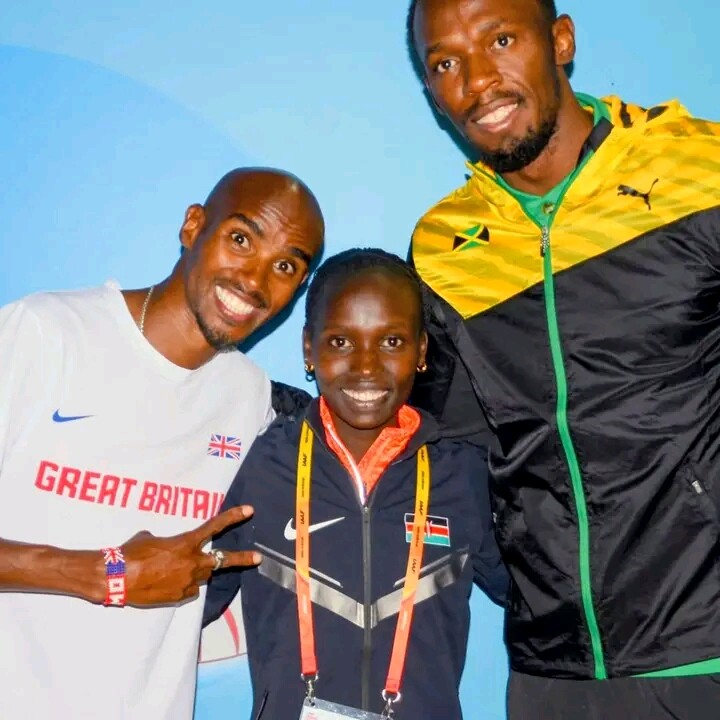
She also remembers the extraordinary generation in which she competed — an era that included global icons such as Usain Bolt, Tirunesh Dibaba and Meseret Defar.
“I was running in a great era and had a close-up view of athletes like Usain Bolt setting the world alight,” she reflected.
Yet perhaps the most remarkable aspect of Cheruiyot’s return is not simply the passage of time, but her willingness to keep challenging herself.
She arrives in Sydney having put considerable work into rebuilding her fitness, knowing that the marathon demands something entirely different from the explosive championship races that defined her track career.
“I am very excited to go back to Sydney,” she said. “It has been 26 years since I was there, and a lot has changed in my life since then. I hope to have a good run — I have put in a lot of work to regain fitness and hope my body will stand up to the 42km.”
Twenty-six years ago, Sydney introduced the world to a fearless Kenyan teenager chasing an Olympic dream.
Now, the same city welcomes back a woman who went on to conquer the track, cross country and marathon — and to leave an indelible mark on Kenyan athletics.
From teenage Olympian to Olympic champion. From world champion to marathon winner. From rising talent to mother and enduring icon.
Vivian Cheruiyot has come full circle — and Sydney is once again the stage.
by Erick Cheruiyot for My Best Runs.
Login to leave a comment

Sydney Marathon
The Sydney Marathon is a marathon held annually in Sydney, Australia. The event was first held in 2001 as a legacy of the 2000 Summer Olympics, which were held in Sydney. In addition to the marathon, a half marathon, 9 kilometres (5.6 mi) "Bridge Run", and a 3.5 kilometres (2.2 mi) "Family Fun Run" are also held under the banner...
more...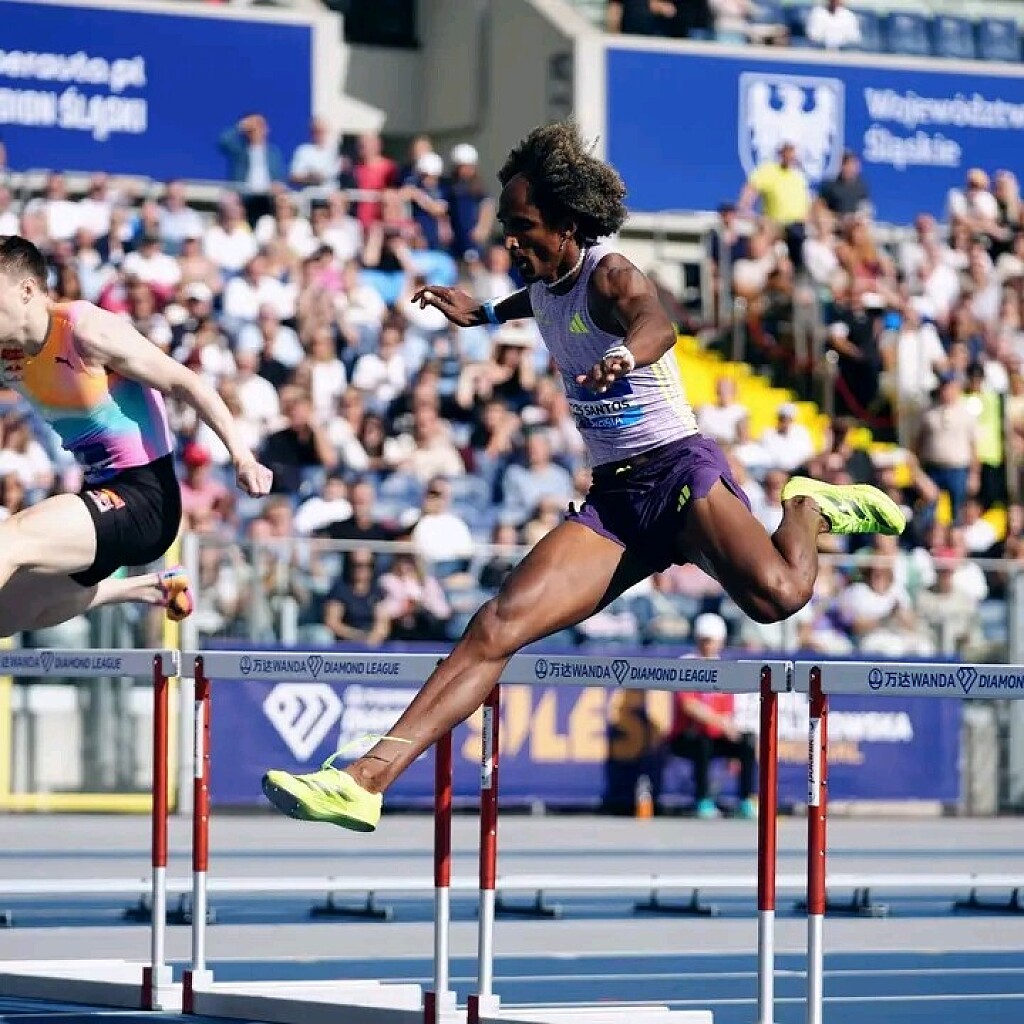
Is This the Greatest Era in Men’s 400m Hurdles History? Dos Santos Takes the Event to Another Level
The men’s 400m hurdles may be experiencing the greatest era in its history, and the numbers now make the argument almost impossible to ignore.
Brazilian superstar Alison dos Santos has taken the event to another level, storming to a sensational 45.80 world record in Zurich and moving to the summit of the all-time performance list.
But perhaps even more remarkable than the world record itself is what it has done to the historical rankings.
Every one of the 10 fastest performances in men’s 400m hurdles history is now owned by just three athletes: Alison dos Santos, Karsten Warholm and Rai Benjamin.
That extraordinary statistic perfectly captures the dominance of the current generation and highlights just how dramatically the event has evolved over the past few years.
Following his stunning performance in Zurich, dos Santos now sits at the top of the all-time list with 45.80, followed by Norway’s Karsten Warholm at 45.94, the time he ran in his historic world-record performance at the Tokyo Olympics in 2021.
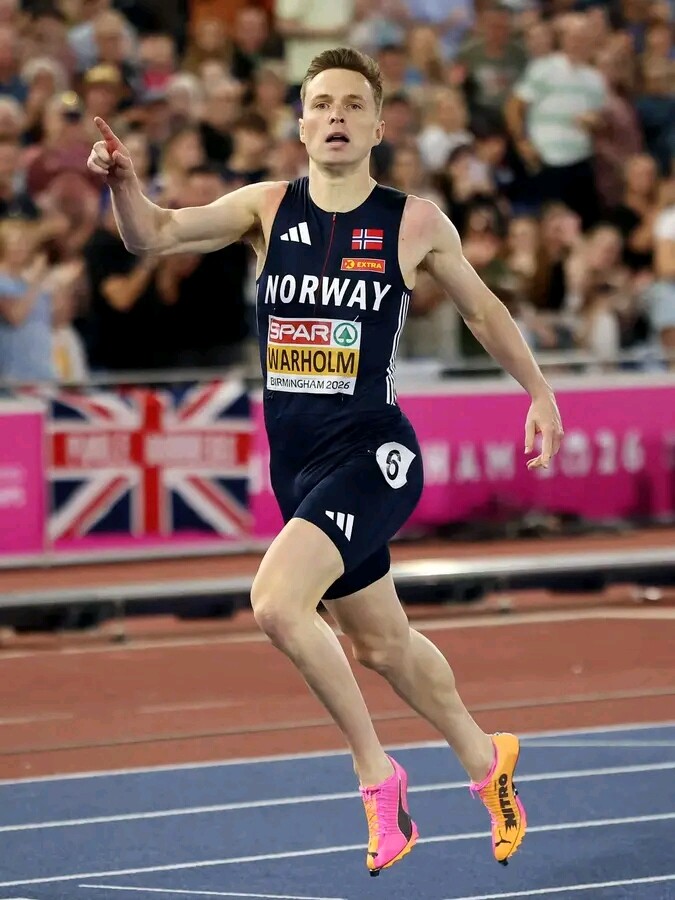
American star Rai Benjamin occupies third with 46.17, also from that unforgettable Tokyo final. Warholm is fourth with 46.28 from 2025, while dos Santos is fifth with his 46.29 from 2022.
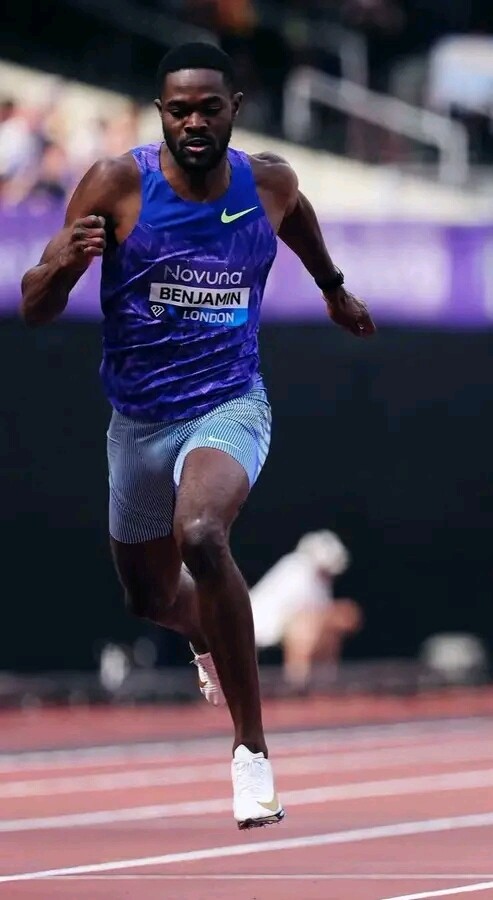
Benjamin appears again in sixth and seventh with 46.46 performances from 2024, while dos Santos takes eighth with 46.48 in 2026. Warholm completes the list with 46.51 from 2023 and 46.52 from 2023.
The distribution is extraordinary. Dos Santos owns three of the 10 fastest performances, Warholm owns four, while Benjamin owns the remaining three.
No other athlete has managed to break into the top 10.
That level of concentration at the very top of an event is a remarkable reflection of the era these three athletes have created.
At the centre of it all is dos Santos, whose 45.80 in Zurich has established a completely new benchmark. The Brazilian's performance did more than secure another historic victory; it pushed the boundaries of what is considered possible over one lap and 10 barriers.
Warholm had previously rewritten the history books in Tokyo when he clocked 45.94, becoming the first man to break the 46-second barrier and finally lowering Kevin Young’s legendary 46.78 world record, which had stood since the 1992 Barcelona Olympics.
Benjamin finished behind Warholm in Tokyo in 46.17, producing a performance that would itself have been considered extraordinary in almost any other era. Dos Santos completed the podium in 46.72, but his bronze medal would eventually prove to be just another chapter in his rise towards the summit.
The Tokyo final remains one of the most spectacular races in Olympic athletics history, but it also marked the beginning of an extraordinary period in which Warholm, Benjamin and dos Santos would repeatedly challenge the limits of the event.
Warholm has four performances inside the current top 10, including his 45.94 world record from Tokyo. Dos Santos has three, highlighted by his new global mark, while Benjamin also has three performances among the 10 fastest ever recorded.
Their remarkable consistency has transformed the 400m hurdles from an event once dominated by isolated historic performances into one defined by sustained excellence and intense rivalry.
For nearly three decades, Kevin Young’s 46.78 appeared almost untouchable. Then Warholm broke through. Benjamin immediately showed that the new standard could be challenged, and dos Santos emerged as another athlete capable of running at an astonishing level.
Now, times below 46 seconds are no longer viewed as an unimaginable frontier. They have become the territory occupied by the very best athletes of this generation.
And dos Santos has just moved that frontier even further.
His 45.80 has given the event a new target, but with Warholm and Benjamin still among the world's elite, the story may not be finished.
The question is no longer whether this generation is exceptional.
It is whether we are witnessing the greatest collection of men's 400m hurdlers ever assembled.
Three athletes now own every position in the all-time top 10.
Ten performances have been produced by just dos Santos, Warholm and Benjamin.
And at the very top stands Alison dos Santos, whose breathtaking 45.80 in Zurich has pushed the men’s 400m hurdles into territory that once seemed impossible.
Three superstars. Ten historic performances. One extraordinary era.
by Erick Cheruiyot for My Best Runs.
Login to leave a comment
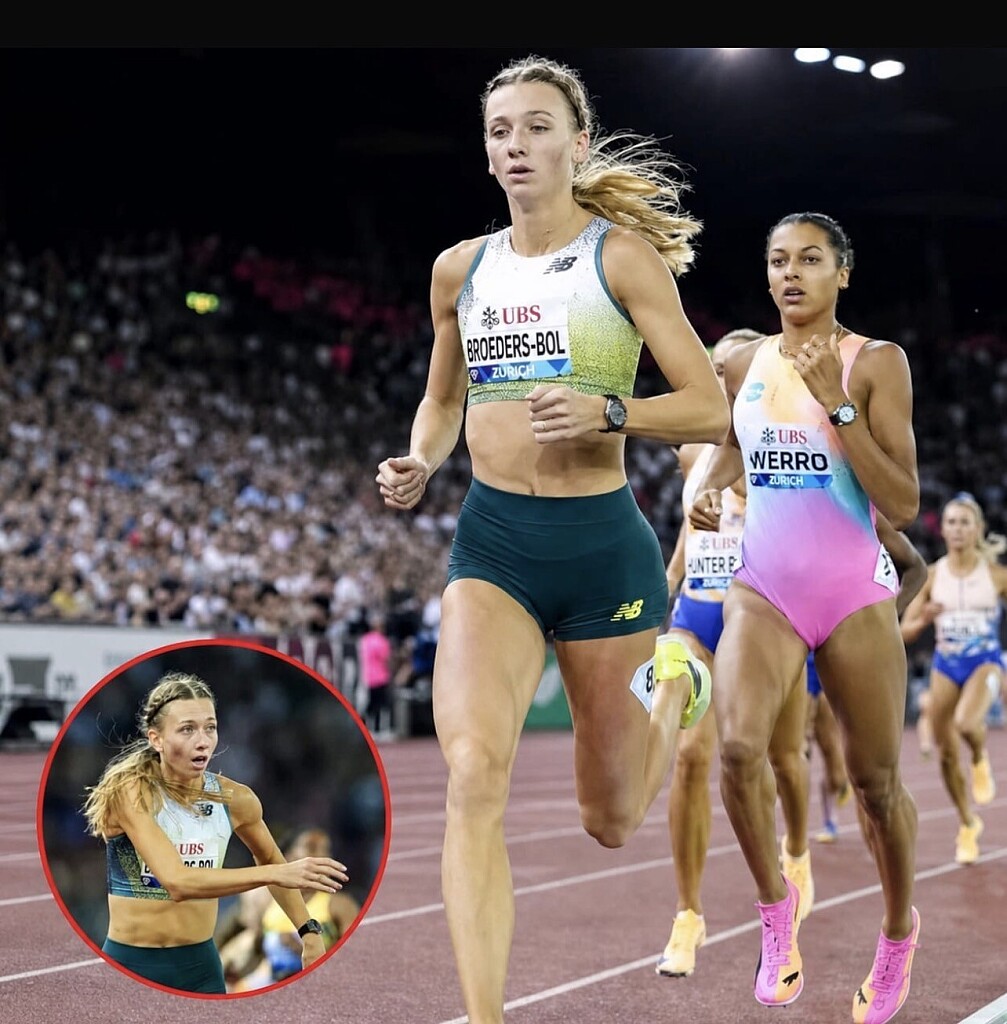
Femke Broeders-Bol’s Stunning 800m Transformation: From Hurdles Star to Dutch Record Breaker
Femke Broeders-Bol has spent much of her career dominating the 400m hurdles, but in 2026 the Dutch star has opened an entirely new chapter — and her transformation into a world-class 800m runner is becoming one of the most fascinating stories in athletics.
What initially looked like an intriguing experiment has rapidly developed into something far more serious.
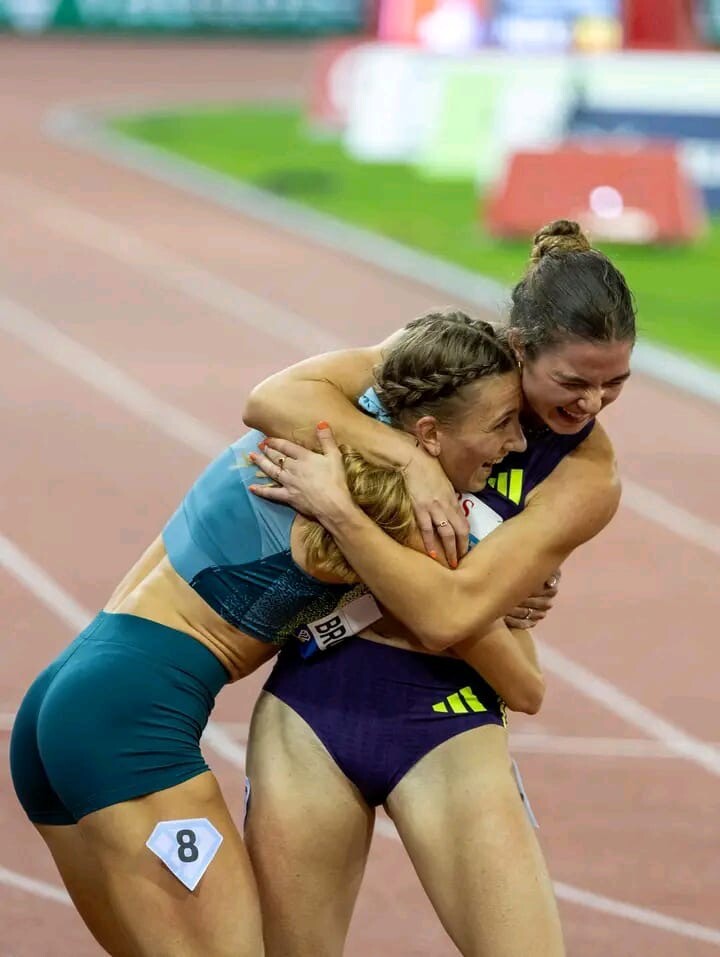
Broeders-Bol is now running times that place her firmly among the elite of the women’s 800m.
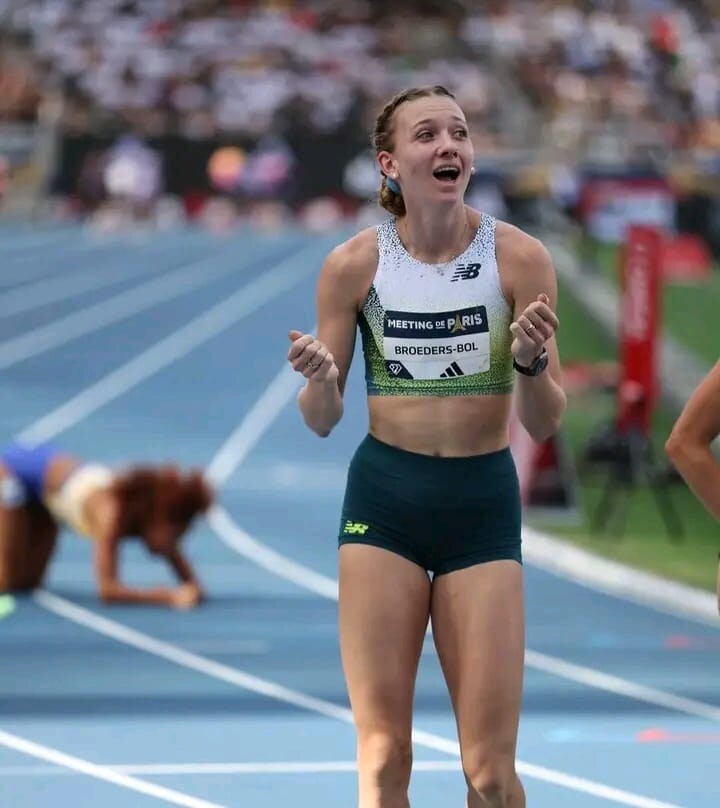
Her breakthrough has been remarkable in both its speed and scale. After making the transition to the two-lap event, she quickly demonstrated that the qualities that made her one of the world’s best 400m hurdlers could be transferred to the longer distance.
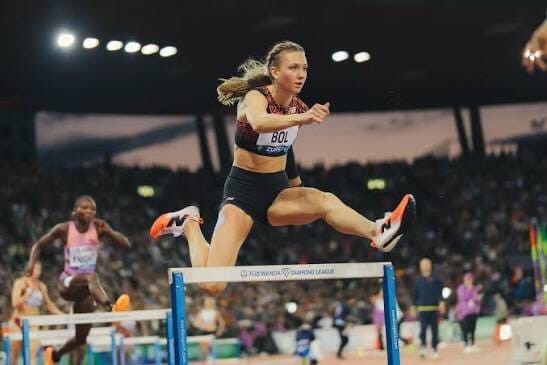
Her 2026 progression tells the story.
She clocked 1:55.60 in Paris on June 28, followed by 1:57.13 in Ostrava, before producing 1:55.54 at the European Championships in Birmingham. That performance equalled Ellen van Langen’s long-standing Dutch record of 1:55.54, a mark that had stood since the 1992 Olympic Games.
Just days later, Broeders-Bol went even faster.
At the Lausanne Diamond League on August 21, she ran 1:55.41, lowering the Dutch record outright and finishing second behind Switzerland’s Audrey Werro.
Then came Zürich.
On August 27, Broeders-Bol produced another extraordinary performance, stopping the clock at 1:54.71 to break her own national record by 0.70 seconds in less than a week. She finished second to Werro, who ran a spectacular 1:53.70 — the third-fastest time ever recorded in the women’s 800m.
For Broeders-Bol, however, the biggest headline was her own transformation.
Her 400m hurdles background has provided an exceptional foundation for the 800m. Years of racing over barriers have developed her speed, strength, rhythm, speed endurance and ability to maintain efficient mechanics when fatigue sets in. Those qualities are particularly valuable over two laps, where the ability to combine raw pace with endurance can separate the very best from the rest.
The challenge has been converting that 400m speed into sustained 800m pace.
And she is doing exactly that.
A 1:54.71 performance is no longer the result of an athlete simply testing herself in another event. It is the mark of a genuine 800m contender.
What makes the development even more intriguing is that Broeders-Bol herself has appeared surprised by just how quickly she has adapted to the distance.
In Zürich, she showed once again that her ceiling over 800m may be considerably higher than anyone initially expected.
At just 26, the Dutch star now finds herself at the beginning of a potentially extraordinary second chapter in her career. Her established reputation as a 400m hurdles powerhouse has already been transformed by a new national record over 800m — and she is continuing to improve at a breathtaking rate. World Athletics lists her 1:54.71 as her current personal best and ranks her among the leading women over the distance.
The question now is no longer whether Broeders-Bol can run the 800m.
It is how fast she can ultimately go.
If this remarkable progression continues, the road towards the Los Angeles 2028 Olympics could become one of the most intriguing storylines in women’s middle-distance running.
Femke Broeders-Bol has already proven that she can conquer the hurdles.
Now, she is showing that two laps of the track may belong to her too.
by Erick Cheruiyot for My Best Runs
Login to leave a comment
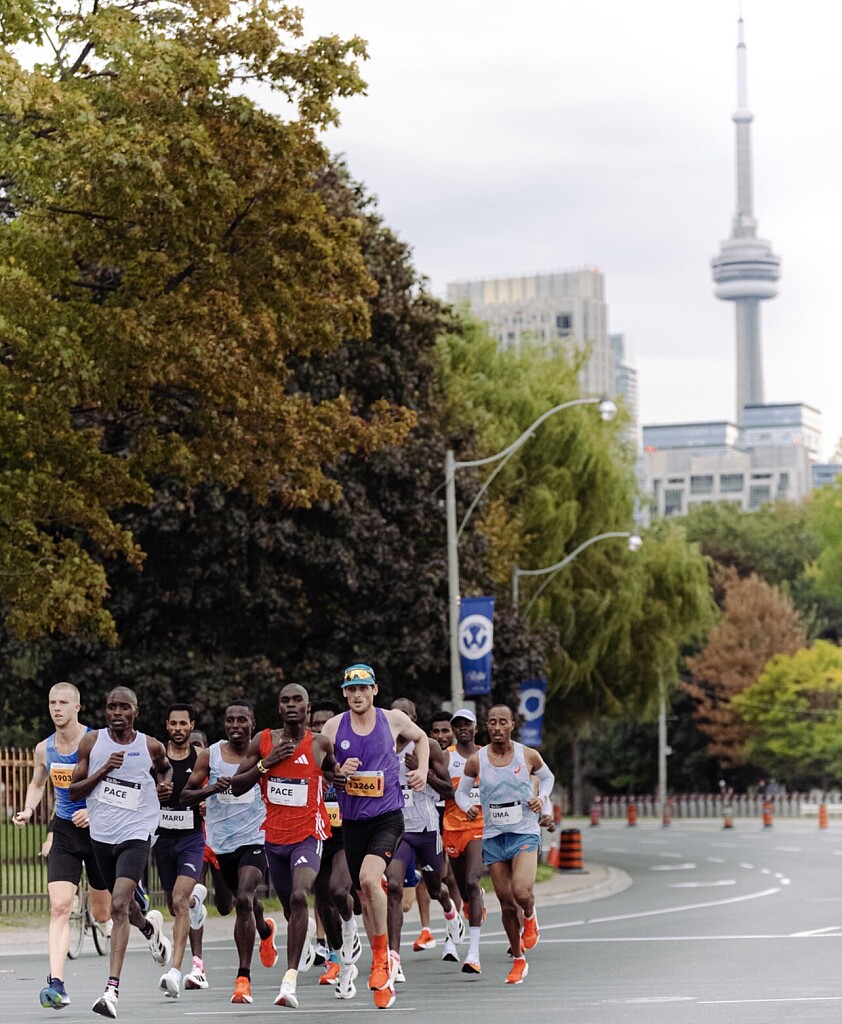
Two London-Area Standouts Set for Marathon Debuts at Toronto Waterfront
Two Canadian distance running stalwarts will make their marathon debuts at the 2026 TCS Toronto Waterfront Marathon October 18. Both make their homes in the London area of southwestern Ontario.
The event is a World Athletics Elite Label race and also serves as the official Athletics Canada Canadian Marathon Championships.
Connor Black and Jeremy Coughler are former training partners and Canadian championship medalists over 10,000m and cross country. They have followed different paths since the retirement of their coach, Dave Mills, although they occasionally meet for long runs while preparing for Toronto.
Coughler still follows a program designed by Mills—a special exception made by his former coach—while Black has worked with two-time Canadian Olympic marathoner Reid Coolsaet for the past two years. Their approaches to the Toronto race could hardly be more different.
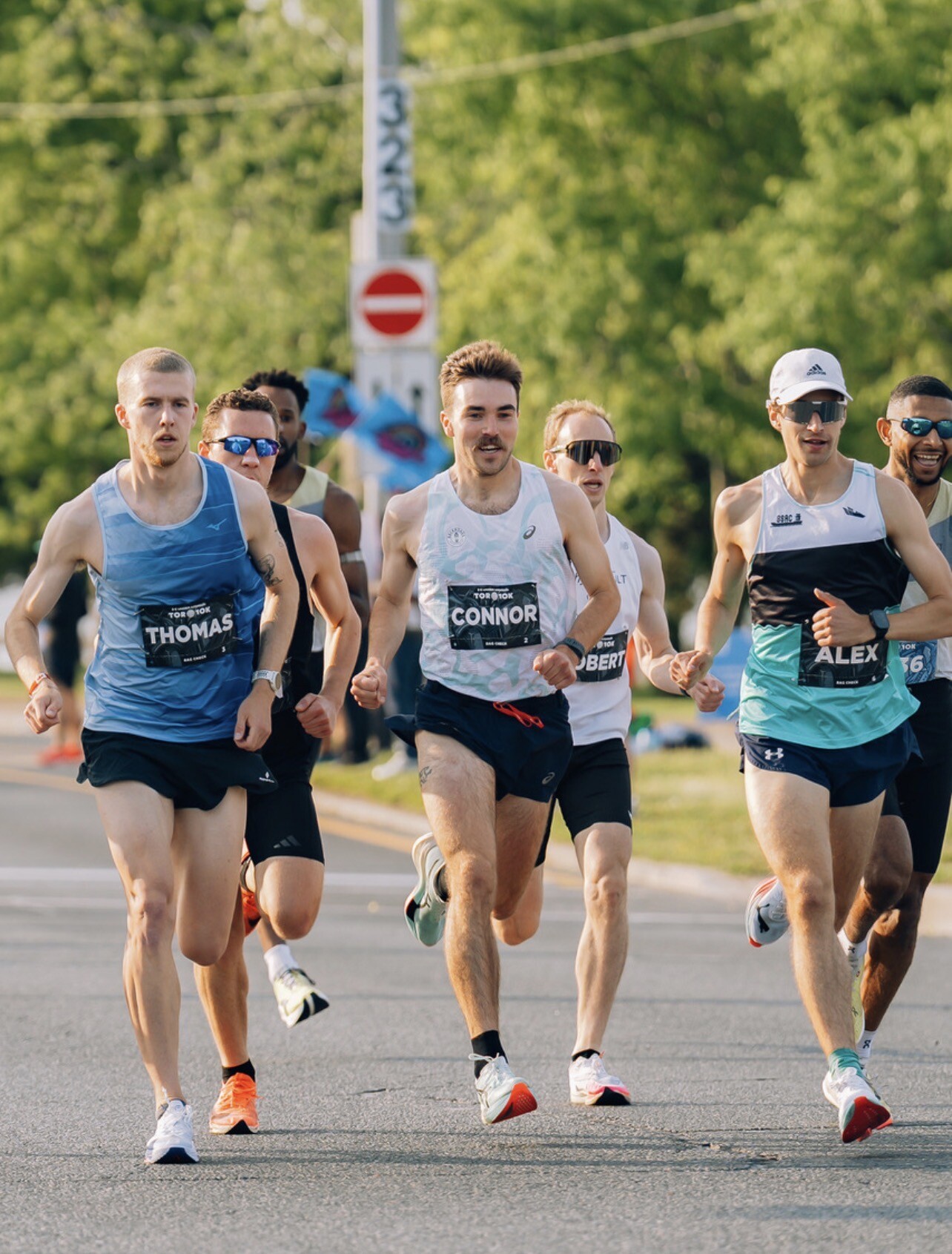
Black, who lives in London—known as “The Forest City”—sees his marathon debut as an important step toward a possible challenge for Canada’s 2028 Olympic team.
“I am 30 years old and I am not making money in the sport, but I still have goals,” Black declares. “My final goal would be to try and make an Olympic team, and I don’t think it’s feasible as an unsponsored track runner targeting the 5K or 10K.
“The marathon is a more even playing field. I can get into any marathon I want, within reason. There are 80 spots in the Olympics. So, if I am going to give it one last shot, it has to be in the marathon.”
At the 2025 Project 13.1 Half Marathon in Congers, New York, Black ran a personal best of 1:03:34 in his first race at the distance. Until then, he had competed primarily over 5,000m and 10,000m. In 2022, he won the Canadian Cross Country Championships.
Black is a secondary school teacher but remains classified as “Long Term Occasional,” meaning he moves from school to school wherever there is an opening.
“Last year I was at Strathroy District Collegiate Institute, which, funnily enough, was where Dave taught for 10 or 15 years,” Black says. “I taught phys ed and math. I can also teach English as a Second Language and biology. I am kind of a Swiss Army knife.”
As he increases his training load for Toronto, completing most of the work by himself, he admits he has reservations about returning to work.
“I am quite nervous to resume teaching,” he reveals. “Recently, my mileage has gone up. When you are starting your build, you are tired. It has been nice having the summer off and being able to focus on training.
“I used to believe you could train like a professional and have a full-time job. I think it’s possible, but if you want to run 200 kilometres a week for the marathon, it is definitely easier and probably better for your performance if you don’t have to work full time.”
Meanwhile, Coughler and his wife, Emma, are chiropractors and partners in Re-Charge Health and Wellness in London’s east end. They are also the parents of a young son, Otto, which means managing their time carefully.
“My wife and I split the work schedule,” Coughler, 30, explains during a day off. “I work Tuesday, Thursday, Friday and Saturday, so I try to do workouts on my days at home—Mondays and Wednesdays.
“If I have something first thing at 7 or 8 a.m., I do a run and then a shakeout between patients or after work. It’s not too bad.”
Running remains important to Coughler, but it is now one of several priorities. He estimates he is running up to 110 kilometres a week, similar to the volume he maintained when finishing third at both the 2023 and 2024 Canadian 10K Championships in Ottawa. He also won the Canada Running Series’ Beneva Spring Run-Off 8K four consecutive years between 2022 and 2025.
Although that mileage is well below what many elite marathoners run, Coughler set a half-marathon personal best of 1:04:33 earlier this year at the Project 13.1 Half Marathon in New York State. The performance earned him eighth place in a strong field. He admits his attitude toward running has changed.
“It’s a shift mentally because I have so much other stuff going on,” he explains. “I am trying to view running as something I do because I love it rather than because it’s my whole life.
“When I was at Indiana University, running was everything. When you run well, it’s great, but when you are not running well, it starts eating you alive.”
With the support and encouragement of Mills, they have mapped out a plan they hope will see Coughler finish his debut in the 2:14 to 2:16 range. He also intends to run more marathons in the future.
“It’s nice knowing there will be a bunch of other Canadian guys who can run around the same time, and that will make it deeper,” he says. “At the front, there are always good Kenyans and Ethiopians running fast. Even if there are a bunch of guys running between 2:12 and 2:20, it would be great.”
The race’s proximity to his home in Thamesford—15 minutes from his practice and about a two-hour drive from Toronto—means Emma, Otto and his parents can accompany him on race weekend. It is one reason he chose the TCS Toronto Waterfront Marathon for his debut.
Coughler is also familiar with the first half of the course, having finished third in the Toronto Waterfront Half Marathon a year ago. Runners in both events follow the same route until the 20-kilometre mark.
Between now and race day, there are many kilometres to be covered. Subject to their schedules and traffic conditions, the two London-area runners will reunite for some workouts.
If all goes well, they will arrive at the starting line ready to join the long list of Canadians who have successfully made the move to the classic marathon distance.
by Paul Gains
Login to leave a comment
TCS Toronto Waterfront Marathon
The Scotiabank Toronto Waterfront Marathon, Half-Marathon & 5k Run / Walk is organized by Canada Running Series Inc., organizers of the Canada Running Series, "A selection of Canada's best runs!" Canada Running Series annually organizes eight events in Montreal, Toronto and Vancouver that vary in distance from the 5k to the marathon. The Scotiabank Toronto Waterfront Marathon and Half-Marathon are...
more...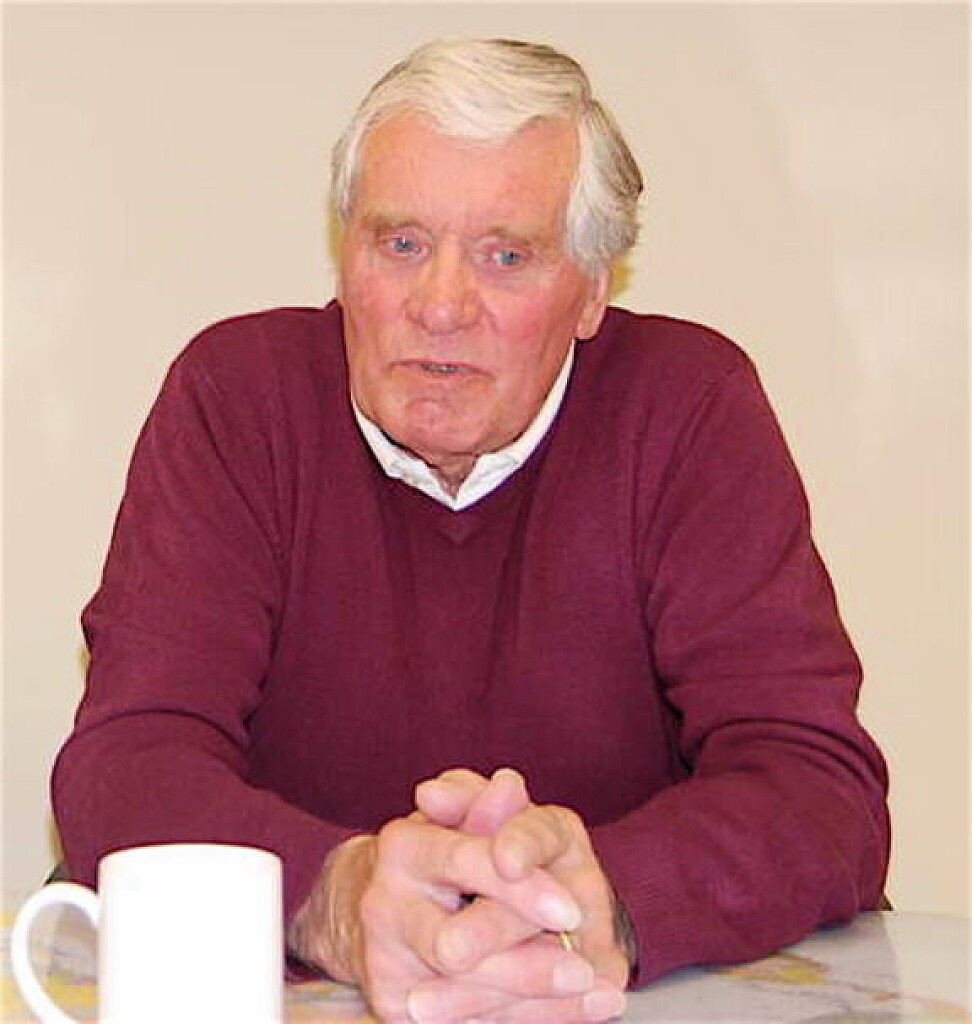
Maurice Herriott: Olympic Silver Medallist and Steeplechase Great Dies Aged 86
British athletics is mourning the loss of one of its most accomplished steeplechasers, Maurice Herriott, who has died aged 86 following a short illness.
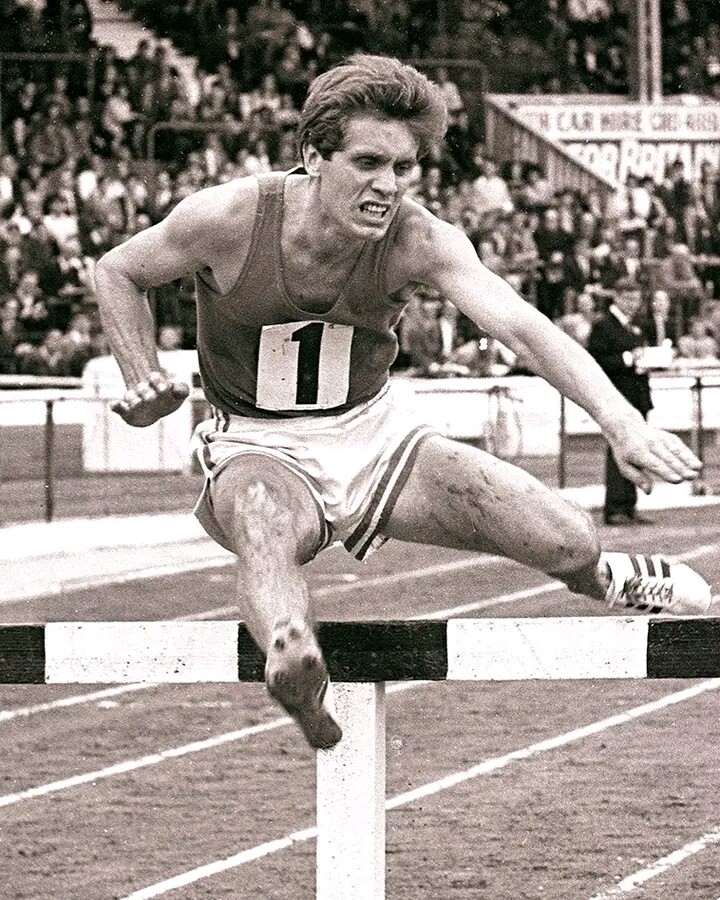
Herriott leaves behind a remarkable legacy, highlighted by his unforgettable silver-medal performance in the men’s 3000m steeplechase at the 1964 Tokyo Olympic Games. Competing for Great Britain, he clocked 8:32.4 to finish second behind legendary Belgian runner Gaston Roelants, who won in an Olympic record of 8:30.8.
It was a performance that underlined Herriott’s extraordinary determination. He was not a full-time professional athlete. Away from the track, he worked at the Birmingham Small Arms (BSA) motorcycle factory, combining demanding full-time employment with the training required to compete at the highest level of international athletics. Team GB notes that he held down a full-time job on the BSA motorcycle production line while competing at the Olympics.
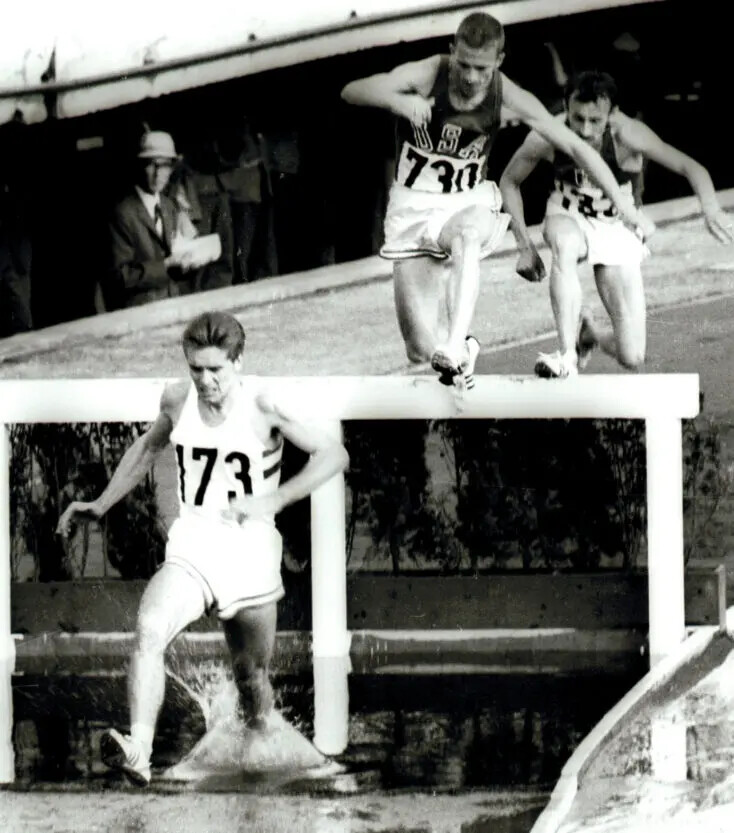
His Tokyo silver was the defining moment of a career built on consistency and resilience. In the Olympic final, Roelants established a commanding lead, but Herriott produced a powerful finish to move into second and close the gap considerably. He finished only 1.6 seconds behind the Belgian, with Soviet runner Ivan Belyayev taking bronze in 8:33.8.
Herriott had already established himself as a dominant force on the British scene. He won an astonishing eight AAA 3000m steeplechase titles, beginning with his first championship in 1959 and then claiming seven consecutive titles from 1961 through 1967.
His achievements also earned recognition beyond the medal table. In 1963, Herriott became the first British Athletics Writers' Association Male Athlete of the Year, an honour that reflected the esteem in which he was held during the peak of his career. He was also voted the award again in 1965.
His international career extended beyond Tokyo. Herriott had won Commonwealth Games silver in the steeplechase at Perth in 1962 and later represented Great Britain again at the 1968 Mexico City Olympics, where he reached the heats.
Born on 8 October 1939 in Great Wyrley, South Staffordshire, Herriott represented Birmingham-based Sparkhill Harriers and remained closely associated with the club, eventually becoming an honorary lifelong member.
His career is a reminder of an era when elite athletes could combine extraordinary sporting ambition with demanding working lives. Herriott did not simply win medals; he built a legacy through years of discipline, consistency and determination.
The British athletics community now says goodbye to a man who stood among the country's finest steeplechasers and whose silver medal in Tokyo remains one of the memorable achievements of British distance running.
Maurice Herriott — Olympic medallist, eight-time AAA champion and pioneer of British steeplechasing — will be remembered with great respect.
Herriott leaves behind an enduring legacy in British athletics, remembered not only for his Olympic silver medal but also for his remarkable consistency, determination and contribution to steeplechasing. He was 86.
by Erick Cheruiyot for My Best Runs.
Login to leave a comment
Shericka Jackson: A Smile Through the Storm
For Shericka Jackson, the past few weeks have brought a painful reminder that even the strongest champions can be tested far beyond the finish line.
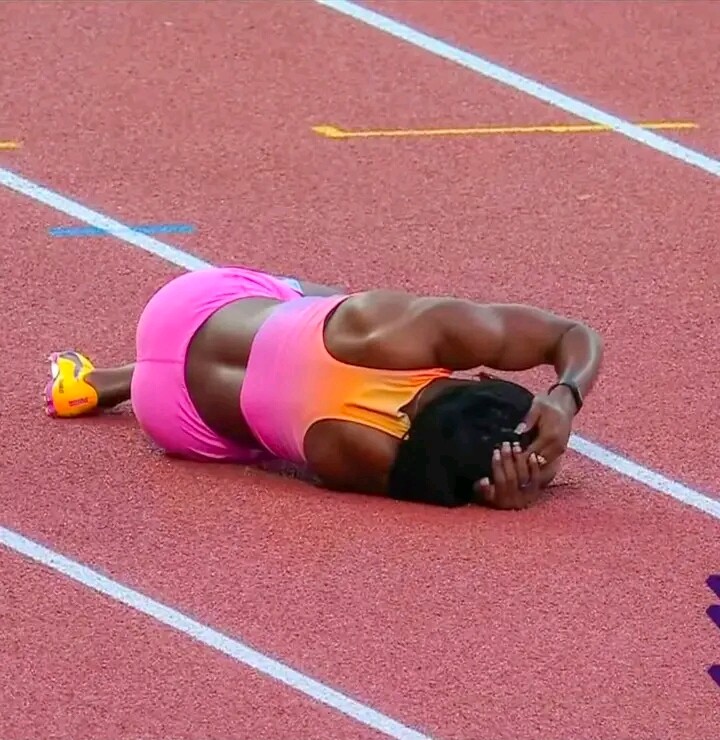
The Jamaican sprint star is navigating a difficult period marked by grief, injury and uncertainty, yet she continues to show a remarkable strength that goes beyond medals and championships.
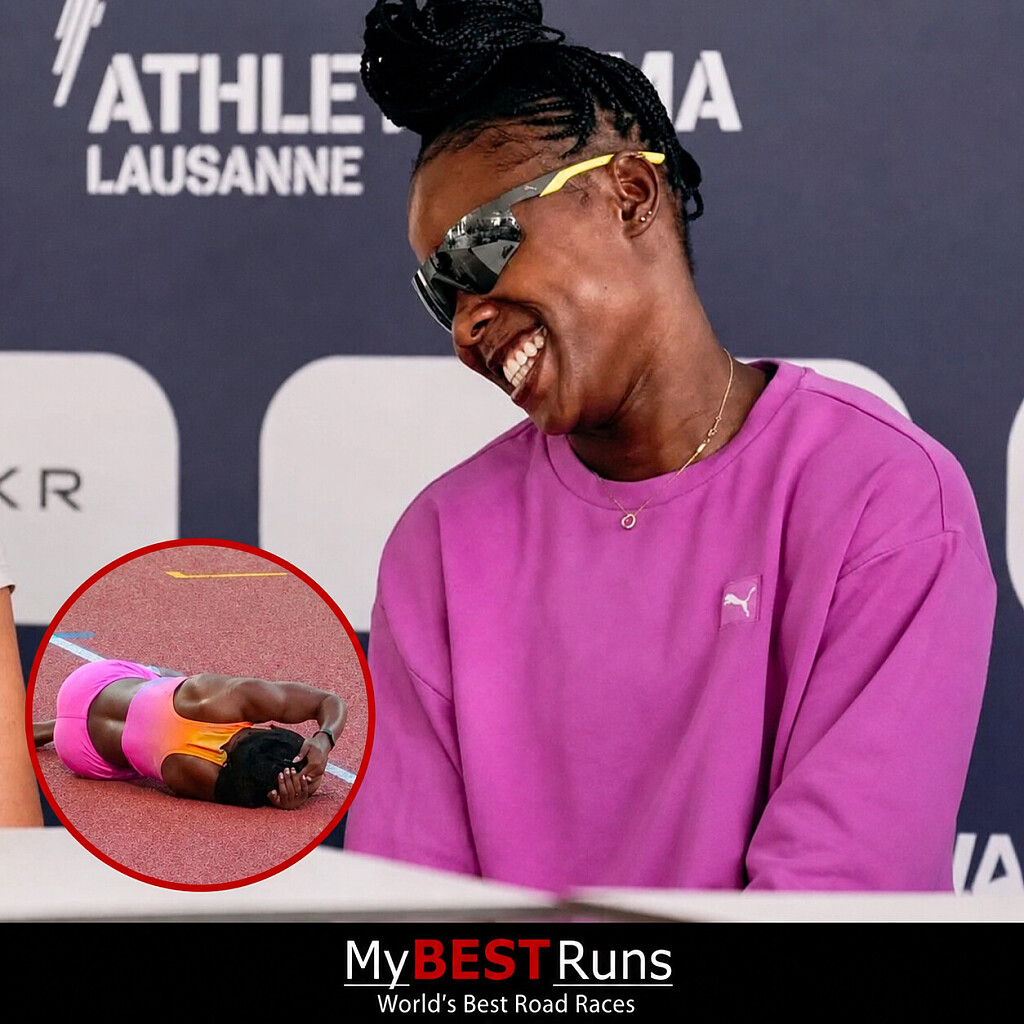
At the Lausanne Diamond League meeting on Friday, August 21, Jackson lined up for the women’s 200m hoping to put together another strong performance. She appeared composed through the early stages of the race, but as she came off the bend, her night took a heartbreaking turn.
Jackson suddenly pulled up and went down on the track, appearing to suffer a hamstring injury. She was unable to continue, bringing an abrupt end to her race and adding another painful chapter to a period that has already tested her physically and emotionally.
The setback came against an especially difficult personal backdrop.
Only days earlier, Jackson was mourning the death of Stephen Francis, the renowned Jamaican coach and founder of MVP Track Club, who played an important role in her development as an elite athlete.
Before the Lausanne meeting, Jackson spoke candidly about the emotional weight she was carrying.
“I'm trying to be okay because, in all honesty, I'm not okay.”
Those words revealed the reality behind the athlete the world usually sees competing with confidence and determination. Jackson has been trying to process personal loss while also working through the physical challenges that have disrupted her career.
Her injury struggles have previously forced her to make difficult decisions, including her withdrawal from the individual sprint events at the 2024 Paris Olympics. Now, just as she continues to navigate another challenging period, another injury has left her facing yet more uncertainty.
But Jackson has refused to allow the storm to define her.
In a message shared with her followers, she offered a powerful reminder of resilience:
“Your smile is proof that light can live through storms.”
Accompanied by the hashtags #ARoughPatchOfLife and #MentalHealthMatters, the message carried a significance far deeper than a social-media caption. It reflected the reality that athletes, despite their extraordinary physical abilities, experience grief, frustration, fear and emotional exhaustion just like everyone else.
Jackson’s story is a reminder that strength is not always measured by how fast someone runs or how many medals they have won.
Sometimes, strength is showing up when your heart is hurting.
Sometimes, it is allowing yourself to admit that you are not okay — and still finding a reason to smile.
And sometimes, courage is simply getting back up after life knocks you down.
Shericka Jackson may be going through a rough patch, but there is still light in that smile.
The track may have taken away another race, but it cannot take away her resilience, her spirit or the champion within her.
For now, Jamaica and athletics fans around the world can only hope for her recovery, healing and peace as she faces the road ahead. The storm will not last forever.
by Erick Cheruiyot for My Best Runs.
Login to leave a comment
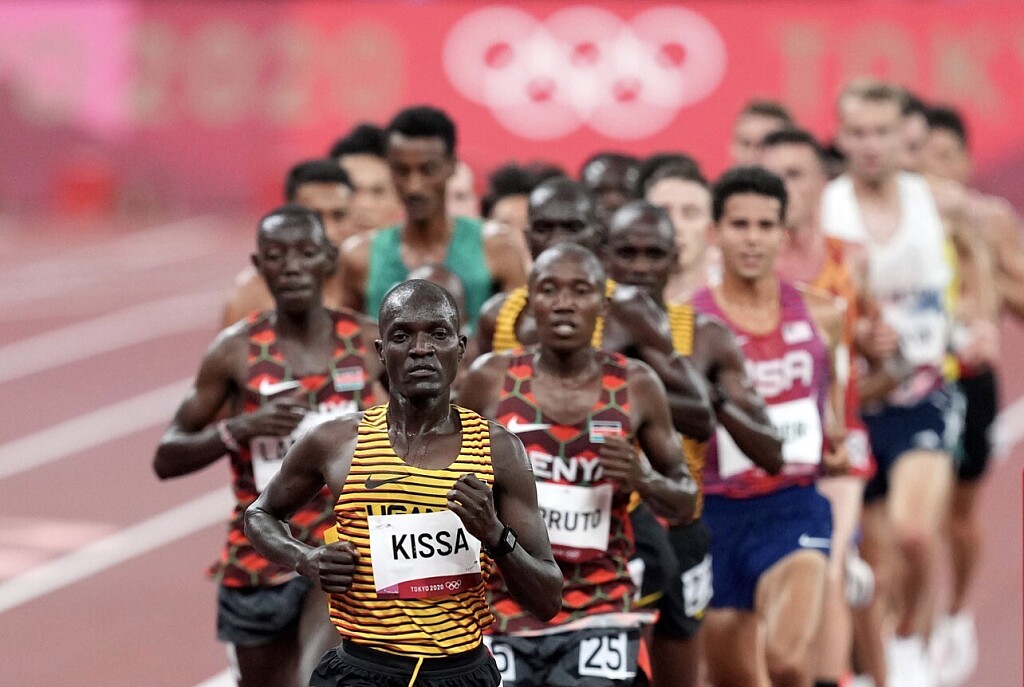
Stephen Kissa Carrying Ugandan Hopes at TCS Toronto Waterfront Marathon
Ugandan long-distance runners have emerged from the shadows of their legendary East African neighbours to earn distinction at the highest level.
Now Stephen Kissa will represent his nation at the 2026 TCS Toronto Waterfront Marathon on October 18 against a strong contingent of Kenyan and Ethiopian athletes. The event is once again a World Athletics Elite Label race.
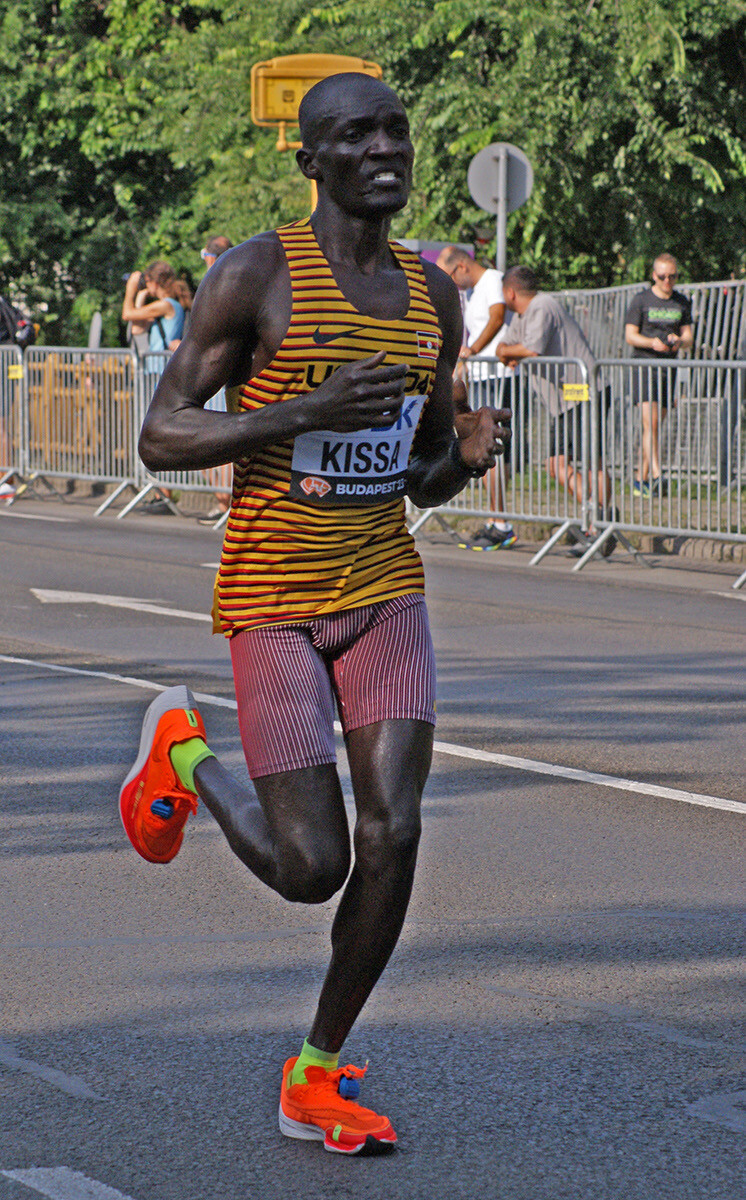
Kissa set a Ugandan national record of 2:04:48 when he finished second in his 2022 marathon debut in Hamburg. That record was only broken this year. He was subsequently selected for Uganda’s 2023 World Championships marathon team, finishing fifth on the streets of Budapest.
He has also represented his country twice at the Olympics and competed at the World Cross Country Championships. With such experience, the 37-year-old is intent on challenging for Toronto’s $25,000 Canadian first-place prize.
“When I come to Toronto, I will do my best,” he declares with a broad smile. “I will be really happy if I can run 2:03 or 2:04.
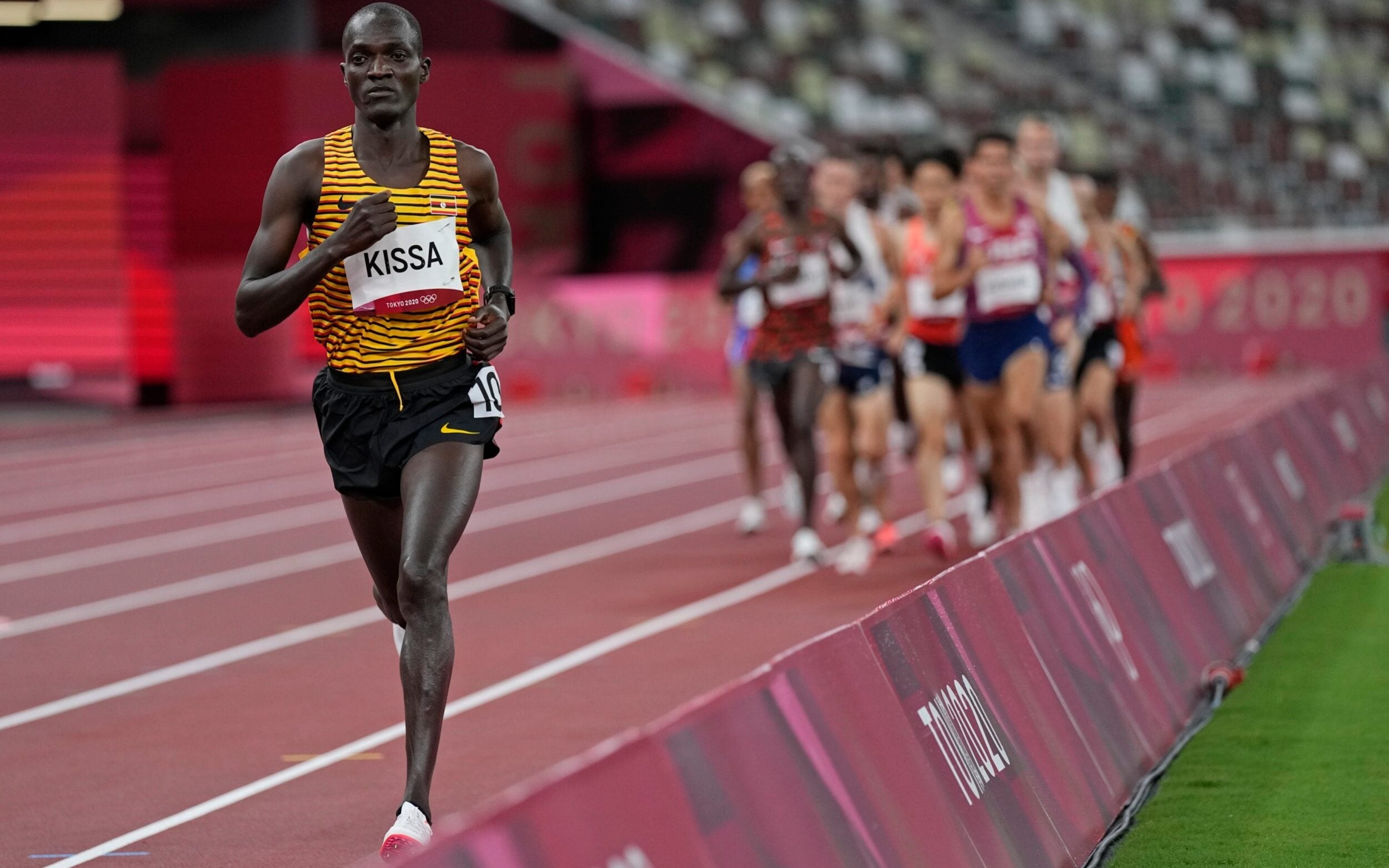
“With training, we have been comparing the past to now, and we have come up with a solution. We do long runs and tempo runs ranging from 25km and 28km to 30km and up to 40km. I am running around 120km a week but will go up closer to 200km.”
Kissa is not the first of his compatriots to compete in the Toronto Waterfront Marathon. Stephen Kiprotich, the 2012 Olympic champion, finished seventh in the 2018 race. Kiprotich remains a national hero in Uganda, and his success has contributed significantly to the nation’s emergence as a distance-running power.
“I was really inspired a long time ago by Stephen Kiprotich,” Kissa admits. “He did some tremendous work, and I can say he is our mentor. We really respect him.
“He has given me advice. He told me, ‘Our sport is not a one-day journey. It is a long journey that takes a lot of patience and commitment. If you have commitment, patience and work hard, you will go far.’”
Kiprotich has been an occasional and welcome visitor to the training camp in Kapchorwa that Kissa calls home for most of the year. It sits at an altitude of 2,500 metres, or 8,200 feet.
From Monday through Saturday, Kissa trains there with a group that includes two-time Olympic champion Joshua Cheptegei, 2023 world marathon champion Victor Kiplangat and 2022 Olympic 3,000m steeplechase champion Peruth Chemutai.
The centre was built by their management company, Global Sports Communications, with a contribution from Cheptegei. The athletes return home to their families on Saturday evenings.
Kissa lives in Kapchorwa’s town centre, about 14 kilometres away, in an area dominated by Mount Elgon, an extinct volcano estimated to be 24 million years old. He lives there with his wife and two young children.
“Right now they are at school,” he says of his children. “They are about to come home for a holiday. That’s when I will meet them. At school, they concentrate on their studies unless there is a problem. Then they will call me.”
The training camp includes a dormitory, dining room, kitchen and recreation room where the group gathers to watch sports. The recent FIFA World Cup generated great interest, and Kissa admits enjoying the play of Spanish winger Lamine Yamal. When asked what he does to relax, he smiles.
“I can play pool. I like that,” he says, adding with a laugh, “Not for money. We also play cards.
“Sometimes, when I have time, I cook chapati. It is made from wheat flour. We also have potatoes and ugali, which is made from corn.”
The group holds a prayer before each workout. Victor Kiplangat is an assistant pastor at a nearby church called Temple of the Most High God, but the others, including Kissa, also take turns leading prayers.
For more than a decade, the group was coached by Addy Ruiter. After the 2024 Paris Olympics, the Dutchman returned home. He continues coaching the athletes remotely through WhatsApp, with an on-site team led by fellow Dutchman Roy Hoornweg.
“Kapchorwa is a hilly, mountainous area,” Kissa explains. “The tempo runs are done on a plateau where it is flat. Our training differs depending on the location. You can’t do long runs in the hilly area, so we go to the plateau. We also have flatlands where we can do long runs and tempo runs.”
Kissa understands that he is approaching the later stages of his running career and must look toward life beyond competition. Still, he laughs when asked how many more years he can compete.
“Maybe 10 years! I will be happy if I can run 2:03 or 2:04,” he says.
“If Toronto goes really well, I will look to invest in assets in town, build apartments and start a business. I can really say thank you for inviting me to Toronto. If it goes well, I will be very proud.”
Kissa won’t be the only Ugandan presence at the TCS Toronto Waterfront Marathon. At the Runner’s Expo on October 16 and 17 at the Better Living Centre, a Uganda Tourism booth will offer information about the Mount Rwenzori Marathon and Great Lakes Safaris.
On the starting line, Kissa can be confident that he has the international experience and talent to compete with anyone. As for his ultimate goals, he is succinct.
“I pray that in the years to come I will stand on the podium at the Olympics or World Championships,” he says. “That is what I am really looking forward to.”
A victory in Toronto would bolster that ambition.
by Paul Gains
Login to leave a comment
TCS Toronto Waterfront Marathon
The Scotiabank Toronto Waterfront Marathon, Half-Marathon & 5k Run / Walk is organized by Canada Running Series Inc., organizers of the Canada Running Series, "A selection of Canada's best runs!" Canada Running Series annually organizes eight events in Montreal, Toronto and Vancouver that vary in distance from the 5k to the marathon. The Scotiabank Toronto Waterfront Marathon and Half-Marathon are...
more...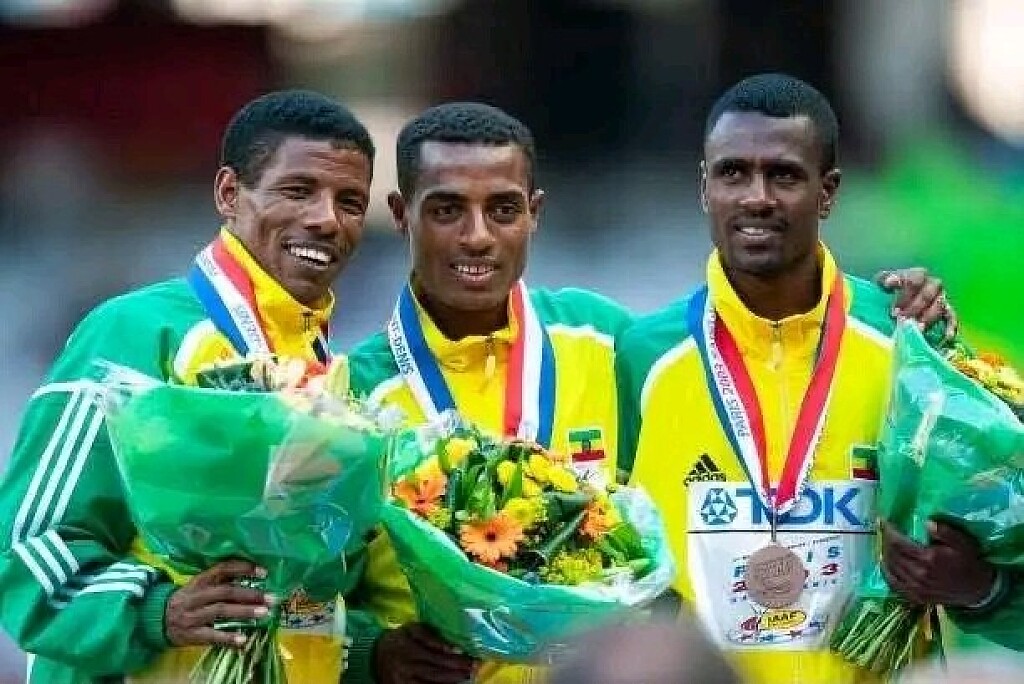
Kenenisa Bekele’s Paris Coronation: The Night Ethiopia’s Distance Running Dynasty Changed Forever
Paris, France — August 24, 2003.
The Stade de France witnessed far more than a World Championship 10,000m final that night. It witnessed the beginning of a new era.
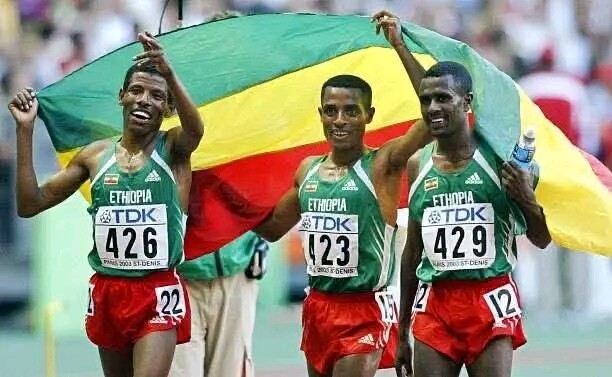
For years, Haile Gebrselassie of Ethiopia had stood virtually untouchable at the summit of world distance running. He arrived in Paris as a two-time Olympic champion and four-time World Champion over 10,000m, carrying the reputation of a man who had dominated the track for much of the previous decade.
But waiting in the same race was a 21-year-old Ethiopian whose running style looked remarkably familiar.
His name was Kenenisa Bekele.
The younger Ethiopian had already shown flashes of extraordinary potential, but Paris was where potential became reality.
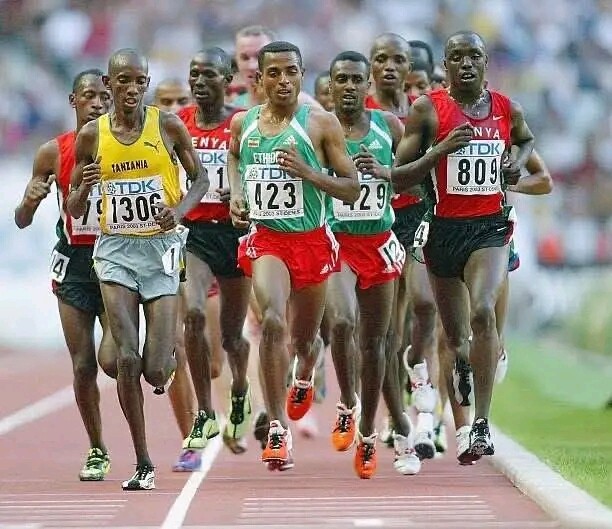
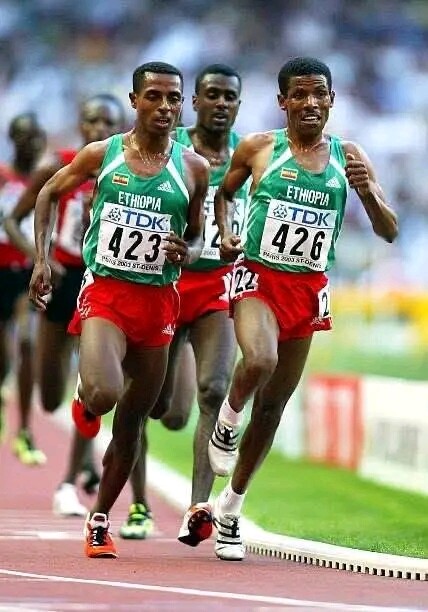
As the race unfolded, Gebrselassie ran aggressively, repeatedly applying pressure in an attempt to break the field and shake off his young compatriot. One by one, the world's best distance runners were dropped, including a strong Kenyan contingent.
Yet Bekele refused to disappear.
He stayed glued to Gebrselassie's shoulder, matching every surge and every change of pace. Behind them, Sileshi Sihine of Ethiopia remained in contention, setting the stage for what would ultimately become a historic Ethiopian sweep.
Then came the decisive moment.
With only 200 metres remaining, Bekele made his move.
Gebrselassie, famous for his devastating finishing speed, tried to respond. But this time, there was no answer. Bekele powered away down the final straight, creating daylight between himself and his legendary compatriot.
The changing of the guard had arrived.
Bekele crossed the finish line in 26:49.57, becoming the first athlete to break 27 minutes at these World Championships and setting a championship record.
Behind him, Gebrselassie finished second in 26:50.77, while Sihine completed an extraordinary Ethiopian clean sweep with 27:01.44.
It was not simply a victory for Bekele.
It was the moment the young star announced that he was ready to inherit the throne.
Paris 2003 — Men's 10,000m Final
1. Kenenisa Bekele — Ethiopia — 26:49.57 CR
2. Haile Gebrselassie — Ethiopia — 26:50.77
3. Sileshi Sihine — Ethiopia — 27:01.44
4. Ahmad Hassan Abdullah — Qatar — 27:18.28
5. John Cheruiyot Korir — Kenya — 27:19.94
6. Wilberforce Talel — Kenya — 27:33.60
7. Charles Kamathi — Kenya — 27:45.05
8. Kamiel Maase — Netherlands — 27:45.46
9. Karl Keska — Great Britain — 27:47.89
10. Ismail Sghyr — France — 27:54.87
11. David Galván — Mexico — 27:55.31
12. John Yuda Msuri — Tanzania — 27:56.21
13. Fabiano Joseph Naasi — Tanzania — 28:06.36
14. Alan Culpepper — United States — 28:14.92
15. Teodoro Vega — Mexico — 28:31.71
16. Mebrahtom Keflezighi — United States — 28:35.08
17. Cathal Lombard — Ireland — 28:36.43
18. Tomoo Tsubota — Japan — 28:37.10
19. Dan Browne — United States — 29:01.60
Bekele's Paris triumph proved to be the beginning of something much bigger. He went on to win Olympic 10,000m gold in Athens the following year and established himself as the dominant track distance runner of his generation.
At the 2008 Beijing Olympics, he completed the extraordinary 5,000m and 10,000m double, cementing his place among the greatest distance runners in history.
Gebrselassie, meanwhile, successfully reinvented himself beyond the track. He turned increasingly toward the 10km, half marathon and marathon, where he continued rewriting the record books and building another extraordinary chapter of his career.
But Paris remains special.
On August 24, 2003, one Ethiopian legend was still fighting to protect his kingdom while another was stepping forward to claim it.
Kenenisa Bekele didn't simply win a World Championship gold medal that night. He announced the arrival of a new era in distance running.
by Erick Cheruiyot for My Best Runs.
Login to leave a comment

From Sprinting Into History to Running Toward Forever: Usain Bolt Gets Engaged to Kasi Bennett
Usain Bolt has added another unforgettable milestone to an extraordinary life — and this time, there was no finish line, stopwatch or Olympic medal involved.
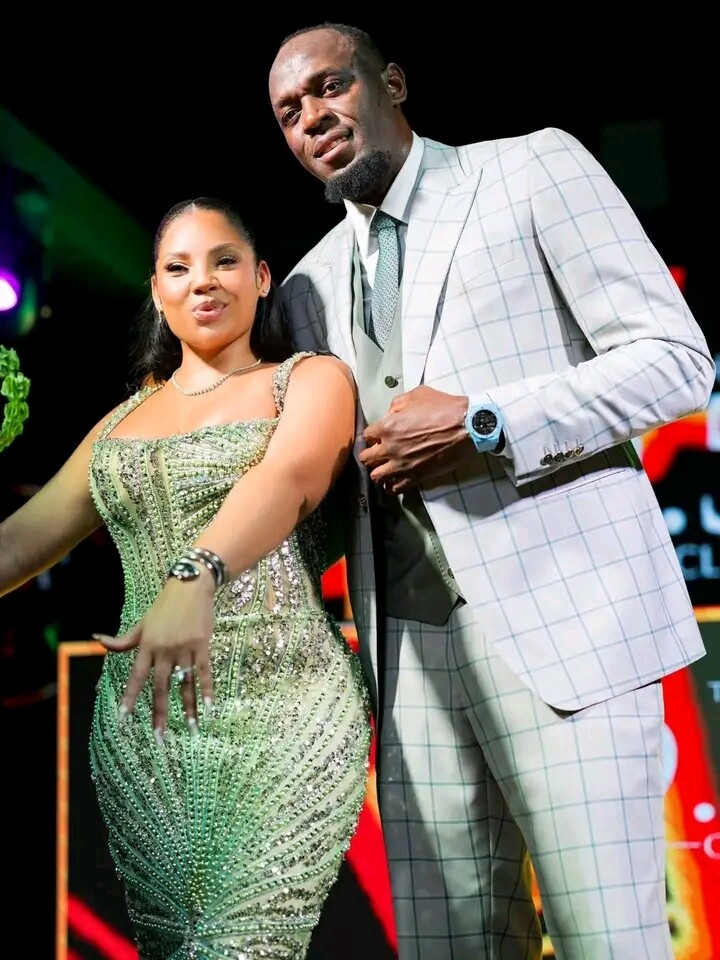
The Jamaican sprinting icon is officially engaged to his longtime partner, Kasi Bennett, after turning his 40th birthday celebration into a deeply personal and romantic moment in Kingston.

Bolt popped the question on Friday, August 21, during his birthday celebrations at One Belmont, where family and close friends gathered to mark the milestone. The eight-time Olympic champion got down on one knee in front of Bennett and asked her to become his wife, transforming an already special evening into a celebration of love and commitment.
And Bolt certainly did not arrive empty-handed.
Bennett was presented with a spectacular five-carat diamond engagement ring, with reports describing the centre stone as pear-shaped. Images from the occasion captured the emotional aftermath as the couple embraced, while Bennett later gave fans a glimpse of the unforgettable moment on social media.
The proposal marks a significant new chapter in a relationship that has lasted for more than a decade.
Bolt and Bennett began dating in 2013, eventually becoming one of Jamaica's most recognisable sporting couples. Their relationship became more widely known around the 2016 Rio Olympics, but much of their family life has remained away from the constant glare of the spotlight.
Together, they have built a family of their own, raising three children — daughter Olympia Lightning and twin sons Thunder and Saint Leo. Olympia was born in 2020, while the twins arrived in 2021.
Before the surprise proposal, Bennett had already marked Bolt's 40th birthday with a heartfelt tribute, celebrating not simply the global superstar known for rewriting sprinting history, but the partner and father behind the legend.
She described him as her love, her home and her forever, while expressing pride in the life they have created together.
For Bolt, whose career was defined by spectacular moments under the world's brightest lights, this may be one of his most meaningful victories yet.
He conquered the 100 metres. He dominated the 200 metres. He collected eight Olympic gold medals and established himself as one of the greatest athletes the world has ever seen.
Now, at 40, the world's most famous sprinter has made another decisive move — this time toward forever.
After 13 years together and three children, Usain Bolt and Kasi Bennett are officially taking their love story to its next chapter.
From breaking records to making memories, the fastest man in history has finally found a race he wants to take all the way to the finish.
by Erick Cheruiyot for My Best Runs.
Login to leave a comment
August 20: The Day Usain Bolt Rewrote the 200m Record Book—Twice
Some dates become part of sporting history. August 20 belongs to Usain Bolt.
On two consecutive years, the Jamaican sprinting phenomenon transformed the men’s 200 metres, producing performances that seemed almost impossible even by his extraordinary standards.
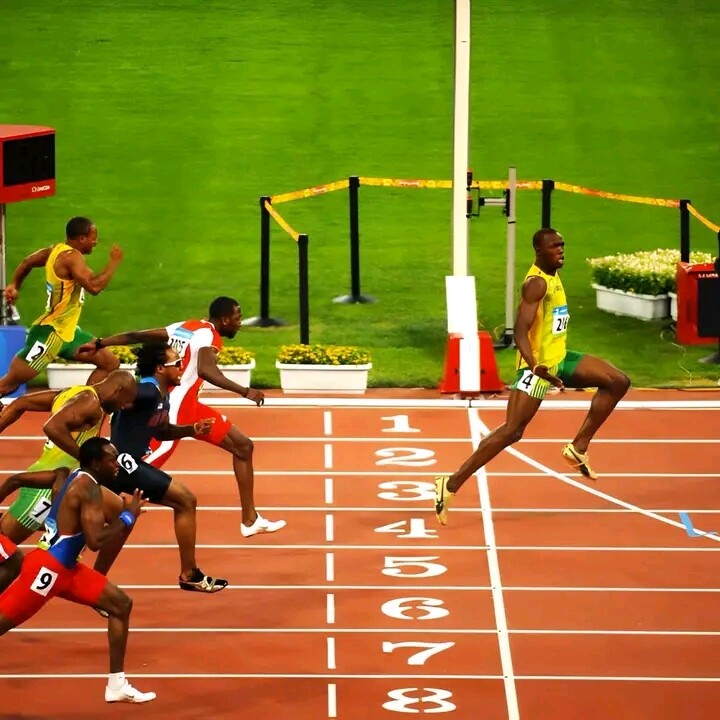
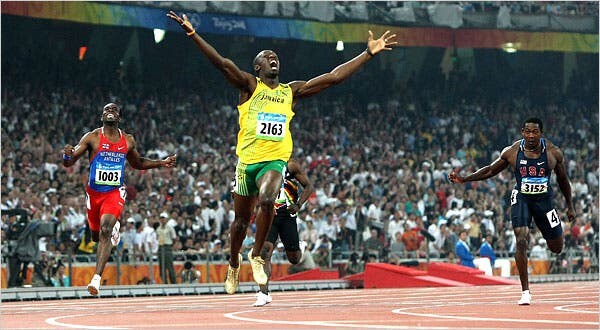
On August 20, 2008, inside Beijing’s Bird’s Nest, Bolt lined up for the Olympic 200m final carrying enormous expectations. Four days earlier, he had stunned the world by winning the 100m in a then-world-record 9.69 seconds. Yet the 200m was about to become another chapter in his growing legend.
Bolt exploded around the bend before powering down the home straight, crossing the finish line in 19.30 seconds to win Olympic gold and shatter Michael Johnson’s long-standing world record of 19.32, set in Atlanta in 1996. The improvement was only two hundredths of a second, but the significance was enormous: Johnson’s seemingly formidable record had survived for 12 years before Bolt finally brought it down.
And there was another remarkable detail. Bolt’s Beijing record came with a 0.9 m/s headwind, making the performance even more extraordinary.
But Bolt was not finished.
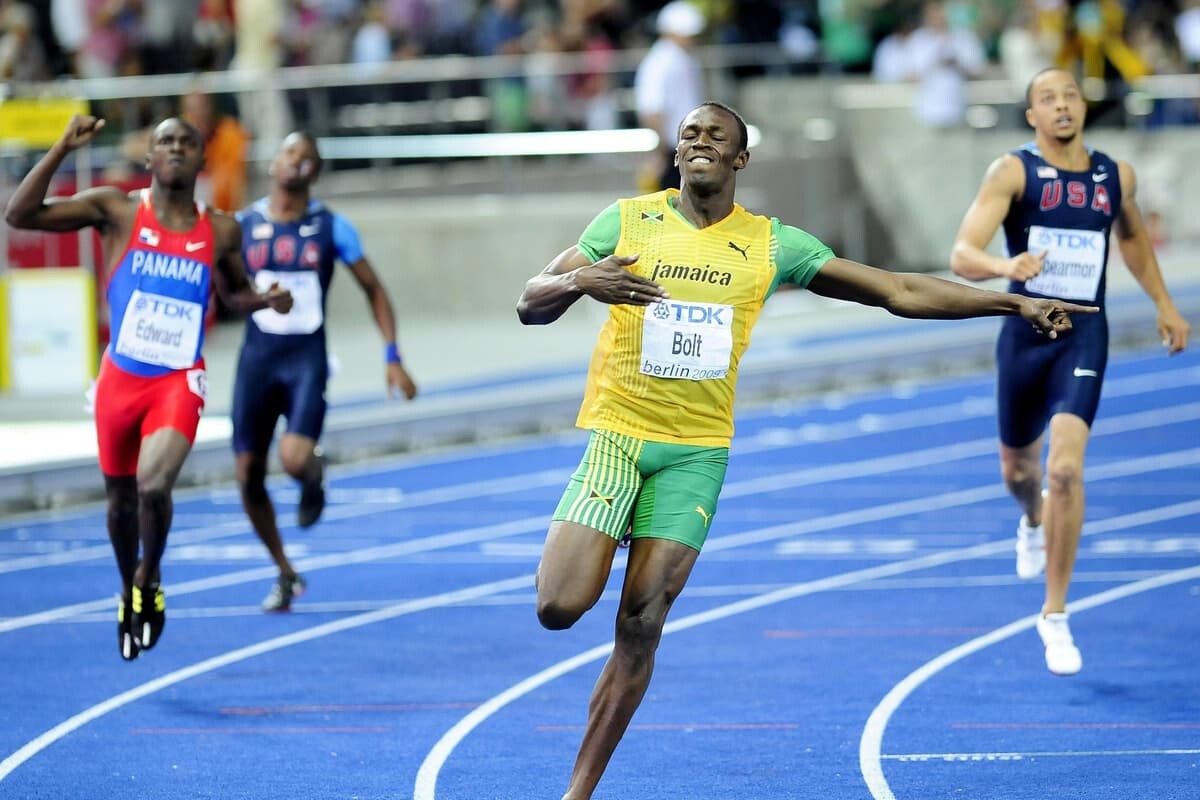
Exactly one year later, on August 20, 2009, he returned to the same event at the World Athletics Championships in Berlin with another opportunity to redefine the limits of speed.
Four days earlier, he had already demolished his own 100m world record, running 9.58 seconds. Now the 200m world record was in his sights.
What followed was extraordinary.
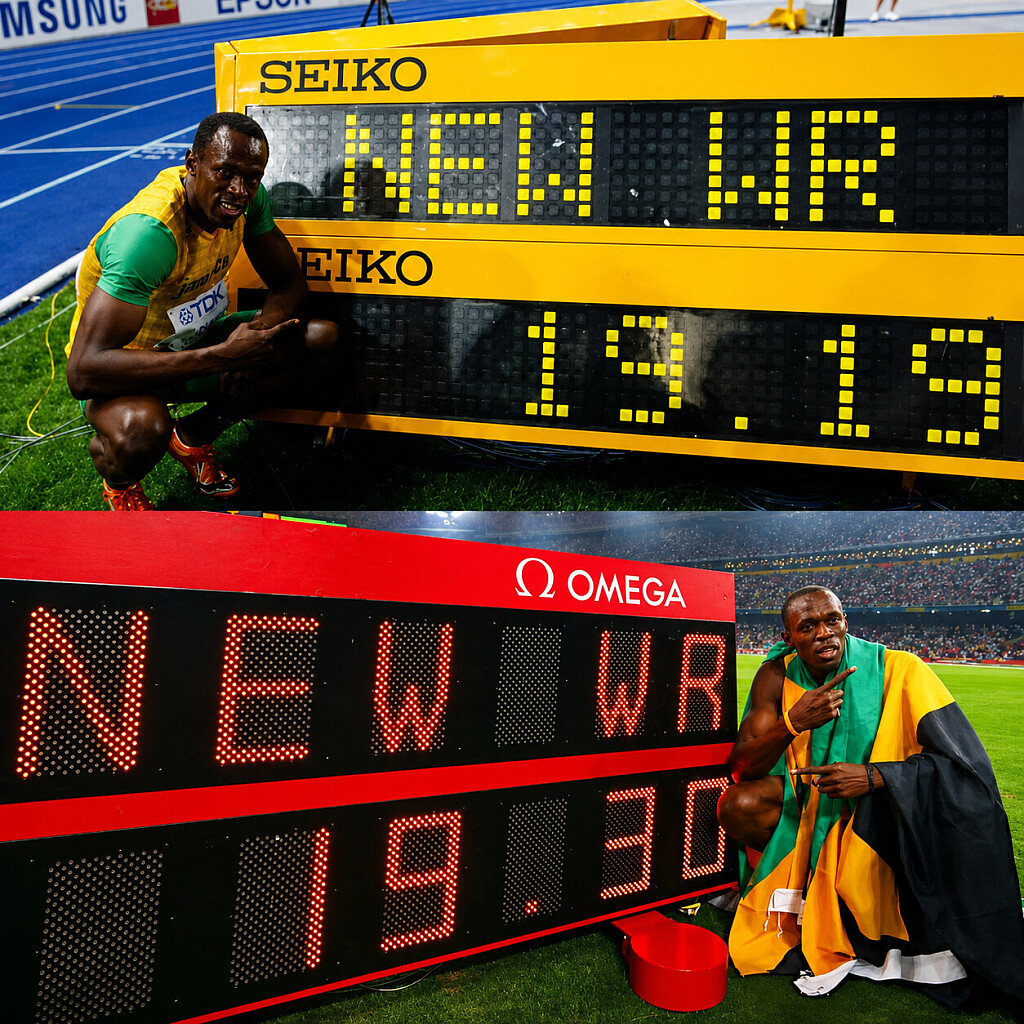
Bolt stormed to 19.19 seconds, taking 11 hundredths off the world record he had established in Beijing. The performance came with a 0.3 m/s headwind, yet he still produced a time that would immediately become one of the most iconic performances in athletics history.
The progression was staggering:
19.30 in Beijing.
19.19 in Berlin.
Michael Johnson’s record had become Bolt’s record—and then, just 12 months later, Bolt destroyed his own mark.
His Berlin victory was also emphatic. Bolt finished more than half a second ahead of Panama’s Alonso Edward, who ran 19.81, while Wallace Spearmon took bronze in 19.85.
What made the achievement even more remarkable was the consistency of Bolt’s record-breaking brilliance. Across the Beijing Olympics and Berlin World Championships, he produced a succession of world records in the 100m and 200m, repeatedly turning major championship finals into historic moments. World Athletics noted after Berlin that Bolt had become the first man to break both the 100m and 200m world records more than once.
And now, 17 years after that unforgettable Berlin night, the 19.19-second world record still stands.
The mark has survived generations of exceptional sprinters, including athletes who have come remarkably close to the 19-second barrier. Yet Bolt’s time remains untouched at the summit of the all-time list.
That is why August 20 is more than a date on the athletics calendar.
It is the anniversary of the day Usain Bolt first broke Michael Johnson’s seemingly untouchable standard—and then returned exactly one year later to make his own record look vulnerable.
Beijing gave the world 19.30.
Berlin gave it 19.19.
Two August 20s. Two world records. One extraordinary sprinter.
Usain Bolt was not simply winning races. He was changing the definition of human speed.
And the question that remains for the next generation is perhaps the most intriguing of all:
Will we ever see another sprinter capable of breaking the 19-second barrier and finally taking down the 19.19 mark that Bolt left behind?
by Erick Cheruiyot for My Best Runs.
Login to leave a comment
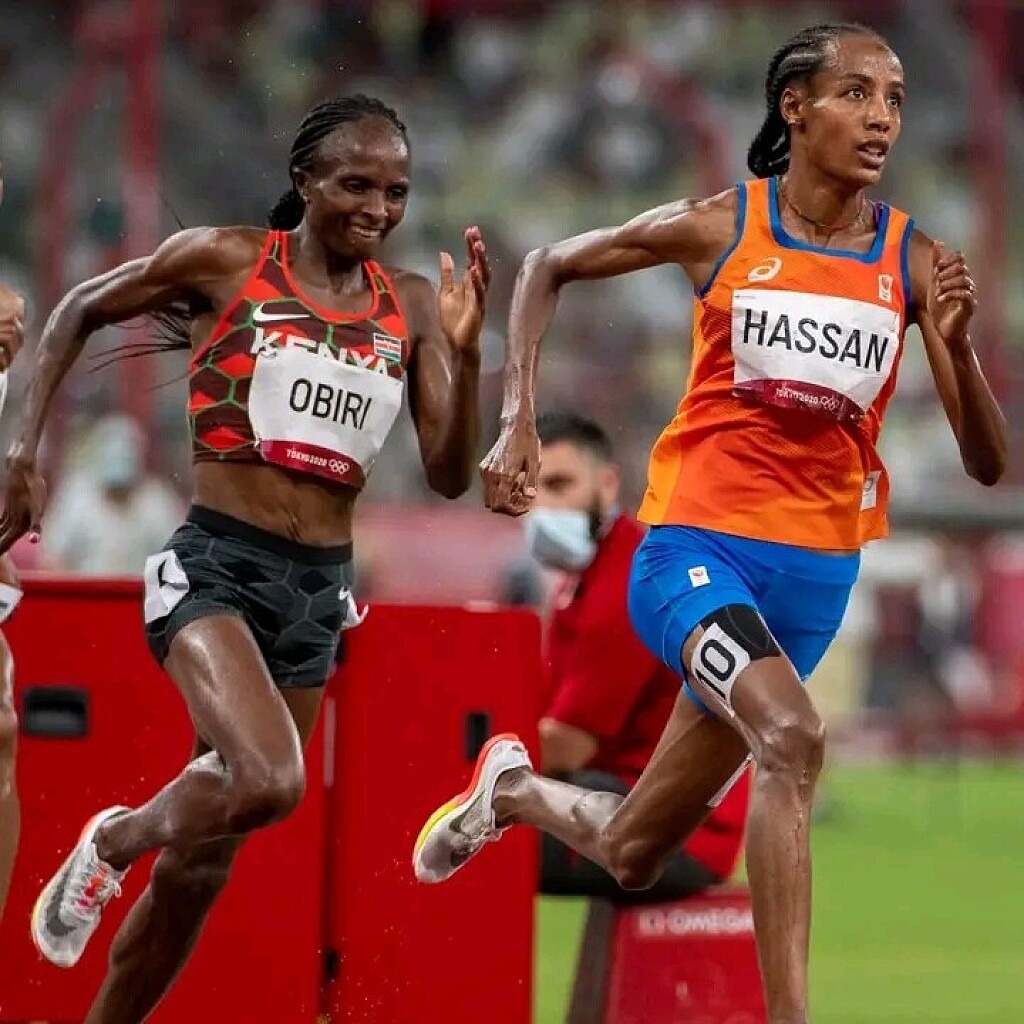
From Track Rivals to Marathon Queens: Sifan Hassan and Hellen Obiri Renew Their New York Rivalry
For more than a decade, Sifan Hassan of the Netherlands and Hellen Obiri of Kenya have been familiar opponents on the biggest stages of distance running. Their rivalry was forged on the track, where Hassan’s extraordinary versatility and finishing speed repeatedly collided with Obiri’s strength, tactical intelligence and championship pedigree.
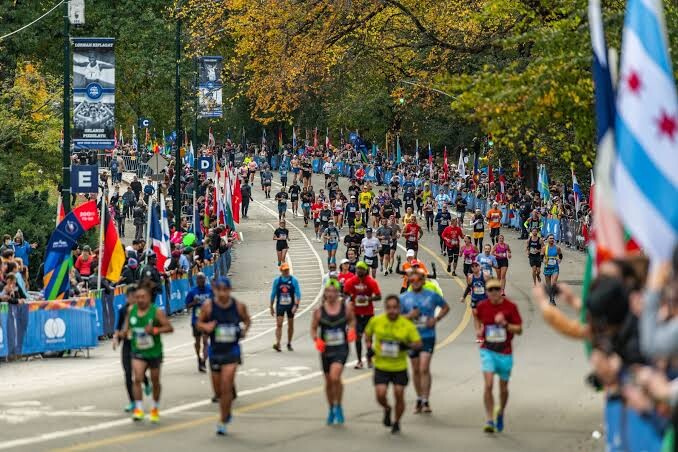
Now, after conquering different chapters of the sport, the two global stars are set to meet again on the streets of New York on November 1, 2026 — with another marathon crown at stake.
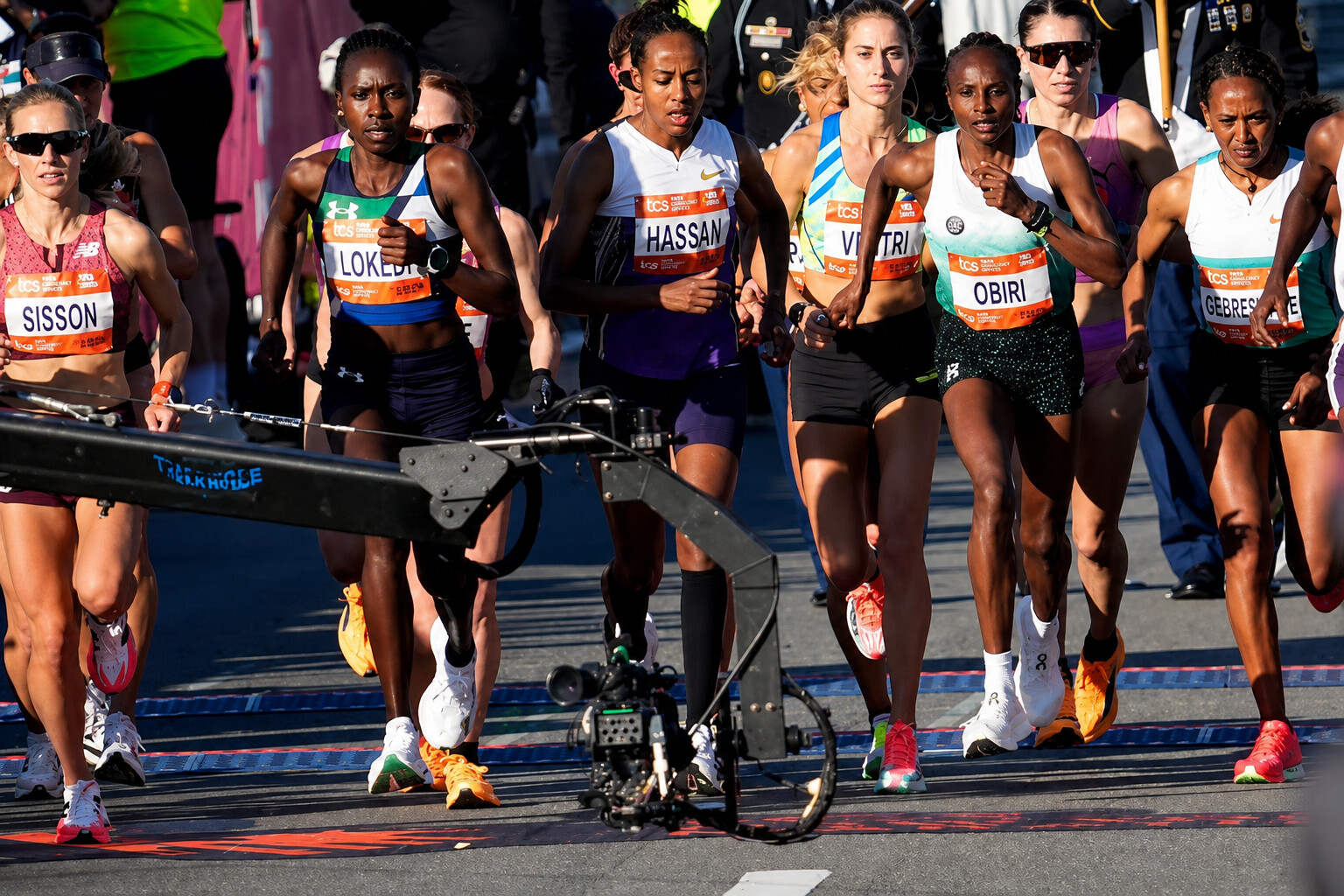
Their most memorable encounters came during the golden years of their track careers. At the Tokyo 2020 Olympics, Hassan defeated Obiri in a thrilling 5000m final, winning gold in 14:36.79 while Obiri took silver in 14:38.36. A year later, the two were again among the leading figures in the 10,000m at the 2022 World Championships in Oregon, where Obiri claimed silver and Hassan finished fourth.
But both athletes eventually turned their attention to the marathon, transforming a track rivalry into a new battle over 42.195 kilometres.
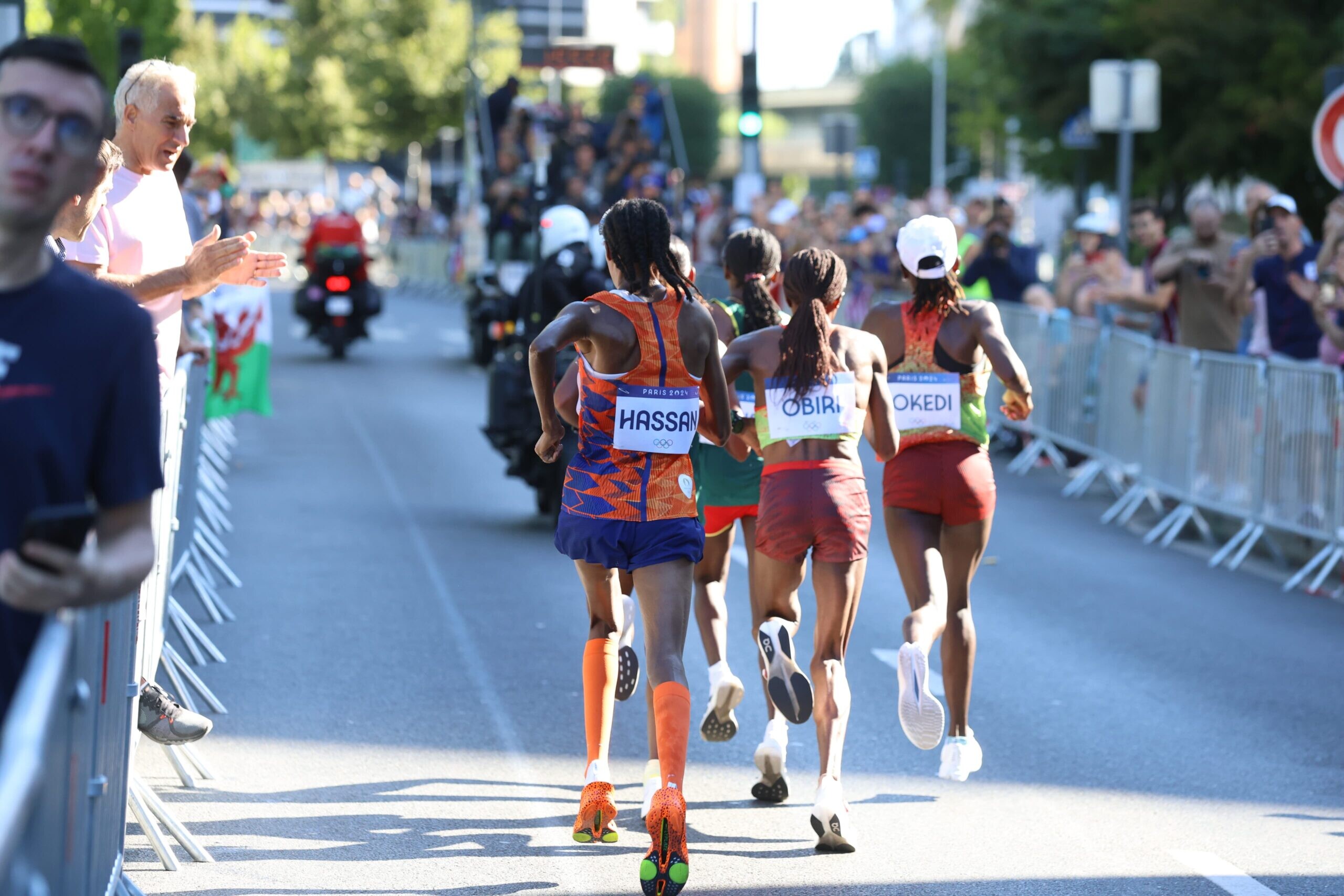
Hassan’s transition was extraordinary. After already establishing herself as one of the most versatile distance runners in history, she conquered the marathon at the Paris 2024 Olympics, winning gold and setting a personal best of 2:13:44 — a mark that remains significantly faster than Obiri’s current personal best.
Obiri, meanwhile, built her own formidable reputation on the roads. The Kenyan became a major force in the World Marathon Majors, winning the New York City Marathon in 2023 before returning to the top of the podium in 2025.
That 2025 New York race added another compelling chapter to the Hassan-Obiri rivalry.
Hassan made her New York debut but finished sixth in 2:24:43, while Obiri produced a commanding performance to win in 2:19:51. Her victory not only secured her second New York title but also shattered Margaret Okayo’s long-standing course record of 2:22:31.
The contrast could hardly be more intriguing heading into 2026.
Hassan owns the faster marathon personal best and the ultimate Olympic marathon prize. Obiri owns two New York titles and knows exactly how to master the famously demanding five-borough course. And the Kenyan has continued to strengthen her marathon credentials, running a personal-best 2:15:53 in London in 2026.
Hassan, meanwhile, returns to New York with unfinished business. After describing her 2025 debut as a physically punishing experience, she is preparing to tackle the course again, bringing the lessons of her first attempt and her vast championship experience with her.
This time, the stakes feel different.
There is history between them. There is unfinished business. And there is the intriguing question of whether Hassan’s superior lifetime speed over the marathon distance can finally translate into victory on the streets where Obiri has already established herself as a two-time queen.
One athlete has Olympic marathon gold and a 2:13:44 personal best.
The other has two New York crowns and a course record that announced her arrival among the marathon elite in emphatic fashion.
When Hassan and Obiri line up together again in New York, it will be more than another World Marathon Major showdown. It will be the latest chapter in a rivalry that began with championship battles on the track and has now evolved into one of the most compelling confrontations in women’s marathon running.
Track rivals. Olympic champions. Marathon queens.
On November 1, New York gets the next chapter.
by Erick Cheruiyot for My Best Runs.
Login to leave a comment
The Olympic Gold That Korea Had To Wait 52 Years To Truly Claim
On August 9, 1936, Sohn Kee-chung crossed the finish line of the Olympic marathon in Berlin in 2:29:19.2, becoming the first Korean to win an Olympic gold medal.
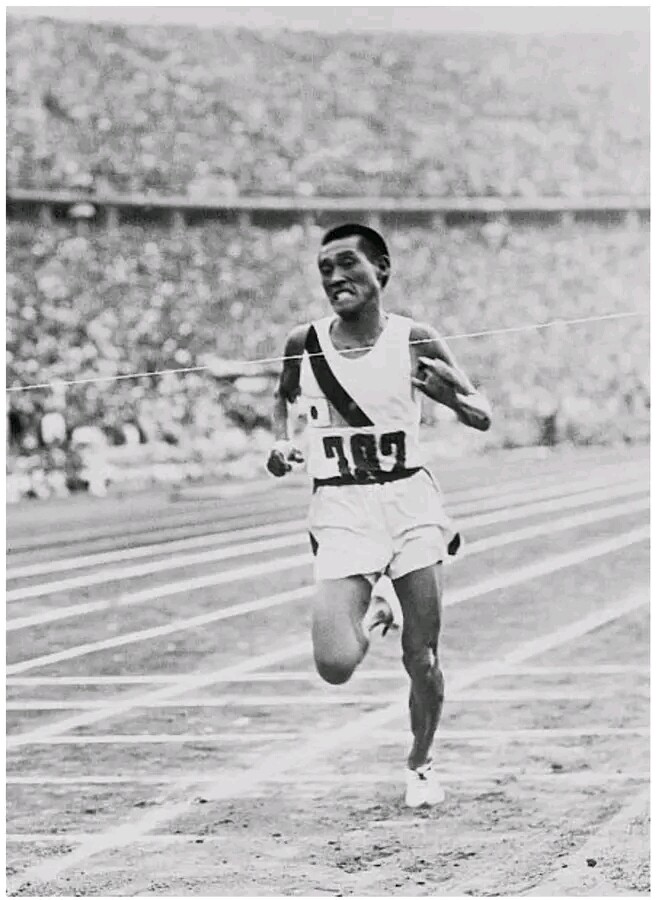
But there was a painful contradiction behind the triumph.
The scoreboard did not identify him as Sohn Kee-chung. It listed him as Kitei Son — the Japanese pronunciation of his Korean name. And instead of competing for Korea, he was officially entered as a member of the Japanese delegation because Korea had been under Japanese colonial rule since 1910.
Sohn was born in 1912 near Sinuiju, in what is now North Pyongan Province, and emerged as one of the outstanding distance runners of his generation. His talent became impossible to ignore in the 1930s, and in November 1935 he ran 2:26:42 in Tokyo to set a world marathon record.
By the time he arrived in Berlin, Sohn was already a world-class marathoner. Yet his greatest sporting achievement would unfold under an identity that had been imposed upon him.
He was not permitted to compete under his Korean name. He was not permitted to carry the Korean flag. His uniform bore the Japanese emblem.
And even after winning Olympic gold, he could not celebrate as a Korean champion.
Sohn won the marathon ahead of Britain's Ernie Harper, while another Korean, Nam Sung-yong, claimed bronze. Sohn became the first Olympic marathoner to break the 2:30 barrier, with his 2:29:19.2 Olympic record standing as a remarkable achievement. Importantly, however, his Berlin time was not a world record — his world-best mark had come the previous year in Tokyo.
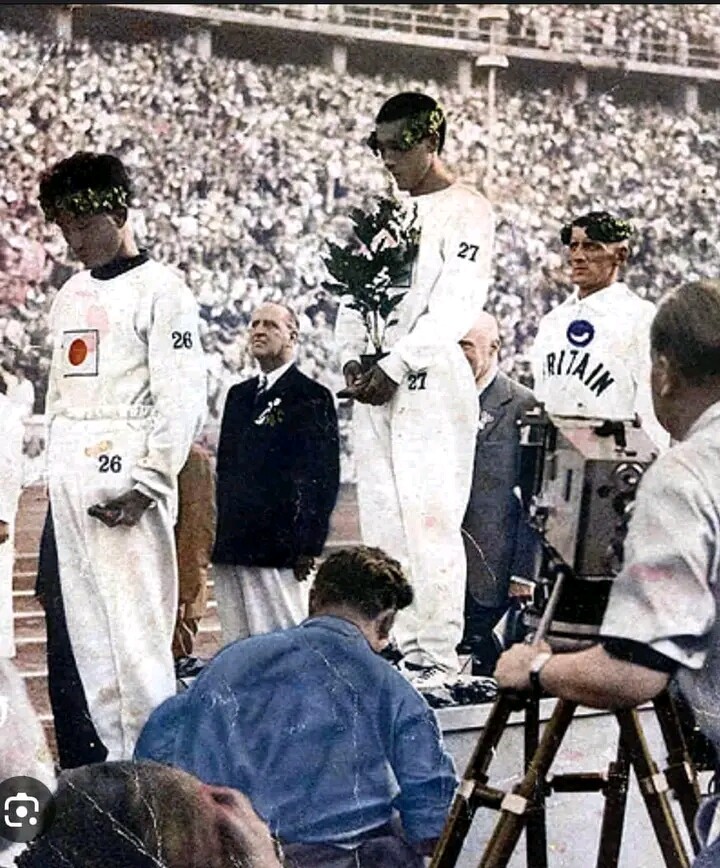
The medal ceremony became one of the most haunting images in Olympic history.
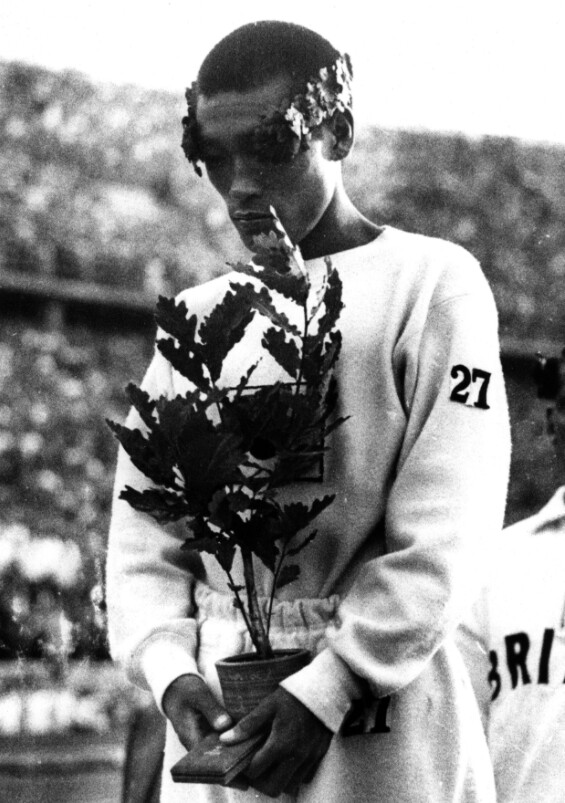
As the Japanese flag was raised and the Japanese anthem played, Sohn stood on the top step of the podium with his head lowered. Nam Sung-yong stood beside him on the third step. Neither athlete was able to represent the nation from which they came.
Sohn held the laurel wreath he had received for winning the marathon across his chest, concealing the Japanese flag on his uniform.
The gesture was silent.
But the message was powerful.
He had won the race for himself and for Korea, even though the official ceremony claimed him for Japan.
Back home, Koreans celebrated his victory with enormous pride. For many, Sohn's success was a rare moment of national affirmation during colonial rule. Yet the emotions were complicated. Some Korean nationalists viewed participation in the Japanese team as a painful compromise, while others saw Sohn's victory as a powerful act of resistance against the colonial claim that Koreans were inferior.
The reaction of the Korean press became another chapter in the story.
On August 25, 1936, the Dong-A Ilbo published the famous photograph of Sohn on the podium with the Japanese flag removed from his uniform. The newspaper's journalists had deliberately erased the emblem — an act of defiance against Japan's colonial authorities. The incident triggered a major crackdown. Multiple journalists were arrested, and the newspaper was forced to suspend publication for months. Historical accounts record that eight people involved were imprisoned and that the paper was suspended for roughly nine months.
The photograph became more than an image of an Olympic champion.
It became an image of a nation trying to preserve its identity.
After Korea was liberated in 1945, Sohn's life took a new direction. He became an influential coach and helped develop the next generation of Korean distance runners. Among those he guided were Suh Yun-bok, who won the Boston Marathon in 1947, and Ham Ki-yong, the 1950 Boston Marathon champion. Sohn also served in various athletic organizations in South Korea.
In 1948, he carried the flag for the newly independent Republic of Korea at the London Olympics — another deeply symbolic moment in a life that had begun with his identity being taken from him on an Olympic starting line.
Decades later, Sohn returned to Germany and, in 1972, attended the Munich Olympics. There, he was reunited with filmmaker Leni Riefenstahl, whose film Olympia had documented the 1936 Berlin Games.
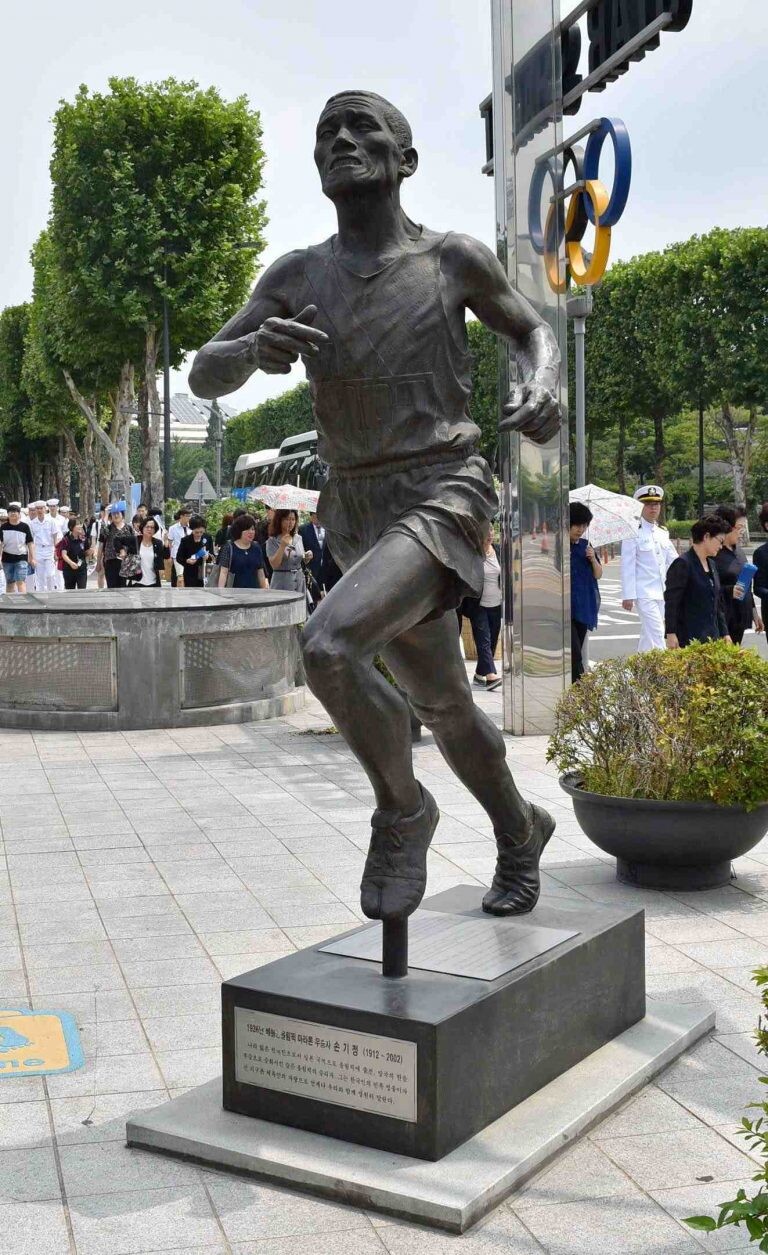
Today, Sohn Kee-chung’s legacy is also preserved in Seoul, South Korea, where a statue of the legendary marathoner stands at Sohn Kee-chung Athletic Park, near the memorial hall named in his honor. The memorial site includes a bronze head statue created in 1990, depicting Sohn in his later years, with scenes from his historic 1936 Berlin victory engraved below. Another statue, unveiled in 2016 to mark the 80th anniversary of his Olympic triumph, portrays the young Sohn proudly holding the Olympic trophy — this time with the South Korean flag in place of the Japanese emblem that had appeared on his uniform in Berlin.
But perhaps the most emotional chapter came in Seoul.
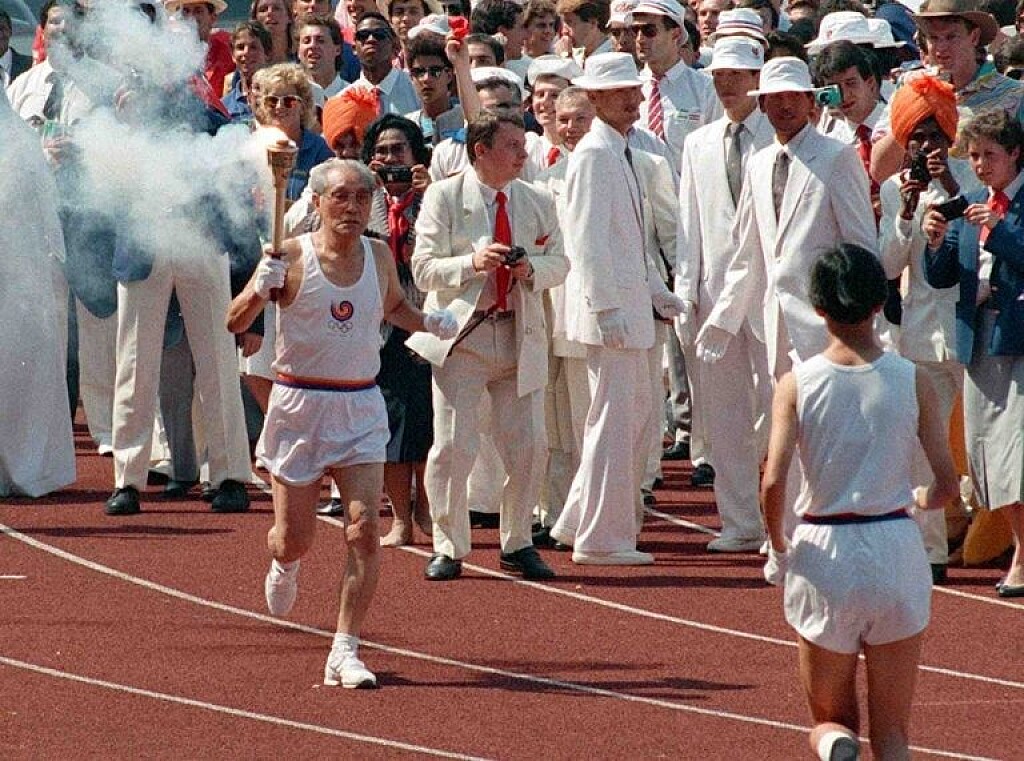
On September 17, 1988, 52 years after his Berlin triumph, the 76-year-old Sohn Kee-chung carried the Olympic torch into the stadium at the opening ceremony of the Seoul Olympics.
Think about what that moment represented.
In Berlin in 1936, he had stood on the Olympic podium beneath a foreign flag, unable to openly celebrate his victory as a Korean.
In Seoul in 1988, he entered an Olympic stadium carrying the flame for his own country.
The symbolism was almost impossible to miss.
The young runner who had once been forced to compete under the name Kitei Son was now an elderly Korean national hero, carrying the Olympic flame before his people.
He had spent more than five decades watching history slowly return his name to him.
Sohn Kee-chung died in November 15, 2002, aged 90, in Seoul, South Korea leaving behind far more than an Olympic medal. He left a story about athletic greatness, identity, dignity and resistance — a story in which a marathon victory became inseparable from the history of an entire nation.
His Berlin gold medal may have been officially recorded under Japan's name.
But in Korea, the champion was always Sohn Kee-chung.
And perhaps that is why the photograph of him standing on the podium, head bowed and the laurel wreath covering the Japanese emblem, remains so powerful.
He won the race in Berlin. But the world took decades to understand who had actually won it.
by Erick Cheruiyot for My Best Runs.
Login to leave a comment
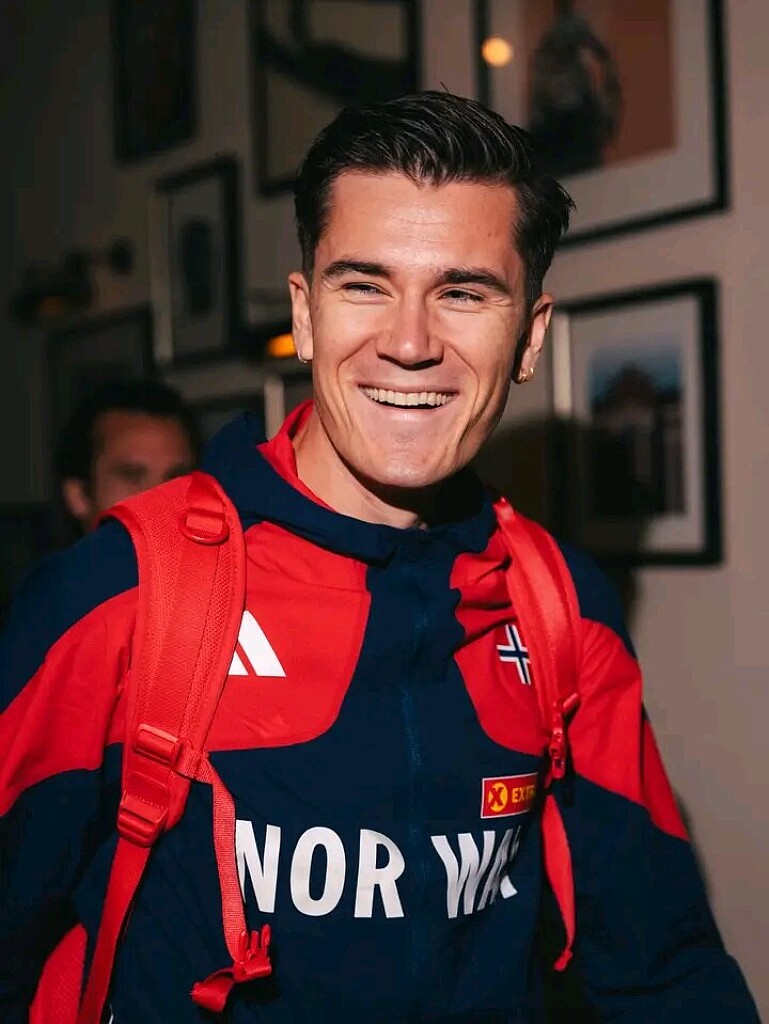
Jakob Ingebrigtsen Returns To Silesia: Can The Norwegian Reclaim The 1500m Throne?
Silesia has become a special chapter in Jakob Ingebrigtsen’s remarkable career, and on August 23, the Norwegian middle-distance superstar will return to the Diamond League with a question hanging over his comeback: can he return to the top of the 1500m?
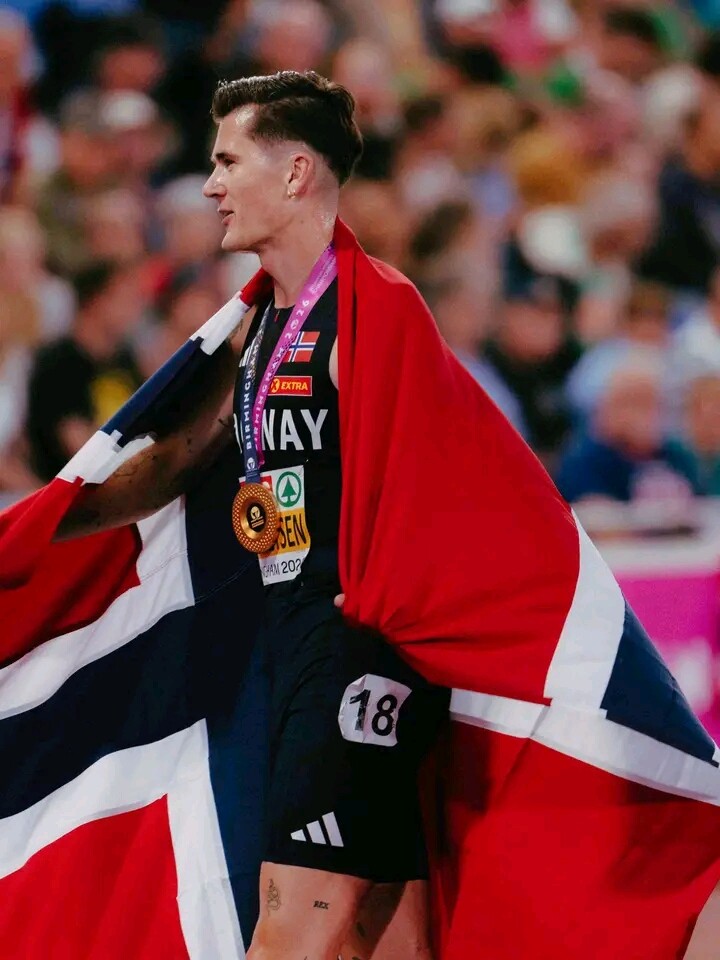
Ingebrigtsen is set to race his first 1500m since the 2025 World Athletics Championships, making his appearance at the Silesia Diamond League one of the most anticipated moments of the meeting.
The Norwegian’s return comes after a fascinating two-year stretch filled with major victories, record-breaking performances and unexpected setbacks.
Since the 2024 Paris Olympics, Ingebrigtsen has experienced almost every side of elite middle-distance running. At the Paris Games, he finished fourth in the 1500m, narrowly missing the podium before quickly responding with a victory in the Diamond League Final later that year.
He then began 2025 in spectacular fashion, breaking the indoor mile world record before going on to claim the world indoor title in the 3000m.
However, his outdoor campaign brought a different challenge. At the 2025 World Championships, Ingebrigtsen failed to advance from the 1500m heats, bringing an unexpected early end to his campaign in the event.
Now, nearly a year later, the 25-year-old is ready to return to the distance that has defined so much of his career.
And Silesia could hardly be a more fitting place for his comeback.
The last time Ingebrigtsen raced at the Polish venue, he produced a performance for the history books. He stormed to 7:17.55 in the 3000m, destroying the 28-year-old world record and once again demonstrating his extraordinary ability to combine speed with endurance.
This time, however, the focus shifts back to the 1500m.
The race will offer Ingebrigtsen an opportunity to measure himself against the world’s best after an extended absence from the event. His tactical instincts, finishing speed and ability to handle a fast pace will all come under the spotlight.
For a runner who has spent years setting the standard in the 1500m, this is more than simply another Diamond League appearance. It is a chance to begin writing the next chapter.
Can Jakob Ingebrigtsen return to the top?
Silesia will provide the stage. August 23 will provide the answer.
by Erick Cheruiyot for My Best Runs.
Login to leave a comment

Hayward Field Gets Another Olympic Trials: Eugene To Host 2028 Team USA Selection
The road to Los Angeles 2028 will once again run through Eugene, Oregon.
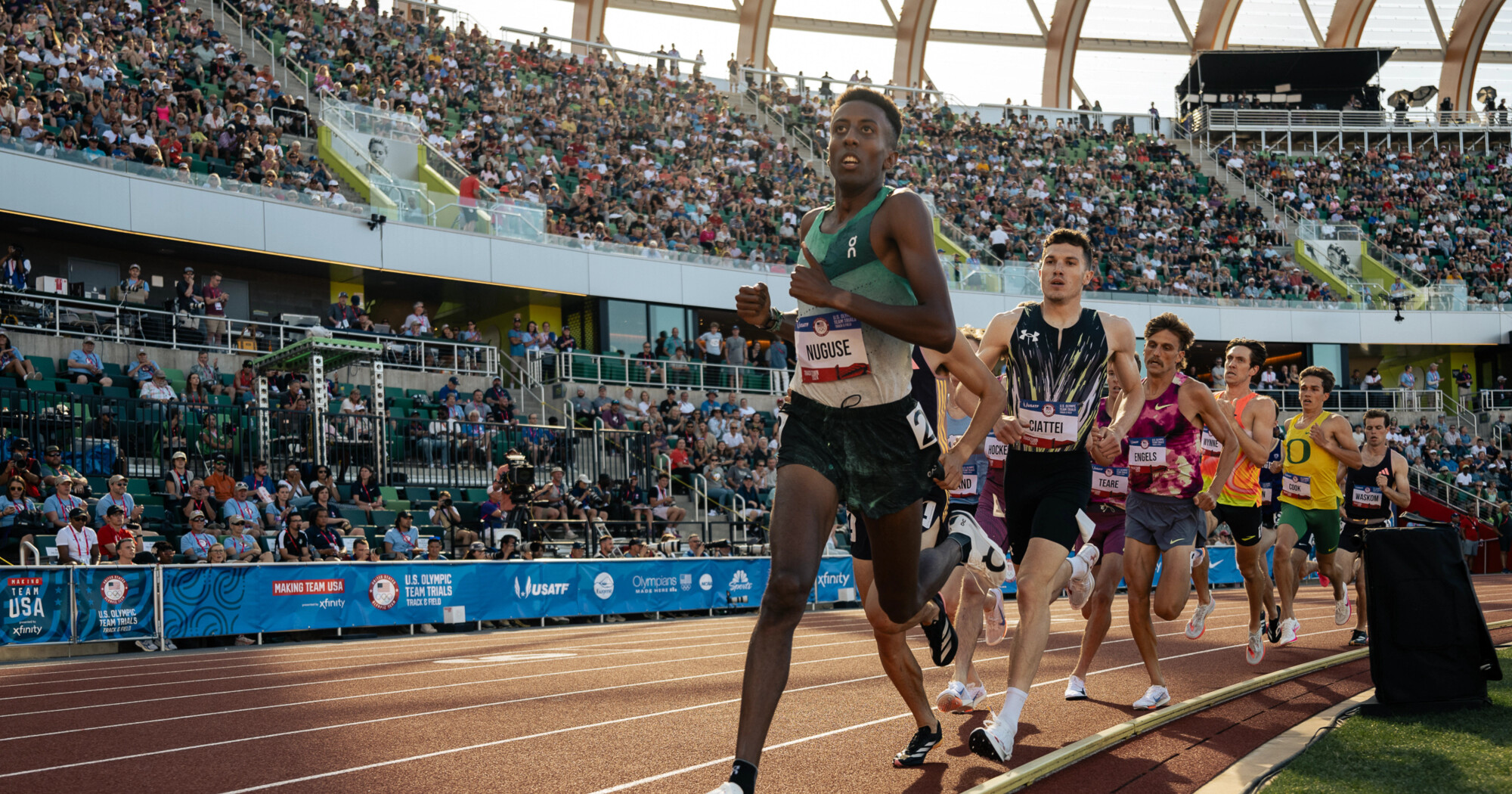
USA Track & Field and the U.S. Olympic and Paralympic Committee have announced that the 2028 U.S. Olympic Team Trials – Track & Field will return to Hayward Field from June 17–22, 2028, giving Eugene the distinction of hosting the prestigious selection meet for a sixth consecutive Olympic cycle.
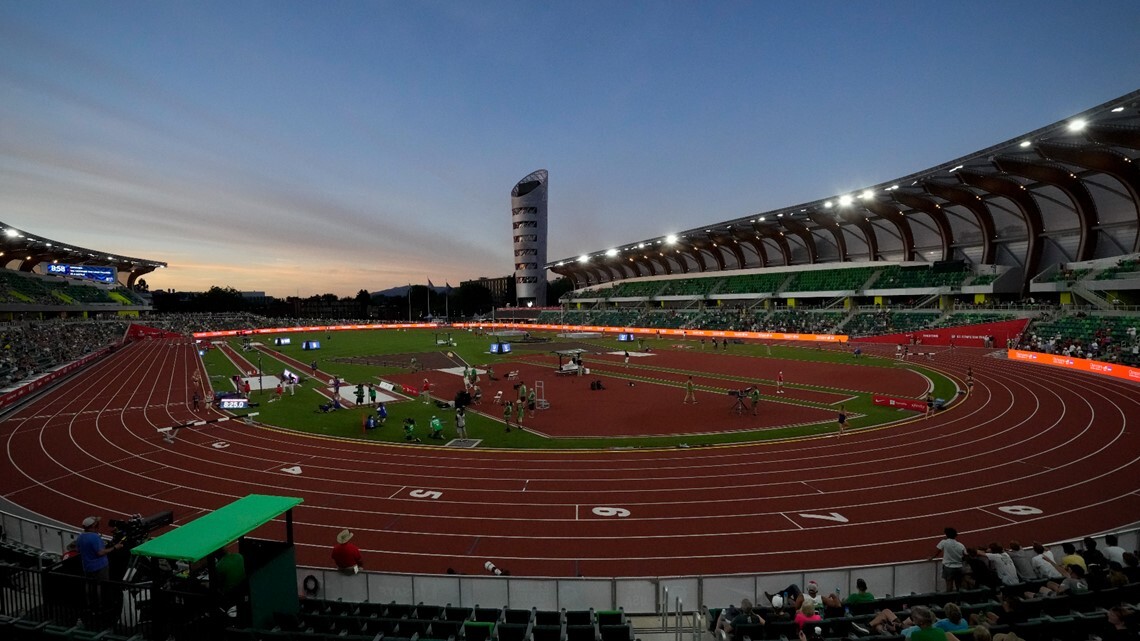
For a venue that has become synonymous with American track and field, the announcement represents another chapter in Hayward Field’s remarkable Olympic Trials legacy. Eugene previously hosted the Trials in 2008, 2012, 2016, 2021 and 2024, and will now stage the event once again as America’s finest athletes battle for places on the U.S. team headed to the 2028 Los Angeles Olympic Games.
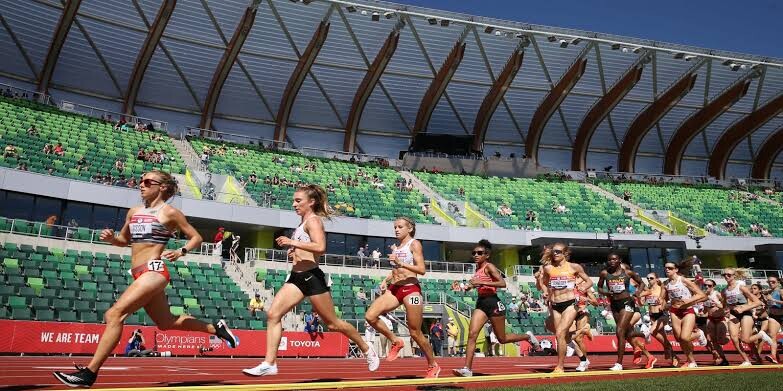
The 2028 edition will also introduce a significant change to the traditional format. Instead of the eight-day competition used at recent Trials, the main track and field meet will be compressed into six consecutive days, reflecting athlete feedback and the need for a more efficient selection process with the Olympic Games beginning less than a month later.
The men’s and women’s 10,000 meters, along with the decathlon and heptathlon, will not be contested as part of the main six-day Trials. Their Olympic team selection will take place earlier in the spring, with the dates and locations to be announced separately.
That scheduling adjustment is particularly important because athletes selected in Eugene will have only a short window to recover, prepare and travel before track and field competition begins at the Los Angeles Olympics. The LA28 track and field programme is scheduled for July 15–24 at the Los Angeles Memorial Coliseum.
Eugene’s return also reinforces its extraordinary status within American athletics. Few venues in the world carry the same history, atmosphere and emotional connection to track and field as Hayward Field, where Olympic dreams have been decided repeatedly over the past two decades.
And while the spotlight will ultimately be on the athletes who make Team USA, the road to Los Angeles will begin with another unforgettable week in TrackTown USA — where careers can be transformed, dreams can be fulfilled and the smallest margins can decide who wears the American colors on the Olympic stage.
The countdown to Los Angeles 2028 has officially gained another major milestone. Hayward Field is ready to welcome America’s best once again.
by Erick Cheruiyot for My Best Runs.
Login to leave a comment
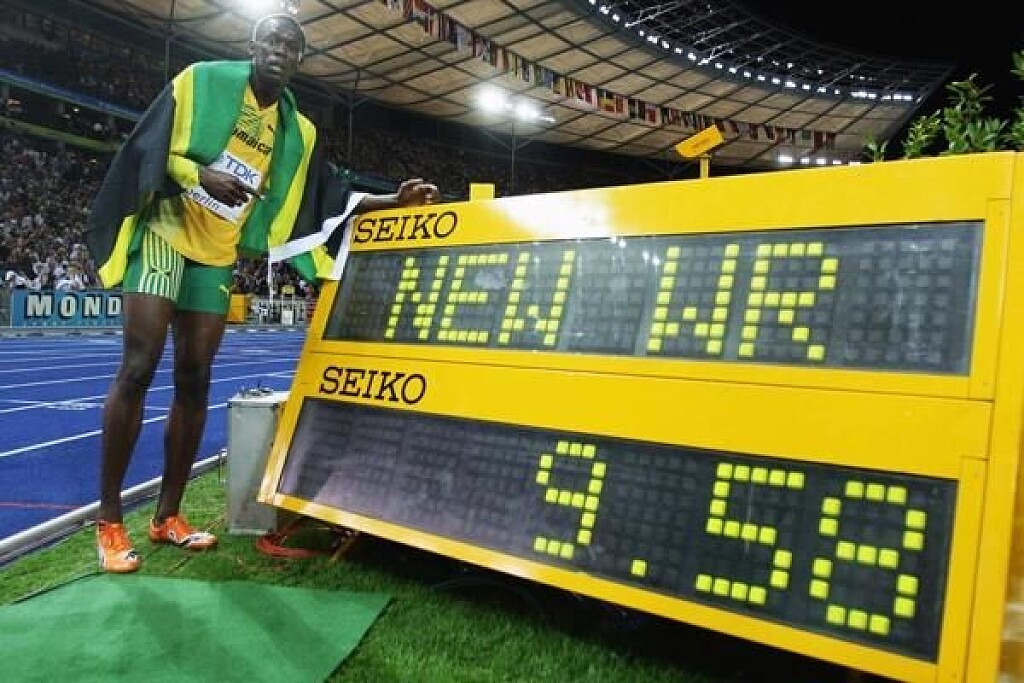
Seventeen Years On, Usain Bolt’s 9.58 Still Stands Alone
Seventeen years ago today, Jamaica’s Usain Bolt produced one of the most extraordinary performances in the history of athletics, sprinting into sporting immortality with a breathtaking 9.58 seconds in the men’s 100m final at the 2009 World Championships in Berlin.
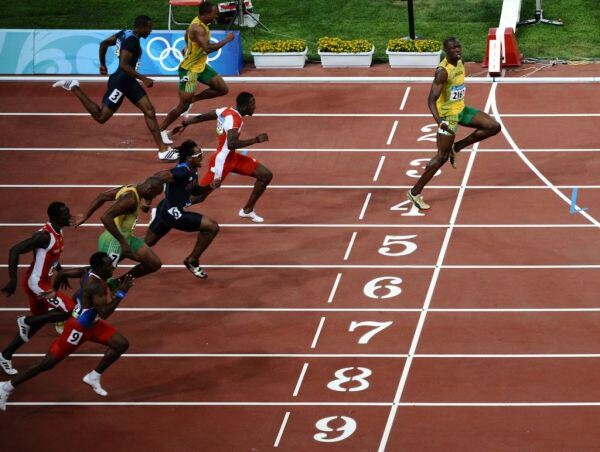
Under the lights of Berlin’s Olympic Stadium, the Jamaican superstar dismantled his own world record, slicing an astonishing 0.11 seconds from the 9.69 he had set at the Beijing Olympics exactly one year earlier. With a legal tailwind of +0.9 m/s, Bolt crossed the finish line in 9.58 — a mark that remains the fastest 100m ever recorded by a man.
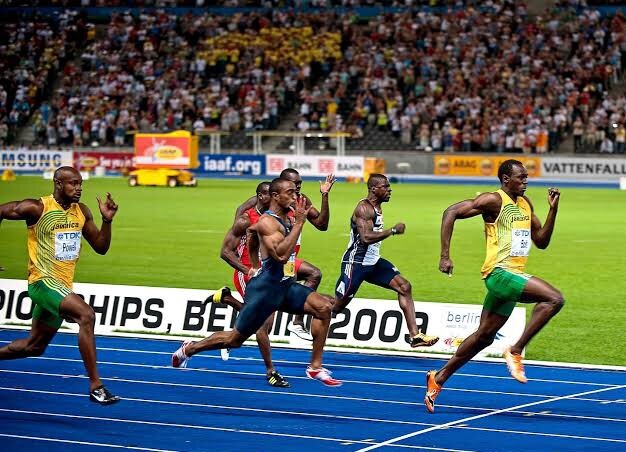
The race was billed as a heavyweight showdown between Bolt and American Tyson Gay, but once the Jamaican found his rhythm, the contest was effectively decided. Bolt surged away from the field with his trademark long, powerful strides, stopping the clock in a time that seemed almost beyond the limits of human speed.
Behind him, Gay produced a remarkable 9.71 for silver, setting a United States record, while Jamaica’s Asafa Powell claimed bronze in 9.84. Yet the night belonged entirely to Bolt, whose performance became the defining image of the Berlin championships.
What made the achievement even more remarkable was the scale of the improvement. Bolt had already rewritten the world record in Beijing with 9.69, but in Berlin he went to another level, becoming the first man to break the 9.6-second barrier. His 9.58 also represented the largest improvement to the men’s 100m world record since electronic timing was introduced.
Seventeen years later, the number still carries an almost mythical quality: 9.58 seconds. Generations of sprinters have chased faster times, but Bolt’s Berlin masterpiece remains untouched. The record has survived Olympic cycles, world championships and a new generation of elite sprinters, continuing to stand as one of the most enduring monuments to human speed.
On August 16, 2009, Usain Bolt did more than win a world title. He created a moment that transcended the race itself — a performance that continues to remind the world just how extraordinary the limits of speed can be.
Seventeen years on, 9.58 still belongs to Bolt. And the world is still waiting for someone to catch him.
by Erick Cheruiyot for My Best Runs.
Login to leave a comment
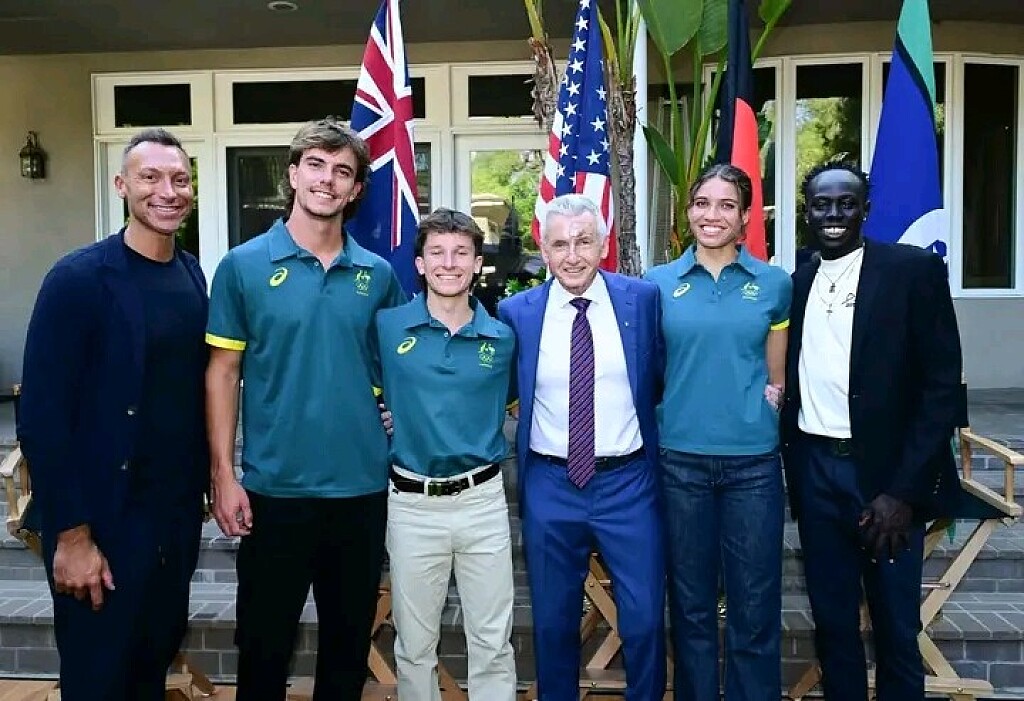
Gout Gout, Ian Thorpe and Australian Athletics’ Rising Stars Celebrate Olympic Dreams in Los Angeles
Australian athletics’ next generation received a memorable welcome in Los Angeles as rising sprint sensation Gout Gout joined Olympic great Ian Thorpe and a host of high-profile guests at a special Olympic Club of Australia gathering.
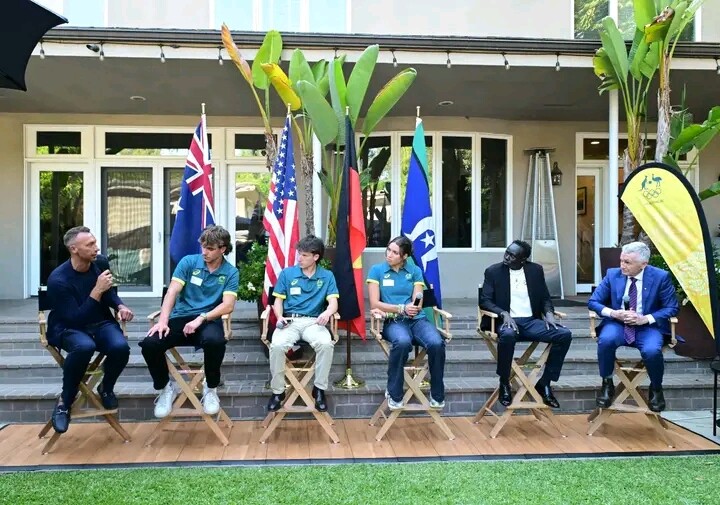
The event, hosted by Australia’s Consul-General to Los Angeles, Tanya Bennett, brought together members of the Australian Athletics U20 team on their return journey from Oregon, where they had been competing on the international stage.
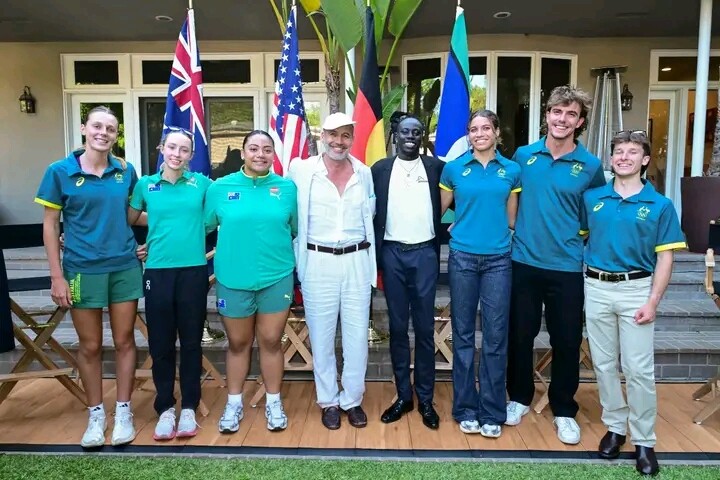
Gout, one of the most closely watched young talents in Australian athletics, was among the athletes at the gathering alongside Thorpe, the legendary five-time Olympic gold medallist. Broadcaster Bruce McAvaney and actor Billy Zane were also part of the star-studded occasion, creating an unusual but fitting meeting of Australian sporting excellence, media and entertainment.
The celebration came at an important moment for Australia’s young athletes, with the Los Angeles 2028 Olympic Games increasingly becoming a realistic target for many of the emerging stars. Beyond LA28, the prospect of competing at a home Olympics in Brisbane in 2032 offers an even bigger incentive for this generation to continue developing and dreaming on the world stage.
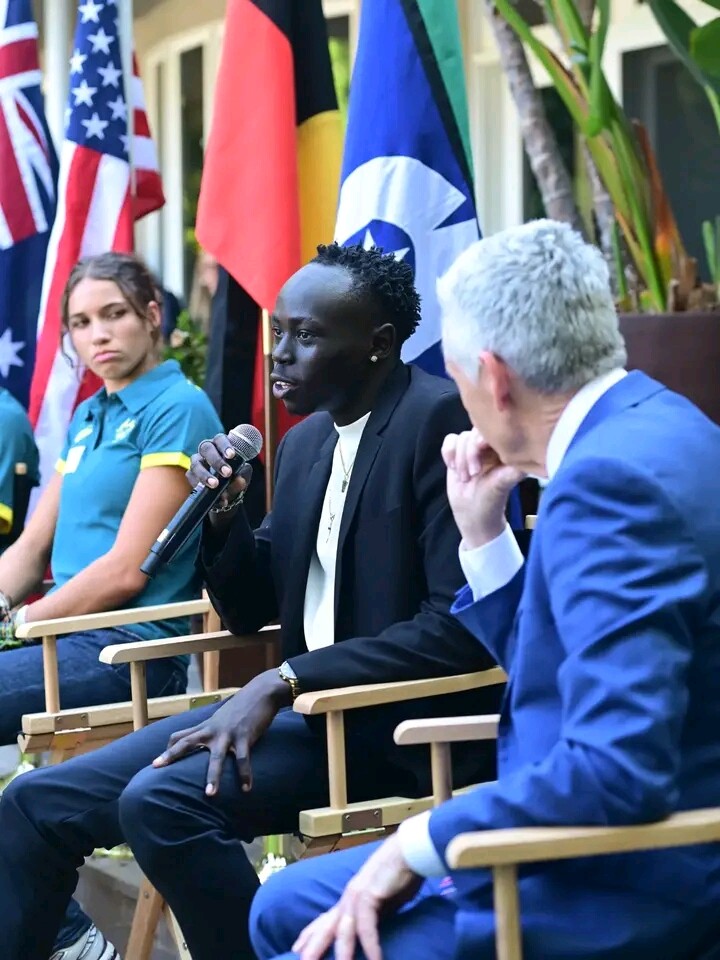
The occasion also highlighted the newly launched Olympic Club of Australia, an initiative of the Australian Olympic Committee designed to help raise funds in support of Olympians and coaches.
For Australia’s emerging athletes, the significance goes well beyond financial support. Olympic sport can provide young people with role models and demonstrate what can be achieved through ambition, commitment and perseverance.
With Gout and his fellow U20 athletes now beginning to look towards the next stage of their careers, the road to Los Angeles could mark the beginning of an exciting new chapter for Australian athletics.
And with Brisbane 2032 waiting beyond LA28, the athletes being celebrated today could ultimately become some of the biggest names carrying Australia’s hopes on home soil.
by Erick Cheruiyot for My Best Runs.
Login to leave a comment

Ultimate Clash Reloaded: Paris Olympic 1500m Medalists Set for Another Epic Battle in Budapest
The rivalry that captivated the athletics world in Paris is about to be reignited on one of the sport's biggest new stages.
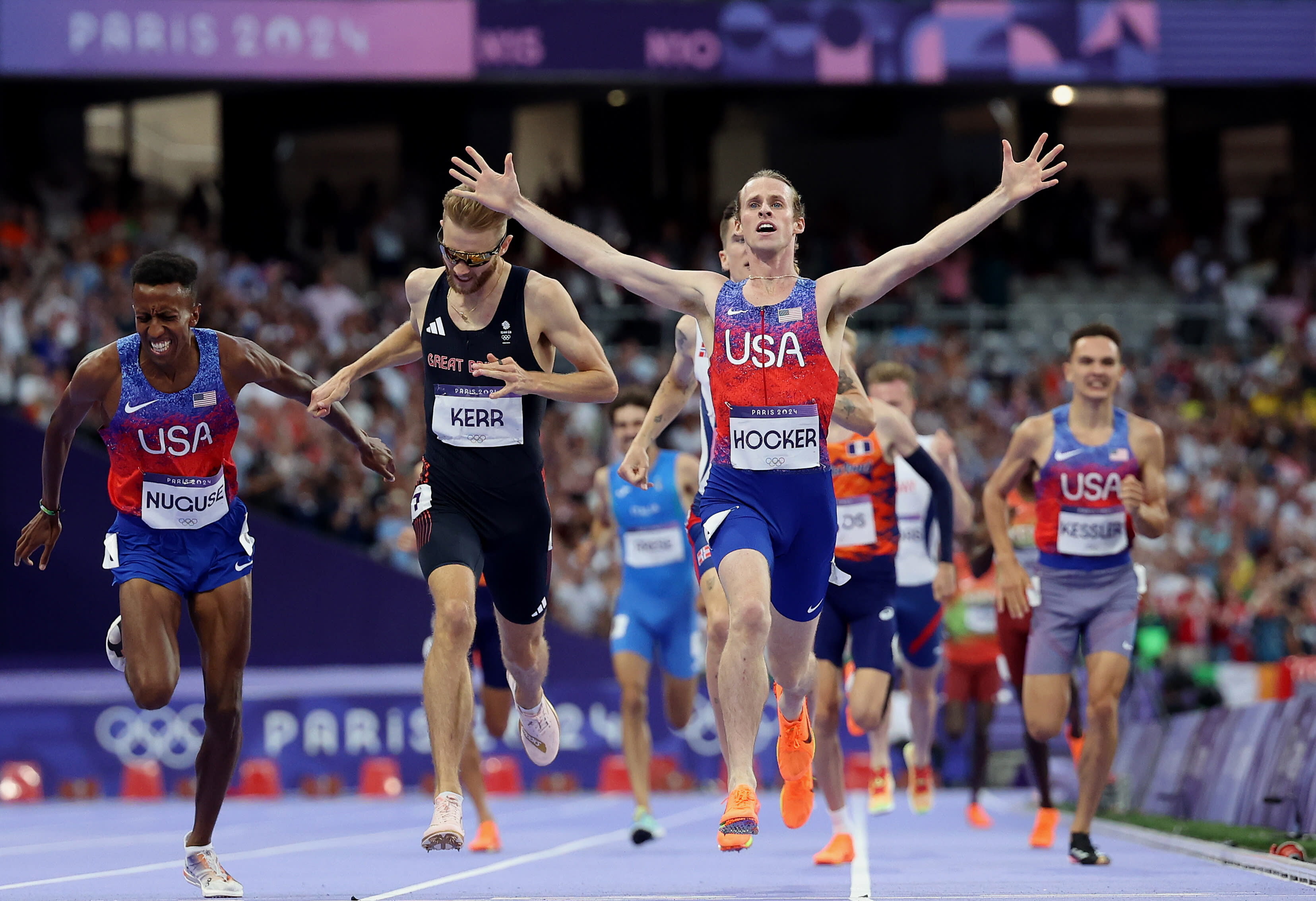
More than two years after producing one of the greatest Olympic 1500m finals in history, Olympic champion Cole Hocker, world mile record holder Josh Kerr, and Olympic bronze medalist Yared Nuguse are set to face each other once again at the inaugural World Athletics Ultimate Championships in Budapest, Hungary, from September 11–13, 2026.
Their unforgettable showdown at the Paris Olympics stunned fans across the globe. Hocker stormed to Olympic gold in a remarkable 3:27.65, smashing the Olympic record in a race that redefined what was thought possible over 1500 metres. Kerr claimed silver after another fearless performance, while Nuguse completed an extraordinary American one-two-three finish by securing the bronze medal.
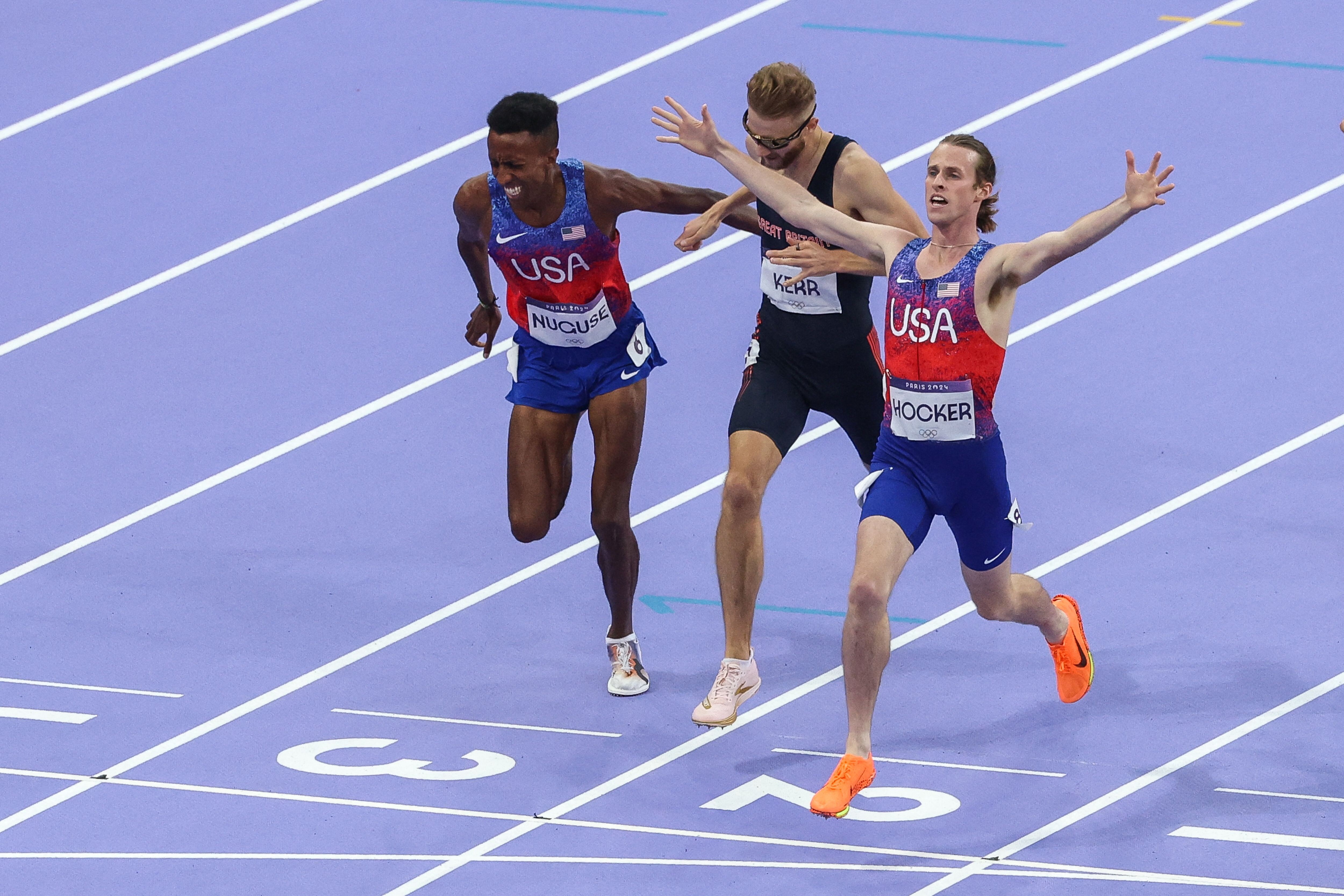
Now, the three medalists return to centre stage with even more at stake.
Hocker arrives in Budapest carrying the confidence of an Olympic champion determined to prove that his triumph in Paris was no one-off. Kerr, meanwhile, enters the championship in arguably the finest form of his career after recently rewriting history in London with a sensational 3:42.66 mile, breaking a world record that had stood for 27 years. For Nuguse, the Ultimate Championships present another opportunity to transform Olympic bronze into the biggest victory of his career.
Unlike traditional global championships, there will be no qualifying rounds, no tactical heats and no margin for error. The men's 1500m will be contested as a straight final featuring only 12 of the world's finest athletes, ensuring every lap is run at championship intensity from the opening gun.
The stakes extend well beyond prestige. The winner will collect a staggering US$150,000 from the event's US$10 million prize fund, adding even greater incentive to what is already shaping up to be one of the most eagerly anticipated races of the year.
The venue itself adds another fascinating chapter to the story. Budapest's National Athletics Centre was where Kerr claimed his world title in 2023, giving the British star fond memories of the track. Hocker will be aiming to reinforce his Olympic dominance, while Nuguse hopes this will finally be the race where he climbs to the top of the podium.
With three proven championship performers, contrasting racing styles and little separating them on talent, the men's 1500m promises to be one of the headline attractions of the inaugural World Athletics Ultimate Championships.
The Olympic champion, the reigning world mile record holder and the Olympic bronze medalist are ready to write the next chapter of one of middle-distance running's greatest modern rivalries.
Budapest awaits. The only question left is: who will emerge as the Ultimate Champion?
by Erick Cheruiyot for My Best Runs.
Login to leave a comment

Josh Kerr Sets His Sights on History: World Record Glory and Olympic Gold Drive Britain's Middle-Distance Star
Fresh from a thrilling victory in the mile at the Glasgow 2026 Commonwealth Games, Josh Kerr has made one thing abundantly clear—his greatest achievements may still lie ahead.
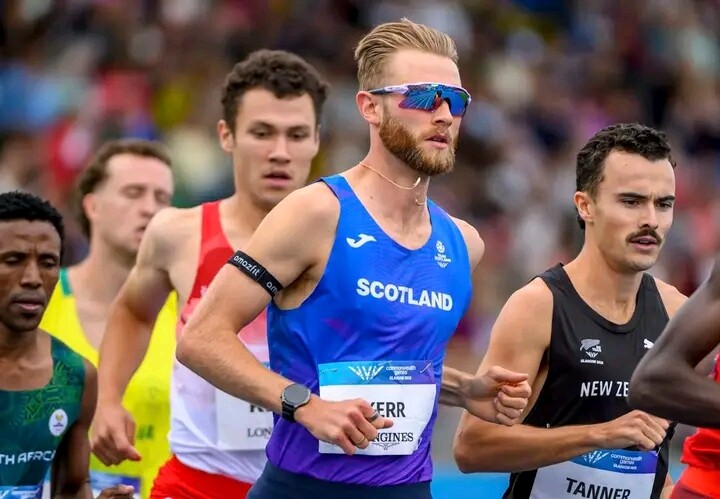
The British middle-distance star has unveiled an ambitious roadmap that could redefine his legacy, with two towering objectives at the heart of his journey: breaking Hicham El Guerrouj's legendary 1500m world record of 3:26.00, set on July 14, 1998, in Rome, and capturing the Olympic 1500m title at the Los Angeles 2028 Olympic Games.
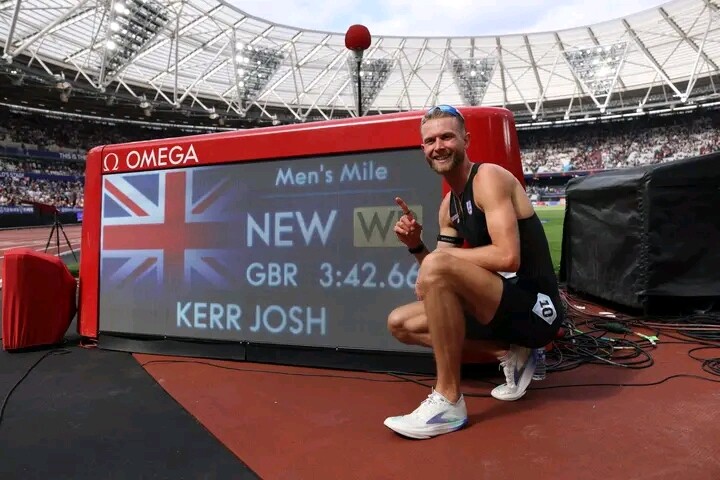
Kerr enters this new chapter with confidence soaring after producing one of the most remarkable performances in middle-distance history. His sensational 3:42.66 during the groundbreaking Project 222 campaign shattered the men's mile world record, ending a 27-year reign and proving he possesses the speed, endurance, and tactical brilliance required to challenge the sport's greatest barriers.
That achievement has strengthened Kerr's belief that the oldest and most revered record in men's middle-distance running is now within reach. For more than 28 years, Hicham El Guerrouj's 3:26.00, set in Rome on July 14, 1998, has stood as the benchmark of excellence in the 1500m, surviving generations of world-class challengers and earning a reputation as one of athletics' most untouchable performances.
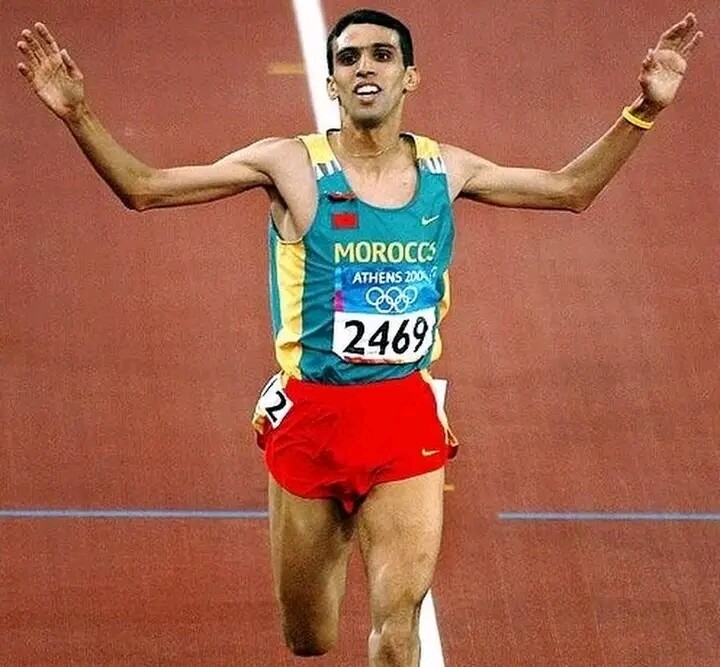
Rather than rushing the attempt, Kerr has laid out a carefully calculated plan designed to maximize his chances of success. His immediate priority is the 2027 World Athletics Championships in Beijing, where he hopes to reclaim the world 1500m title and reaffirm his position among the sport's elite.
Only after that championship campaign will his focus shift toward an assault on El Guerrouj's historic mark. A dedicated world-record attempt is expected later in 2027, built around months of meticulous preparation, altitude training, world-class pacing, ideal racing conditions, and flawless execution—the same ingredients that powered his record-breaking mile performance.
For Kerr, world records are not won by chance. They are earned through relentless preparation, perfect timing, and the courage to attack history when every detail aligns.
Beyond the pursuit of history lies one final prize that continues to fuel his ambition: Olympic gold.
Having earned bronze at the Tokyo 2020 Olympics and silver at the Paris 2024 Games, Kerr now has just one medal missing from an already glittering collection. His ultimate objective is to stand atop the Olympic podium in Los Angeles in 2028, completing a remarkable progression from bronze to silver and finally to gold.
If successful, Kerr would not only cement his place among Britain's greatest middle-distance runners but also become the first athlete to erase Hicham El Guerrouj's iconic 3:26.00 world record since it was established in Rome on July 14, 1998, before completing his Olympic medal collection with the sport's ultimate prize.
The stage is set, the blueprint is in place, and the countdown has begun. The question now is whether Josh Kerr can accomplish what generations of elite milers have failed to do—rewrite one of athletics' most enduring records and crown his career with Olympic gold in Los Angeles.
by Erick Cheruiyot for My Best Runs.
Login to leave a comment
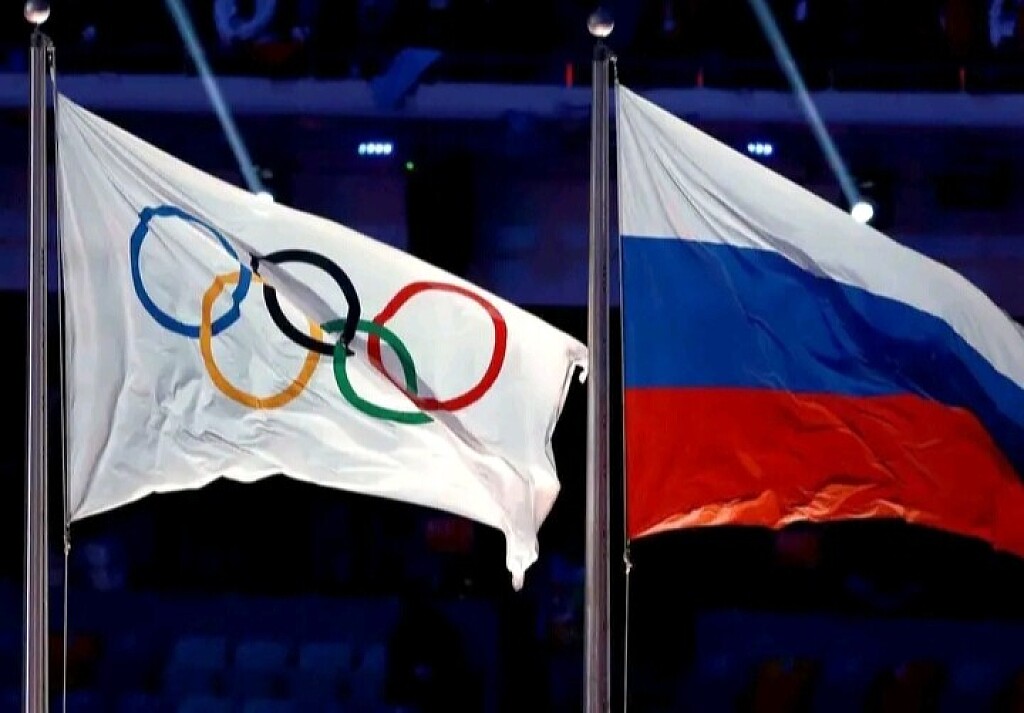
IOC Provisionally Lifts Russian Olympic Committee Suspension, Opening Door to Russia's Return for LA 2028
The International Olympic Committee (IOC) has taken a significant step toward Russia's return to the Olympic movement, announcing the provisional lifting of the suspension imposed on the Russian Olympic Committee (ROC) since October 2023.
The decision marks a major shift in Olympic policy and could allow Russian athletes who qualify for the Los Angeles 2028 Olympic Games to compete under the Russian name once again, rather than as Neutral Athletes as they did at the Paris 2024 Olympics and are expected to do at the Milano Cortina 2026 Winter Games.
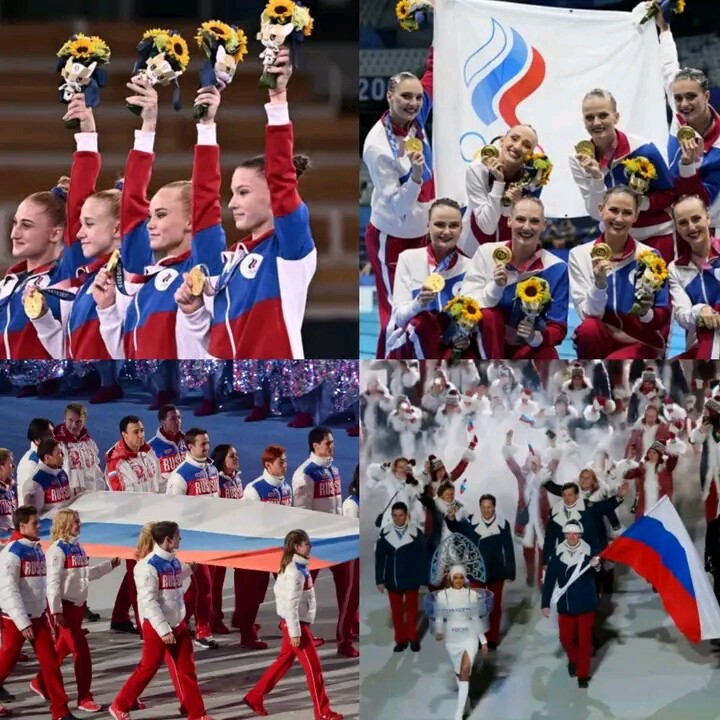
According to the IOC, the move follows a legal review which concluded that the Russian Olympic Committee no longer includes regional sports organizations from territories recognized as being under the jurisdiction of Ukraine's National Olympic Committee. With qualification for LA 2028 already underway, the IOC Executive Board determined that the restrictions previously placed on international federations and event organizers were no longer justified under the current circumstances.
However, the decision does not represent a complete restoration of Russia's Olympic status.
The IOC confirmed that a final ruling on whether the Russian flag, anthem, national colours and other state symbols can return to the Olympic Games will be made at a later stage. Likewise, Russia will not host IOC-organized events, and representatives of the Russian government will not receive invitations to official IOC events.
The committee also stressed that the Russian Olympic Committee must ensure that any athletes selected for future Olympic participation uphold the principles of the Olympic Charter by promoting peace, respect and sportsmanship.
Outside the Olympic Games, decisions regarding the hosting of events in Russia or the use of Russian national symbols will remain the responsibility of each International Federation.
The IOC also outlined strict anti-doping requirements that must be met before Russian athletes can fully return to international competition. Every athlete will be required to comply with the anti-doping regulations of the IOC, World Anti-Doping Agency (WADA) and their respective International Federations.
In addition, Russian athletes must be enrolled in an anti-doping programme overseen by the International Testing Agency (ITA) and undergo multiple rounds of independent testing before being cleared to compete. Should the Russian Anti-Doping Agency (RUSADA) remain non-compliant by the time of the Los Angeles Games, the IOC confirmed that the ITA will directly manage testing for all qualified Russian athletes under the same independent protocols.
The announcement follows a similar move involving Belarus earlier this year and signals the IOC's gradual effort to normalize the participation of athletes affected by geopolitical restrictions while maintaining strict governance and anti-doping safeguards.
With the road to Los Angeles 2028 now officially underway, the IOC's latest decision could reshape the Olympic landscape, although several key questions—including the return of Russia's national symbols—remain unresolved and will be decided closer to the Games.
by Erick Cheruiyot for My Best Runs.
Login to leave a comment
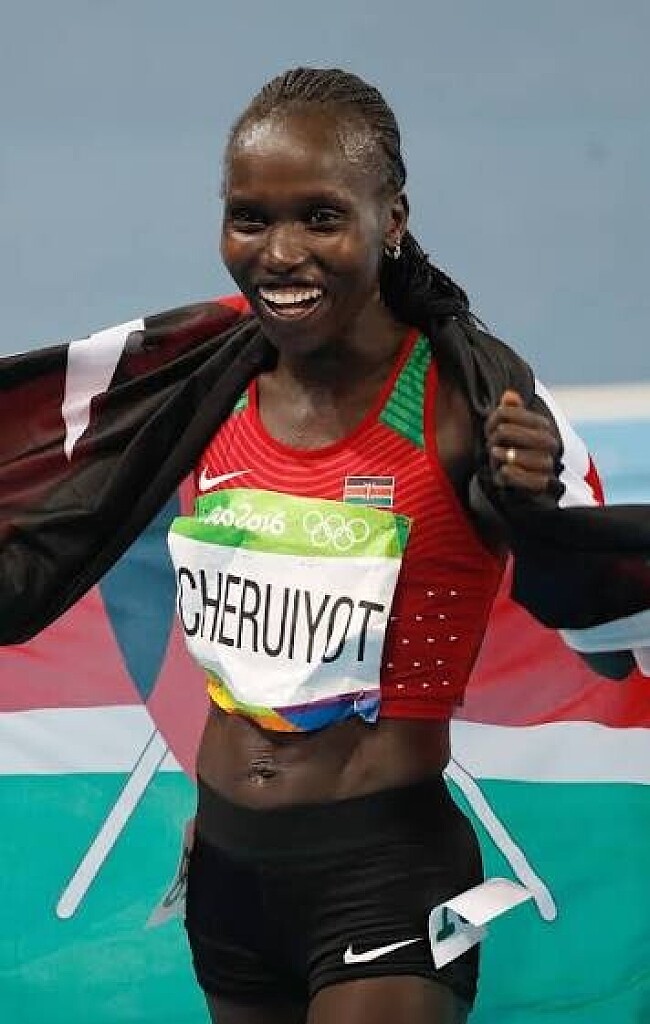
Olympic Legend Vivian Cheruiyot Set for 2026 Sydney Marathon Showdown
Kenyan distance-running icon Vivian Cheruiyot is set to add another exciting chapter to her glittering career after confirming her participation in the 2026 Sydney Marathon, scheduled for August 30 in Australia.
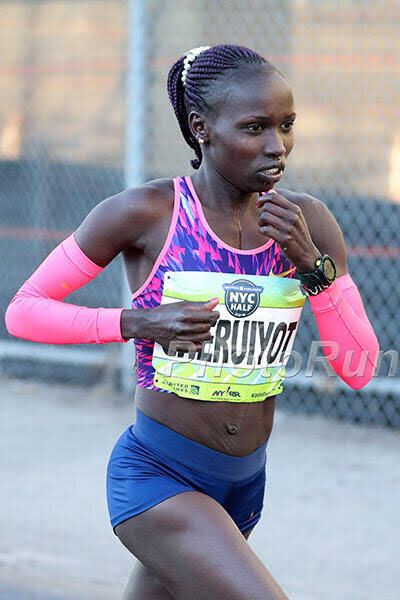
The 42-year-old marathon star, who owns a personal best of 2:18:31, will line up against one of the strongest women's marathon fields ever assembled in Australia. Awaiting her is a mouthwatering showdown with fellow Kenyan and Olympic marathon champion Peres Jepchirchir, promising fans a battle between two of the sport's finest competitors.
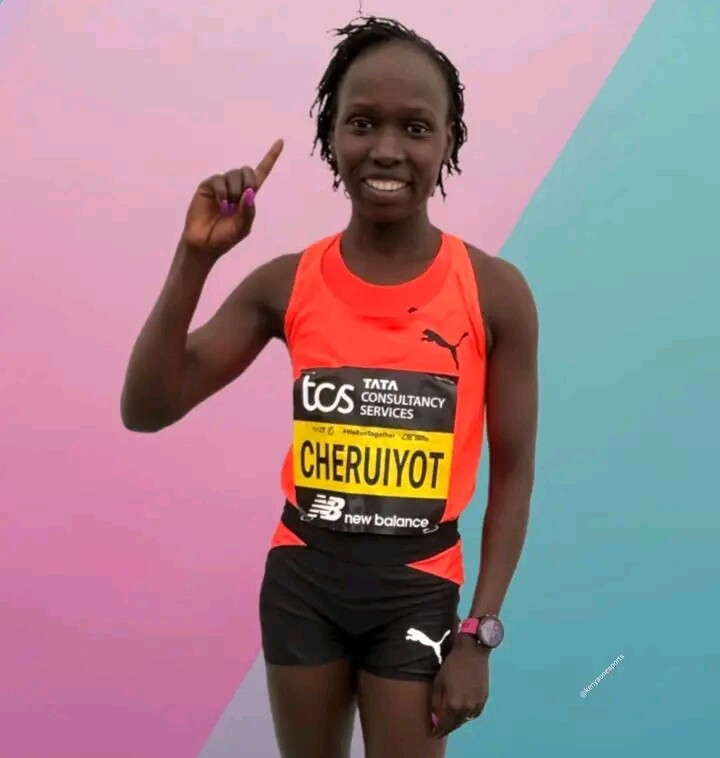
Cheruiyot arrives in Sydney with one of the most decorated résumés in the history of distance running. Across four Olympic Games, she has amassed an extraordinary collection of medals, winning Olympic gold in the 5,000m and silver in the 10,000m at the 2016 Rio Games, where she also set a new Olympic record in the 5,000m. She previously claimed silver in the 5,000m and bronze in the 10,000m at the 2012 London Olympics, cementing her place among Kenya's greatest track athletes.
Her success extends well beyond the Olympic stage. Cheruiyot is a multiple-time world champion, capturing the 5,000m world title in 2009 and 2011, while also completing a memorable long-distance double by winning the 10,000m world crown in 2011 before reclaiming the event's global title in 2015. She also earned silver in the 5,000m at the 2007 World Championships and has enjoyed success indoors with a silver medal in the 3,000m at the 2010 World Indoor Championships.
In addition to her global championship triumphs, Cheruiyot dominated the 2010 season by securing the Commonwealth Games, African Championships, Continental Cup, and Diamond League titles over 5,000 metres, further highlighting her remarkable consistency and versatility.
Although now competing in the marathon, Cheruiyot continues to prove that class and determination know no age. Her experience, tactical brilliance, and championship pedigree make her one of the standout names in an elite field packed with world-class talent.
With the Sydney Marathon continuing to establish itself as one of the world's premier road races, all eyes will be on Vivian Cheruiyot as the legendary Kenyan seeks to produce another memorable performance on Australian soil.
by Erick Cheruiyot for My Best Runs.
Login to leave a comment
Olympic Justice Delayed: Alysia Montaño Finally Earns London 2012 Bronze After 14-Year Wait
Justice has finally caught up with one of the most controversial Olympic races in modern history.
Fourteen years after crossing the finish line in fifth place at the London 2012 Olympic Games, American middle-distance star Alysia Montaño has officially been awarded the Olympic bronze medal following the International Olympic Committee's latest medal reallocation.
This week, the IOC Executive Board approved a revised set of results for the women's 800 metres, bringing another chapter of the event's long-running doping scandal to a close. South Africa's Caster Semenya remains the Olympic champion, while Kenya's Pamela Jelimo is elevated to the silver medal position. Montaño now claims the bronze medal she earned through clean competition.
The decision follows the disqualification of Yekaterina Guliyev, who represented Russia at the London Games under her maiden name, Yekaterina Poistogova. In 2024, the Court of Arbitration for Sport (CAS) ruled that Guliyev had committed anti-doping violations involving banned anabolic steroids. After her appeal was dismissed in May 2025, the IOC officially ratified the revised medal standings this week, making the changes final.
Guliyev's removal means three Russian athletes from the same Olympic women's 800m final have now been stripped of their results for doping offences. Mariya Savinova, the original gold medalist, was disqualified years earlier, while Elena Arzhakova also lost her result following anti-doping sanctions. The race has become one of the clearest examples of how widespread doping robbed clean athletes of their rightful Olympic moments.
For Montaño, the medal is the reward for a courageous race. She boldly led the field through the opening 400 metres in 56.31 seconds before eventually finishing fifth as four athletes crossed the line ahead of her. Today, only two of those performances still stand.
Her promotion is also historically significant. Montaño becomes the first American woman to win an Olympic medal in the 800 metres since Kim Gallagher claimed bronze at the 1988 Seoul Olympics, ending a wait of more than three decades for the United States in the event.
Although the medal is finally hers, the years that have passed cannot restore the emotions of standing on the Olympic podium before a packed stadium and millions watching around the world. Montaño has often described the delayed recognition as both gratifying and heartbreaking—a victory that arrives without the unforgettable Olympic celebration every athlete dreams of.
Following the IOC's announcement, Montaño shared an emotional message on social media, celebrating the victory while acknowledging the long journey that still lies ahead before she finally receives her medal.
"Integrity and Truth always wins out. The IOC approved the medal reallocation ceremony at LA2028. More work to be done to ensure it's done right, but for now we celebrate one victory at a time. Swipe to see me patiently waiting till LA2028 to get my medal!"
Her message also revealed that the IOC has approved the medal reallocation ceremony to take place during the Los Angeles 2028 Olympic Games, giving Montaño the opportunity to finally receive her Olympic medal on one of sport's biggest stages. While nothing can replace the moment that was taken from her in London, the ceremony will provide long-overdue recognition of her achievement in front of the Olympic community.
Montaño's story serves as another powerful reminder that while anti-doping efforts can eventually correct the record books, justice delayed can never fully replace the memories, opportunities and emotions stolen from clean athletes.
Fourteen years after London 2012, the official results have finally been rewritten. Alysia Montaño is an Olympic bronze medalist at last—not because history changed, but because the truth finally caught up with it.
by Erick Cheruiyot for My Best Runs.
Login to leave a comment
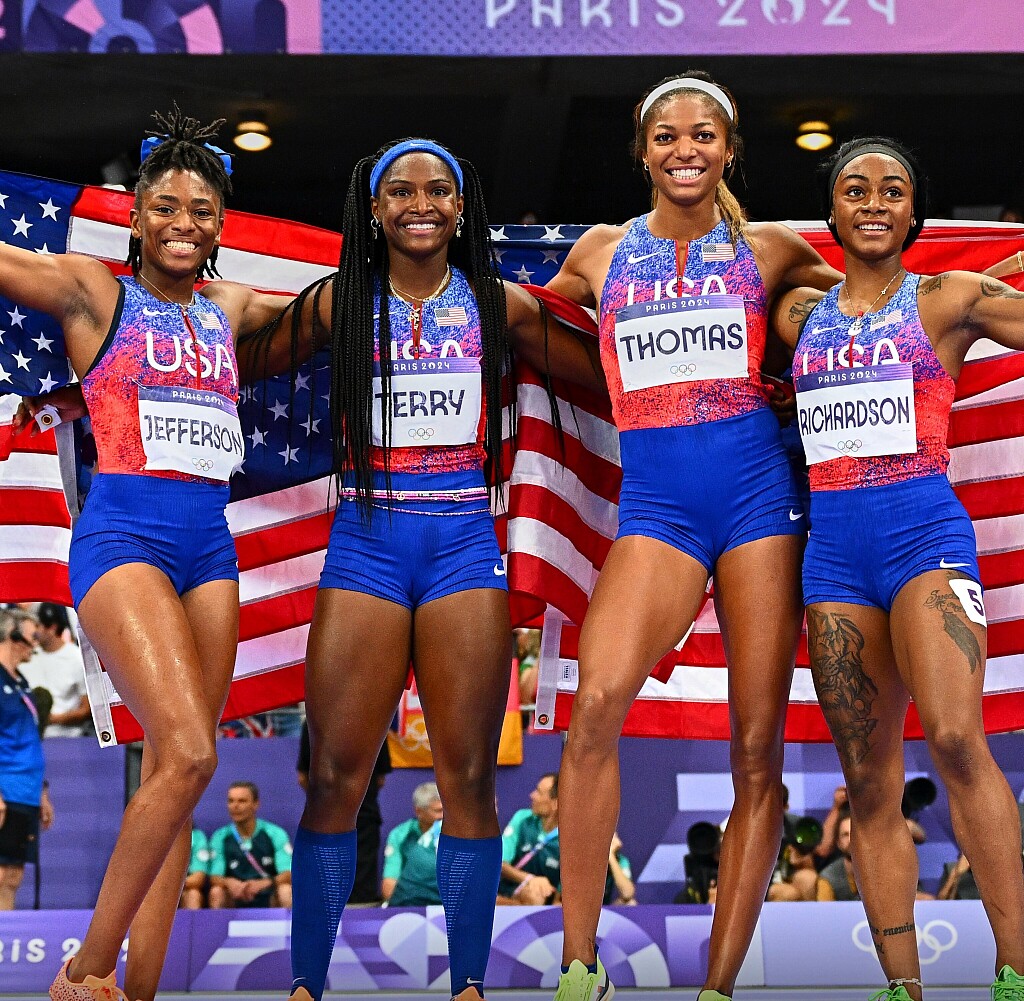
Historic Olympic Reform: IOC Launches $140 Million Grant Program for All Olympians
In a landmark decision that could redefine athlete welfare worldwide, the International Olympic Committee (IOC) has announced a historic funding programme that will provide direct financial support to every Olympic athlete for the first time in the Games' history.
Under the newly launched "Fit for the Future Olympian Grant" initiative, every athlete competing at the Olympic Games will be eligible for a USD 10,000 grant. The programme will officially begin with athletes who competed at the Milano Cortina 2026 Winter Olympics, marking a significant shift in how the Olympic Movement supports competitors beyond the field of play.
The IOC has committed USD 140 million every four years to fund the initiative, underscoring its long-term commitment to athlete development and welfare. Unlike performance-based rewards, the grant is not considered prize money. Instead, it is designed to help athletes either continue pursuing their sporting ambitions or successfully transition into life after retirement from competitive sport.
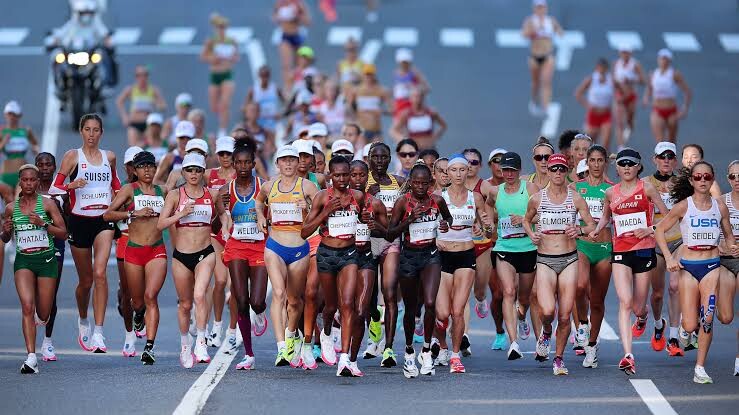
For decades, Olympic athletes have dedicated years of training, sacrifice, and commitment in pursuit of sporting excellence, often while balancing education, employment, and personal responsibilities. The new grant programme seeks to provide meaningful support during and after those journeys, offering athletes greater financial stability as they navigate the demands of elite competition and future career opportunities.
The announcement comes amid growing global discussions surrounding athlete compensation and support systems within the Olympic Movement. While the IOC has maintained its position against introducing universal Olympic prize money, the grant programme represents one of the most substantial athlete-focused investments in the organization's history.
IOC President Kirsty Coventry described the initiative as the result of years of discussion and planning, highlighting athlete welfare as a central pillar of the Olympic Movement's future. The programme reflects an evolving approach that places greater emphasis on supporting athletes beyond their performances on the podium.
With the programme now officially in place, the IOC has taken a historic step toward strengthening athlete welfare. Although the grants are not classified as prize money, the initiative reflects a growing commitment to supporting Olympians beyond competition, acknowledging the immense sacrifices athletes make in pursuit of Olympic dreams.
The initiative is already being celebrated as a transformative moment for global sport. By guaranteeing financial assistance to every Olympian, the IOC has opened a new chapter in athlete support—one that recognizes not only sporting achievement but also the personal dedication required to reach the world's biggest sporting stage.
by Erick Cheruiyot for My Best Runs.
Login to leave a comment
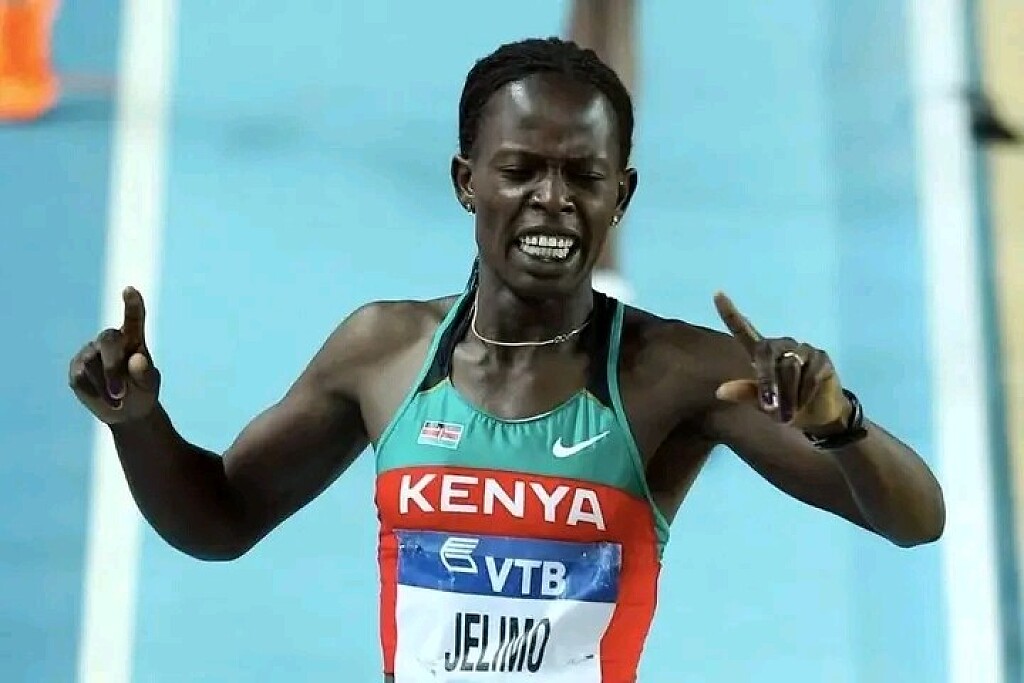
A Silver Worth the Wait: Pamela Jelimo Officially Recognized as London 2012 Olympic Runner-Up
More than a decade after competing on athletics' grandest stage, Kenyan middle-distance star Pamela Jelimo has officially been confirmed as the silver medalist in the women's 800 metres at the London 2012 Olympic Games following a medal reallocation approved by the International Olympic Committee (IOC).
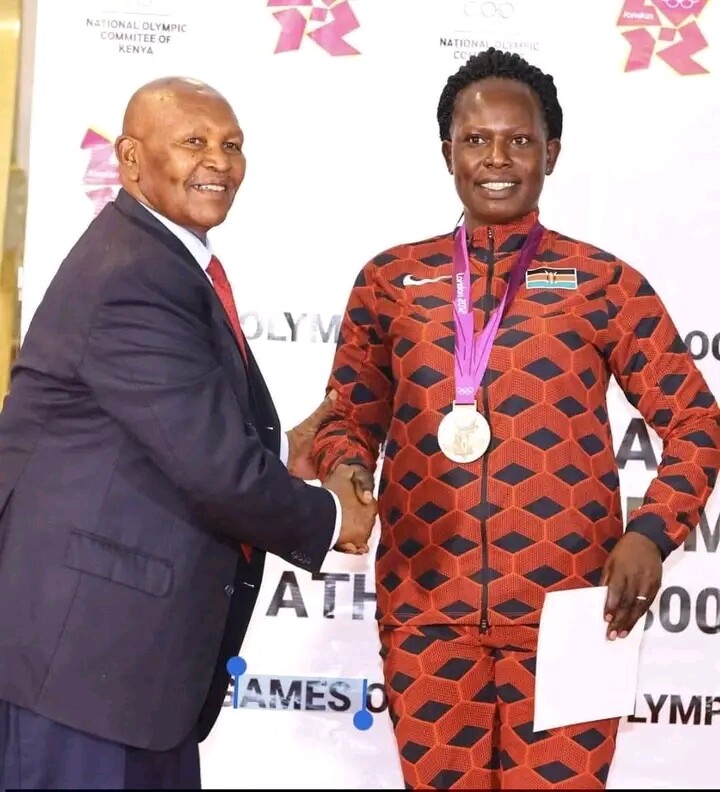
The IOC Executive Board ratified the revised results after the disqualification of Russian athlete Yekaterina Poistogova for an anti-doping rule violation. With all legal processes now concluded, the final standings have been formally updated, bringing long-awaited recognition to athletes who competed cleanly.
The decision elevates Jelimo from third place to the Olympic silver medal position, adding another prestigious chapter to the career of one of Kenya's most accomplished middle-distance runners. While the moment comes years after the race was run, it reinforces the enduring principle that integrity in sport ultimately prevails.
The revised podium now sees American athlete Alysia Montaño promoted to the bronze medal position. Meanwhile, Francine Niyonsaba moves into fourth place, with fellow Kenyan Janeth Jepkosgei Busienei officially ranked fifth.
For Kenya, Jelimo's promotion represents more than a statistical adjustment. It is a belated reward for an athlete whose remarkable talent helped shape a golden era of Kenyan women's middle-distance running. Although the medal upgrade arrives years after the celebrations that followed the London Olympics, its significance remains undiminished.
Jelimo burst onto the international scene as a teenage sensation, capturing global attention with her fearless racing style and dominant performances. Her newly confirmed Olympic silver medal further cements her legacy among Kenya's finest athletes and adds another distinguished achievement to an already impressive career.
The reallocation also serves as a powerful reminder of the ongoing fight for clean sport. While athletes affected by doping violations often endure years of waiting before receiving rightful recognition, the updated results demonstrate the commitment of sporting authorities to preserving fairness and protecting the integrity of competition.
Fourteen years after the London Games captivated the world, justice has finally caught up with the women's 800 metres final. For Pamela Jelimo, the silver medal may have arrived late, but its value and meaning remain as powerful as ever.
by Erick Cheruiyot for My Best Runs.
Login to leave a comment

WORLD CHAMPION BEATRICE CHEBET CELEBRATES HER GREATEST VICTORY YET — MOTHERHOOD
Kenyan athletics superstar and world champion Beatrice Chebet has officially entered a beautiful new chapter in her life after welcoming a baby boy.
The 26-year-old track sensation, born on 5 March 2000, has built a remarkable legacy as one of the greatest distance runners of her generation. Chebet is a world record holder in the 5000m, 10,000m and road 5km, with a career decorated by historic victories on the biggest stages.
She made history at the 2024 Summer Olympics by winning gold medals in both the 5000m and 10,000m, before achieving the same remarkable double at the 2025 World Athletics Championships. Her medal collection also includes a 5000m silver medal at the 2022 World Athletics Championships and bronze at the 2023 World Athletics Championships.
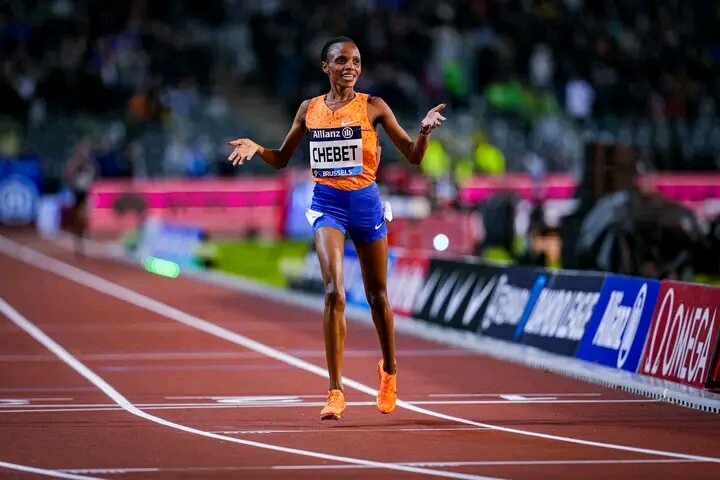
Beyond the track, Chebet has also dominated cross country, becoming a three-time world champion after winning the junior title in 2019 and senior titles in 2023 and 2024. She has also claimed major 5000m victories at the 2018 World U20 Championships, 2022 Commonwealth Games and the 2022 African Championships in Athletics.
Now, the Kenyan star is celebrating a different kind of milestone — becoming a mother.
Sharing the joyful news, Chebet introduced her newborn son with a heartfelt message filled with love and excitement:
“Tiny hands, tiny feet, and a love so big! A beautiful new chapter begins. Welcome to our world our sweet little baby boy!”
The arrival of her son marks a special moment away from competition, as the world champion embraces motherhood while carrying the pride of a nation that has watched her achieve greatness.
Messages of congratulations have poured in from fans and the athletics community, celebrating the new chapter for one of Kenya’s most successful athletes.
As Beatrice Chebet adds motherhood to her list of remarkable achievements, the champion now begins a new journey filled with love, joy, and unforgettable moments with her baby boy.
by Erick Cheruiyot for My Best Runs.
Login to leave a comment
The Soccer Player Who Became Austria’s Olympic Marathon Record Holder
Most Olympic marathoners spend their youth focused on running. They join track clubs, compete in national championships, and pursue the sport from an early age.
Julia Mayer’s journey was very different.
Today, Mayer is Austria’s marathon record holder, a multiple national record holder on the roads, and an Olympian. Yet for much of her athletic life, running was not her primary sport.
For 16 years, she played soccer.
Then she discovered something that would change her life.
“I noticed that I was really fast in the fun runs and that it was really, really fun,” Mayer said when reflecting on her transition from soccer to distance running.
What began as curiosity quickly became a passion. She eventually made the bold decision to leave soccer behind and focus entirely on running. It was a move that surprised many people around her, but Mayer believed she had found her true athletic calling.
The decision proved to be the right one.
Within a few years, Mayer developed into one of Europe’s top marathon runners. Her steady improvement carried her from local races to the international stage, where she began rewriting Austria’s record books.
She now holds Austrian records in the marathon, half marathon, and road 10K. Her marathon best of 2:26:08 established her as the fastest female marathoner in Austrian history. Her performances in the half marathon and 10K have further cemented her place among the country’s all-time great distance runners.
Her rise culminated with qualification for the 2024 Olympic Games in Paris.
Competing in the Olympic marathon represented the realization of a dream. On one of the most challenging marathon courses ever used for the Olympics, Mayer ran courageously against the strongest field in the world and finished 55th in her Olympic debut.
Behind the scenes, success has come through extraordinary dedication. During marathon preparation, Mayer trains twice a day and covers approximately 200 kilometers, or 124 miles, each week. The workload demands discipline, patience, and a deep commitment to continuous improvement.
What makes her story especially inspiring is not simply the records or the Olympic appearance.
It is the fact that she found her greatest talent later than many elite runners.
In a sport where athletes are often identified at a young age, Mayer’s journey serves as a reminder that potential does not always reveal itself early. Sometimes it takes years of experience, a willingness to try something new, and the courage to follow a different path.
The former soccer player who once chased a ball across a field is now chasing history on the roads of Europe.
And according to those closest to her, her best performances may still be ahead.
For runners of every age and ability, Julia Mayer’s story delivers a powerful lesson: it is never too late to discover what you are capable of.
From soccer player to Olympian, her journey proves that remarkable achievements can begin when least expected.
by Boris Baron
Login to leave a comment

Gateway to the Olympics: St. Louis Awarded 2028 U.S. Marathon Trials
The road to the Los Angeles 2028 Olympic Games will officially begin in St. Louis after USA Track & Field (USATF) and the U.S. Olympic & Paralympic Committee announced the Missouri city as the host of the 2028 U.S. Olympic Team Trials Marathon.

Scheduled for March 25, 2028, the event will serve as the first Olympic team selection competition for Team USA ahead of the LA28 Games. The top three male and female finishers will be in position to secure Olympic berths, provided they meet the required qualifying standards set for the Games.
The selection marks a significant victory for St. Louis, which beat out Phoenix in the bidding process and will now stage one of the most prestigious events on the American distance-running calendar.
The decision also carries historic significance. St. Louis hosted the 1904 Olympic Games, including the first Olympic marathon ever contested on U.S. soil. More than a century later, the city will once again take center stage in American marathon history.

Organizers have unveiled an ambitious course that blends tradition with innovation. The race is expected to begin near Washington University, the site of the 1904 Olympic Stadium, before winding toward downtown St. Louis. Along the route, athletes will pass some of the city's most recognizable landmarks, including the Gateway Arch and Busch Stadium, before making a dramatic finish inside Energizer Park, home of Major League Soccer club St. Louis CITY SC.
The stadium finish is expected to create a unique atmosphere unlike anything previously seen at a U.S. Olympic Marathon Trials. Organizers project a crowd of approximately 20,000 spectators inside the venue, potentially making it one of the most memorable finishes in the event's history.
The St. Louis Sports Commission will lead the local organizing effort, working alongside Go! St. Louis and other community partners to deliver the championship.
Weather conditions could also play a favorable role for competitors. Historical climate data suggests temperatures in St. Louis typically range between 48°F and 62°F around late morning in March, offering potentially ideal racing conditions for elite marathoners chasing Olympic dreams.
Fans across the country will be able to follow the action live, with NBC set to broadcast the event beginning at 11 a.m. CDT.
While excitement surrounding the venue announcement is high, questions remain regarding Olympic team qualification procedures. For the third consecutive Olympic Marathon Trials, uncertainty exists over whether the first three finishers across the line will automatically earn spots on Team USA. The current World Championships qualifying standards of 2:06:00 for men and 2:23:20 for women are substantially faster than previous Olympic benchmarks, creating an additional challenge for athletes seeking selection.
USATF officials, however, remain optimistic that the rapid progression of American marathon performances will allow athletes to meet the demanding standards. The federation also continues discussions with World Athletics in support of maintaining a straightforward first-three-across-the-line selection system.
With its rich Olympic heritage, iconic landmarks, and a groundbreaking stadium finish, St. Louis is poised to deliver one of the most anticipated and memorable U.S. Olympic Marathon Trials in history as America's best distance runners battle for their place on the road to Los Angeles 2028.
by Erick Cheruiyot for My Best Runs.
Login to leave a comment
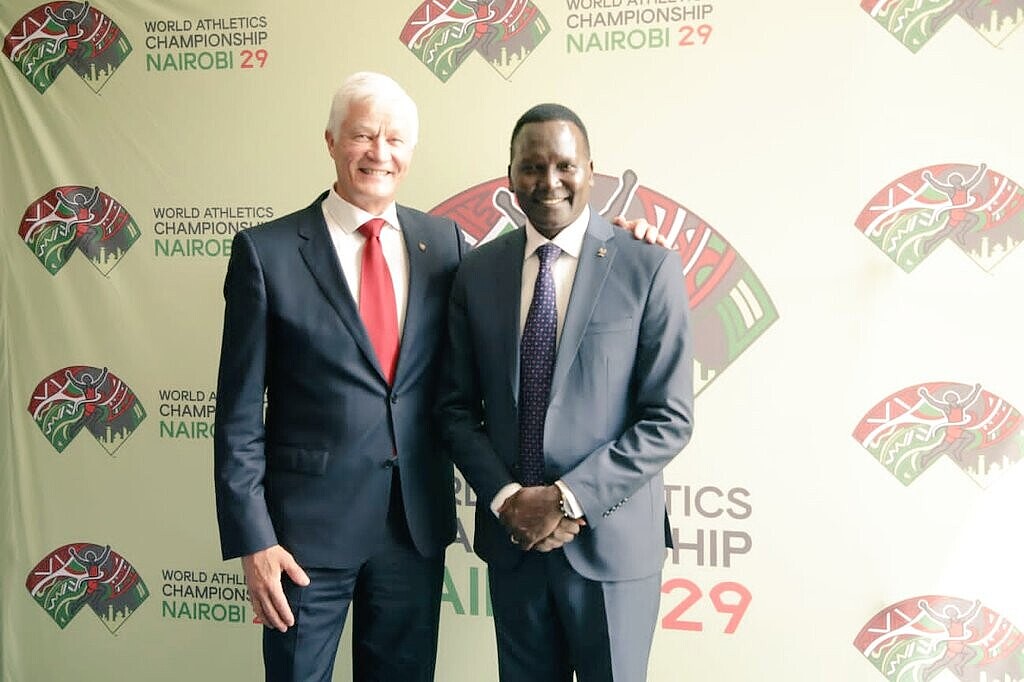
Paul Tergat Backs Kenya’s Ambitious Bid to Host World Athletics Championships
Kenyan athletics icon Paul Tergat has thrown his weight behind Kenya’s ambitious campaign to host the World Athletics Championships in 2029 describing the nation as the true heartbeat of global distance running.
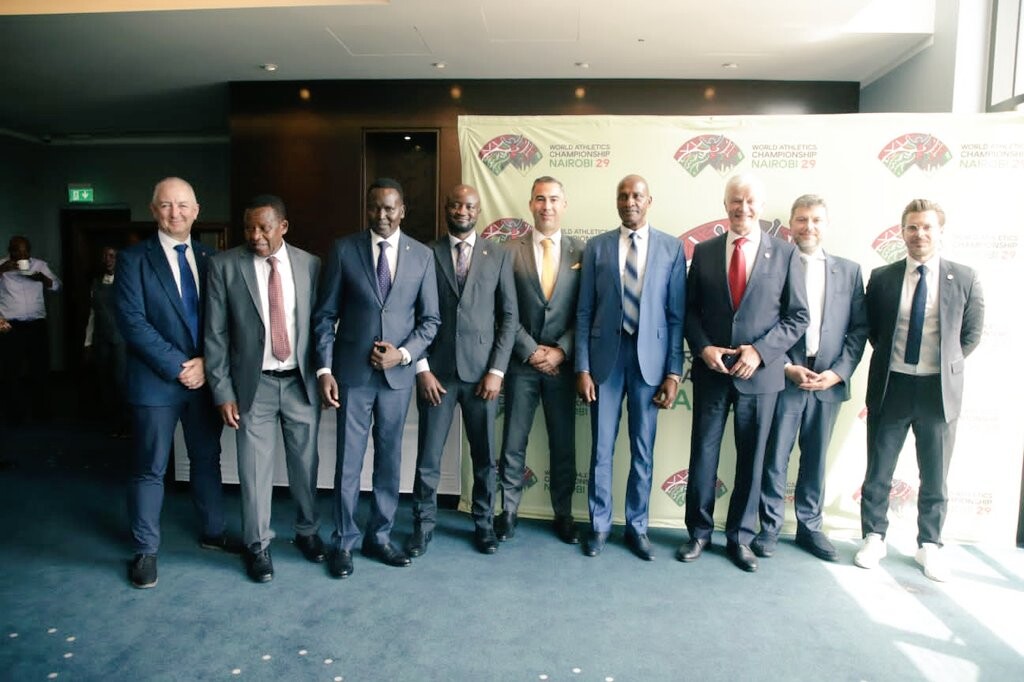
In a passionate message shared on X Space, the former marathon world record holder called on the international athletics community to experience the culture, heritage, and unmatched talent that have made Kenya one of the most dominant forces in the history of the sport.
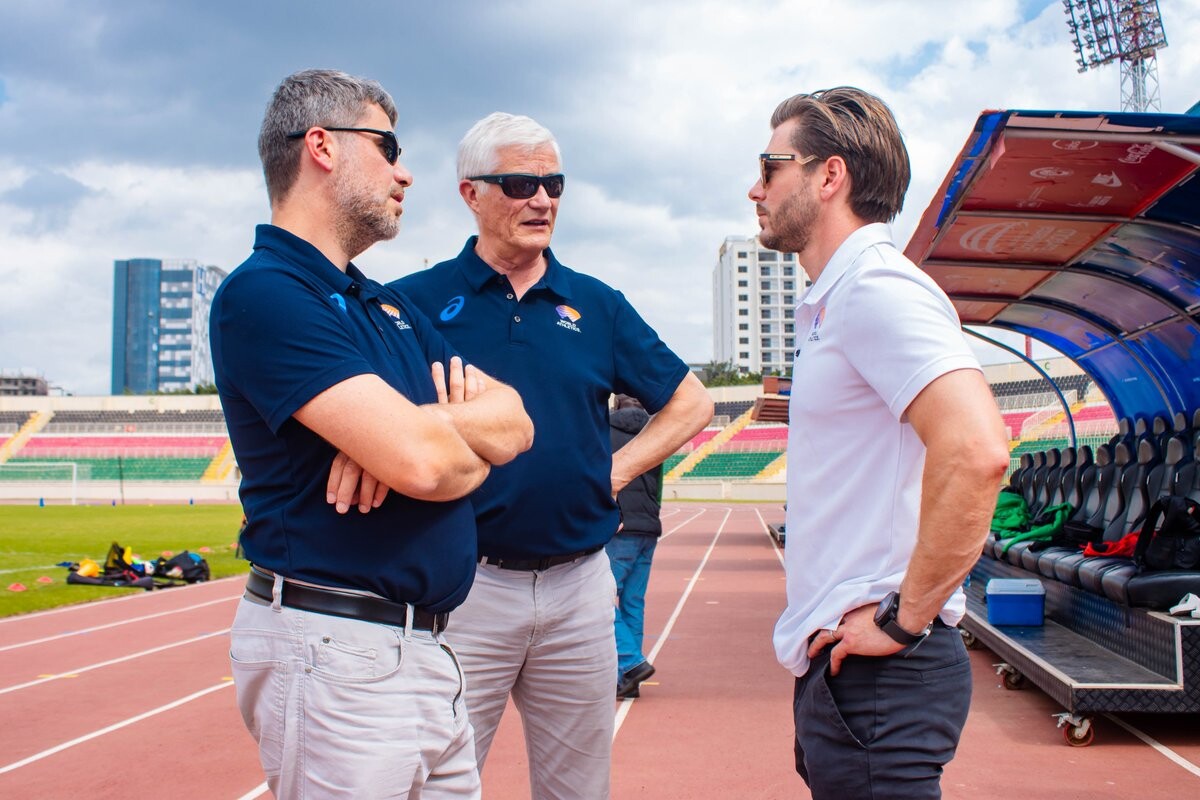
“Kenya is inviting the world to experience running at its source,” Tergat said. “From the soil that produces legends, from communities where athletics is lived, breathed, and passed through generations.”
His remarks arrive at a time when Kenya is intensifying efforts to secure hosting rights for one of athletics’ most prestigious global events — a move that would mark a historic milestone for both the country and the African continent.
Few figures embody Kenya’s running excellence more than Tergat himself. The legendary distance runner became the first Kenyan man to set a marathon world record after producing a groundbreaking performance of 2:04:55 at the Berlin Marathon 2003. His record stood until 2007 and cemented his place among the greatest marathoners in history.
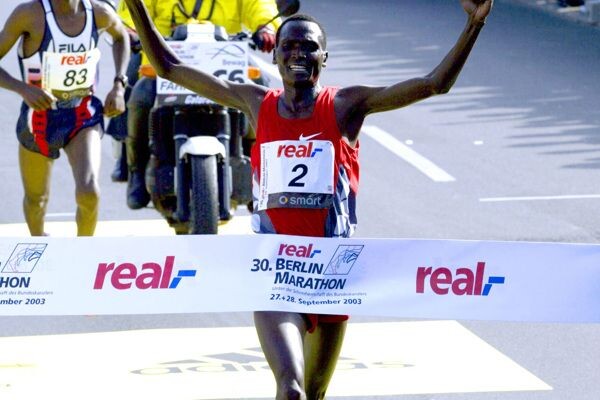
Before conquering the roads, Tergat had already established an extraordinary legacy in cross country running. Between 1995 and 1999, he achieved one of the sport’s rarest feats by winning five consecutive World Cross Country long-race titles, dominating an era filled with elite competition.
On the track, Tergat was renowned for his unforgettable rivalry with Ethiopian great Haile Gebrselassie. The Kenyan star captured Olympic silver medals in the 10,000m at both the 1996 Atlanta Games and the 2000 Sydney Olympics, while also earning silver medals at the 1997 and 1999 World Championships. Many of those races were decided in dramatic final laps, with Tergat and Gebrselassie pushing each other to historic performances.
His success extended beyond the track and marathon scene. Tergat claimed back-to-back IAAF World Half Marathon titles in 1999 and 2000 before later winning the prestigious 2005 New York City Marathon, further solidifying his reputation as one of the most versatile distance runners of his generation.
Away from competition, Tergat has remained deeply influential in Kenyan sport and athletics administration. He previously served as President of the National Olympic Committee of Kenya (NOC-K) and founded the Sports Personality of the Year Awards (SOYA), an initiative that continues to celebrate and recognize sporting excellence across the country.
For decades, Kenya has remained synonymous with excellence in middle- and long-distance running, producing generations of champions who have rewritten world records, conquered Olympic podiums, and elevated the nation’s reputation on the global sporting stage. From the high-altitude training camps of the Rift Valley to packed road races across the world, Kenyan athletics has evolved into more than just sport — it is part of the country’s identity.
Tergat believes hosting the championships would offer the world an opportunity to witness firsthand the environment that shapes elite athletes. Beyond the competition itself, he emphasized the cultural significance of Kenyan running communities, where young athletes grow up inspired by local heroes and where endurance running is deeply woven into everyday life.
The bid also represents Africa’s growing desire to host more major international sporting events. While African athletes have consistently dominated global athletics for generations, the continent has rarely been given the opportunity to stage the sport’s biggest championships. Kenya’s proposal is therefore seen as both symbolic and transformative for athletics worldwide.
Tergat’s endorsement adds significant weight to the campaign. Widely regarded as one of the greatest distance runners in history, the Kenyan legend remains a respected voice within international athletics circles. His support reflects the confidence many within the sport have in Kenya’s ability to deliver a memorable and globally impactful championship.
If successful, the championships would not only showcase elite competition but also spotlight Kenya’s rich sporting heritage, passionate fans, and deep-rooted connection to athletics — offering the world a chance to experience the birthplace of countless running legends.
by Erick Cheruiyot for My Best Runs.
Login to leave a comment
Fifteen Years Since the Death of Olympic Marathon Champion Samuel Wanjiru
Fifteen years have passed since the tragic and mysterious death of Samuel Kamau Wanjiru, one of the most gifted long-distance runners of his generation. Wanjiru died at his home in Nyahururu on May 15, 2011, at just 24 years old, bringing a sudden end to a career that had already secured a place among Kenya’s greatest sporting achievements.
Despite his brief career, Wanjiru left an extraordinary mark on global athletics through his fearless racing style and historic performances on the marathon stage. He remains best remembered for his remarkable victory at the 2008 Summer Olympics in Beijing, where he delivered one of the finest marathon performances in Olympic history.
Competing in extremely hot and humid conditions, Wanjiru broke away from a world-class field with relentless pace and determination before entering the iconic Beijing National Stadium, widely known as the Bird’s Nest Stadium, to win the gold medal in an Olympic record time of 2:06:32. His performance shattered the previous Olympic record by nearly three minutes.
That victory carried historic significance for Kenya. Wanjiru became the country’s first-ever Olympic marathon champion, ending decades of waiting for an Olympic title in one of the nation’s strongest disciplines. At only 21 years old, he also became the youngest Olympic marathon champion in modern history.
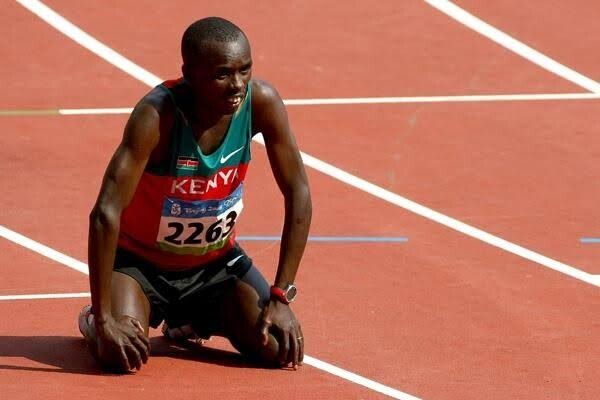
Beyond his Olympic success, Wanjiru was admired for his aggressive and fearless approach to racing. He transformed marathon competition with his attacking style, often pushing the pace from the front and forcing rivals beyond their limits. His influence helped shape a new era of marathon running and inspired many of the athletes who followed him.
Although his life ended tragically and under circumstances that continue to attract discussion years later, Wanjiru’s achievements remain deeply respected within Kenyan and international athletics.
Fifteen years after his passing, Samuel Wanjiru continues to be remembered as one of the greatest talents ever produced in marathon running and a pioneer whose Olympic triumph remains one of Kenya’s defining moments in global sport.
by Erick Cheruiyot for My Best Runs.
Login to leave a comment
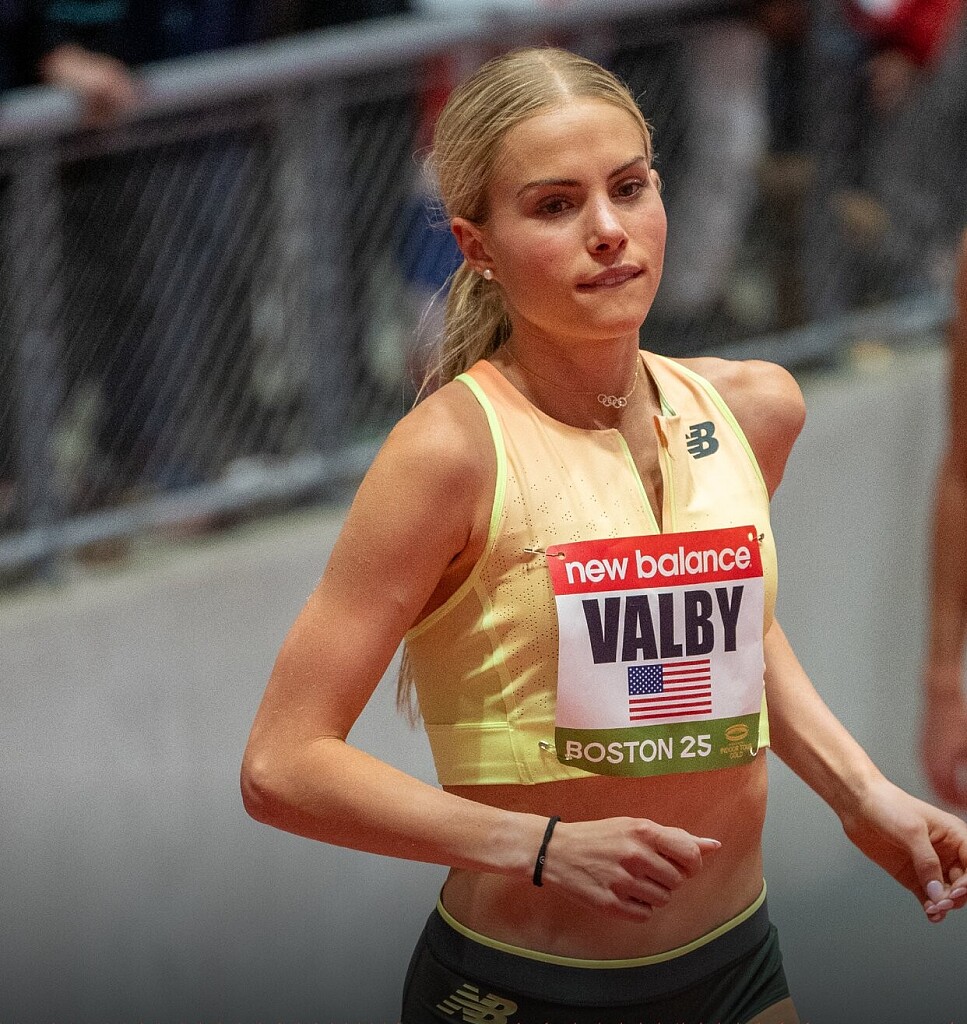
Parker Valby Set for Long-Awaited Return as LA Track Fest Gains Star Power
The countdown to one of the most anticipated comebacks in women’s distance running is officially underway. American sensation Parker Valby has been confirmed for her 2026 season debut at Sound Running’s Track Fest in Los Angeles on May 23, setting the stage for a thrilling return to competition.
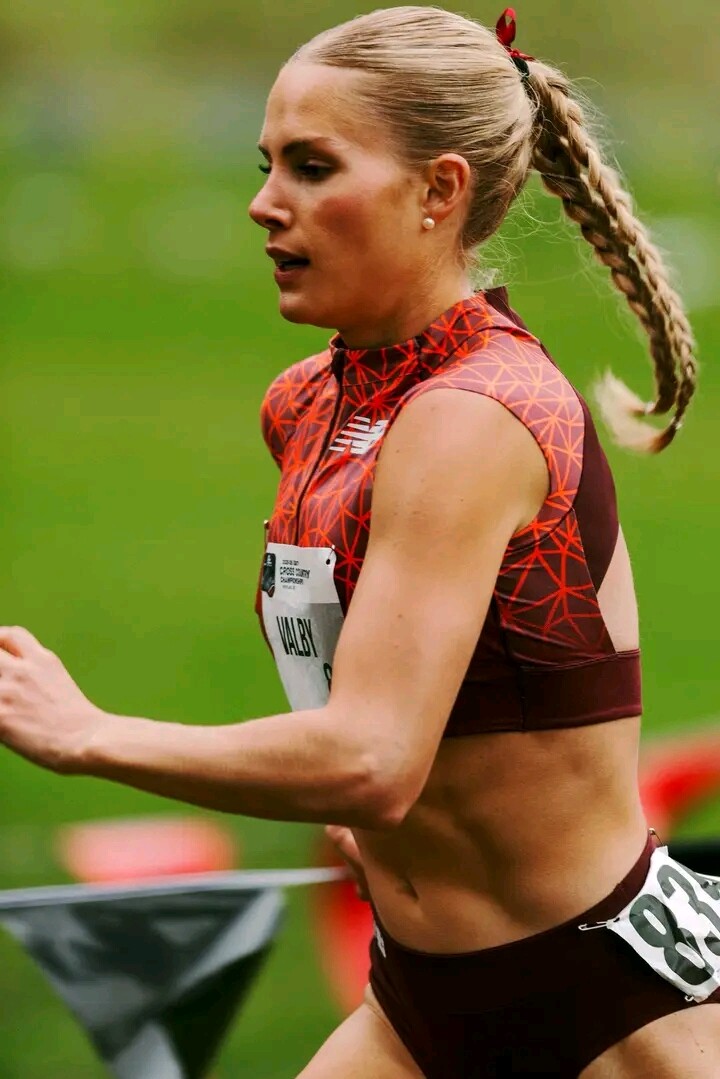
Valby’s appearance in LA will mark her first race since competing at the 2025 USATF Cross Country Championships, ending a lengthy absence from the racing circuit that has left fans eagerly awaiting her comeback. Even more significantly, it will be her first outdoor track race since representing the United States at the 2024 Summer Olympics in Paris — a milestone that adds even greater intrigue to her return.
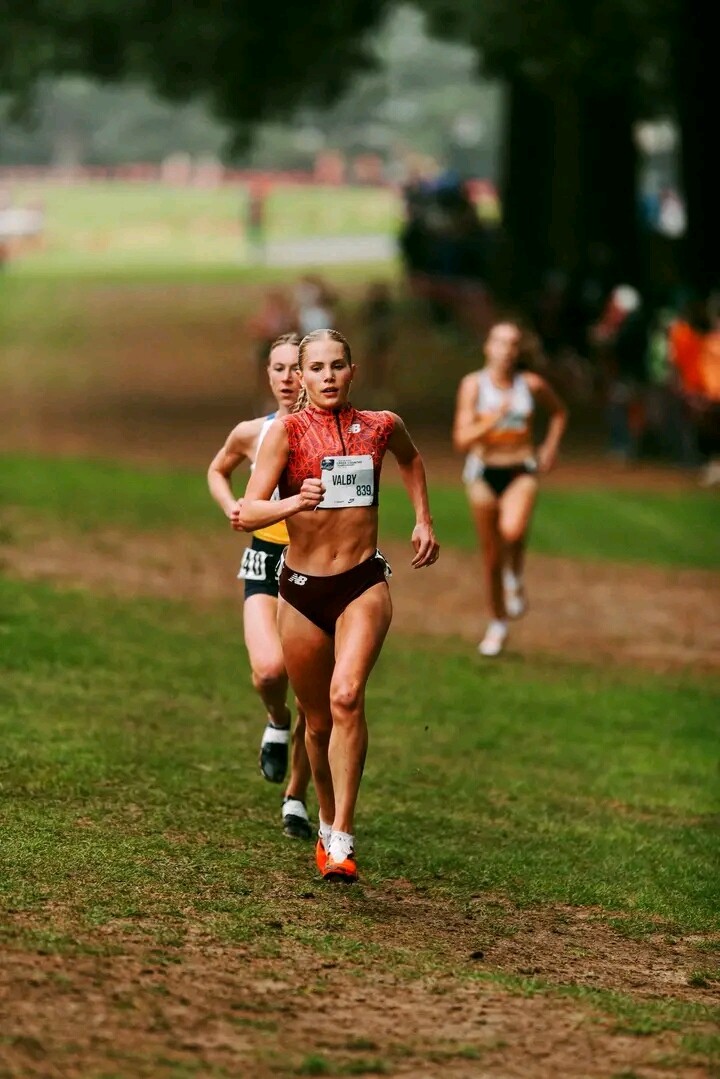
Known for her fearless front-running style, remarkable endurance and meteoric rise through the collegiate ranks, Valby enters the 2026 campaign carrying enormous expectations. Her transition from NCAA dominance to the global professional stage has made her one of the most closely watched athletes in American distance running, and Track Fest now becomes the perfect platform for her next chapter.
The women’s field announced for the event promises a fiercely competitive contest. Australia’s Lauren Ryan and Maudie Skyring are both set to line up, bringing international quality and proven championship experience to the race. Germany’s Lea Meyer will also feature, adding further depth to what is shaping up to be one of the standout distance events of the early outdoor season.
With Los Angeles serving as the backdrop, the atmosphere is expected to be electric as fans witness Valby’s long-awaited return to the track. Her comeback not only injects excitement into the American distance-running scene, but also signals the re-emergence of one of the sport’s brightest young talents ahead of a crucial championship year.
As anticipation builds toward May 23, all eyes will now turn to LA, where Parker Valby’s 2026 journey finally begins.
by Erick Cheruiyot for My Best Runs.
Login to leave a comment
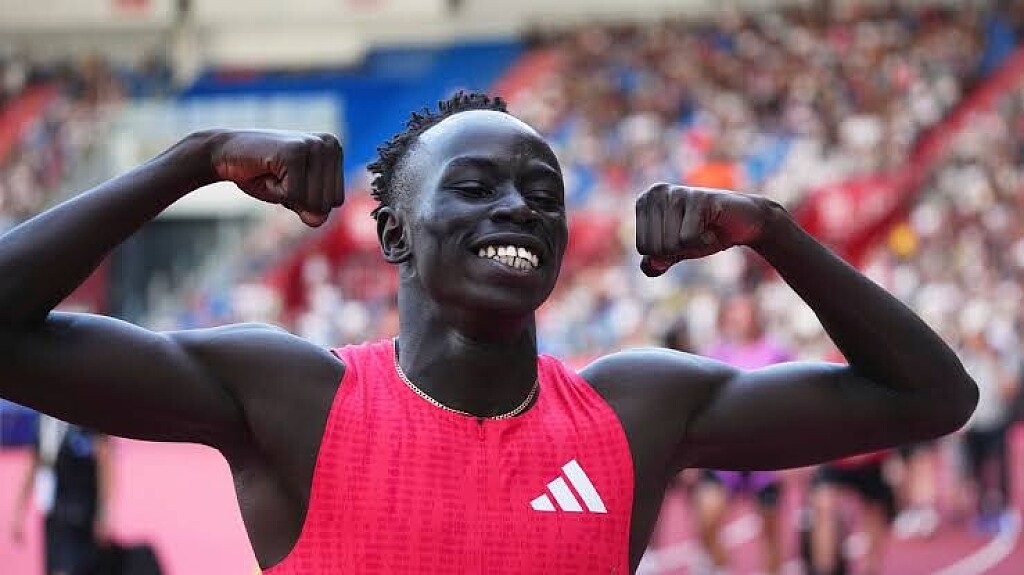
Australia’s Rising Sprint King: Gout Gout Lands Massive Adidas Partnership
Australian teenage sprint sensation Gout Gout continues to rise as one of the brightest young stars in global athletics after reports emerged that he has secured a long-term sponsorship agreement with Adidas worth more than $4 million across eight years — a figure believed to place the deal among the most lucrative ever linked to a teenage track athlete.
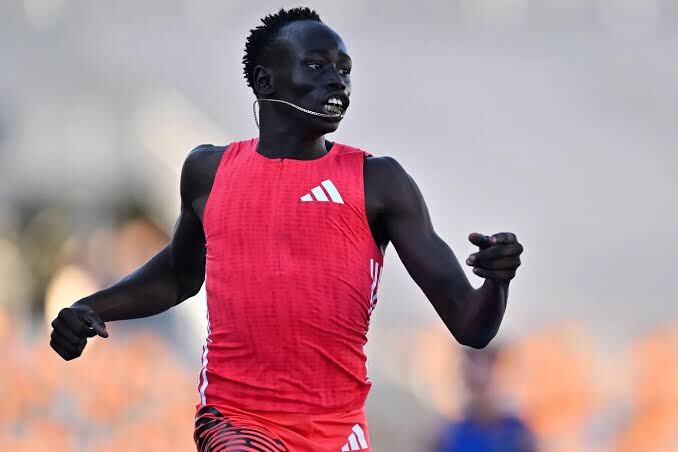
The reported agreement signals far more than a commercial partnership. It reflects the growing belief within the athletics world that Gout represents the future of sprinting, with major global brands reportedly competing to secure his signature before Adidas ultimately won the race for one of the sport’s most exciting young prospects.
At only 18 years old, Gout has already generated enormous international attention through a string of explosive sprint performances that have electrified fans and analysts alike. His remarkable speed, fluid running style and fearless presence on the track have triggered comparisons with some of the greatest sprinters the sport has ever seen, while also establishing him as a unique talent capable of carving out his own legacy.
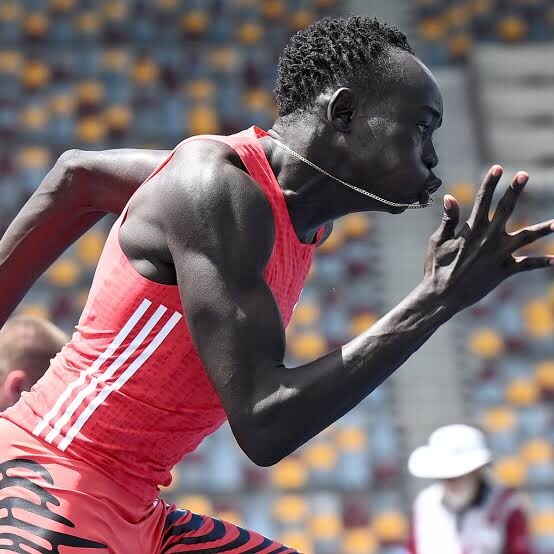
Reports surrounding the deal indicate that the partnership includes performance-based incentives alongside long-term developmental backing, a structure designed to support the young Australian as he progresses toward what many expect to be a defining appearance at the 2032 Summer Olympics in his home country. With Brisbane preparing to host the Games, Gout is increasingly viewed as one of the faces of Australia’s next generation of athletics stars.
The timing of the agreement also highlights the growing commercial power of track and field’s emerging youth movement. In an era where global audiences are constantly searching for the next transformative athlete, Gout’s rise has captured widespread fascination beyond traditional athletics circles. His performances have rapidly spread across social media and international sports platforms, turning him into one of the most discussed teenage athletes in the world.
What makes Gout’s story even more compelling is the sense that his journey is only beginning. Despite his age, he has already demonstrated maturity, composure and competitive hunger well beyond his years. Each race appears to add further momentum to the belief that he could become a defining figure in sprinting over the next decade.
For Adidas, the investment represents a bold commitment to a talent many believe could dominate global sprinting in the years ahead. For Gout, it marks another major milestone in a career accelerating at extraordinary speed — one that now carries not only the hopes of Australian athletics, but also the attention of the entire track and field world.
by Erick Cheruiyot for My Best Runs.
Login to leave a comment
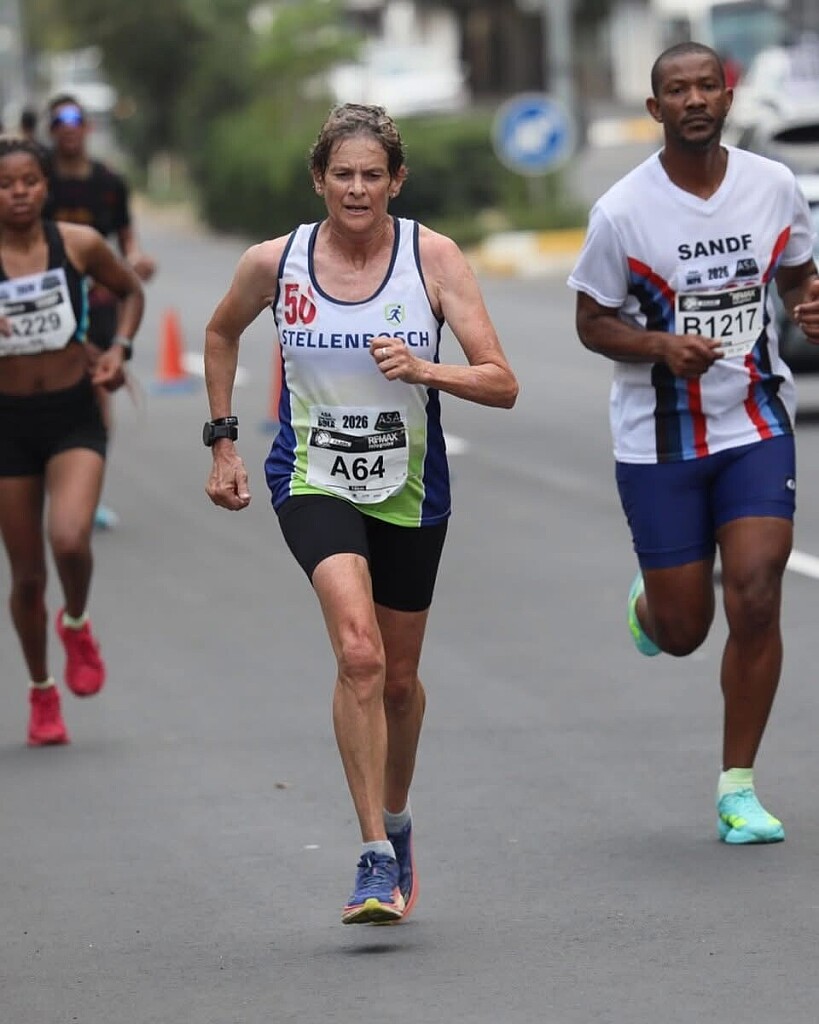
Zola Budd Still Running Strong—Decades After Changing the Sport
Zola Budd, one of the most talked-about distance runners of the 1980s, is still doing what she has always done—running.
Recently, Budd now 59 years old soon to be 60, competed in a 10K in Paarl, South Africa, describing it simply as a “tough course but a good race to run.” That understated comment reflects the same approach she has carried throughout her career: no drama, just running.
A Career That Captured the World
Budd burst onto the global stage as a teenager, known for her distinctive barefoot running style and extraordinary talent. Born in South Africa, she became a controversial figure when she gained British citizenship in the 1980s, allowing her to compete internationally during a time when South Africa faced sporting bans due to apartheid.
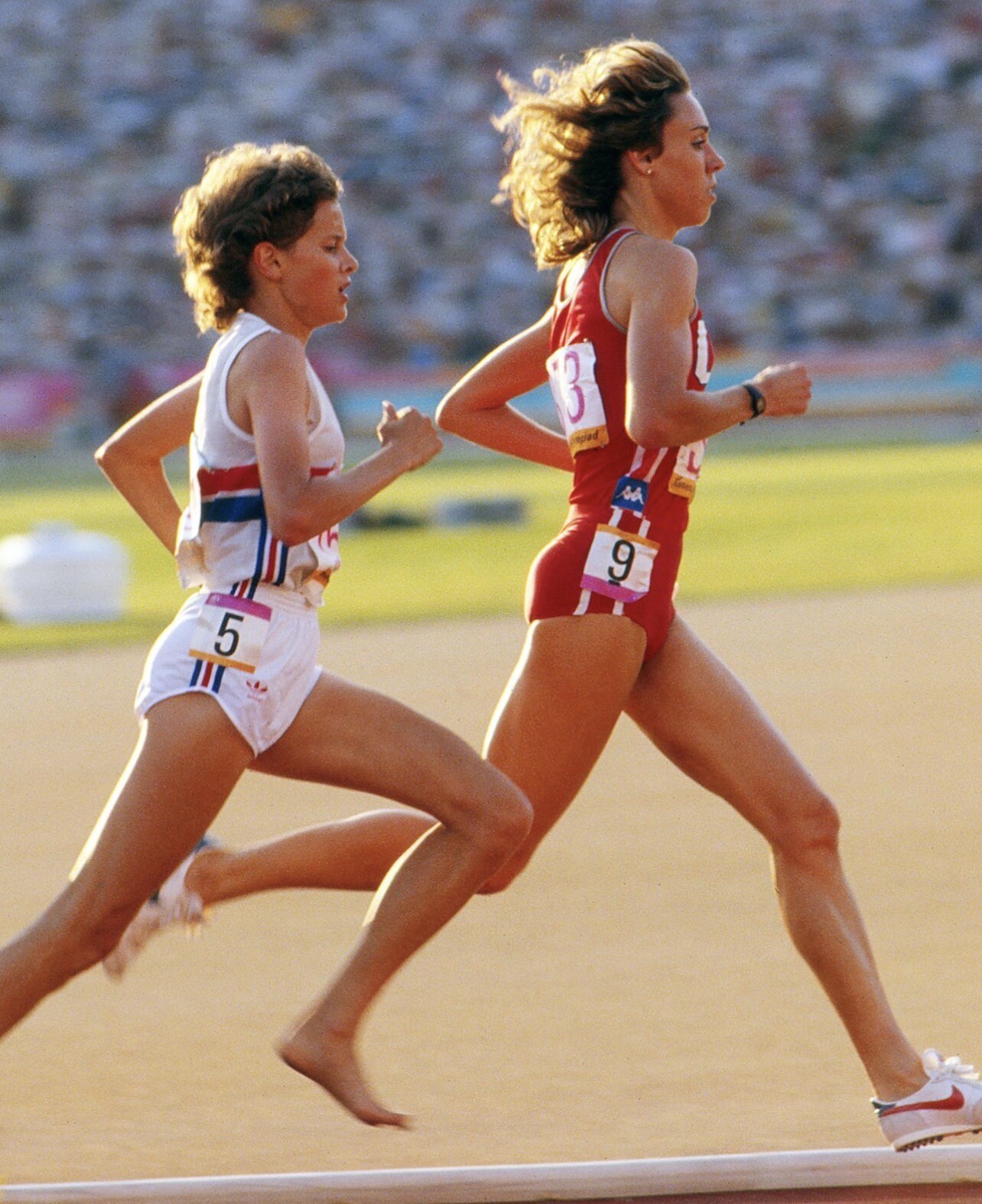
At just 17, she broke the world record for 5,000 meters (though it was not officially ratified at the time). Her rivalry with Mary Decker reached a dramatic peak at the 1984 Los Angeles Olympics, where the two collided in the 3,000-meter final—one of the most replayed and debated moments in Olympic history.
That moment defined her in the public eye, but it never defined her as a runner.
Quiet Longevity
What stands out now is not the controversy, but the longevity.
Budd has continued to run competitively for decades, transitioning into masters racing while maintaining a strong presence in the sport. She eventually returned to South Africa, where she has remained active in local races and the running community.
There is something refreshing about that. No spotlight. No headlines needed. Just showing up, putting on a bib, and racing.
Still Racing, Still Competing
The recent 10K in Paarl is just another example. While many former elite athletes step away from competition, Budd continues to test herself on the roads.
And not just participating—competing.
That speaks to something deeper than talent. It’s about identity. Running was never just something she did—it’s who she is.
The Bigger Picture
Zola Budd’s story is often told through one race, one moment, one controversy. But that misses the larger truth.
She is one of the rare athletes who has lived the full arc of the sport—from teenage prodigy to global figure to lifelong runner.
Today, she represents something many runners can relate to more than ever: the idea that running doesn’t end. It evolves.
From barefoot records to masters races in South Africa, Zola Budd is still out there—still running her own race.
by Boris Baron for My Best Runs
Login to leave a comment
THE HOMECOMING OF A LEGEND: ALLYSON FELIX EYES ONE LAST OLYMPIC CHAPTER
When greatness speaks, the world listens—and this time, it echoes with purpose. At 40, Allyson Felix has reignited the spark that once made her the heartbeat of global sprinting. In a move that has sent ripples across the athletics world, the most decorated female track and field athlete in Olympic history has announced her return from retirement, setting her sights firmly on the 2028 Summer Olympics.
For Felix, this is not merely a comeback—it is a calling. She describes it as a “once-in-a-lifetime homecoming,” a rare alignment of legacy and location. The Olympic stage will return to Los Angeles, her home soil, offering a poetic full circle to a career already etched in gold. Few athletes ever get the chance to close their journey where it all feels most personal. Felix intends to seize that moment.
Dubbed “Project Six,” her ambitious pursuit targets a sixth Olympic appearance—an extraordinary milestone that would see her add to a résumé spanning 2004 Athens Olympics, 2008 Beijing Olympics, 2012 London Olympics, 2016 Rio Olympics, and 2020 Tokyo Olympics. Remarkably, Felix has never left the Olympic stage empty-handed—her consistency as striking as her brilliance.
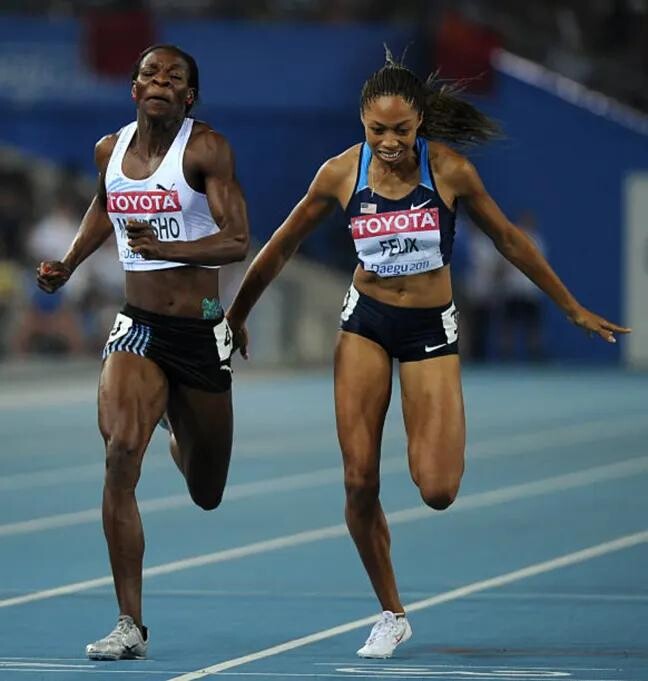
Her planned return to competition in 2027 signals more than preparation; it reflects discipline, patience, and belief. The modern era of sprinting is faster, younger, and fiercely competitive—but Felix has never been defined by age or expectation. She has thrived on rewriting limits.
Yet beyond medals and records, this comeback carries a deeper narrative. Felix has long been a voice for athletes—particularly mothers and women—challenging norms and advocating for change within sport. Her return now blends that advocacy with ambition, proving that elite performance and evolving identity can coexist.
If Los Angeles 2028 becomes her final act, it promises to be more than a race. It will be a statement. A celebration. A reminder that greatness does not simply fade—it chooses its moment to rise again.
And Allyson Felix, once more, is ready to run.
by Erick Cheruiyot for My Best Runs.
Login to leave a comment
Jarmila Kratochvílová and the 800m Record That Time Could Not Touch
Some records are broken within months. Others survive for years. Then there are the rare marks that outlive generations and become part of sporting mythology. Few achievements in athletics carry that aura more powerfully than the women’s 800 metres world record of 1:53.28, set by Jarmila Kratochvílová on July 26, 1983, in Munich.
More than four decades later, the astonishing performance still stands untouched, making it one of the oldest and most remarkable world records in track and field. In an era where training science, technology, and competition standards have advanced dramatically, that number continues to resist every challenge.
What makes the feat even more extraordinary is the story behind it. Kratochvílová was primarily known as a 400-metre specialist, not an 800-metre star. Her appearance in Munich came after a late change of plans caused by injury, and she was not even expected to headline the event. Yet when the gun fired, she produced one of the finest races ever seen.
She passed the opening lap in a fearless 56.1 seconds, surged through 600 metres in 1:26.3, and still found another devastating finish over the final bend and straight. Crossing the line in 1:53.28, she did far more than win a race—she created a benchmark that would challenge every generation to come.
That unforgettable evening crowned a sensational 1983 campaign. Weeks later, at the first-ever World Championships in Helsinki, Kratochvílová completed a rare and historic double by winning gold in both the 400 metres and the 800 metres. She also ran 47.99 for the 400m that season, becoming the first woman in history to break the 48-second barrier. Only a select few athletes, including Marita Koch, have since joined that elite company.
Her rise had already been confirmed earlier when she claimed Olympic silver in the 400 metres at the 1980 Summer Olympics. Many believed even greater Olympic success awaited her, but history intervened. The boycott of the 1984 Summer Olympics denied her the chance to compete on sport’s biggest stage once again.
Even after leaving competition, Kratochvílová continued shaping the sport. As a coach, she guided Ludmila Formanová to the 800m world title in 1999, proving her knowledge and influence extended well beyond her own racing career.
Her record has not escaped controversy or debate. In 2017, World Athletics proposed stricter standards for the ratification of older world records, raising questions over marks set before modern testing systems. Yet the 1:53.28 remained official, preserving one of the sport’s most famous milestones.
As of 2026, athletes continue to chase history. Among the strongest modern contenders is Keely Hodgkinson, whose rise has renewed belief that the seemingly impossible may one day fall. But until that moment arrives, Kratochvílová’s run in Munich remains the gold standard.
Whether it survives another season or another generation, one truth is certain: Jarmila Kratochvílová did not simply set a world record—she created a legend that time itself has struggled to defeat.
by Erick Cheruiyot for My Best Runs.
Login to leave a comment
Gabby Thomas Brings Olympic Stardom to Africa in Blockbuster April Tour
American sprint star Gabby Thomas is set to headline one of the most exciting international appearances of the early athletics season, as she brings her world-class speed and star power to Africa for a three-meet tour in April.
Widely regarded as one of the finest 200m runners of her generation, Thomas arrives with a résumé that places her firmly among the sport’s elite. At the 2024 Paris Olympics, she delivered a historic performance, clinching three gold medals in the 200m, 4x100m relay, and 4x400m relay—an achievement that cemented her dominance on the global stage. Her Olympic journey began earlier at the 2020 Tokyo Olympics, where she captured bronze in the 200m and silver in the 4x100m relay, signaling the arrival of a future champion.
Beyond the Olympics, Thomas has consistently proven her pedigree. At the 2023 World Championships, she secured silver in the 200m and powered her team to gold in the 4x100m relay, further underlining her versatility and championship mentality. With a personal best of 21.60 seconds in the 200m—ranking her among the fastest women in history—she remains a formidable force every time she steps onto the track.
But Thomas’ brilliance extends beyond athletics. A graduate of Harvard University with a master’s degree in epidemiology, she represents a rare blend of elite sport and intellectual excellence. Her advocacy in public health and STEM continues to inspire a new generation, making her influence felt far beyond the finish line.
Her African tour will begin in Addis Ababa on April 18 at the Addis Ababa Grand Prix, before moving to Nairobi on April 24 for the Kip Keino Classic—one of the continent’s premier track and field events. She will then conclude her tour in Gaborone on April 26 at the Botswana Golden Grand Prix.
Each stop promises high-level competition and a rare opportunity for African fans to witness one of the sport’s brightest stars in action. Her presence is expected not only to elevate the quality of racing but also to shine a global spotlight on Africa’s rapidly growing athletics scene.
As the countdown begins, anticipation is building across the continent. With her unmatched combination of speed, intelligence, and global appeal, Gabby Thomas is not just arriving to compete—she is arriving to inspire.
by Erick Cheruiyot for My Best Runs.
Login to leave a comment
Lyles Returns to Paris: The Sprint King Eyes Another Chapter of Glory
Back where history once bent to his will, Noah Lyles is poised to ignite Paris once more. The Olympic champion is set to headline the 100m at the upcoming Diamond League meeting Paris 2026 on June 28, returning to the very city where he carved his name into global athletics folklore.
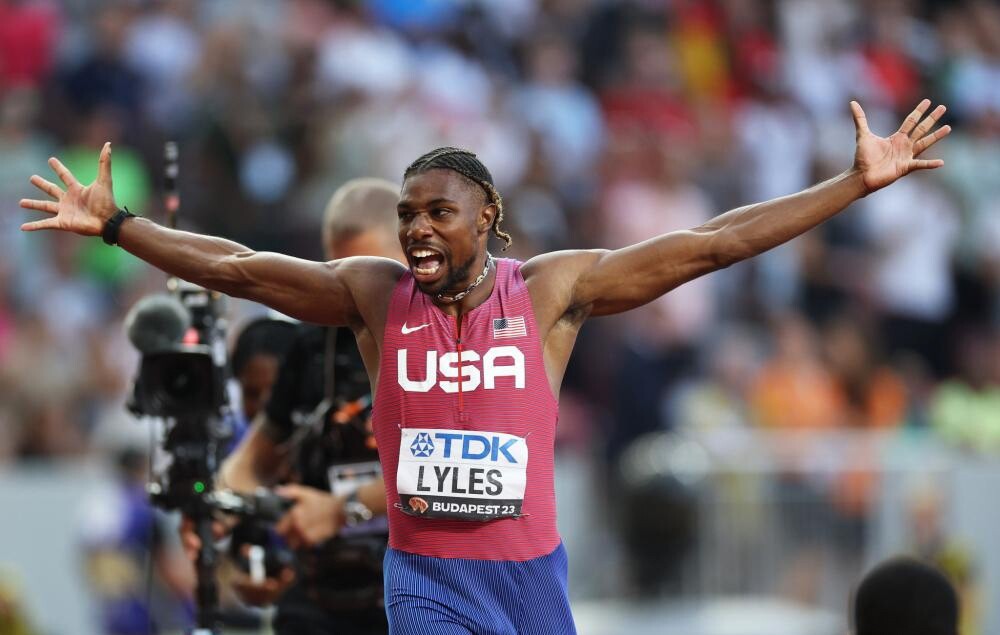
Paris is no ordinary stop on the circuit for Lyles—it is sacred ground. It was here, under the bright lights and mounting pressure, that he delivered one of the defining performances of his career during the 2024 Summer Olympics, rising to the summit of the sprinting world. Now, he comes back not just as a champion, but as a showman with unfinished business.
The stage will be the historic Stade Charléty, a venue where Lyles has built an aura of invincibility. Undefeated at this arena, his past performances here remain a testament to both speed and dominance. In 2023, he blazed to a stunning 9.97 seconds in the 100m, reaffirming his elite status. Years earlier, in 2019, he lit up the track with a scintillating 19.65 seconds over 200m—one of the fastest times ever recorded at the venue.
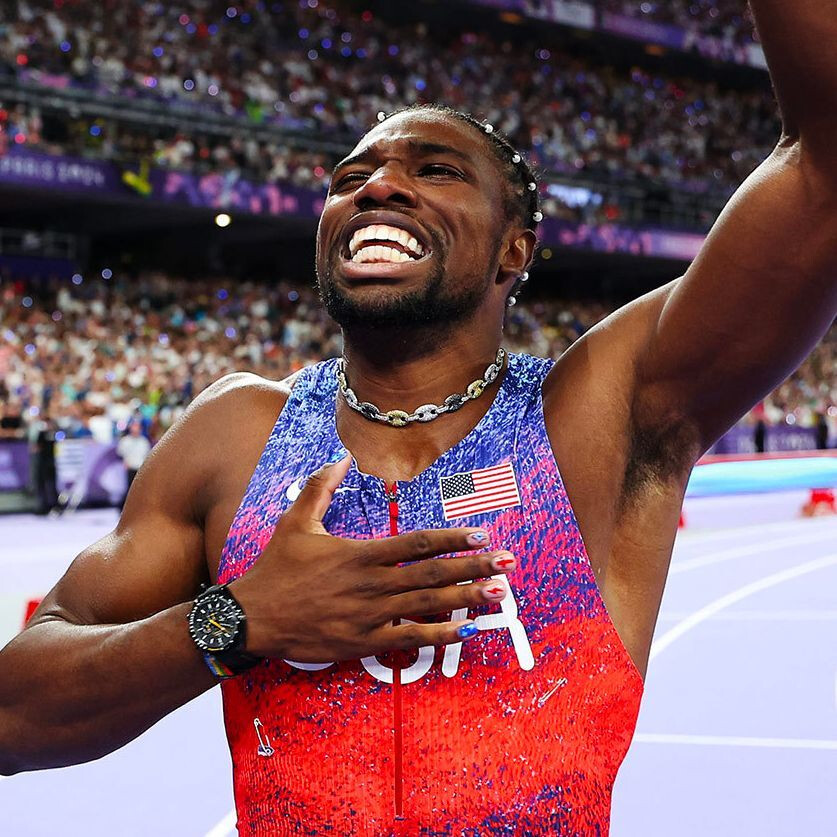
Those performances are not just statistics; they are statements. They speak of a sprinter who thrives in Paris, who feeds off its energy, and who transforms expectation into execution with ruthless precision.
As the Diamond League caravan rolls into the French capital, anticipation builds around what version of Lyles will emerge. Will it be the tactician, measured and composed? Or the electrifying performer who commands both track and crowd with equal authority?
One thing is certain—Paris remembers. And Noah Lyles is ready to reload.
With the world watching and the stakes rising once again, the city of lights prepares for another spectacle. If history is any indication, when Lyles steps onto that track, brilliance is never far behind.
by Erick Cheruiyot for My Best Runs.
Login to leave a comment
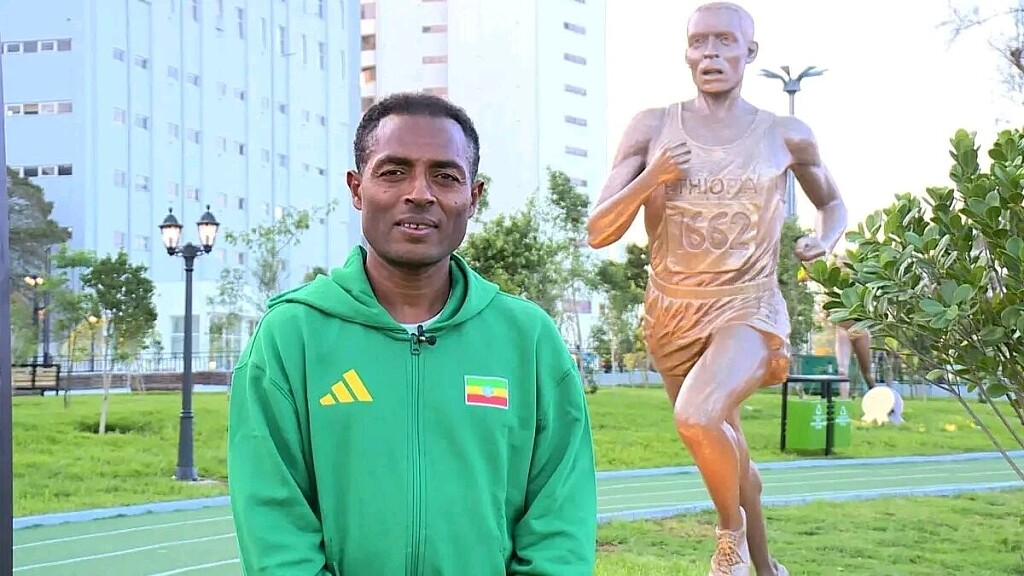
Kenenisa Bekele Leads a Historic Moment as Ethiopia Honors Its Greatest Champions
Ethiopia has once again affirmed its place at the pinnacle of global distance running—not only through performance, but through legacy. In a powerful celebration of national pride and sporting excellence, the country has unveiled a remarkable tribute to its greatest champions, headlined by none other than Kenenisa Bekele. Widely regarded as one of the finest distance runners in history, Bekele has now been immortalized with a statue, cementing his legacy for generations to come.
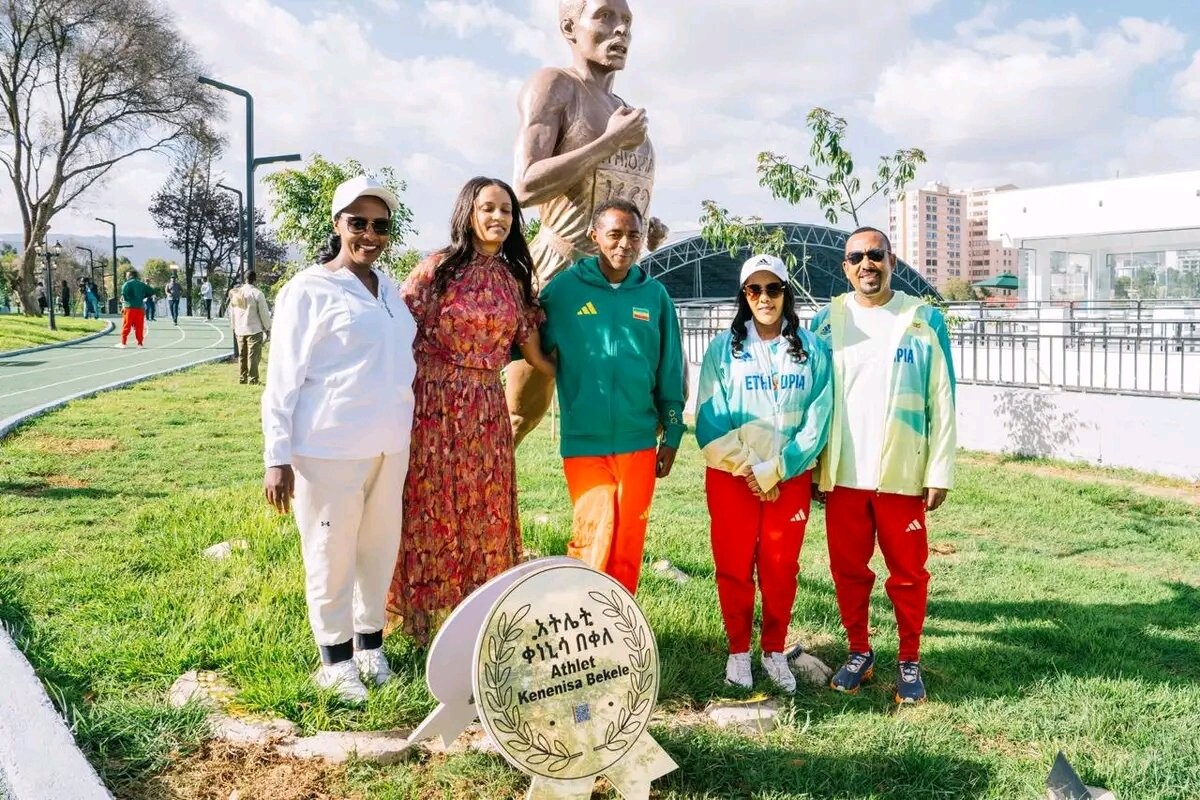
The historic moment took place during the inauguration of the state-of-the-art Addis Sport Park, a world-class multi-sport complex designed to elevate Ethiopian athletics to new heights. Officially opened by Prime Minister Abiy Ahmed, the facility stands as a symbol of ambition and progress. Equipped with an Olympic-standard swimming pool, professional football, basketball, and tennis courts, alongside a modern athletics track, the complex represents a bold investment in the future of sport in Ethiopia.
At the heart of the celebration was the unveiling of statues honoring 15 Ethiopian Olympic gold medalists—heroes whose achievements have shaped the nation’s sporting identity. Among them are legendary figures such as Abebe Bikila, whose barefoot victory at the 1960 Rome Olympics remains one of the most iconic moments in Olympic history, and modern champions like Tamirat Tola, who continues to carry Ethiopia’s dominance into the present era.
For Bekele, the recognition carries deep personal meaning. Reflecting on the occasion, he expressed both gratitude and pride at being honored among his peers. He described the Addis Sport Park as the realization of a long-held dream—a facility that will not only nurture elite athletes but also inspire young Ethiopians to pursue greatness. His words underscored a powerful truth: that such recognition goes beyond individual achievement, serving instead as a beacon for future generations.
The ceremony also acknowledged the leadership behind this transformative project, including First Lady Zinash Tayachew and Addis Ababa Mayor Adanech Abiebie, whose support for sport continues to shape the country’s athletic landscape.
More than a celebration of past glory, the unveiling of these statues signals a forward-looking vision. Ethiopia is not merely preserving its history—it is actively building the foundation for its next wave of champions. In honoring its legends, the nation is sending a clear message: greatness is not only remembered here, it is continually reborn.
As the statues stand tall in the heart of Addis Ababa, they serve as enduring symbols of resilience, excellence, and national pride—reminding the world that Ethiopia’s legacy in athletics is as timeless as the champions who define it.
by Erick Cheruiyot for My Best Runs.
Login to leave a comment

Igniting the Flame: Faith Kipyegon’s Journey from Barefoot Beginnings to Los Angeles 2028
In the ever-evolving journey of greatness, moments of quiet declaration often carry the loudest echoes. For Faith Kipyegon, a recent message from Los Angeles—the vibrant host of the 2028 Summer Olympics—was more than a passing remark. It was a powerful affirmation of intent.
Standing in the very city where future Olympic dreams will be forged, the Kenyan legend shared that she is “fueling her Olympic fire” ahead of LA 2028. Beneath those words lies a story not just of ambition, but of a remarkable journey—one that began far from the bright lights of global arenas.
Kipyegon’s rise is the embodiment of resilience and destiny intertwined. From running barefoot in her early school days to ascending to the pinnacle of women’s middle-distance running, her path has been nothing short of extraordinary. Born into a family deeply rooted in athletics—with a father who competed in the 400m and 800m, and a sister who excelled in long-distance road racing—her foundation was quietly laid long before the world took notice.
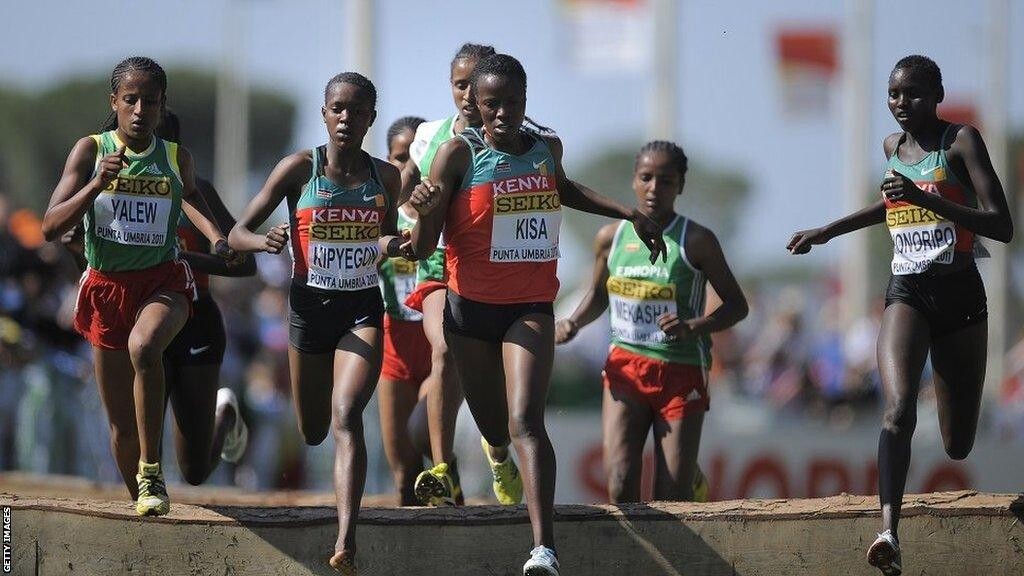
It wasn’t until the age of 15 that she began to seriously pursue athletics as a career. What followed was a rapid and emphatic emergence. She announced herself on the global stage by capturing junior titles at the World Cross Country Championships in Bydgoszcz in 2011 and 2013, alongside victories in the 1500m at both the World U18 and World U20 Championships. These early triumphs signaled the arrival of a rare and generational talent.
Her transition to the senior stage came at the World Championships in Moscow in 2013, where she finished fifth—a performance that hinted at the dominance to come. From that point onward, Kipyegon has established herself as a consistent force at the highest level, earning multiple podium finishes, world championship titles, and setting world records that have redefined the boundaries of women’s middle-distance running, further cementing her status as one of the greatest athletes of her era.
The Olympic stage, however, is where her legacy has reached historic heights. Since making her debut at the 2012 Summer Olympics, she has grown into one of the most decorated middle-distance runners in Olympic history. Her gold medal triumph at the 2016 Summer Olympics announced her arrival as a global force, while her commanding performance at the 2020 Summer Olympics reaffirmed her supremacy.
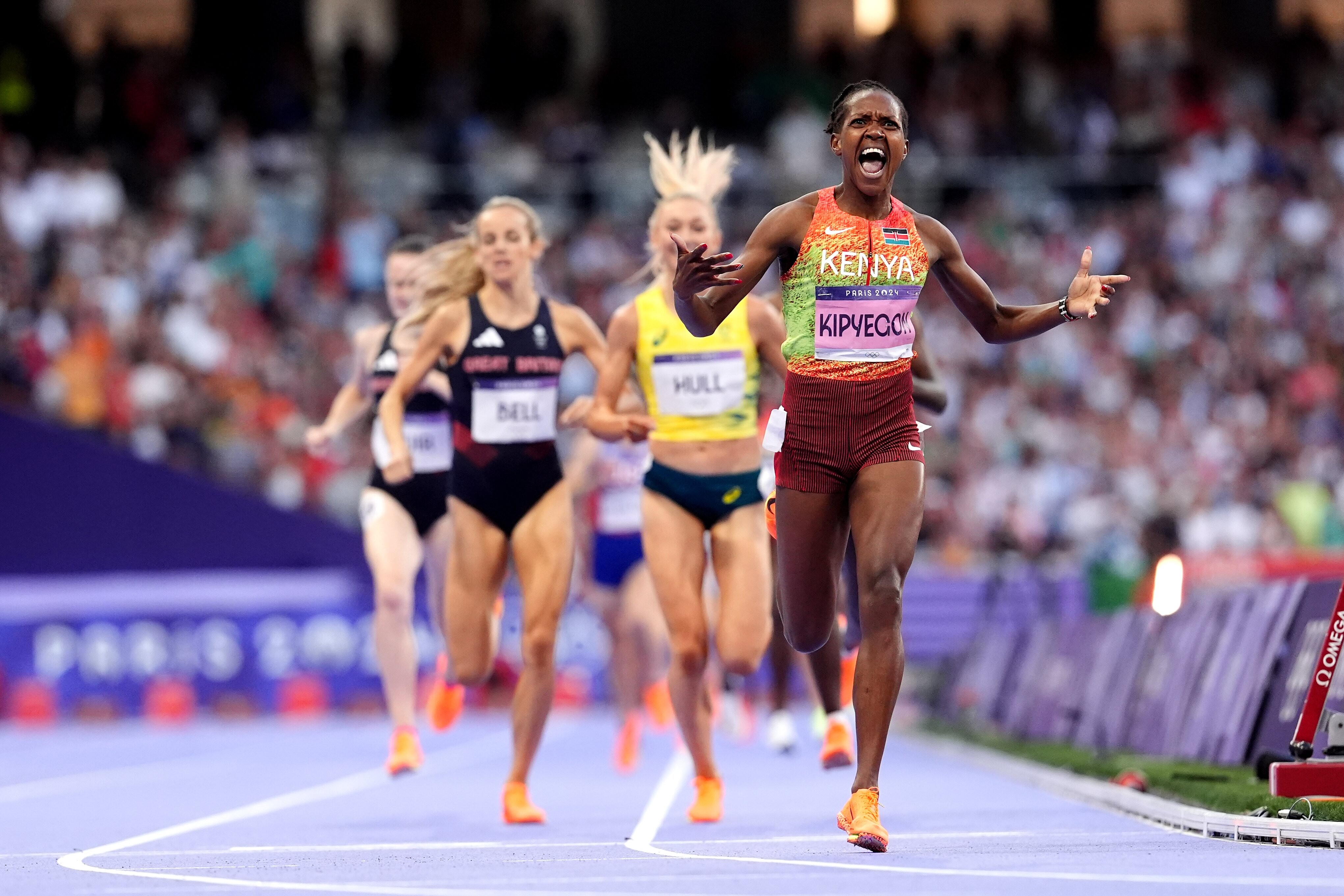
Yet it was at the 2024 Summer Olympics that Kipyegon etched her name permanently into the record books. On the final night of track action at the Stade de France, she produced a breathtaking run in the women’s 1500m, surging to victory in an Olympic record time of 3:51.29. With that performance, she became the first athlete—male or female—to win three Olympic gold medals in the 1500m, a feat that stands as a testament to her enduring brilliance and unmatched consistency.
Despite these extraordinary achievements, what defines Kipyegon is her relentless hunger for more. Her recent reflection from Los Angeles reveals an athlete not content with history, but driven by the possibilities that still lie ahead.
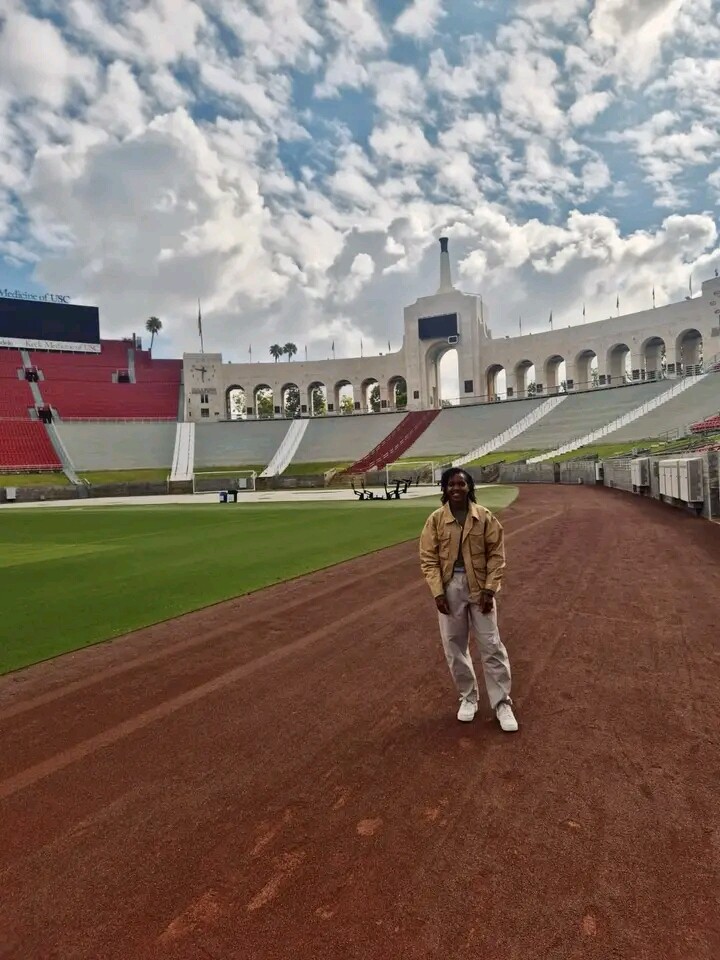
As the countdown to 2028 steadily builds, her presence in Los Angeles feels deeply symbolic—a champion returning to the stage where the next chapter of Olympic history will unfold. For fans and aspiring athletes alike, her journey is a powerful reminder that greatness is not a destination, but a continuous pursuit shaped by discipline, resilience, and vision.
From barefoot beginnings to rewriting Olympic history, Faith Kipyegon’s story continues to inspire across generations. And as the flame prepares to rise once more in Los Angeles, one truth is undeniable—her fire is still burning, brighter than ever, lighting the path toward yet another chapter of greatness.
by Erick Cheruiyot for My Best Runs.
Login to leave a comment
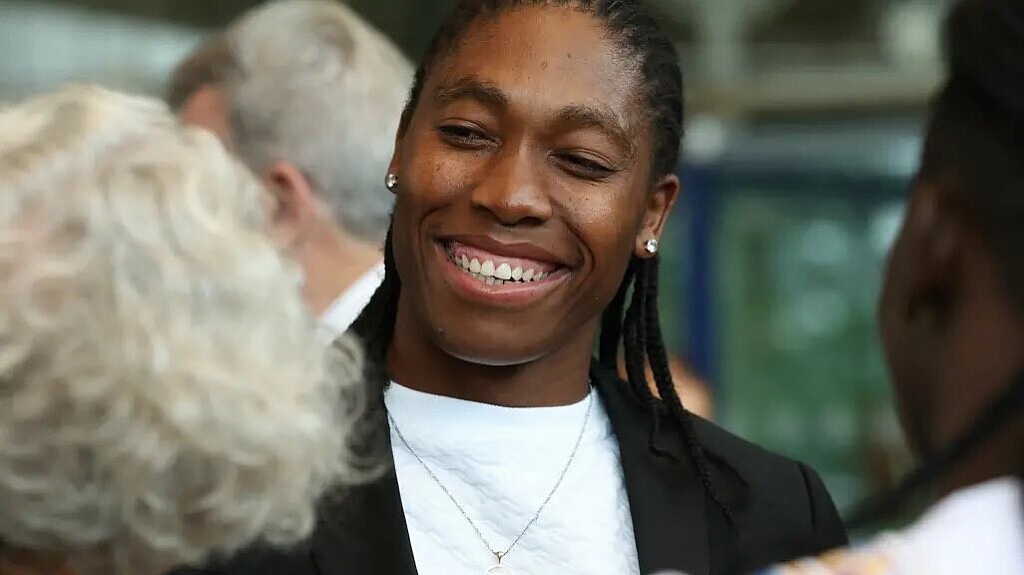
Strength in Identity: Caster Semenya’s Voice Rises Above the Debate
In a world where sport increasingly intersects with science, policy, and identity, Caster Semenya has once again stood firm—unmoved by controversy, unwavering in self-belief.
Speaking candidly in an interview with BBC, the South African Olympic champion delivered a powerful and deeply personal message about identity, dignity, and acceptance. Her words cut through the noise of medical debates and regulatory frameworks, grounding the conversation in something far more human.
“At the end of the day, I know I am different. I don’t care about the medical terms,” she told the BBC. “Being born without a uterus or with internal testicles doesn’t make me less of a woman. Those are the differences I was born with and I will embrace them. I am not going to be ashamed because I am different. I am different and special and I feel great about it.”
Semenya’s statement arrives at a pivotal moment for global athletics, as the International Olympic Committee signals a significant shift in its approach to eligibility in women’s sport. The newly announced framework outlines stricter criteria for participation, particularly concerning transgender athletes, with eligibility for the female category set to be determined through biological markers—including a one-time genetic test for the SRY gene.
The policy, expected to take effect at the 2028 Los Angeles Olympics, represents one of the most decisive moves yet by the IOC in its ongoing effort to balance inclusivity with fairness and safety in elite competition.
While the new regulations primarily address transgender participation, Semenya’s story remains central to the broader and often complex discussion around sex, gender, and athletic performance. For years, she has been at the heart of debates surrounding differences of sex development (DSD), facing scrutiny that extends far beyond the track.
Yet, rather than retreat, Semenya has chosen to confront the narrative—on her own terms.
Her voice is not one of defiance alone, but of clarity and conviction. It is a reminder that behind every policy lies a person, and behind every rule, a life shaped by realities that cannot always be neatly defined by science or regulation.
As the Olympic movement evolves, so too does the conversation it inspires. And in that conversation, Caster Semenya remains not just a participant, but a powerful symbol of resilience—embracing her truth in a world still learning how to understand it.
by Erick Cheruiyot for My Best Runs.
Login to leave a comment
IOC Signals Landmark Shift in Women’s Eligibility Rules Ahead of Los Angeles 2028
The International Olympic Committee has unveiled a significant and highly consequential policy direction for the Los Angeles 2028 Olympics, introducing new eligibility criteria that would restrict participation in the women’s category to biological females.
At the center of the proposed framework is a “once-in-a-lifetime” sex verification process, designed to establish eligibility with scientific certainty. According to the guidelines, this screening would involve testing for the presence of the SRY gene — a genetic marker typically linked to male biological development. The intention, the IOC suggests, is to create a clear and consistent standard that governs entry into women’s competition across all Olympic disciplines.
The policy is expected to apply broadly, encompassing both transgender athletes and competitors with differences in sexual development (DSD). However, the framework does not amount to a blanket exclusion from sport. Instead, athletes who do not meet the specified criteria would remain eligible to compete in alternative categories or classifications aligned with their profiles, though details of these pathways are yet to be fully clarified.
This announcement represents one of the most defining moments in modern Olympic governance, arriving amid an increasingly complex global debate surrounding fairness, inclusion, and competitive integrity. For years, international sport has grappled with how to balance evolving understandings of gender identity with the foundational principles of level competition — a challenge that has produced varied approaches across federations.

By moving toward a standardized model, the IOC appears to be seeking greater uniformity ahead of 2028. Yet, the decision is unlikely to settle the debate. Instead, it is poised to intensify scrutiny from athletes, scientists, human rights advocates, and sporting bodies worldwide, all of whom bring differing perspectives to an issue that sits at the intersection of science, ethics, and identity.
As preparations for Los Angeles continue, attention will now turn to how this policy is implemented in practice — and how it shapes the Olympic landscape. Whether viewed as a step toward clarity or a source of further contention, its impact will be profound, influencing not only who competes, but how the very concept of fairness in elite sport is defined for years to come.
by Erick Cheruiyot for My Best Runs.
Login to leave a comment
From Lost Beginnings to Olympic Immortality: The Unyielding Rise of Mo Farah
Born on March 23, 1983, in Somalia, Mo Farah did not enter the world with the privileges of certainty or stability. His early years were shaped by separation and sacrifice. At just eight years old, he moved to the United Kingdom, leaving behind not only his homeland but also his twin brother, who remained in Africa due to illness. It was a childhood marked by displacement, language barriers, and the quiet struggle to belong.
Growing up in London, Farah’s life changed direction thanks to a perceptive physical education teacher who noticed something extraordinary in the young boy: a natural gift for running. What began as a simple discovery soon evolved into a relentless pursuit. Through the muddy, unforgiving courses of cross country, he started carving his identity—step by step, race by race.
By the age of 14, Farah had already claimed his first national school title, a glimpse of the greatness to come. At 18, he rose to continental prominence, securing the European junior crown. Yet, beyond medals, a deeply personal victory awaited him—at 20, he was reunited with his long-lost twin brother, closing a chapter that had shaped much of his early emotional journey.
As the years progressed, Farah transformed from a promising athlete into a dominant force across Europe and the world. At 23, he became the European cross country champion. By 26, he had conquered the European indoor 3000 meters while continuing to shine on the cross country stage. His prime years brought an avalanche of triumphs: European titles in both the 5000m and 10,000m, followed by global dominance.
The turning point in his career came when he made the bold decision to relocate to the United States to train under renowned coach Alberto Salazar. There, Farah reinvented himself. He refined his tactics, strengthened his endurance, and embraced a level of discipline that elevated him from contender to champion.
What followed was nothing short of historic. At the London 2012 Olympics, Farah etched his name into sporting folklore by winning gold in both the 5000m and 10,000m—a feat he repeated at the Rio 2016 Olympics. Four Olympic gold medals. A legacy sealed in endurance and brilliance.
His dominance extended beyond the Olympic stage. He captured multiple World Championship titles, including unforgettable performances in Moscow and Beijing, and continued to reign supreme at the European level. Even as he transitioned to longer distances, Farah’s hunger remained unshaken—setting a European marathon record and later breaking the world hour record with an astonishing 21,330 meters, surpassing the mark set by Haile Gebrselassie.
Yet behind the medals and milestones lies a deeper truth. Farah’s journey was never smooth. There were defeats, injuries, and moments when doubt crept dangerously close. Early in his career, critics questioned whether he had what it took to dominate on the global stage. But instead of retreating, he responded with resilience—choosing effort over excuses, persistence over fear.
Today, as Mo Farah celebrates his 42nd birthday, his story stands as a powerful testament to the human spirit. He was not born a champion—he became one through relentless determination, sacrifice, and an unbreakable will to go further when it mattered most.
His life reminds us that greatness is not defined by where you begin, but by how fiercely you pursue where you want to go. Obstacles are inevitable. Doubt is unavoidable. But those who rise above are the ones who, like Farah, choose to push harder, dig deeper, and never settle for less than their potential.
Because in the end, the path to greatness is not given—it is earned, one stride at a time.
by Erick Cheruiyot for My Best Runs.
Login to leave a comment
“A Race Left Unrun: Tebogo’s Challenge and the Silence of Champions”
In athletics, moments of truth are not always decided on the track. Sometimes, they are defined by absence.
When Letsile Tebogo spoke out following the withdrawal of USA Track & Field from the men’s 4x400m at the World Athletics Relays 2026, his words carried more than frustration—they echoed a deeper sentiment felt across the sport. A sentiment of opportunity lost.
“Unable to show up?”
A simple question, yet one loaded with implication.
The decision, officially attributed to the unavailability of an “A-team” and financial considerations, may appear pragmatic on the surface. Elite sport, after all, often walks a tightrope between performance priorities and logistical realities. But context changes everything—and this was no ordinary meet.
This was Botswana’s moment.
On home soil, in front of a rising athletics nation hungry for validation, the absence of the reigning world champions in one of track and field’s most iconic relay events felt conspicuous. The men’s 4x400m is not merely a race; it is a theatre of pride, legacy, and rivalry. And in this instance, it was also an unfinished story.
The reference point lingers: Tokyo 2020 Olympics, where the United States narrowly secured gold in a fiercely contested relay battle. For competitors like Tebogo and his peers, the World Relays in Botswana represented more than participation—it was a chance to respond, to rewrite, to reclaim.
Instead, the stage was set… but one of the main actors never appeared.
From a strategic lens, the American decision may well be justified. Preserving top athletes for a demanding global calendar, minimizing costs, and maintaining long-term performance goals are all valid considerations. Yet sport does not thrive on logic alone—it thrives on moments. On rivalries. On the electricity of competition when the best line up against the best.
And that is precisely what will be missing.
Tebogo’s reaction, sharpened with a hint of irony, taps into a broader narrative: when the stakes are highest and the spotlight brightest, showing up matters. Not just for medals, but for meaning. For the fans. For the host nation. For the sport itself.
In the end, this is not simply about one relay team’s absence. It is about a question that will linger long after the final baton is passed:
Was this a calculated decision rooted in reason…
or a moment where the spirit of competition quietly stepped aside?
by Erick Cheruiyot for My Best Runs.
Login to leave a comment
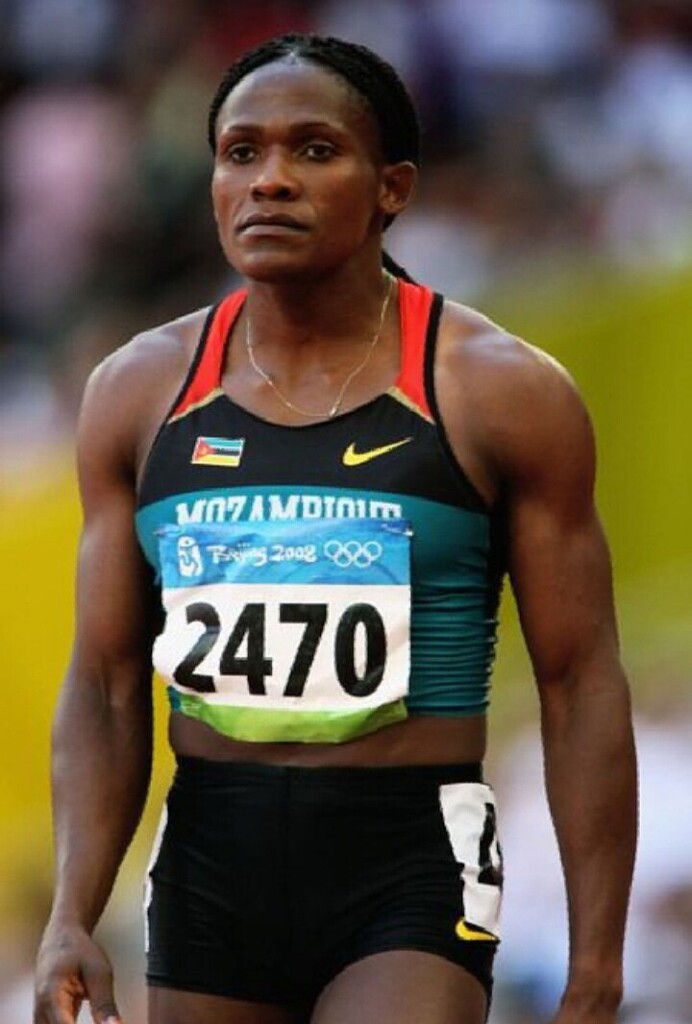
Golden Strides: The Enduring Reign of Maria de Lurdes Mutola
“Did you know?” It’s a simple question—yet in the story of Maria de Lurdes Mutola, it opens the door to one of the most commanding legacies in middle-distance running history.
Often celebrated as Mozambique’s “Golden Girl,” Mutola’s name became synonymous with excellence in the 800 metres. Her defining triumph came at the 2000 Sydney Olympics, where she powered to Olympic gold with authority and composure. But that victory was not an isolated moment of brilliance—it was the centerpiece of a career built on sustained dominance.

For over a decade, Mutola ruled the 800 metres with remarkable consistency. She was not merely a champion; she was a standard. Multiple world titles, repeated Grand Prix victories, and an unshakable presence on the global stage cemented her as one of the greatest to ever compete in the event. Each race she entered carried an expectation—not of participation, but of mastery.
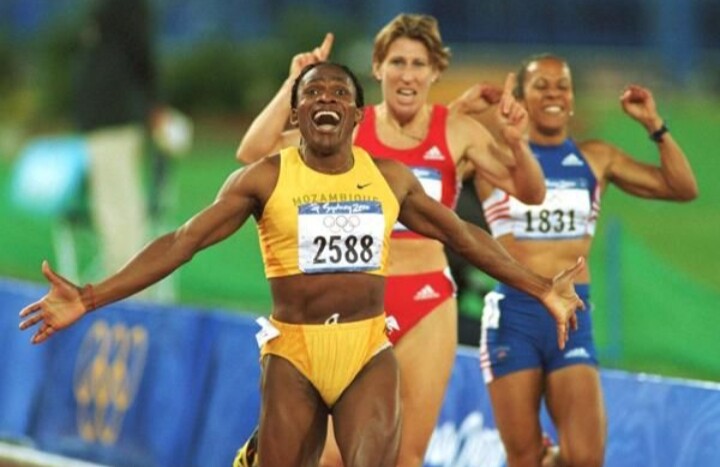
What makes her story even more compelling is the depth of its impact. Beyond medals and podium finishes, Mutola redefined what was possible for African women in athletics. She emerged at a time when representation was limited, yet through sheer determination and discipline, she carved out a path that others could follow. Her success became a powerful narrative of resilience—proof that greatness can rise from anywhere and speak to everywhere.
As International Women’s Month continues, Mutola’s legacy resonates far beyond the track. She remains more than a sporting icon—a lasting symbol of courage, longevity, and transformative influence.
In every stride, Maria de Lurdes Mutola carried the weight of expectation—and turned it into inspiration. Her journey is not just remembered; it continues to move, to empower, and to redefine the limits of ambition.
by Erick Cheruiyot for My Best Runs.
Login to leave a comment
“I Was Down to My Knees” — Kipchoge Opens Up on Cruel Rumours After Kiptum’s Fatal Crash
The death of marathon world record holder Kelvin Kiptum sent shockwaves through the global athletics community in February 2024. Tributes poured in from across the world as athletes, officials and fans mourned the loss of one of distance running’s brightest talents.
But for fellow Kenyan legend Eliud Kipchoge, the tragedy was followed by an intensely painful personal ordeal — a wave of online rumours that falsely attempted to link him to the accident that claimed Kiptum’s life.
A tragic night in Elgeyo-Marakwet
Kiptum, who held the marathon world record at the time, died on February 11, 2024, following a road accident in the Kaptagat area of Elgeyo‑Marakwet County in western Kenya.
He was travelling with his Rwandan coach Gervais Hakizimana, who also lost his life in the crash. The devastating incident brought an abrupt end to a career that had risen at breathtaking speed.
Only months earlier, Kiptum had stunned the athletics world at the Chicago Marathon, clocking a remarkable 2:00:35 to set a new marathon world record — a performance that cemented his status as one of the most extraordinary long-distance talents of his generation.
The moment Kipchoge heard the news
In a deeply emotional interview shared on the Engage Talk YouTube platform, Kipchoge recalled the moment he first learned of the tragedy.
The two-time Olympic marathon champion explained that he had just returned home from a training session when someone at the gate informed him that Kiptum had died in a road accident. Shocked by the news, he immediately checked his phone — only to discover a different kind of storm unfolding online.
Within hours of the crash, social media had become flooded with baseless rumours accusing Kipchoge of being somehow connected to the incident.
The accusations, he said, left him devastated.
“Social media was everywhere saying Eliud killed Kiptum in a road accident. I was really down… down to my knees,” Kipchoge said during the interview.
Threats and fear for his family
The false claims quickly escalated into a wave of online hostility, with Kipchoge revealing that threats were directed not only at him but also at members of his family.
For safety reasons, the family was forced to change parts of their daily routine. Kipchoge explained that his sons had previously cycled to school, a normal routine in their community, but the arrangement had to be altered after the threats emerged.
He also expressed disappointment that some of the accusations circulating online took on an ethnic tone — something that deeply troubled the athlete, who has long spoken publicly about unity and national harmony in Kenya.
Silence from many, support from a few
The episode also revealed an unexpected reality for one of the most celebrated athletes in the world.
Despite having millions of followers across social media platforms, Kipchoge said only a small number of people reached out to check on him during the difficult period.
It was a stark reminder, he noted, that genuine support often comes from close relationships rather than public admiration.
A career defined by greatness
Kipchoge’s legacy in distance running remains unmatched. He won Olympic marathon gold medals at the 2016 Rio Olympics and the 2020 Tokyo Olympics, cementing his place among the greatest marathon runners in history.
In 2019, he also achieved one of the most iconic moments in sport by becoming the first person to run a marathon distance in under two hours during the INEOS 1:59 Challenge in Vienna, completing the run in 1:59:40 during the special exhibition event.
A painful lesson in resilience
Looking back, Kipchoge described the aftermath of Kiptum’s death as one of the most emotionally testing moments of his life.
The experience, he said, reinforced the importance of resilience and the value of strong personal relationships when navigating moments of crisis.
While the loss of Kelvin Kiptum remains a deep wound for the athletics world, Kipchoge’s reflections reveal another side of the tragedy — the unseen emotional toll that misinformation and online hostility can inflict, even on the strongest of champions.
by Erick Cheruiyot for My Best Runs.
Login to leave a comment
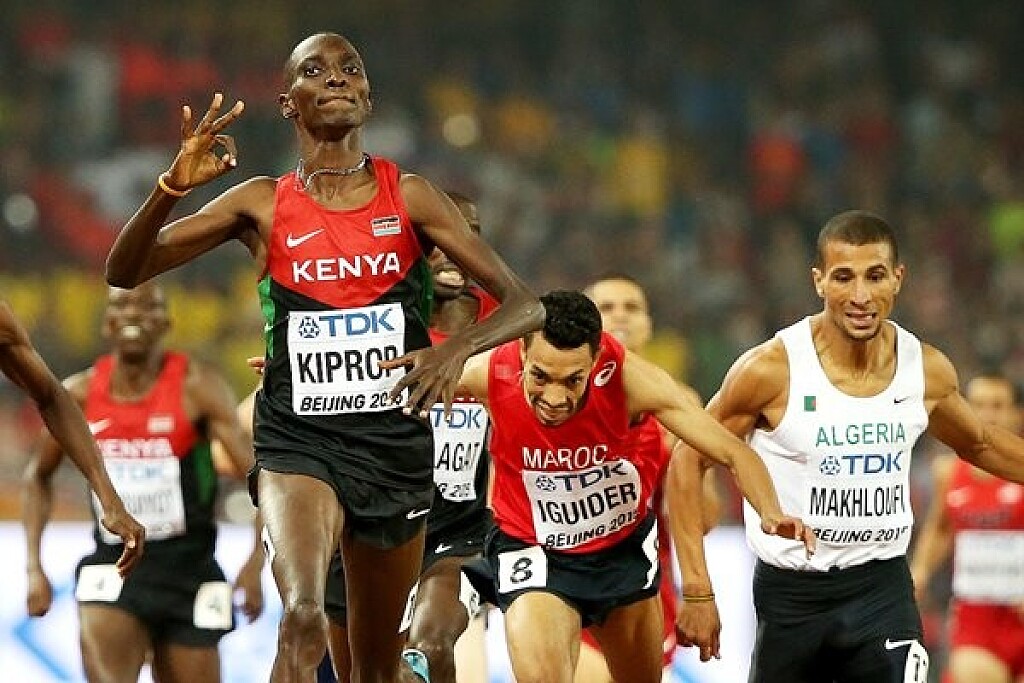
Front-Running Brilliance: The Night Asbel Kiprop Lit Up Monaco with 3:26.69
On a warm summer evening along the Mediterranean coast, the 1500 meters witnessed one of its most breathtaking performances. At the 2015 edition of the prestigious Herculis Monaco, part of the Diamond League circuit, Kenya’s middle-distance maestro Asbel Kiprop delivered a run that still resonates in athletics history.
On July 17, 2015, inside the famous Stade Louis II in Monaco, Kiprop stormed to a stunning 3:26.69 in the 1500 meters—at the time one of the fastest performances ever recorded over the distance. The run combined fearless front-running, precise pacing, and remarkable endurance, creating a race that left both spectators and competitors in awe.
From the opening gun, Kiprop made his intentions clear. Rather than relying on his renowned finishing kick, the Olympic champion chose to dictate the pace from the front, relentlessly pursuing the long-standing world record of Hicham El Guerrouj, whose iconic 3:26.00 still stands as the benchmark for the event.
The early pace was sharp and deliberate. Behind the pacemaking assistance of Kenya’s Andrew Kiptoo Rotich, the first lap was covered in approximately 54 seconds, immediately signaling that the race would be something special. By the halfway mark, Kiprop passed 800 meters in about 1:50, maintaining a relentless rhythm that stretched the field.
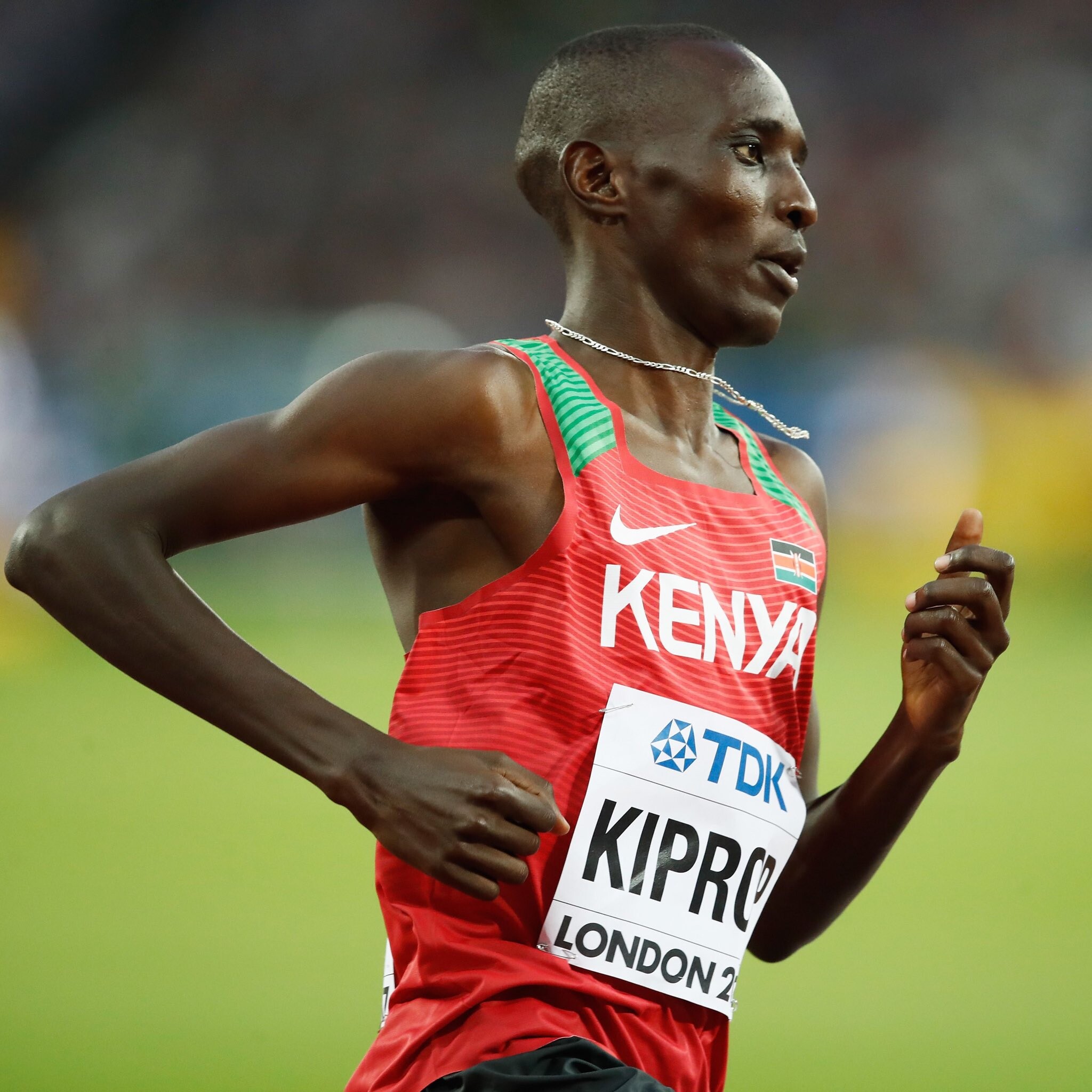
As the race progressed, the tall Kenyan floated around the track with the fluid stride that became his trademark. Passing 1200 meters in roughly 2:45, he remained firmly in control, gliding through the final lap in about 55 seconds to stop the clock at 3:26.69—a performance that etched his name even deeper into middle-distance history.
What made the run particularly remarkable was the margin of victory. Kiprop crossed the finish line more than two seconds ahead of a world-class field. Algeria’s Taoufik Makhloufi finished second in 3:28.75, just ahead of Morocco’s Abdelaati Iguider, who clocked 3:28.79.
The time also stood as a meeting record for the Monaco Diamond League at the time, further cementing the race’s place among the sport’s unforgettable moments.
For Kiprop, the performance was another shining chapter in a glittering career. The Kenyan star had already secured Olympic gold at the 2008 Beijing Olympics and would go on to collect three world titles at the World Athletics Championships in 2011, 2013, and 2015. Known for his elegant stride and exceptional race intelligence, he became one of the defining figures of modern middle-distance running.
Beyond Monaco, Kiprop built an impressive résumé across multiple distances. His personal bests included 1:43.15 for 800 meters, 3:48.50 for the mile, 2:14.23 for 1000 meters, and 7:42.32 for 3000 meters—a testament to both his speed and versatility.
Yet among all his achievements, the Monaco masterpiece remains one of the most memorable. On that night in July 2015, Asbel Kiprop didn’t just win a race—he delivered a performance that showcased the artistry and courage of championship middle-distance running, reminding the athletics world how extraordinary the 1500 meters can be when a great athlete dares to chase history.
by Erick Cheruiyot for My Best Runs.
Login to leave a comment
Miller’s Last-Stride Triumph and Cherono’s Inspiring Run Highlight Dramatic Los Angeles Marathon
The 41st edition of the Los Angeles Marathon produced a day filled with drama, resilience, and unforgettable performances, as American runner Nathan Miller captured the men’s title in the closest finish in race history while Kenya’s Priscah Cherono delivered a remarkable victory in the women’s race.
The men’s contest came down to a breathtaking final sprint. Miller surged at the last possible moment to edge Kenya’s Michael Kamau at the finish line, with both runners officially credited with the same time of 2:11:18 after covering the demanding 26.2-mile course. Their shoulder-to-shoulder battle through the closing stretch created a thrilling finale, with Miller’s perfectly timed surge proving decisive in the final stride.
Moments after the finish, concern rose for Kamau, who reportedly did not take fluids during the race and collapsed after crossing the line. Medical personnel quickly attended to the Kenyan athlete, who was taken away on a stretcher following his courageous effort. Fellow Kenyan Enyew Nigat completed the podium, finishing third in 2:14:23 after a steady performance throughout the race.
For Miller, the victory marks a significant moment in a career defined by dedication both on and off the road. The 36-year-old from Jackson, Michigan balances elite competition with his work as a substitute teacher and a high school track and cross-country coach at Jackson High School. His personal best of 2:10:45, achieved at the Grandma's Marathon in 2023, also stands as the fastest marathon ever run by a U.S.-born Black athlete. His triumph continues a growing American presence atop the race, following the victory of Matt Richtman last year, who became the first American men’s champion since 1994 when he won in 2:07:56.
While the men’s race delivered a dramatic sprint finish, the women’s race showcased experience and determination as Cherono powered to victory in 2:25:20. At 45 years old, the mother of three produced an inspiring run across the streets of Los Angeles. Cherono, who now lives in Colorado Springs, Colorado, once competed at the Olympic level, finishing 10th in the 5,000 meters at the 2008 Summer Olympics in Beijing.
American runner Kellyn Taylor of Flagstaff, Arizona finished second in 2:27:37, while Kenya’s Antonina Kwambai secured third place in 2:28:50, rounding out a competitive women’s podium.
Weather conditions added another layer of challenge to the race. With temperatures forecast to climb into the 80s by midday, organizers announced that runners who managed to complete 18 miles of the course would still receive medals due to the expected heat. The race began at Dodger Stadium and stretched across the city before finishing in the Century City district of Los Angeles, where thousands of runners pushed through the warm conditions and the relentless distance.
From Miller’s electrifying last-stride surge to Cherono’s inspiring victory at 45, the 2026 Los Angeles Marathon unfolded as a powerful reminder of the spirit of endurance that defines the sport. On a warm California morning filled with tension and triumph, the race once again proved that in the marathon, greatness often reveals itself in the very final stride.
by Erick Cheruiyot for My Best Runs.
Login to leave a comment

Los Angeles Marathon
The LA Marathon is an annual running event held each spring in Los Angeles, Calif. The 26.219 mile (42.195 km) footrace, inspired by the success of the 1984 Summer Olympic Games, has been contested every year since 1986. While there are no qualifying standards to participate in the Skechers Performnce LA Marathon, runners wishing to receive an official time must...
more...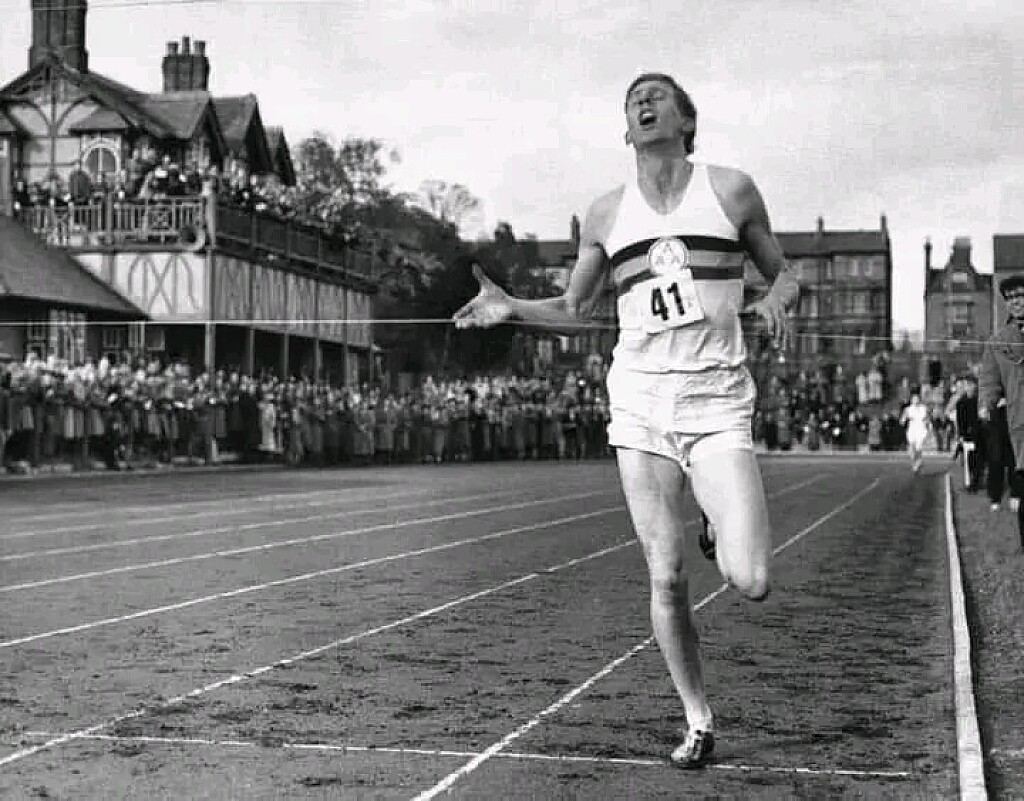
“Beyond Four Minutes: The Legacy of Roger Bannister”
Eight years ago, on March 3, 2018, the world received the sorrowful news that the incomparable Roger Bannister had passed away after battling Parkinson’s disease. There is a profound irony in his story. Bannister was not only a legendary athlete but also a distinguished neurologist who dedicated much of his professional life to treating patients with neurological disorders. Yet, like so many others, he was not exempt from the very illness he spent years studying.
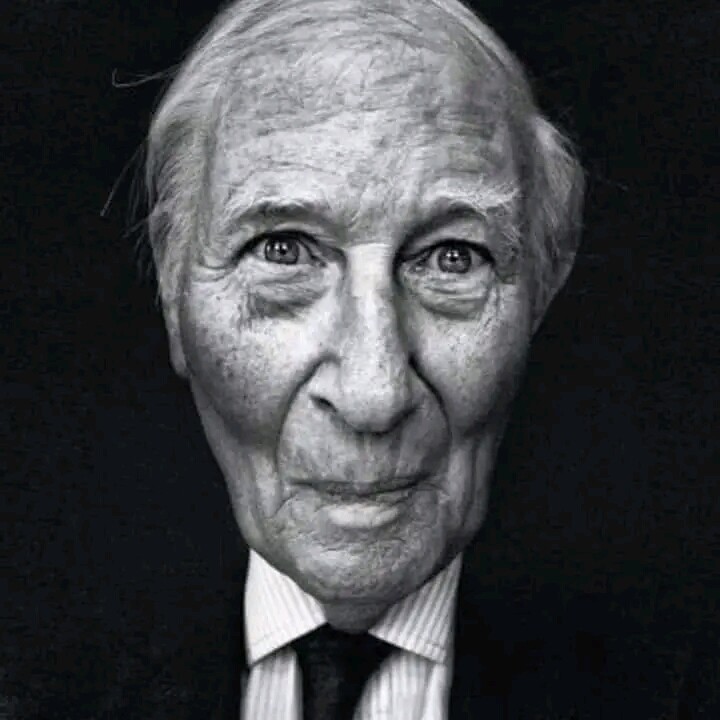
Born on March 23, 1929, in Harrow, England, Bannister would become one of the most iconic figures in athletic history. His signature event was the mile. At the 1952 Summer Olympics, he entered as the favorite to win. Instead, he finished fourth—a result that left him deeply disappointed. He returned home discouraged and told his coach he was finished with competitive running. But rather than allowing him to quit, his coach encouraged him to train harder, to push further, to discover what truly lay within him.
Bannister chose perseverance over surrender.
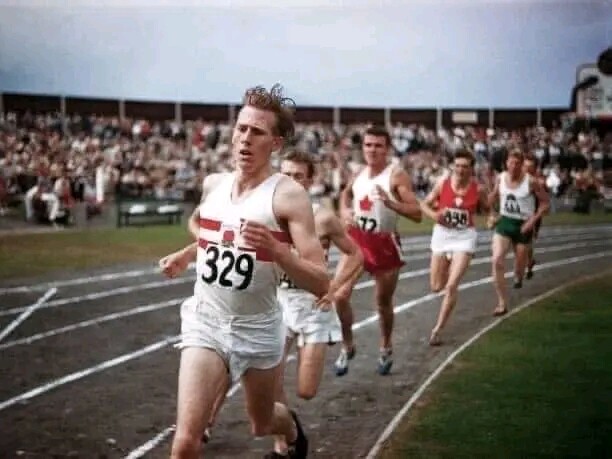
On May 6, 1954, at Iffley Road in Oxford, he achieved what many experts had declared physically impossible: he ran a mile in under four minutes. For years, respected voices in science had argued that the human heart and body were not designed to withstand such strain. Yet in 3 minutes and 59.4 seconds, Bannister dismantled a barrier that had stood not only in record books, but in the collective mind of the sporting world.

The aftermath was astonishing. Within a year, dozens of runners followed his lead and broke the four-minute barrier. Within three years, hundreds had done so. What had once seemed unreachable quickly became attainable. The greatest obstacle had not been muscle or oxygen—it had been belief. Once Bannister proved it possible, the impossible lost its authority.
Although the mile is no longer a feature of the Olympic Games or World Championships, its legacy endures. The current world record of 3:43.13 was set by Hicham El Guerrouj in 1999 at the Stadio Olimpico, a performance that stands as a testament to how far the event has evolved. Yet every stride toward that mark traces back to Bannister’s historic run in 1954.
The story of human progress—whether in science, industry, or sport—is filled with moments when limiting beliefs delayed breakthroughs. Then someone dares to challenge the narrative, and the floodgates open. Bannister did more than set a record; he liberated the imagination of athletes everywhere.
Sir Roger Bannister did not merely run beneath four minutes. He redefined what humanity believed it could endure. His legacy is carried forward in every runner who dares to chase what others insist cannot be done.
by Erick Cheruiyot for My Best Runs.
Login to leave a comment
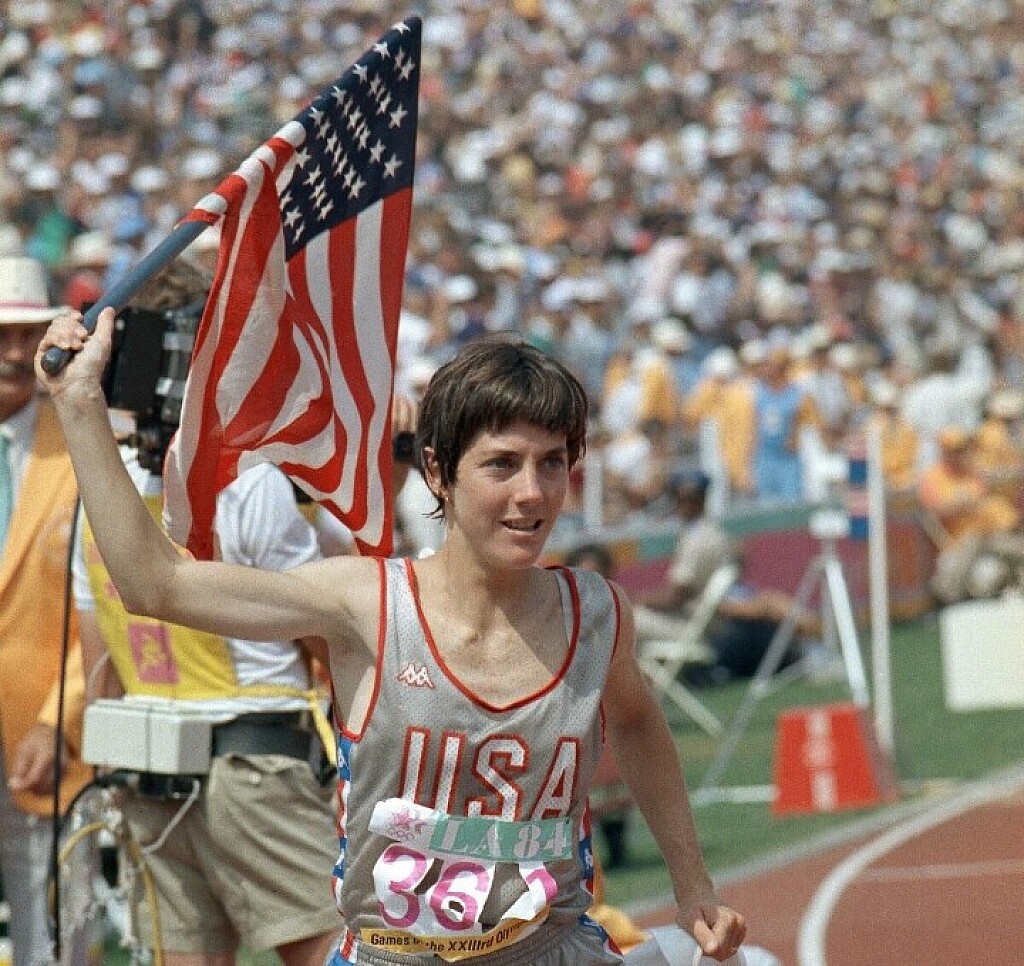
When History Finally Opened the Road: Joan Benoit’s Defining Run in Los Angeles, California — August 5, 1984
Los Angeles, California — August 5, 1984.
The California sun pressed heavily against the city streets, the temperature rising past 80 degrees as thousands of spectators lined the course. In the distance, a lone figure in a white painter’s cap ran with fearless intent, far ahead of the world’s best.
That woman was Joan Benoit — and she was not even supposed to be there.
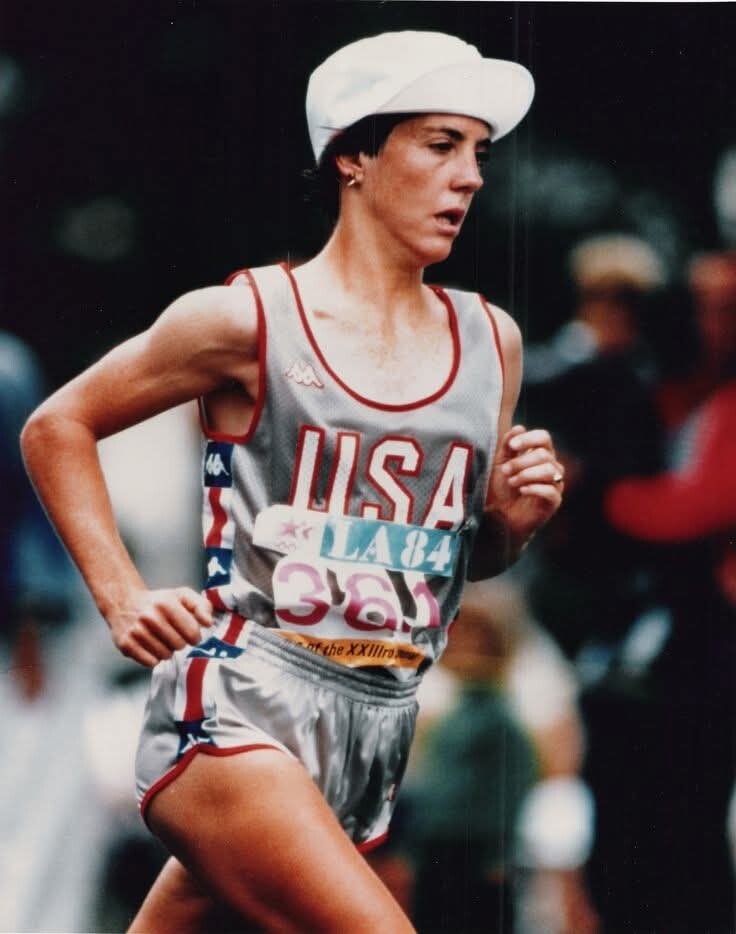
Just three months earlier, her knee had collapsed in training. Doctors delivered a harsh verdict: immediate surgery, followed by months of recovery. Yet the U.S. Olympic Trials were only 17 days away. For most athletes, that diagnosis would have ended the dream.
But 1984 was no ordinary Olympic year. It marked the first time women were officially allowed to compete in the marathon at the 1984 Summer Olympics. For decades, women had been barred from long-distance racing under claims that their bodies were too fragile, that endurance would harm their health, even that it would threaten their ability to bear children. The resistance had been so entrenched that the Boston Marathon only officially opened its doors to women in 1972.
This was not just a race; it was a long-overdue correction.
Benoit understood the gravity of the moment. There would only ever be one first women’s Olympic marathon. If she missed it, that page of history would turn without her name written on it.
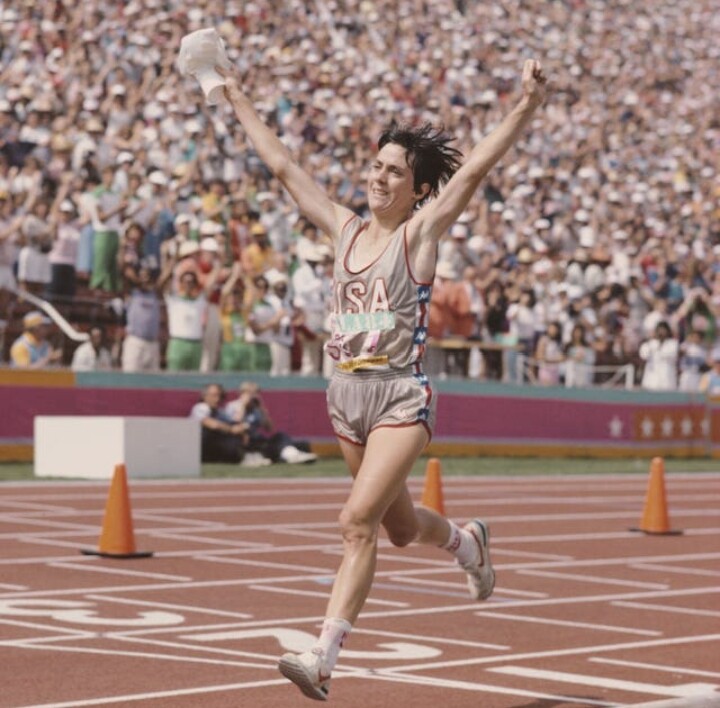
She chose surgery. Seventeen days later, still healing, she stood at the Trials start line — and won.
On August 5, 1984, the Olympic marathon began on the streets of Los Angeles, California, winding through the city beneath relentless summer heat. And before the race even reached mile three, Benoit did something astonishing.
She surged.
Breaking away from the pack with bold conviction, she committed herself to more than 23 miles alone. Commentators questioned the move. Behind her were giants of the sport — Grete Waitz and Rosa Mota — champions with unmatched credentials. Surely, they would reel her back in.
But mile after mile, the gap held.
She ran with a composure that defied both heat and doubt. The chase pack never closed the distance. Instead, Benoit extended her lead, stride by determined stride, as if carrying the weight of generations who had been denied this very opportunity.
At mile 23, she approached the iconic Los Angeles Memorial Coliseum. Still alone. Still leading. As she entered the stadium, more than 70,000 spectators rose to their feet, their roar echoing through the historic arena.
She crossed the finish line in 2:24:52, winning by over 400 meters.
The woman who had undergone knee surgery just weeks before the Trials had conquered the world’s finest on the sport’s biggest stage — in the very first women’s Olympic marathon ever held.
But her victory meant more than gold. It ended a debate that never deserved to exist. It proved that endurance does not belong to one gender, and that courage, when paired with conviction, can dismantle decades of disbelief.
Today, the women’s marathon stands as one of the most prestigious events in global athletics. Records have fallen, legends have risen, and young girls everywhere line up believing they belong.
It all traces back to Los Angeles, California — to August 5, 1984 — to a woman in a white cap who ran alone from mile three and refused to let history move forward without her
by Erick Cheruiyot for My Best Runs.
Login to leave a comment
