

Running News Daily
Running News Daily is edited by Bob Anderson and team. Send your news items to bob@mybestruns.com Advertising opportunities available.
Index to Daily Posts · Sign Up For Updates · Run The World Feed
Articles tagged #Thika
Today's Running News
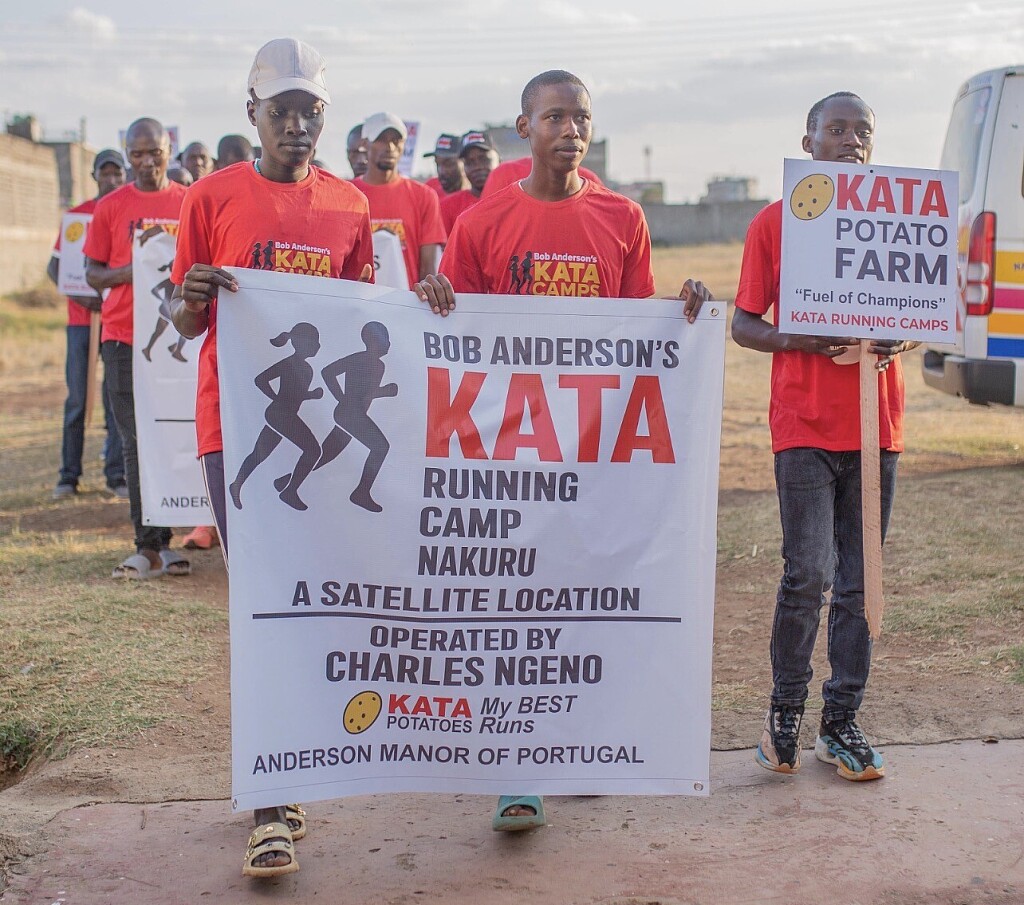


Was KATA’s Vision Too Grand? The 60-Camp Network That Could Have Supported 1,800 Kenyan Runners
KATA had assembled 30 running camps and planned to double that number. Its model used repayable, interest-free startup financing and potato farming to create a self-sustaining national network—but the expected repayments never materialized.
By Robert Kibet
Could a network of 60 self-supporting training camps have transformed life for 1,800 promising Kenyan runners?
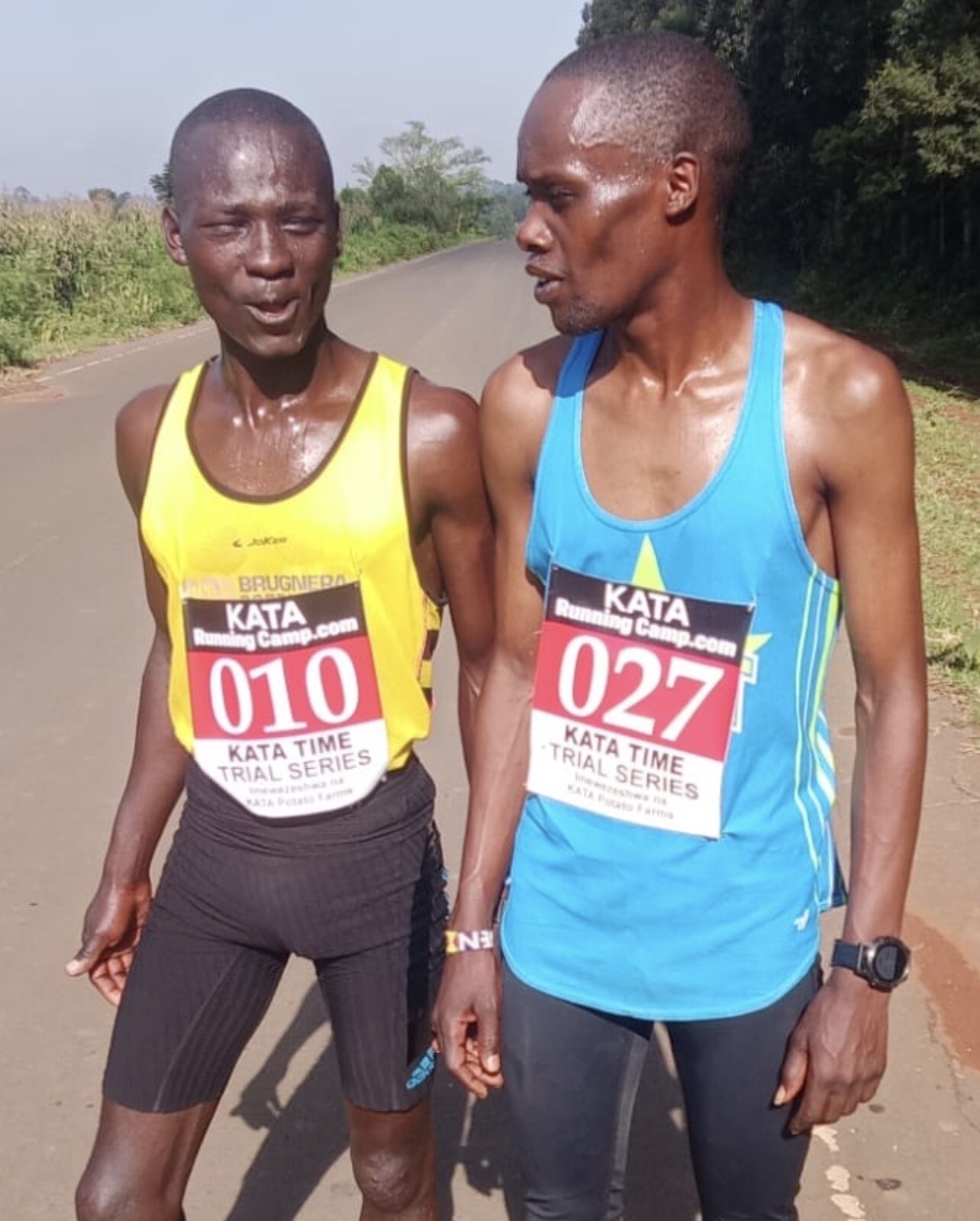
That was the vision behind the Kenyan Athletics Training Academy (KATA) programme created by Bob and Catherine Anderson.
KATA had assembled 30 running camps and planned to expand to at least 60. At 30 athletes per camp, the completed network could have provided accommodation, food and high-level training for approximately 1,800 runners at one time.
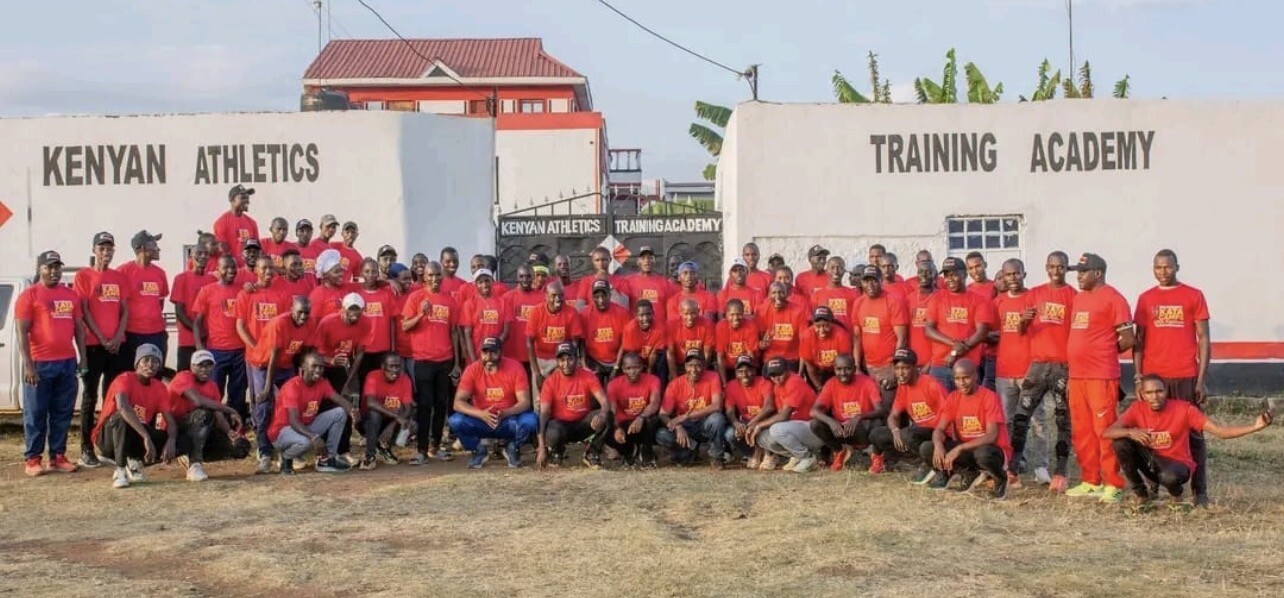
The objective was not simply to produce champions. KATA sought to improve daily living and training conditions for developing athletes while strengthening grassroots coaching.
The programme was ambitious, but it was not intended to depend permanently upon money from the Andersons.
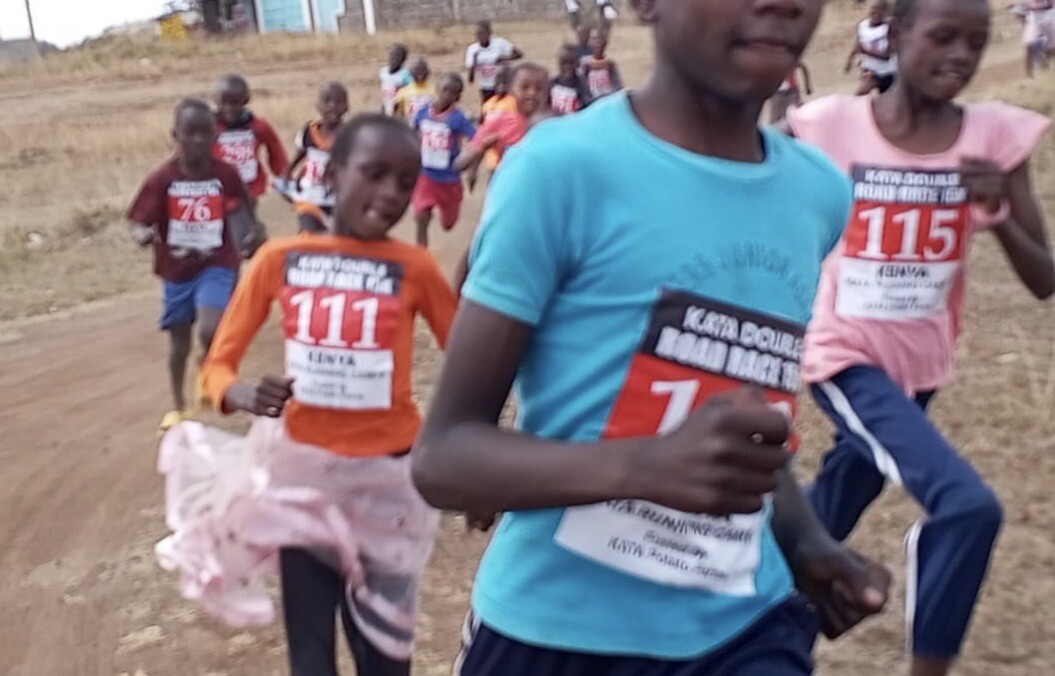
(These eight photographs were among more than 5,000 images sent to KATA founder Bob Anderson and his team as evidence of how the programme was progressing.
The photographs showed why individual coaches and camp operators believed they should receive interest-free loans and become part of the KATA family. Others documented the development of the camps, potato farming activities and the required 10-kilometre time trials held every two months.

In September 2025, athletes from most of the 30 KATA camps travelled to Thika to compete in the KATA Double Road Race, where KSh100,000 in prize money was awarded. At that point, the programme appeared to be working as planned.
The situation changed shortly afterward. Potato harvests were completed and crops were sold, but despite repeated explanations and delays, very little of the money collected was returned to KATA.)

How a camp was supposed to become self-supporting
KATA’s financial model began with two interest-free loans.
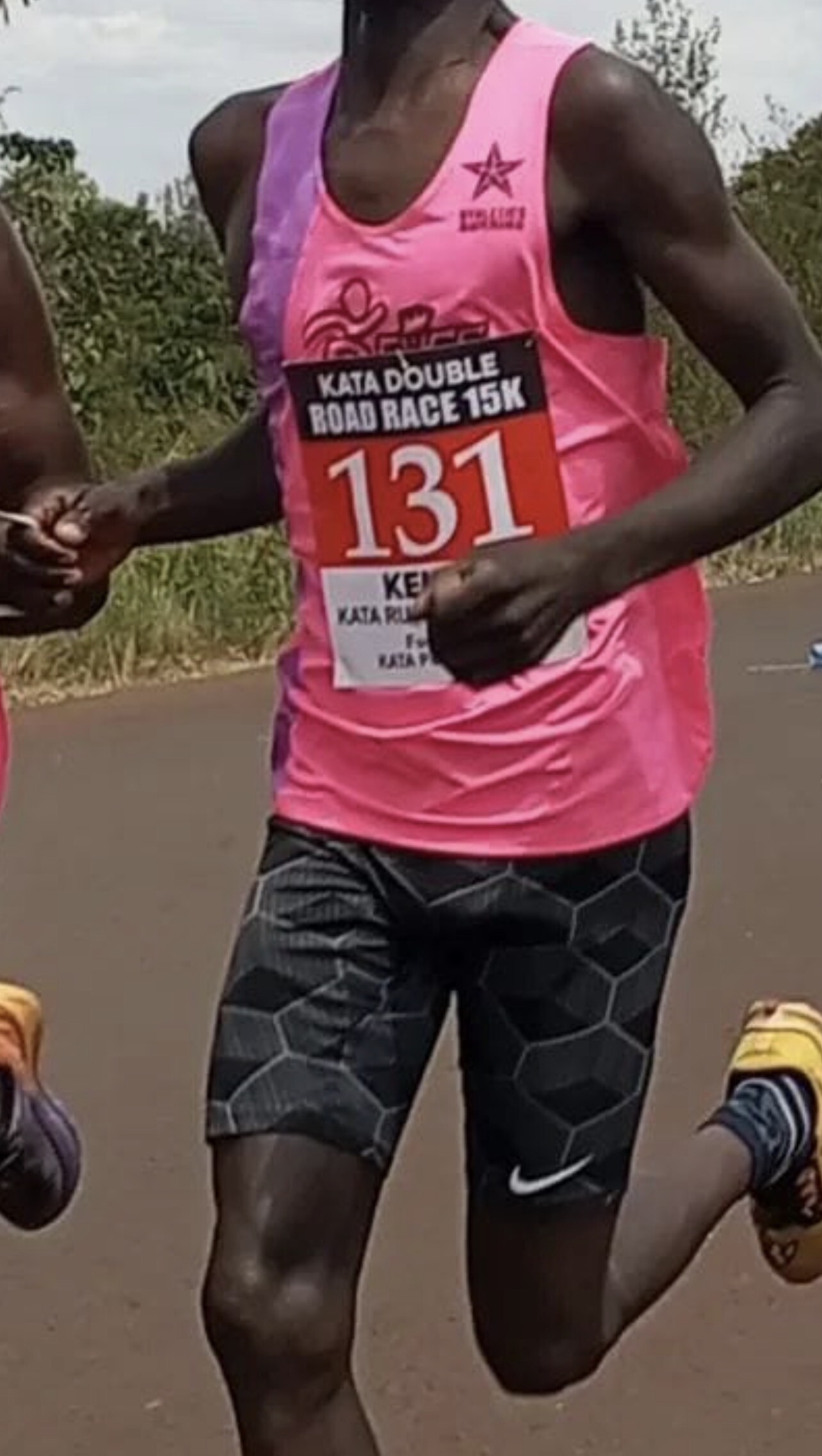
The first supplied the capital required to open a running camp. An approved operator could receive as much as KSh500,000 for rent, beds, mattresses, furniture, food and other startup needs.
That money remained a debt to KATA. It was not a gift, grant or donation.
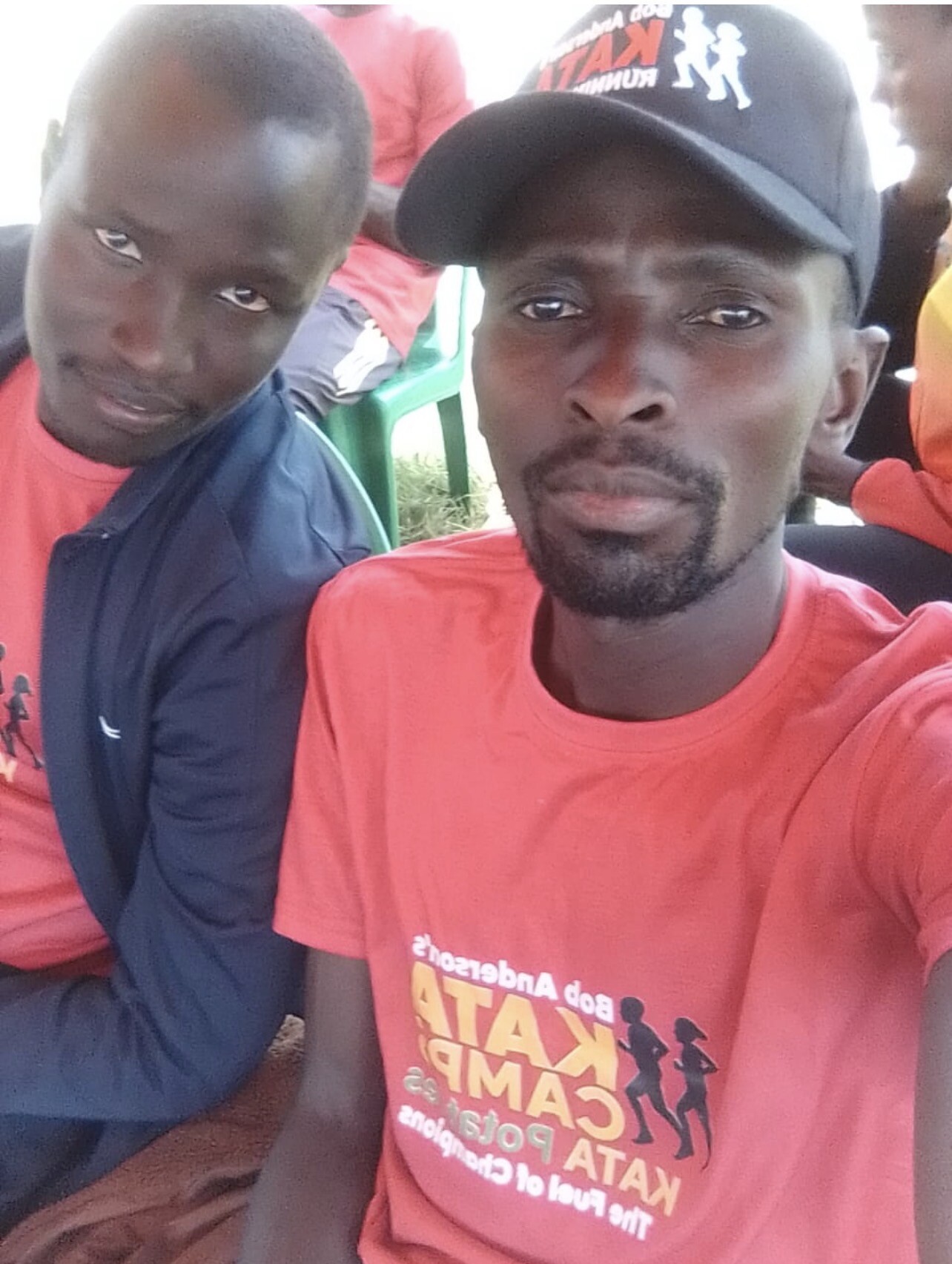
A second interest-free loan financed potato cultivation at a projected cost of approximately KSh100,000 per acre.
The plan called for the harvest revenue to retire both debts—the farming advance and the camp-establishment advance—before the remaining proceeds were used locally.
Potatoes were chosen because they are Kenya’s second-most important food crop after maize and form an industry worth an estimated US$400 million to US$500 million annually.
KATA’s working projection placed gross sales from a successful acre at about KSh400,000. This was a programme estimate rather than a guaranteed or national average result. Actual returns depended upon production, disease, weather and selling prices.
The projected economics of three acres illustrate the plan:
Estimated cultivation loan: KSh300,000;
Projected gross sales: KSh1.2 million;
Repayment of cultivation financing: KSh300,000;
Repayment of camp startup financing: up to KSh500,000; and
Potential balance for athletes and the next season: approximately KSh400,000.
Under this model, one strong three-acre harvest could potentially clear the money advanced to establish the camp and grow the crop. The following season could then help pay for food, housing and training while keeping the farm productive.
“We did not give away startup money,” Anderson said. “We provided interest-free loans that had to be repaid. The potatoes were the engine intended to repay both loans and create continuing income for the athletes.”
From 30 camps to a potential 60
Bob and Catherine Anderson say they invested more than KSh42 million in the wider programme.
Approximately KSh36 million was provided as interest-free financing, with more than KSh6 million spent on Kenyan independent contractors and related operational expenses.
The Andersons did not form a Kenyan company. Their California-based operation directed the programme and retained independent contractors in Kenya for coordination and monitoring.
If 75 percent of participating coaches, farmers and operators had repaid their loans, Anderson believes KATA would have had enough revolving capital to strengthen the 30 camps and expand to 60.
“The money was supposed to keep moving,” he said. “A repayment from one harvest could help establish or strengthen another camp. We would not have needed to start again with new outside money every season.”
A 60-camp network supporting 1,800 runners could also have developed a significant voice within Kenyan athletics.
“KATA was not created to oppose Athletics Kenya,” Anderson said. “But an independent programme improving conditions for 1,800 athletes would naturally have carried influence.”
Anderson has wondered whether that potential might have concerned people who wanted to control opportunities within the sport. He emphasizes that he has no evidence Athletics Kenya attempted to undermine KATA.
Charles Ngeno and claims of high-level access
While developing two proposed KATA camps, coach Charles Ng’eno repeatedly portrayed himself to Anderson as closely connected to leading figures in Kenyan athletics.
On July 22, 2025, Ng’eno wrote:
“I need to brief you tomorrow about good news we discussed with AK PRESIDENT about KATA.”
The message did not explain the “good news,” and no response from the Athletics Kenya president has been provided to confirm that discussion.
Ng’eno also sent photographs appearing to show him attending Athletics Kenya functions, including one in which he sat behind an Athletics Kenya nameplate and another showing him addressing a gathering.
The photographs indicate attendance at athletics-related events. They do not prove that AK supported KATA or authorized Ng’eno to speak on its behalf.
Ng’eno also supplied Anderson with messages addressed to senior athletics official Barnabas Korir.
In one, Ng’eno told Korir:
“You expressed happiness with KATA.”
He further attributed to Korir statements about protecting KATA because of its importance in empowering young people.
The screenshots do not show Korir confirming the statements. It remains unclear whether all the communications were sent, received or answered.
Prominent athletes and coaches
Ng’eno strengthened the appearance of influence by invoking other respected names.
In June 2025, he sent Anderson a message addressed to Faith Kipyegon in which he described himself as her “grassroots coach.” The screenshot contains no response from Kipyegon and does not independently establish the extent of Ng’eno’s early coaching role.
Ng’eno later said prominent coach Bernard Rono had consulted him about KATA and joined the programme.
“We are glad to have him with us at KATA,” Anderson replied. “We have a strong group of operators!”
Anderson says the combined effect of the messages and AK photographs was significant.
“Charles made it appear that he was plugged into the highest levels of Kenyan athletics,” Anderson said. “That gave me confidence that he could build successful camps and bring respected people into the KATA network.”
Whether Ng’eno accurately described those relationships remains unconfirmed.
Two camps appeared to be taking shape
Ng’eno supported his requests for money with budgets, reports, photographs and videos.
After confirming receipt of KSh40,000 in June 2025, he sent a photograph of a truck at a residential property and said he was installing items at the camp.
He later requested financing for nearby land, reported renting a house in Nakuru and sought money for beds and mattresses.
On August 3, Ng’eno submitted figures for the proposed Olenguruone and Nakuru camps. His presentation referred to a combined KSh1.3 million budget and reported KSh531,400 used for farming and camp expenses.
The KSh1.3 million was the proposed allocation—not the amount Anderson ultimately transferred.
Anderson says Ng’eno actually received KSh1,077,500. The funding was intended to establish two camps and cultivate six acres.
A video Ng’eno sent on August 5 appeared to show young athletes training indoors.
“These are the real stars,” he wrote, predicting they could reach the next World Cross Country Championships.
The material led Anderson to believe the camps were progressing.
“I could see athletes training and equipment apparently arriving,” he said. “It looked as though the programme was creating exactly what we intended.
Red flags halted further funding
Ng’eno continued presenting expansion plans, but promised repayments did not arrive.
In November 2025, he told Anderson nearly KSh600,000 would be paid before the end of December, followed by another KSh200,000 in January or February.
Ng’eno also referred to a plot of land allegedly worth KSh1.5 million that could be sold to clear the debt.
At the same time, he continued seeking additional money. When an account was restricted because no repayment had arrived, Ng’eno suggested that funds be sent through his wife’s M-Pesa number or another person.
Anderson refused to bypass the restriction.
In January 2026, Ng’eno made another commitment:
“Yes Bob, I need to start with 400,000 ksh.”
He said he was responsible and “must do payments.” He also attributed the delay to money spent constructing a residential building that would become a KATA camp.
Anderson says the KSh400,000 was not paid.
Ng’eno later attempted to persuade him to finance another six acres with approximately KSh600,000 in additional interest-free funding.
Anderson declined.
“I probably would have sent more if the promised repayments had started,” he said. “Fortunately, each missed date raised another red flag. I stopped after KSh1,077,500.”
What is known—and what remains unverified
The available communications show that Ng’eno:
Claimed to have discussed KATA with the Athletics Kenya president;
Attributed favorable statements about KATA to Barnabas Korir;
Presented himself as connected to leading athletes and coaches;
Supplied budgets and reports for two camps;
Sent images appearing to show camp development and athletes training;
Continued seeking new funding; and
Made several substantial repayment promises.
They do not establish whether Athletics Kenya endorsed or opposed KATA, whether the named officials made the statements attributed to them or how all the money was ultimately used.
There is no current evidence that Athletics Kenya developed or participated in a plan to stop KATA.
There is evidence that Ng’eno’s representations increased Anderson’s confidence in the camps and the wider programme.
Questions for Ng’eno and Athletics Kenya
Ng’eno should be asked:
What did he discuss with the Athletics Kenya president?
Did Barnabas Korir make the statements attributed to him?
What official athletics positions did Ng’eno hold?
How many athletes lived and trained at the two camps?
Was the residential building completed and operated as a KATA camp?
How was the KSh1,077,500 used?
What income was produced by the six acres?
Why were the promised repayments not made?
Did he own the reported KSh1.5 million property?
Athletics Kenya and the officials named in Ng’eno’s messages should have an opportunity to clarify what they knew about KATA and whether their positions were represented accurately.
Grand—but not impossible
KATA’s vision was undeniably large: 60 camps capable of supporting 1,800 runners.
Its financial premise was that repaid loans would become revolving capital. Each successful camp and harvest would help finance the next cycle of athlete support.
“The vision may have been grand, but it was not impossible,” Anderson said. “We already had 30 camps. What failed was the repayment system and our reliance on reports that were not independently verified.”
Whether Ng’eno truthfully described his Athletics Kenya discussions remains unanswered. Whether AK understood KATA’s potential scale is also unclear.
What is clear is that the programme was not offering free startup money. Every camp and agricultural advance was an interest-free loan that had to be returned.
Without those repayments, the revolving system stopped—and the planned network of 60 camps has never became a reality. If only most of the KATA operators had paid back their loan! "When they do things could still get back on track," says Bob Anderson.
by Robert Kibet
Login to leave a comment
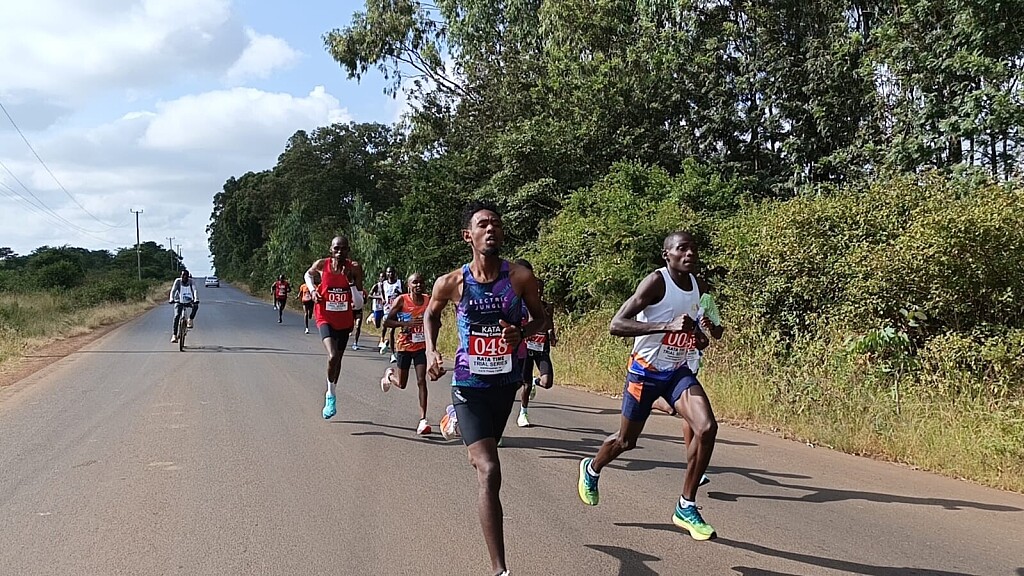
Personal Bests and Promising Performances Highlight the 57th KATA Time Trial Series in Thika
The stopwatch once again took centre stage in Thika as athletes gathered for the 57th edition of the KATA Time Trial Series, an event that continues to serve as one of Kenya's most respected platforms for measuring progress and pursuing excellence.
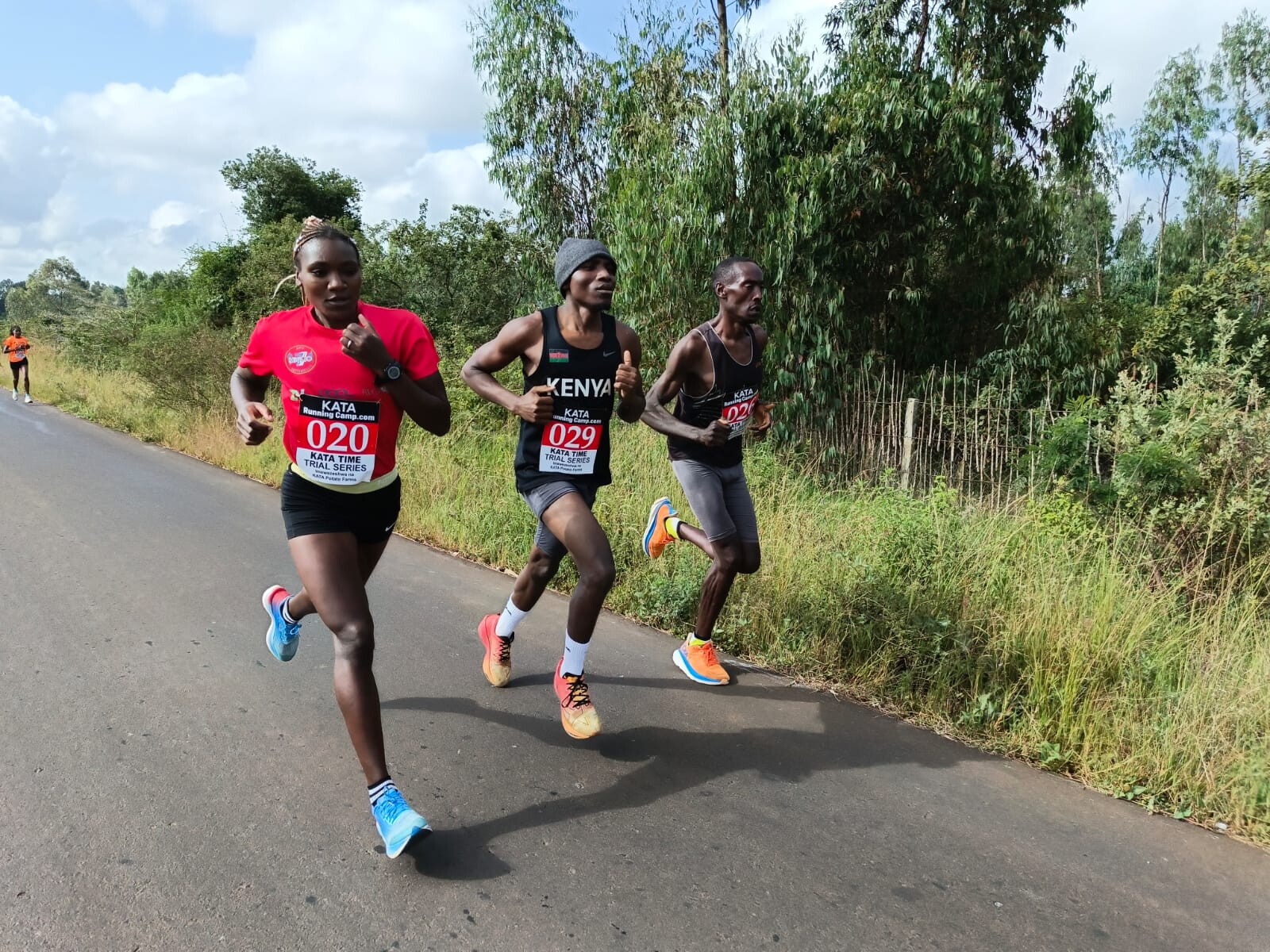
Held on the familiar roads surrounding the Kenyan Athletics Training Academy (KATA), the latest edition brought together runners at different stages of their athletic journeys, all united by a common objective: to test their fitness, challenge their limits, and chase new personal bests.
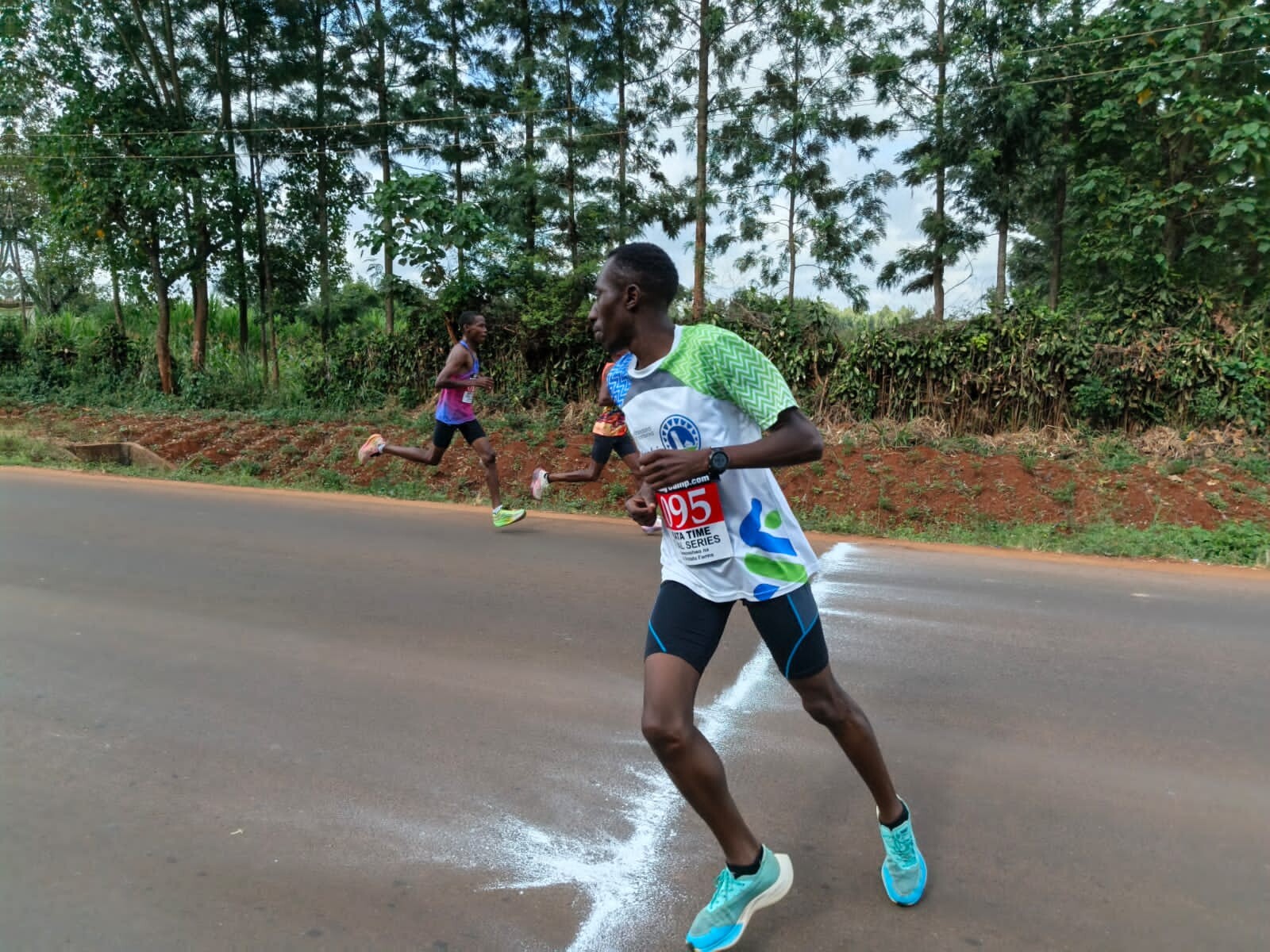
As expected, the competition was less about medals and fanfare and more about honest performances against the clock. Every athlete arrived carrying the weight of weeks and months of disciplined training, hoping to see that effort reflected in the final results.
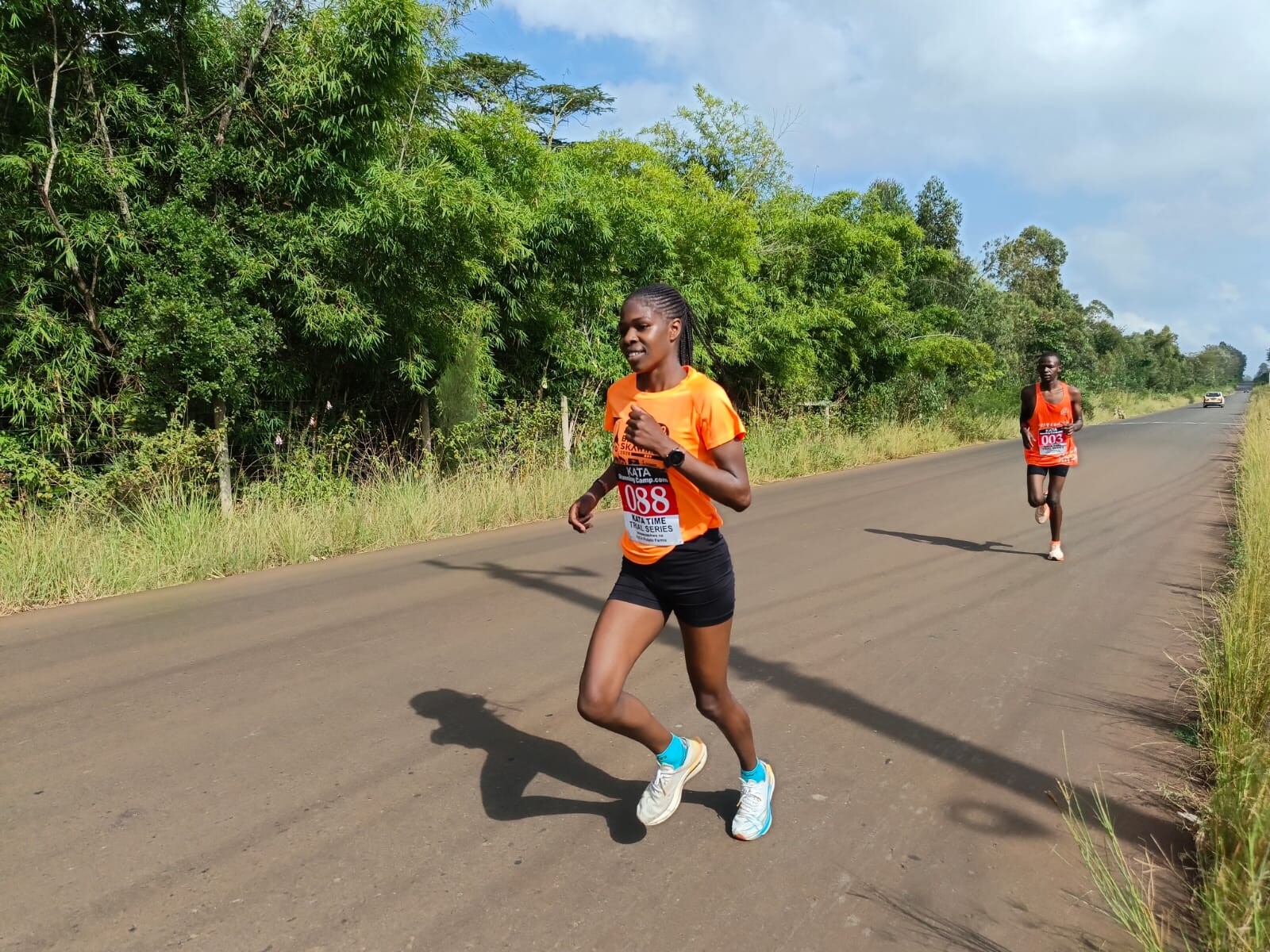
In the men's 5km race, John Ndung'u produced the fastest performance of the day, crossing the line in 15:36. Anthony Kariuki followed in 16:15, while Eugene Nambua secured third place in 17:44. Simon Ngereza completed the leading group with a time of 18:31.
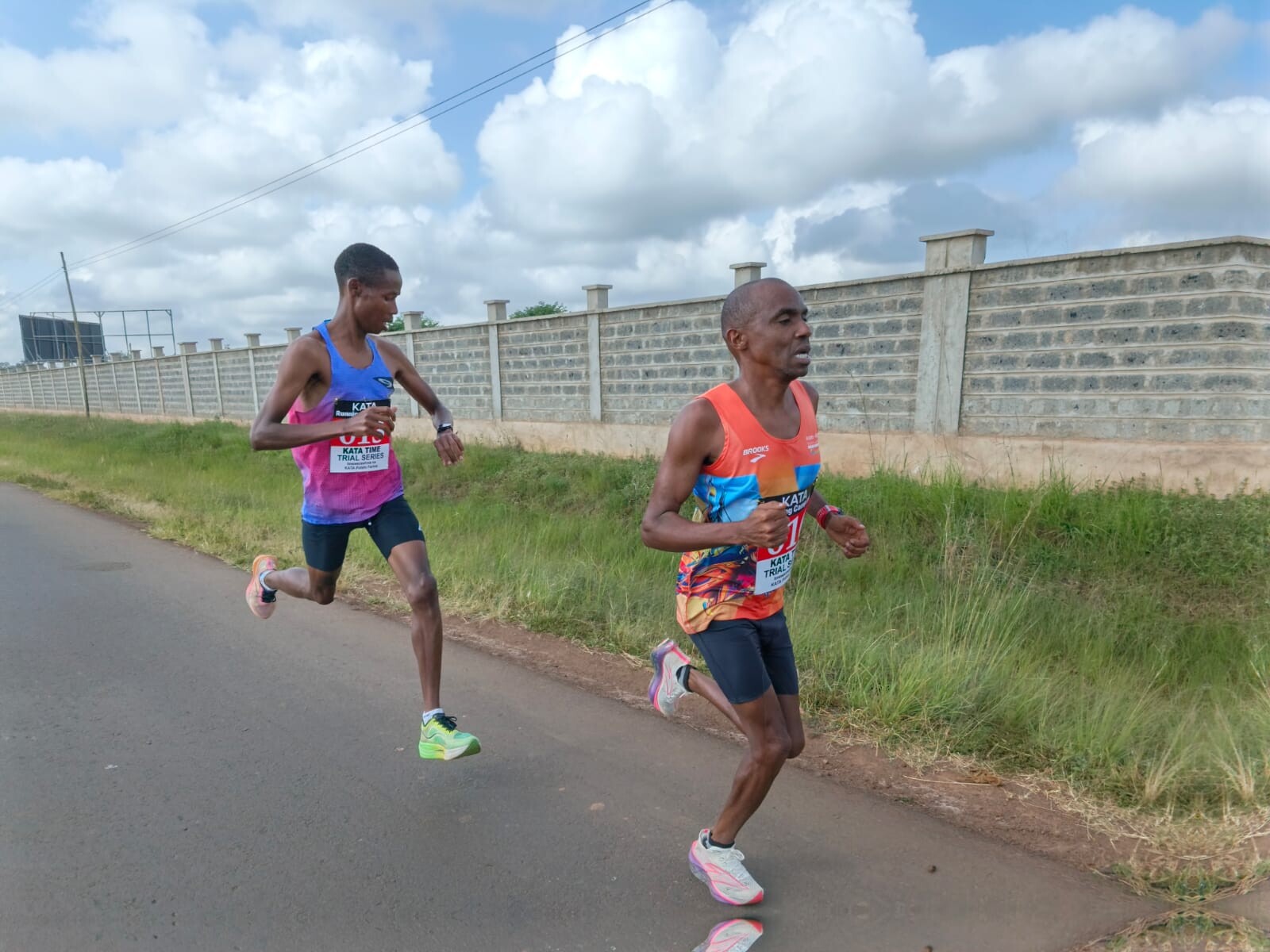
The women's 10km race delivered a closely contested battle at the front. Jane Wanja emerged victorious in 36:16 after a strong and controlled run, holding off Caren Chepkwony, who finished just nine seconds behind in 36:25. The narrow margin highlighted the competitive nature of the race and the determination shown by both athletes throughout the morning.
The deepest field of the day came in the men's 10km event, where several runners produced encouraging performances. John Chege led the standings with an impressive 30:12, demonstrating both strength and consistency over the distance. Charles Wanjora followed in second place with 30:54, while Erick Cheruiyot claimed third in 31:42 after a well-executed effort.
Joel Maina continued the strong pace of the leading pack to finish fourth in 32:26, while Justus Nyamai completed the top five in 33:24. David Mwangi recorded 35:24 for sixth place, followed by Paul Nganga in 35:38. Ewand Niyukiru crossed the line in 36:27, with Charles Ndirangu clocking 37:21 and Brandon Mutugi completing the top ten in 38:31.
KATA Time Trial Series – 57th Edition Results
Thika, Kenya | June 10, 2026
Men's 5km
1. John Ndung'u – 15:36
2. Anthony Kariuki – 16:15
3. Eugene Nambua – 17:44
4. Simon Ngereza – 18:31
Women's 10km
1. Jane Wanja – 36:16
2. Caren Chepkwony – 36:25
Men's 10km
1. John Chege – 30:12
2. Charles Wanjora – 30:54
3. Erick Cheruiyot – 31:42
4. Joel Maina – 32:26
5. Justus Nyamai – 33:24
6. David Mwangi – 35:24
7. Paul Nganga – 35:38
8. Ewand Niyukiru – 36:27
9. Charles Ndirangu – 37:21
10. Brandon Mutugi – 38:31
Beyond the finishing positions, the true success of the KATA Time Trial lies in what the numbers represent. Every result tells a story of early mornings, demanding workouts, sacrifices, and the relentless commitment required to improve in one of the world's most competitive athletics environments.
For some athletes, Wednesday's performances marked confirmation that their training is moving in the right direction. For others, the results provided valuable lessons and clear targets for the weeks ahead. Such is the nature of time trials: they offer an honest assessment of where an athlete stands and where improvement is still needed.
The KATA Time Trial Series has earned its reputation not through spectacle but through consistency. Edition after edition, it provides athletes with a stage to evaluate their progress, sharpen their racing instincts, and build confidence ahead of larger competitions.
As the 57th edition comes to a close, the performances recorded on the roads of Thika serve as another reminder that success in athletics is rarely achieved overnight. It is built through patience, resilience, and the willingness to keep chasing improvement. On this occasion, the clock once again revealed stories of ambition, determination, and the enduring pursuit of personal excellence.
by Erick Cheruiyot for My Best Runs.
Login to leave a comment

KATA Time Trial Series
Welcome to the KATA Monthly Time Trial Held at the Kenyan Athletics Training Academy in Thika, Kenya, the KATA Monthly Time Trial is a unique and inclusive event designed to support runners of all levels in achieving their goals and showcasing their fitness. This event offers both 10K and 5K distances on an accurate, certified course, providing participants with...
more...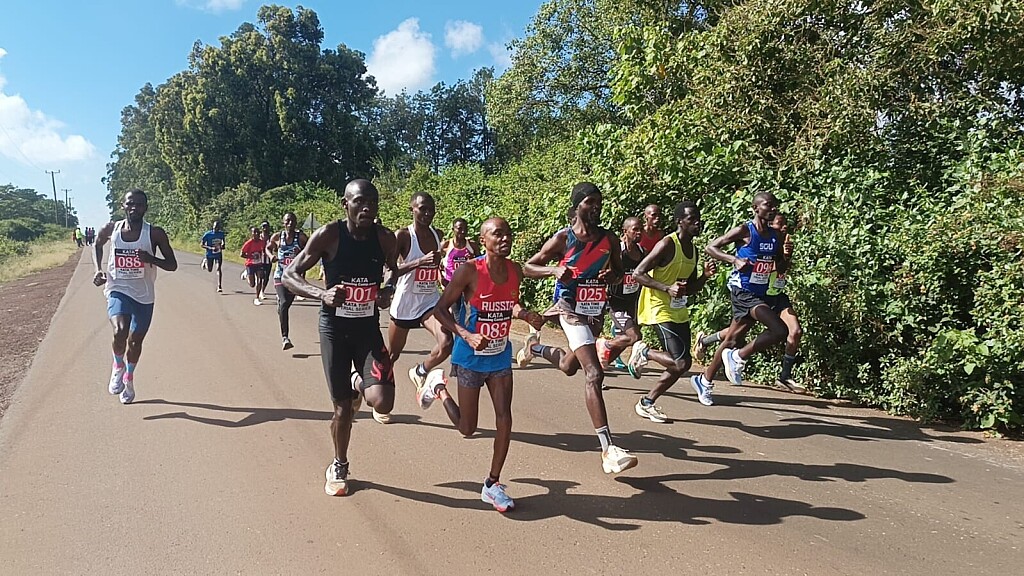
Chasing the Clock: Athletes Target Personal Bests at the 57th KATA Time Trial in Thika
Before sunrise breaks over Thika and before the wider athletics world begins to follow the results, a competitive field of determined runners will already be locked in a battle against the clock, their limits, and their ambitions. On Wednesday, June 10, 2026, the 57th edition of the KATA Time Trial Series returns to the quiet roads around the Kenyan Athletics Training Academy (KATA), offering athletes another invaluable opportunity to test their progress and pursue new personal bests.
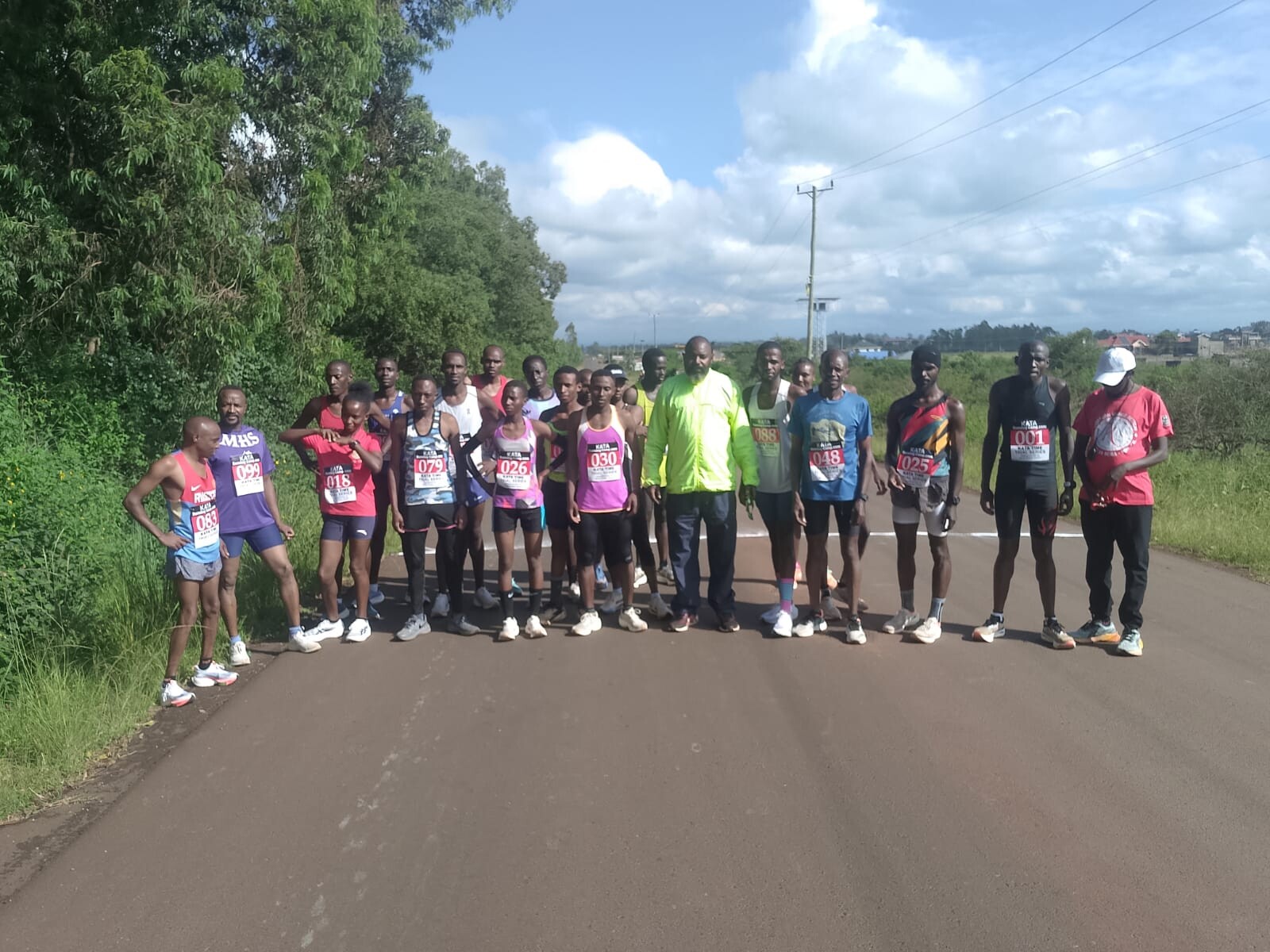
While major championships often capture global headlines, events like the KATA Time Trial remain the heartbeat of athlete development in Kenya. There are no packed grandstands, dramatic presentations, or lavish celebrations. Instead, the focus is placed squarely where it belongs—on performance, discipline, and the relentless pursuit of improvement.
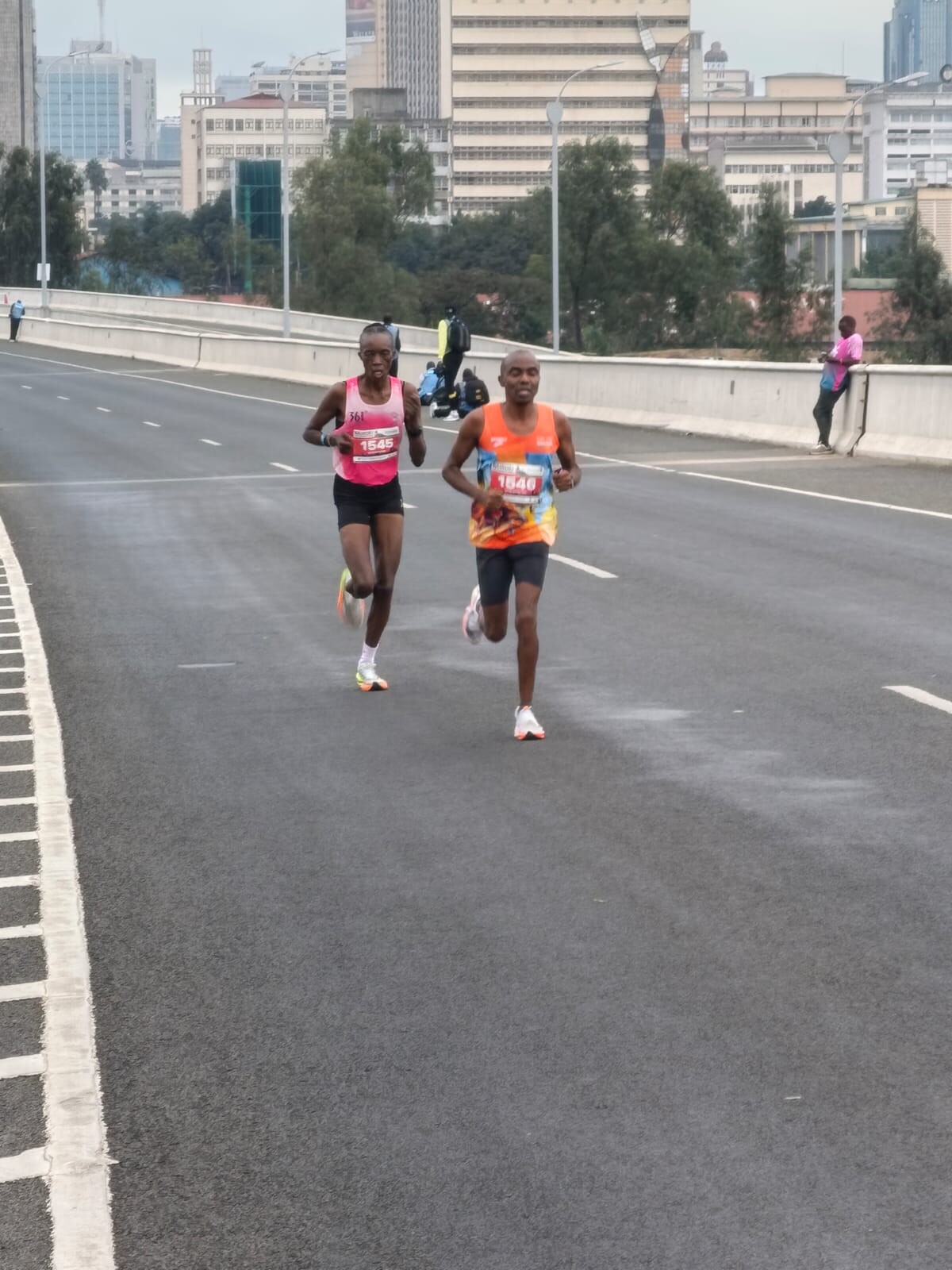
Over the years, the KATA Time Trial has built a reputation as one of the country's most respected performance-testing platforms. For emerging talents and experienced competitors alike, it serves as a crucial checkpoint where months of demanding training are measured against the unforgiving honesty of the stopwatch.
This edition is expected to attract athletes eager to evaluate their fitness levels and, above all, lower their personal bests. For many runners, a personal record represents far more than a number on a results sheet. It symbolizes countless kilometres covered before dawn, punishing interval sessions, sacrifices made away from competition, and the unwavering belief that hard work will eventually be rewarded.
The programme will once again feature the traditional 5km and 10km races, each presenting its own unique challenge. The 5km demands speed, courage, and the ability to sustain a relentless pace from start to finish. The 10km, meanwhile, requires patience, tactical awareness, and exceptional endurance, rewarding athletes who can distribute their effort wisely over the longer distance.
As always, intelligent pacing is expected to play a decisive role. Athletes are likely to work together through the opening kilometres, sharing the workload and maintaining consistent rhythm in pursuit of faster times. In a race where every second matters, a controlled start often proves more valuable than an aggressive surge. Those who judge their effort correctly can unlock breakthrough performances, while those who miscalculate their pace risk seeing their ambitions fade before the finish line.
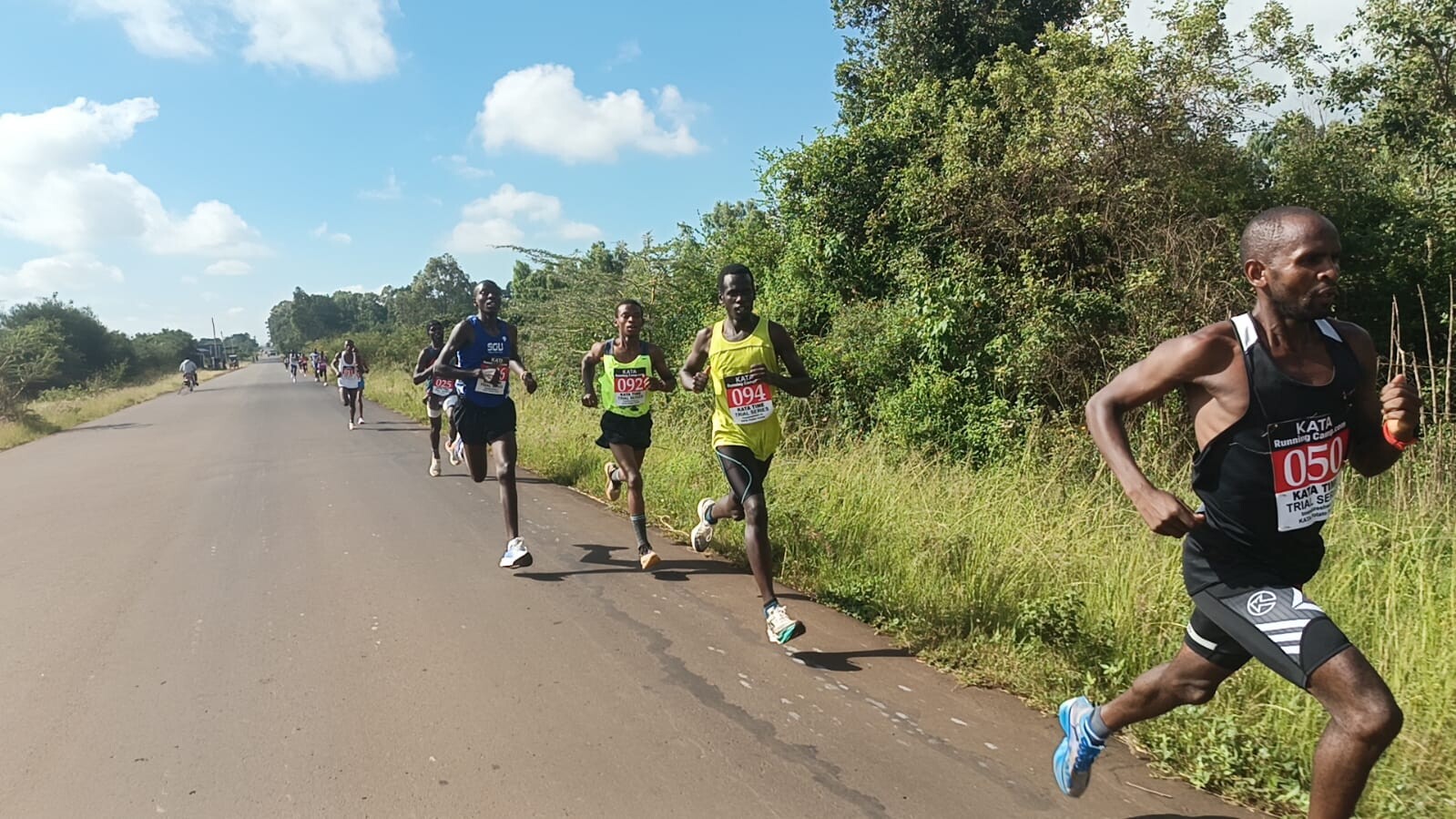
The roads of Thika have witnessed countless stories of progress throughout the history of the series. Some athletes have announced their arrival with career-defining performances, while others have gained valuable lessons that later shaped future success. Every edition adds another chapter to that legacy, and the 57th installment promises to be no different.
Weather and course conditions are expected to favour athletes who combine patience with determination. The runners who remain composed during the early stages will likely be the ones producing their strongest performances when fatigue begins to take hold in the closing kilometres.
Yet beyond the times and finishing positions, the true significance of the KATA Time Trial lies in what it represents. It is a celebration of continuous growth, a proving ground for ambition, and a reminder that excellence is built through consistency rather than spectacle.
When the final watches stop on Wednesday morning, the results will reveal much more than who ran the fastest. They will tell stories of perseverance, dedication, and dreams pursued one stride at a time. For many athletes lining up in Thika, the ultimate victory will not be defeating their rivals—it will be conquering their previous best and taking another important step forward in their athletic journey.
by Erick Cheruiyot for My Best Runs.
Login to leave a comment
KATA Time Trial Series
Welcome to the KATA Monthly Time Trial Held at the Kenyan Athletics Training Academy in Thika, Kenya, the KATA Monthly Time Trial is a unique and inclusive event designed to support runners of all levels in achieving their goals and showcasing their fitness. This event offers both 10K and 5K distances on an accurate, certified course, providing participants with...
more...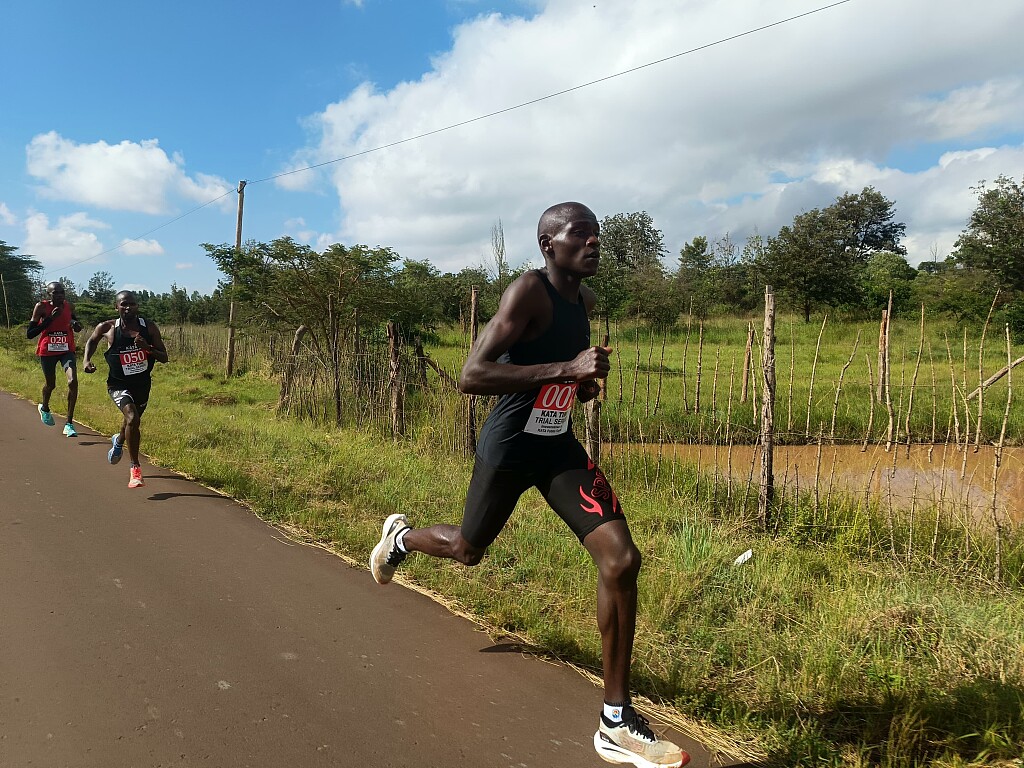
Elite Rhythm and Relentless Effort Headline the 56th KATA Time Trial Series
The roads of Thika once again became a proving ground for ambition, endurance, and personal growth as athletes delivered impressive performances during the 56th edition of the KATA Time Trial held on Wednesday, May 13, 2026. In an event built around discipline rather than spectacle, runners turned months of preparation into measurable results, producing a morning filled with fast times, tactical execution, and valuable lessons for the season ahead.
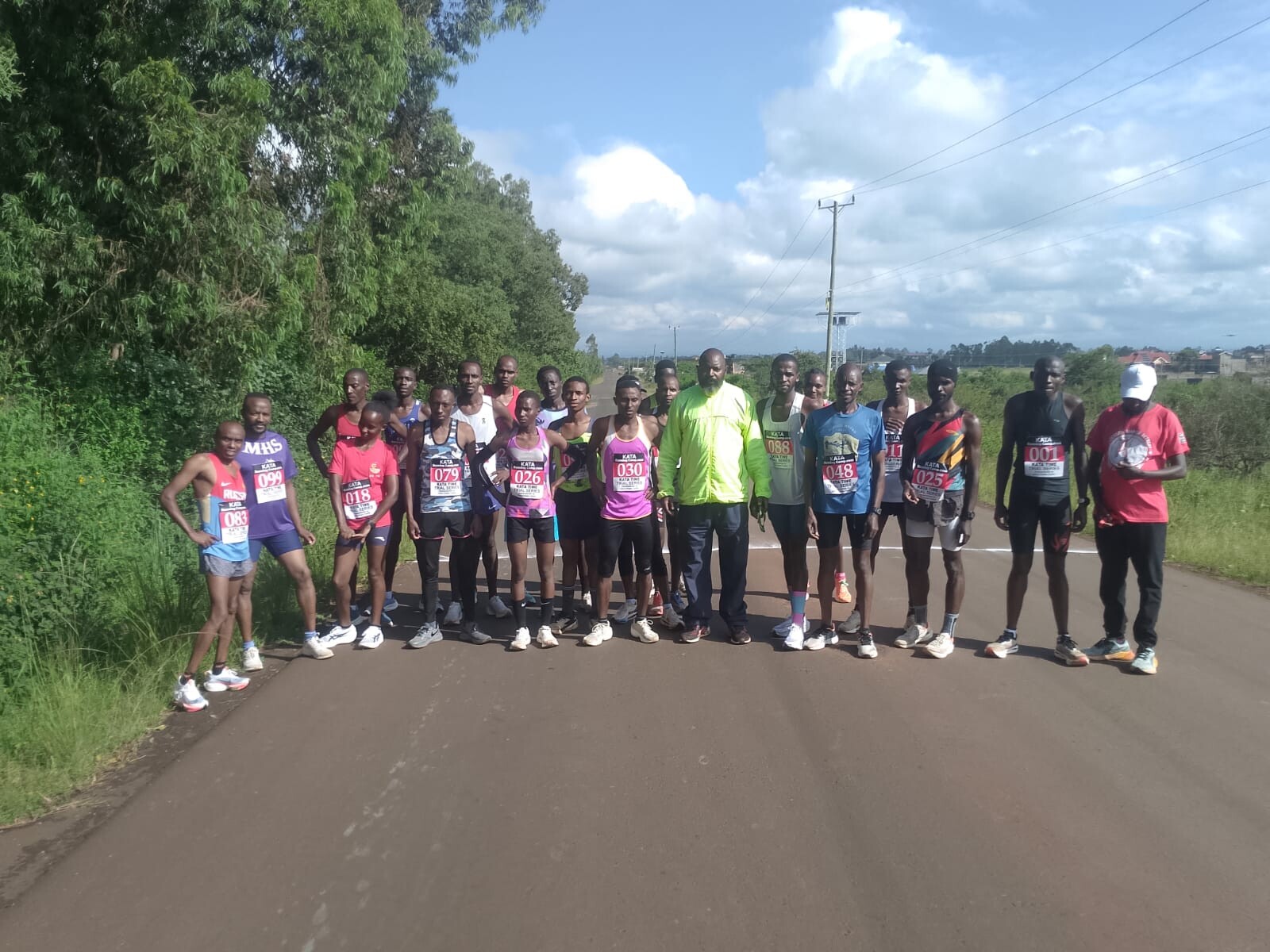
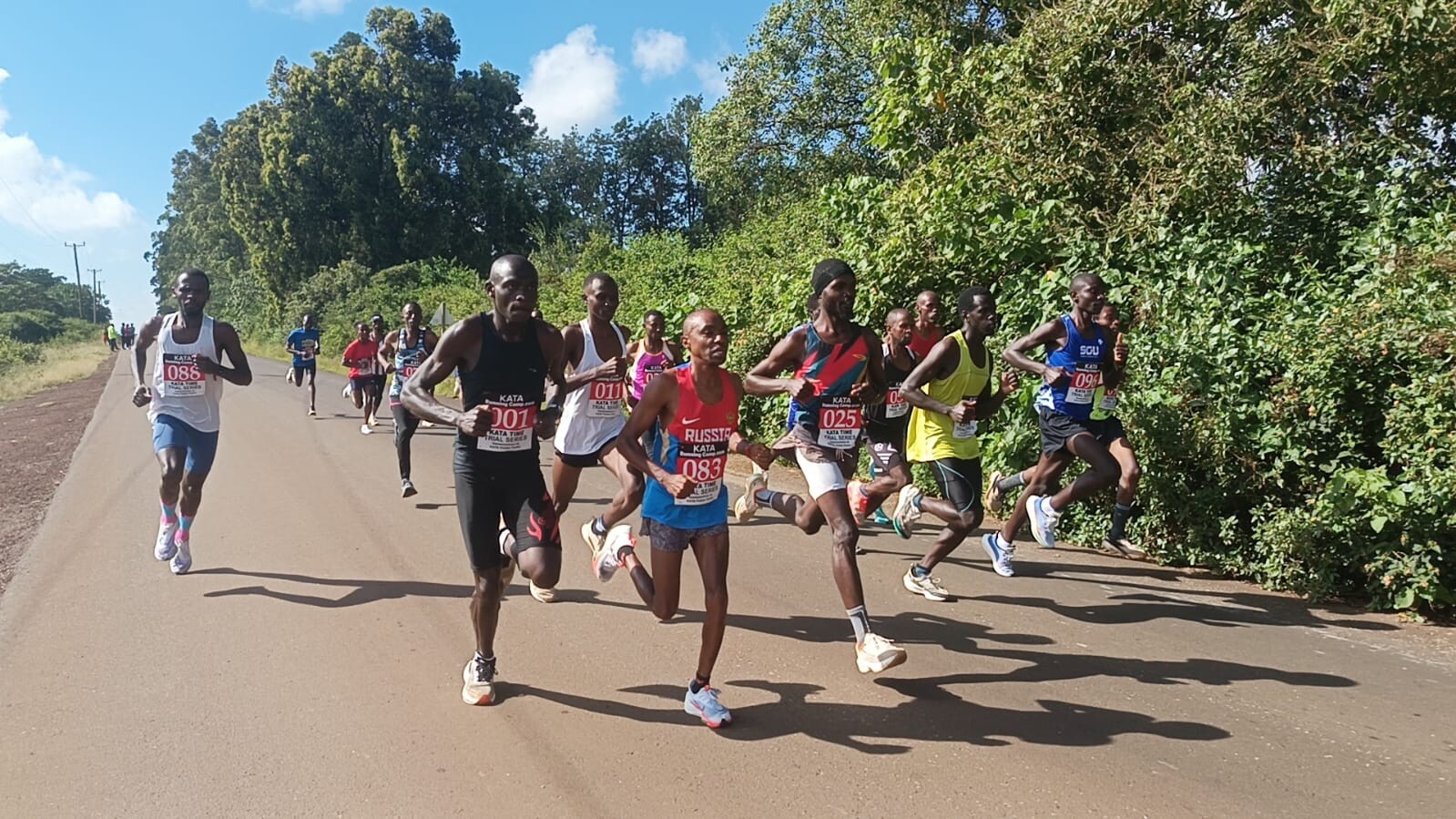
Widely respected among developing and competitive athletes, the KATA Time Trial continues to serve as one of the most reliable performance tests on the local athletics calendar. Unlike major championship races driven by crowd energy and medals, the Thika event places athletes face-to-face with the stopwatch, demanding honesty, rhythm, and mental toughness from start to finish.
The men’s 10-kilometre contest produced one of the strongest performances of the day as Charles Wanjora stormed to victory in an impressive 30:44. Running with confidence and composure, Wanjora controlled the pace effectively and held off a determined challenge from Bernard Waweru, who crossed the line just a second later in 30:45 after a highly competitive battle. Robin Musa completed the top three with a strong 31:12, confirming the high quality of the front pack throughout the race.
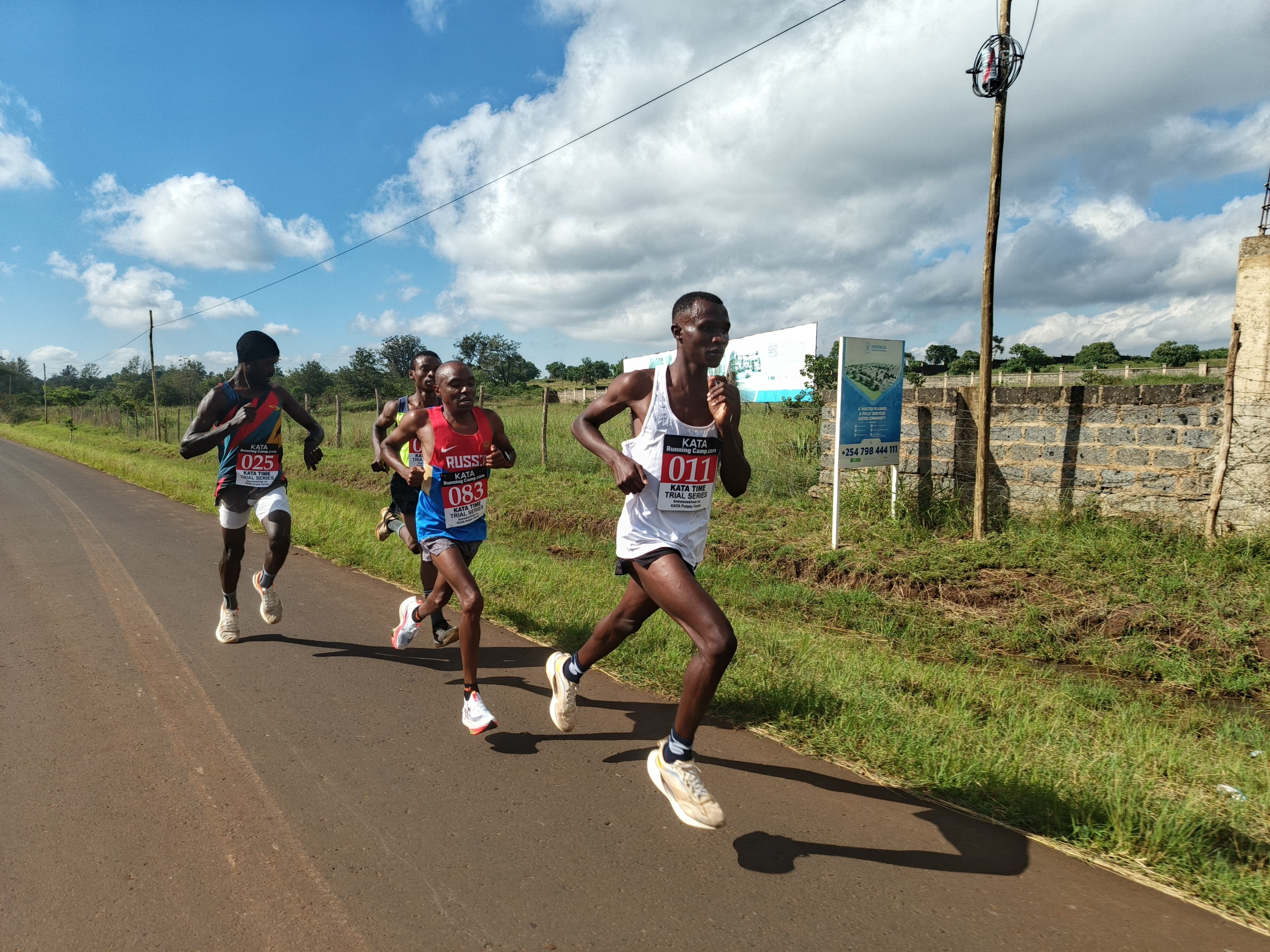
Joel Maina secured fourth place in 31:52, while Ismael Mburu finished fifth in 32:36 after maintaining a consistent rhythm over the demanding course. Vincent Kiprotich followed in sixth position with 33:12, narrowly ahead of Erick Cheruiyot, who clocked 33:14 in another tightly contested finish. Fredrick Wambua placed eighth in 33:46, as George Kamau and Paul Ng’ang’a completed the top ten in 36:10 and 36:11 respectively.
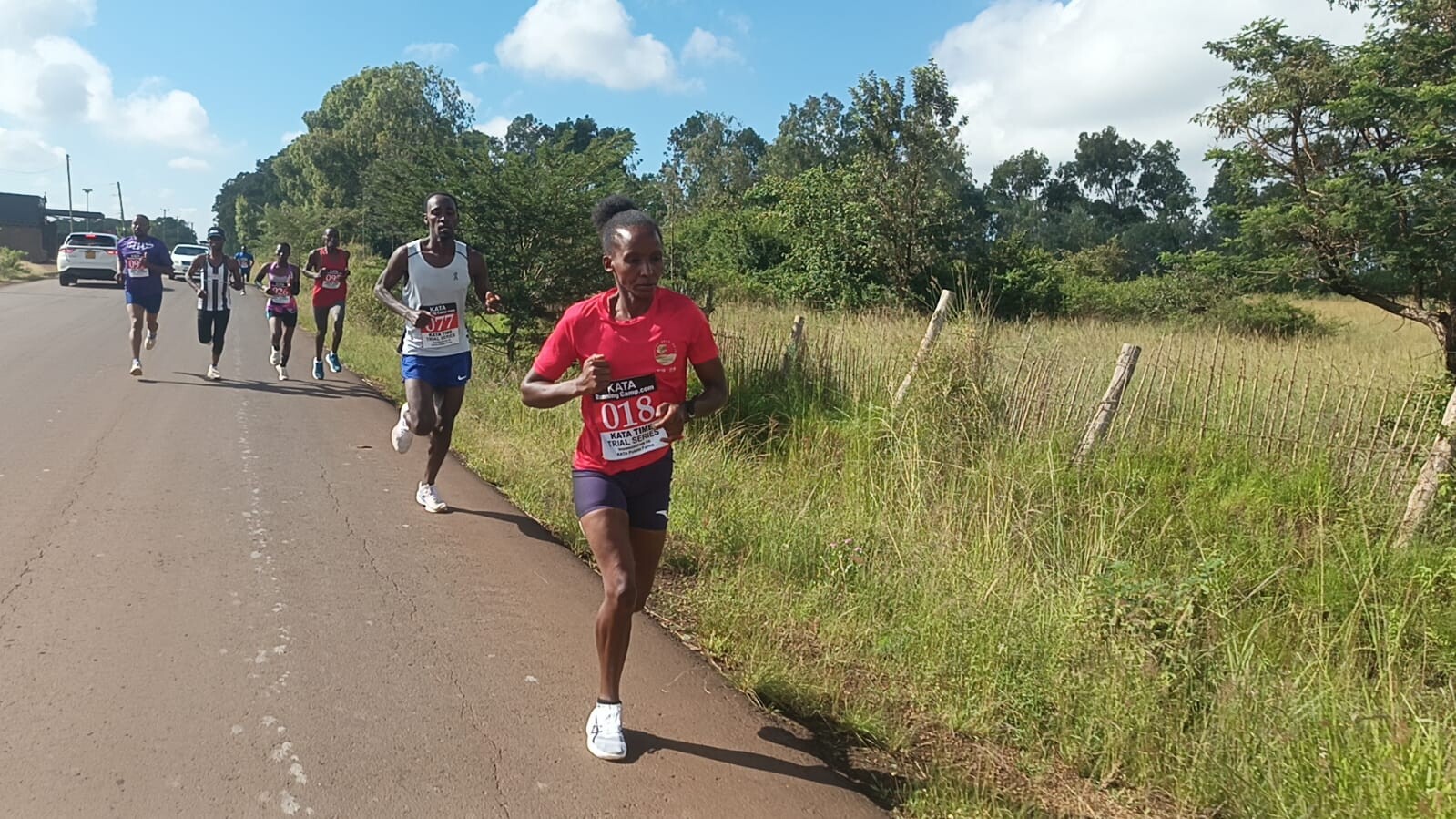
In the women’s 10km race, Kellen Waithira produced a commanding performance to take victory in 35:34. Her controlled pacing and strong finishing stretch allowed her to separate herself from the field and secure a well-earned win. Jane Wanja followed closely in second place with 35:44, ensuring a highly competitive women’s contest from start to finish. Regina Sandiki completed the podium after crossing the line in 36:45 following a determined run.
The men’s 5-kilometre race also delivered several impressive performances, with Francis Maina leading the field in 16:06 after an aggressive but well-managed effort. Anthony Kariuki secured second position in 16:49, while Harrison Mathenge finished third in 17:20 to round off the podium places.
5KM MEN
1. Francis Maina – 19 – Bib 92 – 16:06
2. Anthony Kariuki – 28 – Bib 79 – 16:49
3. Harrison Mathenge – 18 – Bib 96 – 17:20
4. John Mwangi – 45 – Bib 99 – 18:36
5. Kennedy Ochieng – 20 – Bib 33 – 22:24
MEN 10KM
1. Charles Wanjora – 24 – Bib 01 – 30:44
2. Bernard Waweru – 40 – Bib 50 – 30:45
3. Robin Musa – 17 – Bib 11 – 31:12
4. Joel Maina – 41 – Bib 83 – 31:52
5. Ismael Mburu – 25 – Bib 25 – 32:36
6. Vincent Kiprotich – 24 – Bib 94 – 33:12
7. Erick Cheruiyot – 30 – Bib 20 – 33:14
8. Fredrick Wambua – 20 – Bib 30 – 33:46
9. George Kamau – 35 – Bib 88 – 36:10
10. Paul Ng’ang’a – 43 – Bib 95 – 36:11
11. Edward Niyukuri – 24 – Bib 77 – 36:47
12. Charles Ndirangu – 65 – Bib 48 – 39:30
WOMEN 10KM
1. Kellen Waithira – 39 – Bib 18 – 35:34
2. Jane Wanja – 35 – Bib 16 – 35:44
3. Regina Sandiki – 19 – Bib 26 – 36:45
Beyond the finishing times, the true significance of the KATA Time Trial once again lay in the personal battles fought across every kilometre. For many athletes, the event represented far more than competition alone. It was an opportunity to measure improvement, test race fitness, and evaluate the effectiveness of months of disciplined training. Every second gained reflected sacrifice, resilience, and the determination to reach higher standards.
The conditions in Thika rewarded athletes who respected the demands of the course and managed their pacing intelligently. Those who remained patient during the early stages found strength in the closing kilometres, while the unforgiving nature of the road exposed even the smallest tactical mistakes. It was another reminder that success in distance running depends not only on physical preparation, but also on judgment, composure, and mental strength under pressure.
As the morning came to an end and the watches finally stopped, the 56th KATA Time Trial once again proved why it remains an important fixture in Kenya’s athletics culture. On a simple stretch of road in Thika, athletes continued chasing excellence, refining their craft, and turning ambition into reality — one stride at a time.
by Erick Cheruiyot for My Best Runs.
Login to leave a comment
KATA Time Trial Series
Welcome to the KATA Monthly Time Trial Held at the Kenyan Athletics Training Academy in Thika, Kenya, the KATA Monthly Time Trial is a unique and inclusive event designed to support runners of all levels in achieving their goals and showcasing their fitness. This event offers both 10K and 5K distances on an accurate, certified course, providing participants with...
more...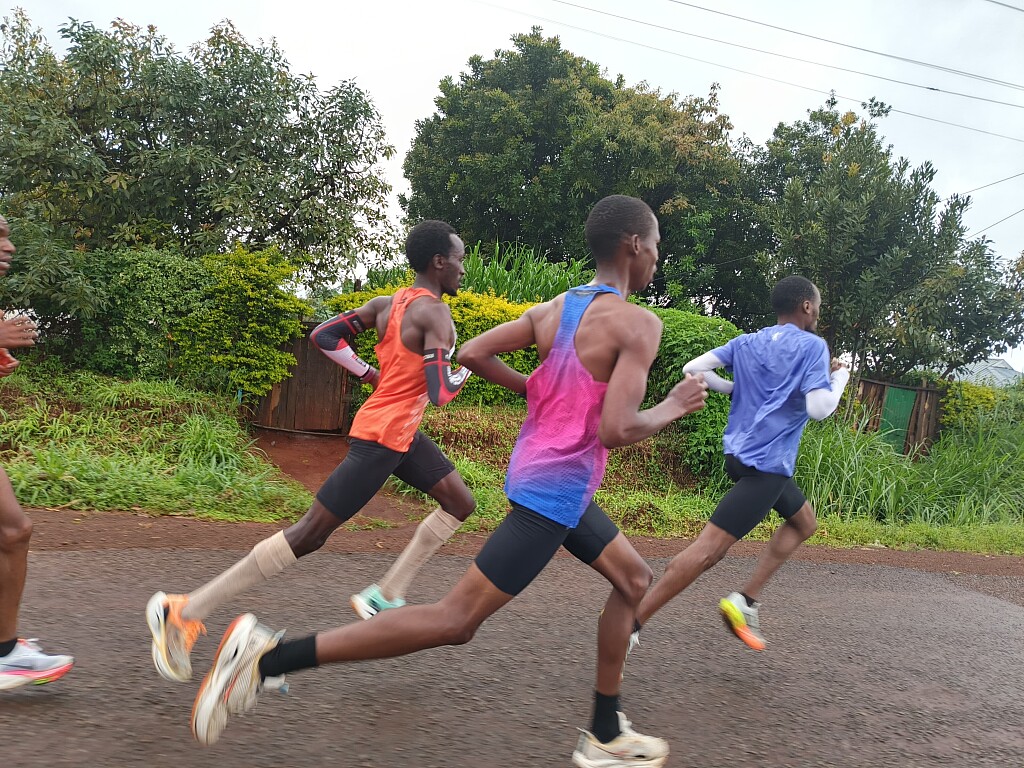
Chasing Personal Bests: Speed, Strategy and Rivalry Set the Stage for the 56th KATA Time Trial Series in Thika
Long before the crowds awaken and the world notices the results, athletes in Thika will already be battling exhaustion, pressure, and expectation. The rhythm of pounding footsteps will once again echo across the tarmac roads of Thika on Wednesday, May 13, 2026, as the 56th edition of the KATA Time Trial Series returns with renewed intensity, ambition, and anticipation. This is more than a race against time — It's a reflection of sacrifice, resilience, and the endless pursuit of personal growth in athletics dream.
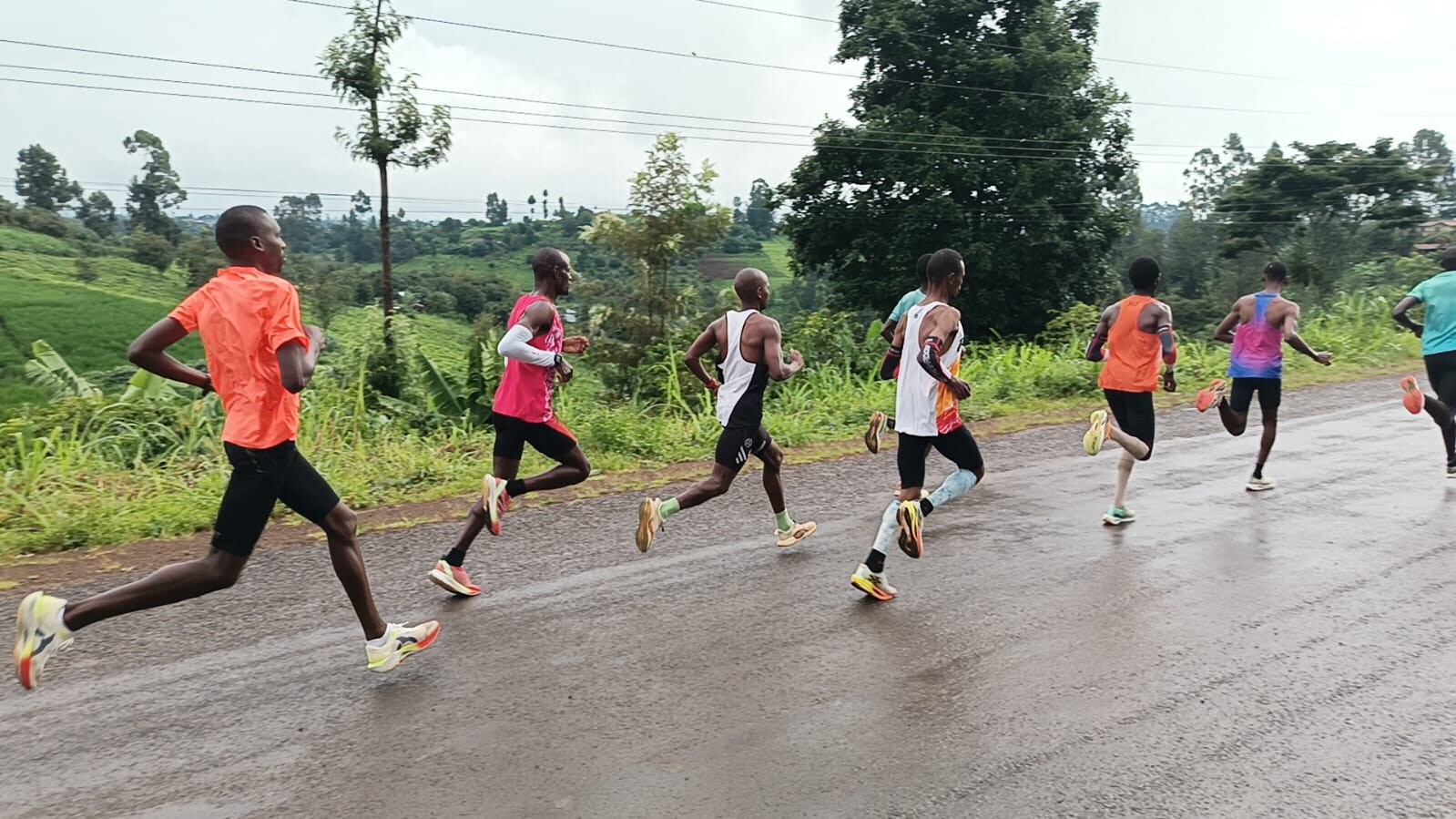
There may be no roaring stadium crowd, no flashing lights, and no elaborate finish-line celebrations, yet within Kenya’s athletics circles, few events command as much quiet respect as this one. For the athletes preparing to line up, the occasion is not about spectacle—it is about testing limits, measuring progress, and pursuing the relentless dream of improvement.
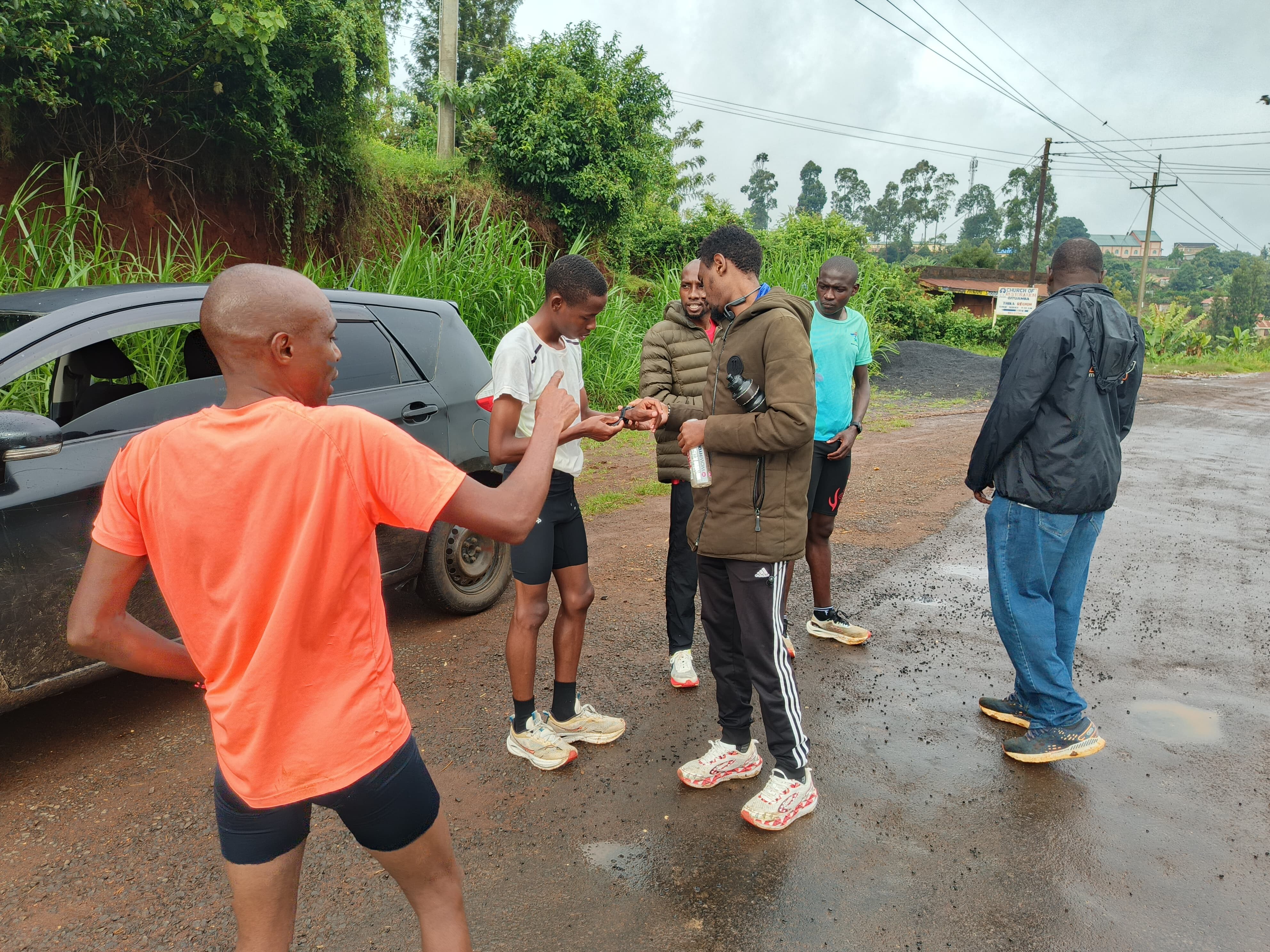
Held near the training base of the Kenyan Athletics Training Academy in Thika, the KATA Time Trial has steadily evolved into one of the most trusted performance platforms for developing and experienced athletes alike. Over the years, it has earned its reputation as a proving ground where months of sacrifice, demanding training sessions, and disciplined preparation are transformed into measurable reality. Every edition carries stories of breakthrough performances, painful lessons, and moments that redefine confidence.
Traditionally, the event has stood apart from conventional road races by stripping competition down to its purest form. Athletes do not simply race each other—they race the clock, their previous performances, and the invisible standards they set for themselves during training. Yet this 56th edition is expected to introduce a more tactical dimension. While fast times remain the primary objective, strategy and intelligent pack running are likely to shape the morning in significant ways.
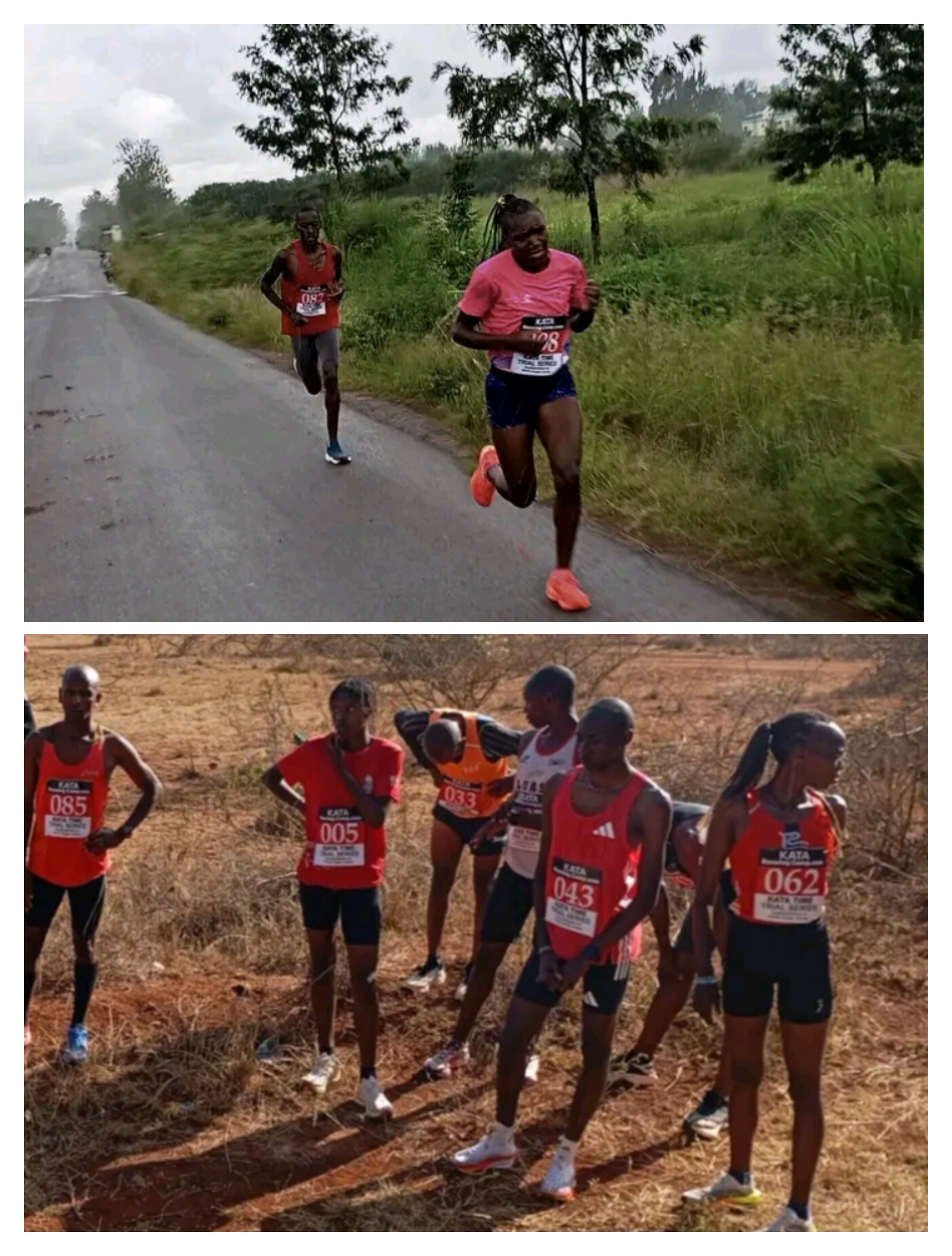
Athletes are expected to work together through the opening stages, carefully maintaining rhythm and pacing in pursuit of stronger finishing times and valuable personal bests. In such races, patience becomes just as important as raw speed. A poorly judged opening kilometre can destroy an otherwise promising performance, while disciplined execution often rewards those who conserve energy for the decisive closing stretch. It is this delicate balance between aggression and control that makes the KATA Time Trial so compelling.
The programme will once again feature the classic 5km and 10km distances, each demanding a very different kind of athlete. The 5km rewards sharpness, rhythm, courage, and the ability to sustain discomfort at relentless speed. The 10km, meanwhile, is a deeper examination of endurance, mental strength, and tactical discipline. On the unforgiving roads of Thika, even the slightest pacing mistake can separate a brilliant run from a disappointing result.
Perhaps the most powerful storyline surrounding this edition is the universal pursuit of personal bests. For many athletes, the stopwatch represents far more than numbers on a screen. Every second gained reflects countless early mornings, exhausting intervals, sacrifices away from competition, and unwavering belief in the training process. The KATA Time Trial has always provided athletes with an honest answer to one important question: has the work truly paid off?
Conditions in Thika are expected to favour runners who combine patience with intelligence. Those who remain composed in the early kilometres often find the strength to finish aggressively, while athletes who force the pace too early may struggle before the final stretch. It is an environment where discipline is rewarded and resilience is exposed in real time.
Though the event may unfold without major fanfare, its significance stretches far beyond a single morning of racing. On this modest stretch of road, athletes continue refining their craft, sharpening their instincts, and chasing the standards that define excellence in Kenyan athletics. When the watches finally stop at the end of the 56th edition, the results will reveal far more than finishing times. They will tell the story of ambition, rivalry, sacrifice, and the endless pursuit of becoming better with every stride.
by Erick Cheruiyot for My Best Runs.
Login to leave a comment
KATA Time Trial Series
Welcome to the KATA Monthly Time Trial Held at the Kenyan Athletics Training Academy in Thika, Kenya, the KATA Monthly Time Trial is a unique and inclusive event designed to support runners of all levels in achieving their goals and showcasing their fitness. This event offers both 10K and 5K distances on an accurate, certified course, providing participants with...
more...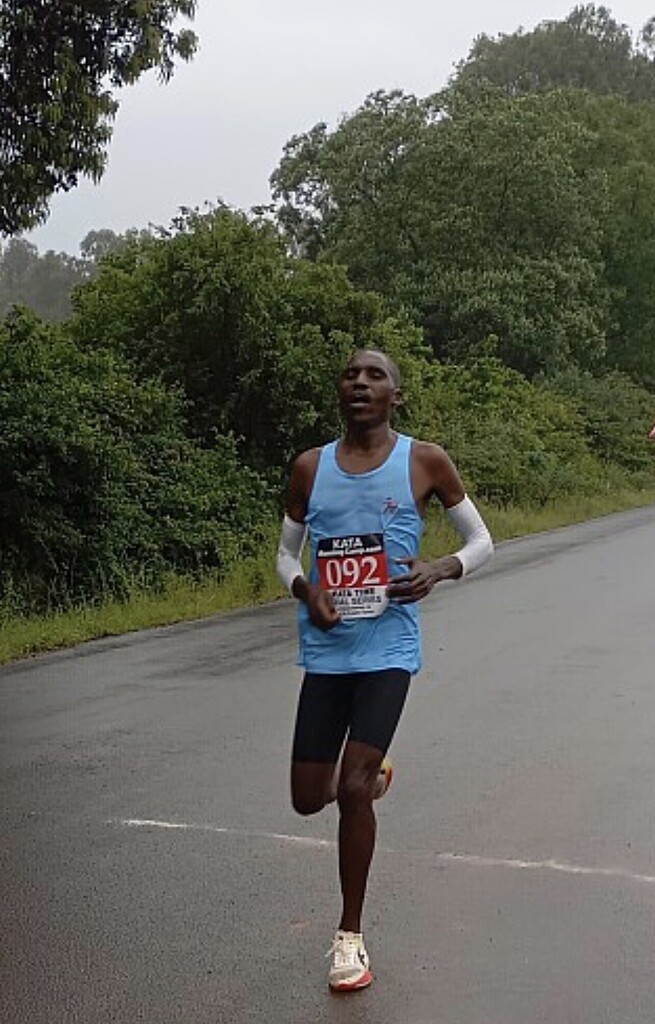
Storm, Spirit and Greatness: KATA Time Trial’s 55th Edition Delivers a Masterpiece in Thika
The 55th edition of the KATA Time Trial Series unfolded in unforgettable fashion in Thika, where heavy rainfall, cold temperatures and high humidity created a demanding stage for one of the region’s most respected road tests. What began beneath grey skies became a celebration of resilience, ambition and the enduring beauty of athletes daring to challenge their limits.
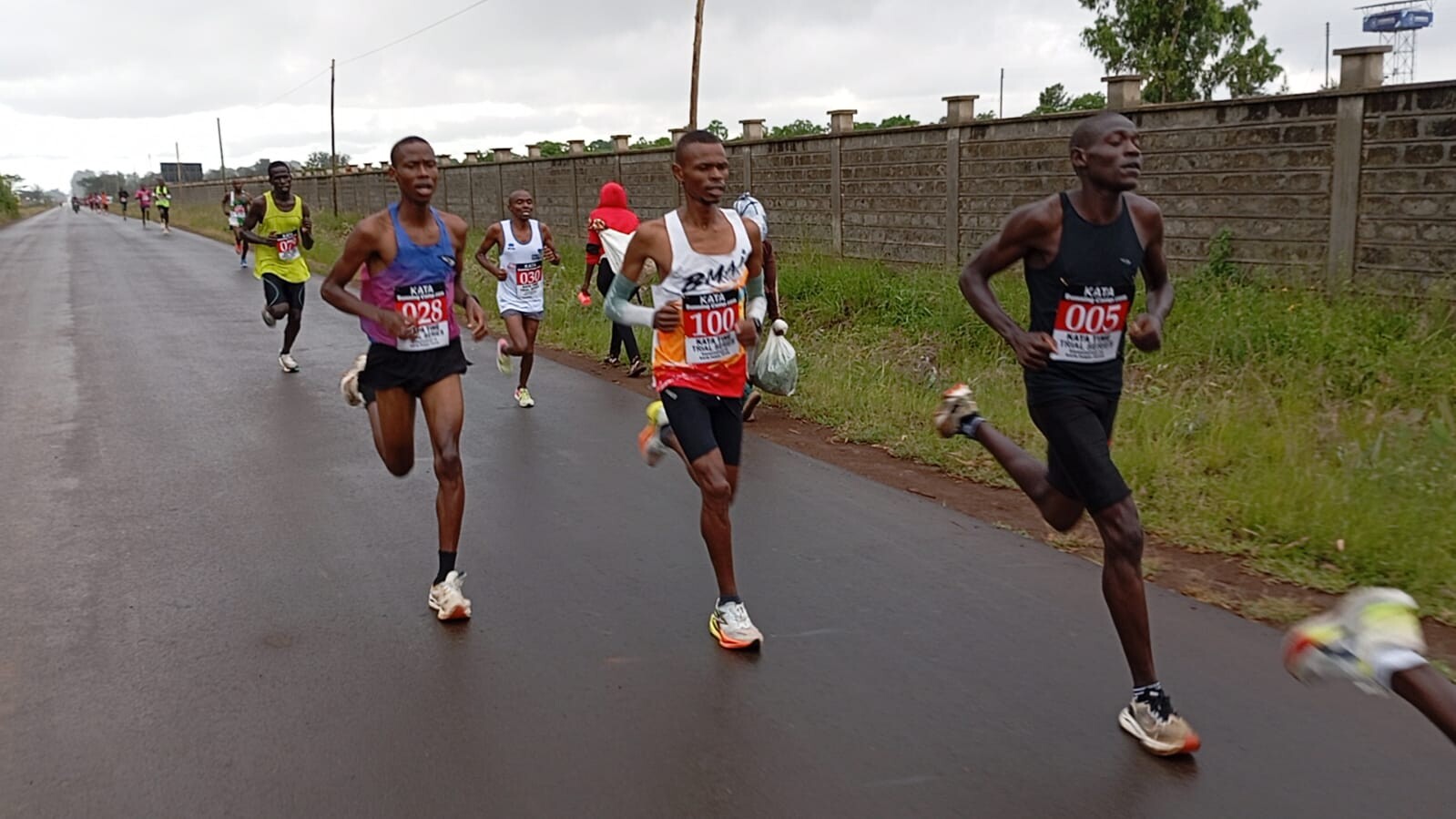
The KATA Time Trial has never relied on grand stadiums or roaring crowds to define its importance. Its prestige is rooted in something deeper—the purity of competition, the honesty of effort and the relentless pursuit of progress. Here, there are no shortcuts and no hiding places. Every stride must be earned, every second must be fought for, and every finish line tells a story of discipline, sacrifice and belief.
Even with the weather working against them, the athletes rose magnificently to the occasion. In the men’s 10km race, the early pace was expertly guided by Peter Mwaniki, whose calm and measured rhythm gave the field structure through the opening stages. When the contest reached its decisive moment, Peter Wanyoike surged clear to win in 29:46, holding off John Kuria, who finished strongly in 30:02, while Charles Wanjora completed the podium in 30:37.
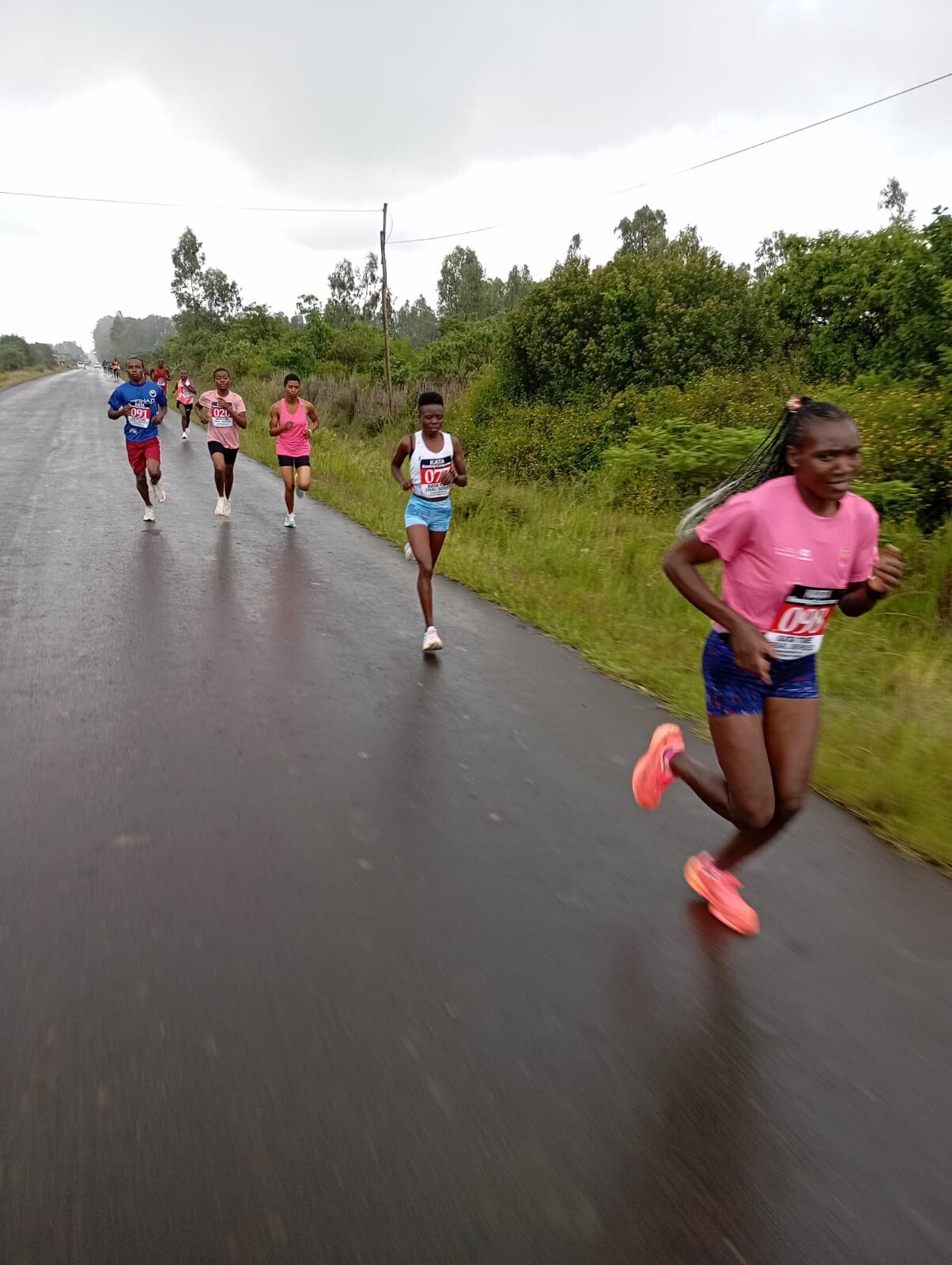
The women’s 10km produced another fine display of strength and composure as Nyimpha Kiteta mastered the difficult conditions to claim victory in 34:04. She finished ahead of Jane Wanja in 35:44 and Ruth Maina in 36:42, both of whom ran with grit and admirable resolve.
In the men’s 5km, one of the day’s most captivating stories came through the spirited rivalry between Dennis Musau and Elam Okato. Their battle brought colour, drama and extra intensity to the morning. Dennis attacked with courage and hunger to clock 18:51, while Elam answered with experience and patience to finish in 20:07. Though the official race winner was the outstanding Francis Maina in 16:04, with Harrison Mathenge second in 16:41 and Kelvin Muko third in 16:59, the duel between Dennis and Elam became one of the moments people will remember longest.
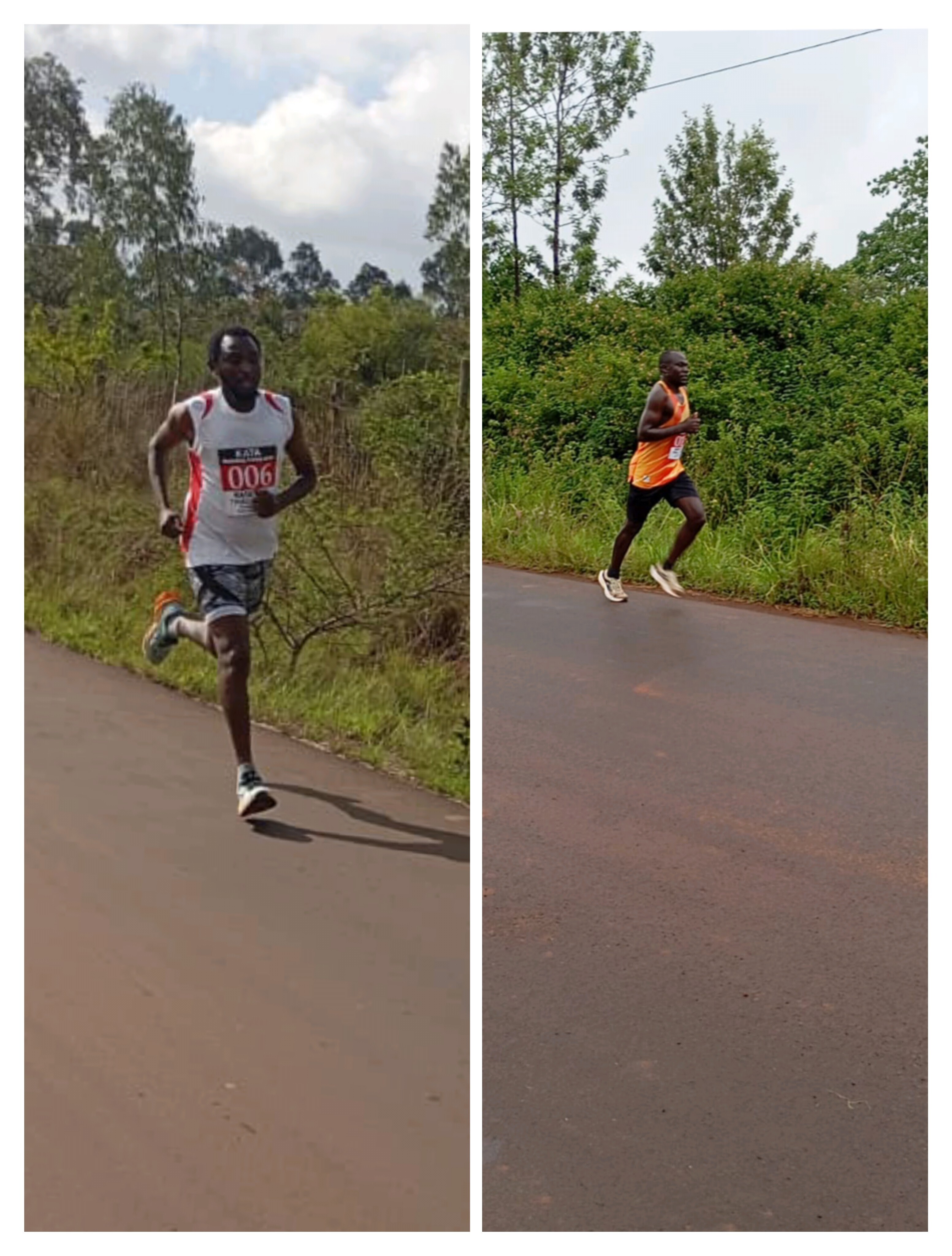
The women’s 5km was equally thrilling, with Doreen Mutua producing a superb run of 18:17 to secure victory after a fiercely contested race. She held off the fast-finishing Lucy Njeri, who ran 18:24, and Faith Kitonga, who crossed in 18:26, in one of the closest finishes of the day.
Beyond the victories and podium finishes, the morning also belonged to the many athletes who achieved Personal Bests. In such difficult weather, those breakthroughs carried even greater meaning. They were not simply numbers on a stopwatch, but proof that patient work, quiet sacrifice and countless unseen training sessions can still produce progress when conditions are toughest.
The lessons of the day continued after the finish line during the post-race gathering, where coaches and veteran athletes shared wisdom with the competitors. They urged the younger runners to remain patient with their journey, to trust consistency, and to understand that lasting success is never rushed. Greatness, they reminded them, is built quietly through daily discipline, one honest effort at a time.
When the rain finally faded and the roads grew silent once more, the legacy of this edition remained clear. The 55th KATA Time Trial was more than a race—it was a portrait of courage, a song of perseverance and a shining reminder that dreams often grow strongest in difficult weather. In every stride there was hope, in every finish there was pride, and in every athlete there burned the beautiful promise of something greater still to come.
by Erick Cheruiyot for My Best Runs.
Login to leave a comment
KATA Time Trial Series
Welcome to the KATA Monthly Time Trial Held at the Kenyan Athletics Training Academy in Thika, Kenya, the KATA Monthly Time Trial is a unique and inclusive event designed to support runners of all levels in achieving their goals and showcasing their fitness. This event offers both 10K and 5K distances on an accurate, certified course, providing participants with...
more...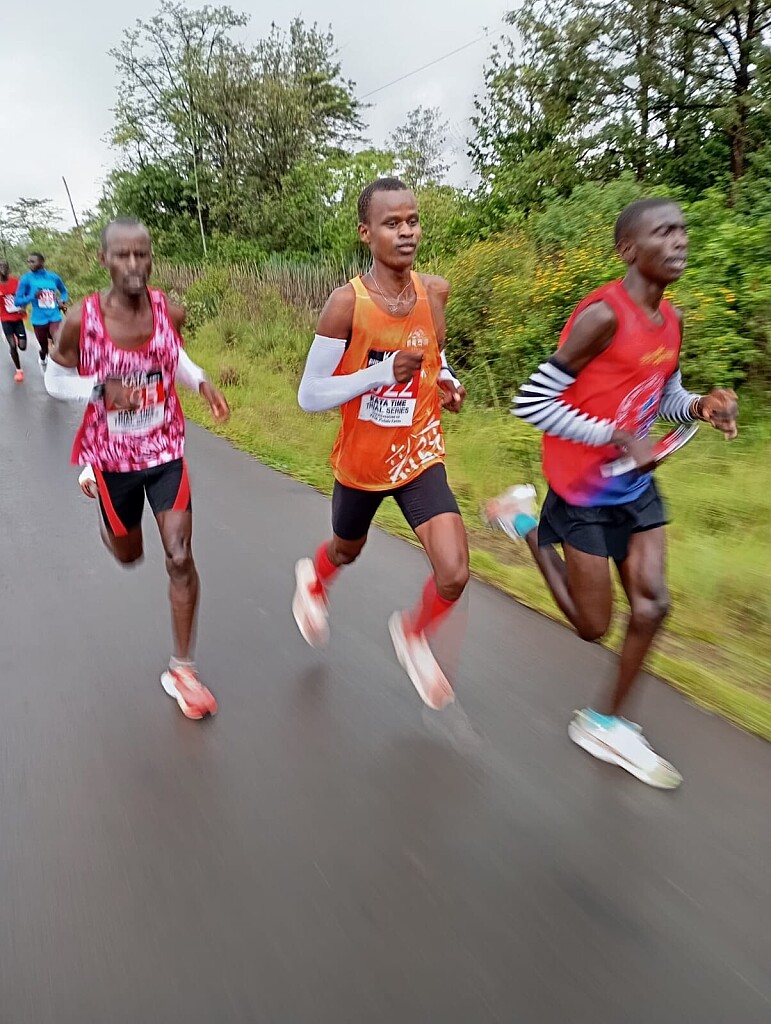
Strong Performances Highlight KATA Time Trial No. 55 at Thika
KATA Time Trial No. 55, part of the ongoing monthly series at KATA Thika, produced a number of strong performances and personal breakthroughs—clear signs that the program continues to move athletes forward.
Breakthrough Run from Francis Maina
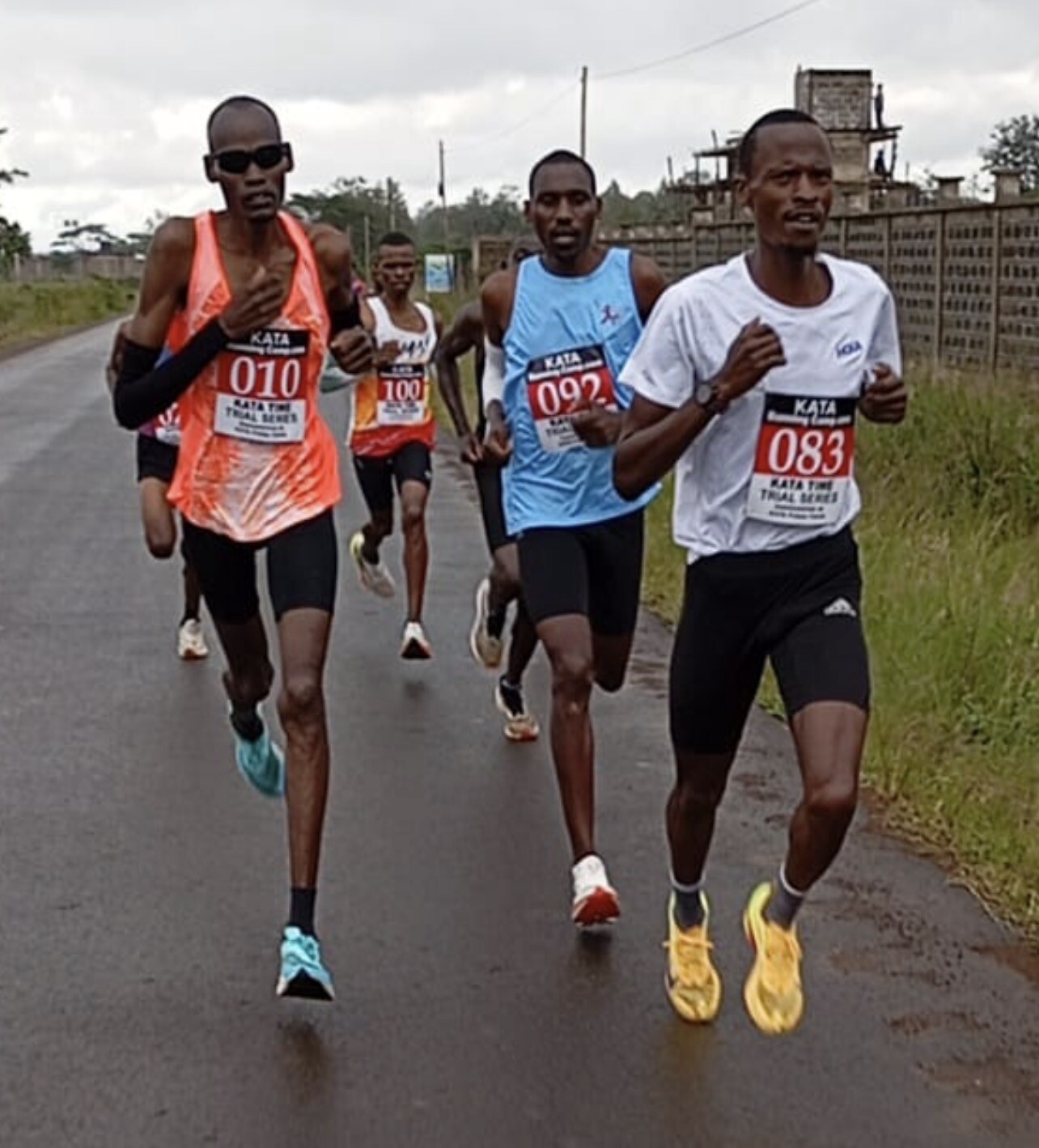
In the men’s 5km, Francis Maina (20) delivered a standout performance, winning in 16:04, a personal best. He improved by 42 seconds from his previous mark of 16:46 set just last month—an impressive jump that reflects consistency and growing confidence.
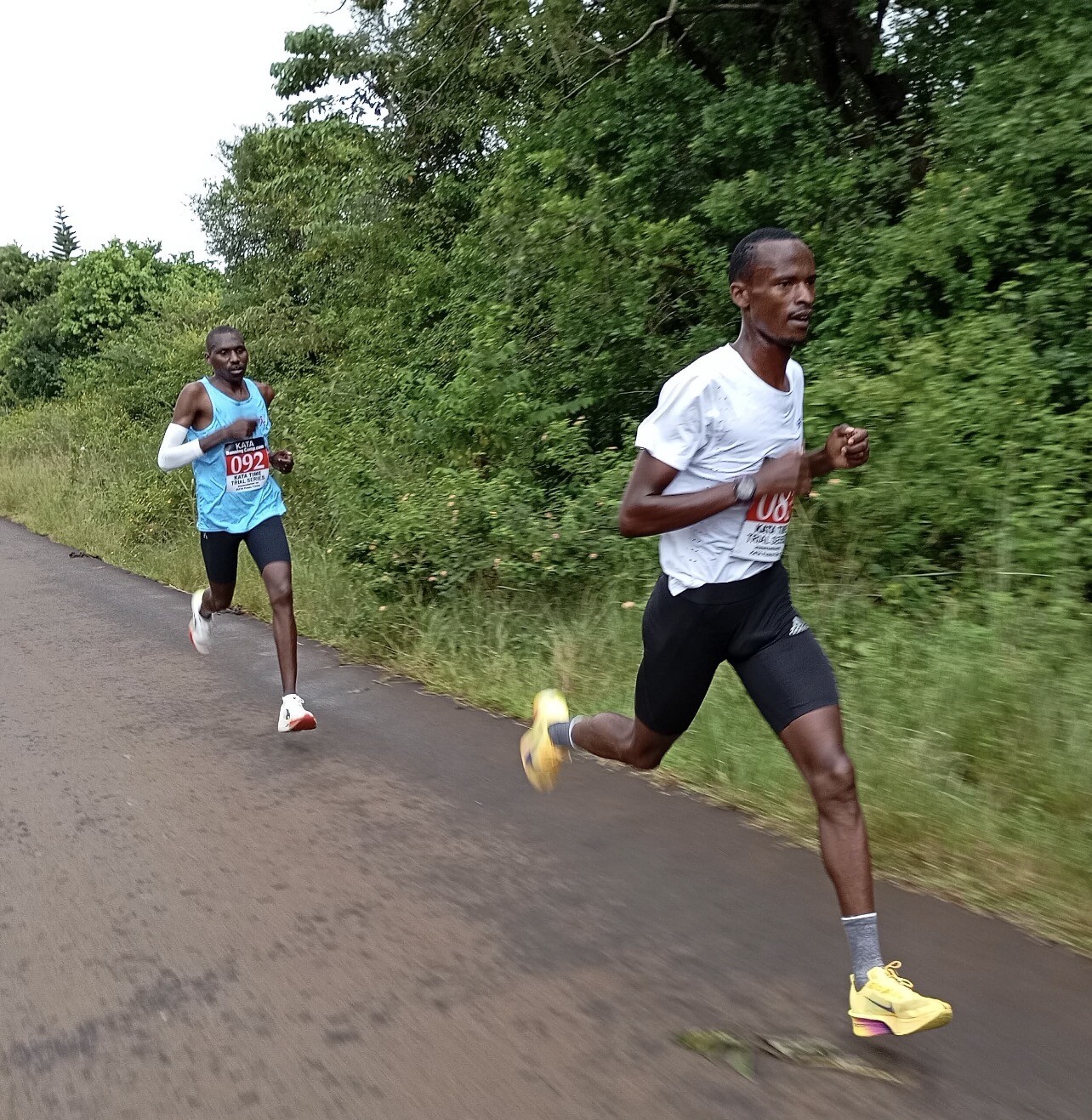
Harrison Mathenge (18) followed in second place with 16:41, continuing his steady progression.
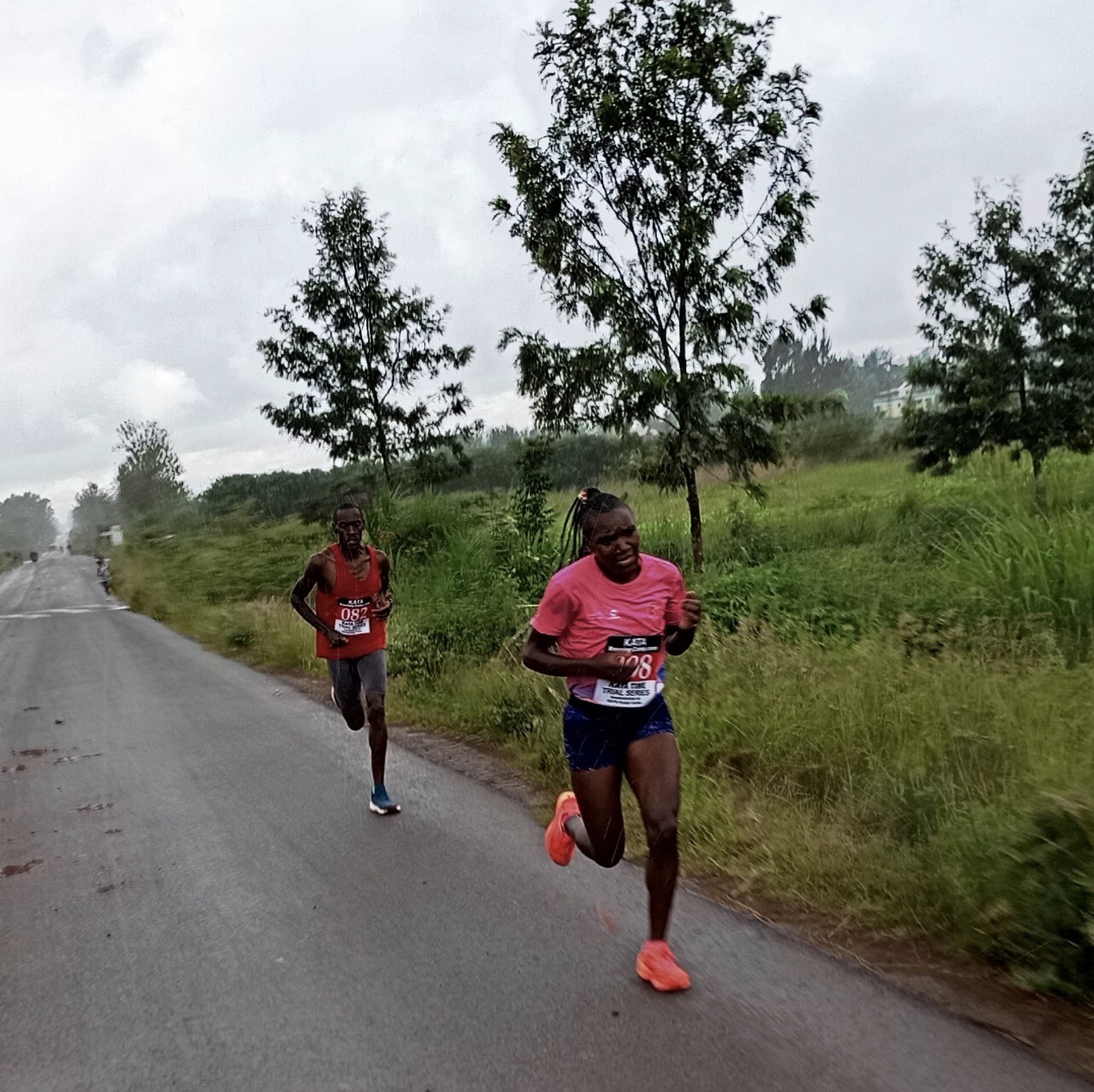
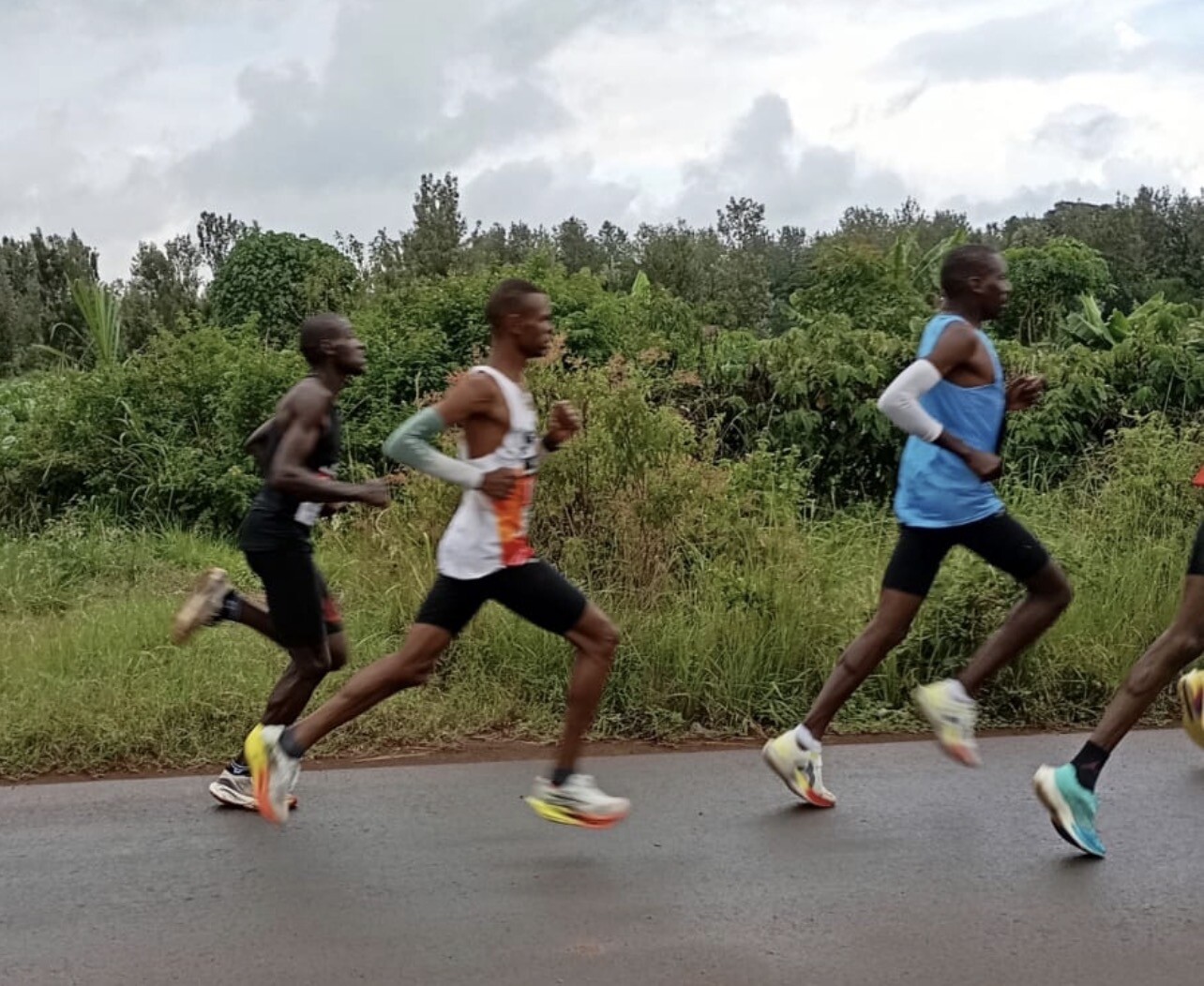
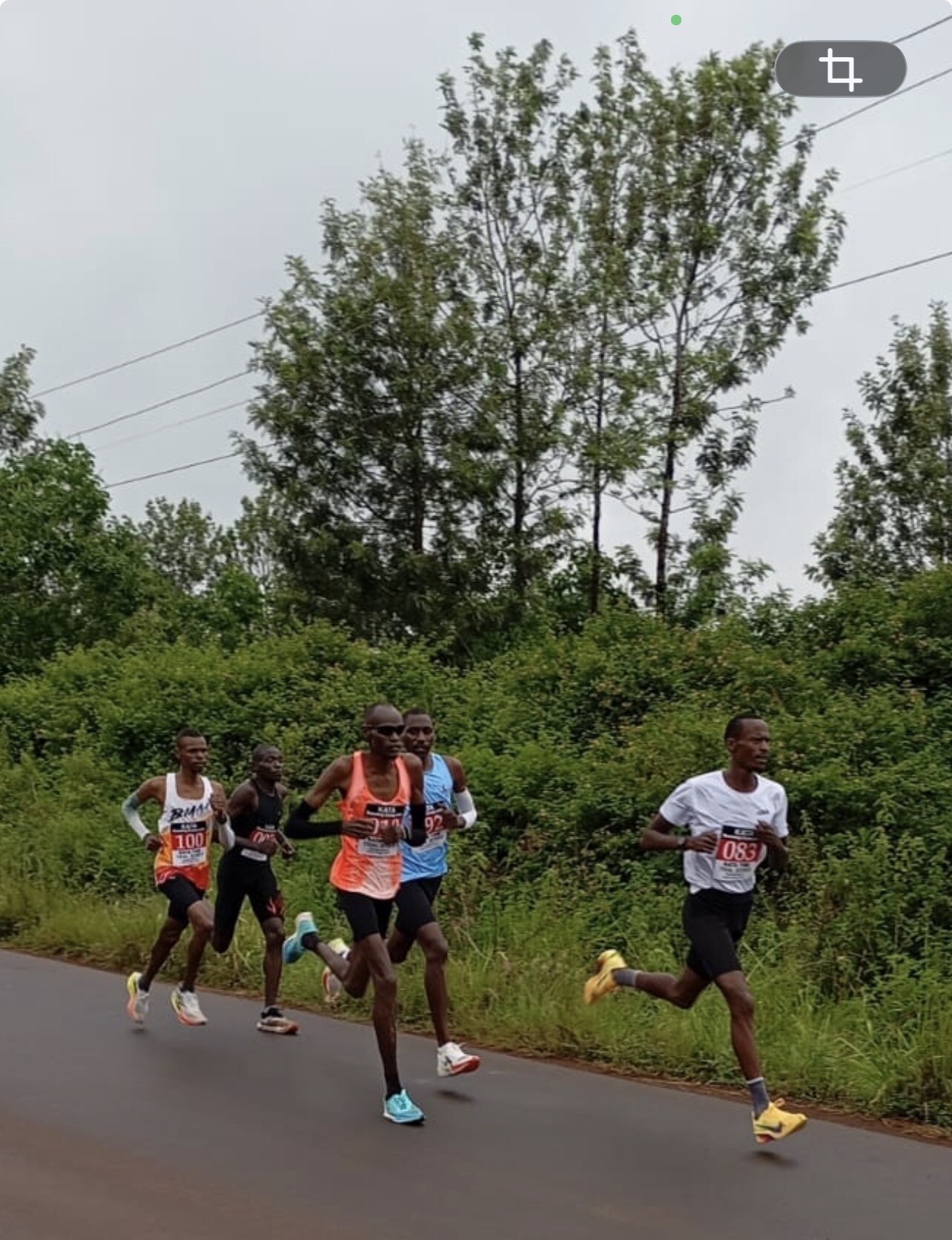
On the women’s side, Doreen Mutua (17) took the win in 18:17, holding off Lucy Njeri (18), who finished close behind in 18:24.
Sub-30 Performance Leads Men’s 10K
In the men’s 10km, Peter Wanyoike (30) led the field with a winning time of 29:46, with John Kuria (30) finishing second in 30:02.
One of the most encouraging performances came from Erick Cheruiyot (30), who finished fourth in 30:43, setting a new personal best and improving by 17 seconds. His progress continues to reflect the purpose behind the KATA program.
Kiteta Leads Women’s 10K
In the women’s 10km race, Nympha Kiteta (20) claimed victory in 34:04, followed by Jane Wanja (38) in 35:44 and Ruth Maina (23) in 36:42.
Full Results
5KM MEN
1. Francis Maina (20 / 084) – 16:04
2. Harrison Mathenge (18 / 019) – 16:41
3. Kelvin Muko (18 / 006) – 16:59
4. John Mutuku (15 / 090) – 17:06
5. Eric Mwaura (19 / 043) – 17:21
6. Samuel Maingi (15 / 026) – 17:28
7. Joseph Mulwa (17 / 091) – 18:17
8. John Mwangi (42 / 050) – 18:24
9. Dennis Musau (43 / 089) – 18:51
10. Benjamin Ndaro (14 / 097) – 20:03
11. Elam Okato (38 / 014) – 20:07
12. Raphael Masese (15 / 095) – 22:07
5KM WOMEN
1. Doreen Mutua (17 / 020) – 18:17
2. Lucy Njeri (18 / 023) – 18:24
3. Faith Kitonga (18 / 018) – 18:26
4. Felister Mbatha (19 / 099) – 22:10
5. Rachel Njeri (15 / 093) – 22:14
6. Ann Monthe (15 / 011) – 23:20
7. Cynthia Ndanu (15 / 017) – 23:21
10KM MEN
1. Peter Wanyoike (30 / 092) – 29:46
2. John Kuria (30 / 100) – 30:02
3. Charles Wanjora (24 / 005) – 30:37
4. Erick Cheruiyot (30 / 010) – 30:43 (PB)
5. Bernard Waweru (40 / 073) – 31:16
6. Justus Nyamai (18 / 028) – 31:21
7. Robin Musa (17 / 033) – 32:07
8. Frederick Wambua (20 / 054) – 32:24
9. Vincent Kiprotich (24 / 079) – 32:28
10. Ismael Mburu (24 / 025) – 32:48
11. Joel Maina (42 / 030) – 33:04
12. David Muriuki (40 / 001) – 33:17
13. Bernard Gicheha (35 / 085) – 33:27
14. Joseph Nyota (20 / 022) – 33:46
15. Brian Mwangi (22 / 048) – 34:02
16. Paul Ng’ang’a (43 / 082) – 35:29
17. Charles Ndirangu (65 / 070) – 38:29
10KM WOMEN
1. Nympha Kiteta (20 / 047) – 34:04
2. Jane Wanja (38 / 098) – 35:44
3. Ruth Maina (23 / 077) – 36:42
4. Regina Sandiki (19 / 096) – 37:42
5. Felister Maina (37 / 094) – 38:01
Final Word
Now at Time Trial No. 55, this monthly KATA series continues to do exactly what it was designed to do—create opportunities for athletes to test themselves, improve, and move forward.
At KATA, progress matters—and today showed plenty of it.
by Coach John
Login to leave a comment
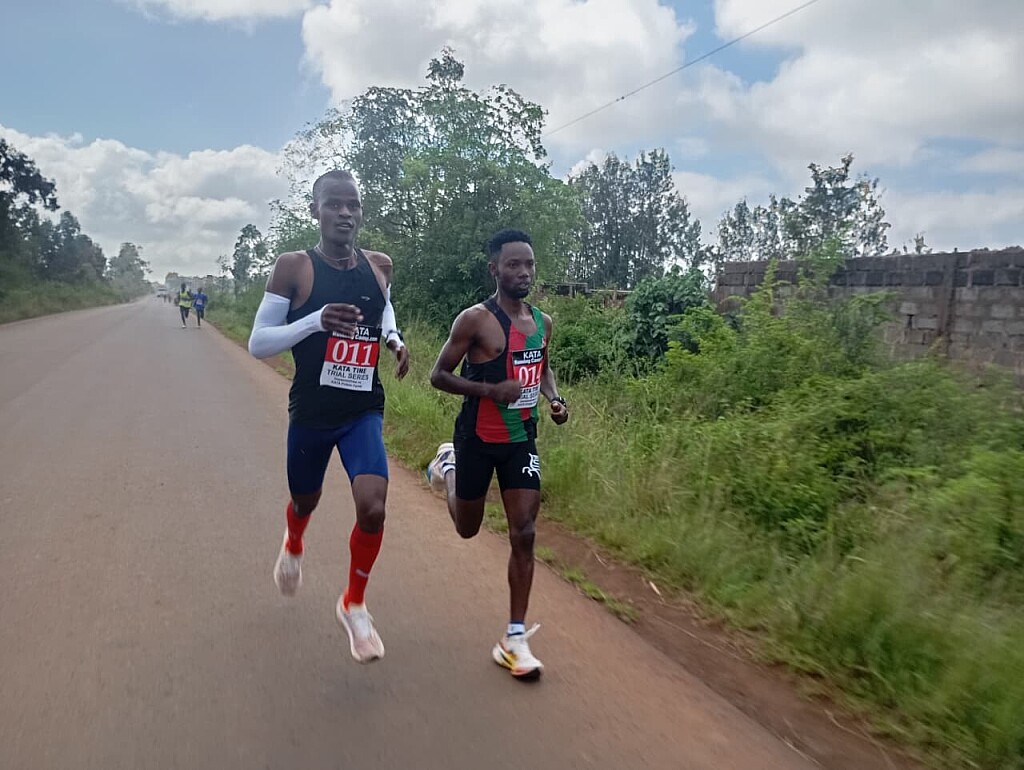
Speed, Strategy and Rivalry: KATA Time Trial Returns for a Thrilling 55th Edition
The familiar sound of pounding footsteps will once again roll across the tarmac course in Thika on Wednesday, 15th April 2026, as the 55th edition of the KATA Time Trial takes centre stage. There may be no grand stadium atmosphere, no roaring crowds, and no glittering finish-line ceremony, yet within the athletics world this event carries enormous value. For the runners who gather there, it is not about spectacle—it is about precision, progress, and the relentless pursuit of improvement.

Held near the training grounds of the Kenyan Athletics Training Academy in Thika, the KATA Time Trial has steadily built a reputation as one of the most respected performance tests on the local calendar. Over the years, it has become a trusted benchmark where athletes measure their development, sharpen their race instincts, and turn months of disciplined training into meaningful results.
Unlike conventional races, where tactical battles and pack dynamics often shape the outcome, the KATA Time Trial has traditionally reduced competition to its purest form, with athletes racing mainly against the clock and their own previous bests. However, this 55th edition is expected to bring a different dimension. While time remains the ultimate target, the event is likely to be defined by calculated tactical battles and well-organised pack running, as athletes work together to sustain strong rhythms and create the ideal conditions for faster times and more personal bests. Success will still demand disciplined pacing, sharp judgment, and composure under pressure, but strategy could prove just as decisive as strength. Adding further intrigue to the programme, the 5km race is set to feature an exciting showdown between two experienced veterans, Dennis and Elam, whose rivalry promises to inject extra intensity into an already highly anticipated morning.
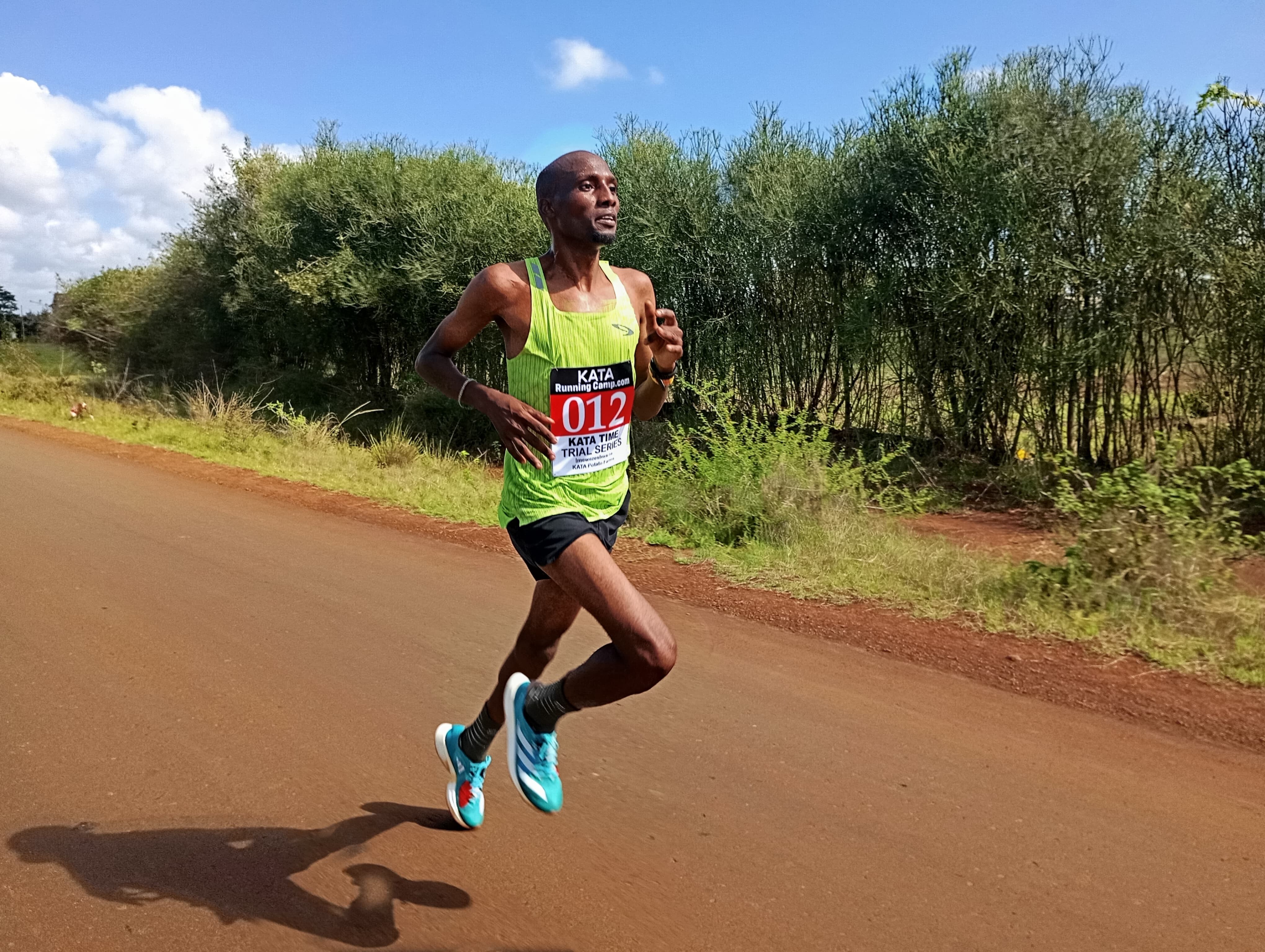
This edition will once again feature the classic 5-kilometre and 10-kilometre tests, two distances that reveal different dimensions of an athlete’s fitness. The 5km demands sharp speed, efficiency, and the courage to sustain discomfort at a fast rhythm. The 10km, by contrast, rewards patience, endurance, and the discipline to manage effort over a longer stretch. In both events, even the smallest pacing error can prove costly on the unforgiving road.
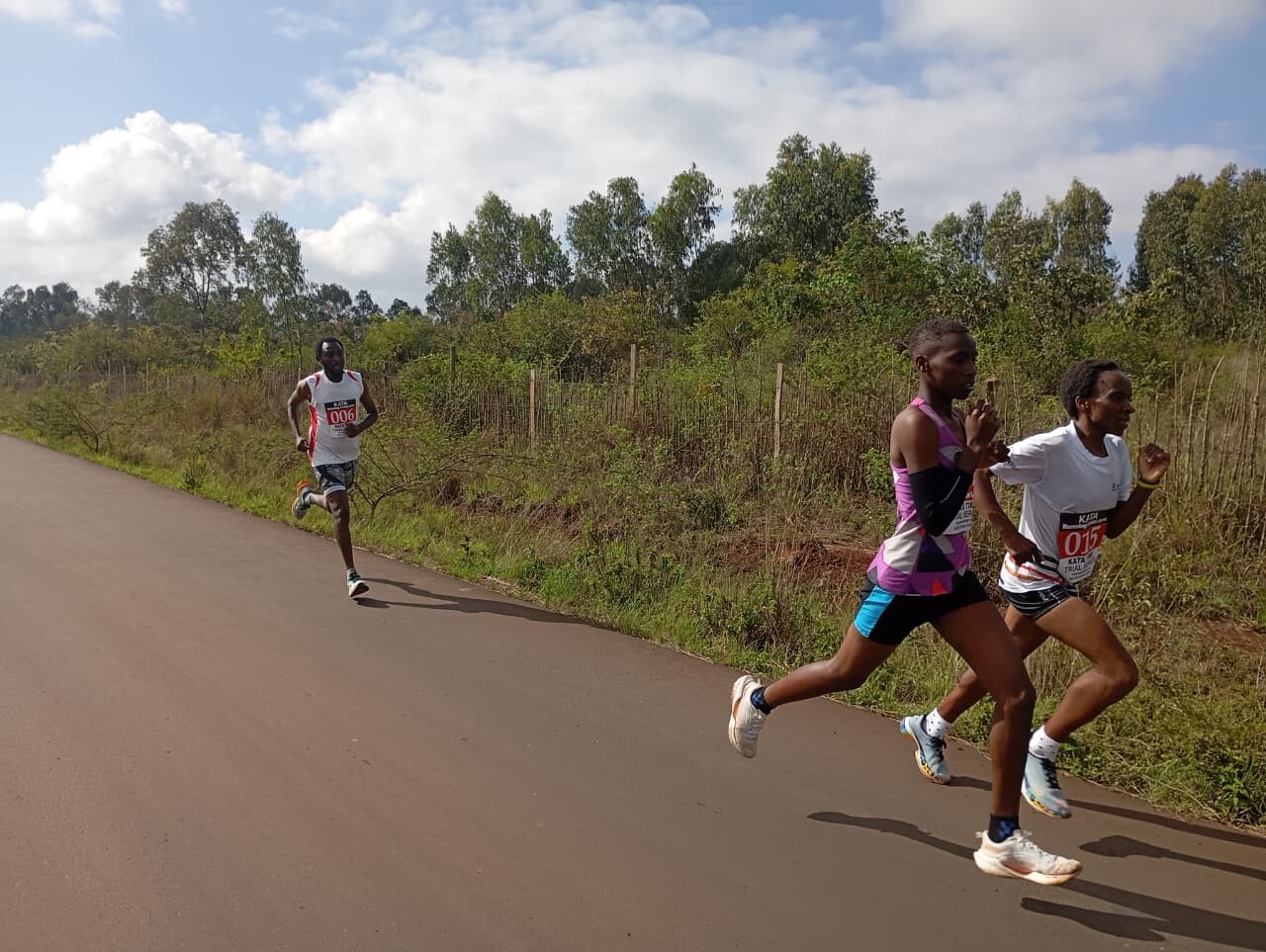
One of the most exciting themes of this edition will be the determined chase for personal bests. For many runners, the stopwatches in Thika represent more than numbers—they represent evidence of growth, sacrifice, and progress. Every second gained is the reward for countless early mornings, demanding sessions, and unwavering commitment. That is what makes the time trial so significant: it transforms training into truth.
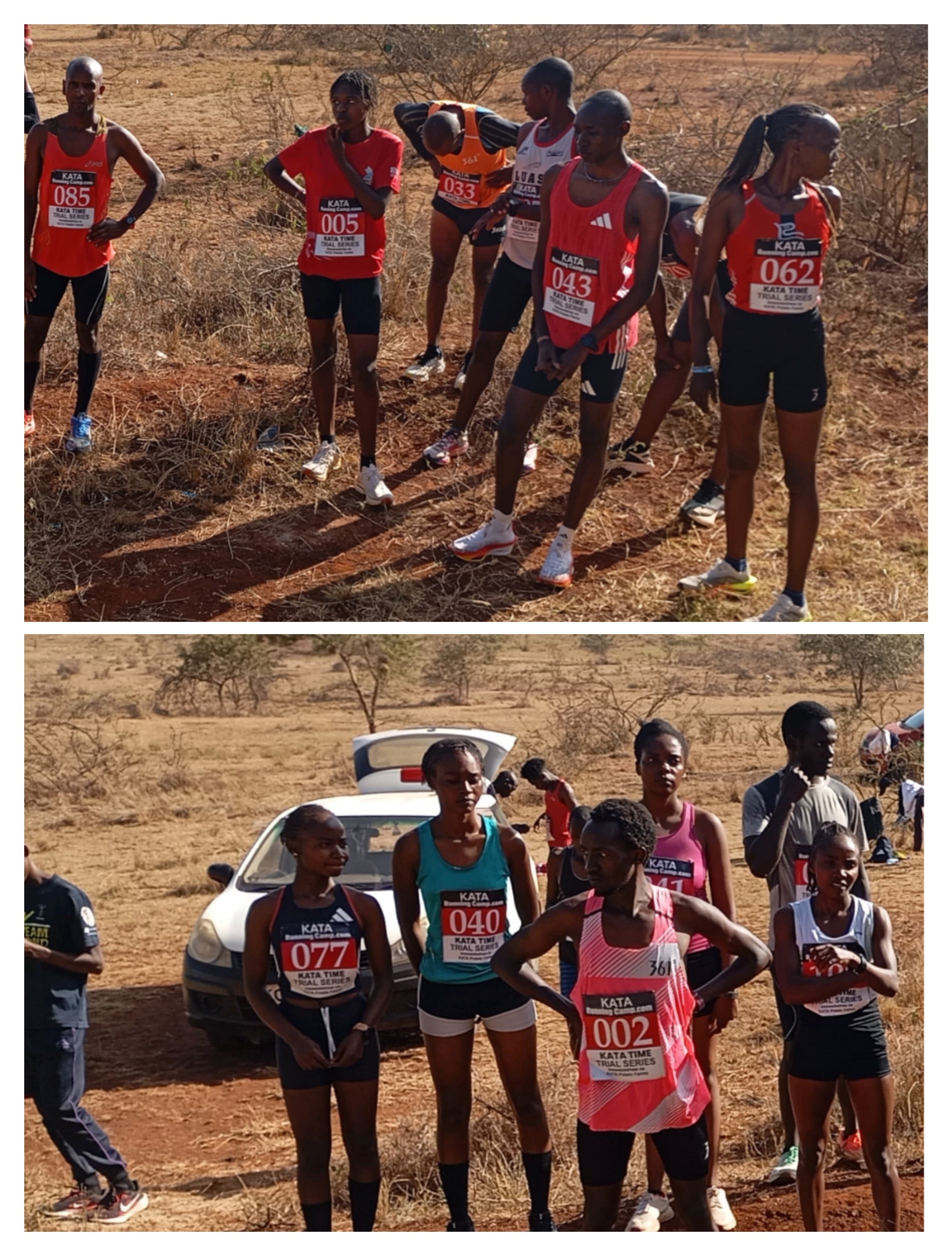
The conditions in Thika are expected to favour athletes who respect the distance and run with intelligence. Those who remain patient in the opening kilometres often finish strongly, while those who attack too early may pay the price before the line. It is a setting where discipline is rewarded and lessons are learned in real time.
Though it may unfold quietly, the impact of the KATA Time Trial reaches far beyond a single morning. On this modest stretch of tarmac, athletes continue to refine their craft, build resilience, and chase the standards that define excellence. When the watches stop at the end of the 55th chapter, the results will tell more than finishing times—they will tell the story of ambition, hard work, and the endless pursuit of becoming better.
by Erick Cheruiyot for My Best Runs.
Login to leave a comment
KATA Time Trial Series
Welcome to the KATA Monthly Time Trial Held at the Kenyan Athletics Training Academy in Thika, Kenya, the KATA Monthly Time Trial is a unique and inclusive event designed to support runners of all levels in achieving their goals and showcasing their fitness. This event offers both 10K and 5K distances on an accurate, certified course, providing participants with...
more...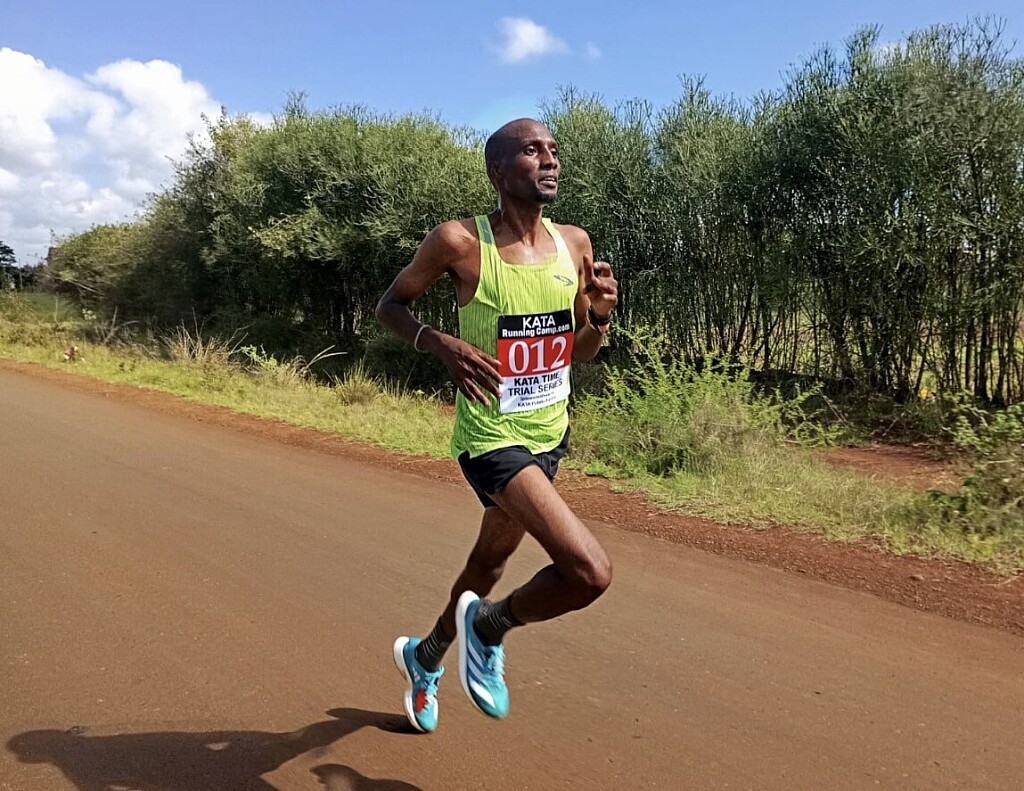
Under Warm and Humid Skies, Athletes Deliver Strong Performances at the 54th KATA Time Trial
The familiar stretch of tarmac in Thika, running alongside the Kenyan Athletics Training Academy (KATA), once again came alive as athletes gathered for the 54th edition of the KATA Time Trial, a session defined by quiet determination, controlled pacing, and purposeful competition. Under mostly sunny skies, the morning carried a noticeable layer of warmth and humidity, conditions that subtly tested the discipline and race management of every runner who lined up across the 5km and 10km distances.
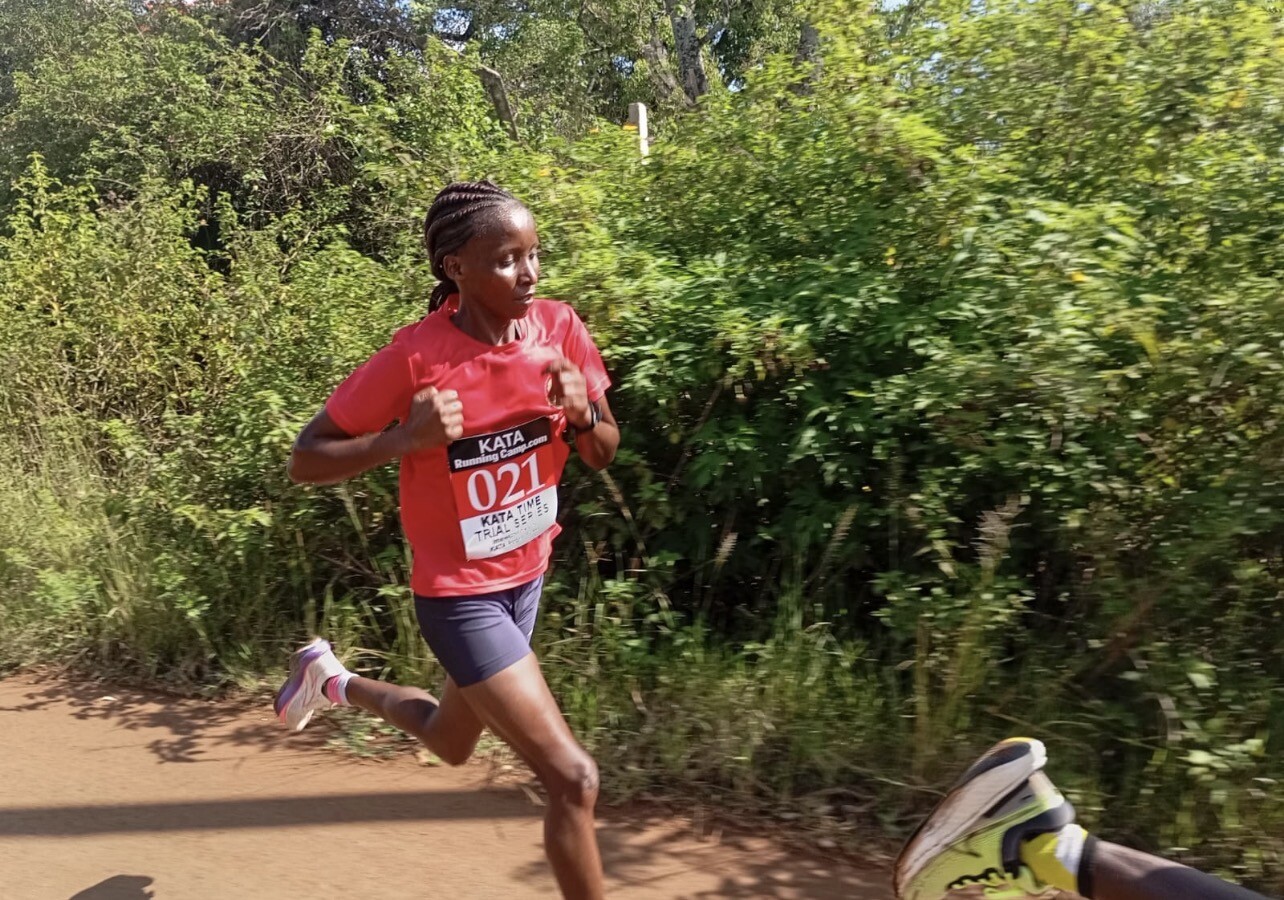
From the outset, the atmosphere demanded patience. The combination of heat and humidity meant that athletes had to measure their effort carefully, balancing ambition with composure as they navigated the now-familiar loop. Yet such conditions have always been part of the character of the KATA time trials — a training ground where athletes refine not only their speed but also their judgment, learning to listen to their bodies while maintaining rhythm through every stride.
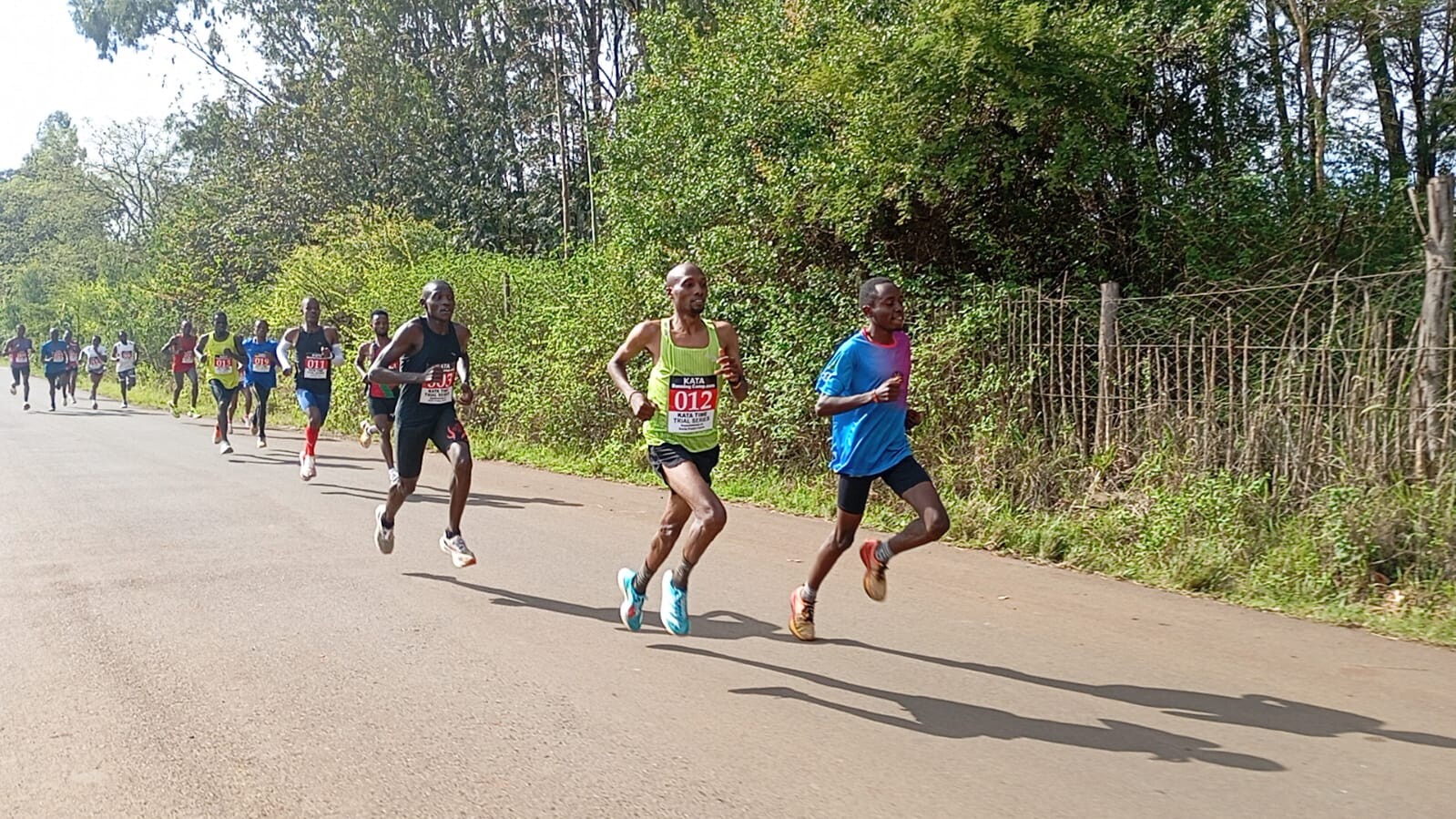
In the women’s 5km race, Naomi Wambui produced a confident and well-controlled performance to claim victory in 18:21. Running with composure from the early stages, Wambui settled into a steady rhythm and maintained her form despite the rising warmth. Her stride remained relaxed through the middle stages before she closed strongly, delivering a performance that reflected both experience and control. Felister Mbatha followed in 22:21, showing determination and steady effort throughout the course as she secured second place.
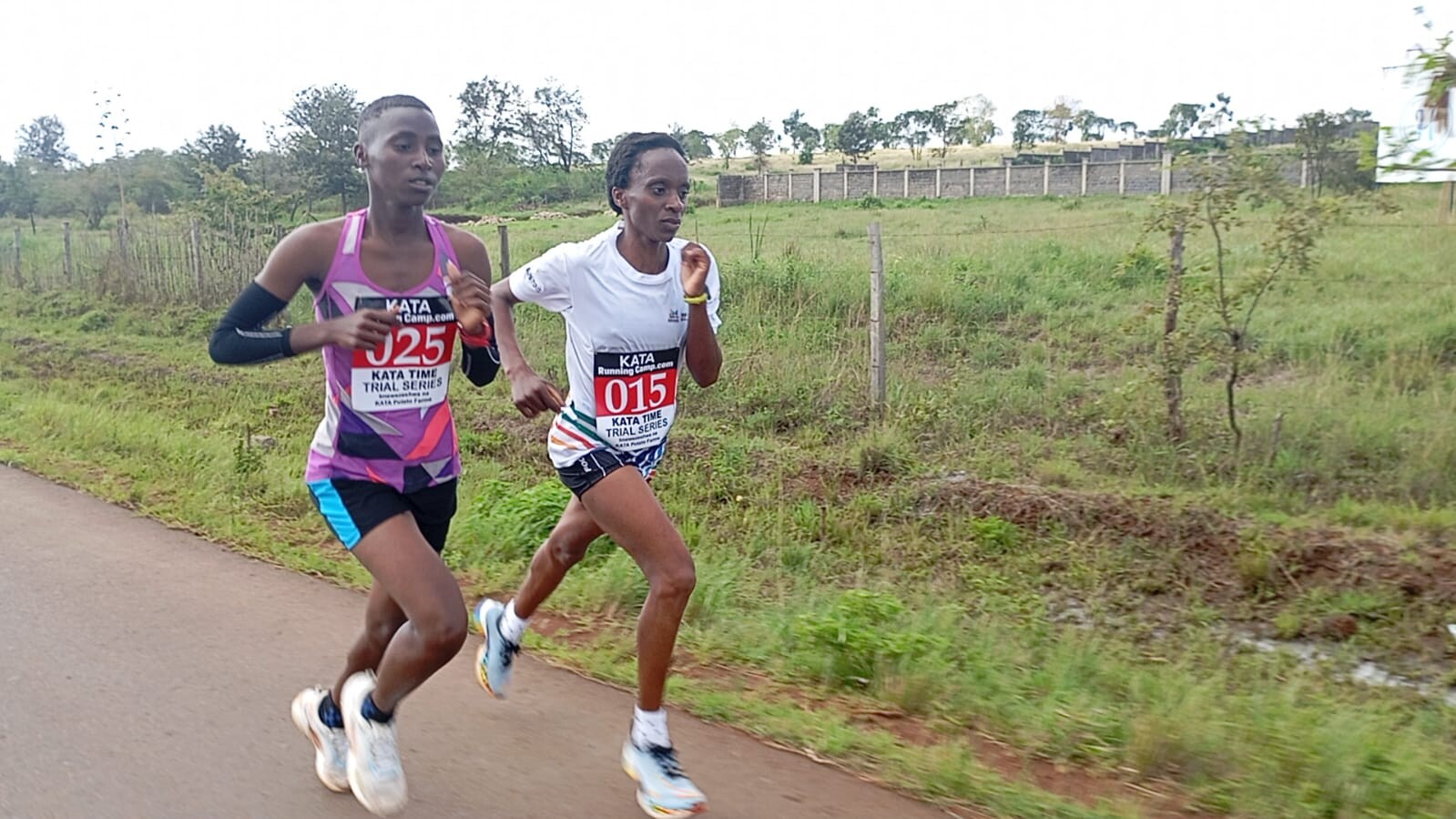
The men’s 5km brought an energetic display from Francis Maina, who ran decisively to take the win in 16:46. His race was defined by an assertive tempo and efficient cadence that allowed him to maintain momentum from start to finish.
Just behind him, the enduring Dennis Musau reminded everyone that experience is sometimes the most valuable training partner. Clocking 19:46, the veteran moved through the course with the calm rhythm of someone who has seen many race mornings come and go. While the younger runners pushed hard up front, Musau seemed to glide along with a knowing smile, almost as if he was quietly reminding them that endurance running is not only about speed — it’s also about patience, wisdom, and the occasional ability to make it look easier than it really is. His performance added a light and enjoyable touch to the race, proving that the sport always has room for both youthful fire and seasoned composure.
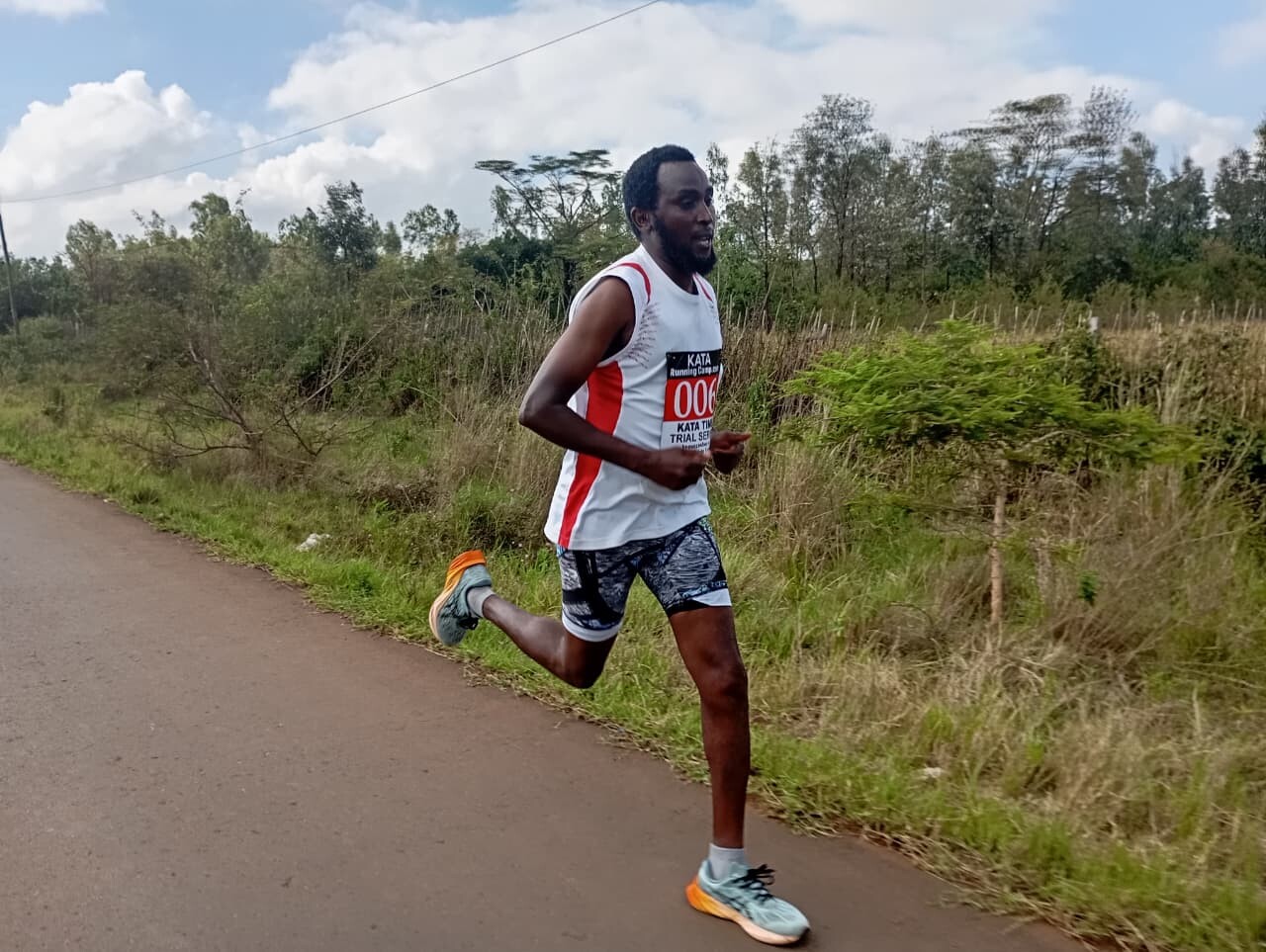
As attention shifted to the longer distance, the 10km races demanded greater endurance and discipline. In the women’s contest, Kellen Waithera delivered one of the most composed performances of the morning, crossing the finish line in 34:58. Her run was marked by consistency and intelligent pacing, holding a steady tempo across each kilometer despite the humidity that hung in the air. Regina Sandiki followed with a determined 36:57, maintaining her rhythm and finishing strongly to secure second place.
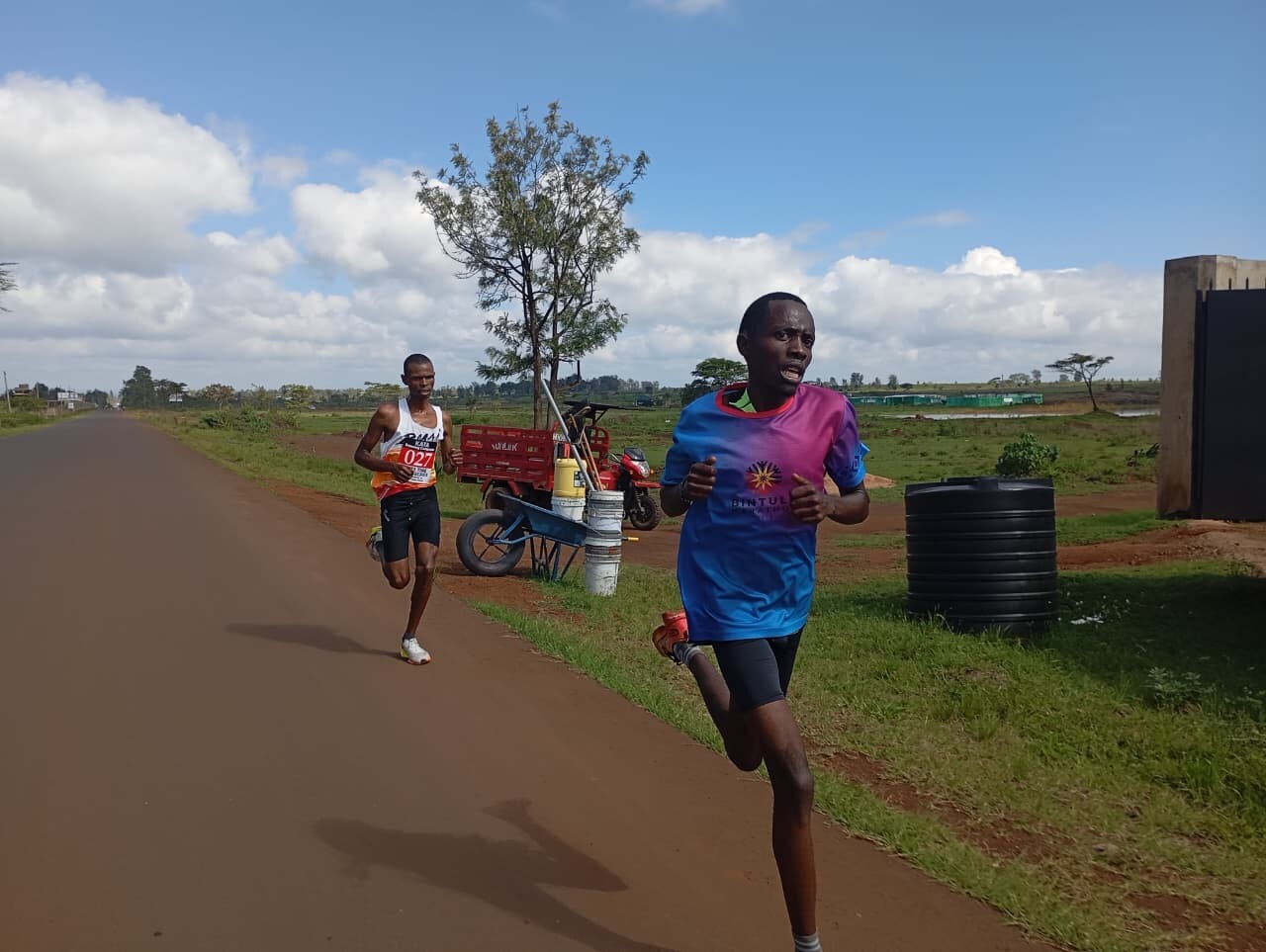
The men’s 10km proved to be the deepest and most competitive event of the day. Bernard Musau set the benchmark with a commanding 29:24, establishing control early before sustaining a strong and balanced pace through the final kilometers. His performance stood as the fastest of the morning and highlighted impressive endurance on the demanding course. Close behind, Kelvin Nganga finished in 29:41, while John Kuria completed the top three in 29:46, underlining the competitiveness at the front of the field.
Further down the standings, strong performances continued to emerge as athletes maintained disciplined pacing despite the warm and slightly humid conditions. Bernard Waweru crossed in 30:38, followed by Erick Cheruiyot in 31:07 and Charles Wanjora in 31:29. A deep field continued through the results, with determined efforts from Joel Maina, Joseph Makeri, Joseph Nyota, Justus Wambua, Vincent Kiprotich, Paul Nganga, and veteran runner Charles Ndirangu, whose resilience over the distance added another layer of inspiration to the morning’s competition.
Results
Women 5km
1. Naomi Wambui — Age 41 — Bib 15 — 18:21
2. Felister Mbatha — Age 19 — Bib 26 — 22:21
Men 5km
1. Francis Maina — Age 19 — Bib 19 — 16:46
2. Dennis Musau — Age 43 — Bib 06 — 19:46
Women 10km
1. Kellen Waithera — Age 39 — Bib 21 — 34:58
2. Regina Sandiki — Age 19 — Bib 25 — 36:57
Men 10km
1. Bernard Musau — Age 30 — Bib 12 — 29:24
2. Kelvin Nganga — Age 24 — Bib 02 — 29:41
3. John Kuria — Age 30 — Bib 27 — 29:46
4. Bernard Waweru — Age 40 — Bib 01 — 30:38
5. Erick Cheruiyot — Age 30 — Bib 28 — 31:07
6. Charles Wanjora — Age 24 — Bib 03 — 31:29
7. Joel Maina — Age 43 — Bib 20 — 31:36
8. Joseph Makeri — Age 41 — Bib 14 — 32:51
9. Joseph Nyota — Age 20 — Bib 11 — 33:11
10. Justus Wambua — Age 18 — Bib 09 — 33:22
11. Vincent Kiprotich — Age 24 — Bib 13 — 34:56
12. Paul Nganga — Age 43 — Bib 29 — 34:57
13. Charles Ndirangu — Age 64 — Bib 23 — 38:02
As the final runners crossed the line and the morning warmth lingered over the Thika tarmac, the 54th KATA Time Trial once again revealed what makes these sessions special. Beyond the stopwatch and finishing order lies a culture built on discipline, growth, and shared purpose. Here, young athletes chase new limits while experienced runners quietly remind them that progress is a long road. With every stride, every split, and every edition, the KATA time trials continue to shape not just stronger runners, but a community bound together by the simple, enduring rhythm of the run.
by Erick Cheruiyot for My Best Runs.
Login to leave a comment
KATA Time Trial Series
Welcome to the KATA Monthly Time Trial Held at the Kenyan Athletics Training Academy in Thika, Kenya, the KATA Monthly Time Trial is a unique and inclusive event designed to support runners of all levels in achieving their goals and showcasing their fitness. This event offers both 10K and 5K distances on an accurate, certified course, providing participants with...
more...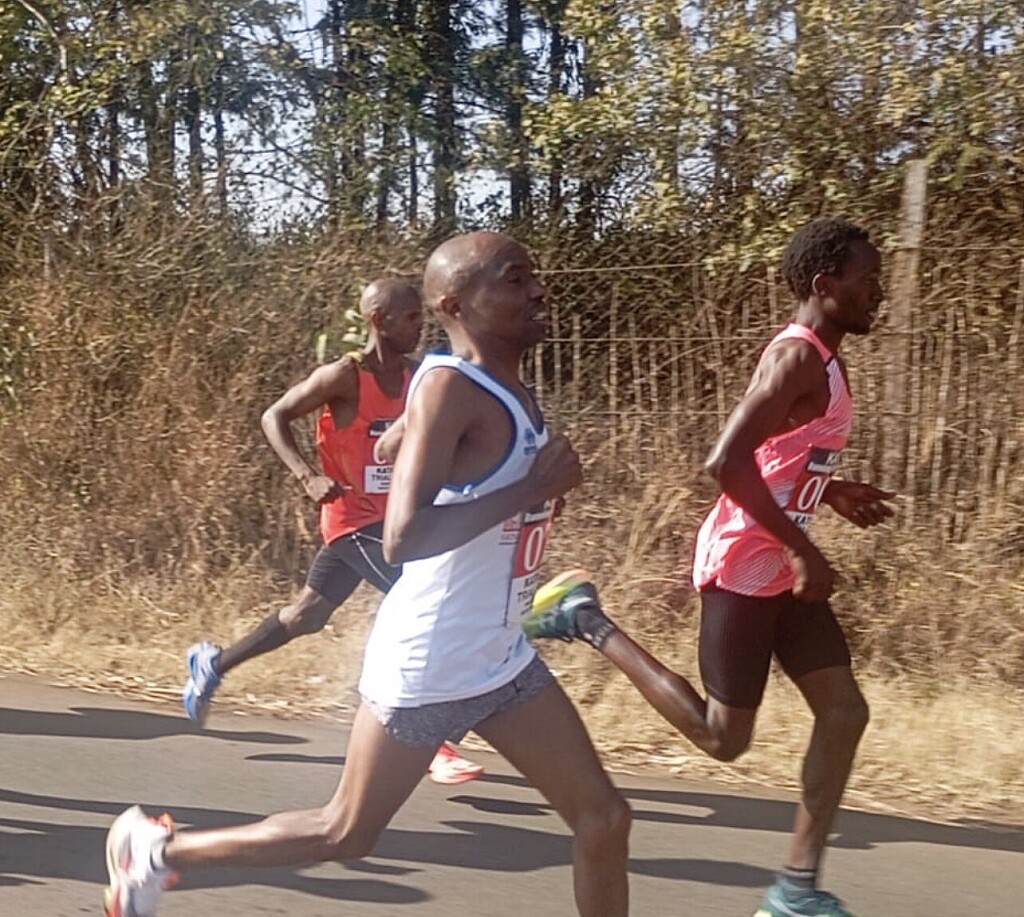
Precision on the Tarmac: KATA Time Trial Returns for Its 54th Chapter in Thika
The steady rhythm of footsteps will once again echo along the familiar tarmac roads of Thika on Wednesday morning, March 11, 2026, as the 54th edition of the KATA Time Trial takes center stage. Held just outside not far from the grounds of Kenyan Athletics Training Academy – Thika, the session may unfold without the noise and spectacle of major races, but within the running community it carries a quiet importance. For the athletes who gather there, the time trial is less about applause and more about discipline, precision, and honest evaluation.
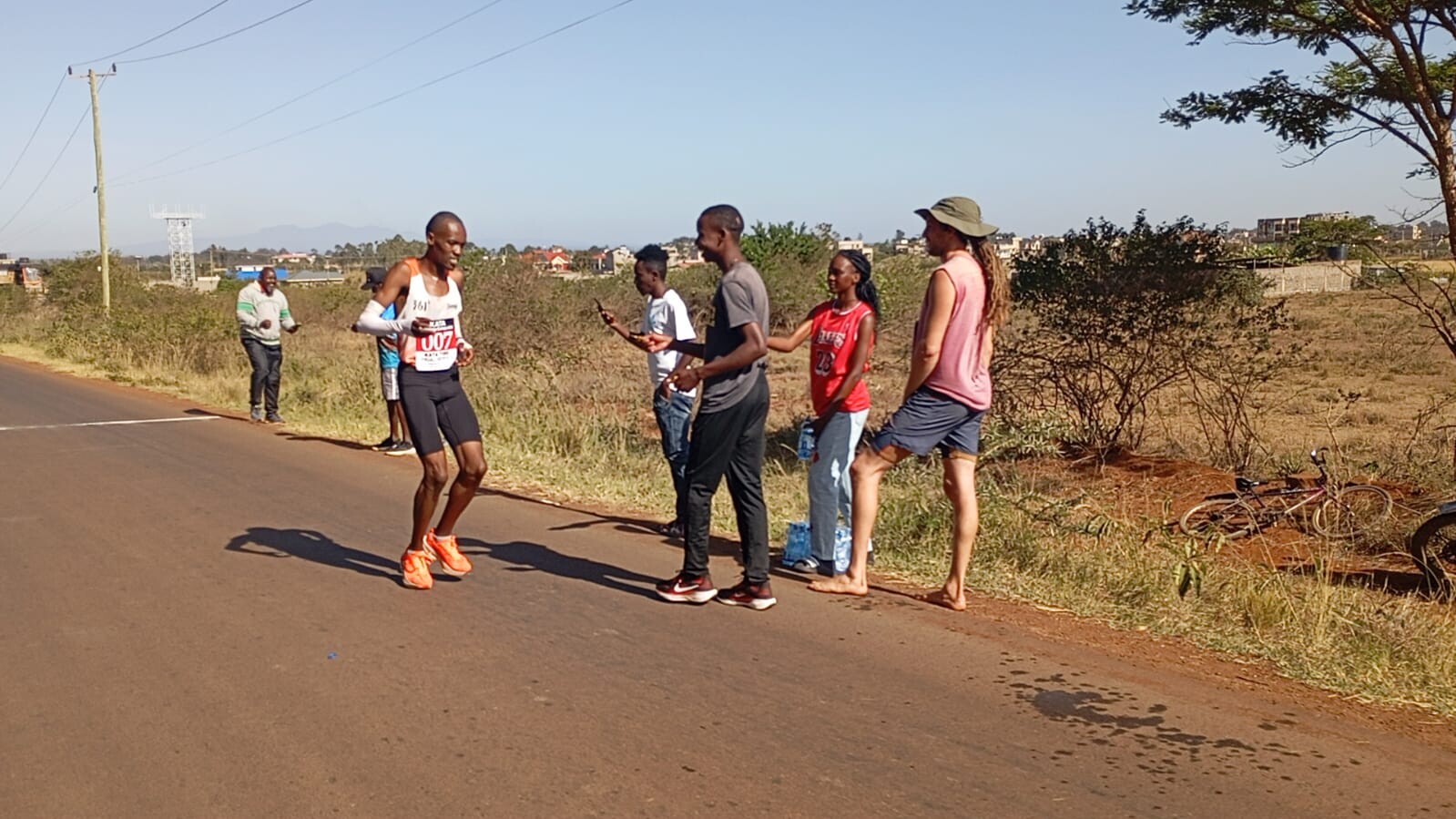
Over the years, the KATA Time Trial has grown into a respected training tradition, providing athletes with a structured environment to measure progress and sharpen their racing instincts. Rather than encouraging head-to-head competition, the philosophy behind the trial is rooted in controlled execution—following a training plan, maintaining rhythm, and understanding one’s physical limits. Each edition becomes an opportunity for runners to listen to their bodies and translate months of training into measurable performance.
The upcoming 54th edition will once again focus on two classic testing grounds: the 5-kilometer and 10-kilometer distances. Both races serve as powerful indicators of an athlete’s development. The shorter 5km demands efficiency, sharp pacing, and speed endurance, while the 10km places greater emphasis on patience, tactical awareness, and sustained effort. In both cases, even the smallest miscalculation in pace can quickly reveal itself along the unforgiving stretch of tarmac.
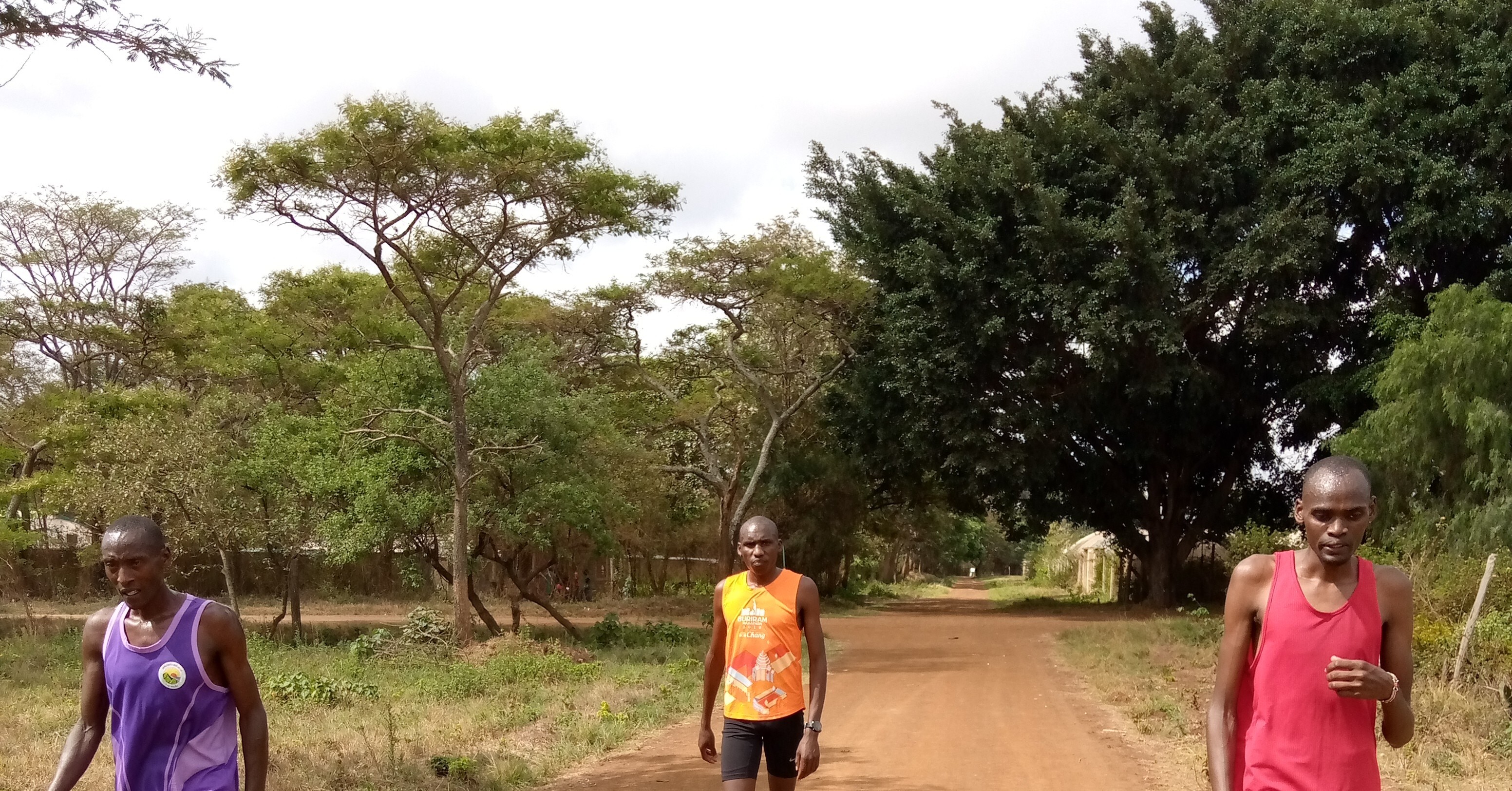
What makes the KATA Time Trial unique is the absence of typical race dynamics. There are no large packs to hide within and no tactical surges to follow. Each athlete runs against the clock—and against their own expectations. The responsibility for pacing rests entirely on individual judgment, turning every kilometer into a test of both physical strength and mental clarity.
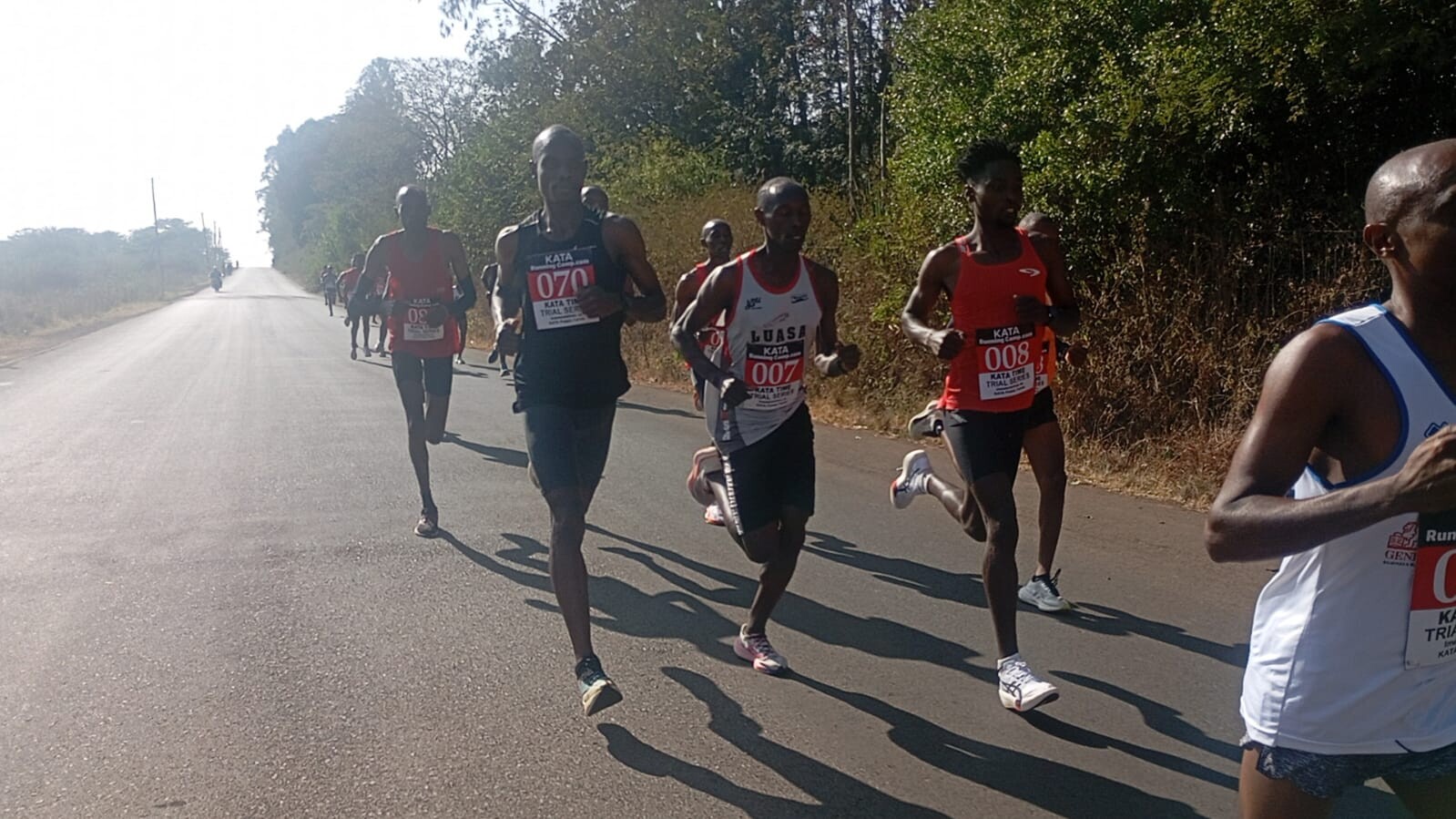
Conditions in Thika are expected to favor steady, well-managed efforts. Runners who resist the temptation to push too hard in the opening kilometers often find themselves finishing with strength, while those who misjudge the early pace quickly learn the lessons that only the road can teach. In this environment, progress becomes unmistakably clear.
Though the event may pass quietly, the significance of the KATA Time Trial extends far beyond a single morning of running. On this modest stretch of road in Thika, athletes refine their craft, build resilience, and measure the subtle gains that define long-term development. When the stopwatches click to a halt at the end of the 54th edition, the numbers recorded will tell more than just finishing times—they will reveal the ongoing story of growth, discipline, and pursuit of excellence.
by Erick Cheruiyot for My Best Runs.
Login to leave a comment
KATA Time Trial Series
Welcome to the KATA Monthly Time Trial Held at the Kenyan Athletics Training Academy in Thika, Kenya, the KATA Monthly Time Trial is a unique and inclusive event designed to support runners of all levels in achieving their goals and showcasing their fitness. This event offers both 10K and 5K distances on an accurate, certified course, providing participants with...
more...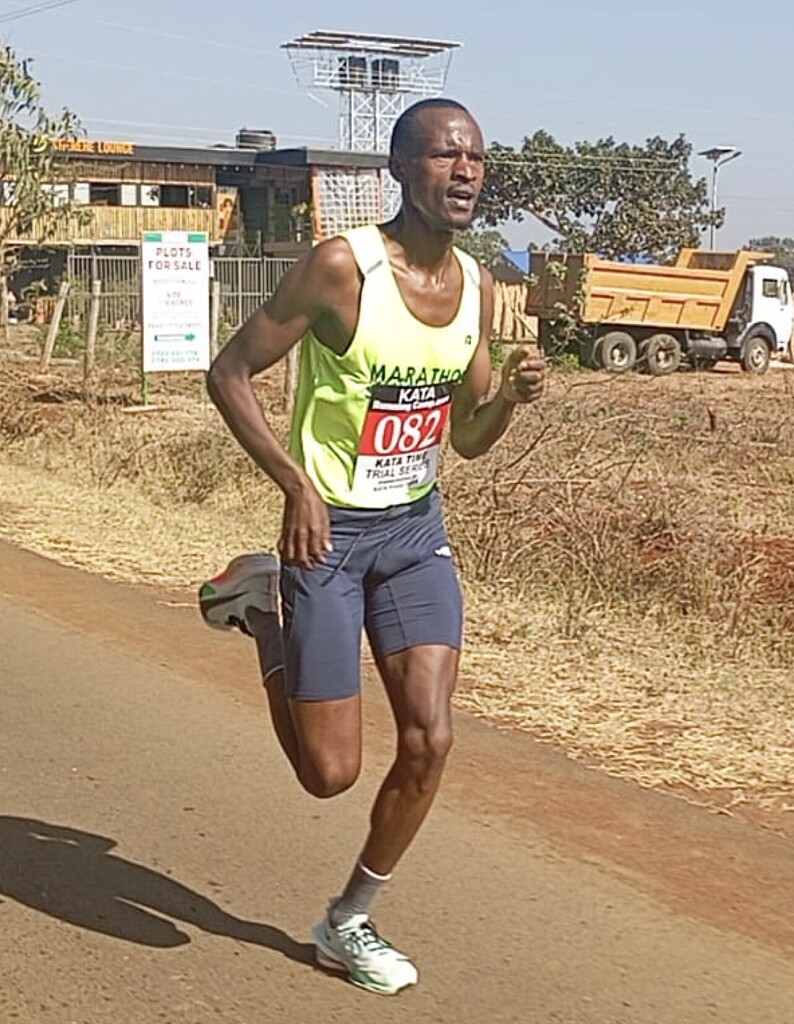
Sunlit Efforts and Strong Benchmarks Mark KATA Time Trial No. 53 in Thika
The familiar tarmac course of Thika, located just adjacent to the Kenyan Athletics Training Academy – Thika, provided the stage for another purposeful morning of measured competition as KATA Time Trial No. 53 unfolded under mostly sunny and warm conditions.
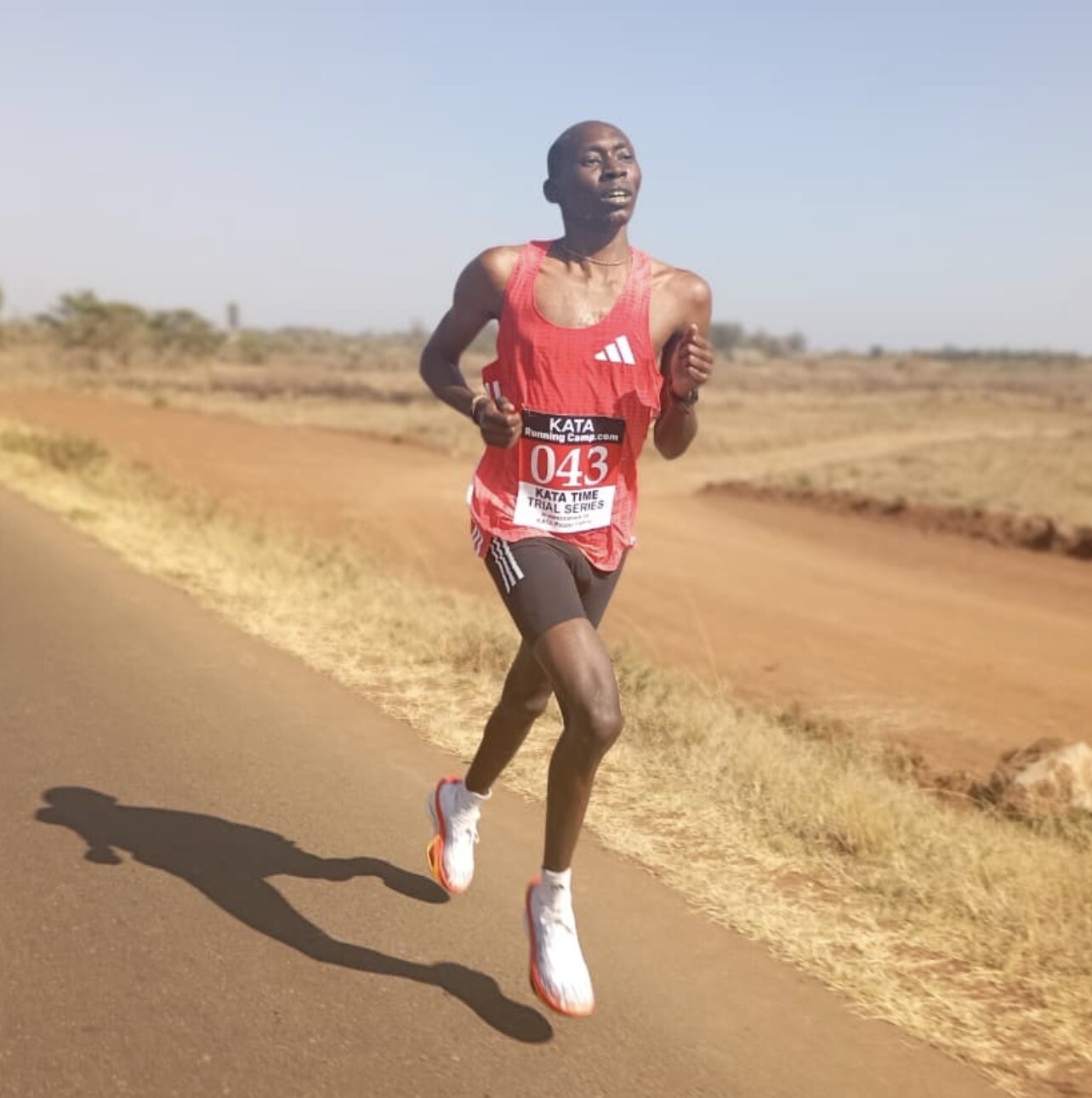
With the sun already asserting itself, the atmosphere demanded discipline from the outset. The warmth added a subtle layer of challenge, particularly over the longer distances, requiring athletes to manage their effort carefully while maintaining rhythm and composure. True to the philosophy of the KATA series, the session prioritized execution over spectacle, offering participants a clear and structured test across both the 5km and 10km distances.
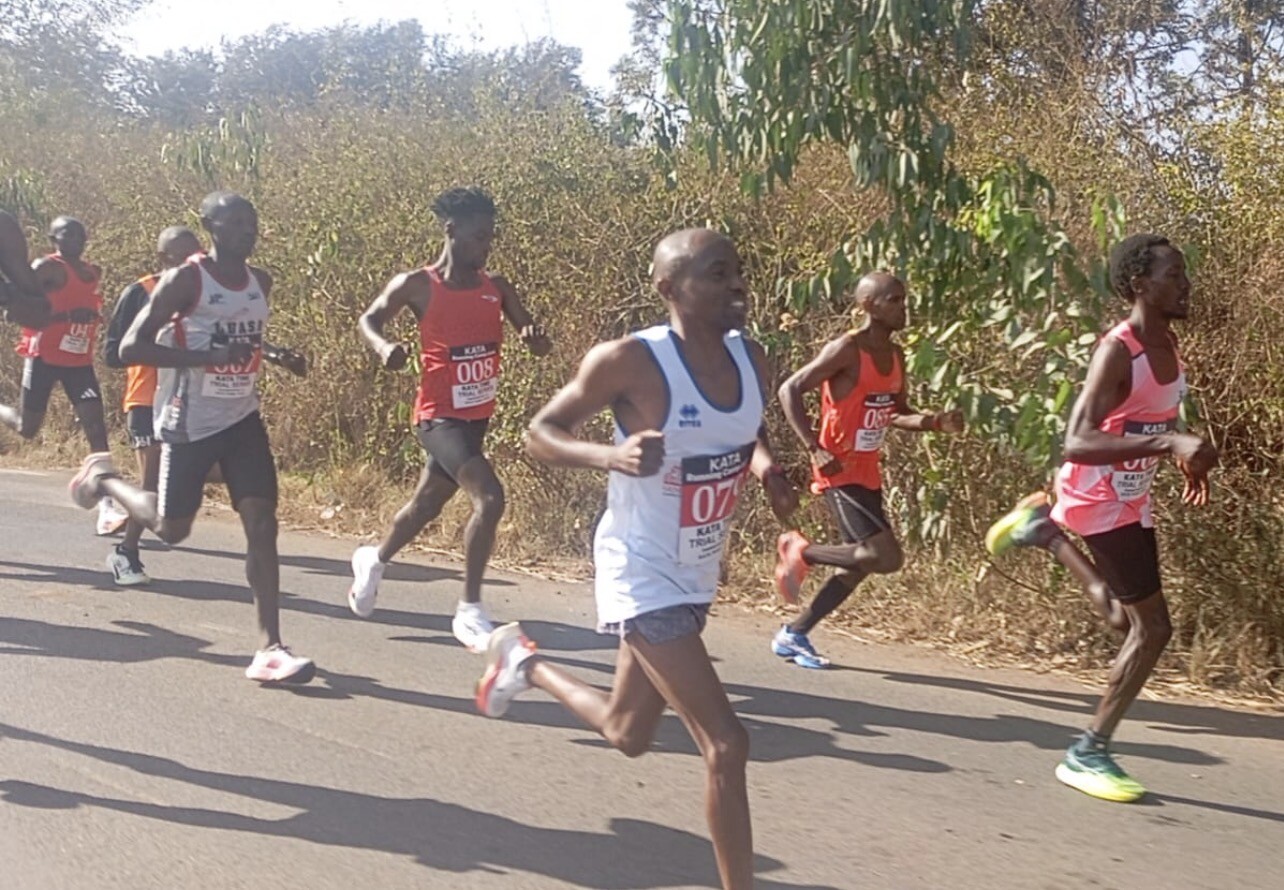
In the women’s 5km, Lucy Njeri delivered a poised and confident display, guiding the field home in 19:38 with a performance built on control and rhythm. From the opening stretch, she established a steady tempo, running with relaxed efficiency despite the rising warmth. Her stride remained fluid through the middle kilometers, and she finished strongly, underscoring both fitness and race awareness.
Behind her, Felister Mbatha clocked 23:44, showing admirable determination as she maintained her effort throughout the sunlit course, while Dolphine Shikailwa completed the distance in 30:35, demonstrating resilience and commitment. Together, the trio brought composure and quiet intensity to the morning session, turning the women’s 5km into a display of patience, strength, and steady progression rather than mere numbers on the clock.
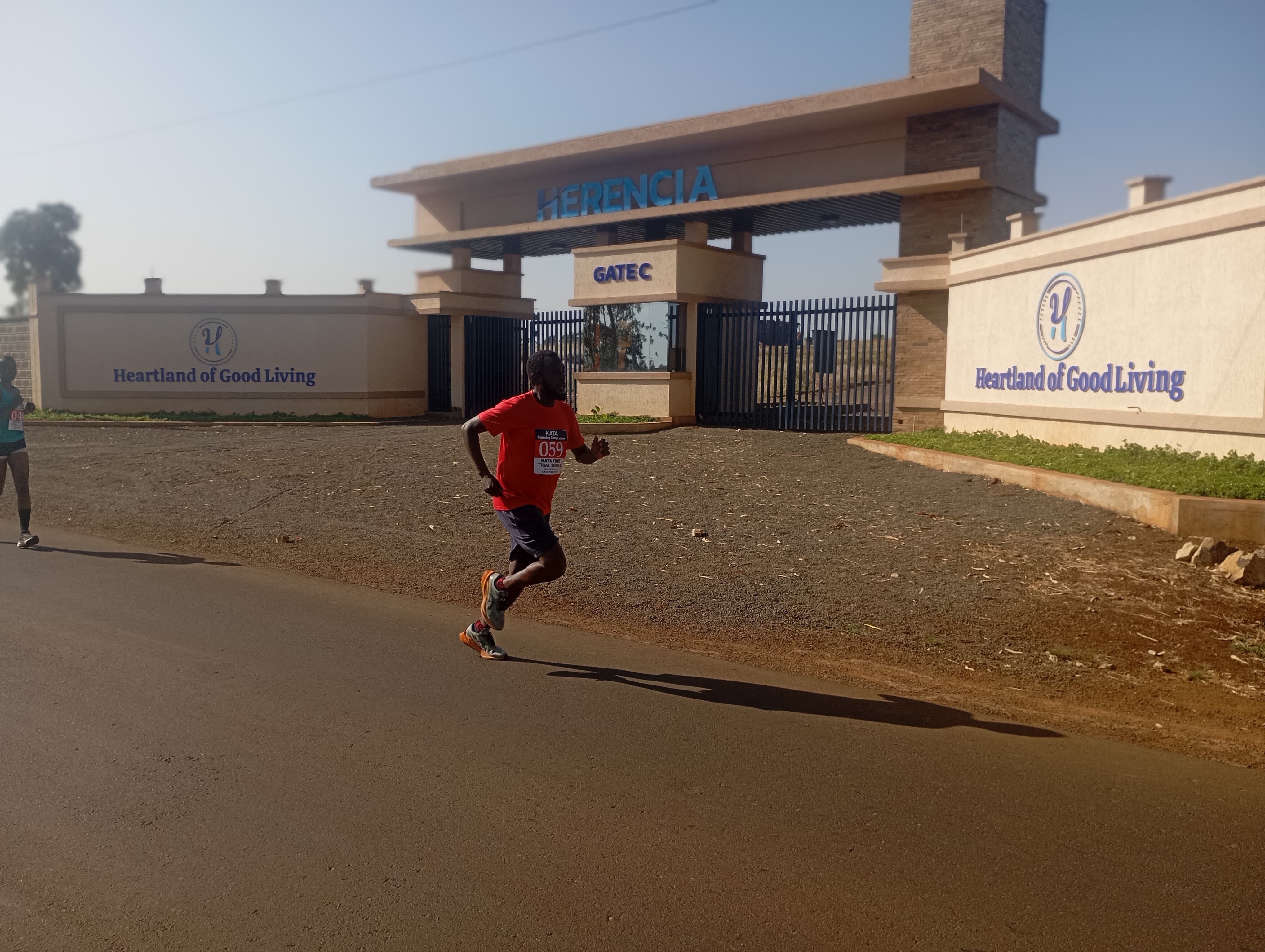
The men’s 5km saw Dennis Musau produce one of the most balanced efforts of the morning, clocking 22:23. Running with composure and steady cadence, Musau managed the early pace effectively before sustaining his rhythm through the latter stages of the course. His performance reflected patience and control—qualities that are central to the KATA time-trial structure. Rather than chasing early speed, he maintained consistency throughout, delivering a performance that highlighted both discipline and growing confidence over the distance.
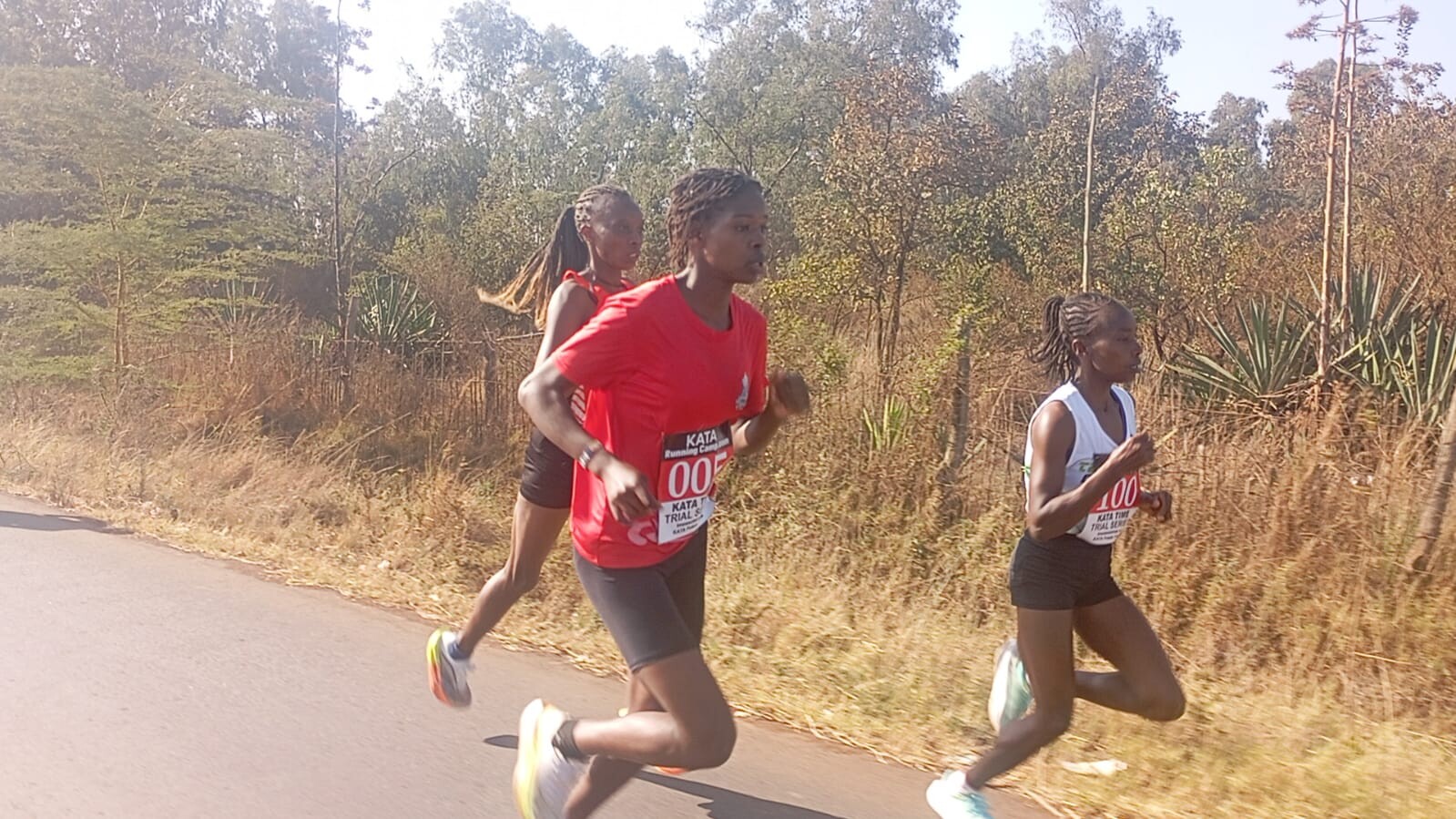
Attention then shifted to the 10km events, where endurance and race management came into sharper focus. In the women’s category. Susan Njuu delivered one of the standout performances of the day, crossing the line in 34:35. Her run combined endurance and poise, maintaining a consistent tempo from start to finish. Equally notable was Hellen Mutheu whose 34:56 marked a significant personal breakthrough. Her progression was evident in the strength she displayed over the closing kilometers, a performance that signals upward momentum. Caren Chepkemoi followed in 36:08, rounding out a competitive women’s field that handled the heat with admirable resolve.
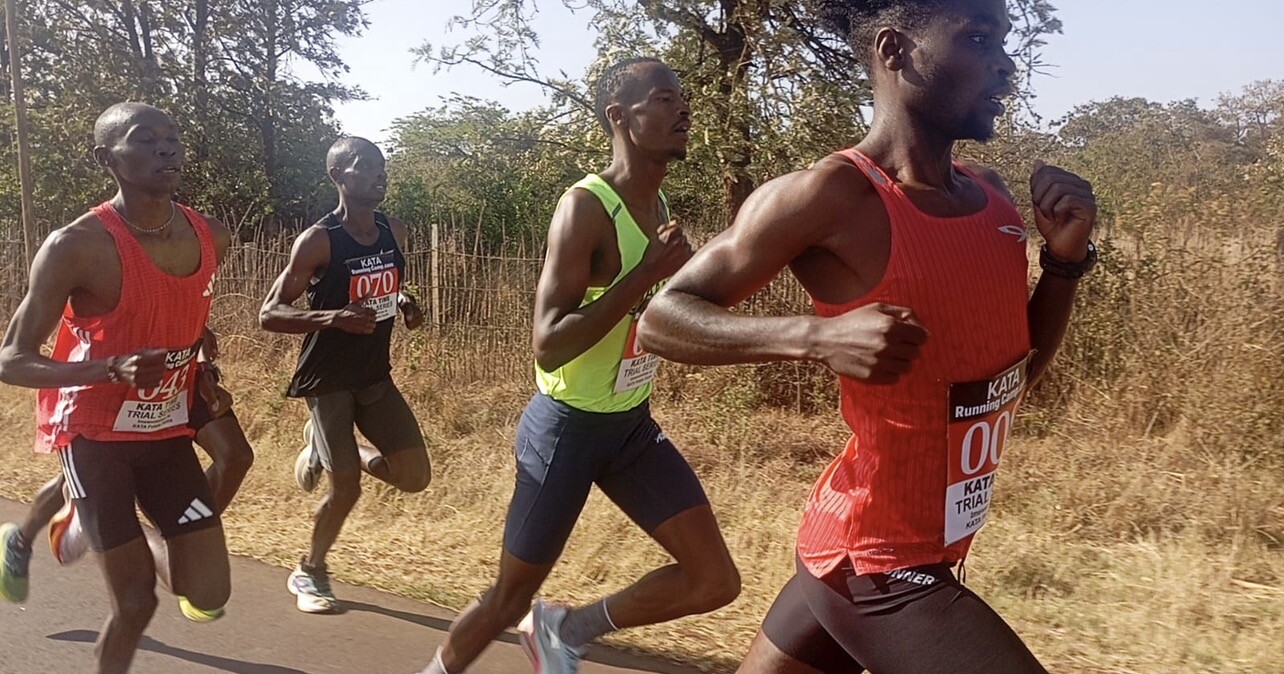
The men’s 10km produced notable depth and competitive balance. Peter Njeru led the standings in 29:25, establishing a clear marker for the field. Levis Githinji followed closely in 29:51, with Raphael Gacheru completing the top three in 30:13.
Close margins defined the subsequent positions, as James Muriithi (30:32), Julius Maina (30:33), and Bernard Waweru (30:39) maintained strong tempo throughout. They were followed by Bonface Mungai (31:10) and Charles Wanjora (31:22), while Joel Maina (32:26) and Erick Cheruiyot (32:28) delivered steady efforts. The field was completed by Bernard Gicheha (34:15), Paul Nganga (34:16), Vincent Kiprotich (36:22), and Charles Ndirangu (37:47), each performance contributing to a competitive and well-structured session.
KATA Time Trial No. 53 ultimately reaffirmed what these sessions represent. Beyond the stopwatch and finishing order, the morning underscored growth, discipline, and the quiet pursuit of excellence. On the familiar tarmac course of Thika, every stride carried intention, every split demanded focus, and every athlete contributed to a collective standard that continues to rise. As the academy looks ahead to future editions, the message from the 53rd trial is clear — progress here is deliberate, competitive, and steadily advancing toward higher levels of performance.
Race Results
Women’s 5K
1. Lucy Njeri (18) – Bib 77 – 19:38
2. Felister Mbatha (19) – Bib 40 – 23:44
3. Dolphine Shikailwa (22) – Bib 41 – 30:35
Men’s 5K
1. Dennis Musau (50) – Bib 59 – 22:23
Women’s 10K
1. Susan Njuu (40) – Bib 62 – 34:35
2. Hellen Mutheu (29) – Bib 100 – 34:56
3. Caren Chepkemoi (24) – Bib 05 – 36:08
Men’s 10K
1. Peter Njeru (28) – Bib 82 – 29:25
2. Levis Githinji (25) – Bib 43 – 29:51
3. Raphael Gacheru (27) – Bib 08 – 30:13
4. James Muriithi (32) – Bib 07 – 30:32
5. Julius Maina (33) – Bib 70 – 30:33
6. Bernard Waweru (40) – Bib 85 – 30:39
7. Bonface Mungai (30) – Bib 02 – 31:10
8. Charles Wanjora (24) – Bib 24 – 31:22
9. Joel Maina (41) – Bib 79 – 32:26
10. Erick Cheruiyot (30) – Bib 84 – 32:28
11. Bernard Gicheha (39) – Bib 99 – 34:15
12. Paul Ng’ang’a (43) – Bib 30 – 34:16
13. Vincent Kiprotich (24) – Bib 83 – 36:22
14. Charles Ndirangu (65) – Bib 76 – 37:47
by Erick Cheruiyot for My Best Runs.
Login to leave a comment
KATA Time Trial Series
Welcome to the KATA Monthly Time Trial Held at the Kenyan Athletics Training Academy in Thika, Kenya, the KATA Monthly Time Trial is a unique and inclusive event designed to support runners of all levels in achieving their goals and showcasing their fitness. This event offers both 10K and 5K distances on an accurate, certified course, providing participants with...
more...
All Eyes on Thika: KATA Time Trial No. 53 Poised to Raise the Bar
The familiar tarmac course of Thika, located just adjacent to the Kenyan Athletics Training Academy – Thika, is set to come alive again on Wednesday morning, February 11, 2026, as KATA Time Trial No. 53 takes center stage. Quiet in atmosphere but demanding in execution, the upcoming edition promises another rigorous test of pacing, discipline, and mental resilience—the defining traits of the KATA time-trial culture.
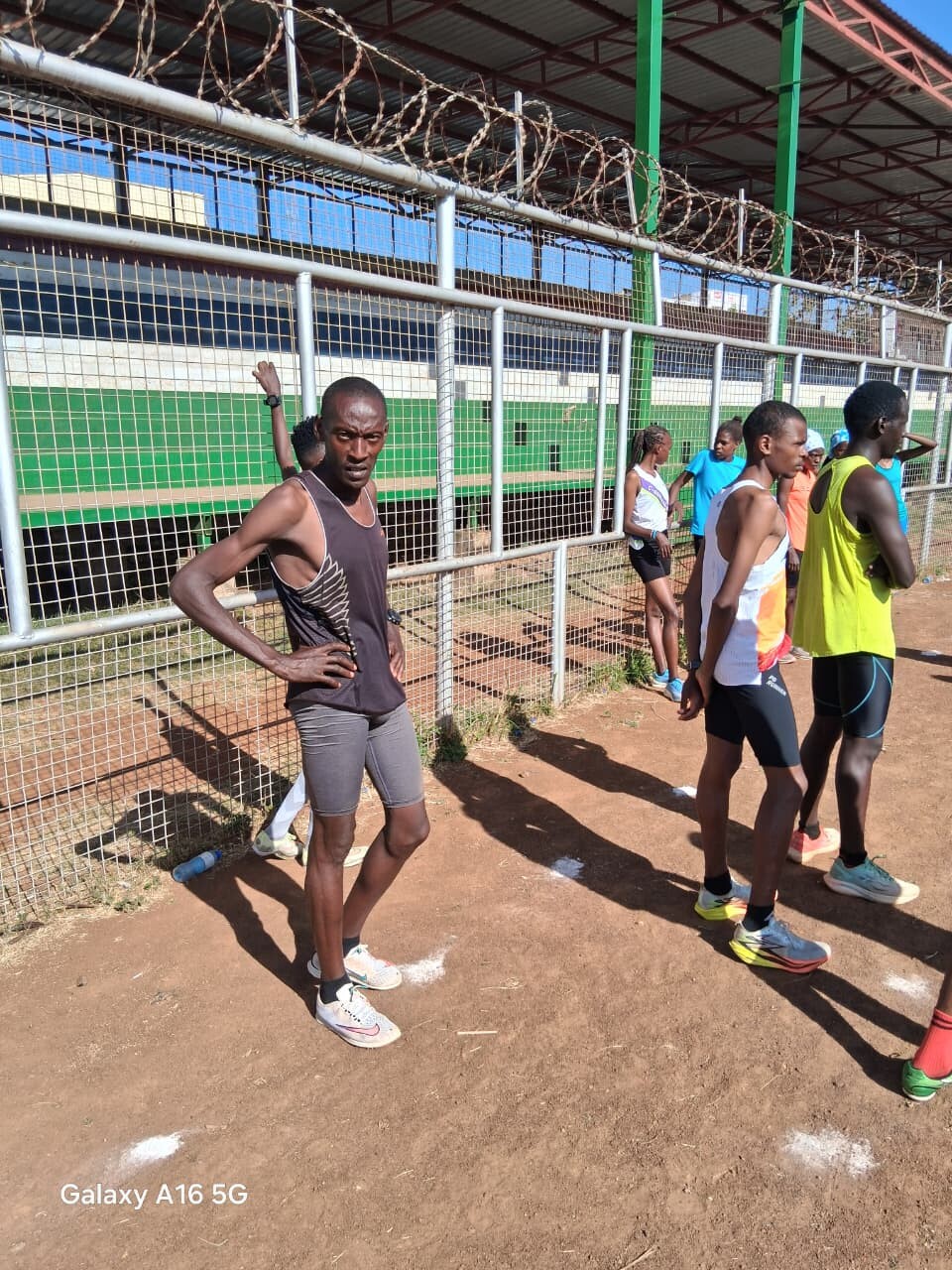
Recent sessions have continued to provide a steady platform for athletes, with each trial focusing on controlled, well-executed efforts rather than outright competition. KATA time trials emphasize following training plans and assessing progress through performance. Tomorrow’s 53rd edition is expected to maintain this approach while offering athletes the opportunity to test improvements and refine their pacing.
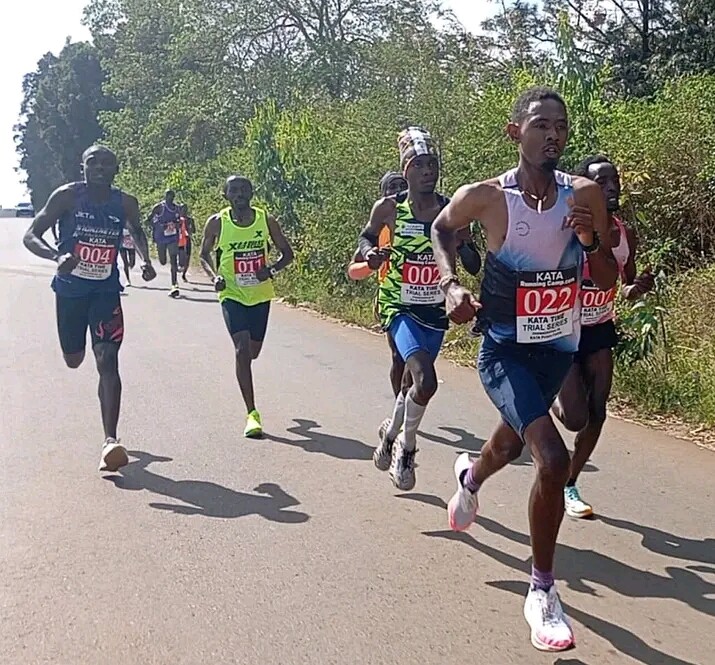
The focus on this edition is linked to both the 5km and 10km distances, which continue to serve as key indicators of development. Past trials have shown that these distances reward consistent pacing and discipline while exposing any misjudgment in strategy. Athletes are expected to approach the course with patience, maintain rhythm, and finish strongly.
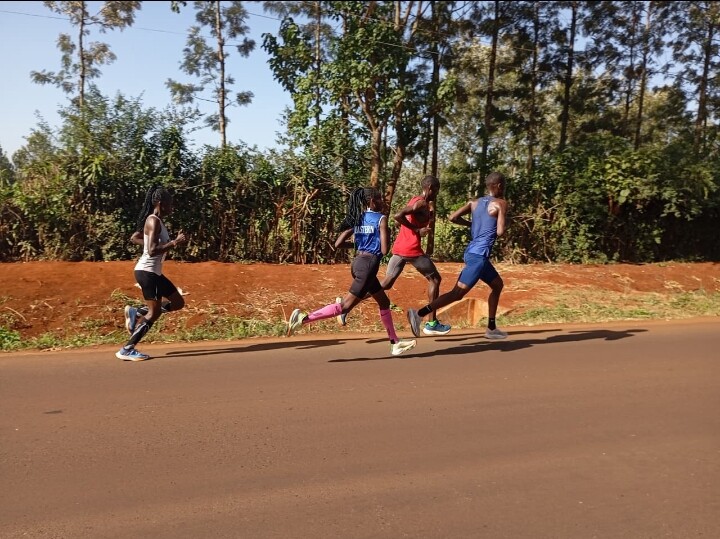
As the 53rd edition approaches, attention shifts entirely to execution. Participants will aim to refine pacing, test aerobic capacity, and address any issues identified in previous runs. The 5km offers a chance to focus on speed and efficiency, while the 10km challenges endurance, strategy, and sustained control.
Conditions in Thika are expected to favor steady, well-paced efforts, rewarding athletes who manage the early kilometers effectively and finish with strength. In the absence of pack dynamics, responsibility rests entirely on individual judgment—making performances over both the 5km and 10km as unfiltered as they are revealing.
KATA Time Trial No. 53 may once again unfold without fanfare, but its significance will extend far beyond the final stopwatch click. On the tarmac course of Thika, progress is measured by execution—and tomorrow morning, the performances will tell the story
by Erick Cheruiyot for My Best Runs.
Login to leave a comment
KATA Time Trial Series
Welcome to the KATA Monthly Time Trial Held at the Kenyan Athletics Training Academy in Thika, Kenya, the KATA Monthly Time Trial is a unique and inclusive event designed to support runners of all levels in achieving their goals and showcasing their fitness. This event offers both 10K and 5K distances on an accurate, certified course, providing participants with...
more...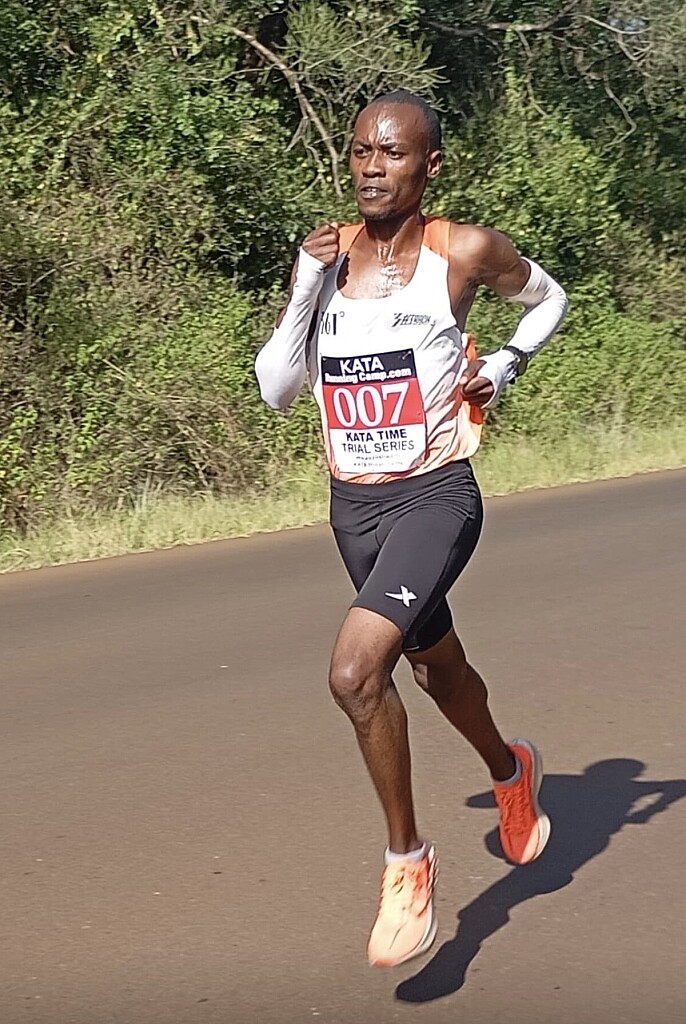
KATA Time Trial #52 Rewards Grit and Solo Efforts in Thika
KATA Time Trial No. 52 unfolded quietly on the familiar tarmac roads of Thika, but the morning (Jan 21) delivered a series of determined solo efforts and encouraging performances across the distances. With athletes often running alone against the clock, the session tested discipline, pacing, and mental toughness—hallmarks of the KATA training philosophy.
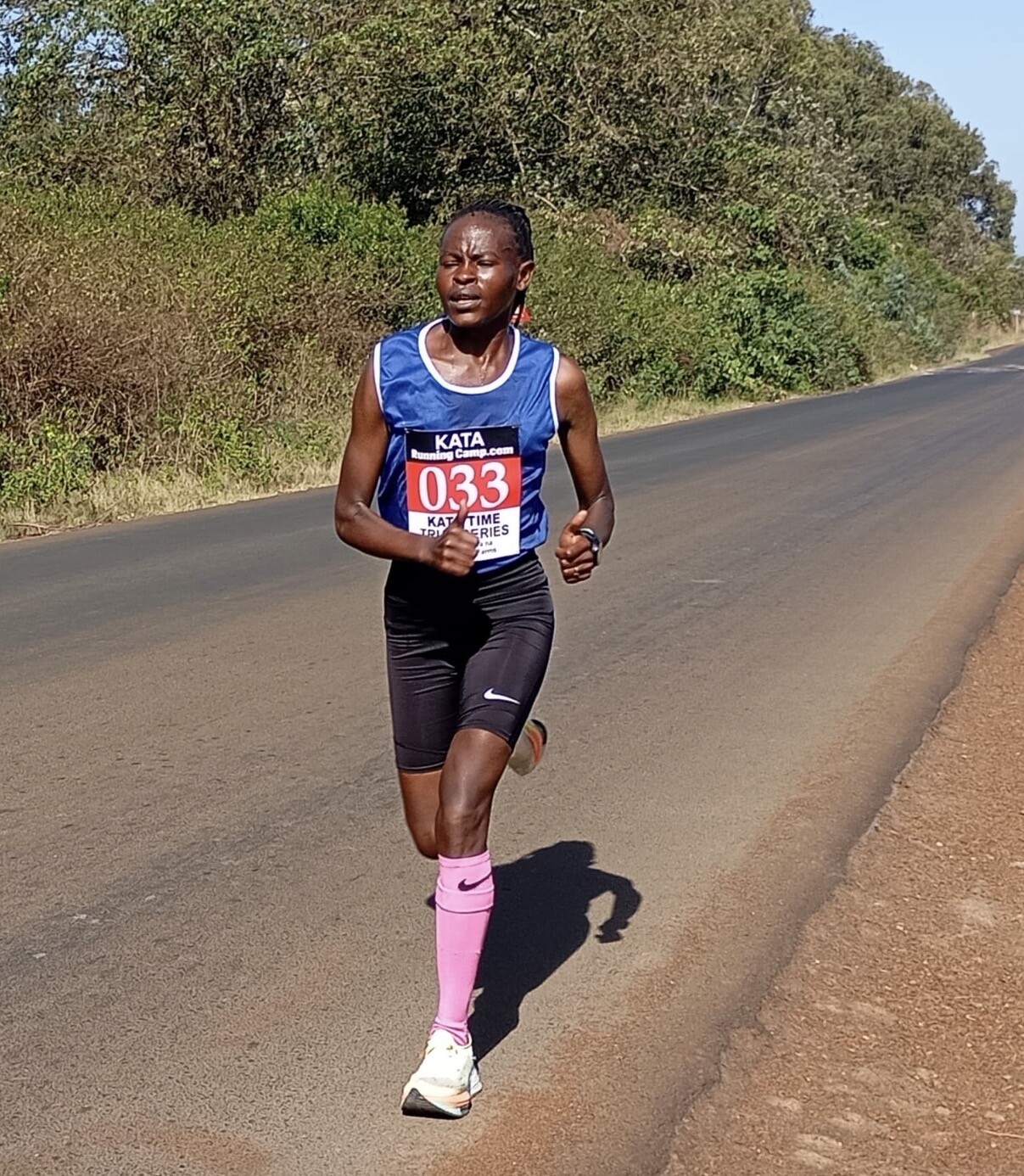
In the men’s 5km, 17-year-old Robin Musa delivered the standout performance of the morning, stopping the clock at 15:37. Running entirely on his own, Musa showed maturity beyond his years, holding his rhythm without the benefit of a pack. His effort drew appreciation from coaches and observers, underscoring his growing potential.
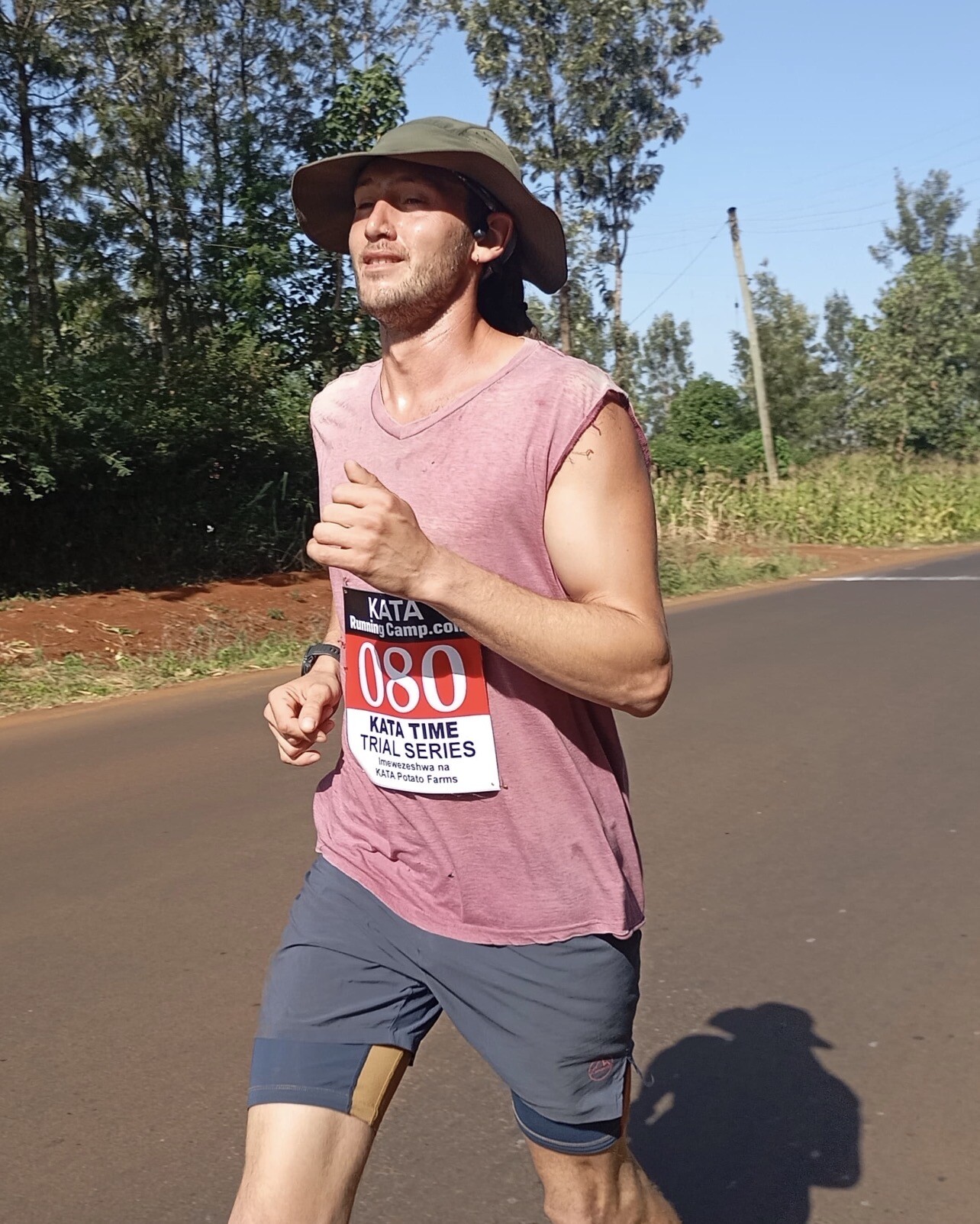
Finishing second was Yedi Kohen, KATA’s paid guest from Israel, who continues his preparation for an upcoming race. Kohen clocked 24:14, running barefoot on the tarmac. Beyond the footwear choice, his relaxed stride and controlled execution reflected steady progress within his training block.
The women’s 5km featured a single competitor, but Regina Sandiki made the most of the opportunity, posting an impressive 19:18. A 400-metre specialist transitioning to longer distances, Sandiki continues to adapt well to endurance training, with her development suggesting a promising future.
The men’s 10km saw Stephen Kangethe take control early and maintain his lead throughout, crossing the line in 28:45. Running much of the race alone, Kangethe demonstrated strength and composure, particularly over the final kilometres. He later noted the challenge of pushing the pace without competition, having opened nearly a one-minute gap on the field.
Second place went to Raphael Karita in 29:43, followed by Peter Njeru, who rounded out the podium with 30:02.
In the women’s 10km, Loise Kiaríe claimed victory with a strong and consistent run, stopping the clock at 33:53. Jacinta Kamau followed in 34:41, while Susan Njuu secured third in 35:37, highlighting solid depth among KATA’s women over the longer distance.
Time Trial No. 52 may have been modest in size, but it reinforced a central truth of KATA’s program: progress is forged through honest effort, whether running in a pack or alone against the clock.
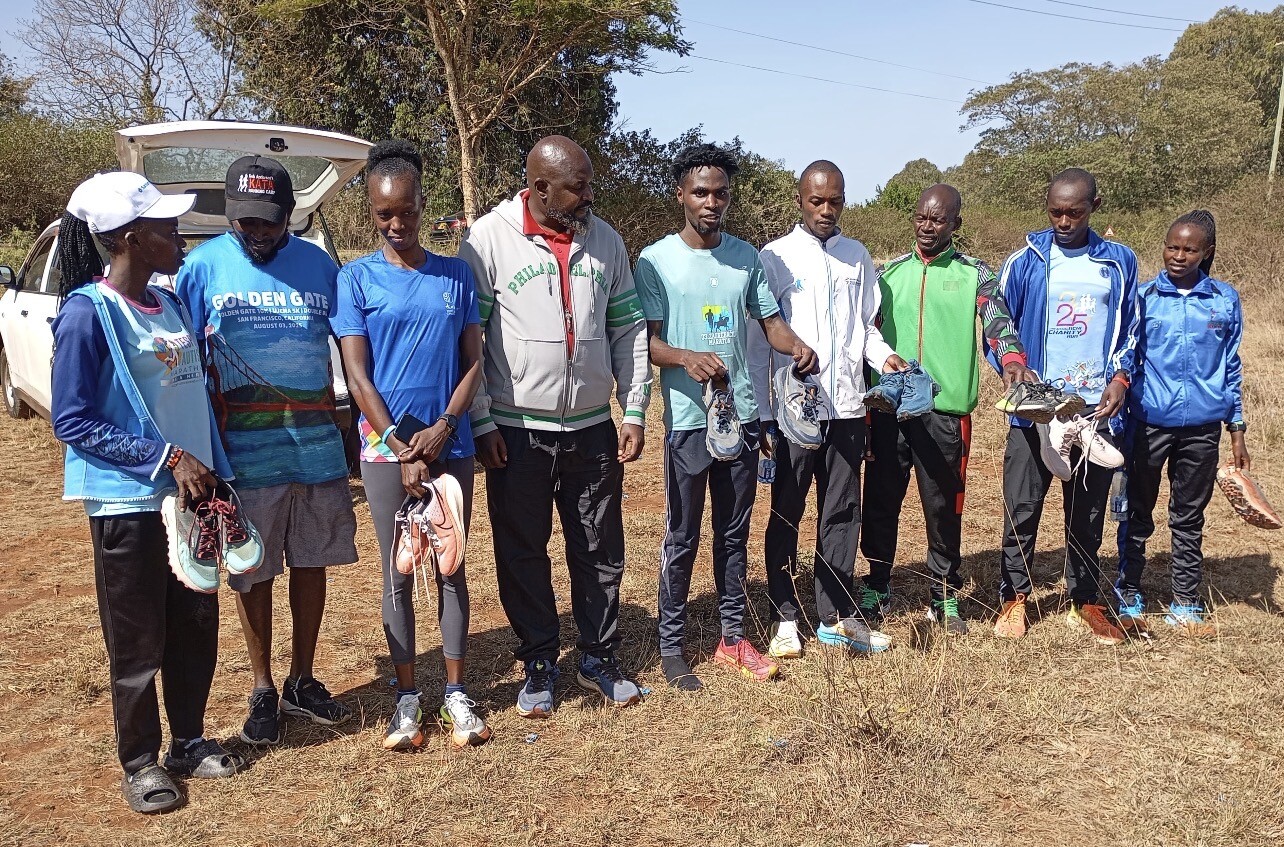
A previous guest from France, Marie Barin donated 30 pairs of running shoes to KATA. The fourth photo shows some of those shoes being handed out as prizes and the next photos shows some being handed out at KATA, The next photo is Dennis picking up the shoes. "This was so nice of Marie and Arthur, her mate, to make such a kind donation," says KATA director Bob Anderson.


Race Results
MEN 5km
1. Robin Musa (17) — Bib 08 — 15:37
2. Yedi Kohen (28) — Bib 80 — 24:14
WOMEN 5km
Out 1. Regina Sandiki (19) — Bib 81 — 19:18
MEN 10km
1. Stephen Kangethe (22) — Bib 07 — 28:45
2. Raphael Karita (27) — Bib 85 — 29:43
3. Peter Njeru (28) — Bib 46 — 30:02
4. James Murithi (29) — Bib 100 — 30:41
5. Bernard Waweru (40) — Bib 39 — 31:26
6. Joel Maina (40) — Bib 32 — 31:42
7. Boniface Mungai (30) — Bib 05 — 32:13
8. Charles Ndirangu (24) — Bib 79 — 32:31
9. Erick Cheruiyot (30) — Bib 40 — 32:35
10. Joseph Nyota (20) — Bib 31 — 33:31
11. Paul Nganga (45) — Bib 30 — 34:14
12. David Muriuki (40) — Bib 44 — 34:25
13. Bernard Gicheha (35) — Bib 76 — 35:37
14. Charles Ndirangu (64) — Bib 82 — 37:32
WOMEN 10km
1. Loise Kiaríe (24) — Bib 33 — 33:53
2. Jacinta Kamau (24) — Bib 36 — 34:41
3. Susan Njuu (40) — Bib 43 — 35:37
4. Jane Wanja (35) — Bib 83 — 36:52
5. Caren Chepkemoi (24) — Bib 70 — 38:22
6. Ruth Macharia (27) — Bib 68 — 43:39
by Boris Baron
Login to leave a comment
KATA Time Trial Series
Welcome to the KATA Monthly Time Trial Held at the Kenyan Athletics Training Academy in Thika, Kenya, the KATA Monthly Time Trial is a unique and inclusive event designed to support runners of all levels in achieving their goals and showcasing their fitness. This event offers both 10K and 5K distances on an accurate, certified course, providing participants with...
more...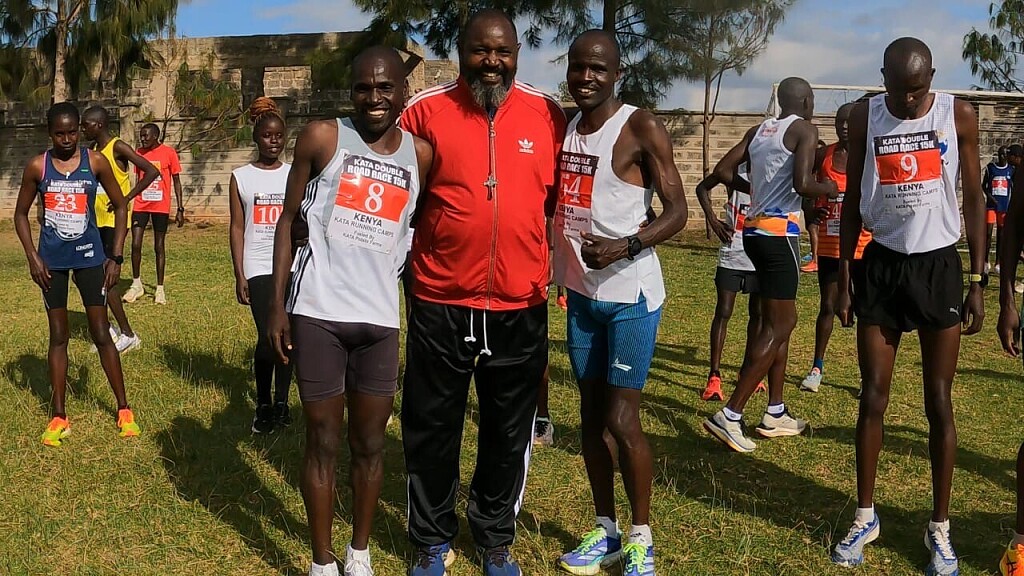
From Soil to Stride: How KATA Kenya and the Double Road Race Redefined Athlete Development in 2025
As 2025 draws to a close, year-end reflections in distance running often gravitate toward times, titles, and breakthrough performances. Yet some of the most compelling stories in Kenya this year unfolded far from finish lines—across high-altitude farms, disciplined training camps, and an unconventional road race that asked athletes to start twice in a single day.
In 2025, the Kenya Athletics Training Academy (KATA) quietly reshaped what athlete development looks like in practice. Across Kenya’s famed running regions—Iten, Kaptagat, Nyahururu, Keringet, Molo, Kericho, Bomet, and Elgeyo Marakwet—KATA, under the guidance of Chief Technical Officer Denis Musau, expanded its focus beyond mileage and workouts to include nutrition, recovery, sustainability, and innovative competition design.
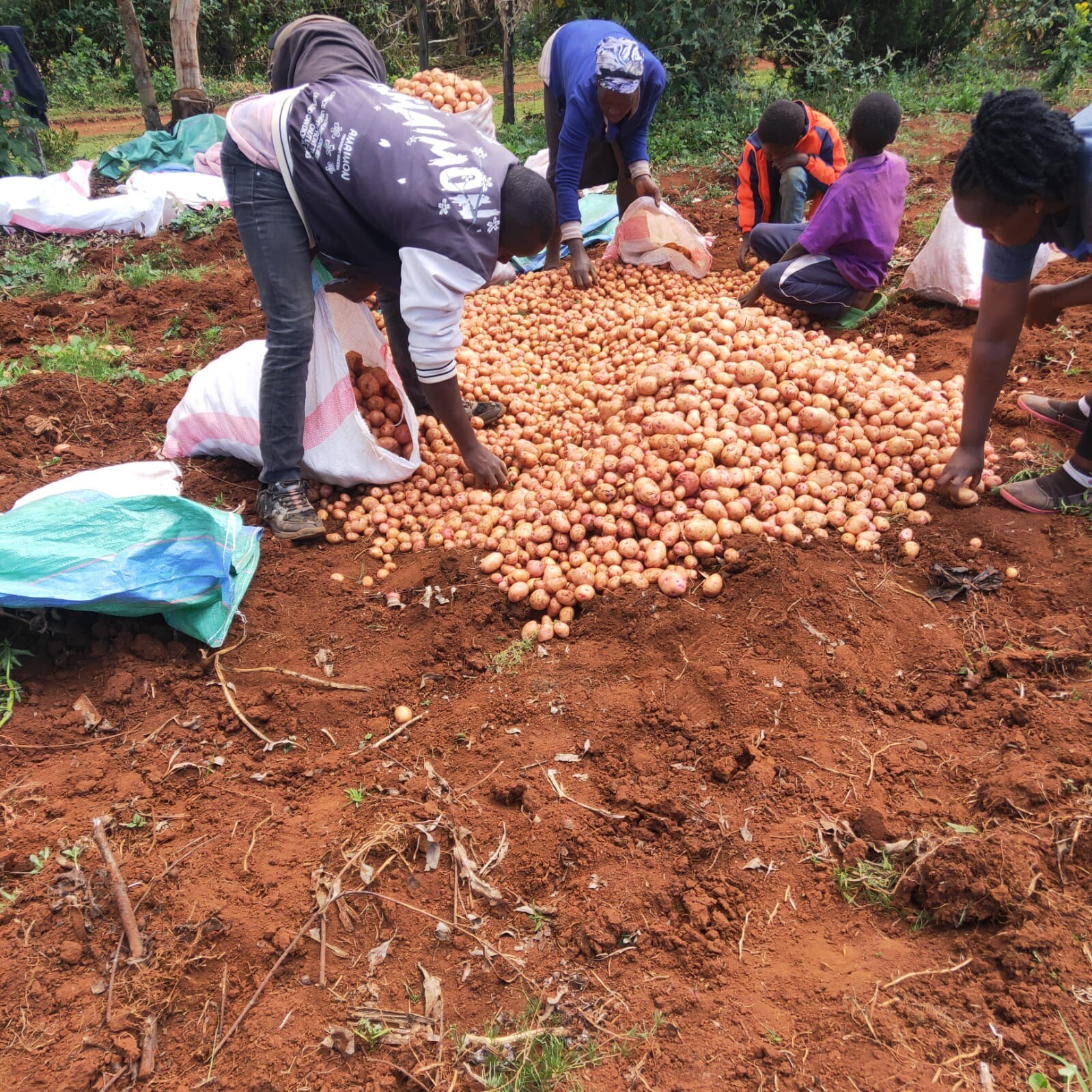
At the center of that shift was an initiative that seemed deceptively simple: potato farming.
Originally launched to support camp operators, the program quickly addressed two pressing challenges—nutrition and economic stability. For athletes living and training full-time at altitude, consistent access to energy-rich food proved as critical as any interval session.
“The potato farm has helped some of our camp operators and the entire athletics fraternity,” Musau said. “It is very nutritious, gives energy, and supports recovery for our athletes. Despite being cheap and easy to find in the market, potatoes play a big role in our training environment.”
The initiative aimed to ease food costs, improve diet quality, and reinforce camps running sustainably. It also fostered a sense of ownership within camps—reflecting KATA’s long-term goal of building resilient training ecosystems rather than dependence on outside support.
Kenya’s varied geography, however, quickly revealed that not every region was equally suited to potato farming.
“Potato farming has been good across the nation where we have camps,” Musau explained, “but some parts of the country are not suitable because of climate factors such as rainfall and soil type.”
Rather than dilute the project, KATA responded with refinement. Future planting will be concentrated in regions that best support both agriculture and elite training, including Keringet in Nakuru County, Kapcherop in Elgeyo Marakwet, and Olkalou in Nyandarua County.
“Next season, we must carefully consider the best areas to plant potatoes,” Musau added.
Life inside KATA camps remains demanding. Athletes rise before dawn for long runs at altitude, balancing hill work, track sessions, and cross-country trails with careful attention to recovery, diet, and mental preparation. In such an environment, even modest improvements—better nutrition, improved recovery routines—can produce meaningful gains.
While farming strengthened life off the track, competition remained central to KATA’s mission. Structured time trials across camps continued to provide performance benchmarks and exposure to international opportunities.
“Normally, we conduct time trials across our camps, which help expose and link our athletes to international opportunities,” Musau noted.
Yet one event stood out as both a philosophical statement and a competitive crucible: the Double Road Race.
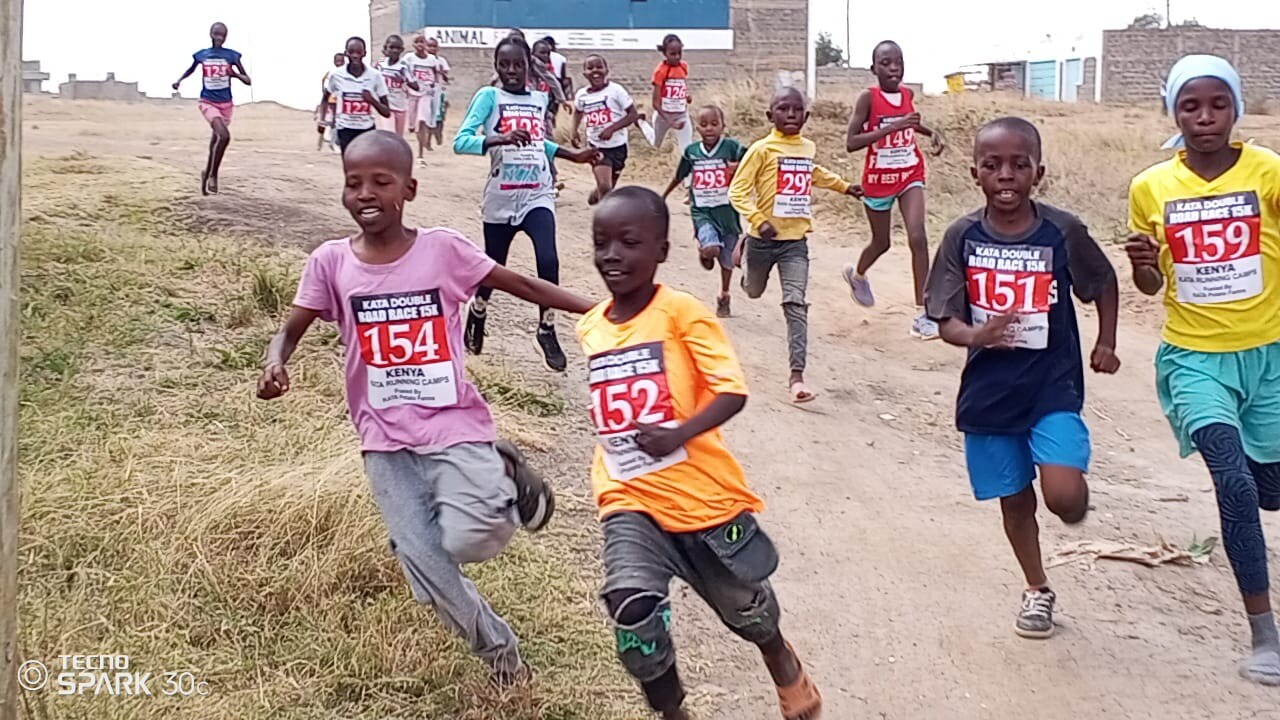
Conceived by Bob Anderson, veteran running journalist and founder of Runner’s World magazine and My Best Runs, the Double Road Race challenges athletes to race twice in a single day—testing endurance, recovery, pacing, and mental resilience. Designed to reward discipline and preparation over raw talent alone, the format has become a rare meeting point for athletes from different camps, regions, and backgrounds.
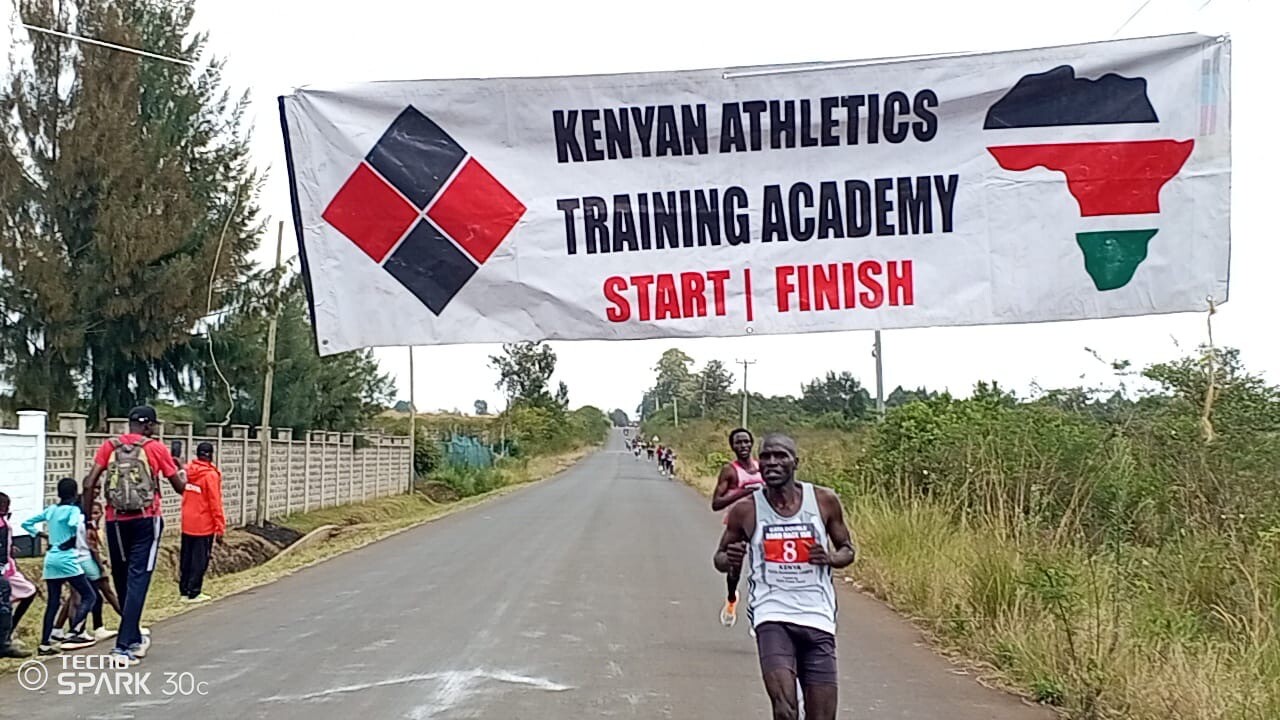
“Every year in September, we hold the Double Road Race, where athletes from across the country come together to compete,” Musau said. “This year, we had a successful race in Thika, Kiambu County.”
For many KATA athletes, the event served as a real-world stress test. Racing twice in one day exposed weaknesses in recovery, fueling, and mental focus—validating training systems built on consistency rather than shortcuts. Athletes returned to camp with lessons that extended beyond the road: how to manage energy, respect process, and embrace discipline.
By year’s end, the significance of 2025 lay not in a single headline result but in the quiet evolution of systems. From structured camps and practical nutrition initiatives to innovative competition formats, Kenya continued to offer a blueprint for athlete development that resonates far beyond its borders.
From potato fields at altitude to double starts on Kenyan roads, KATA’s 2025 reinforced a simple truth: performance is cultivated long before race day—and often, the most meaningful progress happens where few are watching, until the results speak for themselves.
Looking ahead to 2026, these lessons provide a clear roadmap for the next generation of athletes. The blend of practical support, strategic training, and innovative racing promises to keep Kenya at the forefront of global distance running—and ensures that transformation continues both on and off the track.
by Robert Kibet for My Best Runs
Login to leave a comment
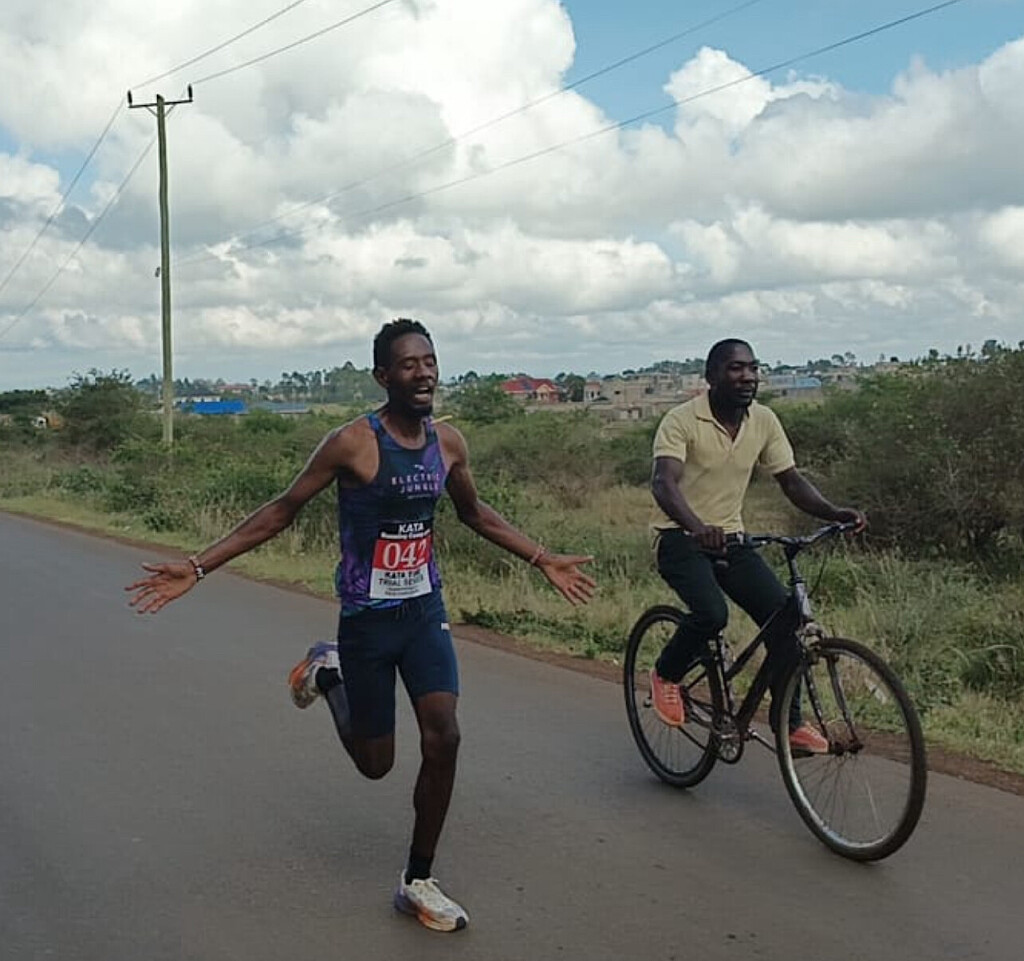
KATA Thika Hosts 51st Monthly Time Trial as Youth and Experience Deliver Strong Performances
The 51st KATA Monthly Time Trial was held today in Thika, Kenya, continuing a tradition that has become a cornerstone of athlete development at the Kenyan Athletics Training Academy (KATA).
With competitive fields in the 5K and 10K for both men and women, today’s time trial highlighted emerging junior talent alongside experienced runners, reinforcing KATA’s depth across age groups.
Men’s 10K: John Chege Powers to Solo Victory
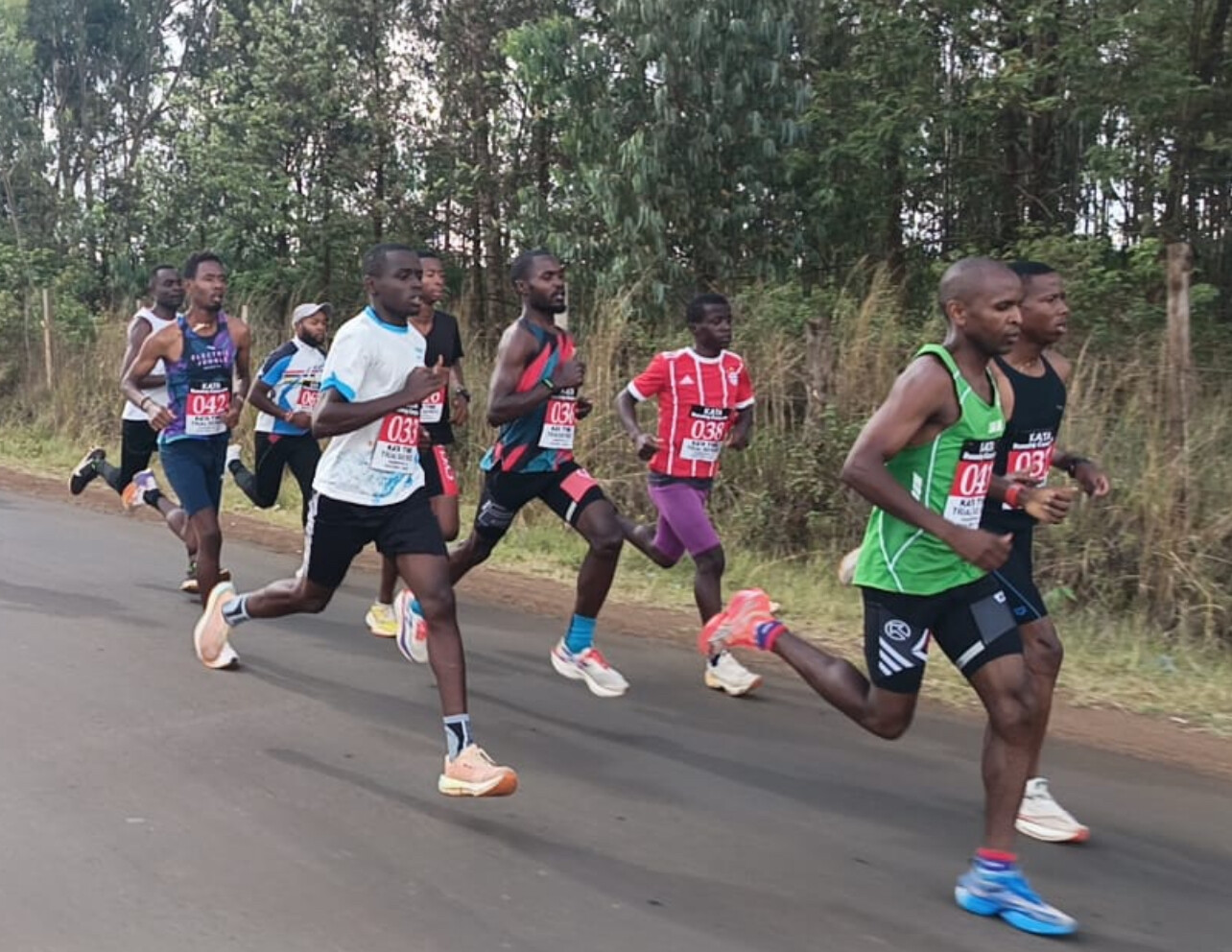
The men’s 10K saw John Chege (21, Bib 042) take control early and push on alone for much of the race, stopping the clock at 29:49 for a convincing win. Chege said afterward that he felt ready to run under 29 minutes, but acknowledged how difficult it was to maintain pace without company.
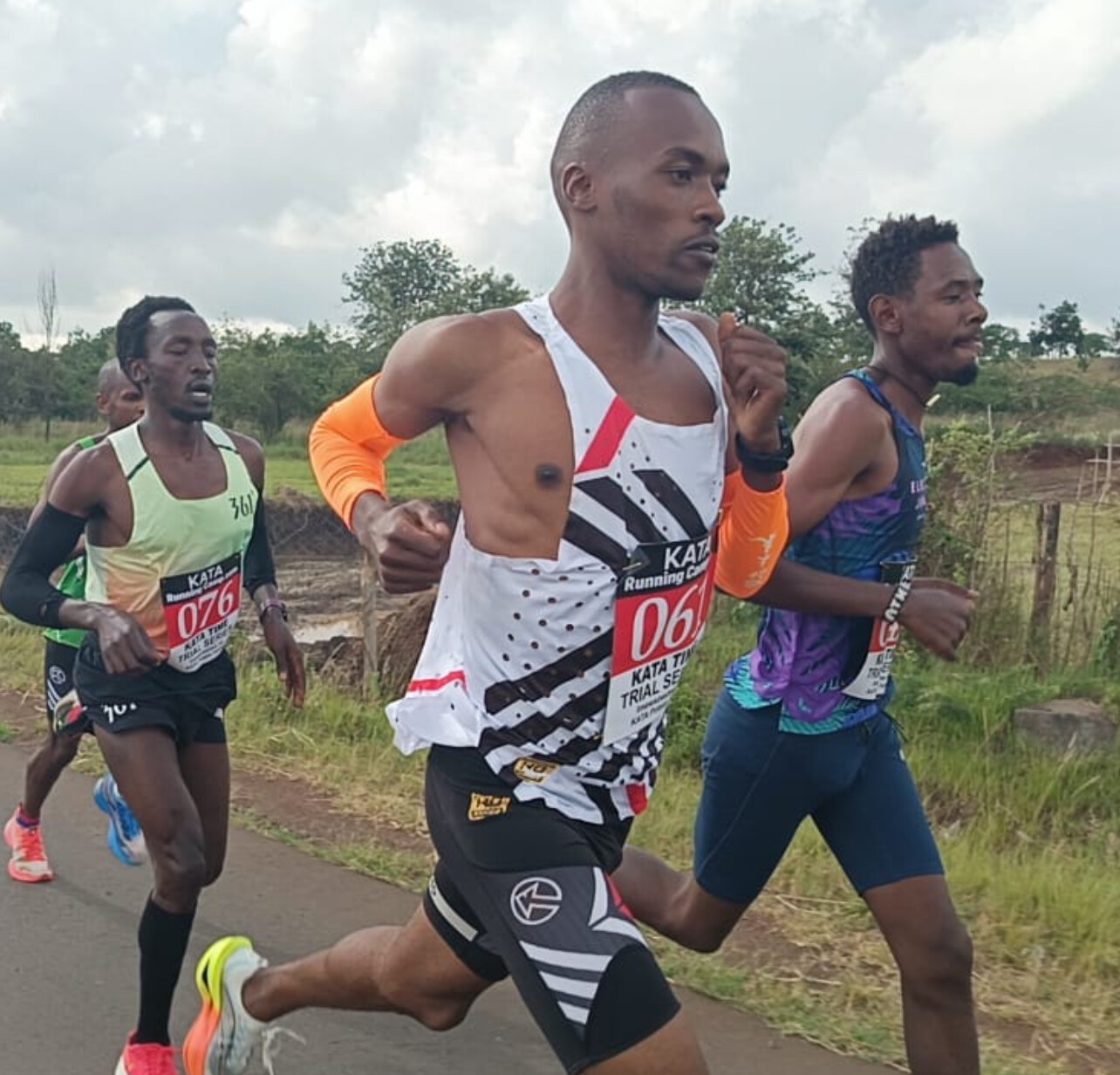
Stephen Ngigi (22, Bib 061) claimed second place in 30:04, followed by Raphael Karita (26, Bib 043) in 30:22.
Men’s 10K Results
1. John Chege (21, 042) – 29:49
2. Stephen Ngigi (22, 061) – 30:04
3. Raphael Karita (26, 043) – 30:22
4. Bernard Waweru (40, 041) – 30:38
5. Erick Mutuku (23, 040) – 30:39
6. Kristian Muthini (29, 074) – 31:57
7. Charles Ndirangu (24, 031) – 32:26
8. Erick Cheruiyot (30, 032) – 32:32
9. Fredrick Wambua (20, 073) – 32:56
10. Ismael Mburu (25, 036) – 33:31
11. Joseph Wanjiru (40, 064) – 34:12
12. John Wekesa (29, 045) – 34:27
13. Joseph Nyota (20, 035) – 35:05
14. Paul Ng’ang’a (43, 039) – 35:44
15. Joel Maina (40, 062) – 35:56
16. Kelvin Waiganjo (29, 065) – 43:23
Women’s 10K: Susan Njuu Leads, Chepkemoi Sets PB
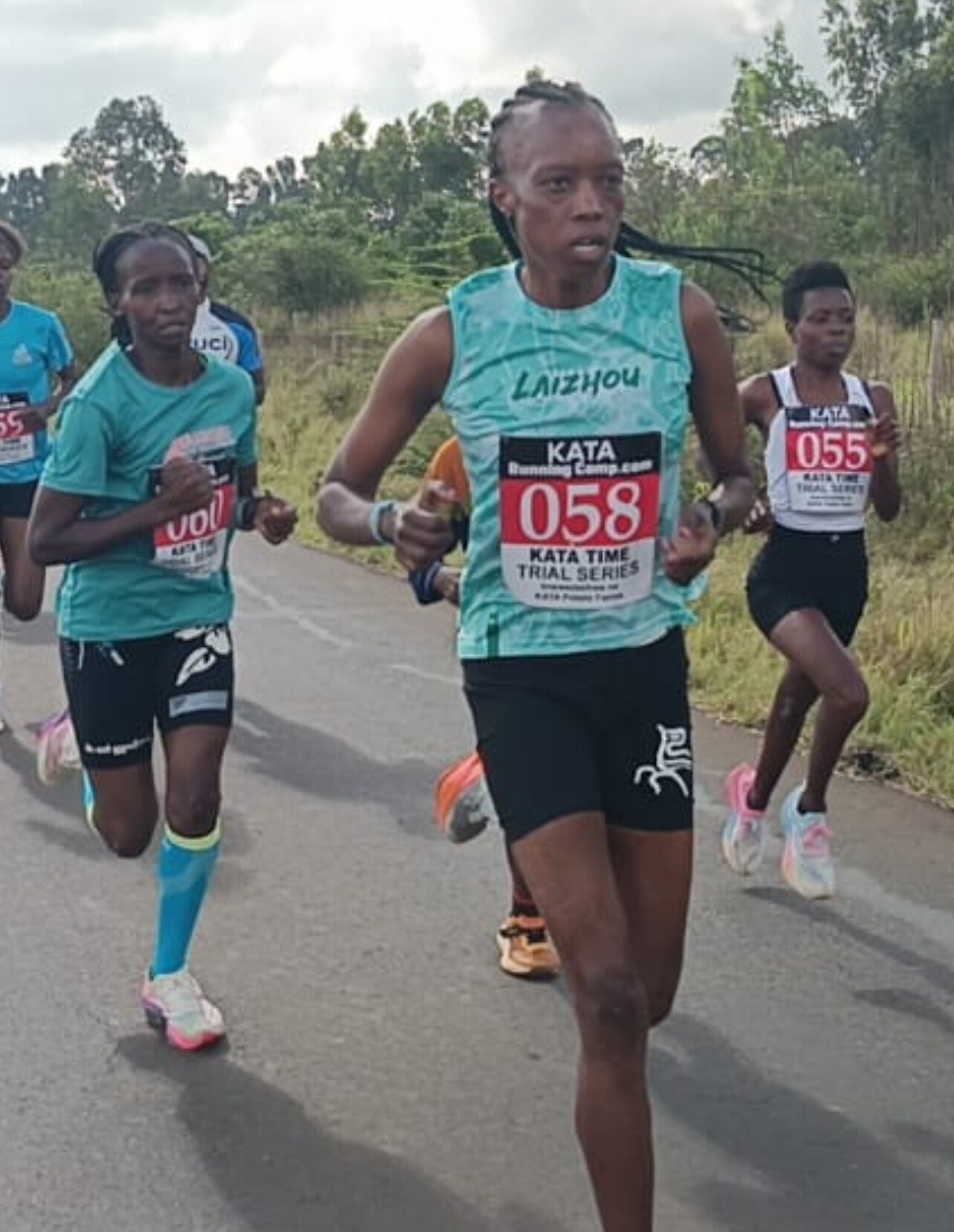
In the women’s 10K, Susan Njuu (40, Bib 058) took the win in 35:58, showing strength and consistency throughout the race.
She was followed closely by Caren Chepkemoi (24, Bib 059), who ran a personal best of 36:12, taking more than 30 seconds off her previous mark. Naomi Wambui (40, Bib 057) completed the podium in 36:44.
Women’s 10K Results
1. Susan Njuu (40, 058) – 35:58
2. Caren Chepkemoi (24, 059) – 36:12 (PB)
3. Naomi Wambui (40, 057) – 36:44
4. Ruth Maina (23, 055) – 38:46
5. Mary Wangari (34, 077) – 39:32
6. Regina Sandiki (19, 048) – 40:22
7. Faith Mutua (16, 052) – 44:38
Men’s 5K: Teenagers Set the Pace
The men’s 5K belonged to Robin Musa (17, Bib 072), who delivered an impressive performance to win in 15:46. Close behind was Justus Nyamai (18, Bib 037) in 15:51, with Kelvin Mutunga (19, Bib 053) taking third in 16:34.
Men’s 5K Results
1. Robin Musa (17, 072) – 15:46
2. Justus Nyamai (18, 037) – 15:51
3. Kelvin Mutunga (19, 053) – 16:34
4. James Wahome (16, 033) – 16:48
5. Timothy Juma (20, 046) – 17:25
6. Erick Mwaura (18, 038) – 17:33
7. Samuel Maingi (14, 045) – 17:39
8. John Nzioka (16, 071) – 20:40
9. Ryan Kiarie (17, 075) – 23:28
Women’s 5K: Macharia Returns Strong Despite Injury
Despite nursing an injury, Ruth Macharia (27, Bib 056) topped the women’s 5K field, winning in 20:44.
She was followed by Irene Kameme (12, Bib 050), who impressed with a 21:50 run, while Assumpta Mwende (17, Bib 051) placed third in 22:08.
Women’s 5K Results
1. Ruth Macharia (27, 056) – 20:44
2. Irene Kameme (12, 050) – 21:50
3. Assumpta Mwende (17, 051) – 22:08
4. Winfred Munini (17, 047) – 22:26
5. Agnes Kavuu (13, 049) – 23:27
6. Catherine Waithera (22, 063) – 23:21
Consistency Builds Champions
Now 51 editions strong, the KATA Monthly Time Trial remains a vital proving ground for athletes across Kenya. Held today under competitive conditions, the event once again demonstrated how regular racing, honest competition, and a supportive training environment continue to produce measurable progress.
by Boris Baron
Login to leave a comment
KATA Time Trial Series
Welcome to the KATA Monthly Time Trial Held at the Kenyan Athletics Training Academy in Thika, Kenya, the KATA Monthly Time Trial is a unique and inclusive event designed to support runners of all levels in achieving their goals and showcasing their fitness. This event offers both 10K and 5K distances on an accurate, certified course, providing participants with...
more...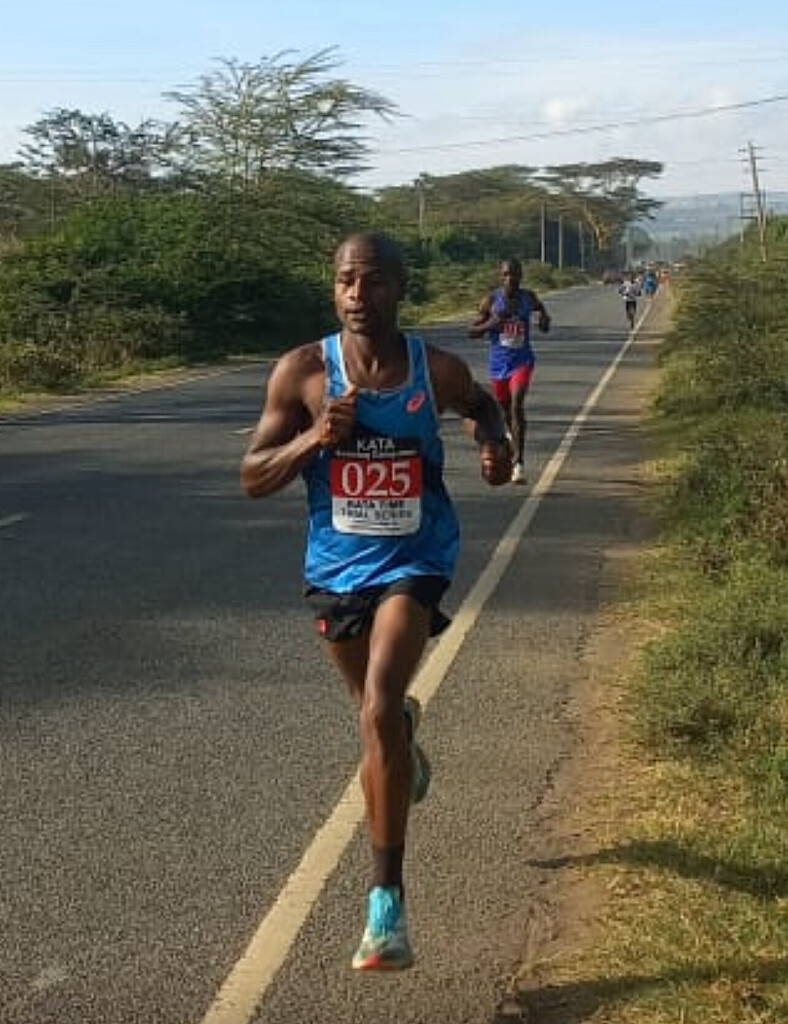
Weldon Langat Shines Again at Sachangwan KATA Running Camp Time Trial
The third edition of the KATA Sachangwan Running Camp K 07 Time Trial on the scenic yet demanding Salgaa–Rongai route was held under bright, sunny skies with temperatures at 64°F (18°C), 67% humidity, light winds of 2 mph, and a moderate UV index of 4.5. Despite the tough weather and rolling terrain, athletes displayed tremendous resilience and speed, once again proving why the KATA Time Trials are a breeding ground for Kenyan endurance talent.
In the men’s 10km, Weldon Langat (19 years, Bib 025) extended his dominance on this course, unleashing a powerful finishing kick to win in 30:49. Langat has made the Salgaa–Rongai route his own, demonstrating both tactical awareness and strength through the hills. Ronald Cheruiyot (25 yrs, Bib 015) followed in 34:24, while Sammy Sang (35 yrs, Bib 022) took third in 37:50, rounding out a solid men’s podium.
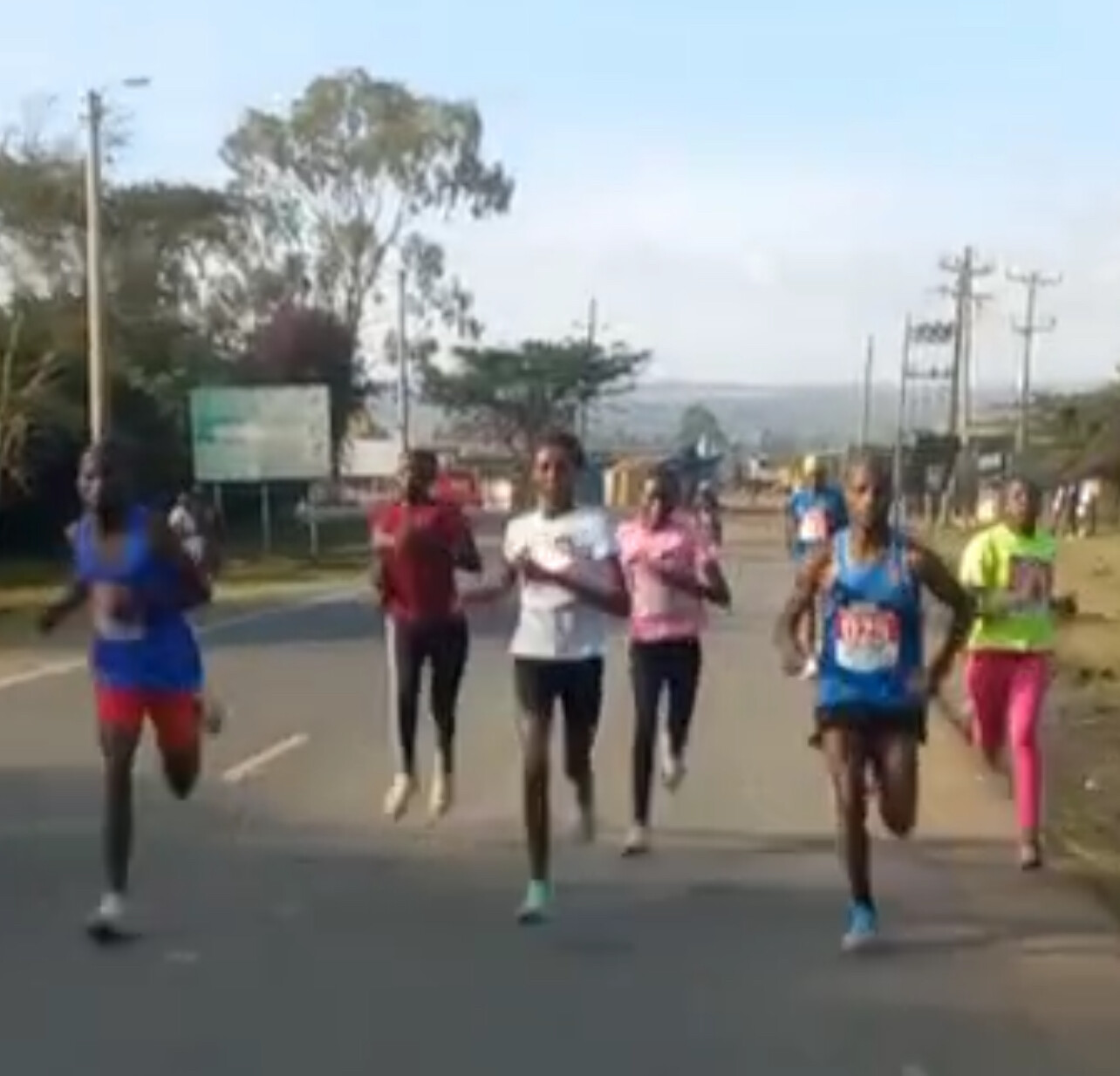
The men’s 5km saw rising star Benard Kitum (20 yrs, Bib 040) clock a personal best of 16:35, continuing his steady improvement within the KATA Running Camp system. His confidence and form signal a bright future ahead.
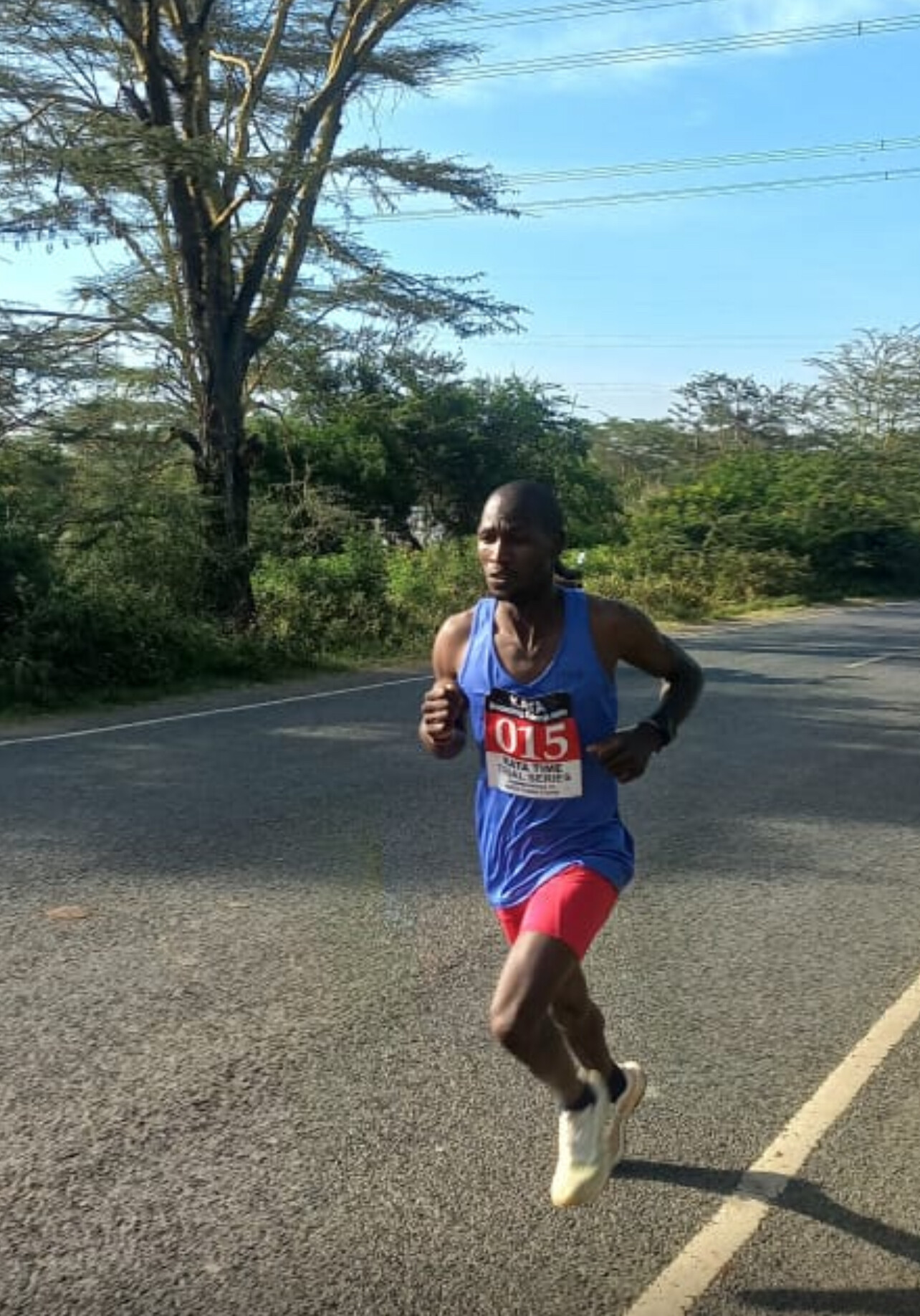
In the women’s 5km, Elizabeth Wambui (20 yrs, Bib 036) impressed once again, winning in 18:08with her trademark consistency and drive. Sandra Cheptoo (13 yrs, Bib 018) showed great promise in second, running 21:00, while Faith Chebet (16 yrs, Bib 033) was third in 23:12. Miriam Chebet (18 yrs, Bib 035) followed closely in 23:17, with Rahab Chemutai (13 yrs, Bib 019) finishing fifth in 25:27.
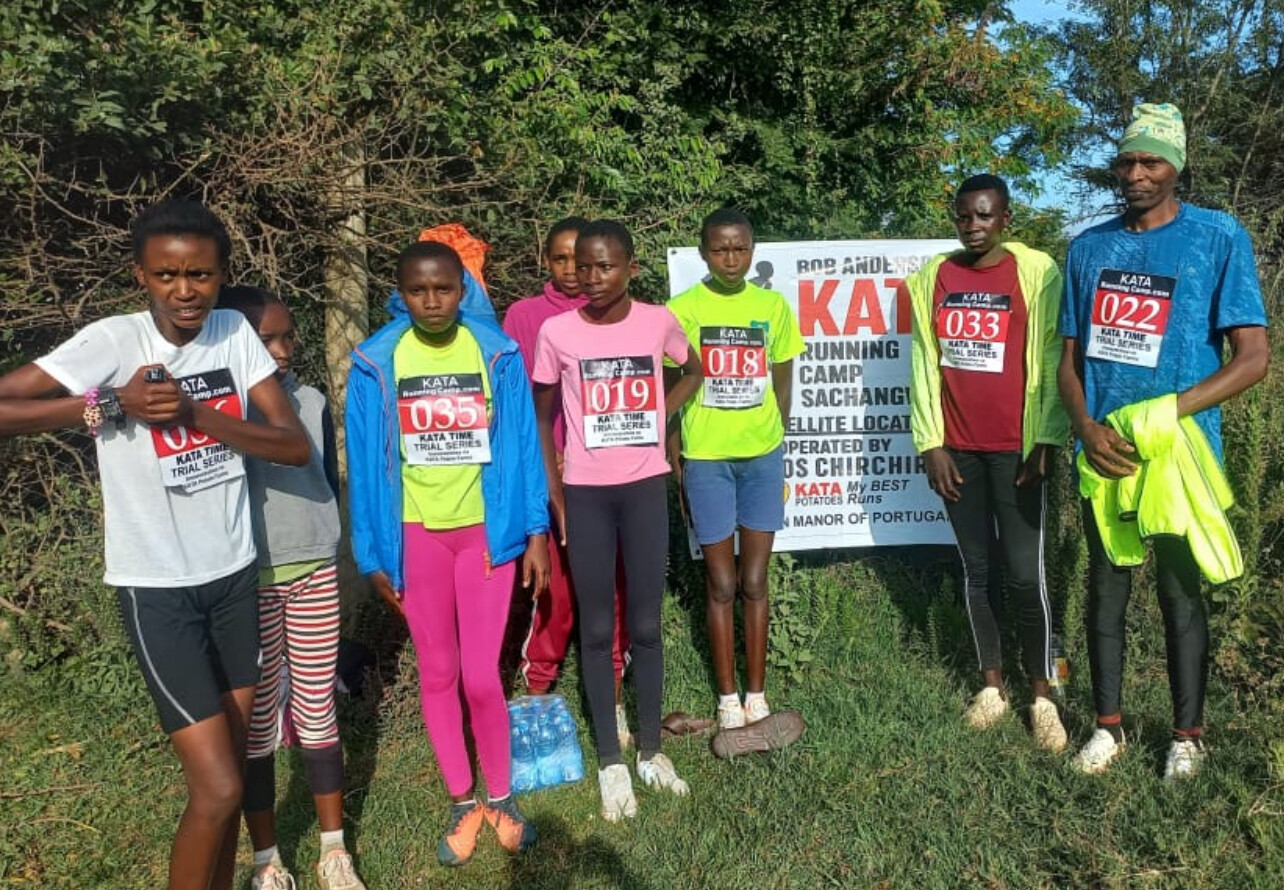
These performances highlight the diversity of talent within KATA’s growing satellite network — from seasoned runners to young emerging athletes.
The next KATA Time Trial will take place on December 17 across most of KATA’s satellite running camps, including the main academy in Thika, continuing the momentum of KATA’s “Fuel of Champions” program that blends training, racing, and development across Kenya.
The Salgaa–Rongai KATA Running Camp, one of KATA’s newest and most promising satellite locations, continues to build its reputation as a key hub for athlete development. Its consistent time trial events are helping to identify and prepare the next generation of Kenyan champions — runners who are fast proving that talent, dedication, and the right support can overcome even the toughest conditions.
KATA Time Trial – Salgaa–Rongai (3rd Edition) Official Results
10km Men
1. Weldon Langat – 19 yrs – Bib 025 – 30:49
2. Ronald Cheruiyot – 25 yrs – Bib 015 – 34:24
3. Sammy Sang – 35 yrs – Bib 022 – 37:50
5km Men
1. Benard Kitum – 20 yrs – Bib 040 – 16:35 (PB)
5km Women
1. Elizabeth Wambui – 20 yrs – Bib 036 – 18:08
2. Sandra Cheptoo – 13 yrs – Bib 018 – 21:00
3. Faith Chebet – 16 yrs – Bib 033 – 23:12
4. Miriam Chebet – 18 yrs – Bib 035 – 23:17
5. Rahab Chemutai – 13 yrs – Bib 019 – 25:27
by Boris Baron
Login to leave a comment
KATA Time Trial 50 Marks Milestone with Strong Performances in Thika
THIKA, Kenya — November 12, 2025 — The 50th edition of the KATA Time Trial was held today at the Kenyan Athletics Training Academy (KATA) in Thika, marking a major milestone for the event that continues to nurture and test athletes under challenging conditions. Despite the warm, humid air and gusty winds, runners delivered impressive performances across both the 5km and 10km distances.
In the men’s 5km race, Charles Ndirangu, still recovering from injury, displayed determination and class to cross the finish line first in 15:32. Sixteen-year-old James Lawrence followed with a strong run of 18:01, showing promise as one of KATA’s rising young athletes. Eric Mwaura, 18, clocked 18:07to round out the top three.
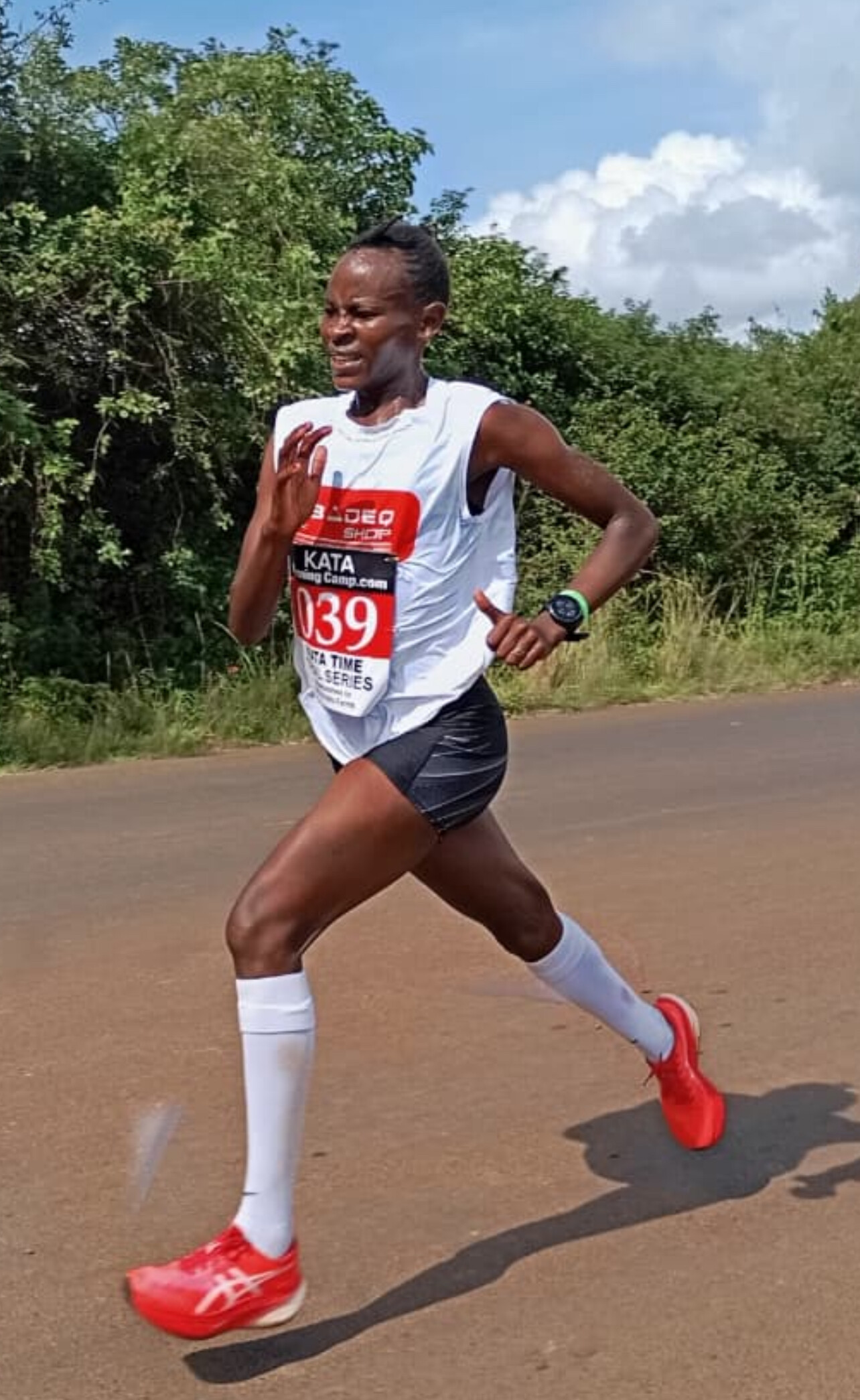
The women’s 5km race saw Agnes Wanjiru take to the course solo, clocking 19:21. Having recently battled illness, her performance reflected admirable resilience and commitment to the KATA program.
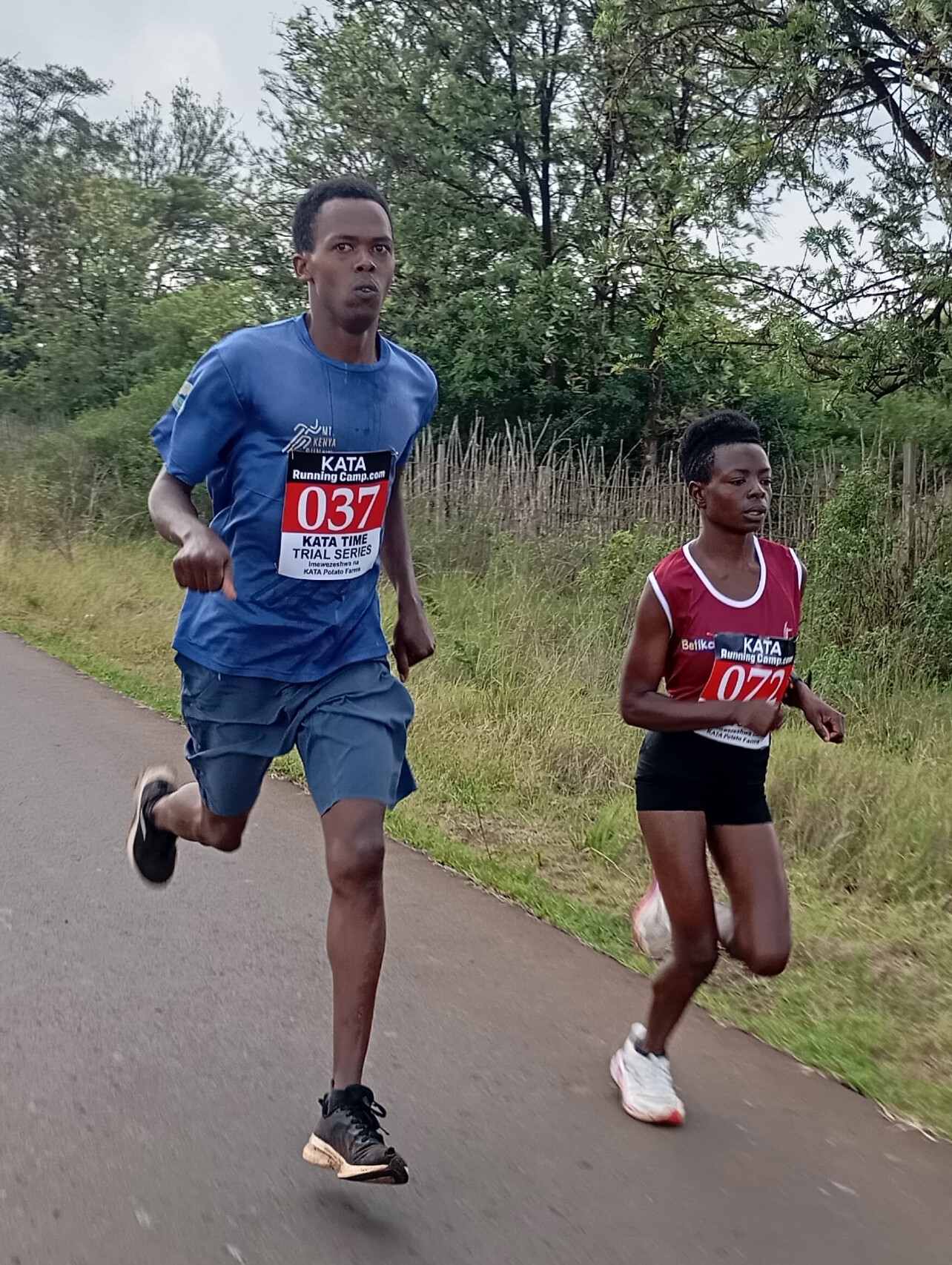
The men’s 10km was one of the most competitive fields of the day. John Chege, 21, took command early and maintained his lead to win in 29:49. He was followed by Bernard Waweru (40) in 30:29, with Stephen Ngigi, 22, close behind in 30:36 to complete the podium.

The women’s 10km produced another standout performance, with Loise Kiarie, 24, setting a new personal best of 33:49, improving her previous time by 30 seconds despite the less-than-ideal weather. Jacinta Kamau, also 24, claimed second in 34:48, while Kellen Waithira (38) finished third in 36:11.
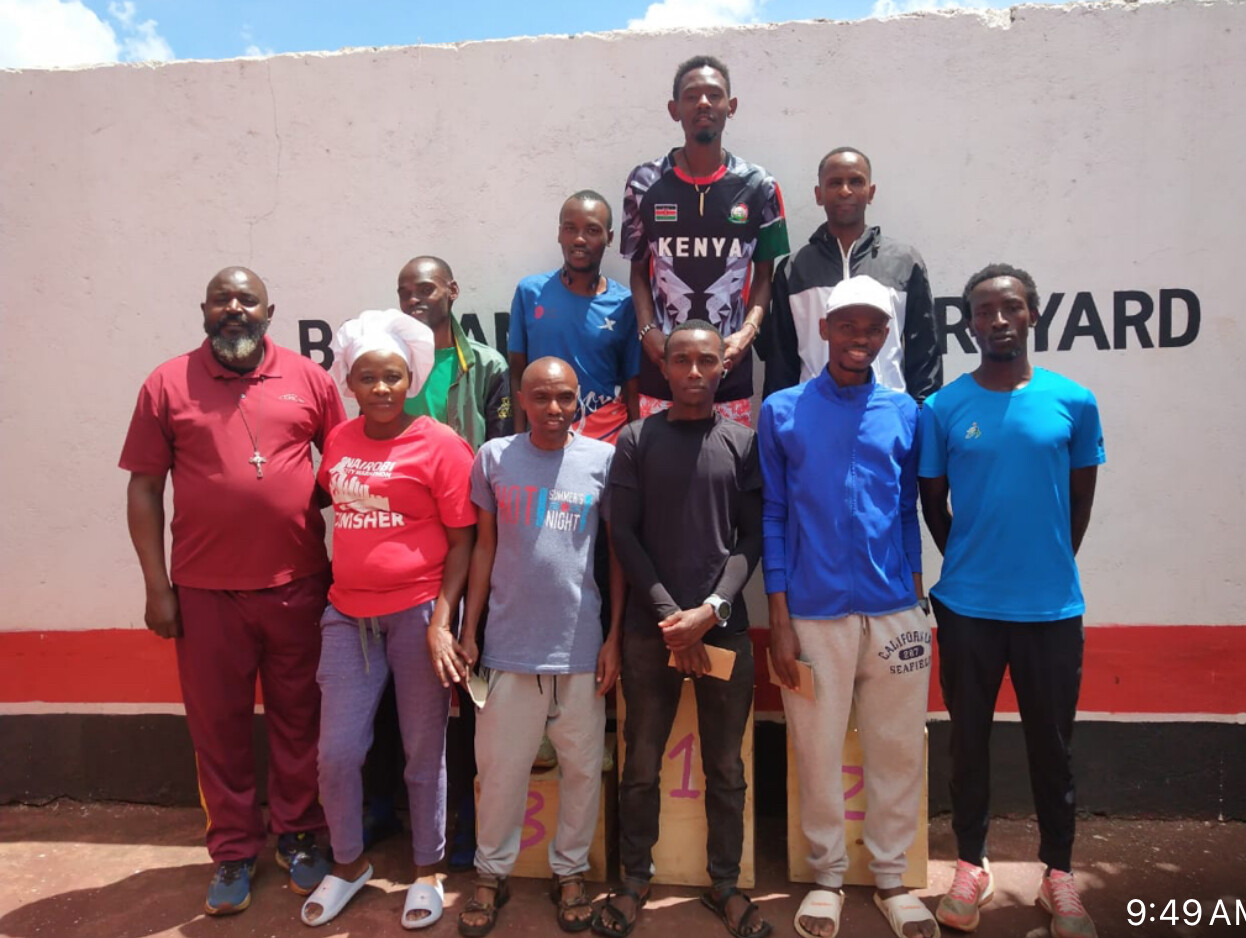
The KATA Time Trials, founded by Bob Anderson, continue to provide a world-class platform for Kenyan athletes to measure progress and stay race-ready between competitions. Today’s edition celebrated not only endurance and improvement but also the spirit of consistency that has defined the KATA community since its inception.
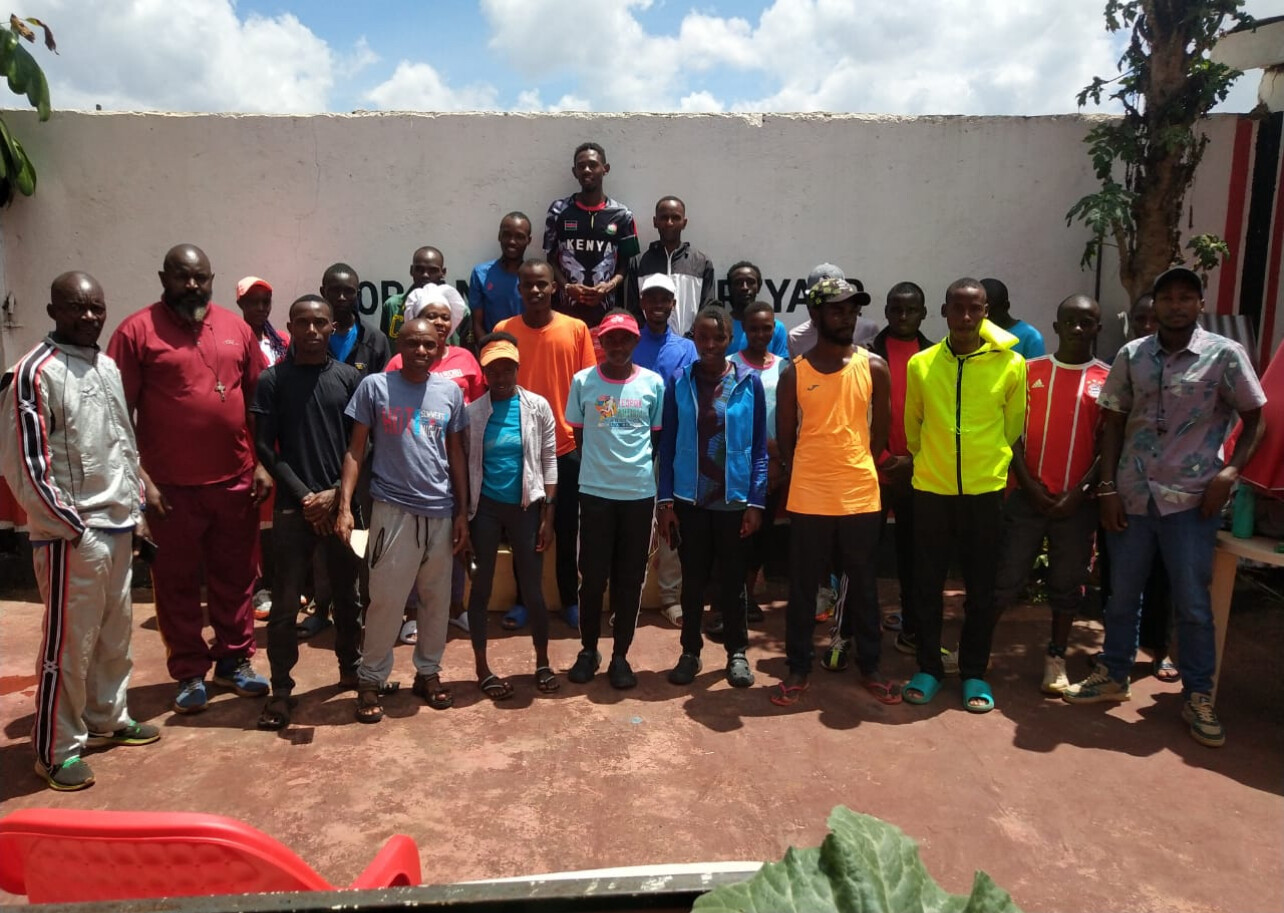
The next KATA Time Trial will take place on December 17, both in Thika and at most of KATA’s satellite running camps across Kenya, as the program continues to expand its reach and provide competitive opportunities to athletes nationwide.
KATA Time Trial #50 – Official Results
5km Men
- Charles Ndirangu – 24 yrs – Bib 74 – 15:32
- James Lawrence – 16 yrs – Bib 73 – 18:01
- Eric Mwaura – 18 yrs – Bib 35 – 18:07
- Tobias Kosgei – 16 yrs – Bib 73 – 18:50
5km Women
- Agnes Wanjiru – 20 yrs – Bib 33 – 19:21
10km Men
- John Chege – 21 yrs – Bib 76 – 29:49
- Bernard Waweru – 40 yrs – Bib 31 – 30:29
- Stephen Ngigi – 22 yrs – Bib 71 – 30:36
- Boniface Mungai – 30 yrs – Bib 77 – 30:53
- Dan Lolngojine – 19 yrs – Bib 49 – 31:01
- John Kuria – 30 yrs – Bib 40 – 31:33
- Joel Maina – 43 yrs – Bib 41 – 32:15
- Justus Nyamai – 18 yrs – Bib 48 – 33:25
- Ismael Mburu – 25 yrs – Bib 50 – 33:44
- Eric Cheruiyot – 30 yrs – Bib 46 – 33:55
- Joseph Nyota – 20 yrs – Bib 32 – 34:05
- Peter Mukundi – 27 yrs – Bib 37 – 36:46
- Charles Ndirangu – 65 yrs – Bib 53 – 38:02
10km Women
- Loise Kiarie – 24 yrs – Bib 39 – 33:49 (PB)
- Jacinta Kamau – 24 yrs – Bib 38 – 34:48
- Kellen Waithira – 38 yrs – Bib 54 – 36:11
- Susan Njuu – 40 yrs – Bib 52 – 36:34
- Lilian Nyamai – 25 yrs – Bib 47 – 37:04
- Karen Cheokemoi – 24 yrs – Bib 51 – 37:29
- Ruth Maina – 23 yrs – Bib 72 – 37:36
- Felistas Maina – 37 yrs – Bib 34 – 40:04
- Mary Wangari – 35 yrs – Bib 36 – 40:04
by Boris Baron
Login to leave a comment
KATA Time Trial Series
Welcome to the KATA Monthly Time Trial Held at the Kenyan Athletics Training Academy in Thika, Kenya, the KATA Monthly Time Trial is a unique and inclusive event designed to support runners of all levels in achieving their goals and showcasing their fitness. This event offers both 10K and 5K distances on an accurate, certified course, providing participants with...
more...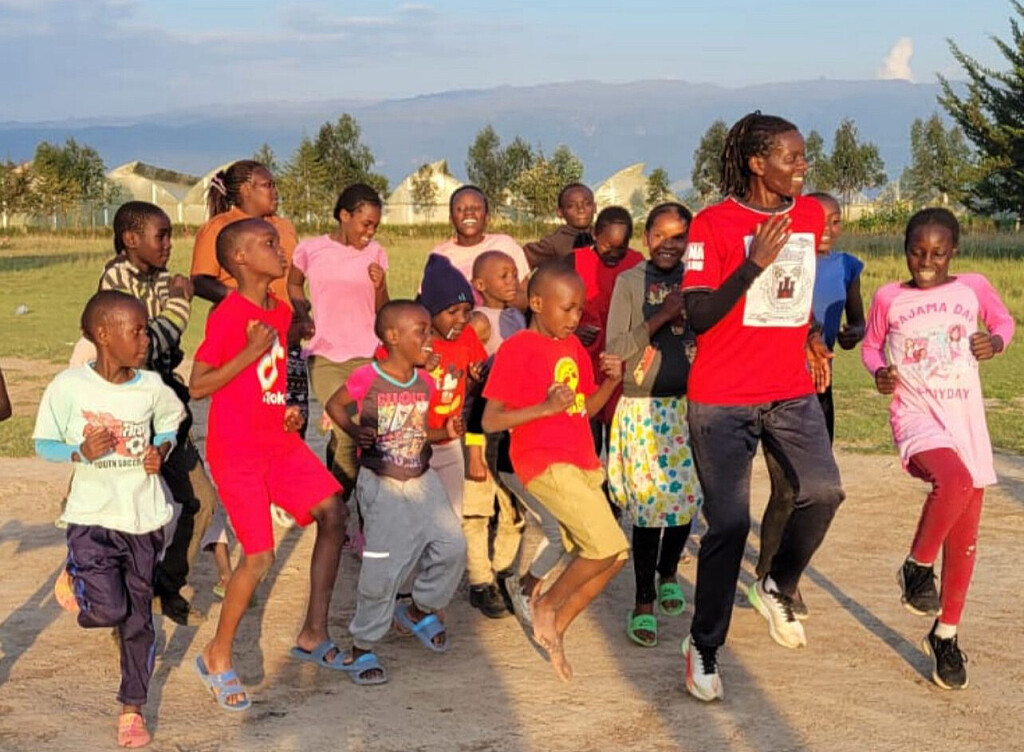
Lucy Muritu: The Mother, Farmer, Coach, and Athlete Nurturing Nyandarua’s Next Generation
In the cool highlands of Nyandarua County, about 180 kilometers northwest of Nairobi, Lucy Muritu has built a life that seamlessly blends her passions for running, farming, and mentoring. Once based at the KATA Training Center in Thika, the seasoned road-running athlete has transformed her personal athletic journey into one of leadership, hard work, and community empowerment.
Born in Mukurweini, Nyeri County, Lucy grew up as the second of five children in a farming family. From a young age, she developed a deep respect for the land and a strong work ethic—values that continue to guide her today.
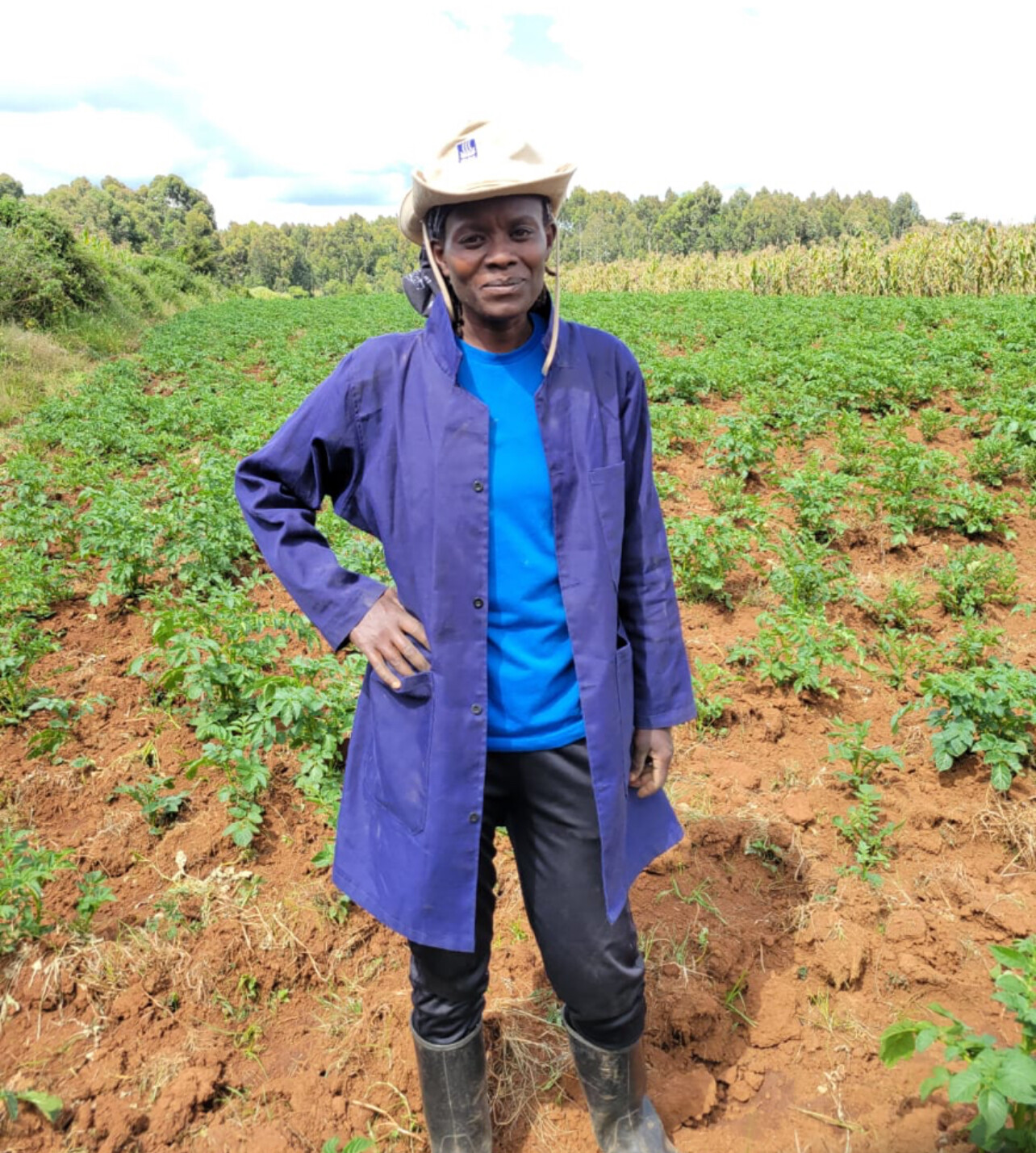
“Working in potato farming under the KATA program has been both rewarding and demanding,” she says. “The program provides valuable support like quality seeds, interest-free loans, and expert advice. These have helped me increase my yields and improve my farming practices. Through KATA, I’ve also met other farmers and taken part in competitions that keep me motivated to keep learning and growing.”

Her relocation to Nyandarua opened a new chapter, allowing her to merge her athletic discipline with agricultural entrepreneurship and youth development. “Balancing farming with training requires good time management and a strong support system,” she explains. “I plan my days carefully—mornings are for planting, weeding, or supervising workers, while afternoons and evenings are for running and workouts. It can be tough during planting seasons, but with determination and support from my family and team, I manage both. Staying active in both keeps me inspired and allows me to give back more to my community.”
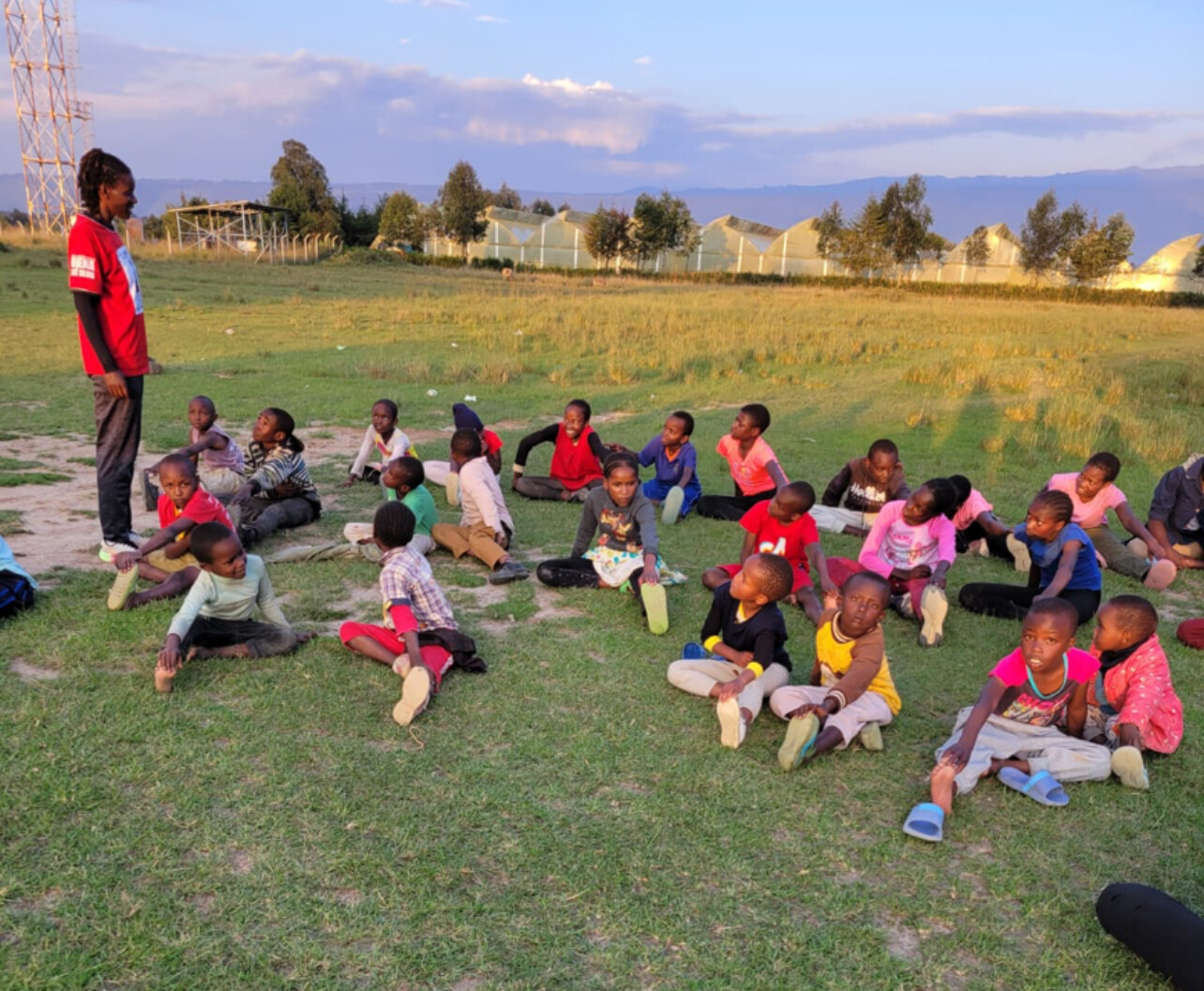
Mentorship has become one of Lucy’s greatest sources of fulfillment. “I’m passionate about helping young and junior athletes,” she says. “By sharing what I’ve learned, I can help them reach their potential—not just in sports but in life. Growing up, mentors played a huge role in my journey, and I want to do the same for others, especially in rural areas where opportunities can be scarce.”
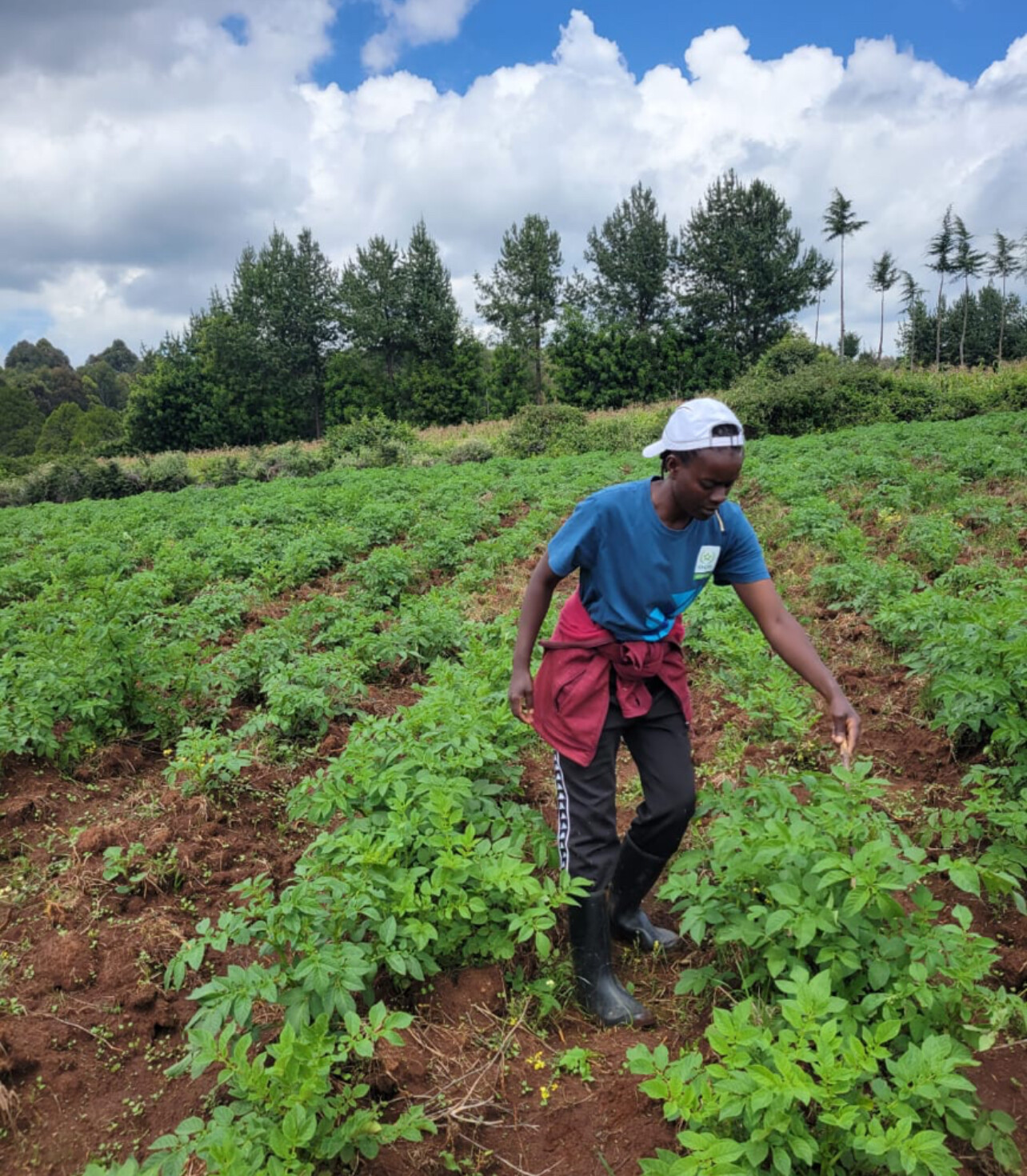
She beams when talking about the athletes she coaches. “Watching them grow in confidence, discipline, and skill is incredibly rewarding,” Lucy says. “I want them to understand that with hard work and determination, they can achieve their dreams—whether on the track, in the classroom, or in their communities.”
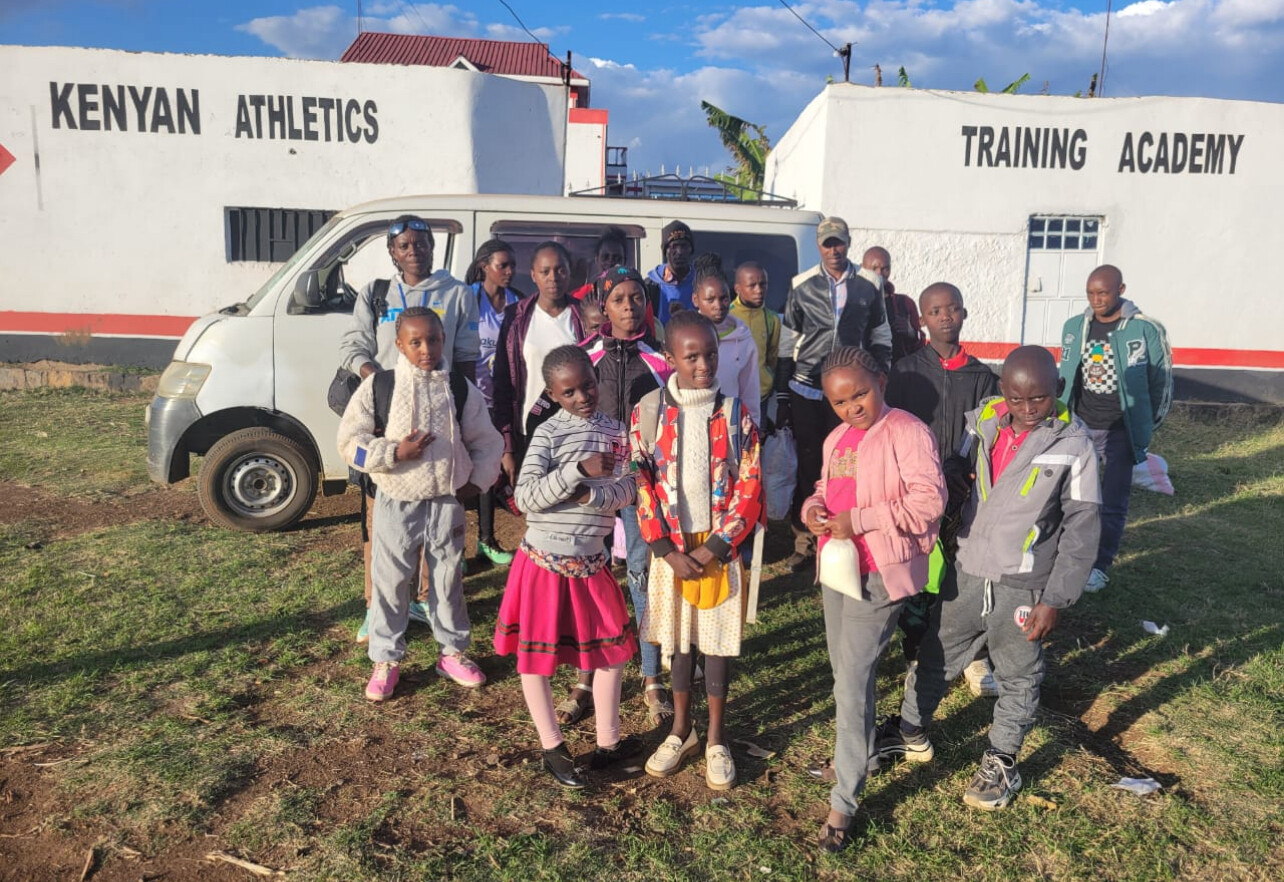
Lucy also carries a special message for women juggling multiple roles. “Believe in yourself and never underestimate your strength,” she says. “It’s not always easy to balance family, work, and personal dreams, but with determination, planning, and support, it’s possible to thrive in all areas. Don’t be afraid to ask for help, and always take time for yourself. Every role you play—as a mother, professional, coach, or athlete—has its own value. Celebrate every achievement and keep pushing forward. By following your passion and setting a positive example, you’re showing young girls that they too can dream big and succeed.”

Lucy Muritu’s story is one of harmony—between nurturing crops and cultivating talent, between personal goals and community service. Her journey proves that true success doesn’t come from running away from your roots, but by running with them.
by Robert Kibet
Login to leave a comment

KATA Launches Half-Million Bonus for Top Potato Farmers
Expanding its spirit of competition from the track to the fields, KATA rewards excellence in both running and farming.
KATA is taking its competitive spirit from the track to the fields with the new KATA Potato Farmer Half-Million Bonus Prize Package. This program will reward five KATA farmers with 50,000 Kenyan Shillings each, recognizing those who achieve the best yield per acre.
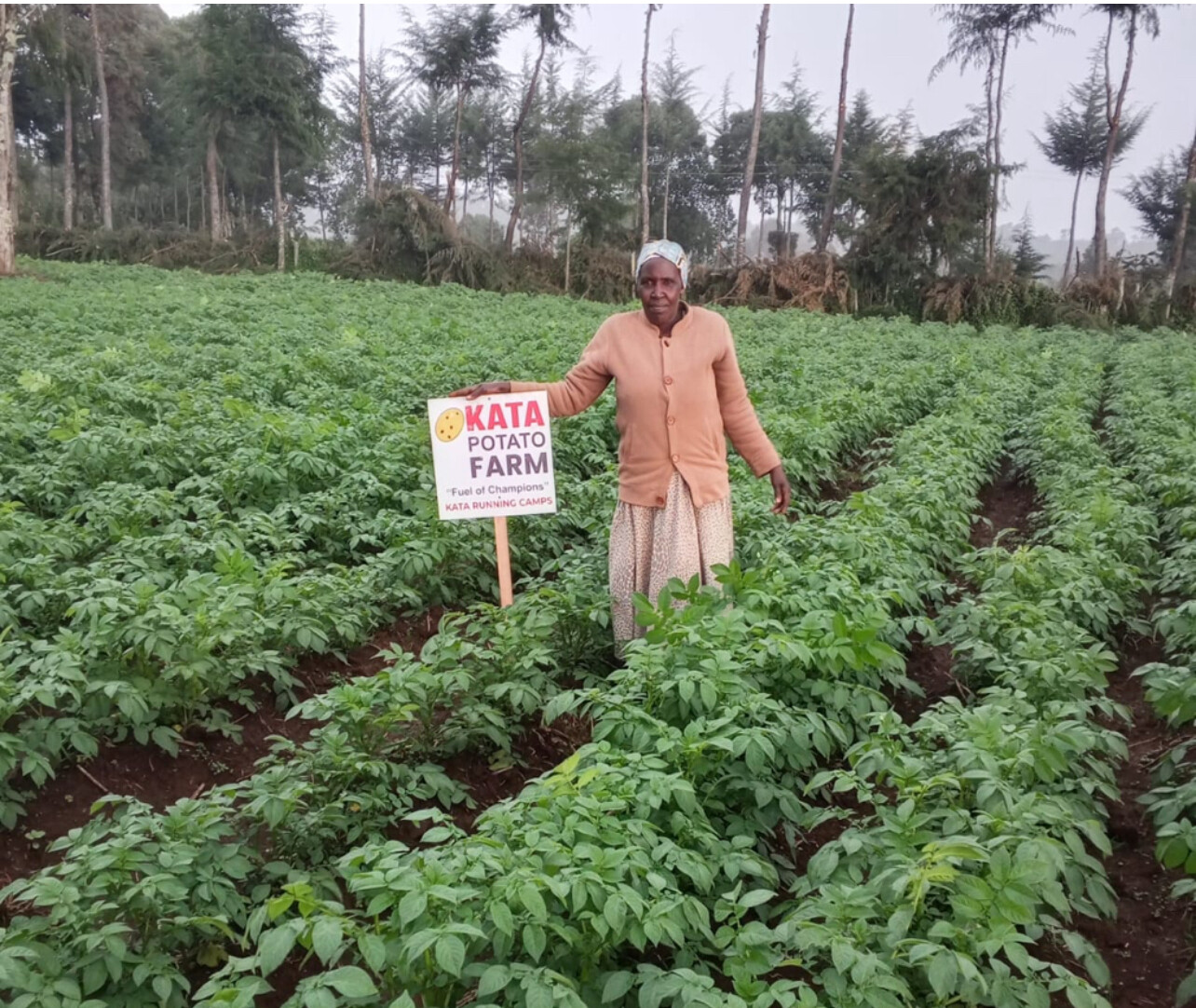
The first payout will be made on December 31, followed by a second on June 30. Each cycle, five farmers with the top single-acre harvests will receive the bonus, totaling half a million shillings annually.
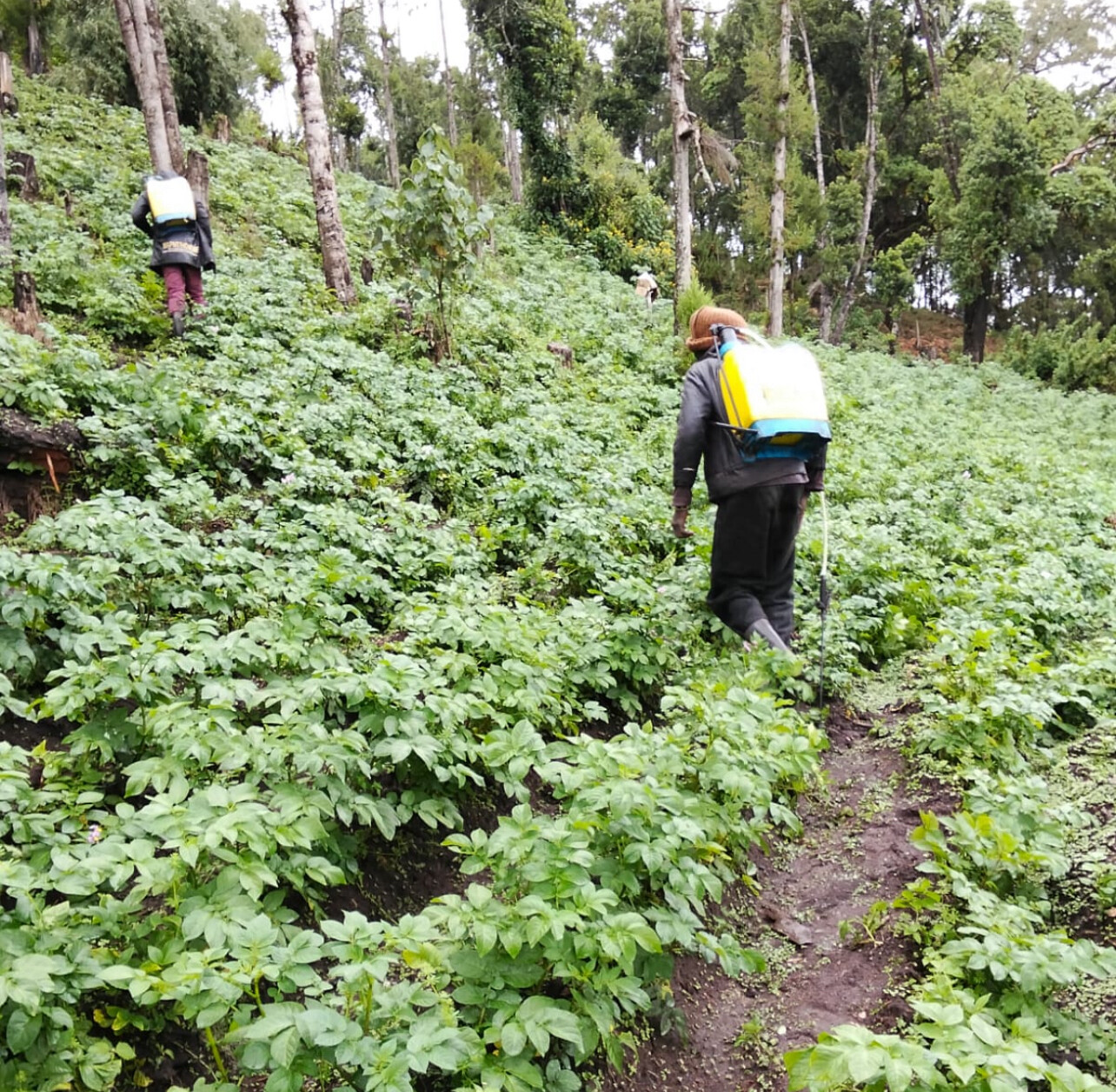
Yields will be measured in 50 kg bags and must be sold to verified buyers. Results will be confirmed by CTO Dennis, Sales Directors Gideon and John, and Accounts Manager Fridah. The one bag each farmer keeps for home use will not count, and only bags sold and confirmed as paid to KATAwill qualify.

“We offer prize money for races, and with all the hard work it takes to grow KATA potatoes, I thought—why not turn this into a competition as well?” says Bob Anderson, KATA Founder and Director.
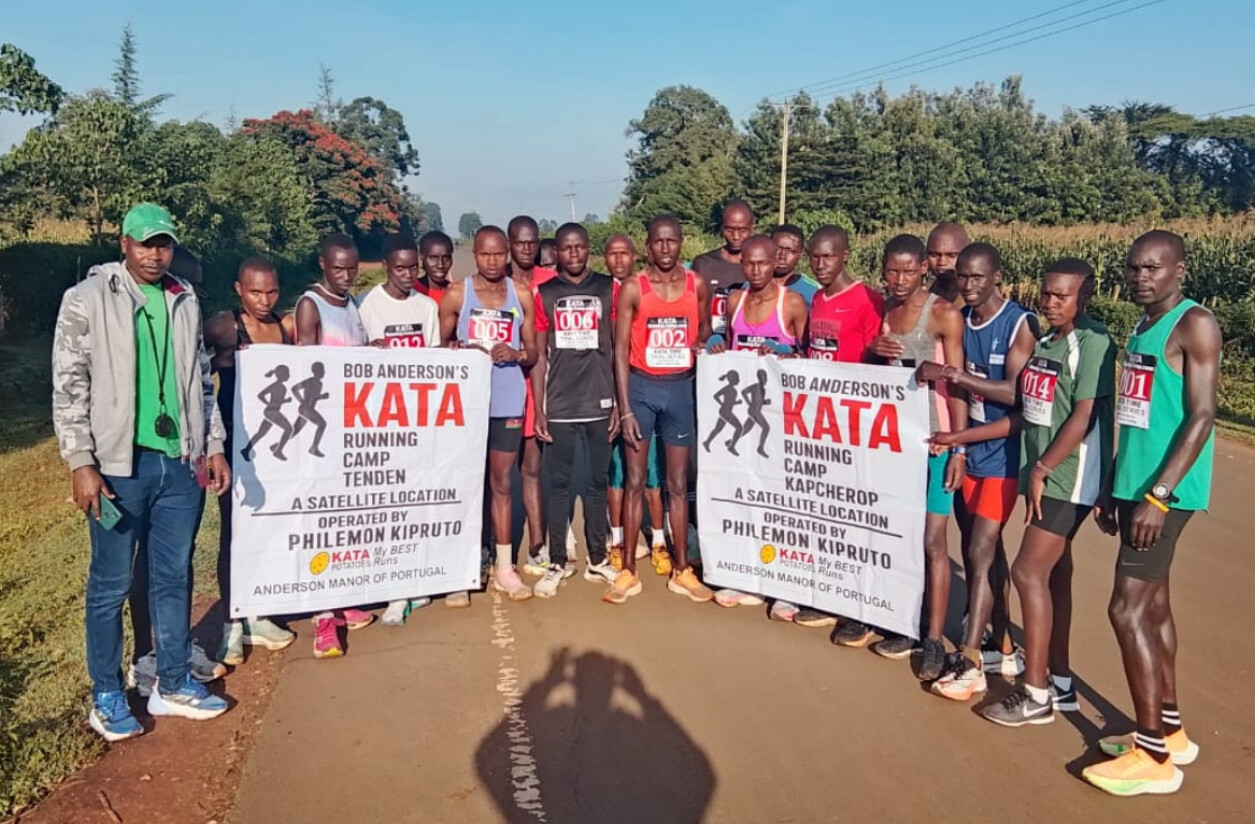
A farmer can win twice a year if they achieve the best results in both seasons. The initiative mirrors KATA’s philosophy—rewarding effort, precision, and perseverance whether it’s on the course or in the soil.

From Running to Farming Excellence

The Kenyan Athletics Training Academy (KATA), founded by Bob Anderson, the creator of Runner’s World and My Best Runs, began as a world-class training center for runners in Thika, Kenya. Today, it has grown into a dynamic network that includes over 30 KATA Running Camps and 60+ KATA Potato Farms across Kenya, and an international headquarters at Anderson Manor in Portugal.
Each KATA farm operates under a system that combines athletics and agriculture, offering farmers interest-free loans and ongoing support to grow certified Shangi potatoes. The harvests are marketed through KATA’s coordinated sales network, ensuring fair prices and dependable returns for each farmer.
Many KATA farmers are also runners—or closely connected to the athletic community—bringing the same discipline, teamwork, and endurance to farming that they apply to training.
Empowering Champions in Every Field
From the start, KATA’s mission has been to help people reach their potential through endurance, consistency, and community. The new Half-Million Bonus Prize Package celebrates that mission—recognizing those who deliver exceptional results through focus and commitment.
As Anderson explains, “Whether it’s crossing a finish line or bringing in a record harvest, both take focus, endurance, and belief in yourself. That’s what KATA is all about.”
The first group of winners for the KATA Potato Farmer Half-Million Bonus Prize will be announced on December 31, 2025.
Additional KATA Running Camps and KATA Potatoe farms are going to be confirmed starting in December. Confirm your interest by contacting Bob Anderson on WhatsApp.
by Boris Baron
Login to leave a comment
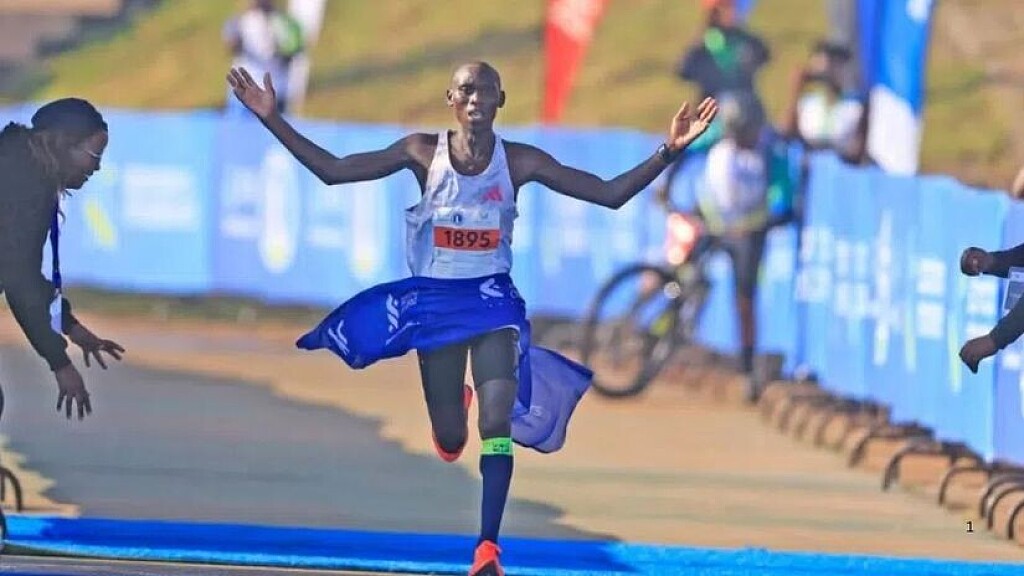
KATA’s Donald Kimaru Finishes 4th at 2025 Standard Chartered Nairobi Marathon
The 2025 Standard Chartered Nairobi Marathon delivered a thrilling showcase of endurance on October 26, as top athletes battled it out on the streets of Nairobi under ideal racing conditions. This year’s event, one of the premier marathons on the African continent, once again attracted a deep field of elite talent.
Among the day’s standout performances was Donald Kimaru, a KATA athlete training out of the Kapcherop KATA Running Camp, who finished a remarkable 4th place in a highly competitive men’s race.
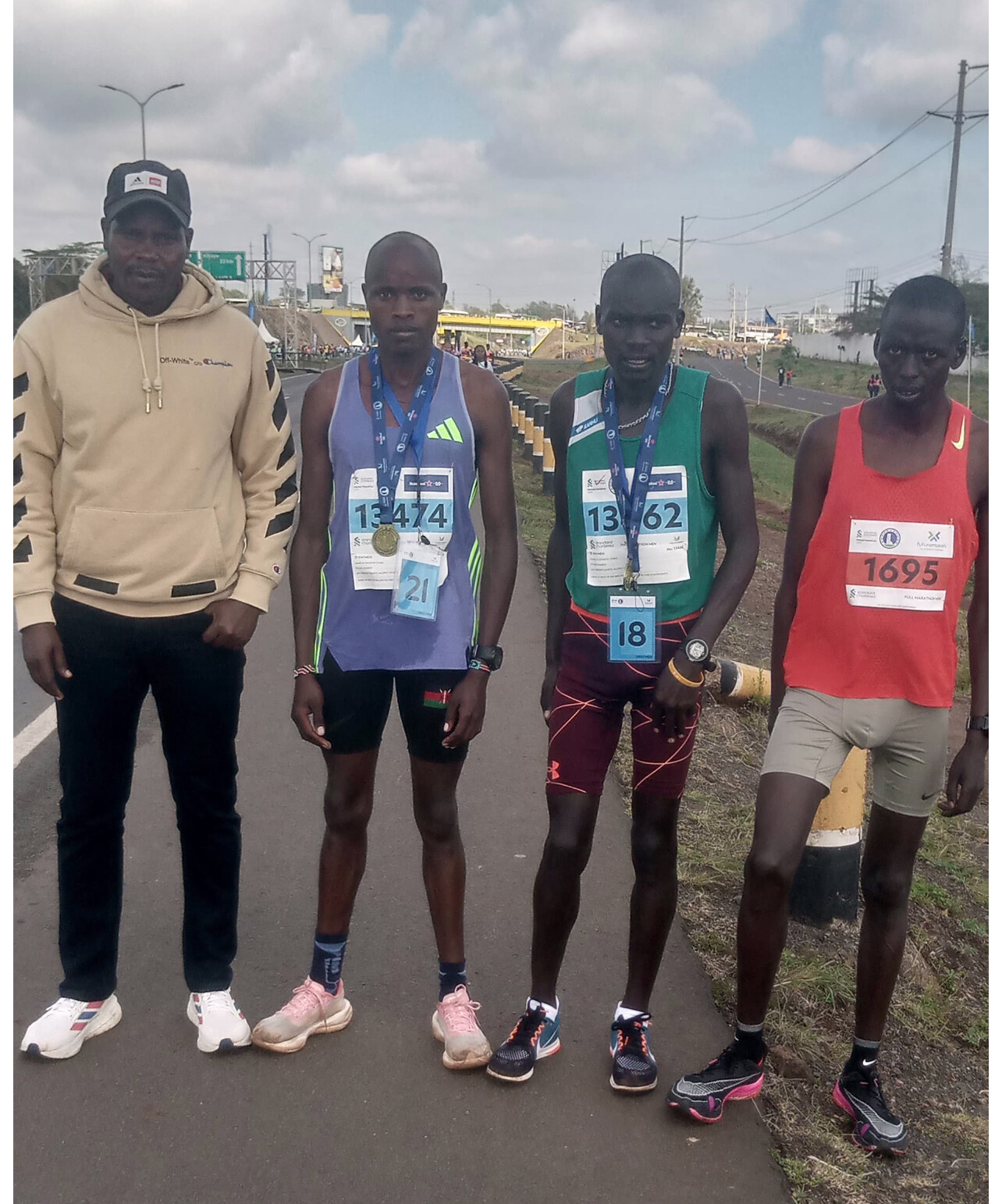
Donald Kimaru: Fuelled by KATA, Ready for the Global Stage

Clocking a time of 2:12:02, Kimaru finished just over a minute behind the winner, Benard Chepkowny (2:11:01), and less than 30 seconds from the podium. It was a huge breakthrough for the rising long-distance runner, who trains under the high-altitude guidance of Coach Philemon Kipruto at the KATA facility in Kapcherop.
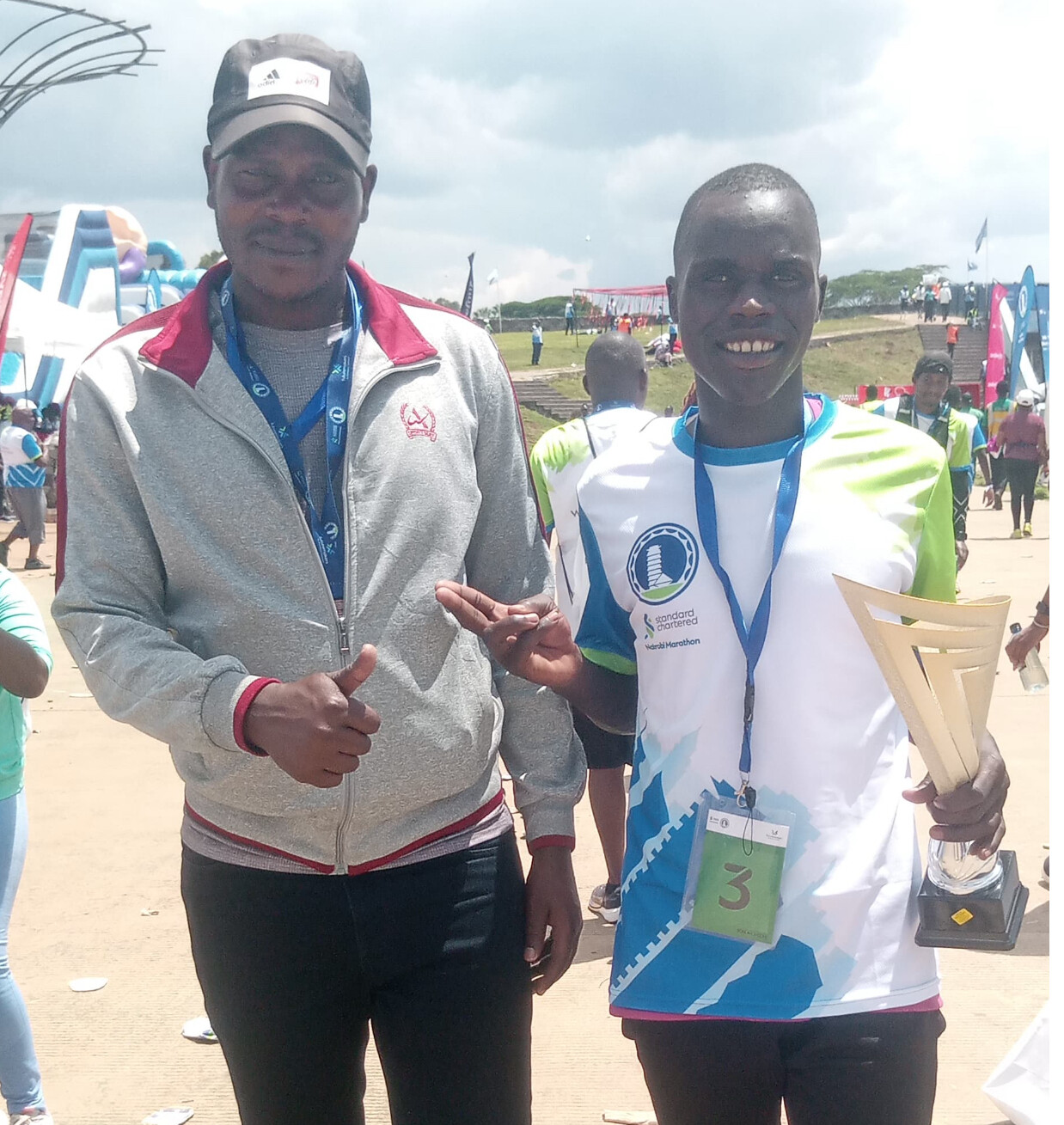
“Donald is showing the power of patience and consistency,” Coach Kipruto noted. “We’ve known he had the potential, and now he’s proving it in one of Kenya’s most important races.”
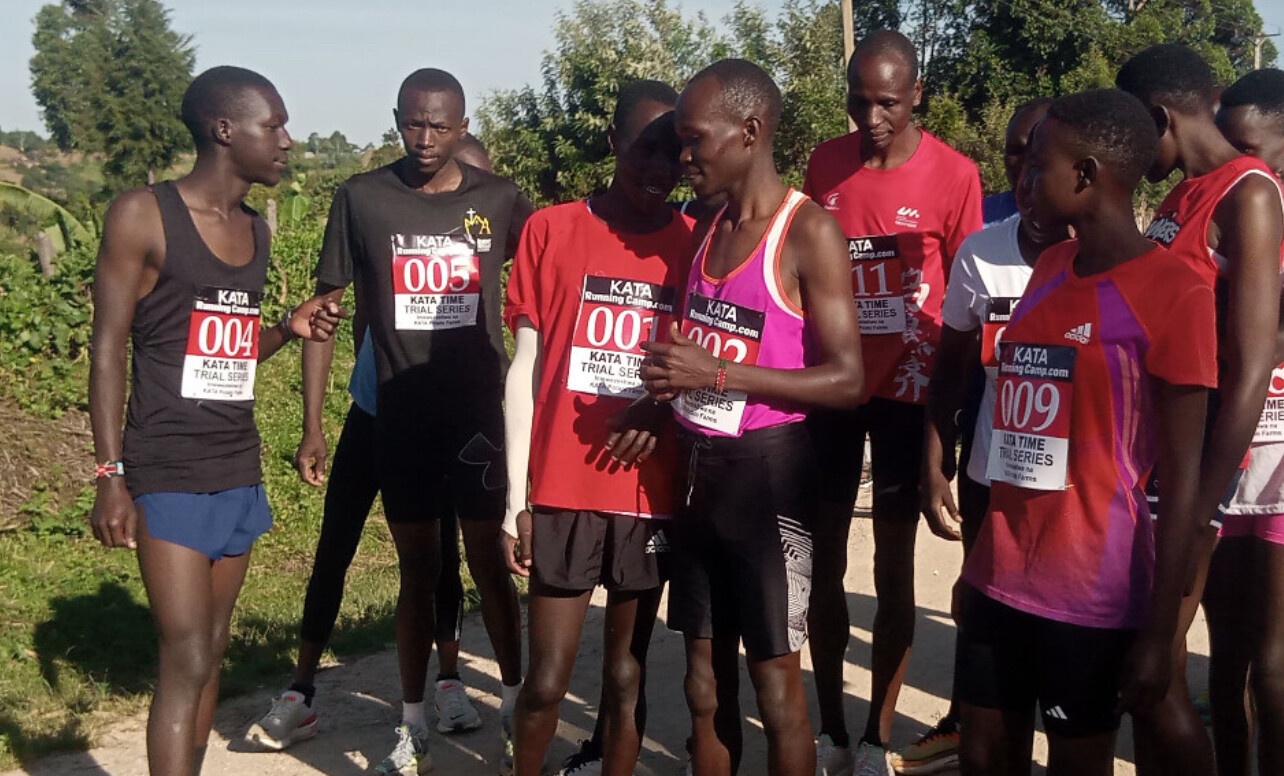
Chepkwony, returning to major competition, wasted no time asserting his intent. He set a strong pace from the start, joined by Silas Chesang, Donald Kimaru, Ezekiel Kemboi, Bethwel Chemuno, and Wilfred Kiplagat, all determined to stay in contention.
As the race progressed past the 30km mark, Chepkwony maintained the lead despite Chesang mounting a late push after struggling on the uphill sections.
Chepkwony’s endurance and composure carried him through to the finish line, clocking an impressive 2:11:01 to seal his comeback victory.
Kimaru trains in an environment designed to create champions, where runners combine disciplined training with the nutritional strength of KATA Potatoes – The Fuel of Champions. His performance in Nairobi is a testament to this holistic approach. Donald had placed second at the KATA Double Road Race 15k held September 20 in Thika.
Top 10 Elite Men – 2025 Standard Chartered Nairobi Marathon
1. Benard Chepkowny – KEN – 2:11:01 (first photo)
2. Alex Chepkwik Saekwo – KEN – 2:11:26
3. Ezekiel Kemboi Omullo – KEN – 2:11:40
4. Donald Kimaru – KEN – 2:12:02
5. Wilfred Kiplagat – UGA – 2:13:42
6. Charles Kimeli – KEN – 2:14:08
7. Nehemiah Kiprono Sang – KEN – 2:14:38
8. Solomon Yego – KEN – 2:14:50
9. Dennis Kipkemboi Koech – KEN – 2:15:39
10. Silas Chesang Keitany – KEN – 2:15:51
Women’s Race Highlight
In the women’s marathon, Hellen Chepkorir dominated with a powerful performance, finishing in 2:27:17 at an average pace of 3:30/km.
KATA’s Impact Growing
Donald Kimaru’s top finish adds to the growing list of success stories emerging from the KATA Running Camp ecosystem. Founded by Bob Anderson, KATA is reshaping the Kenyan distance running scene with over 30 camps across the country, combining elite training with a sustainable agricultural model. Runners like Donald are not only developing as athletes but also helping uplift their communities.
Next for Donald? A potential international marathon debut in 2026, where he’ll look to break the 2:10 barrier and cement his name among Kenya’s top marathoners.
by Boris Baron
Login to leave a comment

NAIROBI MARATHON
Nairobi Marathon is an annual road running competition over the marathon distance held in October in Nairobi, Kenya. First held in 2003, the competition expanded and now includes a half marathon race along with the main race. It was part of "The Greatest Race on Earth", fully sponsored by Standard Chartered Bank....
more...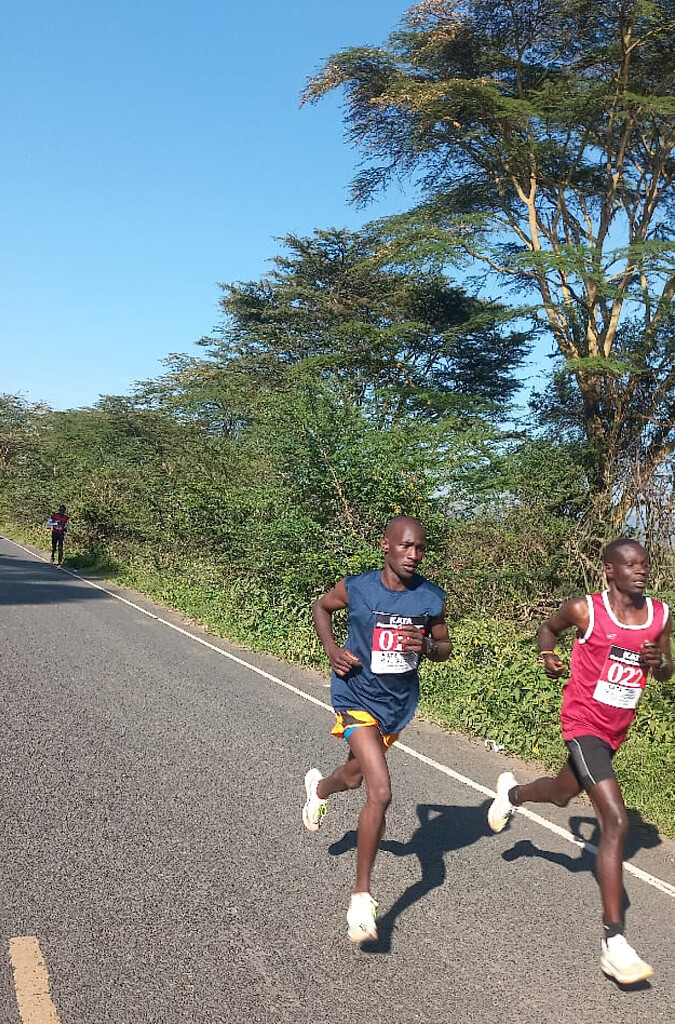
From Potatoes to Personal Bests: How Amos Chirchir Is Growing Athletes and a Future in Sachang’wan
In the highland village of Sachang’wan in Molo, Nakuru County, the land rises boldly toward the sky. The area sits on the edge of the dramatic Rift Valley escarpment, overlooking the vast Menengai Crater — Africa’s second-largest volcanic caldera — its silent ridges brooding in the morning mist.
Behind it, the rolling hills of Molo stretch endlessly, stitched with neat rows of potato farms that define the region’s identity. To the south lies Salgaa, a town better known for its flower farms, where long greenhouse tunnels shimmer like silver ribbons across the plains. Beyond this agricultural heartland, winding dirt roads climb toward Sachang’wan — where another kind of farming is taking root: the farming of athletic talent.
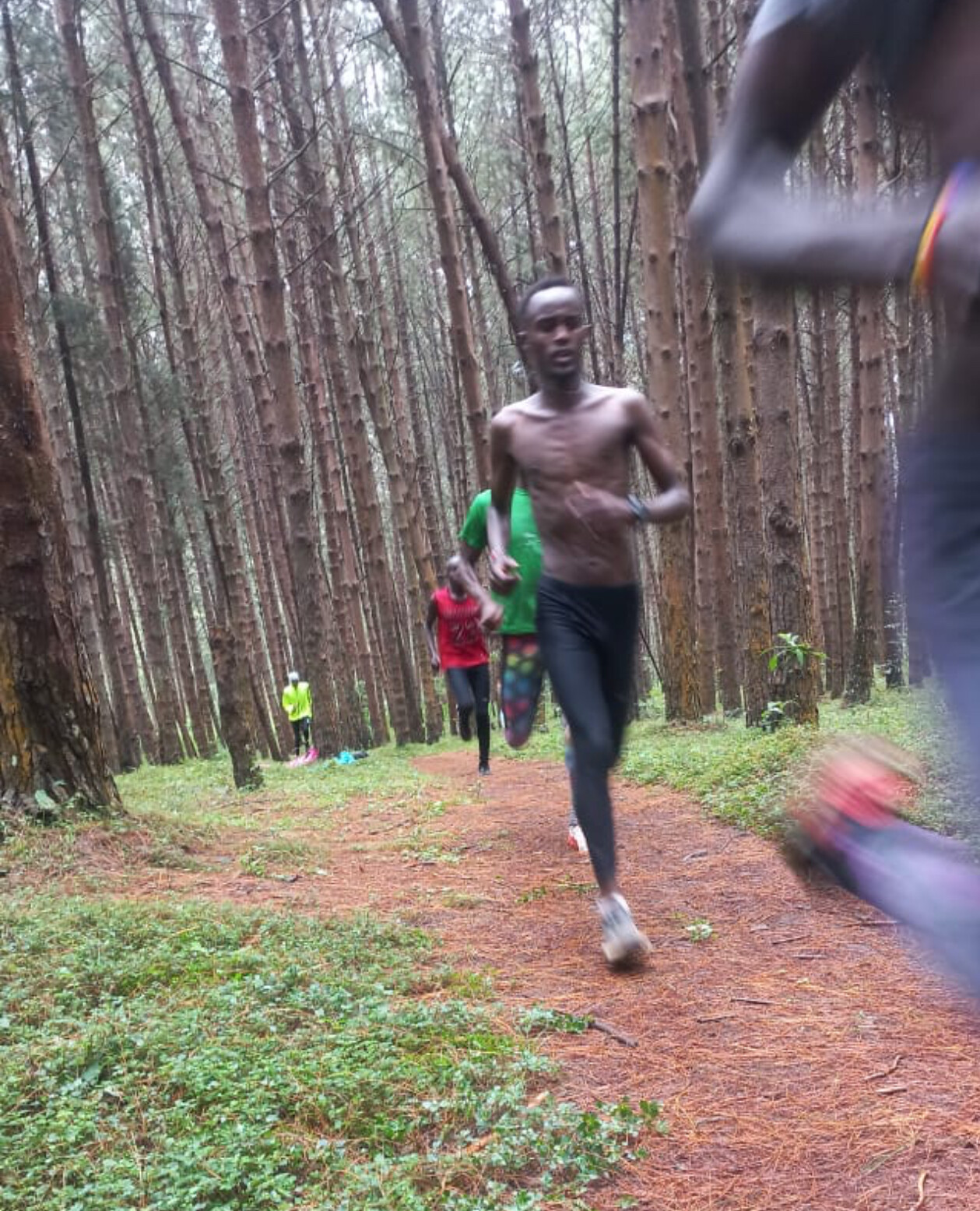
Here, where the air is thin and crisp, mornings begin before sunrise. Frost melts from the grass as a small group of determined athletes powers up a steep incline, their breath visible in the cold air. Leading them is 27-year-old Amos Kibet Chirchir, stopwatch in hand, eyes sharp with focus.
To an outsider, he might look like any other coach on a country road. But to his athletes — and to the growing Kenyan Athletics Training Academy (KATA) movement — Amos represents something much bigger: a new generation of homegrown leaders cultivating both champions and sustainability.
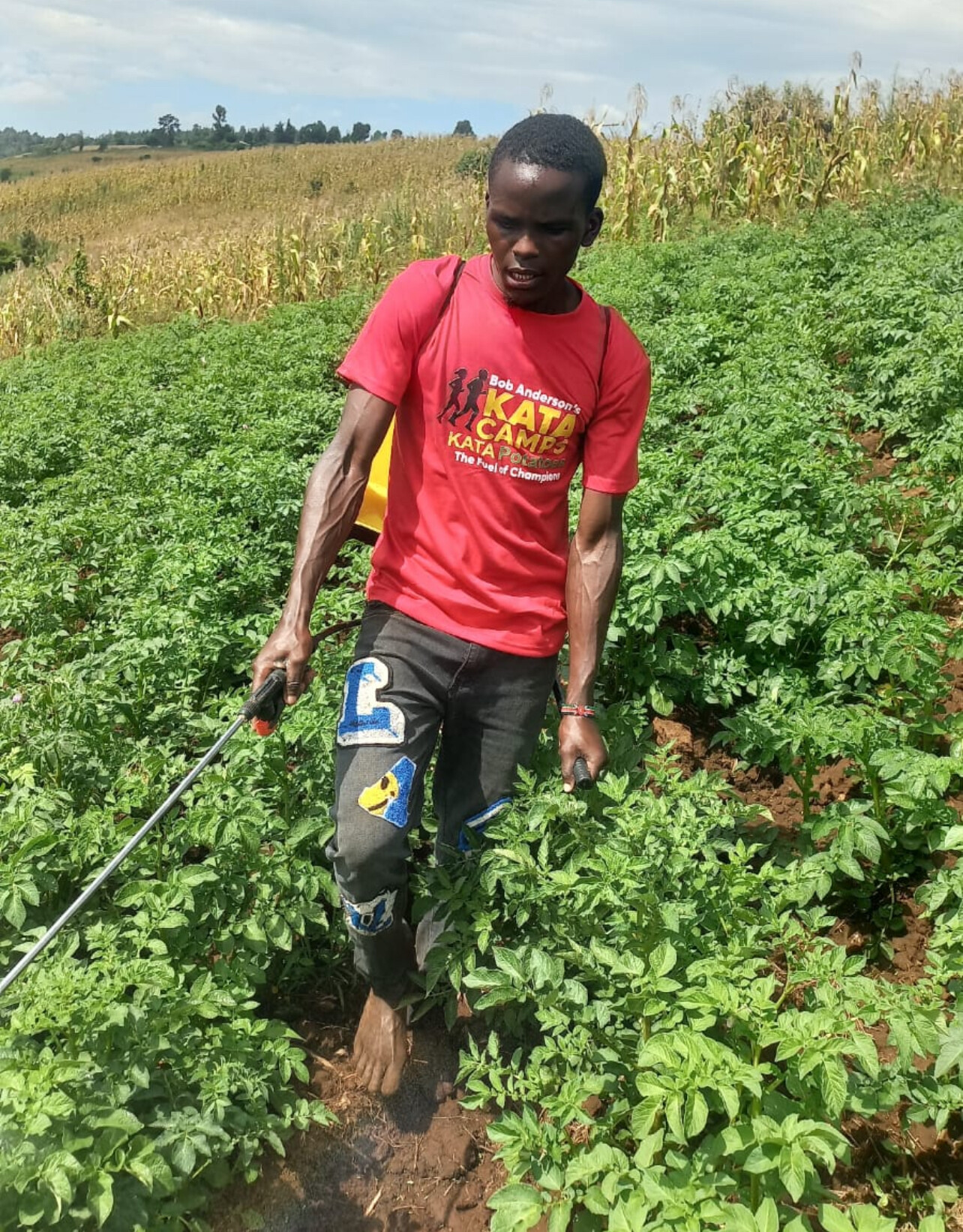
The Making of a Leader
Amos, the fifth-born in a family of eight, grew up in the cold, fertile highlands of Molo, raised by farming parents who taught him the value of hard work. Athletics runs deep in his family — his father was a 400m hurdler in the 1970s, competing when Kenyan track was just finding its rhythm.
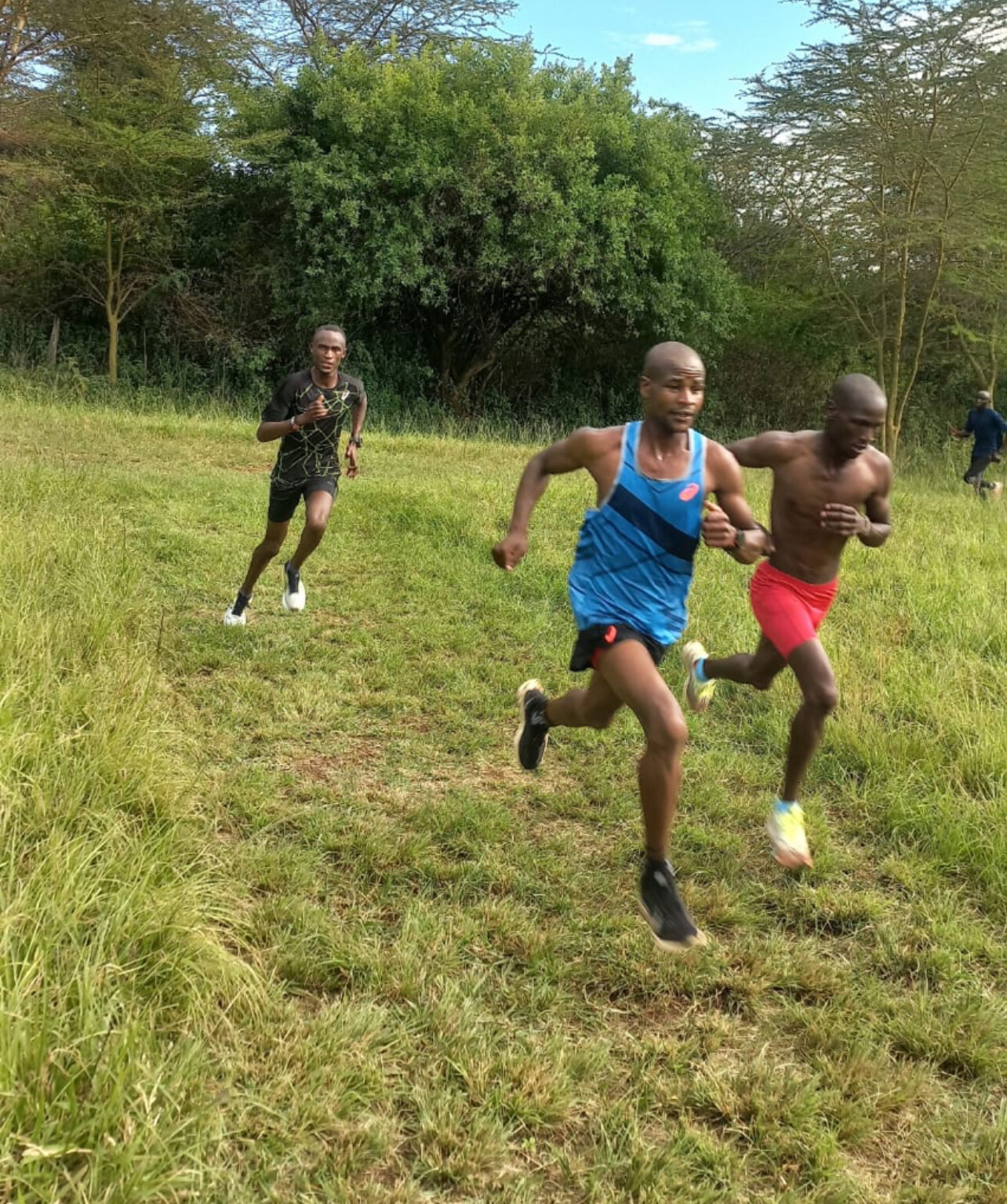
“I didn’t just choose running,” Amos says with a smile. “Running found me.”
After excelling in local school competitions, Amos nearly saw his running dream fade — until June 2022, when he earned a place at KATA Thika, founded by American running innovator Bob Anderson, the visionary behind Runner’s World magazine.
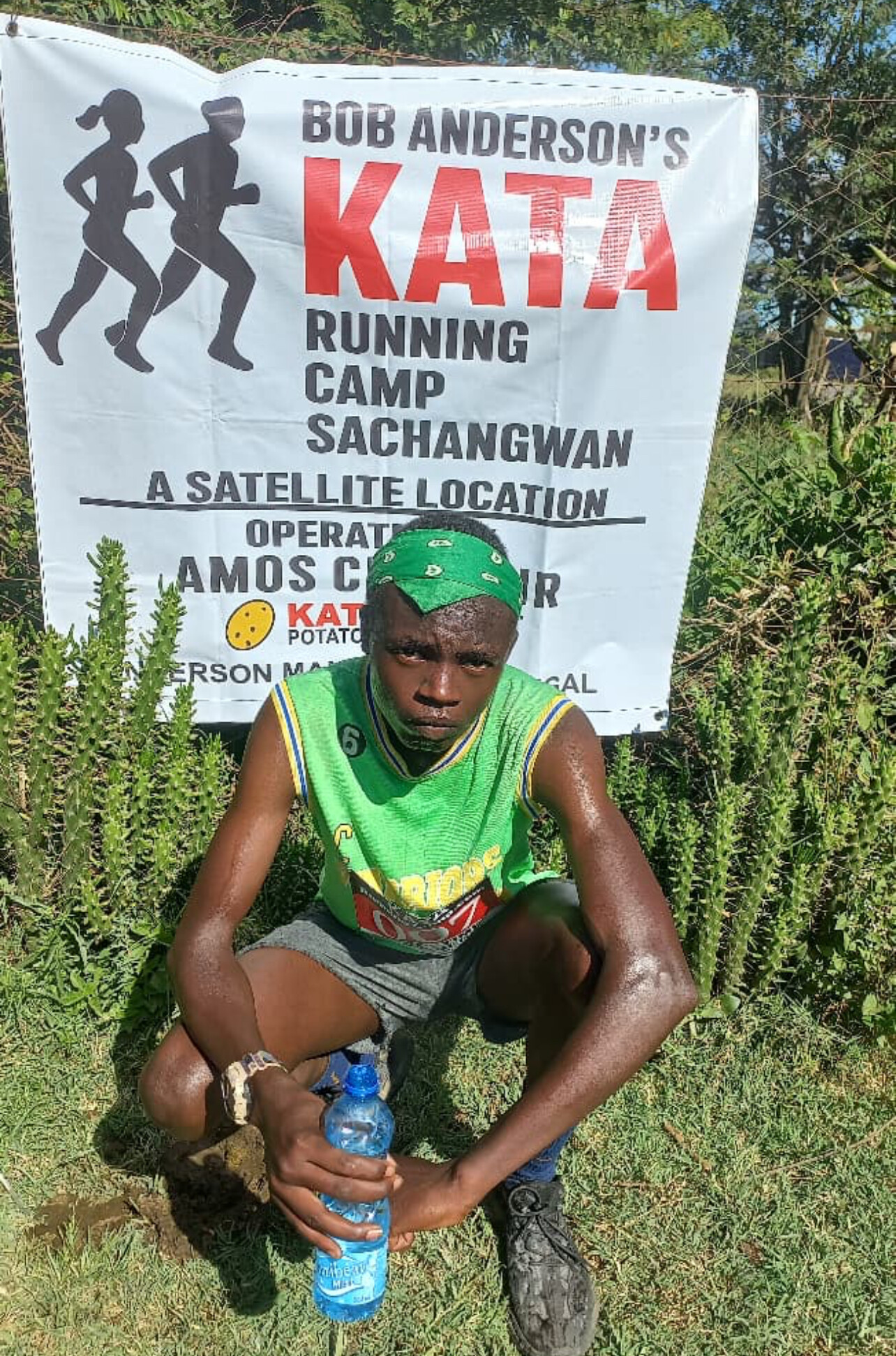
“That changed everything,” he recalls. “For the first time, I could train without worrying about daily survival. KATA didn’t just build me as an athlete — it prepared me to lead.”
Building a High-Altitude Training Hub
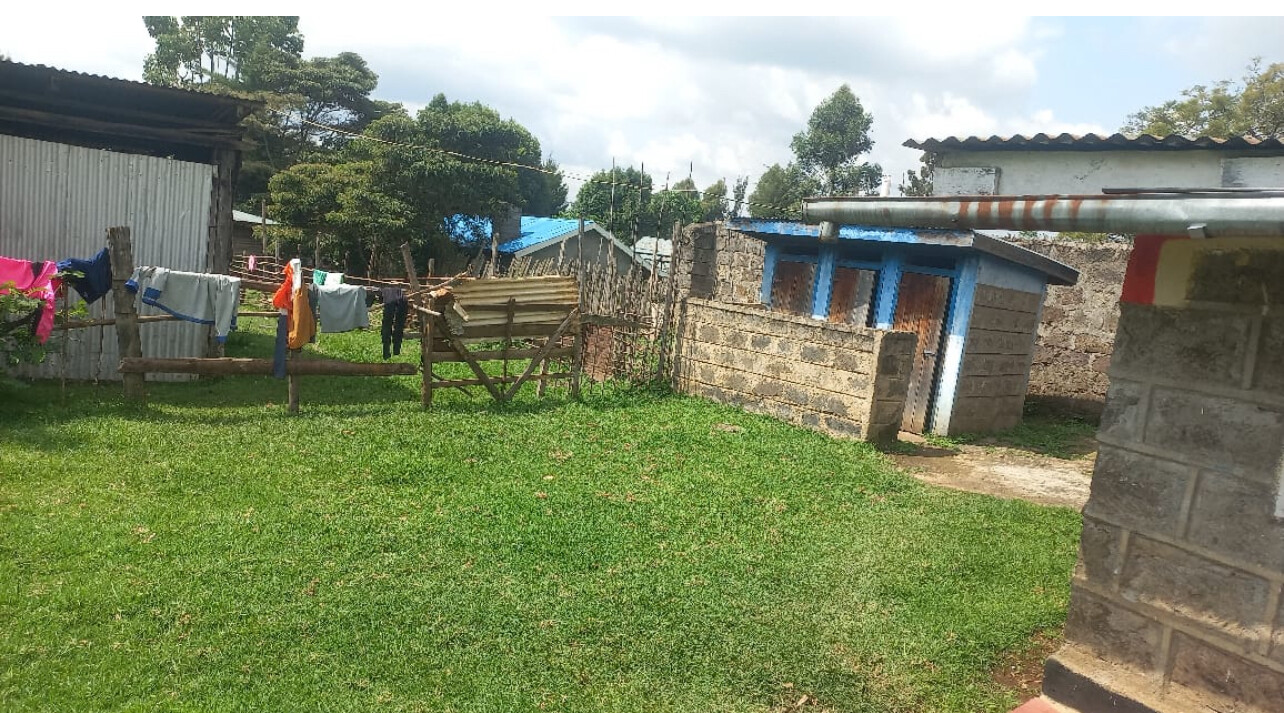
When Anderson announced plans to expand KATA through athlete-led satellite camps, Amos seized the opportunity. He returned home and launched KATA Sachang’wan Camp with just five athletes — three men and two women. Today, the camp has grown to eight committed runners, with more young talents eager to join.
The camp sits at an altitude of 2,400 meters, ideal for endurance training. For faster sessions, they descend to 1,800 meters, creating a natural high-low altitude system similar to what world-class runners use in Iten, Kaptagat, and Eldoret.

Already, results are emerging:
• Weldon Kibet Lang’at clocked 30:36 (10K) and 14:55 (5K) at the Double Road Race before improving to 30:16 in the October 15 time trials.
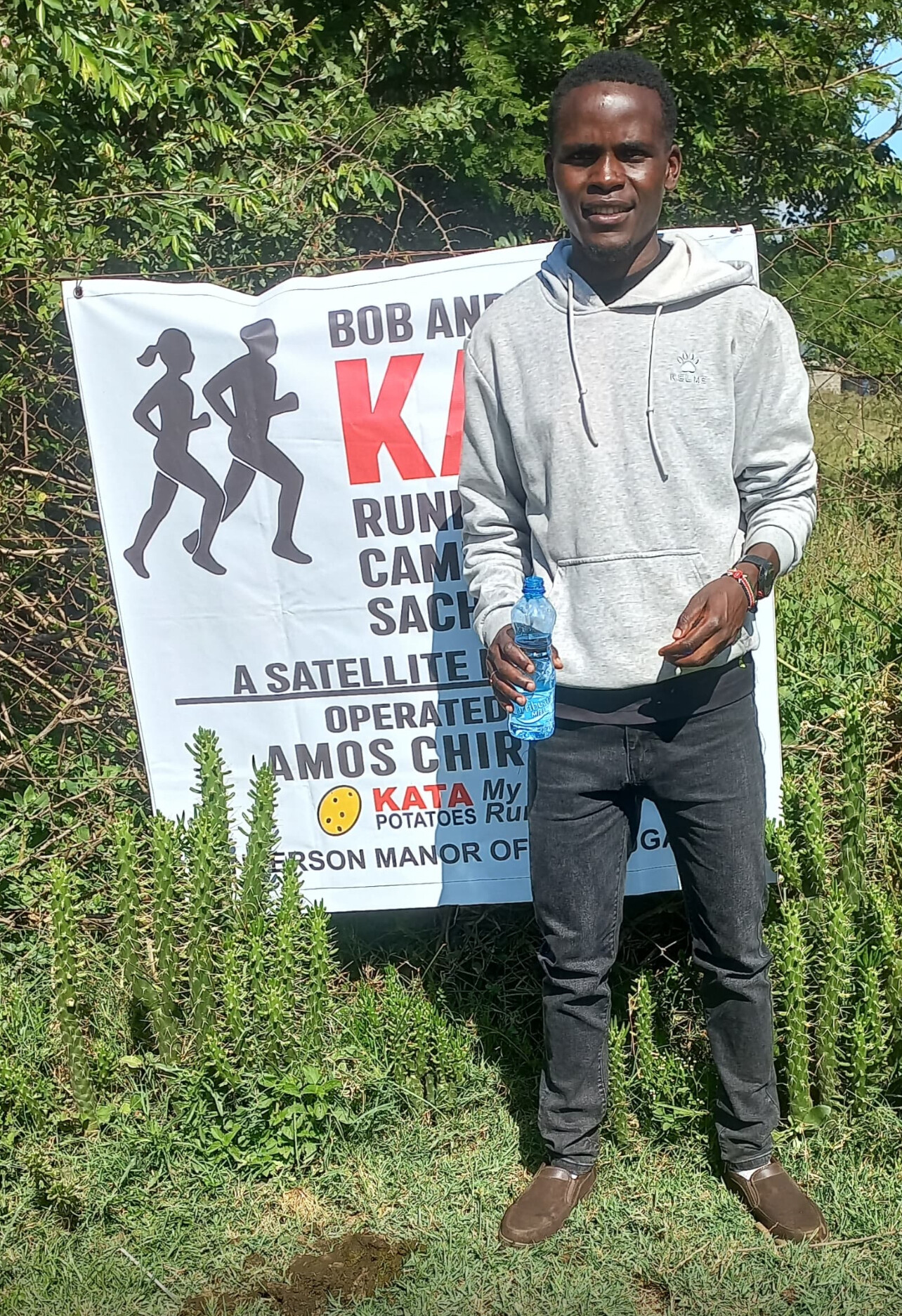
• Elizabeth Wambui, who joined just two months ago, cut her 5K time from 19:00 to 17:35 at the same event.
Amos himself remains in strong competitive shape, with personal bests of 30:51 (10K) and 14:32 (5K).
“I want to build champions — not just athletes who run fast, but athletes who think beyond medals,” he says.
Farming Hope: The KATA Potato Project
Alongside athletics, the Sachang’wan camp thrives on another discipline — agricultural sustainability. Inspired by Bob Anderson’s belief in empowering athletes for life beyond competition, Amos integrated potato farming into his training model.
He began with two acres of KATA potatoes, a move that initially drew laughter from locals.
“At first, people thought I was crazy,” he recalls. “They said farming was a step backward for an athlete. Now they’re copying me.”
Today, the farm helps feed the athletes, generates income for camp operations, and inspires local farmers — many now shifting from maize to potatoes after seeing his success.
“Athletes must think about life after running,” Amos says. “This program lets us build something real, not just chase medals.”
Training Champions, Growing Futures
With schools now closed, Amos plans to recruit junior athletes from nearby villages — guiding them early and keeping them away from idleness and drugs.
“Talent is going to waste in villages like ours because nobody guides young runners. I want to change that,” he says.
His long-term dream is to build dormitories, expand training facilities, and turn KATA Sachang’wan into a full-fledged center of excellence — powered by athletics and farming.
“Bob Anderson’s Vision Is Working”
Amos believes that KATA is redefining the future of Kenyan athletics.
“This is more than running,” he says. “Bob Anderson’s program teaches us responsibility, teamwork, leadership, and self-reliance. We’re not waiting for sponsors — we’re building ourselves.”
From the cold ridges of Sachang’wan overlooking Menengai Crater, a quiet revolution is growing — one built on sweat, soil, and belief. Here, potatoes fuel champions, and running fuels dreams.
And at the heart of it all stands a young leader — stopwatch in one hand, hoe in the other — cultivating both athletes and a future for Kenya.
by Robert Kibet
Login to leave a comment
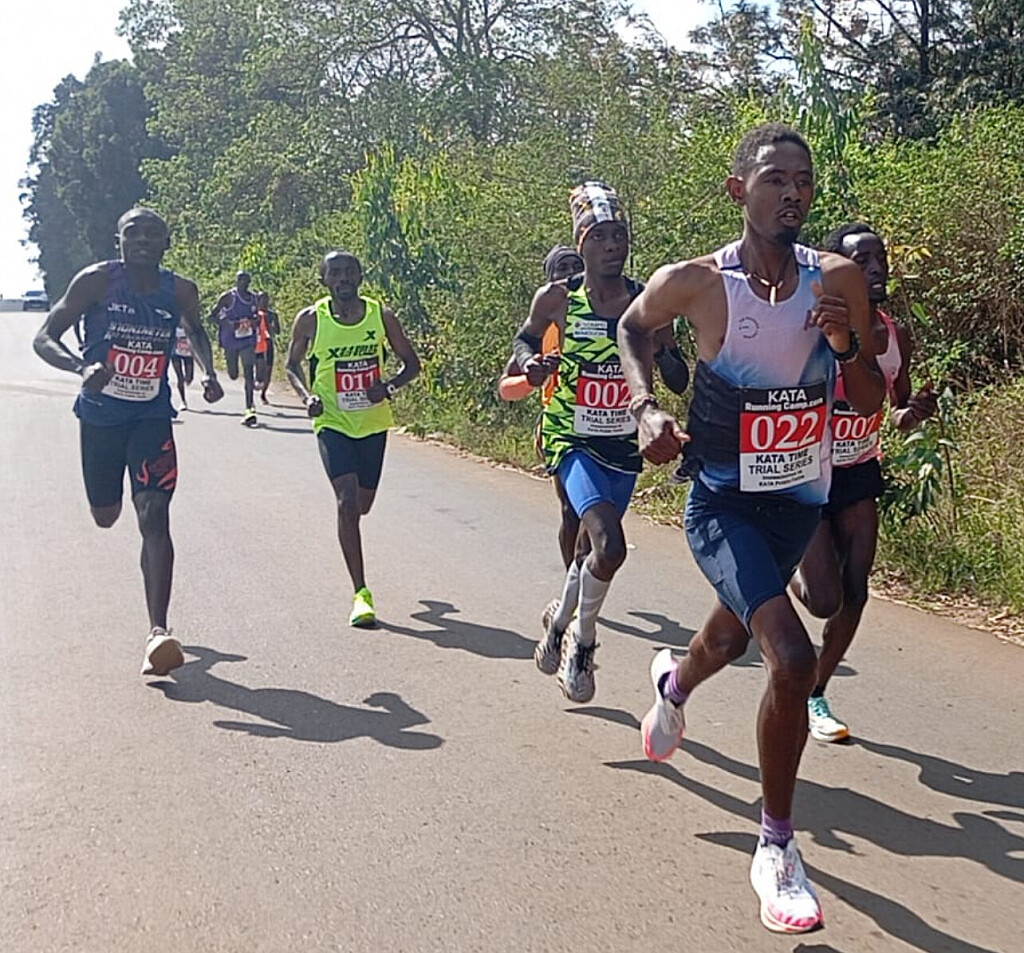
Personal Bests Shine at KATA Time Trial #49 in Thika
October 15, 2025 | KATA Running Retreat, Thika
While turnout was limited due to Kenya Police recruitment activities and the upcoming National Masters Trials, the KATA Time Trial #49 at the Thika Retreat delivered outstanding performances and a string of new personal bests — a true reflection of dedication and progress among the athletes.
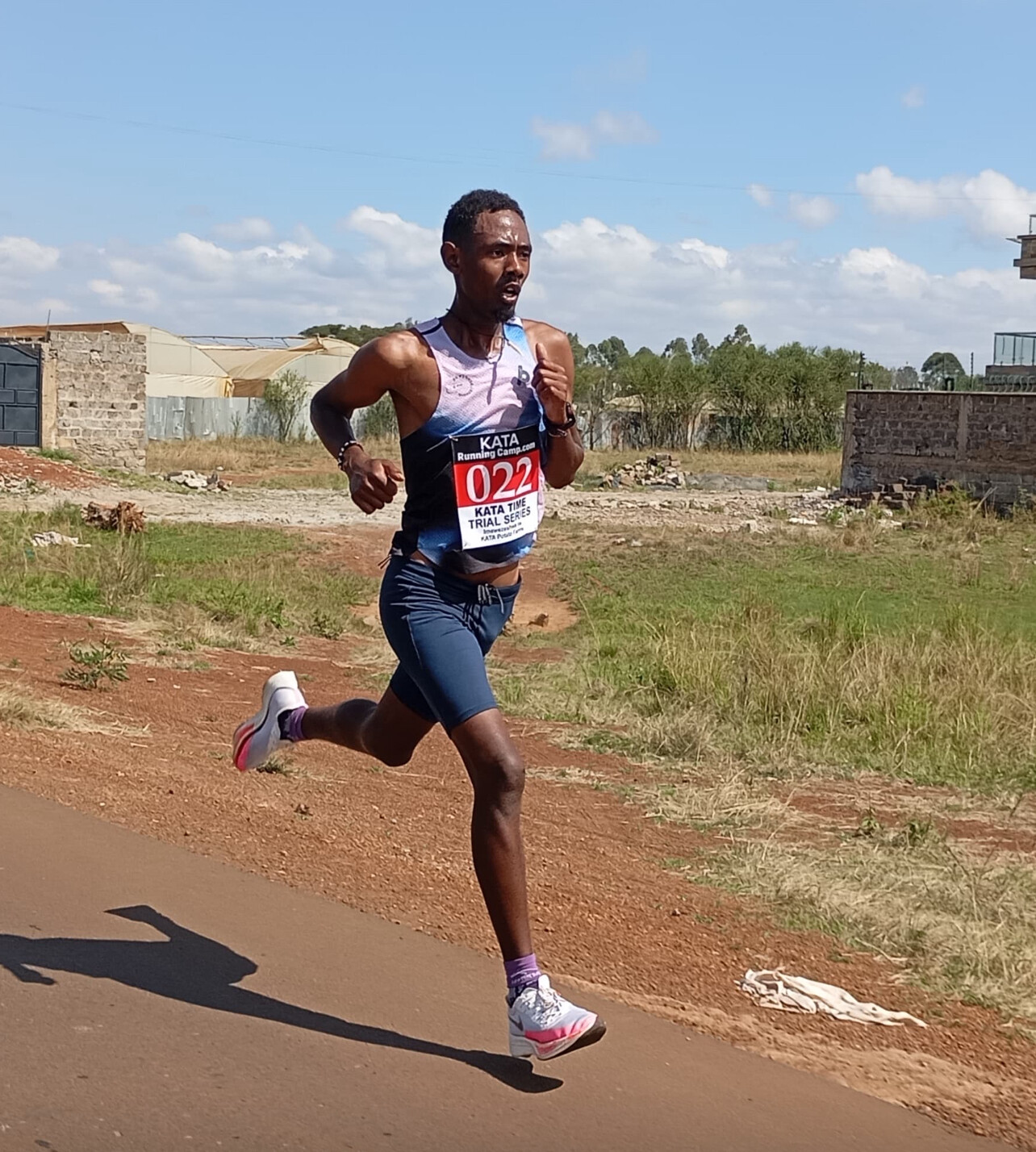
A total of 12 athletes — 8 men and 4 women — lined up for the 10K races, producing inspiring results that showcased the continued strength of the KATA program.
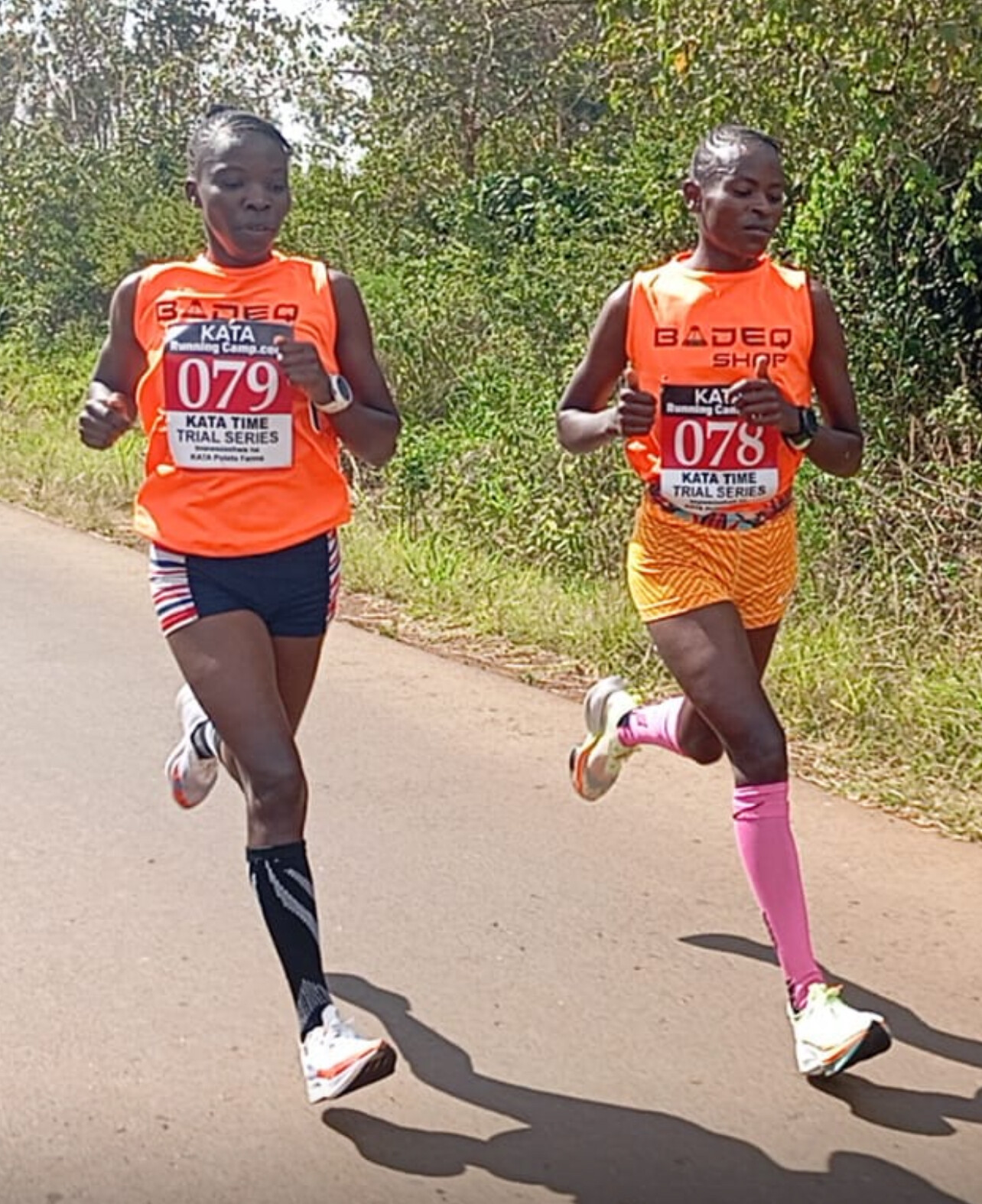
Men’s 10K
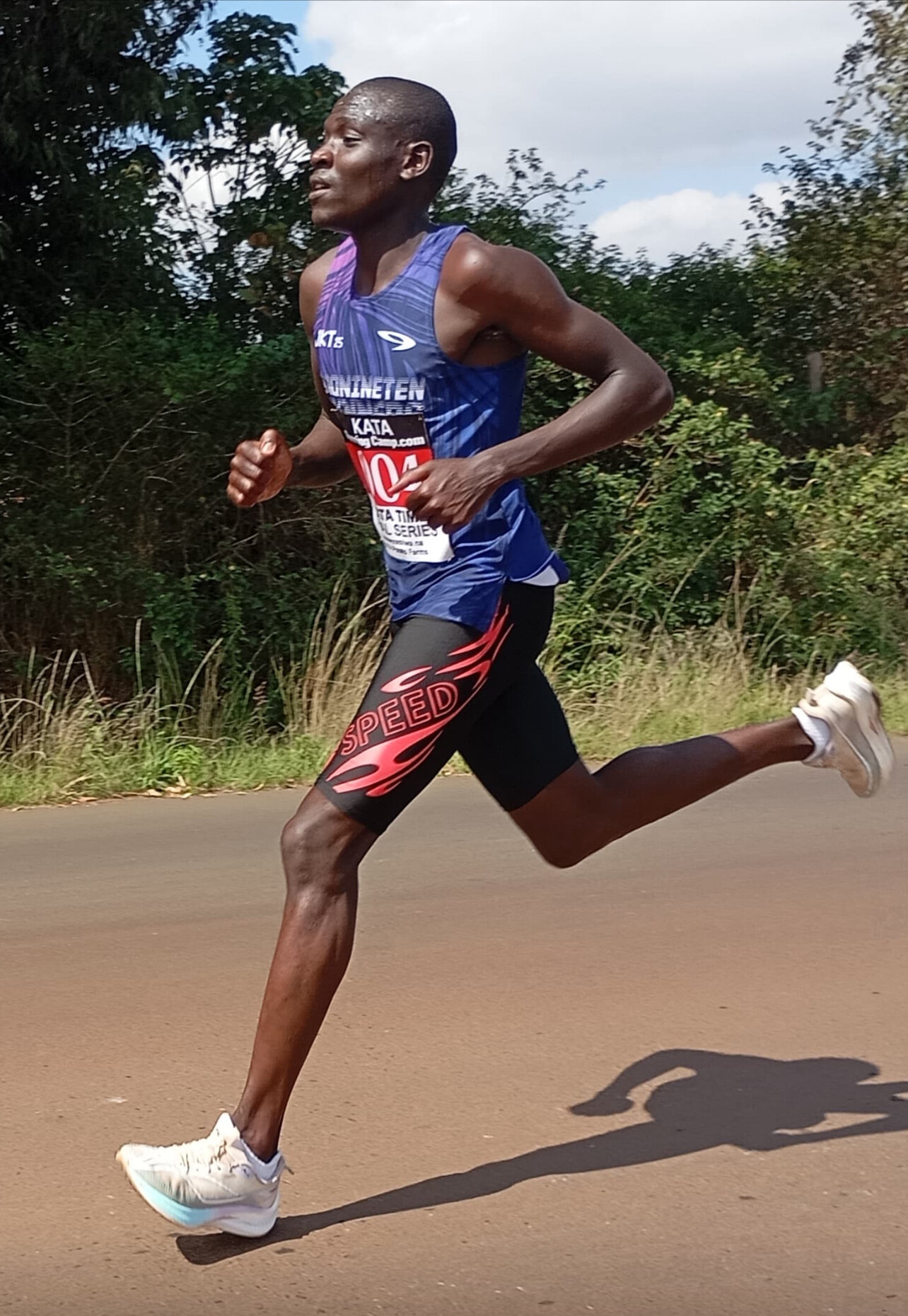
John Chege impressed once again, winning in 29:22, a personal best that lowered his previous time by 20 seconds. Chege, the Thika Camp team leader, said he had targeted a sub-29-minute finish but found himself running solo from the 2 km mark. His coach remains confident that milestone will come soon.
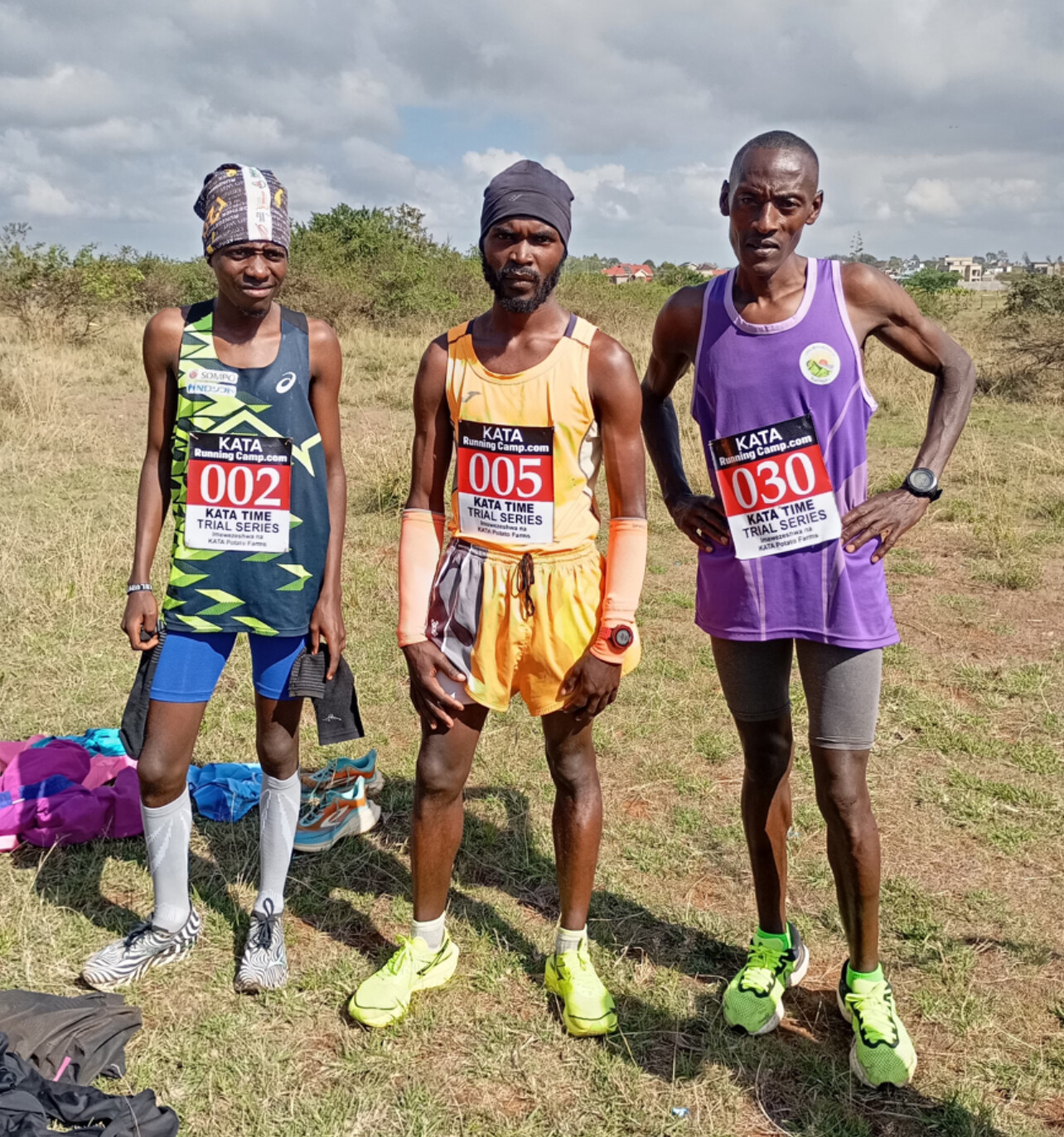
Kelvin Ragui followed in 30:21, with Boniface Mungai rounding out the podium in 30:44. Several athletes achieved season or lifetime bests, marking steady improvement across the men’s field.
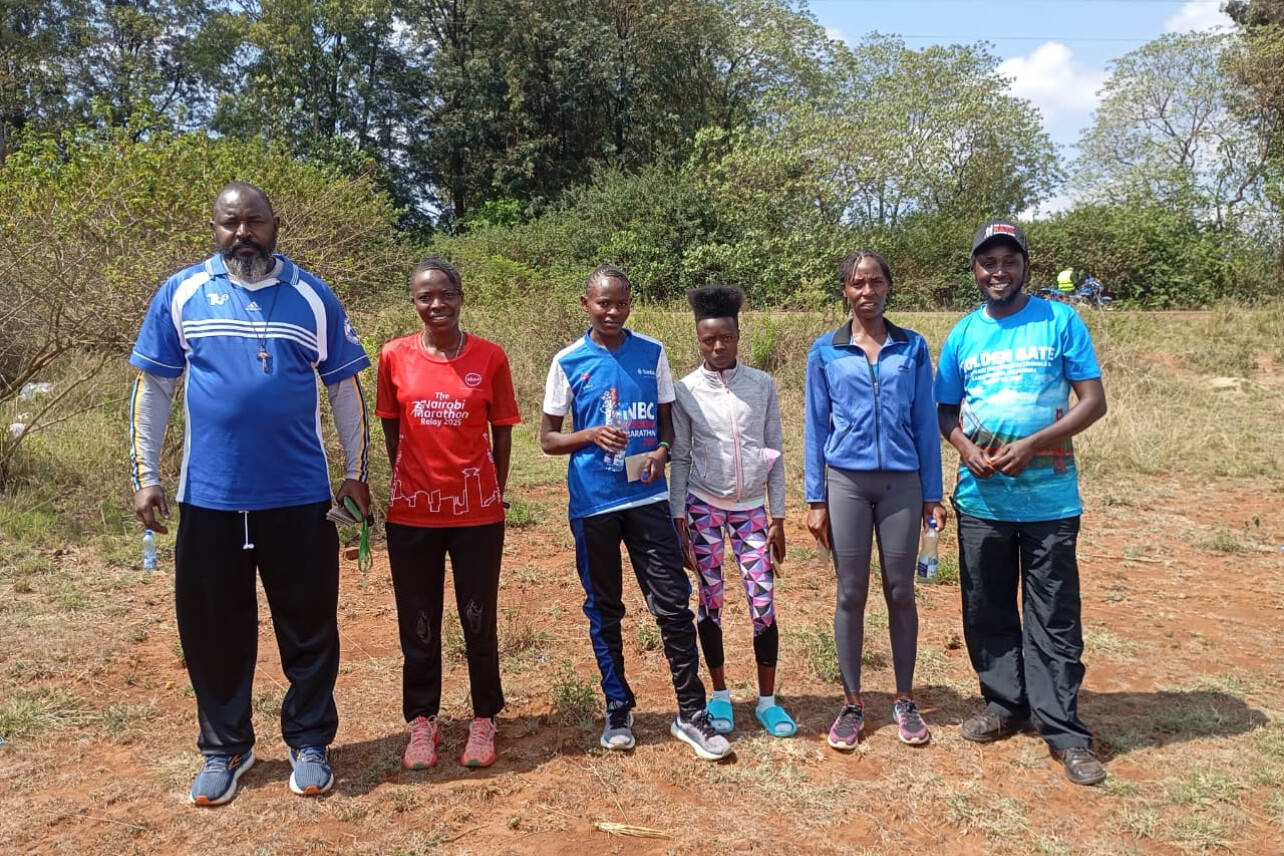
Results – Men’s 10K
1. John Chege (20 22) – 29:22
2. Kelvin Ragui (24 02) – 30:21
3. Boniface Mungai (30 07) – 30:44
4. Joseph Kariuki (39 11) – 31:01
5. Charles Ndirangu (24 04) – 32:40
6. Ishmael Mburu (25 05) – 33:41
7. Paul Nganga (43 30) – 36:16
8. Charles Ndirangu (65 08) – 39:11
Women’s 10K
In the women’s division, Jacinta Kamau delivered a brilliant run, taking victory in 33:45, a new personal best by over a minute. Loise Kiarie was close behind in 34:22, also a personal best. Ruth Maina (38:04) and Agnes Wanjiru (41:15) rounded out the top four with commendable efforts.
Results – Women’s 10K
1. Jacinta Kamau (24 79) – 33:45
2. Loise Kiarie (24 78) – 34:22
3. Ruth Maina (22 80) – 38:04
4. Agnes Wanjiru (20 83) – 41:15
Director’s Message
“It is not always about a volume of runners. Our KATA Time Trial program is about improving your personal bests and clocking season’s bests. And that is what was done in Thika this morning. Well done team.”
— Bob Anderson, KATA Founder & Director
by Boris Baron
Login to leave a comment
KATA Time Trial Series
Welcome to the KATA Monthly Time Trial Held at the Kenyan Athletics Training Academy in Thika, Kenya, the KATA Monthly Time Trial is a unique and inclusive event designed to support runners of all levels in achieving their goals and showcasing their fitness. This event offers both 10K and 5K distances on an accurate, certified course, providing participants with...
more...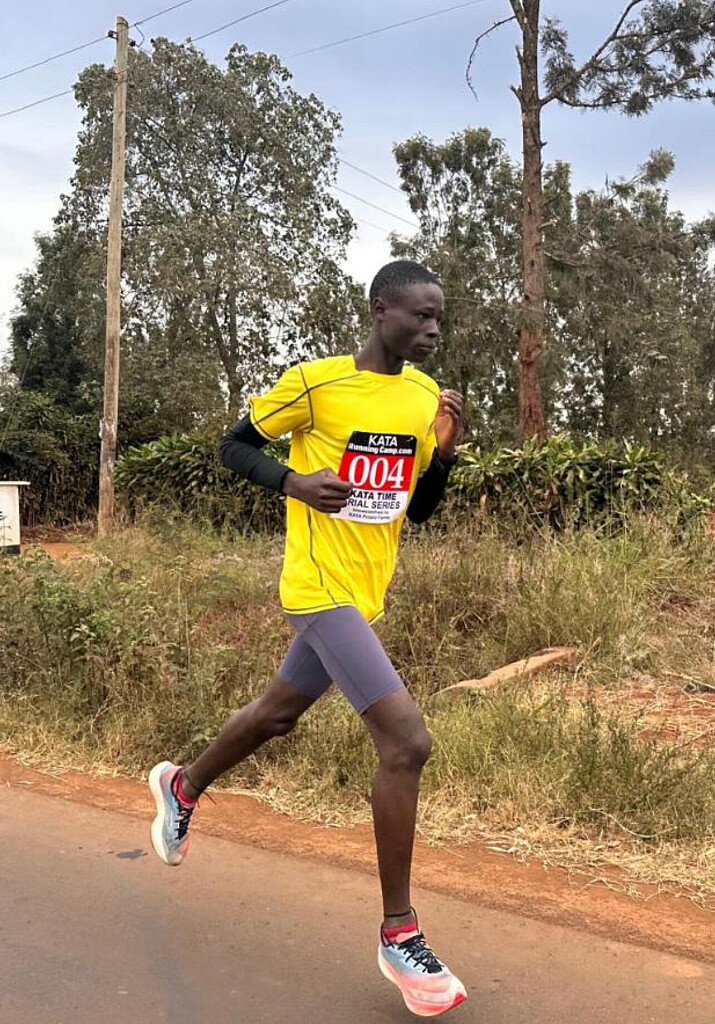
KATA Time Trials Expand Nationwide as 30 Running Camps Prepare for October 15 Event
For years, the Kenya Athletics Training Academy (KATA) in Thika has been the nerve center of monthly time trials — small but highly competitive races that have helped shape Kenya’s next generation of distance-running talent.
This October 15 marks another milestone. For the second consecutive nationwide edition, KATA’s time trials will take place not only at the Thika headquarters but also simultaneously across more than 30 KATA Running Camps throughout Kenya, featuring both 10 km and 5 km races.
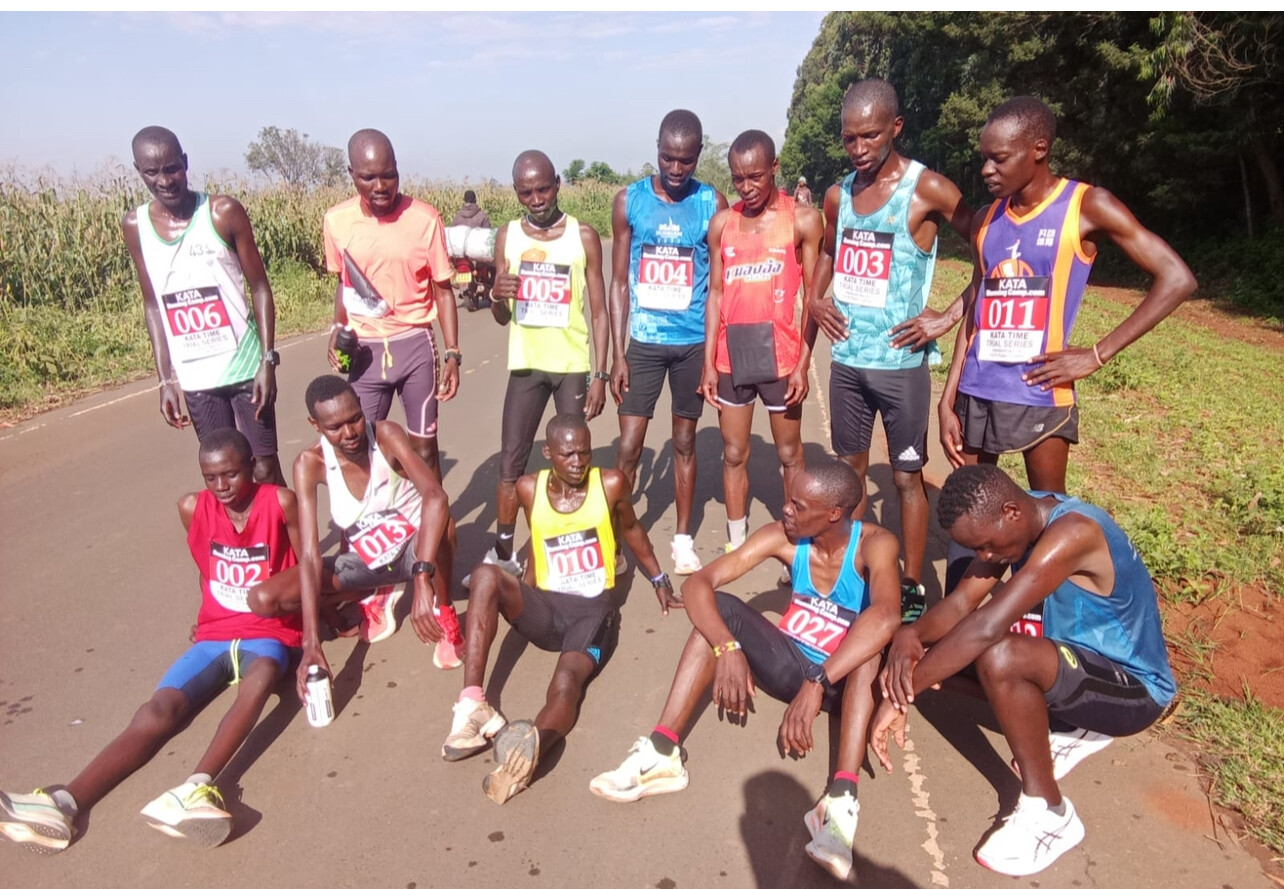
The expansion follows the success of August’s first coordinated nationwide time trial, which confirmed that KATA’s decentralized model can operate effectively across multiple regions. Each camp’s participation is not optional — under the KATA system, all official camps are required to host a time trial every other month as part of athlete development and performance monitoring.
Meanwhile, the Thika headquarters continues to set the standard. It has organized a monthly KATA Time Trial without interruption since September 2021, providing a consistent testing ground for hundreds of emerging athletes.
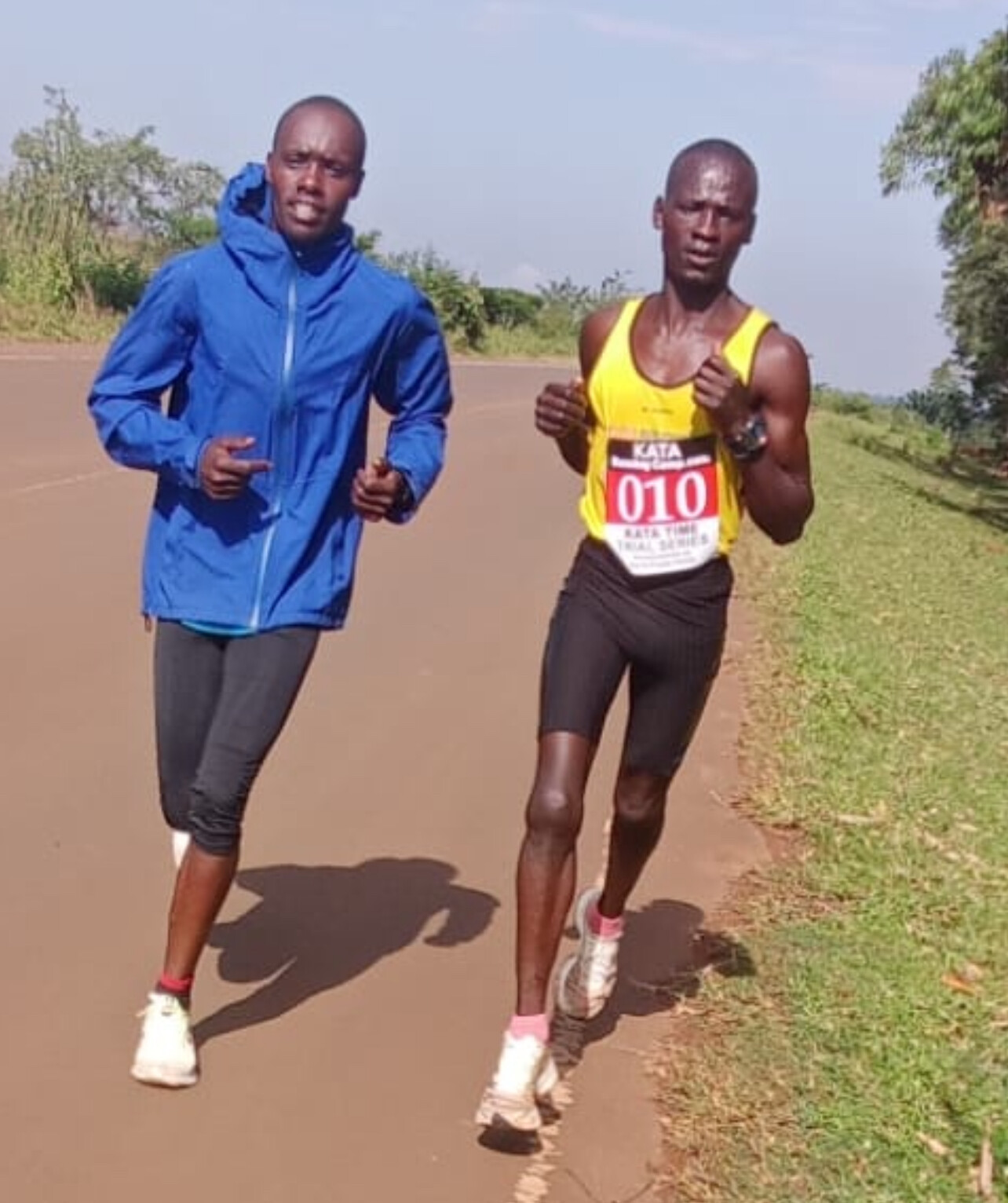
KATA founder Bob Anderson, who also created My Best Runs, said the approach is about expanding access while maintaining structure.
“The idea was to decentralize opportunity,” Anderson explained. “We want every promising runner, whether training in Thika or a rural camp, to have the same chance to be timed, compared, and supported within the KATA framework.”
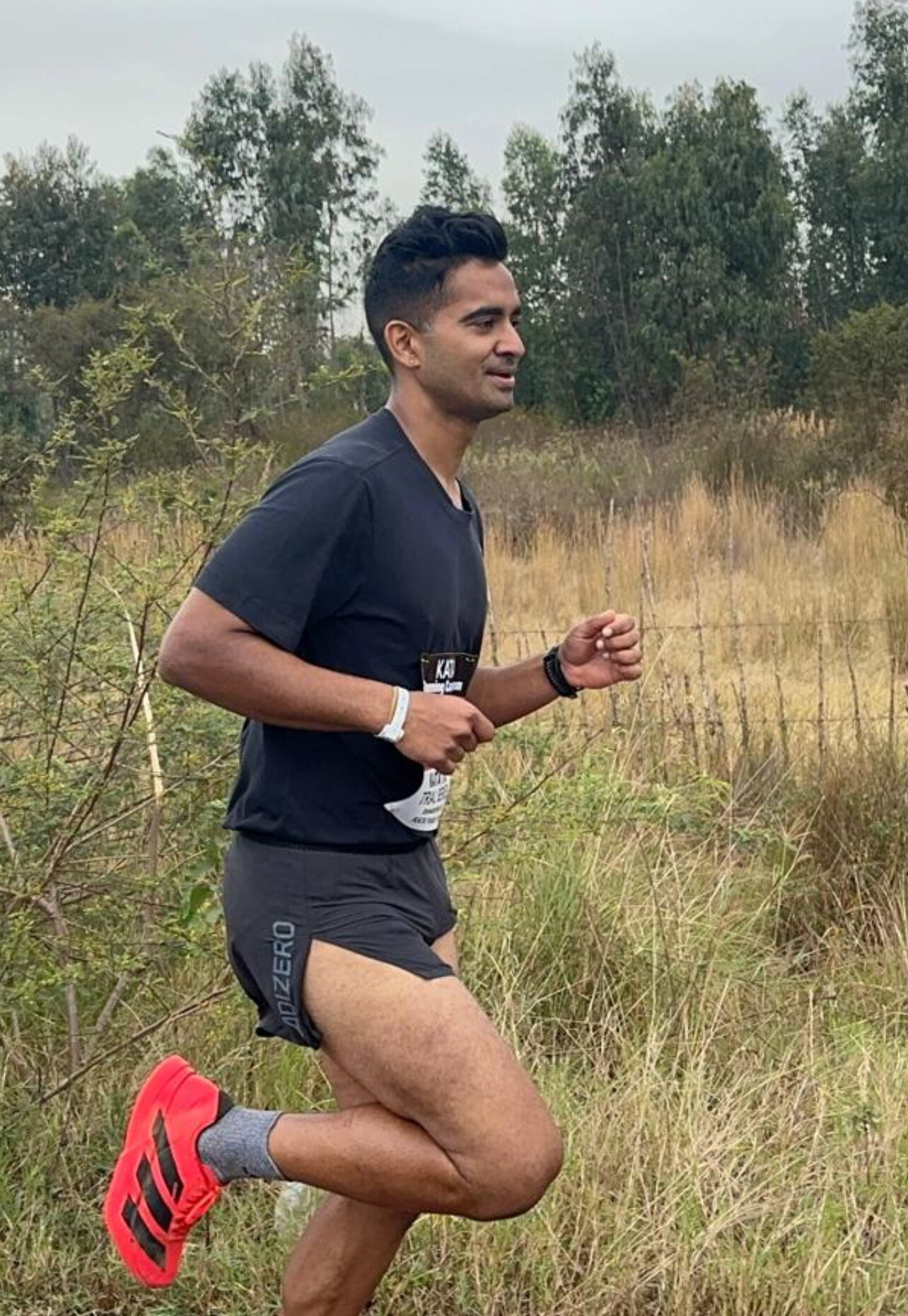
Through its network of 30+ KATA Running Camps, the academy has built a national performance pipeline. Each camp conducts its own race under strict KATA guidelines — ensuring accurate distances, verified timing, and documented results — which are then compiled centrally to produce nationwide rankings.
The program is already showing impact. The August trials unearthed new talents now being tracked for mentorship, nutrition guidance, and future competition opportunities.
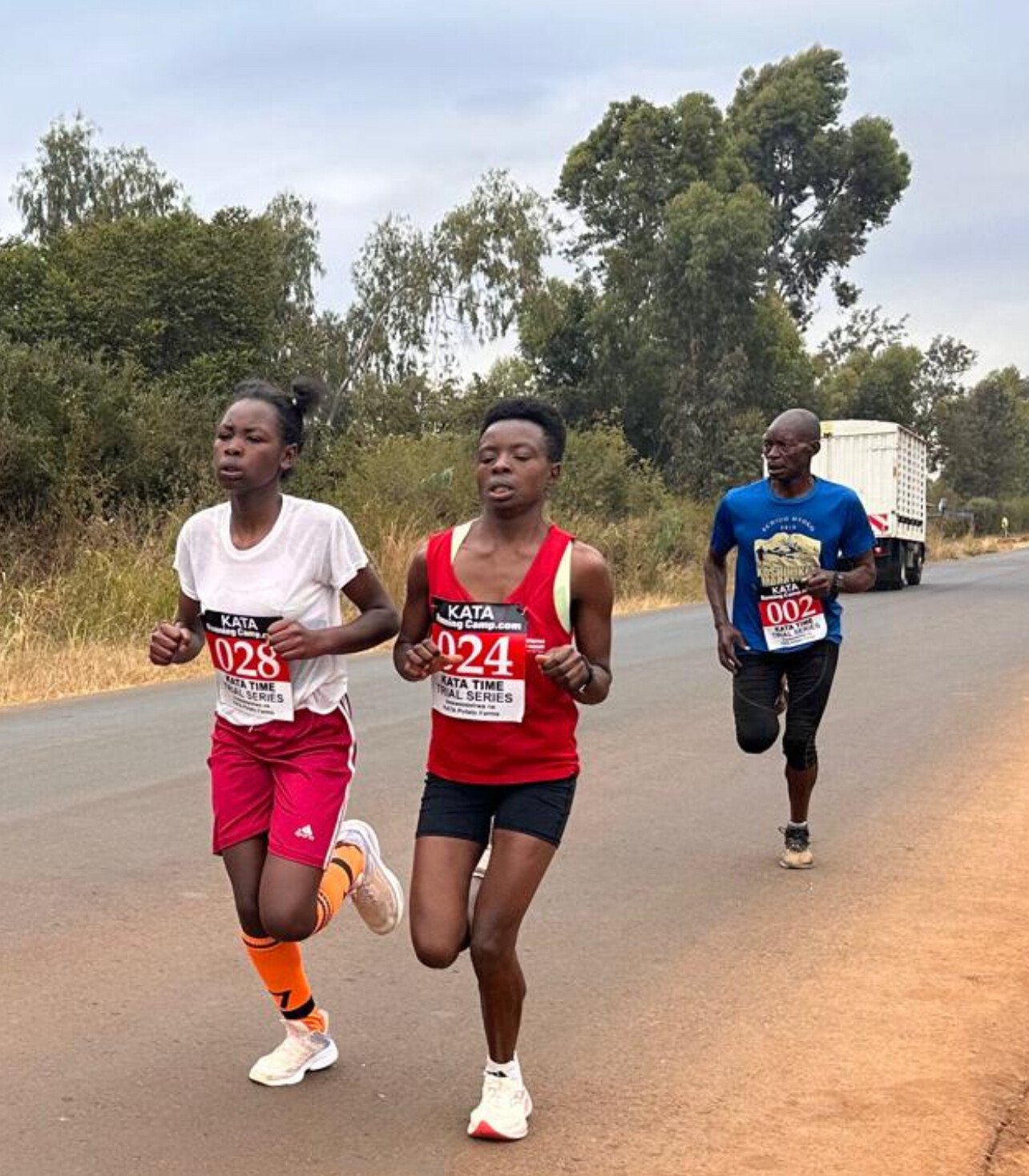
Head coach John Matheri said the system promotes fairness and progress.
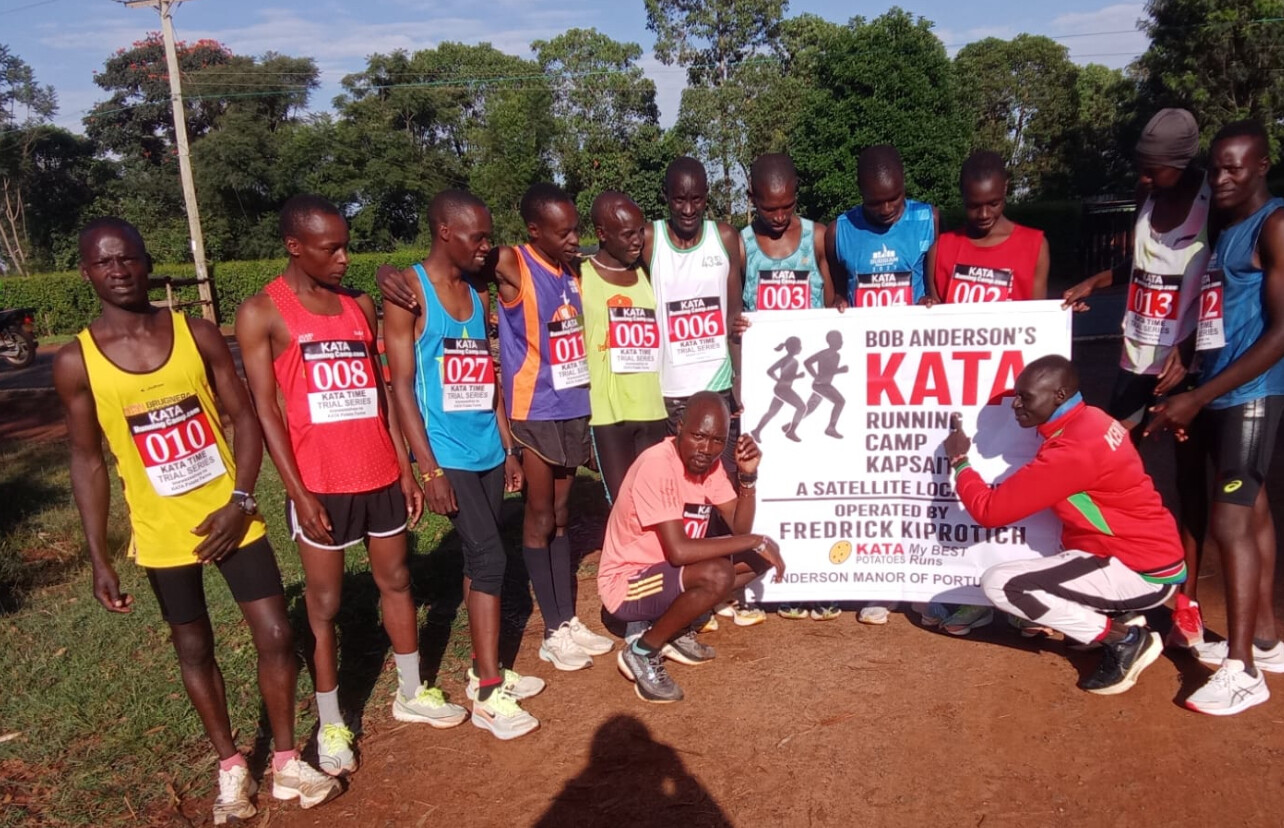
“Before, athletes had to travel to Thika for official trials. Now, the competition comes to them,” he said. “That equal footing is helping identify talent in places we might never have reached before.”
Matheri added that community involvement is strengthening outcomes.
“We expect even faster times this month,” he noted. “Athletes are training with purpose, supported by improved nutrition from our KATA potato projects and the consistent structure that these trials provide.”
Coach Silas Tiren, who leads one of the Rift Valley KATA Camps, said the program has given athletes motivation and accountability.
“These trials are more than races — they’re checkpoints,” said Tiren. “They remind every runner that consistency builds champions.”
From Kapcherop in Elgeiyo Marakwet, coach Philemon Kiptoo emphasized the difference the decentralized system is making.
“Many young runners used to give up because they couldn’t afford to travel for competitions,” he said. “Now KATA has brought the race to their doorstep. That keeps their dreams alive.”
Olympic and World medalist Edwin Soi, a longtime KATA supporter, called the program a bridge between emerging and elite athletes.
“When I look at these young runners, I see myself years ago,” Soi said. “KATA is giving them structure and belief — proof that with discipline and consistency, they can rise to the world stage.”
The October 15 event will again feature 10 km and 5 km distances for men, women, and under-20 juniors. All results from the KATA Running Camps will be uploaded to the My Best Runs database for national comparison and recognition.
As the event approaches, excitement is building across Kenya’s running communities. With standardized guidelines, consistent timing, and grassroots engagement, the KATA Time Trials are evolving into a national benchmark of progress — connecting runners from every region under one synchronized system of excellence.
From Thika’s academy grounds to the mountain trails of the Rift Valley, the whistle will blow on October 15, uniting Kenya’s KATA athletes in a single shared mission: to test, improve, and prove that talent thrives when opportunity is structured.
by Robert Kibet
Login to leave a comment
KATA Time Trial Series
Welcome to the KATA Monthly Time Trial Held at the Kenyan Athletics Training Academy in Thika, Kenya, the KATA Monthly Time Trial is a unique and inclusive event designed to support runners of all levels in achieving their goals and showcasing their fitness. This event offers both 10K and 5K distances on an accurate, certified course, providing participants with...
more...
Building the Future: KATA’s Vision to Become the Powerhouse of Athletics in Kenya
KATA founder Bob Anderson has a bold vision — one that unites athletes, coaches, and farmers under a single purpose: to make KATA the powerhouse of athletics in Kenya and a model for the world.
As of today, KATA operates 31 running camps and 65 potato farms across Kenya. Of these, 31 farms are directly connected to KATA camps, while the remaining farms are independent partners within the broader KATA network. Together, they form a growing agricultural foundation that supports both athletics and community development.
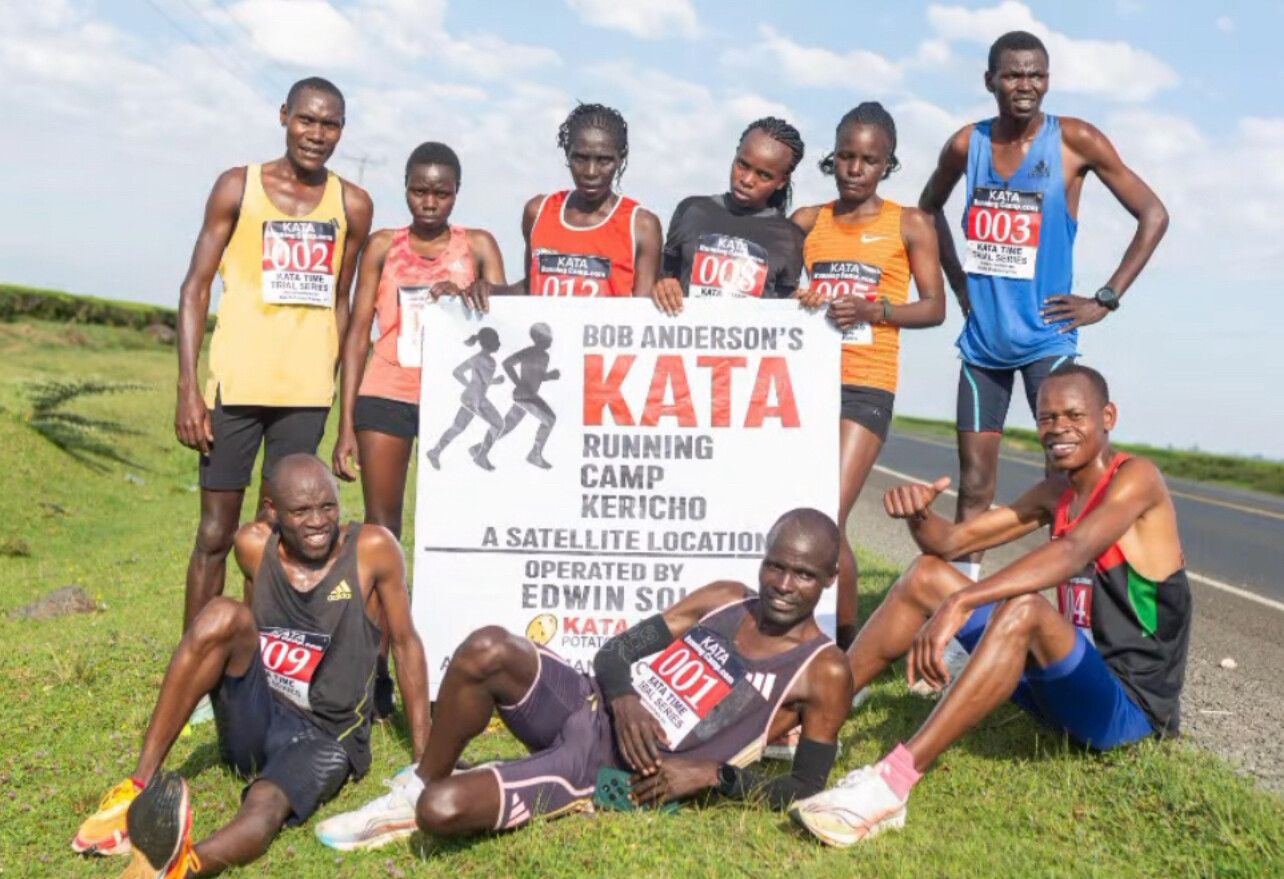
KATA farms currently range in size from one acre to 8.5 acres, combining traditional farming expertise with innovative support for athlete nutrition and sustainability. By the end of 2026, KATA’s goal is to expand to 100 Running Camps and 200 Potato Farms — half directly linked to camps — spanning more than 400 acres of productive farmland.
Another key initiative is the creation of the first KATA Ranch, scheduled for development by early 2026. The ranch will raise 100 or more sheep and goats, providing food, training nutrition, and economic value to the community. A KATA Running Camp will be connected to the ranch, integrating agriculture and athletics into one sustainable ecosystem. The long-term goal is for the ranch to become self-sustaining through the sale of meat and byproducts, ensuring continuous support for KATA programs and local families. Once the first ranch is fully operational, additional ranches are planned for future expansion.

KATA is also preparing to launch a KATA Sports Shop featuring running shoes and gear, and a KATA Market offering healthy, locally sourced food and essentials.
Coming soon and at the heart of KATA’s growth is its flagship product — branded KATA Potatoes, sold at a premium price and marketed as “The Fuel of Champions.” Complementing this is KATA Potato Flakes, an innovative product that reflects KATA’s values of energy, endurance, and excellence.
The KATA Potato Flakes will be sold worldwide as the go-to carbo-loading choice for marathonerspreparing for race day. Just add water from the tap, and in moments, you’re carbo-loading on KATA Potatoes — The Fuel of Champions.
Meanwhile, KATA Thika serves as the local office for Kenya and continues to thrive as the organization’s flagship Running Retreat, offering training stays for athletes from around the world who want to experience the Kenyan way of training — whether for a few days or a few months. The retreat provides access to world-class coaching, structured training, and cultural exchange with Kenya’s elite running community.
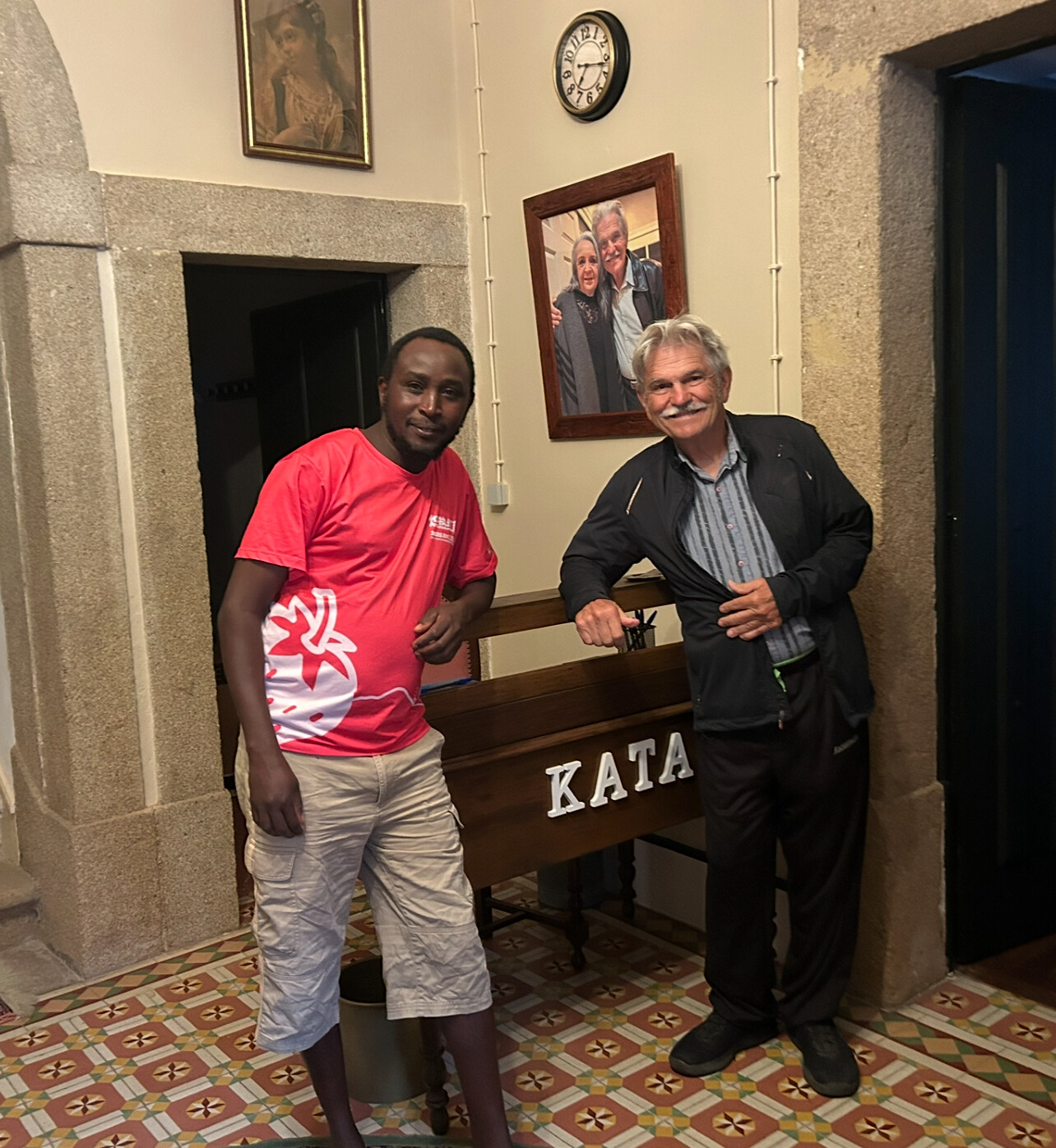
At the global level, KATA International is headquartered at the Anderson Manor in Monforte de Beira, Portugal — a 20,000-square-foot historic estate where the last King of Portugal stayed during his hunting trips in the early 1900s. The manor serves as the base for KATA’s international operations, housing both KATA Portugal and the Anderson Manor Retreat, which welcome athletes, artists, and guests from around the world.
Behind the scenes but very much involved is Bob’s wife, Catherine. (First photo with Bob). Her creative talent adds a great deal to the program. Bob and Catherine have known Coach Dennis since 2021. He has completed two three-month stays at KATA headquarters in Portugal, working alongside Bob. Coach Dennis (4th photo with Bob in Portugsl) was recently promoted to Chief Technical Officer (CTO) and will oversee operations in Kenya.
Development of KATA Portugal began in February 2024, and the project continues to progress strongly. The retreat in Portugal will serve as the European counterpart to KATA Thika, offering athletes a place to train, rest, and connect with KATA’s global mission in a peaceful, historic setting.
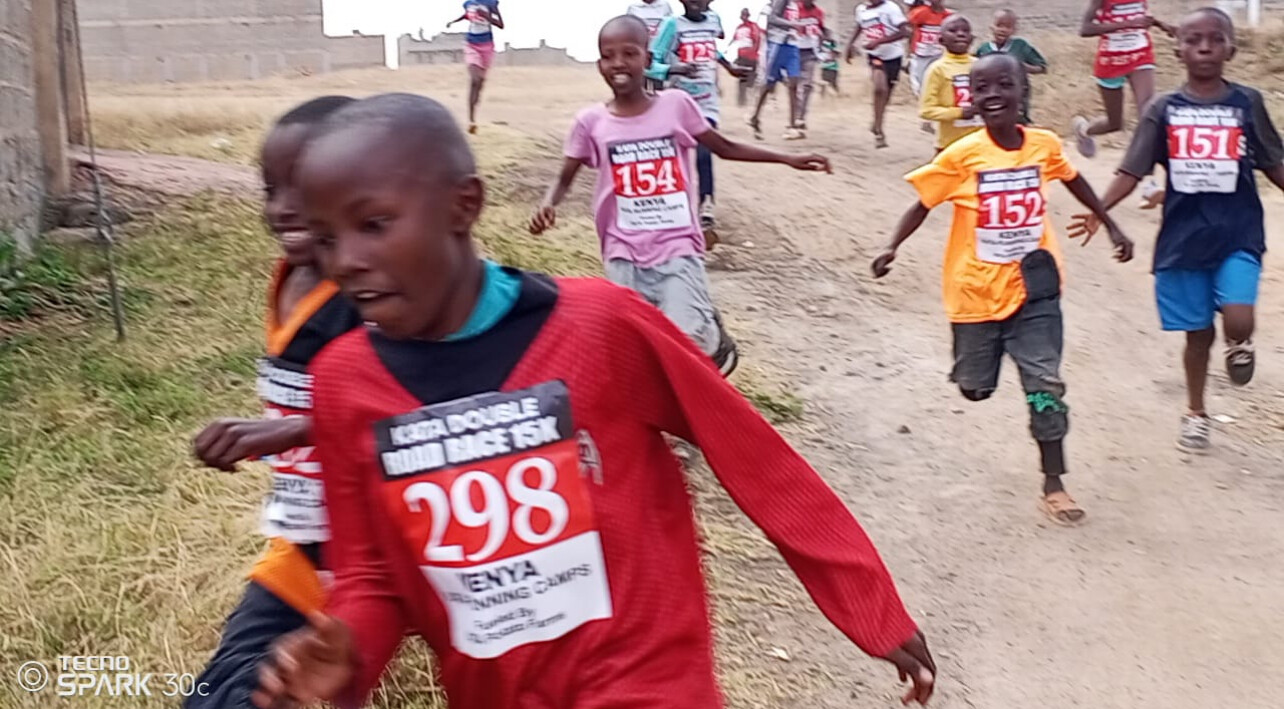
KATA’s vision goes far beyond producing great runners. The mission is to develop world-class athletes, Olympic champions, and future world record holders — combining top-tier coaching, discipline, and holistic training. Already, previous Olympic medalists such as Edwin Soi and Paul Koech are part of the KATA family, operating their own KATA Camps and helping guide the next generation of Kenyan champions.
Anderson also envisions a thriving athletic network of 650 elite runners, 150 youth athletes, and 40+ masters runners, supported by an expanding media presence through My Best Runs and KATA’s social platforms.
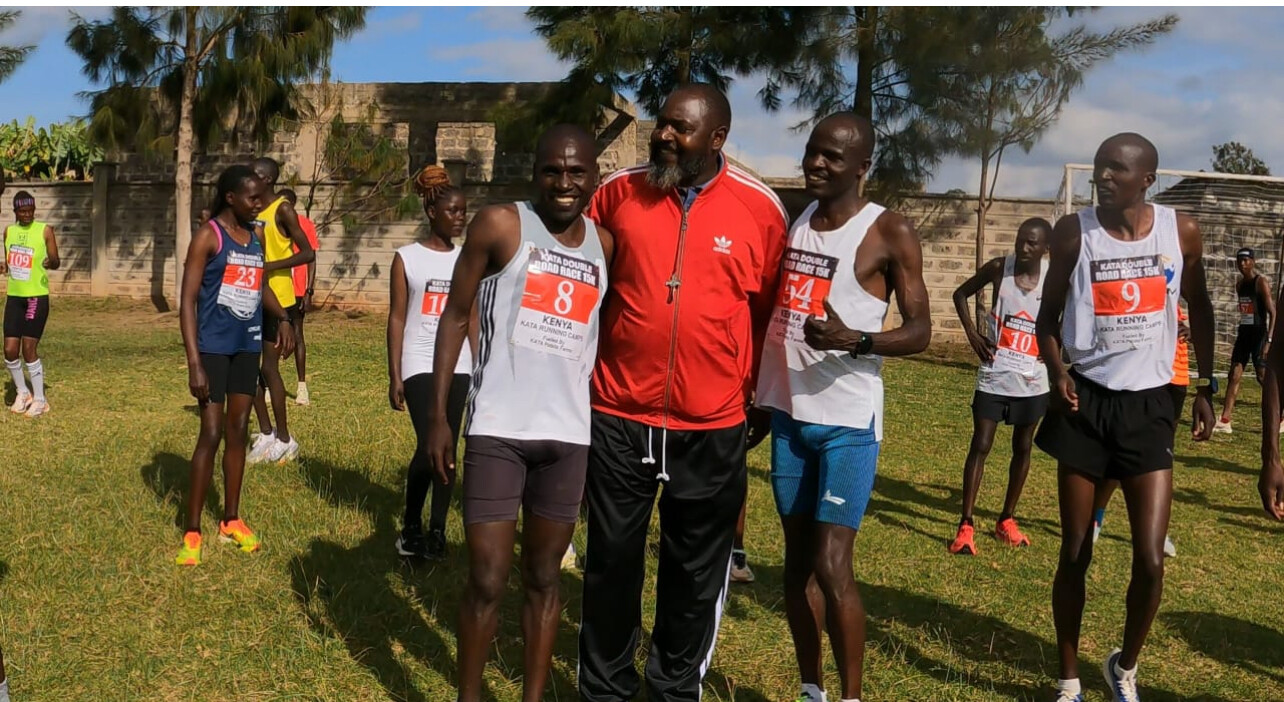
“I want to do something truly special for athletics,” Anderson says. “And it’s the passion and dedication of our athletes, coaches, and farmers that will make this dream a reality.”
“Our KATA family is as strong as its members,” Anderson adds. “As a team, we can make anything happen. In just a short amount of time, we’ve pulled off some amazing things. But our KATA family has only just gotten started. Watch us grow — and join us in helping make a difference.”
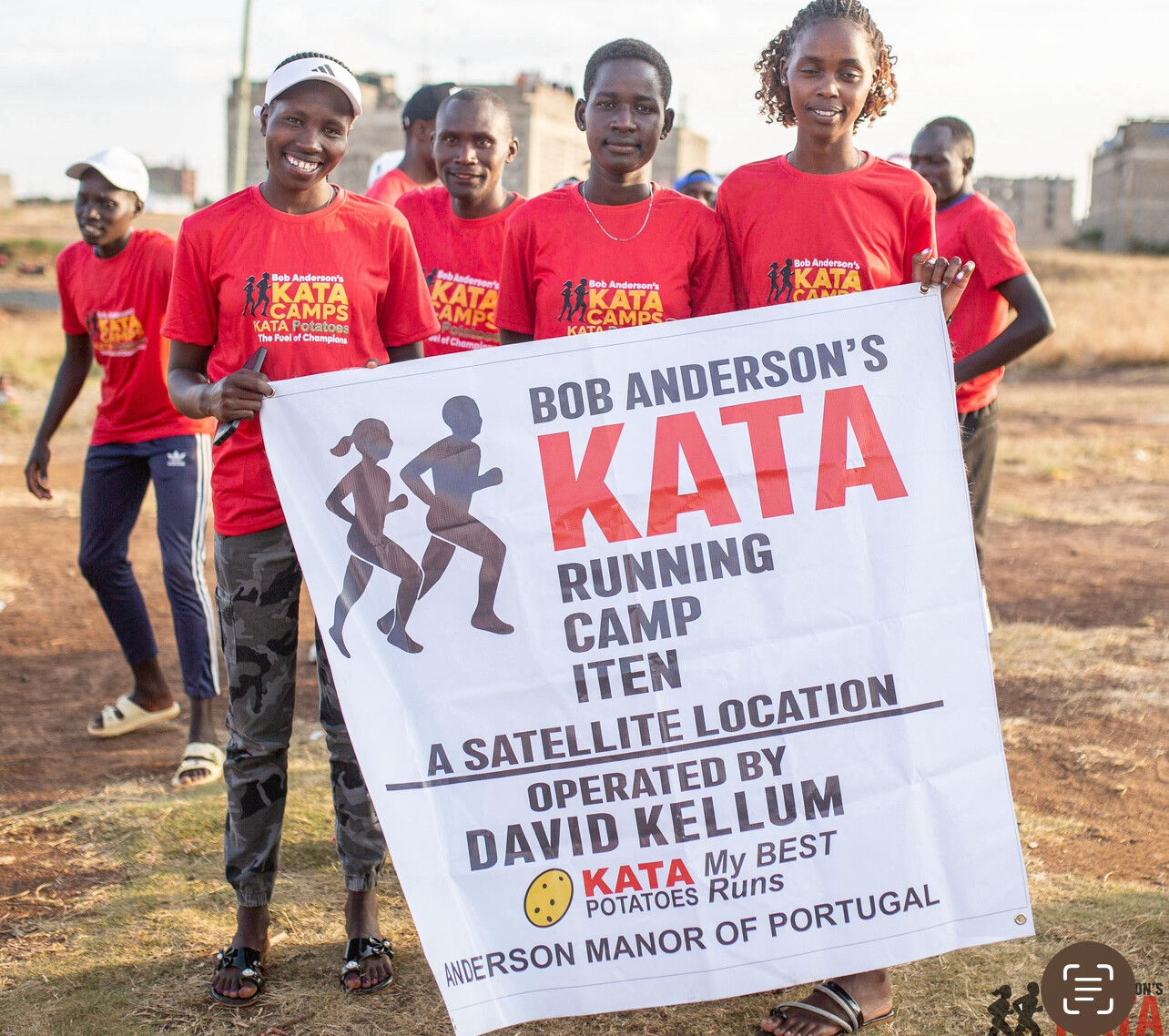
Anderson’s connection to Kenya runs deep. He first visited the country in 1987 and immediately fell in love with its people, culture, and running spirit. Just three years earlier, he had sold the magazine he founded and published for 18 years — Runner’s World, which had grown to a circulation of 2.5 million monthly readers. Runner’s World played a defining role in launching the modern running movement, inspiring millions of runners worldwide.
Although KATA Thika began in 2019, the KATA Running Camps officially launched in May 2025, building upon KATA’s strong foundation in Kenya. Both KATA Thika and KATA Portugal continue to grow as vital pillars in this global vision.
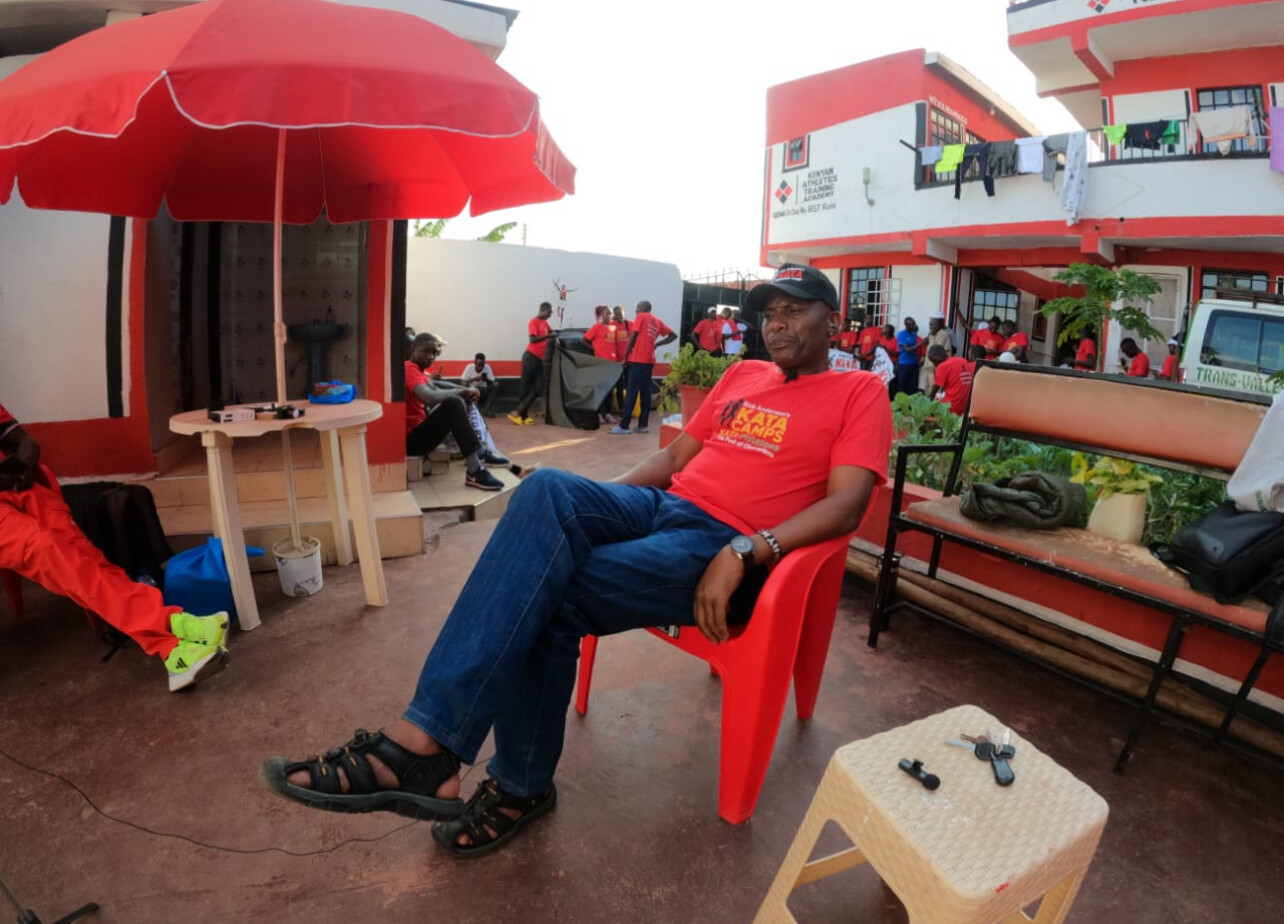
Anderson’s mission is clear: to strengthen the foundation of athletics in Kenya — and after 2026, expand to South Africa, Uganda, Ethiopia, and beyond.
Go KATA — The Fuel of Champions!
by Boris Baron
Login to leave a comment

Building Champions, One Race and One Harvest at a Time: The KATA Story
With 31 training camps across Kenya’s altitude zones and 65 thriving potato farms, the Kenya Athletics Training Academy (KATA) is shaping not only resilient athletes but also sustainable livelihoods. Each KATA camp is not just a training base but also cultivates several acres of KATA potatoes, linking athletics directly with farming and ensuring that athletes’ futures are rooted in more than competition alone.
A Morning of Anticipation in Thika
The sun had barely risen over Thika when athletes began streaming into the venue for the 5th Annual KATA Double Road Race. The crisp morning air carried both anticipation and nerves as runners stretched, laced up, and tested the course that would soon bear witness to their grit.
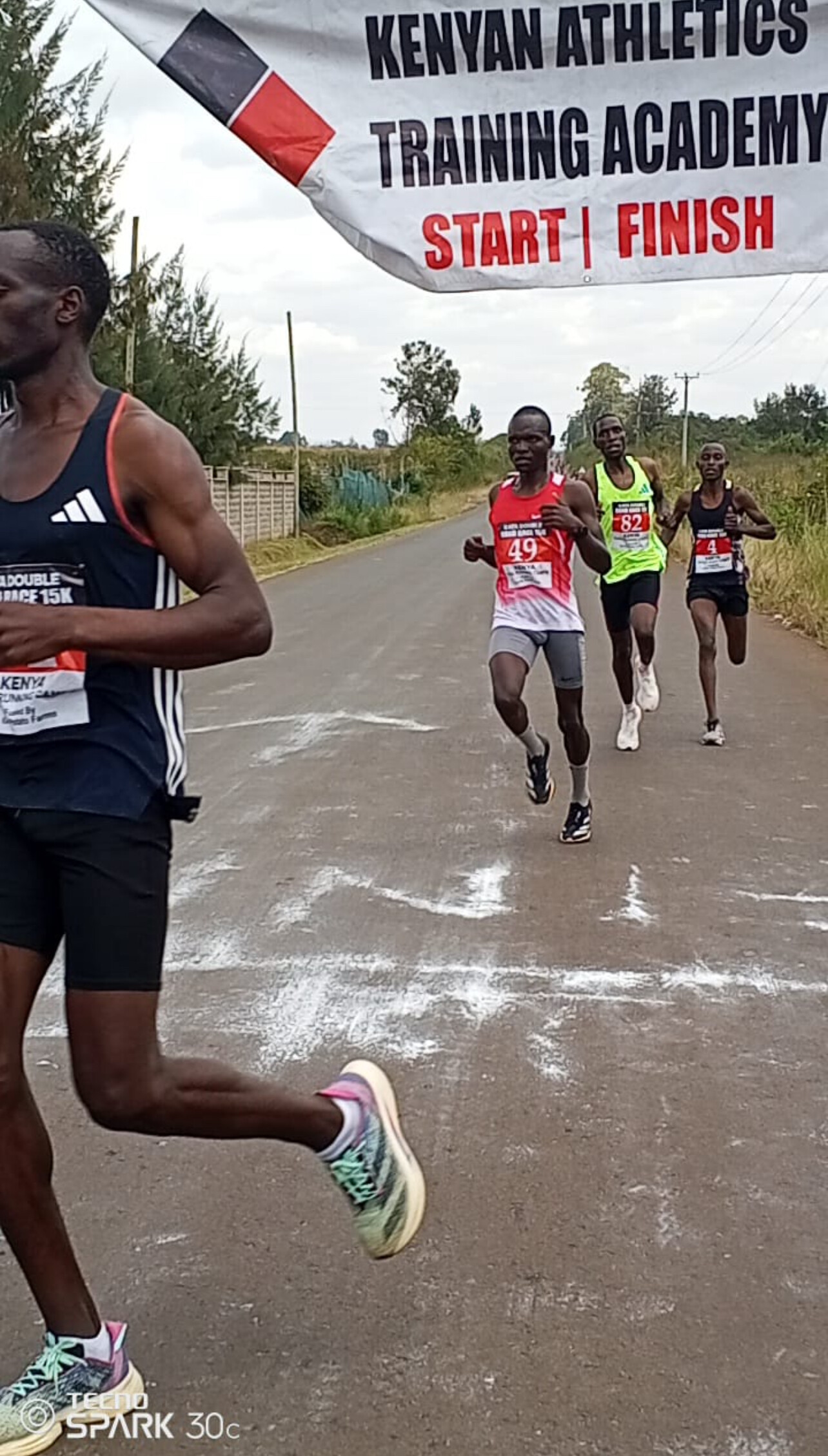
By the time the gun sounded, 97 elite athletes—74 men and 23 women—lined up. For John Matheri, head coach at KATA Thika, the event was more than a competition. It was a lesson in discipline, a test of mental endurance, and a reflection of how far the central region has come in embracing competitive running.
Olympic 5000m medalist and KATA camp operator Edwin Soi emerged as the overall winner, clocking 29:38 for the opening 10K and 14:22 for the final 5K. His combined time of 43:50 was the fifth-fastest ever run for the Double, an event first contested in 2010. On the women’s side, Betty Chesang from the KATA Iten camp was the first across the line in 51:32, marking the sixth-fastest women’s time in Double history.
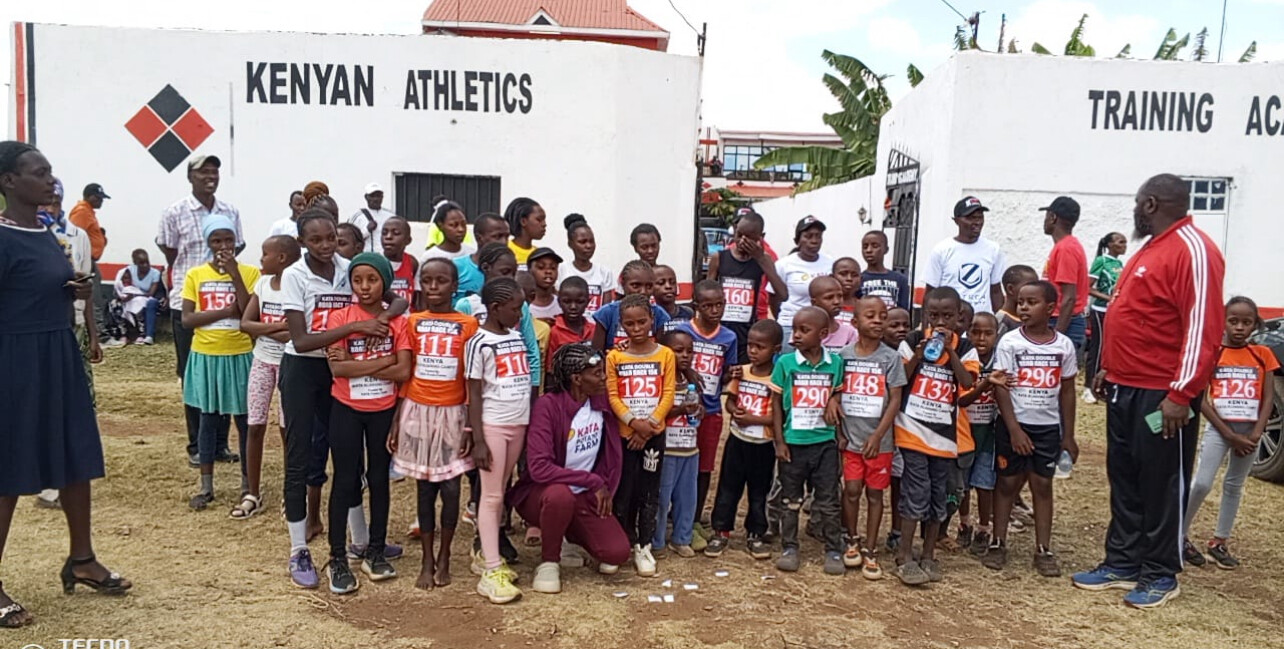
“We concluded the race well, and it was a good one,” Matheri said proudly, watching the exhausted but smiling athletes cross the line. “The turnout was impressive. I want to extend a special thanks to our sponsor, Bob Anderson, for putting together a team of this magnitude. There is no doubt that within the region, KATA has become an icon.”
A Nationwide Network of Camps and Farms
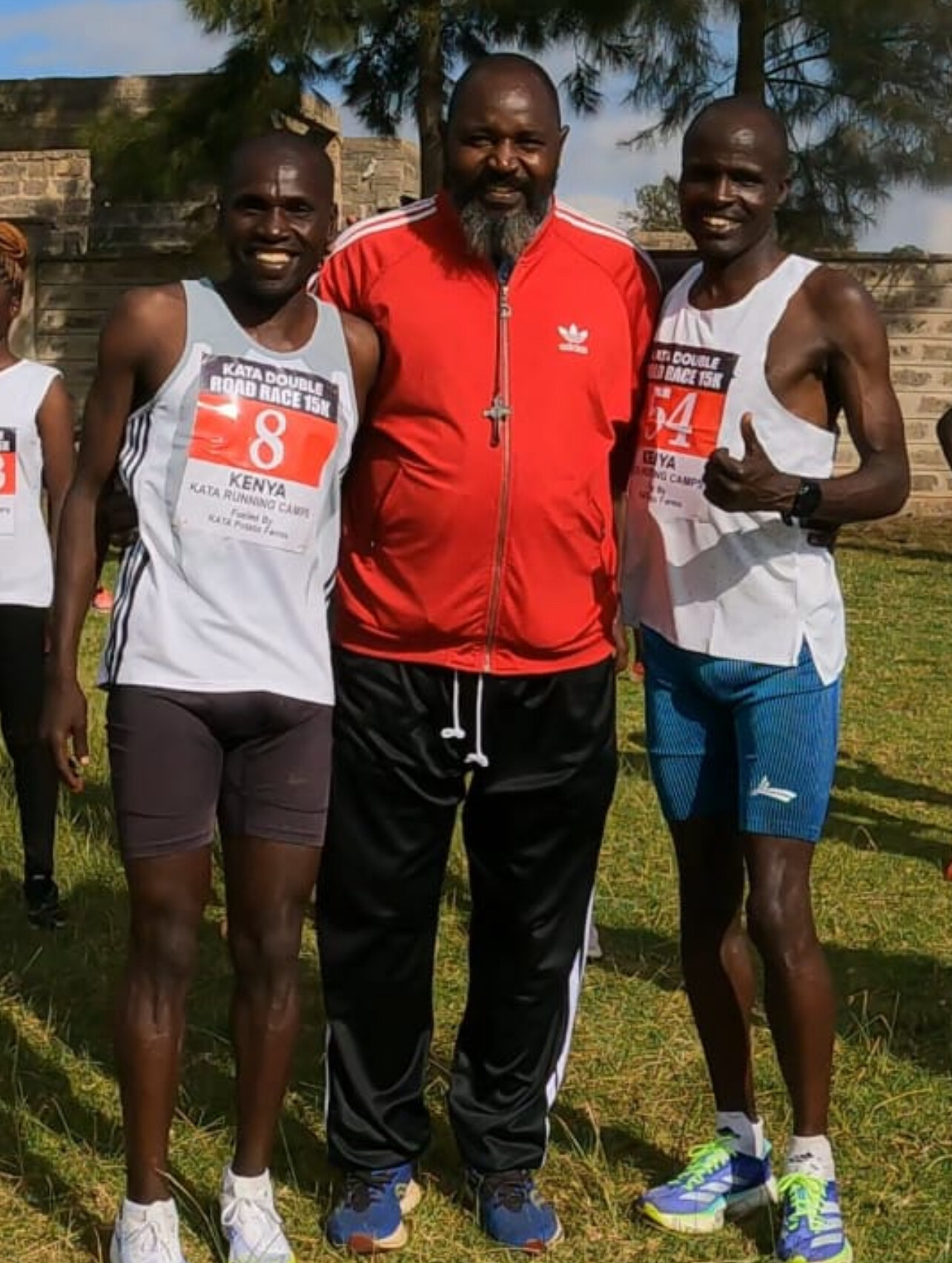
What sets KATA apart is not just its races but the ecosystem it is steadily building for Kenyan athletes. Across the country, 31 KATA-affiliated training camps operate at varying altitudes—from the highlands of the Rift Valley to the mid-altitude base in Thika and lower regions closer to Nairobi. Each camp provides unique conditions that strengthen endurance, adaptability, and competitive edge.
These dual-purpose camps are more than facilities; they are lifelines for athletes dreaming of breaking into the elite ranks. Training at altitude builds strength, while mid-altitude camps prepare runners for race conditions. Together with potato farming, they create a sustainable structure for the future.
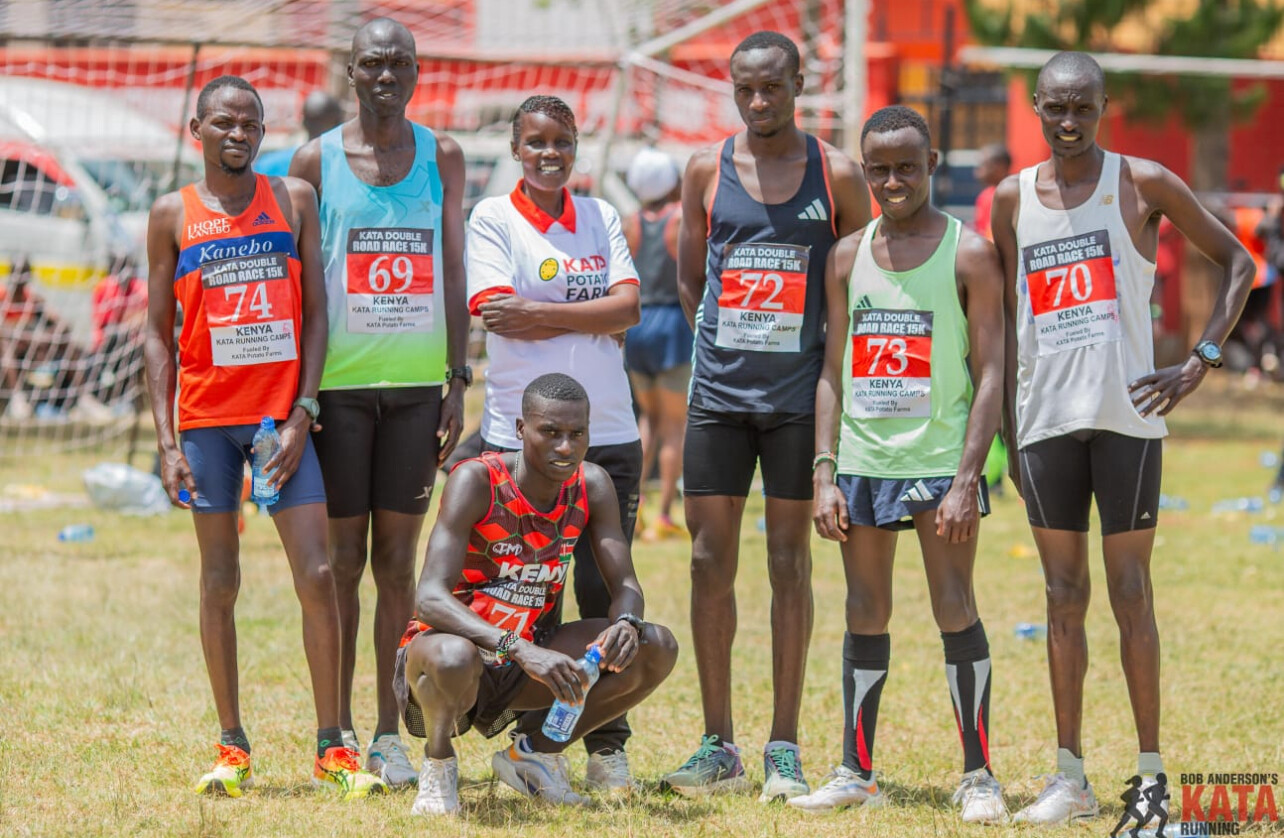
This vision is also embodied in Jimmy Mwangangi Muindi, a five-time Honolulu Marathon champion who famously coached Patrick Makau to the world marathon record in 2011. Having worked at Anderson’s Manor in Portugal, Muindi now leads a KATA satellite camp in Machakos County. For him, KATA is about much more than training.
“KATA is building more than runners,” Muindi reflected. “It is building a family—giving young talents not just training, but exposure, support, and hope. That is how future champions are born.”

Beyond Running: The Potato Farming Project
KATA’s sustainability model is as innovative as its racing format. Each camp is supported by several acres of potato farming, tying athletes’ success to both training and cultivation. The revenue from potato sales funds the future of the running camps.

The model is simple but effective. Bob and Catherine Anderson provide an interest-free loan to establish both the camp and its potato farm. From there, the operator and athletes are responsible for managing their acres and securing their own future. KATA continues to provide exposure and guidance, but the responsibility of growth rests with those on the ground.
“The potato project has given us a chance to think beyond running,” Matheri said. “Athletes train hard, but they also need food security and stability. Farming allows them to eat well, earn a little, and stay grounded.”

KATA Chief Technical Officer Denis Musau, who recently returned from Anderson’s Manor House in Portugal, underscored this vision. “KATA is about creating a legacy. By building projects like potato farming, we empower athletes and their camps to sustain themselves financially. That secures their future both on and off the track. I see a very bright future for the KATA family.”
The Spirit of Participation
What stood out most on race day in Thika was the diversity of the field. Athletes from every discipline showed up, while children and enthusiastic spectators cheered from the sidelines. The energy of the crowd became part of the race’s rhythm, fueling the runners through every stride.
Yet the event also highlighted areas for growth. “Our athletes are very strong athletically, but many are missing mental strength,” Matheri observed. Muindi agreed: “Mental resilience is just as vital as physical training. When athletes panic at the sight of big names, they lose focus. Learning to respect the distance is what unleashes true potential.”
For both coaches, raw talent is not enough. Young athletes are like fabric, Muindi often says—materials that must be carefully tailored to become masterpieces.
Inspiration from the Veterans
One of the most inspiring aspects of the Thika Double was the turnout of established athletes—Olympians and medalists—who lined up alongside the next generation. Their presence was not only symbolic but also a powerful motivator for younger runners.
“It is so encouraging, especially here in the central region, to see our elite and professional athletes turning up in big numbers,” Matheri said. “For the young ones, lining up beside Olympians and medalists gives them a sense of what is possible. It gives them hope.”
Building the Future
For the KATA family, the vision remains crystal clear: to prepare a new generation of Kenyan champions while ensuring they have livelihoods beyond running.
“As a family, we are in good hands. We are looking forward to doing great things,” Matheri said with conviction. His final message was one of determination and gratitude: “We promise to use every ounce of our strength to bring change and positivity to the world of sport. We thank our sponsor, Bob Anderson, for the continued support, and we promise to do everything we can to grow this industry. The journey has just begun, but the future is bright.”
Anderson’s Manor in Portugal serves as KATA’s international headquarters, with Bob and Catherine Anderson based there about 50% of the time. It is from this hub that global strategy and support are coordinated, while Kenya remains the main operational location where athletes train, camps thrive, and races like the Double continue to inspire.
As the last athletes packed up and the crowd dispersed, one thing was clear: KATA is more than an academy. It is a movement—blending sport, sustainability, and community to nurture not just athletes, but Kenya’s enduring legacy of running excellence.
by Robert Kibet
Login to leave a comment
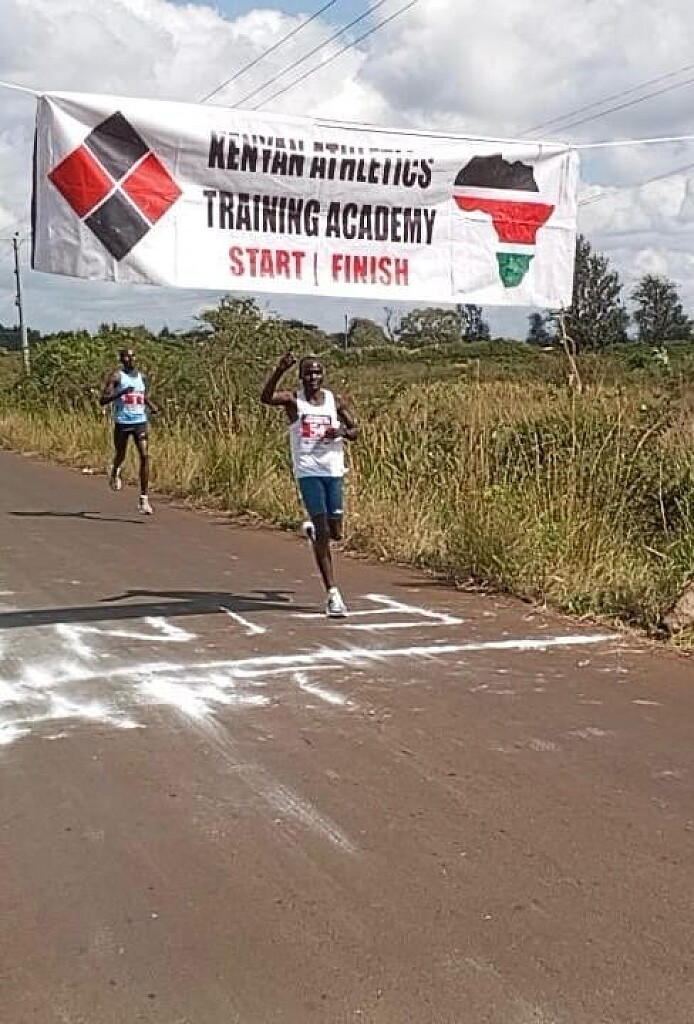
Edwin Soi and Betty Chesang Shine at 5th Annual KATA Double Road Race in Thika
THIKA, Kenya - Running at the Kenya Athletics Training Academy (KATA) has become a magnet for athletes and spectators alike, and today’s 5th Annual KATA Double Road Race proved just that. Energy and motivation filled the air as both athletes and coaches gathered to celebrate one of Kenya’s most innovative race formats.
A total of 97 elite athletes—74 men and 23 women—lined up for the two-stage event (10K + 5K), a turnout that highlighted KATA’s growing influence and its role in setting a new competitive standard.
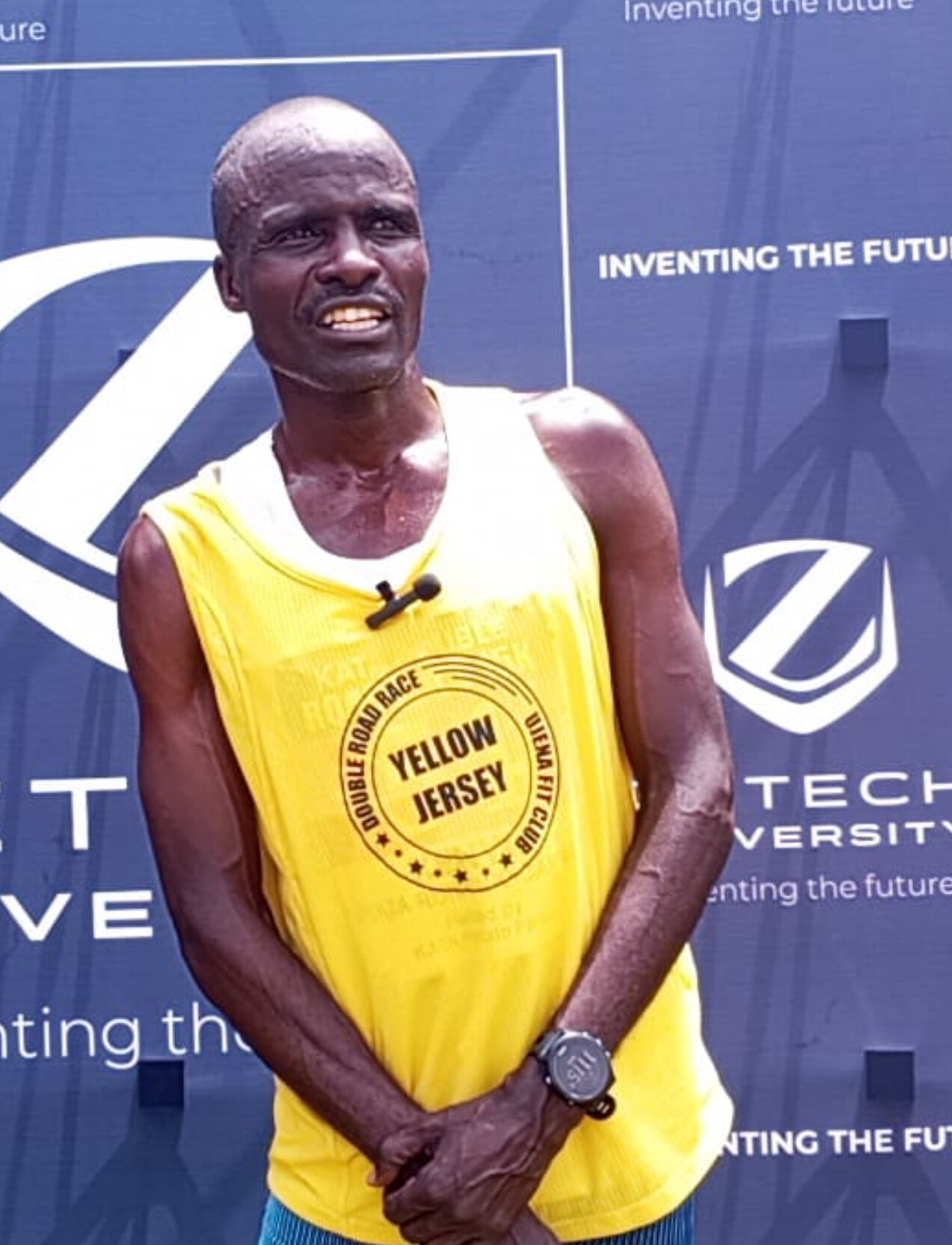
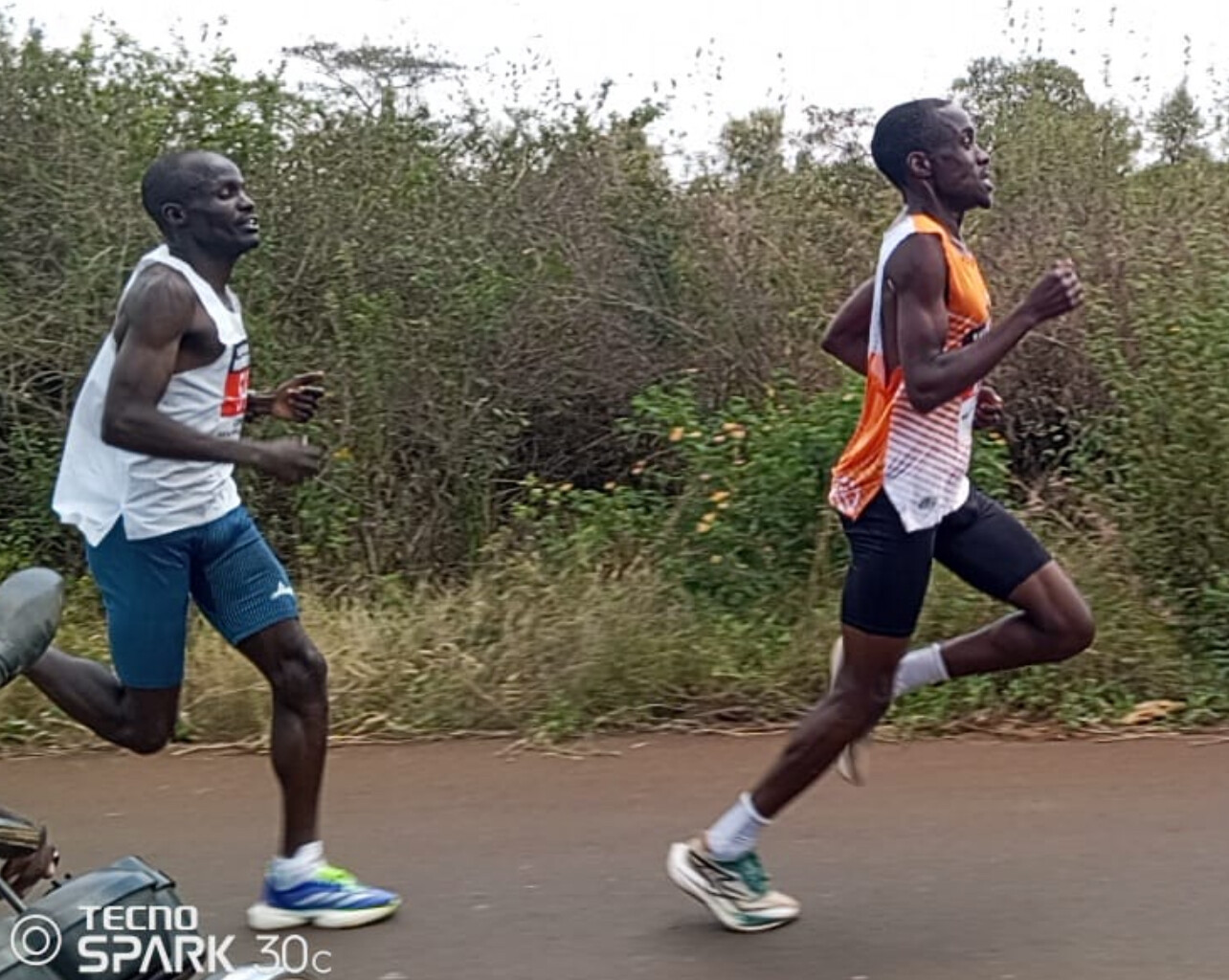
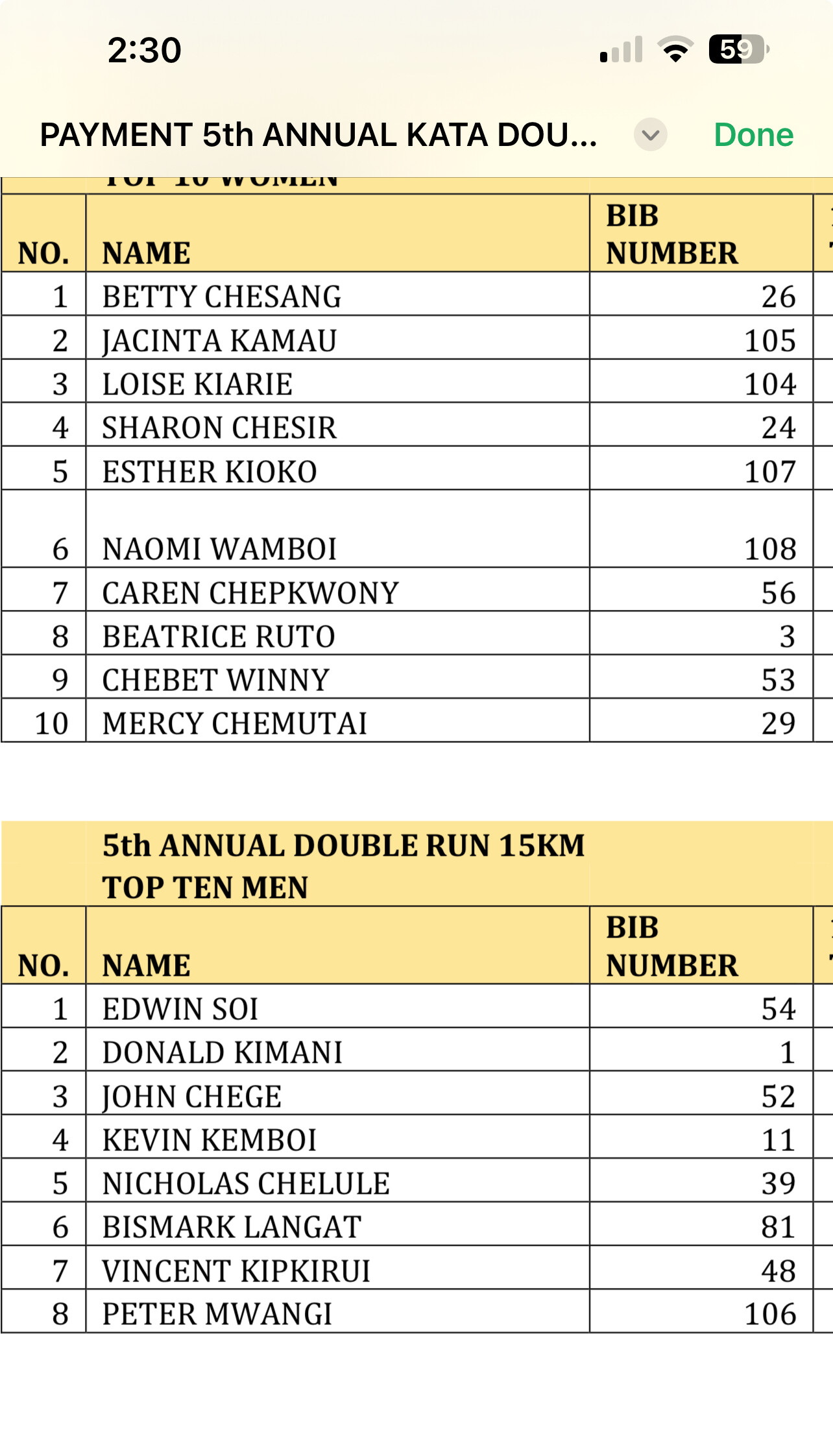
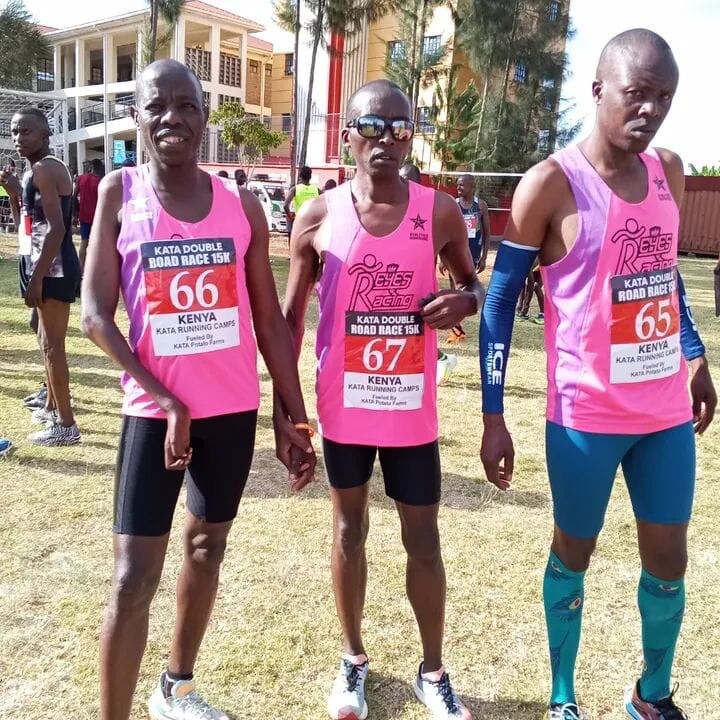


On the men’s side, Beijing 2008 Olympic 5000m bronze medalist Edwin Soi showed his class, taking the overall victory in a combined time of 43:50. He was chased hard by Donald Kimani, who clocked 44:07, while John Chege secured third place in 44:26. Chege, representing KATA Thika, had aimed with his teammates to challenge the world record. However, facing experienced stars like Soi, nerves crept in, and the record attempt slipped away.
The women’s race delivered equal excitement. Betty Chesang claimed the title in 51:32, followed by Jacinta Kamau in 51:50. Loise Kiarie rounded out the podium, finishing in 52:34.
Beyond the results, the day carried an atmosphere of learning and inspiration for KATA’s young and upcoming athletes. With each edition, the Double Road Race continues to grow stronger, reinforcing the KATA spirit: competing hard, learning together, and moving forward.
Also today was the Bob Anderson's Kids Mile and the 5K Run/Walk.
by Coach John and Boris Barron
Login to leave a comment
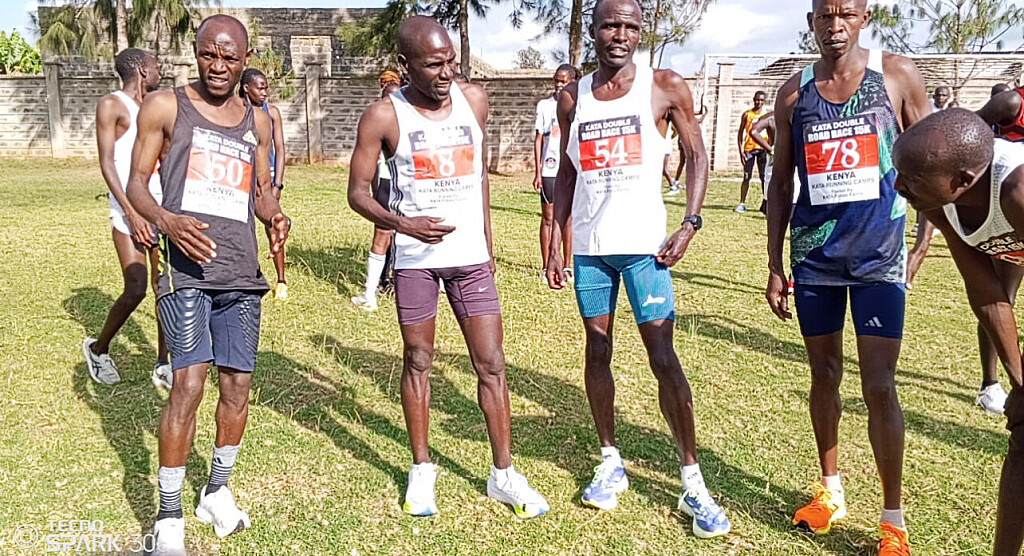
The fifth annual KATA Double Road Race in the making
The small town of Thika is alive with excitement today. Athletes, coaches, families, and even farmers have gathered at the Kenya Athletics Training Academy (KATA) grounds for the 5th edition of the Double Road Race—a unique competition that, in just five years, has become a symbol of innovation in Kenya’s running culture.
Unlike conventional races, the Double Road Race challenges athletes to complete two segments with a rest break in between. Final standings are determined by combined times. It’s a test of speed, endurance, and resilience that forces runners to rethink race strategy and dig deeper than ever before.
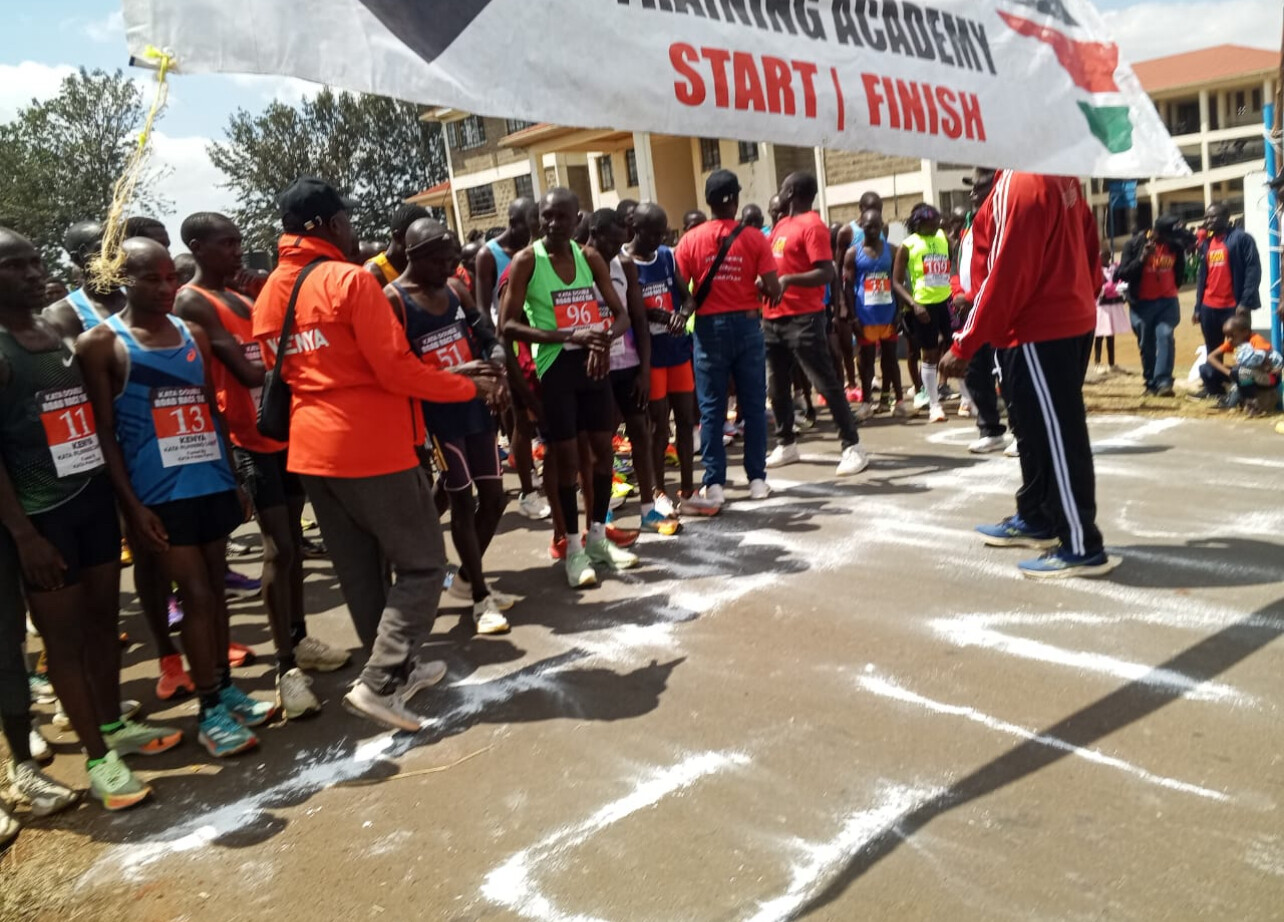
The Birth of a Vision
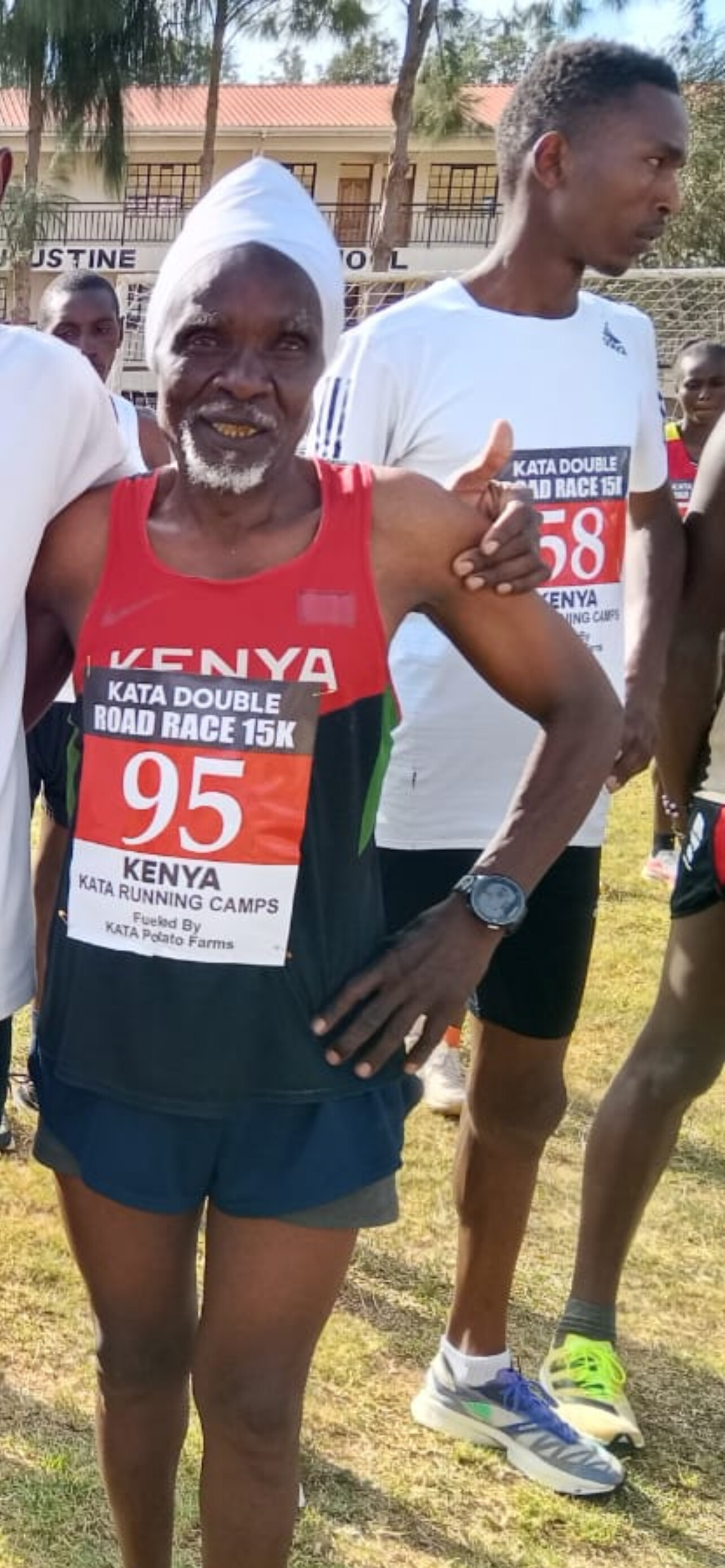
The idea for KATA was born thousands of miles away. Bob Anderson, American publisher and lifelong runner best known as the founder of Runner’s World magazine, was inspired by the immense talent in Kenya but also saw structural gaps that held many athletes back.
Anderson’s vision was radical: create a training academy in Kenya that produced champions while also empowering communities. From this dream, KATA was founded in Thika—and one of its cornerstones was introducing the Double Road Race format to Kenyan soil.
Enter Jimmy Muindi: From Star to Mentor
No story of KATA is complete without Jimmy Muindi. The six-time Houston Marathon champion and former coach of world record holder Patrick Makau embodies the blend of experience and inspiration KATA thrives on.
From steeplechase junior champion at the 1992 World Juniors in Seoul to victories in Rotterdam and Honolulu, Muindi’s career reads like a running epic. As a coach, his highest moment came when Makau broke the marathon world record.
“The double tests body, mind, and spirit,” Muindi says. “It forces athletes to dig deep in ways they are not used to. That is how champions are made.”
Coach John Matheri’s Guiding Hand
While Muindi brought international pedigree, respected Kenyan coach John Matheri rooted the project locally. Known for discovering village talent and molding disciplined athletes, Matheri has helped weave community runners into the Double Road Race fabric.
“Returning for the second run after your body is tired teaches resilience,” Matheri explains. “That is what separates ordinary runners from great champions.”
His philosophy has given countless young runners not only a chance to compete, but also recognition and hope.
The Power of Exposure
One of the Double Road Race’s most innovative features is its commitment to visibility. Every runner’s time—first or last—is posted on the official website. For Kenyan athletes who rarely enjoy digital exposure, this is game-changing.
“Even if you are the last, your time is posted,” Muindi emphasizes. “Managers and sponsors around the world can see it. That exposure is priceless.”
In an age where social media visibility can launch careers, Anderson’s decision to democratize exposure has made the Double Road Race a vital platform.
A Vibrant Turnout in Thika
This year’s participation proves the format’s momentum. Squads from across the region have confirmed attendance, including Kata 1, 3, 4, 7, 9, 10, 13, 14, 15, 16 (with an impressive 16 runners), 17, 18, 20, 23, 24, 25, 29, 30, 31, and 32.
Adding further depth, farmers’ groups F20, F24, and F31 are also present—evidence of KATA’s reach beyond athletics and into the heart of Kenyan communities.
As one organizer shared in a WhatsApp update: “What an amazing turnout we are going to have.”
Beyond Competition: Building a Culture
For runners, today is more than a race. It’s a chance to test themselves, mark progress, and belong to something larger. For KATA, it’s proof of concept: grassroots blending with elite, communities meeting global culture, and tradition reimagined through innovation.
The Double Road Race, once a bold experiment by an American visionary, has now become part of Kenya’s running story.
Looking Ahead
Five editions in, the Double Road Race is no longer a novelty—it’s becoming an institution. Under the Thika sun, young runners, seasoned coaches, and cheering farmers weave together a tapestry of resilience and hope.
Anderson’s ambition, supported by Kenyan mentors like Muindi and Matheri, is for KATA to nurture athletes from primary schools to the world stage. With support from federations, sponsors, and government, the academy could become a model far beyond Kenya.
For now, as the second leg unfolds, Thika celebrates not just a race but the journey of an idea that dared to be different. Kenya’s running legacy isn’t only about medals—it’s about reimagining what running can be, and building a future where every stride counts.
Photo Gallery: https://kata.ke/gallery.php?g=1
by Robert kibet
Login to leave a comment
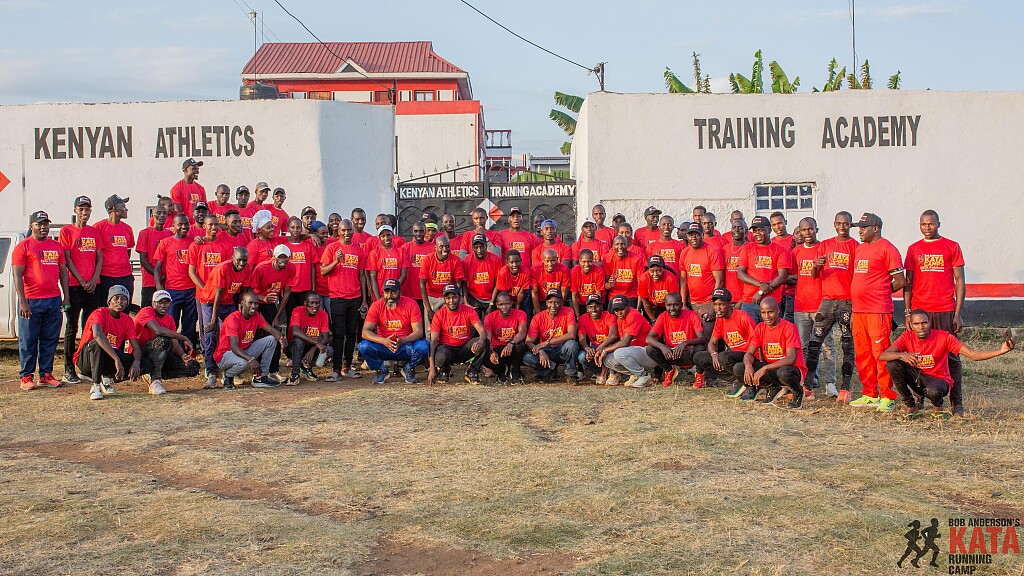
Anticipation Builds for the 5th Annual KATA Double Road Race in Thika
The countdown is over—the 5th Annual KATA Double Road Race takes place tomorrow, September 20, in Thika, Kenya. The unique two-stage event, featuring a 10K run followed by a break and a 5K, promises high drama and fast performances. With the depth of talent assembled, the prospect of a world record is very much on the table.
Since May, the KATA program has experienced tremendous growth. A total of 31 KATA Running Camps have been established across Kenya, alongside 35 stand-alone KATA Potato Farms. Many camps are cultivating three acres of potatoes, providing not only sustenance but also inspiration. The motto rings true: “KATA Potatoes—the fuel of champions.”

On Friday, the energy was already high as athletes, coaches, and supporters gathered at the KATA Running Retreat in Thika, which first opened in 2020. The opening ceremony set the tone for what is expected to be a memorable weekend of racing.
As athletes toe the line tomorrow, anticipation is sky-high. Records may fall, but more importantly, the Double format will once again showcase endurance, strategy, and the unique spirit of the KATA family.
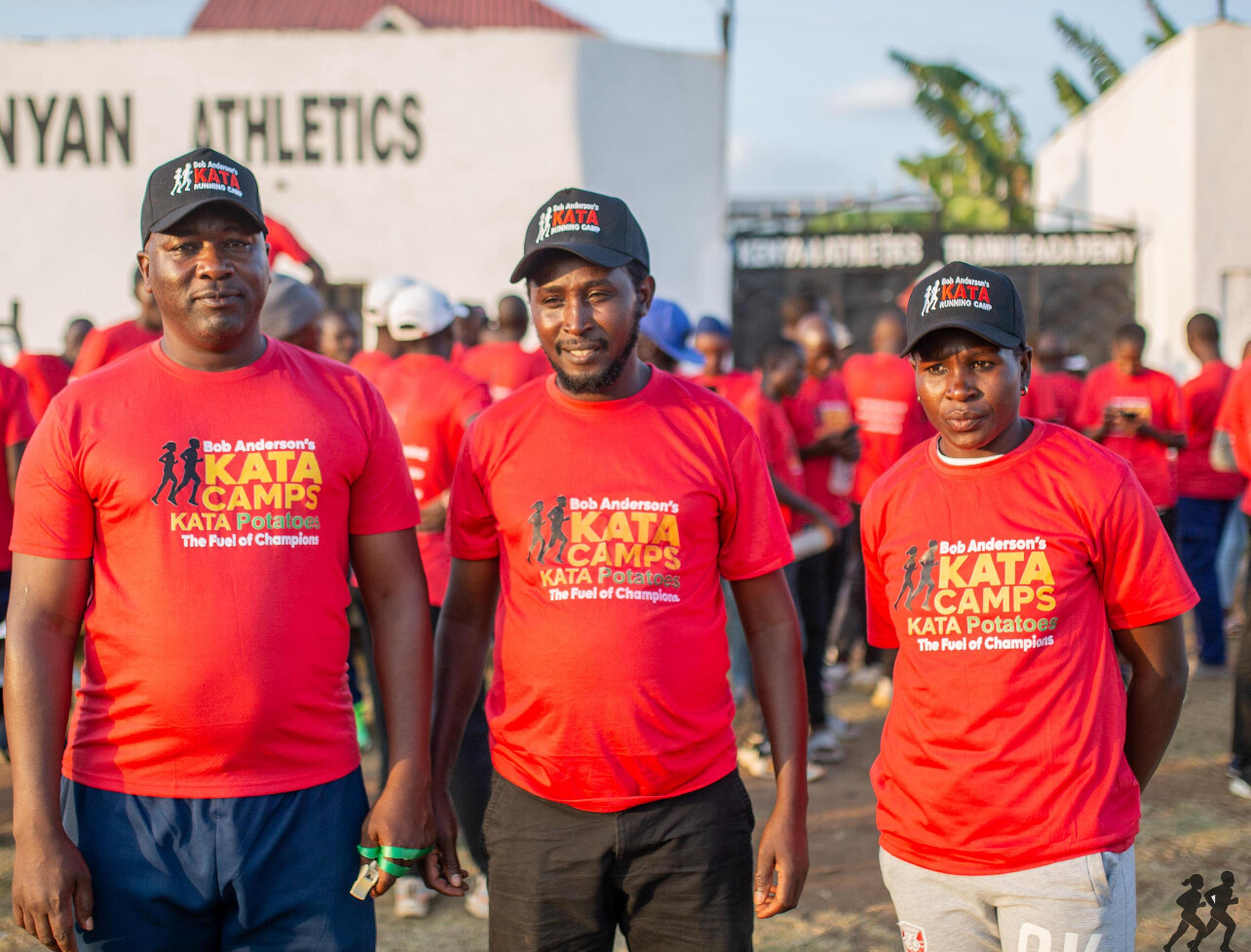
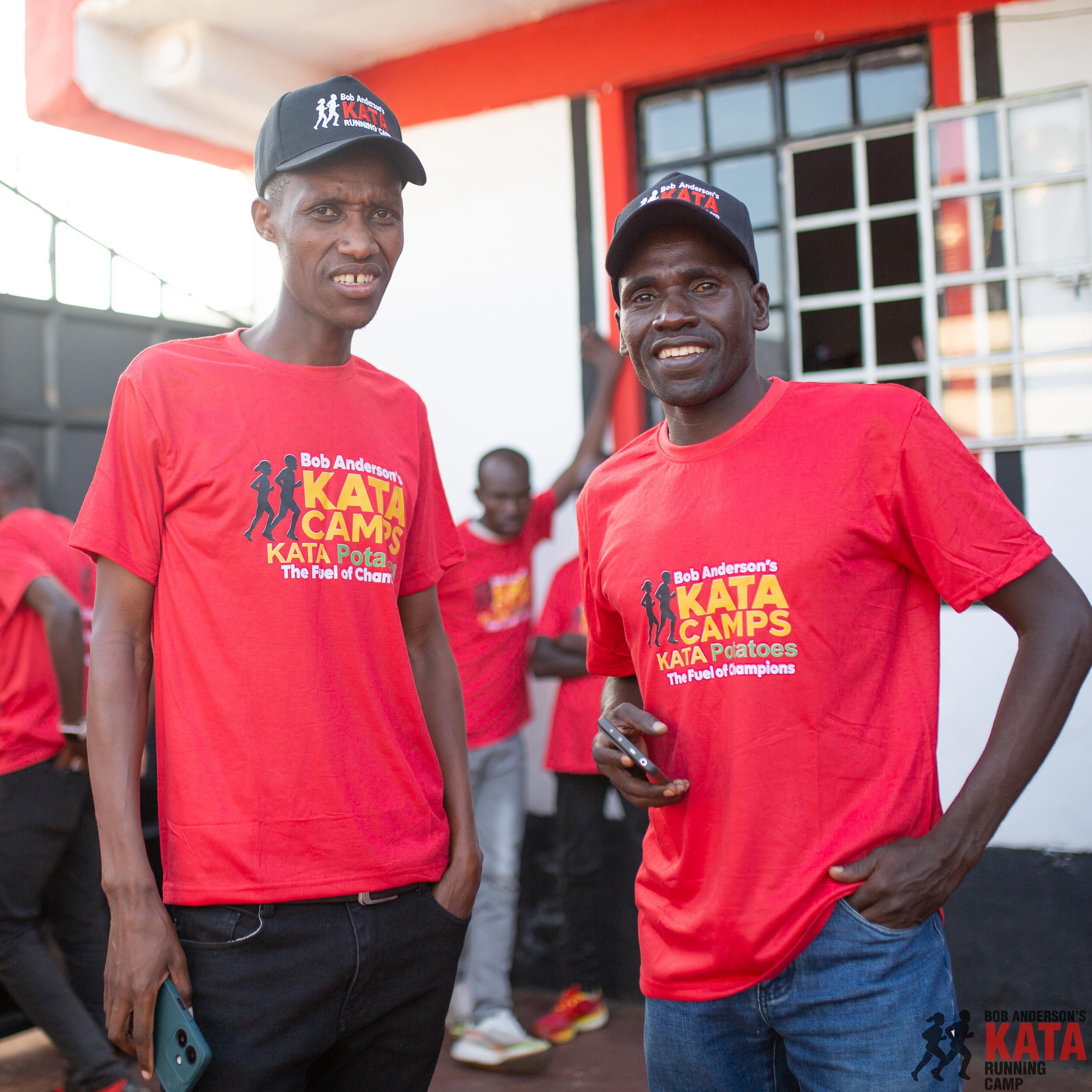
Good luck to all competitors this Saturday in Thika!
by Boris Baron
Login to leave a comment

Edwin Soi Going After the World Record at the 5th Annual KATA Double Road Race in Thika Kenya
Over 130 KATA athletes will compete alongside many other runners in a field expected to be the deepest yet, all chasing glory and a share of 100,000 KES in prize money.
When the 5th Annual KATA Double Road Race returns to Thika on September 20, it will not be just another date on the calendar. It will be a celebration of endurance, strategy, and Kenyan running tradition. And at the heart of it all will be Edwin Soi, the Olympic bronze medalist whose longevity and tactical brilliance have made him one of Kenya’s most respected distance runners.
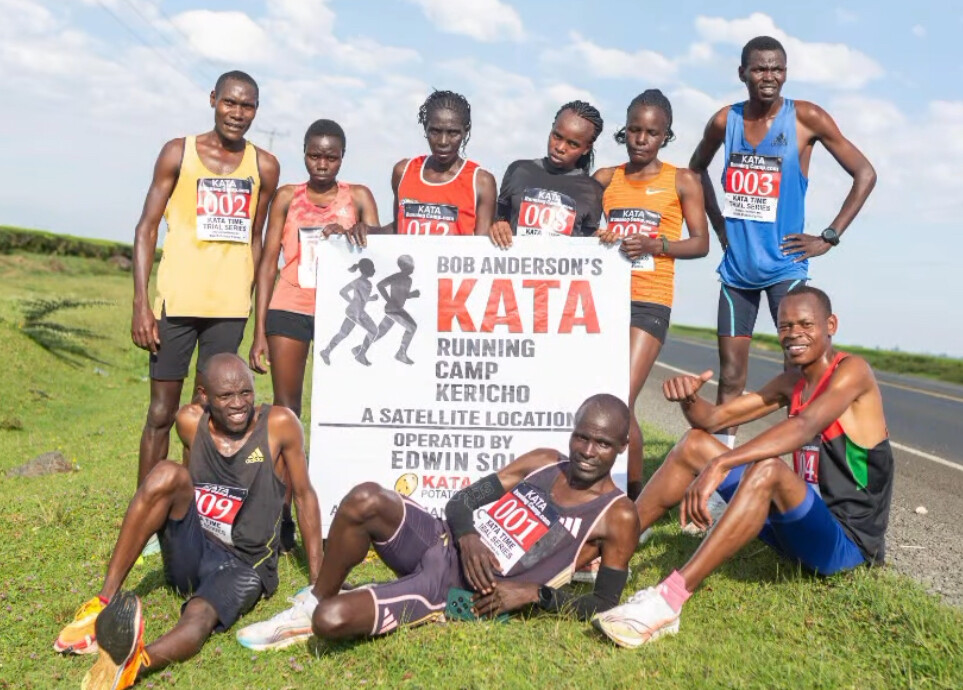
This year’s event also offers a prize purse of 100,000 KES, making the stakes even higher.
“Over 130 KATA athletes are expected to be on the line, joined by many more competitors from across the country and beyond,” says KATA founder Bob Anderson. “I am so proud of our KATA family and what we are building. This is just the beginning—athletics fueled by hard work and growing KATA potatoes.”
The Challenge of the Double
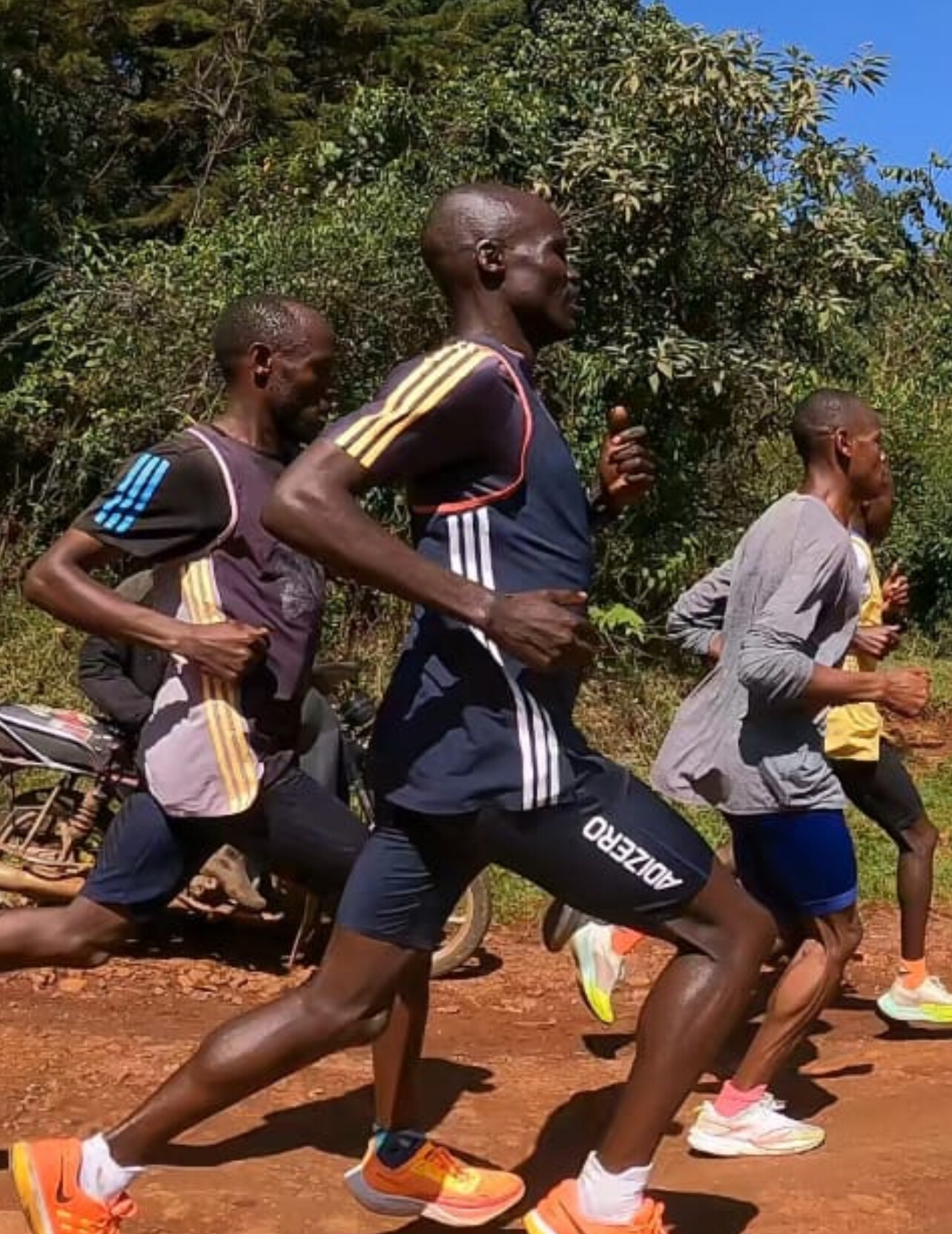
The Double is unlike any other race. Athletes first run a 10K, then take a halftime break where food and drink are provided as they prepare for the second leg. They return to the start line for a 5K. This is a two-leg event, and the times from each leg are added together for the final score.
For Soi—still formidable with career bests of 27:14 (10,000m) and 12:51 (5,000m)—the race is as much about mental strength as physical preparation.
“While others might wonder if they can even start the second race, my mind is already on pacing, form, and tactics,” Soi says. “Years of hard training and the right mental approach make a world record achievable.”
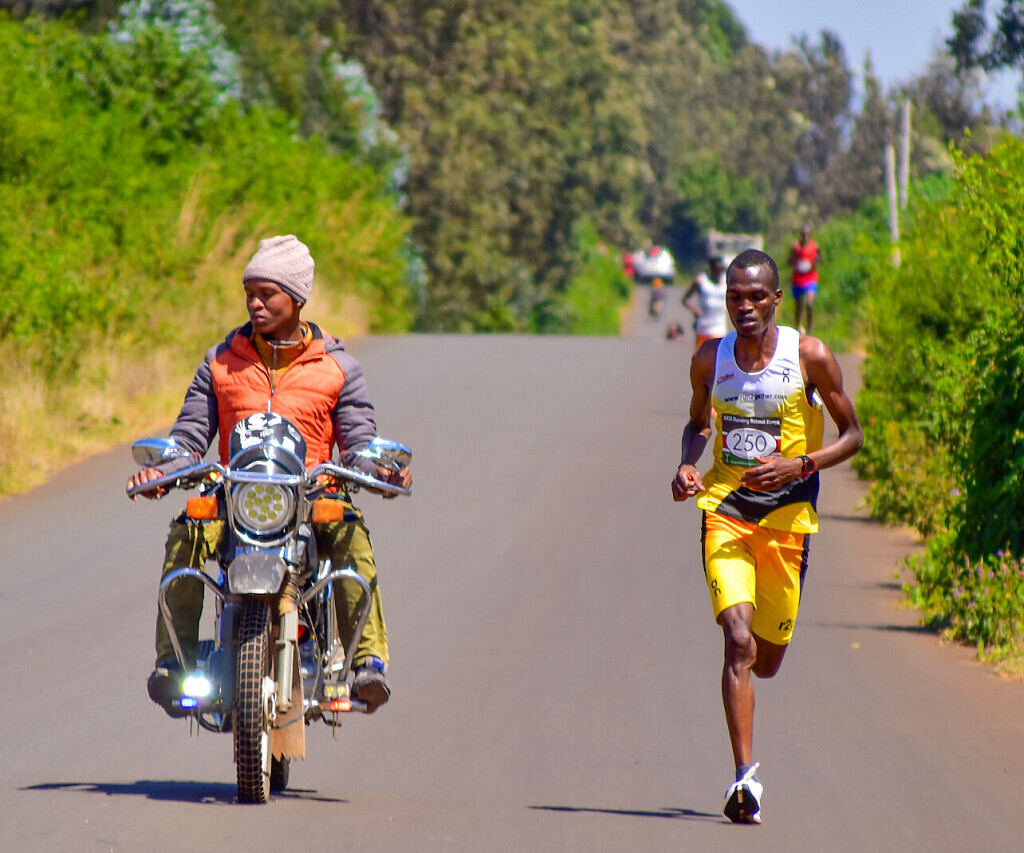
A Visionary Race with Kenyan Roots
The Double Road Race was created by Bob Anderson, founder of Runner’s World, to combine endurance with strategy. After pilot events in Mexico, the first official Double took place in Pleasanton, California, in 2012 with nearly 1,400 runners (5th photo).
Kenya quickly became a natural home. In 2014, races in Thika and Nyahururu introduced the longer Double 21K. By 2021, the Kenyan Athletics Training Academy (KATA)—also founded by Anderson—hosted Africa’s first Double 15K. Last year, Shadrack Kenduiywo (4th photo) set the world best of 42:34 on the Thika course, cementing Kenya’s place as the epicenter of the Double.
Soi’s Enduring Fire
At 39, Soi has experienced the full arc of an elite career. His defining moment remains the 2008 Beijing Olympics, where he won bronze in the 5,000m behind Ethiopia’s Kenenisa Bekele.

“Just making the Kenyan Olympic team drove me to push beyond limits,” Soi recalls. “I carried the hopes of more than 30 million Kenyans on my shoulders, and that choice ultimately led to my Olympic medal. My life changed—and my legacy changed.”
Since then, Soi has collected world championship medals and road titles worldwide. But today, what sets him apart is not only his victories but also his willingness to mentor and build the future.
Building Futures at KATA
Soi now heads the Kuresoi training camp under the KATA umbrella, guiding a new generation of athletes. His mentorship blends running discipline with life lessons, extending beyond training sessions.
KATA supports athletes with housing, nutrition, and income from sustainable farming projects like potato cultivation—ensuring both food security and financial independence. For Soi, this holistic model is crucial.
“I was fortunate to be mentored, and I feel a deep responsibility to pass that on. My victory will be in their success,” he says.
He also stresses integrity. With doping controversies tarnishing Kenyan athletics, Soi is determined to show that excellence can come from discipline, clean sport, and mentorship.
Why Thika Matters
The Thika Double has become more than a race; it is a stage where Kenyan athletes showcase strategy and resilience to the world. For the community, it is a festival of pride. For Soi, it is a chance to extend his legacy—competing for the clock, for his athletes, and for the values he believes in.
When the starter’s gun sounds on September 20, Soi will not only be racing 10K, resting, and running 5K. He will be carrying with him the arc of his career—from Olympic glory to mentorship—and the hopes of a new generation ready to follow in his footsteps.
The Double demands more than speed. It asks for resilience, intelligence, and composure. And with Edwin Soi on the line in Thika, chasing the world record, it promises to be a race—and a story—that inspires far beyond the finish.
by Robert Kibet
Login to leave a comment

KATA Double Road Race 15K
5th Annual KATA Double Road Race 15K Set for September 20, 2025, at KATA Thika The 5th Annual KATA Double Road Race 15K will be held on September 20, 2025, at the Kenyan Athletics Training Academy (KATA) in Thika, Kenya. The event includes a 10K leg, a break, followed by a 5K leg — a format designed to challenge runners...
more...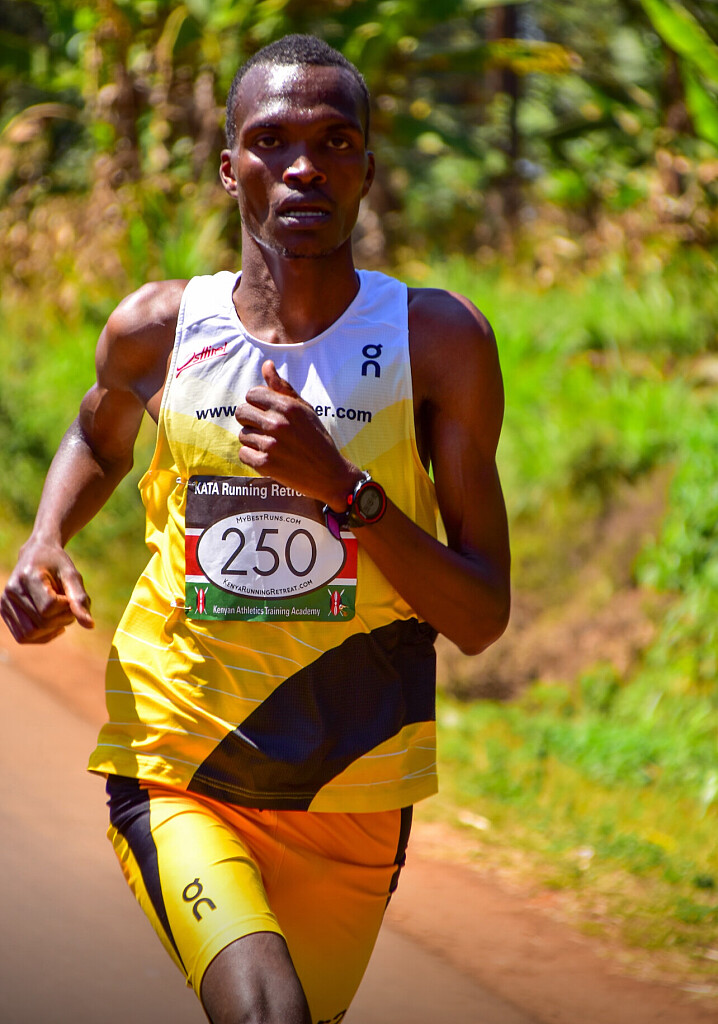
KATA Thika to Host Annual Double Road Race: A Celebration of Athletics and Sustainability
THIKA, Kenya – August 21, 2025: Thika is preparing to host one of Kenya’s most unique running events—the annual Double Road Race, set for September 20 at the Kenya Athletics Training Academy (KATA) headquarters.
Unlike any traditional race, the Double Road Race is contested in two stages. Athletes first run 10 kilometers, take a short recovery break, and then return to the course for a 5-kilometer dash. The winners are determined by their combined times, making the race a true test of speed, stamina, recovery, and mental toughness.
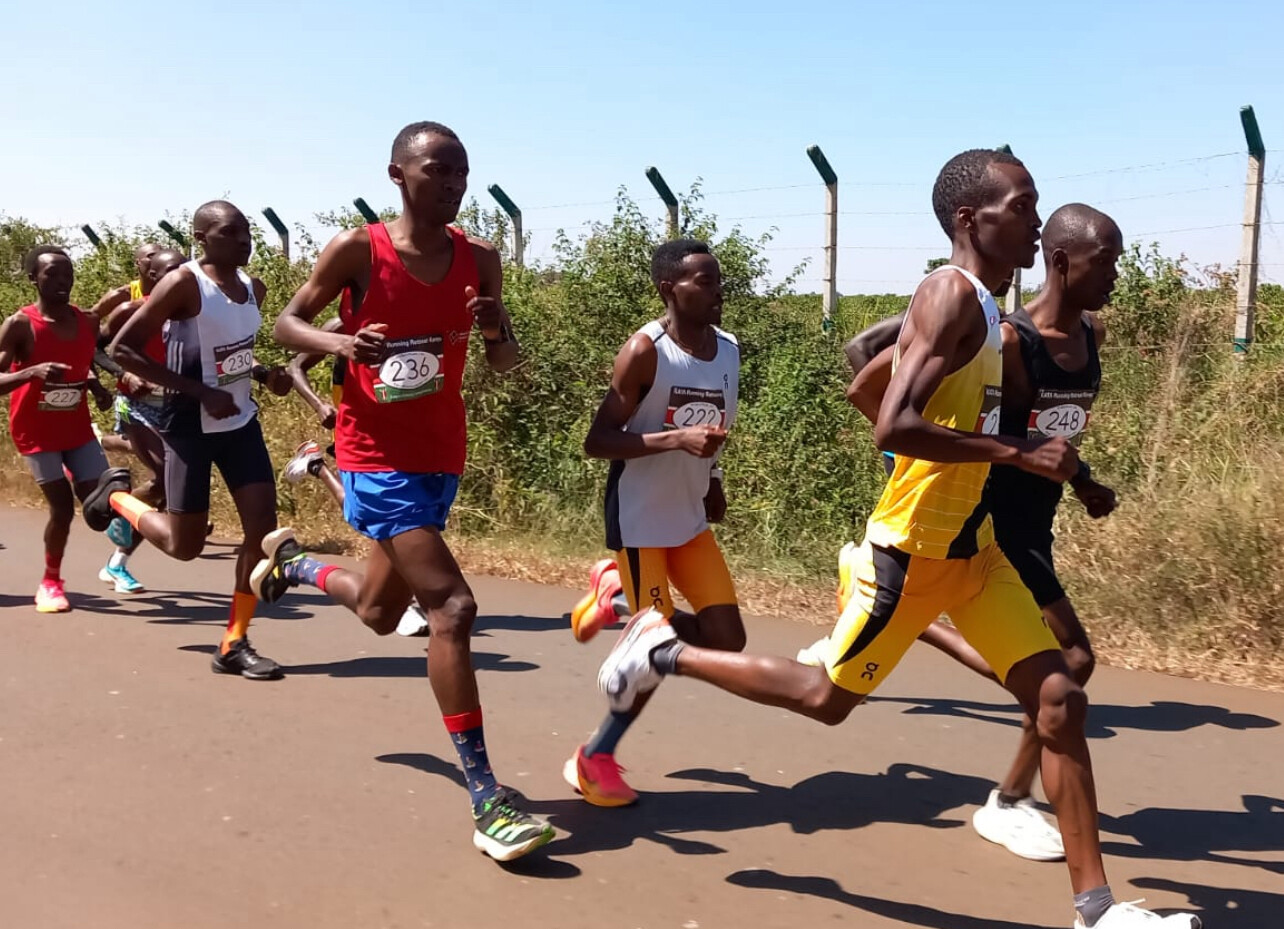
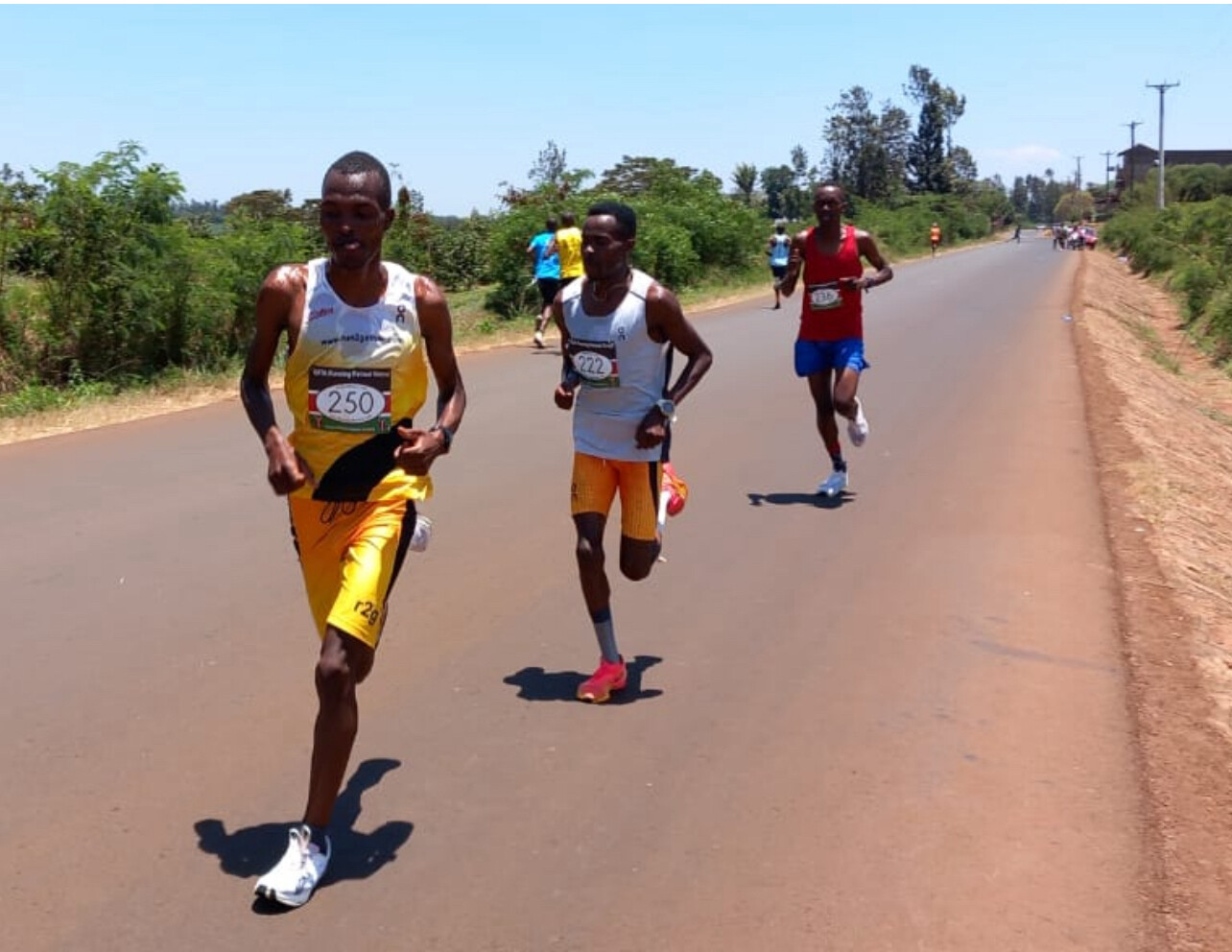
This innovative format has drawn athletes of all levels—juniors, elites, and masters—creating an inclusive competition with more than 100,000 KES in prize money, co-sponsored by Bob Anderson, founder of My Best Runs and creator of the Double Road Race.
The event’s roots go back more than a decade when Anderson envisioned a new kind of challenge that would push runners beyond traditional limits while giving young talent a chance to shine. Since then, the Double Road Race has become a signature event for KATA, which is led in Kenya by manager Christopher Muiruri.
“This race was started to provide a platform where athletes could test themselves differently,” Muiruri explains. “It has grown into a hallmark of KATA’s calendar, attracting runners from across the country.”
Beyond the racing, the event highlights KATA’s pioneering model of sustainable athletics development. Under Anderson’s vision, more than 30 KATA camps across Kenya have been supported to grow potatoes, creating a revenue stream to sustain training environments. At KATA Thika, athletes themselves manage the farm, producing crops that help fund camp operations.
“This initiative ensures that camps can sustain themselves long-term without relying solely on external funding,” says Muiruri. “It also teaches athletes the value of hard work both on and off the track.”
Head coach John Matheri emphasizes that the Double Road Race is more than just a competition. “It allows juniors, elites, and masters to showcase their talent. Results are posted globally on My Best Runs, giving athletes exposure and opportunities for sponsorships or coaching.”
The unique two-stage format makes strategy critical. Athletes must pace themselves in the 10K, recover quickly, and then summon every ounce of energy for the 5K. (the 5k starts one hour and 45 minutes after the start of the 10k.) Few races demand such balance of endurance and resilience, making the Double Road Race one of the toughest—and most rewarding—events in Kenya.
For Muiruri, the event embodies KATA’s broader mission. “We are creating a platform where athletics and sustainability meet. Our athletes not only excel on the track but also contribute to a model that ensures our camps thrive for years to come.”
As the September 20 date nears, anticipation is building for a day that will bring together athletes, coaches, and running fans in Thika. With its unique format, community spirit, and connection to sustainable farming, the Double Road Race at KATA Thika promises to be a celebration of innovation and Kenyan running at its finest.
At the the event last year a world record was broken. Shadrack (bib 250) clocked 28:33 for the 10k leg and then came back and ran 14:01 for the 5k leg. Total time 42:34 is the time to beat.
Whether competing for victory or cheering on emerging talent, this event is sure to leave a lasting impression on everyone involved.
by Robert Kibet.
Login to leave a comment
KATA Double Road Race 15K
5th Annual KATA Double Road Race 15K Set for September 20, 2025, at KATA Thika The 5th Annual KATA Double Road Race 15K will be held on September 20, 2025, at the Kenyan Athletics Training Academy (KATA) in Thika, Kenya. The event includes a 10K leg, a break, followed by a 5K leg — a format designed to challenge runners...
more...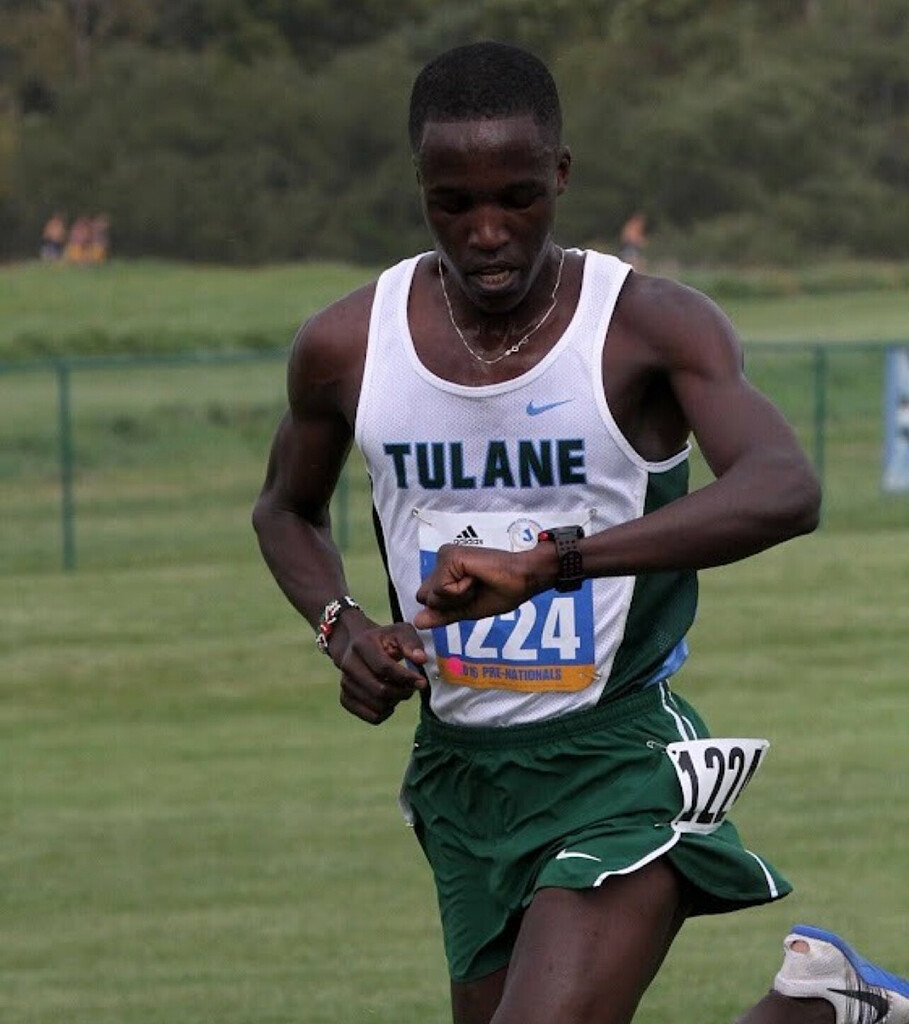
Emmanuel Rotich Joins KATA as Camp Manager
KATA has announced the appointment of Emmanuel Rotich as its new Camp Manager.
“KATA is based in central Portugal, housed at the Anderson Manor of Portugal, with offices in Thika, Kenya, and Los Altos, California. From these three locations, we coordinate all aspects of our camps and potato farms, making KATA a truly global initiative.”
“Emmanuel has a strong athletic background, was educated at Tulane University in New Orleans, and most importantly, after speaking with him, I was impressed with his passion for the sport we love and for tying in potato farming to support our mission.”
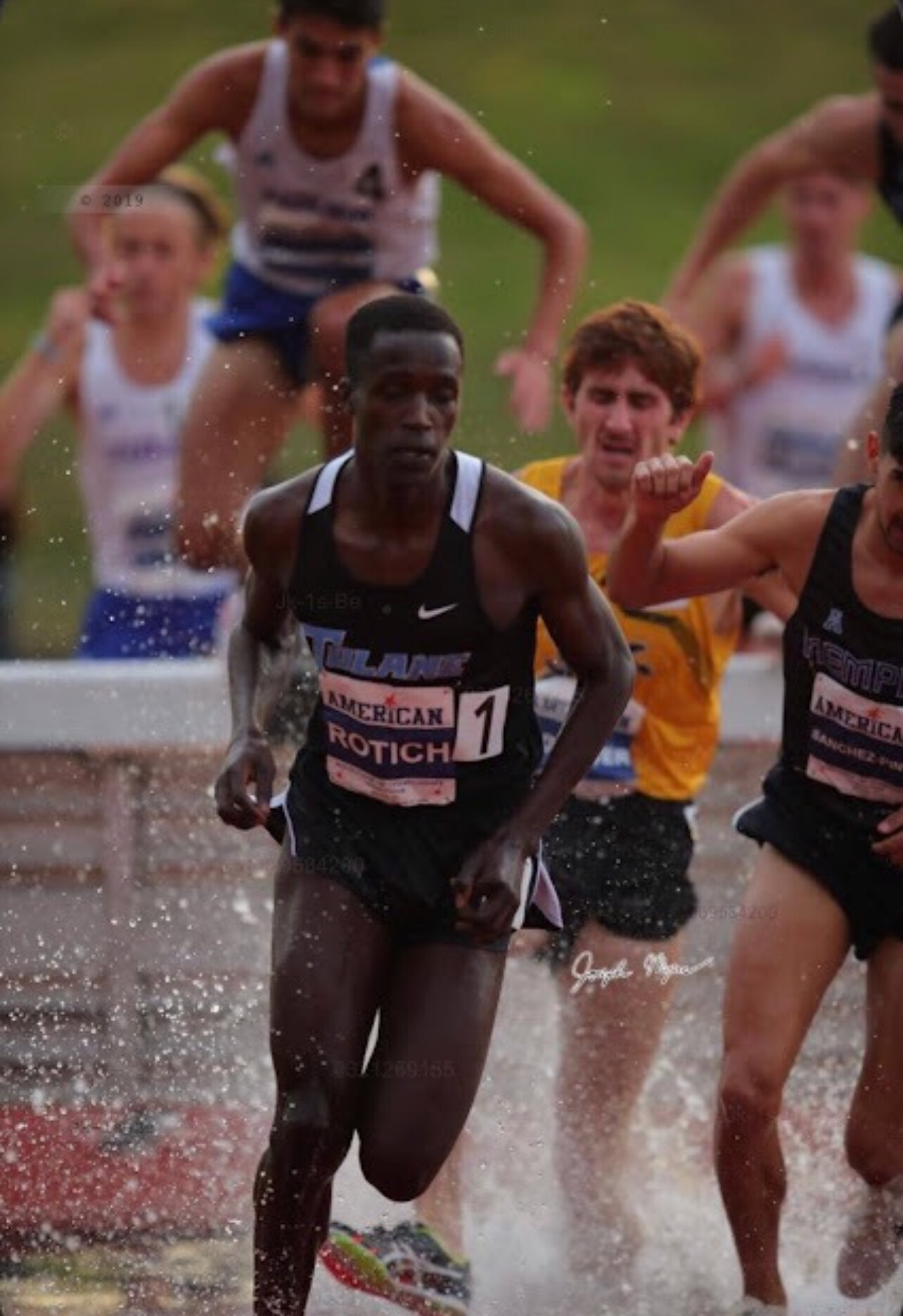
A Unique Mission: Athletics and Agriculture
In just 90 days, KATA has grown into a movement unlike anything else in the world. The program now operates 30 KATA Running Camps across Kenya, along with 20 additional KATA Potato Farms, bringing the total to 50 KATA farms. These farms provide both food security and revenue streams while directly supporting the athletes who train under the KATA banner.

“There is nothing like this in the world,” said Emmanuel. “When Paul Kipsiele Koech, one of the 30 camp operators and an Olympic medalist, suggested I reach out to Bob—a person I had followed for years on Facebook—I hoped I would be selected to become part of the KATA family.”
Emmanuel Rotich: A Global Perspective

Born and raised in Kenya, Emmanuel Rotich brings an impressive mix of athletic, academic, and professional experience to KATA.
As a former student-athlete at Tulane University in New Orleans, he balanced competitive running with academics, earning a Bachelor’s degree in Architecture and a Master’s degree in Sustainable Real Estate Development. That journey instilled discipline, resilience, and a commitment to excellence—qualities he now carries into his professional career.

“I chose KATA because of its innovative approach to combining athletics with sustainable agriculture,” Emmanuel explained. “This dual focus reflects my values of personal development, community growth, and environmental responsibility.”
Vision for KATA

As International Manager, Emmanuel has outlined three clear goals:
1. Drive Business Growth – Build partnerships and expand KATA’s global influence.
2. Enhance Athlete Development – Ensure that runners in KATA Running Camps have the resources and opportunities they need to thrive.

3. Promote Sustainable Agriculture – Strengthen and grow KATA Potato Farms, which underpin the program’s long-term sustainability.
His professional background spans architecture, sustainable development, logistics, and operations management, combined with the firsthand perspective of an athlete. This balance of skills positions him uniquely to guide KATA into its next phase of growth.
Looking Ahead
“I see KATA not just as an academy but as a movement that integrates sports and sustainability,” Emmanuel said. “By combining athlete development with agricultural innovation, KATA creates a model that benefits individuals, communities, and the environment. I am inspired by Bob Anderson’s leadership and excited to contribute to this vision on both local and international levels.”
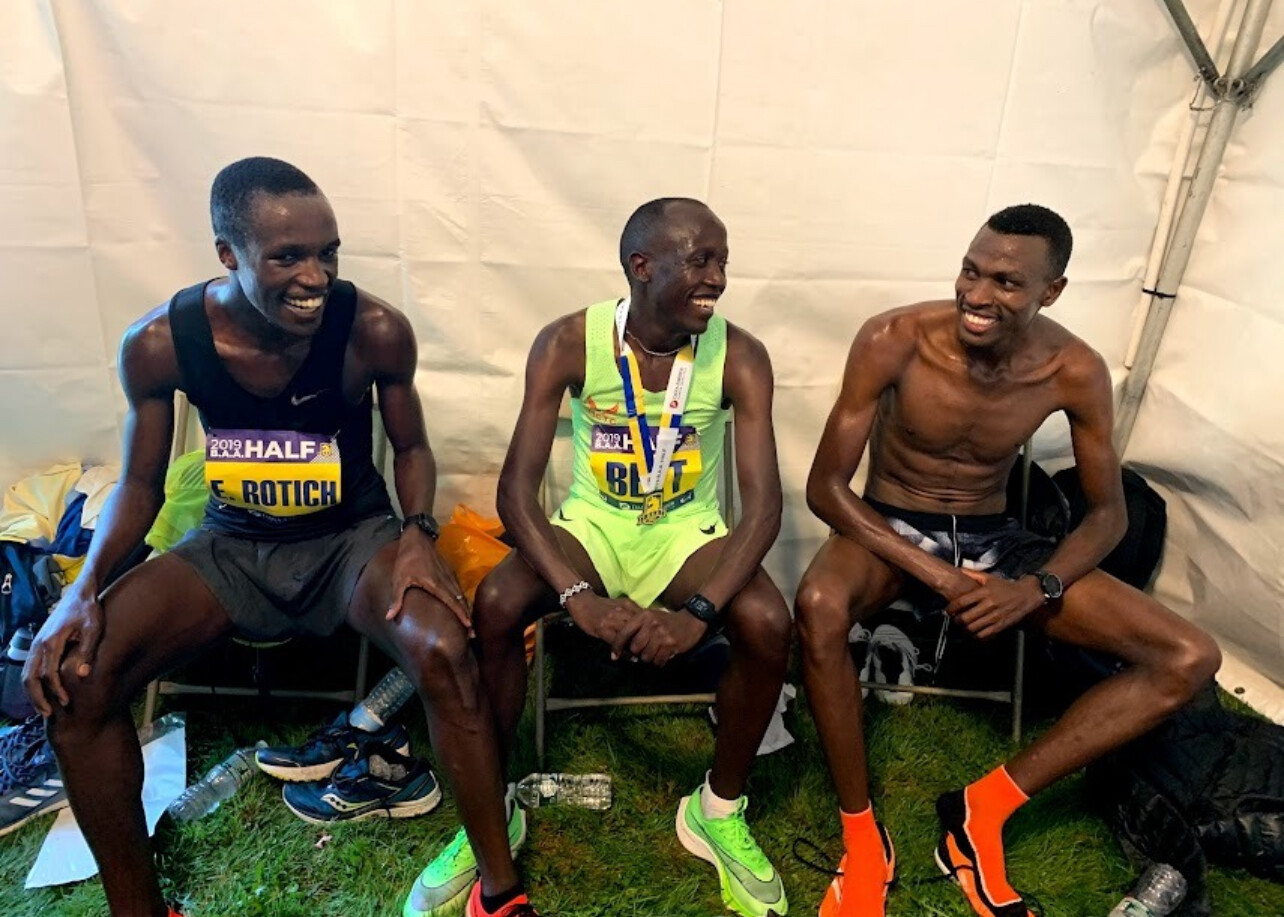
With Emmanuel Rotich stepping in as International Manager, KATA continues to gain momentum as a pioneering force in athletics and agriculture. What began as an idea just three months ago has already blossomed into a transformative program with global reach—and Emmanuel’s appointment signals that this is only the beginning.
by Boris Baron
Login to leave a comment

Brothers From the UK Reconnect With Roots Through Running at KATA Thika Retreat
THIKA, Kenya, August 18, 2025 – When Amit and Mitul Pankhania landed in Kenya this August, it was more than a family visit. The brothers, both based in the United Kingdom, had come to see their parents, but they also sought something deeper—a chance to immerse themselves in the heartbeat of Kenyan running.
Their week-long stay at the Kenyan Athletics Training Academy (KATA) Thika Retreat, founded and directed by long-distance running enthusiast and My Best Runs publisher Bob Anderson, blended cultural reconnection with athletic discovery. It all culminated in their participation in the retreat’s monthly time trials, a hallmark of KATA’s training culture that attracts both local and international athletes.
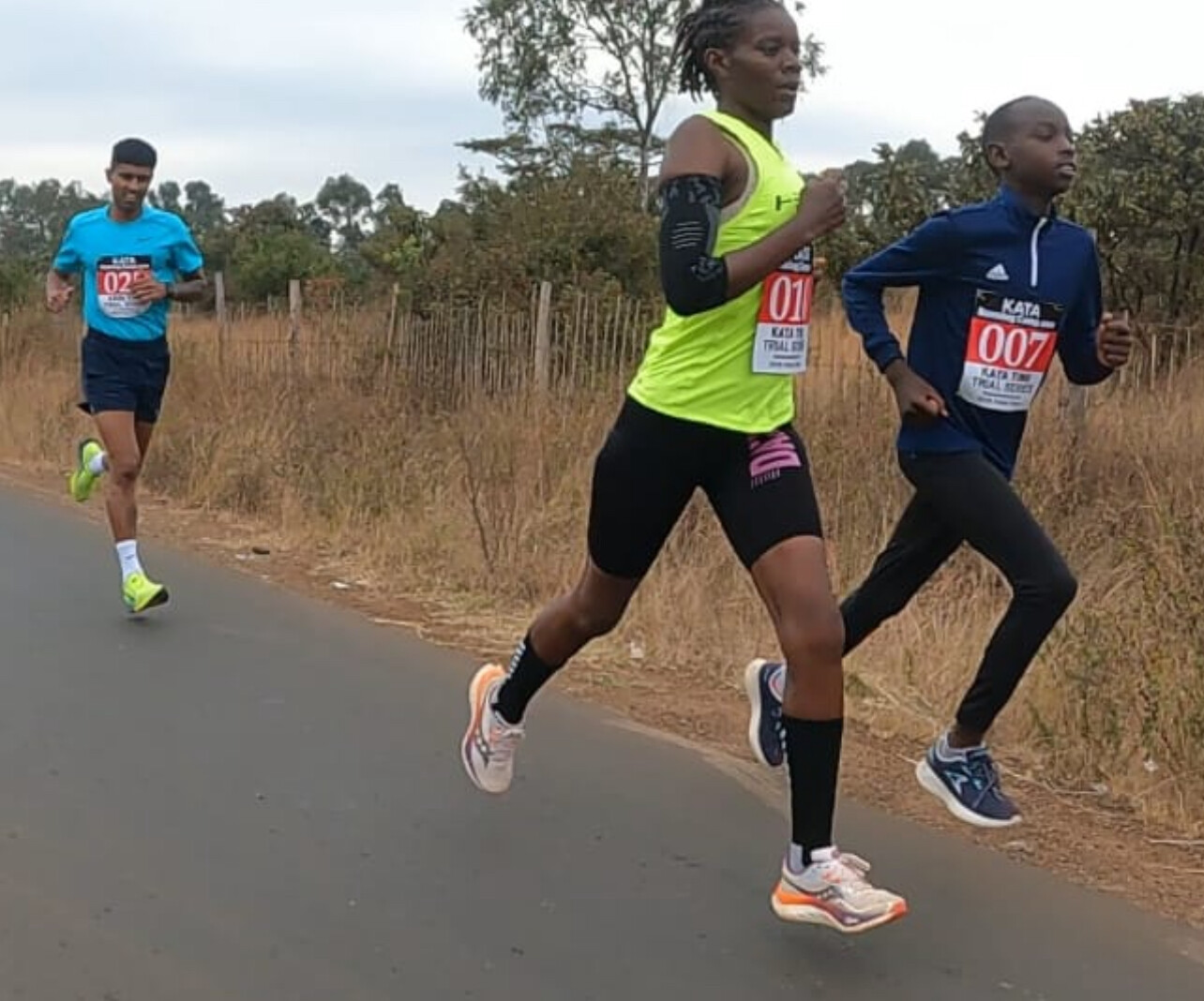
A Shared Passion for Running
Though both hold demanding professional careers in the UK, Amit and Mitul share a love for fitness and recreational running. For them, the sport is about more than paces and splits—it’s about discipline, resilience, and connection.
“Kenya has always been close to our hearts,” Amit said after completing the time trial. “This time, instead of just visiting family, we wanted to experience what makes Kenyan athletes the best in the world. Staying at KATA Thika gave us that chance.”
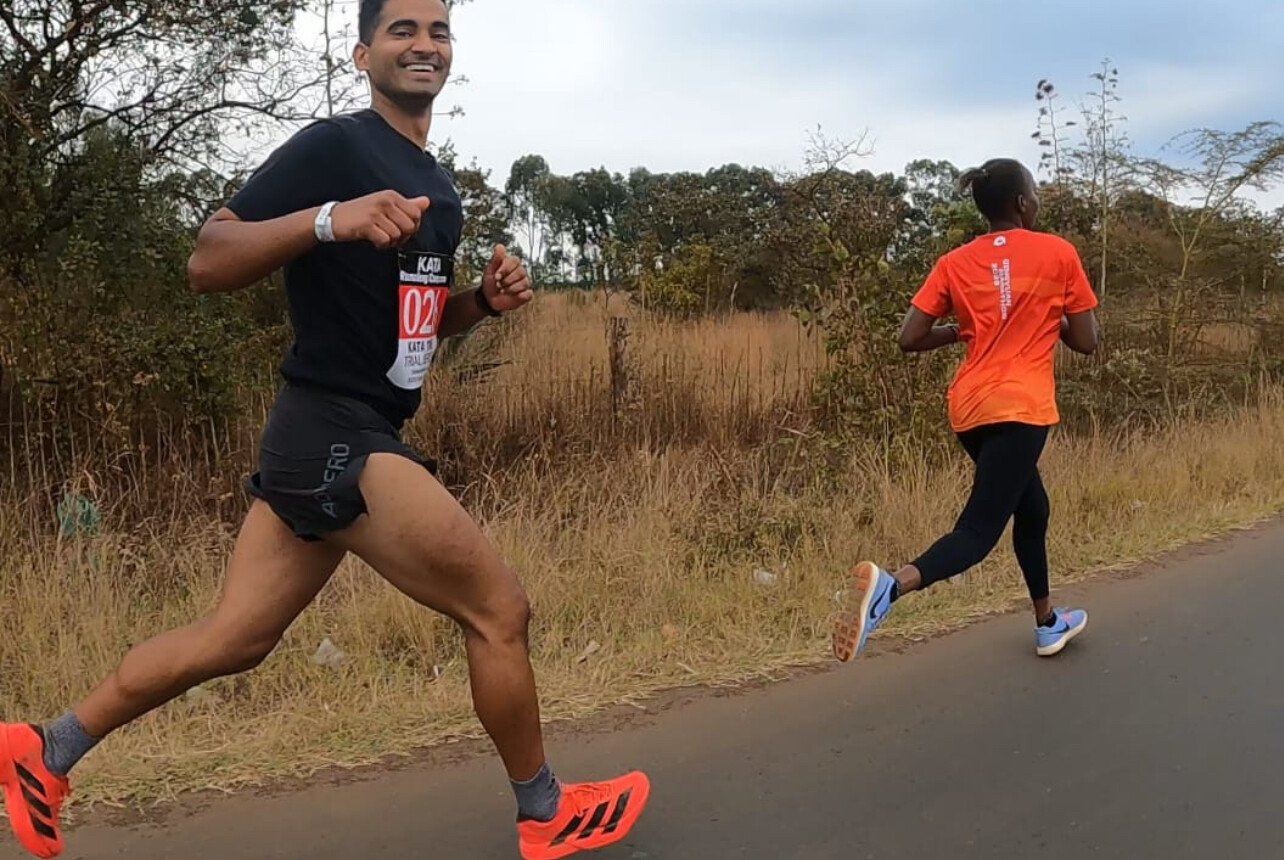
“It was inspiring to see the level of dedication here. Athletes wake up early, train hard, and push each other in ways you don’t often see back in the UK. Being part of that environment, even briefly, was eye-opening.”
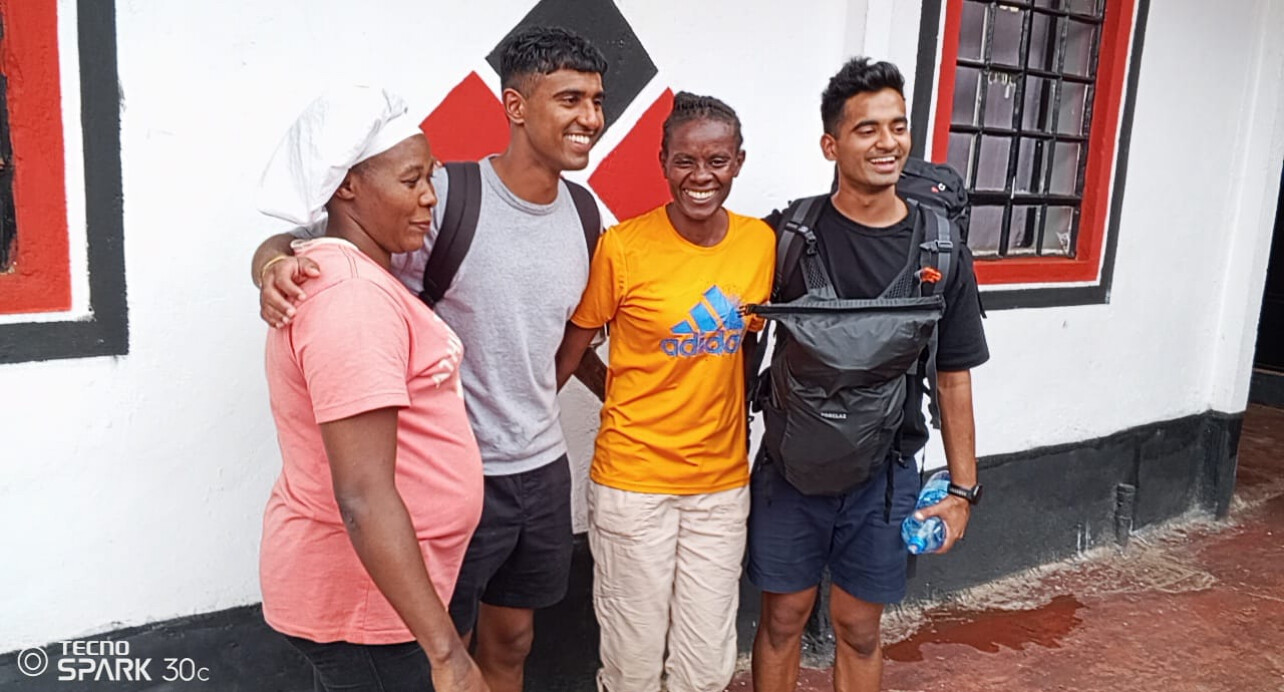
Training the Kenyan Way
For seven days, the brothers lived like KATA athletes. Mornings began with runs along Thika’s rolling hills, afternoons were spent on drills and strength work, and evenings turned into conversations about races, goals, and sacrifices.
“They didn’t come just as guests—they trained with us, ate with us, and encouraged everyone,” said Coach John, who leads training at the Thika Retreat. “That kind of interaction is important. Our athletes see how running connects people across continents.”

The Monthly Time Trials
The highlight of their visit came on Wednesday, August 13, at the retreat’s 5K and 10K time trials. On Thika’s undulating roads, the brothers lined up alongside dozens of local athletes, from young up-and-comers to seasoned competitors.
They weren’t there to chase podiums but to soak in the atmosphere. With nerves giving way to rhythm, Amit and Mitul pushed through the course, greeted at the finish line with cheers and applause.
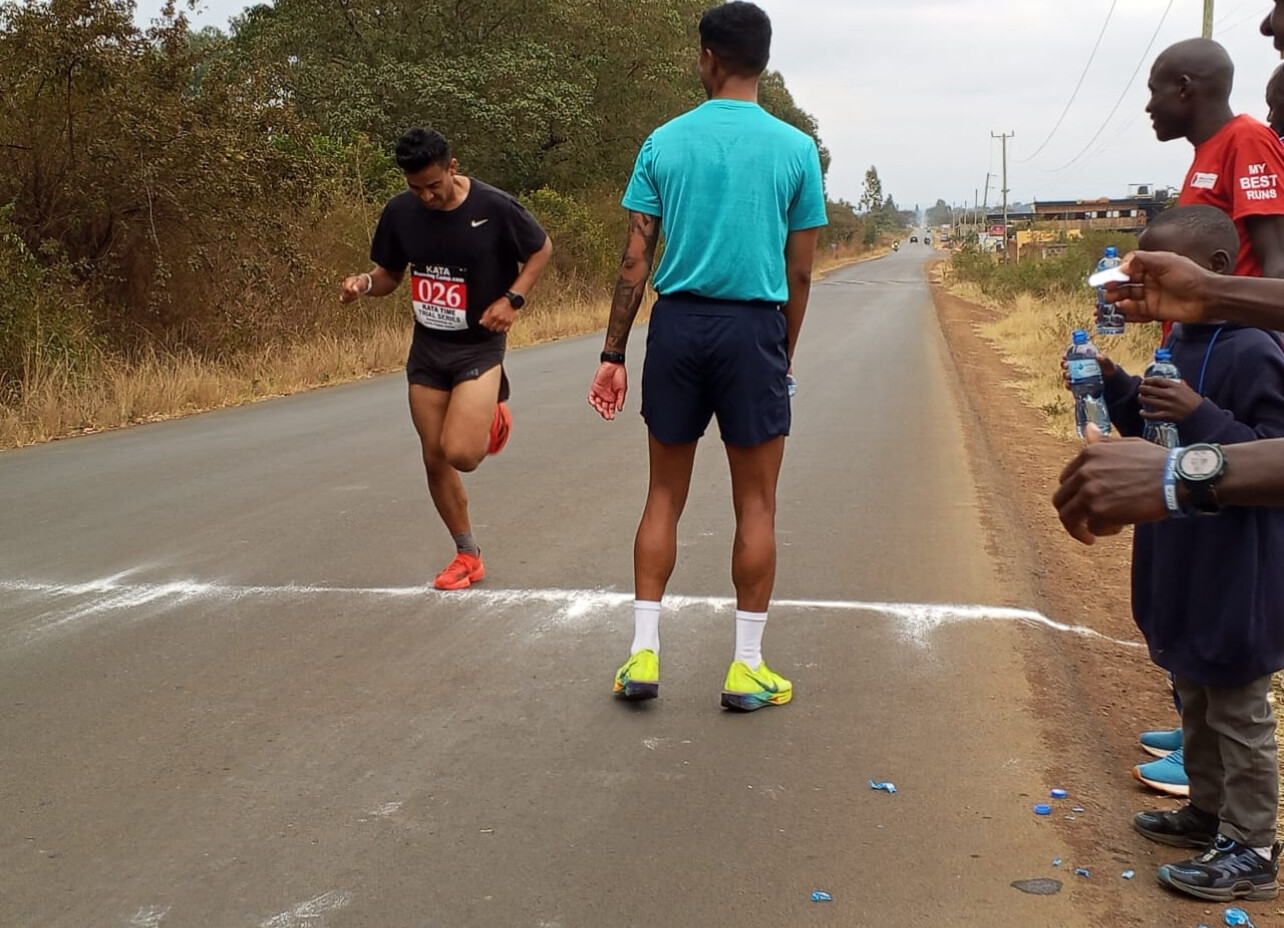
“The time trial was unforgettable,” Amit said. “It wasn’t about beating anyone—it was about being part of something bigger, a tradition that has shaped champions.”
Family, Roots, and Identity
Beyond training, the trip carried a personal weight. Visiting their parents in Kenya has always been a return to family roots. But staying at KATA Thika Retreat gave the journey new meaning.
“We grew up hearing about Kenyan running legends,” Mitul explained. “Being here, training in the same environment, made us proud of our heritage. Kenya isn’t just where our parents live—it’s a place of inspiration.”
Their parents, who visited the retreat one evening, were moved to see how athletics had deepened their sons’ connection to Kenya. It was a bridge across generations and cultures.
A Global Running Village
For Christopher Muiruri, who manages KATA Thika Retreat, stories like Amit and Mitul’s reflect its mission.
“When runners from abroad come here, it’s not just about training—it’s about learning, sharing, and inspiring,” he said. “The Pankhania brothers brought incredible enthusiasm, and they left with memories that will last a lifetime.”
Indeed, their journey underscored how running transcends borders. Whether on the streets of London or the roads of Thika, the sport continues to connect people in powerful ways.
Looking Ahead
As they return to the UK, Amit and Mitul carry more than memories. They take with them the rhythm of early-morning runs, the camaraderie of shared meals, and the spirit of Kenyan running that has inspired athletes worldwide.
“We’ll be back,” Amit promised. “And next time, we’ll bring friends to share this magic.”
Mitul added with a smile, “Running brought us closer to our heritage on this trip. That’s something you can’t put a price on.”
For KATA Thika Retreat, the visit was a reminder that athletics isn’t only about producing champions—it’s about building bridges. And for the Pankhania brothers, it was a journey that blended family, fitness, and the enduring heartbeat of Kenyan running.
by Robert Kibet
Login to leave a comment
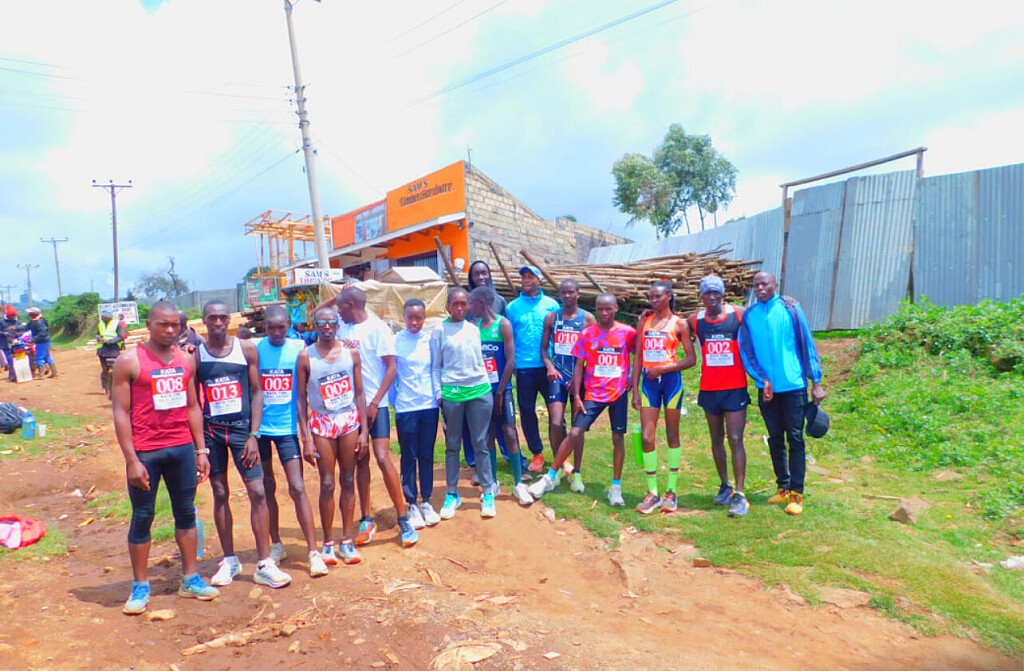
Speed and Strategy in the Highlands – KATA 14 Gacharage Time Trials Deliver Thrilling 10K & 5K Performances
Camp Operator: Job Langat
On August 13, 2025, KATA Running Camp 14 in Gacharage hosted a highly competitive time trial, bringing together elite and developing athletes under the guidance of Job Langat. The event took place at an altitude of 2,700 meters above sea level, in cool, slightly rainy conditions—perfect for distance running.
Athletes tested themselves over 10K and 5K distances, using the race as a benchmark ahead of the upcoming September event in Thika. The course featured a combination of dirt roads and gentle rolling terrain, ideal for sharpening speed and endurance.
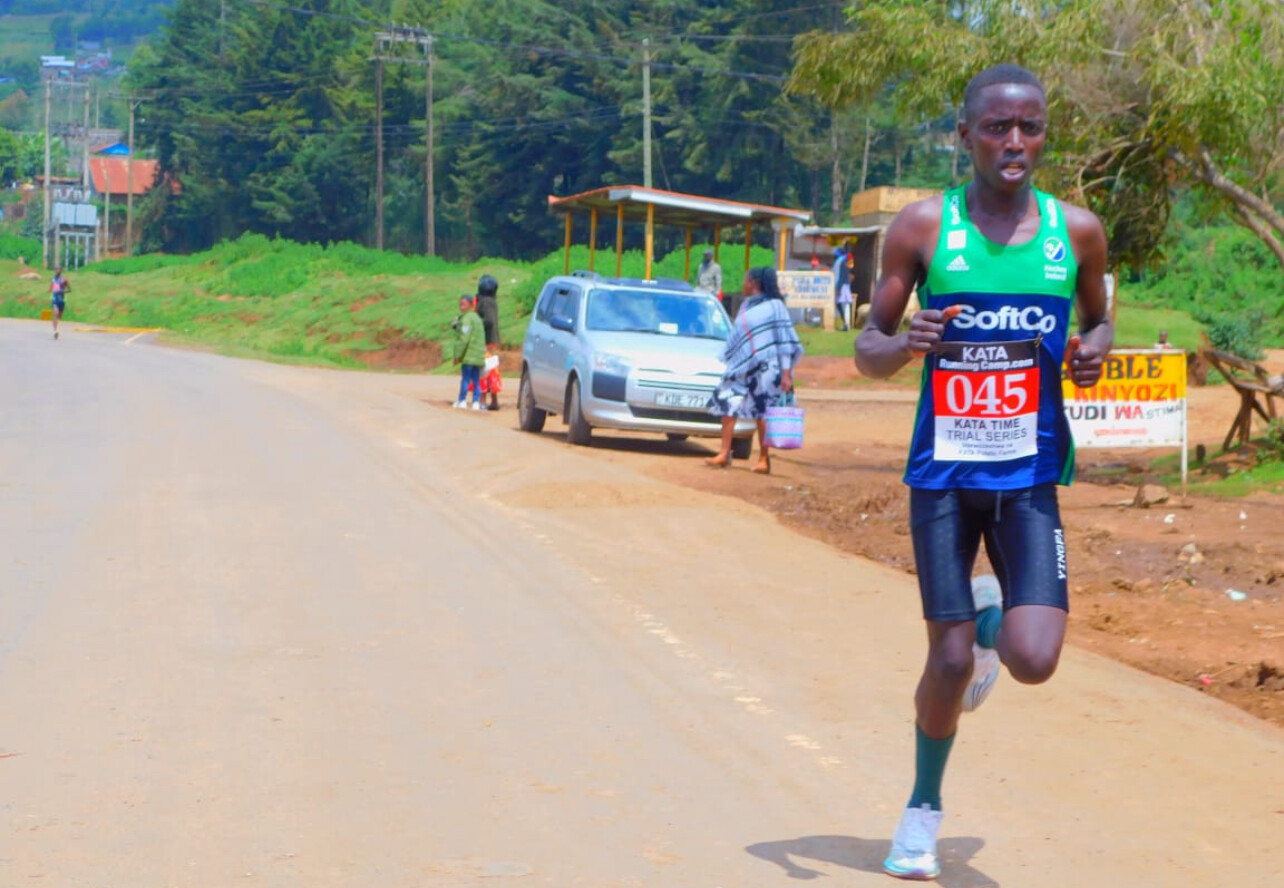
10K Results – Men
1. Denis Kipngetich – 29:10.21 – Bib 013
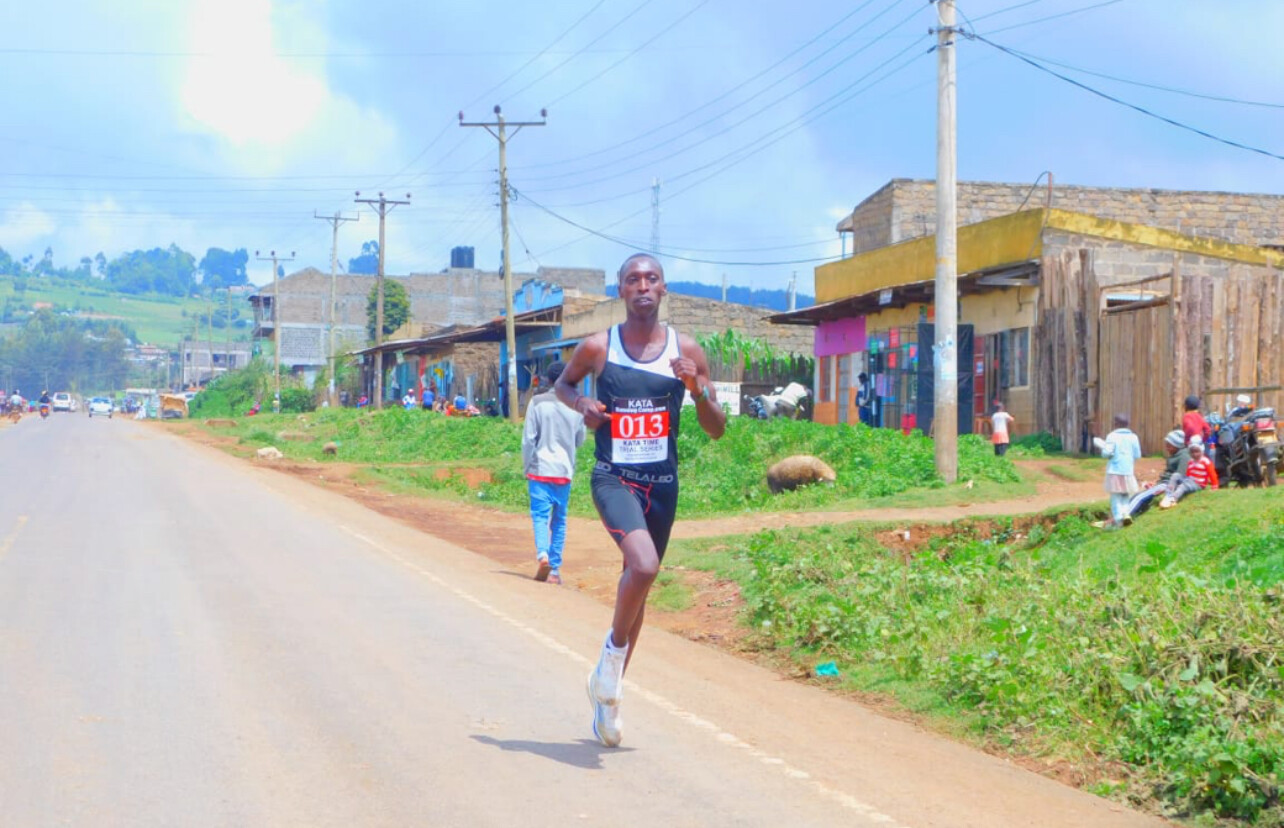
2. Shadrack Kipchumba – 30:46.27 – Bib 045
3. Elkhana Kiprono – 30:55.38 – Bib 003
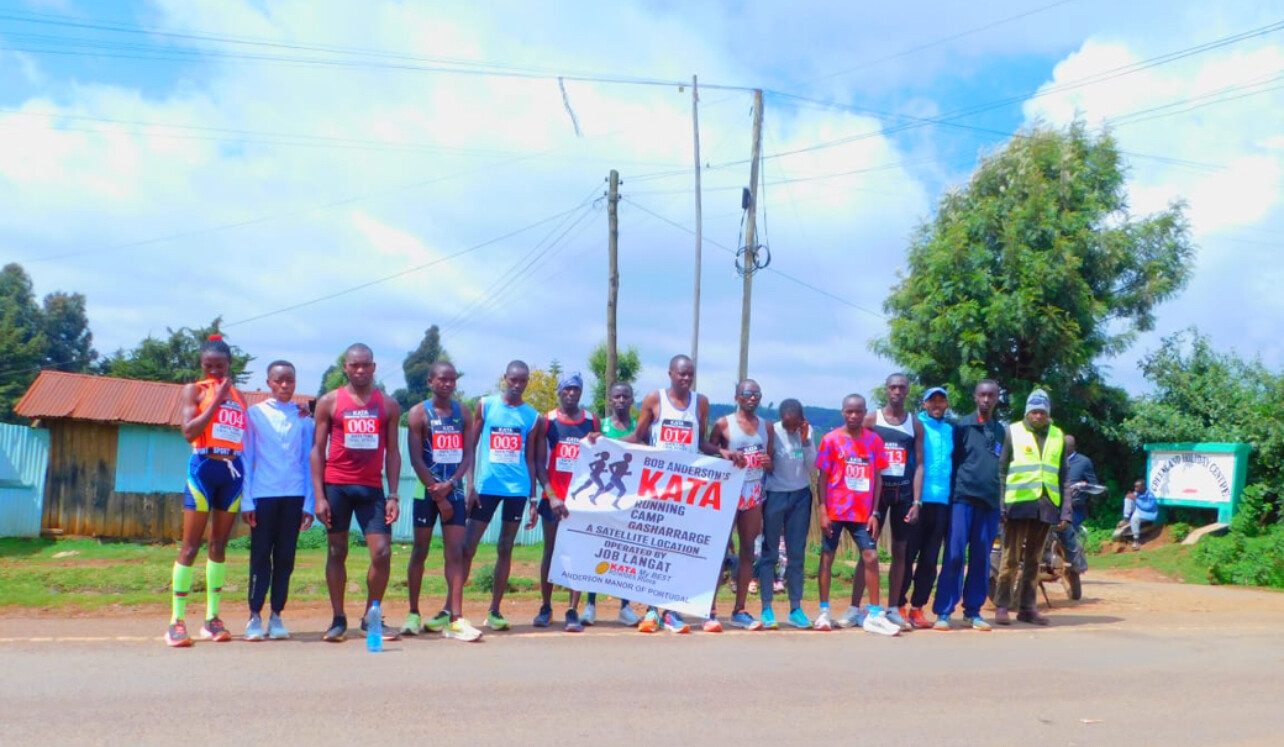
4. Titus Kipchumba – 31:07.28 – Bib 010
5. Michael Ruto – 32:45.97 – Bib 002
6. Emmanuel Kibet – 33:11.12 – Bib 008
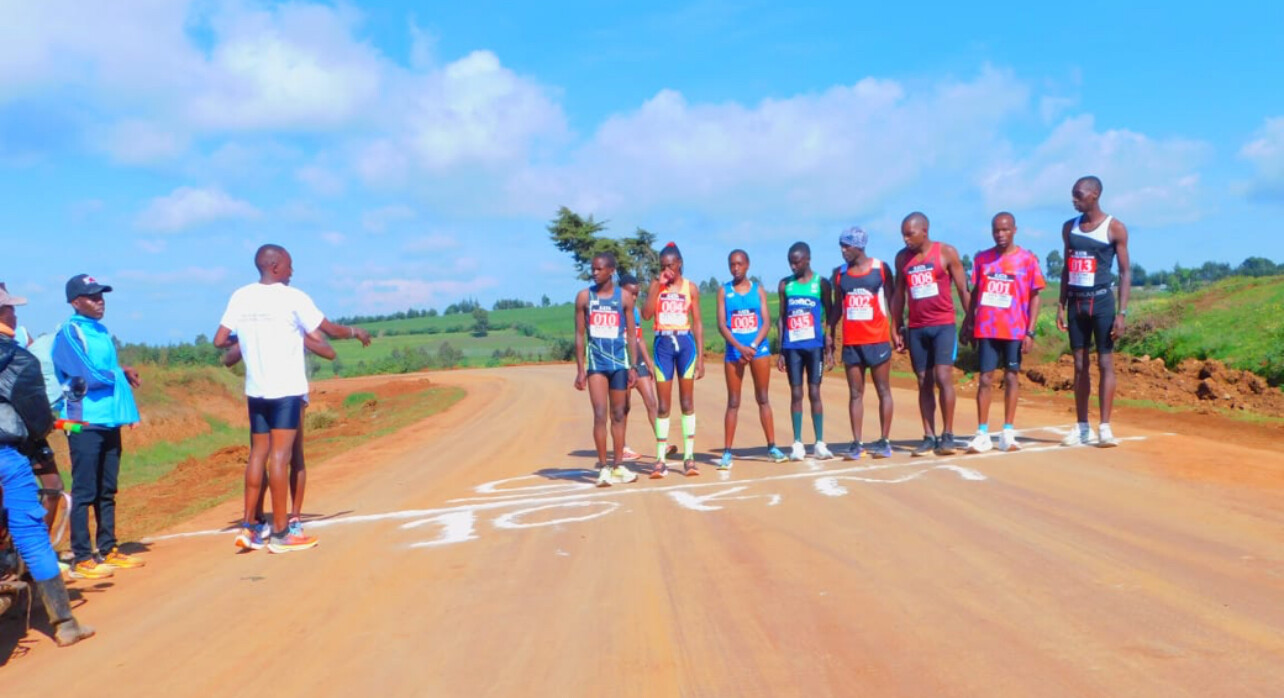
7. Dickson Kipngetich Simbolei – 33:35.86 – Bib 001
8. Wilson Bii (Paralympic) – 33:55.01 – Bib 009
9. Job Kiprono Langat (Guide) – 33:55.07 – Bib 017
10K Results – Women
1. Joan Chepkurui Kirui – 33:01.47 – Bib 005
2. Naomi Chelangat – 34:57.06 – Bib 011
3. Janet Jepkogei – 37:10.46 – Bib 004
5K Results – Men
1. Denis Kipngetich – 13:51.12
2. Shadrack Kipchumba – 14:39.37
3. Titus Kipchumba – 14:46.37
4. Michael Ruto – 15:25.36
5. Wilson Bii / Job K. Langat (Paralympic) – 15:43.18
6. Elkana Kiprono – 15:48.57
7. Dickson Simbolei – 16:00.23
5K Results – Women
1. Janet Jepkogei – 18:19.85
Conditions: Rainy season with light showers at 18°C, creating favorable racing conditions.
KATA Running Camps & KATA Potato Farms continue to demonstrate how athletic development and community sustainability can work hand in hand, building a strong future for Kenyan distance running.
by Boris Baron
Login to leave a comment
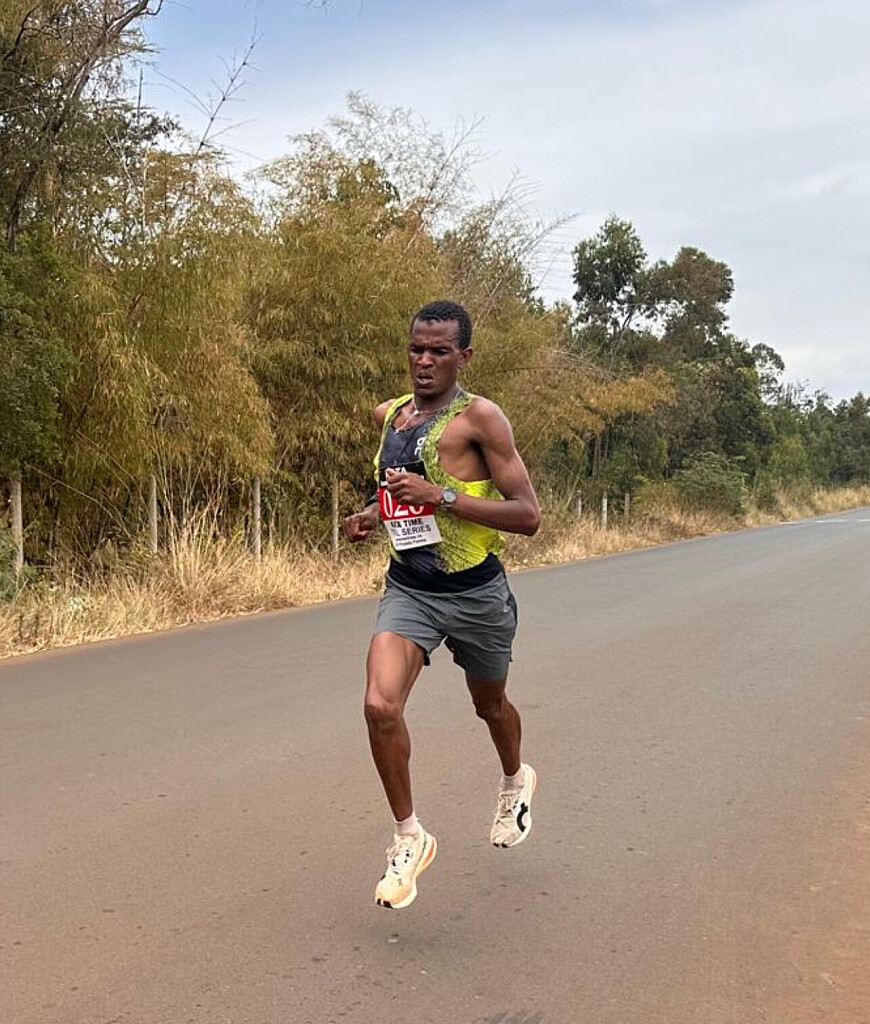
KATA Running Retreat Thika 47th Time Trial Delivers Breakthrough Performances
Location: KATA Running Retreat Thika, Kenya. Date: August 13, 2025
The KATA Running Retreat Thika hosted its 47th Time Trial, drawing 25 athletes to test their speed and endurance on the familiar 5km and 10km courses. Despite several athletes returning from injury, the day was filled with standout performances and new personal bests.
Highlights
• Men’s 5km: The race belonged to Charles Ndirangu, who clocked 15:28—a new personal best by 18 seconds. Battling a lingering leg injury, Charles opted for the 5km instead of his usual 10km, making his performance even more impressive.
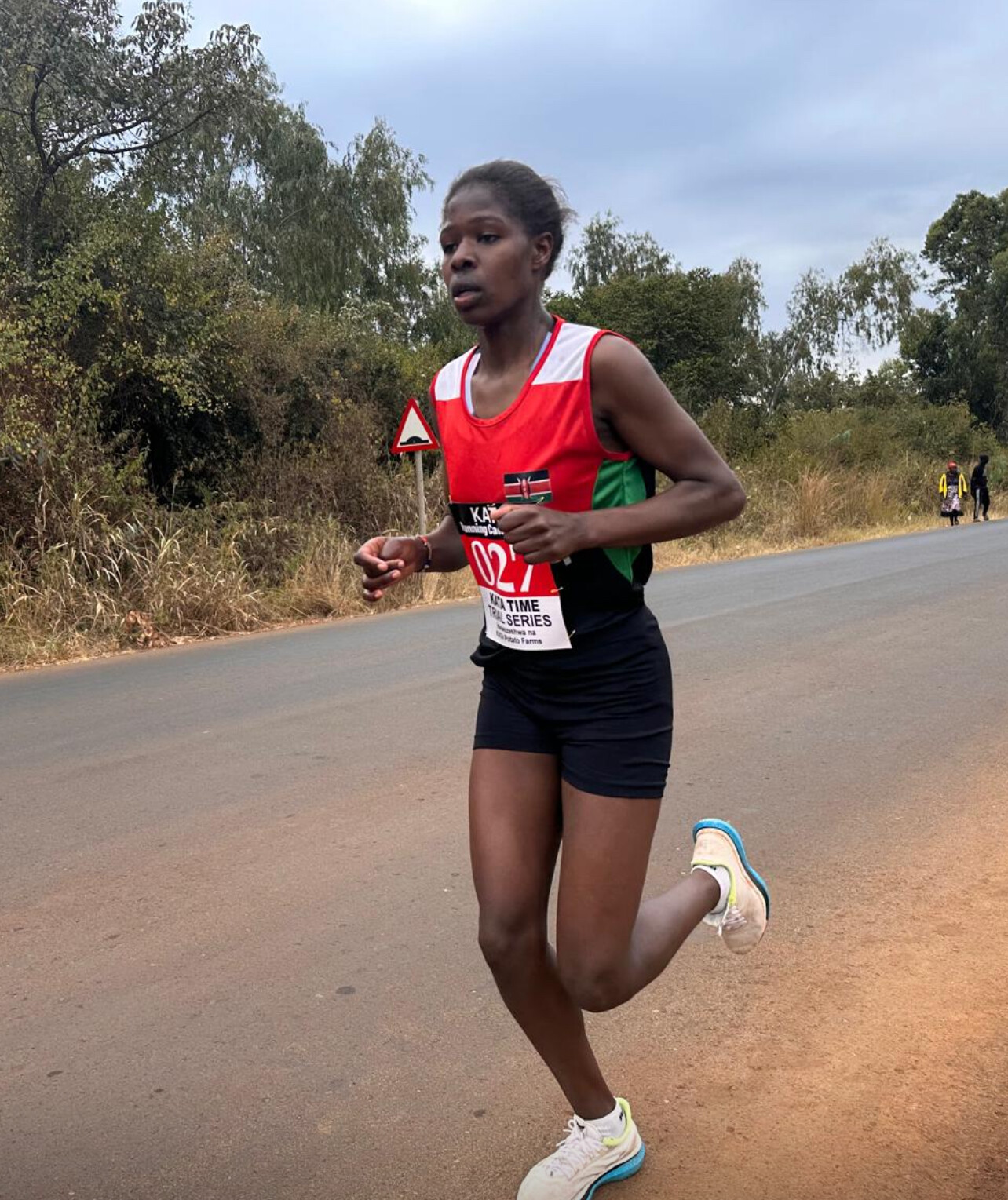
• Women’s 5km: Fifteen-year-old Ann Karanja shone with a 19:16 victory, followed by fellow 15-year-old Tabitha Wanjiru in 20:25. Both juniors displayed remarkable potential for the future.
• Men’s 10km: Athanas Kioko took the win in 29:05, holding off John Chege, who ran 29:41—a new personal best—just two weeks after returning from injury. Chege’s trademark aggressive style was on full display.
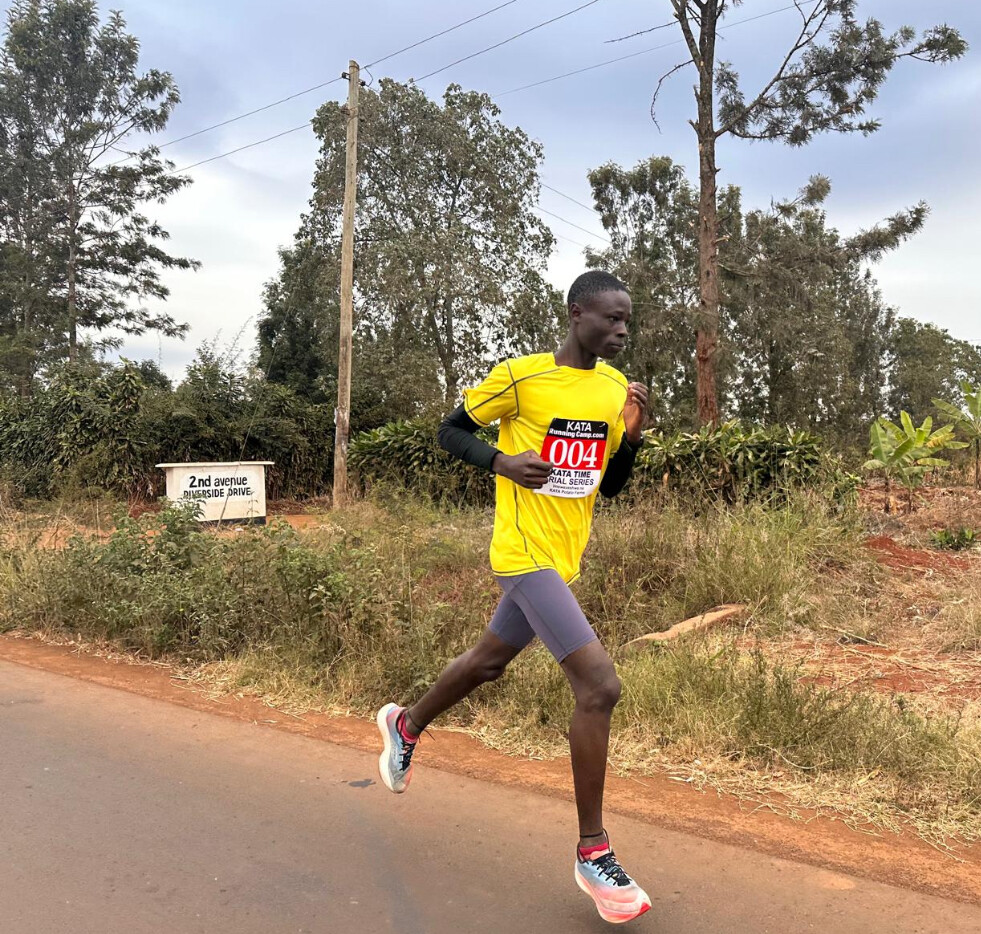
• Women’s 10km: Caren Chepkemoi dominated in 36:09, ahead of newcomer Ruth Maina (38:37) and Mary Wangari in third.
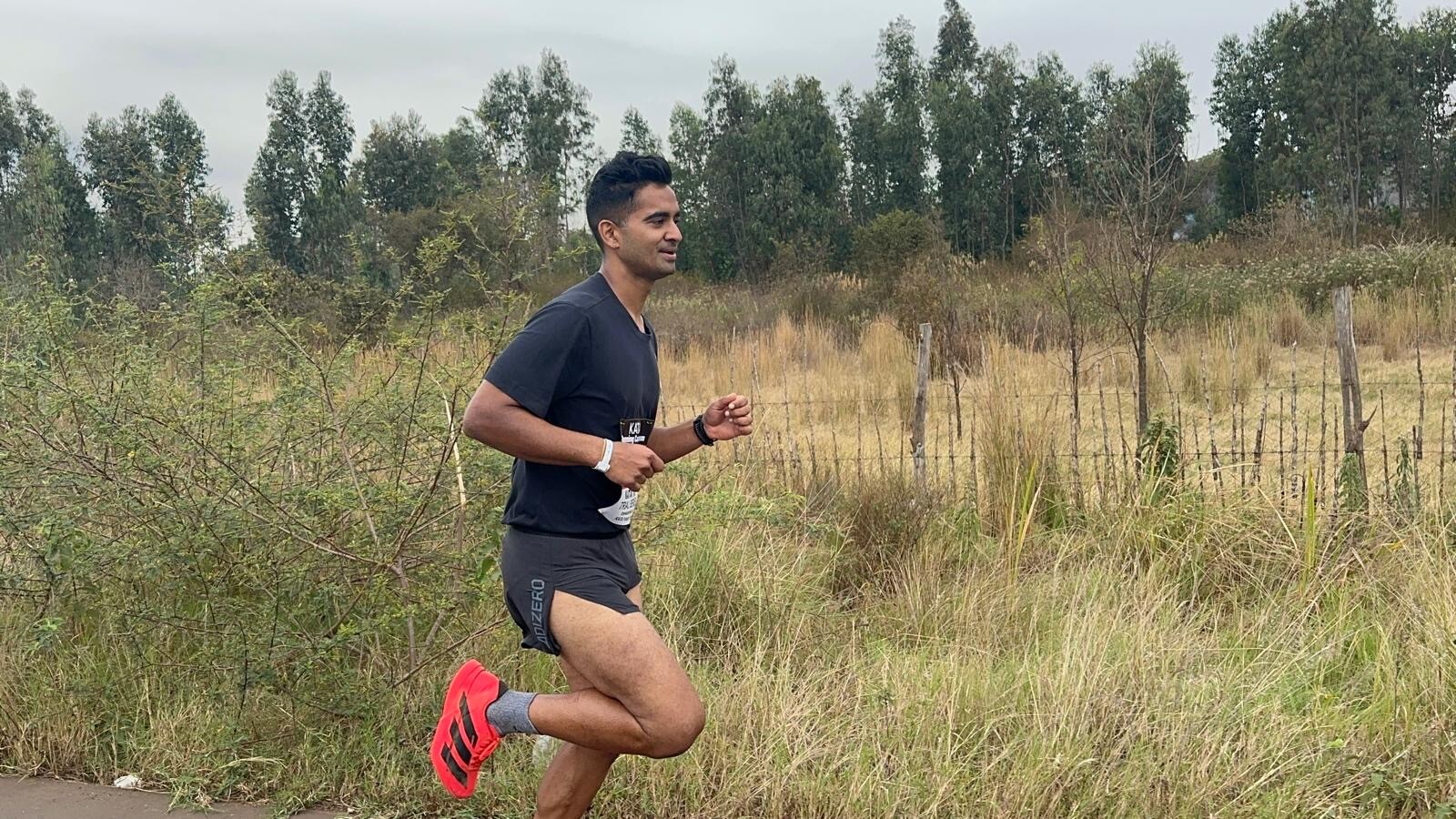
Results
5km Women
1. Ann Karanja (15) – 19:16
2. Tabitha Wanjiru (15) – 20:25
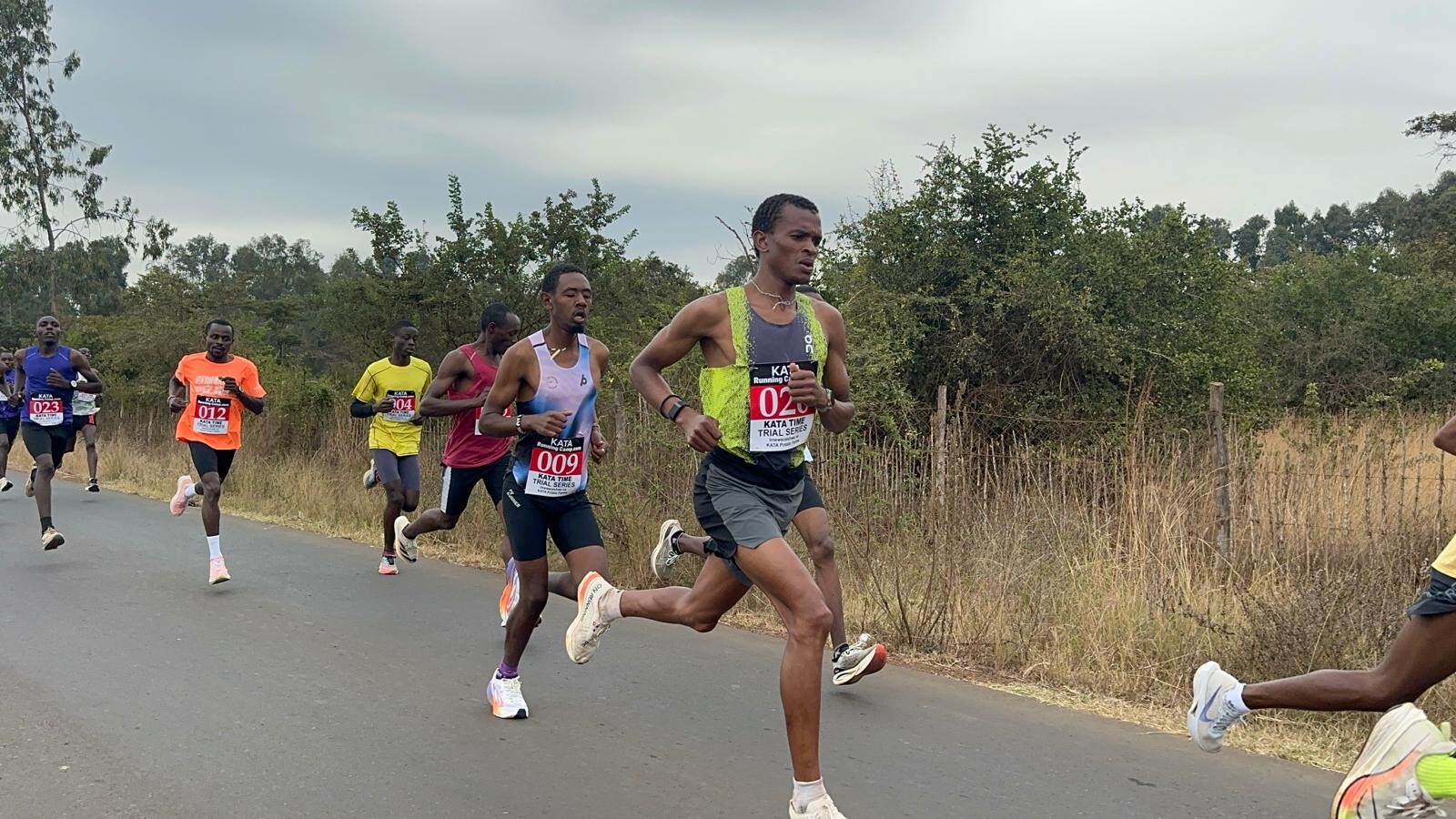
5km Men
1. Charles Ndirangu (24) – 15:28
2. Godfrey Kahora (19) – 16:44
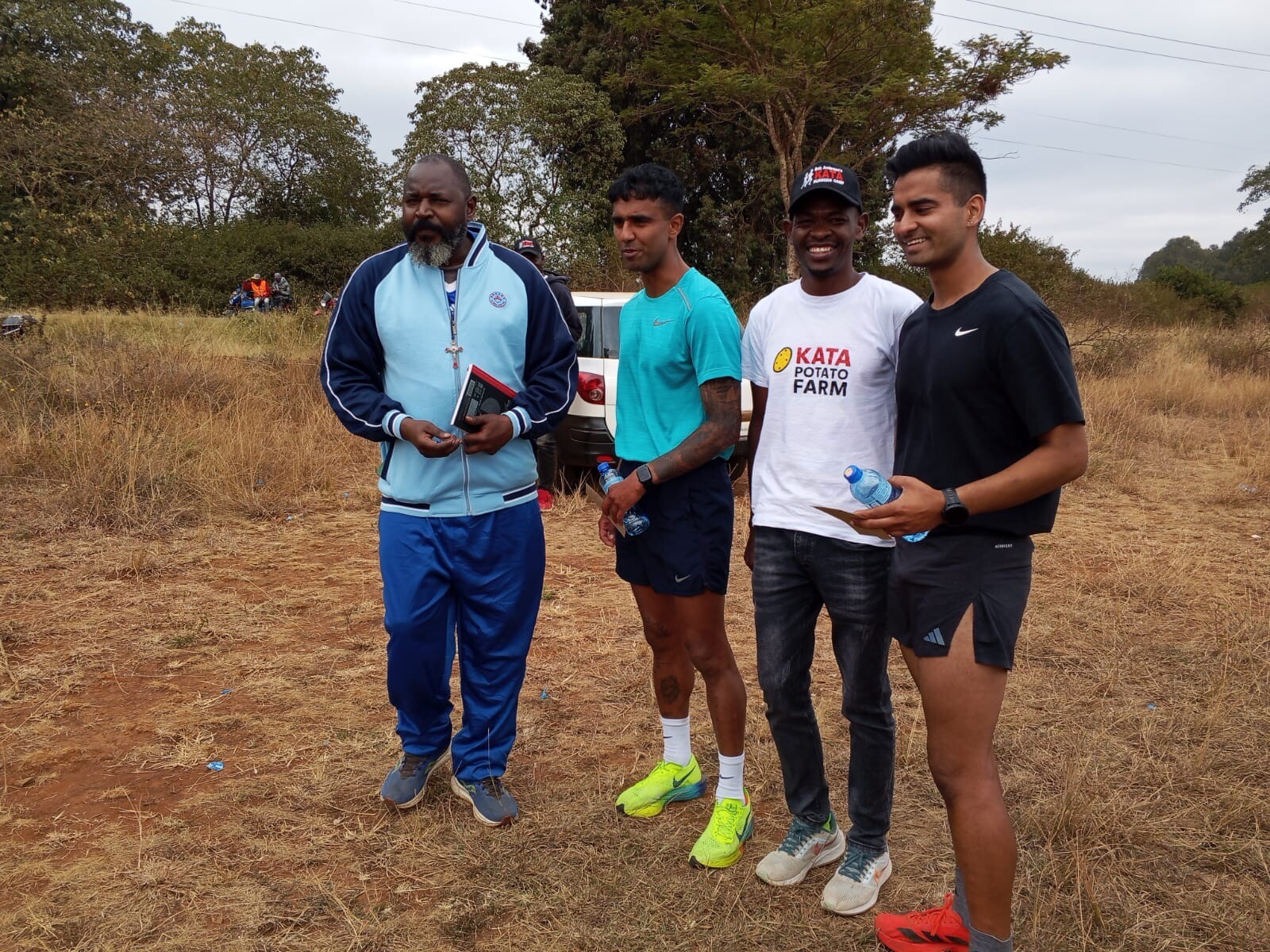
3. Harrison Mwangi (21) – 17:04
4. Benjamin Ndaro (14) – 20:24
10km Women
1. Caren Chepkemoi (24) – 36:09
2. Ruth Maina (22) – 38:37
3. Mary Wangari (34) – 44:41
4. Lucy Muritu (40) – 45:57
10km Men
1. Athanas Kioko (30) – 29:05
2. John Chege (20) – 29:41 (PB)
3. Kelvin Kemoi (23) – 30:14
4. Ibrahim Wangu (22) – 30:31
5. Gabriel Kahura (42) – 30:38
6. Simon Ngumburu (30) – 30:42
7. Francis Waweru (32) – 30:49
8. Muriithi Wanjema (30) – 30:50
9. Joseph Karanja (42) – 32:54
10. Robert Ndegwa (20) – 34:17
11. Ezekiel Itoliti (20) – 35:29
12. Simon Ngereza (25) – 37:20
13. Charles Ndirangu (65) – 38:34
14. Amit Pankhania (30) – 41:03
15. Mitul Pankhania (27) – 48:24
Looking Ahead
The September time trial at KATA Running Retreat Thika will be replaced by the 5th Annual Double Road Race 15K, giving athletes a new competitive format to test their strength over multiple segments.
by Boris Baron
Login to leave a comment
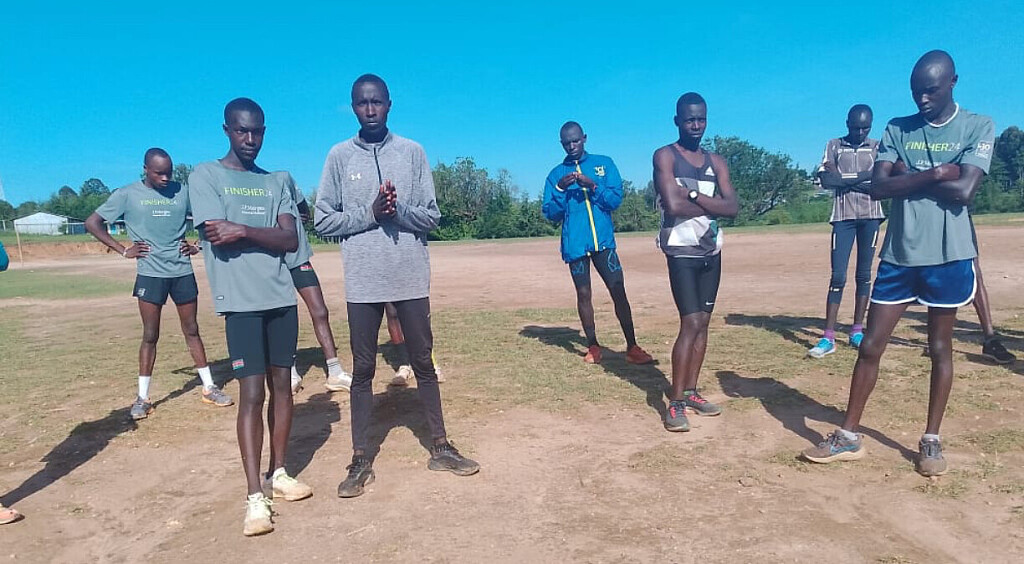
KATA Running Camp 01: Building Champions from Teen Talent to Marathon Veterans
At the KATA Running Camp and KATA Potato Farm's first official running camp, KATA 01 in Kapcherop, Coach Philemon Kipruto is leading a dynamic mix of rising teenage talent, competitive middle-distance athletes, and seasoned marathoners. Training programs are carefully balanced between speed, endurance, and tactical racing skills, ensuring that every athlete—whether 16 or 38—continues to progress.
Philemon also operates KATA 09 in Tenden, just a few kilometers away, giving him the unique advantage of managing two high-performance training groups within close proximity. Together, these two camps not only produce top-level athletes but also farm six acres of KATA potatoes, directly contributing to the program’s sustainability and providing the “Fuel of Champions”.
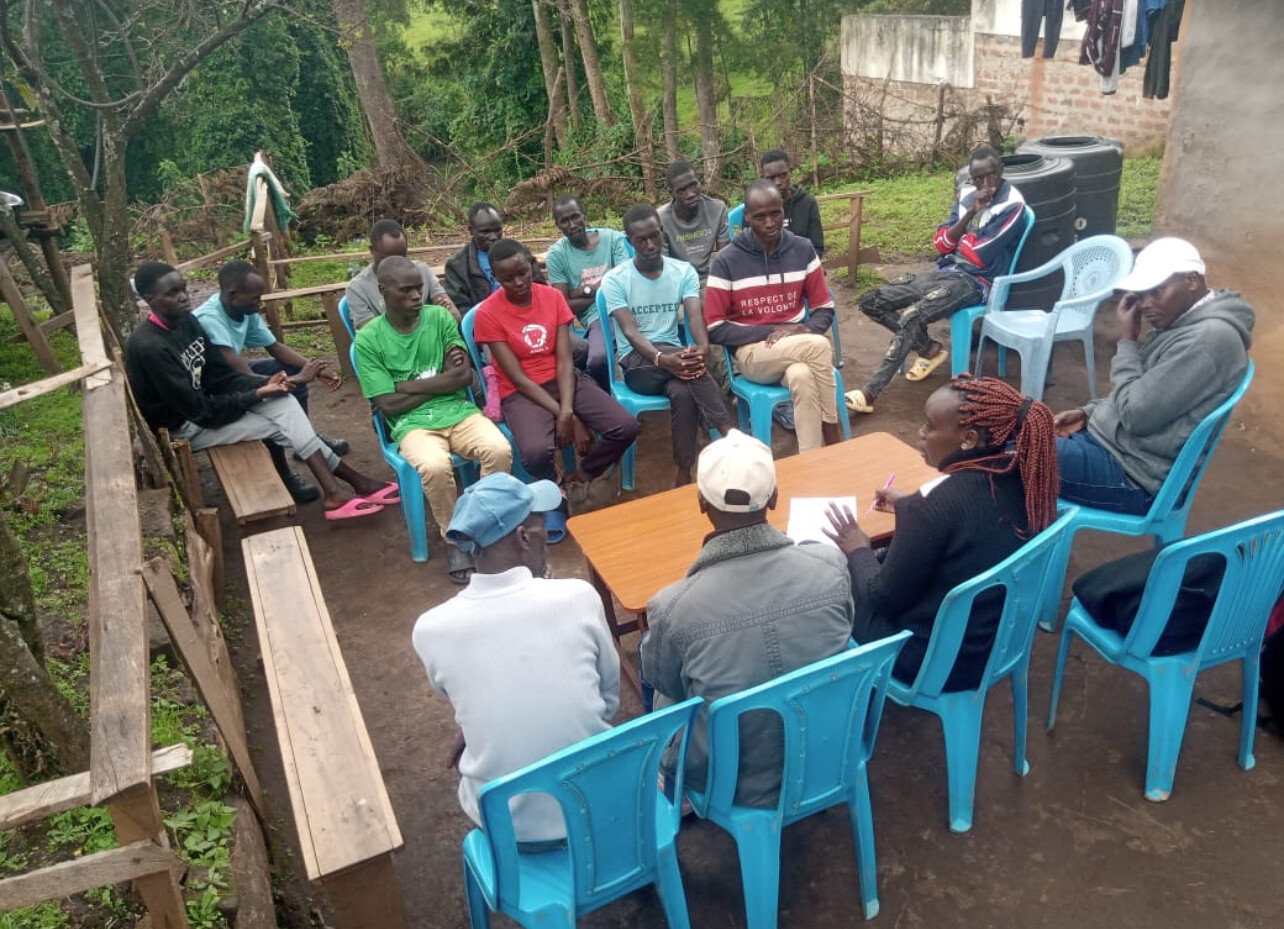
What is KATA?
The Kenya Athletics Training Academy (KATA) was founded by Bob Anderson in Thika, Kenya, in 2019 as a hub for developing elite Kenyan runners. The program has since grown into a nationwide network, uniquely combining world-class training camps with sustainable agriculture.
Since May 16, 2025, KATA has launched 30 mrunning camps across Kenya, plus 20 independent KATA Potato Farms not directly attached to camps. This brings the total to 50 KATA potato farms—the backbone of the program’s long-term sustainability.

Known as “The Fuel of Champions”, KATA potatoes provide both nutrition for athletes and revenue to support training operations. As of today, there are 108 acres of KATA potatoes planted or being planted, directly supporting more than 400 KATA athletes across the country.
KATA’s mission is clear: produce champions who can succeed locally and internationally while building a self-sustaining model that benefits athletes, communities, and the Kenyan running legacy.
Standout Athletes & Performances

Men:
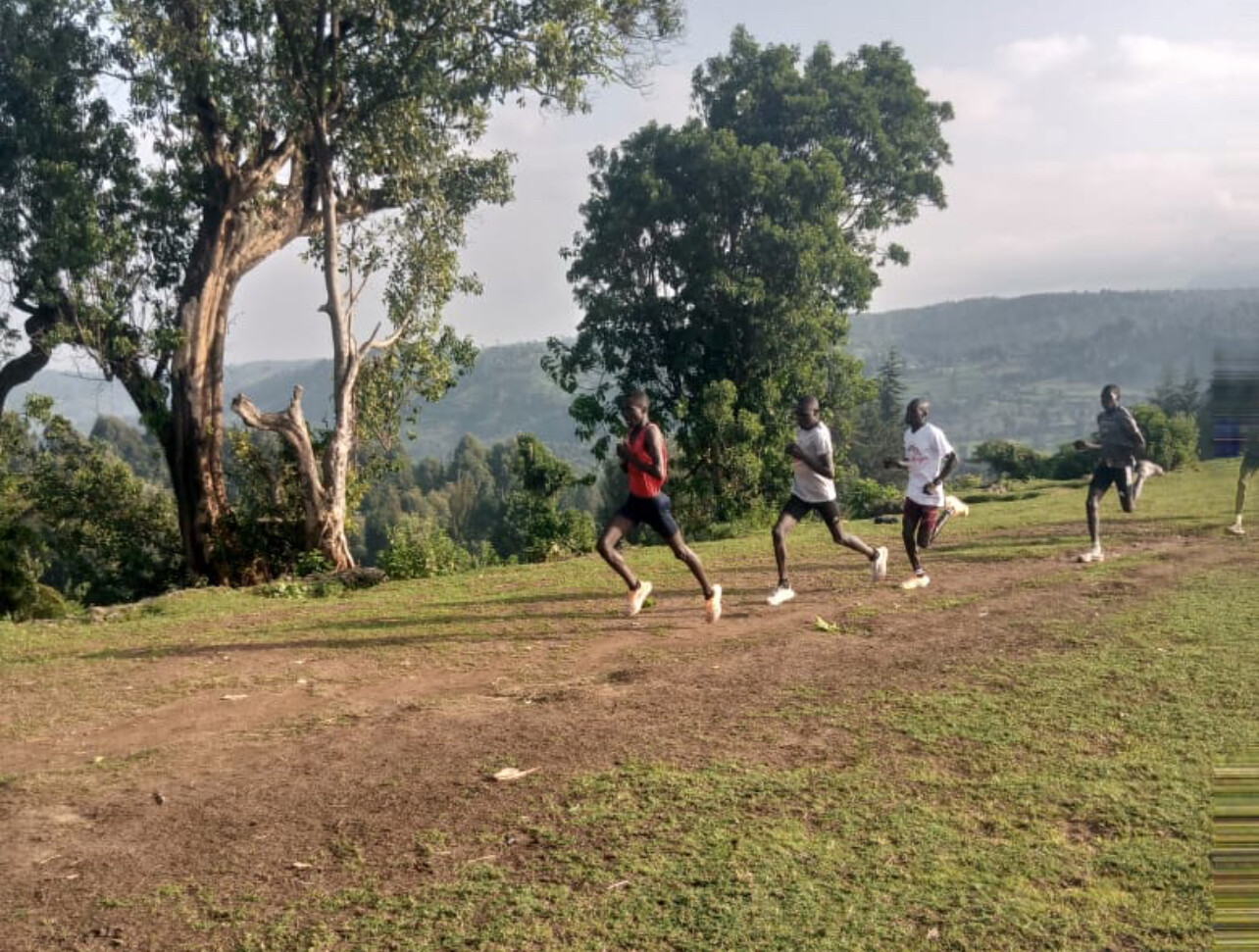
• Leonard Pkorir (19) – 10km: 29:11 – Emerging as a formidable road racer with a strong endurance base.
• Enock Tanui (16) – 3000m Steeplechase: 9:02 – Exceptional hurdle technique with early signs of national team potential.
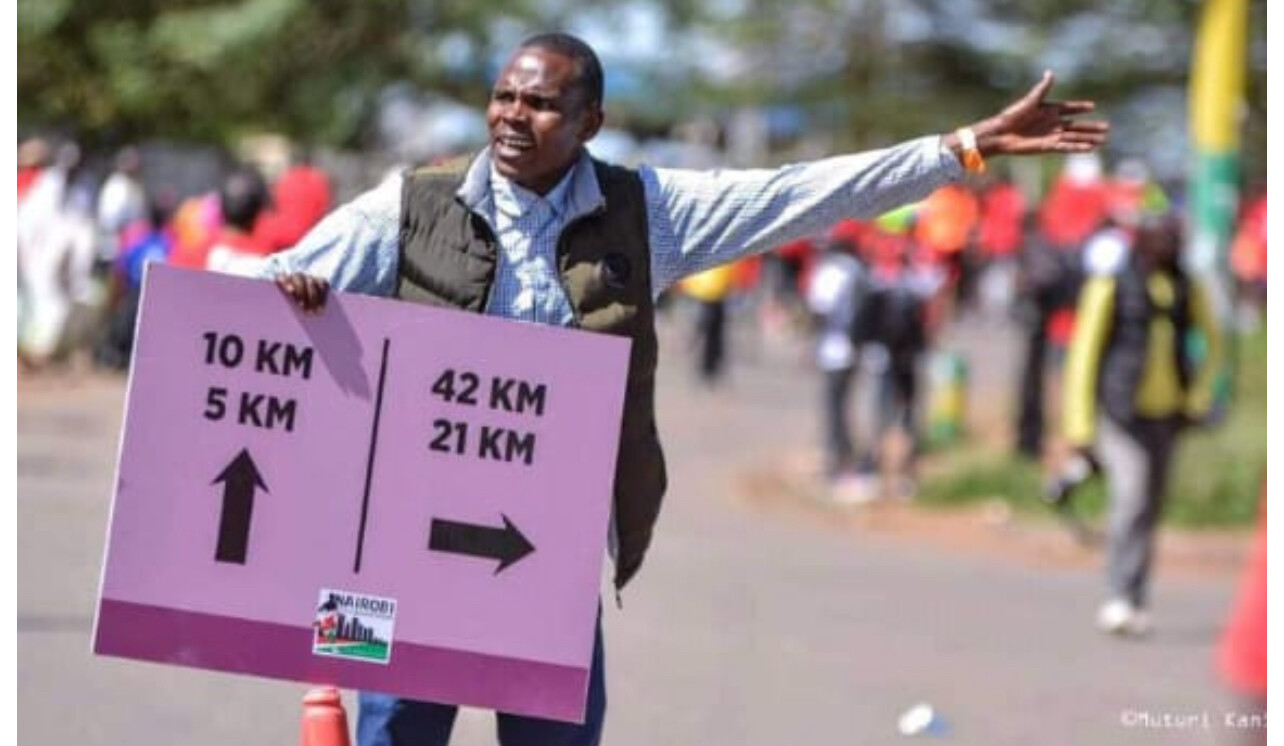
• Alan Mwetich (22) – 21km: 65:12 – Balanced speed and stamina for half marathon success.
• Shadrack Plimo (19) – 1500m: 3:54 – Targeting a sub-3:50 at the next meet.

• Kelvin Kibiwott (20) – 5000m: 15:20 – Building speed endurance ahead of cross-country season.
• Dennis Kosgei (23) – 21km: 64:53 – Looking to sharpen his closing kick in the half marathon.
• Evans Kemboi (23) – 3000m: 9:24 – Solid short-to-mid distance competitor.
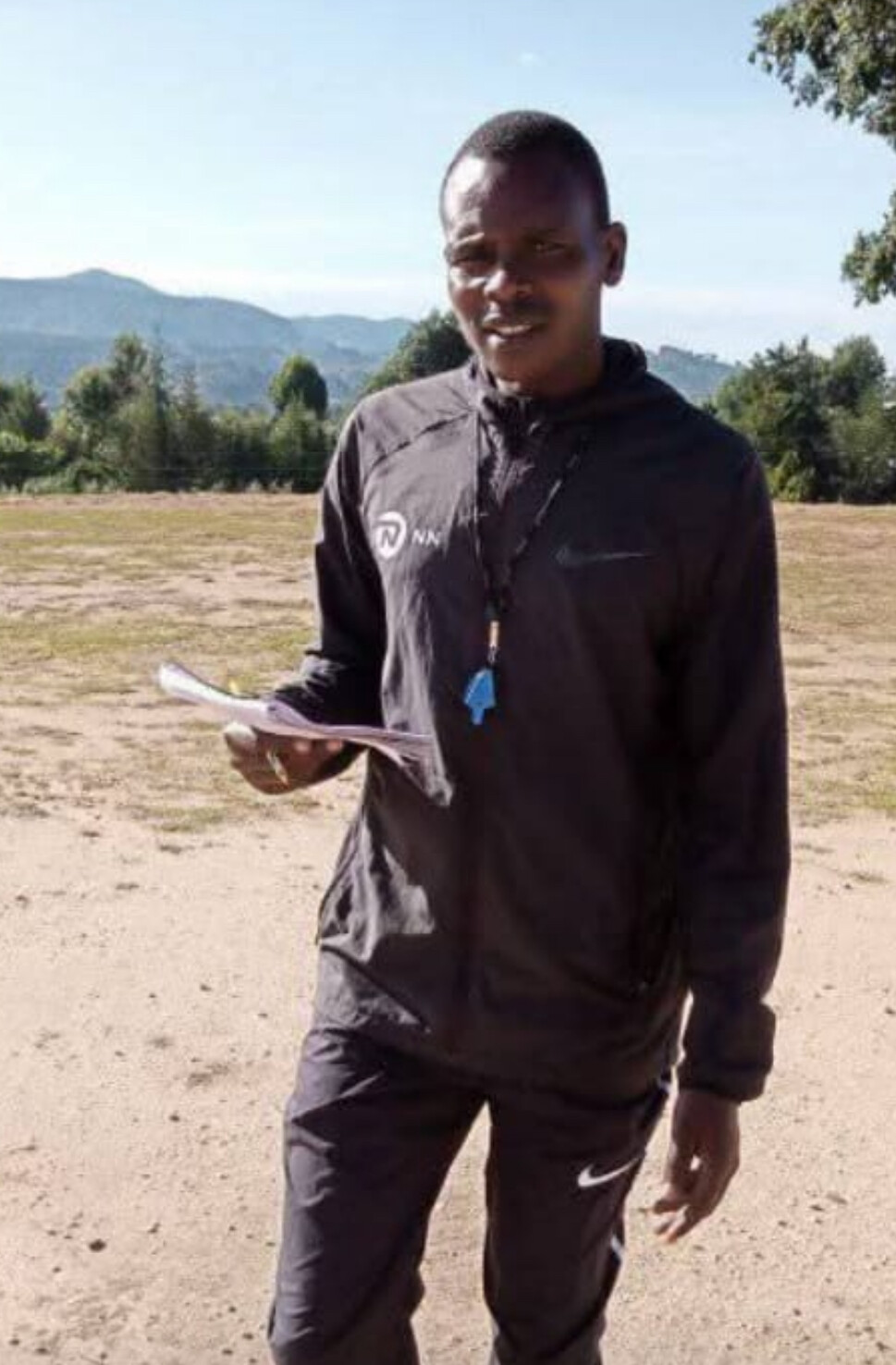
• Alex Kimutai (22) – 10km: 30:47 – On track to break 30 minutes soon.
• Doland Kimaru (29) – 42km: 2:17:50 – Pushing for a sub-2:15 marathon.
• Denis Kipchirchir (22) – 1500m: 4:08 – Focused on tactical improvements.
• Hosea Kiplagat (38) – 42km: 2:12 – Veteran leader bringing discipline and race strategy to the group.
Ladies:
• Mercy Jebichie (24) – 10km: 36:04 – Strong road race specialist, consistently targeting podiums.
• Sarah Chepkemoi (24) – 5000m: 18:16 – Improving strength and lap consistency.
• Mercy Jepchumba (23) – 10km: 37:31 – Steady improvement with better pacing strategies.
• Joan Jepchirchir (27) – 21km: 86:18 – Determined to drop her half marathon time through endurance gains.
KATA 01 exemplifies the Academy’s mission: developing champions through structured training, mentorship, and a team-first culture—backed by the sustainable support of KATA Potato Farms. With more than 400 athletes, 108 acres of potatoes, and two camps farming six acres between them, KATA is proving that sport and agriculture can grow champions together.
by Fridah Terry
Login to leave a comment

KATA Welcomes Coach Dennis Musau as Chief Technical Officer
KATA is excited to announce the appointment of Dennis Musau, also known as Coach Dennis, as Chief Technical Officer (CTO), reporting directly to KATA founder Bob Anderson. His official start date is Monday, August 11, 2025.
Coach Dennis (first photo: out for a few miles this morning with Bob Anderson and Anderson Manor project manager Alberto near KATA Portugal) has been working with Bob and Catherine Anderson since 2021 and is currently completing his second three-month term at KATA Portugal, housed at Anderson Manor in Monforte da Beira. In his new role, he will be working full-time from both Portugal and KATA Thika in Kenya.

“I am so excited about our KATA project—both our KATA Running Camps and KATA Potato Farm projects,” says Coach Dennis.
“Bob Anderson has truly come up with a unique idea that is growing like wildfire throughout Kenya. Bob signed up our first camp on May 16, 2025, and already we’ve attracted Olympic-level runners and coaches to operate them. We have opened 30 KATA Running Camps and an additional 20 stand-alone farms, most growing two or more acres of KATA potatoes. This means we now have 30 KATA Running Camps, 20 KATA Farms, plus our KATA Thika and KATA Portugal Running Retreats training guests year-round.”
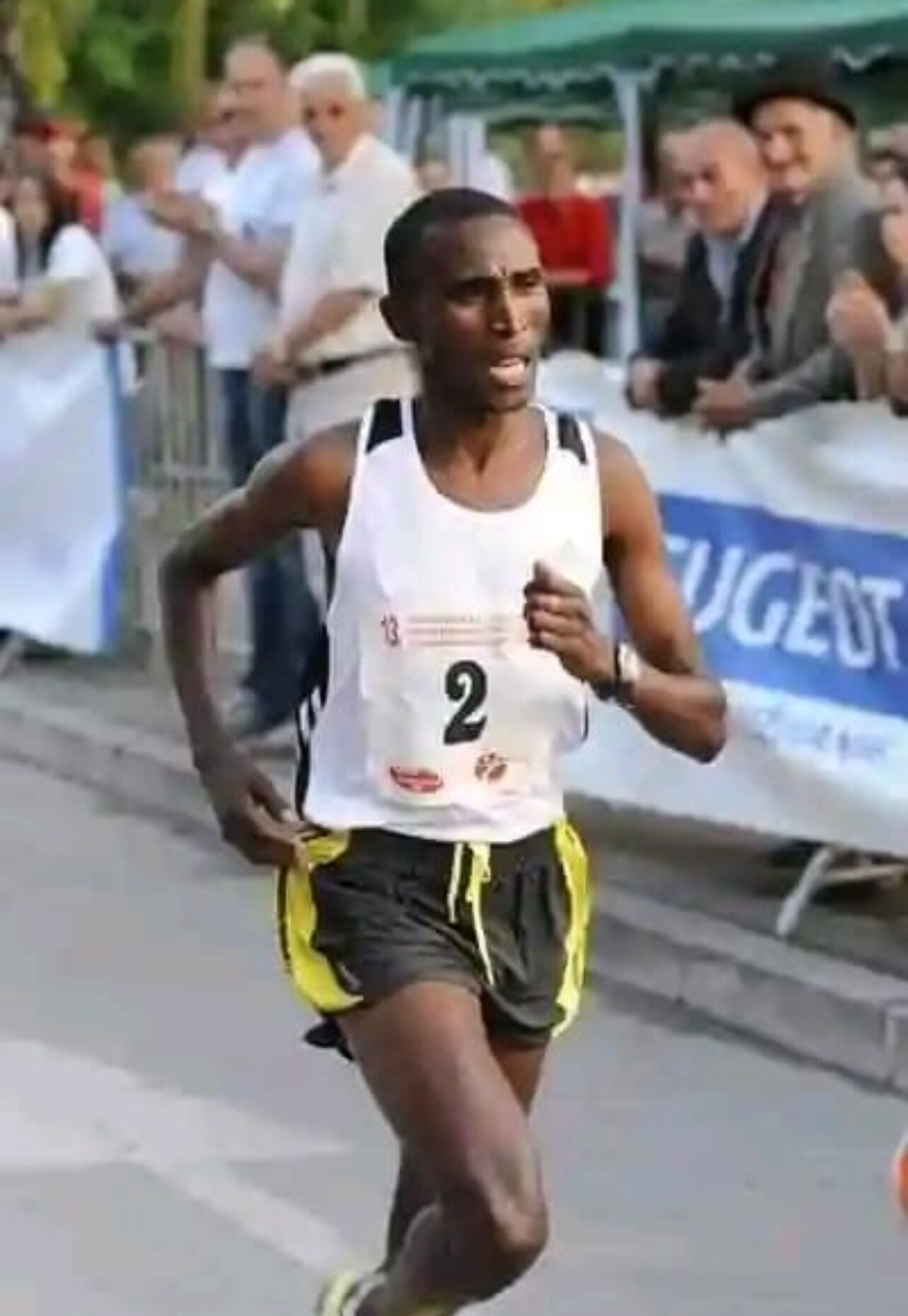
About Coach Dennis
Dennis graduated as a mathematics teacher in 1998 before shifting his career to athletics. Over the years, he has competed worldwide in a wide range of events, including the 3,000m steeplechase, 5,000m, 10,000m, 15km, half marathon (21km), and marathon (42km). His athletic journey began in high school as a 400m hurdles runner before a teacher encouraged him to move into long-distance events. He transitioned to the 3,000m steeplechase, then later to the 5,000m and 10,000m, achieving success across multiple distances.

With decades of experience in both competitive running and coaching, Dennis brings a unique blend of technical expertise, leadership, and passion to help guide KATA’s growth in Kenya and beyond.
by Boris Baron
Login to leave a comment
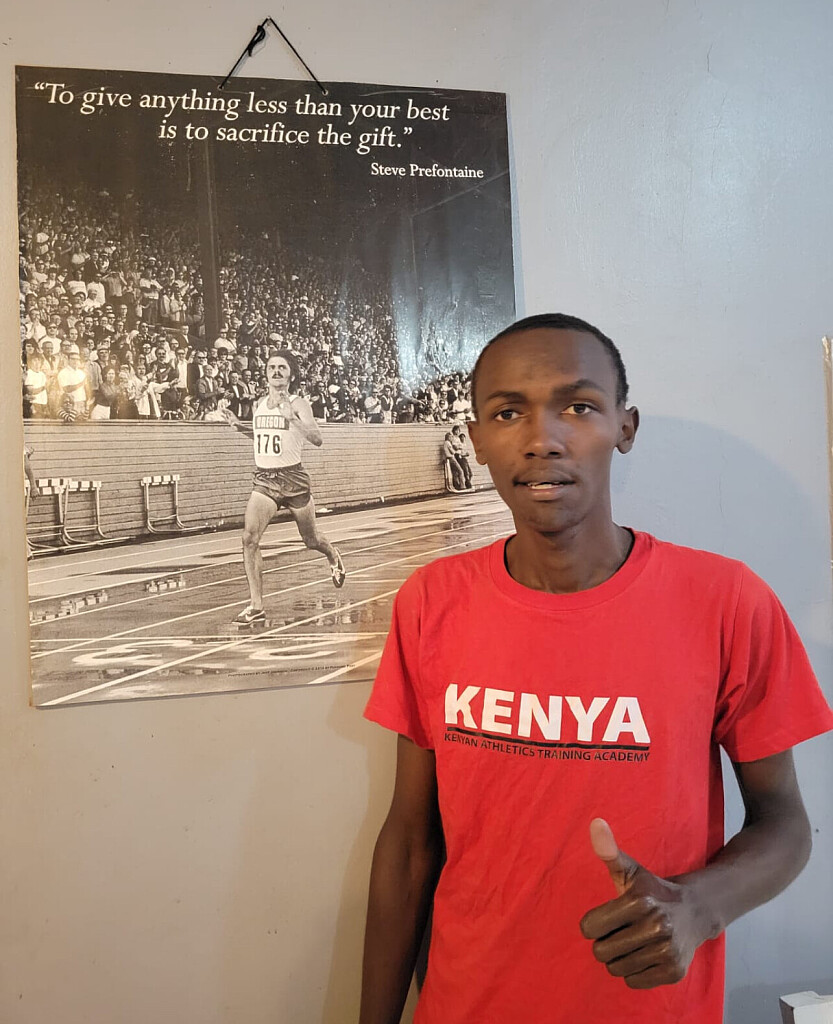
From Karate to 27:00: Zachariah Kirika’s Rise from Village Fighter to Road Racing Star
On a misty July morning in Nairobi, as thousands of runners pounded the city’s tarmac in the 10km race at the Nairobi City Marathon, one name quietly cut through the noise — Zachariah Kirika, 24, who stormed to a third-place finish in 27:00 flat.
But for Kirika, this wasn’t just a race. It was the culmination of years marked by struggle, sacrifice, and a relentless pursuit of purpose — a journey that began not on the running track, but in a quiet Kenyan village and later, in the disciplined world of karate.
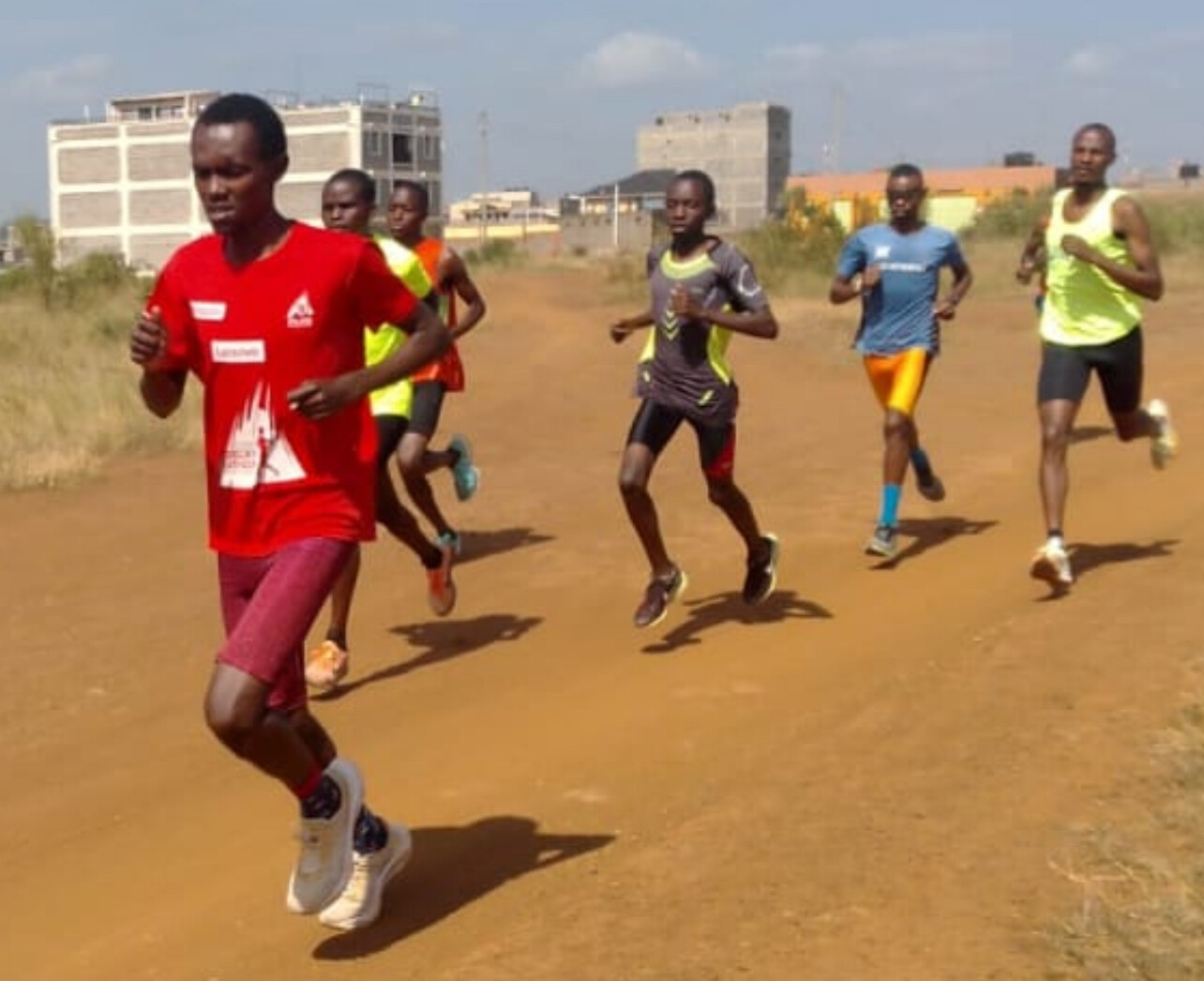
“I was born in Muthara village, a quiet place in Murang’a County,” Kirika says, now seated at the Kenya Athletics Training Academy (KATA) in Thika, where he trains. “We didn’t have much, but my parents gave me everything they could.”

Karate Roots and Early Responsibility
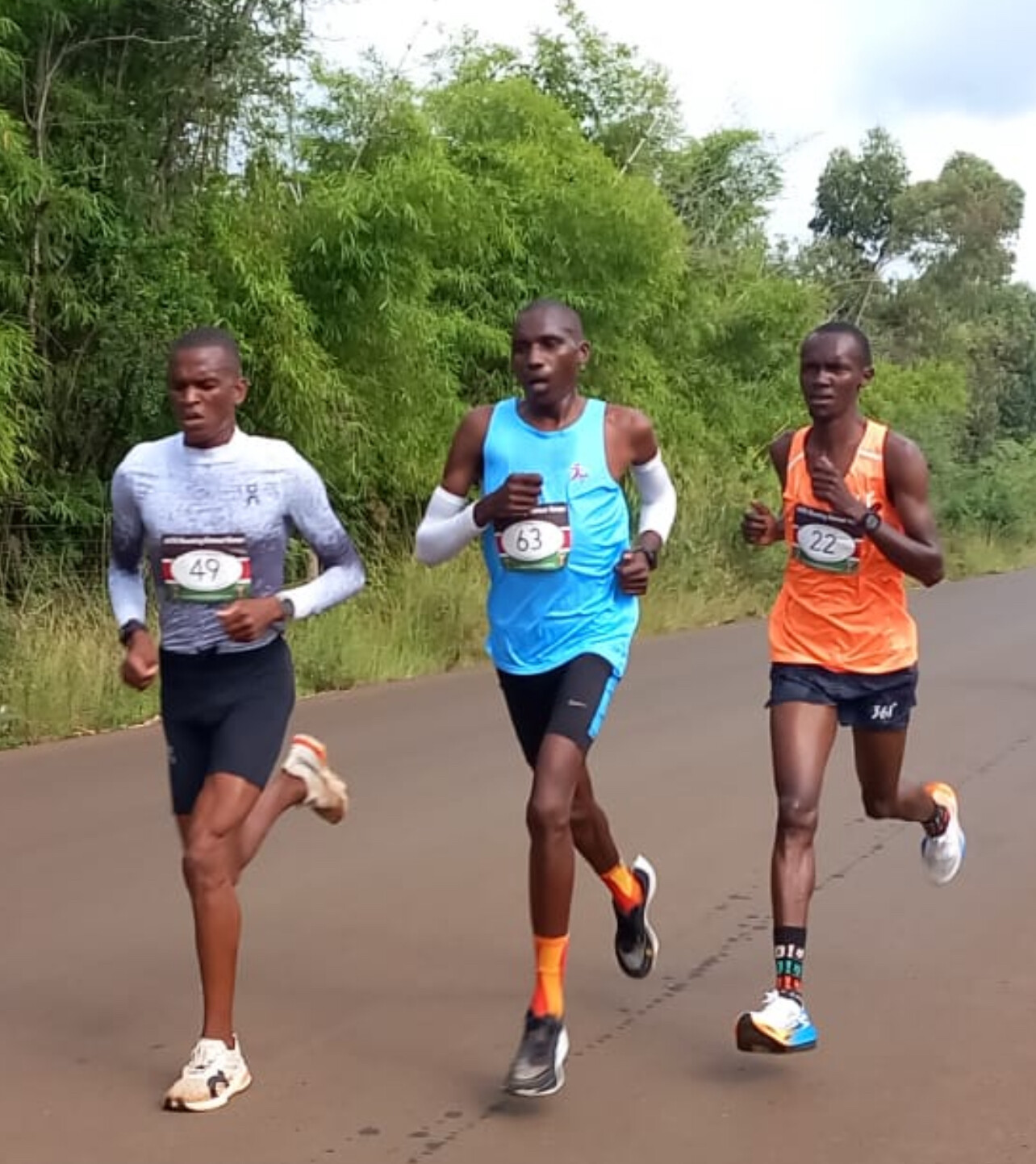
As the eldest child in a modest family — his father a carpenter and his mother a homemaker — Kirika learned discipline early. When he wasn’t helping on the farm or tending goats, he was dreaming beyond the hills of Murang’a.
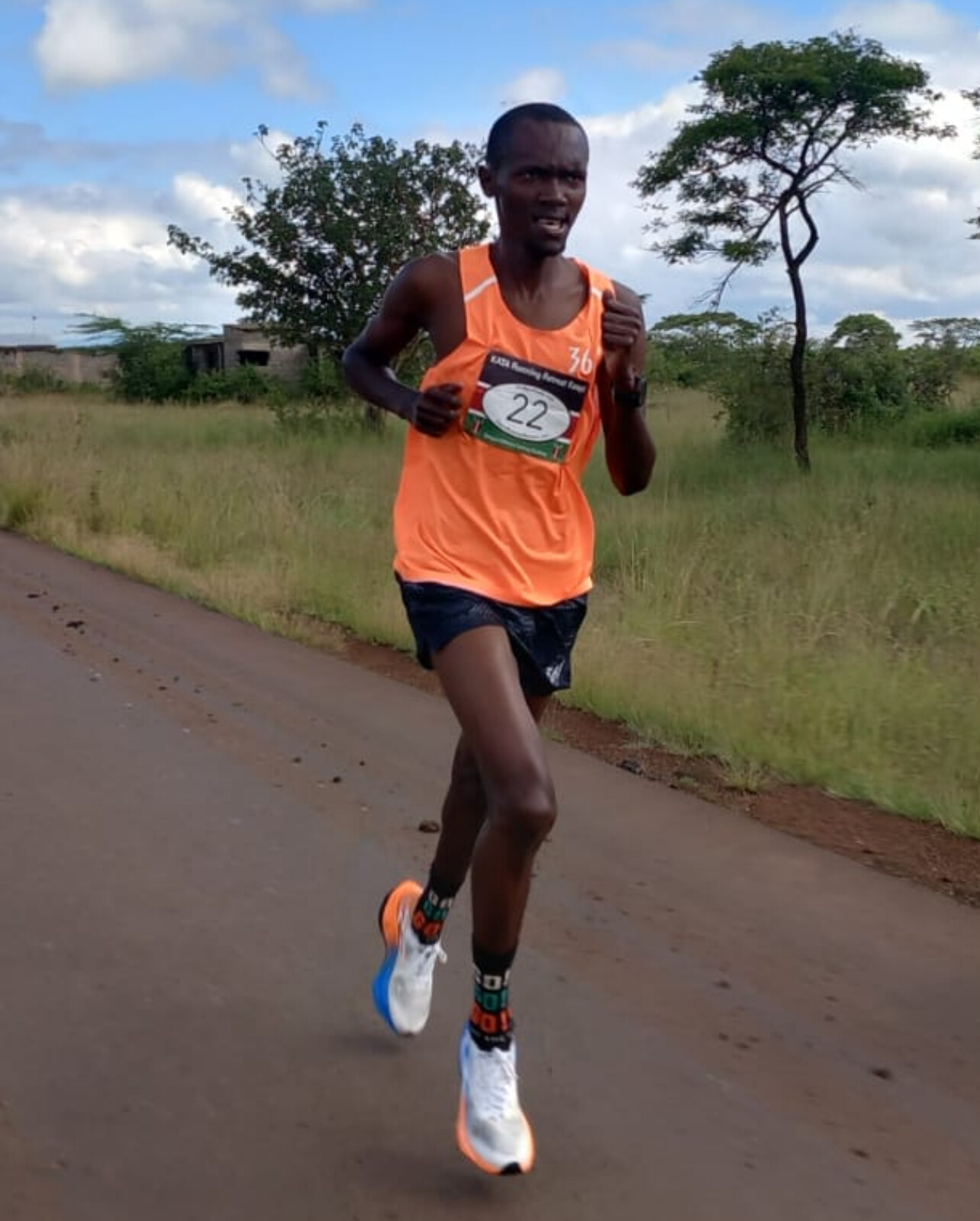
That dream took shape through karate, of all things.
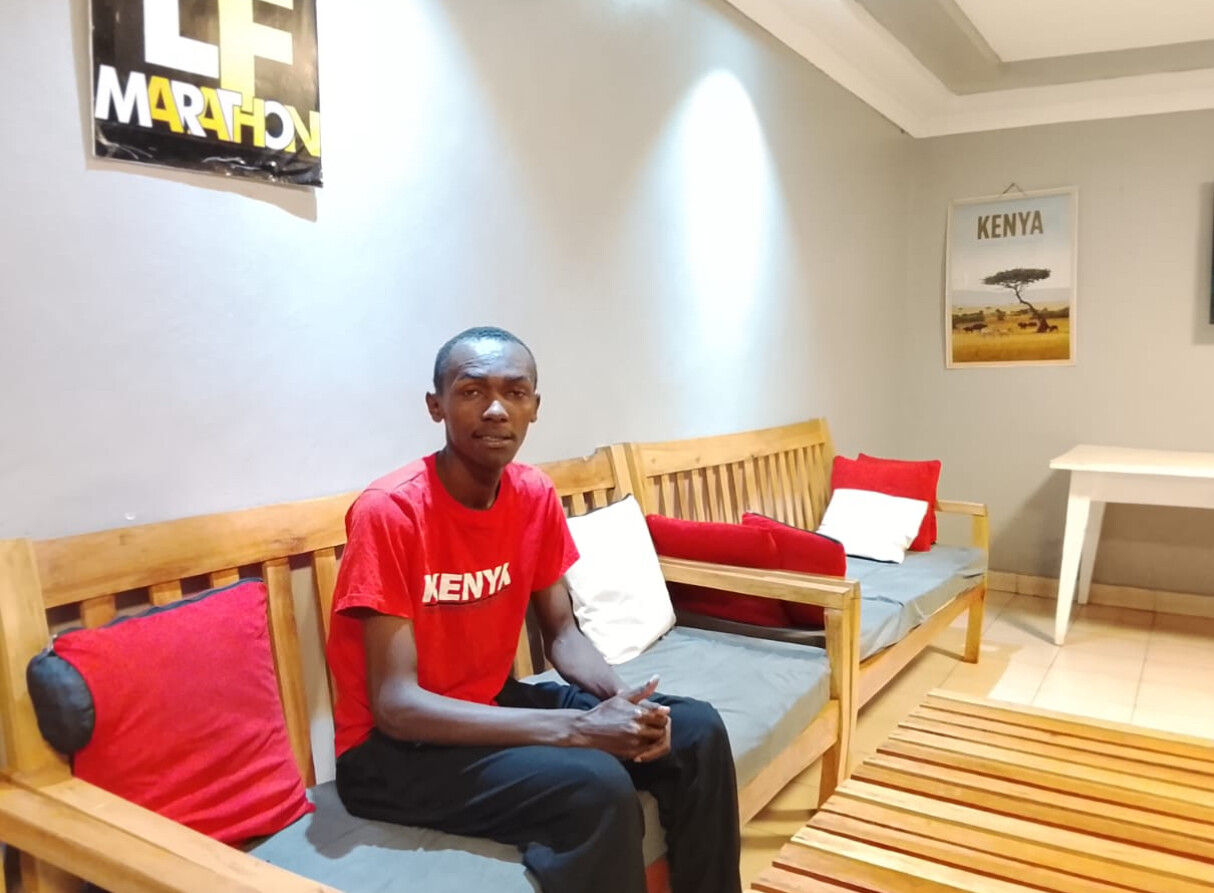
“At around 13, I started following a group of boys training in Maraba. They had no dojo, no gear — just heart. I joined them, and I trained every day, barefoot sometimes. Karate taught me control, focus, and resilience.”
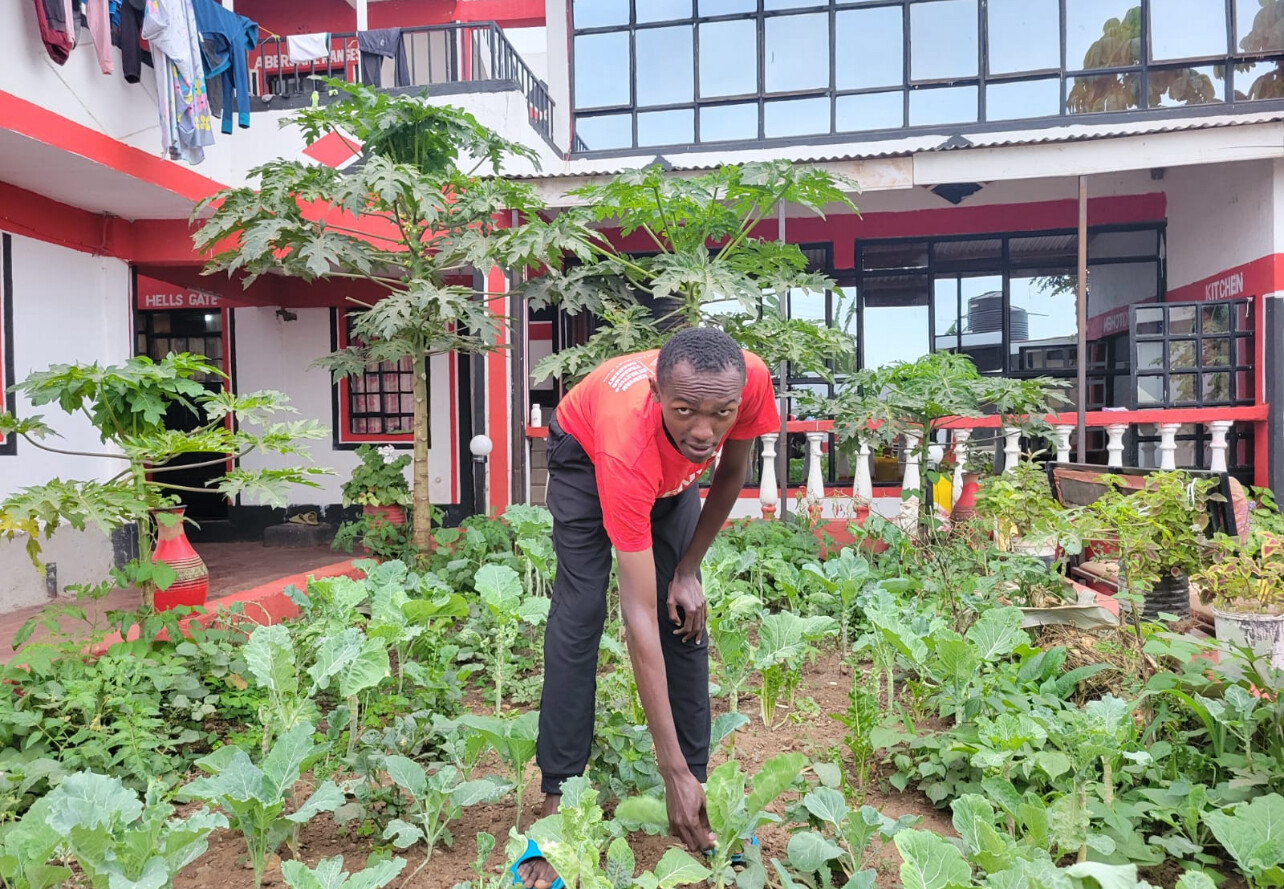
He carried that mindset through high school, juggling academics, martial arts, and odd jobs to support his family. By 2020, after finishing school, college wasn’t an option. He needed something more — something that could change his life.
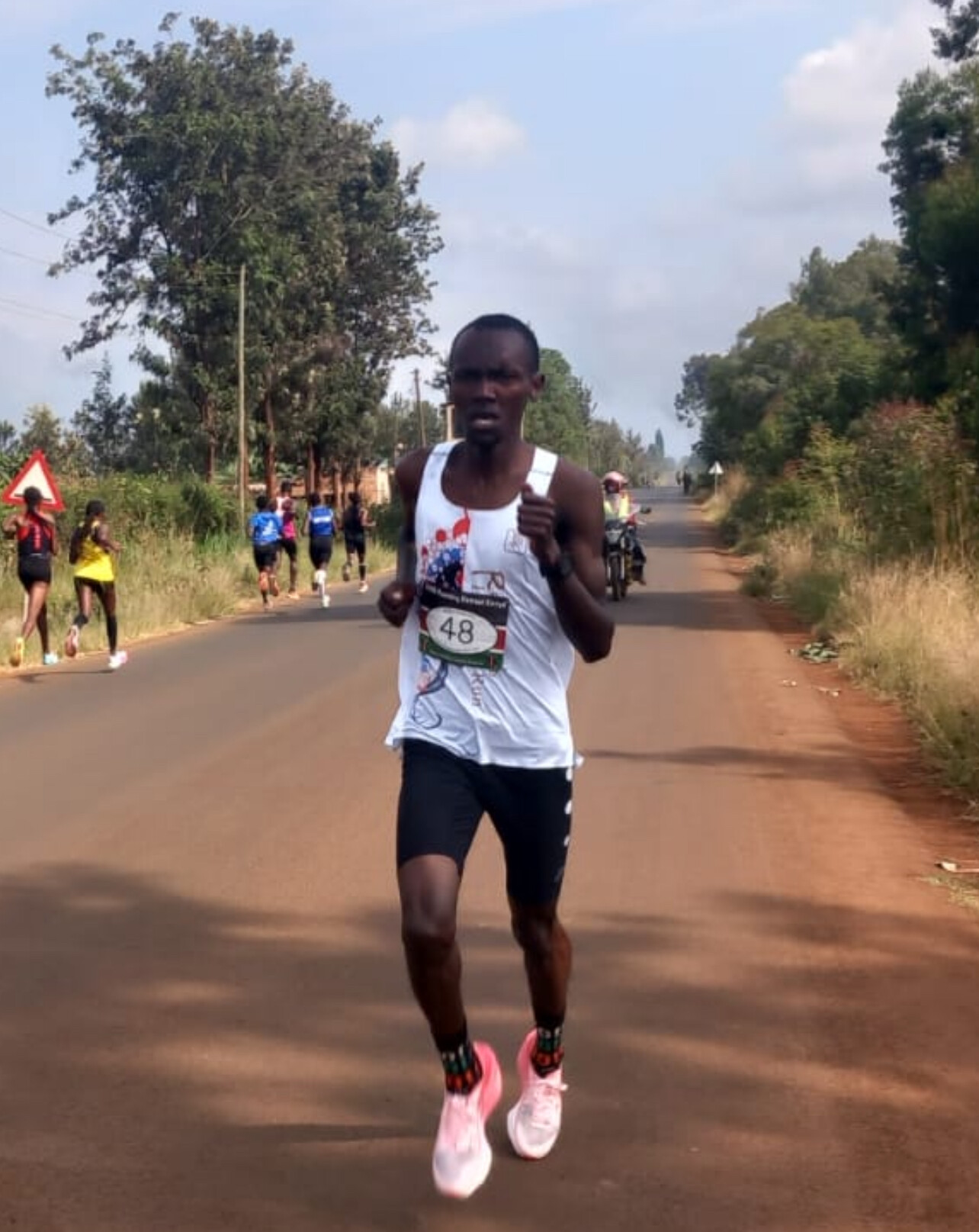
A New Path: Running
Initially, running was just fitness for karate. But a spontaneous entry into a local 5K fun run changed everything.
“I finished in the top 10 and people started telling me, ‘You have potential.’ That was the first time I saw a new path.”
The transition wasn’t easy. Kirika trained alone, without coaching or proper nutrition. But then came a life-changing opportunity: a spot at KATA, the training academy founded by American running pioneer Bob Anderson.
“KATA gave me structure, food, housing — but most importantly, belief.”
At KATA, Kirika began serious training under experienced coaches. He swapped kata routines for hill repeats, and sparring for speedwork. It wasn’t long before his times began to drop.
Nairobi Breakthrough
By early 2025, he had built momentum through smaller races, gaining confidence and sharpening his speed. But the Nairobi City Marathon 10K would be his biggest test yet.
“I was nervous, but I kept telling myself — just hold on.”
He did more than that. He surged with the lead pack, stayed composed through the rolling course, and finished third overall in 27:00, his first official sub-28 performance.
“That race changed everything,” he says. “It proved that you don’t need fancy gear or a big name to compete. You just need heart, and a team that believes in you.”
What Comes Next
Kirika now has his sights set on the half marathon, and eventually, the full 42.2 km. The KATA team is already working with him on long-run preparation, nutrition, and mental strategy for the next phase of his career.
“I know this is just the beginning,” he says with a quiet fire. “There’s still a long way to go.”
Still humble, still grounded, Kirika hasn’t forgotten his roots.
“Tell my parents I’m doing something meaningful. Tell them thank you. And tell them I haven’t forgotten where I came from.”
A Star on the Rise
As the sun sets over Thika’s training trails, Zachariah Kirika laces up his shoes. Behind him lies the path of a barefoot boy who once threw punches in dusty lanes. Ahead of him lies a road filled with potential, podiums, and purpose.
In a country bursting with undiscovered talent, Kirika’s story is a powerful reminder: with discipline, support, and belief, even the most unlikely runners can rise to greatness.
All photos were taken in and around KATA in Thika where Kirika lives, eat, train and works around the place. The racing photos were taken at KATA's monthly time trial.
by Robert Kibet
Login to leave a comment
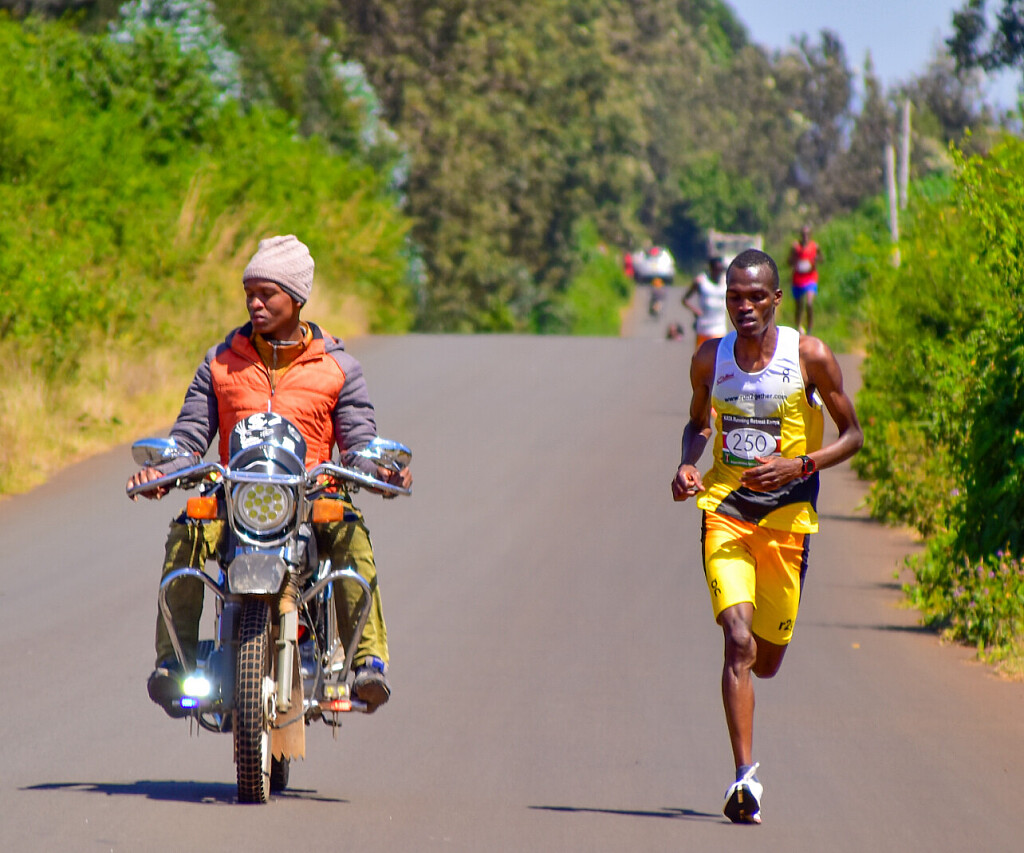
5th Annual Kenya’s Double Road Race 15K Set for September 20, 2025, at KATA Thika
The 5th Annual Kenya Double Road Race 15K will be held on September 20, 2025, at the Kenyan Athletics Training Academy (KATA) in Thika, Kenya. The event ins a two stage race. First is the 10k leg then a break, followed by a 5K leg. Legs are added together for scoring. A format designed to challenge runners of all levels. Do then double! The start, finish, and halftime break will be based near the KATA campus. The second leg starts one hour and 45 minutes after the start of the first leg.
Double Racing was created by Bob Anderson, founder of Runner’s World magazine, in 2010. From October 2010 to October 2012, seven small Double races were held in Mexico under the name Bob Anderson 15K Challenge. The format evolved, and in December 2012, the first official Double Road Race was held in Pleasanton, California, with nearly 1,400 participants. The signature race was the Double 15K — 10K followed by 5K, separated by a 1 hour and 45-minute recovery break known as the Restart.
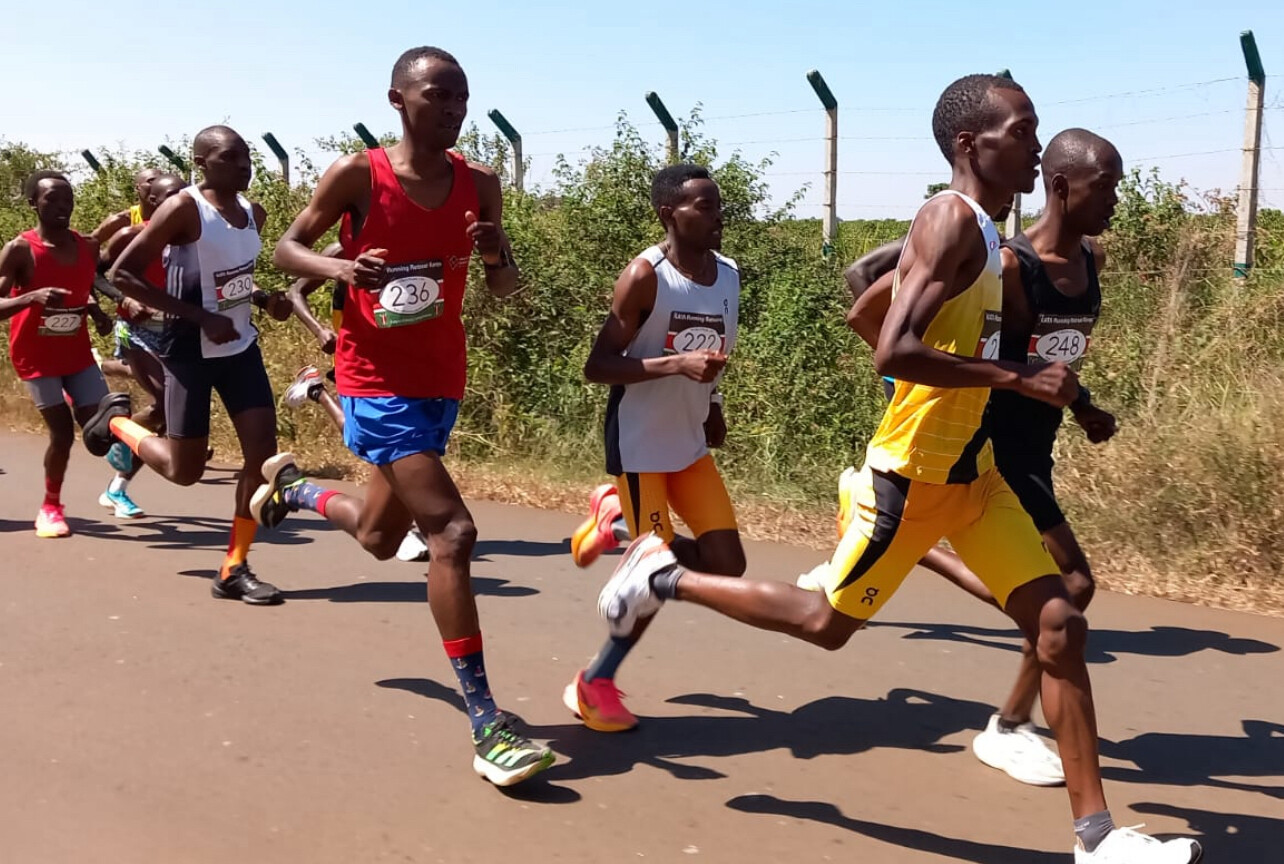
“Double Racing is doable for runners at all levels,” says Bob Anderson. “It’s a new challenge for many, while others have done many already.”
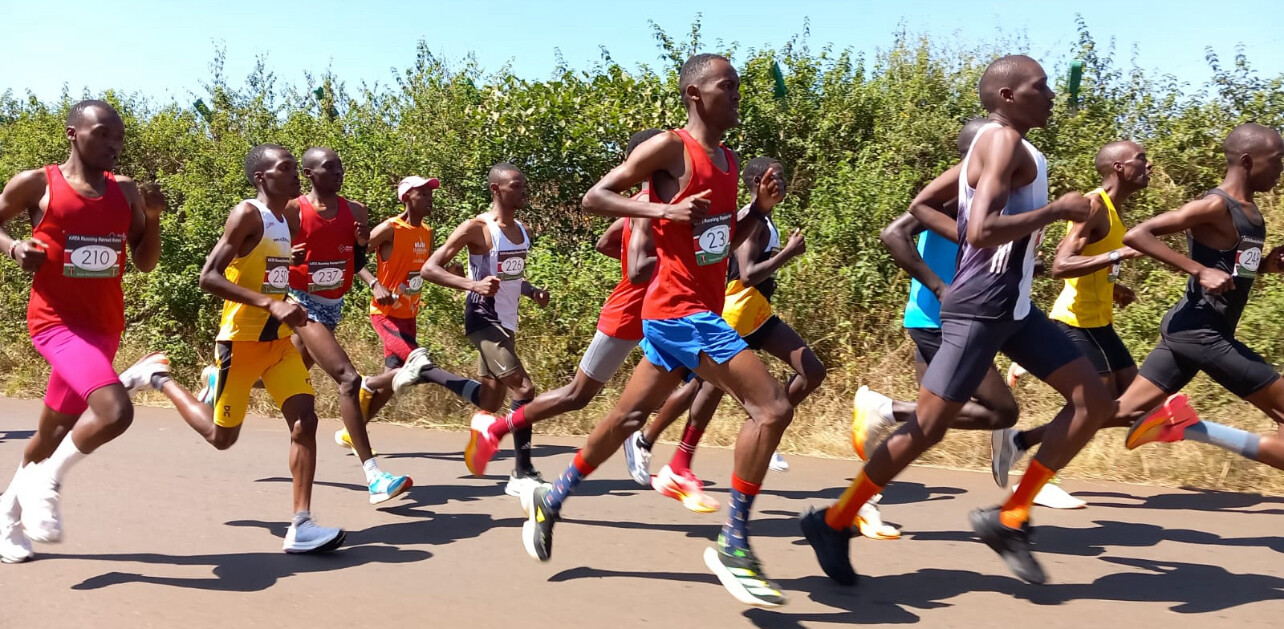
Anderson staged two Double races in Kenya previously — in Thika (2014) and Nyahururu (2015) — both were Double 21Ks (10 miles + break + 5K). These visits inspired the creation of KATA Thika, which officially opened in September 2021, and hosted the first Double 15K in Africa on September 4, 2021. Donikal Komon won that race in 44:42 — the fastest ever run in Africa at that time.
In 2022, Joseph Njoroge shaved two seconds off that mark. But it was in 2024 when history was made.
A New World Record in 2024
At the 4th Annual KATA Double Road Race 15K held on September 14, 2024, Shadrack Kenduiywo, 24, smashed the world record by clocking 42:34, eclipsing the long-standing record of 43:11 held by Julius Koskei since 2015. Kenduiywo ran 28:33 for the 10K leg and 14:01 for the 5K.
“This was my first Double race, and I was happy. I knew the record was in sight,” he said. “During the break, I relaxed, drank water, ate fruit, and did a 20-minute warmup.”
Despite warm conditions (21°C), his performance was unstoppable. He led from the second kilometer, clocking 2:52, 2:50, 2:57… all the way to a 2:50 final kilometer. His 5K splits were 2:47, 2:48, 2:51, 2:47, and 2:44.
Kenduiywo’s personal bests at the time included:
• Half marathon: 61:24 (Padova, Italy)
• 25K: 1:15 (Berlin)
• 8K: 23:43
• 5K: 13:55 (Udeni)
He promises he’ll run even faster next time.
2024 Podium Highlights
Top Men
1. Shadrack Kenduiywo – 42:34 (28:33 + 14:01)
2. Martin Mumo – 43:18
3. Zachariah Kirika – 43:37
4. Collins Kiplagat – 44:39
5. John Njuguna – 45:11
Top Women
1. Alice Koigi – 50:00
2. Monica Wanjiku – 51:30
3. Susan Njuu – 53:07
Men Masters
1. Charles Ndirangu, 64 – 56:21
2. David Mwangi, 70 – 64:49
3. Joseph Kiraio, 72 – 73:40
Women Masters
1. Julia Njari, 47 – 60:43
2. Sheila Mbaku, 54 – 62:30
The event also included Bob Anderson’s Kids Mile (won by 12-year-old Benjamin Ndaro in 4:54), and a 5K youth race won by Denis Chege, 16, in 17:48.
With over 120 Double 15K races held globally and a new world record established at KATA Thika, the 5th edition promises to be the most exciting yet.
Click here to see top time lists and age group records:
https://www.doubleroadrace.com/records
Join us September 20, 2025, in Thika, Kenya, and experience Double Racing at its best.
by Boris Baron
Login to leave a comment
KATA Double Road Race 15K
5th Annual KATA Double Road Race 15K Set for September 20, 2025, at KATA Thika The 5th Annual KATA Double Road Race 15K will be held on September 20, 2025, at the Kenyan Athletics Training Academy (KATA) in Thika, Kenya. The event includes a 10K leg, a break, followed by a 5K leg — a format designed to challenge runners...
more...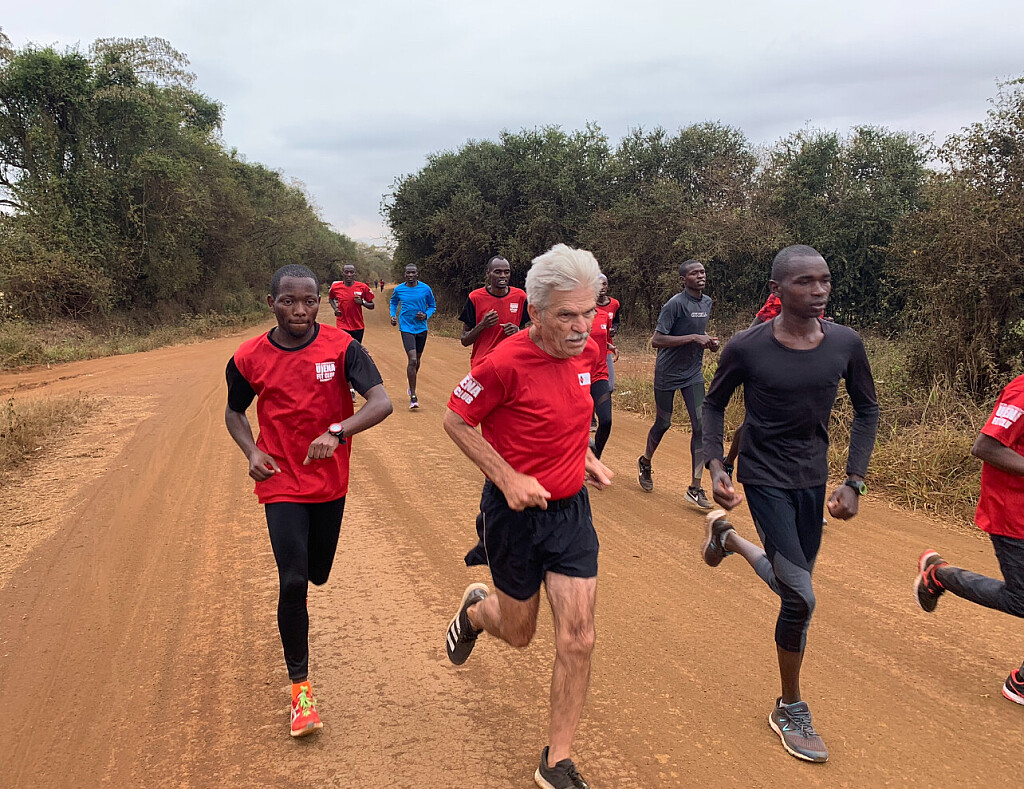
Powered by Potatoes, Fueled by Passion: Inside the Rise of KATA in Kenya
THIKA, Kenya, July 18, 2025 — About 40 kilometers northeast of Nairobi sits Thika, a town once best known for its factories. But just outside its bustling center, a quiet revolution is taking place—one that’s redefining how running talent is discovered and developed in Kenya.
Welcome to the Kenya Athletics Training Academy (KATA)—a visionary project founded by Runner’s World and My Best Runs creator Bob Anderson (first photo) and powered by a bold and sustainable idea: combine world-class running with community farming. What began in 2019 as a modest base has grown into a thriving network of athletic development across Kenya.
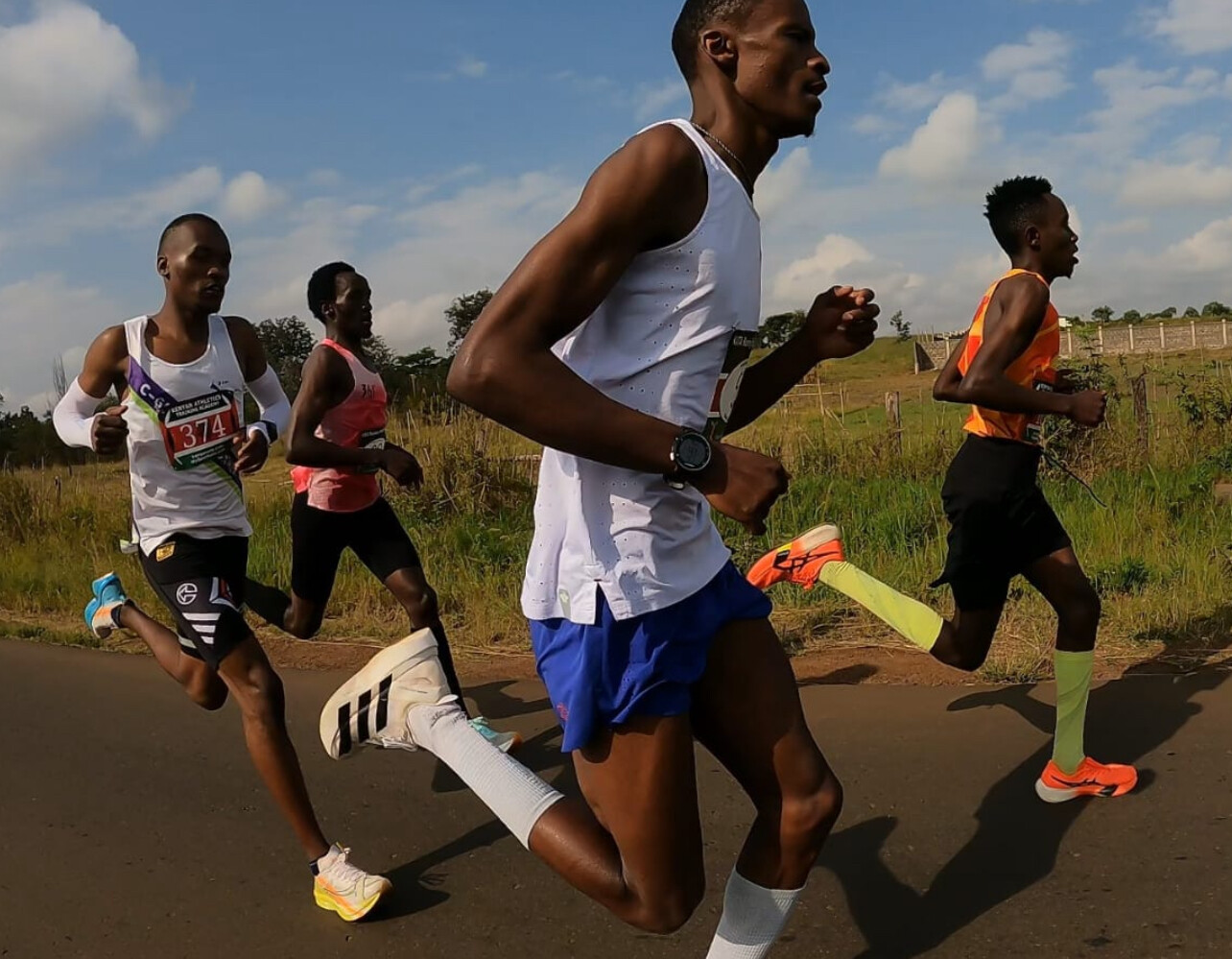
Thika: The KATA Running Retreat
At the heart of it all is the KATA Running Retreat in Thika, where Kenyan athletes live and train full-time, and where guests from around the world come to “train the Kenyan way”. Situated at altitude, the retreat offers structured training, rest, nutrition, and performance monitoring on a measured course.
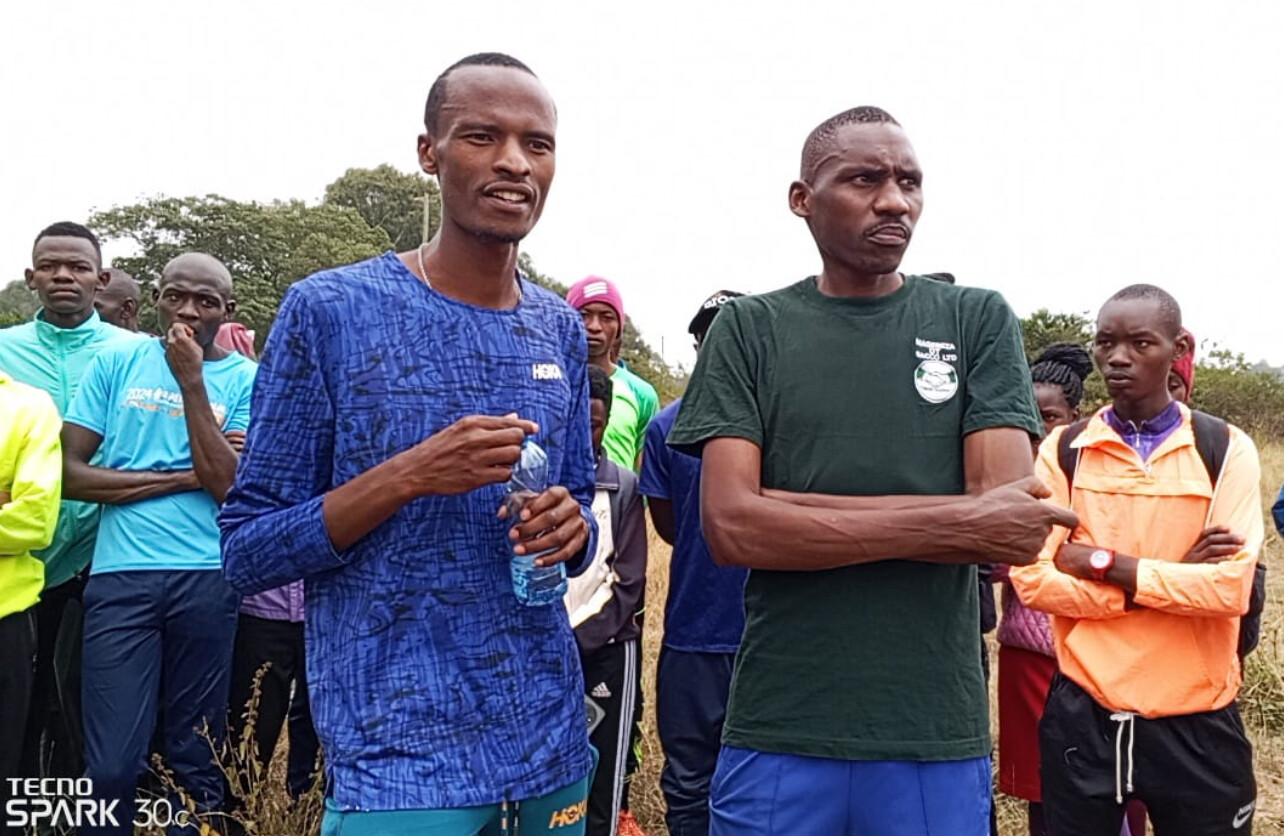
Thika is managed by Christopher Kamande (photo 4), who ensures that the vision is executed with care and discipline.
“We provide a safe space for these athletes,” says Kamande. “They get everything they need—meals, coaching, rest, even digital support for their racing profiles. We treat them like the professionals they’re becoming.”
Athletes’ verified performances are uploaded to My Best Runs by Elam Wangwero (photo 5 when he met Bob and his wife Catherine for the first time in 2014), KATA’s digital lead and longtime collaborator with Anderson. “When someone runs 28 minutes here, the world should know about it,” he says.
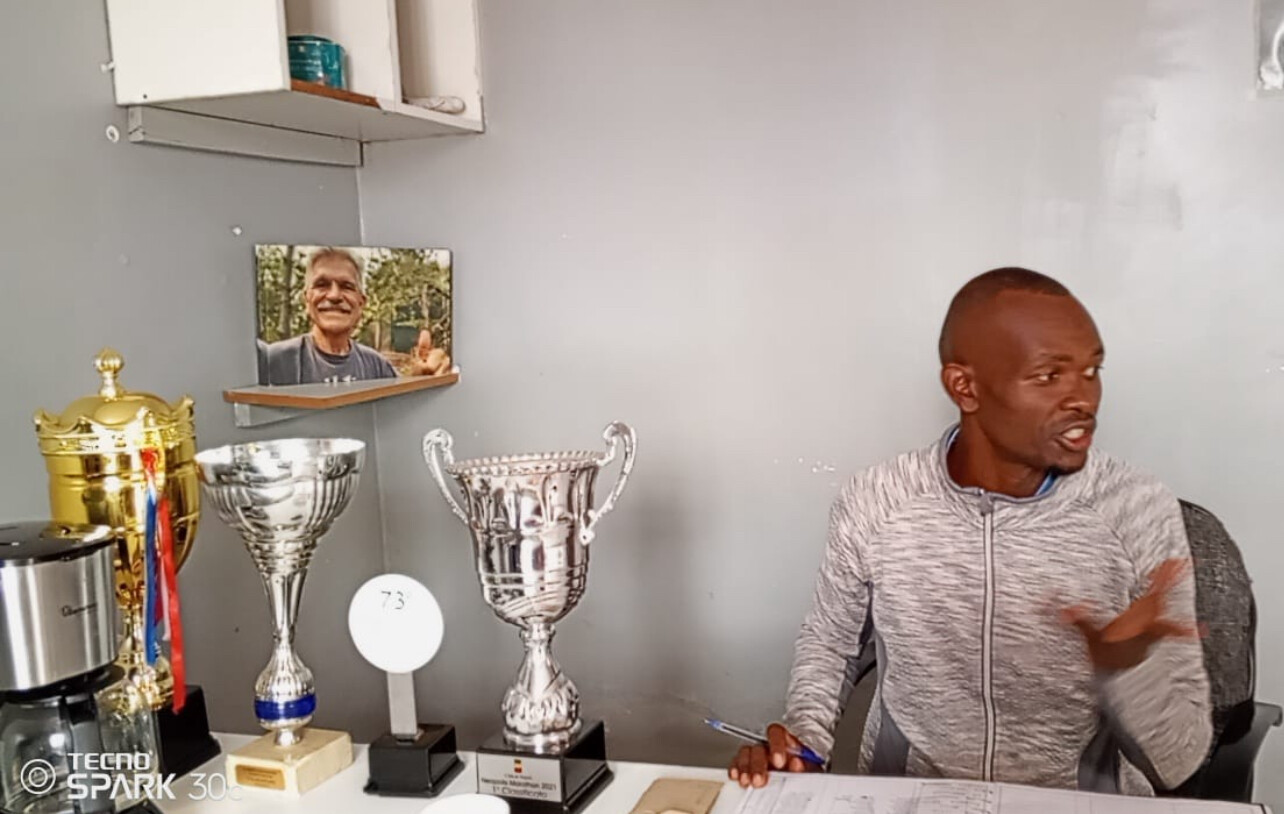
A Model That’s Growing Across Kenya
Since June 2025, the KATA team has launched a new initiative: combining elite training camps with three-acre potato farms to build sustainable, athlete-driven communities. In just six weeks, 30 new KATA Running Camps and KATA Potato Farms have been established across Kenya, with two more set to open by August 1, bringing the total to 32.
“This gives us 32 KATA Camps and Farms,” says Anderson. “It has been exciting to find operators who share the same passion as I. We have an amazing group of operators—all dedicated to our unique project. They all know how important their three-acre potato farm is, because that’s what will power their camp in the long run.”
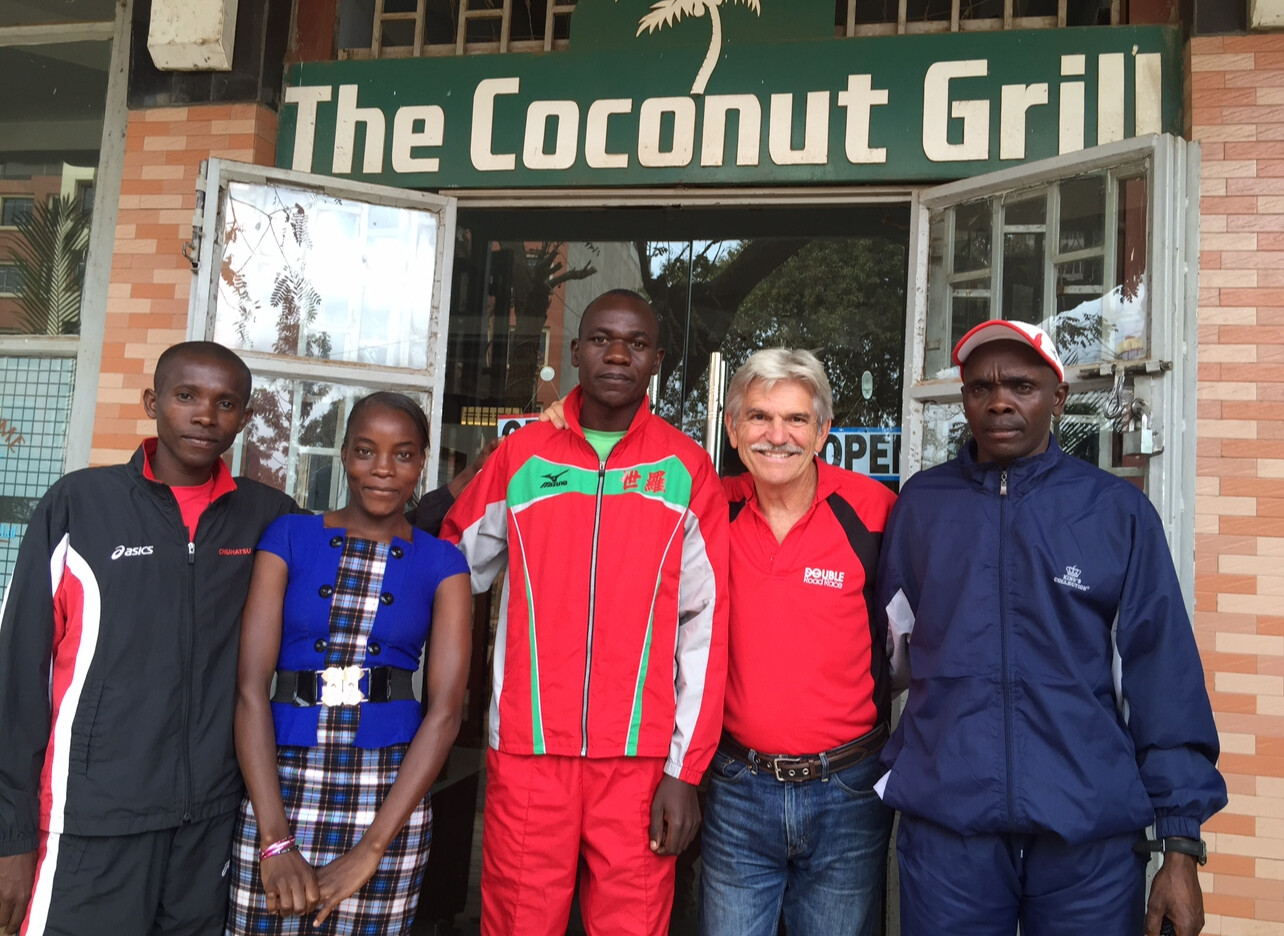
At each location, athletes work 25 hours a week planting, maintaining, and harvesting potatoes. In return, they receive free housing, daily meals, and world-class coaching—a holistic model designed to develop both athletes and communities.
“This model gives athletes a chance not just to run, but to build a life,” says Kamande. “It teaches responsibility, sustainability, and teamwork.”
Time Trials that Open Door's
KATA’s monthly 5K and 10K time trials (phot two) certified and measured, are held on the Thika course and have become a trusted platform for athletes to showcase their ability to race organizers and sponsors worldwide. “Our monthly time trials were started September 2021,” says John KATA’s head coach, “we have seen many amazing performances both from our KATA’s athletes and others.” All runners are invited to come run.
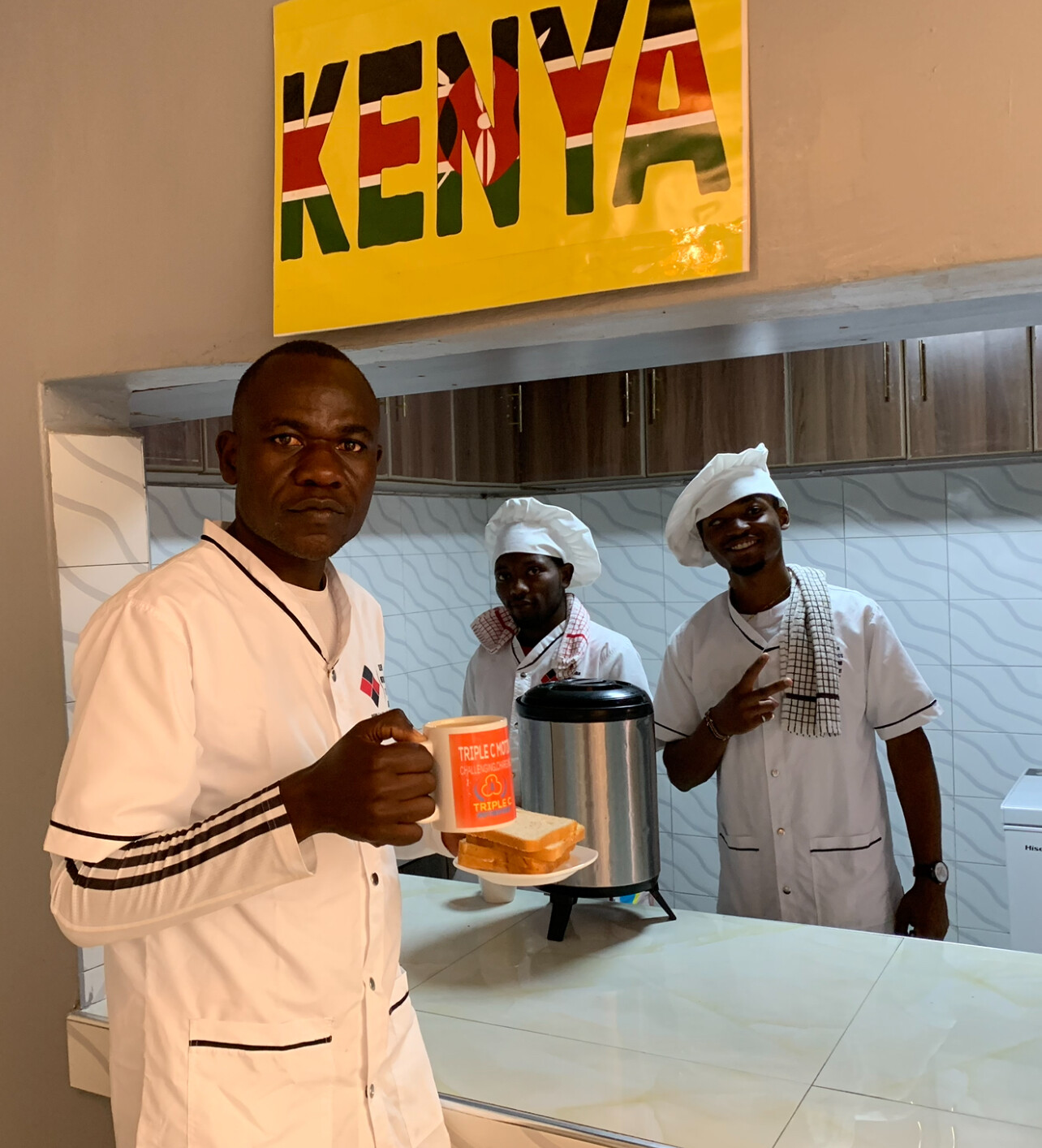
“These time trials are life-changing,” Kamande says. “Many of our runners don’t have agents or the means to travel to big races. So we bring opportunity to them.”
Results are published on My Best Runs, offering a transparent, verified path to the world stage.
From 34 Minutes to 27:47
Before the farming project began, KATA was already changing lives—and Peter Mwaniki Njeru (photo three) is one of its earliest and most powerful success stories.
“When Peter first came to KATA,” recalls Anderson, “he was running around 34 minutes for 10K.” Through structured training, support, and work around the Retreat, Peter steadily improved. In 2024, he stunned the running world by winning the Chicago 10K in 27:47.
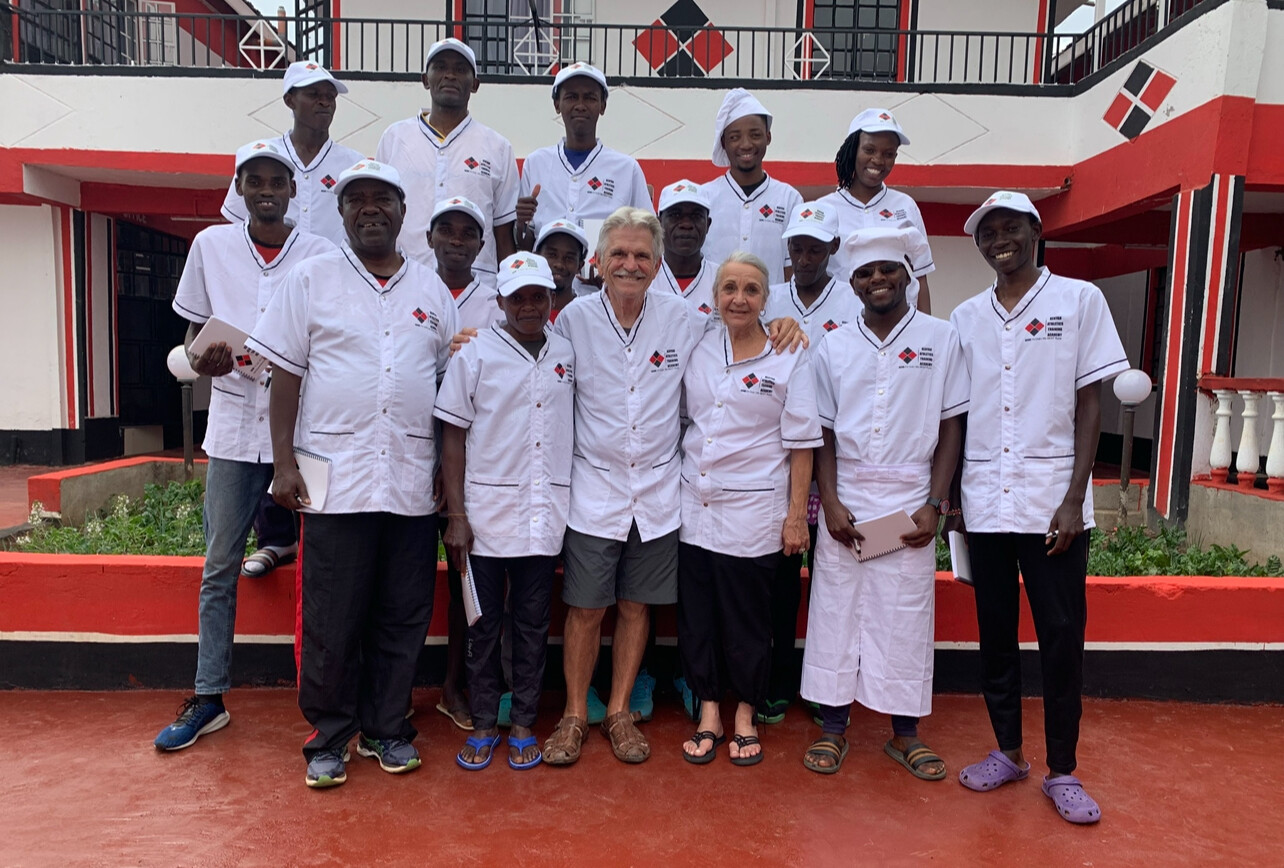
A Legacy Rooted in Vision
At a time when many athletes in Kenya pay to train, live in overcrowded rooms, and struggle for basic support, KATA is different. Everything—lodging, food, coaching, and opportunity—is provided at no cost to the athlete. And now, through potatoes, the project has a path to sustain itself.
One KATA operator summed it up best in a message to Bob Anderson:
“Your unique approach,” wrote Edwin Soi, “blending athletic training with sustainable farming, is clearly making a significant positive impact on the lives of the athletes and the community. It’s a testament to how innovative ideas, when implemented with genuine care, can empower people far beyond their initial scope.”
As the KATA Running Retreat in Thika and now also in Portugal continues to welcome international guests and the KATA Camps and Farms spread across the country, the mission remains clear:
Empower athletes. Build communities. And grow the future—one step, and one potato, at a time.
by Robert Kibet
Login to leave a comment
Marathon Legend Patrick Ivuti Joins KATA as Operator of New Running Camp and Potato Farm project in Kenya
KATA (Kenyan Athletics Training Academy) continues its rapid expansion with the launch of its 22nd KATA Running Camp and Potato Farm, and the newest addition brings serious star power. Marathon great Patrick Mutuku Ivuti—a former Chicago, Honolulu, and Prague Marathon champion—has officially joined the KATA team as the operator of the new Tala-based camp/farm.
“We are excited to have Patrick Ivuti join our KATA team of operators for our KATA Running Camp and KATA Potato Farm project,” said Bob Anderson, KATA founder and managing director. “This is our 22nd camp and after a 30-minute video call and many text messages, it was clear we needed to add Patrick to our team. He brings spirit, experience, and heart. His camp/farm will be based in Tala.”
Ivuti’s love for the sport and passion for nurturing talent was evident from the first conversation. “Patrick just loved the idea of this unique project,” said Anderson. “He told me he had to join the KATA movement—not just to help athletes reach their potential, but to be part of something bigger.”
From World-Class Athlete to Ground-Level Mentor
Ivuti, born June 30, 1978, is one of Kenya’s most decorated distance runners. A two-time silver medalist at the IAAF World Cross Country Championships, he made his marathon debut in 2005 and claimed his first major win at the 2007 Chicago Marathon—a race he won by just 0.05 seconds in one of the closest finishes in marathon history.
He went on to win the Honolulu Marathon in both 2008 and 2009, and also took top honors at the 2009 Prague Marathon. With a personal best of 2:07:46, Ivuti competed at the highest level of global marathoning for over a decade.
Now, he’s bringing that same competitive spirit and wisdom to Tala, where his role goes far beyond coaching.
The KATA Model: Running + Farming = Sustainable Impact
Each KATA camp follows a sustainable model: athletes train daily and also work 25 hours per week on three acres of potato farmland, creating a source of income and life skills beyond sport.
Ivuti immediately connected with the KATA vision. “It’s a beautiful concept,” he shared. “This project gives young athletes the tools to succeed in racing and in life. That’s why I had to be part of it.”
A Growing Movement with Global Vision
The KATA program, launched by Bob Anderson—founder of Runner’s World magazine and My Best Runs—has grown quickly, with 22 running camps across Kenya, plus two international retreats in Thika, Kenya, and Monforte da Beira, Portugal.
“This is more than just athletics,” Anderson said. “It’s about creating long-term solutions and opportunities and not just for our athletes but for the communities. Patrick is the perfect person to help lead that mission in Tala.”
Stay tuned to My Best Runs for updates on KATA’s progress, new camp openings, and the inspiring athletes rising through this one-of-a-kind program.
by Boris Baron
Patrick Ivuti
Login to leave a comment


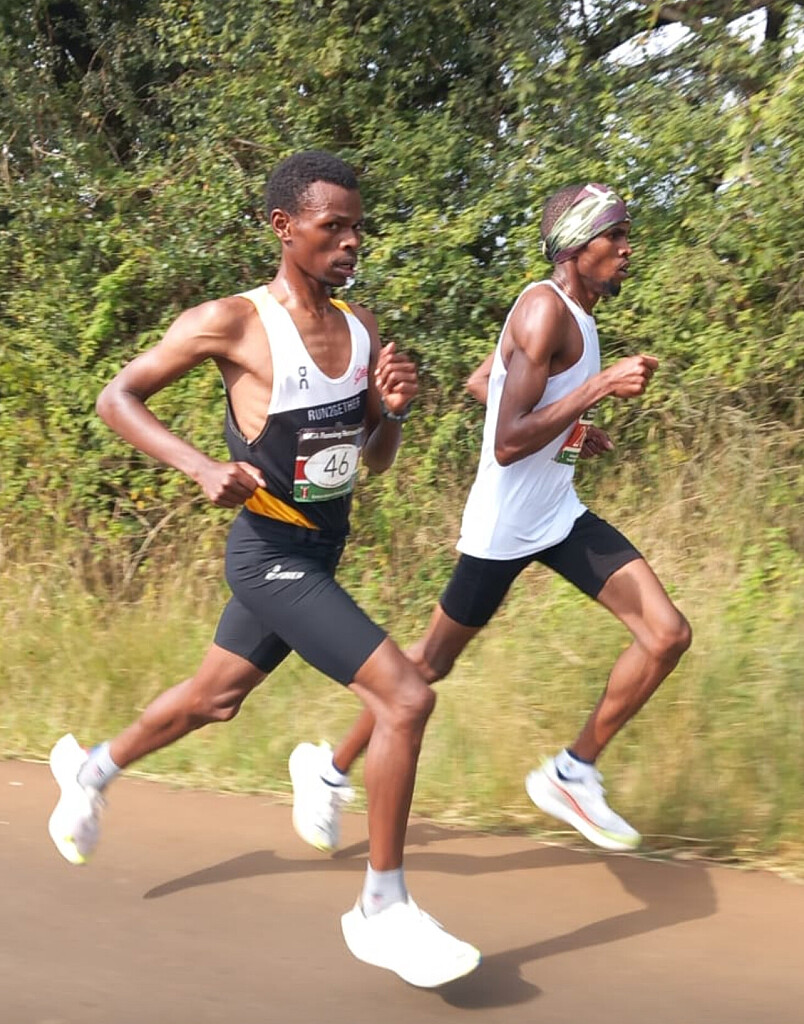
Kirika, Wambui, Wanjiku, and Mwaniki Deliver Breakout Performances at 47th KATA Time Trial in Thika
Thika, Kenya, July 16, 2025 — The KATA Time Trial series continues to thrive as the 47th edition unfolded Wednesday morning at KATA’s flagship training center in Thika. A total of 37 athletes—28 men and 9 women—lined up to test their fitness over the 5km and 10km distances. The event showcased rising stars, personal breakthroughs, and a glimpse of what’s coming as KATA prepares to expand its time trial series across all 22 of its Kenyan locations.
Zachary Kirika, 24, headlined the men’s 5km with a dominant performance from the gun. He clocked a personal best of 14:04, lowering his previous time by over 35 seconds while running smooth and composed throughout. He now ranks among the top KATA 5km performers in 2025.
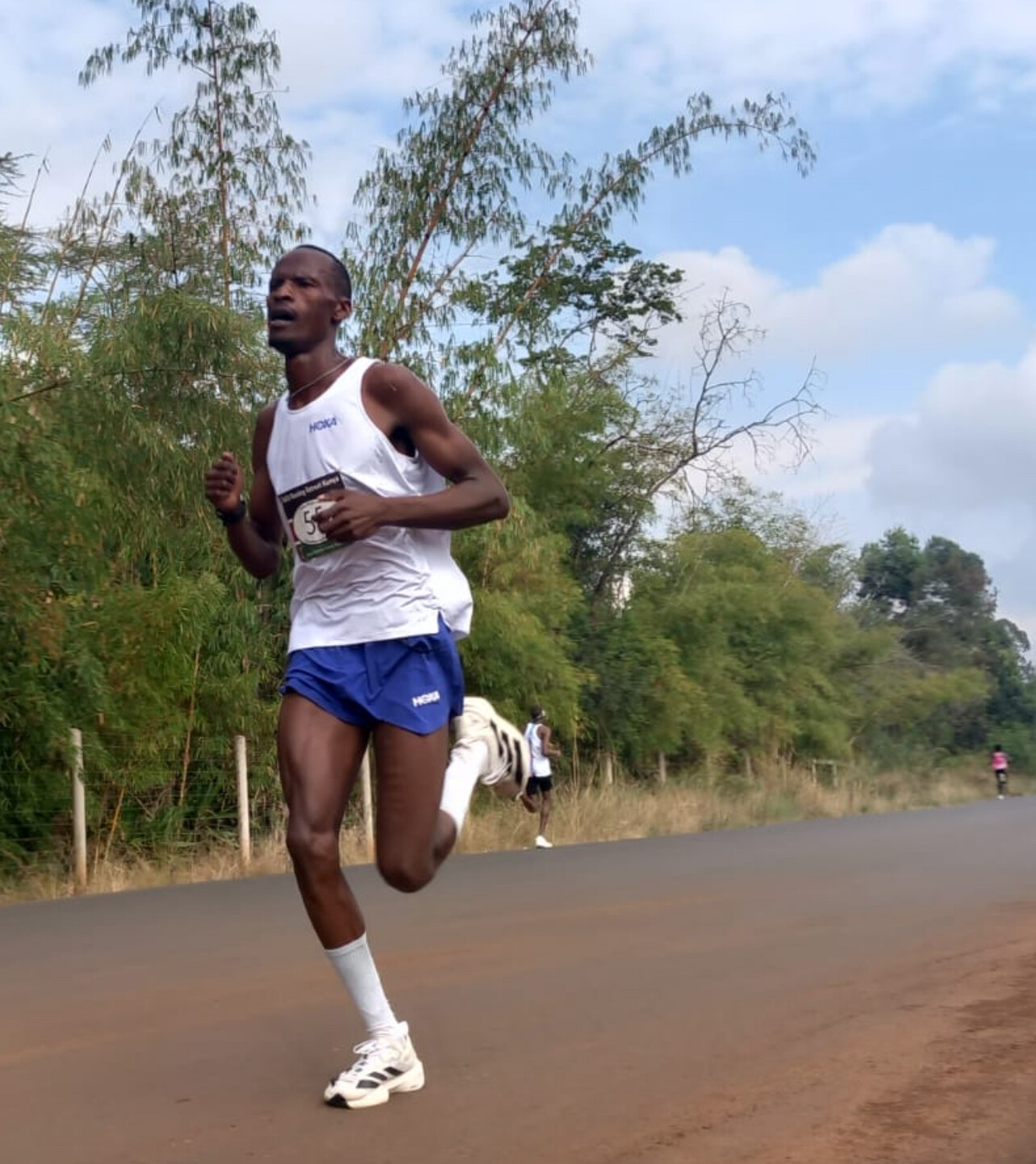
Also making headlines was Justus Nyamai, a 17-year-old with enormous potential. He finished 3rd in 15:40, also a personal best, signaling his steady rise through the KATA ranks.
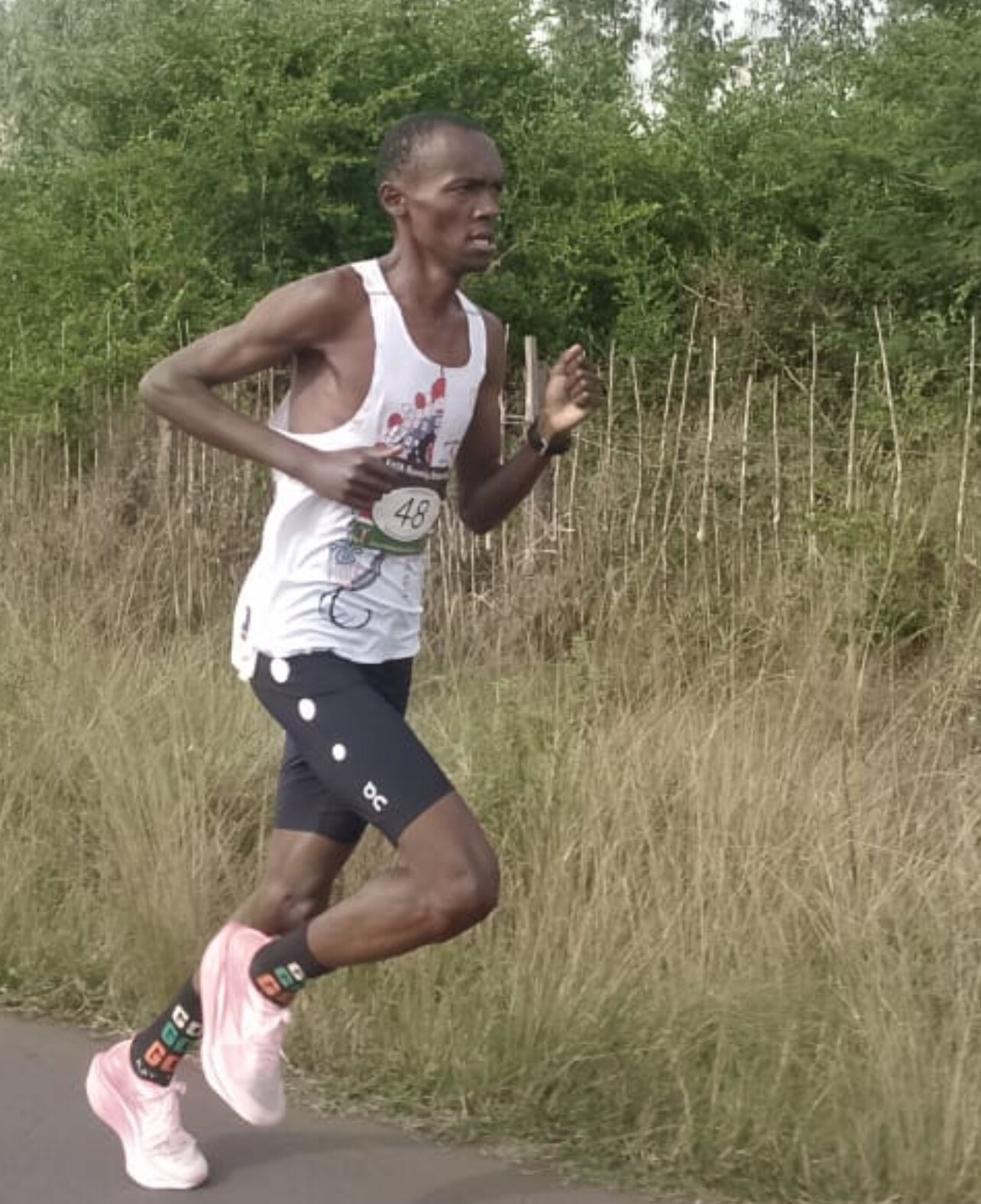
In the women’s 5km, 15-year-old Ann Wanjiku led from the front and took the win in 19:44, pacing herself smartly to secure another strong finish for the young talent.
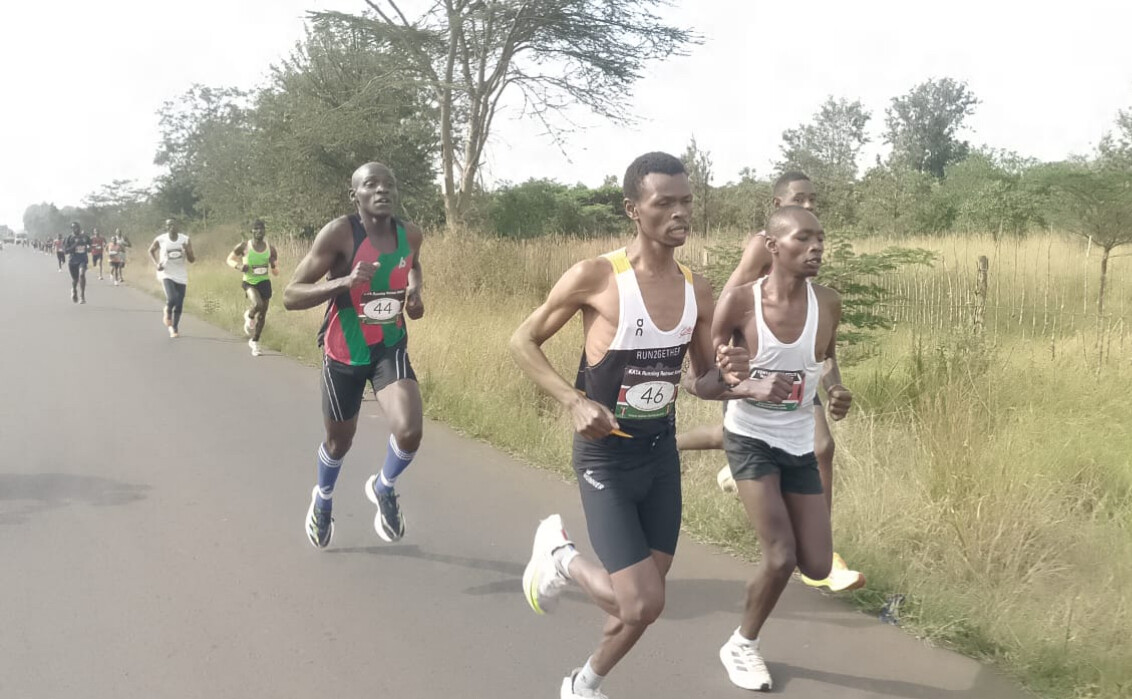
The men’s 10km produced a competitive front pack, but it was Peter Mwaniki, 27, who came out on top with an impressive 29:15 finish. He was closely followed by Stephen Ngigi in 29:39, as both athletes pushed each other through the final kilometers.
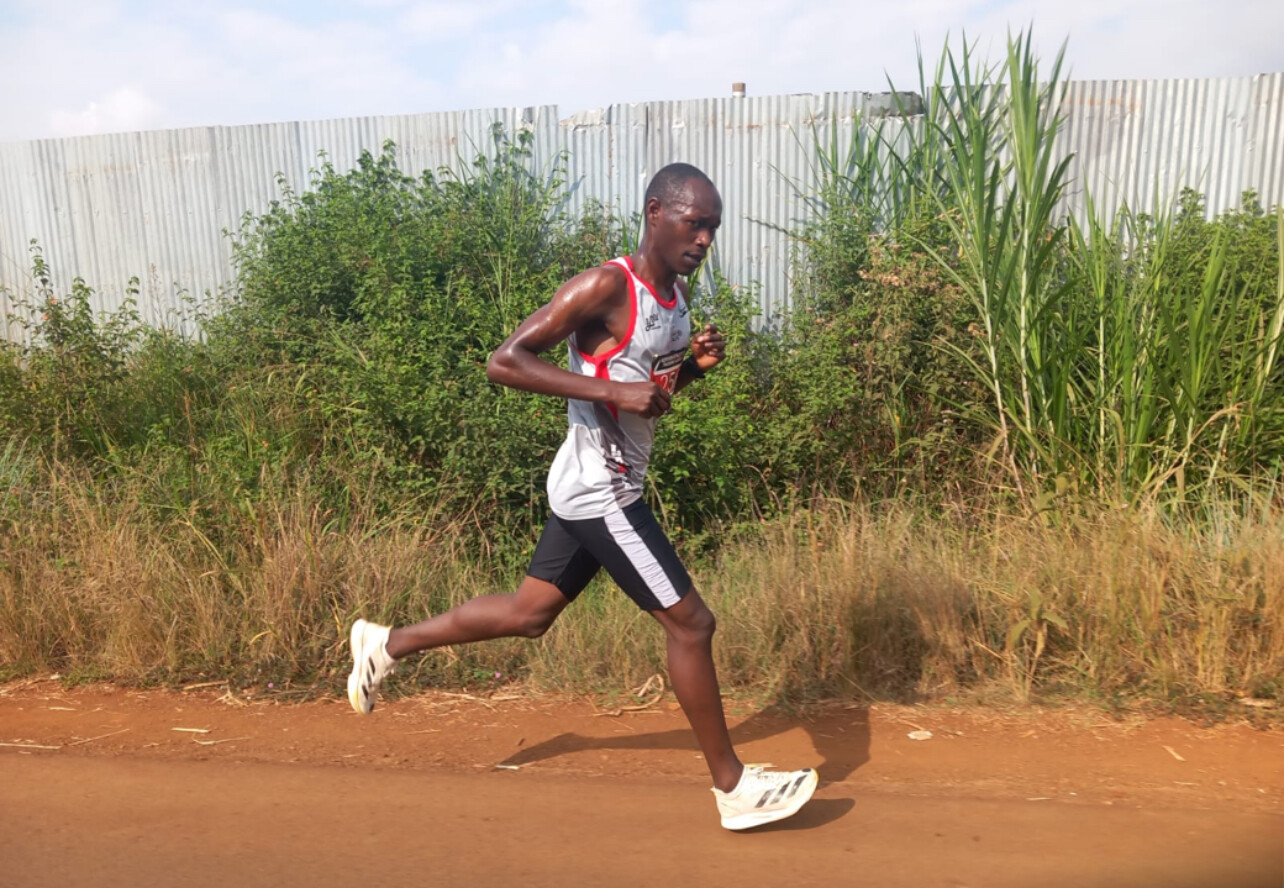
The women’s 10km brought an emotional highlight. Lois Wambui, 25, returned to racing after battling injuries for months. She clocked a personal best of 34:16, trimming more than 30 seconds off her previous best. Her performance signaled that she is back and ready to chase podiums again.
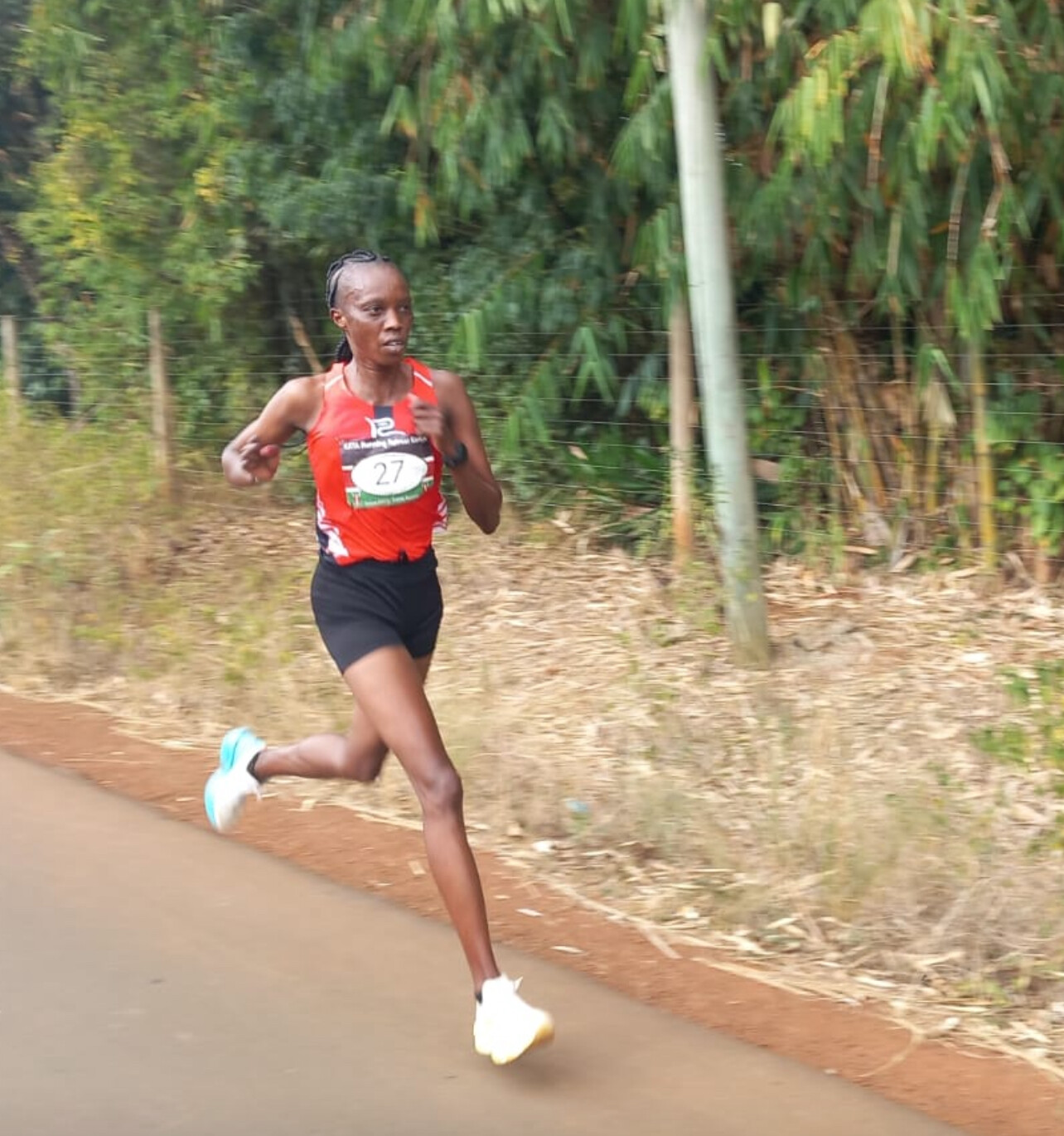
Full Results – 47th KATA Time Trial (July 16, 2025)
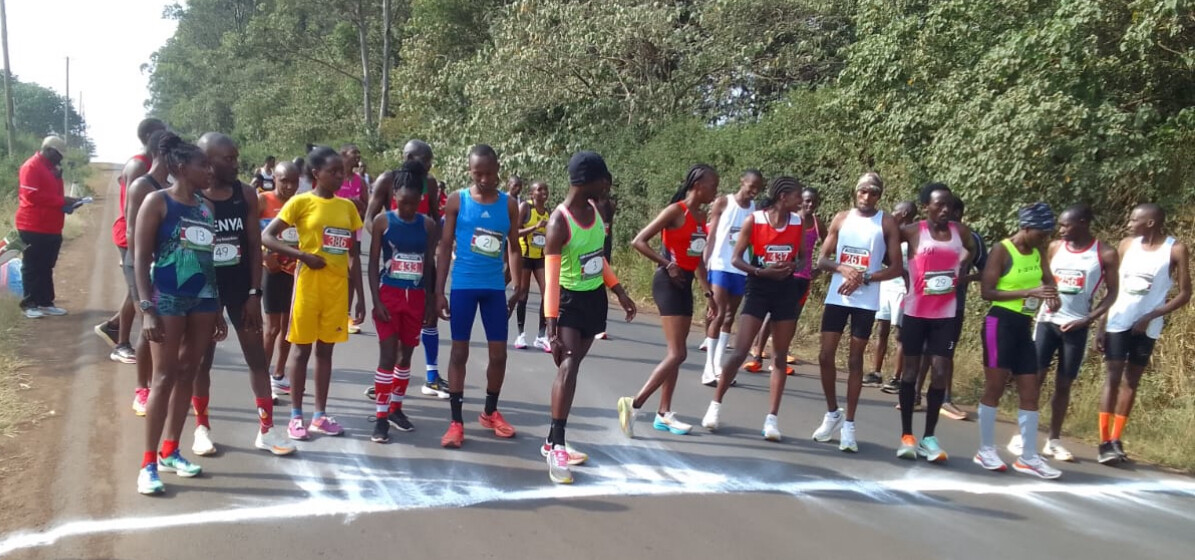
5km – Men
1. Zachary Kirika (24) – Bib 399 – 14:04
2. Kelvin Lagui (23) – Bib 167 – 15:33
3. Justus Nyamai (17) – Bib 431 – 15:40
4. Godfrey Kahora (19) – Bib 149 – 15:41
5. Ishmael Mburu (29) – Bib 003 – 15:54
6. Christopher Kimani (20) – Bib 021 – 16:07
7. Collins Mutungi (18) – Bib 022 – 17:07
8. Eric Mwaura (18) – Bib 223 – 17:14
9. Brandon Mutungi (17) – Bib 409 – 18:11
10. Kelvin Muchiri (18) – Bib 018 – 18:45
11. Frederick Maina (17) – Bib 060 – 20:21
5km – Women
1. Ann Wanjiku (15) – Bib 433 – 19:44
2. Tabitha Wanjiru (15) – Bib 386 – 23:18
10km – Men
1. Peter Mwaniki (27) – Bib 055 – 29:15
2. Stephen Ngigi (22) – Bib 374 – 29:39
3. Kelvin Kemoi (23) – Bib 261 – 30:11
4. Boniface Mungai (29) – Bib 029 – 30:17
5. John Njuguna (29) – Bib 046 – 30:25
6. Charles Ndirangu (24) – Bib 044 – 30:46
7. Peter Wanyoike (29) – Bib 039 – 30:50
8. John Chege (19) – Bib 257 – 30:51
9. Joel Maina (40) – Bib 057 – 31:24
10. James Muriithi (31) – Bib 256 – 31:34
11. Joseph Karanja (44) – Bib 206 – 32:29
12. Joseph Wanjiru (39) – Bib 464 – 32:44
13. Johnson Kaberia (28) – Bib 066 – 33:09
14. Vincent Kiprotich (23) – Bib 419 – 33:46
15. Joseph Nyota (20) – Bib 001 – 34:40
16. Simon Ngeresa (26) – Bib 049 – 34:46
17. Charles Ndirangu (64) – Bib 020 – 38:24
10km – Women
1. Lois Wambui (25) – Bib 056 – 34:16
2. Susan Njuu (37) – Bib 027 – 34:29
3. Virginia Wanjiru (24) – Bib 032 – 34:47
4. Karen Chepkemoi (23) – Bib 437 – 37:11
5. Ruth Maina (22) – Bib 397 – 37:20
6. Jane Wanjiru (43) – Bib 013 – 38:29
7. Lucy Muritu (41) – Bib 053 – 44:16
What’s Next for KATA Time Trials
The next KATA Time Trial is scheduled for August 13, 2025, in Thika, and it will mark the official launch of a nationwide expansion. Beginning in August, all 21 other KATA Running Camps and Potato Farms across Kenya will start hosting official KATA Time Trials.
• The Thika location will continue to host trials monthly.
• The other 21 locations will host a time trial every other month, giving their athletes a chance to race at Thika in between.
This expansion brings the total to 22 official KATA Time Trial venues, offering over 300 athletesregular, structured opportunities to race. Importantly, KATA Time Trials are open to all athletes, not just Kenyans.
5th Annual Kenya Double Road Race – September 20
Another marquee event is on the horizon: the 5th Annual Kenya Double Road Race, scheduled for Saturday, September 20, 2025, in Thika.
This unique Double Racing format includes a 10K leg, followed by a break, and then a 5K leg. The combined time determines the final standings.
• Entry fee: 600 KES
• Optional t-shirt: 600 KES additional
• Prize purse: At least 100,000 KES
At last year’s event, Shadrack Kenduiywa set a world record for the Double format, clocking 42:34 combined. He ran 28:33 for the 10K, then came back 1 hour and 45 minutes later to run 14:01 for the 5K.
by Boris Baron
Login to leave a comment
KATA Time Trial Series
Welcome to the KATA Monthly Time Trial Held at the Kenyan Athletics Training Academy in Thika, Kenya, the KATA Monthly Time Trial is a unique and inclusive event designed to support runners of all levels in achieving their goals and showcasing their fitness. This event offers both 10K and 5K distances on an accurate, certified course, providing participants with...
more...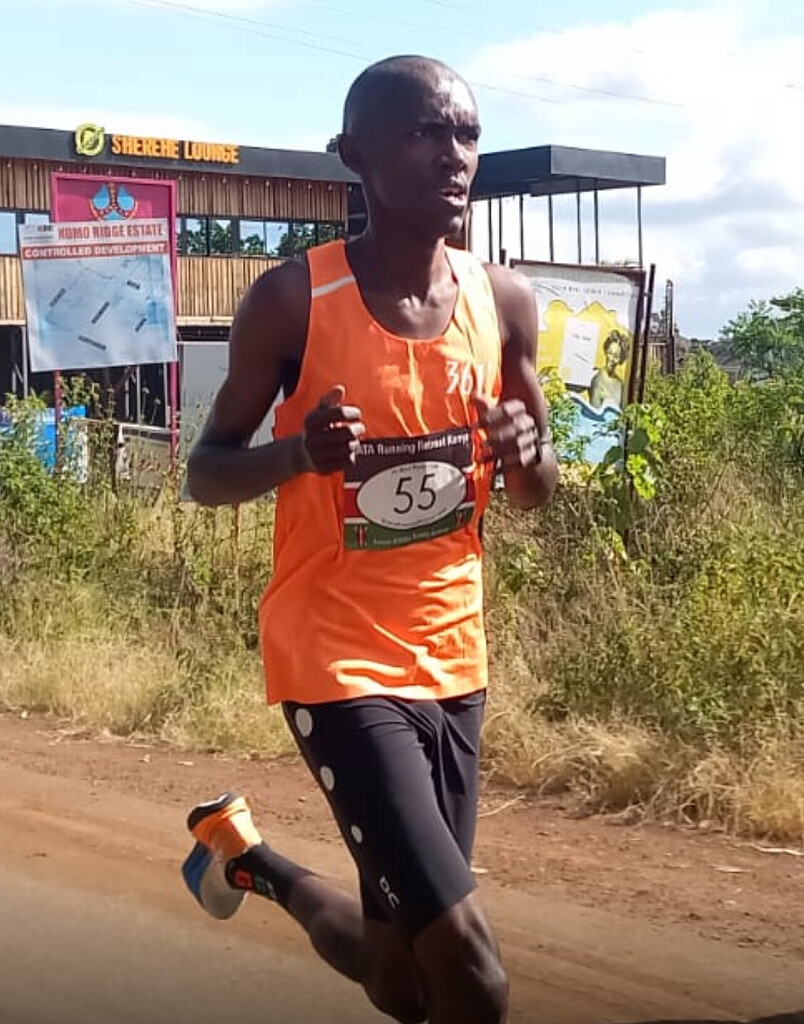
Big Performances at the Nairobi City Marathon — Wilson Bii and Zakariah Shine for KATA
Nairobi, Kenya — July 6, 2025
The streets of Kenya’s capital came alive this morning with the running of the Nairobi City Marathon, Half Marathon, and Expressway 10K. With elite competition, a scenic city course, and massive public support, the event once again showcased the depth of talent in the world’s running capital.
Among the standout performances were two remarkable athletes of from KATA Running Camps, continuing to make their mark on Kenya’s competitive distance running scene.
Wilson Bii Dominates Para Half Marathon

Wilson Bii (4th photo), a visually impaired runner training at a KATA Running Camp, delivered a stunning performance in the Para Half Marathon division, winning in a time of 1:07:50. Known for his resilience and smooth stride, Bii proved once again that no obstacle can hold back a champion spirit.
“We are so proud of Wilson,” said Bob Anderson, Founder of the KATA (Kenyan Athletics Training Academy) initiative. “His dedication, grit, and belief inspire all of us.”
Bii, who has represented Kenya at multiple international events, continues to sharpen his fitness under KATA’s structured training model, which combines elite coaching with holistic athlete support.
Zakariah Breaks Through in the 10K
In the Expressway 10K, Zakariah (first photo) one of KATA Thika’s earliest and most consistent athletes, put together the race of his life. He clocked a personal best of 27:00 flat, finishing third overall in a stacked elite field.
This marks a major breakthrough for the rising star, whose consistency in training over the past year is now paying off in a big way.
“Zakariah has been with us since the very beginning,” Anderson added. “He works hard every day and keeps improving. Today was a huge moment for him and for the entire KATA movement. When he first came to KATA he way running a 10k in 34 minutes. His 27 minutes today at altitude says he is ready to run faster at sea level. He was only two seconds behind the winner."
Nairobi Marathon Elevates All Levels
While elite runners headlined each race, the Nairobi City Marathon continues to grow as a celebration of endurance and unity. From full marathoners tackling 42.195 kilometers through the city to recreational 10K runners testing their limits on the Expressway, thousands took part in what is becoming one of East Africa’s most important road racing events.
KATA: A New Chapter in Kenyan Running
With more than a dozen training camps and potato farms across Kenya — and a flagship retreat in Portugal — the KATA movement is changing the narrative. It’s not just about producing fast times, but building complete athletes, nurturing character, and providing real economic sustainability.
Today’s results in Nairobi prove that the vision is working.
by Boris Baron
Login to leave a comment
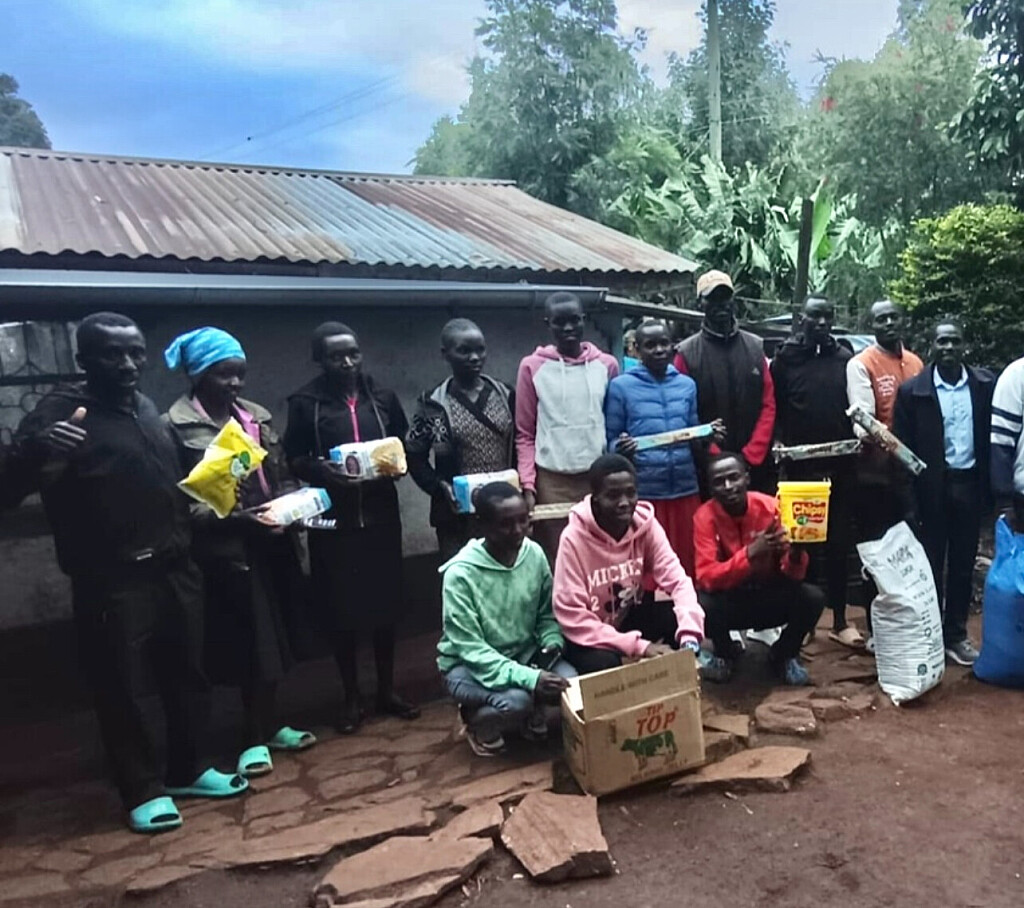
From Dirt Roads to Global Dreams: Inside Kenya’s Fastest-Growing Running Movement
In the heart of Kenya’s Rift Valley and beyond, a quiet revolution in athletics is underway. What began as a modest idea has grown into a dynamic movement that now spans 19 KATA Running Camps and Potato Farms across Kenya—plus two international retreats, including one at the historic Anderson Manor in Monforte da Beira, Portugal.
And it’s happening fast.
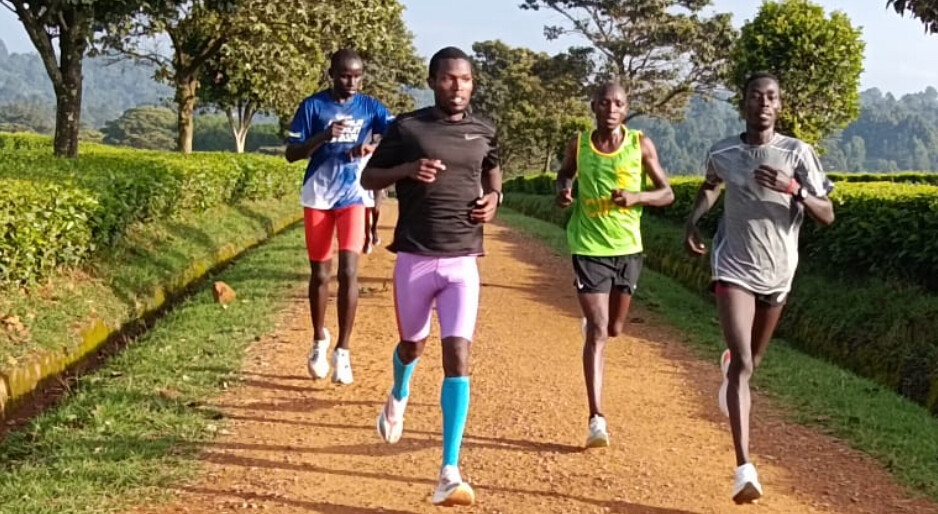
“We never planned to expand this quickly,” says Bob Anderson, founder of KATA and a lifelong advocate for long-distance running. “But the momentum of this movement just couldn’t be slowed down. We’ll be confirming one more camp shortly, and additional locations will follow in early 2026.”

KATA—short for Kenyan Athletics Training Academy—is unlike anything else in the world of distance running. It blends elite training with economic empowerment, giving young athletes not only the tools to run fast, but also a system that sustains them—and their communities—beyond the track.
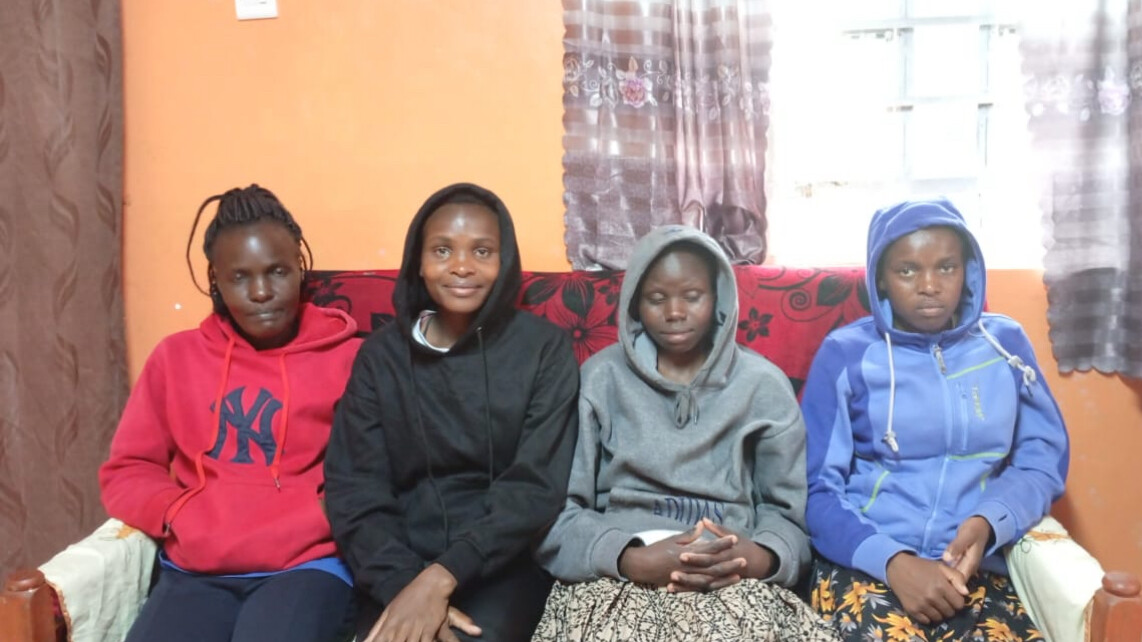
“This is not just sports development,” says Brigid Chebet, a Kenyan journalist who has closely followed the program. “It’s a model of rural transformation through athletics. And Kenya may finally have found a winning formula for generations to come.”
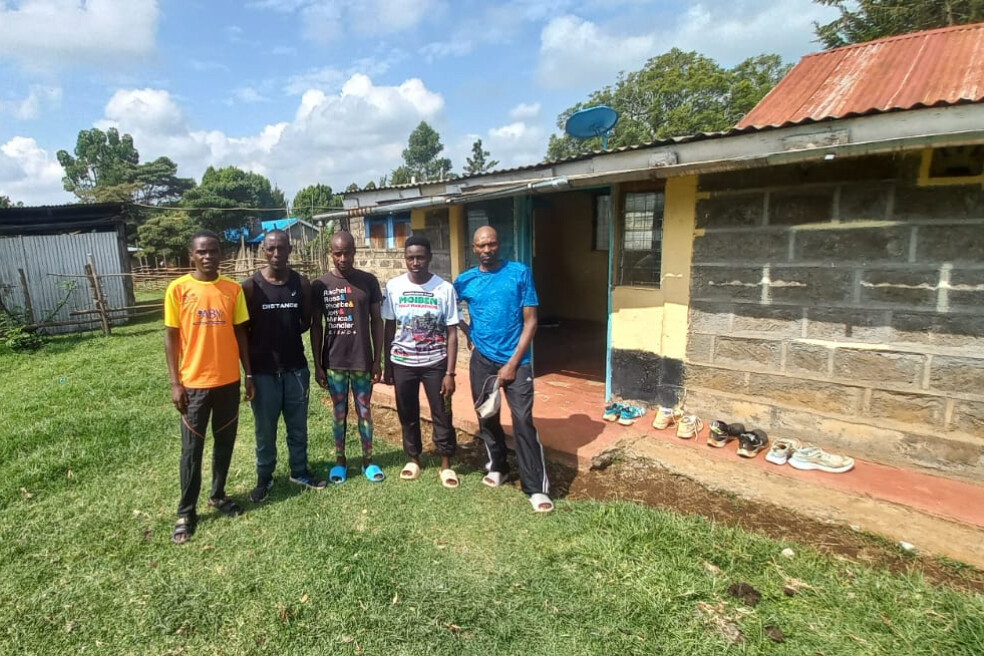
From a Vision to a Movement
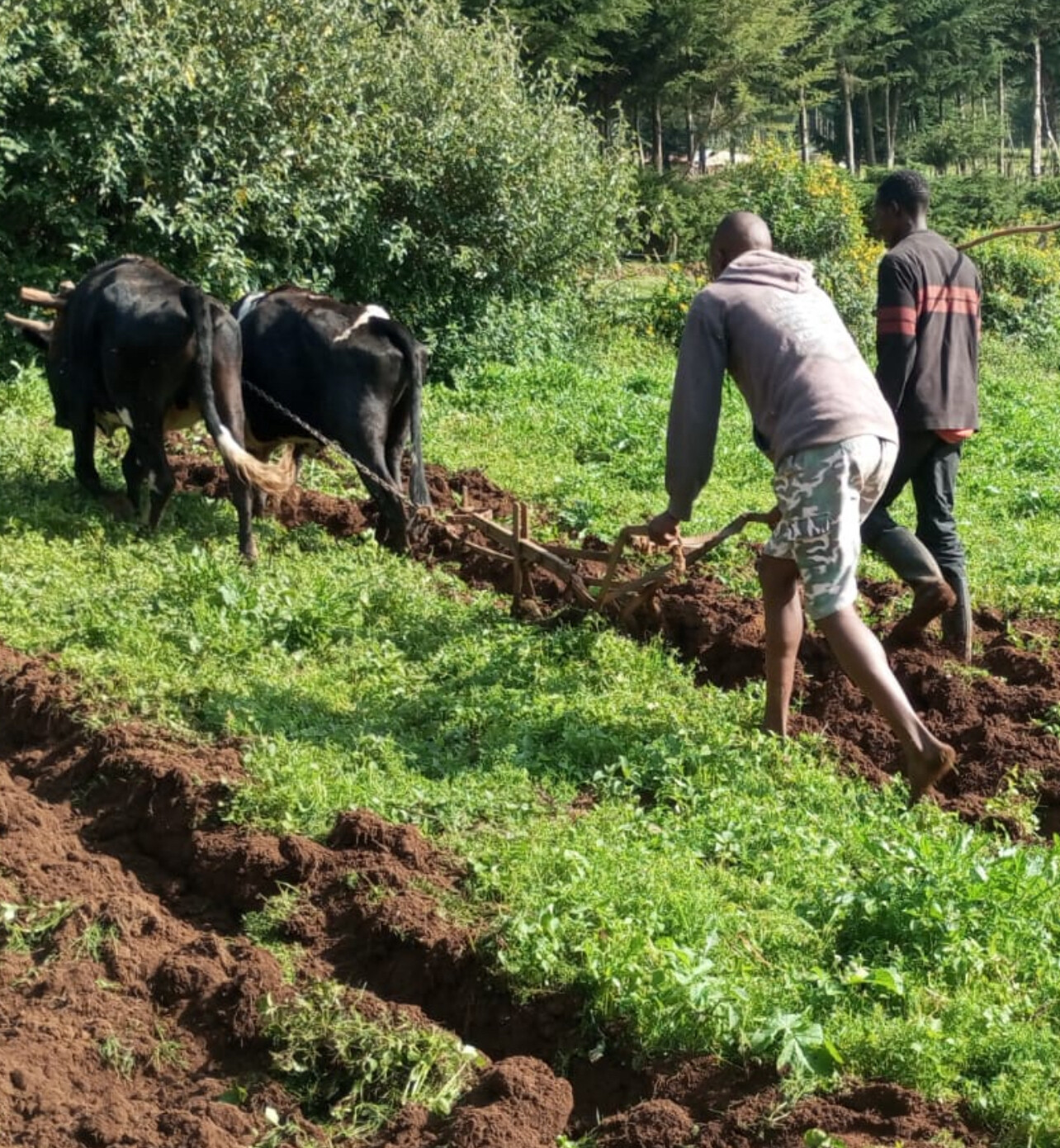
KATA was founded by Bob Anderson, an accomplished American runner who created Runner’s World magazine and later My Best Runs. After visiting Kenya in 2014, he was deeply inspired by the raw talent scattered throughout rural communities—athletes with potential but no pathway.
“He saw a path that few others in athletic management had envisioned—a system that not only trains champions but empowers them economically,” writes Chebet.
That system became KATA: a network of running camps, each paired with a three-acre potato farm. Each camp receives an interest-free loan from KATA to establish operations. In exchange, athletes train full-time and contribute 25 hours a week to the farm. Revenue from the potato harvest supports camp expenses, housing, and meals—creating a self-sustaining ecosystem.
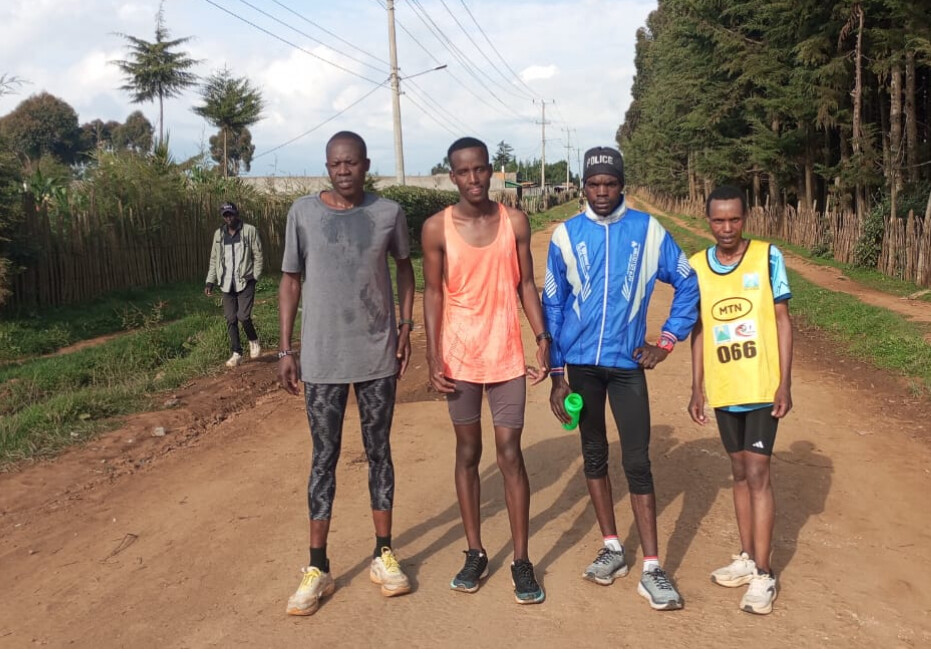
A Growing National Network
The first KATA retreat opened in Thika in 2019. Today, the initiative includes 19 camps spread across Kenya, each run by an experienced operator—many of them former elite athletes.
|
Location |
Operator |
|
Kapcherop |
Philemon Kipruto |
|
Molo |
Eric Chepkwony |
|
Kurengat |
Sammy Dismas |
|
Nyandarua |
Peter Njoroge |
|
Kericho |
|
|
Sotik |
|
|
Sachangwan |
Amos Chirchir |
|
Iten |
David Kellum |
|
Tenden |
Philemon Kipruto |
|
Eldoret |
Ruth Chumo |
|
Njerian Bomet |
Paul Kipsiele Koech |
|
Olenguruone |
Charles Ngeno |
|
Kapkembu |
Kipyegon Nehemiah |
|
Gasharrarge |
Job Langat |
|
Kaptagat |
Joseph Ngure |
|
Kiambu |
Julius Gacheru Migwi |
|
Kangundo |
Jimmy Muindi |
|
Moiben |
Hillary Kiplagat |
|
Kiptoror |
Caleb Rut |
In addition to these camps, two retreats serve as international training hubs: the KATA Running Retreat Thika, operated by Chris Muiruri, and the KATA Running Retreat Portugal, operated by Alberto Santos. Guests from around the world come to the two KATA retreats to train the Kenyan Way.
Elite Experience, Grassroots Impact
At the heart of KATA’s success is its leadership team. Olympic medalist Edwin Soi, now managing the Kuresoi Camp, brings both credibility and experience. Legendary steeplechaser Paul Kipsiele Koech, who has run under 8:10 in the 3000m steeplechase over 110 times, oversees two KATA camps/farms.
Veteran coach Charles Ngeno, known for his early work with Olympic champion Faith Kipyegon, now heads the Olenguruone camp, ensuring that young athletes from even the most remote villages receive structured training and economic opportunity.
“The new vision embraces sustainability, resilience, and empowerment,” writes Chebet. “It ensures that our athletes thrive both on and off the field.”
Looking Ahead
Anderson and the KATA team have ambitious plans: confirming one more camp this month and preparing for even more in 2026. The goal is clear—build up to 50 self-sustaining running camps across Kenya and replicate the model in other parts of the world.
“We’re not just chasing medals,” says Anderson. “We’re building lives.”

For partnership opportunities or more information, contact Bob Anderson on WhatsApp: +1-650-400-6643
by Brigid Chebet with Boris Baron
Login to leave a comment
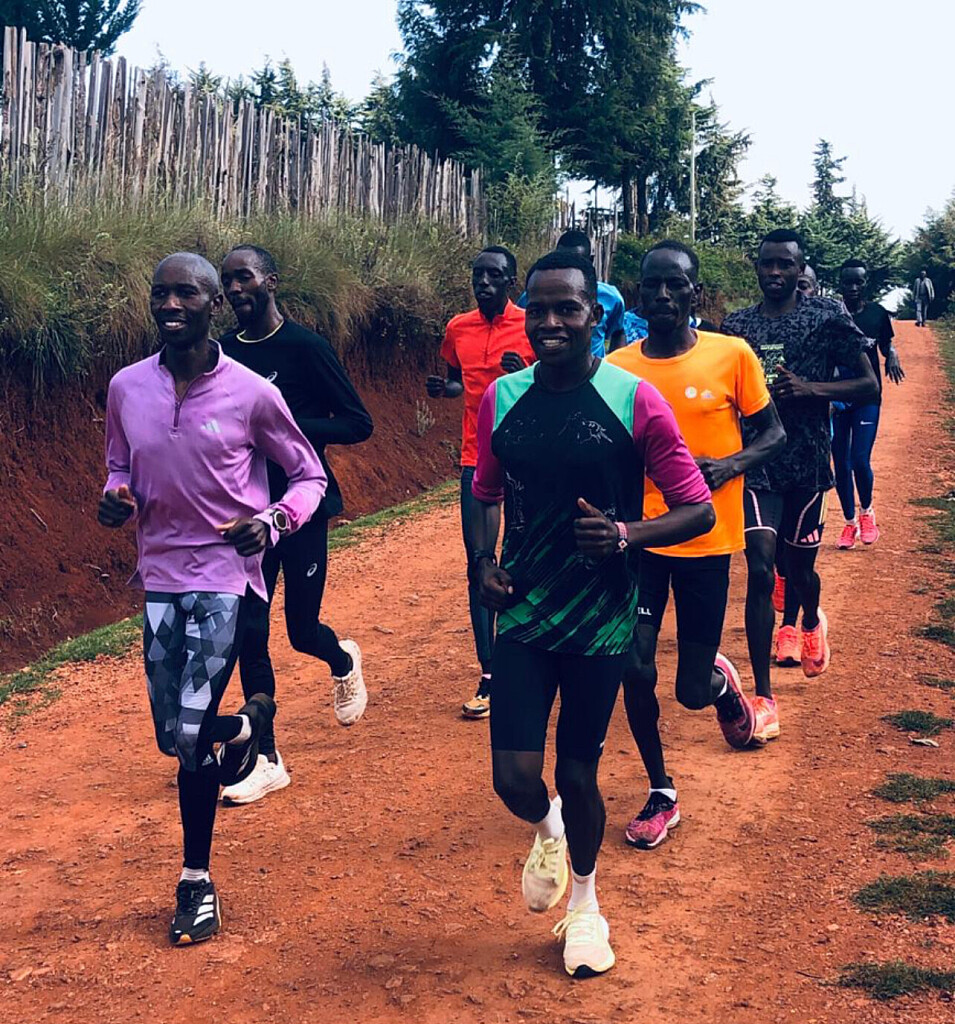
KATA to Launch Eight New Running Camps and Potato Farms Across Kenya by October
Bob Anderson, the visionary founder of KATA (Kenyan Athletics Training Academy) and long-time champion of Kenyan running, and lifetime runner, has announced a bold expansion plan: eight new KATA Running Camps and Potato Farms will open across Kenya by October 1, 2025.
“We want to confirm our next eight camps by August 15,” says Bob Anderson, KATA Director and Founder.
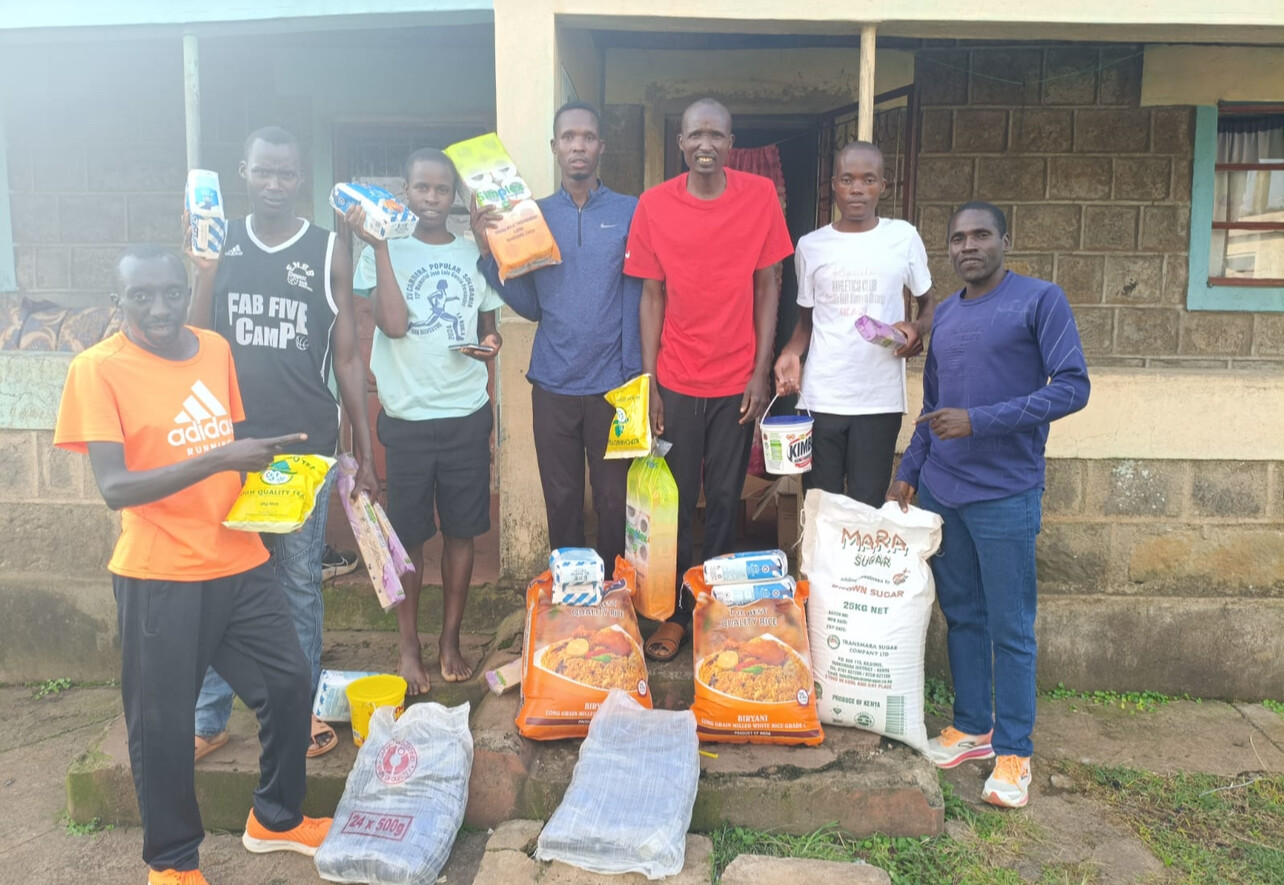
Each new site will combine high-performance athlete training with sustainable agriculture, centering around a 3-acre KATA Potato Farm. The initiative aims to create self-sustaining camps where runners not only train at a high level but also contribute to the farm operations that help support the entire program.
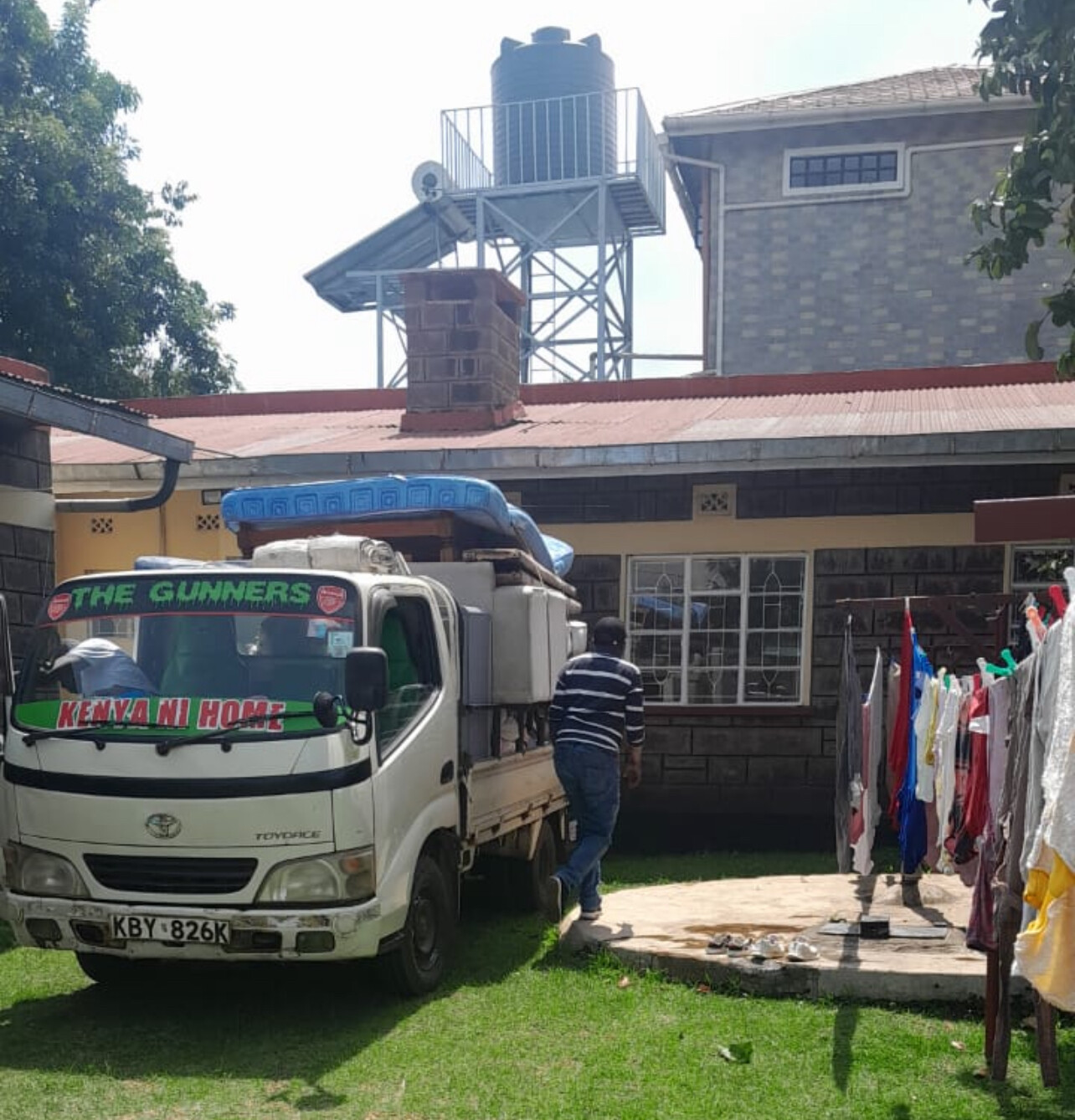
At the heart of every KATA Running Camp is a dedicated operator—often a former elite athlete or experienced coach—who oversees day-to-day operations and athlete development. Our operators are more than just managers; they are mentors, motivators, and community builders. Each operator is carefully selected for their deep understanding of training at altitude, their passion for helping athletes succeed, and their ability to lead with integrity. Many of them have raced at the international level or coached athletes to major victories, bringing invaluable knowledge to the camps. Whether it’s organizing daily workouts, managing food and lodging, or fostering a winning culture, our KATA Running Camp operators are the backbone of our success.
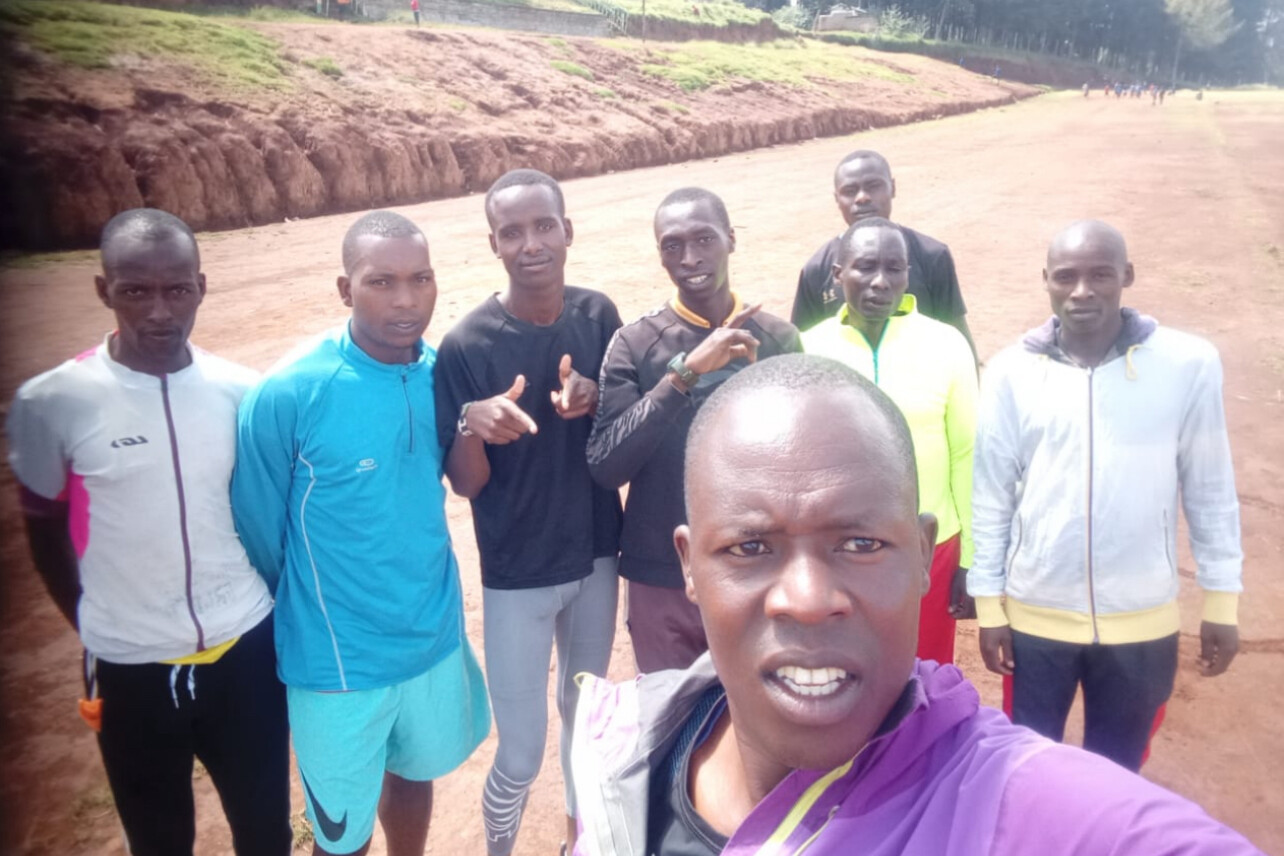
Currently, KATA Running Camps are thriving across Kenya under the leadership of 11 outstanding operators. In Kapcherop, Philemon Kipruto manages a vibrant group of emerging athletes. Eric Chepkwony runs our camp in Molo, and Sammy Dismas leads the program in Kurenget.
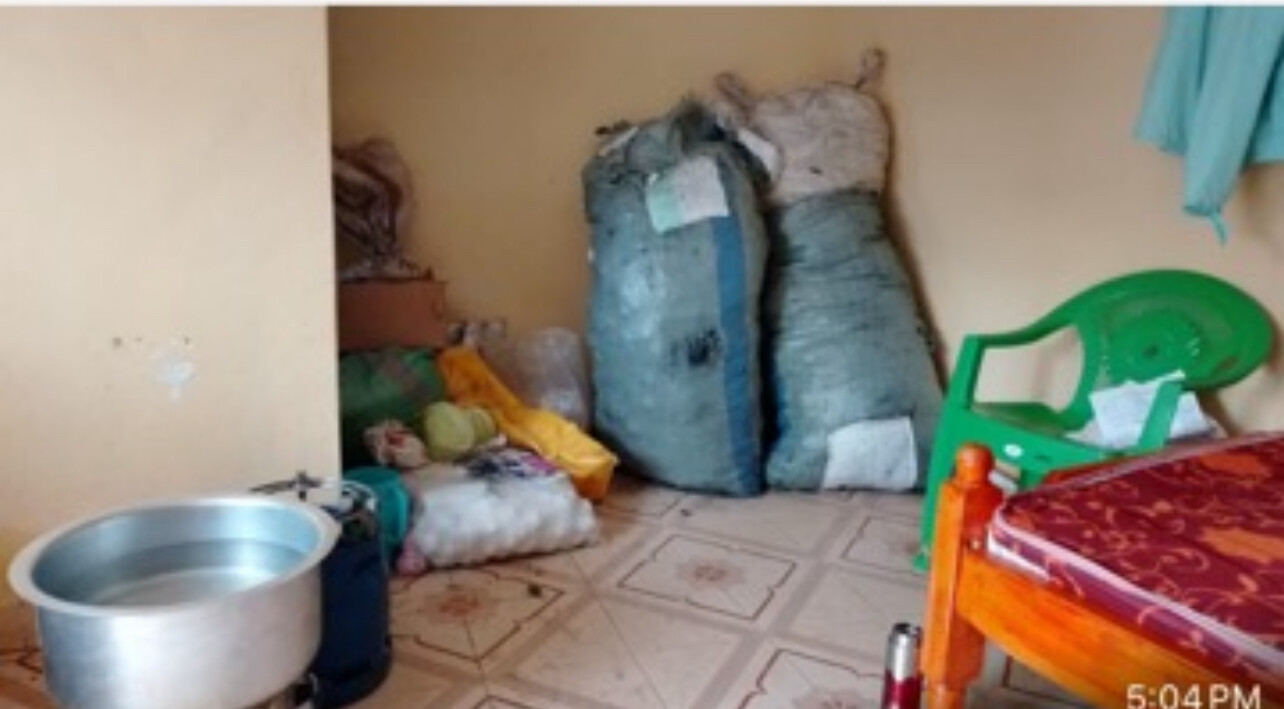
Over in Nyandarua, Peter Njoroge is building a strong training culture, while Edwin Soi, Olympic bronze medalist, brings elite-level experience to our Kericho camp. Paul Kipsiele Koech, an iiOlympic medalist, leads not one but two camps—Sotik and Njerian Bomet—where he shares his wealth of knowledge and competitive insight. In Sachangwan, experienced coach Amos Chirchir oversees daily operations and athlete growth, while in the legendary running hub of Iten, former elite runner David Kellum provides mentorship and structure.
David Kirui heads up the team in Tenden, and in Eldoret, Ruth Chumo—a respected coach of both abled and para-athletes—brings technical excellence and inclusivity to her camp. Rounding out our leadership team is Charles Ngeno, who directs the Olenguruone camp and plays a vital role in shaping future champions.
How the Program Works:
Each selected operator will receive:
•An interest-free loan of 350,000 KES as startup capital to establish the camp.
•An additional 300,000 KES interest-free loan to cover the costs of renting and preparing 3 acres of land, fertilizing, spraying, planting, harvesting, and selling the potatoes.
The model is built on long-term sustainability: once established, revenue from the potato farm is expected to fully support each KATA Camp year-round, without additional outside funding.
Work and Training:
KATA athletes must commit to:
•25 hours of farm work per week, in addition to their structured training schedules.
This balance of physical labor and elite coaching is designed to build discipline, character, and community resilience—while helping runners achieve their full athletic potential.
The KATA Running Camps and KATA Potato Farms are headquartered at the Anderson Manor of Portugal, home to the KATA Running Retreat, located in Monforte da Beira in central Portugal. This historic and beautiful estate serves as the ideal European base for KATA. Athletes come here to sharpen their fitness and prepare for peak performances, whether they’re targeting personal bests or major competitions.

The location is perfect for training—quiet, scenic, and inspiring—and it’s conveniently positioned just 2.5 hours from Lisbon and about 4 hours from Madrid by car. KATA also maintains a local office in Thika, Kenya—site of the original KATA Running Retreat opened in 2019—which supports the growing network of KATA camps across the country.
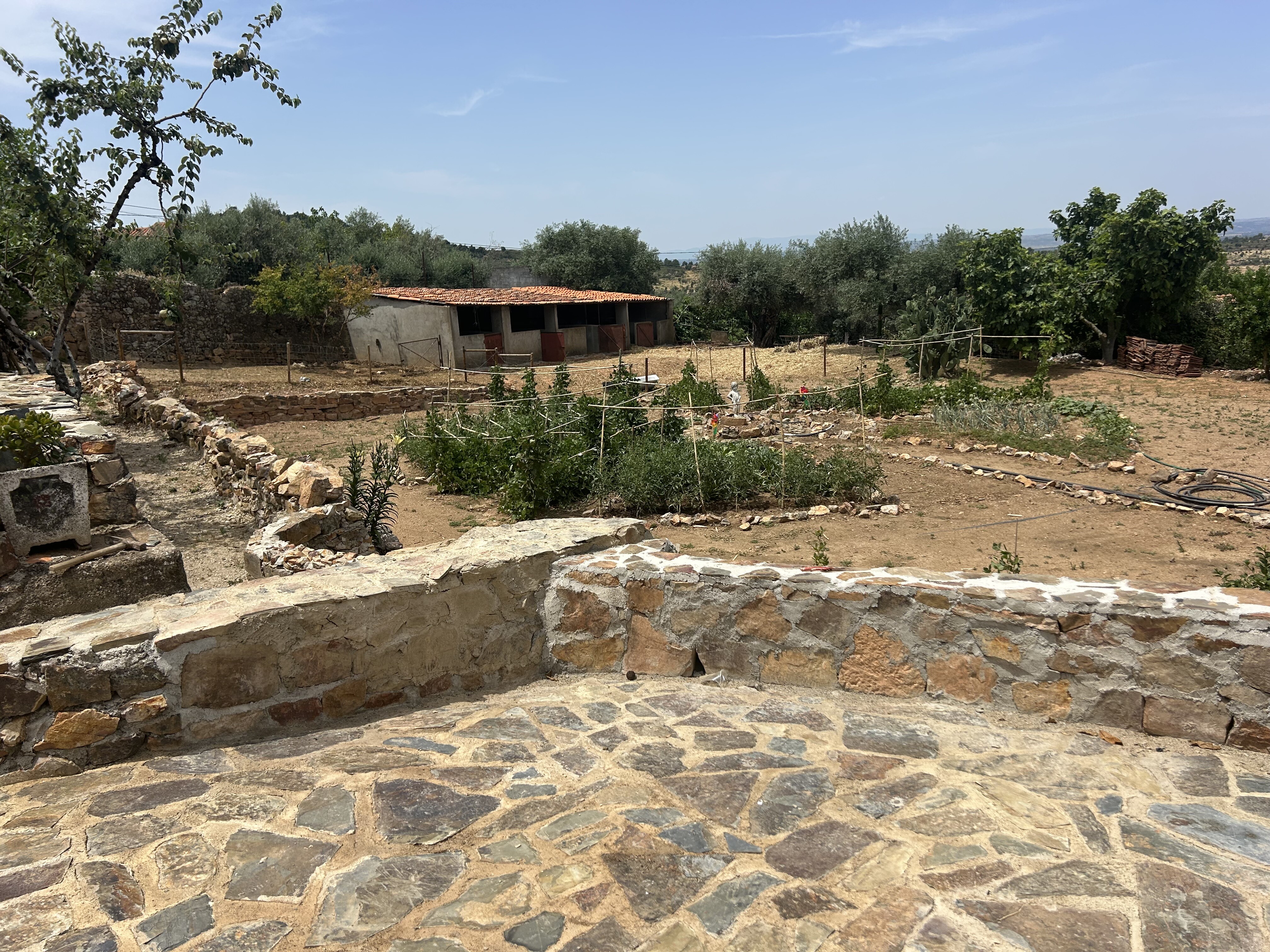
Interested in Becoming a KATA Camp Operator?
If you’re passionate about athletics, have experience in farming or business management, and want to make a lasting difference in your community, this could be your opportunity.
Contact Bob Anderson directly on WhatsApp (650-400-6643) to apply (text only at this point):
Please include:
•Your full name
•The town where you’d like to establish a KATA camp
•Your background in running, coaching, or athletics
•Experience running a business
•Any potato or farming experience you have
This is more than a training camp. It’s a movement to empower Kenyan runners through purpose, performance, and sustainable agriculture.

by Boris Baron
Login to leave a comment
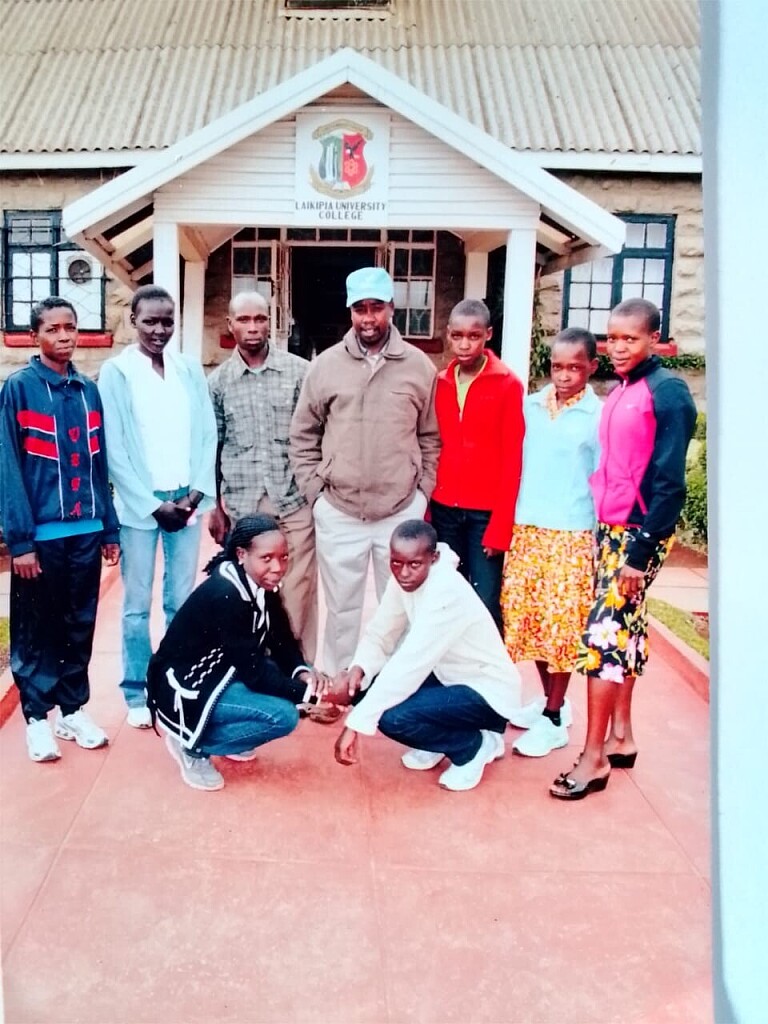
Charles Ngeno Joins KATA to Help Build Kenya’s Next Champions
With more than 15 years of experience coaching distance runners at the highest level, Charles Ngenohas dedicated his life to unlocking the potential of Kenyan athletes. Now, as a KATA Running Camp operator, he brings that expertise to one of the country’s most innovative athletic development programs—combining elite coaching with a sustainable, community-driven model.
“I’m thrilled to join the KATA Running Camp program, where I’ll share my expertise and passion for athletics with talented young runners,” Ngeno says. “With over 15 years of coaching experience and a proven track record of developing world-class athletes, I’m confident in my ability to contribute to the program’s success. I’m excited to work with the KATA team to identify and nurture emerging talent, and to help athletes achieve their full potential. Together, we’ll take Kenyan athletics to new heights and inspire a new generation of runners.”

Ngeno’s coaching career has included mentoring both junior and senior athletes—many of whom have risen to national and international prominence. One of the most notable names he worked with early on is Faith Kipyegon, now a two-time Olympic champion and world record holder in the 1500m. Ngeno played a role in her formative development, helping guide her at a key moment in her youth when she was discovered near Keringet Township.
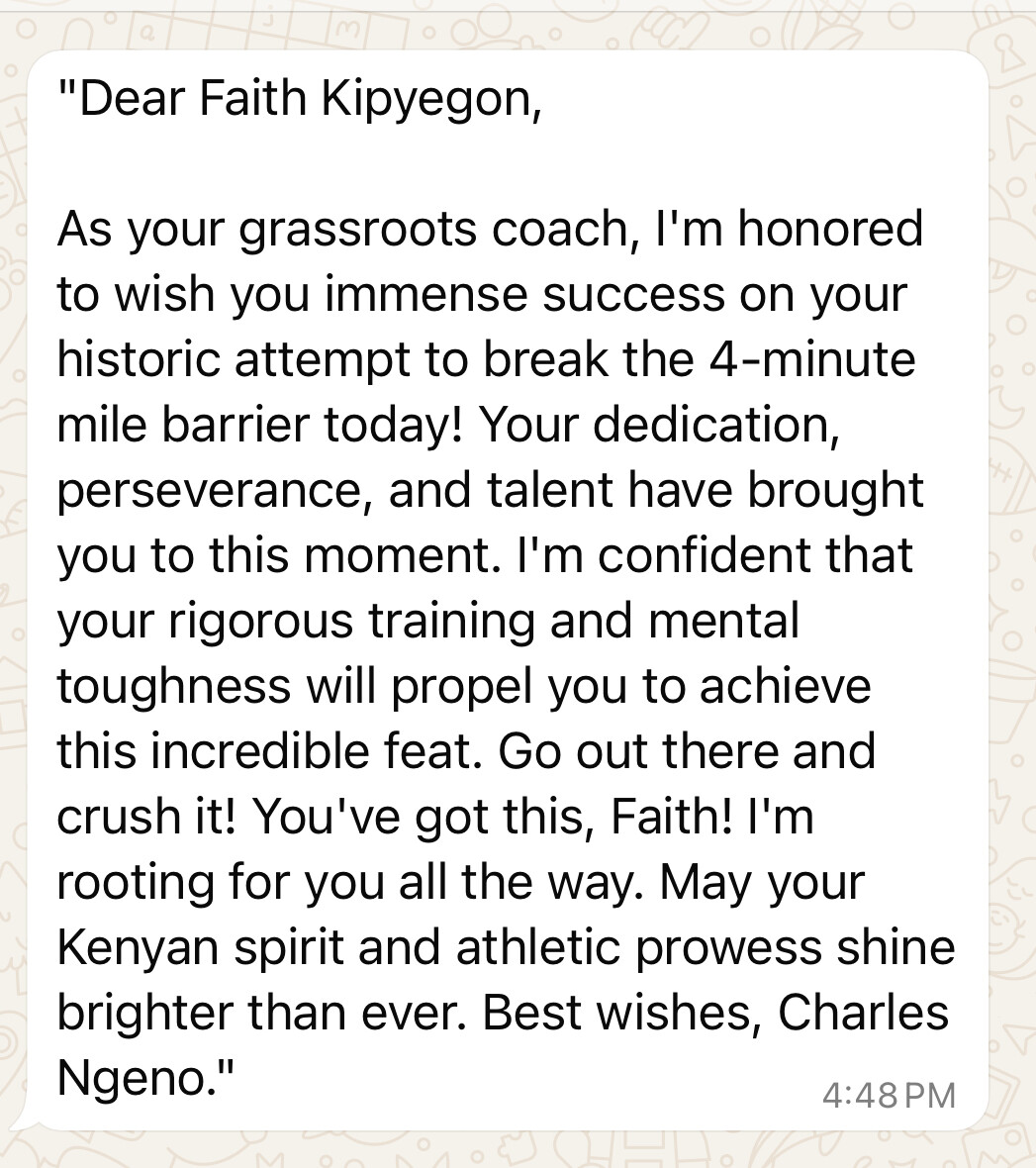
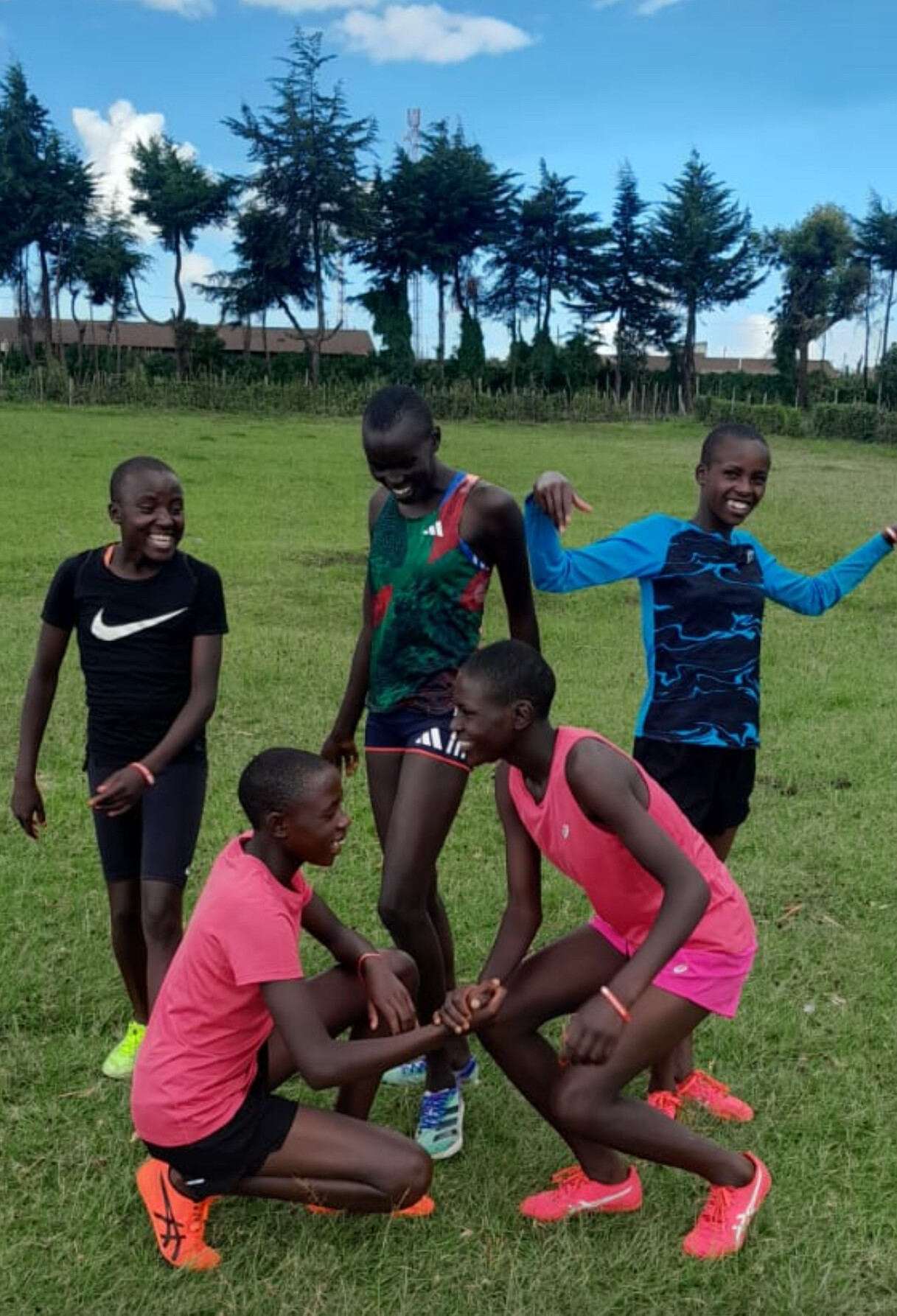
That early influence continues to resonate. Kipyegon is now attempting to do what no woman has ever done—break the four-minute barrier for the mile. The historic run is scheduled for June 26 in Paris as part of Nike’s “Breaking4” project, with the global running world watching closely. Ngeno, meanwhile, is back where his heart has always been: coaching on the ground in Kenya and building future champions.
The KATA model is unlike any other. Each camp is linked with a three-acre potato farm, where athletes work part-time—25 hours a week—in exchange for full room, board, and expert coaching. The combination of structured training and sustainable agriculture allows athletes to focus entirely on their development, while also contributing to the local economy.
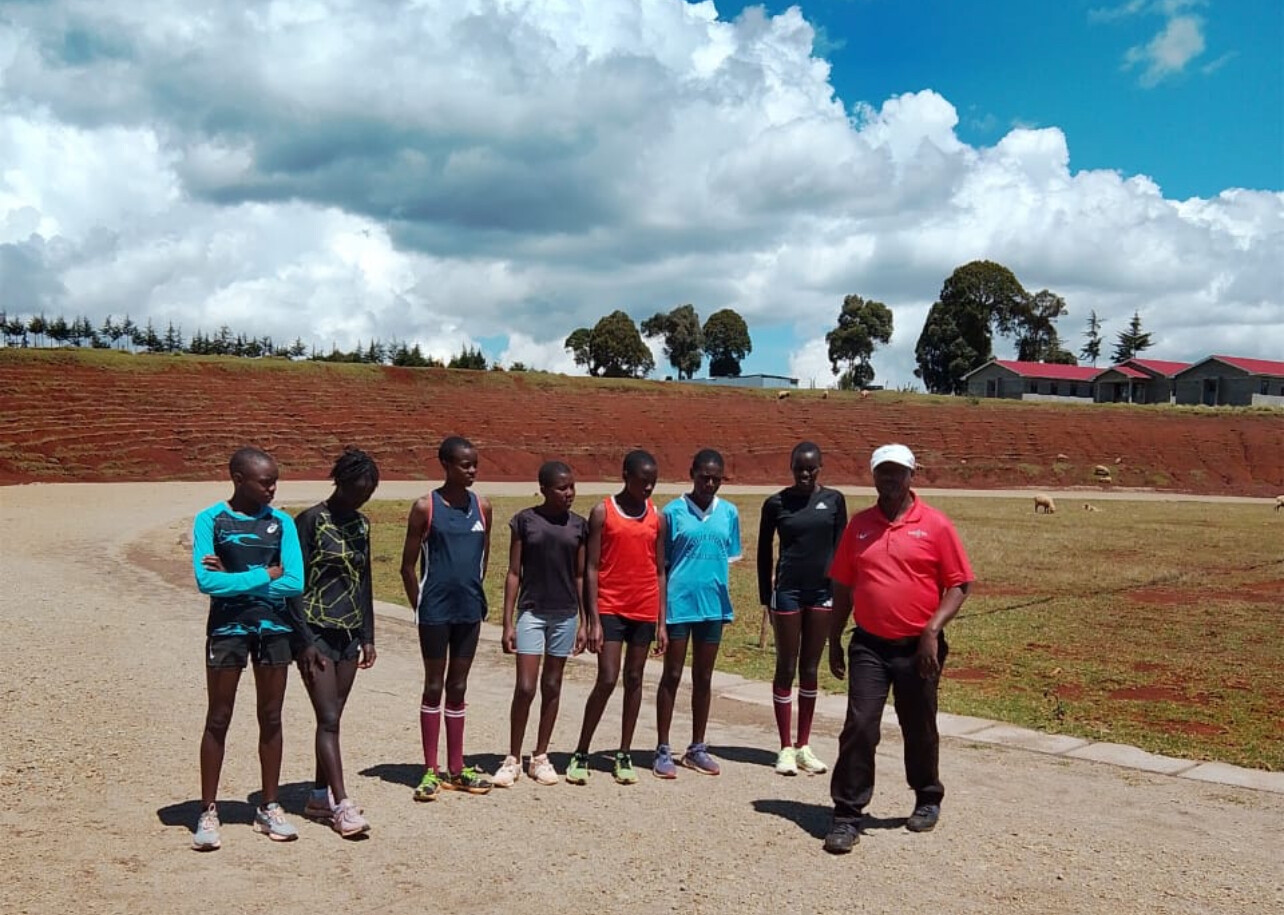
As a camp operator in Olenguruone, Ngeno oversees not only the athletic training but also the day-to-day structure of the farm program. His hands-on approach, deep knowledge, and commitment to discipline and consistency make him the ideal leader for this environment.
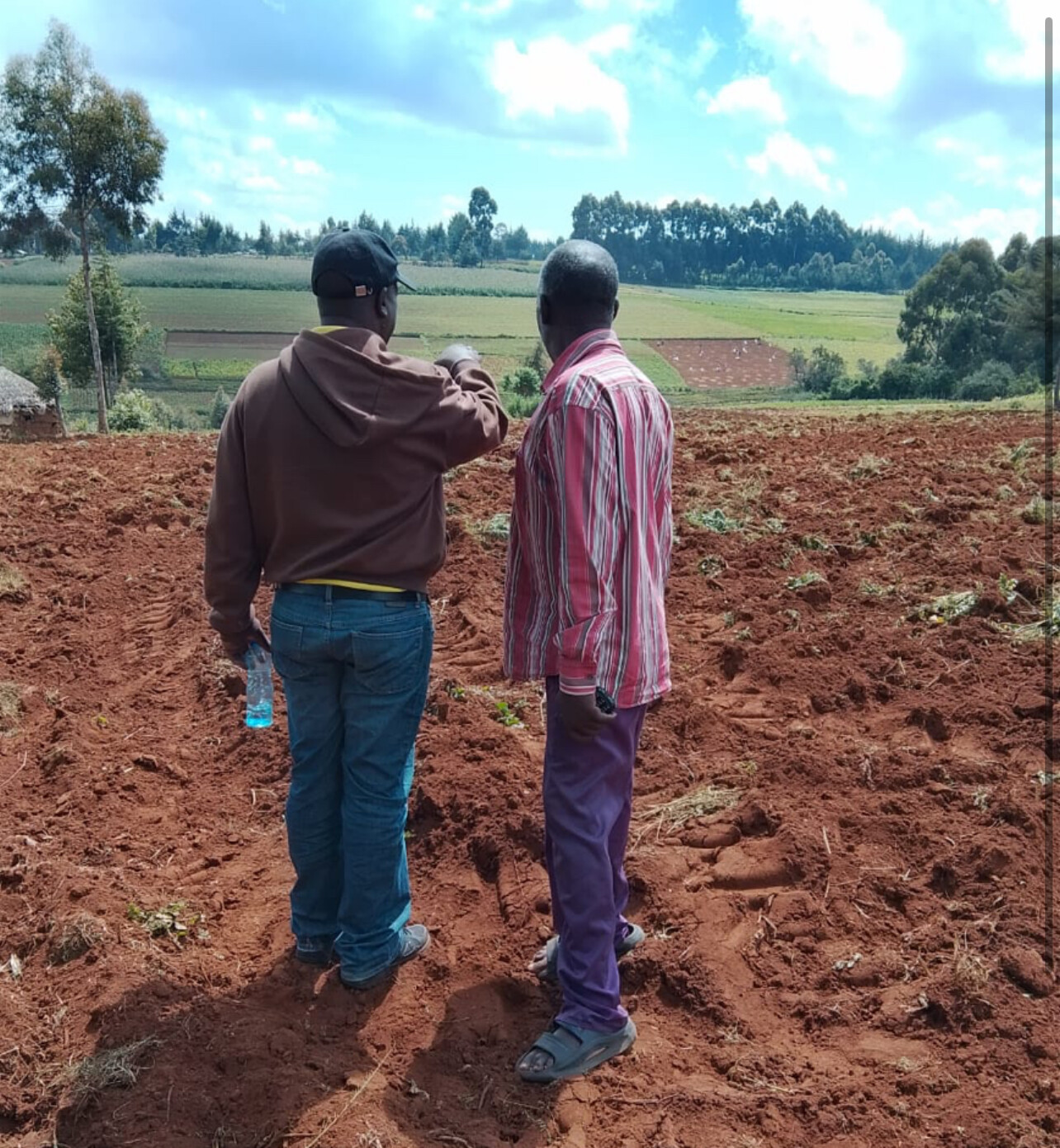
“This isn’t just another training camp,” he says. “This is a platform for real opportunity. We’re giving athletes who might otherwise be overlooked the chance to build something—to compete, to grow, and to give back. I’ve seen what’s possible when someone believes in you. I want to be that person for these runners.”
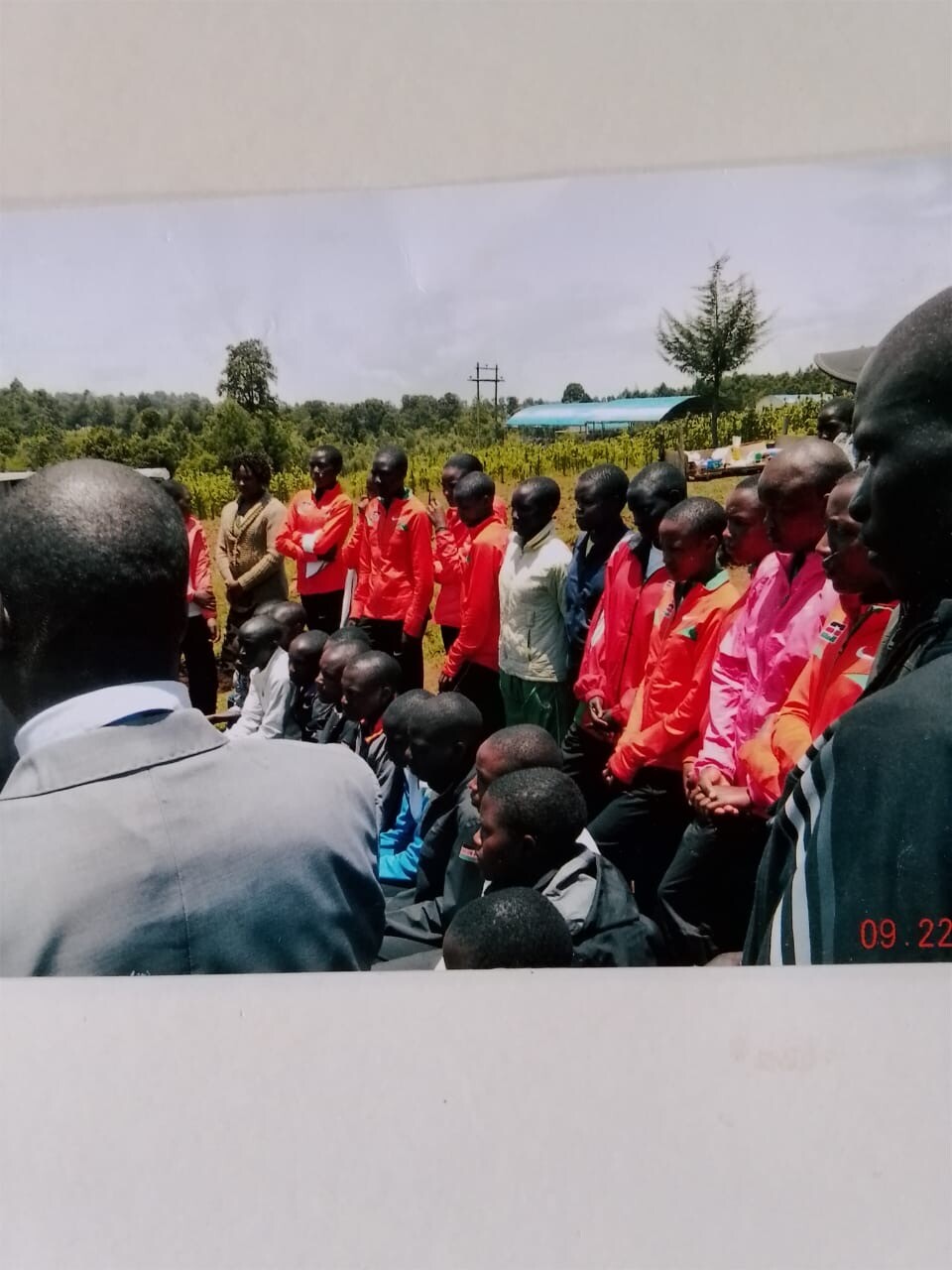
With camps already in operation across Kenya, and more launching every month, KATA is expanding rapidly under the leadership of founder Bob Anderson, who launched the original KATA in Thika in 2019. All camps follow the same guiding philosophy: develop talent locally, create economic opportunity, and prepare runners for the world stage.

Charles Ngeno’s presence adds serious strength to that mission. His career, his values, and his passion align perfectly with the vision of KATA. And for the athletes training under his guidance today, the path forward has never looked more promising.
by Boris Baron
Login to leave a comment
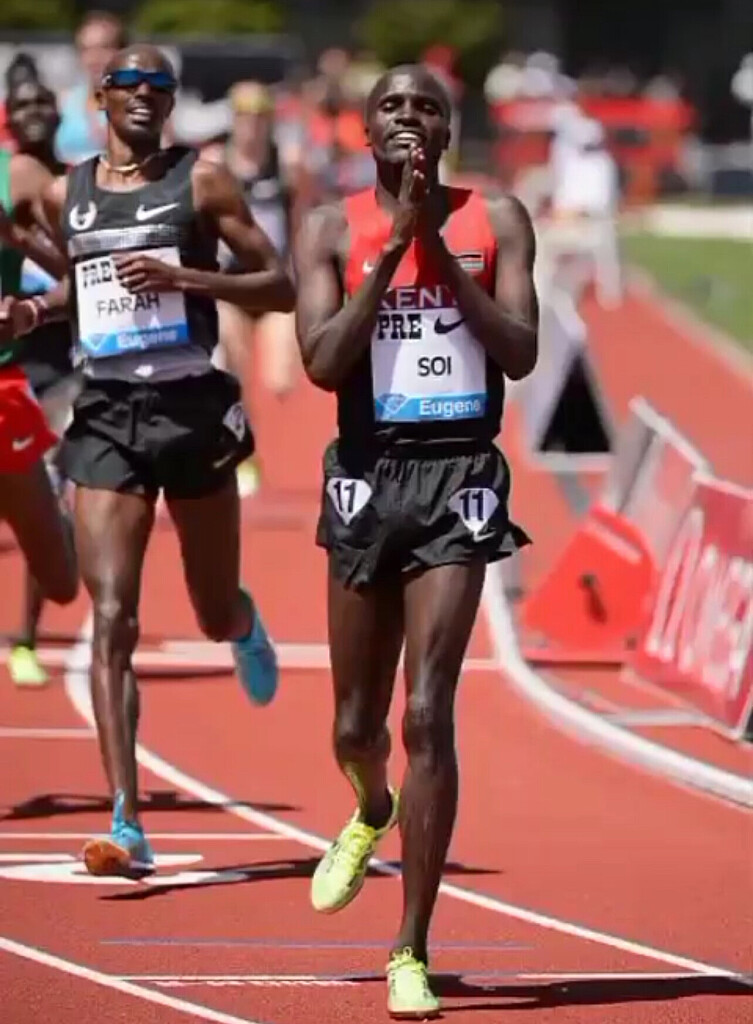
Support Athletes. Uplift Communities. Help Shape the Future of Kenyan Running
.For decades, Bob Anderson—founder of Runner’s World and a lifelong champion of distance running—has believed in the transformative power of athletics. In 2019, inspired by visits to Kenya dating back to 1987, he launched the Kenyan Athletics Training Academy (KATA) in Thika to give promising athletes the opportunity to rise. In 2024, Anderson expanded the vision internationally, opening a second training retreat in Portugal.
Until now, every KATA camp and retreat has been fully funded by Bob himself. But as momentum builds, he’s extending an invitation: become a KATA Partner and help expand this game-changing model—while earning a meaningful return on your investment.
“We’ve proven the model works,” says Anderson. “Now we want visionary partners to help take KATA to the next level. This isn’t charity—it’s an investment in performance, purpose, and people.”
What Is the KATA Partner Program?
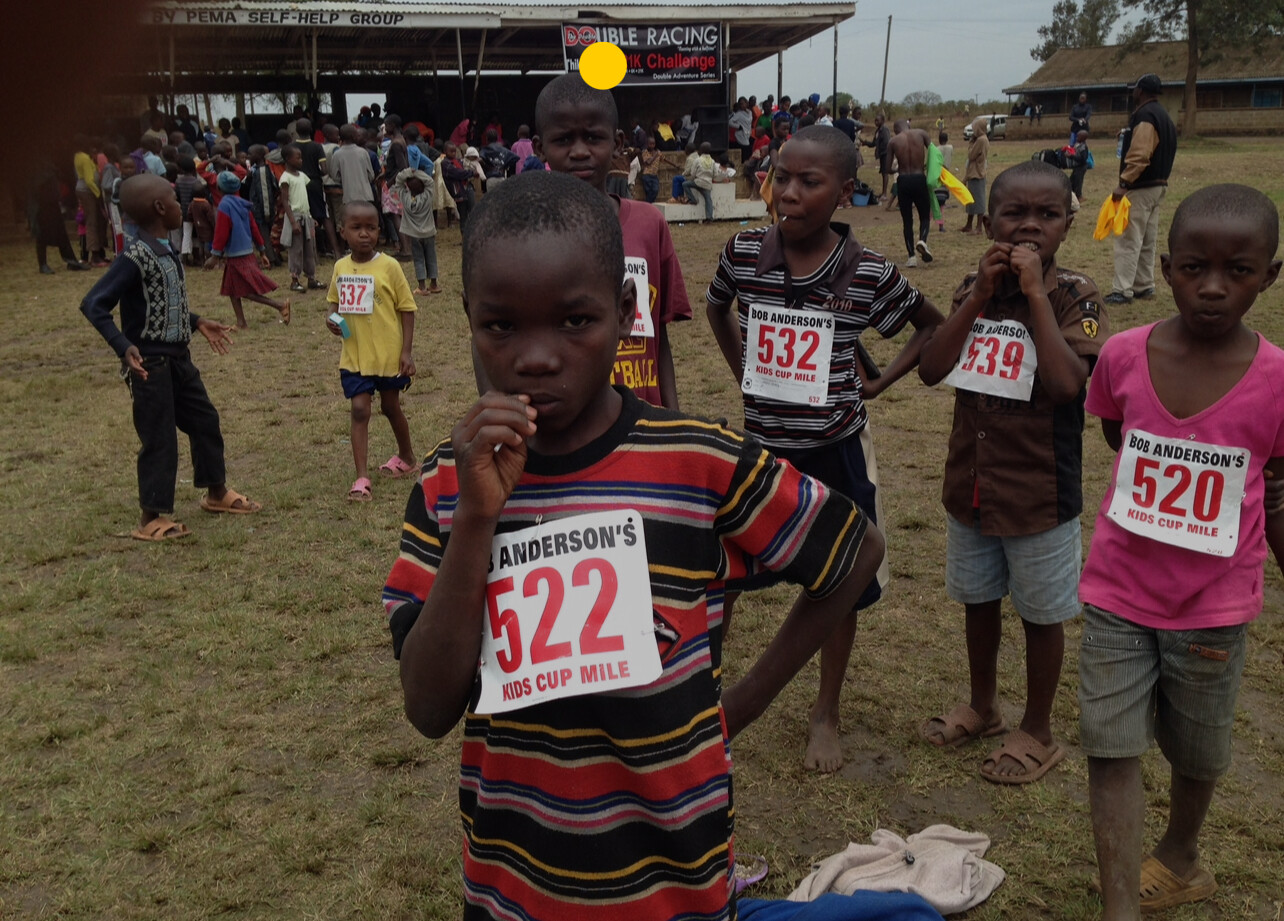
The KATA Partner Program offers a ground-floor opportunity to support elite athlete development and rural progress through a unique model that combines world-class coaching with sustainable agriculture.

Each KATA Running Camp is paired with a three-acre KATA Potato Farm. Athletes live, train, and work part-time on the farm—25 hours per week—in exchange for full room and board plus expert coaching. In return, they contribute 15% of any prize money they earn back to their camp. The rest is theirs to keep.

As a KATA Partner, you help fund and launch a new camp. In return, you:

• Earn a share of revenue from potato farm sales and athlete prize winnings
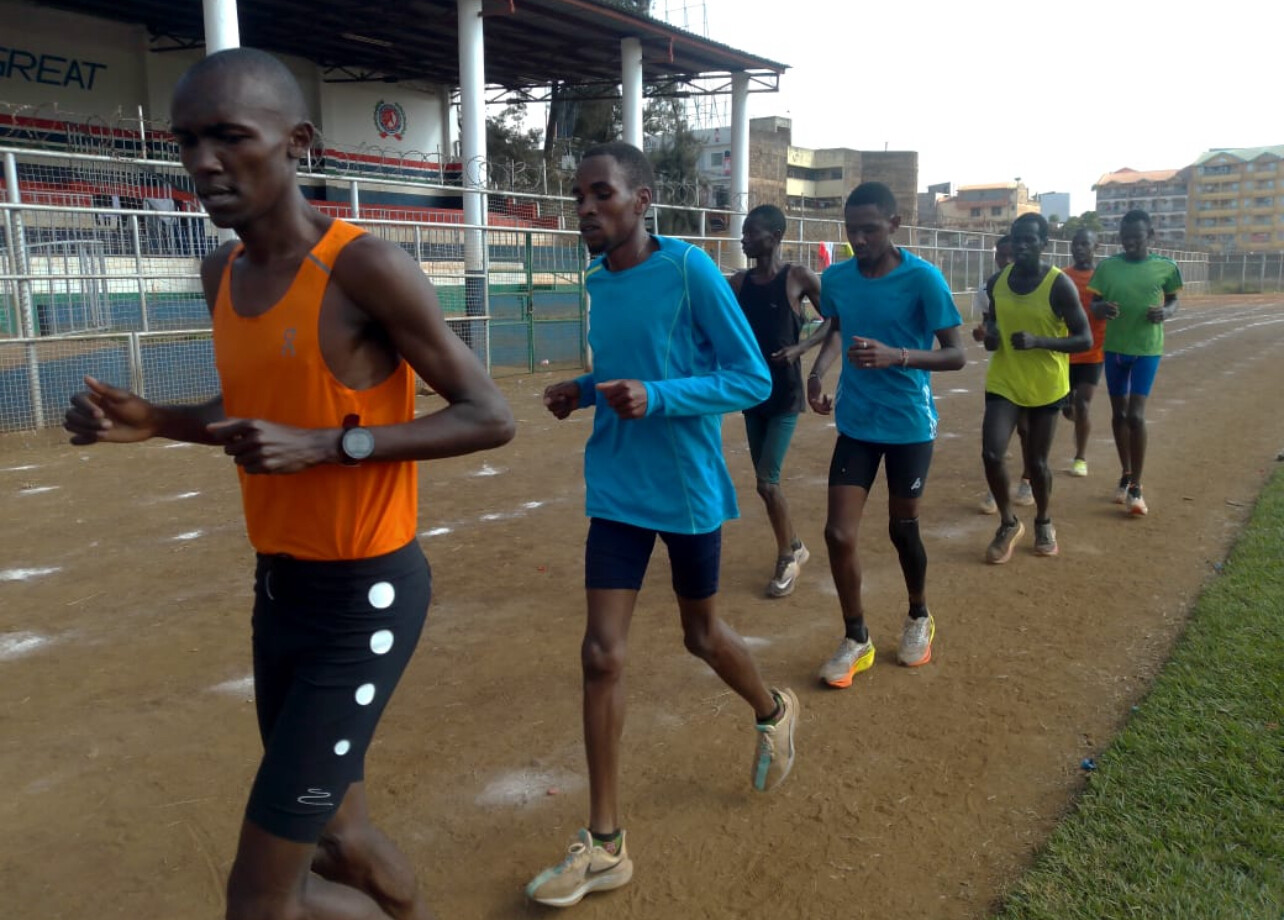
• Gain naming rights to the camp (e.g., [Your Name or Organization Name] KATA Running Camp)
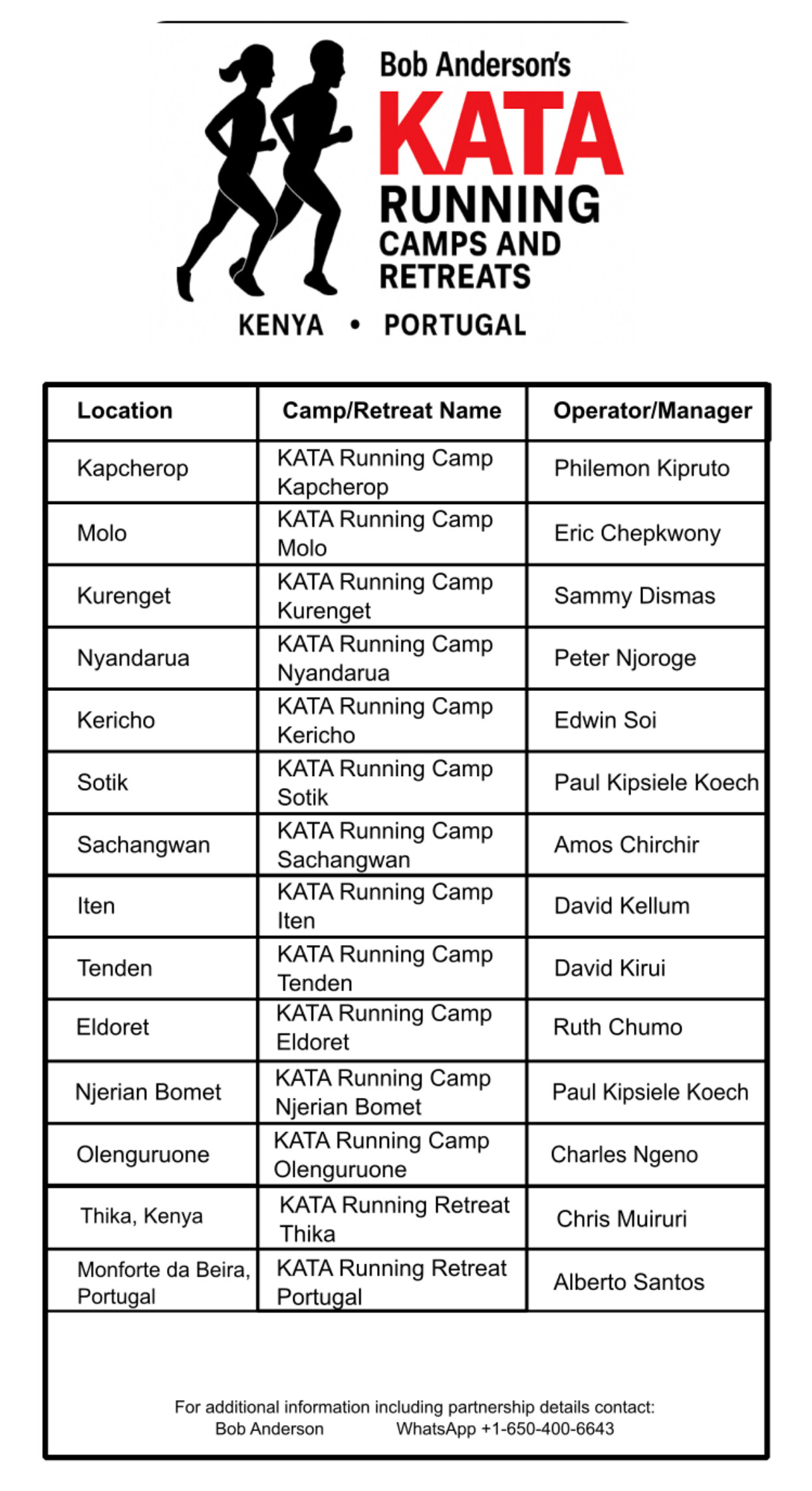
• Empower athletes and uplift local communities through long-term partnership
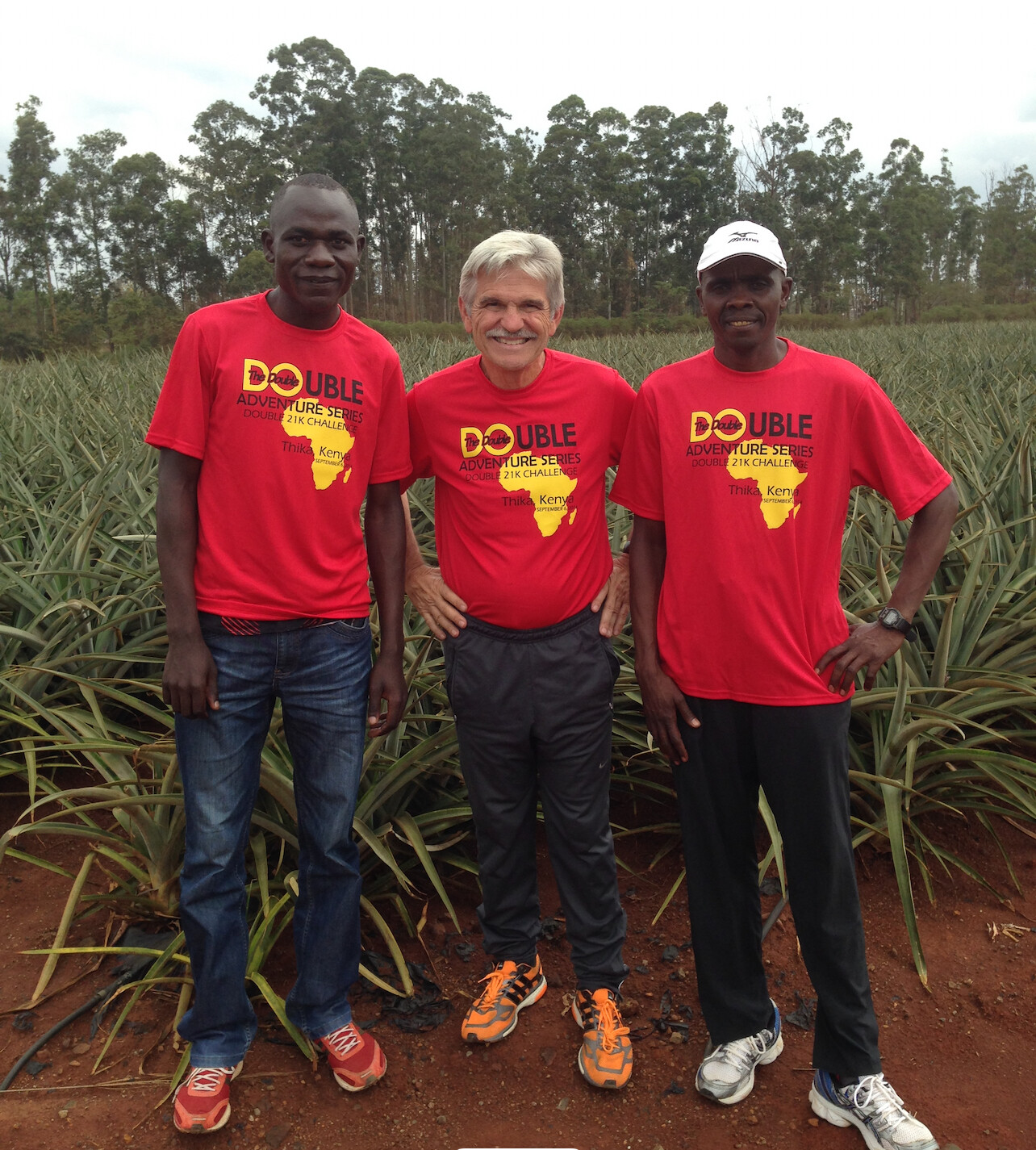
Two Pathways to Partnership
International Partner Program
• One-time KATA membership fee: $5,000 USD in 2025
• Fee increases to $6,500 USD starting January 1, 2026
• Annual dues: $1,000 USD (starting year two)
• Share of revenue:
• 15% of potato farm revenue
• 15% of athlete prize money
Kenyan National Partner Program
• One-time KATA membership fee: KES 900,000
• Annual dues: KES 50,000 (starting year two)
• Each additional acre: KES 100,000 (plus KES 25,000 in annual dues)
• Share of revenue:
• 10% of potato farm revenue
• 10% of athlete prize money
This is not a donation—it’s a purpose-driven investment with a guaranteed revenue share. You’re helping athletes succeed and communities thrive, while building your own legacy.
KATA Handles Everything
Whether you want to be hands-on or prefer a passive role, KATA takes care of:
• Finding and securing land and housing
• Recruiting qualified operators (often Olympic medalists and elite coaches)
• Setting up the farm and camp
• Managing all agricultural operations and logistics
Current camps are operated by respected figures like Olympic medalists Paul Kipsiele Koech and Edwin Soi, coaching veterans such as Charles Ngeno, and long-time team members like Elam Wangerwo, who has worked with KATA since 2014.
Why It Matters
This program isn’t just about running—it’s about changing lives. KATA gives talented young runners the platform to pursue greatness while bringing food security and economic opportunity to rural Kenya.
“If you’ve ever wanted to be part of something that matters—something that delivers both impact and return—this is your moment,” says Anderson.
Join the KATA Movement
To learn more or become a KATA Partner, contact:
Bob Anderson via WhatsApp: +1 (650) 400-6643
The next great Kenyan runner is already out there. Let’s make sure they have a place to grow—on the track and in their community.
by Bob Anderson
Login to leave a comment
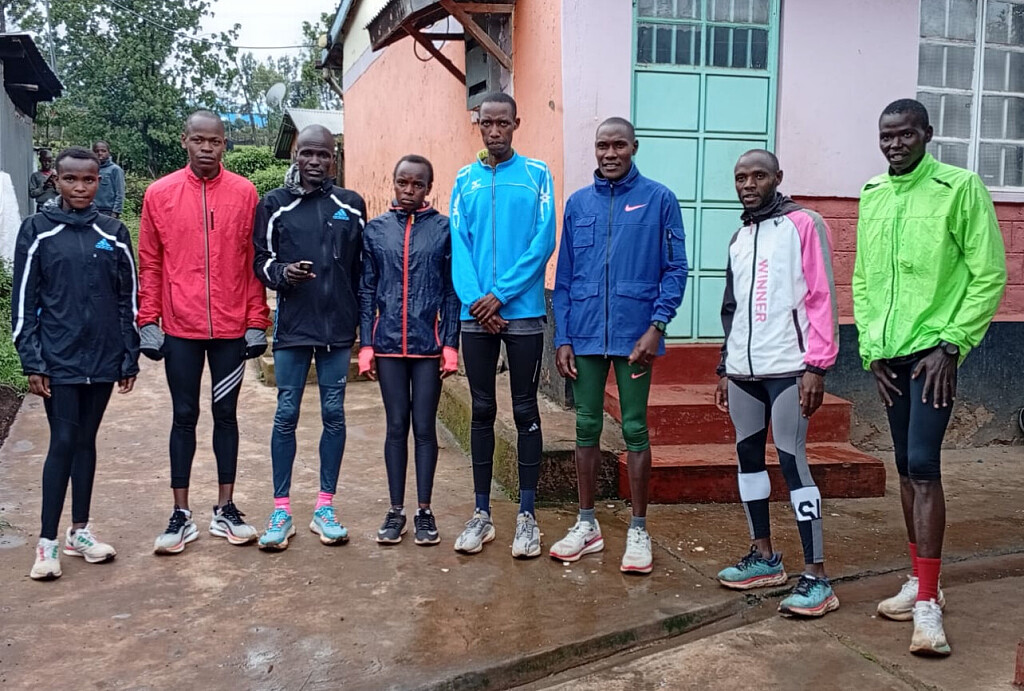
KATA Running Camps Launch a Bold New Era for Distance Running in Kenya
In a bold move to reshape the future of distance running, Bob Anderson, the legendary founder of Runner’s World and lifelong runner, has launched a groundbreaking initiative that’s taking root across Kenya. What began in 2019 with the Kenyan Athletics Training Academy (KATA) in Thika, and expanded to Portugal earlier this year, is now flourishing into a national movement—with eight KATA Running Camps already confirmed, and ten expected by July 1, plus two full-service KATA Retreats in Thika and Monforte da Beira, Portugal.
photos: 1. Edwin's KATA team reporting to his camp today in Kericho. 2. Eric's KATA in Molo will be planting their first acre of KATA potatoes tomorrow.

"As far as I know, there’s nothing like what we are doing,” says Bob Anderson. “My team and I believe we’re going to make a big difference in the running world. We’ll have nearly 200 KATA athletes by July. We have so much talent, and with strong leadership and support, we can help them become world-class stars
A Sustainable Model with a Powerful Vision
What sets KATA apart is its innovative self-sustaining model that combines elite athletic training with agriculture and community building.
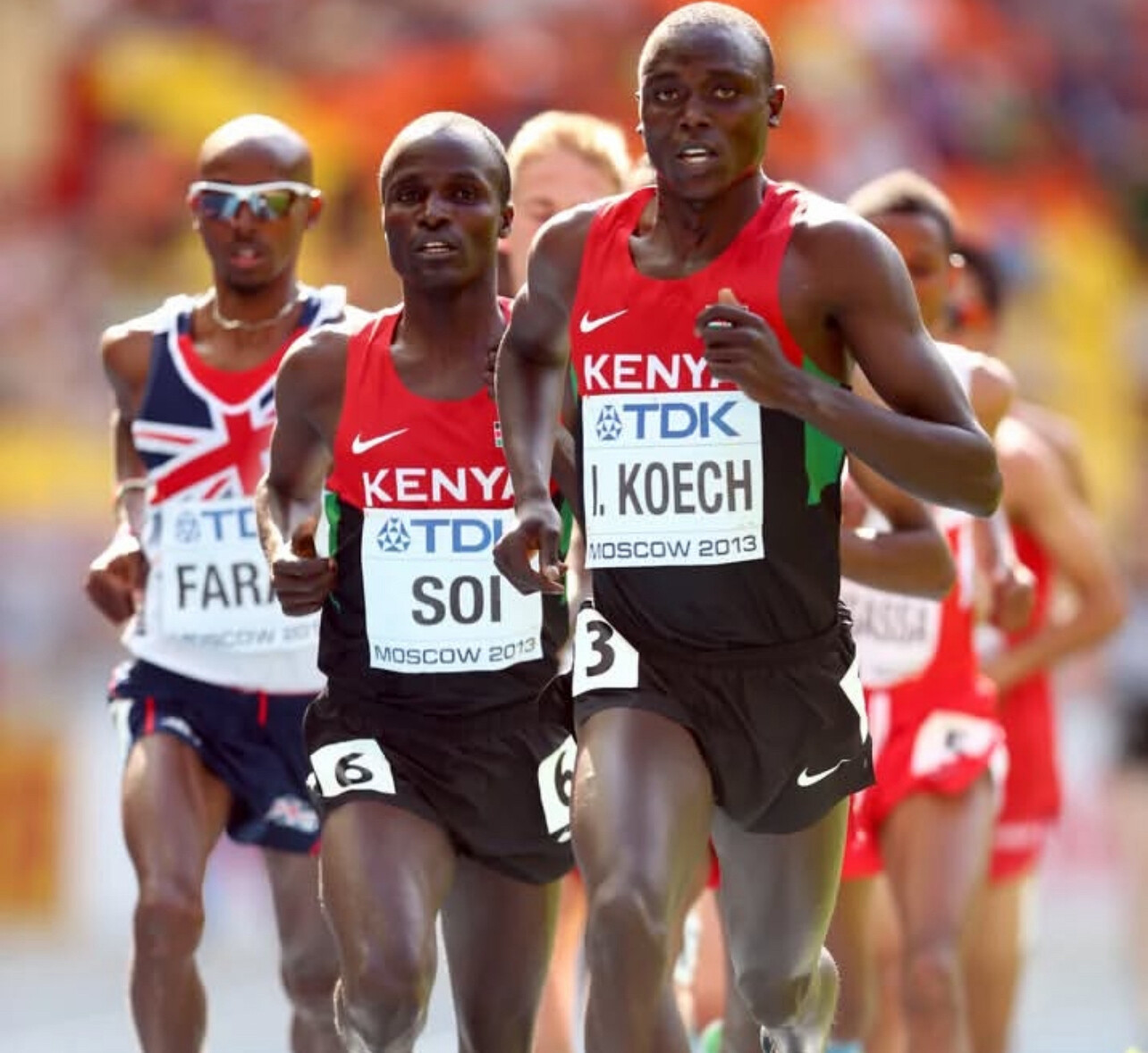
Each KATA Running Camp:
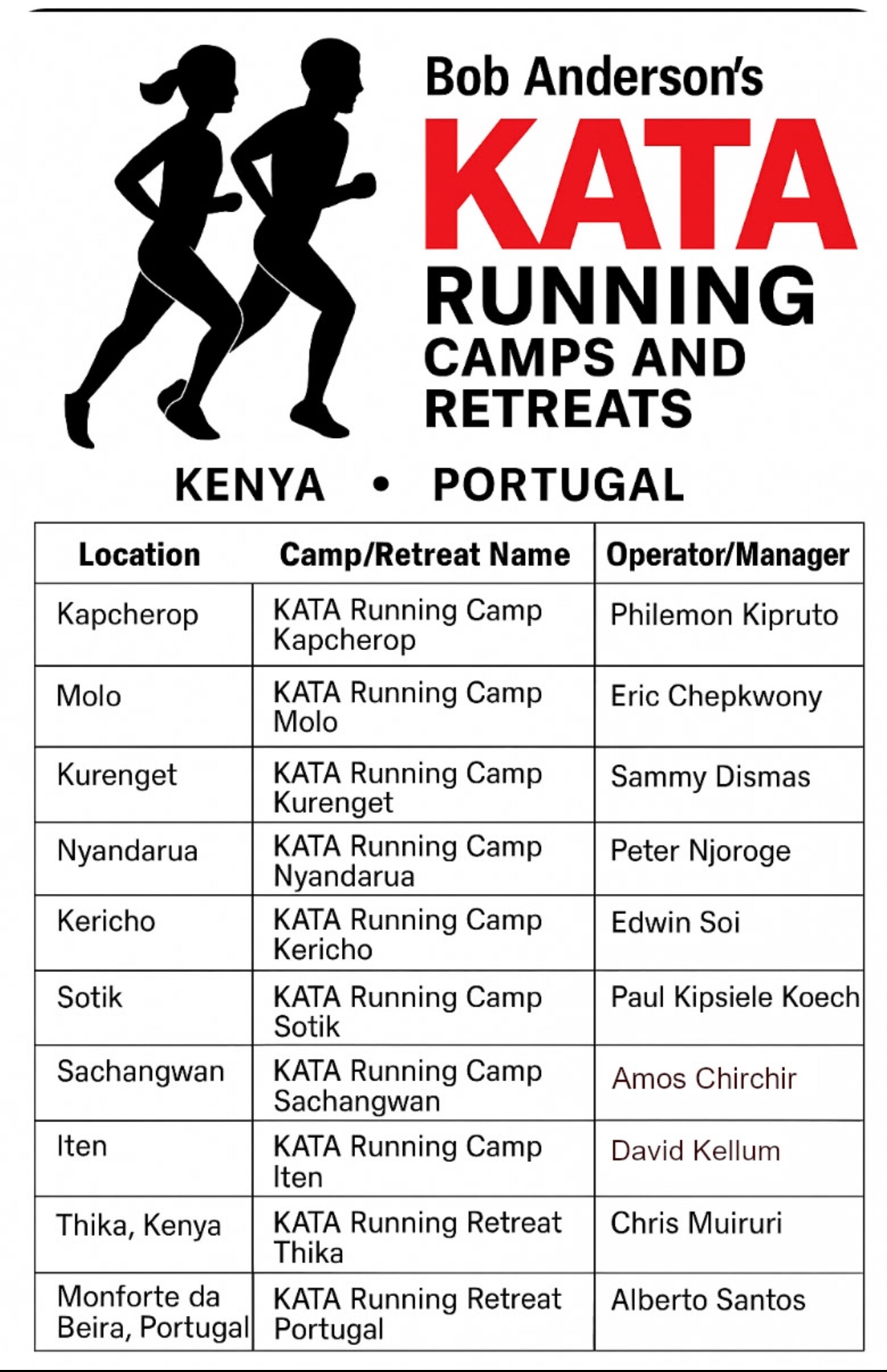
• Supports 3 acres of KATA potato farms
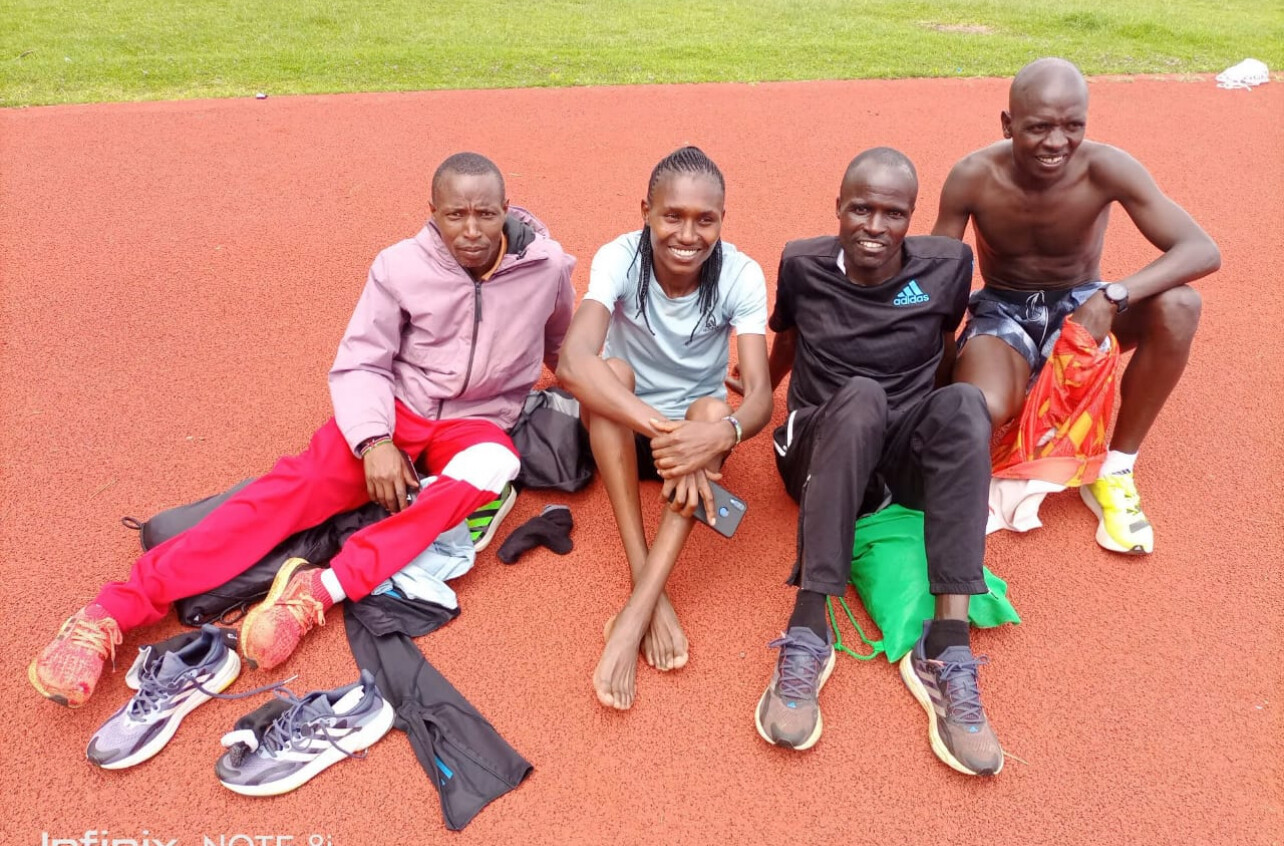
• Requires athletes to work 25 hours per week on the farm
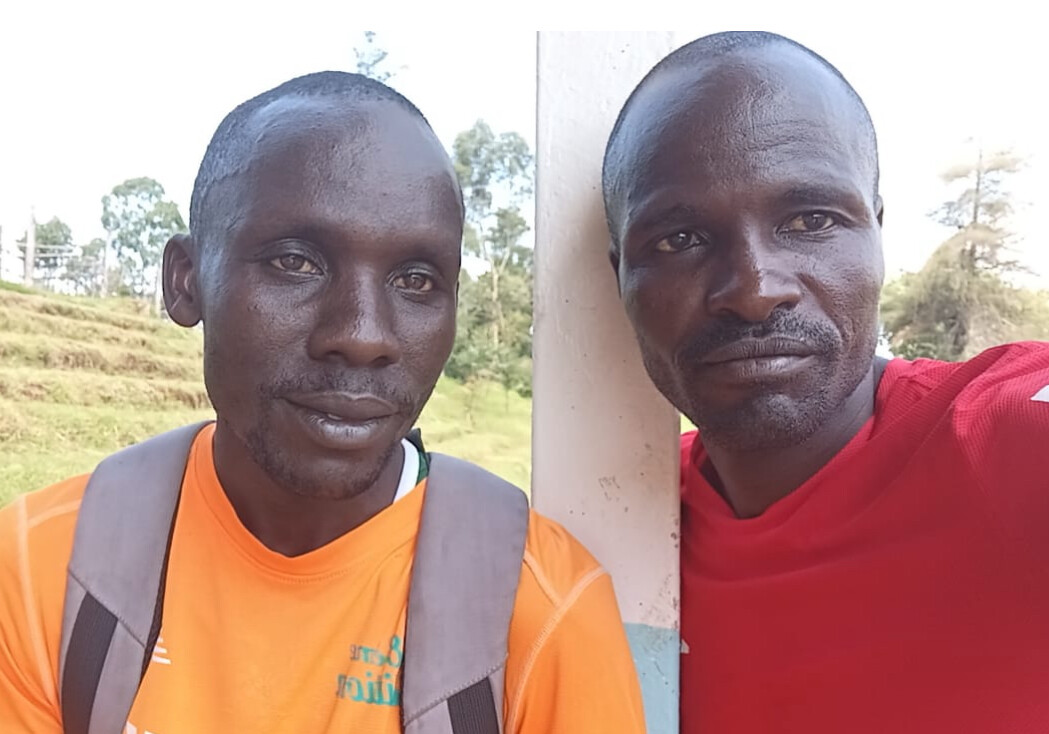
• Asks athletes to contribute 15% of any prize money earned to support their camp
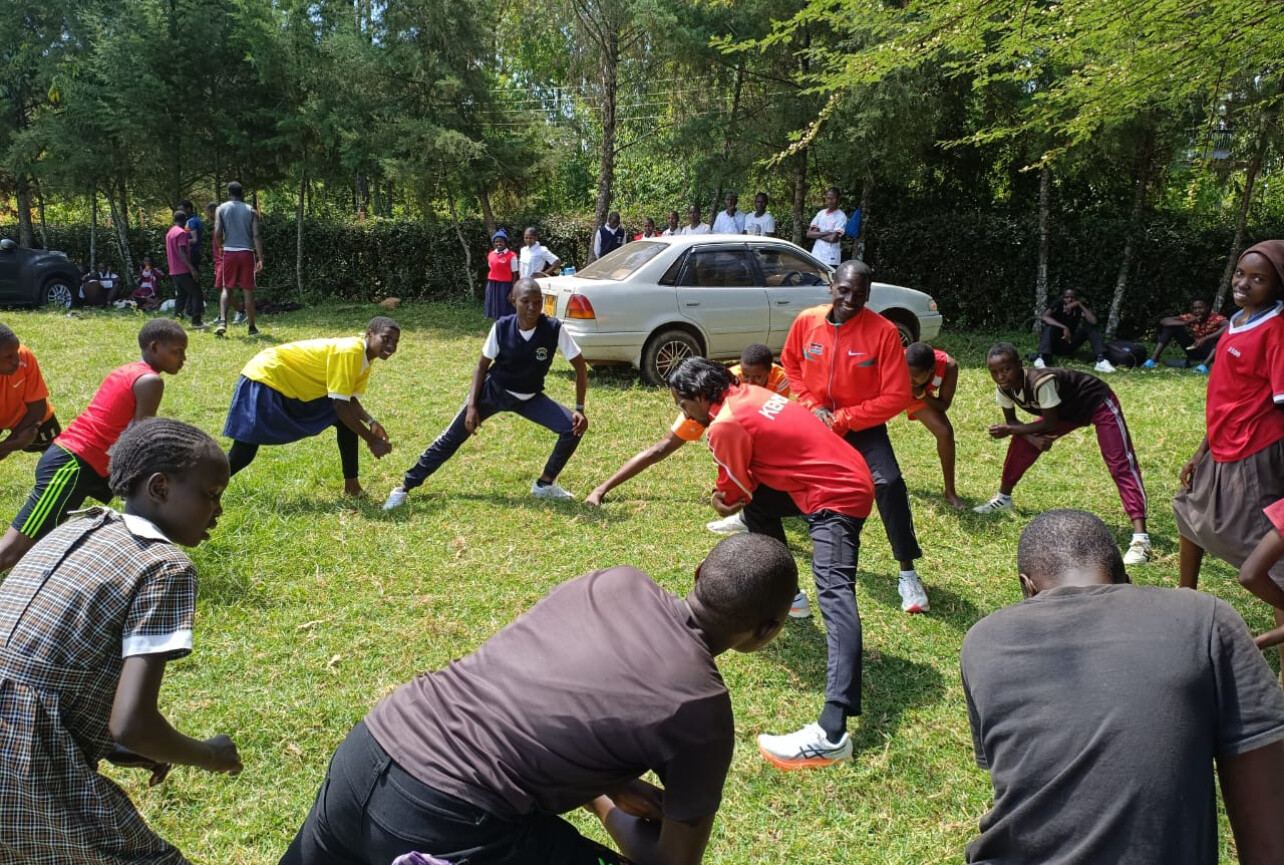
In return, every KATA athlete receives:
• Free lodging
• Three nutritious meals daily
• World-class coaching
“Within six months, all camps will be fully self-sustaining,” Anderson says. “This is not just a running camp—it’s a lifestyle, a community, and a path to opportunity.
Powered by Champions
Two of KATA’s confirmed camp operators are Olympic medalists who bring unmatched experience to the program:
• Edwin Soi, bronze medalist in the 5000m at the 2008 Olympics, now leads KATA Kericho. He’s still racing—and proving his form. On June 15, he clocked a blazing 27:30 for 10,000 meters on the track.
• Paul Kipsiele Koech, bronze medalist at the 2004 Olympics in the 3000m steeplechase, heads KATA Sotik, bringing leadership, discipline, and deep tactical knowledge.
A Vision for 50 Camps, 1,000 Athletes
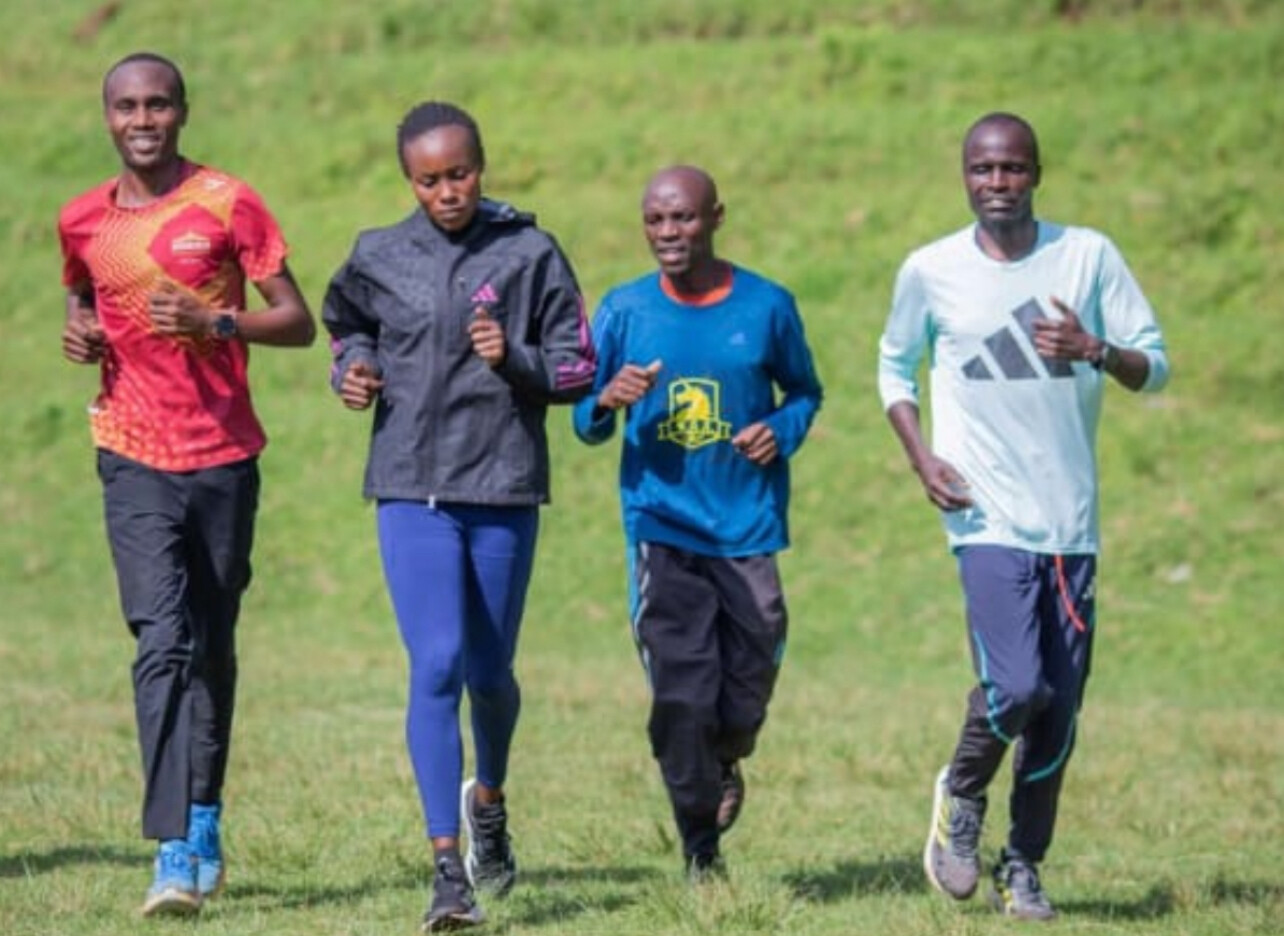
Anderson’s vision is as ambitious as it is inspiring:
“We hope to build a network of 50 KATA Running Camps to train nearly 1,000 athletes. At the same time, we’re working closely with local communities to promote healthier lifestyles through running, nutrition, and education.”
Each camp is embedded within its local area—supporting food security through farming, developing young talent, and strengthening communal ties.
More Than a Camp. A Movement.
KATA is not just about producing the next world record holder. It’s about giving hundreds of athletes the opportunity to reach their full potential—on the track, in life, and within their communities.
By combining sport with sustainability, and elite training with grassroots outreach, Bob Anderson’s KATA is poised to become one of the most impactful distance running projects in the world.
by Boris Baron
Login to leave a comment
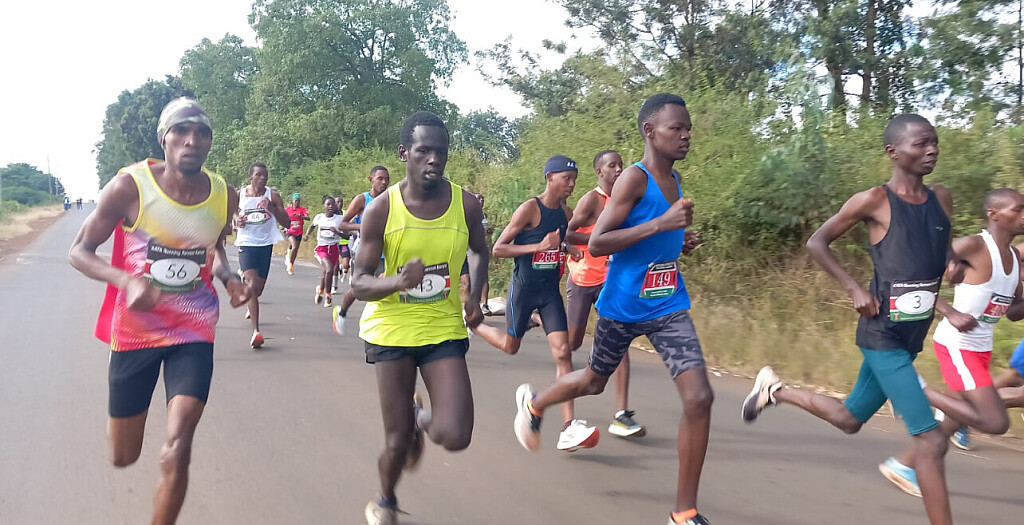
Strong Performances Highlight KATA 5K & 10K Time Trials in Thika Kenya
It was a good morning for a competitive and inspiring KATA monthly time trial number 46, featuring both 5km and 10km distances for men and women. The event showcased rising talent, strong comebacks, and several personal bests.
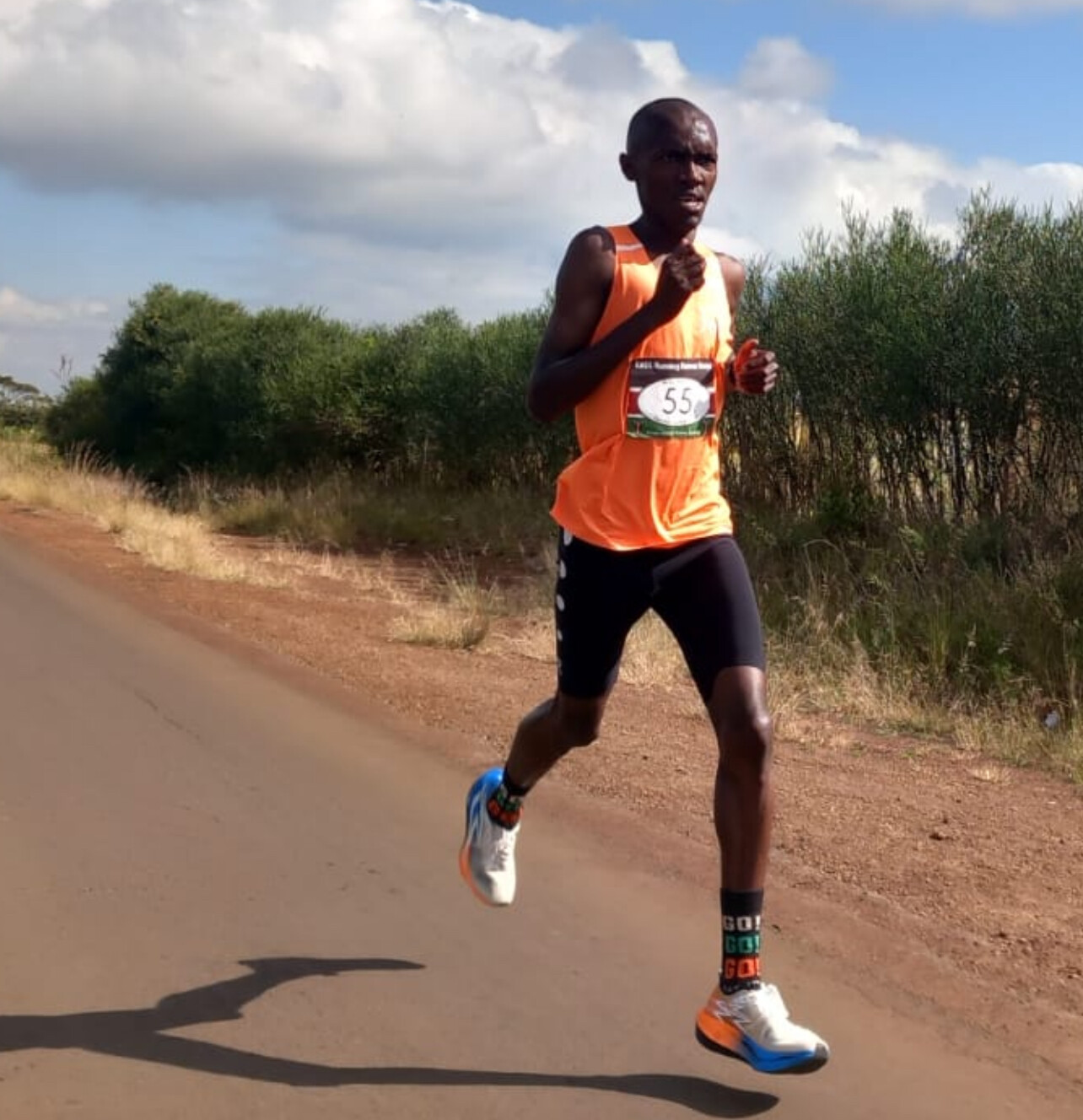
In the men’s 5km, 19-year-old Godfrey Kahora led the charge, clocking a swift 15:45 to secure the top spot. Justus Nyamai, only 17, returned from a two-month injury break to run a personal best of 16:42, showing immense promise for the future. Fellow 17-year-old Collins Mutungi, new to competitive running, impressed in third with a solid 17:32.
On the women’s side, Anastasia Muthoni took a well-earned win in 19:29, edging out 15-year-old Ann Karanja, who finished just a second behind in 19:30, setting a new personal best. Tabitha Wanjiru, also 15, placed third.
The 10km men’s race was tightly contested, with Zachary Kirika (24) prevailing in a sharp 29:45 (second photo), closely followed by Kelvin Kemoi (23) in 29:57. In the women’s 10km, Jacinta Kamau (24) took top honors in 36:08 (third photo), ahead of Caren Kipcoech (24) in 37:09 and Caren Chepkemoi (23) in 38:09.
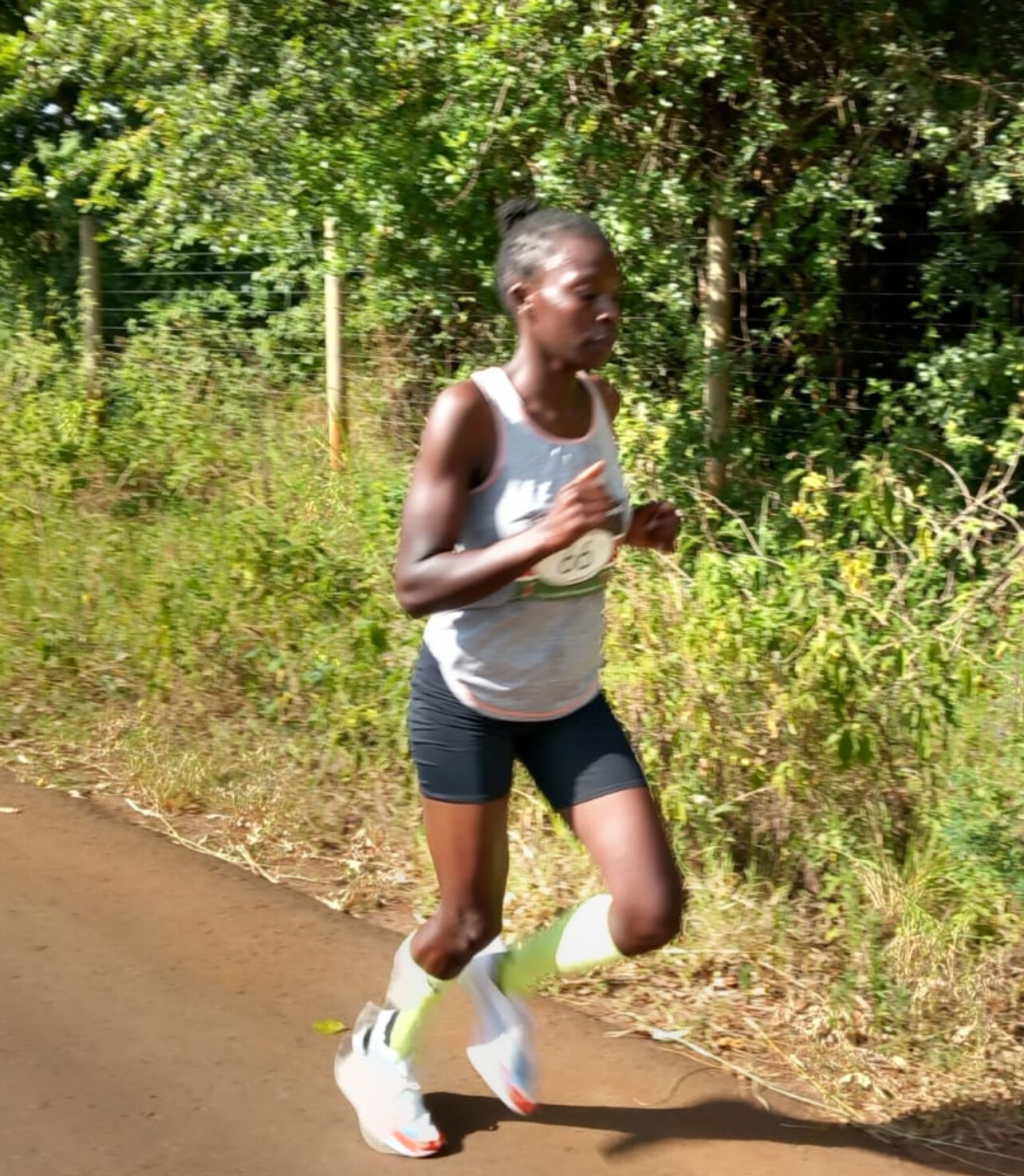
Full Results
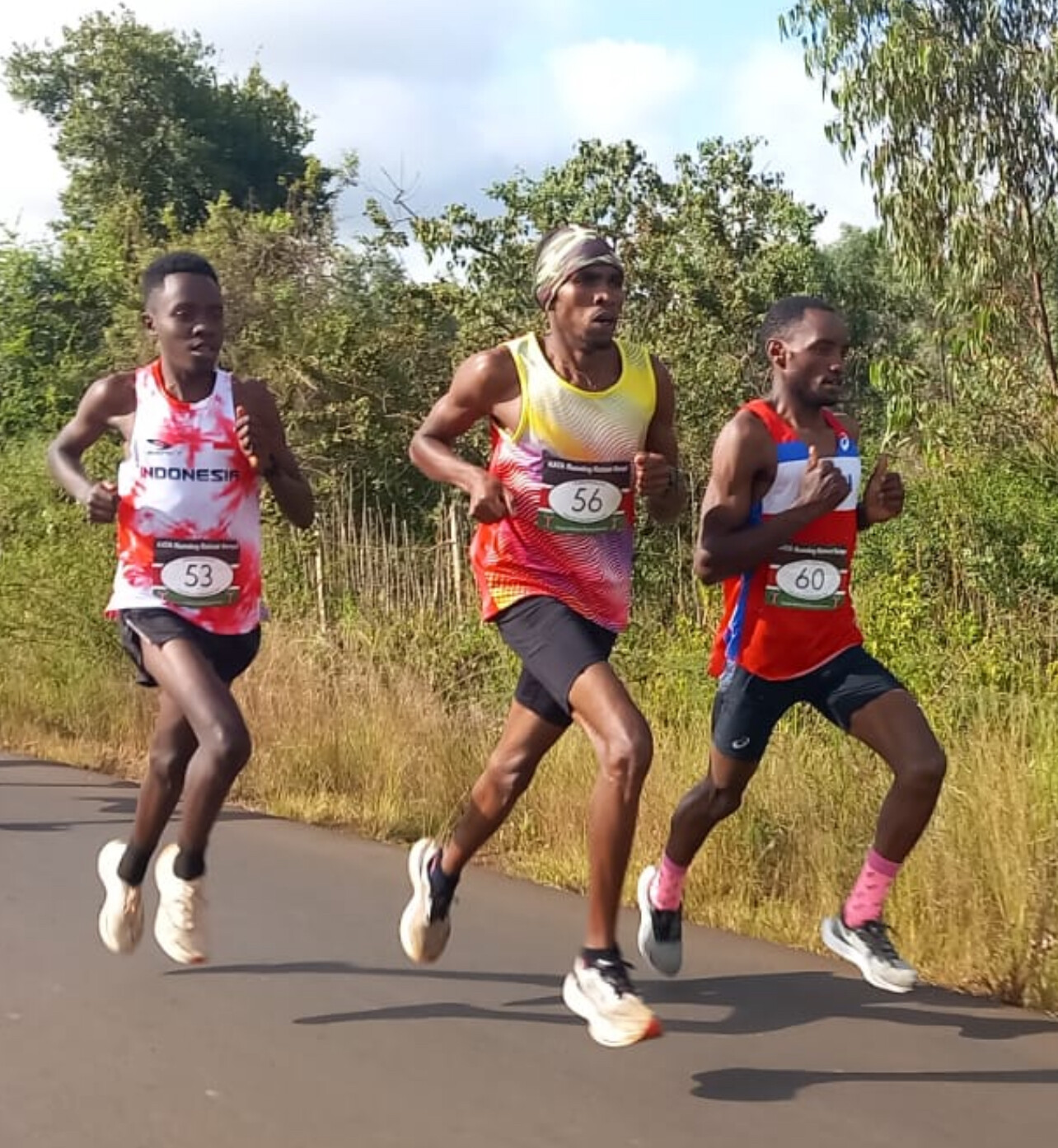
5km Women
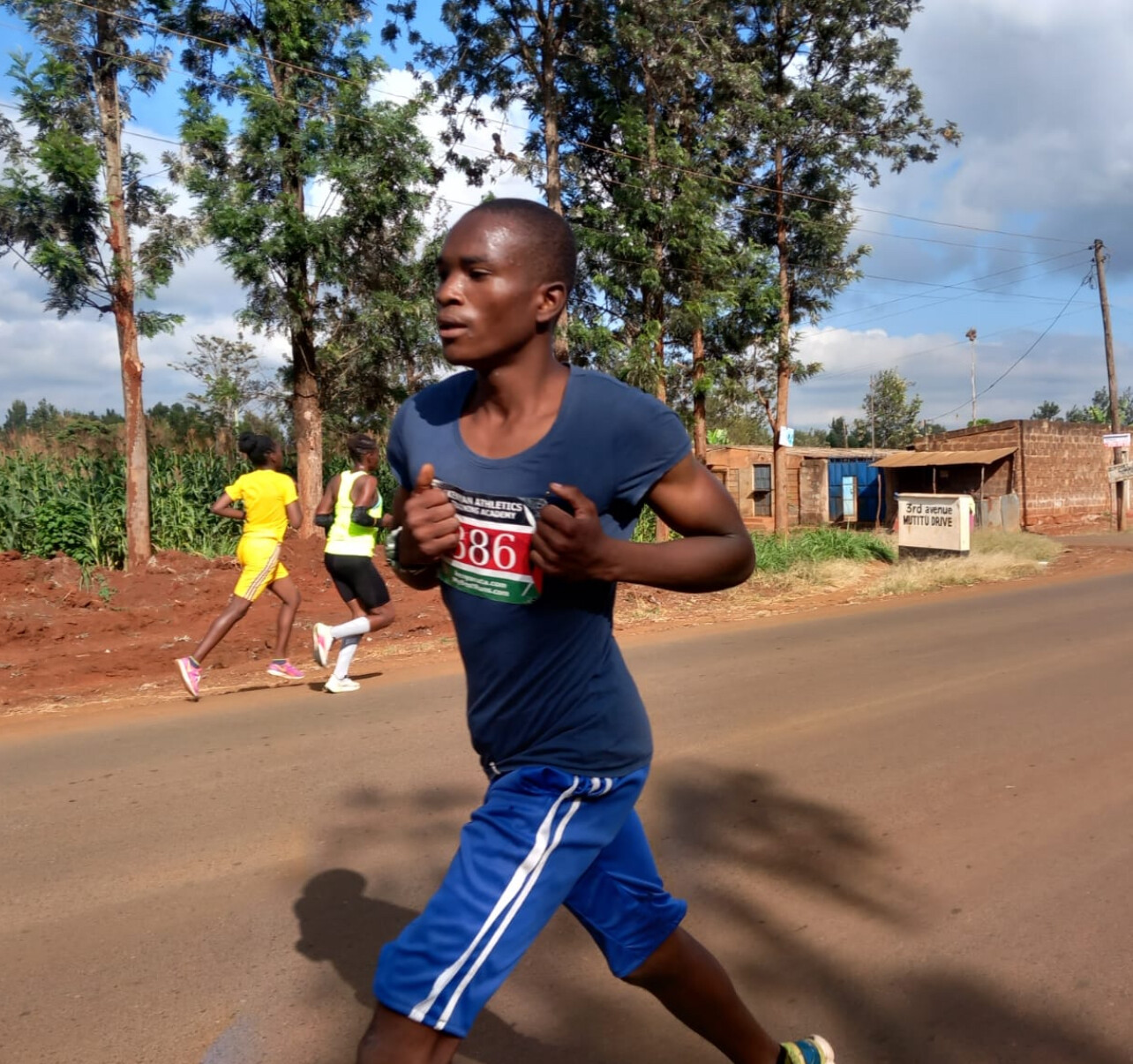
1. Anastasia Muthoni – Age 23 – Bib 464 – 19:29
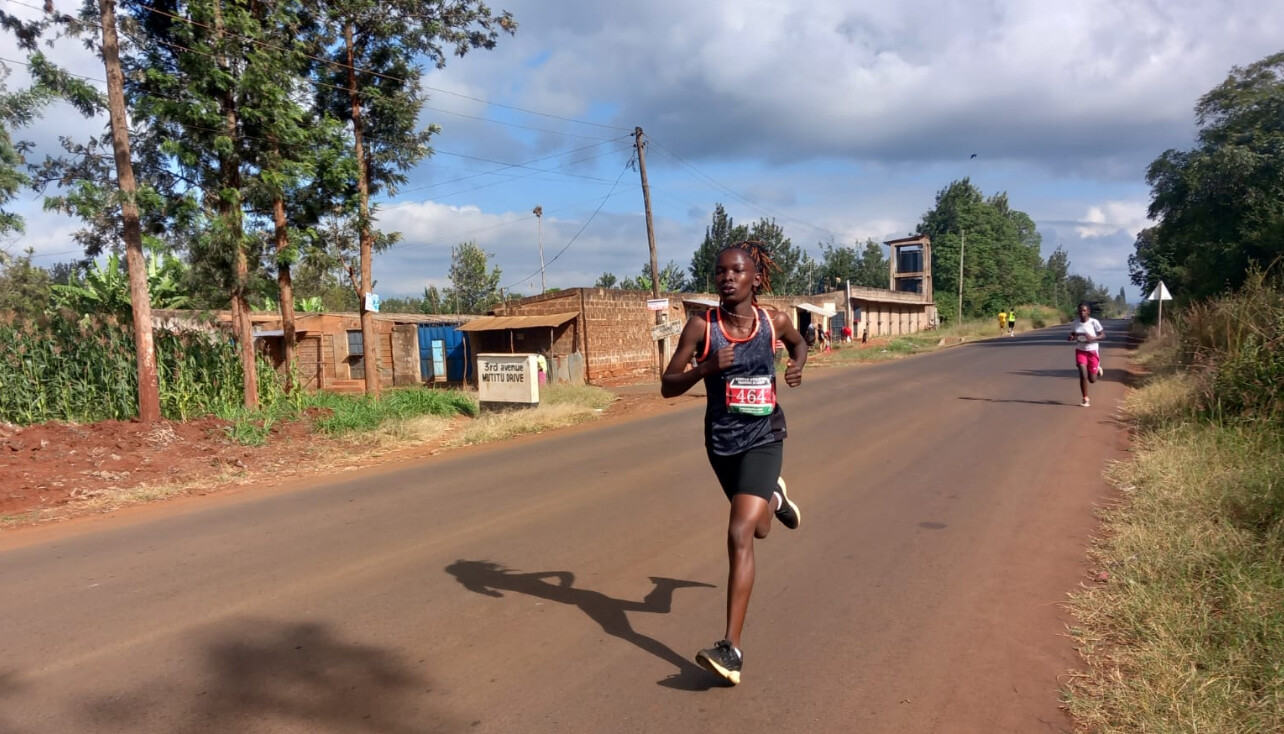
2. Ann Karanja – Age 15 – Bib 29 – 19:30
3. Tabitha Wanjiru – Age 15 – Bib 63 – 23:51
5km Men
1. Godfrey Kahora – Age 19 – Bib 409 – 15:45
2. Justus Nyamai – Age 17 – Bib 265 – 16:42
3. Collins Mutungi – Age 17 – Bib 51 – 17:32
4. Peter Waititu – Age 17 – Bib 243 – 17:41
5. Brandon Mutungi – Age 17 – Bib 149 – 17:44
6. Eric Mwaura – Age 18 – Bib 256 – 18:38
7. Kelvin Musila – Age 18 – Bib 386 – 20:15
10km Women
1. Jacinta Kamau – Age 24 – Bib 66 – 36:08
2. Caren Kipcoech – Age 24 – Bib 14 – 37:09
3. Caren Chepkemoi – Age 23 – Bib 261 – 38:09
4. Lucy Muritu – Age 40 – Bib 431 – 44:16
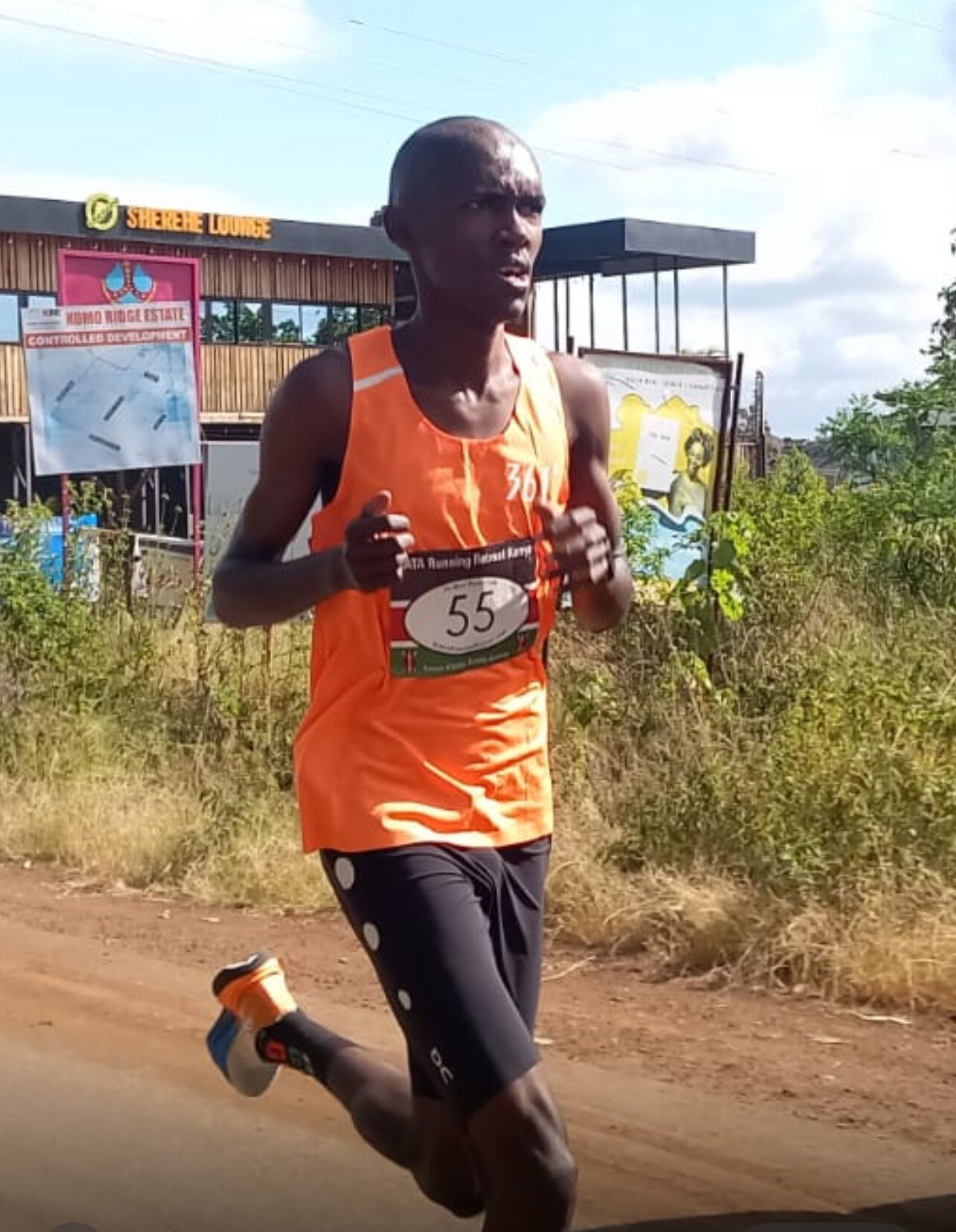
10km Men
1. Zachary Kirika – Age 24 – Bib 55 – 29:45
2. Kelvin Kemoi – Age 23 – Bib 56 – 29:57
3. Enoch Cherioyot – Age 20 – Bib 257 – 30:34
4. John Chege – Age 19 – Bib 40 – 30:36
5. Kelvin Ragui – Age 22 – Bib 53 – 30:59
6. Charles Ndirangu – Age 24 – Bib 1 – 31:18
7. Joseph Karanja – Age 42 – Bib 378 – 32:38
8. David Muriuki – Age 39 – Bib 3 – 32:54
9. Enoch Kipngeno – Age 22 – Bib 57 – 33:16
10. Vincent Kiprotich – Age 23 – Bib 43 – 34:18
11. Benson Gicheha – Age 34 – Bib 49 – 35:09
12. Harrison Mwangi – Age 21 – Bib 44 – 35:44
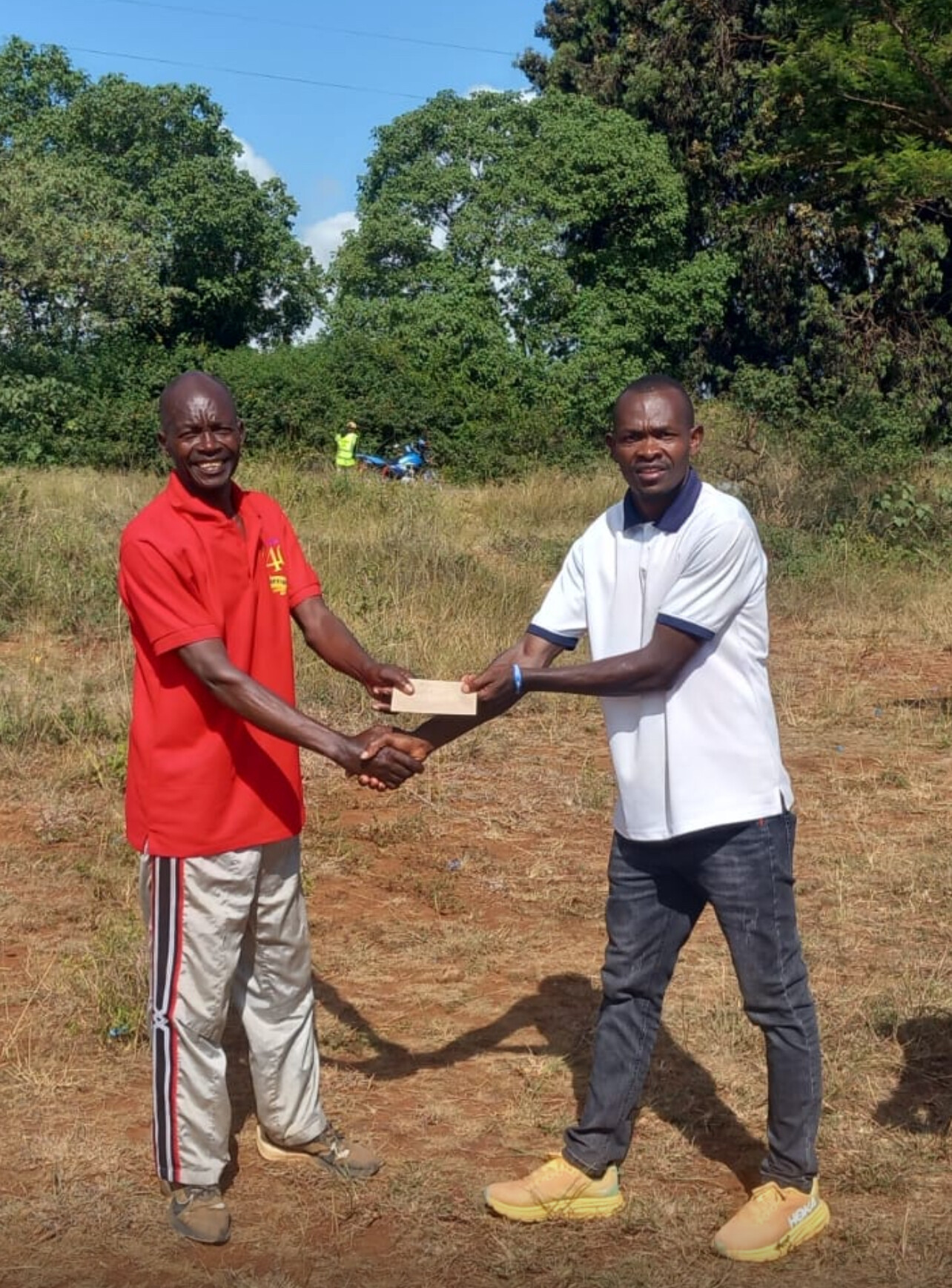
13. Charles Ndirangu – Age 67 – Bib 399 – 38:28
by Boris Baron
Login to leave a comment
KATA Time Trial Series
Welcome to the KATA Monthly Time Trial Held at the Kenyan Athletics Training Academy in Thika, Kenya, the KATA Monthly Time Trial is a unique and inclusive event designed to support runners of all levels in achieving their goals and showcasing their fitness. This event offers both 10K and 5K distances on an accurate, certified course, providing participants with...
more...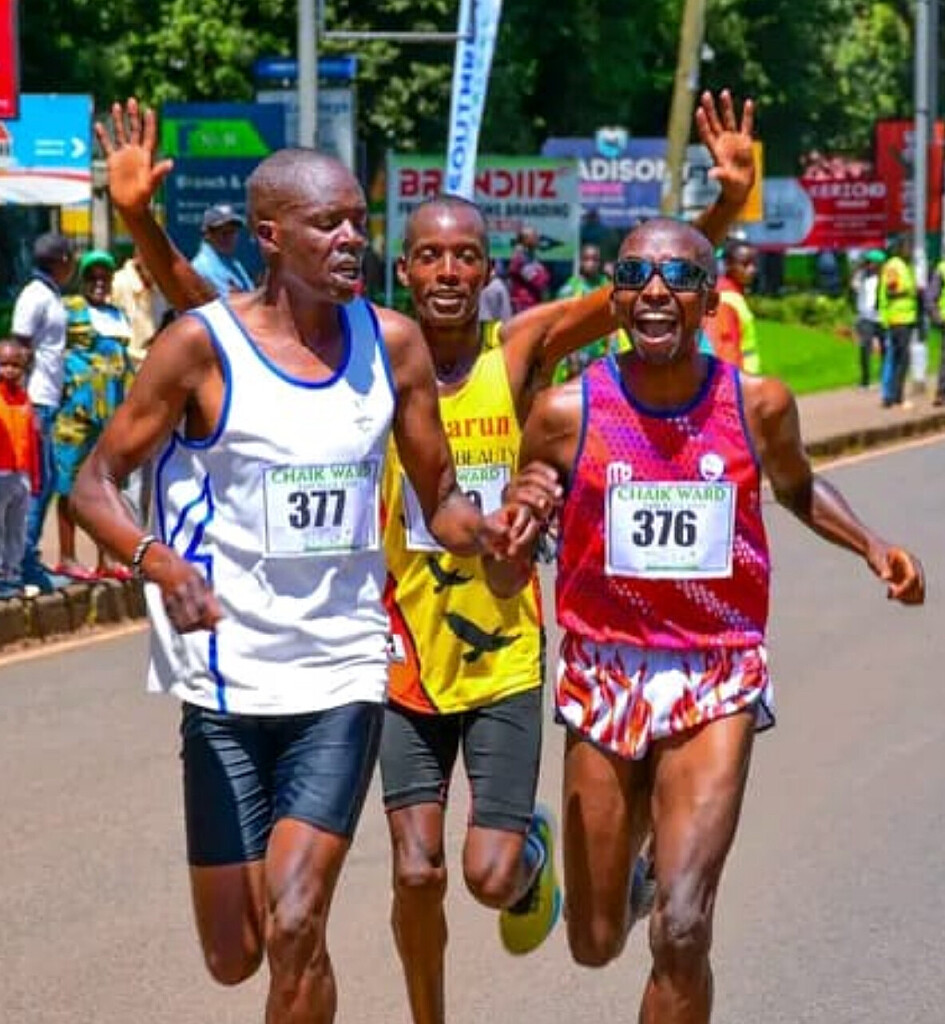
Blind Champion Wilson Bii to Open 2025 Season at KATA Time Trial
Four-time Paralympian Wilson Bii will launch his 2025 racing season at the KATA Monthly 10K Time Trial, scheduled for June 11 at the KATA Running Retreat in Thika, Kenya. Though Bii now trains at the newly opened KATA Running Camp in Molo, he’ll return to Thika to test his fitness in a race setting for the first time this year.
A T11-class athlete (completely blind), Bii has represented Kenya in four Paralympic Games, earning multiple medals and worldwide recognition. He won bronze in the 5000m T11 at the Rio 2016 Paralympics and remains one of Kenya’s most accomplished para-athletes.
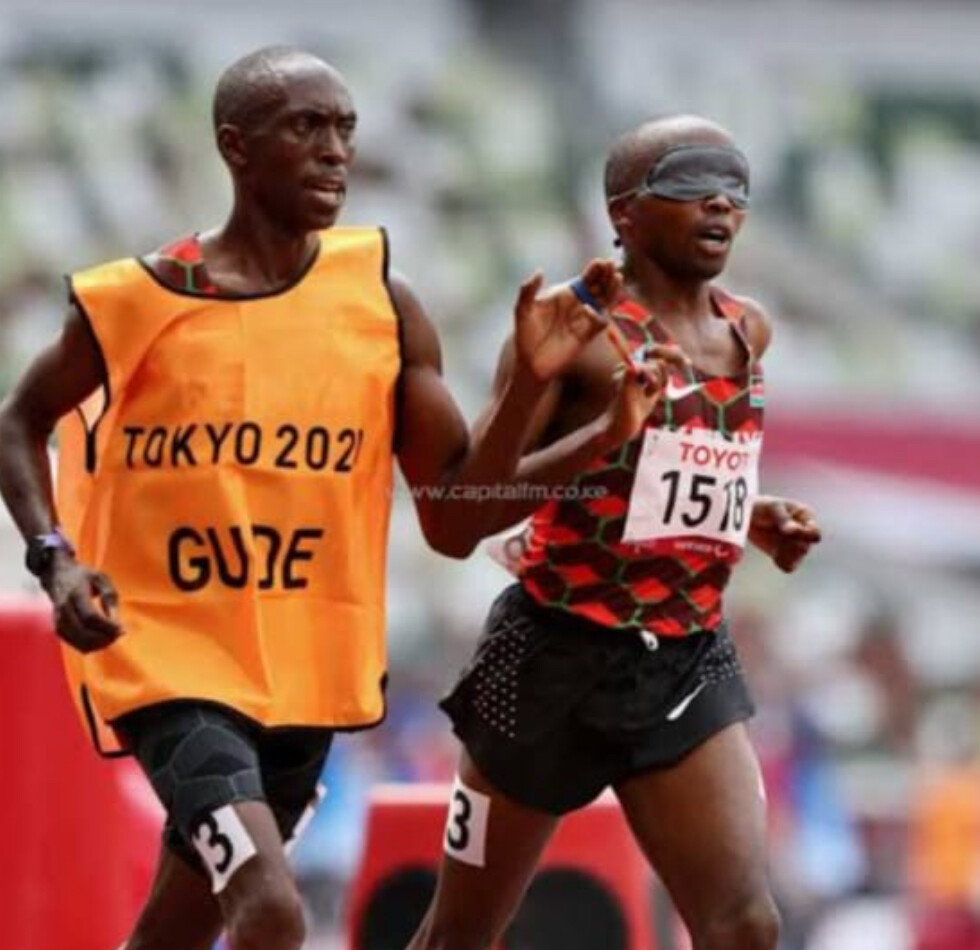
Aiming High: Sub-35 in the 10K, Sub-2:30 in the Marathon
This 10K time trial marks an important checkpoint as Bii builds toward his ambitious goal of running a sub-2:30 marathon, with a possible target at the Chicago Marathon later this year. For this first effort of the year, he’s aiming to break 35 minutes for 10K—a notable time given the altitude.
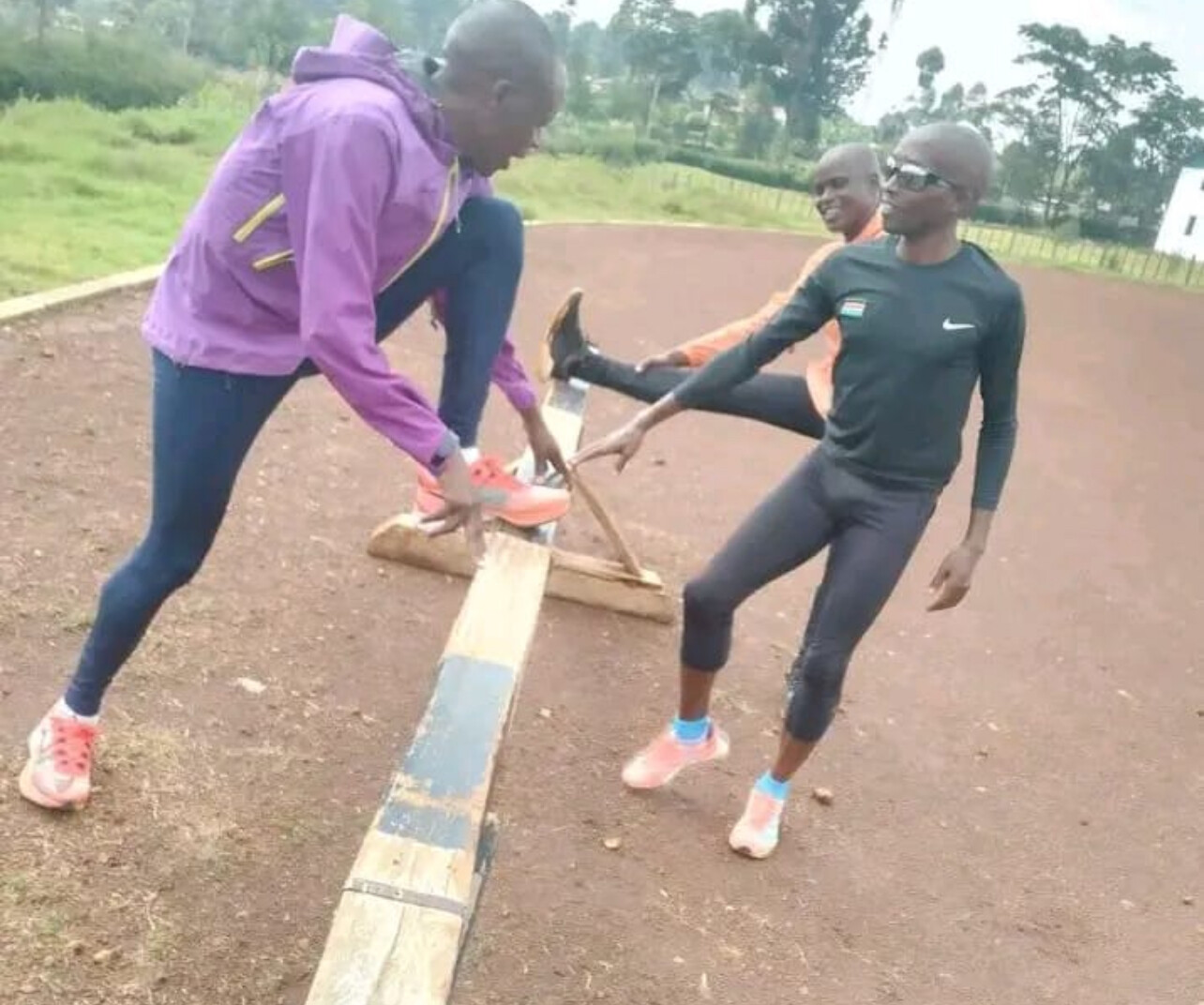
Bii will be guided by Job Kiprono Langat, who also serves as Assistant Coach at the KATA Molo Camp. Job has trained closely with Wilson and previously paced him in workouts, making their partnership on race day smooth and deeply synchronized.
“We are very proud to have Wilson now training with us in Molo,” said KATA Director Bob Anderson. “He is hoping to run a sub-35 minute 10K. This is the start of what we believe will be an exciting year for him.”
From Molo to Thika: Racing at Altitude
While Molo is located at a higher elevation, Thika still sits at approximately 5,000 feet (1,525 meters)—offering the kind of thin air that tests an athlete’s endurance and grit. A sub-35-minute 10K at this altitude would show that Bii is on track for a strong marathon season.
The KATA Molo camp, where Bii now trains, is designed for altitude adaptation and athlete development. With Job serving as both assistant coach and guide, Bii has found the structure and support needed to thrive.
Looking Ahead
With elite guidance, the backing of the KATA community, and his own determination, Wilson Bii is ready to make 2025 a breakout year. The June 11 time trial in Thika is more than a rust-buster—it’s a statement that one of Kenya’s most inspiring runners is back on the road, chasing new goals.
by Boris Baron
Login to leave a comment
Olympic 5000m medalist Edwin Soi joins new KATA Running Camp in Kericho — a unique Kenyan training program blending elite coaching and community impact.
From Olympic bronze to farming for the future, Edwin Soi’s journey reflects both speed and sustainability.
In the world of distance running, Edwin Soi is a name etched in excellence. At the 2008 Beijing Olympics, Soi captured the bronze medal in the 5000 meters, finishing with a time of 13:06.22behind Kenenisa Bekele and Eliud Kipchoge—an iconic race that cemented his place among the greats of Kenyan running.
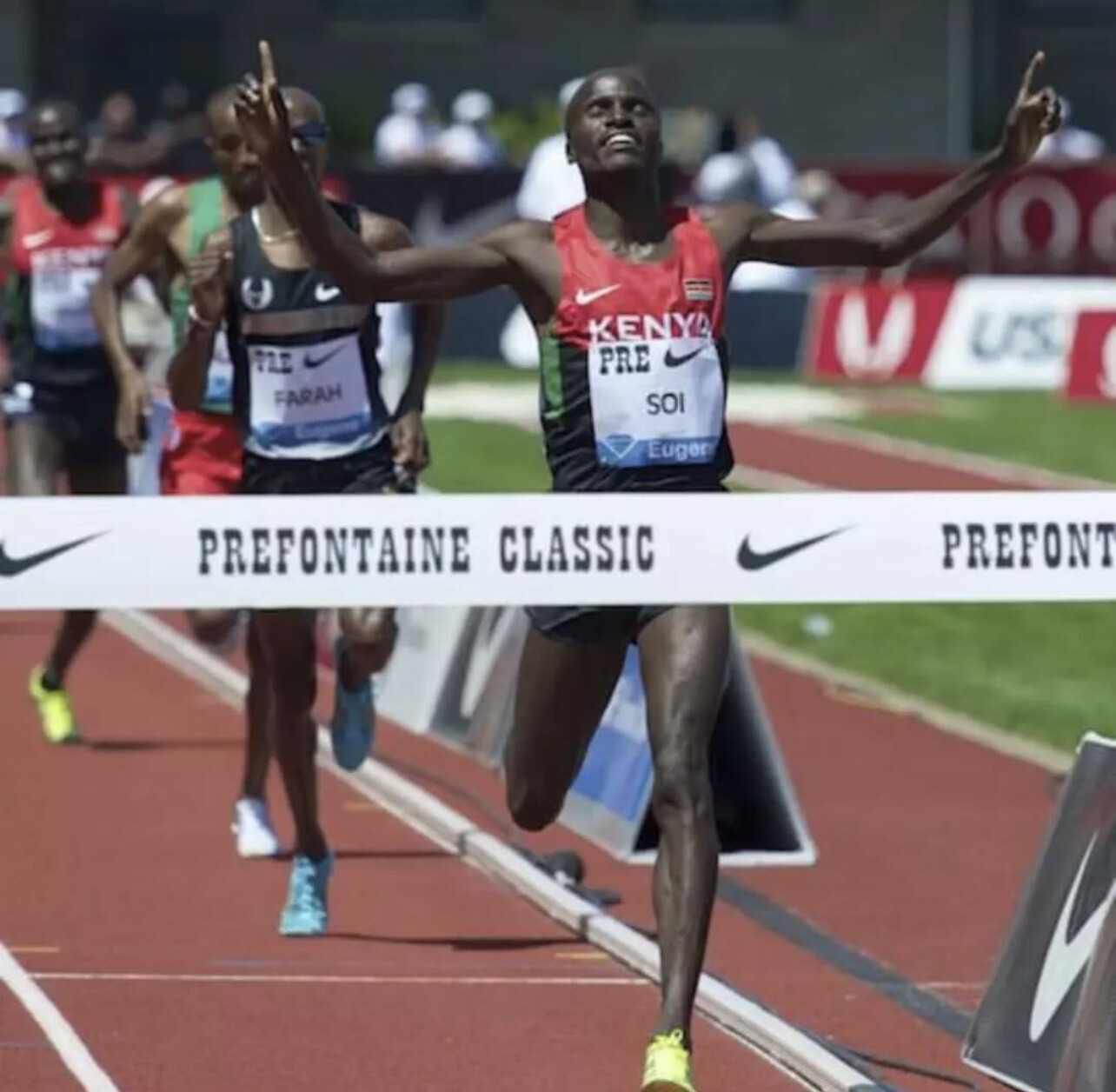
Now, over 15 years later, Soi continues to perform at an elite level. In early 2025, he placed on the podium at a major half marathon in Poland, proving that his speed and endurance have stood the test of time. But the accomplished Olympian is now expanding his impact beyond the track.
This year, Soi has teamed up with Bob Anderson, the founder of Runner’s World and the visionary behind the Kenyan Athletics Training Academy (KATA). Together, they are launching a unique initiative in Kericho, Kenya that combines world-class training with sustainable farming.
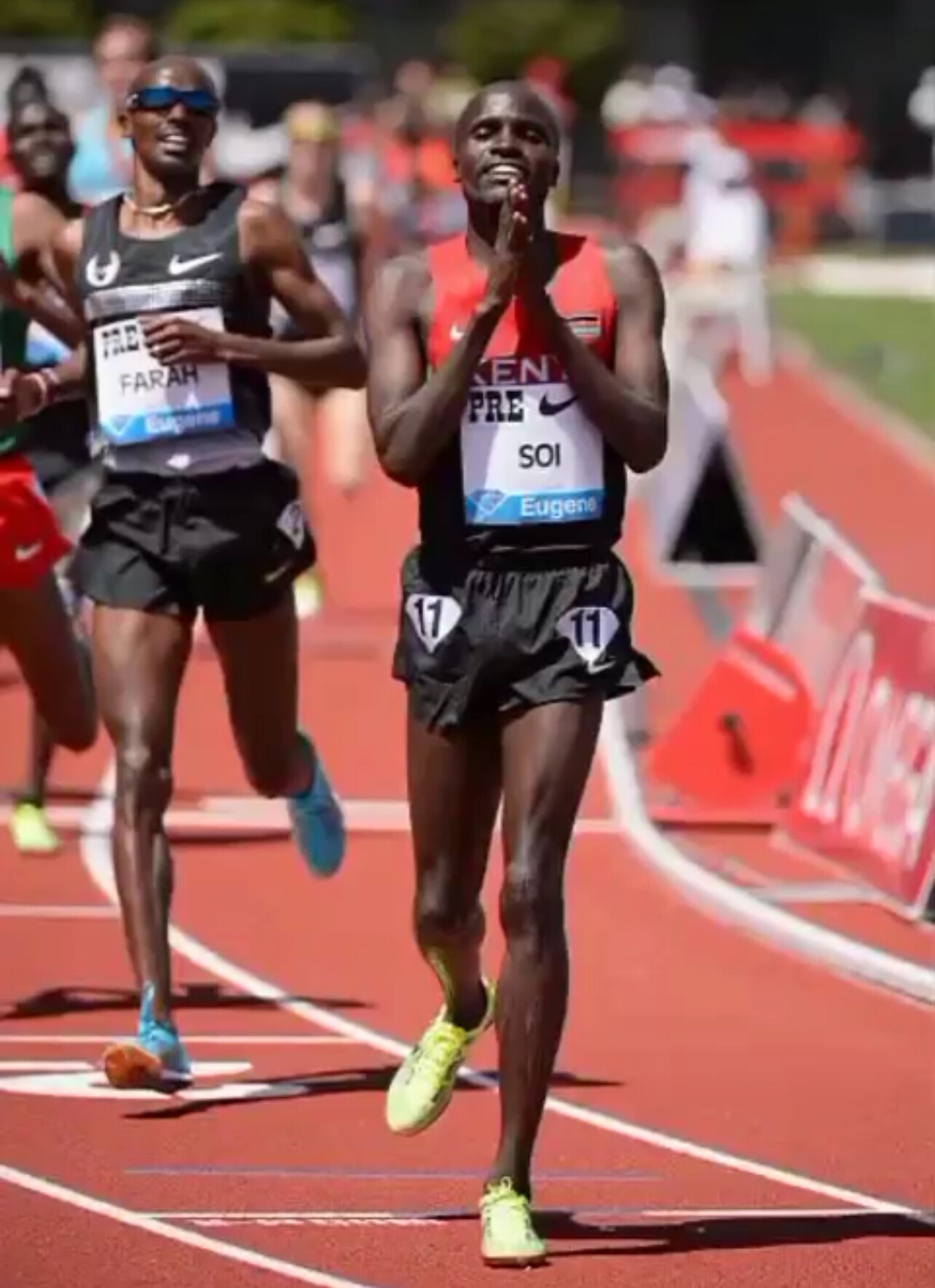
“I am very excited to be working with Bob Anderson on this new, unique program,” says Soi. “Bob has created something very special for athletes, and combining it with his ideas about farming KATA Potatoes gives us the opportunity to be sustainable. It’s perfect.”
A Vision Rooted in History
Bob Anderson’s connection to Kenyan running spans nearly four decades.
“I first traveled to Kenya in 1987 and saw and met many runners. I knew then that a program like what we have now set up was needed,” Anderson explains. “I returned with my wife Catherine in 2014 and met Elam and Joel. That’s when the idea for the Kenyan Athletics Training Academy (KATA) in Thika really started to take shape.”
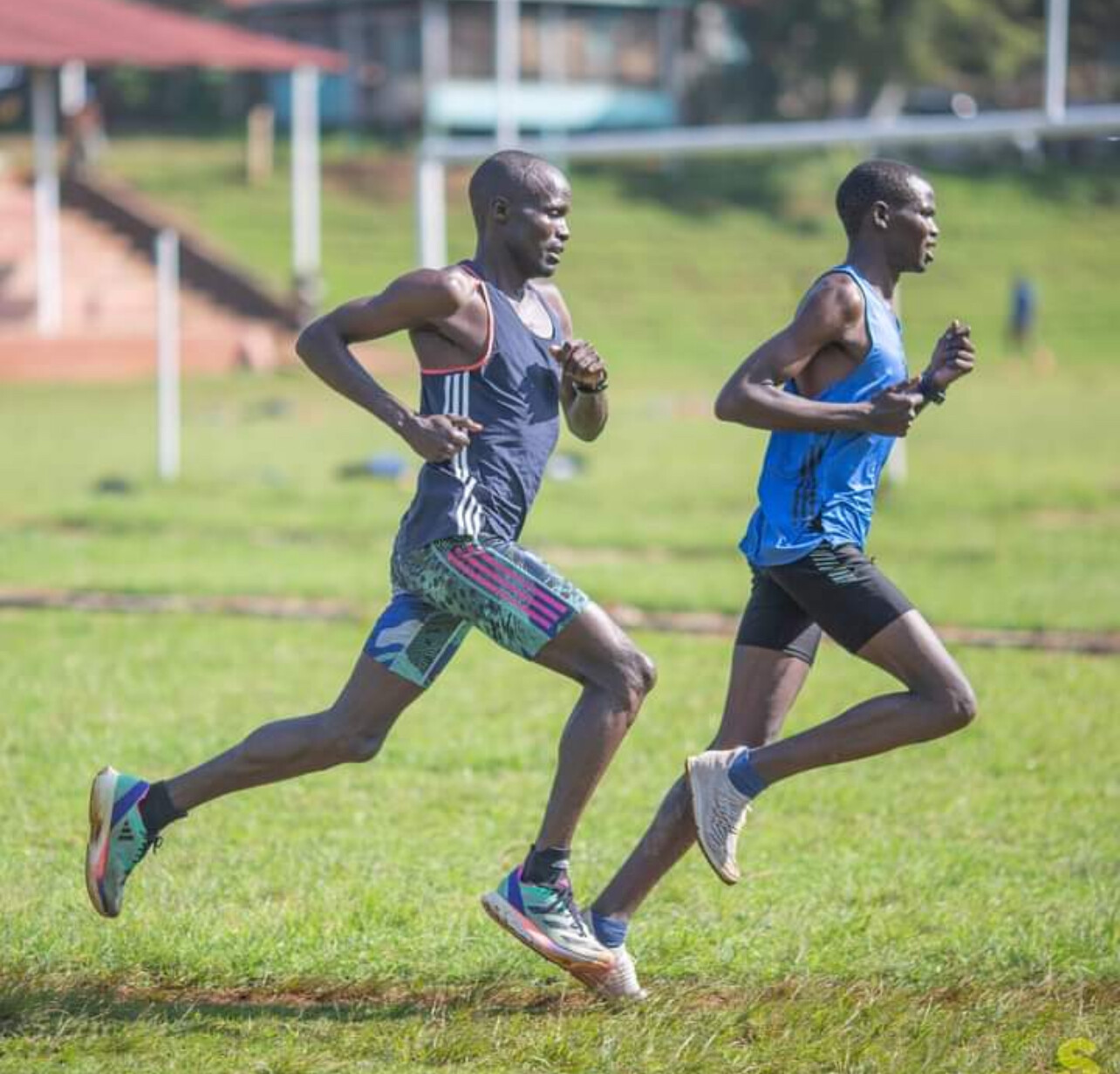
KATA officially opened in 2019, offering elite Kenyan athletes a base to train and grow. But the vision didn’t stop there.
In 2023, Anderson and longtime friend Brock Hinzmann (last photo) a 2:19 marathoner from Los Altos Hills, California, piloted the first KATA farm. The goal was to integrate agriculture into athlete development—creating a model where training and sustainability go hand in hand.
“We established a KATA farm in 2023 working with Brock, but the program needed some refinements. I finalized our new format in May of 2025. I told Edwin Soi about our program and he told me he loved the idea and jumped right on it,” says Anderson.
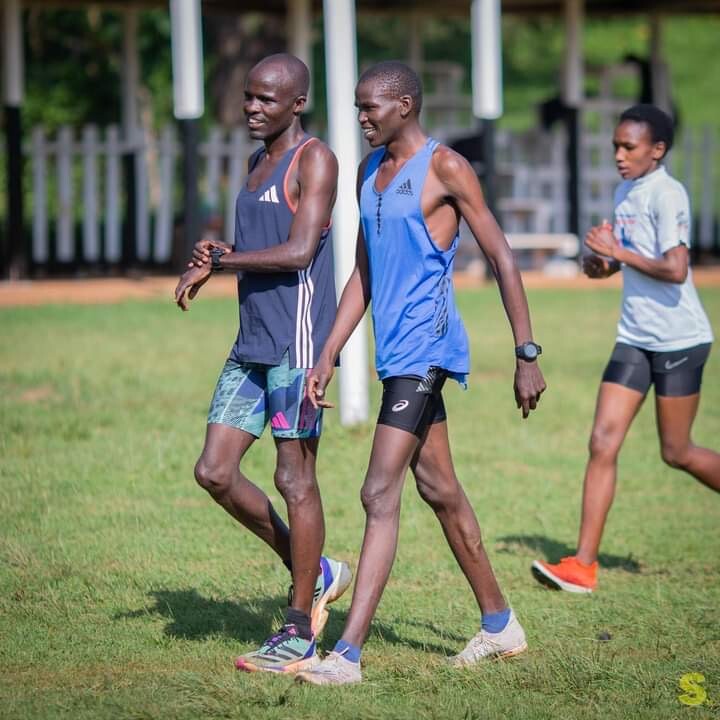
Kuresoi: A New Chapter
Now, with Soi’s leadership, the KATA Running Camp and Potato Farm in Kuresoi is set to become a flagship model for the future. Athletes will not only receive top-level training from one of the greatest distance runners of his generation, but they’ll also participate in sustainable farming practices—planting, maintaining, and harvesting KATA-branded potatoes.
The program provides housing, coaching, food, and competition opportunities—with the added benefit of long-term revenue from agriculture. It’s a model designed not just to develop athletes, but to support their lives beyond running.
“Edwin Soi brings credibility, passion, and wisdom to this project,” says Anderson. “It’s not just about winning races anymore—it’s about building something that lasts.”
Looking Ahead
With KATA camps now expanding across Kenya—including recent launches in Kapcherop, Molo, Nyandarua, and Kuresoi—the partnership between Bob Anderson and Edwin Soi represents a new chapter in Kenyan running. One where elite performance and local empowerment go hand in hand.
Soi’s journey—from Olympic bronze to coaching, mentoring, and planting the seeds of a new future—demonstrates what’s possible when world-class talent meets a visionary purpose.

by Boris Baron
Login to leave a comment
