

Running News Daily
Running News Daily is edited by Bob Anderson and team. Send your news items to bob@mybestruns.com Advertising opportunities available.
Index to Daily Posts · Sign Up For Updates · Run The World Feed
Articles tagged #000 meters
Today's Running News



Sydney Vaught and Woody Kincaid Reign Supreme as New U.S. 10,000m Champions Crowned
Sydney Vaught announced herself as America's newest national champion with a poised and tactical victory in the women's 10,000 meters at the USATF Outdoor Championships, claiming her first senior national title in a race that demanded patience, precision, and perfect timing.
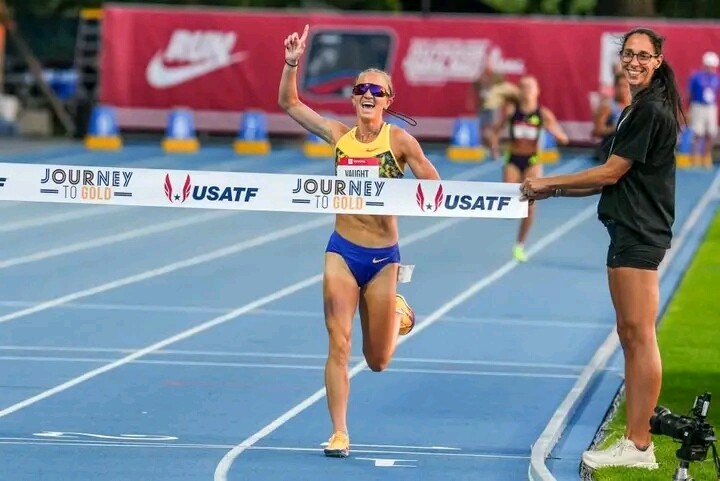
Competing under the lights at New York City's Icahn Stadium, the former University of Arkansas standout mastered a slow-burning championship contest before producing the decisive move when it mattered most. Vaught crossed the finish line in 33:30.60, capping a performance built on tactical awareness rather than raw pace.
Unlike record-chasing races that unfold at relentless speed, this championship final evolved into a battle of positioning and race intelligence. The conservative early tempo kept the field tightly packed for much of the contest, leaving the outcome to be decided over the closing laps. Vaught remained composed throughout, refusing to be drawn into unnecessary surges while carefully conserving energy for the decisive moments.
When the race finally ignited, she responded with authority. Displaying impressive strength and confidence, Vaught surged clear of her rivals in the closing stages to secure a memorable victory and the biggest triumph of her professional career.
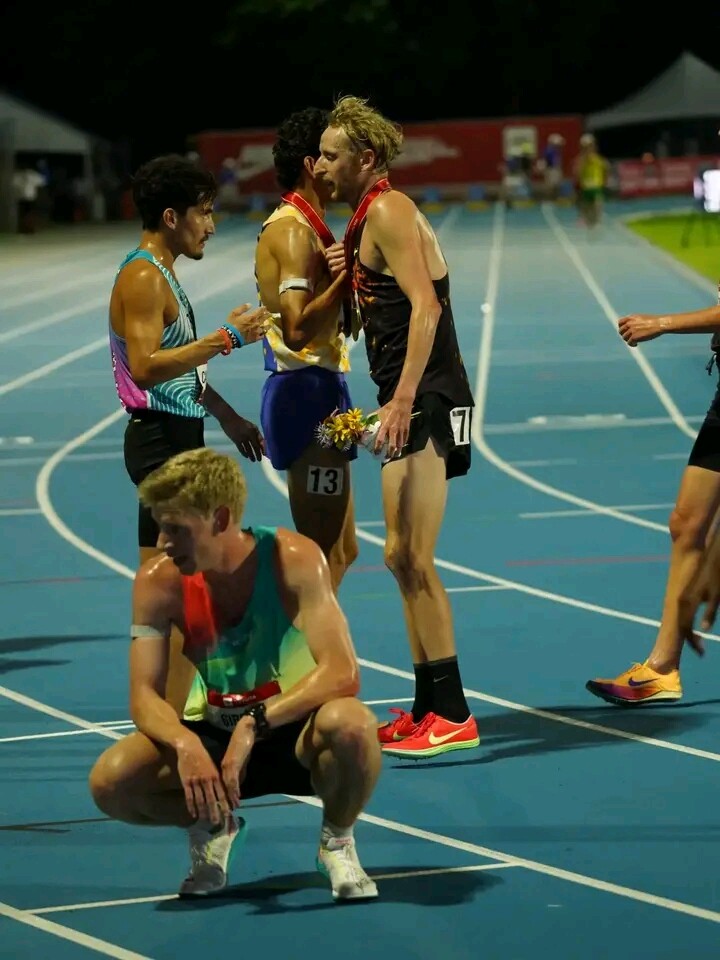
The national crown represents another significant milestone for the former Arkansas Razorback, whose steady progression through the American distance-running ranks has now culminated in a USATF outdoor title. Winning a championship in such a tactical race highlights not only her physical ability but also her growing maturity and composure on the national stage.
The men's 10,000m championship delivered an equally compelling contest, with Woody Kincaid reclaiming his place atop American distance running. The experienced racer outkicked Olympic bronze medalist Grant Fisher in a thrilling sprint to the finish, capturing his third career U.S. outdoor 10,000m title—and his first since 2023.
Kincaid stopped the clock in 30:13.66 after executing his race plan to perfection, remaining patient throughout the tactical affair before unleashing his trademark finishing speed over the final meters. His decisive kick proved too strong for Fisher, allowing the veteran to add another national crown to an already distinguished career.
For Kincaid, the victory marked a return to the summit of the U.S. championships, reaffirming his reputation as one of America's most formidable championship racers. His ability to deliver under pressure once again demonstrated why he remains one of the country's elite distance runners.
Together, Vaught and Kincaid emerged as the standout winners of the opening 10,000-meter finals at the USATF Outdoor Championships, each producing composed tactical performances to secure national gold. While Vaught celebrated a breakthrough first title, Kincaid reinforced his legacy with another championship triumph, setting the stage for an exciting season ahead for American distance running.
by Erick Cheruiyot for My Best Runs.
Login to leave a comment

USATF Outdoor Championships
The 2026 Toyota USATF Outdoor and Para National Championships will be held at Icahn Stadium in New York City fromJuly 23-26, 2026, marking the first time the event is hosted in New York. The event will serve as a premier track and field competition, featuring top U.S. athletes at the Randall's Island Park venue. USATF+3 Key Details for 2026...
more...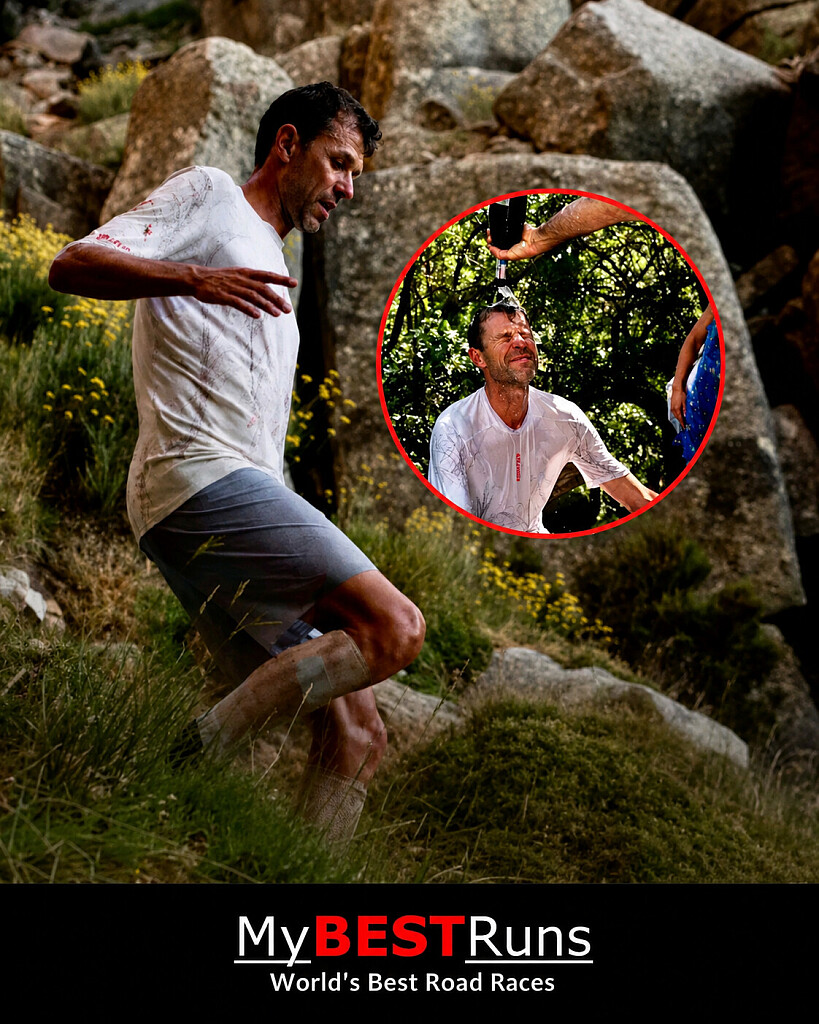
At 40, François D'Haene Reclaims the GR20 Crown with a Historic Sub-30-Hour Run
Age is often seen as the greatest opponent in endurance sports. Yet for François D'Haene, it has become another challenge to conquer.
The legendary French trail runner has once again etched his name into the history books after setting a new supported Fastest Known Time (FKT) on the iconic GR20 in Corsica. Covering approximately 160 kilometers across one of Europe's most demanding mountain trails, D'Haene completed the route in an astonishing 29 hours, 46 minutes and 20 seconds, becoming the first athlete ever to break the elusive 30-hour barrier.
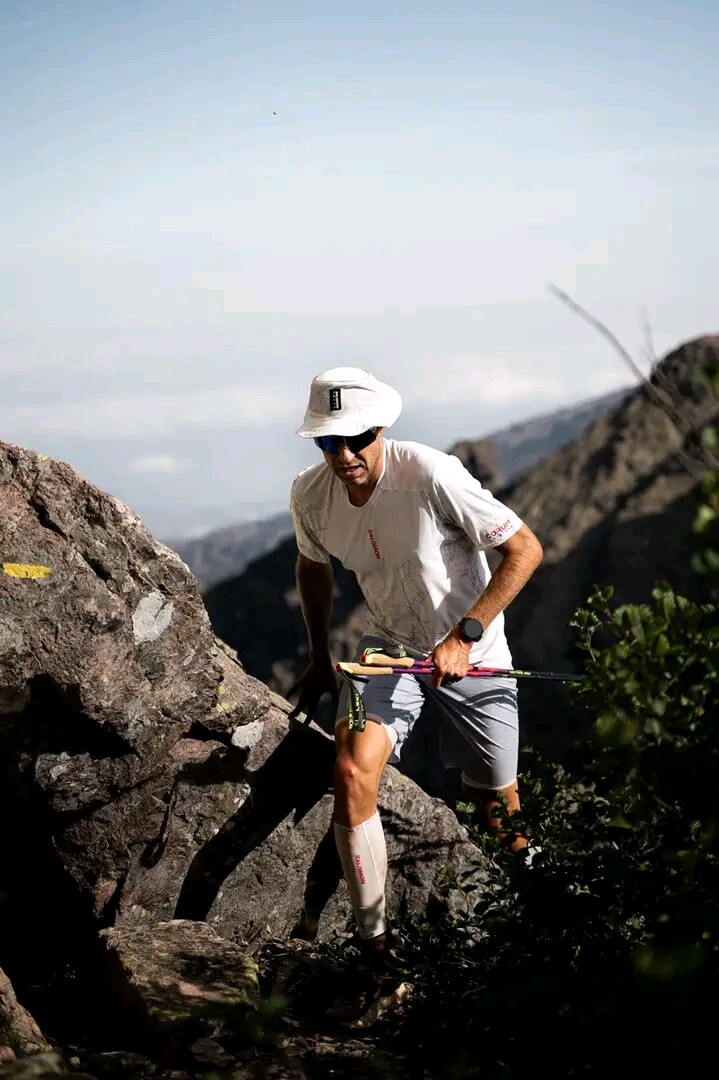
The GR20 stretches diagonally across the Mediterranean island of Corsica from Calenzana in the north to Conca in the south. Renowned for its unforgiving terrain, the route features around 12,000 meters of cumulative elevation gain, with steep ascents, rocky ridges and highly technical descents that have earned it a reputation as Europe's toughest long-distance hiking and trail-running route.
D'Haene began his remarkable journey at 4:30 a.m. on Wednesday, July 8, and reached Conca at 10:16 a.m. the following morning, maintaining an extraordinary pace across nearly 30 hours of relentless climbing and descending. Throughout the effort, a rotating team of pacers accompanied him in accordance with supported FKT guidelines, helping him maintain his rhythm across the brutal mountain course.
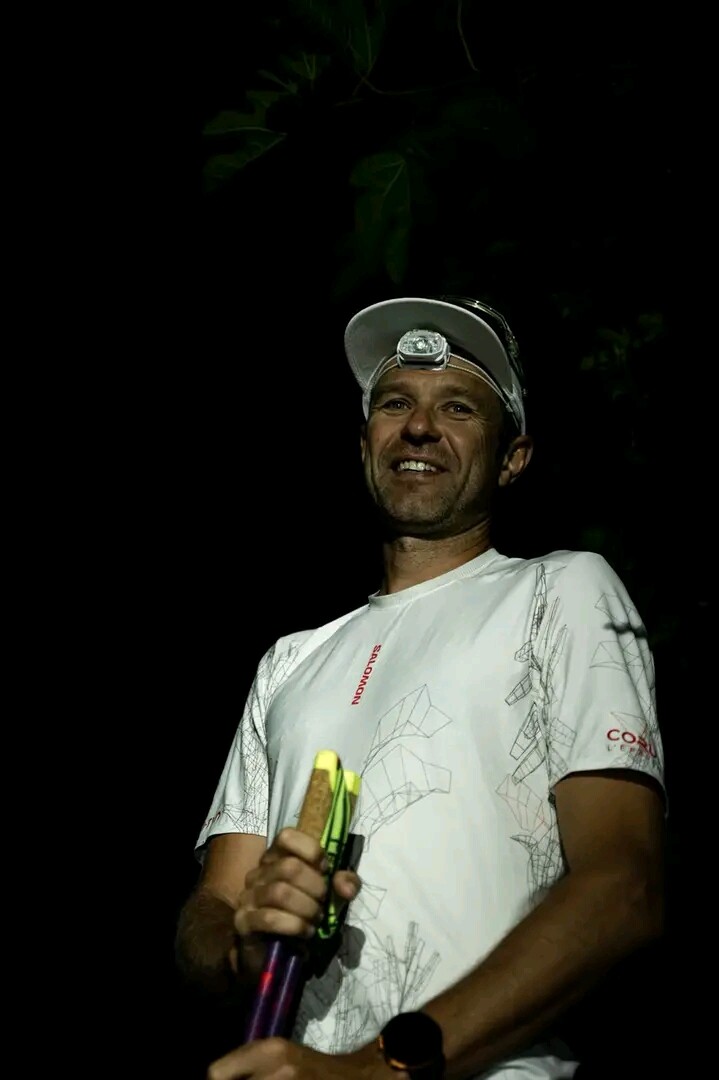
His performance erased the previous supported record of 30 hours, 25 minutes, set by Corsican trail specialist Lambert Santelli in 2021. In doing so, D'Haene shaved nearly 40 minutes off a mark many believed would stand for years.
What makes the achievement even more extraordinary is the story behind it. D'Haene first claimed the GR20 record in 2016, running 31 hours and 6 minutes. Several years later, Santelli eclipsed that performance on home soil. Rather than leaving the record behind, D'Haene returned a decade later—not simply to reclaim it, but to redefine what was thought possible.
At 40 years old, he proved that experience, resilience and meticulous preparation can be just as powerful as youthful speed. While many elite endurance athletes begin to slow with age, D'Haene continues to raise the standard, delivering one of the most impressive performances of his already legendary career.
His latest triumph adds another remarkable chapter to a résumé that already includes four Ultra-Trail du Mont-Blanc (UTMB) victories, four Diagonale des Fous titles, and the Hardrock 100 counterclockwise course record. Those accomplishments alone secured his place among trail running's all-time greats. This historic return to the GR20 only strengthens that legacy.
Breaking the 30-hour barrier on one of the world's most unforgiving mountain routes is more than just another record—it is a powerful reminder that greatness is measured not only by talent, but by the willingness to return, evolve and achieve what once seemed impossible.
François D'Haene did exactly that, turning back the clock and once again proving that true champions never stop rewriting history.
by Erick Cheruiyot for My Best Runs.
Login to leave a comment
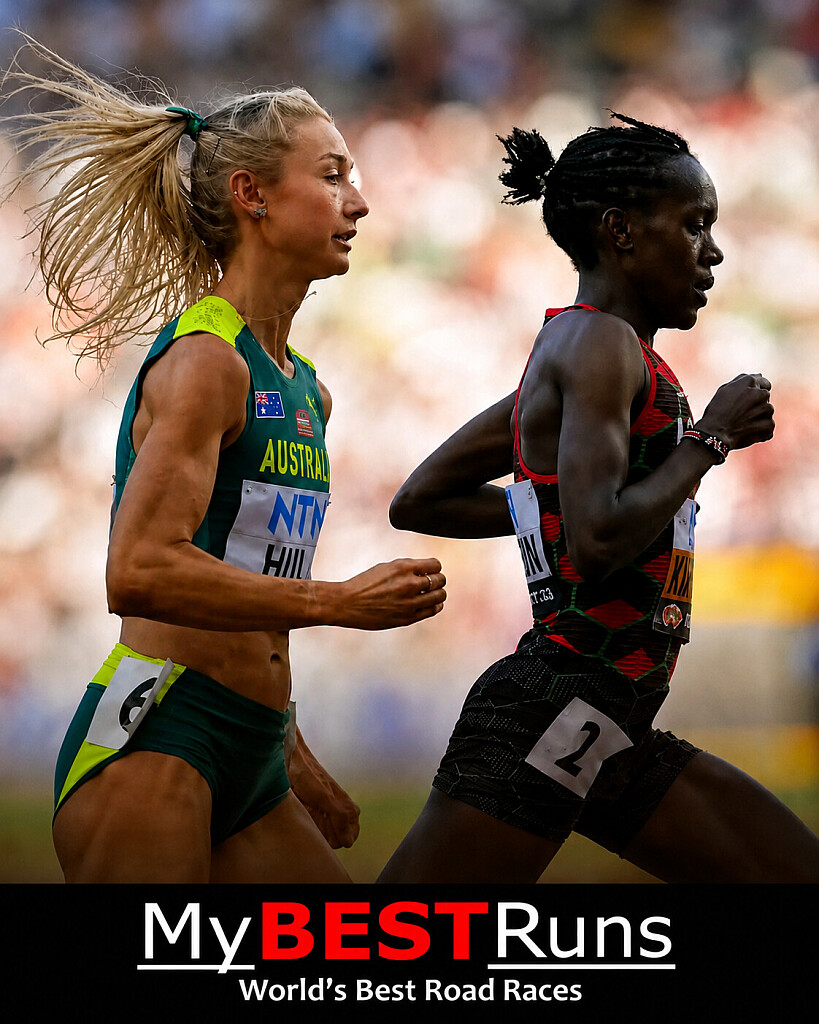
Two World Records. One Legendary Track. Another Epic Battle in Monaco
The Stade Louis II in Monaco has become a place where middle-distance history is made. On Friday evening, two women who have each rewritten the record books on this famous track will return—this time to face each other over 3,000 meters in one of the most compelling races of the Diamond League season.
Faith Kipyegon of Kenya and Jessica Hull of Australia have already left unforgettable marks on Monaco, but at different distances. Now, their paths converge once again in a race that promises world-class quality from start to finish.
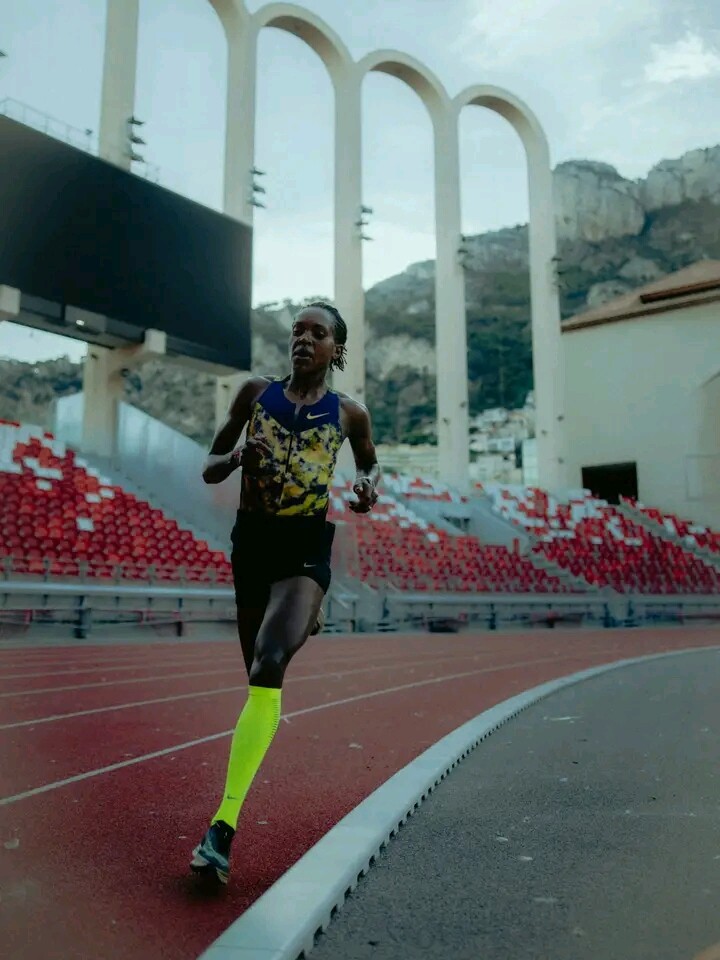
Kipyegon's connection with Monaco is legendary. In 2023, the Kenyan superstar produced one of the greatest performances in athletics history, clocking a breathtaking 4:07.64 to shatter the women's mile world record. It was another masterpiece from an athlete who has built a career on redefining what is possible in middle-distance running.
Since then, her résumé has only grown stronger. Kipyegon is a three-time Olympic 1500m champion, a five-time world champion, and remains the fastest woman ever over the mile. She arrives in Monaco after racing the women's mile at last weekend's Prefontaine Classic, making this a quick but intriguing turnaround as she steps up to 3,000 meters.
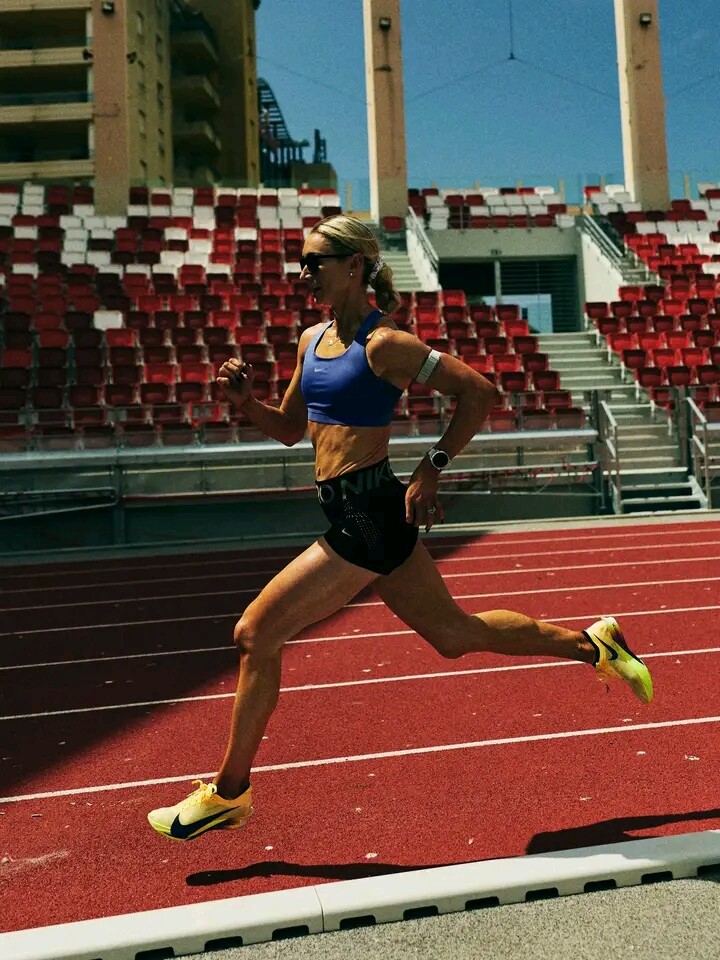
Hull, meanwhile, has her own unforgettable Monaco memories. The Australian star lit up the same track in 2024 when she stormed to a world record of 5:19.70 in the 2,000 meters, proving she belongs among the greatest middle-distance runners of her generation. Her fearless front-running style and remarkable endurance transformed that race into a historic performance.
The Olympic silver medallist over 1500 meters also holds the Australian record for 3,000 meters, making Friday's event an ideal opportunity to test herself once again against the very best.
Although much of the spotlight will understandably fall on Kipyegon and Hull, the race is far from a two-woman contest.
Italy's Nadia Battocletti continues to establish herself among Europe's finest distance runners and will be eager to challenge the established stars. Ethiopia's Freweyni Hailu also enters the race in outstanding form as the 2026 world leader over 3,000 meters, adding another serious contender to an already exceptional field.
Monaco has long been regarded as one of the fastest tracks in the world, producing countless records thanks to ideal conditions and elite competition. For Kipyegon, it has been the stage for career-defining brilliance. For Hull, it became the venue where she announced herself as a world-record holder.
Now, those two stories intersect once again.
Different world records. Different distances. The same fierce rivalry.
With championship pedigree, record-breaking speed and a stacked field assembled under the lights at Stade Louis II, Friday's women's 3,000 meters has all the ingredients to become another unforgettable chapter in Monaco's rich athletics history. Fans can expect nothing less than a race worthy of the track where both Kipyegon and Hull have already made history.
by Erick Cheruiyot for My Best Runs.
Login to leave a comment
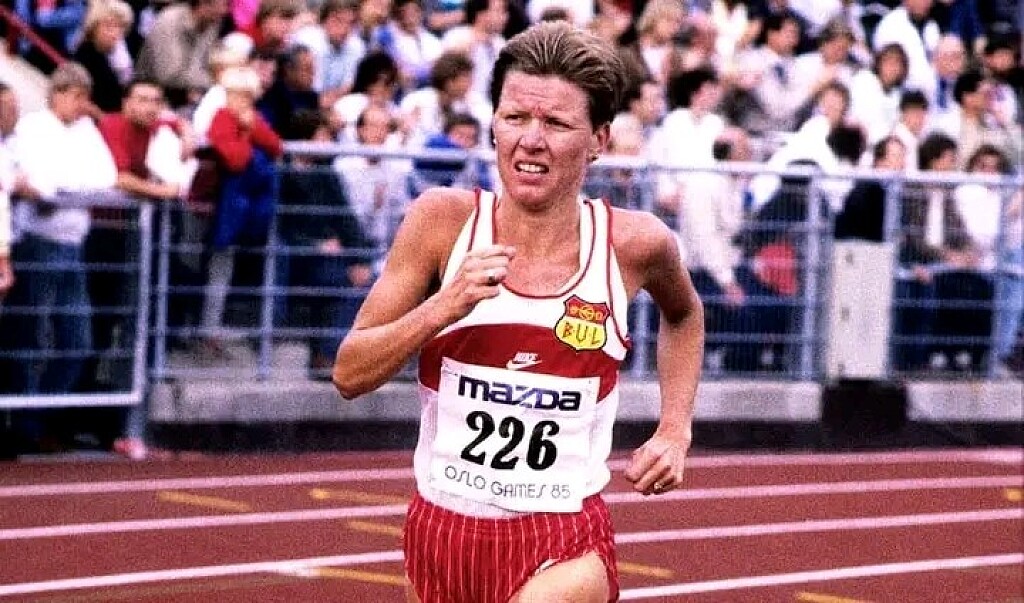
Forty Years On: Ingrid Kristiansen's Extraordinary 10,000m Masterpiece Still Stands Among Athletics' Greatest Performances
Forty years ago today, distance running witnessed one of its most astonishing moments when Ingrid Kristiansen delivered a breathtaking performance at the Bislett Games in Oslo. The Norwegian star shattered her own women's 10,000-meter world record, clocking an incredible 30:13.74—an astonishing 45-second improvement on the previous global mark. It remains one of the most remarkable world record breakthroughs in the history of track and field.
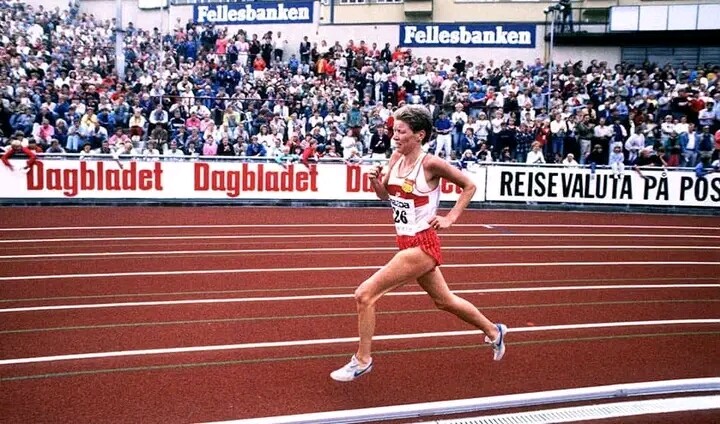
What made the performance even more extraordinary was Kristiansen's race execution. She later revealed that she reached the halfway point in 15:15, meaning she produced a devastating negative split by covering the final 5,000 meters in approximately 14:58. Finishing faster than she started over such a demanding distance showcased not only exceptional endurance but also remarkable tactical discipline and finishing strength.
The magnitude of that closing split becomes even more impressive when viewed in the context of the era. At the time, the women's 5,000-meter world record stood at 14:48.07, held by Zola Budd. Kristiansen's ability to finish the second half of a world-record 10,000-meter race in just ten seconds slower than the standalone 5,000-meter world record highlighted a level of fitness and resilience rarely seen in elite competition.
As if rewriting the 10,000-meter record was not enough, Kristiansen returned later that same summer to make history once again. She lowered the women's 5,000-meter world record to 14:37.33, further cementing her reputation as the undisputed queen of long-distance running during the mid-1980s.
Four decades later, Kristiansen's unforgettable run at Bislett continues to be celebrated as a defining moment in athletics. Her fearless pace, relentless finishing kick, and record-breaking brilliance remain an enduring reminder that some performances transcend generations and continue to inspire long after the finish line has been crossed.
by Erick Cheruiyot for My Best Runs.
Login to leave a comment
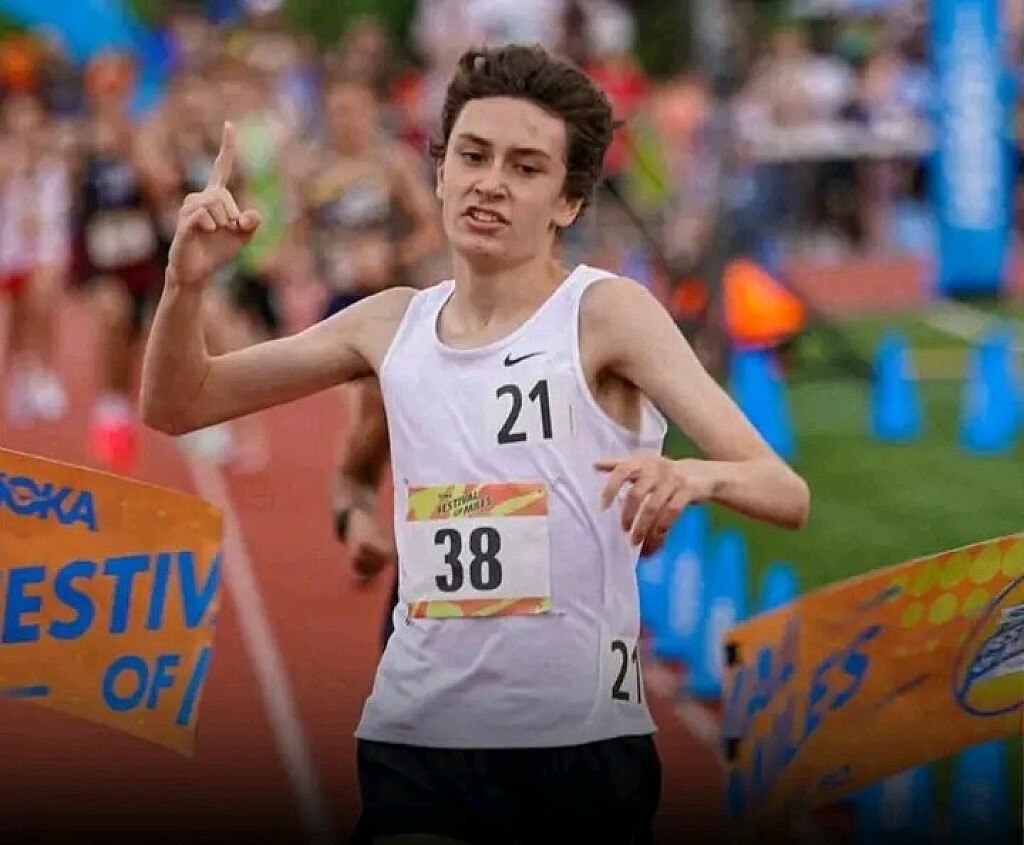
14-Year-Old Luke Surface Shocks the Running World With Historic Middle School Record
The future of American distance running may have just announced itself.
Luke Surface, an 8th-grade student-athlete from North Raleigh Christian Academy in Raleigh, North Carolina, delivered a performance that stunned the track and field community after taking on some of the nation’s best high school runners at Nike Outdoor Nationals.

Competing at the legendary Hayward Field in Eugene, Oregon — one of the most iconic venues in American distance running — Surface lined up in the boys championship 5,000 meters against a field dominated by high school seniors, including several athletes preparing to compete at the NCAA Division I level.
Despite being one of the youngest runners in the race, the 14-year-old held his own against the elite competition, finishing eighth in an incredible 14:25.88. The performance set a new national middle school record, averaging approximately 4:39 per mile for more than three miles.
That kind of time is fast enough to win many high school state championships across the United States and meets qualifying standards for several major NCAA Division I conference competitions — a remarkable achievement for a runner who has not yet entered high school.
But Surface’s historic 5,000m performance was only the latest chapter in a season filled with record-breaking moments.
Earlier in May, he clocked 8:52.03 for 3,200 meters at the NCISAA Division I State Championships in North Carolina, breaking another national middle school record. His converted two-mile time of 8:55.12 surpassed the previous world-best mark for a 14-year-old age group, previously held by Vincent Recupero.
During the previous cross-country season, Surface also made headlines when he ran 15:12 at the adidas XC Challenge, finishing second while competing against runners who were several years older.
Across cross country, two miles, and the 5,000 meters, Surface has continued to prove that his talent is far beyond his age group. While he still has four years of high school competition ahead before reaching the college level, his performances have already placed him among the most exciting young distance runners to watch.
The American high school 5,000-meter record currently stands at 13:32, set by Lex Young in 2023 — a mark Surface is not yet close to challenging. However, his remarkable progression at such a young age has caught the attention of the running world, with many eager to follow how far his extraordinary journey can go.
For now, Luke Surface remains an eighth grader rewriting the record books — and his story is only beginning.
by Erick Cheruiyot for My Best Runs.
Login to leave a comment
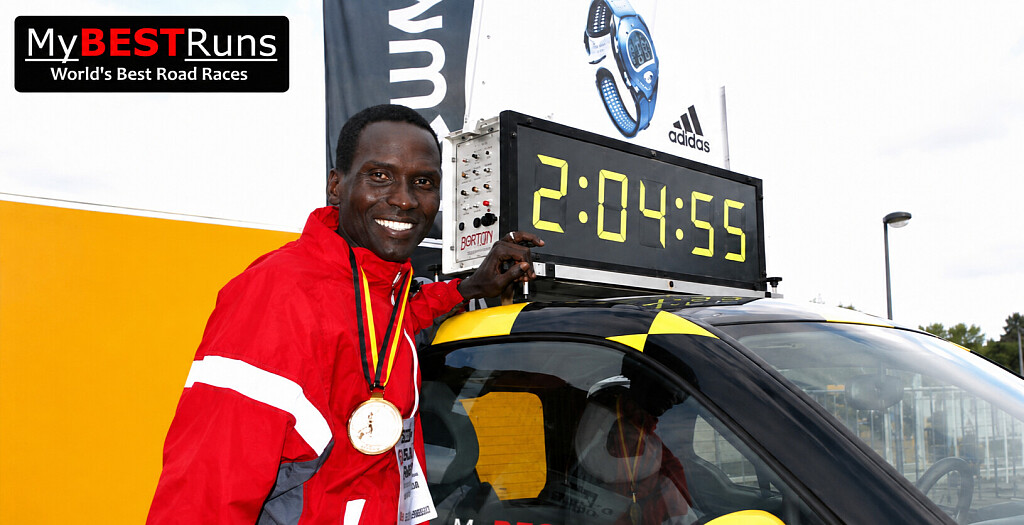
Paul Tergat: The Kenyan Legend Who Redefined Distance Running
On June 17, the athletics world celebrated the birthday of one of the greatest distance runners ever to grace the sport—Kenya’s Paul Kibii Tergat. Born in Baringo County, Kenya, on June 17, 1969, Tergat built a career that transcended generations, leaving an enduring legacy on the track, the roads, and the cross-country circuit.
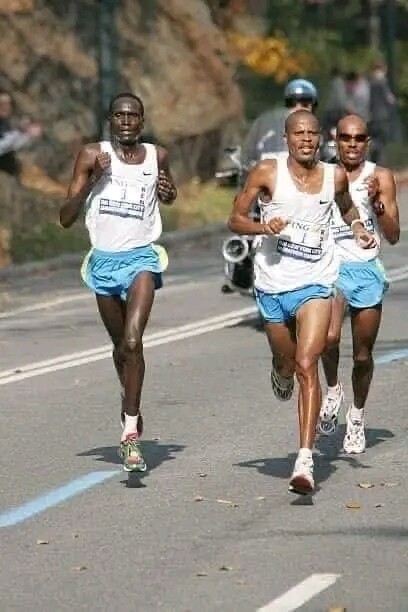
Few athletes in history have demonstrated such remarkable versatility and consistency across multiple disciplines. Whether battling through muddy cross-country courses, chasing medals on the track, or rewriting records on the marathon stage, Tergat established himself as one of the most complete distance runners the world has ever seen.
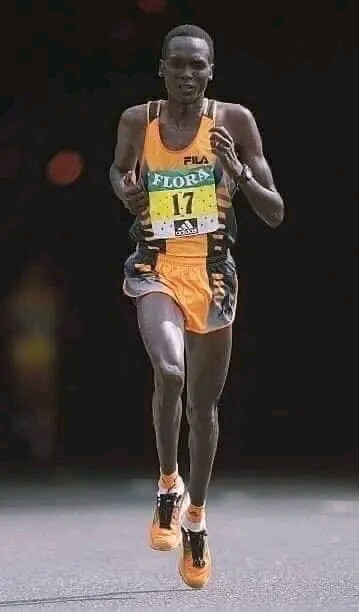
His dominance in cross-country remains one of the sport’s most extraordinary achievements. Between 1995 and 1999, Tergat captured an unprecedented five consecutive World Cross Country Championship titles, a feat that showcased not only his endurance but also his unmatched competitive spirit. From Durham to Cape Town, Turin, Marrakech, and Belfast, he conquered every challenge placed before him, cementing his status as the undisputed king of cross-country running.
Tergat’s brilliance extended to the half marathon, where he claimed back-to-back World Half Marathon Championship titles in Palermo, Italy, in 1999 and Veracruz, Mexico, in 2000. His ability to excel over varying distances highlighted the exceptional range that made him a global icon.
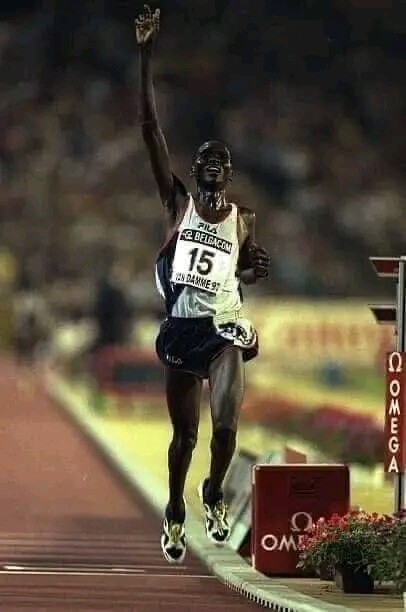
On the track, Tergat was a fierce competitor who regularly challenged the greatest runners of his era. He earned Olympic silver medals in the 10,000 meters at the Atlanta 1996 and Sydney 2000 Games, narrowly missing gold on both occasions. He also collected three World Championship medals over 10,000 meters, proving his consistency at the highest level of international competition.
Yet perhaps Tergat’s most historic contribution came on the roads. In 2003, at the Berlin Marathon, he became the first man in history to run the marathon in under 2 hours and 5 minutes, clocking a groundbreaking world record of 2:04:55. The performance marked a defining moment in distance running and opened a new chapter in the pursuit of marathon excellence.
His personal bests remain a testament to his extraordinary talent:
• 3,000m – 7:28.70
• 5,000m – 12:49.87
• 10,000m – 26:27.85
• Half Marathon – 59:17
• Marathon – 2:04:55
Beyond the medals and records, Tergat inspired a generation of athletes across Kenya and the world. His relentless determination, humility, and commitment to excellence transformed him into far more than a champion runner—he became a symbol of what is possible through hard work and perseverance.
Today, Paul Tergat’s name remains woven into the fabric of athletics history. From his reign as the king of cross-country to his revolutionary marathon achievements, his legacy continues to inspire runners pursuing greatness on every surface and over every distance.
by Erick Cheruiyot for My Best Runs.
Login to leave a comment
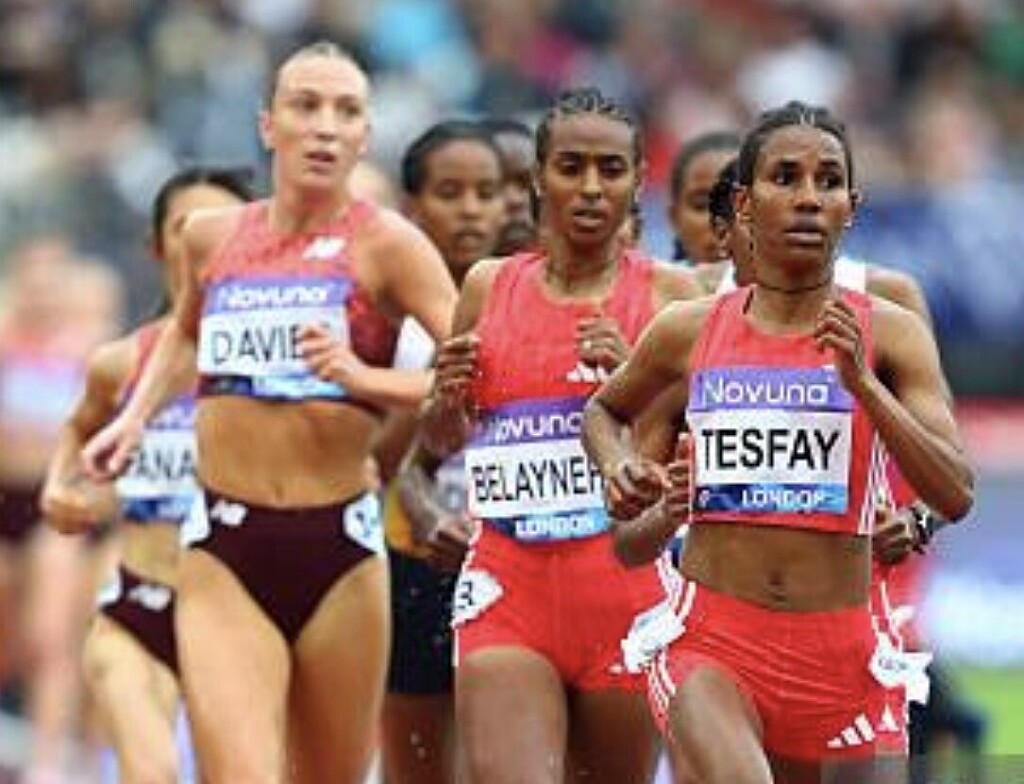
Fotyen Tesfay Hailu From Track Star to Marathon Sensation
Ethiopia’s Fotyen Tesfay Hailu has rapidly emerged as one of the most exciting athletes in women’s distance running, combining world-class speed on the track with a marathon debut that instantly placed her among the greatest performers in history.
The 28-year-old Ethiopian captured global attention on March 15, 2026, at the Zurich Barcelona Marathon, where she ran 2:10:51 in her first attempt at the classic distance. The performance moved her to No. 2 on the all-time women’s marathon list and confirmed what many insiders had suspected for years — Tesfay possessed the perfect combination of speed, strength, and efficiency to become a major marathon star.
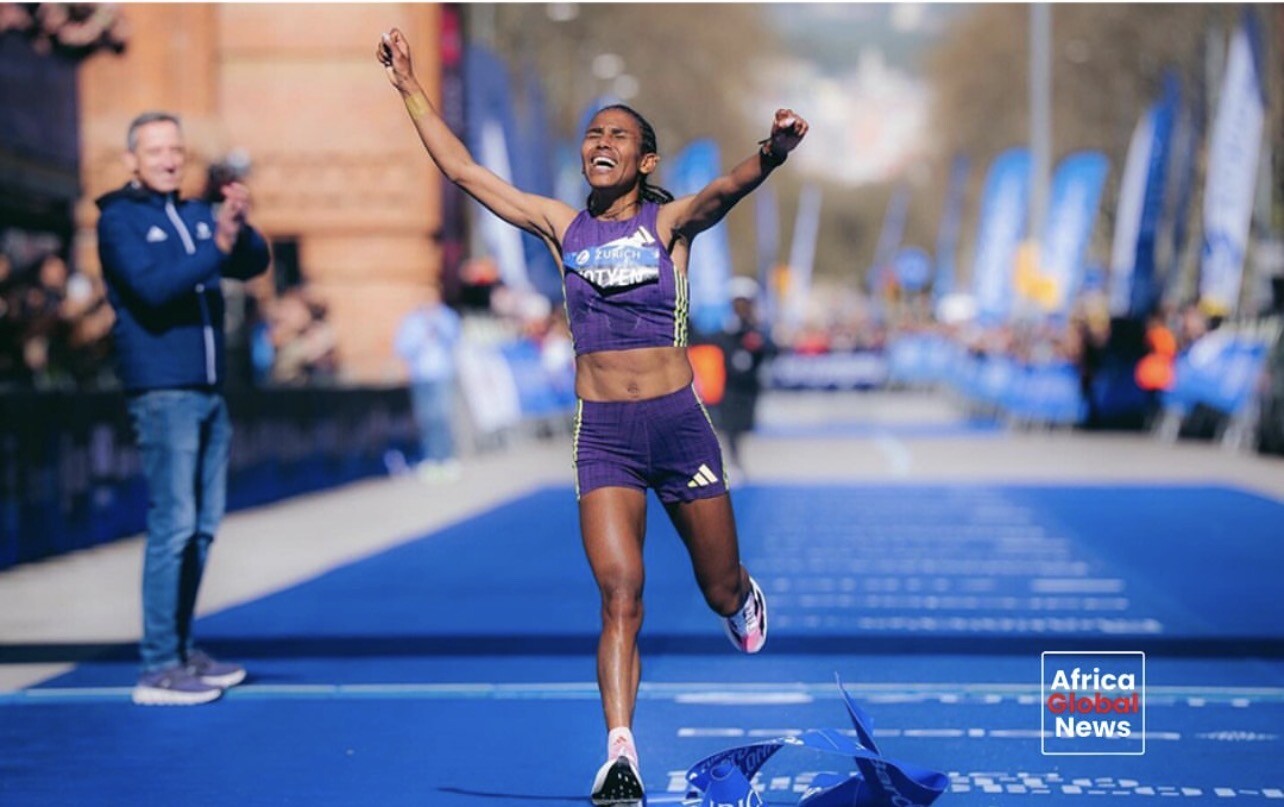
Before stepping up to the marathon, Tesfay had already established herself as one of the world’s elite distance runners. She owns personal bests of 14:28.53 for 5,000 meters, 29:47.71 for 10,000 meters, and an impressive 1:03:21 for the half marathon. Those performances placed her among the very best female distance runners in the world long before she made her marathon debut.
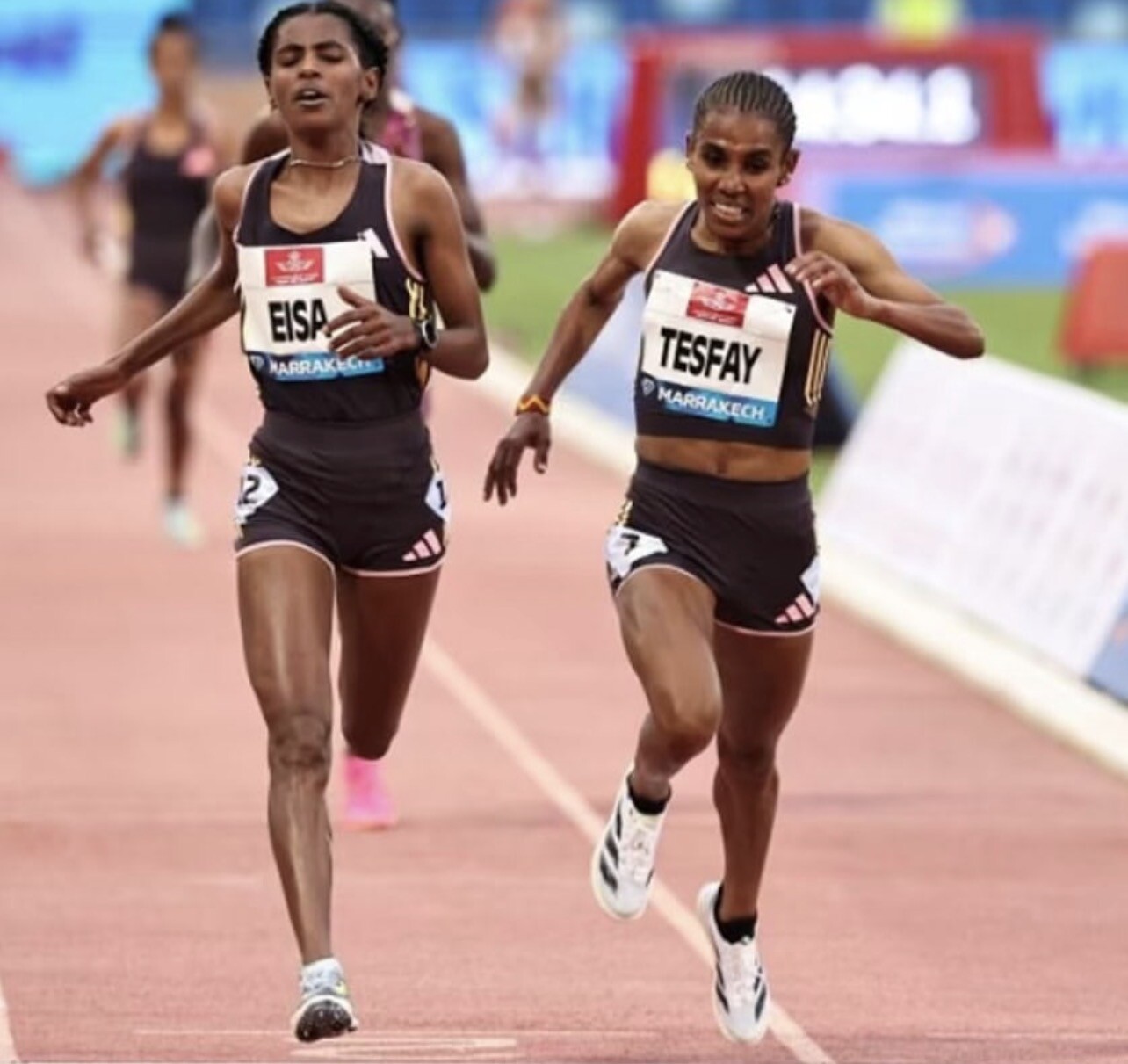
Tesfay first gained major international attention through her aggressive style on both the roads and track. Unlike some runners who rely heavily on tactical racing, she has consistently shown she is comfortable pushing the pace from the front. That fearless approach translated beautifully to the marathon in Barcelona. Rather than fading late, as many athletes do in a debut, she looked smooth and controlled deep into the race while maintaining one of the fastest paces ever recorded by a woman.
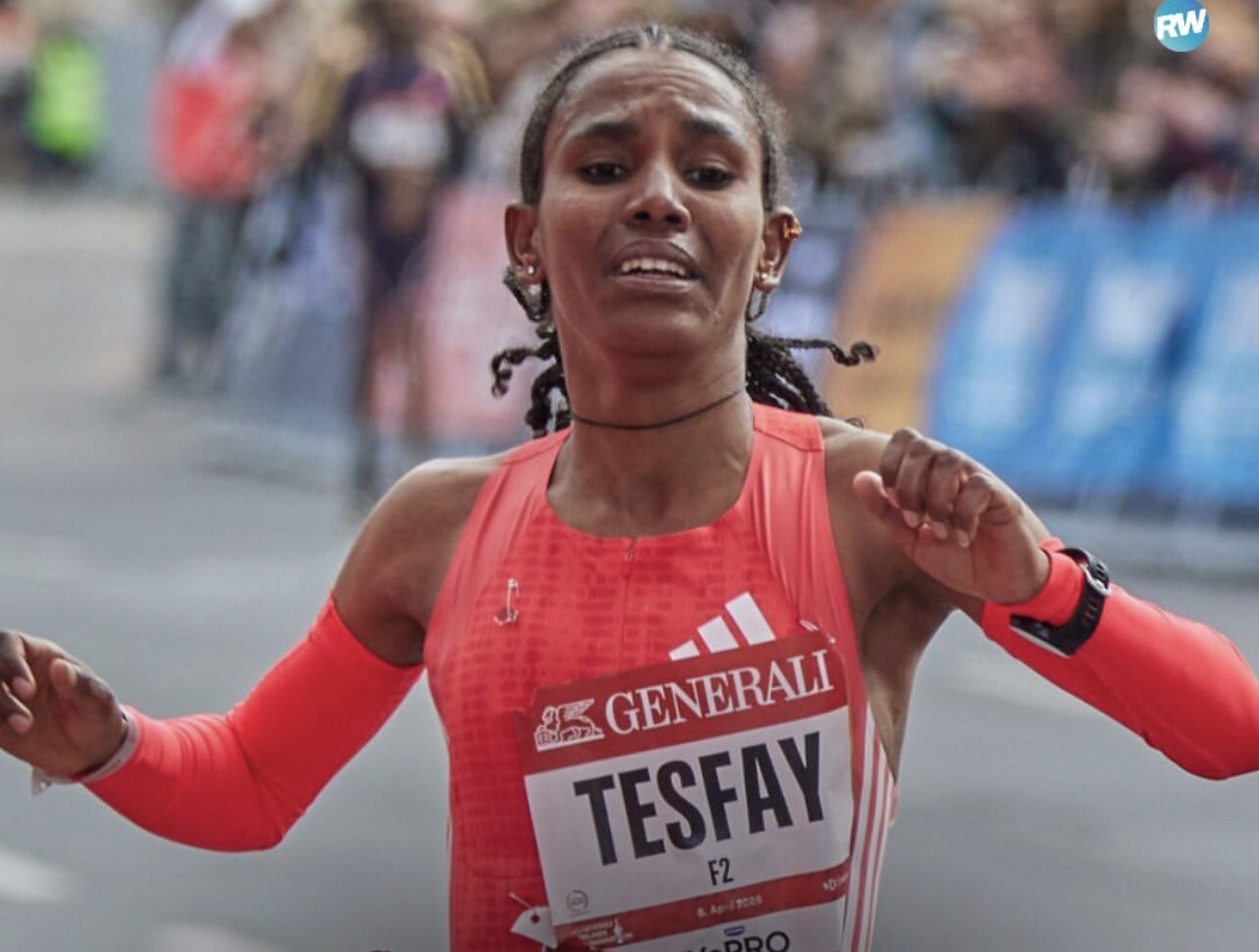
Her marathon breakthrough did not happen overnight. Ethiopia’s deep tradition in distance running has produced countless champions, but Tesfay’s development has stood out because of her versatility. She has demonstrated elite ability on the track, cross country, and roads, proving she can adapt to almost any racing situation.
Observers were particularly impressed by how relaxed she appeared while running at a pace few women in history have ever sustained for 26.2 miles. That has led many in the sport to believe her future performances could be even faster as she gains more experience at the marathon distance.
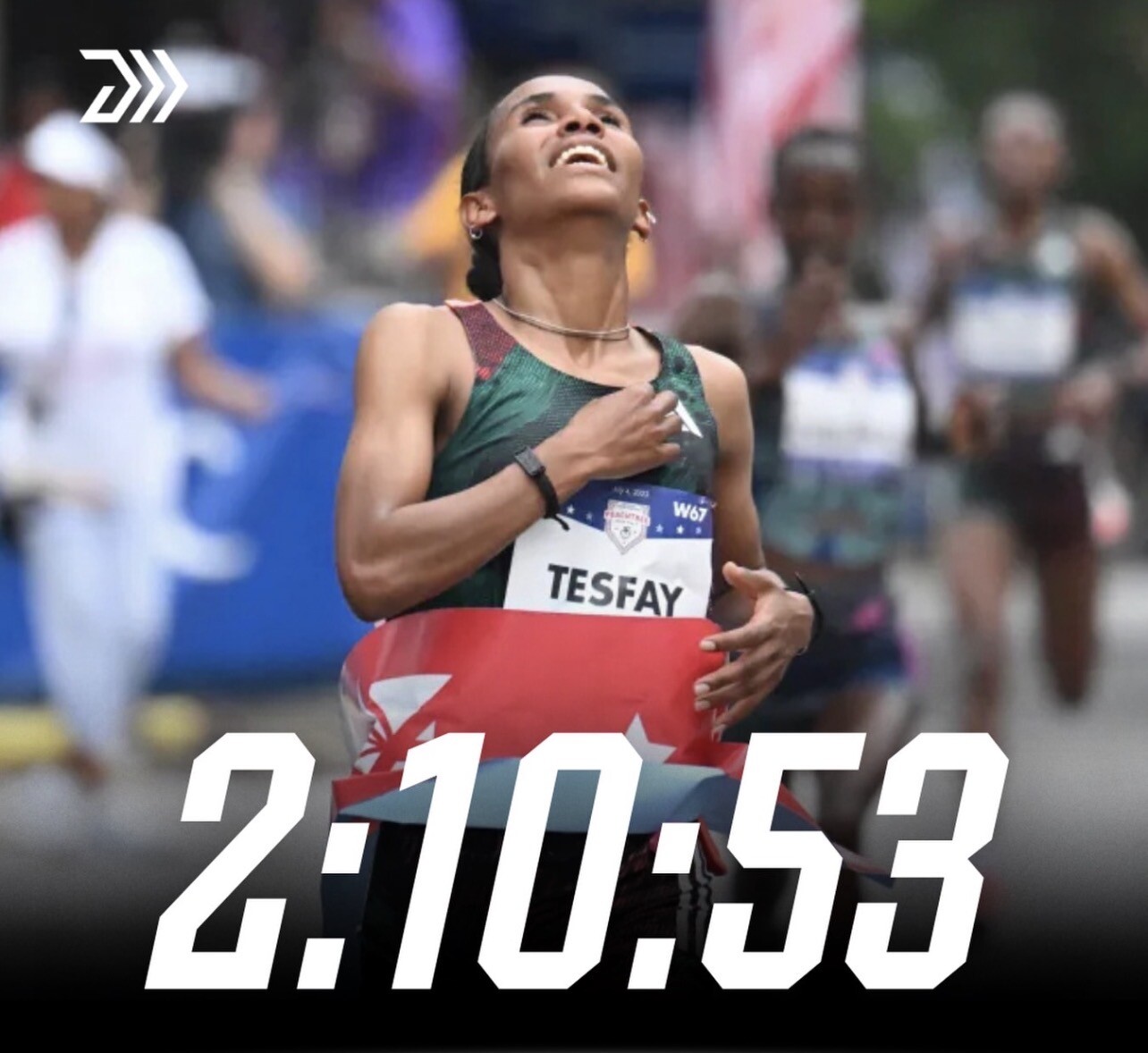
Tesfay’s emergence also comes during a remarkable era for women’s marathon running. Times once considered impossible are now becoming reality, and Tesfay appears positioned to play a major role in pushing the event to even higher levels.
With her combination of track speed, endurance, and calm racing style, Fotyen Tesfay Hailu now looks capable of becoming one of the defining marathon runners of her generation.
by Boris Baron for My Best Runs
Login to leave a comment
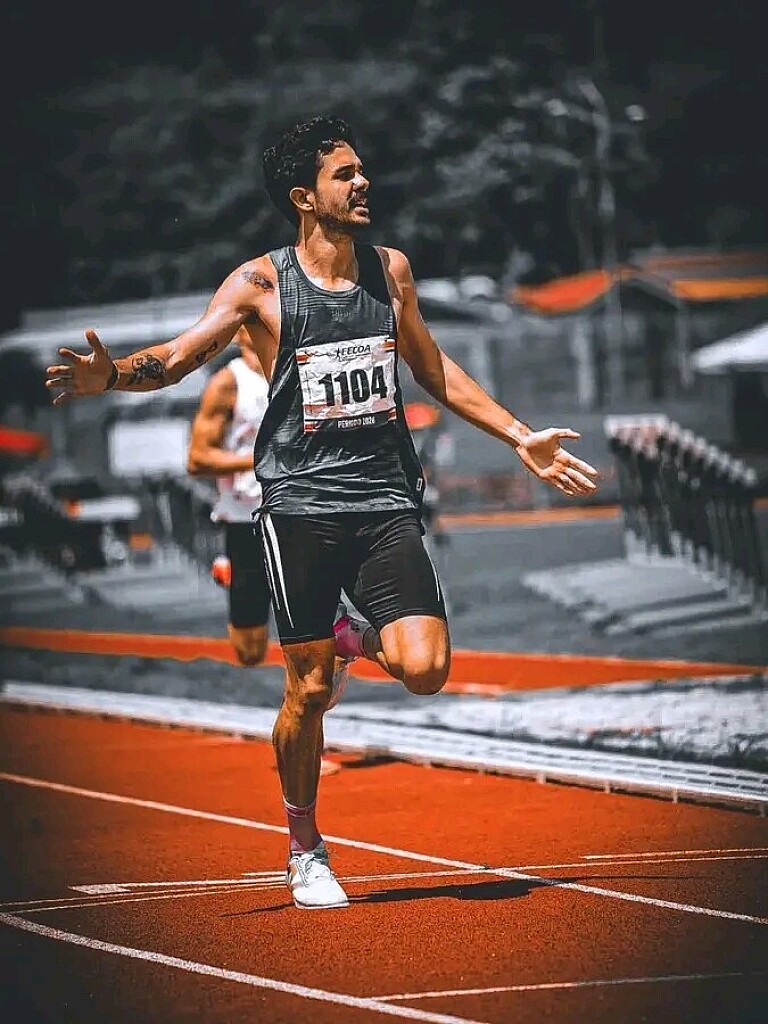
Jordy Mendez Returns to the Top with National Title and Personal Best Performance
Costa Rican middle-distance runner Jordy Mendez delivered one of the standout performances at the National Senior Championships, marking his return to the competition in remarkable fashion after a two-year absence.
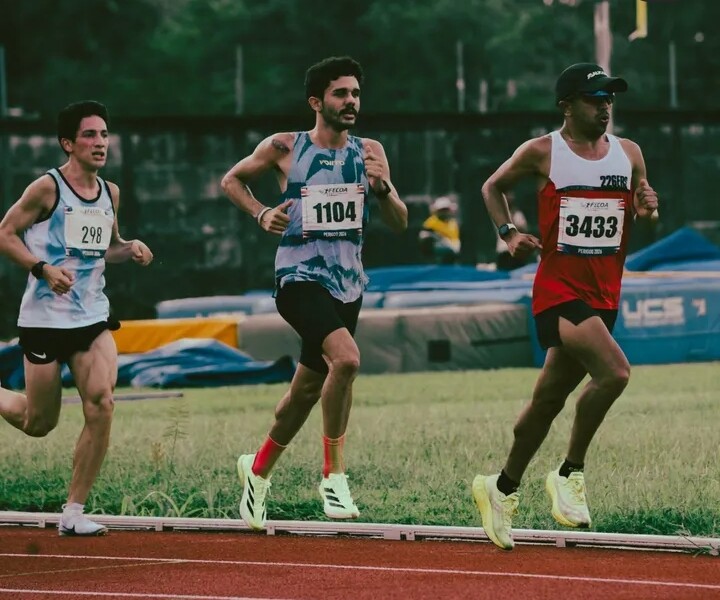
Mendez crowned his comeback with victory in the men’s 1500 meters, storming to the national title while also producing a new personal best of 3:53.60. The performance not only secured him gold but also confirmed his steady rise among Costa Rica’s most promising distance athletes.
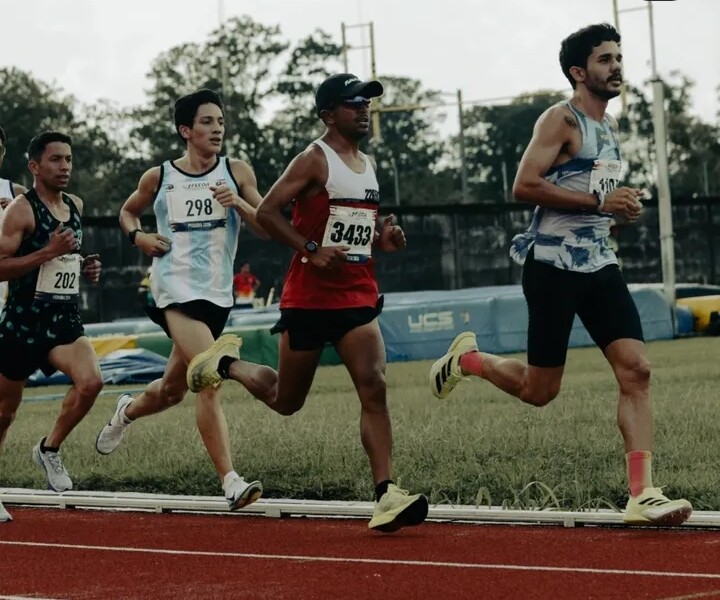
The championships carried extra significance for the runner, who had been away from the national stage for two years. Rather than easing back into competition, Mendez returned with authority, showing confidence, tactical maturity, and impressive finishing strength against a highly competitive field.
But his success did not end there.
Mendez also competed in the 5000 meters, where he battled through another strong lineup to finish fourth in 15:09.91 — the second-fastest time of his career in the event. Balancing both races at a high level highlighted his growing endurance and versatility across distances.
Following the championships, Mendez praised the quality of competition and acknowledged the athletes who pushed the pace throughout the races. He noted that the elevated standard of the field helped create an atmosphere capable of producing outstanding performances.
The Costa Rican athlete also expressed gratitude to the people who have continued supporting him throughout his journey, emphasizing the importance of that encouragement during his return to national competition.
For Mendez, the championships represented more than medals and times. They signaled the successful return of an athlete determined to elevate his career to another level. With a national title, a personal best, and renewed momentum now behind him, his comeback season is already shaping into one worth following closely.
by Erick Cheruiyot for My Best Runs.
Login to leave a comment
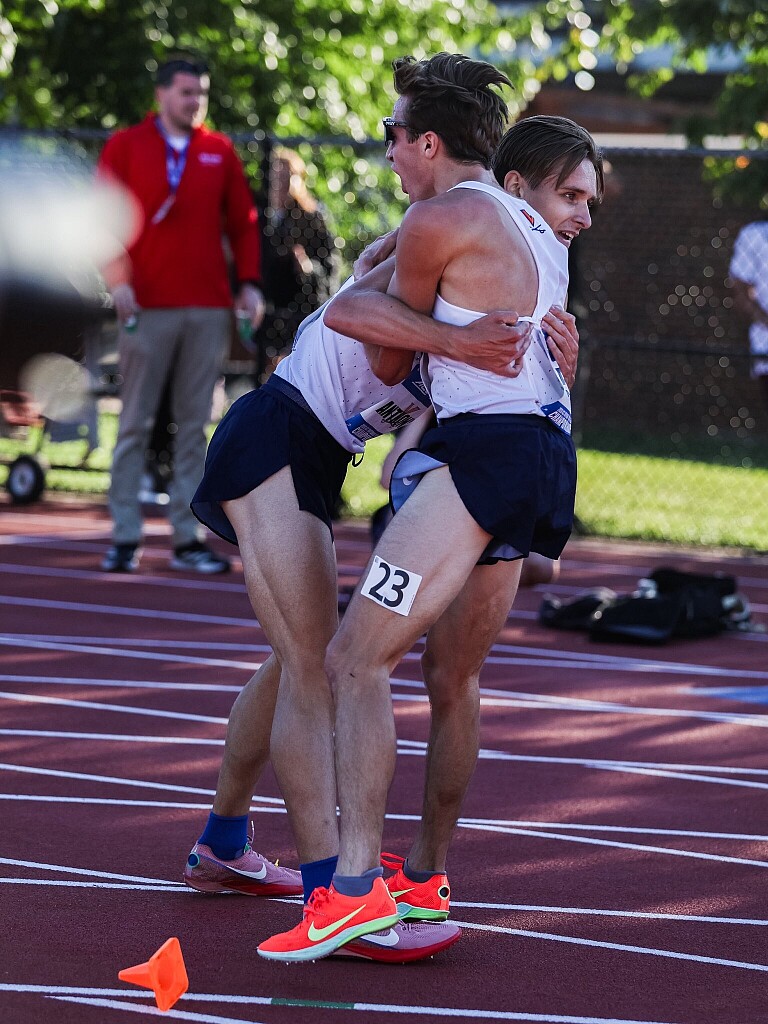
UVA Dominates ACC 10,000m as Wachtel Leads Cavaliers to Brilliant 1-2 Finish
The University of Virginia delivered one of the standout performances on Day One of the ACC Outdoor Championships as Justin Wachtel and Will Anthony powered the Cavaliers to an impressive 1-2 finish in the men’s 10,000m final.
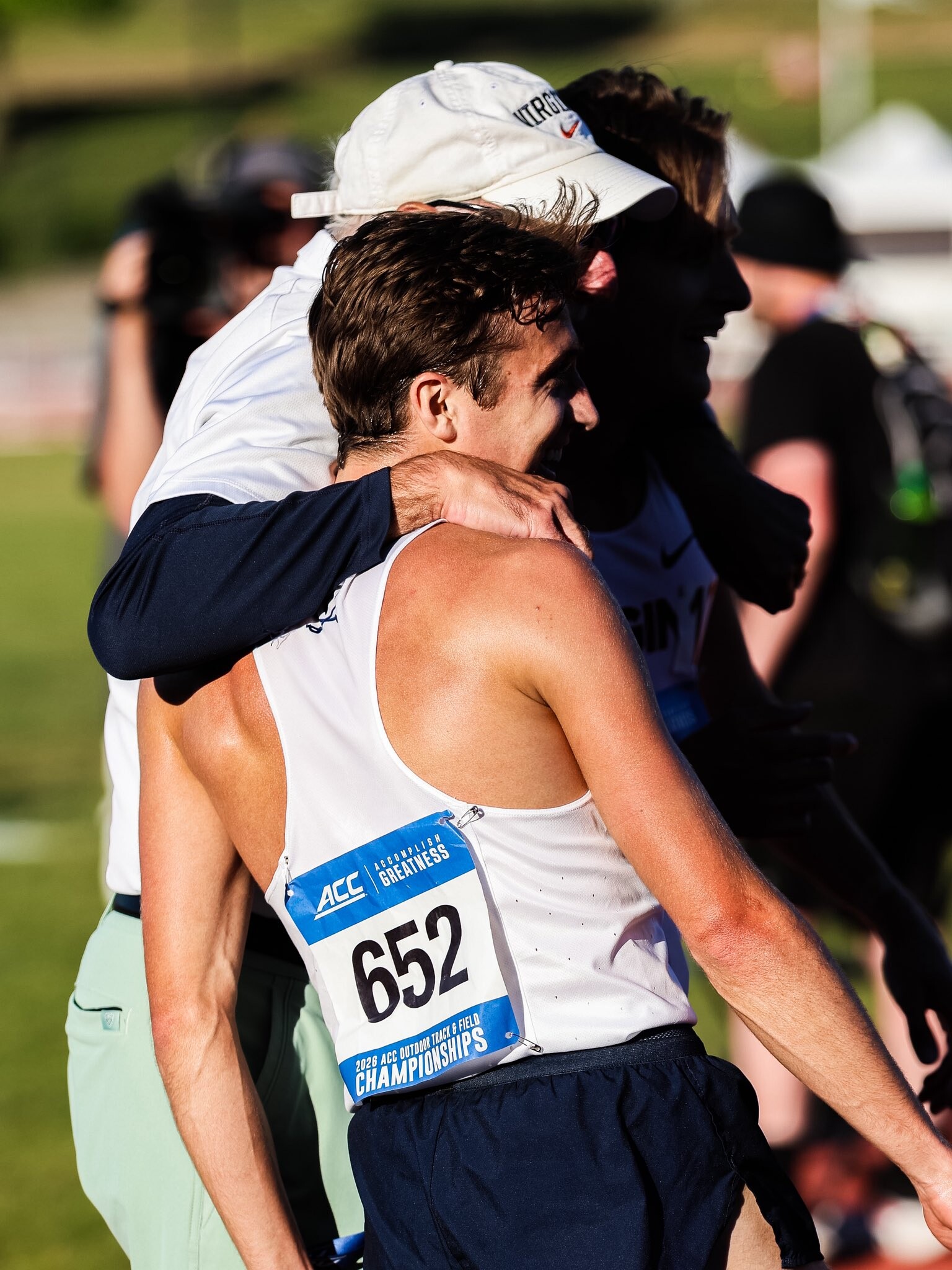
In a race packed with tactical discipline and championship intensity, the field remained closely grouped for much of the contest before the Virginia teammates asserted control during the decisive closing stages. What began as a patient and calculated affair quickly transformed into a fierce battle for the title as the pace intensified late in the race.
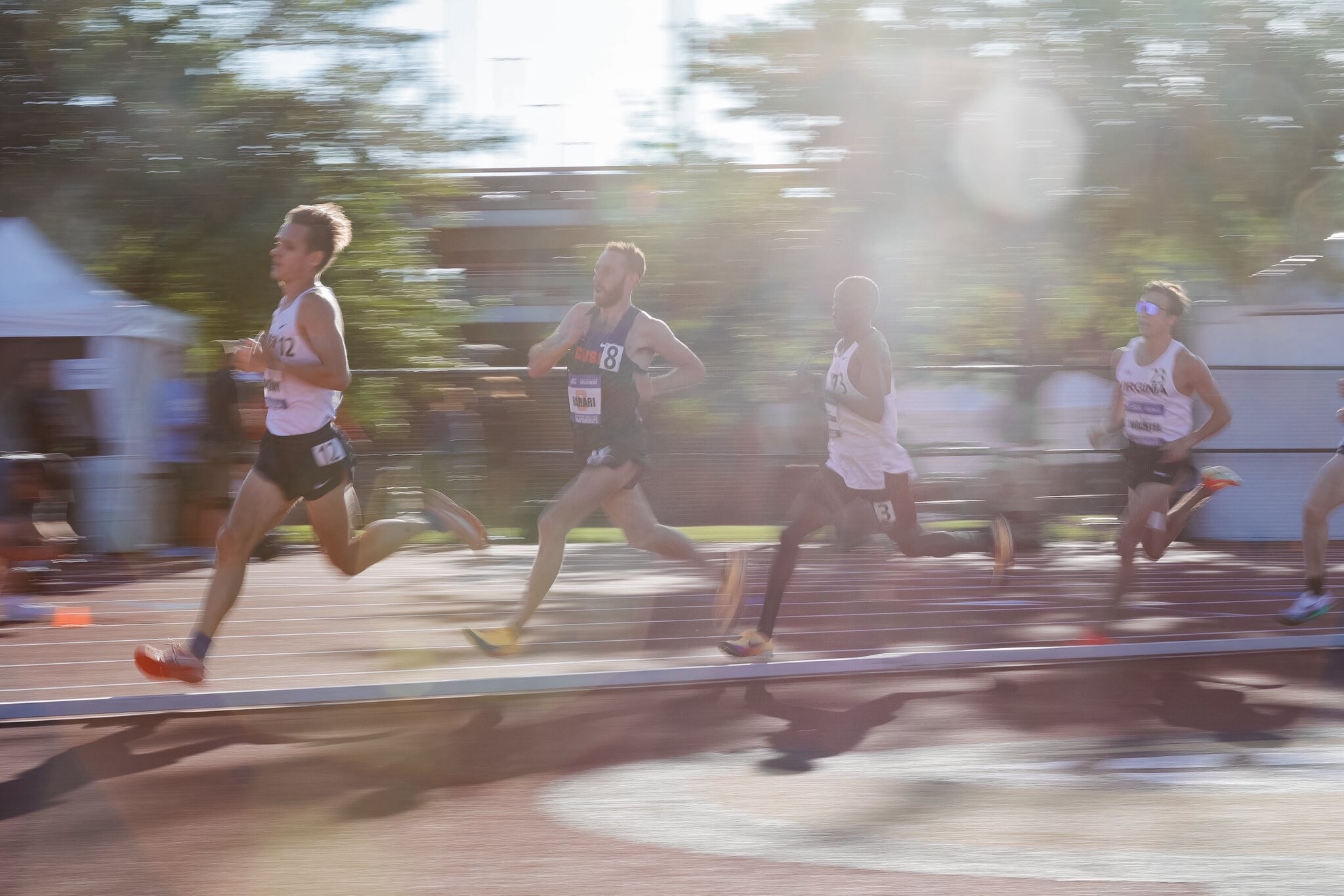
When the moment arrived to make his move, Wachtel delivered a stunning finishing burst that left the rest of the field with no response. The UVA star closed his final lap in a remarkable 55.88 seconds, showcasing exceptional speed and composure after an already demanding 10,000 meters.
Anthony followed closely behind to complete a dominant Virginia sweep at the front, capping a memorable performance for the Cavaliers and reinforcing the program’s growing reputation in collegiate distance running.
The victory was not simply about endurance — it was a demonstration of tactical awareness, teamwork, and perfectly timed execution. Wachtel’s devastating finishing speed ultimately proved to be the defining weapon in a race that demanded patience before rewarding aggression.
With the ACC Championships now underway, Virginia has already announced itself as a major force, and the Cavaliers’ commanding display in the 10,000m will undoubtedly remain one of the defining performances of the meet
by Erick Cheruiyot for My Best Runs.
Login to leave a comment
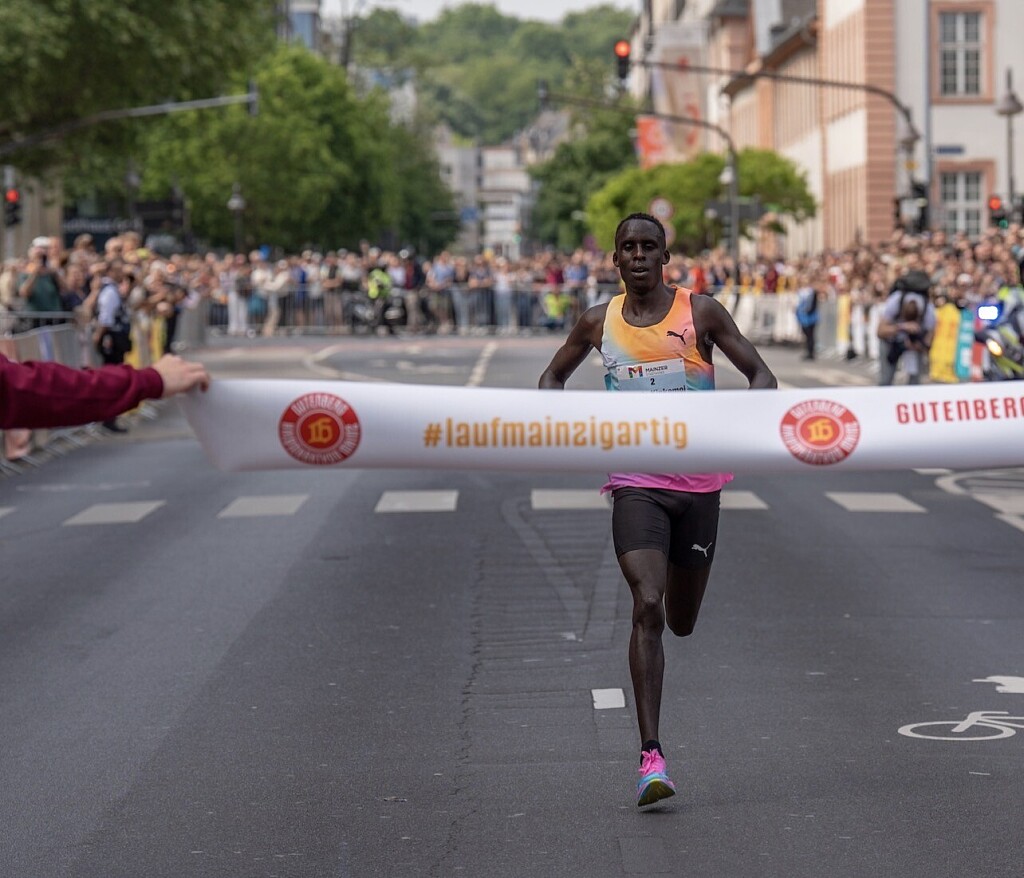
Dennis Kipkogei Smashes Course Record in Mainz
Dennis Kipkogei announced himself as one of Kenya’s brightest emerging distance stars with a stunning course record performance at the Gutenberg Mainz Half Marathon on Sunday.
The 24-year-old Kenyan stormed to victory in 59:14, becoming the first runner to break the one-hour barrier in the history of the race and firmly placing Mainz among Europe’s premier half marathons. Among German races, only Berlin has produced faster half marathon performances.
Remarkably, it was only Kipkogei’s second race outside Kenya. Earlier this year he shocked observers by finishing runner-up at the Berlin Half Marathon after originally being entered as a pacemaker. In Mainz he proved that performance was no fluke, dominating the field and winning by more than a minute.
Fellow Kenyans Kelvin Kipruto and Jamal Kiprono completed a Kenyan sweep of the podium, clocking 60:25 and 60:29 respectively.
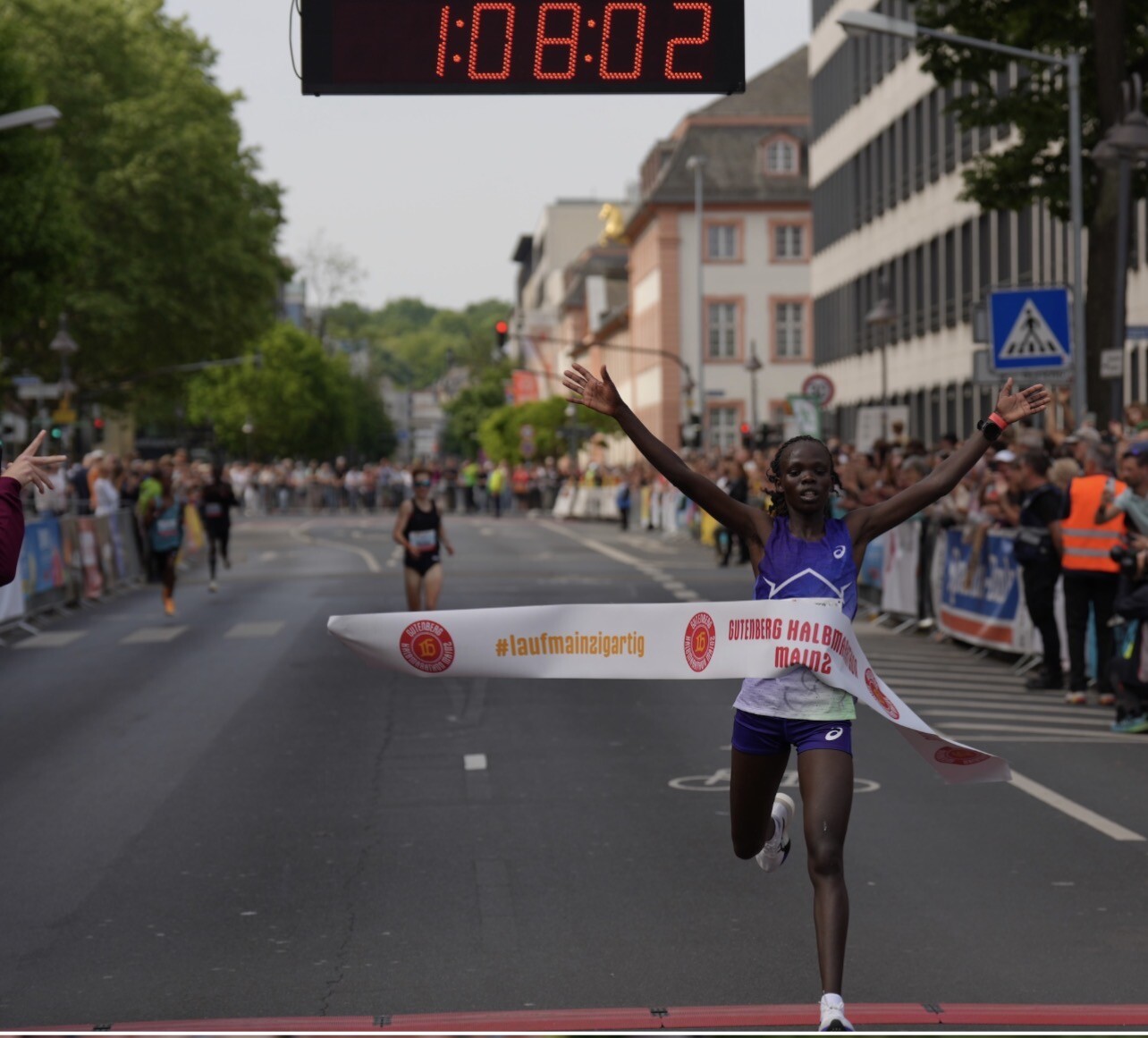
For the third consecutive year both course records fell in Mainz. Kenya’s Beatrice Cheserek captured the women’s title in 68:02 after a strong late-race surge. Germany’s Blanka Dörfel delivered a breakthrough performance to finish second in 68:06, improving her personal best by nearly two minutes and becoming the sixth-fastest German woman ever at the distance. Ethiopia’s Emebet Kebede Dessie took third in 69:01.
“We are very pleased that we were able to break both course records for the third time. A winning time under one hour is something special,” said Race Director Jo Schindler. “With that result we are currently the eleventh-fastest half marathon in the world this year — that is quite an achievement.”
The event continued its rapid growth with 12,960 entries in the half marathon alone. Including shorter races, more than 17,500 athletes participated across the weekend.
The men’s race opened at a blistering pace, with early split times suggesting a finishing time well under 59 minutes. Kipkogei made his decisive move shortly after 10K and quickly separated from the lead pack. Although warm temperatures near 20 Celsius slowed him slightly in the closing kilometers, he still came within three seconds of his personal best of 59:11 set in Berlin.
“I came here to break the course record and I am happy that I managed it,” said Kipkogei. “I had a problem with my hamstring so my body did not feel that good. Otherwise I could have run even faster.”
His 59:14 performance shattered the previous course record of 60:50 by more than a minute and a half.
“If I am selected I will compete at the World Half Marathon Championships in Copenhagen in September,” he added.
Behind the Kenyan sweep, Germany’s national marathon champion Tom Thurley finished eleventh in 64:07, narrowly missing his personal best by 11 seconds.
“My next goal is an autumn marathon and I will try to improve to under 2:10,” said Thurley.
The women’s race unfolded dramatically after Joan Chepleting broke away early, opening a sizable gap during the opening kilometers. However, the aggressive pace proved unsustainable and she was reeled in shortly before 10K.
A duel then developed between Cheserek and the fast-rising Dörfel. Over the final kilometers Cheserek gradually pulled away to secure victory and another course record.
“I am delighted with this victory,” said Cheserek. “My next goal is to run the World Half Marathon Championships and after that I plan to run an autumn marathon.”
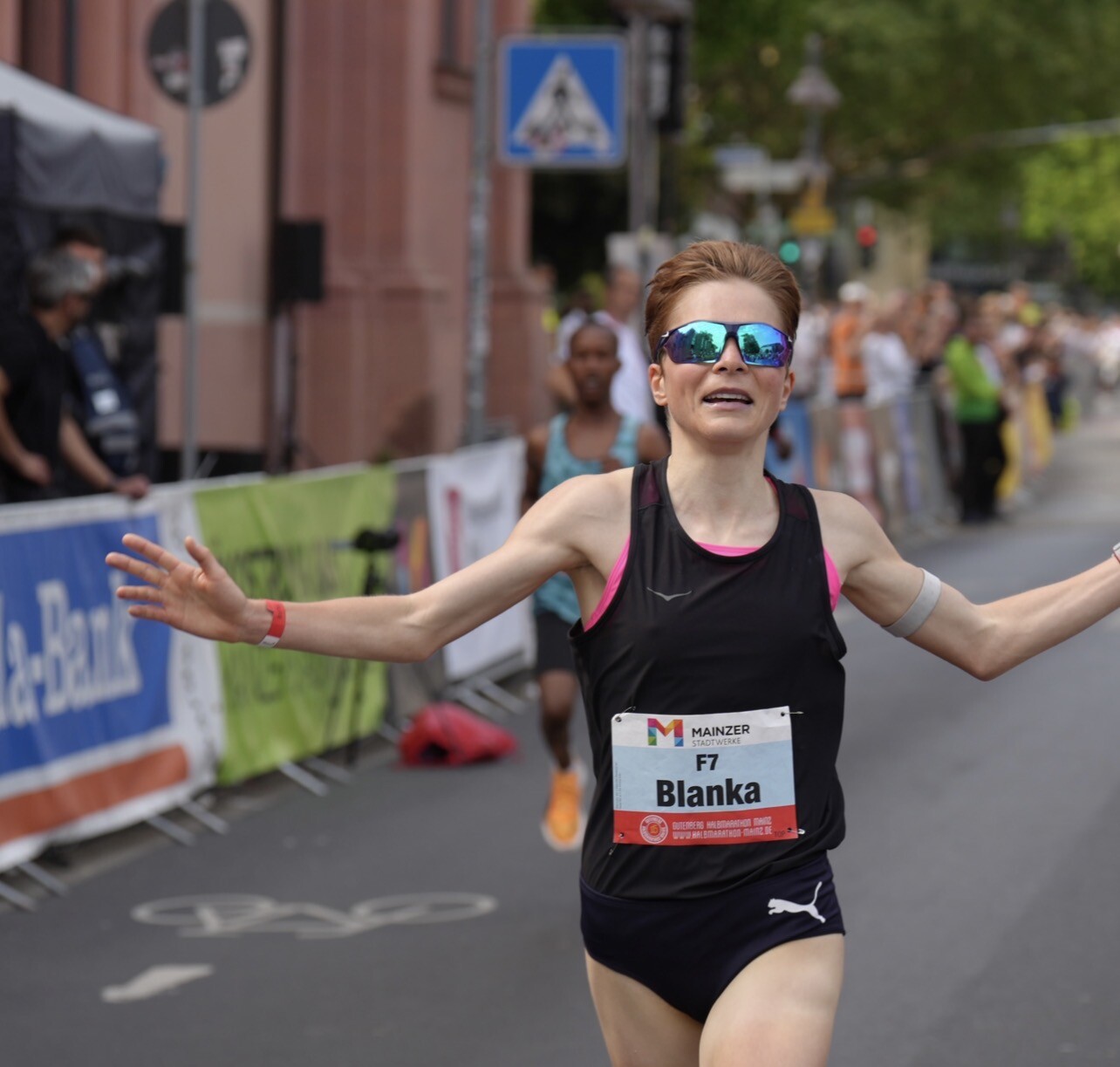
Dörfel’s performance may have been the surprise of the day. Entering the race with a personal best of 69:46, the 24-year-old German shattered that mark with her 68:06 finish.
“I just ran at a pace that felt comfortable and did not pay attention to the split times,” Dörfel said. “When I looked at the clock on the home straight I was completely surprised by the time. I have never felt so good in a race before.”
Dörfel is now expected to target the 10,000 meters at this summer’s European Championships in Birmingham before likely stepping up to the marathon later this year. The Mainova Frankfurt Marathon on October 25 is considered a possible debut.
Men
Dennis Kipkogei (KEN) – 59:14
Kelvin Kipruto (KEN) – 60:25
Jamal Kiprono (KEN) – 60:29
Joshua Mengich (KEN) – 60:36
Jonathan Kamosong (KEN) – 60:53
Edward Koonyo (KEN) – 61:07
Enos Saat (KEN) – 61:18
Benard Kimeli (KEN) – 61:27
Women
Beatrice Cheserek (KEN) – 68:02
Blanka Dörfel (GER) – 68:06
Emebet Kebede Dessie (ETH) – 69:01
Orba Chemurgor (KEN) – 69:21
Joan Chepleting (KEN) – 70:03
Margaret Monicah (KEN) – 71:32
by Race News Service
Login to leave a comment
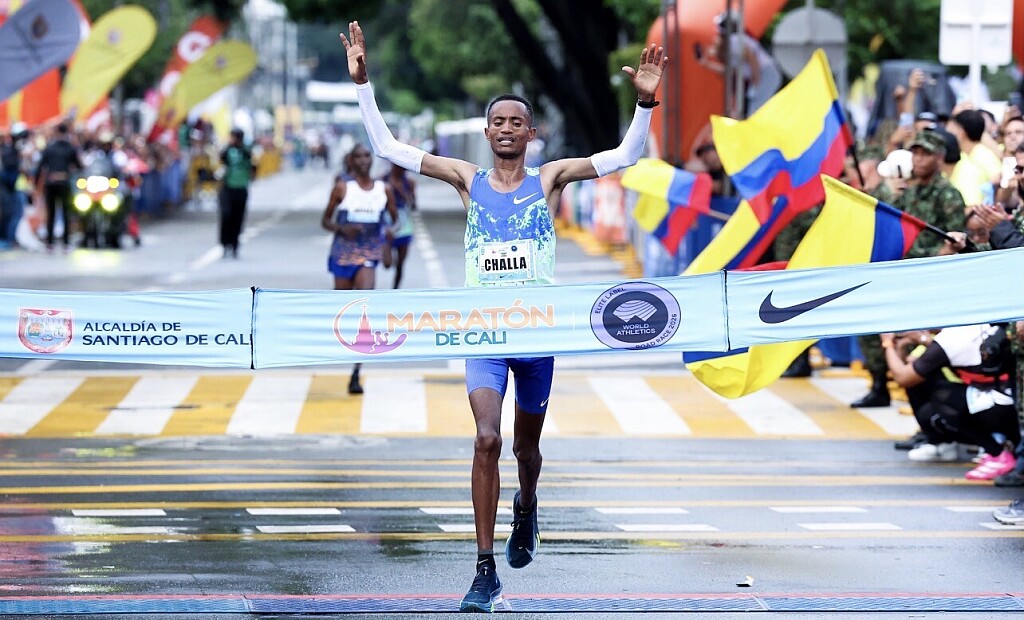
Gossa and Ndiwa Upset Defending Champions at Cali Marathon
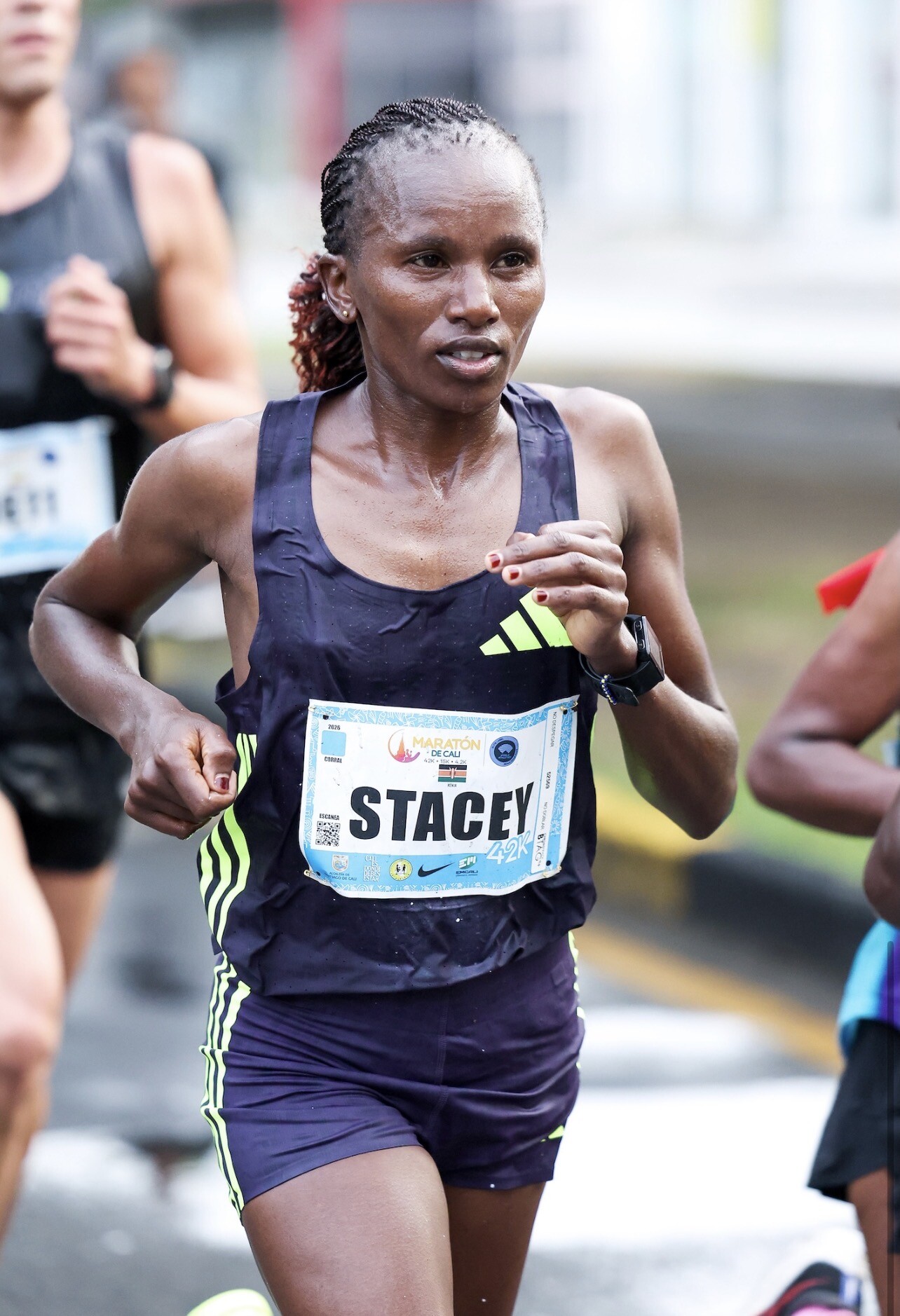
Challa Gossa of Ethiopia and Kenya’s Stacy Ndiwa denied the defending champions at the Cali Marathon in Colombia on Sunday, overcoming tough conditions of heat, humidity, and altitude to take impressive victories.
Warm temperatures above 20°C, high humidity, and an elevation of around 1,000 meters made fast times difficult and ended hopes of course records. Still, the races produced exciting finishes in both the men’s and women’s competitions.
In the men’s race, Challa Gossa surged past defending champion Evans Mayaka with just 250 meters remaining to win in 2:11:49. Mayaka, who set the course record of 2:11:04 last year, finished just five seconds back in 2:11:54, with Ethiopia’s Habtamu Birlew close behind in 2:11:56. The top four runners all broke 2:12 in a tightly contested finish.
The early pace was aggressive, with a group of ten passing 10K in 30:23, well on course-record pace. However, the humid conditions took their toll as the race progressed. By halfway (65:00), a lead pack of six runners and two pacemakers remained, including Mayaka, Birlew, Gossa, and Uganda’s Martin Musau.
After the pacemakers stepped aside and the pace slowed, the leading group stayed together deep into the race. Mayaka made a move shortly after 40K, but could not break clear. Gossa then unleashed his finishing speed in the closing meters to take his first marathon victory.
“The conditions were very difficult, so I stayed with the group and relied on my finishing speed,” said 25-year-old Gossa, who was runner-up in Frankfurt in 2024 and owns a personal best of 2:07:32.
Mayaka admitted the weather played a major role: “After the pacers stopped, I tried several times to increase the pace, but my body was too tired. The humidity and conditions were much harder than last year.”
Kenya’s Eric Kiptanui, who has a 2:05:47 personal best, dropped off the lead group before 15K but ran much of the race alone to finish sixth in 2:16:27.
In the women’s race, Stacy Ndiwa ran a controlled and confident race to win in 2:29:55, pulling away from defending champion Emmah Ndiwa with about 8 kilometers remaining. Emmah Ndiwa finished second in 2:31:01, followed by Gladys Chesir in 2:33:59.
An early lead group of five included both Ndiwas, Chesir, Nazret Weldu, and Ethiopia’s Sadiya Awel. The pace quickened after 10K (34:35), and by halfway (73:18), three runners remained.
As in the men’s race, the second half slowed significantly due to the humidity. Awel briefly lost contact after stopping at a refreshment table at 25K and was unable to regain her position.
Stacy Ndiwa made her decisive move after 35K. “My training had gone well, and I was confident,” she said. “We were on pace early, but I began to tire, so we slowed down. When I saw Emmah struggling, I pushed harder and was able to break away.”
The 33-year-old Kenyan, who finished ninth at the Boston Marathon last year with a personal best of 2:23:29, held her lead comfortably to the finish.
The Cali Marathon continues to grow rapidly, with more than 20,000 athletes from 49 nations registered across all race distances—nearly double the number from its inaugural edition. Over 3,000 runners competed in the marathon, which holds World Athletics Elite Label status.
Men:
Challa Gossa (ETH) – 2:11:49
Evans Mayaka (KEN) – 2:11:54
Habtamu Birlew (ETH) – 2:11:56
Martin Musau (UGA) – 2:11:59
Ezra Kering (KEN) – 2:12:20
Eric Kiptanui (KEN) – 2:16:27
Carlos Mario Patiño (COL) – 2:18:38
Santiago Zerda (COL) – 2:18:38
Women:
Stacy Ndiwa (KEN) – 2:29:55
Emmah Ndiwa (KEN) – 2:31:01
Gladys Chesir (KEN) – 2:33:59
Sadiya Awel (ETH) – 2:34:25
Cynthia Kosgei (KEN) – 2:35:22
Nazret Weldu (ERI) – 2:37:49
Mildrey Echavarría (COL) – 2:40:45
Kellys Arias (COL) – 2:41:50
by Race. News Service
Login to leave a comment
Cali Marathon Draws World-Class Talent in Bid to Become South America’s Premier Race
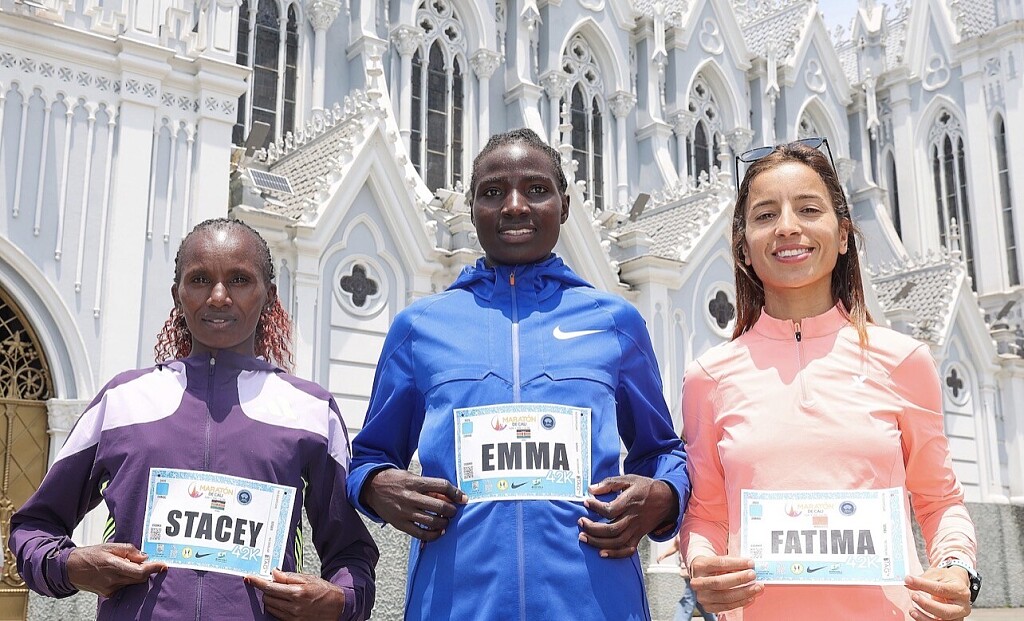
“Run in Heaven’s Capital.” That’s the bold promise as the Cali Marathon returns this Sunday in southwestern Colombia for its second edition. After a strong debut last year, organizers are aiming higher—positioning Cali as a future major international marathon.
They’ve taken a big step toward that goal with one of the deepest elite fields ever assembled on the continent. Kenya’s Ronald Korir (2:04:22) headlines the men’s race, while Eritrea’s Nazret Weldu (2:20:29) leads the women’s field. Defending champions Evans Mayaka and Emmah Ndiwa are back, but repeating will be anything but easy. No other marathon in South America currently matches Cali’s depth.
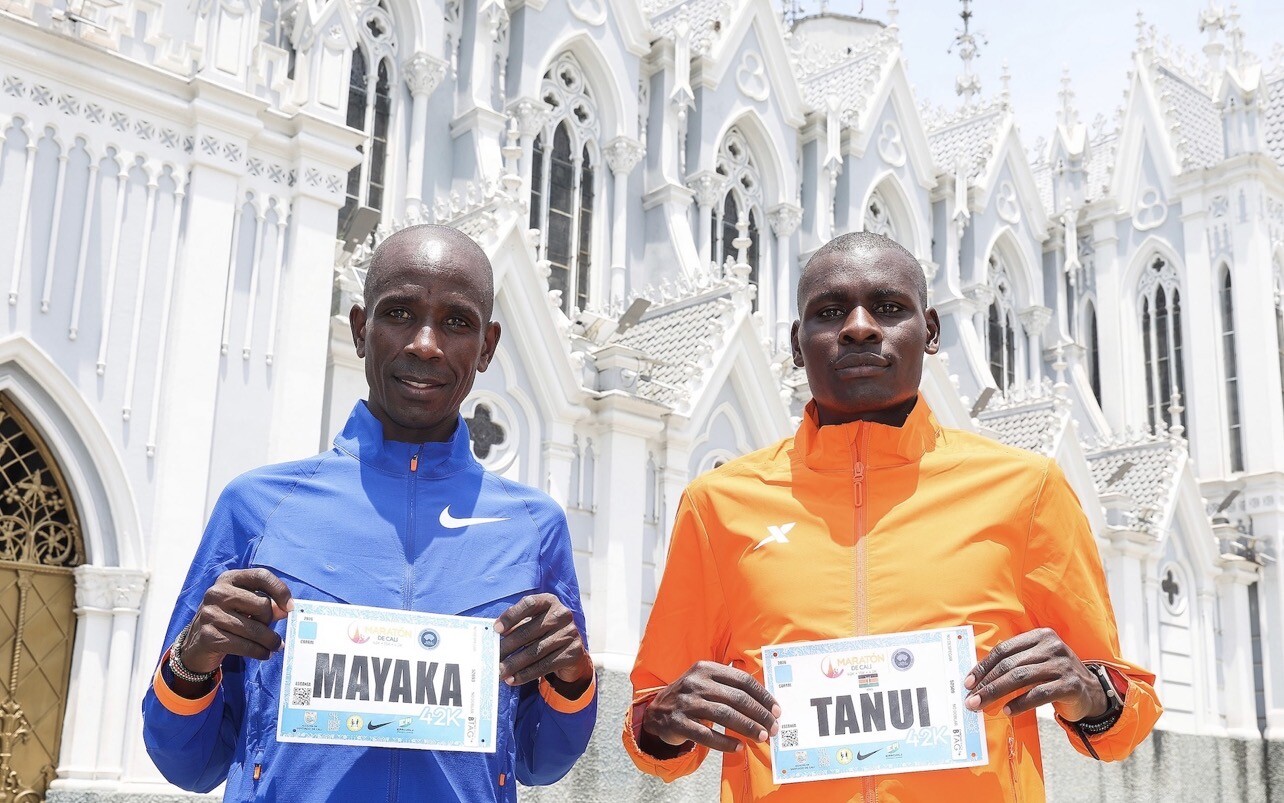
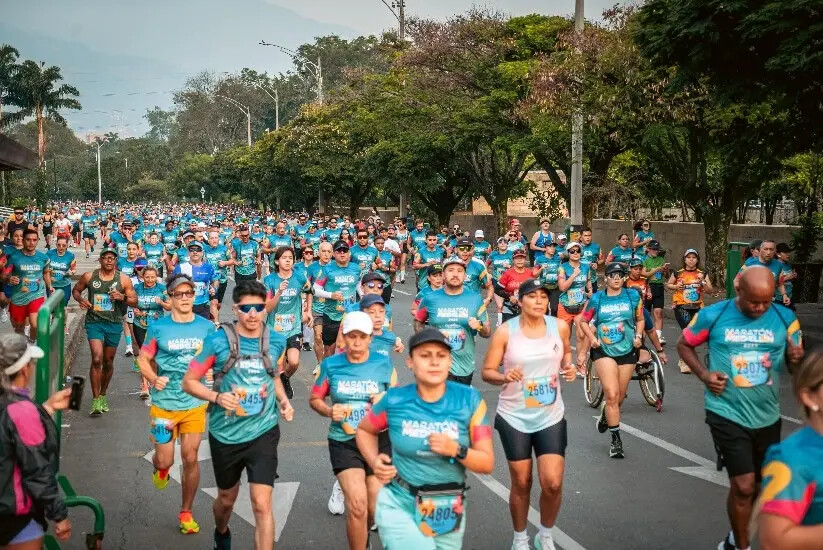
Participation has surged. A total of 20,000 athletes from 49 nations have entered across all distances, nearly doubling last year’s 11,000. The marathon itself will feature 3,000 runners. Race Director Luis Felipe Posso is encouraged but measured: the goal isn’t simply bigger numbers—it’s building a world-class marathon.
“This race has grown incredibly fast,” said Posso. “Now we want to increase the quality and establish Cali as a true destination for marathon runners.”
Even seasoned observers are impressed. Abel Antón, Spain’s two-time world marathon champion (1997, 1999), is in Cali as a guest of honor and noted how quickly the event has developed.
Conditions will play a role. At roughly 1,000 meters altitude with expected humidity and temperatures around 20°C (68°F), fast times are unlikely. But that often leads to compelling racing. Last year proved that, with late-race drama deciding the outcome.
Mayaka and Ndiwa both set Colombian all-comers’ records in 2025—2:11:04 and 2:29:26 respectively. Organizers would love to see those marks fall again, especially a first-ever sub-2:10 on Colombian soil.
Men’s Race
The depth is remarkable. Five athletes have run under 2:06, and eight have broken 2:10. Interestingly, defending champion Evans Mayaka ranks just ninth on paper with his 2:10:00 best—but he proved last year that position on a start list doesn’t decide the race.
Ronald Korir enters as the fastest man in the field. He ran 2:04:44 in Berlin and followed that with a strong 2:05:41 for fourth place in Hamburg. After battling injuries, he’s optimistic.
“It’s been a difficult couple of years, but my training for Cali has gone well,” Korir said. “I believe I can win.”
Ezra Tanui arrives in top form. He swept three marathons in 2025—Doha, JiLin, and Yellow River—and followed that with a 2:05:55 personal best for third in Osaka earlier this year.
“I’m confident,” Tanui said. “I’m not chasing a time—I trust my strength to carry me through.”
Adding to the moment, Kenya’s Abel Kirui—two-time world champion and Olympic silver medalist—will run the final marathon of his career. The 44-year-old owns a personal best of 2:05:04 and remains one of the sport’s most respected figures.
Women’s Race
The women’s field is equally competitive. Morocco’s Fatima Gardadi could thrive in Cali’s conditions. She won bronze at the 2023 World Championships in Budapest and has proven strength in warm-weather racing.
Nazret Weldu returns to competition after giving birth to her daughter in May last year. The Eritrean star, fourth at the 2022 World Championships and winner of the 2024 Vienna Marathon, is focused on competing rather than chasing time.
“I want to be competitive,” Weldu said. “I hope my strength will help me perform well.”
Kenya’s Stacy Ndiwa is another strong contender. The 2024 Los Angeles Marathon champion owns a 2:23:29 personal best and has shown consistency at major races. She is not related to defending champion Emmah Ndiwa, who will also be in the mix despite ranking outside the top tier on paper.
With so many athletes capable of contending, both races could come down to strength, patience, and positioning in the final kilometers—especially in Cali’s demanding conditions.
Elite runners with personal bests
MEN:
Ronald Korir KEN 2:04:22
Abel Kirui KEN 2:05:04
Okubay Tsegay ERI 2:05:20
Eric Kiptanui KEN 2:05:47
Ezra Tanui KEN 2:05:55
Challa Gossa ETH 2:07:32
Martin Musau UGA 2:08:42
Habtamu Birlew ETH 2:09:10
Evans Mayaka KEN 2:10:00
Derlys Ayala PAR 2:10:11
Ezra Kering KEN 2:11:55
Bernard Geay TAN 2:15:47
Mayko Geay TAN Debut
Brian Kwemoi KEN Debut
David Wanjohi KEN Debut
WOMEN:
Nazret Weldu ERI 2:20:29
Gladys Chesir KEN 2:20:30
Stacy Ndiwa KEN 2:23:29
Cynthia Kosgei KEN 2:23:43
Fatima Gardadi MAR 2:24:06
Letebrhan Haylay ETH 2:24:47
Sadiya Awel ETH 2:24:57
Emmah Ndiwa KEN 2:25:15
Rosa Chacha ECU 2:26:43
Nigist Muluneh ETH 2:27:41
Fatiha Benchatki MAR 2:28:29
Marcela Gomes ARG 2:28:58
Veronicah Wanjiru KEN 2:29:03
Login to leave a comment
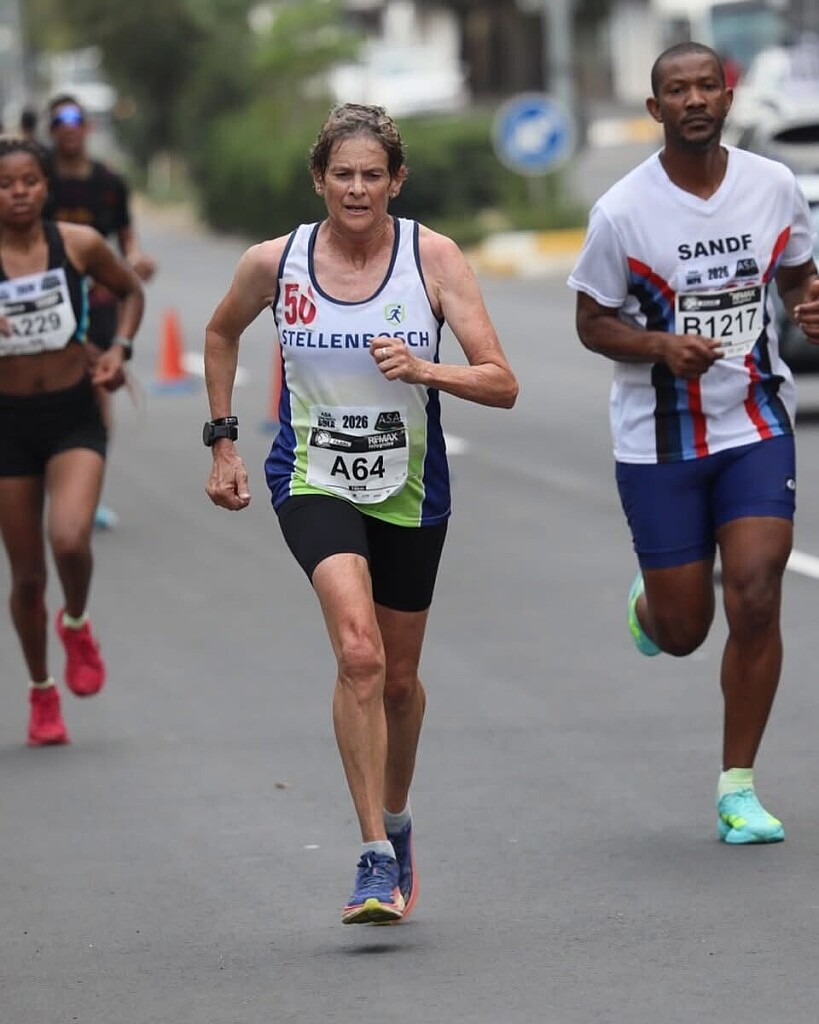
Zola Budd Still Running Strong—Decades After Changing the Sport
Zola Budd, one of the most talked-about distance runners of the 1980s, is still doing what she has always done—running.
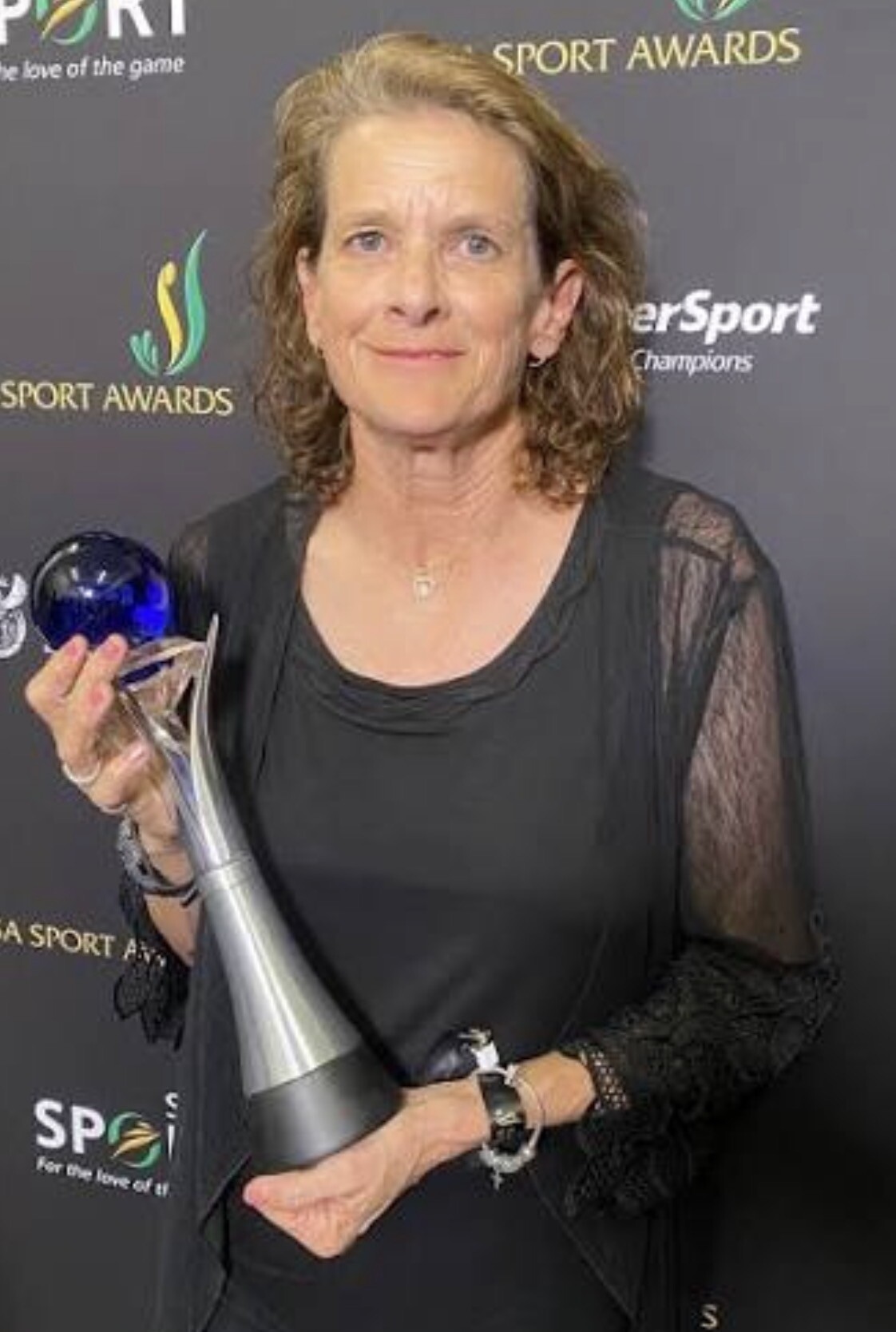
Recently, Budd now 59 years old soon to be 60, competed in a 10K in Paarl, South Africa, describing it simply as a “tough course but a good race to run.” That understated comment reflects the same approach she has carried throughout her career: no drama, just running.
A Career That Captured the World
Budd burst onto the global stage as a teenager, known for her distinctive barefoot running style and extraordinary talent. Born in South Africa, she became a controversial figure when she gained British citizenship in the 1980s, allowing her to compete internationally during a time when South Africa faced sporting bans due to apartheid.
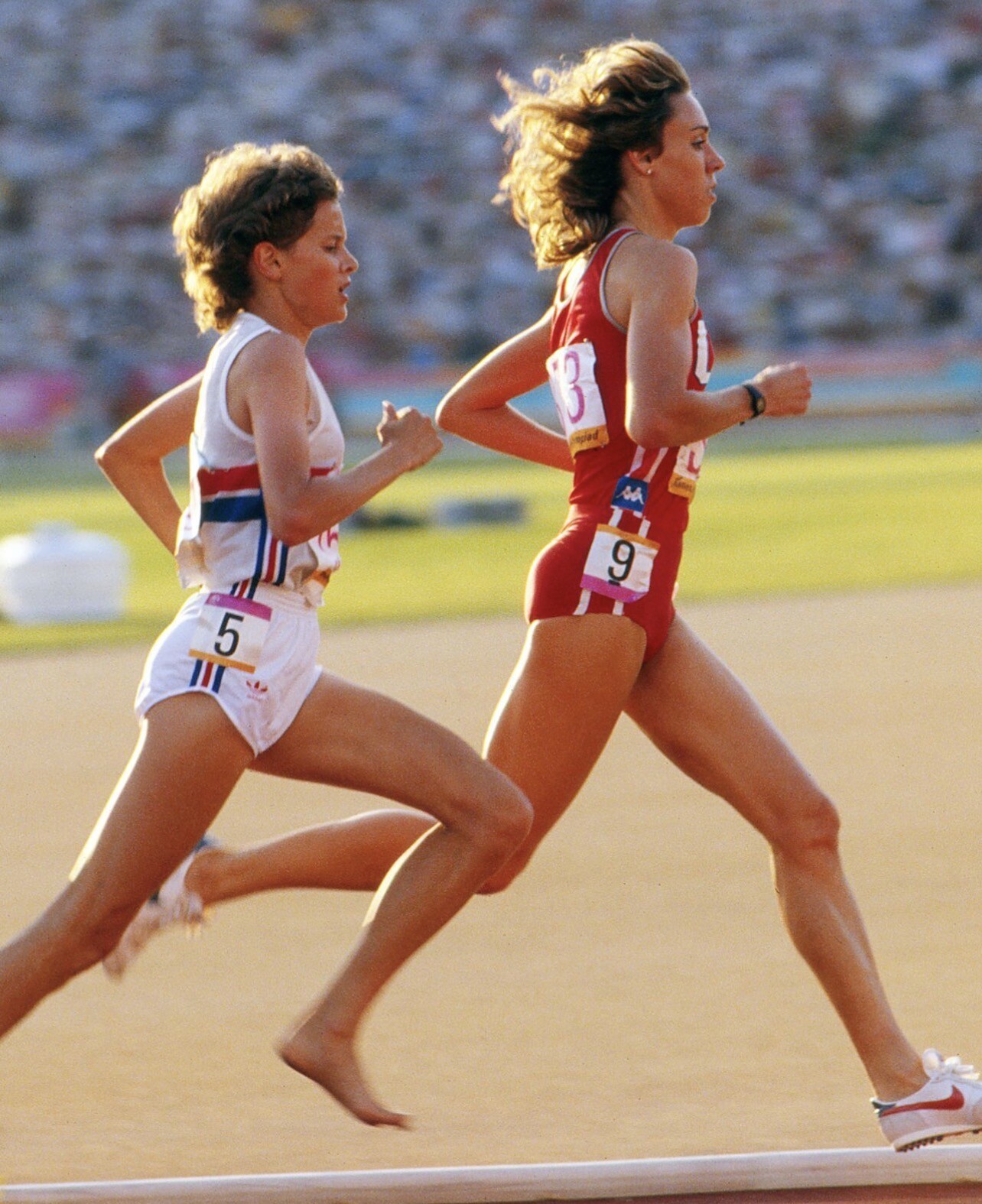
At just 17, she broke the world record for 5,000 meters (though it was not officially ratified at the time). Her rivalry with Mary Decker reached a dramatic peak at the 1984 Los Angeles Olympics, where the two collided in the 3,000-meter final—one of the most replayed and debated moments in Olympic history.
That moment defined her in the public eye, but it never defined her as a runner.
Quiet Longevity
What stands out now is not the controversy, but the longevity.
Budd has continued to run competitively for decades, transitioning into masters racing while maintaining a strong presence in the sport. She eventually returned to South Africa, where she has remained active in local races and the running community.
There is something refreshing about that. No spotlight. No headlines needed. Just showing up, putting on a bib, and racing.
Still Racing, Still Competing
The recent 10K in Paarl is just another example. While many former elite athletes step away from competition, Budd continues to test herself on the roads.
And not just participating—competing.
That speaks to something deeper than talent. It’s about identity. Running was never just something she did—it’s who she is.
The Bigger Picture
Zola Budd’s story is often told through one race, one moment, one controversy. But that misses the larger truth.
She is one of the rare athletes who has lived the full arc of the sport—from teenage prodigy to global figure to lifelong runner.
Today, she represents something many runners can relate to more than ever: the idea that running doesn’t end. It evolves.
From barefoot records to masters races in South Africa, Zola Budd is still out there—still running her own race.
by Boris Baron for My Best Runs
Login to leave a comment
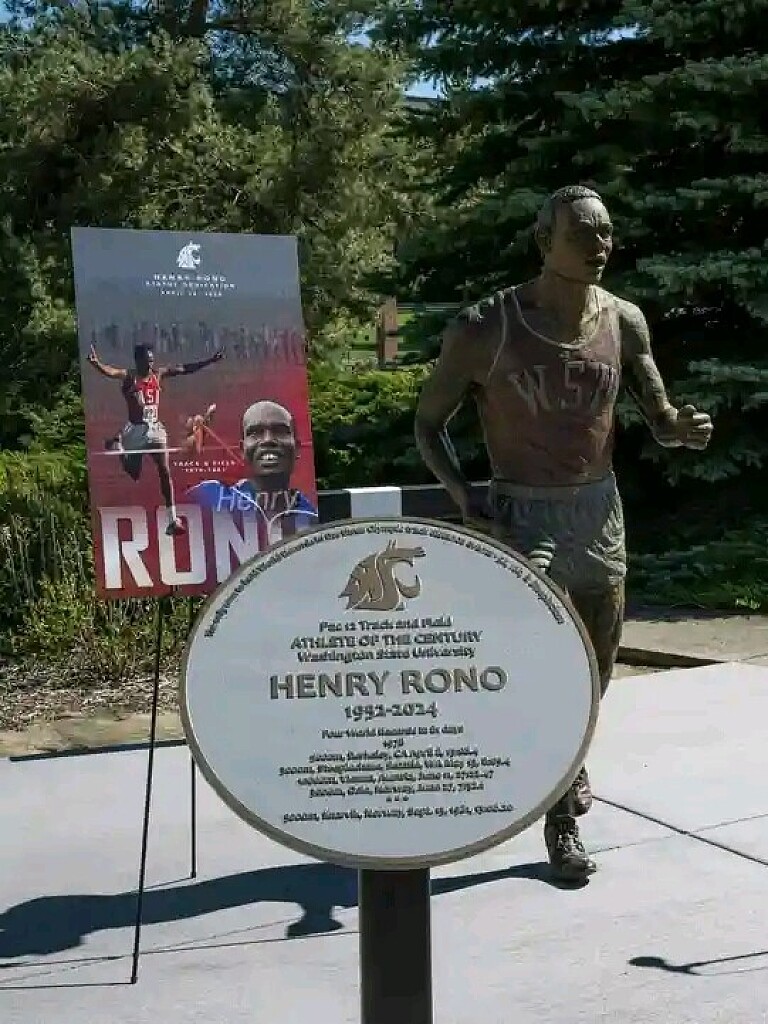
A Monument to Greatness: Washington State University Immortalizes Henry Rono
In a gesture both historic and deeply symbolic, Washington State University unveiled a statue honoring one of distance running’s most extraordinary figures, Henry Rono. It is a tribute not merely cast in bronze, but in legacy — a permanent reminder of a man whose feats redefined the limits of human endurance.
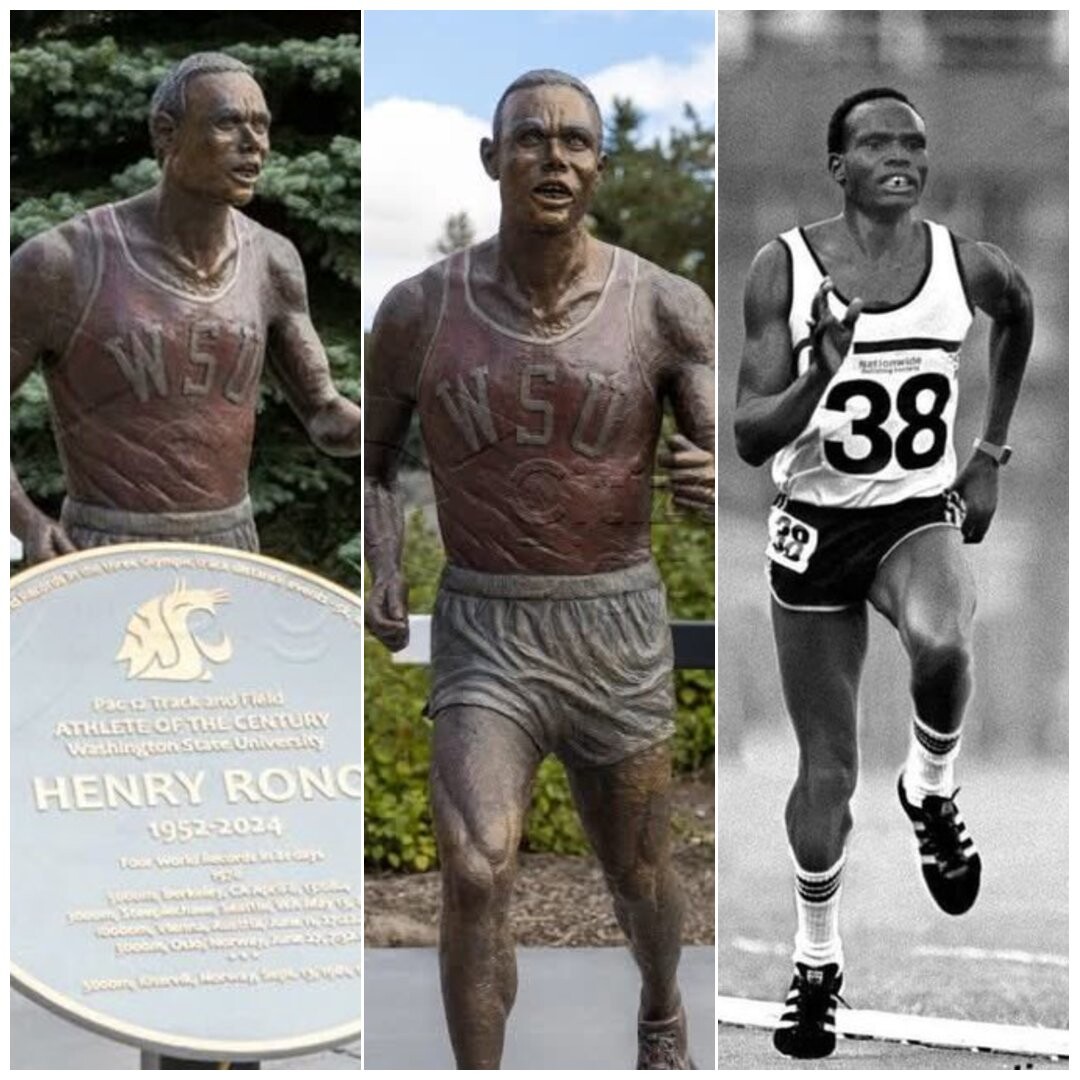
Rono’s name is etched indelibly into the annals of athletics, most notably for his astonishing run in 1978 — a season that remains unmatched in the sport’s history. In a span of just 81 days, he achieved what many would deem impossible: breaking four world records across four demanding distances. From the grueling 10,000 meters to the tactical precision of the 3,000-meter steeplechase, Rono conquered them all with a dominance that stunned the global athletics community.
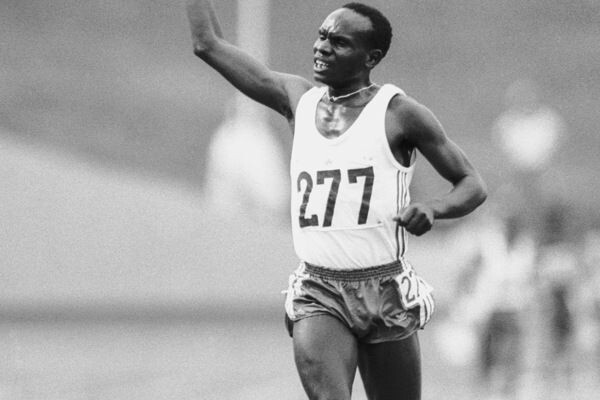
His times were not just record-breaking; they were transformative. He clocked 27:22.5 in the 10,000 meters, slicing nearly eight seconds off the previous mark. In the 5,000 meters, his 13:08.4 shaved off an impressive 4.5 seconds. The 3,000-meter steeplechase saw him set 8:05.4, lowering the standard by 2.6 seconds, while his 7:32.1 in the 3,000 meters carved out a full three-second improvement. Each performance was a statement — not incremental progress, but a bold leap into a new era of distance running.
What makes Rono’s achievement even more remarkable is the compressed timeline in which it occurred. To dominate across multiple disciplines in such a short period demands not only physical brilliance but an extraordinary mental resolve. It was a convergence of talent, discipline, and timing that the sport has rarely, if ever, witnessed again.
Now, decades later, that brilliance finds a new form of expression. The statue at Washington State University stands as both a homecoming and a celebration. It honors Rono’s collegiate roots while ensuring that future generations — students, athletes, and admirers alike — encounter the story of a man who once bent time and distance to his will.
Though he is no longer here, Henry Rono’s spirit endures — in every stride taken by aspiring runners, in every barrier challenged, and in every dream that dares to stretch beyond perceived limits. His legacy is not confined to records or history books; it lives on, vibrant and unyielding, inspiring a new generation to believe that greatness is not only possible, but attainable.
by Erick Cheruiyot for My Best Runs.
Login to leave a comment
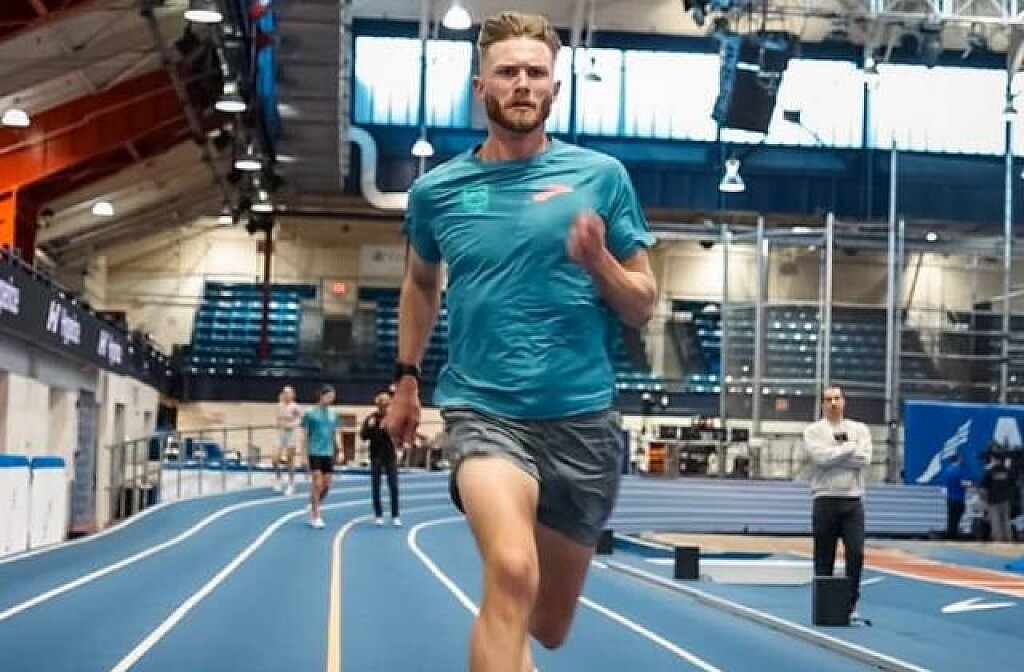
“My Race, My Rules”: Josh Kerr Targets History with Project 222 in London
The pursuit of greatness in middle-distance running has long been defined by courage, precision, and a willingness to challenge the impossible. This July, Josh Kerr is preparing to embody all three as he launches an audacious assault on one of athletics’ most enduring records.
Fresh off his triumph at the World Indoor Championships, Kerr has unveiled Project 222—a bold mission to become the first man in history to run the mile in 222 seconds (3:42). If successful, the British star would eclipse the legendary 3:43.13 world record set by Hicham El Guerrouj back in 1999—a mark that has stood unchallenged for over a quarter of a century.
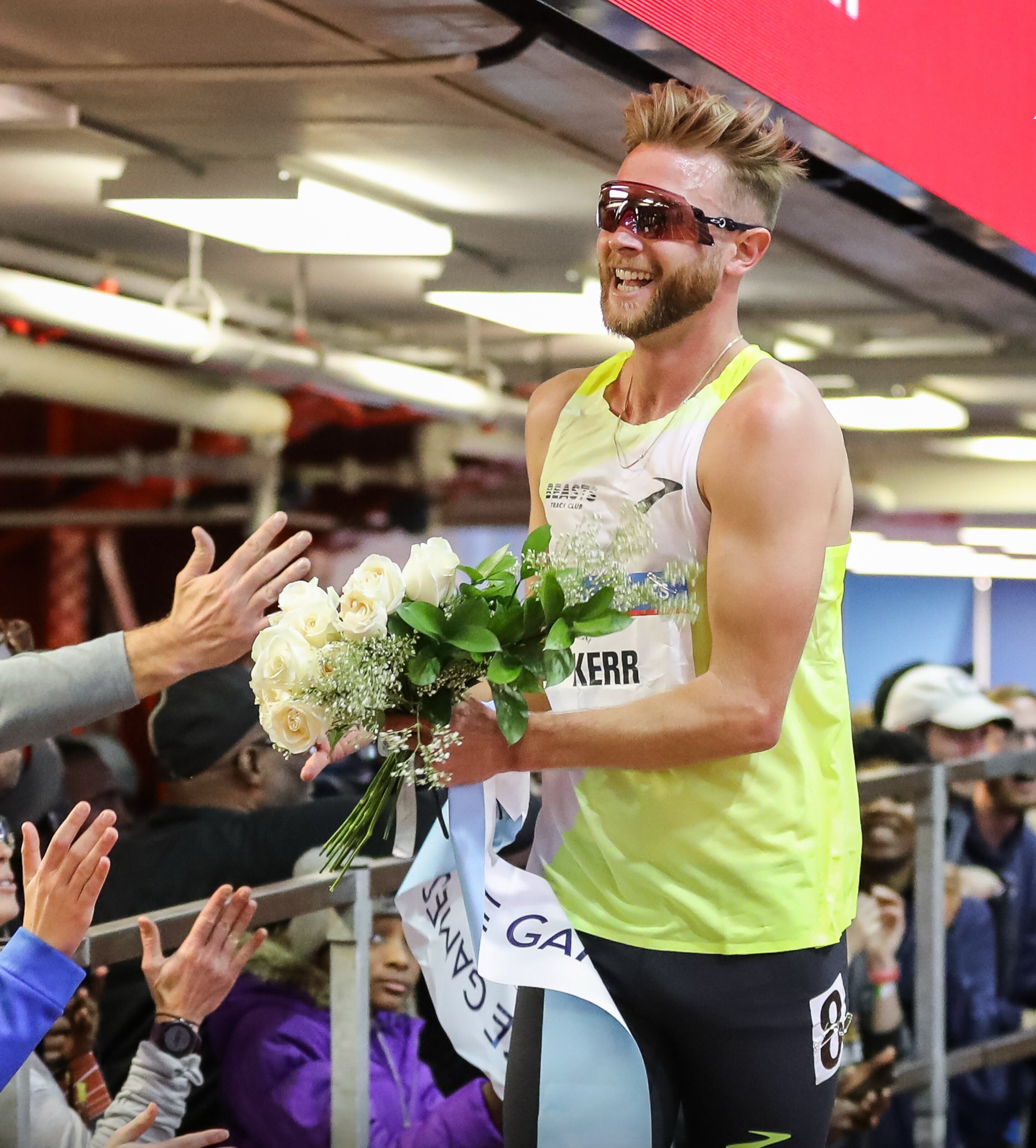
But what makes Kerr’s attempt truly compelling is not just the time he is chasing—it is how he intends to chase it.
Rather than opting for a controlled, pacemaker-driven time trial, Kerr has chosen the grand stage of the London Diamond League on July 18. In an era where record attempts are often engineered under near-perfect conditions, Kerr is deliberately embracing unpredictability—opting for a competitive race environment against world-class opposition, fueled by the energy of a packed stadium.
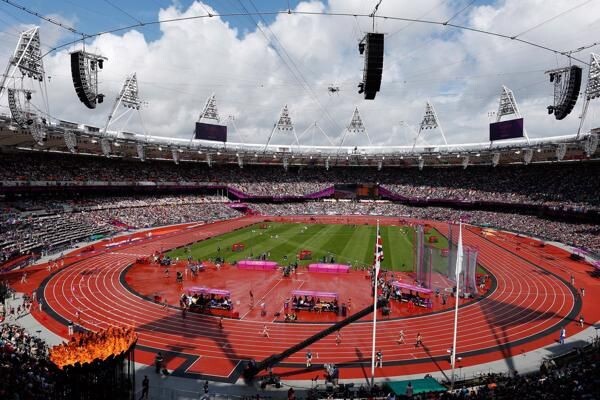
“It’s my race, my rules,” Kerr declared—an unapologetic statement of intent that underlines his philosophy. For him, breaking the record is not just about rewriting the clock, but about restoring the raw, competitive essence of the sport.
The magnitude of the challenge cannot be overstated. Hicham El Guerrouj’s mile record is widely regarded as one of the most iconic and resilient achievements in track and field history. Generations of elite runners have come and gone without seriously threatening it, a testament to both its brilliance and its difficulty.
Yet Kerr arrives at this moment in peak condition. His recent world indoor title over 3000 meters confirmed not only his endurance but also his tactical intelligence—qualities essential for sustaining the relentless pace required for a sub-3:43 mile.
Project 222, therefore, is more than a numerical target. It is a statement—a challenge to convention, a celebration of competition, and a bid to create history in its purest form: under pressure, in front of fans, and against the very best.
The Date to Watch
Event: London Diamond League
Date: July 18
Mission: The first-ever 222-second mile (3:42)
If Kerr succeeds, he will not only break a record—he will redefine how such records are pursued. And even if the clock resists, the attempt itself promises to deliver a spectacle worthy of the sport’s rich legacy.
by Erick Cheruiyot for My Best Runs.
Login to leave a comment
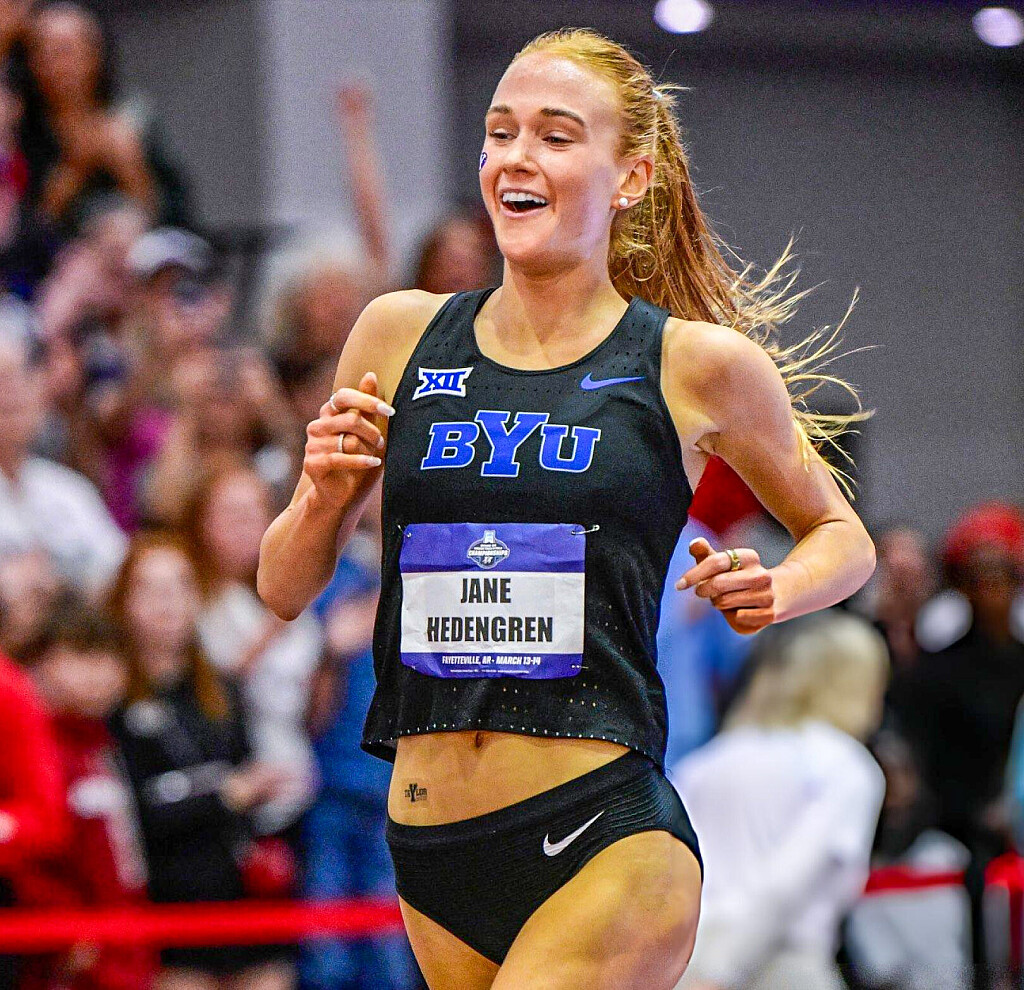
Hendengren Rewrites History: A Stunning NCAA 10,000m Record Falls at Stanford
Under the soft California evening light at the prestigious Stanford Invitational, history was not just witnessed—it was decisively rewritten. Rising distance talent Jane Hedengren delivered a performance of rare authority and composure, storming to a breathtaking NCAA 10,000m record in 30:46.80.
From the opening laps, the race carried an unmistakable sense of purpose. Hedengren ran with poise beyond her years, settling into a rhythm that hinted at something extraordinary. As the laps clicked by, her cadence remained fluid, her stride efficient, and her intent unmistakable. By the time the bell rang, the outcome was no longer in doubt—only the magnitude of history remained to be measured.
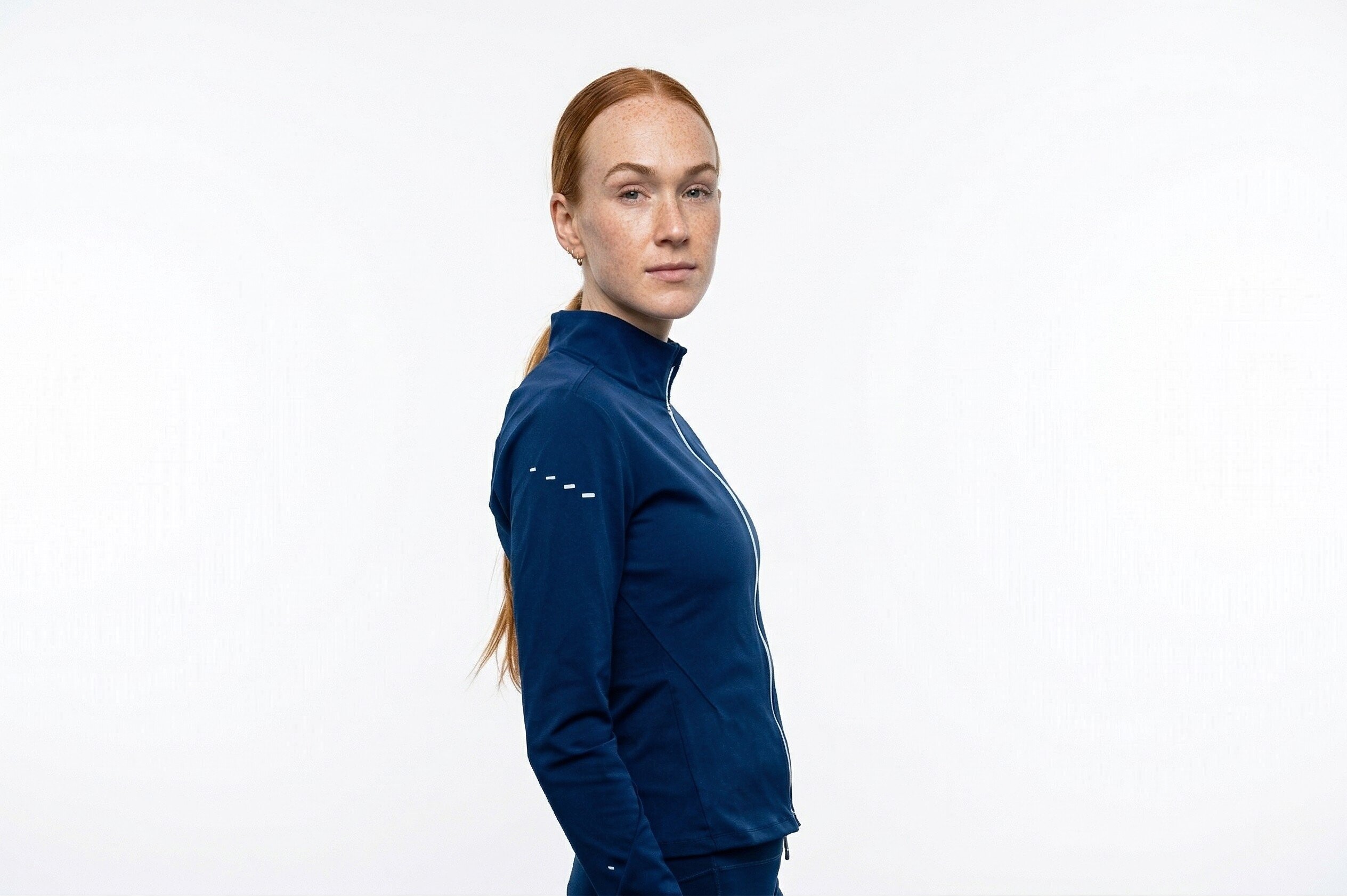
In obliterating the previous collegiate record of 30:50.43 held by Parker Valby, Hedengren did more than shave seconds off the clock—she elevated the standard of women’s collegiate distance running. Her 30:46.80 now stands as a new benchmark, a mark of both precision and endurance forged in a perfectly executed race.
Yet, the night was not hers alone. Pamela Kosgei delivered a remarkable run of her own, finishing second in 30:49.99—a personal best that also dipped under the former NCAA record. In any other race, it would have been the headline performance. Instead, it became part of a deeper narrative: a race that pushed boundaries and redefined expectations.
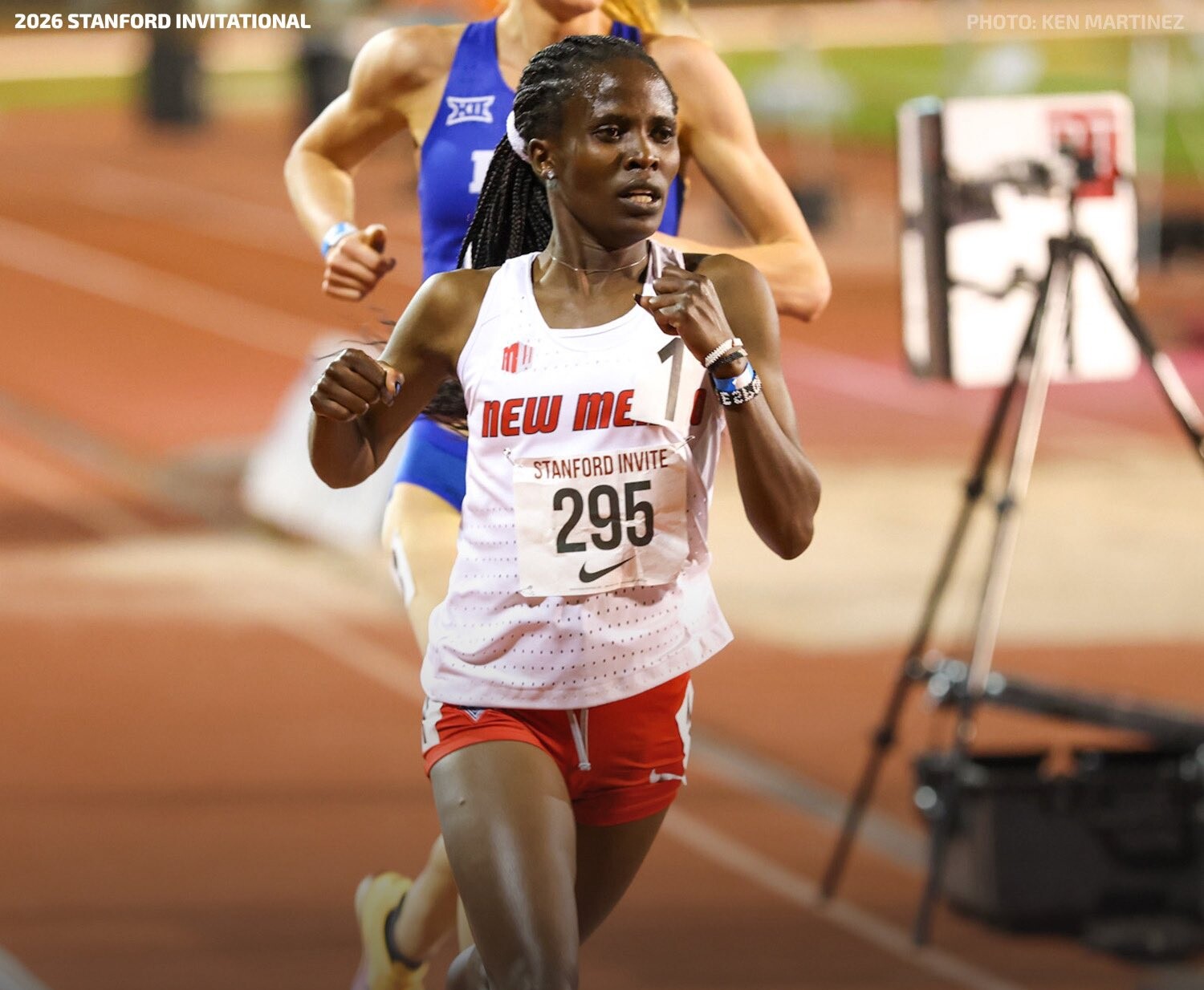
What made this contest truly compelling was not just the times, but the shared excellence. Two athletes, driven by ambition and sharpened by competition, combined to produce one of the finest distance races in collegiate history.
For Hedengren, this moment signals more than a record—it announces her arrival on the global stage. Calm under pressure and devastatingly efficient, she has shown the kind of form that transcends collegiate competition and hints at a much larger future.
As the echoes of Stanford fade, one truth remains clear: this was not merely a race—it was a statement. And with it, Jane Hedengren has etched her name into the sport with authority, redefining what is possible over 10,000 meters.
by Erick Cheruiyot for My Best Runs.
Login to leave a comment
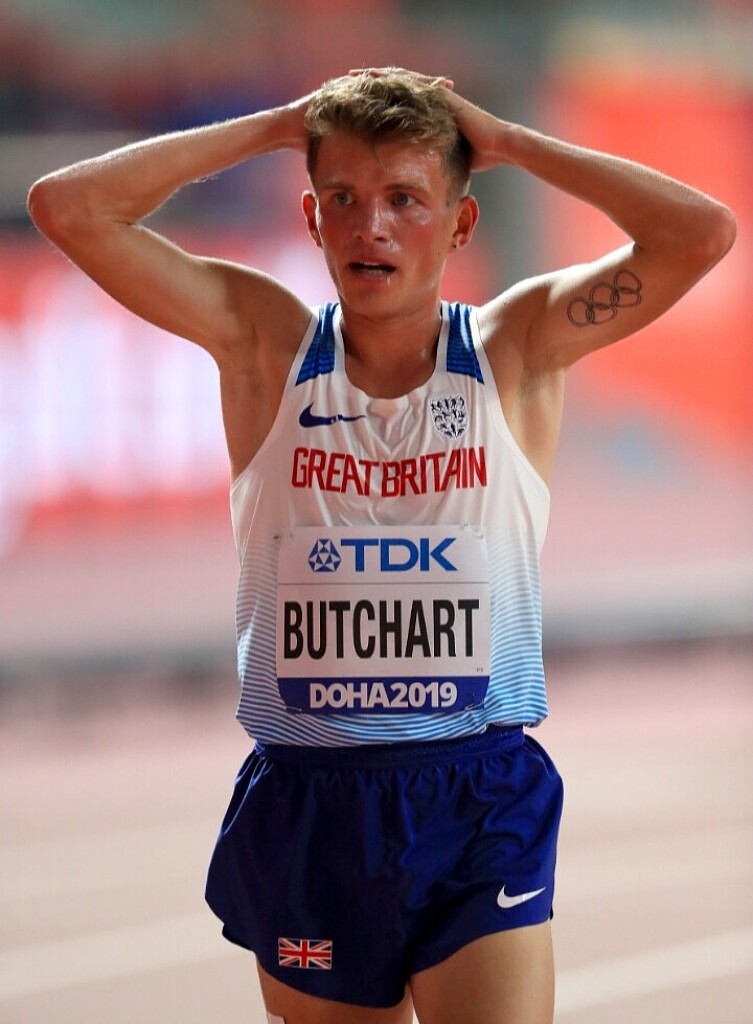
Reforged by Resilience: Andy Butchart’s Remarkable Return to the Top
After years of battling persistent injuries that repeatedly interrupted his momentum, Andy Butchart is now scripting a compelling new chapter—one defined by resilience, renewal, and quiet determination. No longer overshadowed by setbacks, he is rediscovering his rhythm, and if the early signs are anything to go by, 2026 could well emerge as the finest season of his career.
The turning point came in 2024, when Butchart faced a moment that could have ended everything. A serious foot condition required surgery so delicate that even his surgeon cautioned him: a return to elite competition was far from guaranteed. It was a risk that demanded courage, patience, and belief. Butchart chose to take it—and that decision is now bearing remarkable fruit.
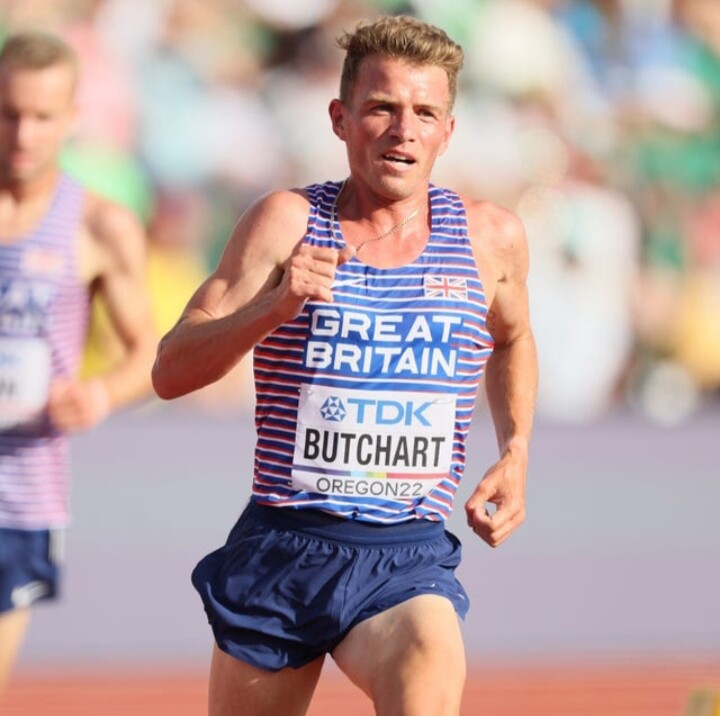
This season, he has re-emerged with performances that command attention. In Valencia, he surged to a Scottish 10K record of 27:44, a run that not only showcased his enduring class but also signaled something deeper—his return to the sport’s highest level. Weeks later, he followed it up with a superb 61:45 at the Barcelona Half Marathon, cementing his place as the second-fastest Scot in history over the distance.
That finish line in Valencia carried more than just a time—it carried emotion, relief, and validation. In that moment, Butchart didn’t just complete a race; he rediscovered himself. “Crossing the finish line, I realized… I’m back.”
His journey to that realization, however, has been anything but straightforward. For years, injuries disrupted his rhythm, stealing consistency and testing his resolve. Yet instead of walking away, he recalibrated. He committed to recovery, embraced patience, and trusted a process that often demands faith before it delivers results.
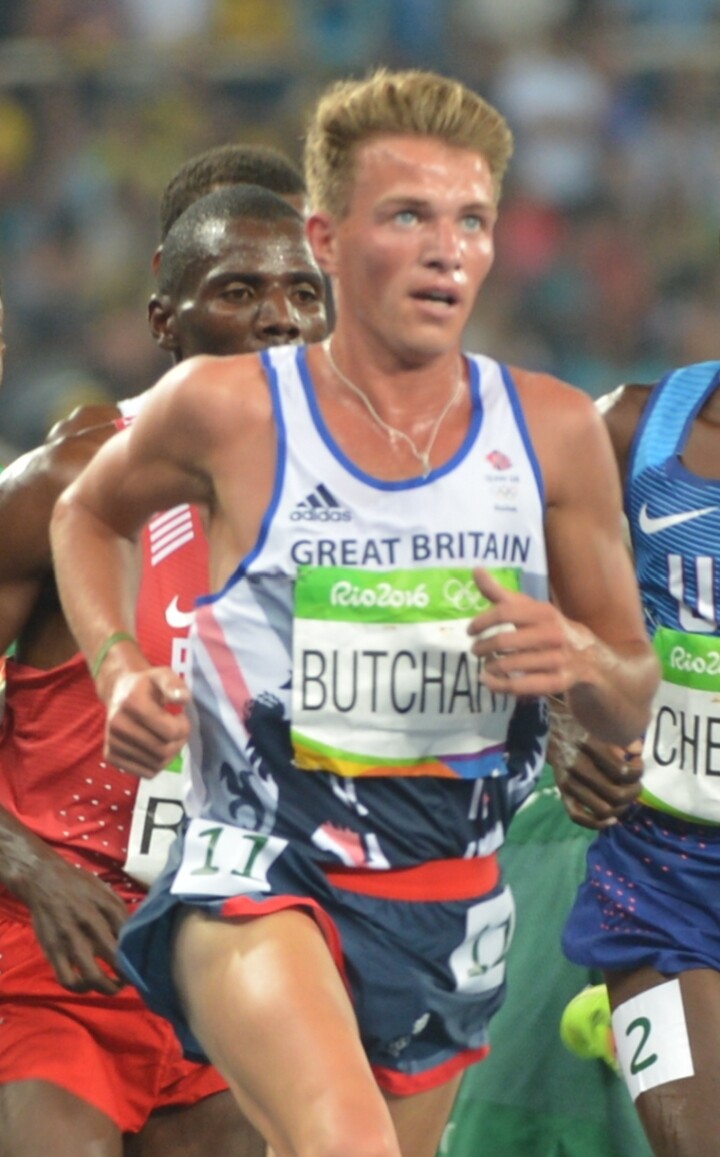
Equally transformative has been his life beyond the track. Now based in Manchester, Butchart shares his world with his wife, Lyndsey Sharp, an Olympic finalist, and their two young sons. This balance between elite sport and family life has reshaped his mindset. The pressure that once weighed heavily has been replaced by perspective; the grind of training now feels integrated into a fuller, more meaningful life.
Even altitude camps, once solitary and demanding, have become shared experiences. Bringing his family along has softened the edges of elite training, turning it from obligation into something far more sustainable—and enjoyable.
With the Commonwealth Games in Glasgow on the horizon, Butchart’s focus sharpens once again. Set to contest the 10,000 meters, he carries with him both experience and unfinished business, aiming to surpass his seventh-place finish from 2022.
Yet, in a sport often defined by relentless ambition, his outlook is refreshingly grounded. He is no longer chasing validation or burdened by expectation. Instead, he runs from a place of contentment and quiet confidence.
“I’m happy, I’ve got no pressure, and I’m running well—that’s all I want.”
In that simplicity lies his strength. And perhaps, that is what makes this comeback not just impressive—but truly enduring.
by Erick Cheruiyot for My Best Runs.
Login to leave a comment
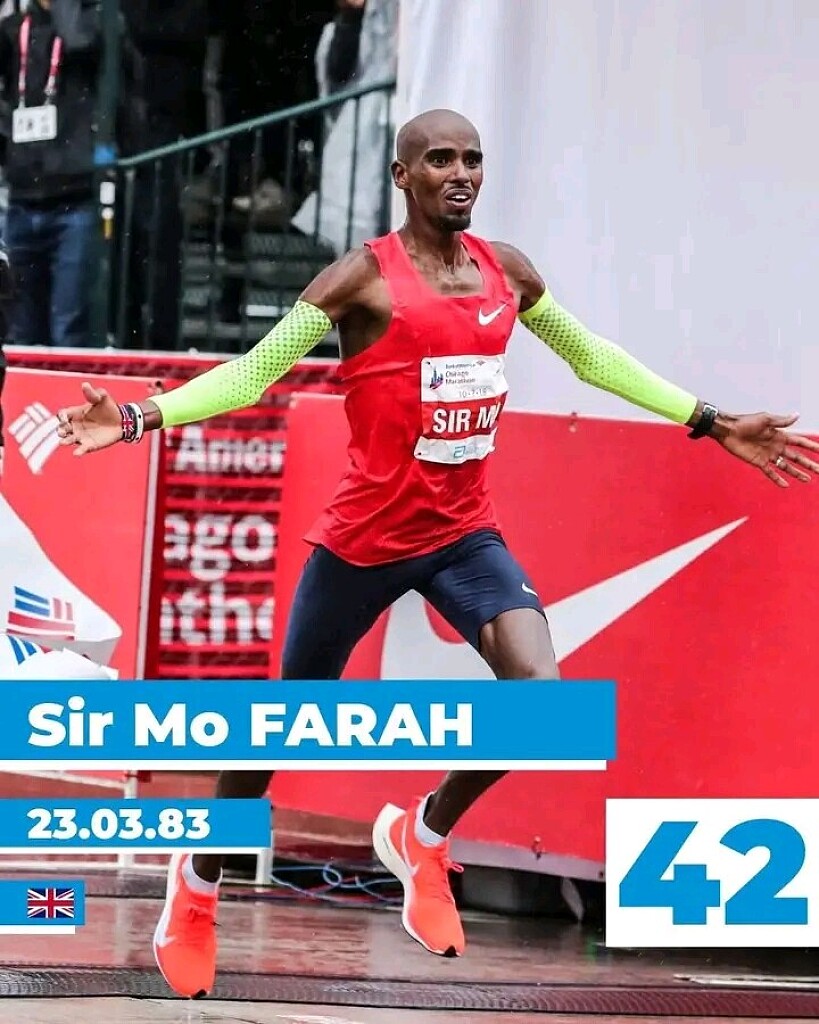
From Lost Beginnings to Olympic Immortality: The Unyielding Rise of Mo Farah
Born on March 23, 1983, in Somalia, Mo Farah did not enter the world with the privileges of certainty or stability. His early years were shaped by separation and sacrifice. At just eight years old, he moved to the United Kingdom, leaving behind not only his homeland but also his twin brother, who remained in Africa due to illness. It was a childhood marked by displacement, language barriers, and the quiet struggle to belong.
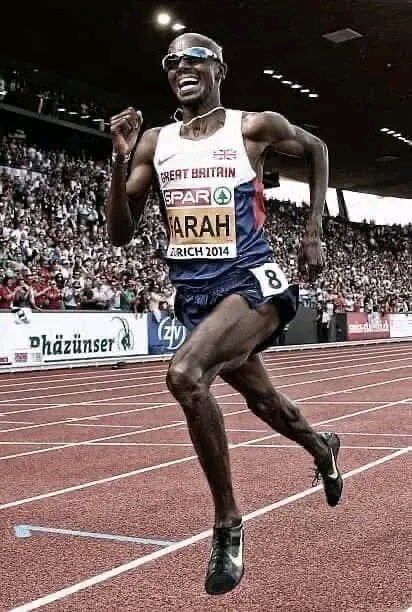
Growing up in London, Farah’s life changed direction thanks to a perceptive physical education teacher who noticed something extraordinary in the young boy: a natural gift for running. What began as a simple discovery soon evolved into a relentless pursuit. Through the muddy, unforgiving courses of cross country, he started carving his identity—step by step, race by race.
By the age of 14, Farah had already claimed his first national school title, a glimpse of the greatness to come. At 18, he rose to continental prominence, securing the European junior crown. Yet, beyond medals, a deeply personal victory awaited him—at 20, he was reunited with his long-lost twin brother, closing a chapter that had shaped much of his early emotional journey.
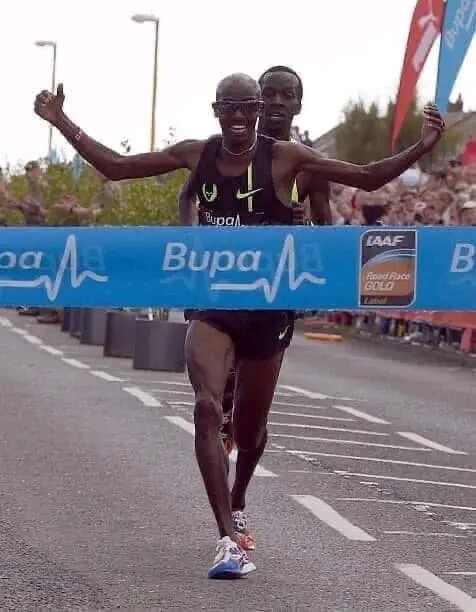
As the years progressed, Farah transformed from a promising athlete into a dominant force across Europe and the world. At 23, he became the European cross country champion. By 26, he had conquered the European indoor 3000 meters while continuing to shine on the cross country stage. His prime years brought an avalanche of triumphs: European titles in both the 5000m and 10,000m, followed by global dominance.
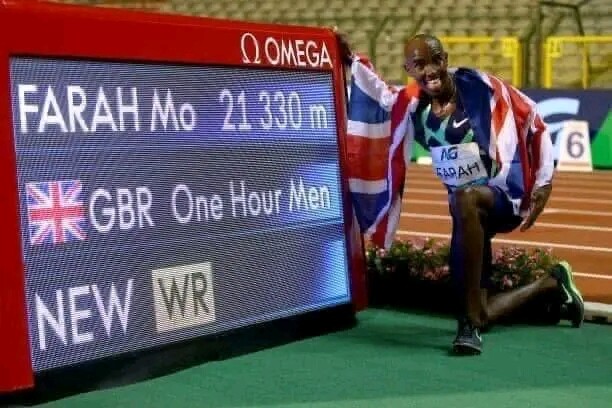
The turning point in his career came when he made the bold decision to relocate to the United States to train under renowned coach Alberto Salazar. There, Farah reinvented himself. He refined his tactics, strengthened his endurance, and embraced a level of discipline that elevated him from contender to champion.
What followed was nothing short of historic. At the London 2012 Olympics, Farah etched his name into sporting folklore by winning gold in both the 5000m and 10,000m—a feat he repeated at the Rio 2016 Olympics. Four Olympic gold medals. A legacy sealed in endurance and brilliance.
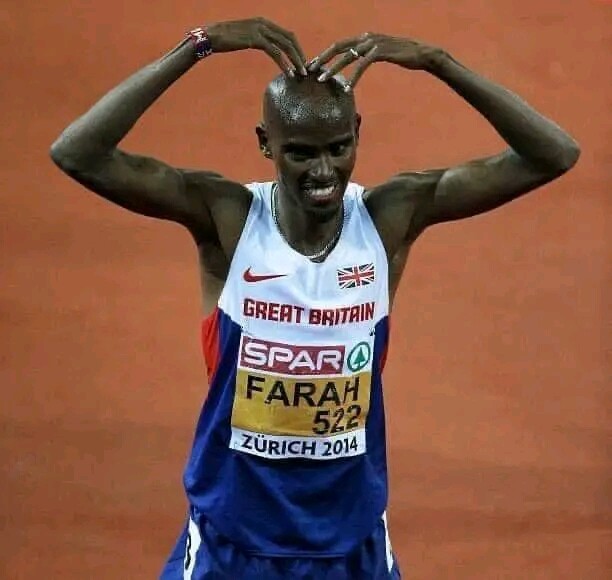
His dominance extended beyond the Olympic stage. He captured multiple World Championship titles, including unforgettable performances in Moscow and Beijing, and continued to reign supreme at the European level. Even as he transitioned to longer distances, Farah’s hunger remained unshaken—setting a European marathon record and later breaking the world hour record with an astonishing 21,330 meters, surpassing the mark set by Haile Gebrselassie.
Yet behind the medals and milestones lies a deeper truth. Farah’s journey was never smooth. There were defeats, injuries, and moments when doubt crept dangerously close. Early in his career, critics questioned whether he had what it took to dominate on the global stage. But instead of retreating, he responded with resilience—choosing effort over excuses, persistence over fear.
Today, as Mo Farah celebrates his 42nd birthday, his story stands as a powerful testament to the human spirit. He was not born a champion—he became one through relentless determination, sacrifice, and an unbreakable will to go further when it mattered most.
His life reminds us that greatness is not defined by where you begin, but by how fiercely you pursue where you want to go. Obstacles are inevitable. Doubt is unavoidable. But those who rise above are the ones who, like Farah, choose to push harder, dig deeper, and never settle for less than their potential.
Because in the end, the path to greatness is not given—it is earned, one stride at a time.
by Erick Cheruiyot for My Best Runs.
Login to leave a comment
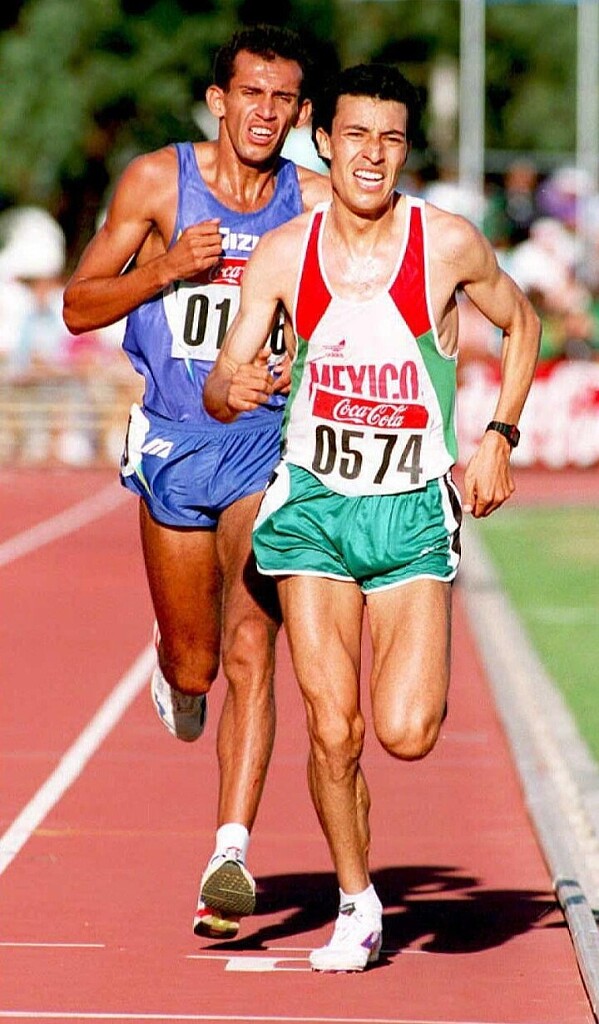
On This Day 1995: Mexico’s Quintanilla Delivers a Masterclass in the 10,000m
On March 18, 1995, the coastal city of Mar del Plata, Argentina, became the stage for a compelling chapter in long-distance running. The 12th Pan American Games had drawn elite athletes from across the continent, but it was in the men’s 10,000 meters final where a story of grit, control, and quiet dominance unfolded.
Mexico’s Armando Quintanilla stepped onto the track with focus etched into every stride. The race began with a measured pace, the pack tightly grouped, each runner conserving energy while watching for the decisive moment. Among them was Brazil’s Valdenor dos Santos, a formidable competitor known for his endurance and tactical awareness.
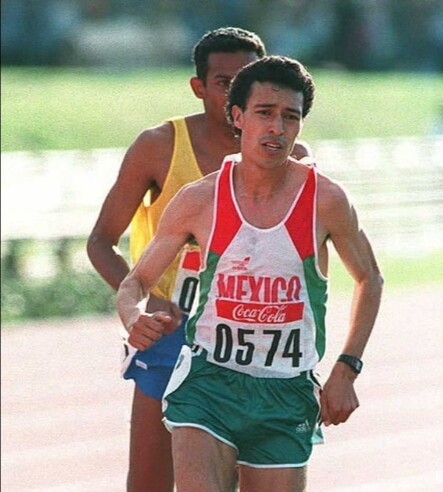
As the laps wore on, the rhythm of the race began to shift. Quintanilla, composed and calculating, gradually moved to the front. His stride remained smooth, almost effortless, as if he had already visualized this very moment long before the starting gun had fired. Dos Santos stayed within striking distance, refusing to let the gap widen, his determination evident with every passing lap.
But championship races are rarely won by proximity alone—they are claimed by those who dare to seize control. In the closing stages, Quintanilla surged with authority, stretching the field and leaving no room for doubt. The Mexican runner crossed the finish line in 28 minutes, 57.41 seconds, securing the gold medal with a performance defined by discipline and timing.
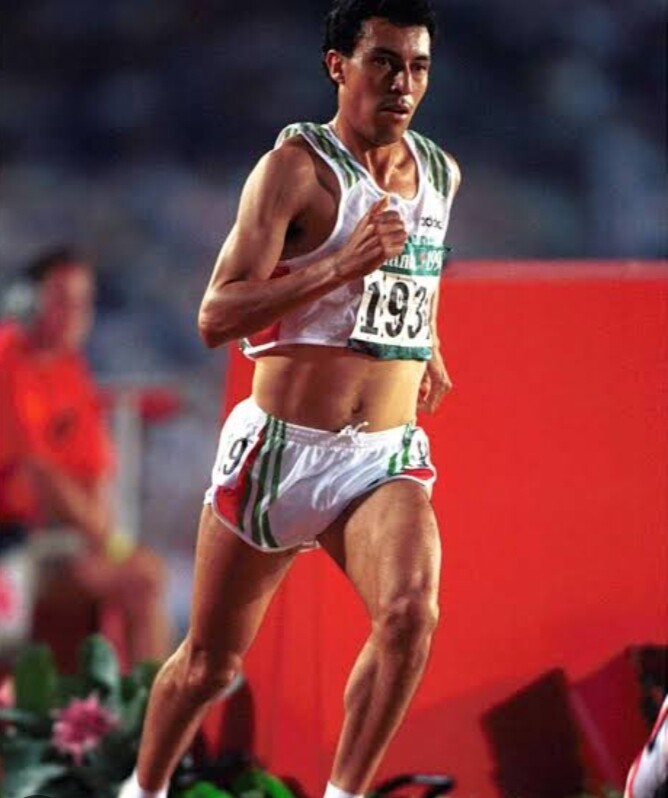
Behind him, dos Santos fought valiantly to the end, earning the silver medal and cementing his place in a fiercely contested race that demanded both resilience and heart.
The 10,000 meters final in Mar del Plata was more than just a race—it was a display of strategic mastery and continental pride. Quintanilla’s victory not only highlighted his personal excellence but also underscored Mexico’s strength in distance running during that era.
Years later, the image of Quintanilla leading the field remains a symbol of determination and execution at the highest level. It serves as a reminder that in long-distance running, greatness is not only about speed—but about patience, courage, and the will to rise when it matters most.
by Erick Cheruiyot for My Best Runs.
Login to leave a comment

Pan American Games
The Pan American Games area premier, quadrennial multi-sport event for 41 nations across the Americas, held one year before the Summer Olympics. Organized by Panam Sports, the games serve as a direct Olympic qualifier and feature thousands of athletes competing in diverse sports. The next edition, the 2027 Pan American Games, will take place in Lima, Peru, from July 16...
more...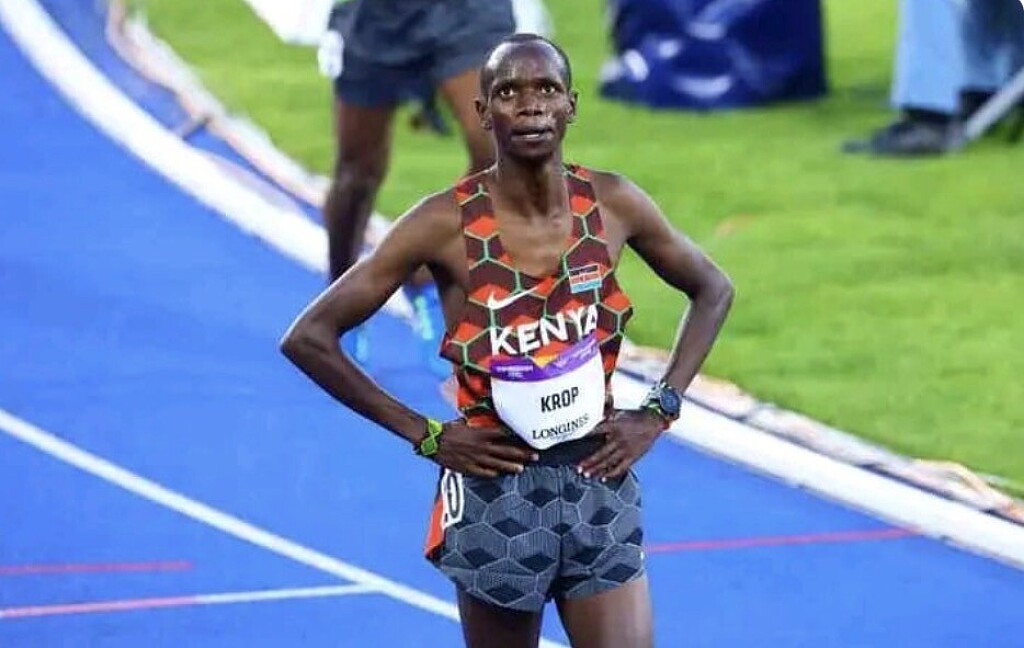
Kenya Sends Fearless Indoor Squad to World Championships Despite Having No Indoor Tracks
Kenya, a country synonymous with world-beating runners, is sending a small but formidable squad to the 2026 World Athletics Indoor Championships in Kujawy Pomorze, Poland, from March 20–22, despite having no indoor track facilities at home. For these athletes, the absence of dedicated indoor arenas makes their achievements—and ambitions—all the more remarkable.
Trailblazers and Record Holder
Leading the charge is Brian Omari Tinega, Kenya’s national indoor record holder in the 400 meters with a blistering 45.68. Tinega, who trains within the U.S. collegiate system, has had to adapt much of his preparation to outdoor tracks in Kenya—braving wind, rain, and uneven surfaces while preparing for the tight curves and fast rhythm of indoor competition.
His goal in Poland’s Arena Toruń is clear: improve both his personal best and the Kenyan national record while competing against the world’s top quarter-milers.
In the middle-distance events, Noah Kibet, the 2022 World Indoor 800m silver medalist, returns hoping to climb one step higher on the podium. Training entirely outdoors presents challenges when preparing for the tactical, high-speed racing typical of indoor championships, but Kibet’s experience makes him a serious contender.
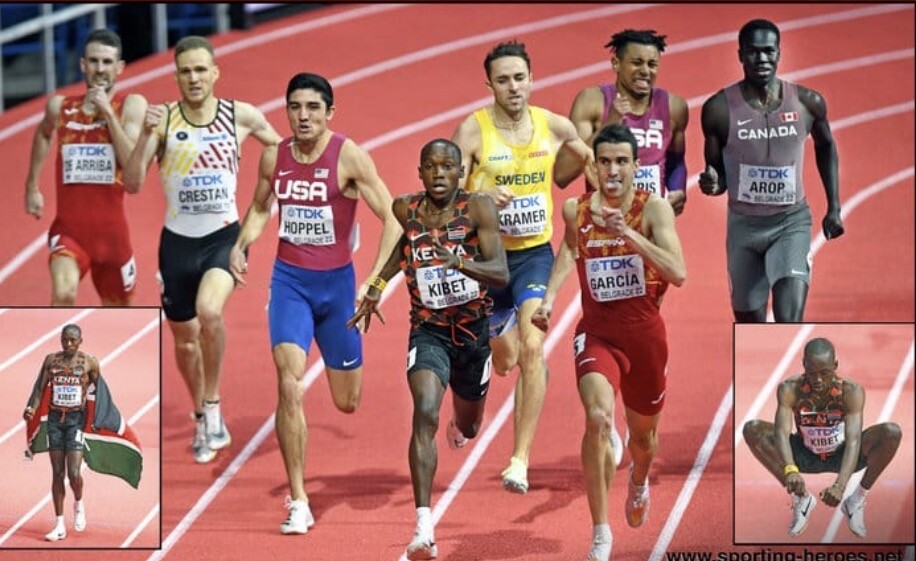
Joining him is Jacob Krop, a 3000-meter specialist who won silver in the 5000 meters at the World Championships. Krop will be aiming to translate his outdoor success to the indoor arena while improving on his fifth-place finish at the 2022 World Indoor Championships.
Women Breaking New Ground
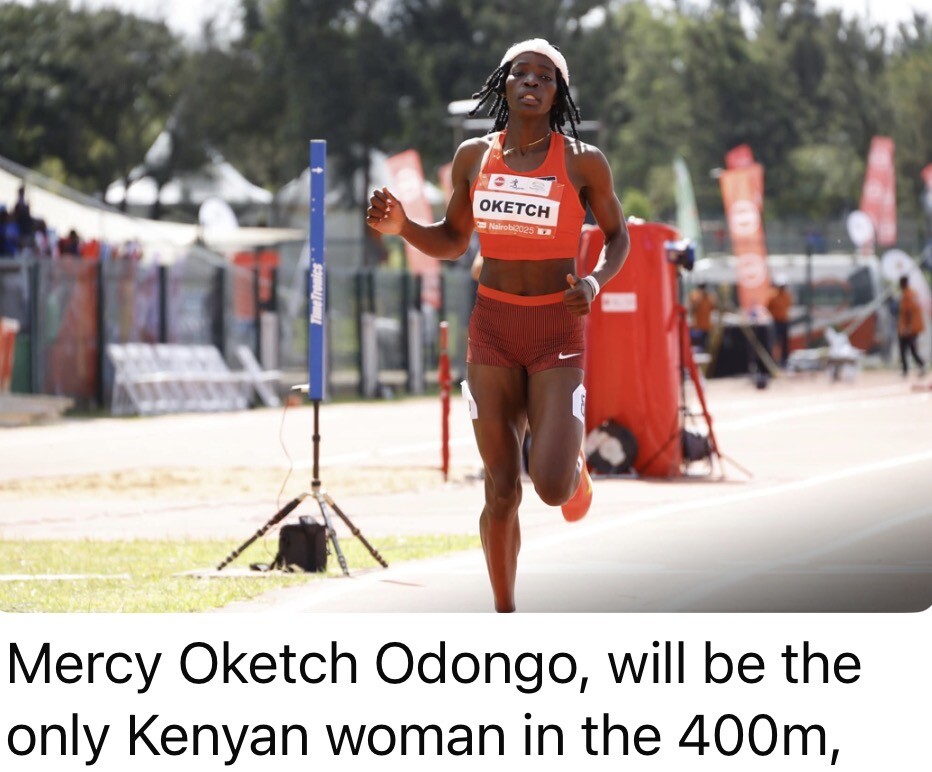
On the women’s side, Mercy Adongo Oketch is making history as only the second Kenyan woman ever to compete in the indoor 400 meters, following Esther Kavaya’s appearance in 1987. Oketch, the Kenyan indoor record holder, carries both national expectations and the symbolic role of blazing a trail for future Kenyan women in an event historically dominated by athletes from Europe and North America.
In the 800 meters, Rosemary Longisa continues her rapid rise. A freshman at Washington State University, she has adapted quickly to the U.S. collegiate system and recorded an impressive 1:59.71 indoors this season.
Meanwhile, experienced 1500-meter runner Susan Lokayo Ejore adds depth and stability to the squad with her international racing experience.
Training Against the Odds
Kenya’s athletes face a stark contrast compared with competitors from countries such as Poland, the United States, and Germany, where dedicated indoor arenas, climate-controlled facilities, and banked tracks allow year-round preparation.
These nations often employ advanced training technology—from motion sensors to video analytics—to refine stride mechanics, pacing, and recovery specifically for indoor racing.
In Kenya, preparation requires creativity and resilience. Athletes train on outdoor tracks at varying altitudes, simulate indoor curves where possible, and adjust sprinting and pacing strategies to prepare for the tighter indoor lanes.
The result is a team shaped not by cutting-edge infrastructure but by adaptability, determination, and natural talent.
Kenya’s Growing Indoor Legacy
Few African countries regularly produce elite indoor competitors, making Kenya’s presence at the World Athletics Indoor Championships particularly notable.
The squad includes record holders in both the men’s and women’s 400 meters, a World Indoor silver medalist, and emerging middle-distance talent. For Oketch especially, this championship represents more than a personal milestone—it symbolizes growing opportunities for Kenyan women in indoor track events.
Chasing Medals in Poland
Beyond personal bests, Kenya’s athletes are targeting podium finishes.
Tinega and Oketch aim to push their national records even further, while Kibet and Krop will look to build on their previous championship performances. Longisa and Ejore represent the next generation of Kenyan middle-distance talent ready to challenge the global elite.
As Arena Toruń welcomes athletes from across the world from March 20–22, Kenya’s runners will once again remind the global track community that elite performance is not defined by facilities alone.
For this small but determined team, the mission is clear: compete with the best, chase medals, and prove that the Kenyan running tradition can thrive indoors just as it has outdoors for decades.
by Robert Kibet for My Best Runs
Login to leave a comment
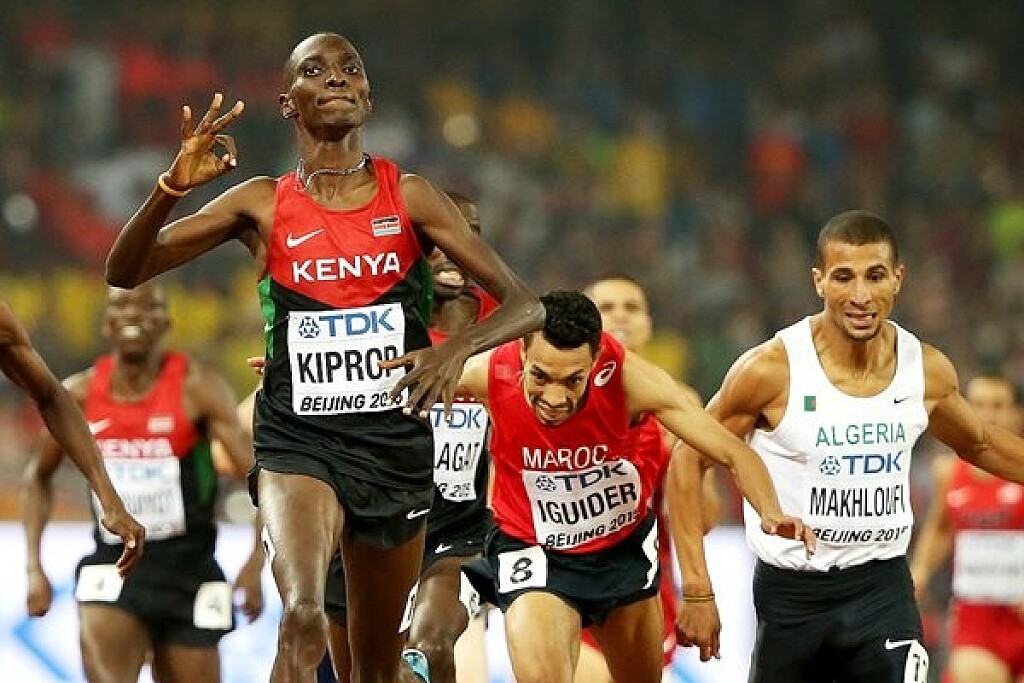
Front-Running Brilliance: The Night Asbel Kiprop Lit Up Monaco with 3:26.69
On a warm summer evening along the Mediterranean coast, the 1500 meters witnessed one of its most breathtaking performances. At the 2015 edition of the prestigious Herculis Monaco, part of the Diamond League circuit, Kenya’s middle-distance maestro Asbel Kiprop delivered a run that still resonates in athletics history.
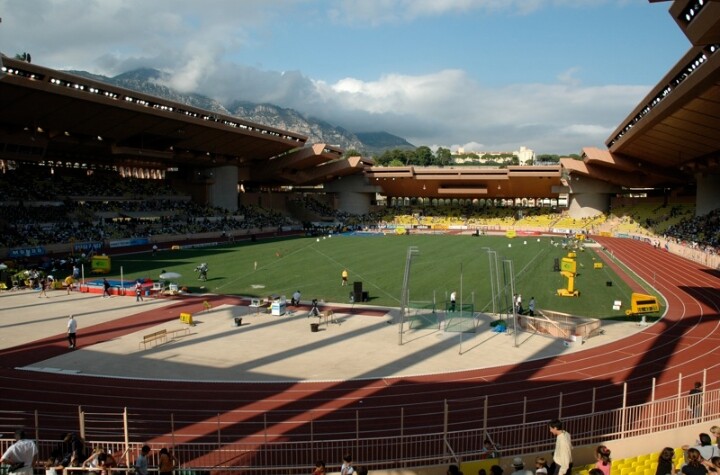
On July 17, 2015, inside the famous Stade Louis II in Monaco, Kiprop stormed to a stunning 3:26.69 in the 1500 meters—at the time one of the fastest performances ever recorded over the distance. The run combined fearless front-running, precise pacing, and remarkable endurance, creating a race that left both spectators and competitors in awe.
From the opening gun, Kiprop made his intentions clear. Rather than relying on his renowned finishing kick, the Olympic champion chose to dictate the pace from the front, relentlessly pursuing the long-standing world record of Hicham El Guerrouj, whose iconic 3:26.00 still stands as the benchmark for the event.
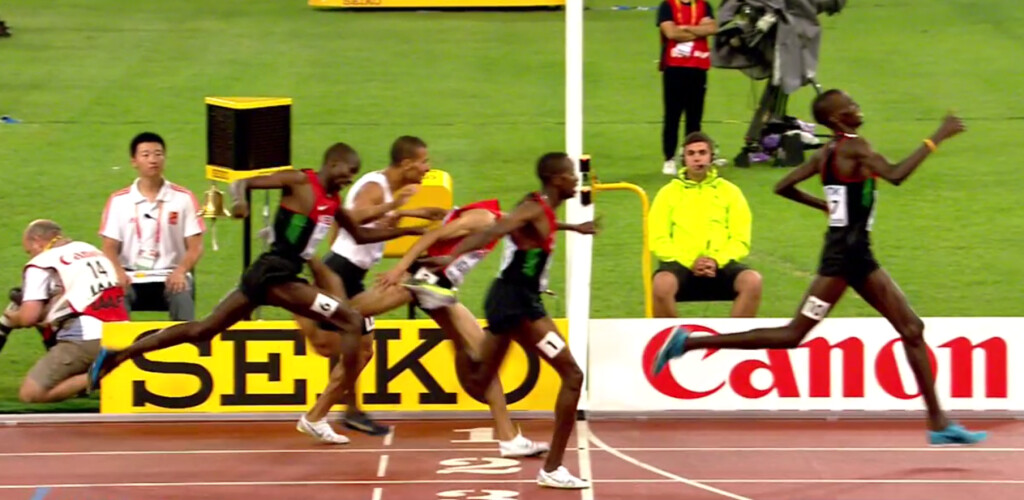
The early pace was sharp and deliberate. Behind the pacemaking assistance of Kenya’s Andrew Kiptoo Rotich, the first lap was covered in approximately 54 seconds, immediately signaling that the race would be something special. By the halfway mark, Kiprop passed 800 meters in about 1:50, maintaining a relentless rhythm that stretched the field.
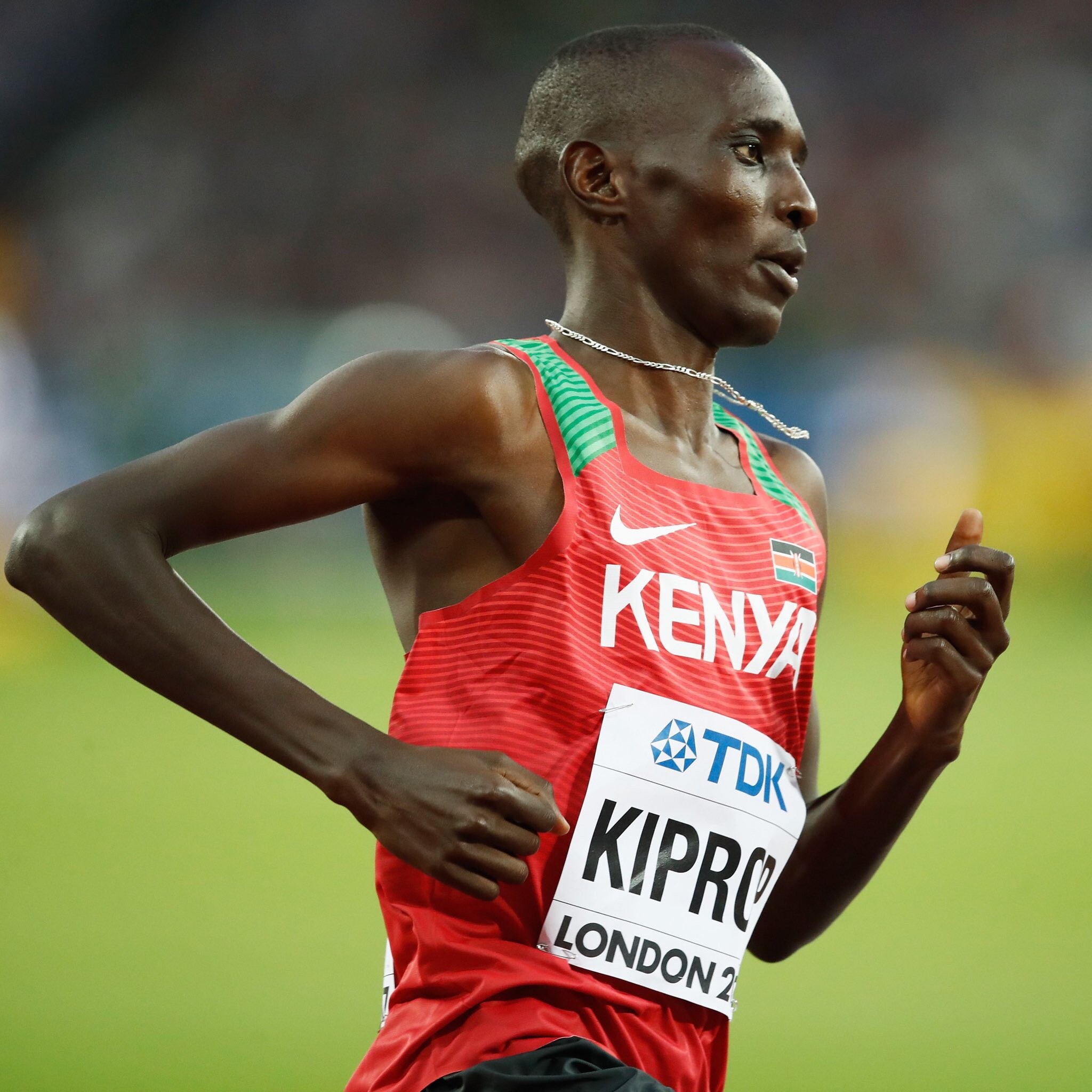
As the race progressed, the tall Kenyan floated around the track with the fluid stride that became his trademark. Passing 1200 meters in roughly 2:45, he remained firmly in control, gliding through the final lap in about 55 seconds to stop the clock at 3:26.69—a performance that etched his name even deeper into middle-distance history.
What made the run particularly remarkable was the margin of victory. Kiprop crossed the finish line more than two seconds ahead of a world-class field. Algeria’s Taoufik Makhloufi finished second in 3:28.75, just ahead of Morocco’s Abdelaati Iguider, who clocked 3:28.79.
The time also stood as a meeting record for the Monaco Diamond League at the time, further cementing the race’s place among the sport’s unforgettable moments.
For Kiprop, the performance was another shining chapter in a glittering career. The Kenyan star had already secured Olympic gold at the 2008 Beijing Olympics and would go on to collect three world titles at the World Athletics Championships in 2011, 2013, and 2015. Known for his elegant stride and exceptional race intelligence, he became one of the defining figures of modern middle-distance running.
Beyond Monaco, Kiprop built an impressive résumé across multiple distances. His personal bests included 1:43.15 for 800 meters, 3:48.50 for the mile, 2:14.23 for 1000 meters, and 7:42.32 for 3000 meters—a testament to both his speed and versatility.
Yet among all his achievements, the Monaco masterpiece remains one of the most memorable. On that night in July 2015, Asbel Kiprop didn’t just win a race—he delivered a performance that showcased the artistry and courage of championship middle-distance running, reminding the athletics world how extraordinary the 1500 meters can be when a great athlete dares to chase history.
by Erick Cheruiyot for My Best Runs.
Login to leave a comment
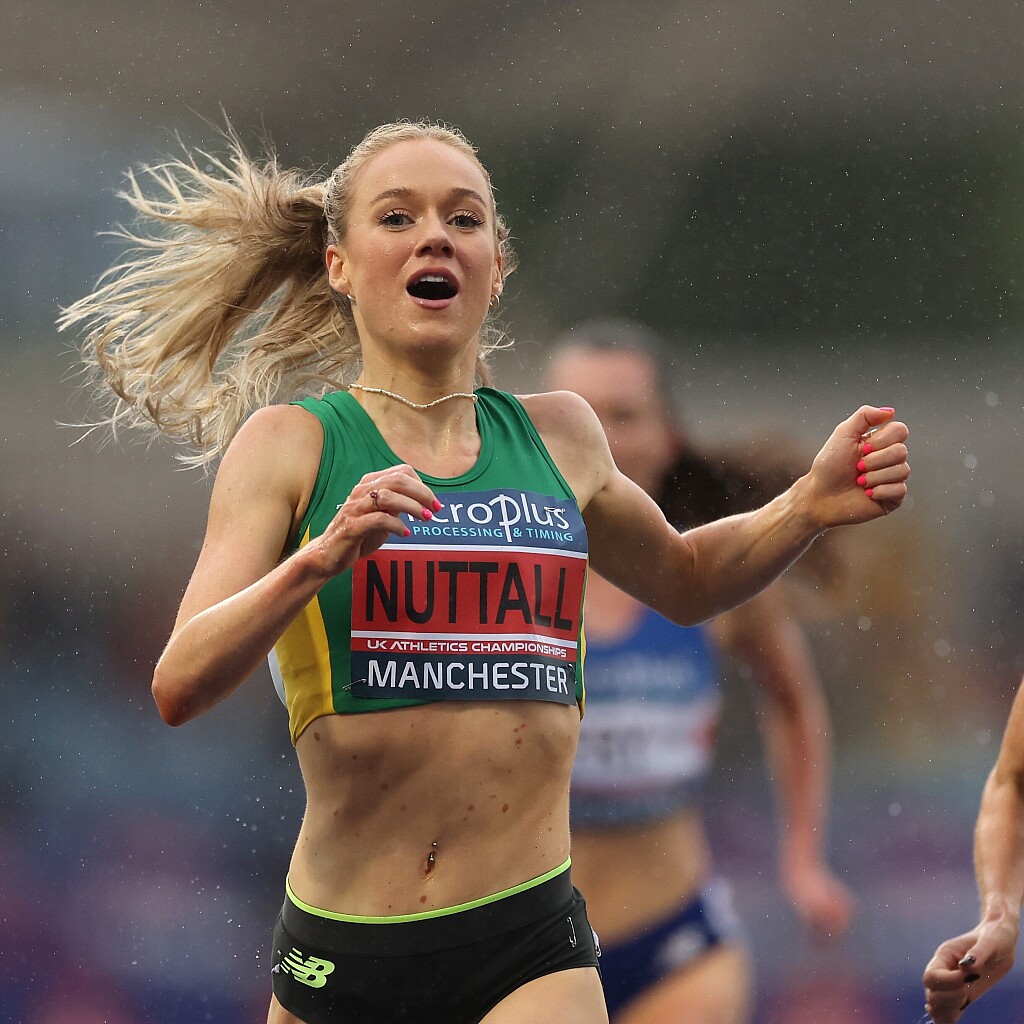
Stronger Than Before: Hannah Nuttall Earns Second Call-Up for World Indoor Championships
British distance runner Hannah Nuttall has been officially selected to represent Great Britain at the upcoming World Athletics Indoor Championships in Toruń, marking the second time she will compete on the global indoor stage.
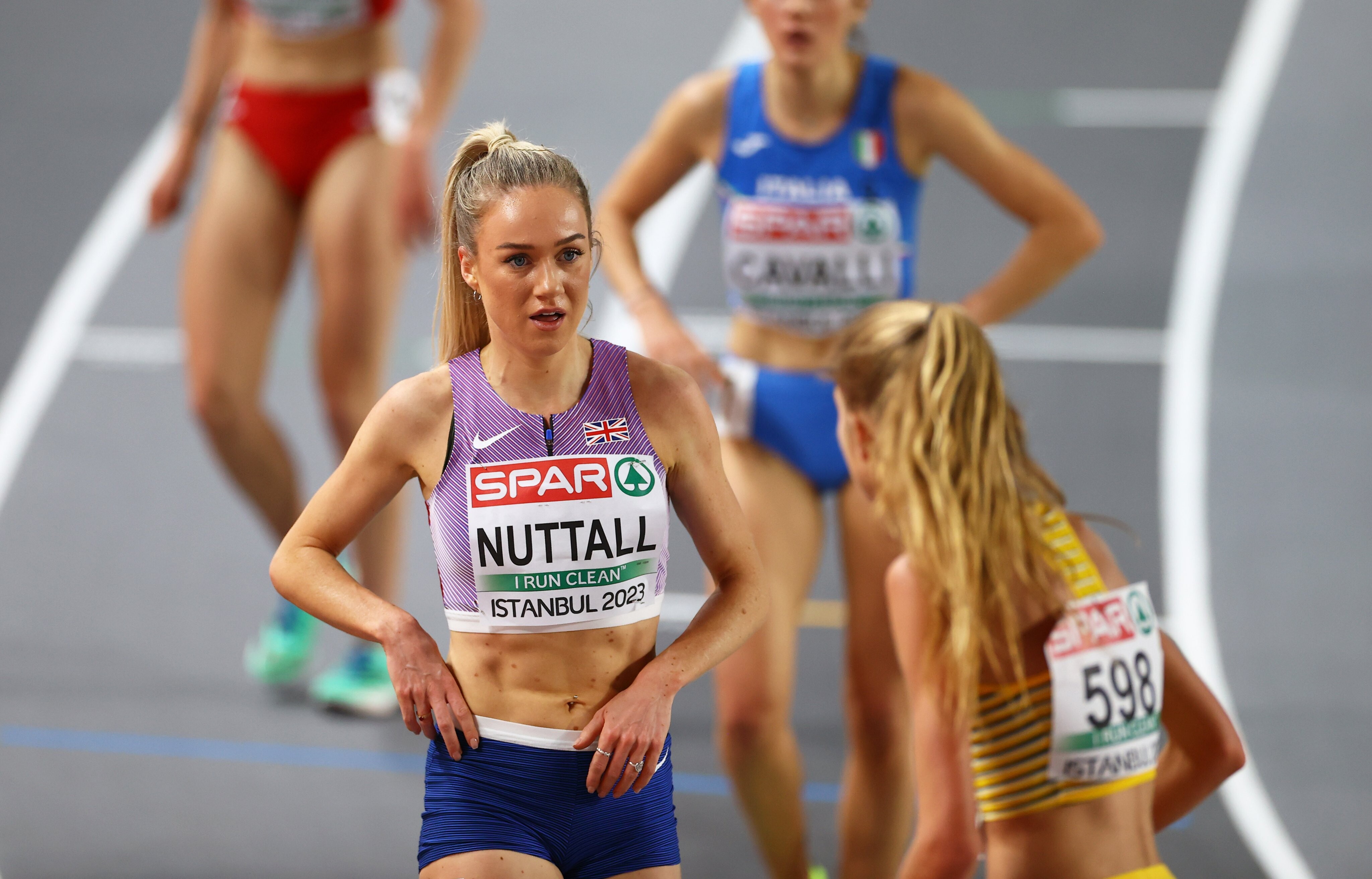
Nuttall first appeared at the championships during the 2024 World Athletics Indoor Championships in Glasgow, where she reached the final of the women’s 3000 meters and finished 12th. That performance came during a deeply challenging period in her life, as she was coping with the recent loss of her father. Despite the emotional weight of that moment, the British athlete showed remarkable resilience by competing among the world’s top distance runners.
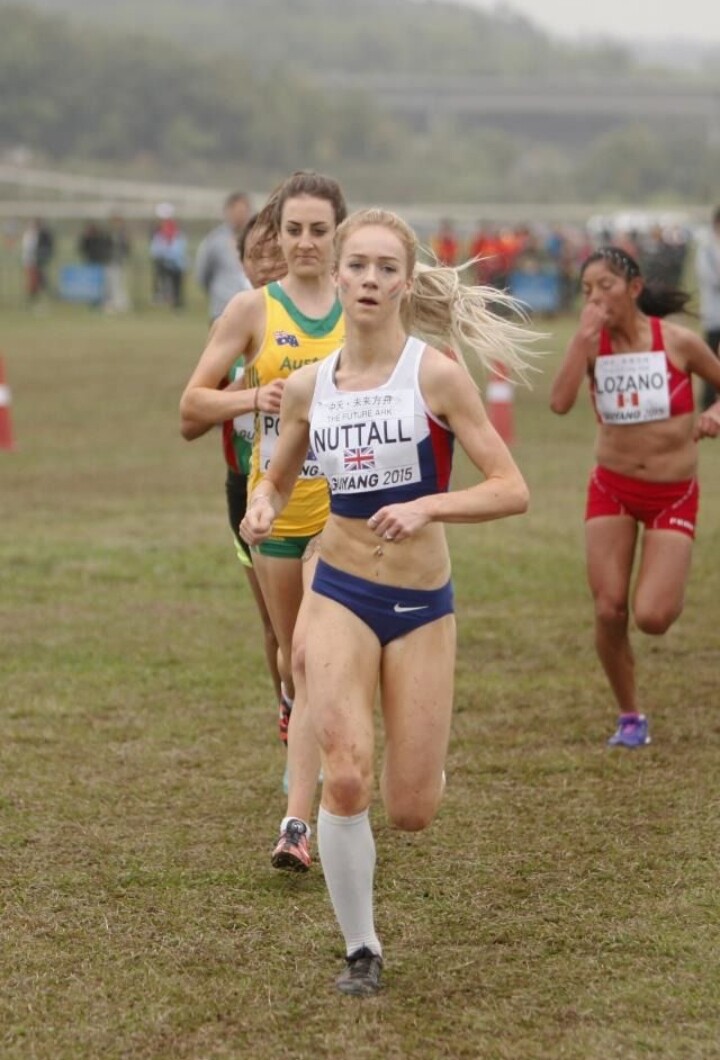
Since then, Nuttall has steadily rebuilt both her confidence and her form. As she prepares for the championships in Toruń, she enters the competition in a far stronger place—physically sharper and mentally refreshed. The experience gained from her previous appearance has helped shape her approach, and she now looks forward to testing herself once again against the elite of global indoor distance running.
For Nuttall, this second selection represents more than just another championship start. It reflects the progress she has made through adversity and the belief that her best performances are still ahead. As the world’s finest athletes gather in Toruń, she will step onto the indoor track not only with experience behind her, but also with renewed strength and determination to make her mark.
by Erick Cheruiyot for My Best Runs.
Login to leave a comment
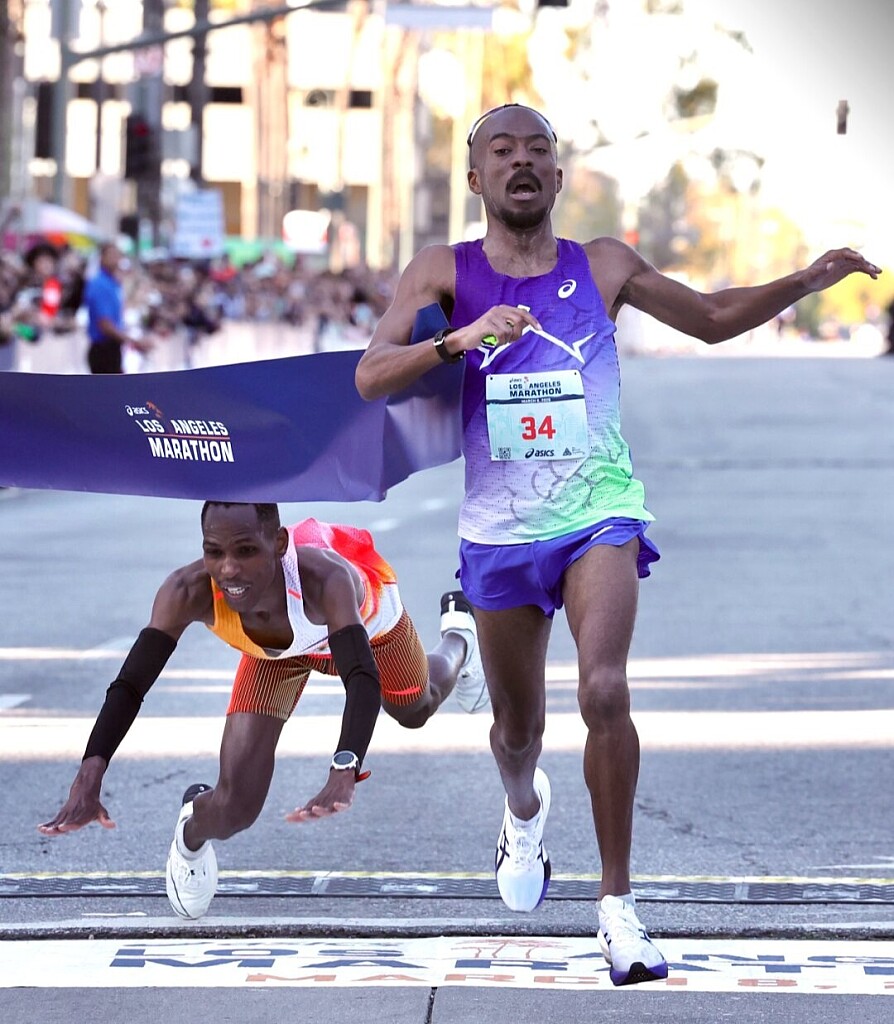
Miller’s Last-Stride Triumph and Cherono’s Inspiring Run Highlight Dramatic Los Angeles Marathon
The 41st edition of the Los Angeles Marathon produced a day filled with drama, resilience, and unforgettable performances, as American runner Nathan Miller captured the men’s title in the closest finish in race history while Kenya’s Priscah Cherono delivered a remarkable victory in the women’s race.
The men’s contest came down to a breathtaking final sprint. Miller surged at the last possible moment to edge Kenya’s Michael Kamau at the finish line, with both runners officially credited with the same time of 2:11:18 after covering the demanding 26.2-mile course. Their shoulder-to-shoulder battle through the closing stretch created a thrilling finale, with Miller’s perfectly timed surge proving decisive in the final stride.
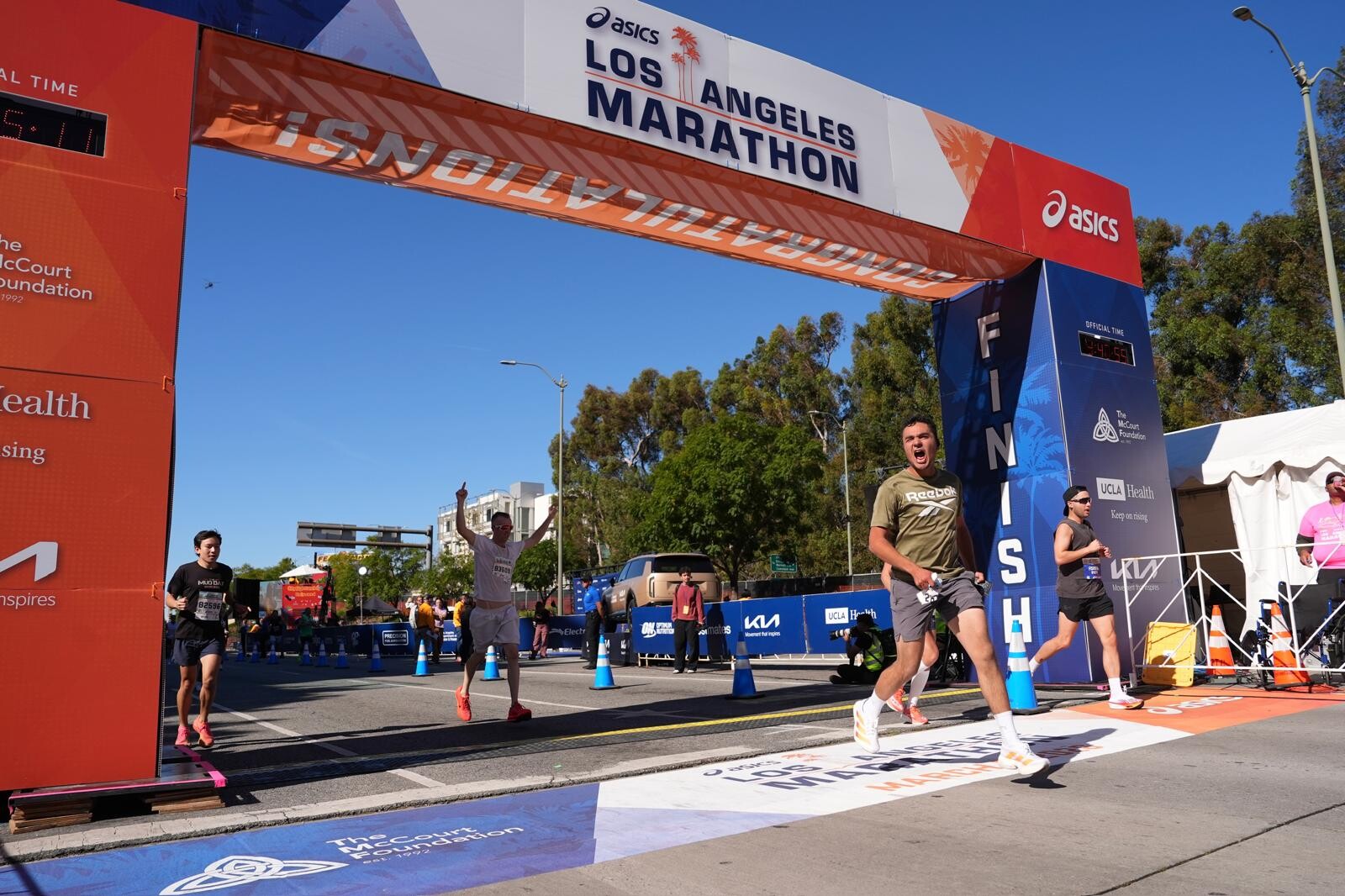
Moments after the finish, concern rose for Kamau, who reportedly did not take fluids during the race and collapsed after crossing the line. Medical personnel quickly attended to the Kenyan athlete, who was taken away on a stretcher following his courageous effort. Fellow Kenyan Enyew Nigat completed the podium, finishing third in 2:14:23 after a steady performance throughout the race.
For Miller, the victory marks a significant moment in a career defined by dedication both on and off the road. The 36-year-old from Jackson, Michigan balances elite competition with his work as a substitute teacher and a high school track and cross-country coach at Jackson High School. His personal best of 2:10:45, achieved at the Grandma's Marathon in 2023, also stands as the fastest marathon ever run by a U.S.-born Black athlete. His triumph continues a growing American presence atop the race, following the victory of Matt Richtman last year, who became the first American men’s champion since 1994 when he won in 2:07:56.
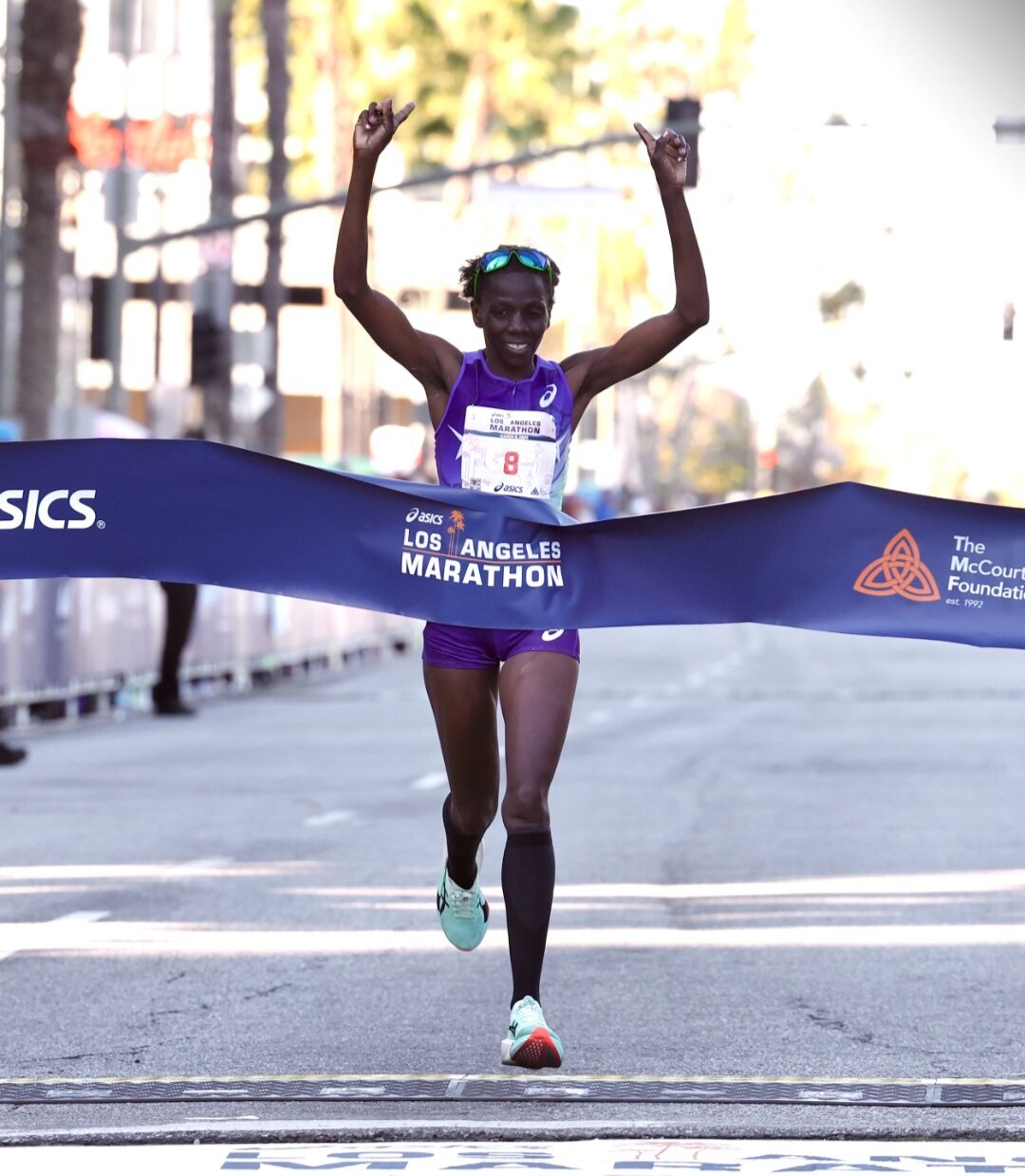
While the men’s race delivered a dramatic sprint finish, the women’s race showcased experience and determination as Cherono powered to victory in 2:25:20. At 45 years old, the mother of three produced an inspiring run across the streets of Los Angeles. Cherono, who now lives in Colorado Springs, Colorado, once competed at the Olympic level, finishing 10th in the 5,000 meters at the 2008 Summer Olympics in Beijing.
American runner Kellyn Taylor of Flagstaff, Arizona finished second in 2:27:37, while Kenya’s Antonina Kwambai secured third place in 2:28:50, rounding out a competitive women’s podium.
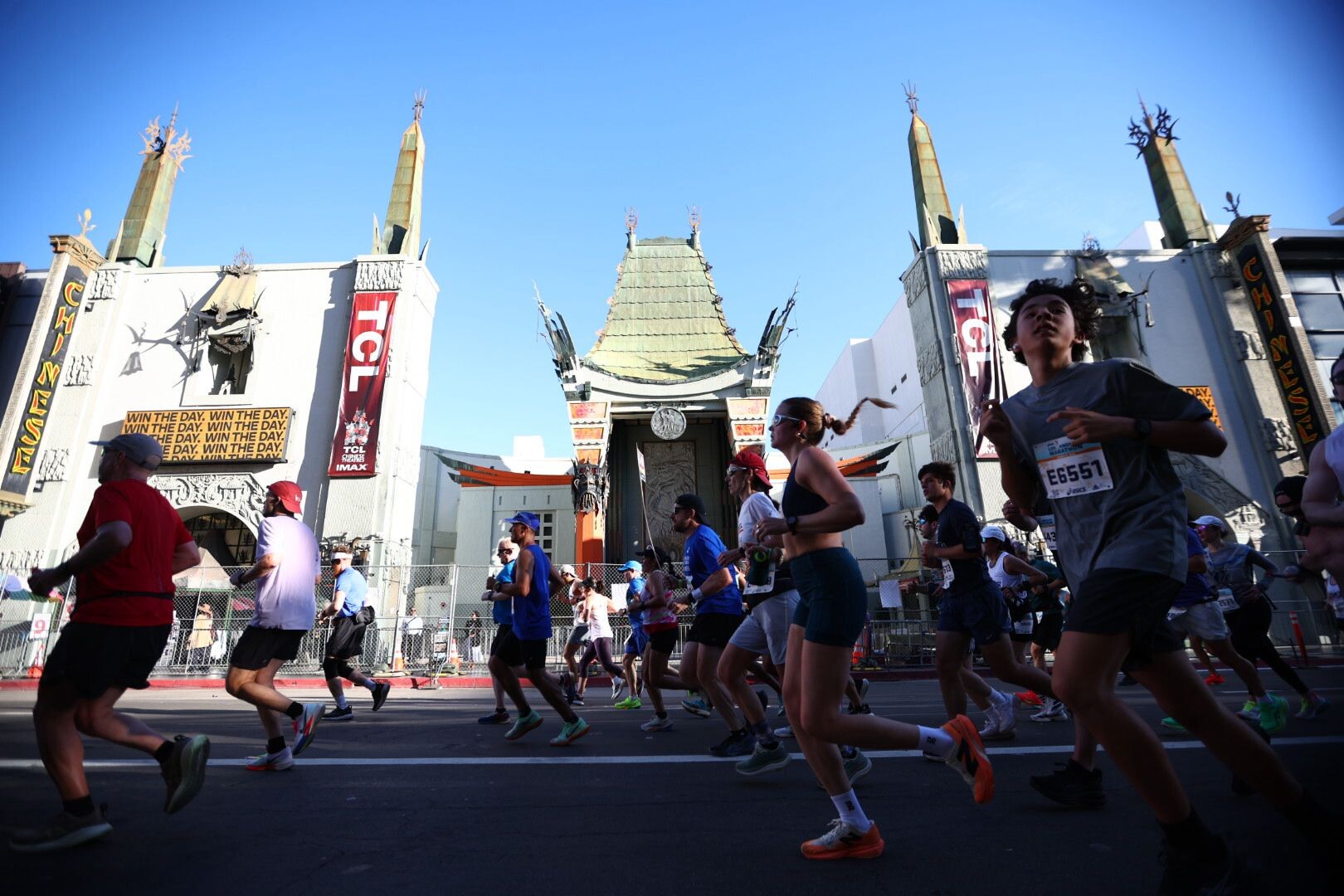
Weather conditions added another layer of challenge to the race. With temperatures forecast to climb into the 80s by midday, organizers announced that runners who managed to complete 18 miles of the course would still receive medals due to the expected heat. The race began at Dodger Stadium and stretched across the city before finishing in the Century City district of Los Angeles, where thousands of runners pushed through the warm conditions and the relentless distance.
From Miller’s electrifying last-stride surge to Cherono’s inspiring victory at 45, the 2026 Los Angeles Marathon unfolded as a powerful reminder of the spirit of endurance that defines the sport. On a warm California morning filled with tension and triumph, the race once again proved that in the marathon, greatness often reveals itself in the very final stride.
by Erick Cheruiyot for My Best Runs.
Login to leave a comment

Los Angeles Marathon
The LA Marathon is an annual running event held each spring in Los Angeles, Calif. The 26.219 mile (42.195 km) footrace, inspired by the success of the 1984 Summer Olympic Games, has been contested every year since 1986. While there are no qualifying standards to participate in the Skechers Performnce LA Marathon, runners wishing to receive an official time must...
more...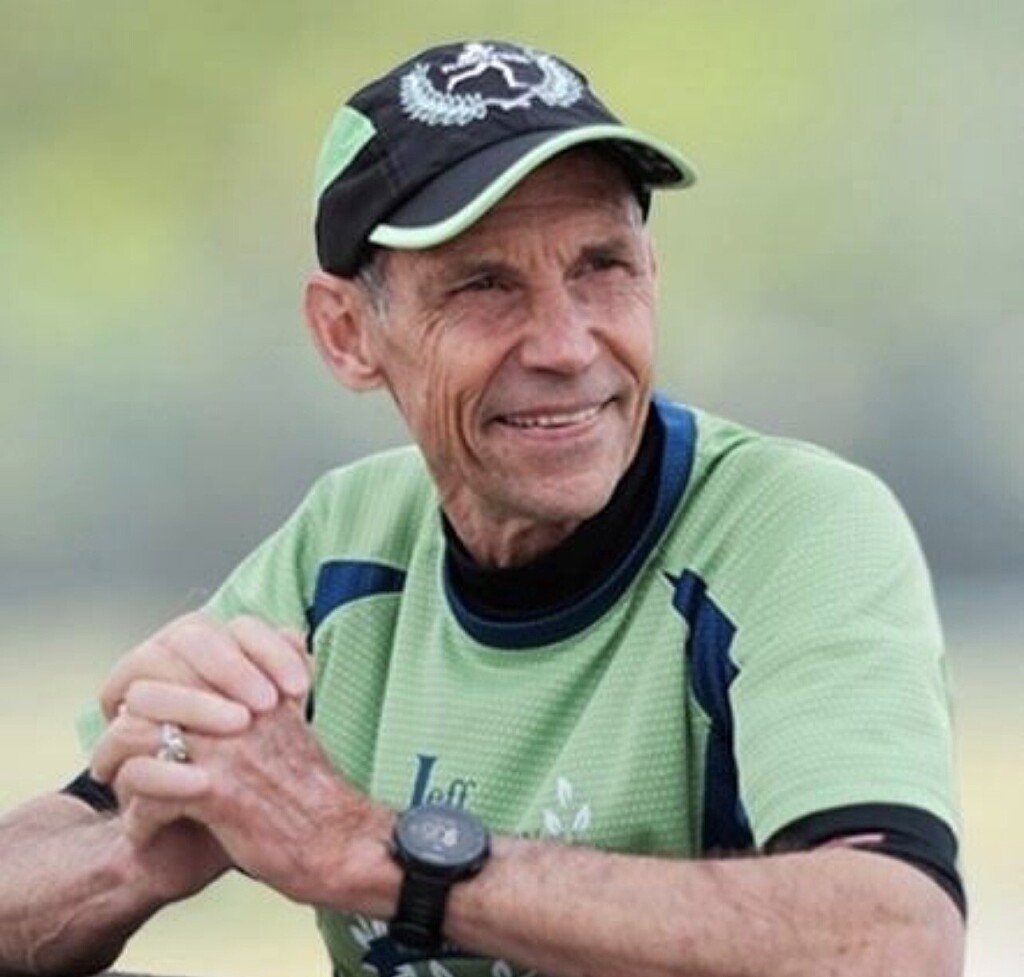
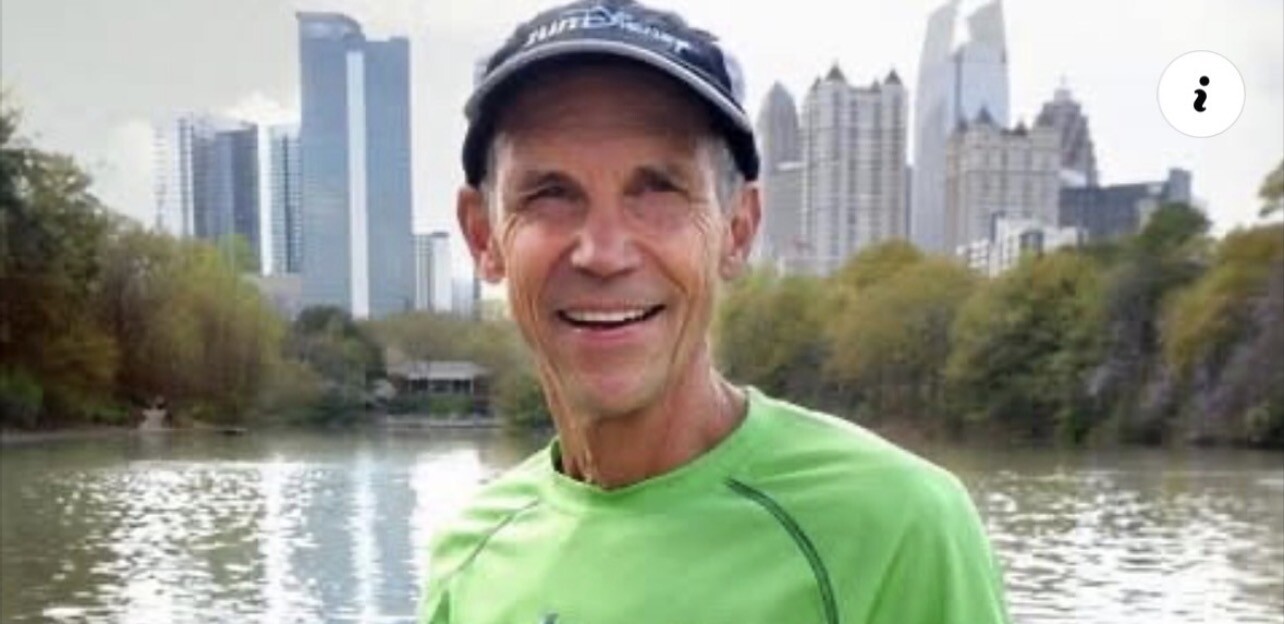
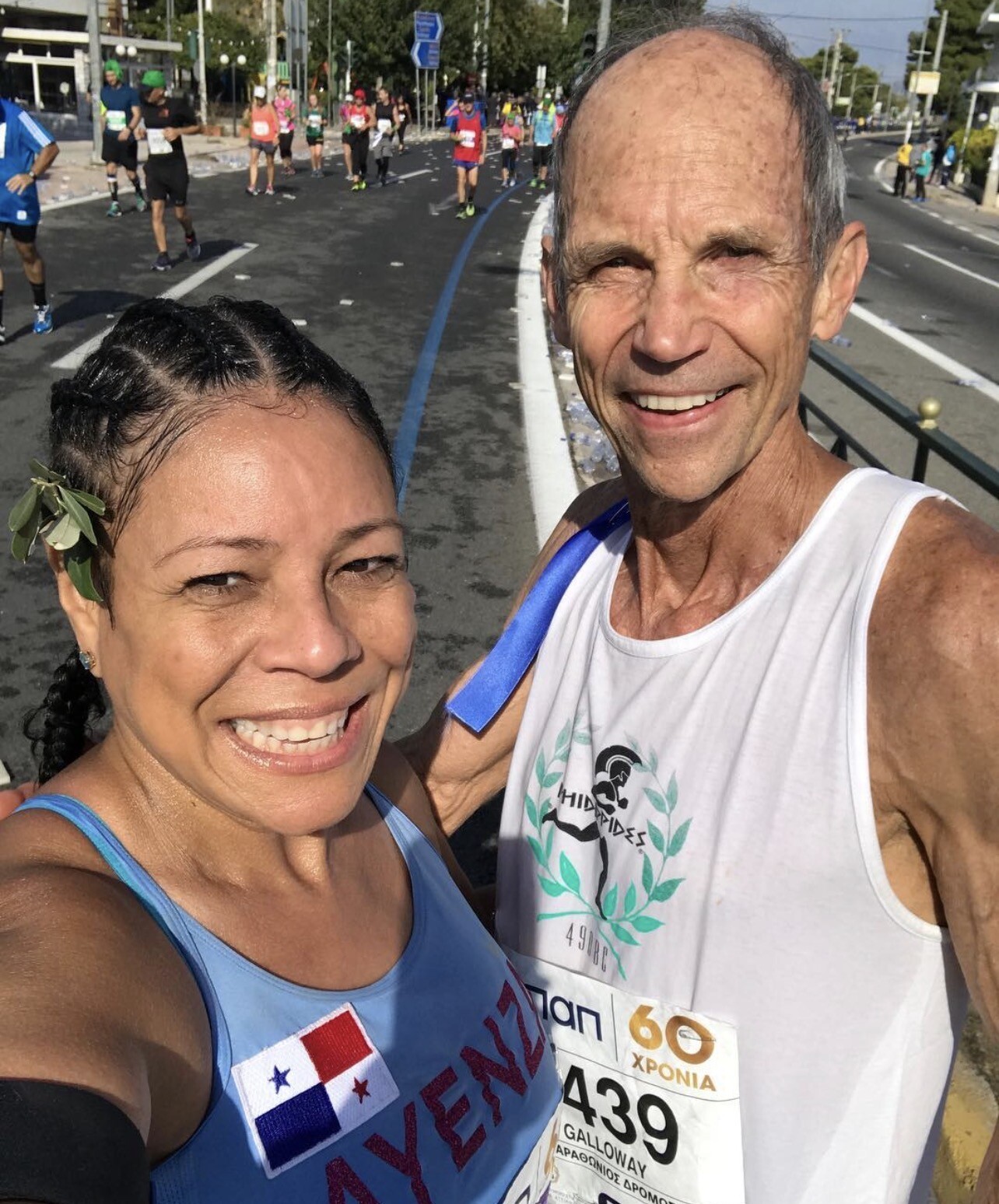
Jeff Galloway Dies at 80 Leaving a Legacy That Changed Running
The running world has lost one of its most influential voices. Olympian, author, and lifelong running advocate Jeff Galloway has died at the age of 80 following complications from a stroke.
For more than five decades, Galloway inspired runners of all ages and abilities to lace up their shoes and head out the door. His message was simple but powerful: running is for everyone.
From Olympic Athlete to Running Pioneer
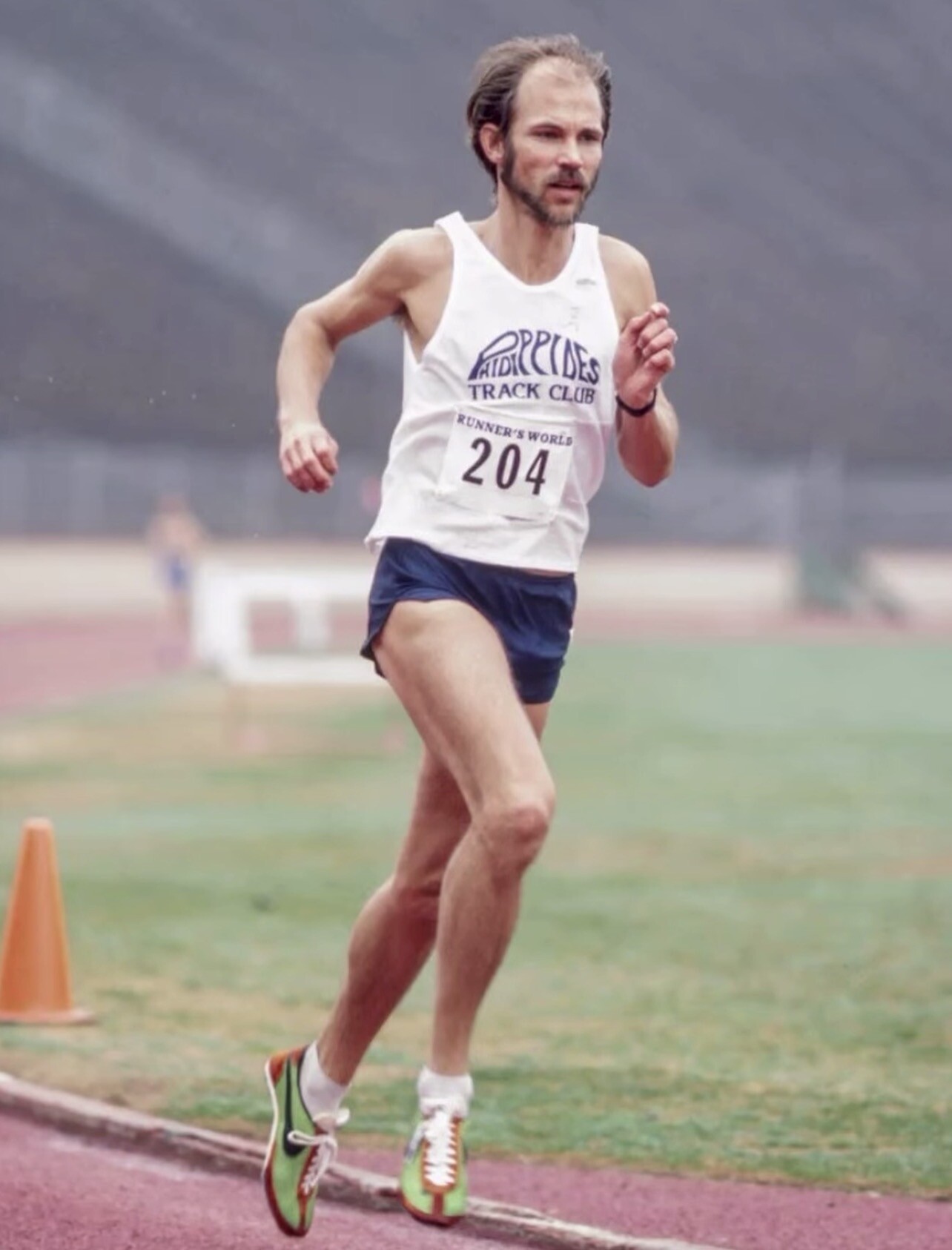
Born July 12, 1945, in Raleigh, North Carolina, Galloway rose to prominence during the great running boom of the late 1960s and early 1970s. A talented distance runner, he earned a spot on the U.S. Olympic team in the 10,000 meters at the 1972 Olympic Games in Munich.
While his own racing career was notable, Galloway’s greatest contribution to the sport came afterward.
He understood something that would shape the future of running—that millions of people wanted to run but needed encouragement, guidance, and a realistic path to get started.
The Method That Opened the Sport to Millions
Galloway became widely known for developing the Run Walk Run method, a training strategy that encouraged runners to take short, planned walking breaks during their runs.
At the time, the concept challenged traditional thinking. Many believed walking during a run meant failure. Galloway saw it differently.
By alternating running and walking, runners could go longer, recover faster, and reduce injury risk. The method helped countless beginners complete races they once thought impossible and helped experienced runners stay consistent.
Over time, the strategy spread around the world. In many running communities it earned its own nickname: “Jeffing.”
A Teacher and Ambassador for the Sport
Beyond races and training plans, Galloway became one of the most recognizable teachers in running. Through books, clinics, and coaching programs he helped guide generations of runners toward their first 5K, half marathon, or marathon.
He had a rare ability to make the sport feel welcoming rather than intimidating.
Many runners credit him with helping them start—or continue—their running journey.
Part of Running’s Greatest Era of Growth
Galloway was part of the generation that helped shape modern distance running. During the early years of the running boom, voices like his helped bring the sport out of the shadows and into everyday life.
The idea that anyone could become a runner helped transform road racing from a niche activity into a global movement.
Few people contributed more to that shift than Jeff Galloway.
A Lasting Legacy
Even in his later years, Galloway remained deeply connected to the sport, continuing to coach, speak, and encourage runners to stay active.
Today, countless runners crossing finish lines—from small community races to major marathons—are part of the legacy he helped build.
Jeff Galloway was 80 years old. His influence on running will continue for generations.
by Bob Anderson for My Best Runs
Login to leave a comment
Breaking Barriers: Parker Wolfe Smashes 13 Minutes with Historic Indoor 5,000m Run
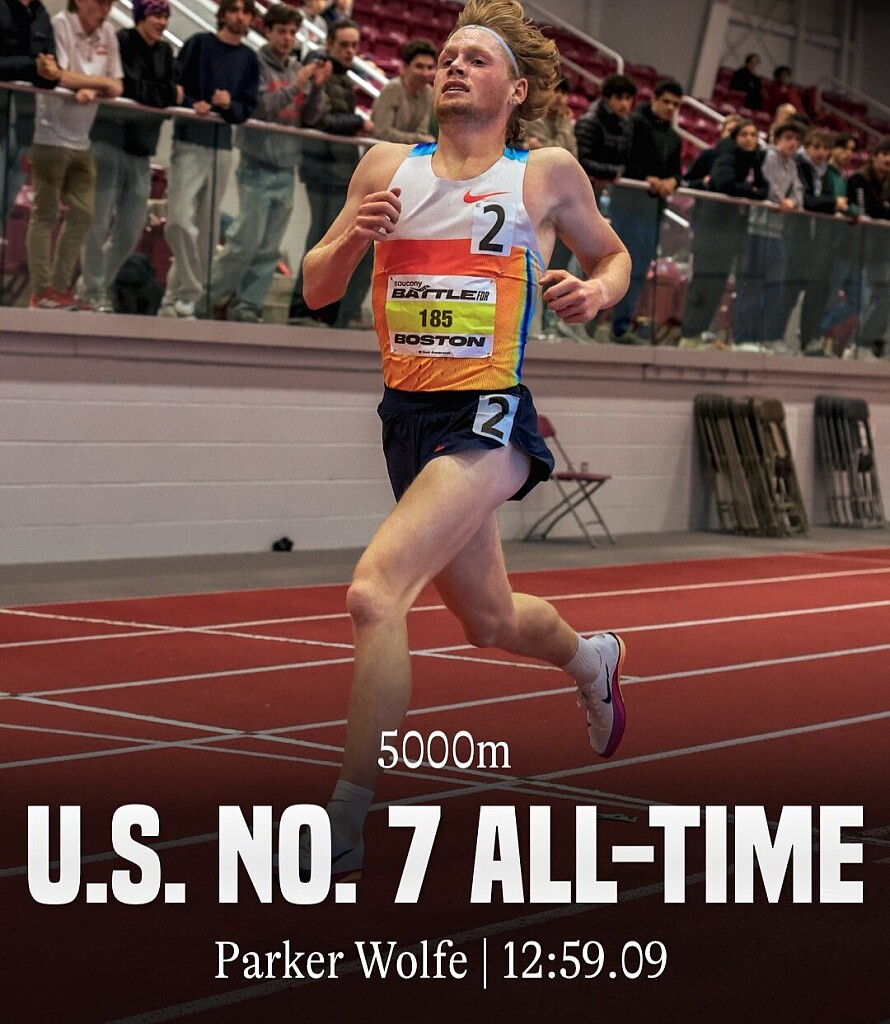
American distance running reached another milestone as Parker Wolfe delivered a breakthrough performance, clocking 12:59.09 for 5,000 meters indoors at the BU Battle for Boston. The performance not only marked the first time Wolfe has dipped under the 13-minute barrier, but also elevated him to seventh on the U.S. all-time indoor rankings, making him just the eighth American in history to achieve the feat.
Racing at the fast track inside Boston University, Wolfe approached the race with controlled aggression. He benefited from early pacing support from training partner Abdi Nur through roughly two miles, positioning himself perfectly for a decisive solo finish. Once the pacemaking duties ended, Wolfe maintained his rhythm alone against the clock, demonstrating both physical strength and tactical maturity.
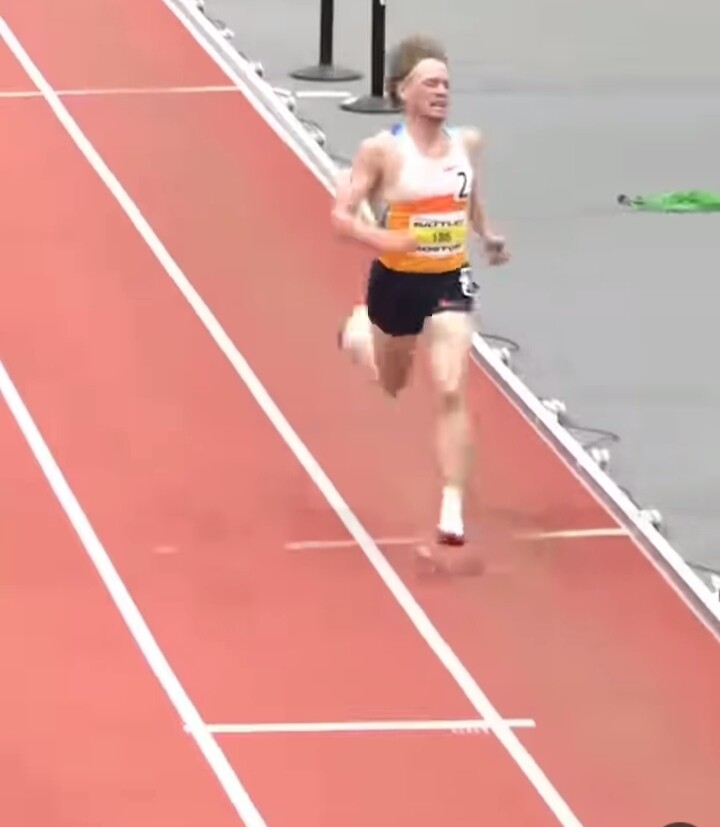
Despite a small field with only a handful of finishers, the quality of Wolfe’s run was undeniable. He surged away from the competition over the closing laps, ultimately winning by a commanding margin of 28 seconds. More importantly, his time confirmed his progression into the elite tier of American distance runners, signaling that his development continues to accelerate.
Crossing under 13 minutes is widely regarded as a defining benchmark in the 5,000 meters, separating national-class athletes from those capable of competing on the global stage. For Wolfe, this achievement represents not only a personal best but also a statement of intent as he targets future championships and faster times outdoors.
With momentum now firmly on his side, Wolfe’s historic run in Boston may prove to be the turning point of his career — the moment where promise transformed into proven excellence. If this trajectory continues, the American distance scene could soon witness even bigger performances from a runner who has just begun to reveal his true potential.
by Erick Cheruiyot for My Best Runs.
Login to leave a comment

I Was There in 1984. Here’s How to Be There in 2028. Your Guide to Getting Athletics Tickets for the Los Angeles Olympics
By Bob Anderson publisher My Best Runs: I was sitting in the stands at the Los Angeles Memorial Coliseum during the 1984 Olympic Games when one of the most dramatic moments in track & field history unfolded right in front of me.
Mary Decker and Zola Budd — two of the most talked-about athletes in the world — collided in the 3000 meters. Budd running barefoot. Decker surging shoulder-to-shoulder beside her. The tension was electric long before the contact. And when the incident happened, the stadium gasped in unison.
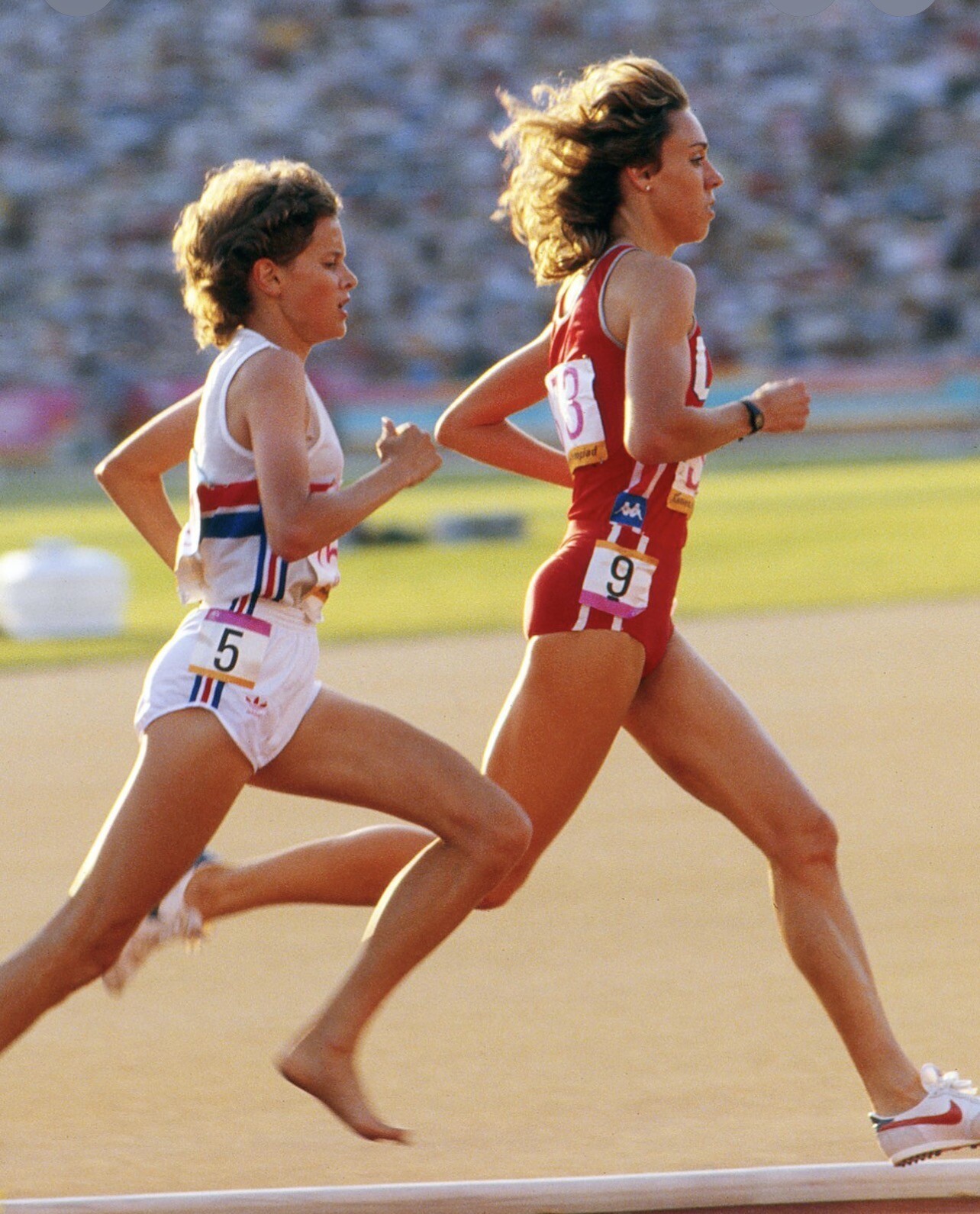
Watching it live was beyond words.
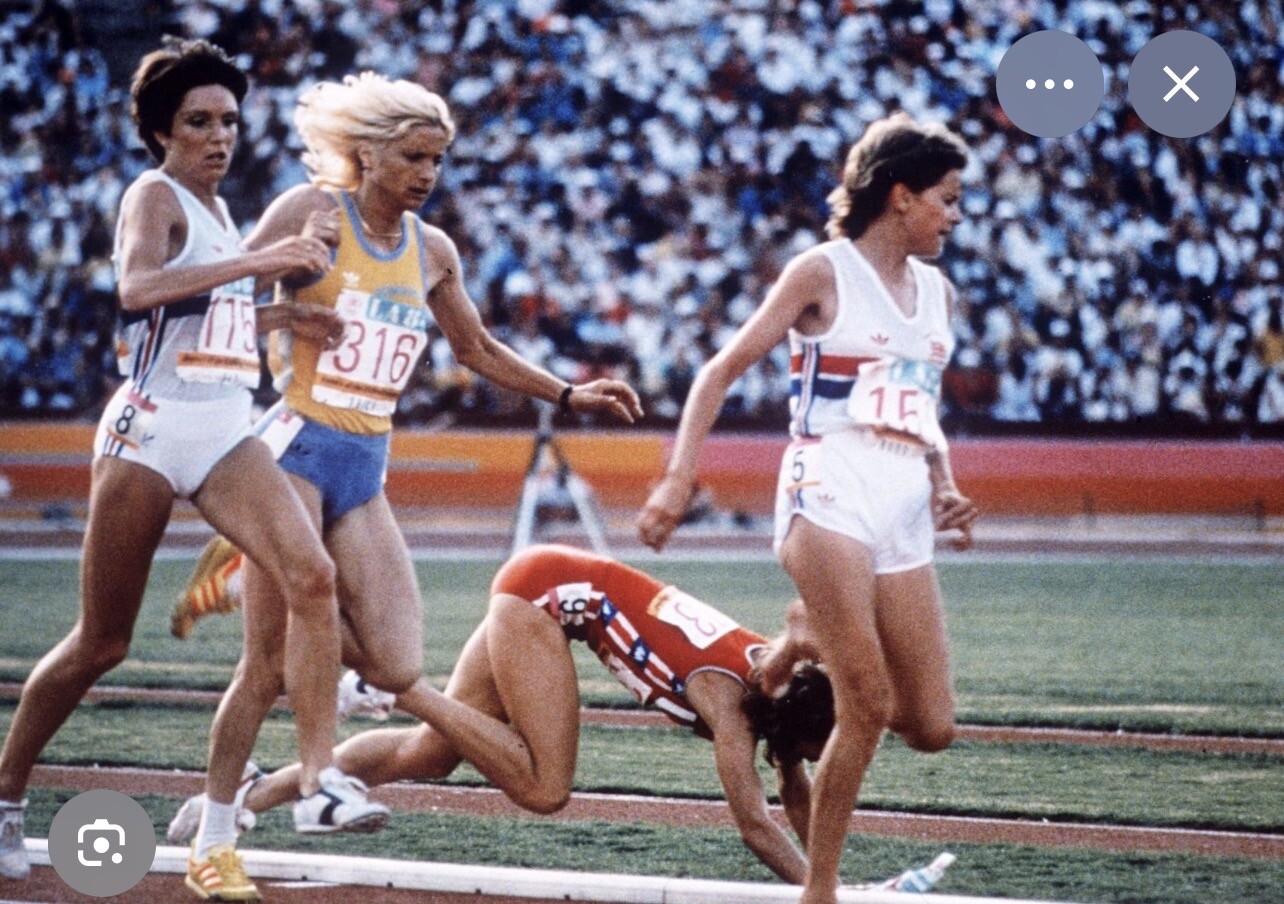
Television could never fully capture the atmosphere — the anticipation, the silence before the gun, the surge of 90,000 people reacting at once. It was raw, emotional, unforgettable.
That is what Olympic athletics feels like in person.
And in 2028, it returns to Los Angeles.
The Olympic Games will take place July 14–30, 2028, with the Paralympic Games following August 15–27. If you are a runner, a fan of track & field, or someone who understands what it means when the world’s best line up together, here is how you position yourself to be there.
Step One: Register for the LA28 Ticket Draw

The only way to access the first wave of tickets is to register for the official LA28 Ticket Draw at tickets.la28.org.
Registration is free. You create a profile, provide your billing ZIP/postal code and contact information, and enter the system. Registration closes March 18, 2026.
After registration closes, selected participants will receive a designated time slot to purchase tickets during the first “ticket drop,” beginning in April 2026.
This is not first-come, first-served. It’s a randomized process. If selected, you receive a specific purchase window. If not, you remain eligible for future ticket drops.
Athletics sessions are historically among the most in-demand Olympic events — especially finals in the sprints, relays, and distance races.
The Venue: A Historic Return
Track & field will once again take place inside the iconic Los Angeles Memorial Coliseum — the same stadium where I watched Decker and Budd in 1984.
The Coliseum hosted the Games in 1932 and 1984. In 2028, it will crown Olympic champions again in the sprints, middle distance, long distance, hurdles, jumps, throws, and relays.
There is something powerful about seeing Olympic track return to that same stage.
What Will It Cost?
Now the practical question: how much should you budget?
While final prices vary by session and seating tier, LA28 ticketing follows the traditional Olympic structure with multiple price bands.
Here is a realistic expectation for athletics sessions:
• Early-round heats and qualifying sessions: often starting below $100
• Daytime semifinal sessions: typically in the $100–$200 range
• Evening finals sessions (100m, relays, 1500m, 5000m, etc.): commonly $150–$350
• Premium seating near the finish line or high-demand nights: $400–$500 or more
Each session includes multiple events. A single evening ticket might include a sprint final, a field final, and a distance medal race — making it one of the most compelling Olympic experiences available.
Each person may purchase up to 12 Olympic tickets total across all events.
Strategy for Track & Field Fans
If athletics is your priority, treat this like preparing for a goal race.
Register early.
Do not wait until the final days.
Decide your must-see events.
Is it the 100 meters? The 1500? The relays? The marathon? Know what matters most.
Budget wisely.
Plan $300–$500 for premium finals sessions.
If you’re flexible, heats and early rounds at $75–$150 can still deliver world-class competition and atmosphere.
Many experienced Olympic attendees blend sessions:
• One premium finals night
• One championship distance session
• One or two value-priced heats
That approach delivers the full Olympic running experience without overspending.
Why Early Ticket Drops Matter
The first ticket drop in April 2026 will offer the broadest inventory, including more seats in lower price tiers.
Later drops often have fewer value options remaining.
Think of it like positioning yourself at the start line. You want to be ready when the gun goes off.
Watching Mary Decker and Zola Budd battle in 1984 — feeling the stadium react in real time — remains one of the most powerful sporting moments I have ever experienced.
You feel the silence before the start.
You hear the spikes biting the track.
You sense the collective breath of thousands before a final kick.
Television shows you the race.
Being there lets you feel it.
In 2028, the world’s best runners will once again line up in Los Angeles.
The only question is — will you be in the stands when history happens?
by Bob Anderson for My Best Runs
Login to leave a comment
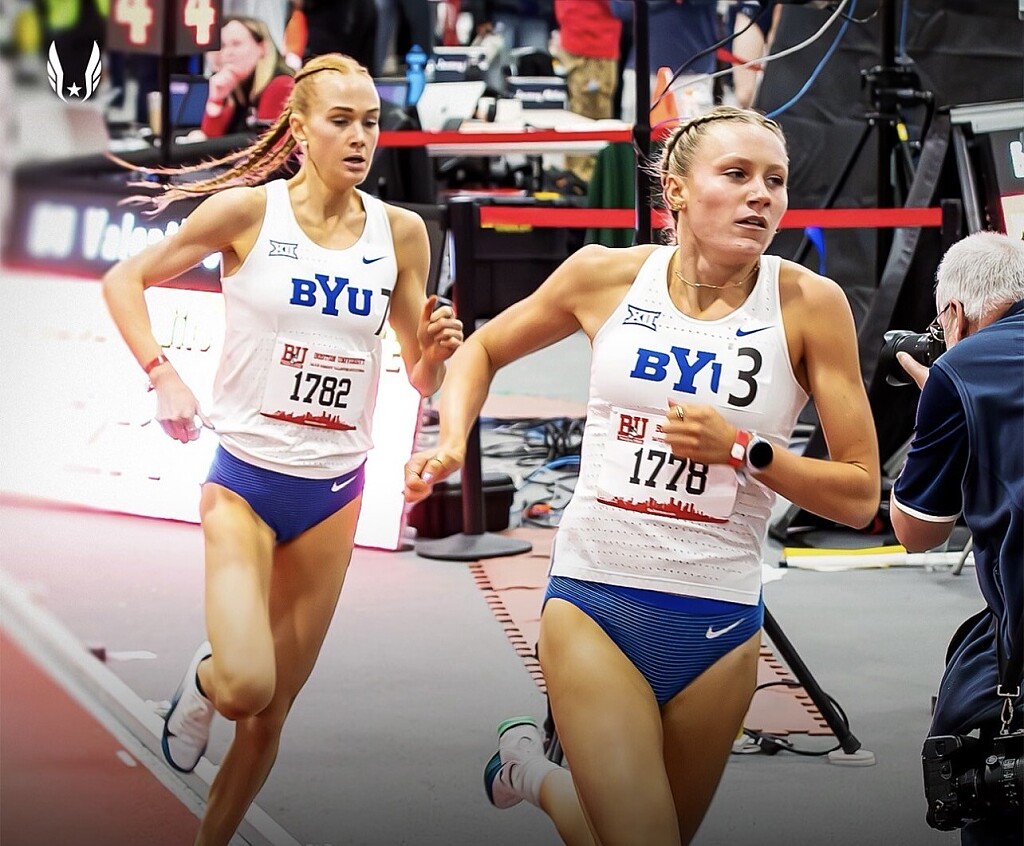
Riley Chamberlain Breaks NCAA Mile Record and Proves She Belongs
“It’s taken a mindset shift from just trying to make it there to now being like, ‘No, I belong in it. I will put myself in it and I will race like I belong.’”
Riley Chamberlain shared those words this week on the CITIUS MAG Podcast. Days earlier, she backed them up on the track.

On February 14, 2026, at the David Hemery Valentine Invitational at Boston University, the BYU standout ran 4:20.61 for the mile, breaking the NCAA indoor record and elevating herself into rare territory in collegiate distance running.
The time did more than lower a standard.
It announced arrival.
From Contender to Believer
Chamberlain’s record did not come from nowhere. Her progression at BYU has been steady and deliberate, built on range and aerobic depth. Cross country laid the foundation. Strength over 5,000 meters sharpened endurance. The 800-meter speed remained intact.
In Boston, she combined all of it.
The pace was assertive but controlled. As the decisive laps unfolded, she did not look like an athlete trying to survive the moment.
She looked like one commanding it.
Her 4:20.61 now ranks among the fastest collegiate miles ever run and positions her not just as an NCAA favorite, but as an emerging force beyond the collegiate ranks.
The BYU Culture Effect
Chamberlain spoke on the CITIUS MAG Podcast about BYU’s program culture — what athletes there describe as “high expectations, high love.”
That environment shapes competitors. Daily training alongside elite teammates, including Jane Hedengren, raises standards internally. Sessions demand accountability. Every rep carries weight.
When intensity becomes routine in practice, championship pressure becomes manageable.
Strength Across Distances
What separates Chamberlain from many elite milers is her versatility.
She carries the endurance to race the 5K and the speed to handle the 800m. That range gives her tactical freedom. It allows her to absorb pace and close decisively.
Her Boston performance did not look fragile. It looked repeatable.
Racing With Conviction
The most striking element of the 4:20.61 was composure
Indoor mile racing at that level demands positioning, rhythm, and the courage to commit when margins tighten. Chamberlain’s quote captures the evolution perfectly. She is no longer racing to see if she belongs.
She is racing as if she already does.
The Road Ahead
With NCAA championships approaching and international opportunities within reach, Chamberlain’s breakthrough in Boston on February 14 was not simply a collegiate highlight.
It was a statement.
Records fall. Belief endures.
And right now, Riley Chamberlain has both.
by Boris Baron for My Best Runs
Login to leave a comment
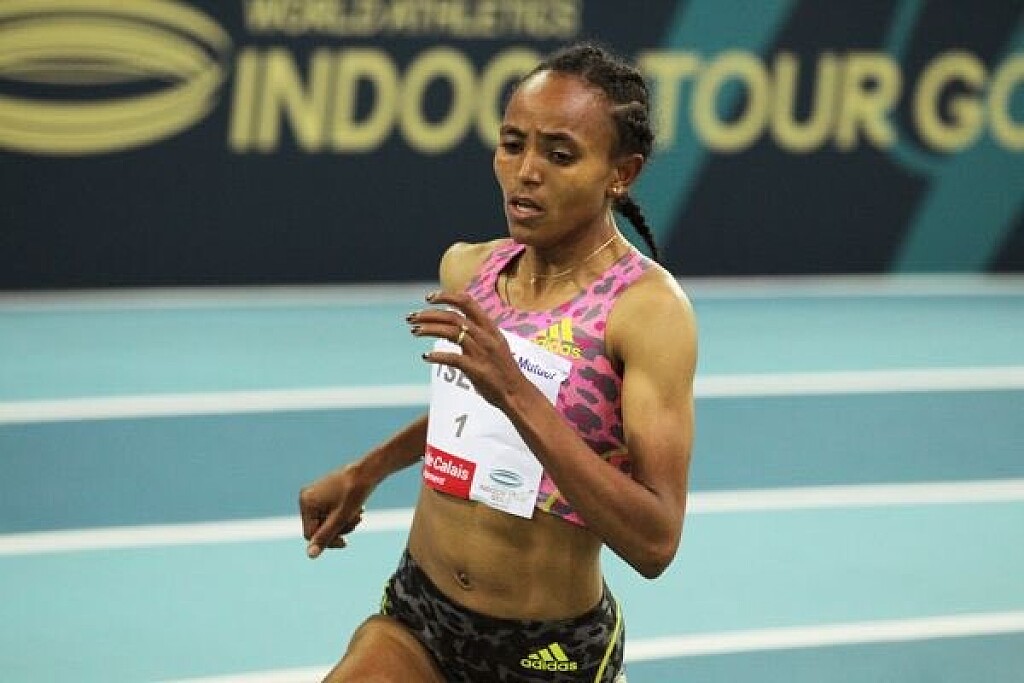
Ethiopian Brilliance in Liévin: Gudaf Tsegay’s 3:53.09 and the Night the 1500m Indoors Was Redefined
On February 9, 2021, inside the electric arena of the Meeting Hauts-de-France Pas-de-Calais in Liévin, Gudaf Tsegay delivered one of the most breathtaking performances the sport has ever witnessed. In a race that demanded both audacity and precision, the Ethiopian star stormed to a staggering 3:53.09 in the women’s 1500 meters indoors — a world record that did more than lower a time; it reshaped the limits of possibility.
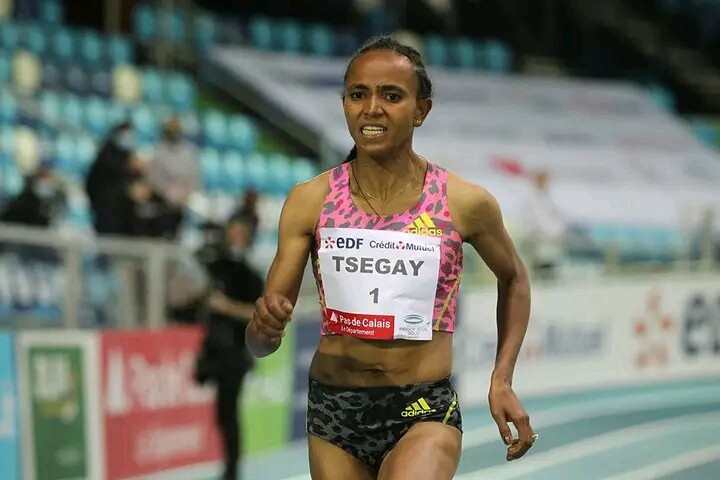
The previous mark of 3:55.17, set in 2014 by fellow Ethiopian great Genzebe Dibaba, had long stood as a symbol of middle-distance excellence. On that winter evening in France, Tsegay did not merely edge it — she dismantled it.
From the crack of the gun, the pace was ferocious. Guided by a bold pacemaker through a searing opening lap of 58.97 seconds, Tsegay settled into a rhythm that balanced aggression with control. She crossed 800 meters in 2:05.94 and powered through 1000 meters in 2:37.36, her stride smooth, her cadence relentless. By the time the bell rang, the race had transformed from competition into exhibition.
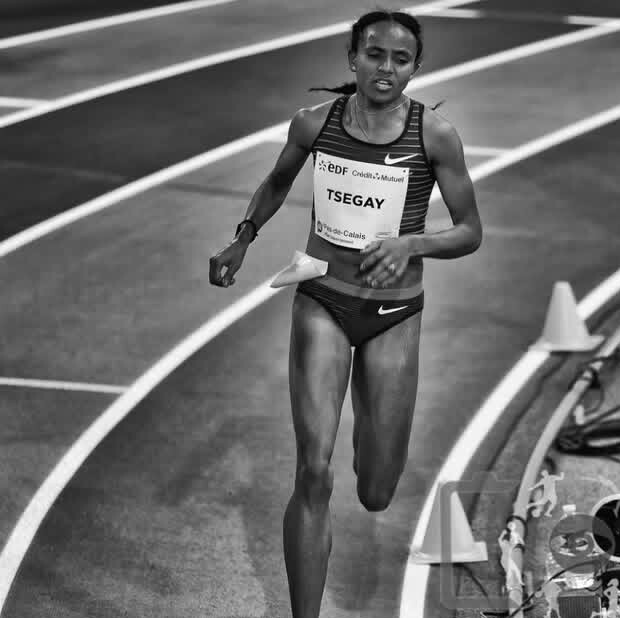
The final lap was a masterclass in controlled fury. With approximately 30 seconds over the last 200 meters, Tsegay accelerated into history, separating herself completely from the field. Behind her, Britain’s Laura Muir clocked 3:59.58 — an outstanding performance in its own right — yet finished more than six seconds adrift. That margin alone underscored the magnitude of Tsegay’s dominance.
Indoor 1500-meter racing is unforgiving. The tighter bends, the confined straights, and the tactical positioning demand technical mastery as much as physical brilliance. To run 3:53.09 under such conditions requires supreme aerobic strength, fearless pacing, and the composure to sustain near-perfect splits. On that night, Tsegay possessed all three.
As the Liévin meeting returns once again, the question lingers in the rafters of the arena: who dares to approach 3:53.09? Records are meant to be challenged, but some performances transcend statistics. They become reference points in history — moments when the sport advances in a single, luminous leap.
In Liévin, Gudaf Tsegay did exactly that. She did not just break a world record. She redefined excellence indoors — and left the rest of the world chasing her shadow.
by Erick Cheruiyot for My Best Runs.
Login to leave a comment
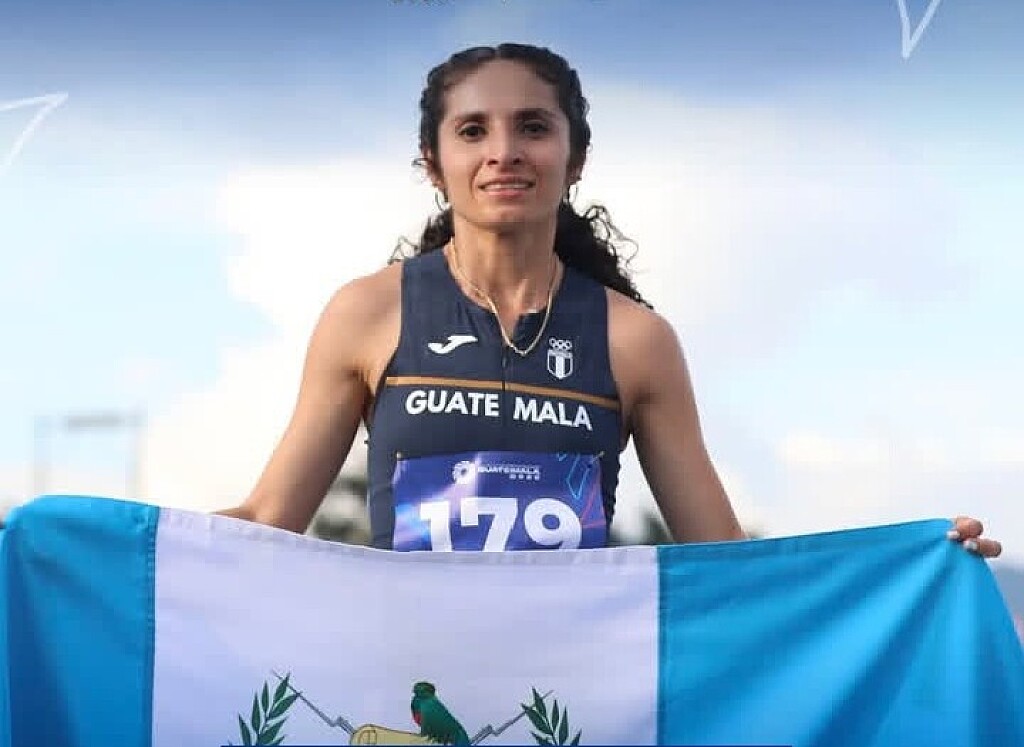
Historic Breakthrough in Barcelona: Viviana Aroche Smashes Central American Half Marathon Record
Guatemala has a new distance queen. On the streets of Barcelona, Viviana Aroche delivered the performance of her life, clocking a sensational 1:11:27 in the half marathon to set both a new Guatemalan national record and a new Central American record. The landmark run not only elevates her status in the region but also places her firmly among the most formidable distance athletes in the Americas this season.
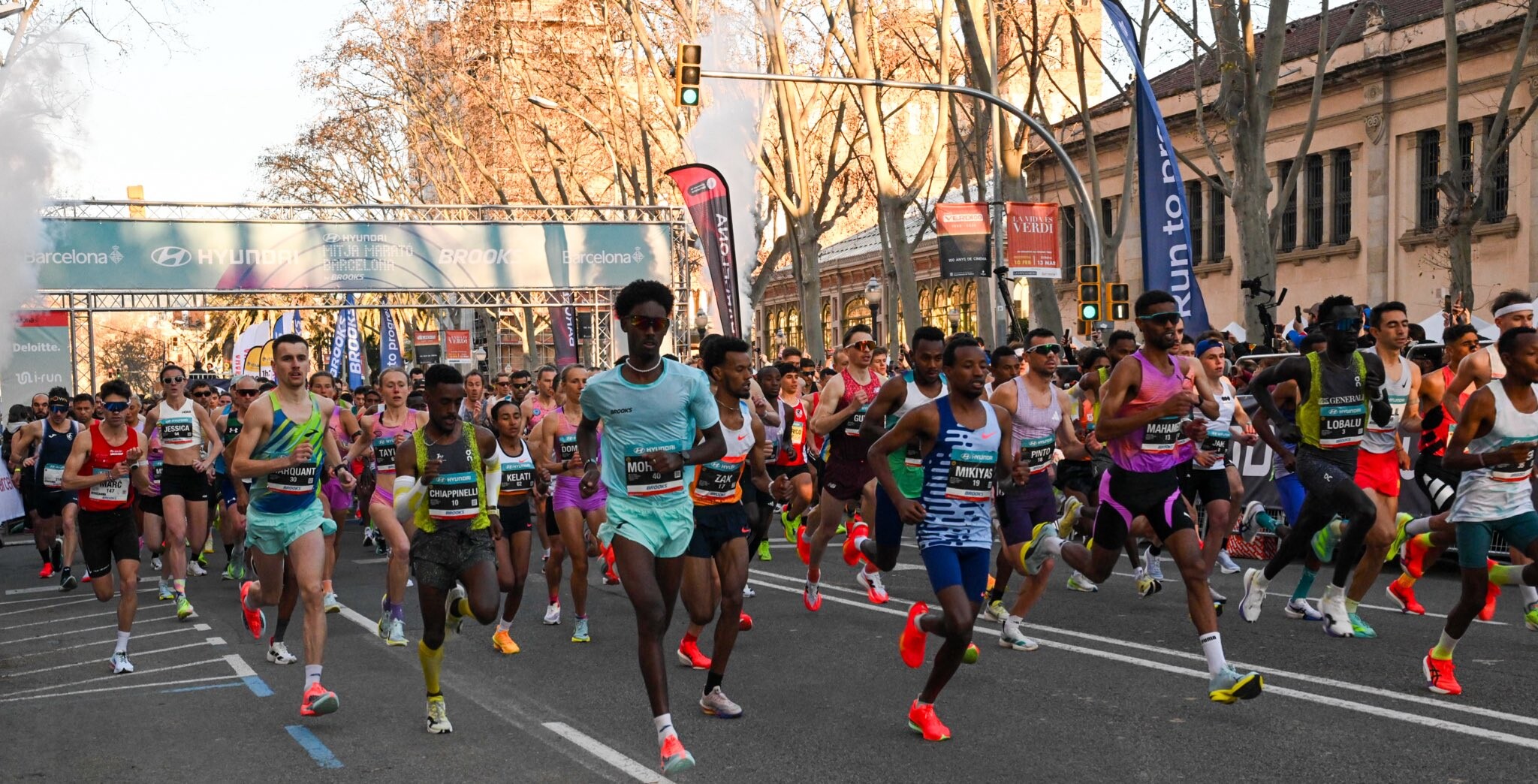
Aroche’s historic mark eclipses the previous Central American record of 1:12:46 set by Costa Rica’s Diana Bogantes in Boston on November 10, 2024. By slicing more than a minute off that standard, the Guatemalan star redefined the limits of regional excellence in the 21.097-kilometer discipline.
Her race unfolded with remarkable precision and composure. According to official tracking data from the Mitja Marató Barcelona, Aroche passed 5km in 17:09, signaling controlled aggression from the gun. She reached 10km in 34:07 and 15km in 51:07, maintaining an impressive rhythm that balanced speed with endurance. At 20km, the clock read 1:08:01 — the record already within reach. She powered through the final stretch to stop the clock at 1:11:27, sealing a breakthrough performance that will resonate across Central America.
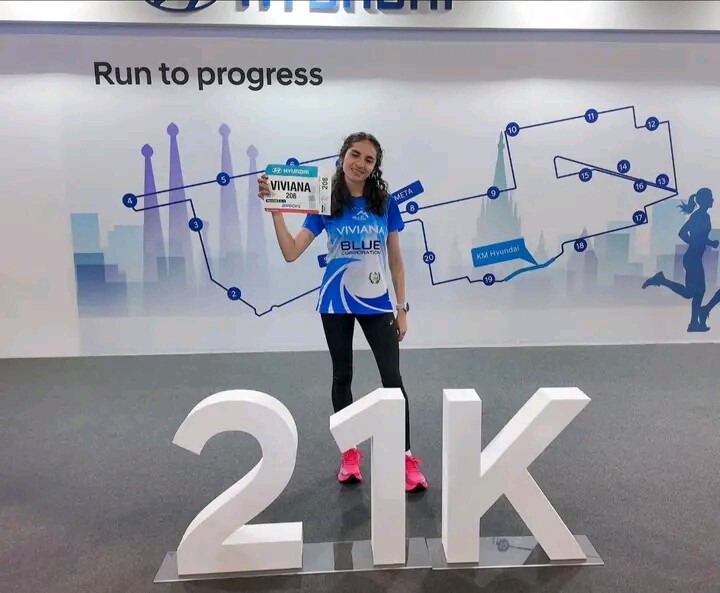
This latest achievement further strengthens Aroche’s remarkable résumé. Over the past few seasons, she has methodically rewritten Guatemala’s record books, from middle-distance track events to long-distance road racing. Her progression — spanning from 800 meters to the half marathon — reflects rare versatility and a steady evolution toward endurance dominance. With national records in multiple disciplines and now ownership of every Central American best from 3000 meters to the half marathon, Aroche has constructed a legacy that transcends a single race.
Beyond the numbers, this run symbolizes a powerful moment for Guatemalan athletics. It showcases the emergence of a generation capable of competing — and winning — on international roads. In Barcelona, under clear skies and fast conditions, Viviana Aroche did more than break a record. She lifted a region, inspiring a nation and confirming that Central American distance running is entering a bold new era.
WOMEN’S TOP 10 — OFFICIAL RESULTS
1. Loice Chemnung (KEN) – 1:04:01 (Course Record)
2. Weini Kelati Frezghi (USA) – 1:06:03
3. Diniya Kedir Aboraya (ETH) – 1:06:27
4. Taylor Roe (USA) – 1:06:50
5. Magdalene Yeko Masai (KEN) – 1:07:42
6. Domenika Mayer (GER) – 1:08:06
7. Netsanet Desta Gebre (ETH) – 1:08:10
8. Mekdes Woldu (FRA) – 1:08:36
9. Samantha Harrison (GBR) – 1:09:00
10. Melody Julien (FRA) – 1:09:38
by Erick Cheruiyot for My Best Runs.
Login to leave a comment

Bowerman Mile Showdown Set for 2026 Prefontaine Classic: Hocker, Myers, and Ruthe Bring Generational Clash to Hayward Field
One of the most anticipated mile races of the decade is taking shape as Olympic champion Cole Hocker prepares to face two of the fastest young milers in history—Australia’s Cameron Myers and New Zealand’s Sam Ruthe—at the Bowerman Mile during the 2026 Nike Prefontaine Classic at Hayward Field in Eugene, Oregon.
The Bowerman Mile, widely regarded as the most prestigious mile race in the world, has long served as the stage where legends are made. In 2026, it will bring together a reigning Olympic champion at the peak of his powers and two teenage sensations who are redefining what is possible for young athletes.
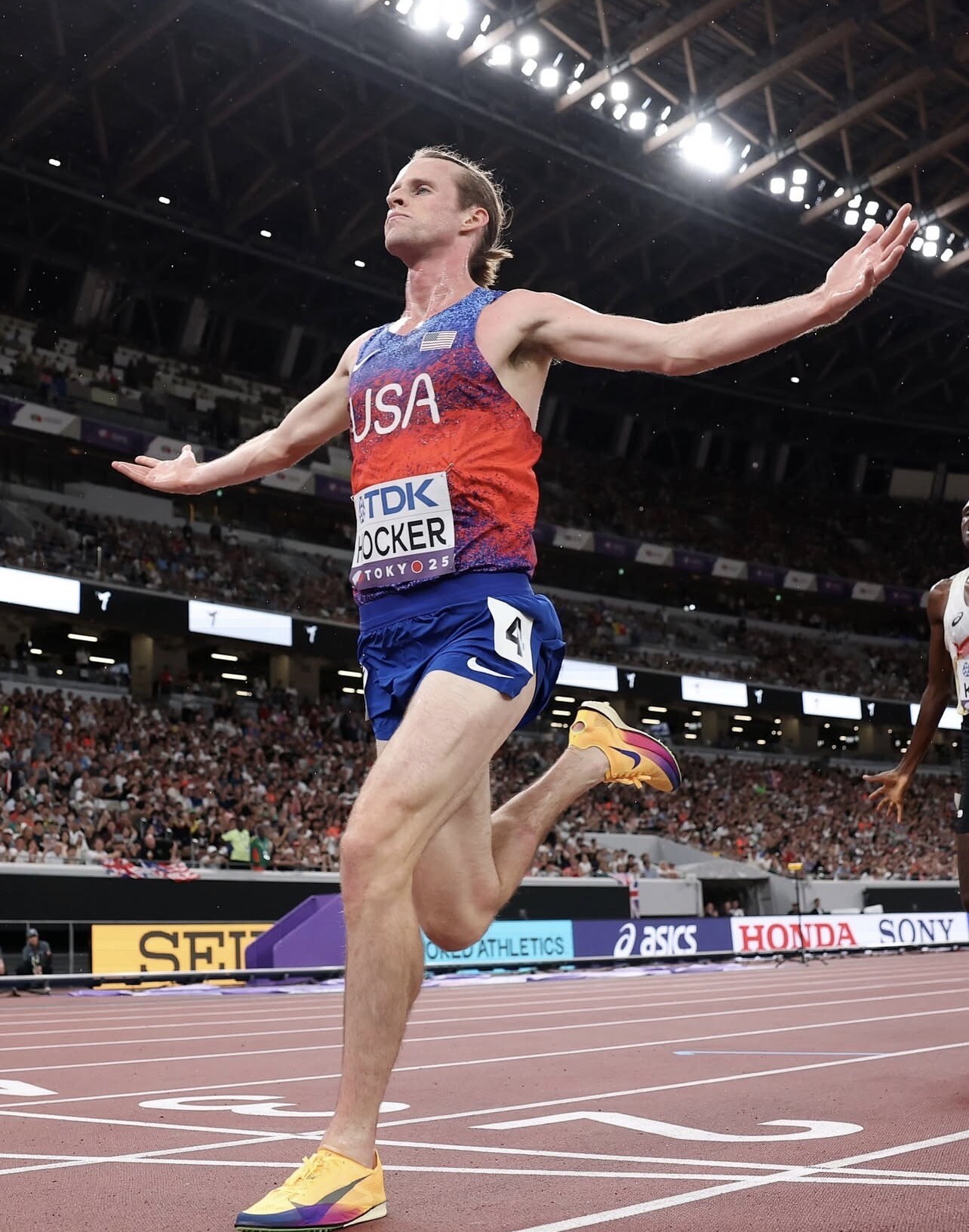
The Olympic Champion: Cole Hocker’s Next Mission
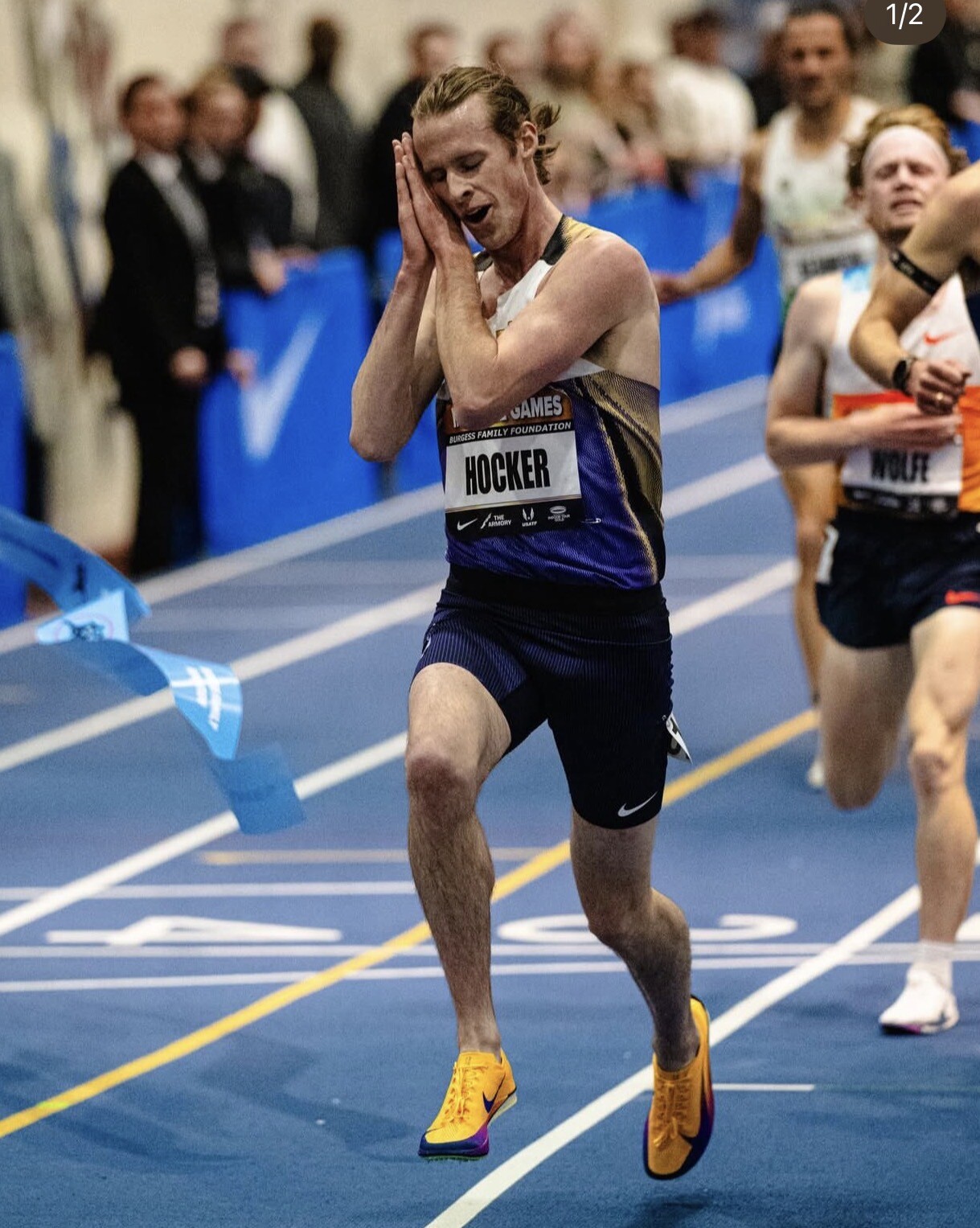
Cole Hocker enters the race as one of the most accomplished middle-distance runners in the world. The American captured the gold medal in the 1500 meters at the 2024 Olympic Games, confirming his position among the sport’s elite. He followed that performance by winning the 2025 World Championship title over 5000 meters, demonstrating both speed and endurance at the highest level.
Hocker’s personal best of 3:47.43 for the mile, set at the 2025 Prefontaine Classic, ranks him among the fastest milers in American history. Despite his success, one major prize has eluded him—the Bowerman Mile title. His best finish so far has been fifth place, but with his experience and championship pedigree, he arrives in Eugene determined to change that.
Cameron Myers: Australia’s Rising Star
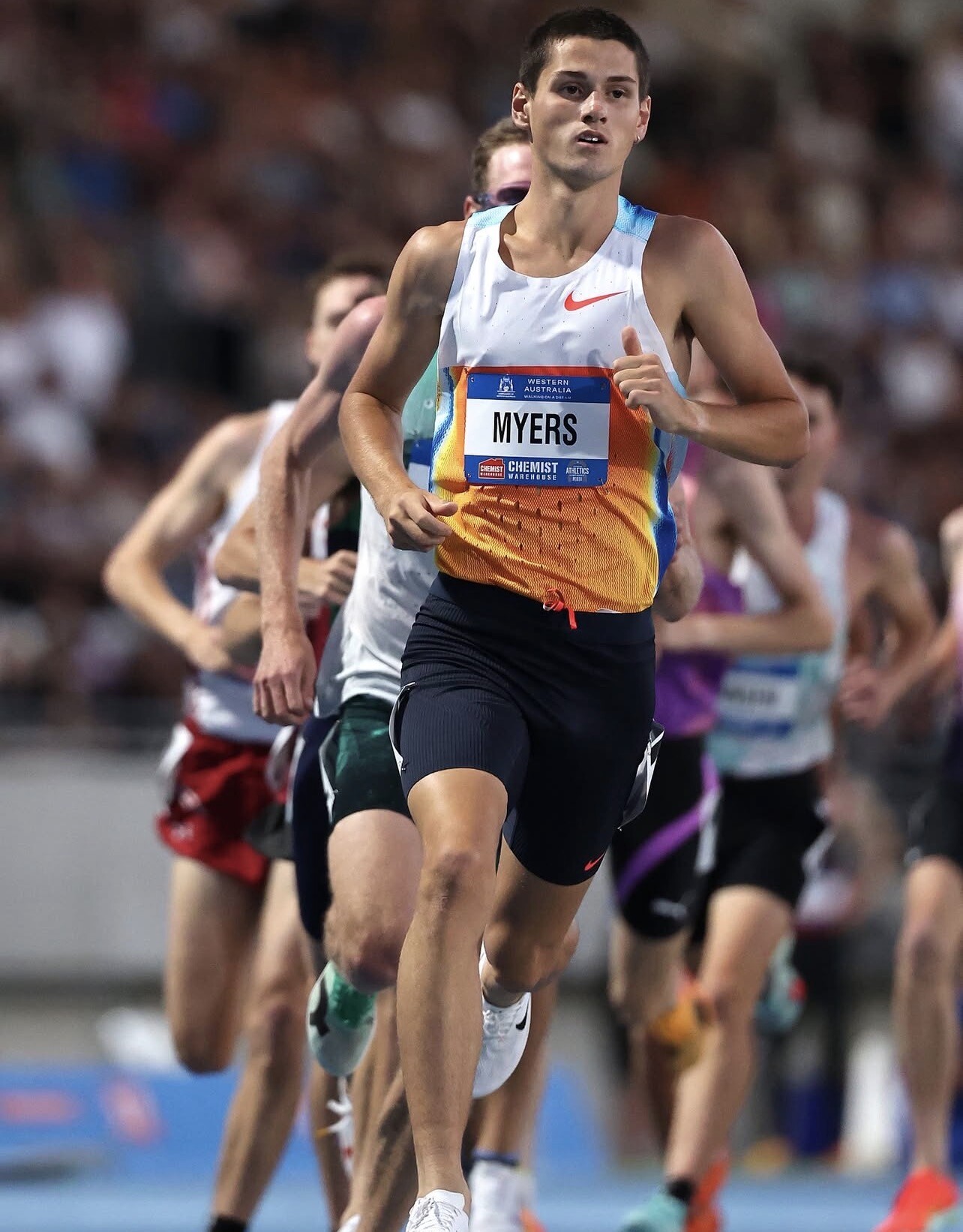
At just 19 years old, Cameron Myers has already established himself as one of the most exciting talents in global middle-distance running. He became the youngest-ever winner of the Wanamaker Mile and holds the world U20 record of 3:47.48, placing him within striking distance of the best senior athletes in history.
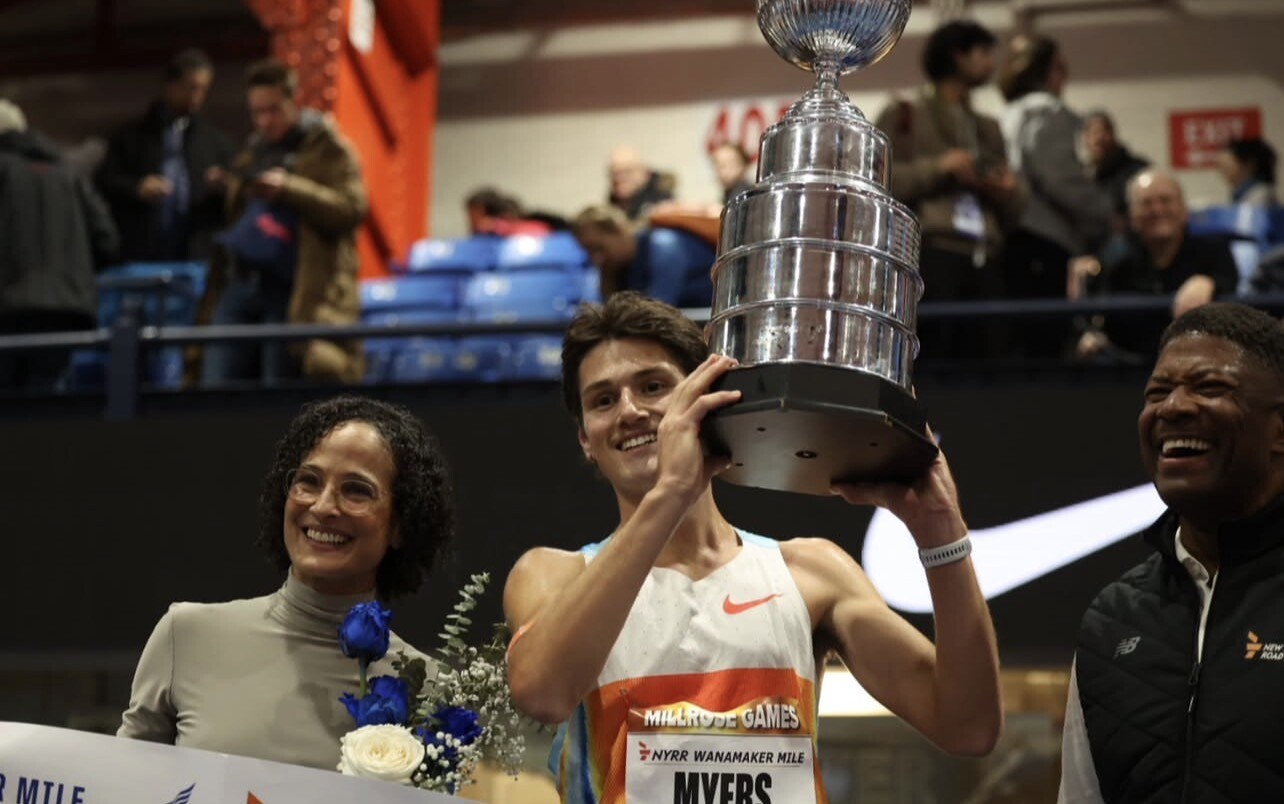
Myers has already faced Hocker three times in his career, with each meeting coming in the Bowerman Mile. Although Hocker finished ahead on those occasions, Myers continues to close the gap and arrives in 2026 with greater strength, confidence, and experience.
His aggressive racing style and fearless approach make him a serious contender—not just for a personal best, but for victory.
Sam Ruthe: Breaking Barriers at an Unprecedented Age

New Zealand’s Sam Ruthe represents the future of the mile. At just 15 years old, he broke the legendary four-minute barrier, an achievement that had once seemed impossible for an athlete so young. He now holds the world U18 best of 3:48.88, placing him among the fastest teenagers ever.
While Ruthe has not yet faced Hocker in direct competition, he has raced Myers twice, with Myers holding a 2–0 advantage. However, those encounters were not contested over the mile, leaving the Bowerman Mile as the stage for their first true test at the full distance.
Ruthe’s rapid progression suggests he is not merely participating—he is arriving as a legitimate competitor
Hayward Field: The Perfect Stage for History
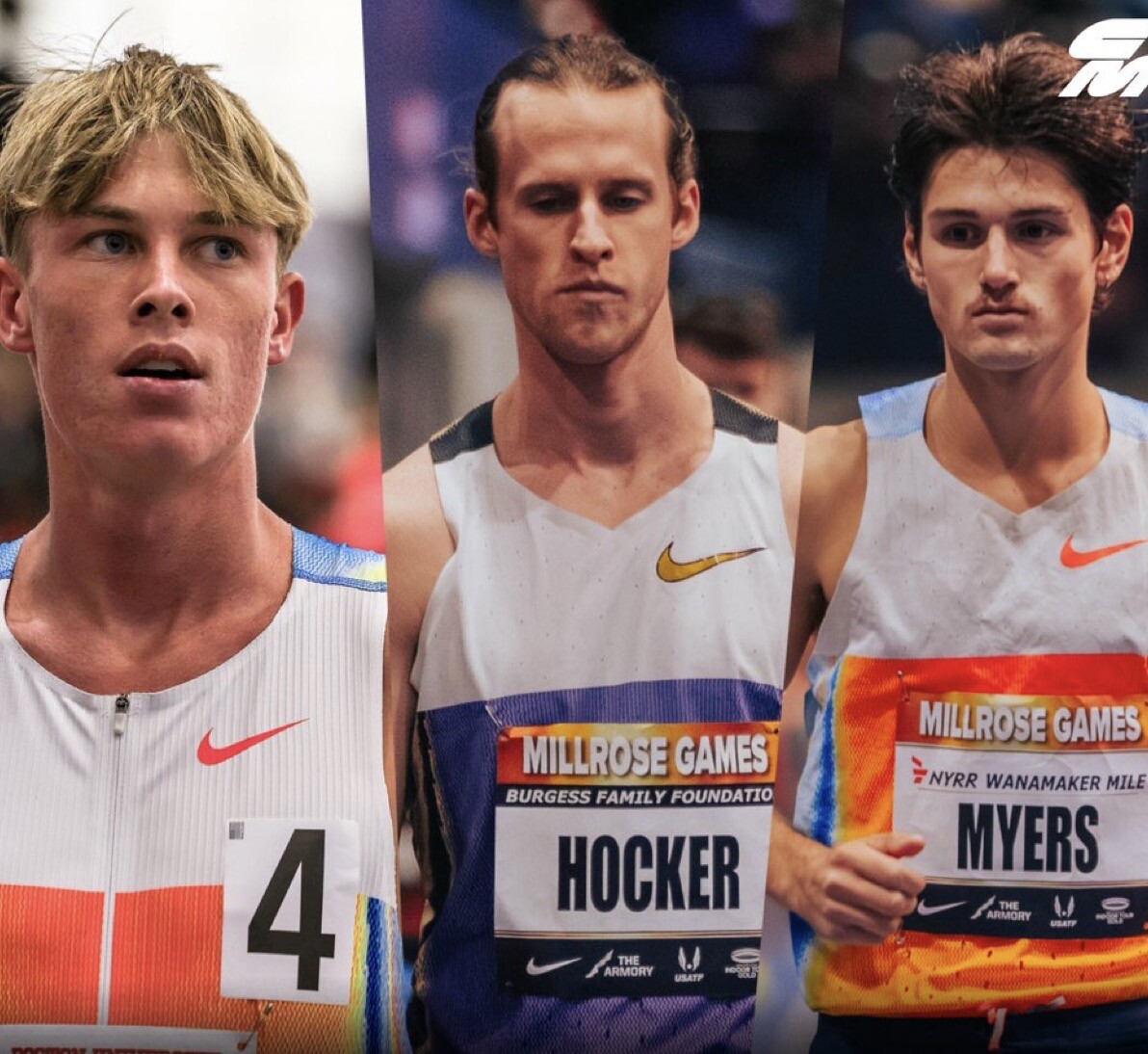
There is no better venue for this generational clash than Hayward Field. Known globally as “TrackTown USA,” Eugene’s iconic stadium has witnessed countless historic performances. The Bowerman Mile has produced some of the fastest times ever recorded, including multiple sub-3:45 performances and dramatic finishes that have defined careers.
The combination of elite pacemaking, perfect conditions, and an electrified crowd creates an environment where barriers fall and legends emerge.
A Race That Represents the Future of the Mile
The 2026 Bowerman Mile represents more than a single race—it symbolizes a passing of the torch between generations. Hocker stands as the established champion, proven on the Olympic stage. Myers represents the new wave of elite global talent already knocking on the door of greatness. Ruthe embodies the sport’s future, a teenager already performing at a level once reserved for seasoned professionals.
The convergence of these three athletes ensures that the Bowerman Mile at the 2026 Prefontaine Classic will be one of the defining races of the year—and perhaps one of the most significant mile races of the modern era.
At Hayward Field, where history has been written time and again, the mile’s next great chapter is ready to unfold.
by Boris Baron
Login to leave a comment
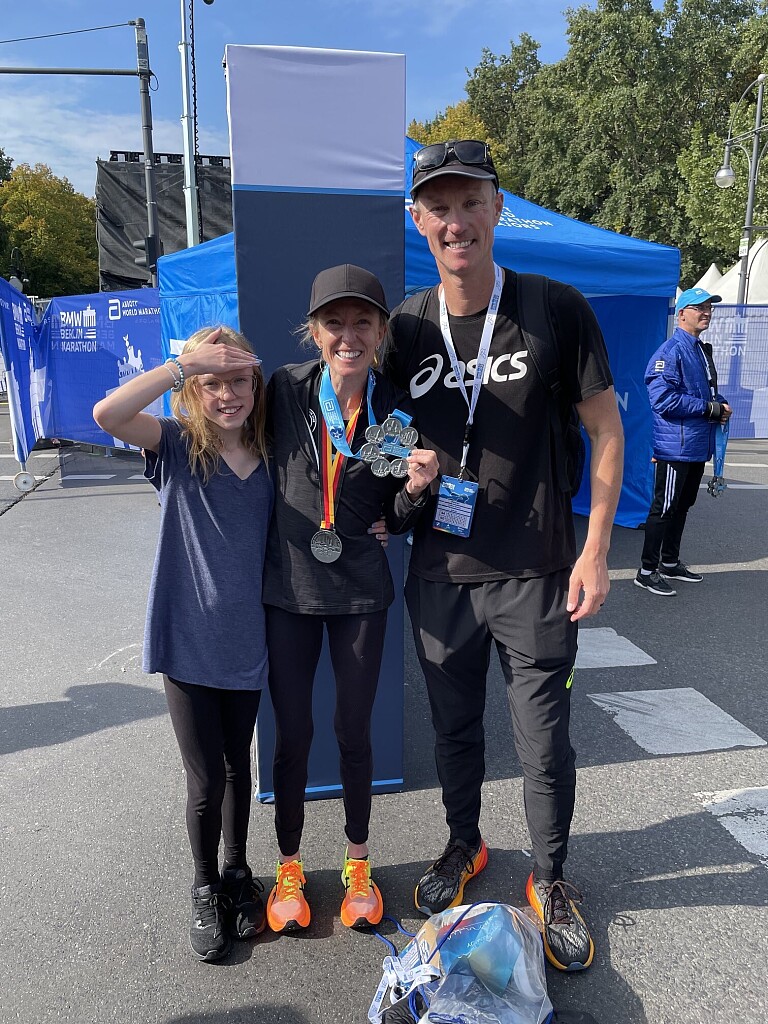
Deena Kastor: The Relentless Heart of American Distance Running
In the rich history of American distance running, few names carry the weight, respect, and lasting influence of Deena Michelle Kastor. Born on February 14, 1973, Kastor didn’t just compete—she redefined what was possible for U.S. women on the world stage, becoming one of the most celebrated and resilient athletes the nation has ever produced.
Kastor’s journey is a story of patience, belief, and fearless ambition. From the track to the roads, and ultimately to the marathon, she built a career marked by rare versatility. At one point, she held 15 American records at the same time, spanning distances from 5,000 meters to the marathon—an achievement that speaks to her extraordinary range and consistency across disciplines.
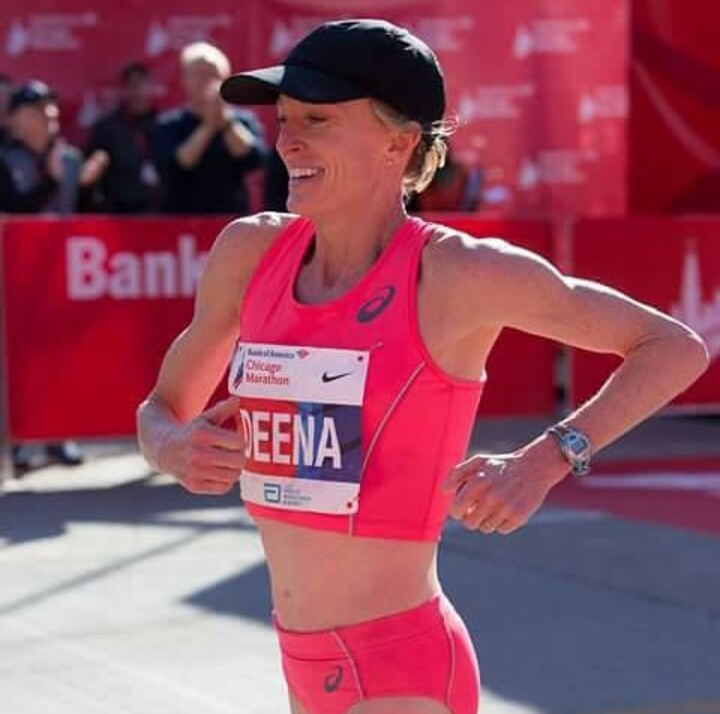
Her defining moment came at the 2004 Athens Olympic Games, where she delivered one of the most iconic performances in American distance-running history. Battling the world’s best under intense pressure, Kastor surged to claim the Olympic bronze medal in the women’s marathon, ending a long medal drought for the United States and inspiring an entire generation of runners. That race remains a benchmark of courage and competitive intelligence.
Beyond the Olympics, Kastor dominated some of the sport’s most prestigious events. She captured victories at the Chicago Marathon in 2005 and the London Marathon in 2006, a season that also saw her rise to world number one in the marathon rankings. On home soil, her dominance was unmatched—24 national titles, including eight cross-country championships, underline a career built on longevity and relentless excellence.
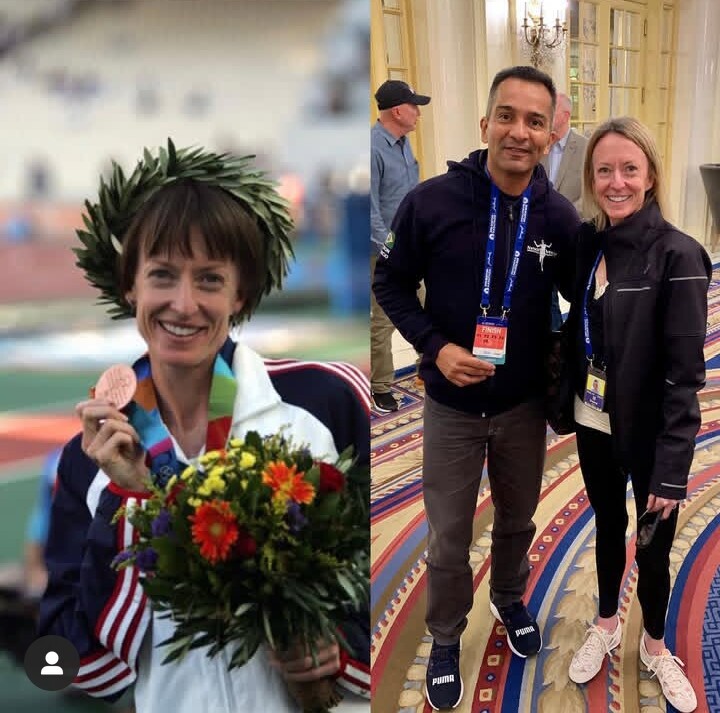
Kastor’s performances were backed by remarkable personal bests: a 2:19:36 marathon, a 1:07:34 half marathon, and sub-15-minute speed over 5,000 meters. These times reflect not only talent, but years of disciplined training and an unbreakable competitive mindset. Whether on the track, the roads, or the global championship stage, she proved she could compete with—and defeat—the very best.
Her championship résumé extends across three Olympic Games and multiple World Championships, highlighted by a fifth-place finish over 10,000 meters in Osaka and a top-ten marathon placing at the World Championships in Moscow in 2013. Even setbacks, including injury and a late-career DNF, never defined her. Instead, Kastor became known for resilience—always returning stronger, wiser, and more determined.
More than medals and records, Deena Kastor’s true legacy lies in what she represents. She is a symbol of perseverance, growth, and belief in long-term progress. Her career showed that greatness is not rushed—it is built step by step, season by season, with unwavering commitment.
Today, her impact continues to echo through American distance running. Deena Kastor didn’t just make history—she changed expectations. And in doing so, she secured her place as a true legend of the sport.
by Erick Cheruiyot for My Best Runs.
Login to leave a comment
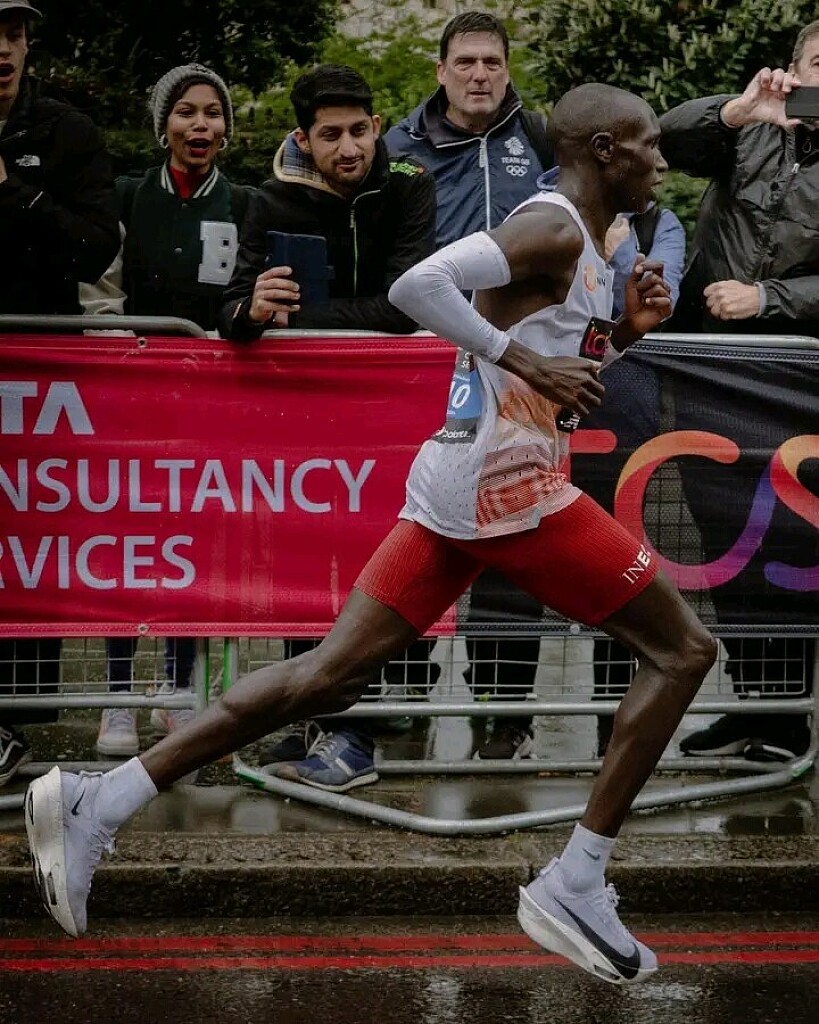
Ras Al Khaimah Awaits as Kamworor and Yeshaneh Return to the Roads That Made Them Legends
The Ras Al Khaimah Half Marathon is set to reclaim the global spotlight as two of the most accomplished distance runners of their generation prepare to headline its 19th edition on Saturday, 14 February. Kenya’s three-time world champion Geoffrey Kamworor and Ethiopia’s former women’s world record holder Ababel Yeshaneh lead a powerful elite field, returning to a race that has played a defining role in both of their careers.
For Kamworor, Ras Al Khaimah is where his rise to the very top truly began. In 2013, the then-emerging Kenyan delivered a stunning breakthrough performance, clocking 58:54 to announce himself on the world stage. More than a decade later, he returns as one of the most decorated half marathon runners in history. His achievements include three consecutive World Half Marathon titles, two World Cross Country crowns, and marathon victories at the New York City Marathon in 2017 and 2019. His 58:01 world record set in Copenhagen in 2019 still places him among the fastest men ever over 21.1 kilometers and makes him the quickest athlete on the 2026 Ras Al Khaimah start list.
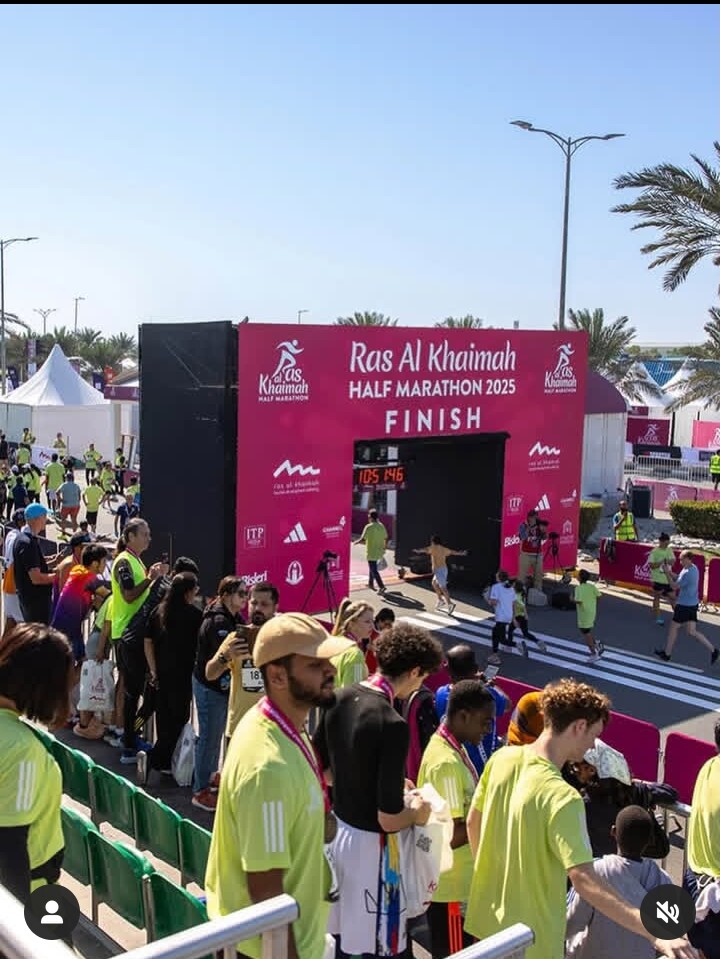
Matching that pedigree on the women’s side is Ababel Yeshaneh, whose name is forever woven into the fabric of this event. Her extraordinary run of 64:31 in 2020 did more than secure victory—it redefined what was thought possible in the women’s half marathon, lowering the world record by 20 seconds against a field of proven champions. That performance remains one of the most iconic moments in the history of the race.
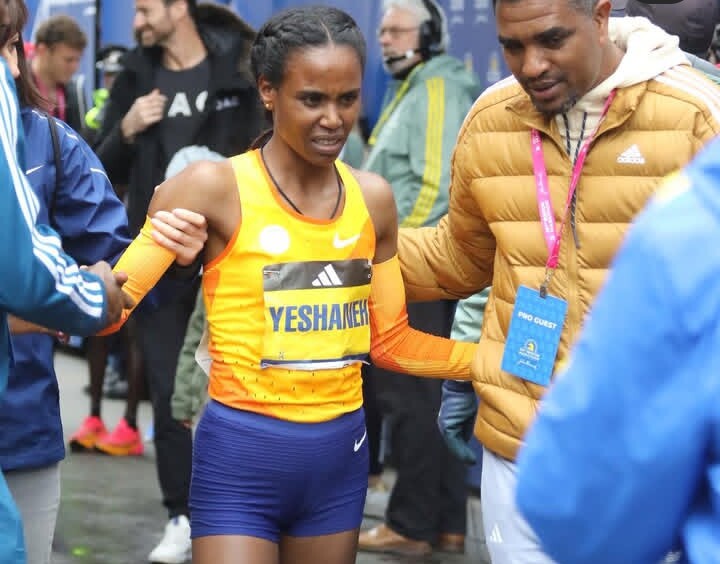
Yeshaneh’s career has been built on consistency and excellence across both track and road. She emerged internationally as a teenager before finishing ninth in the 10,000 meters at the 2013 World Championships in Moscow and competing in the Olympic 5,000 meters final in Rio in 2016. Away from the track, she has claimed half marathon victories in Istanbul and Buenos Aires and earned podium finishes at major city marathons in Boston, Chicago, and New York. Her more recent appearances in Ras Al Khaimah have added further depth to her story, from a non-finish in 2022 to a strong return in 2024, where she placed second in a fast 65:44.
Since its launch in 2007, the Ras Al Khaimah Half Marathon has grown into one of the most respected and fastest races on the global road-running calendar. Its flat, sea-level course and consistently favorable conditions have made it a magnet for the world’s best distance runners, a place where careers are launched, records are challenged, and history is often rewritten. The 2026 edition, once again staged entirely on Al Marjan Island, reinforces the event’s identity as a true proving ground for speed and excellence.
With Geoffrey Kamworor and Ababel Yeshaneh returning to the roads where defining moments of their careers were forged, the 2026 Ras Al Khaimah Half Marathon stands poised for another chapter of elite racing at its highest level. When proven champions and a course built for speed come together, the outcome is never ordinary. On these familiar shores, the world will once again watch as history, ambition, and excellence converge over 21.1 kilometers.
by Erick Cheruiyot for My Best Runs.
Login to leave a comment

Rak Half Marathon
The Rak Al Khaimah Half Marathon is the 'world's fastest half marathon' because if you take the top 10 fastest times recorded in RAK for men (and the same for women) and find the average (for each) and then do the same with the top ten fastest recorded times across all races (you can reference the IAAF for this), the...
more...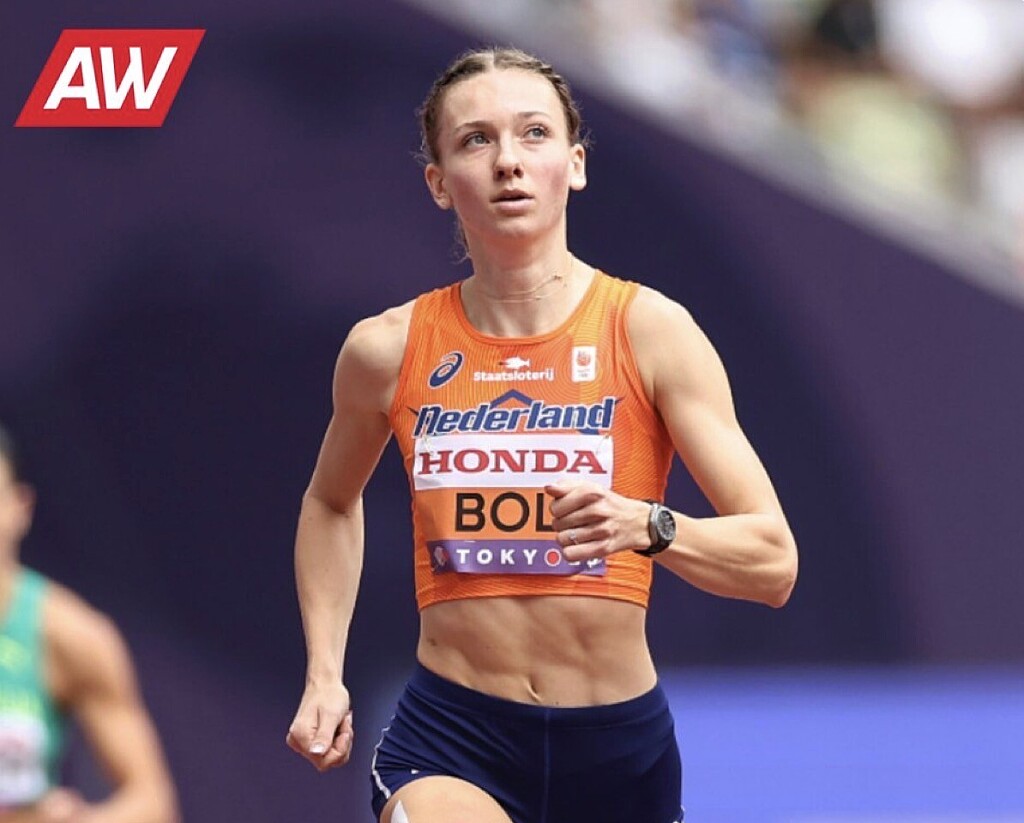
Metz Indoors 2026: Ethiopian Sweep in 3000 m, Femke Bol Breaks Dutch Record in 800 m
METZ, France — February 8, 2026 — The Metz Indoors meeting delivered an early-season showcase of world-class middle-distance running, highlighted by a commanding Ethiopian sweep in the women’s 3000 meters and a national record performance by Dutch star Femke Bol in the 800 meters.
From the opening laps of the 3000 m, Ethiopia’s Birtukan Molla and Shito Gumi asserted control, setting a confident tempo and quickly separating themselves from the field. Gumi led the early stages with a brisk 2:51 opening kilometer, ensuring the race would be decided by strength as well as tactics. A lead pack formed that included fellow Ethiopian Aster Areri and Canada’s Lucia Stafford, while the rest of the field struggled to maintain contact.
Molla remained composed throughout, running efficiently just behind Gumi and conserving energy for the decisive final laps. As the race entered its closing stages, Stafford made a determined attempt to challenge, but the Ethiopian trio responded with authority.
With 300 meters remaining, Molla surged past Gumi and powered down the final straight to secure victory in 8:40.49. Gumi followed in 8:41.18, and Areri completed the sweep in 8:41.75, underlining Ethiopia’s remarkable depth in women’s distance running. Stafford ran a strong race to finish fourth in 8:42.87, narrowly missing the podium in one of the fastest indoor 3000 m races of the season.
The women’s 800 m provided another highlight of the evening, as Femke Bol demonstrated her range and speed beyond her traditional specialty. Best known as one of the world’s dominant 400 m hurdlers, Bol delivered a breakthrough performance over two laps, winning convincingly in 1:59.07 and setting a new Dutch national record.
Switzerland’s Valentina Rosamilia and Lore Hoffman ran outstanding races, both breaking two minutes with times of 1:59.90 and 1:59.91 respectively, but Bol’s smooth stride and decisive finishing strength proved untouchable. Germany’s Smilla Kolbe and Italy’s Marta Zenoni followed, but the margin reflected Bol’s complete control over the race.
The Metz Indoors meeting continues to establish itself as a key stop on the international indoor circuit, offering athletes the opportunity to test their fitness and set the tone for the season ahead. Ethiopia’s continued dominance in the longer distances and Bol’s emergence as a national-record holder in the 800 m signal that the 2026 indoor season will feature exceptional depth and compelling performances across events.
Women’s 3000 m – Official Results
1. Birtukan Molla (ETH) – 8:40.49
2. Shito Gumi (ETH) – 8:41.18
3. Aster Areri (ETH) – 8:41.75
4. Lucia Stafford (CAN) – 8:42.87
5. Revee Walcott-Nolan (GBR) – 8:49.08 PB
6. Betelhem Olana (ETH) – 8:49.37
7. Cari Hughes (GBR) – 8:57.47
8. Eline Dalemans (BEL) – 8:57.62
9. Veerle Bakker (NED) – 8:58.03 PB
10. Sofia Thogersen (DEN) – 8:58.58
11. Vera Bertemes-Hoffmann (LUX) – 9:04.66 NR
12. Adelle Tracey (JAM) – 9:05.09
Women’s 800 m – Official Results
1. Femke Bol (NED) – 1:59.07 NR
2. Valentina Rosamilia (SUI) – 1:59.90 PB
3. Lore Hoffman (SUI) – 1:59.91 PB
4. Smilla Kolbe (GER) – 2:01.75
5. Marta Zenoni (ITA) – 2:05.35
by Robert Kibet
Login to leave a comment
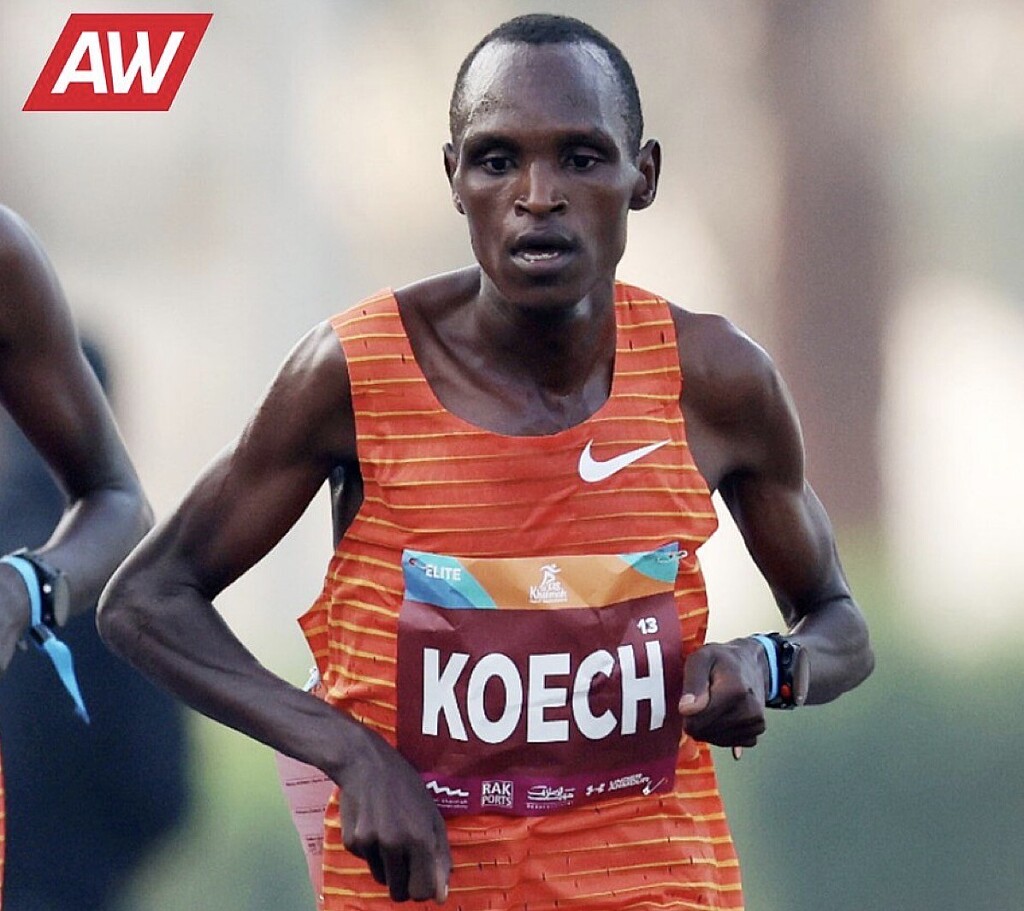
Bernard Kibet Koech Banned for Four Years as AIU Disqualifies Paris Olympic Result
Kenyan distance runner Bernard Kibet Koech has been handed a four-year ban and disqualified by the Athletics Integrity Unit (AIU) after abnormalities were detected in his Athlete Biological Passport (ABP).
The sanction takes effect from June 10, 2025, and runs through June 9, 2029. As part of the ruling, Koech’s result from the Paris 2024 Olympic Games men’s 10,000 meters—where he finished fifth—has been officially disqualified.
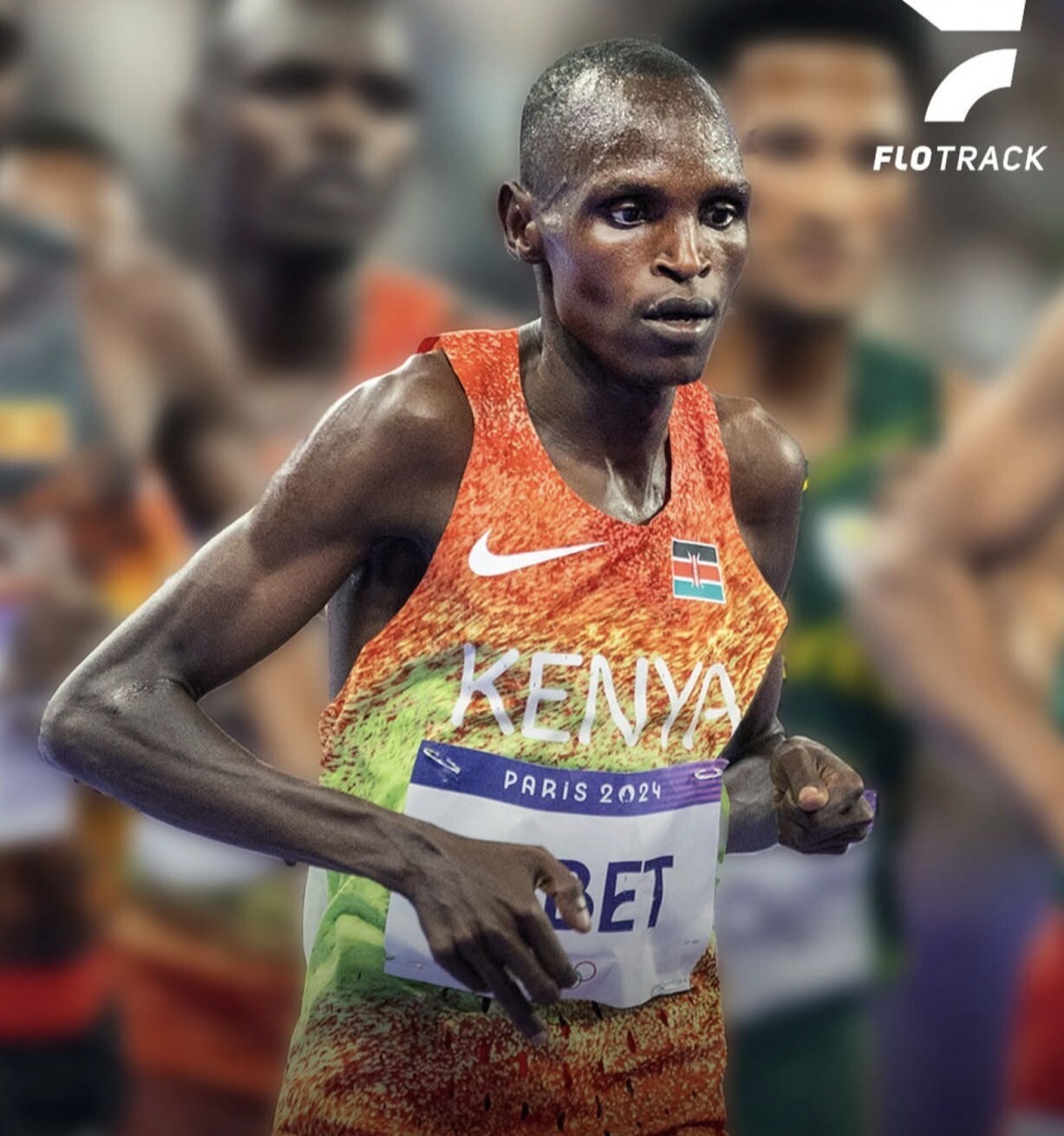
ABP Abnormalities Trigger Sanction
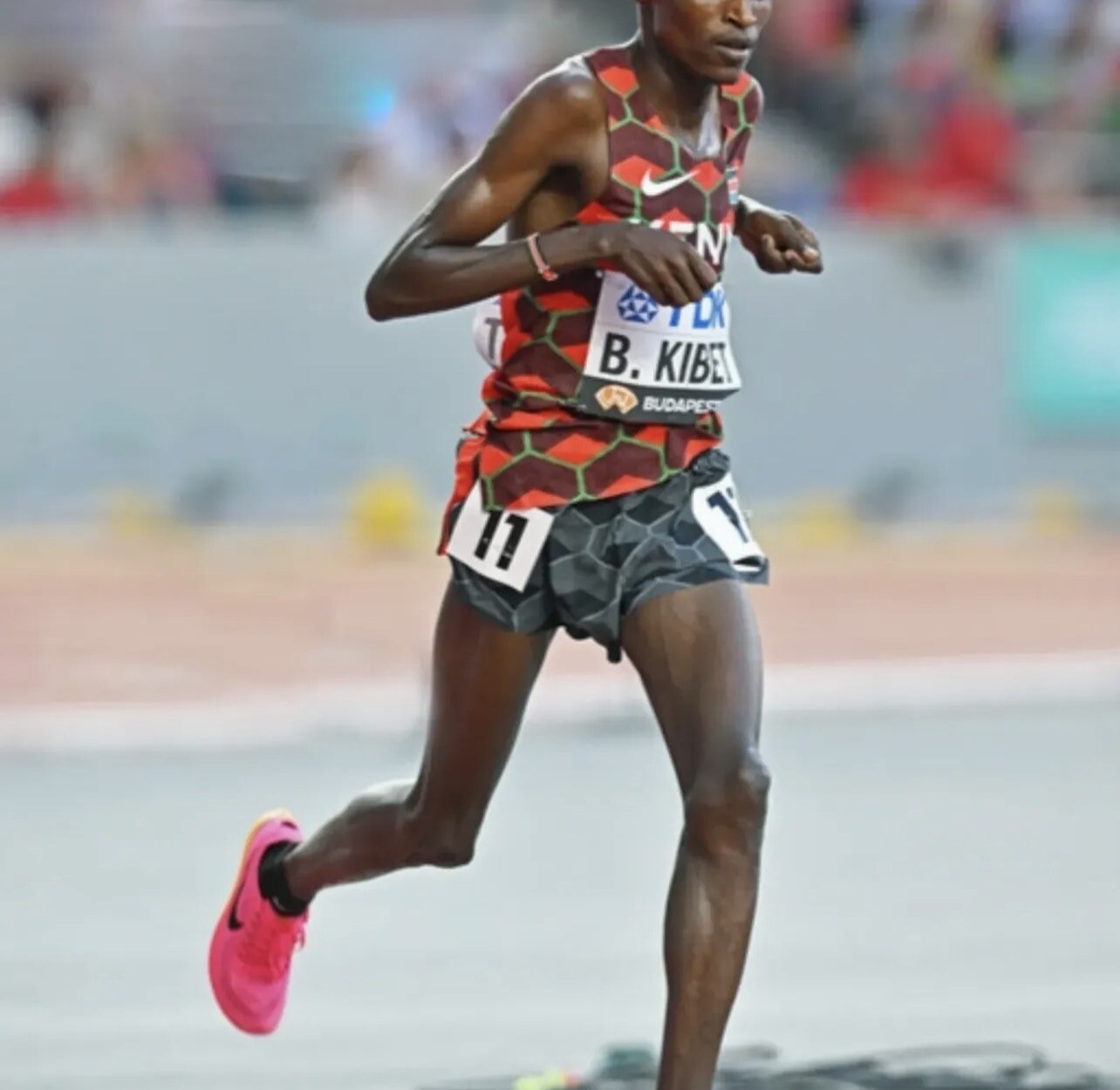
According to the AIU, the case was built on irregularities identified in Koech’s Athlete Biological Passport, a long-term monitoring system designed to track biological markers over time rather than rely on a single positive test. The ABP framework has become a central tool in modern anti-doping enforcement, particularly in endurance events, where performance-enhancing methods may not always be detected through traditional testing.
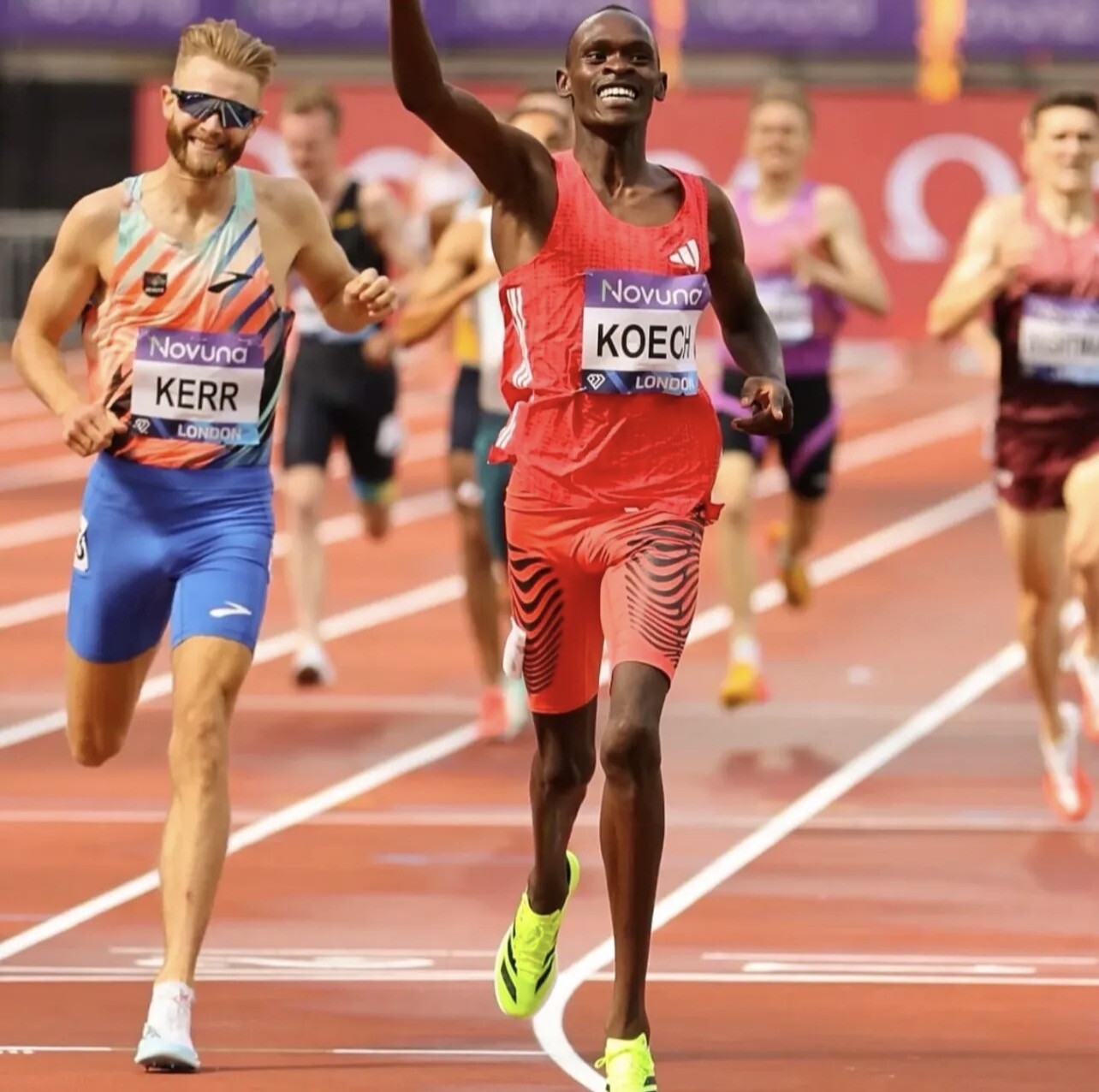
The AIU did not cite a specific prohibited substance but concluded that the longitudinal data showed patterns inconsistent with normal physiology, meeting the threshold required for a violation under World Athletics’ anti-doping rules.
Olympic Impact
Koech’s fifth-place finish in Paris had stood as one of Kenya’s strong performances in the men’s 10,000 meters at the Games. With the disqualification now confirmed, the Olympic results will be adjusted accordingly, and athletes finishing behind him are expected to move up in the official standings.
A Broader Context for Distance Running
The ruling adds to a growing list of high-profile ABP cases in distance running and underscores the continued scrutiny placed on elite endurance athletes. For World Athletics and the AIU, the emphasis remains on protecting clean competitors and maintaining confidence in championship results, particularly at the Olympic level.
For Kenya—long a global powerhouse in distance running—the case represents another reminder of the ongoing challenges facing the sport, even as the country continues to produce extraordinary talent.
What Comes Next
Koech is ineligible to compete in any World Athletics-sanctioned events during the four-year ban period. Any results recorded after June 10, 2025, are subject to annulment under anti-doping regulations.
As with all ABP-based rulings, the decision reflects a process that unfolds over time, relying on accumulated data rather than a single race or test. The AIU’s announcement brings closure to that process—and a significant rewrite of the Paris 2024 men’s 10,000-meter final.
by Boris Baron
Login to leave a comment
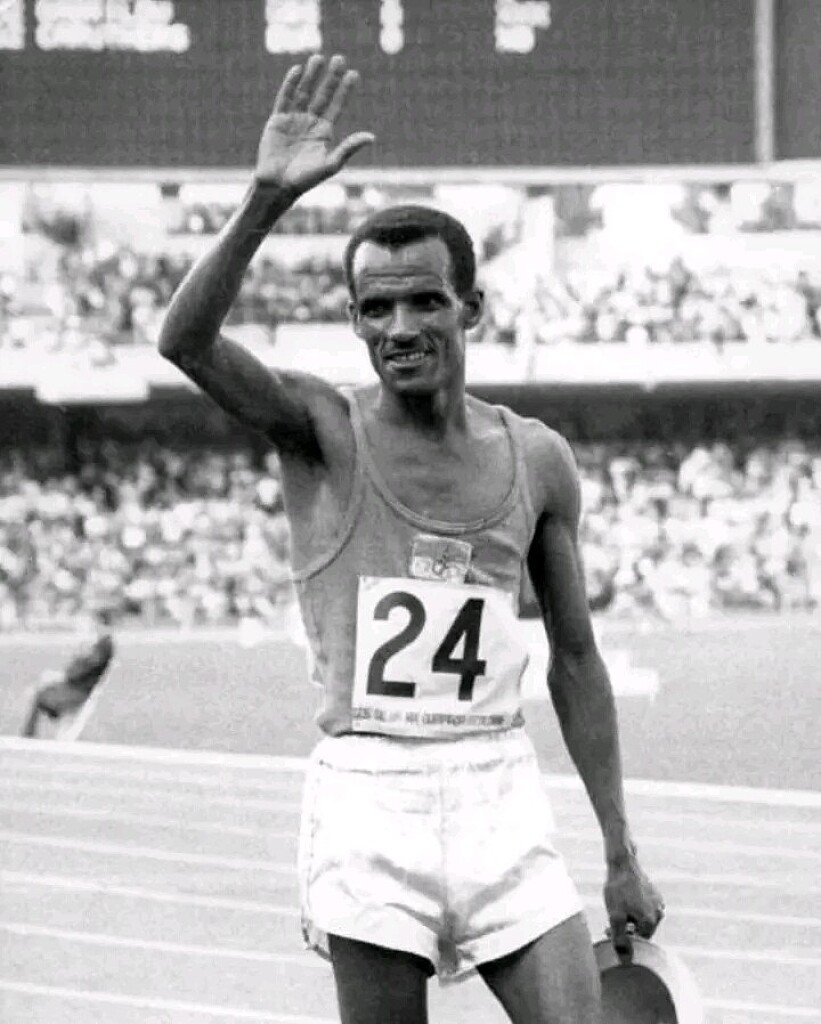
Degaga “Mamo” Wolde: The Marathoner Who Carried Ethiopia to Olympic Immortality
Long before Ethiopian distance running became a global empire, there was a man who first showed the world what the green, yellow, and red could achieve on the biggest stage of all. Degaga “Mamo” Wolde was not just an athlete; he was a pathfinder, a symbol of endurance, and a quiet force who reshaped how the world viewed Ethiopian athletics.
Born on June 12, 1932, Wolde emerged in an era when global recognition for African runners was still rare. His journey was built on patience and range, developing from middle-distance races into the most demanding events on the track and road. That versatility became his trademark. From the 800 meters to the marathon, Wolde demonstrated an uncommon ability to adapt, endure, and excel, steadily sharpening his craft across decades of competition.
The defining chapter of his legacy unfolded at the 1968 Olympic Games in Mexico City. Battling altitude, pressure, and the weight of national expectation, Wolde delivered a performance that would echo through history. He stormed to Olympic gold in the marathon, running with authority and composure to claim one of Ethiopia’s most iconic sporting triumphs. As if that were not enough, he doubled back onto the track to secure a silver medal in the 10,000 meters, underlining his extraordinary endurance and competitive spirit. In a single Olympic Games, Wolde cemented himself among the greatest all-round distance runners the sport has ever seen.
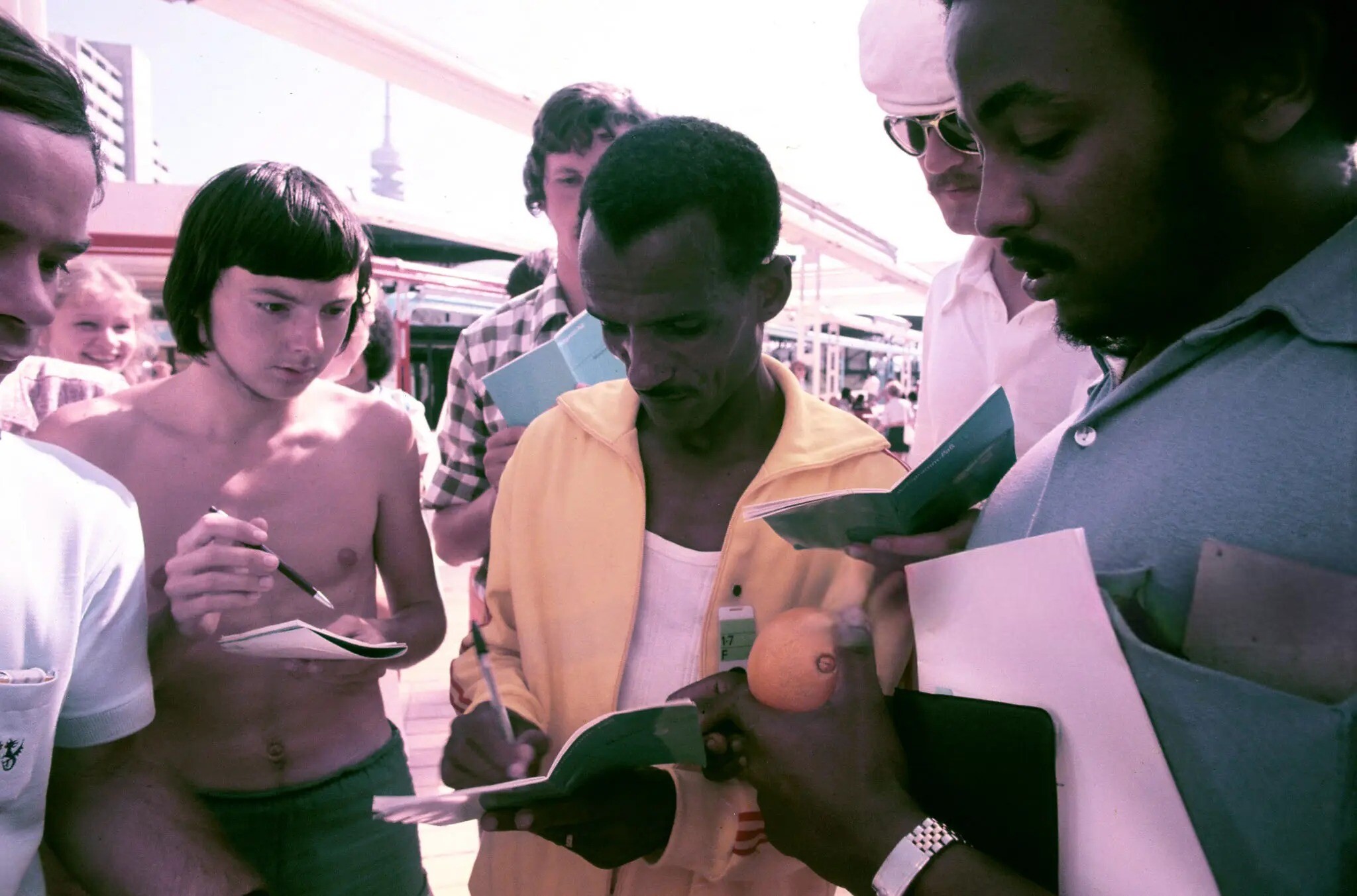
His excellence did not fade with time. Four years later, at the 1972 Munich Olympic Games, Wolde once again stood on the podium, earning a bronze medal in the marathon. It was a powerful statement of longevity, proof that his success was not a moment of brilliance but the result of sustained discipline and resilience. Across his career, his personal bests told the same story—speed over 800 meters, tactical strength in the 1500 and 5000 meters, grit in the 10,000 meters, and supreme stamina over the marathon distance.
Yet Wolde’s impact reaches far beyond medals and times. He laid the foundation for Ethiopia’s distance-running tradition, inspiring generations who would follow his footsteps onto global podiums. Every Ethiopian marathon victory since carries a trace of his pioneering spirit. He showed that athletes from the Horn of Africa could dominate not just one event, but the entire spectrum of endurance racing.
When Degaga “Mamo” Wolde passed away on May 26, 2002, Ethiopia lost a national hero—but his legacy did not leave with him. It lives on in every long stride taken by Ethiopian runners across the world, in every championship won, and in every young athlete who dares to believe that greatness can rise from humble beginnings.
Mamo Wolde did more than win races. He carried a nation’s pride across finish lines, turning belief into history and endurance into legacy.
by Erick Cheruiyot for My Best Runs.
Login to leave a comment
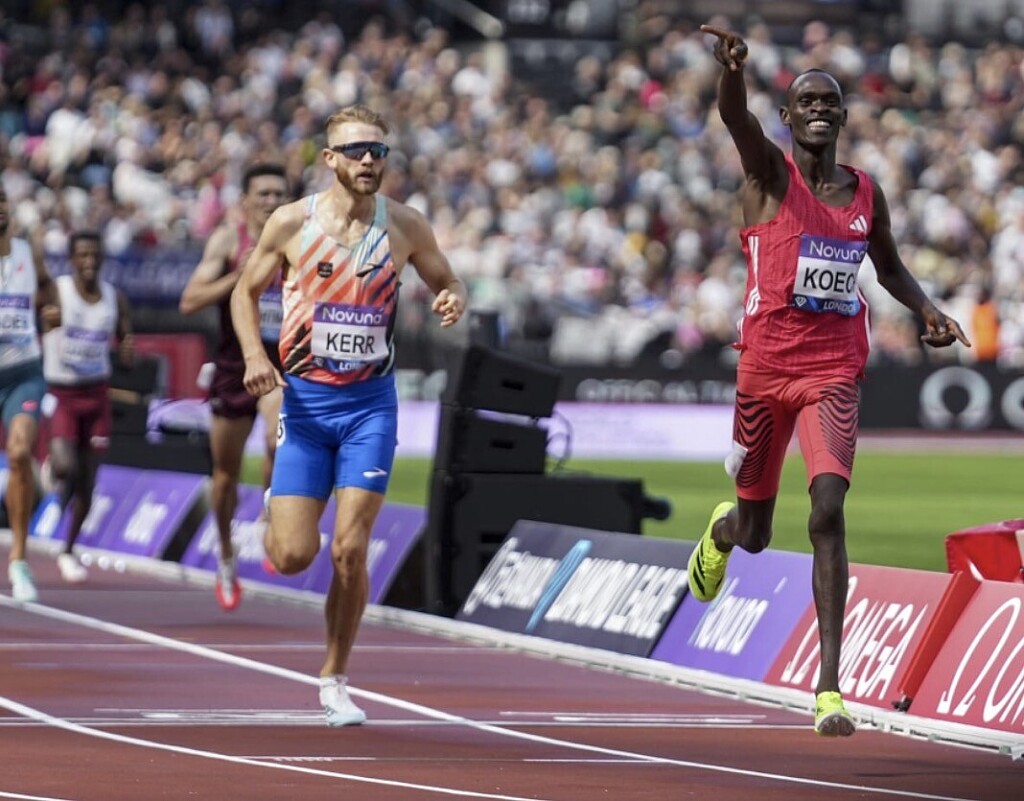
World Athletics Confirms Triple Dose of History as Three World Records Are Ratified Across Three Continents
World Athletics has officially ratified three extraordinary world records, confirming a rare and remarkable stretch of performances that unfolded across three continents in just days — a powerful reminder that the limits of human endurance and speed continue to move forward, fast.
From Boston to Paris to Sydney, the sport delivered a global showcase of excellence, youth, and precision.
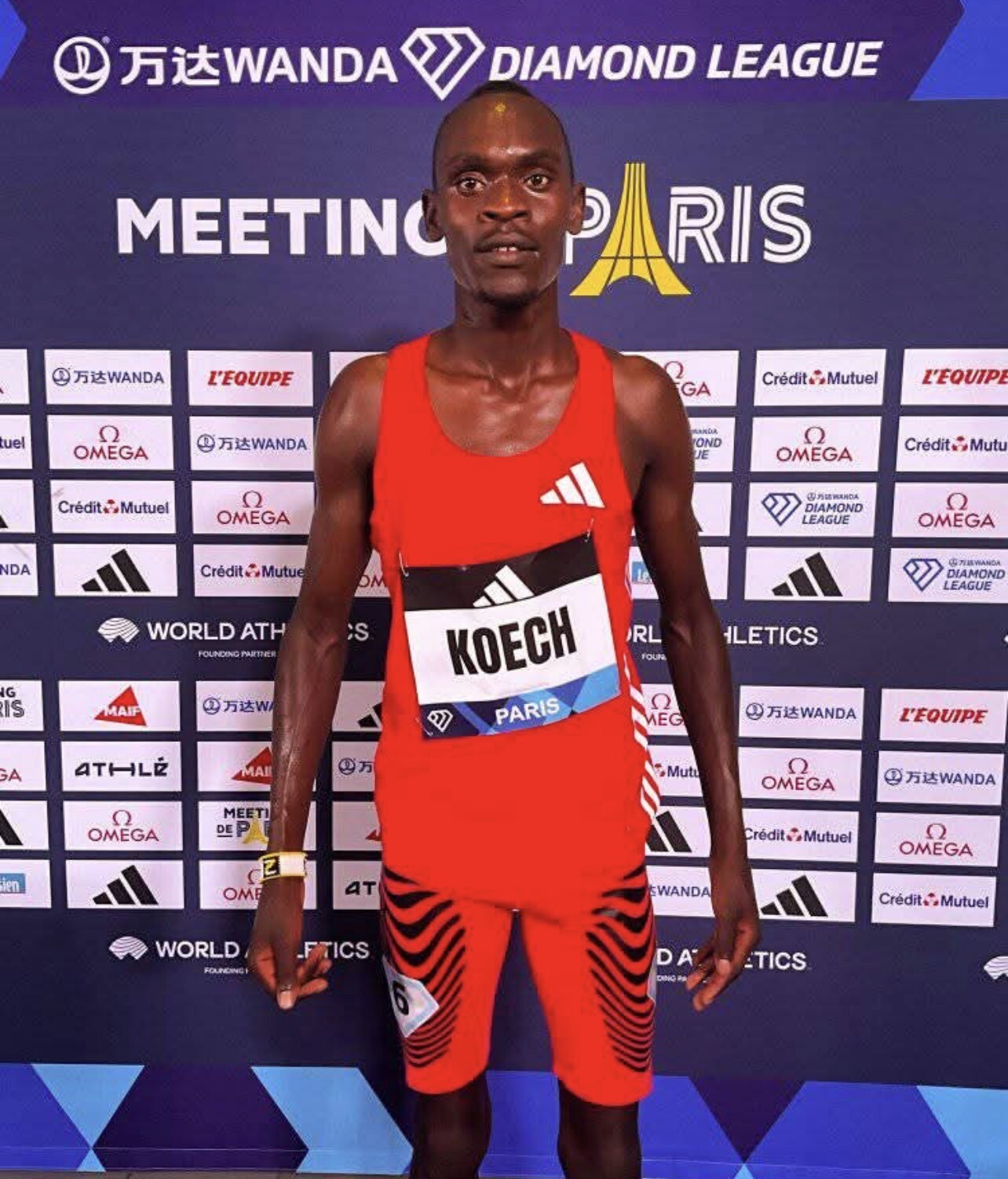
The surge began indoors in Boston.
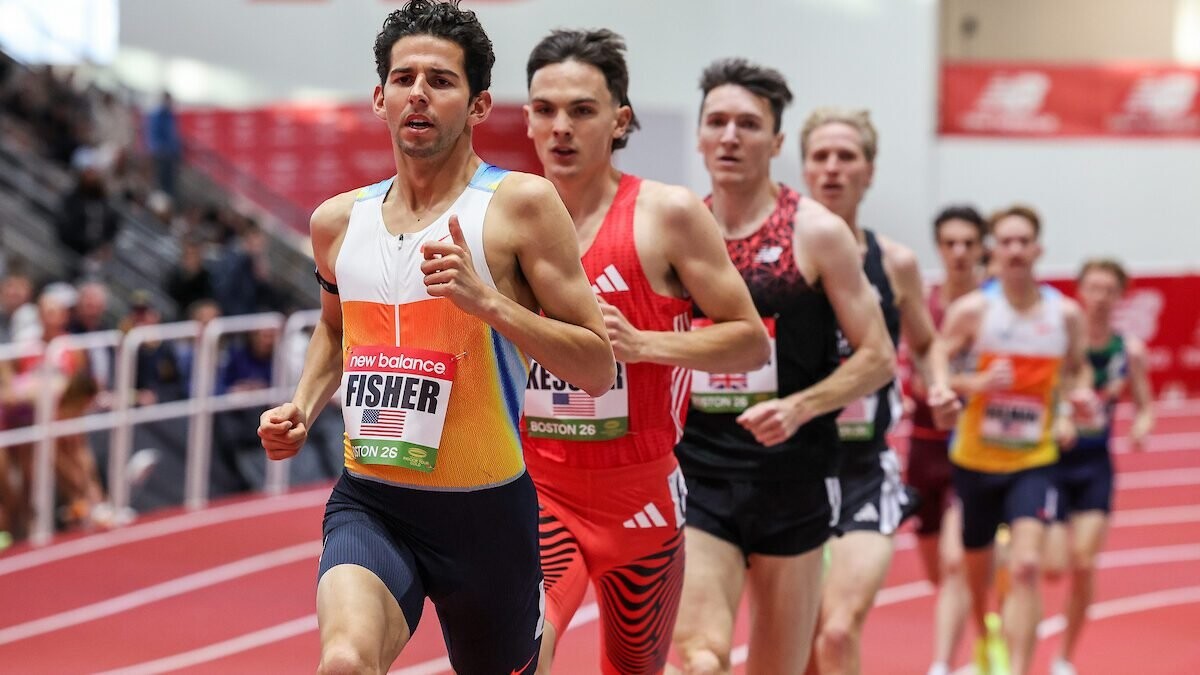
At the BU David Hemery Valentine International, American distance standout Grant Fisher produced one of the most commanding performances of the indoor season, storming to 12:44.09 for 5000 meters on the short track. The time erased a world record that had stood for more than two decades.
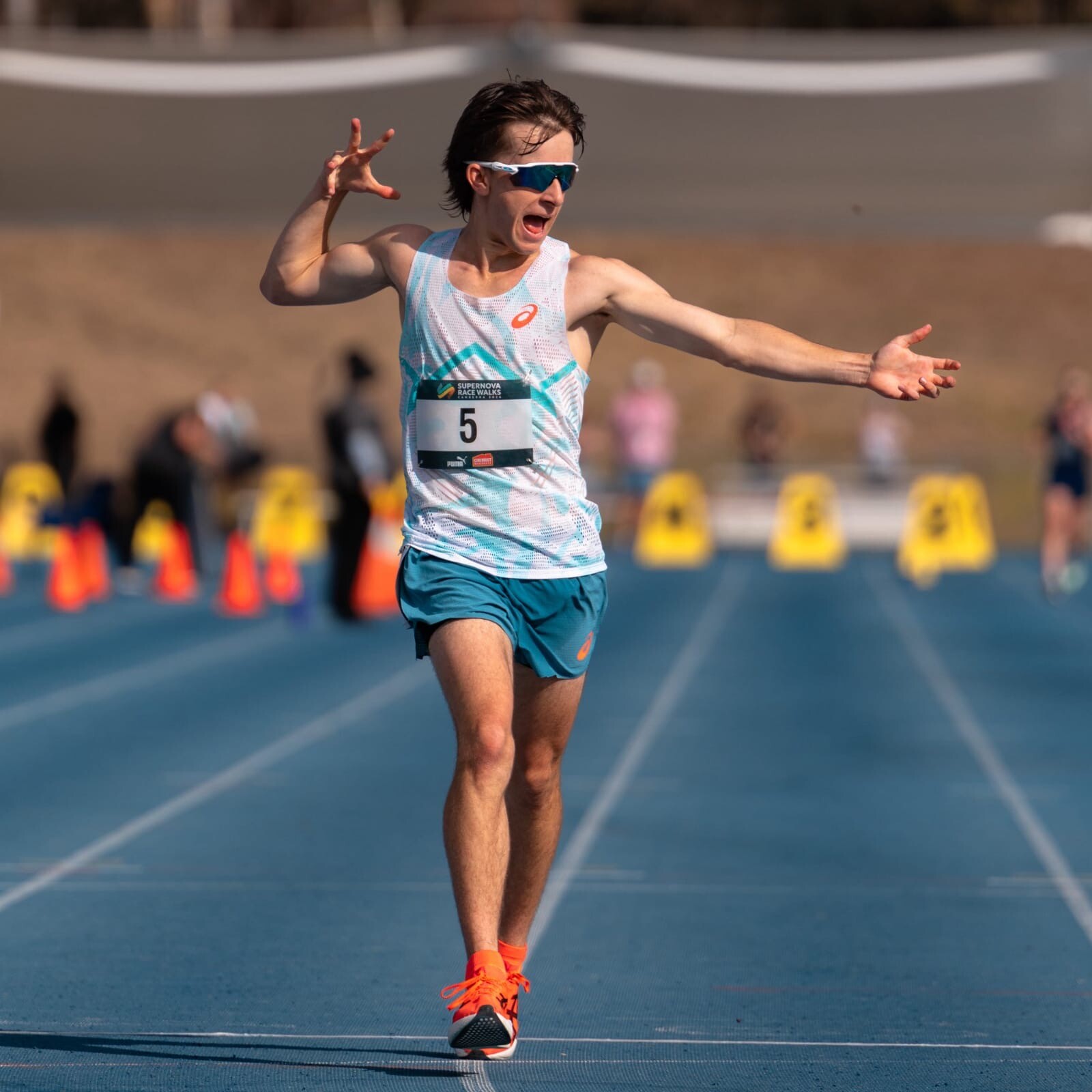
Fisher’s run was a study in rhythm and confidence. Calm through the early kilometers, he unleashed a devastating final lap that left no doubt. Coming just days after setting another world record at 3000 meters, the double breakthrough firmly establishes him as one of the defining distance runners of this generation.
Then the spotlight shifted to Paris — and to youth.
At the Meeting de Paris, Kenyan teenager Phanuel Koech announced himself on the world stage in unforgettable fashion. Though he crossed the line second in the Diamond League 1500 meters, the clock told the real story: 3:27.72.
That mark is now ratified as the men’s U20 world record.
More than an age-group milestone, it places Koech among the fastest 1500-meter runners in history — period. His composure, speed, and fearlessness against seasoned professionals signaled that Kenya’s next great middle-distance star has already arrived.
The journey concluded in Sydney, where patience and precision ruled the day.
Australia’s Isaac Beacroft, already a World U20 champion, delivered a masterclass at the NSW 10,000m Walk Championships. His time of 38:02.68 shattered a 25-year-old record in the men’s U20 10,000-meter race walk.
Race walking demands relentless discipline, perfect technique, and endurance under constant scrutiny. Beacroft handled it all with remarkable maturity, reinforcing his status as one of the brightest young talents in the discipline worldwide.
Taken together, these records represent more than just numbers on a results sheet.
They reflect the full spectrum of athletics — the raw power of distance running, the elegance of middle-distance speed, and the technical mastery of race walking. Different events, different continents, one shared message:
The next generation isn’t waiting its turn.
It’s already rewriting history.
With official ratification now complete, the marks are etched into the record books. And if this week proved anything, it’s that the sport’s future isn’t coming — it’s here.
by Erick Cheruiyot for My Best Runs.
Login to leave a comment
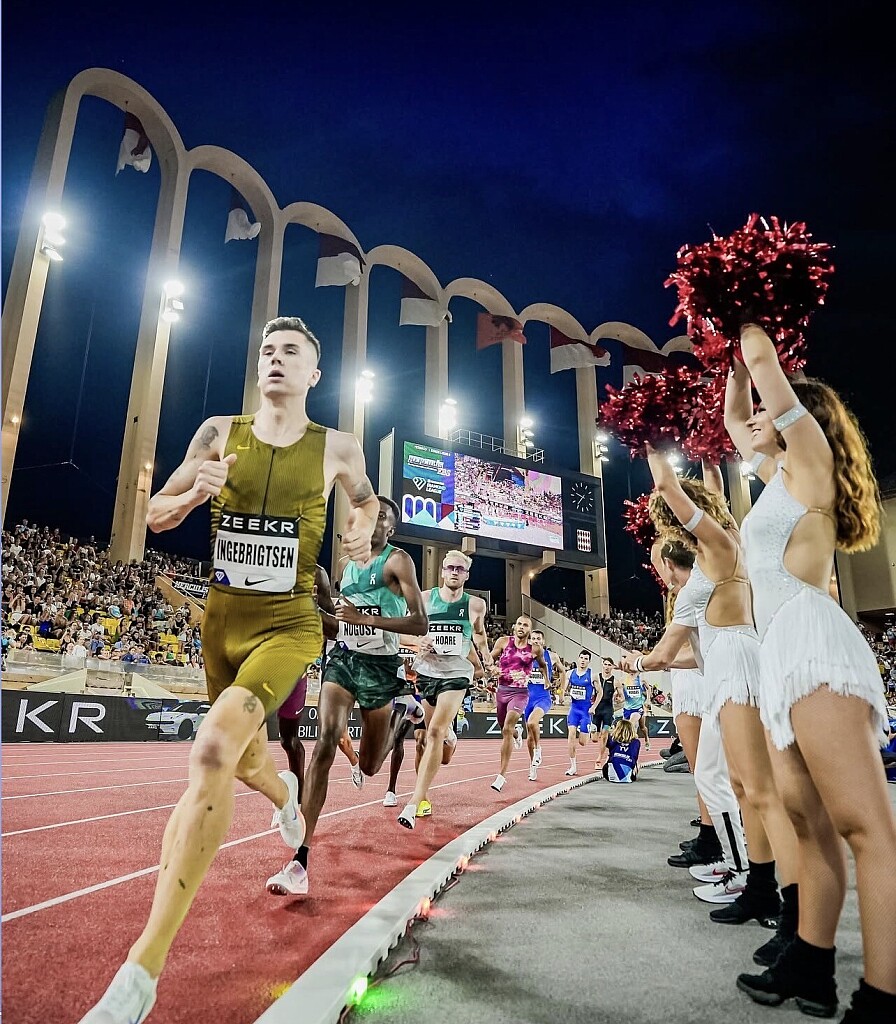
Jakob Ingebrigtsen Sets Sights on Double Gold and World Records in 2026
Jakob Ingebrigtsen is not one for vague ambition. As the 2026 track season approaches, the Norwegian distance star has outlined his goals with the clarity and confidence that have come to define his career: double gold at the European Championships, a Diamond League Final victory, and at least one serious world record attempt—across three of the sport’s most iconic distances.
“My goals are to get double gold at the European Championships, a Diamond League Final victory, and to make one good world record attempt in the 1500m, the mile and also the 5,000m,” Ingebrigtsen said in an interview with The Guardian.
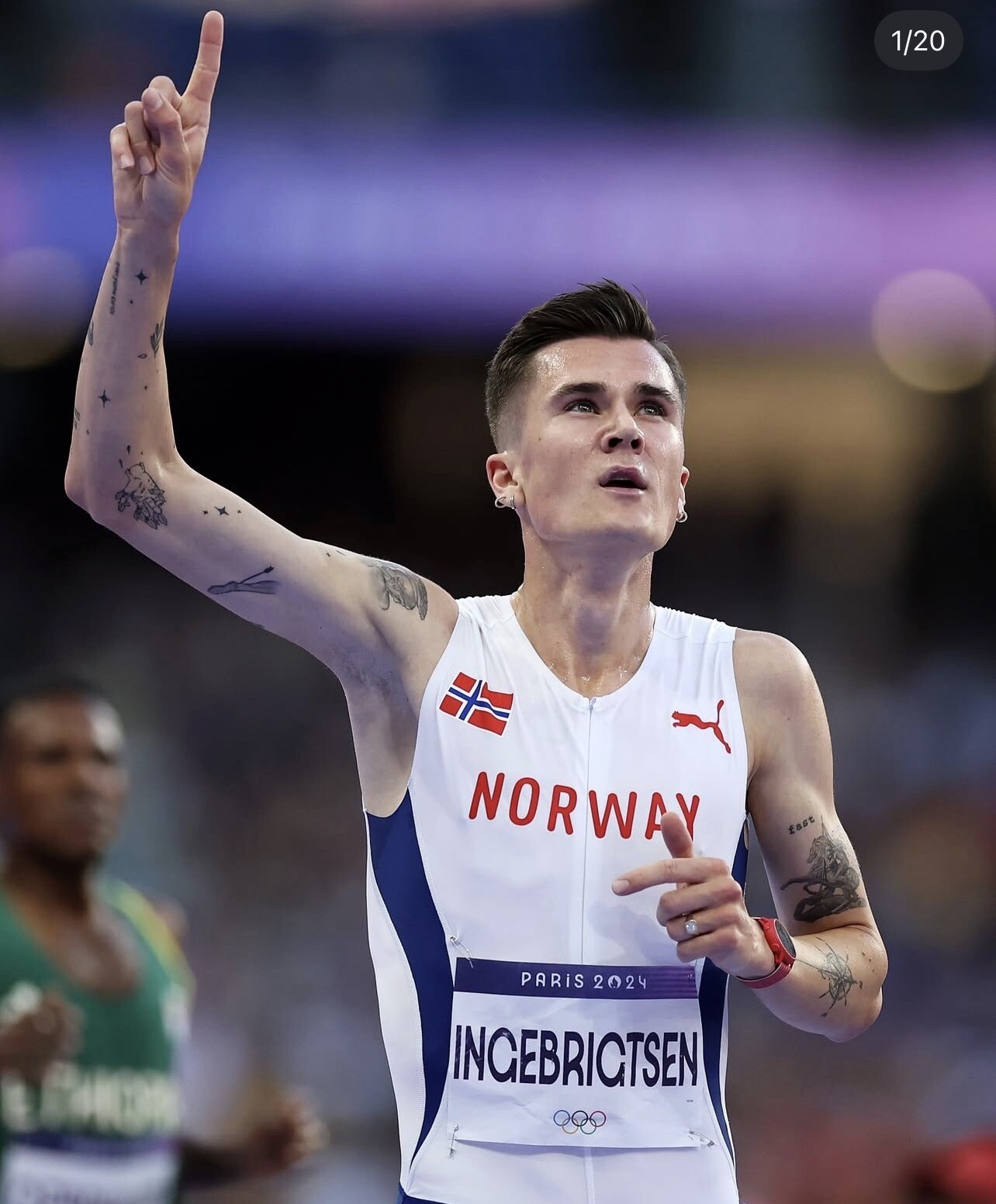
For most athletes, that list would span an entire career. For Ingebrigtsen, it reads more like a checklist.
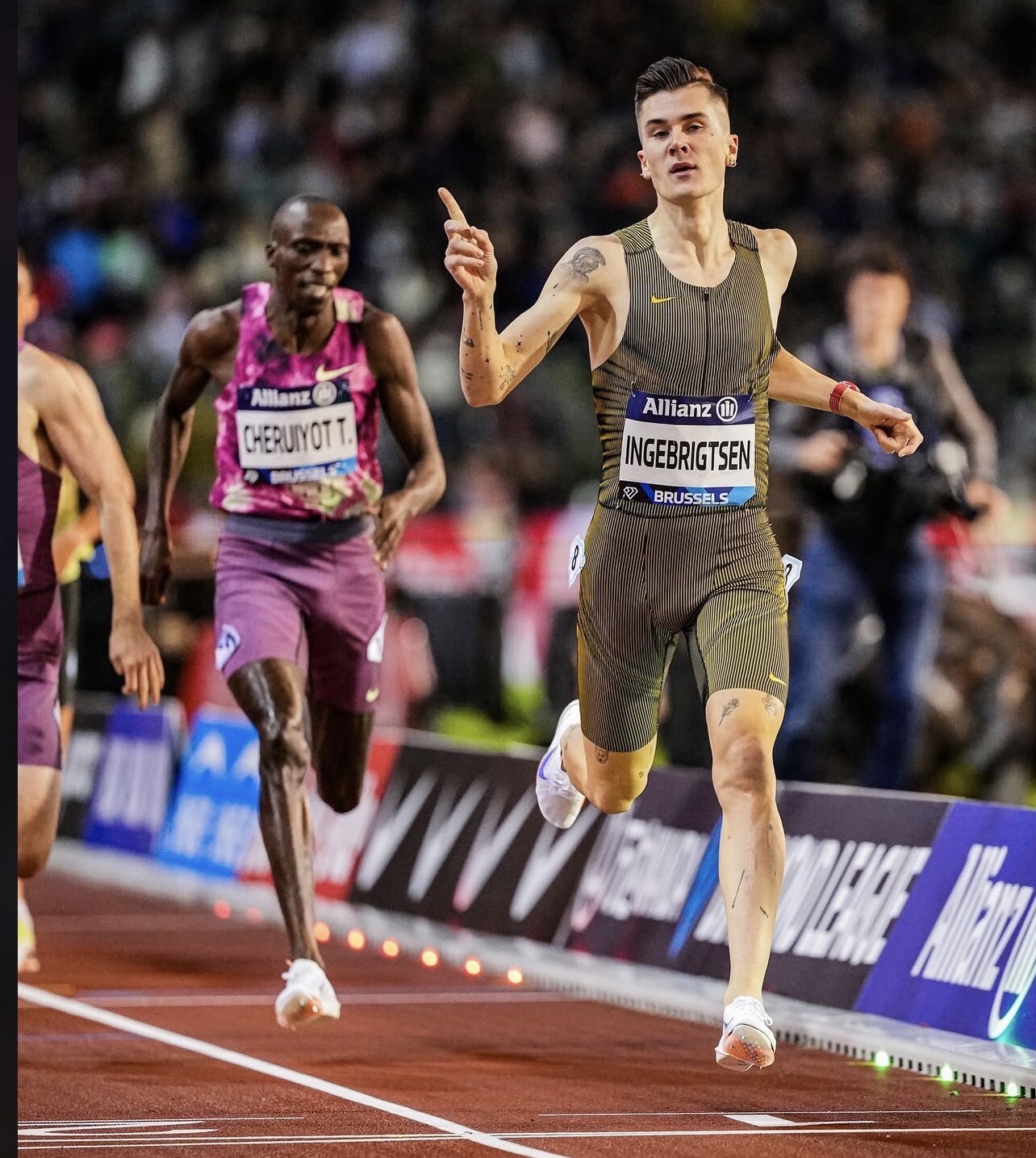
A Champion Still Expanding His Range
Still in his mid-20s, Ingebrigtsen has already built a résumé that places him among the most accomplished middle-distance runners in history. Olympic gold, multiple world titles, European dominance, and Diamond League supremacy have all come his way—often achieved with a blend of tactical intelligence and raw speed rarely seen at this level.
What makes his 2026 ambitions particularly compelling is their scope. The 1500 meters has long been his primary battlefield, where he combines a lethal finishing kick with the confidence to dictate pace. The mile, a distance rich with history and prestige, sits naturally alongside it. But the 5,000 meters signals something more: a continued evolution toward endurance, strength, and long-term dominance.
In recent seasons, Ingebrigtsen has shown he can handle longer distances without sacrificing speed. His ability to close hard after sustained high pace has made him increasingly dangerous in championship-style 5,000m races—events traditionally ruled by specialists.
European Championships: The Foundation
The European Championships remain central to Ingebrigtsen’s identity as an athlete. He has treated the event not as a stepping stone but as a proving ground, consistently racing with authority and purpose. Targeting double gold in 2026 reinforces his commitment to regional dominance while setting the tone for the global season.
Winning multiple titles at a continental championship is as much about recovery, scheduling, and mental discipline as it is about fitness. Ingebrigtsen has mastered that balance, often arriving prepared to race repeatedly at the highest level.
Diamond League Final: Where Precision Matters
A Diamond League Final victory is never guaranteed, regardless of reputation. Fields are deep, pacing is unpredictable, and championships often hinge on small decisions made in the final lap. For Ingebrigtsen, success here requires the perfect intersection of form, tactics, and timing.
He has proven he can win on fast tracks and in tactical races alike—a versatility that makes him a perennial favourite when it matters most.
World Records: Ambition Without Illusion
Perhaps the most revealing part of Ingebrigtsen’s statement is his phrasing: “one good world record attempt.” Not promises. Not guarantees. Just opportunity.
The 1500m, mile, and 5,000m world records represent three very different challenges—each demanding ideal conditions, precise pacing, and a season built around a single moment. Attempting all three within one year speaks to confidence in both his physical preparation and long-term planning.
It also reflects maturity. Ingebrigtsen understands that records are not chased—they are earned when everything aligns.
The Bigger Picture
As distance running enters a new era of depth and global competition, Jakob Ingebrigtsen continues to stand apart—not just for what he has achieved, but for how deliberately he approaches what comes next.
The 2026 season may ultimately deliver medals, trophies, or records—or it may simply offer another chapter in the steady, methodical rise of one of the sport’s defining athletes. Either way, Ingebrigtsen’s goals ensure that the year ahead will be one worth watching.
For fans of middle-distance running, that is more than enough.
by Boris Baron
Login to leave a comment
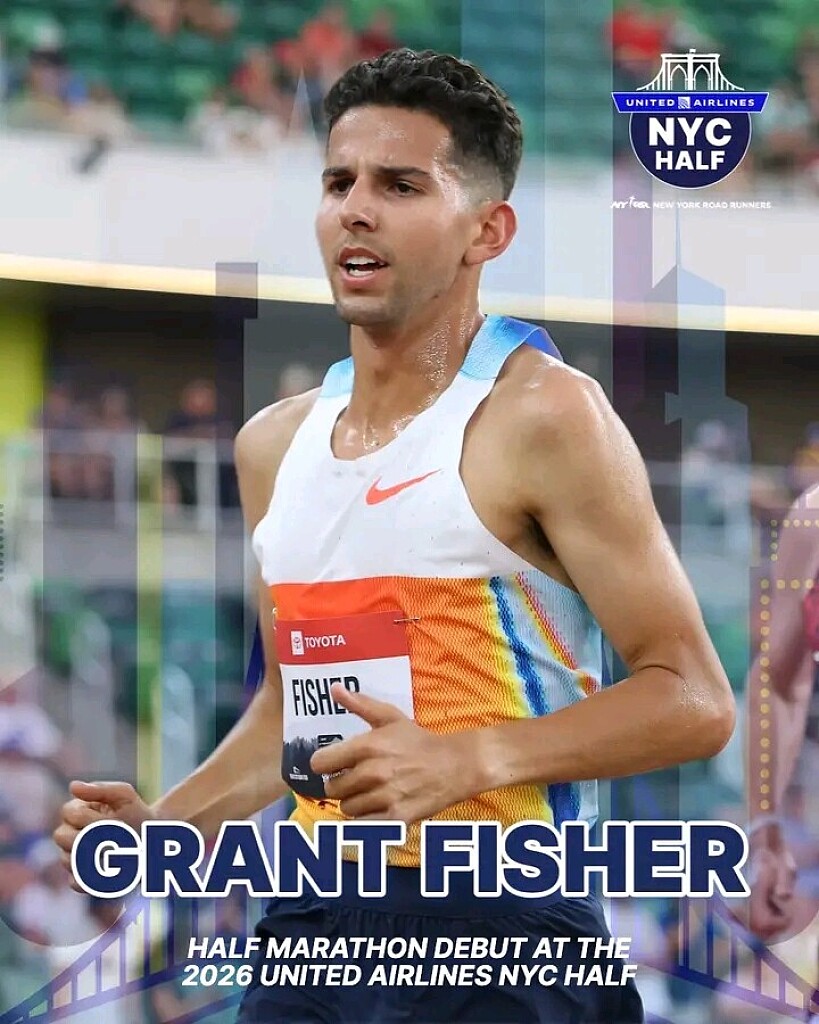
Track Titan to Road Challenger: Grant Fisher Targets NYC Half Debut
The roads of New York City are about to welcome a familiar name—this time from a new angle.
American distance star Grant Fisher is set to make his half marathon debut at the iconic 2026 United Airlines NYC Half, marking a major milestone in one of the most impressive careers of modern U.S. distance running. The race will take place on March 15, 2026, through the heart of New York City, a place that has already played host to some of Fisher’s greatest moments on the track.
For Fisher, this is more than just another race. It is his first professional road appearance, a deliberate and bold step beyond the oval and into the unpredictable rhythm of the streets.
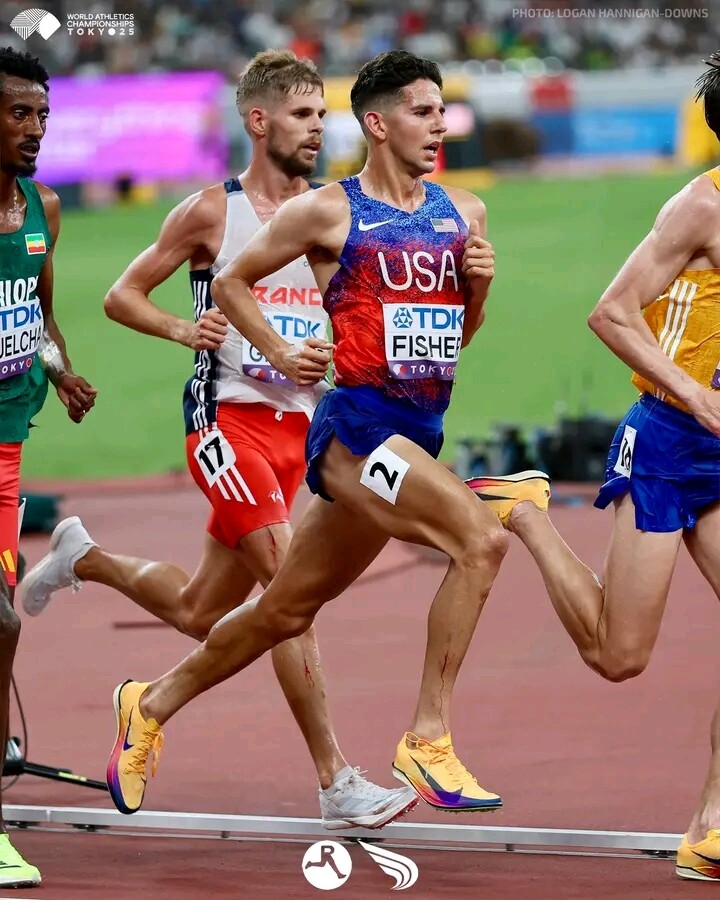
The two-time Olympic bronze medalist has never shied away from challenge. Speaking about the move, Fisher emphasized his desire to explore new limits—drawn by curiosity, ambition, and the unique energy of New York. After rewriting record books on the track in the city, he now looks forward to seeing it from a completely different perspective, chasing possibility over 21.1 kilometers of asphalt.
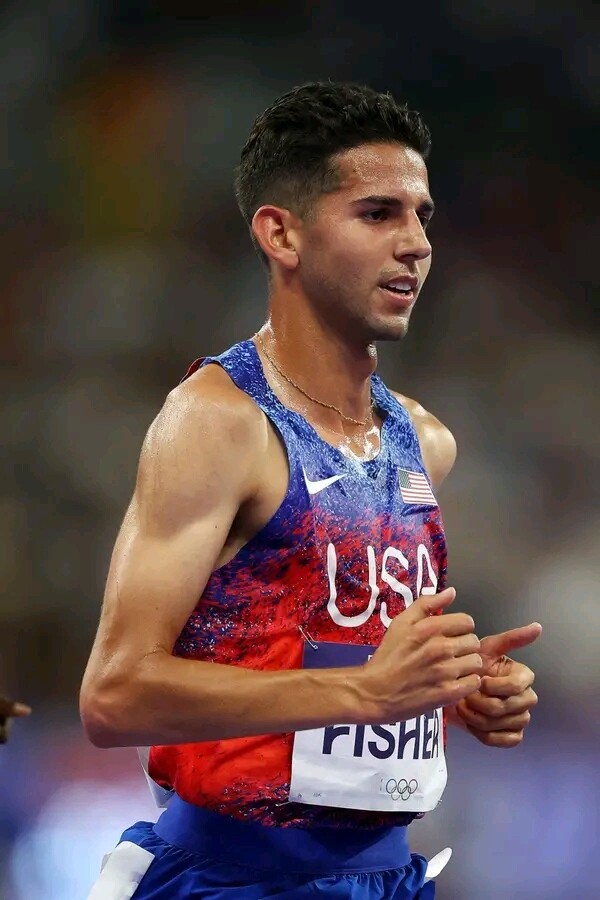
That curiosity is backed by extraordinary credentials.
On the track, Fisher has built a résumé few can rival. He owns multiple American records, including the outdoor 10,000 meters (26:33.84) and 3,000 meters (7:25.47), and has proven equally dominant indoors with world records in the 3,000 meters and 5,000 meters. His range—from the mile to the longest track distances—speaks to rare versatility, efficiency, and tactical intelligence.
At the global level, Fisher has delivered when it matters most. At the Paris 2024 Olympic Games, he claimed bronze medals in both the 5,000 meters and 10,000 meters, confirming his status among the world’s elite. Earlier Olympic and World Championship appearances laid the foundation; Paris cemented the legacy.
Now, the half marathon presents a different kind of test.
Unlike the controlled environment of the track, the roads demand patience, adaptability, and rhythm over time. Pace judgment replaces lap counting. Strategy stretches over kilometers, not seconds. For an athlete known for precision and strength in the closing stages of races, the question is not whether Fisher belongs—but how far his talent can travel.
The United Airlines NYC Half offers the perfect stage. Fast, competitive, and electric with atmosphere, it has launched and reshaped road careers before. For Fisher, it represents the opening chapter of a new narrative—one that bridges elite track dominance with long-distance road ambition.
From American record-holder to Olympic medalist.
From stadium lights to city streets.
A new distance. A familiar hunger.
On March 15, 2026, Grant Fisher doesn’t just race New York—he begins his road story.
by Erick Cheruiyot for My Bestruns.
Login to leave a comment

United Airlines NYC Half-Marathon
The United Airlines NYC Half takes runners from around the city and the globe on a 13.1-mile tour of NYC. Led by a talent-packed roster of American and international elites, runners will stop traffic in the Big Apple this March! Runners will begin their journey on Prospect Park’s Center Drive before taking the race onto Brooklyn’s streets. For the third...
more...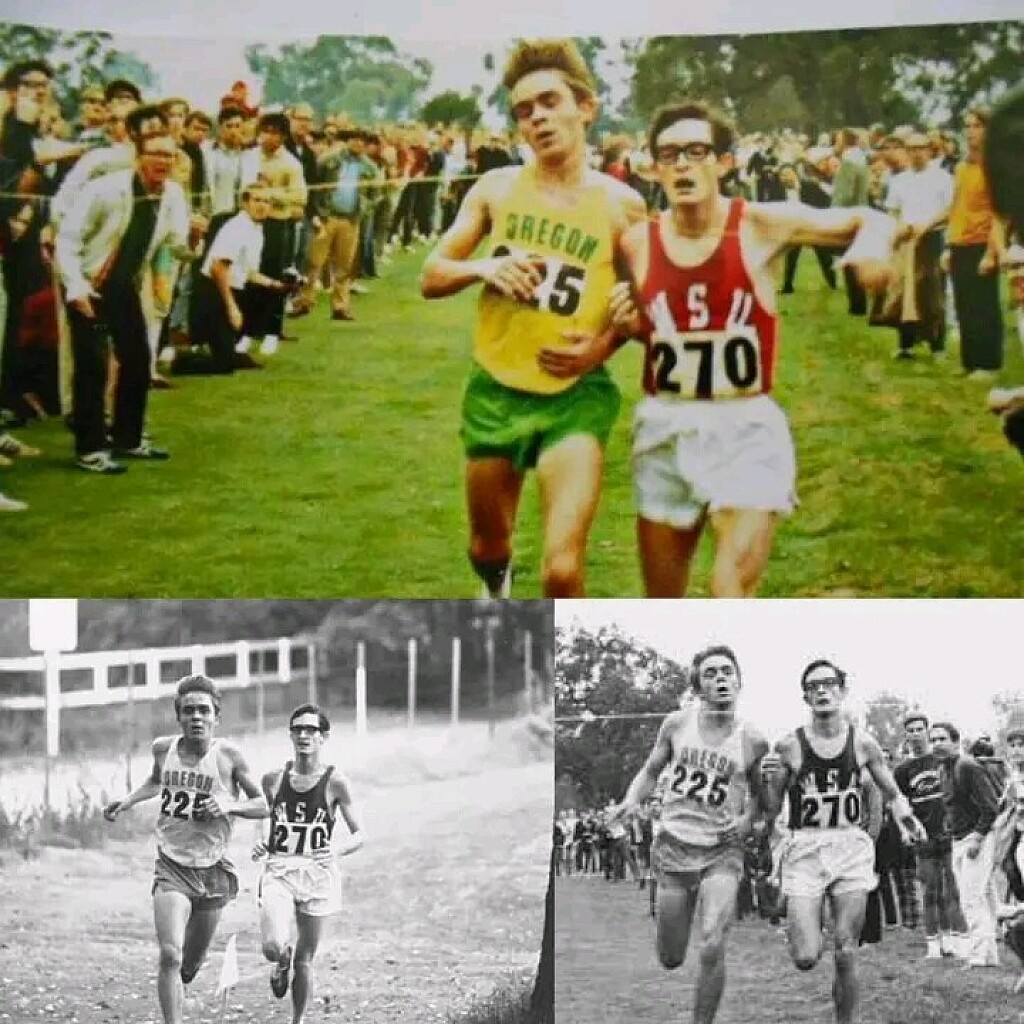
STEVE PREFONTAINE: THE FIRE THAT REDEFINED AMERICAN DISTANCE RUNNING
Steve Prefontaine was more than a gifted athlete—he was the heartbeat of a movement that transformed distance running in the United States. At a time when American runners struggled for global respect, Prefontaine emerged with fearless ambition, relentless confidence, and a refusal to race cautiously. He did not simply compete; he challenged the limits of effort itself.
Born in Coos Bay, Oregon, Prefontaine rose to prominence through sheer willpower and an uncompromising racing philosophy. He believed running was not about waiting for the perfect moment, but about seizing control from the gun. While others conserved energy, he attacked races head-on, forcing competitors into uncomfortable territory. This aggressive style made every race unforgettable and redefined how Americans viewed middle- and long-distance competition.
Prefontaine’s legacy was built not only on results, but on attitude. He raced with emotion, honesty, and pride, insisting that athletes owed their full effort to the sport and to themselves. To him, talent was meaningless without total commitment. That belief resonated deeply with young runners across the country, many of whom saw in him proof that courage could rival pedigree.
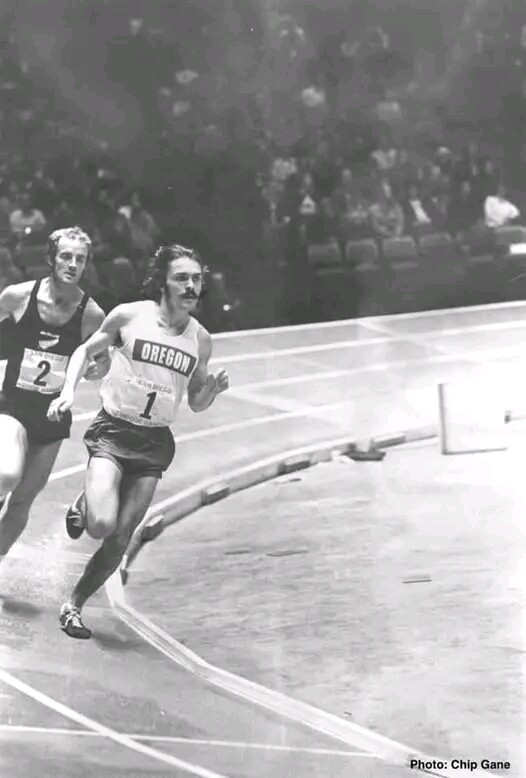
On the track, his performances spoke loudly. From the 1500 meters to the 10,000 meters, Prefontaine set remarkable times that placed him among the world’s elite. His personal bests—achieved in cities like Eugene, Helsinki, Milan, and Stockholm—reflected both his versatility and his willingness to test his limits repeatedly. At one point, he held every American record from 2,000 meters through 10,000 meters, a testament to his dominance and consistency.
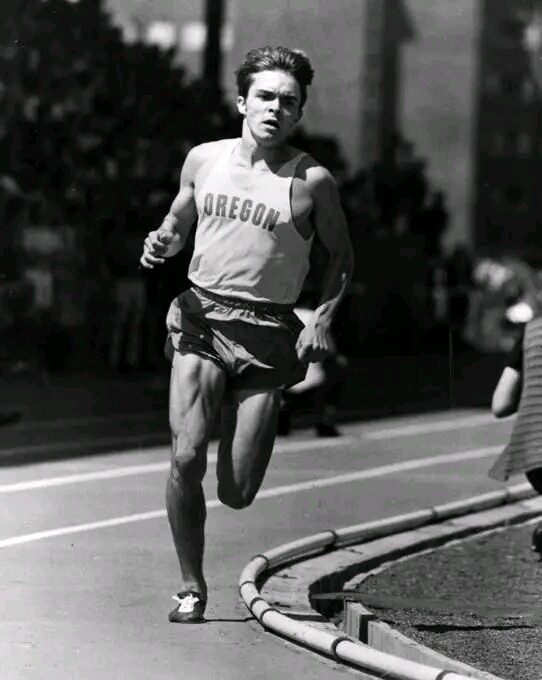
Yet what truly set Prefontaine apart was his influence beyond statistics. He became a voice for athletes, advocating for fairness, recognition, and respect at a time when amateur runners received little support. He helped shift the culture of American athletics toward professionalism and athlete empowerment, laying groundwork that future generations would benefit from.
Prefontaine’s life was tragically brief, but his impact proved permanent. His philosophy—run with courage, race with heart, and give everything—continues to shape the mindset of runners worldwide. Trails, stadiums, and training groups still echo with his spirit, reminding athletes that greatness is measured not only by victories, but by the honesty of one’s effort.
Decades later, Steve Prefontaine remains a symbol of fearless competition and unfiltered passion. He did not chase perfection; he chased truth in performance. And in doing so, he became more than a champion—he became a legacy.
Legends do not fade. They keep running through those they inspire.
by Erick Cheruiyot for My Bestruns.
Login to leave a comment

Prefontaine Classic
The Pre Classic, part of the Diamond League series of international meets featuring Olympic-level athletes, is scheduled to be held at the new Hayward Field in Eugene. The Prefontaine Classicis the longest-running outdoor invitational track & field meet in America and is part of the elite Wanda Diamond League of meets held worldwide annually. The Pre Classic’s results score has...
more...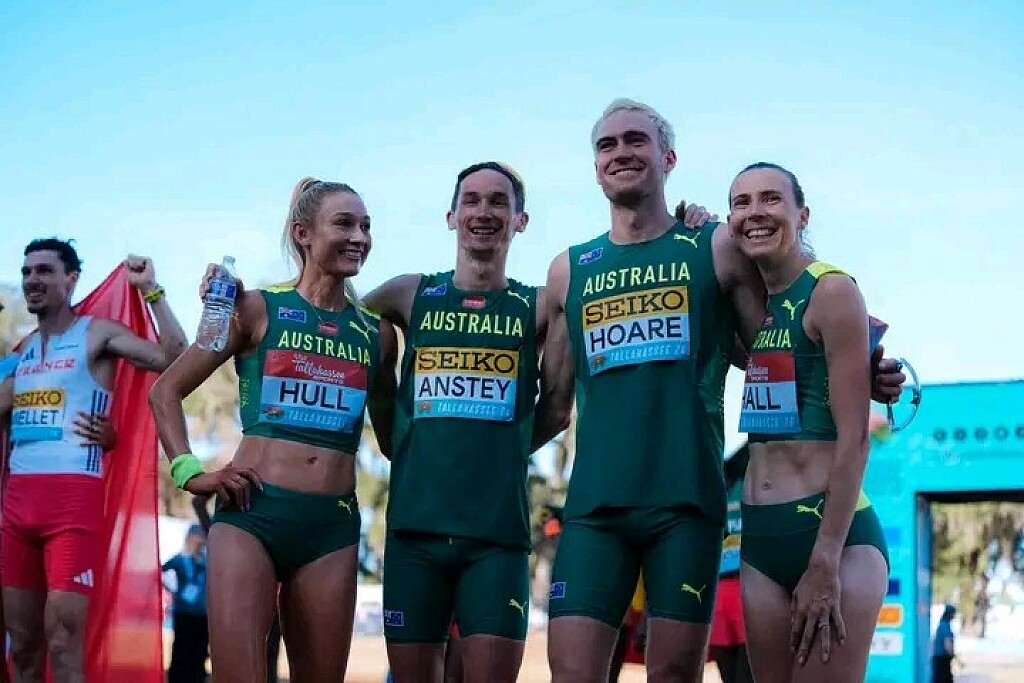
Jessica Hull Embraces the Challenge of Tallahassee’s World Cross Country Course
Few elements of the World Cross Country Championships in Tallahassee sparked as much debate as the course itself. Athletes, coaches, and fans questioned whether it leaned too far into spectacle or whether it truly represented the essence of cross country running.
For Australia’s Jessica Hull, however, there was little doubt.
Hull, the reigning world record holder over 2000 meters and a key figure in Australia’s gold-medal performance in the mixed 4x2km relay, welcomed the challenge from the moment she laid eyes on the layout. Rather than seeing gimmicks, she saw opportunity.

Her reaction was immediate enthusiasm. To Hull, the course captured the true spirit of cross country — unpredictable, demanding, and mentally engaging. Instead of rewarding only raw speed, it required athletes to read the terrain, adapt on the fly, and make smart decisions under pressure. In her view, that balance made the race fairer, not harder.
The design, she explained, broke the rhythm in a way that leveled the field. Runners could no longer rely solely on pushing the pace and hoping for the best. Every section demanded awareness and control, turning the race into a test of judgment as much as fitness. For Hull, that evolution marked a positive step forward for the sport.

Drawing from her own background, she noted how cross country varies across regions. Growing up, races often meant mud, grass, and constantly changing conditions. Later experiences, particularly in collegiate systems, introduced faster and more uniform surfaces. The Tallahassee course, she felt, struck the ideal balance — quick in parts, punishing in others — blending speed with technical difficulty.
Beyond the competition itself, Hull highlighted another crucial element: the fans. The course design brought spectators close to the action, creating an atmosphere that fed directly into the race. The energy, she said, felt tangible — as if the crowd was pulling athletes forward with every cheer. That connection between runner and spectator is, in her view, exactly what championship cross country should offer.
In the end, Hull found little to criticize. The course tested skill, rewarded intelligence, and elevated the spectacle for everyone watching.
Then, with a brief pause and a knowing smile, she added one final thought — her experience may have been helped by the fact that she only had to tackle one lap.
by Erick Cheruiyot for My Bestruns.
Login to leave a comment
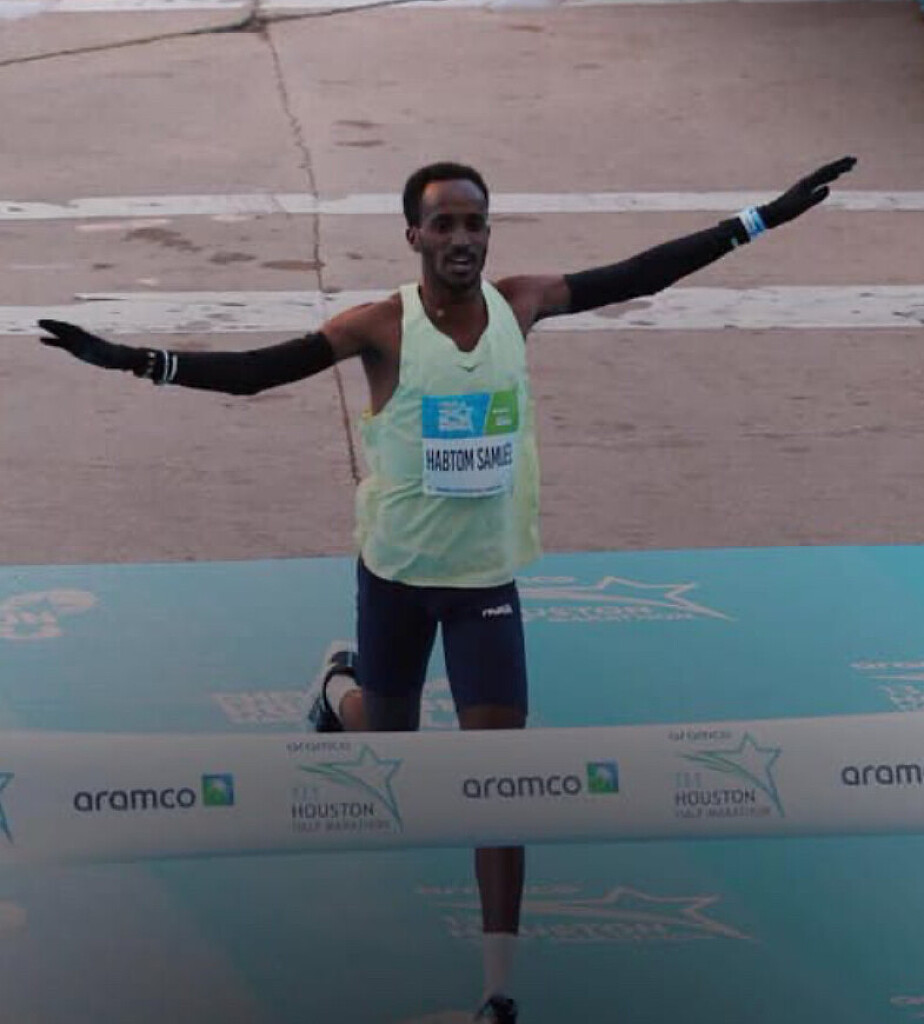
Habtom Samuel Commands Houston: Historic Half Marathon Debut with Course Record
On a cool Sunday morning, the streets of Houston became the stage for a remarkable debut and two fiercely contested elite races at the Aramco Houston Half Marathon. Eritrean distance runner Habtom Samuel, representing the University of New Mexico, delivered one of the most memorable performances in the event’s history, winning his first-ever half marathon in 59:01 and breaking the course record.
Minutes earlier, the women’s elite race produced its own drama, as Ethiopia’s Fentaye Belaynehoutkicked compatriot Tsigie Gebreselama in the final metres to claim victory in 1:04:49, capping a tactical and tightly controlled contest.
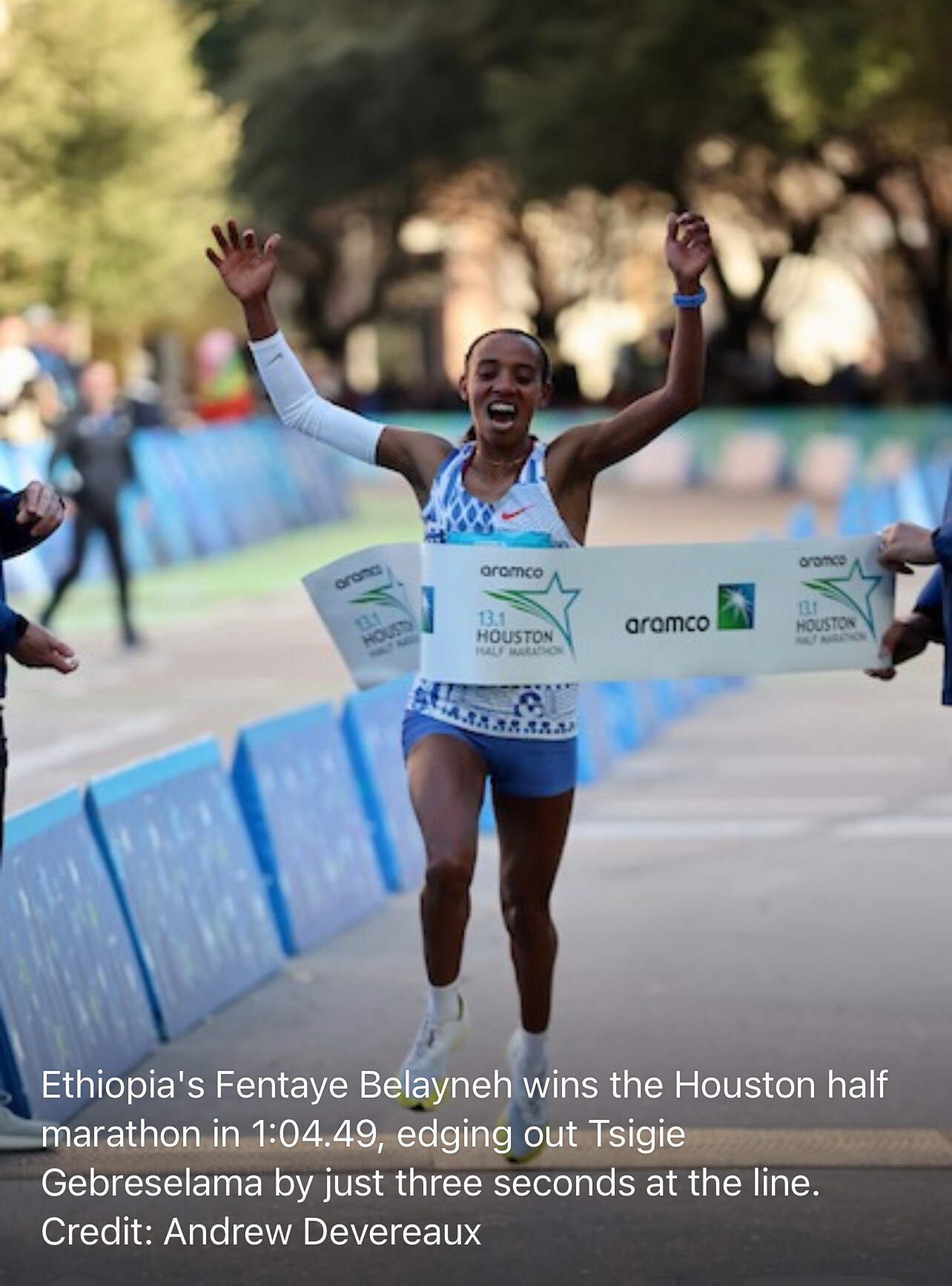
A Breakthrough Debut on the Roads
Samuel arrived in Houston quietly confident, but fully aware of the depth of the field. Known primarily for his NCAA cross-country titles and success on the track—particularly at 10,000 meters—he had spoken before the race about wanting to “test myself on the roads and see how I stack up against top professional athletes outside of track and cross country.”
That mindset guided his approach from the gun.
The men’s race unfolded at a measured tempo, with the lead pack carefully monitoring one another through the early miles. Kenya’s Patrick Kiprop briefly asserted control, opening a small gap and forcing the contenders to respond. Samuel remained composed, running efficiently just off the lead, conserving energy and reading the race with veteran patience.
Observers noted the maturity of Samuel’s tactics—an athlete clearly prepared not just physically, but mentally. His decision to race Houston, which he had described simply as “trying something different,” revealed itself as a calculated experiment executed to perfection.
Tactical Racing in the Women’s Field
In the women’s race, a similar theme of intelligent pacing played out. From early on, runners such as Taylor Roe and Buze Diriba Kejela pressed the pace, but it was Belayneh and Gebreselama who separated decisively by the halfway mark.
The Ethiopian duo worked together through much of the second half, steadily distancing themselves from the chase pack. Americans in the field pushed hard, but the early separation proved decisive, setting the stage for a head-to-head sprint finish.
Decisive Moves and a Record Falls
As the men’s race passed the 10-mile mark, the lead group began to fracture. Samuel moved with precision, smoothly closing on Kiprop before launching his decisive surge in the final mile. Once he moved to the front, the gap opened immediately—and decisively.
His final kilometers were controlled, powerful, and confident, culminating in a 59:01 finish that rewrote the course record on one of America’s fastest half-marathon routes.
Though post-race interviews were not yet available at the time of writing, Samuel’s body language and execution spoke volumes. The performance suggested not just success, but the arrival of a serious new force in elite road racing.
Belayneh’s finish was equally compelling. Timing her move perfectly, she edged Gebreselama in the closing strides, securing victory in 1:04:49 in one of the strongest women’s fields assembled this season.
Setting the Bar in Houston
Samuel’s course-record performance was remarkable not only because it came in his debut, but because it was achieved against a deep international field packed with experienced professionals.
Belayneh’s victory further reinforced Ethiopia’s depth in women’s distance running, while American Taylor Roe emerged as the top U.S. finisher in 1:06:20, continuing her steady rise on the road circuit.
A Launchpad for What’s Next
The significance of Houston extends well beyond one morning’s results. For Samuel, the transition from collegiate standout to elite road racer could not have been more emphatic. His debut suggests a future filled with major opportunities over longer distances.
For Belayneh, the win reaffirmed her tactical sharpness and finishing speed in a discipline that continues to deliver thrilling, high-level competition.
Houston once again proved why it remains one of the premier proving grounds in road racing—and why performances here often signal what’s coming next.
Top 10 Results — Aramco Houston Half Marathon 2026
Men’s Half Marathon
1. Habtom Samuel (ERI / University of New Mexico) — 59:01
2. Patrick Kiprop (KEN) — 59:14
3. Mohammed El Youssfi (MAR) — 59:21
4. Alex Maier (USA) — 59:23
5. Casey Clinger (USA) — 59:34
6. Ryan Ford (CAN) — 59:48
7. Rory Linkletter (CAN) — 59:49
8. Isai Rodriguez (USA) — 59:57
9. Hillary Bor (USA) — 1:00:04
10. Vincent Ngetich (KEN) — 1:00:29
Women’s Half Marathon
1. Fentaye Belayneh (ETH) — 1:04:49
2. Tsigie Gebreselama (ETH) — ~1:04:52
3. Buze Diriba Kejela (ETH) — approx.
4. Taylor Roe (USA) — 1:06:20
5. Natosha Rogers (USA) — 1:07:30
6. Makenna Myler (USA) — 1:07:37
7. Amanda Vestri (USA) — 1:07:43
8. Erika Kemp (USA) — 1:08:42
9. Susanna Sullivan (USA) — 1:08:44
10. Dakotah Popehn (USA) — ~1:08:54
by Robert Kibet for My Best Runs
Login to leave a comment

Aramco Houston Half Marathon
The Chevron Houston Marathon provides runners with a one-of-a-kind experience in the vibrant and dynamic setting of America's fourth-largest city. Renowned for its fast, flat, and scenic single-loop course, the race has earned accolades as the "fastest winter marathon" and the "second fastest marathon overall," according to the Ultimate Guide to Marathons. It’s a perfect opportunity for both elite athletes...
more...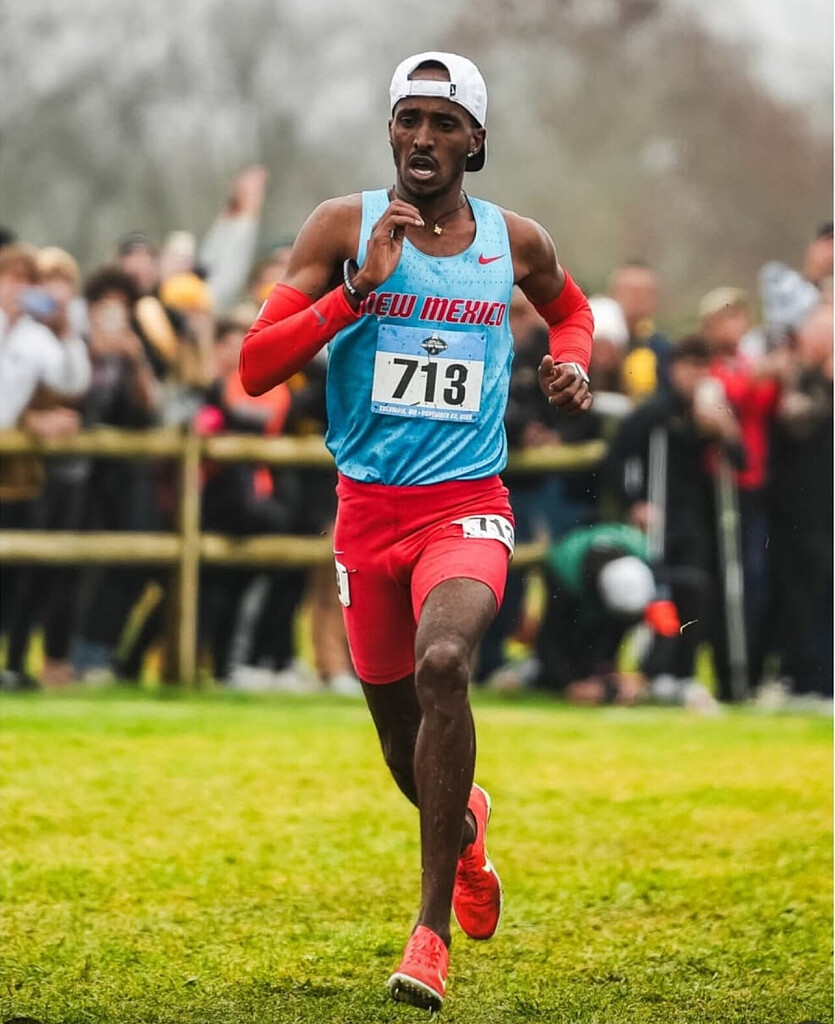
From Village Paths to the Open Road: Habtom Samuel’s Houston Half Marathon Debut
The University of New Mexico Lobo takes his first steps into professional road racing, carrying years of endurance, resilience, and determination.
Running Was Life Before the Track
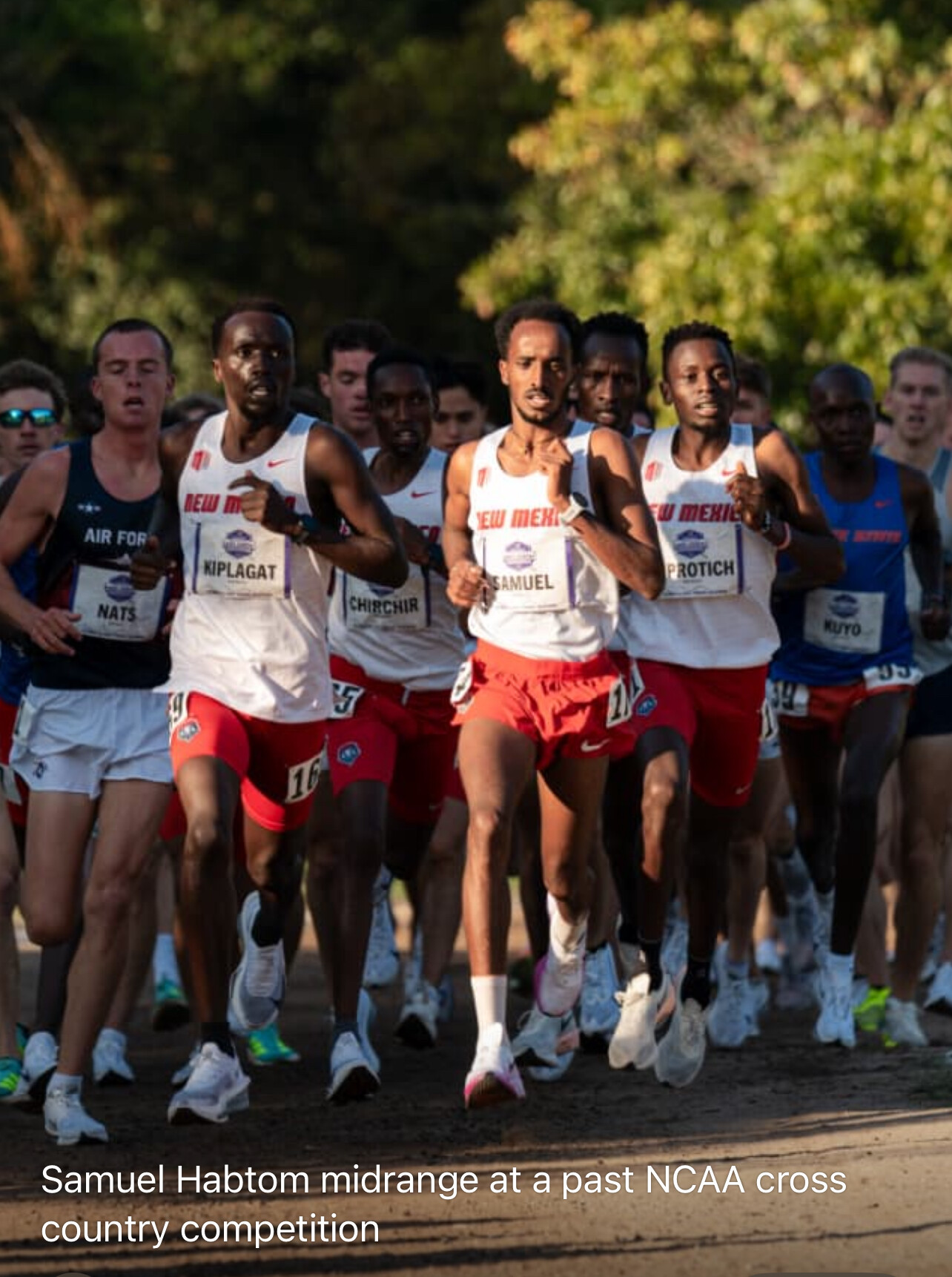
Before Habtom Samuel ever set foot on a formal track, he was running to school—seven kilometers each way—books in hand, racing the clock to arrive on time. Growing up in Debresina, a small village in Eritrea, running was not a sport. It was part of daily life. It was necessity. And in its quiet way, it revealed a talent that would one day carry him onto the international stage.
Samuel’s childhood, like that of many young athletes in rural Africa, blended joy with hardship. The second-born of eight siblings, he learned responsibility early, helping his family and neighbors with farming and daily chores. Life was often difficult, but it shaped a resilience that continues to define him today.
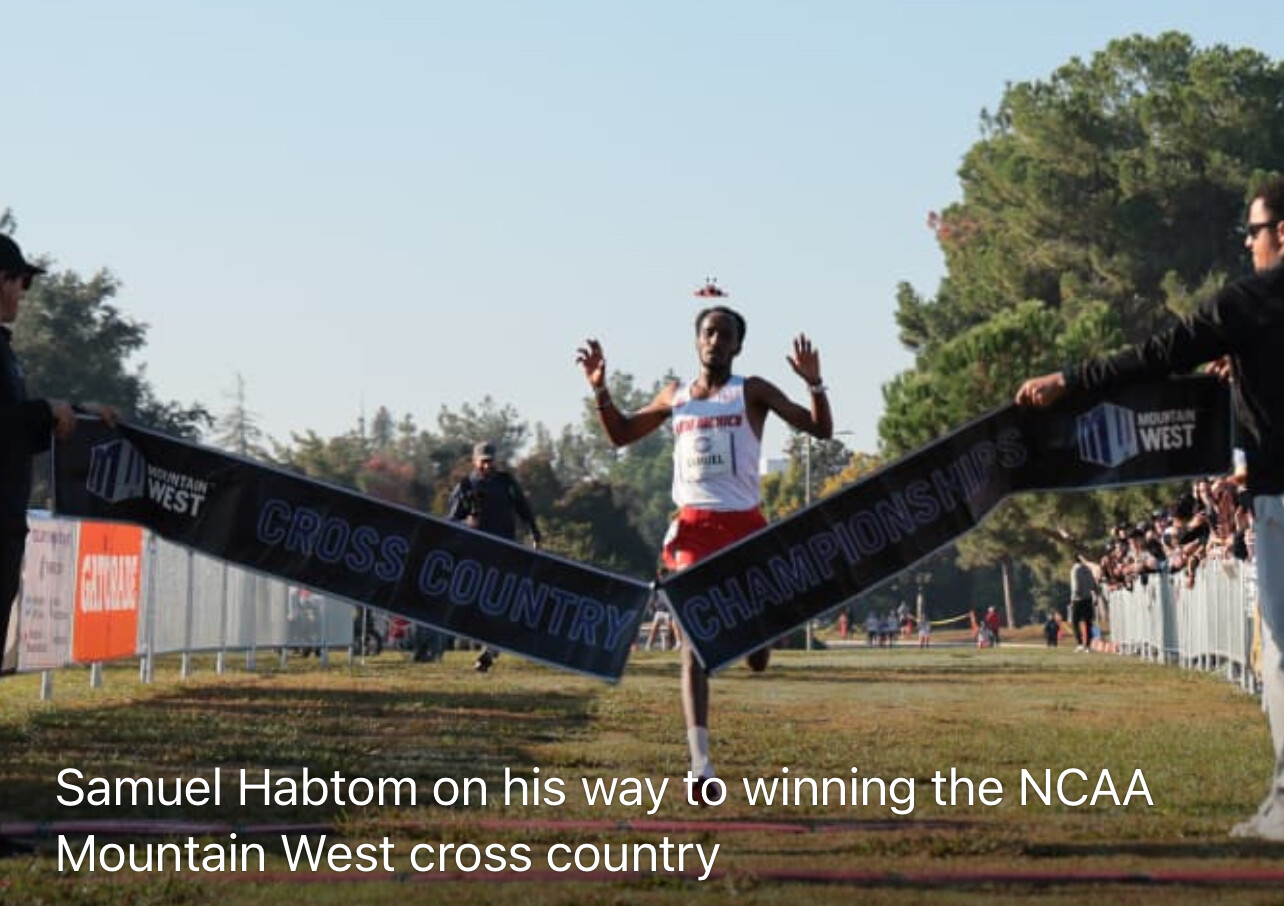
Discovery and Early Talent
Running emerged naturally from routine—long walks to school, informal football matches with friends, and sprints home when village responsibilities made him late. Endurance came long before structure.
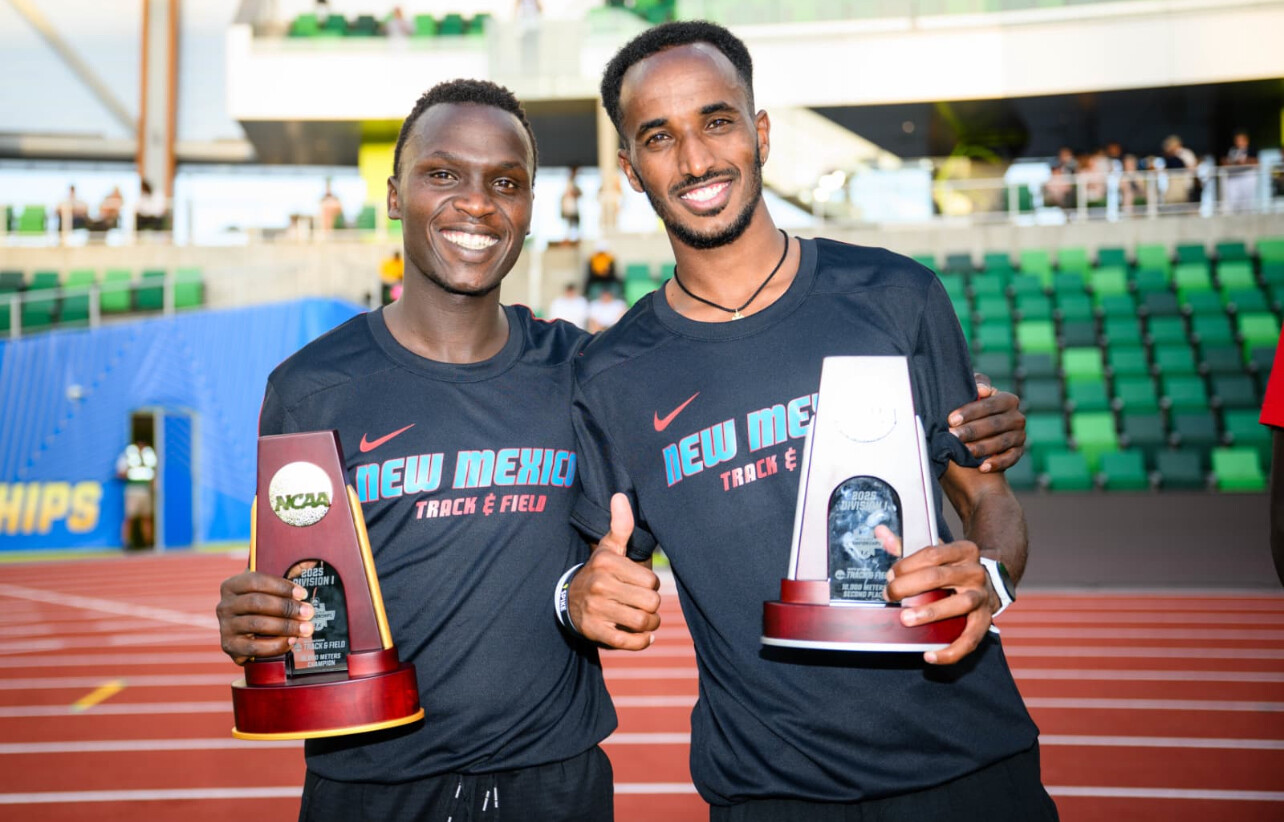
“I noticed I could run long distances without getting tired,” Samuel recalls. “That’s when I realized running was something special for me.”
Those unplanned miles built a foundation well before formal training arrived. His breakthrough came in 2021 at the World Athletics U20 Championships in Nairobi, where he earned a bronze medal in the 3000 meters. The race was tactical and fast, stacked with Kenya’s top under-20 athletes. Samuel managed surges carefully, conserving energy before finishing strongly. The podium confirmed more than talent—it confirmed belief.
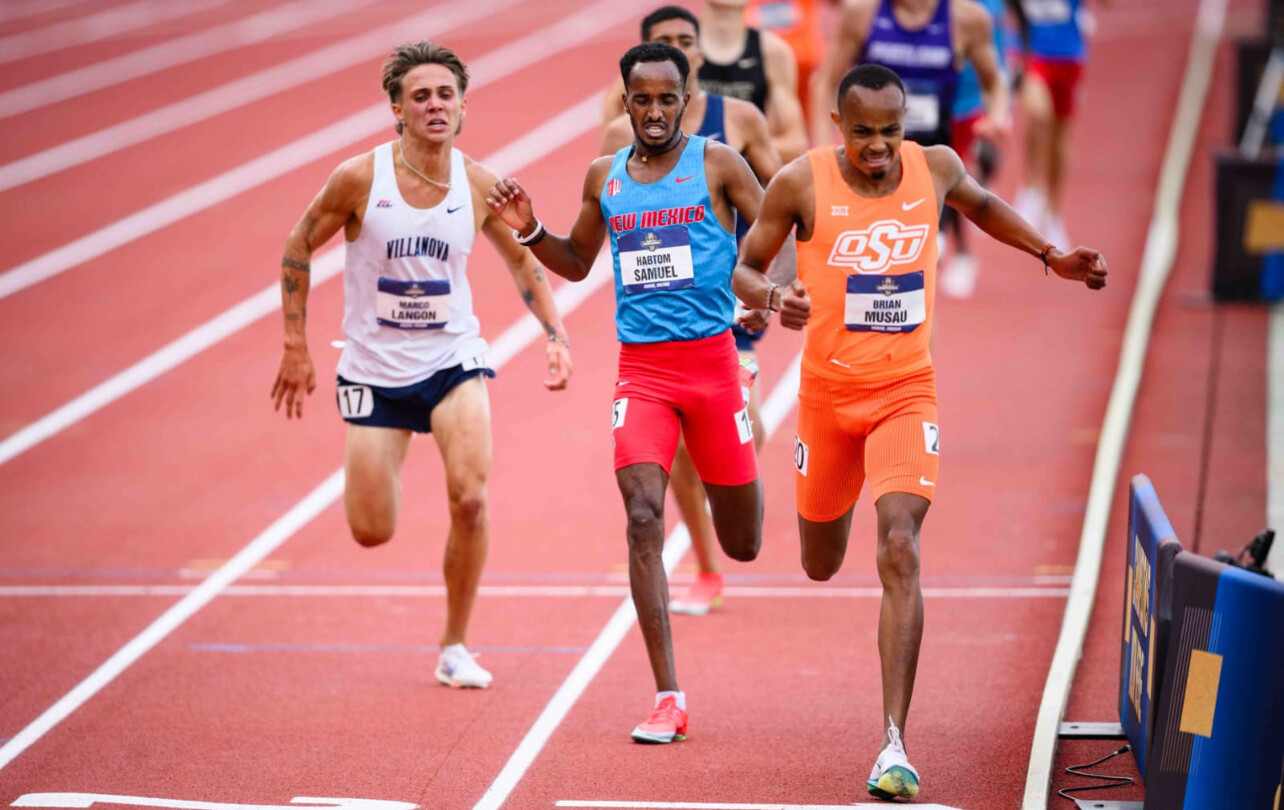
Just one month later, he lined up at the Absa Kip Keino Classic against an elite senior field. Finishing fourth, ahead of several seasoned competitors, he left motivated rather than discouraged. “Running with elite athletes showed me I belonged,” he says. “It made me believe I could do even better.”
A New Life with the Lobos
That belief carried Samuel thousands of miles to the University of New Mexico. He was searching not just for competition, but for growth—athletically and personally. Adjusting to a new language, culture, and academic system during his freshman year was challenging, but he found support within the Lobo program.
Wearing the Lobo uniform and competing for a team rooted in tradition and values fuels him daily—on the track, in cross country, and in the classroom.
Academically, Samuel explored public health and exercise science, drawn by a desire to understand the human body. When prerequisites prevented formal entry into exercise science, he found his stride in Liberal Arts and Integrative Studies. “It allows me to take a variety of classes and keep growing academically and personally,” he explains.
Motivation Drawn From the Past
During the hardest training days, Samuel looks backward to move forward.
“I think about where I come from,” he says. “I went through many struggles as a child and always dreamed of a better life. When I look at where I am now, I feel proud. Many people never get these opportunities, and that pushes me to work harder. This is my moment. I feel lucky—but luck means nothing without hard work.”
Debuting on the Roads
This weekend marks another turning point: Samuel’s debut at the Chevron Houston Half Marathon.
Until now, his focus has been cross country and track. Road racing remained unexplored—until winter break offered the opportunity to step outside the collegiate circuit and test himself against seasoned professionals.
The half marathon represents more than a distance change. It is a test of endurance, pacing, strategy, and mental resolve.
“What excites me most is standing on the start line with top professionals,” he says. “I want to see how fast I can run in my debut and what I can learn.”
He approaches the race with curiosity rather than pressure—an opportunity to learn, adapt, and understand his potential beyond the oval.
Looking Ahead: Lessons Beyond the Finish Line
Samuel’s Houston debut marks an important milestone. It allows him to explore a new distance, apply lessons learned from village paths, cross-country courses, and track races, and take a measured step toward a possible professional future on the roads.
More than times or placements, Samuel hopes to be remembered for how he races—and how he lives.
“I want people to remember me as someone who was never afraid to challenge himself,” he says. “As a person, I hope to be remembered for staying hopeful, working hard, and turning every opportunity into something positive.”
From the paths of Debresina to the roads of Houston, Habtom Samuel’s journey as a Lobo is a story of endurance, courage, and gratitude—a reminder that every mile carries a story, and every challenge offers a chance to grow.
by Robert Kibet for My Best Runs
Login to leave a comment
Aramco Houston Half Marathon
The Chevron Houston Marathon provides runners with a one-of-a-kind experience in the vibrant and dynamic setting of America's fourth-largest city. Renowned for its fast, flat, and scenic single-loop course, the race has earned accolades as the "fastest winter marathon" and the "second fastest marathon overall," according to the Ultimate Guide to Marathons. It’s a perfect opportunity for both elite athletes...
more...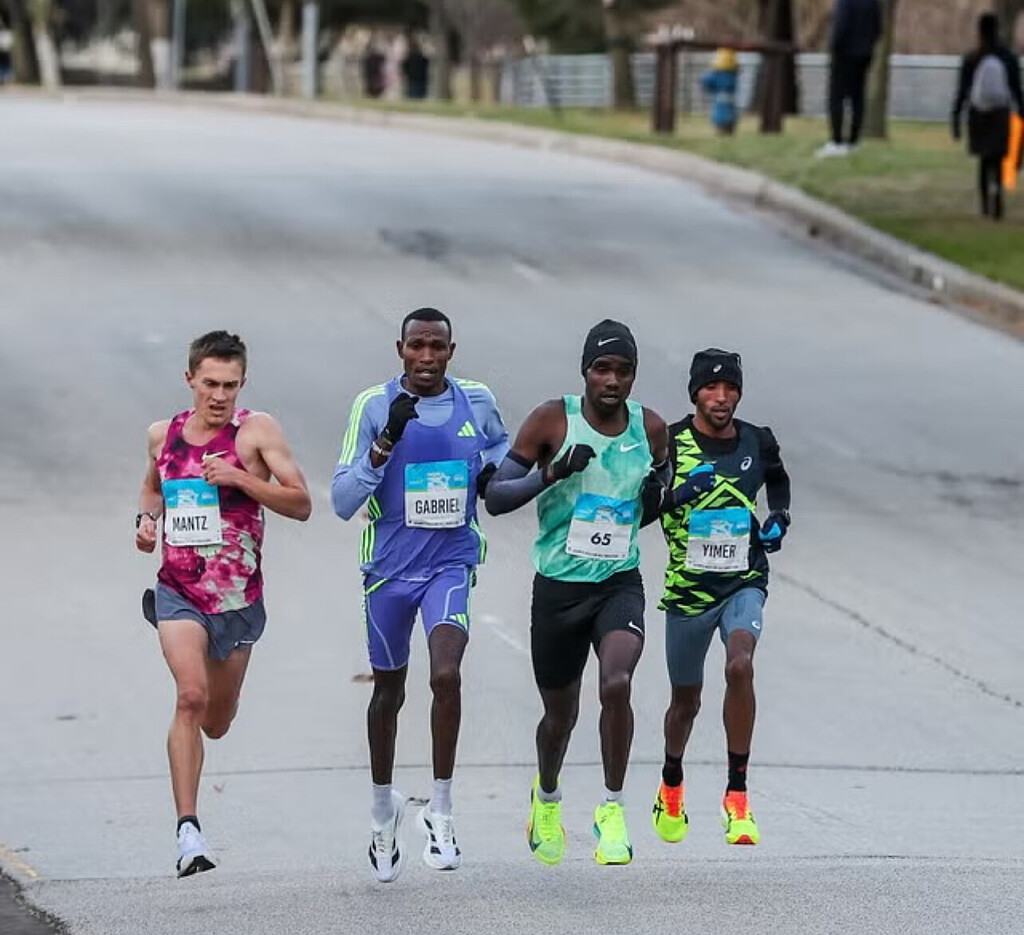
Houston Reloaded: Star-Studded Men’s Field Sets the Stage for a Wide-Open 2026 Half Marathon
With no defending champion, no American record holder, and a reshuffled elite lineup, the January 11, 2026, Houston Half Marathon is shaping up as one of the most open and unpredictable men’s races the event has seen in years.
A Reset Year in Houston
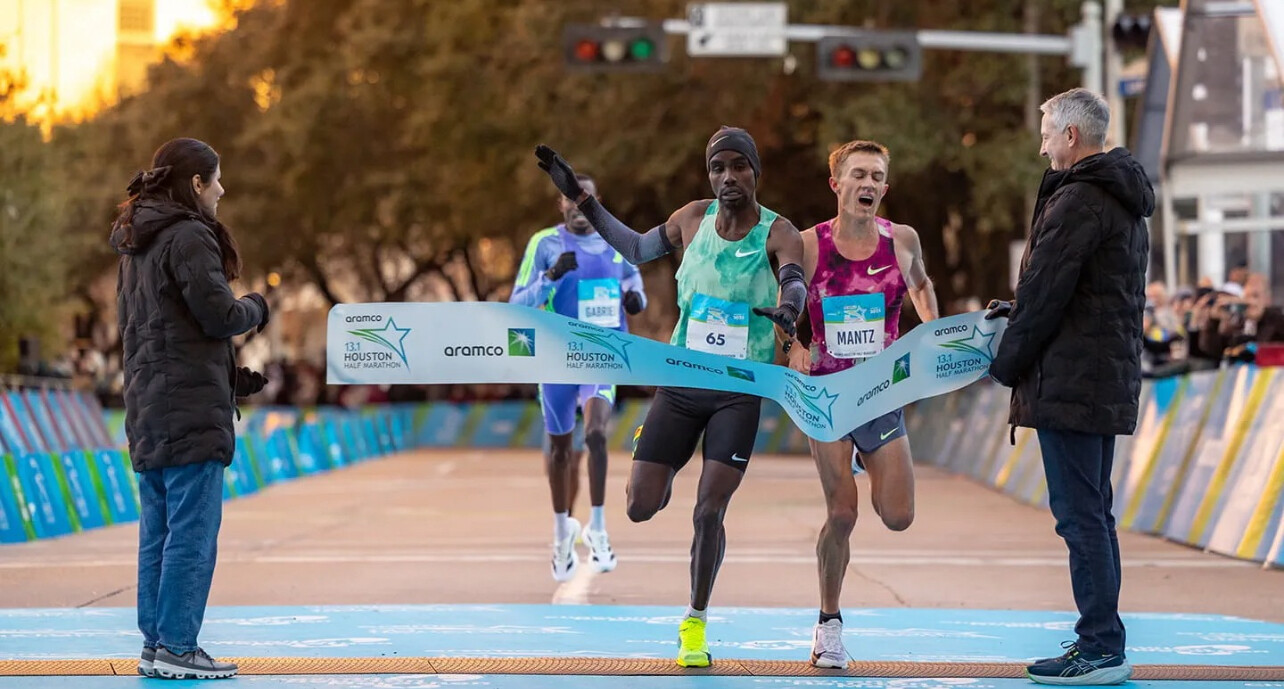
When the gun goes off on Sunday, Houston will once again showcase one of the fastest half-marathon courses in the world—but without the familiar faces that dominated the podium last year. None of the top five finishers from 2025 return, creating a rare reset for a race long associated with records, breakthroughs, and Olympic-cycle statements.
What remains is depth, intrigue, and a compelling blend of proven performers and ambitious newcomers ready to write a new chapter.
Vincent Ngetich: Speed Meets Staying Power
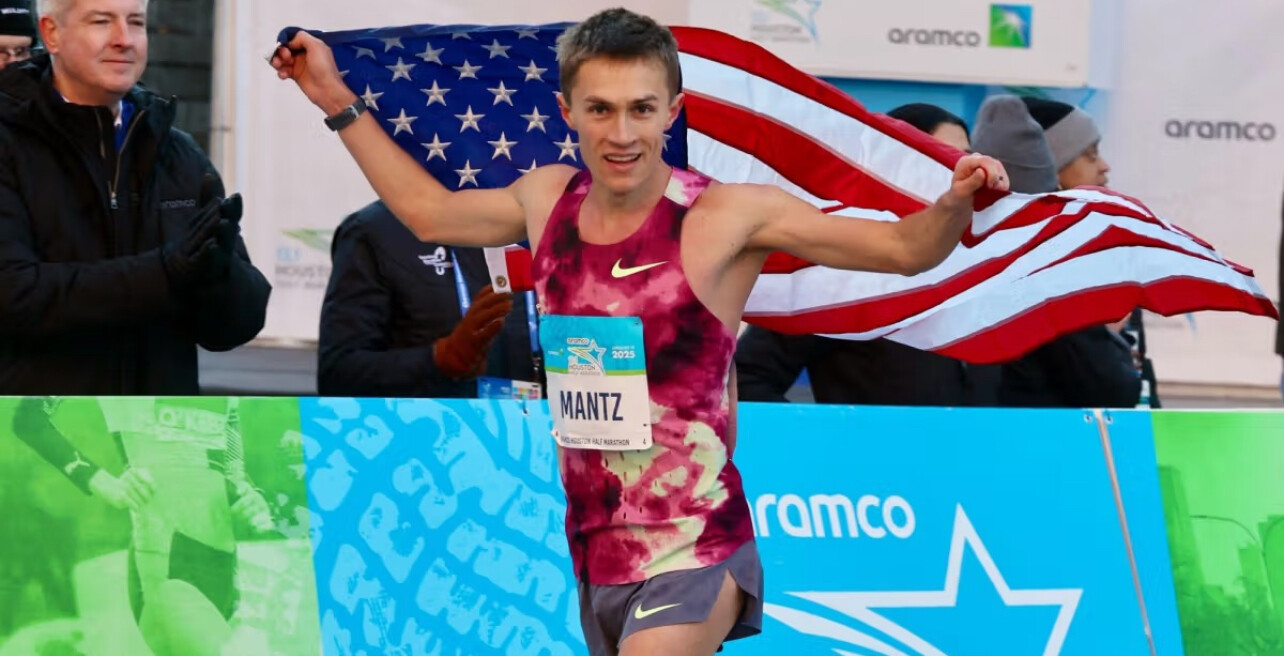
Kenya’s Vincent Ngetich enters as the fastest man in the field on paper, owning a 59:09 personal best from 2022. His half-marathon credentials are formidable, but his reputation soared after a stunning 2:03:13 runner-up finish at the 2023 Berlin Marathon, behind Eliud Kipchoge.
Houston offers Ngetich the opportunity to reassert himself over 21.1 km and test his speed against a deep American contingent on a course that rewards bold, aggressive racing.
Hillary Bor Leads the Returners
Kenyan-born American Hillary Bor is the top returner from last year’s race after finishing sixth in 1:00:20. His 59:55 personal best, set at the NYC Half Marathon, underscores his sub-60 capability—even if that performance came on a non-record-eligible course.
Bor arrives with consistency and experience on his side and will be keen to capitalize on a field without a clear dominant force.
Galen Rupp Back in the MiX
Few names carry the weight of Galen Rupp in American distance running. The two-time Olympian owns a 59:47 personal best from 2018 and returns to Houston after finishing 12th in 1:02:37 in 2024.
While Rupp is no longer chasing records, his race intelligence, experience, and ability to manage fast early pace could prove influential in a race likely to unfold aggressively from the start.
Rising Americans and International Depth
The American contingent is deep, with several sub-61 runners including Sam Chelanga, Biya Simbassa, Andrew Colley, Alex Maier, and Reed Fischer, all bringing strong recent road or cross-country form into the season.
International depth adds further intrigue, with athletes such as Cam Levins, Alex Masai, Patrick Kiprop, and Mohamed El Yousfi all capable of factoring into a fast-moving lead pack.
The Debutant to Watch: Habtom Samuel
One of the most compelling storylines belongs to Habtom Samuel, the 2025 NCAA cross country champion, who is set to make his half-marathon and road-racing debut. Samuel recently clocked 13:05.2 for 5000 meters at Boston University, signaling sharp fitness as he transitions from the track and cross country to the roads.
Houston has a long history of rewarding fearless debutants, and the University of New Mexico standout fits that mold perfectly.
A Race Built for Breakthroughs
With no defending champion, no American record holder, and a deep field eager to make a statement, the 2026 Houston Half Marathon promises fast early splits, tactical uncertainty, and genuine breakthrough potential.
On one of the world’s most trusted fast courses, opportunity—not reputation—may prove to be the real favorite.
2026 Houston Half Marathon – Men’s Elite Entrants (with Country)
1. Vincent Ngetich — Kenya (KEN)
2. Galen Rupp — United States (USA)
3. Hillary Bor — United States (USA)
4. Cam Levins — Canada (CAN)
5. Biya Simbassa — United States (USA)
6. Sam Chelanga — United States (USA)
7. Andrew Colley — United States (USA)
8. Alex Maier — United States (USA)
9. Marcelo Laguera — Mexico (MEX)
10. Reed Fischer — United States (USA)
11. Rory Linkletter — Canada (CAN)
12. Ryan Ford — United States (USA)
13. Alberto Mendez — Guatemala (GUA)
14. Alex Masai — Kenya (KEN)
15. Peter Lynch — Ireland (IRL)
16. Patrick Kiprop — Kenya (KEN)
17. Aaron Bienenfeld — Germany (GER)
18. Mohamed El Yousfi — Morocco (MAR)
19. Kengo Suzuki — Japan (JPN)
20. Haimro Alame — Israel (ISR)
21. William Amponsah — Ghana (GHA)
22. Daniel Michalski — United States (USA)
23. Bran Barraza — United States (USA)
24. Aaron Gruen — Austria (AUT)
25. Robert Warner-Judd — Great Britain (GBR)
26. Habtom Samuel — Eritrea (ERI) (half-marathon debut)
27. Casey Clinger — United States (USA) (debut)
28. Isai Rodriguez — United States (USA) (debut)
29. Graydon Morris — United States (USA) (debut)
30. Dylan Schubert — United States (USA) (debut)
31. Merga Gemeda — United States (USA) (debut)
32. Hunter Christopher — United States (USA) (debut)
by Robert Kibet
Login to leave a comment

Chevron Houston Marathon
The Chevron Houston Marathon offers participants a unique running experience in America's fourth largest city. The fast, flat, scenic single-loop course has been ranked as the "fastest winter marathon" and "second fastest marathon overall" by Ultimate Guide To Marathons. Additionally, with more than 200,000 spectators annually, the Chevron Houston Marathon enjoys tremendous crowd support. Established in 1972, the Houston Marathon...
more...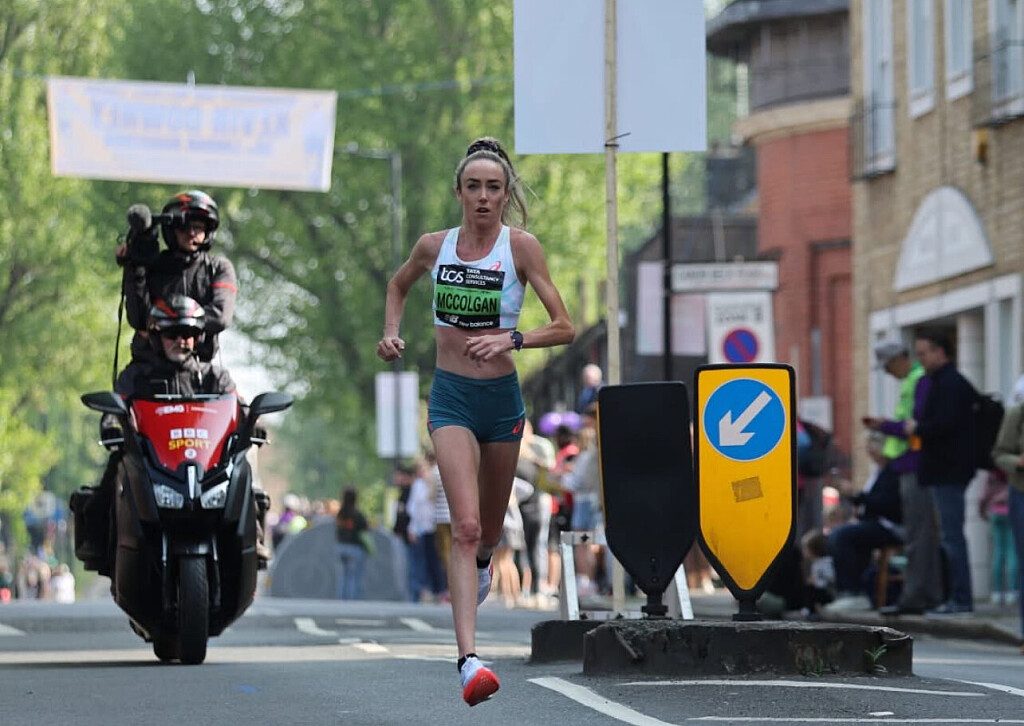
Eilish McColgan Targets Her Own European Record at Valencia 10K
On Sunday, January 11, Britain’s Eilish McColgan returns to one of the fastest road courses in the world with a clear objective: to run faster than ever before. McColgan will headline the Valencia 10K, aiming to improve the European 10K record of 30:19 that she already owns.
Valencia has become synonymous with speed. Flat, wide roads, cool January temperatures, and deep elite fields have turned the Spanish city into a global magnet for record-seekers. For McColgan, it is the ideal setting to push the limits again.
A Record Already Redefined
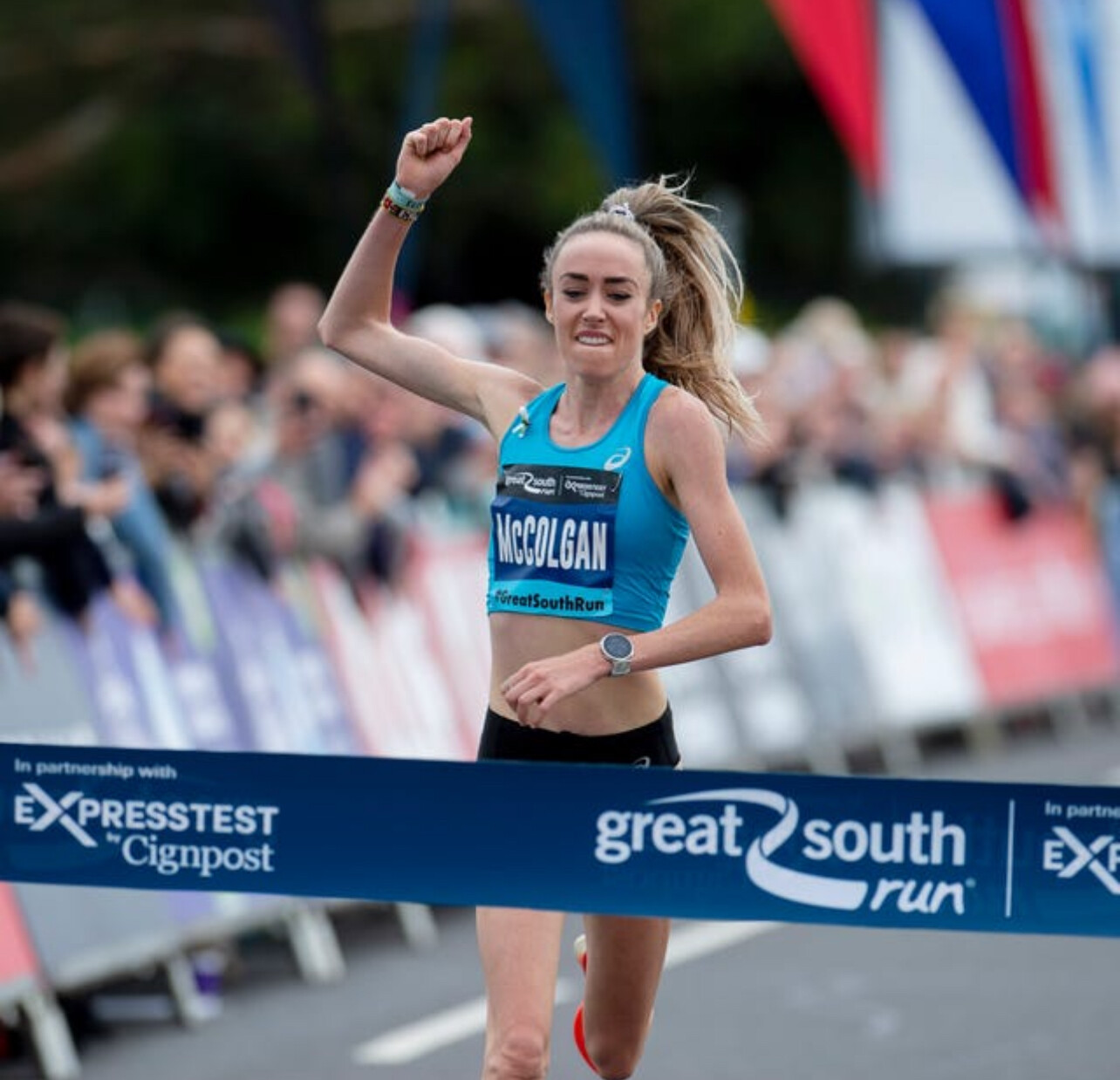
McColgan’s 30:19 shattered expectations when she set it, establishing a new benchmark for European women over 10 kilometers on the road. The performance was not only a record, but a statement—proof that European distance running continues to close the gap with the very best in the world.
Now, with another year of high-level racing behind her, McColgan believes there is more to come.
“I know I’m capable of faster,” she has said in recent interviews, pointing to consistent training blocks and renewed confidence as key factors heading into 2025.
Why Valencia?
The Valencia 10K has earned its reputation honestly. Year after year, the race produces world-class times across both the men’s and women’s fields. The course is famously flat, the pacing is precise, and the atmosphere—lined with knowledgeable, enthusiastic fans—helps pull athletes through the toughest late stages of the race.
For runners chasing records, few places offer better conditions.
Momentum Into 2025
McColgan enters the new season with momentum. Her track credentials as a former European champion at 10,000 meters translate perfectly to the road, where rhythm, strength, and controlled aggression are essential. Valencia’s fast early kilometers often allow athletes to settle into pace quickly—critical for anyone targeting historic times.
A faster run than 30:19 would not only lower her own European record, but also reaffirm McColgan’s position among the world’s elite road racers.
A Race to Watch
With top international competition expected and pacing designed for fast times, the women’s race promises to be one of the highlights of the early road-racing calendar. Whether McColgan rewrites the record books again or simply pushes the boundaries of what is possible, all eyes will be on Valencia.
One thing is certain: when Eilish McColgan toes the start line on January 11, she won’t be running conservatively.
She’ll be running for history.
by Boris Baron
Login to leave a comment

10k Valencia Trinidad Alfonso
Around the corner we have one more edition of the 10K Valencia Ibercaja, organized one more year by the C. 10K VALENCIA Athletics premiering the running season in Valencia. It is a massive urban race with more than 3,000 registered annually of 10 kilometers, where the maximum duration of the test will be 1 hour 40 minutes (100 minutes). The...
more...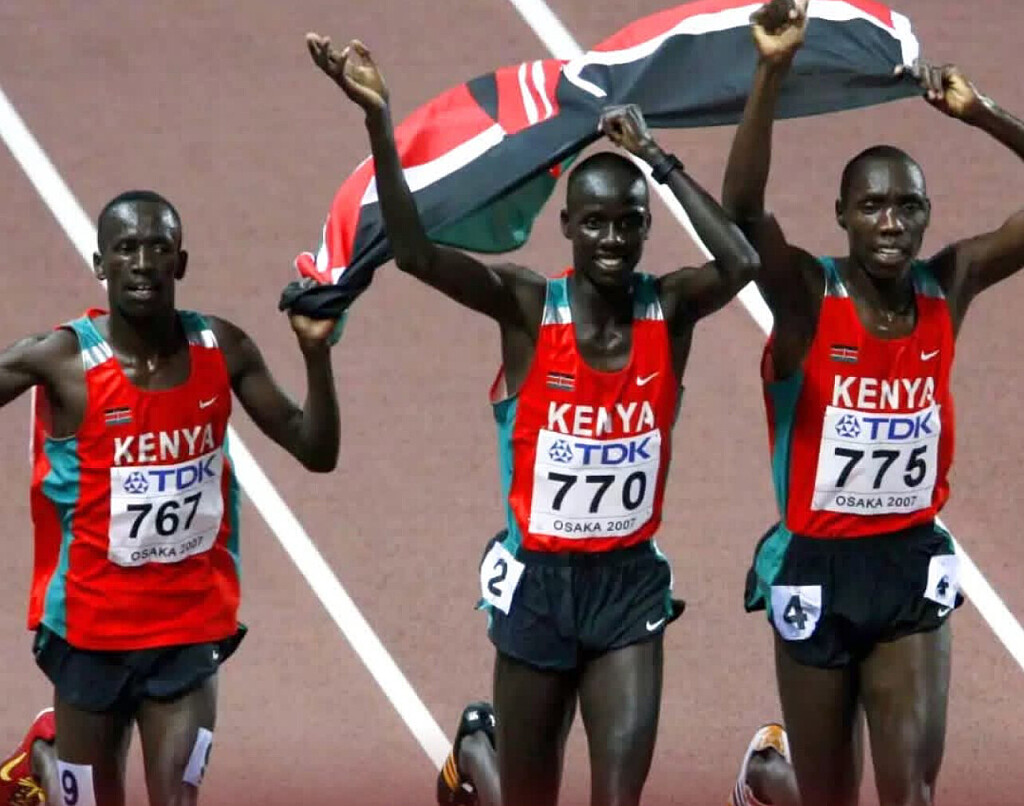
How One Tribe in Kenya Came to Dominate Global Distance Running
There may be no statistic in all of sports more astonishing than this one.
The Kalenjin, an ethnic group—often referred to as a tribe—in Kenya, make up about 13.4% of the country’s population, roughly 6.3 million people. On a global scale, they represent about one out of every 1,000 people worldwide.
Yet this small community has produced an overwhelming share of the world’s greatest distance runners.

Their dominance has been so complete, and so sustained, that it has been described as “the greatest geographical concentration of achievement in the annals of sport.” And it is hard to argue otherwise.
From the Rift Valley to the World Stage
Most elite Kalenjin runners come from Kenya’s Rift Valley region, particularly areas such as Nandi, Elgeyo-Marakwet, Uasin Gishu, and Baringo, where elevations range from 2,000 to 2,400 meters (6,500–8,000 feet) above sea level.
Here, running is not a hobby—it is part of daily life.
Children grow up walking and running long distances, often on dirt roads. Training at altitude is the norm, not a strategy. And success stories are local and visible, creating a powerful cycle of belief and opportunity.
Champions Across Eras
The Kalenjin impact on global athletics stretches back more than half a century.
Kipchoge Keino, one of the pioneers of Kenyan distance running, won Olympic gold in the 1500 meters at the 1968 Mexico City Games and the 3000-meter steeplechase in 1972, helping place Kenyan runners on the world map.
Since then, Kenyan athletes—many of them Kalenjin—have dominated:
• The 3000-meter steeplechase, winning Olympic gold in nearly every Games since 1968
• The 5,000 meters and 10,000 meters at World Championships
• The marathon, particularly at the World Marathon Majors
Masters of the Marathon
Perhaps nowhere is this dominance more visible than in the marathon.
Kalenjin runners have repeatedly won and controlled races such as:
• Berlin Marathon
• London Marathon
• Chicago Marathon
• Boston Marathon
• New York City Marathon
These victories are not isolated moments—they are part of a long, uninterrupted pattern.
At the center of it all stands Eliud Kipchoge, widely regarded as the greatest marathon runner in history. A member of the Kalenjin community, Kipchoge has:
• Won two Olympic marathon gold medals (2016, 2021)
• Set a world record of 2:01:09 at the Berlin Marathon
• Become the first human to run 26.2 miles in under two hours
He is not an exception. He is the most refined expression of a system that has been producing champions for generations.
Why This One Tribe?
No single explanation tells the whole story, but several factors come together in the Rift Valley:
• Geography: High altitude, rolling terrain, and ideal training conditions
• Physiology: Exceptional running economy and efficient biomechanics
• Culture: Running as a respected path to success and opportunity
• Environment: Group training, competition, and long-term development from a young age
Together, these elements have created something unmatched in sport.
A Phenomenon Without Parallel
Great athletes come from everywhere. But nowhere else has such a small, specific populationproduced such sustained global dominance across events, generations, and decades.
Not sprinting.
Not swimming.
Not cycling.
Not soccer.
Only distance running.
From the highland paths of the Rift Valley to Olympic podiums and marathon finish lines around the world, the story of the Kalenjin remains one of the most extraordinary achievements in human performance.
And it is still being written.
by Boris Baron
Login to leave a comment
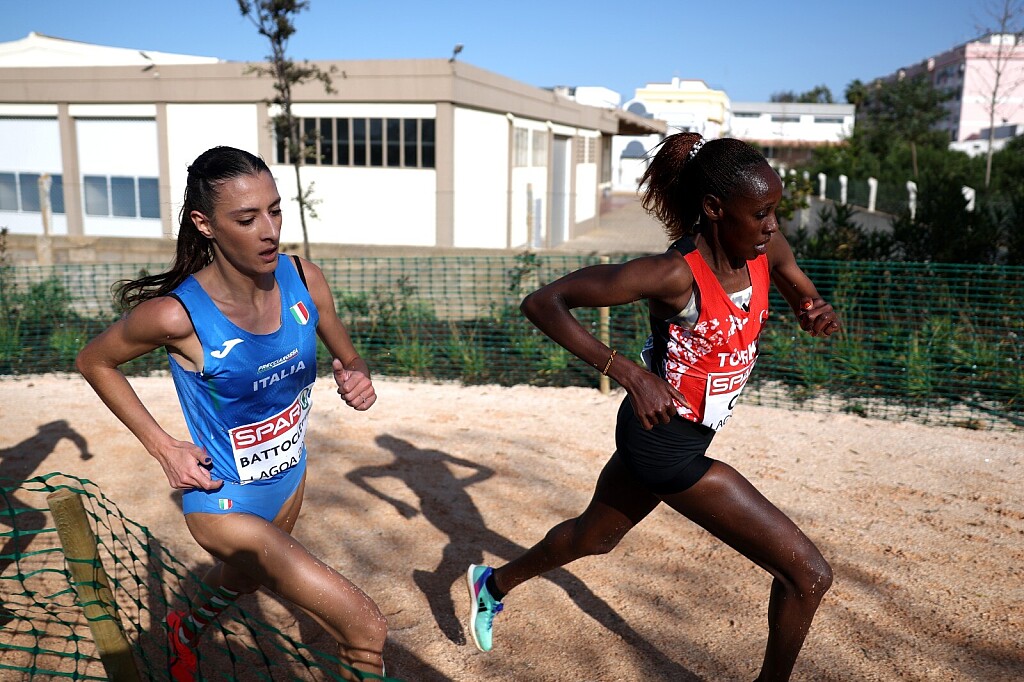
Nadia Battocletti Triumphs at European Cross Country Championships in Lagoa
Italian star returns to the top with commanding senior women’s victory
A Golden Return to Form: Nadia Battocletti of Italy added another chapter to her growing legacy on Sunday in Lagoa, Portugal, powering to victory in the senior women’s race at the European Cross Country Championships. On a demanding, technical course that rewarded strength and patience, Battocletti stopped the clock at 24:52, delivering a performance that combined tactical intelligence with championship composure.
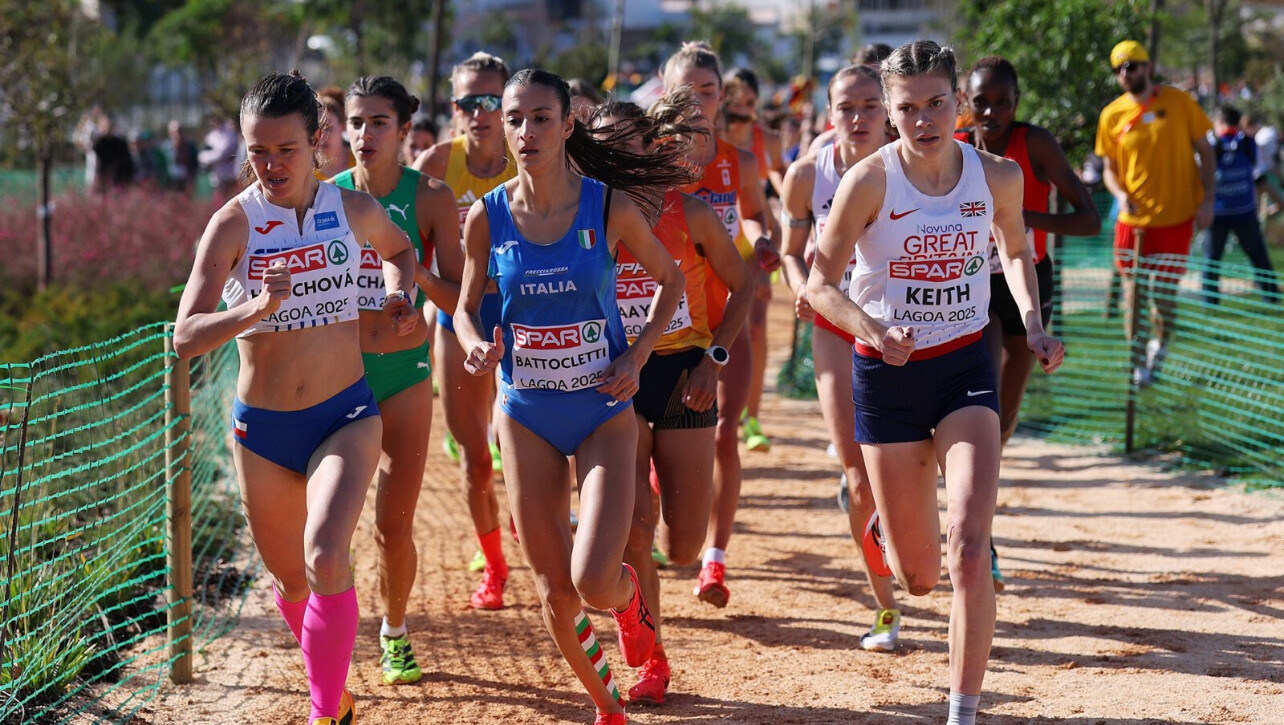
From the opening strides, the pace was honest and the intent clear. The rolling hills, slick footing, and tight turns quickly tested the field. Great Britain’s Megan Keith stayed close to the front, her determination evident with every surge, while Yasemin Can of Turkey—born in Kenya—ran with quiet confidence, conserving energy as the race unfolded. Battocletti remained calm and controlled, matching moves without overreacting as she waited for the right moment.
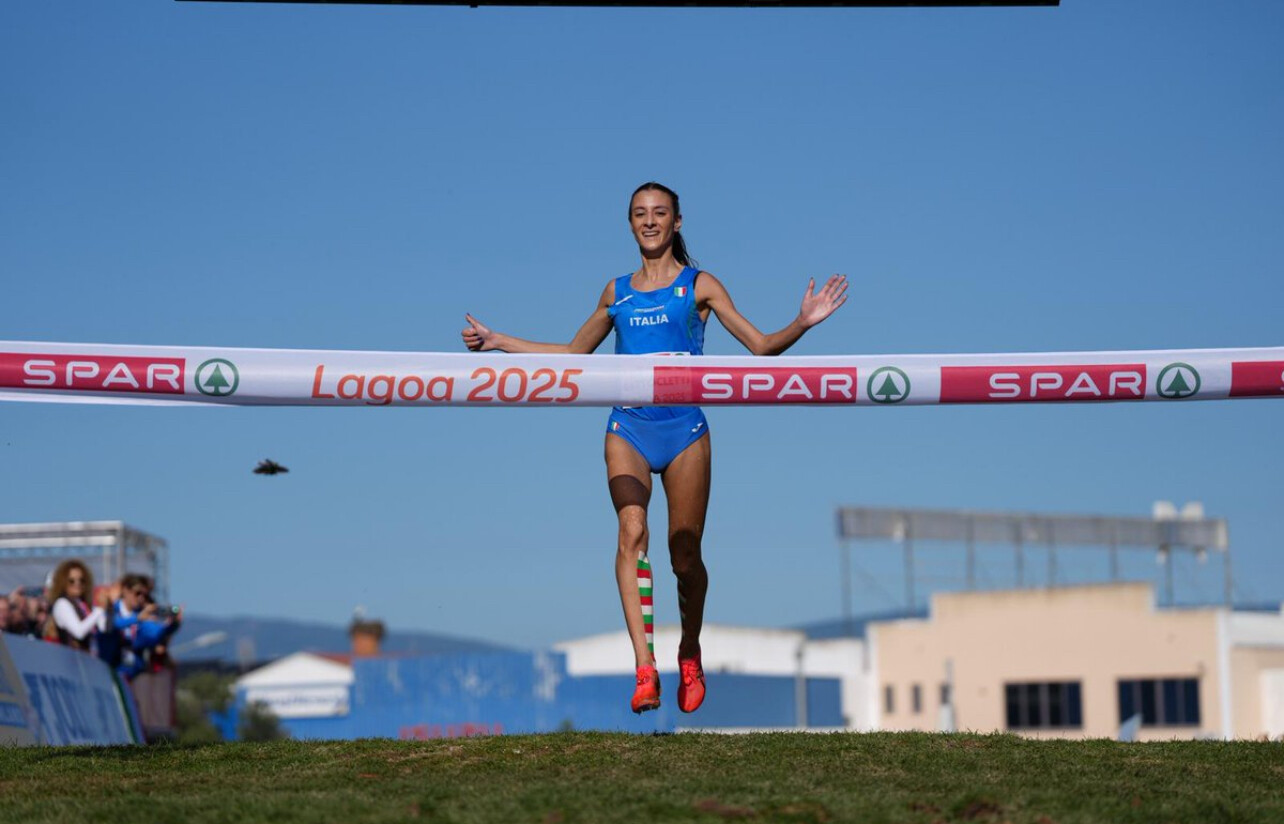
The Making of a Champion
Battocletti’s win in Lagoa was the product of years of steady progression and resilience. She first announced herself on the European stage as a junior, capturing back-to-back U20 cross country titles—Tilburg 2018 (4.3 km in 13:46) and Lisbon 2019 (13:58). Even then, her sense of rhythm, race awareness, and ability to perform under pressure set her apart.
Her transition to the senior ranks has been seamless. At the Paris 2024 Olympic Games, Battocletti claimed silver in the 10,000 meters in 30:43.35, finishing just behind Kenya’s Beatrice Chebet. One year later, at the 2025 World Championships in Tokyo, she again pushed Chebet to the limit, earning another silver in 30:38.23 and confirming her status as one of the world’s most consistent distance runners.
In Lagoa, she drew on all that experience. Battocletti controlled the tempo throughout and made her decisive move in the penultimate lap, a gradual acceleration that stretched the field and left her rivals struggling to respond.
Profiles of the Podium Finishers
Megan Keith took silver in 25:07, further cementing her reputation as one of Europe’s rising distance talents. The Scottish runner showed excellent judgment on the technical course, managing her effort and responding to changes in pace with maturity beyond her years. Her performance suggests bigger podiums may not be far away.
Yasemin Can finished third in 25:13, adding another medal to an already distinguished career. A multiple European champion on track and cross country, Can’s experience and strength were evident as she stayed in contention through the final lap before securing bronze.
Just off the podium, Belgium showcased impressive depth with Jana Van Lent in fourth (25:24), Lisa Rooms fifth (25:34), and Chloé Herbiet seventh (25:43). The Netherlands’ Amina Maatoug placed sixth (25:36), while Germany’s Elena Burkard (8th), Sweden’s Sarah Lahti (9th), and Ireland’s Fiona Everard (10th) completed a highly competitive top ten.
Tactical Brilliance on a Demanding Course
The Lagoa course added a dramatic dimension to the race. Its undulating terrain and narrow turns demanded constant focus and adaptability. Battocletti’s tactical sense stood out as she gradually increased the pressure, forcing her rivals into difficult decisions before unleashing a finishing push that settled the race.
By the final straight, her victory was beyond doubt. Battocletti crossed the line with a composed smile, while Keith and Can battled fiercely behind her, delivering a thrilling conclusion for spectators lining the course.
Looking Ahead
Battocletti’s victory in Lagoa reinforces her position as one of Europe’s premier long-distance athletes. With Olympic and world silver medals already to her name, this European cross country gold completes a remarkable arc from junior standout to senior champion.
Keith and Can also made powerful statements, and their performances hint at compelling rivalries in the seasons ahead. As winter training continues and the global calendar turns toward major championships, the senior women’s distance scene in Europe looks stronger—and more exciting—than ever.
European Cross Country Championships 2025
Senior Women – Top 10
1. Nadia Battocletti (Italy) – 24:52
2. Megan Keith (Great Britain) – 25:07
3. Yasemin Can (Türkiye) – 25:13
4. Jana Van Lent (Belgium) – 25:24
5. Lisa Rooms (Belgium) – 25:34
6. Amina Maatoug (Netherlands) – 25:36
7. Chloé Herbiet (Belgium) – 25:43
8. Elena Burkard (Germany) – 25:45
9. Sarah Lahti (Sweden) – 25:48
10. Fiona Everard (Ireland) – 25:54
by Robert Kibet for My Best Runs
Login to leave a comment
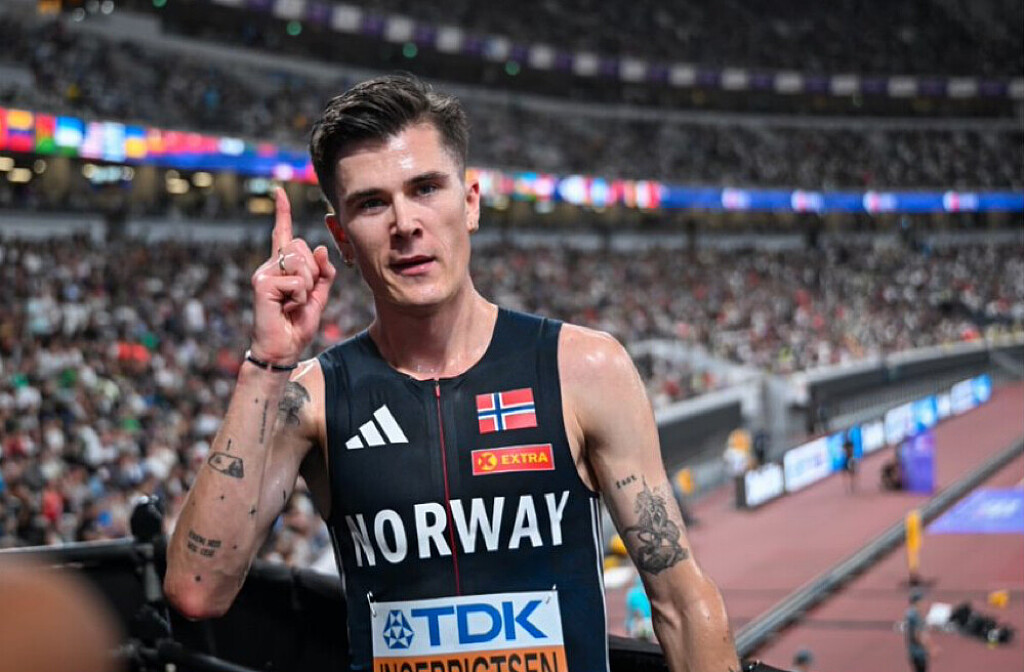
Jakob Ingebrigtsen Has His Eyes on Three World Records in 2026
Norwegian superstar Jakob Ingebrigtsen is already looking ahead to 2026 with one of the boldest ambitions in track and field — to break world records in the 1500 meters, the mile, and the 5000 meters.
In an interview shared by Chris Chavez on X (formerly Twitter), Ingebrigtsen revealed his mindset and meticulous approach to choosing the perfect time and place to chase history.
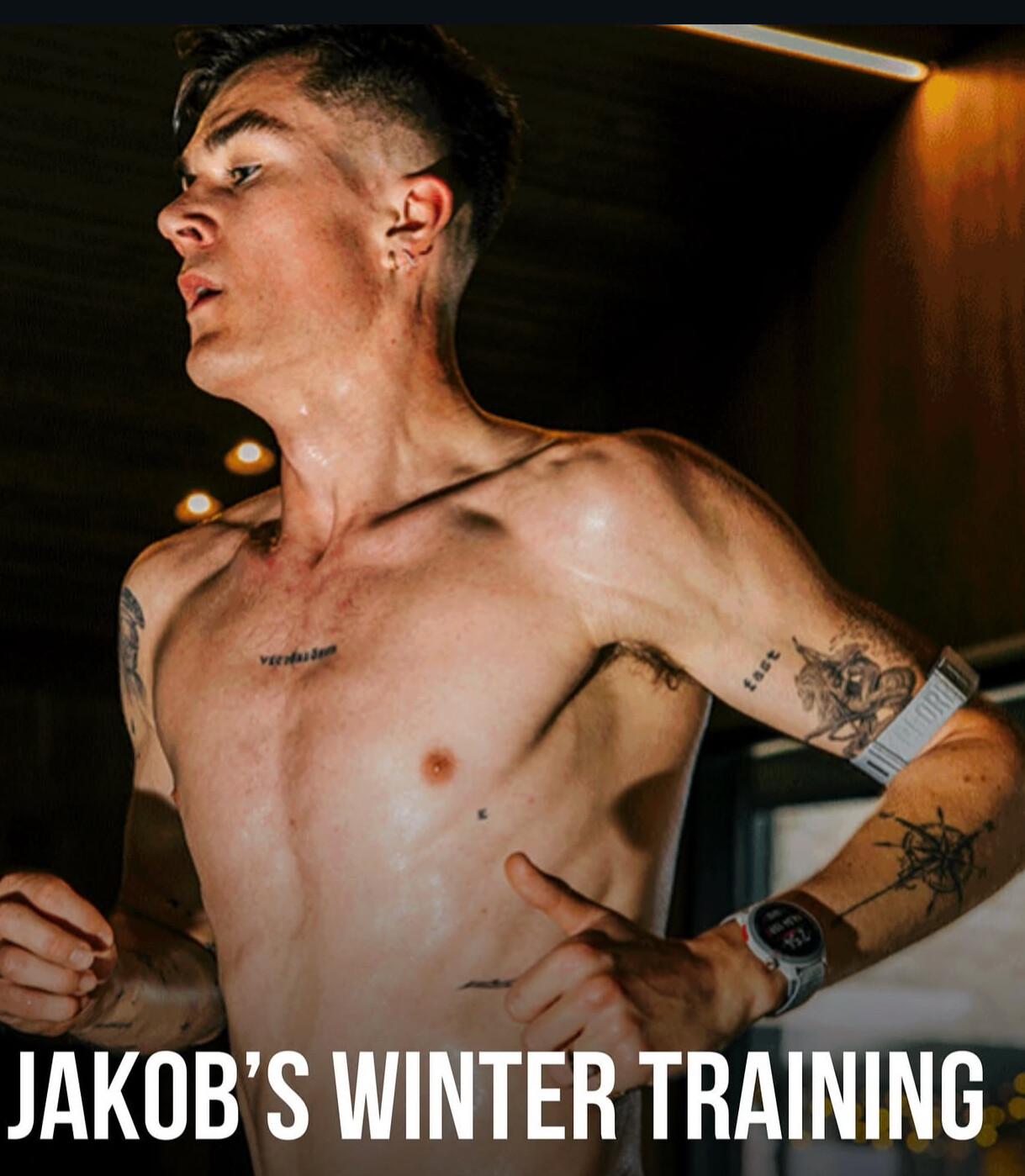
“I hope to break the world records in the 1500 meters, the mile, and the 5000 meters. If I can do that, I’ll be happy. I’ll have to pick out some meets and dates where I have the best chance to make a good attempt,” he told Norway’s VG.
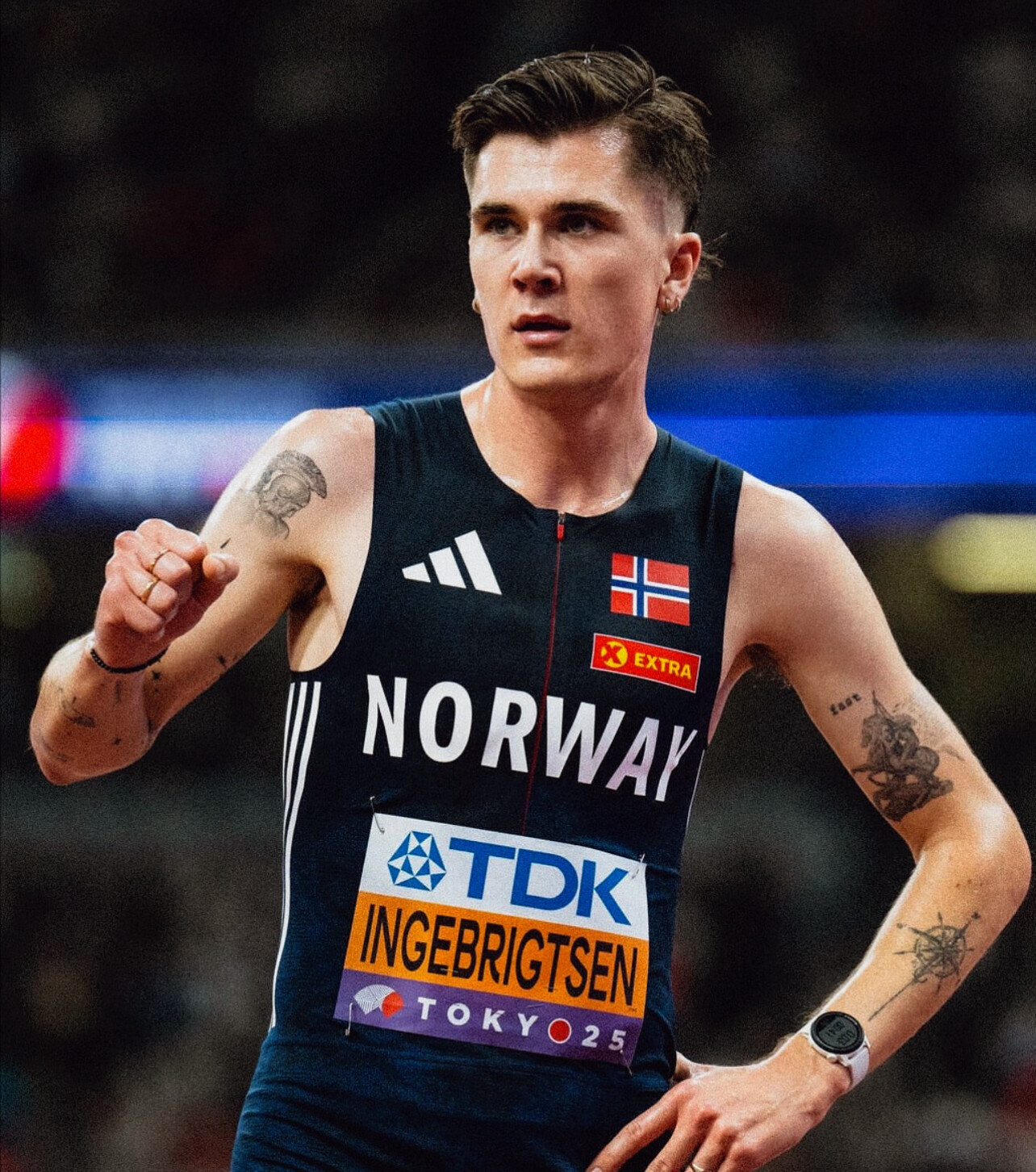
Ingebrigtsen and his wife are already mapping out potential race venues, with Monaco, Paris, Silesia, and Oslo among the leading candidates. Each of these meets has seen lightning-fast performances and could provide the ideal setting for record-breaking runs.
How he stacks up right now:
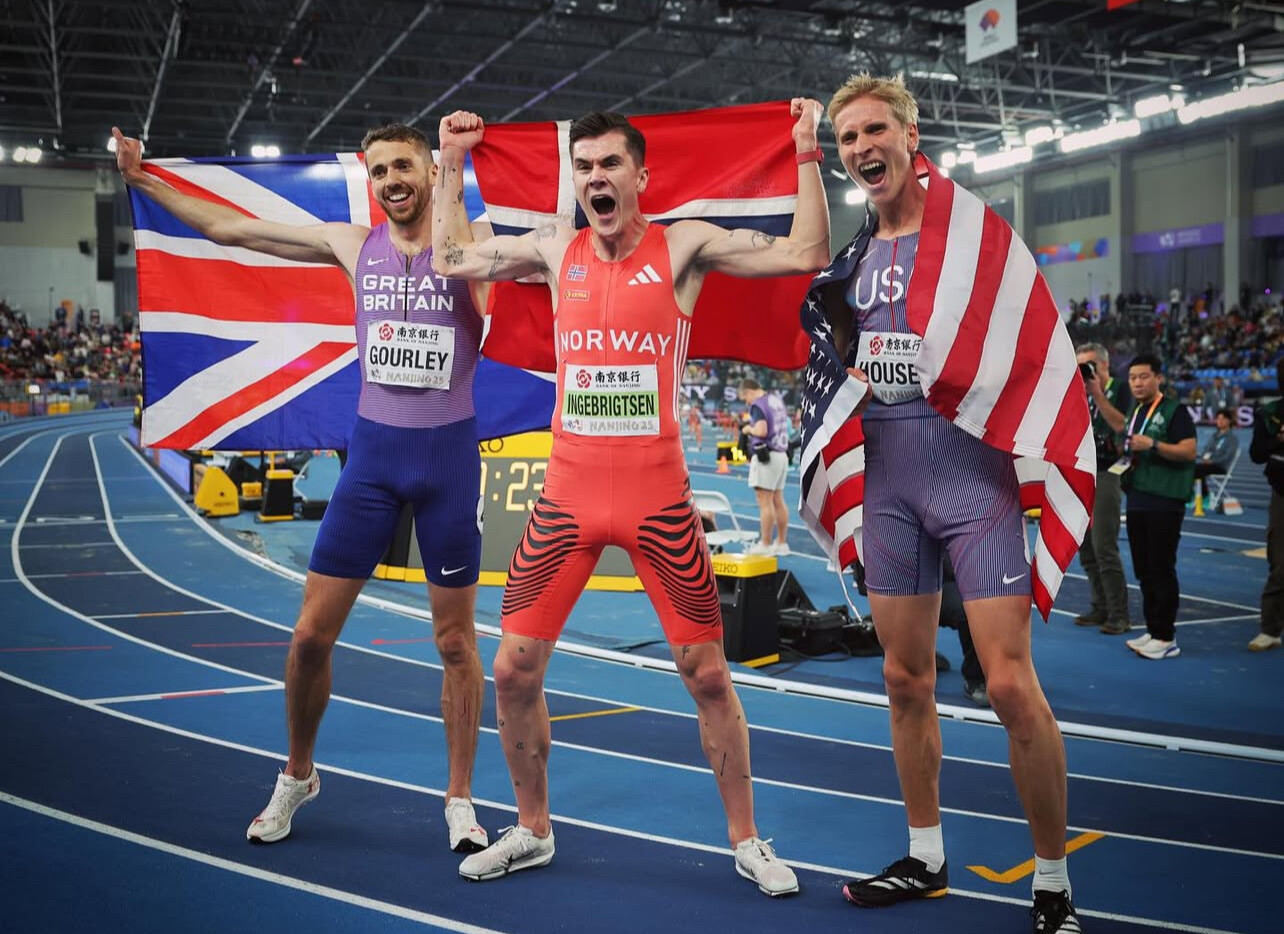
The world record for 1500 meters is 3:26.00, set by Hicham El Guerrouj in 1998. Ingebrigtsen’s personal best is 3:26.73.
The world record for the mile is 3:43.13, also held by El Guerrouj from 1999. Ingebrigtsen’s personal best is 3:43.73.
The world record for the 5000 meters is 12:35.36, set by Joshua Cheptegei in 2020. Ingebrigtsen’s personal best is 12:48.45.
While Ingebrigtsen’s personal bests are already within striking distance of both El Guerrouj’s legendary middle-distance marks and Cheptegei’s long-distance record, breaking all three in one season would be unprecedented.
A Legacy in Motion
At just 25, Ingebrigtsen has already cemented himself as one of the most dominant and versatile athletes in modern track history. From his Olympic gold to multiple World and European Championship titles, his consistency and competitiveness have made him the face of a new generation of runners.
However, much of the 2025 season was disrupted by injury. An Achilles tendon issue forced him to withdraw from major meets and limited his racing calendar. Despite the setback, his ambition remains undimmed.
A sweep of these three world records would not only elevate his legacy but also redefine the limits of what’s possible across middle and long-distance running.
As he carefully plans his record attempts, the world will be watching — because when Jakob Ingebrigtsen sets his mind on something, history often follows.
by Boris Baron
Login to leave a comment
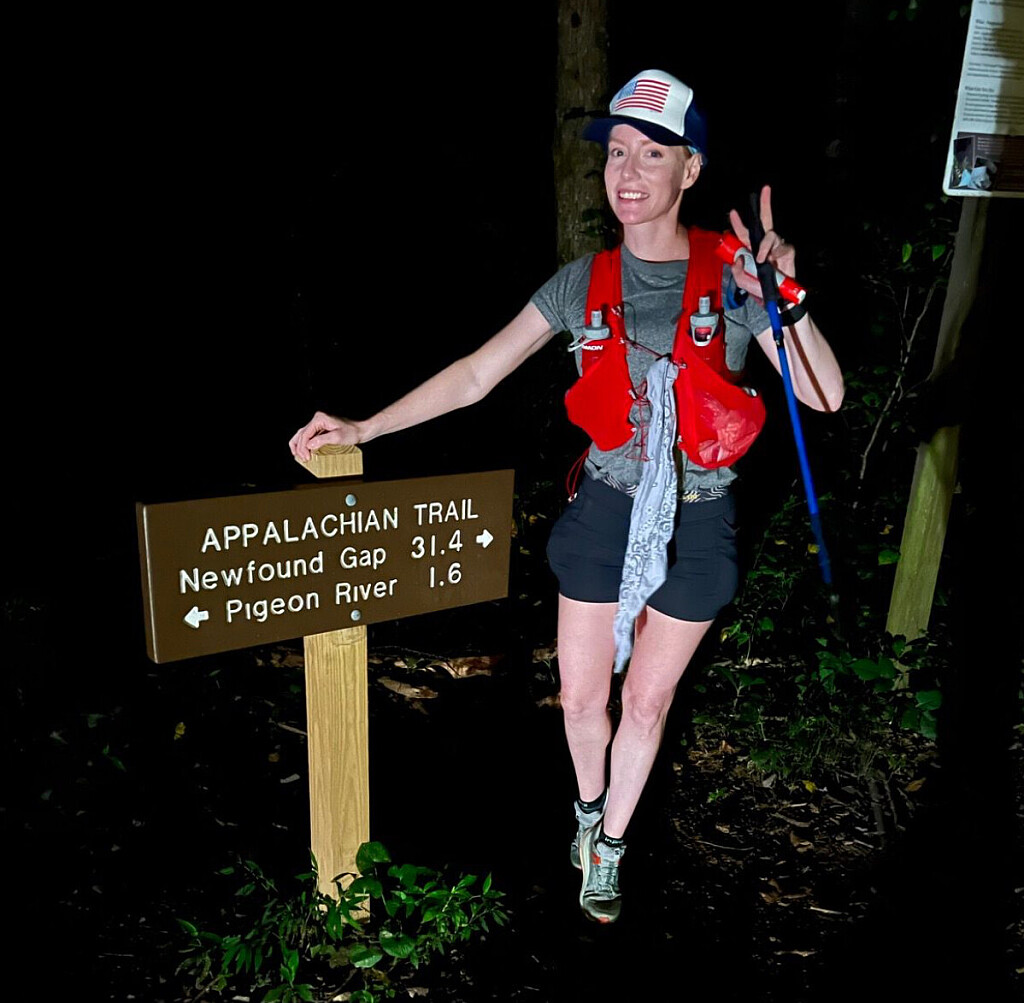
Ultrarunner Sarah Baker Sets New Self-Supported Appalachian Trail Record
Ultrarunner Sarah Baker, from Tennessee, has set a new self-supported Fastest Known Time (FKT) on the legendary Appalachian Trail, completing the grueling 3,500-kilometre (2,190-mile) trek from south to north in just 74 days — all while battling illness and unforgiving terrain.
Baker’s accomplishment is even more impressive considering she did it completely self-supported, meaning no outside help — no support crew, no pacers, and no pre-arranged assistance. Along the way, she managed her own logistics, carried her own gear, and relied on resupply points she mailed to herself in advance.
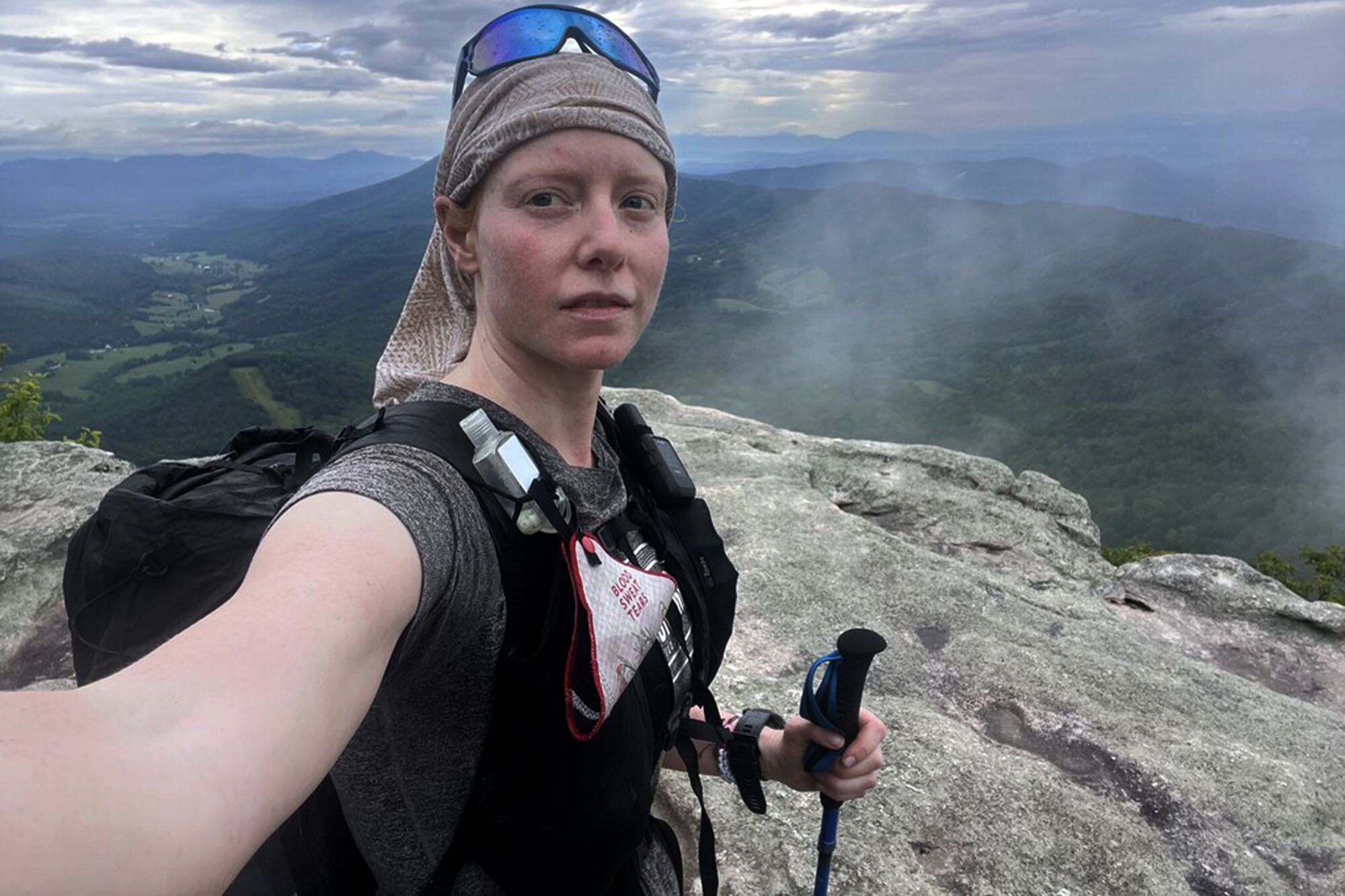
An FKT Years in the Making

This wasn’t Baker’s first Appalachian Trail challenge. She had already set three FKTs on segments of the trail, gaining experience and insight into the extreme demands of the route. Early in this attempt, she was averaging over 50 kilometers per day, but a journey of this magnitude rarely goes without setbacks.

Just three weeks in, Baker contracted norovirus, a gastrointestinal illness that forced her to isolate and “stealth camp” on the trail, as hostels turned her away due to her symptoms. Despite the illness, she pressed on, demonstrating grit and mental resilience.
The Challenge of Going It Alone
A self-supported FKT comes with more than just physical challenges — it demands careful planning, adaptability, and relentless determination.
Baker used the classic thru-hiker strategy of mailing food ahead to small towns, where she would hike off-trail to retrieve supplies and then return to continue her route. This added extra mileage, effort, and logistical complexity — something supported athletes don’t face.
“The hardest part wasn’t just the running,” Baker noted. “It was getting to a resupply point, managing illness alone, and still finding the will to keep moving forward every day.”
A Trail That Tests the Toughest
The Appalachian Trail is widely regarded as one of the toughest long-distance hikes in the world. With over 140,000 meters (nearly 460,000 feet) of elevation gain and loss, completing it is the equivalent of climbing Mount Everest about 16 times.
Baker’s journey, completed solo and unsupported, highlights not only her strength as an ultrarunner but also the depth of her planning and willpower. Her new 74-day mark sets a high bar for future attempts.
A Trailblazer for the Trail Community
Sarah Baker’s accomplishment adds her name to the short list of elite athletes who have successfully taken on the full Appalachian Trail under self-supported conditions. Her story is a reminder of the power of perseverance — and that records aren’t only broken on race day but in the quiet miles when no one is watching.
by Boris Baron
Login to leave a comment
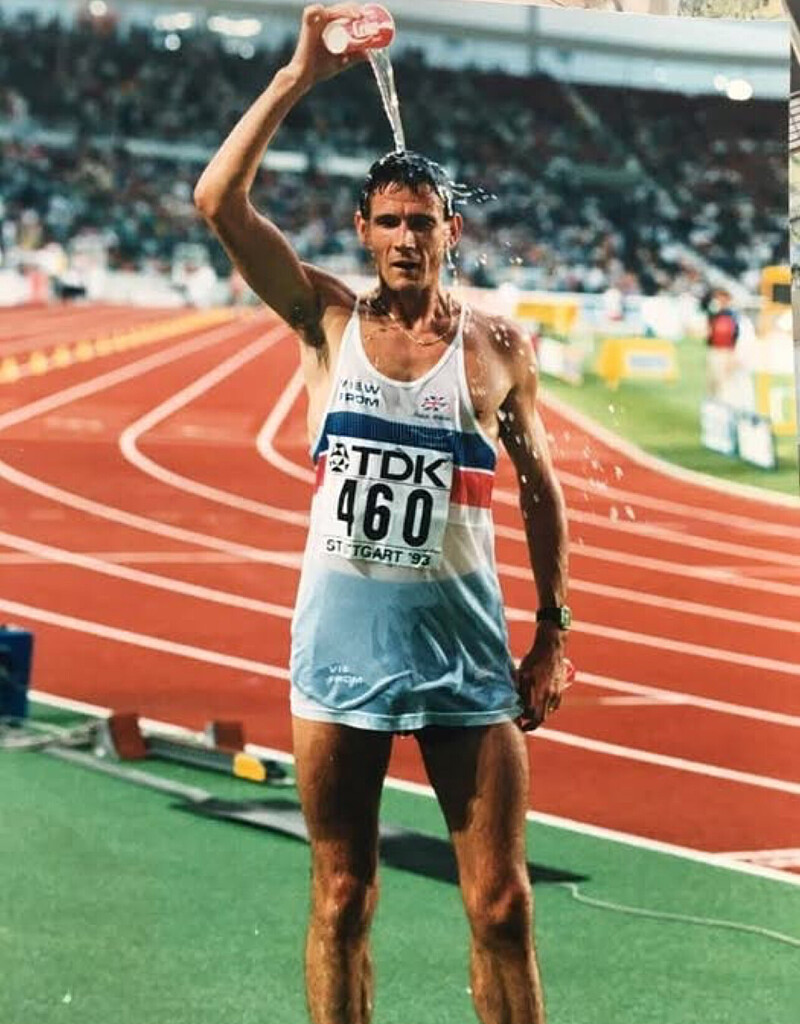
Steve Jones Turns 70: A Look Back at a Marathon Legend
This past week, the legendary Steve Jones celebrated his 70th birthday—a milestone that offers a perfect moment to honor one of the greatest marathoners of all time.
Born on August 4, 1955, in Tredegar, Wales, Steve Jones rose to international prominence during the golden era of distance running. A former Royal Air Force technician, Jones shocked the running world when he won the 1984 Chicago Marathon in a world record time of 2:08:05, breaking the previous record held by Australia’s Rob de Castella. What made the performance even more extraordinary was that Jones ran the race without wearing a watch—and had no idea he was on world record pace.
A year later, he returned to Chicago and ran 2:07:13, which remained the British record for 33 years until Mo Farah broke it in 2018. Jones also won the London Marathon in 1985 and claimed victory at the New York City Marathon in 1988, securing his place among the legends of the sport.
Known for his fearless front-running style, Jones never shied away from taking the lead early. He believed in racing hard from the start and letting the rest catch up—if they could. His aggressive tactics and incredible toughness made him a fan favorite around the world.
Beyond the road, Steve was a top-class track runner and a formidable competitor in cross country. He set a British record in the 10,000 meters (27:39.14) in 1983 and competed in the 1984 Los Angeles Olympics, placing 8th in the 10,000m final.
Even in retirement, Jones has remained involved in the sport as a coach and ambassador. His legacy lives on in every runner who dares to push the pace and run fearlessly.
From all of us at My Best Runs, we wish Steve a belated but heartfelt Happy 70th Birthday—and thank you for inspiring generations of runners.
The iconic image of Steve Jones cooling off mid-race is a perfect reminder of his grit, focus, and drive. A true original.
by Boris Baron
Login to leave a comment
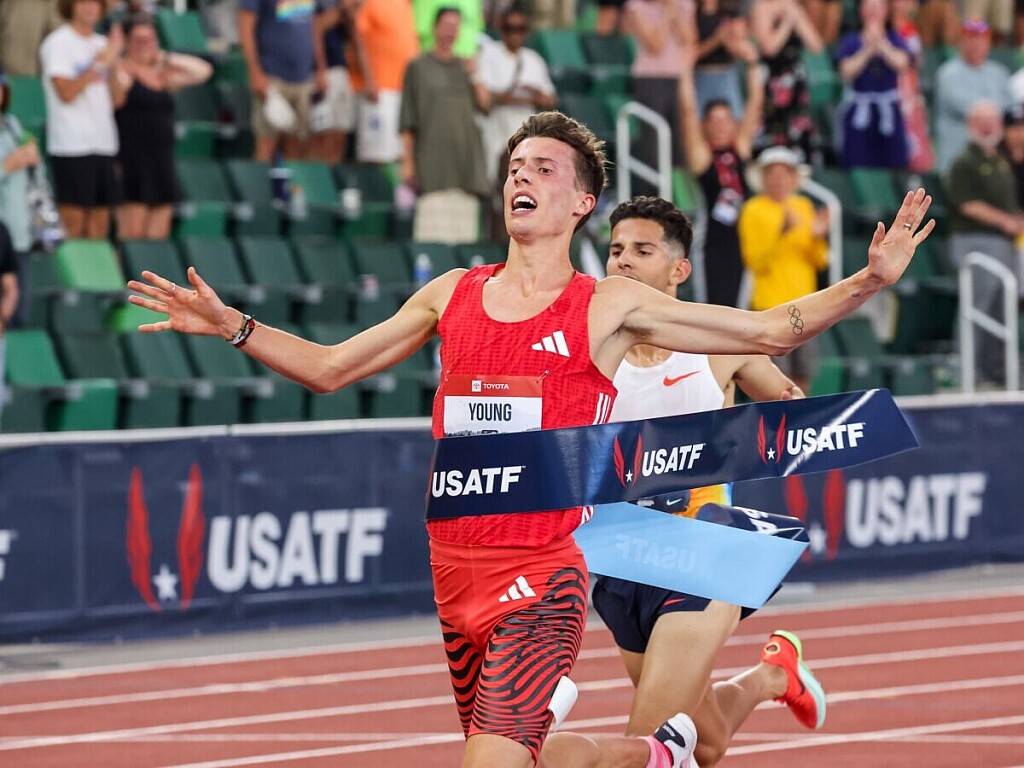
Nico Young Clinches U.S. 10,000m Title with Electrifying Finish in Eugene
Eugene, Oregon – July 31, 2025
Nico Young delivered a career-defining performance on Wednesday night at the 2025 USATF Outdoor Championships, storming to victory in the men’s 10,000 meters with a closing display that left the crowd at Hayward Field in awe.
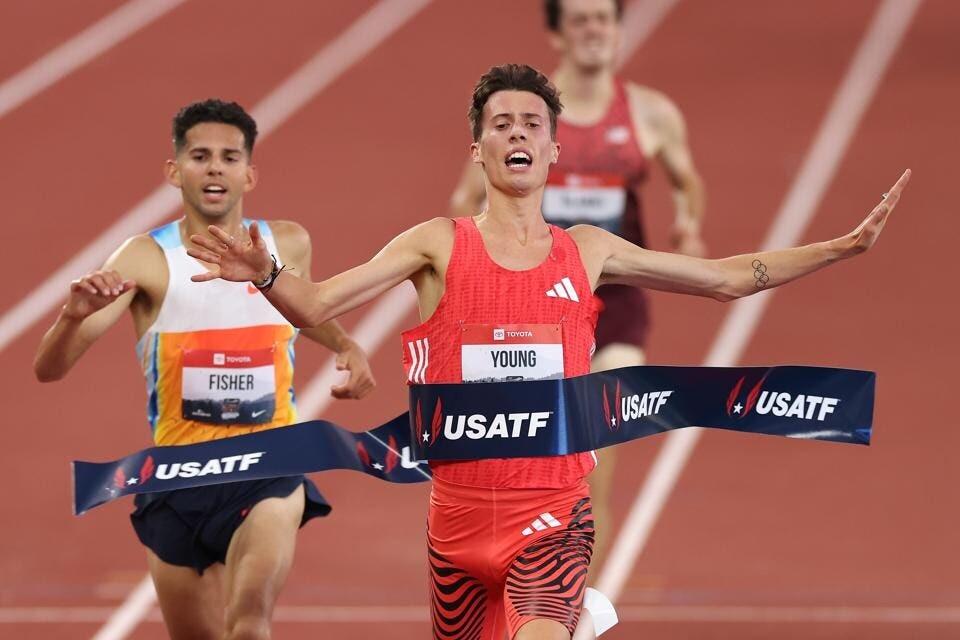
In a tightly contested final, Young surged past established veterans Grant Fisher and Graham Blanks with a stunning final lap of 56.54 seconds, covering the last 1600 meters in under four minutes—an extraordinary finish in a championship 10K. His winning time: 29:02.12.
Grant Fisher, one of the most accomplished distance runners in U.S. history, claimed the silver medal in 29:02.37, while rising star Graham Blanks, fresh off a record-breaking collegiate season, secured bronze in 29:02.43.
“What a way to end the night in Eugene,” echoed the sentiments of fans and announcers alike as Young crossed the line, arms raised in triumph.
At just 22 years old, Young’s victory represents a passing of the torch and a new era in American distance running. Known for his aggressive style and fearless front-running as a collegiate athlete at Northern Arizona University, Young has now proven he can execute a tactical race and close with world-class speed—a critical asset on the international stage.
The men’s 10,000m capped an electric night of competition at Hayward Field and set the tone for the rest of the championships. With this performance, Young not only claimed his first national title but also firmly established himself as a contender for global medals in the years ahead.
Men’s 10,000m – Final Results
• Nico Young – 29:02.12 (National Champion)
• Grant Fisher – 29:02.37 (National Runner-Up)
• Graham Blanks – 29:02.43 (National Bronze)
Stay tuned to My Best Runs for continued coverage of the 2025 USATF Outdoor Championships and road to the World Championships.
by Boris Baron
Login to leave a comment
